
On our way home from Strassburg, we stopped in Baden-Baden, back in Germany. What a beautiful city! During the 1800s lots of people came to Baden-Baden including European leaders and rich and famous people. It became one of the most popular places in Europe. People came to be healed.
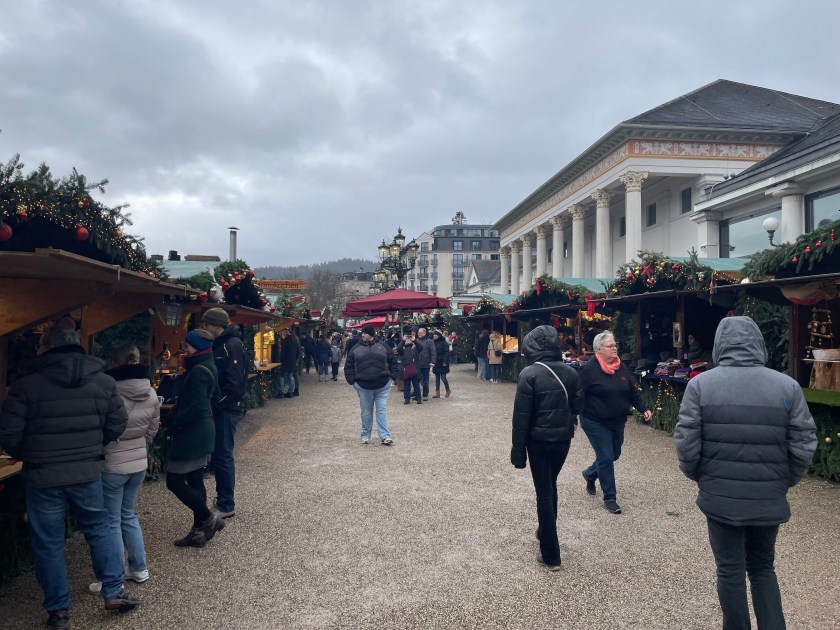
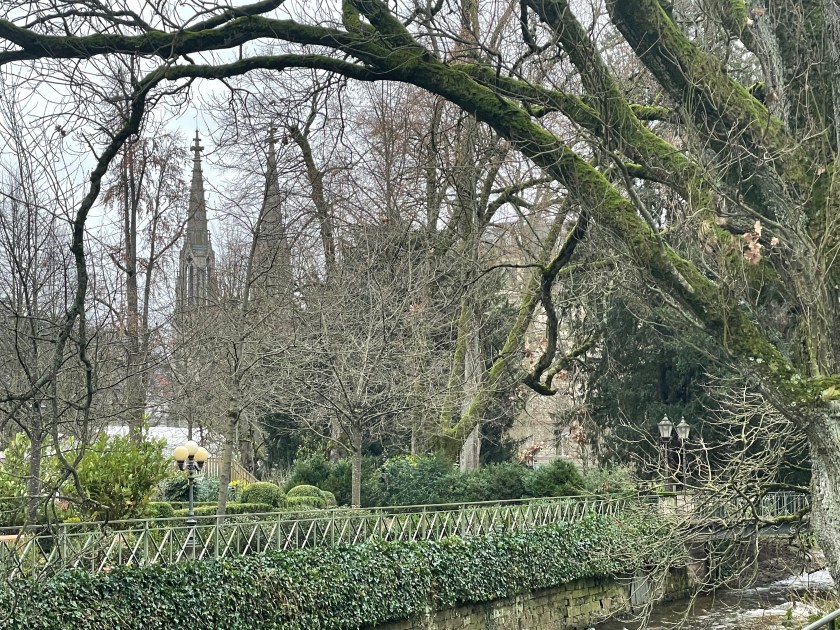
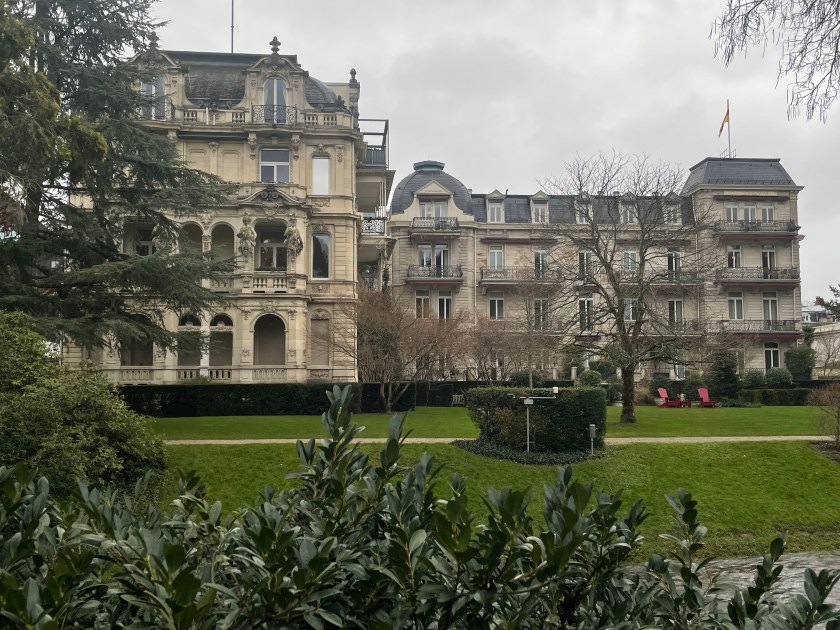
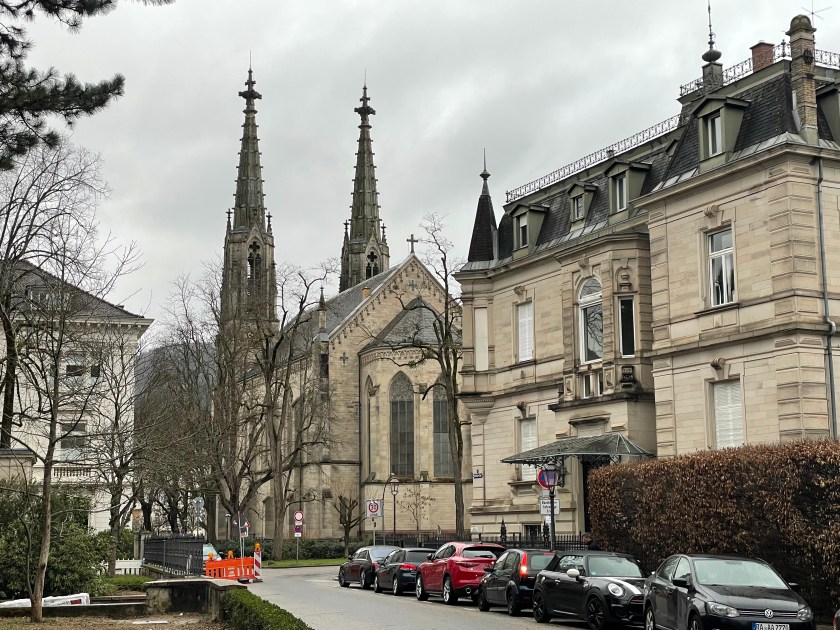
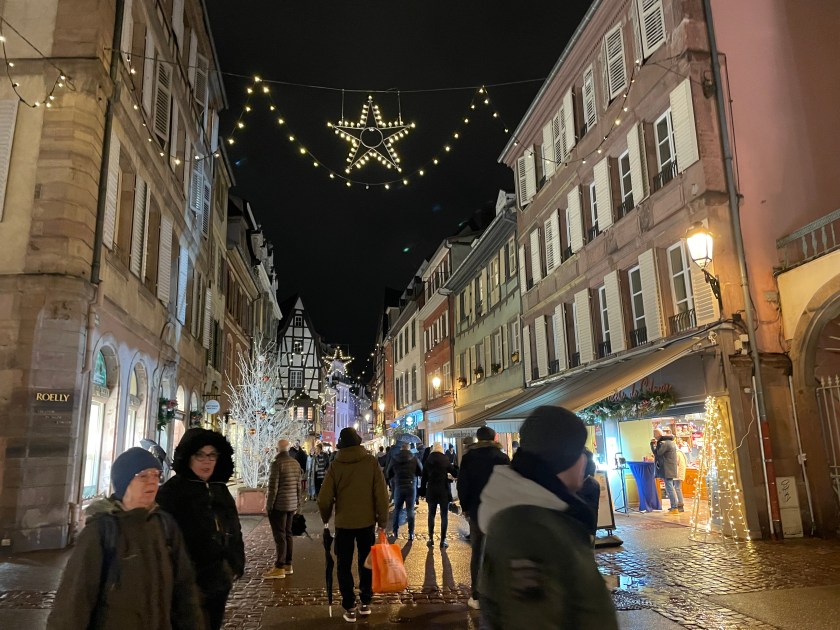
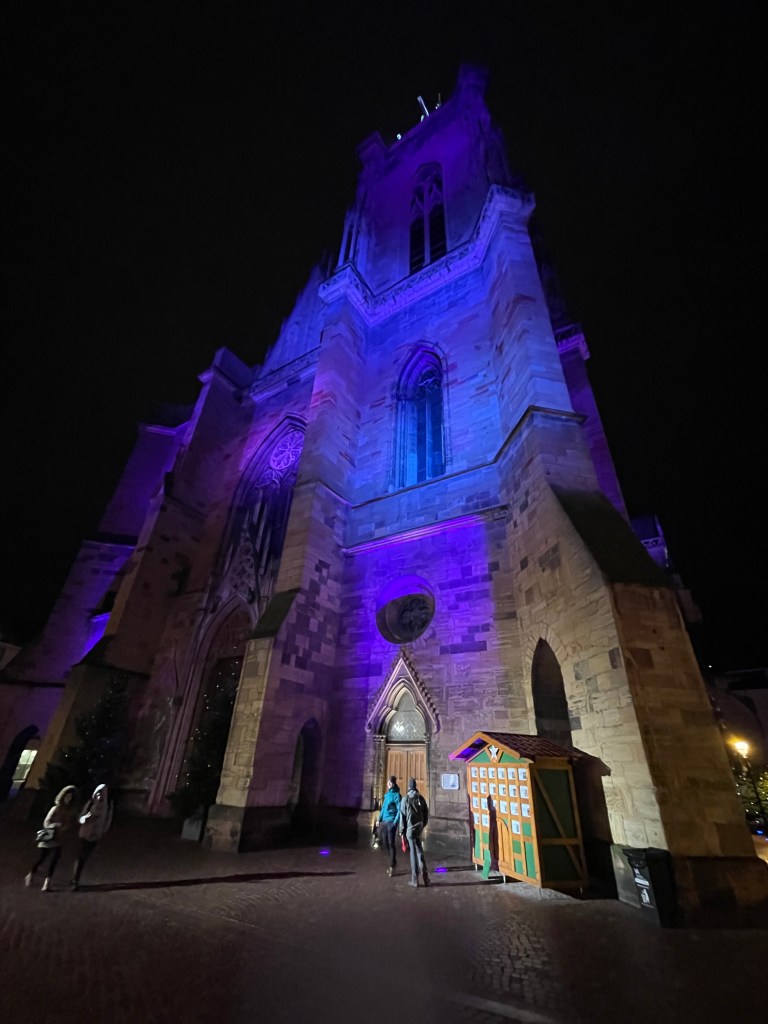
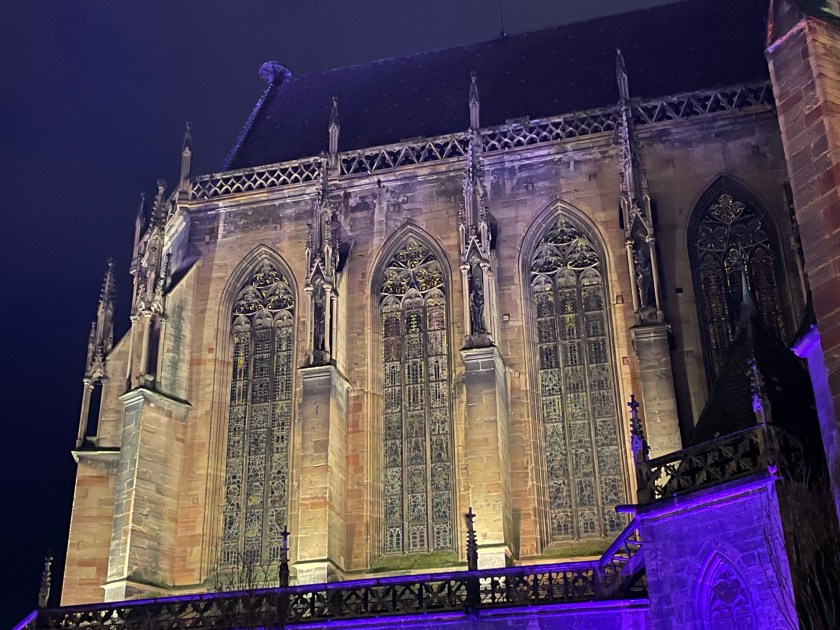
It’s a beautiful city with mansion homes, resorts, parks, and a beautiful cathedral. We found a parkplatz by the church and then walked into the center of town, an upscale shopping area with wide pedestrian streets and upper end shops. The Christmas market booths here will be up until Jan 6th.
Here’s a quick overview from Wikipedia:
Geography
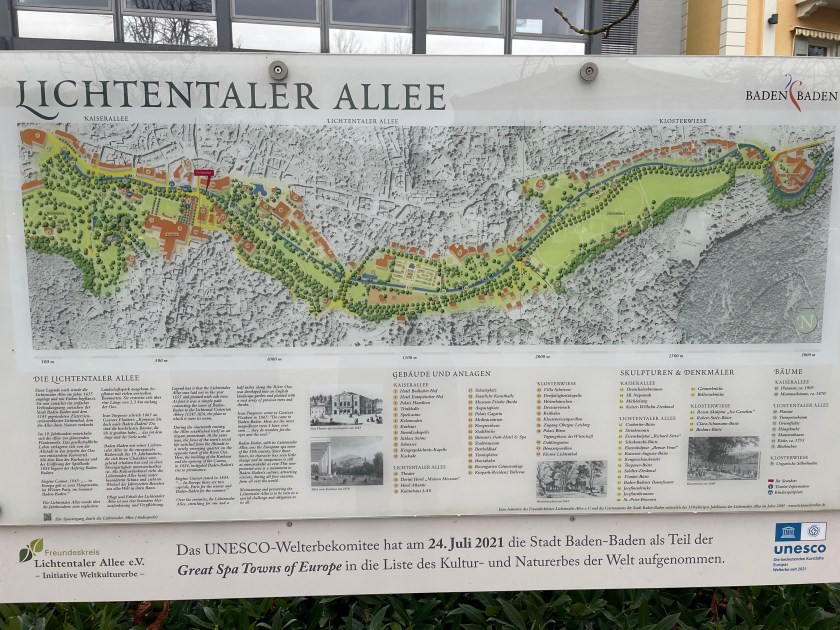
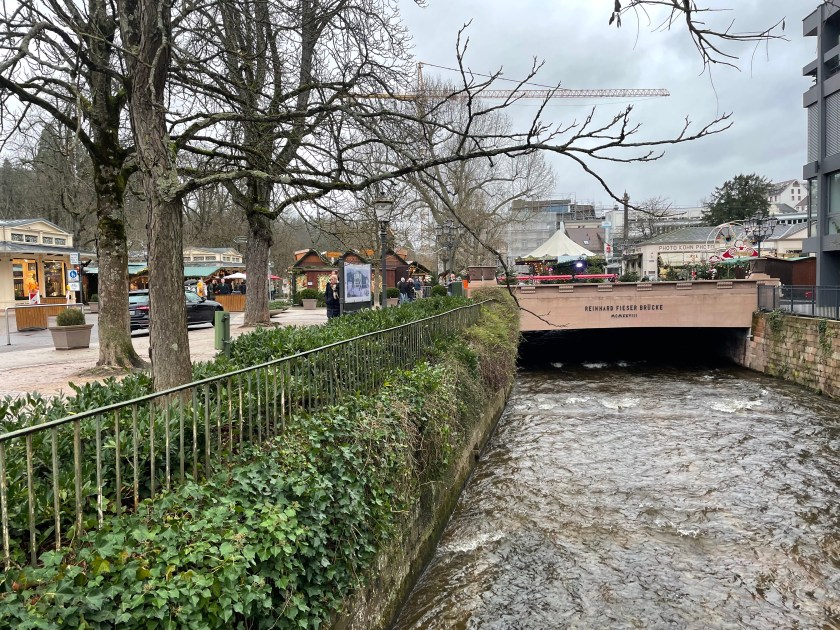
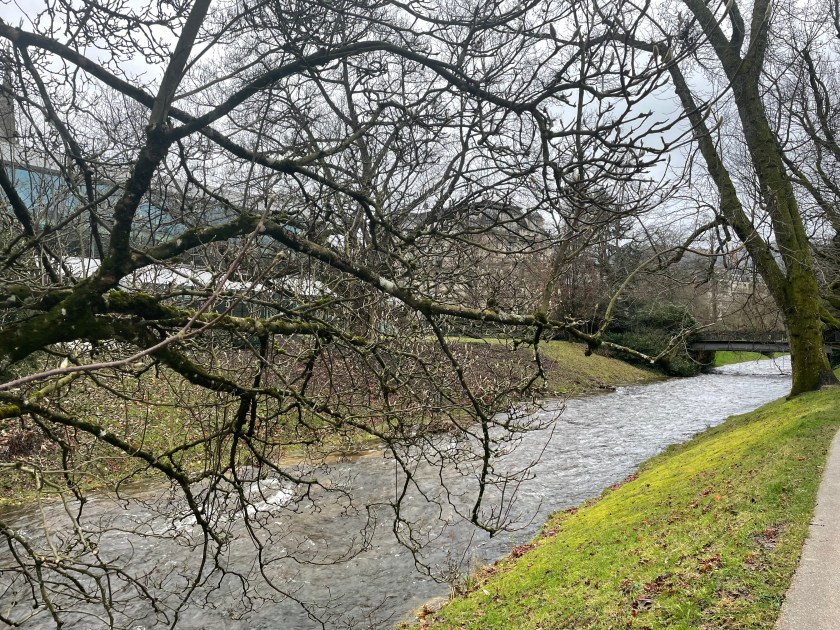
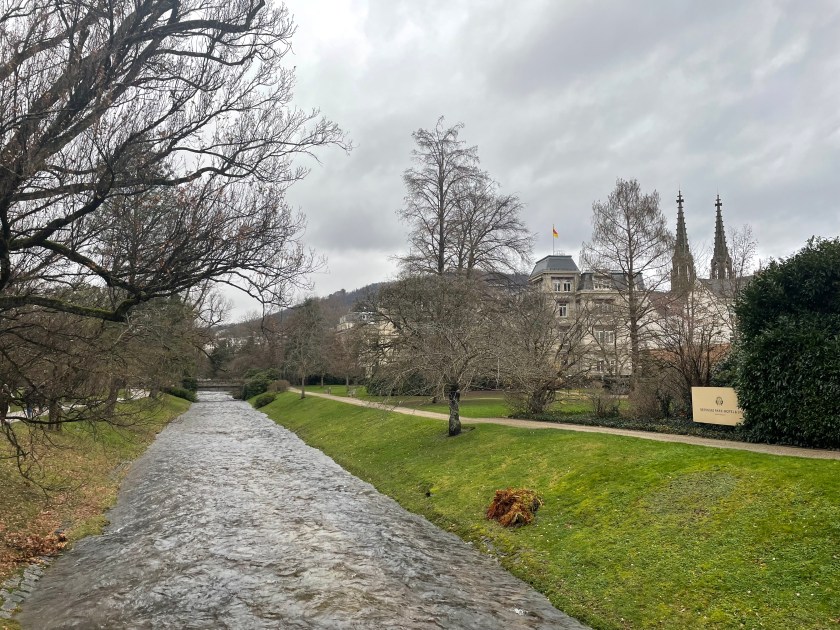
Baden-Baden lies in a valley of the Northern Black Forest in southwestern Germany. The western districts lie within the Upper Rhine Plain. The highest mountain of Baden-Baden is the Badener Höhe (1,002.5 m above sea level, which is part of the Black Forest National Park. The old town lies on the side of a hill on the right bank of the Oos. Since the 19th century, the principal resorts have been located on the other side of the river. There are 29 natural springs in the area, varying in temperature from 46 to 67 °C (115 to 153 °F). The water is rich in salt and flows from artesian wells 1,800 m (5,900 ft) under Florentine Hill at a rate of 341 litres (90 gallons) per minute and is conveyed through pipes to the town’s baths.
History
Roman settlement at Baden-Baden has been dated as far back as the emperor Hadrian, but on dubious authority. The known ruins of the Roman bath were rediscovered just below the New Castle in 1847 and date to the reign of Caracalla (AD 210s), who visited the area to relieve his arthritic aches. The facilities were used by the Roman garrison in Strasbourg.
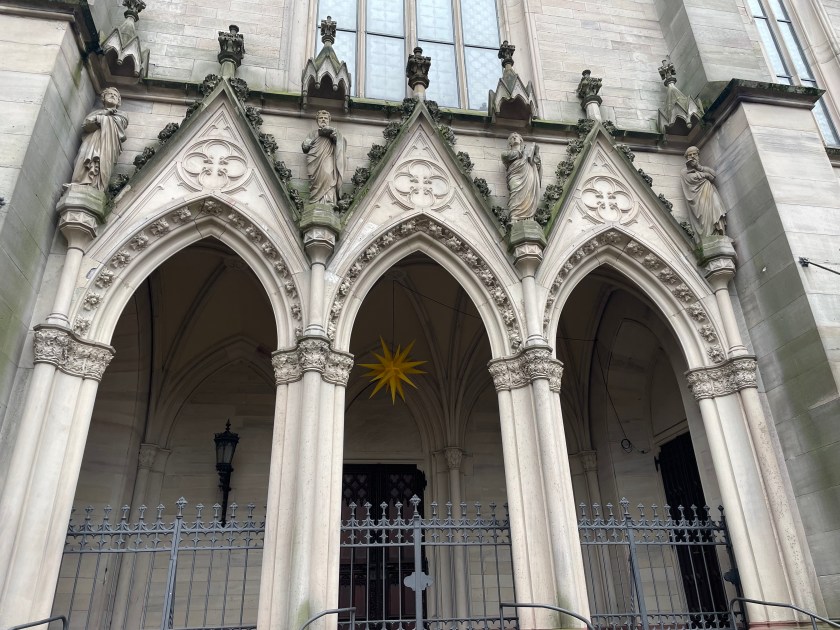
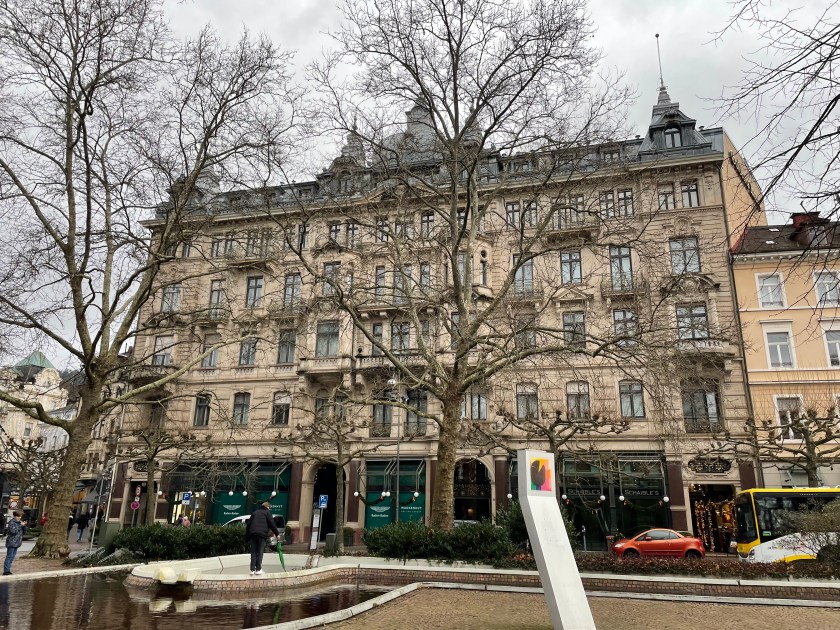
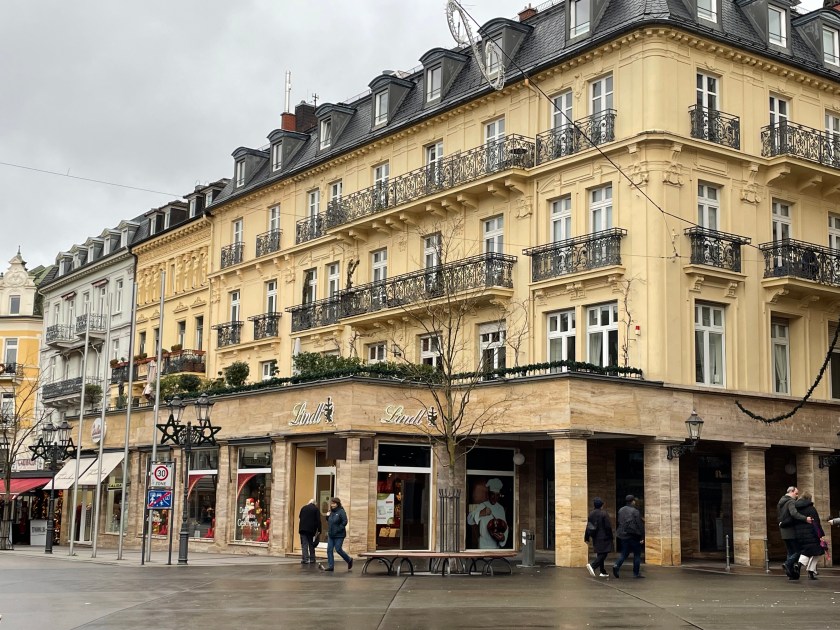
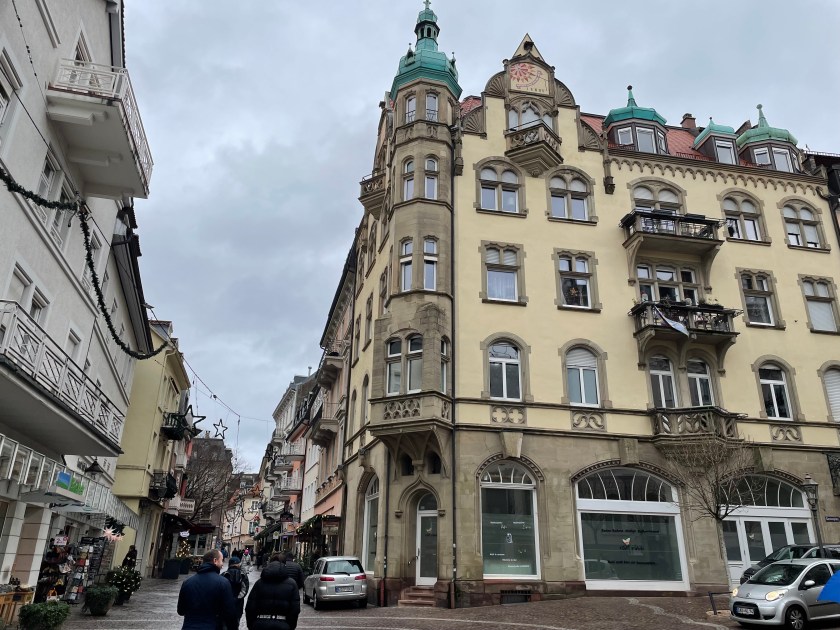
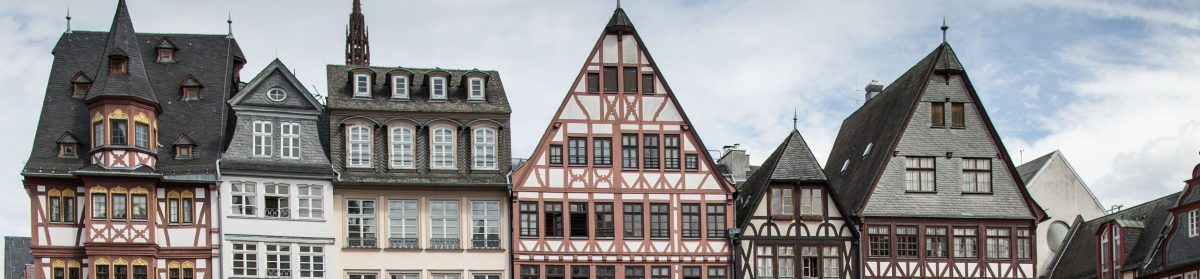
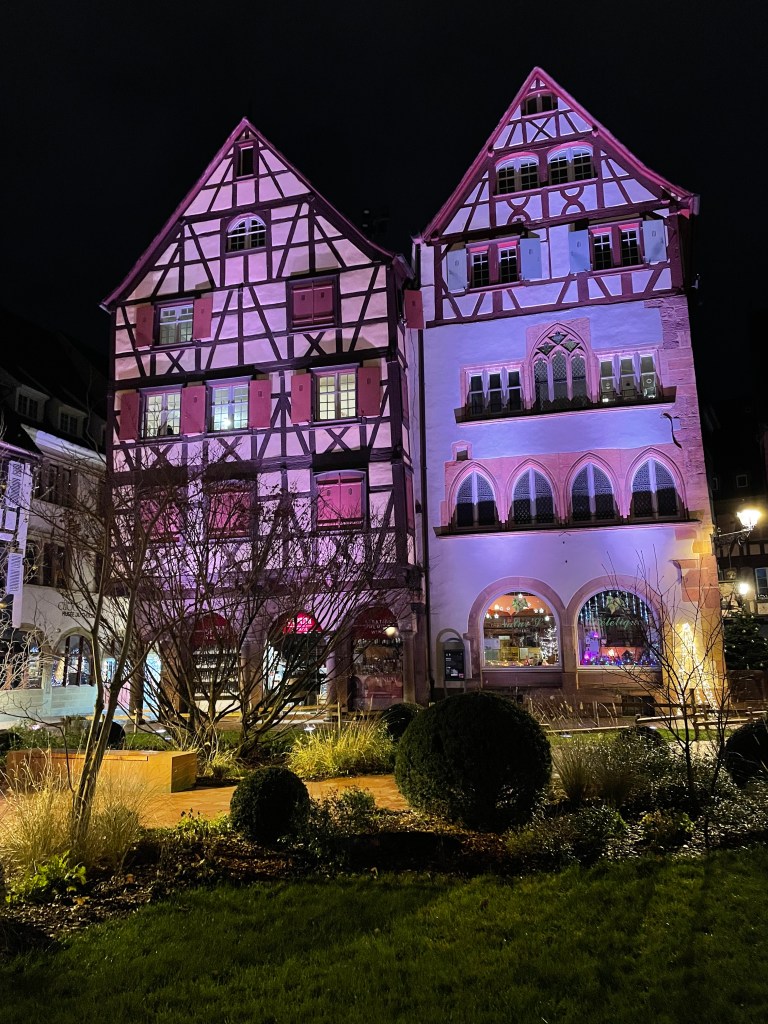
The buildings here felt Grand.
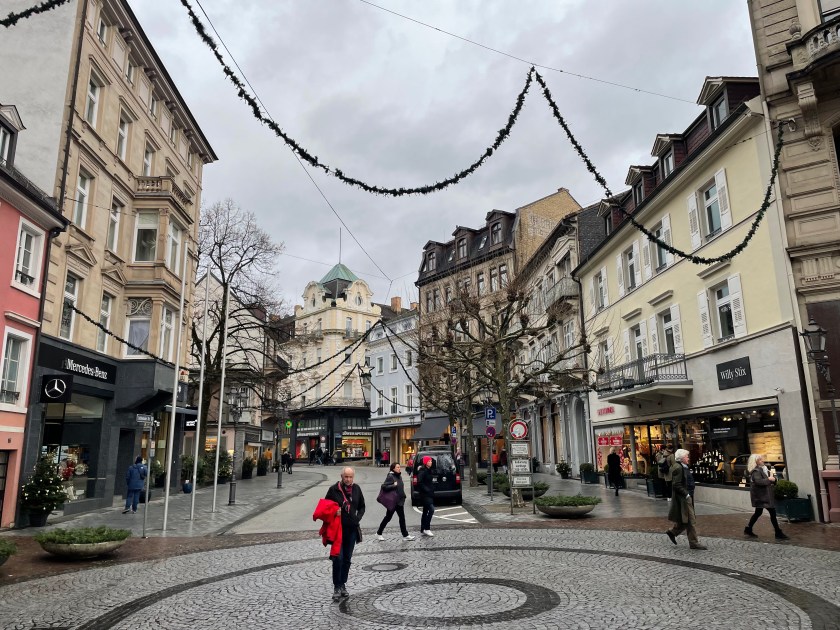
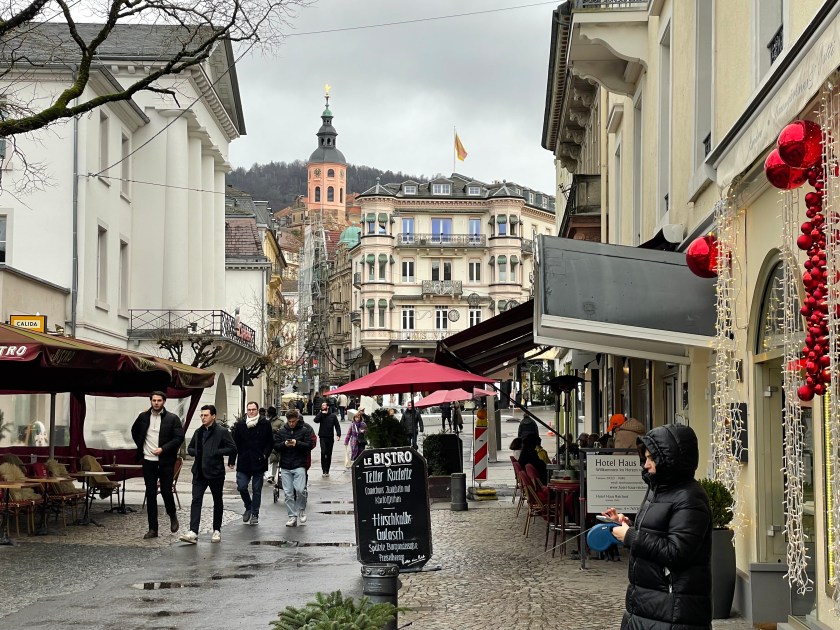
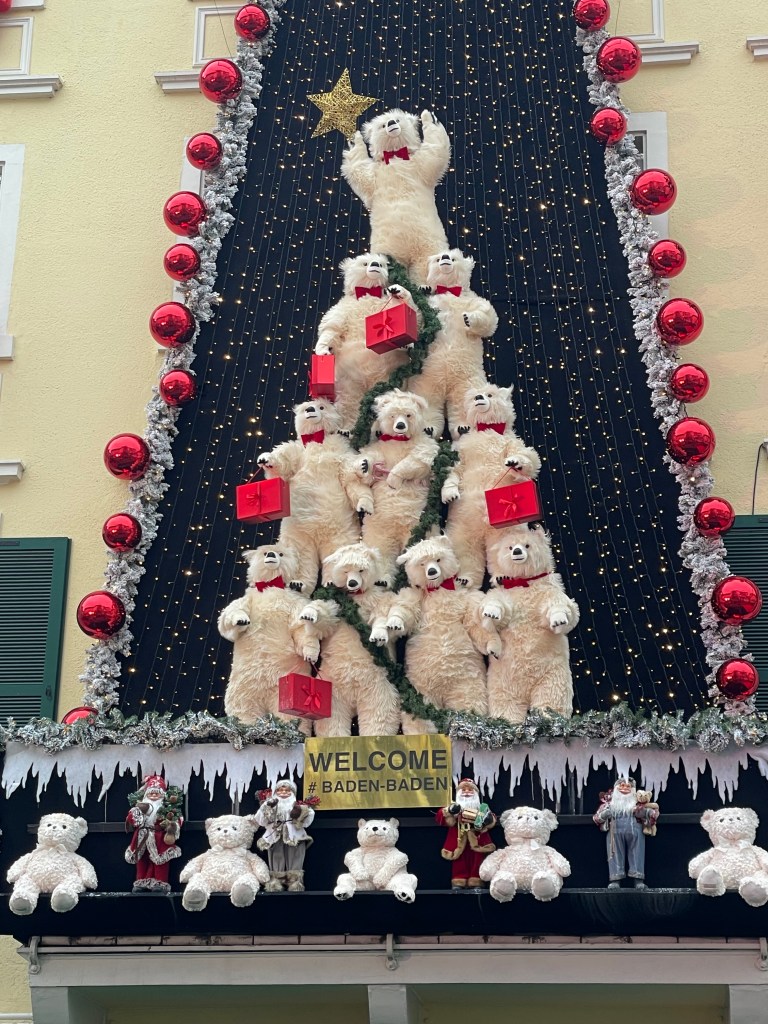
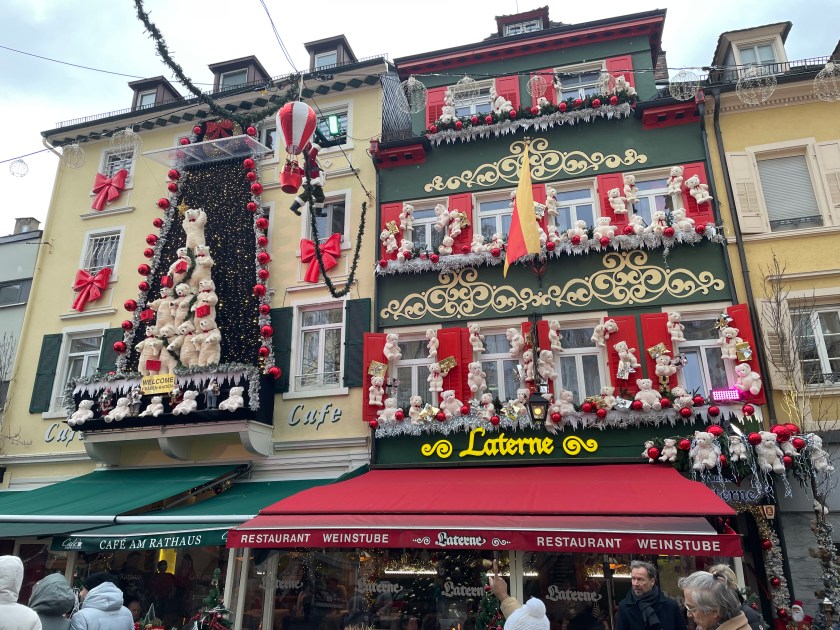
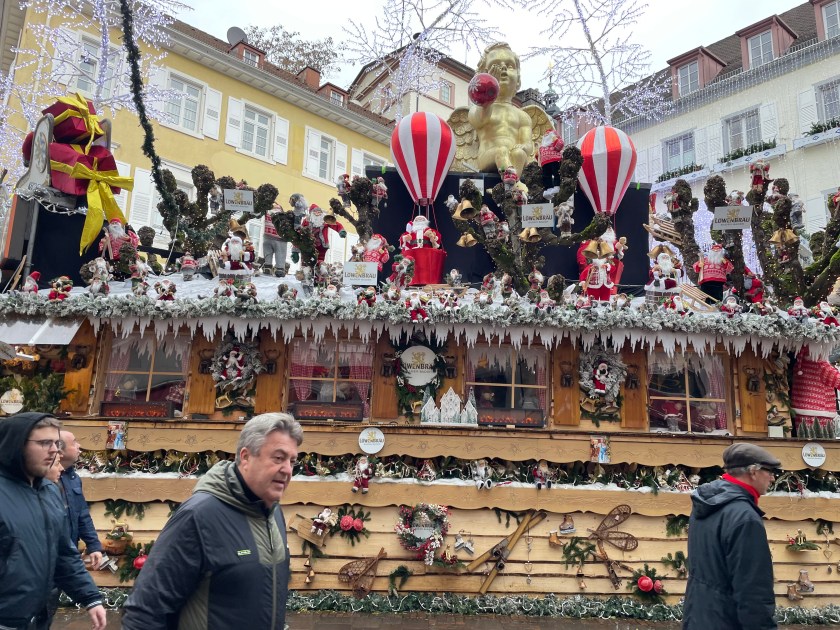
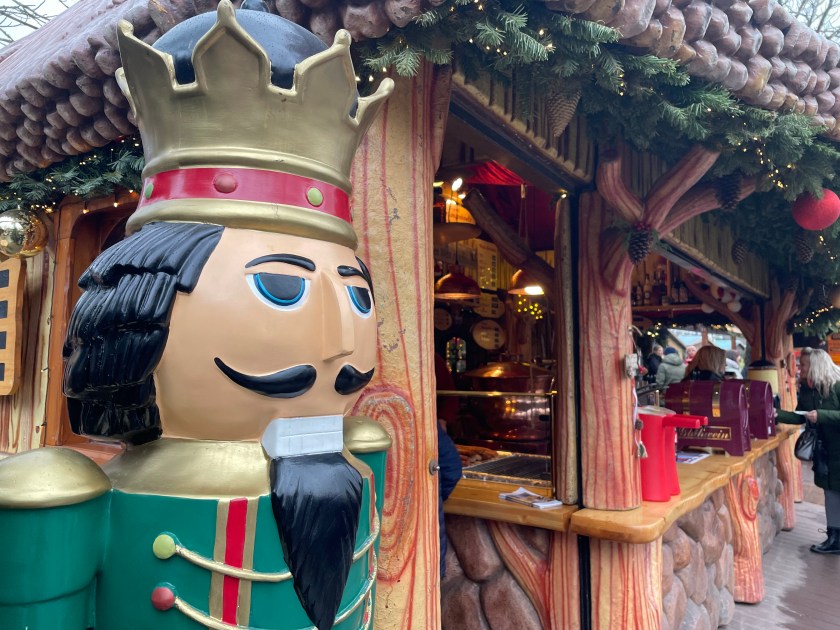
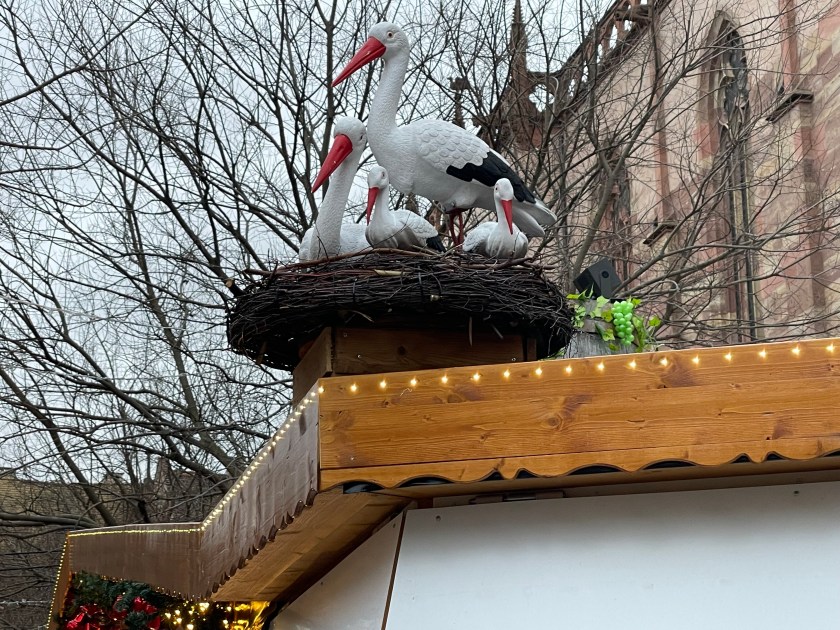
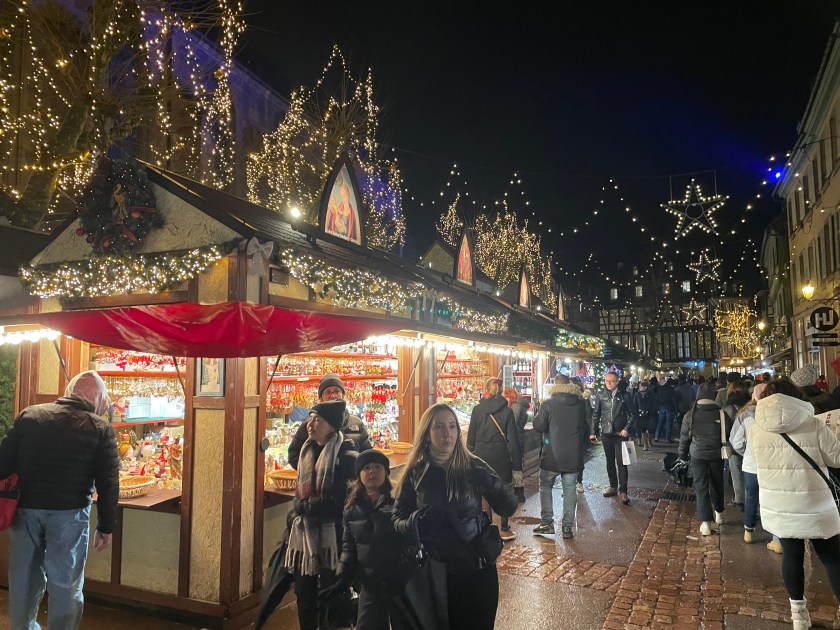
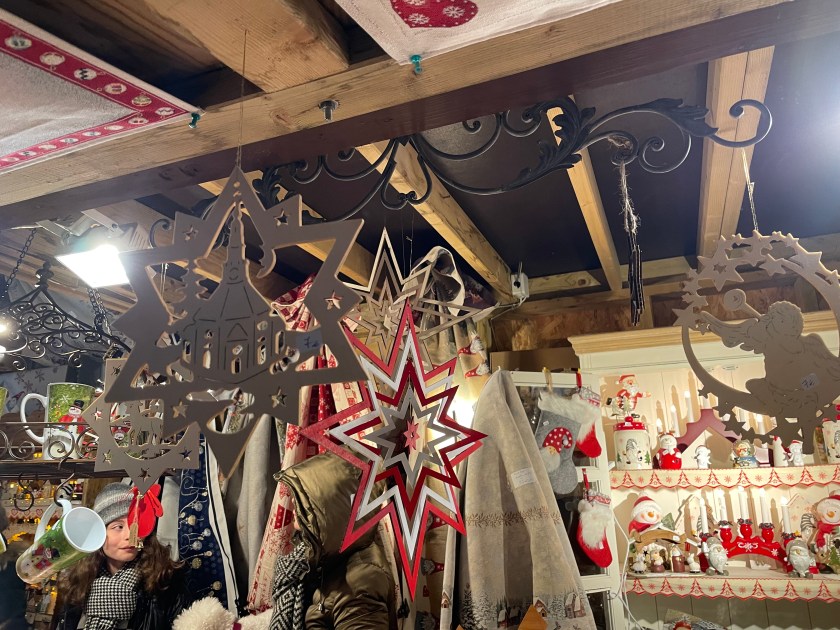
The tops of the booths were pretty fancy!

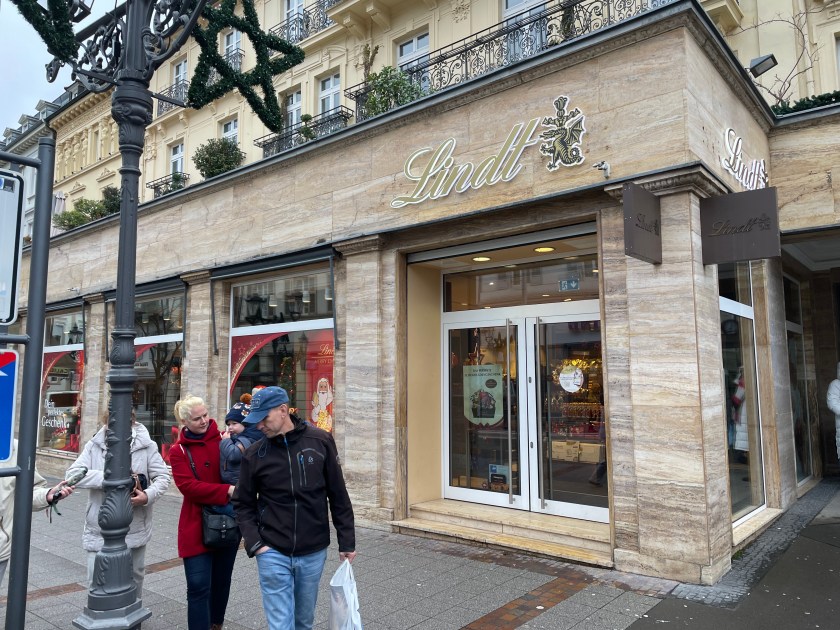
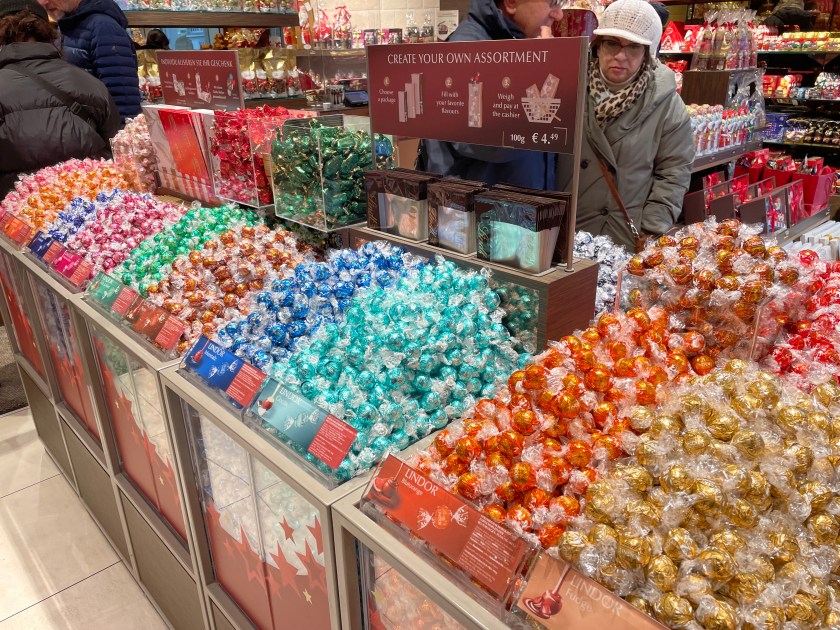
John quickly noticed the Lindt shop with his favorite chocolates for sale. Take a look inside:
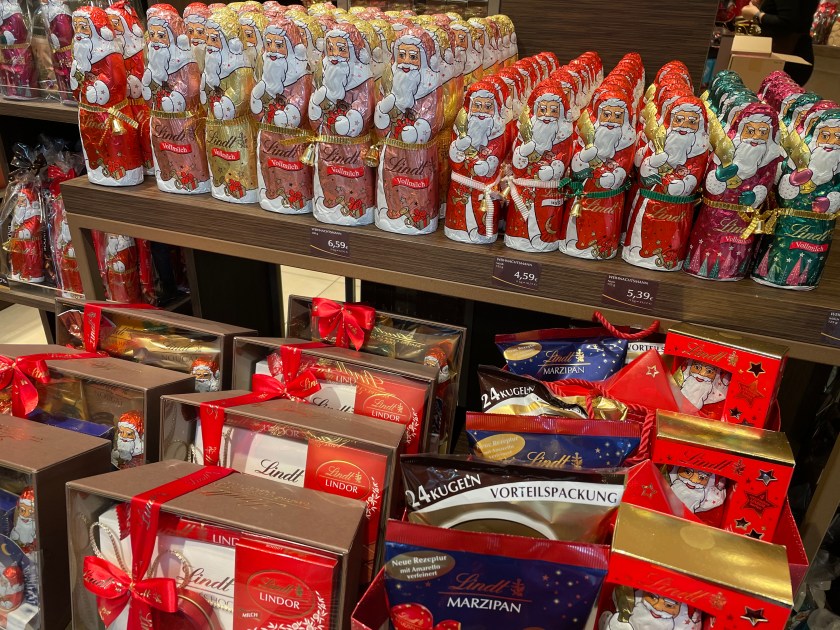
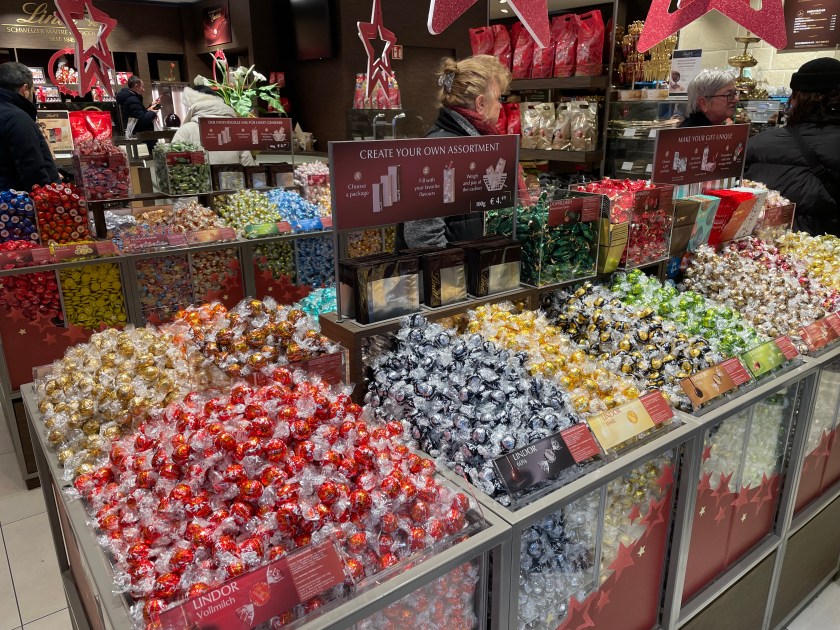
You could fill your own bag with your favorite chocolate flavors.
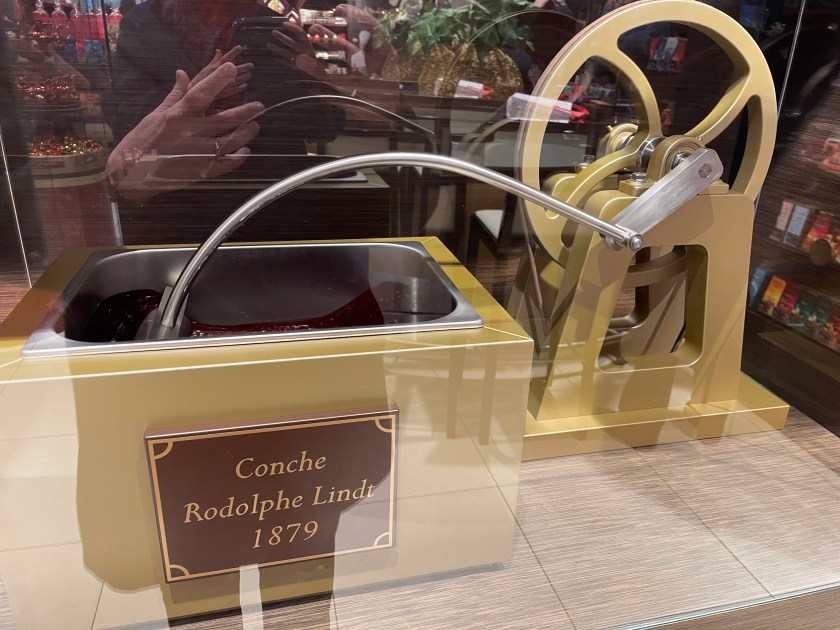
This is the machine that Herr Lindt invented that revolutionized chocolate making.
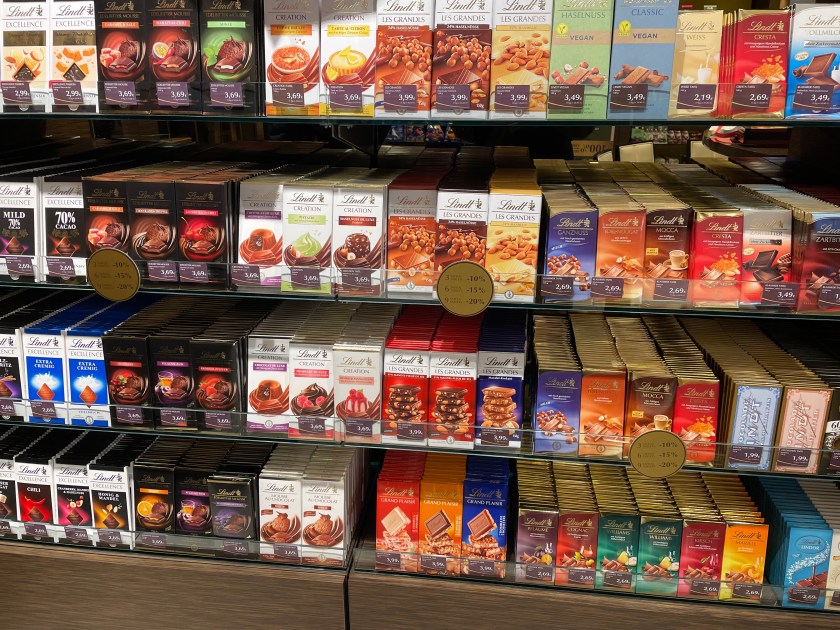

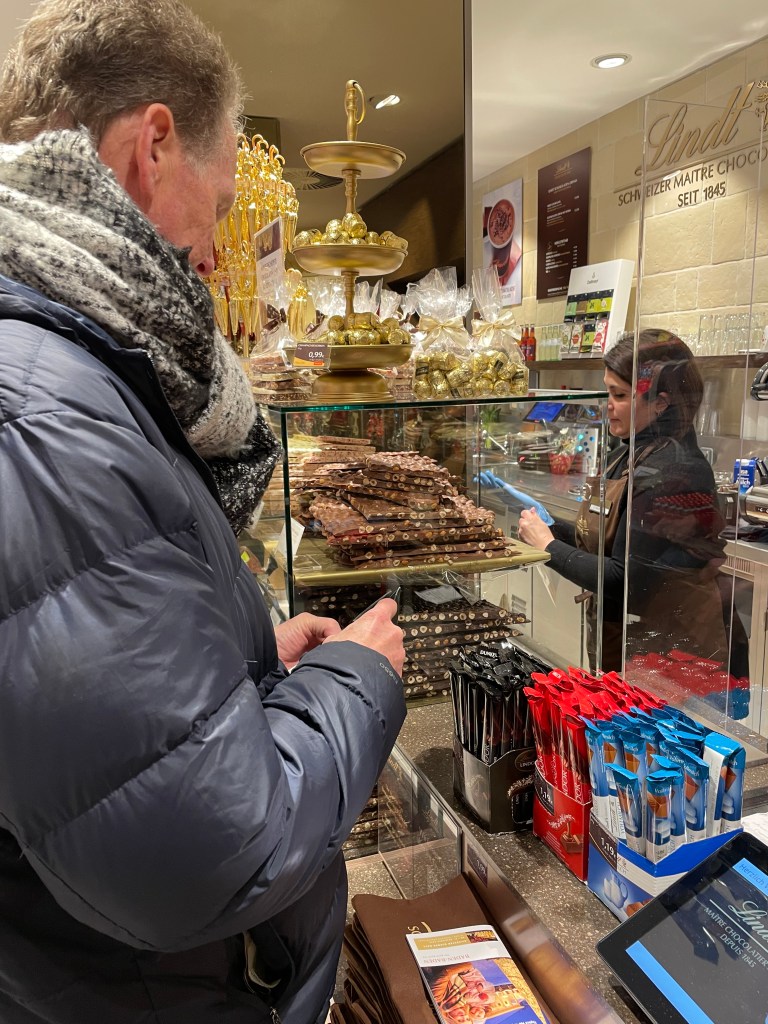
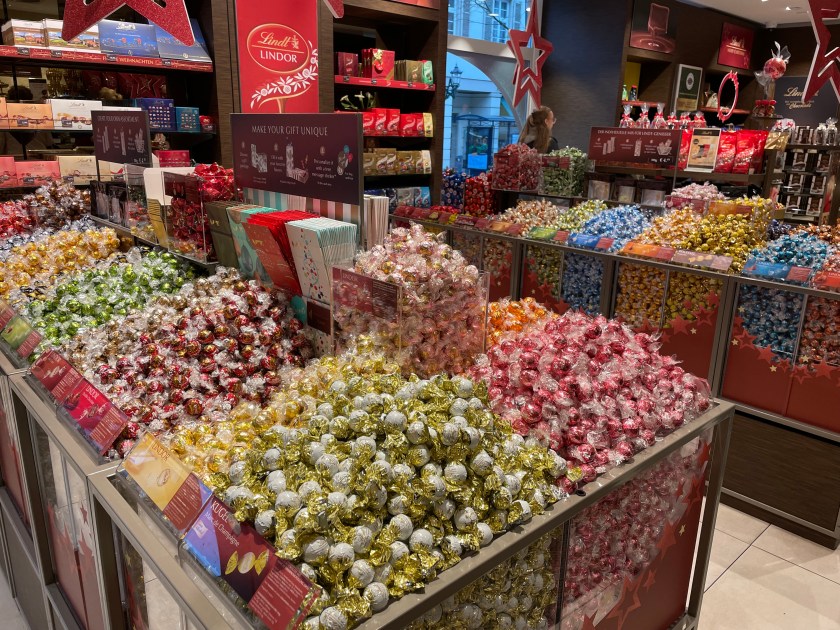
John bought a piece of milk chocolate with almonds, his favorite. It didn’t last long!

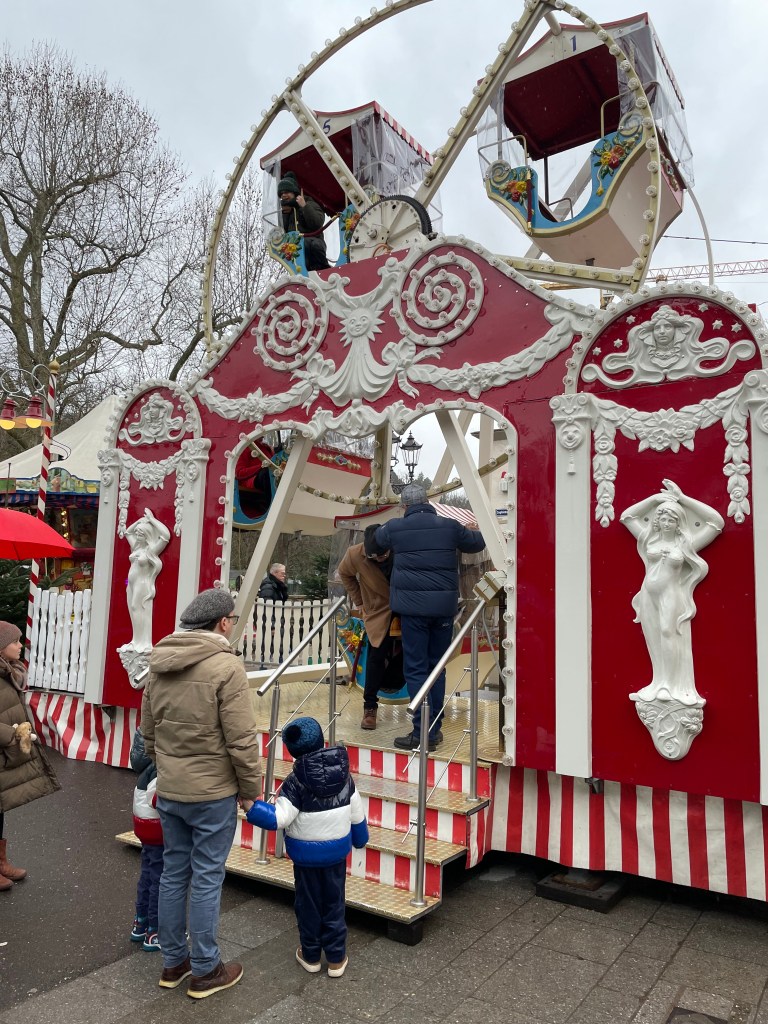
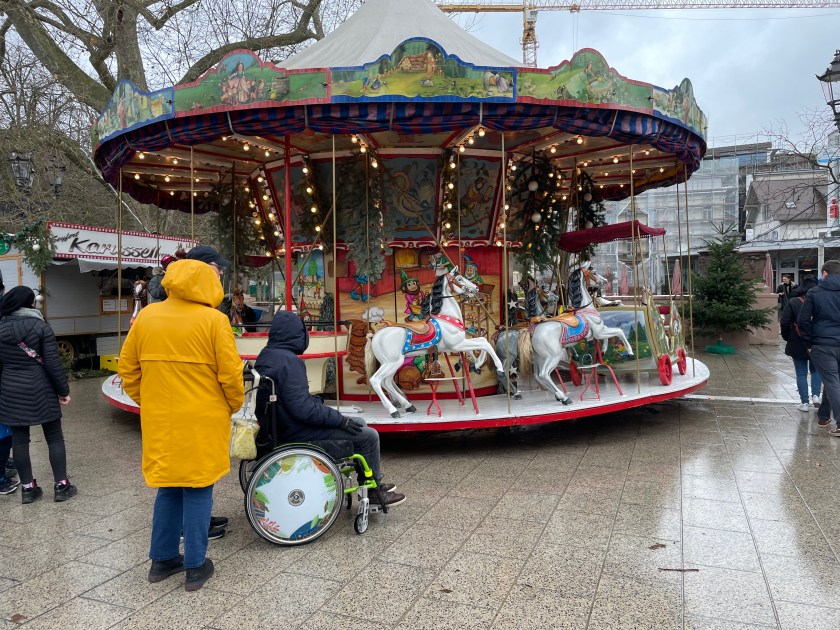
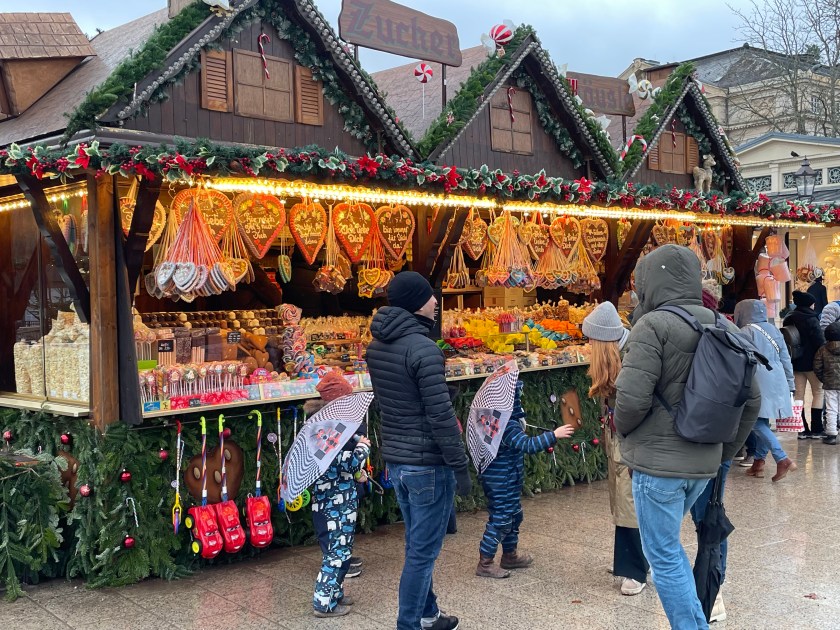
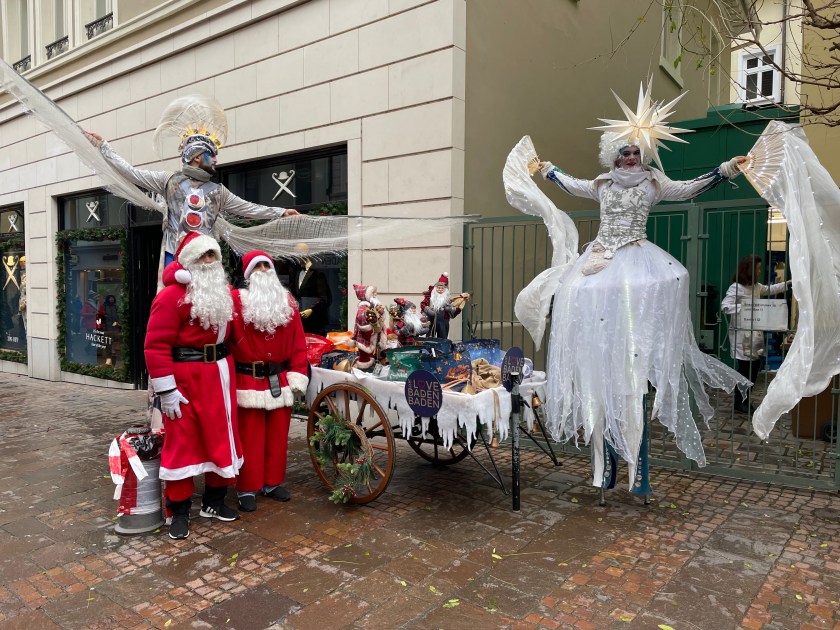
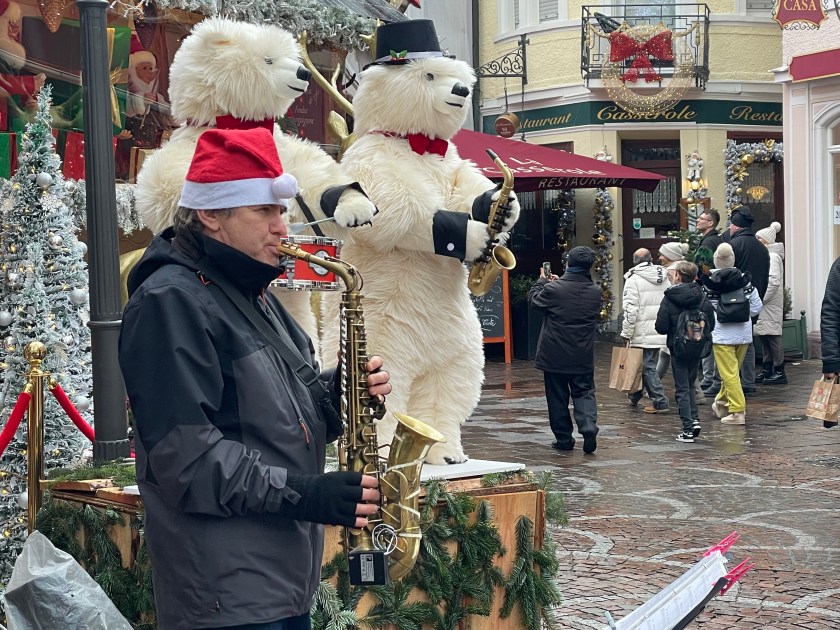
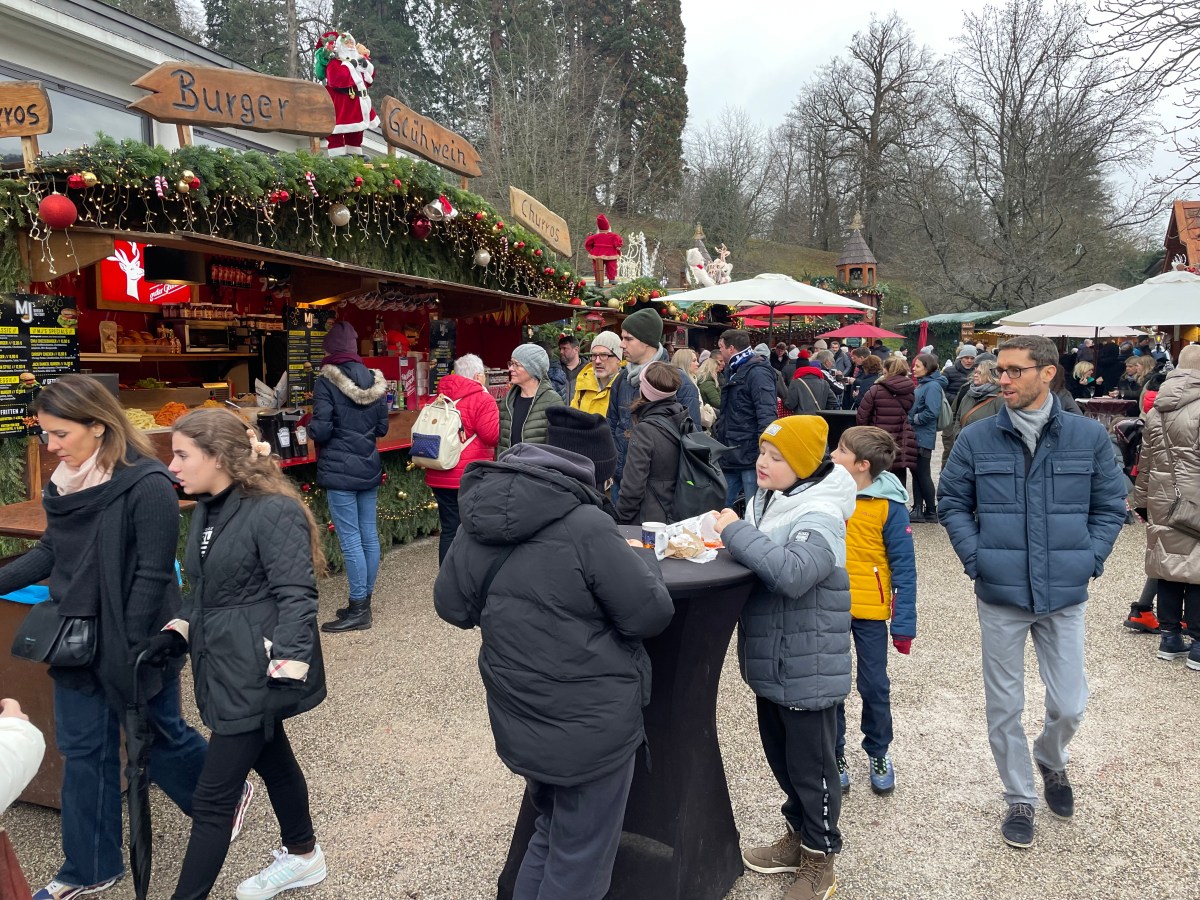
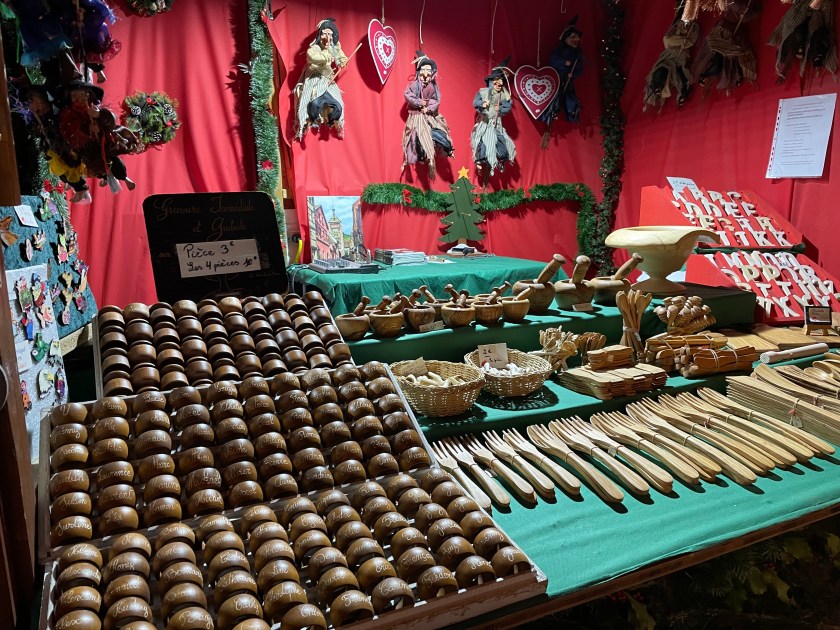
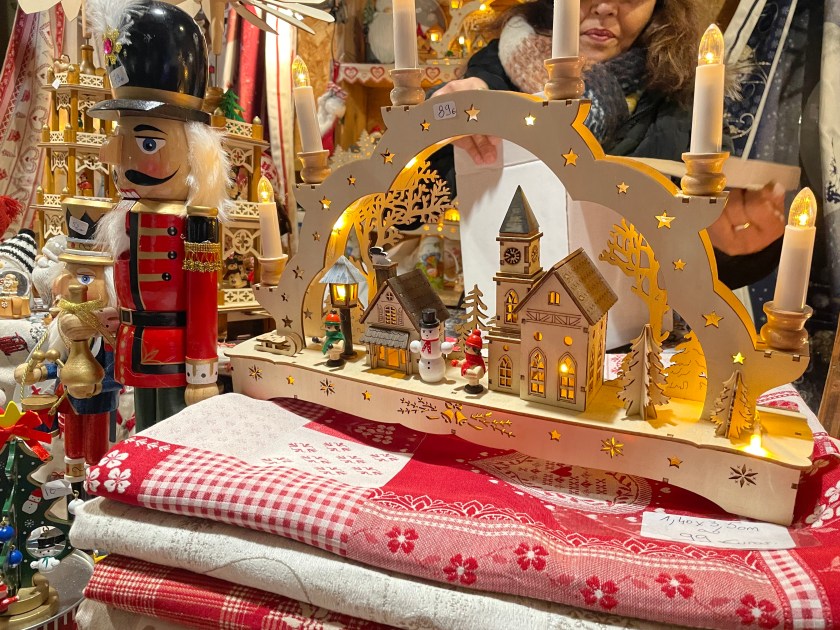
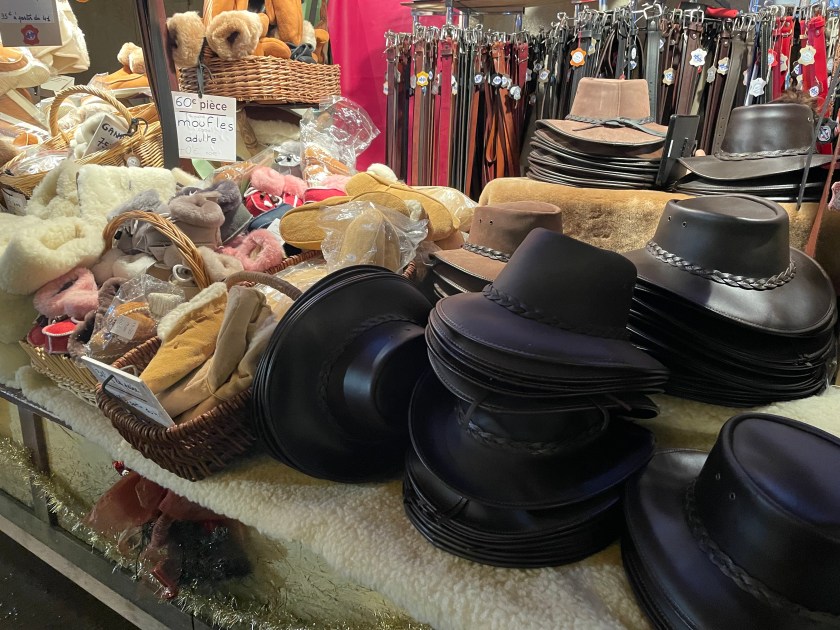
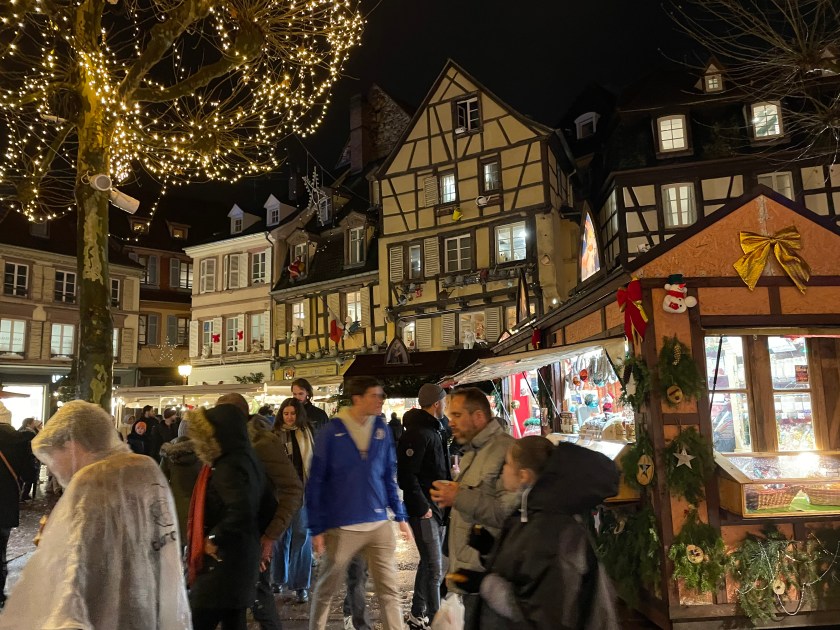
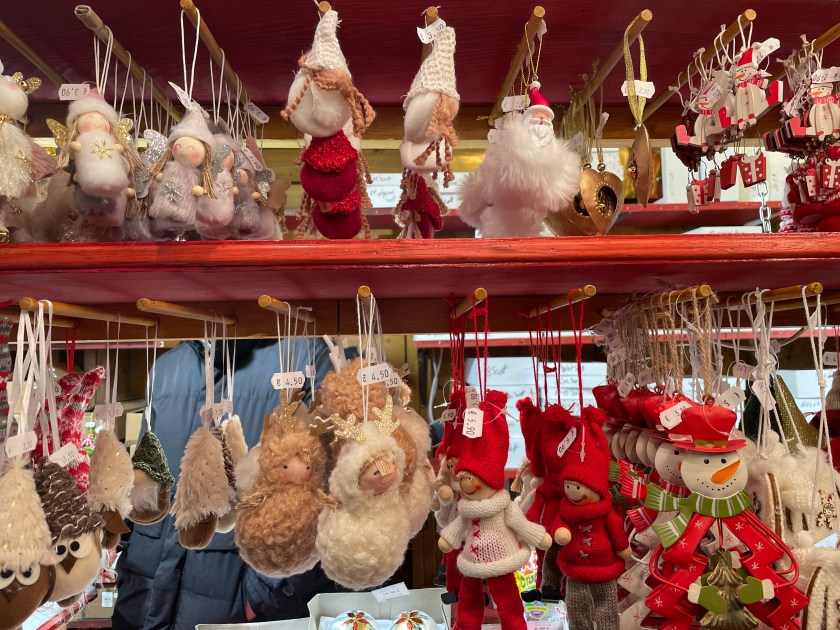
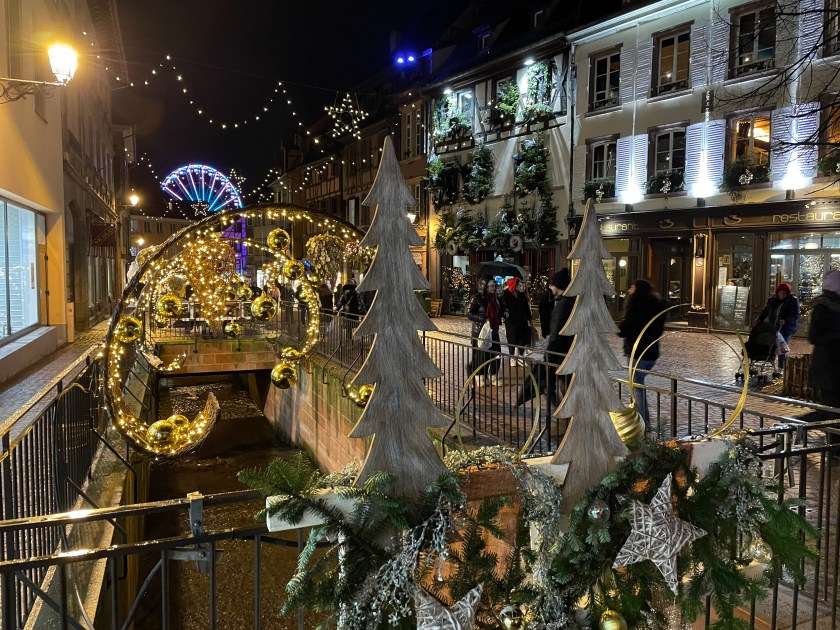
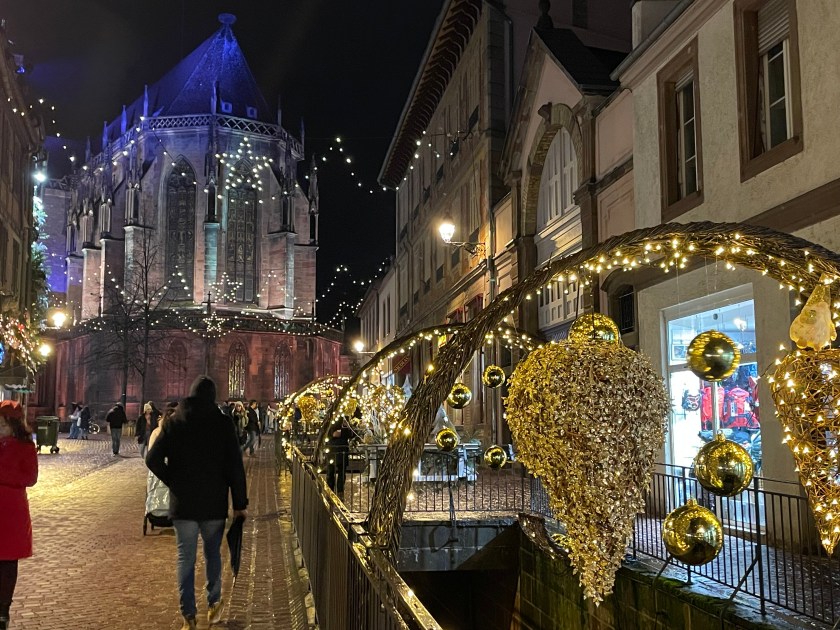
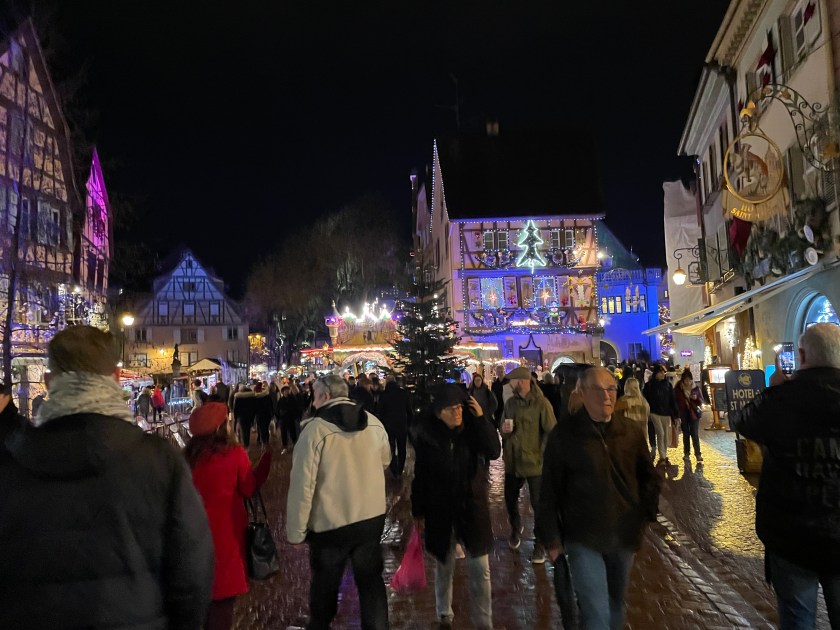
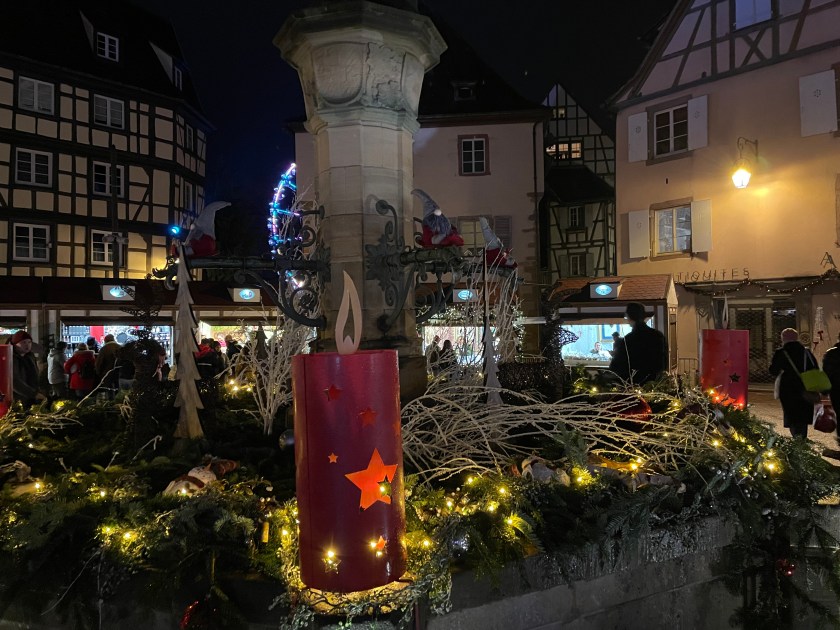
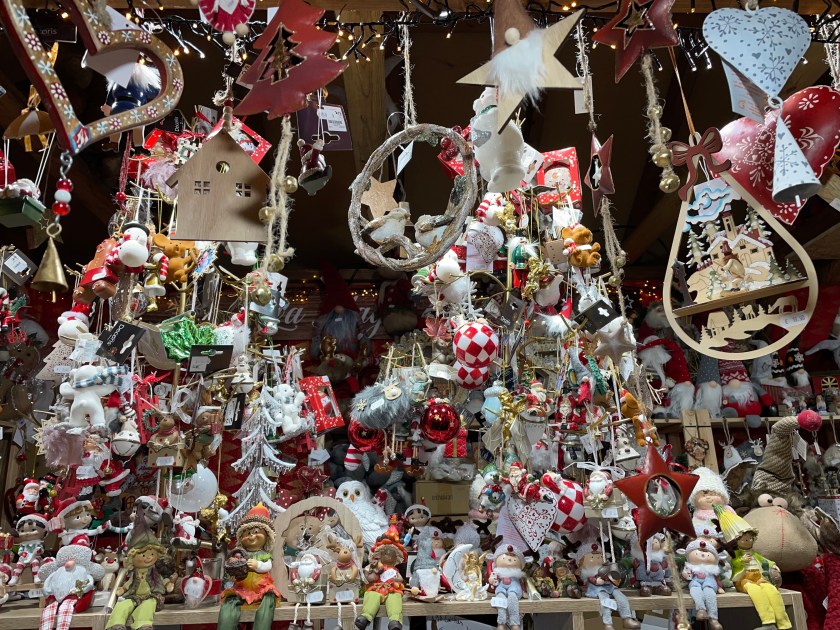
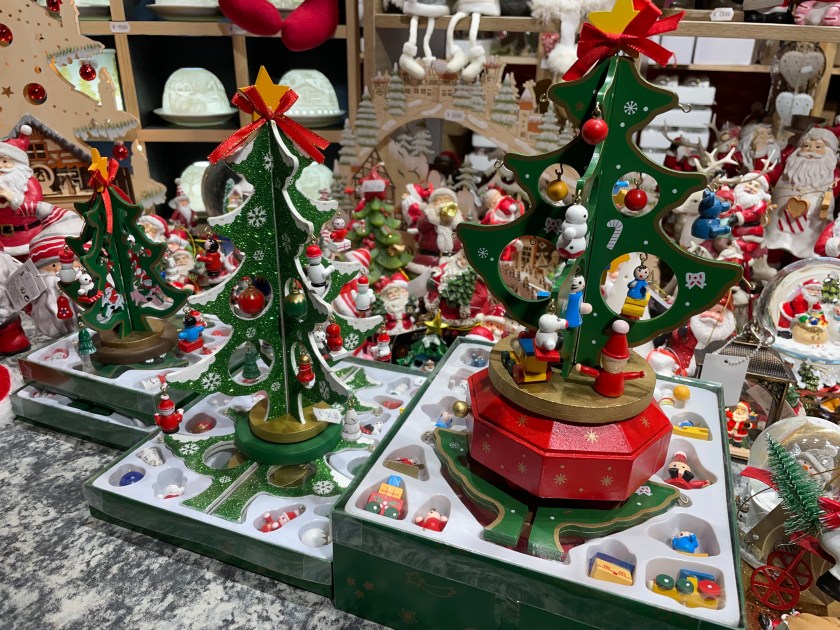
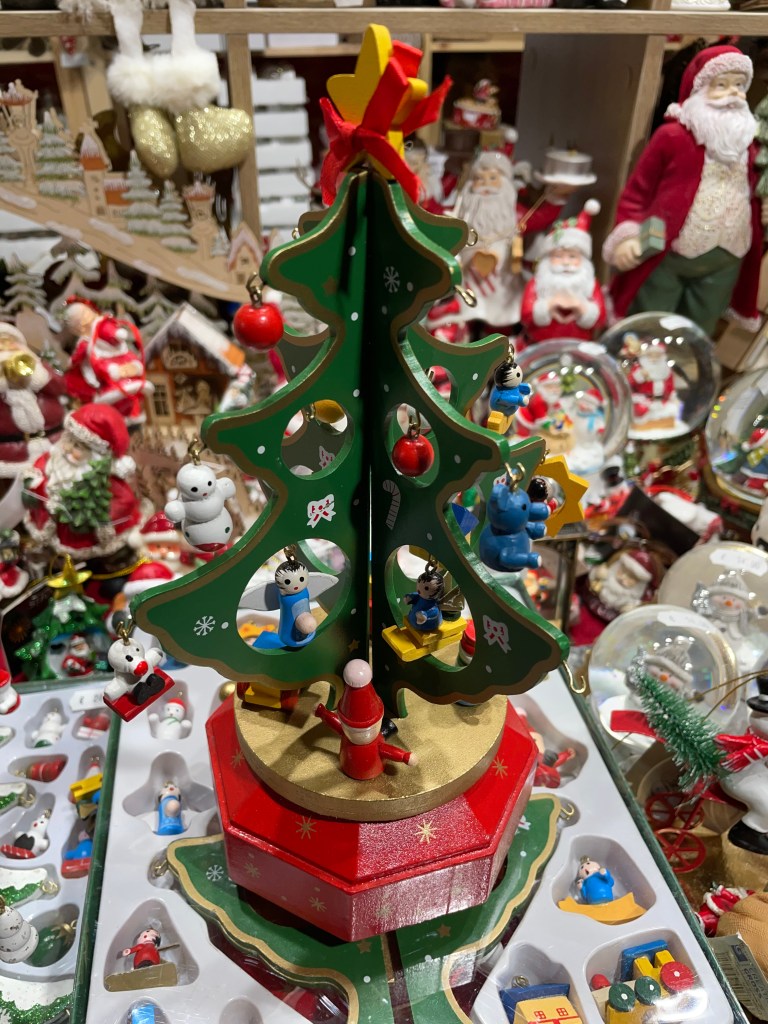
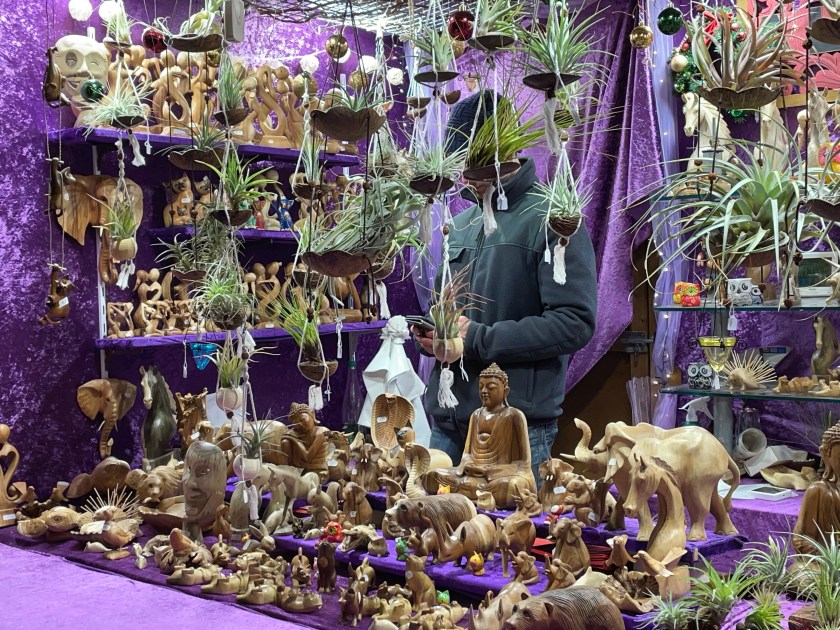
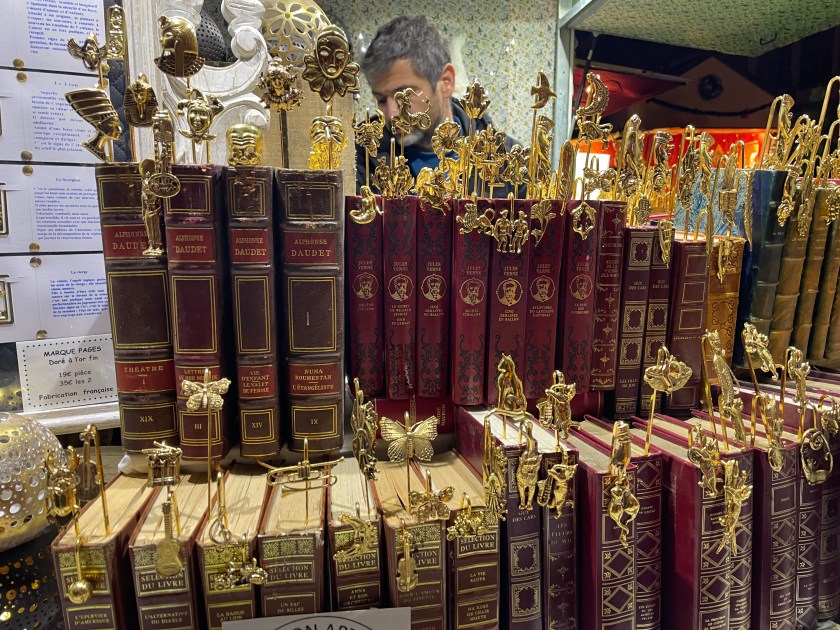
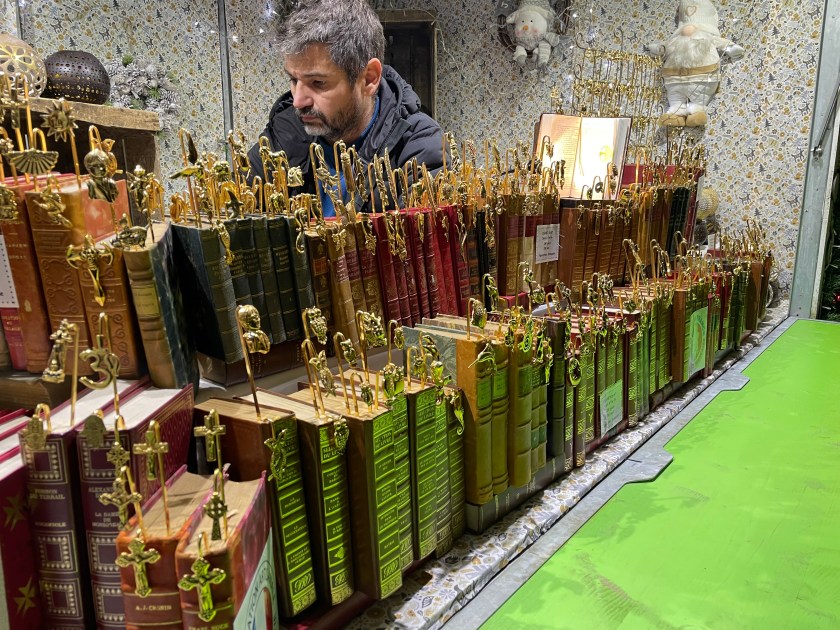
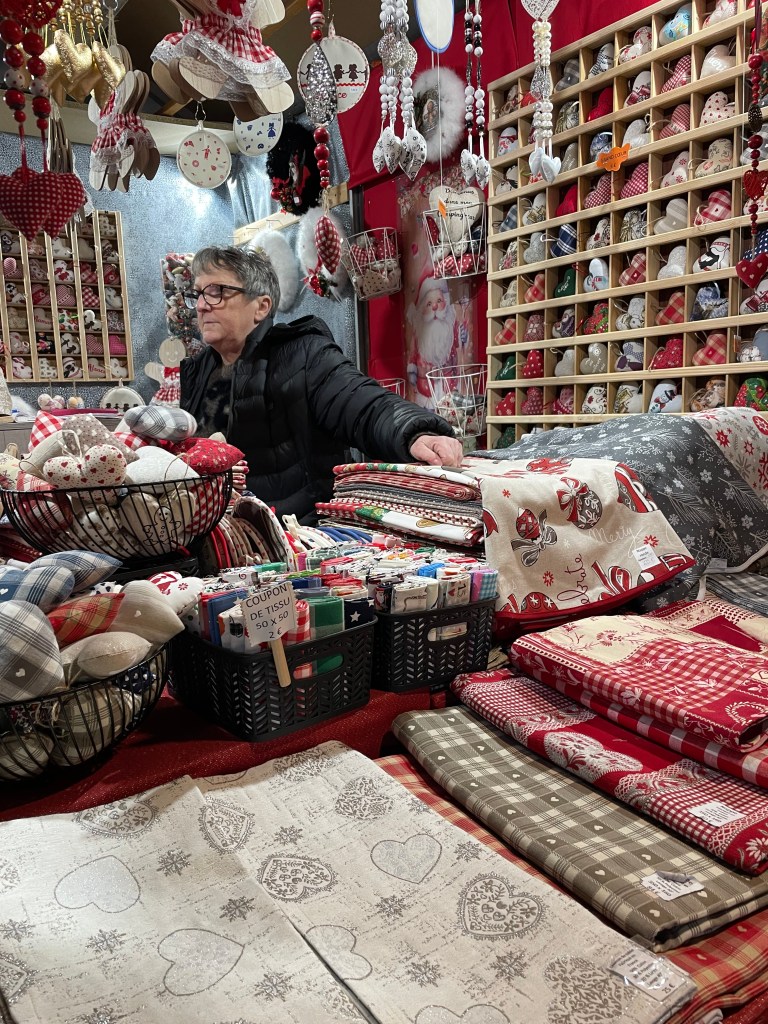
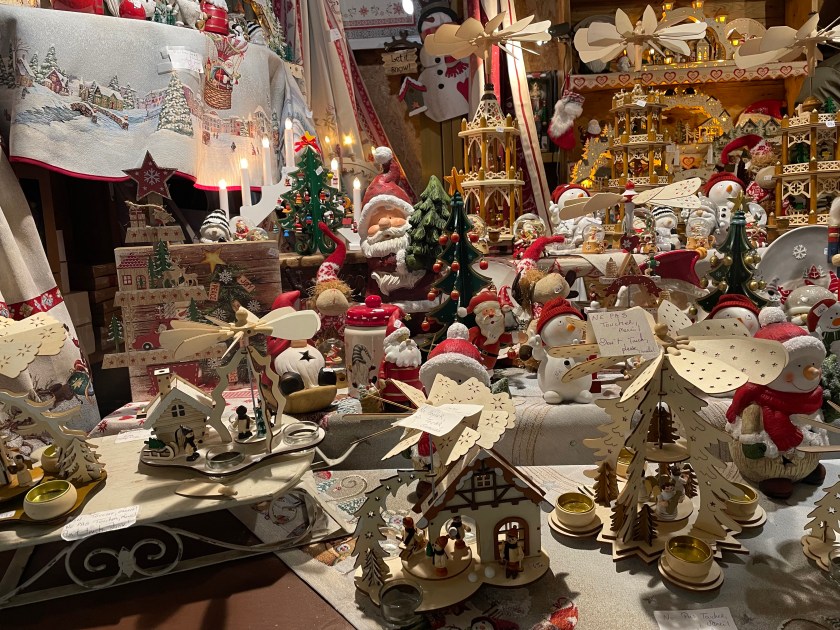
We enjoyed walking through the Christmas Market areas.


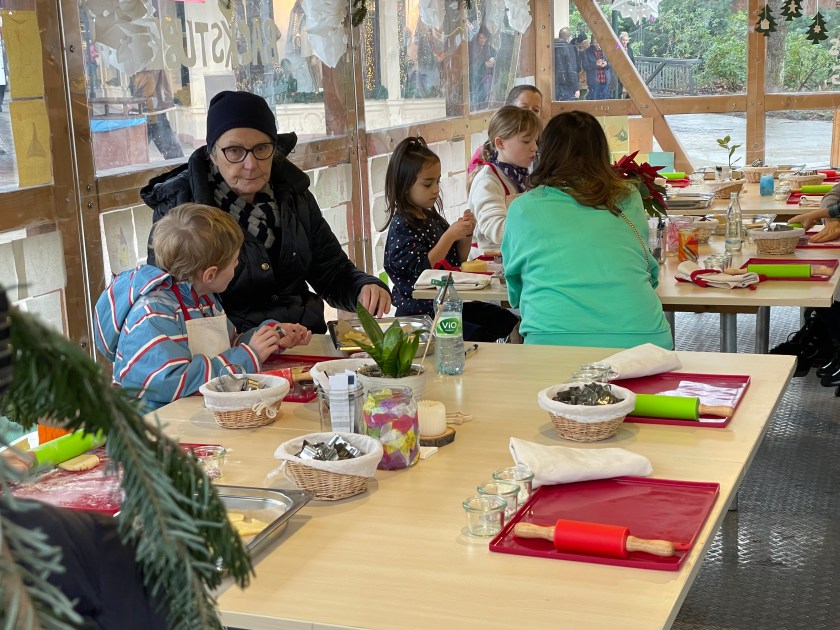
This was a room for children to decorate Christmas cookies.
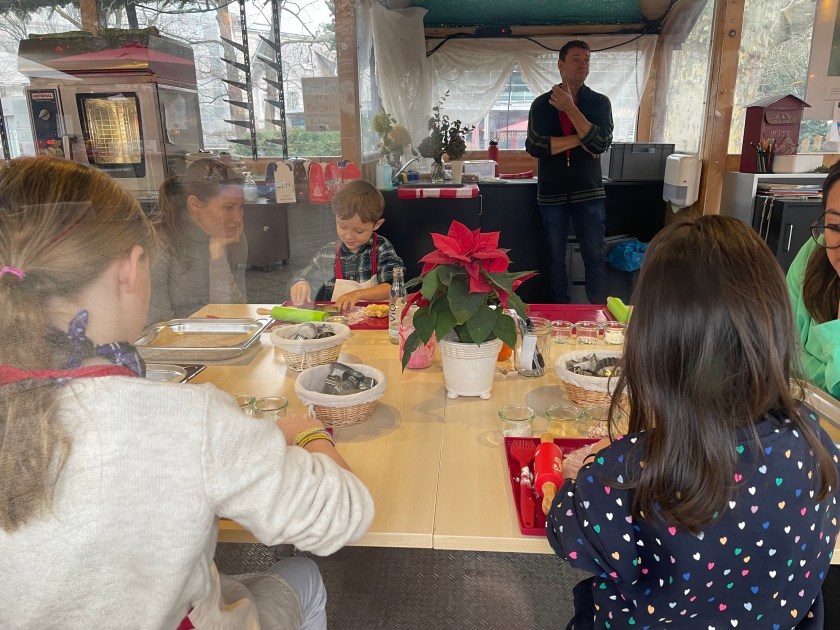
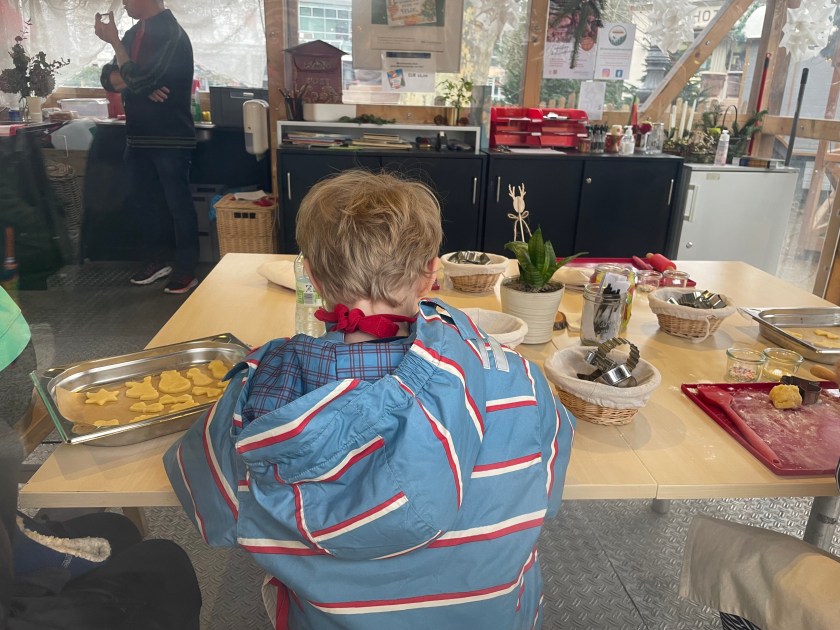
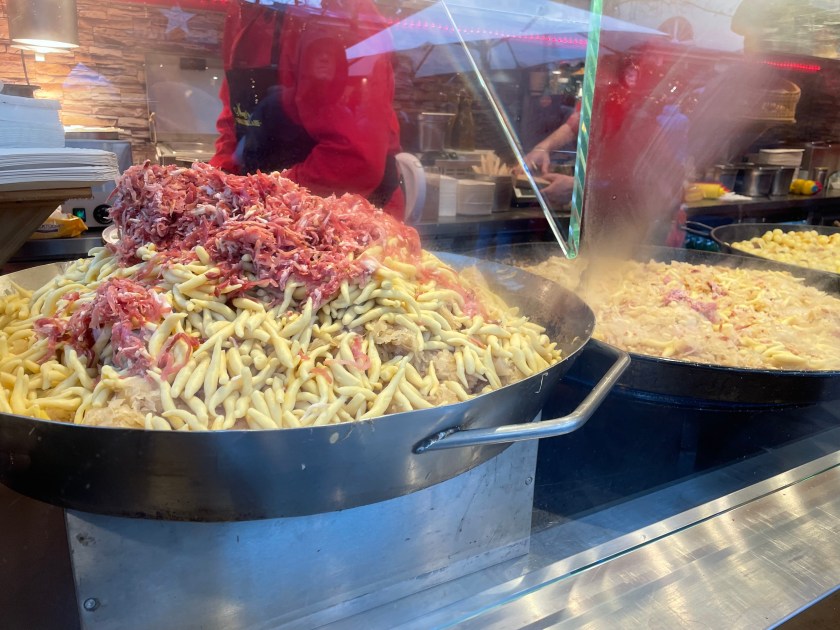
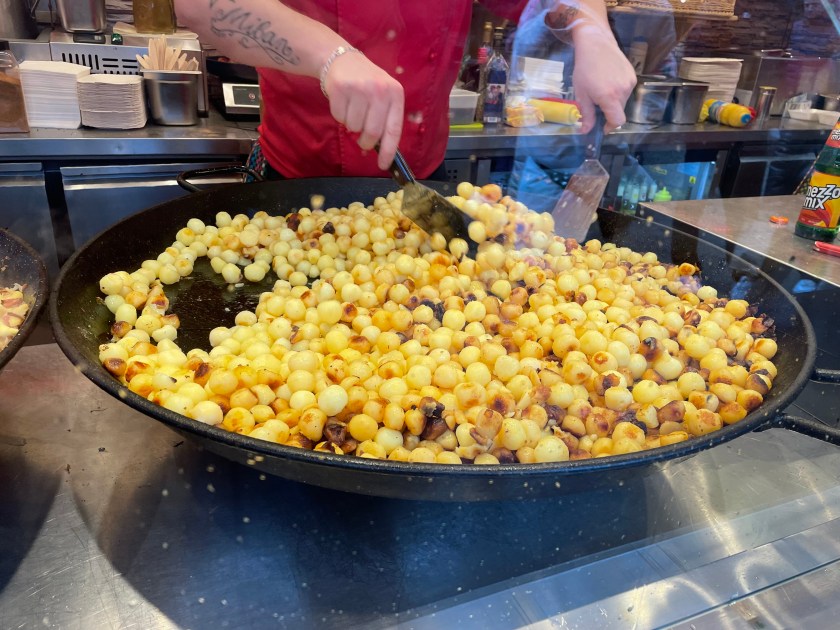
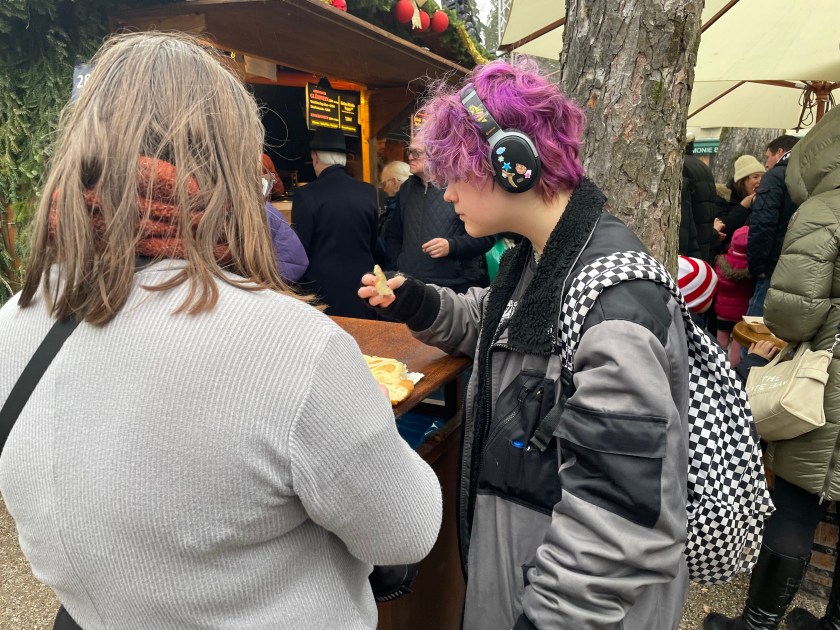
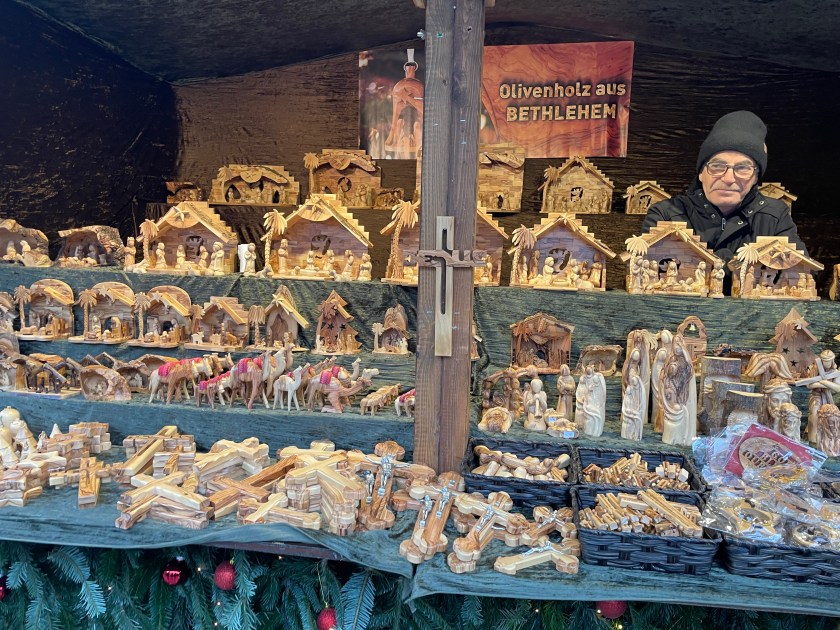
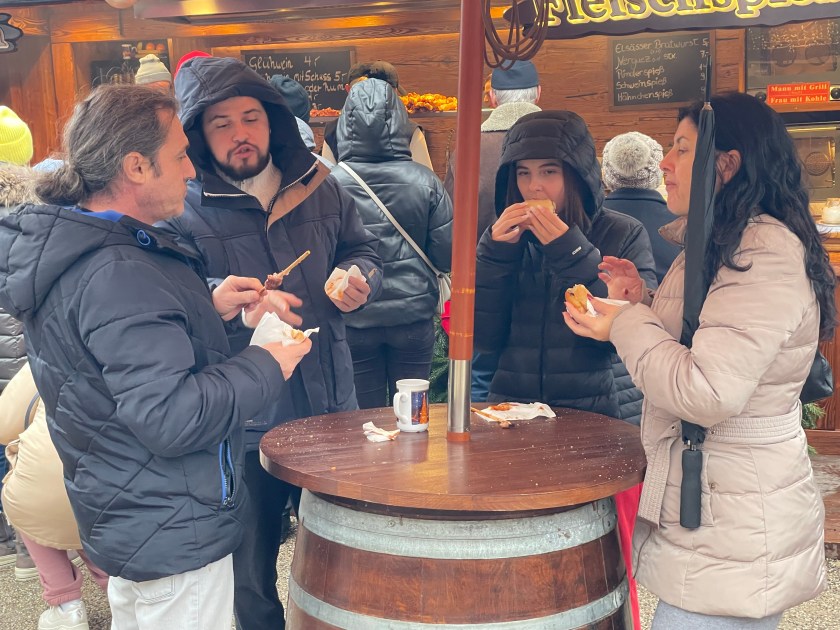
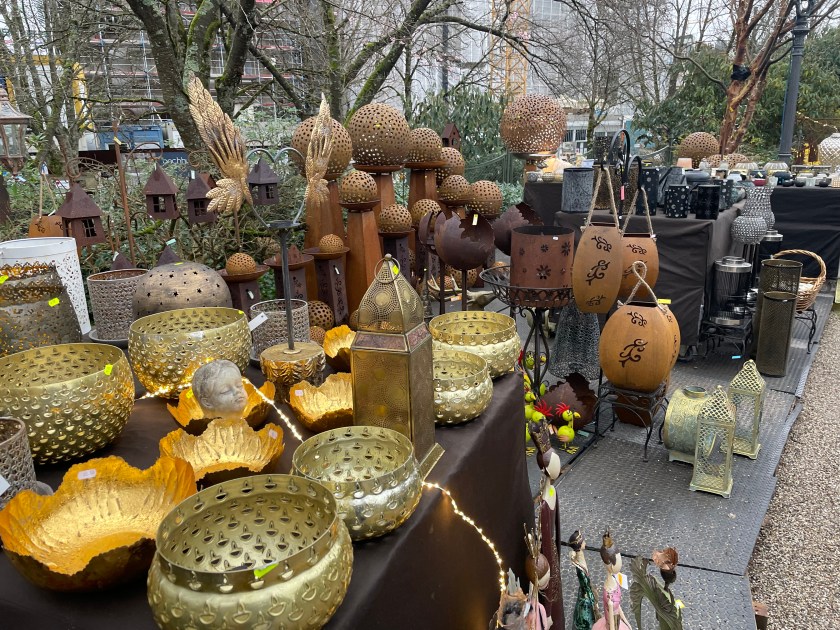
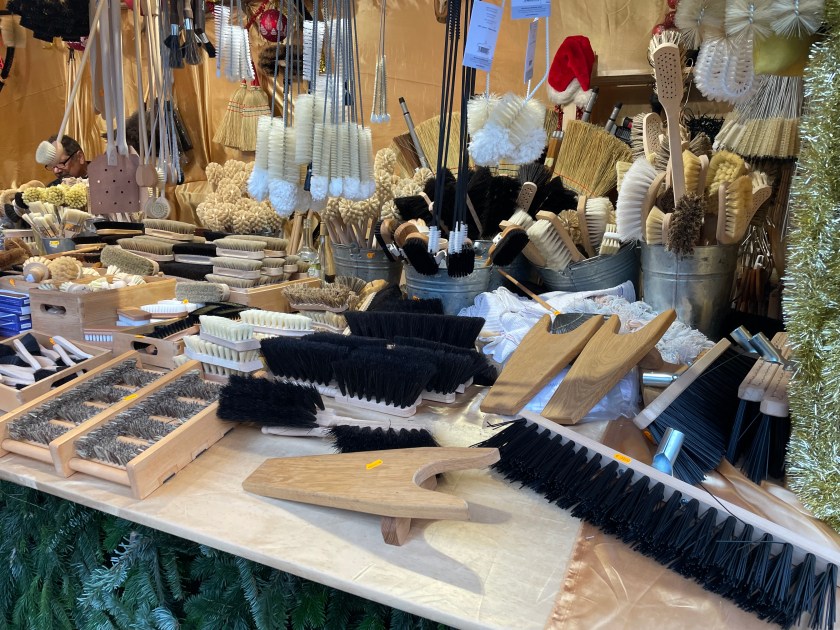
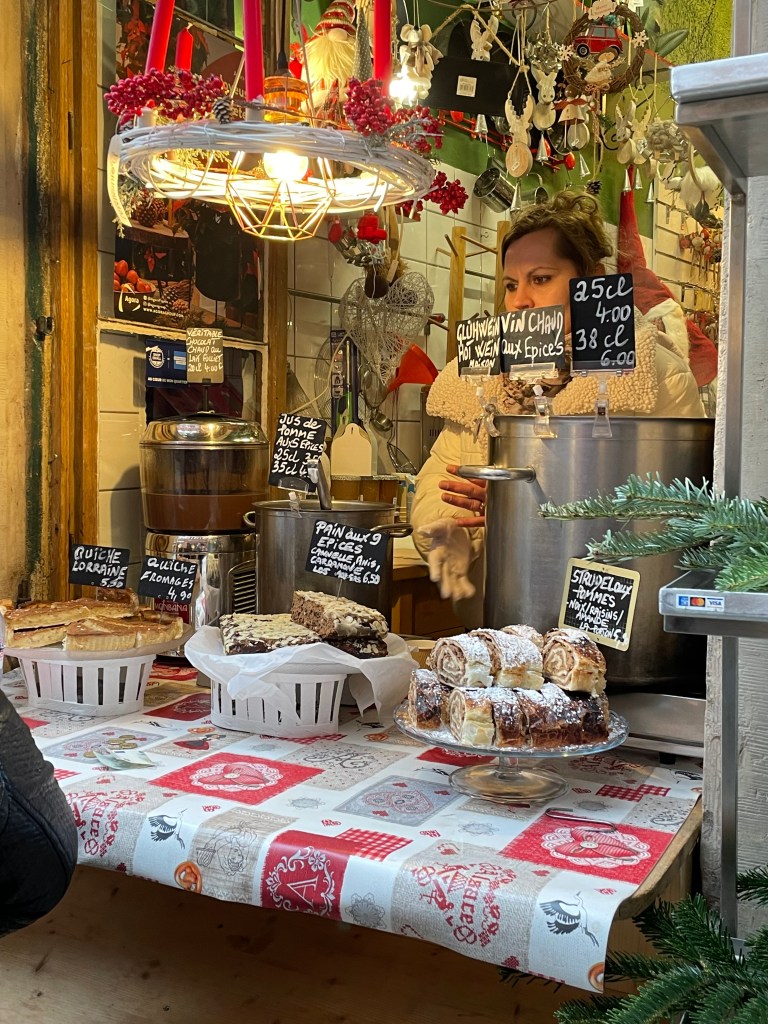
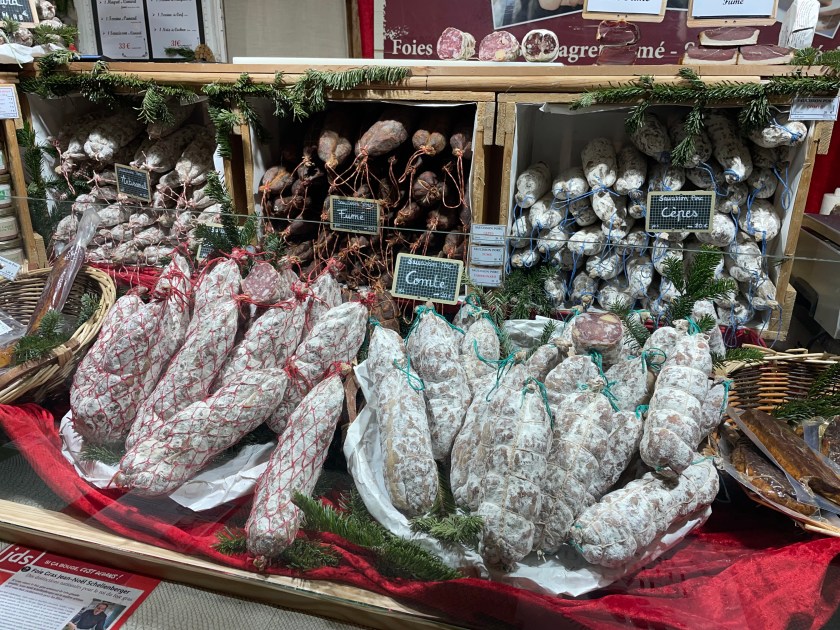
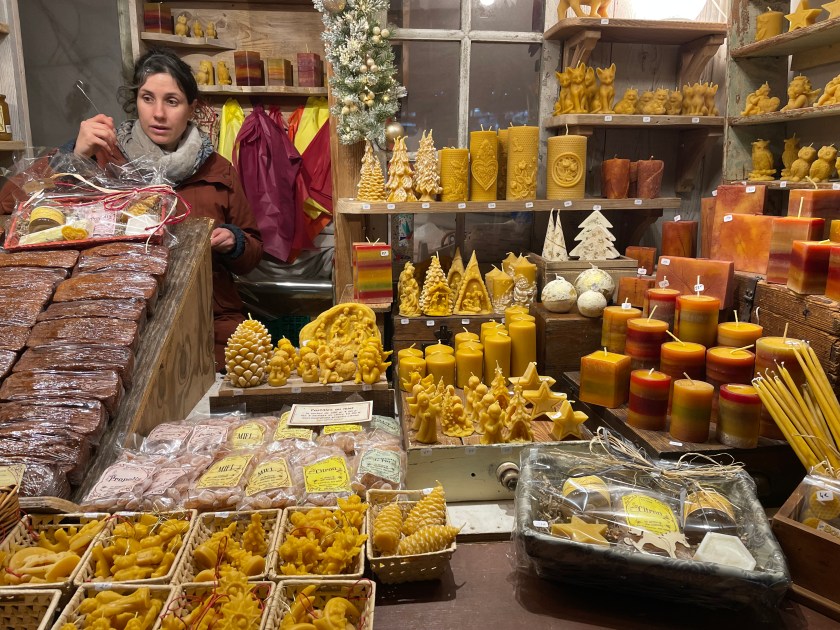
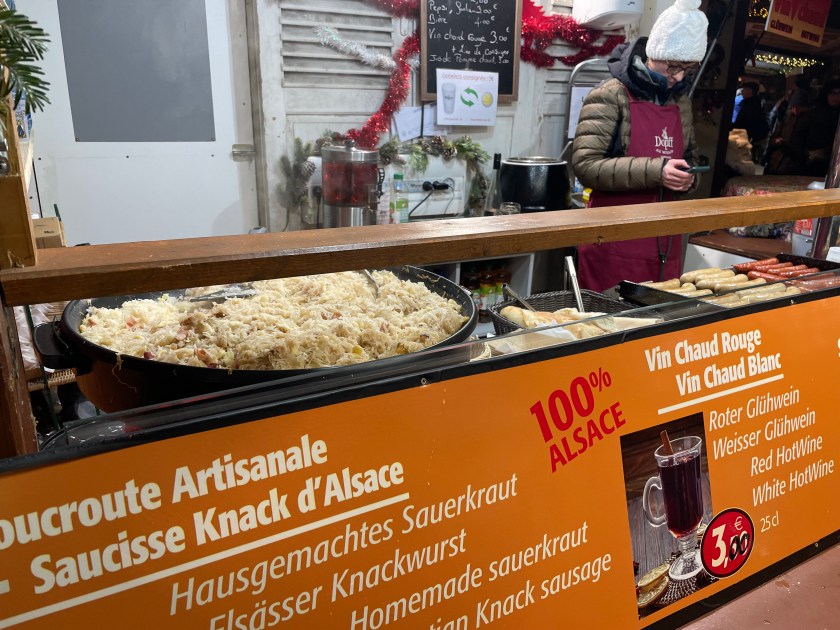
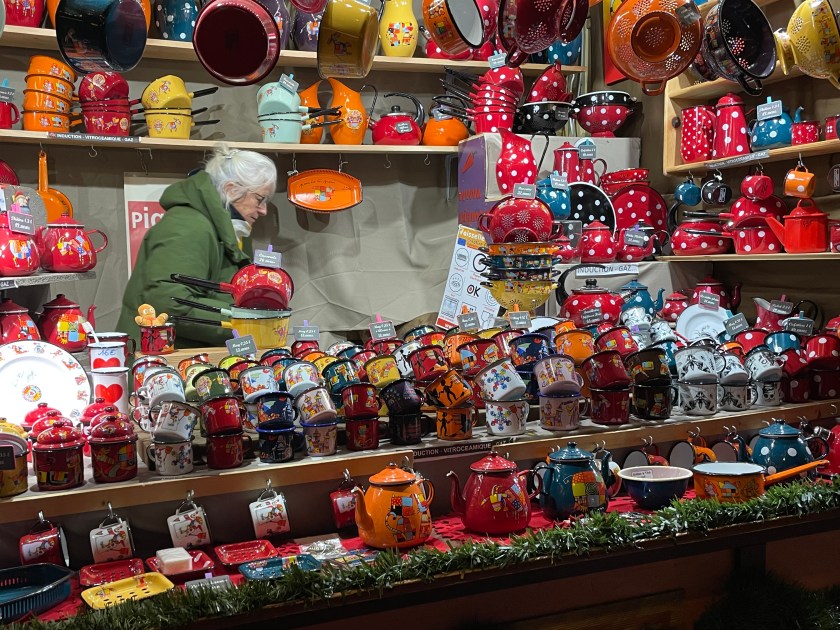
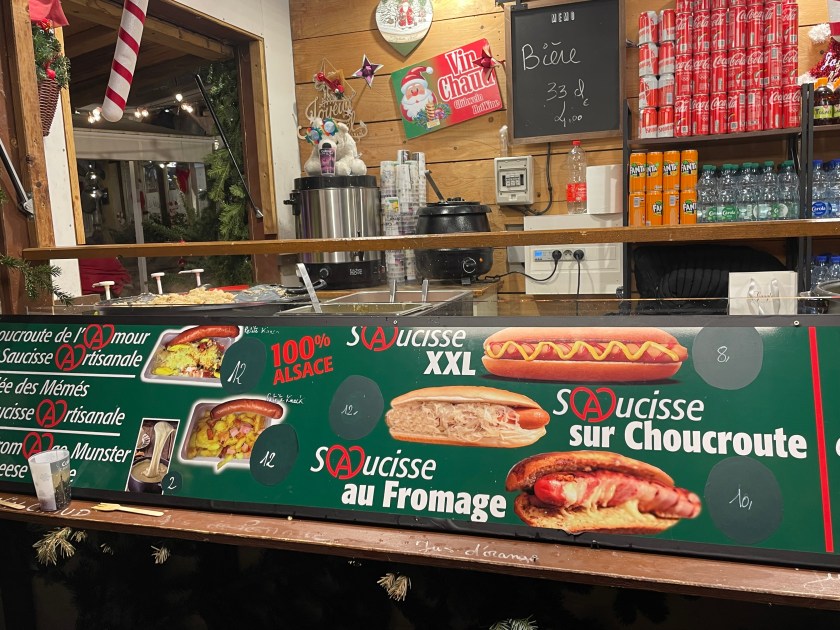
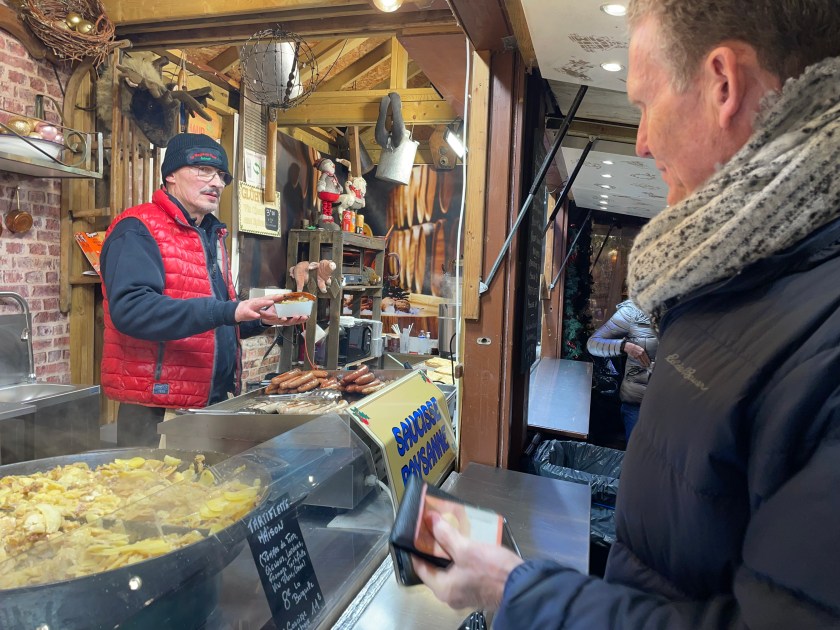
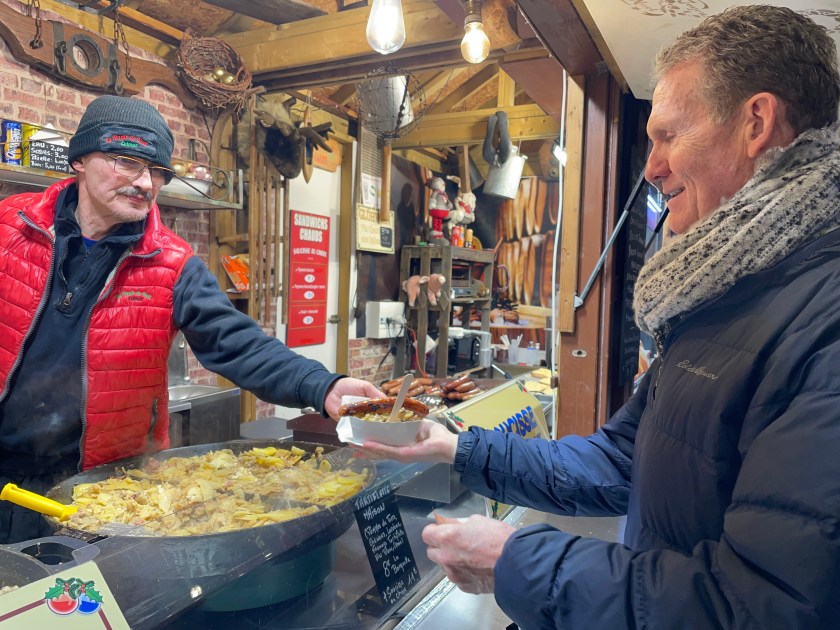
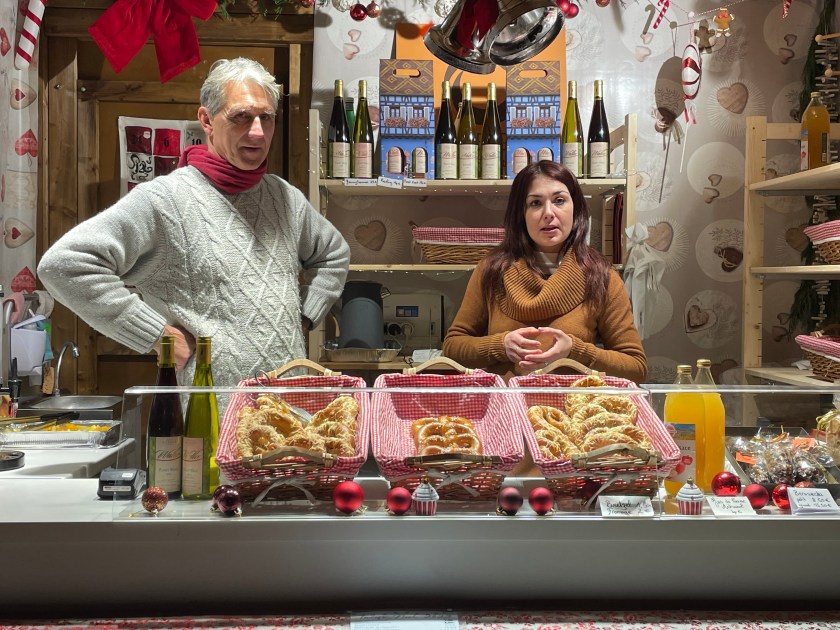
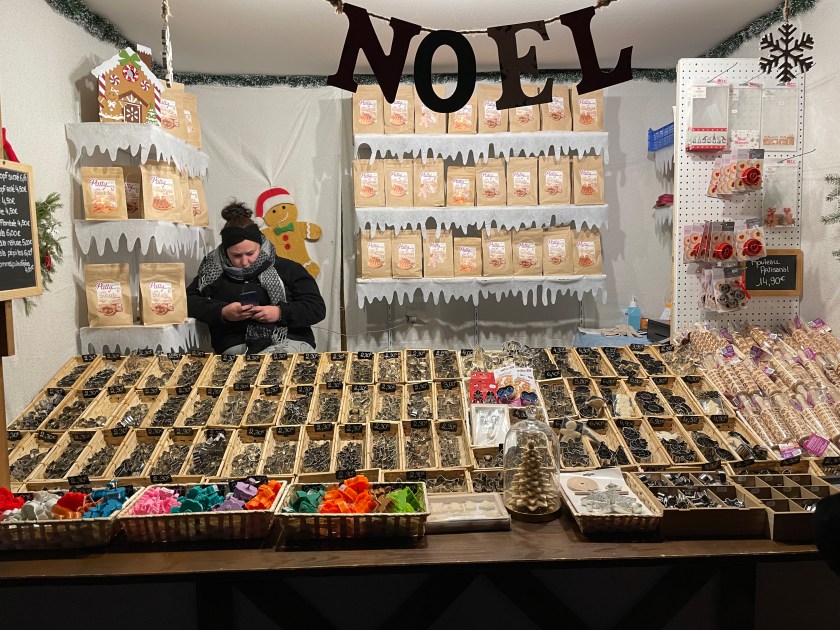
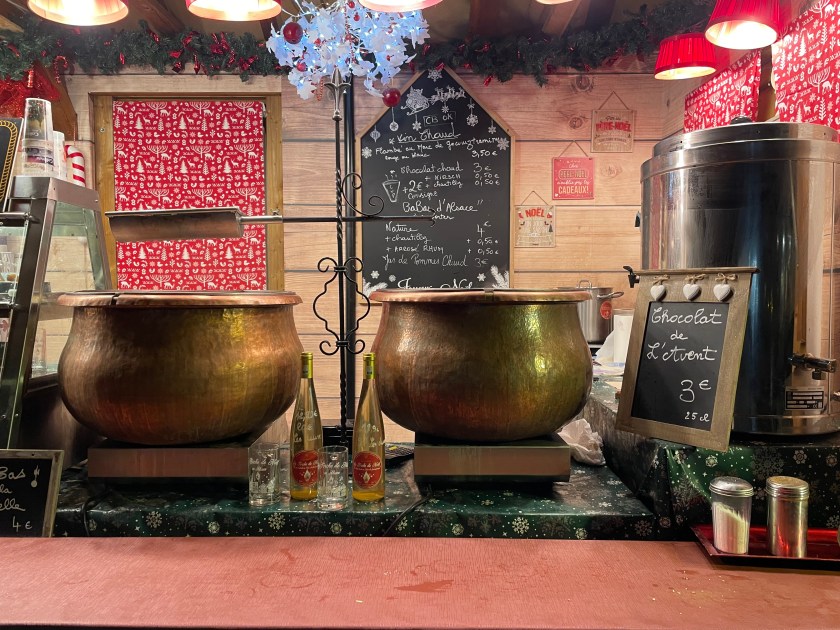
The Christmas markets in each town feature local foods. It’s always really fun to see what they’re cooking and try a few things.
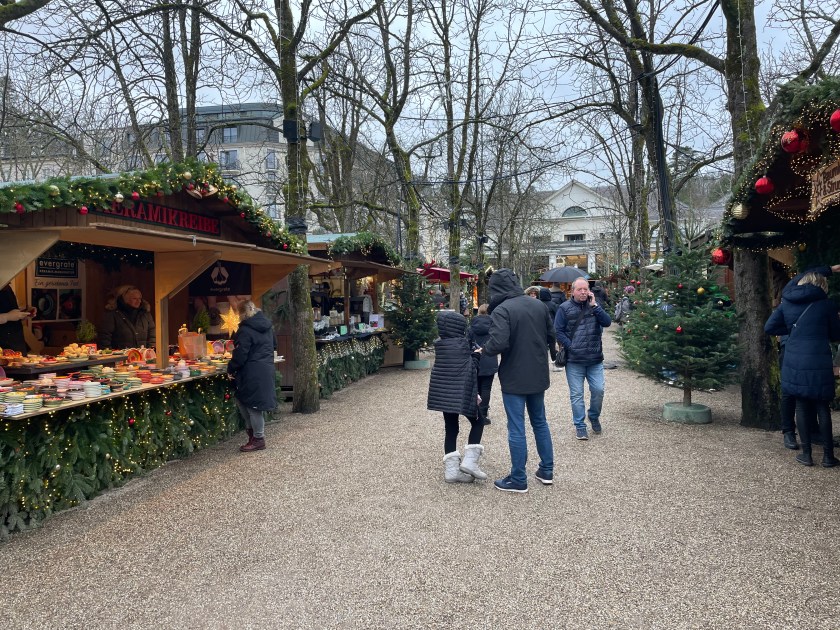

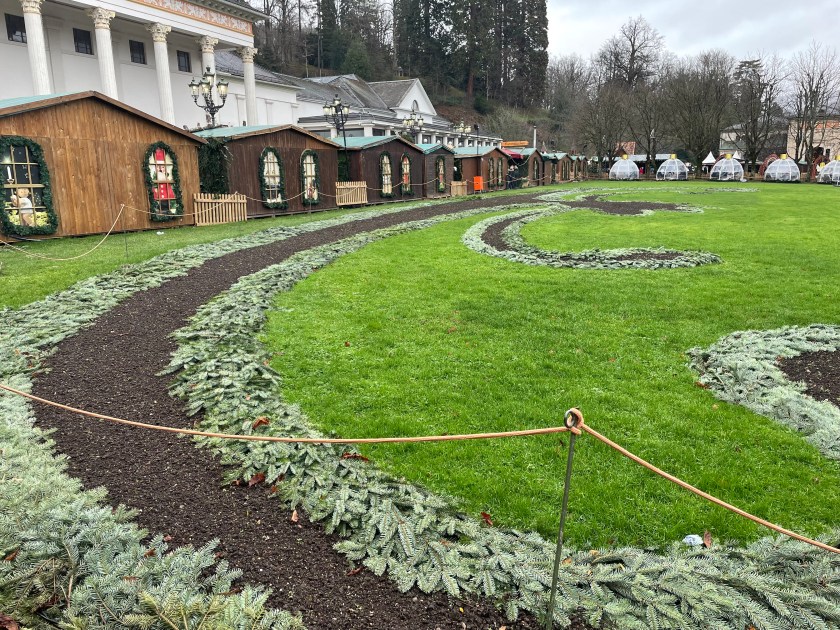
Many of the shops here surrounded a large round grass field, one shop after the next, all in a nice row.
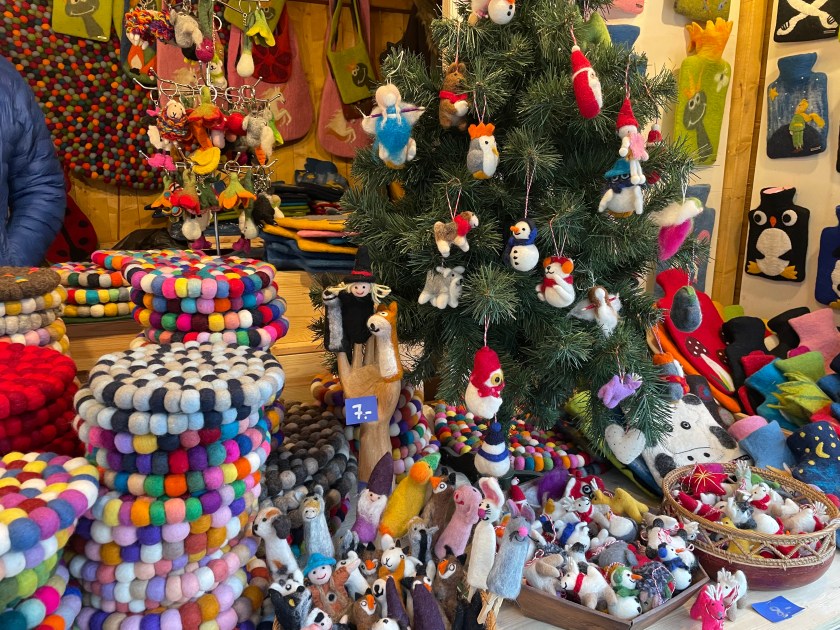
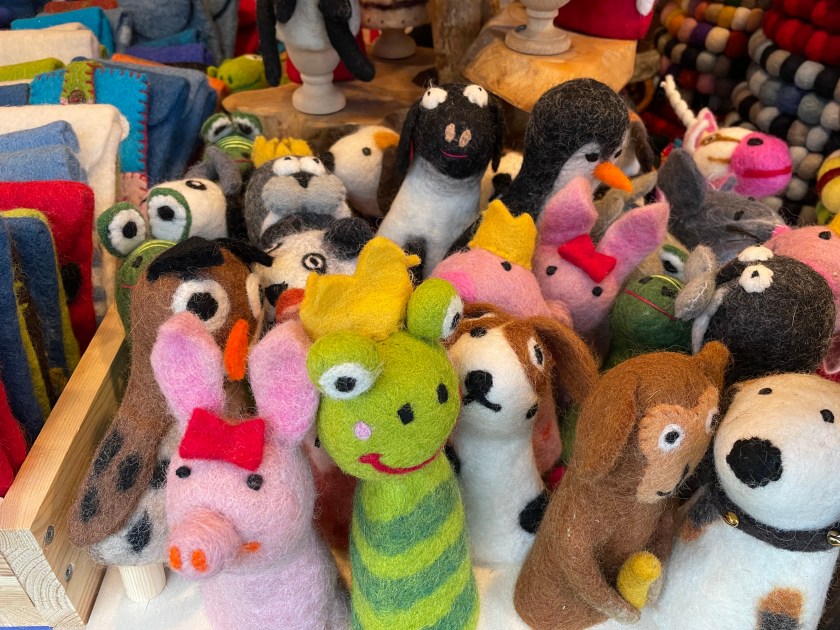

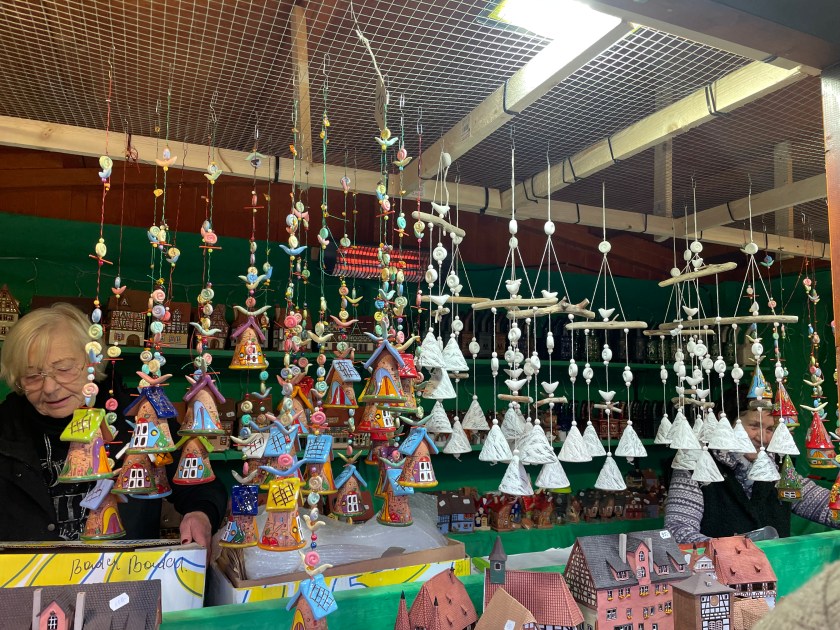

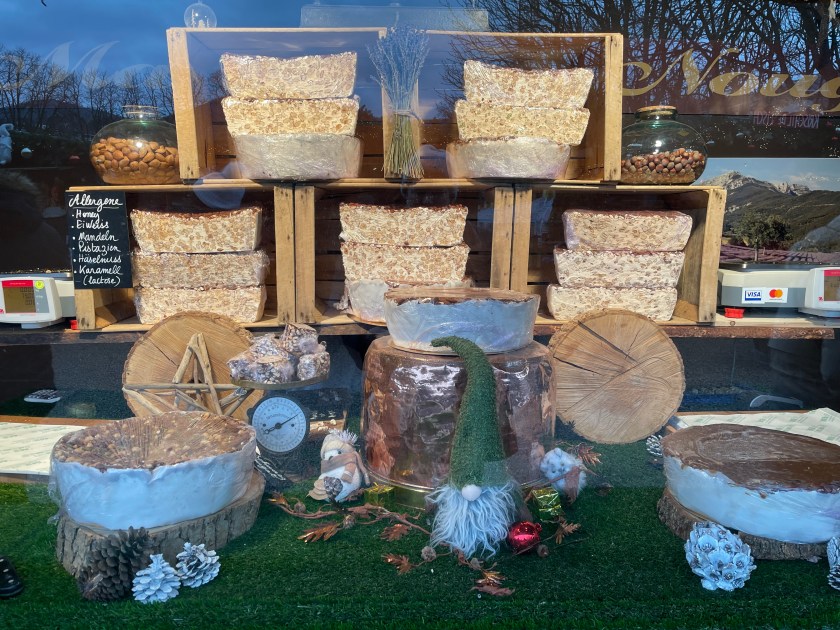

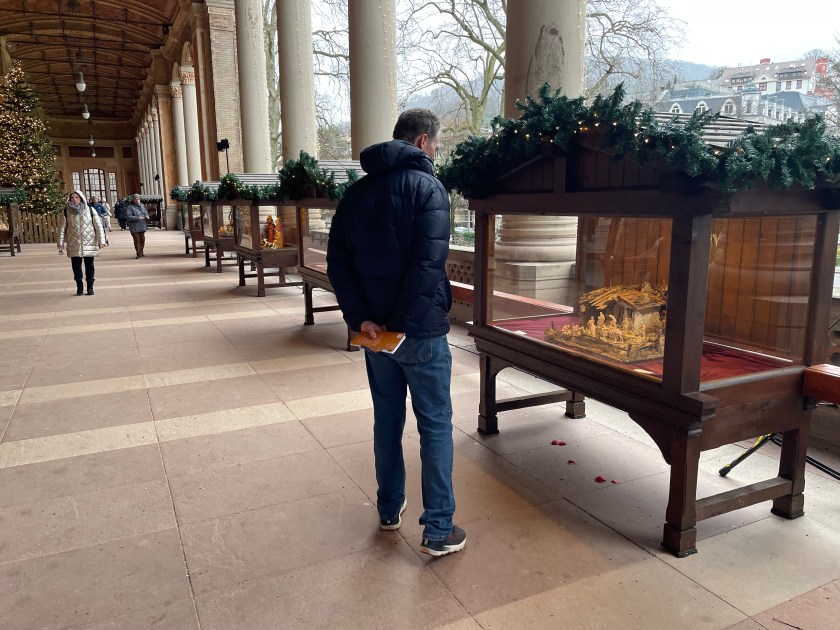
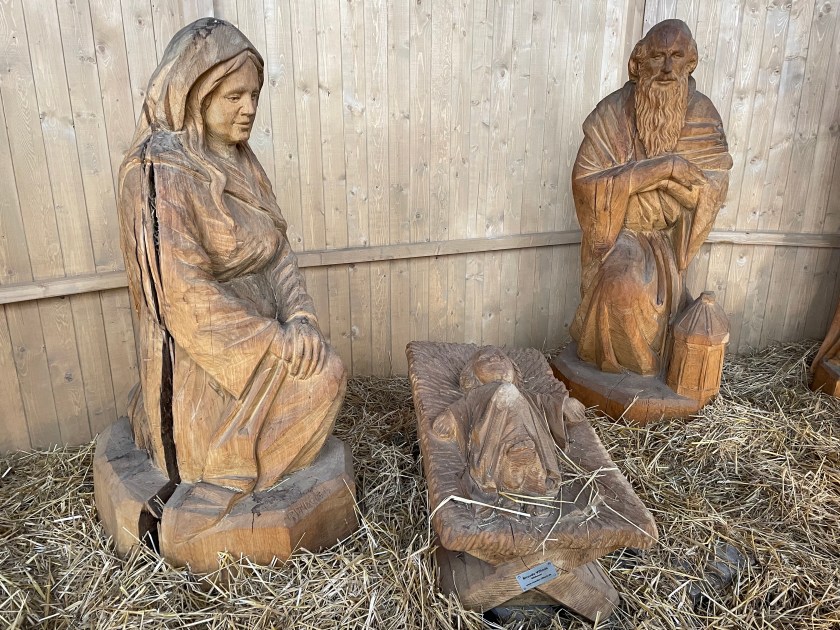
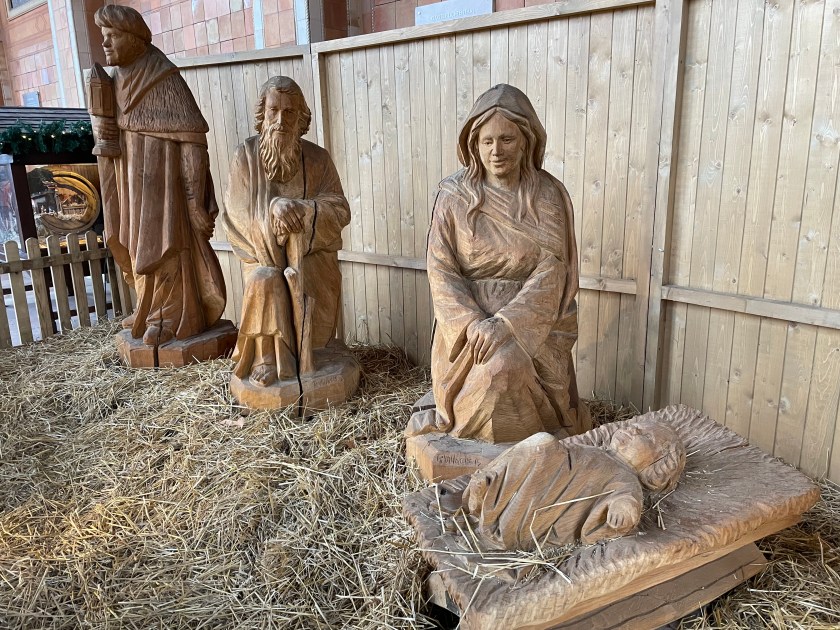
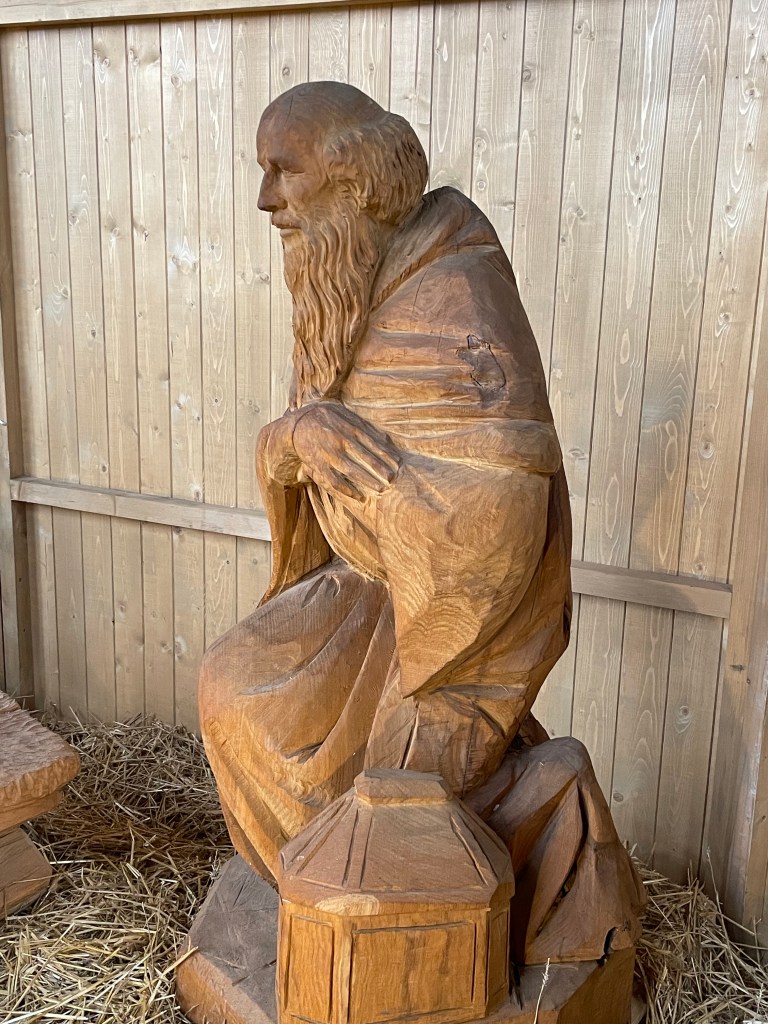
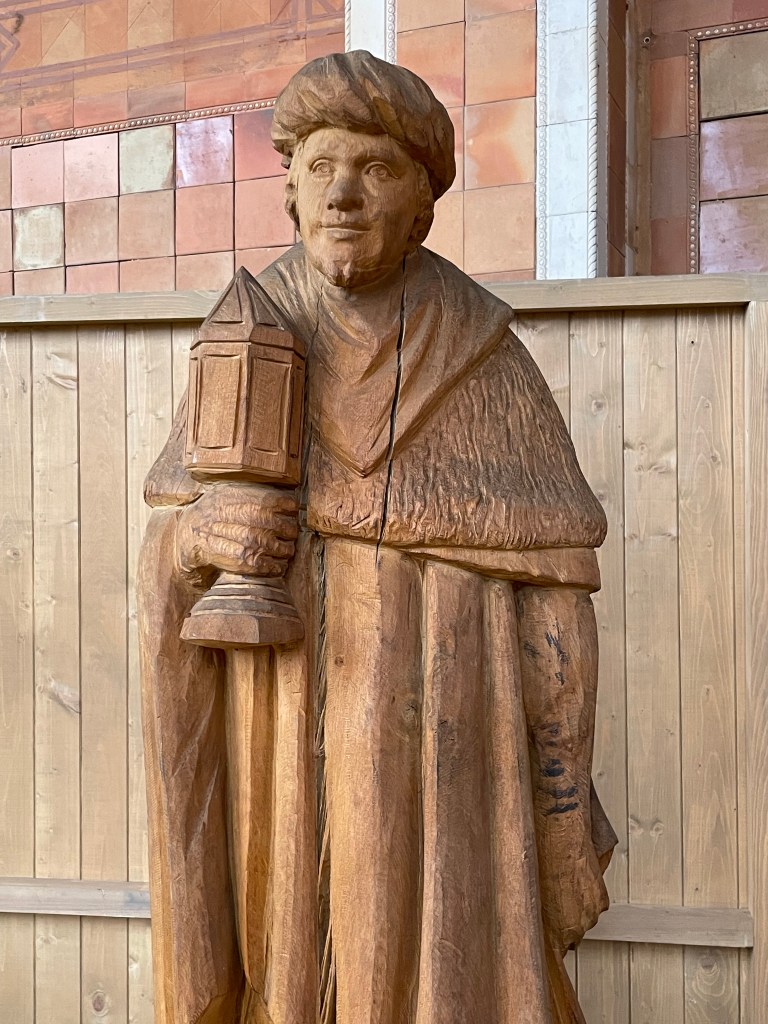
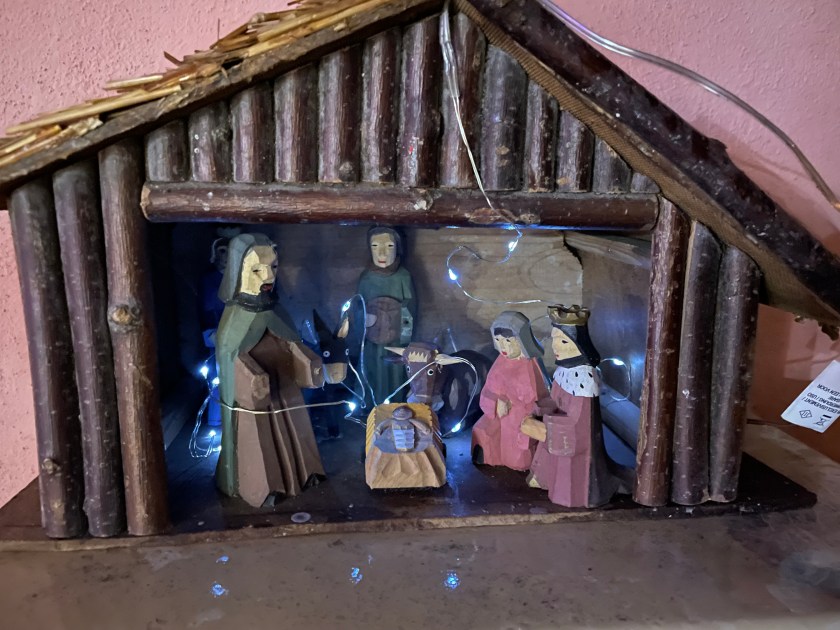
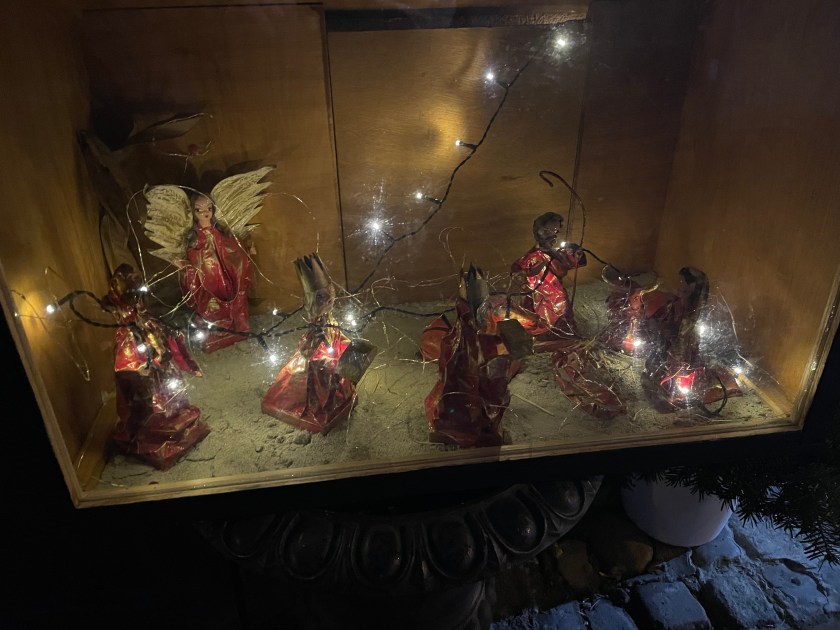
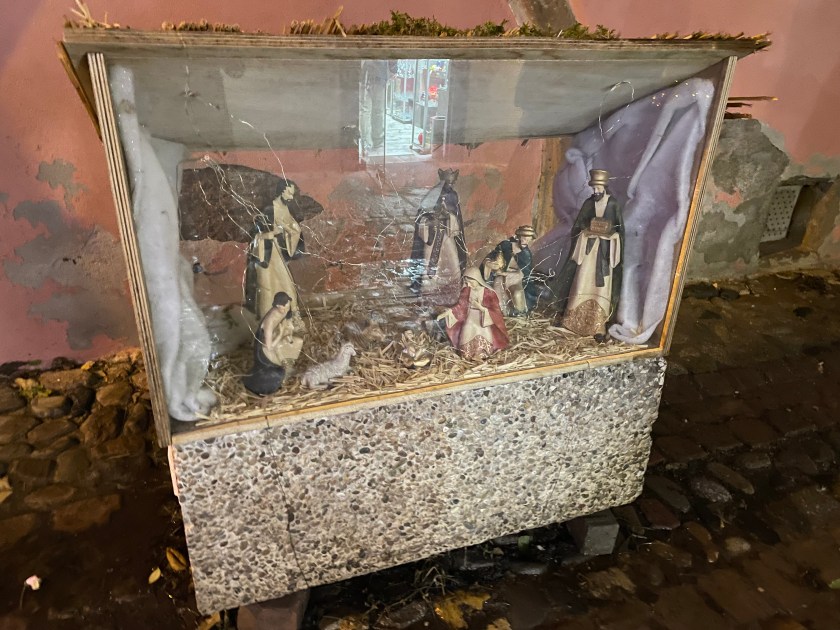
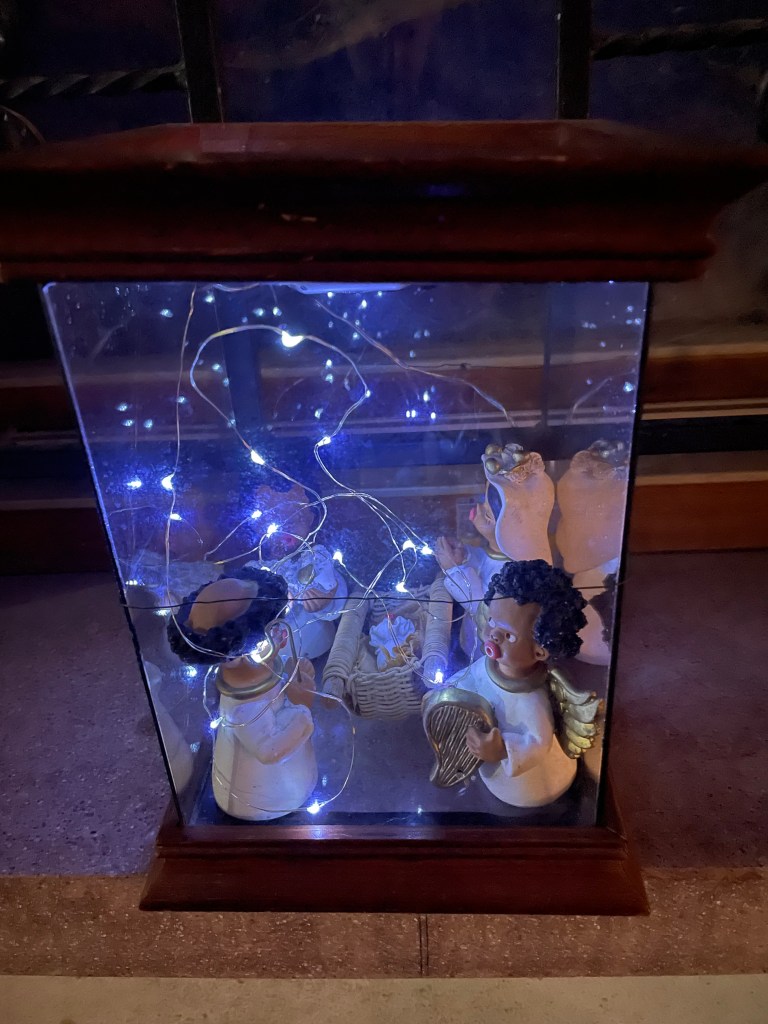
At one end of the field we went to see a Nativity display in the porticos of a fancy building.
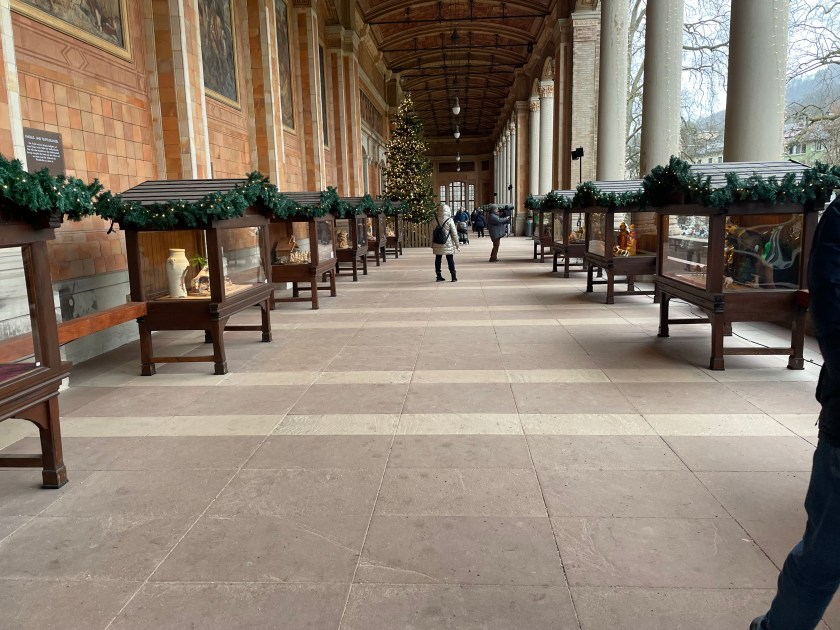
There were about 30 or more Nativities displayed, all made by local artists.


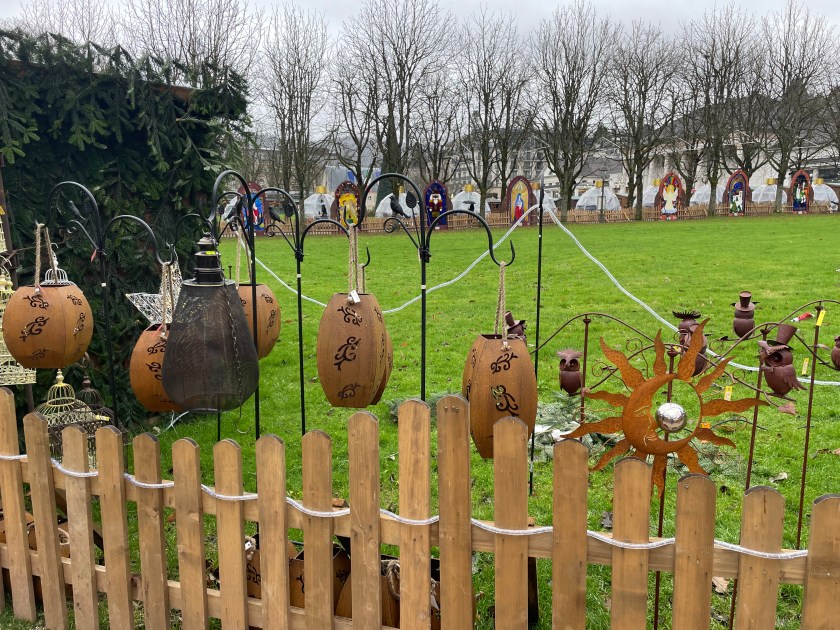
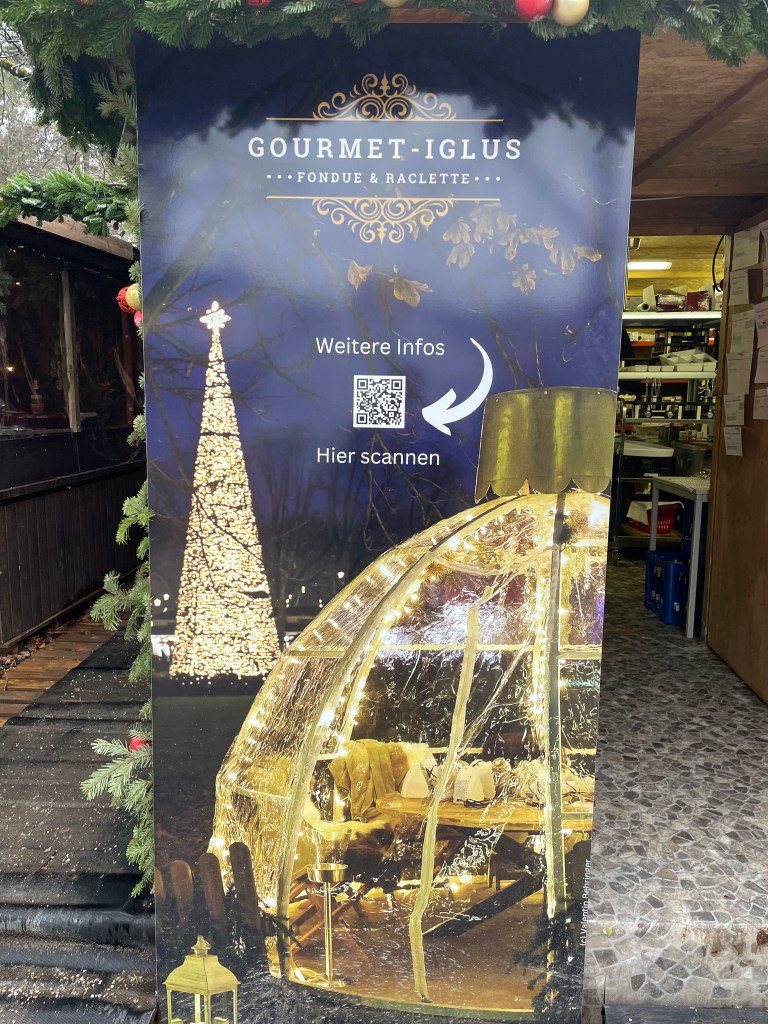
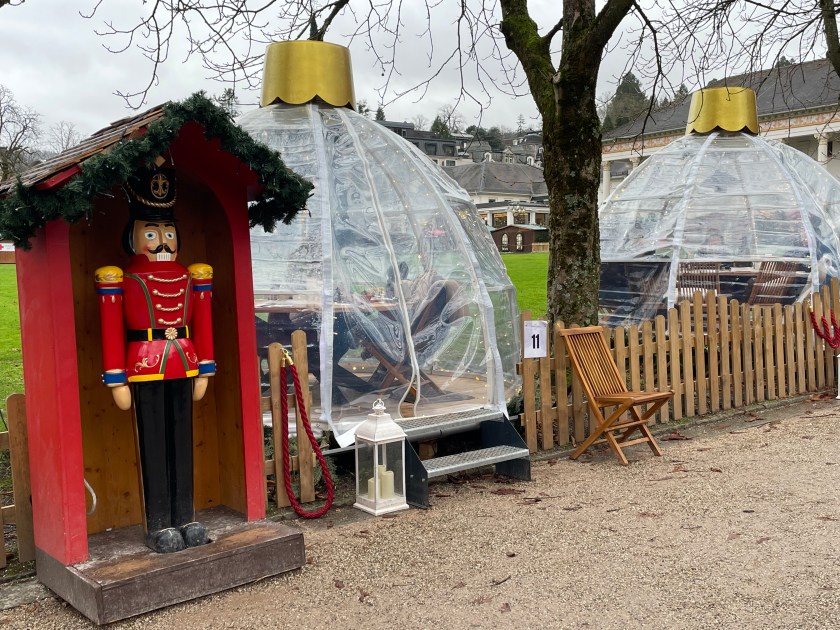
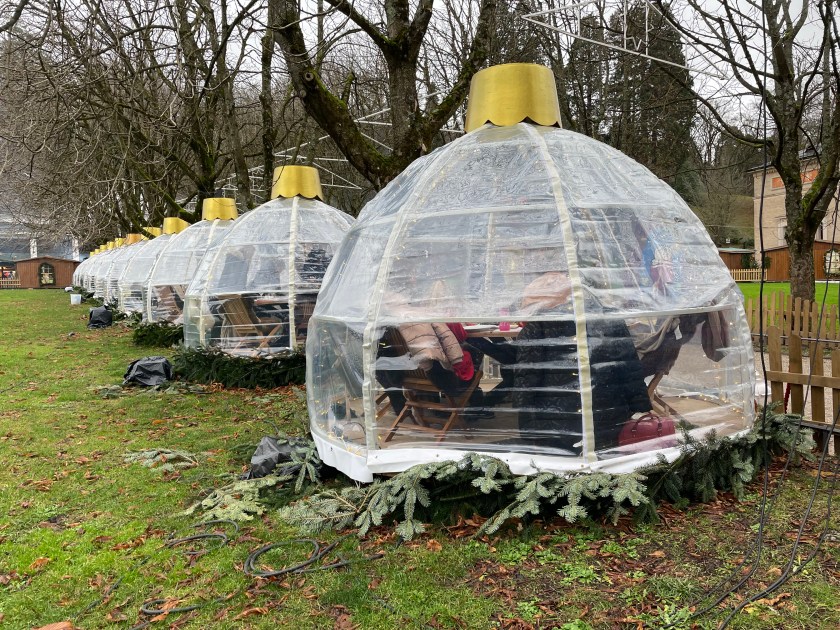
Through the middle of the grass field was a walkway lined with these clear bubble tents that were round like Christmas ornaments. They each had a table with sheepskin rugs on the chairs, set beautifully for dinner. You could rent a tent for up to 6 people at $59 Euro/person. The meals served were all you can eat fondue or Raclette. It looked fancy and fun.


For our lunch, we decided on a salmon sandwich where they fire grill the salmon on cedar planks over an open fire, then fill a fresh hot bun with the salmon and some good sauce. It was delicious.
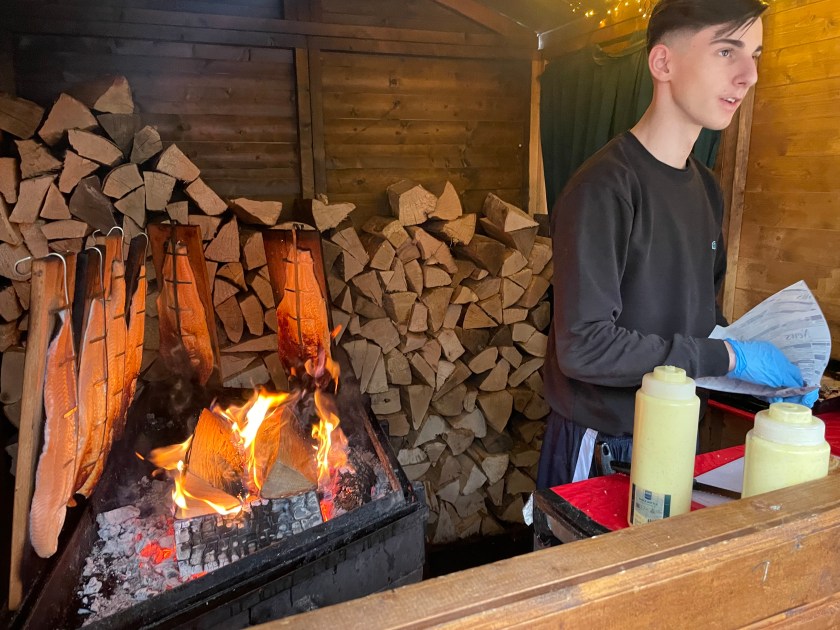

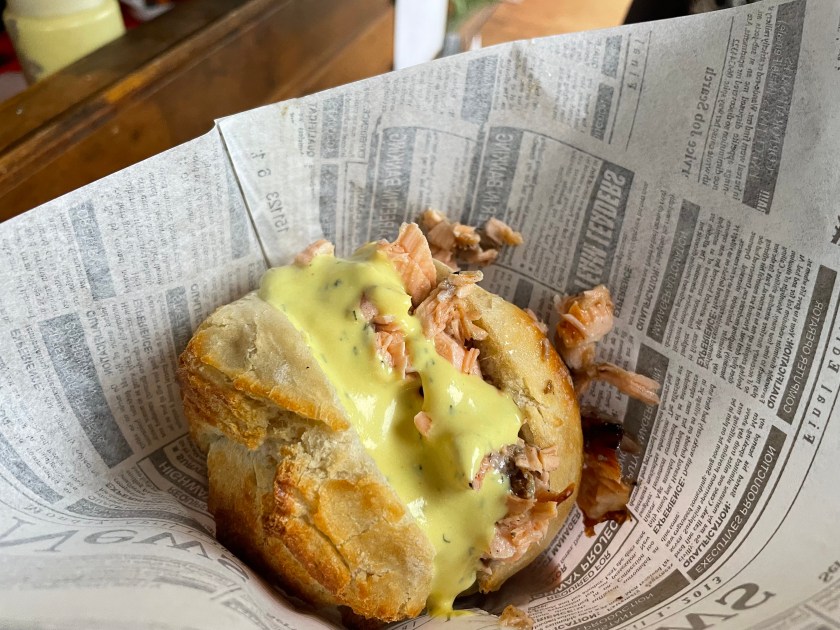
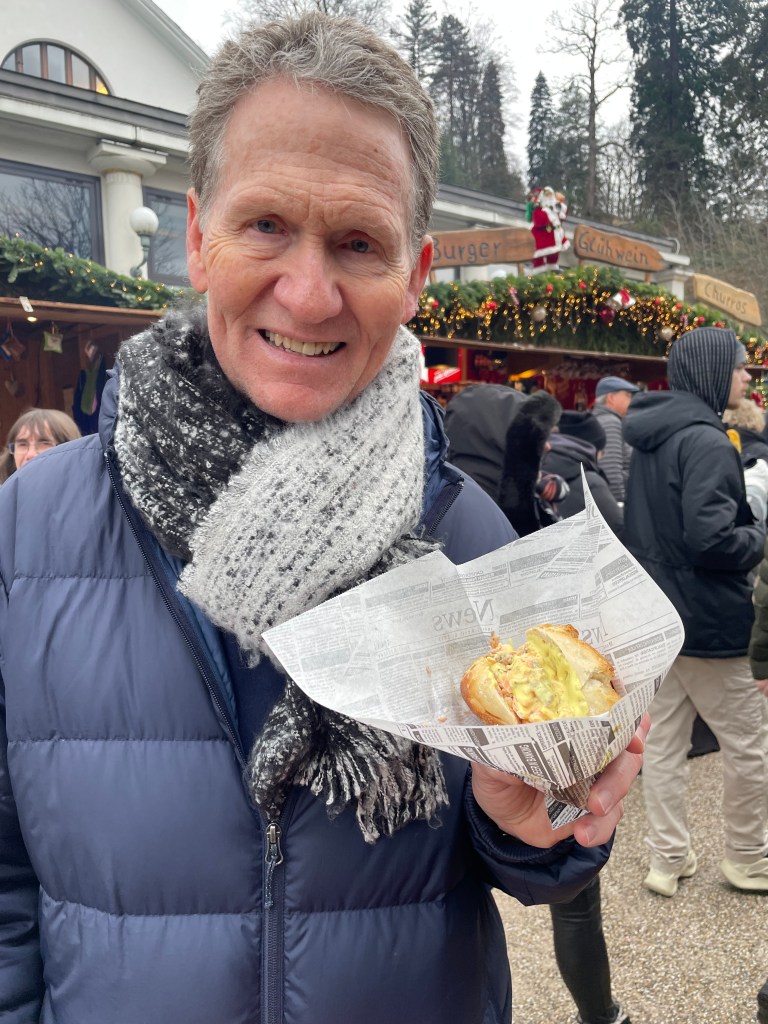

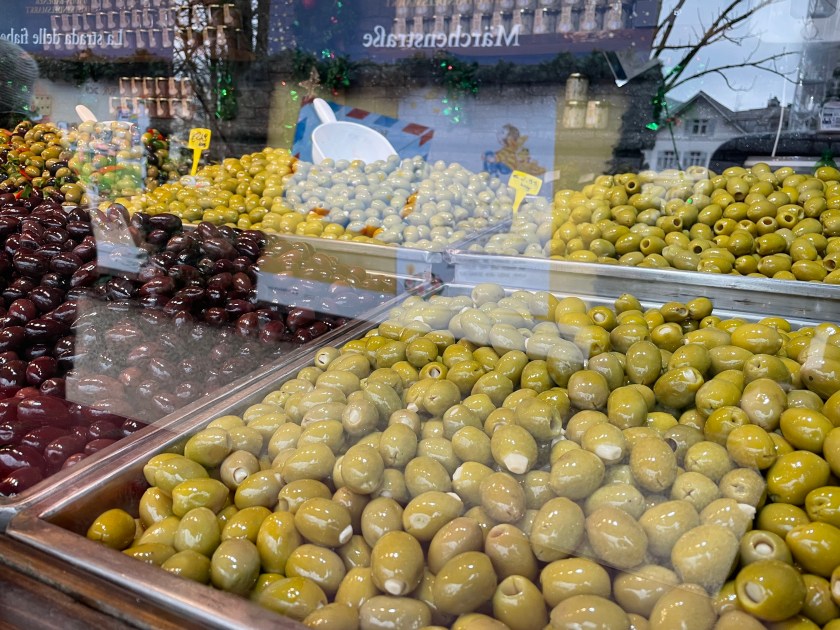
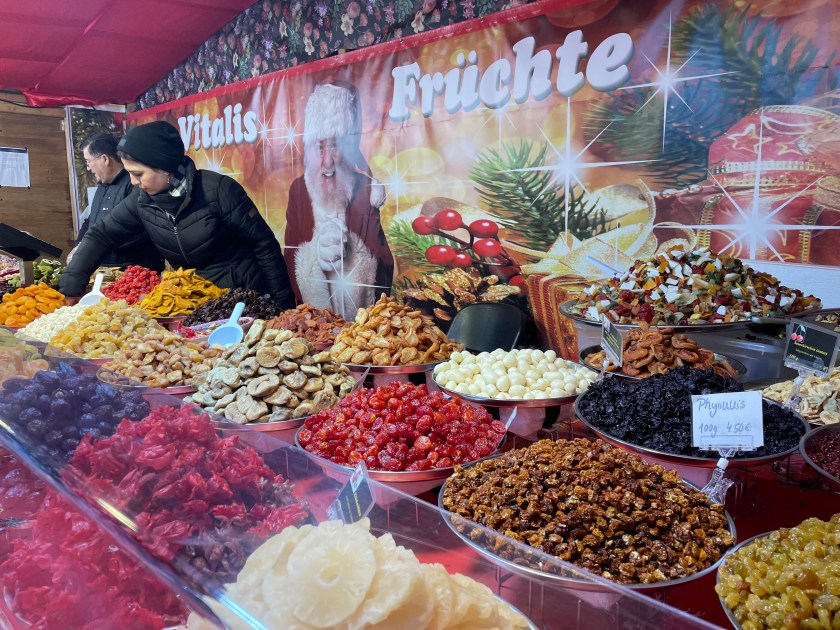
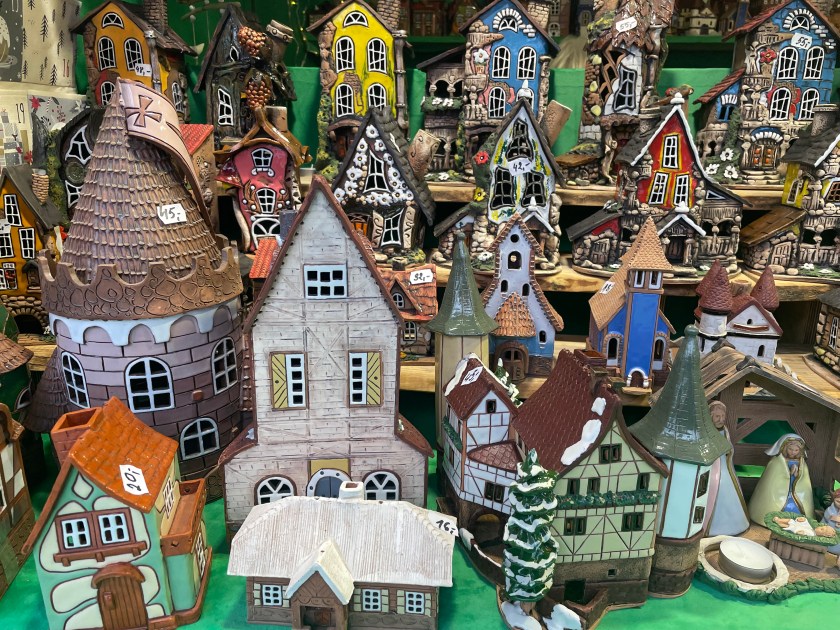

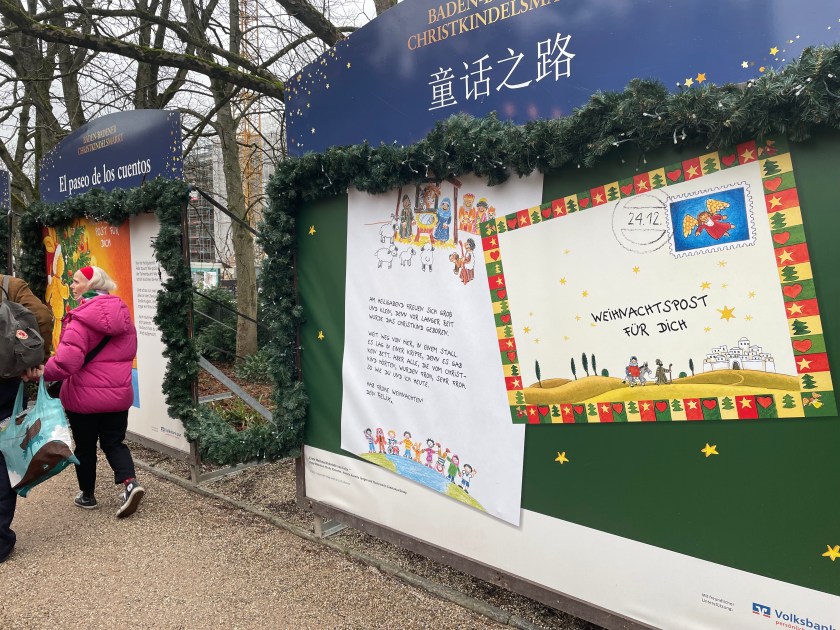

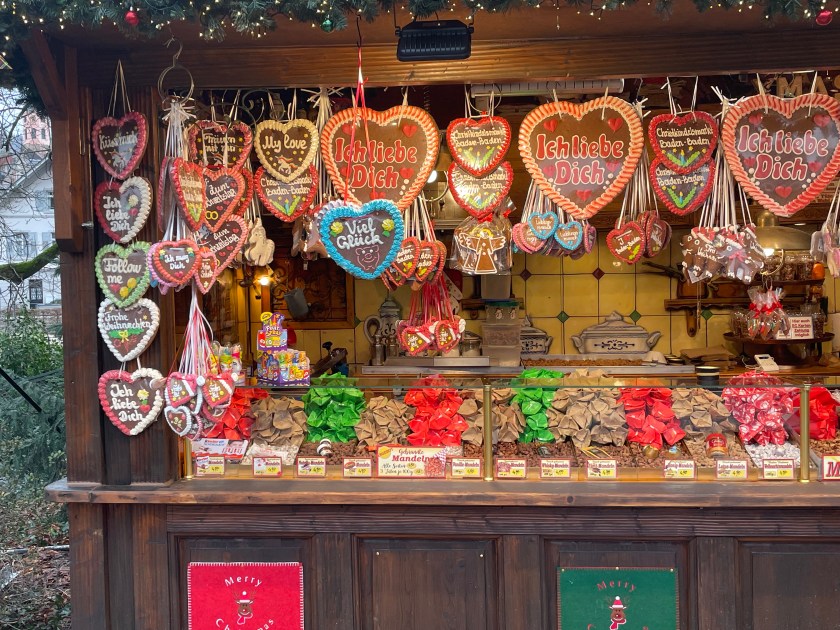
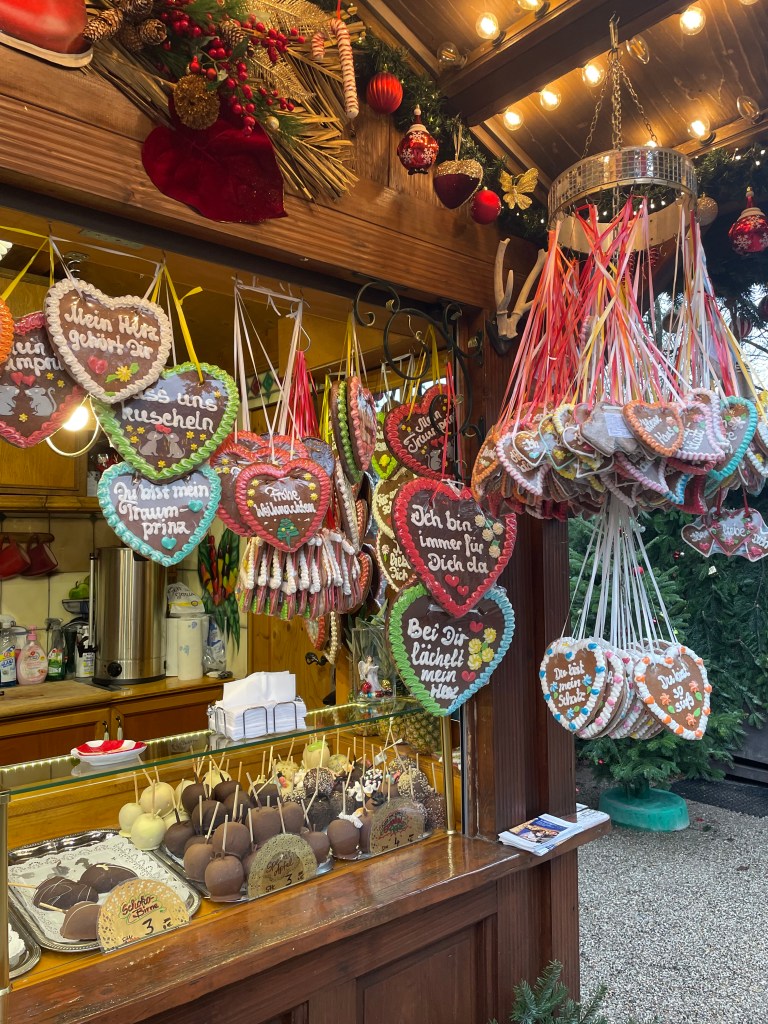
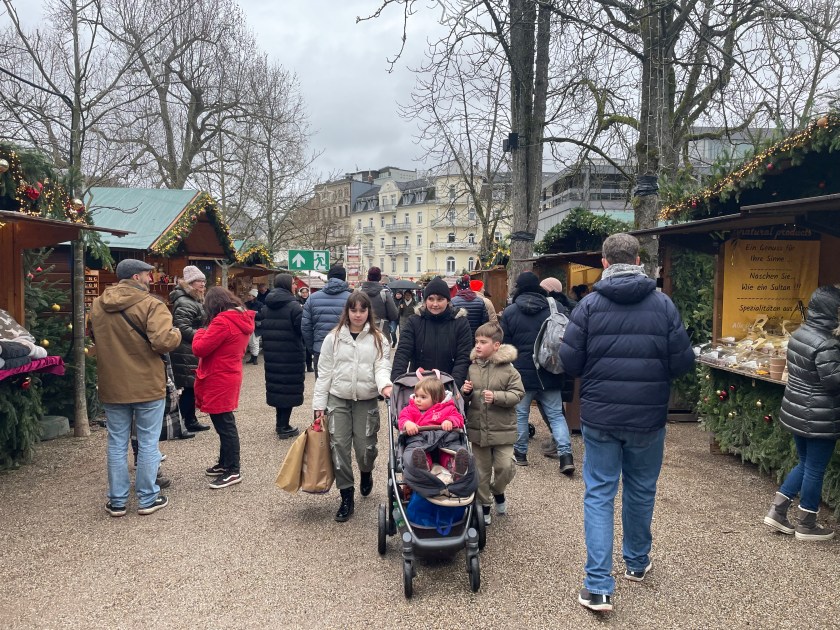
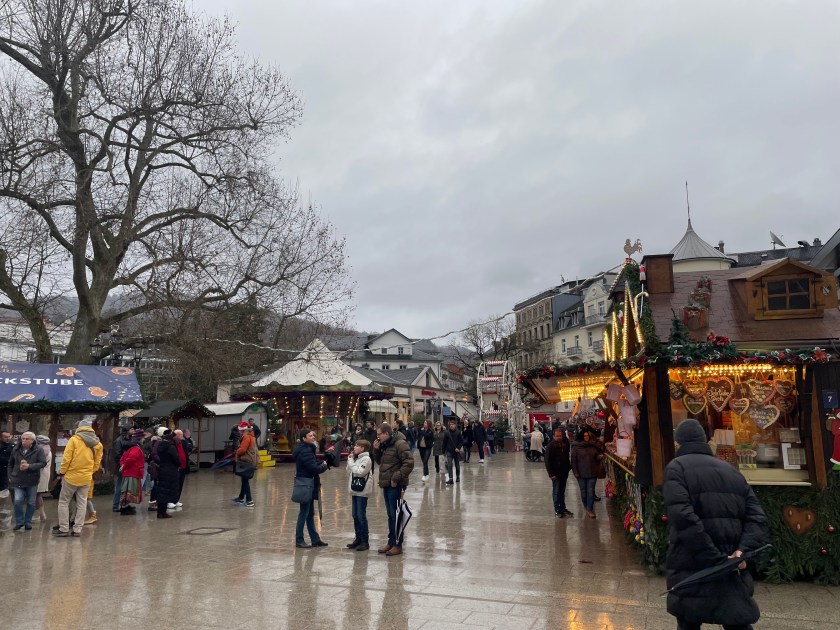
We’ve seen a lot of Christmas Markets. This was one of the nicer ones. It was interesting and nicely organized. I liked the way it was spread out so you could easily walk through the booths as you circled the large field.











































 Our Frankfurt Germany Mission