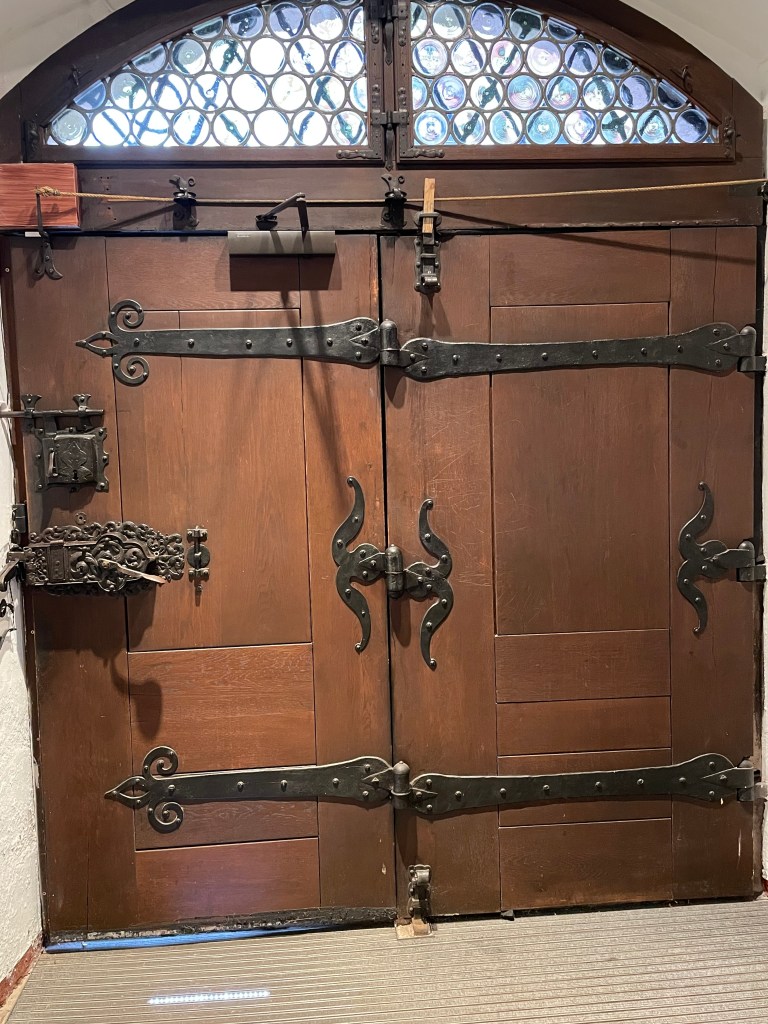
The Albrecht Dürer Haus in Nuremberg

There are many things I don’t remember, but the Albrecht Dürer Haus is not one of them.  I visited this place in 2009 and my memories of it were still quite vivid.  (I had very little recollection of the other places I visited in Nuremberg).
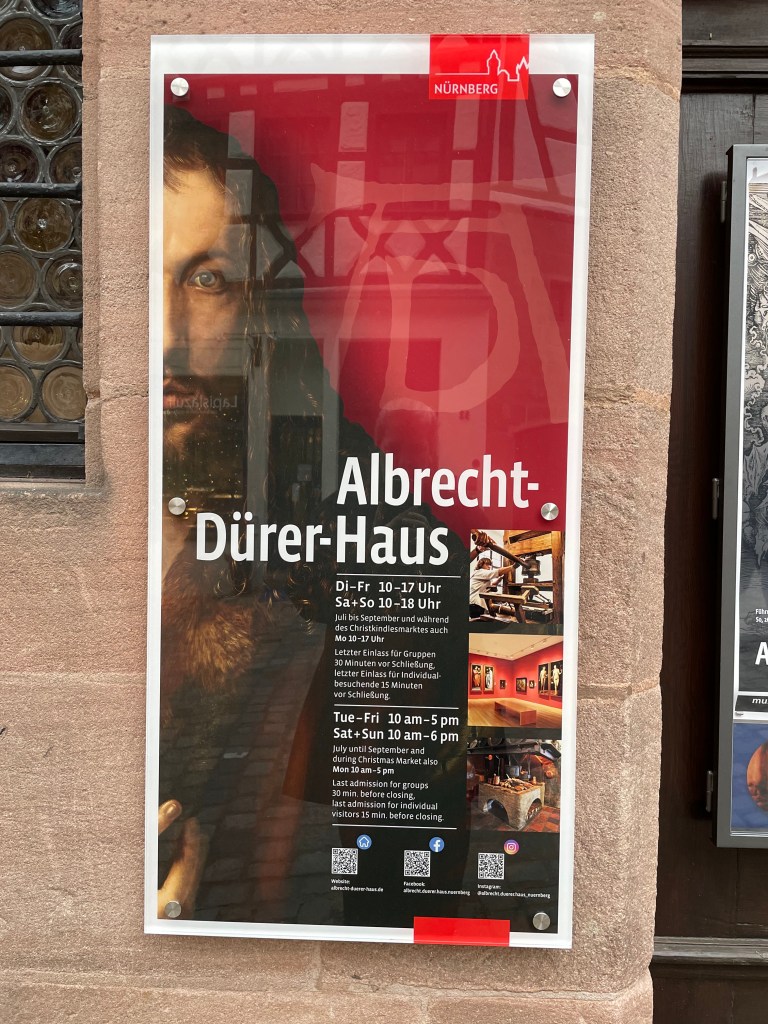
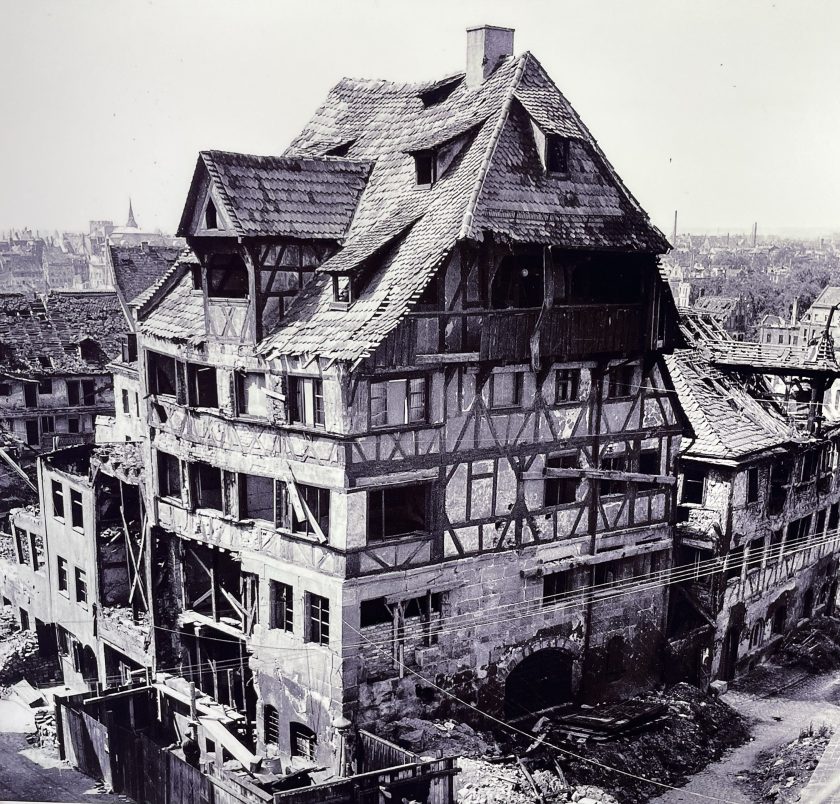
This home is one of very few left standing after WWII.  91% of Nuremberg was destroyed by the bombing here.  We learned that during the war his artwork and treasures inside were saved in the underground bunkers, thank goodness.  Here’s a photo of what remained of this home after the war.
From Wikipedia:

Albrecht Dürer’s House

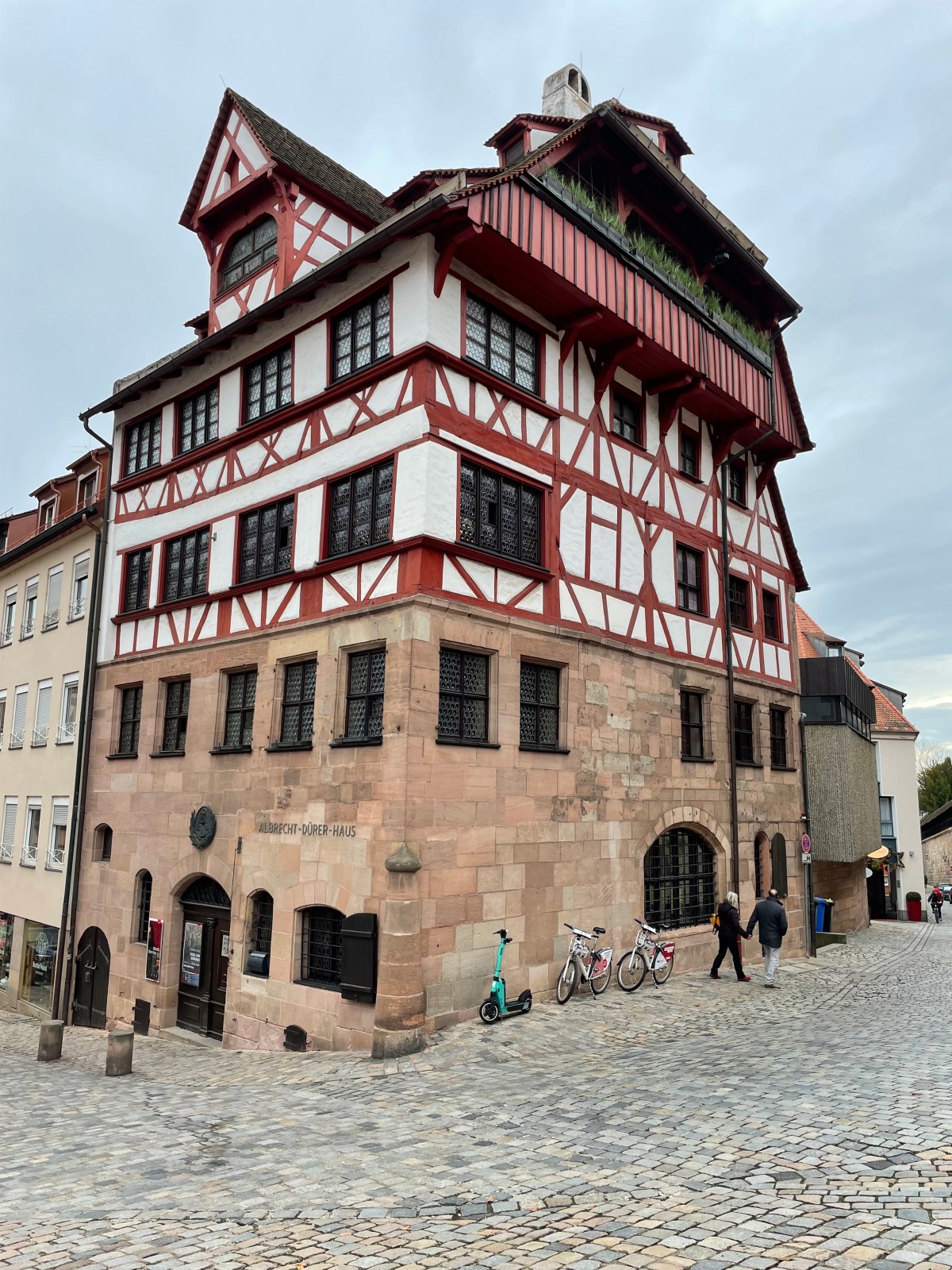
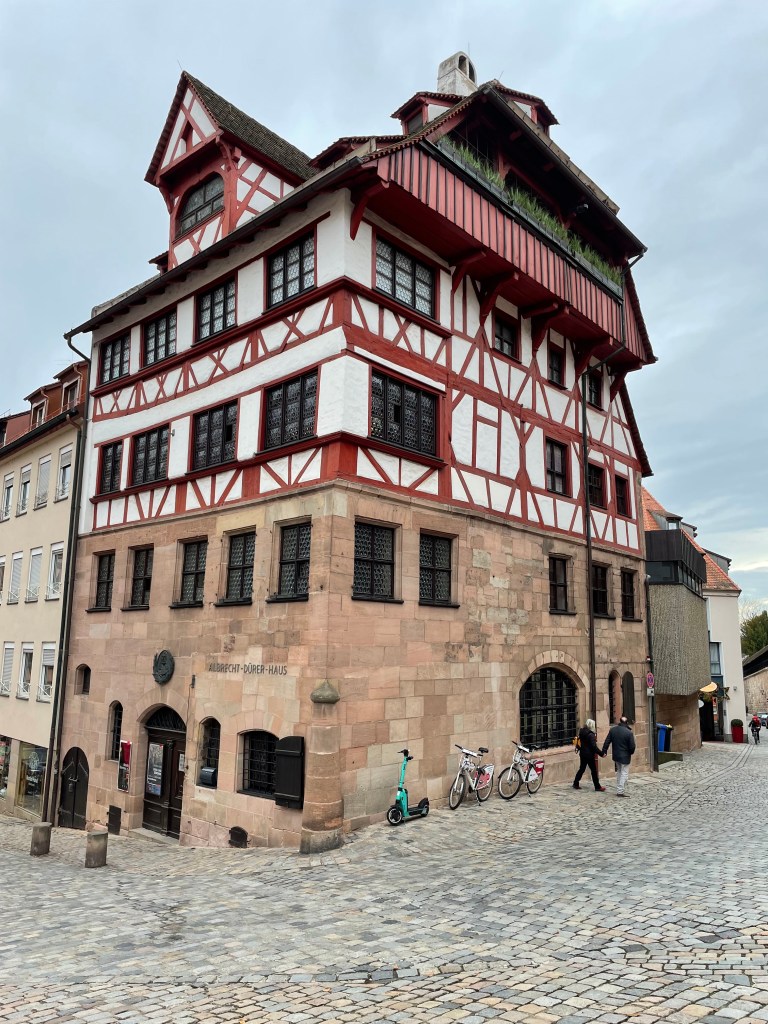
Albrecht Dürer’s House (German: Albrecht-Dürer-Haus) is a Nuremberg Fachwerkhaus that was the home of German Renaissance artist Albrecht Dürer from 1509 to his death in 1528. The House lies in the extreme north-west of Nuremberg’s Altstadt, near the Kaiserburg section of the Nuremberg Castle and the Tiergärtnertor of Nuremberg’s city walls.

The house was built around the year 1420. It has five stories; the bottom two have sandstone walls, while the upper stories are timber framed; the entire structure is topped by a half-hip roof. In 1501, it was purchased by Bernhard Walther, a merchant and prominent astronomer. Walther remodeled the house, adding small windows to the roof so that it could function as an observatory. Walther died in 1504, and Dürer purchased the house in 1509.

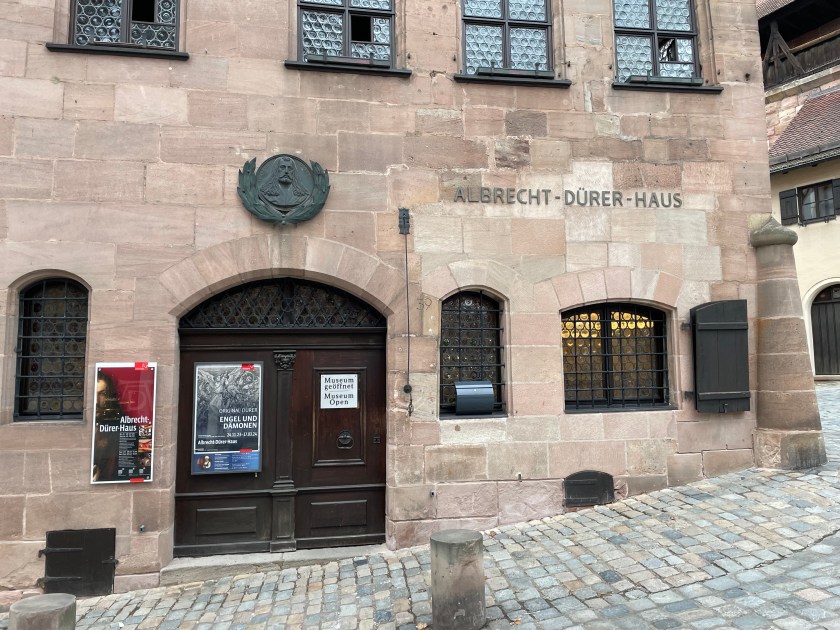
Since 1871 the Albrecht-Dürer-Haus has been a museum dedicated to Dürer’s life and work. In a restoration of 1909, the large dormer on the east-facing roof was replaced. In October 1944, it took significant damage from Allied bombing. It was rebuilt by 1949, but did not reopen as a museum until 1971, Dürer’s 500th birthday.

The museum features installations of period furnishings, a re-creation of Dürer’s workshop in which visitors can view demonstrations of printmaking techniques, and rotating exhibitions of drawings and prints by Dürer from the City of Nuremberg’s Graphic Collection. Visitors can also receive a guided tour of the house from an actress playing Agnes Dürer, the wife of the artist.
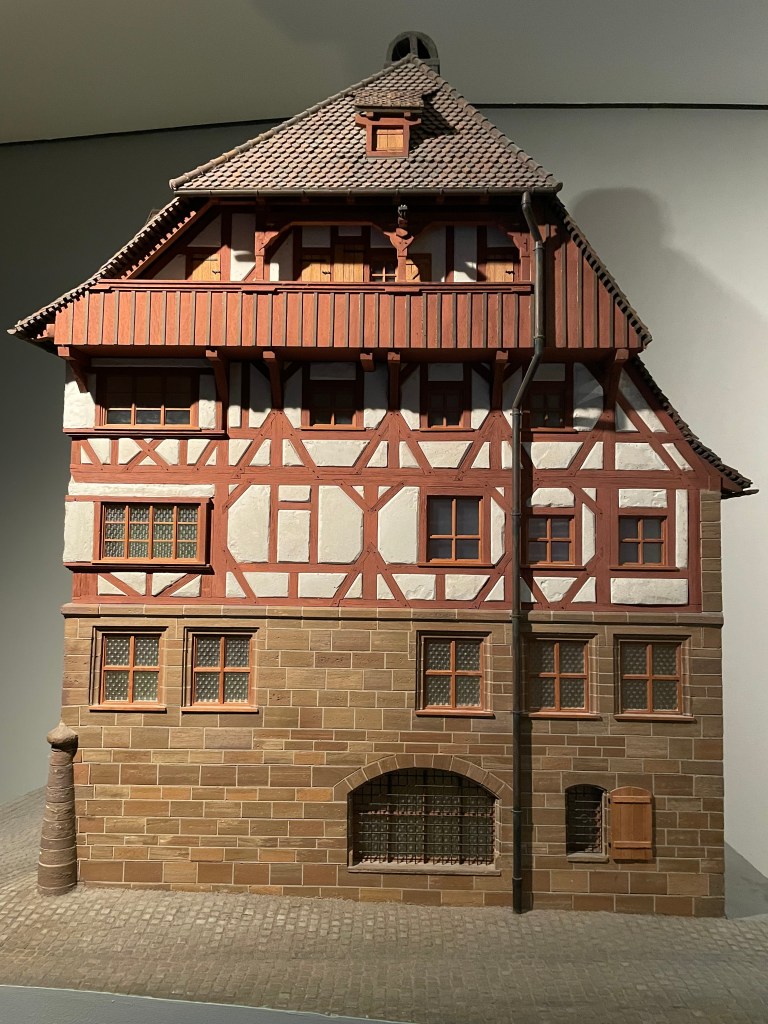
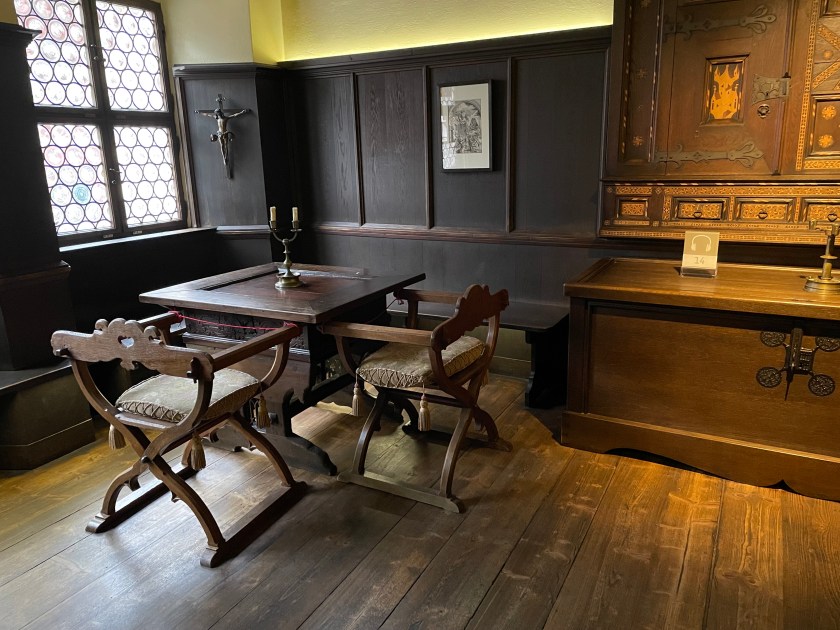
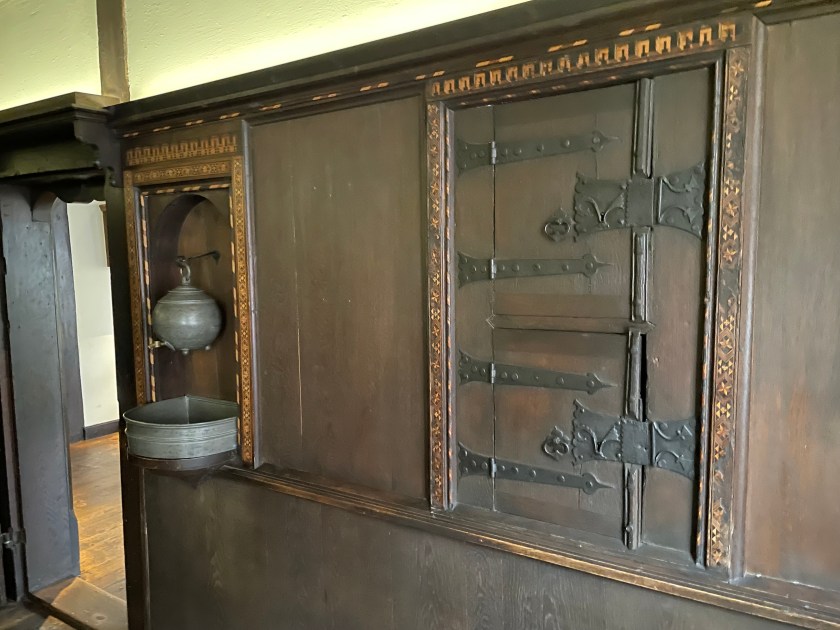
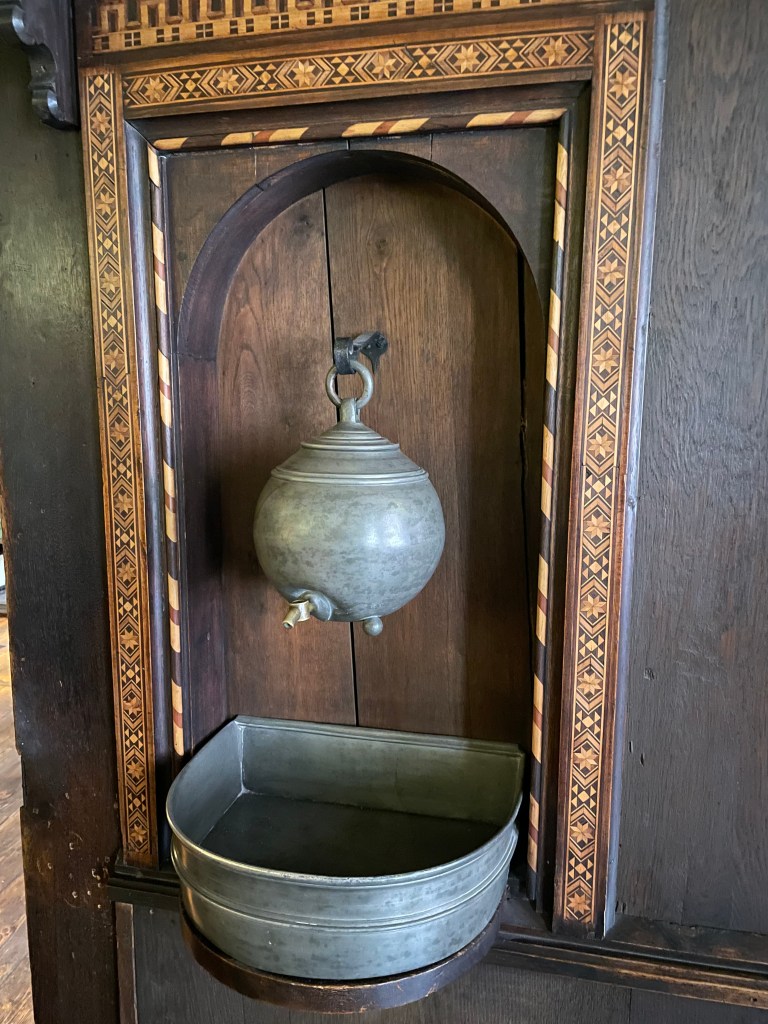
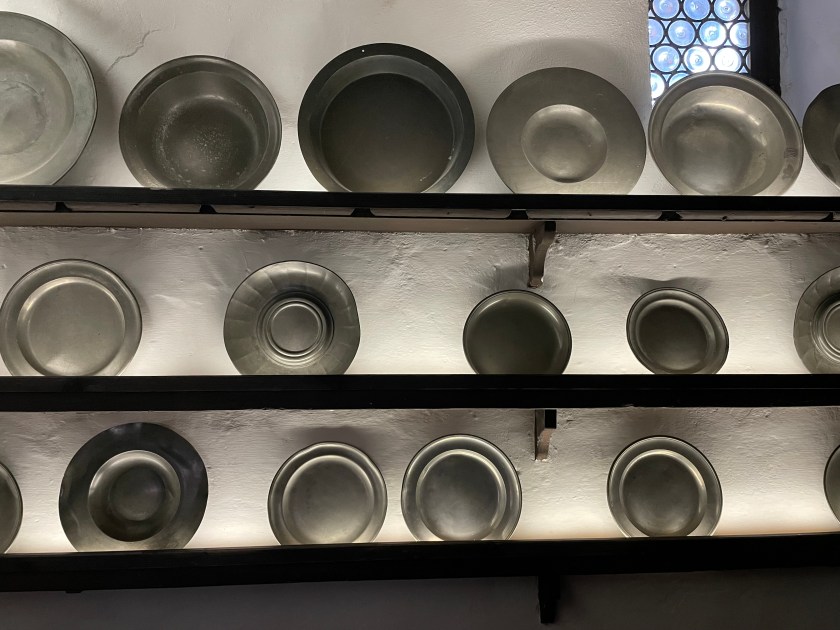
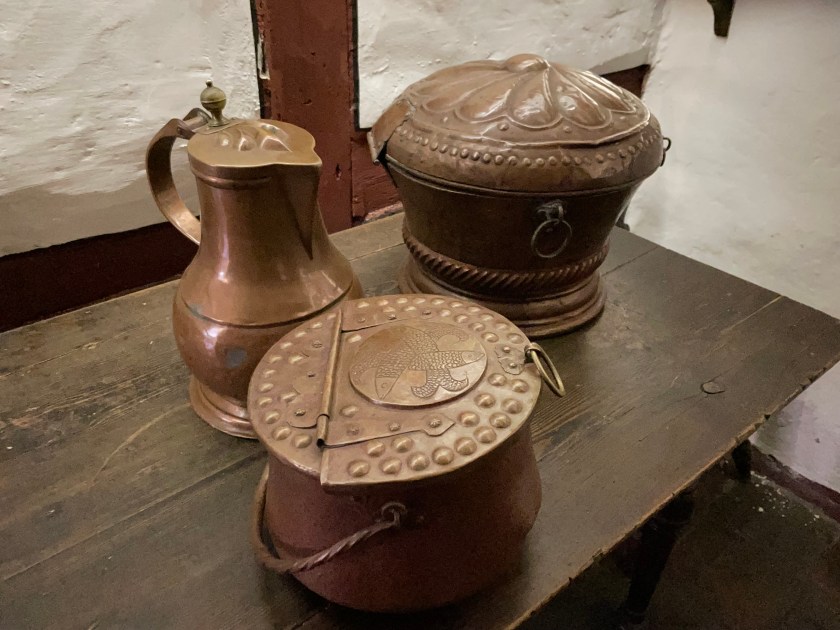
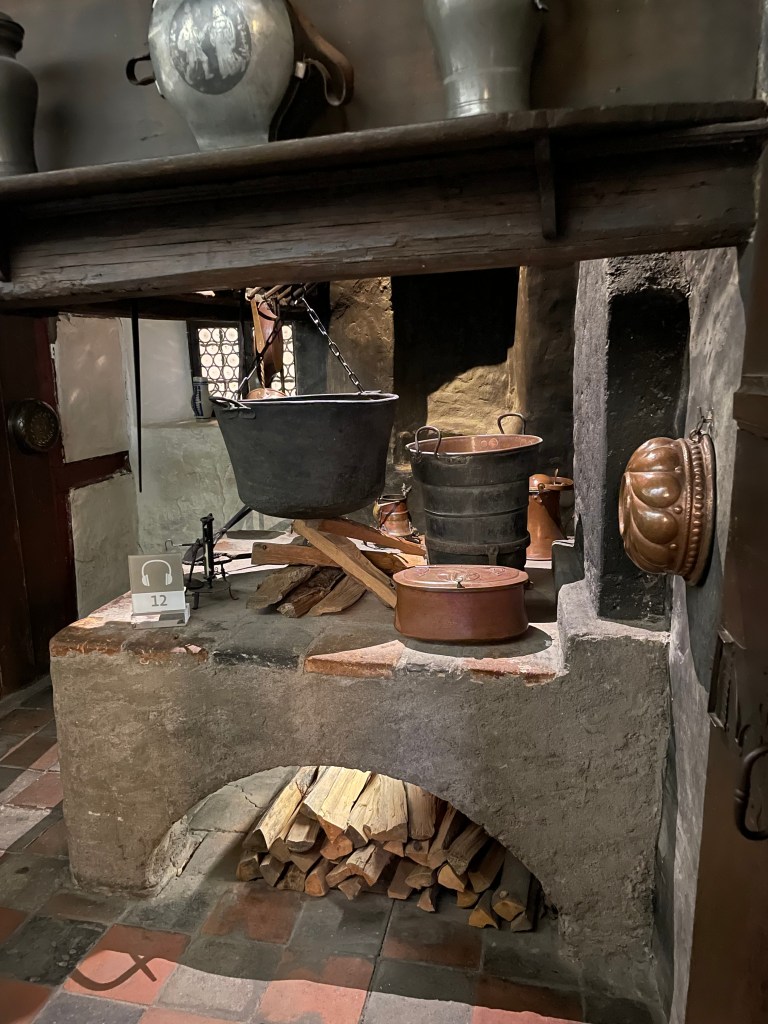
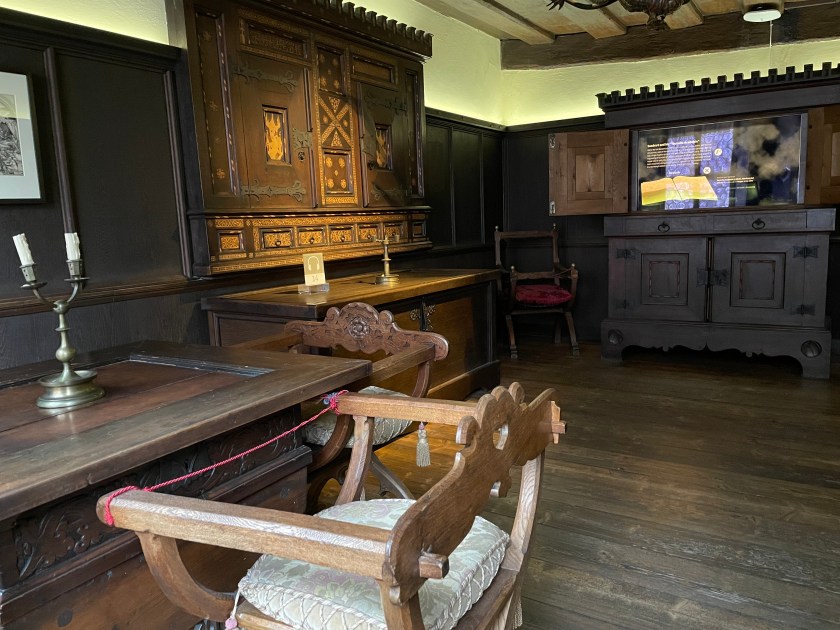
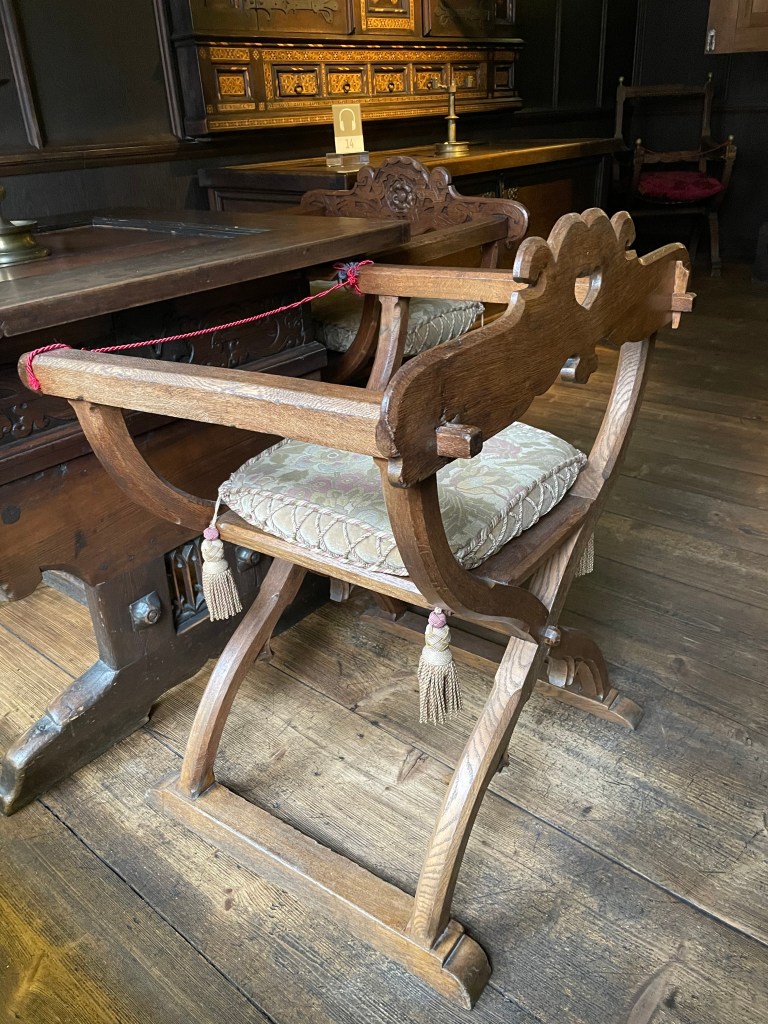
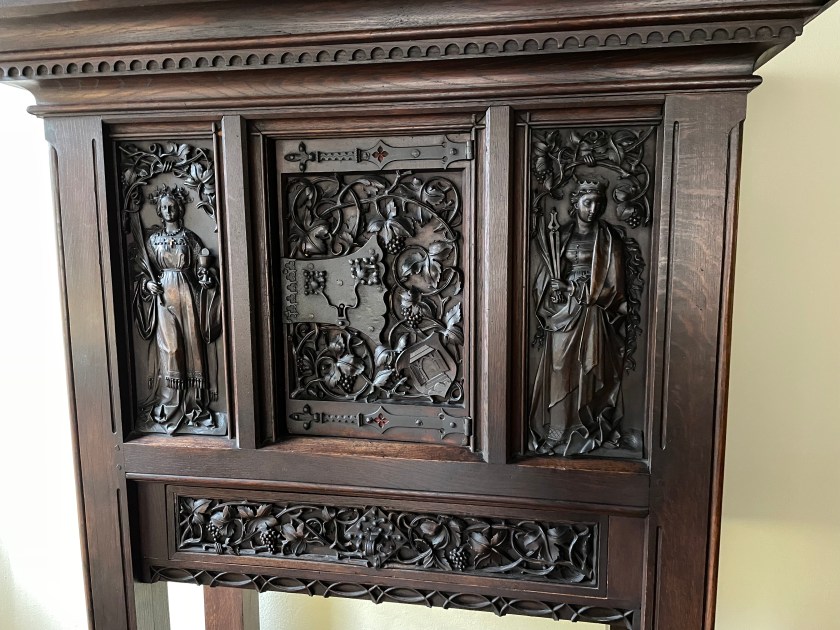
Above is a model of the house.  Below is what we saw inside.
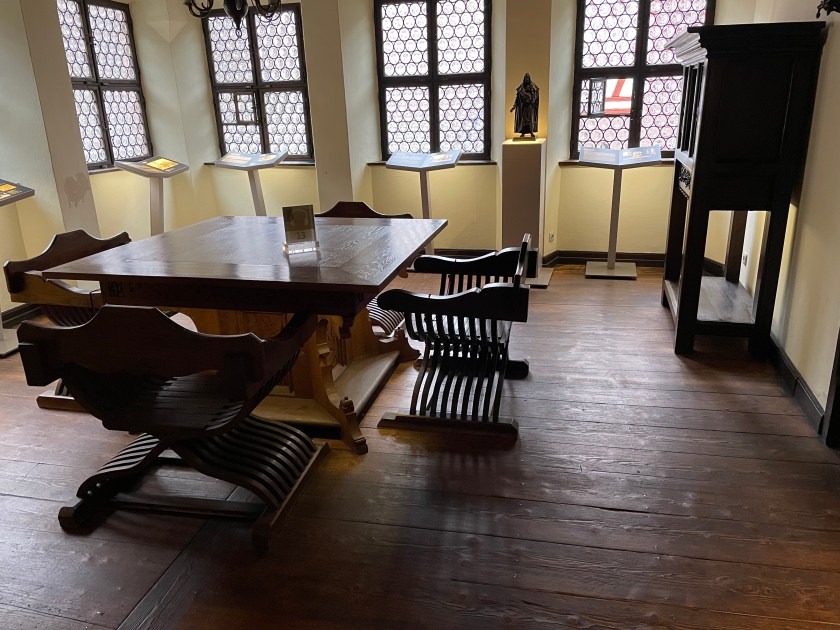
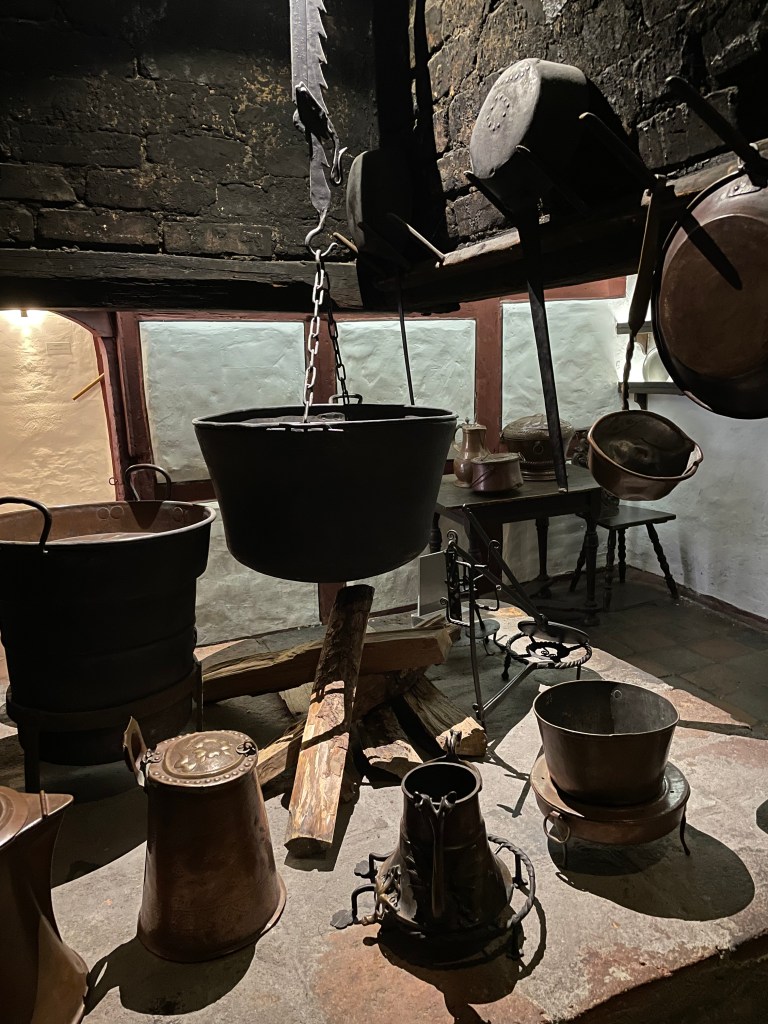
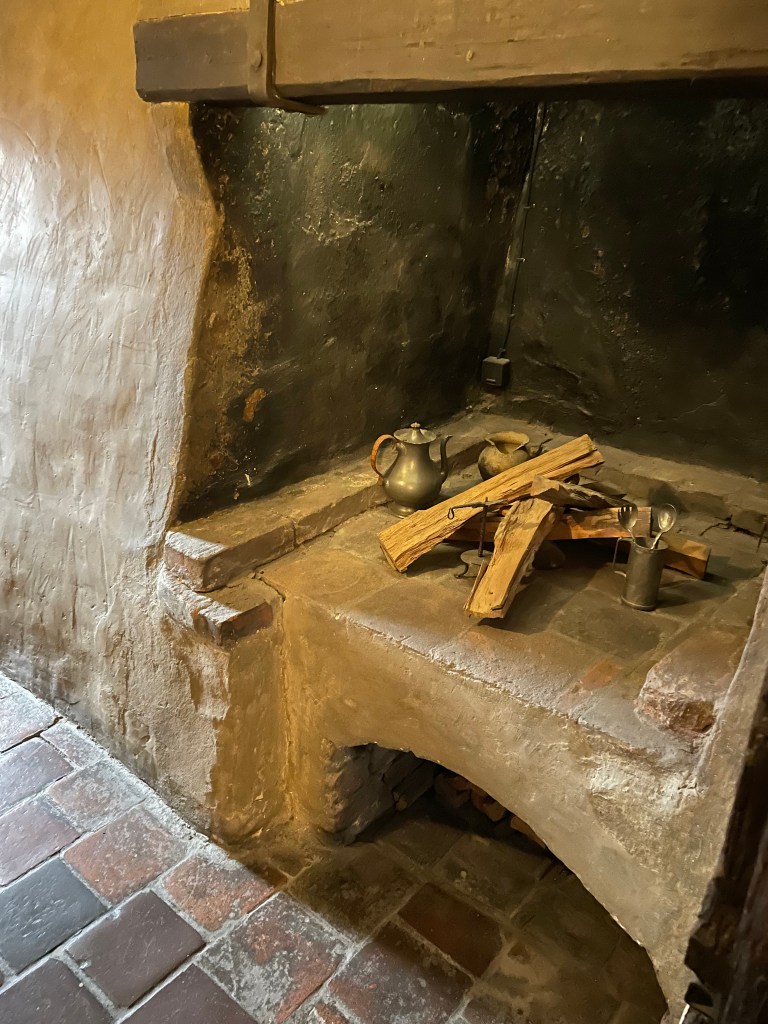
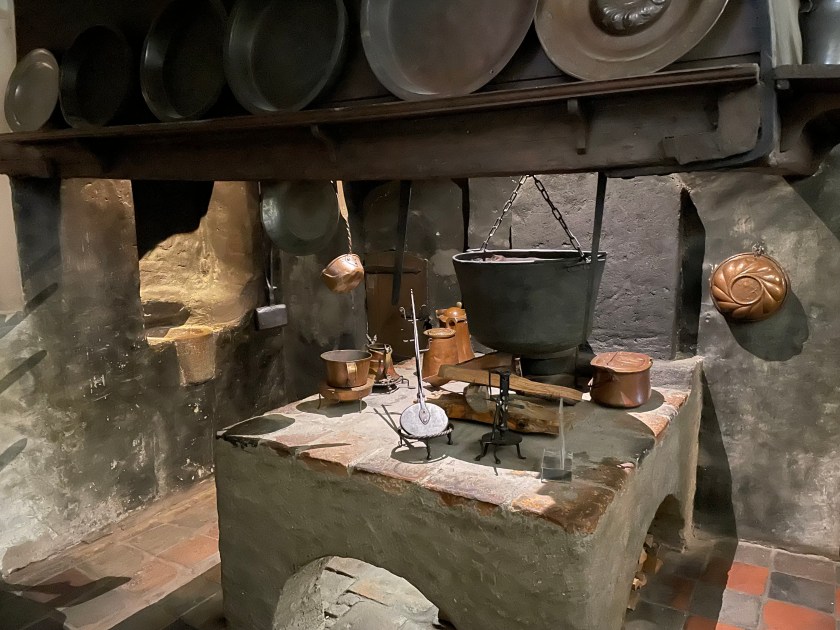
The kitchen is the only room who’s purpose was sure.
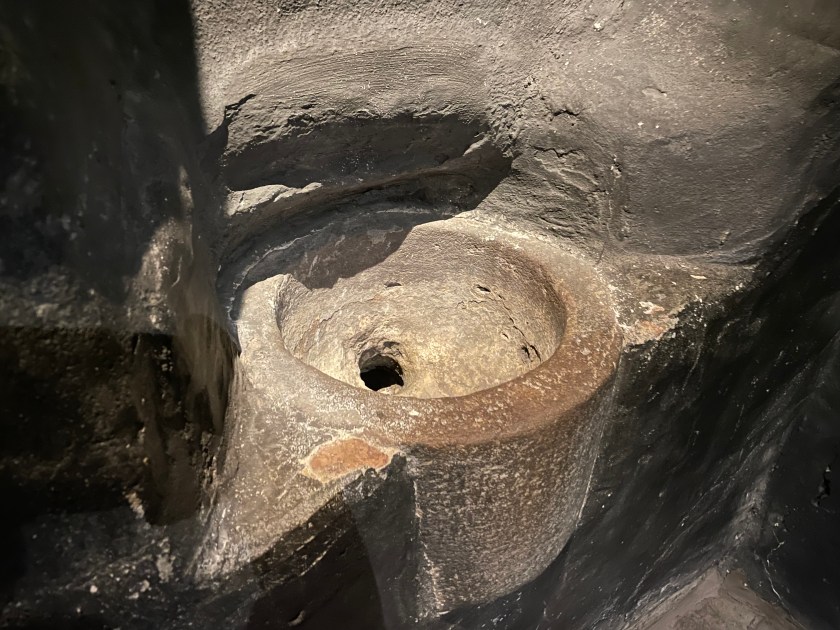
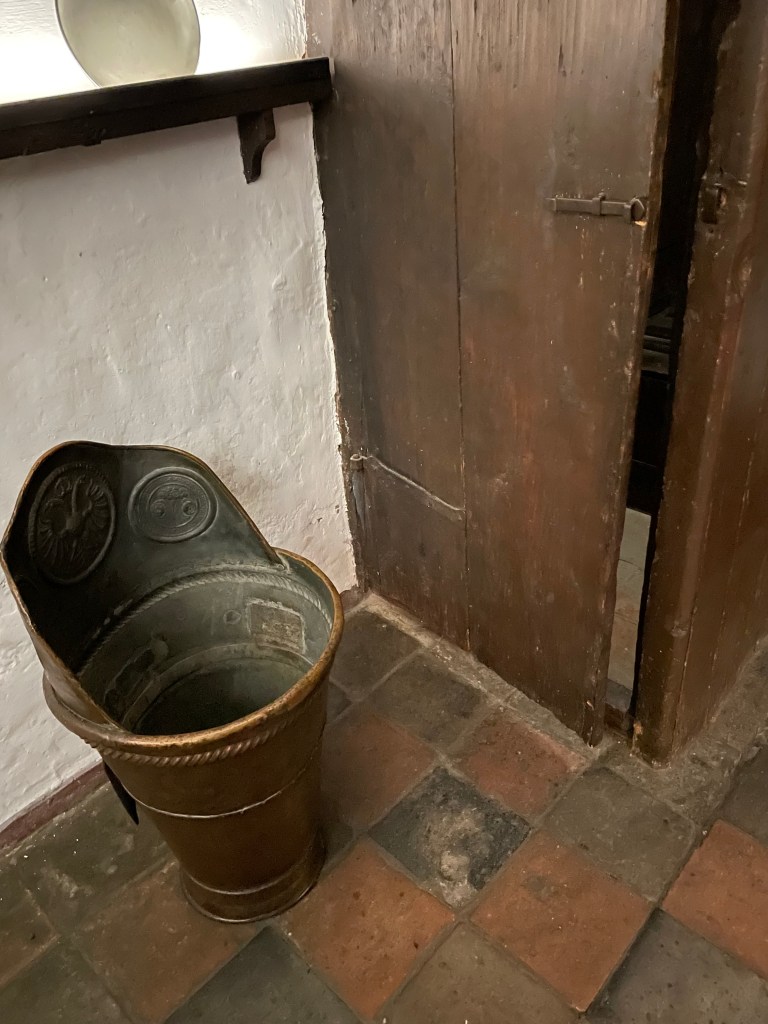
This small privy was in the kitchen, with a porta-potty sitting outside.  They think Duerer used this towards the end of his life when he wasn’t well.
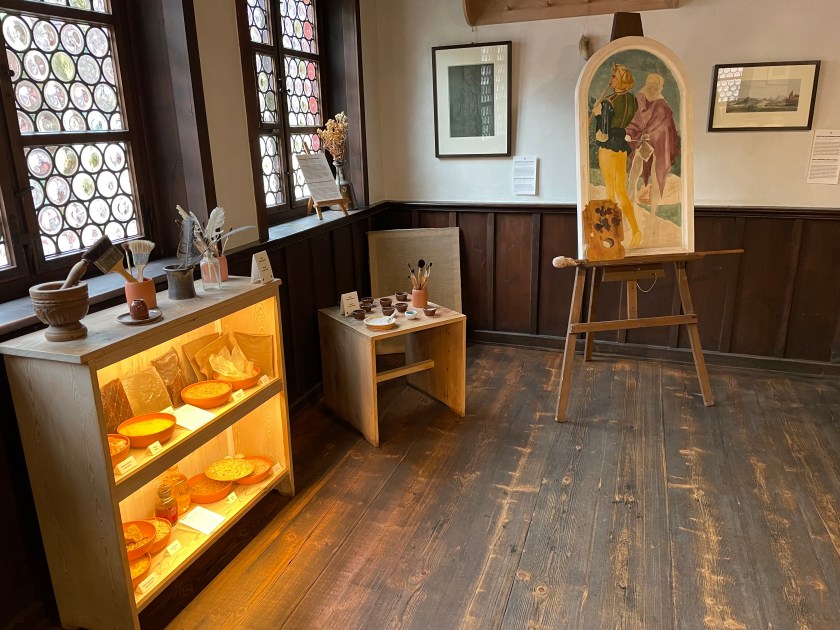
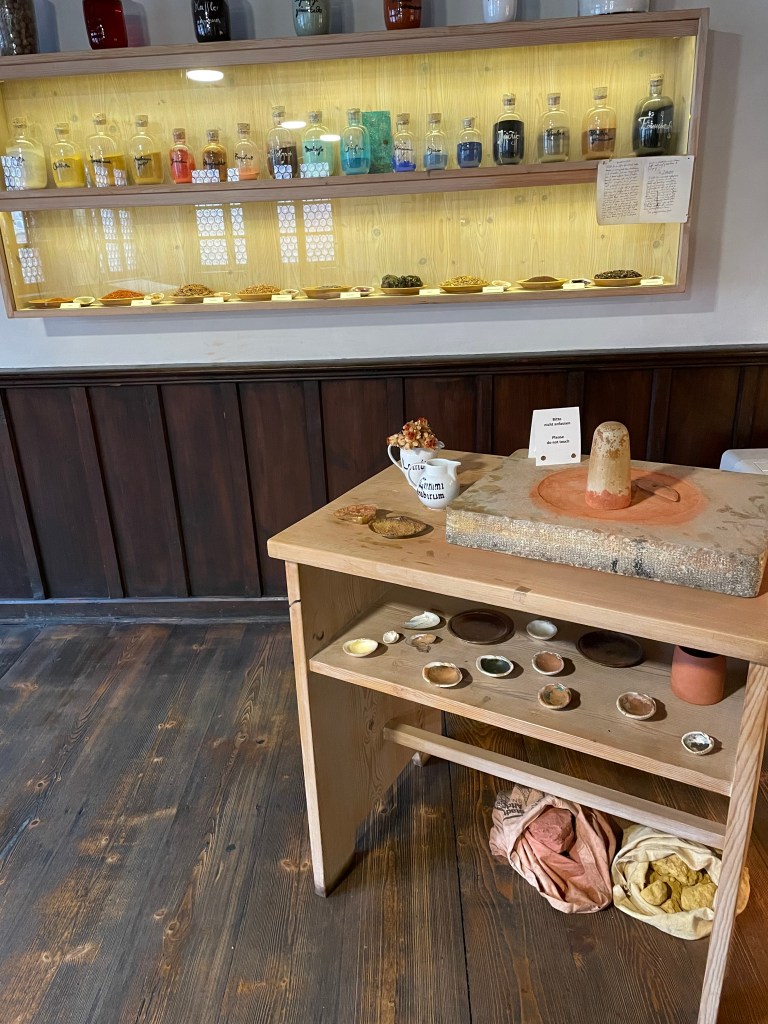
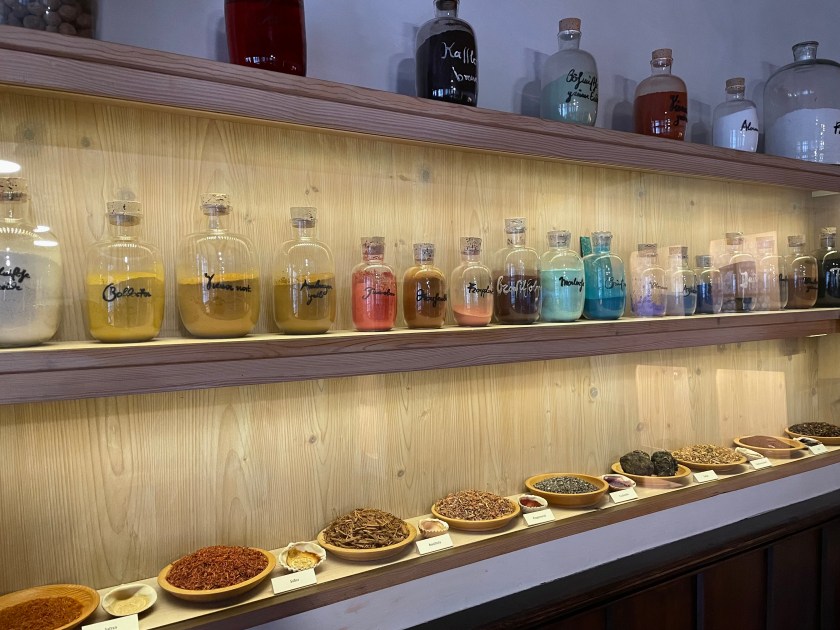
Art students come here to learn about all of the different plant materials Duerer used to create pigments for his painting.
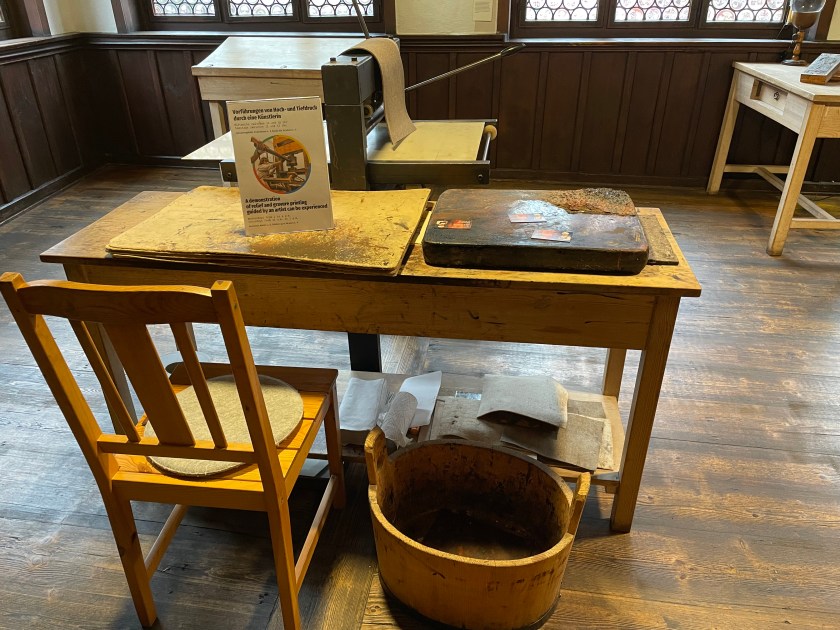
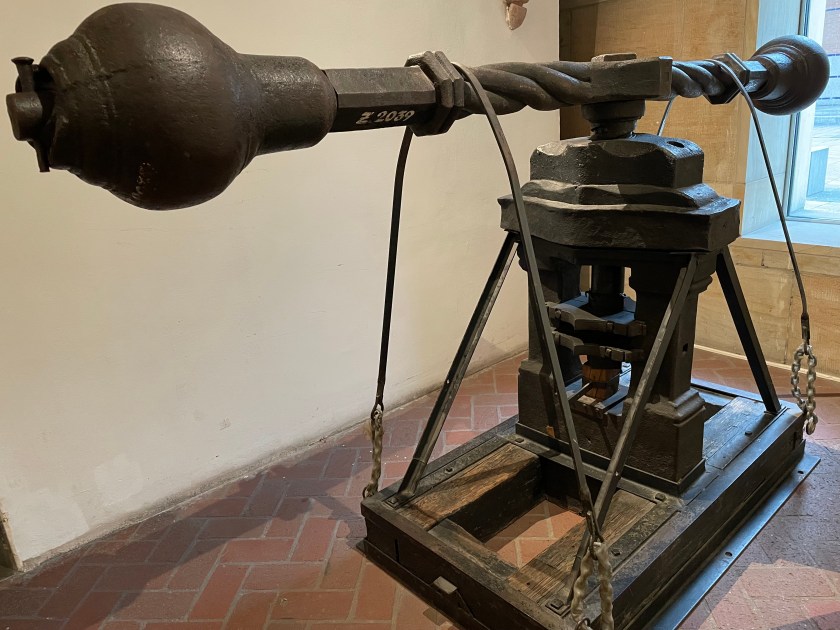
This printing press was re-created from detailed drawings he made of it.
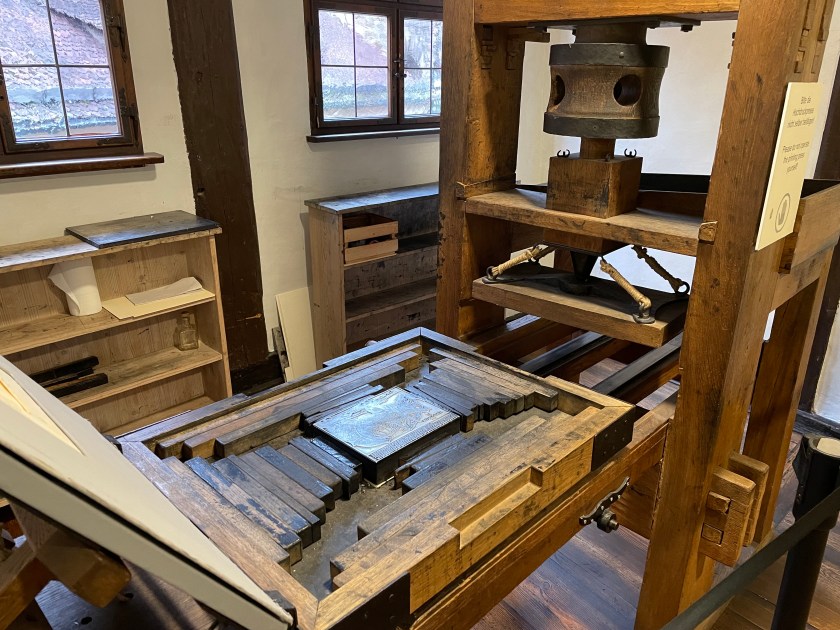
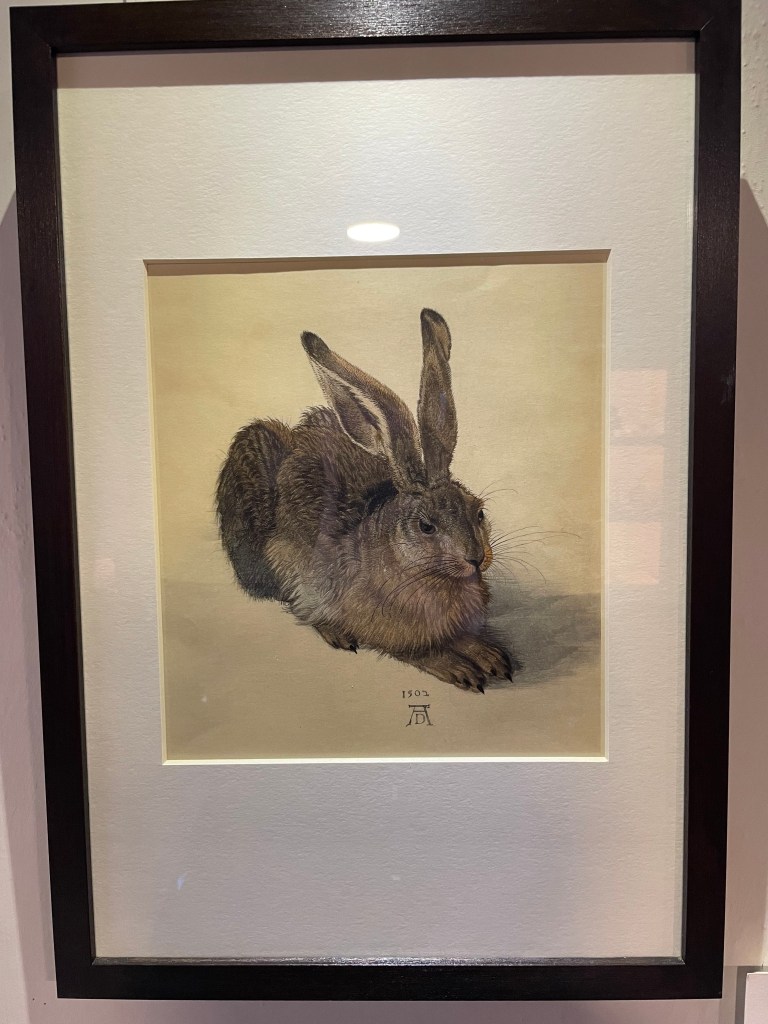
You can view 844 pieces of Duerer’s art here.  He was famous in his day and is still considered Germany’s most famous Renaissance artist.  One of the reasons he was so well-known in his day was because of the printing press.  He made lots of engravings and wood cuts and was able to reproduce them fairly inexpensively, so his art was circulated.  A typical print cost about the same as a pair of shoes.
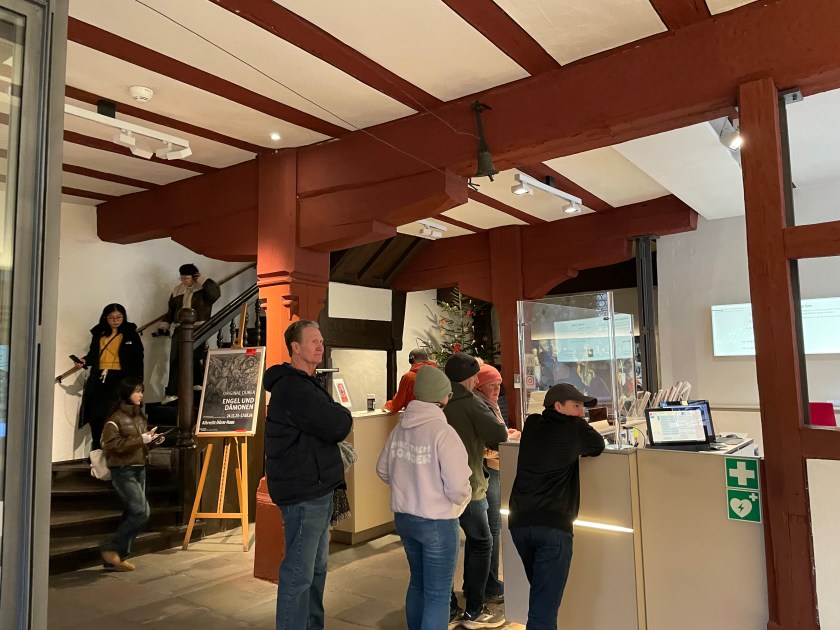
This home is well worth the visit!
Nurenberger Lebkuchen

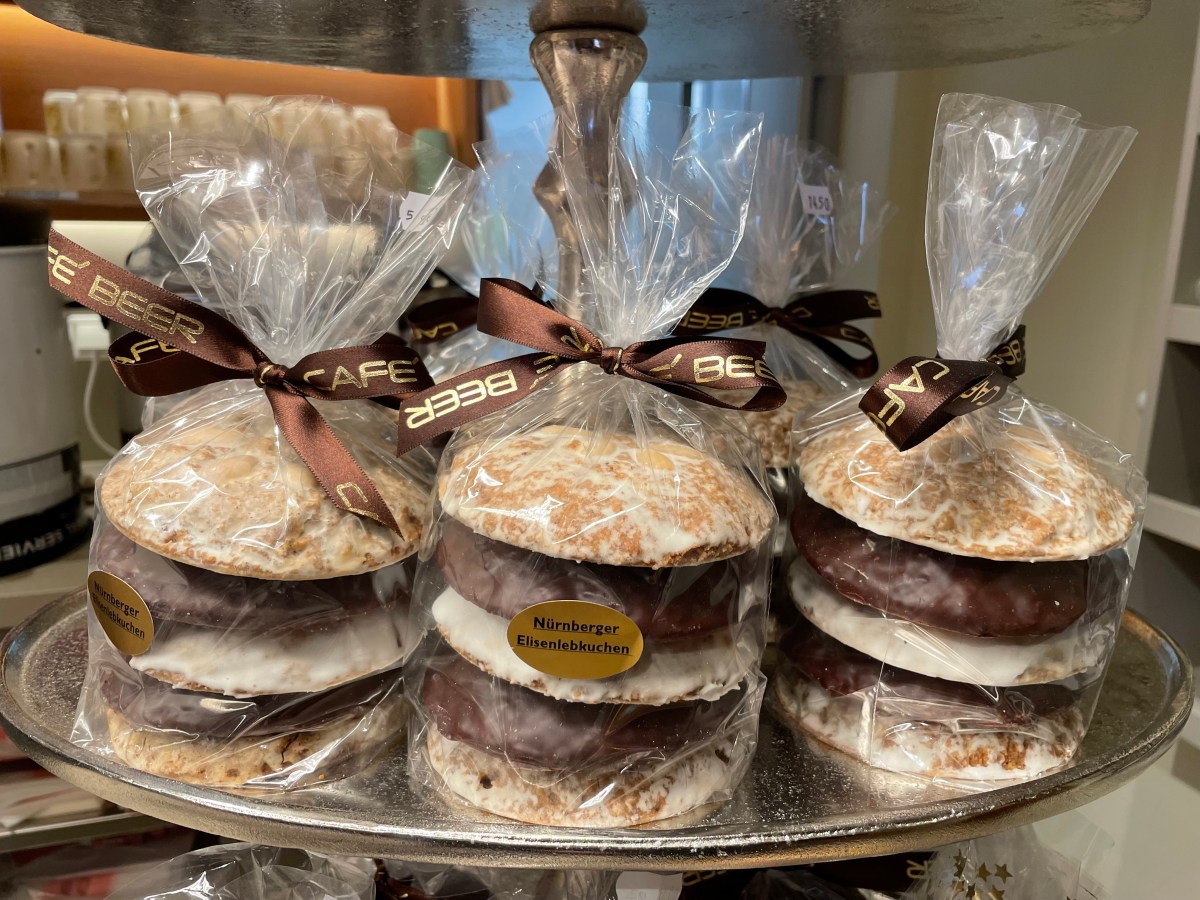
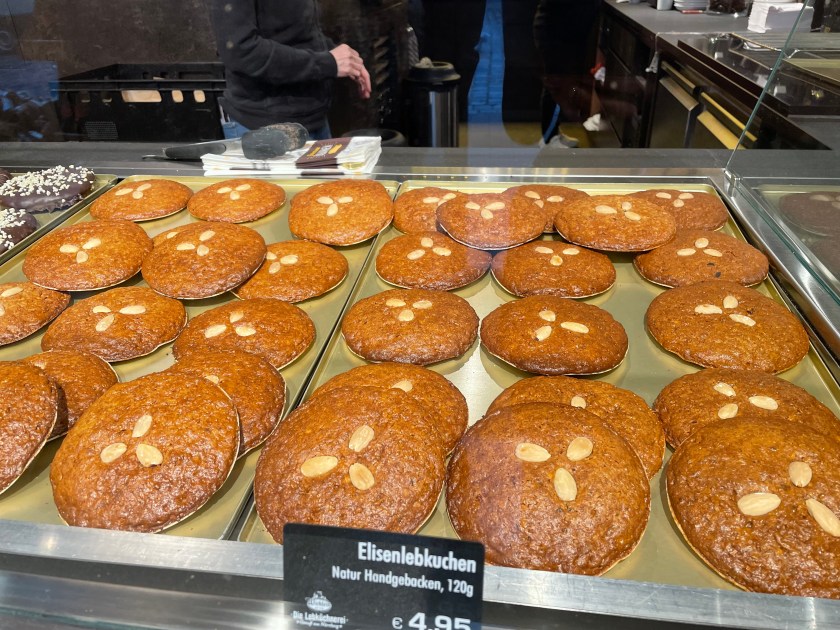
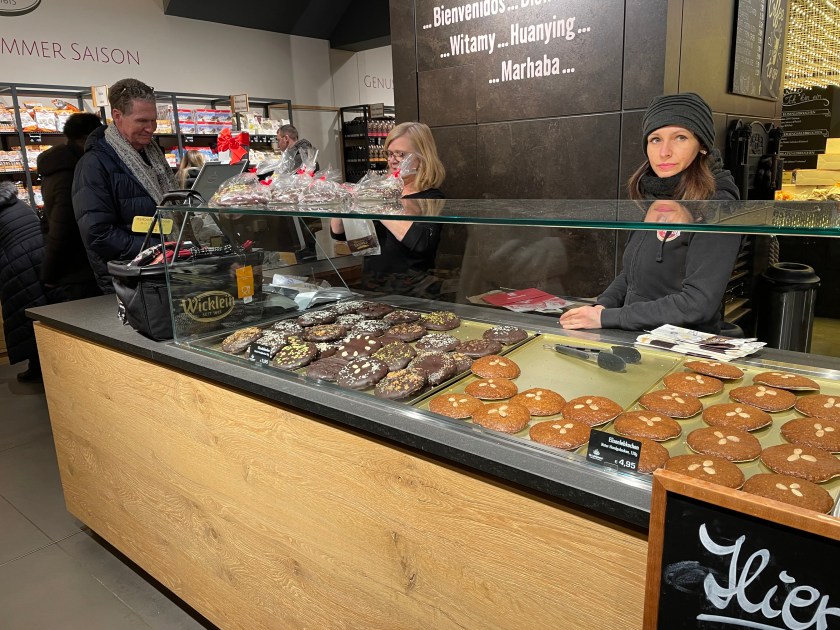
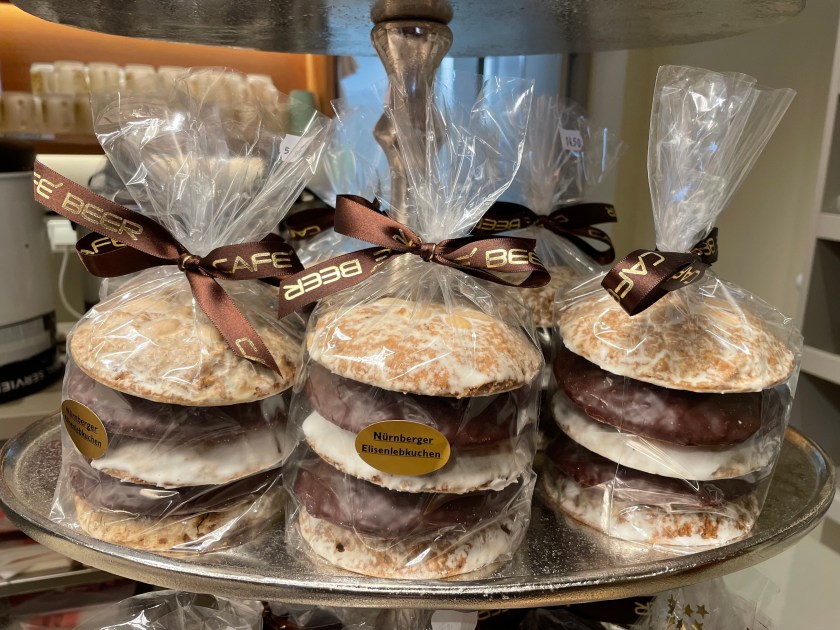
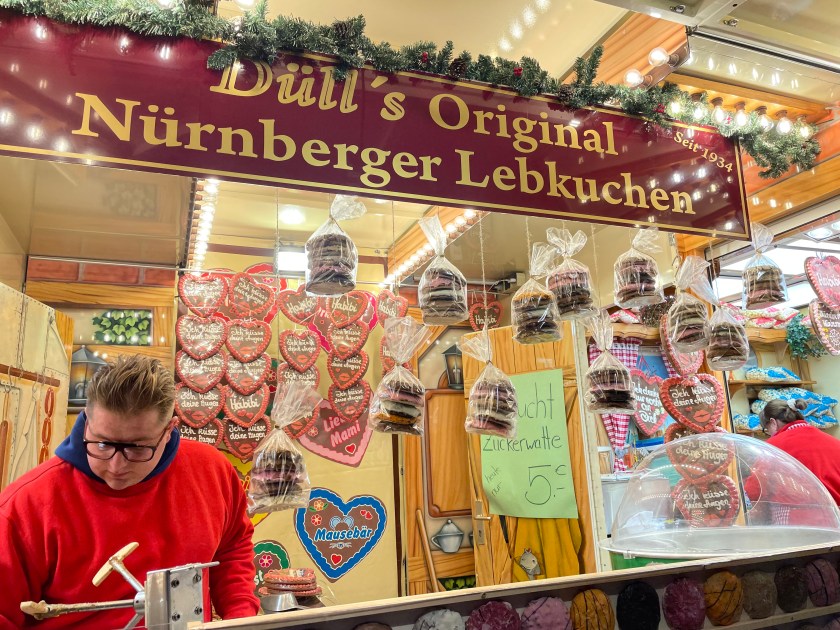
Another Nuremberg specialty is Lebkuchen and boy is it lecker!!  Every day we went back for “just one more,” and before we left, we bought a bag full from this bakery where they were made fresh every day.
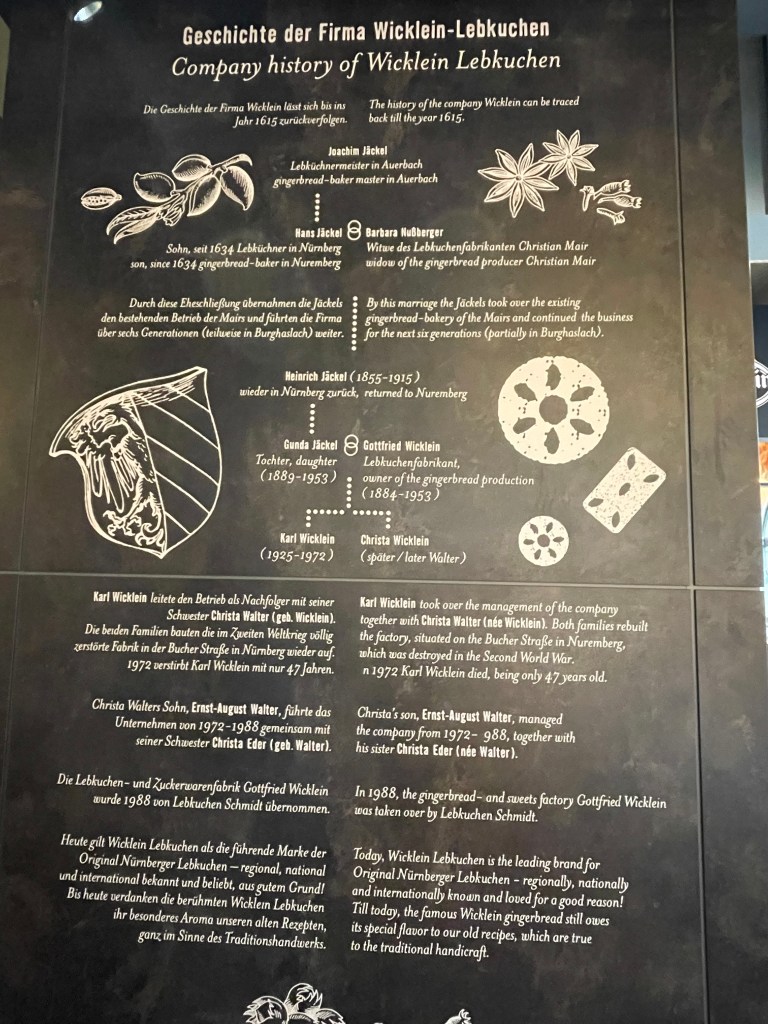
The company Gottfried Wicklein GmbH & Co. KG, based in Nuremberg , is a manufacturer of baked goods, particularly Nuremberg gingerbread . This company was founded in 1615, making it one of the oldest gingerbread shops in Nuremberg.

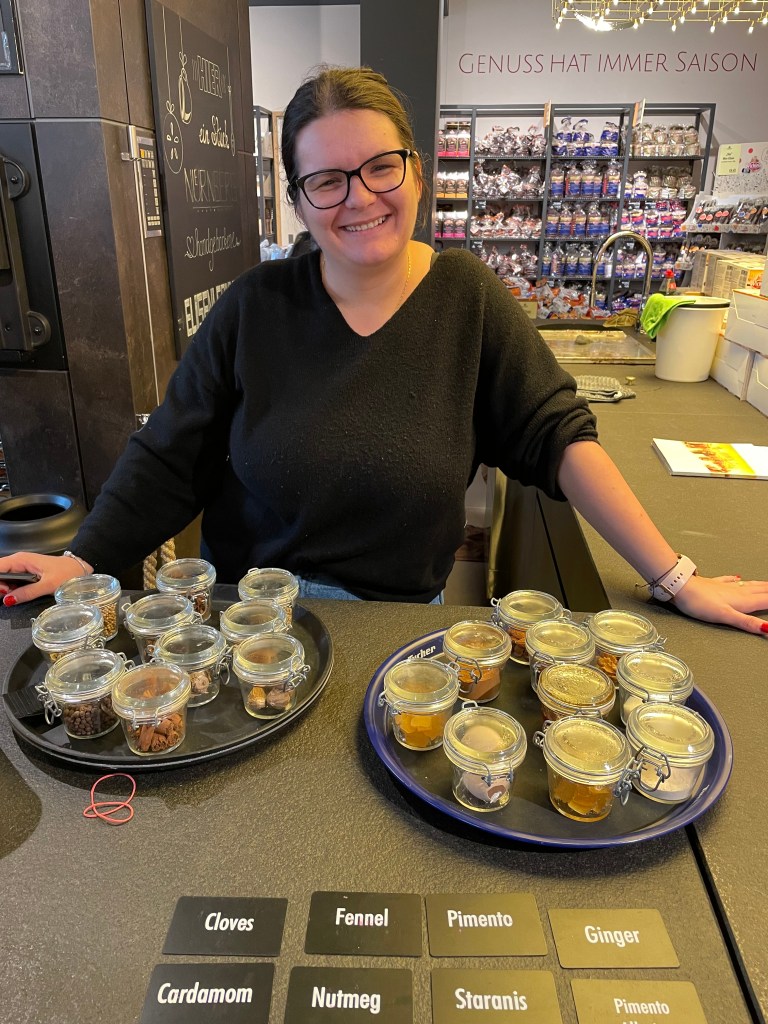
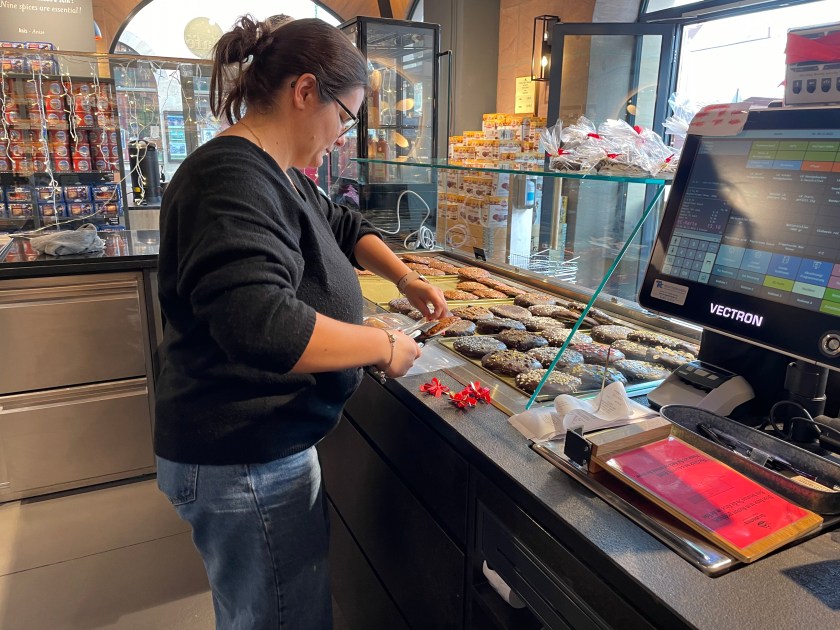
I’ve never made Lebkuchen, and I had so many questions about it that one of the shopkeepers gave us our own Lebkuchen tutorial.  They teach classes here and so she pulled out her samples of all the ingredients to show us.

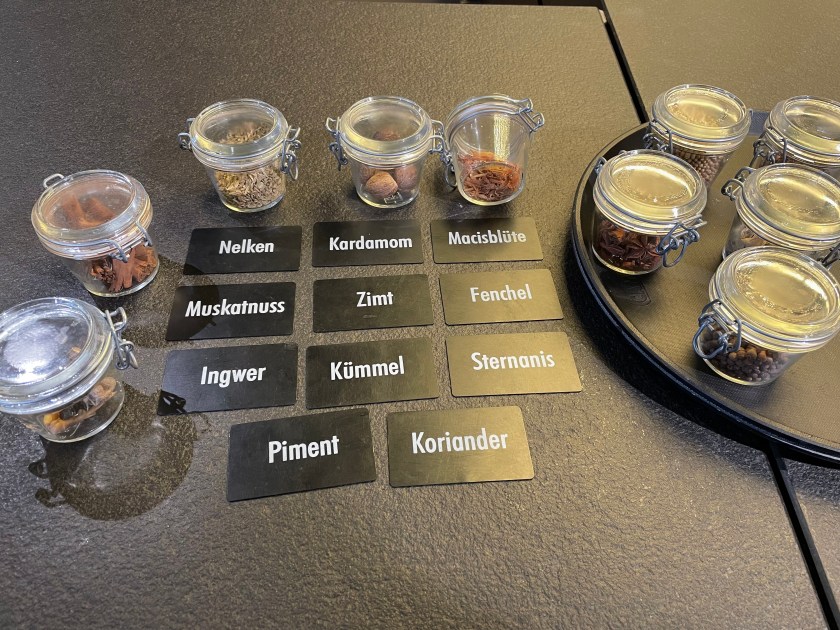
These are the 11 spices that are used in their famous recipe.

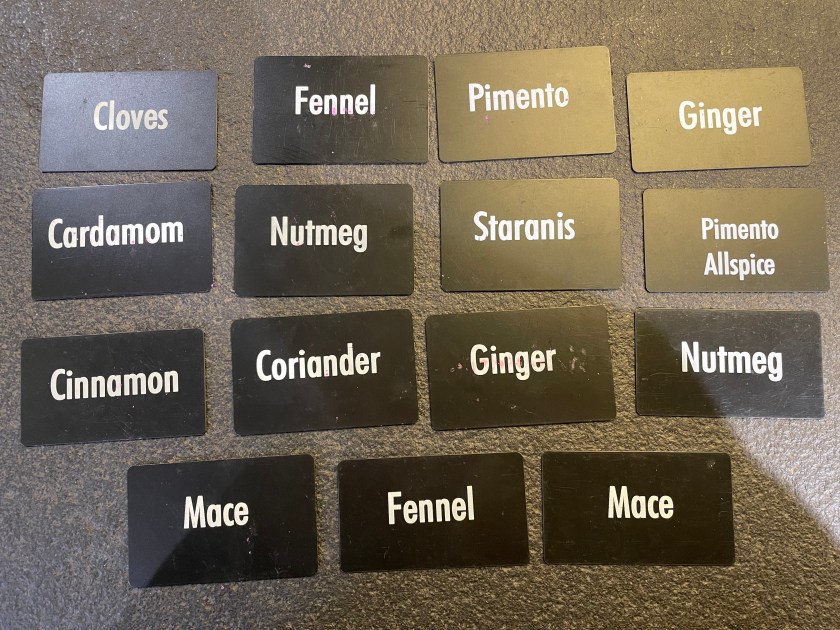
Here’s the English:

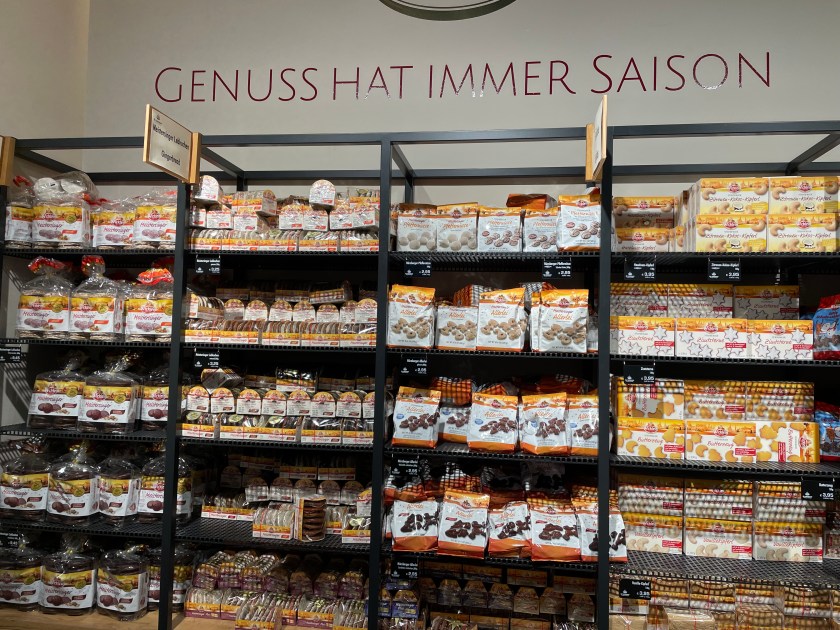
These are the different varieties of Lebkuchen.  The traditional have 25% ground nuts (hazel nuts, walnuts and almonds) and only 10% flour.  Others have up to 40% flour.

Of course, the fresh ones are the very best, but these cookies last a long time and there are so many packaged ones to choose from.

I learned something I never knew about my very favorite spice:  Mace.  It’s made from the FLOWER of the nutmeg nut, not from the shell as I’d been told.  I use Mace on just about everything from hot oatmeal to my best cinnamon rolls.

If you  have time and if you’re interested, here’s a website that explains the history of Lebkuchen in Nuremberg and there’s a 45 minute film (in German) showing another baker making Lebkuchen.  He explains that the dough can be kept for several months before it’s completely mixed with the spices, rolled out and cut.

Here’s another site with a family recipe.  This baker says, “Here is the Lebkuchen recipe my family uses. The dough can rest in the fridge for several months. The famous German bakeries make the dough for next Christmas in January to let enzymes develop and spices mellow. I have kept mine in the fridge for up to 4 months.”

I loved learning about Lebkuchen.  My grandma Elsa made something similar, but simpler and also good.  This brings back happy memories.

A Beautiful Evening in Nuremberg

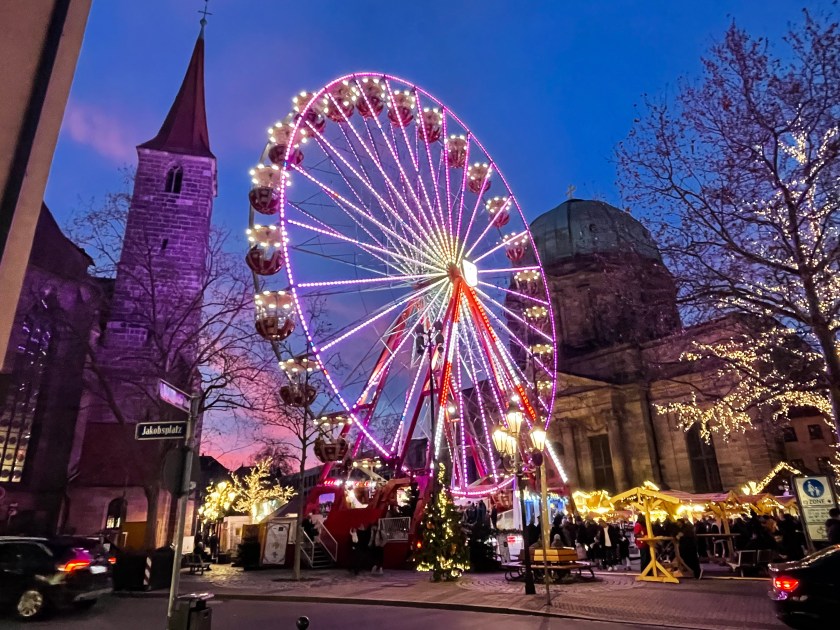
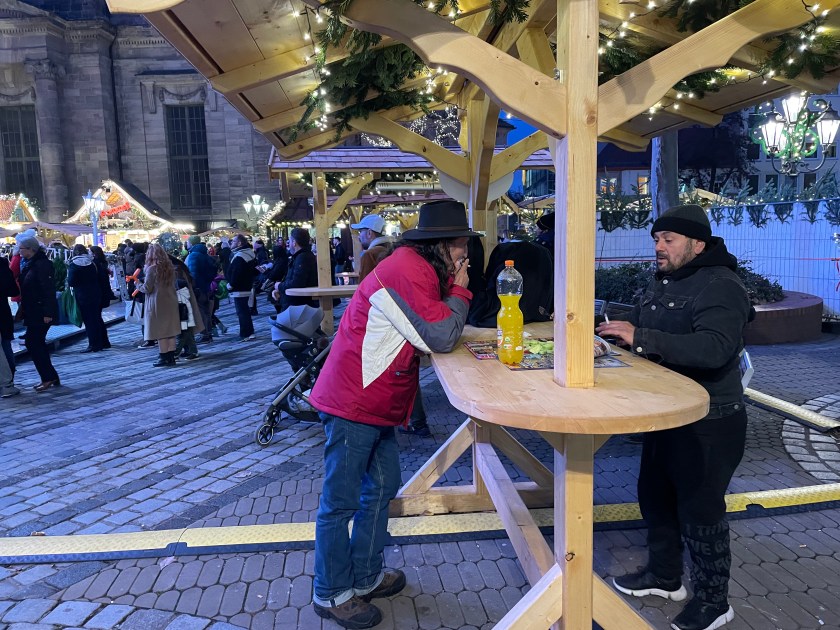
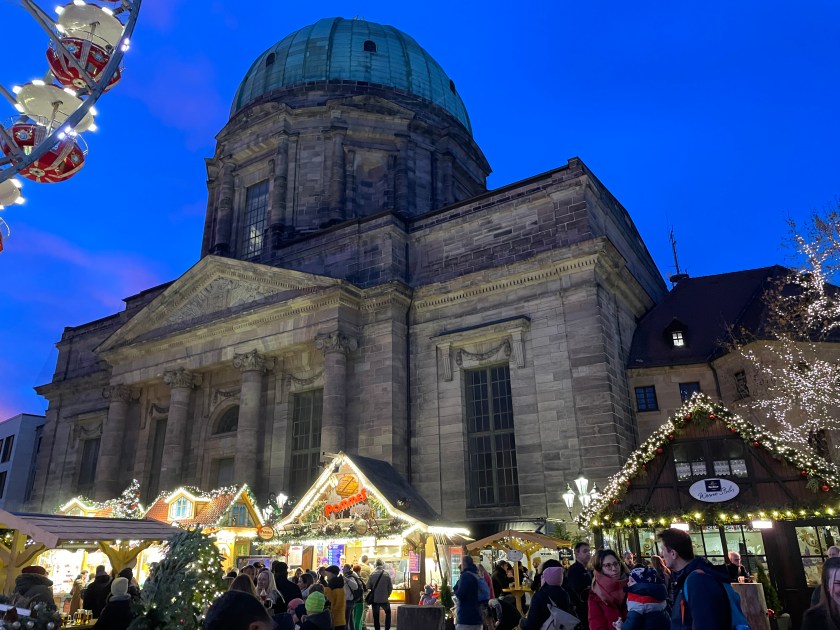
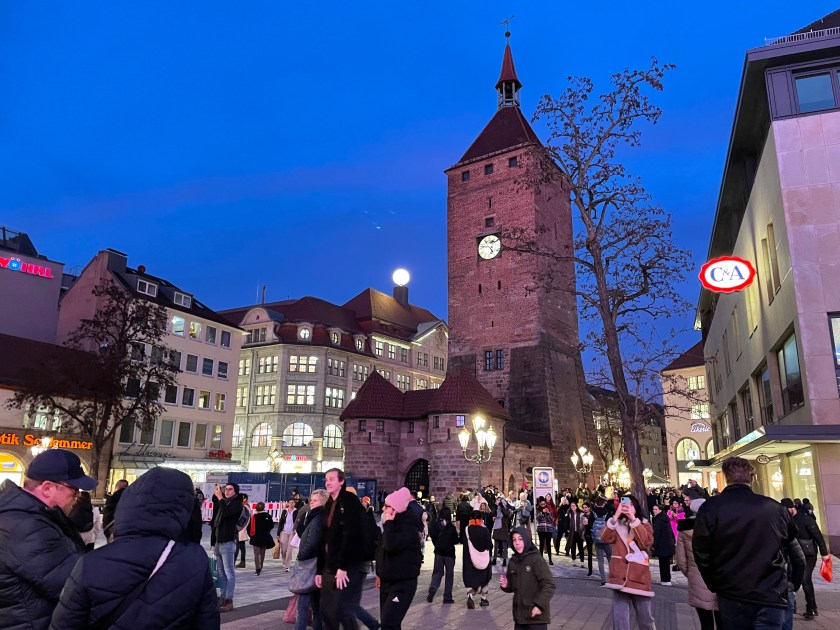
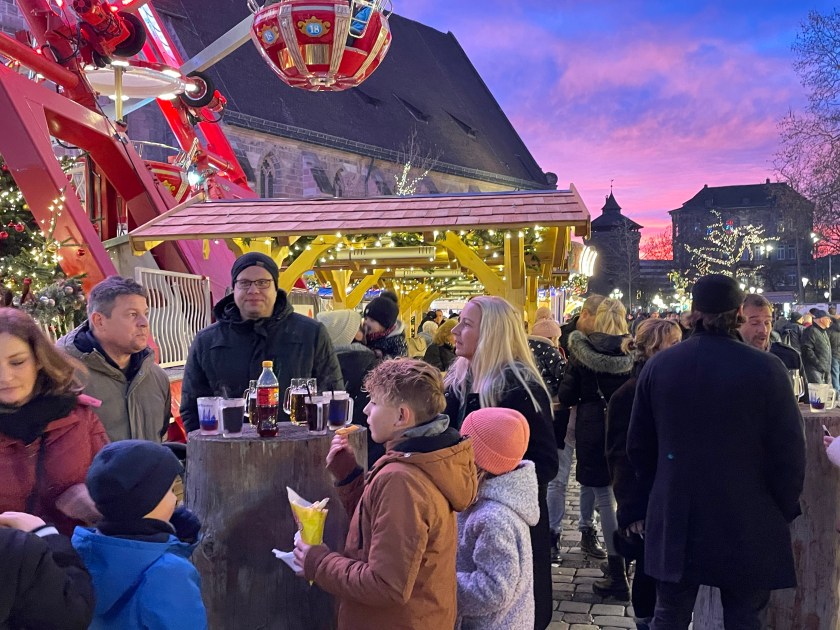
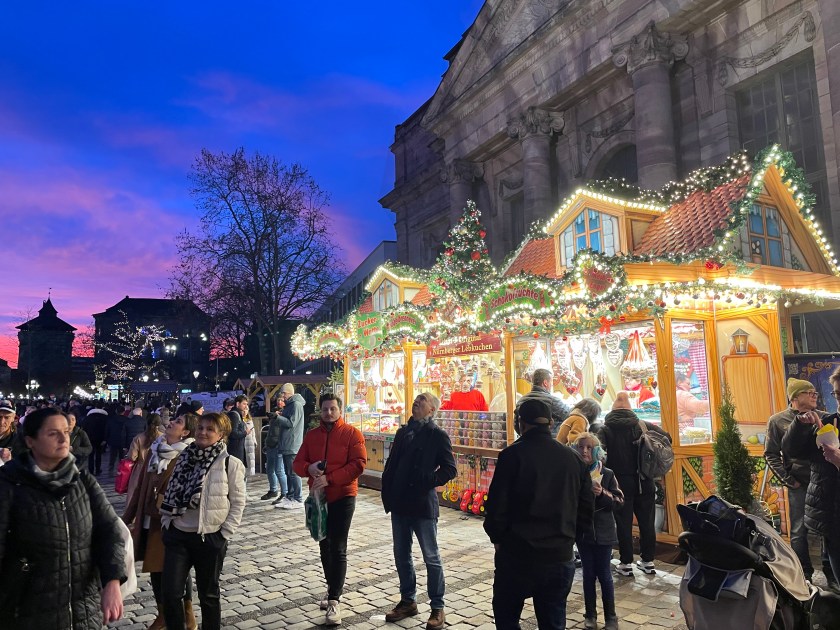
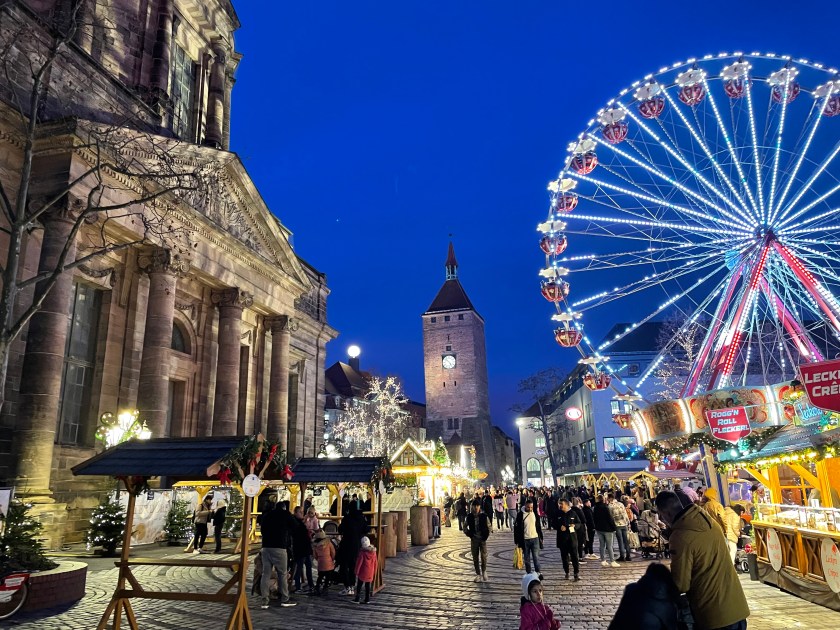
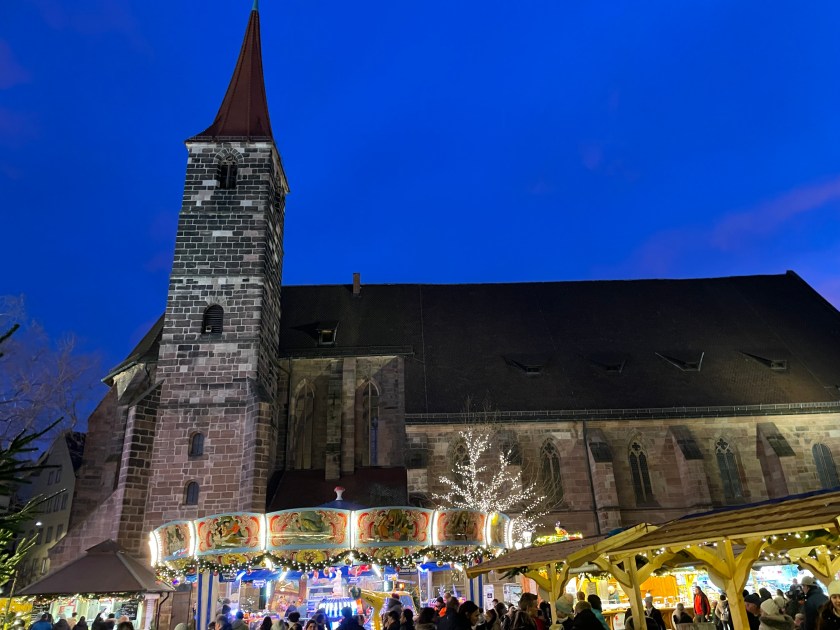
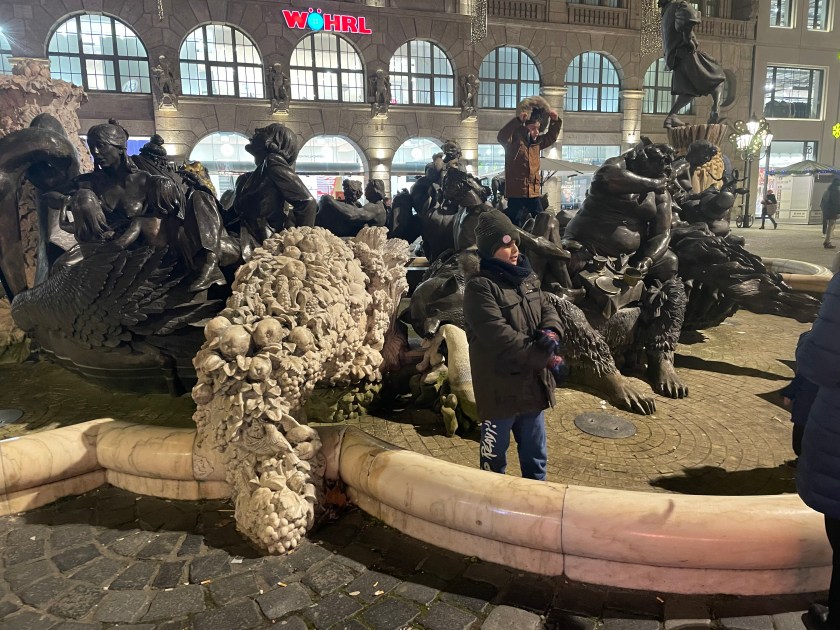
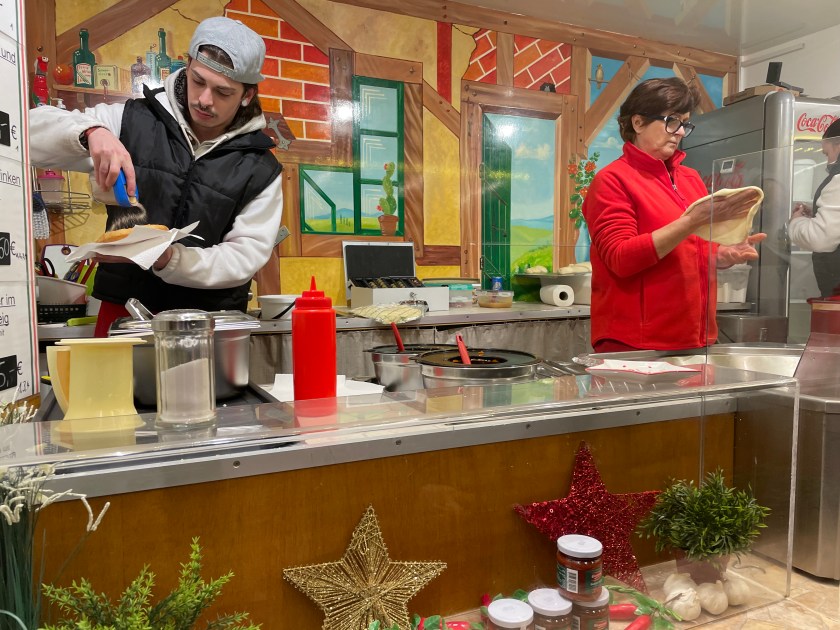
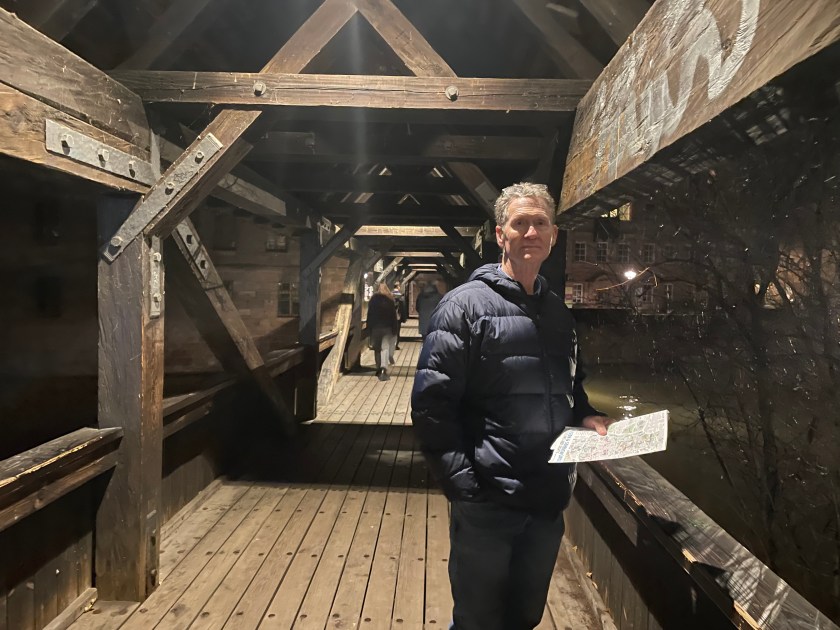
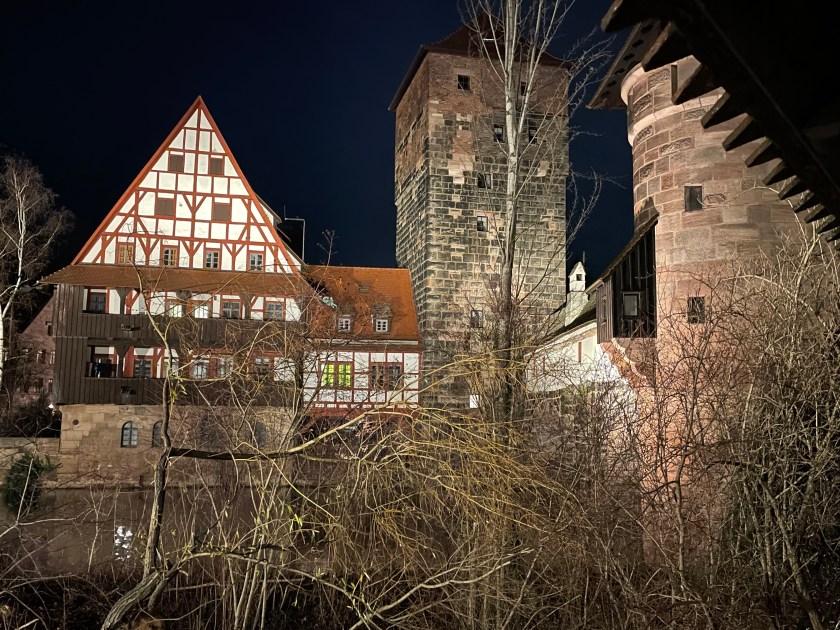
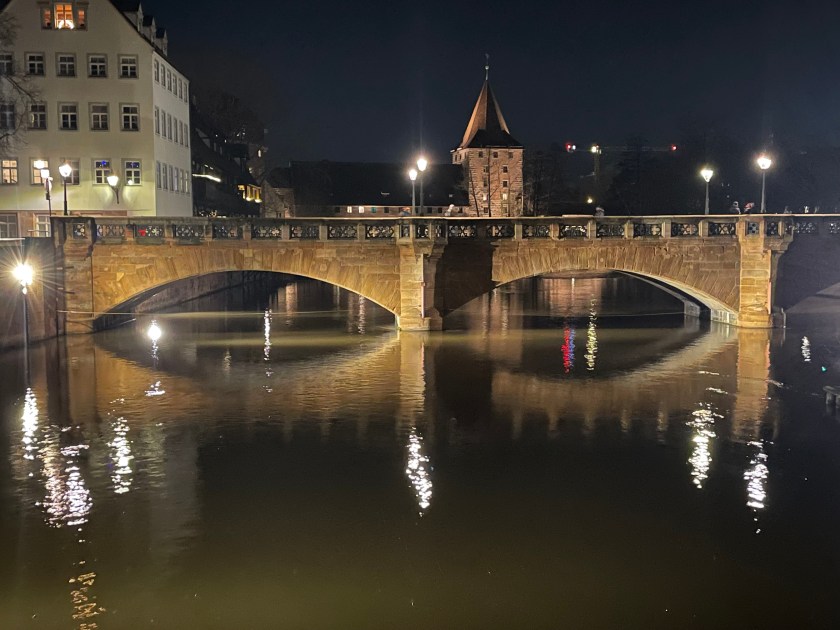
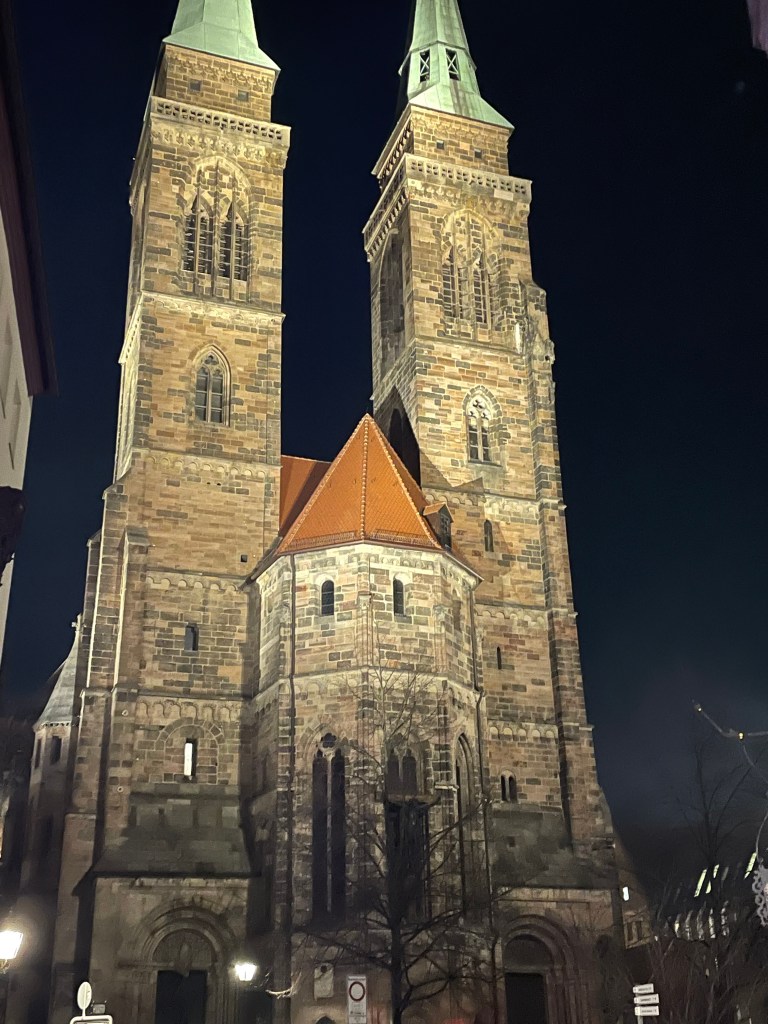
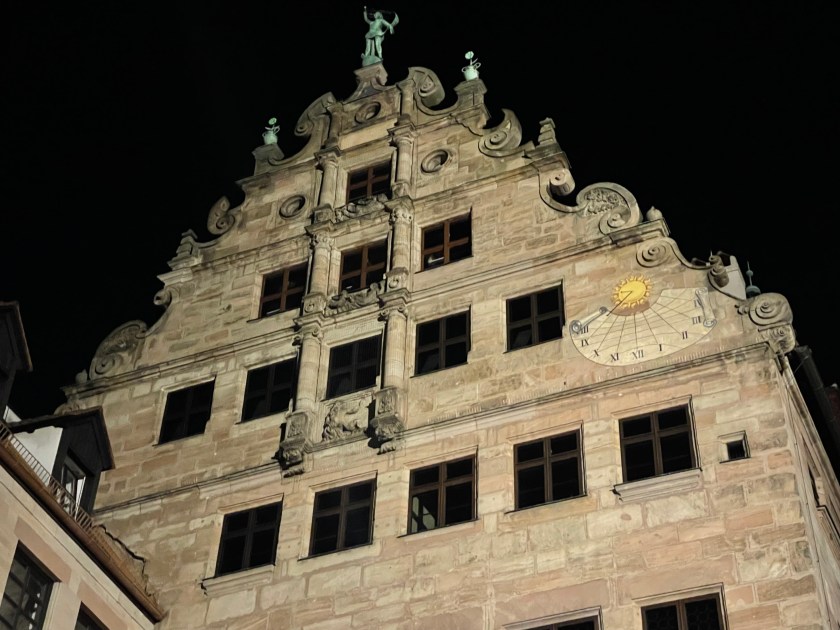
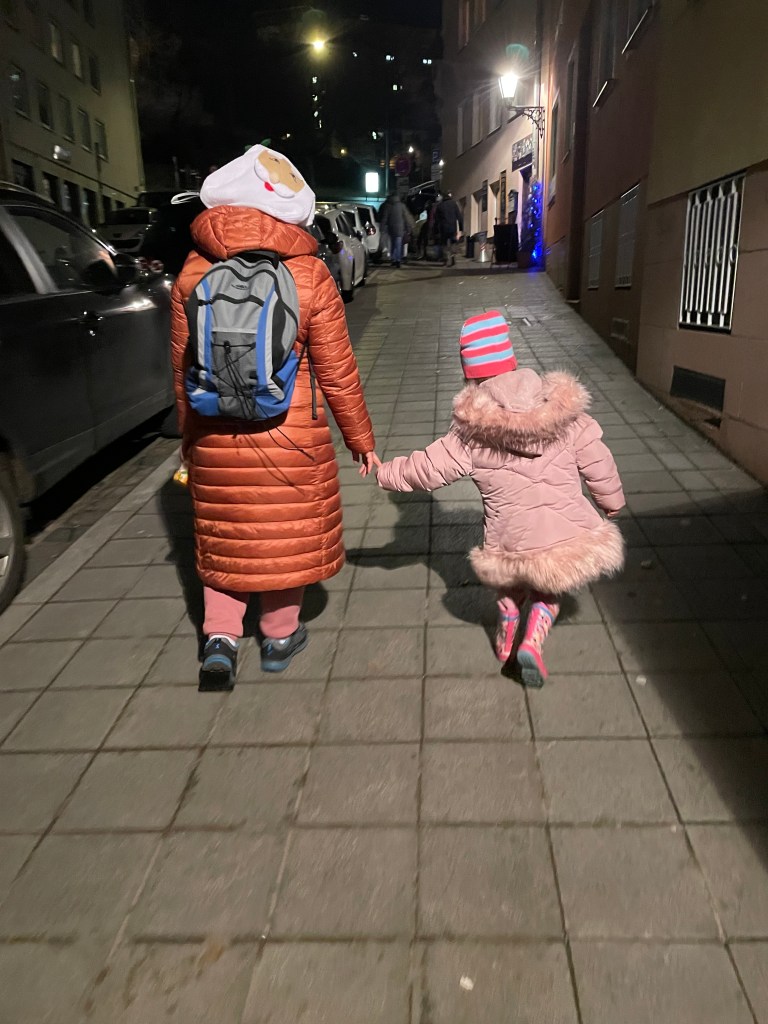
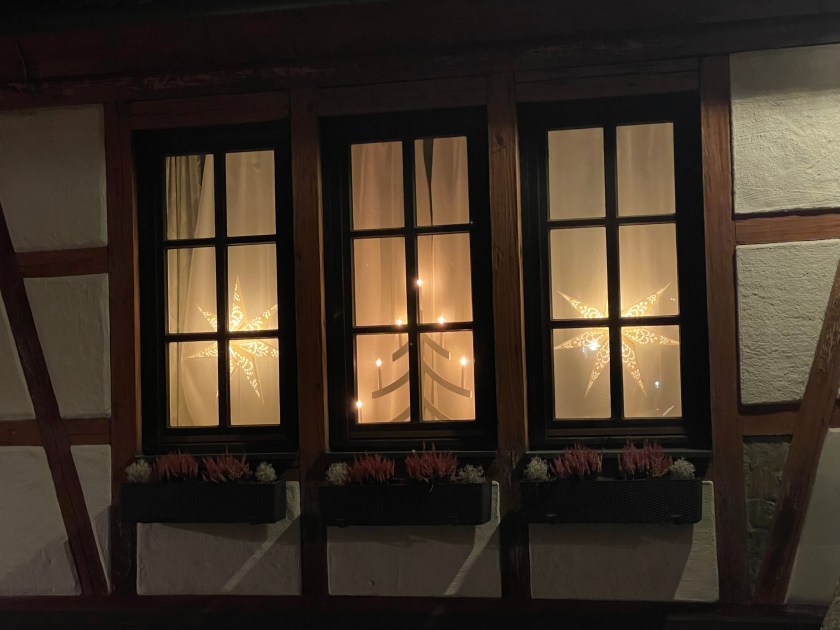
Things come alive in Nuremberg in the evening.  Many of the smaller Christmas Markets are still going, especially the ones for the children.  We had a really fun evening wandering through the old city, seeing things in a different light.

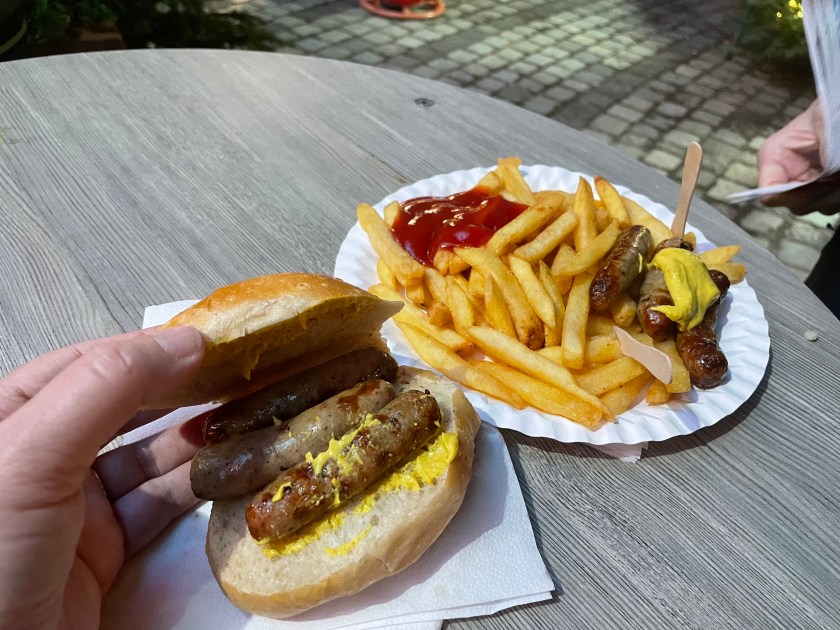
For our dinner we had traditional Nuremberger Brats.  They are our favorite Brats of all.  They are served on a bun or with fries.

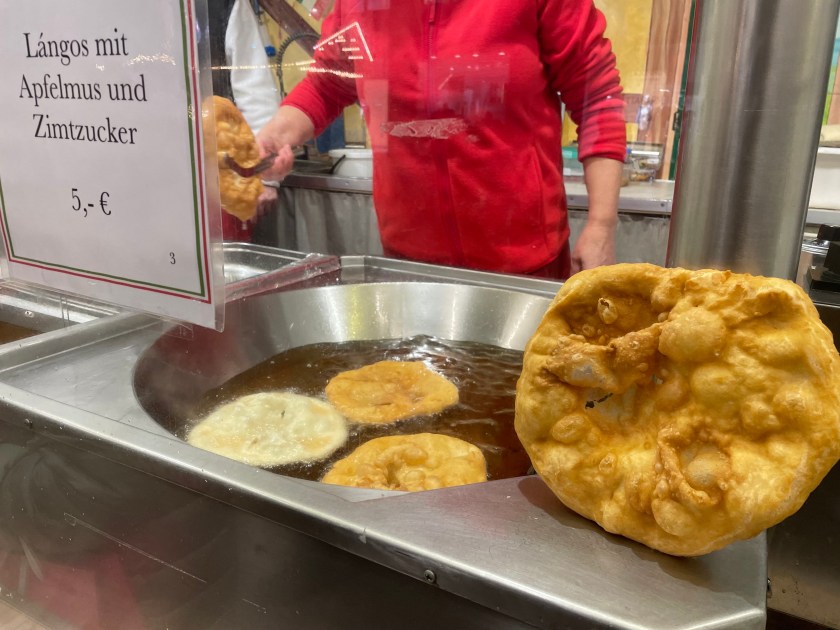
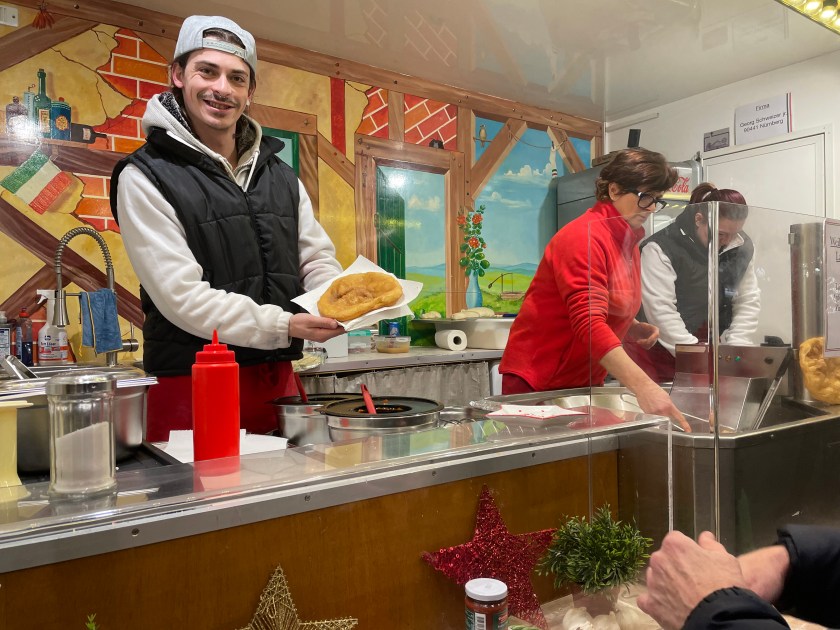
And for dessert we got these scones, called “Langos” served with different toppings.  We chose the traditional applesauce and cinnamon sugar.  YUM.

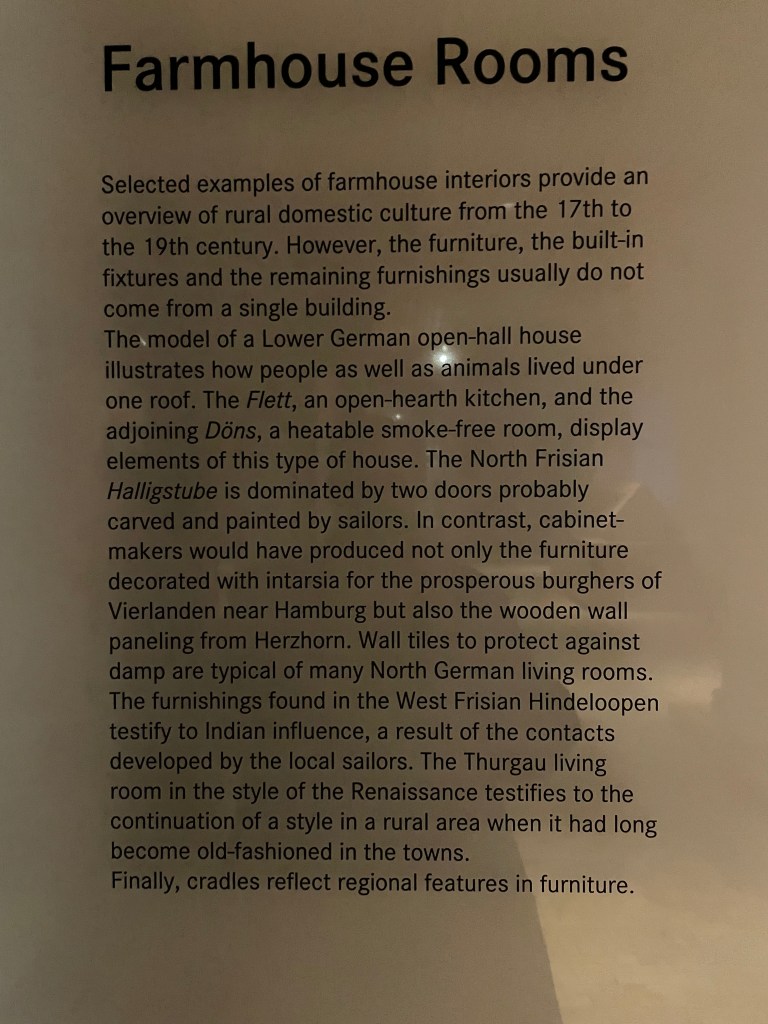
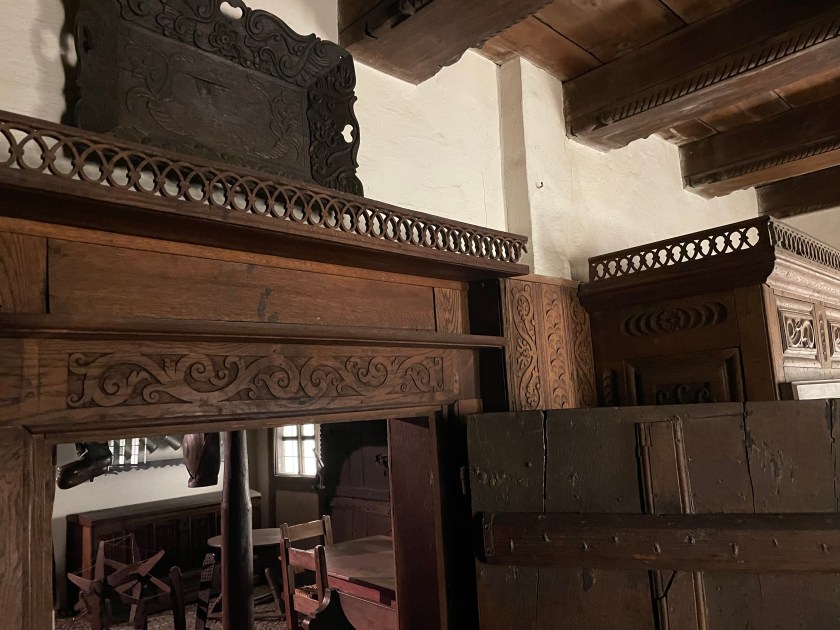
Old German Farmhouses in the Nationalmuseum

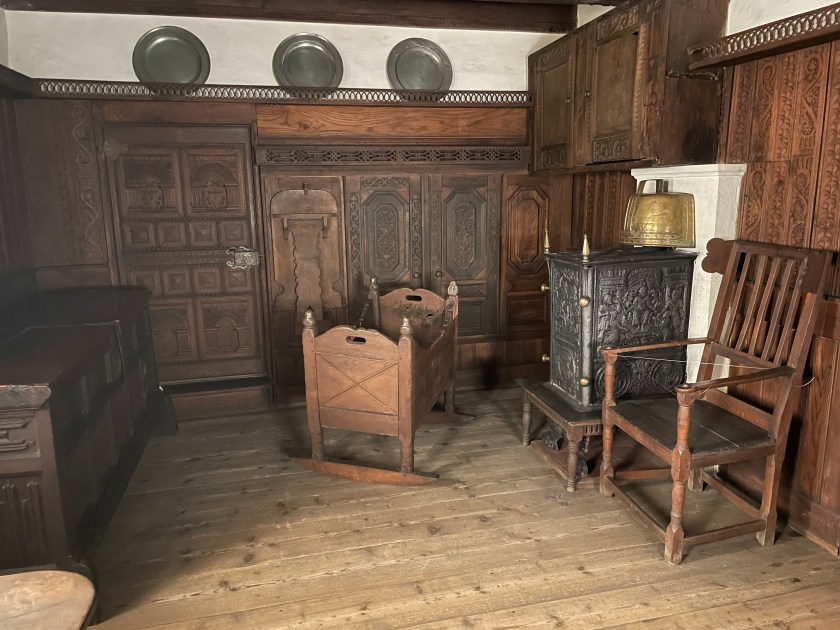
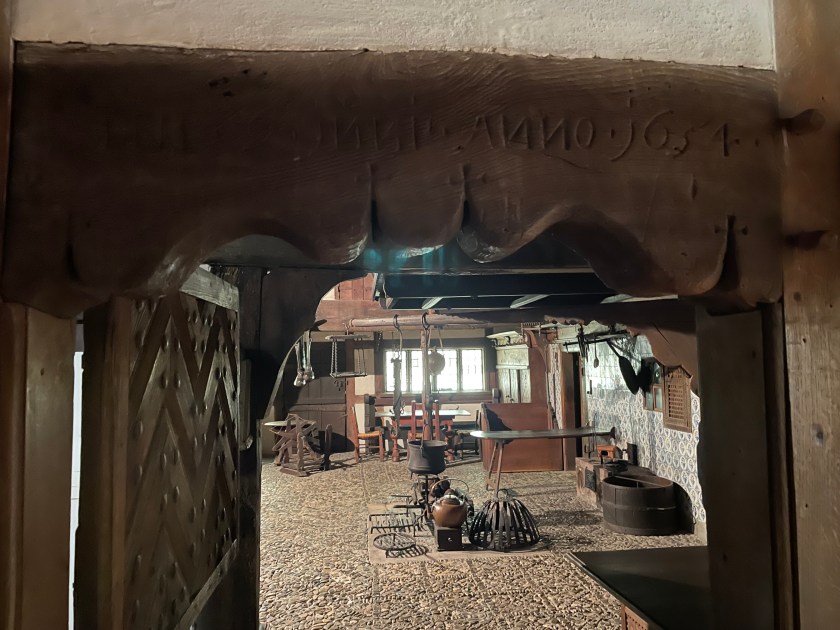
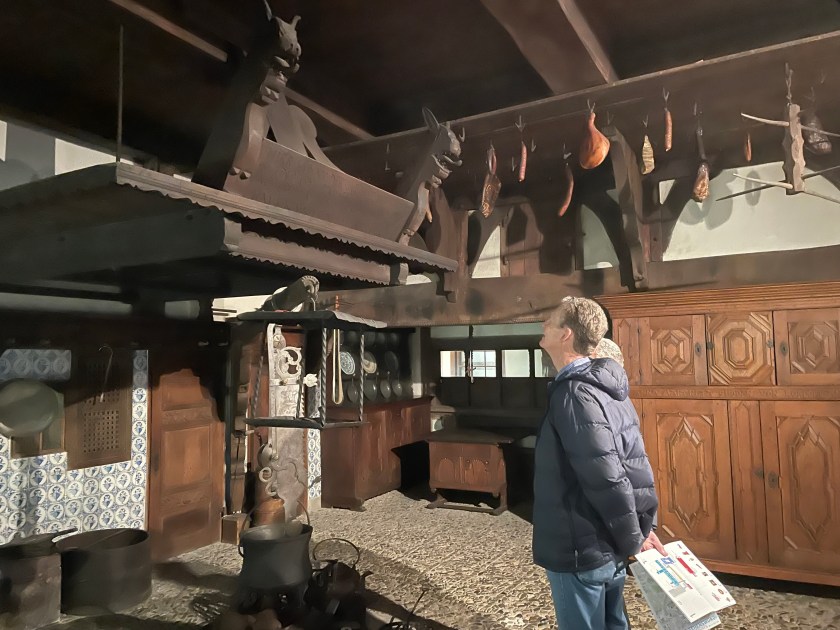
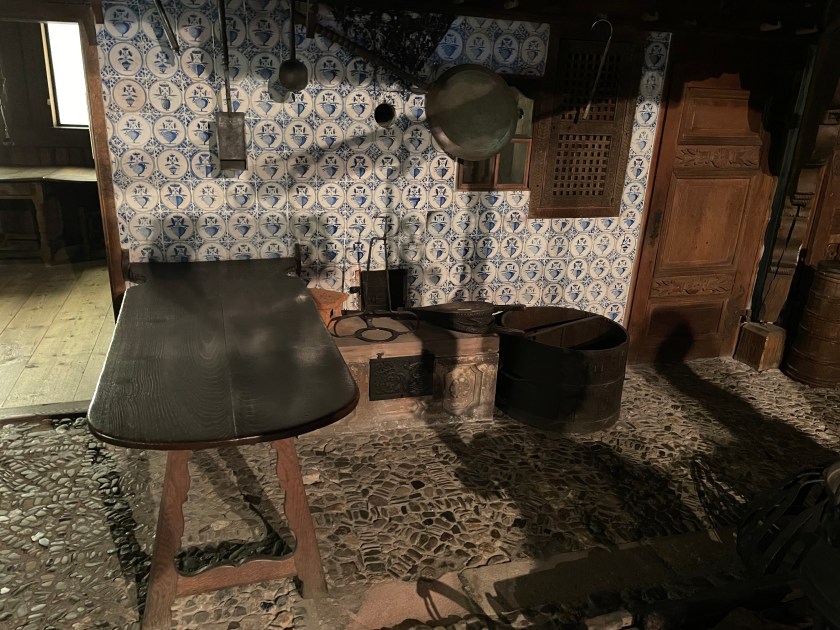
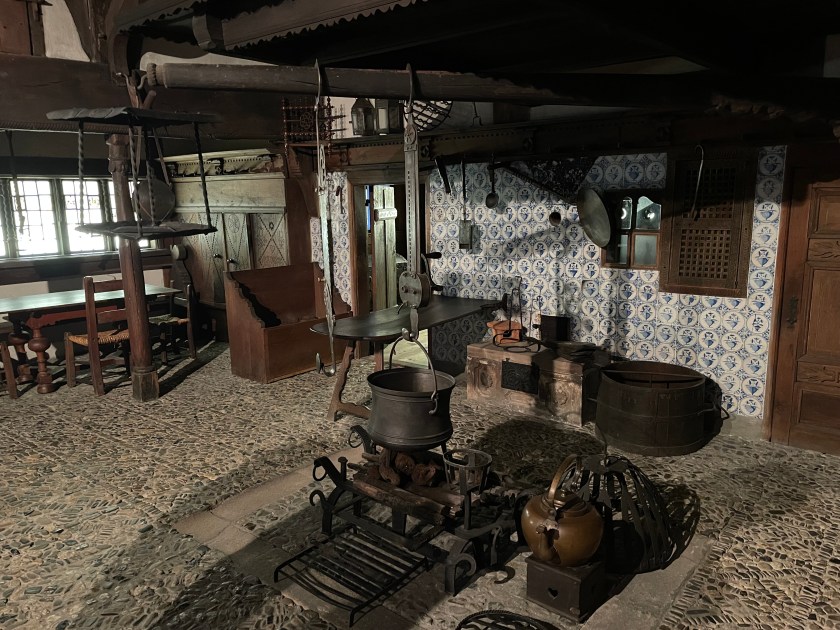
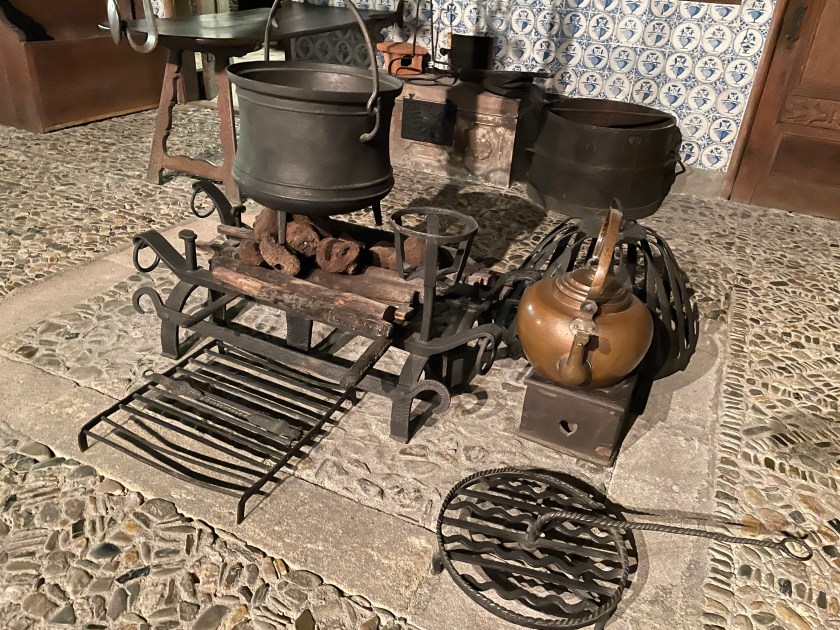
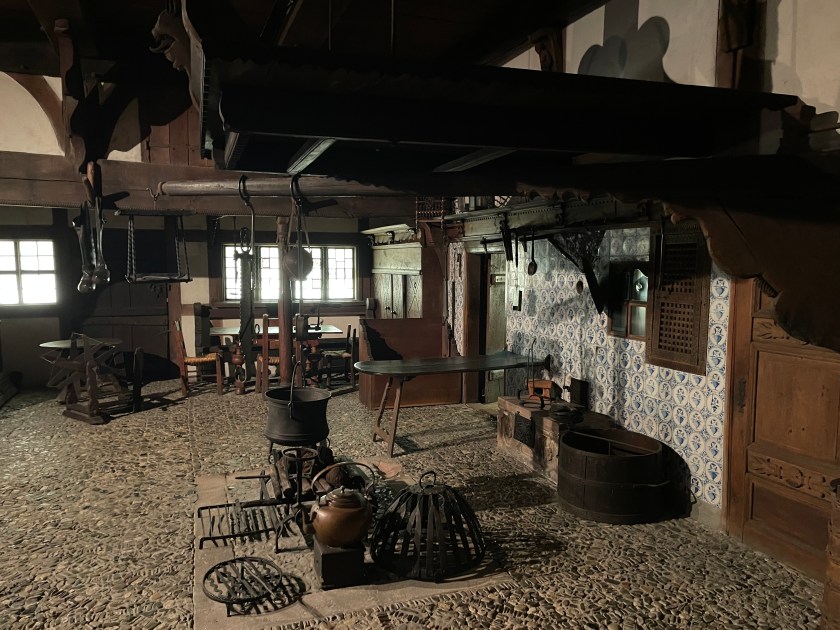
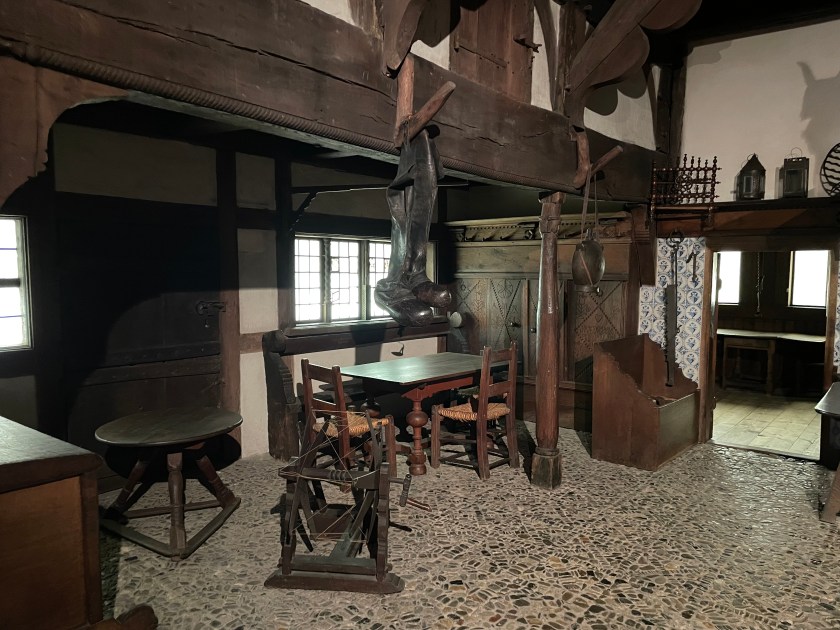
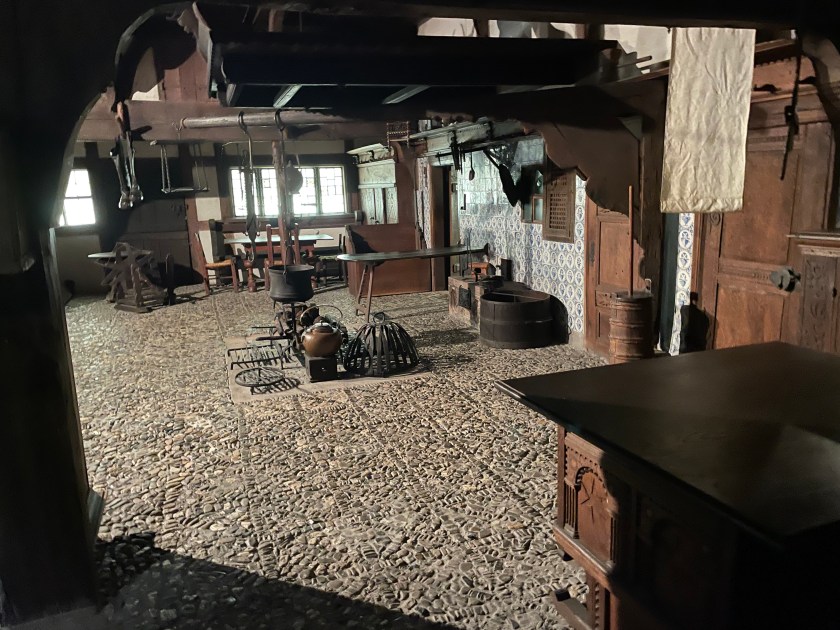
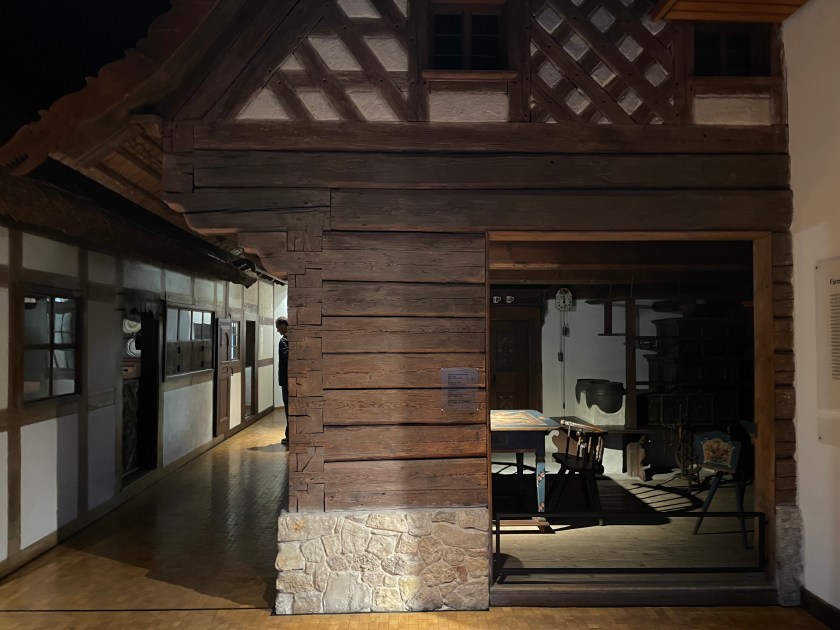
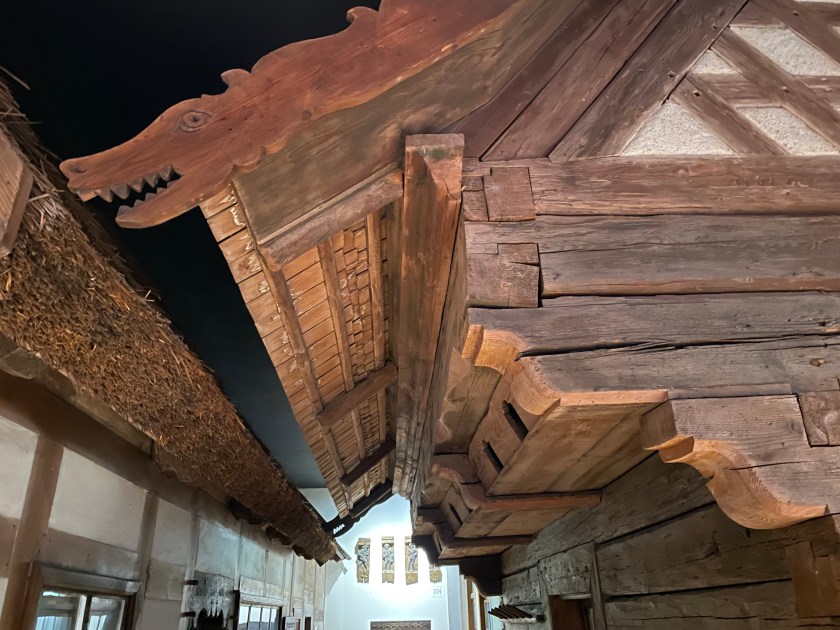
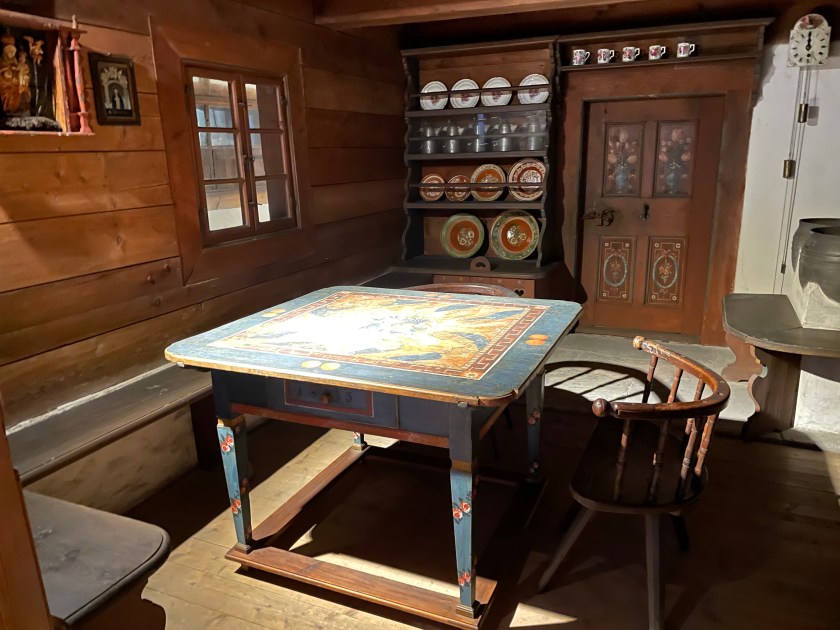
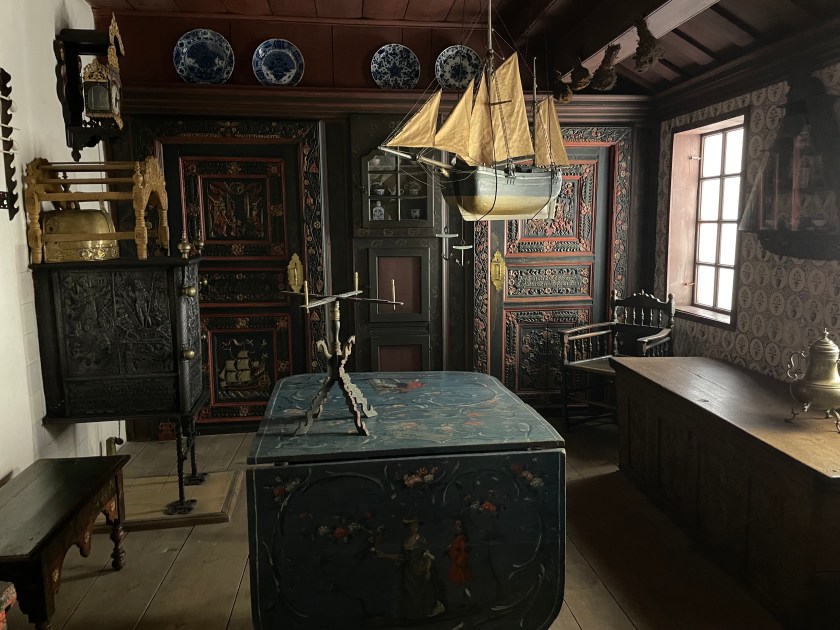
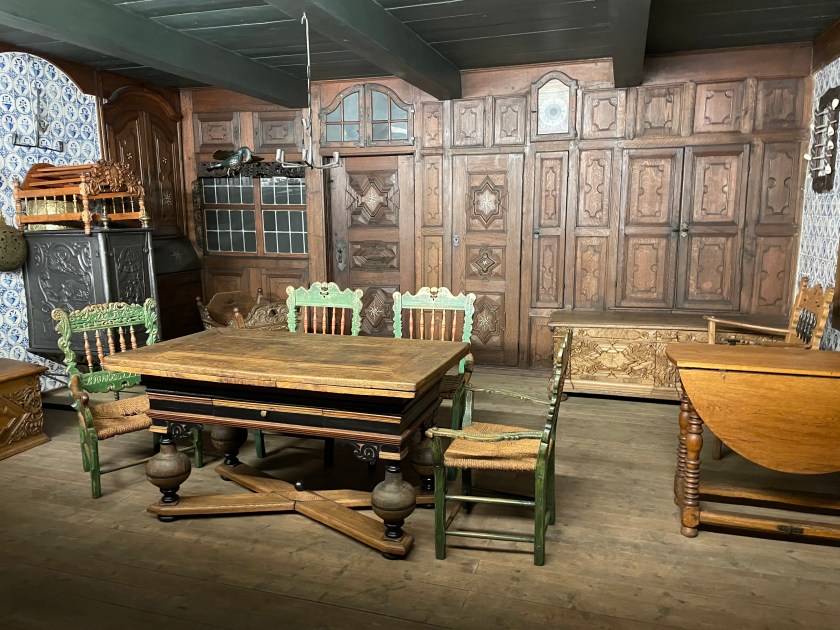
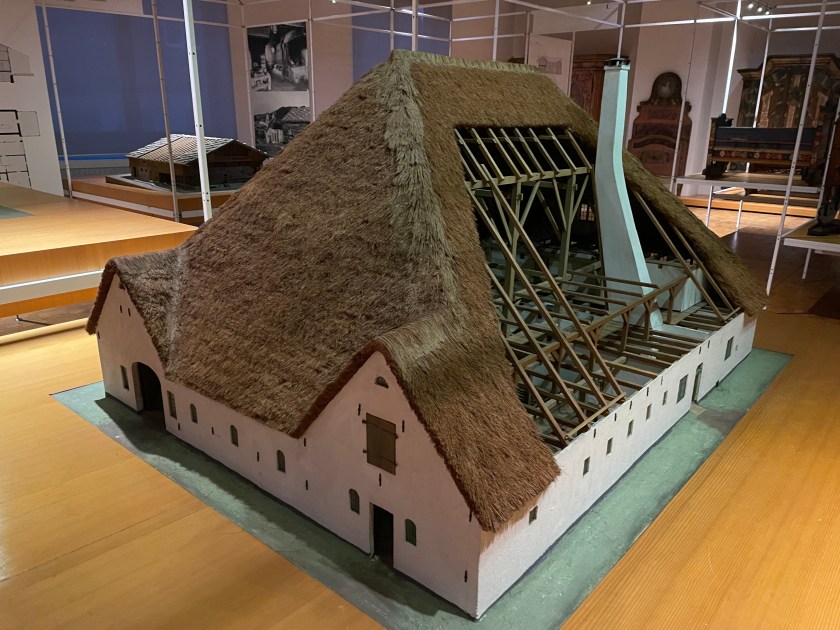
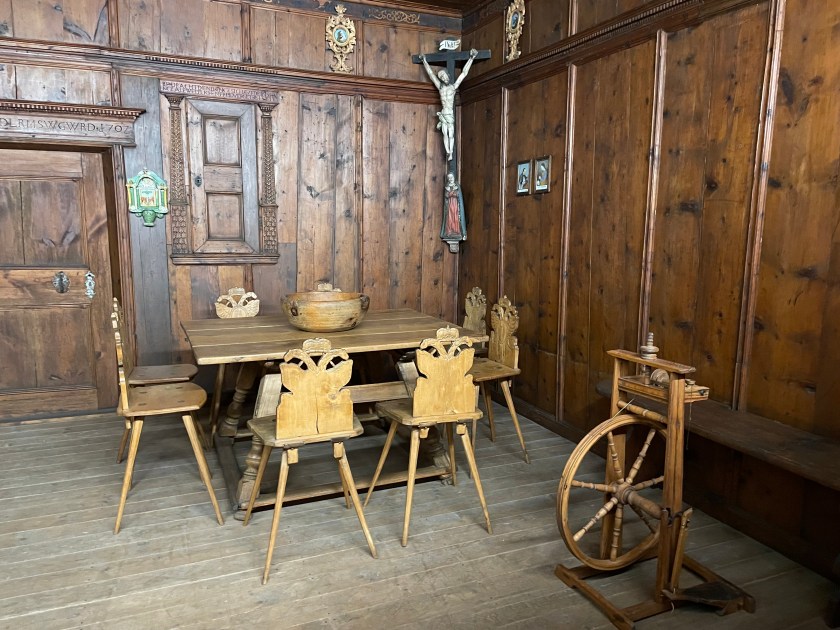
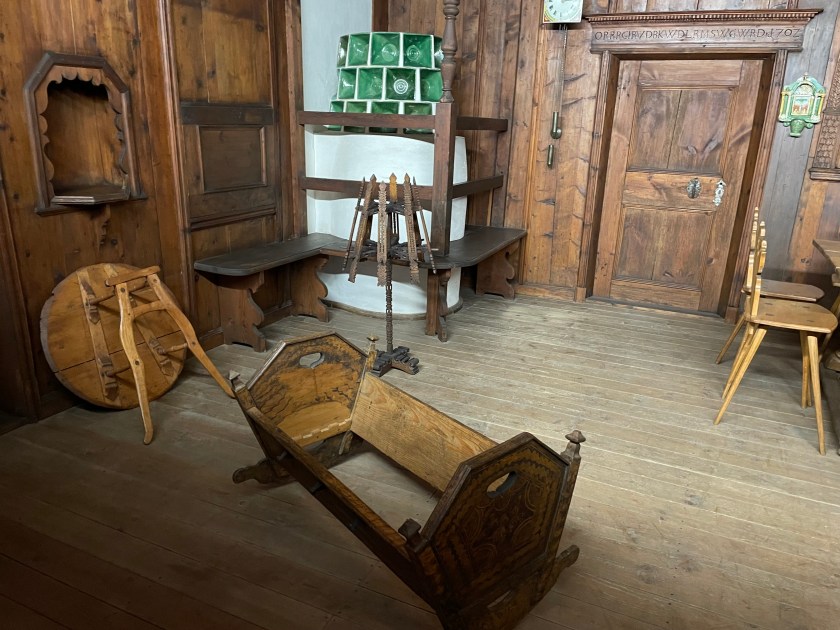
I really love these kinds of displays showing us what it was like inside the homes of years gone by.  These homes, recreated in the Germanisches Nationalmuseum show farm houses from the 17th to 19th centuries.

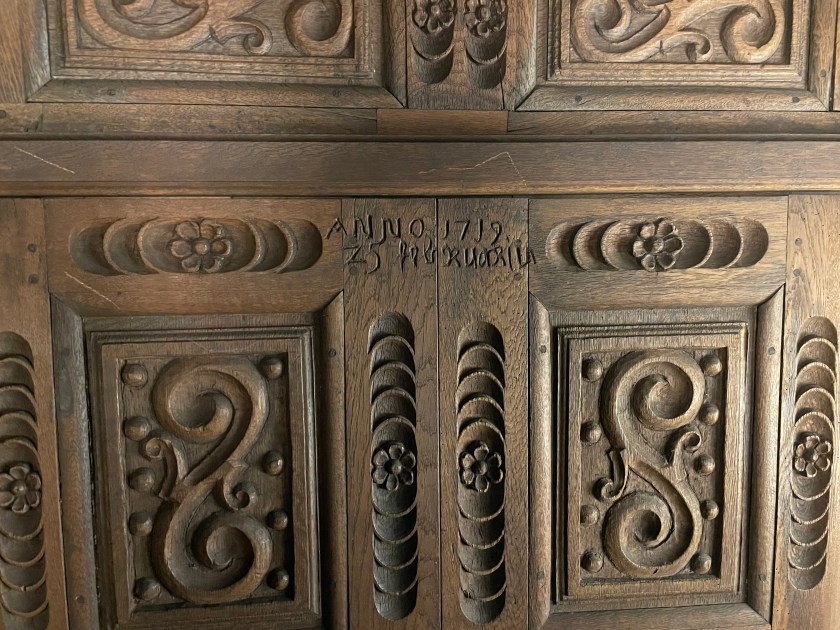
The detail work is incredible.

This dates to 1651:

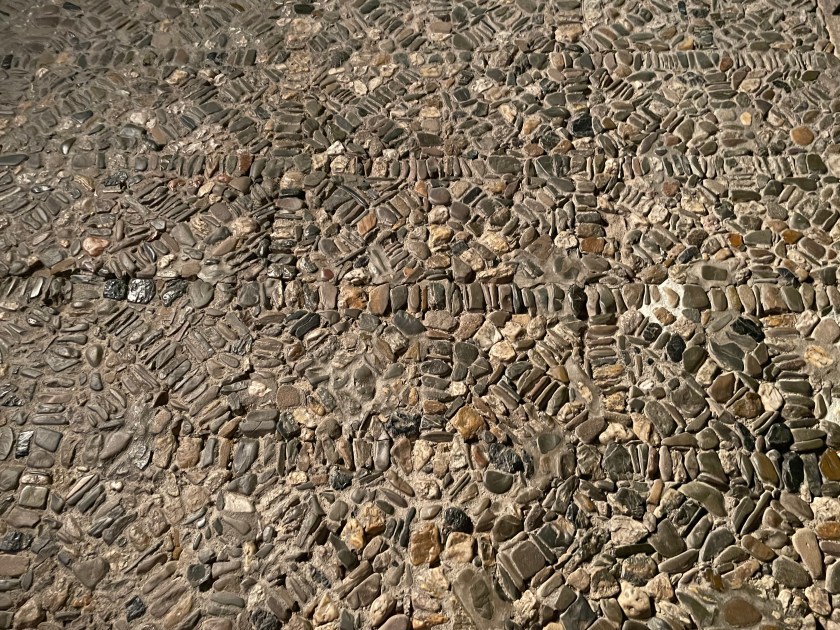
I hope you noticed the cobblestone floor.

It reminded me of this Civil War-era quilt I made a few years ago called “Civil Unrest.”

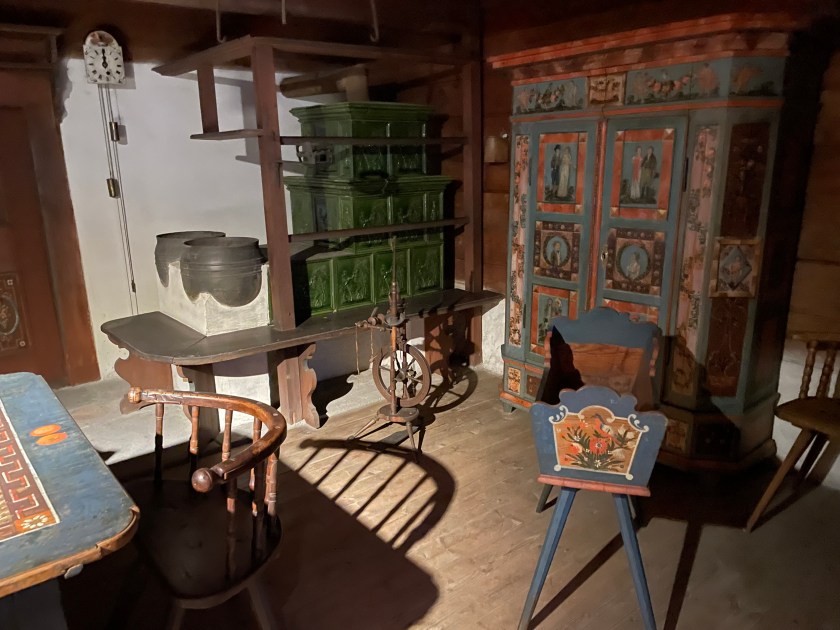
Here are some other farm house rooms:

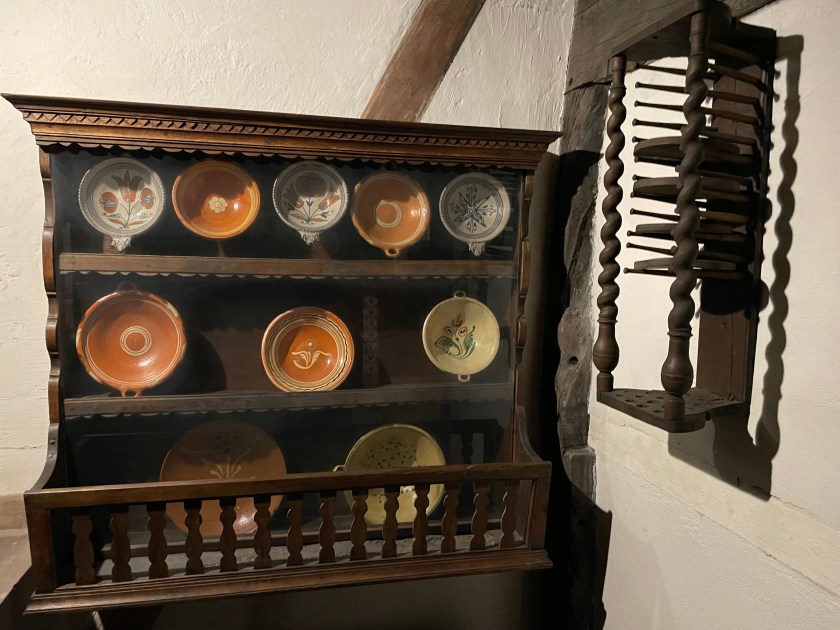
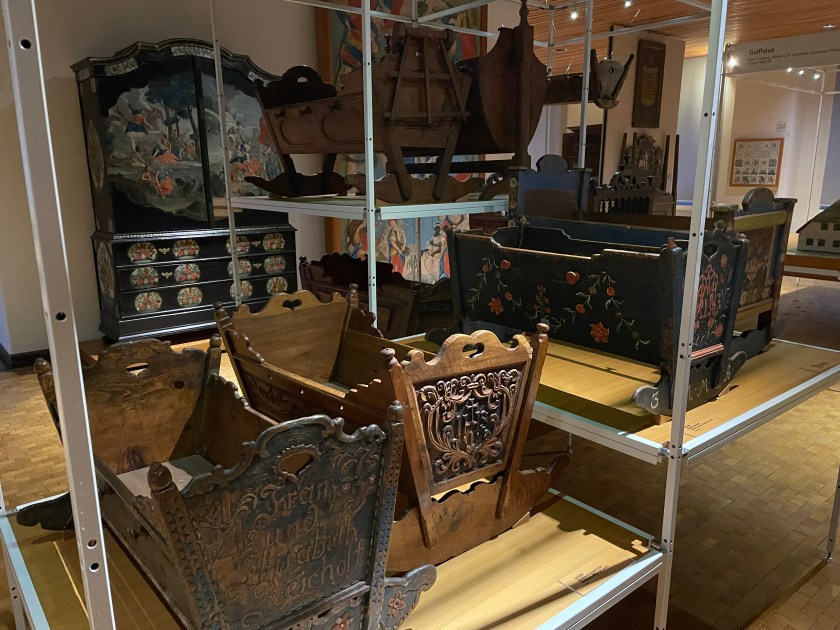
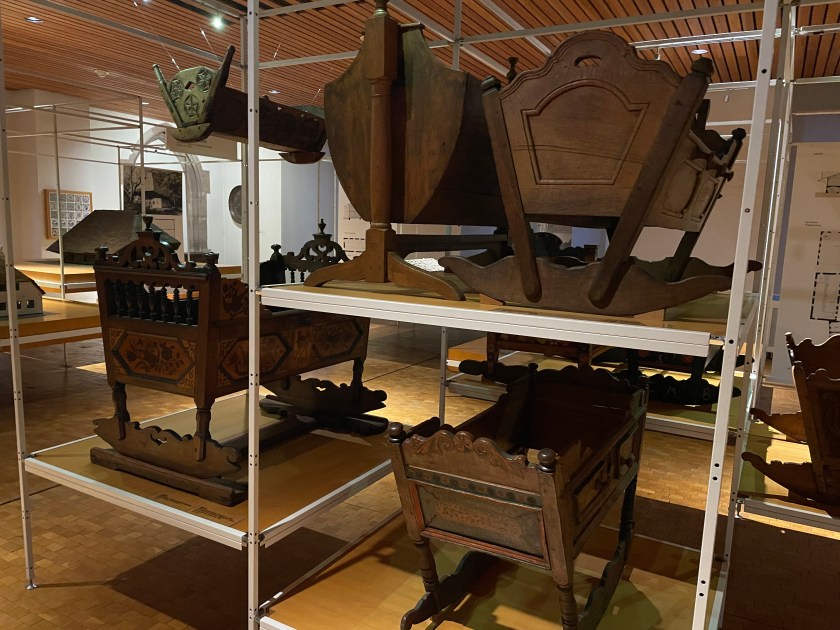
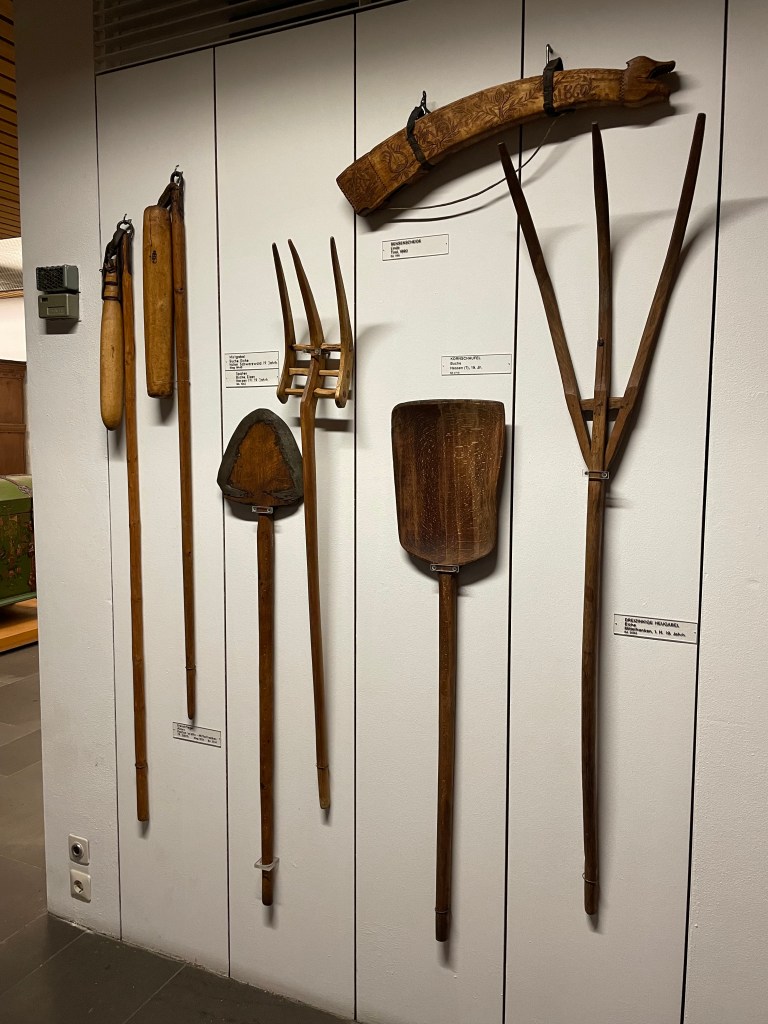
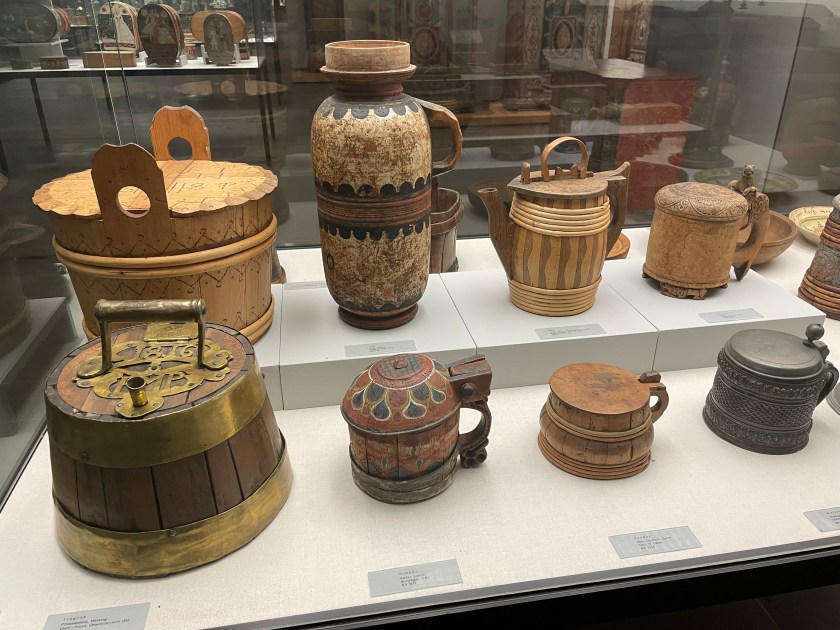
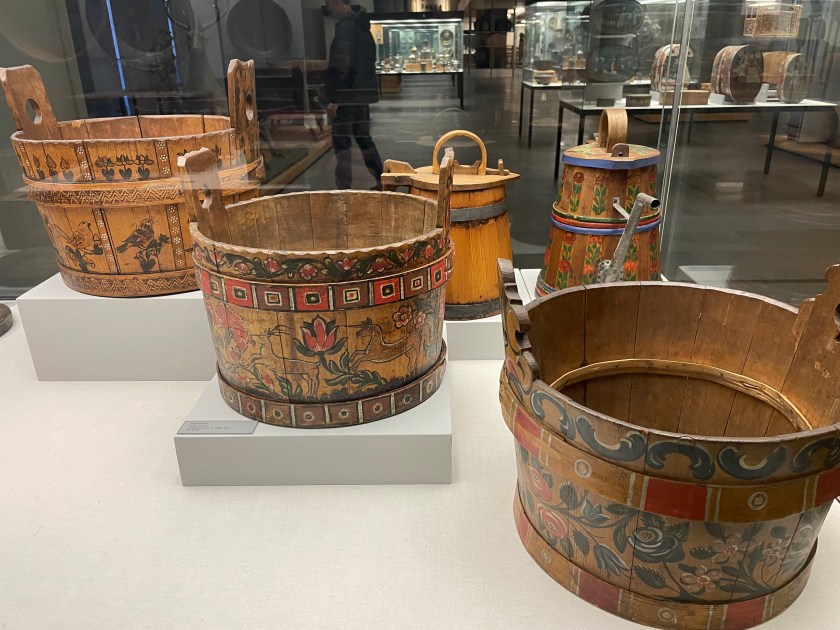
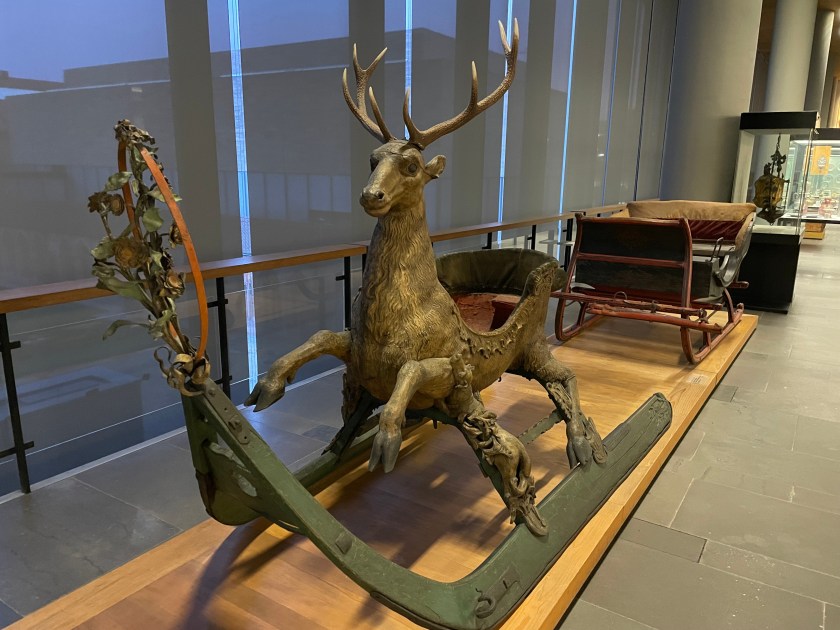
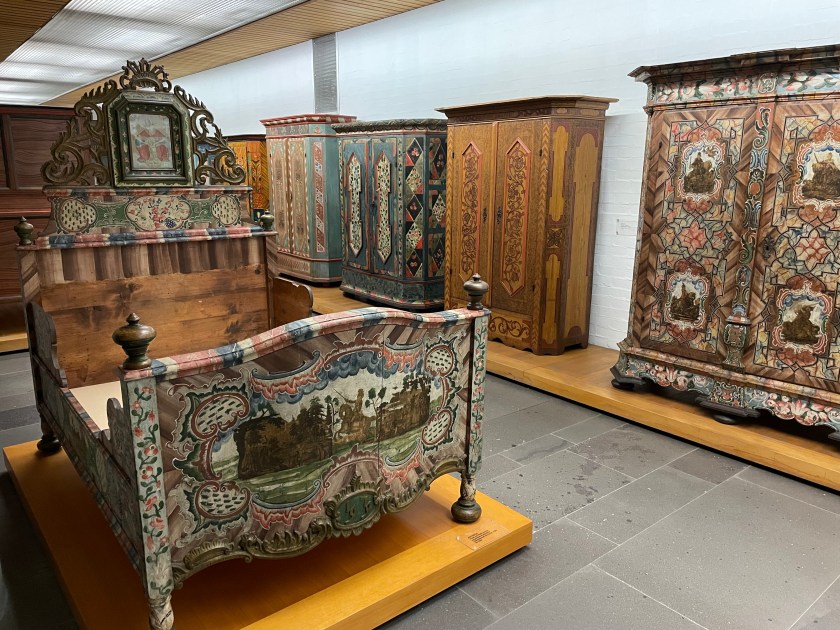
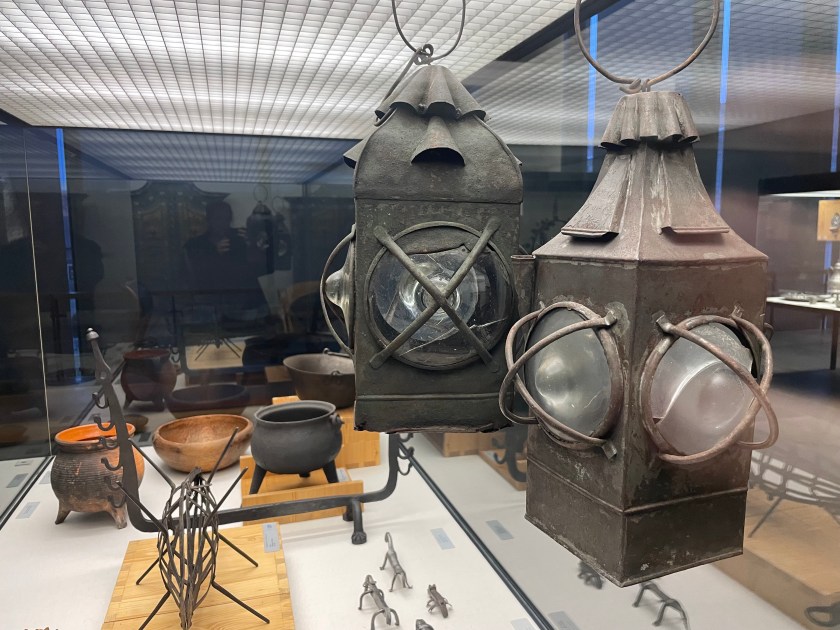
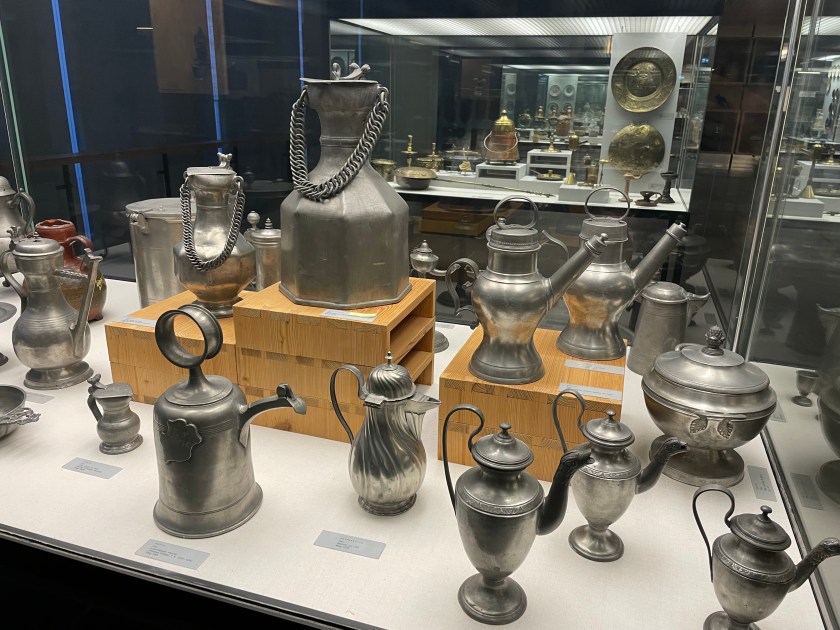
And some household items from the furniture displays:

The Germanisches Nationalmuseum — Nuremberg

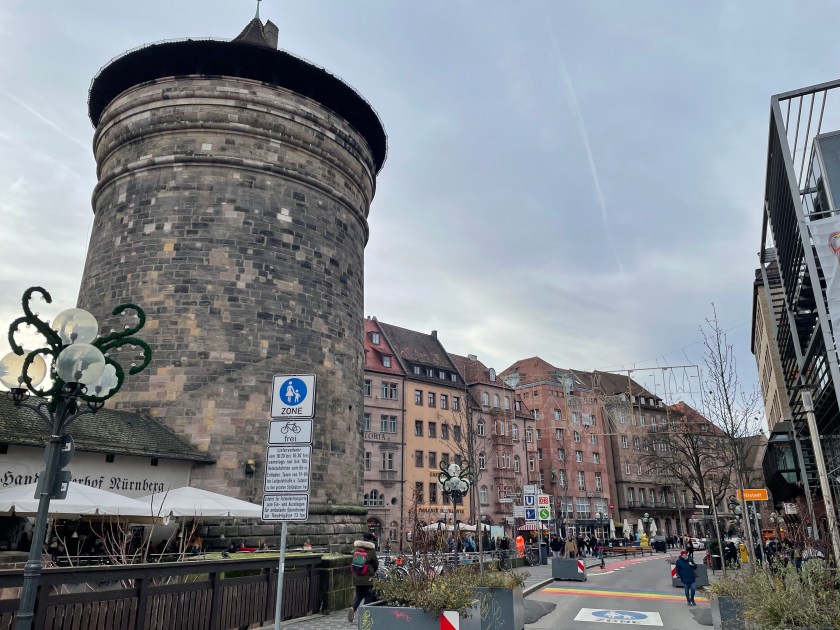
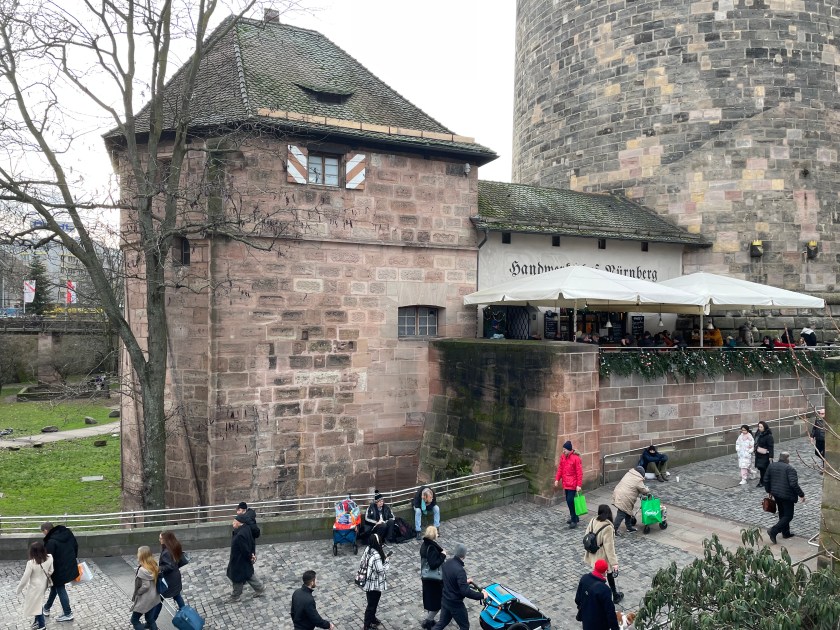
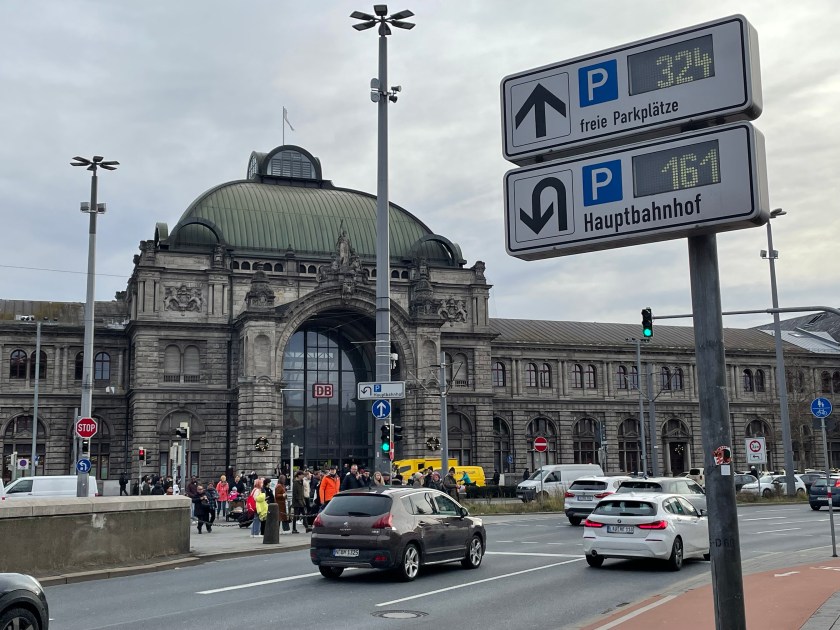
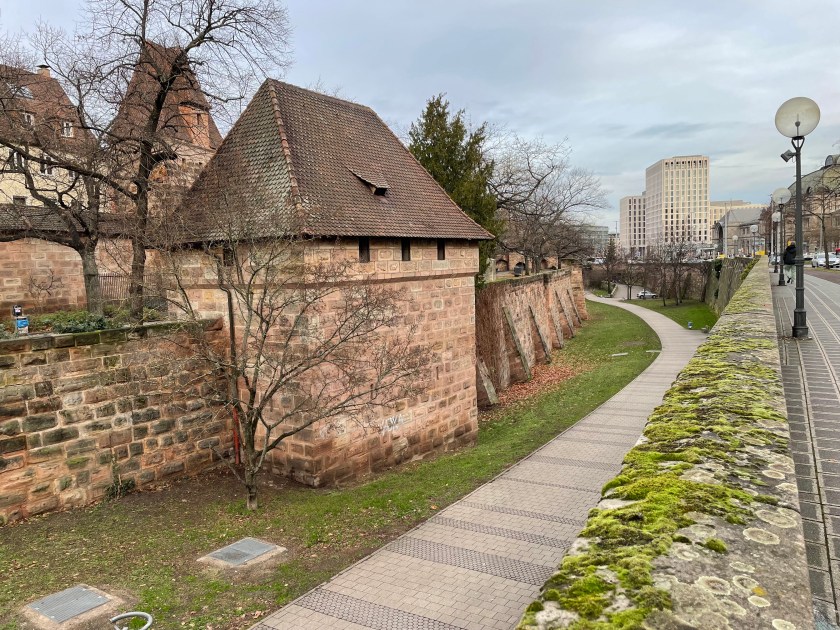
This morning we walked across the old town to visit the Germanisches Nationalmuseum.  Here are a few things we saw along the way.

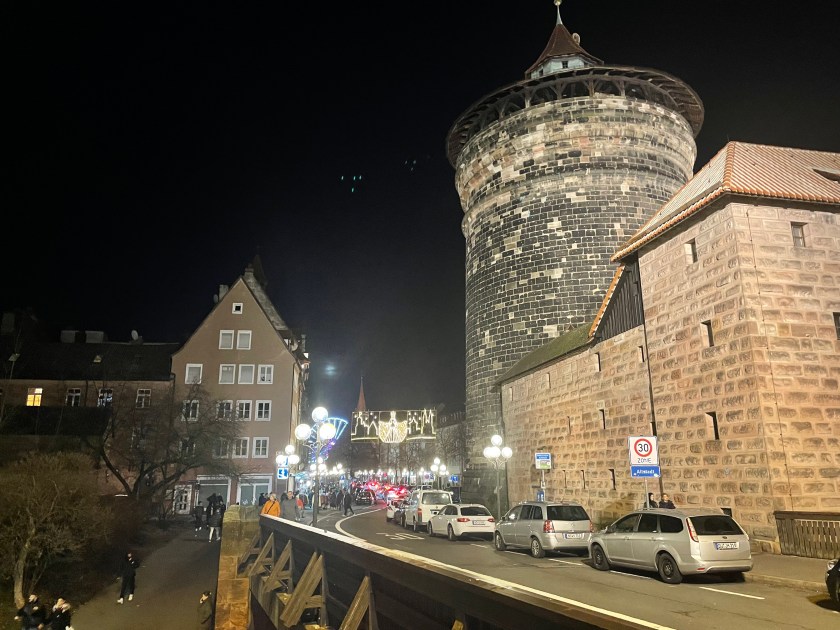
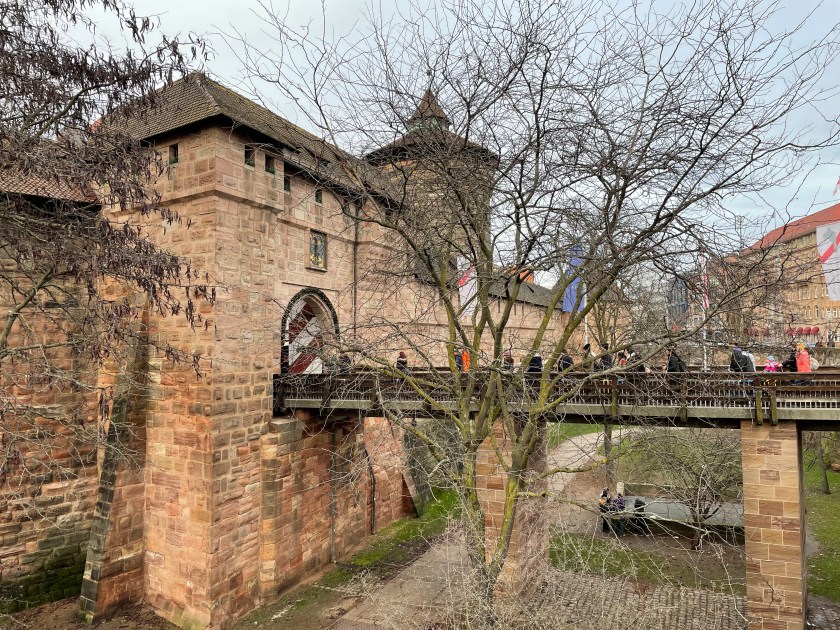
These are the walls that encircle the old part of Nuremberg.

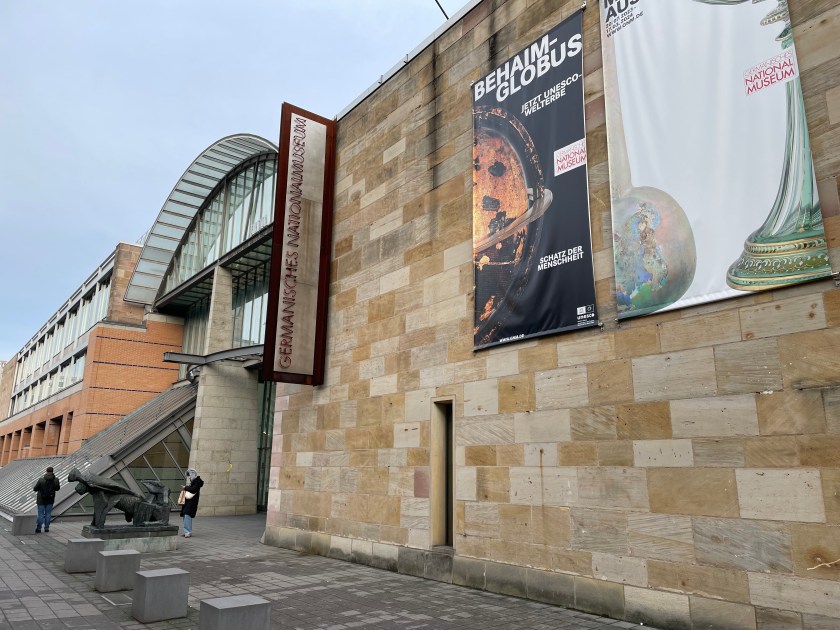
This is the outside of the museum.

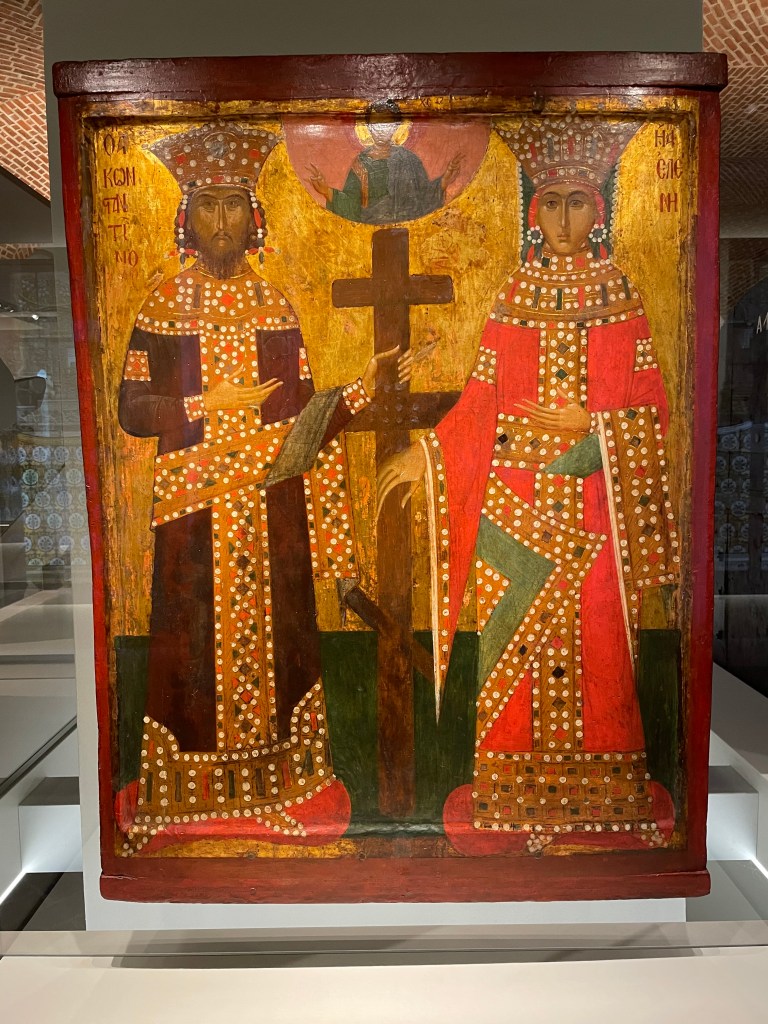
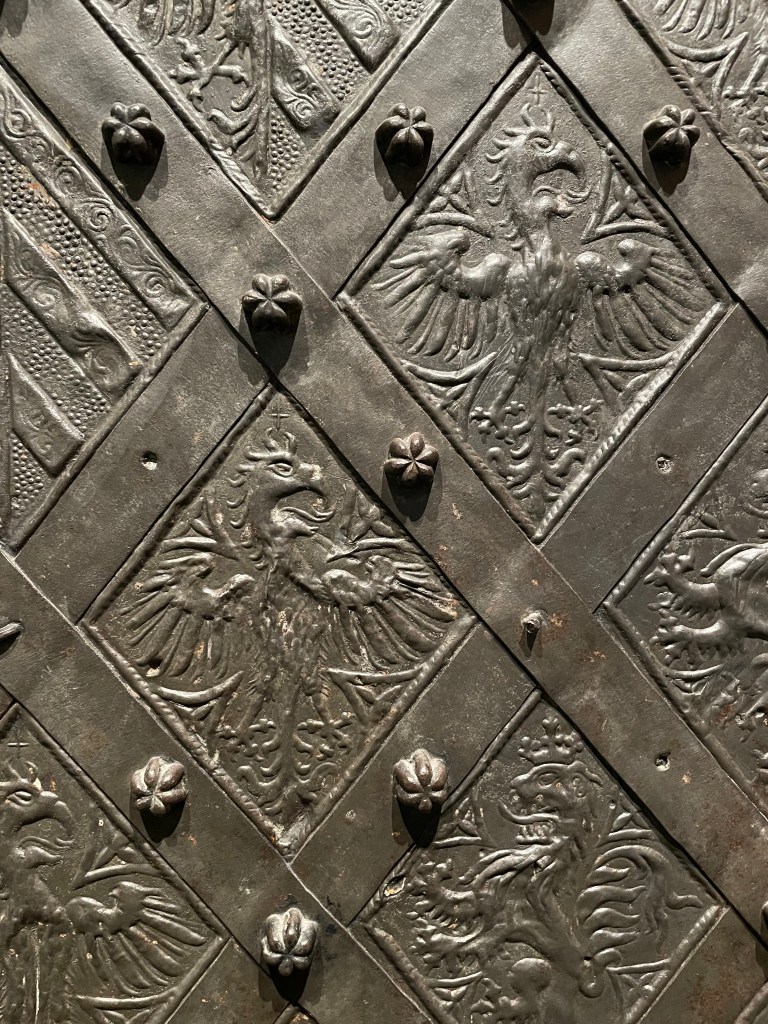
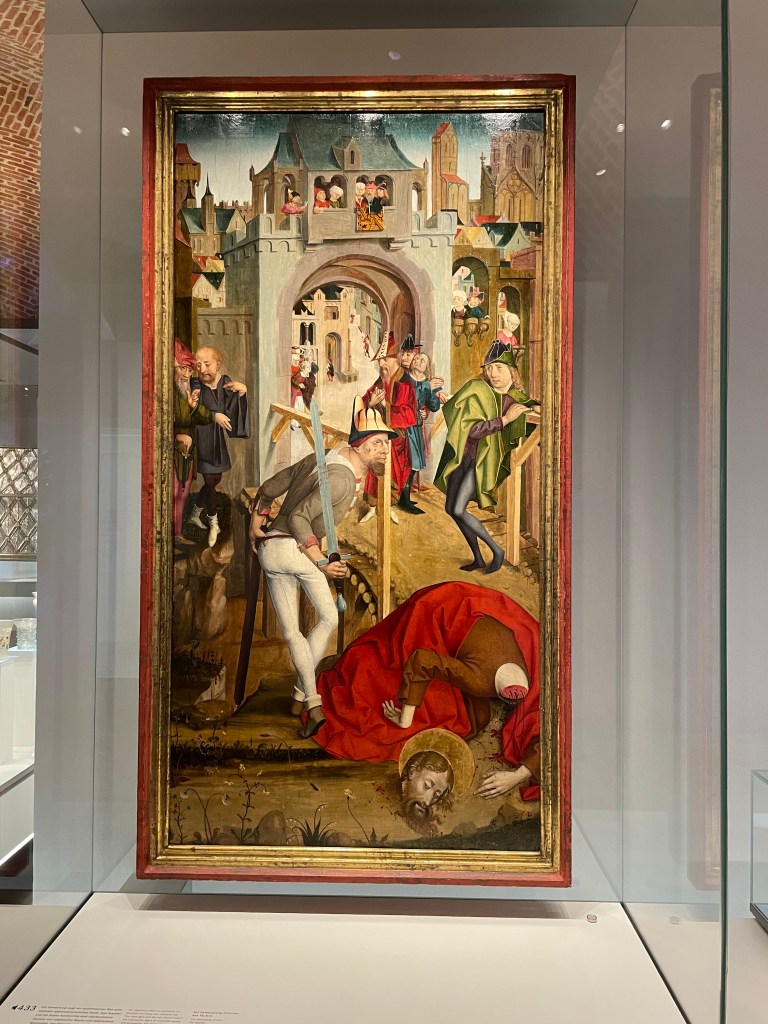
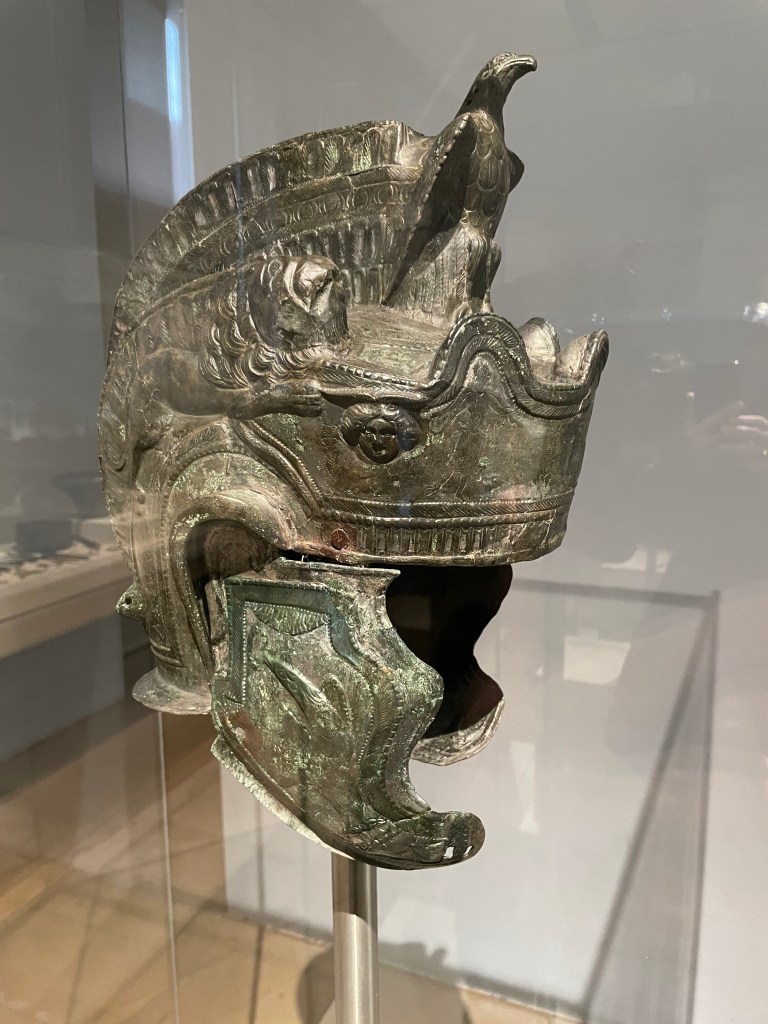
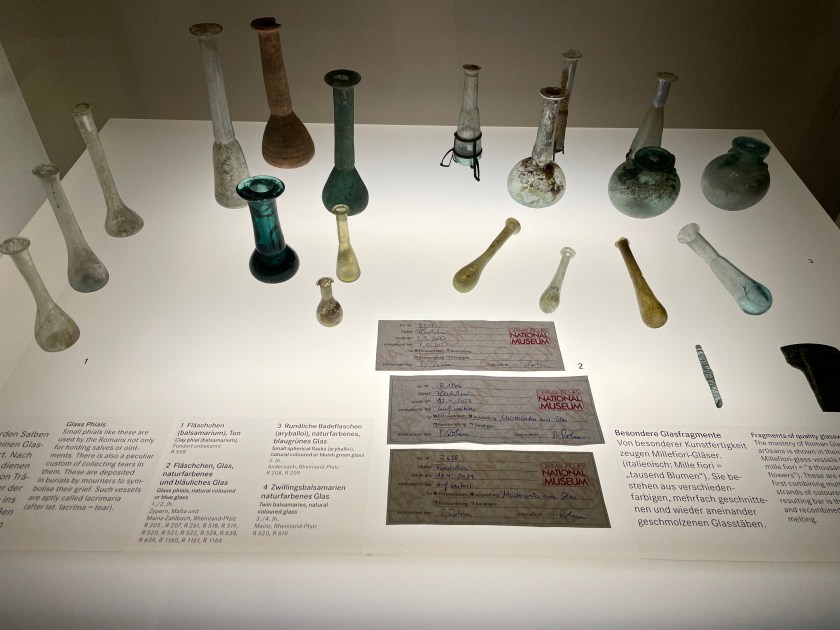
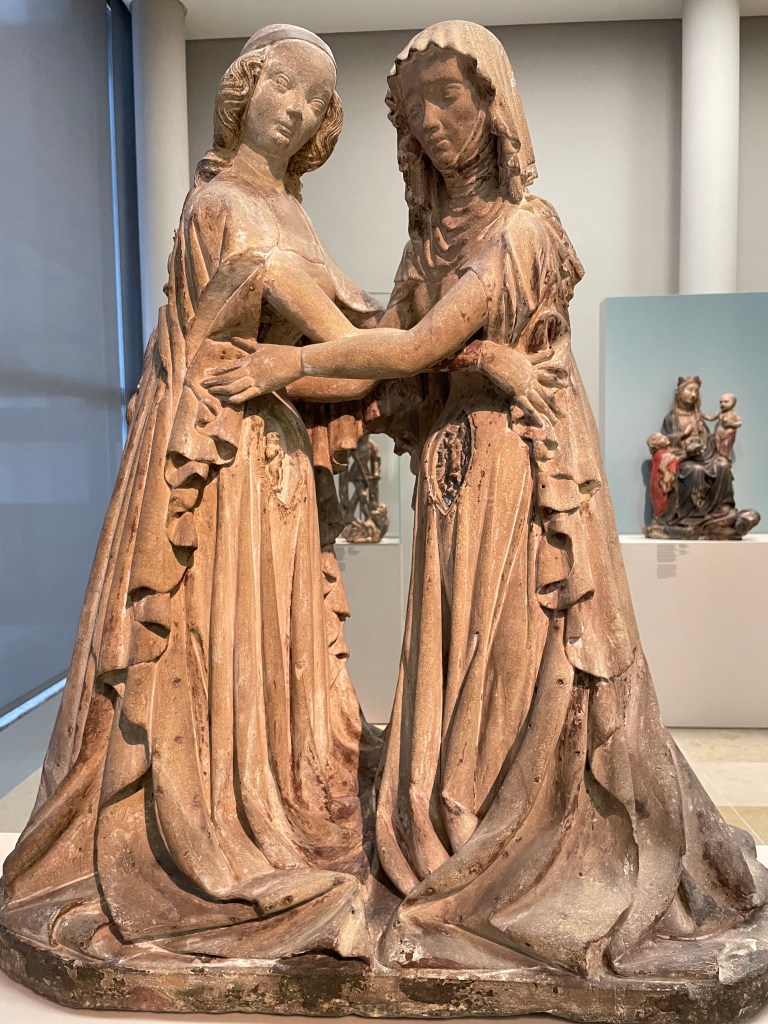
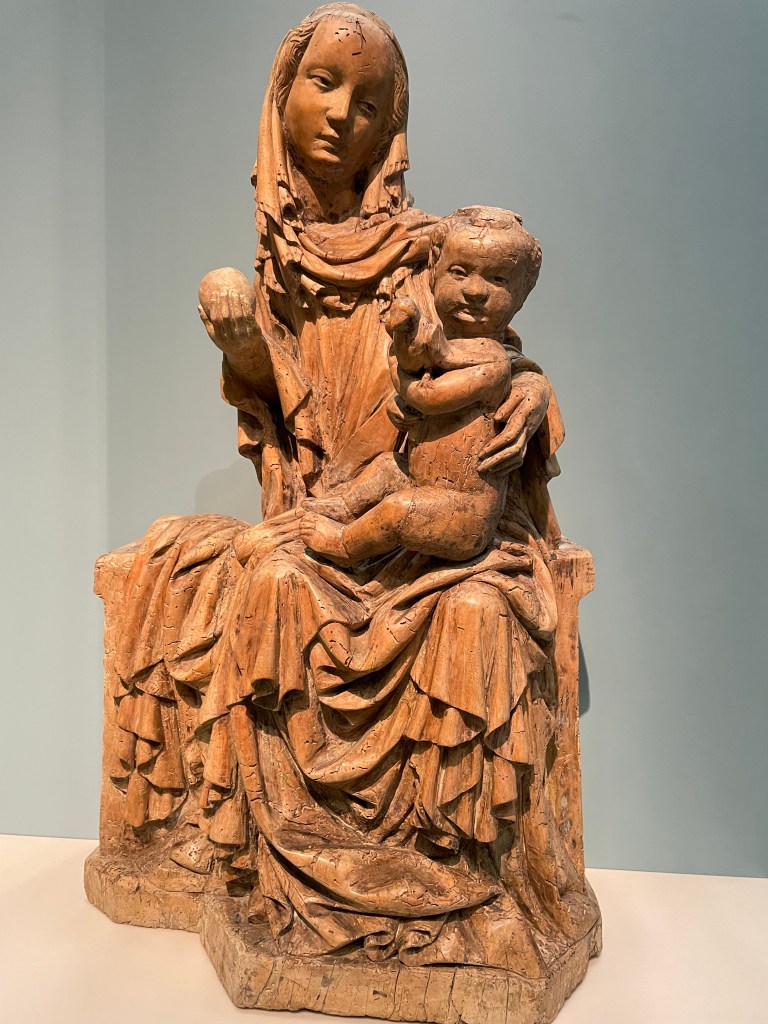
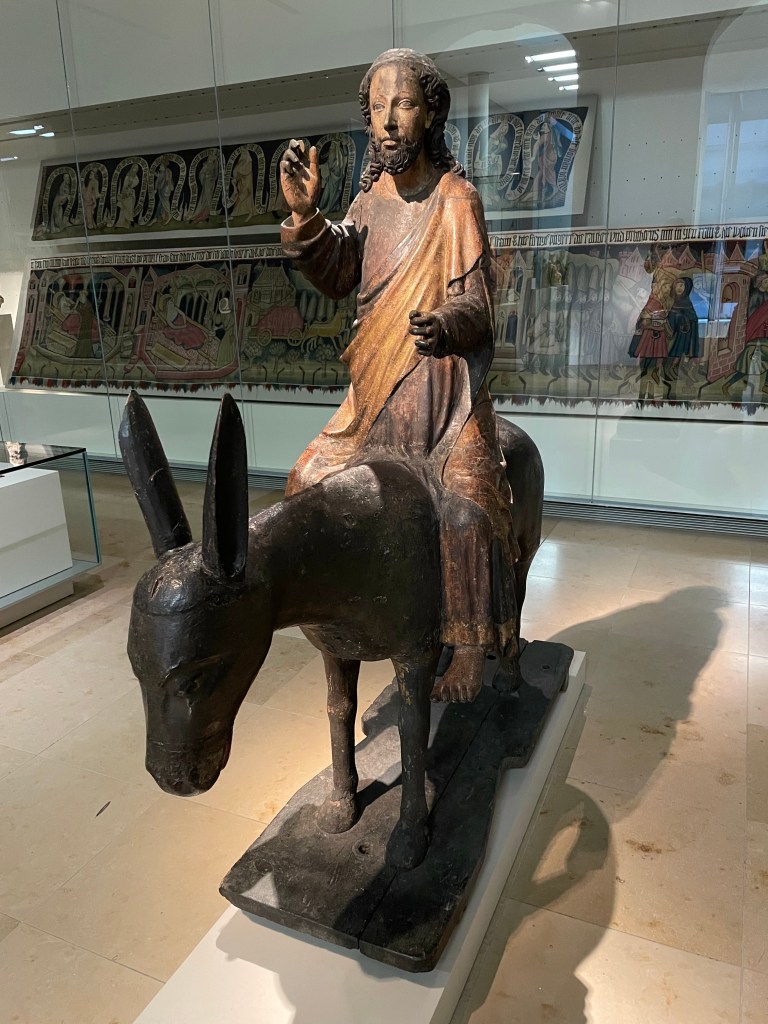
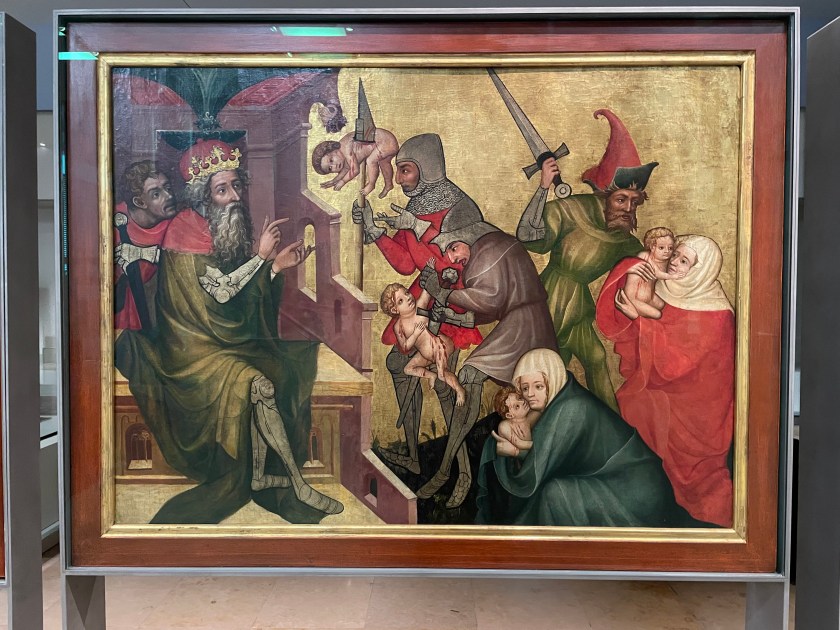
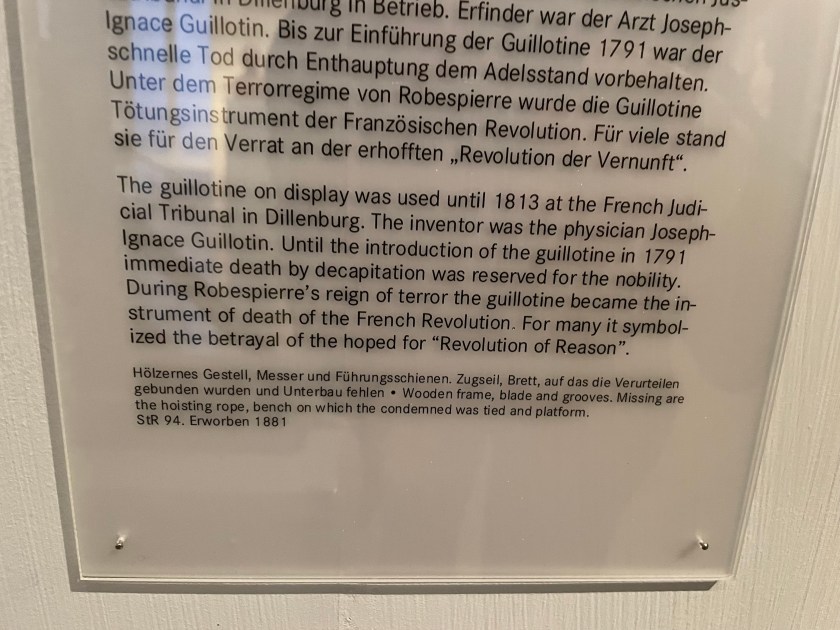
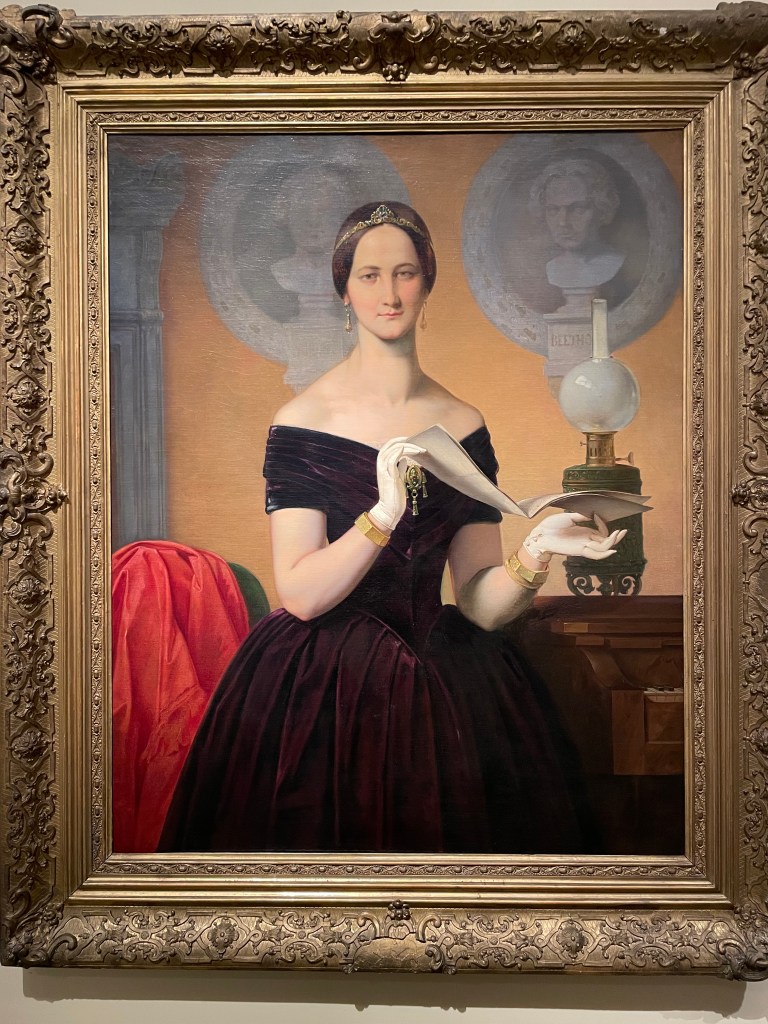
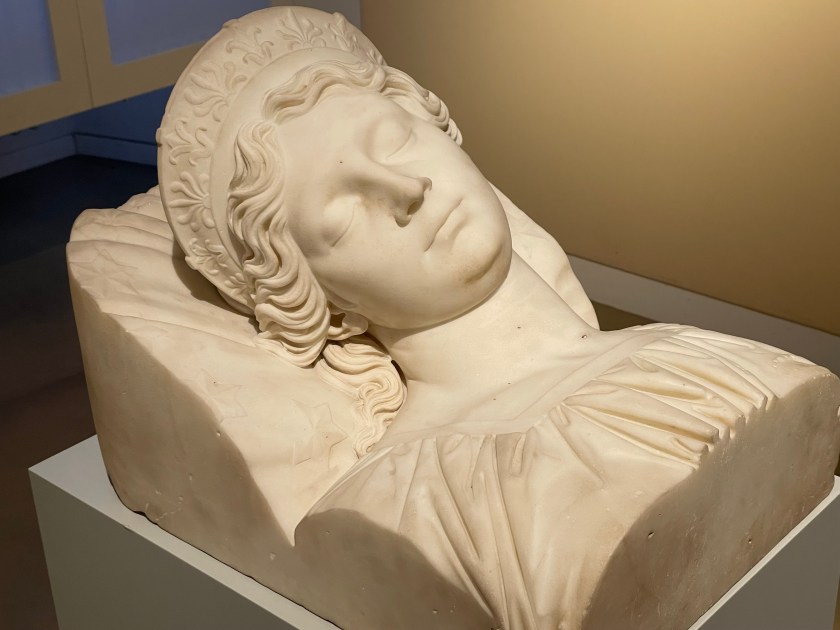
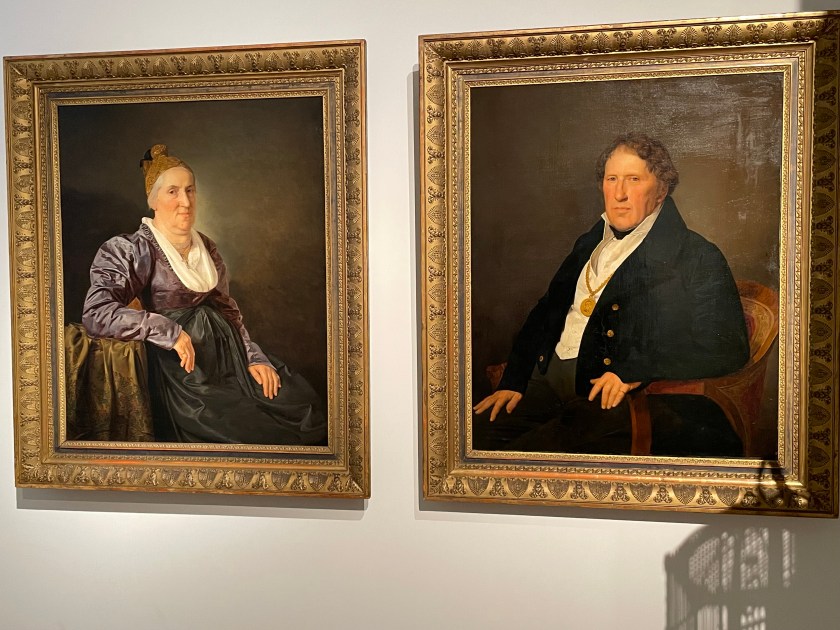
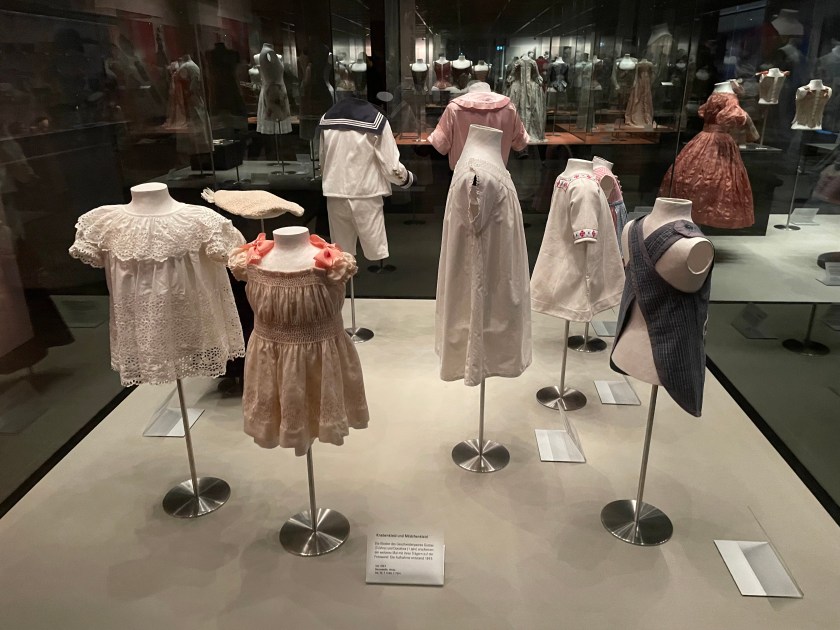
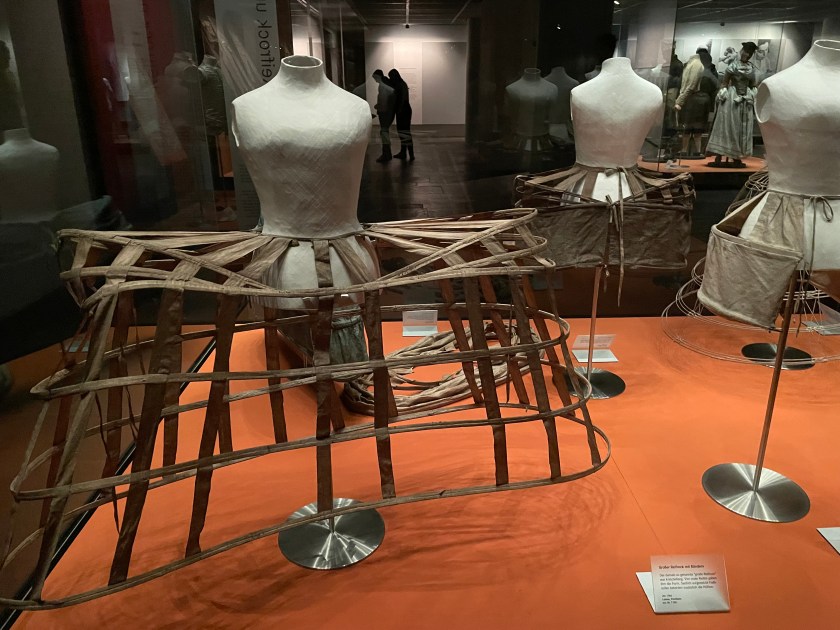
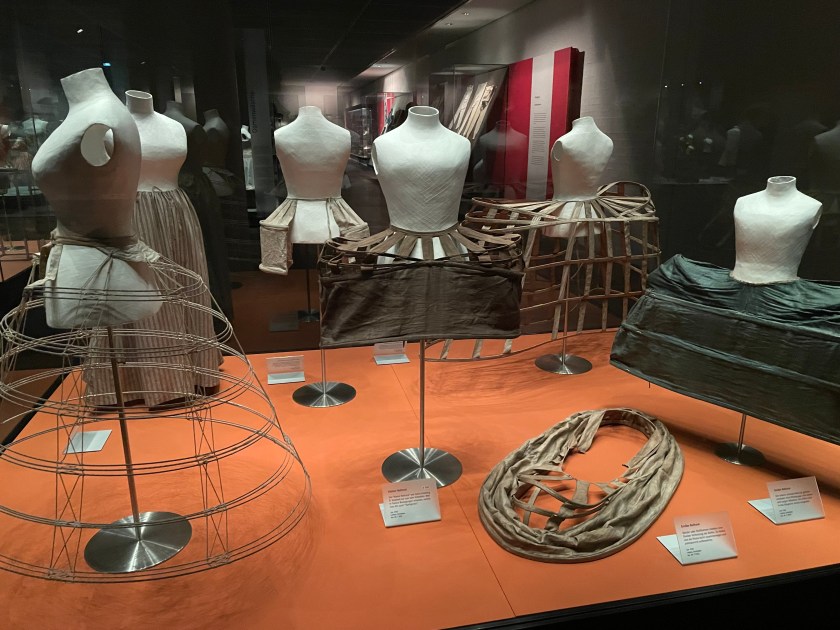
We spent about 2-3 hours in the museum.  It’s a great overview of the history of this area and of Germany from the beginning of time.  Here are a few random things I found interesting:

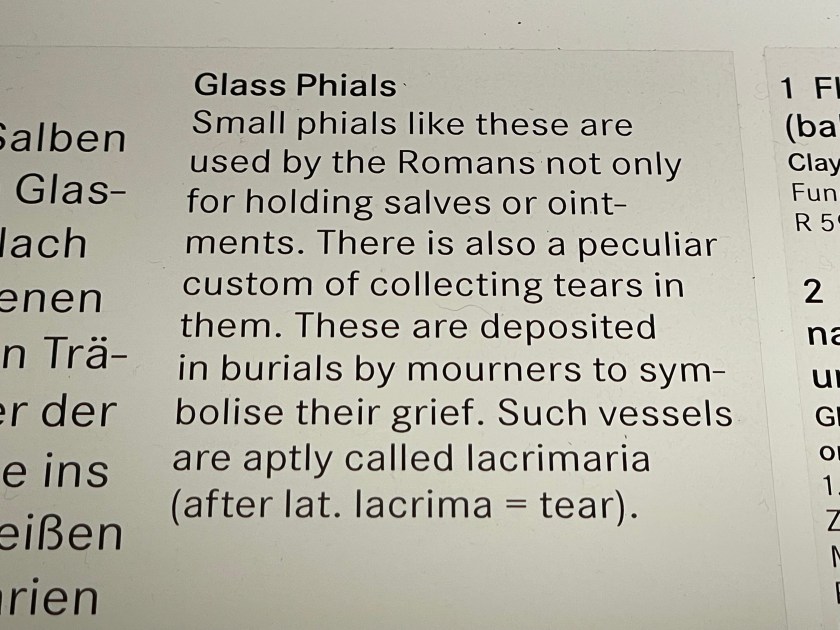
I love these tear catchers.  Blown glass from the Roman era, found here in Nuremberg.  To learn more about them, here’s a post I wrote last year in Jerusalem about tear collectors.

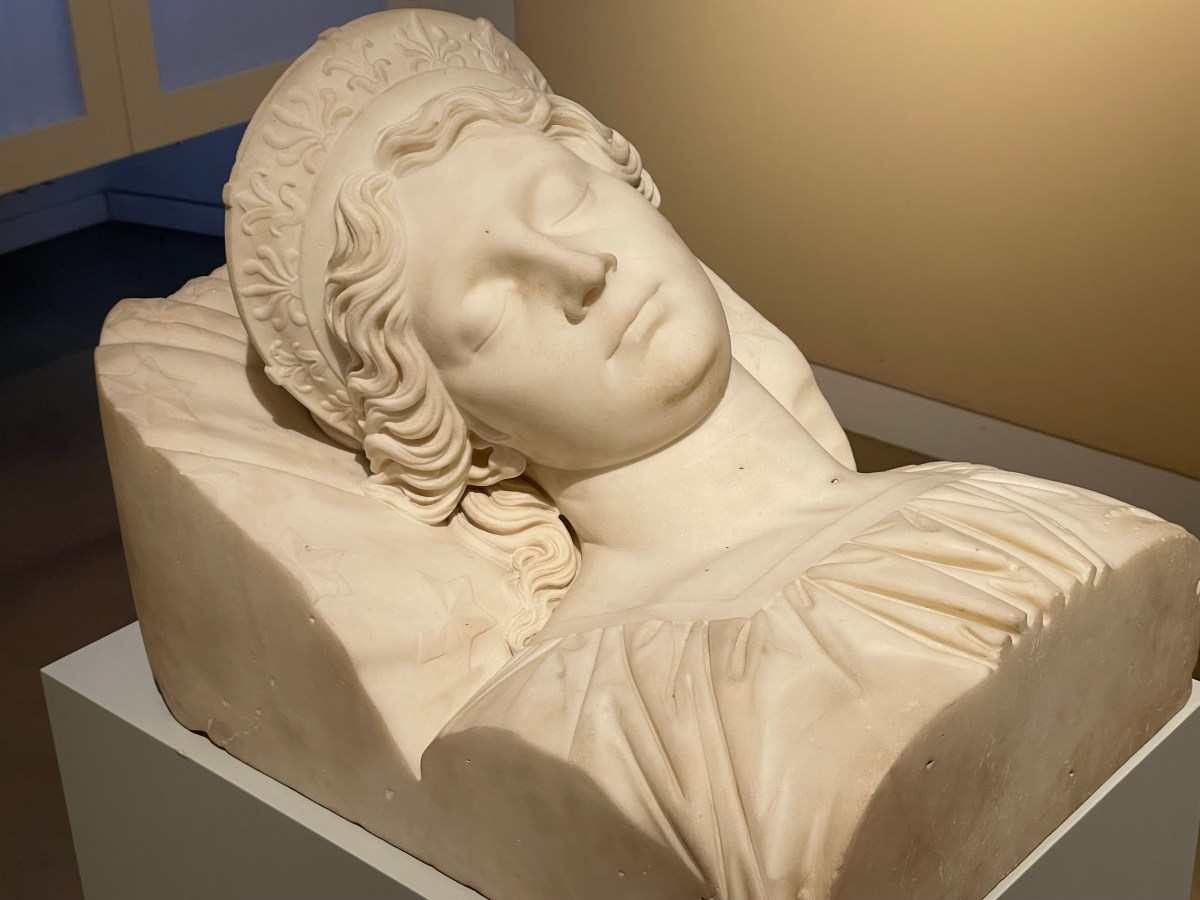
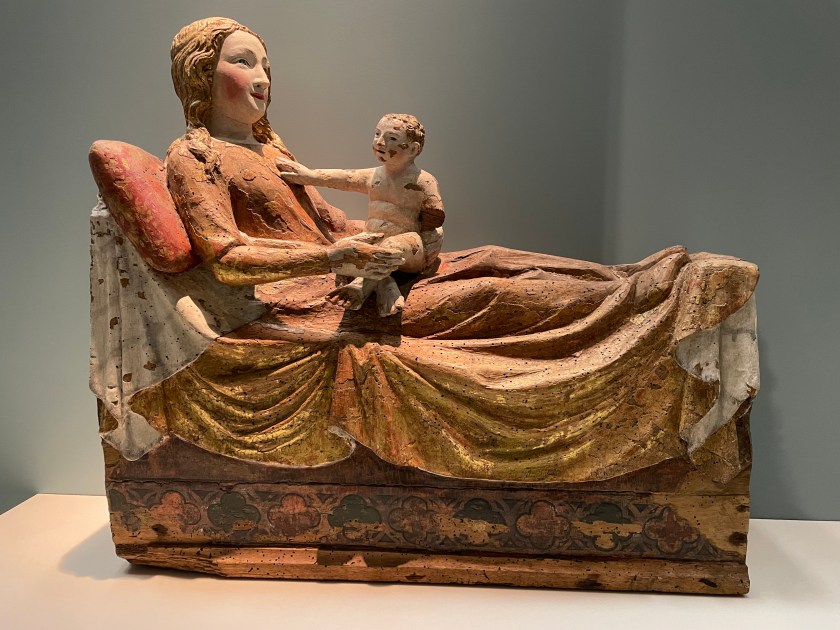
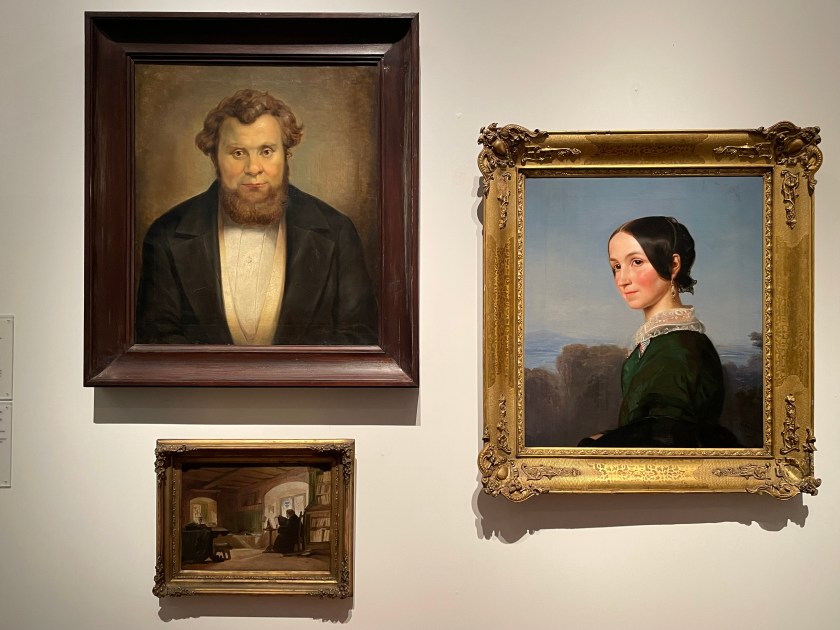
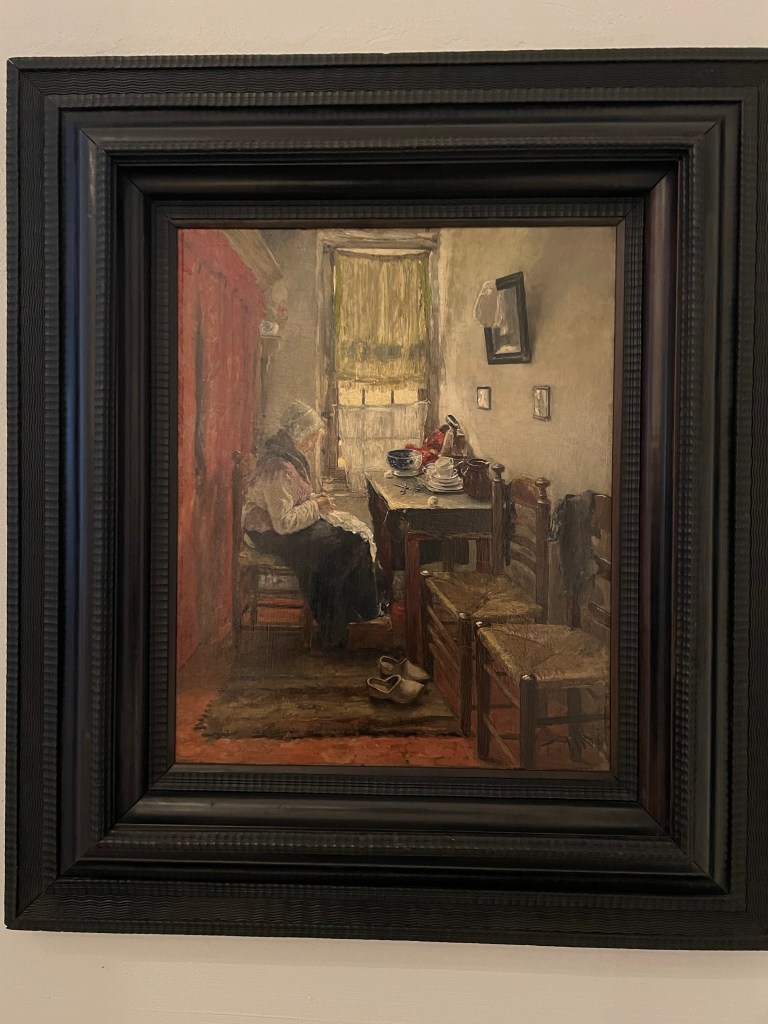
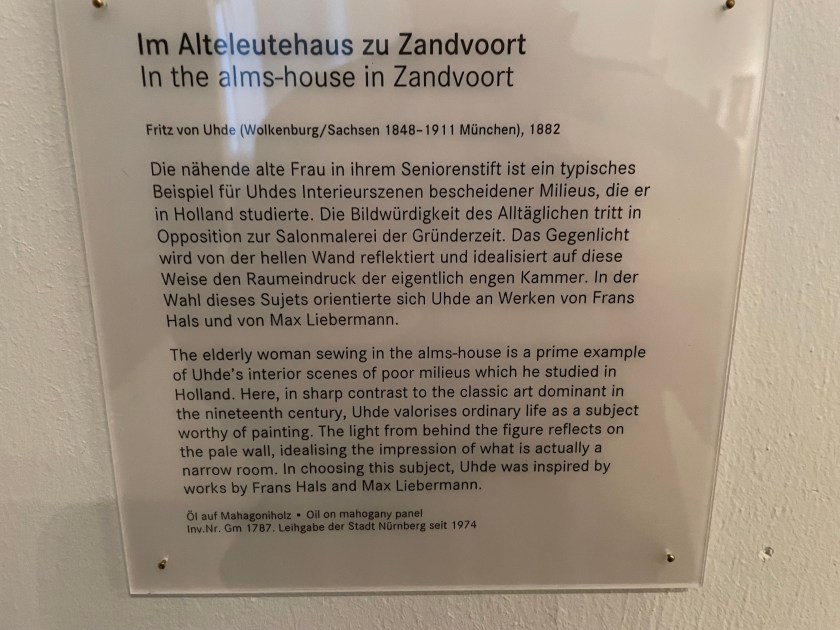
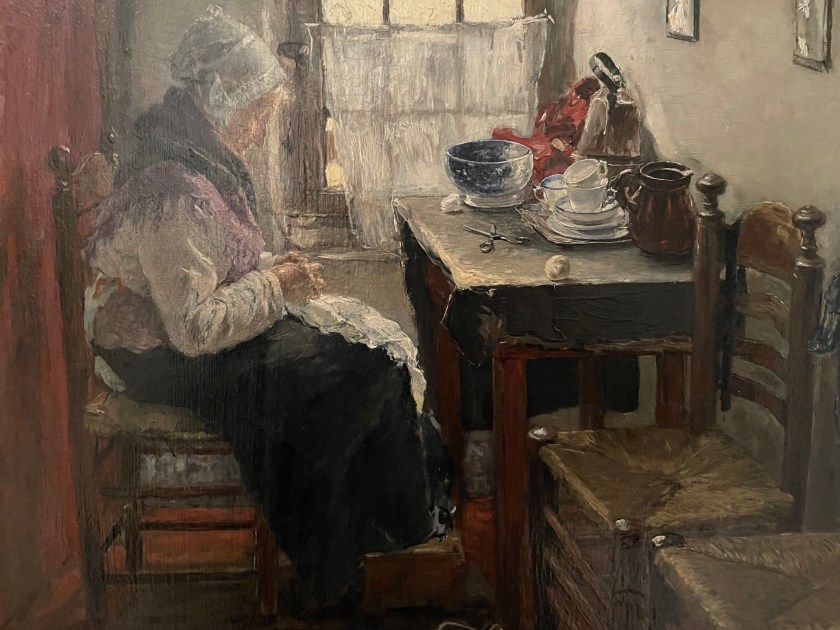
Do you ever think that every person in every portrait or piece of art you see in a museum is now DEAD?? And what did they take with them? Not the rest of the stuff in the museums. Not their treasures. What goes with us, and what stays???

I LOVE this piece:

In the next post I’ll show you a representation of a 1700s farm house.  I love seeing how people lived.  All these bits and pieces help me put the puzzle pieces together in my mind.

Taking Down a Christmas Market — Nuremberg

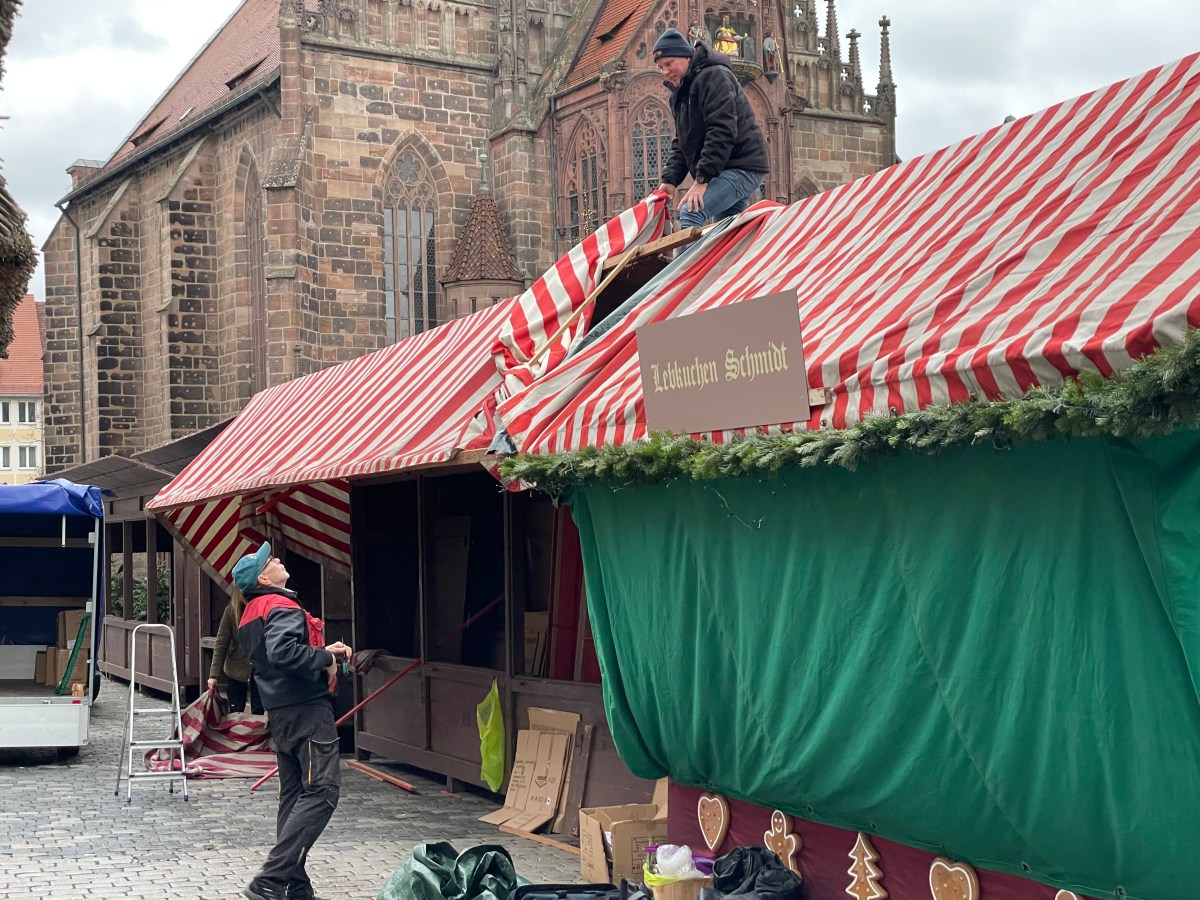
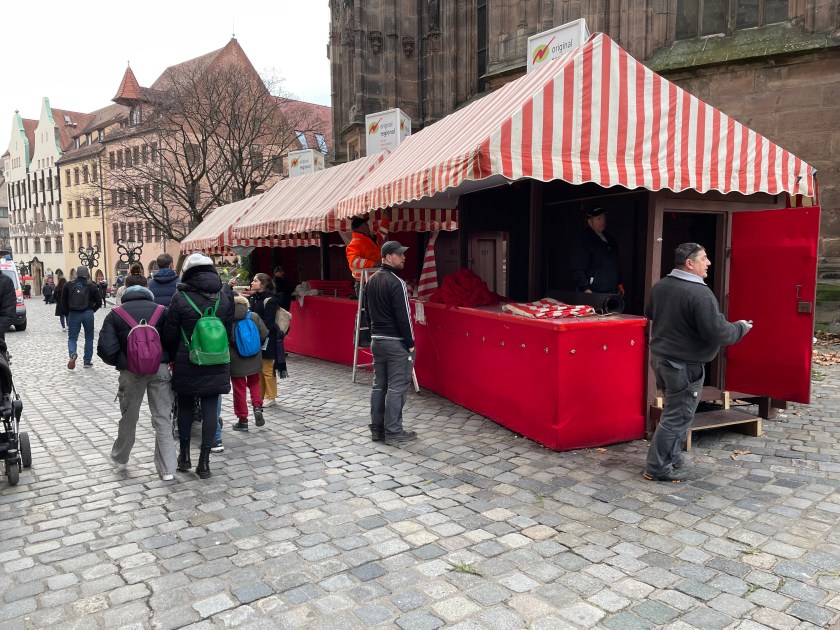
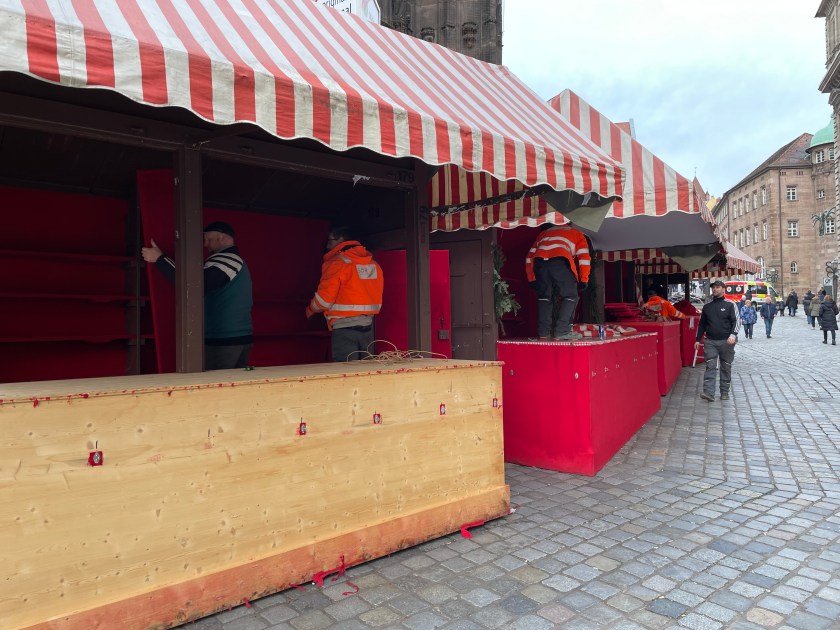
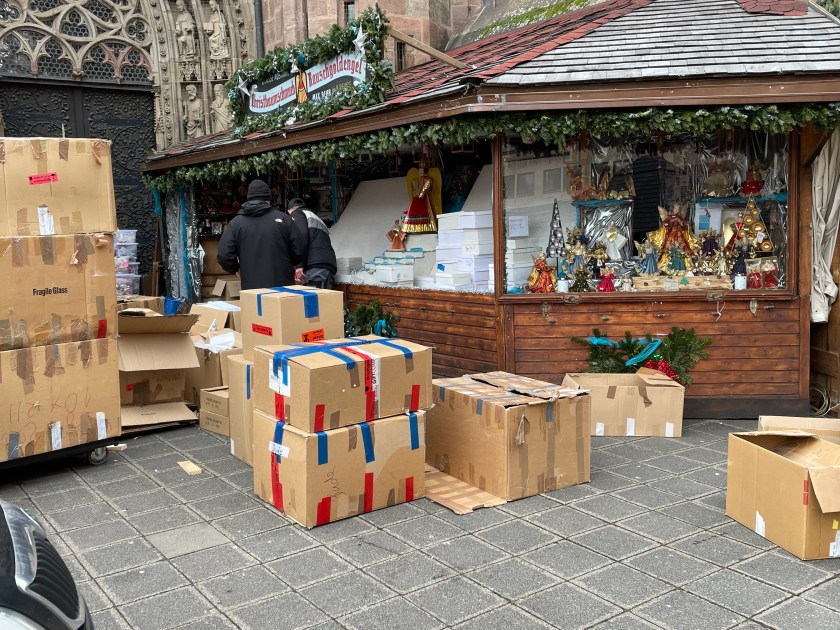
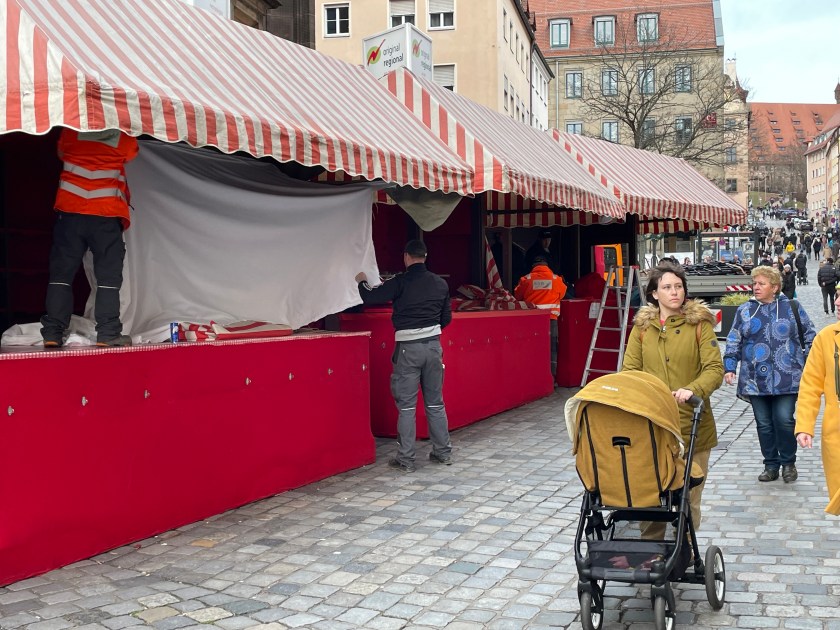
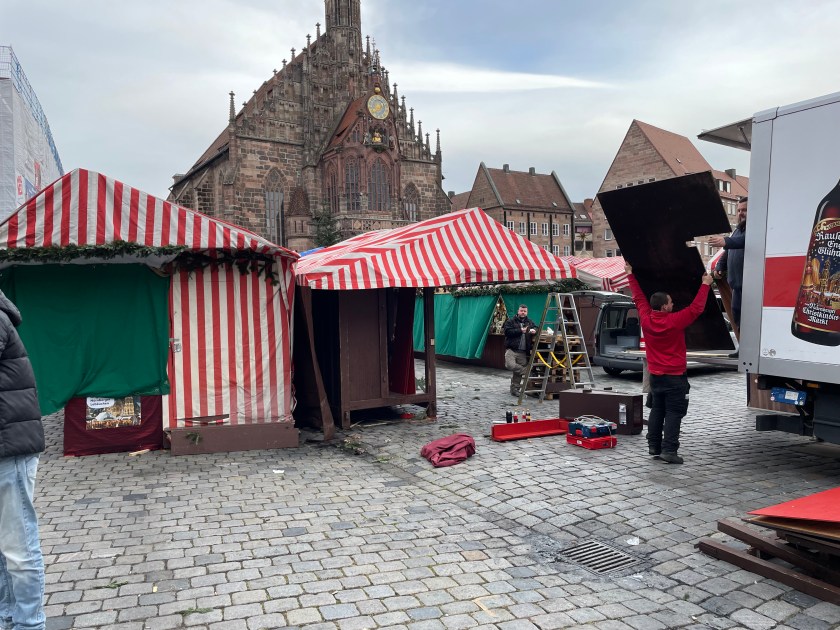
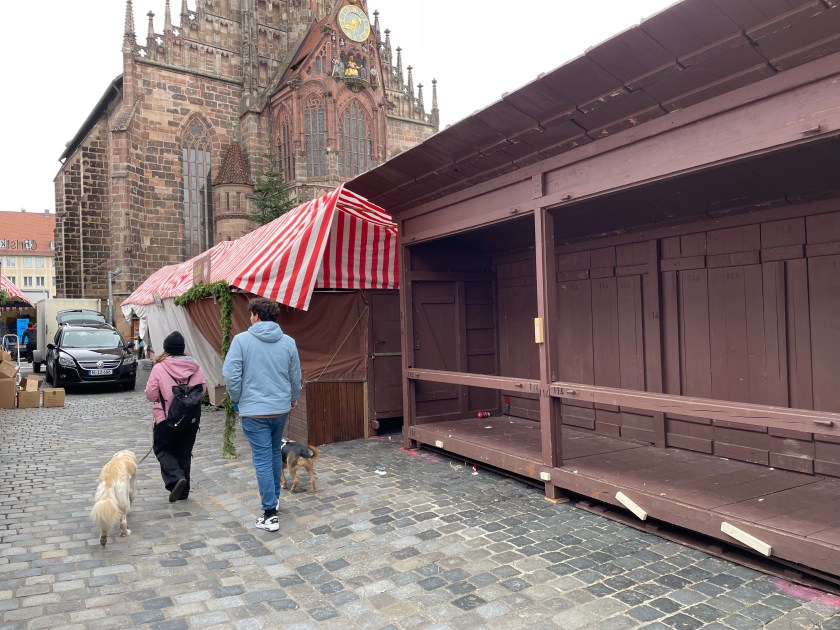
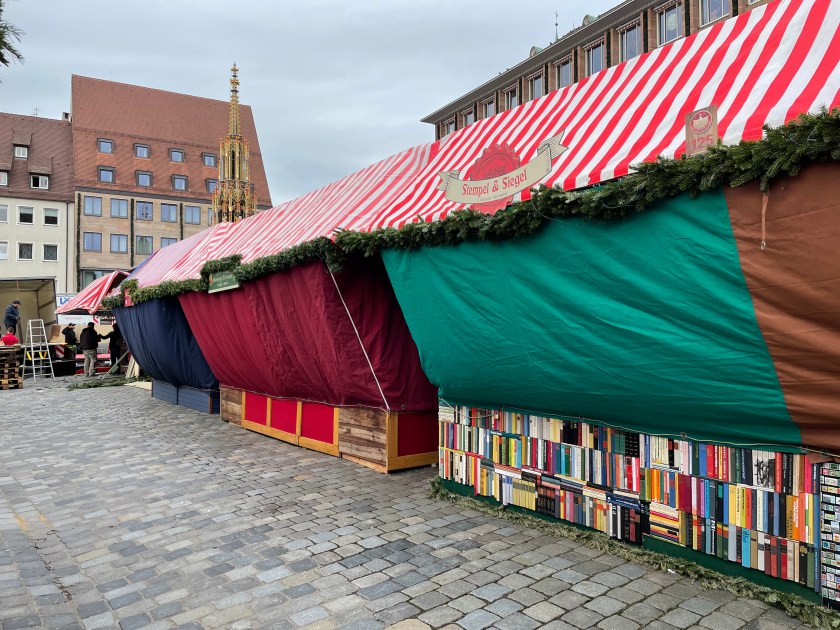
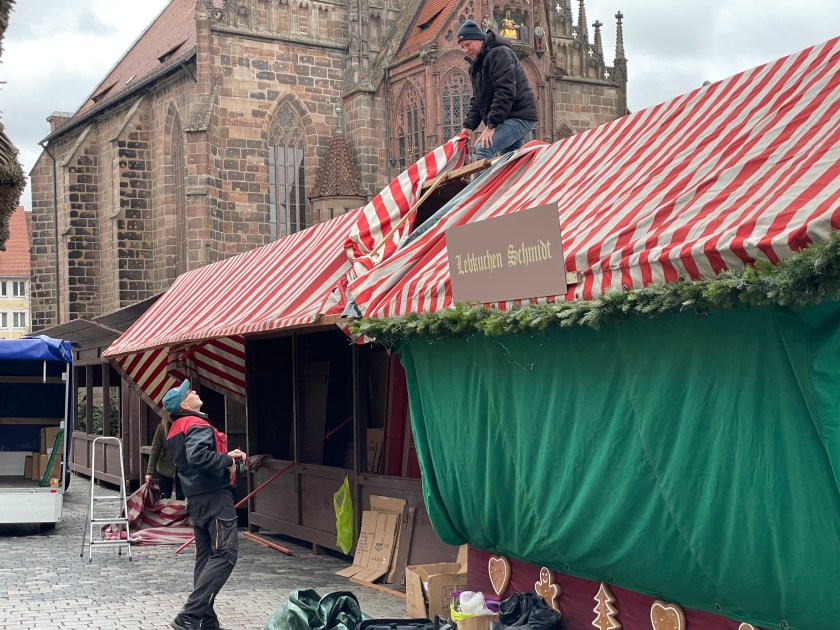
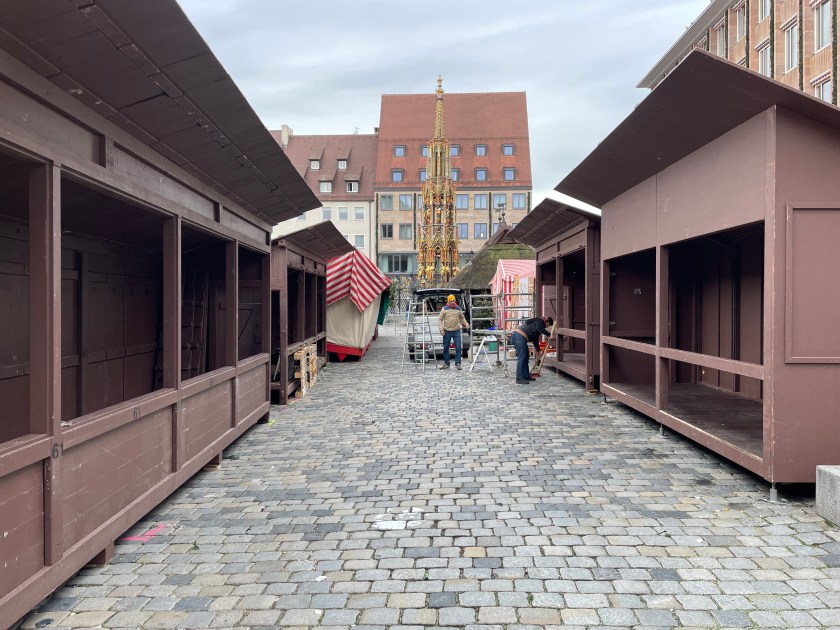
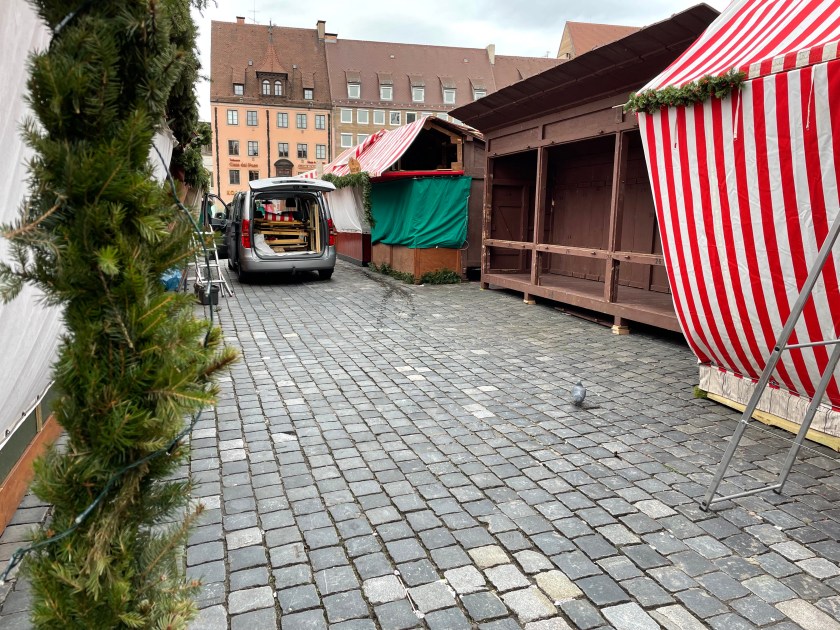
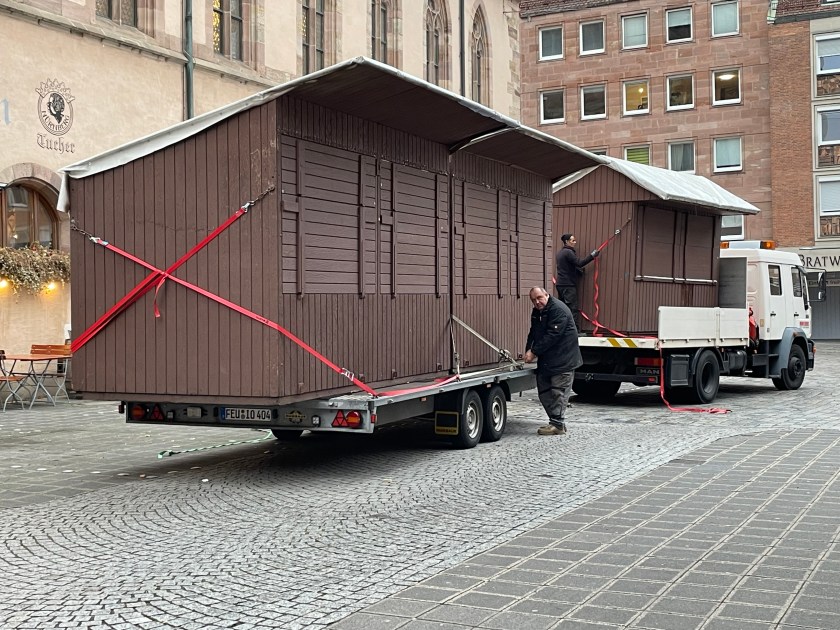
Nuremberg is famous for its Christmas Markets with the red and white striped roofs.  There are several market areas here and some are still going, but most are being packed up and taken down this week.  It was interesting to watch the crews disassembling the booths and packing things up.

It’s incredible to think of every part and piece and treasure that needs to be packed up and put away until next Christmas.  I wonder where it all goes.