January 6 is Three Kings Day

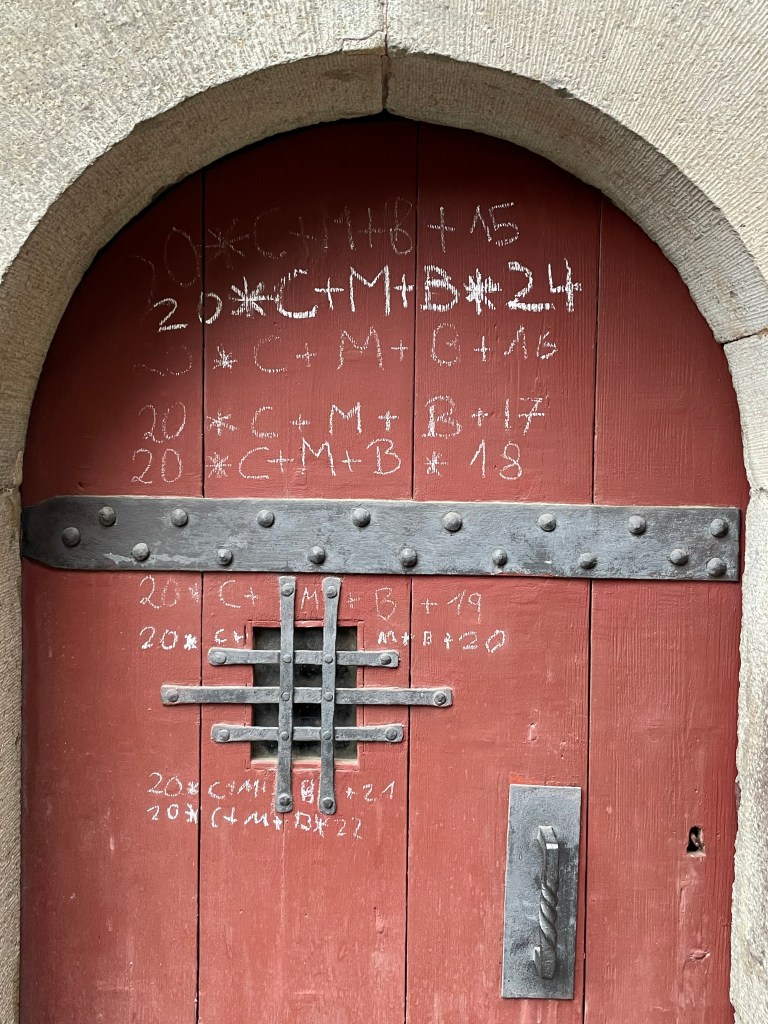
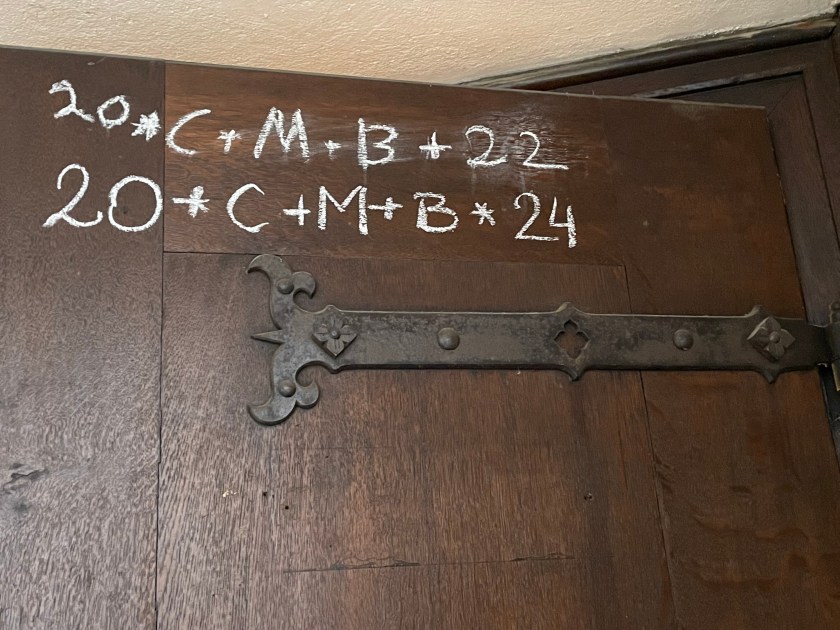
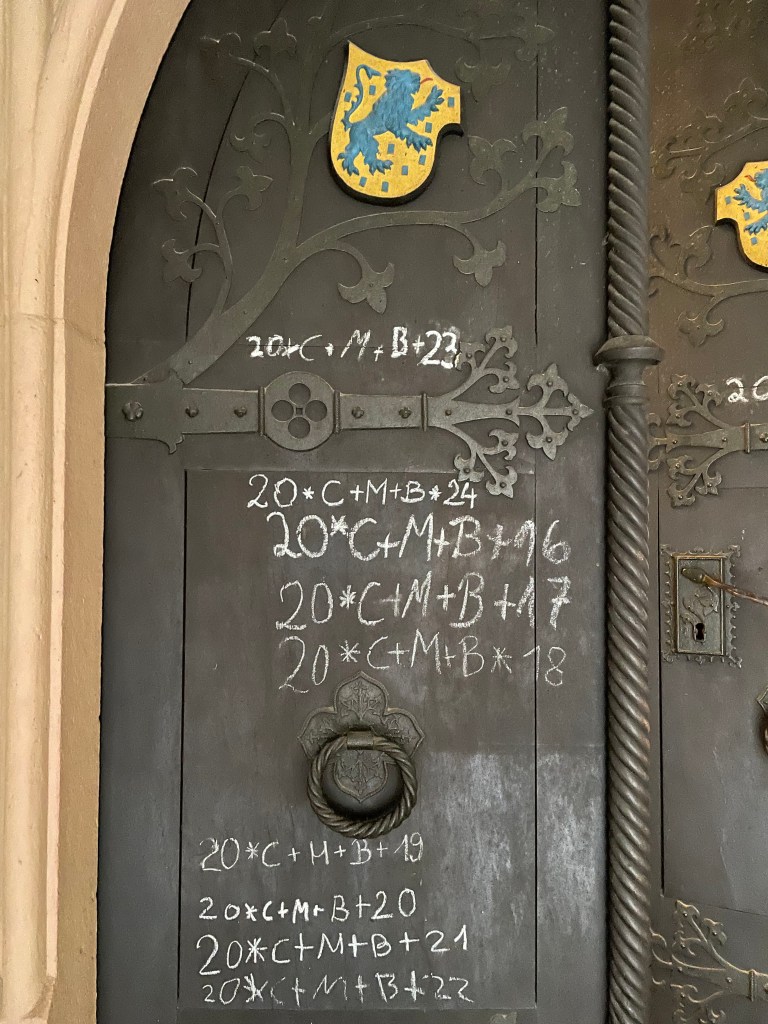
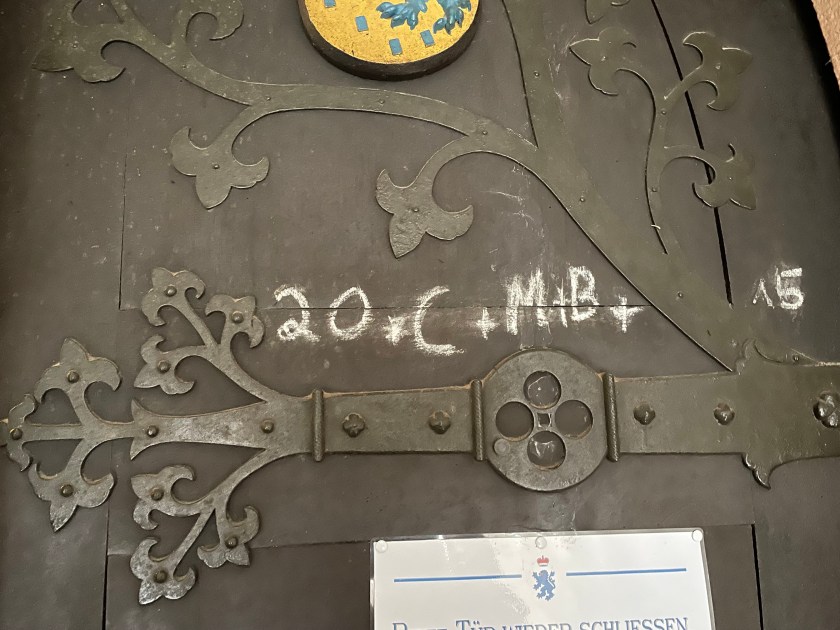
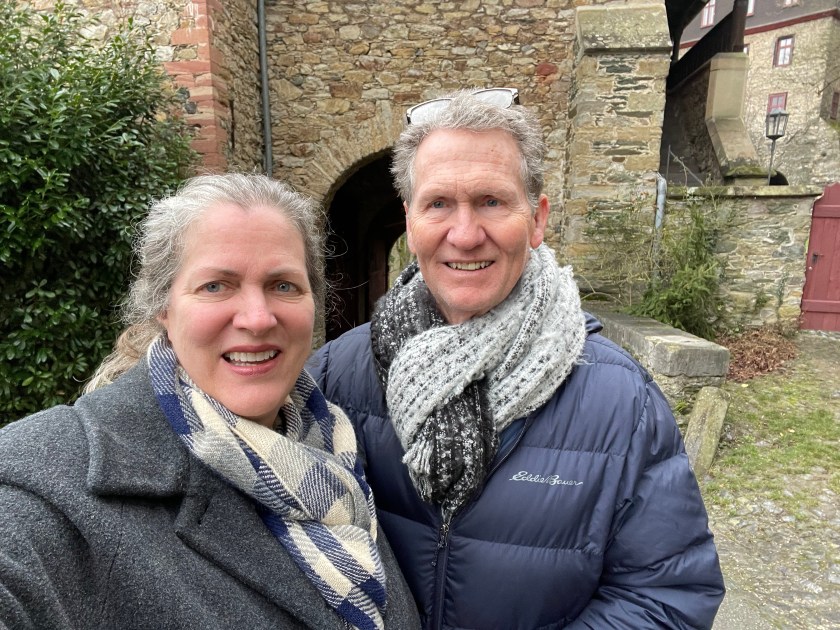
When we arrived at the Braunfels Castle today, we immediately noticed the chalk markings on the doors.  Today in Germany, Epiphany, a tradition, which dates back to the 16th century, is celebrated.  It’s a public holiday that marks the end of the Christmas season and celebrates the arrival of the Three Wisemen.

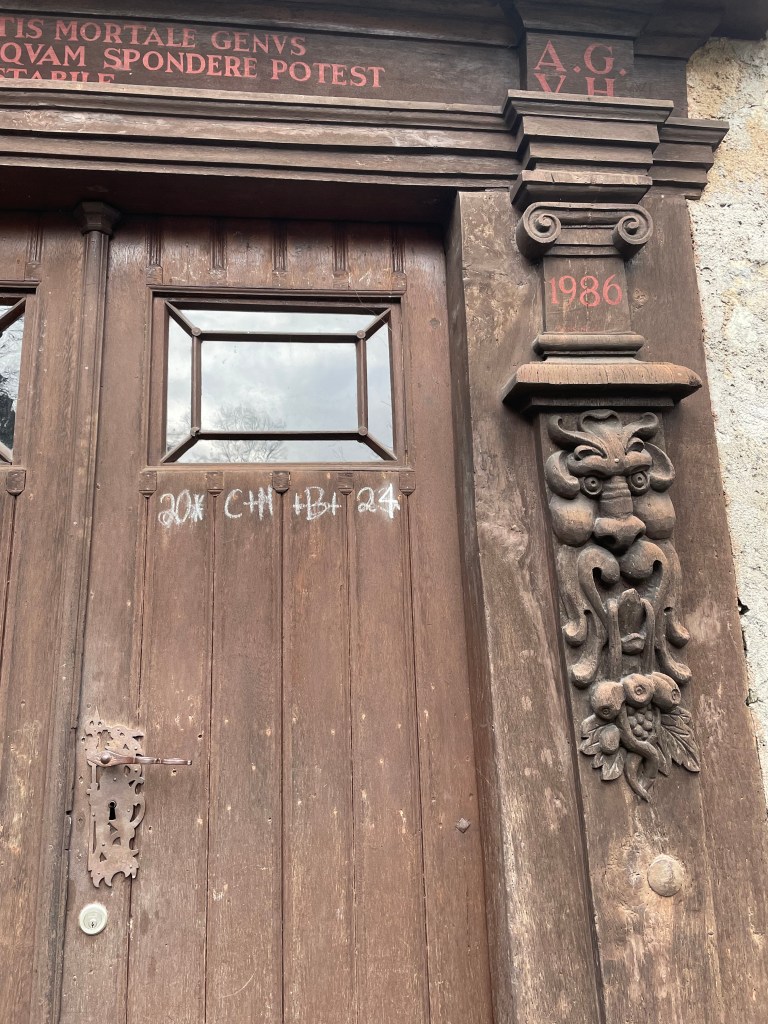
Last night adults and children dressed up like the Three Wisemen, going door to door singing carols and collecting money for charity. At each house they visit, they chalked the year, an asterisk, and “C+M+B” on the door (Caspar, Melchior and Balthasar), leaving a blessing on that home or building.

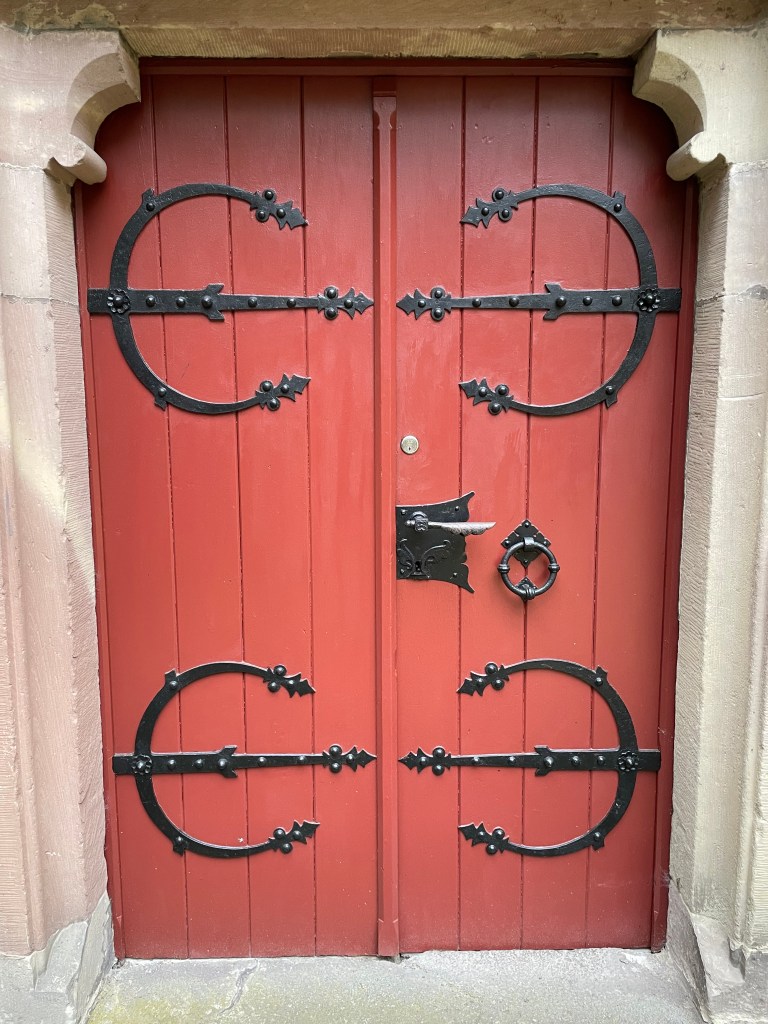
For many, today is the day the Christmas decoration come down and we figuratively move into the new year.  Here are some of the doors we saw today:

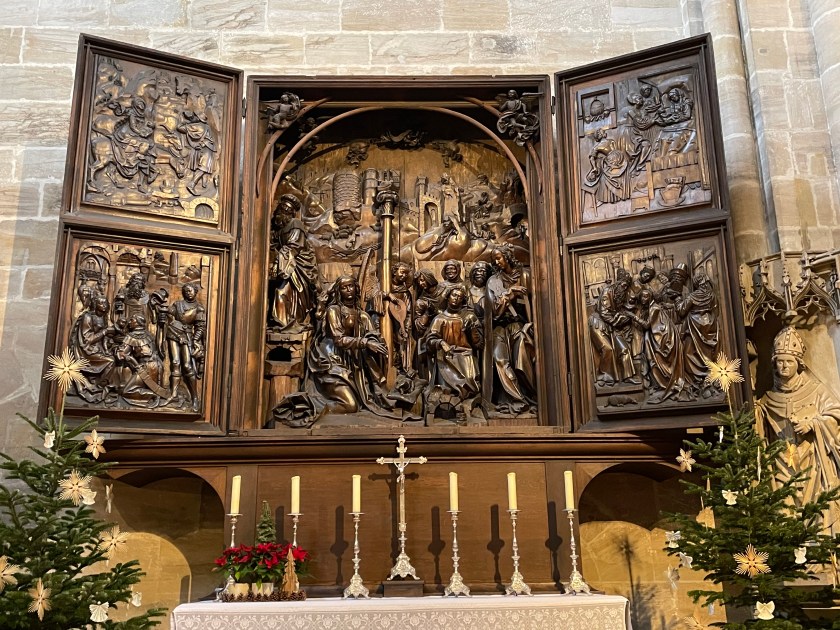
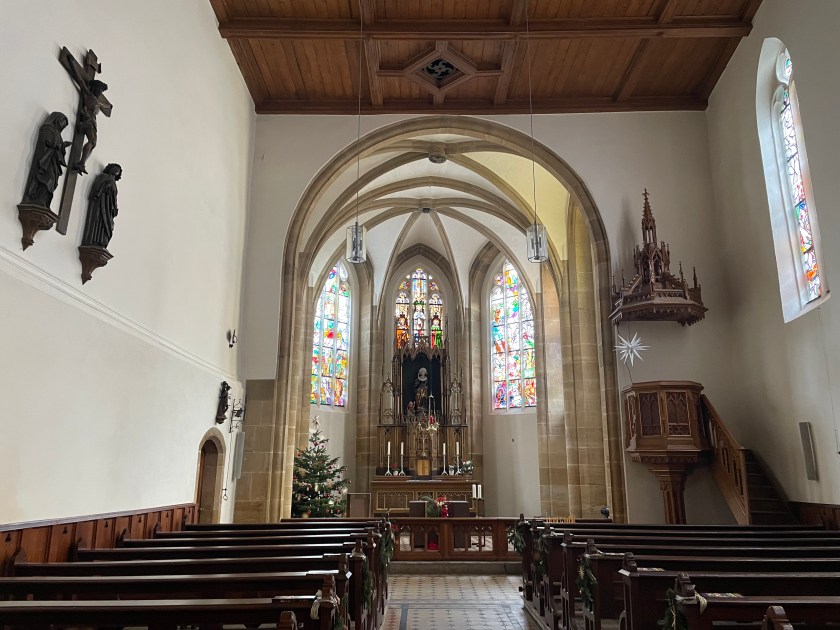
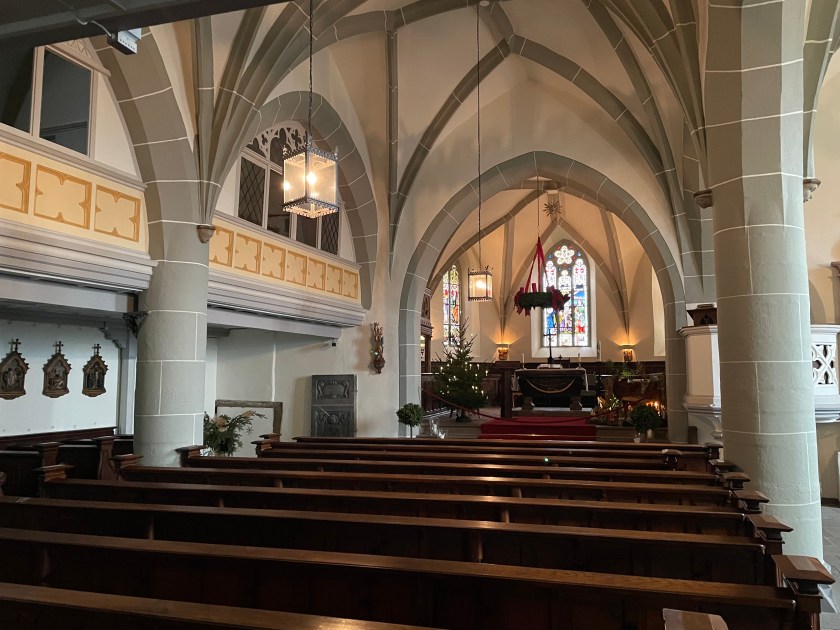
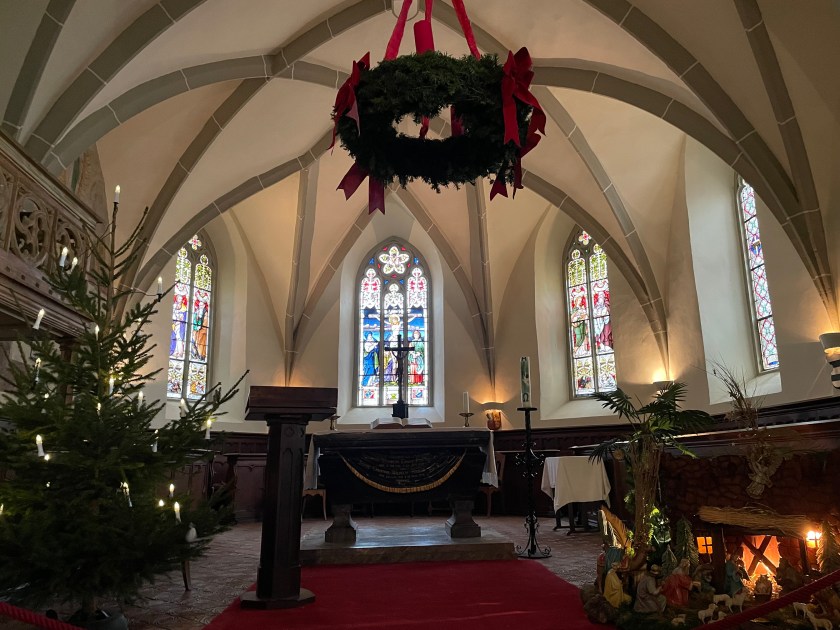
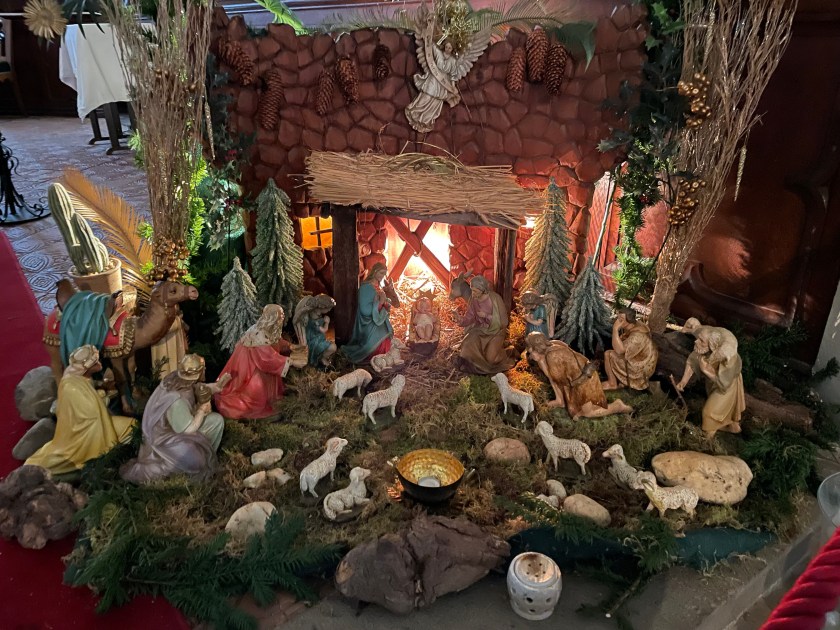
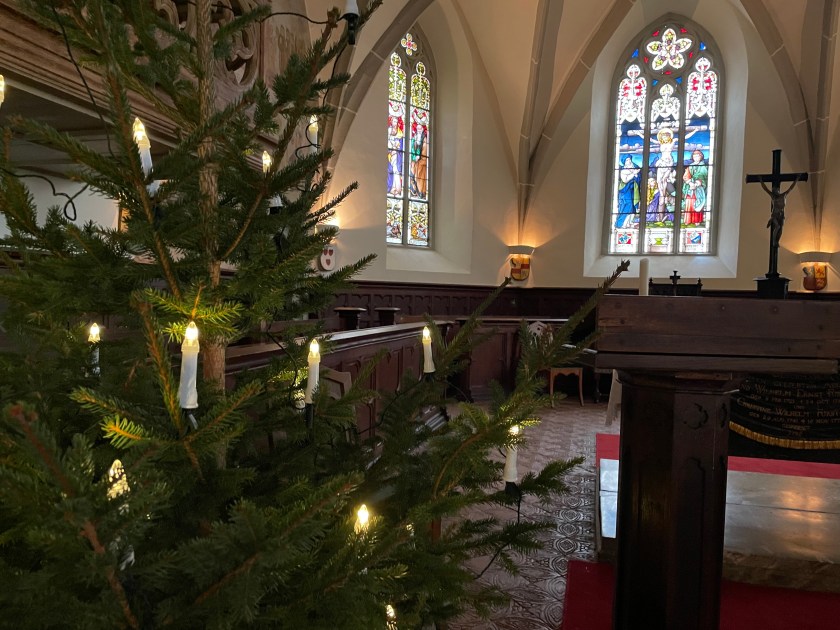
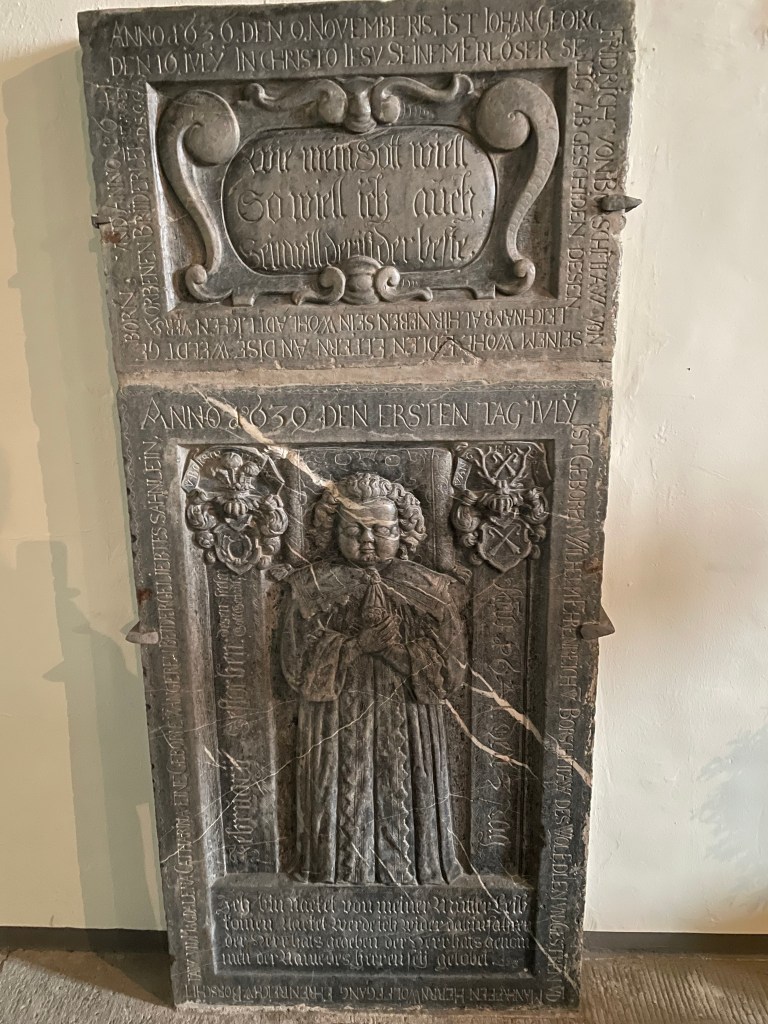
At the Braunfels Castle, before we took the tour, we went into the small castle church where the Wisemen visted last night.  This artwork was there in the church, depicting the visit of the Wisemen:

Braunfels Castle

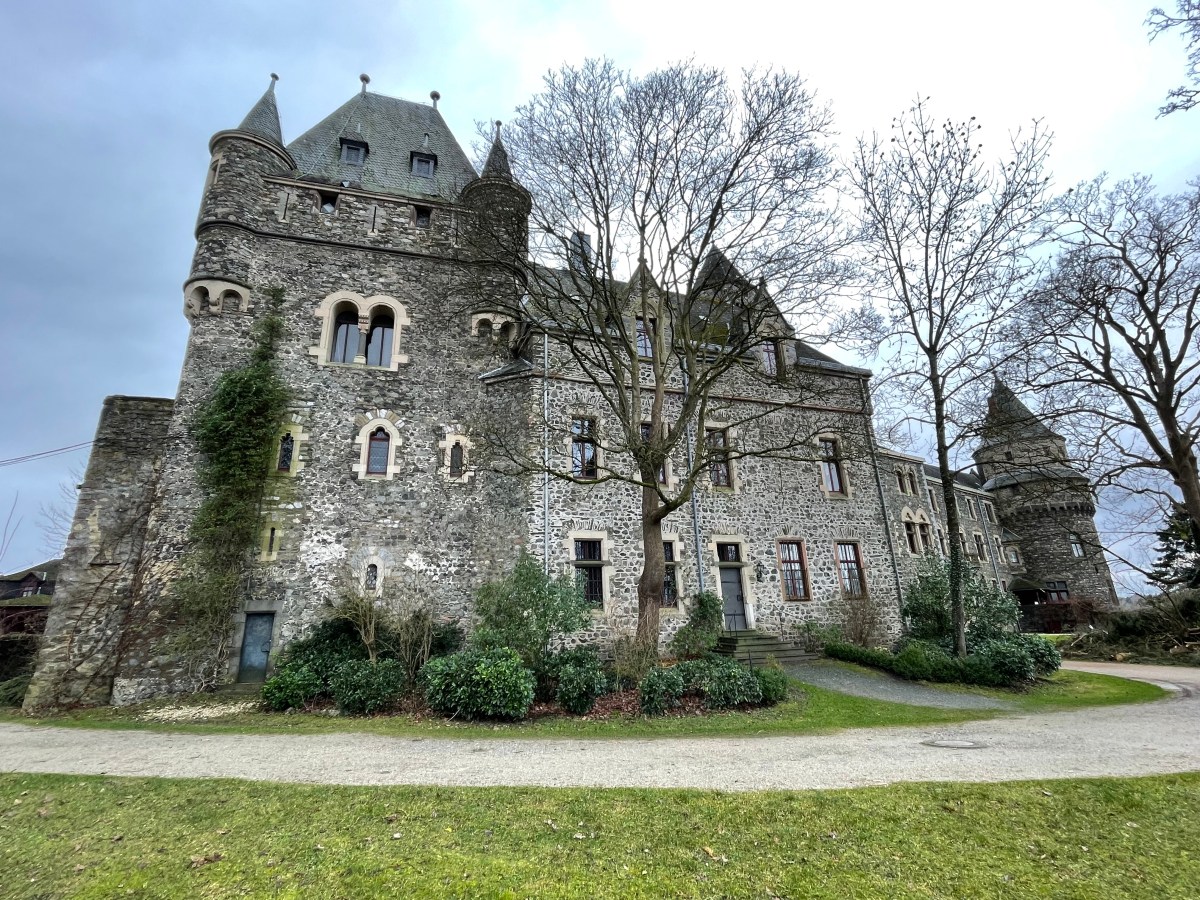
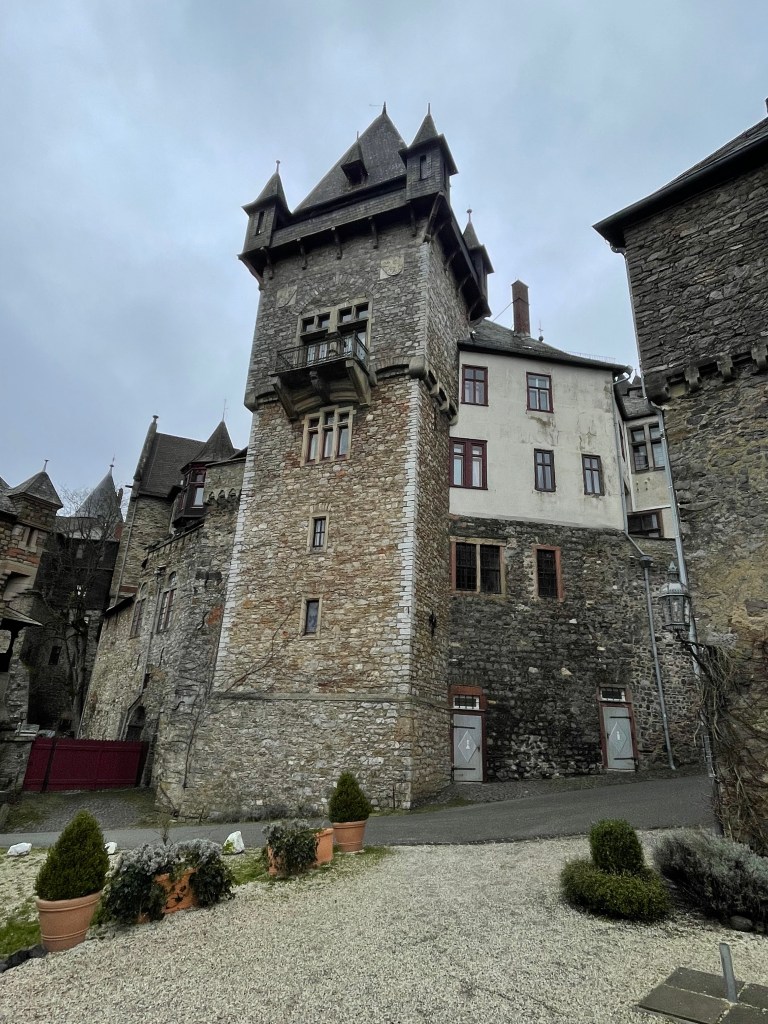
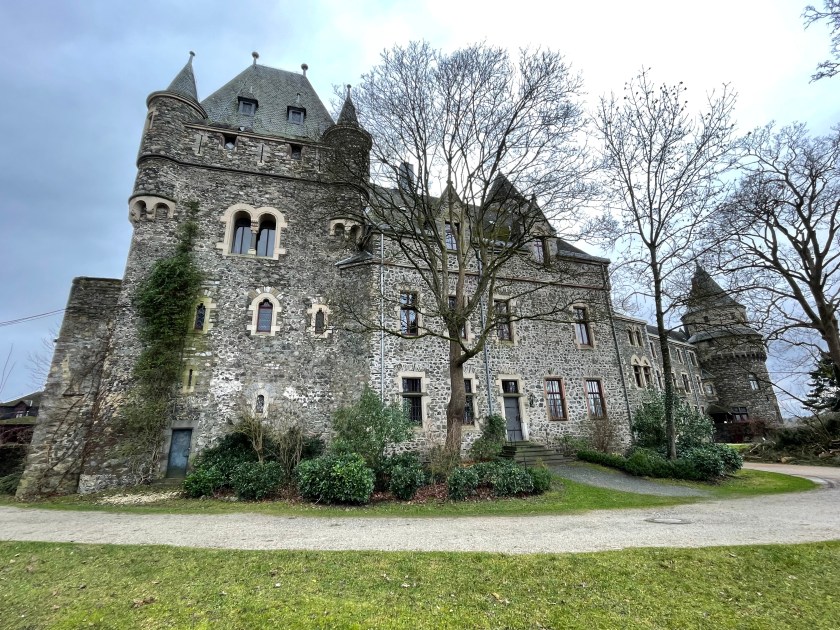
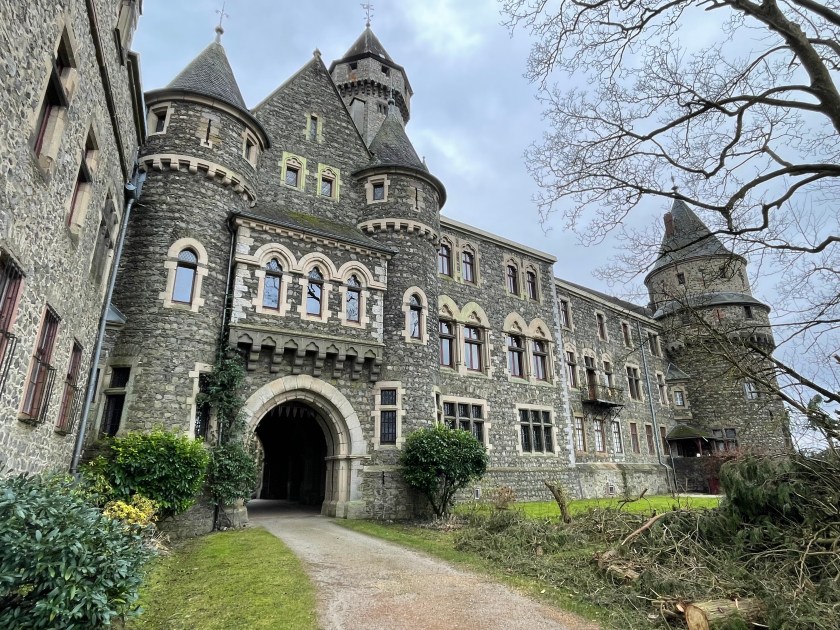
Today’s Saturday adventure took us to Braunfels Castle, less than an hour from Frankfurt.  This visit was a winner.  We enjoyed our day very much.

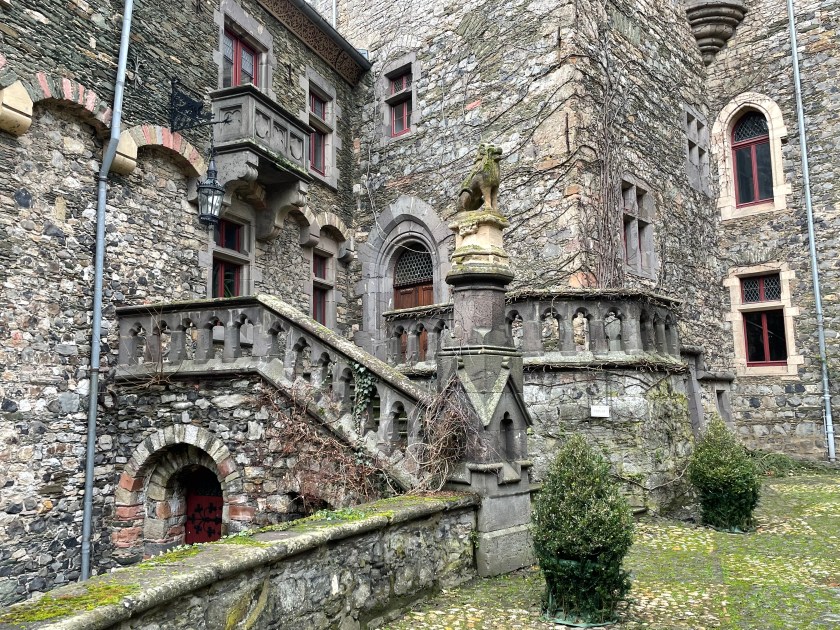
Braunfels Castle has been rebuilt many times in the last 800 years. The remarkable thing is that the original family has lived here year-round all that time!

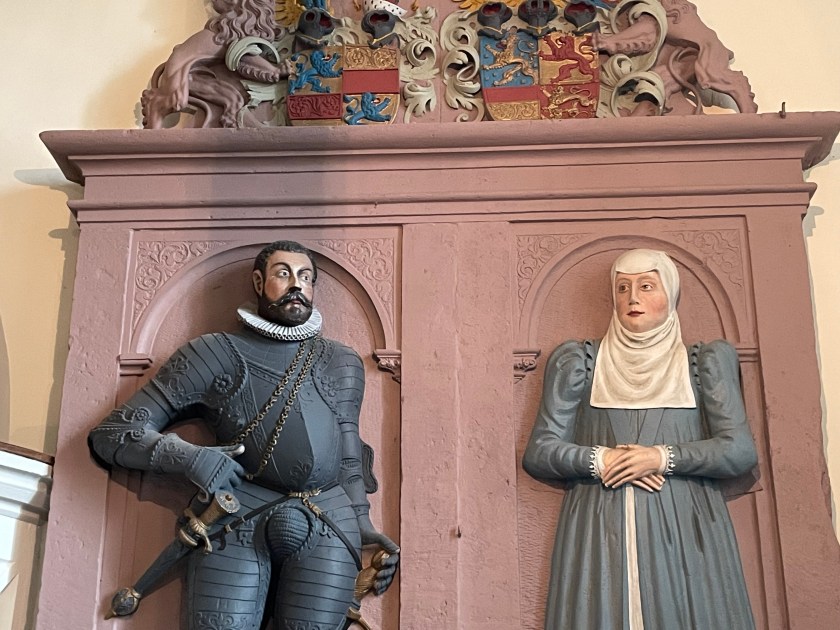
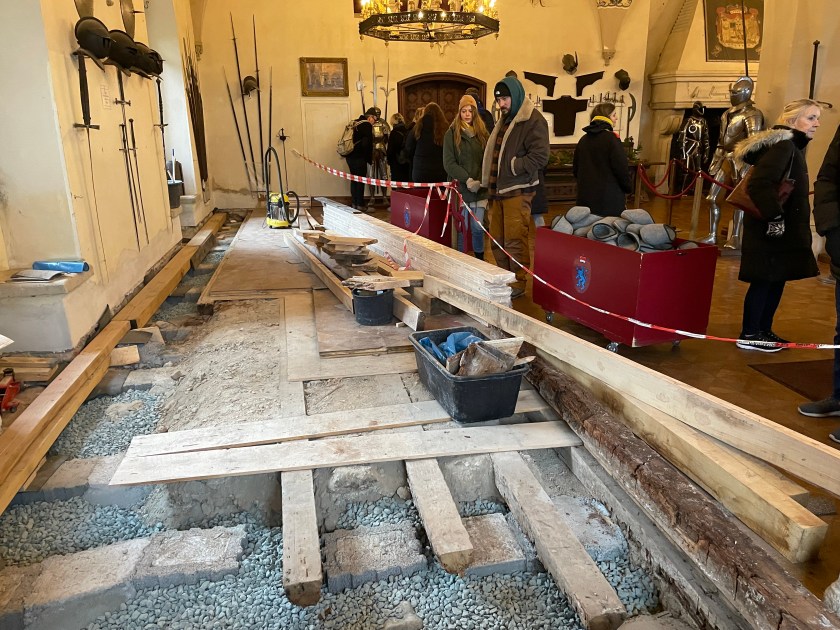
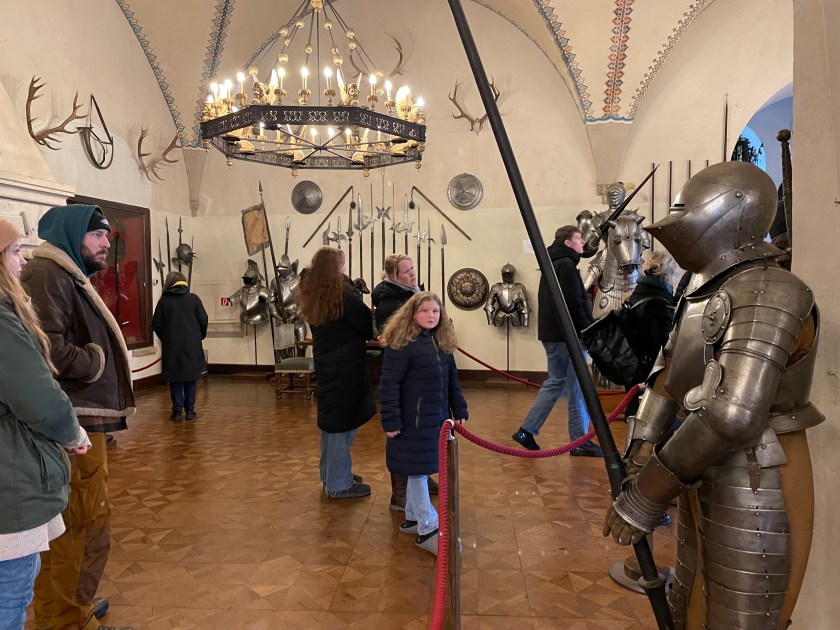
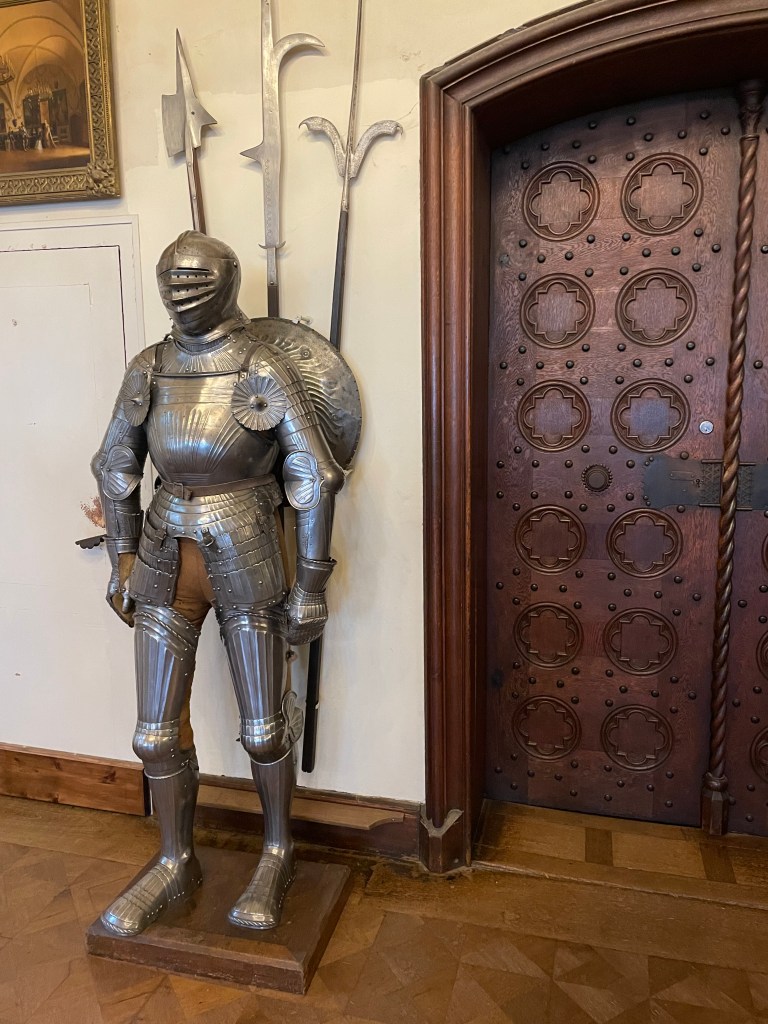
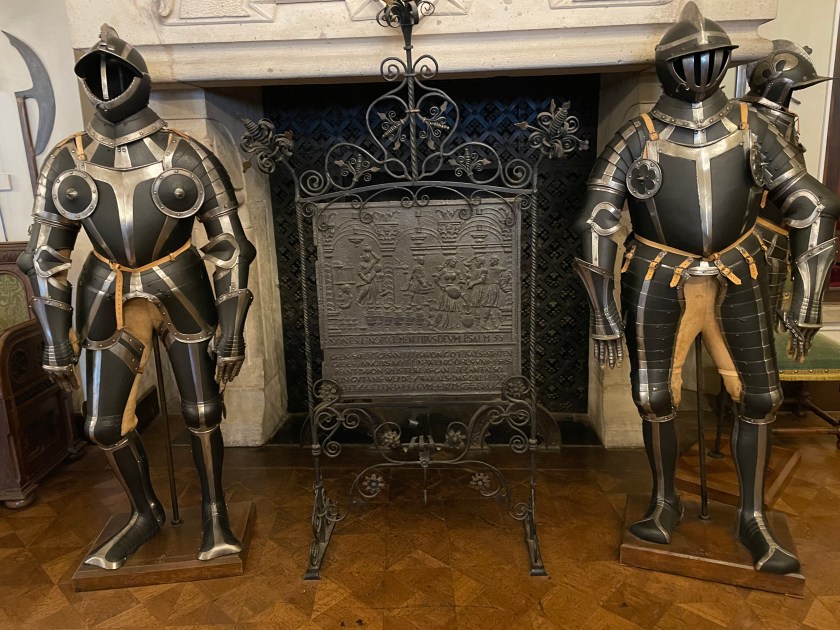
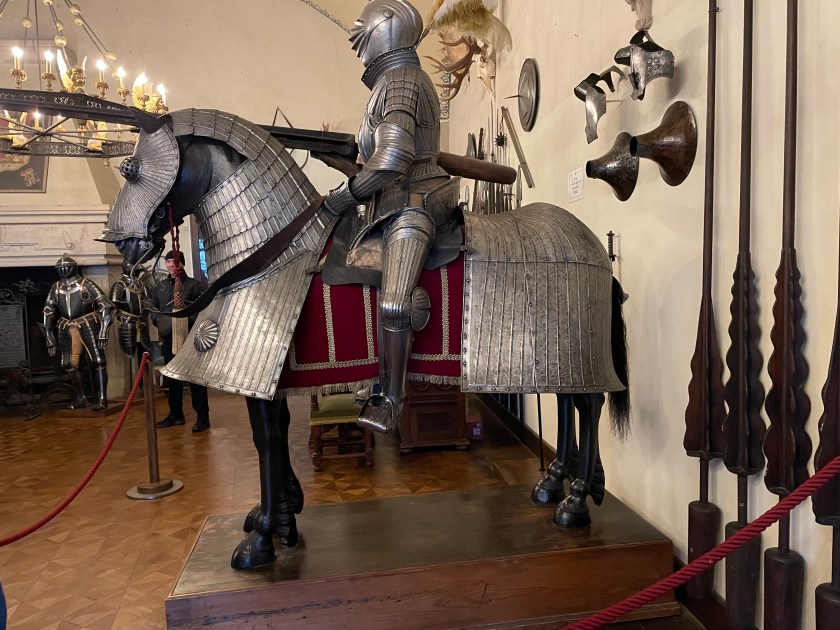
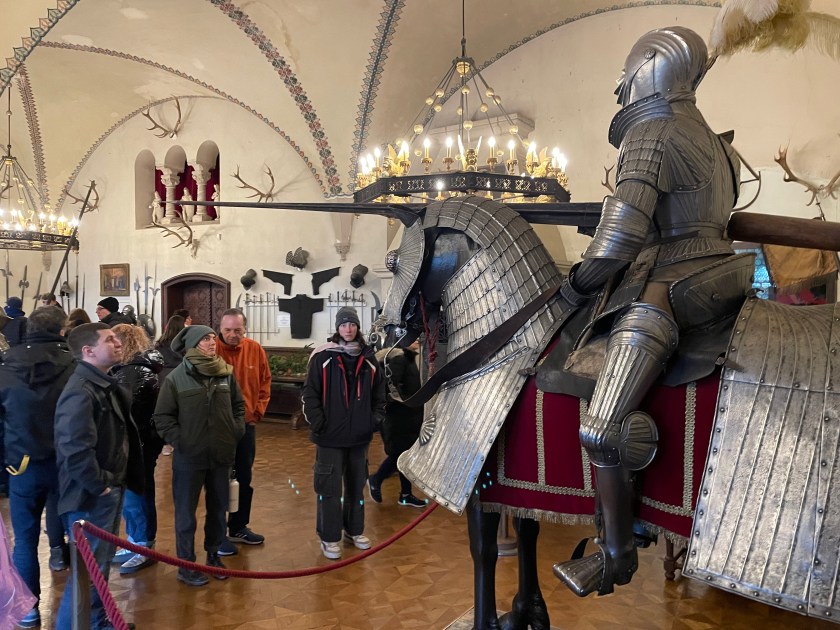
In more recent centuries, they’ve made it look more romantic, more like a princess castle. I think to attract visitors to help keep it going. They have events there now and musical performances. It was really friendly and fun to visit. We went into a wing of the castle that had period pieces in it, starting with a great hall full of armory. They had several full suits of armor and one seated on an armored horse with a javelin–the whole deal. There were rooms with paintings of hunting and animals and several rooms filled with furniture and portraits of the family.  We weren’t allowed to take photos in those rooms.

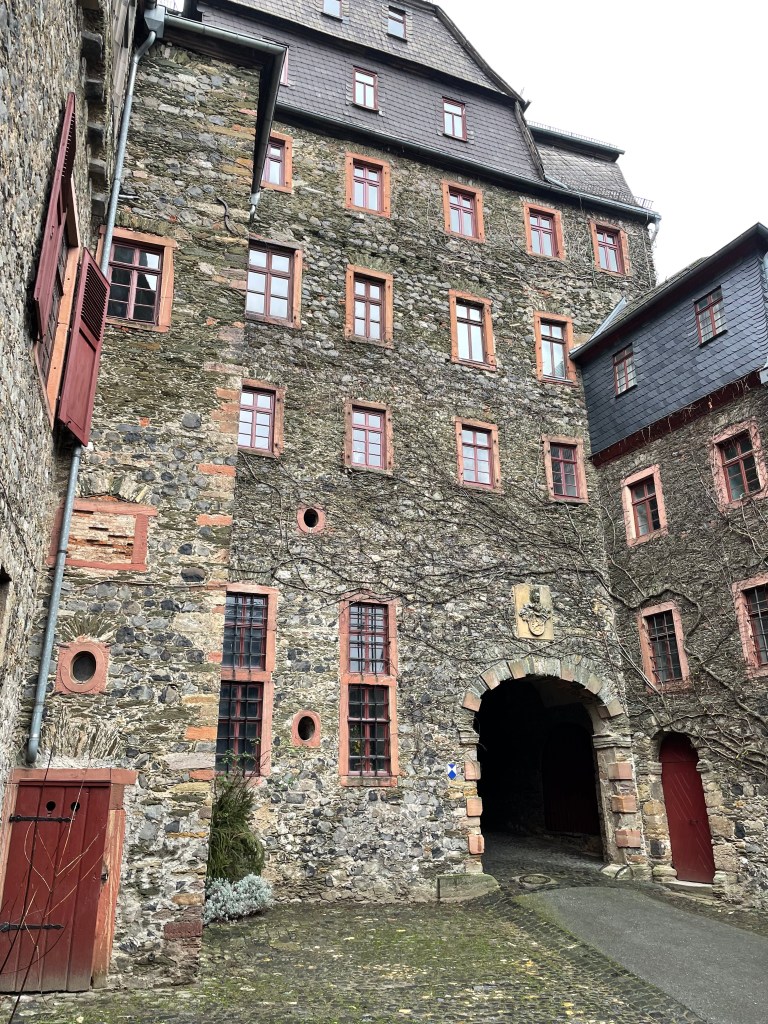
This is the wing where the family still lives:

To learn more about the numbers chalked on the doors last night, see my next post about Three Kings Day.

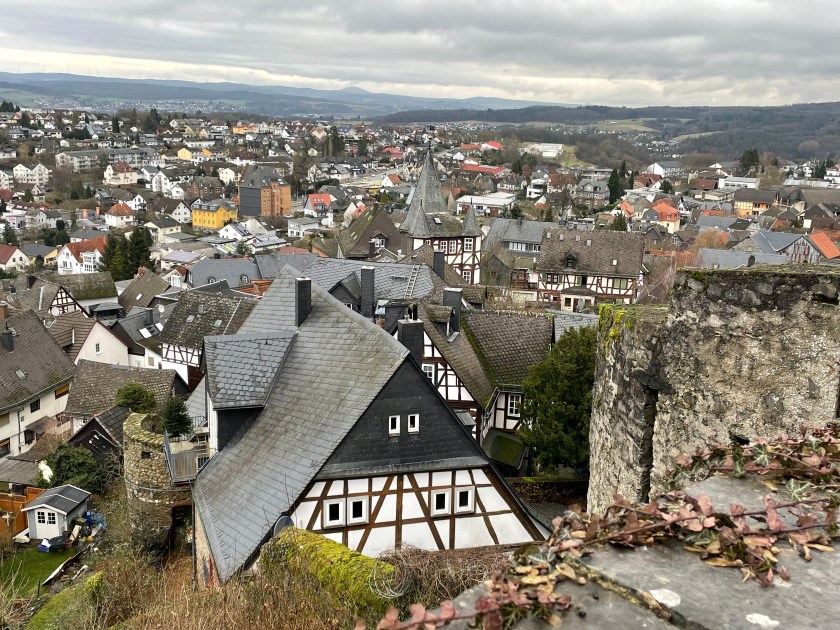
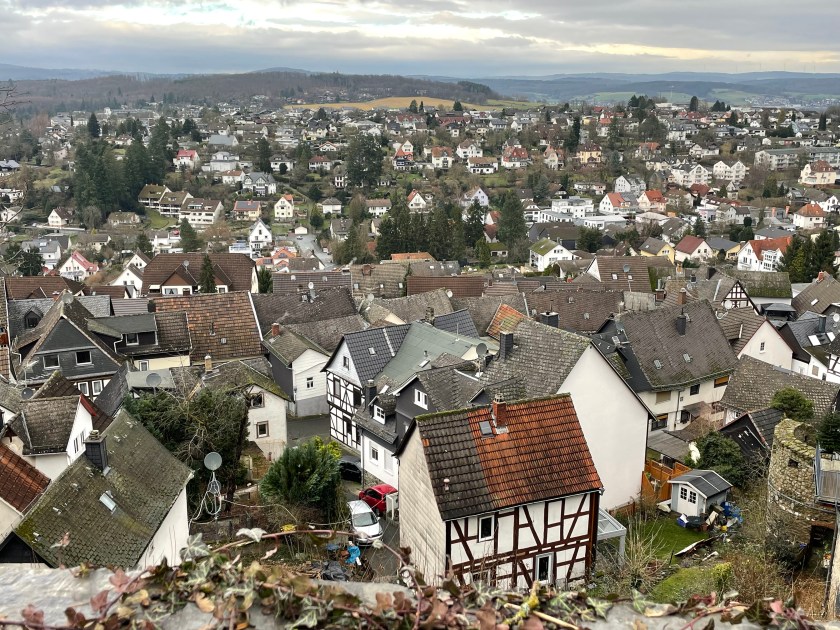
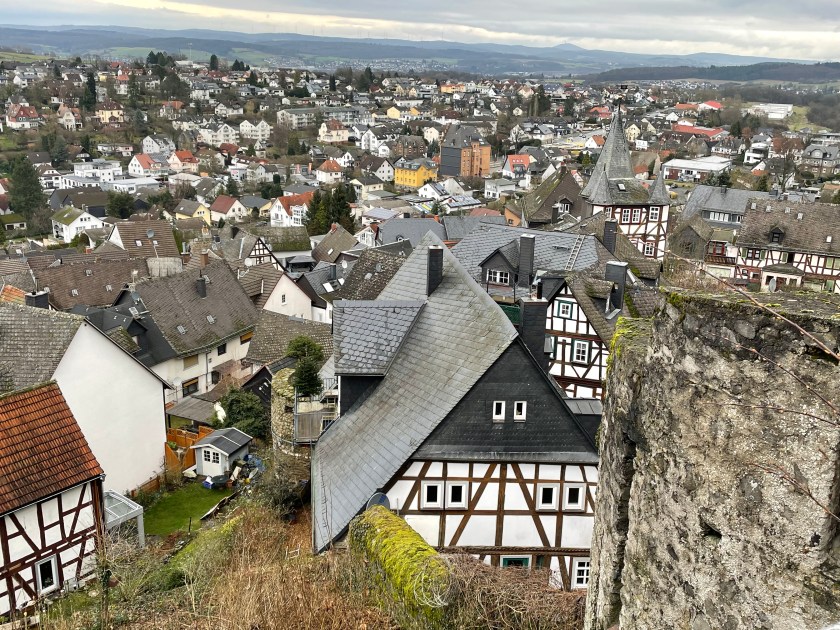
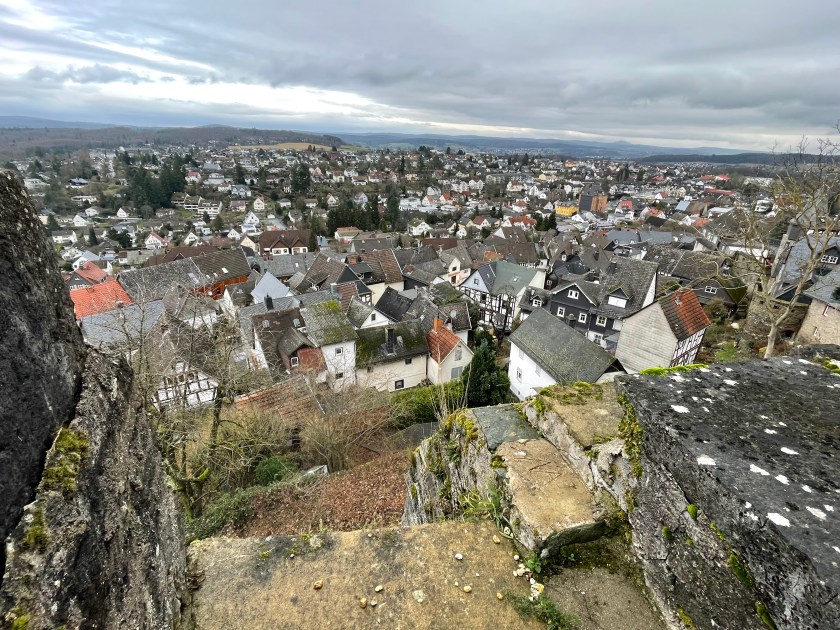
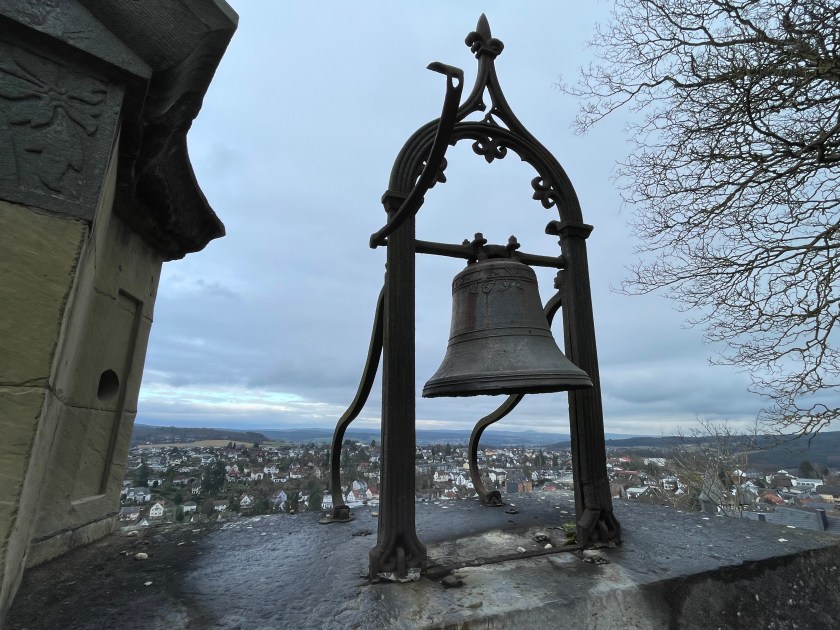
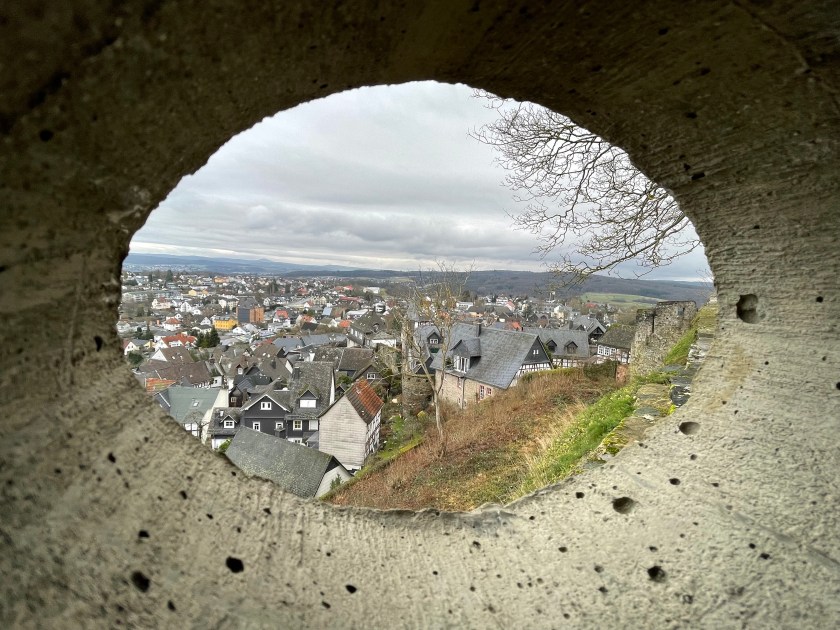
Views of the town from the castle:

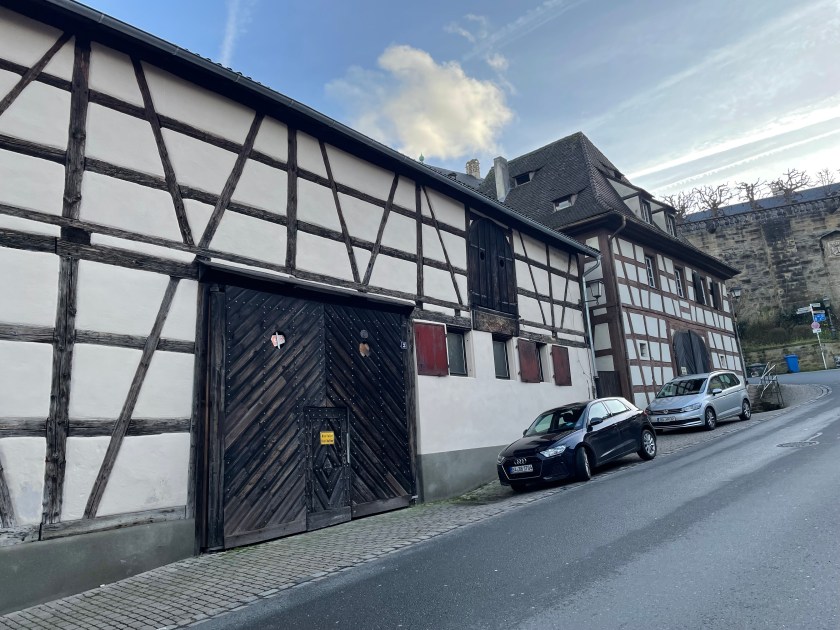
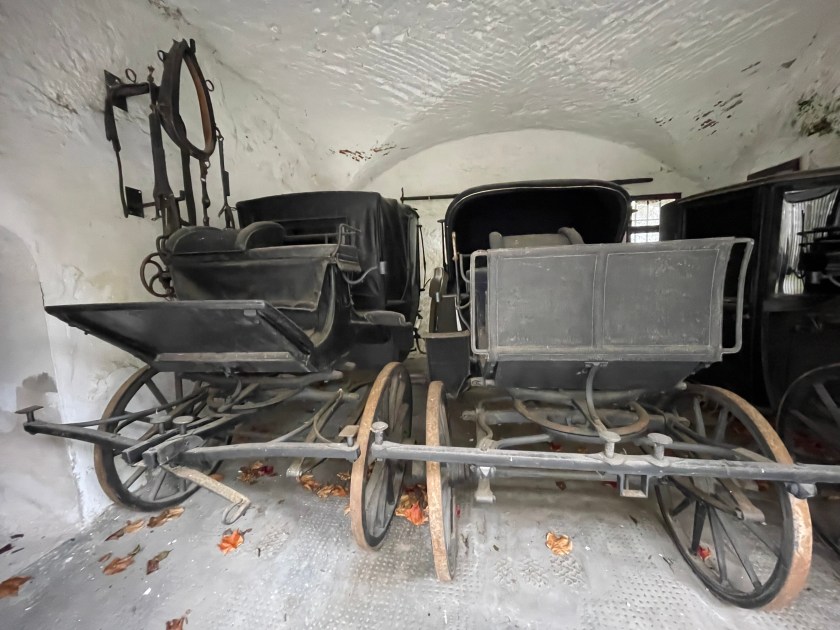
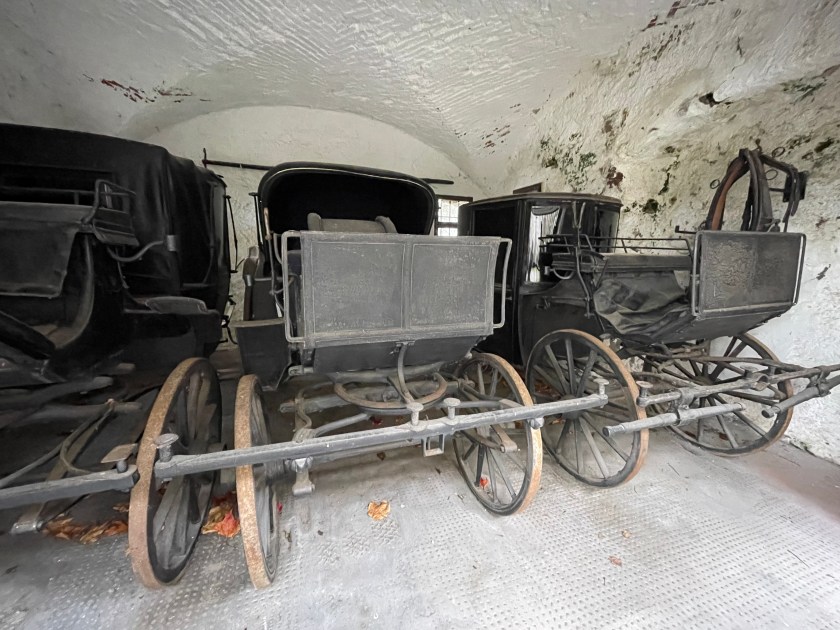
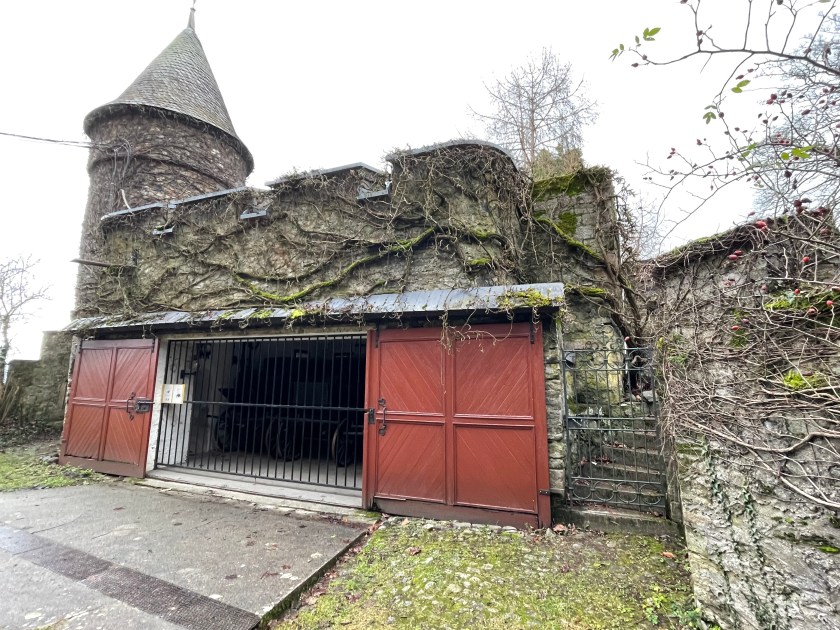
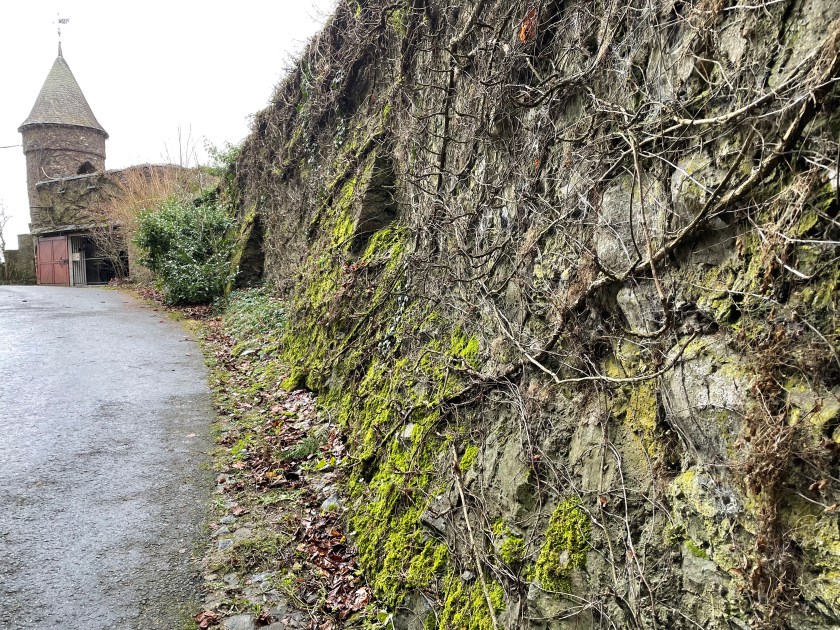
The old carriage house:

This is the entrance to where you buy the tickets (9 Euro).  There’s a nice little cafe with fresh baked Kuchens.

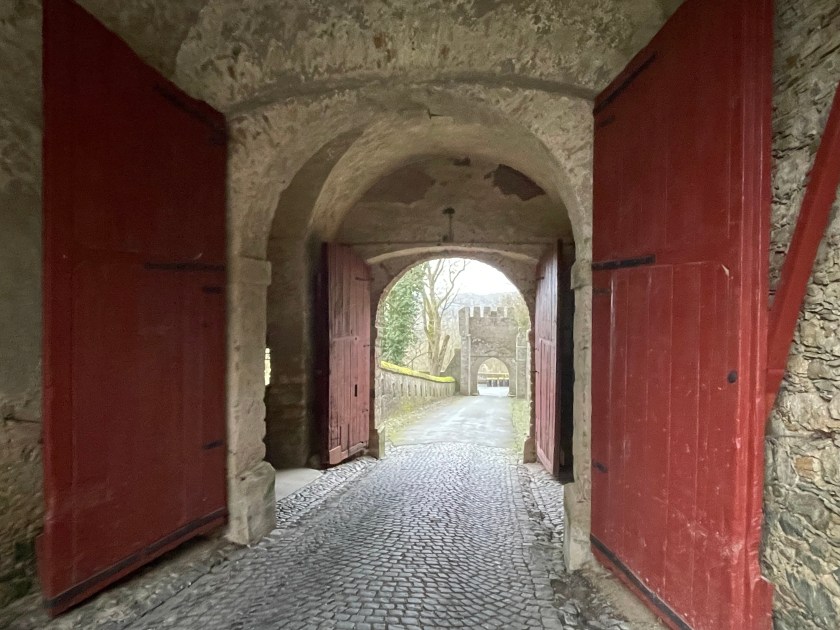
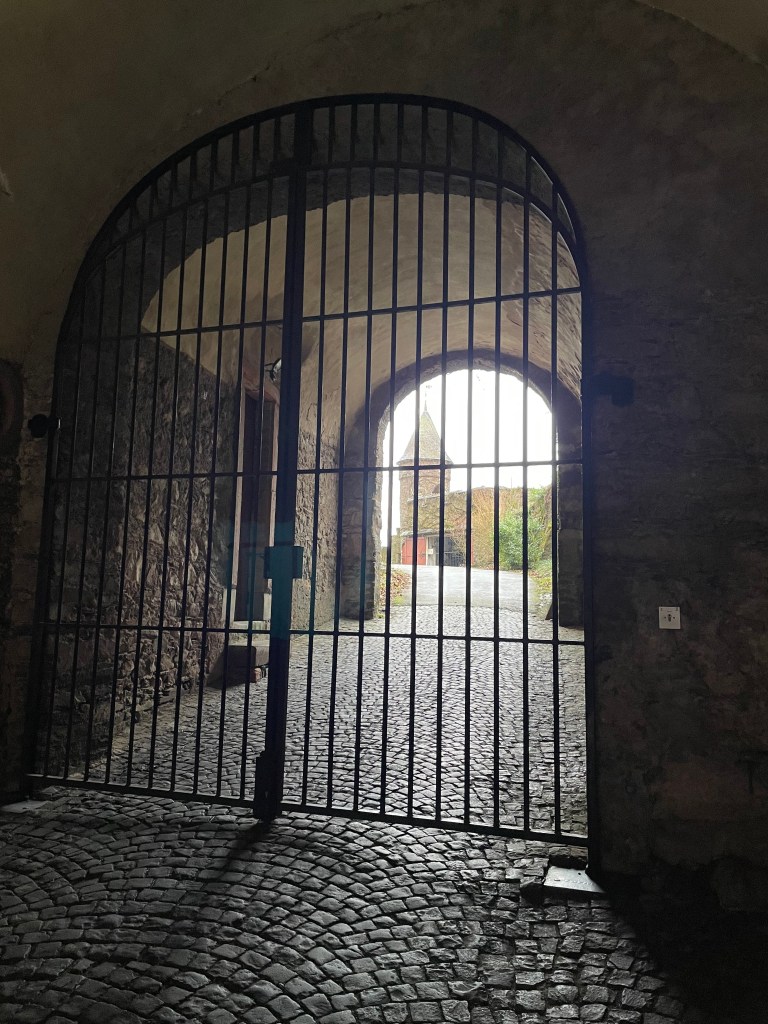
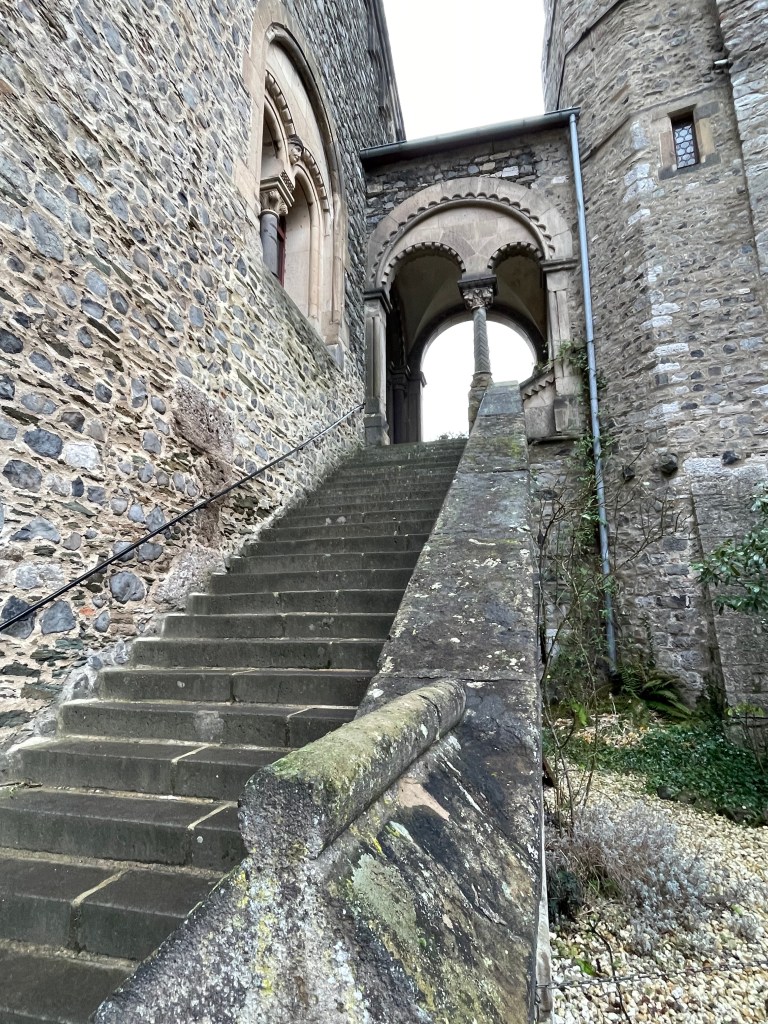
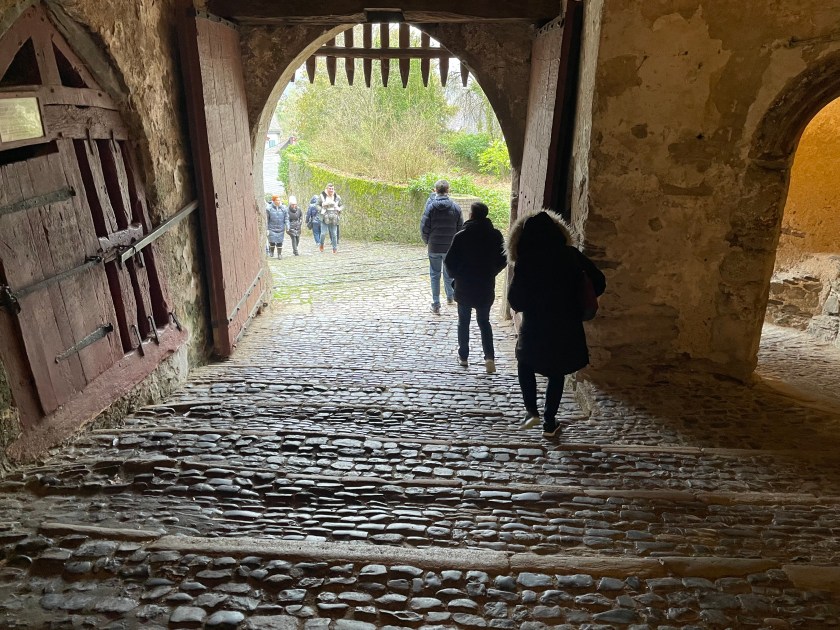
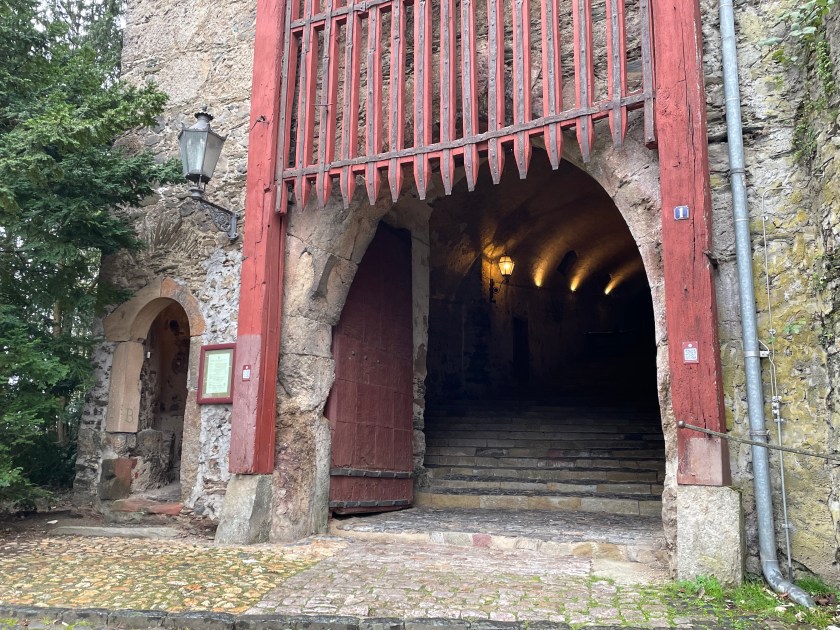
The entrances and exits are massive tunnels.

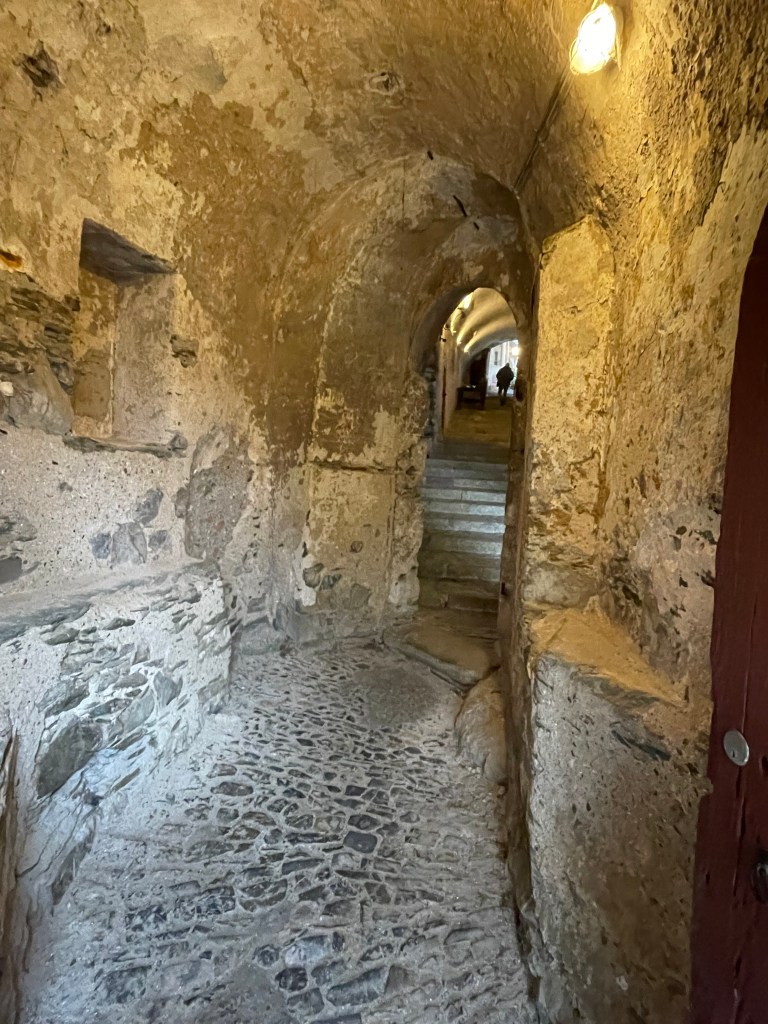
This is a side entrance too small for a horse or carriage:

Time for some soup!

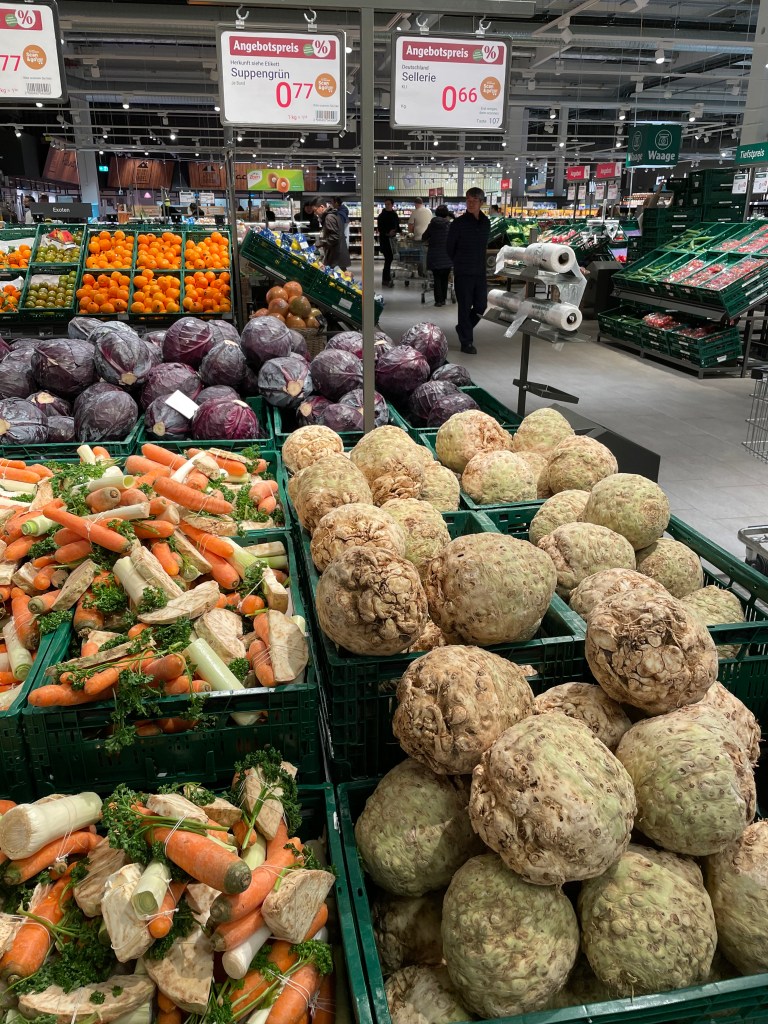
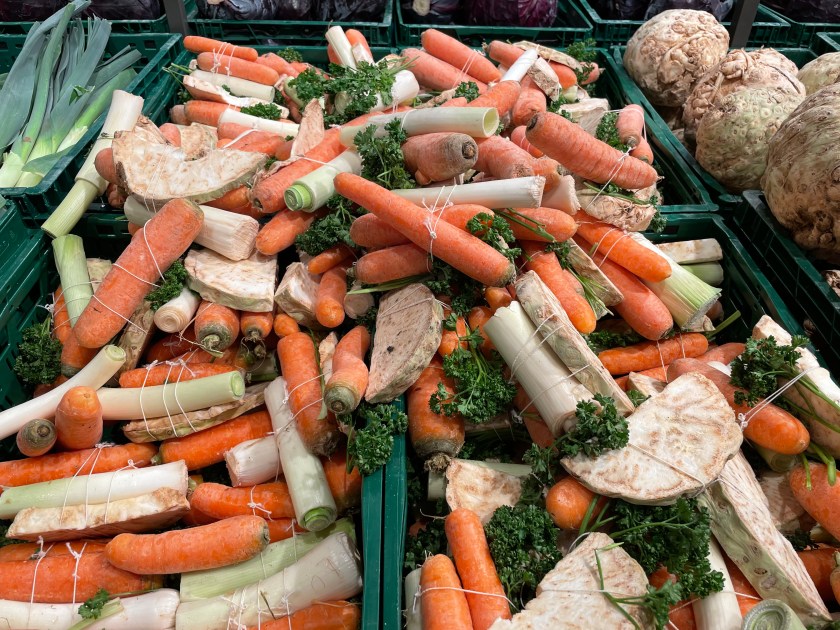
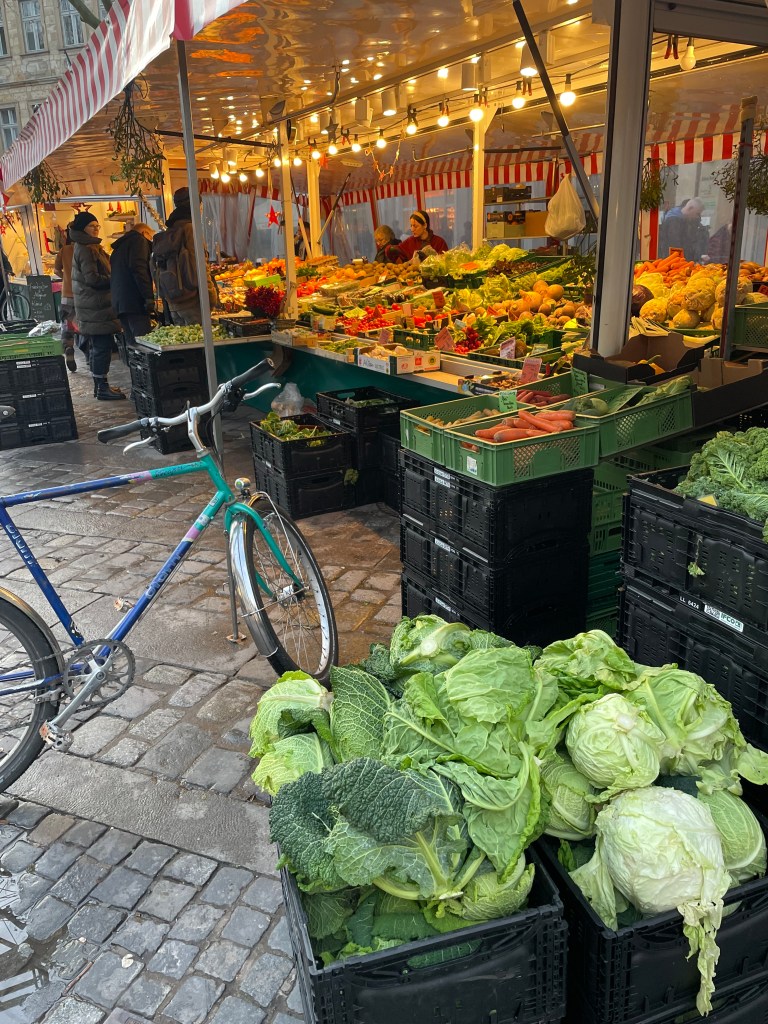
Here is what we’re seeing in our grocery stores this week–bundles of vegetables for a hearty pot of soup.  We don’t see celery root at home.  I’m going to try it.  We asked one lady who had 3 of this in her basket how she prepares celery root.  She laughed and said, “oh, these are to feed our Kanninchen!” (rabbits).  Haha.  But she said you can chop the root and boil it in a vegetable soup or a cream soup.  You can also peel it and slice it and fry it like Schnitzel.  Hmmm.  Sounds good.

The bundles of soup vegetables have a piece of celery root, a carrot, a piece of a leek and some parsley.  Sounds delicous.

And there are plenty of red cabbages for delicious Rotkohl, one of my favorite side dishes.

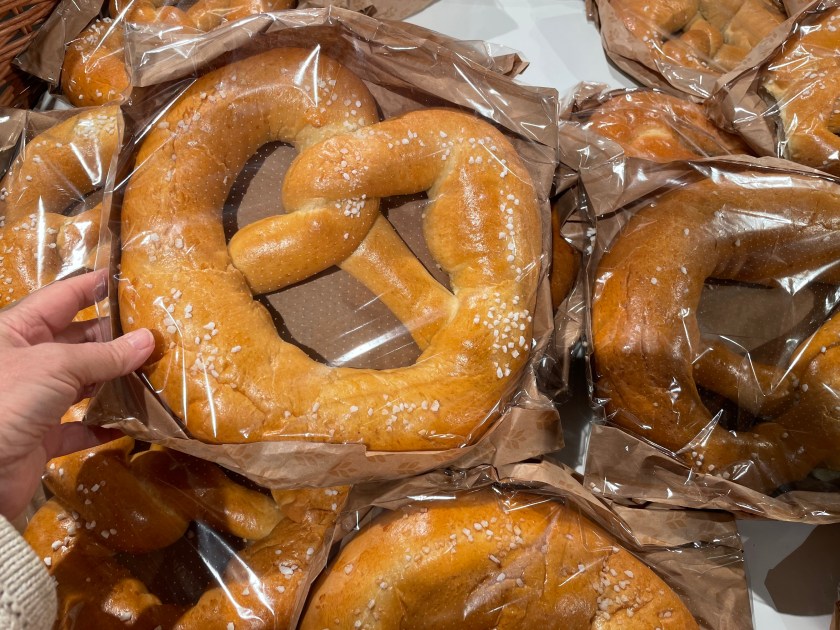
In the bakery section, there were piles of these huge New Years pretzels!  Oh, it’s all so good and fun.

New Year’s Eve Celebrations from our Apartment Building

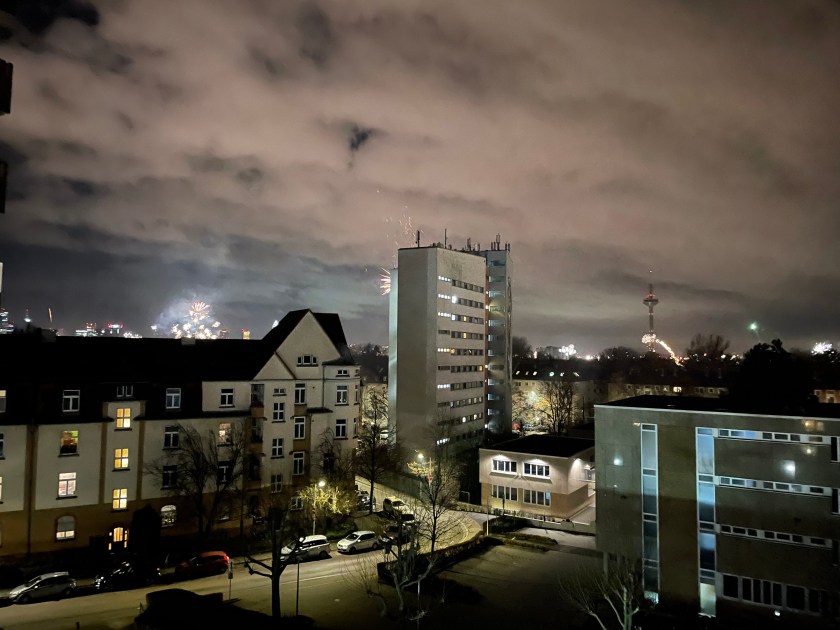
We were told not to miss the fireworks displays all around us on New Year’s Eve.  We spent the evening with friends, introducing them to our favorite movie, “Sahara.”  Then at about 11:45 the explosions around us began.  Honestly, it sounded like we were in a war zone.  There are not designated places to go watch fireworks here, everyone just goes out into the streets to set them off.  And it sounded like everyone in town was doing it.  From our balconies and windows we could see 360 degrees with arial bursts in every direction.  It was amazing and rather spectacular.

The fireworks went on without a pause for a solid 30 minutes, then they thinned a bit, but contined until 1:00 a.m.  We watched people on the street right below us shooting rockets off, some even hit our apartment building!

What a fun and festive way to welcome the new year!  Happy 2024!

Bamberg’s Little Venice and Old Town

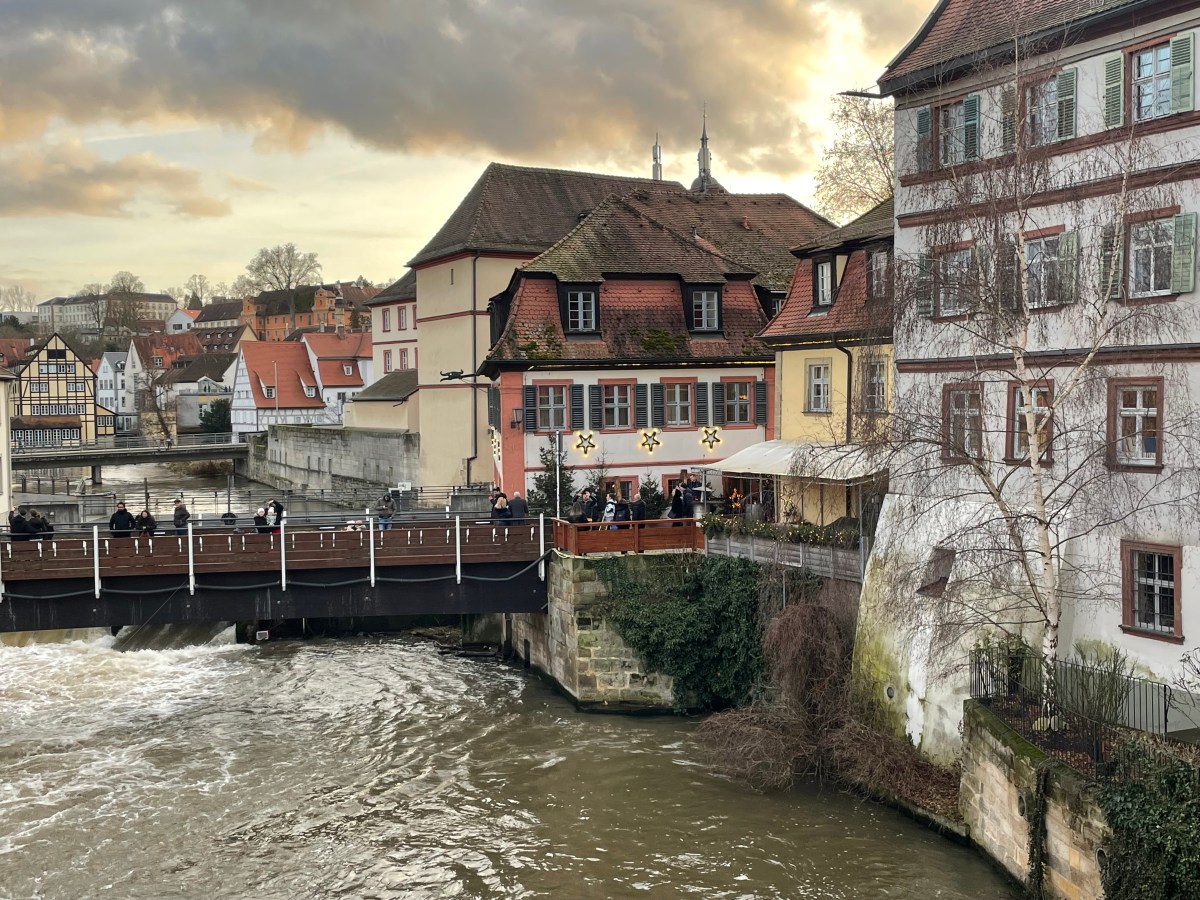
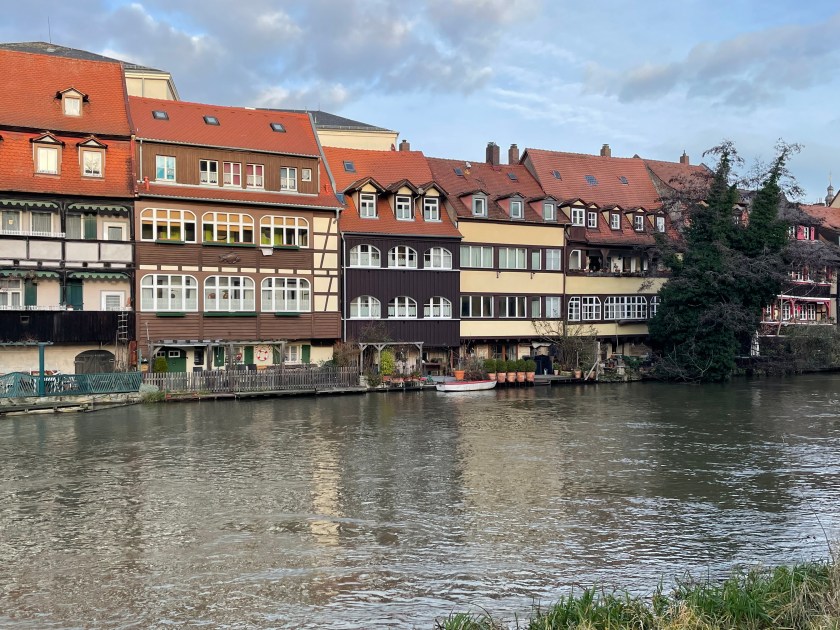
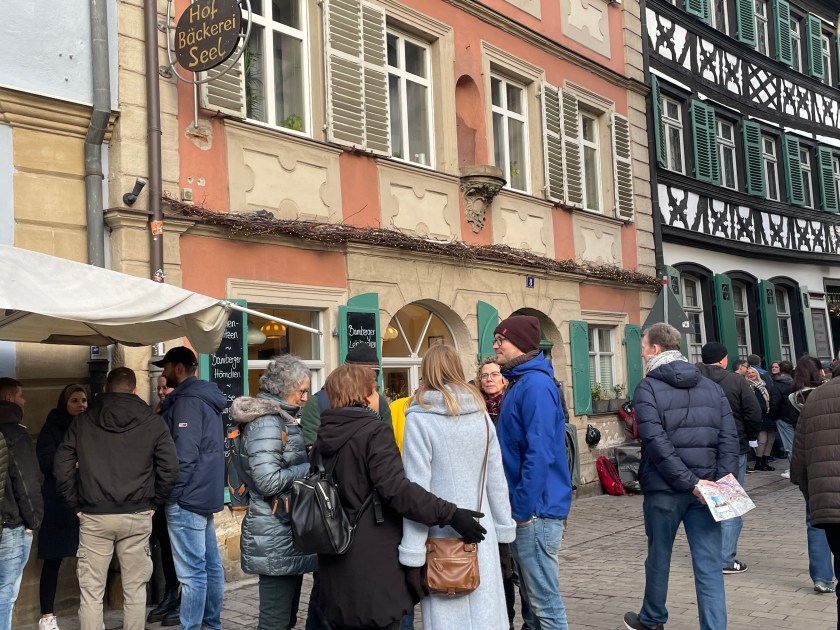
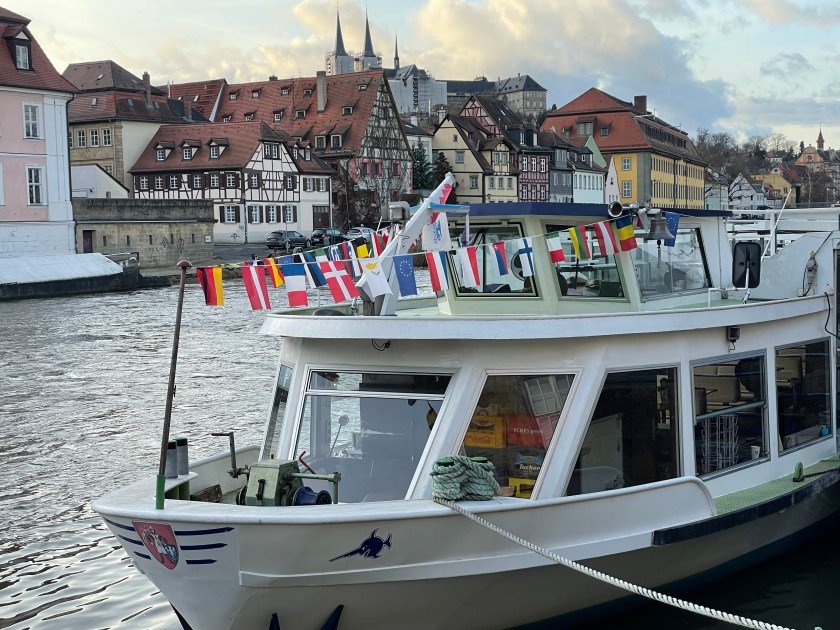
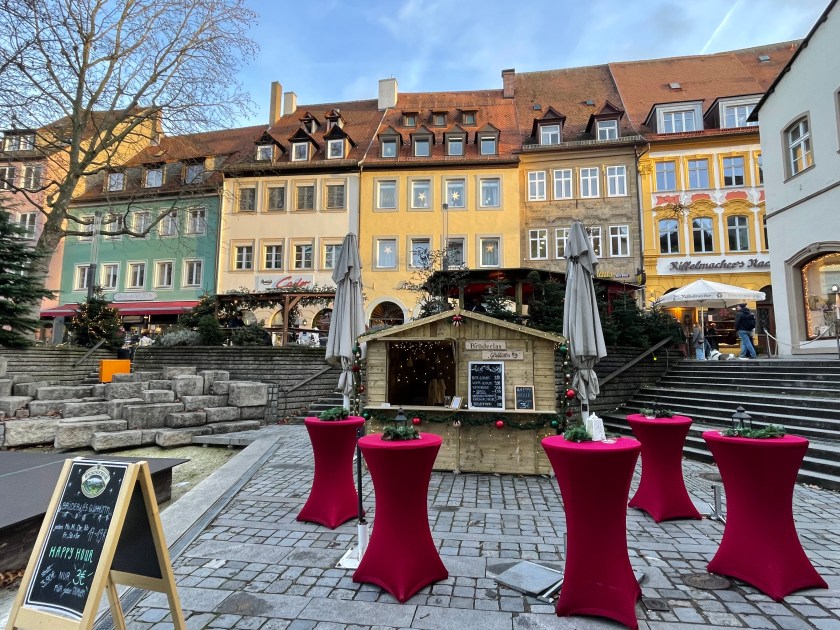
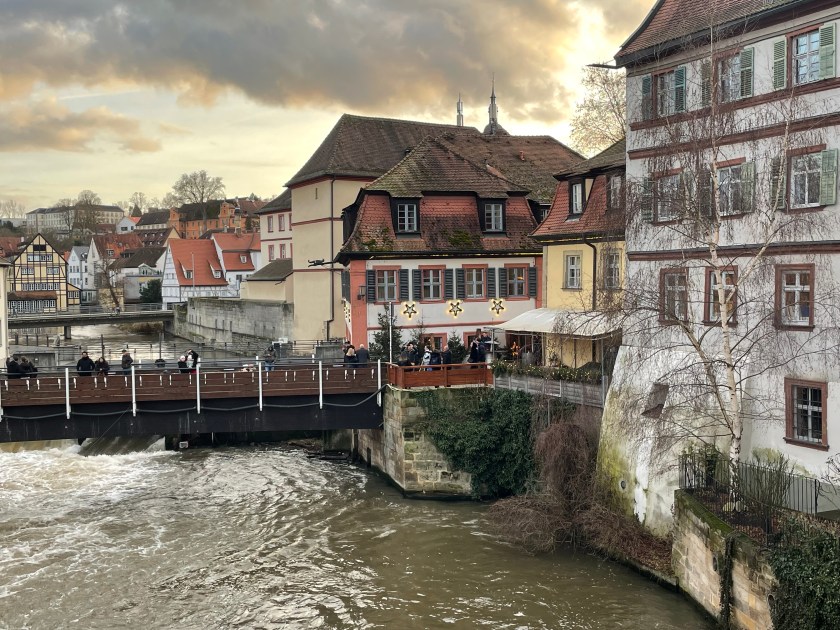
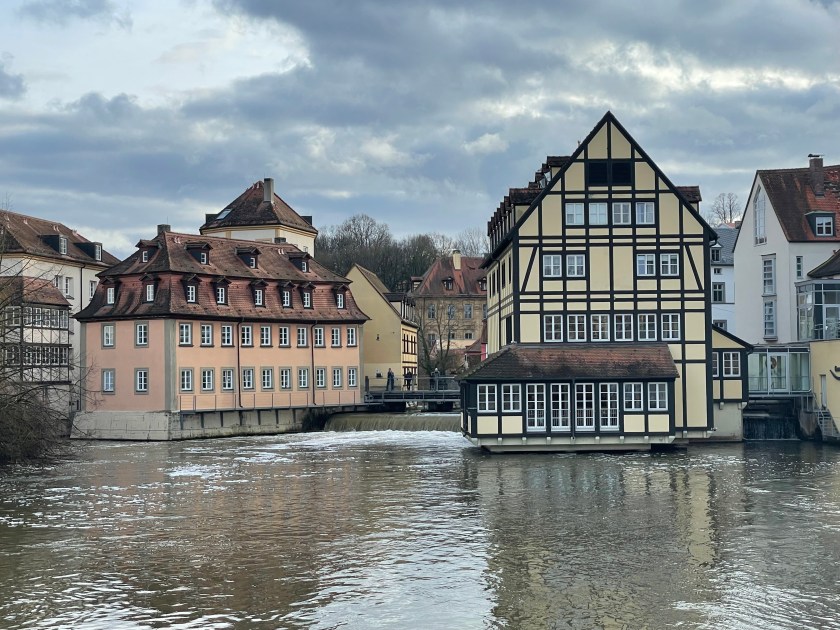
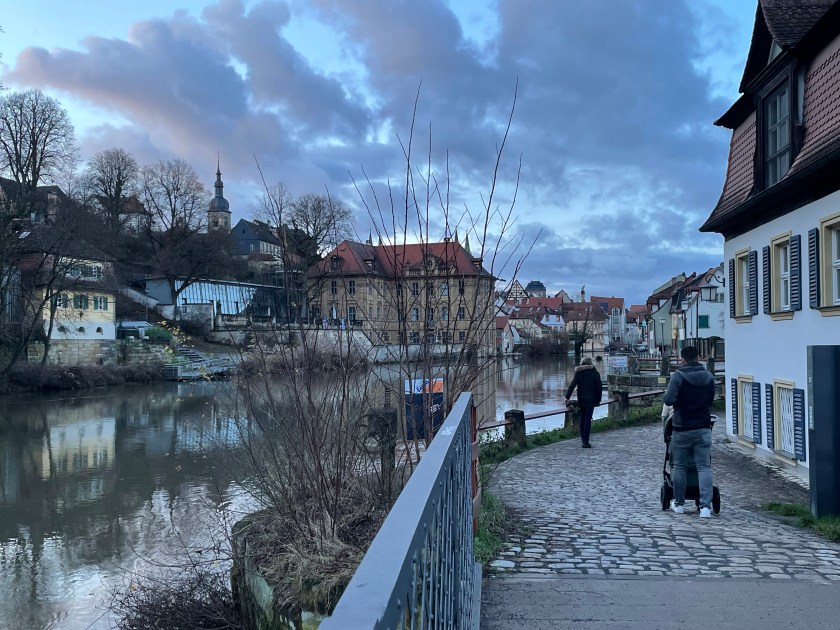
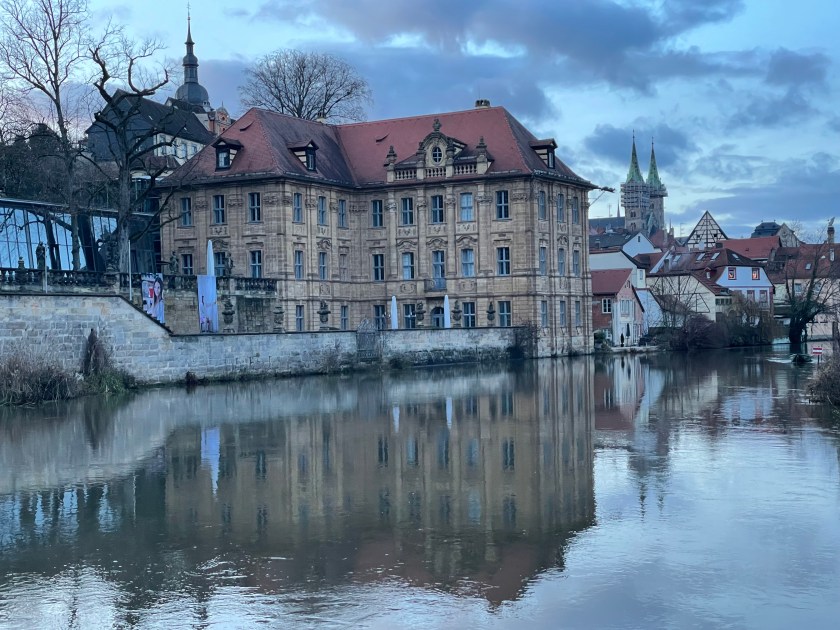
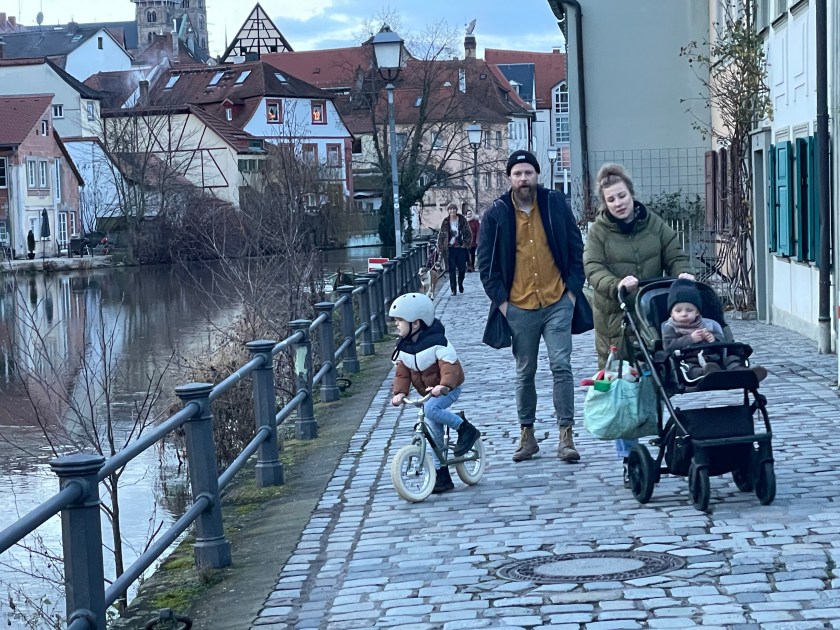
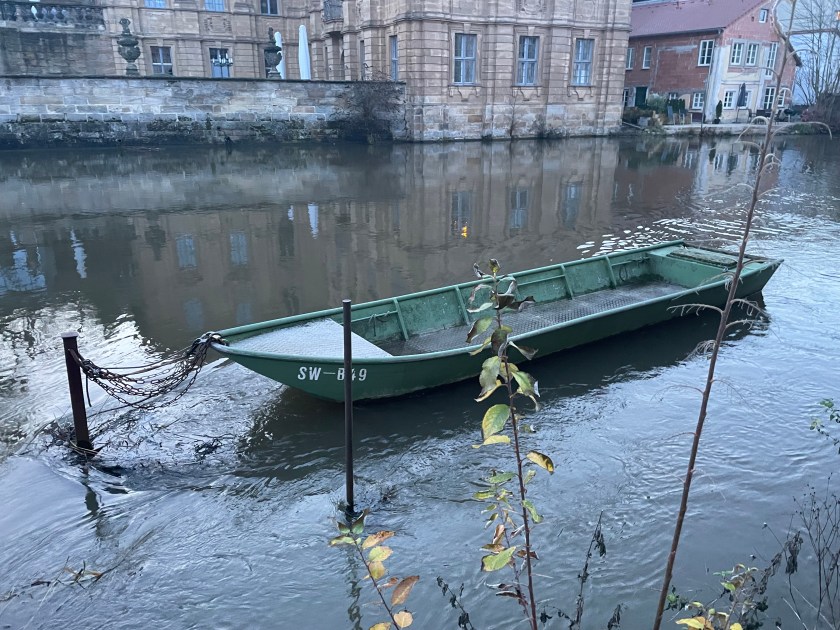
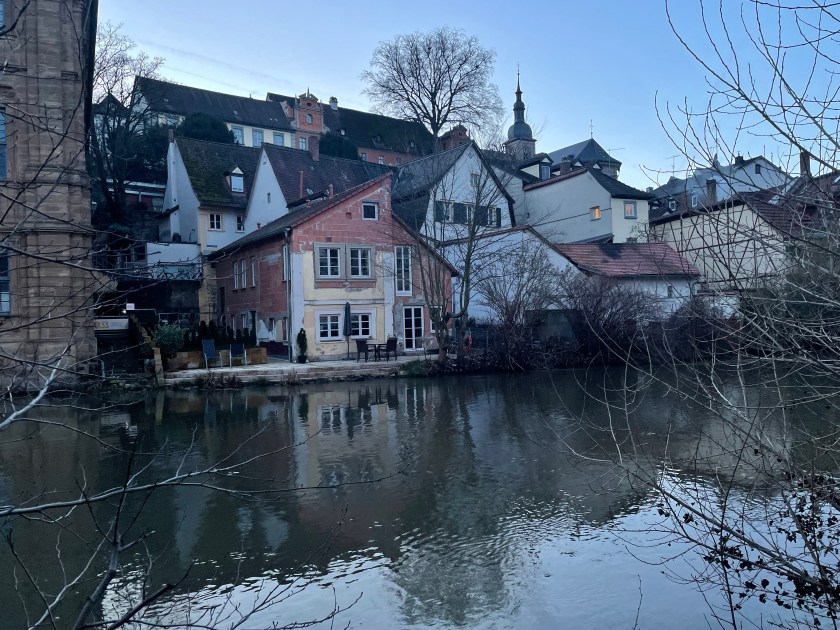
We spent the rest of the afternoon and evening wandering along the waterways in the “Little Venice” part of town, then joining the happy crowds of visitors and locals in the old town.  This is such a charming place.

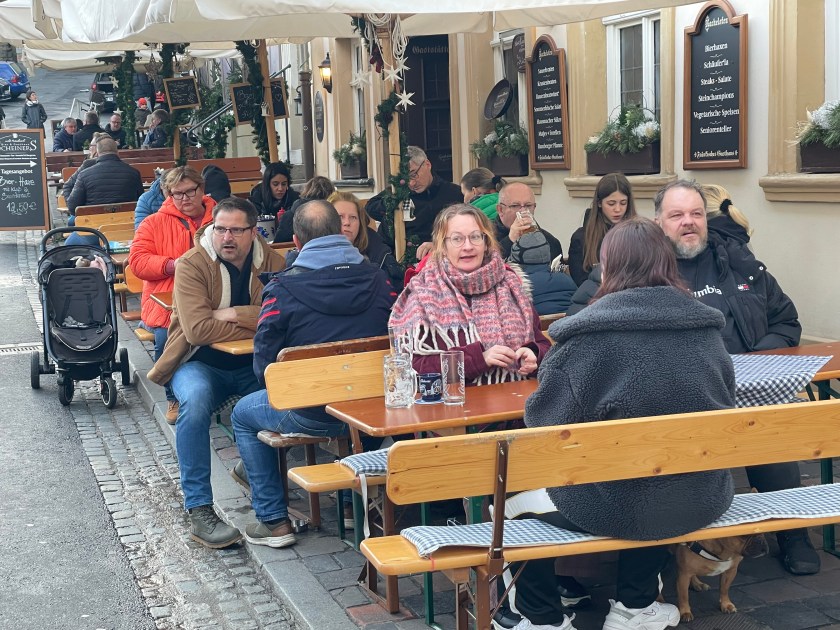
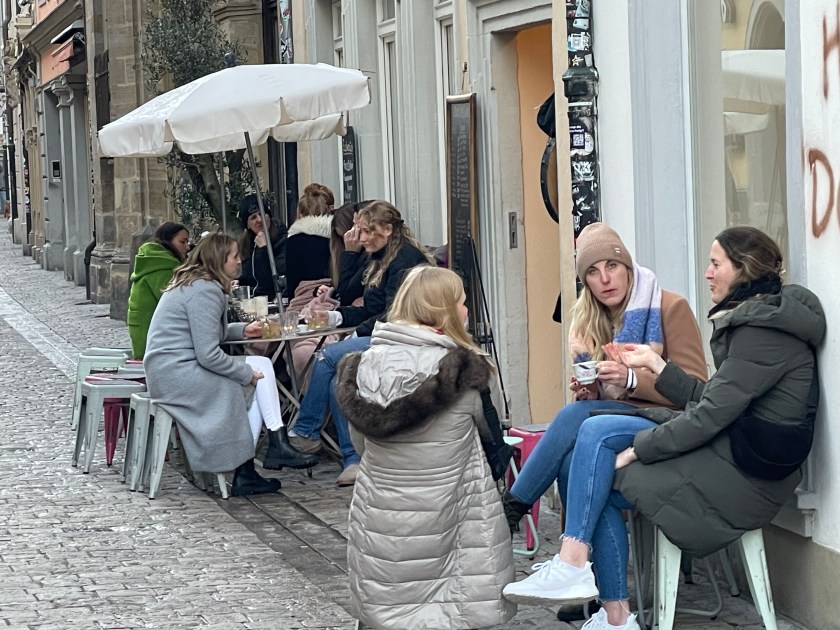
The pubs were busy and there were lots of people and students out and about.

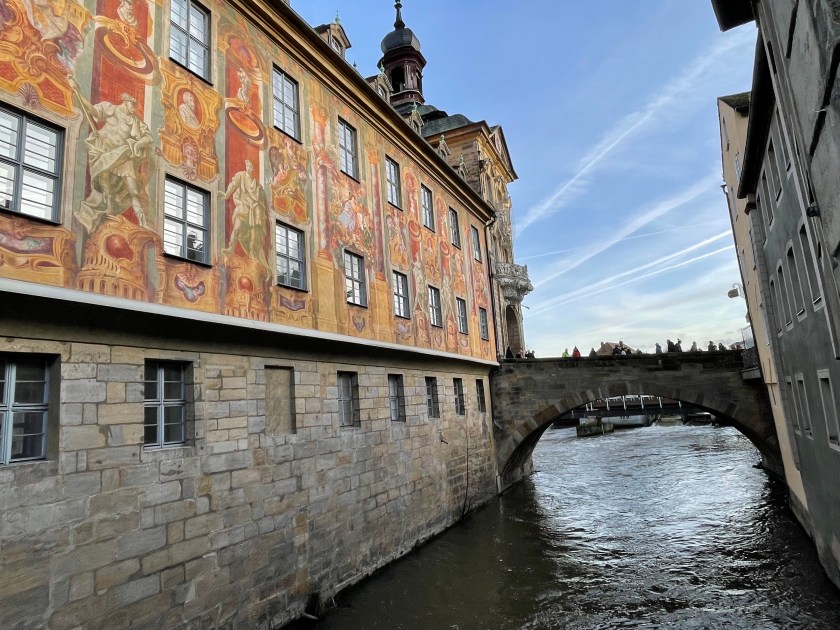
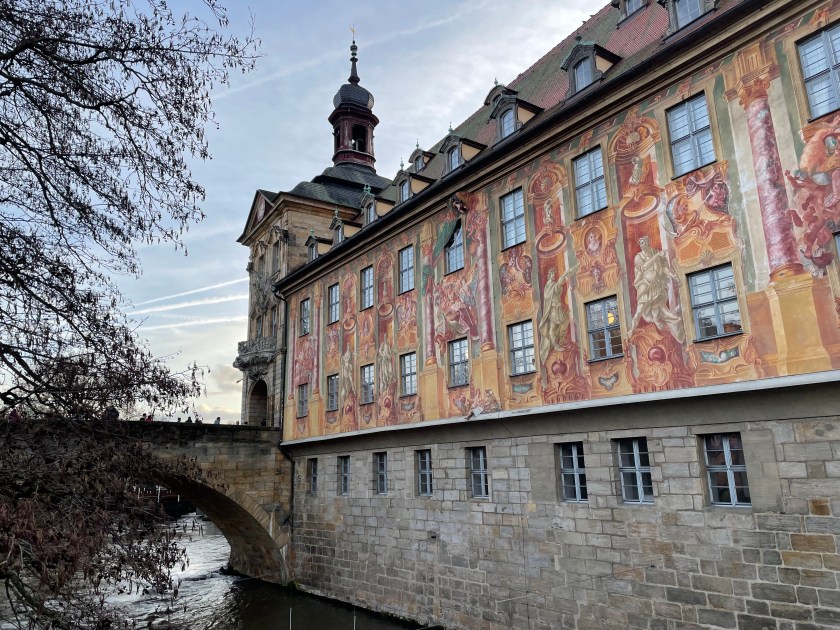
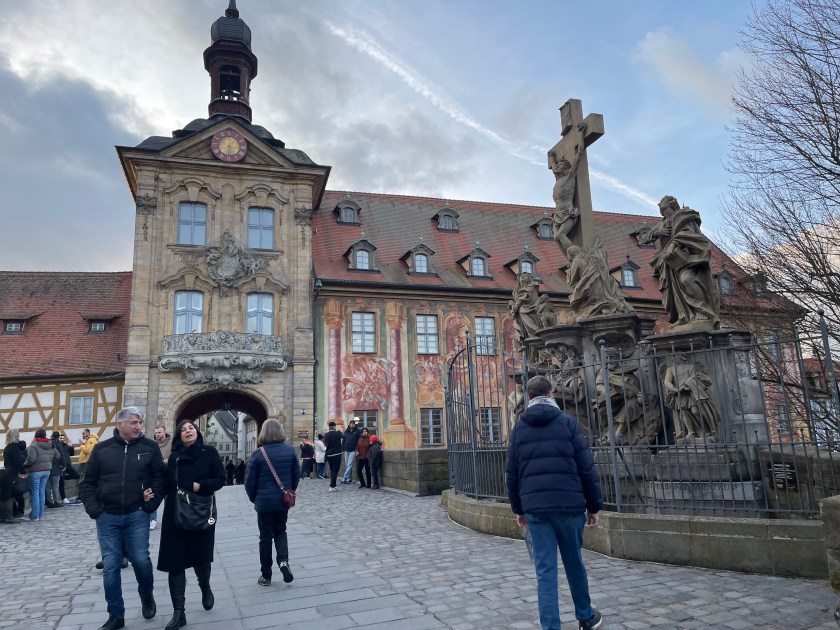
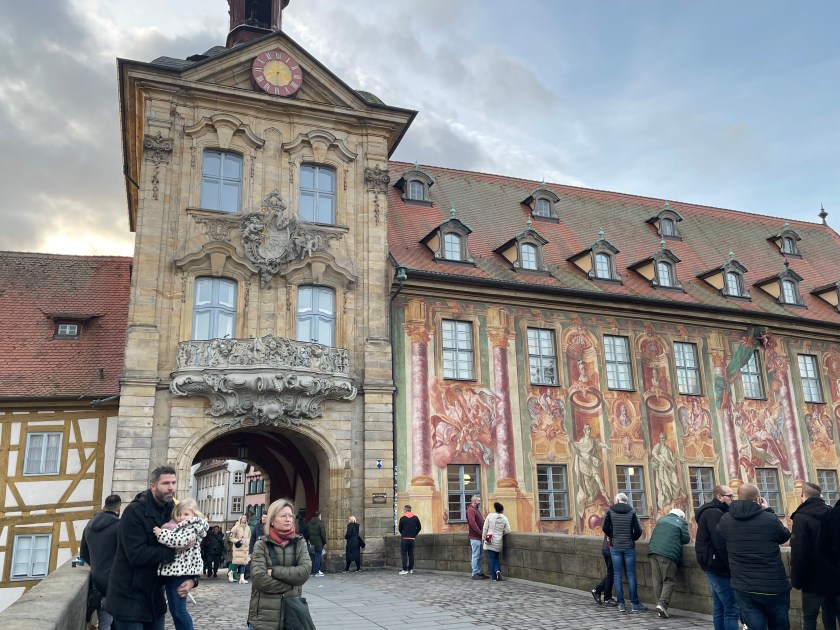
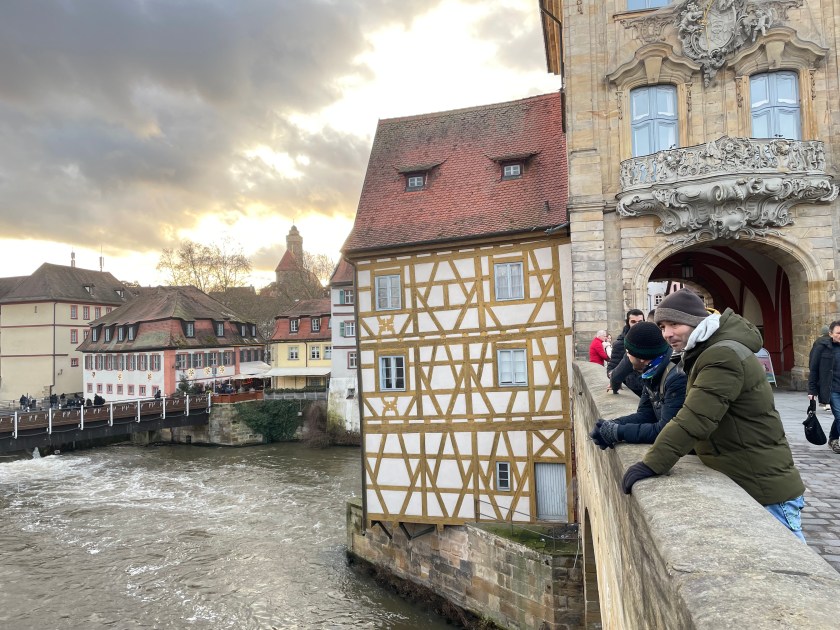
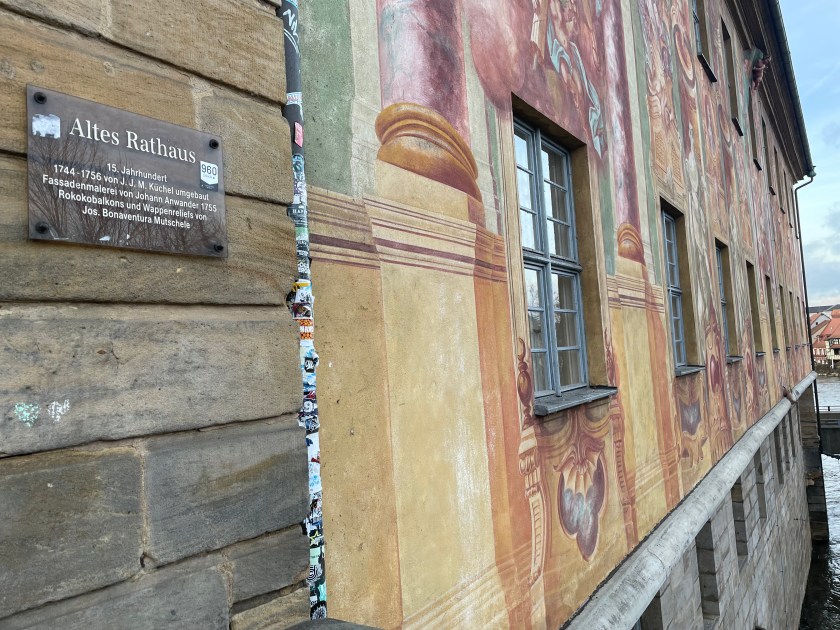
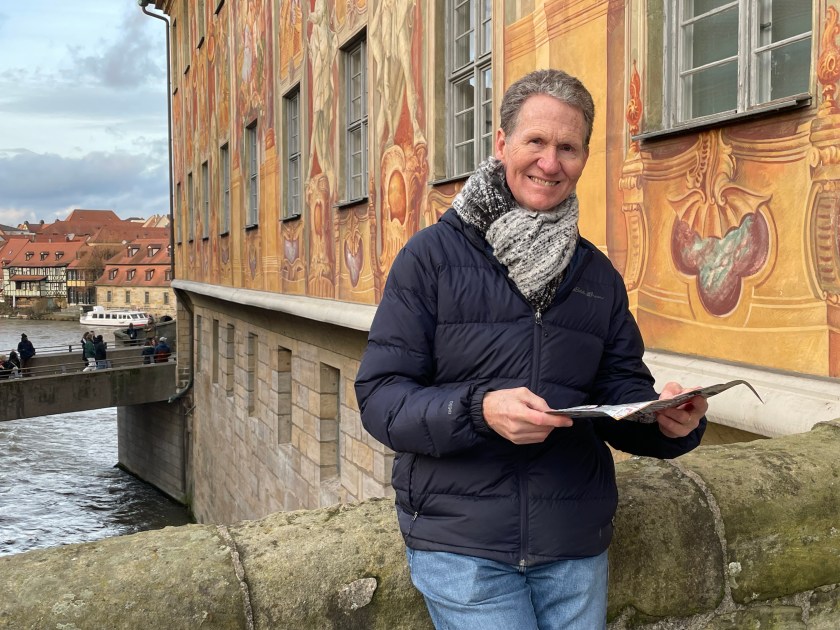
This is the famous town hall (1375) that sits on a small island in the river.  The frescos and murals have been restored in more recent years.

This building was the old butcher shop.

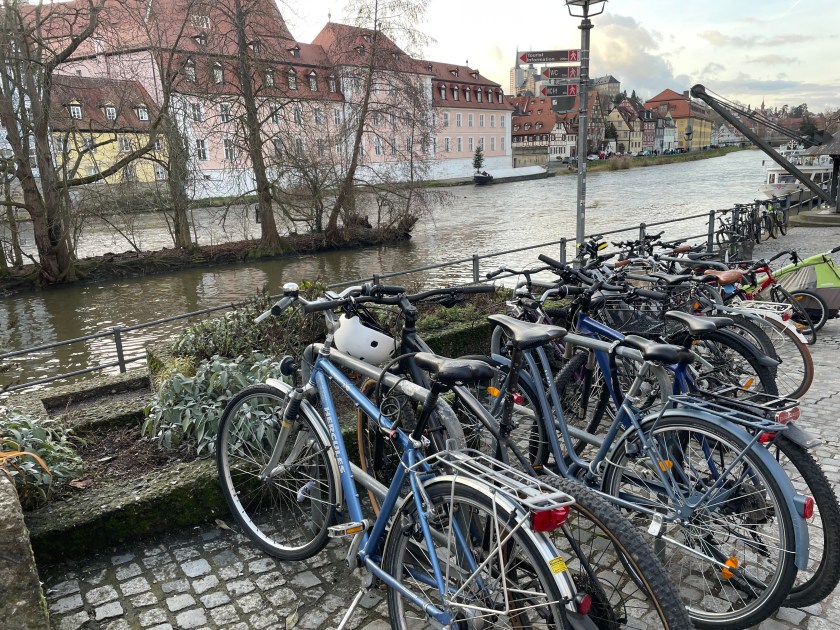
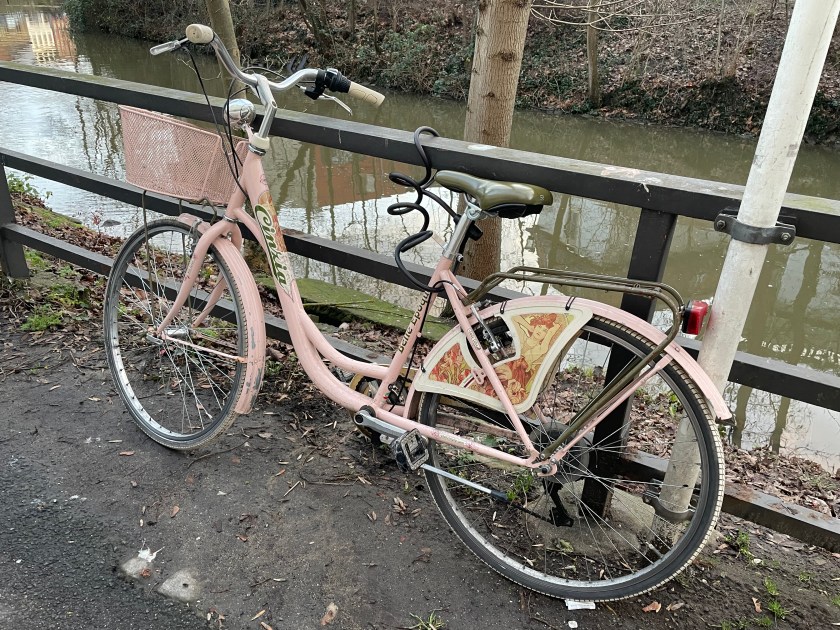
There is a university here in Bamberg, so there are bikes everywhere!

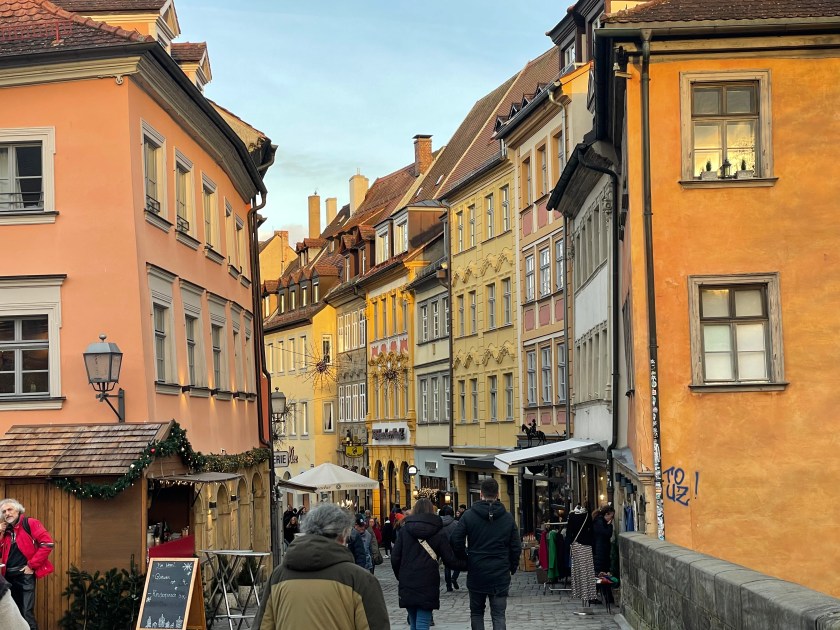
Oh, the colors!

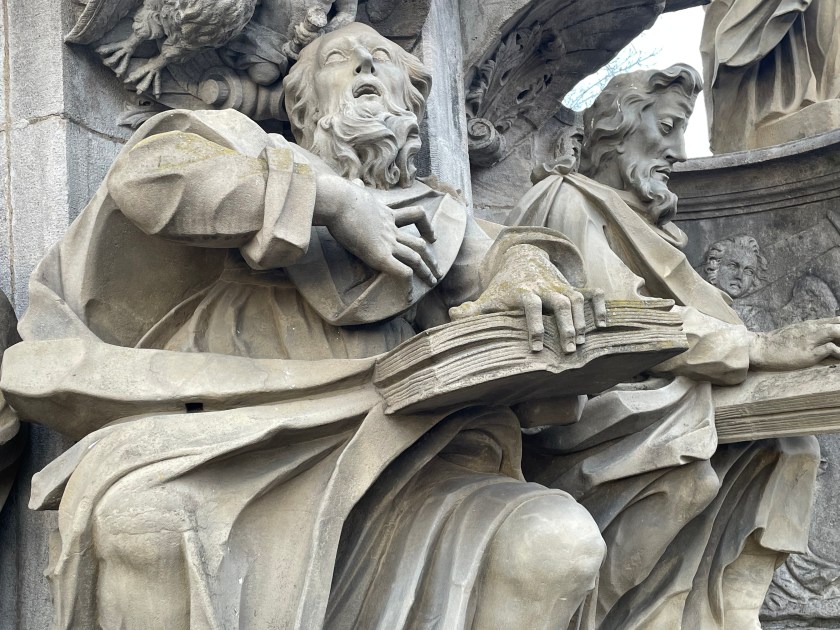
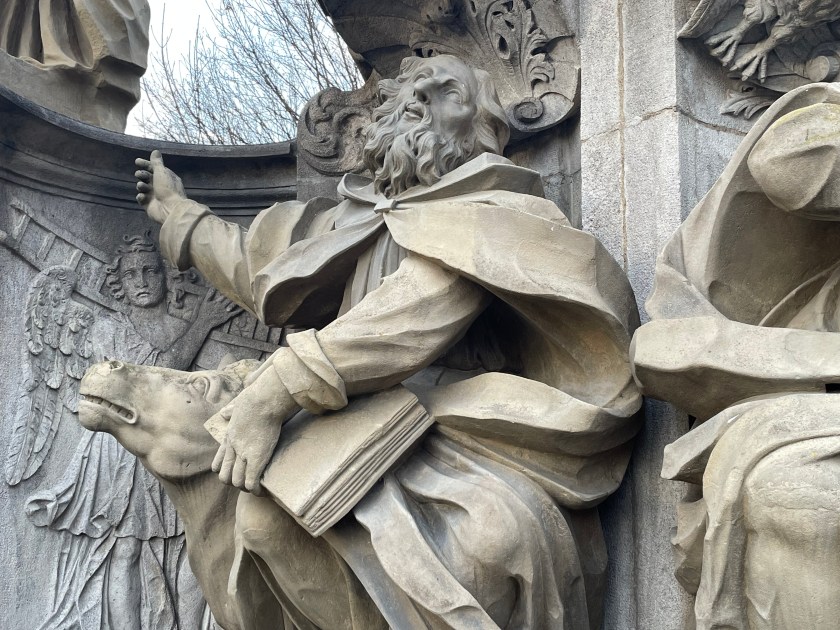
The Apostles recording the gospels:

This church was in the old part of town.

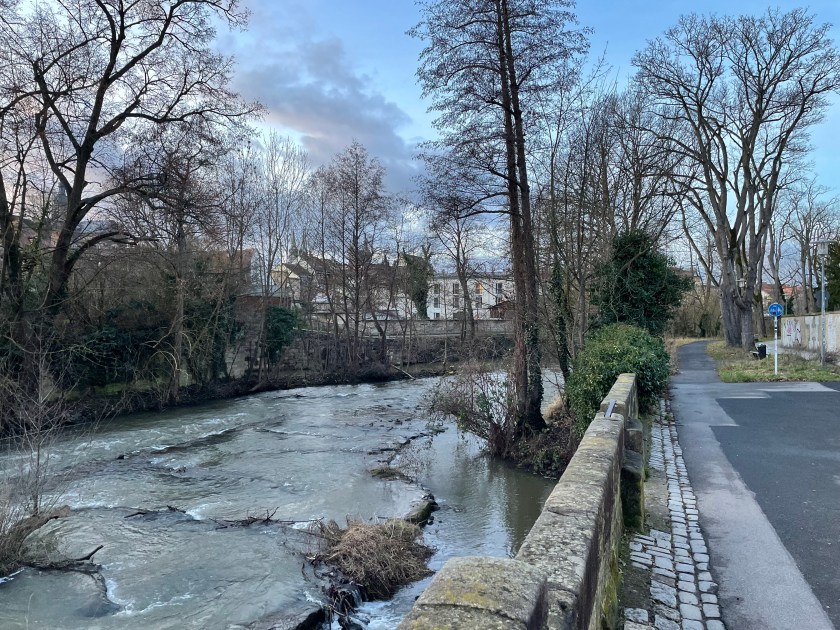
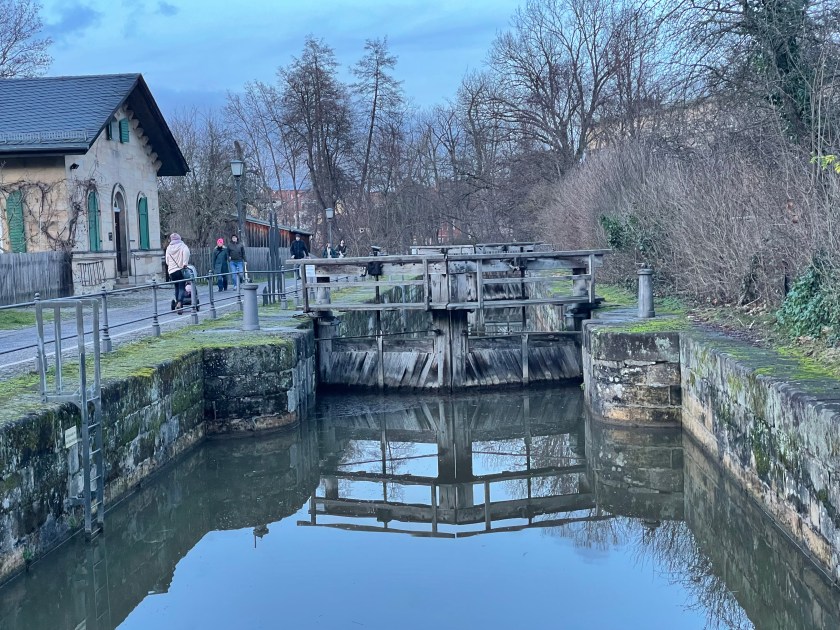
As it started to get dark, we took a walk to the locks in the river.

This Maison houses an artist’s community:

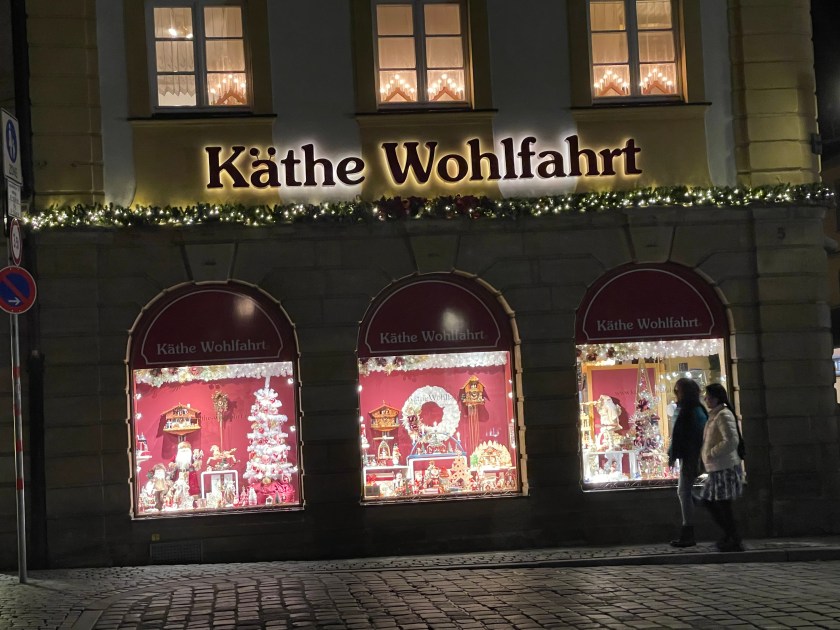
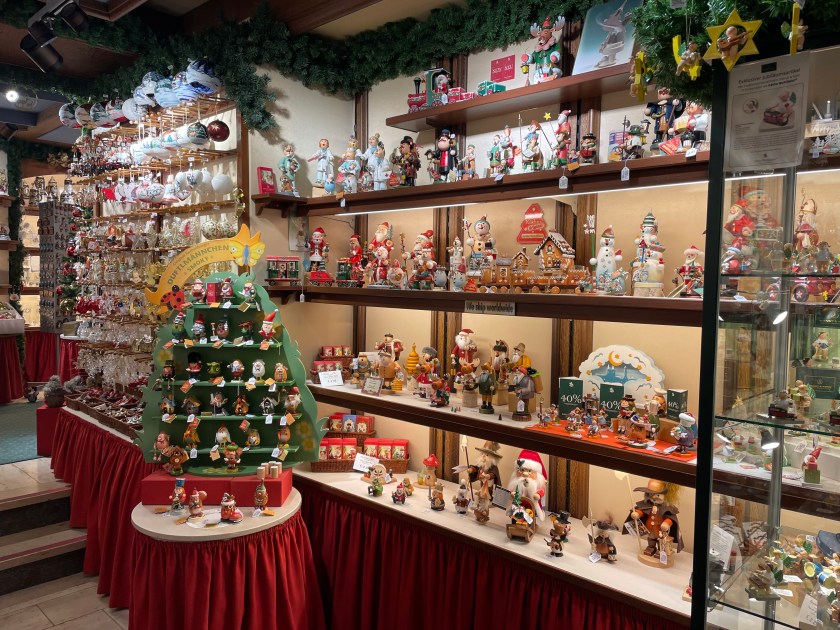
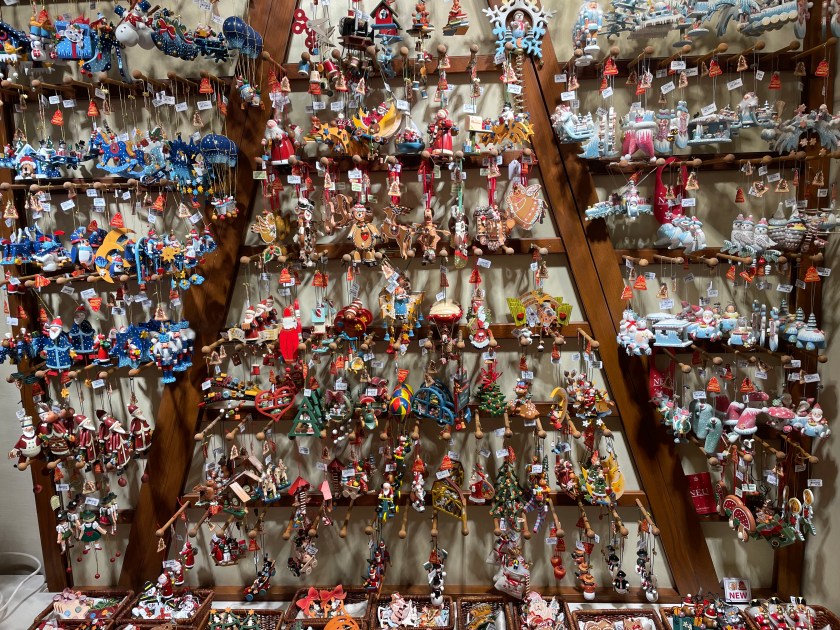
Oh dear, my favorite shop!

We found a fantastic Italian restaurant to top off our day–a pretty perfect day in every way.

Beautiful Bamberg

After leaving Nuremberg, we drove about an hour to Bamberg, a town with rave reviews and old history, our favorite.

Here are a few bits and pieces copied from travel sites about Bamberg:

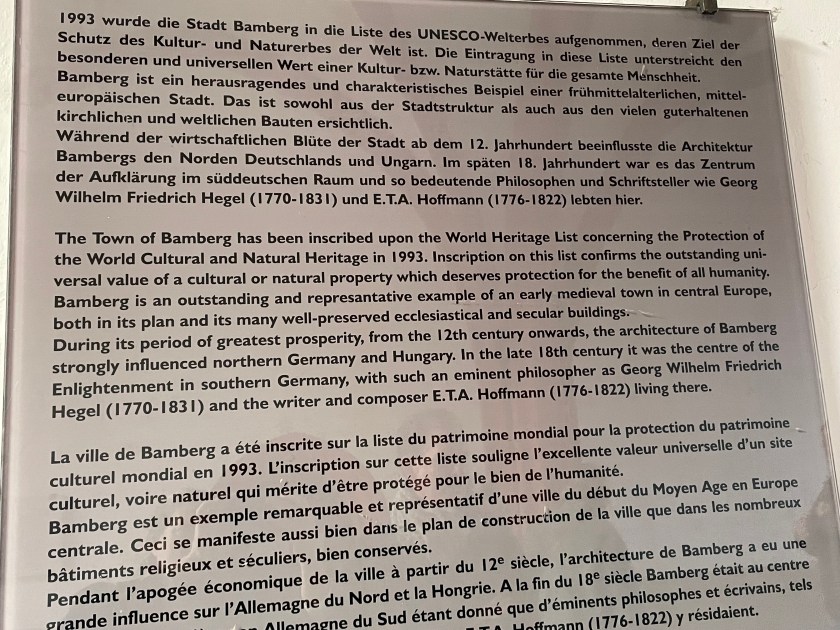
Bamberg: Fascination of a World Heritage Site
As visitors wander through the UNESCO World Heritage Site of Bamberg, they are particularly enchanted by the city’s many different facets. In the hill city Bamberg portrays itself as the Franconian Rome, the island city with Little Venice and the shopping district is its lively heart, the market gardeners’ district a part of town steeped in tradition. Bamberg, this means beer culture as a traditional craft, supped in traditional brewery pubs [there are 9 breweries here], this means shopping in modern shops and a historical atmosphere. And in the Old Town everything is very close together: Explore the imperial cathedral just a few minutes from your hotel or holiday apartment!
Bamberg is a town in northern Bavaria, Germany, laid out over 7 hills where the Regnitz and Main rivers meet. Its old town preserves structures from the 11th to 19th centuries including the muraled Altes Rathaus (town hall), which occupies an island in the Regnitz reached by arched bridges. The Romanesque Bamberg Cathedral, begun in the 11th century, features 4 towers and numerous stone carvings.
Since Bamberg was largely spared from bombing during the Second World War, the old town still offers the almost unchanged image of the original three-fold division into a spiritual mountain town (in the vicinity of the imperial cathedral ), a civil island town (between the two branches of the Regnitz river ) and the gardener’s town. Overlooked by the cathedral, the city represents a listed ensemble of medieval and baroque architecture.
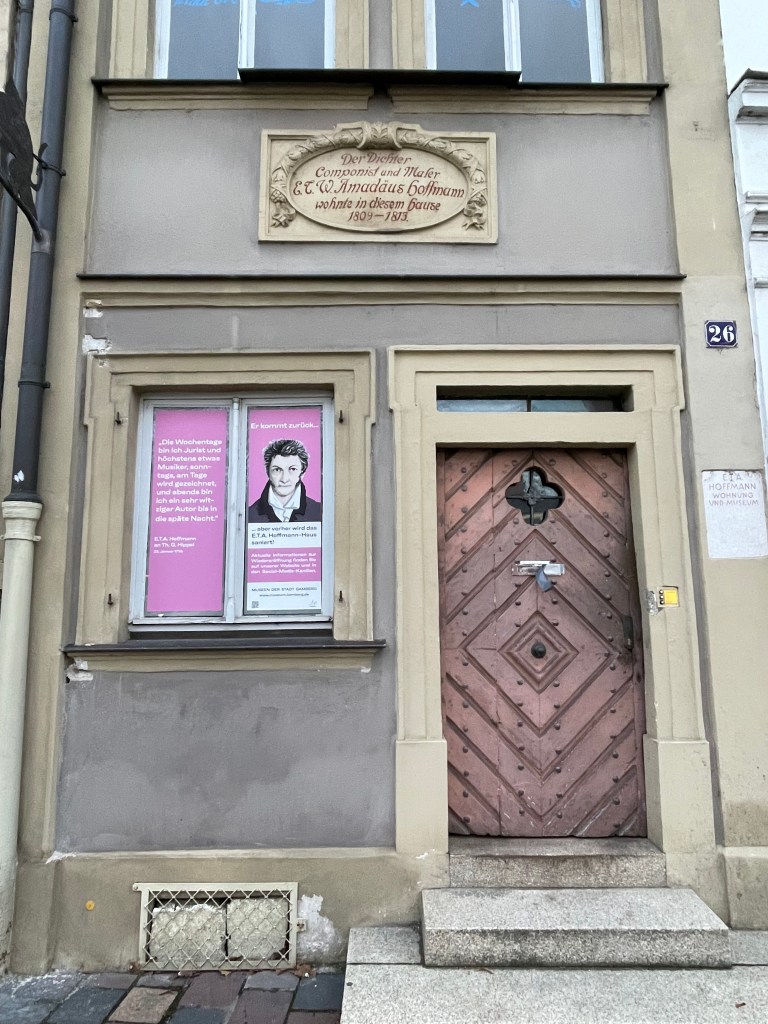
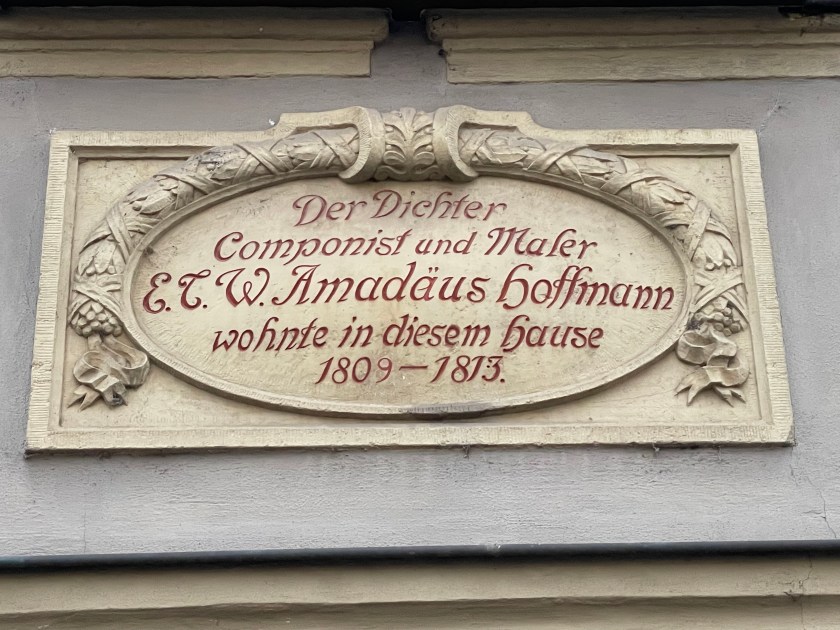
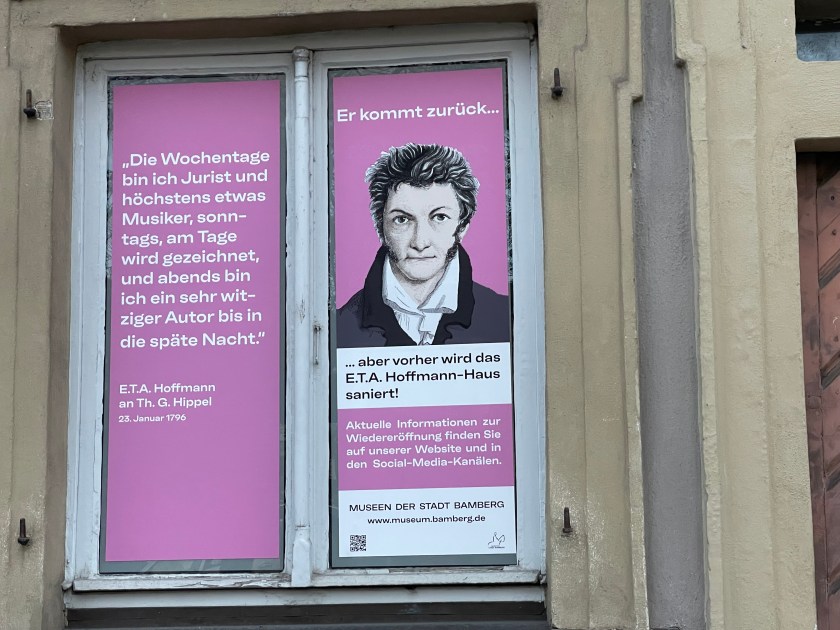
From the 10th century onwards, Bamberg became an important link with the Slav peoples, especially those of Poland and Pomerania. During its period of greatest prosperity, from the 12th century onwards, the architecture of this town strongly influenced northern Germany and Hungary. In the late 18th century Bamberg was the centre of the Enlightenment in southern Germany, with eminent philosophers and writers such as Georg Wilhelm Friedrich Hegel and E.T.A. Hoffmann living there.
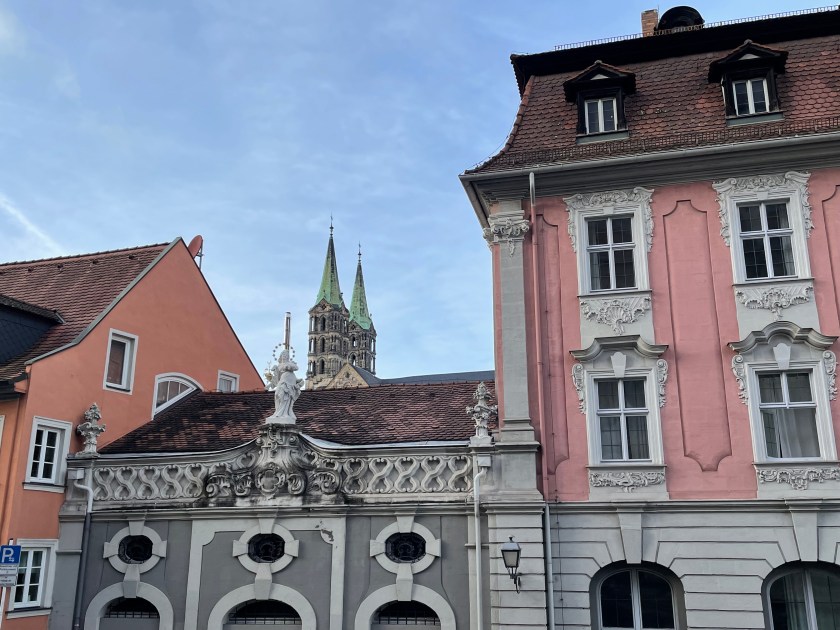
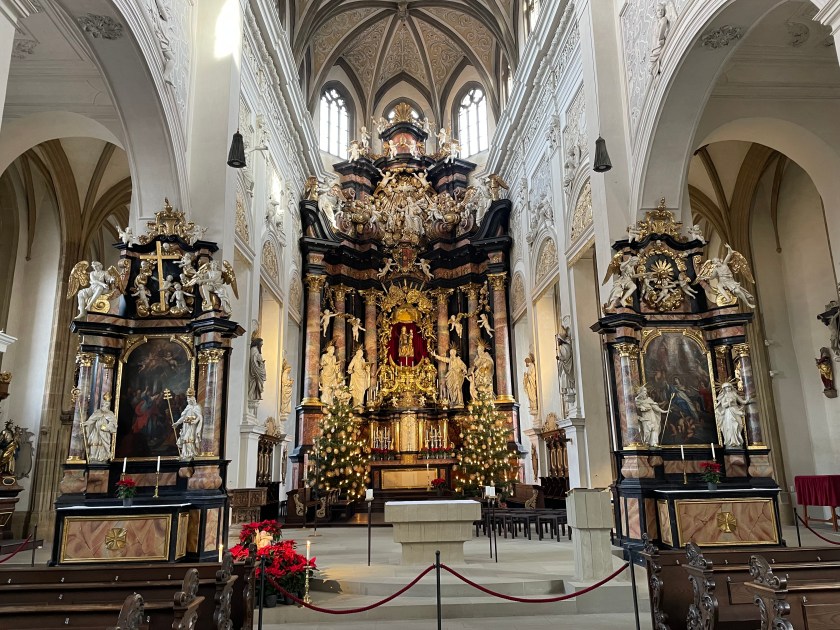
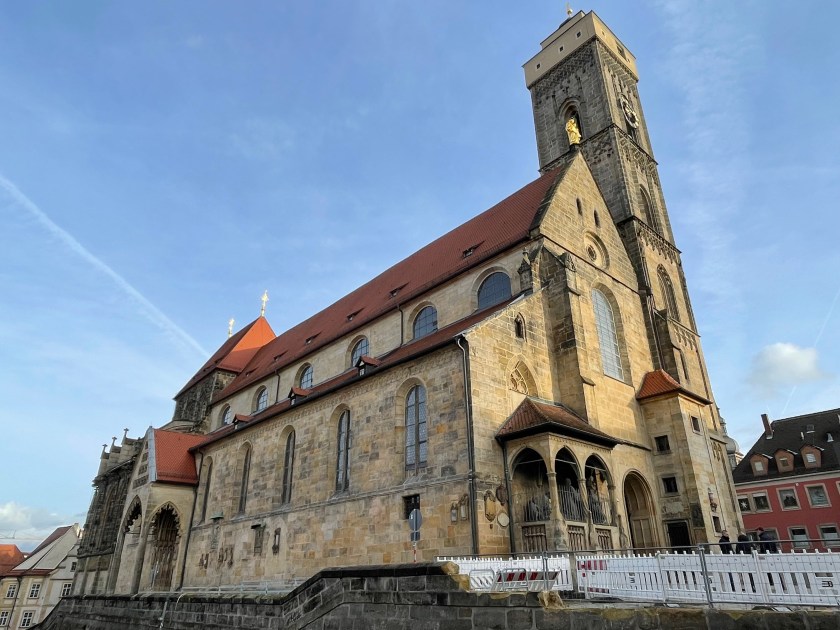
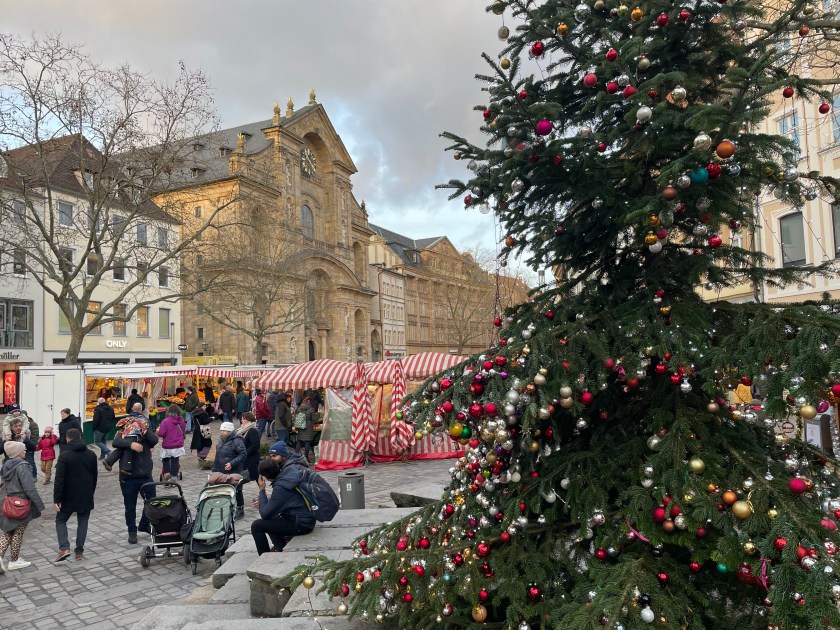
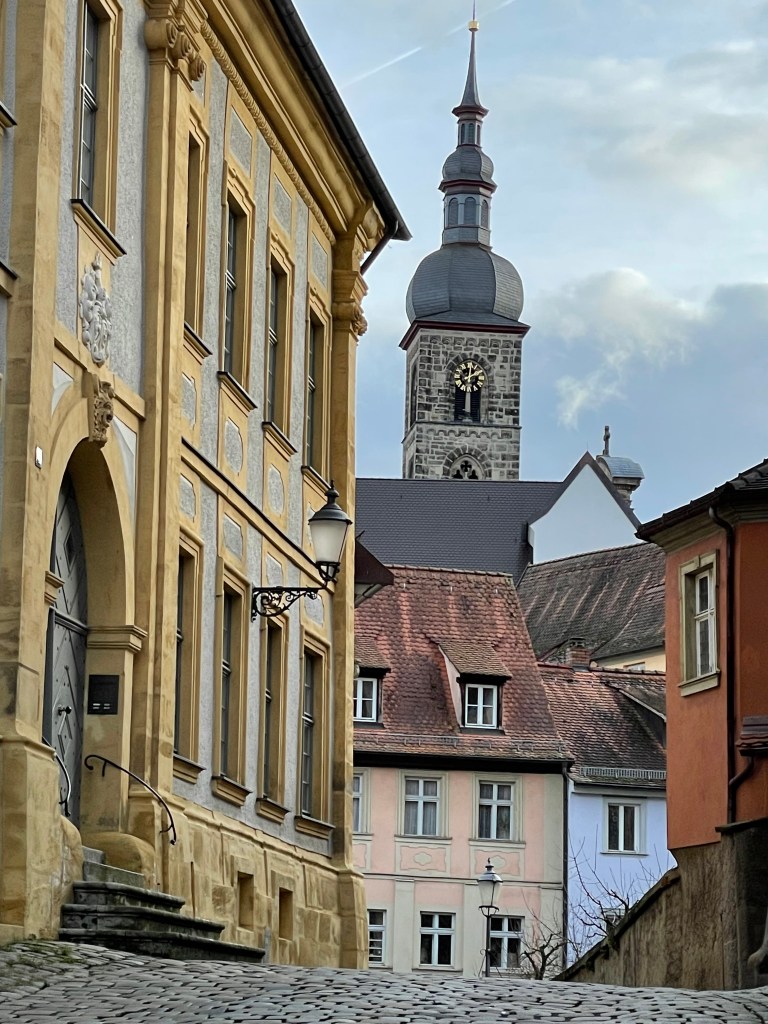
We found parking and then were drawn to the church towers and spires in town.  There are 4 huge churches/cathedrals in this town, laid out in the shape of a cross.  They are HUGE and OLD and IMPRESSIVE.  We visited 3 of them (the 4th was doing renovations).  It’s always nice to start a walking tour with the church, usually in the center of the old town.
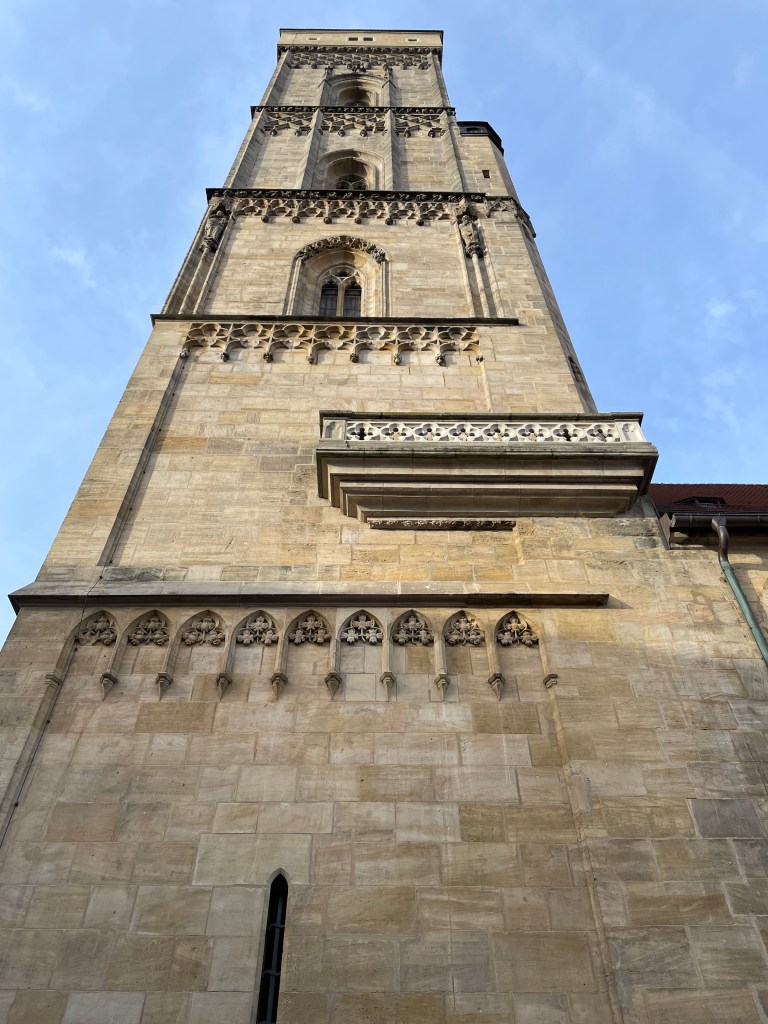
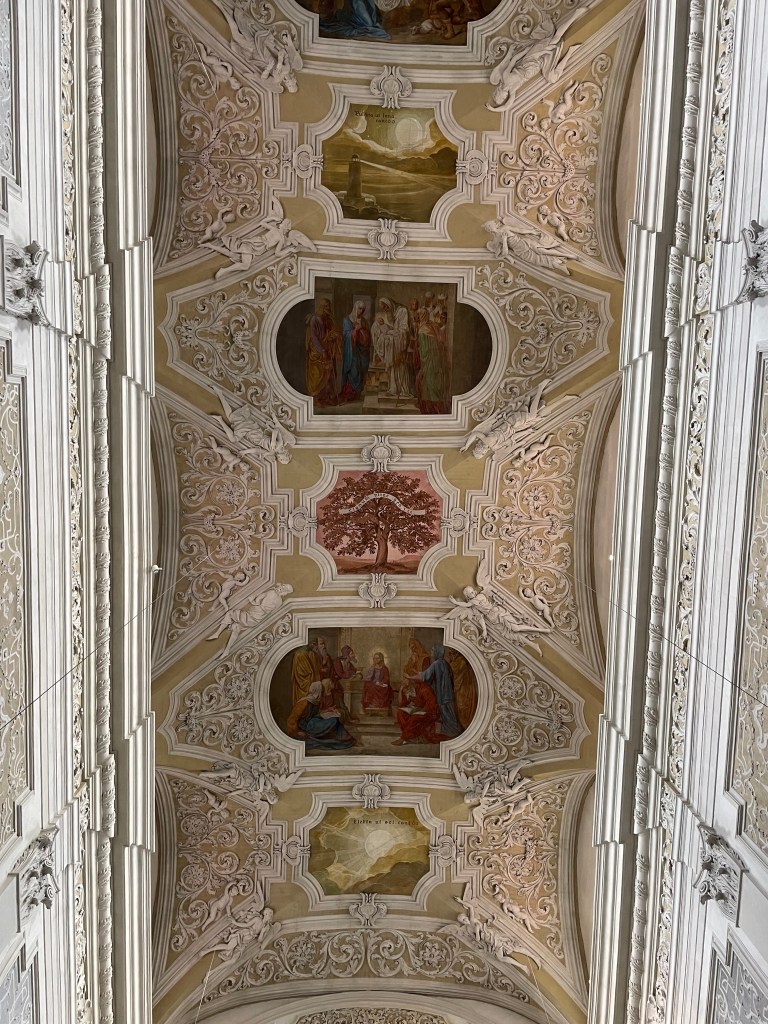
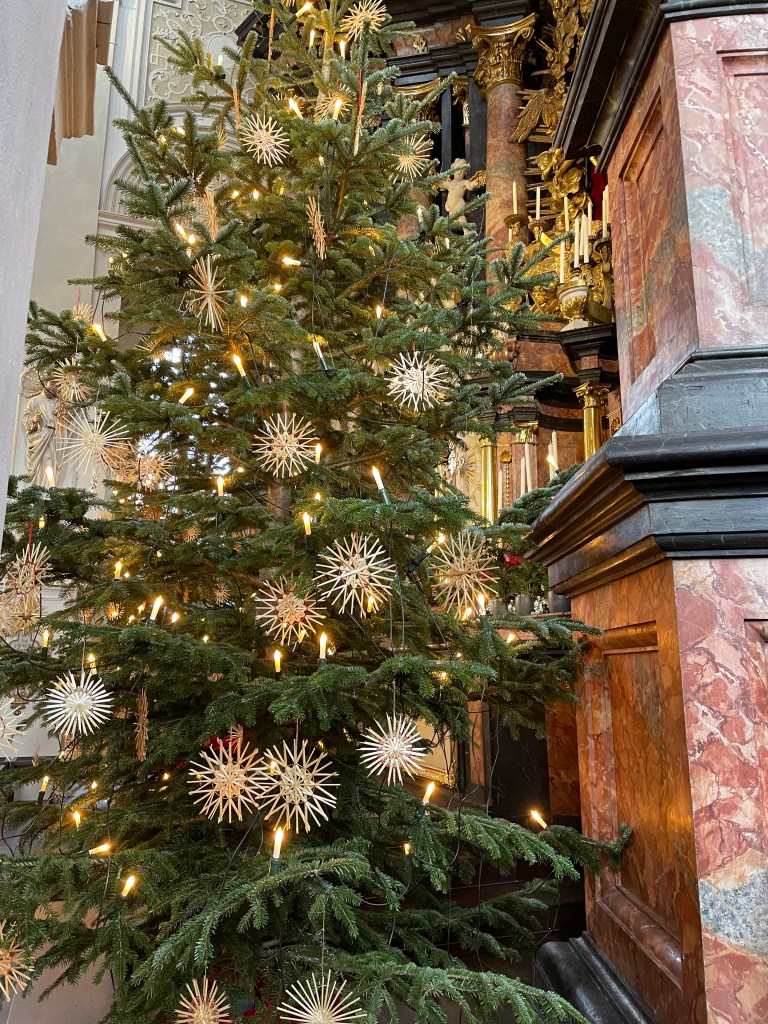
This first church, The Church of Our Lady (1375) is Gothic and Very Ornate.
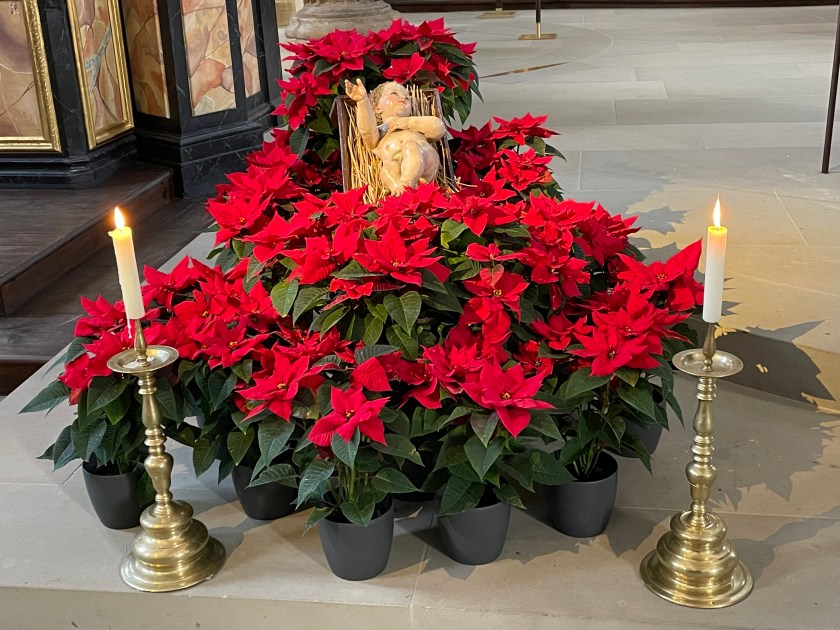
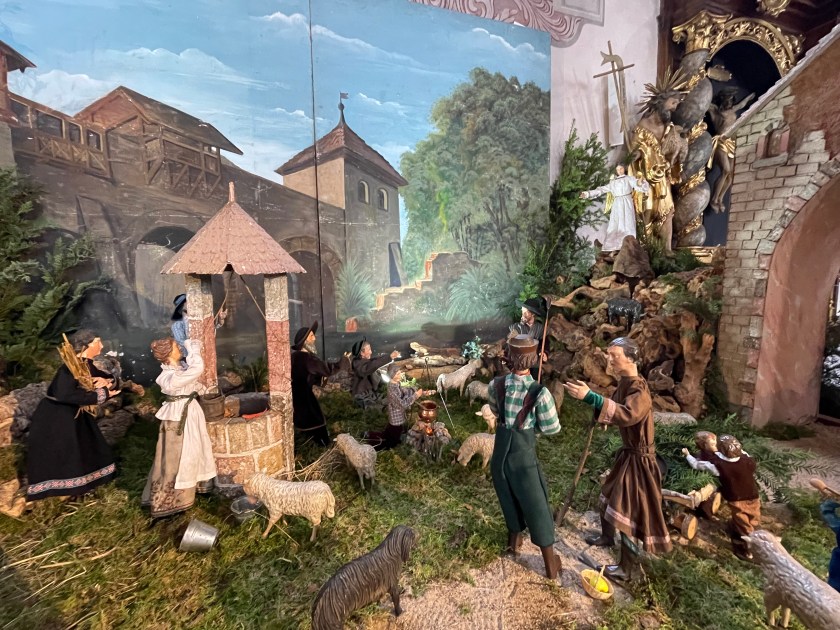
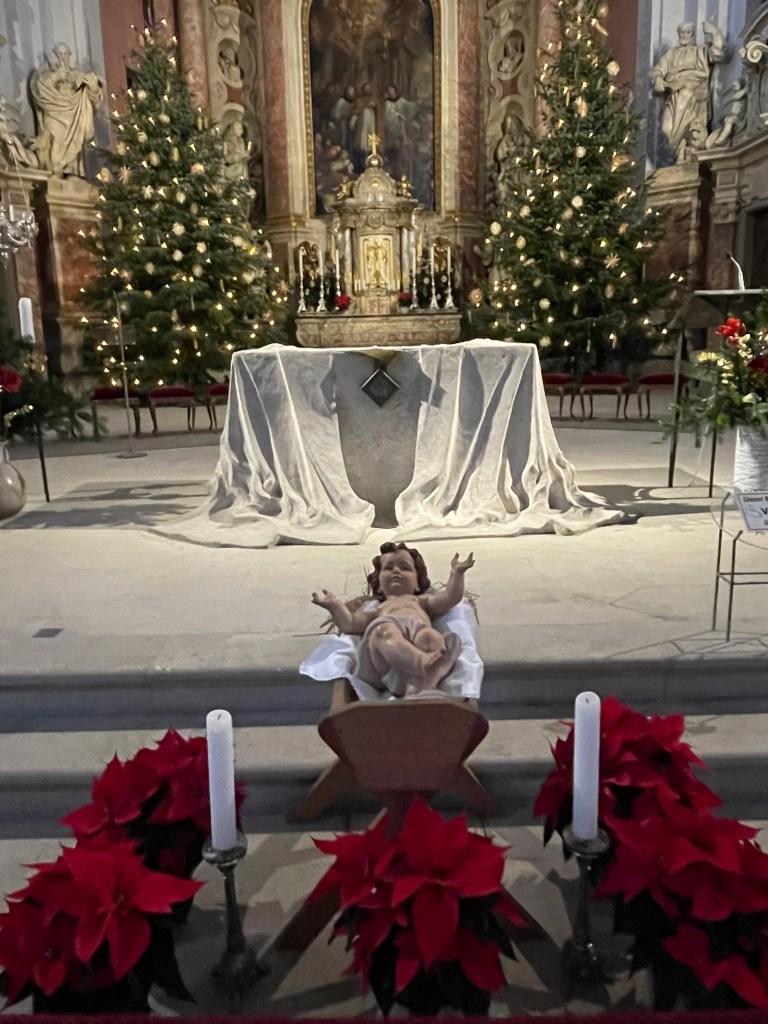
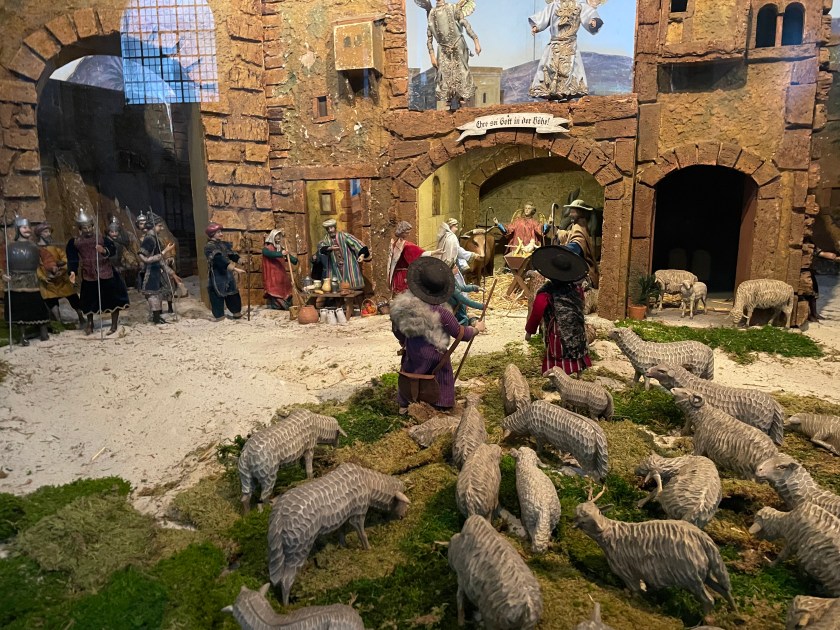
The European-style Nativities are always interesting with European settings.
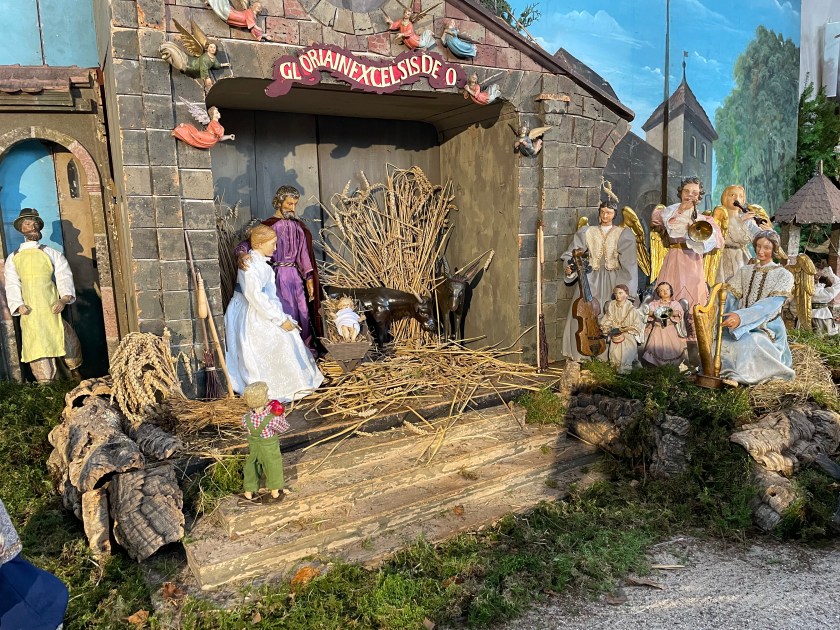
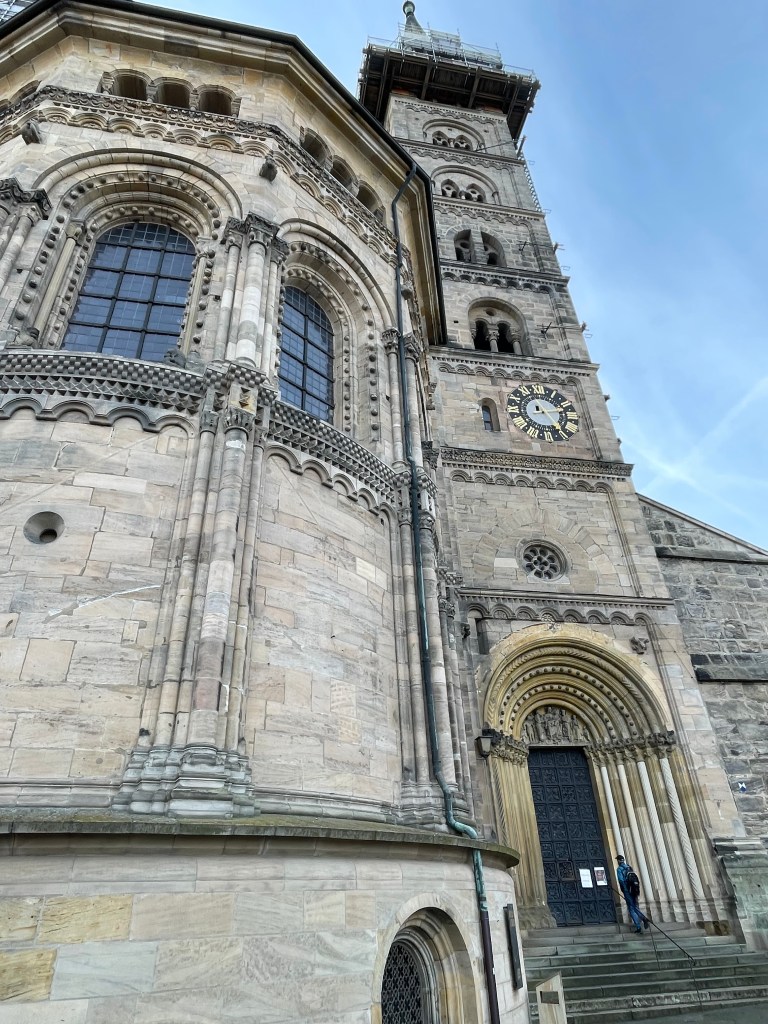
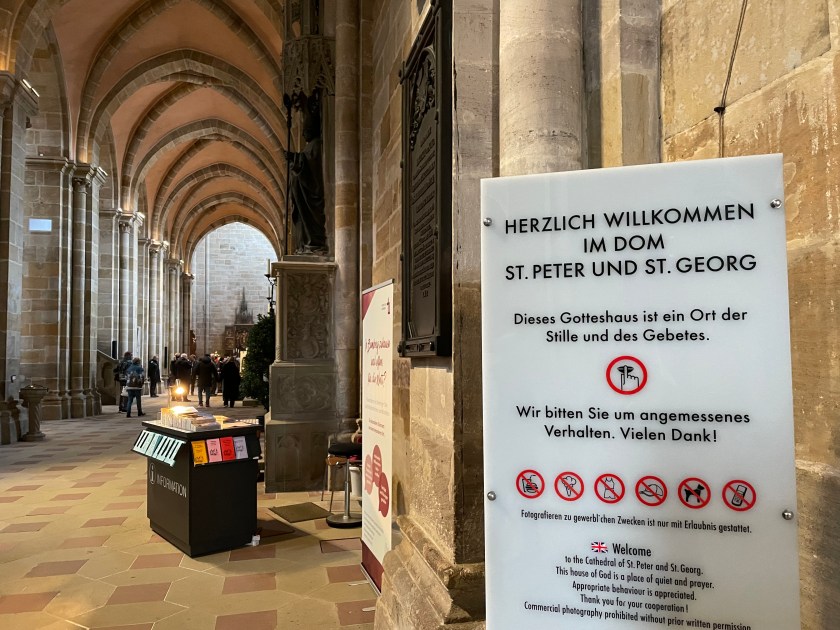
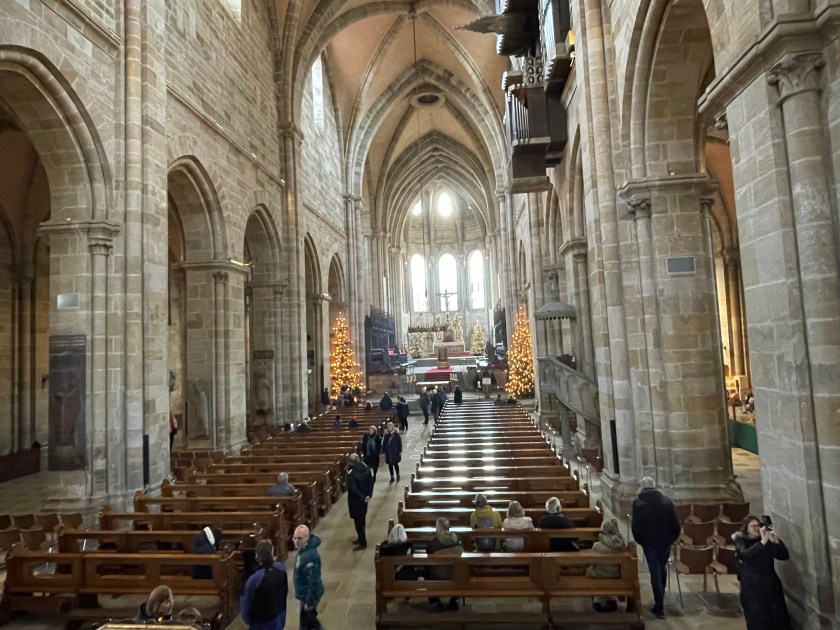
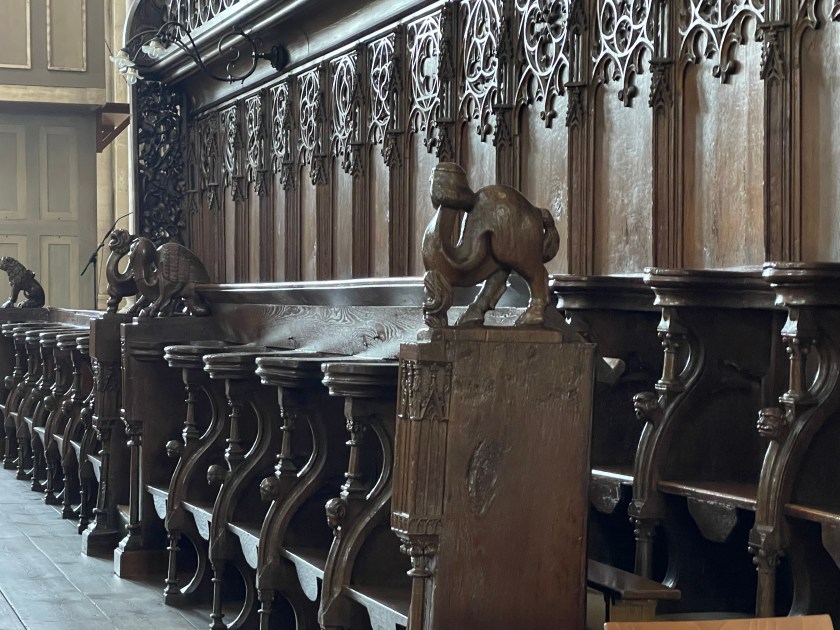
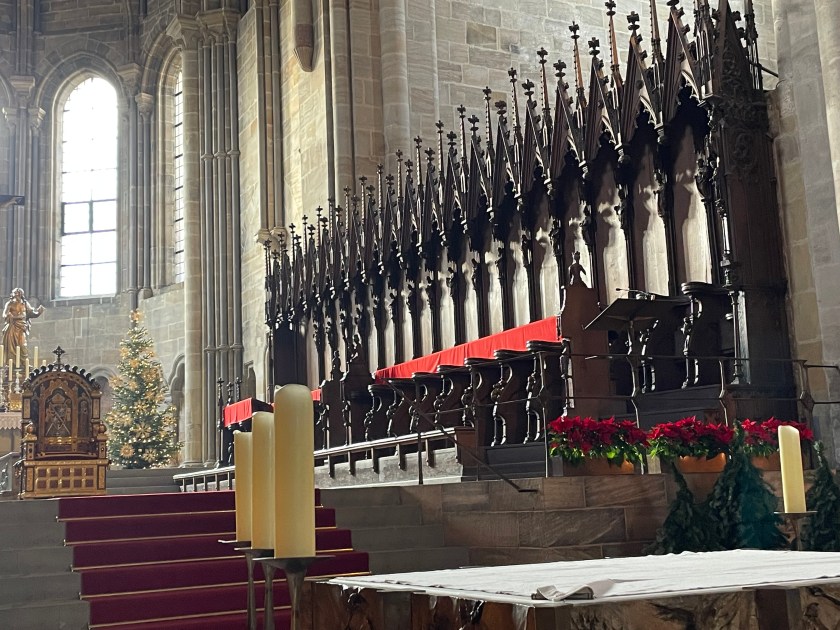
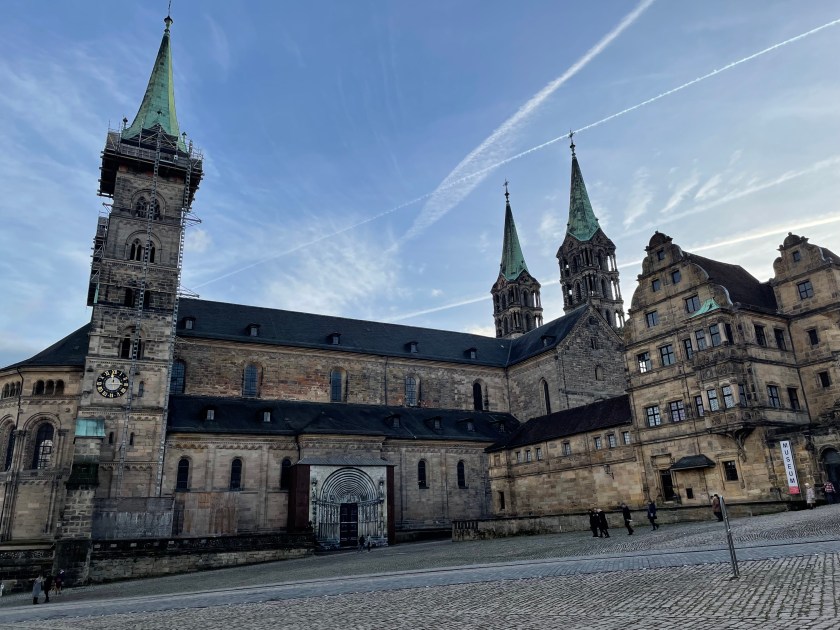
Then we went to the Bamberg Cathedral.
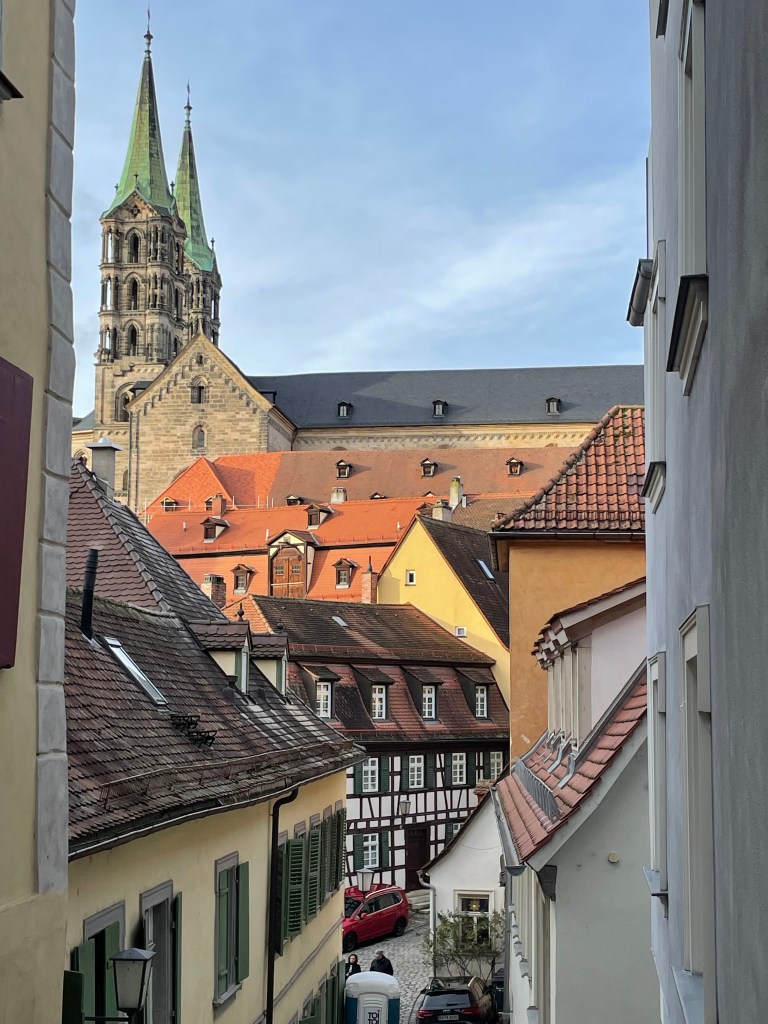
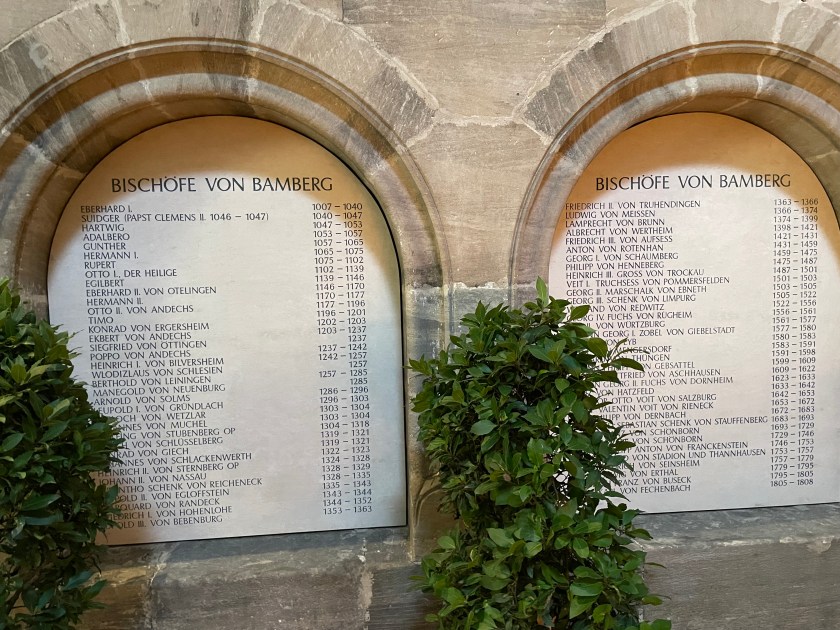
This cathedral is so huge.  It’s hard to imagine a small Medieval town surrounding it.  Bamberg Cathedral is the only place in Germany where a pope is buried. He was Pope Clement II. He was the local bishop before he became Pope, but he died in 1047 after having been pope for only twelve months.  That makes this a cathedral people make pilgrimages to.  The church was full of visitors and tour groups.
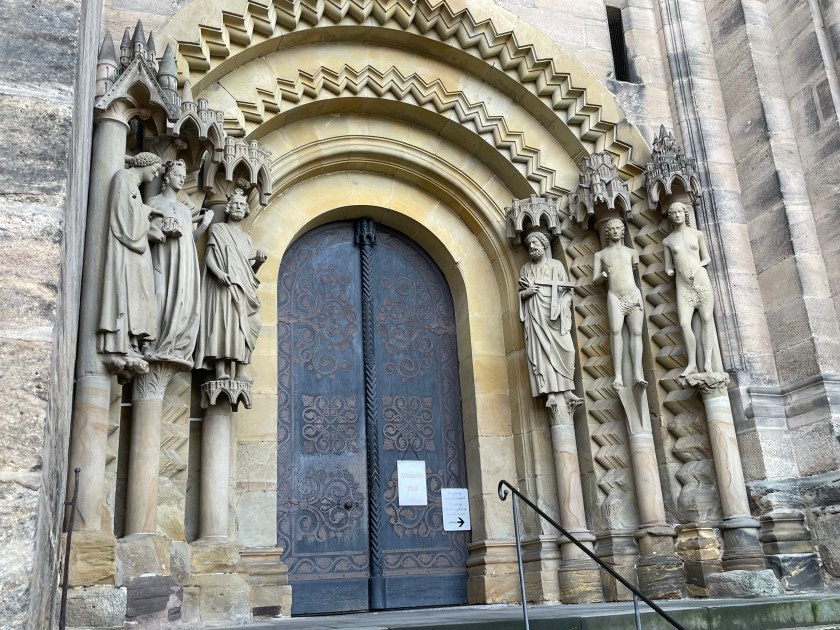
Even though we don’t worship in the same ways, I appreciate the beauty here and the craftsmen who created this beauty.
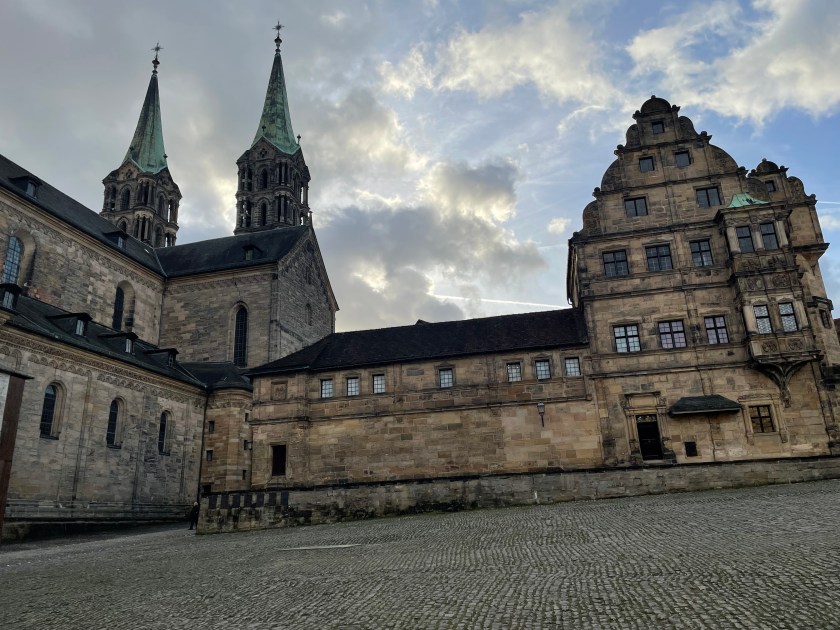
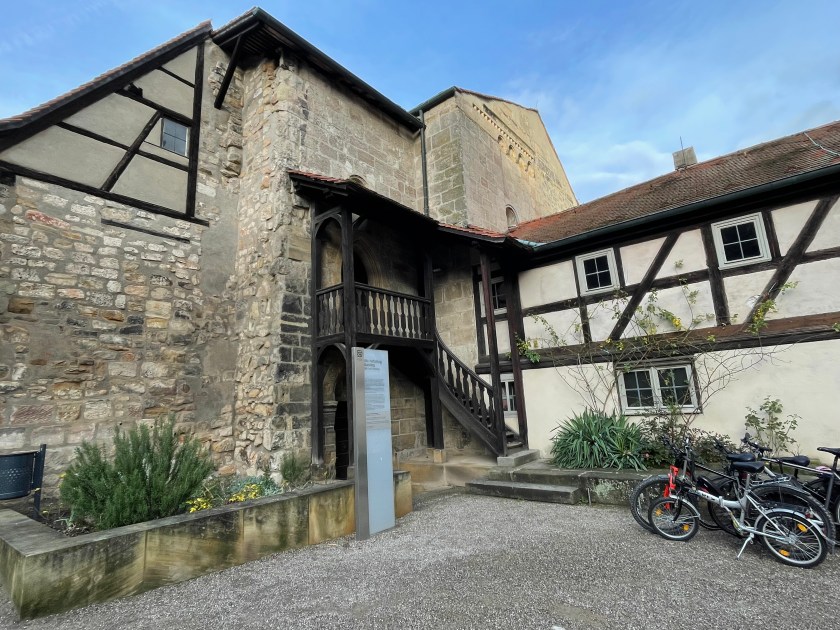
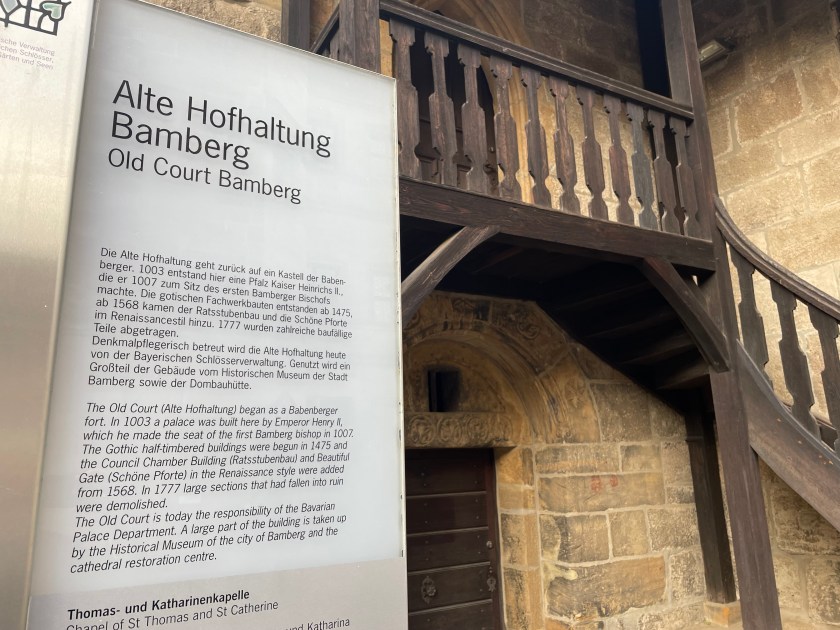
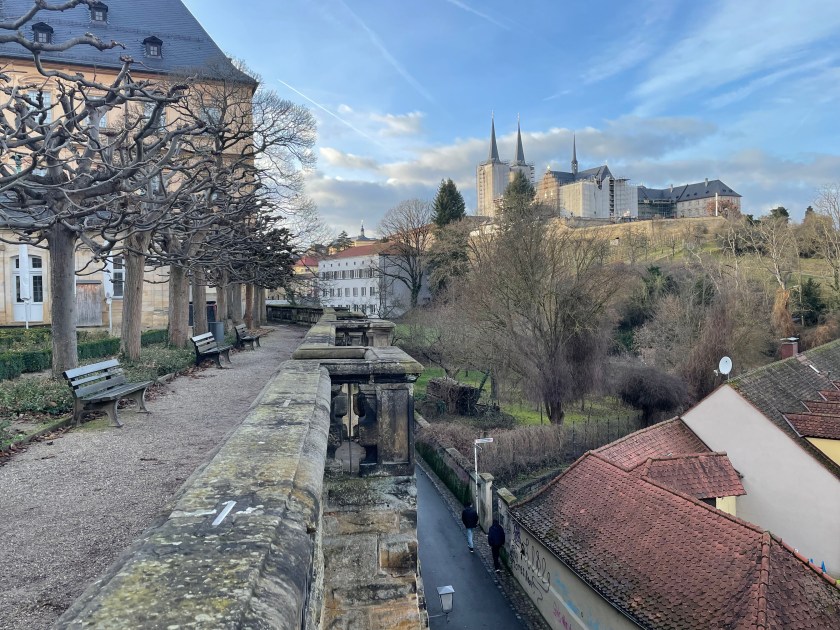
The areas around the cathedral:
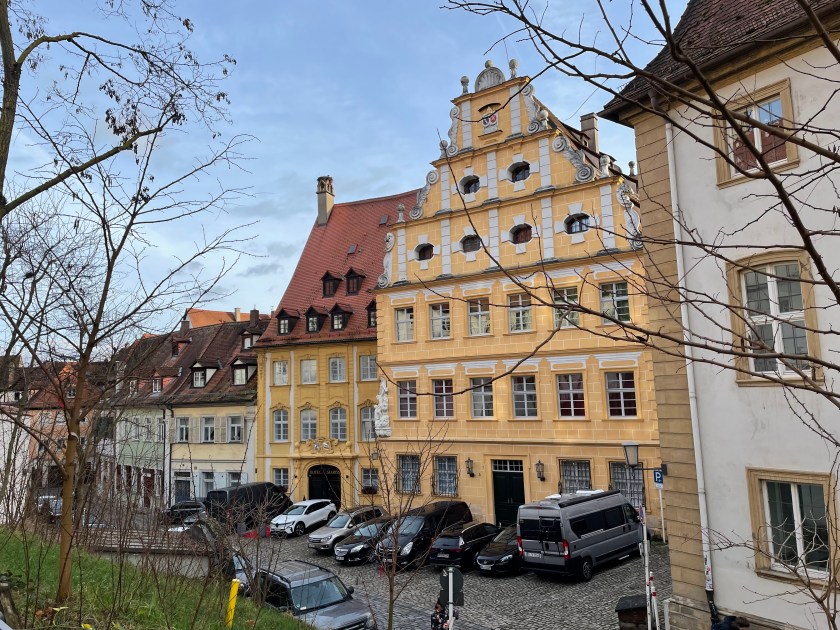
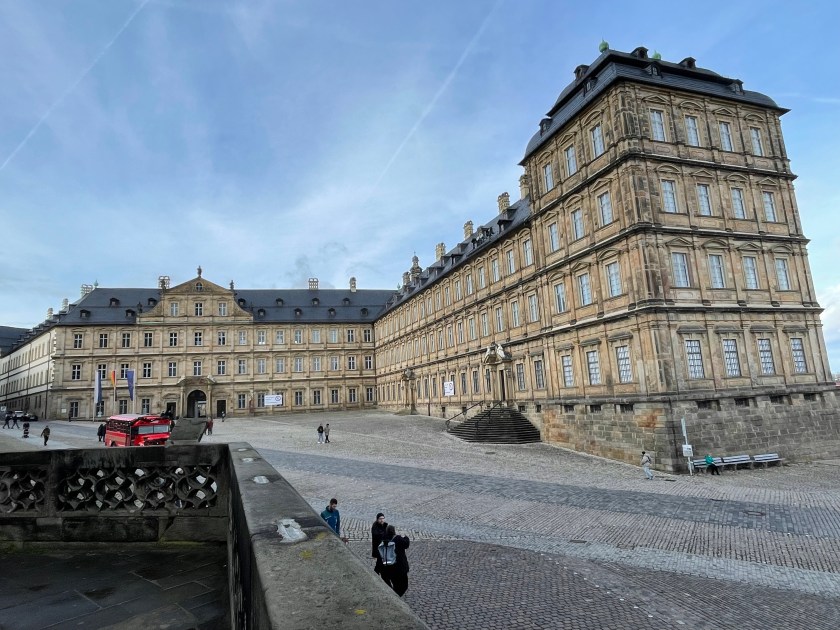
This was a palace by the cathedral overlooking the river:

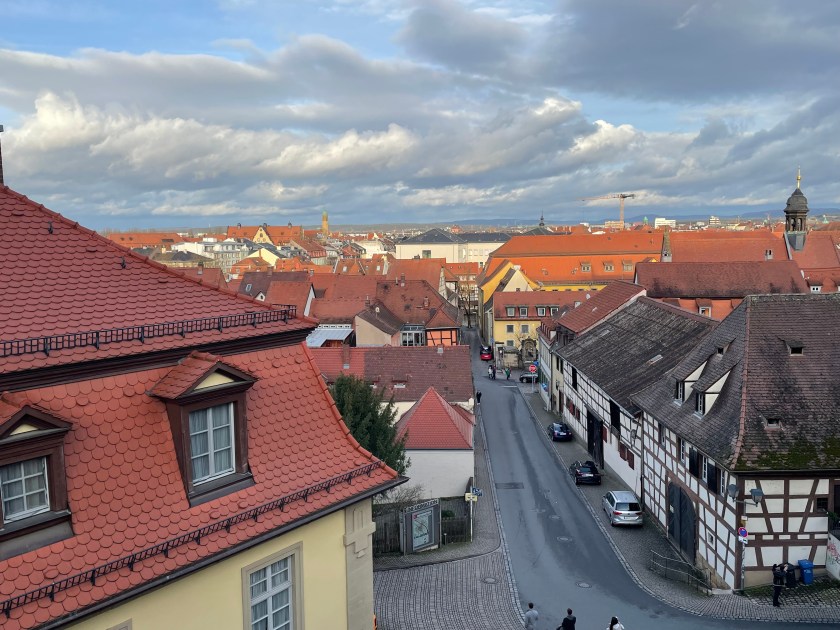
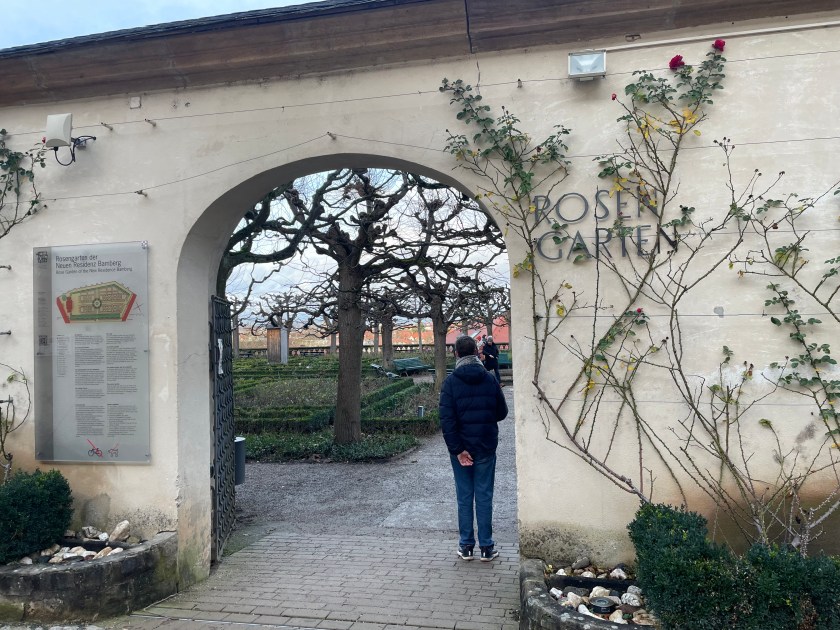
The palace rose garden and views down over the town and river:
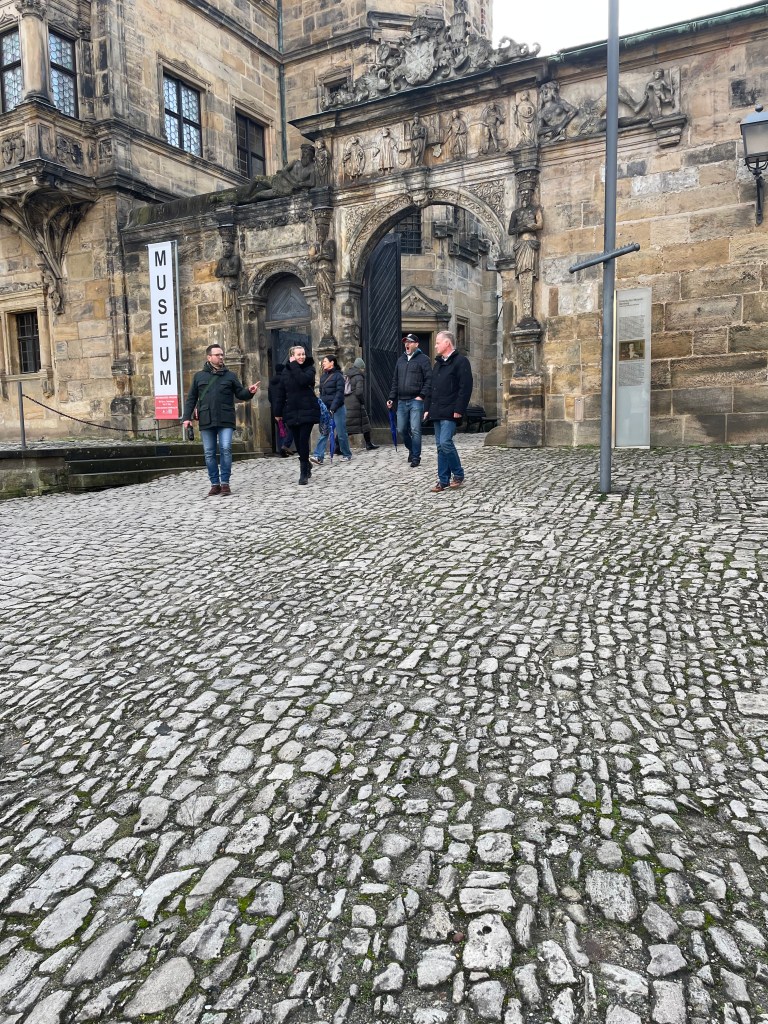
Back by the palace and the cathedral:

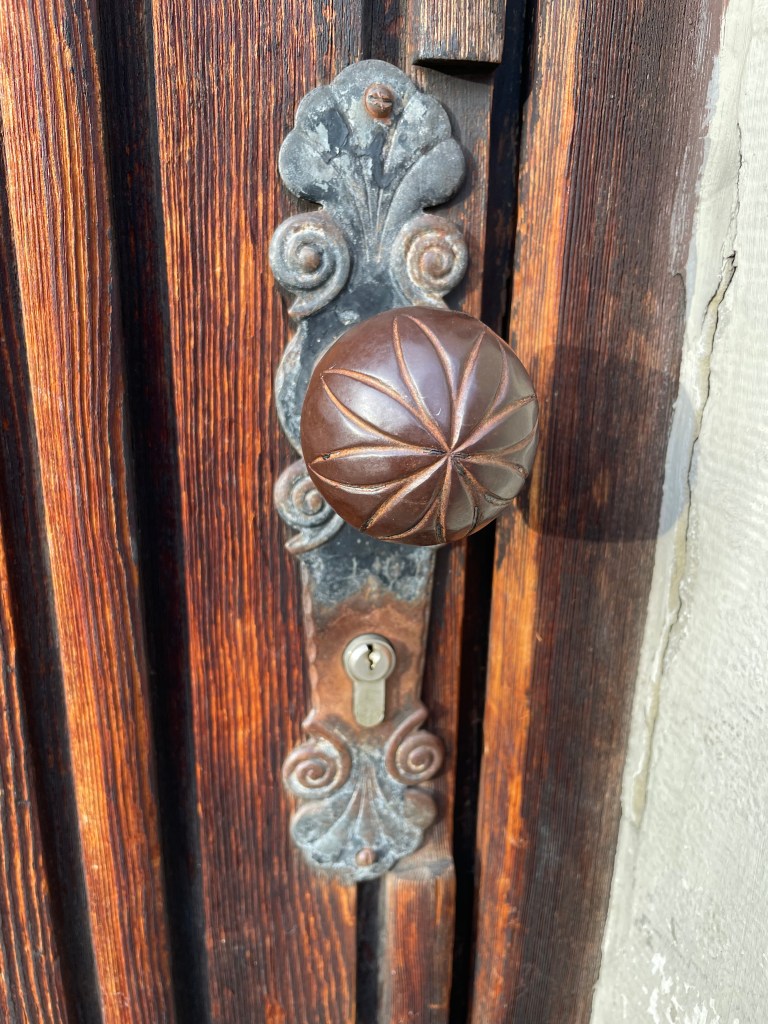
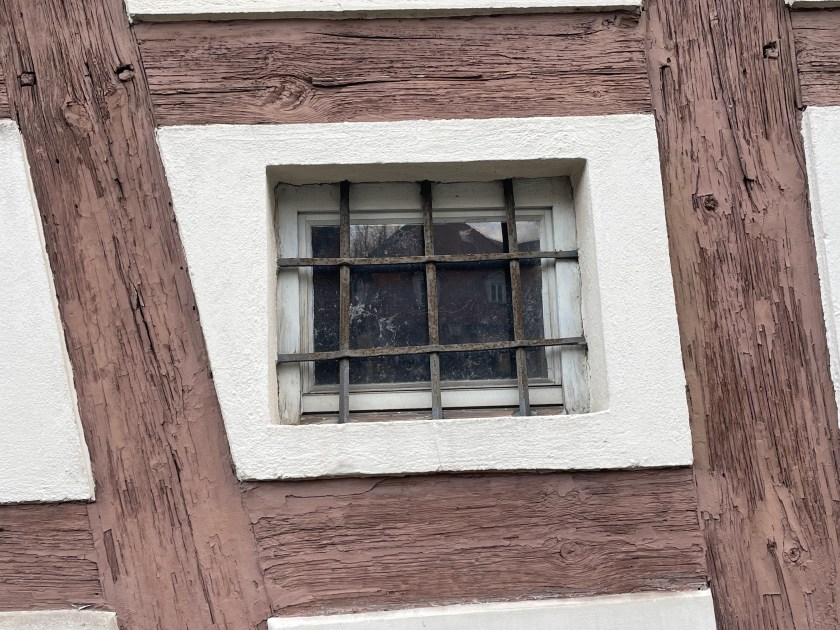
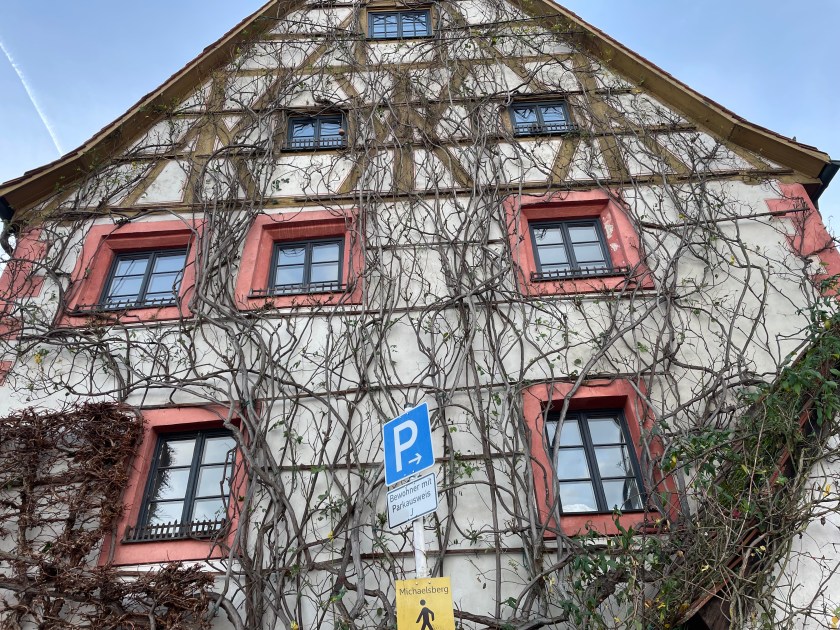
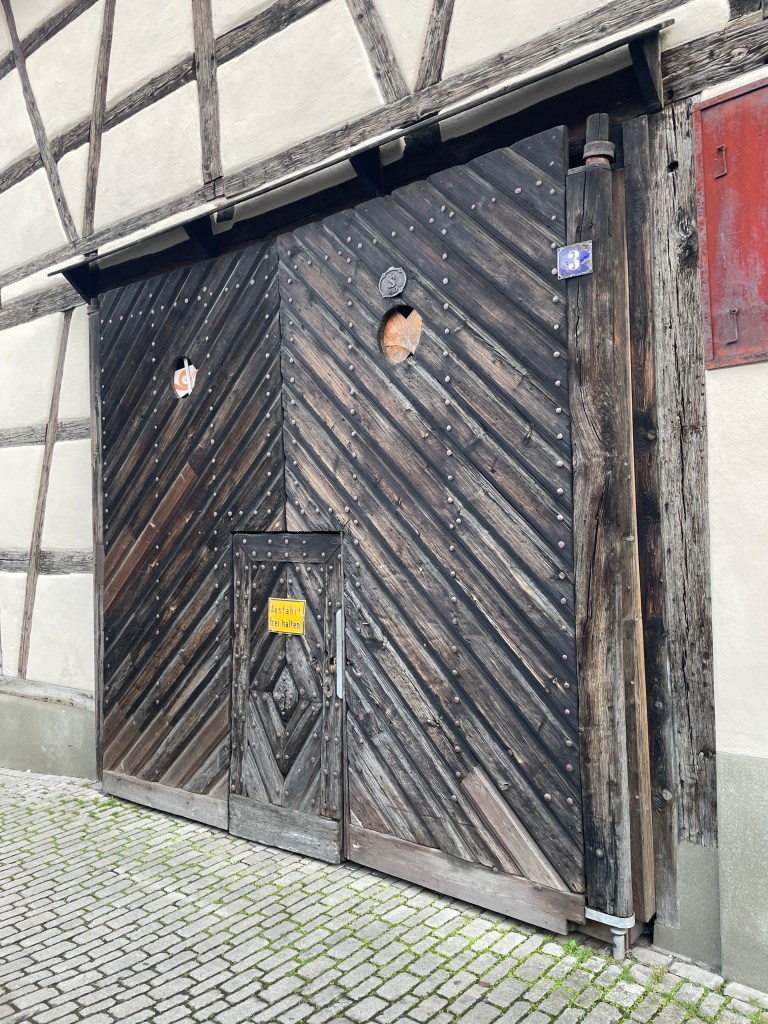
Here’s an interesting door to an old Bauernhof (farm house) right in the old town.  Once animals and farm equipment were housed here.
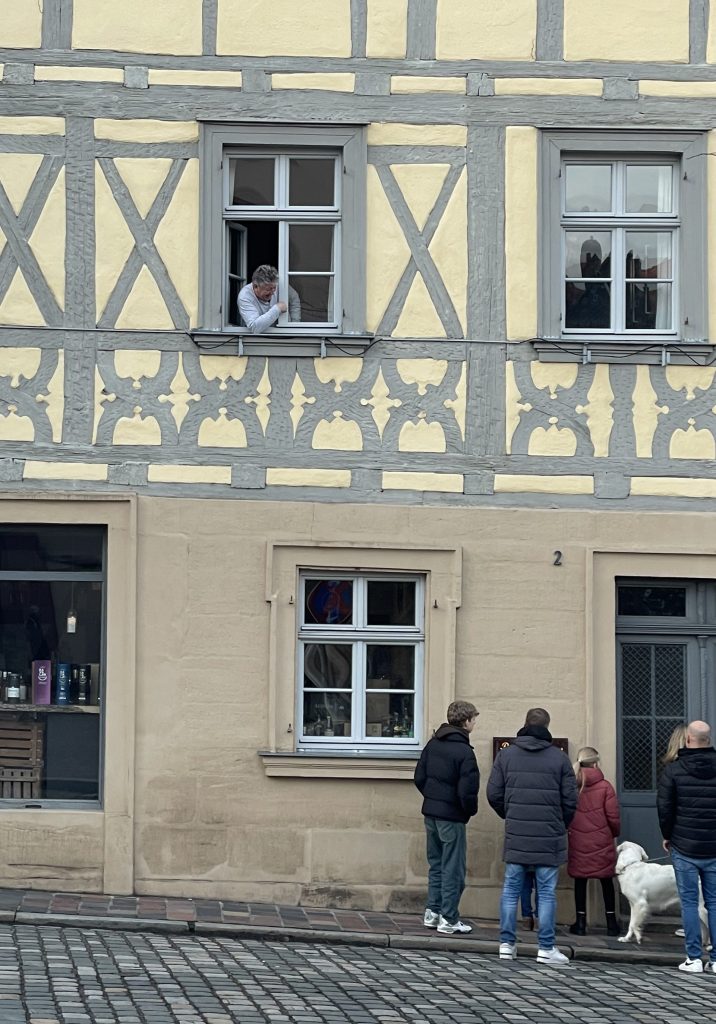
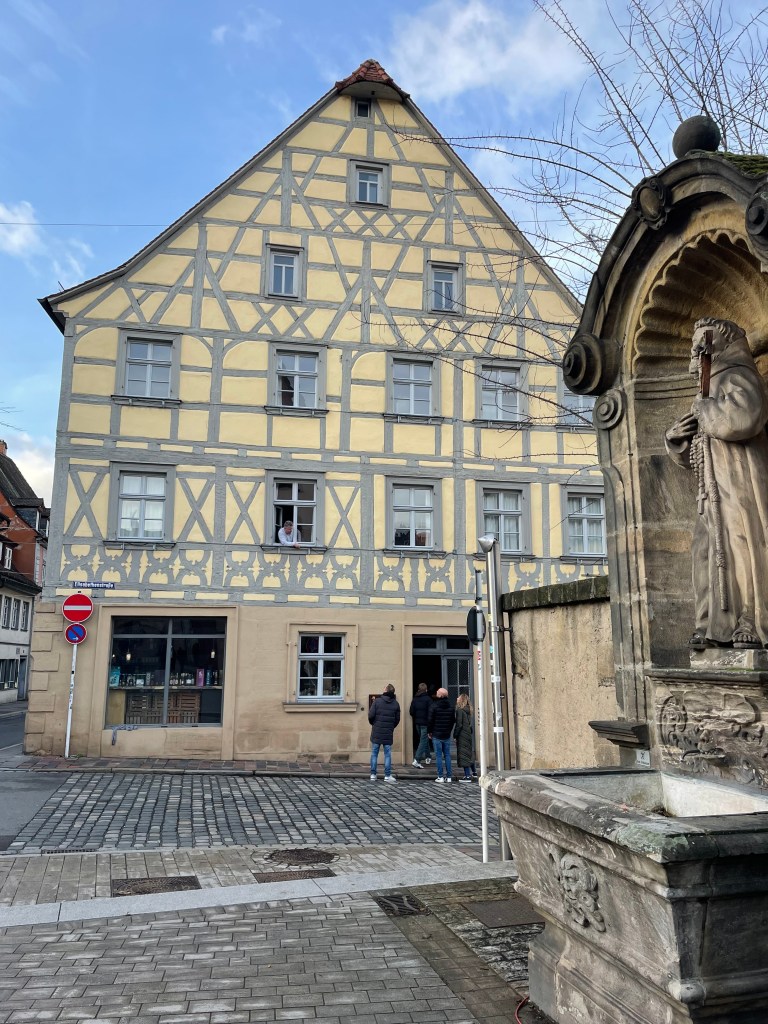
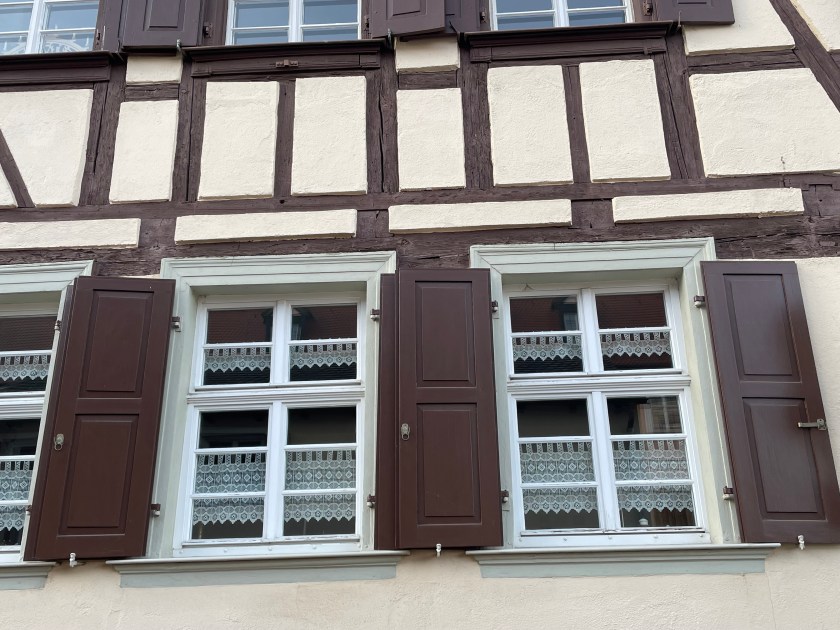
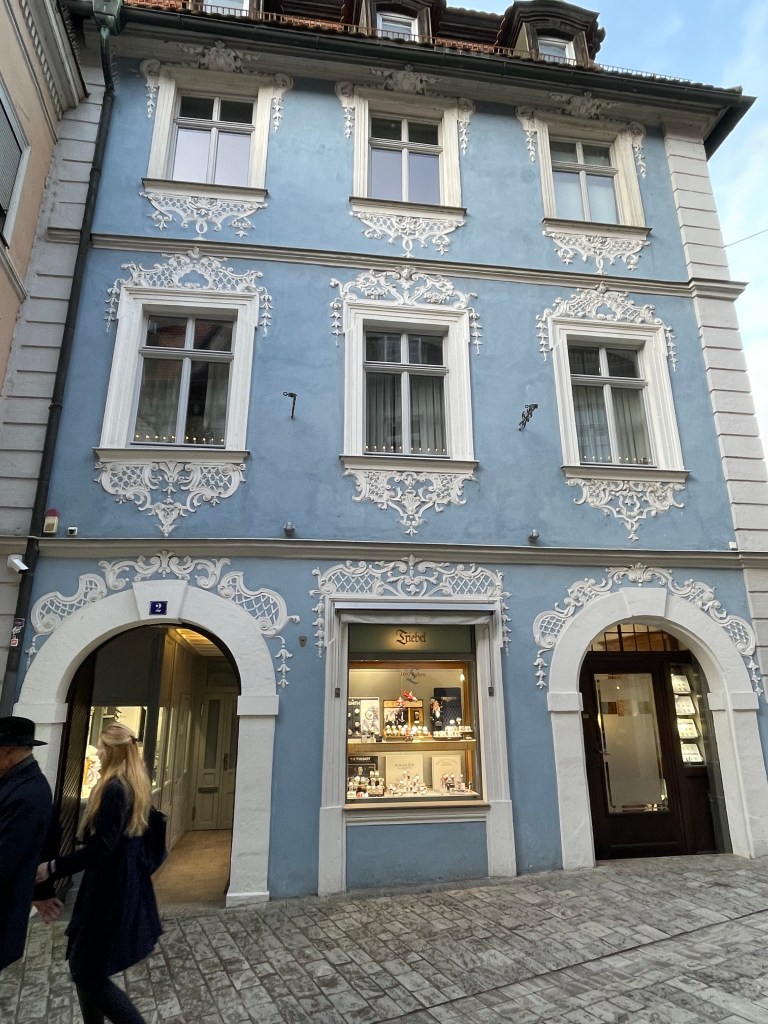
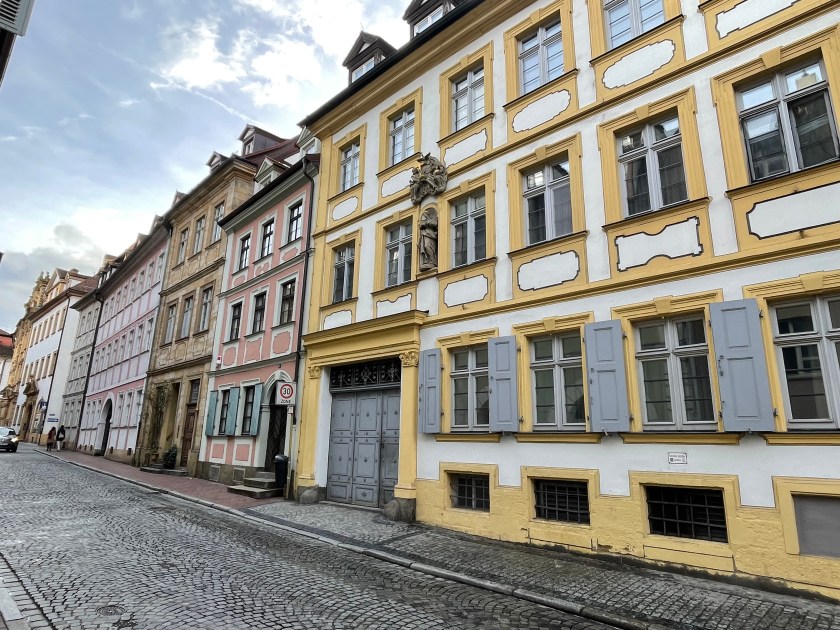
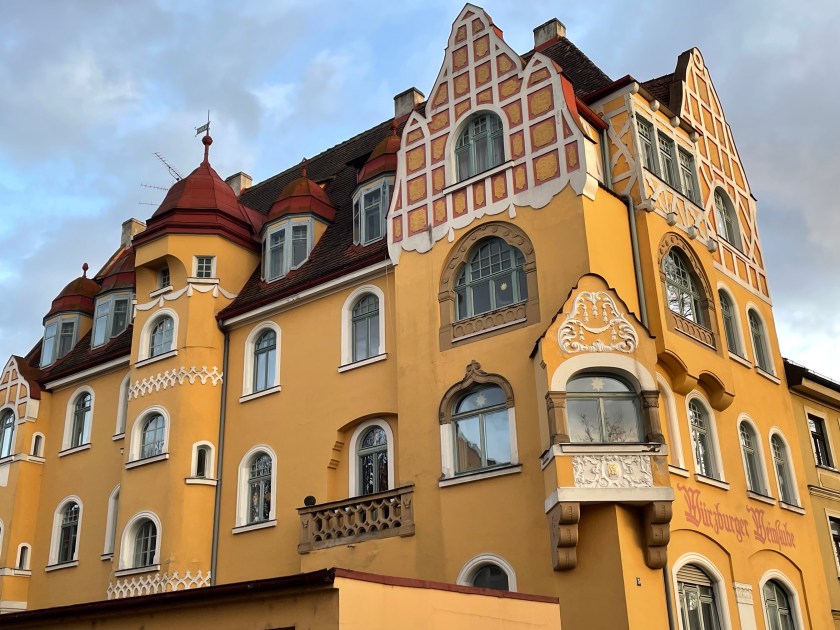
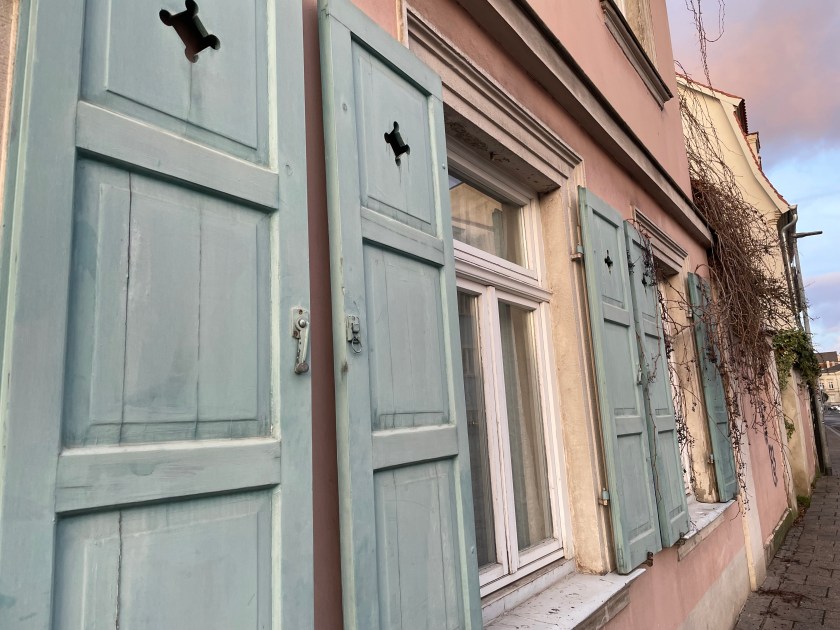
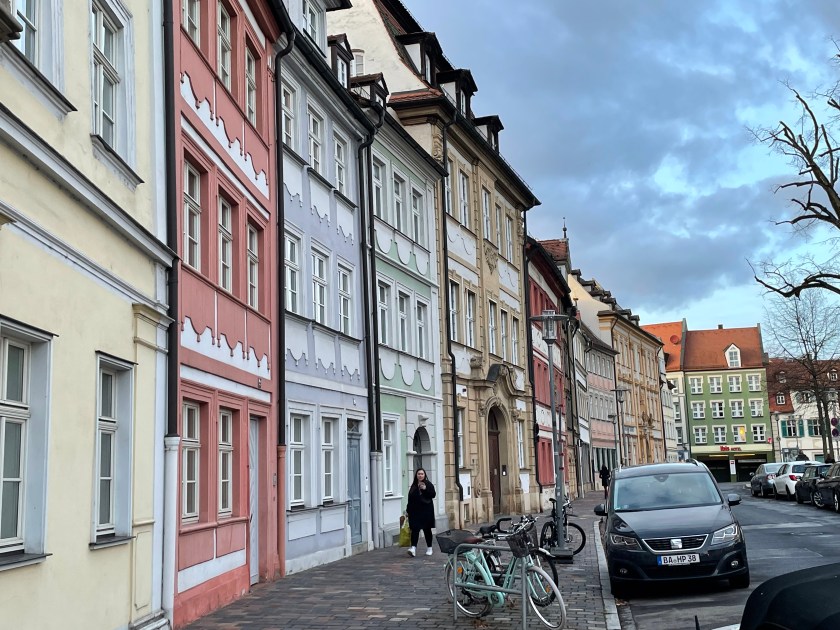
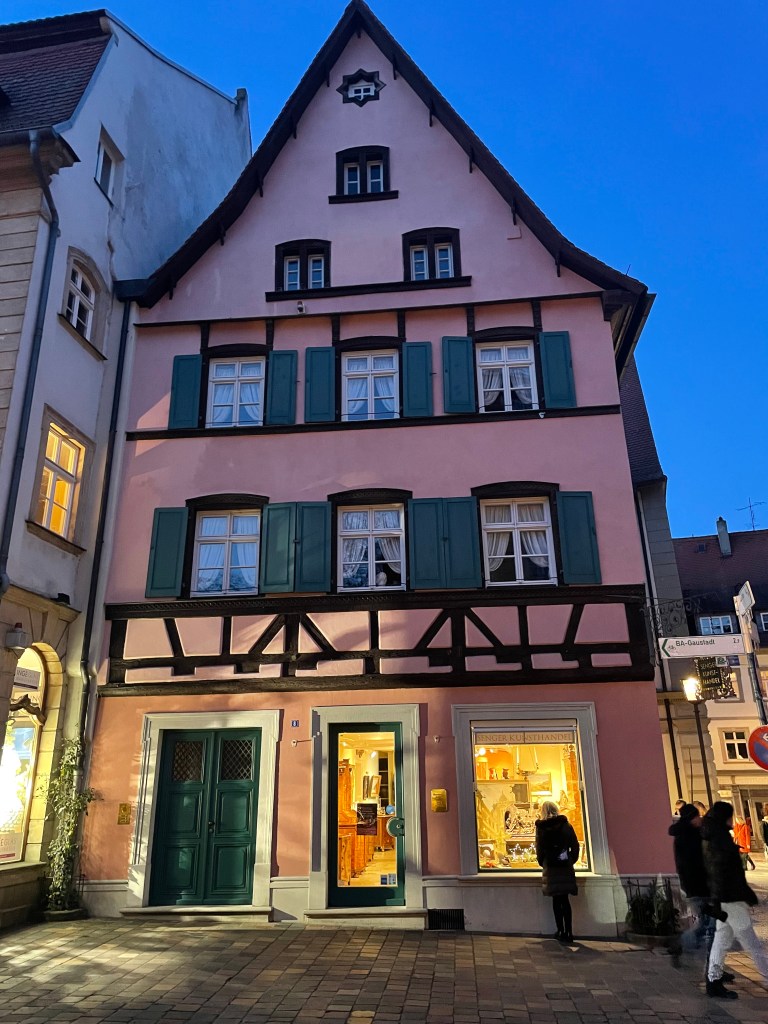
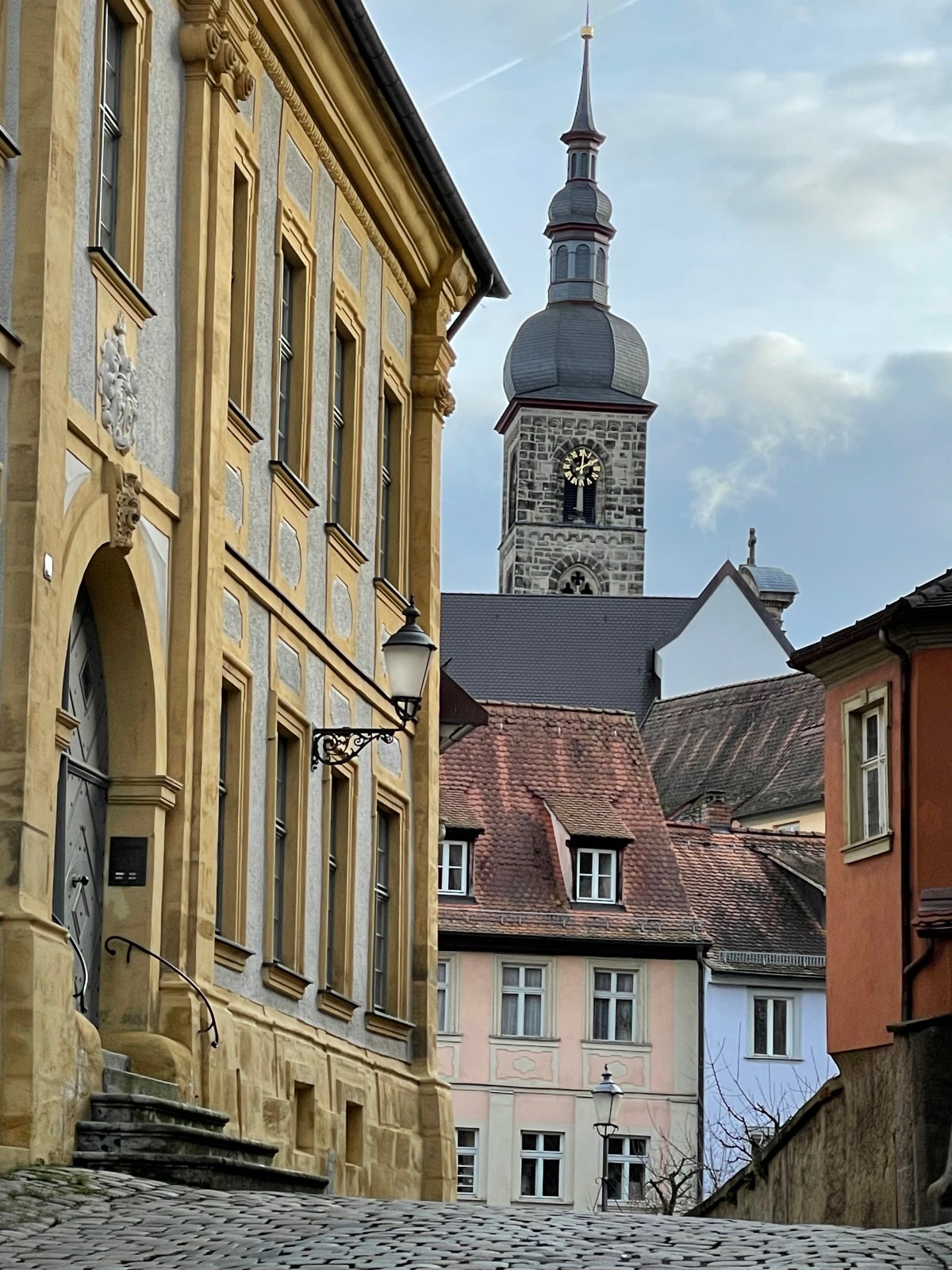
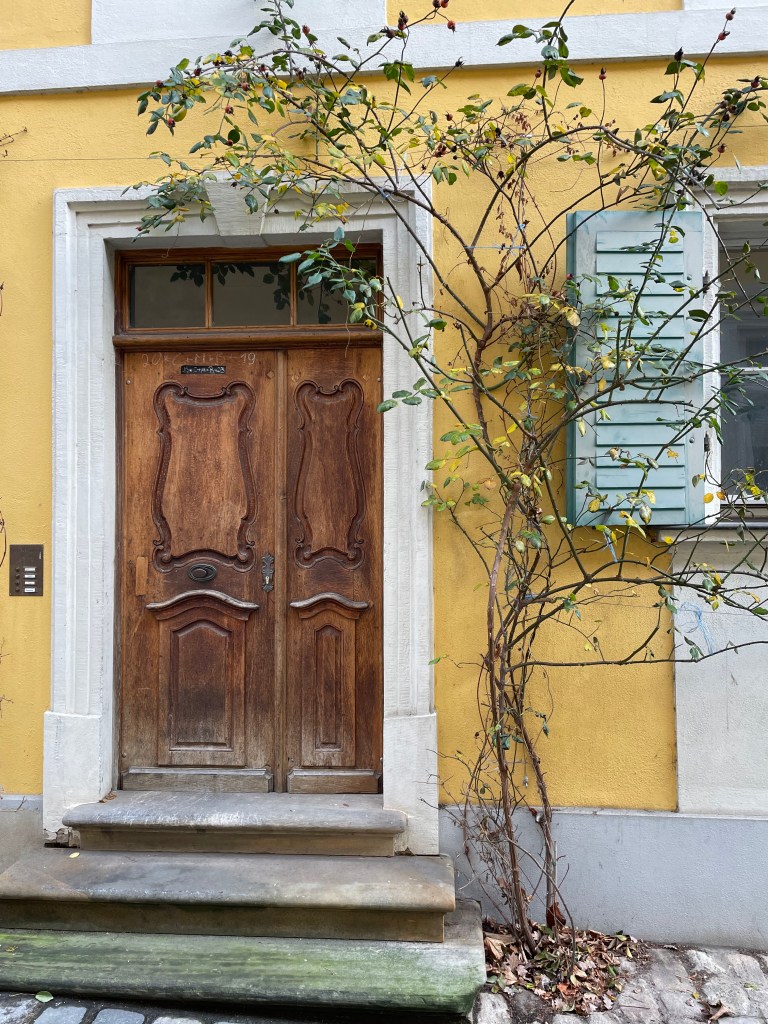
The colors of the buildings and homes here are soft and beautiful.