The Gutenberg Museum in Mainz

This museum stop is a highlight in Mainz.  We spent a few hours here, learning more about this incredible man, Johannes Gutenberg (born c. 1395, Mainz—died probably Feb. 3, 1468, Mainz) and his invention that changed the world.

Johannes Gutenberg is undisputedly the greatest son of the city of Mainz. With the invention of printing with movable type, he laid the foundation of modern media communication.

Its outstanding importance is internationally recognized: In 1997, the renowned American magazine “Time Life” named Gutenberg’s invention the most important discovery of the past millennium. At the end of 1998, American journalists chose Gutenberg as the most important personality of the 2nd millennium in their book “1000 Years – 1000 People” with the title “Man of the Millennium”. In 2000, the people of Mainz and their guests celebrated the 600th birthday of the inventor of the millennium for twelve months. (https://www).gutenberg.de/mainz/index.php)
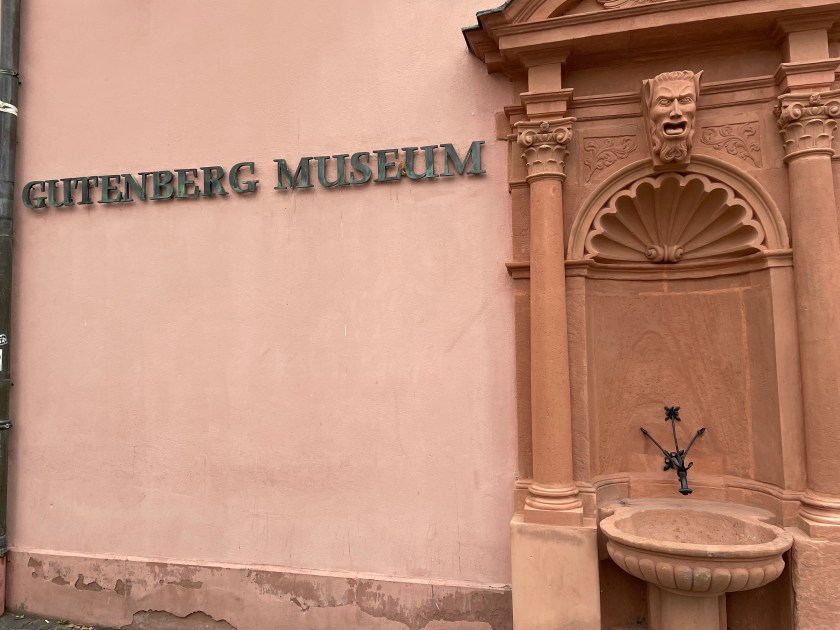
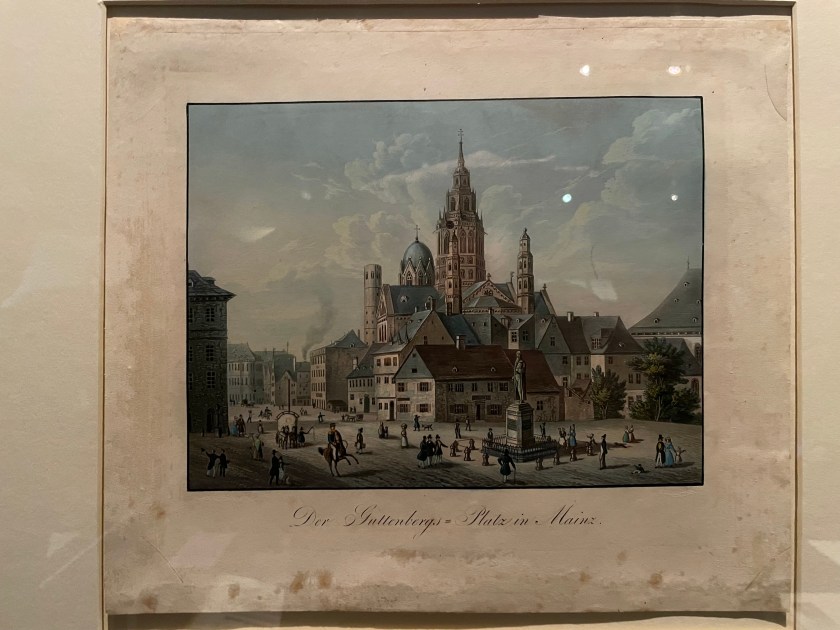
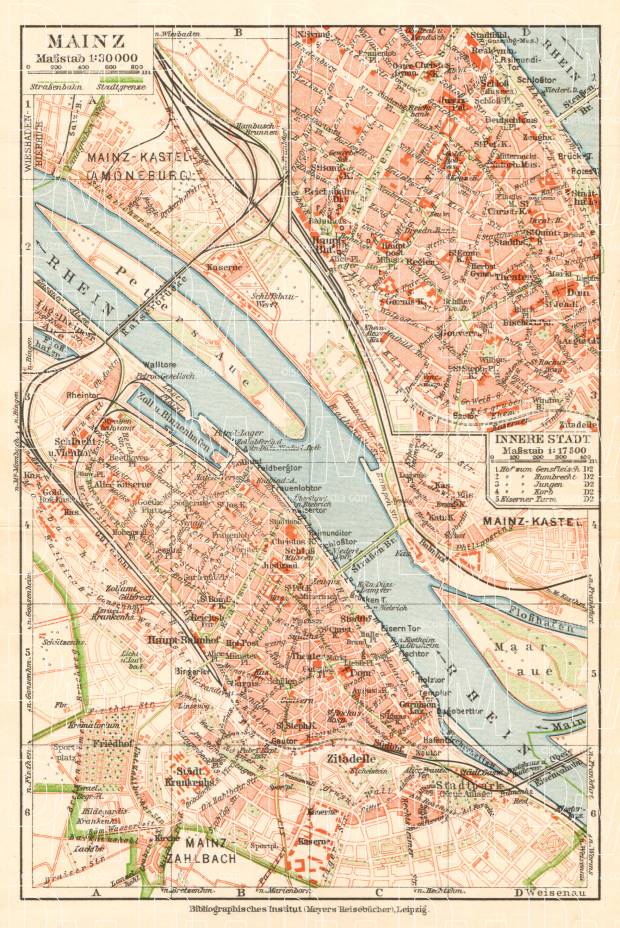
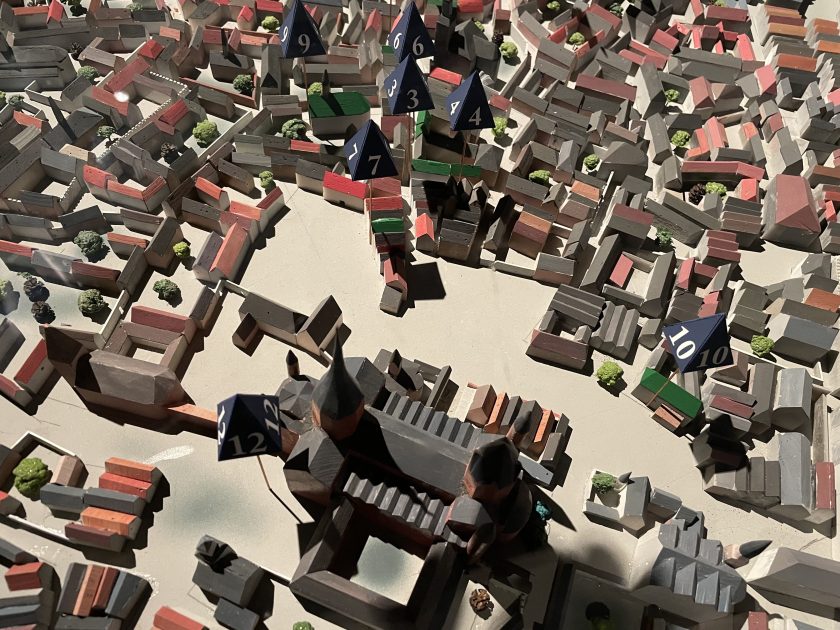
This shows where the museum is, in the main square near the church.
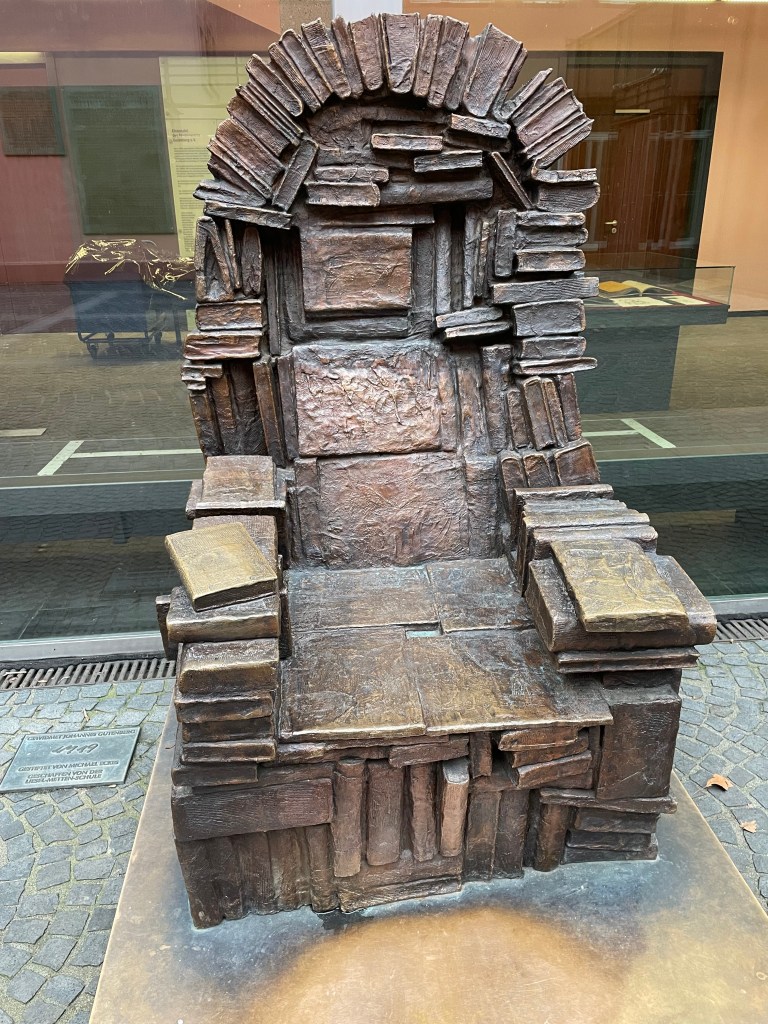
No one is sure what Johannes Gutenberg looked like, but here are a few guesses:

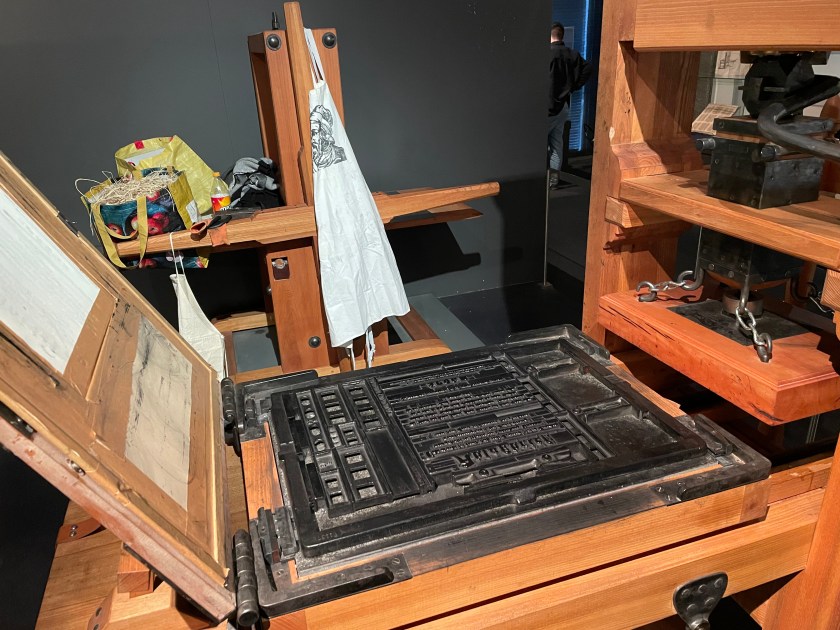
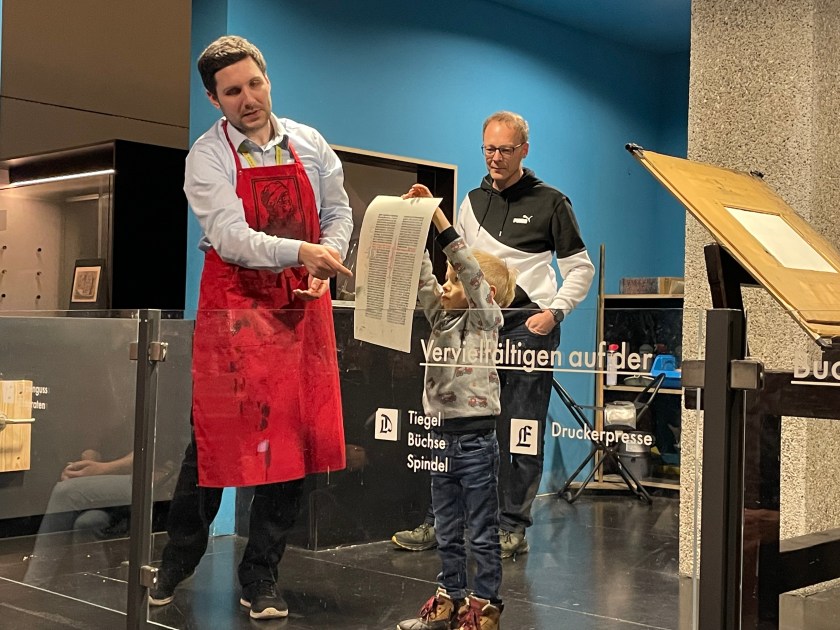
The museum has regular demonstrations using a press patterned after the original press Gutenberg created.

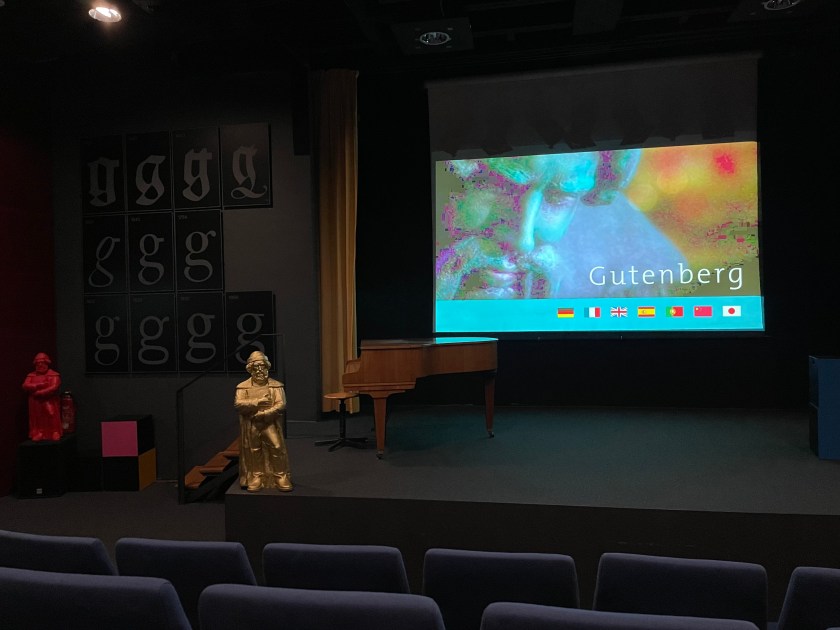
We were the only English speakers in our group, so the kind museum guide gave us a private showing of an English film about Gutenberg, which was excellent.
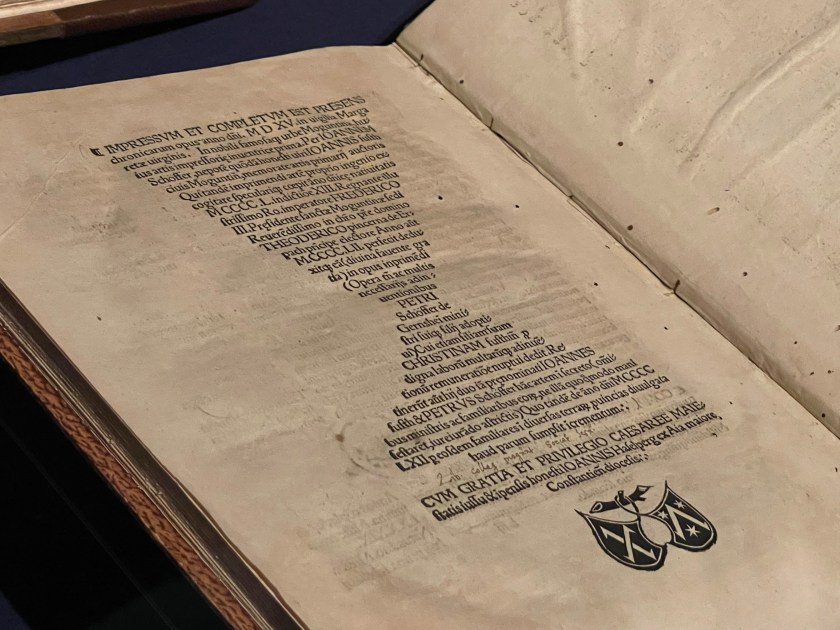
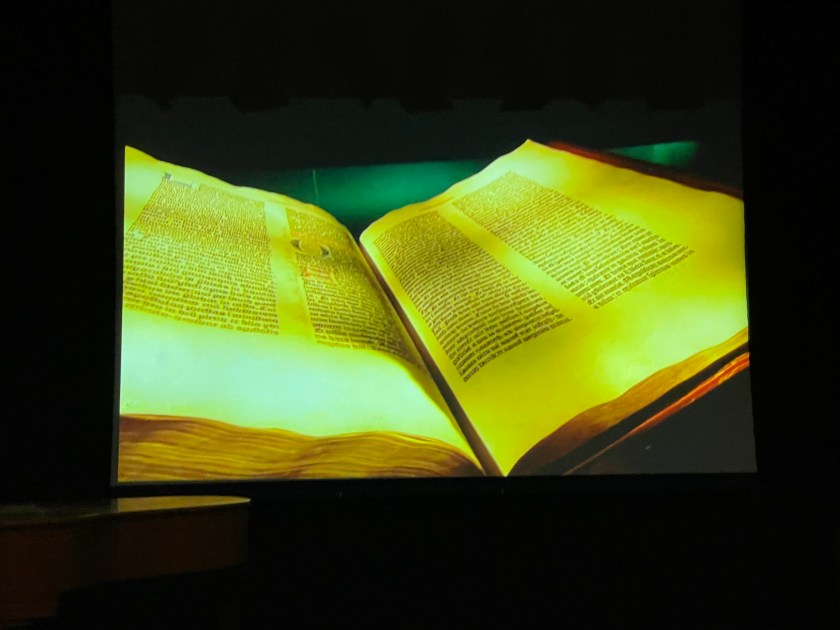
Original copies of Gutenberg’s Bible are kept in a vault where you can see them.  This photo is taken of one of those Bibles in the film.  (You’re not allowed to take photos in the vault.)
The last sale of a complete Gutenberg Bible took place in 1978, which sold for $2.4 million. This copy is now in Austin, Texas. The price of a complete copy today is estimated at $25−35 million.

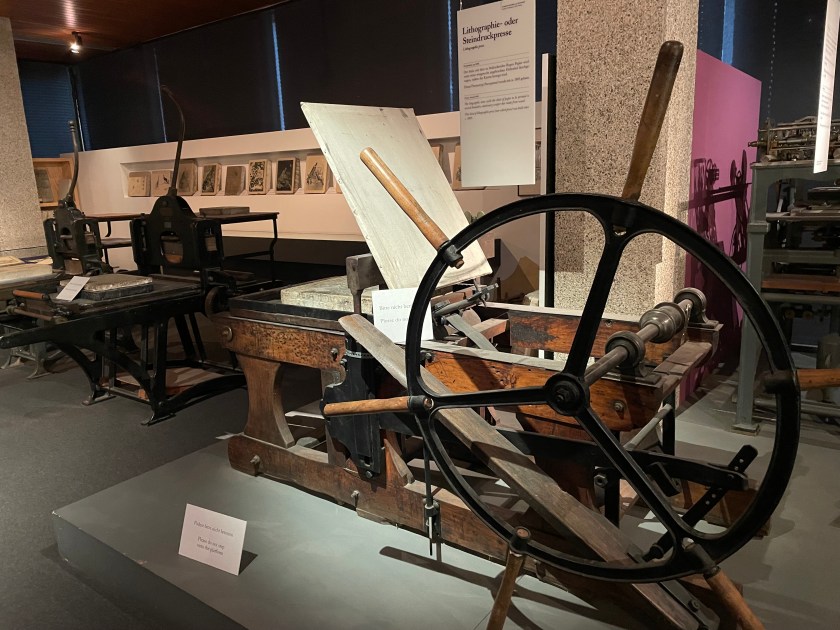
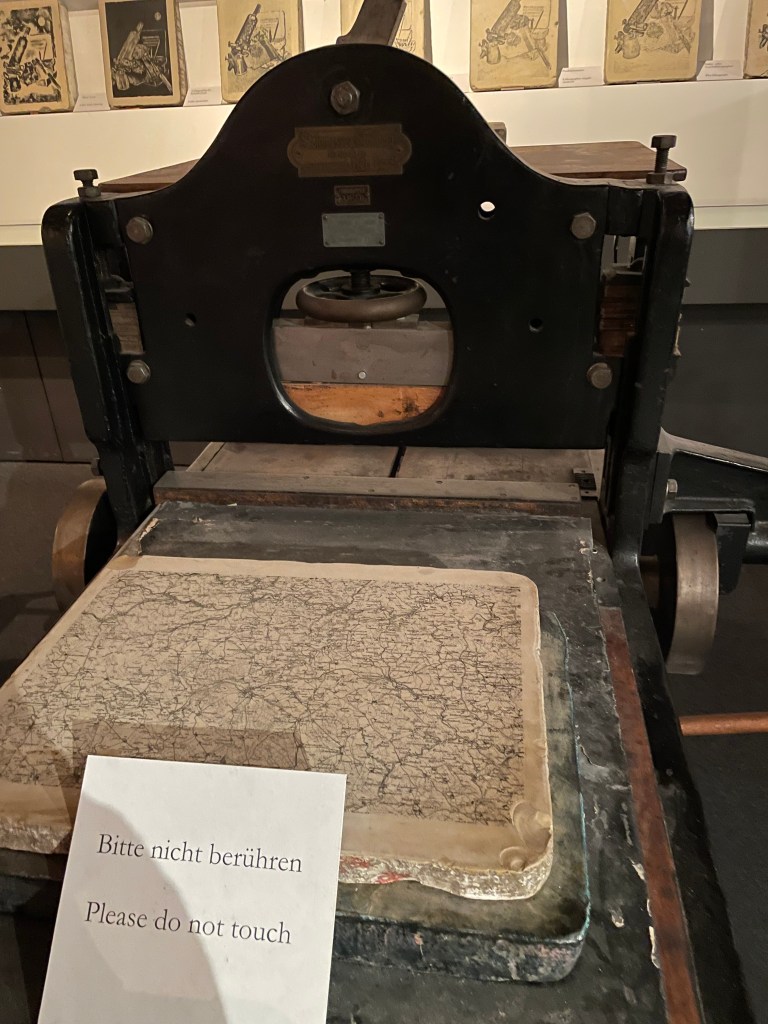
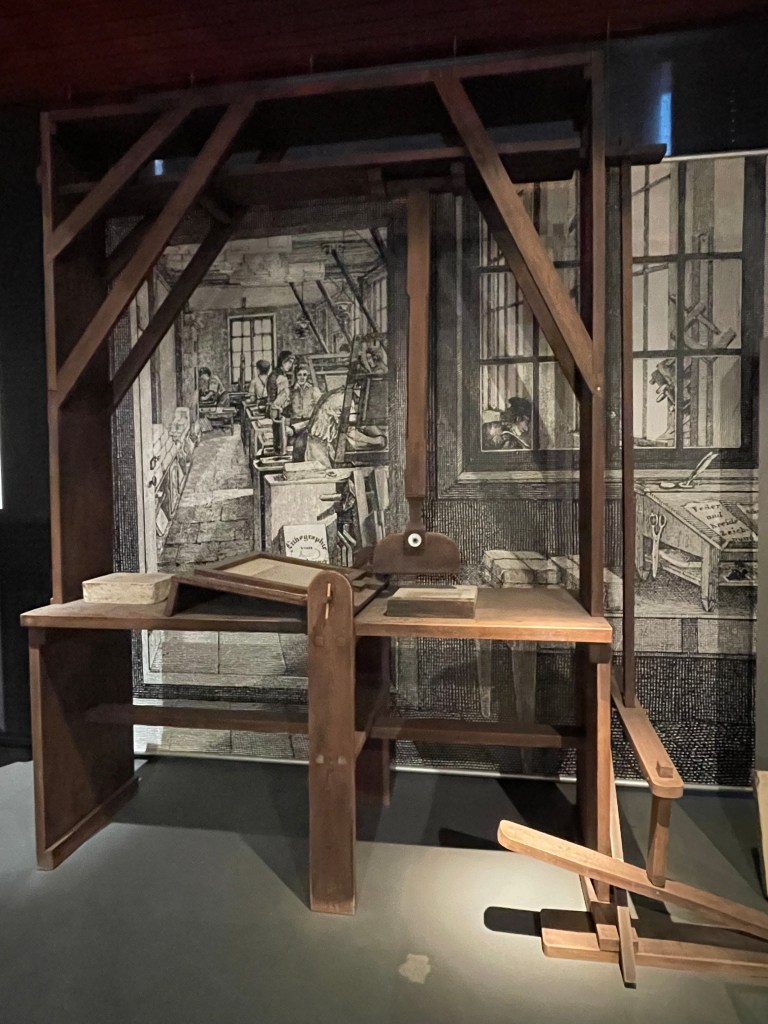
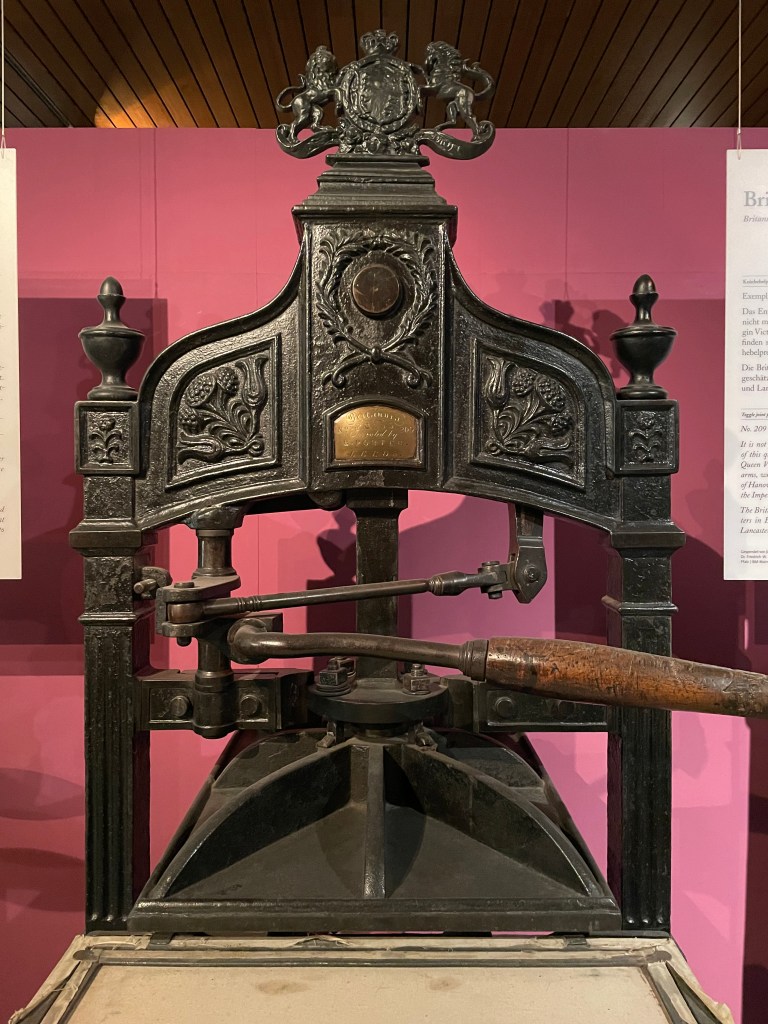
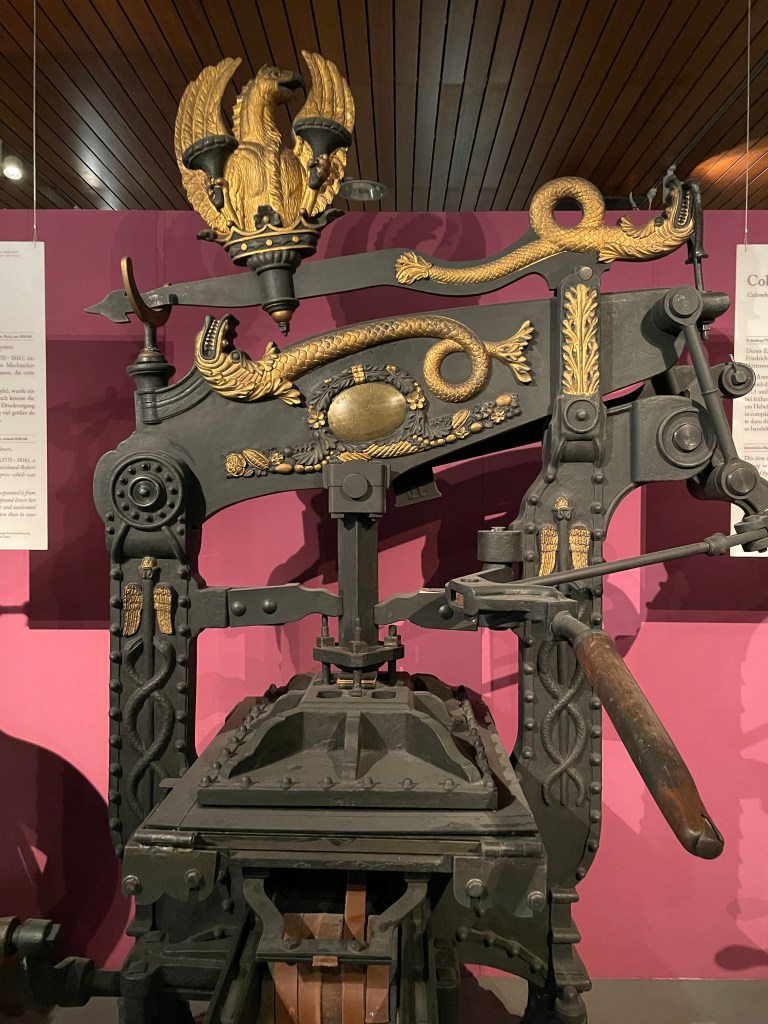
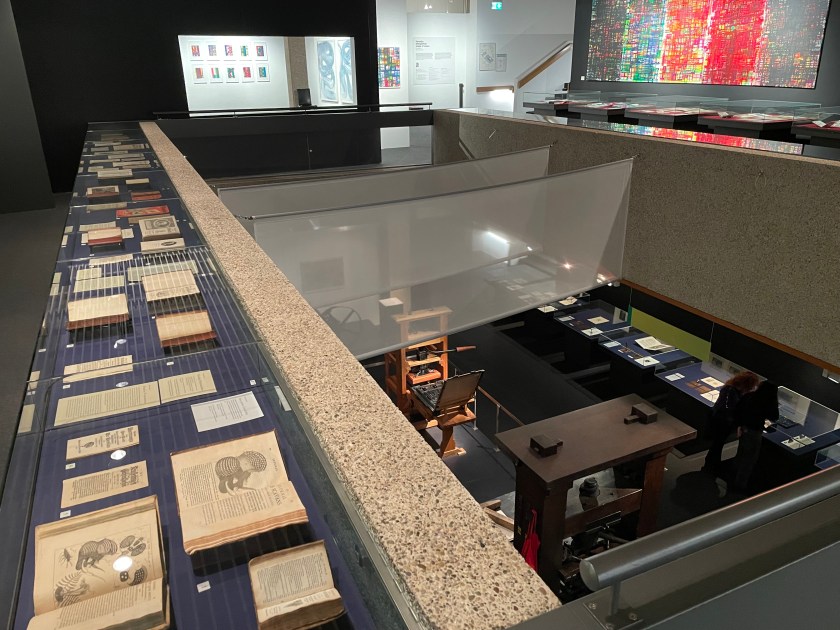
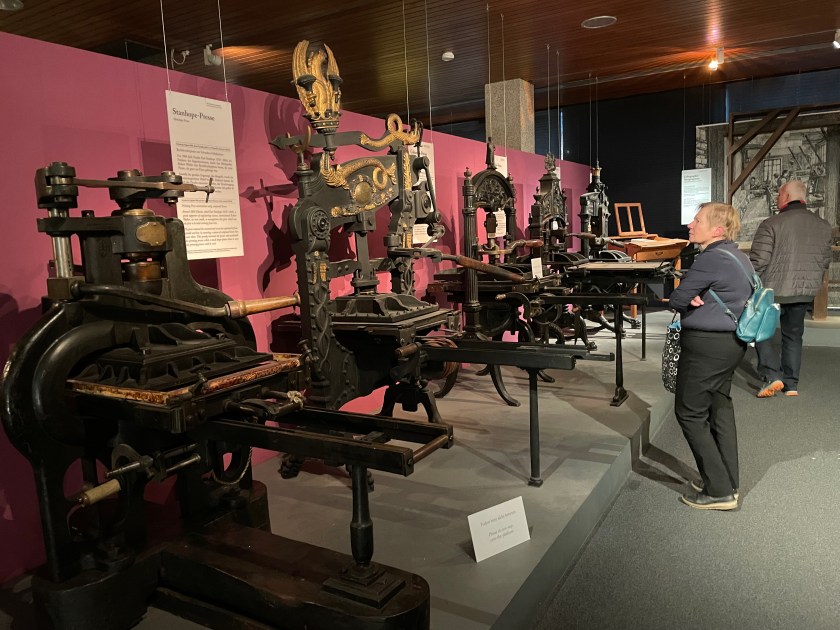
The museum has rooms full of old presses, showing how they changed over time.
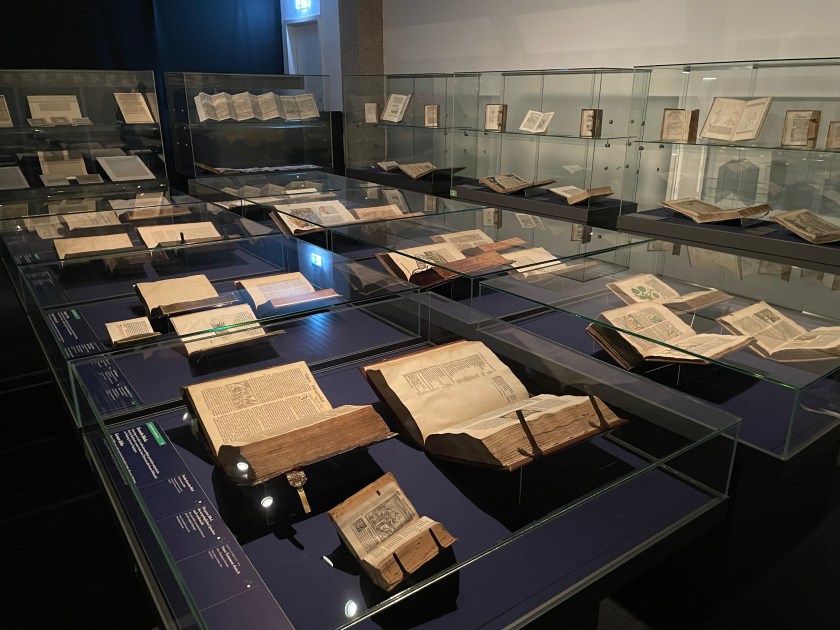
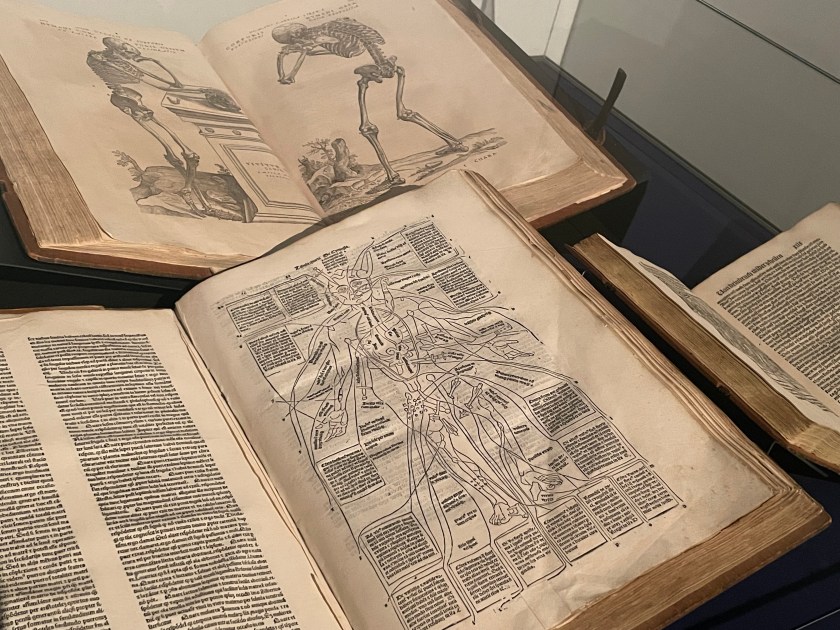
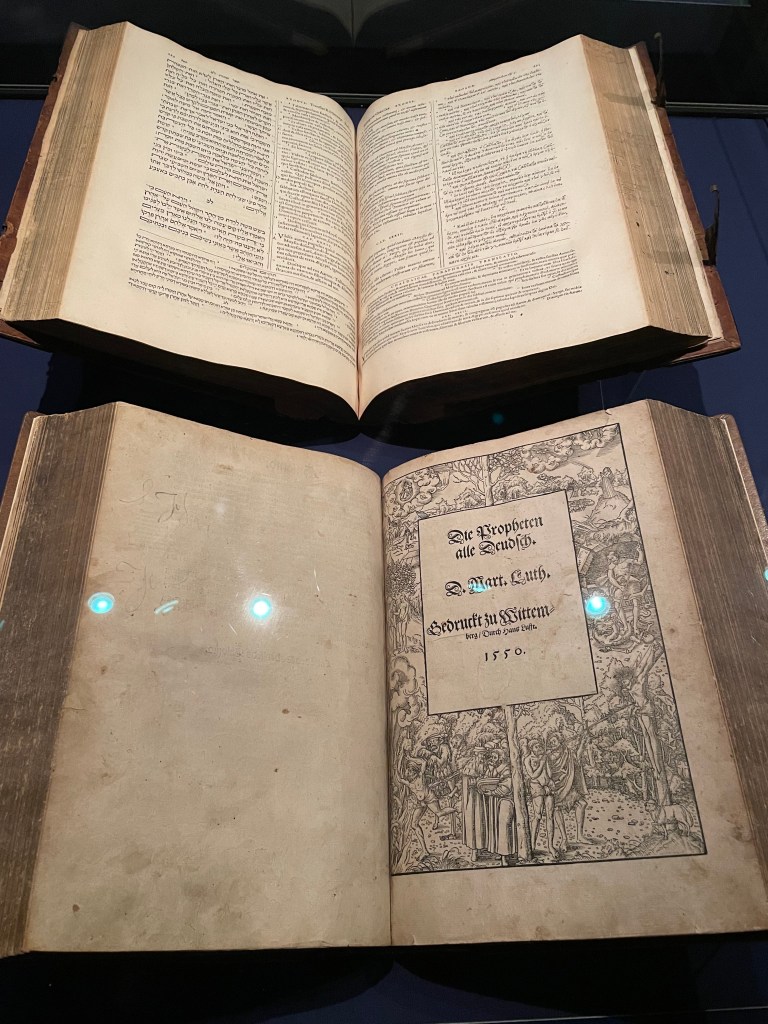
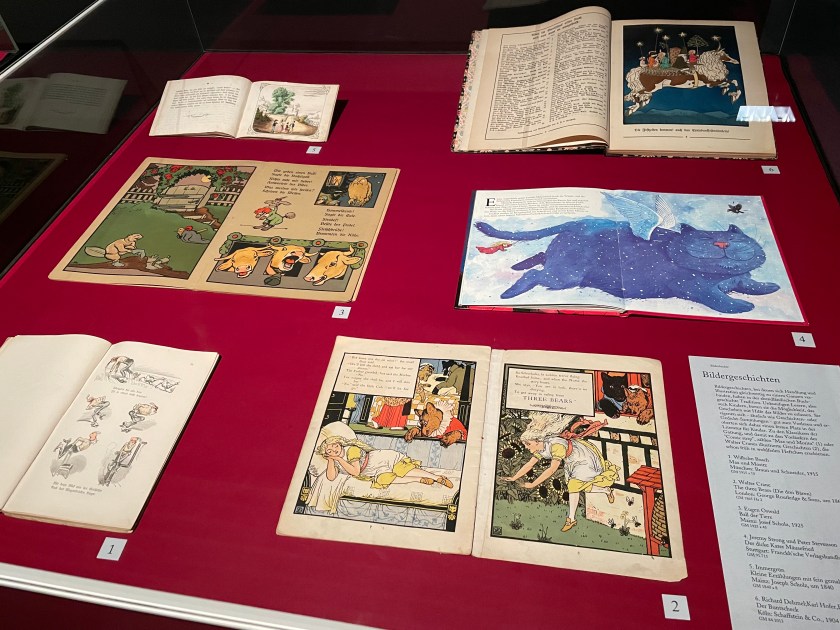
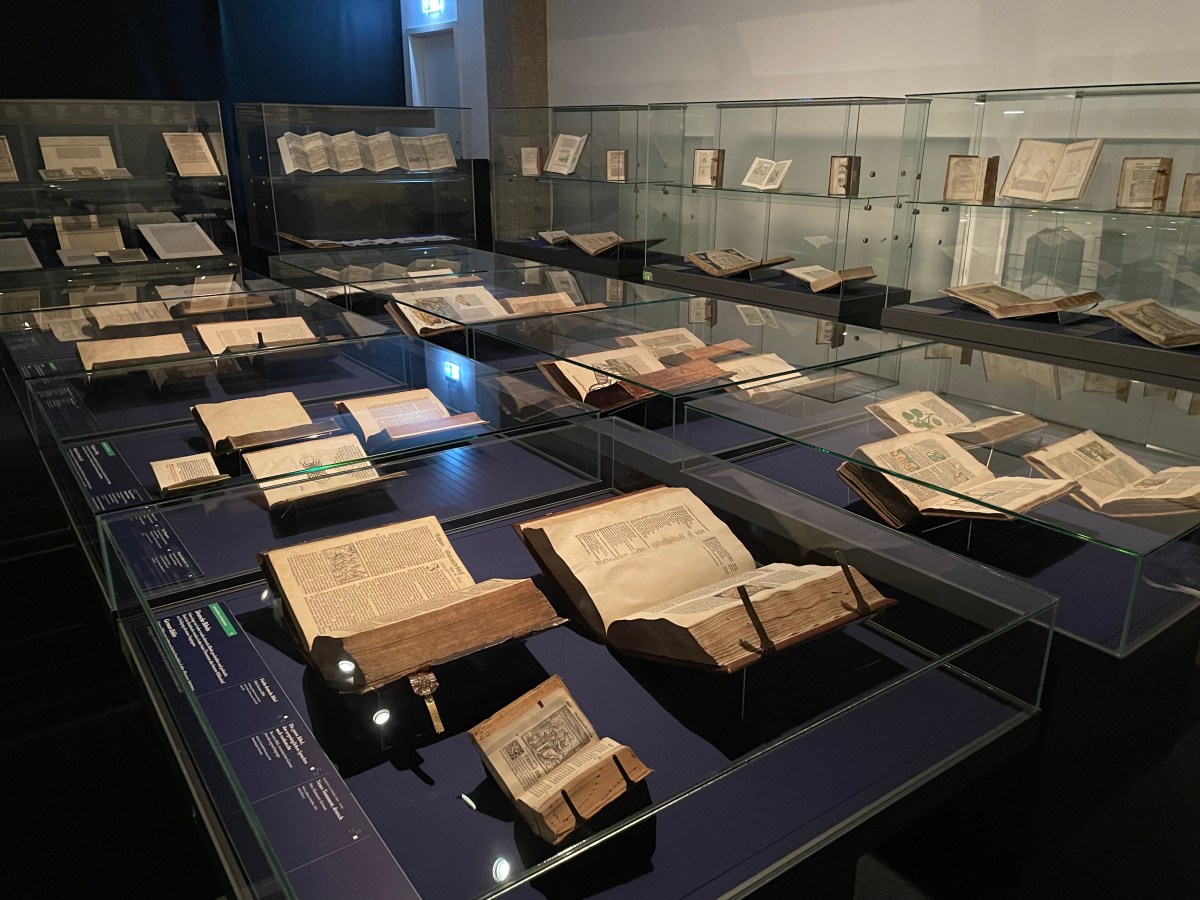
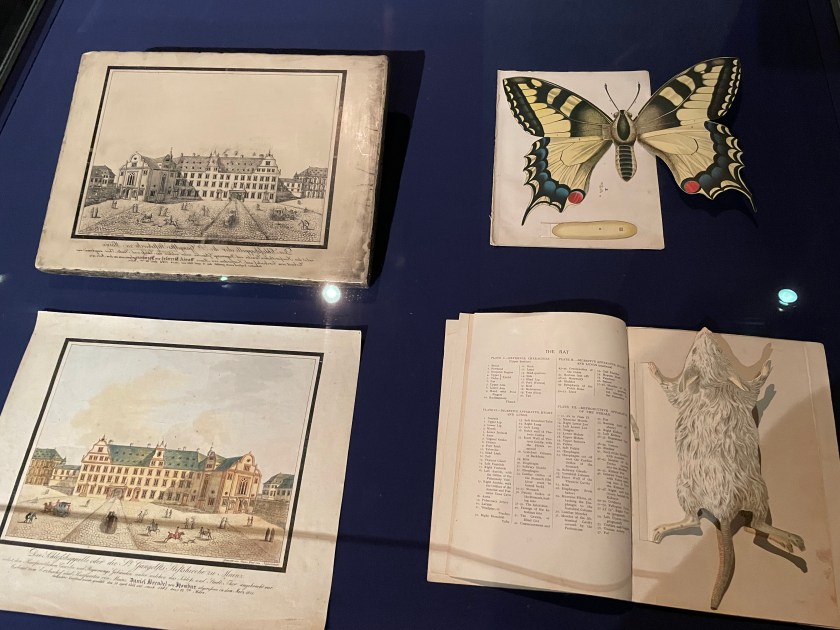
And there are incredible collections of books and texts and printed materials.
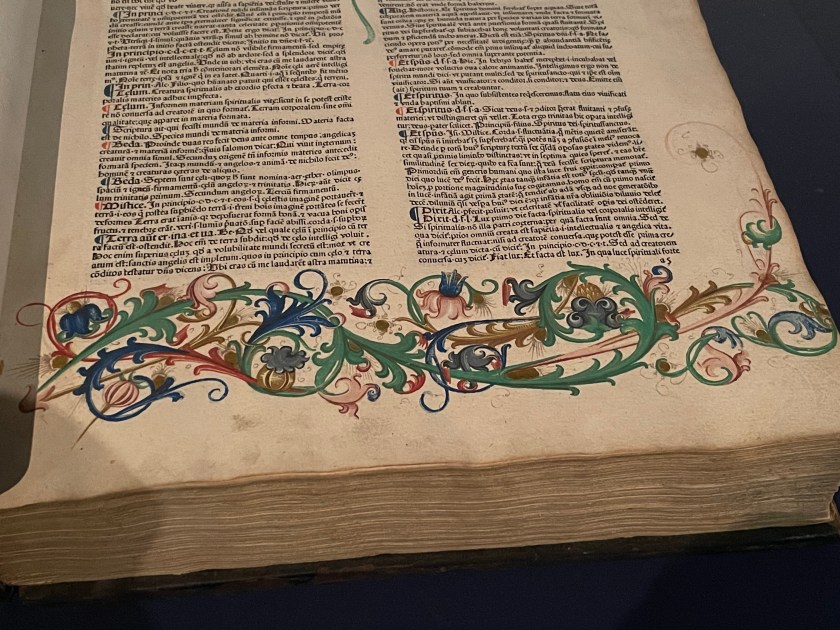
I think I would have loved being an embellisher.  Books were often personalized for the purchasers with their choice of illuminations.
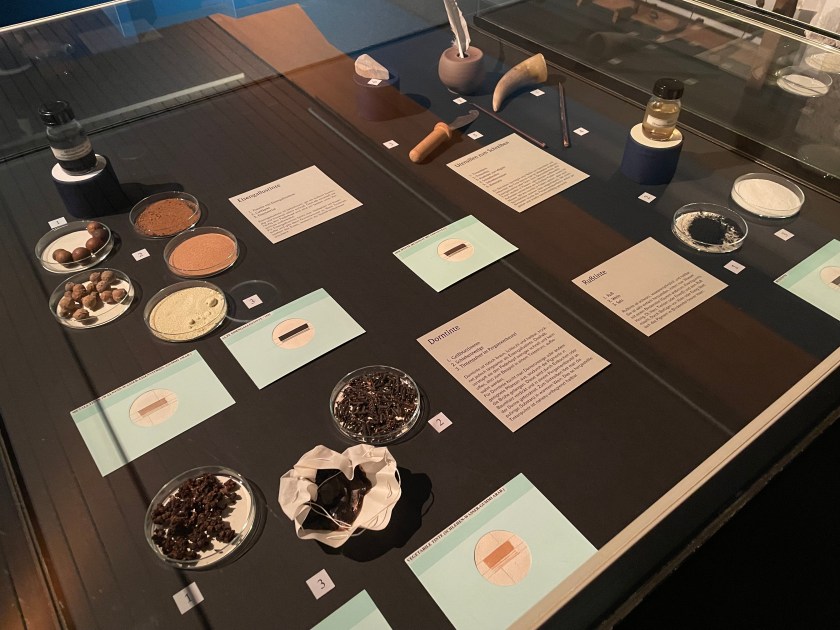
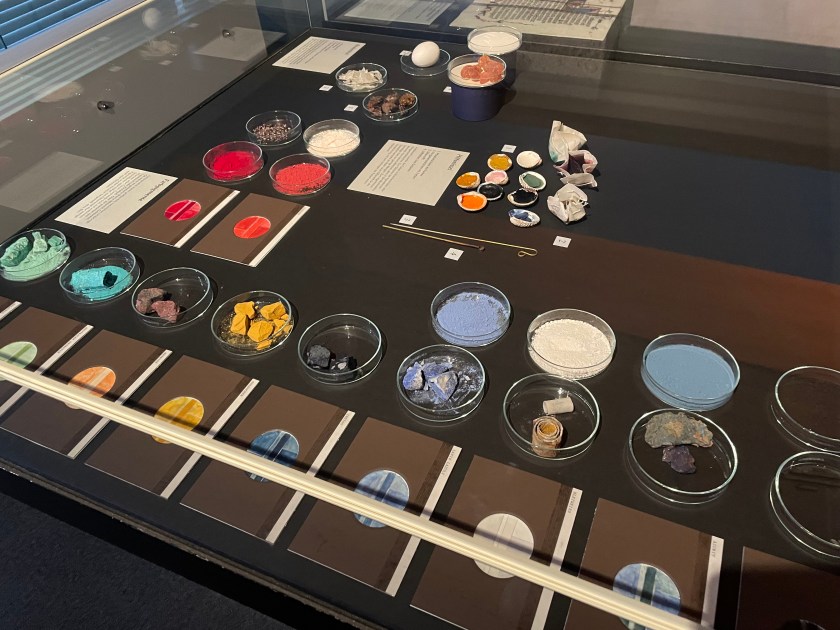
Above:  the way illuminators made ink.  Below:  how rag paper was made.
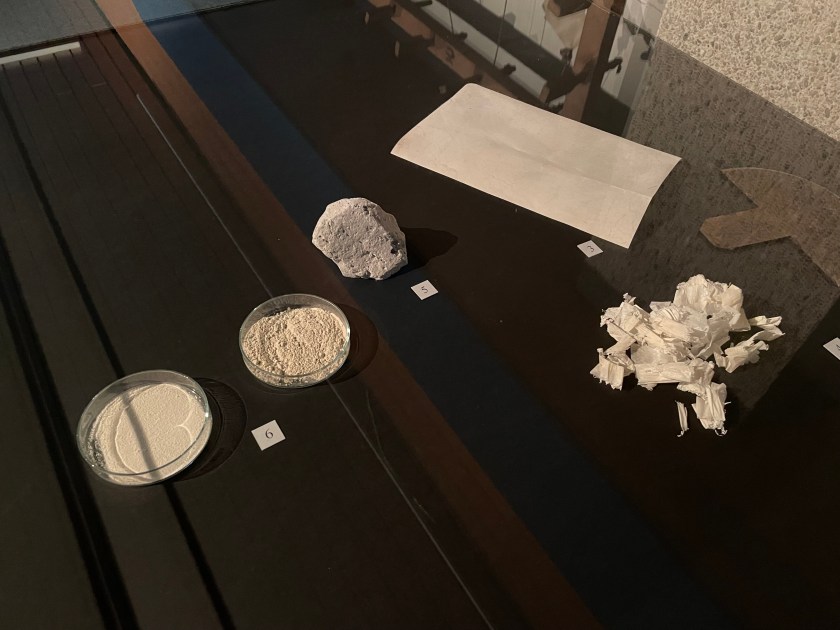
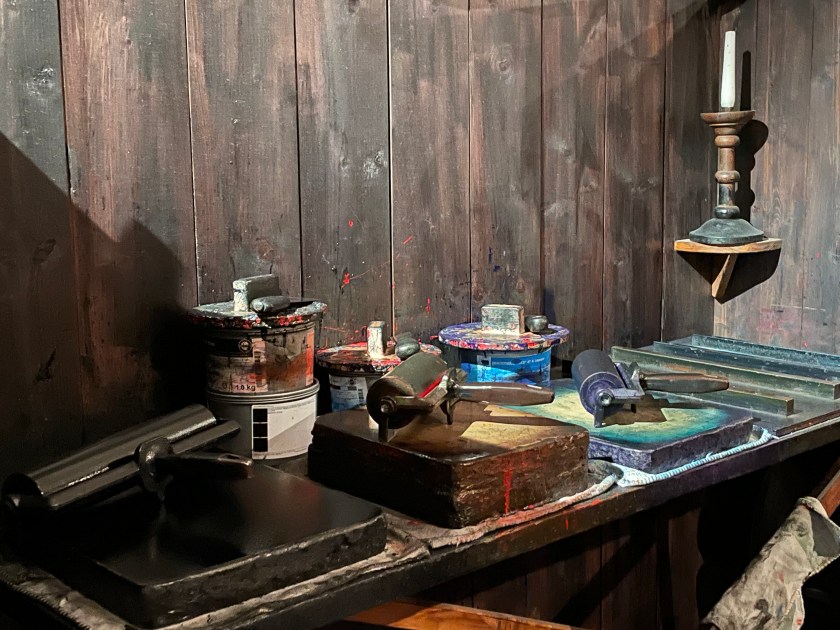
Below:  how the different ink colors were made.
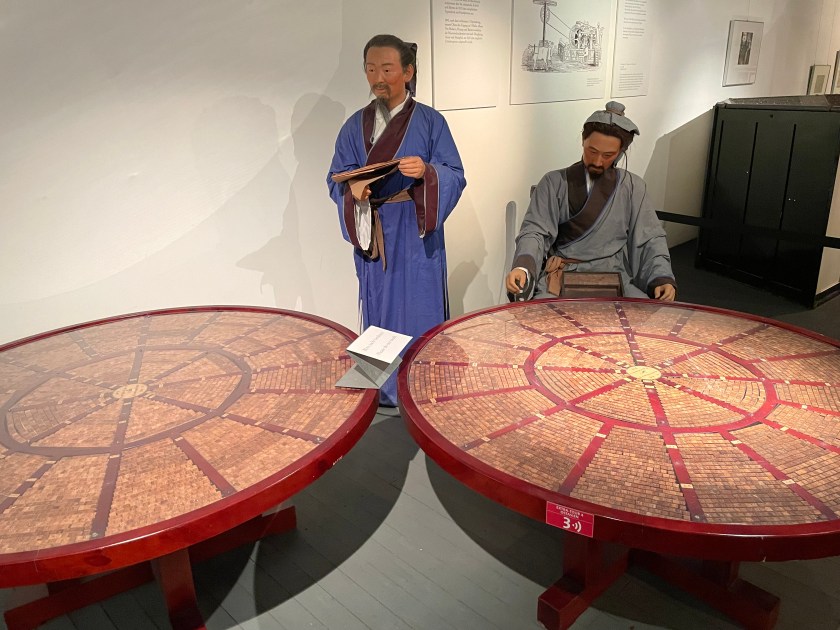
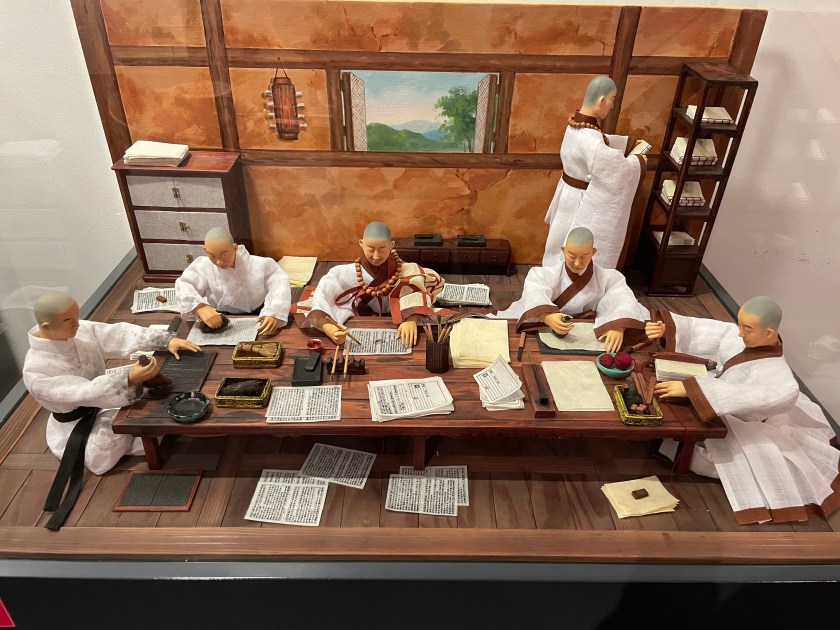
There was one room that showed the history of type and printing in Asia.  It was really interesting.  They have so many characters.
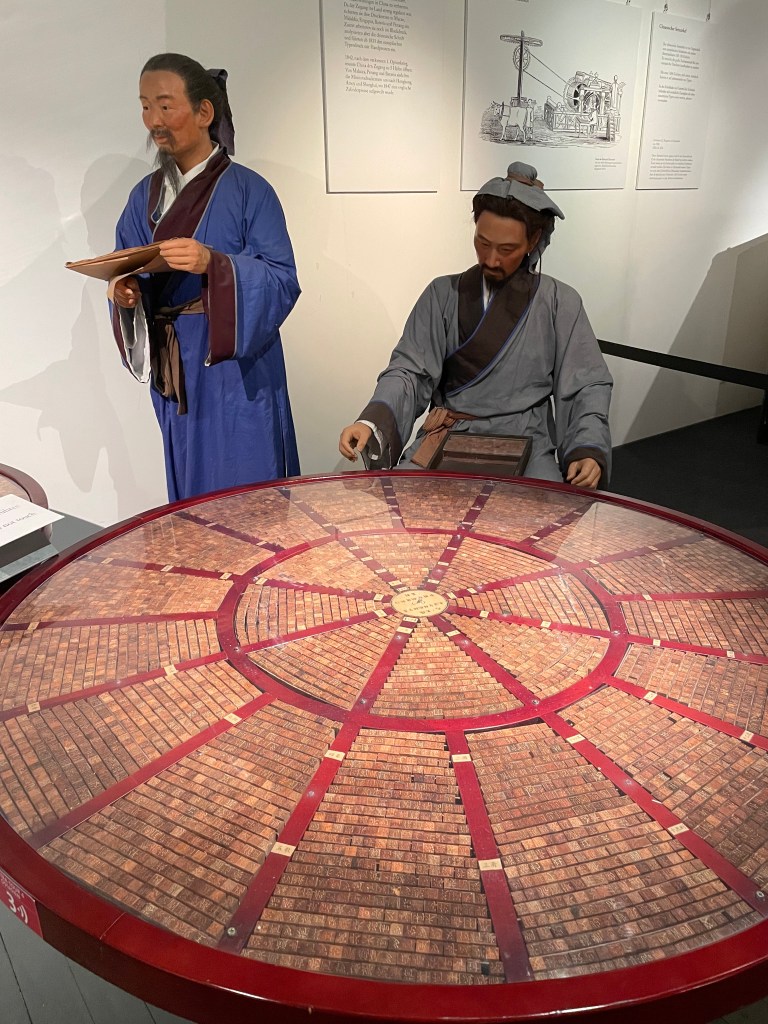
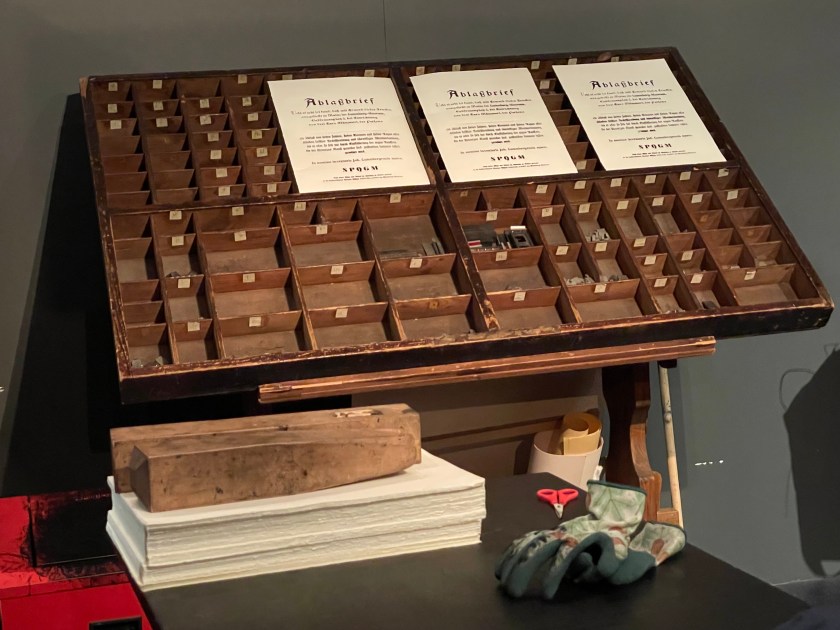
These are the trays that held the type.
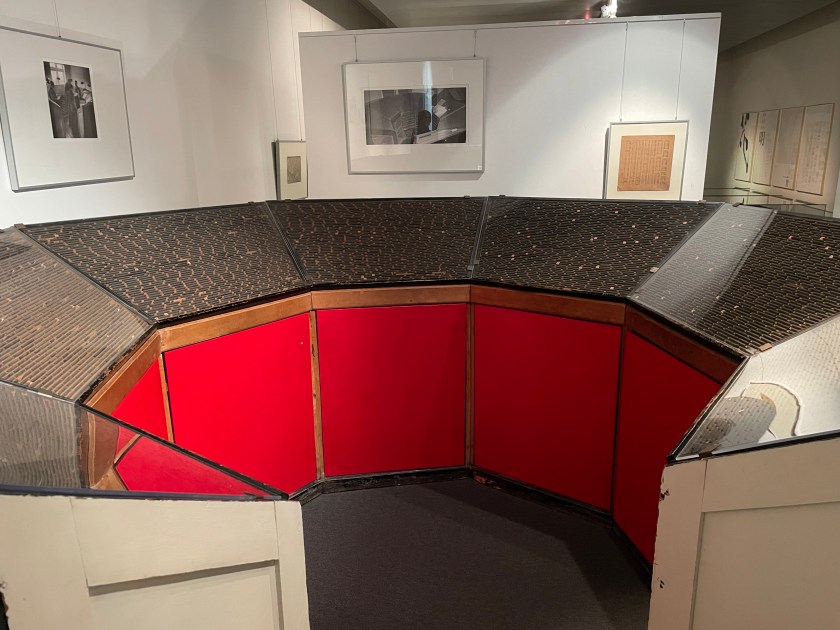
The museum showed how printing changed the way the world communicates.

We learned about book binding.

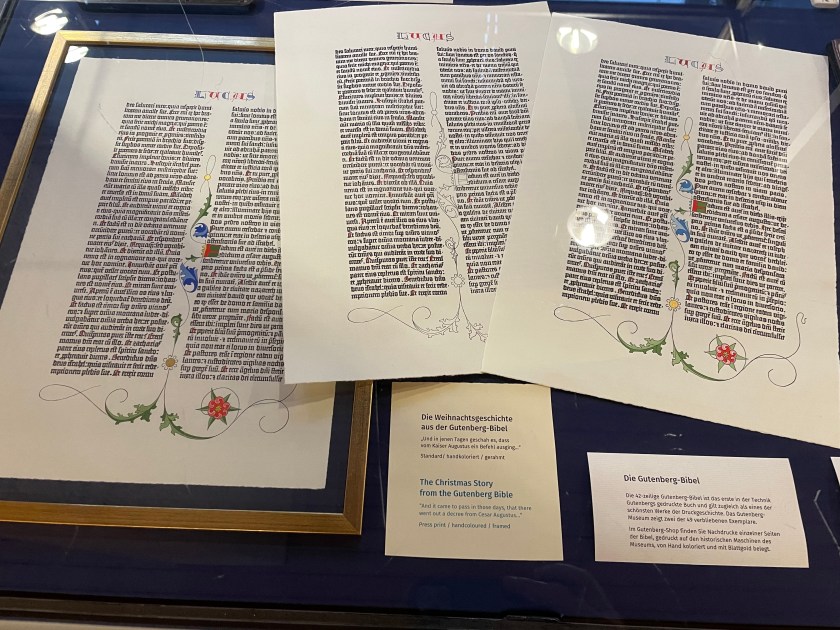
These copies of the Christmas story from Luke were for sale in the gift shop:
After leaving the museum, we passed by this printing shop where children were in a class learning about the printing process.
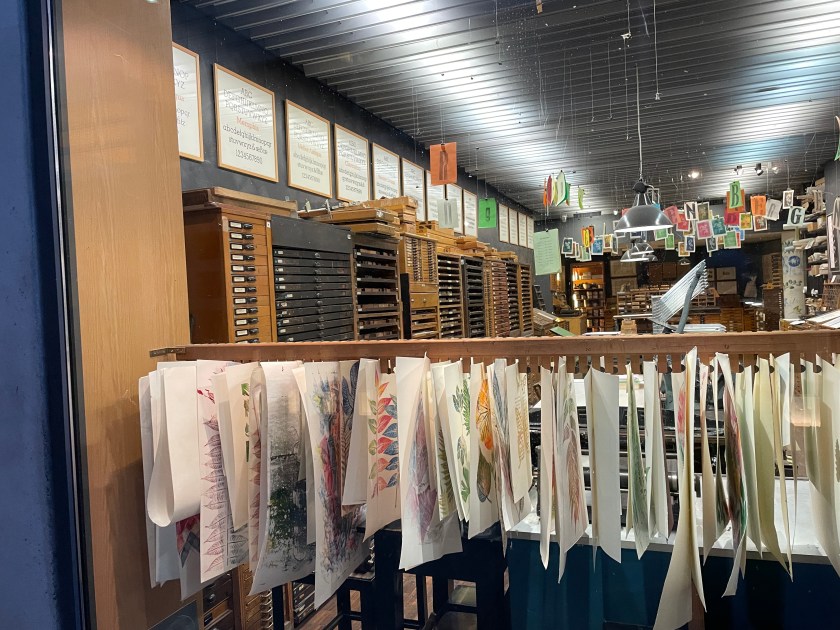
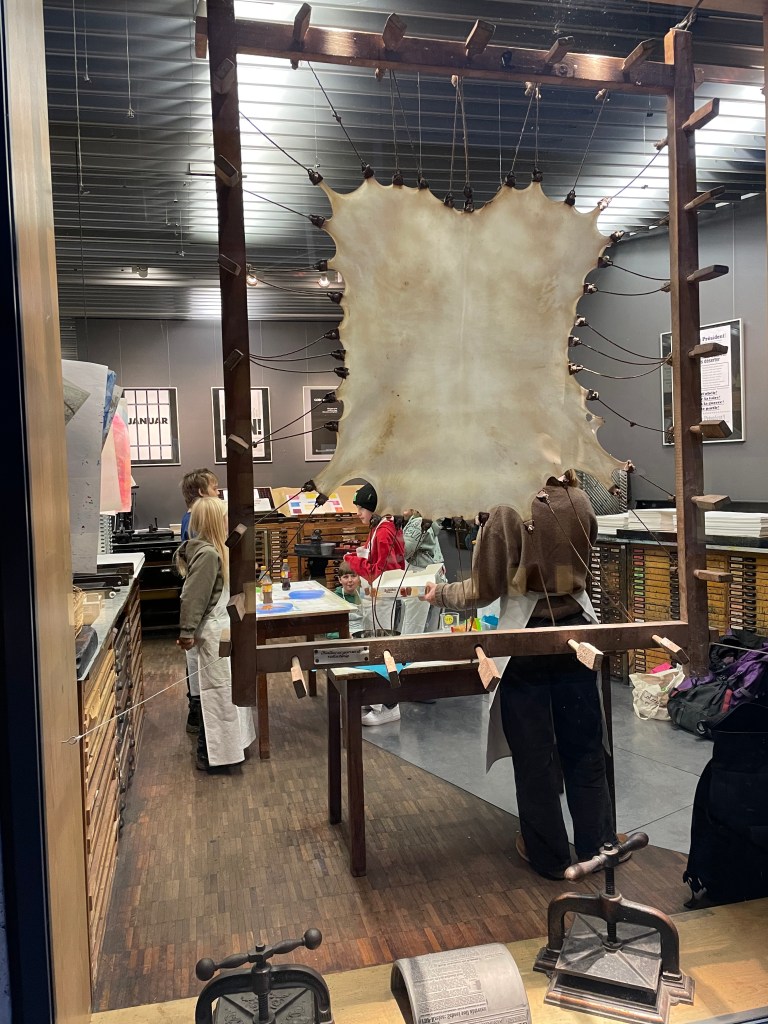
This is a great place to visit!!
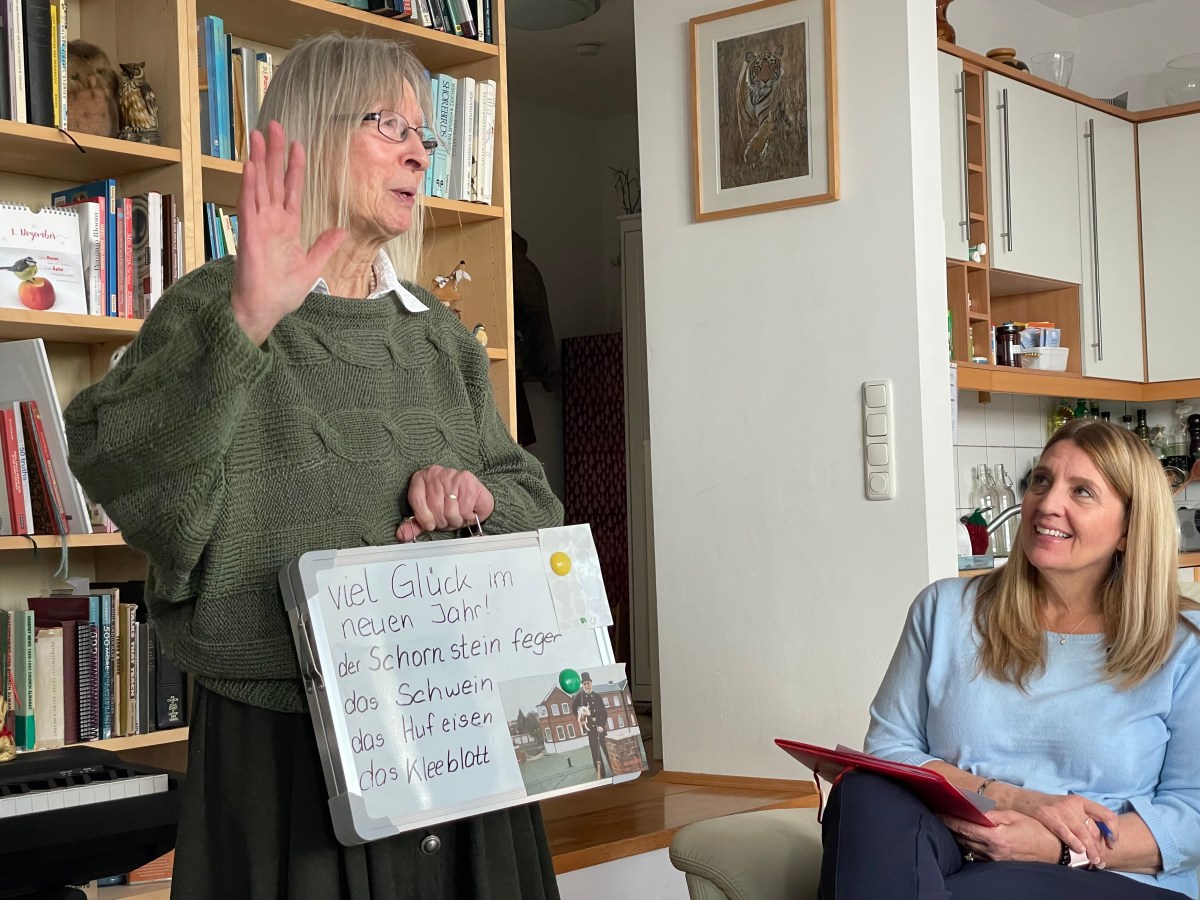
German Class

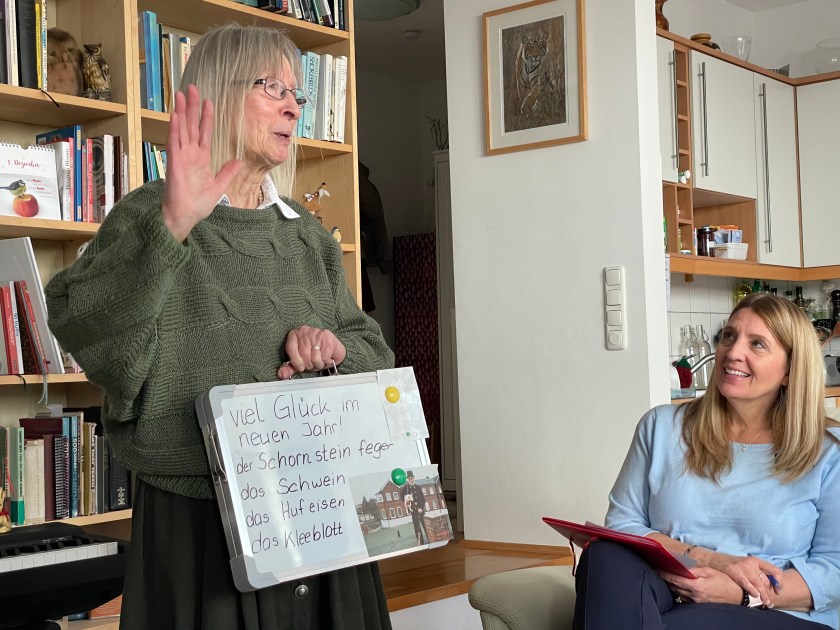
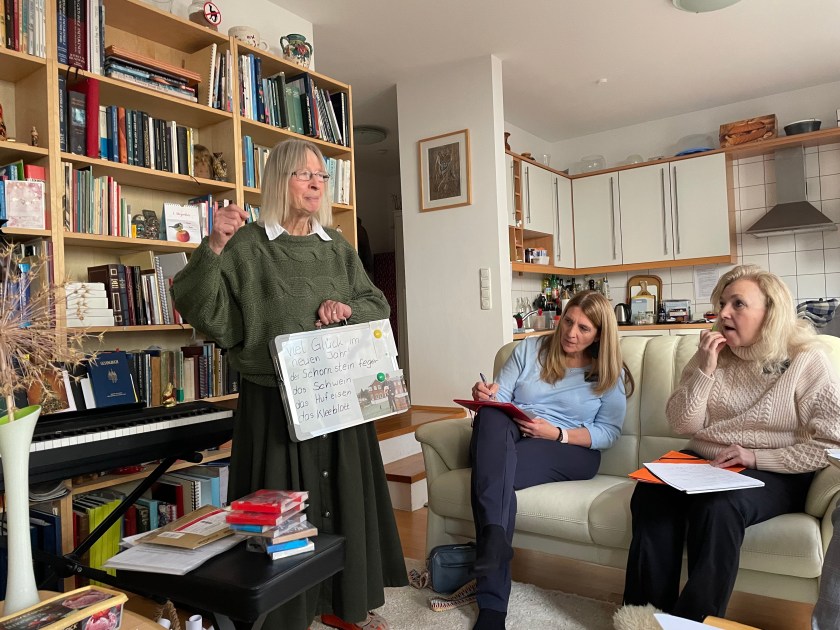
This week’s German class was great.  I love German.  I suppose it’s because there is so much of it in my bones.

Sis Enger gave us each one of these pocket handwarmers.  When you snap the little round piece inside, they get warm and stay warm for about 20 min.  Then you can put them in boiling water and the little round thing goes back together so you can do it all over again!
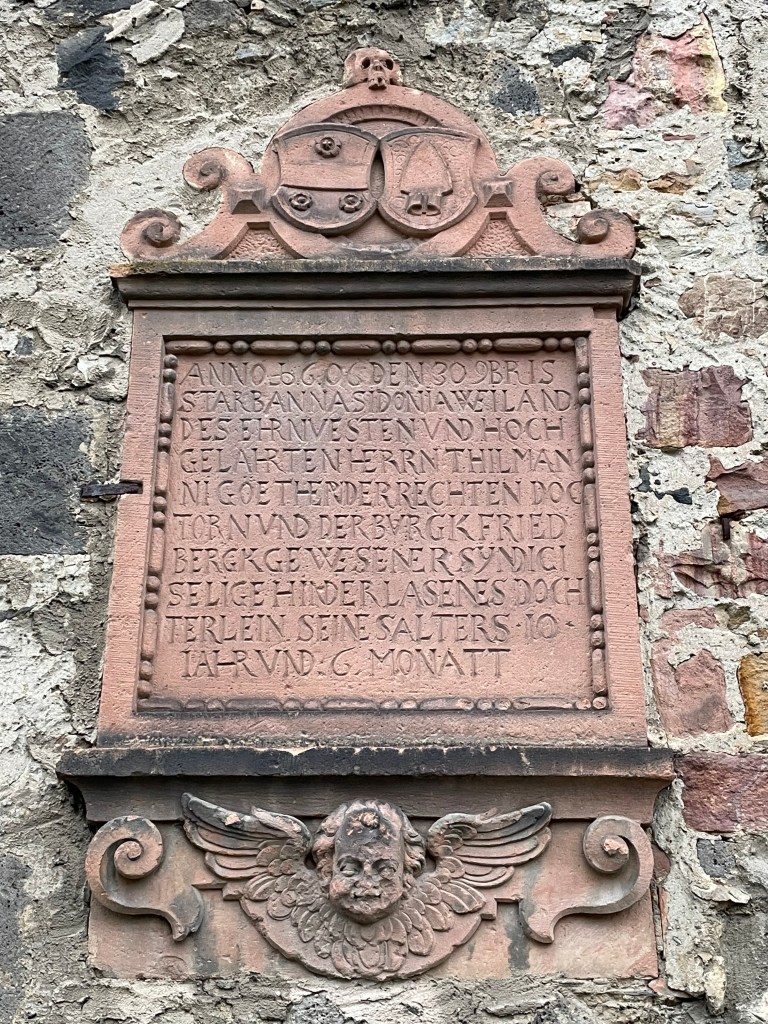
Today we learned some very helpful tips for article genders:

St. Stephen’s Church in Mainz

Our Saturday outing this week was to Mainz, about 45 minutes from our home in Frankfurt.  Mainz is a strategic river town that was used during Roman times a long long time ago.  Many centuries of history are represented here.

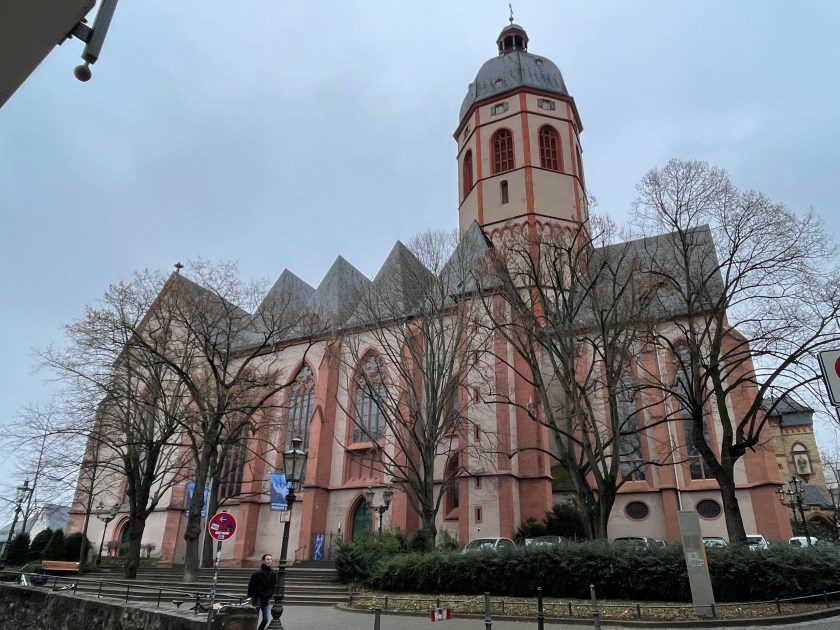
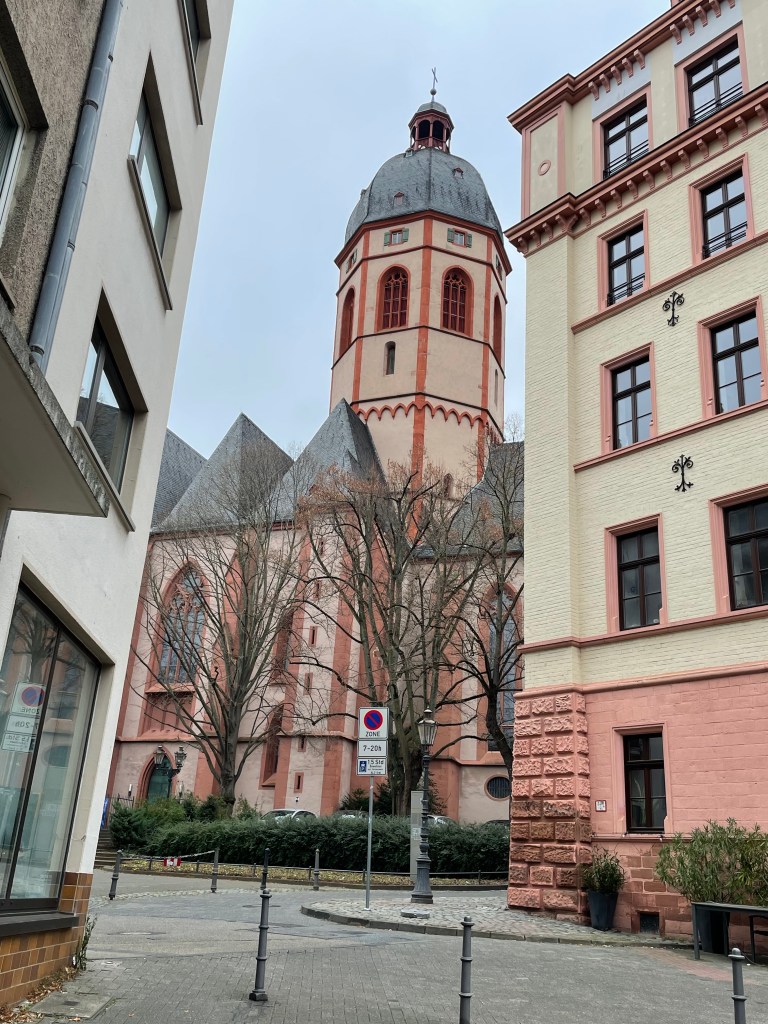
We found a walking map that took us through the old town, and then settled in here for the day.  Here is the St. Stephen’s Church, one of our interesting stops.

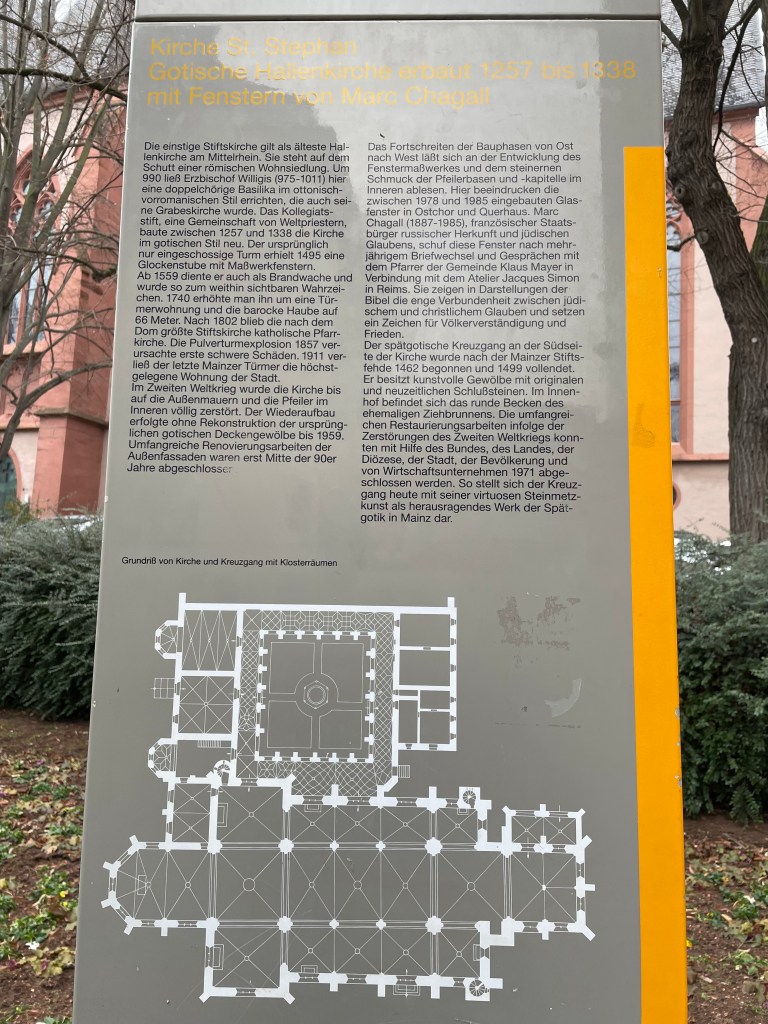
Here’s a bit of information about this church:

St. Stephen’s Church
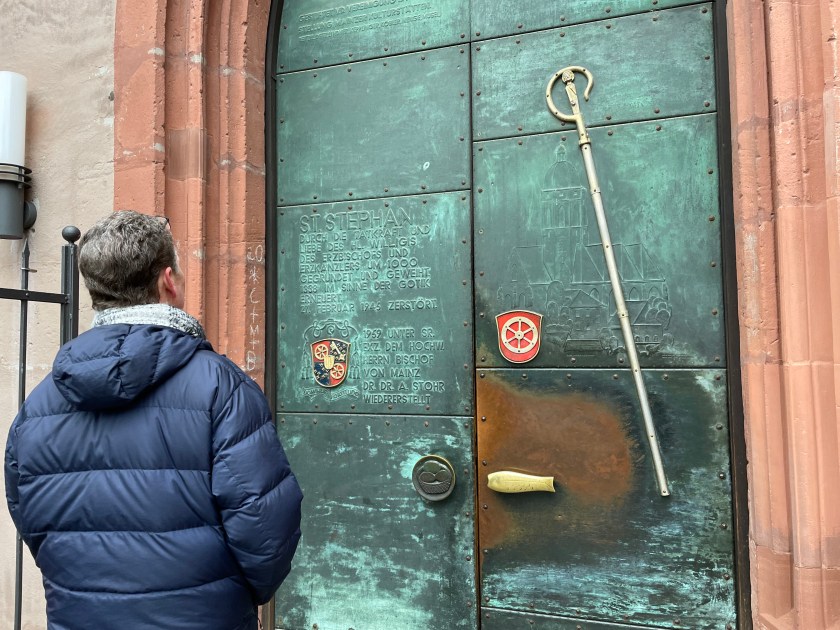
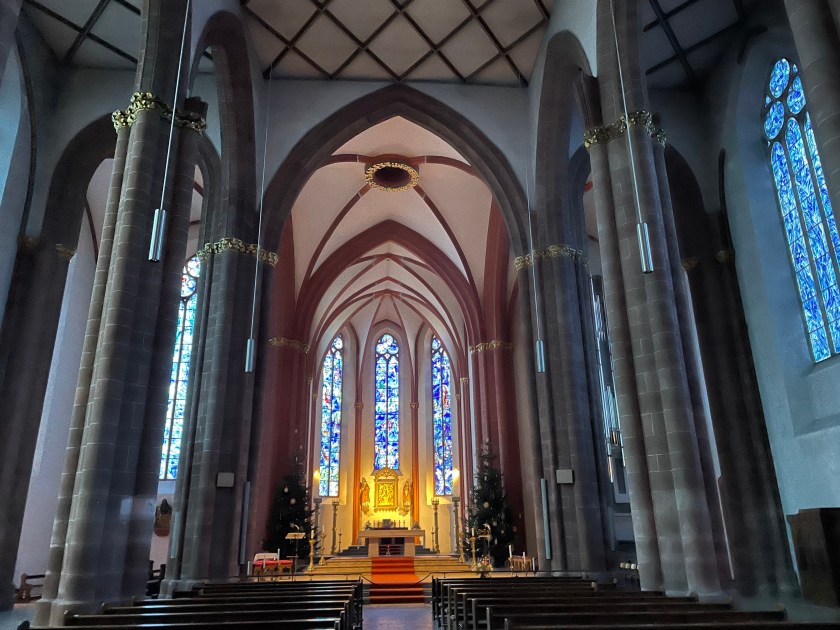
St. Stephen’s Church was originally built in 990 on Mainz’s highest hill. The current church was completed in 1340 and is the Upper Rhine’s oldest Gothic hall church.  The church was originally built by Archbishop Willigis, who also built the Mainz Cathedral. Willigis envisioned St. Stephen’s as the “Empire’s Place of Prayer.” Willigis was buried in St. Stephen’s in 1011.

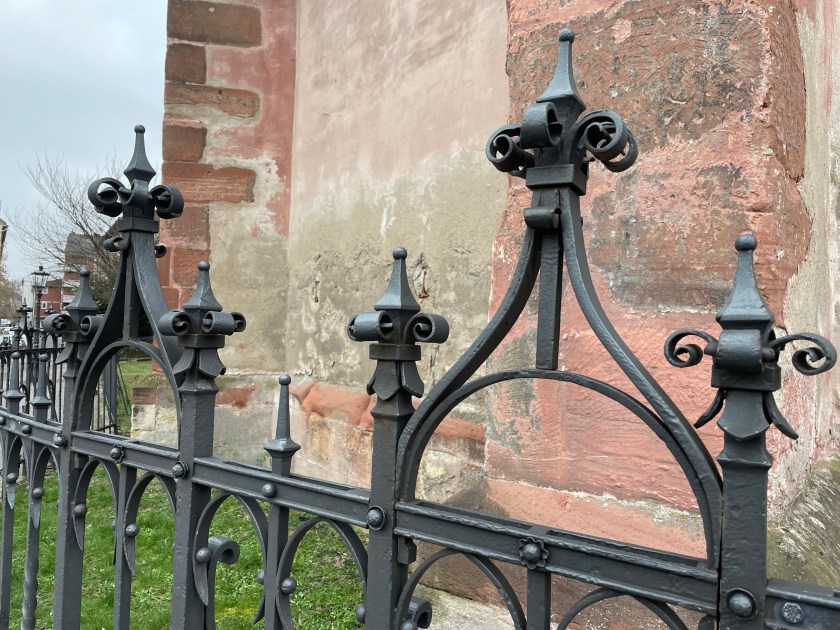
The church features a nave with two side aisles. The walls have the distinctive red sandstone that is featured in other Mainz buildings. The 66-meter (216-foot) high tower is original up to the pointed arch frieze. In 1962, the dome and lantern were added to celebrate Mainz’s 2,000th anniversary. From 1559 to 1911, a lookout person lived in the tower to watch for fires.  In 1857, a powder magazine explosion damaged the church’s facade. World War II bombs caused heavy damage.

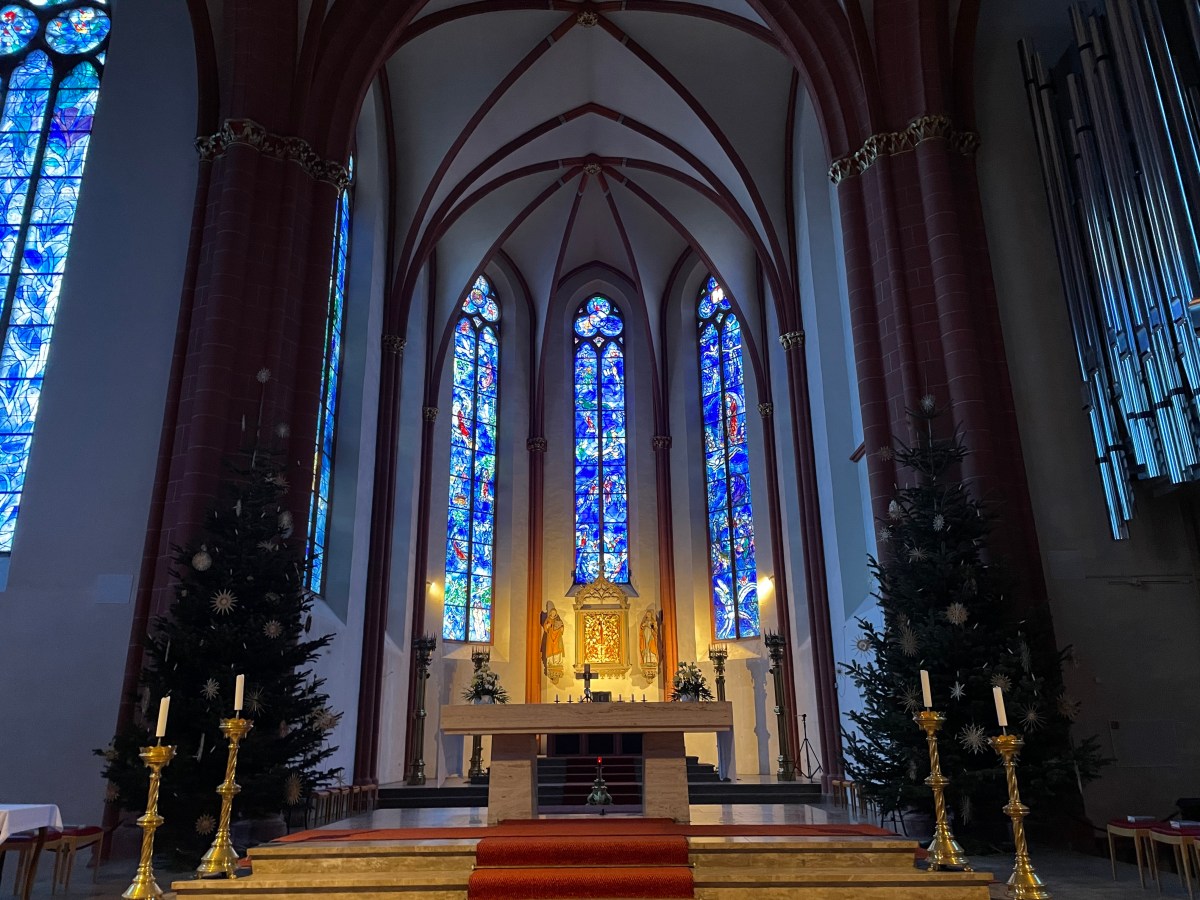
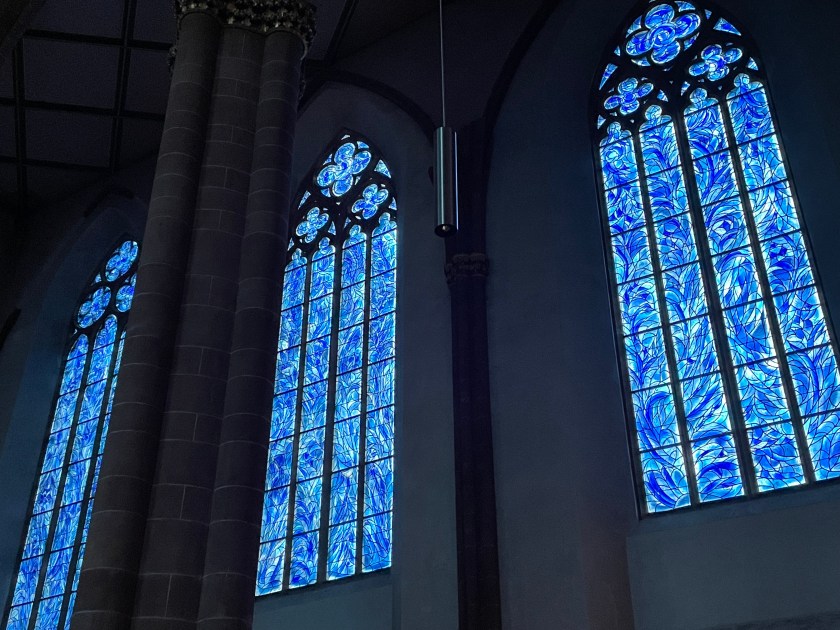
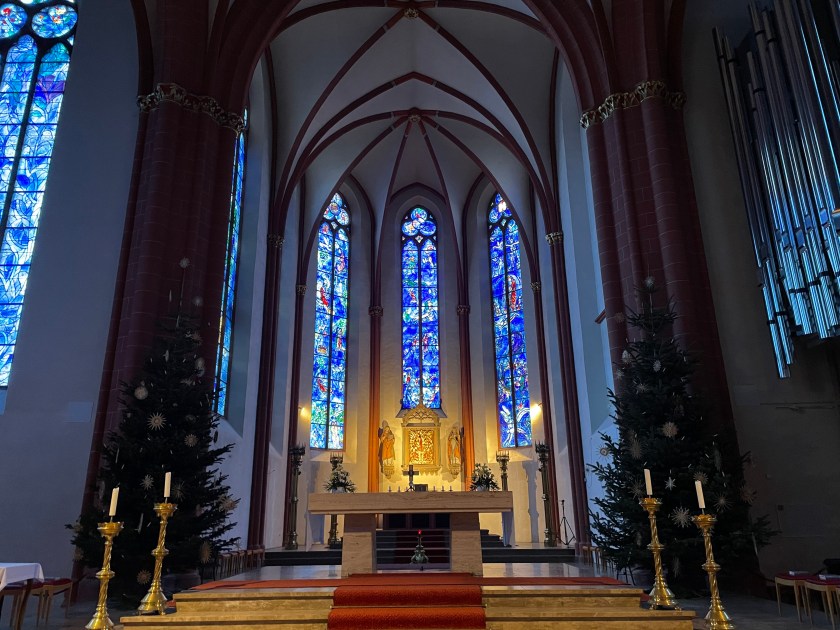
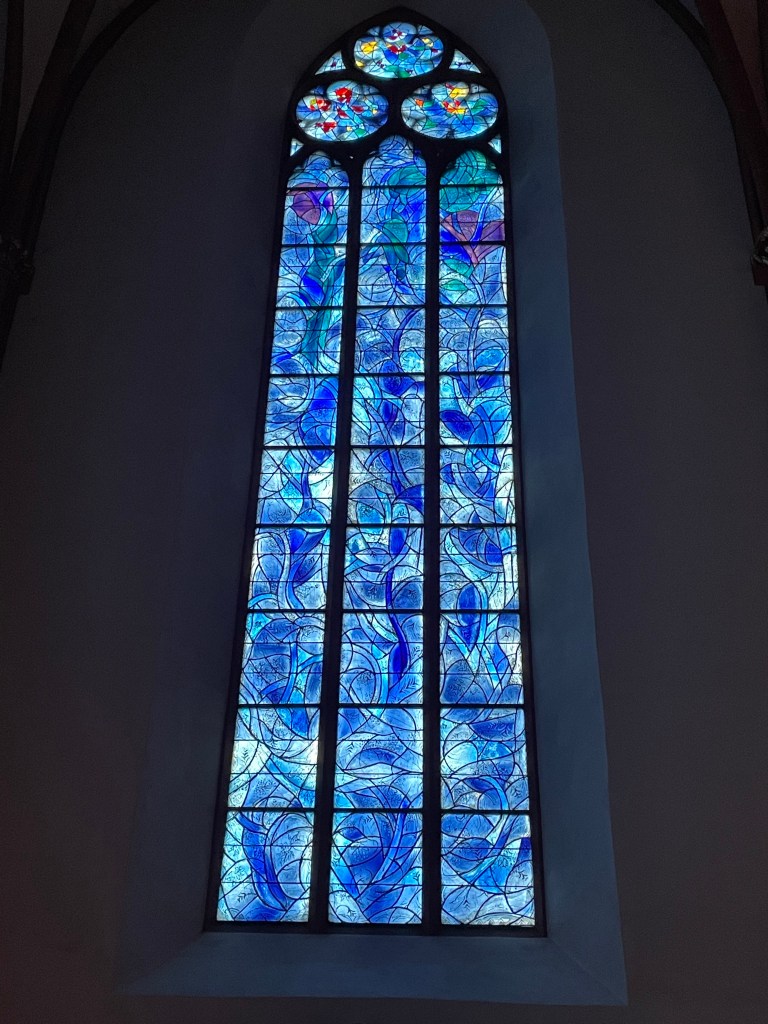
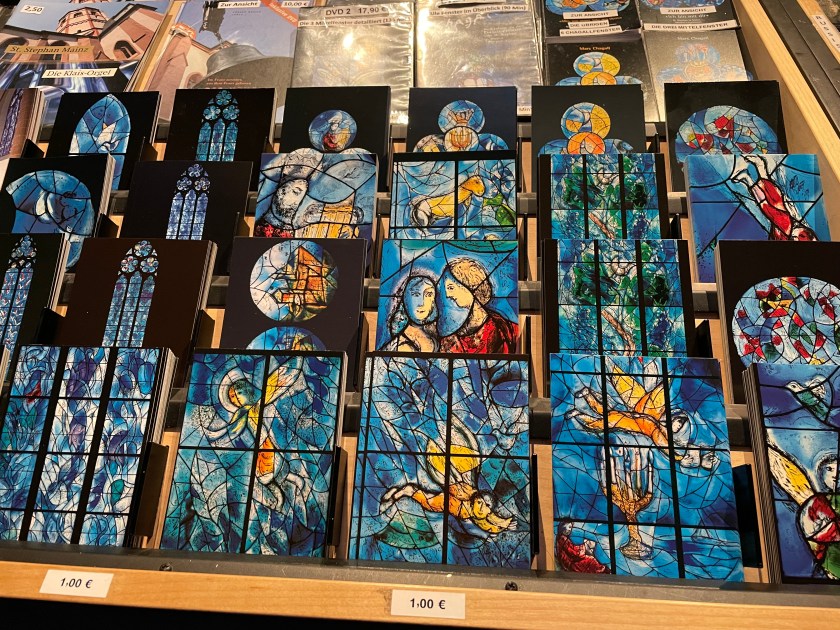
One of the church’s most notable features is the Chagall windows. Marc Chagall, a Belorussian Jewish artist, created nine stained glass windows that depict Christian and Jewish traditions. Chagall fled France during the Nazi occupation and intended his work to contribute to Jewish-German reconciliation.

St. Stephen’s is the only German church that features Chagall’s work. Chagall placed the first window in 1978 when he was 91 years old. He completed the final window shortly before he died at the age of 97. Mainz made Marc Chagall an honorary citizen.

The windows rely heavily on the color blue, and blue light shines throughout the church. They feature angels and Biblical figures moving through the blue light.  In addition, the church has 19 other stained glass windows that were created by Charles Marq. Marq had worked with Chagall for 28 years.

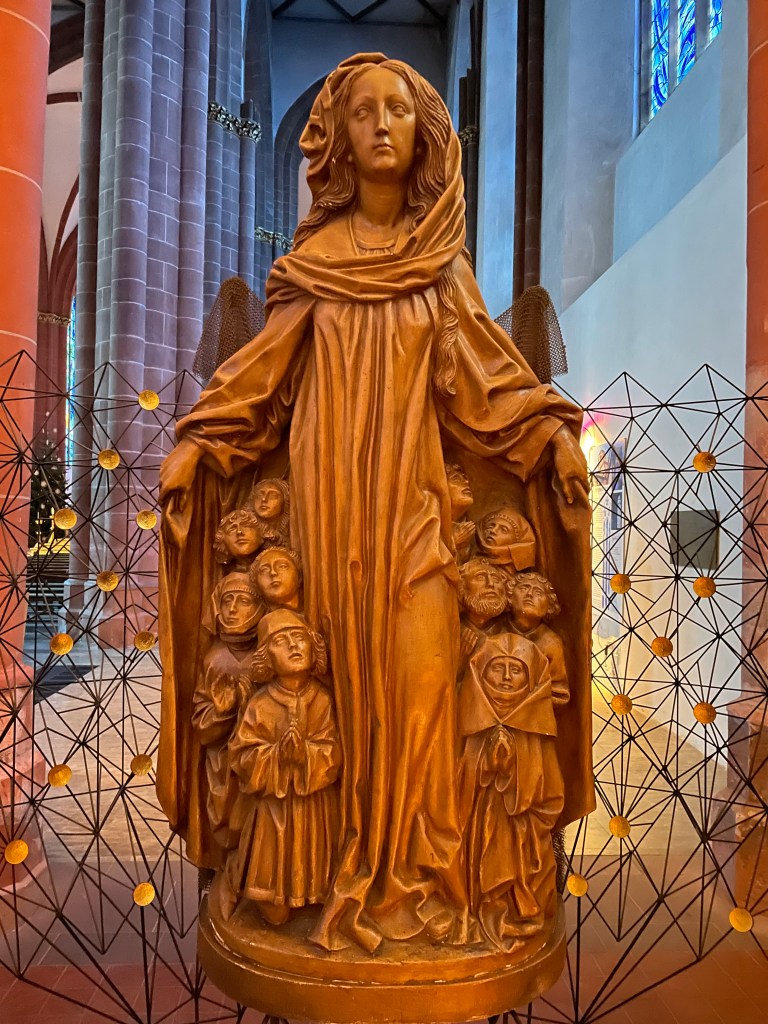
St. Stephen’s houses several other magnificent artworks. A 15th-century painting shows God the Father. There is also a late Gothic sculpture depicting the Virgin and Child with Saint Ann. The baptismal font dates to 1330. St. Stephen’s Gothic cloister is one of the most beautiful cloisters in the region. The cloister was added between 1462 and 1499. Many of Mainz’s dignitaries are buried here, and visitors can see tombstones with coats of arms.

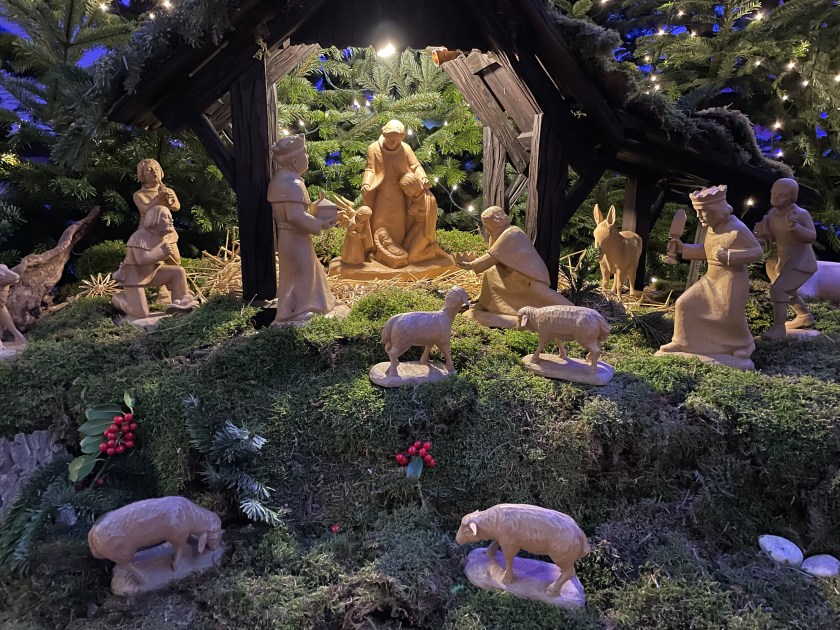
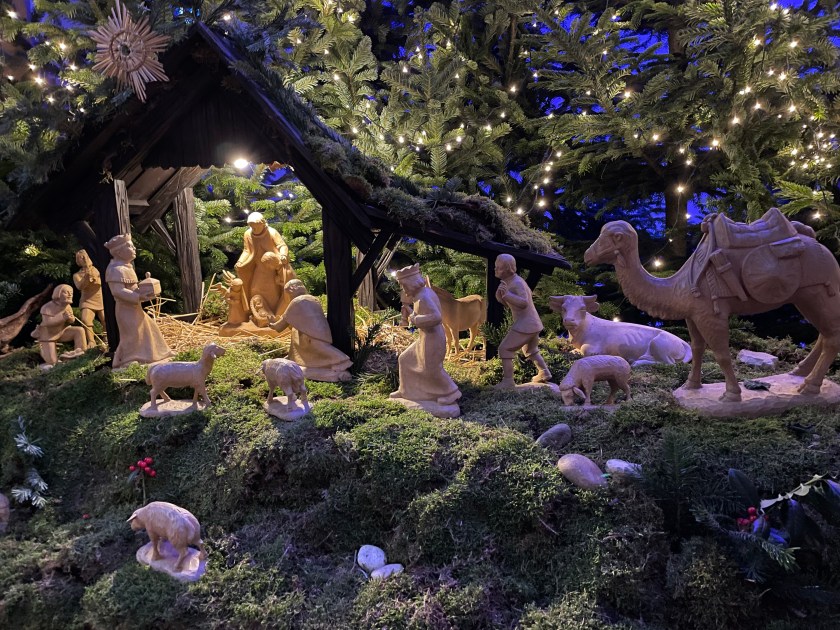
The Christmas Nativity was still set up, very beautifully done.

There are 9 beautiful Chagall windows in the church, the last he installed when he was 97!

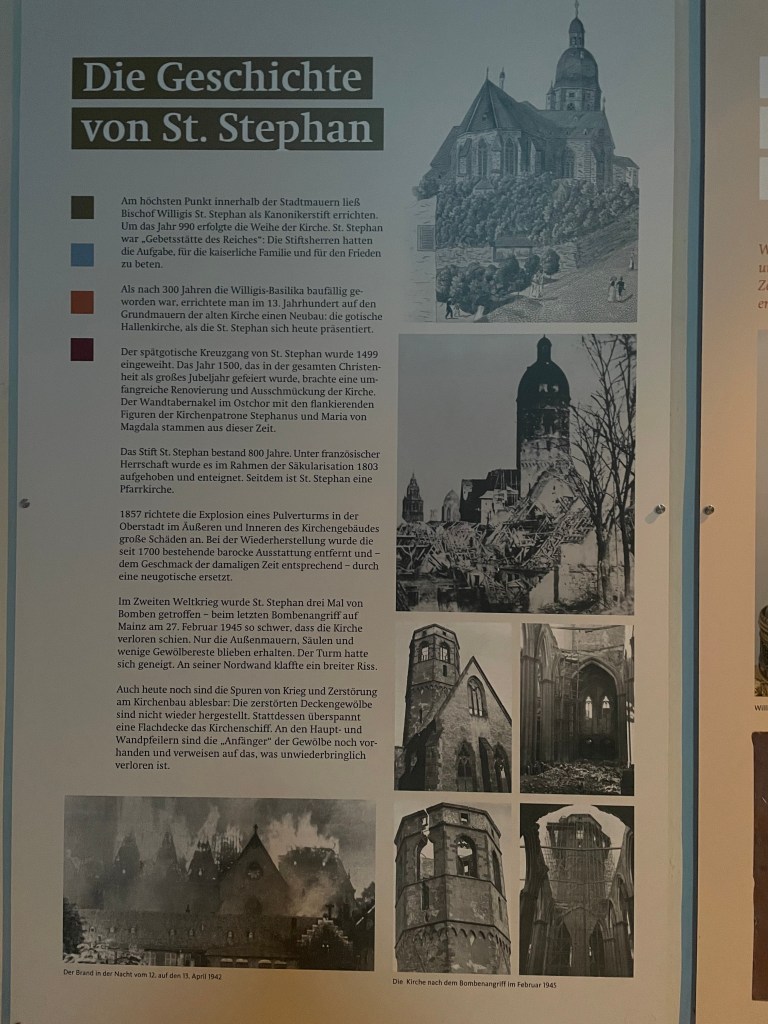
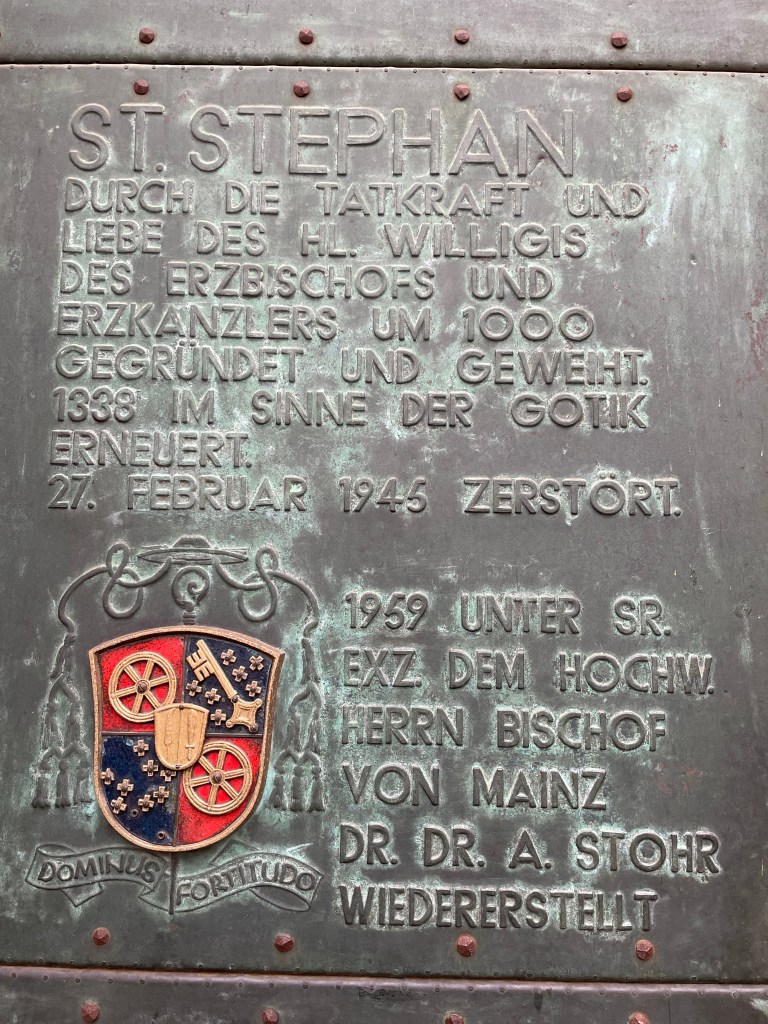
Here is the history of the church, founded in 1000, and rebuilt many times since:

Taking Down Christmas

Some people like to see it all taken down and put away.  I like to linger in the season.  It’s always a bit sad for me to see Christmas put away as if it’s a thing.

This week at the grocery store I stocked up on Stollen–enough to fill one of the 3 bins in our little freezer.  That should get me through much of the coming year.

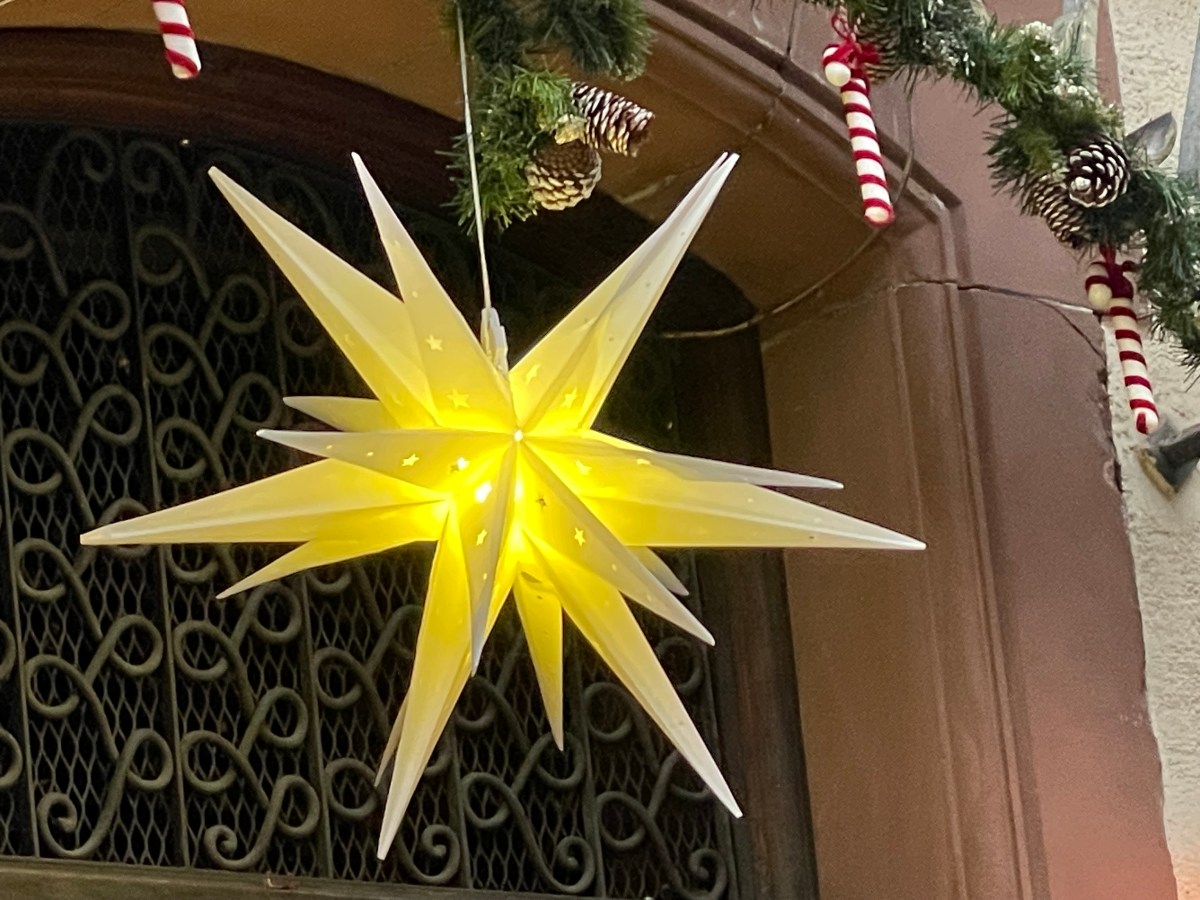
The little tree in our apartment is still up and the star in the window still shines.  I’m not quite ready to say good bye.

When the song of the angels is heard no more,
When the Bethlehem star has gone from the sky,
When the kings and the wise men have returned to their homes,
When the shepherds are back in the fields with their flocks,
Then the real work of Christmas begins:
To spread the Christian message,
To lift up the unbelieving,
To make whole the broken hearted,
To break the bonds of sin,
To purify the national purpose,
To exalt the destiny of all mankind,
And to set our eyes on those eternal goals
That the son of God established in his day.
Years ago I found and loved this adaptation of a poem by a philosopher and theologian named Dr. Howard Thurman called “The Work of Christmas.” In 1944 he helped found the first racially integrated, multi-cultural church in the United States.
Another similar version of this poem is found in Sterling W. Sill’s 7 January 1975 BYU Devotional.
I post this particular version because I like it the best.

Butzbach

About 15 minutes from Braunfels is a town called Butzbach.  It was on our  list of interesting places to visit, so we stopped there on our way home while we still had some sunlight.  When we come to an village or town, we always look for the steeples of the old churches and start there.

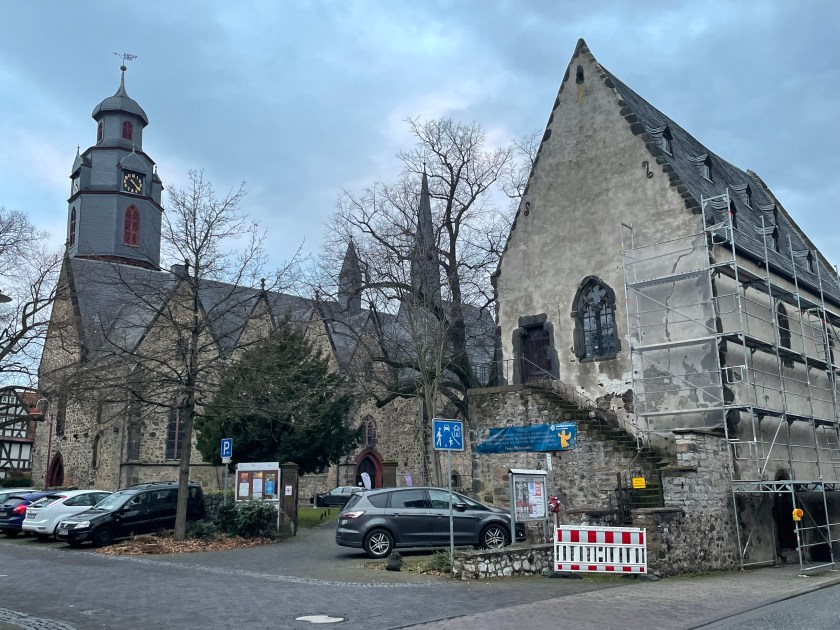
Here is the protestant St. Mark’s Church of Butzbach.

St. Mark’s Church (Butzbach)
The St. Mark’s Church in Butzbach in the Wetteraukreis in Hesse was built as a basilica in the early 13th century and redesigned into its current form as a three- aisled Gothic hall church between around 1430 and 1520 . The Hessian cultural monument now serves as the parish church of the Protestant Markus parish. The inventory items include a Romanesque baptismal font from the first half of the 13th century and the landgrave’s crypt from 1620–1622. Georg Wagner ‘s organ front from 1614 is the second oldest preserved in Hesse.

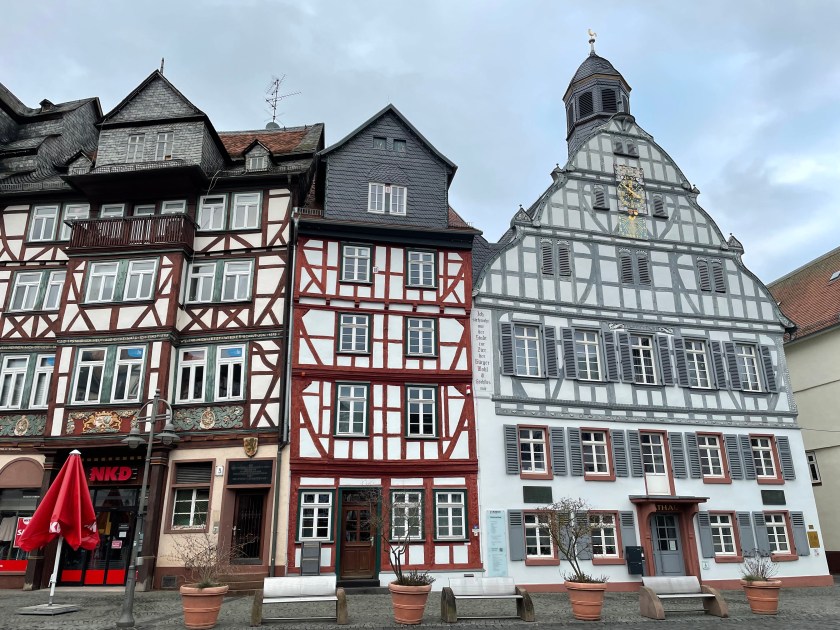
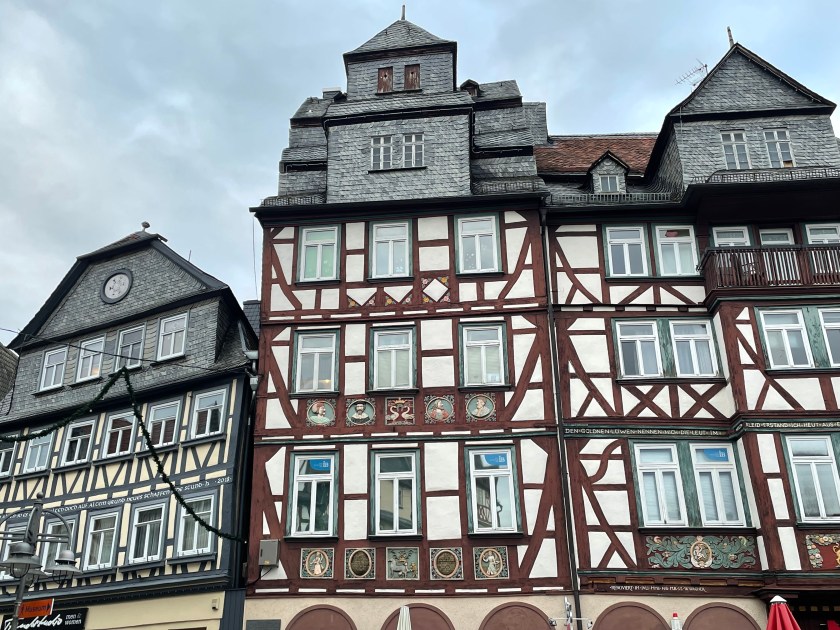
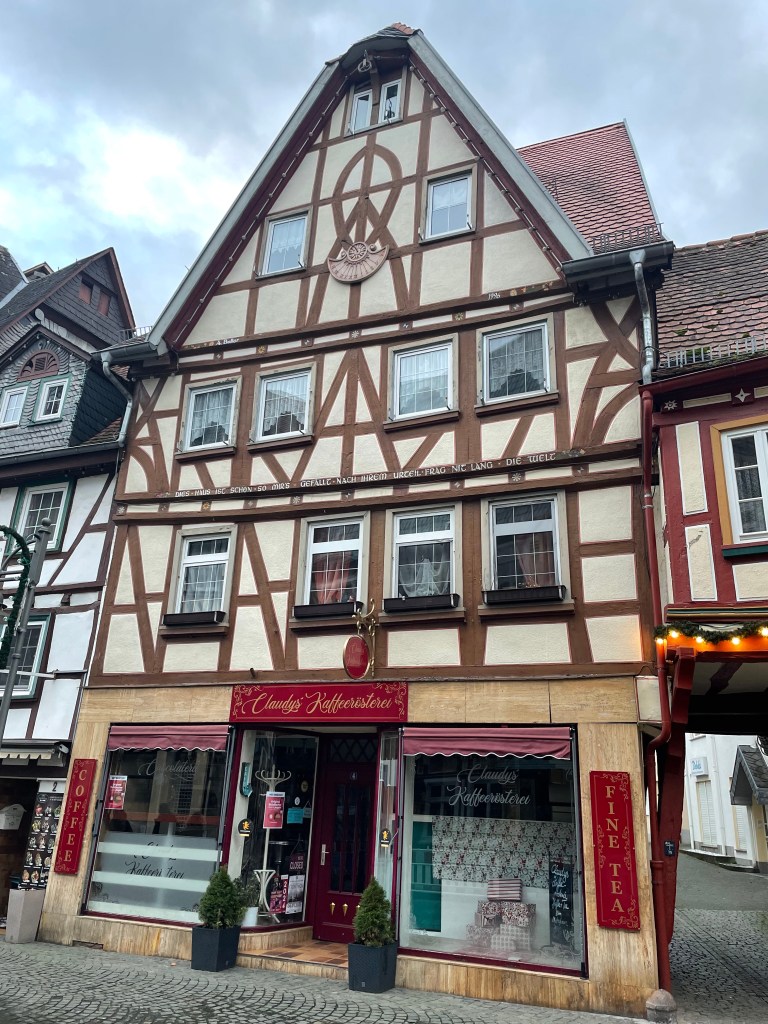
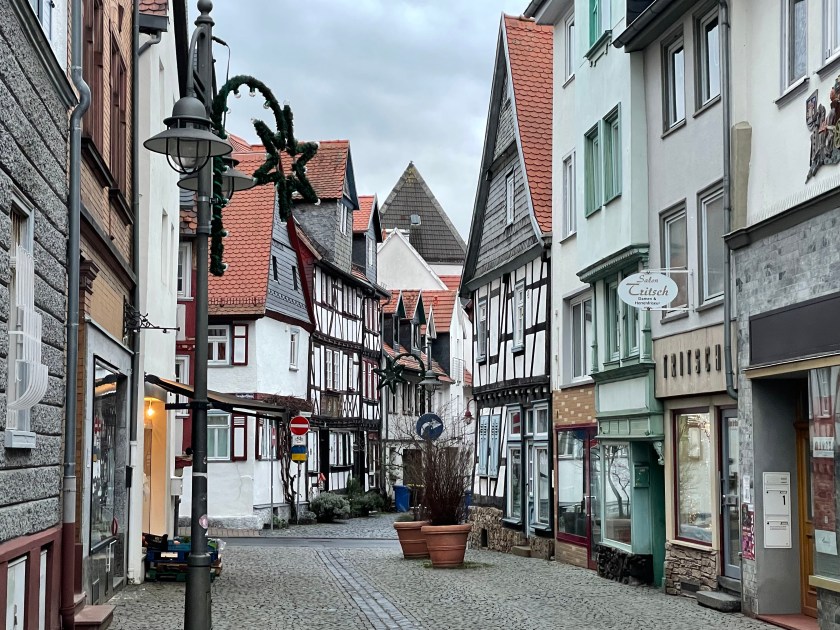
After seeing the church, we walked around the old town streets and plaza. More old half-timber buildings, beautiful and colorful. Again, no one was out, nothing was open. Not even restaurants. The city center was small and it didn’t take long to see the old part.

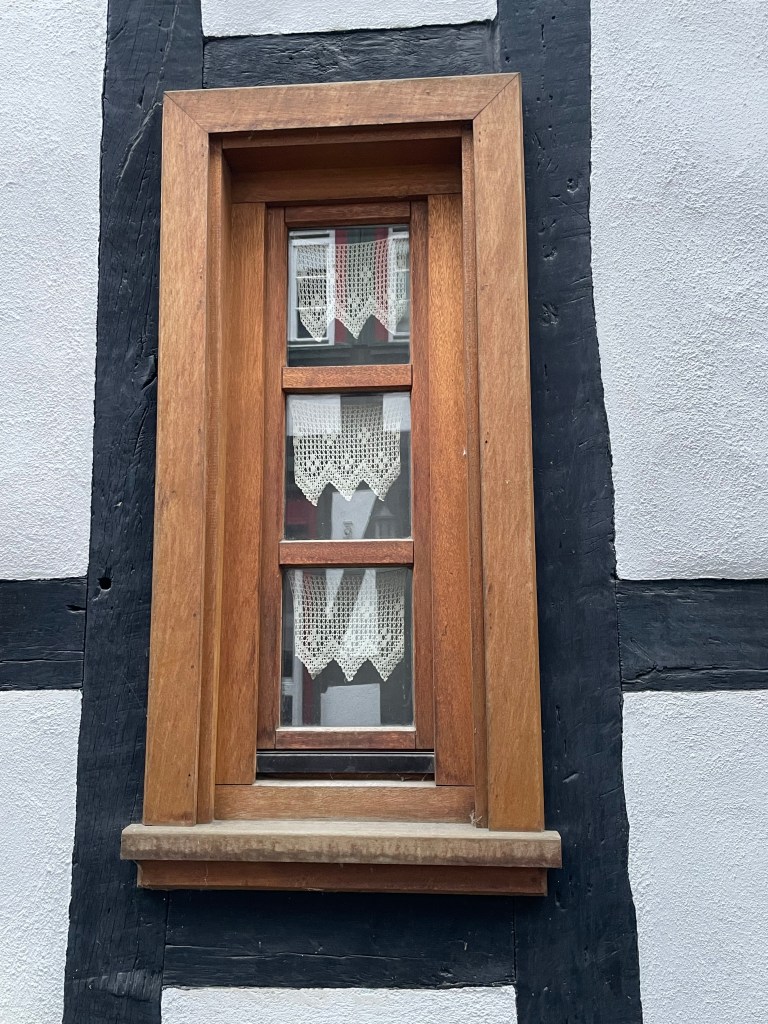
The information we read about Butzbach talked about the “skinny houses” like this one, sandwiched between larger homes.

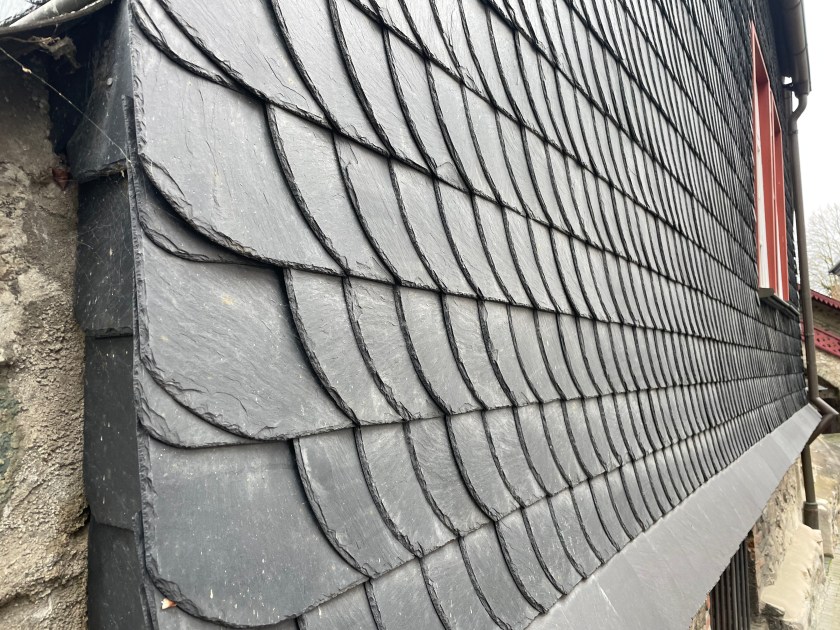
Shale siding and roofs:

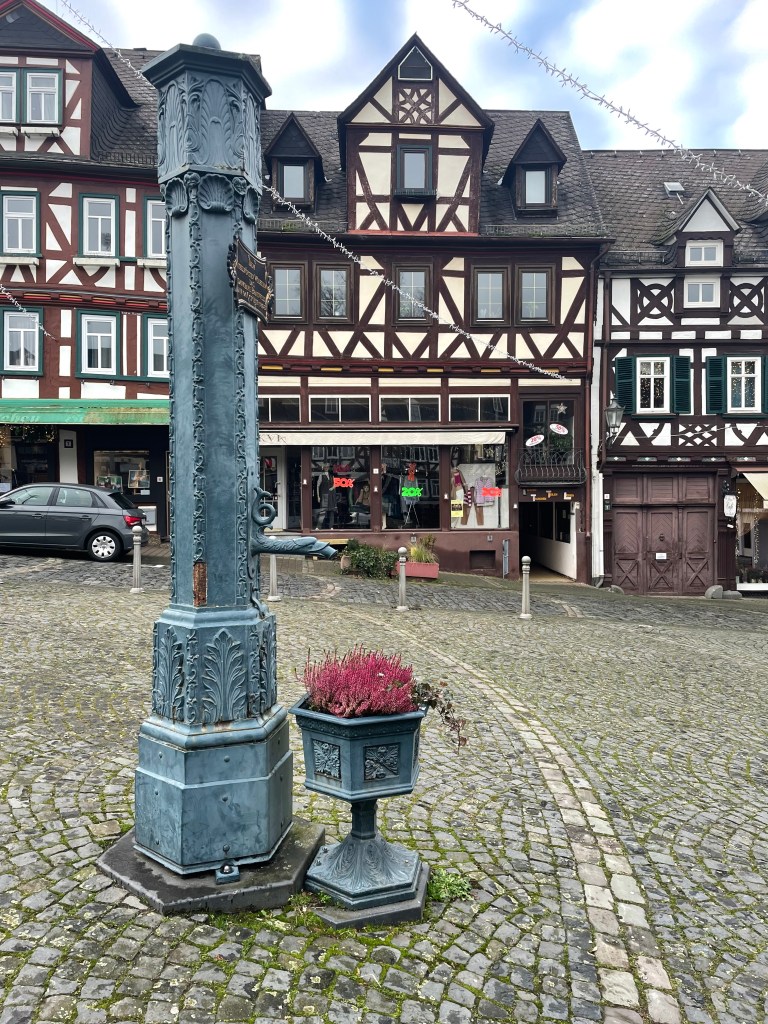
The town center:

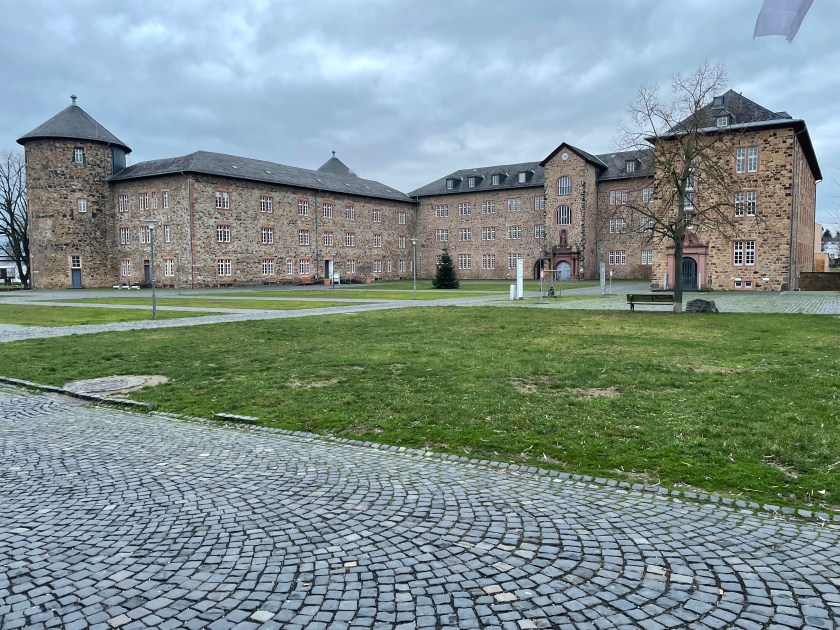
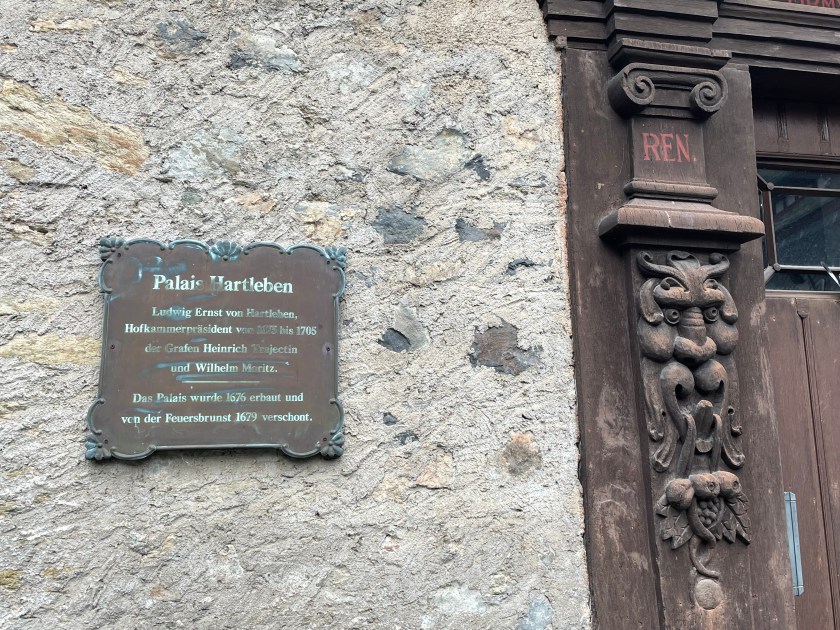
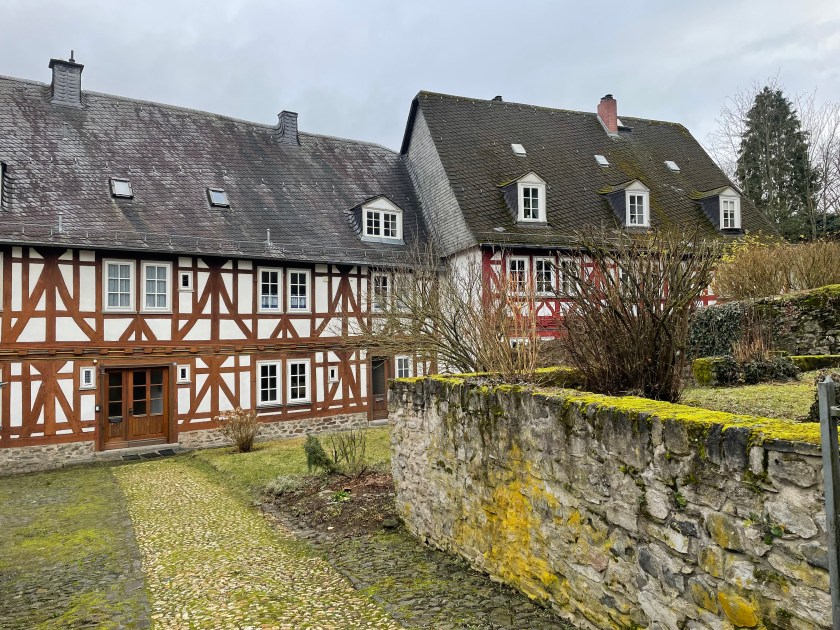
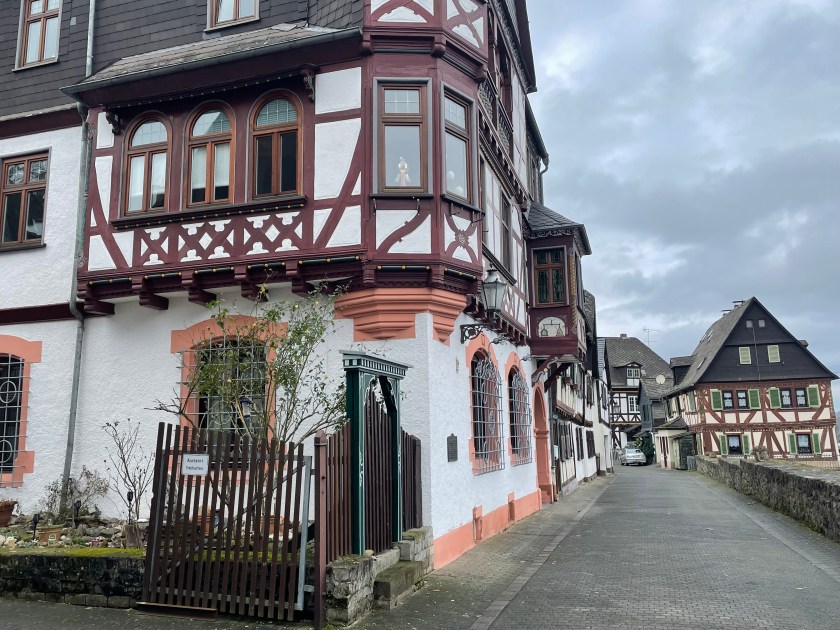
This was once a palace with gardens, now it’s owned by a business firm.

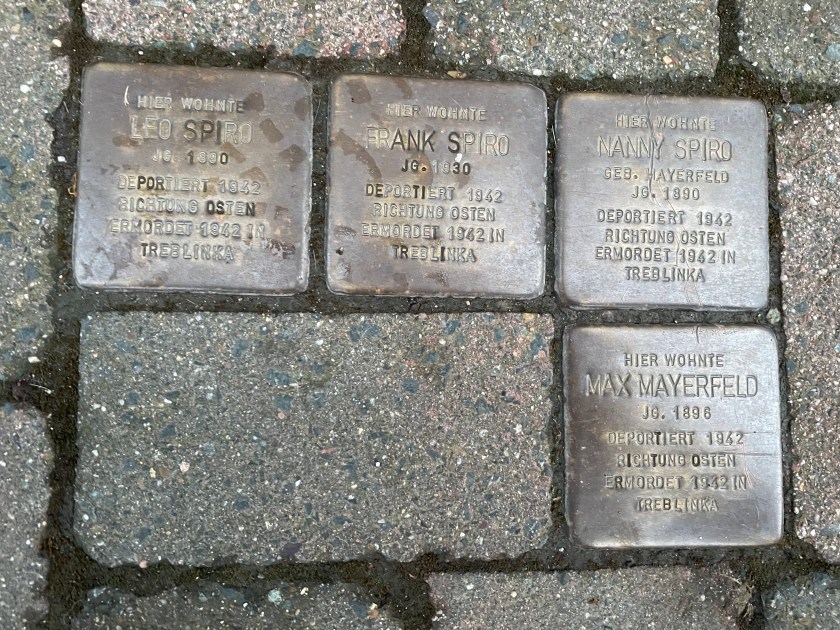
I always keep my eyes open for Stumbling Stones, a sad reminder of those who’s lives were taken from the homes we walk in front of.

A Wander Through Braunfels Old Town

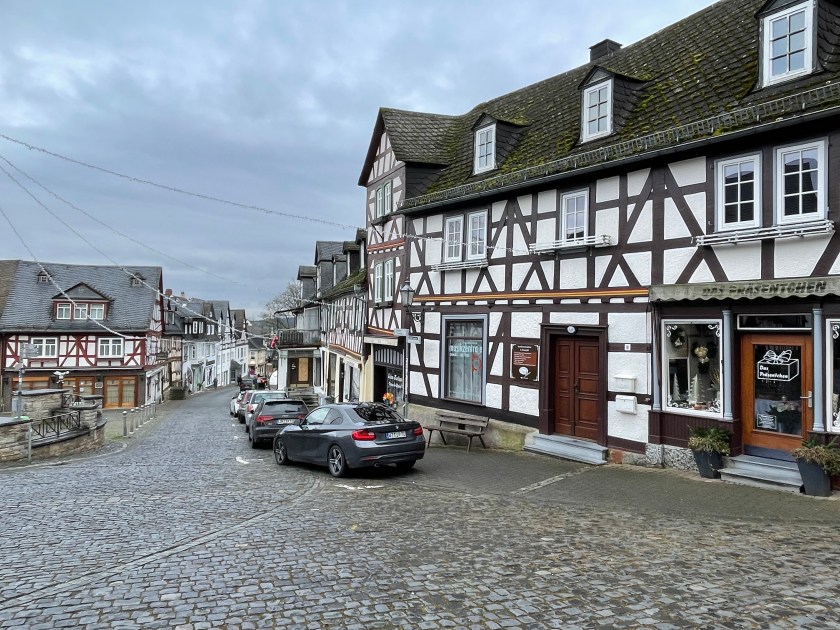
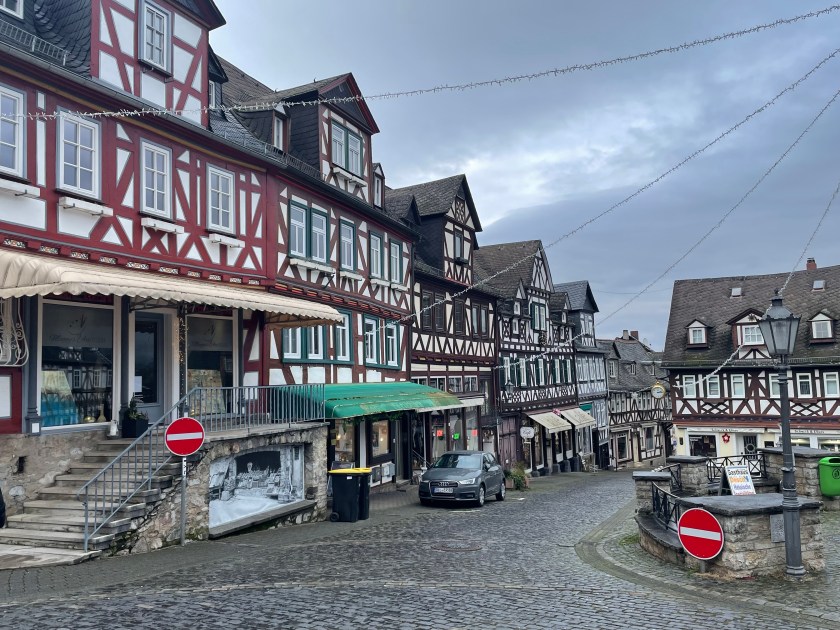
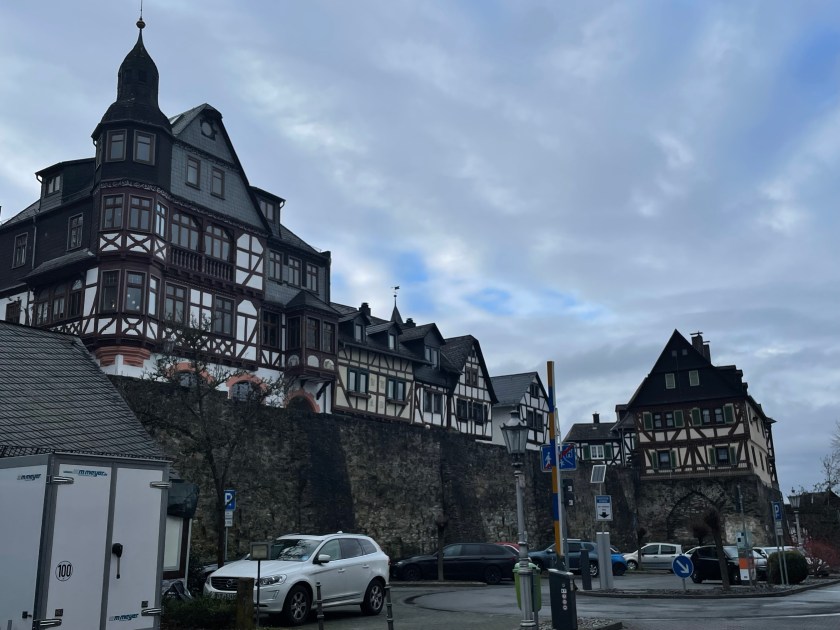
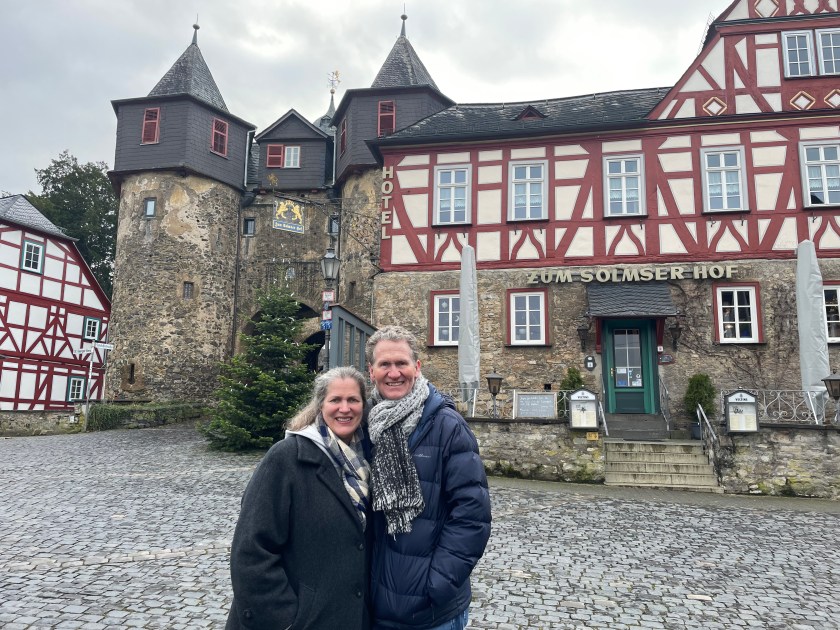
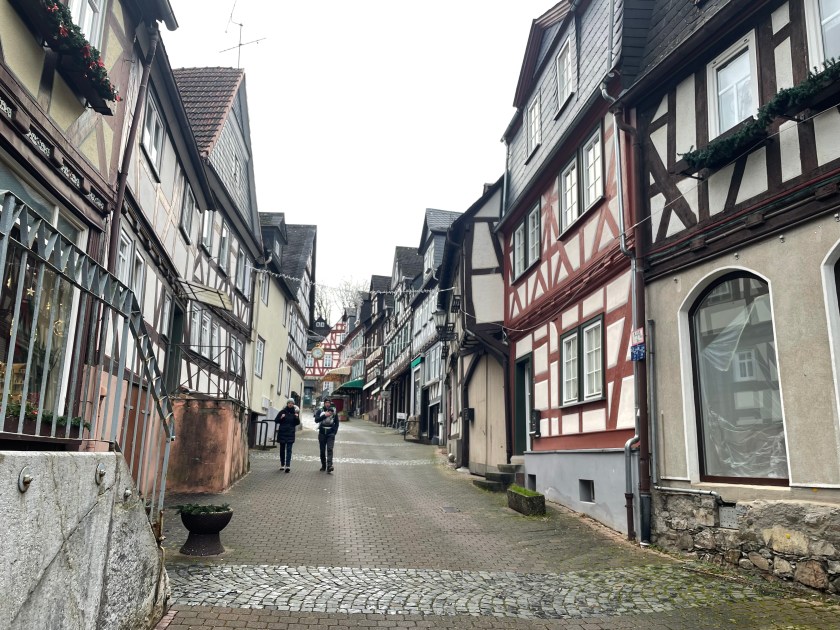
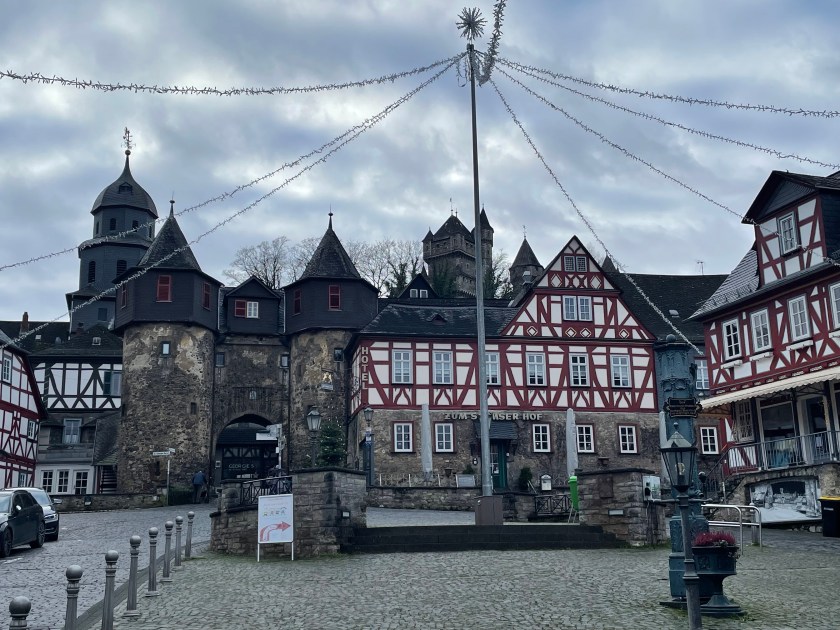
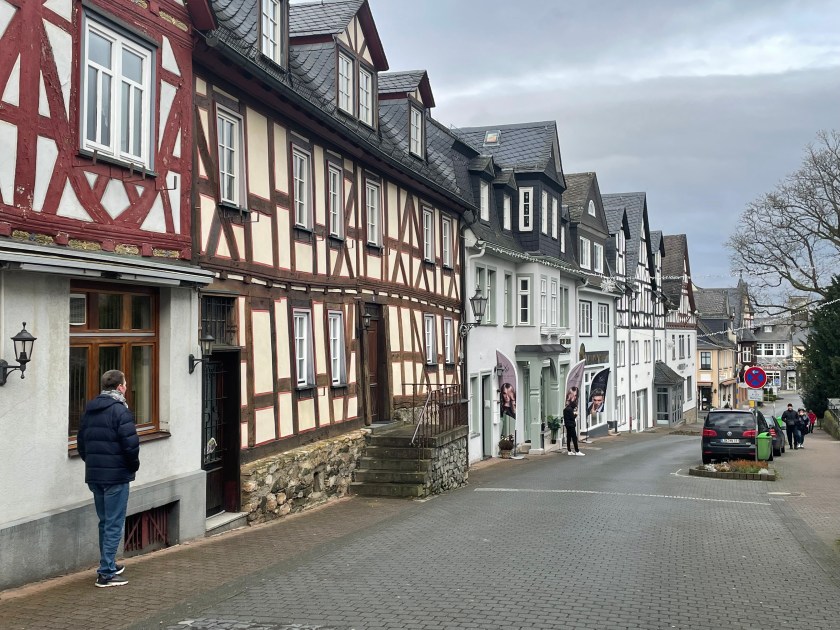
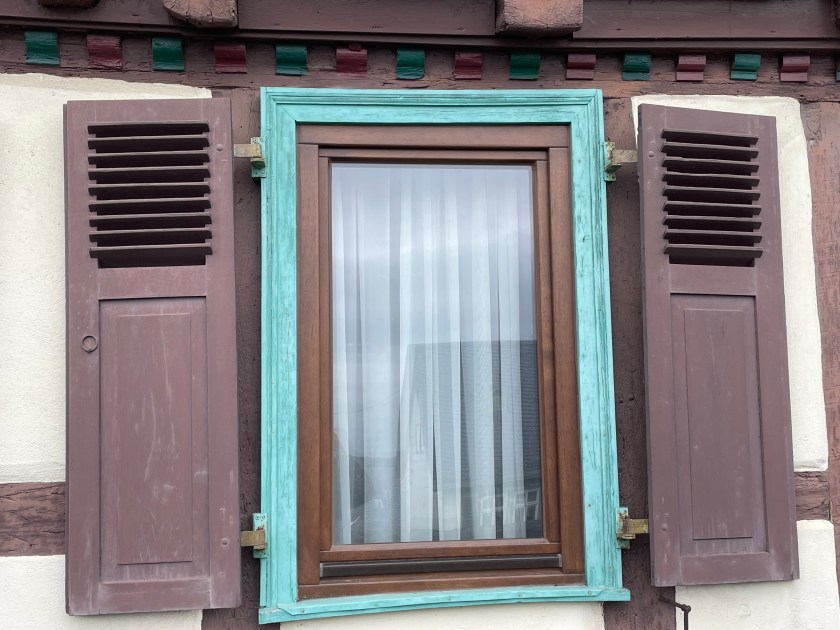
We came down the hill from the castle right into the old town.  It was charming, but because of the Three Kings Holiday, the small old town seemed deserted.  We and a couple other wanderers were the only ones in sight.  All the shops were closed.  No one was out and about.

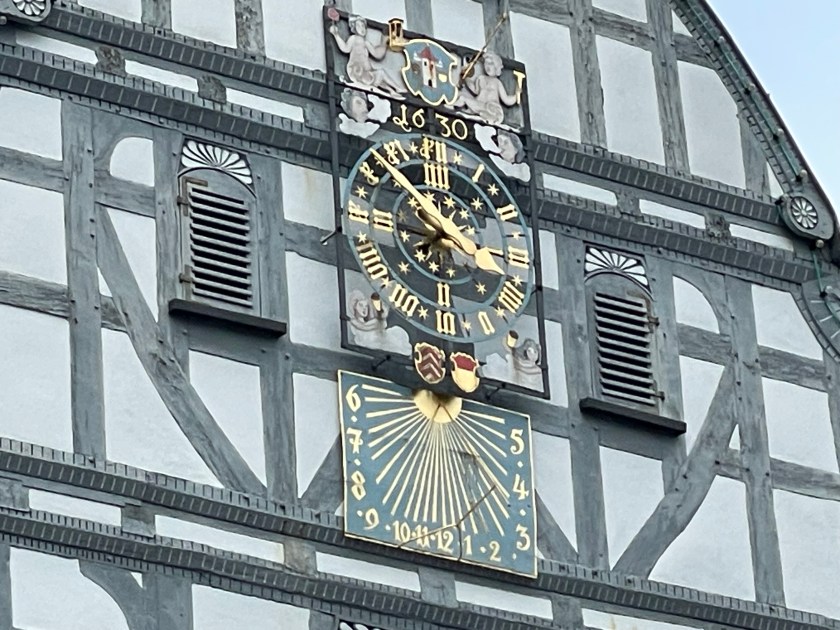
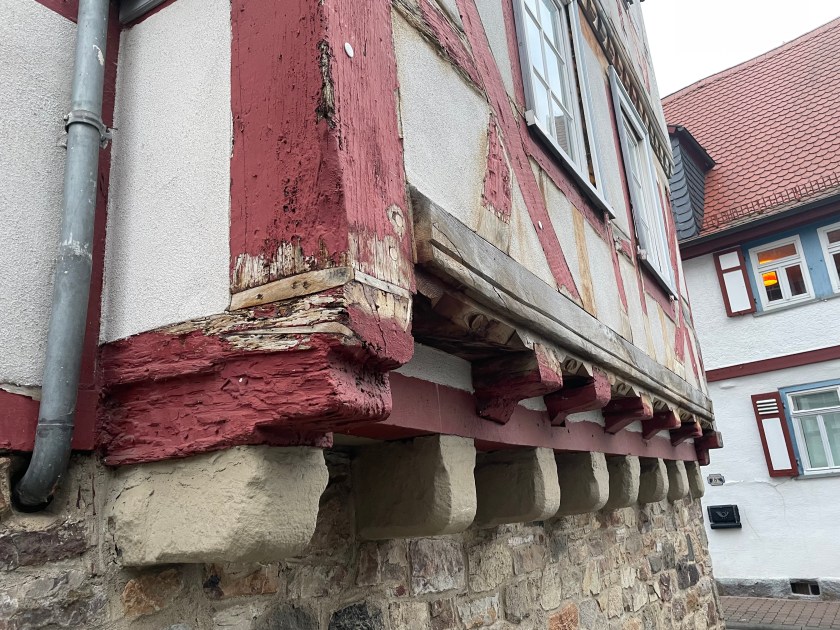
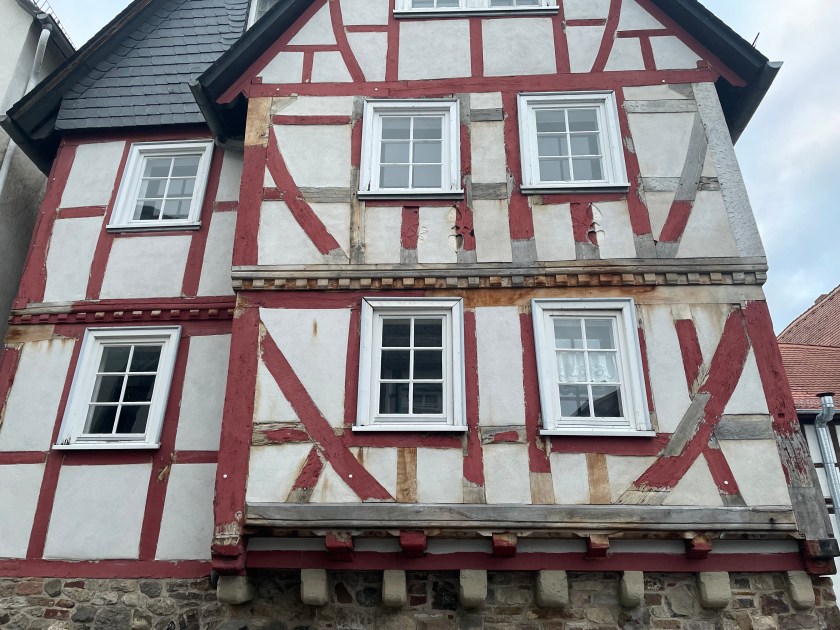
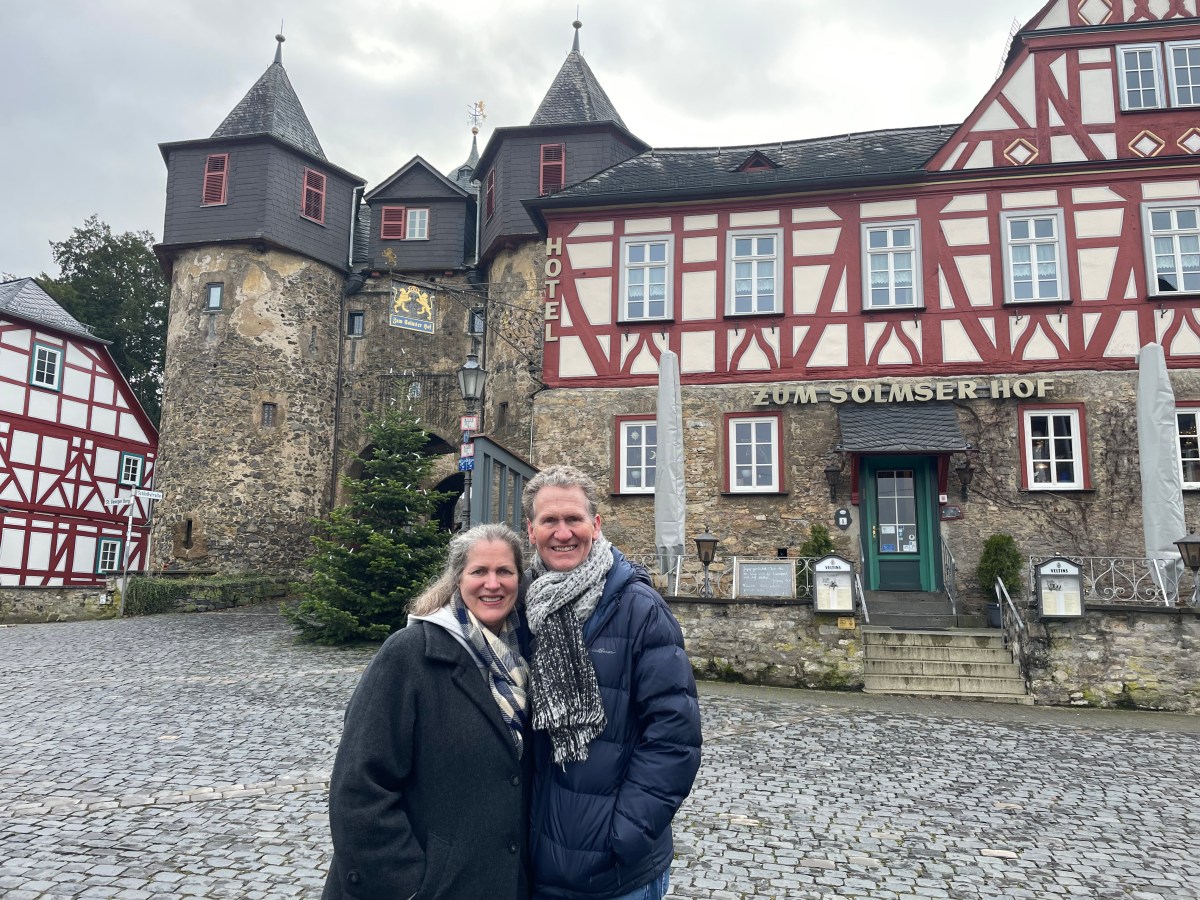
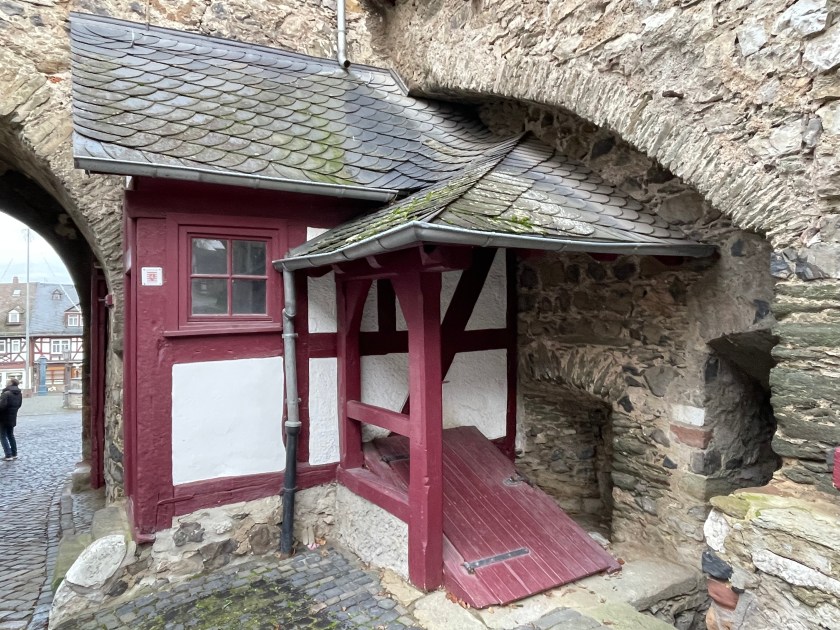
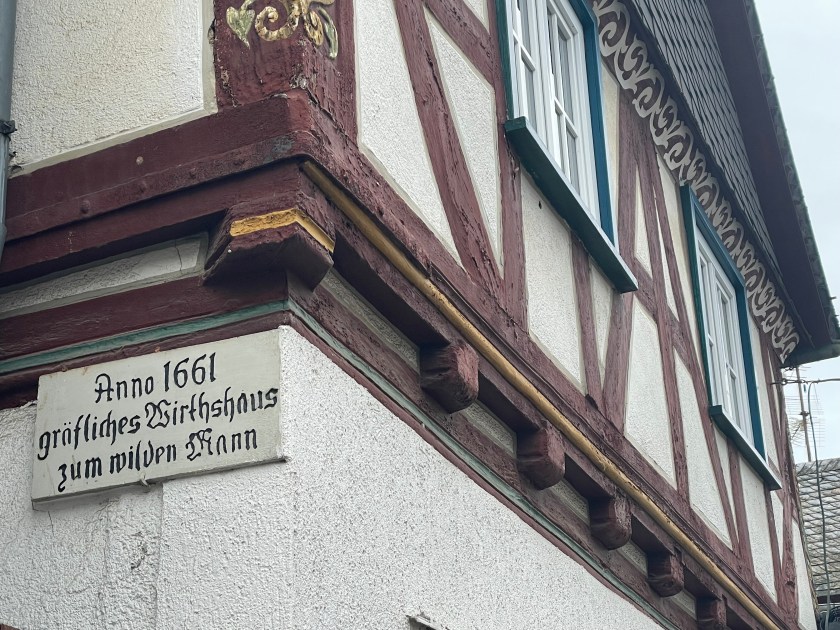
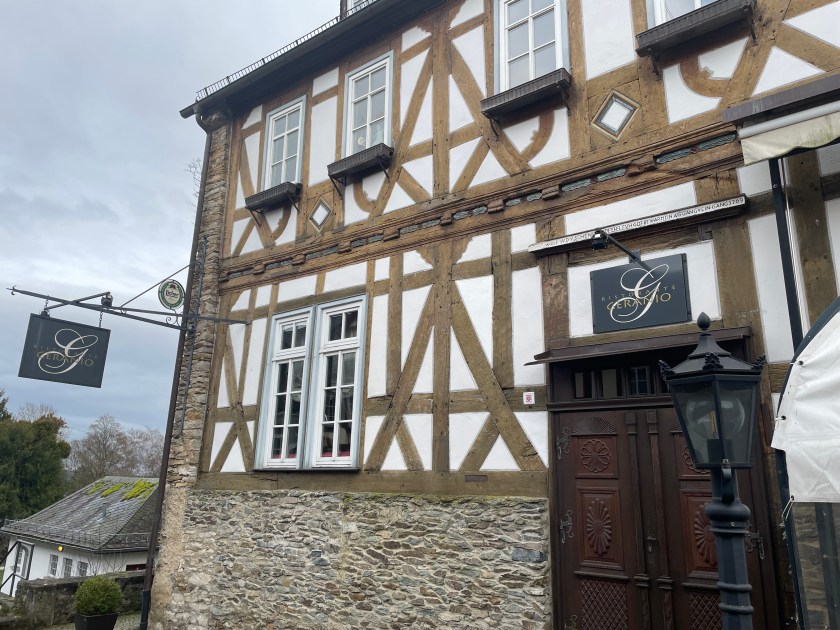
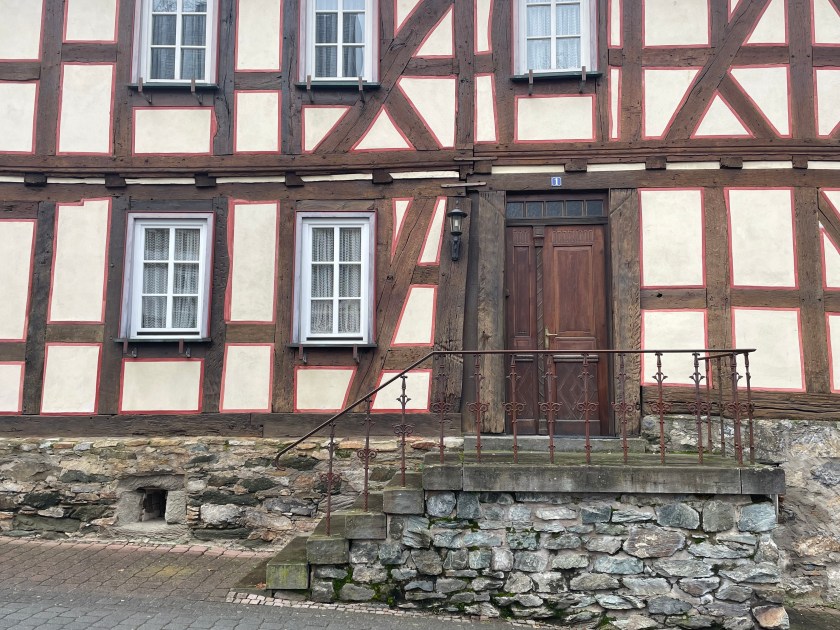
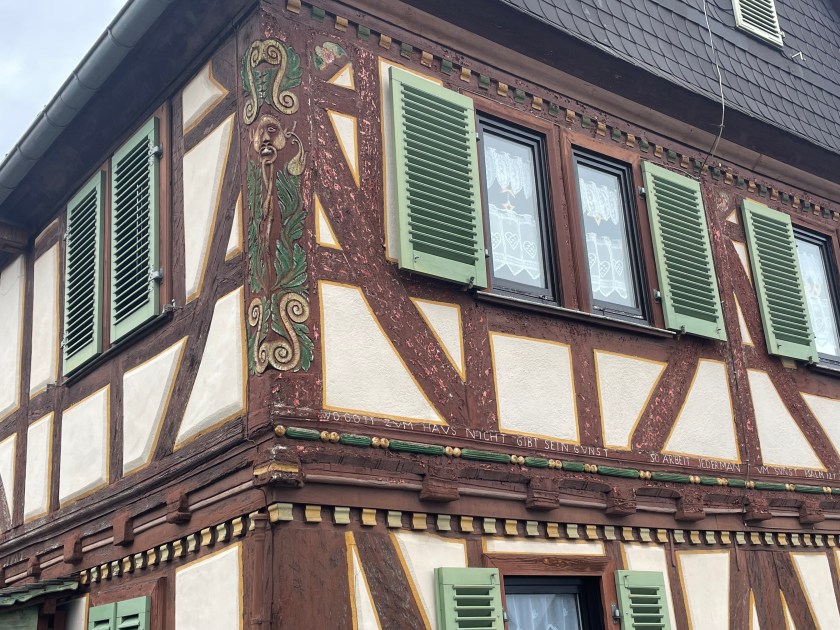
Buildings like this date back to the 1600s.

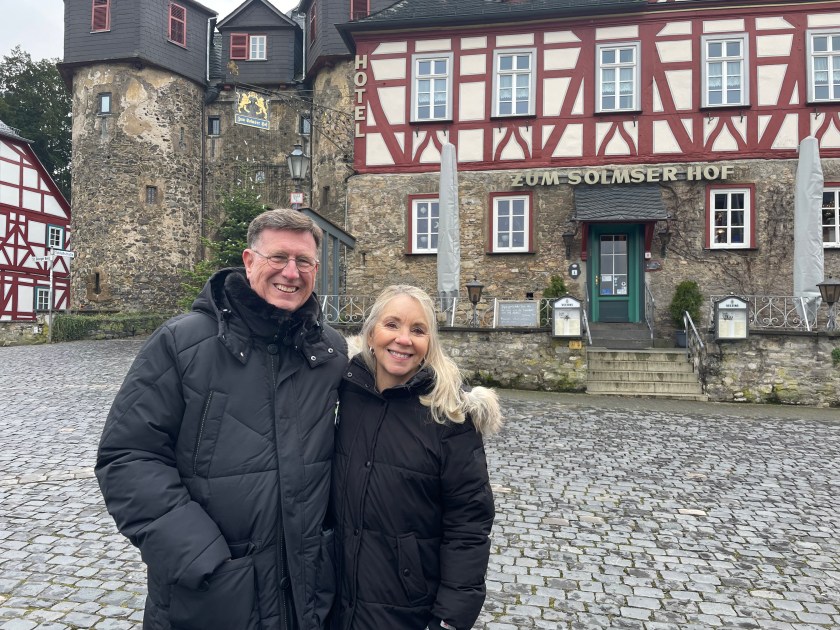
We enjoyed traveling today with the Stokers.

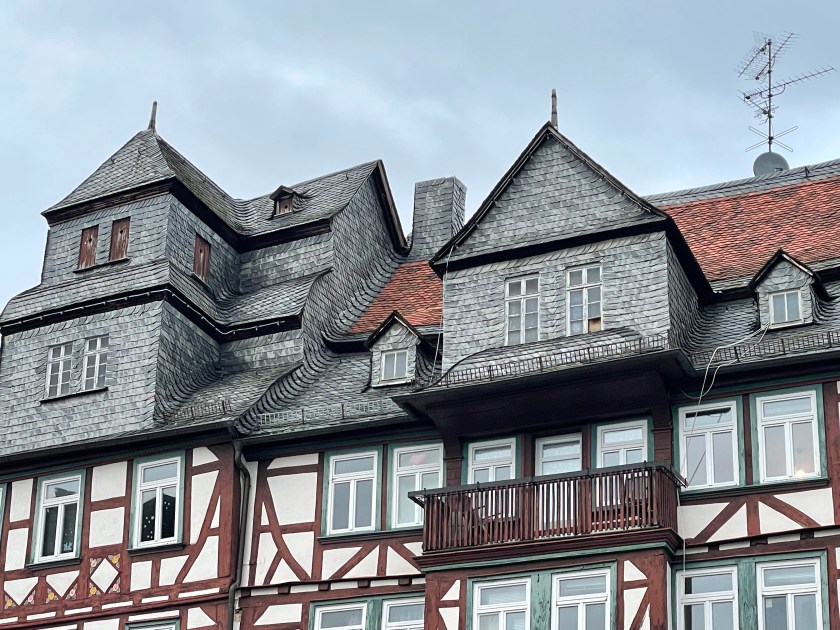
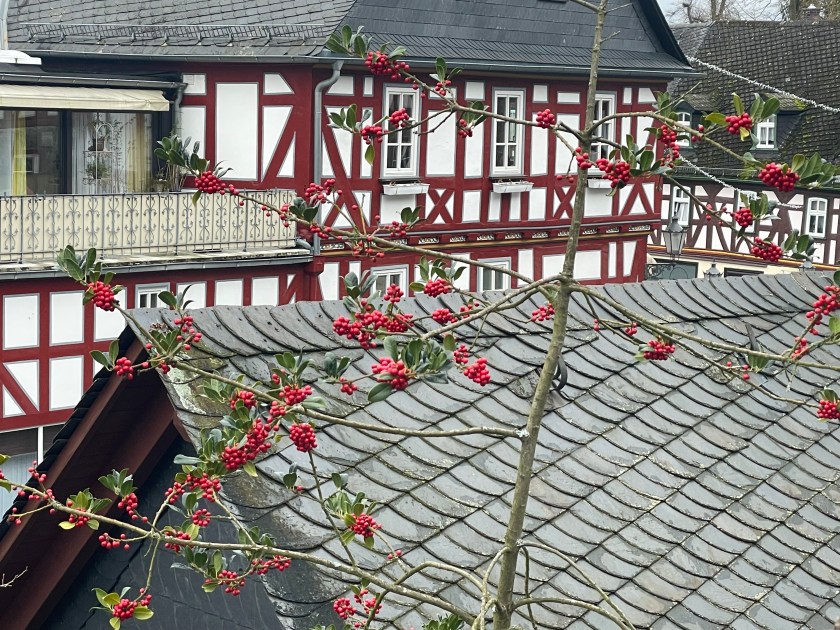
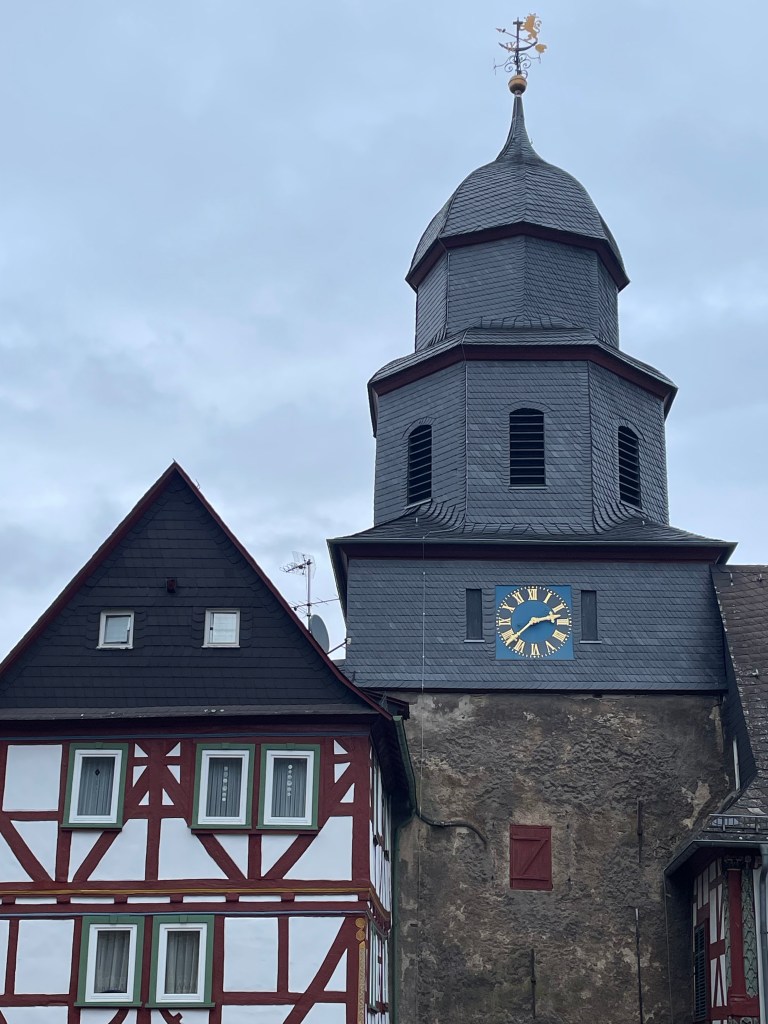
Slate roofs and siding on the homes: