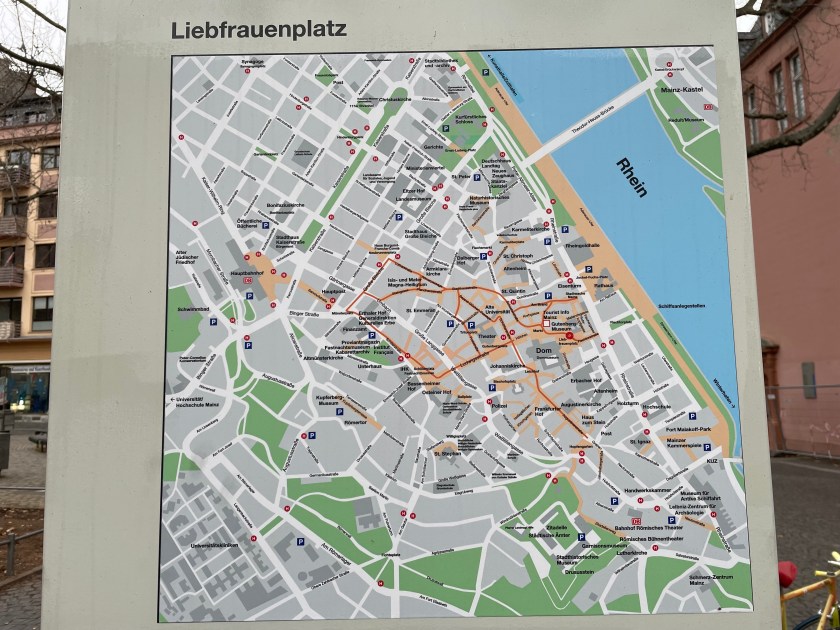
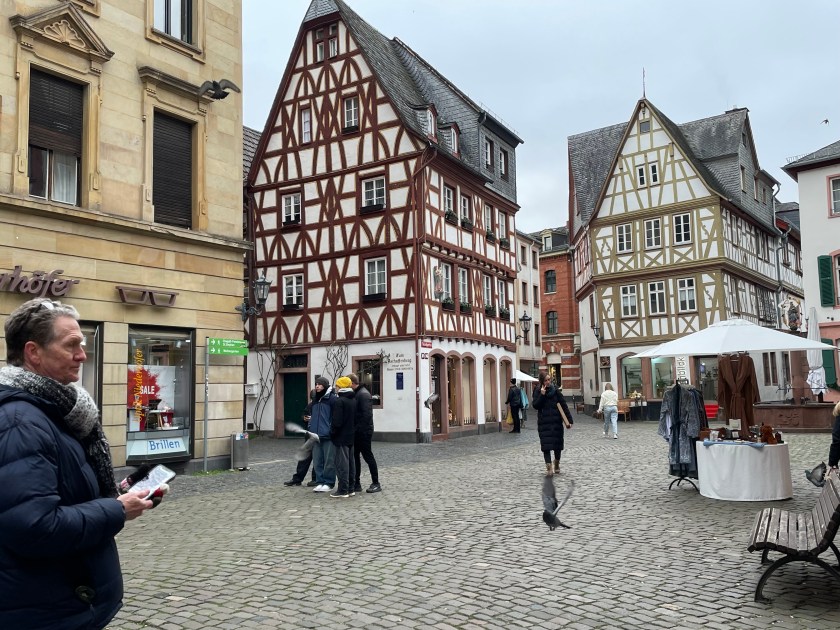
Here are some of the other places we saw today in Mainz as we took the walking tour through the historical sites.
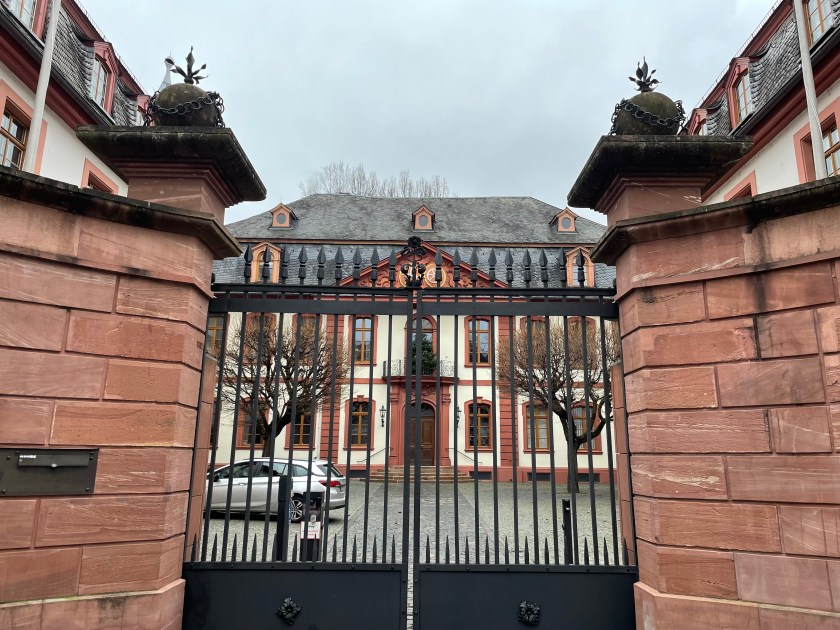
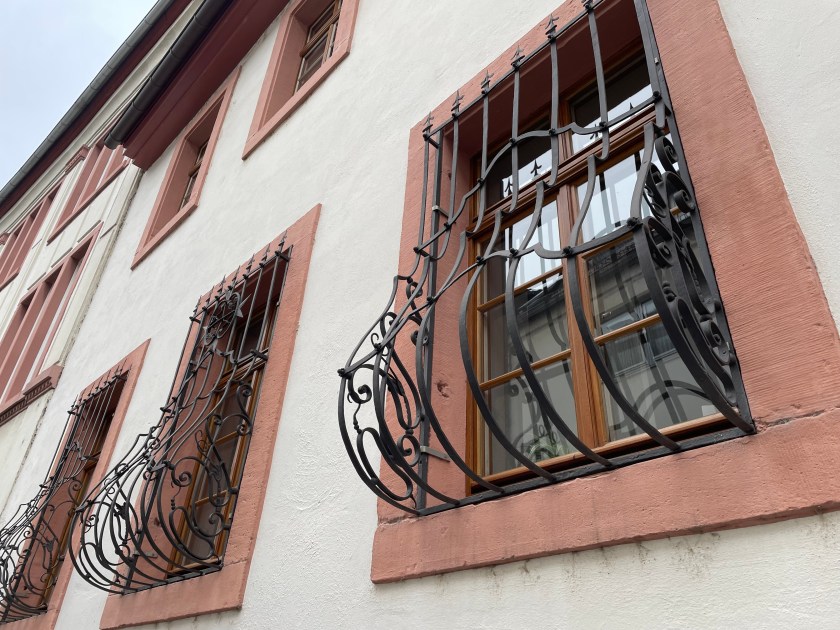
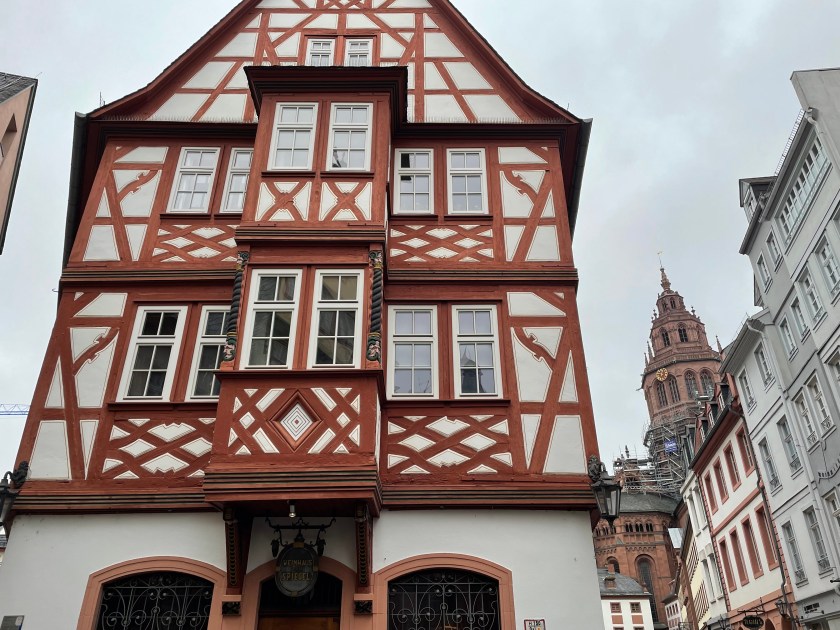
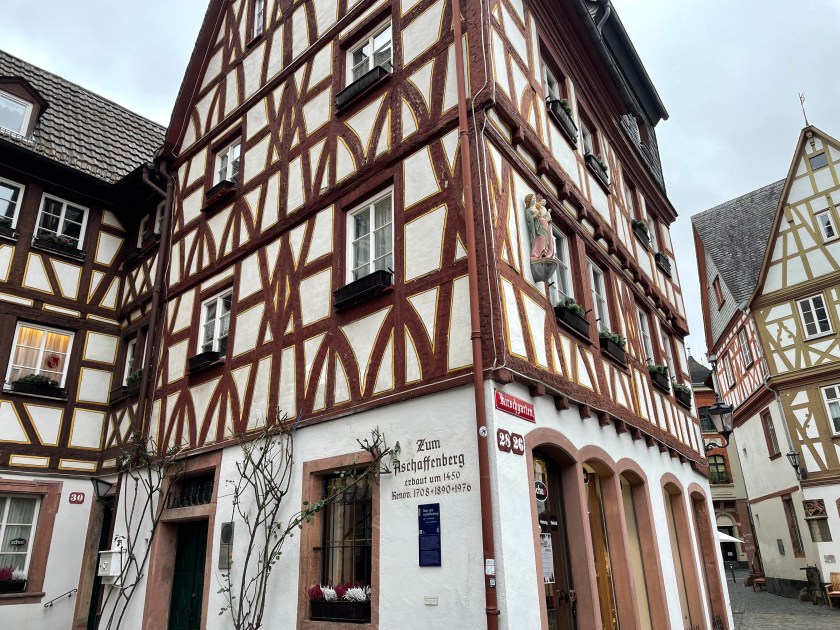
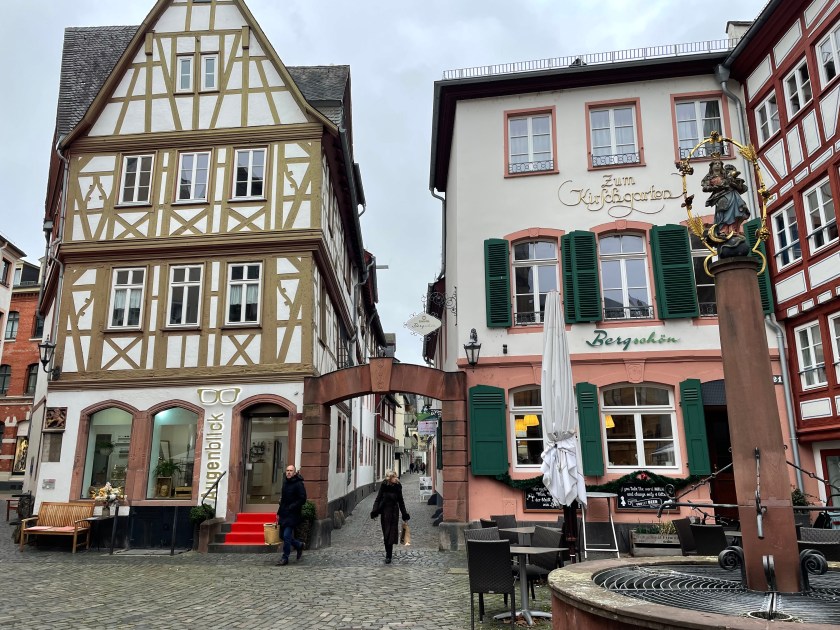
Kirschgarten (Cherry Orchard)
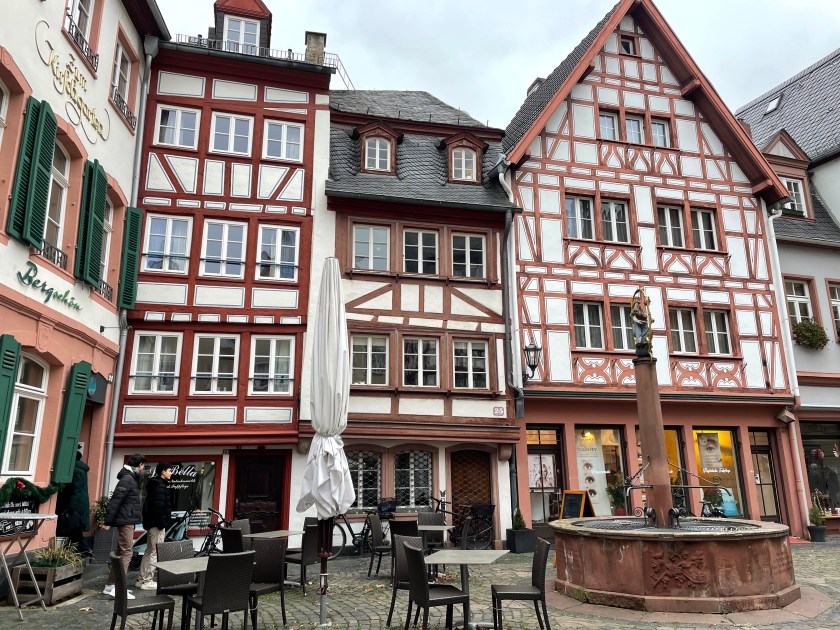
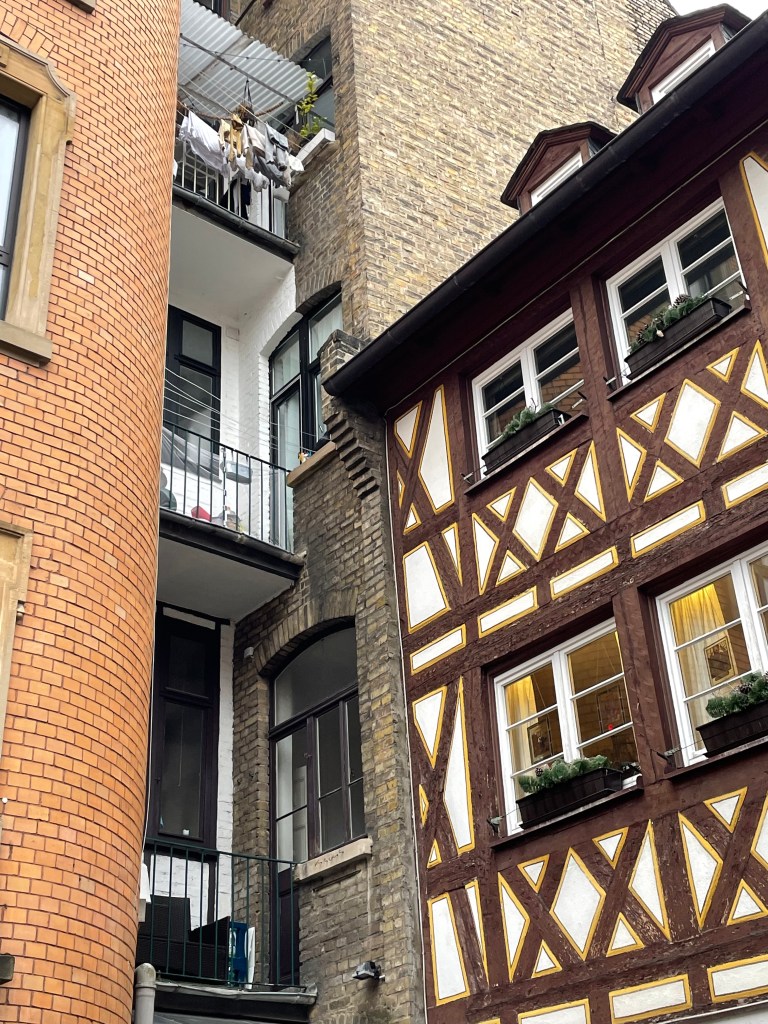
The Cherry Orchard is one of Mainz’s most attractive destinations. This charming square features historic half-timbered houses. Each half-timbered house is three-and-a-half stories tall.
The square was originally built during an era of urban expansion in the 14th century. The oldest house on the square dates to around 1500. During the 16th century, a book printing shop was set up in the square.
The square’s center has a cherry orchard fountain, also known as the Madonna fountain. The Mainz Beautification Association donated this fountain in 1932 to replace an older one. The fountain has red sandstones taken from a demolished bridge. A statue of the Virgin Mary stands on the fountain.
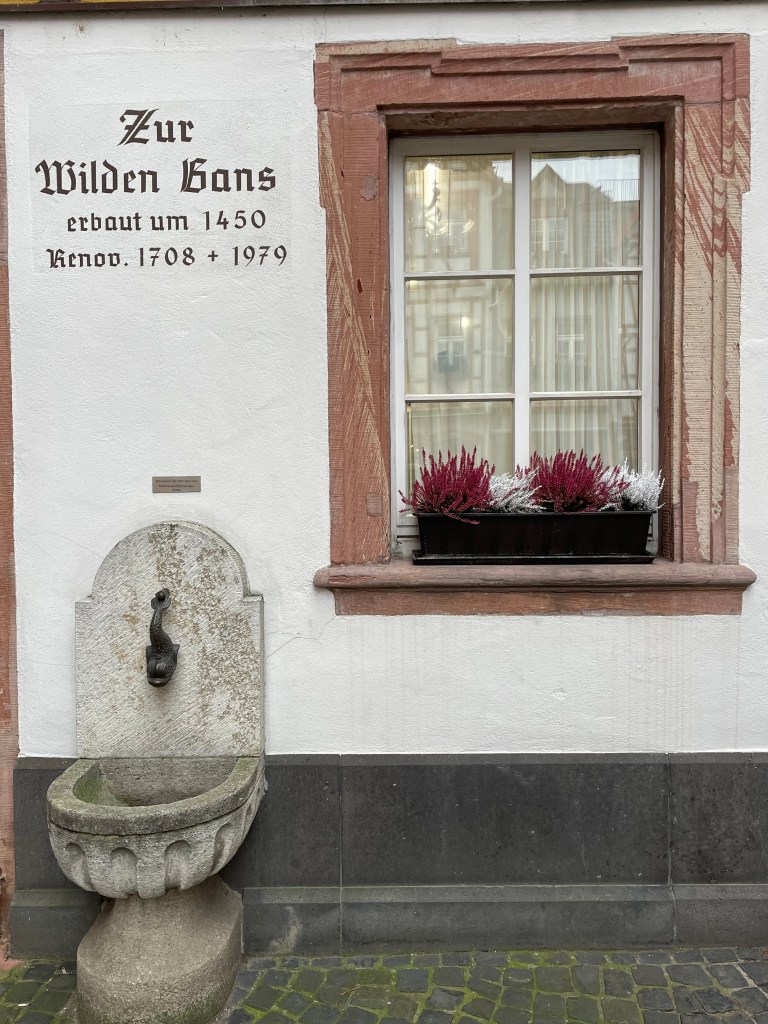
Visitors can admire the traditional facades and look for inscriptions on the houses.
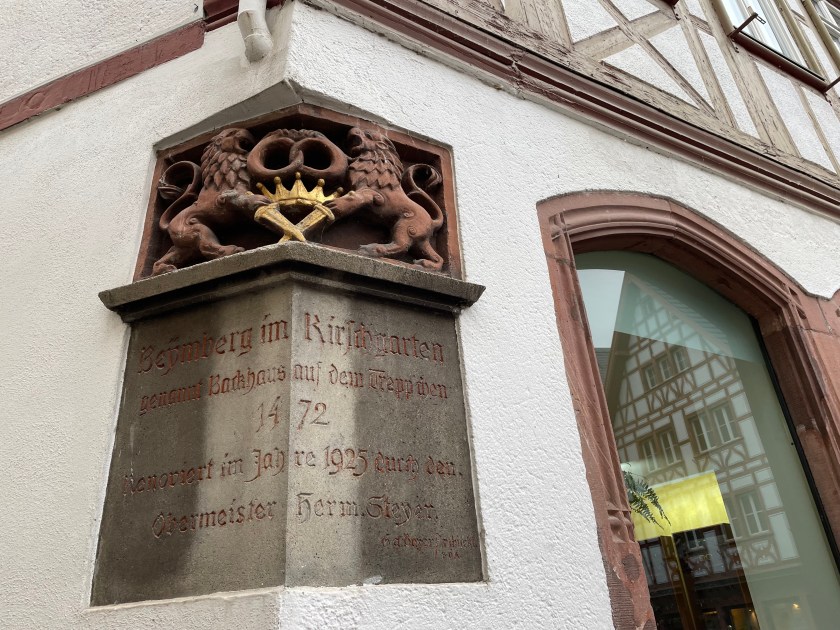
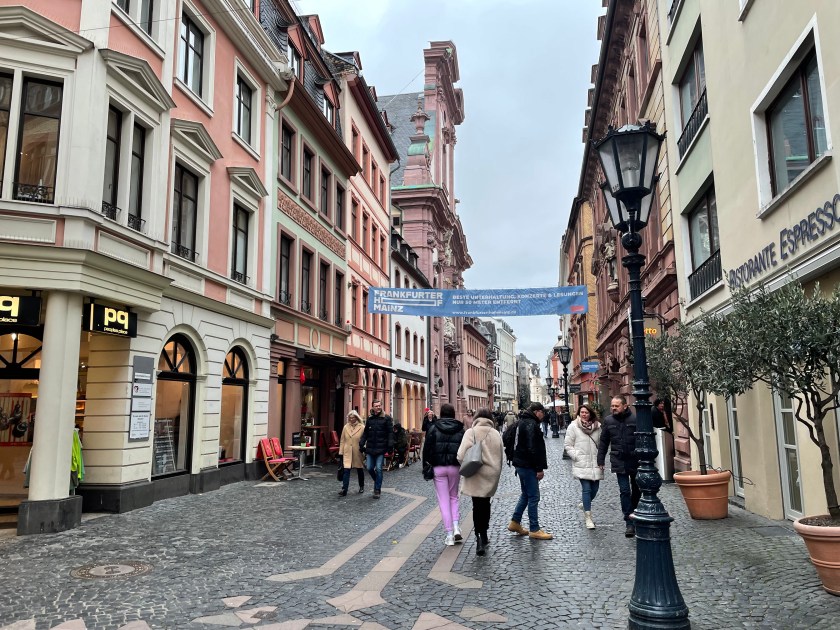
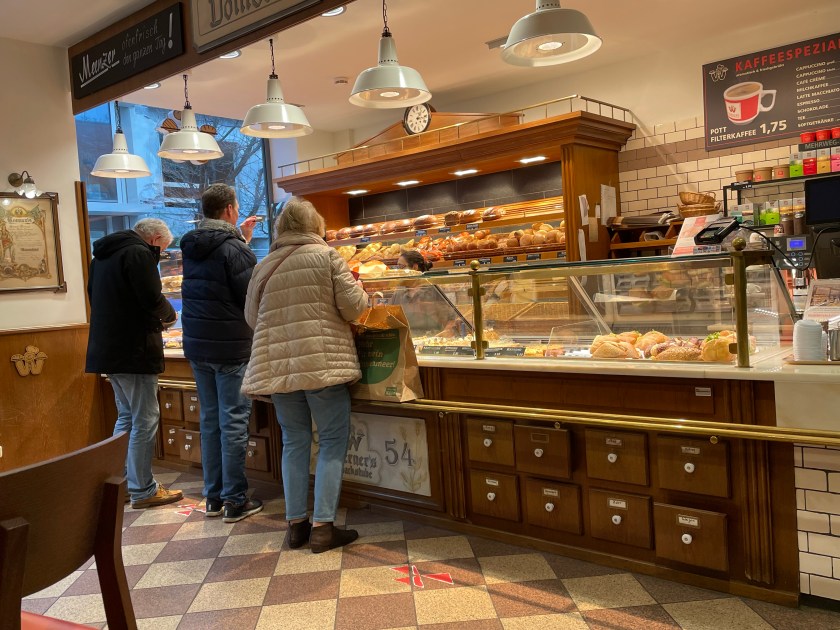
We grabbed sandwiches at this family bakery for lunch.
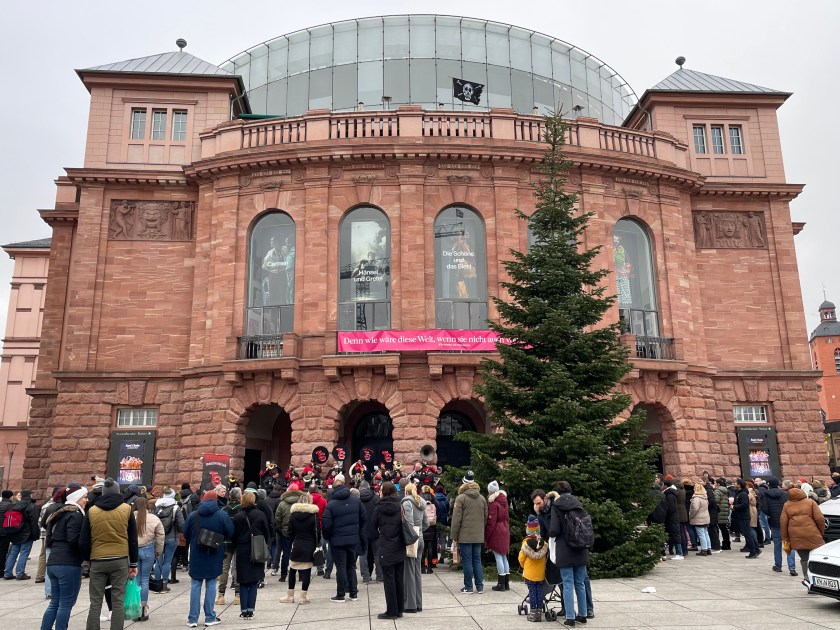
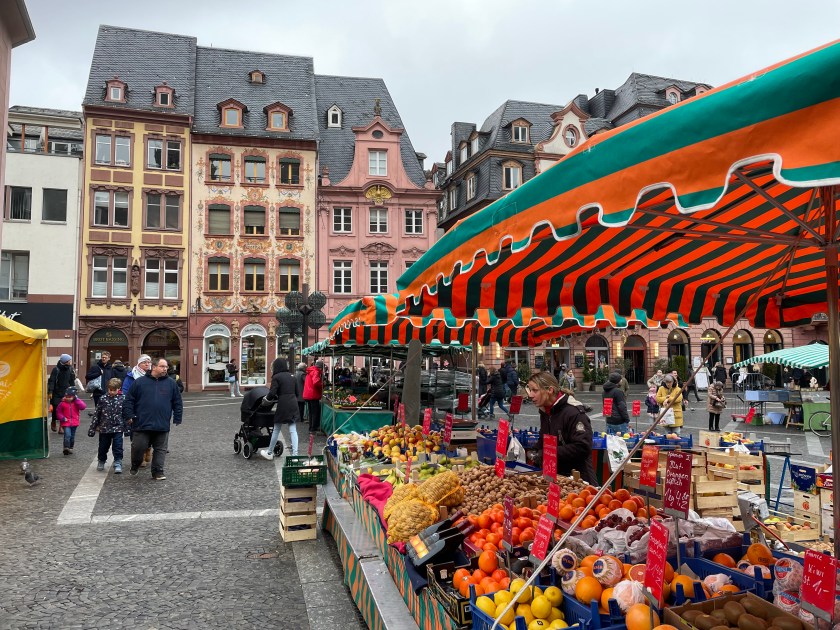
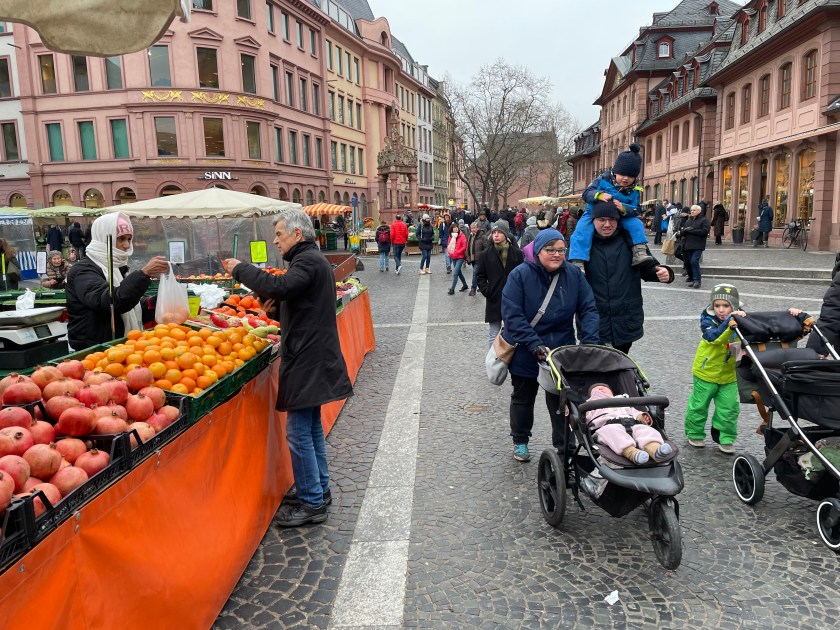
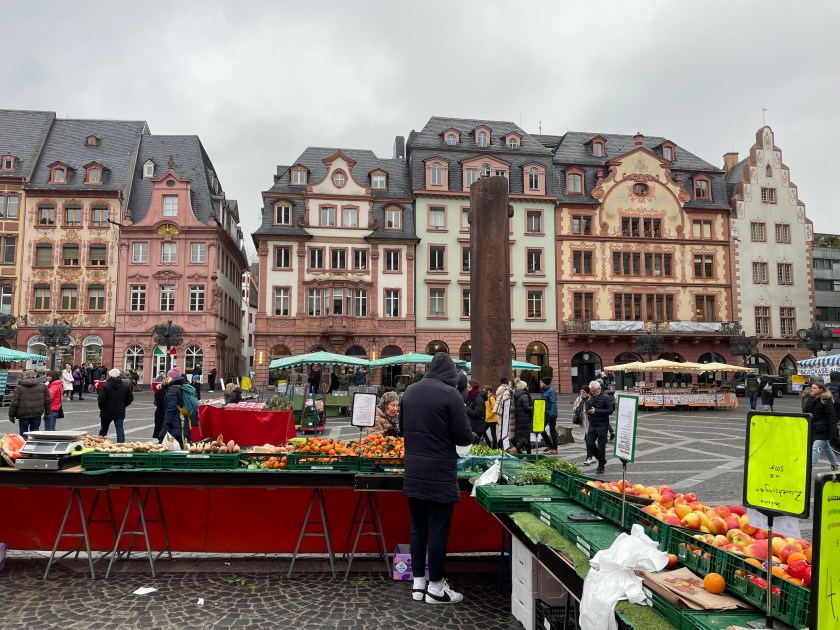
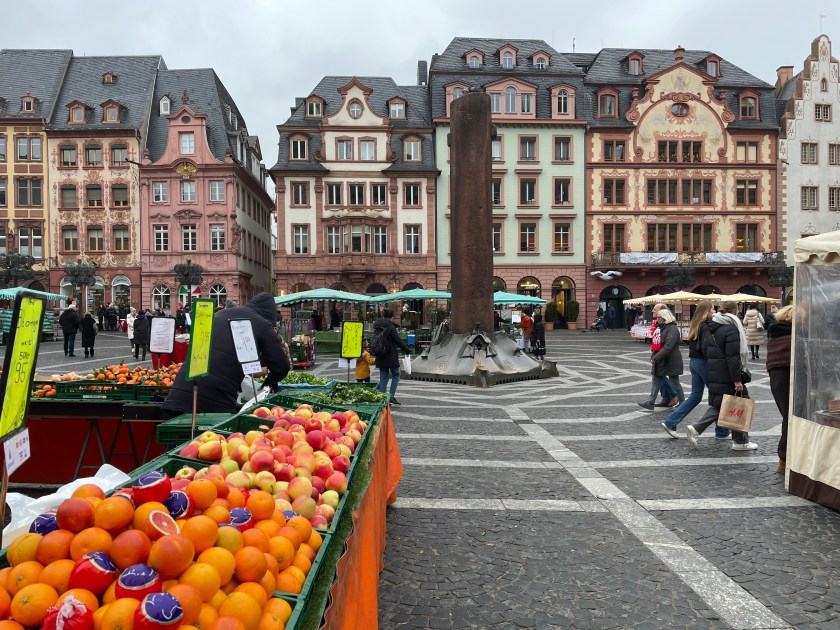
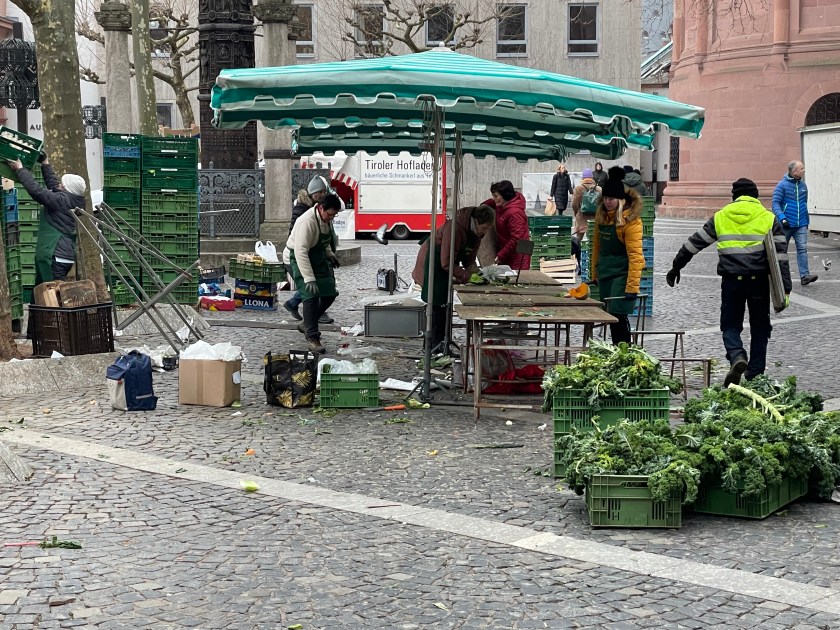
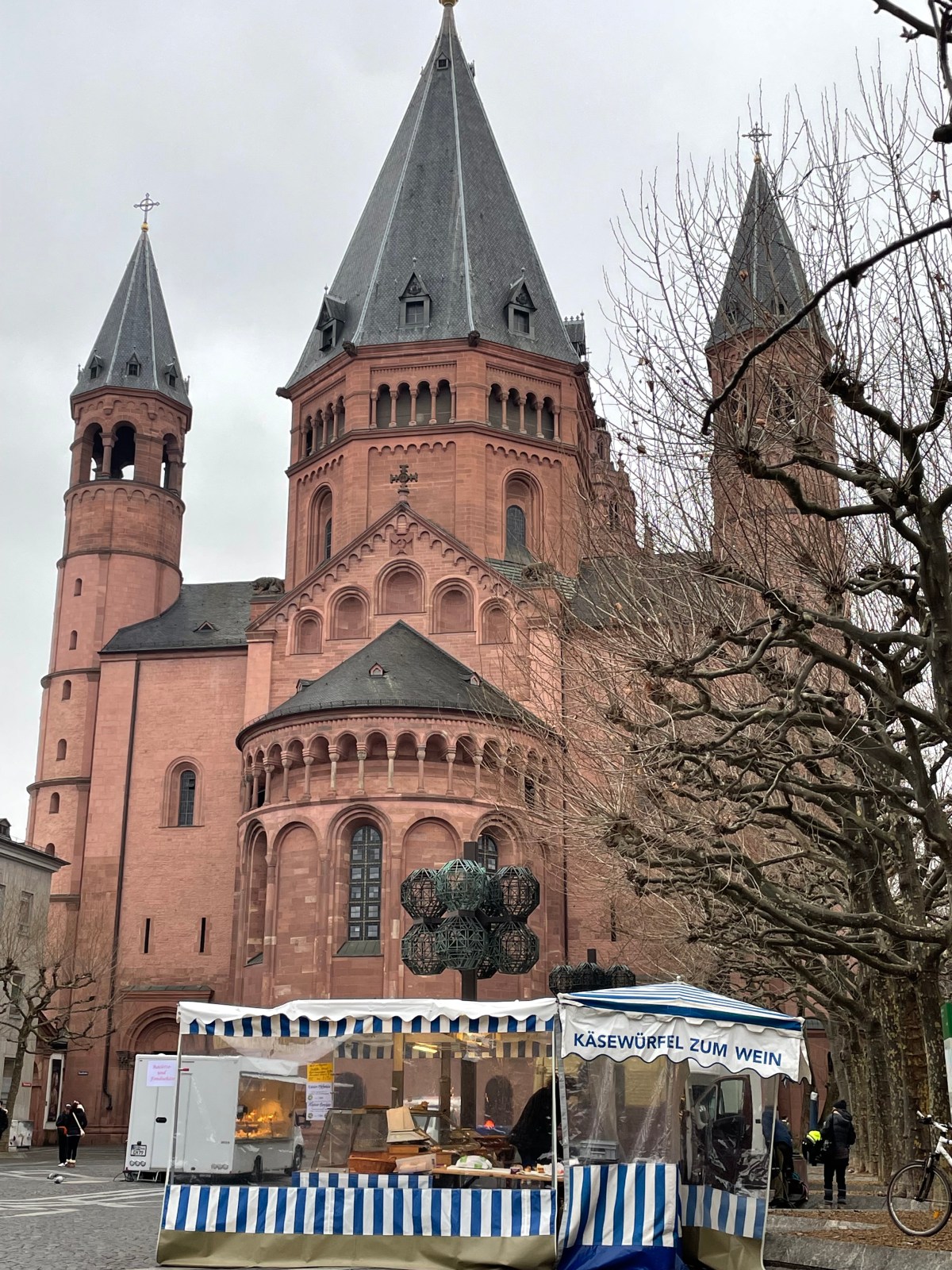
This farmer’s market was in the main square by the the Dom, St. Martin’s Cathedral.
Markt (Market Square)
Market Square is Mainz’s most popular square and is dominated by the iconic Mainz Cathedral. The square became a popular trading place when the cathedral was built in 975. Traditionally, merchants offered wool, cloth, fur, baked goods, and fruit and vegetables. Products were set out in large baskets on the floor.
The Renaissance market fountain was built in 1526. The water fountain was an important source of fresh water for nearby residents. In 1889, a Madonna figure was added to the fountain.
Most of the houses in the square date to the 18th century. World War II bombs heavily damaged Market Square. In 1975, Mainz celebrated the thousandth anniversary of the cathedral and committed to re-designing and rebuilding the square. Many of the buildings were rebuilt with historical facades.
The market takes place Tuesdays, Fridays, and Saturdays. Market Square hosts a vibrant Christmas Market during the Christmas holiday season.

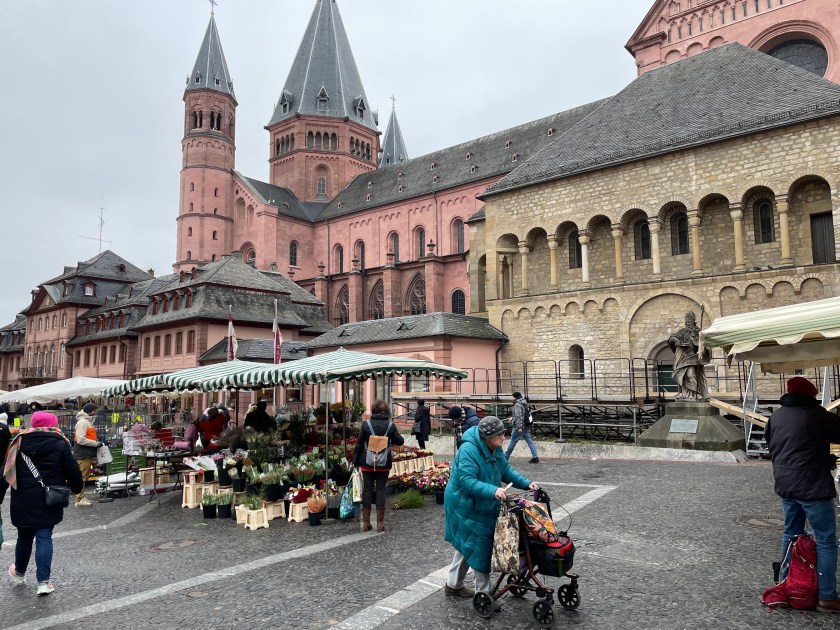
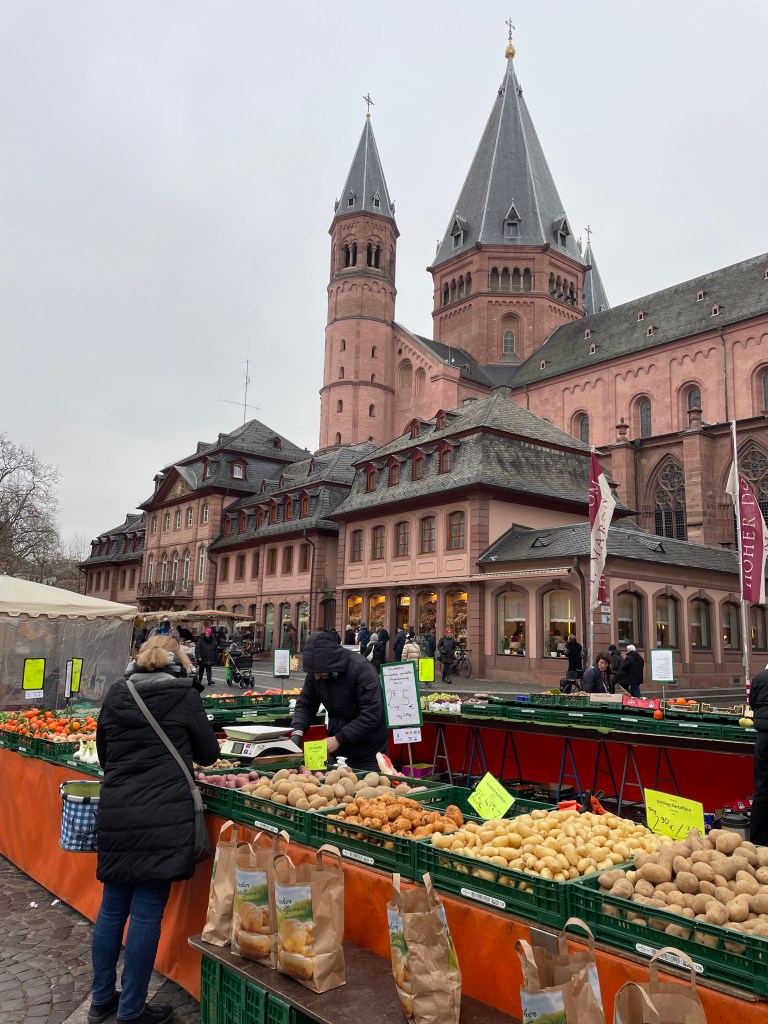


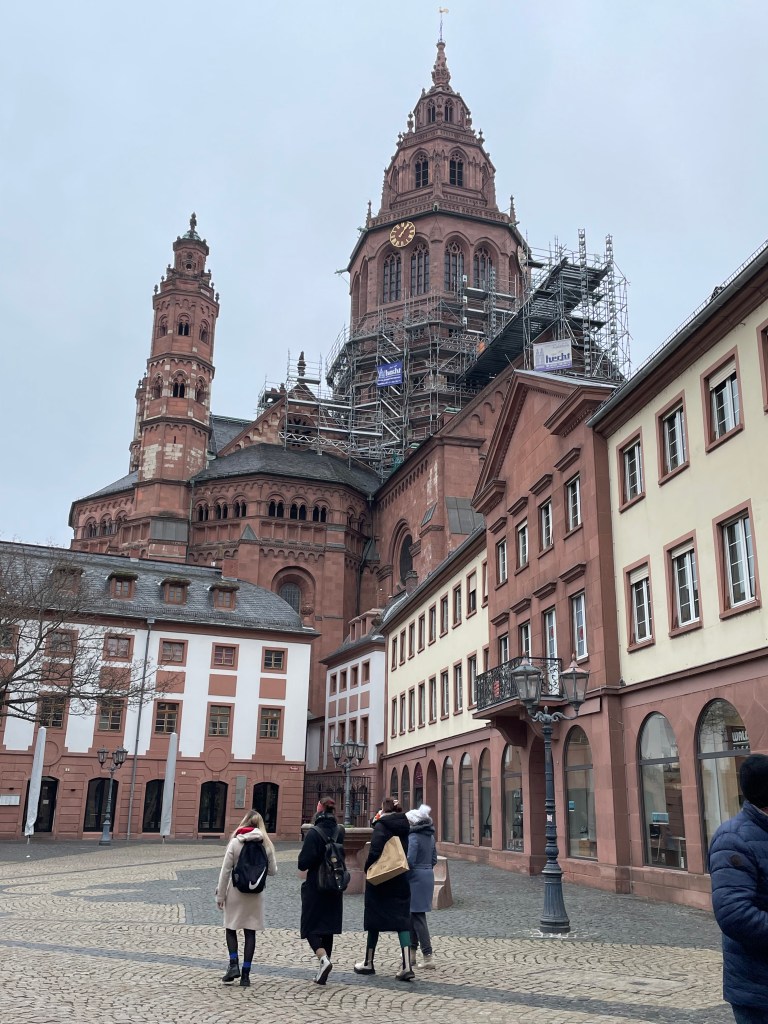
Here is Mainz’s main Dom or cathedral.
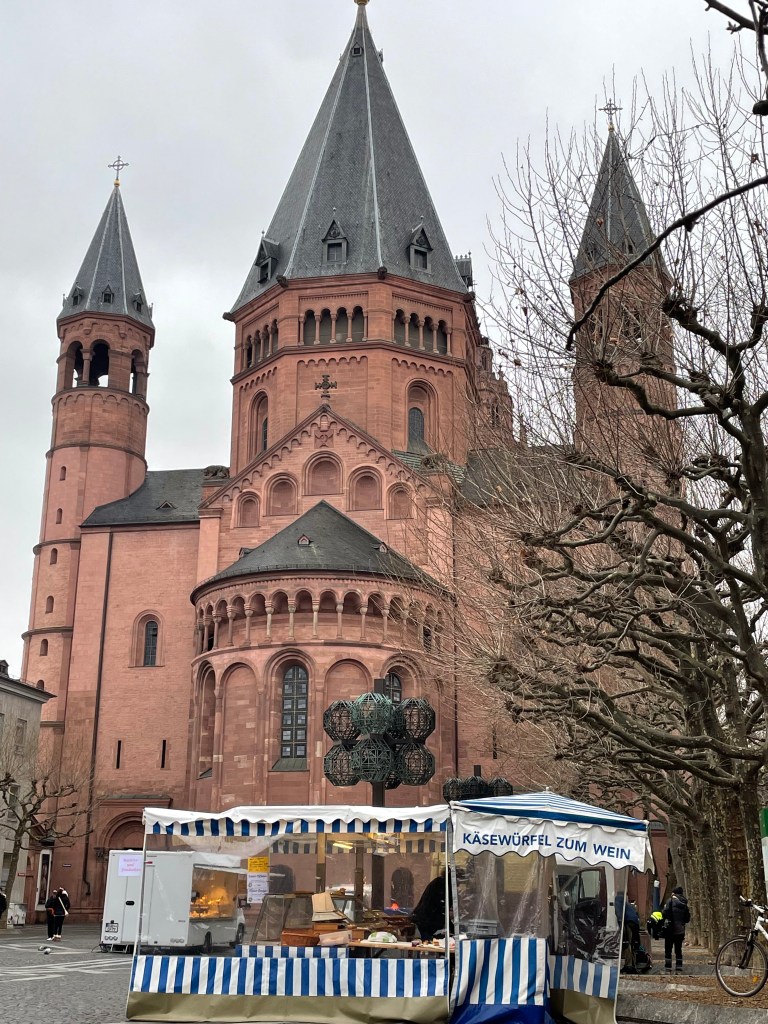
Mainz Cathedral
Mainz has been a center of Christianity since 746 when venerated Saint Boniface brought Christianity to the area. Archbishop Willigis ordered a new cathedral and modeled it on Rome’s famous St. Peter’s. Mainz Cathedral suffered extensive damage from a fire on the day of its inauguration in 1009. It was repaired by 1036.
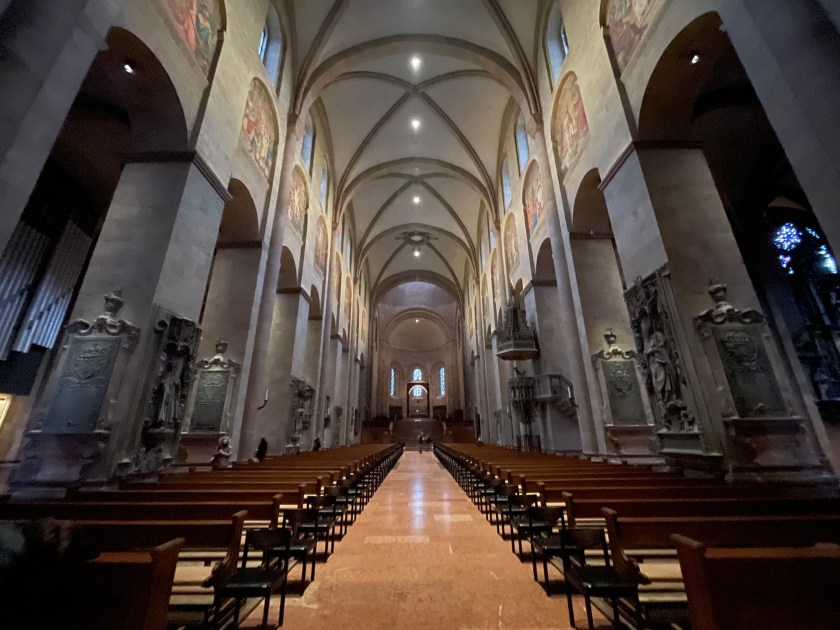
Mainz Cathedral retains the original Romanesque style, while chapels and other additions have been added over the centuries and reflect each time period’s style.
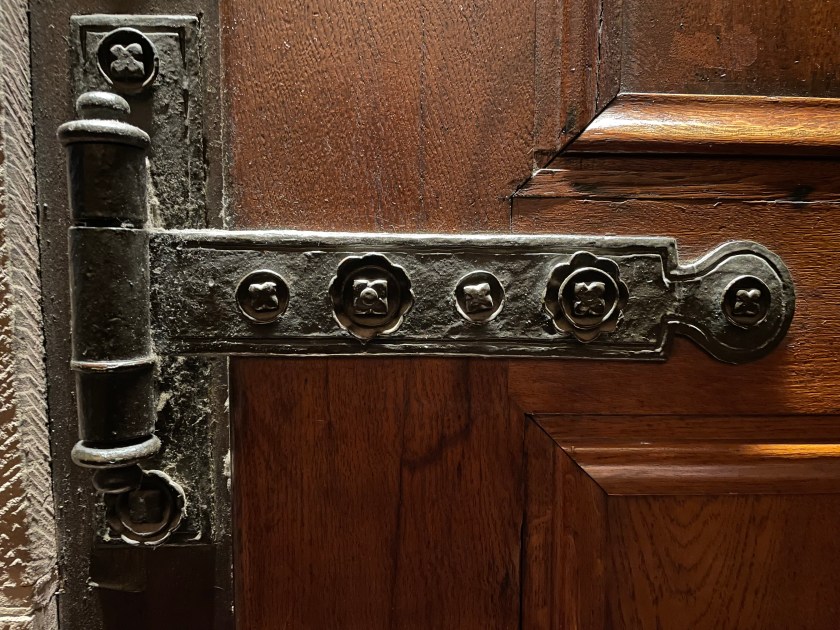
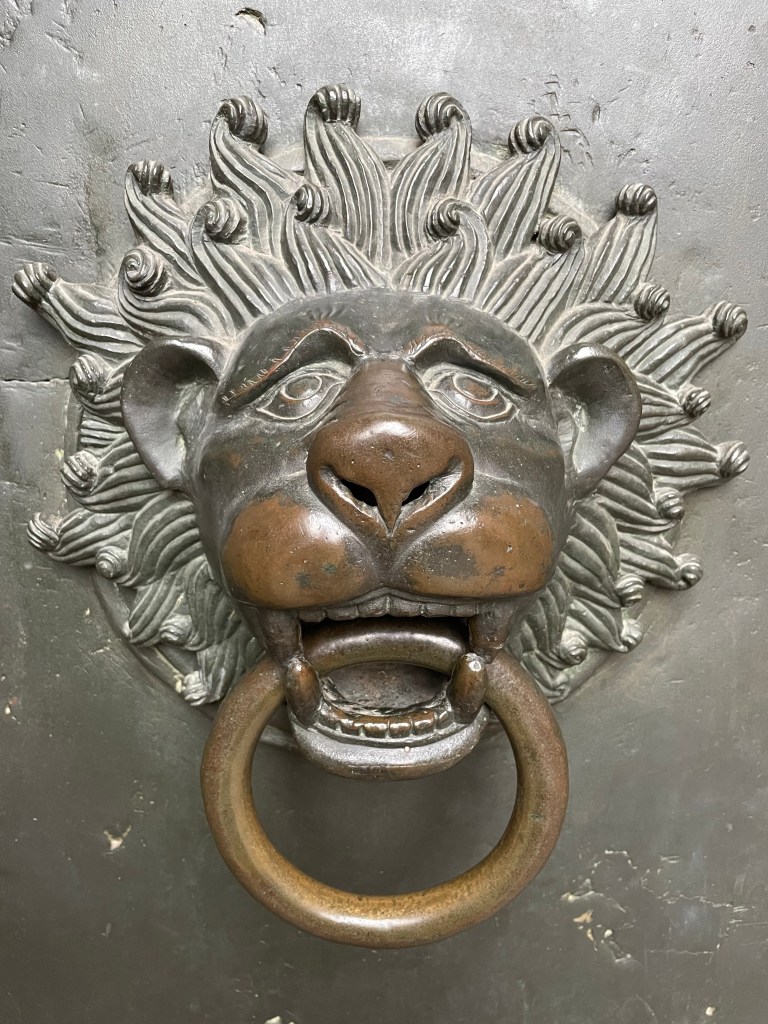
Mainz Cathedral’s triple nave Romanesque pillar basilica and the bronze door facing the square are original. The cathedral has several side chapels and is surrounded by other buildings. St. Gotthard’s chapel was built in 1137 and features lighter colored stone.
Fire damaged the cathedral seven times over the centuries. The spire was built in 1767 from stone to protect it from future fire damage.
The east chancel is the oldest part of the cathedral, and the walls there are over two meters (six and a half feet) thick. The Romanesque west chancel dates to 1239, and its Gothic belfry was added in the 15th century.
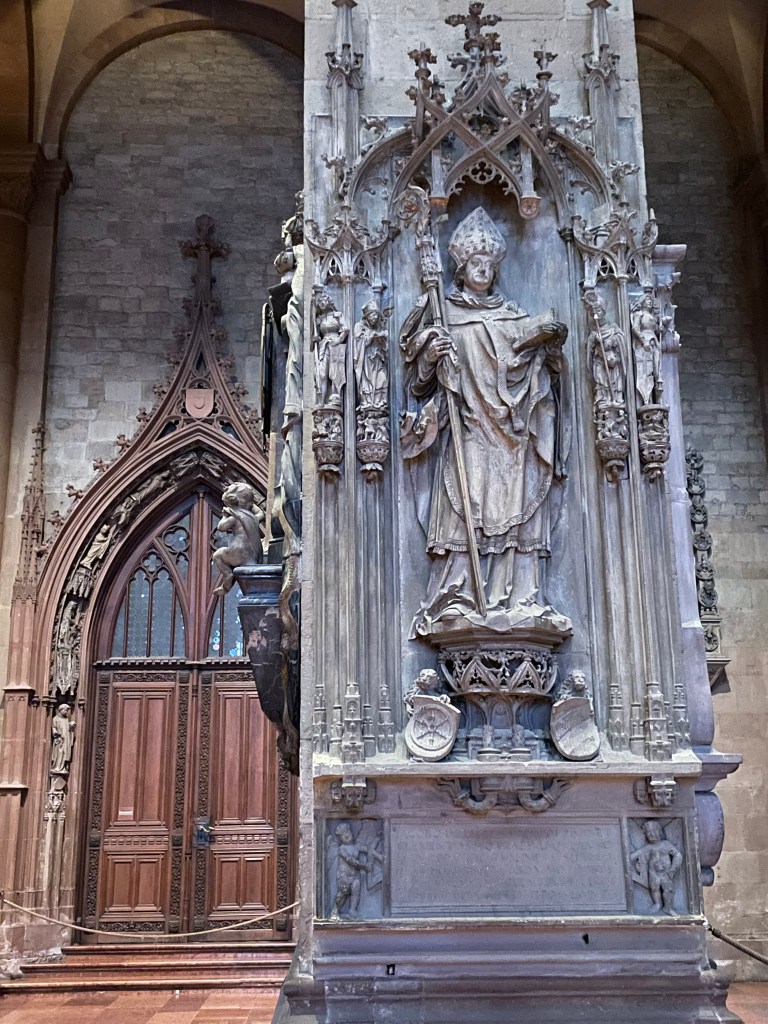
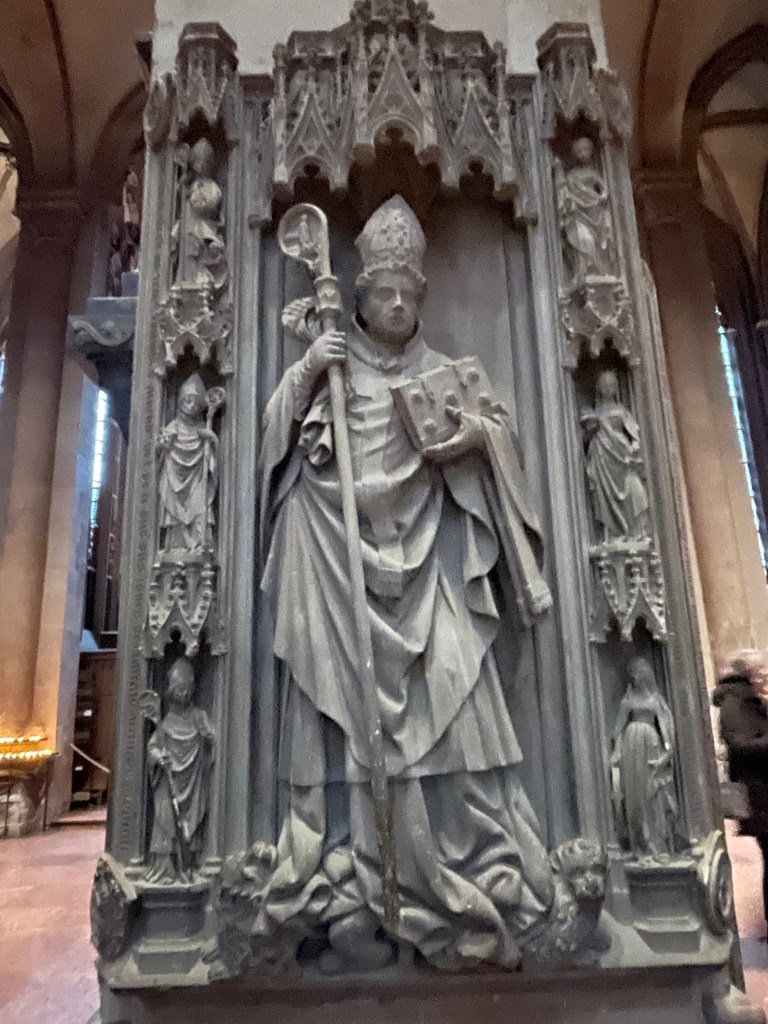
The cathedral houses tombs and remains of many of the cathedral’s bishops. Mainz Cathedral’s portrait gallery is one of its most beloved treasures. The portrait gallery features centuries of ecclesiastical dignitaries.
Several kings and queens of Germany were crowned in Mainz Cathedral in the 11th, 12th, and 13th centuries. The Diet of Pentecost was held in the cathedral and is known as one of the most legendary feasts of the Middle Ages.
Mainz was attacked by French troops in 1792 and Prussian troops in 1793. The cathedral was damaged and then used as barracks. Many of the church’s artifacts were sold, and parts of the wooden interior were burned for heat. The cathedral was restored to a church in 1814, and reconstruction work was completed in 1831.
The Rhine river correction damaged Mainz Cathedral’s foundations in the early 1900s. The cathedral was reinforced with concrete and steel. World War II bombs damaged the cathedral, and restoration work continued into the 1970s.
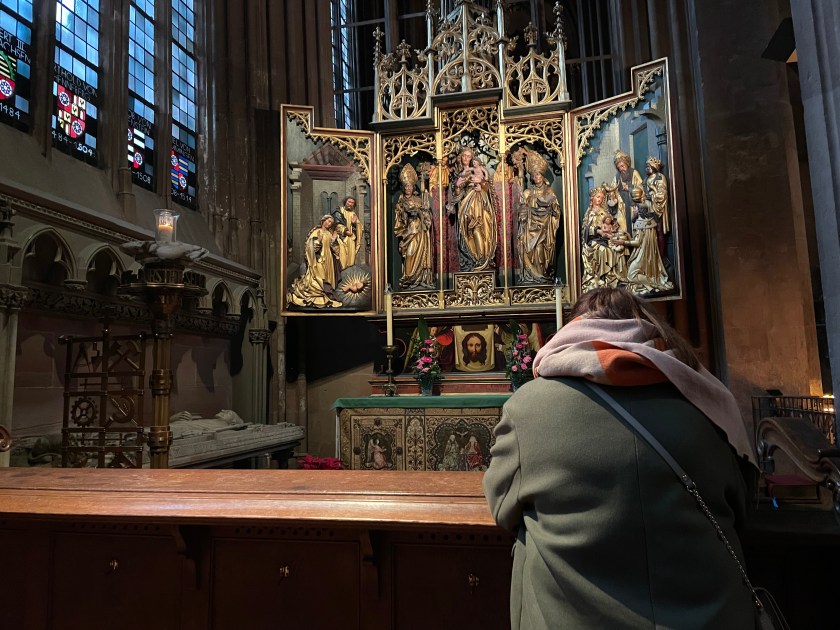
Despite of the damages, there is a good number of art works can be seen inside the cathedral. In the Ketteler chapel, visitors will find an altar to the Virgin Mary. The Ketteler chapel features a statue of the “Serene Lady of Mainz.” The wood-carved figures date to 1510.
Today Mainz Cathedral is an iconic symbol of the city.
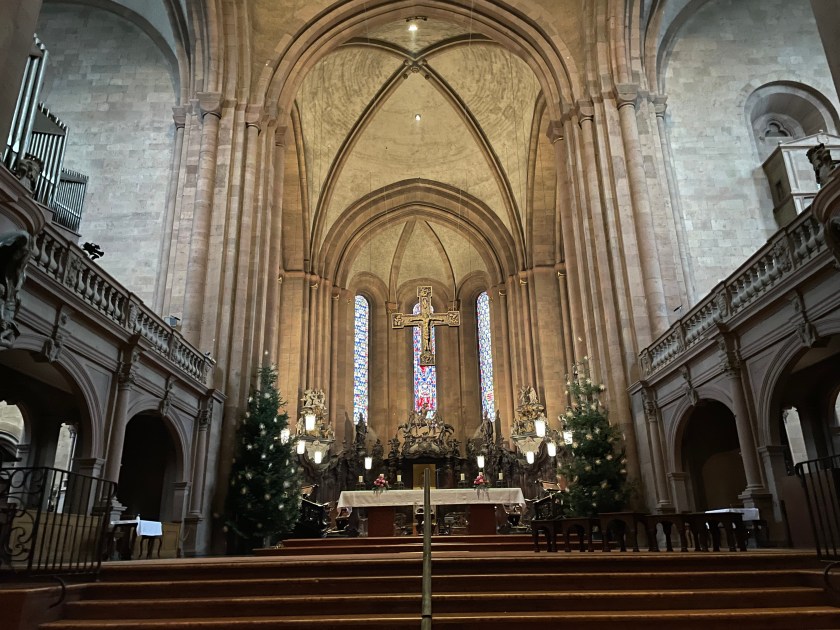
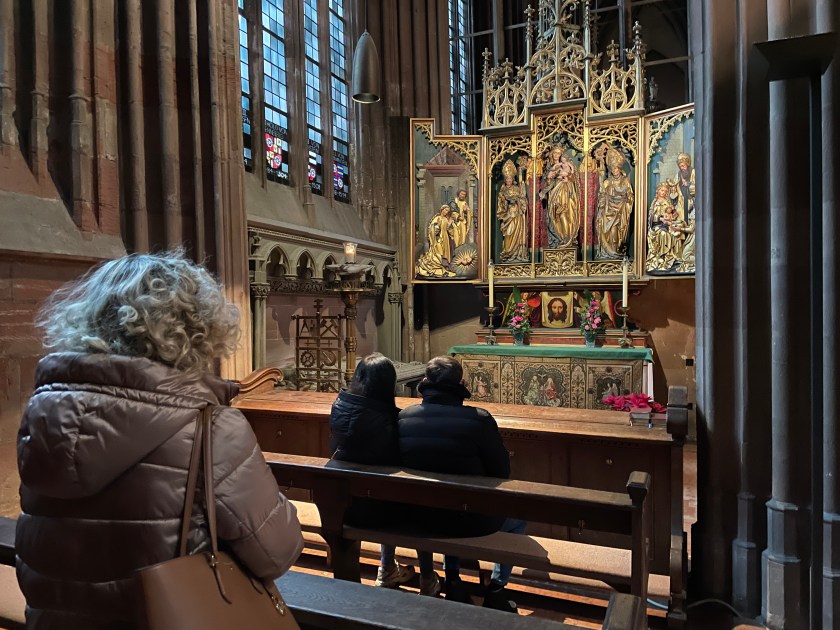
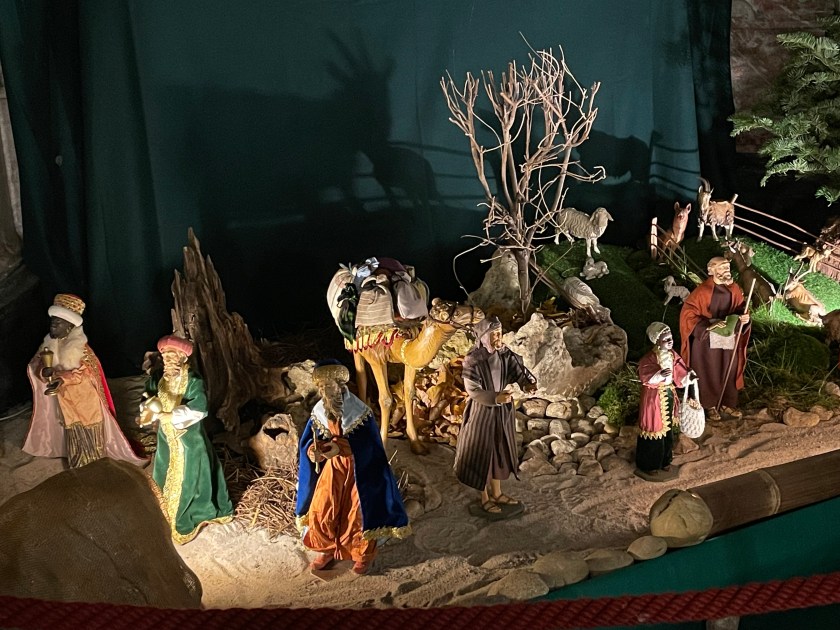
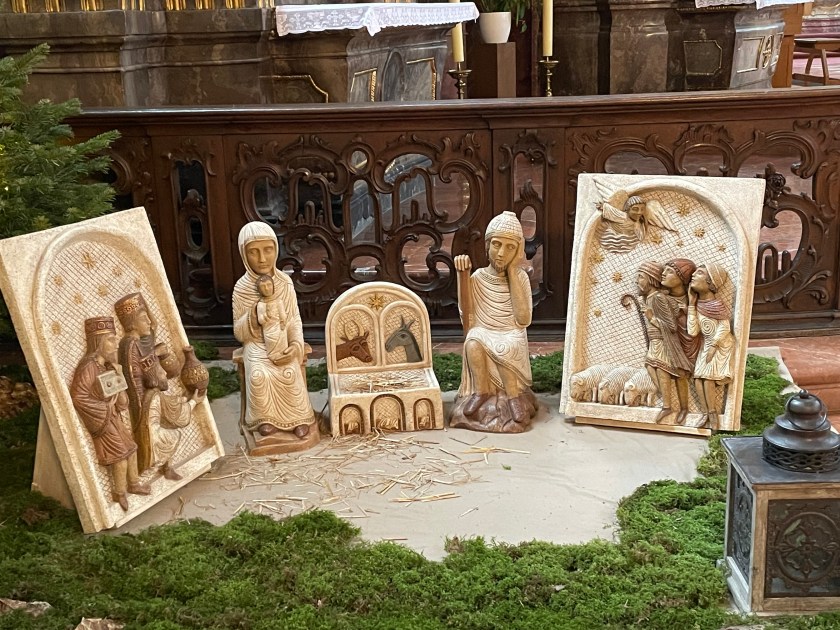
We found here one of the most beautiful wood carved Nativities we’ve seen.





This huge cathedral had all sorts of nooks and crannies and crypts and vaults.
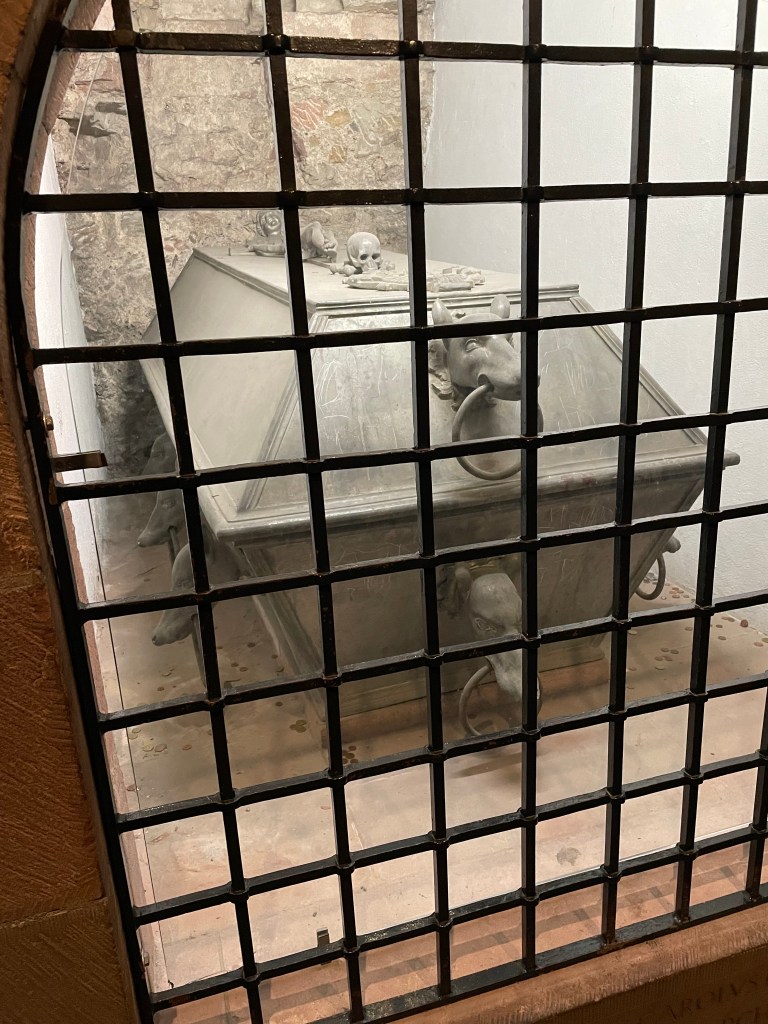
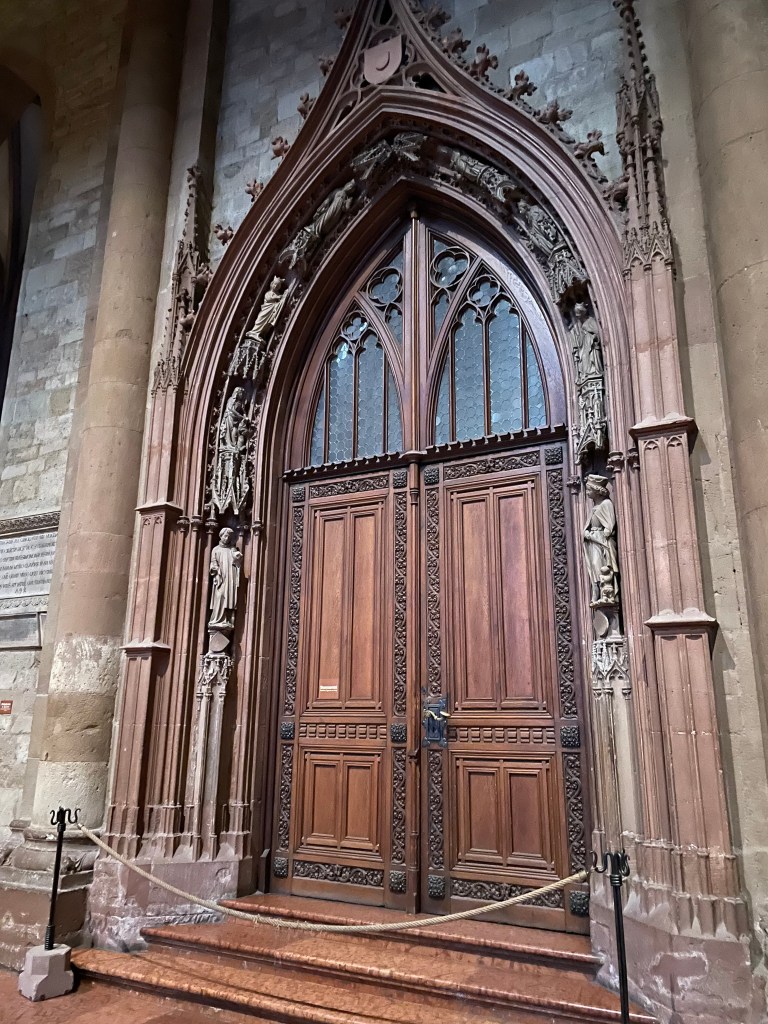
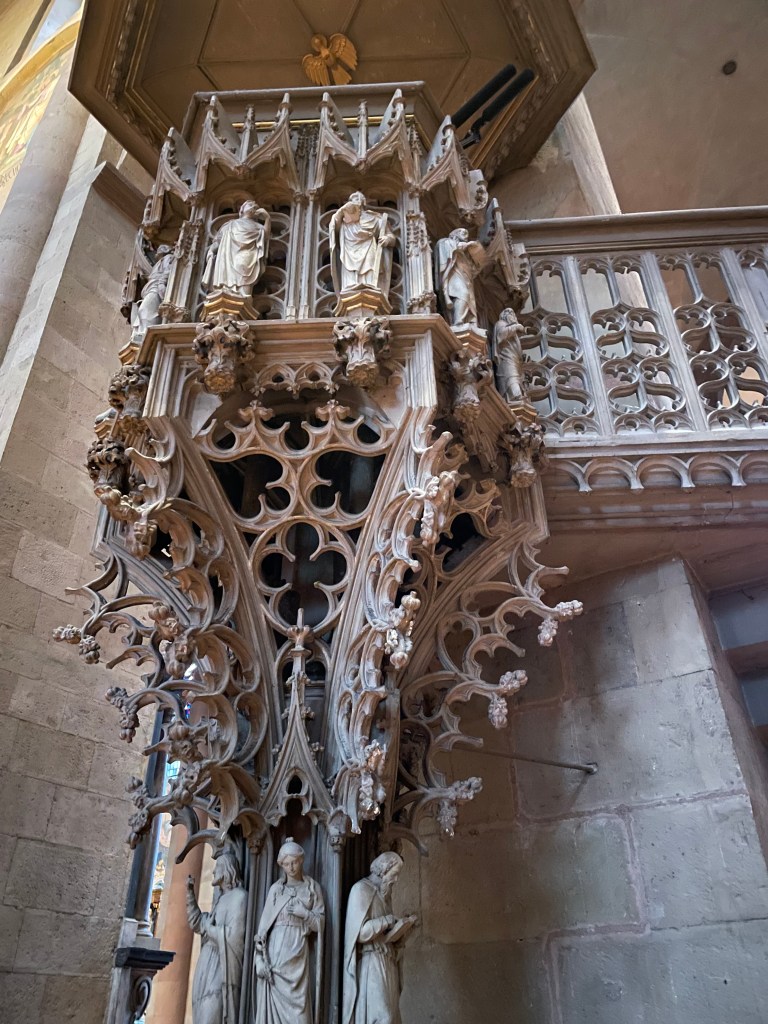
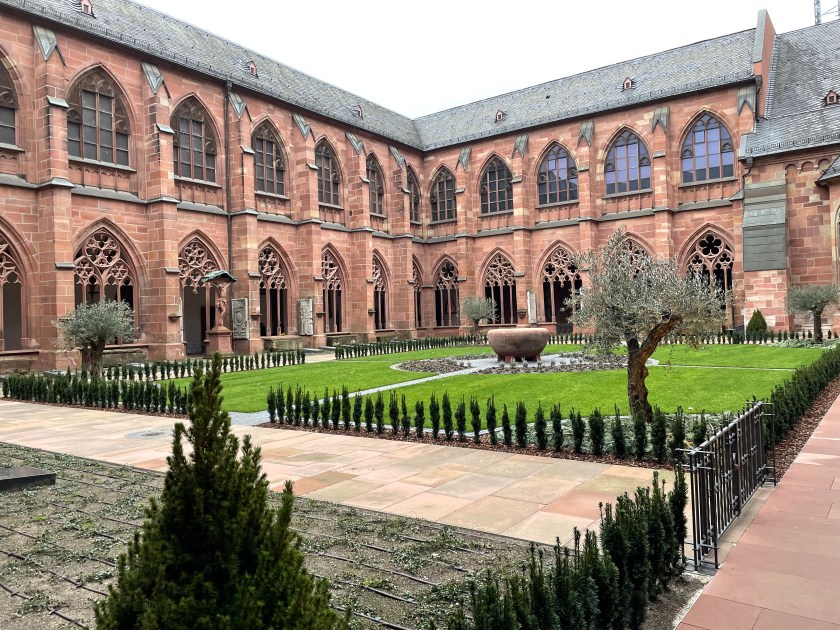
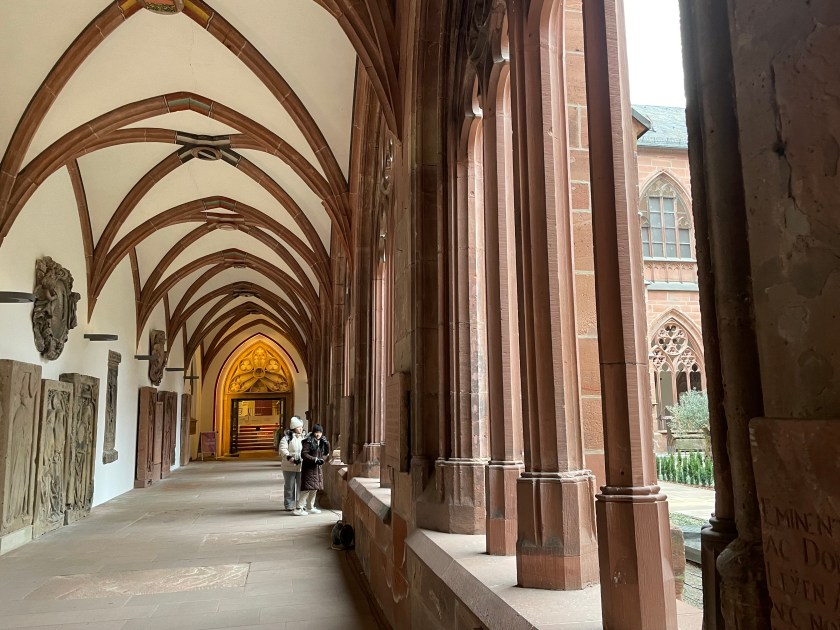
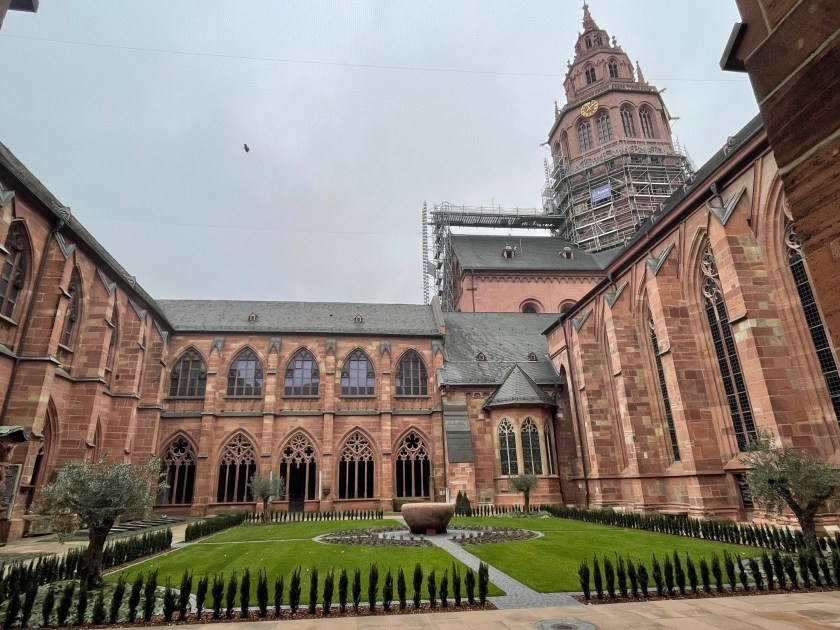
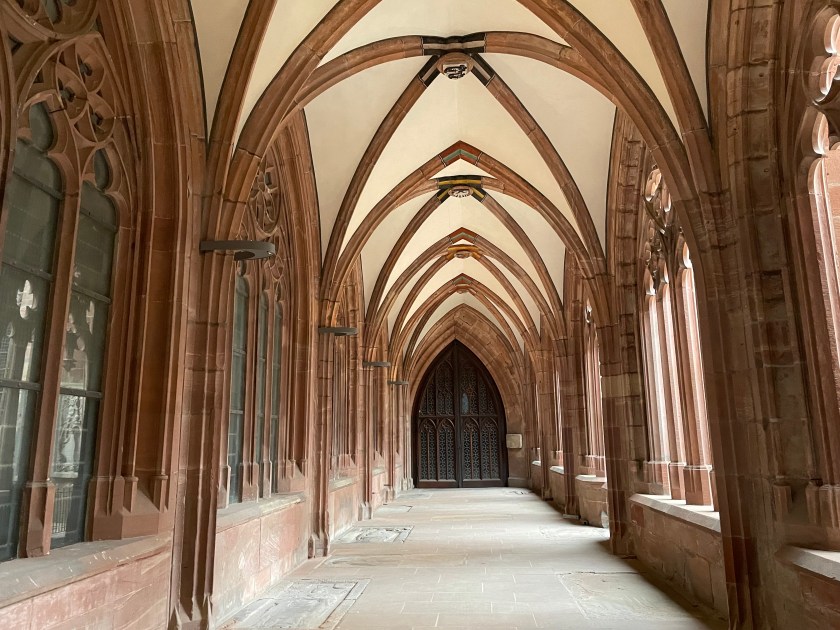
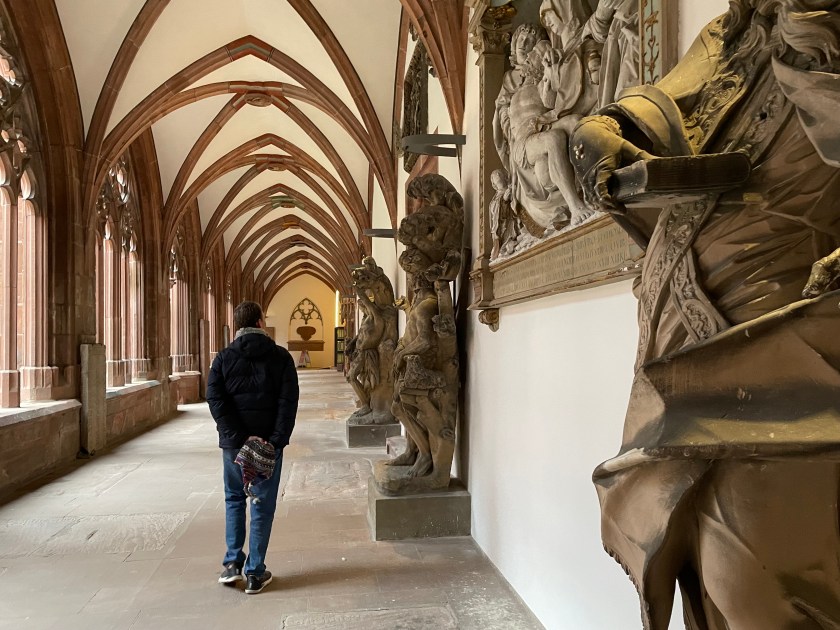
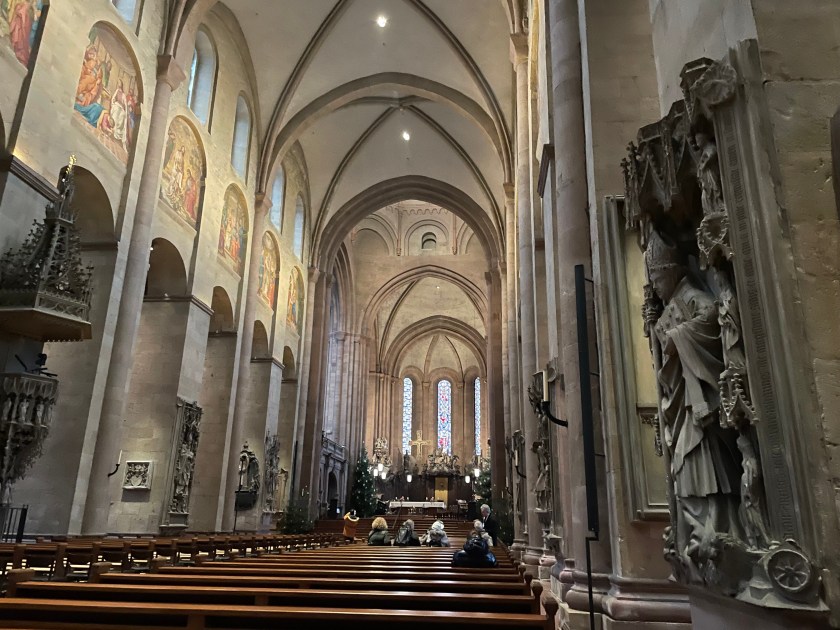
The cathedral was huge and impressive. Much like the one we saw in Bamberg. It feels like these huge cathedrals were built during a time when there was little differentiation between Church and State, and they were used as places to crown emperors and clergy. I can’t keep all the titles straight in those 2 categories. So there was a lot of pomp and circumstance that happened here, lots for show, as well as for worship.
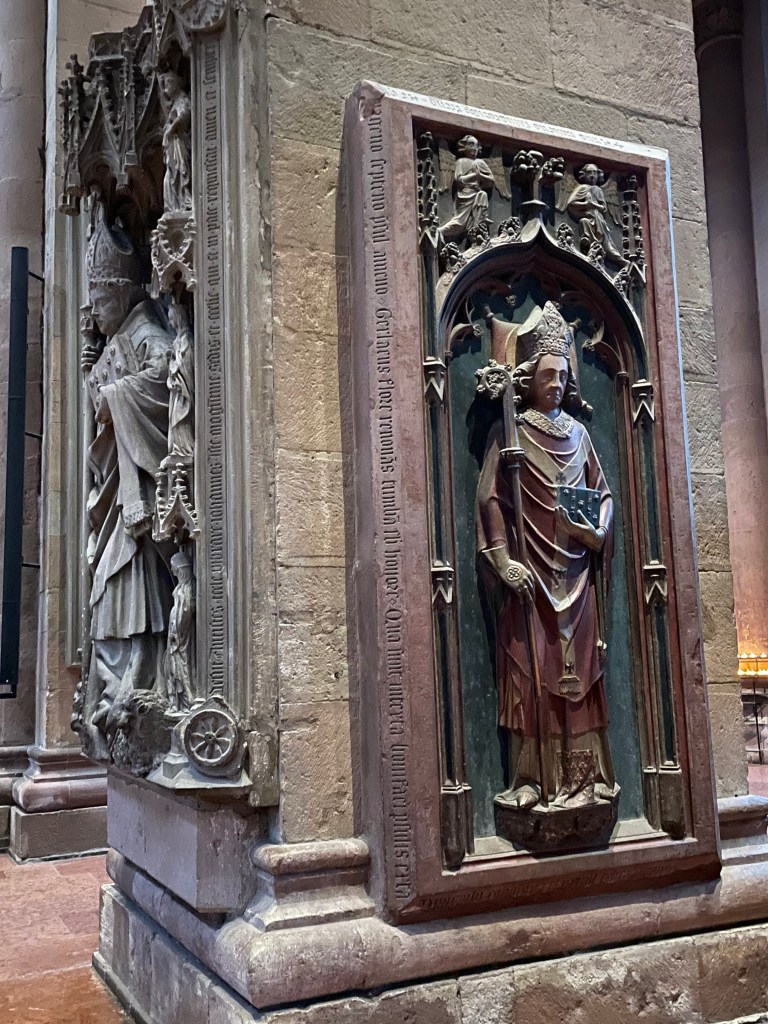
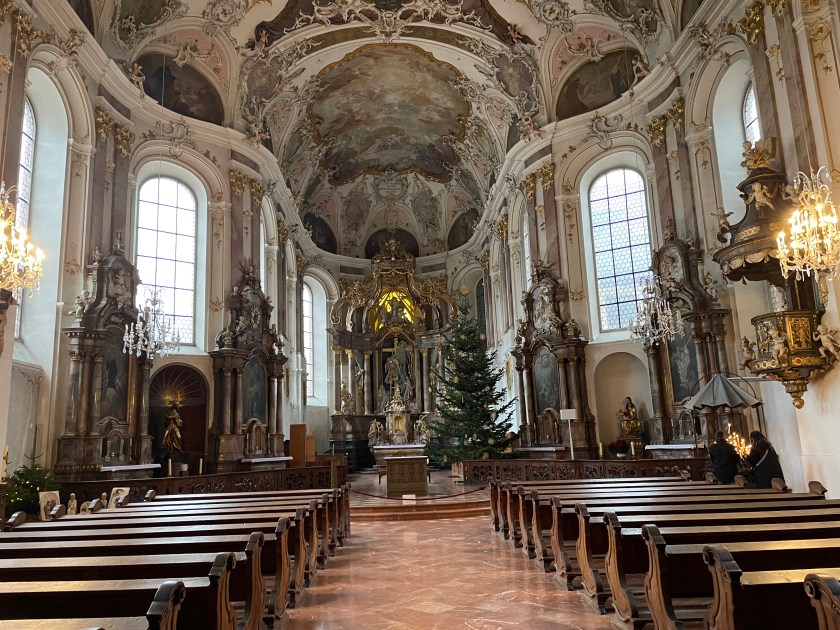
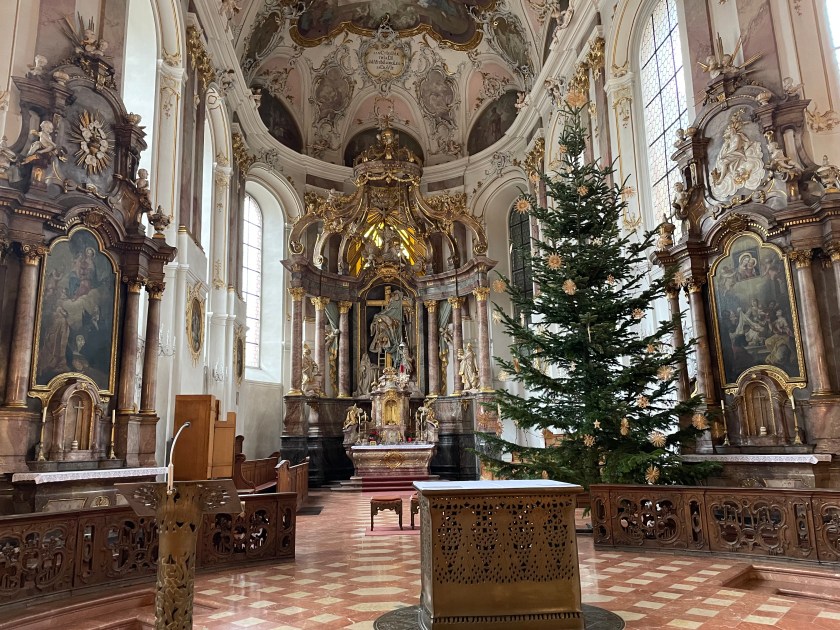
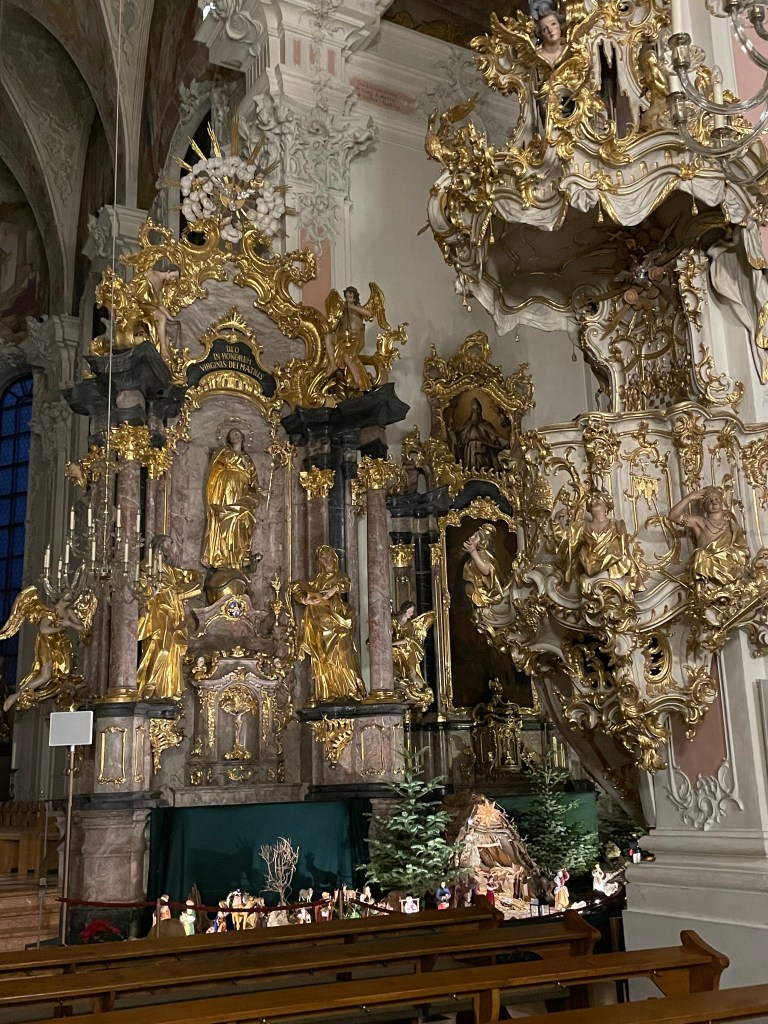
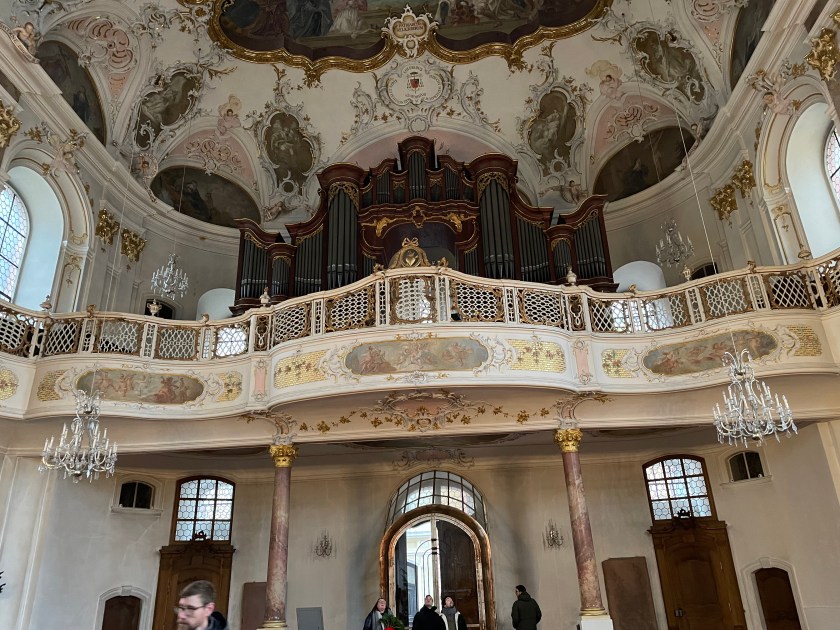
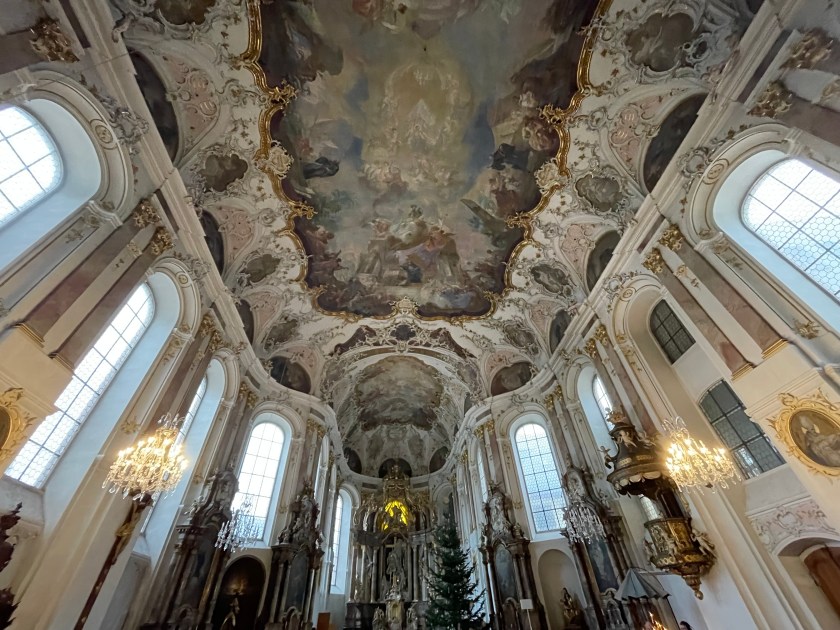
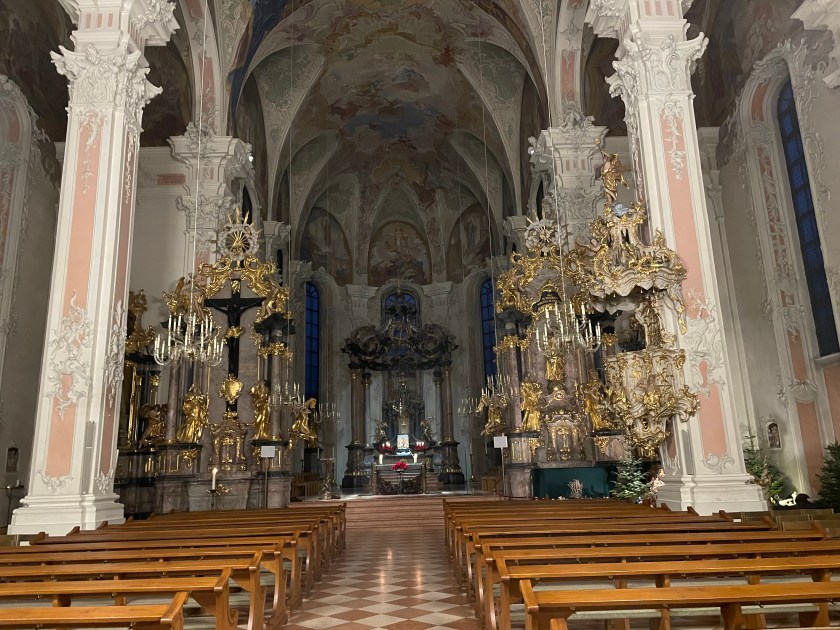
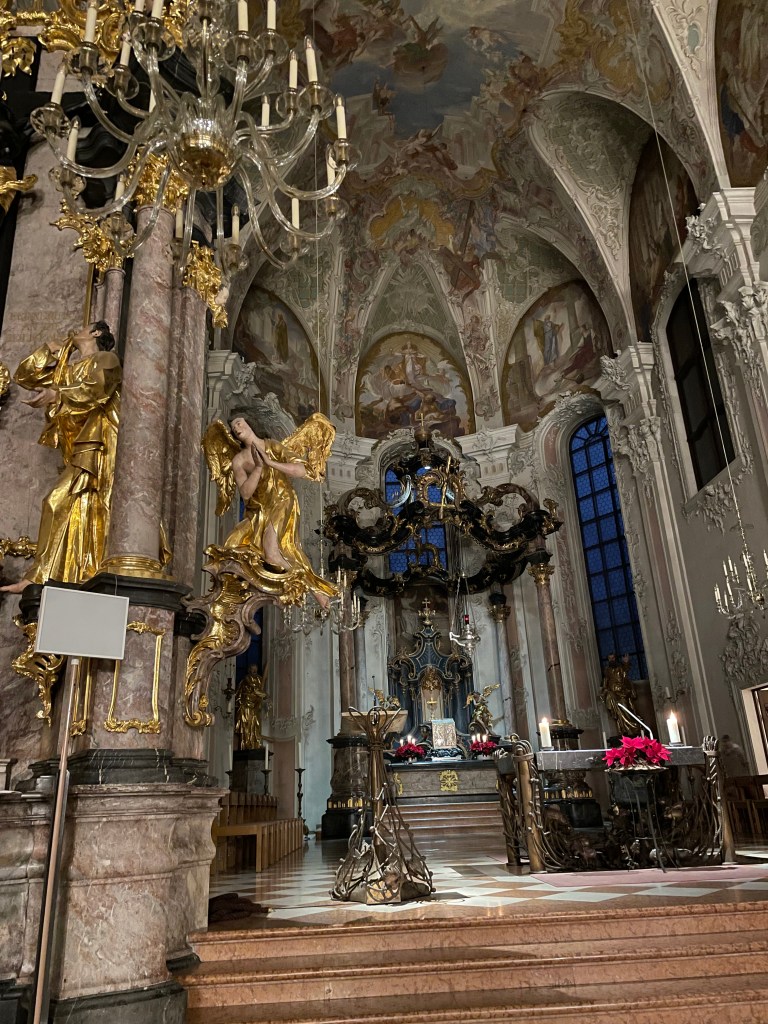
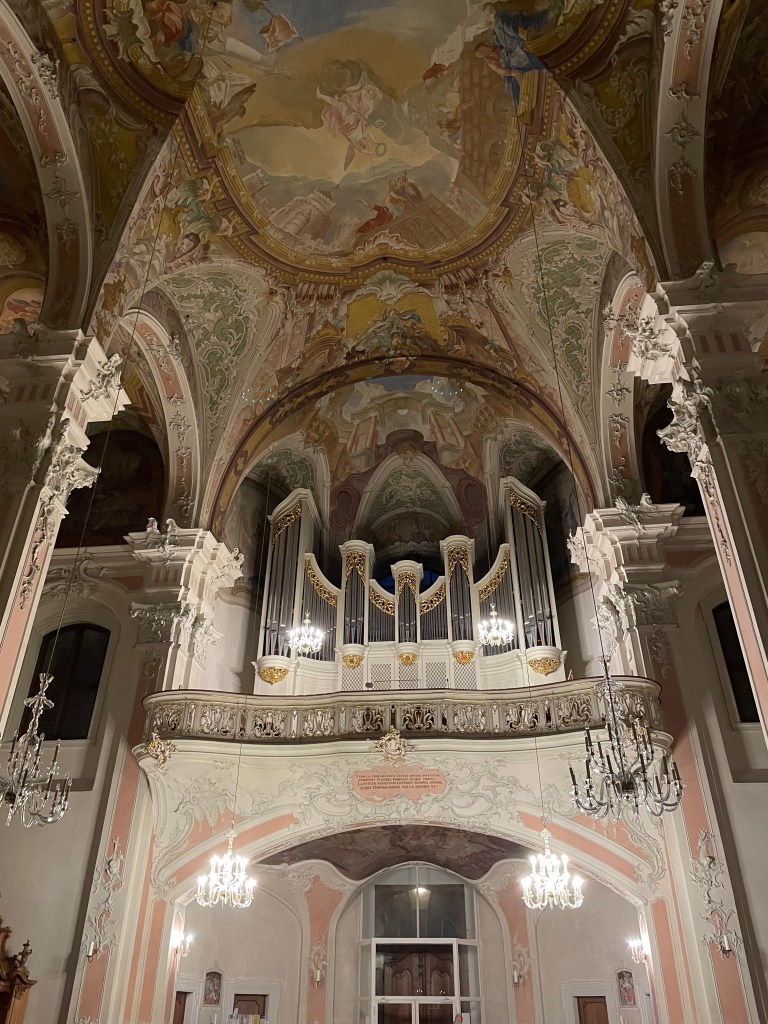
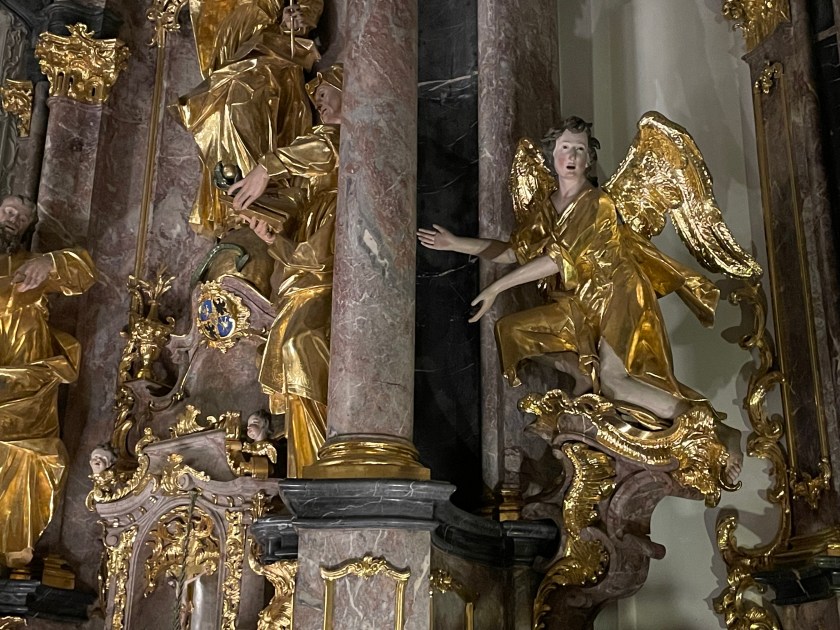
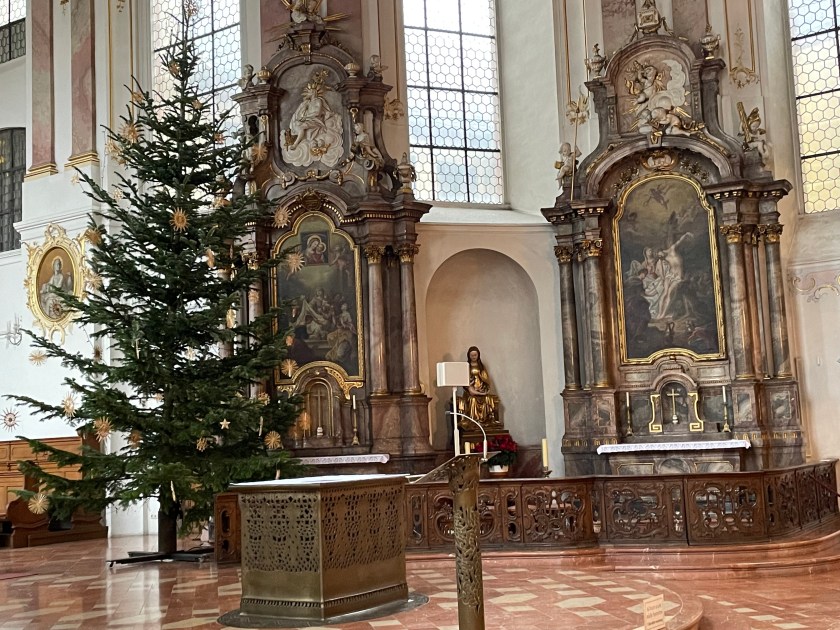
Below is an example of a Very Ornate Baroque church that was not bombed during WWII:
Augustinerkirche (St. Augustine’s Church)
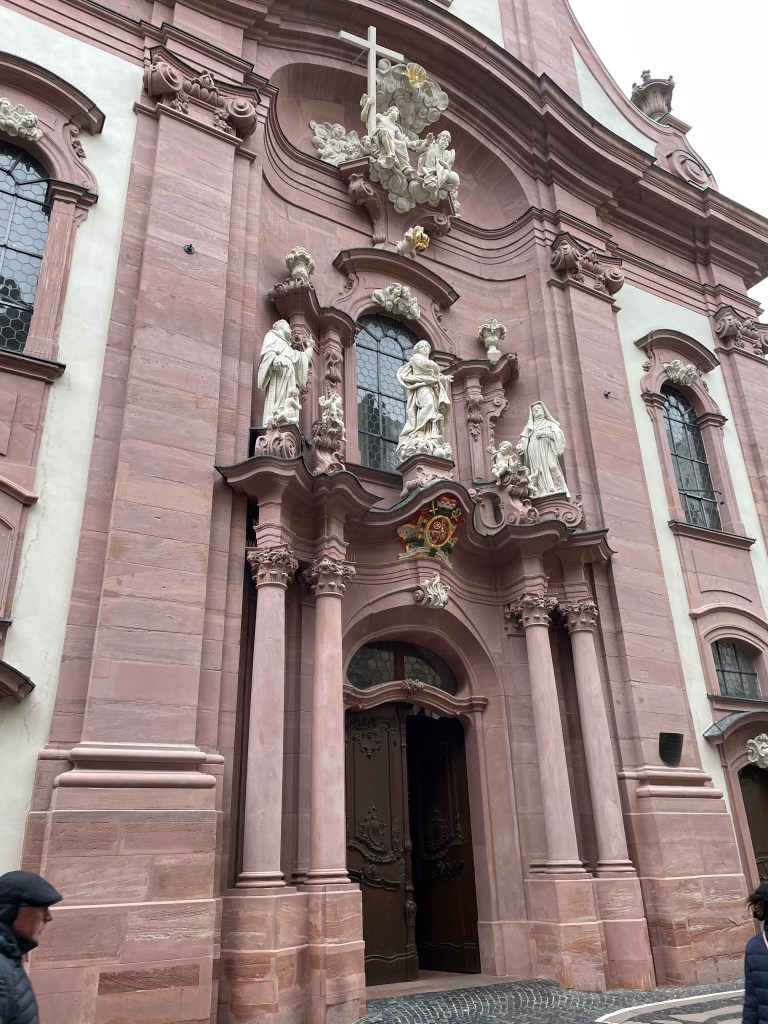
Augustinian hermits built the current St. Augustine’s Church between 1768 and 1771. It was built on the grounds of a Gothic church that the Augustinian hermits built in 1260. The church was built as a monastery but became a seminary in 1805. The complex has former convent buildings, which were completed in 1753.
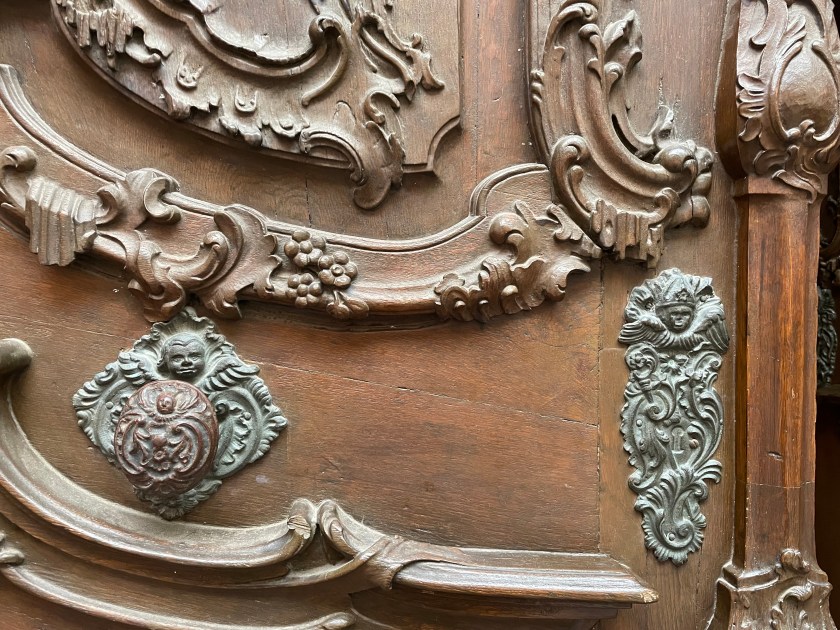
St. Augustine’s Church has a vibrant Baroque-style facade. The portal has statues depicting the coronation of Mary, Queen of Heaven along with Augustine of Hippo and Monica of Hippo.
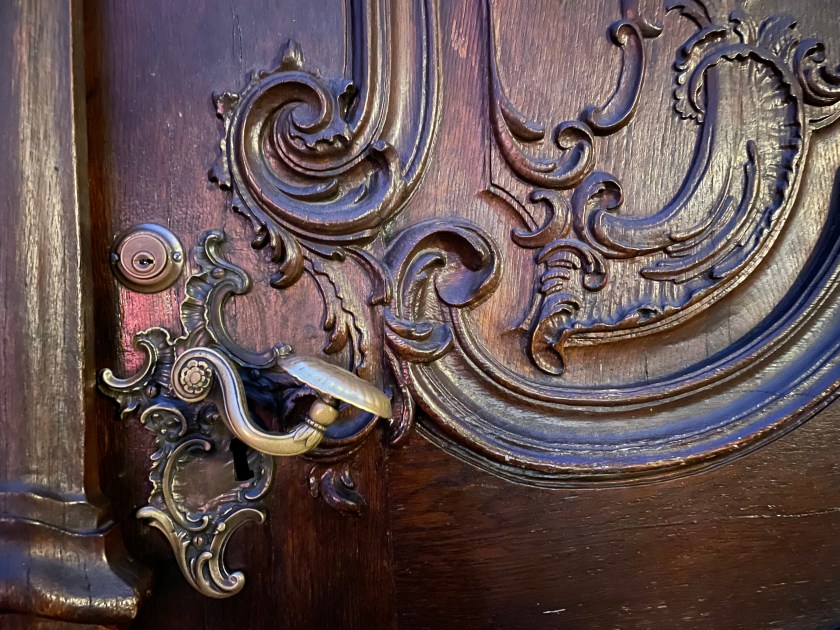
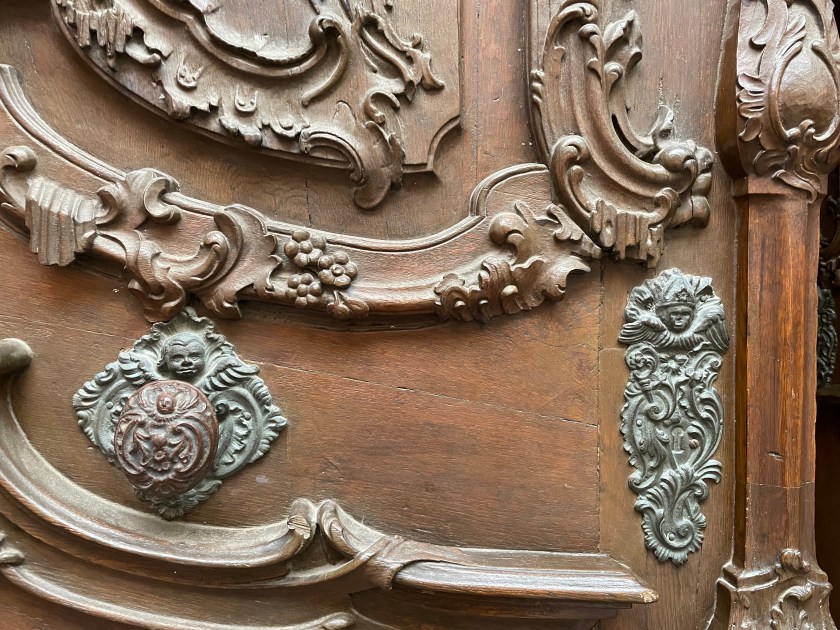
The church’s interior is ornately decorated and features Rococo style. The church has a combined nave and choir, which is typical for Rococo-style churches. The large altars and magnificent ceiling paintings create a grand impression.
Between the south altars, visitors will see a wood sculpture dating to 1420. The sculpture shows Mary with Jesus as a child, smiling and laughing. The high altar depicts God the Father tearing up Mankind’s Book of Sins.
Johann Philipp Stumm manufactured the majestic 1773 Baroque pipe organ, which is one of the few surviving organs crafted by the acclaimed Stumm family.
St. Augustine’s Church was one of the few churches in Mainz that wasn’t heavily damaged by World War II bombs.


Schiller Square
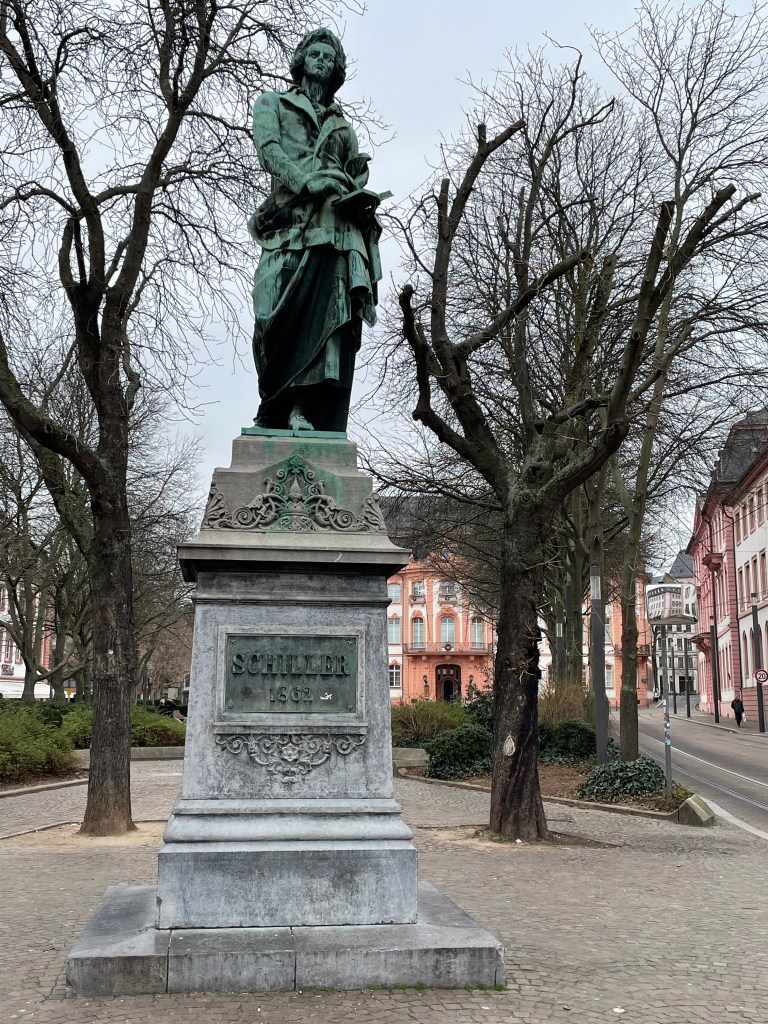
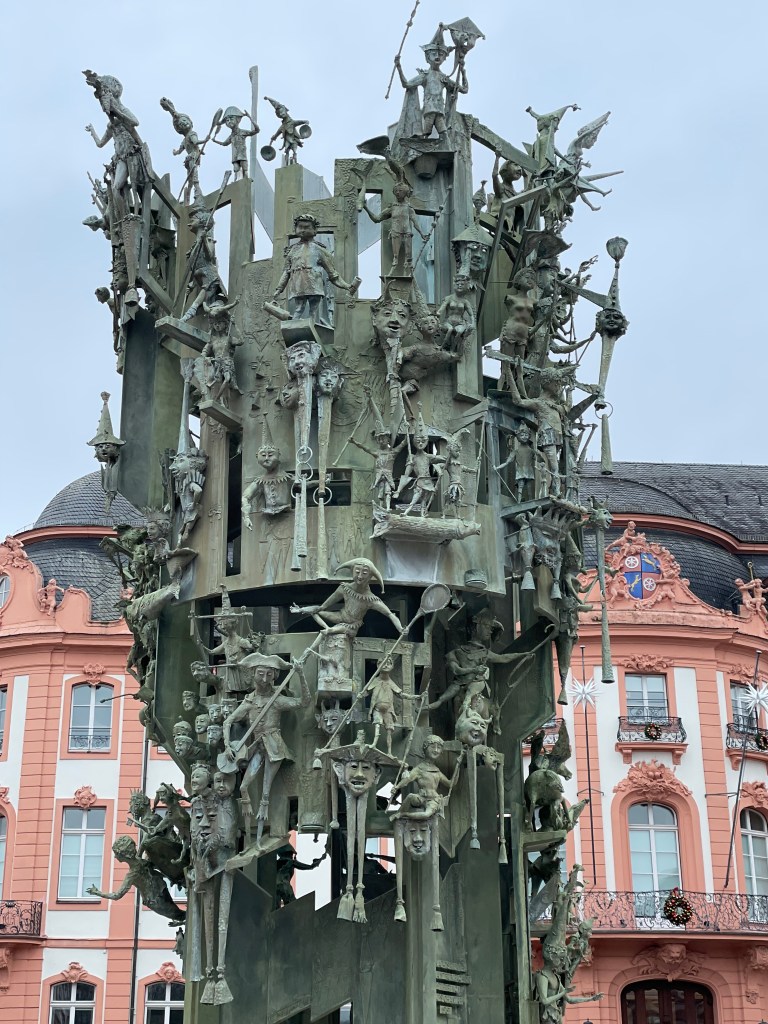
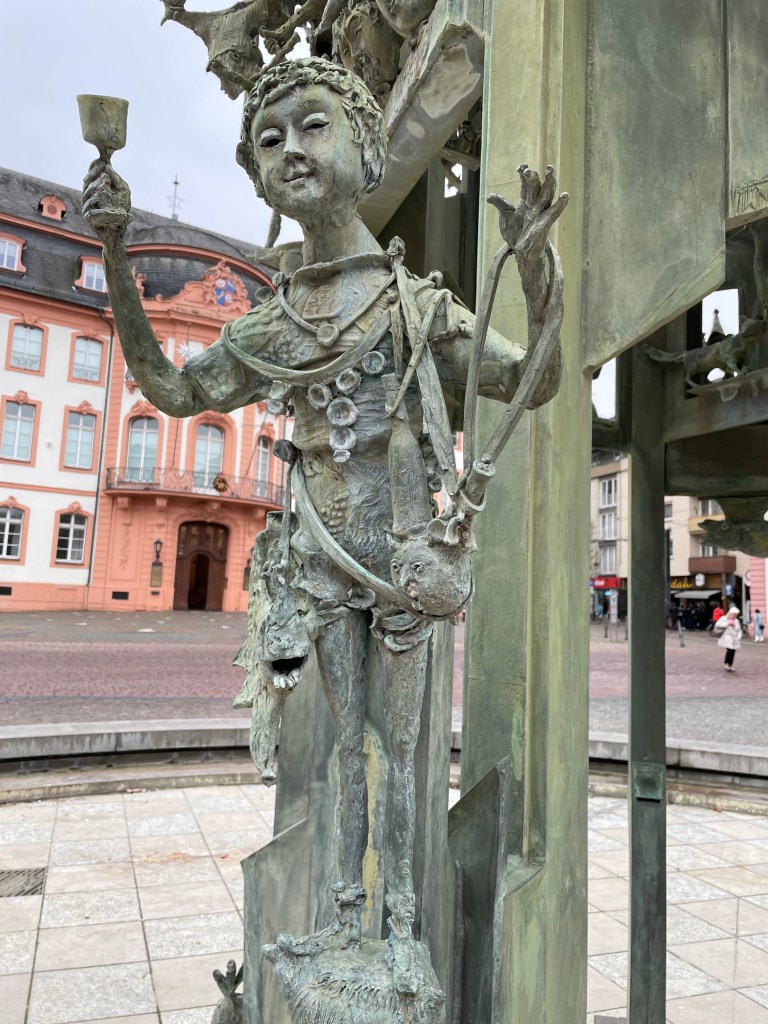
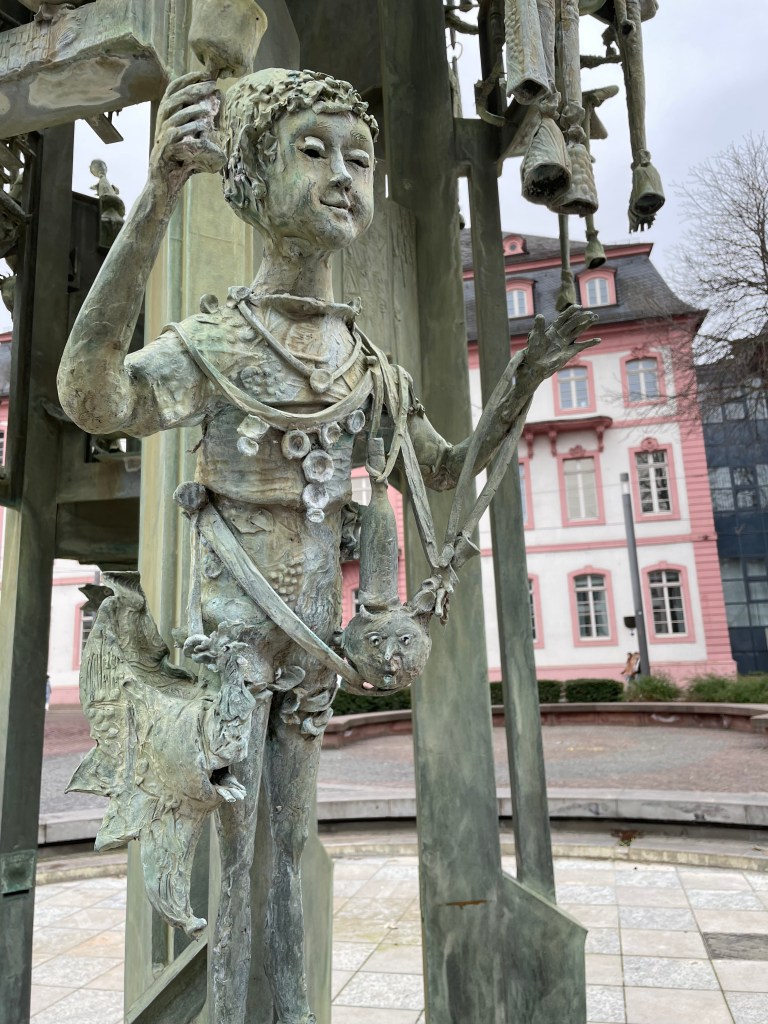
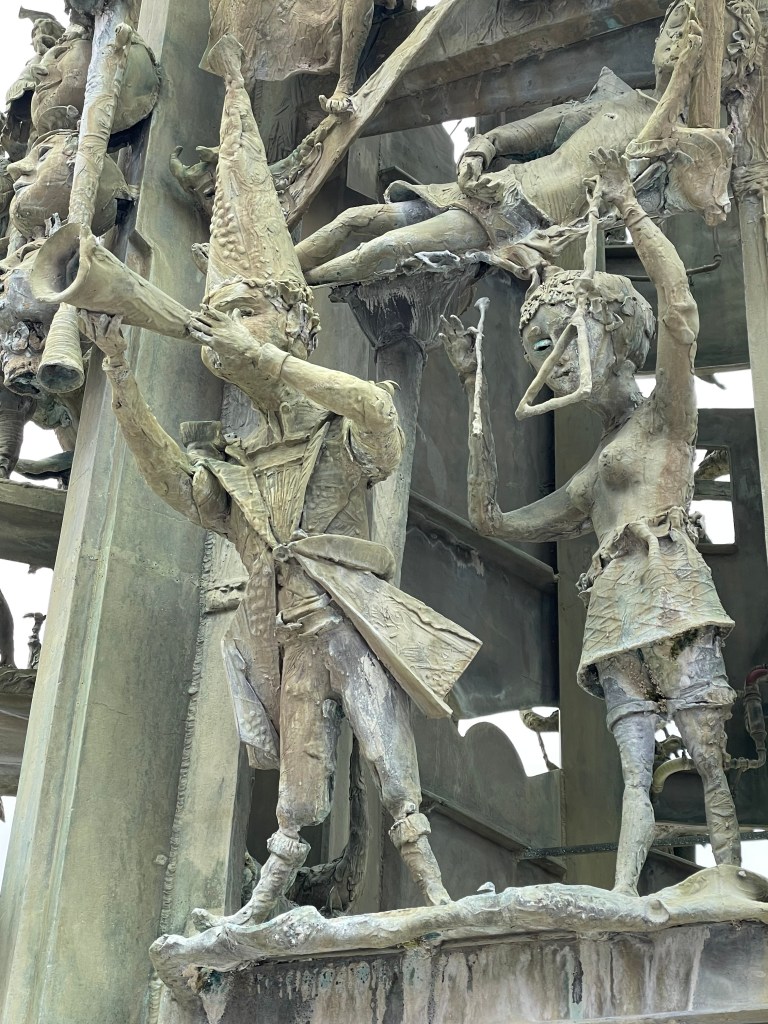
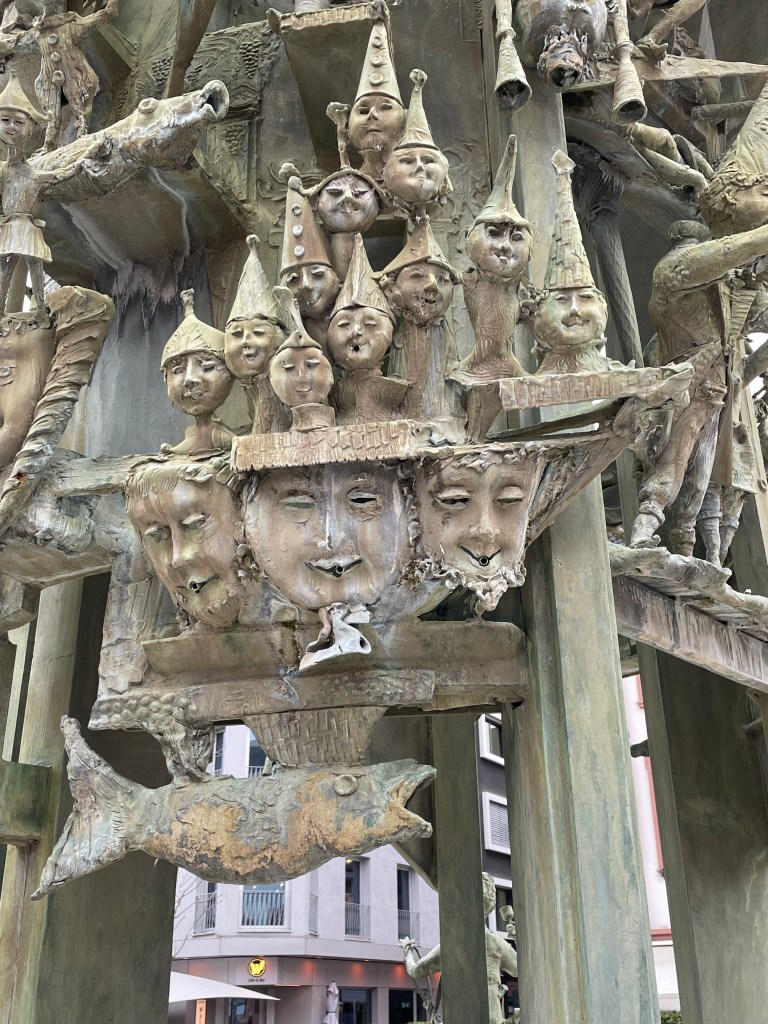
Schiller Square is one of downtown Mainz’s central squares. This attractive square is filled with trees and surrounded by greenery. The square has several stately Baroque and Rococo-style aristocratic residences. It is best known for its famous Mainz carnival fountain and the Schiller statue.
The carnival fountain is about nine meters (29 feet) tall. It was created in 1967 and has over 200 bronze figures portraying the carnival story. Carnival is officially opened from the Osteiner Hof’s balcony, which overlooks the square.
The Osteiner Hof is one of the square’s impressive palaces and was built between 1747 and 1752. The Osteiner Hof features an ornate facade with detailed coats of arms.
Schiller Square also has a monument to Friedrich Schiller, the square’s namesake. Friedrich Schiller was an influential 18th-century poet, playwright, philosopher, and historian. The bronze statue was erected in 1862 and sits on a marble base.
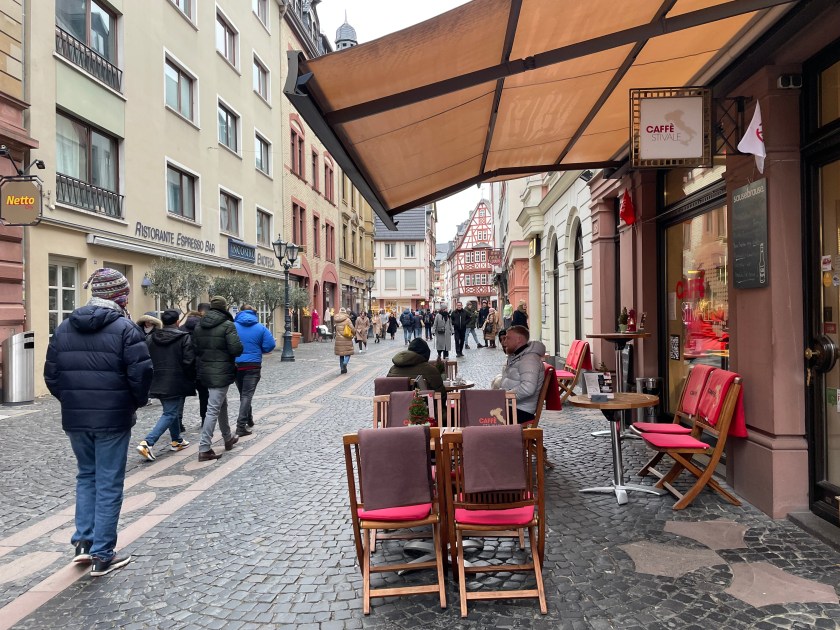
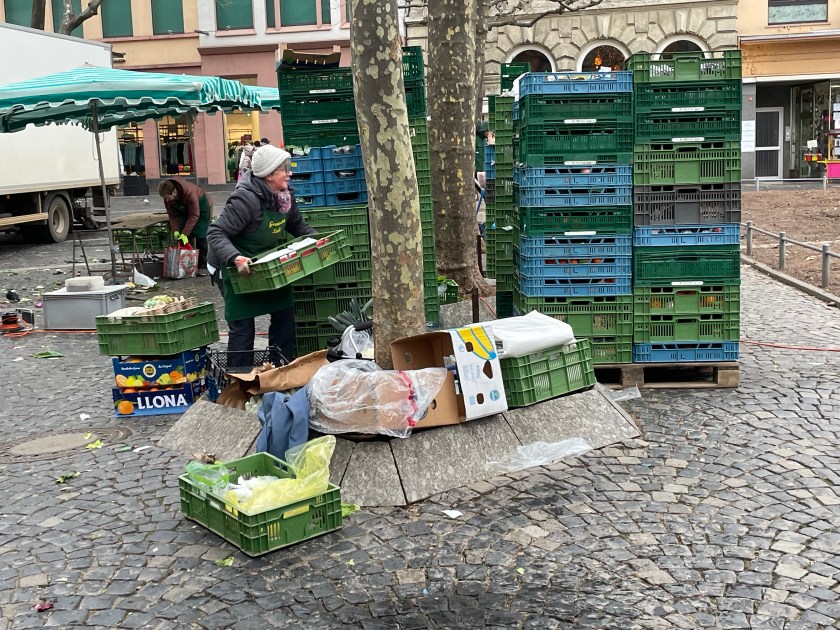
This afternoon the market shops started packing up to go home.
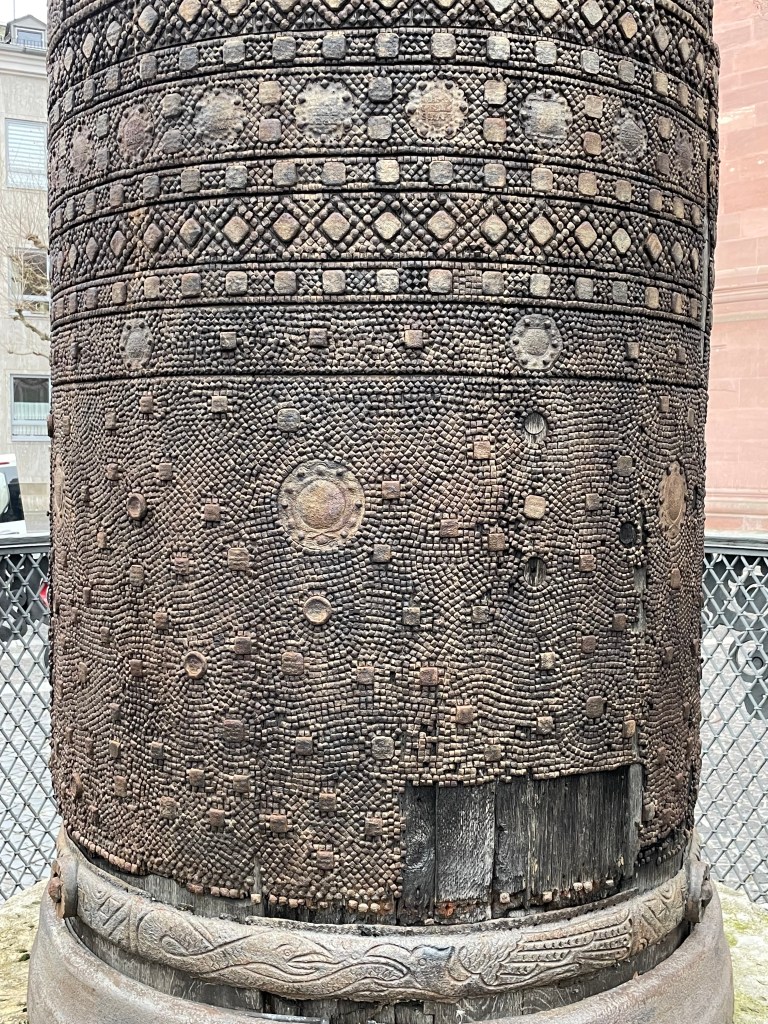
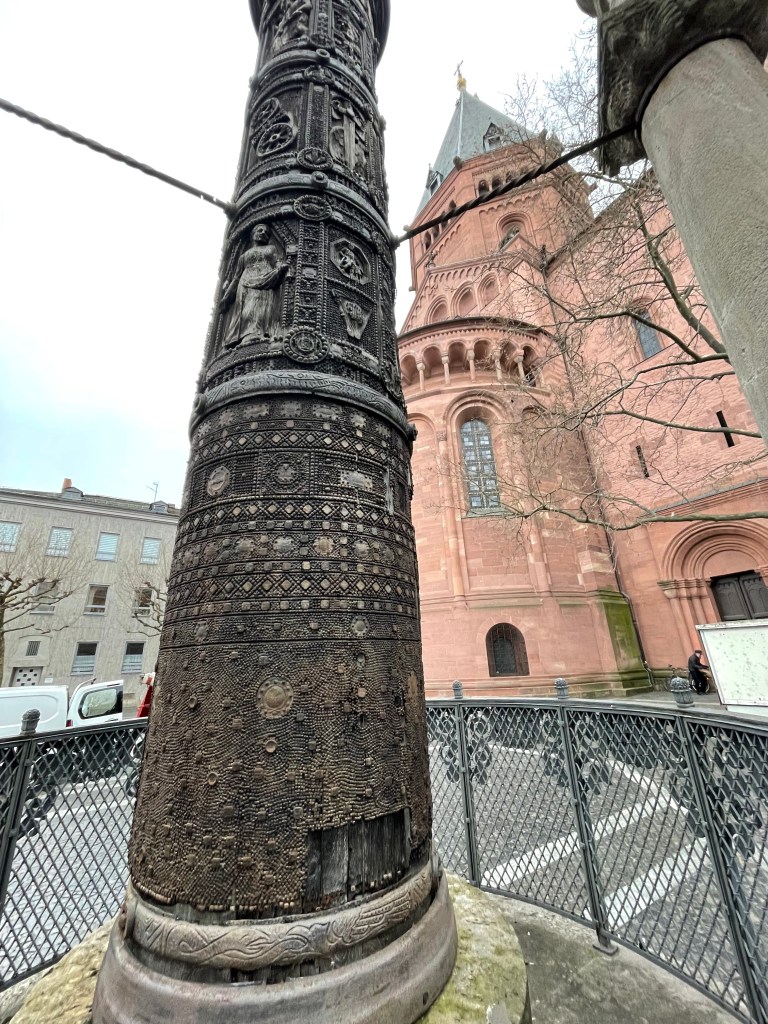
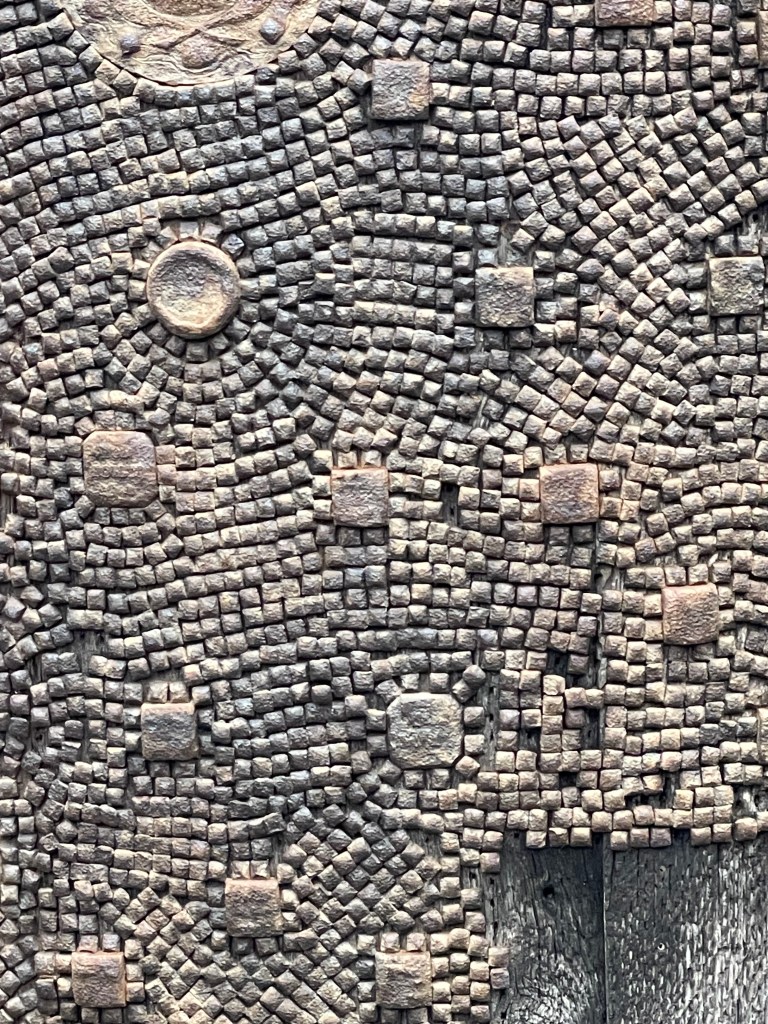
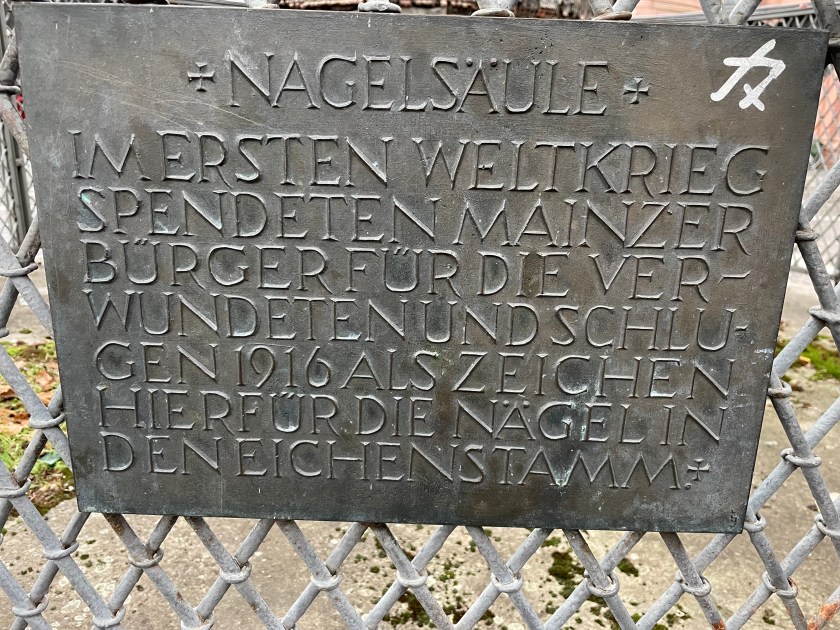
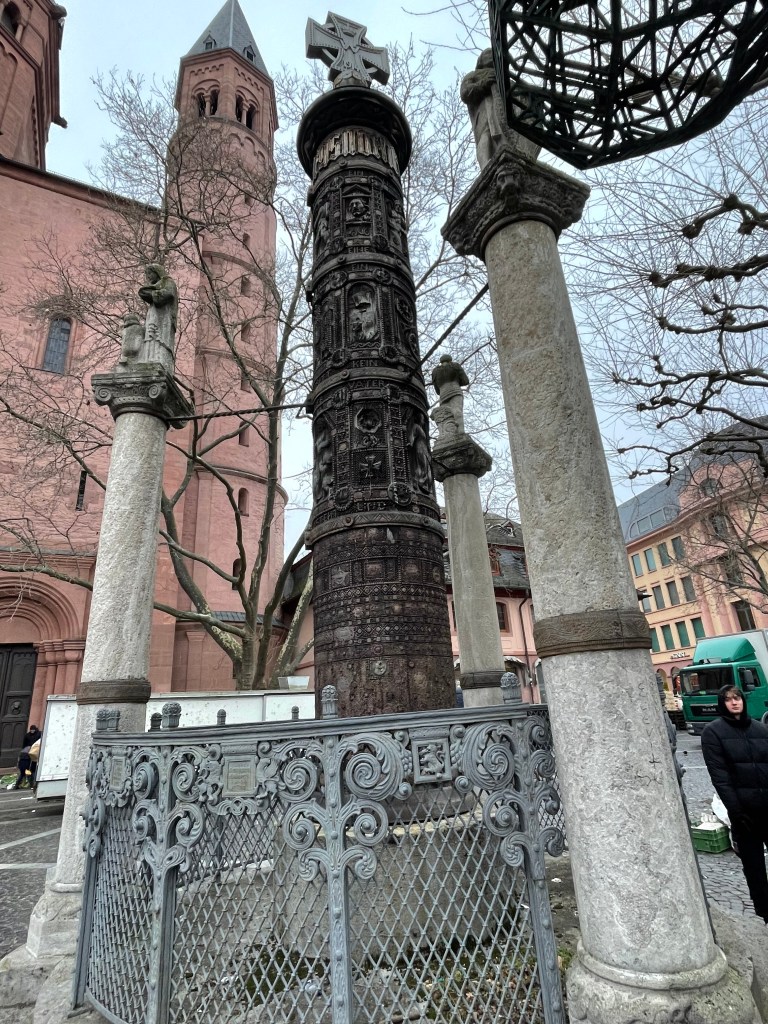
The Mainz Nail Memorial Column
Nail columns or nail coats of arms were created in various German cities (e.g. Speyer) in connection with a fundraising campaign these days. In addition to helping fellow citizens in need, the erection of such a “landmark” also represented a common act of “patriotic spirit”, because for a small or large sum of money, every citizen was allowed to hammer a nail into a wooden pillar or a wooden coat of arms and take part in the celebrations surrounding the installation. The tender text, which was published on November 9th, 1915, wanted “a proud, defiant and powerful structure”
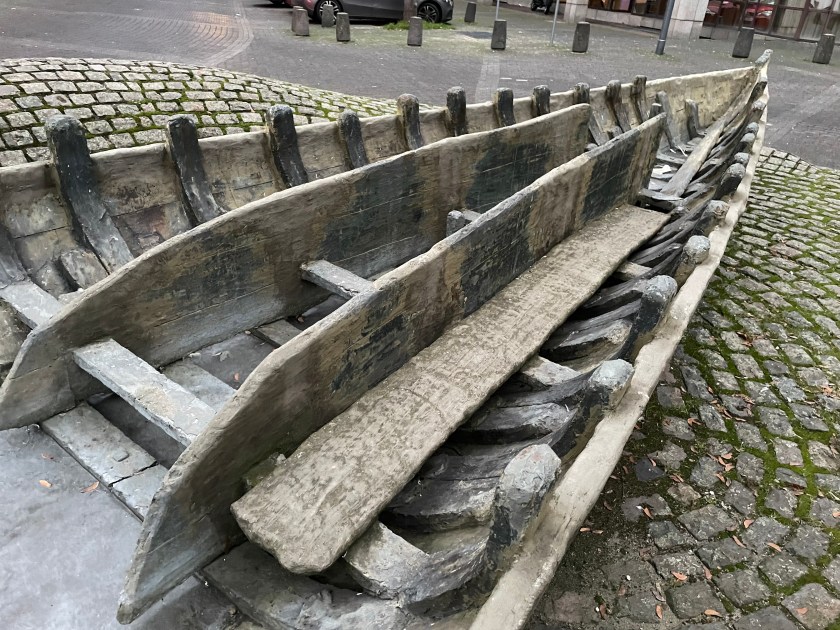
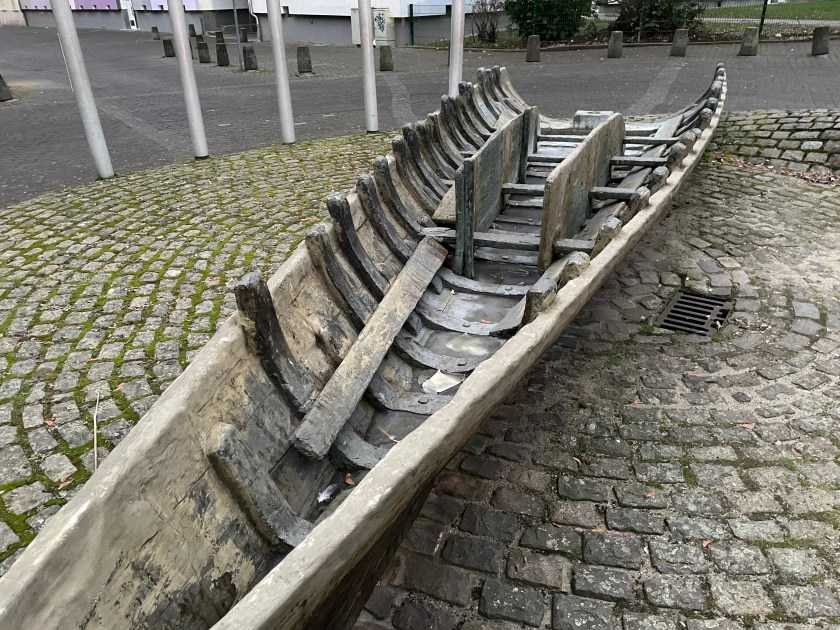
The Romans used to live in Mainz. They shipped goods on the river. Several old Roman boats were excavated when a new Hilton Hotel was being built. We hope to go back to the museum there to see them. Here is a replica.
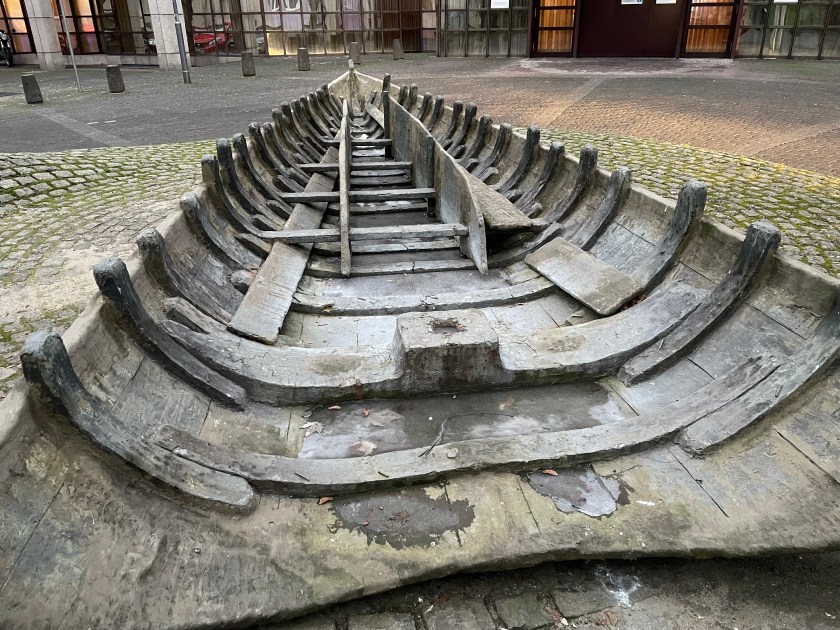
Five Roman military ships dating back to the late 3rd and 4th centuries that were found in Mainz form the centrepiece of the museum [at the Hilton Hotel]. Two of them are true-to-size replicas complete in every last detail. Visitors can admire them next to the original wrecks. How did the Roman army secure the Rhine during late antiquity?
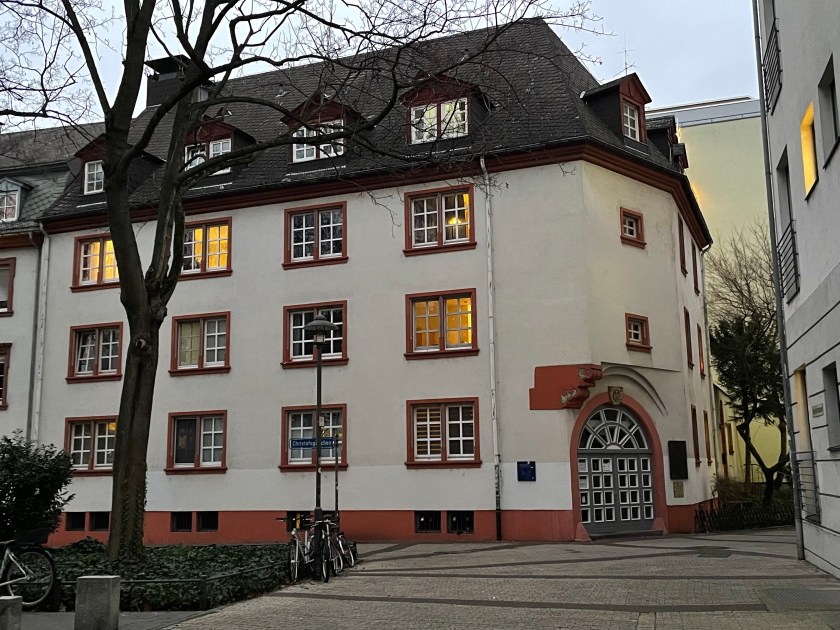
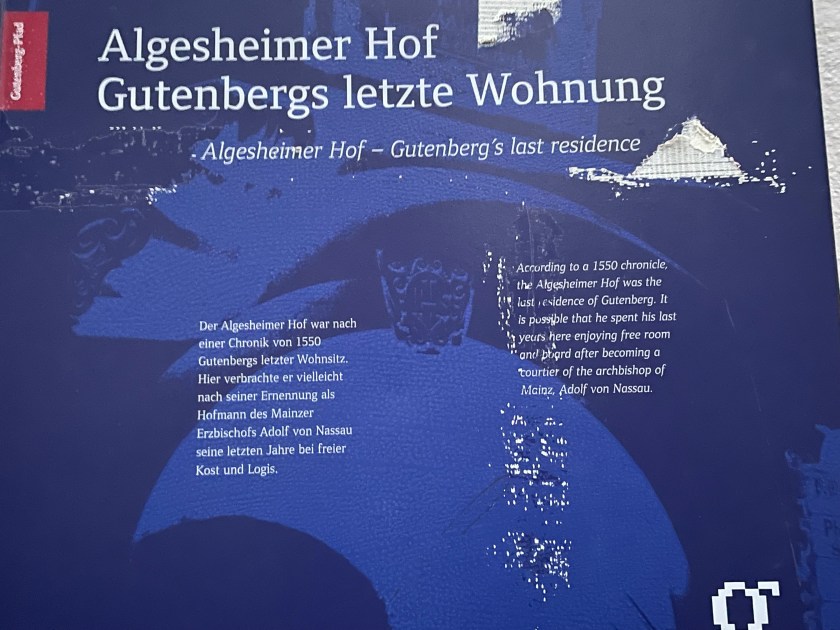
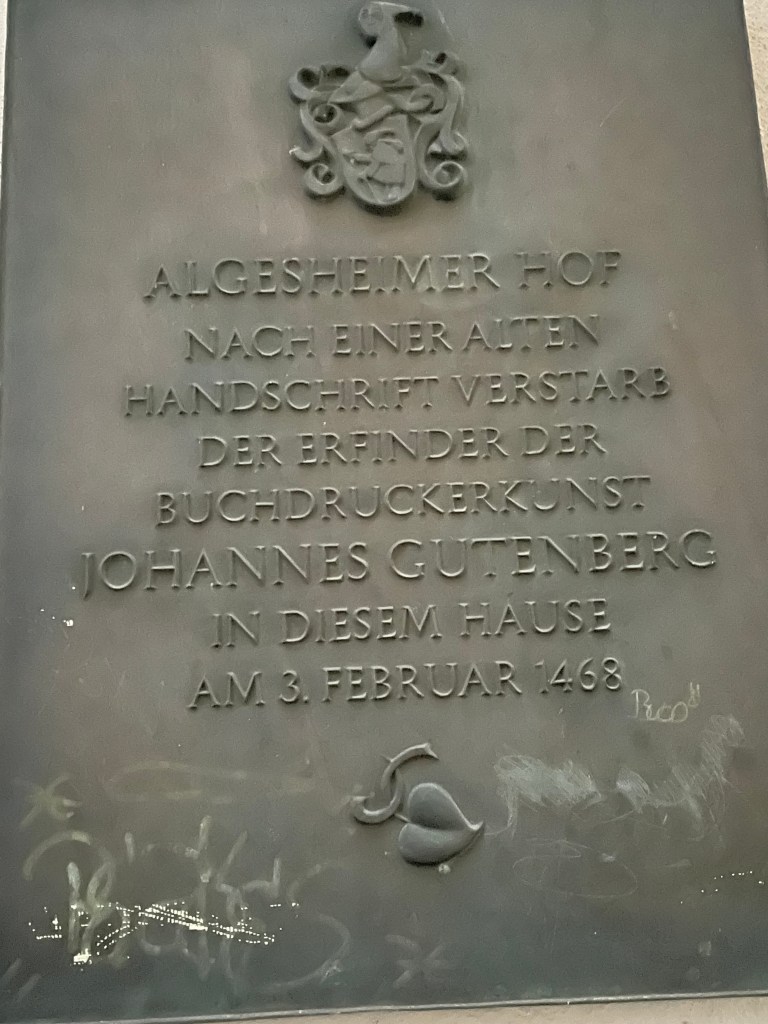
Our last stop was Gutenberg’s home in Mainz and St. Christoph, the Pfarrkirche across the street he attended. Here is his home where he lived and died in 1468:
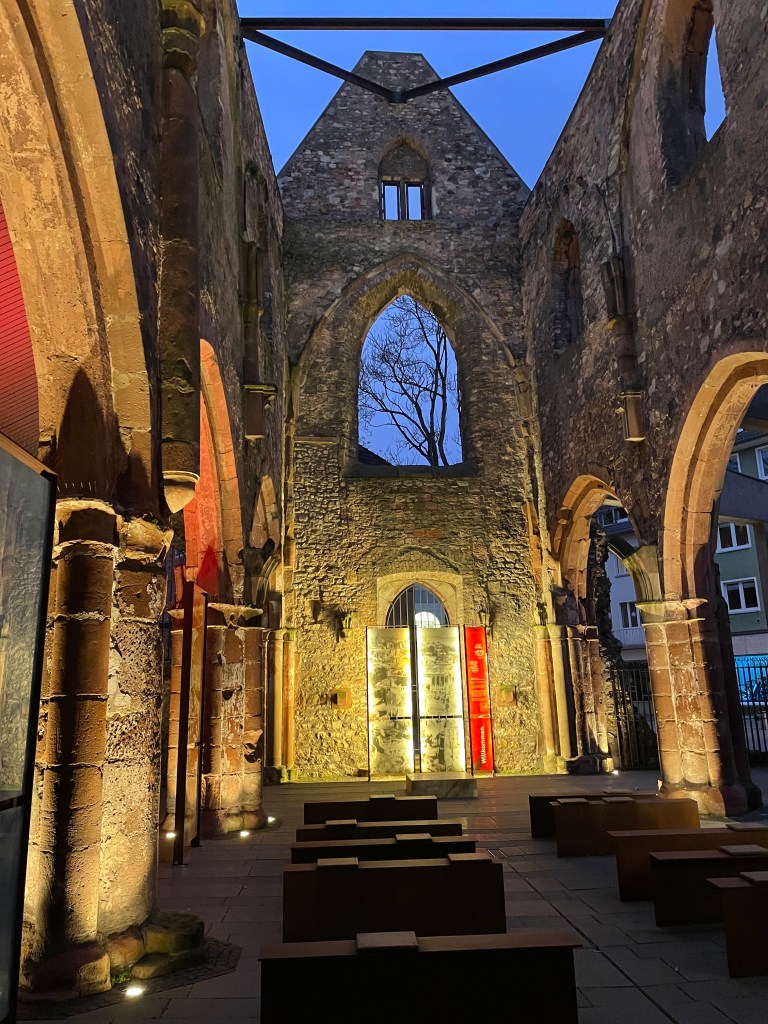
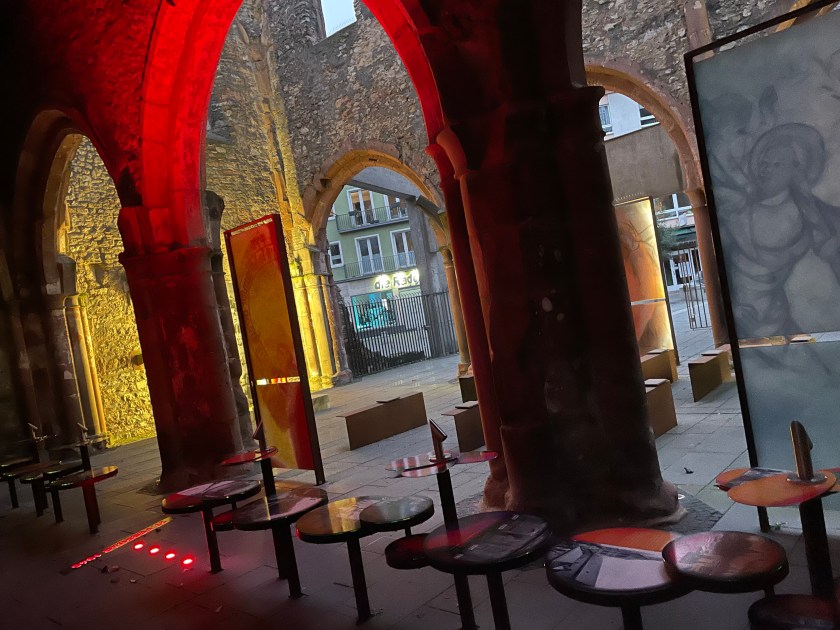
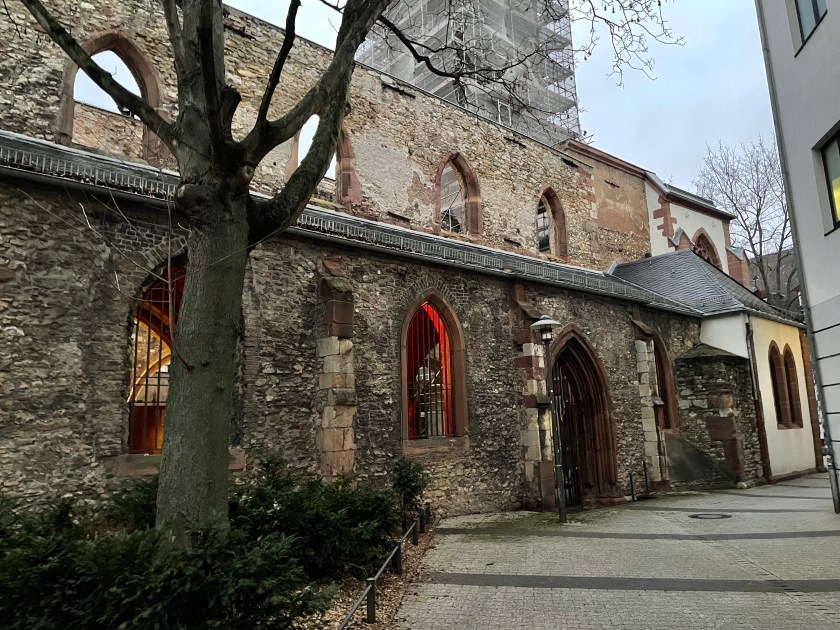
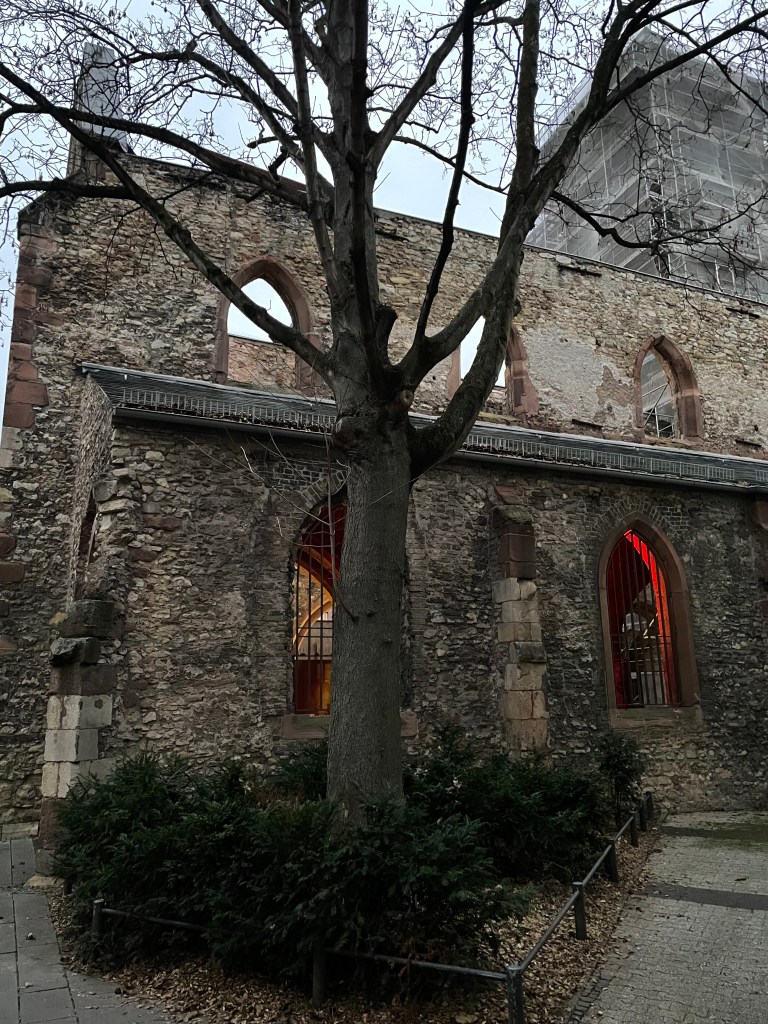
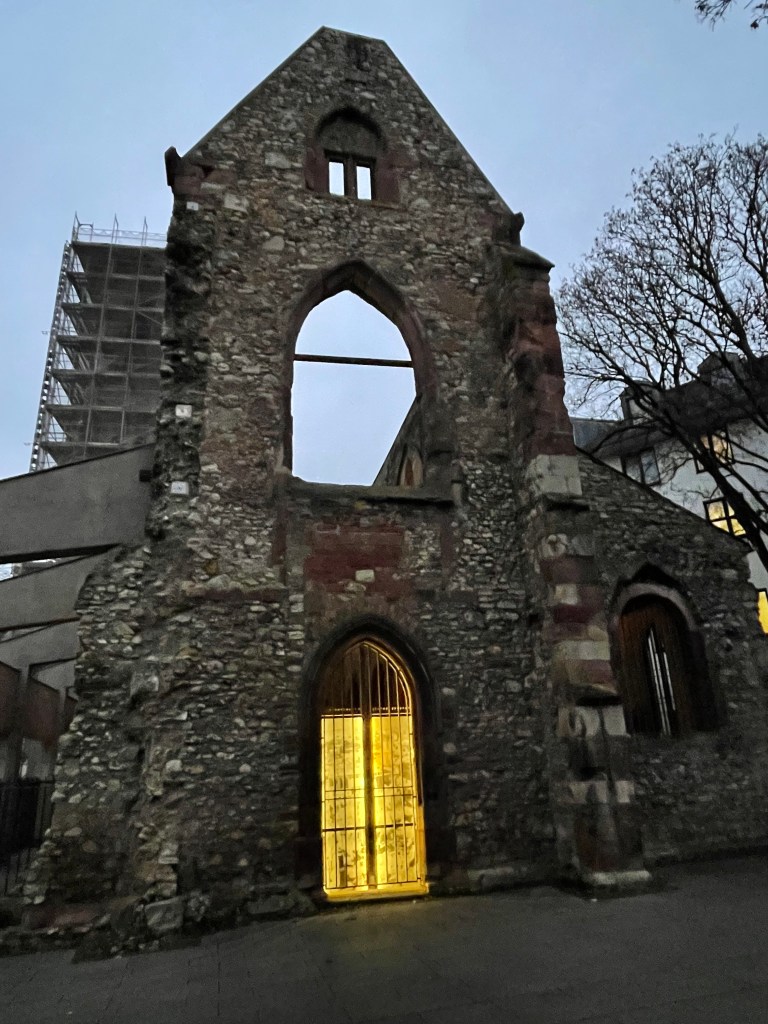
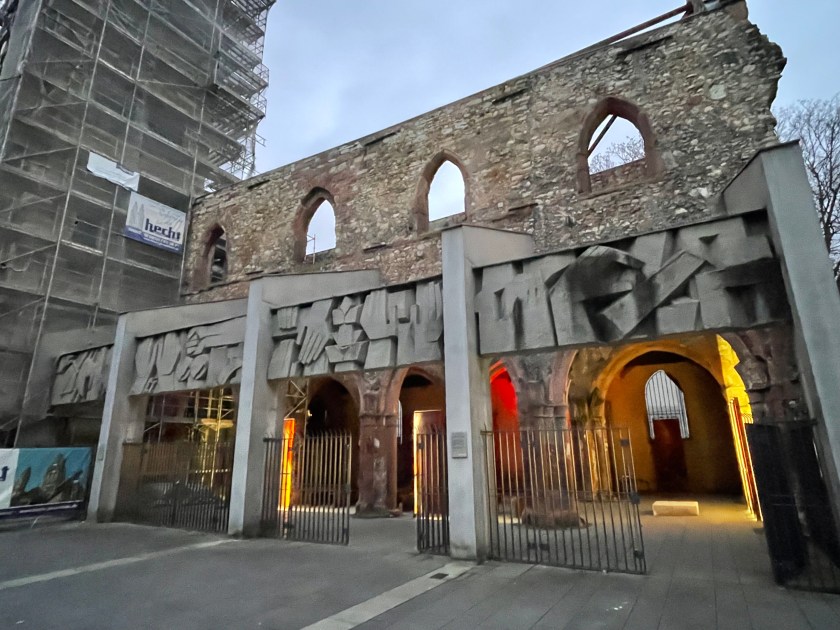
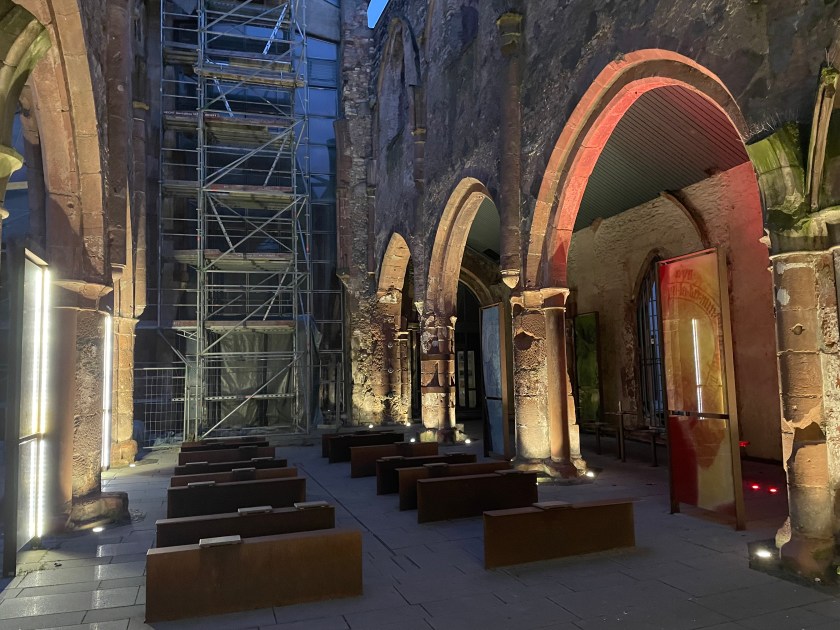
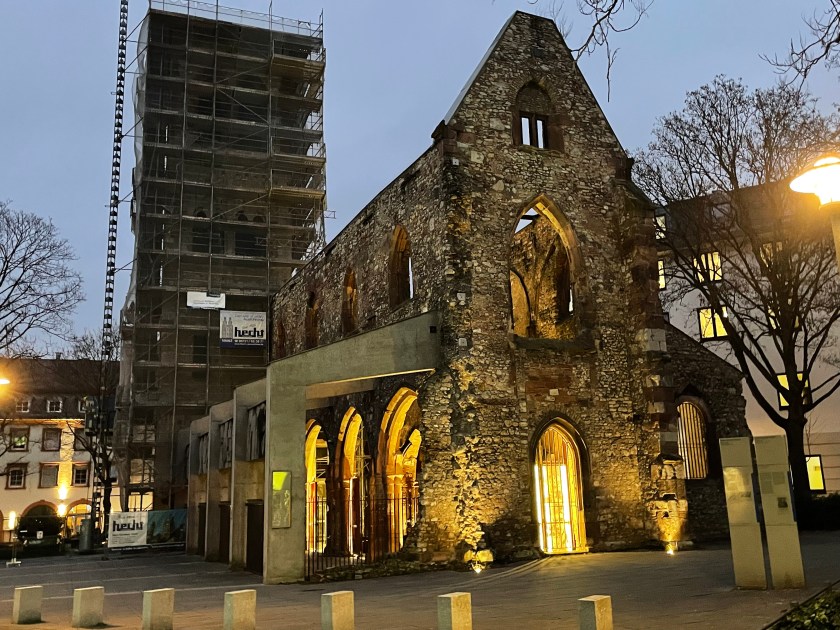
St Christoph Kirche was originally built between 1240 and 1330. It was bombed during WWII and partially restored, but only partially, so you can still see the damage, which is a grim reminder of loss during the war.
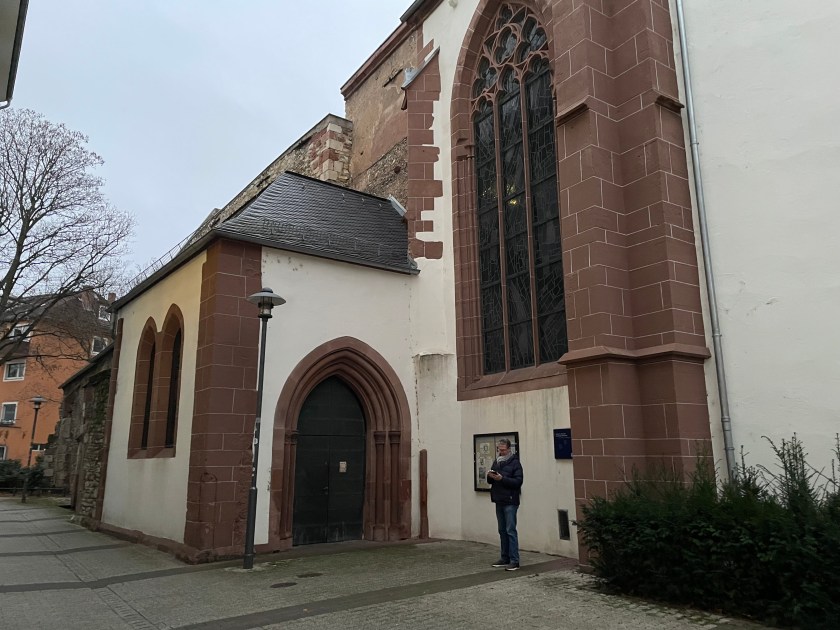
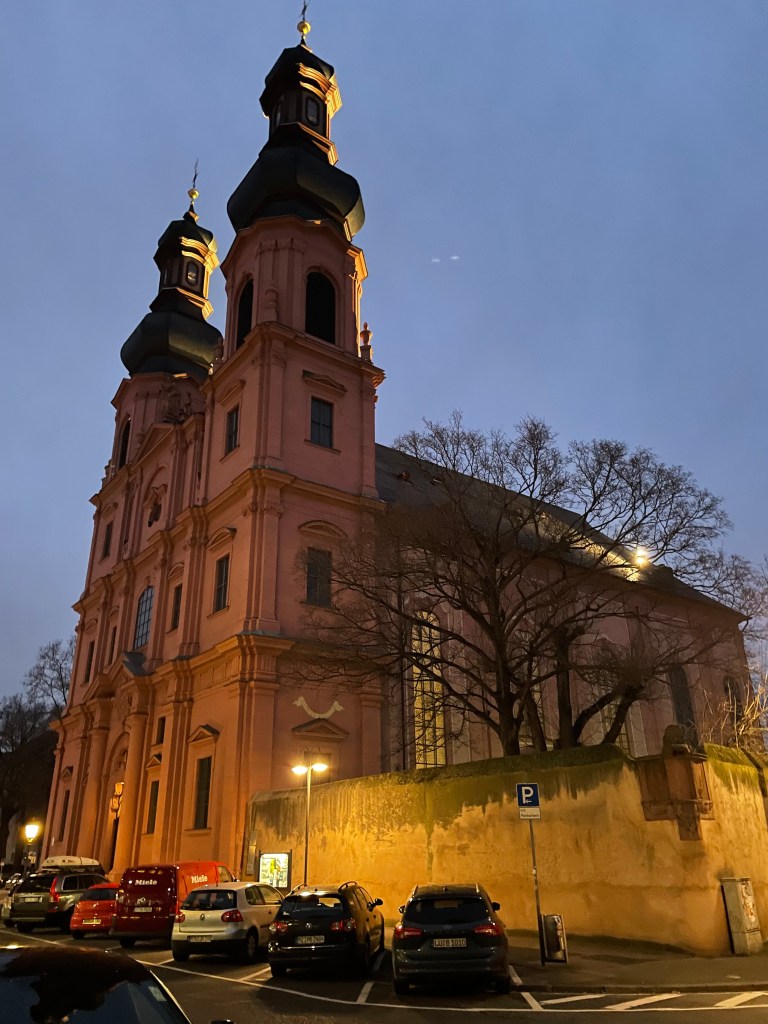
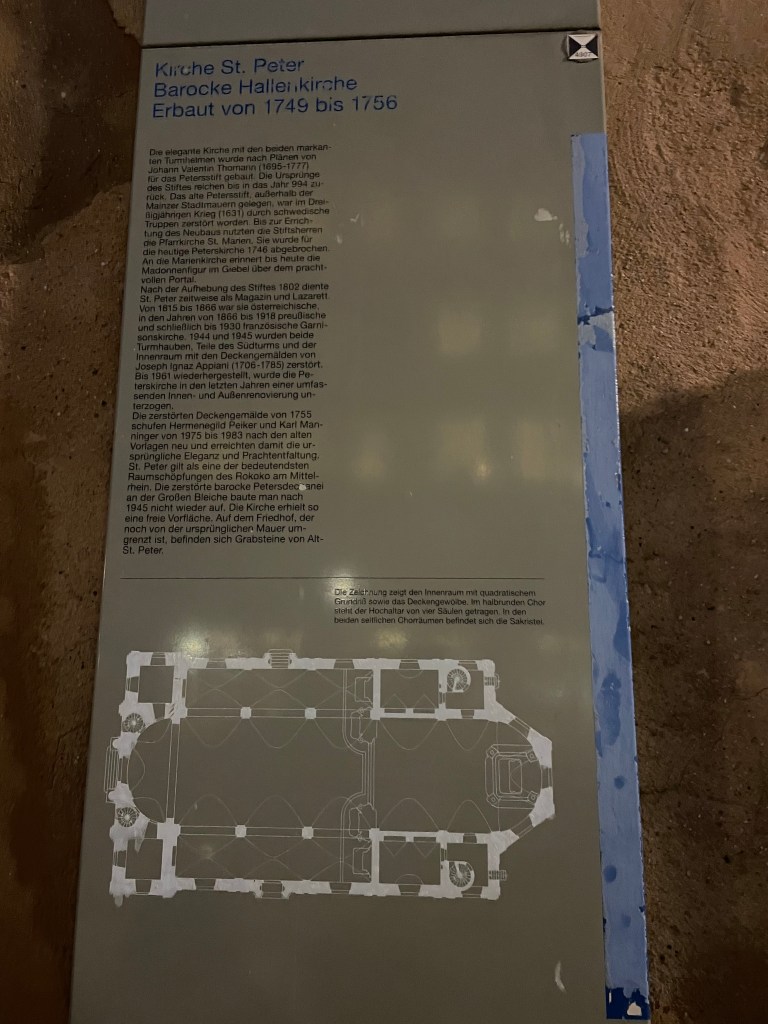
We saw one last historic church as we made our way back to the parkplatz. This is St. Peter’s. We weren’t able to go in.
Sometimes the amount of history in these places is a bit overwhelming. I’m grateful so much has been preserved to give us a small idea of what’s gone before. Imagine what Gutenberg would have thought of our laptops!























 Our Frankfurt Germany Mission