This weekend we had meetings in Belgium and the Netherlands. Thursday afternoon we got in our car and drove the 4 hours to Brussels, arriving late afternoon. First stop, after finding our Marriott hotel, was food. We were hungry. Our typical car food includes peanuts and pretzels and fruit. I was thrilled with my choice–a big heavy raisin roll. It was one of the best baked treats I’ve had here.

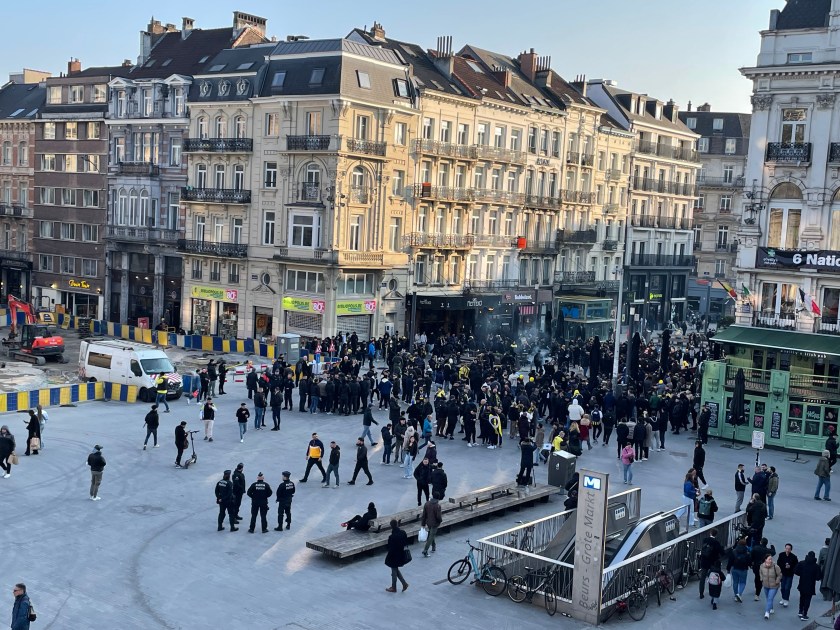
This view of the old stock exchange building was the view from our hotel windows.

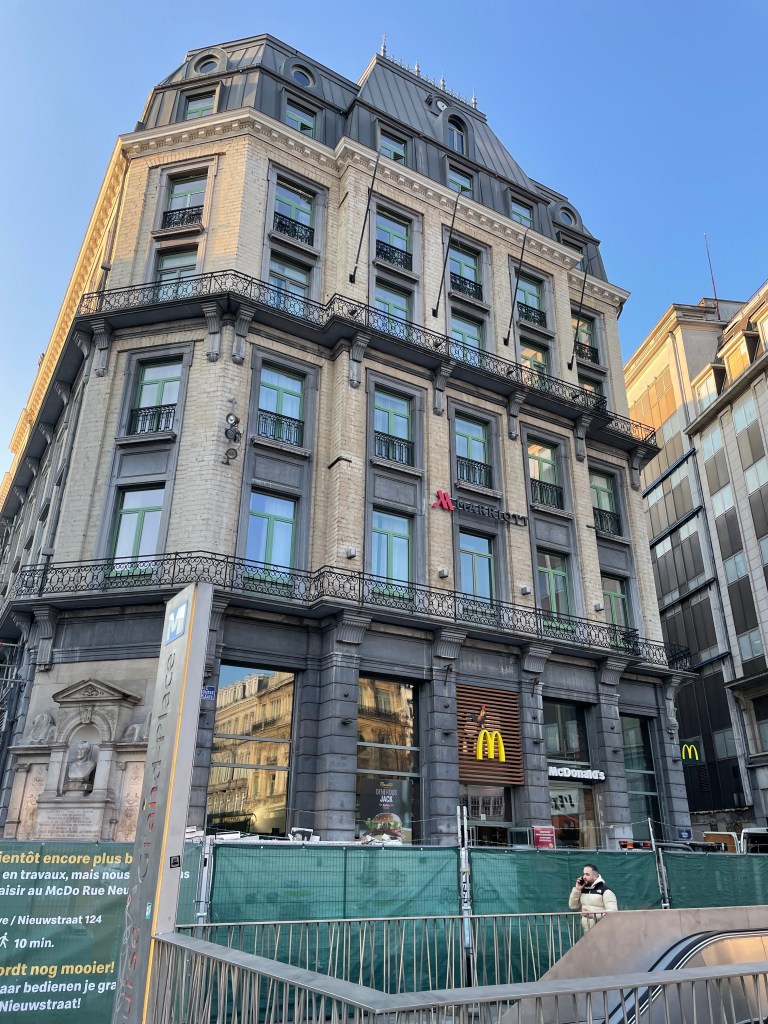
This is our Marriott Hotel:
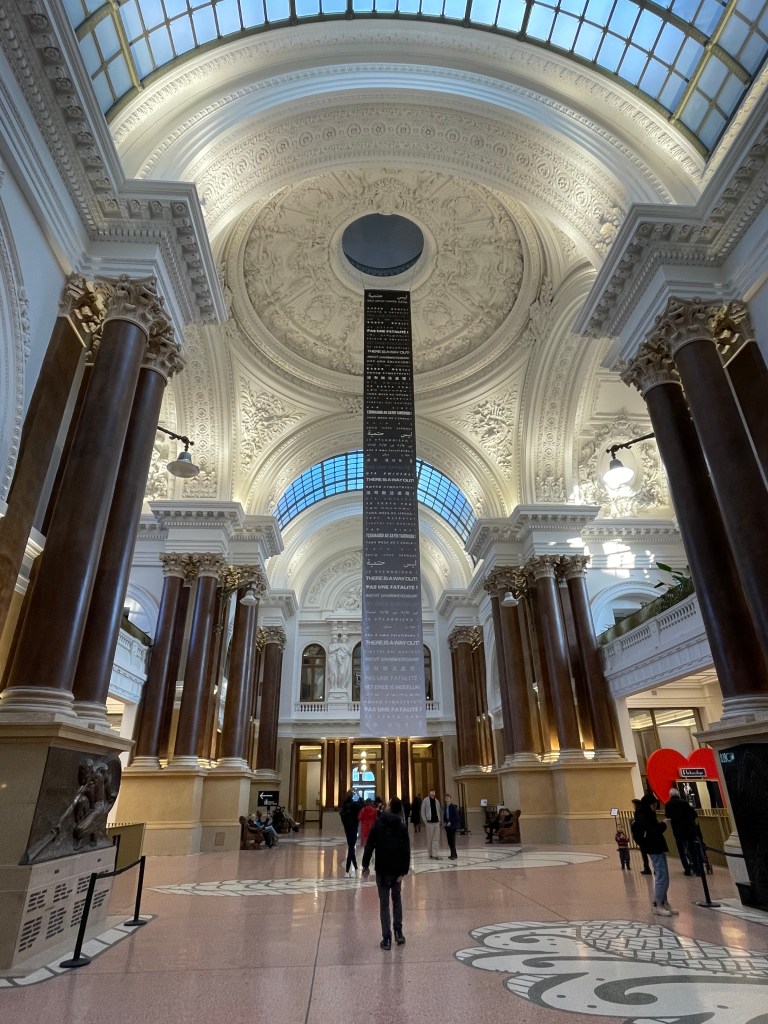
Inside the old stock exchange building:
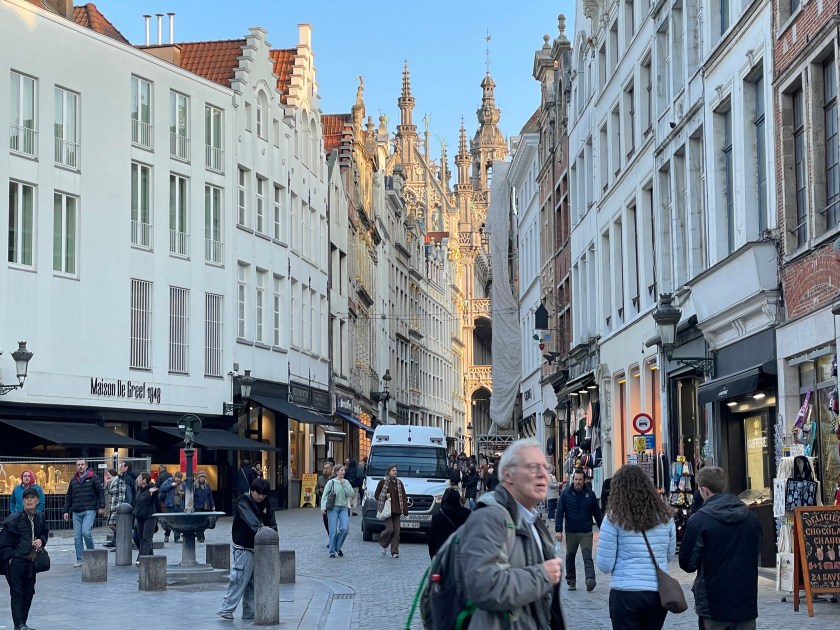
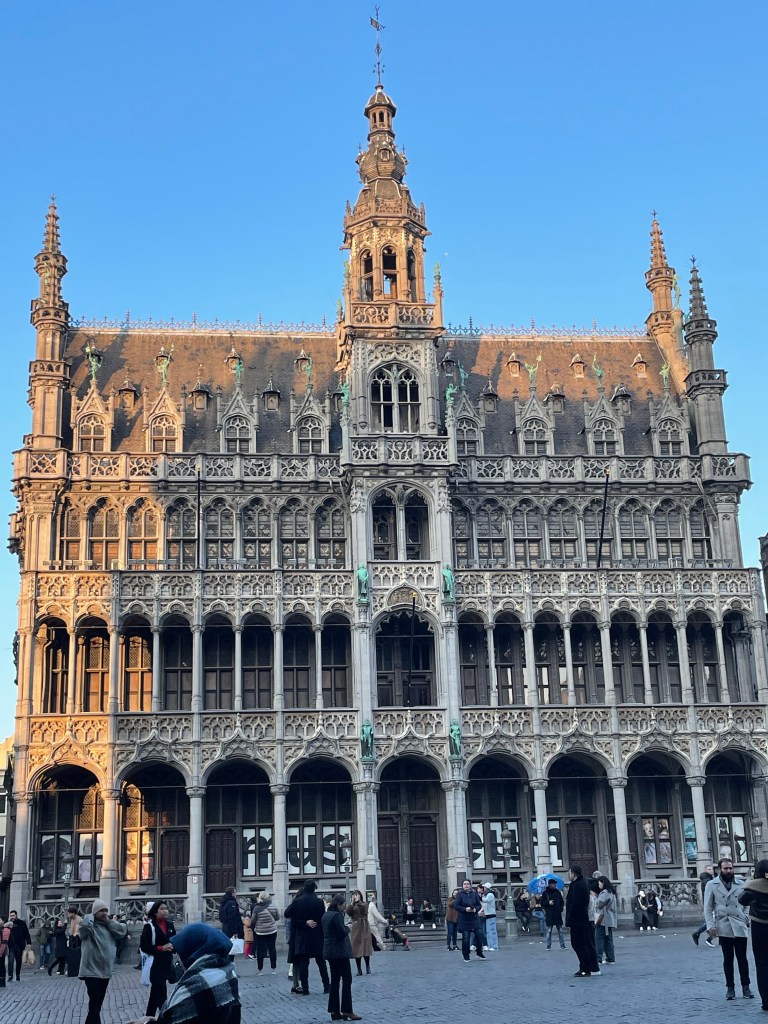
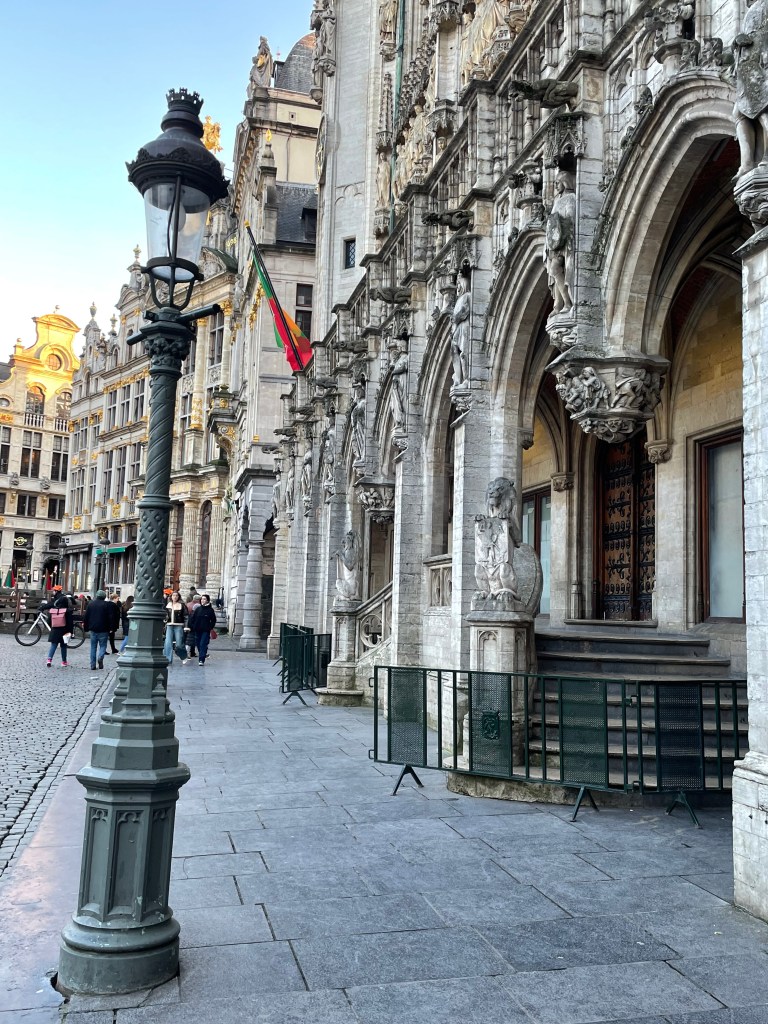
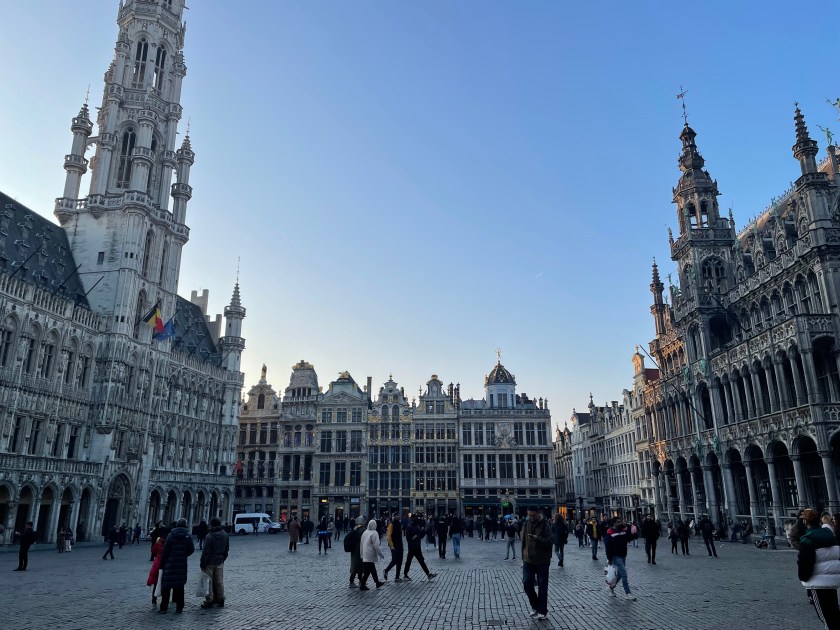
We walked through the building, and then out into the Grand Place, or square or plaza. It was a spectacular sight.
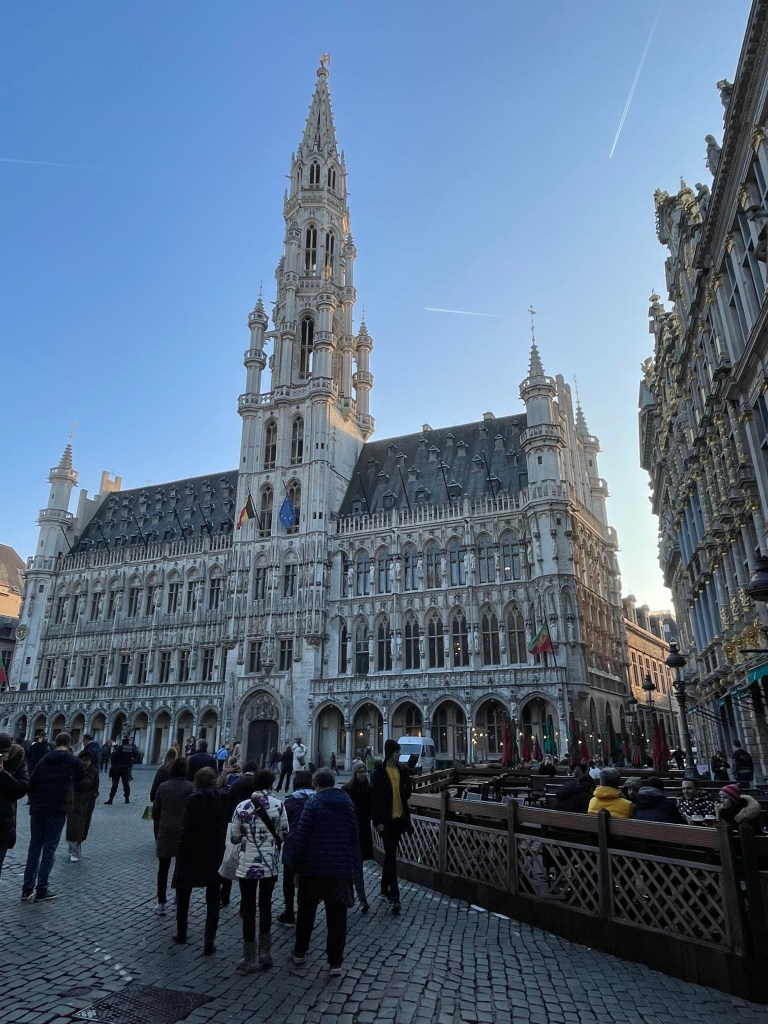
From Wikipedia:
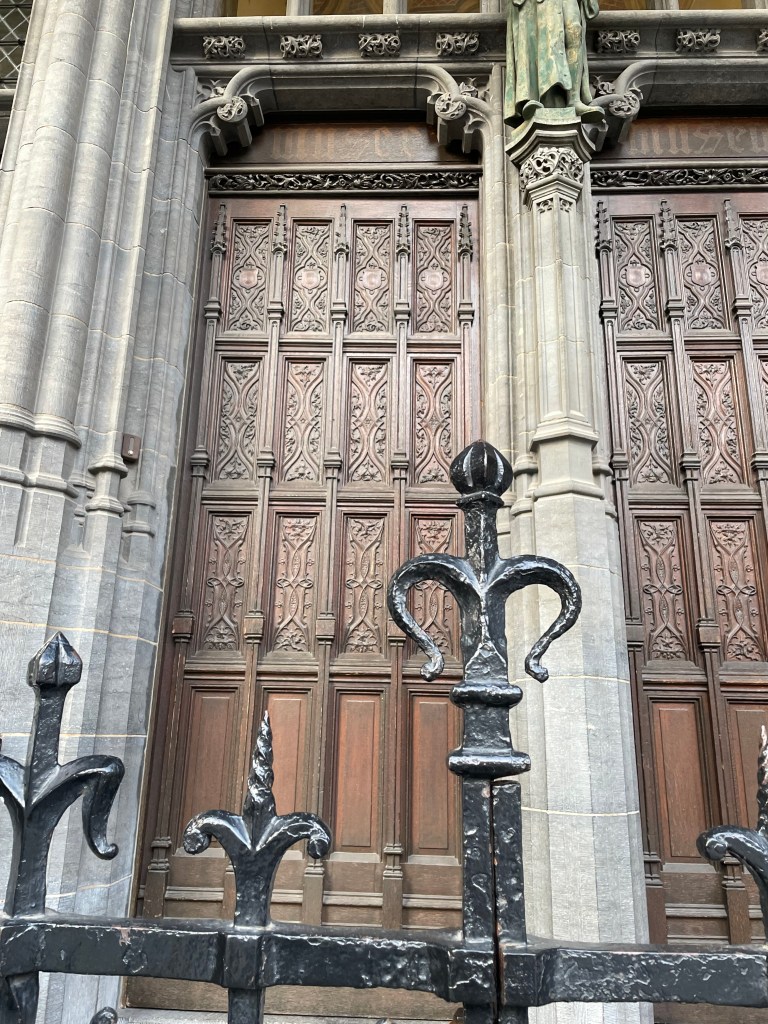
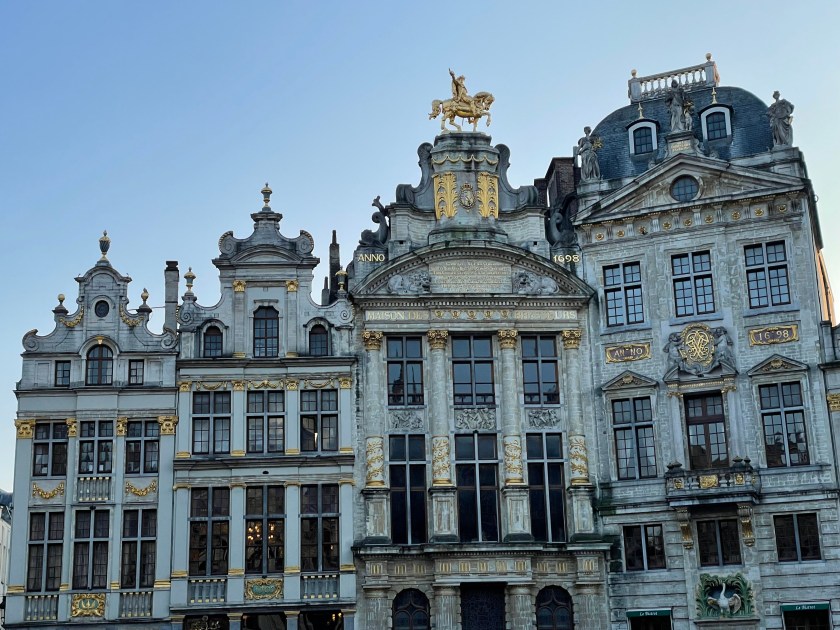
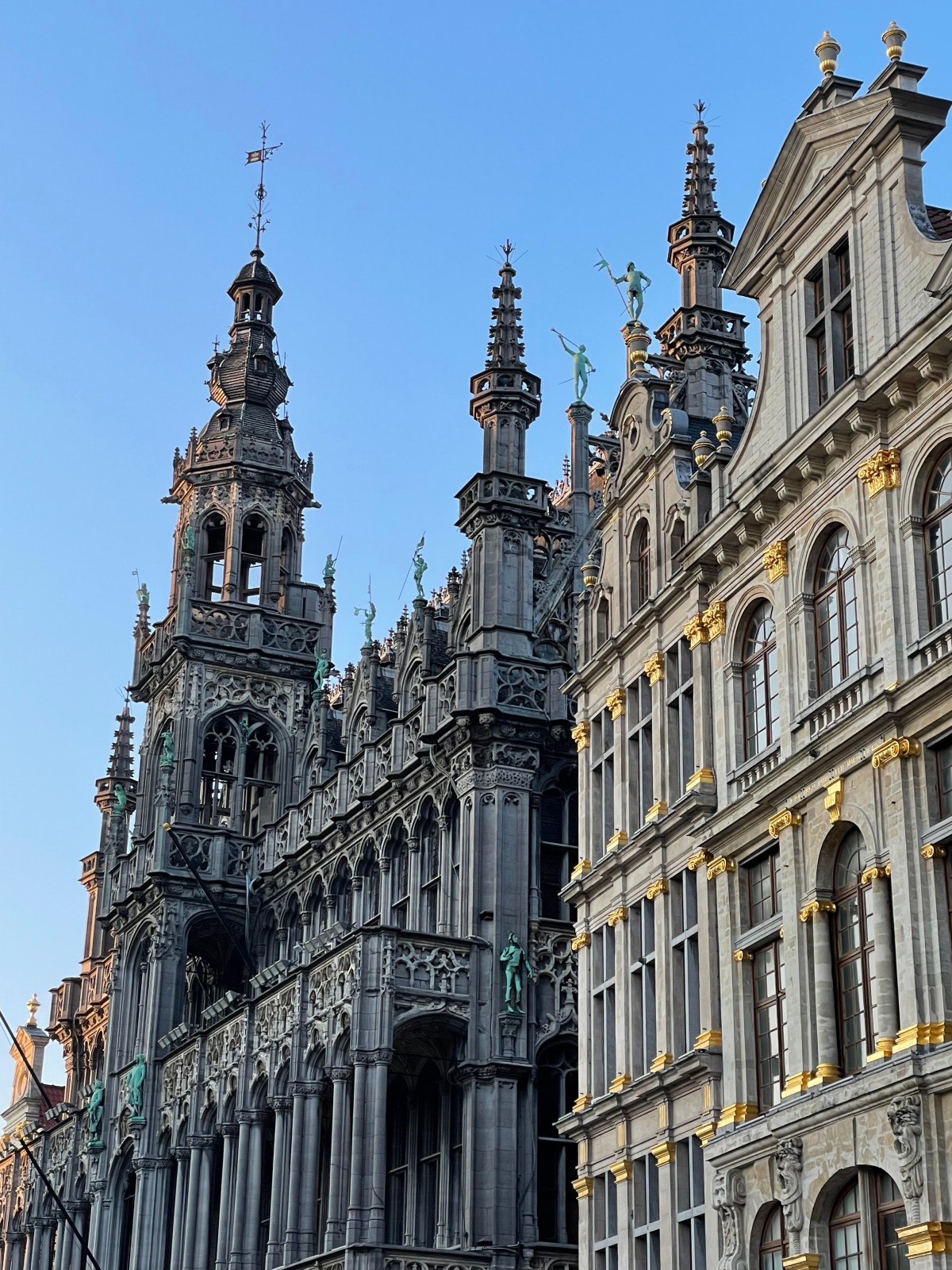
The Grand-Place; “Grand Square” is the central square of Brussels, Belgium. It is surrounded by opulent Baroque guildhalls of the former Guilds of Brussels and two larger edifices; the city’s Flamboyant Town Hall, and the neo-Gothic King’s House or Bread House building, containing the Brussels City Museum. The square measures 68 by 110 metres (223 by 361 ft) and is entirely paved.
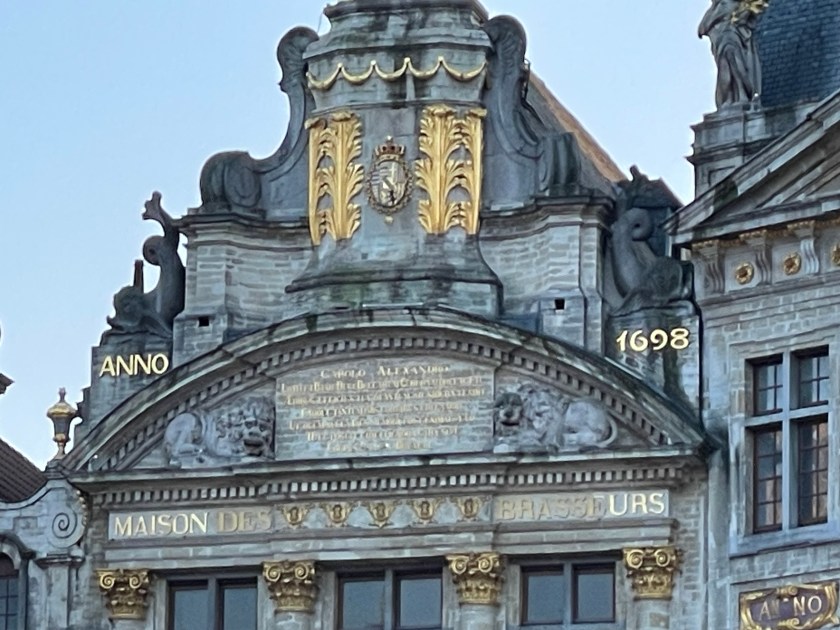
The Grand-Place’s construction began in the 11th century and was largely complete by the 17th. In 1695, during the Nine Years’ War, most of the square was destroyed during the bombardment of Brussels by French troops. Only the facade and the tower of the Town Hall, which served as a target for the artillery, and some stone walls resisted the incendiary balls. The houses that surrounded the Grand-Place were rebuilt during subsequent years, giving the square its current appearance, though they were frequently modified in the following centuries. From the mid-19th century, the square’s heritage value was rediscovered, and it was thoroughly renovated.
Nowadays, the Grand-Place is the most important tourist destination and most memorable landmark in Brussels. It is also considered one of the world’s most beautiful squares, and has been a UNESCO World Heritage Site since 1998
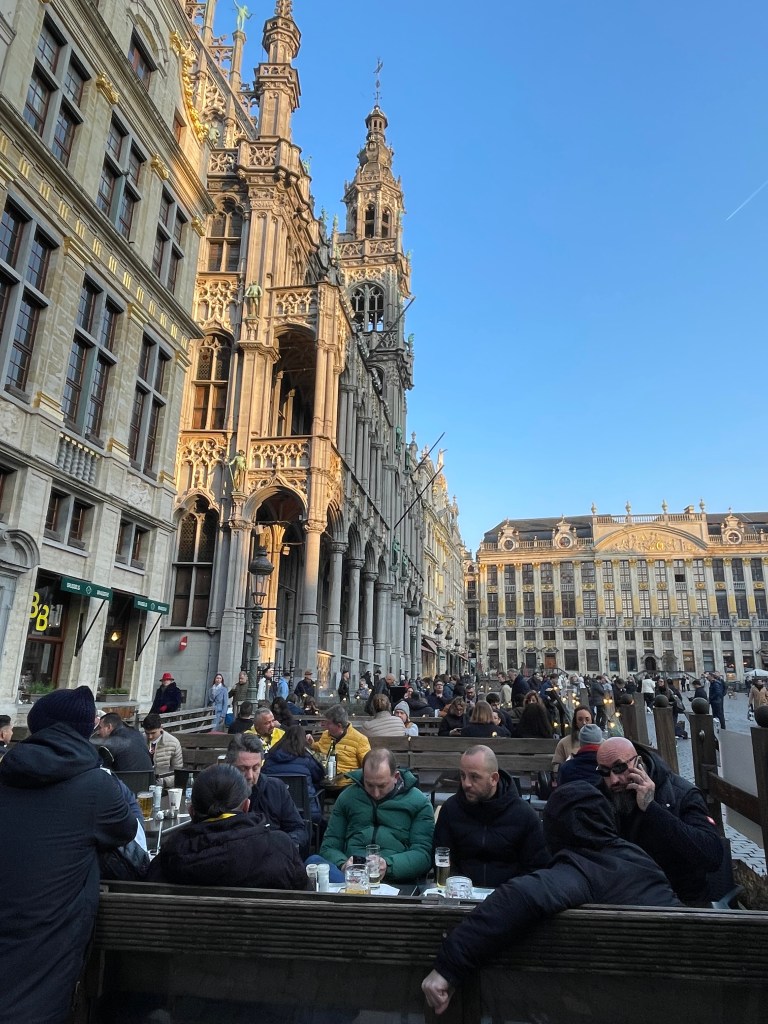
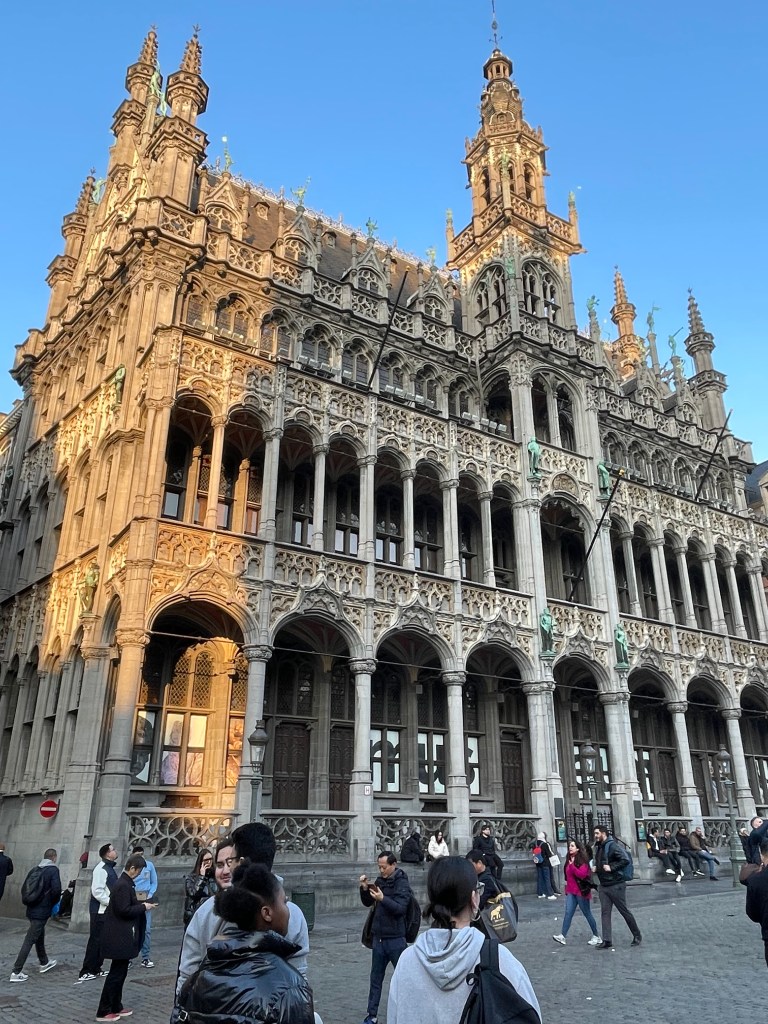
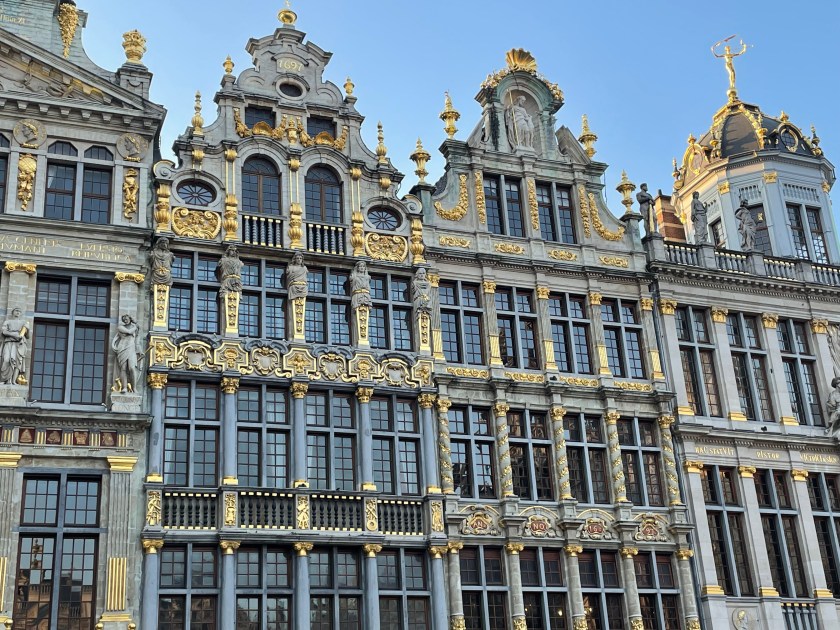
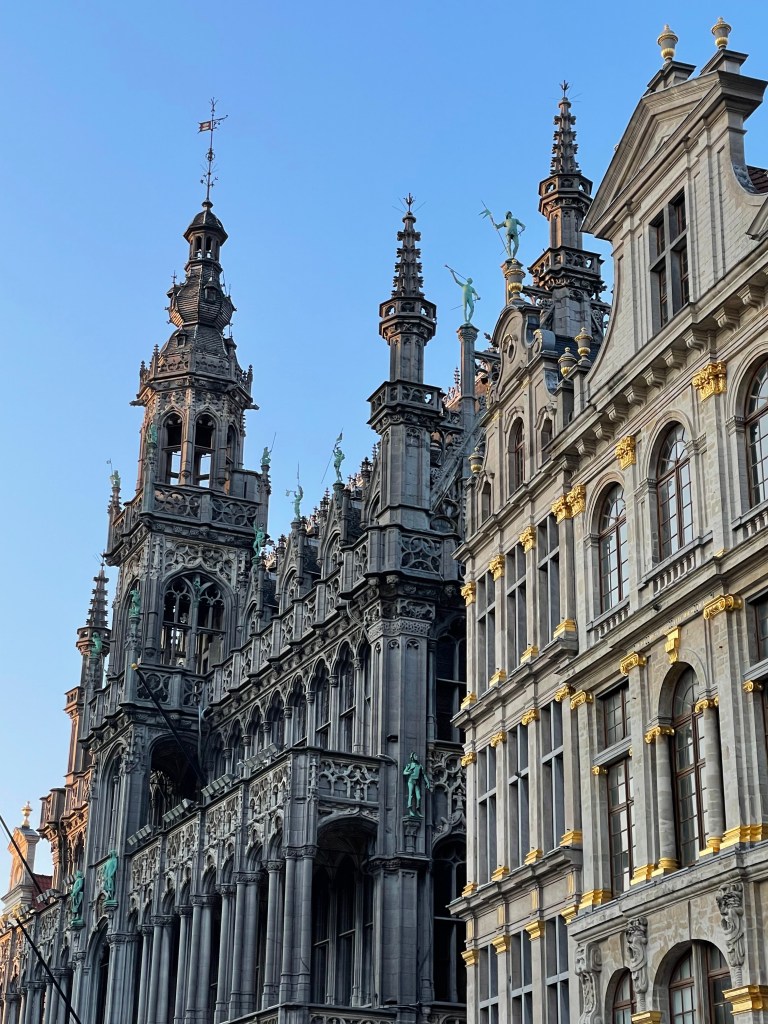
The city “owns” the facades of these buildings. In truth, there is not always useful space behind the facades. The windows are old, the heating is poor, and the tenants are few.
The buildings are famous for their gold decor.
























 Our Frankfurt Germany Mission