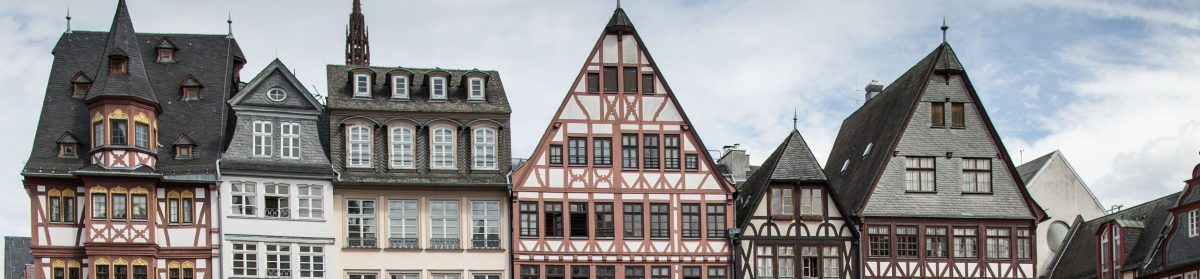
Freiberg, the Silver City

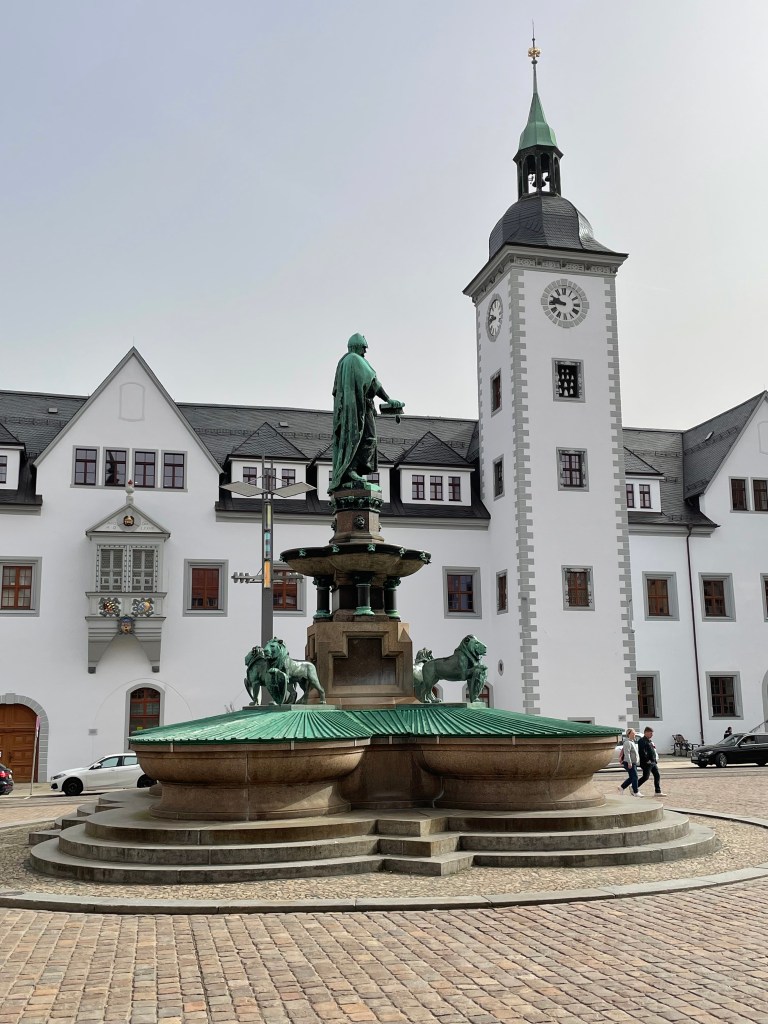
We spent a little time this Easter Saturday wandering around the old part of Freiberg–you can see the old part of the city on the map above.  The old town felt deserted, shops were closed, people were inside.  It was quiet.

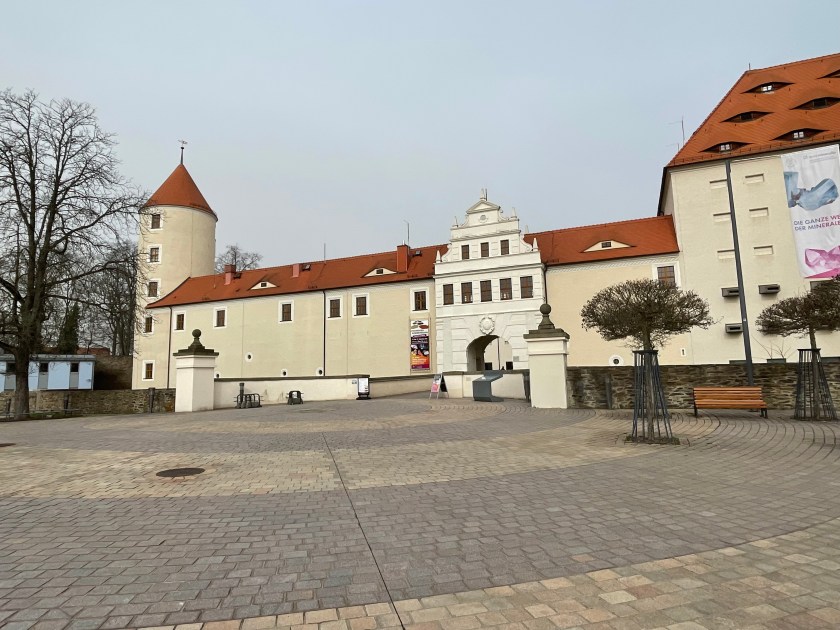
First we went to the Schloss Freudenstein, or palace.  Not a soul in sight.

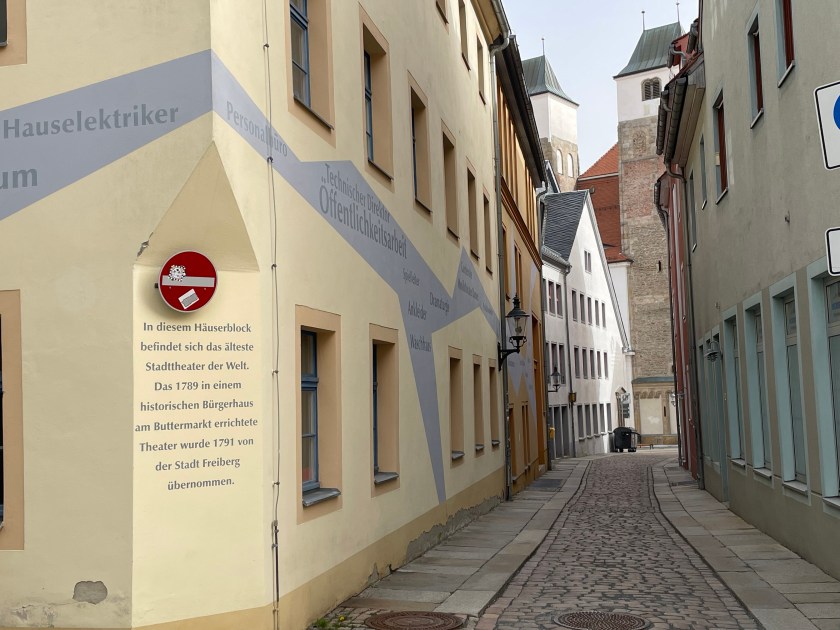
This is what most of the quiet streets looked like.  Most of the buildings were plain and simple.
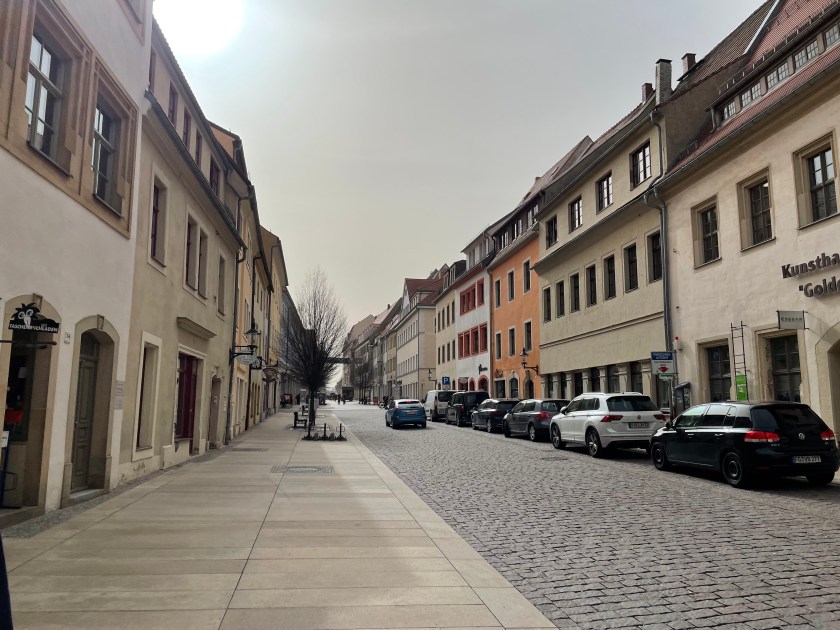
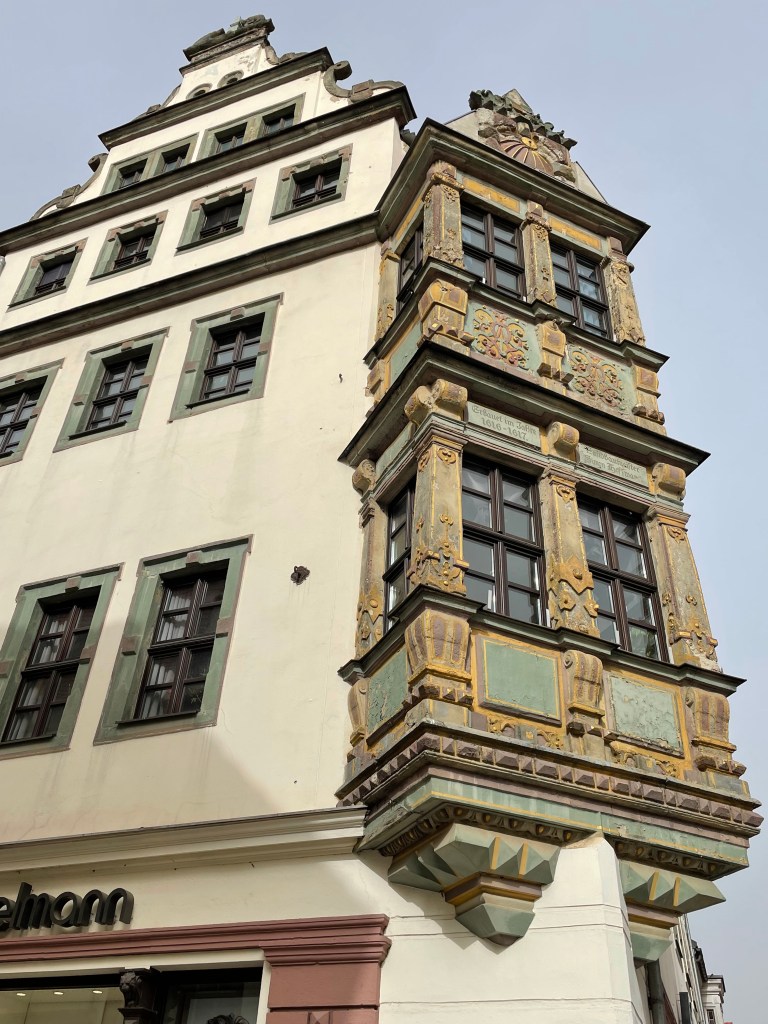
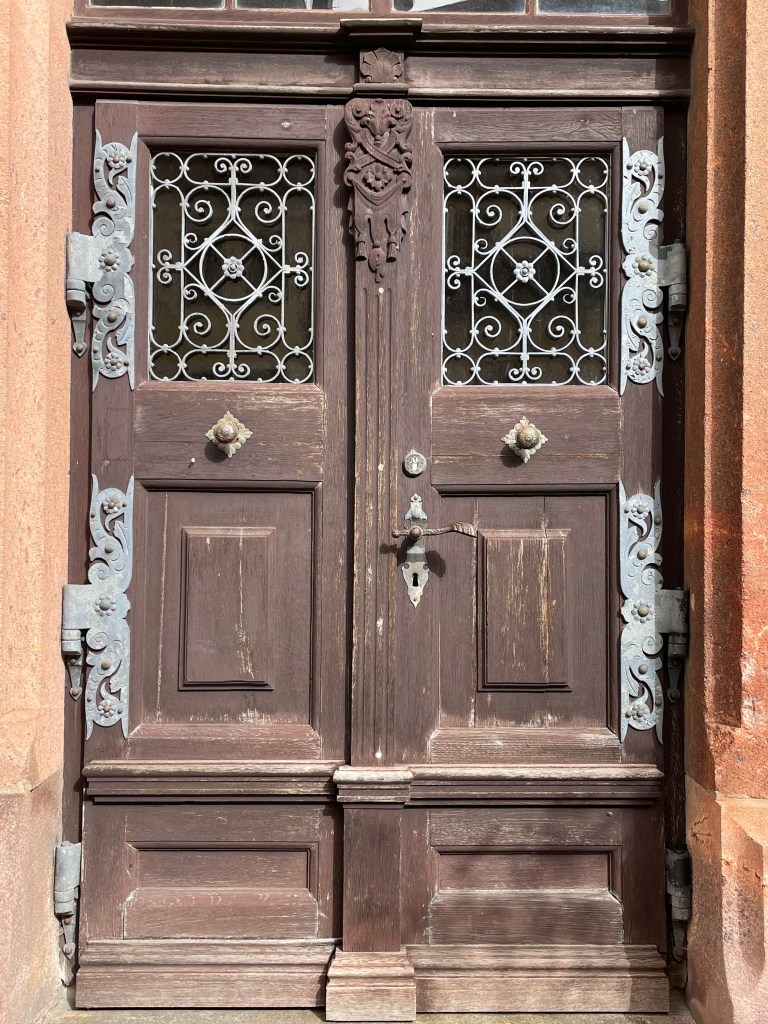
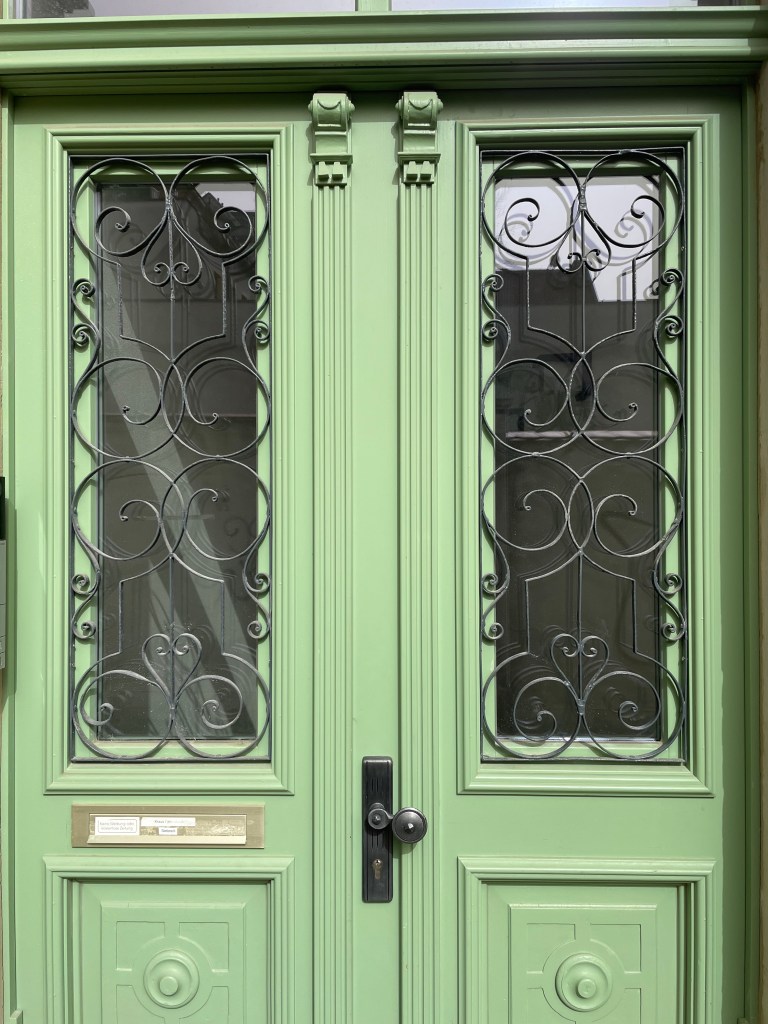
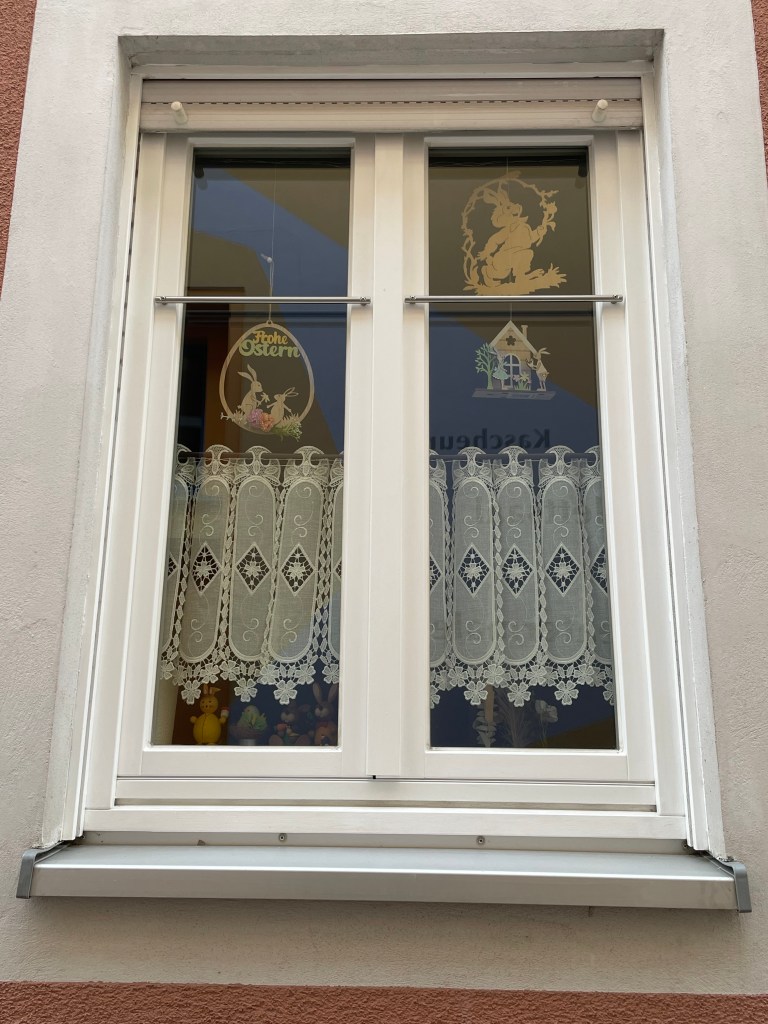
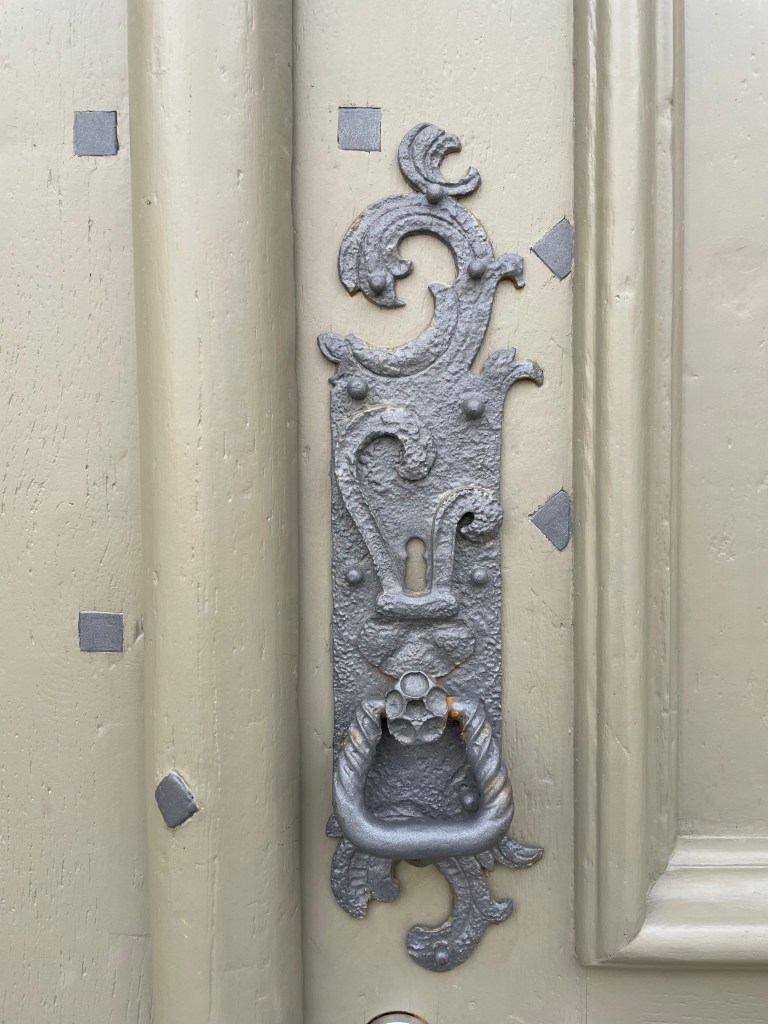
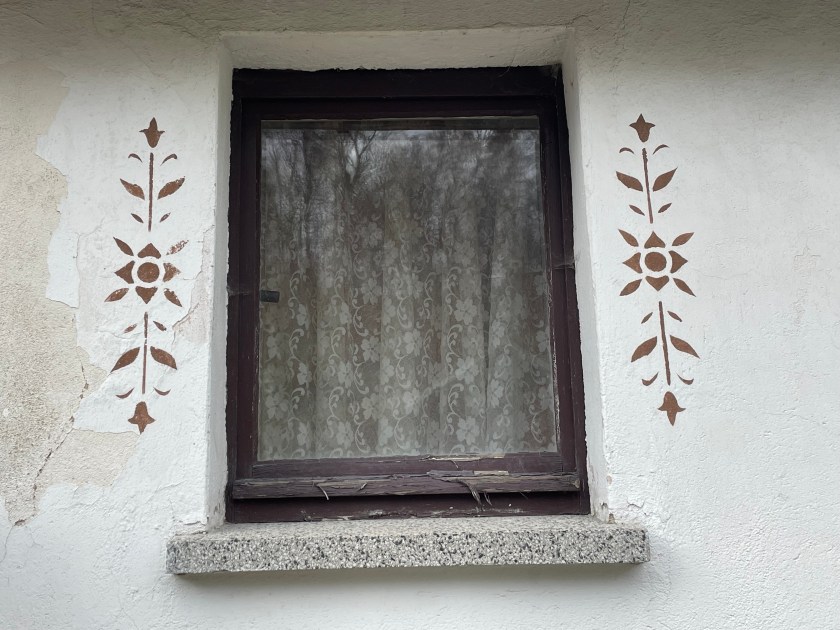
Every here or there I found a bit of decorative work, but it was not the norm.

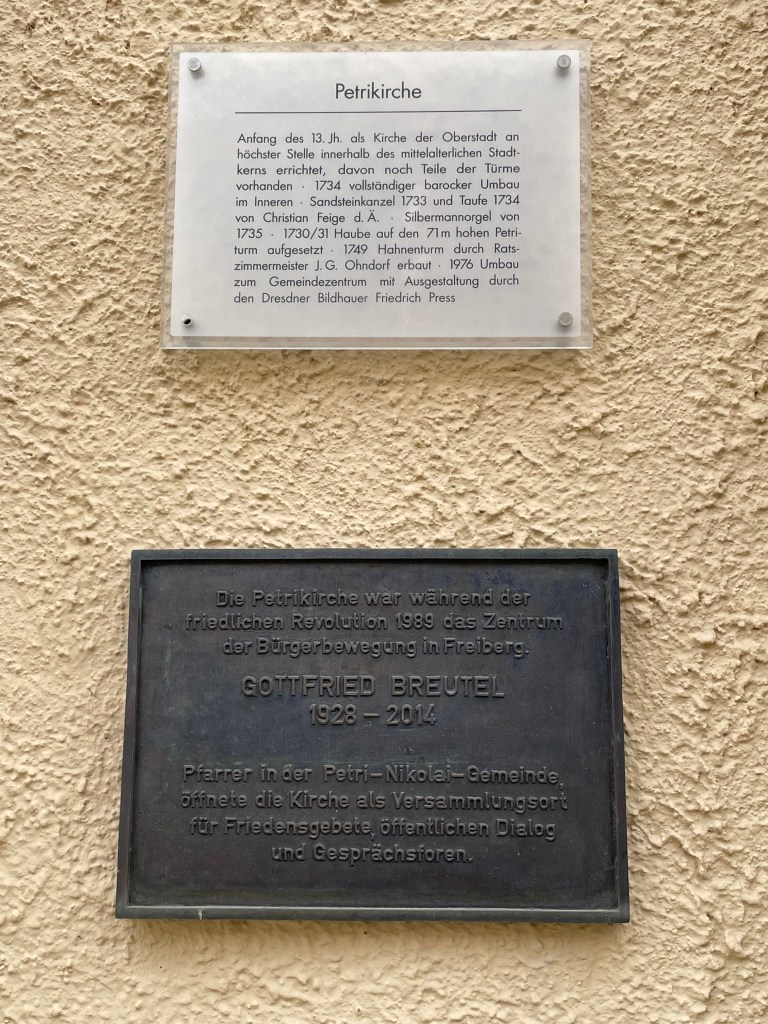
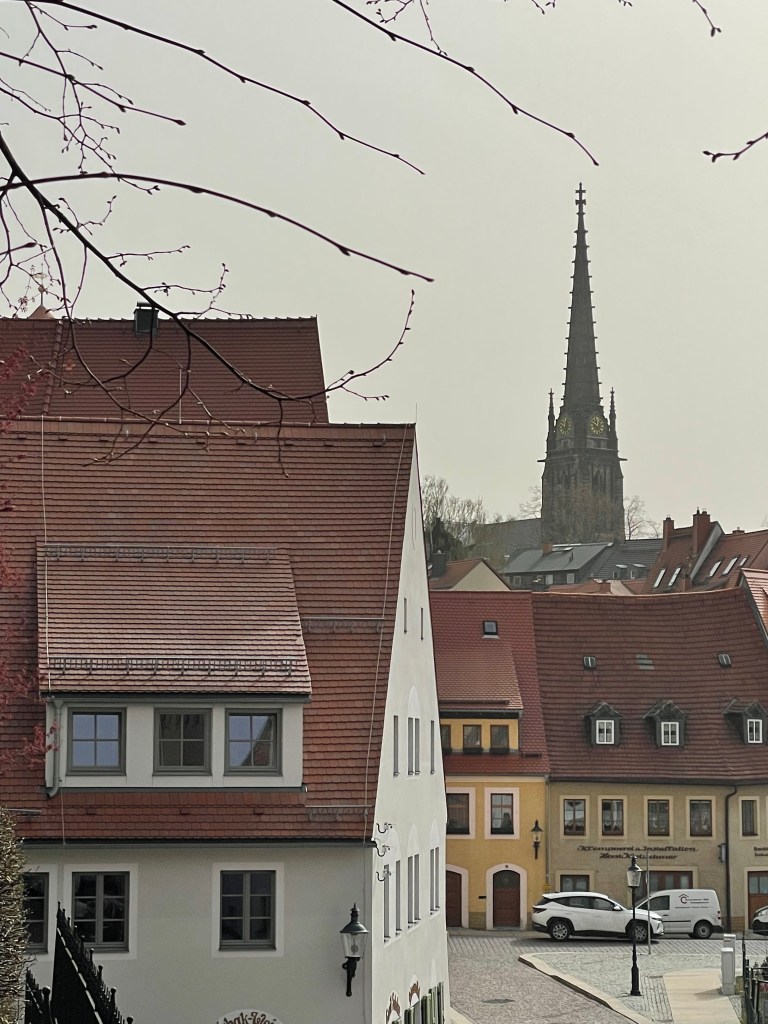
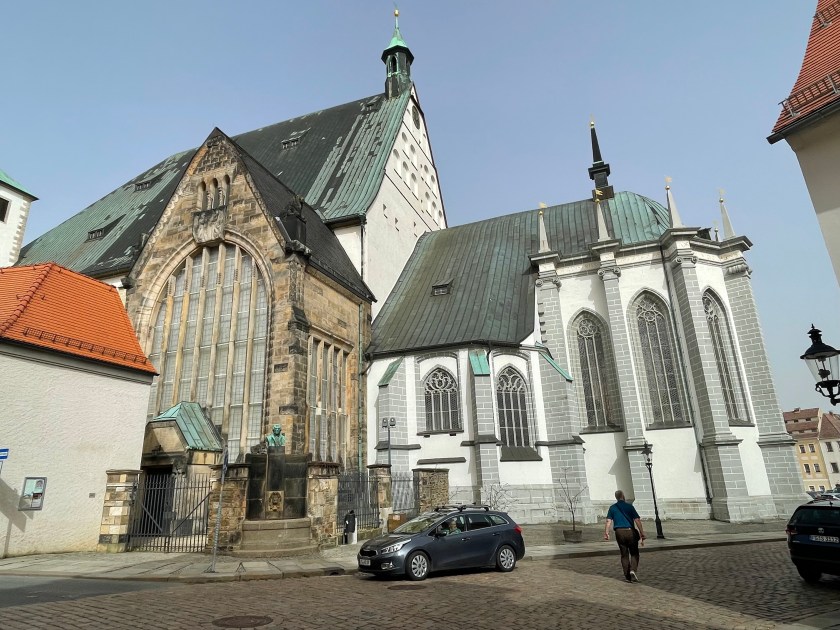
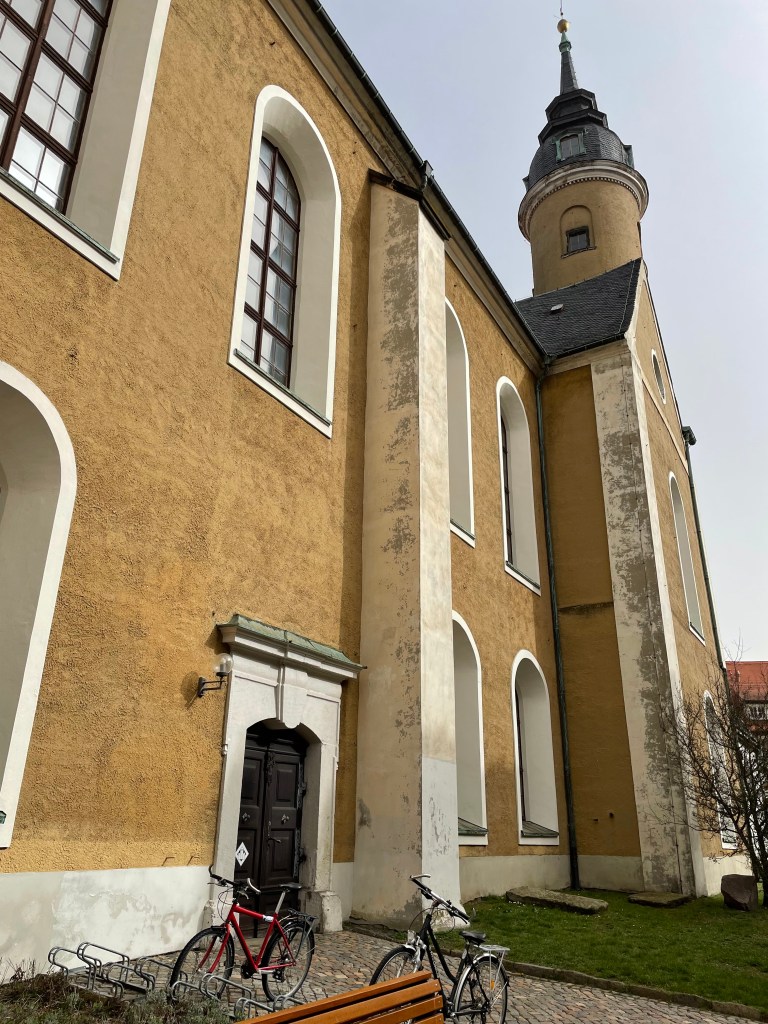
There were 3 large old churches in the old town.  All were closed.  Two of the 3 have been repurposed and now are event venues for concerts or the arts.
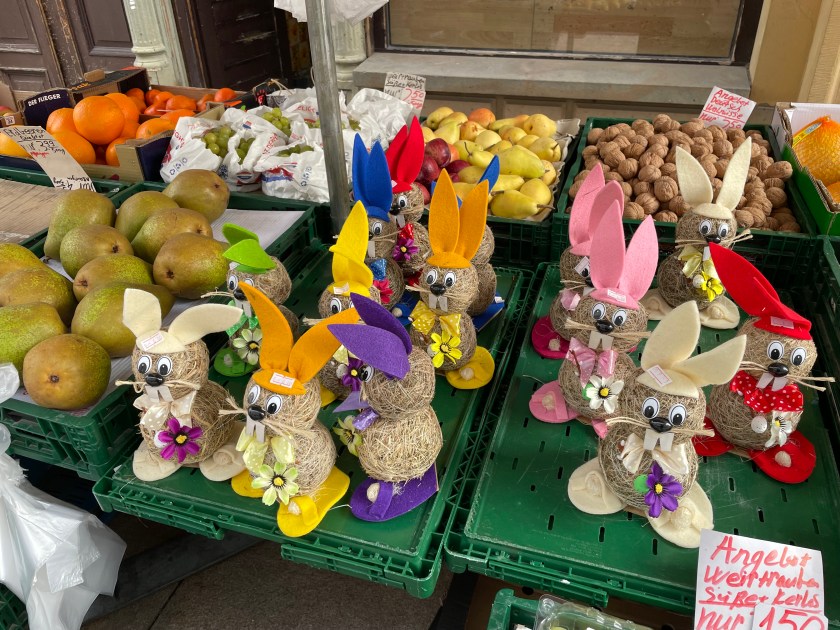
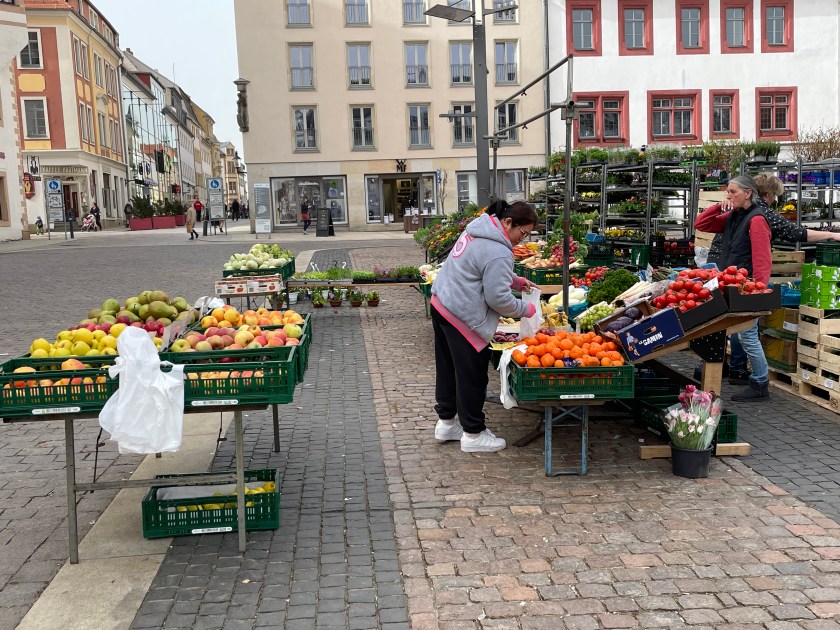
There was one lone produce vender in the square.
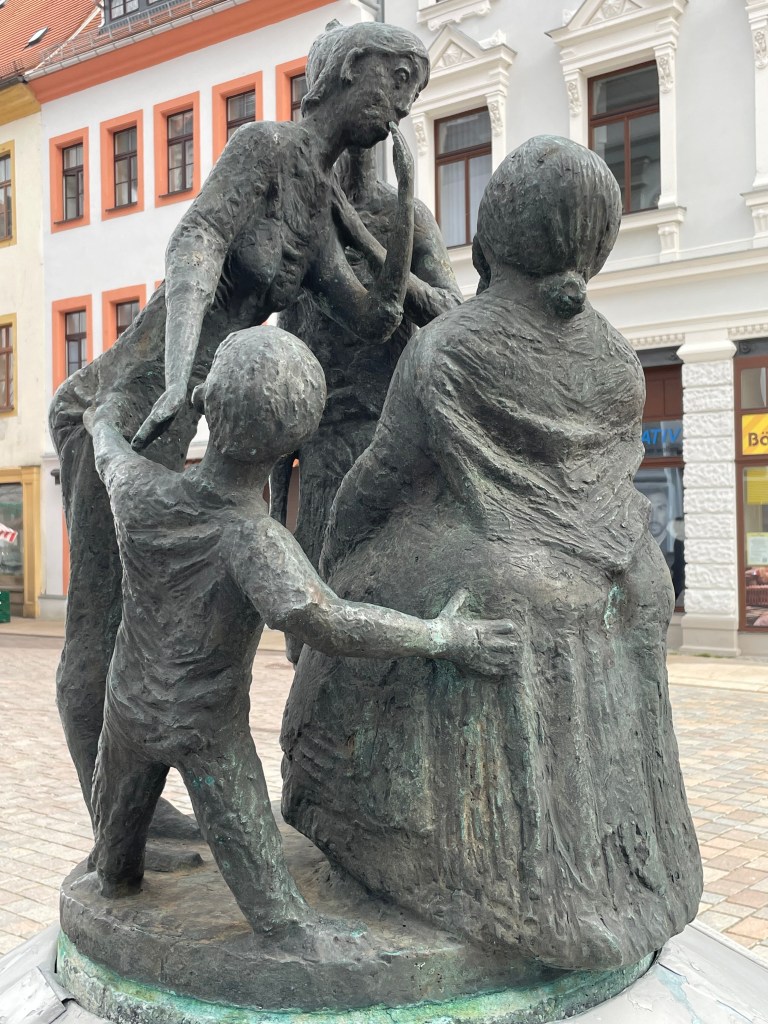
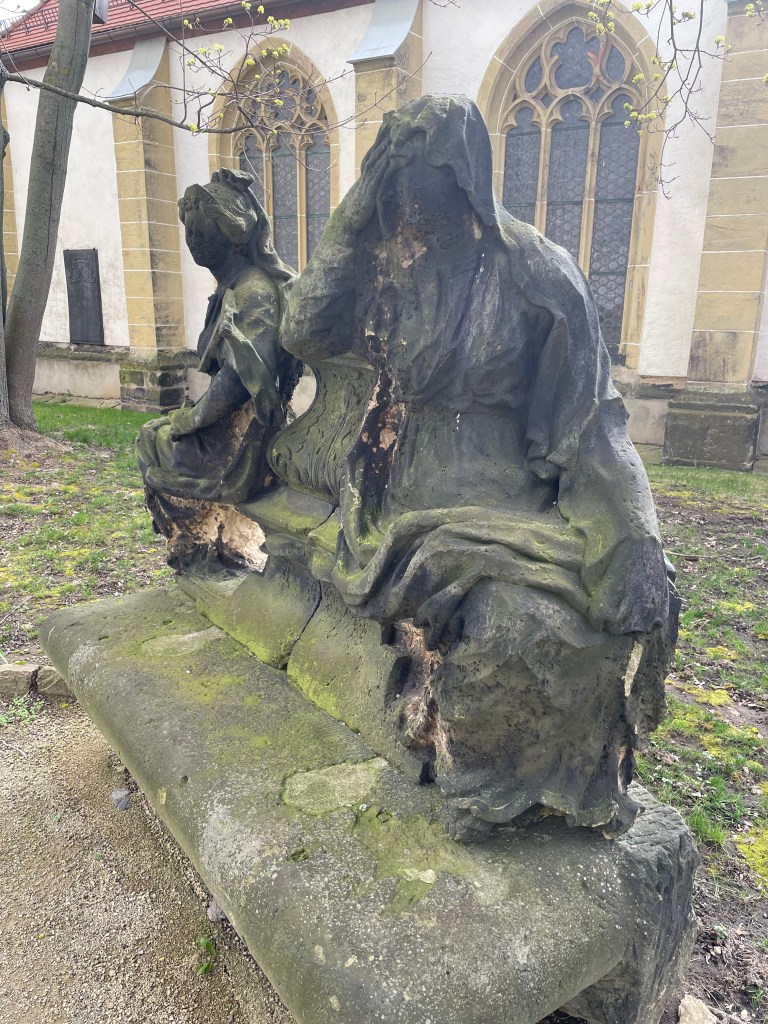
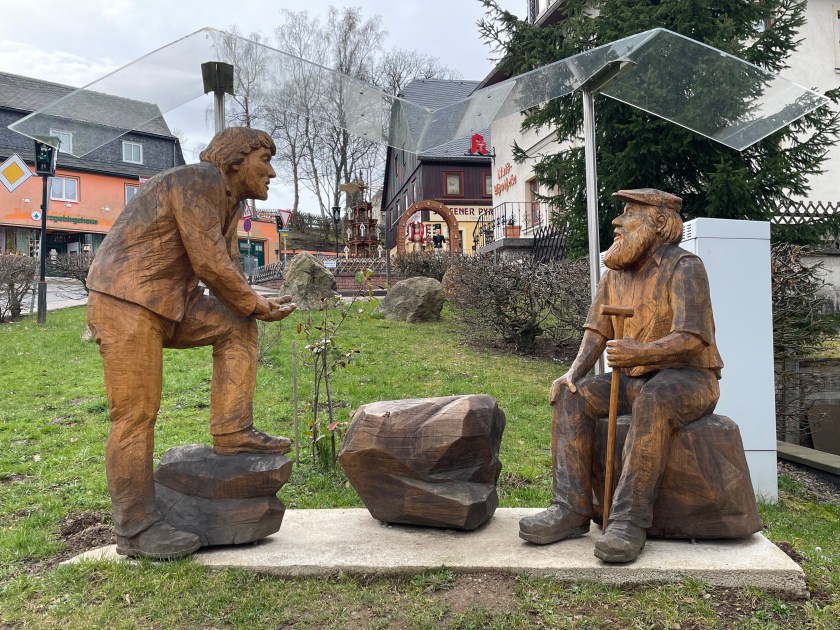
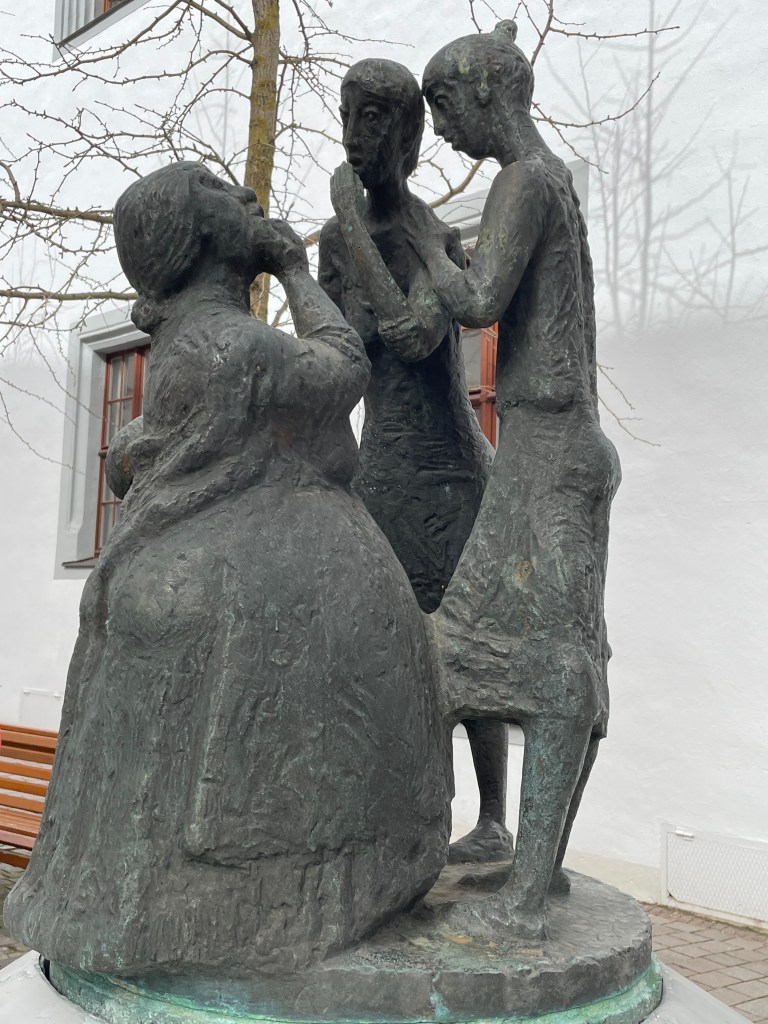
This art installation is called “The Gossips.”
We are at the beginning of white asparagus season (Spargel).  Yum.


Interesting pavers were like a crumb quilt.

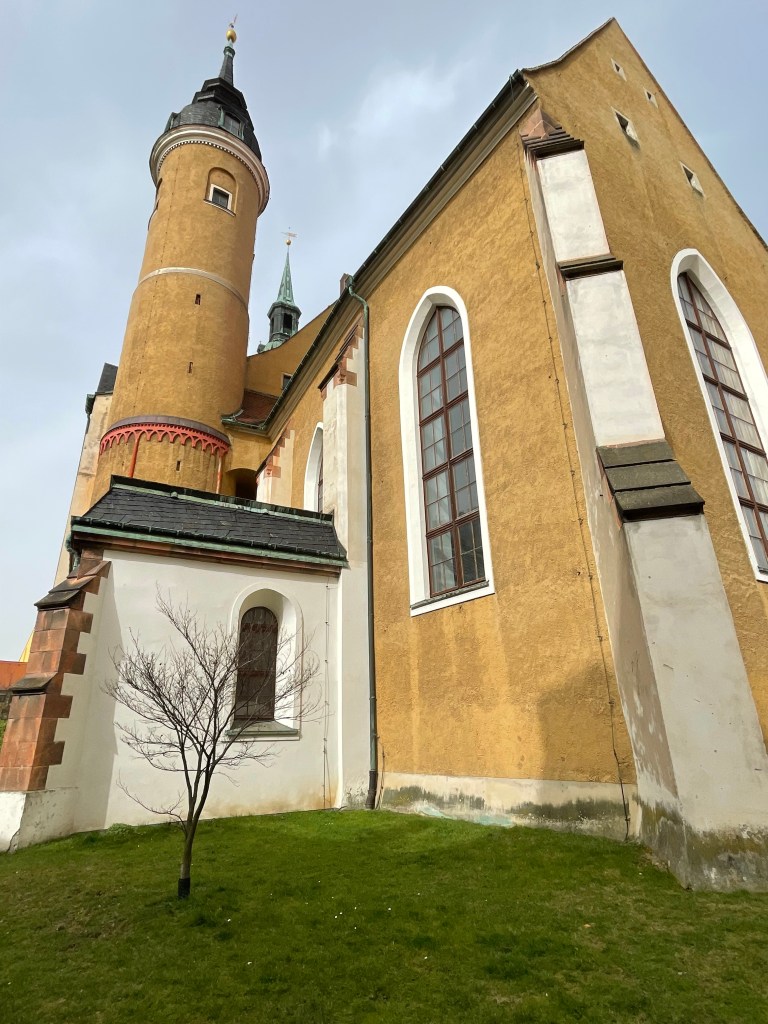
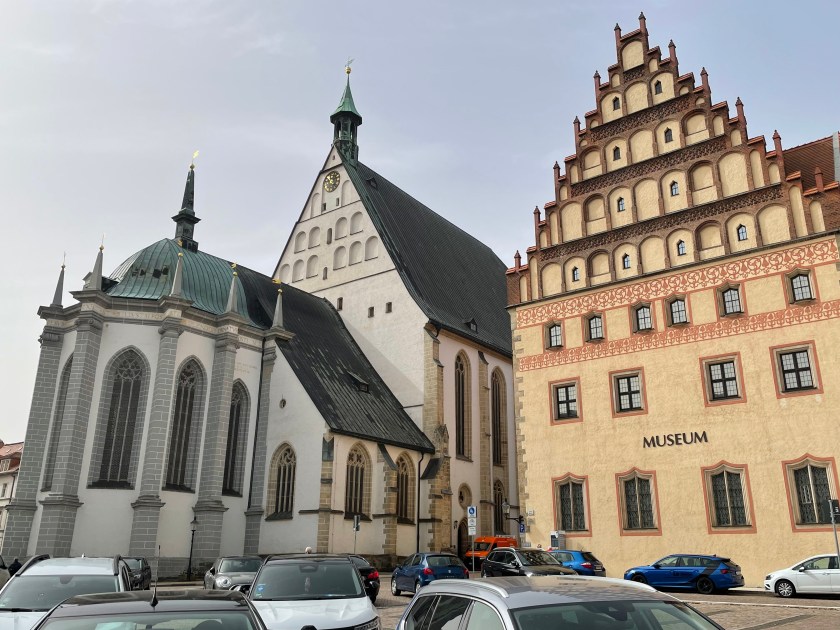
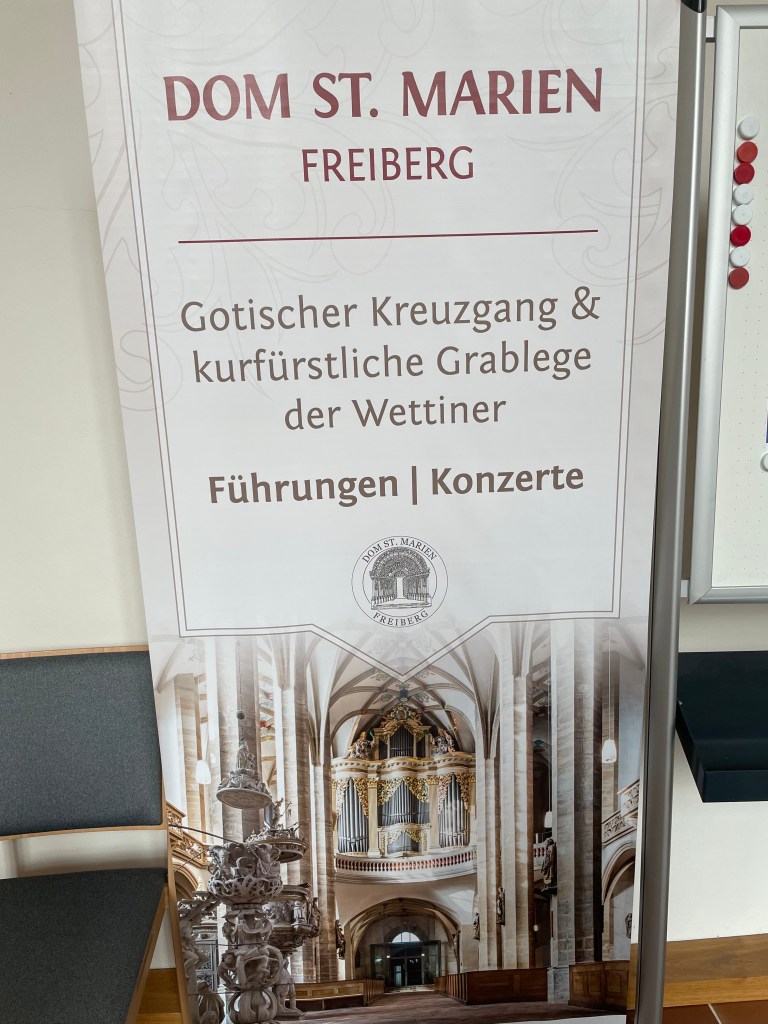
After about an hour of wandering, we found the 3rd old church.  It, too, was locked up, but at a side door we found some worker guys taking some sound equipment in, so we slipped in behind them.  The rest of the photos will show what we found there.

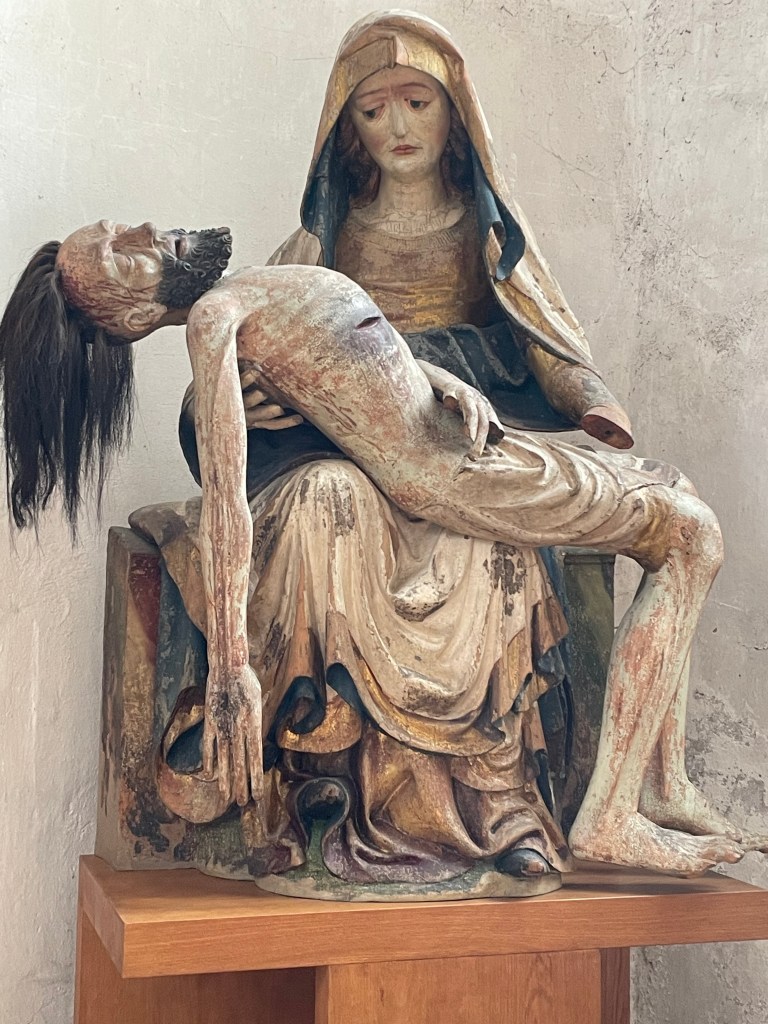
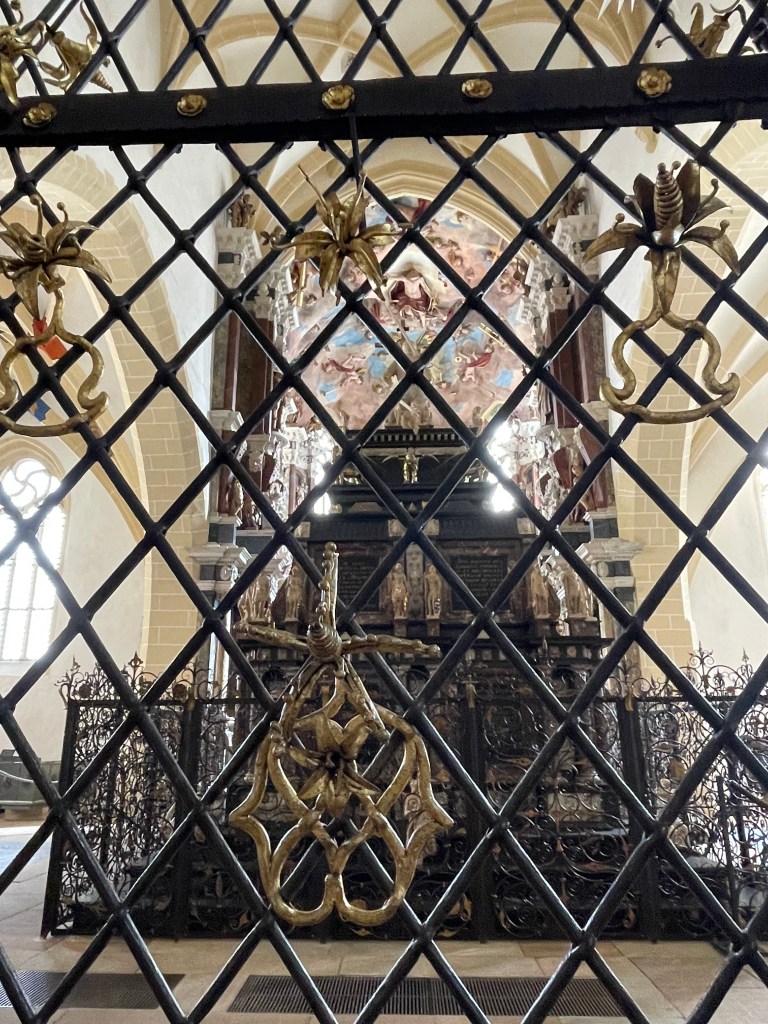
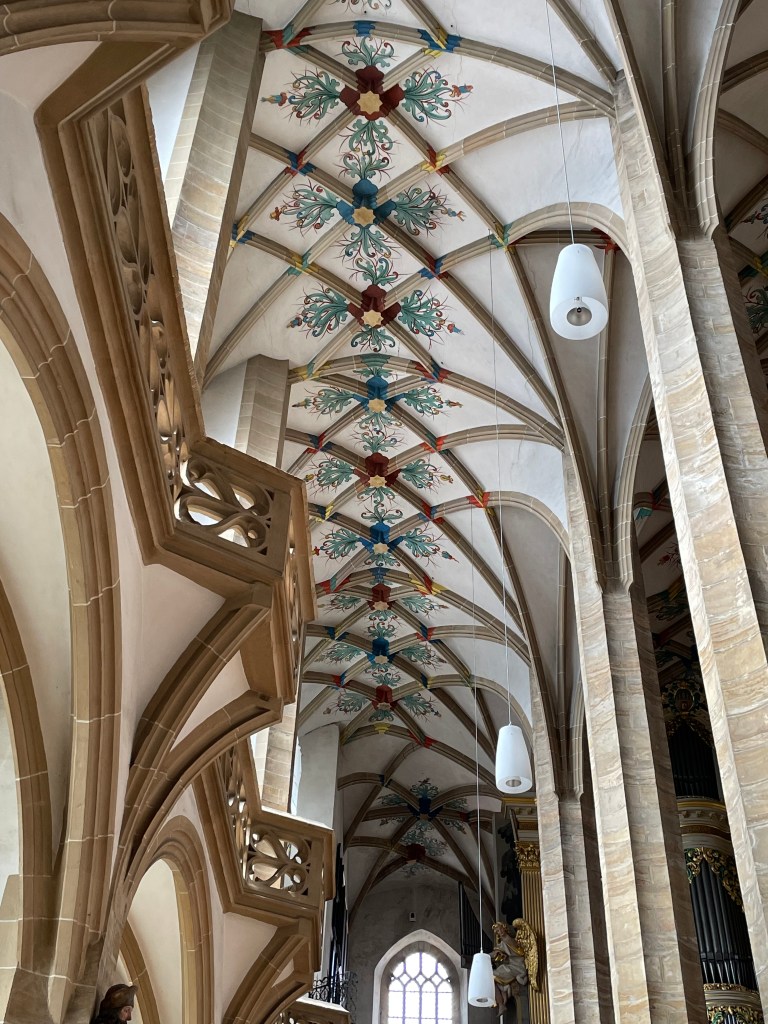
We were really lucky to meet a young man who was a tour guide for the cathedral.  He was there today helping the sound guys set up for a special Easter broadcast tomorrow.  (He was there because he had the keys.)  He offered to give us a tour of the cathedral and we were thrilled to spend about an hour there learning all about the history and the art and the structure itself.
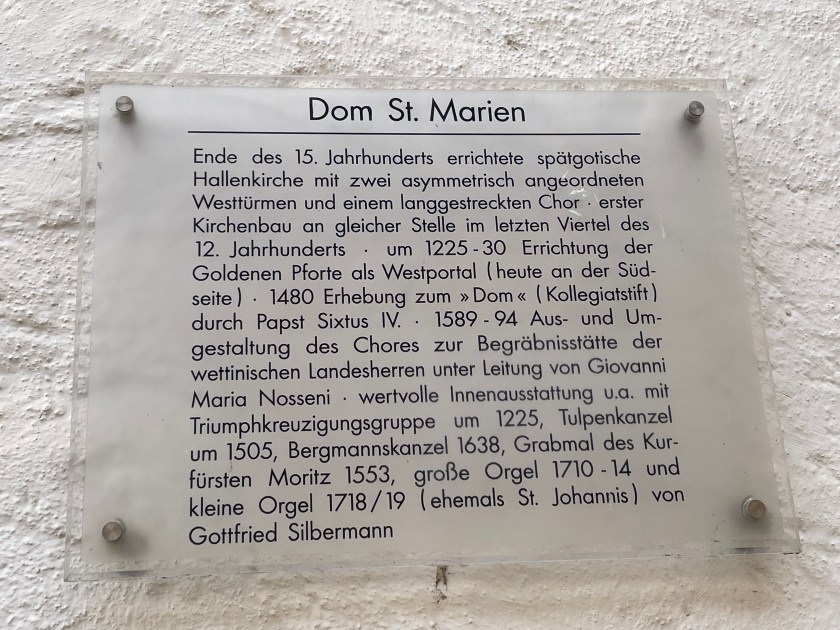
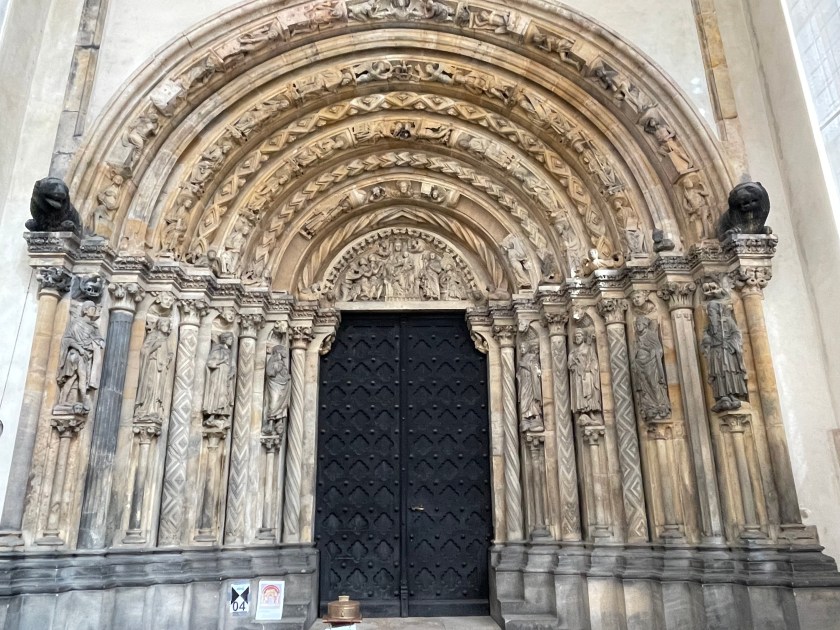
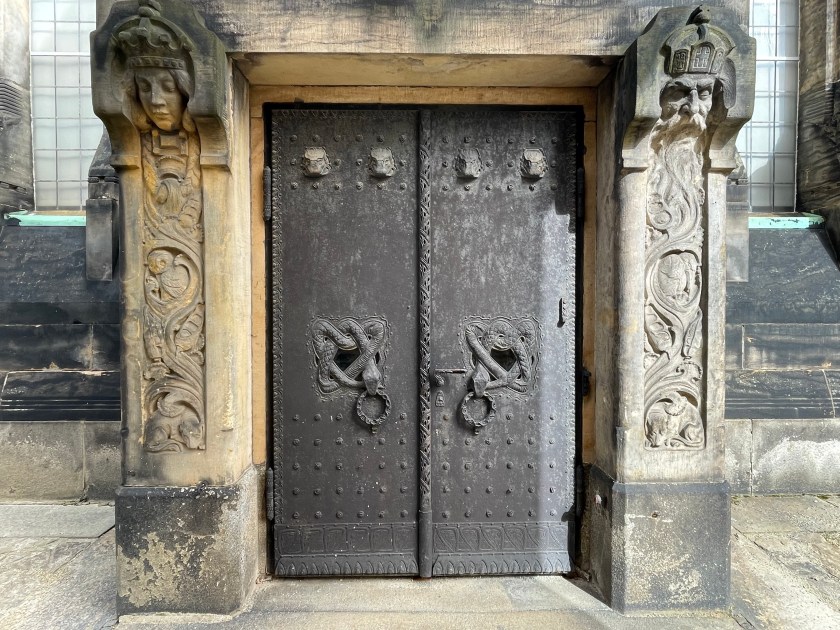
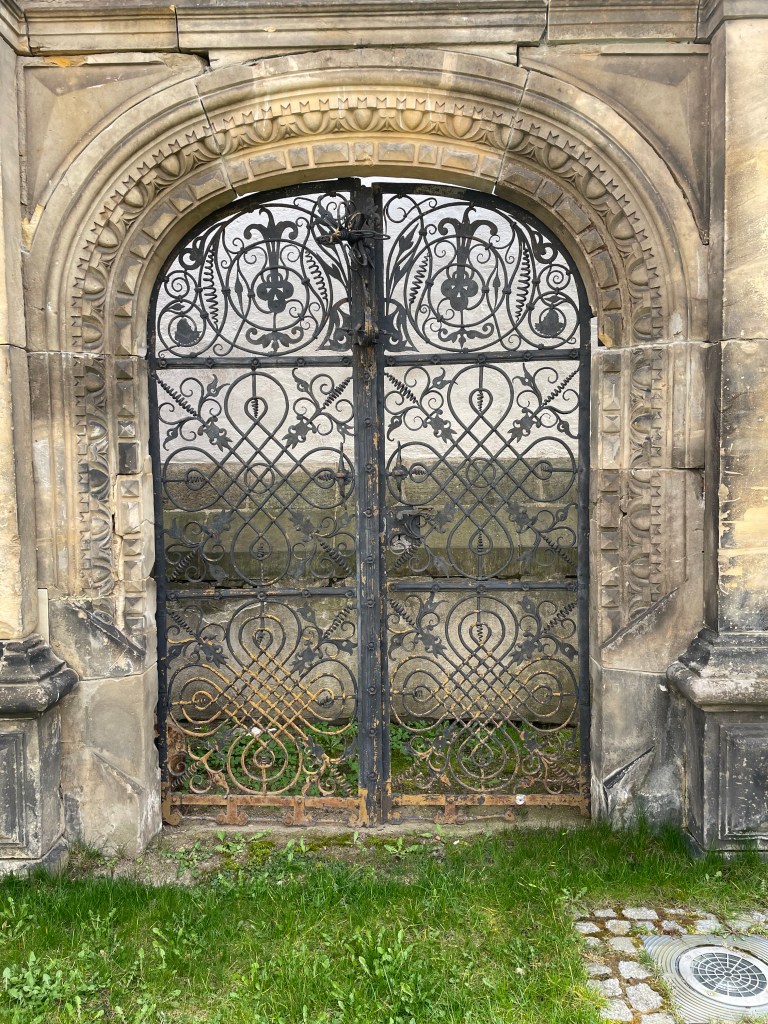
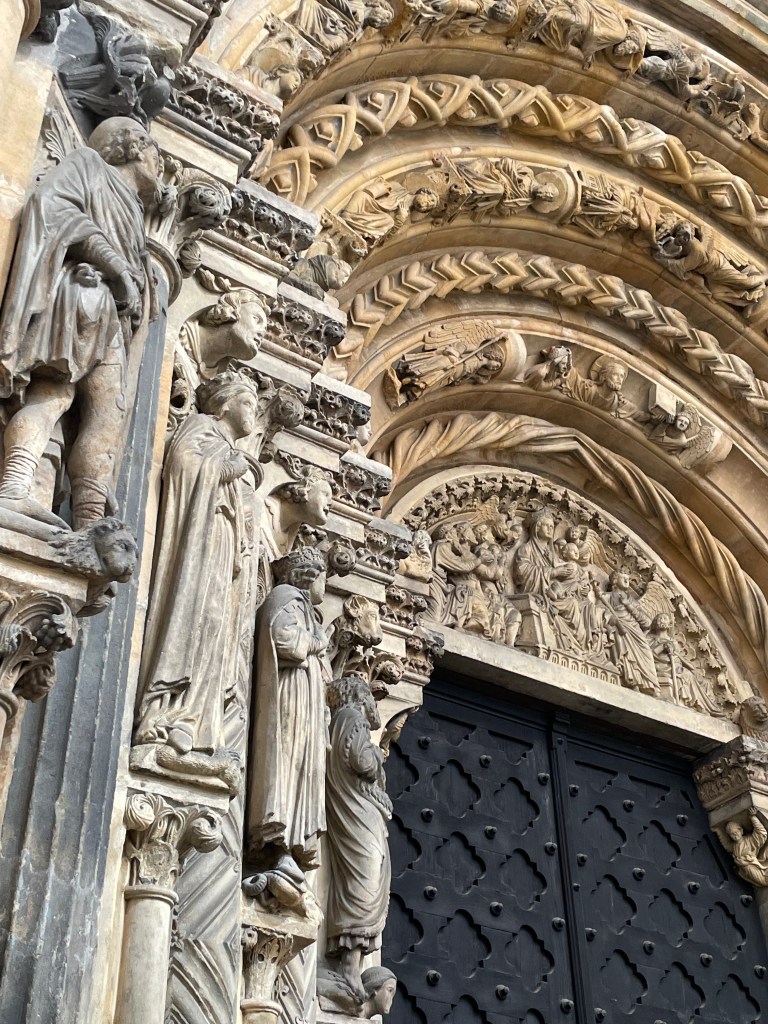
The Golden Gate, or portal above is the most famous feature of this church.  Here’s a bit about it:
Golden Gate 
The Golden Gate in Freiberg Cathedral is a late Romanesque , arched sandstone portal created in 1225 on the south side of the cathedral. The material is the Grillenburg Sandstone from the Tharandter Forest , which was deposited in a shallow Cretaceous sea . Sculptures and richly decorated columns alternate with the robes. The portal probably formed the western entrance to the Romanesque church, which was destroyed in the fire of 1484. In the new building that followed, the architecture and architectural sculpture of the portal were carefully dismantled and inserted into the new building in late Gothic forms as a new south entrance. Originally the portal had a richly colored version.
To protect the portal from environmental influences, a porch was built in 1902/03 by the Dresden architects Schilling & Graebner , which combined the Gothic design language with the then modern Art Nouveau .
The Freiberg Golden Gate is the first complete German statue portal. Georg Dehio judged: “… rare in splendor, never surpassed in inner nobility.” The tympanum shows the enthroned Mother of God with the adoring Magi, an angel and Joseph; On the vestments there are statues of Old Testament forerunners, in the archivolts in four zones there are figures depicting redemption and the Last Judgment.
The Golden Gate is one of the major works of German art in the 13th century. Copies of the Golden Gate exist in the Adolphus Busch Hall at Harvard University in Cambridge (Massachusetts, USA), in the Italian Court of the Pushkin Museum in Moscow (Russia) and in the Szépművészeti Múzeum ( Museum of Fine Arts Arts ) in Budapest (Hungary). The entire picture program was probably conveyed by the Cistercians of Altzella .

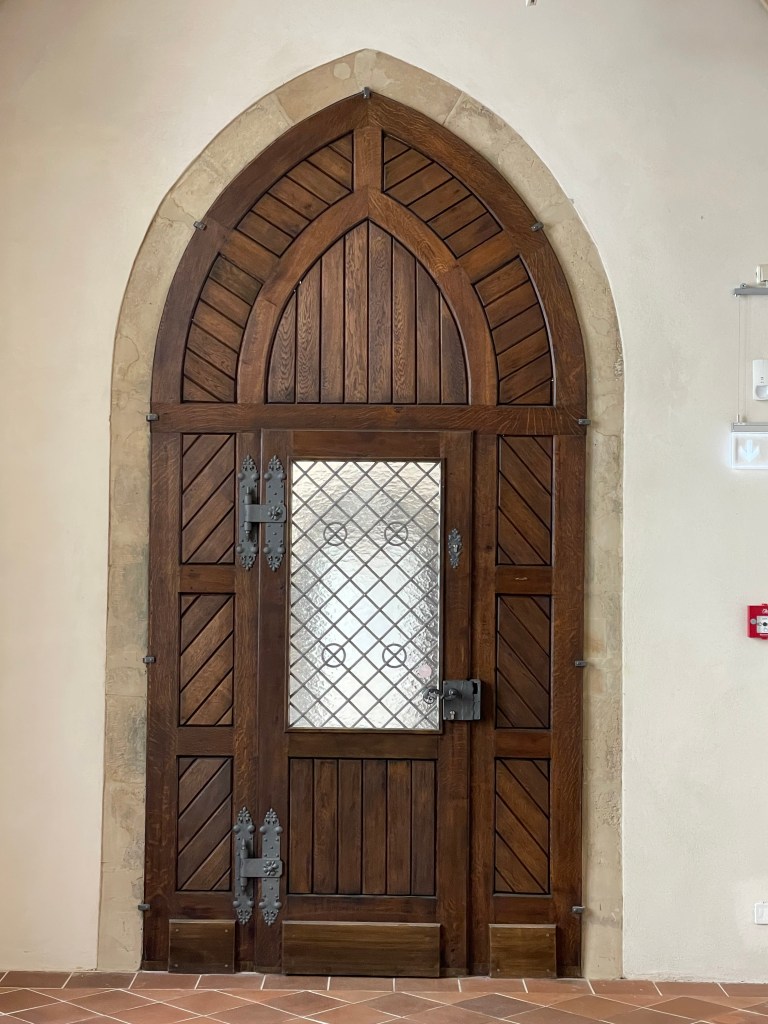
Then our kind and enthusiastic guide took us around the back where he unlocked the door to another small chapel.  He told us this is the place where worship services are held now, because the large Dom is too hard to heat.  He said if they turn the heat on on Wednesday, by Sunday it will only be 3 degrees warmer, and that’s too cold for people to sit through in  the winter months.

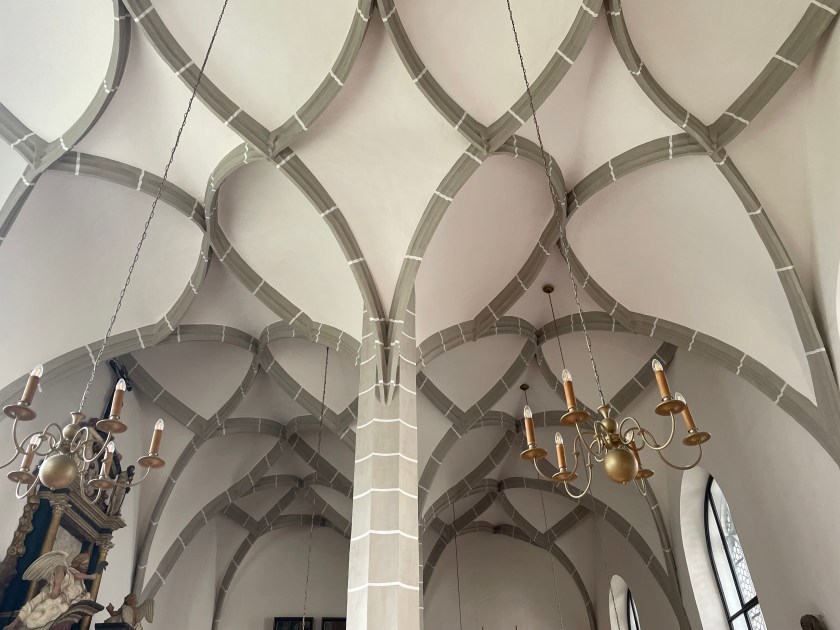
This small chapel is easier to heat and keep comfortable.

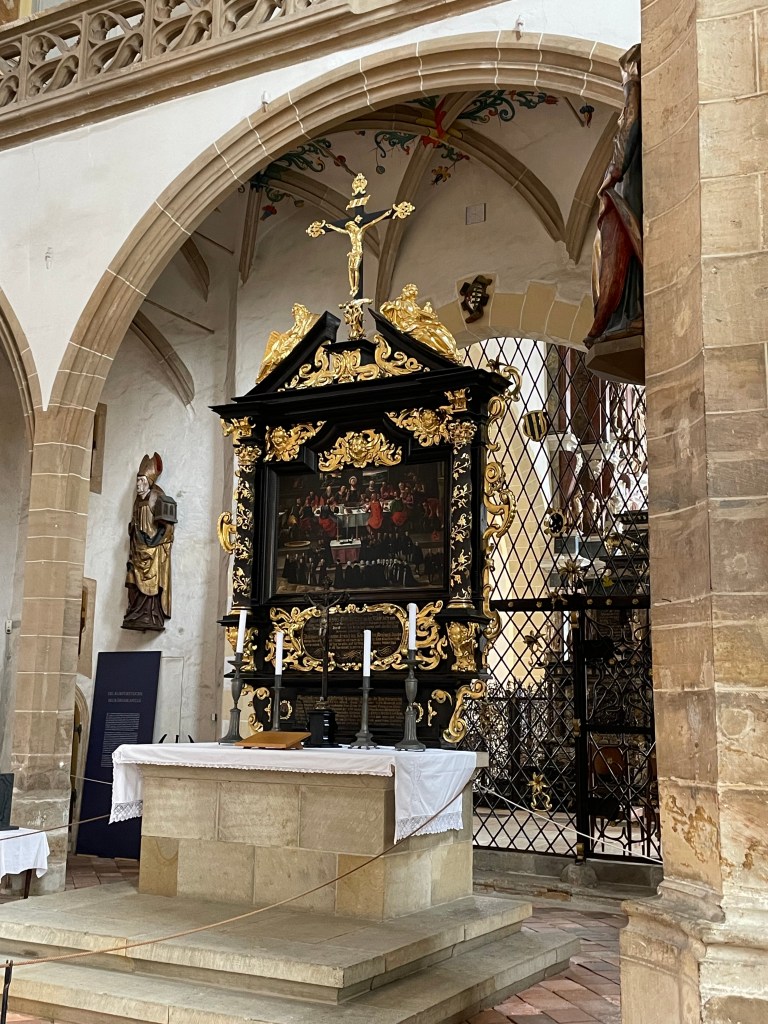
This smaller chapel is also used for concerts and events.
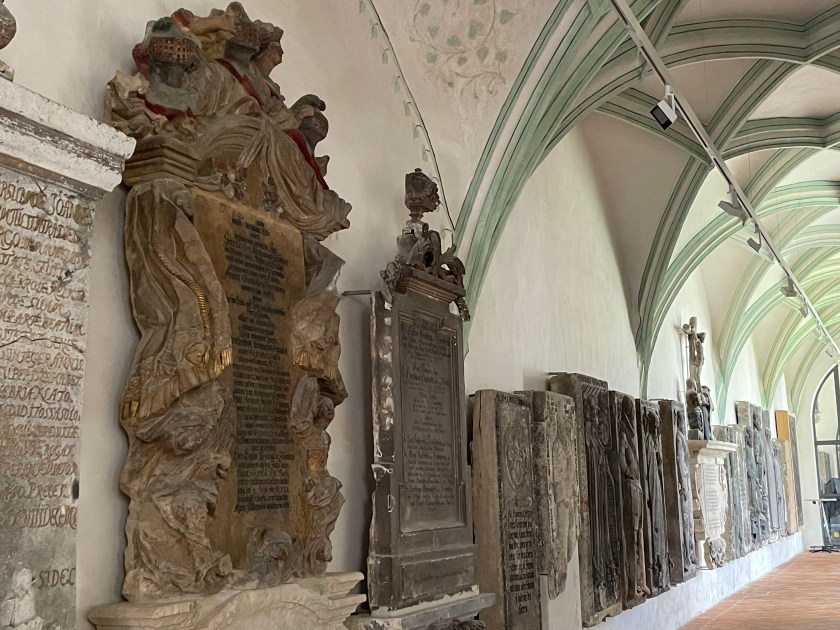
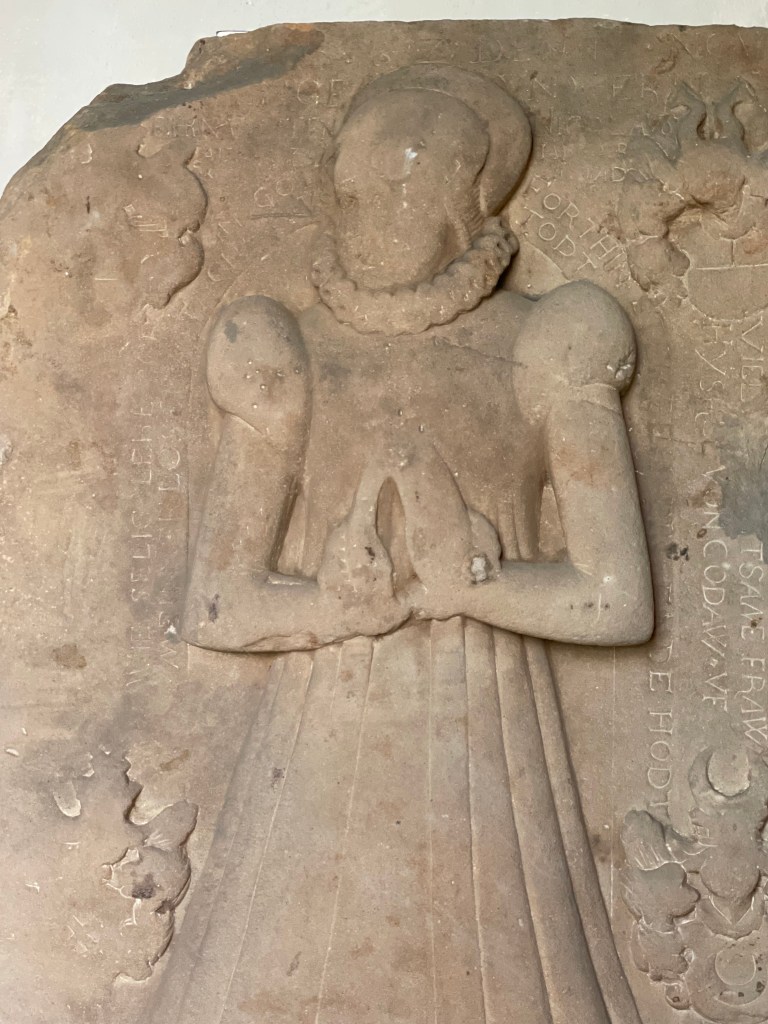
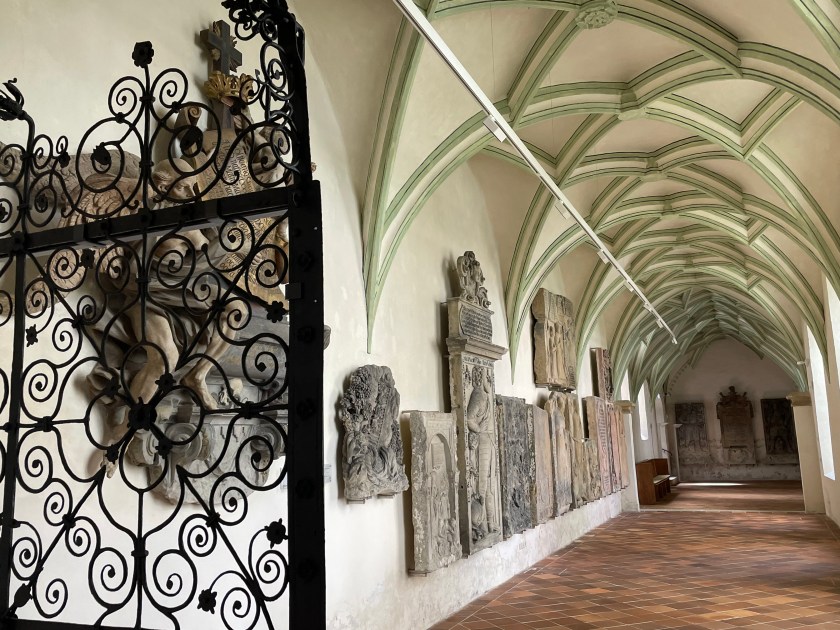
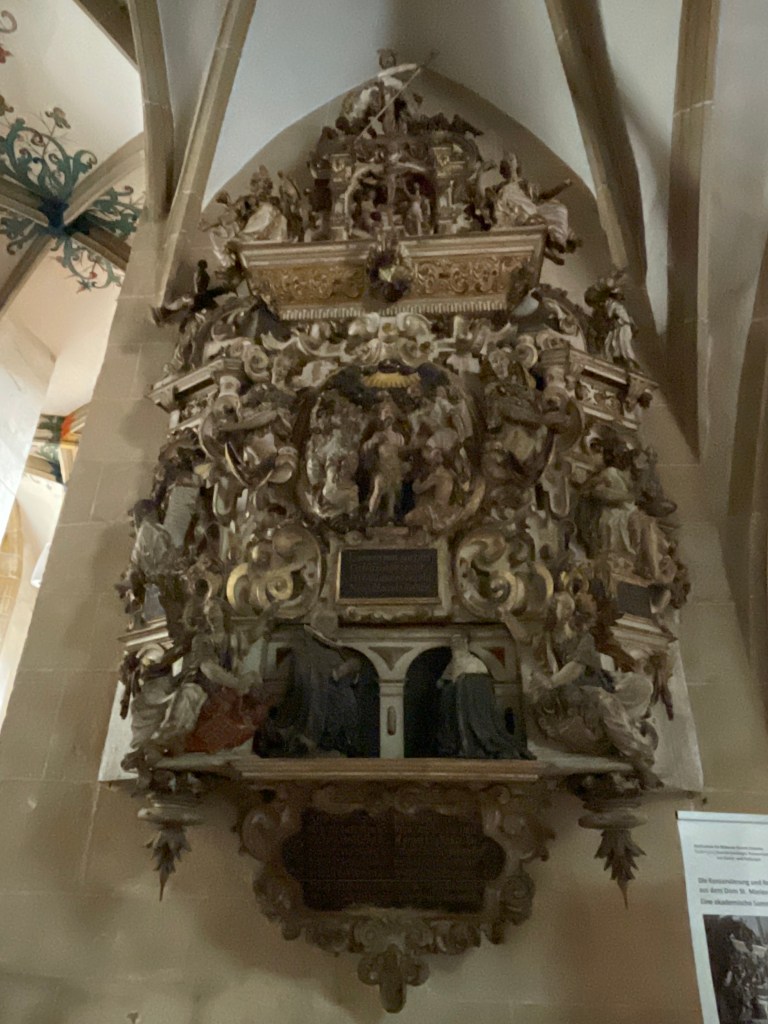
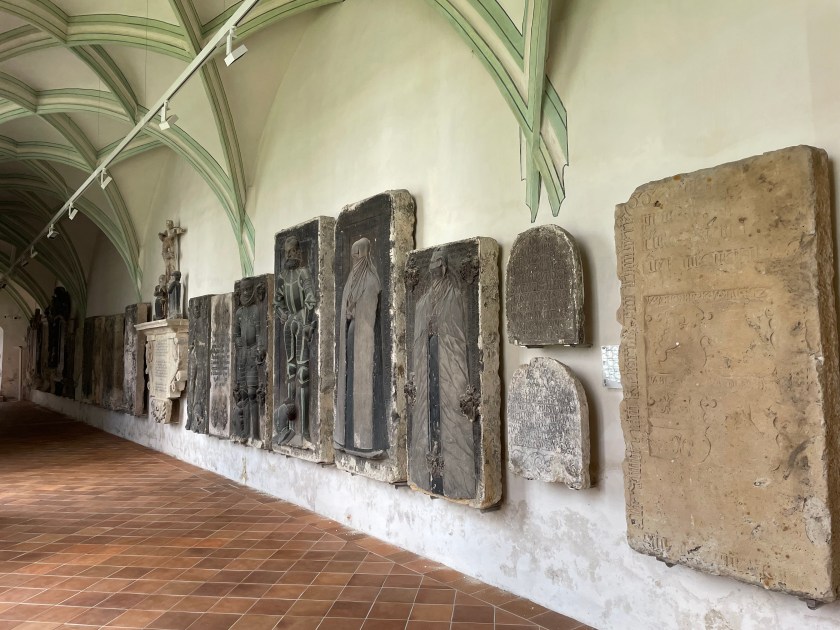
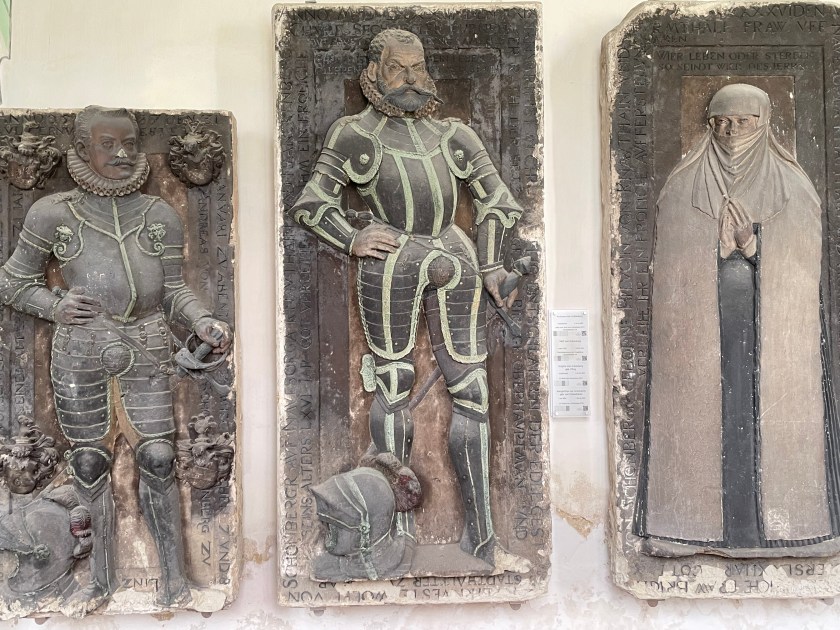
There was a special courtyard/ hall built to display the old tombstones and very old historic pieces.
This baptismal font dates back to 1175.

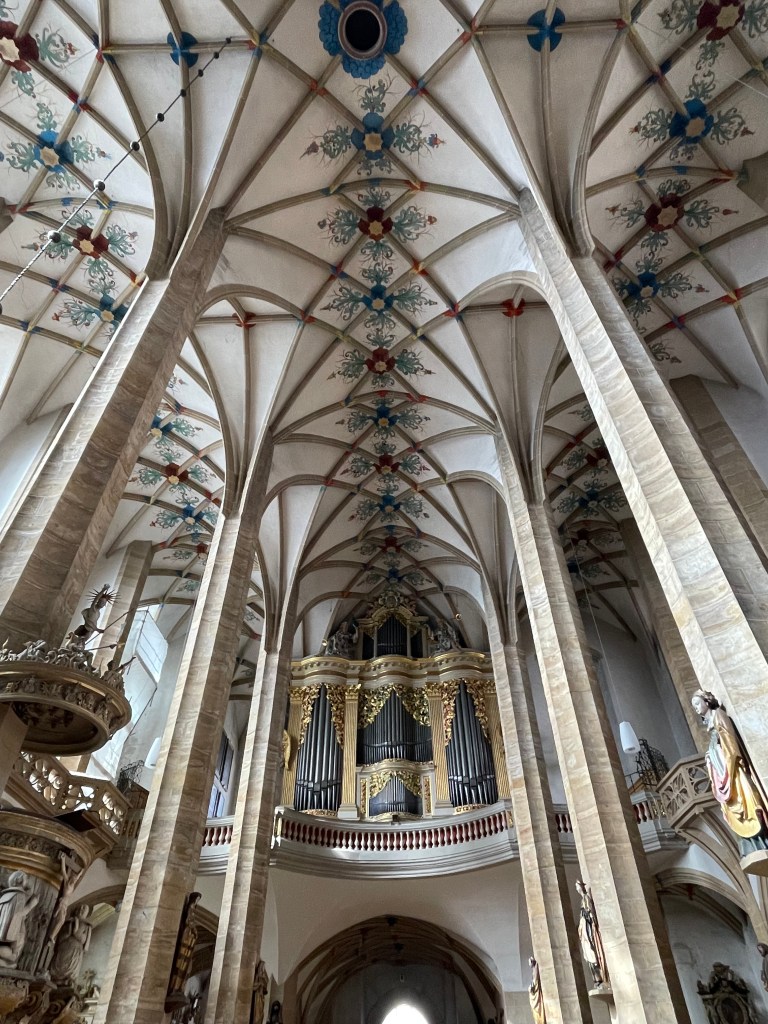
Then we came back into the main part of the cathedral.
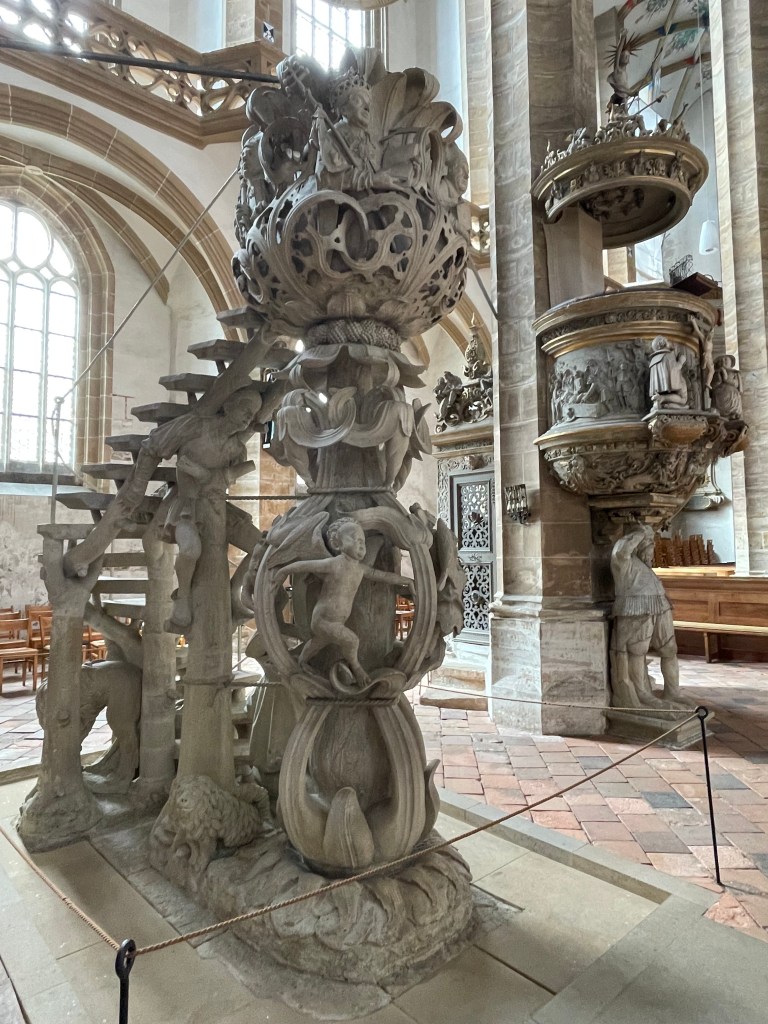
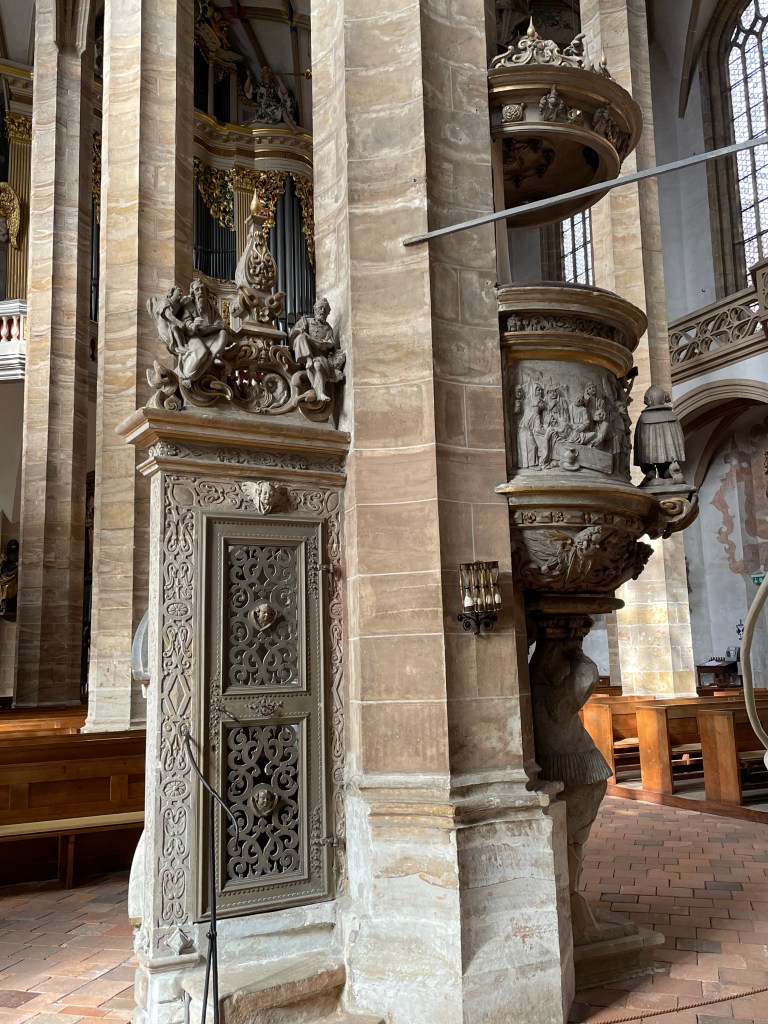
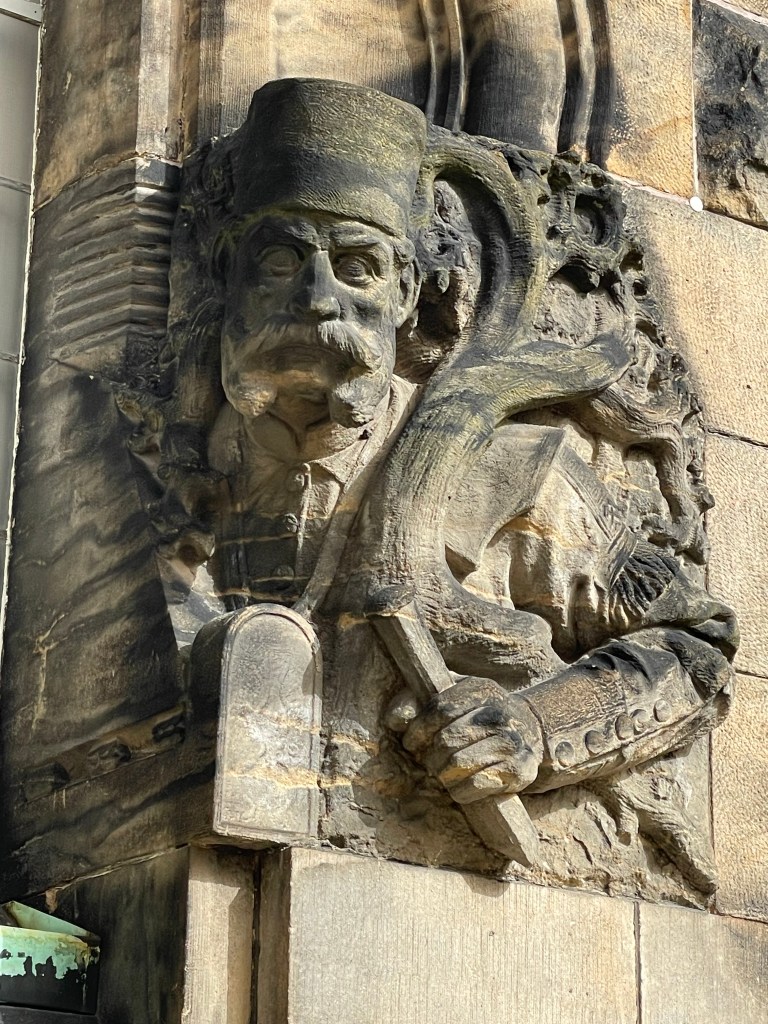
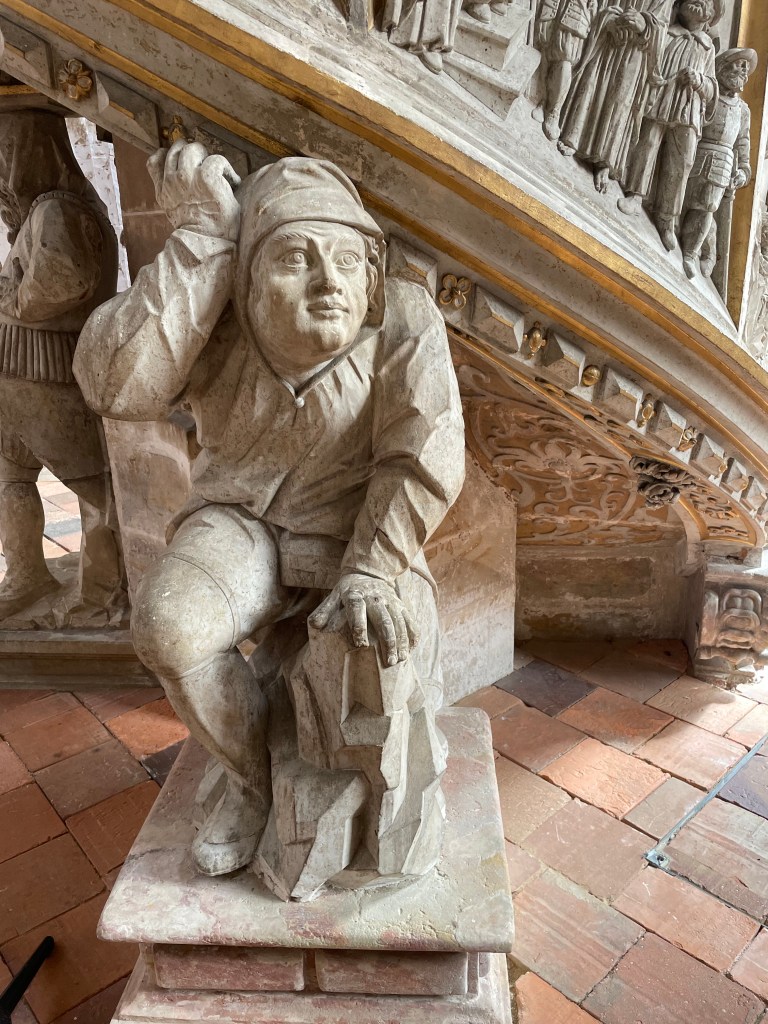
These miners and workers holding up the pulpit are famous.
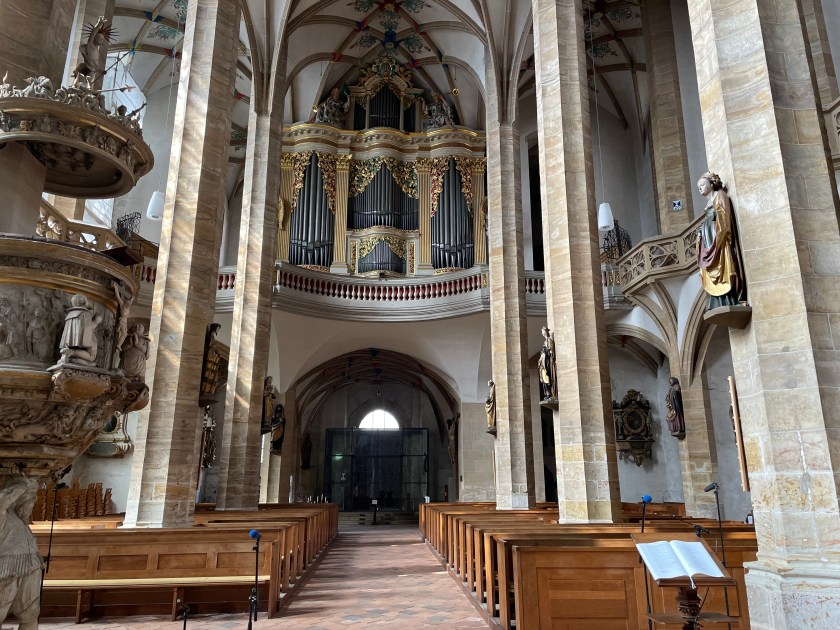
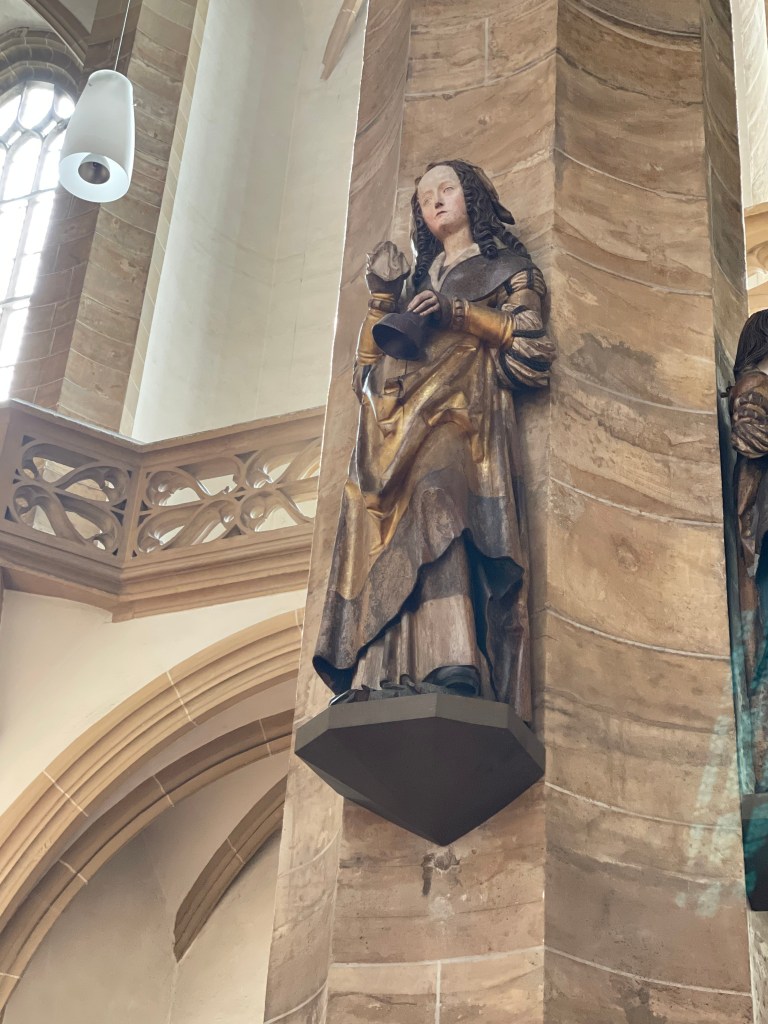
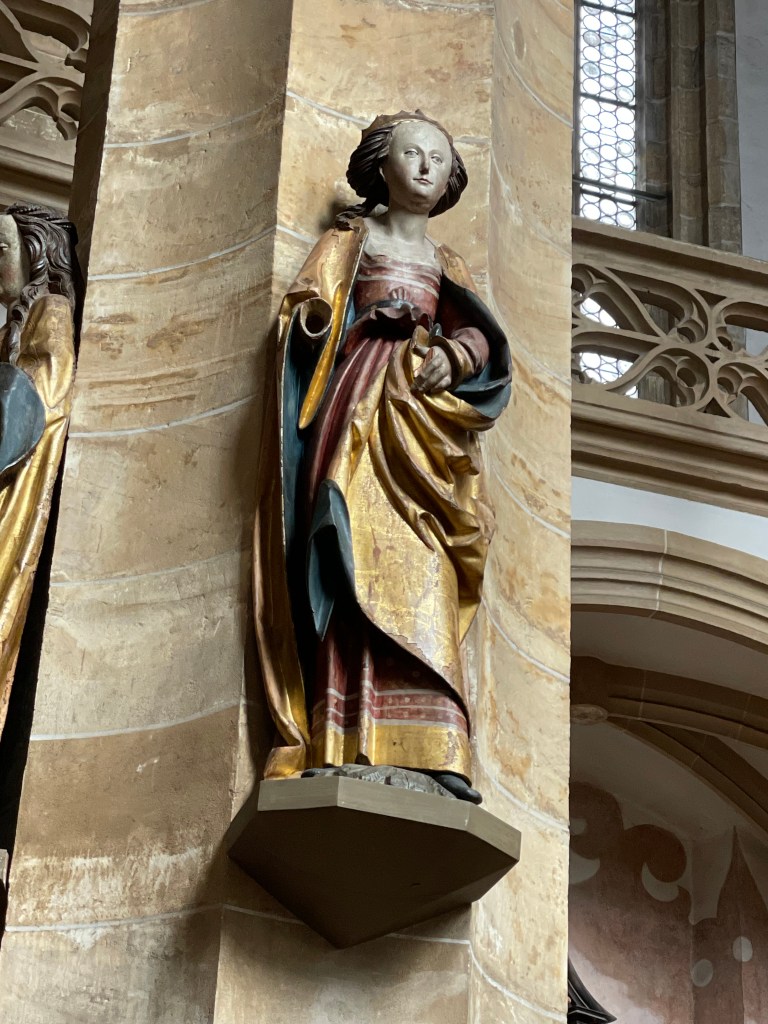
One interesting thing inside was statuary of the 12 virgins lining the pillars along the center aisle of the church. On one side, the light from the windows came through and shone on them. They were happy. They were prepared with oil in their lamps. On the other side, they were in the shade, sad, unprepared, with empty lamps. Be like the happy virgins.
After our guide left us, we went back for another look at the Golden Portal.  We felt really lucky we got to see this amazing cathedral and learn more about it.  A happy Easter blessing.

The Freiberg Temple

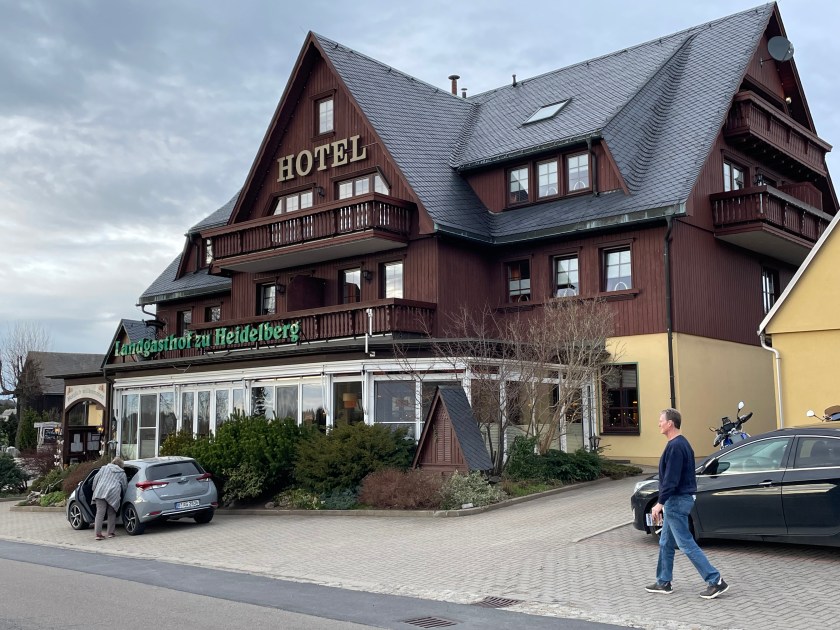
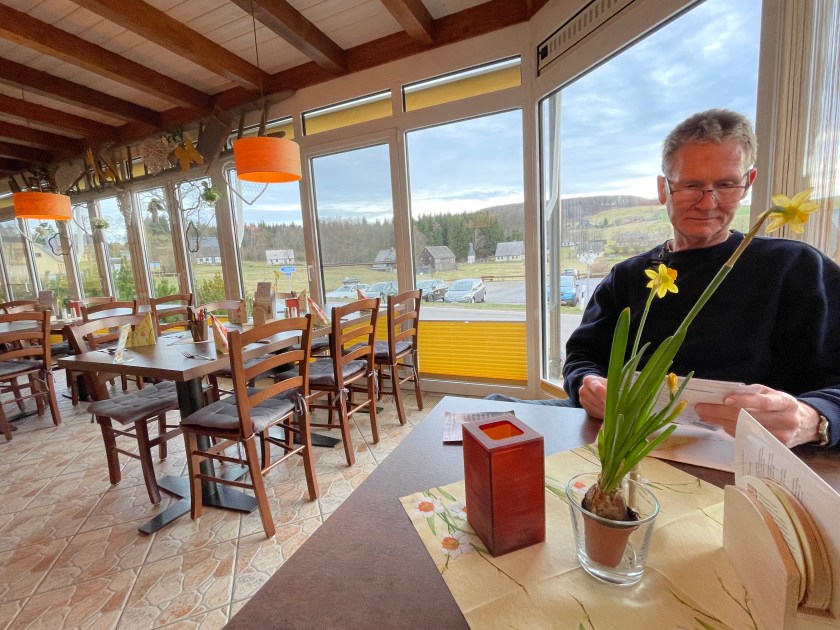
After a delicious dinner at this hotel near the living museum, we were on our way to Freiberg, where we spent the night.

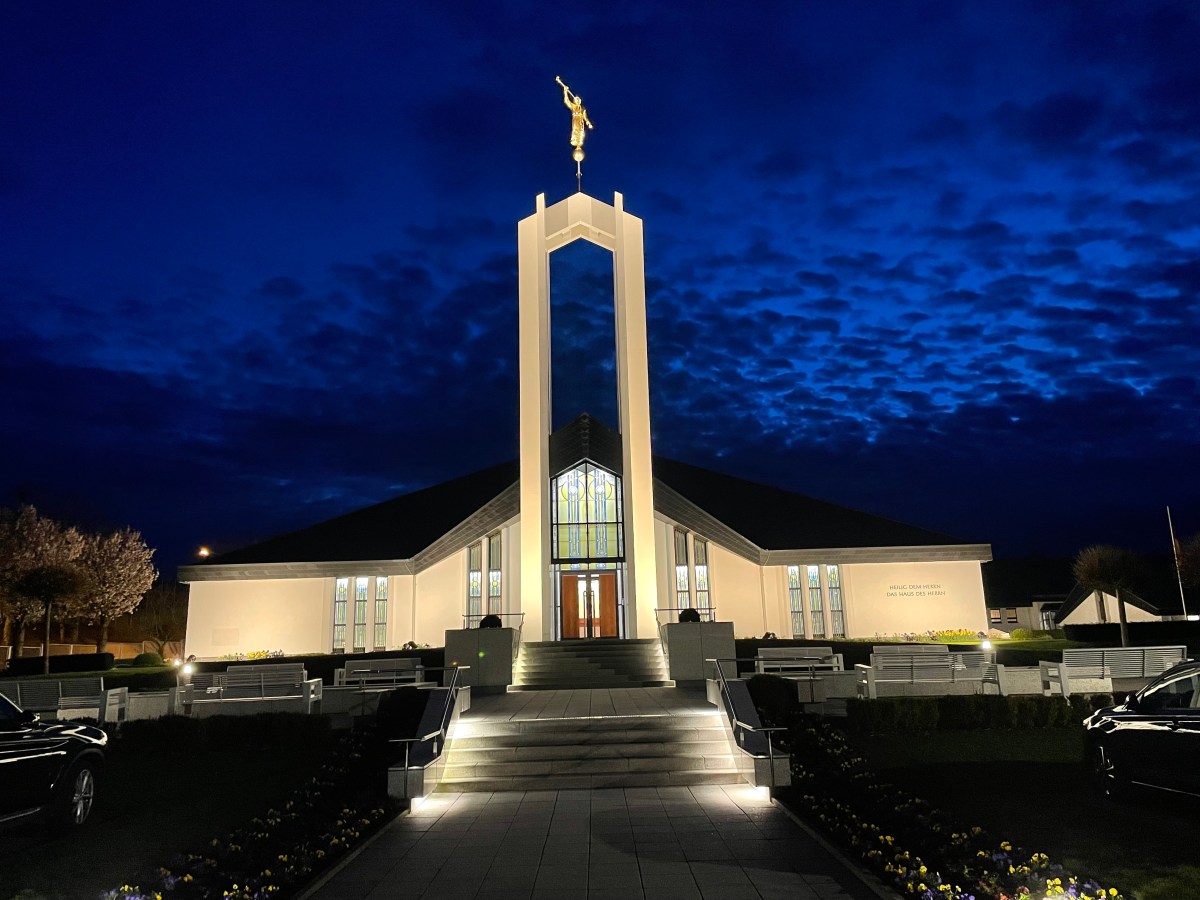
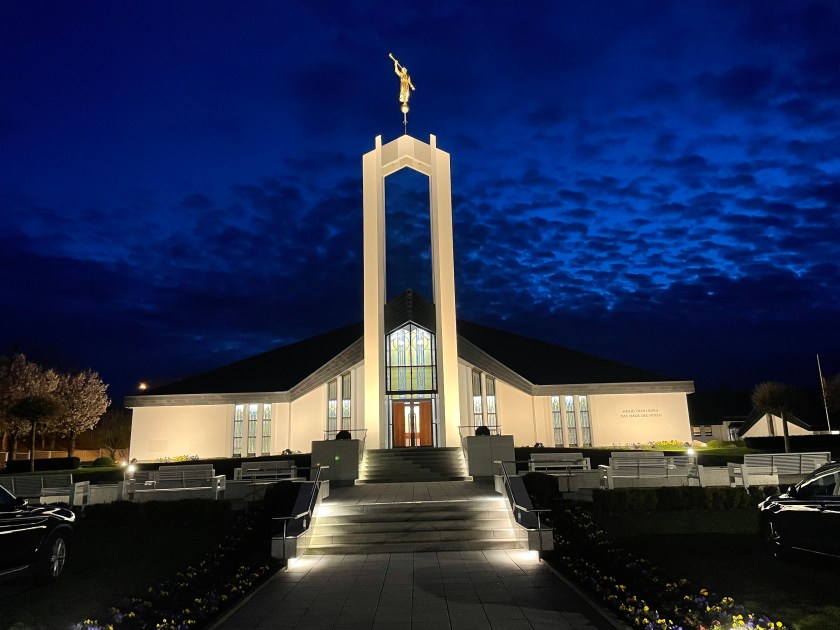
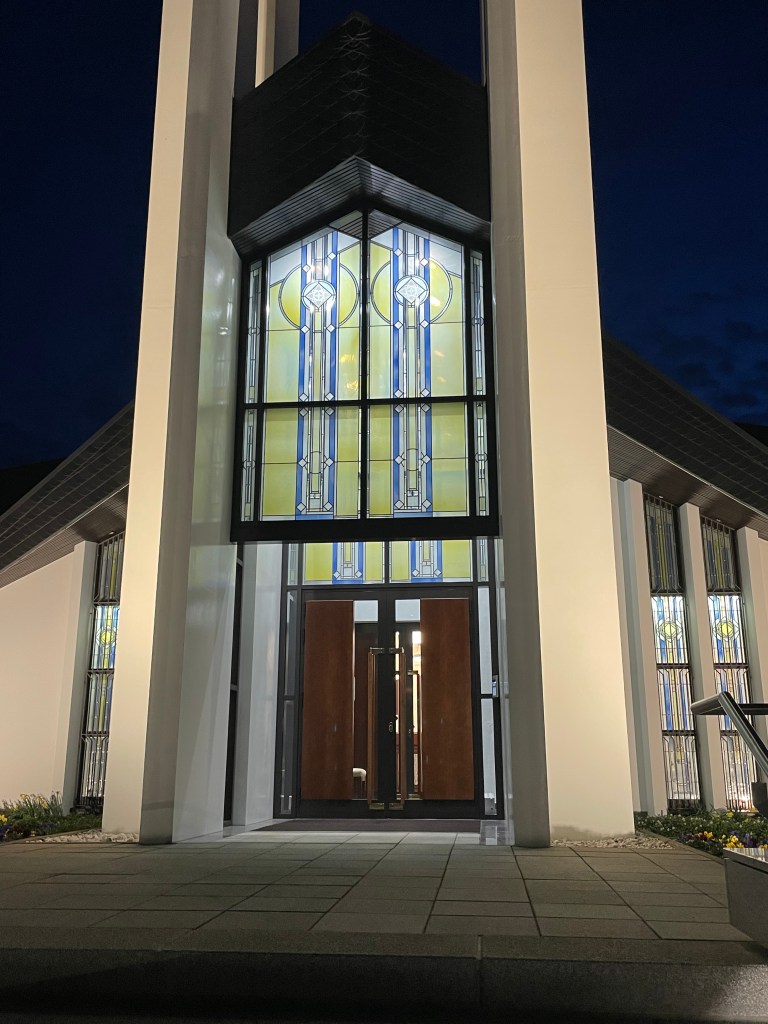
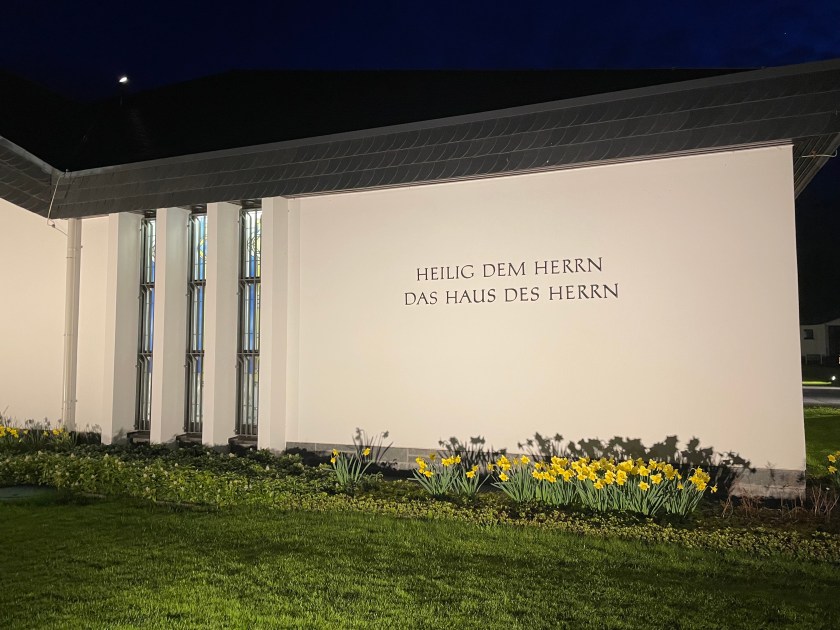
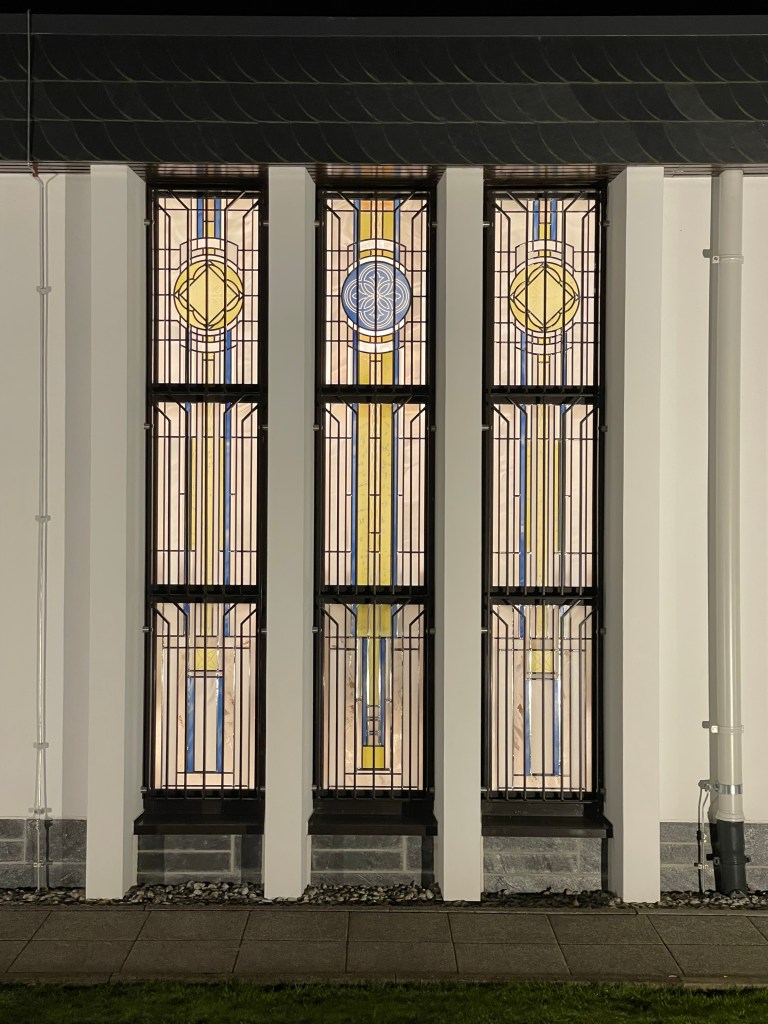
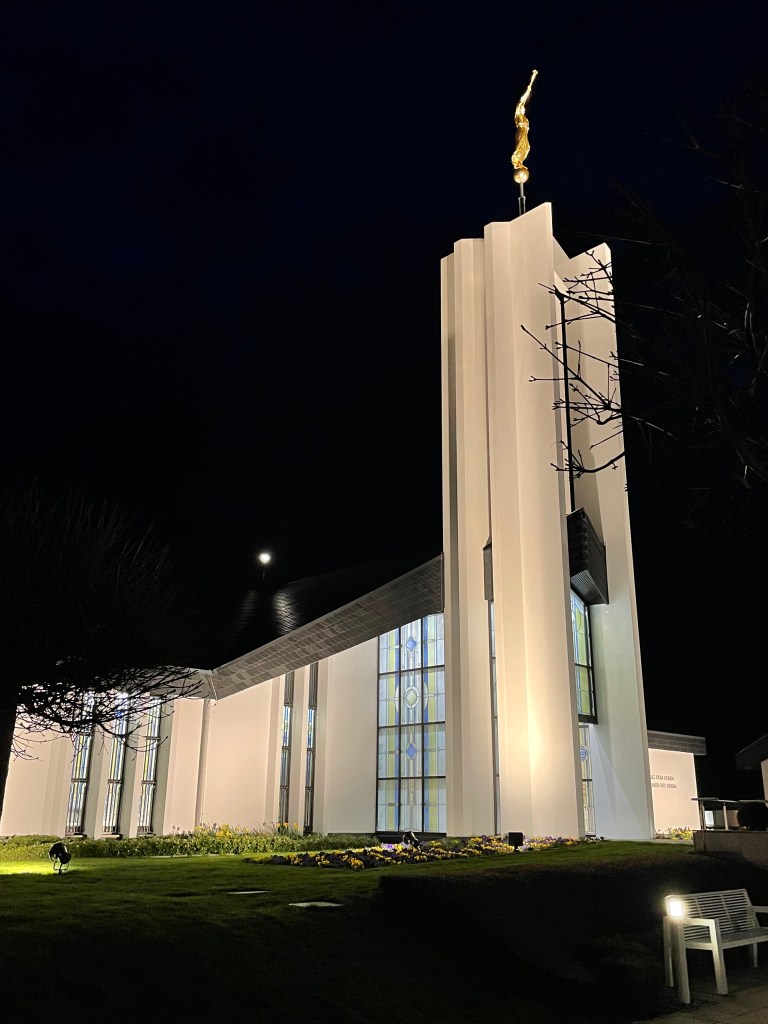
Here is the beautiful Freiberg Temple, a jewel in what was once East Germany.  The parking lot was full, we learned later that a single adult conference was happening here in the area, with participants from all over Germany.

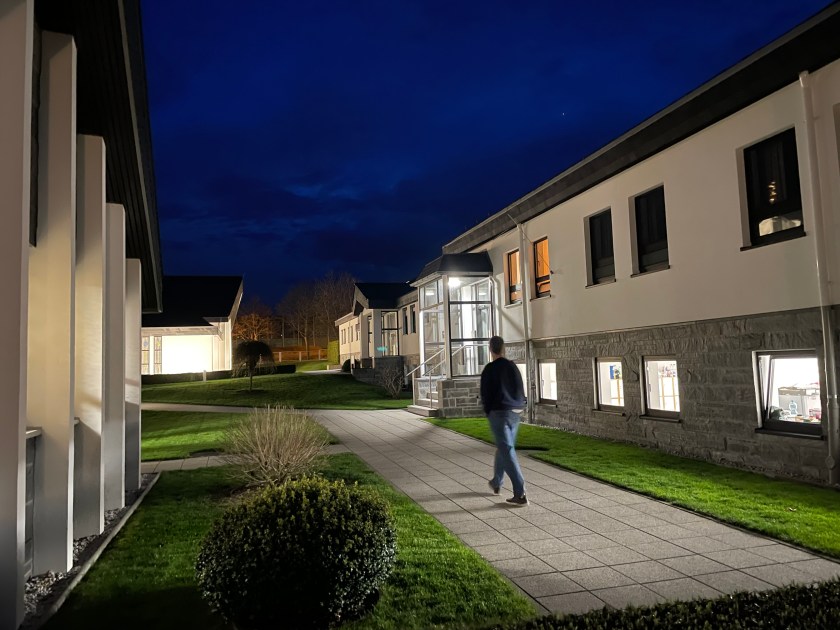
This is the patron housing.  They were booked full tonight.
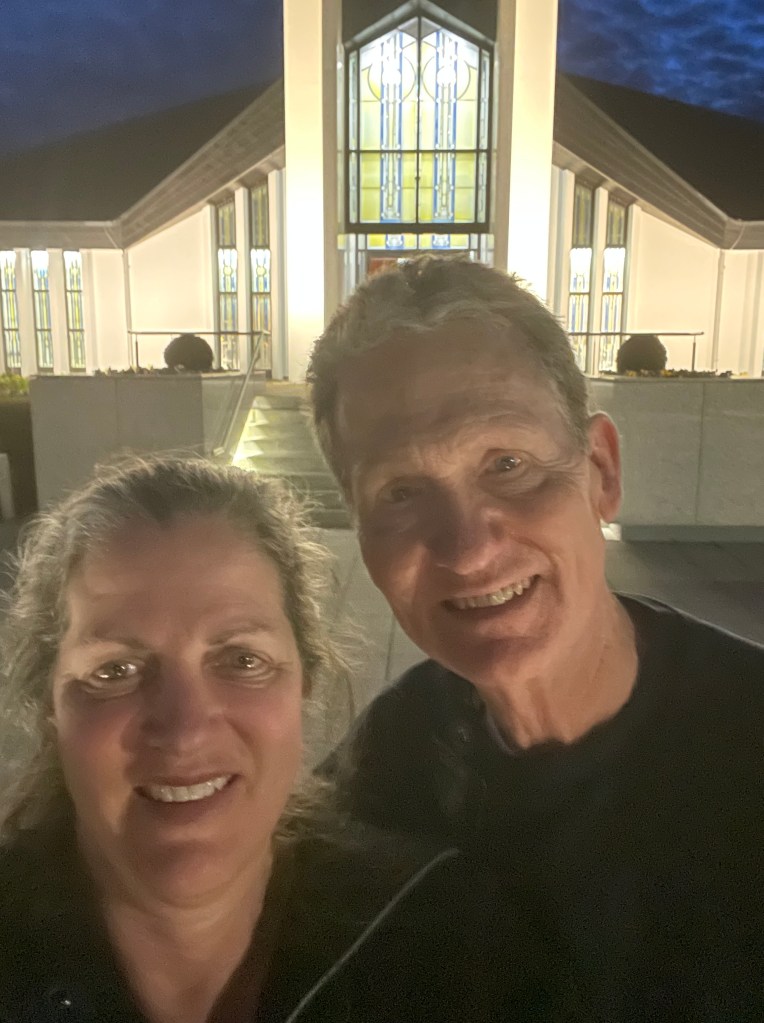
Oh how I LOVE the temple!  What a refuge from the world.  What a safe haven and place of peace.  The night was still and the sky was clear and this temple shown like a beacon.

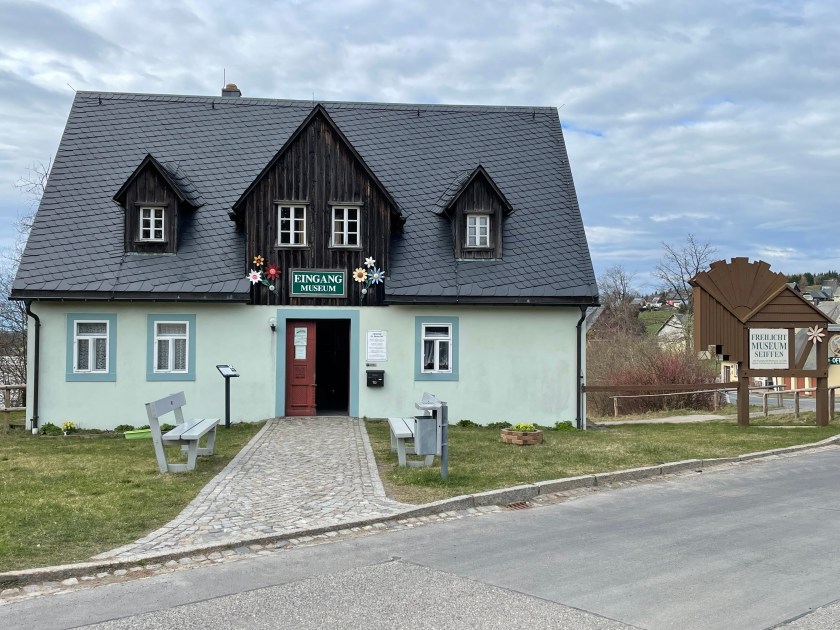
The Erzgebirgisches Freilichtmuseum Seiffen (Living Museum)

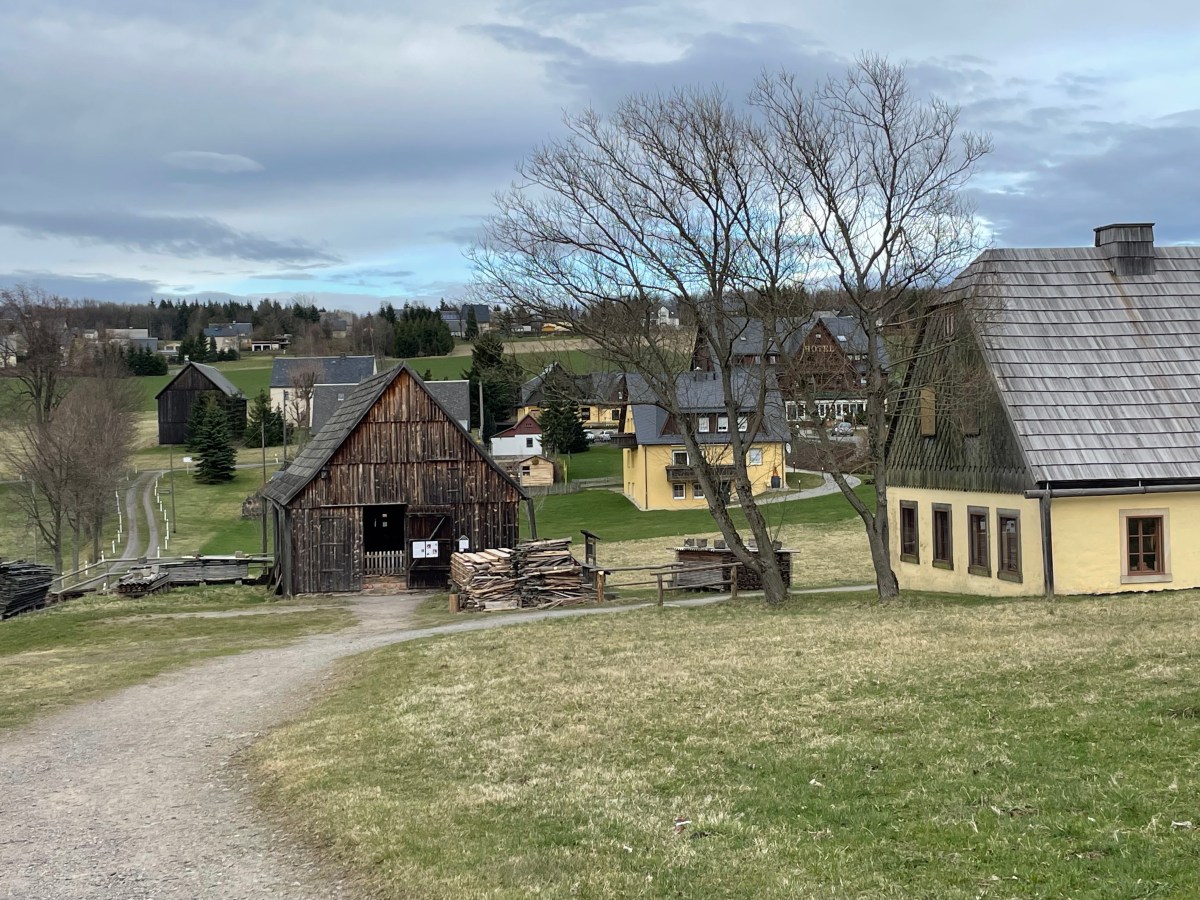
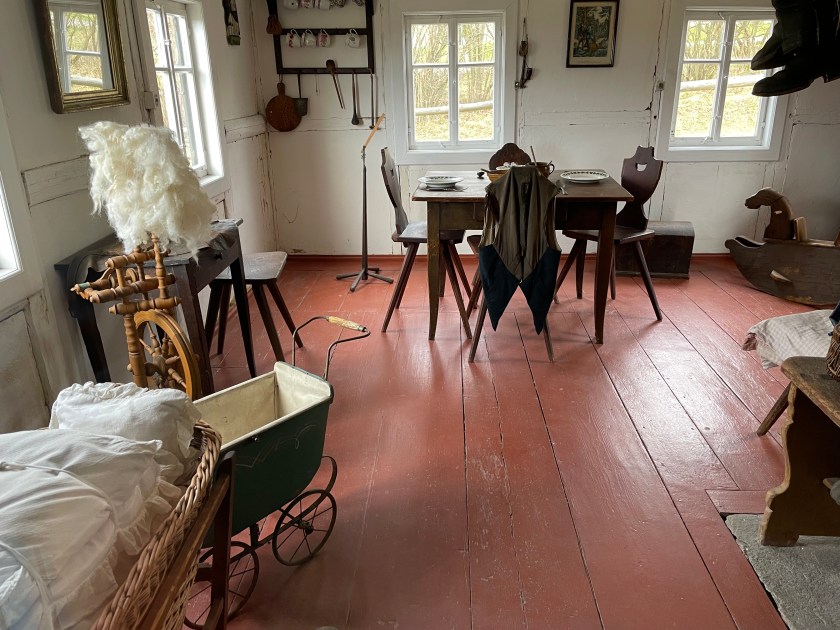
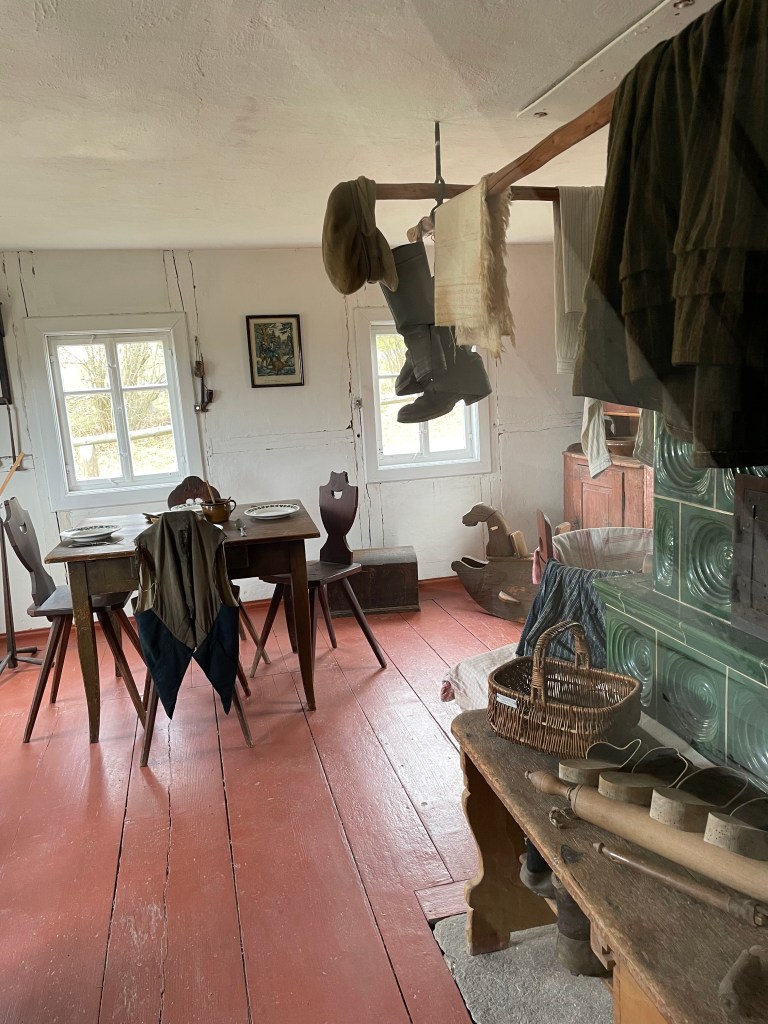
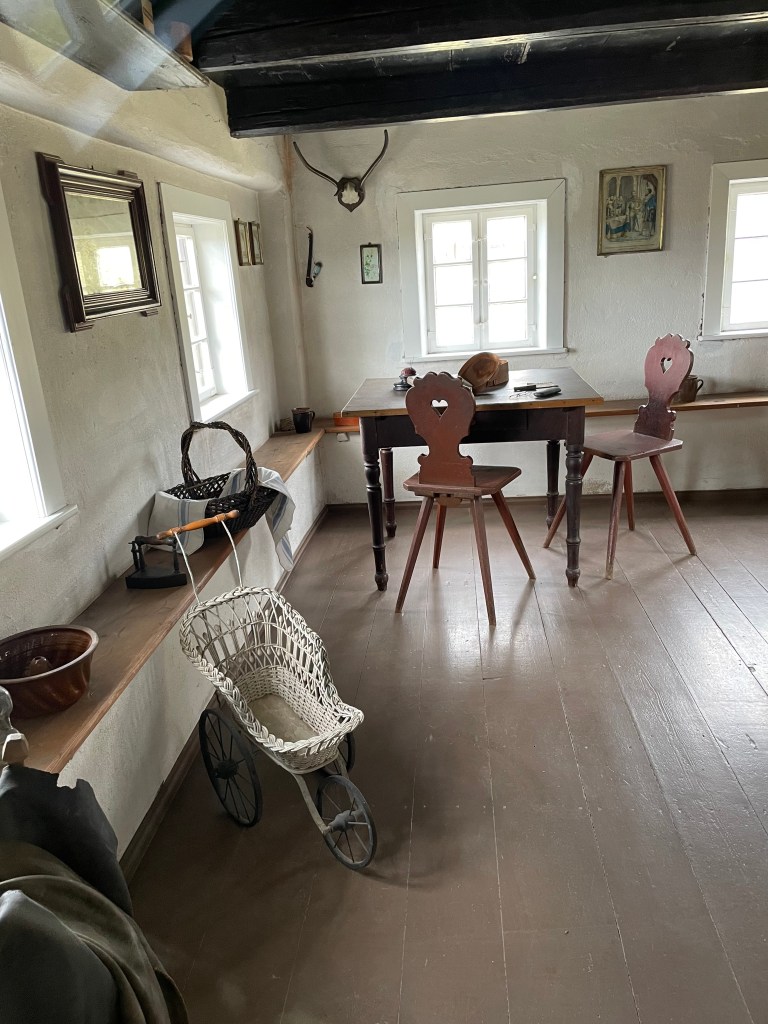
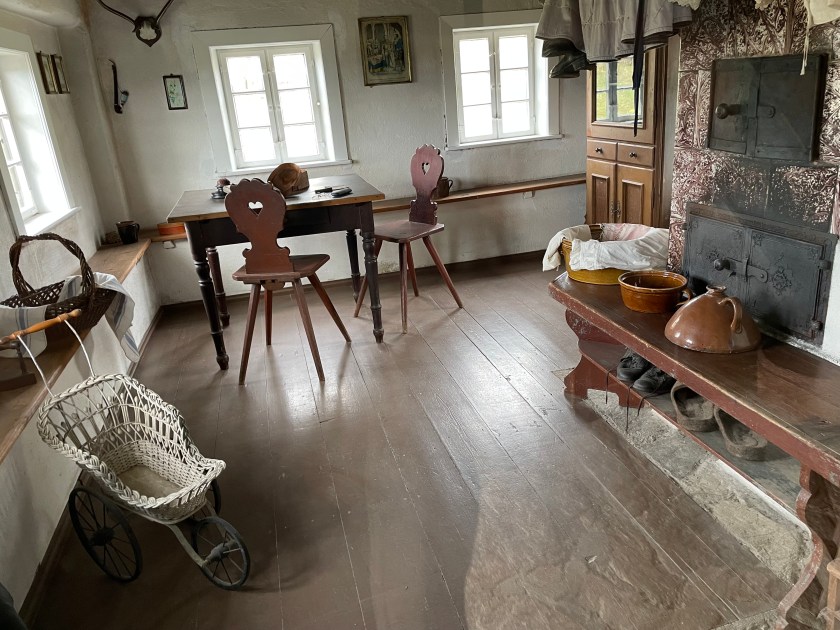
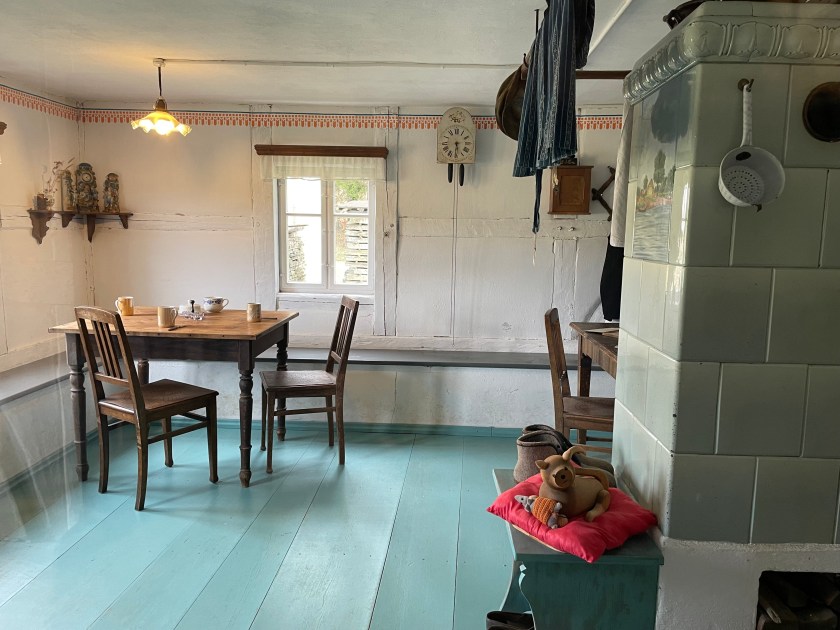
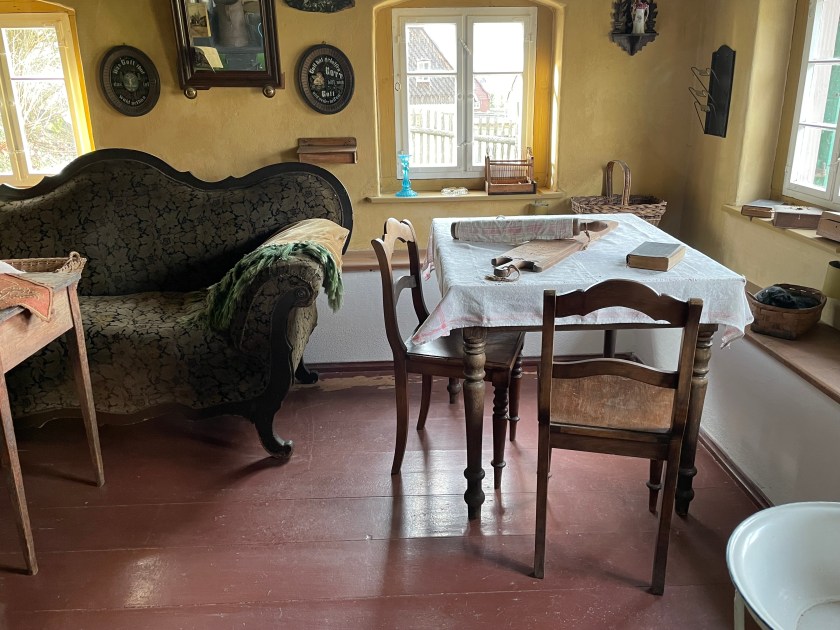
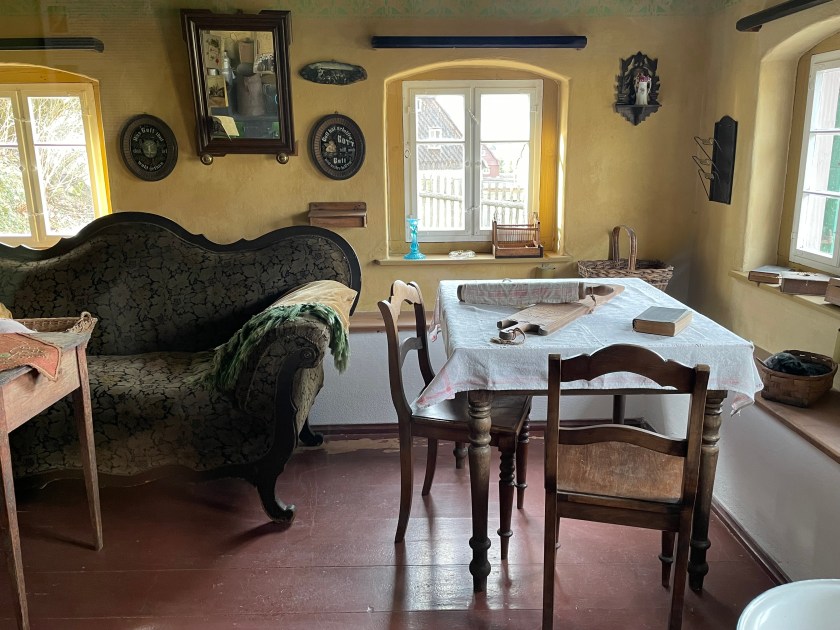
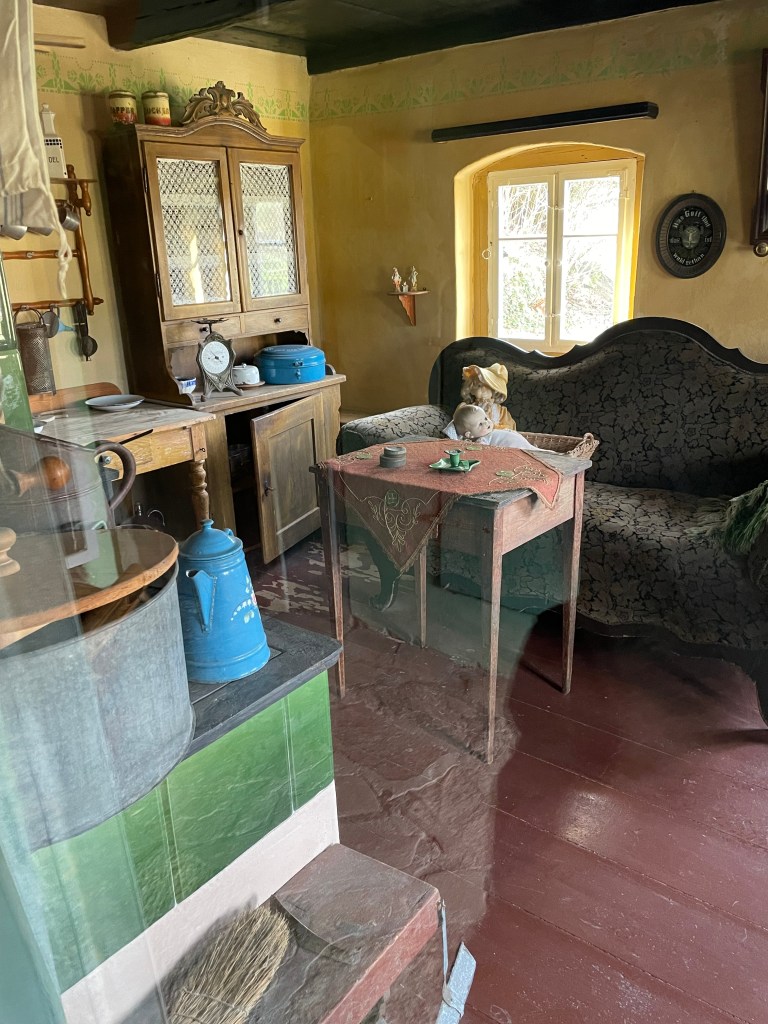
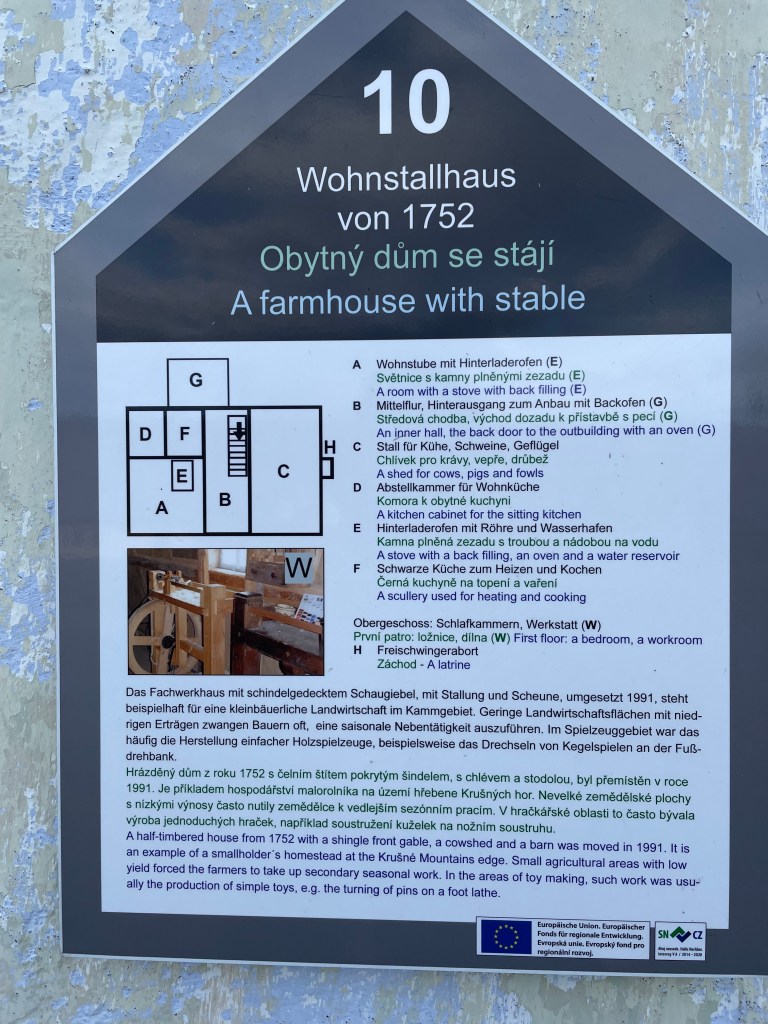
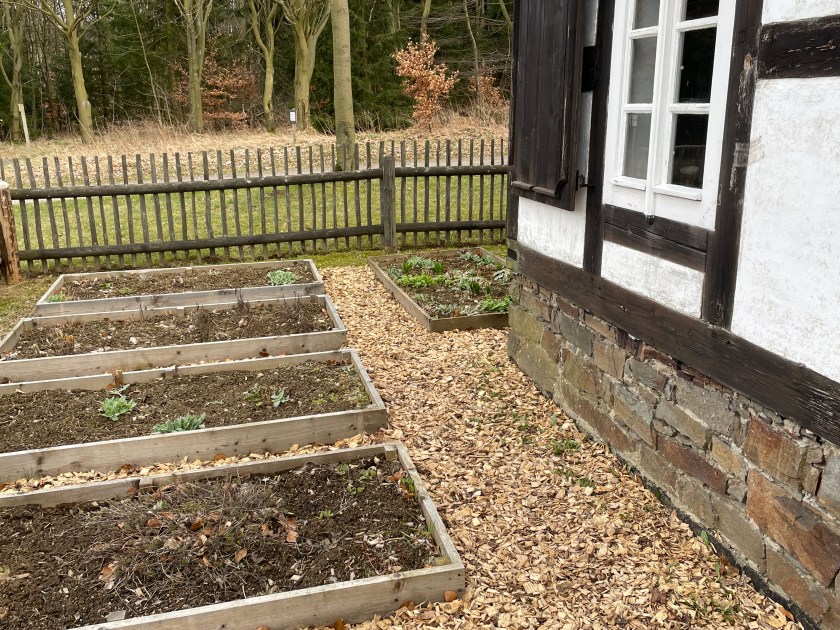
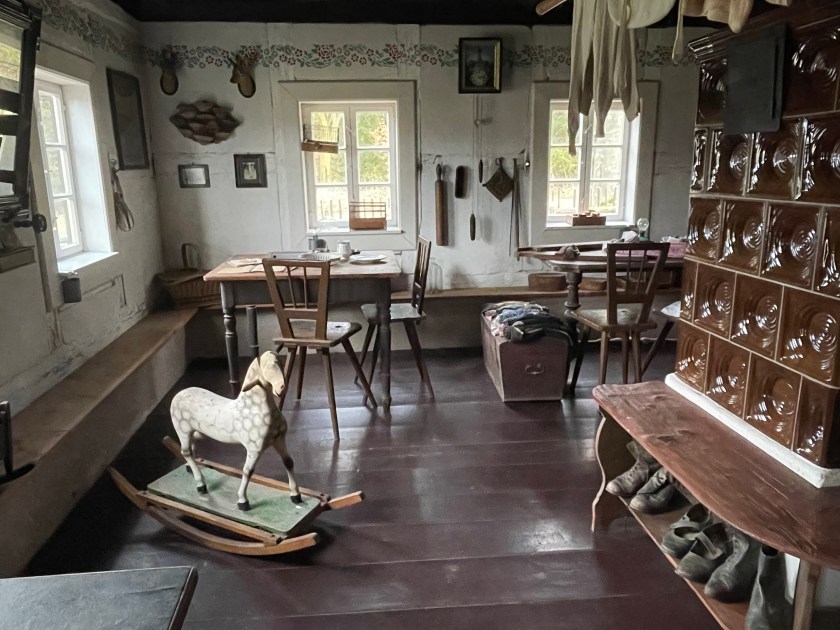
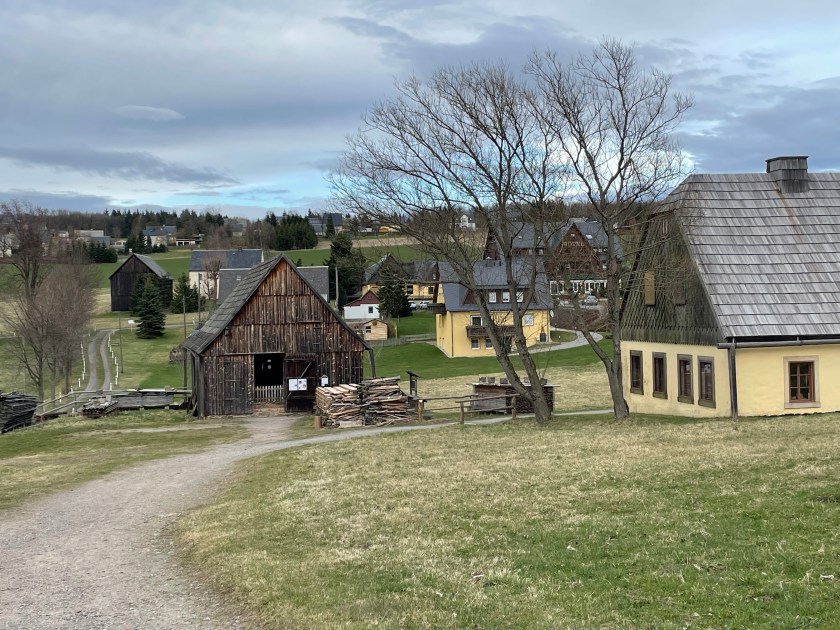
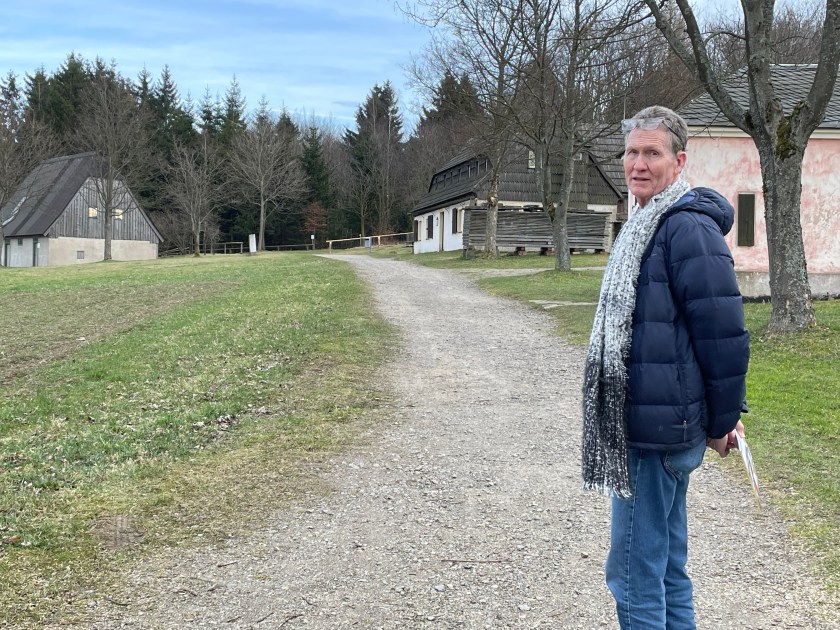
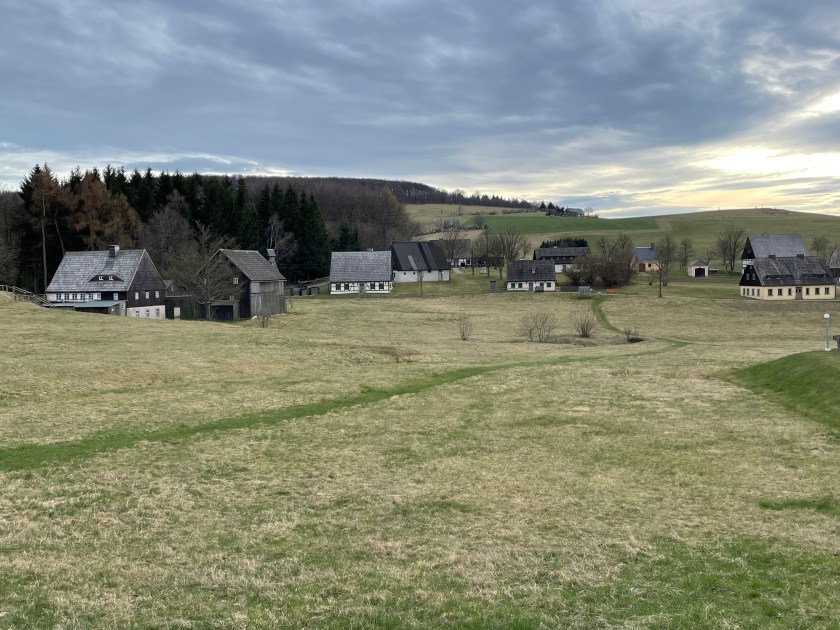
Do you have ancestors from Germany like I do? This is my favorite way to learn about Family History–visiting a Living Museum.  These homes and buildings were all brought to one place on the outskirts of Seiffen to show us what life was like in years’ past. I love Everything about this place!

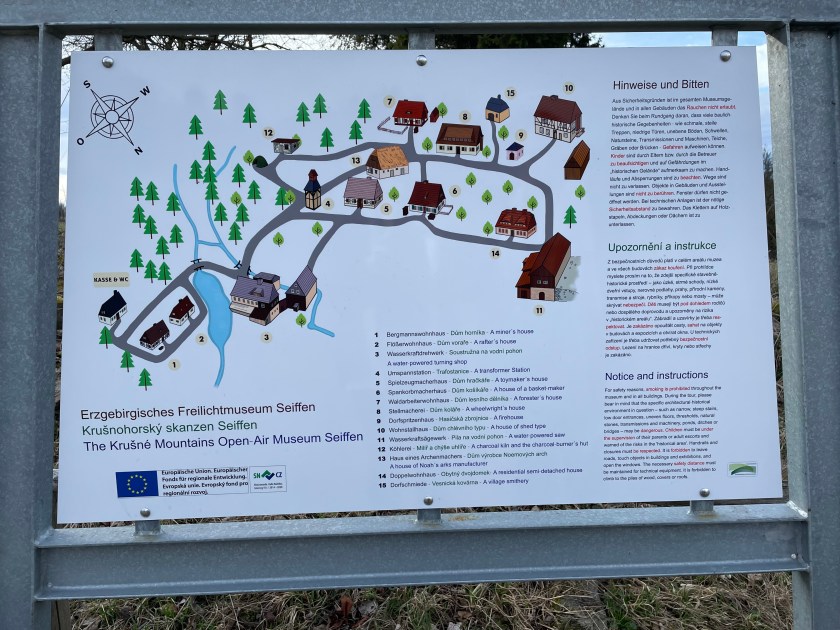
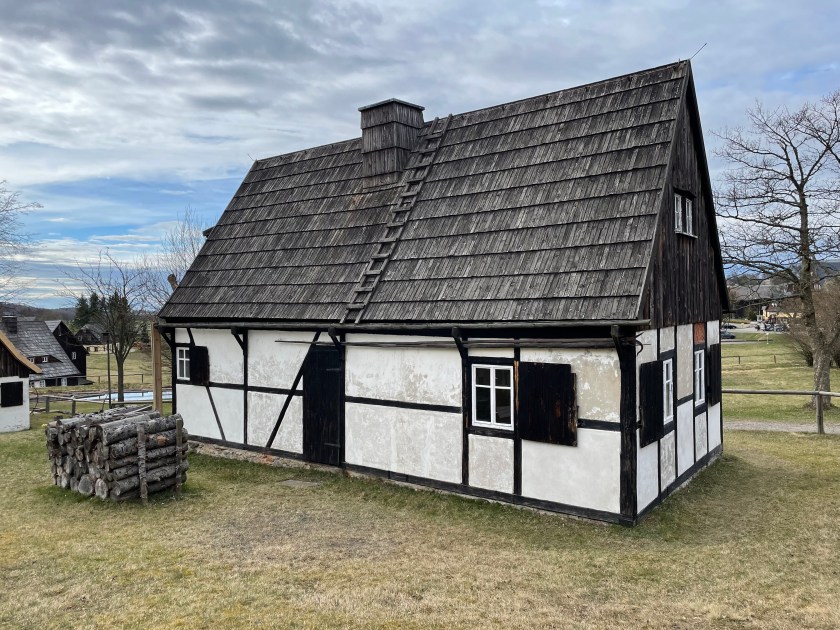
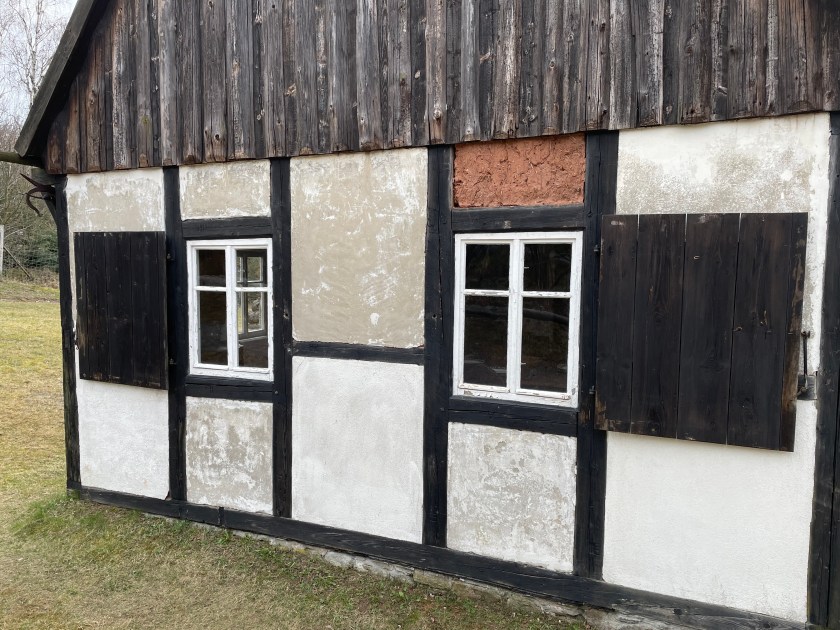
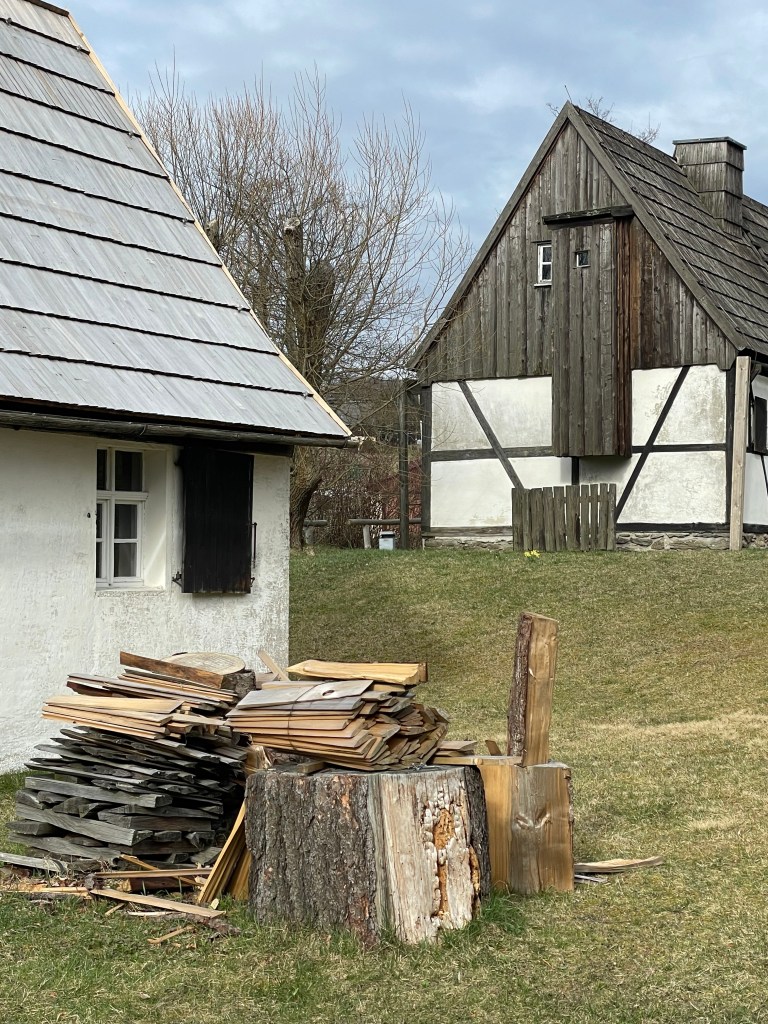
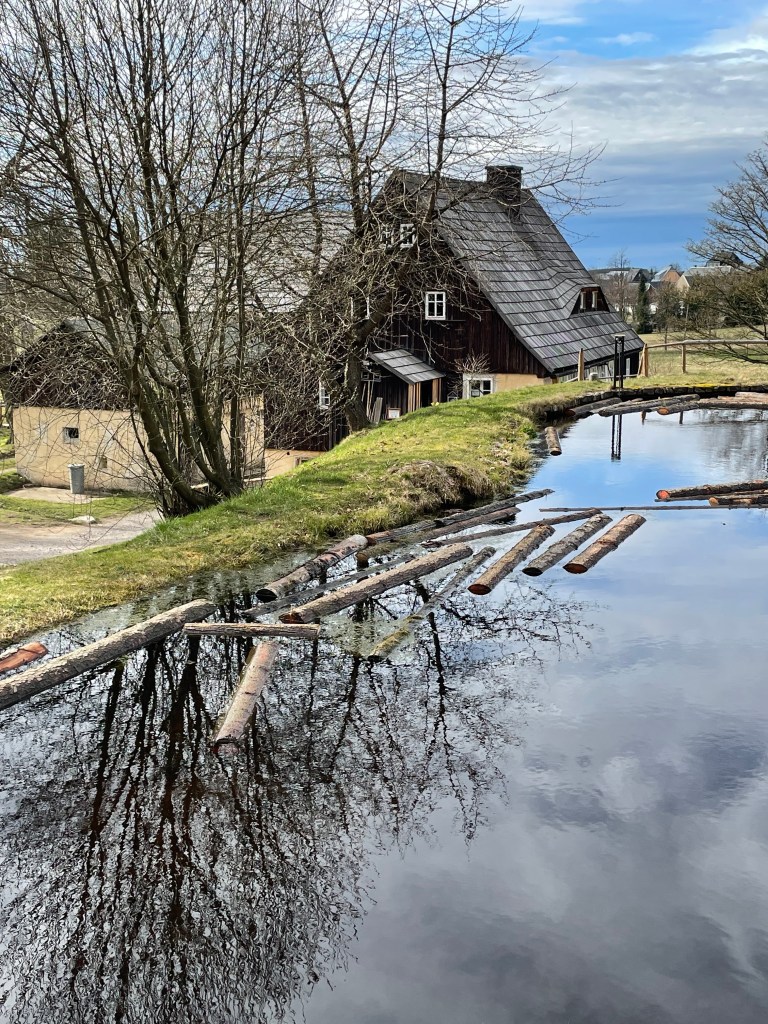
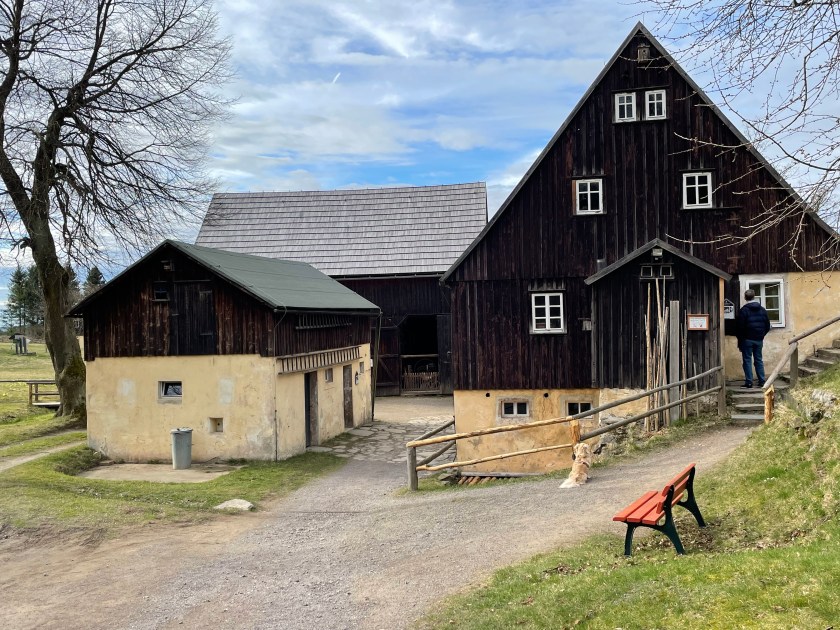
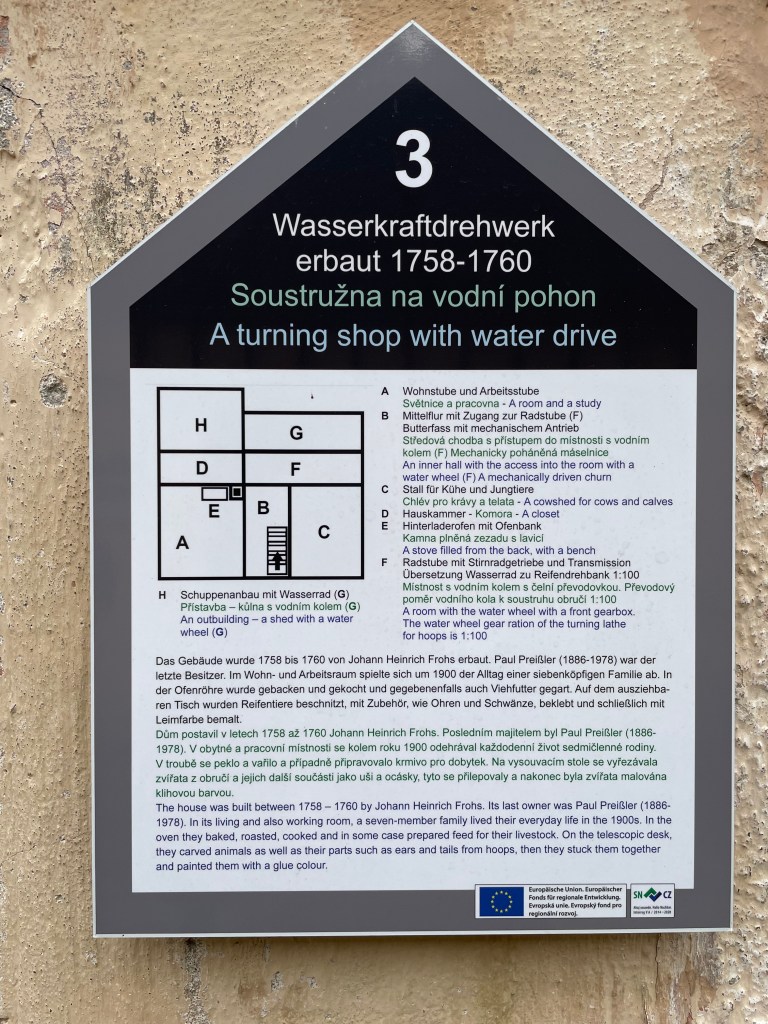
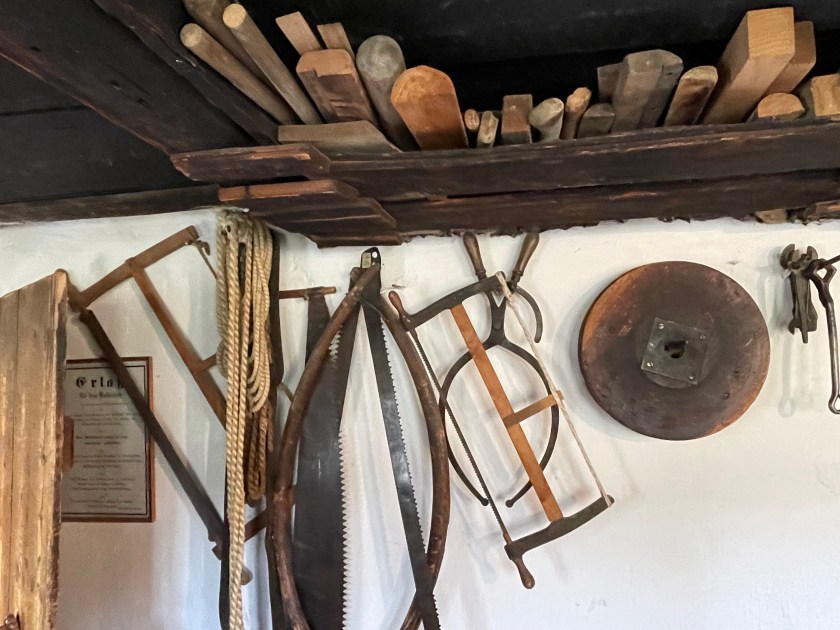
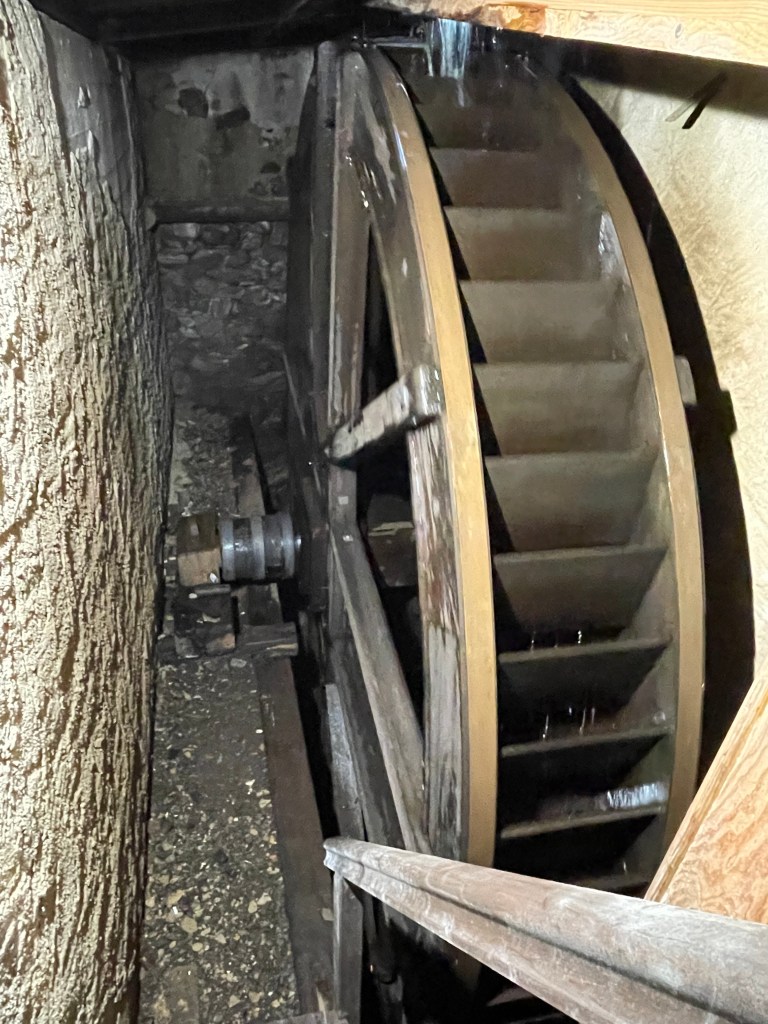
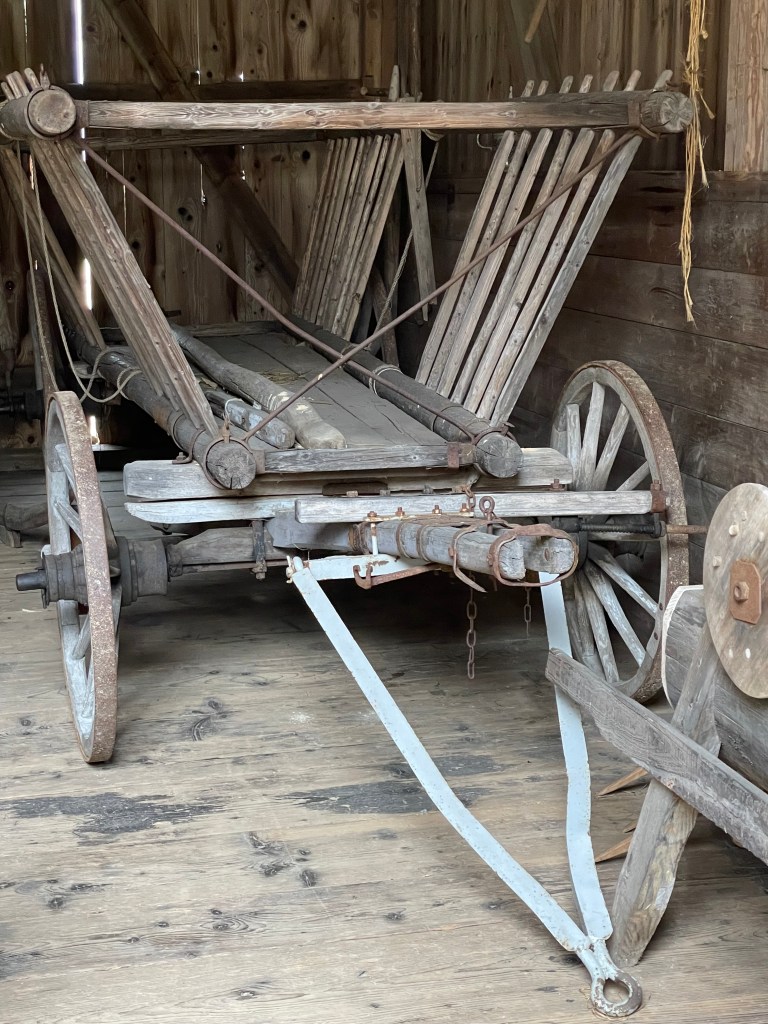
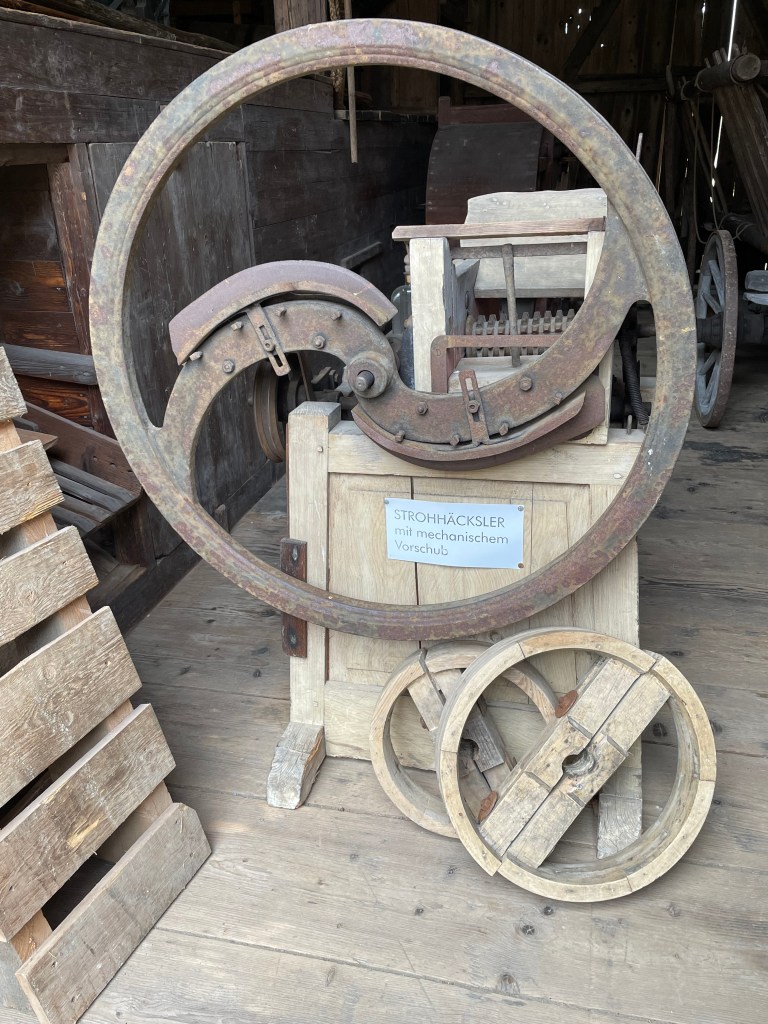
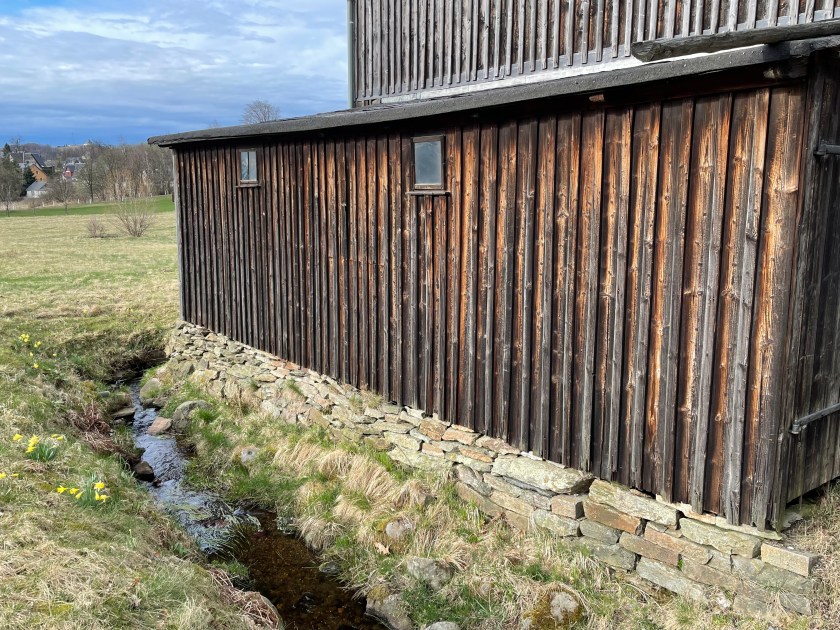
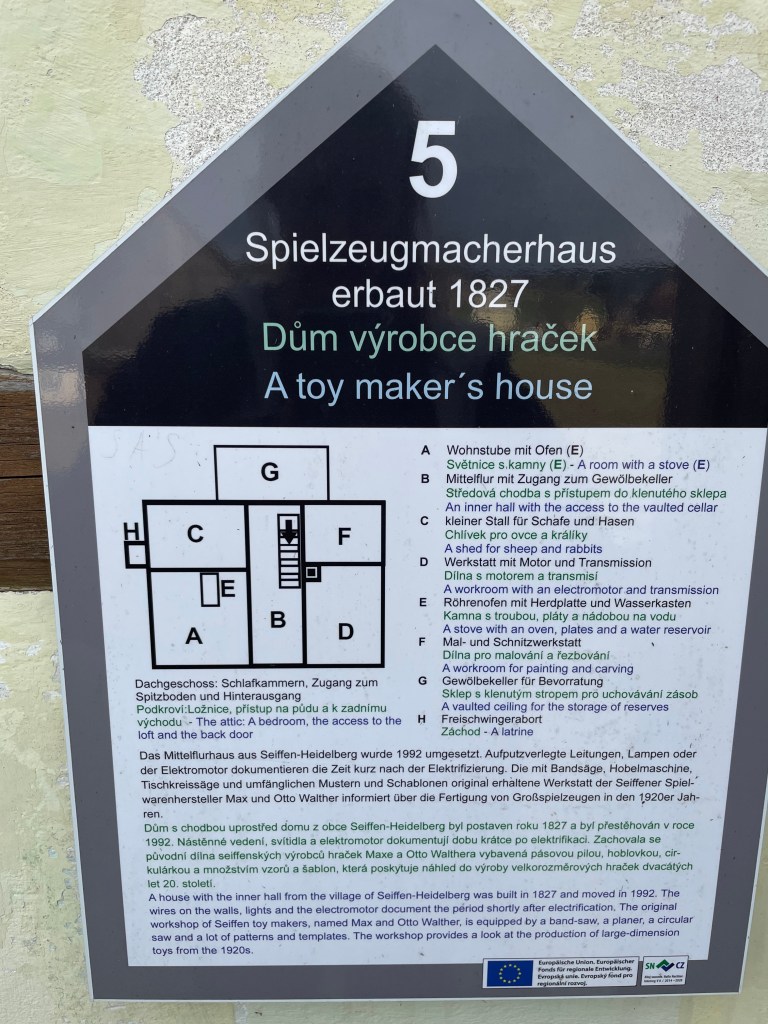
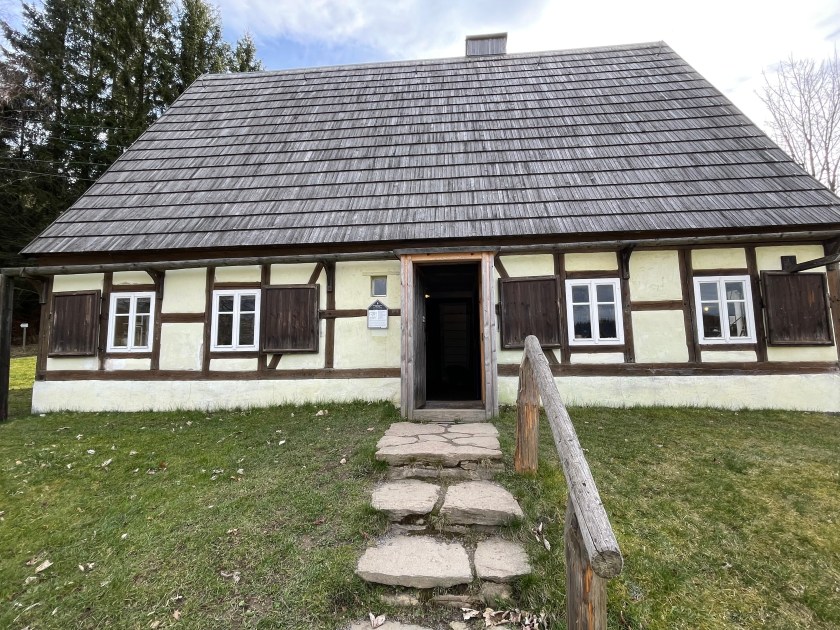
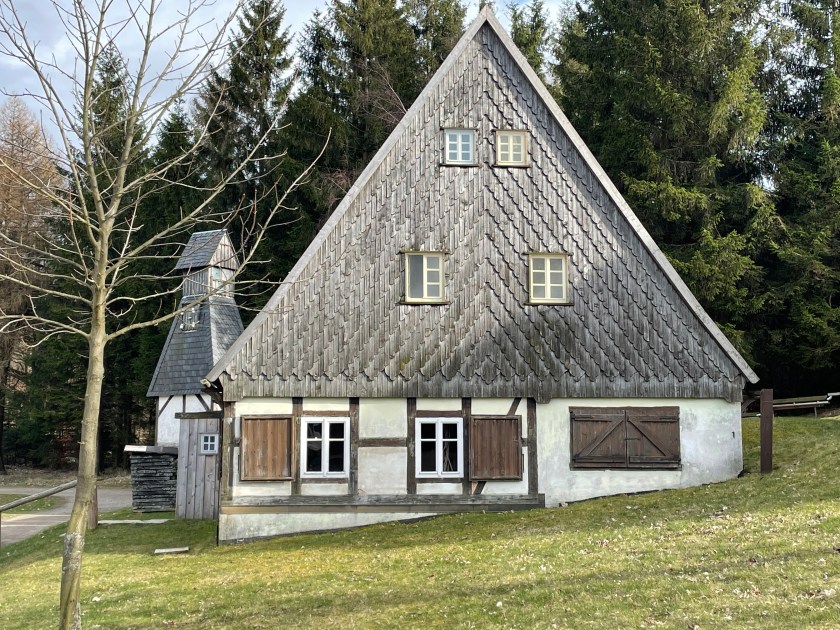
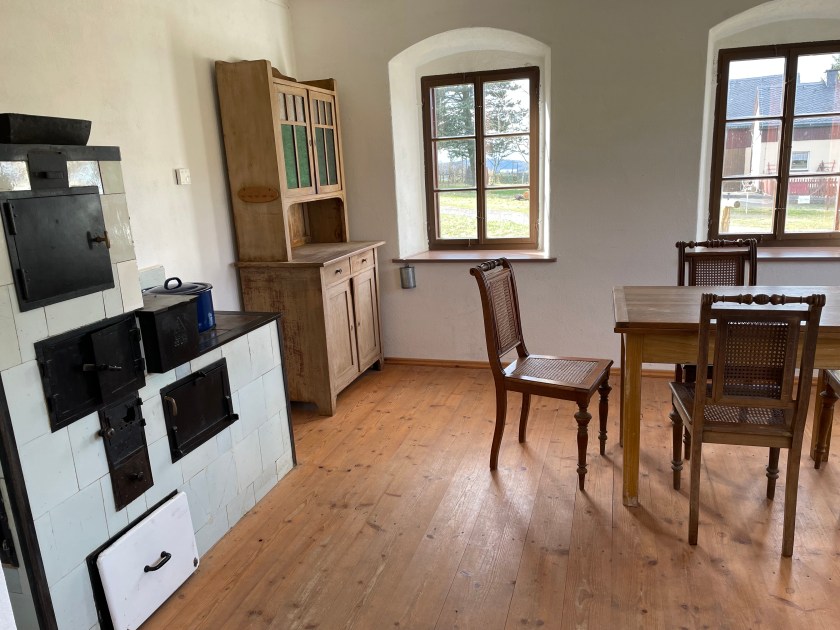
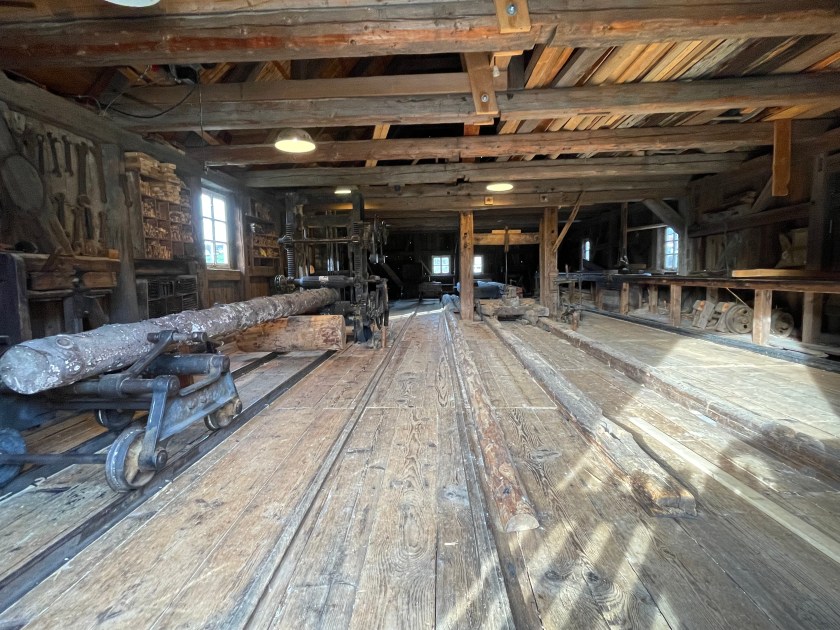
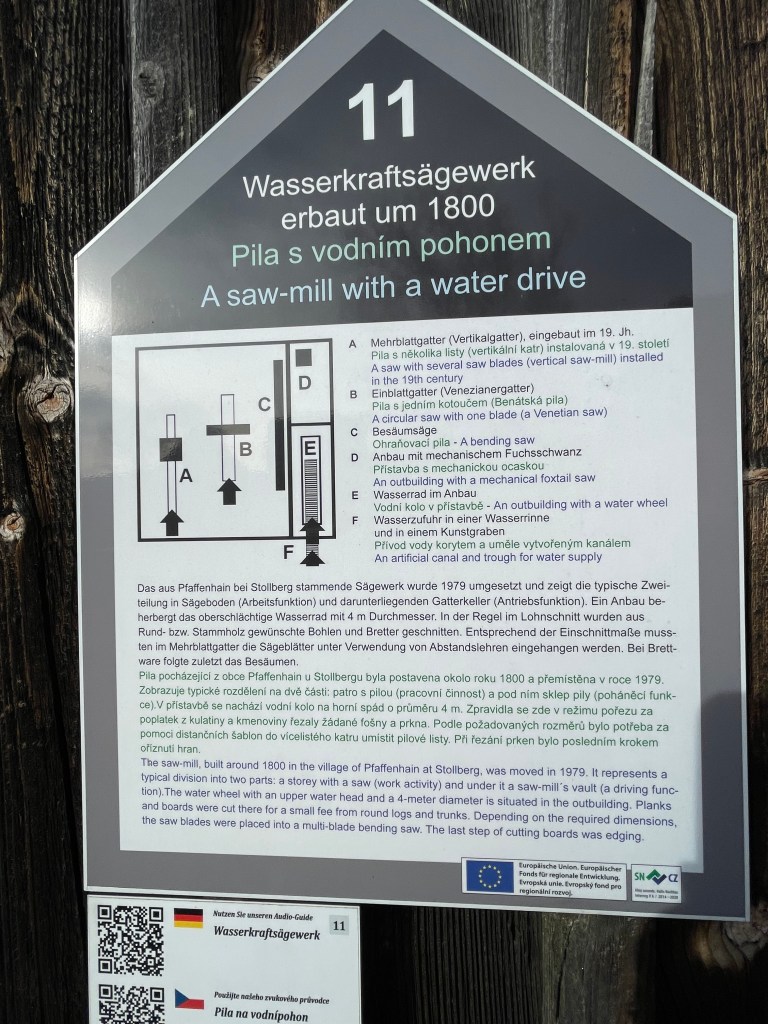
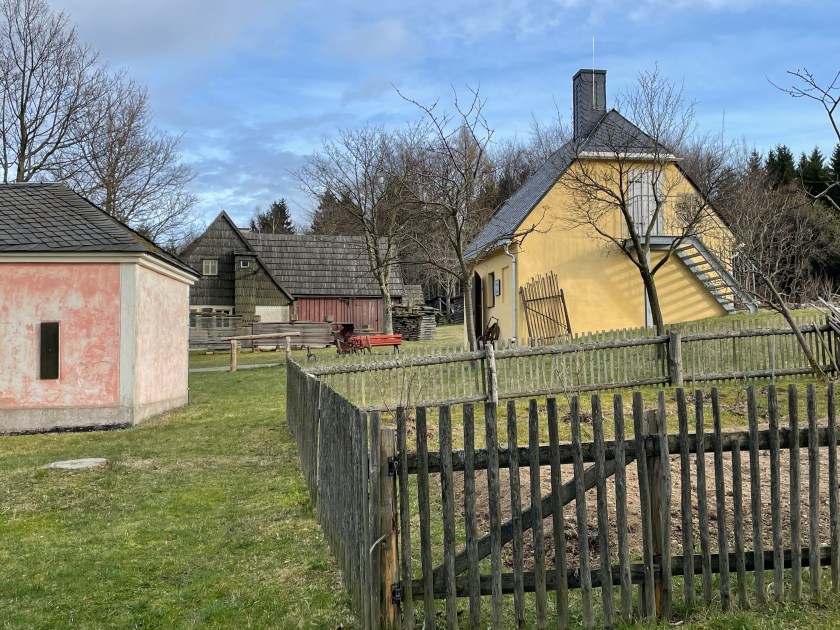
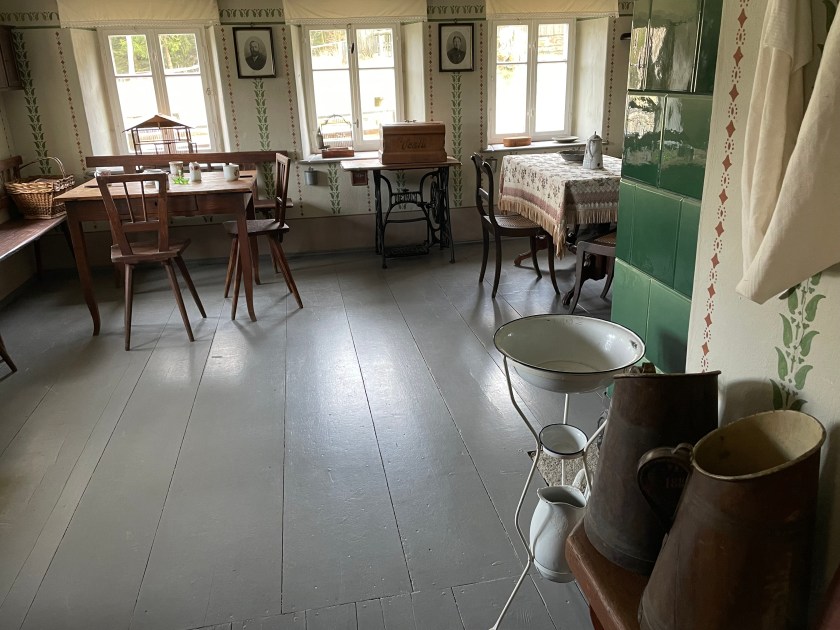
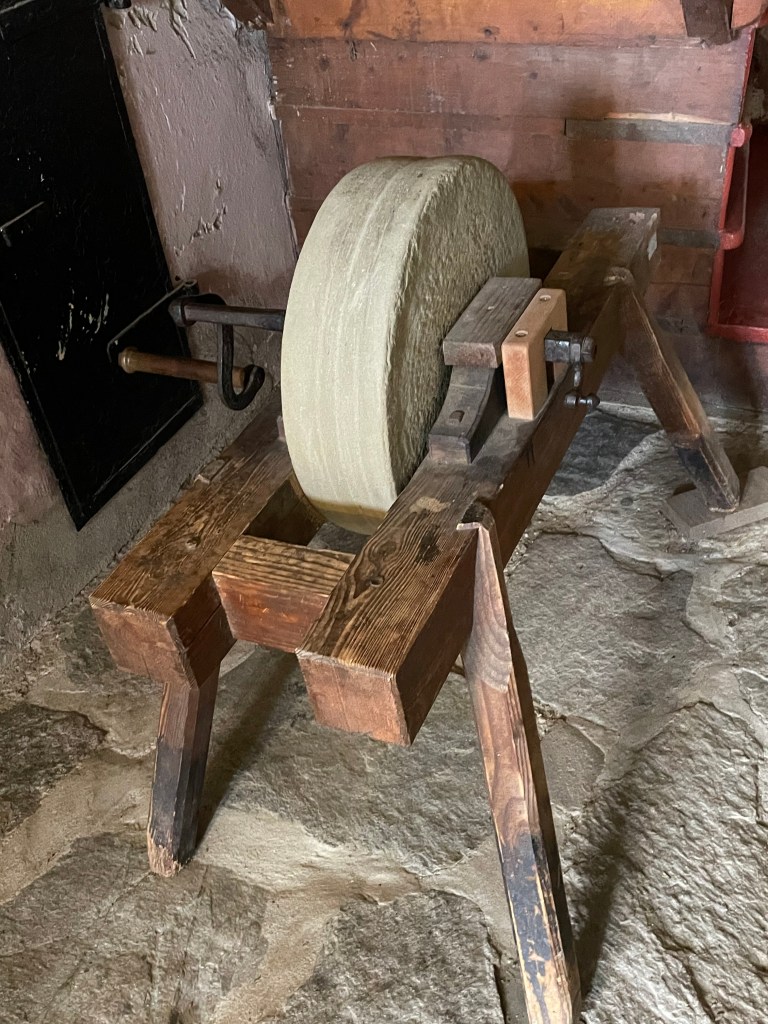
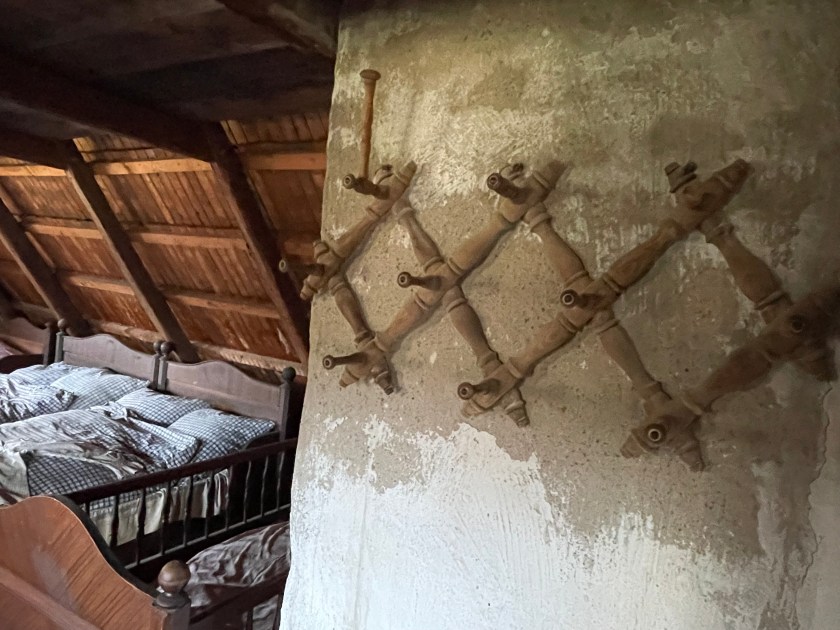
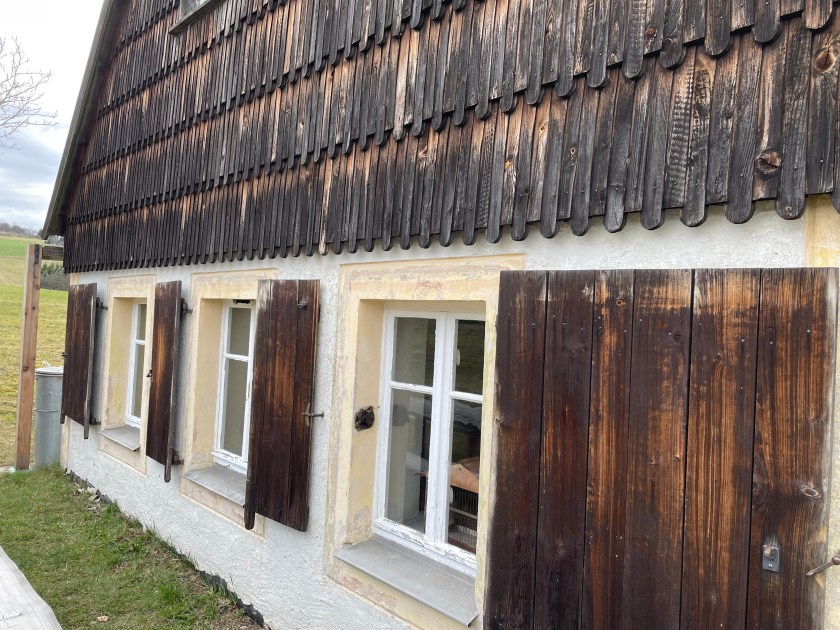
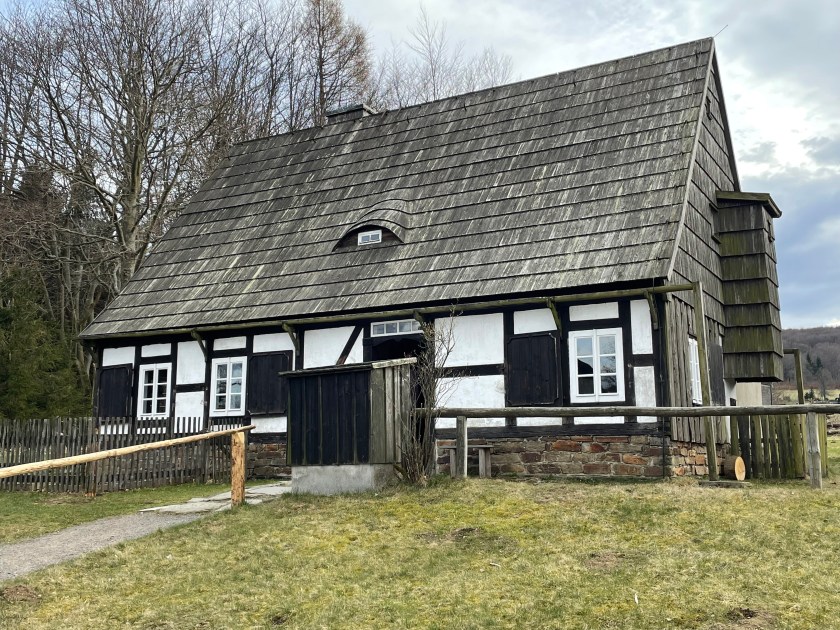
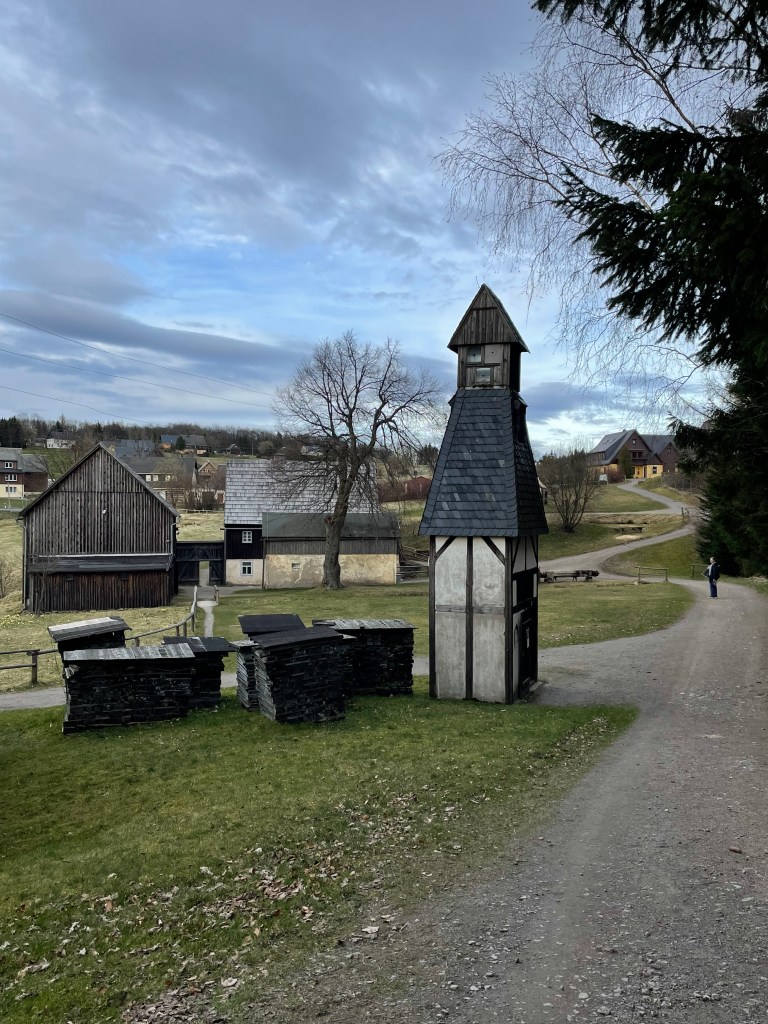
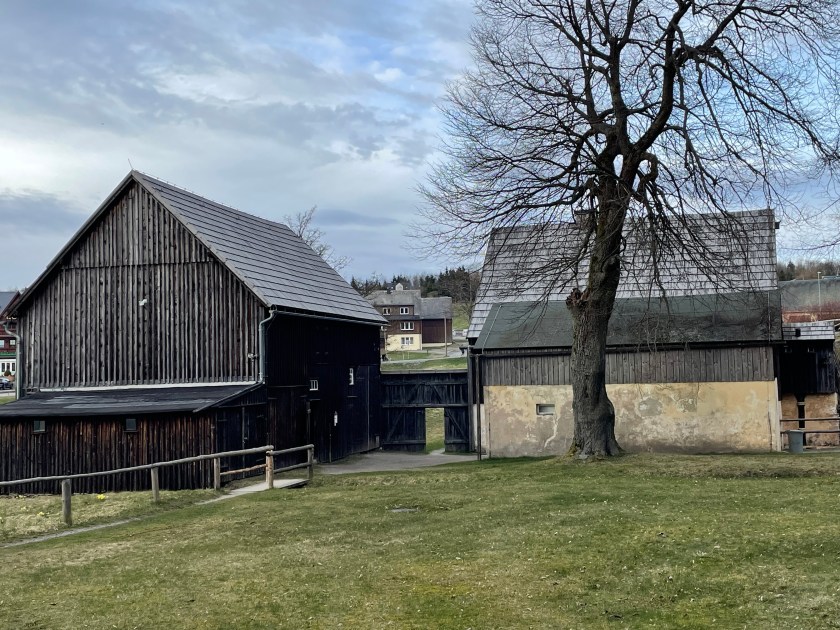
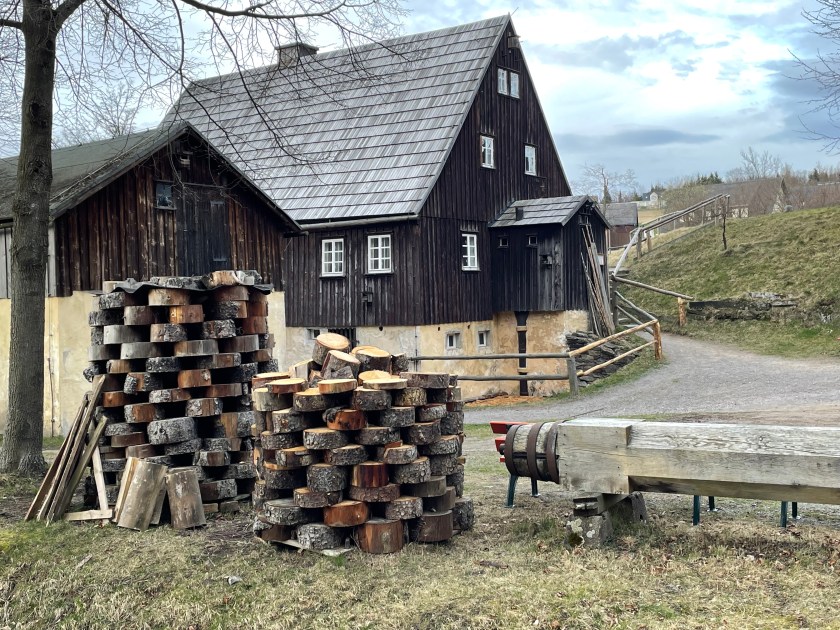
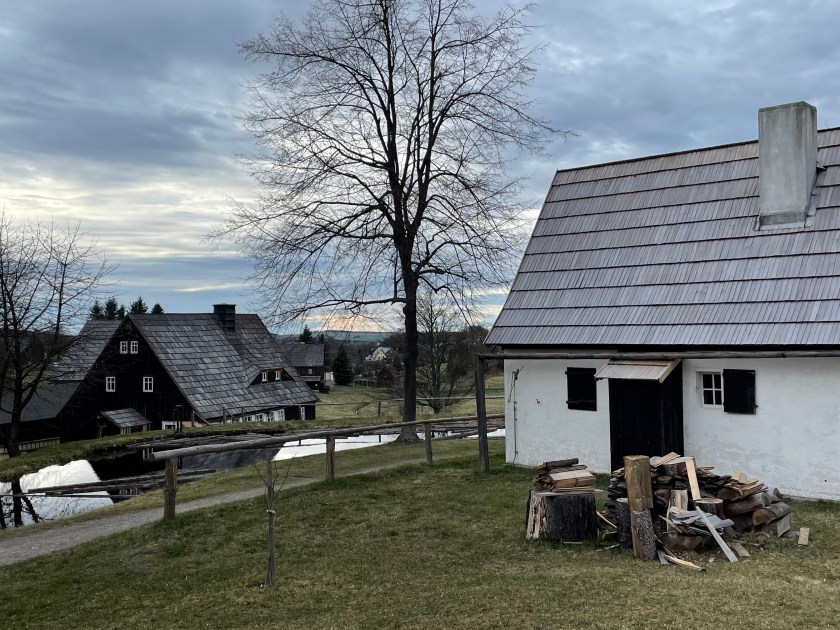
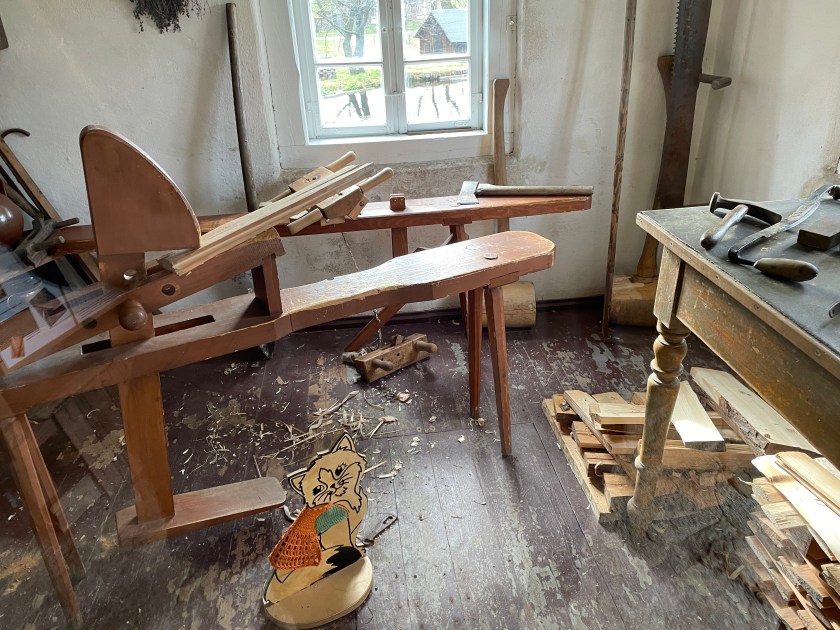
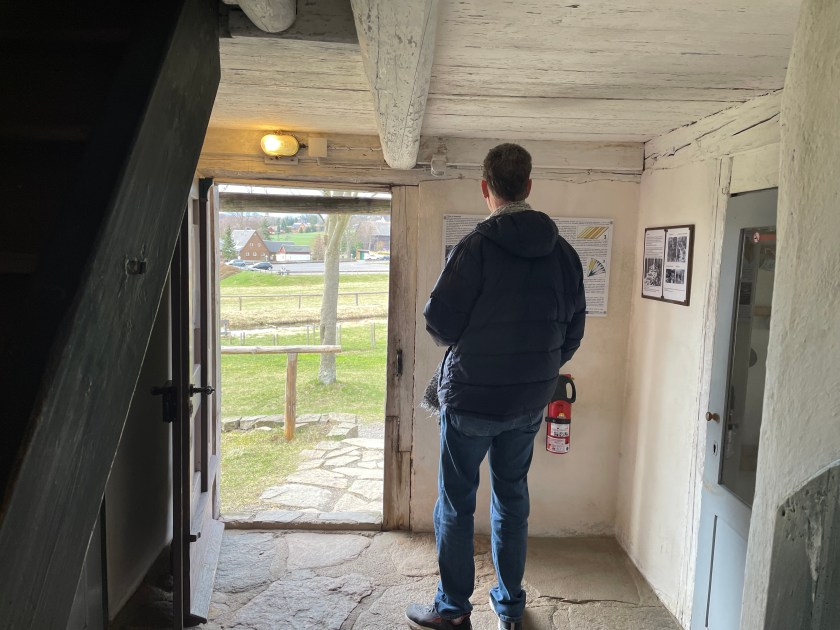
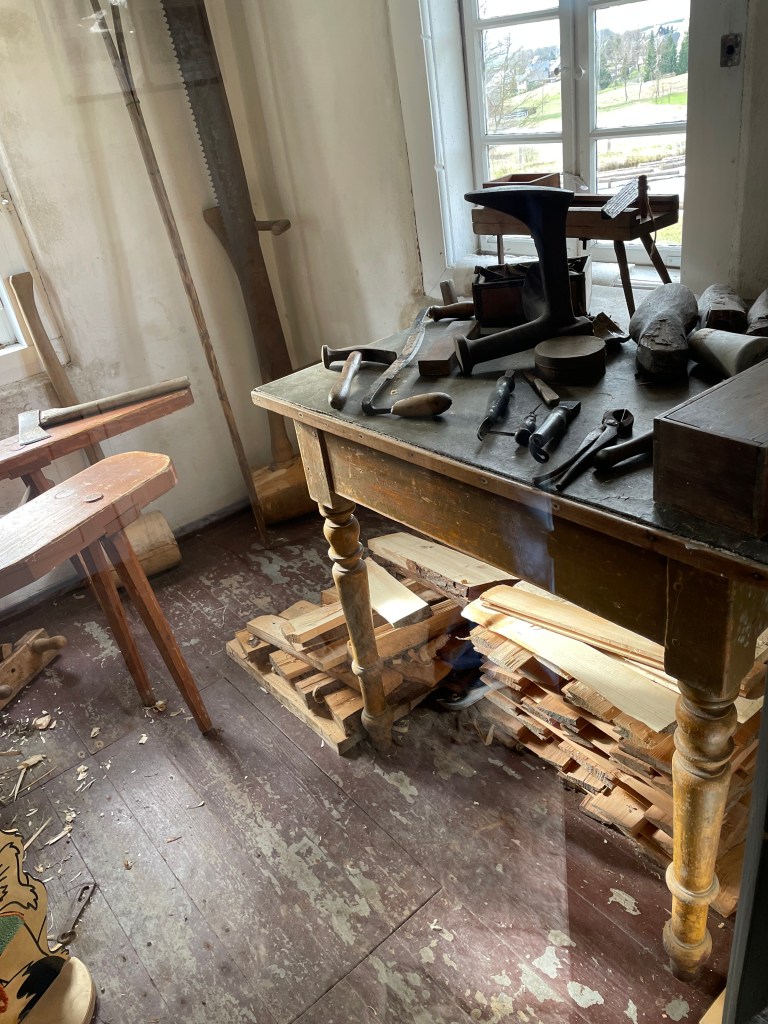
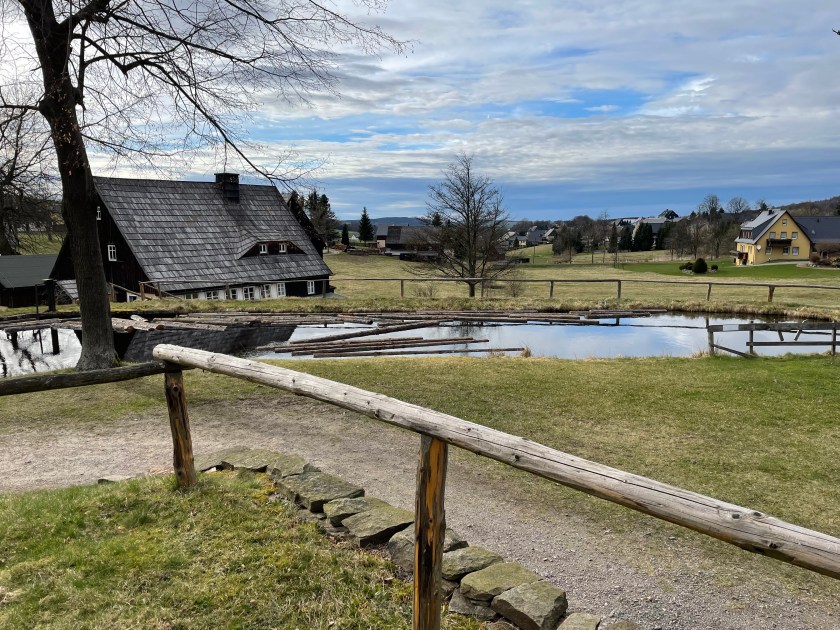
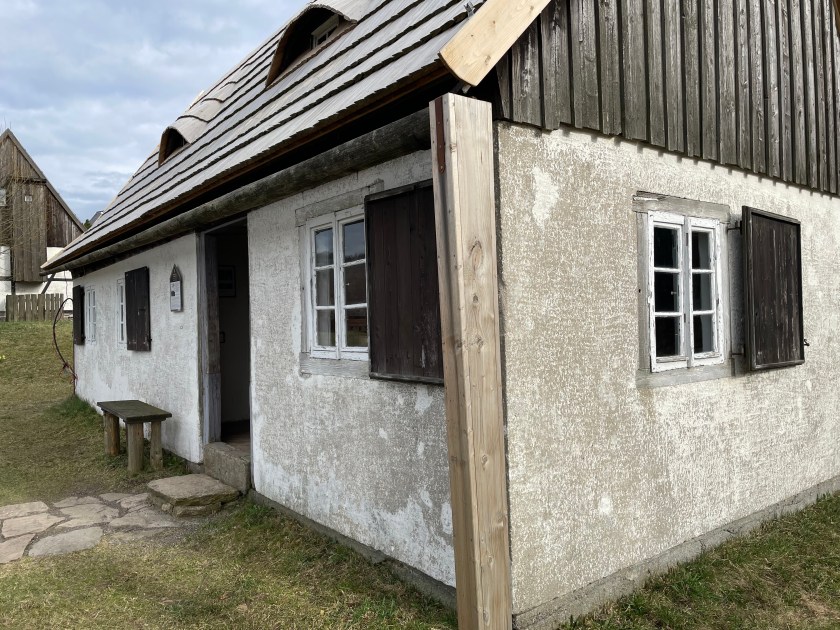
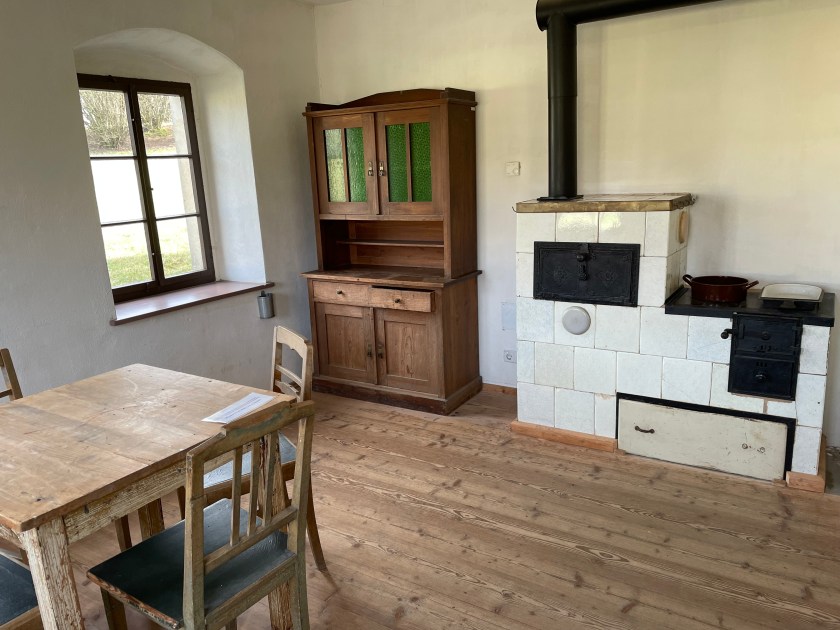
This living museum was established in the 1970s.  The homes and buildings here are from the 1700s and 1800s.  They show us what life was like for miners who later became woodworkers when the mines closed.  This living museum is laid out like a small village or neighborhood.  The woodworking shop was originally located right here, where it stands, with the water mill that powered the lathe.  You’ll see that as we take a walk through this village.

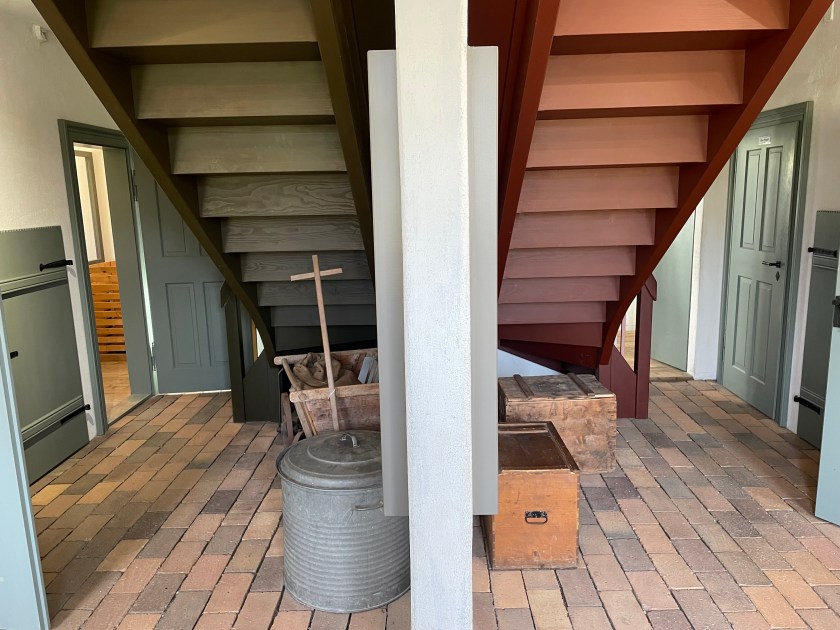
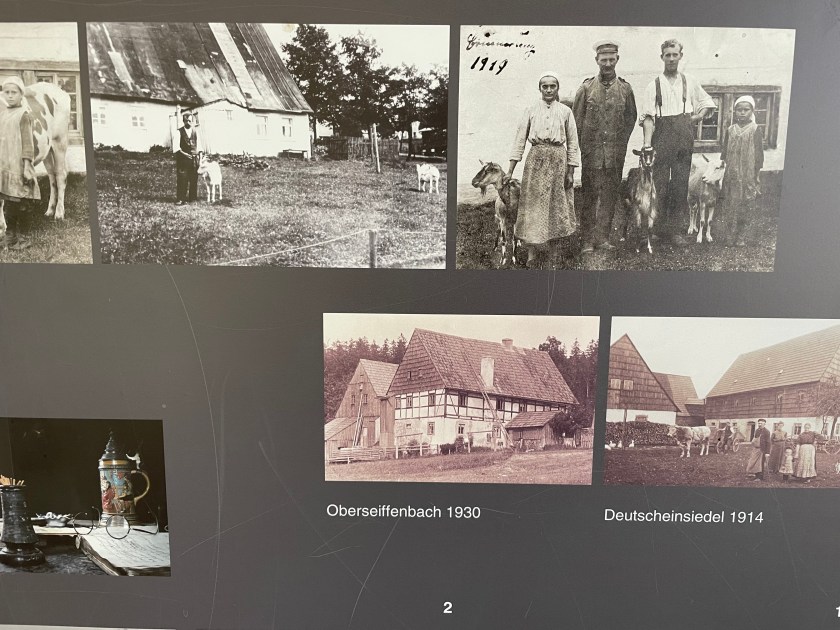
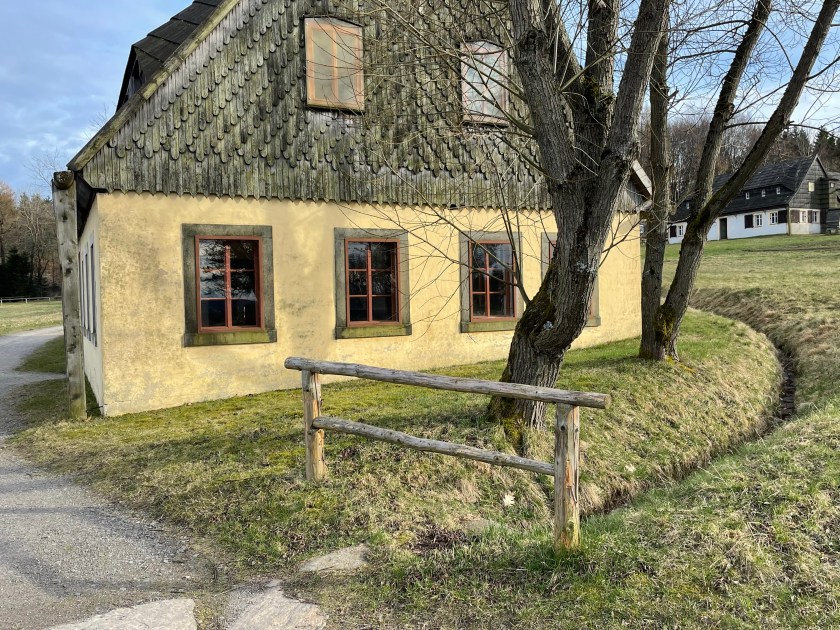
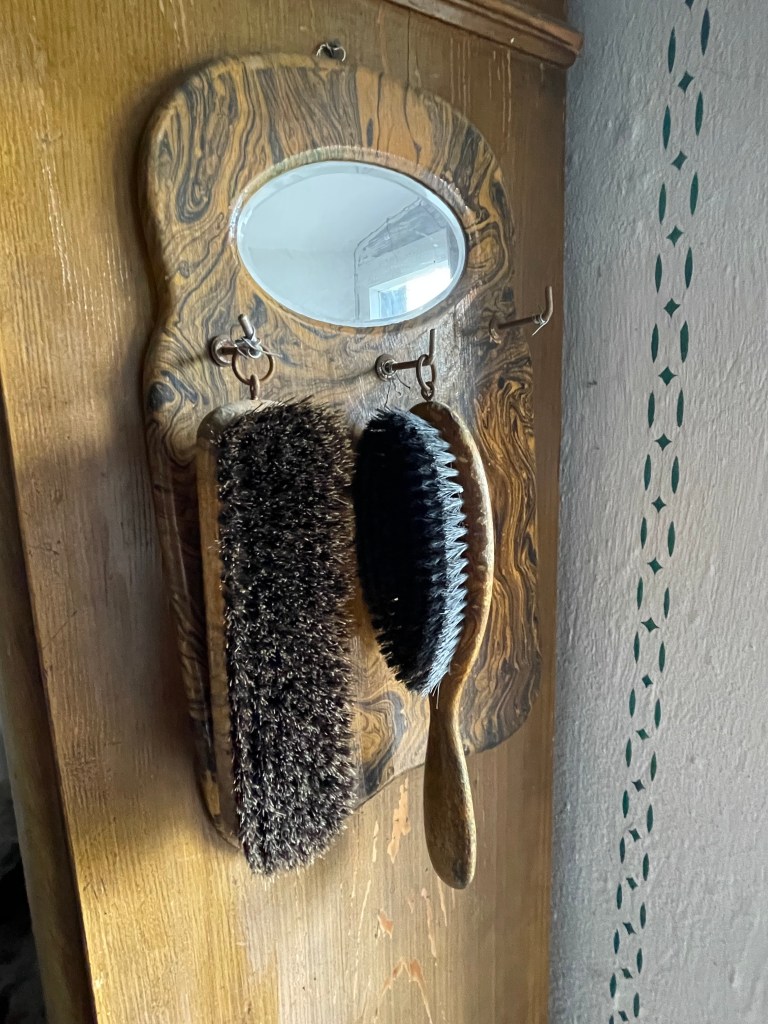
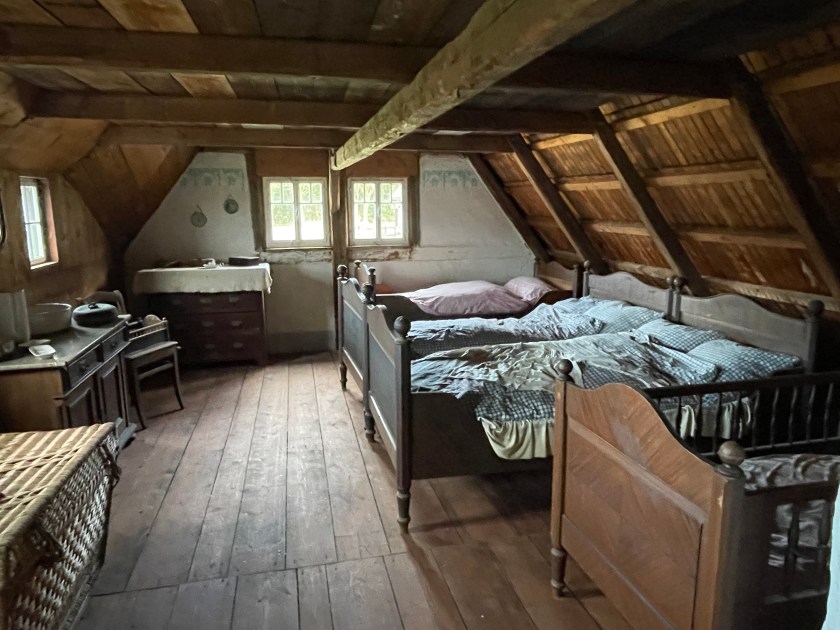
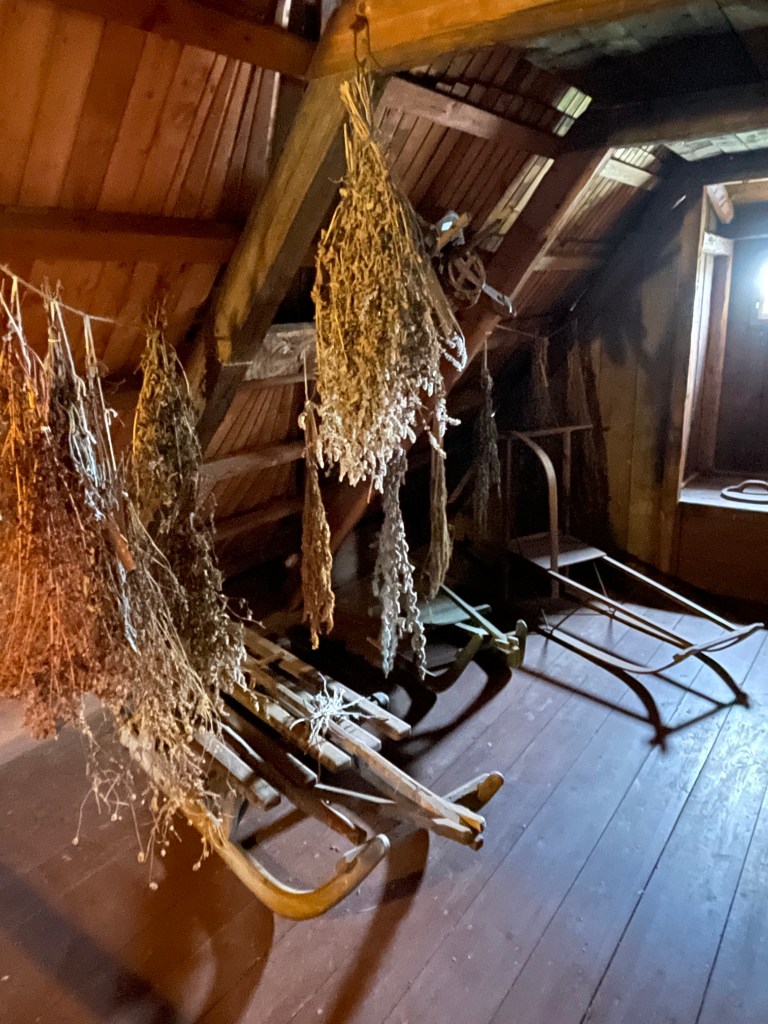
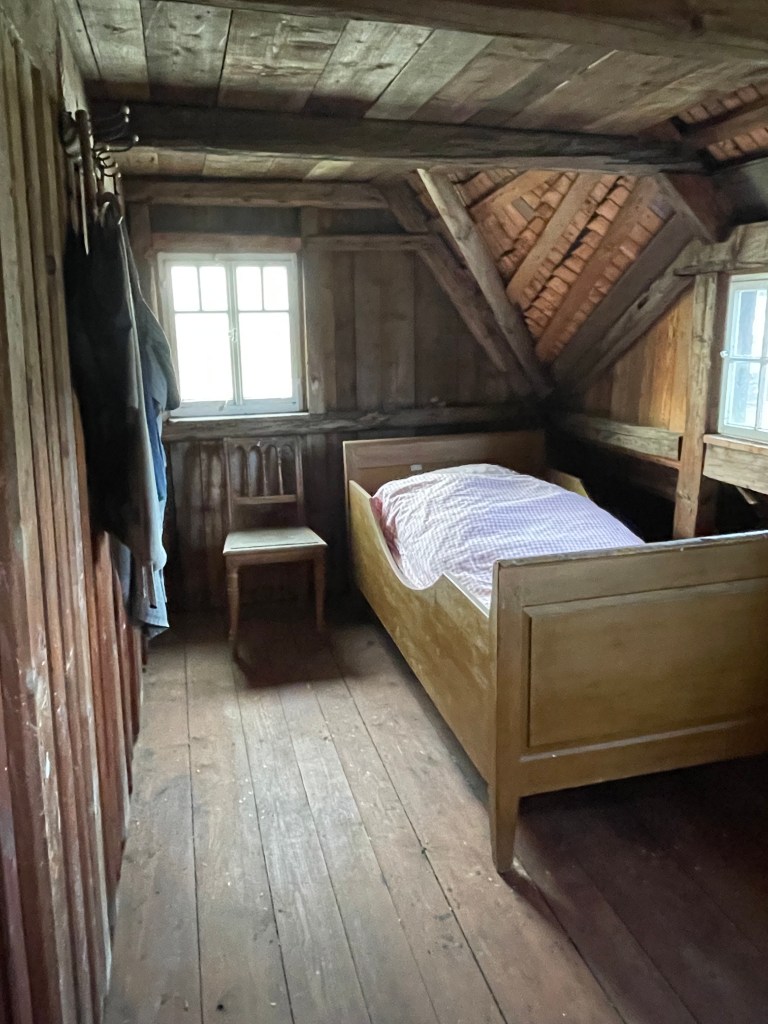
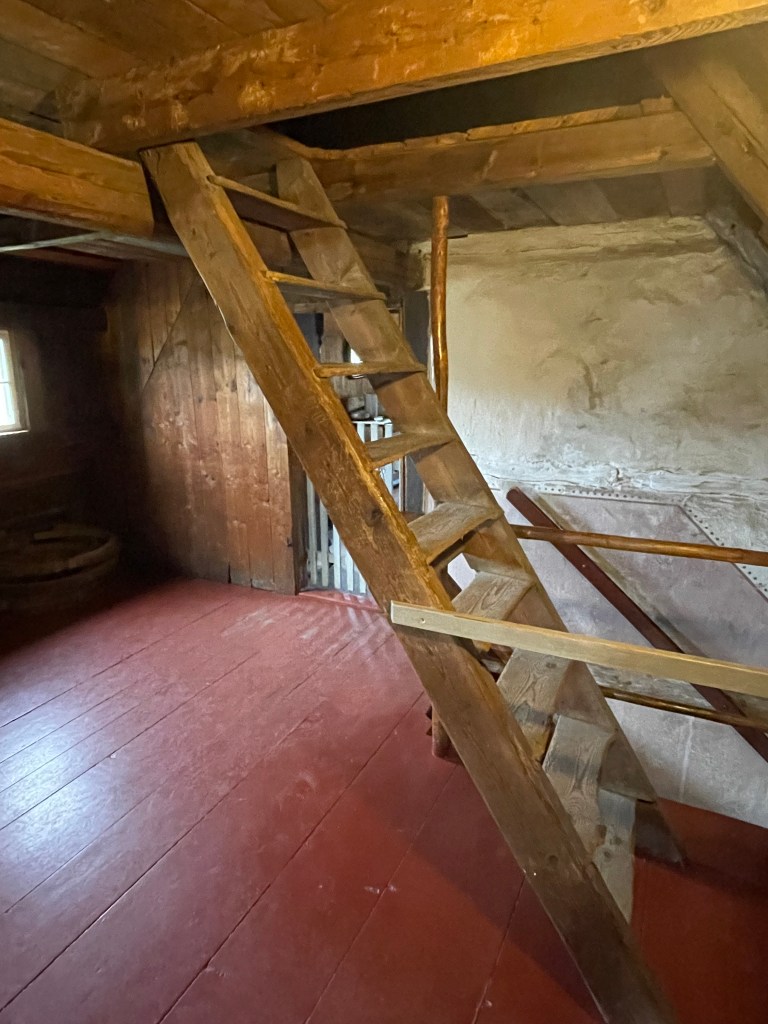
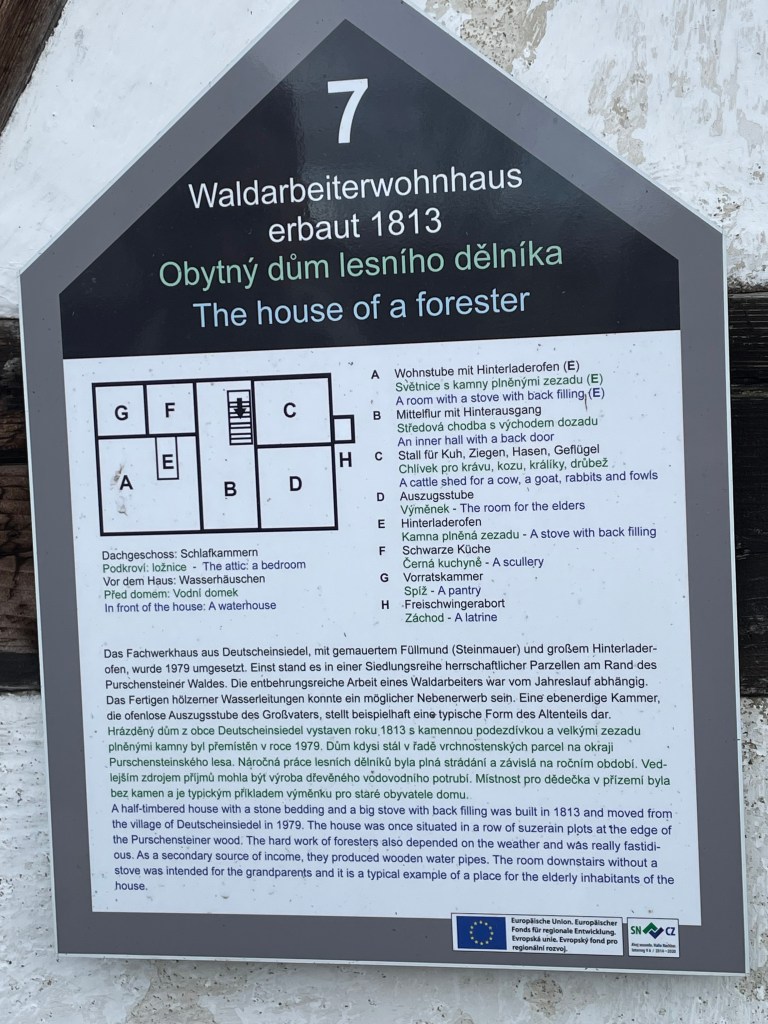
Each home tells a story of a family who once lived there.  Some of the home descriptions included photos of those families.  It was all fascinating to me.

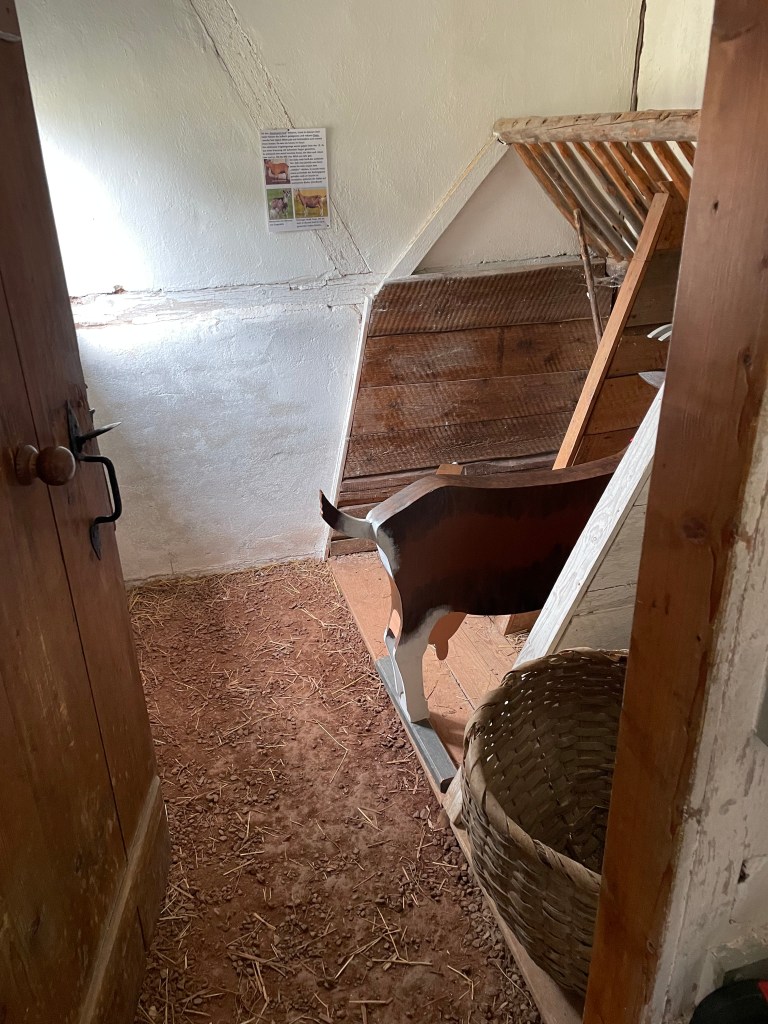
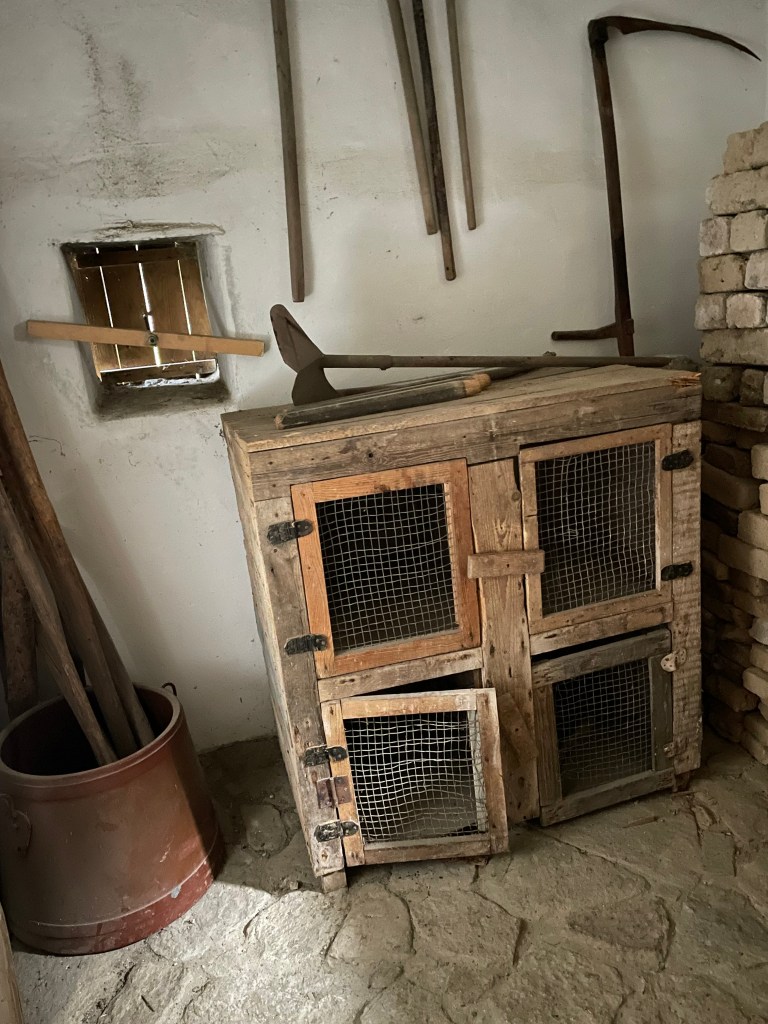
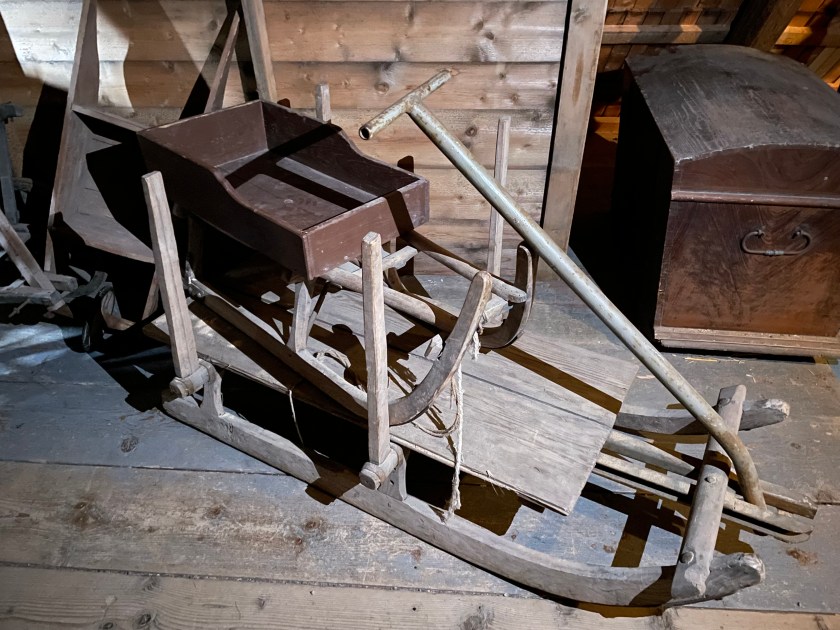
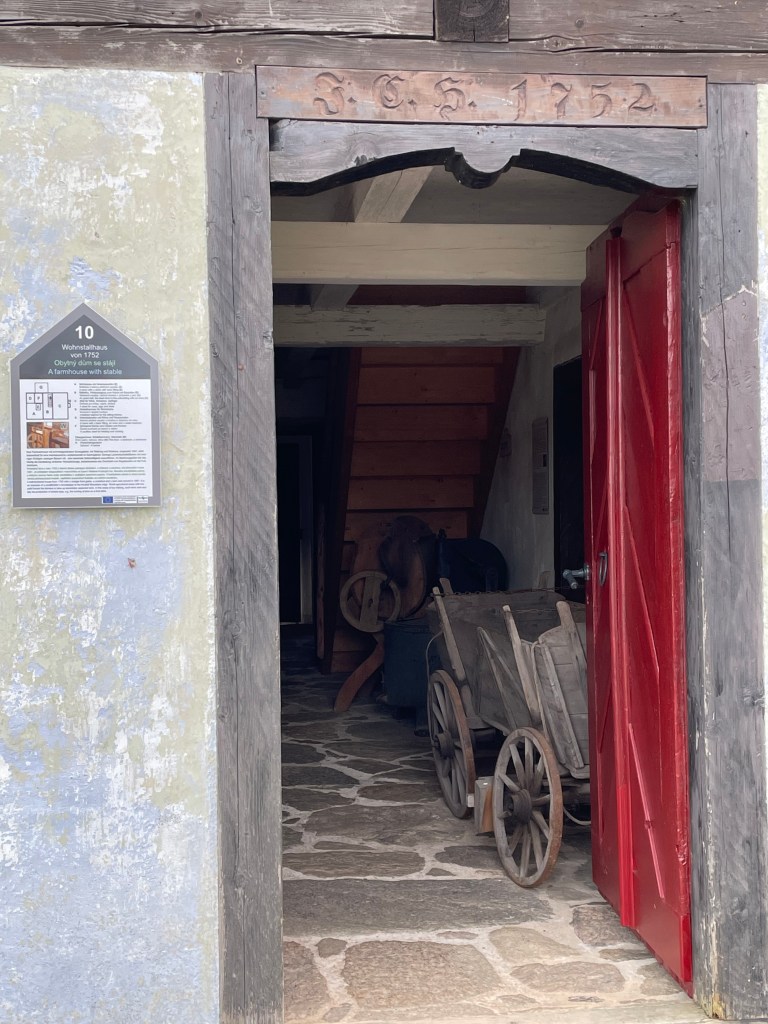
Often animals were kept inside the home, in their own place.

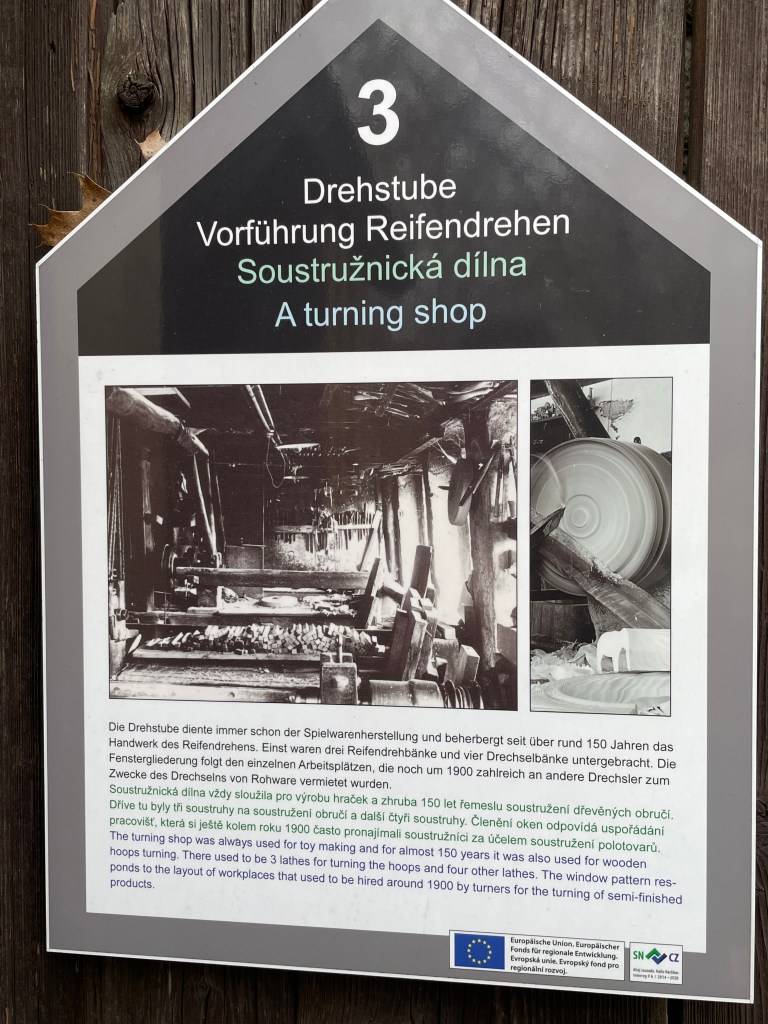
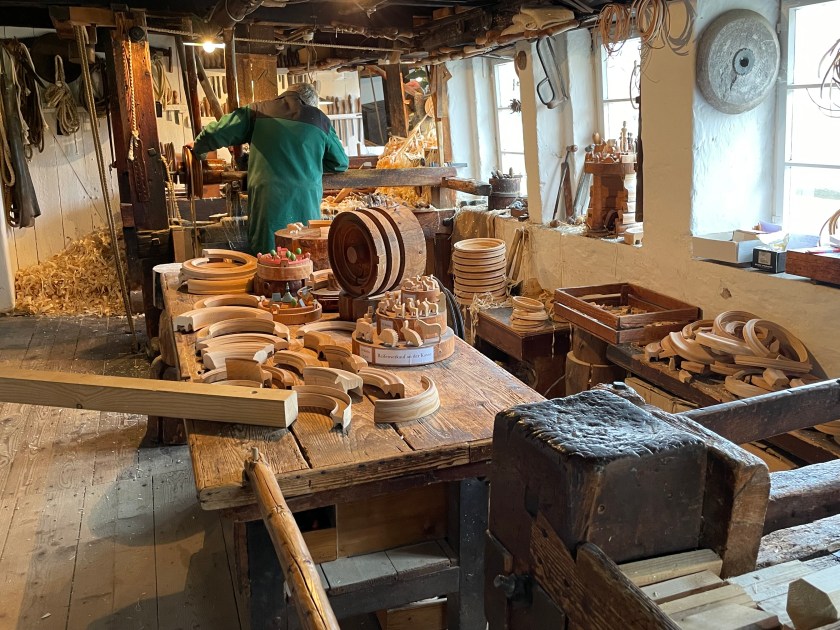
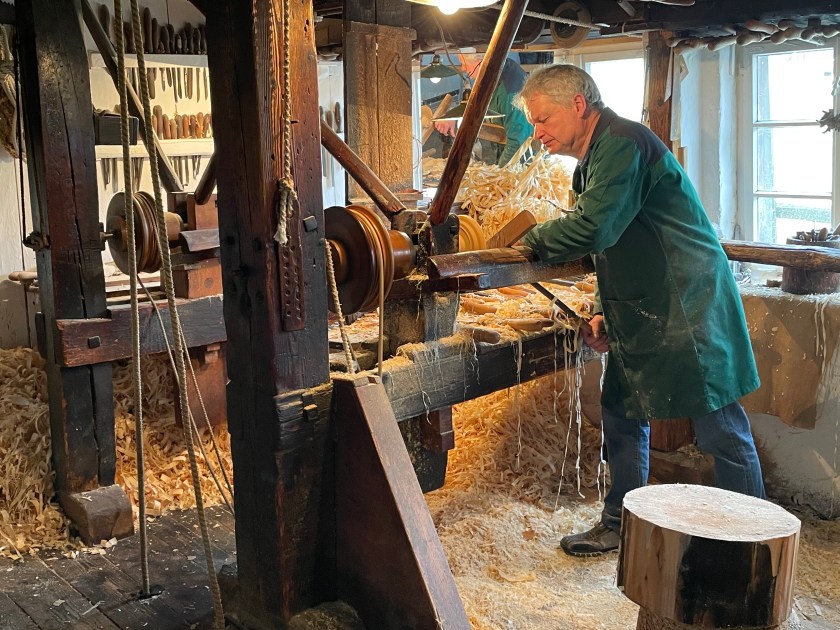
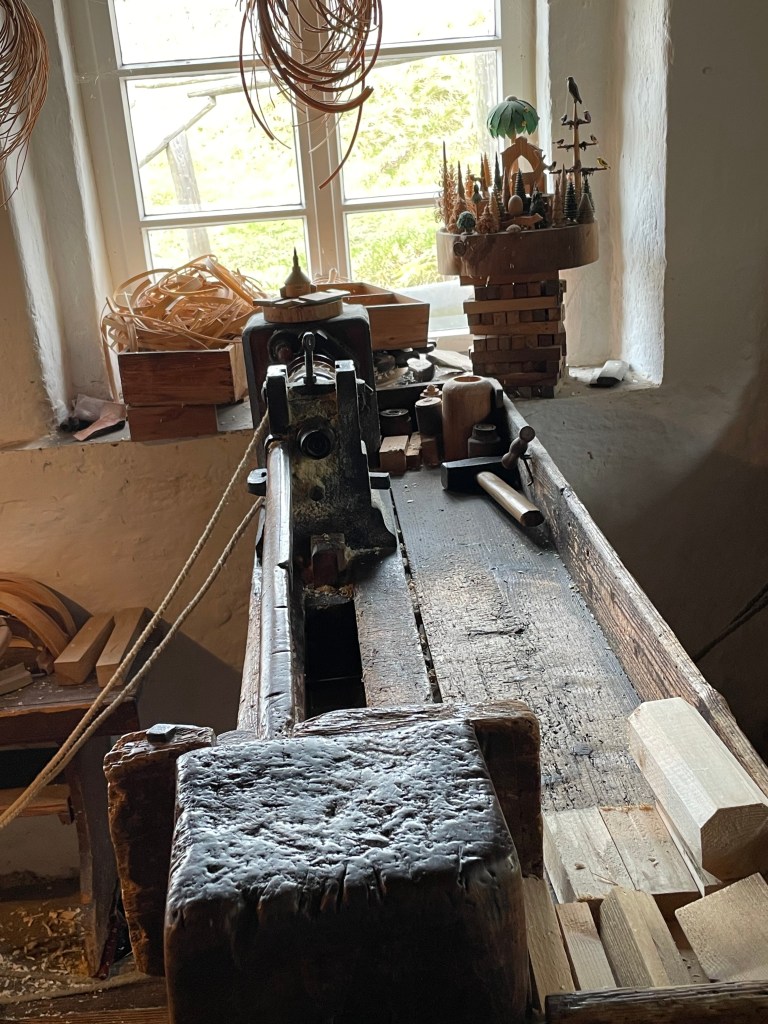
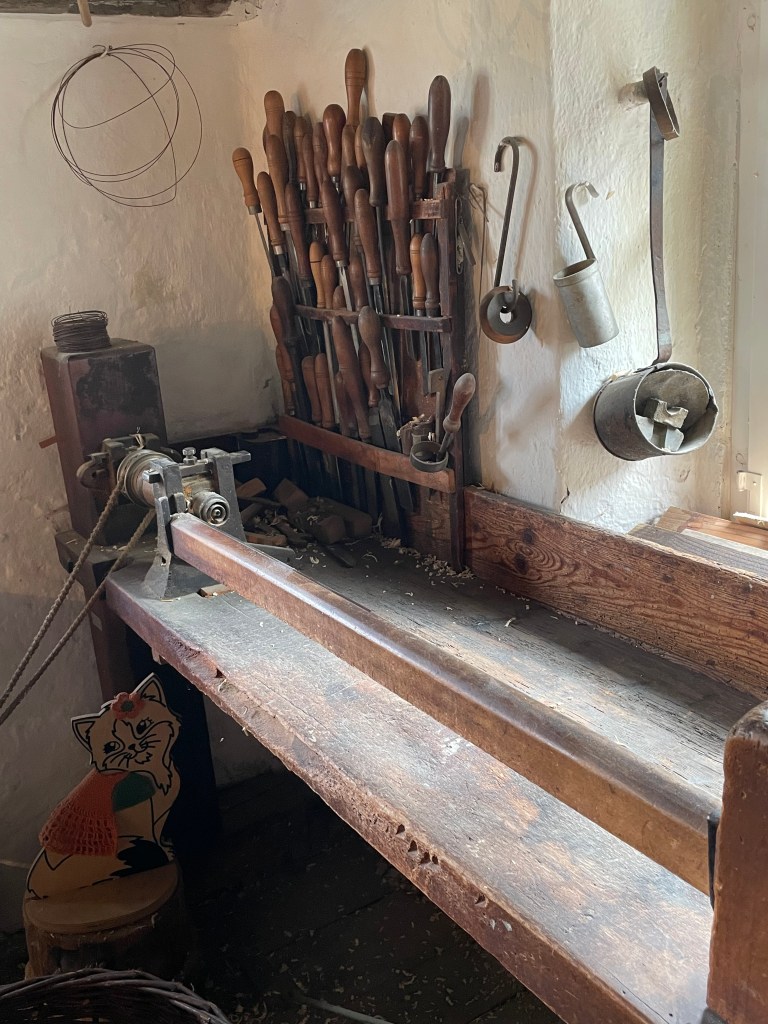
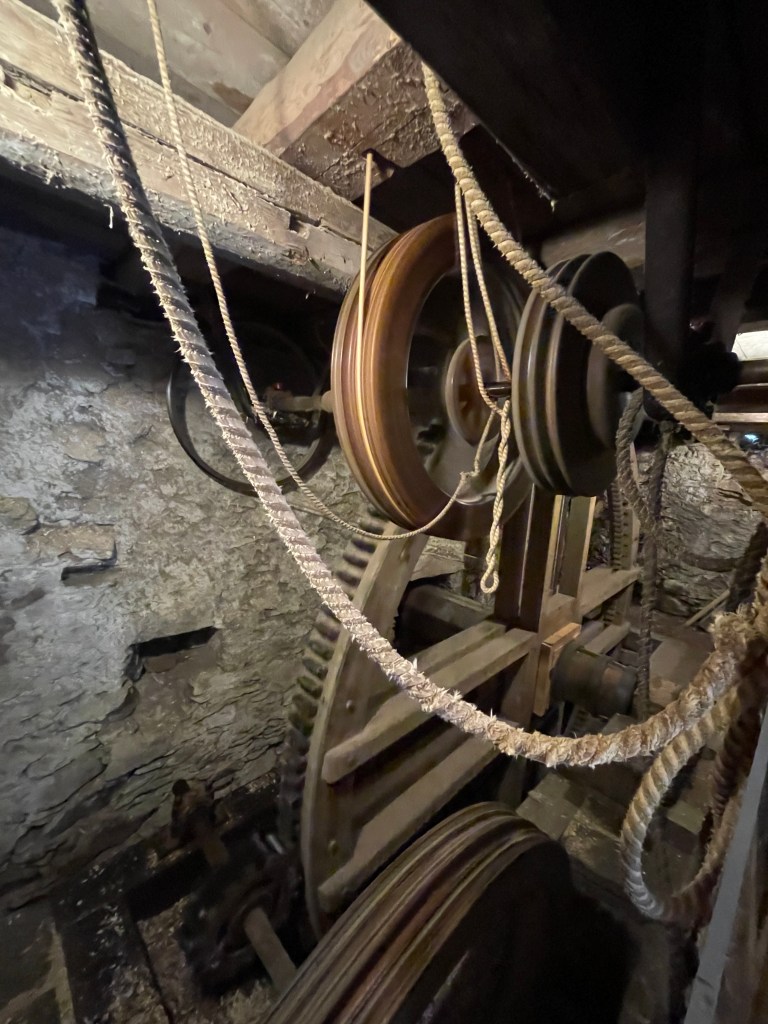
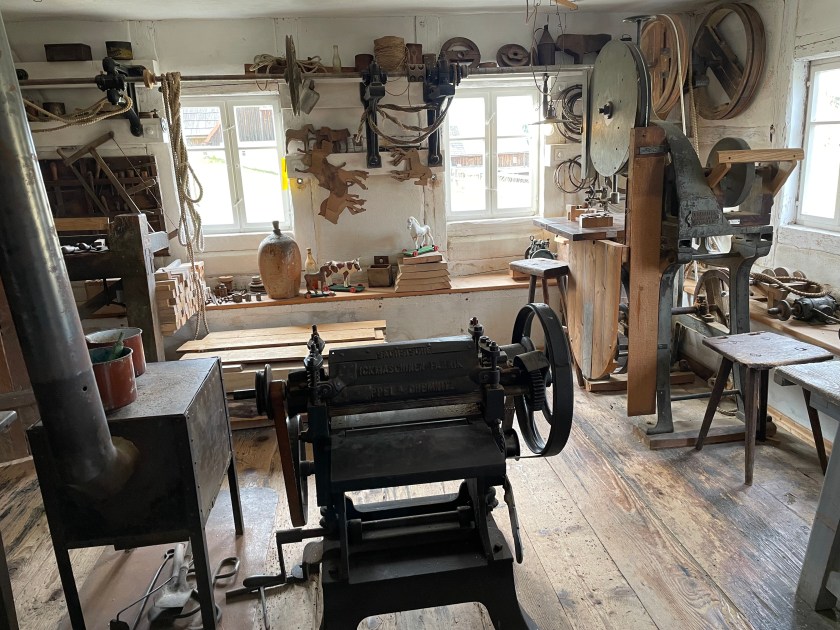
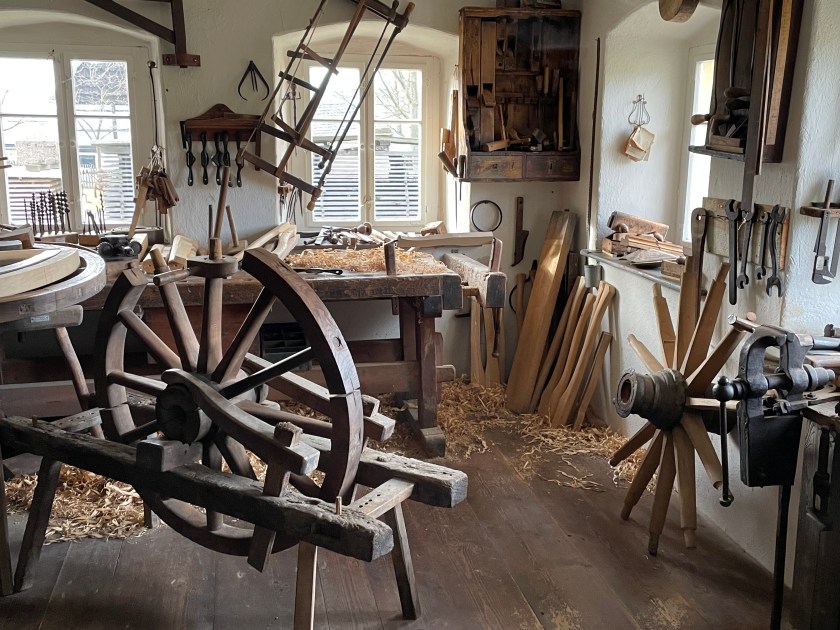
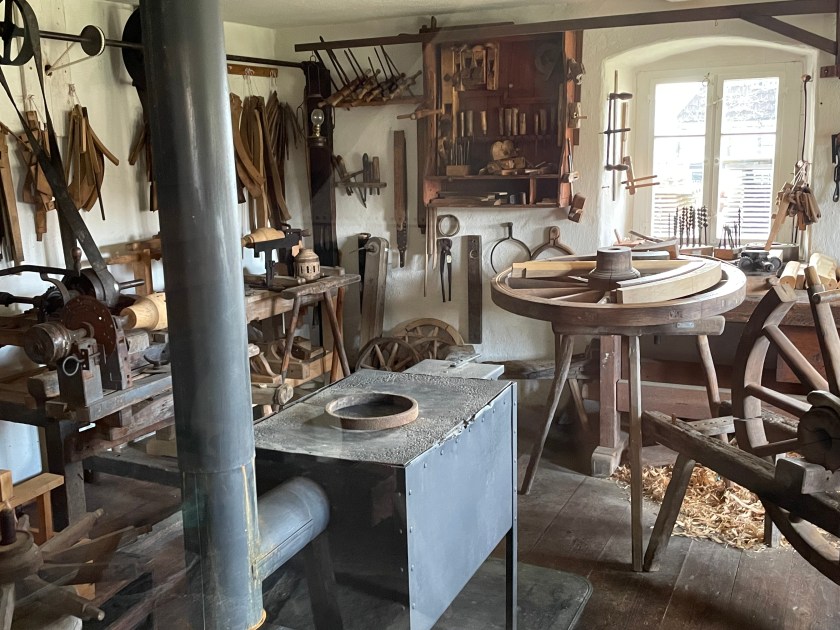
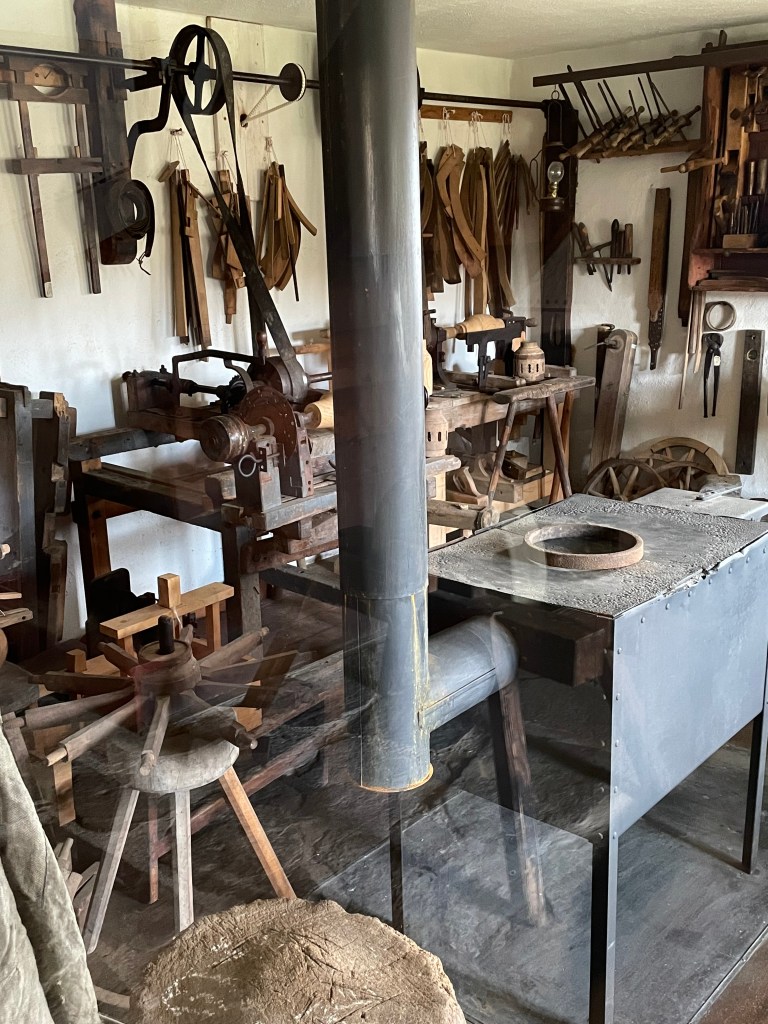
This is the woodworker’s shop that was here originally, and was not moved here from another nearby place.  A toy maker works here, still.  The tools are powered by a watermill (no electricity is used).


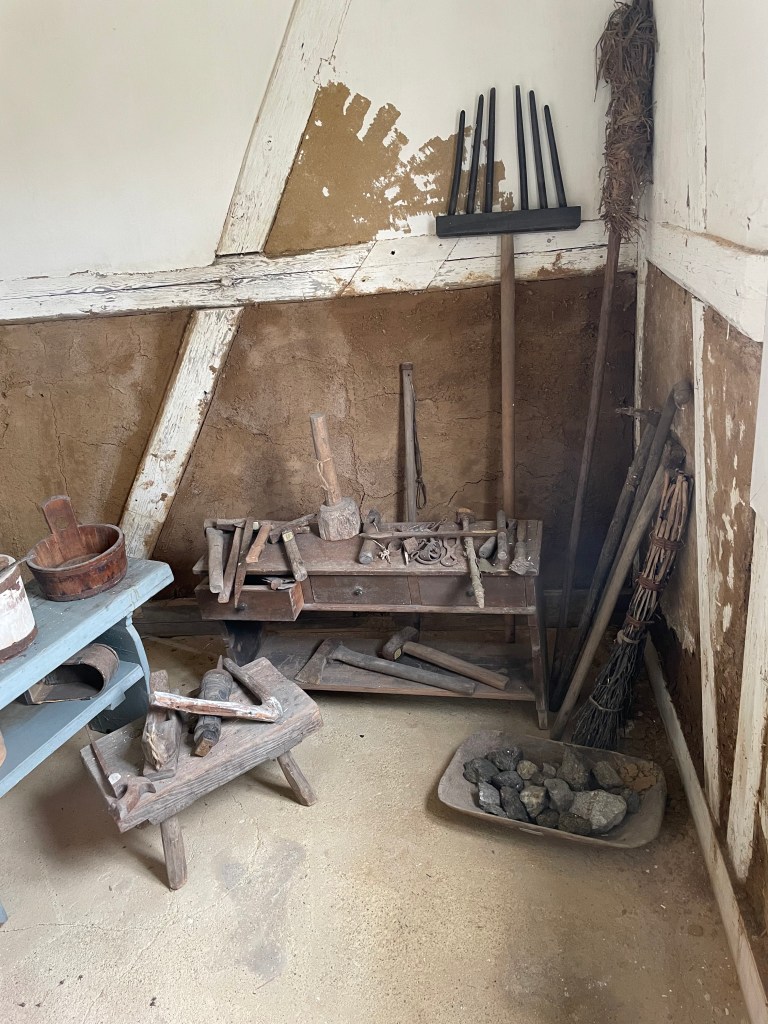
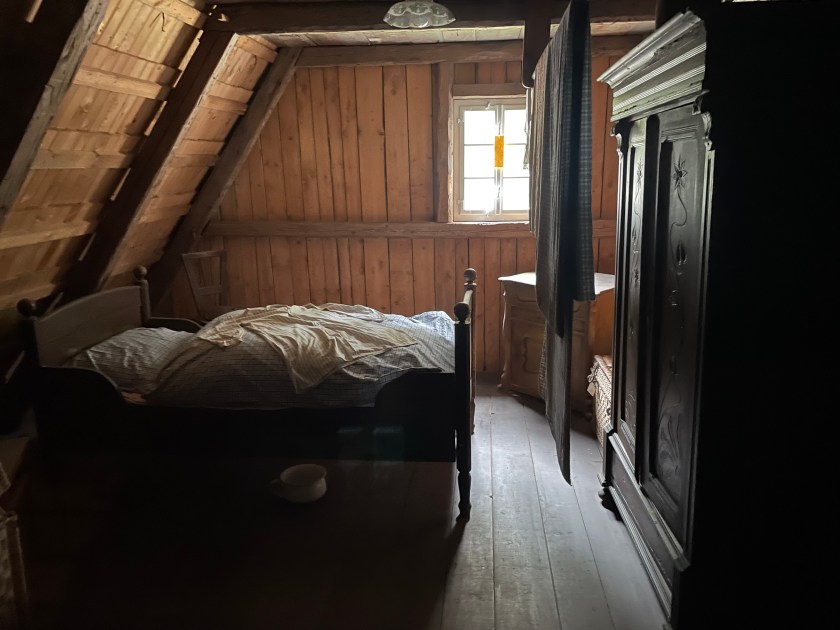
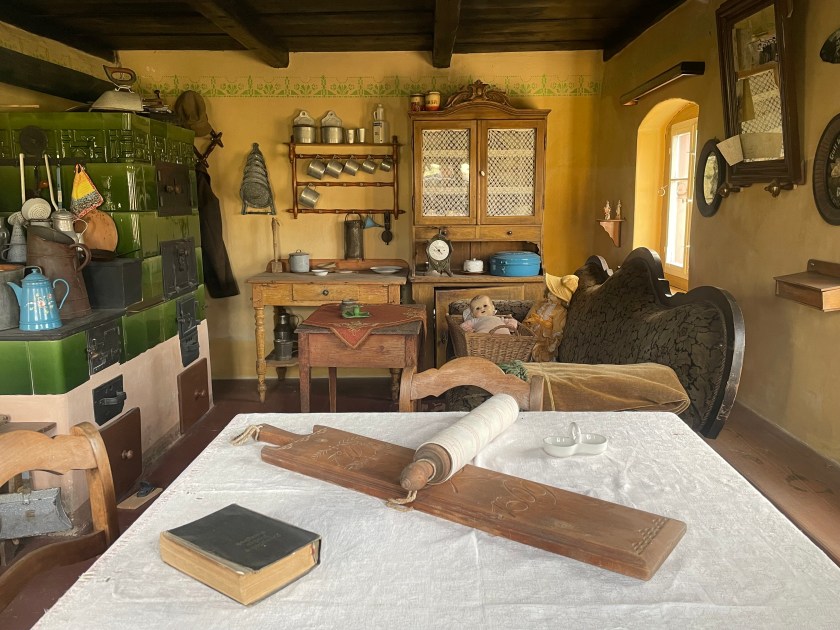
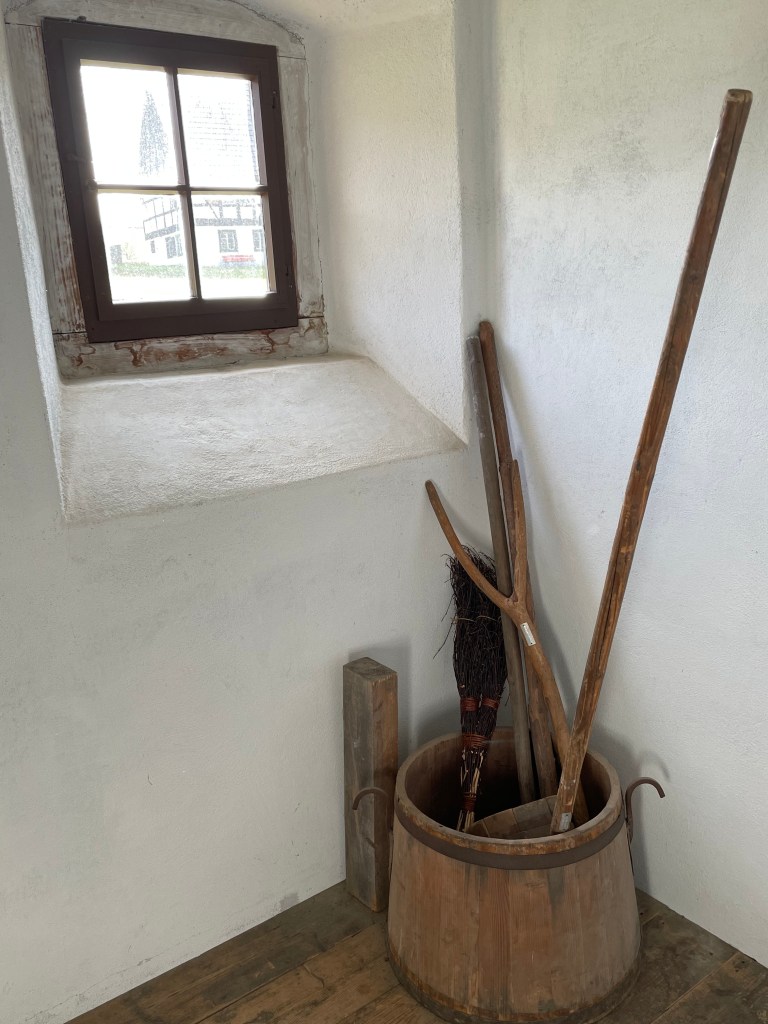
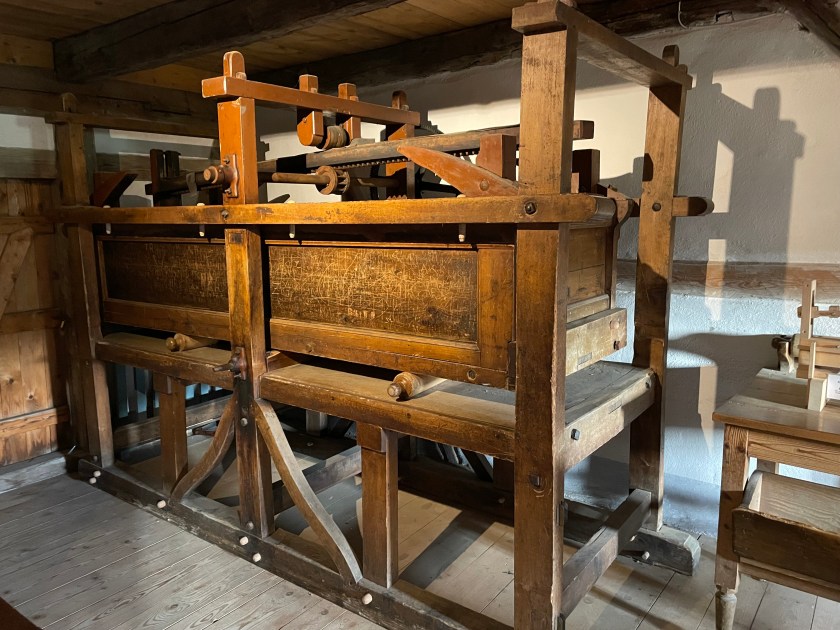
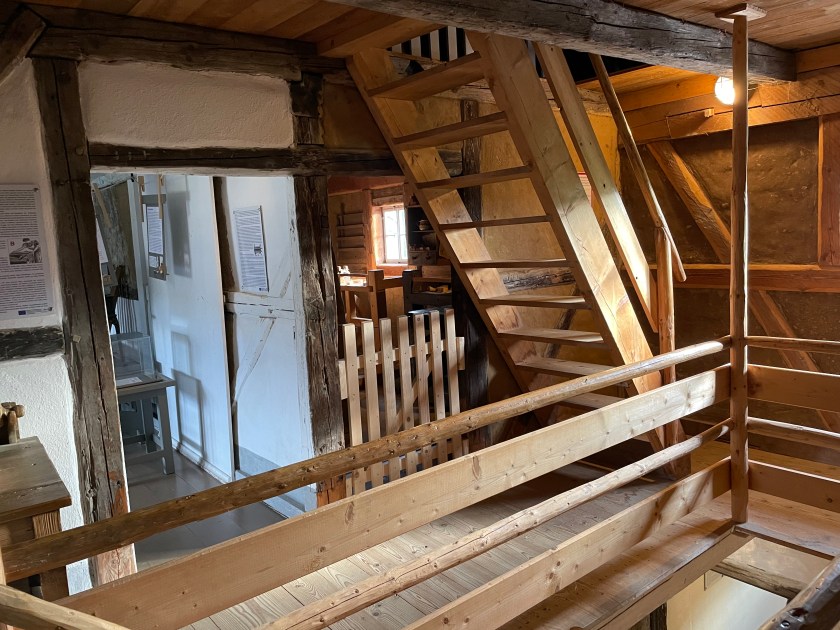
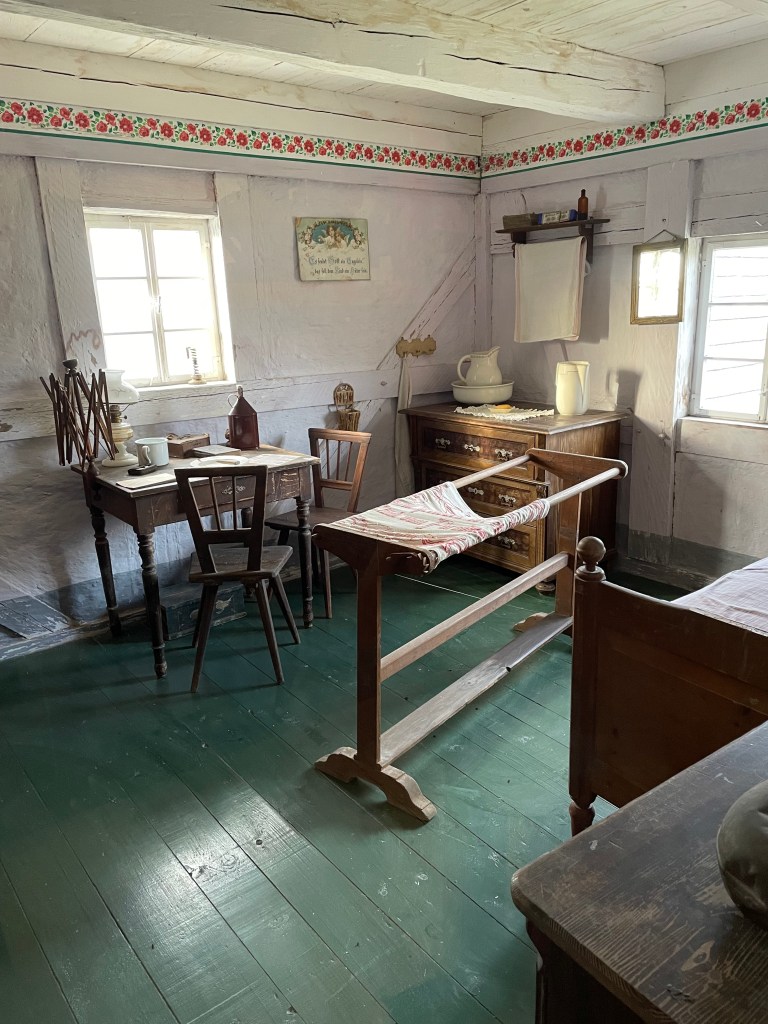
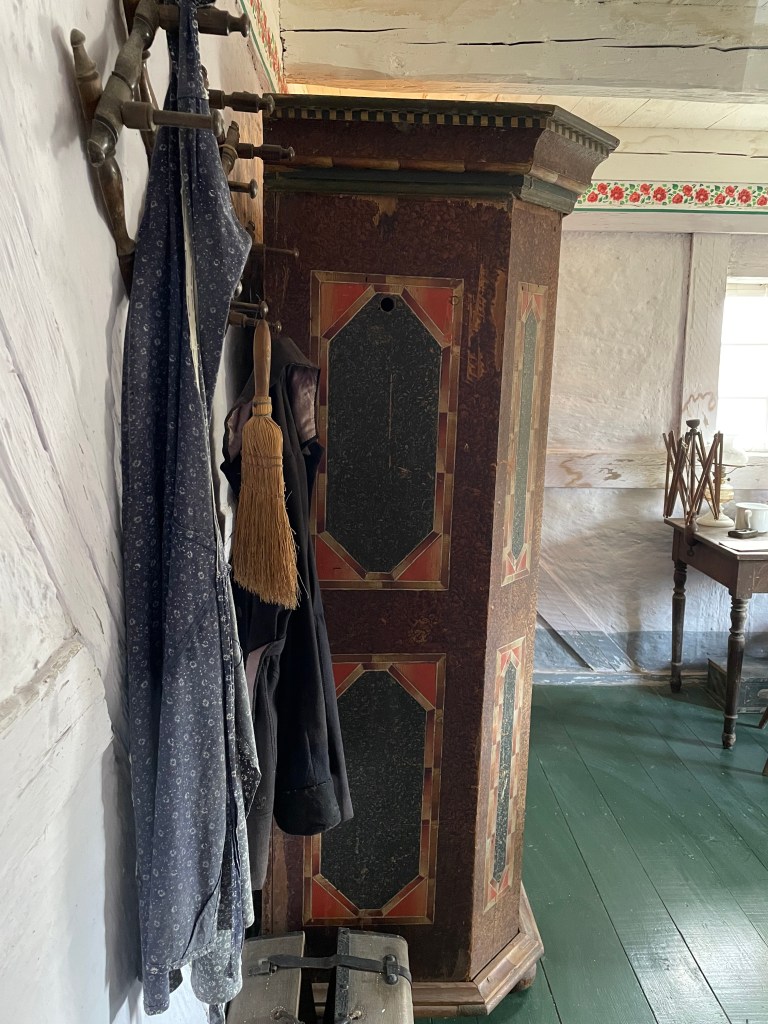
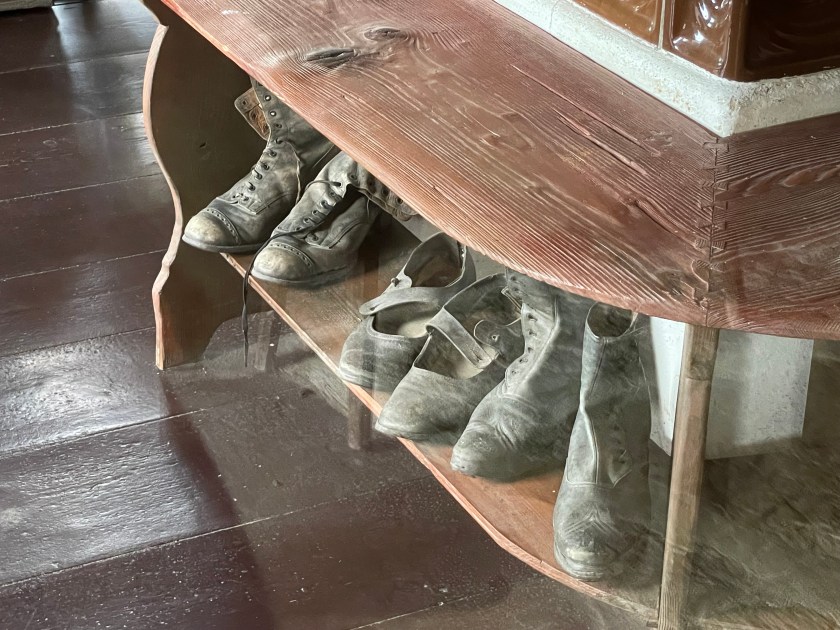
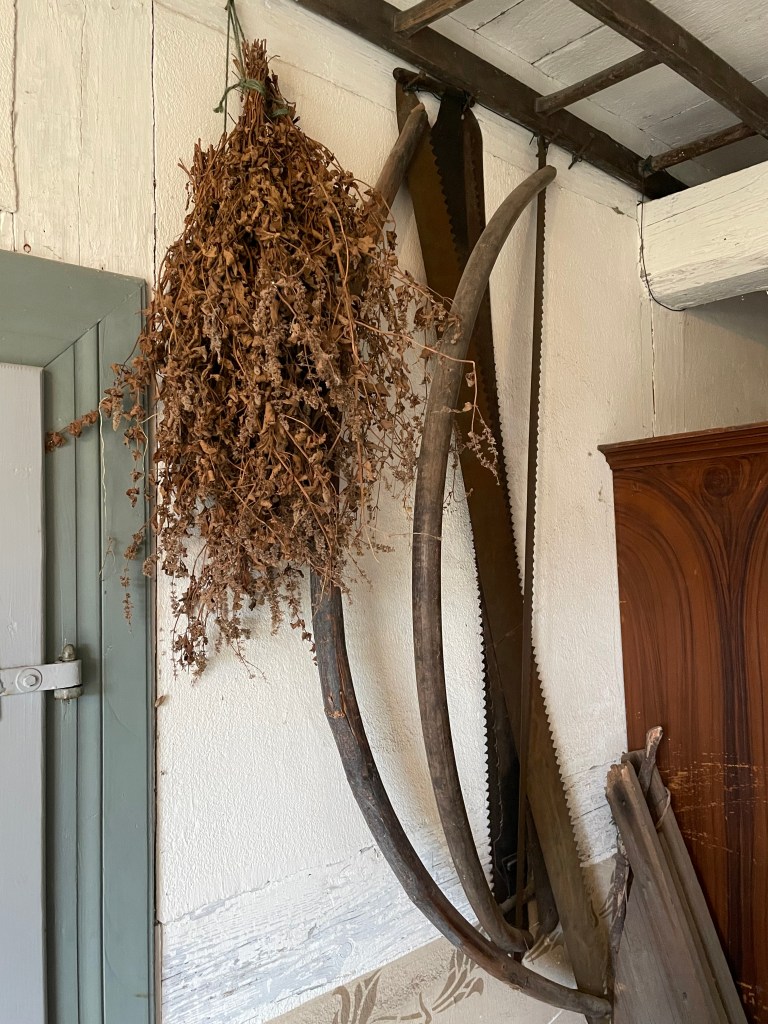
Here are more of the interesting homes, filled with tools, clothing, household items and memories:

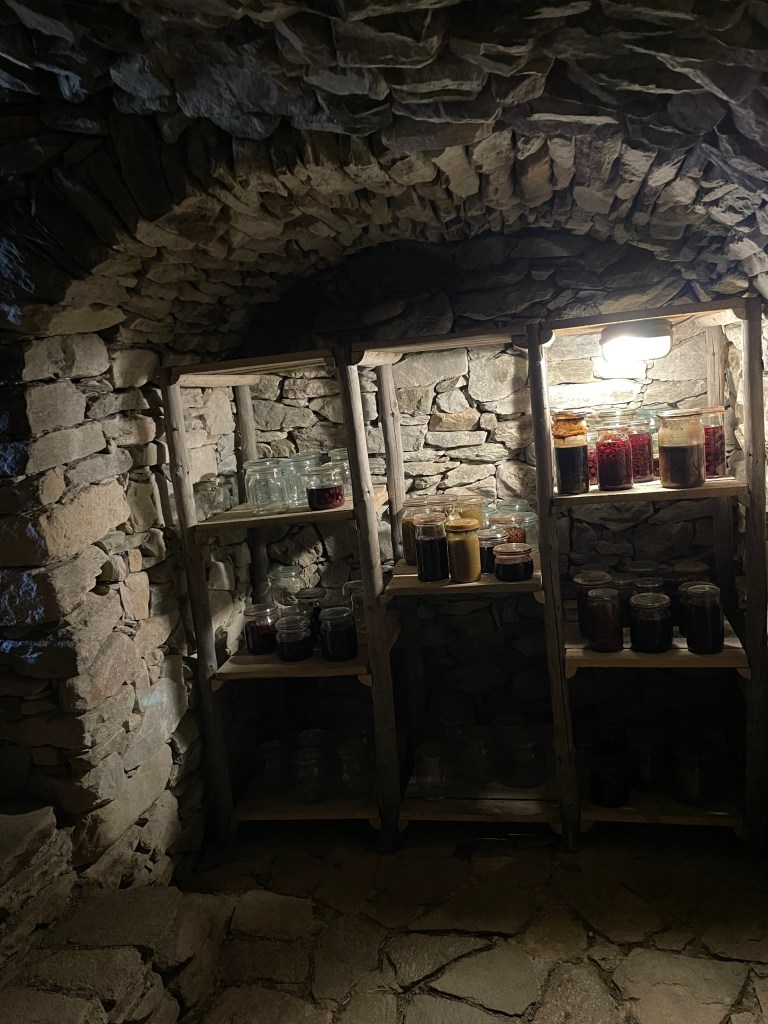
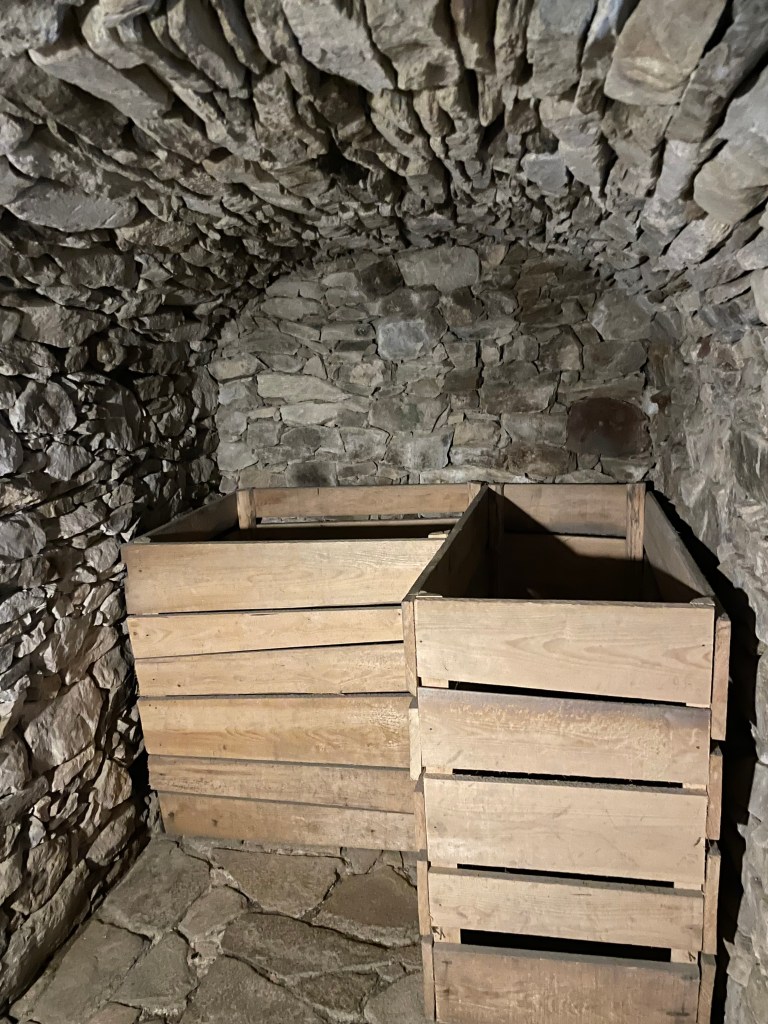
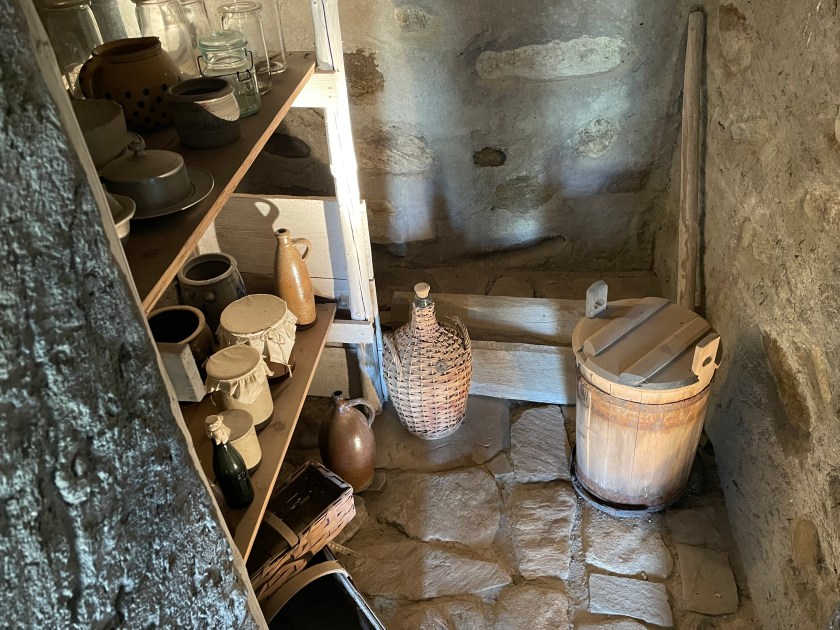
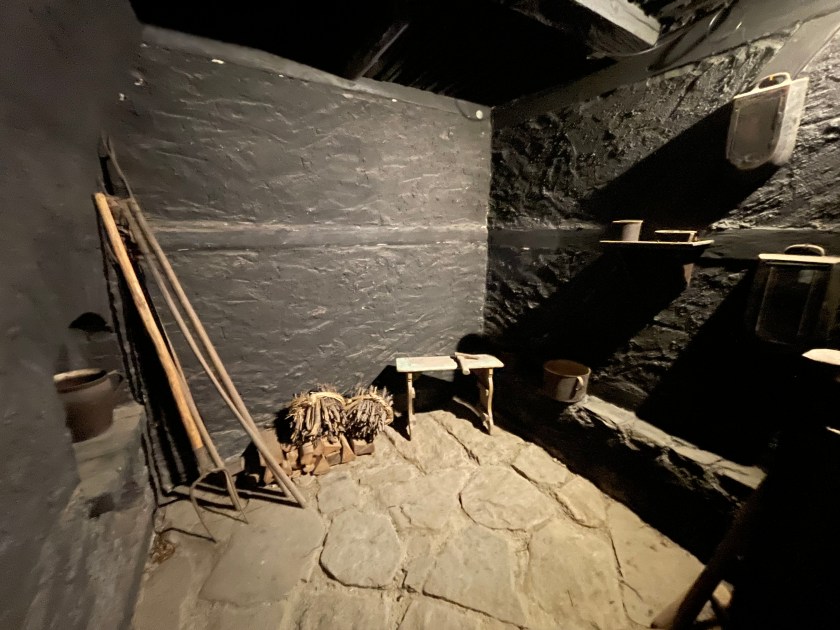
This stone room was like a cold storage inside the home.

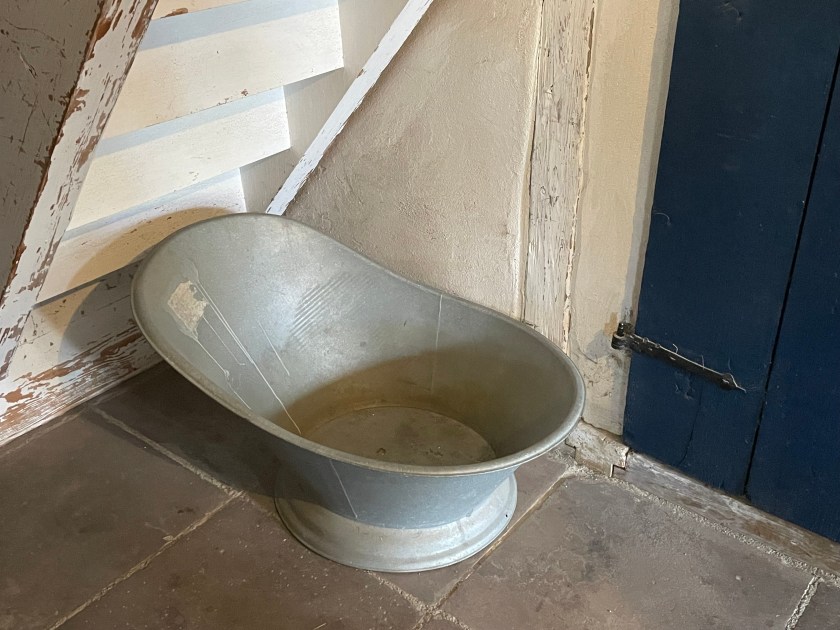
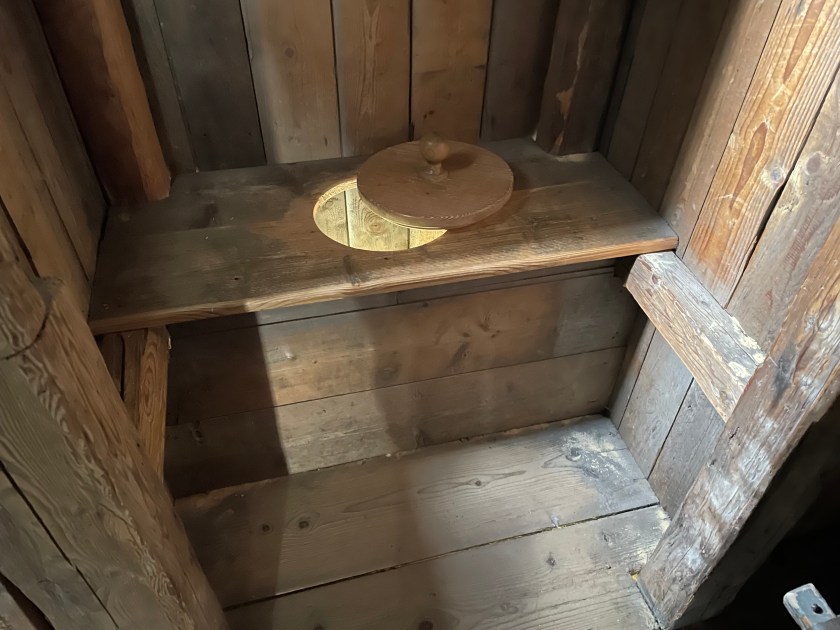
Indoor toilet:

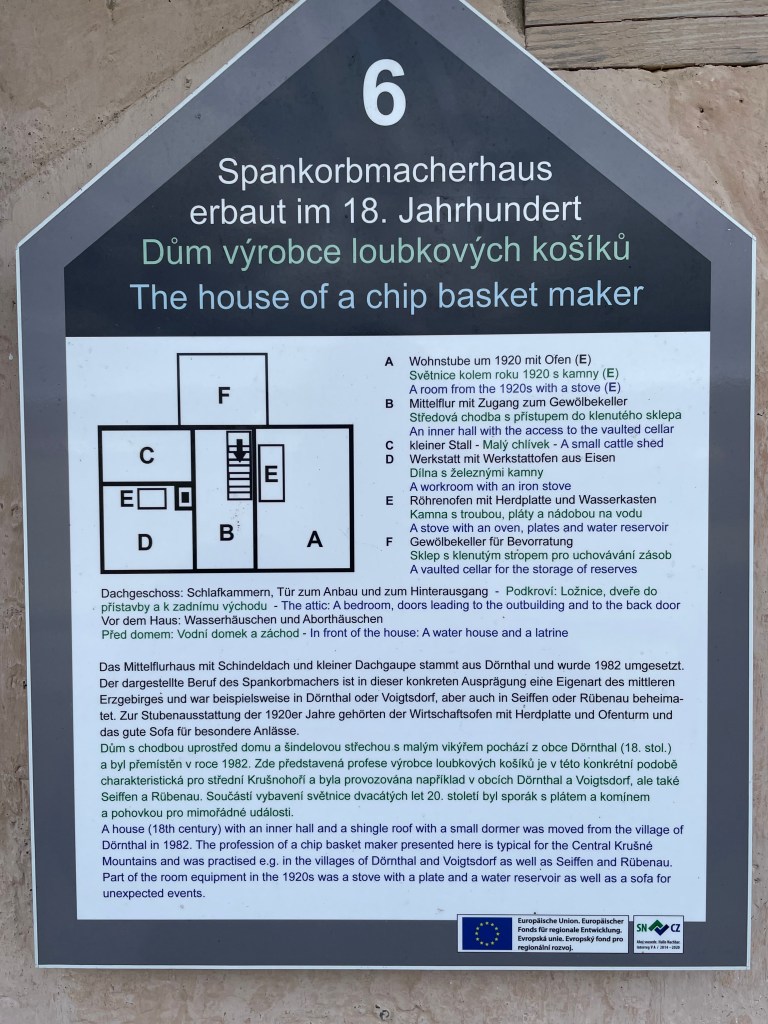
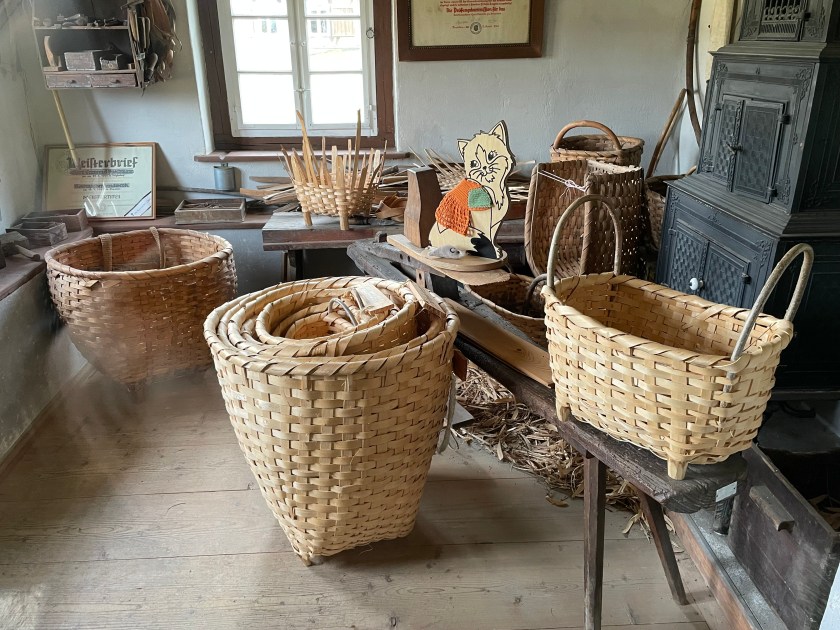
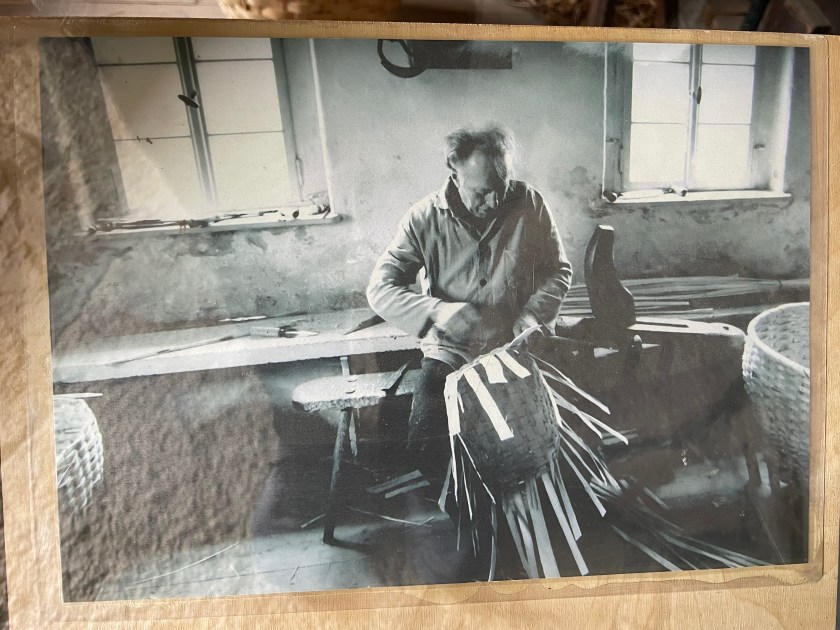
Here’s a basketmaker’s room:

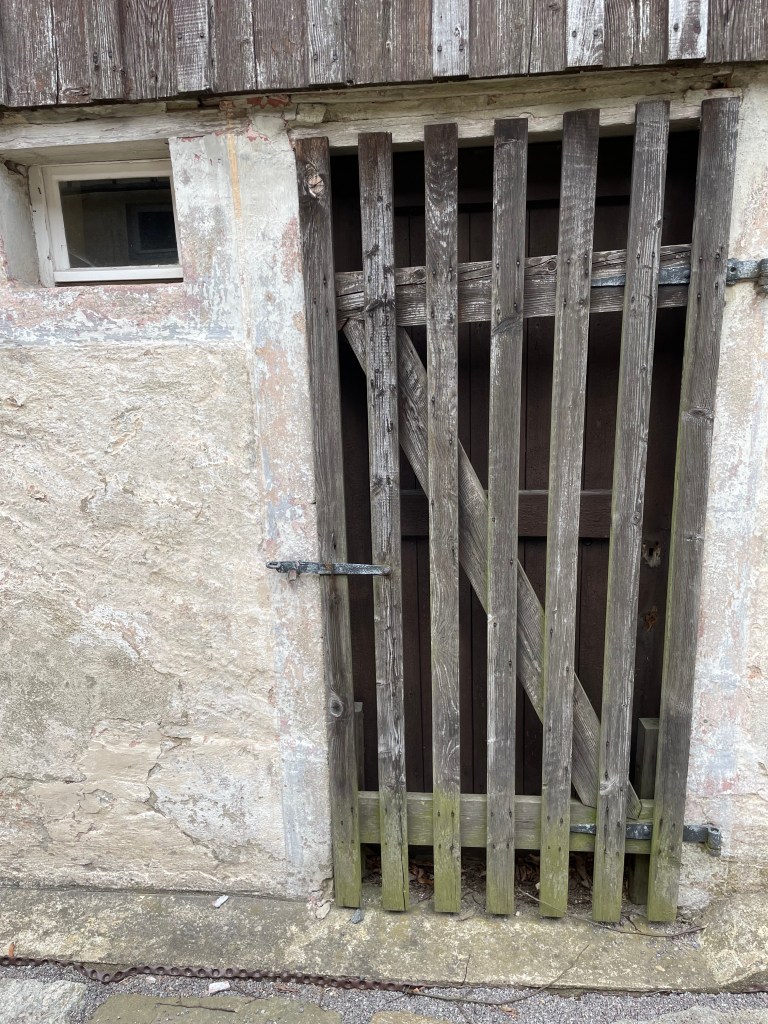
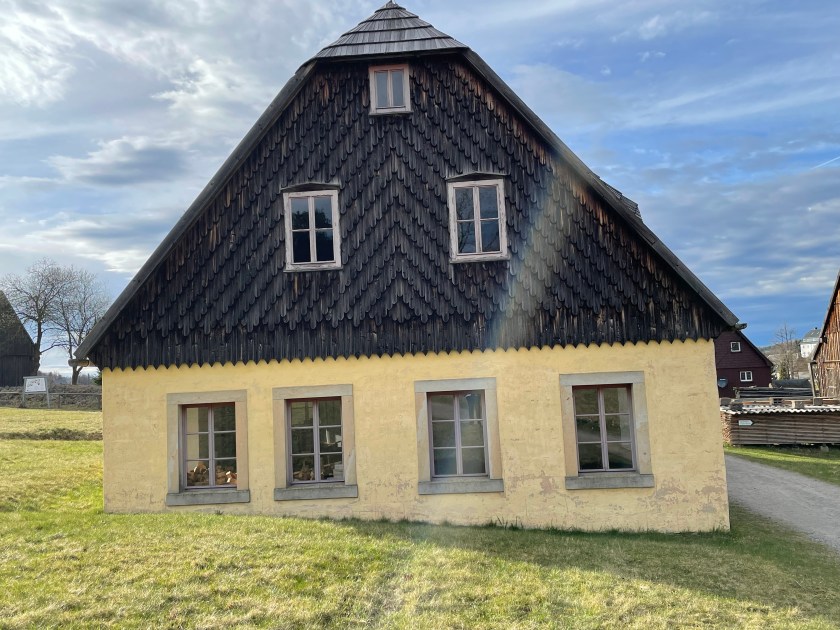
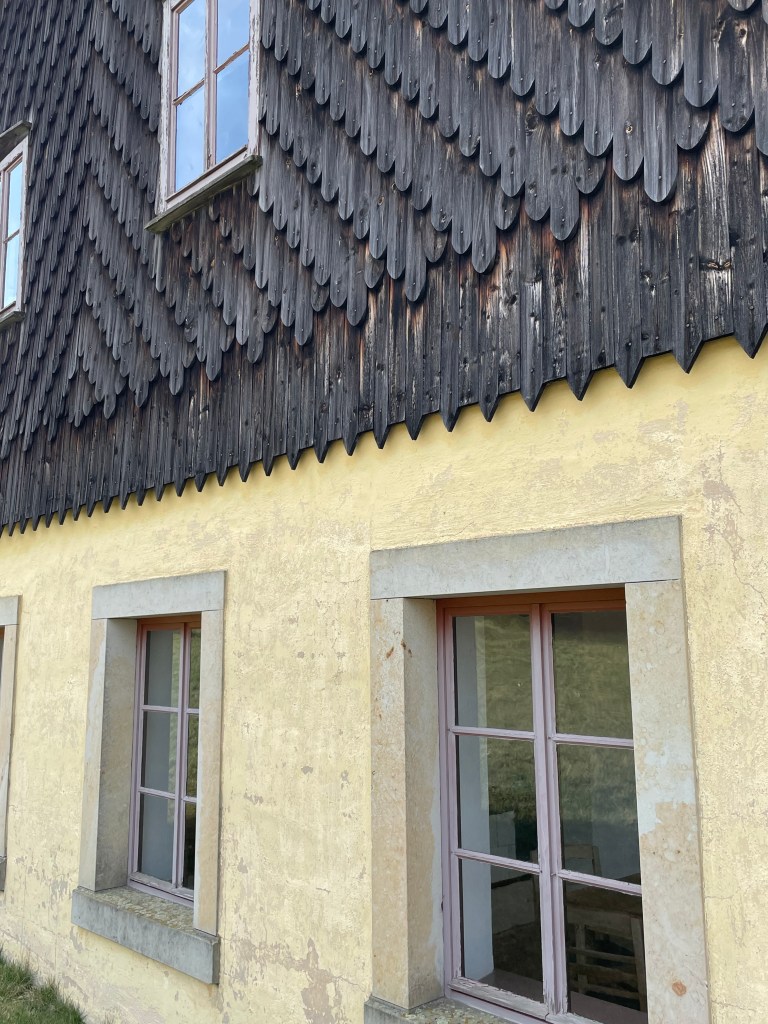
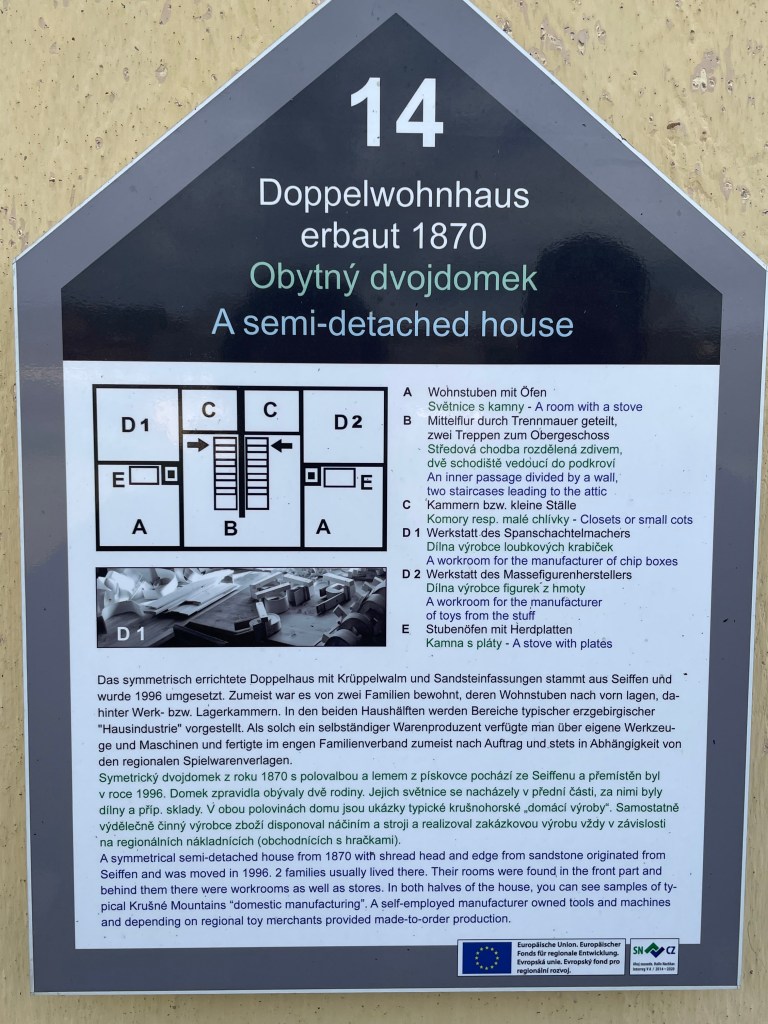
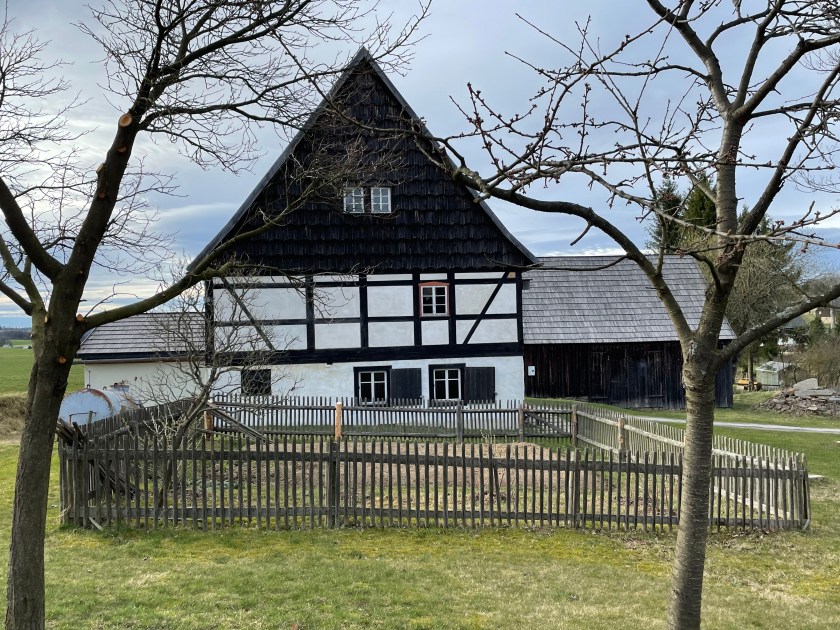
This home was built for 2 families, symmetrically balanced.

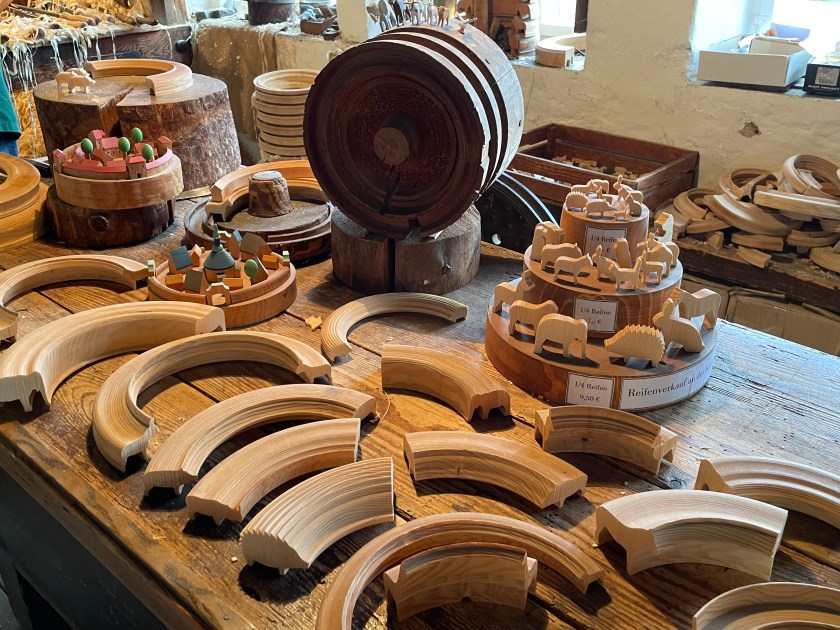
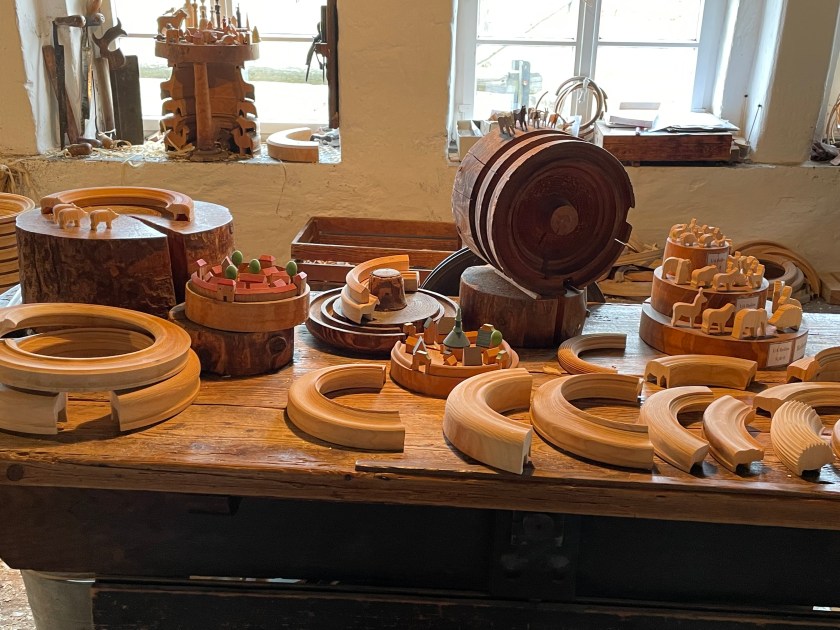
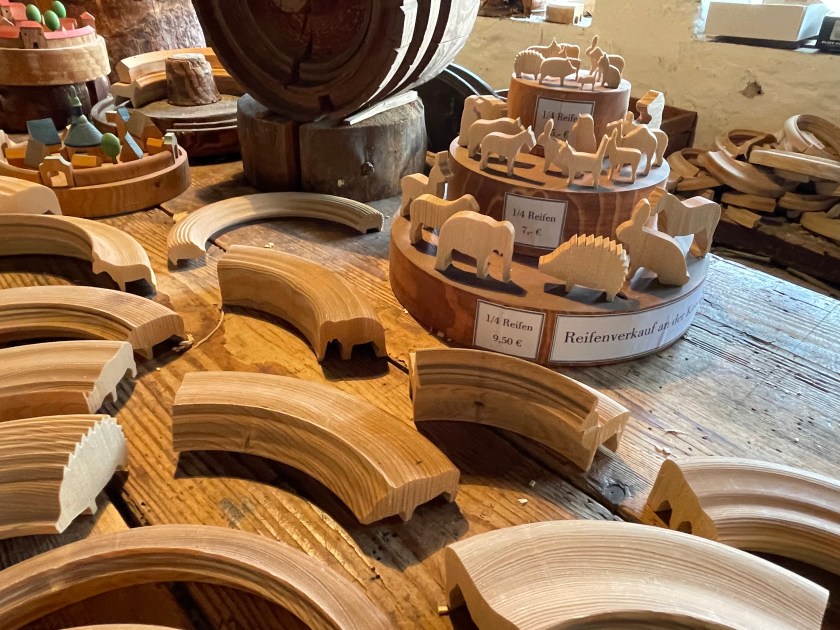
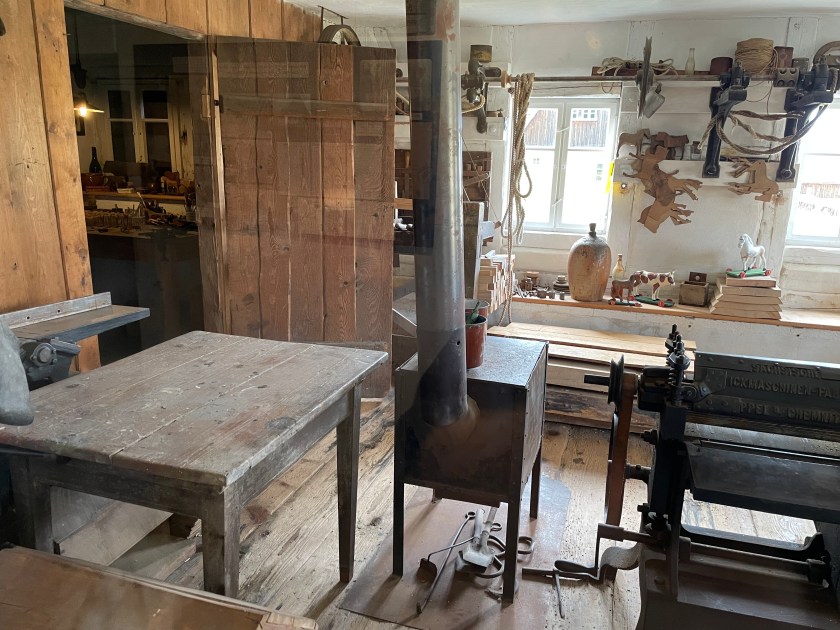
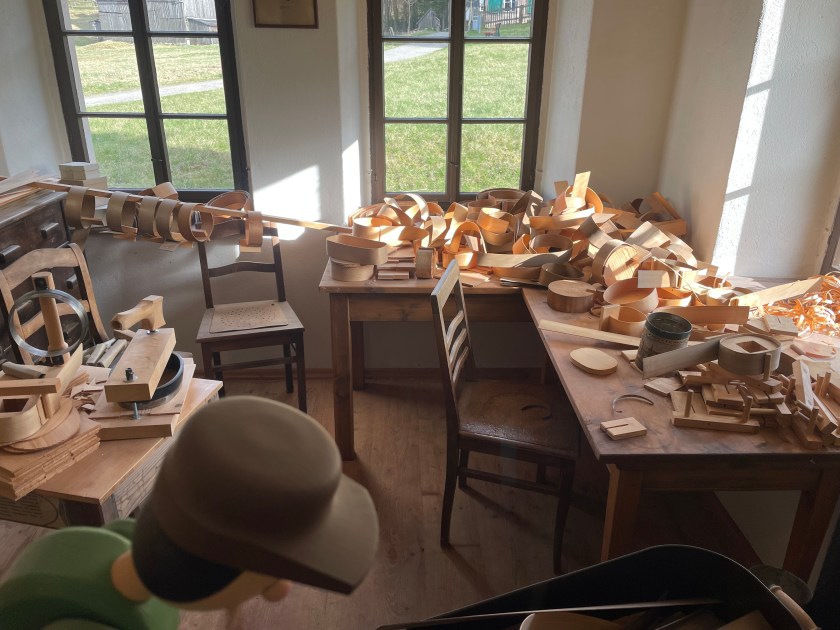
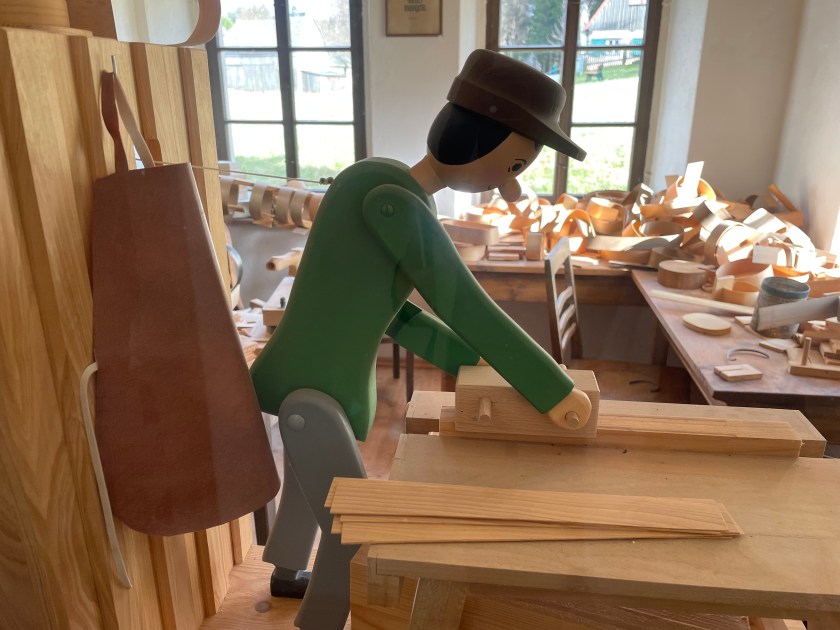
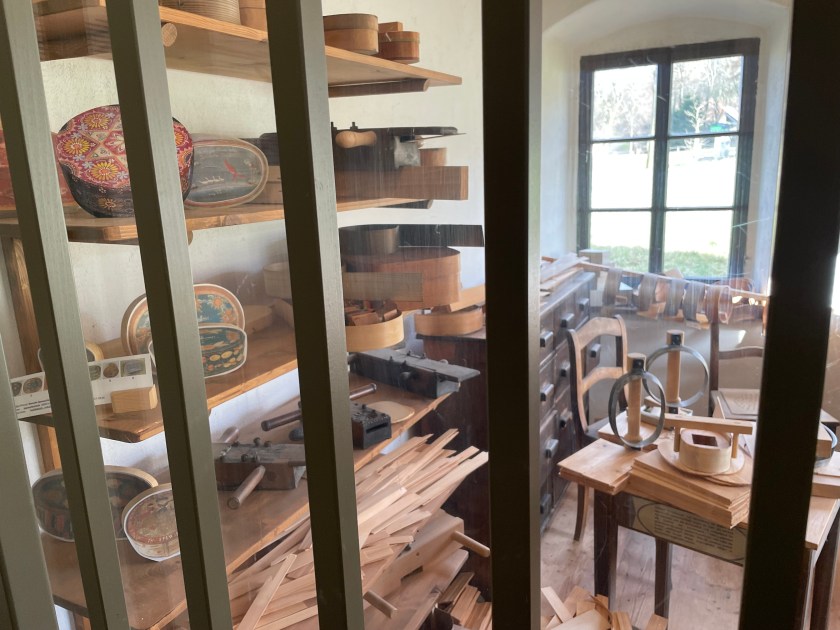
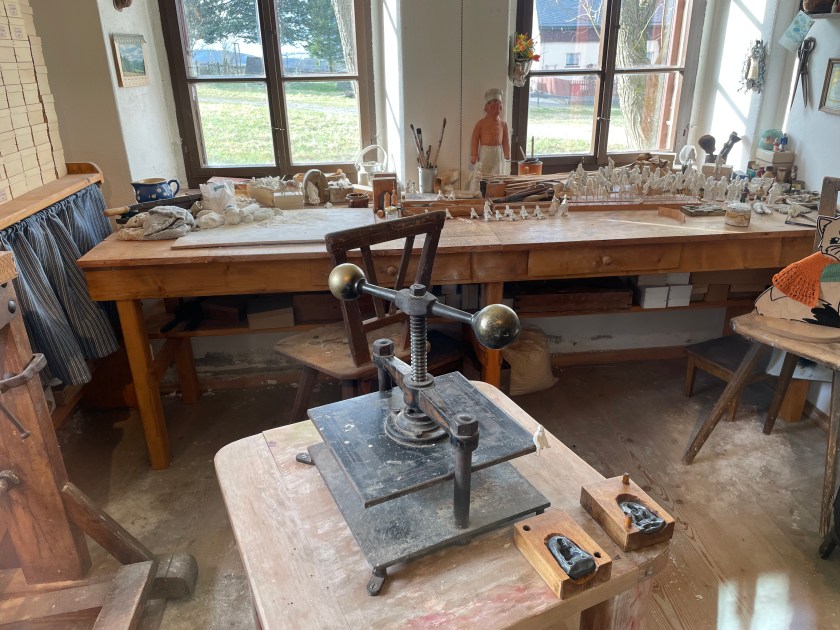
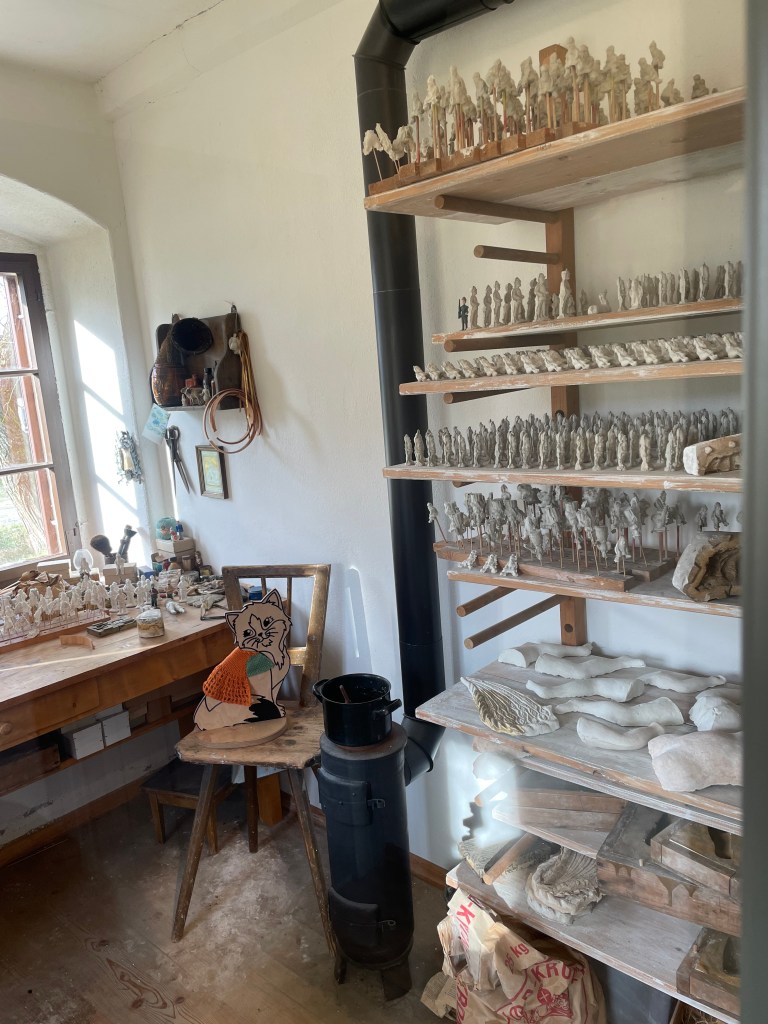
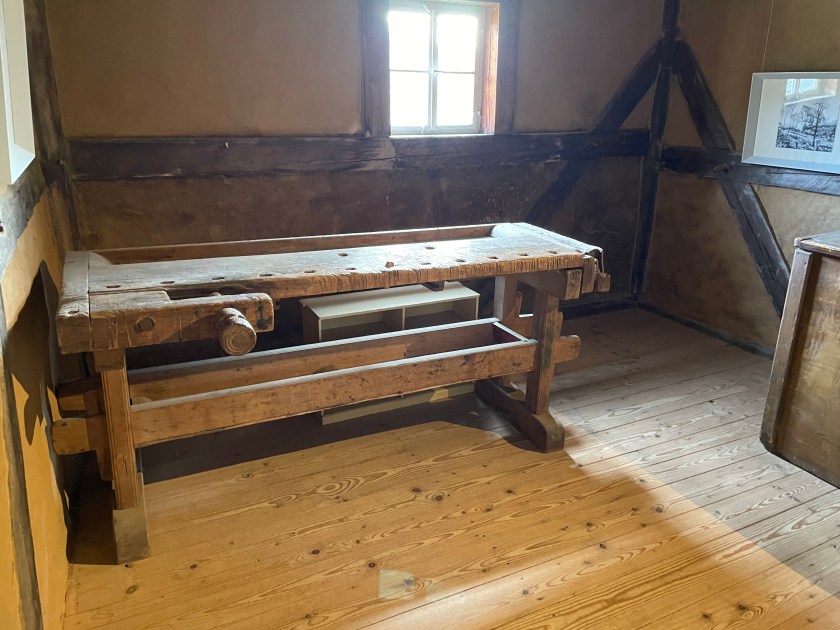
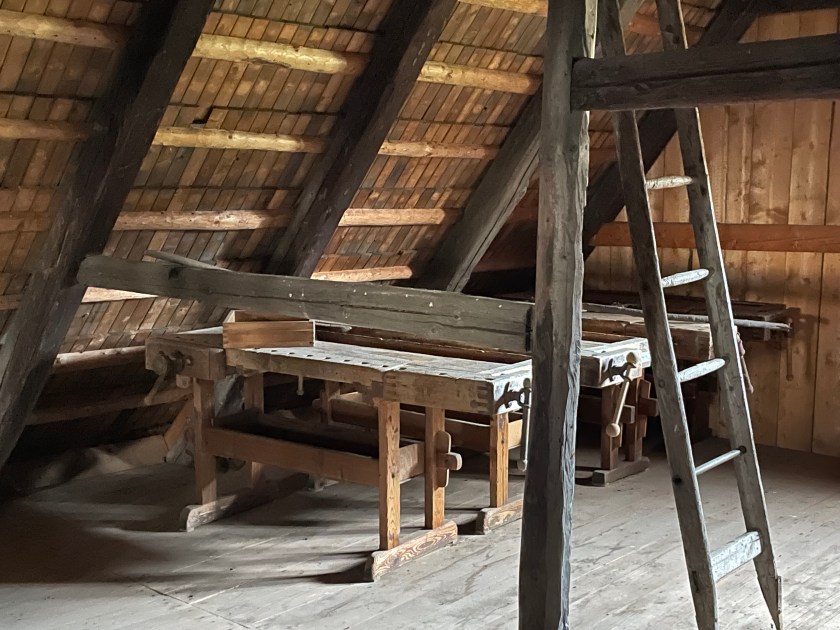
More woodworking and toy-making rooms.

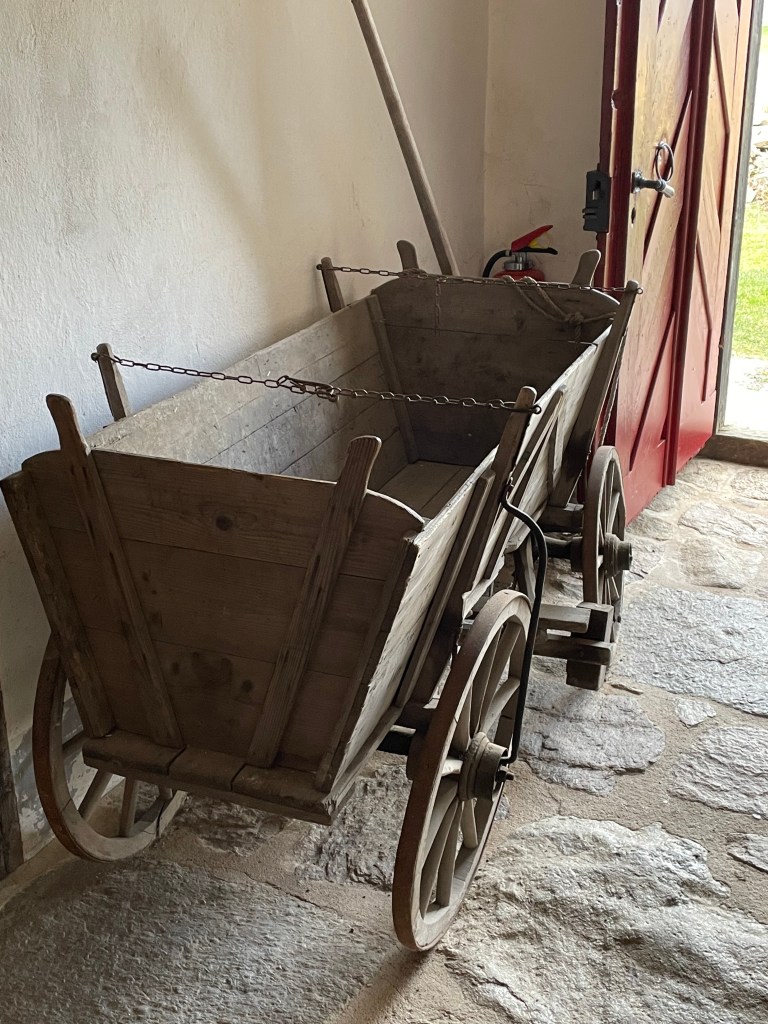
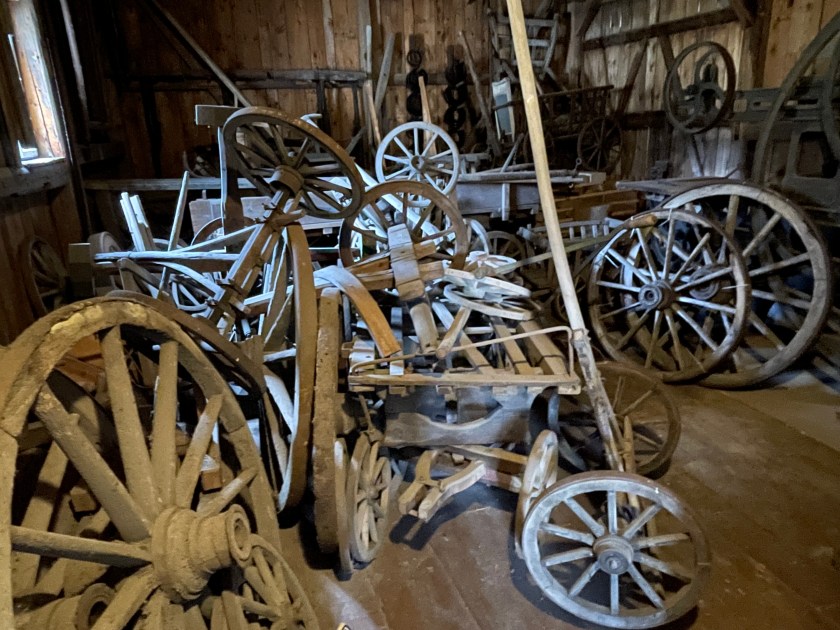
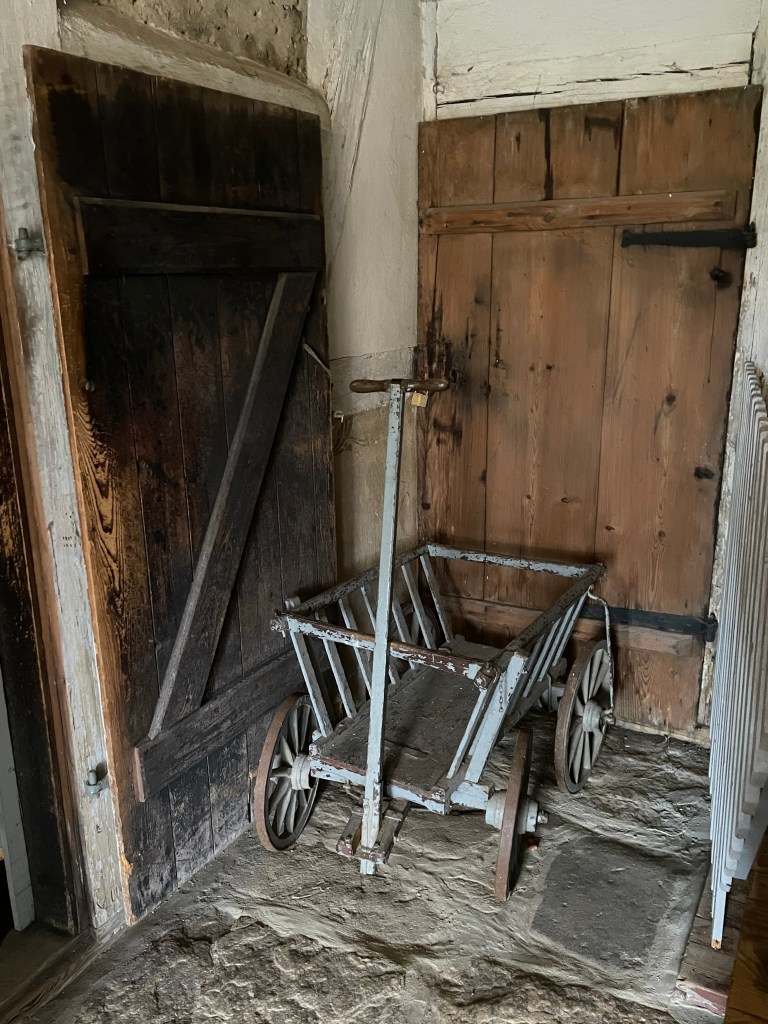
The toymakers sent their toys by the wagonload to the toy markets in Nuremberg.

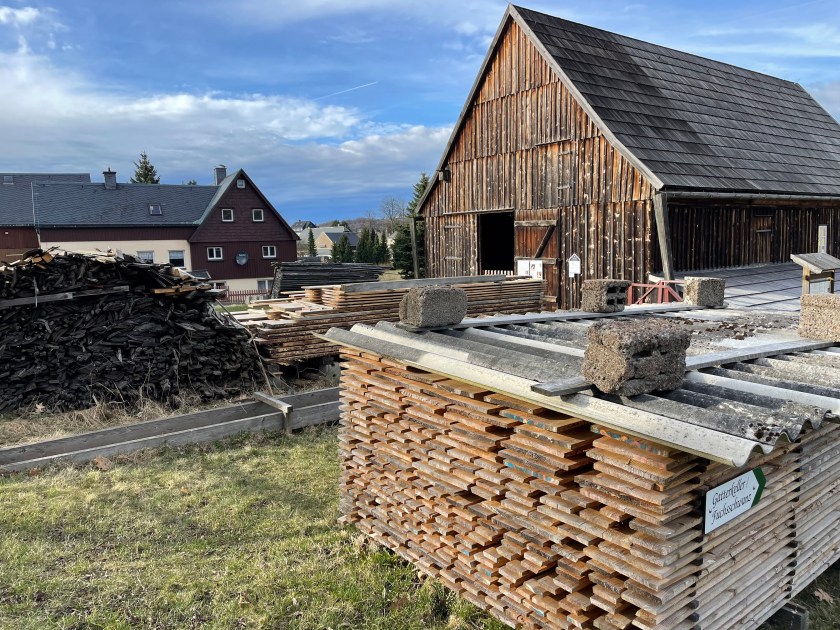
Here is a lumber shop and home:

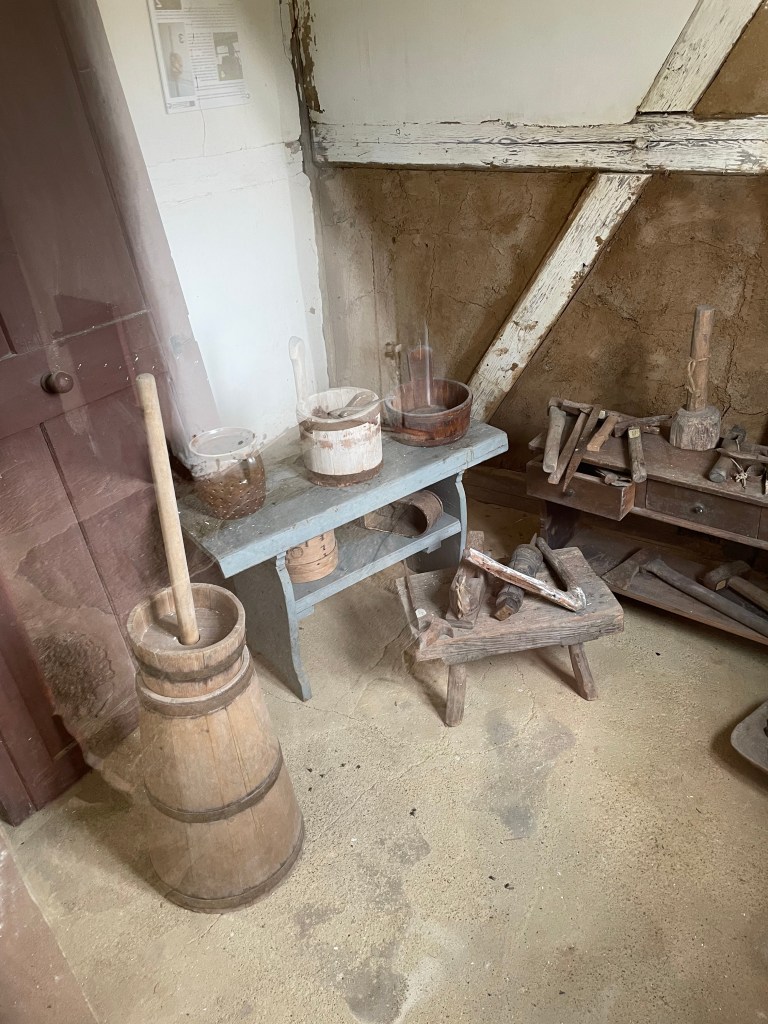
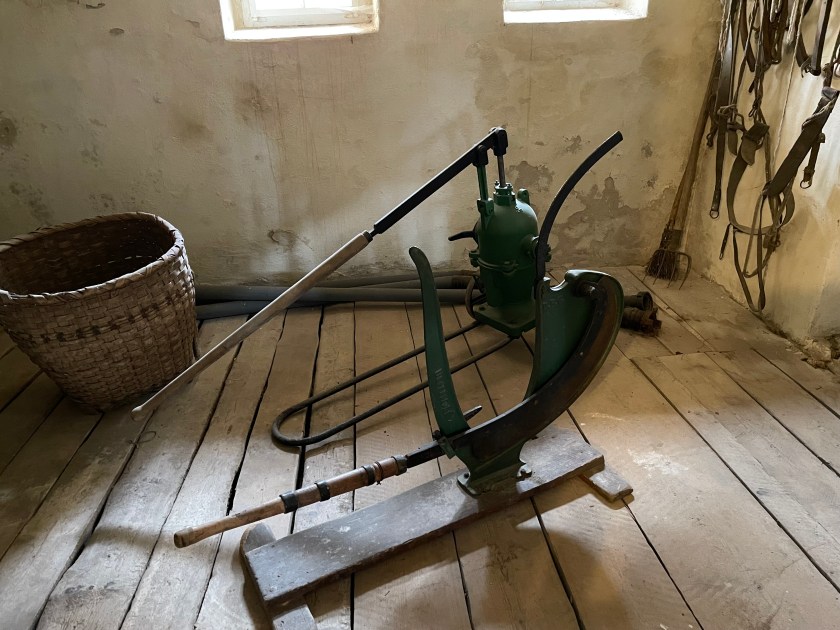
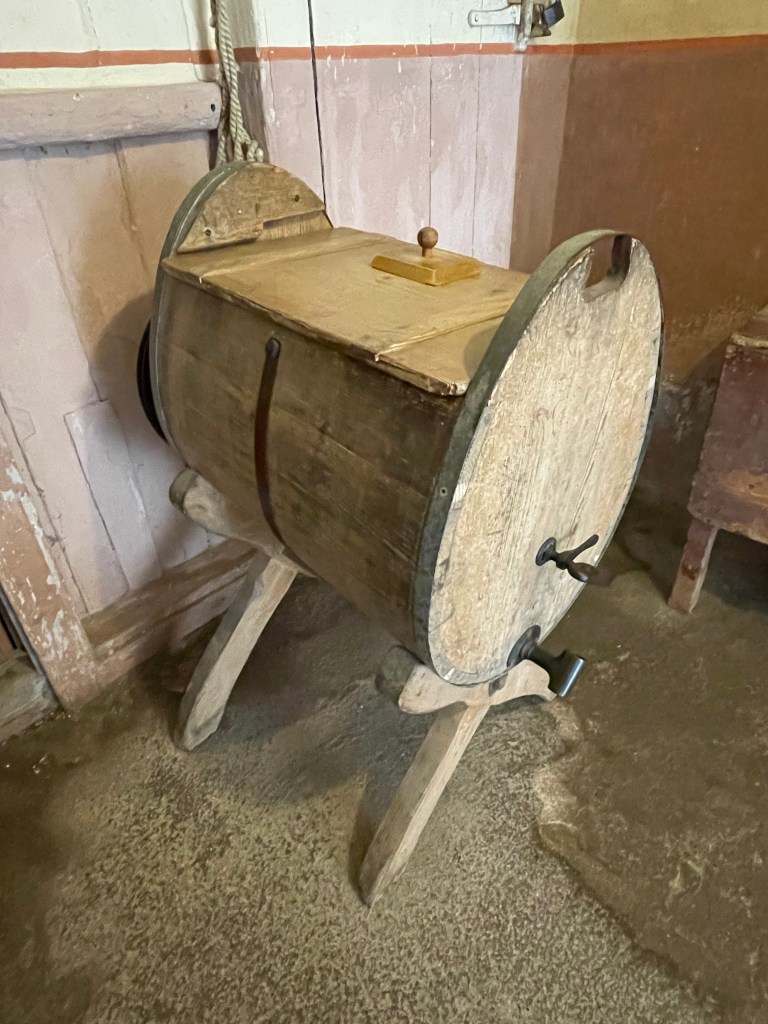
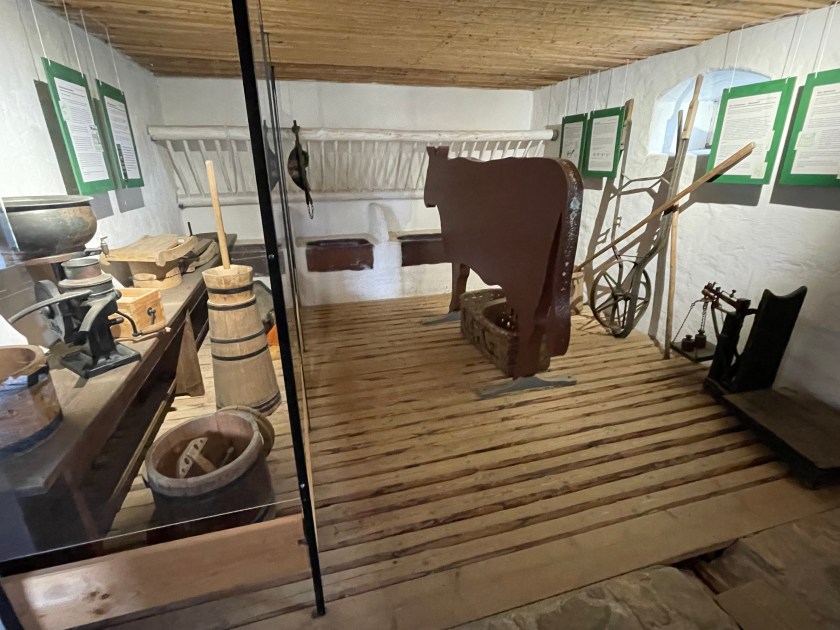
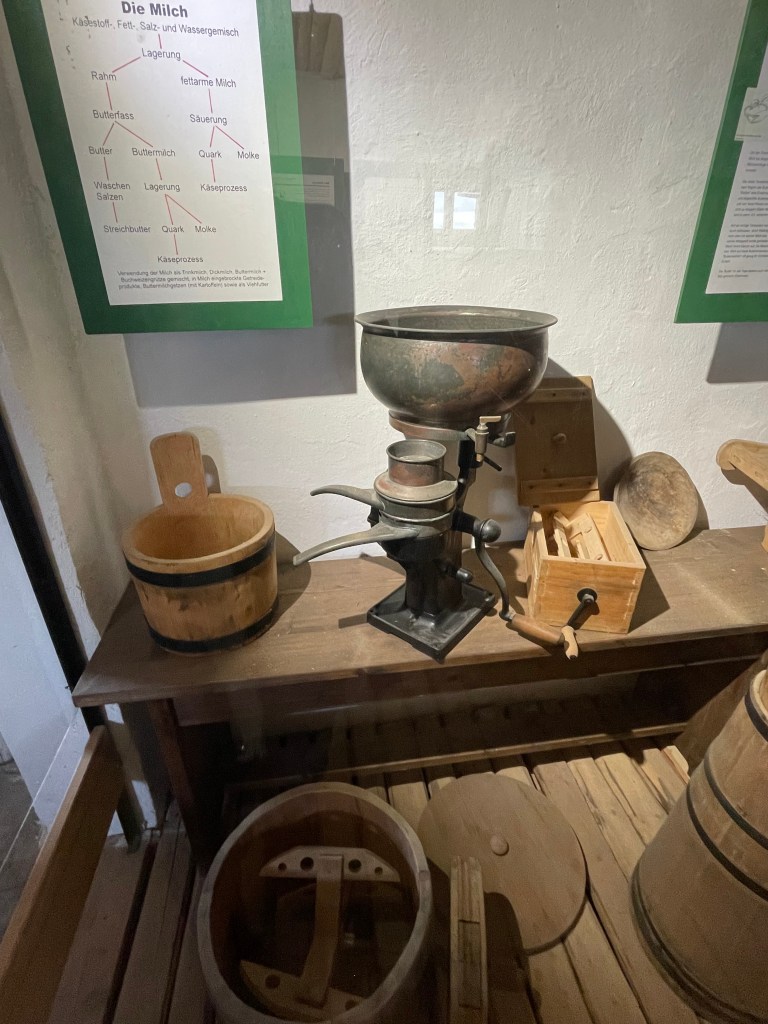
Also shown were the tools and pans needed for milking and butter making.
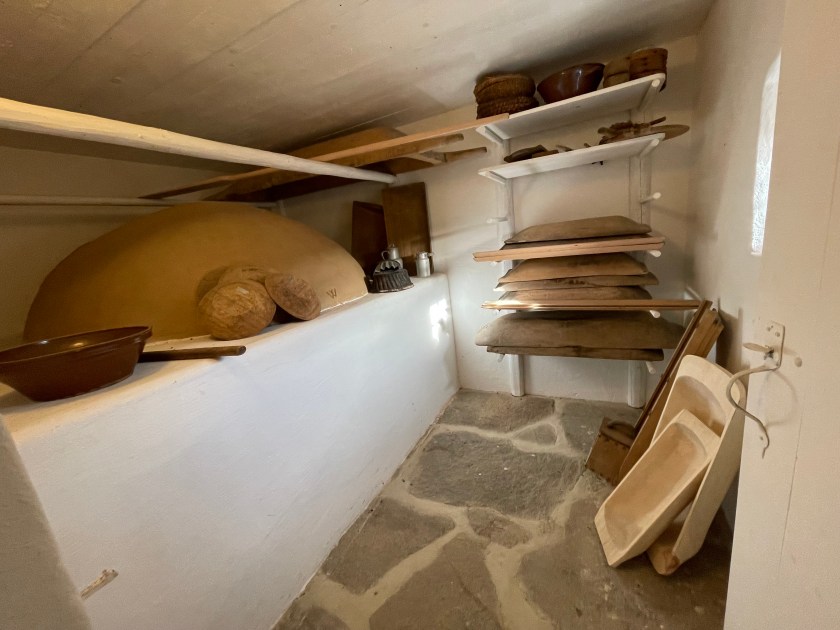
This was a baking room with a fire oven.

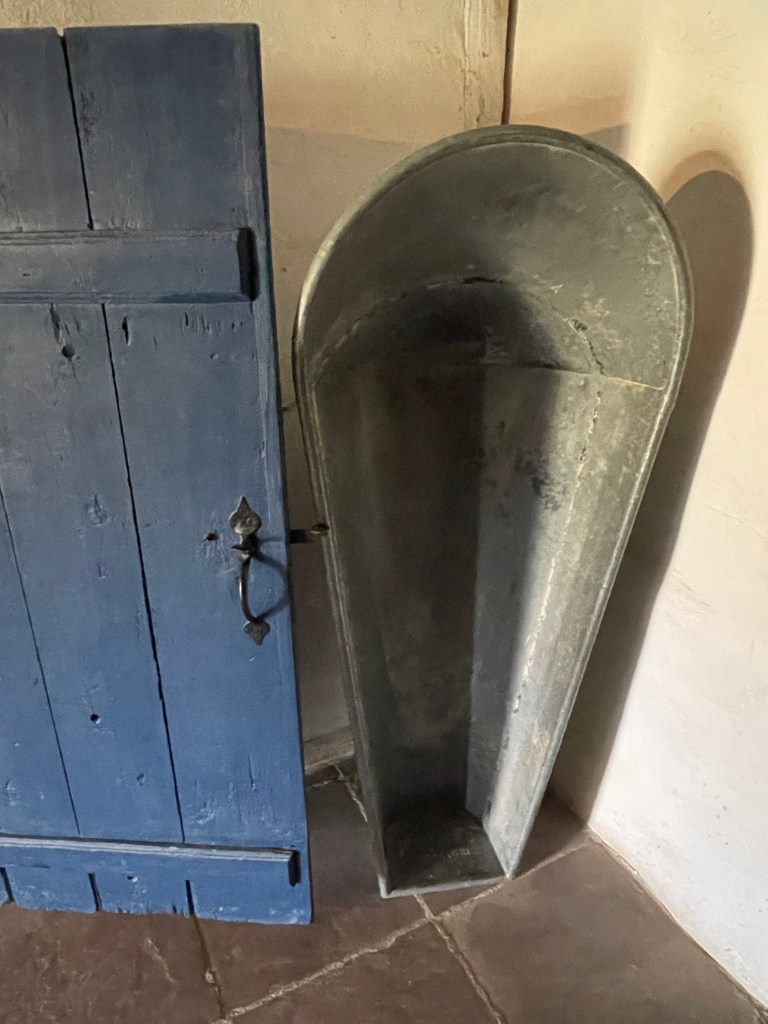
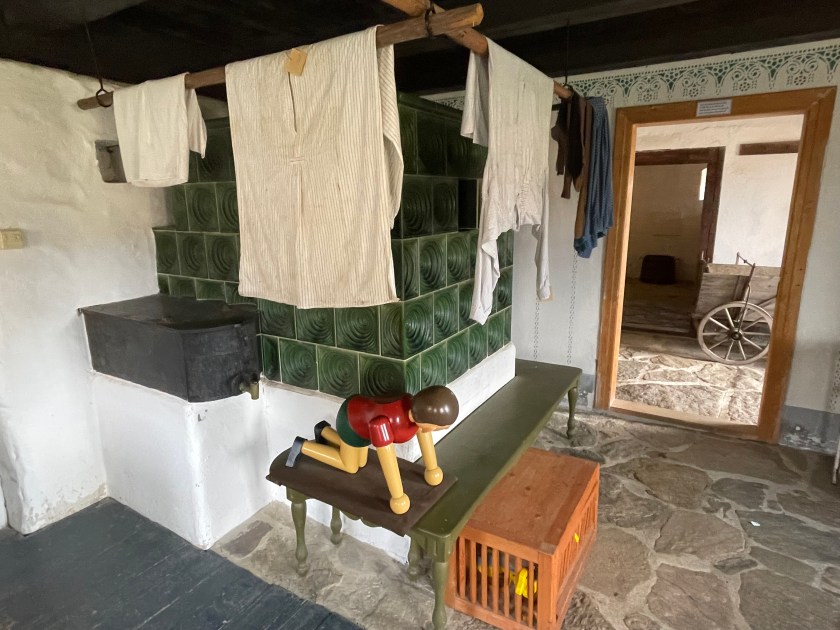
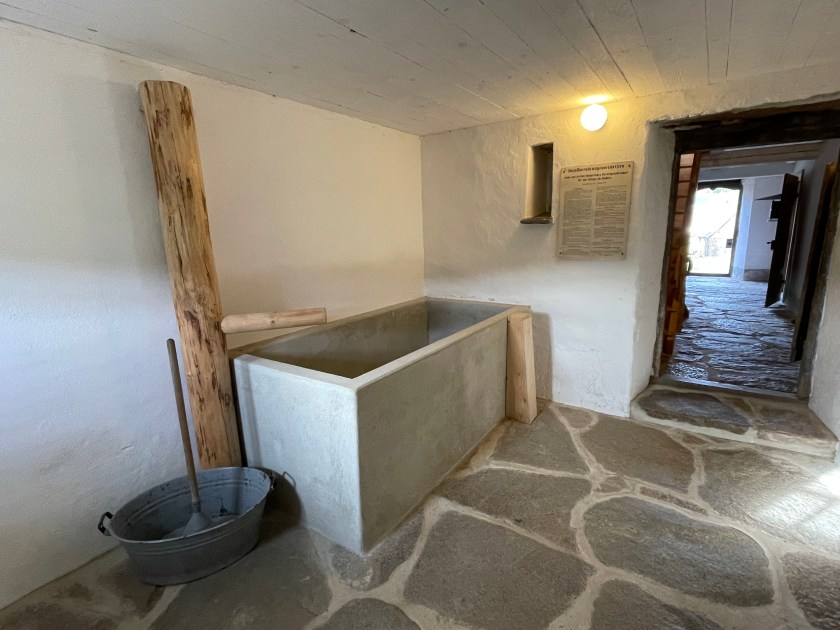
The box in the corner was for indoor water storage.

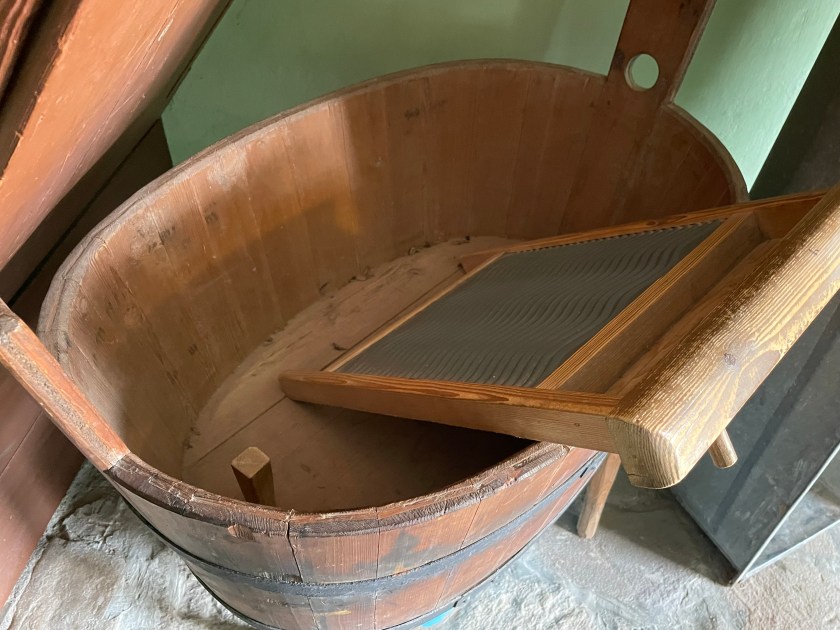
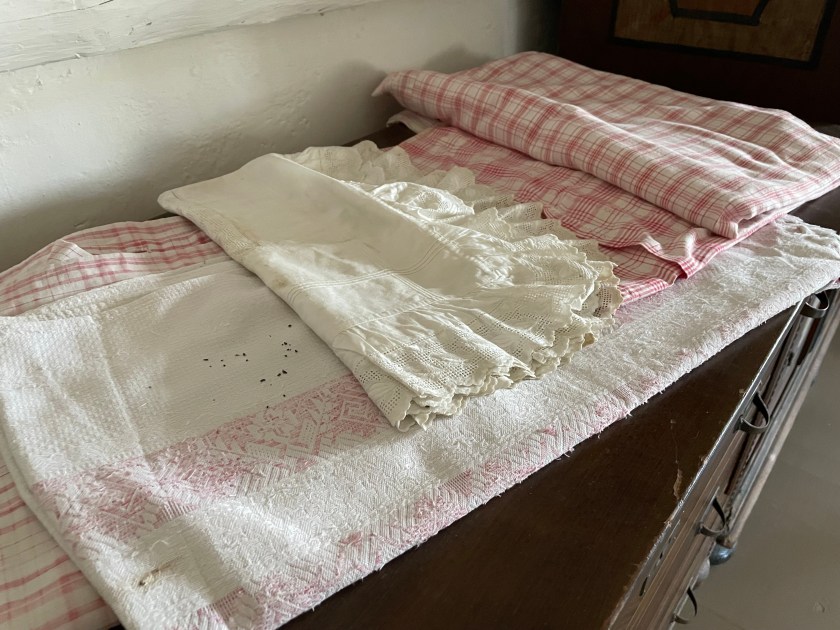
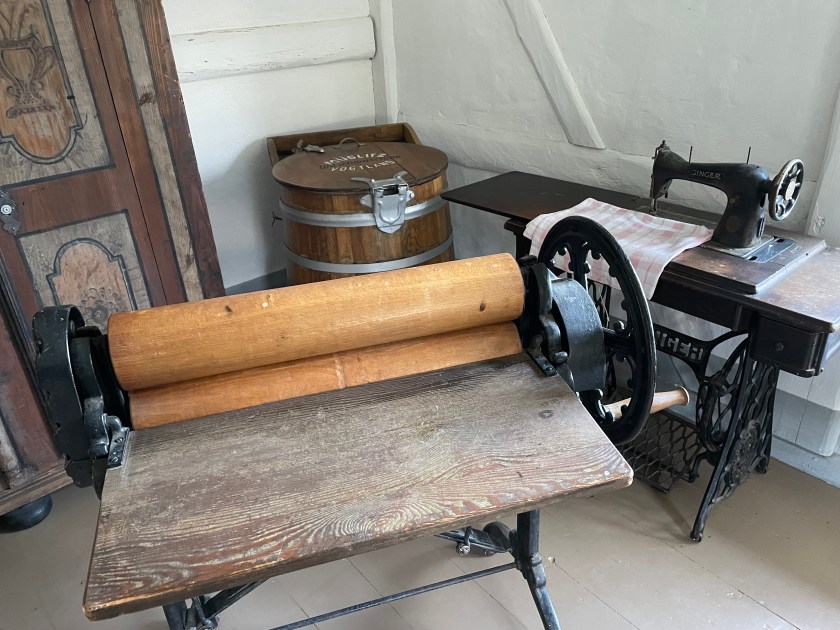
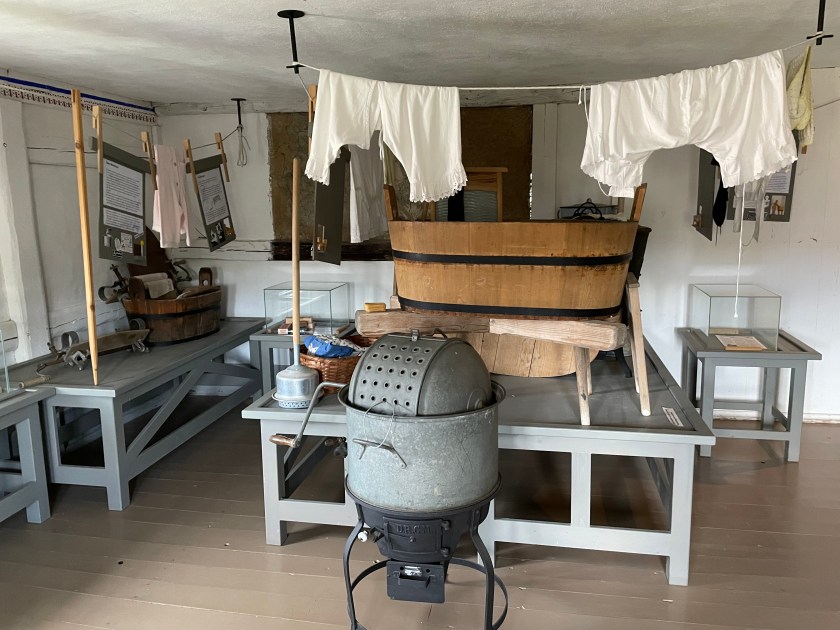
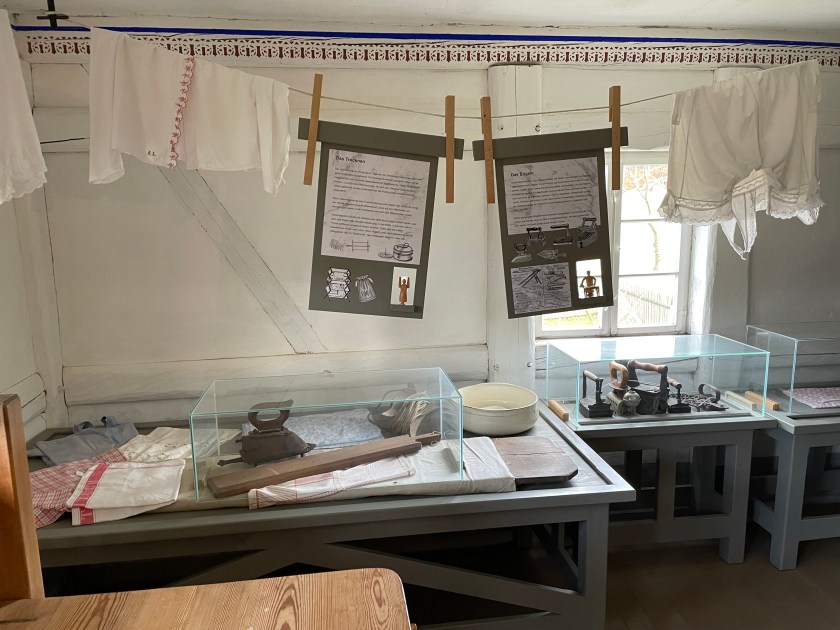
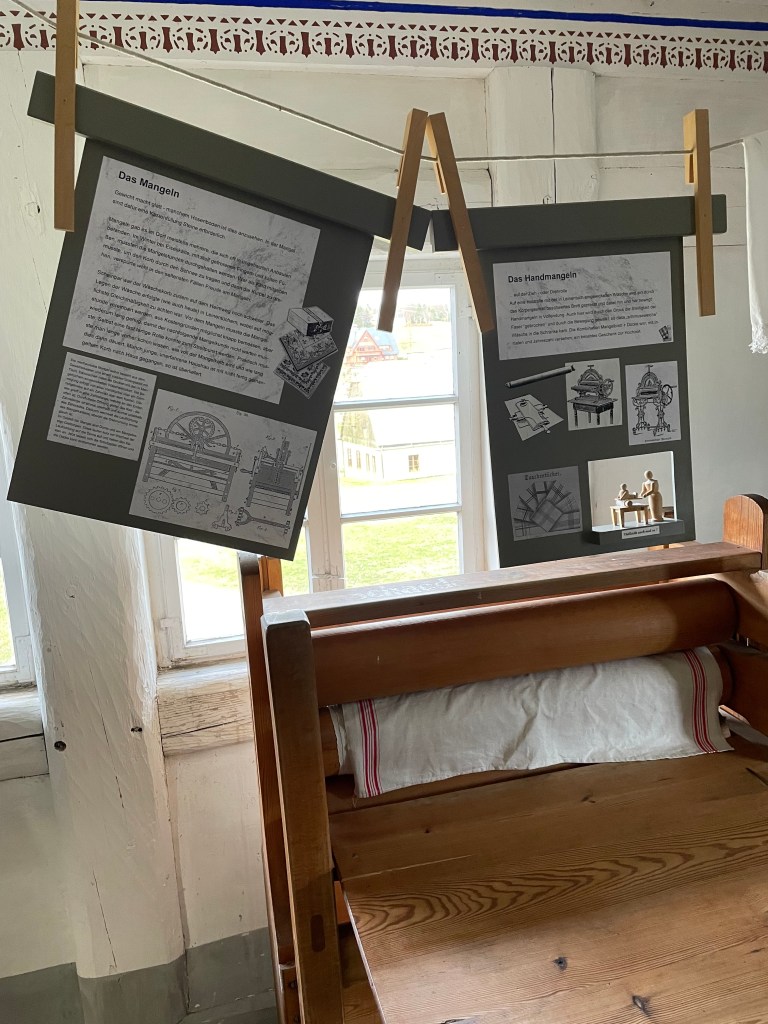
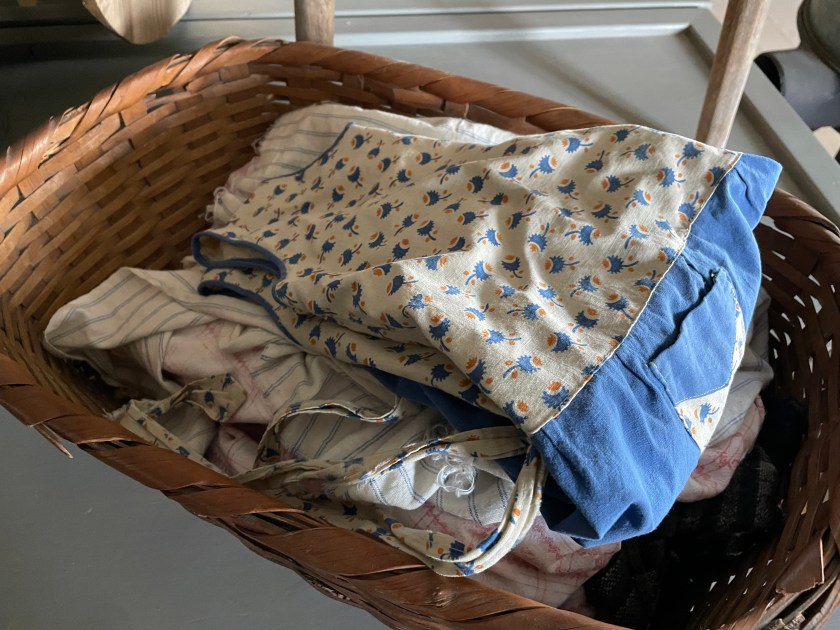
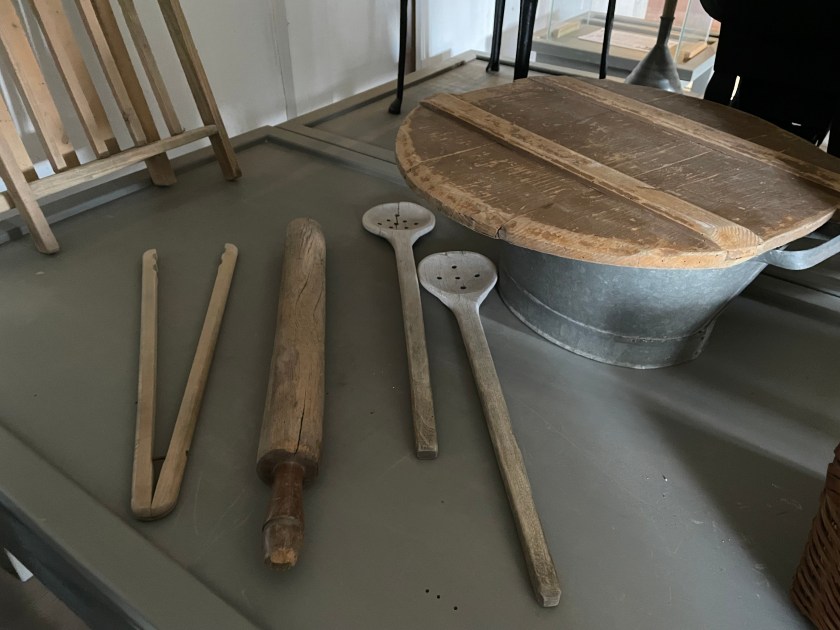
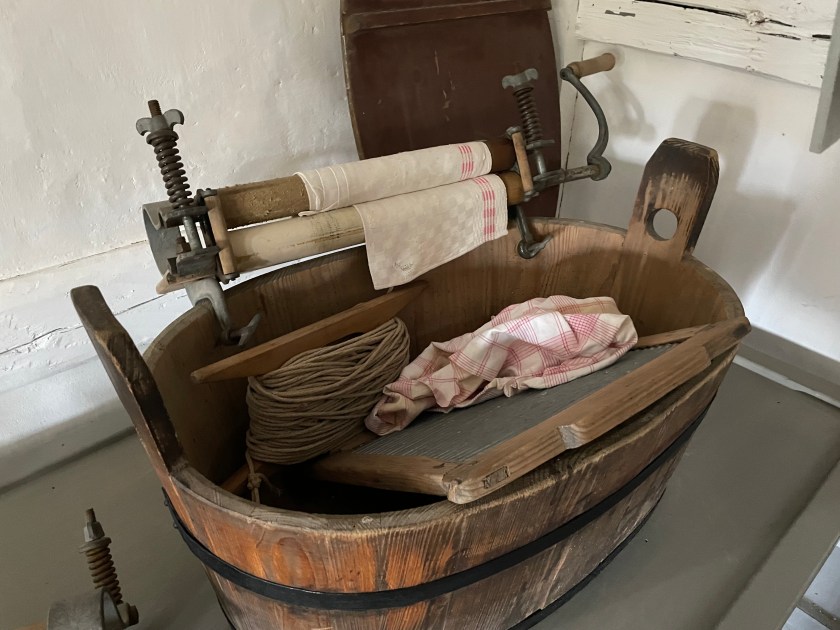
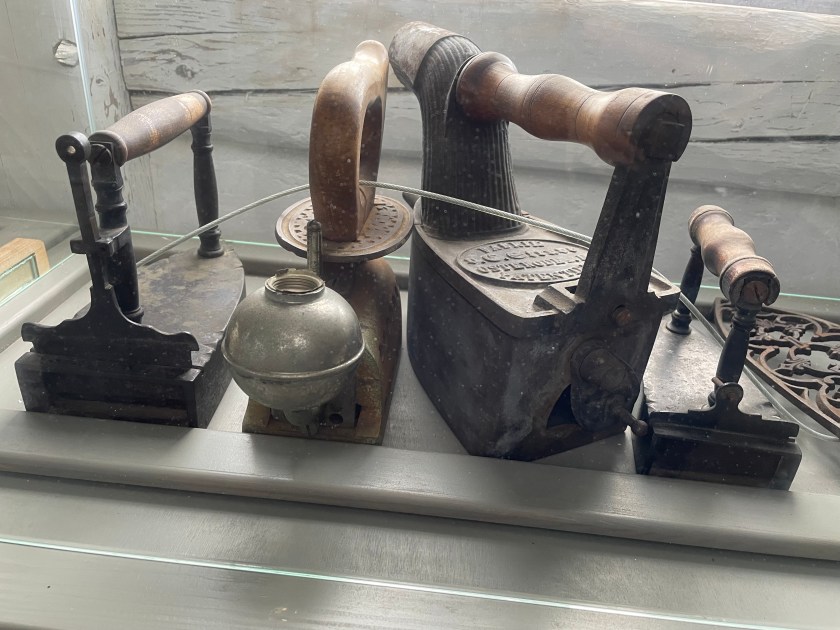
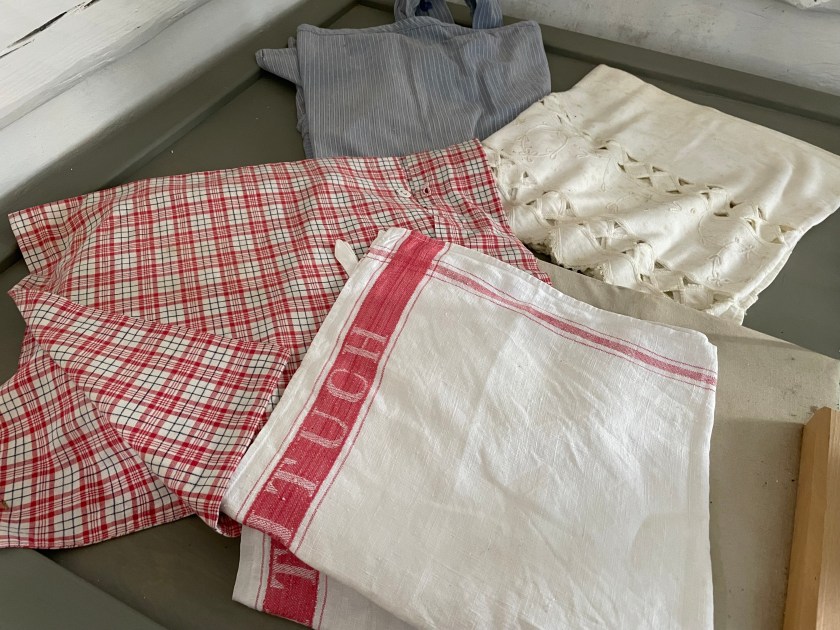
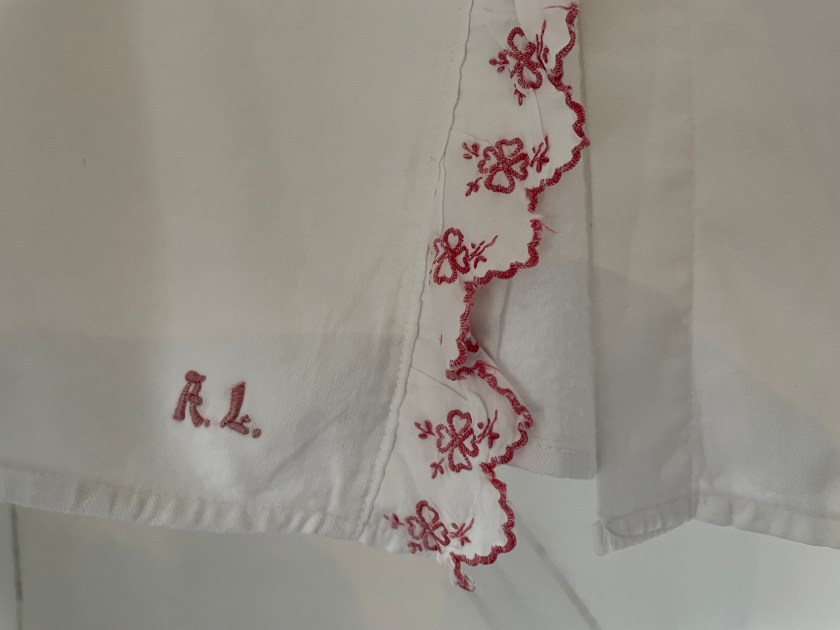
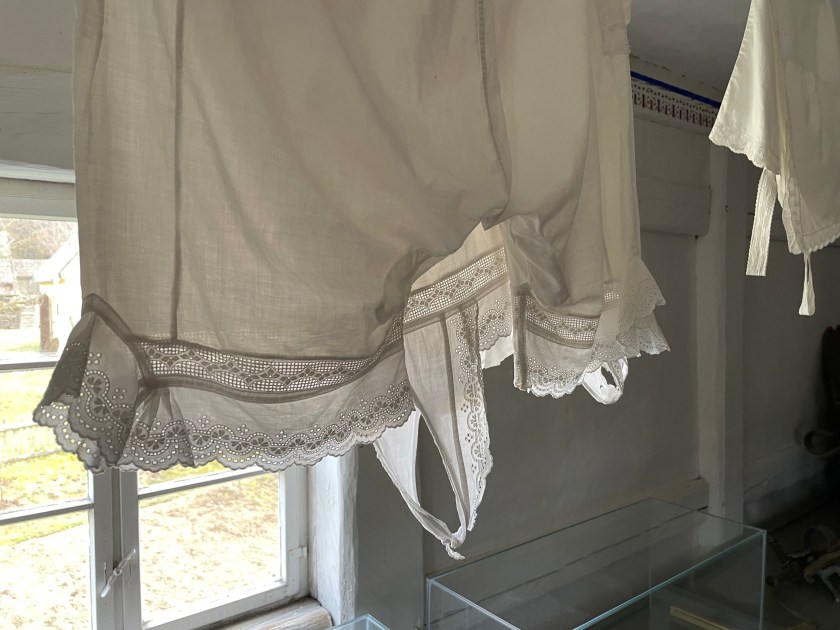
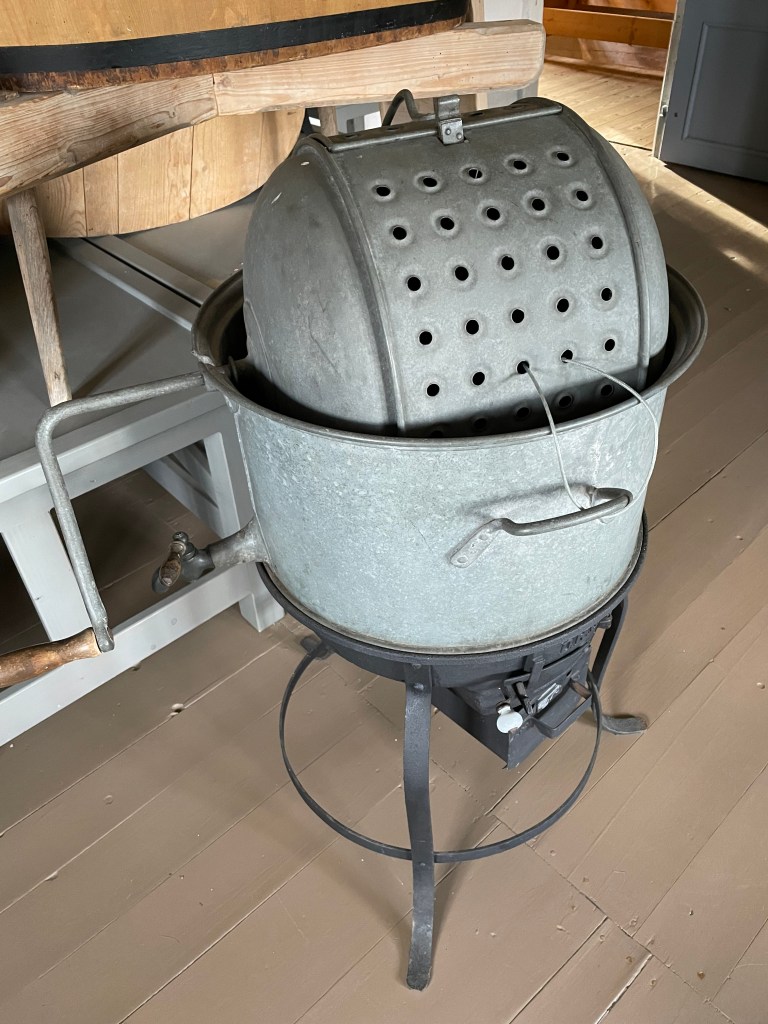
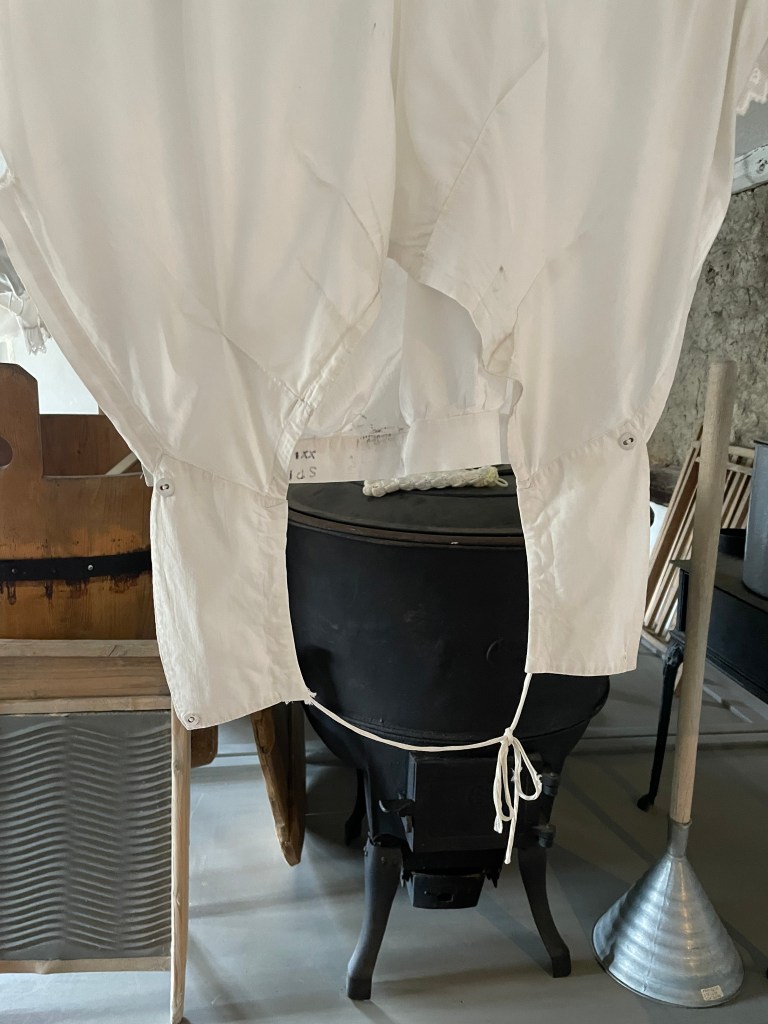
I loved this next room, filled with women’s work.

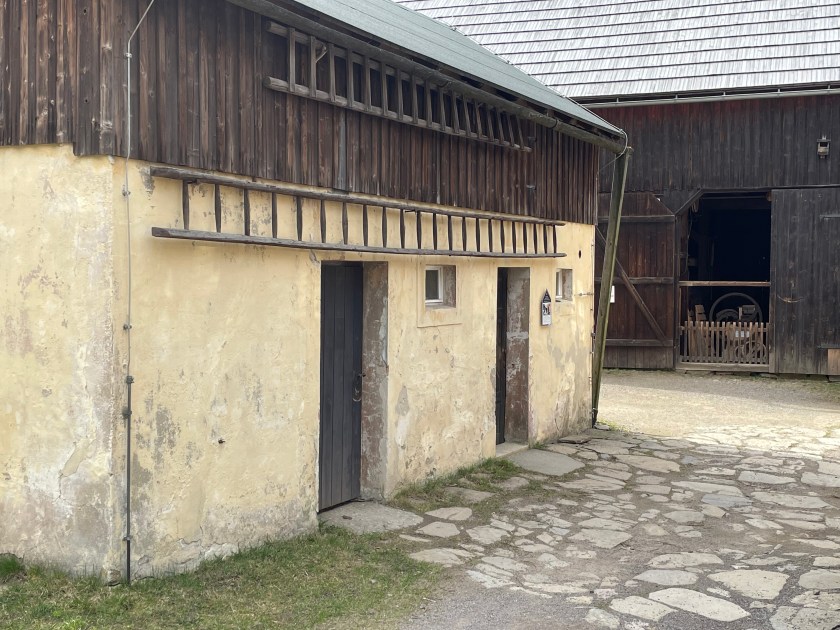
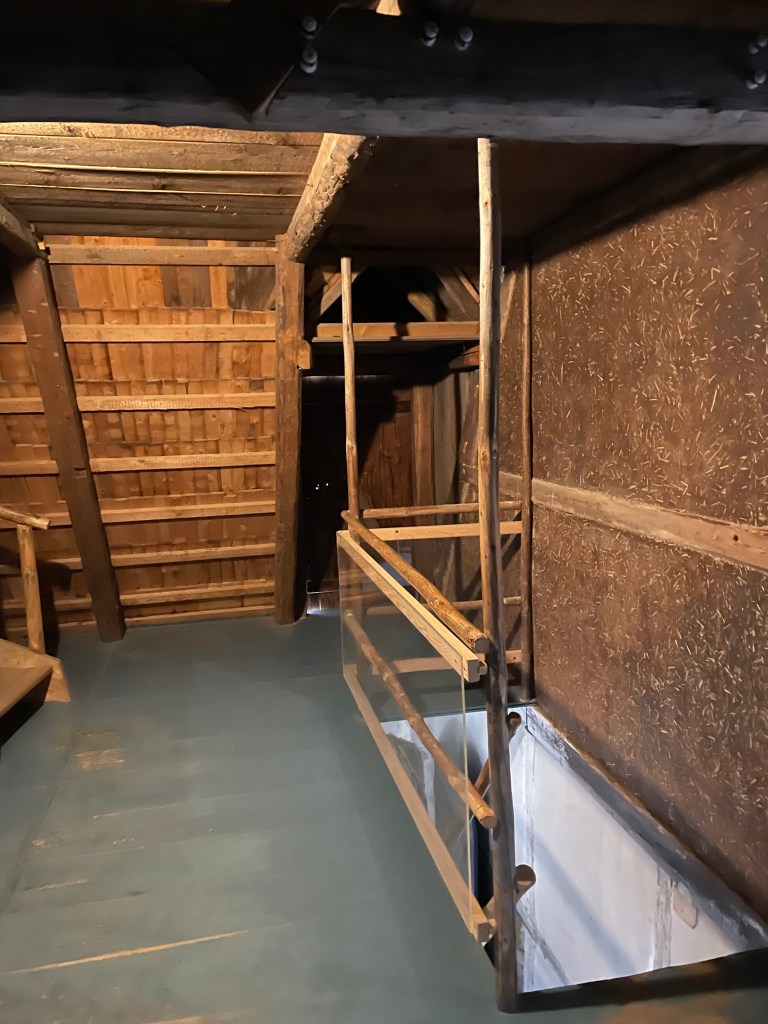
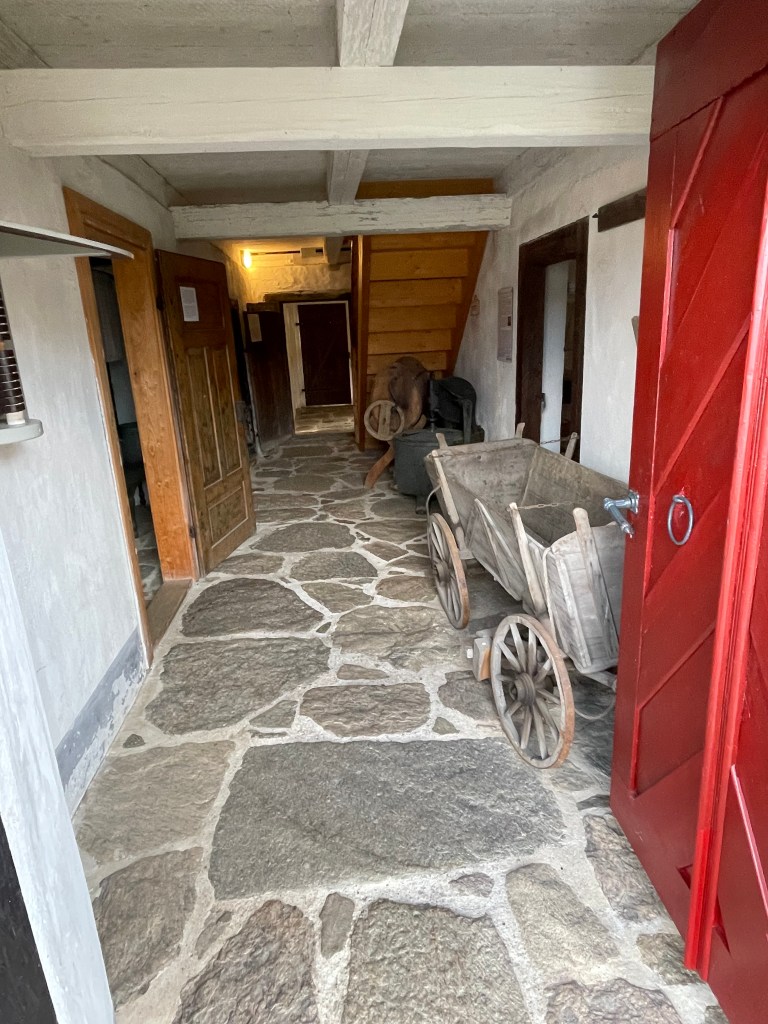
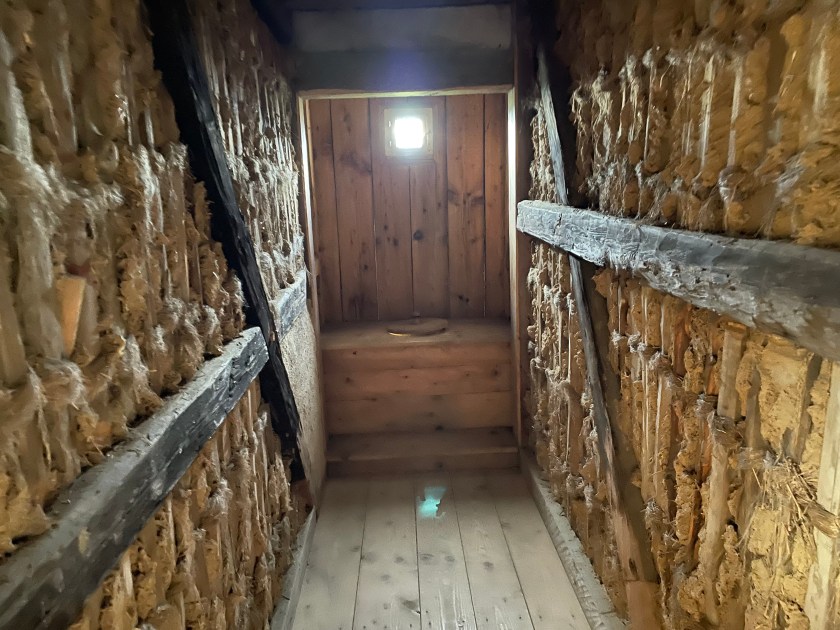
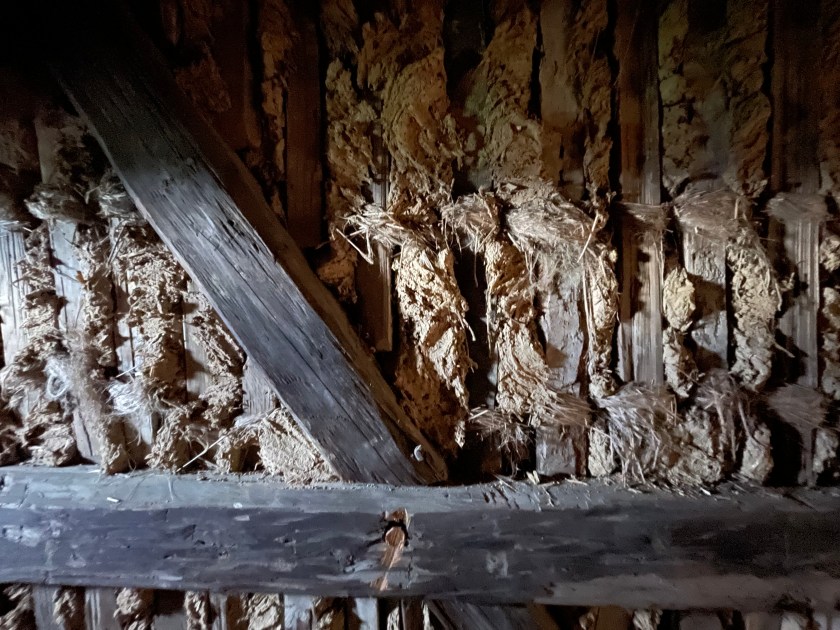
This is the hallway leading to the toilet.  You can see the mud and straw mix that is now hard as stone.

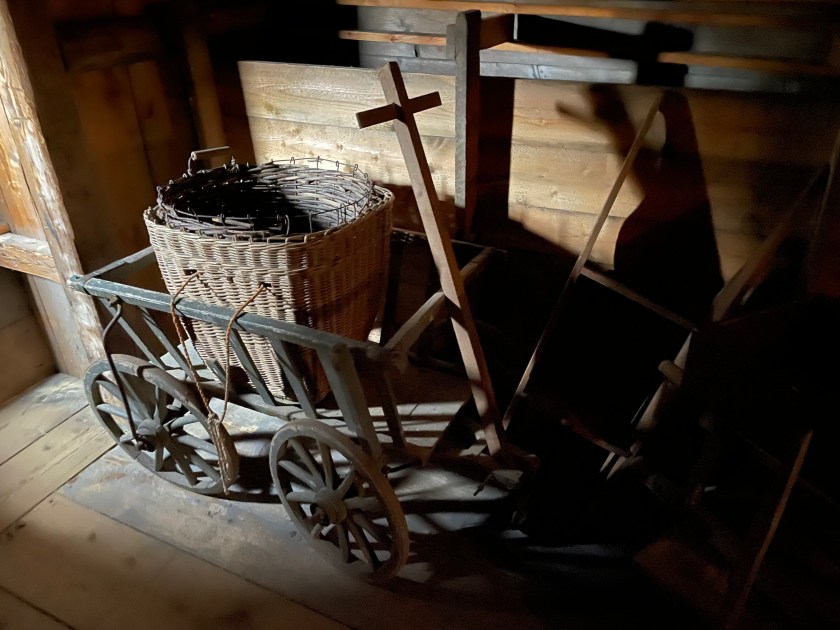
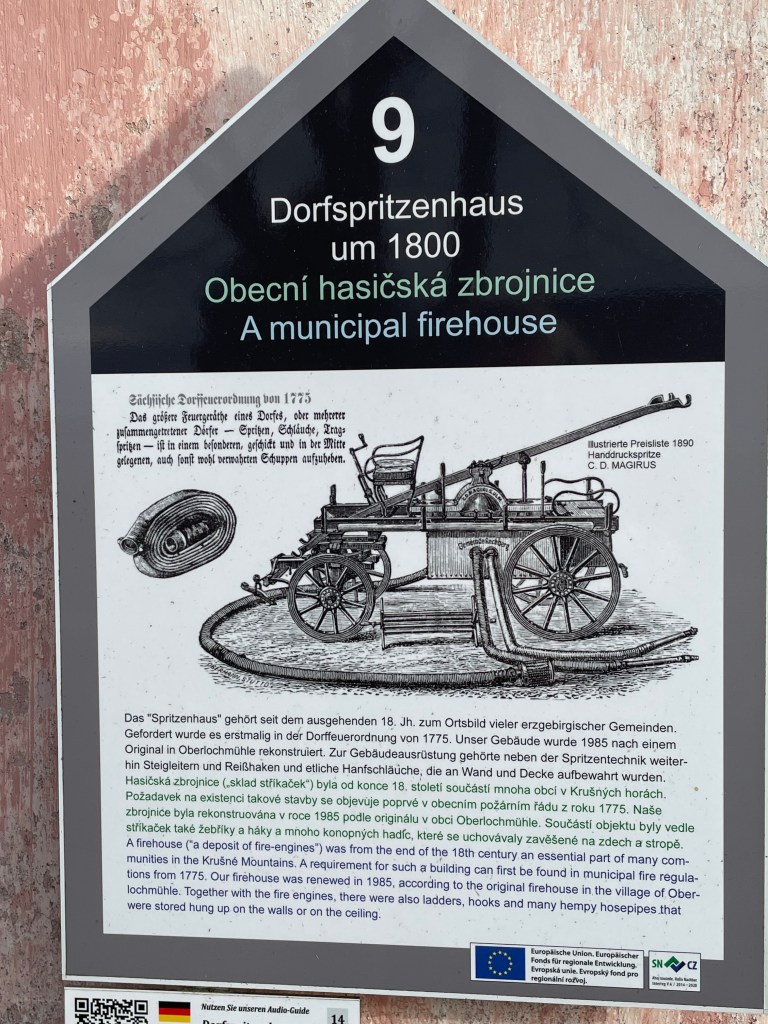
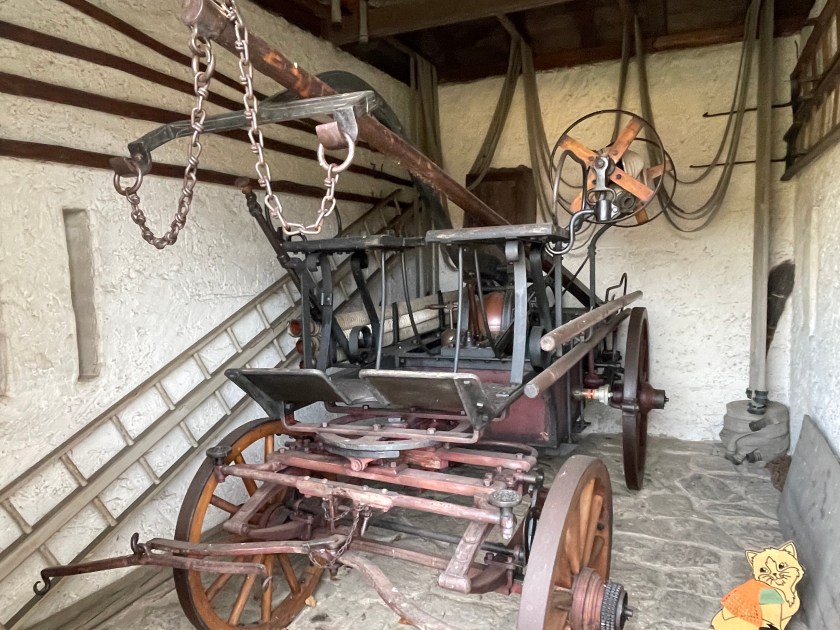
A fire truck:

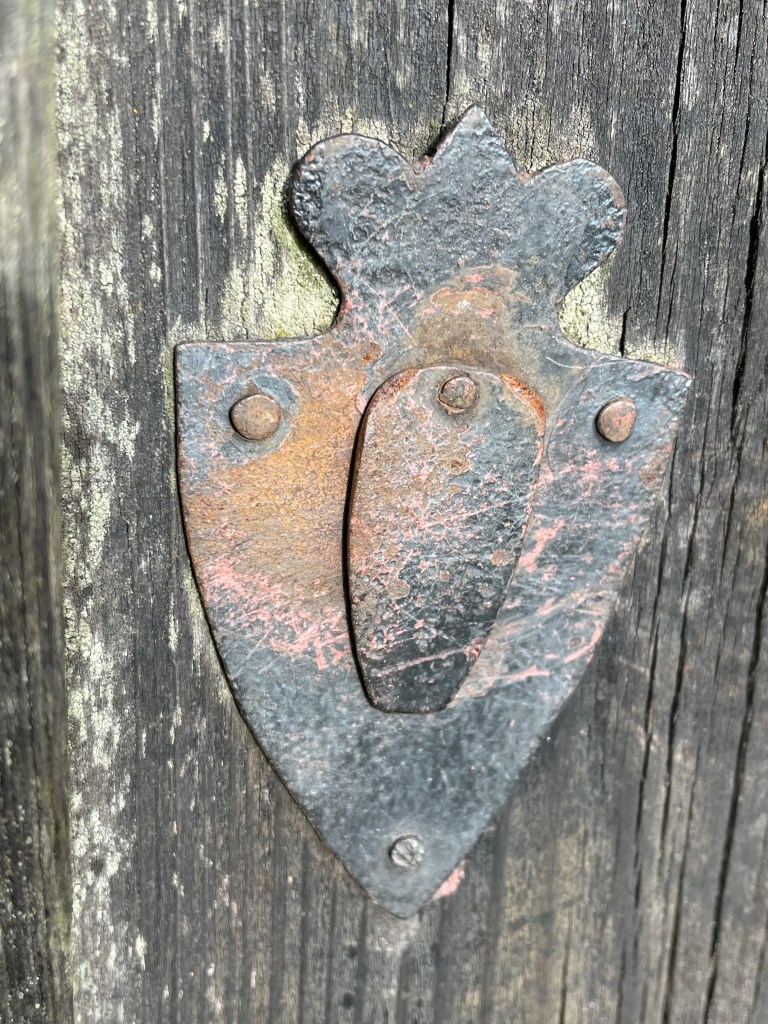
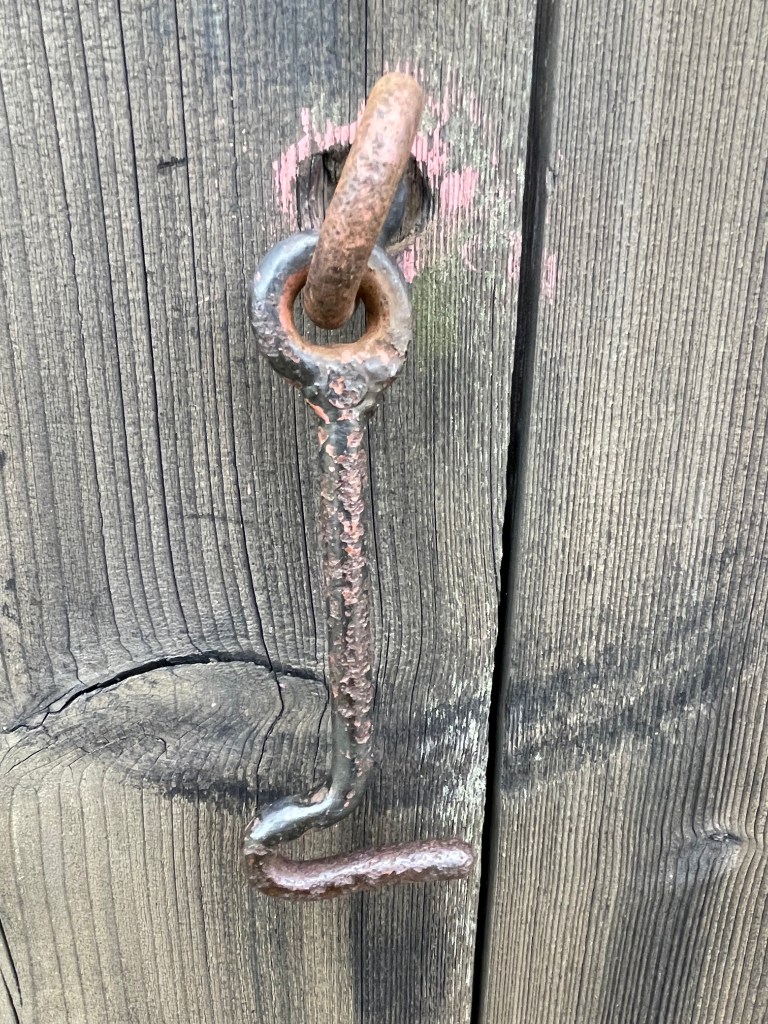
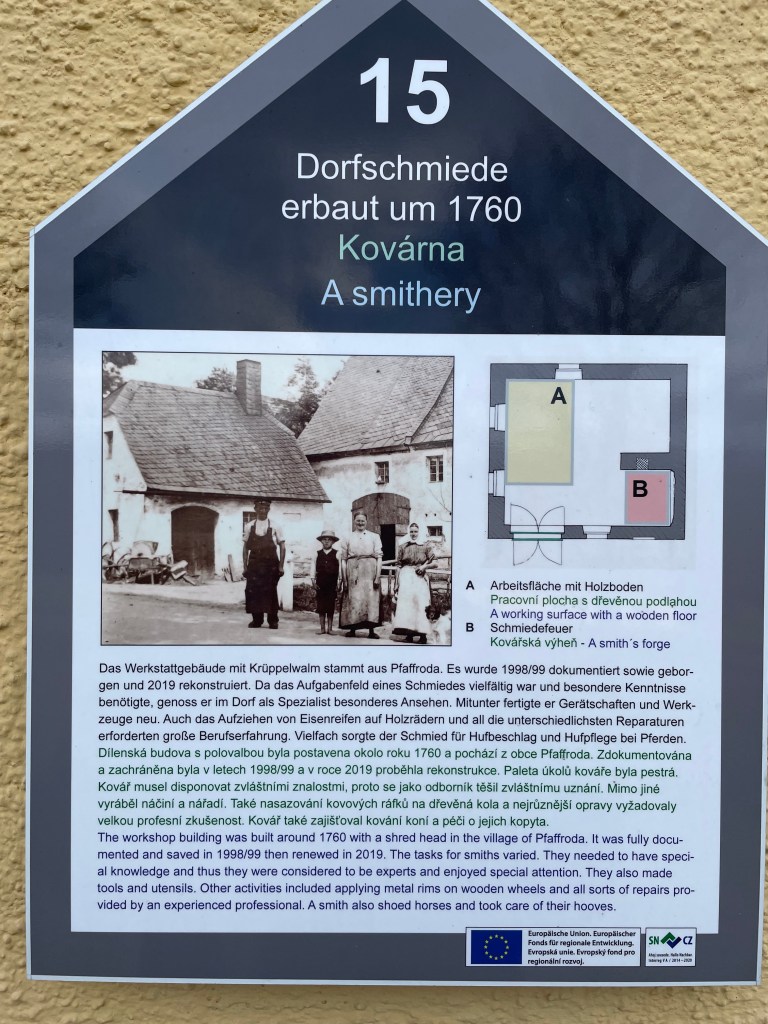
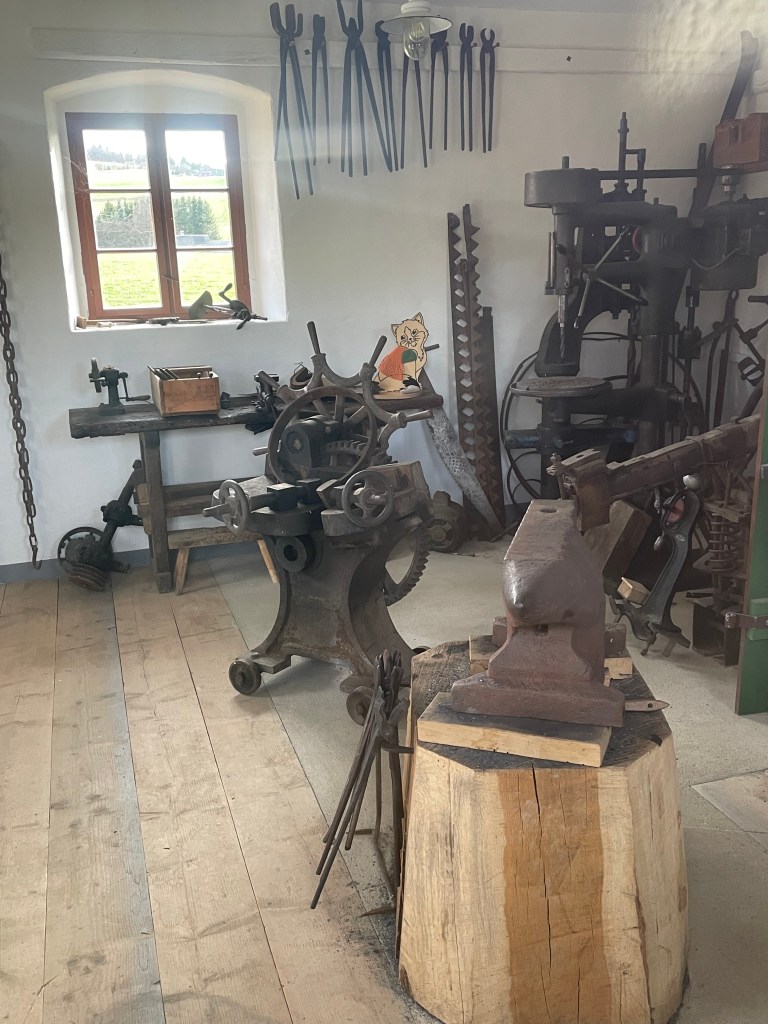
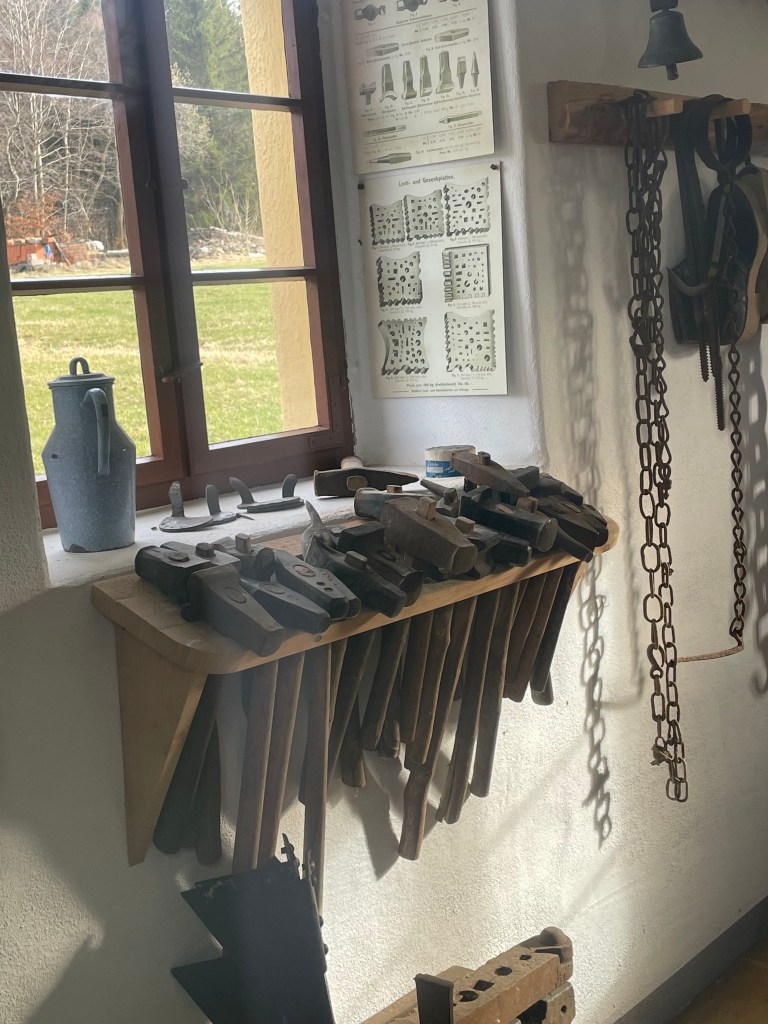
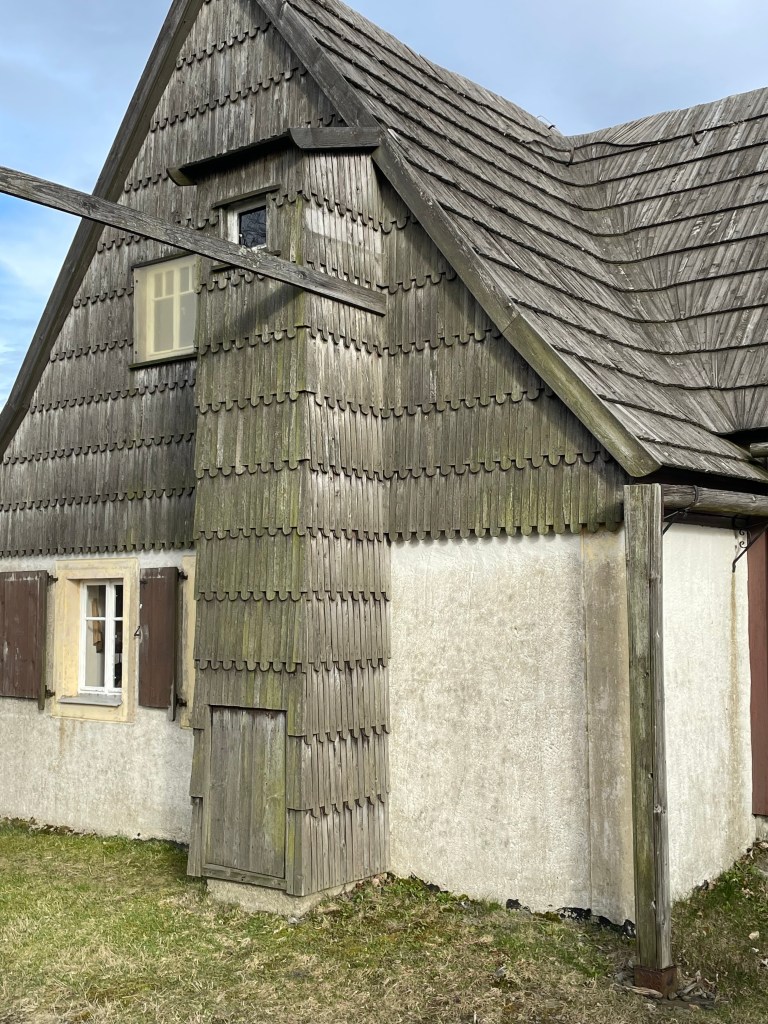
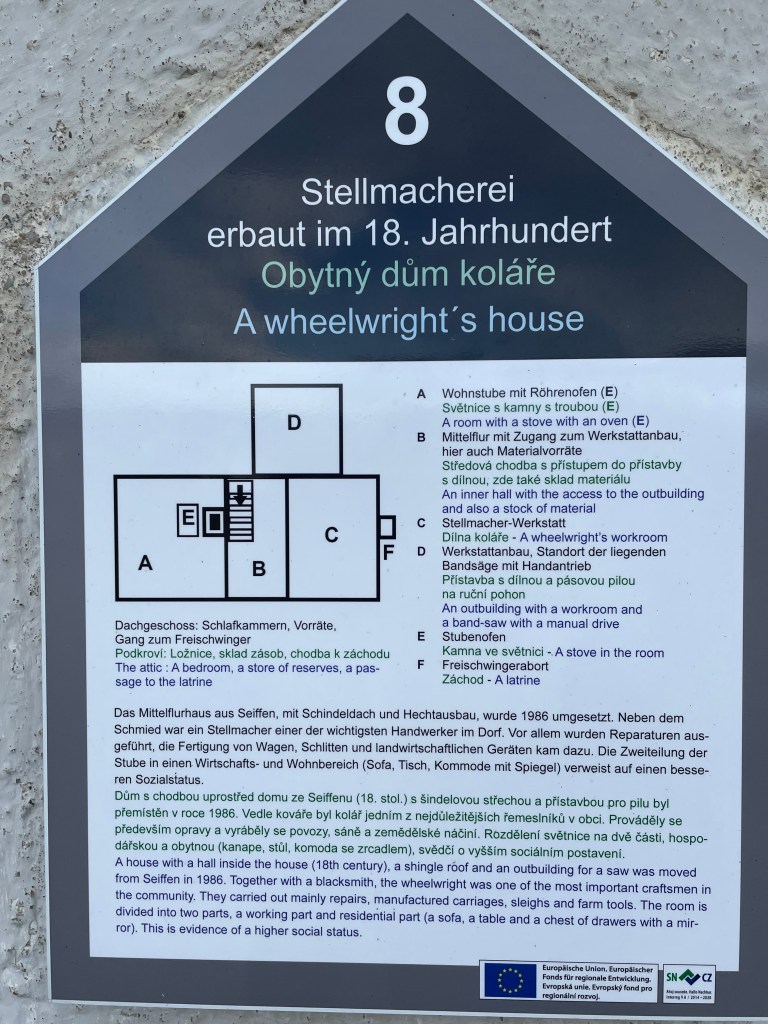
A blacksmith’s home:

Here is how indoor plumbing was added on to the homes.  The toilet waste fell into a bucket down below.

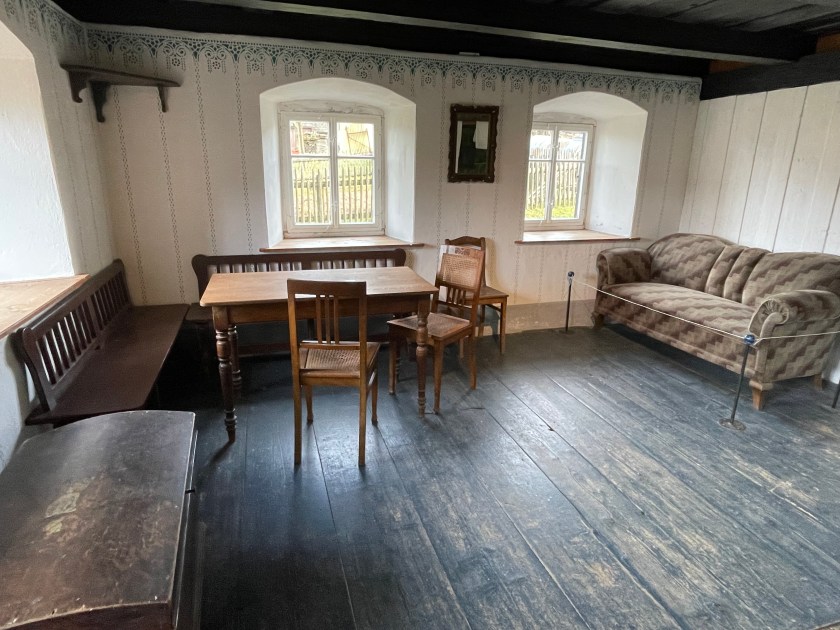
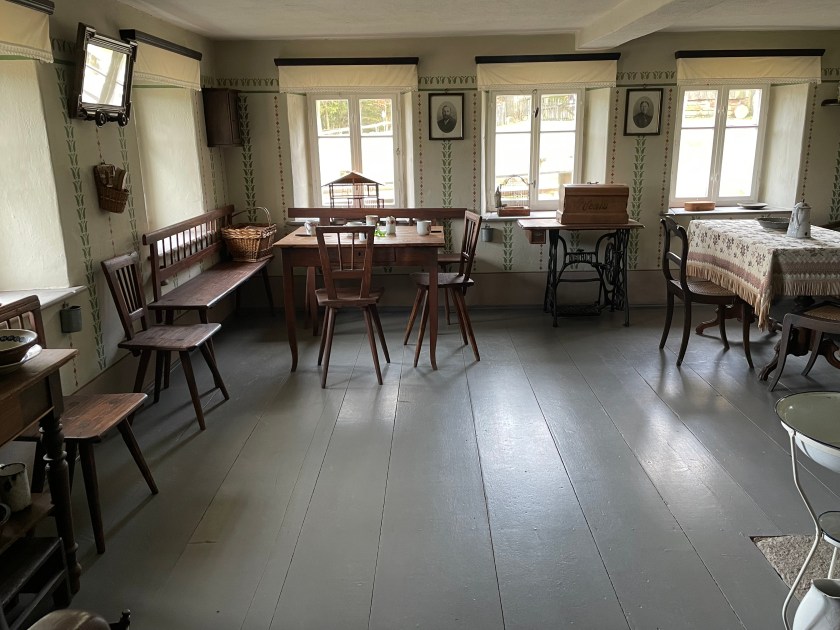
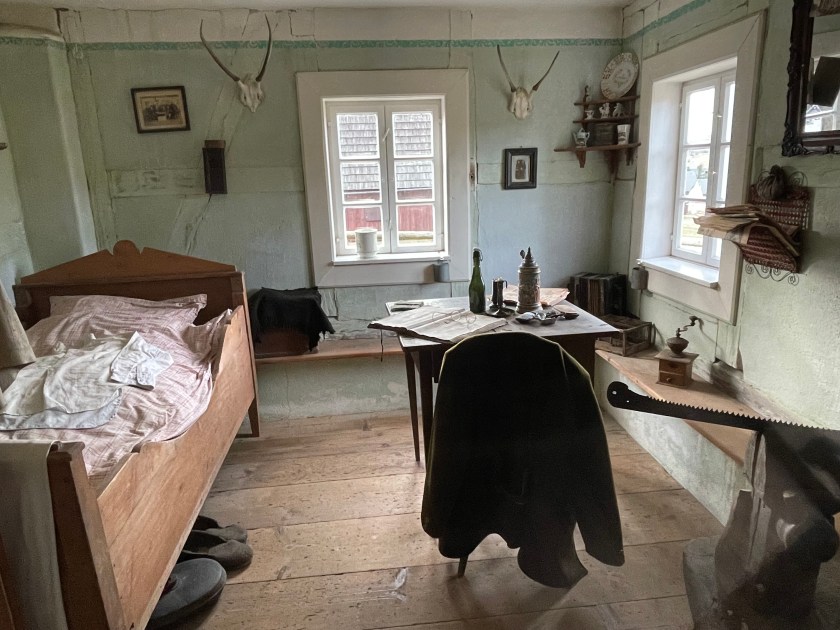
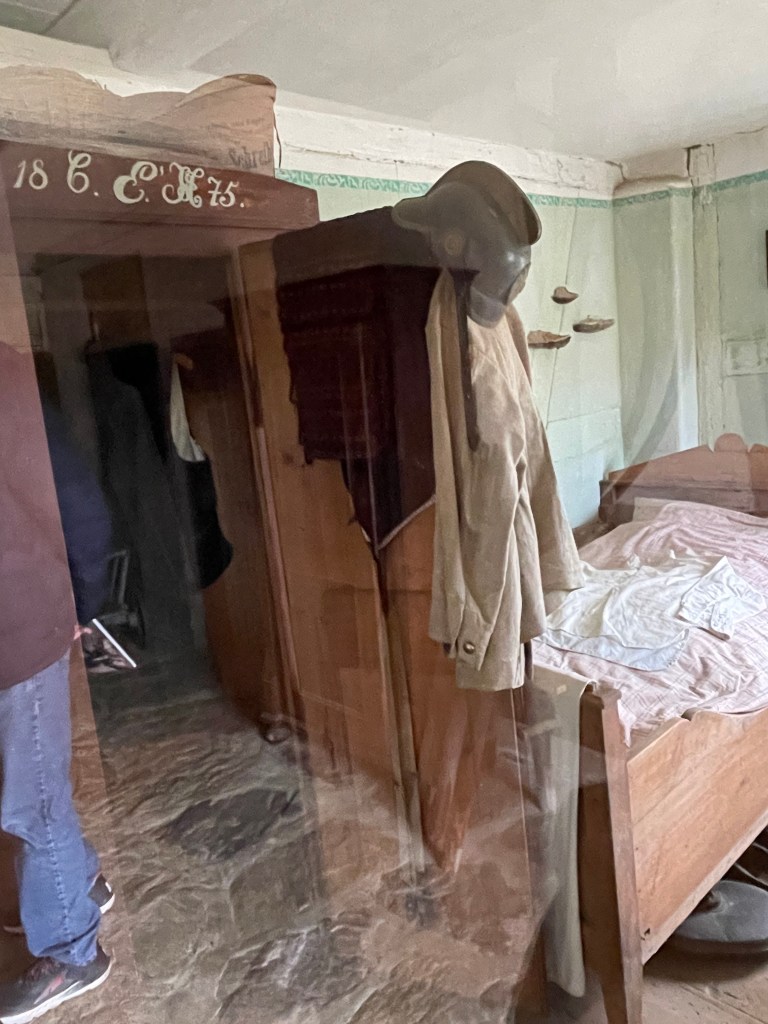
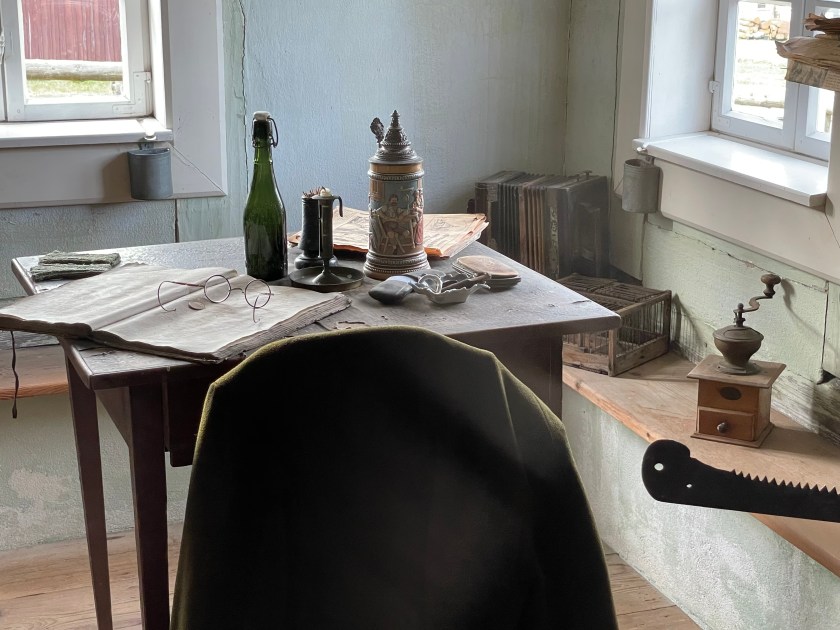
This was the room of an old widower:

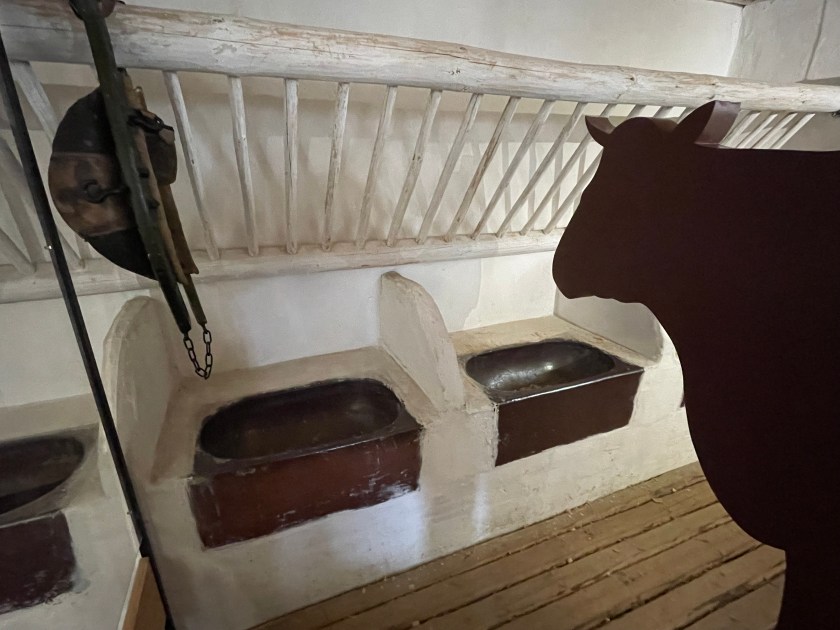
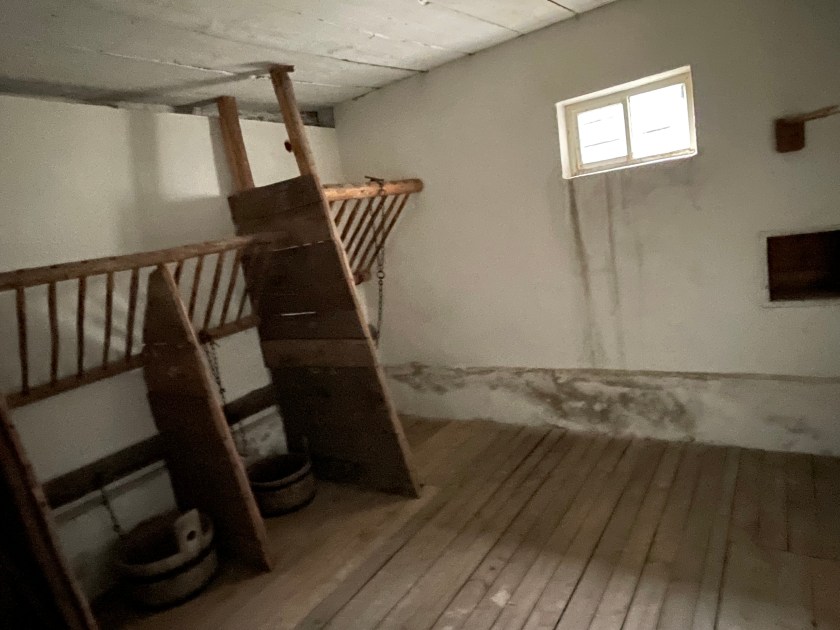
It was next to the room for the animals.

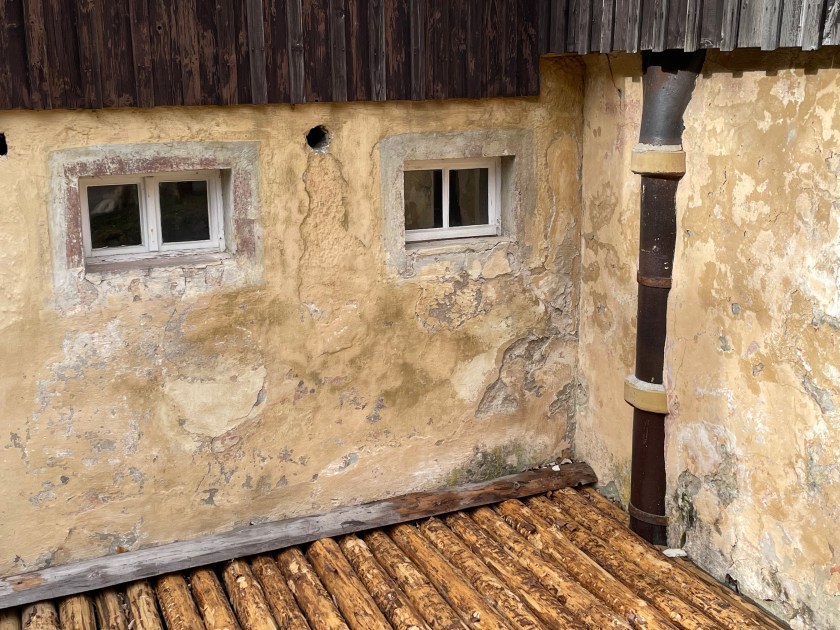
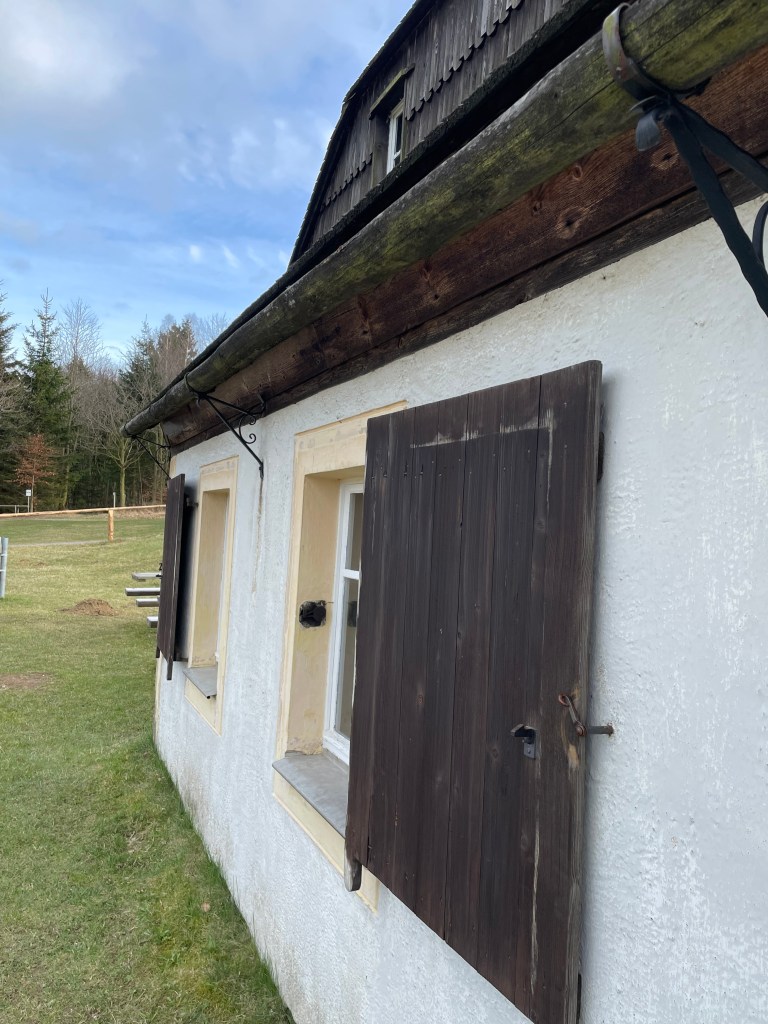
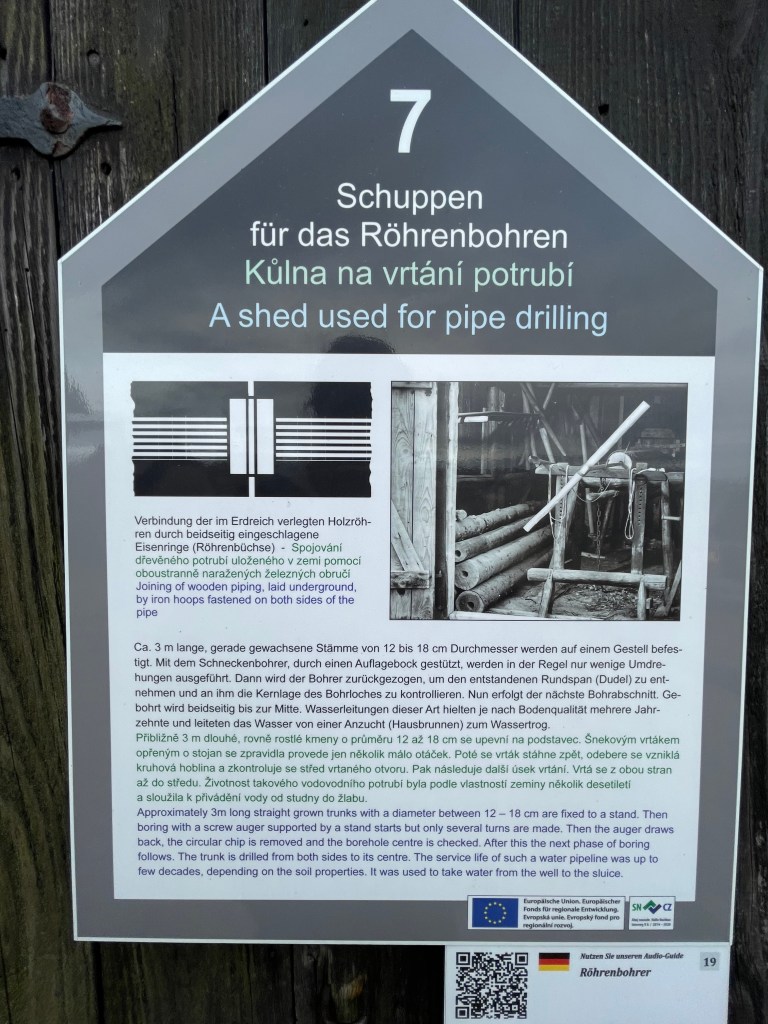
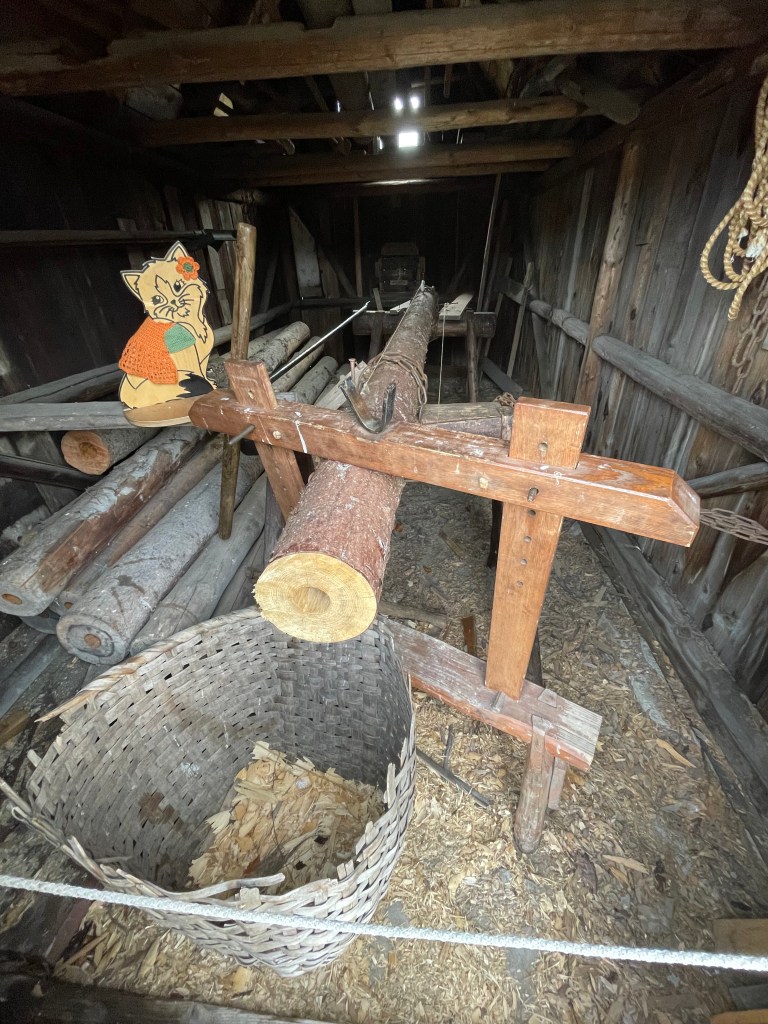
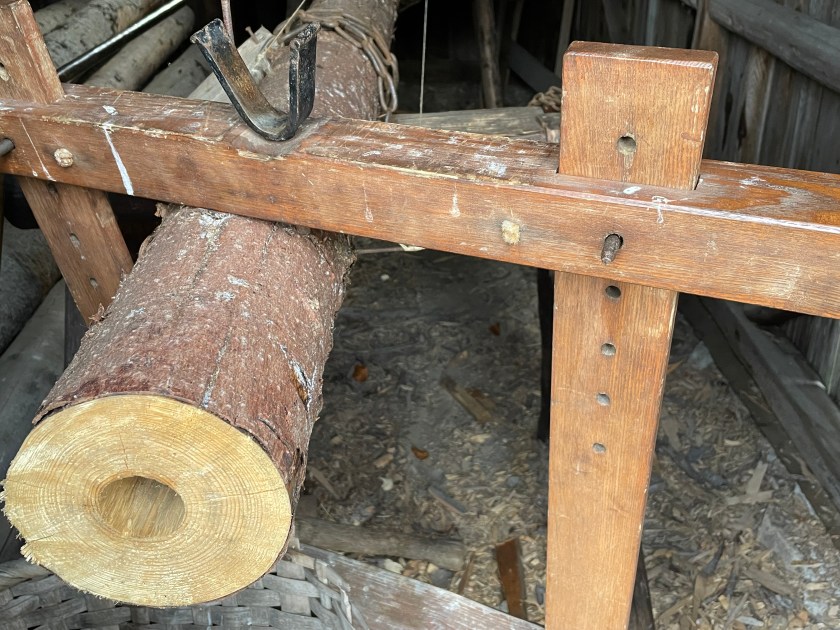
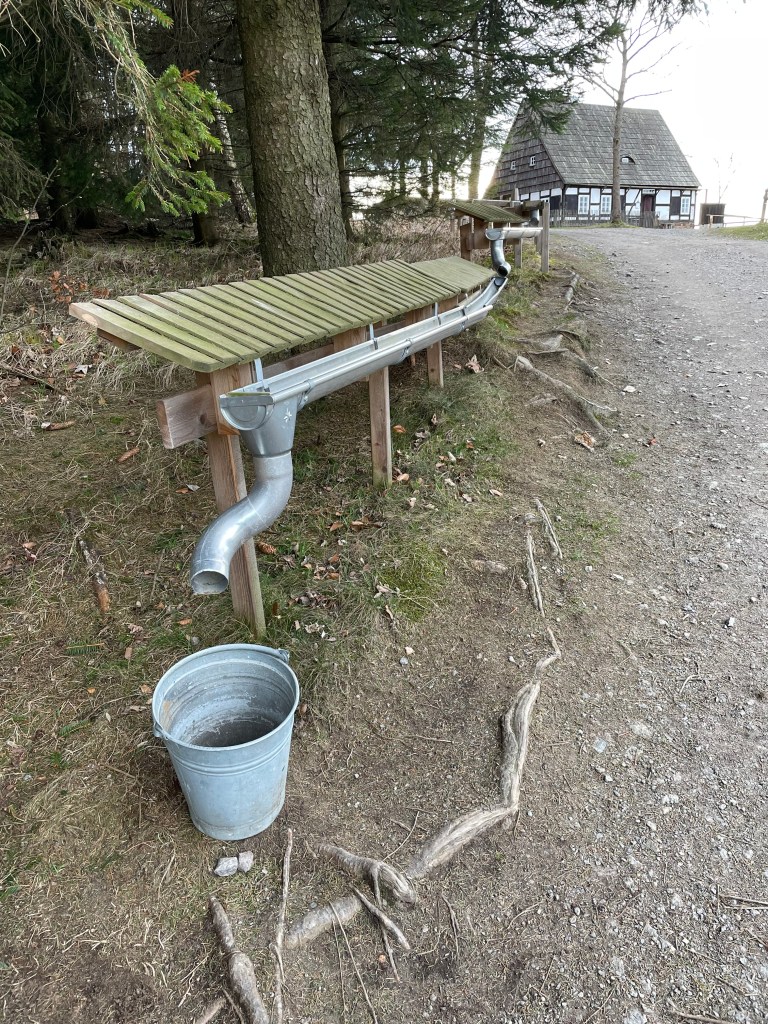
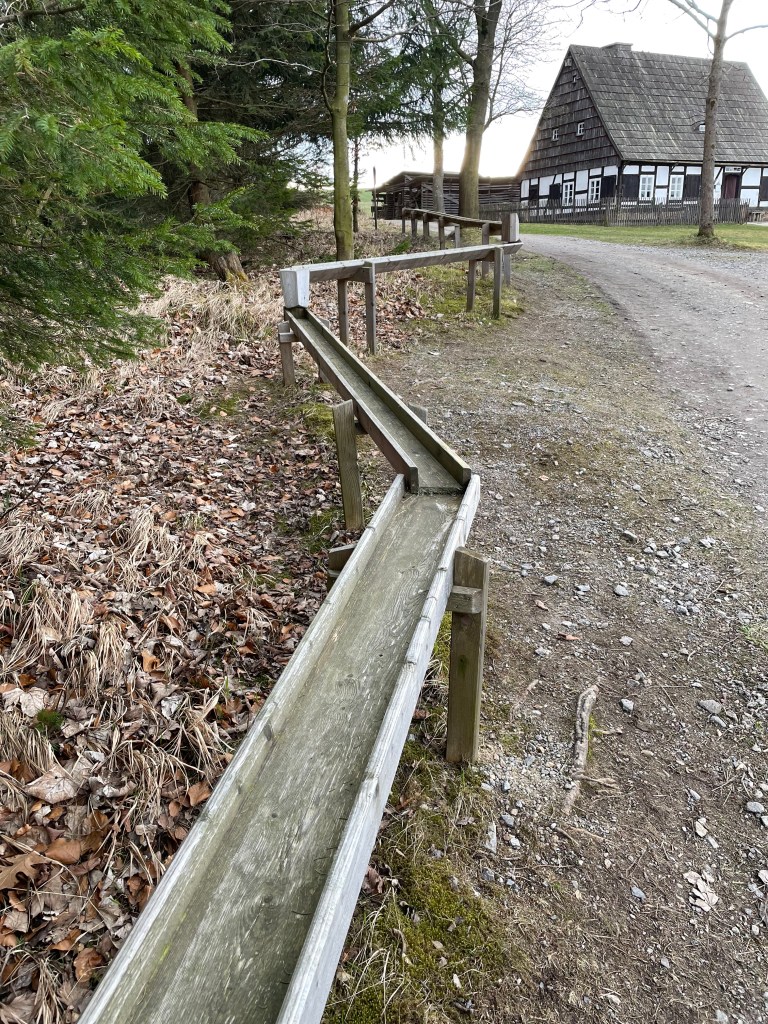
Water pipes and rain gutters were made from long straight logs.  The pipes were hollowed out.

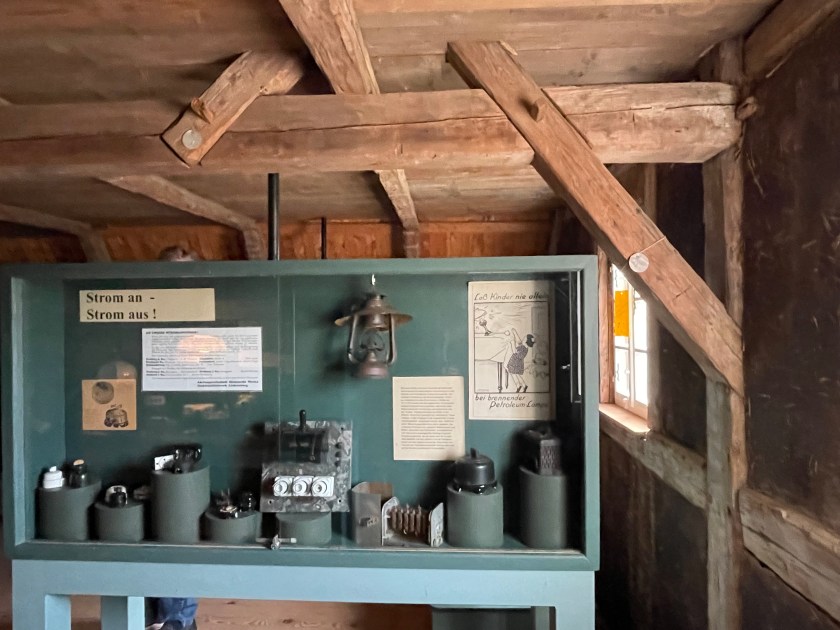
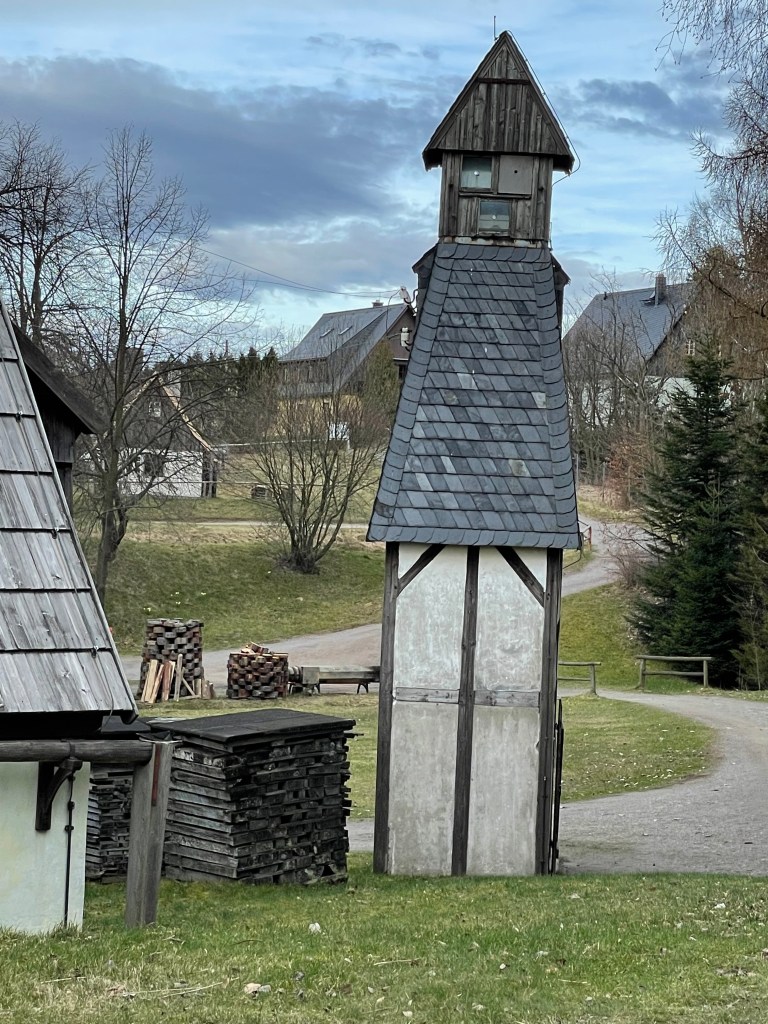
This tower was for radio transformers, sending and receiving signals.

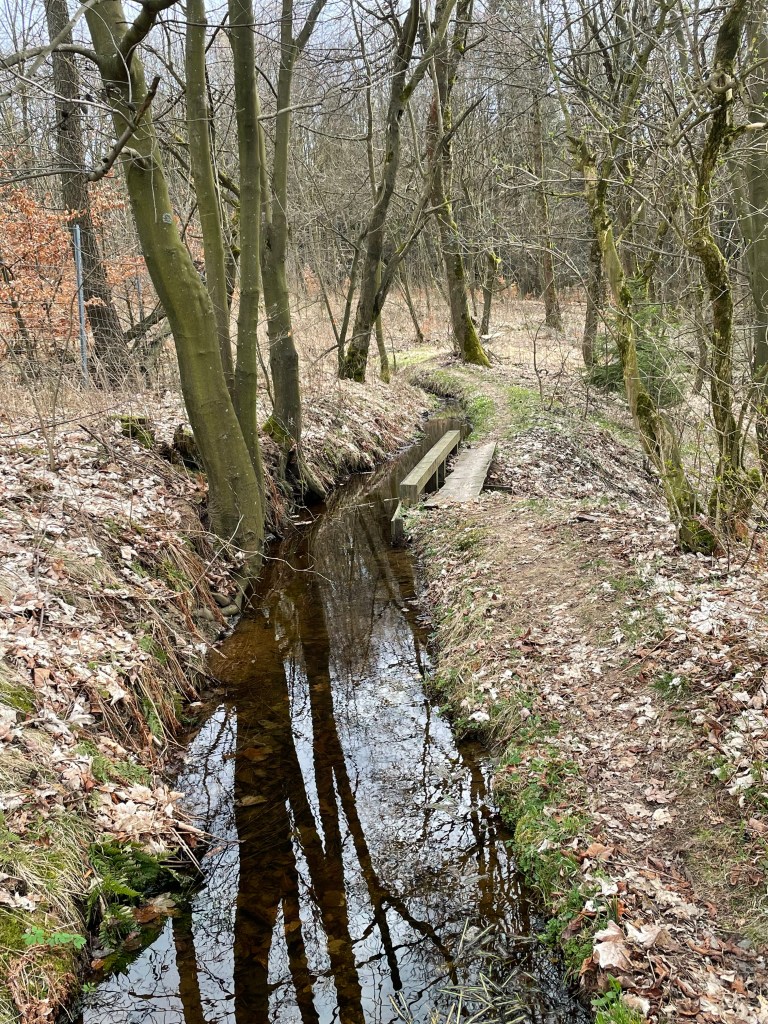
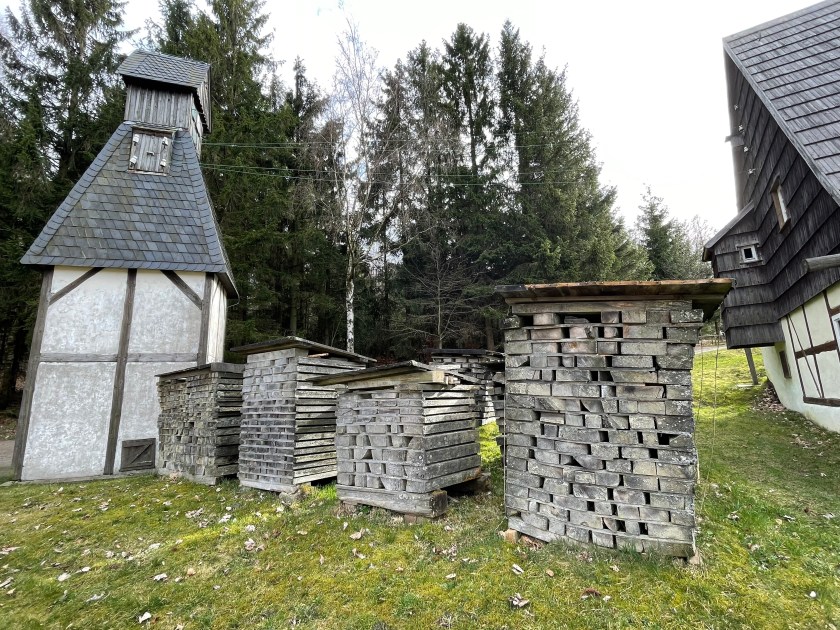
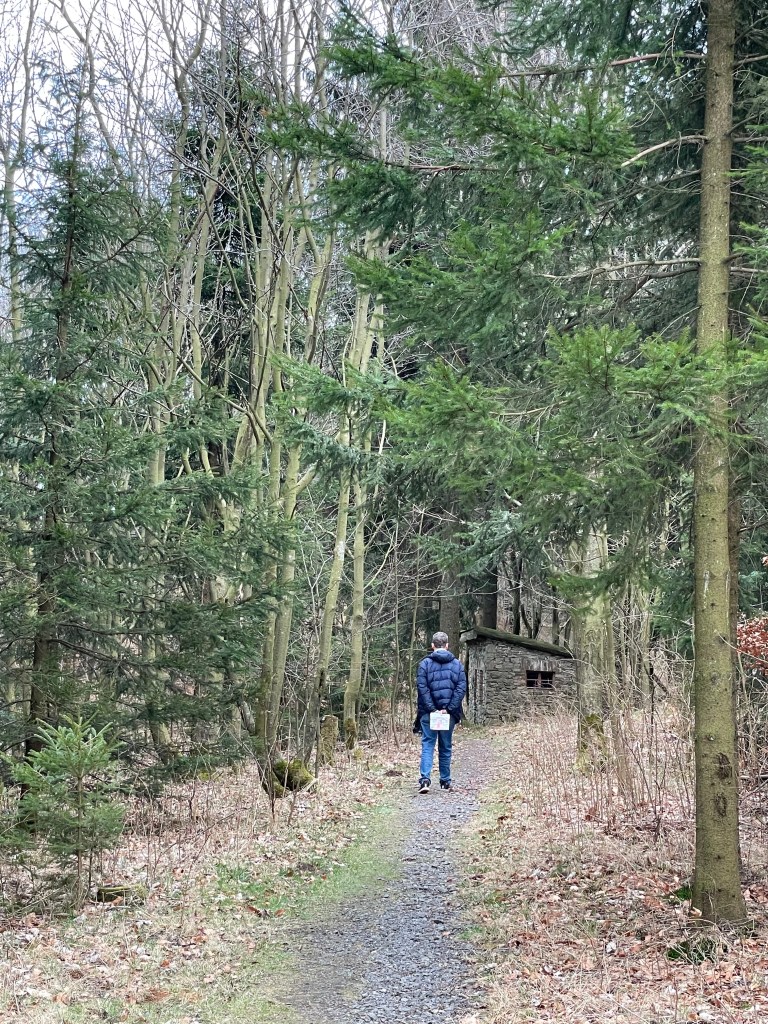
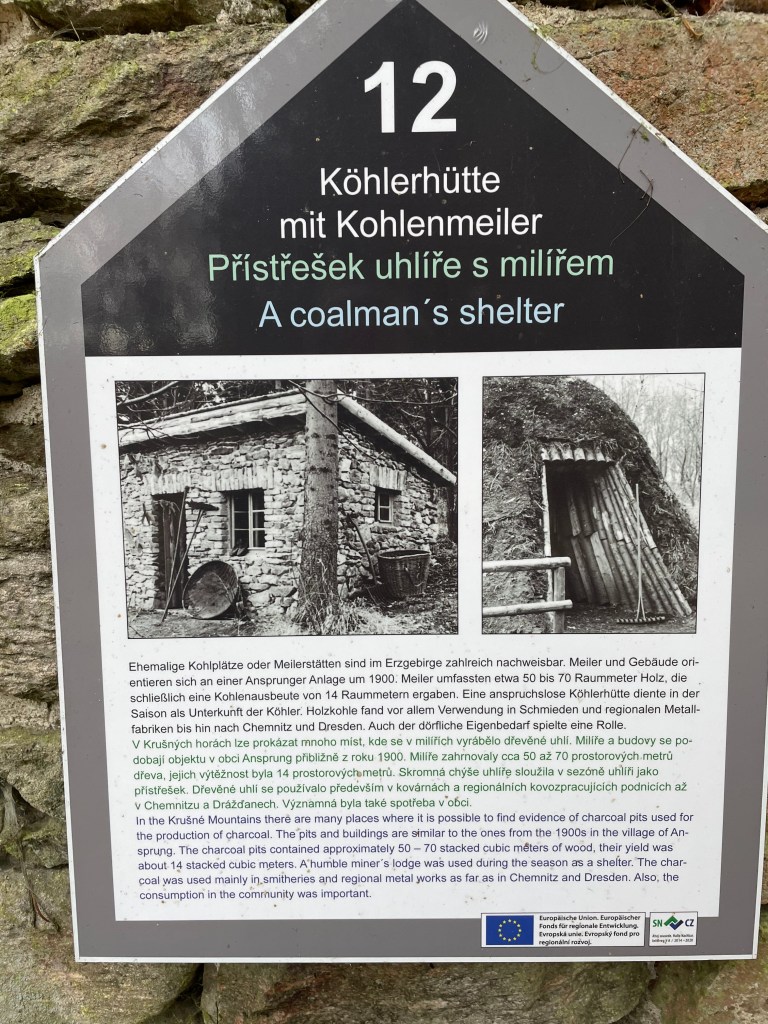
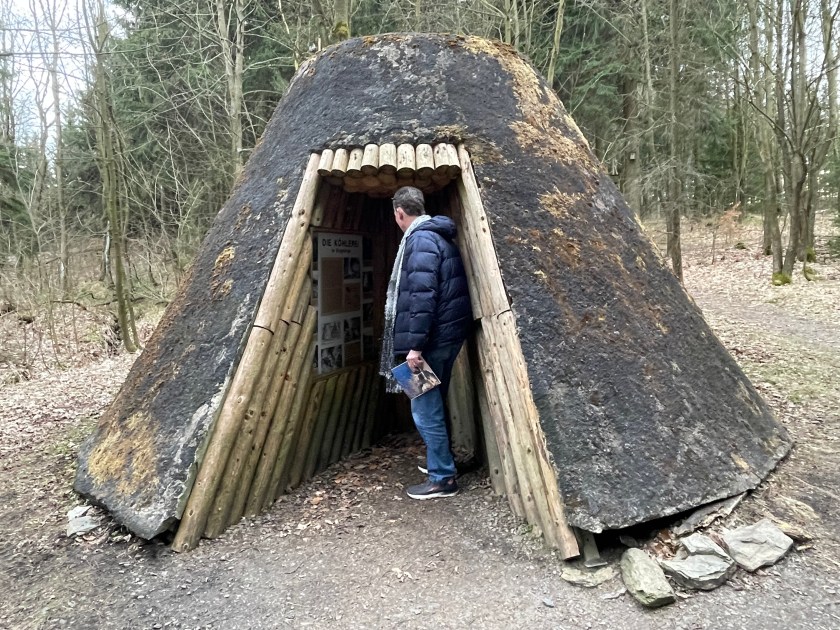
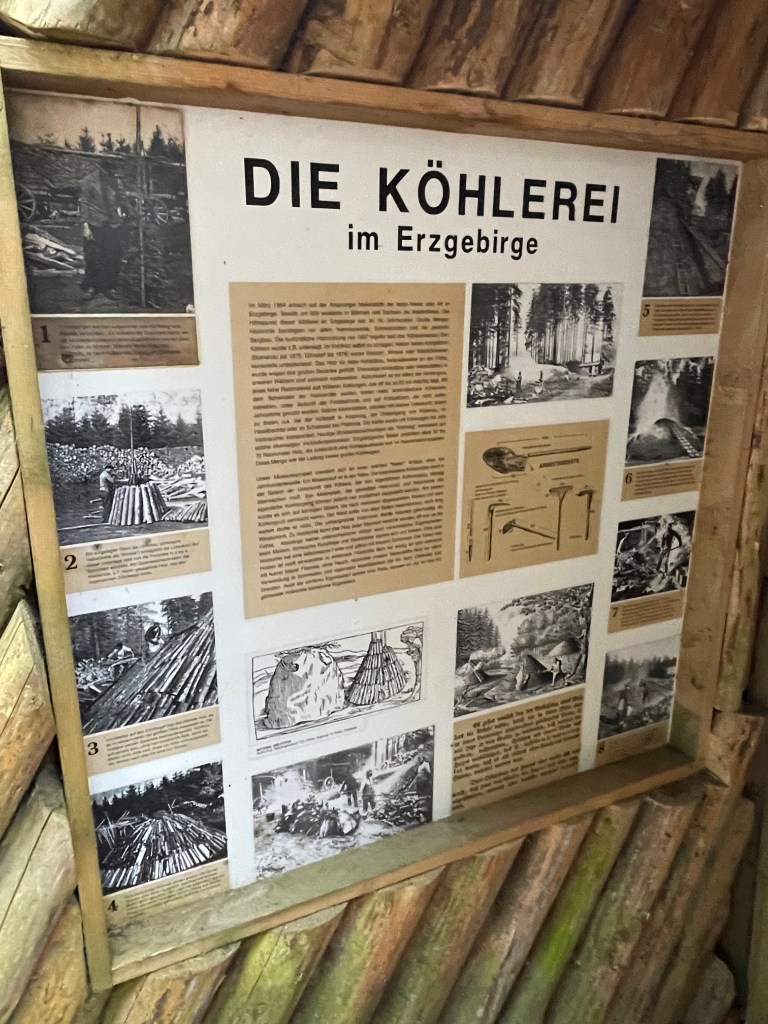
We walked into the woods to see where they made coal.

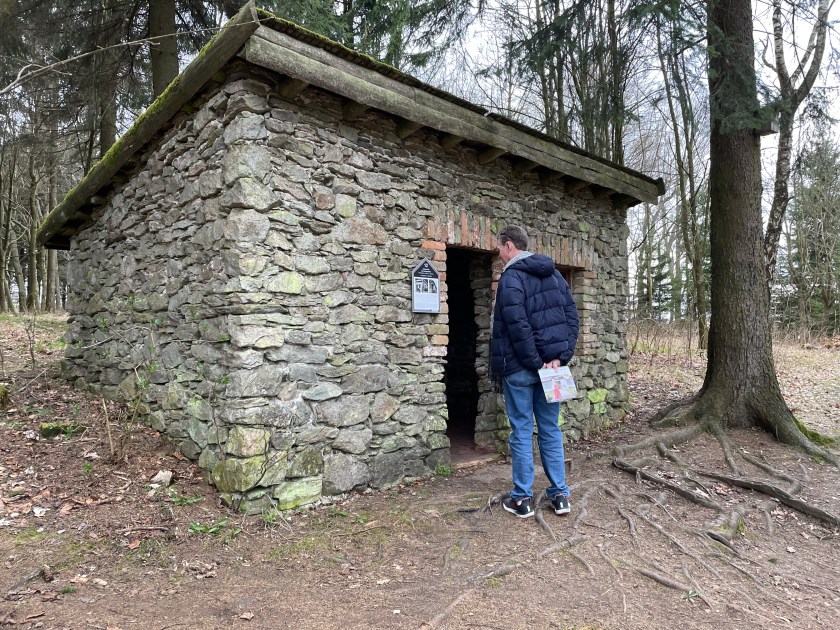
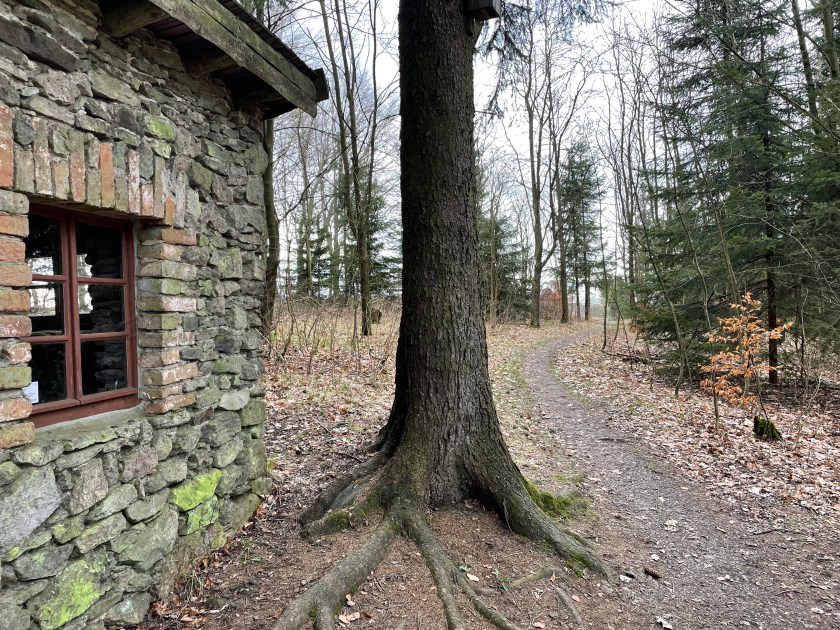
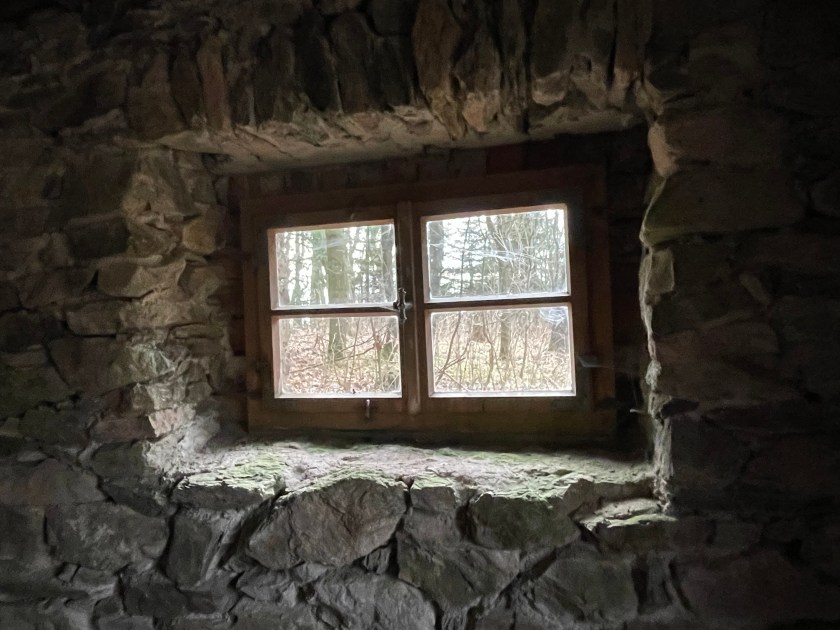
The stone house was for the man tending the coal.

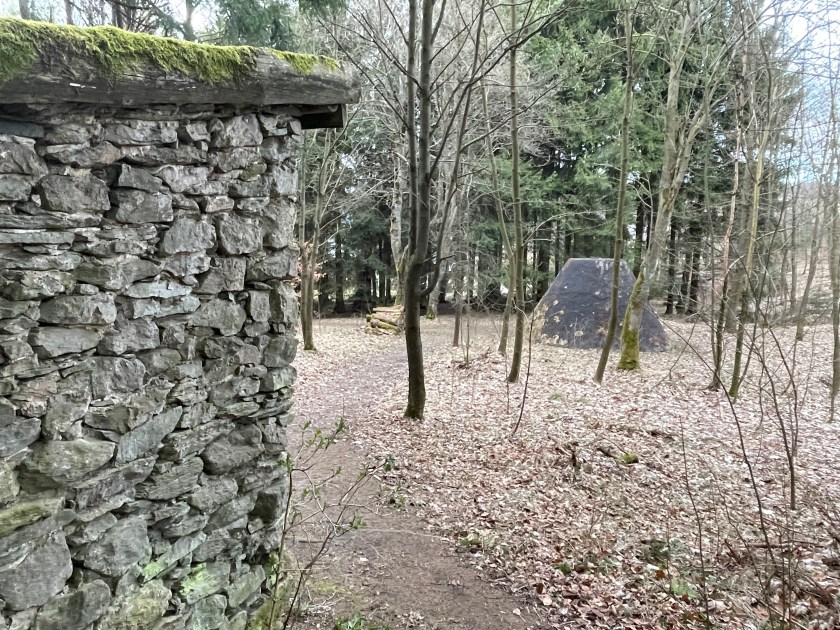
This is where the coal was made:

Wood gutters were eventually made of metal or tin.

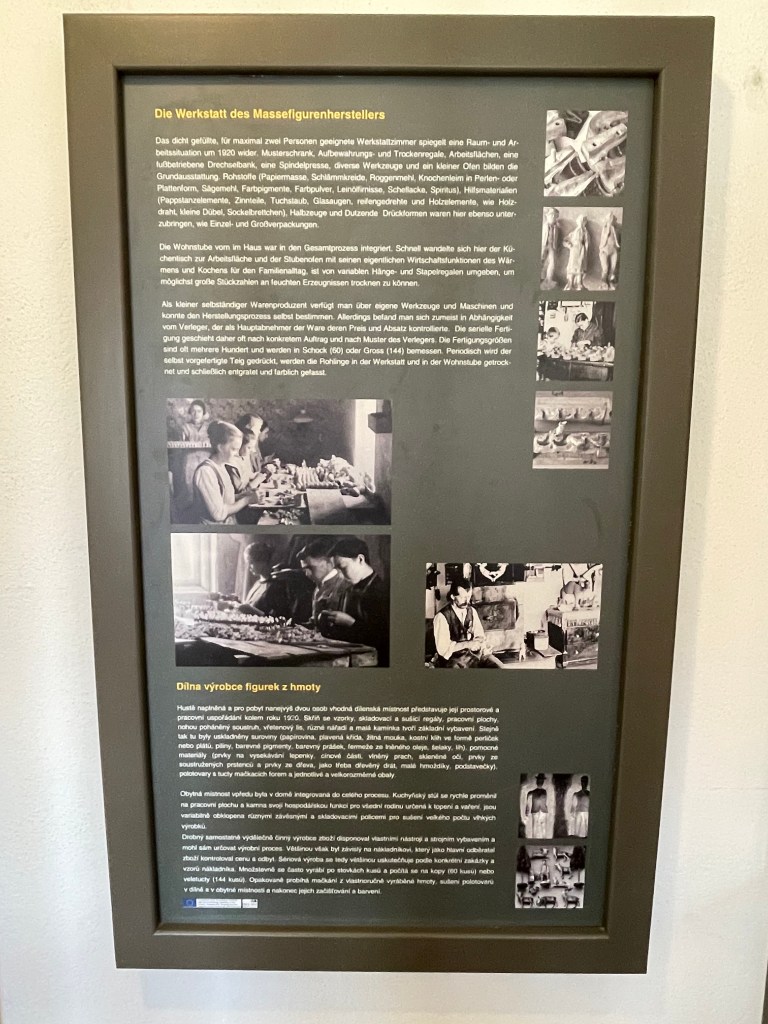
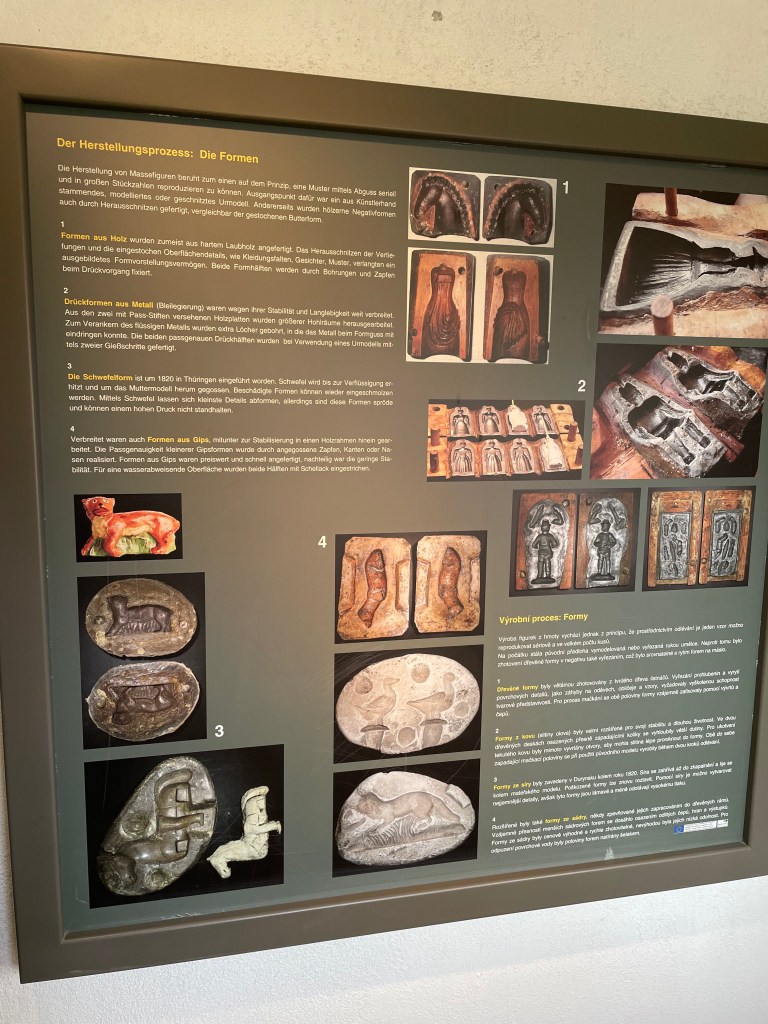
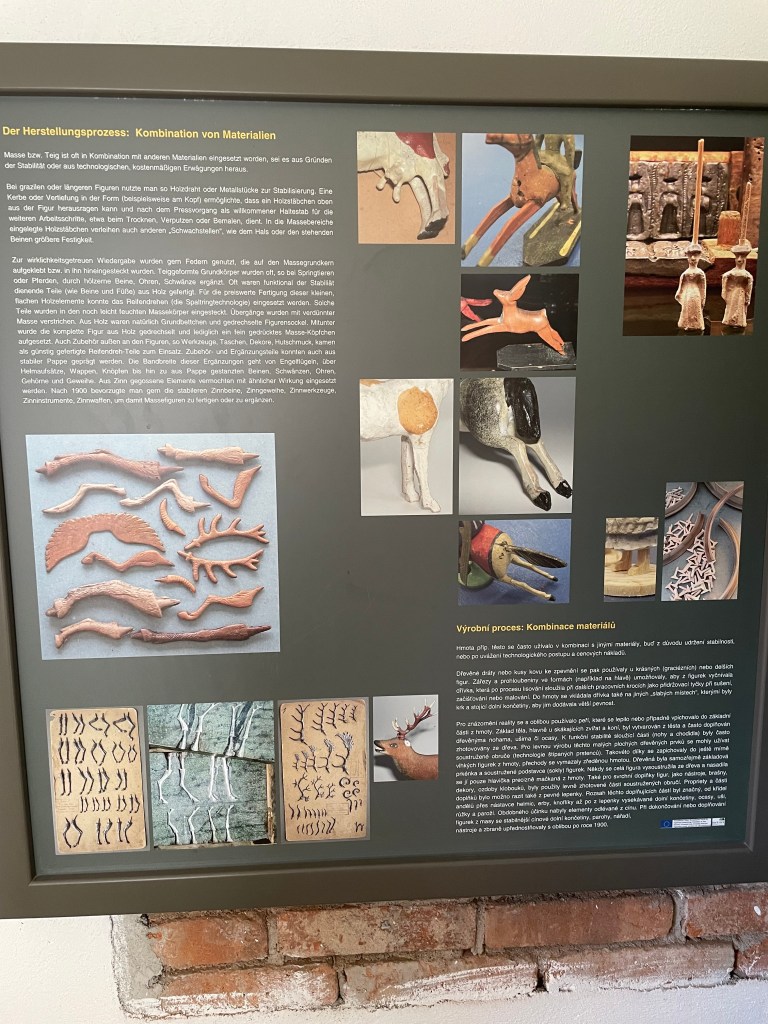
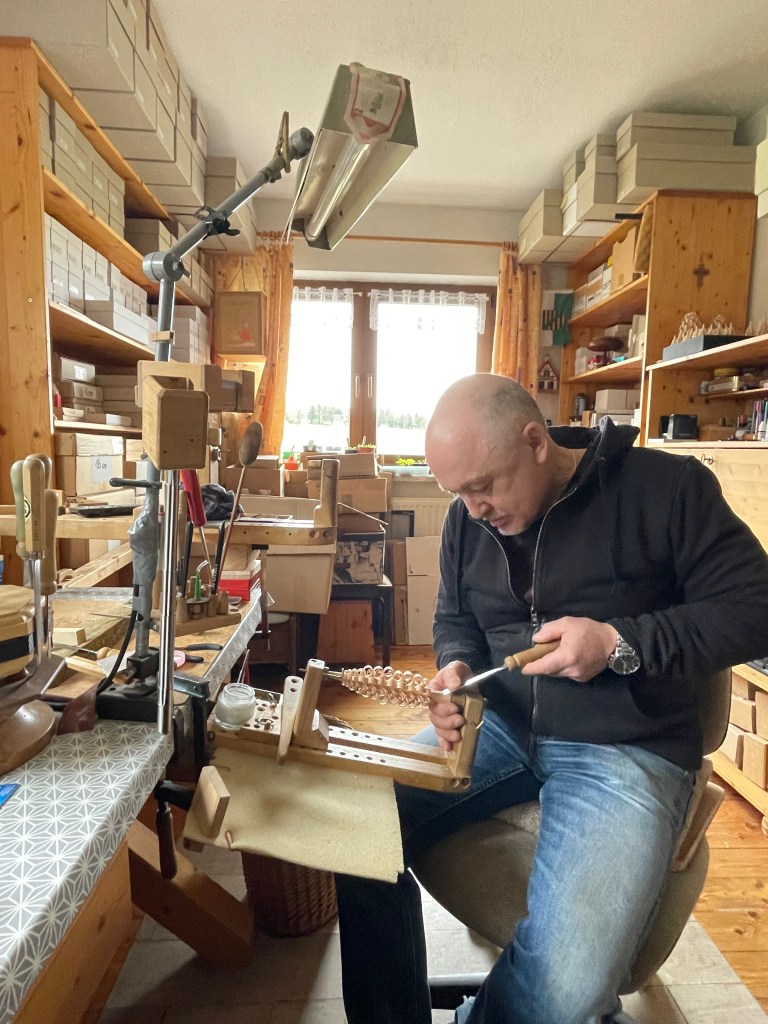
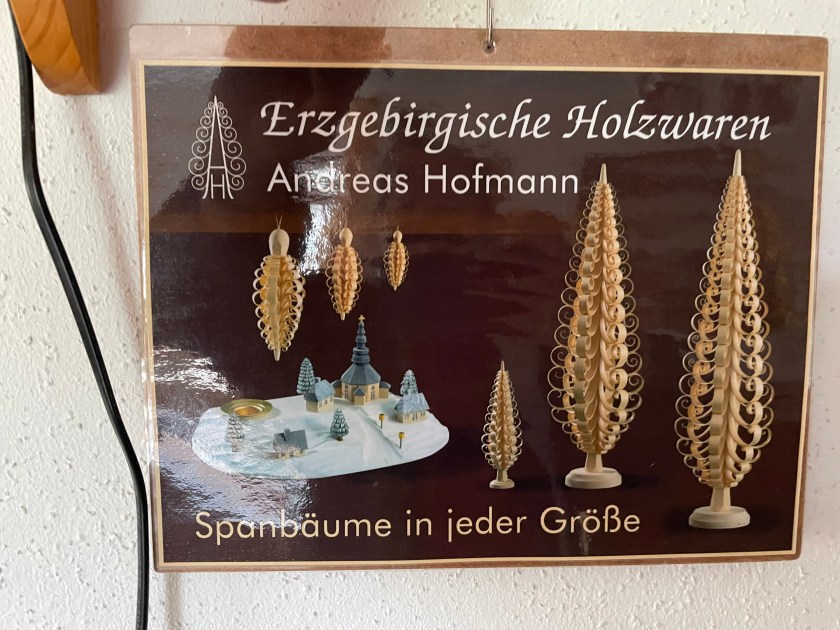
Andreas Hofmann, Erzgebirge Woodworker

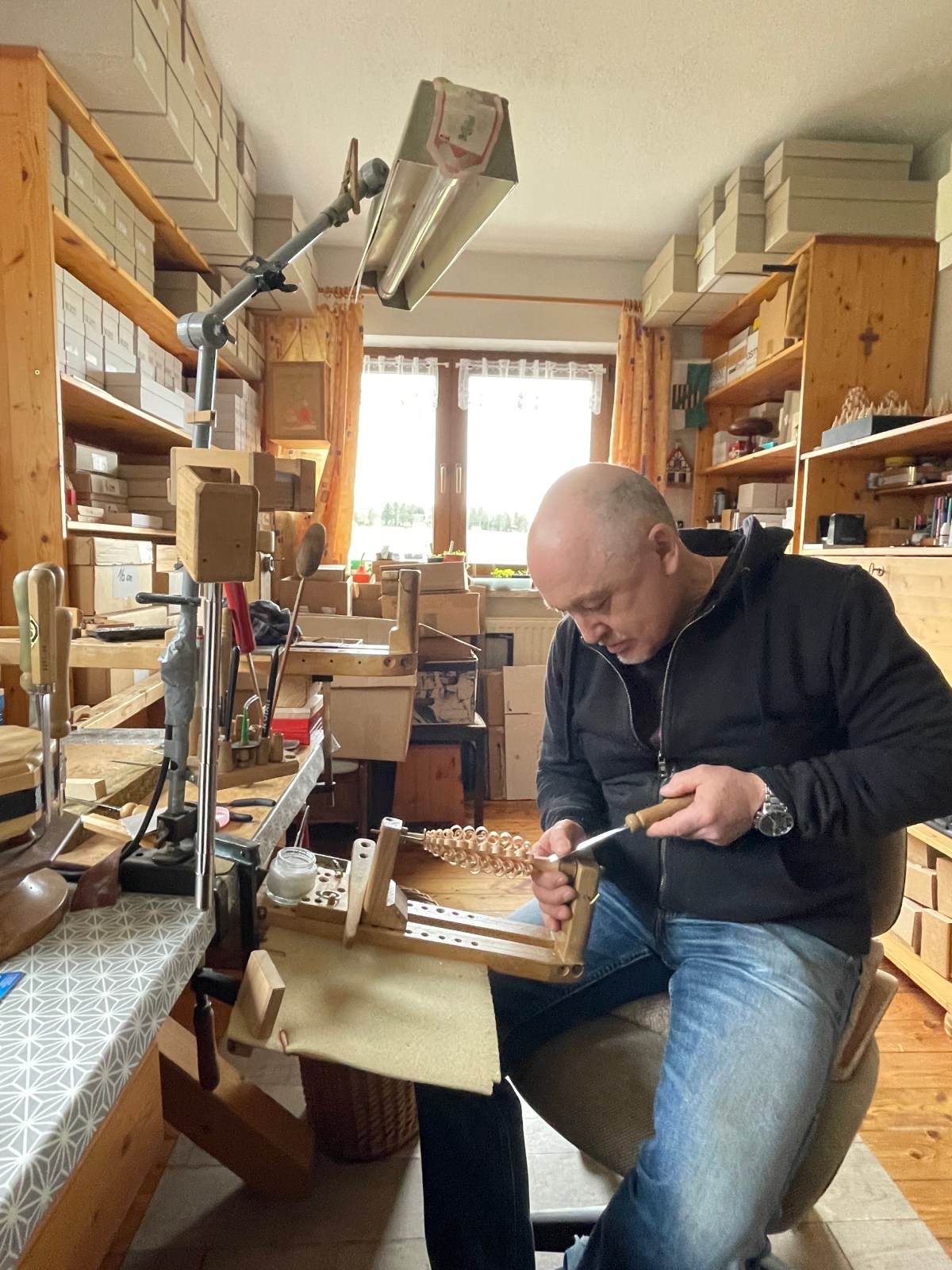
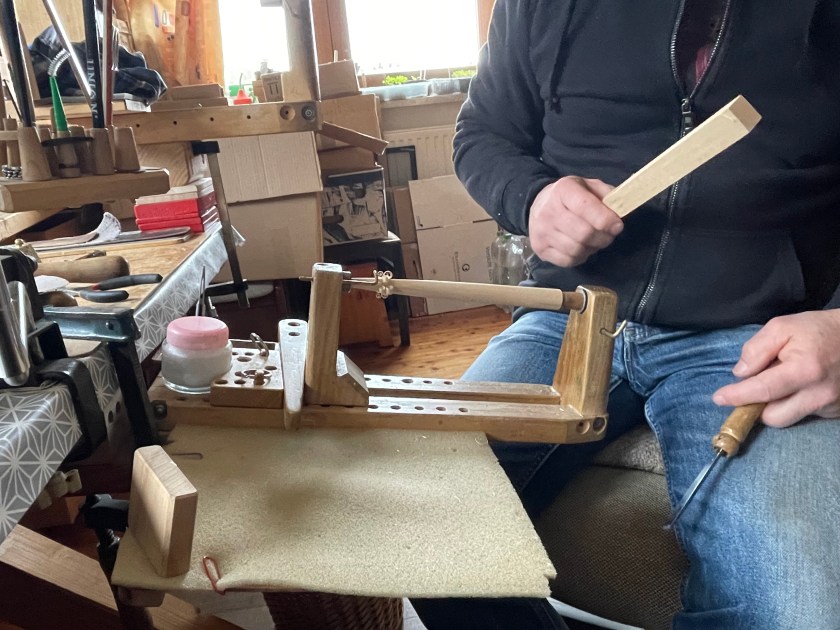
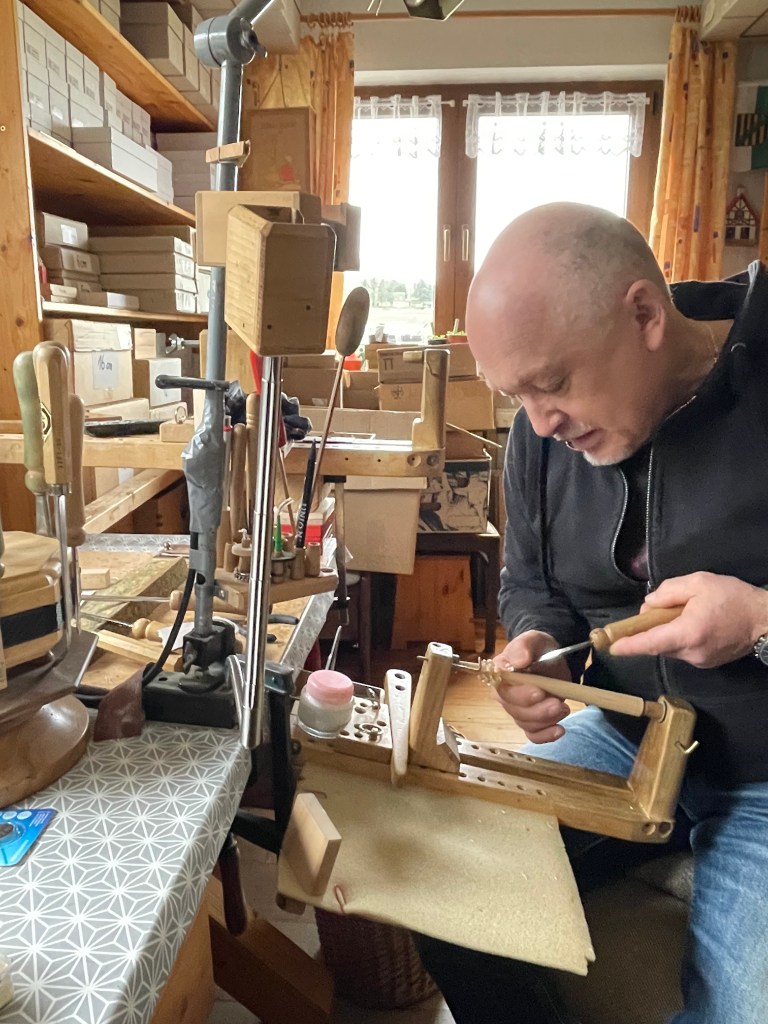
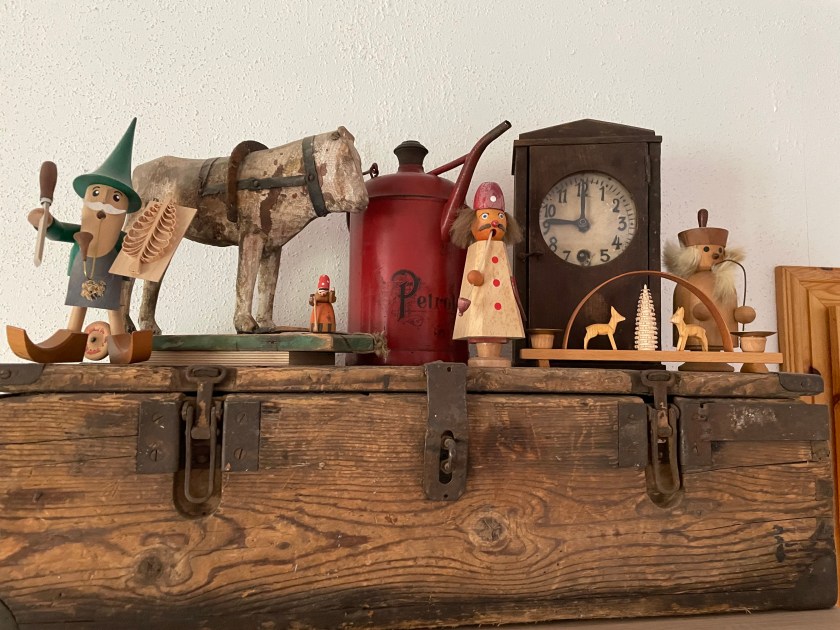
We noticed a home with a sign hanging out in front that indicated there was a woodcarver here.  It said “Geoffnet,” so we knocked on the side door and we were welcomed in to the workshop of Andreas Hofmann.  It was like going into a Santa’s workshop of sorts.

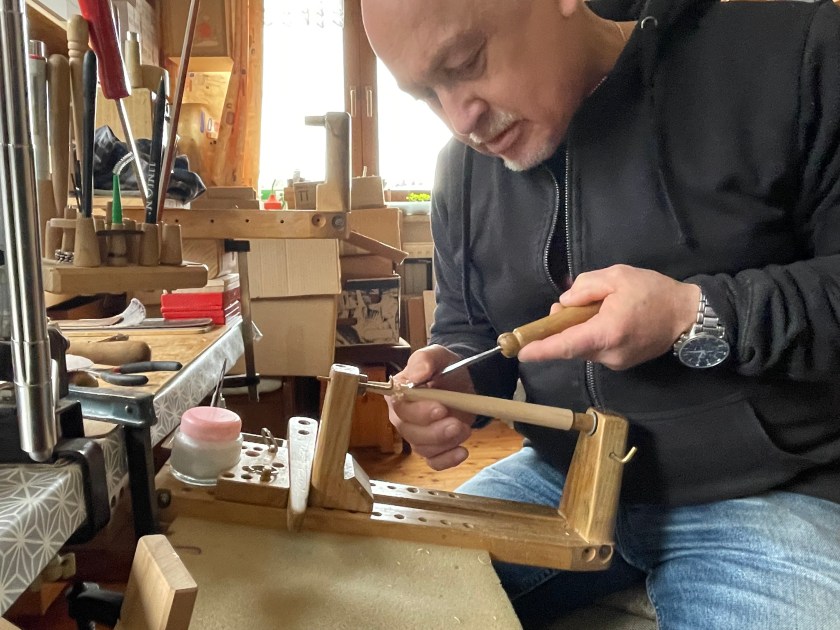
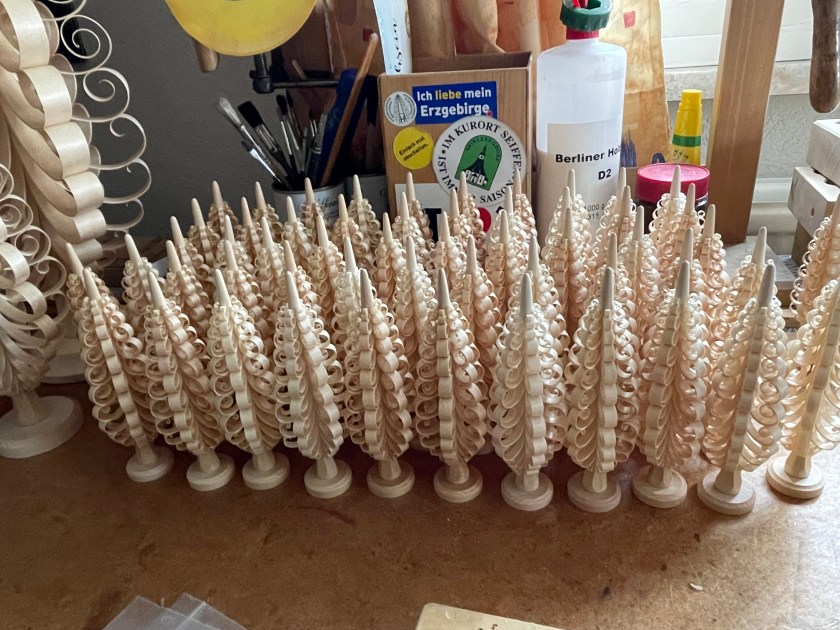
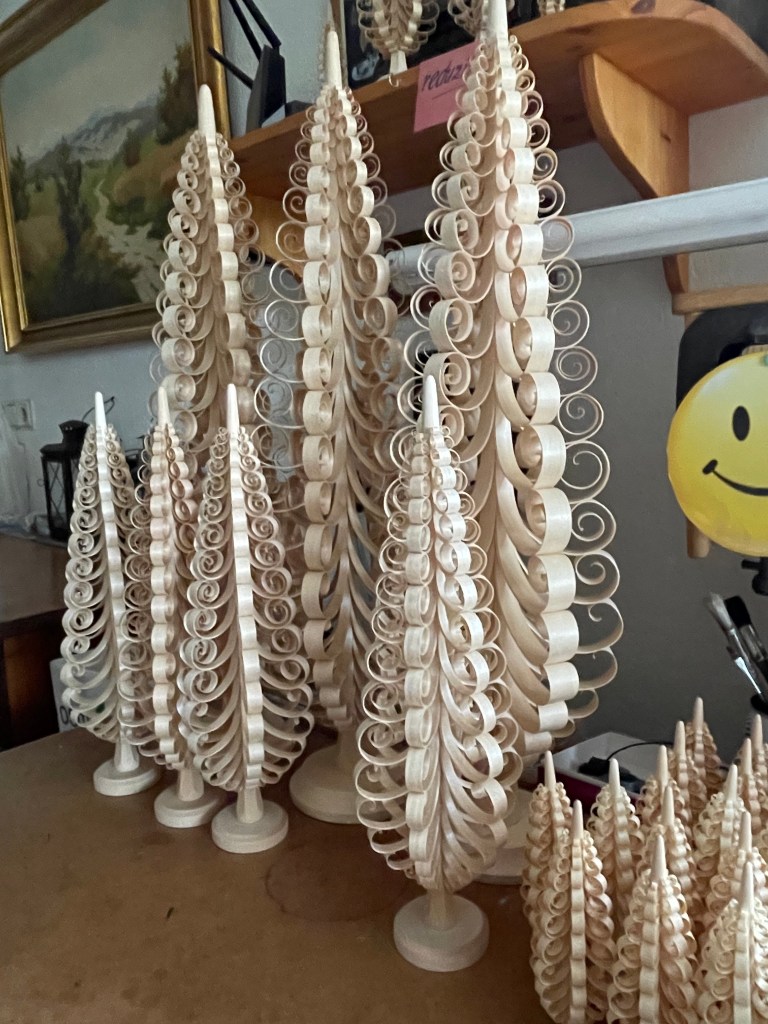
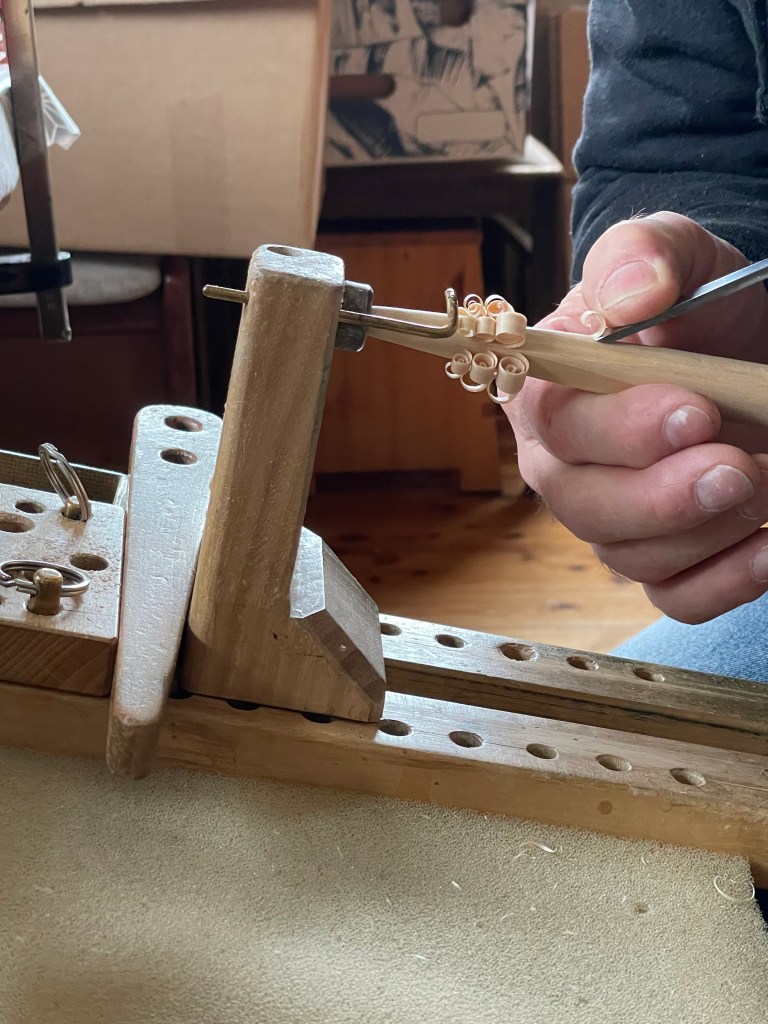
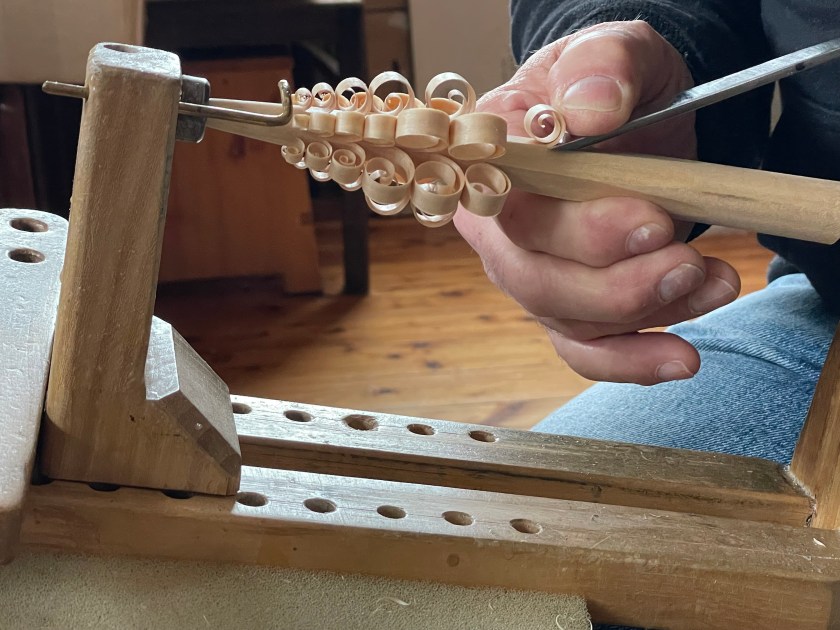
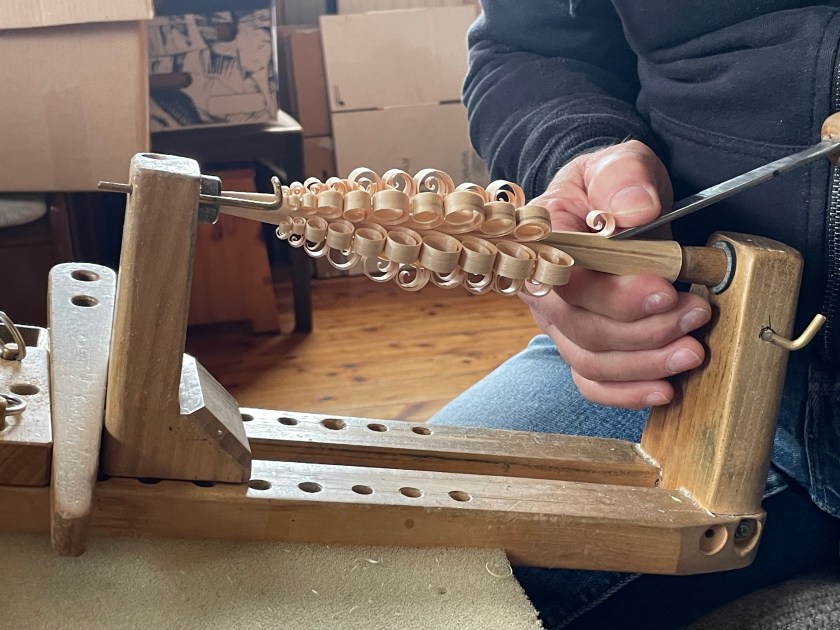
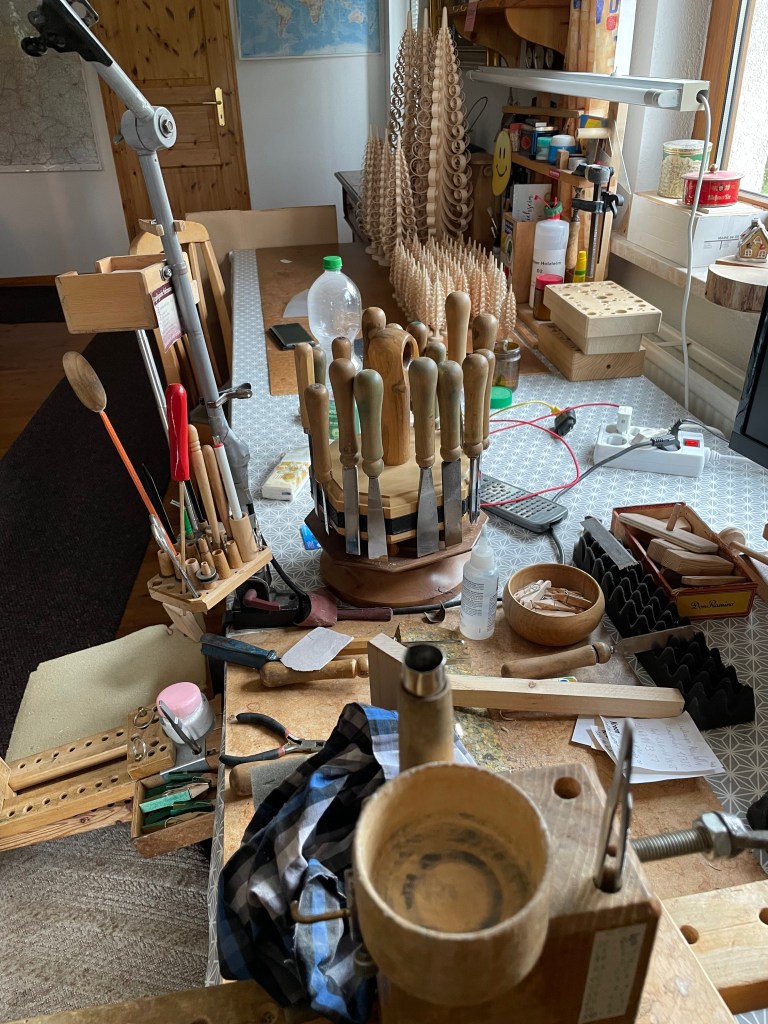
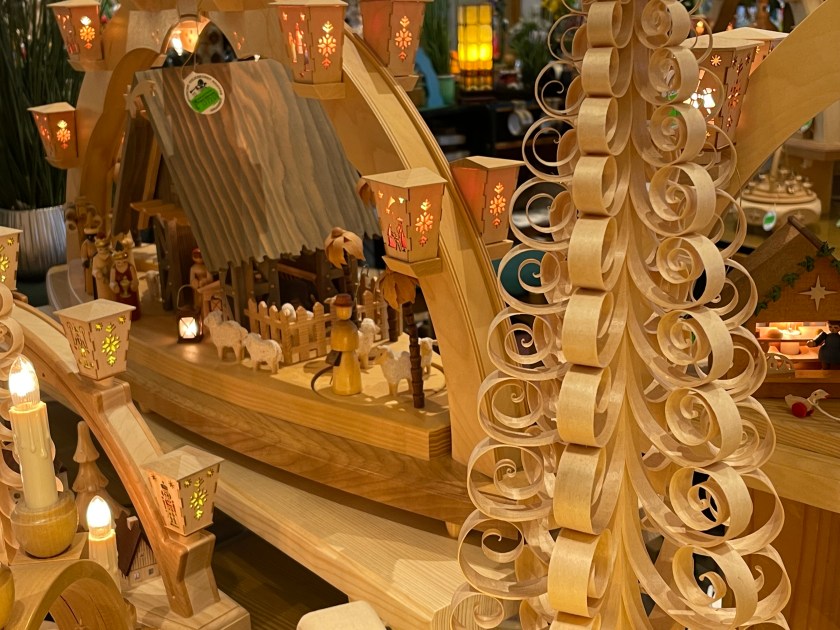
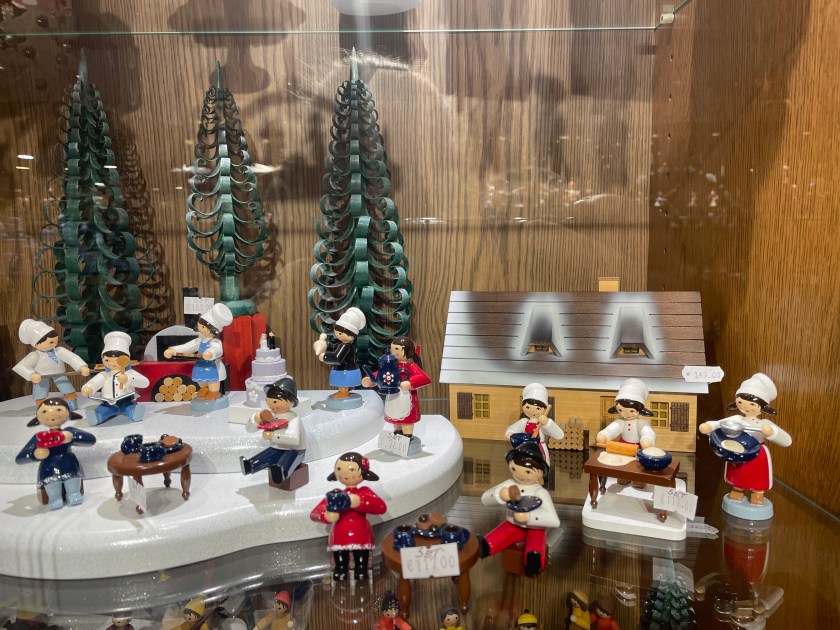
Andreas asked us if we wanted to see how he made these special trees.  When I asked him how long it takes to make a tree, he said, “well, I cut the wood for these trees about a year ago.”  The wood needs to age to just the perfect dryness so he can make the curls without breaking them.  Andreas said he can make up to a hundred small trees in a single day.  He sells these trees to other craftsmen who make the Christmas arches or the pyramids.

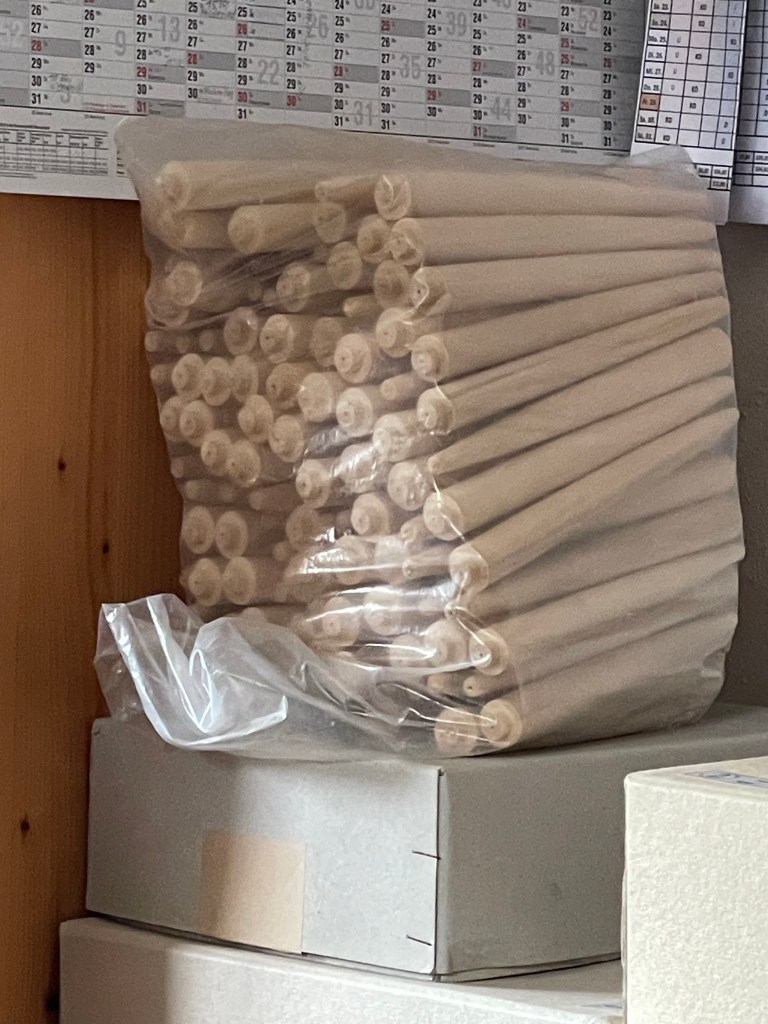
These are the dowels he makes to create the trees.  Then he starts carving the curls, spiraling around and around.

As we visited with Andreas, we learned that he attended the open house of the Freiberg Temple several years ago and he really enjoyed it.  He told us that neither of his 2 children have any interest in this craft that he learned from his grandfather.  “In a few more years,” he said, “there will be no one left who knows how to do this.”

We purchased the tree he made (16 Euro) and 2 others, one smaller and one larger.  What a fun memory and treasure to take home!

A Visit to Seiffen in the Erzgebirge Mountains in Saxony

With a 4-day Easter weekend, we decided to take a trip north to Seiffen (a small Christmassy town of 2,500 people), then Dresden, Leipzig and Weimar.

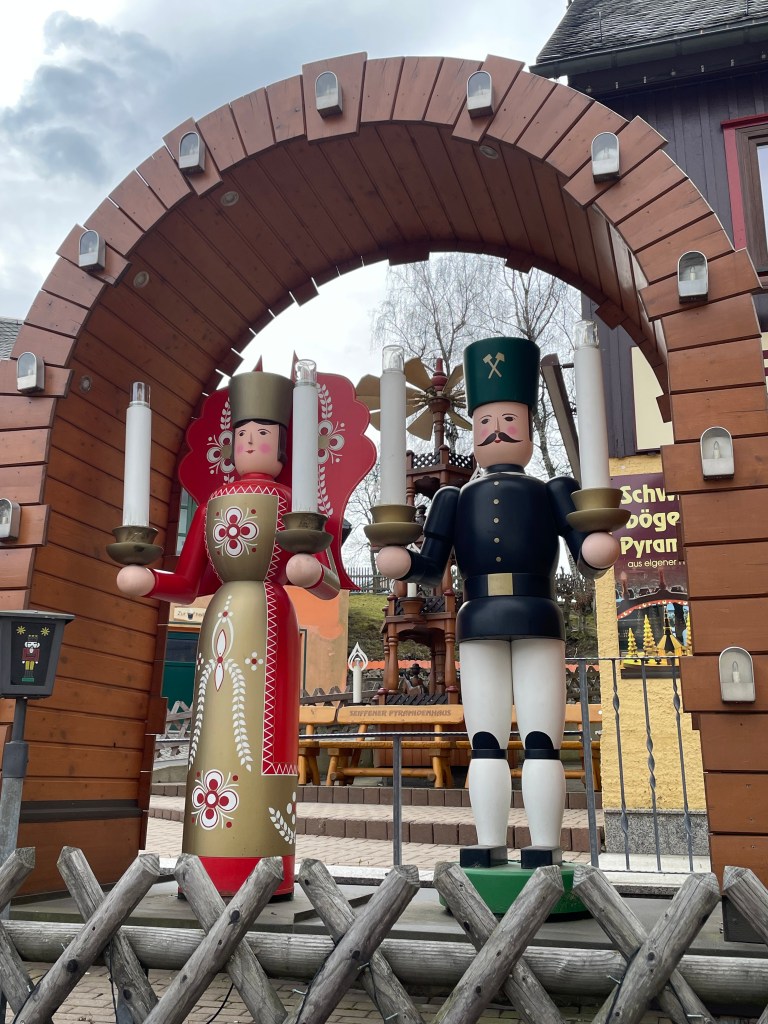
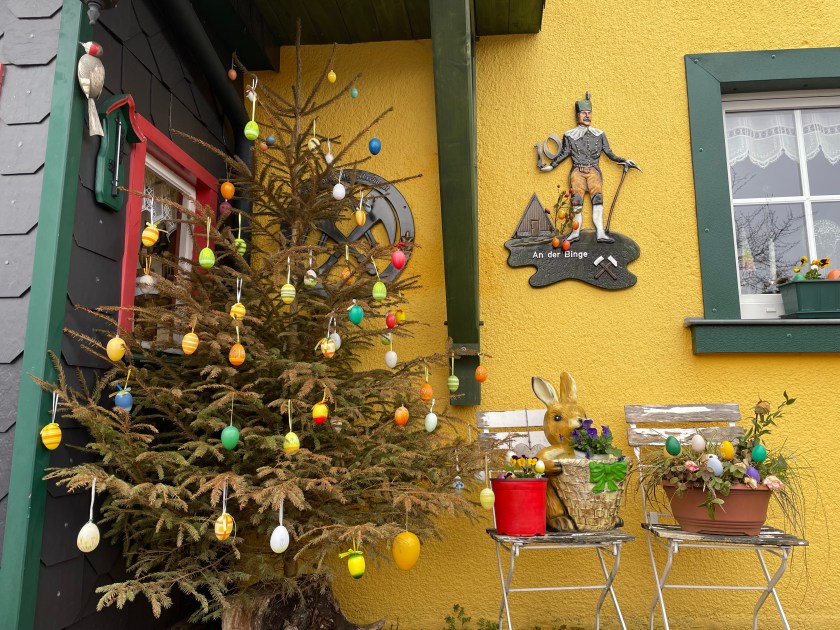
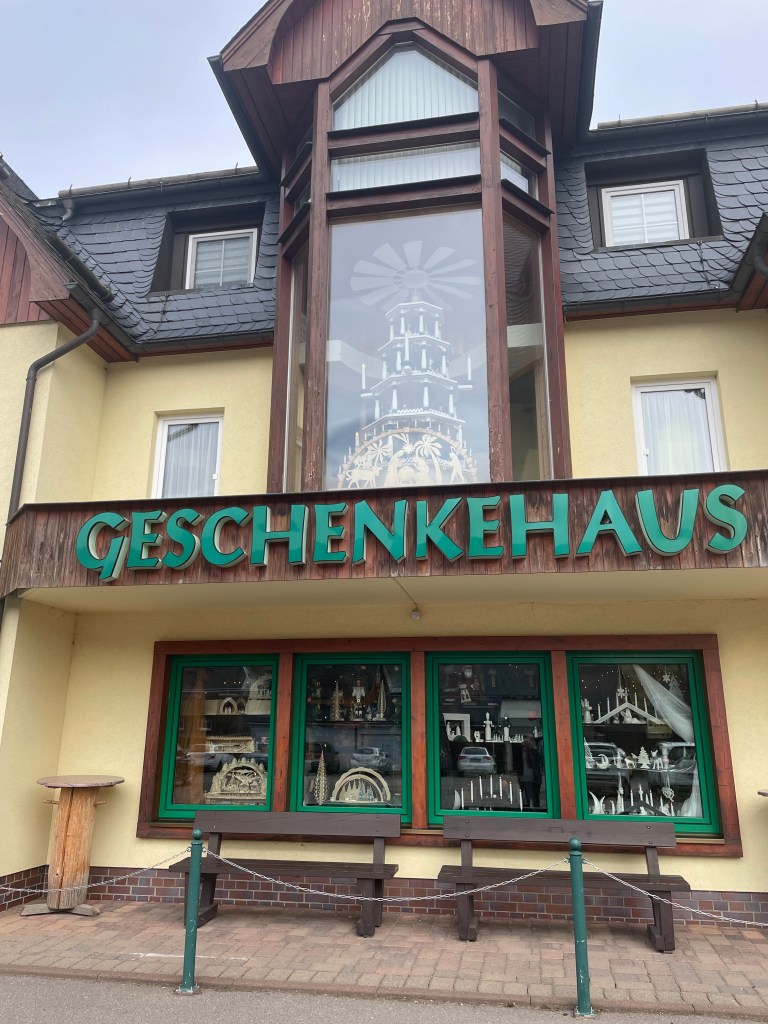
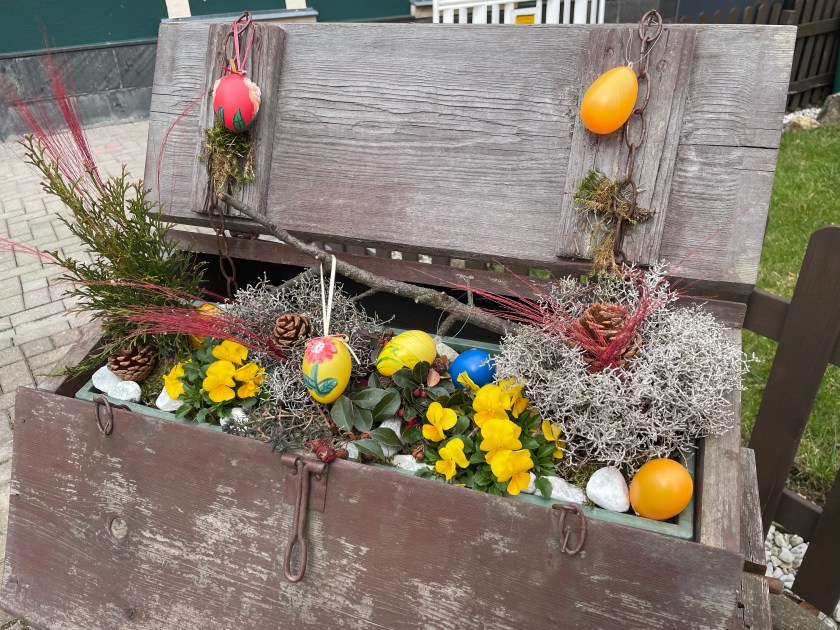
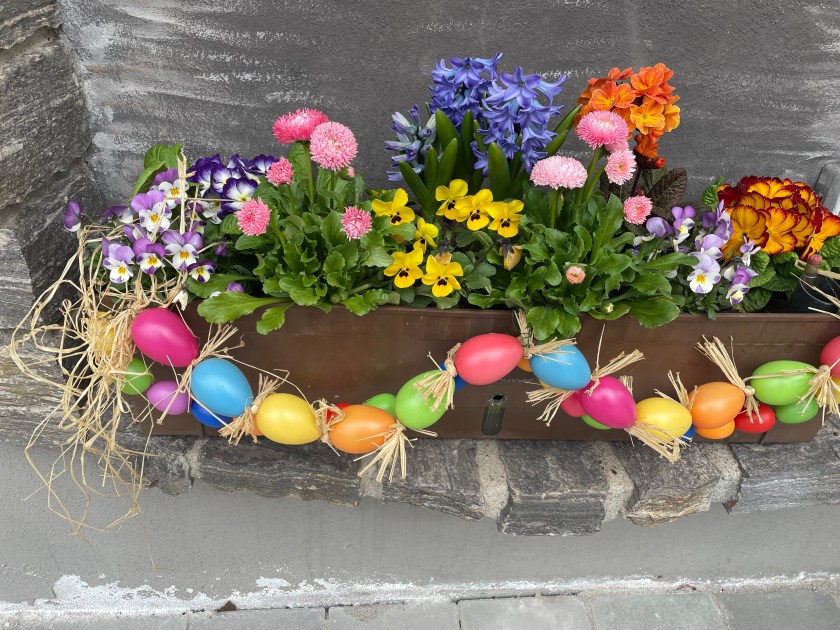
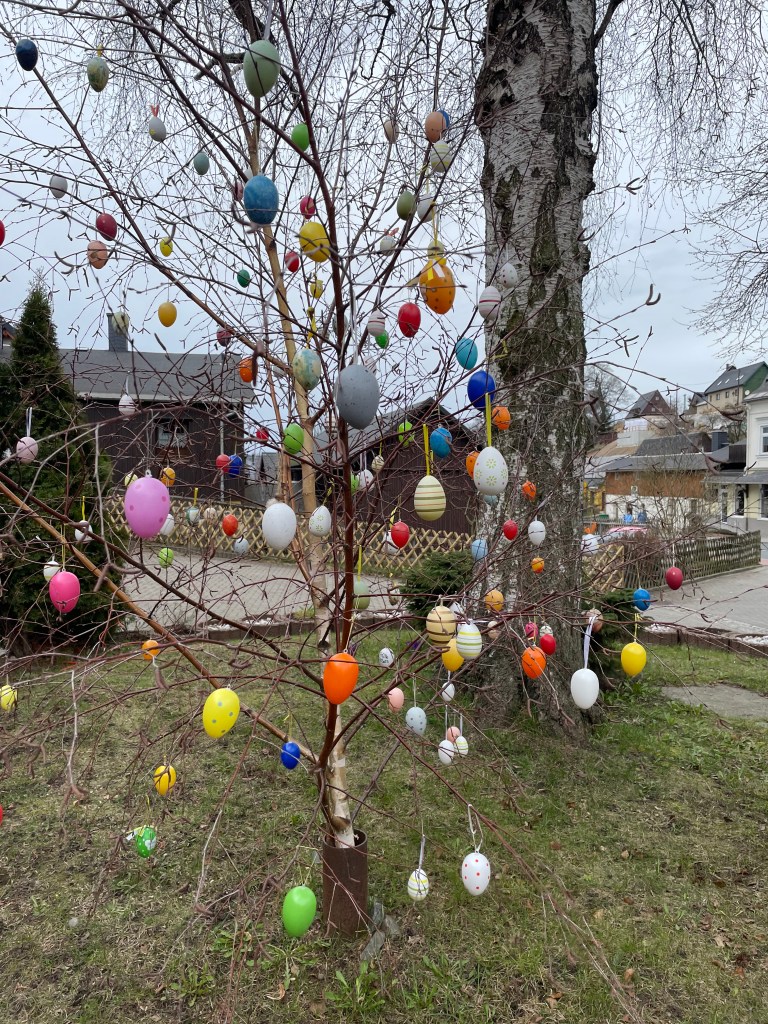
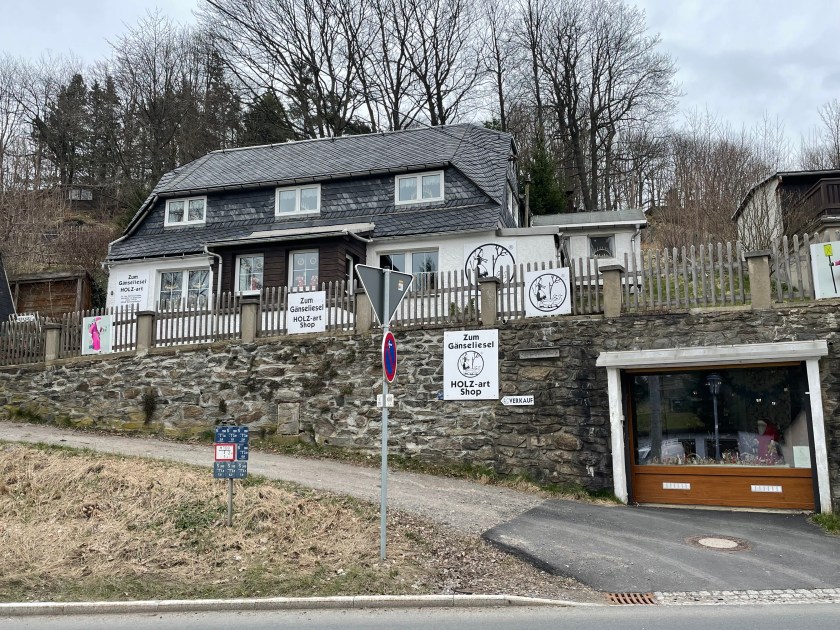
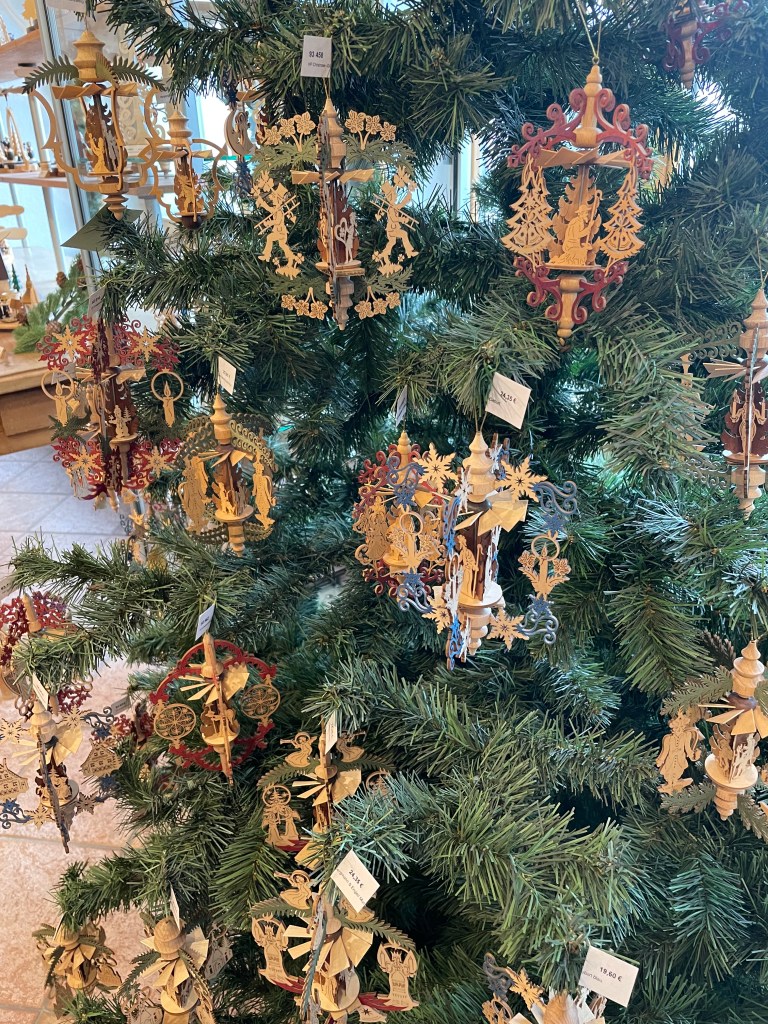
Seiffen is a most charming town up in the Erzgebirge mountains (a 6 hour drive from Frankfurt) where they do a lot of wood carving and woodworking. It’s a magical place with more than 50 shops selling handcrafted wooden treasures.  Seiffen feels like a Christmas town, but this week, everyone here is also celebrating Easter.
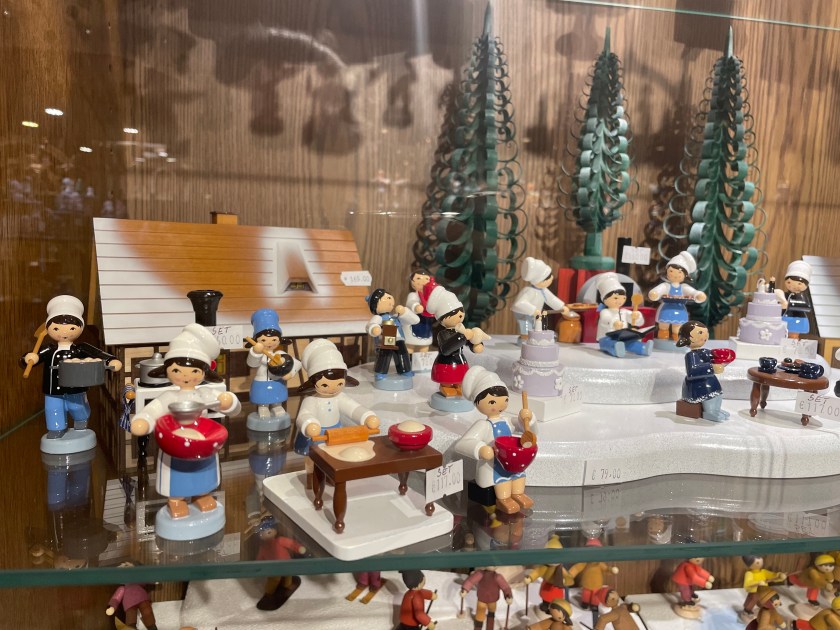
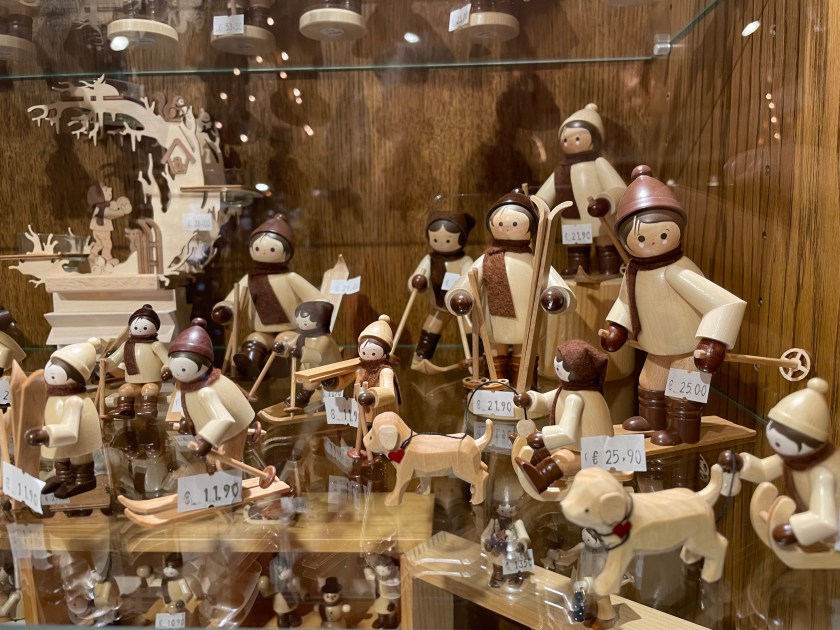
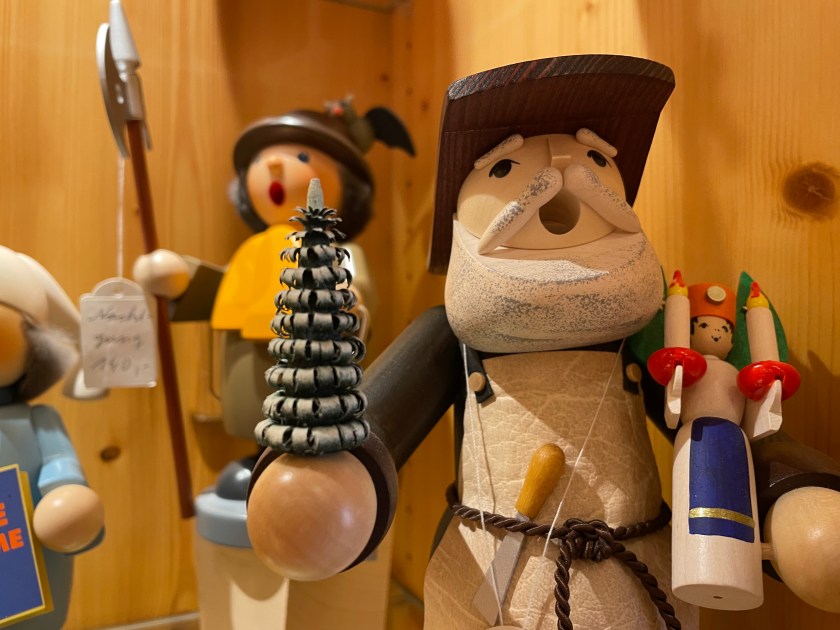
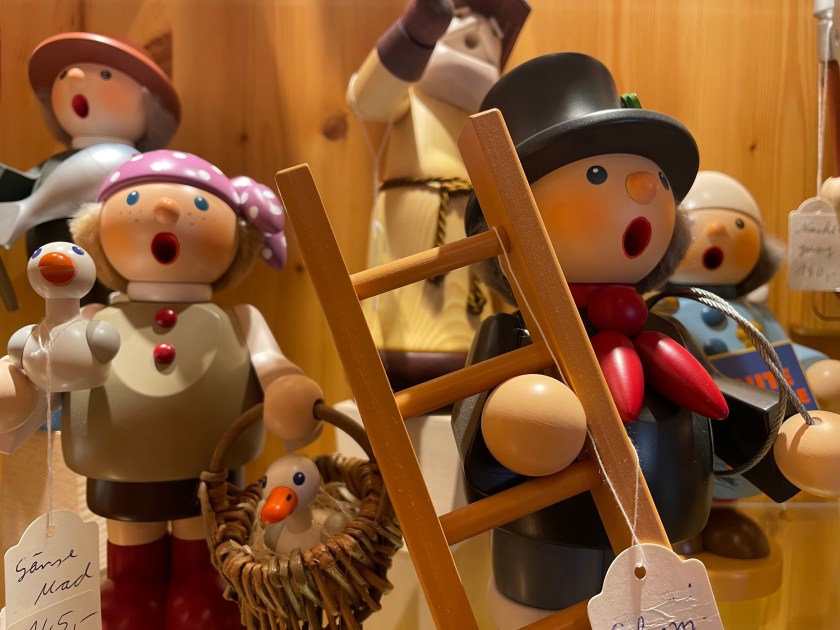
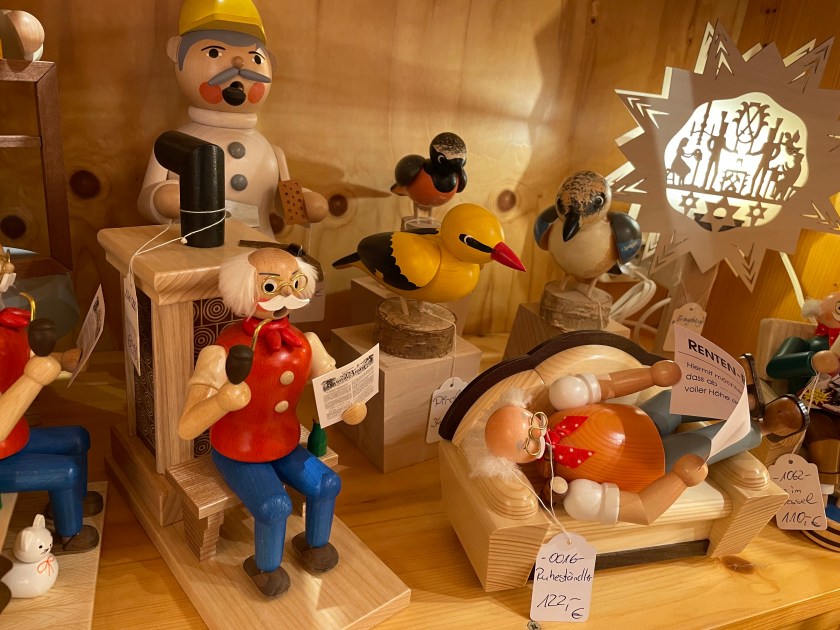
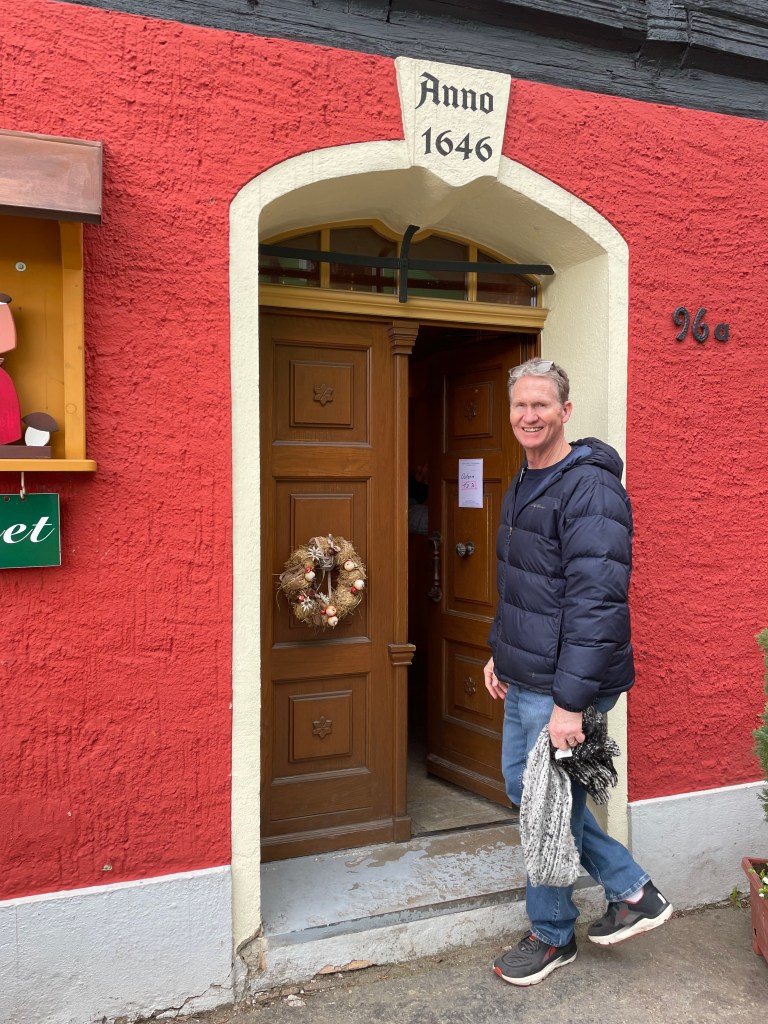
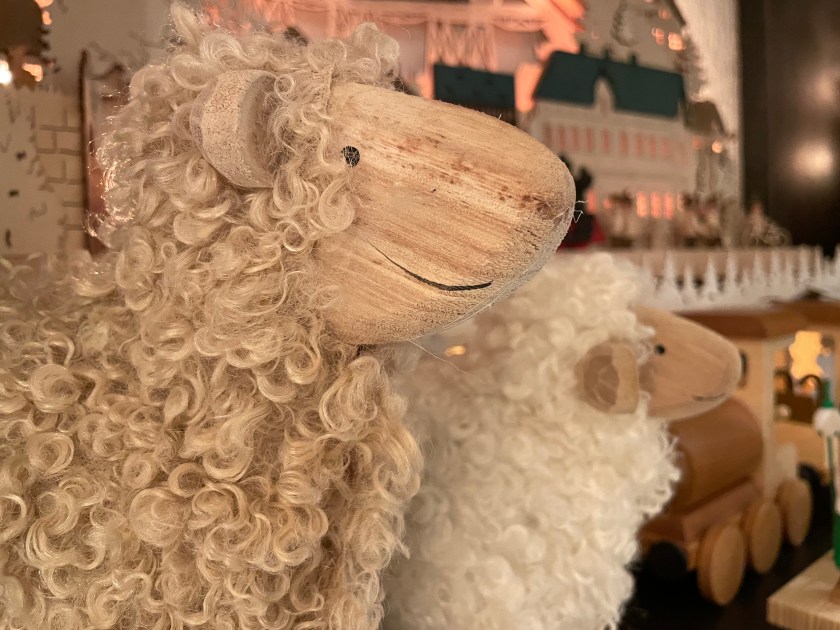
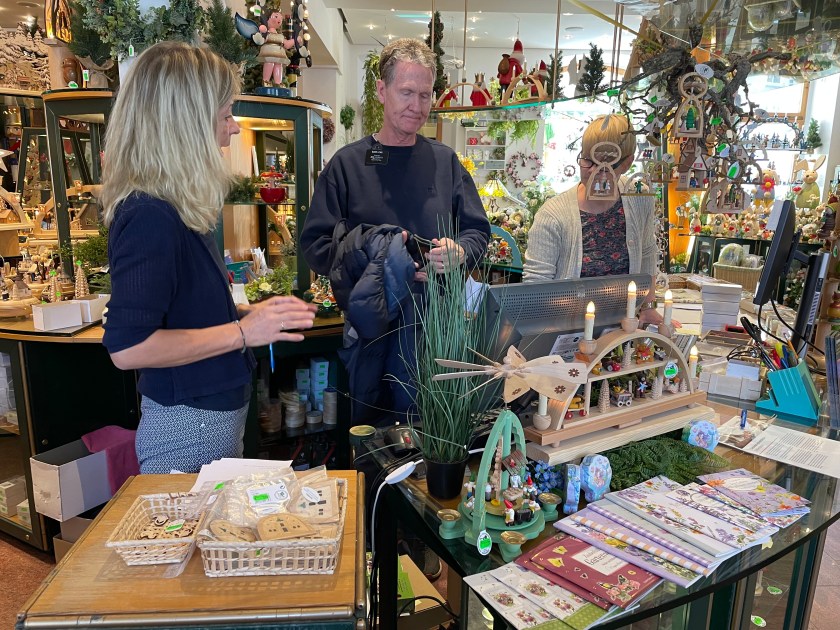
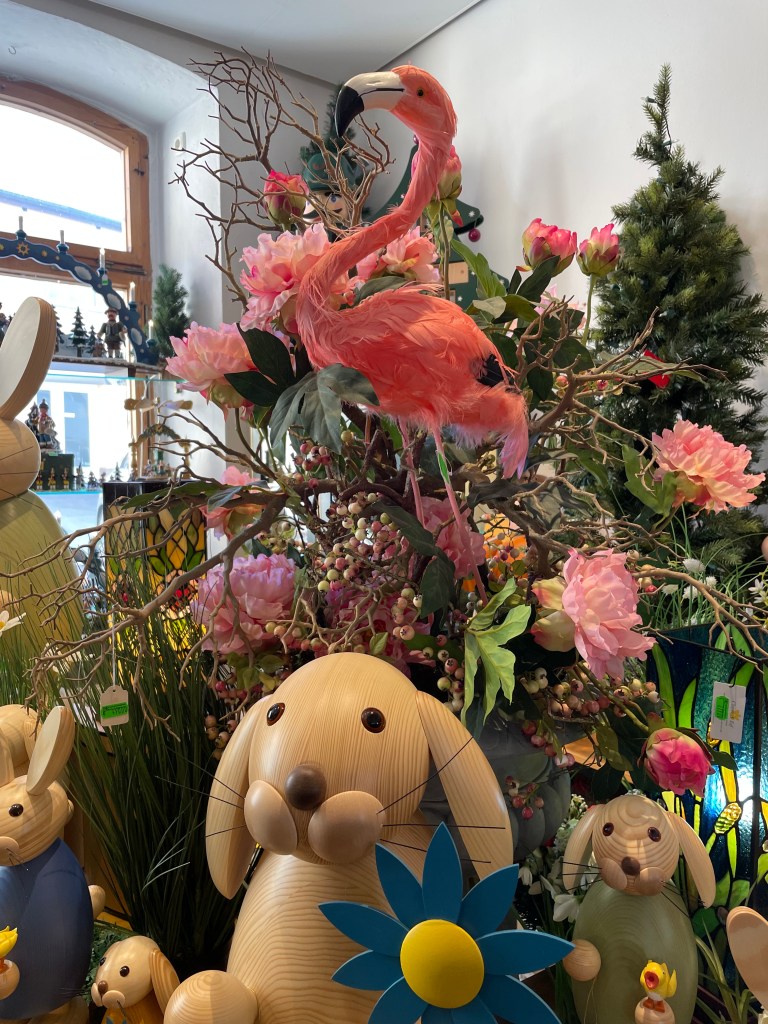
Thousands of visitors (busloads) come during the Christmas holidays, but today the town was quiet and empty and we felt like we had the place to ourselves.  We wandered from shop to shop, enjoying the beautiful creations.  The items in the shops are made right here in this mountain area.

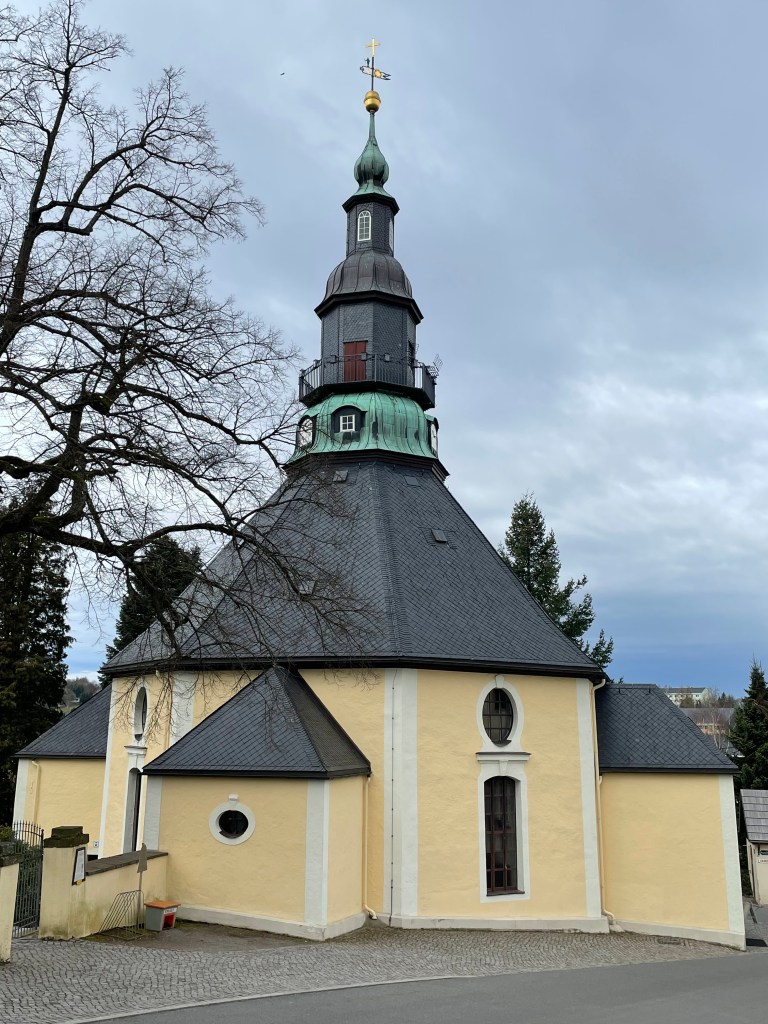
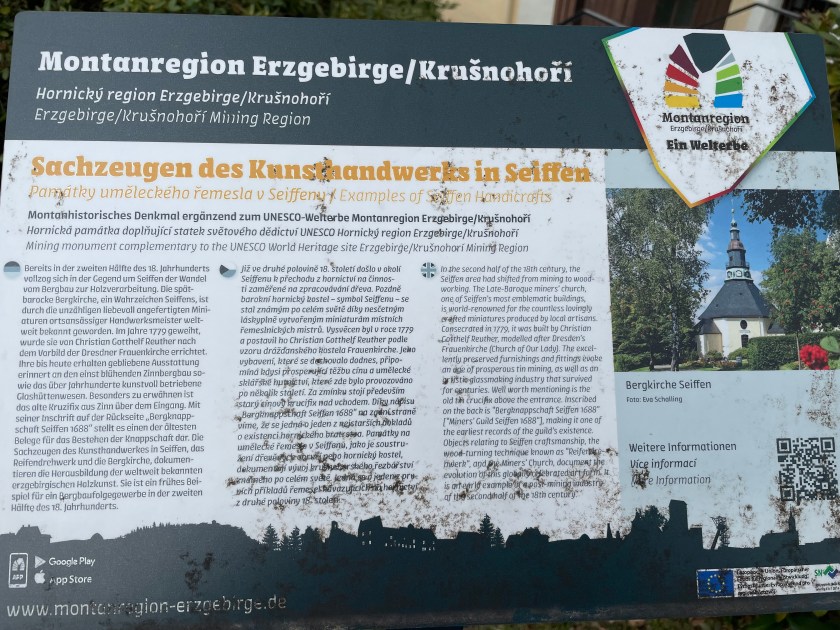
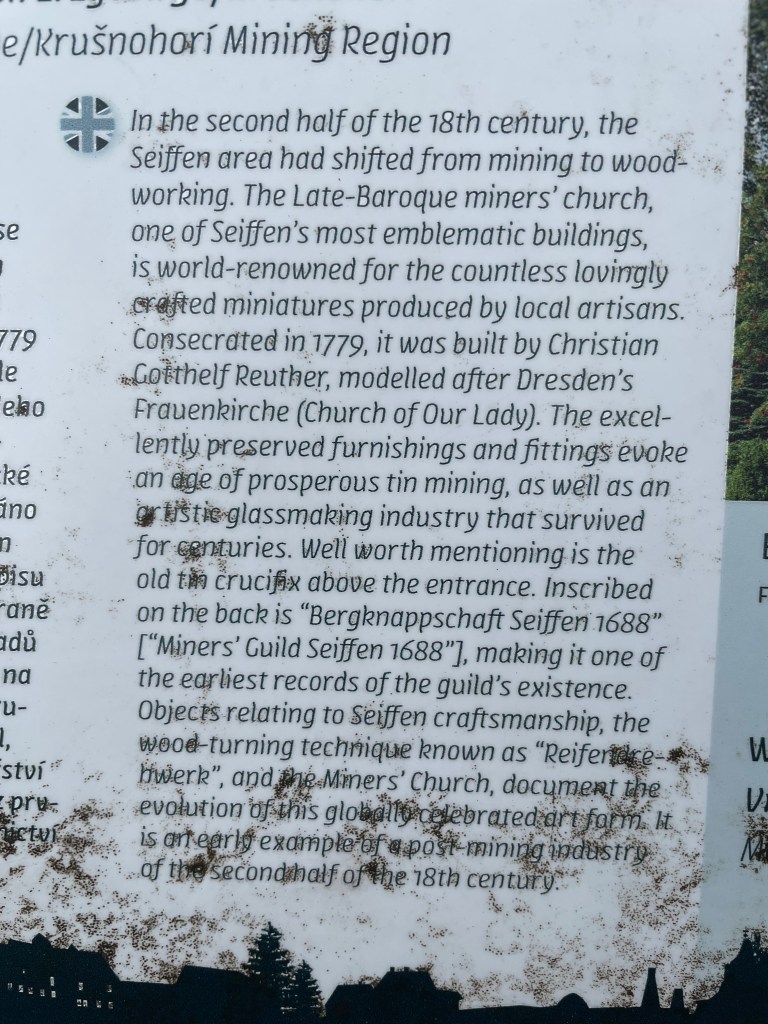
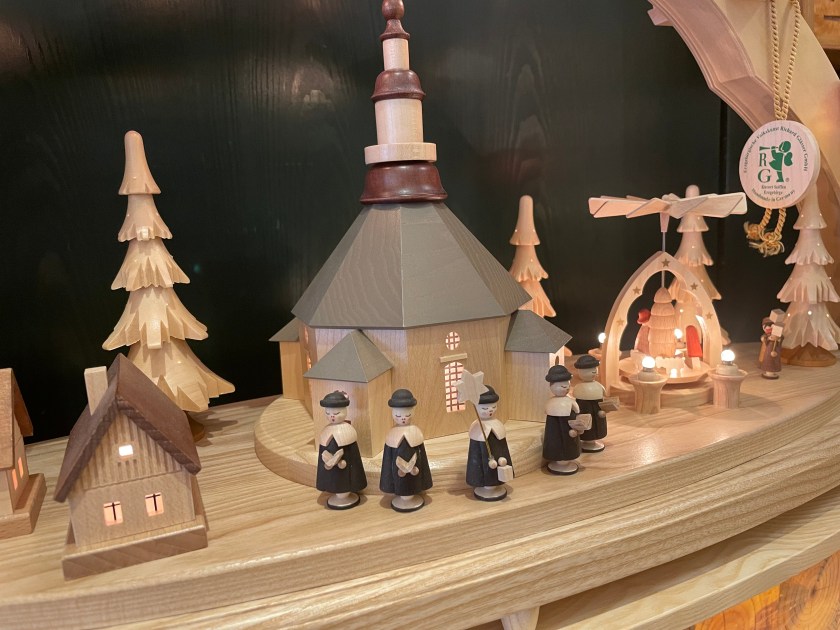
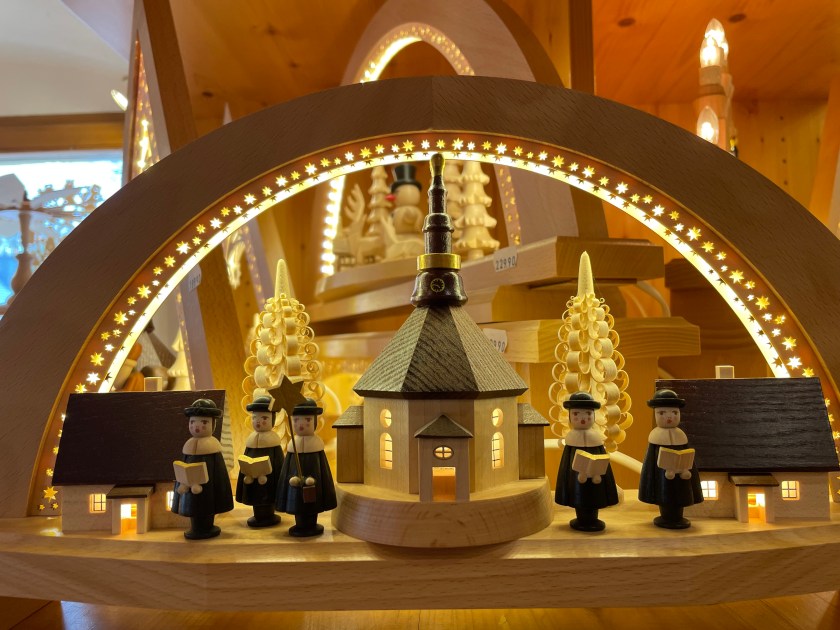
Our first stop was the Seifen Bergkirche up on the hill.  This is the iconic (and only) church in Seiffen, made famous because it’s featured in so many of the Schwibbogen, or Light Arches and Christmas scenes. You can read a nice post about it here.  Sadly, the church wasn’t open when we were there.

Then we walked down into town to visit the shops.  There is a large woodcarving school here where the traditional skills are taught to the next generation.

It was really great to be here this Easter weekend.  It felt like we were getting a two-for-one experience!

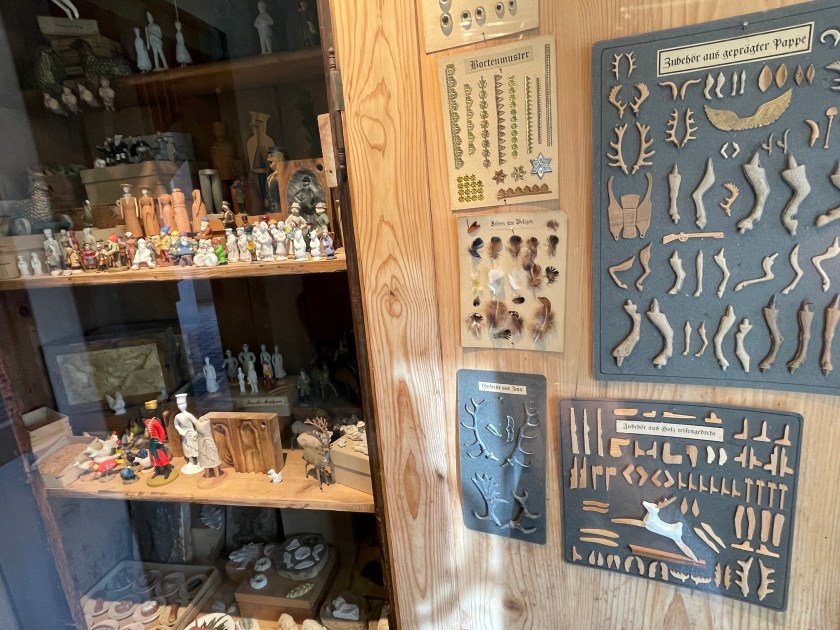
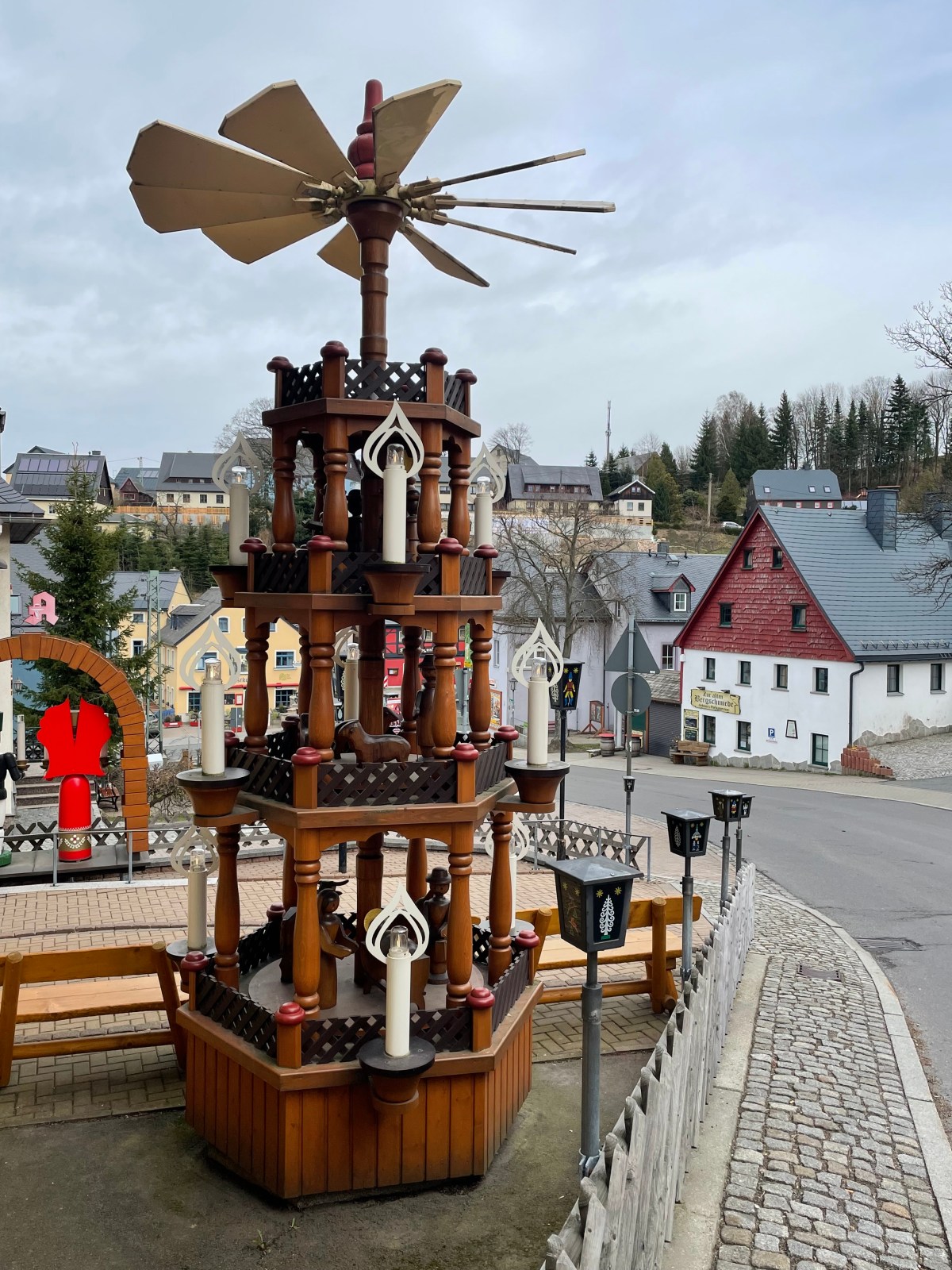
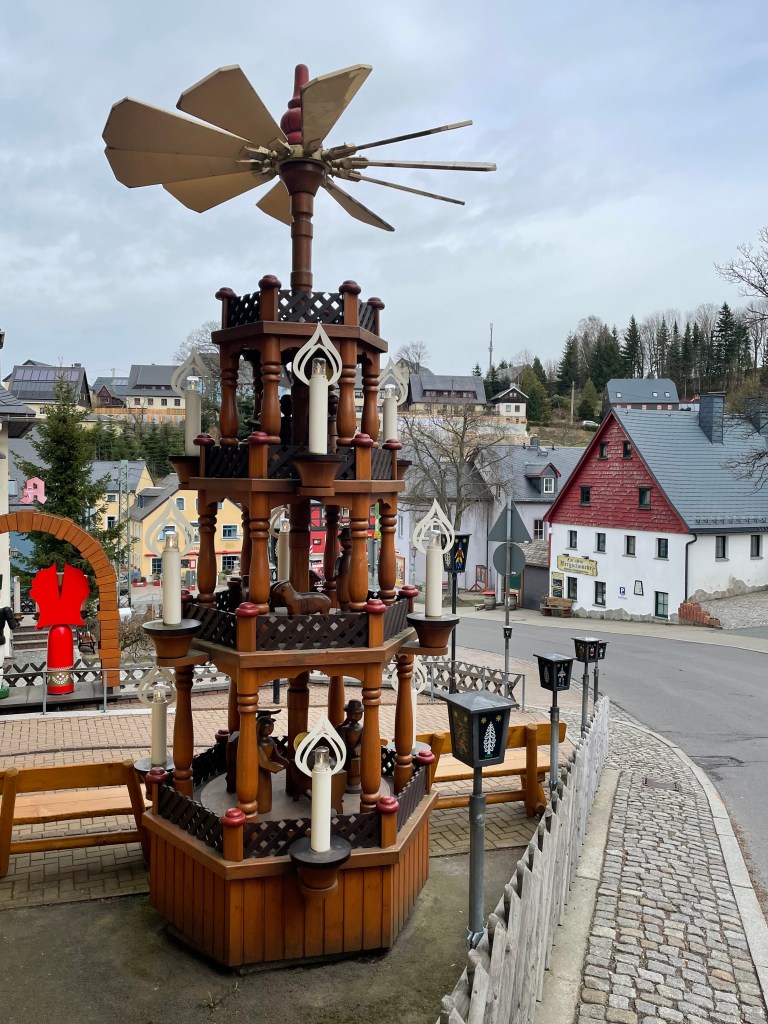
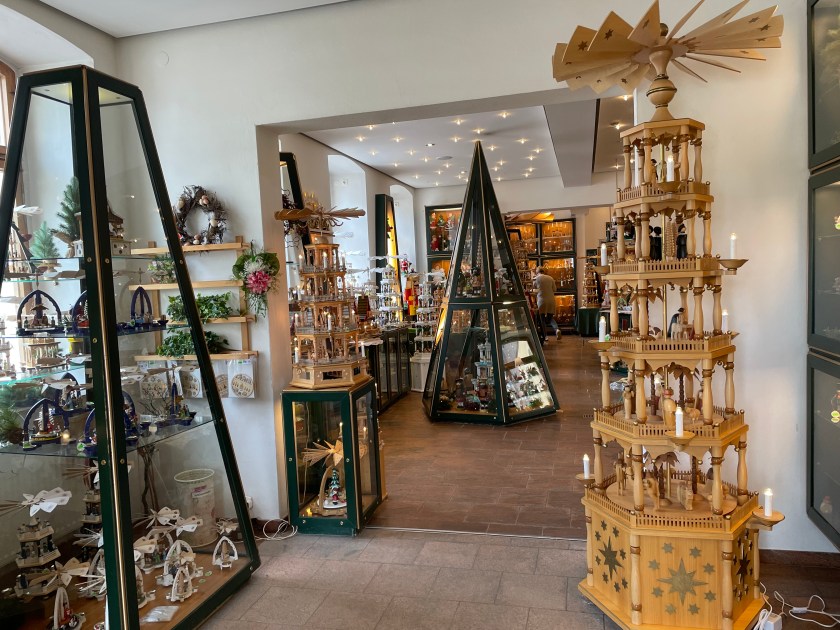
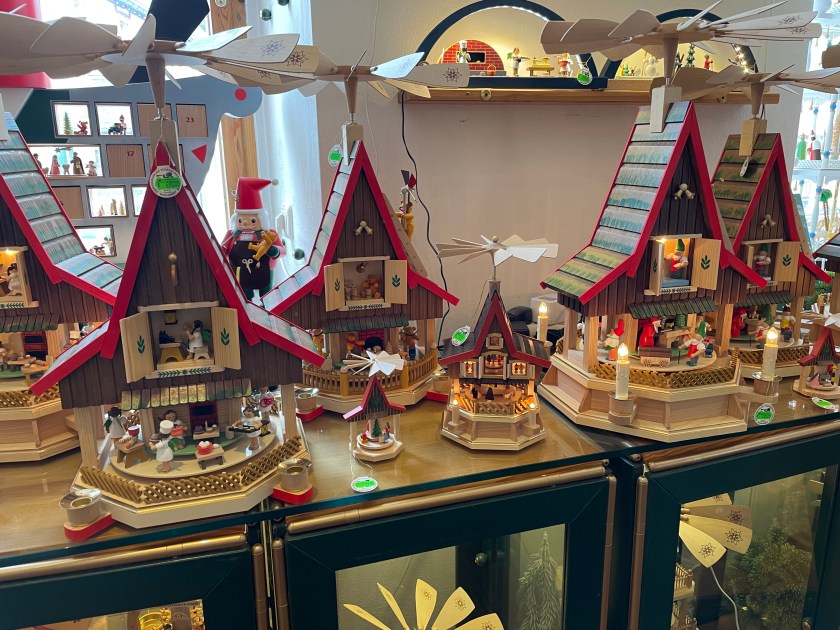
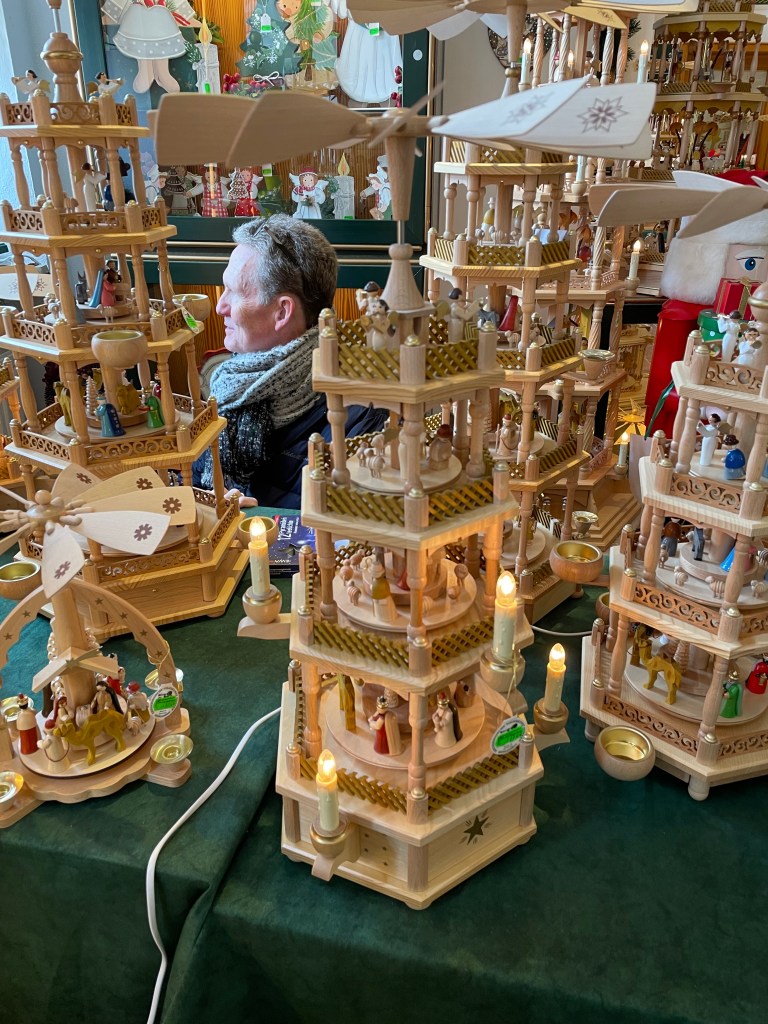
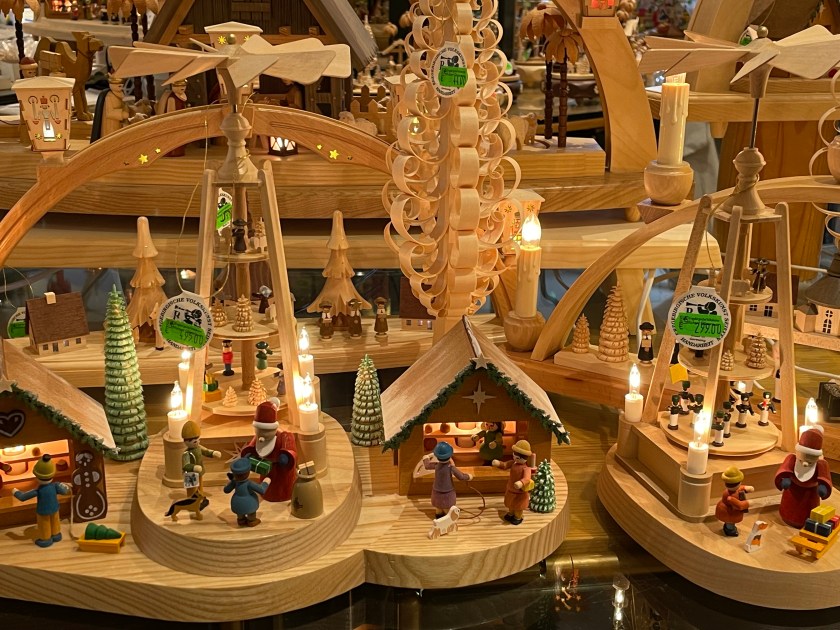
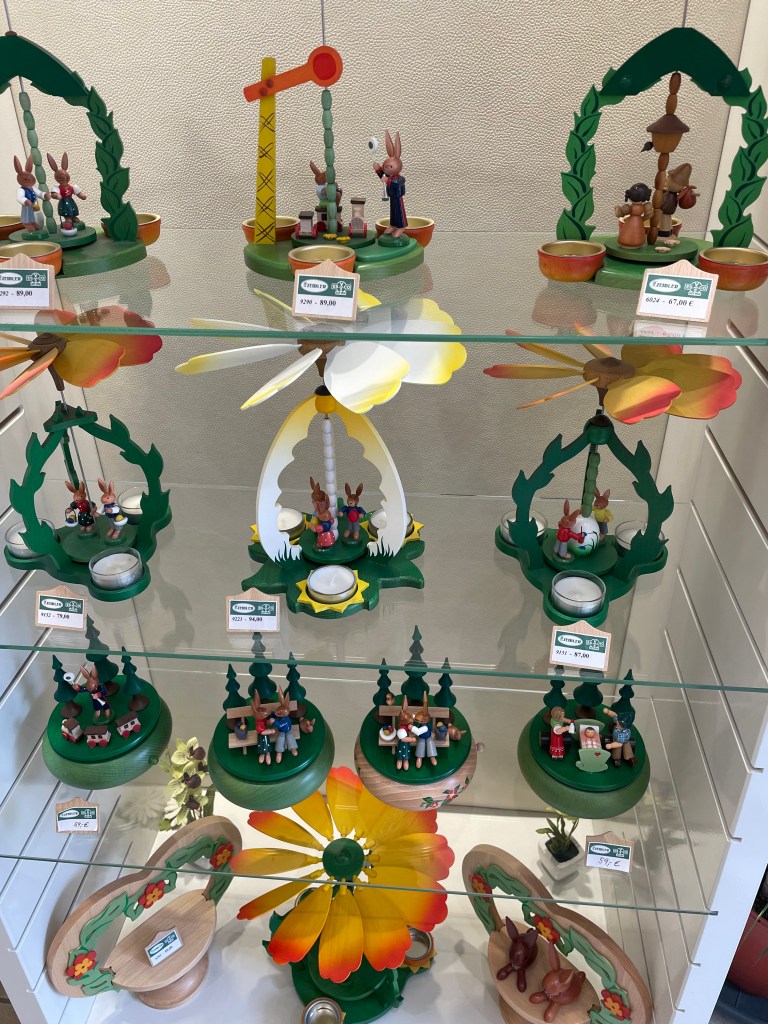
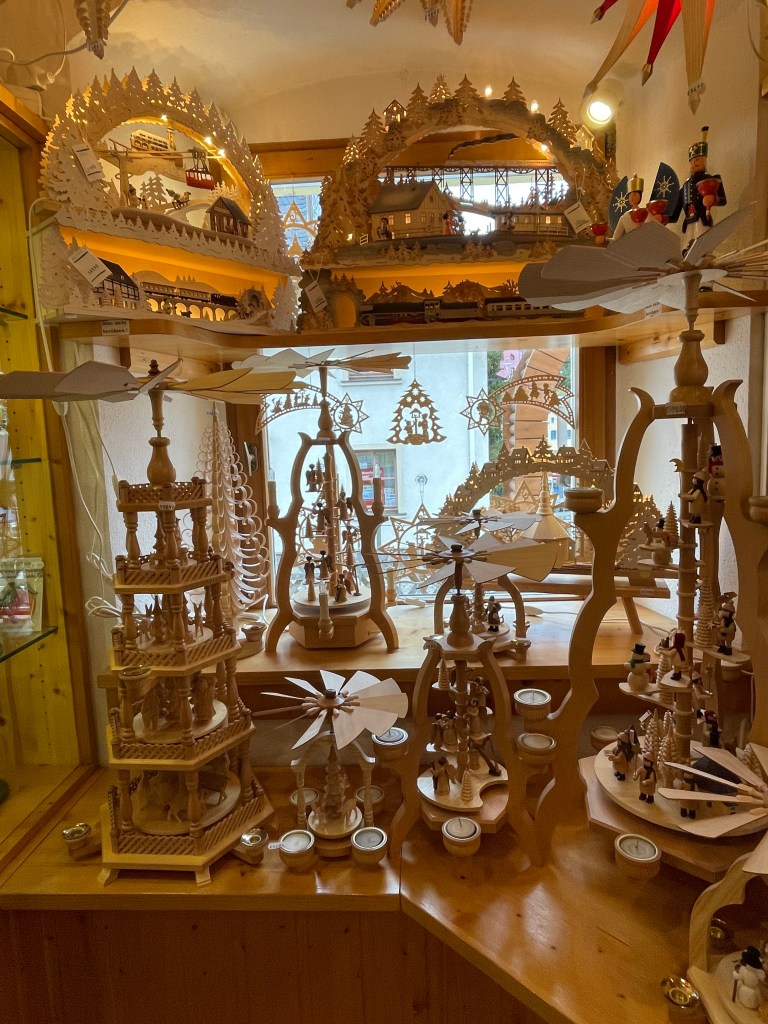
One shop just sold replacement parts and pieces for these traditional pyramids.  Every Christmas Eve our family sat at a round table with our Weihnachts Pyramide in the middle of the table, eating by candlelight.  It’s one of my favorite and most memorable holiday traditions.

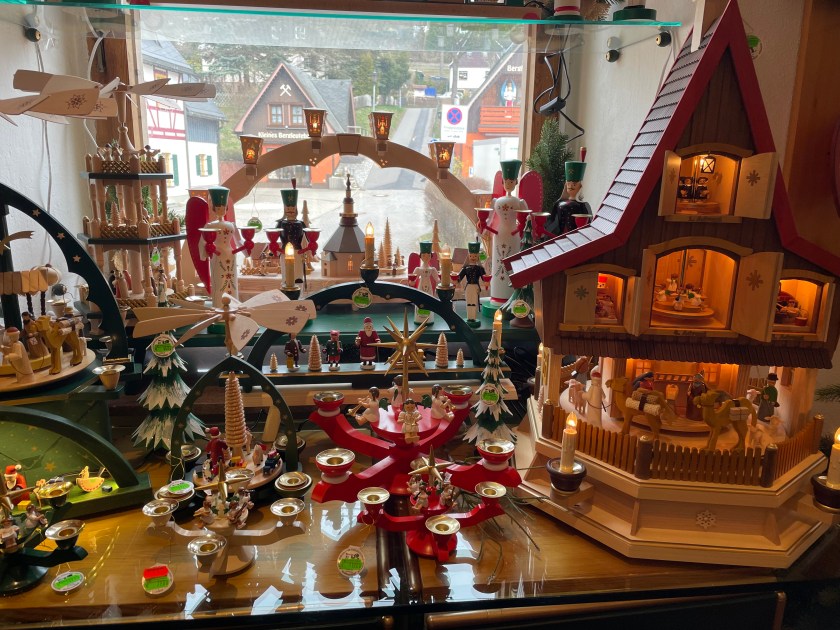
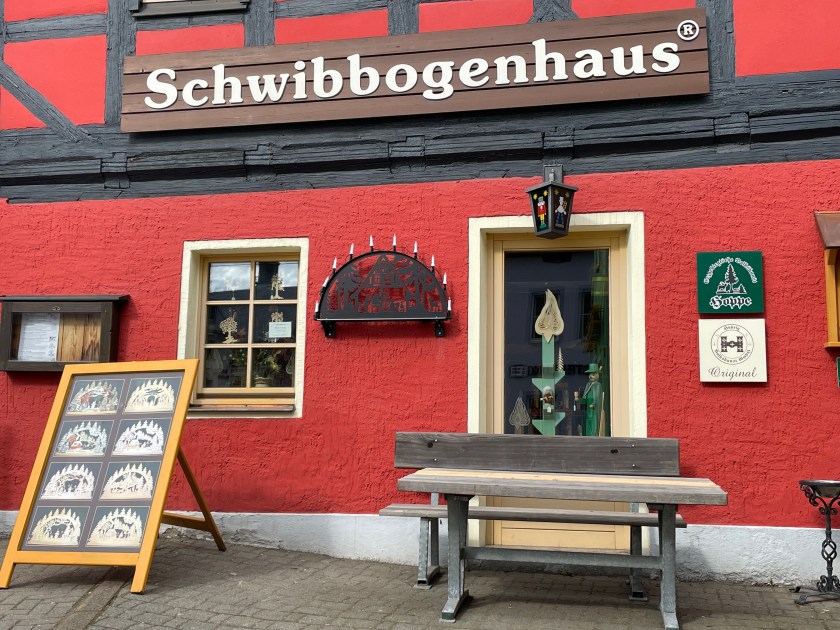
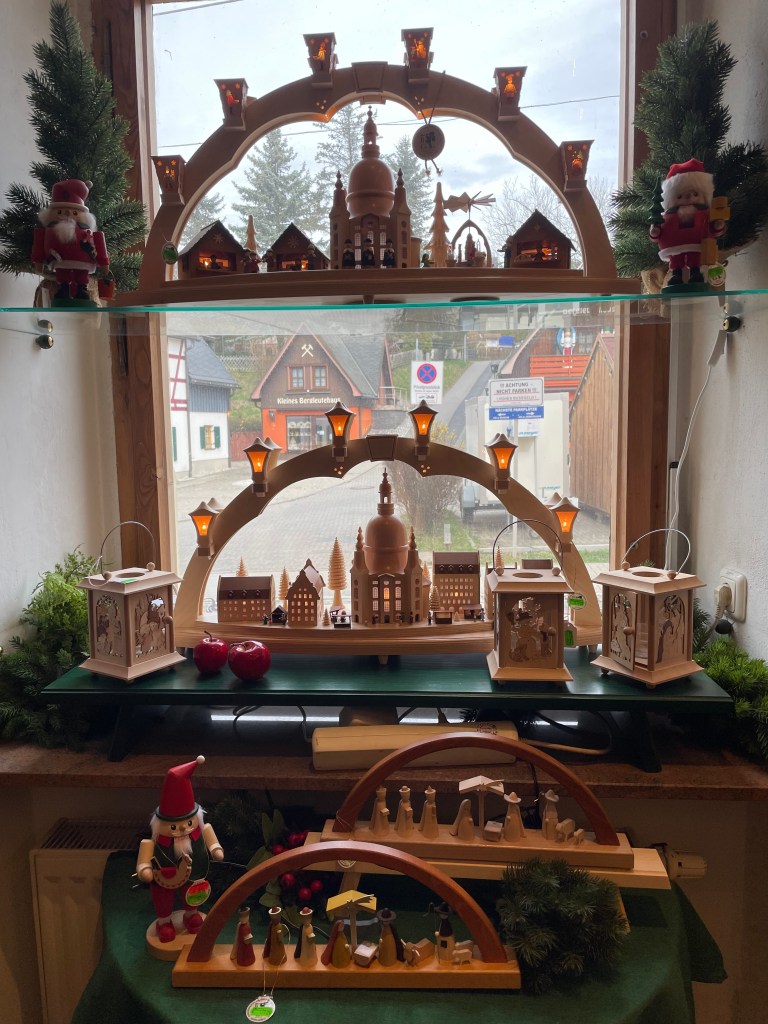
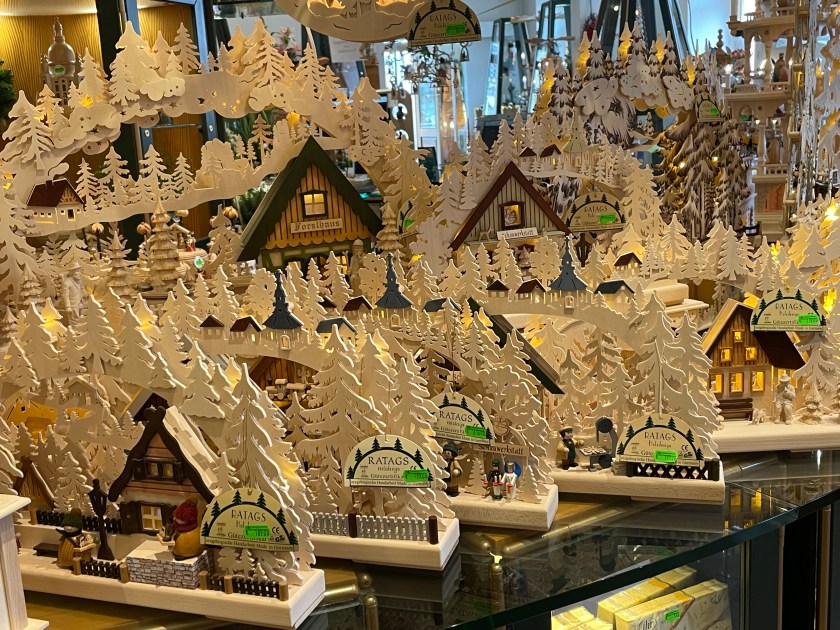
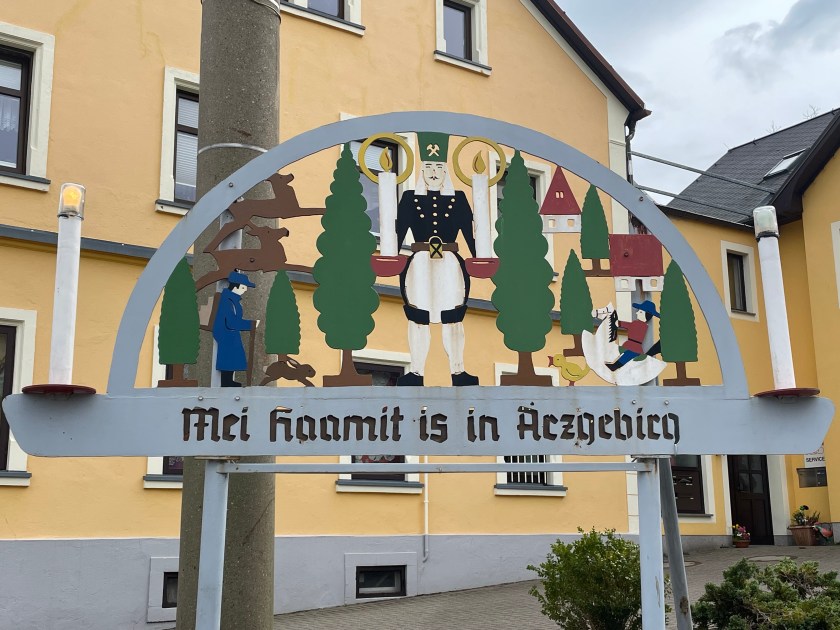
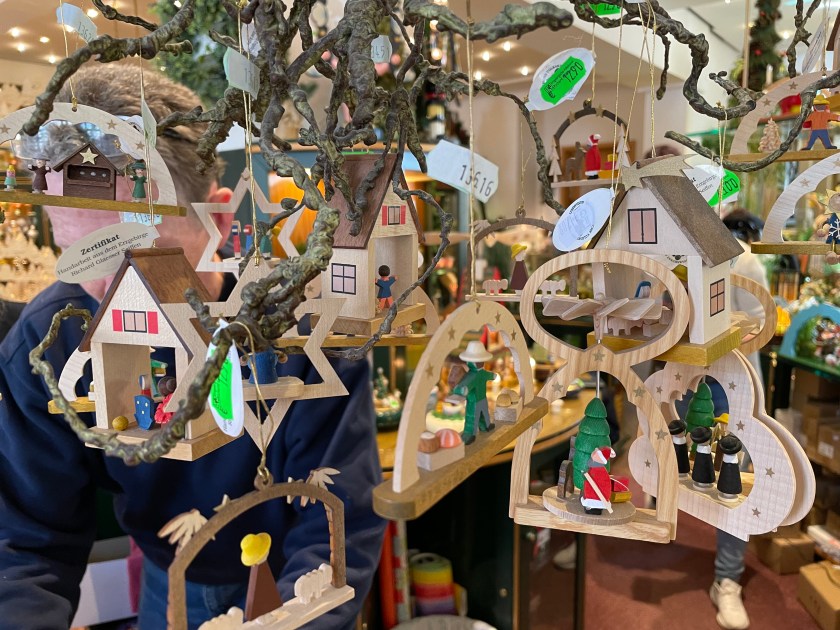
Schwibbogen is the name for the arched lighted Christmas or village scenes that are usually placed in a window or on a shelf.  There are hundreds of patterns with every kind of scene you might imagine.  They have multiple dimensions and are lit with real or electric candles.

There’s just something so German about these beautiful creations!  They are my favorite Christmas decorations.  I just love looking at each one.

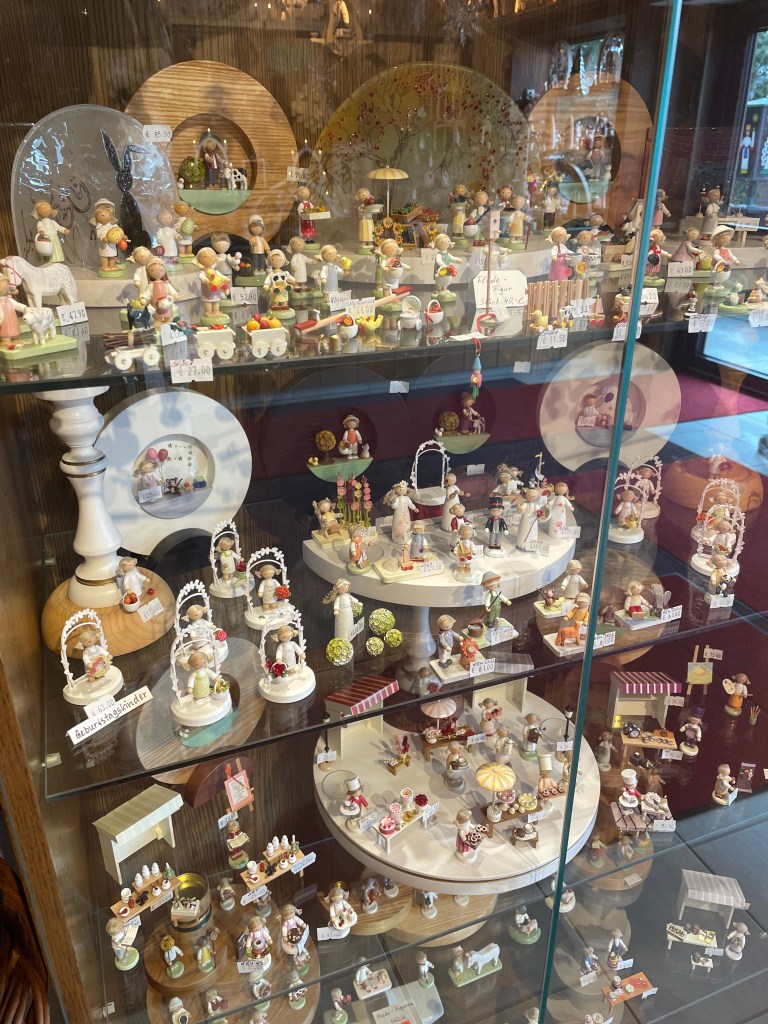
Many of these displays are behind glass. Sorry for the glare.

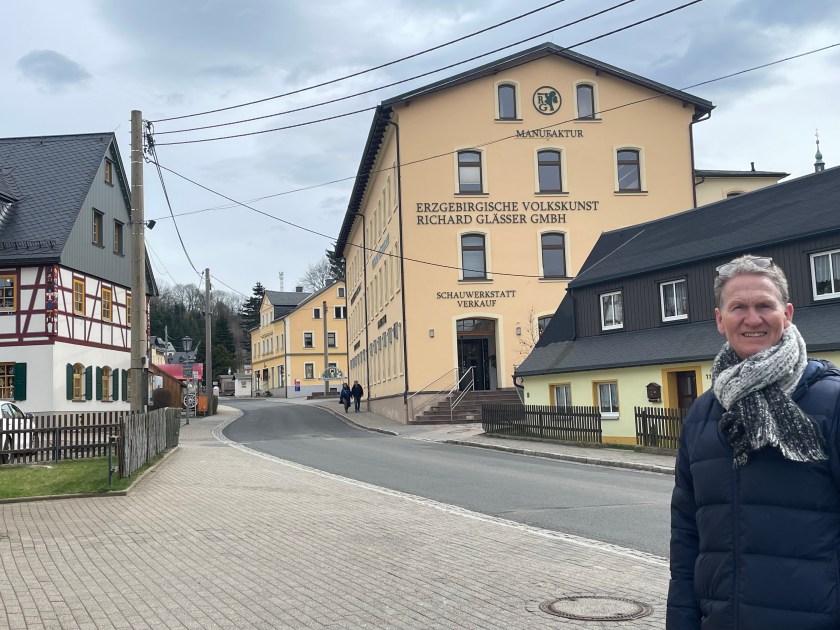
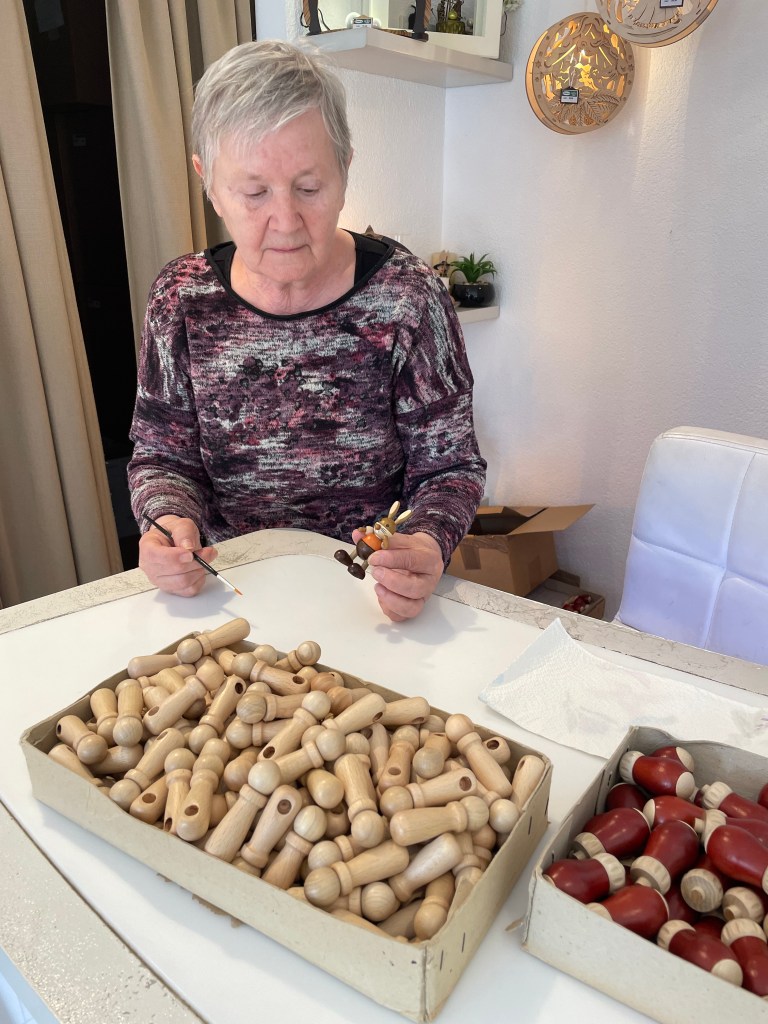
This is one of the big workshops.  On a normal (not Easter holiday weekend), some of these workshops are open to the public so you can watch the craftsmen and women working.
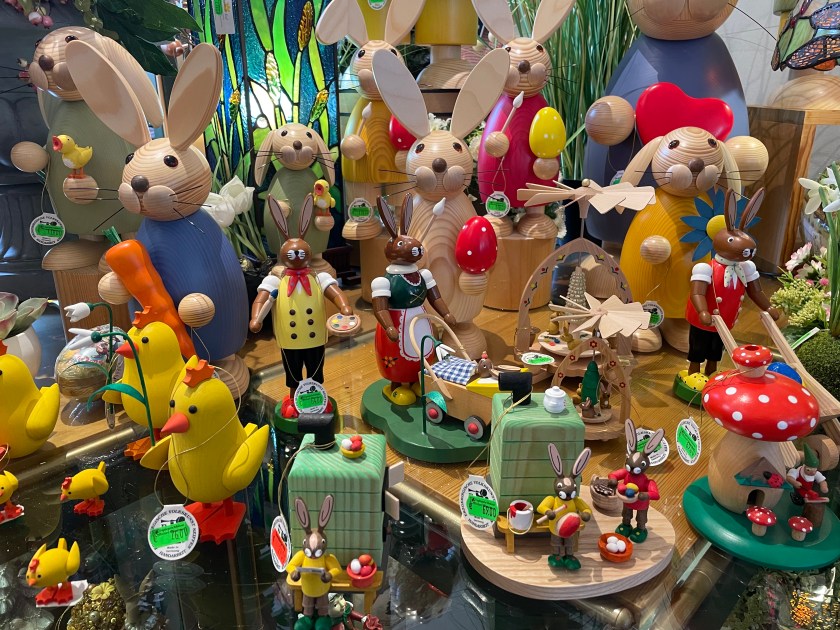
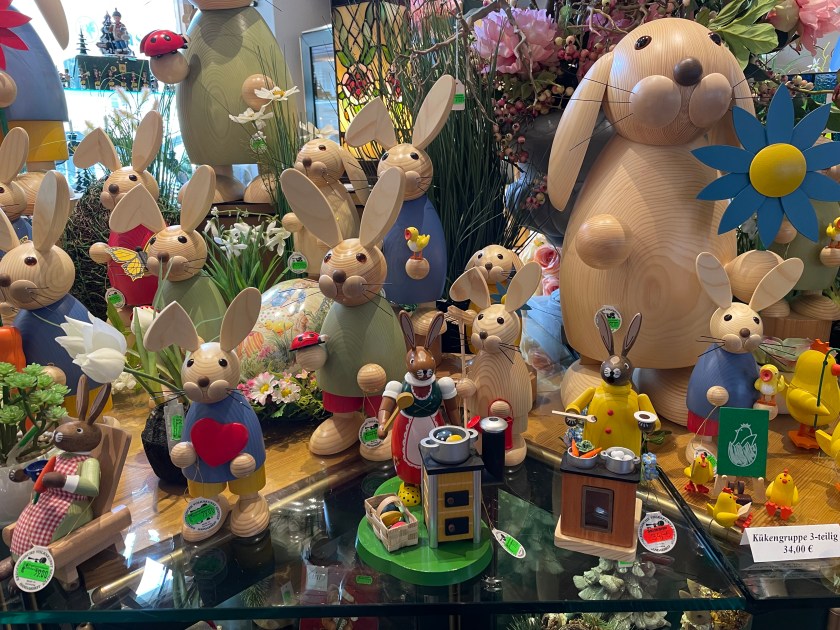
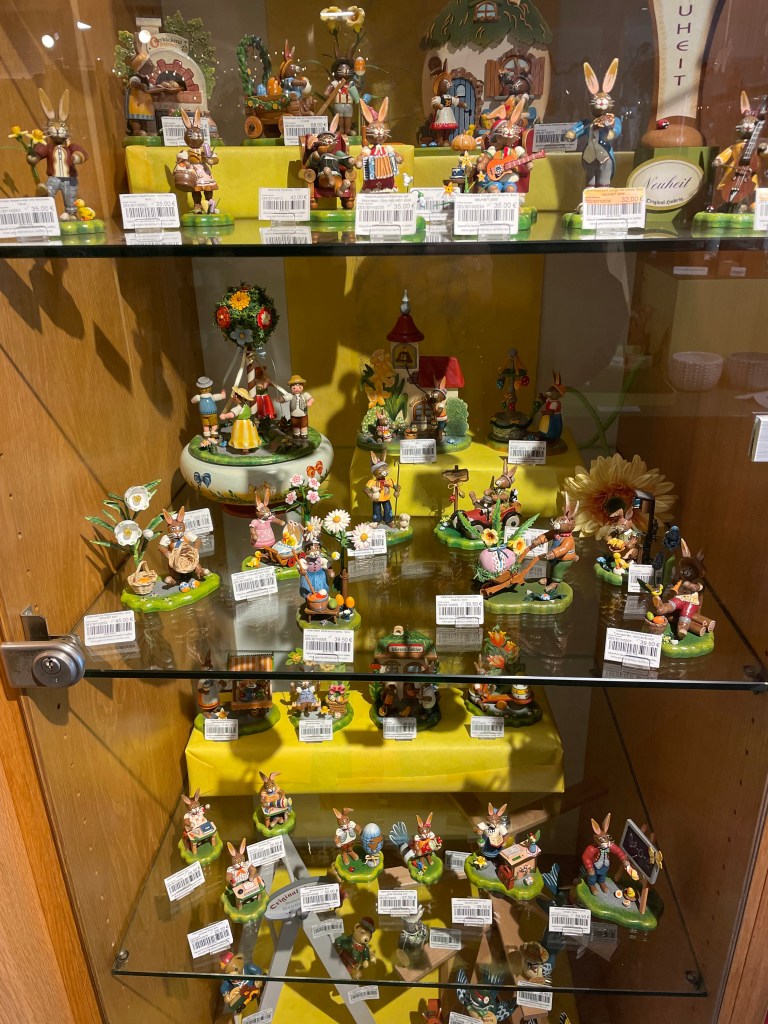
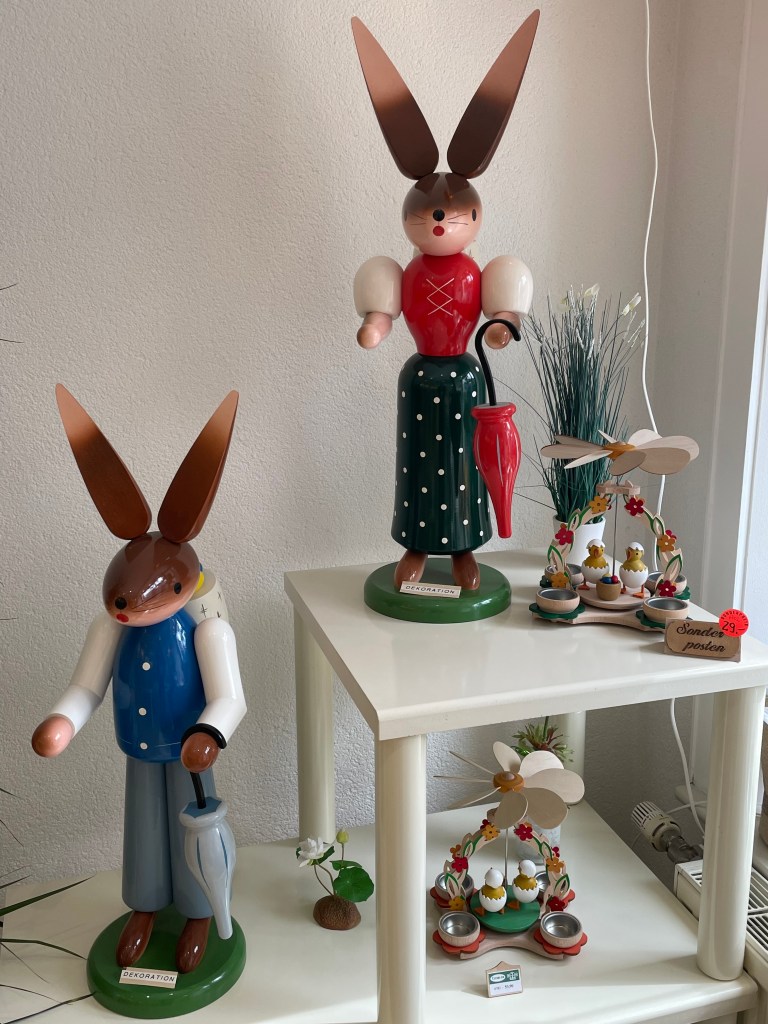
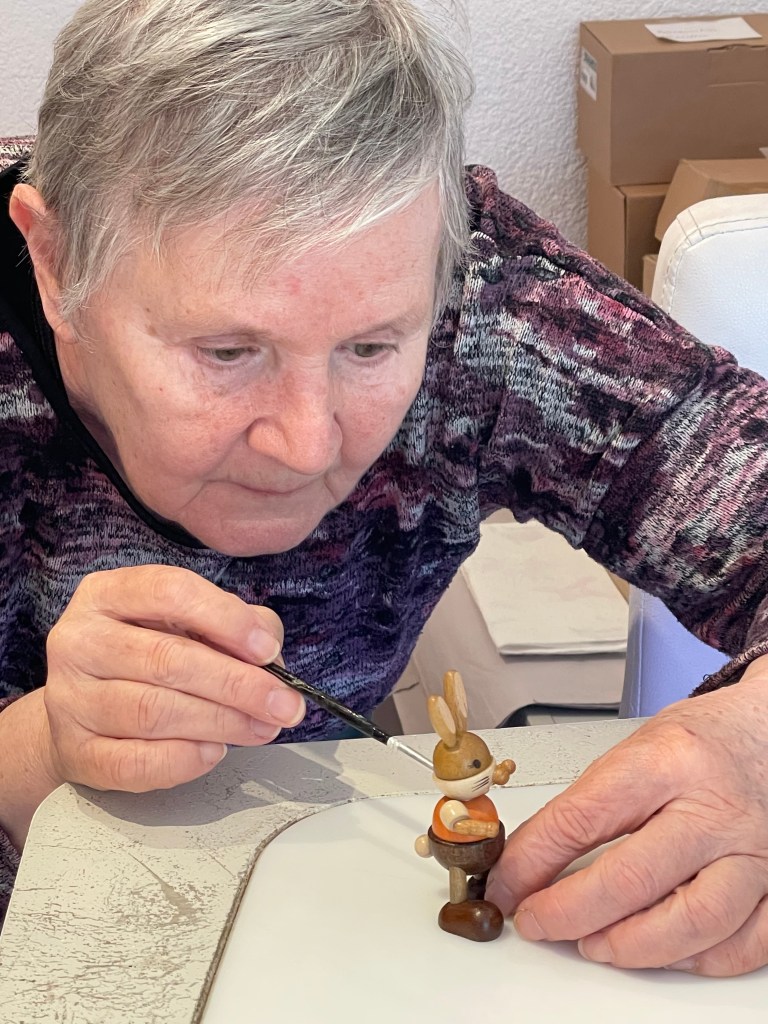
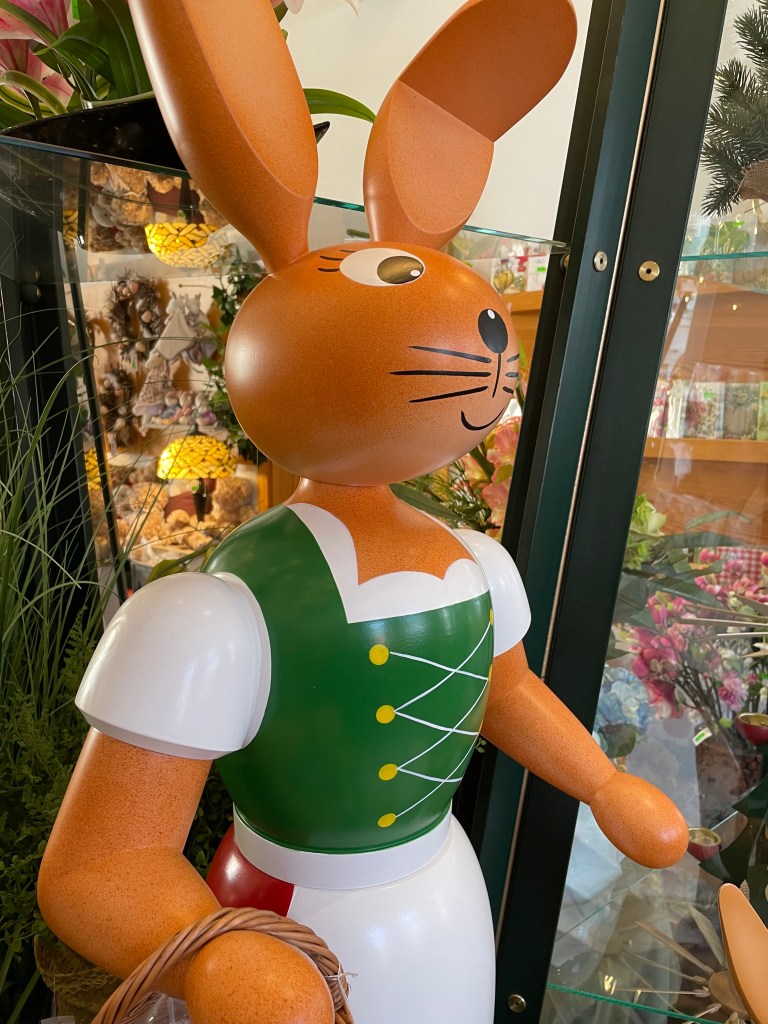
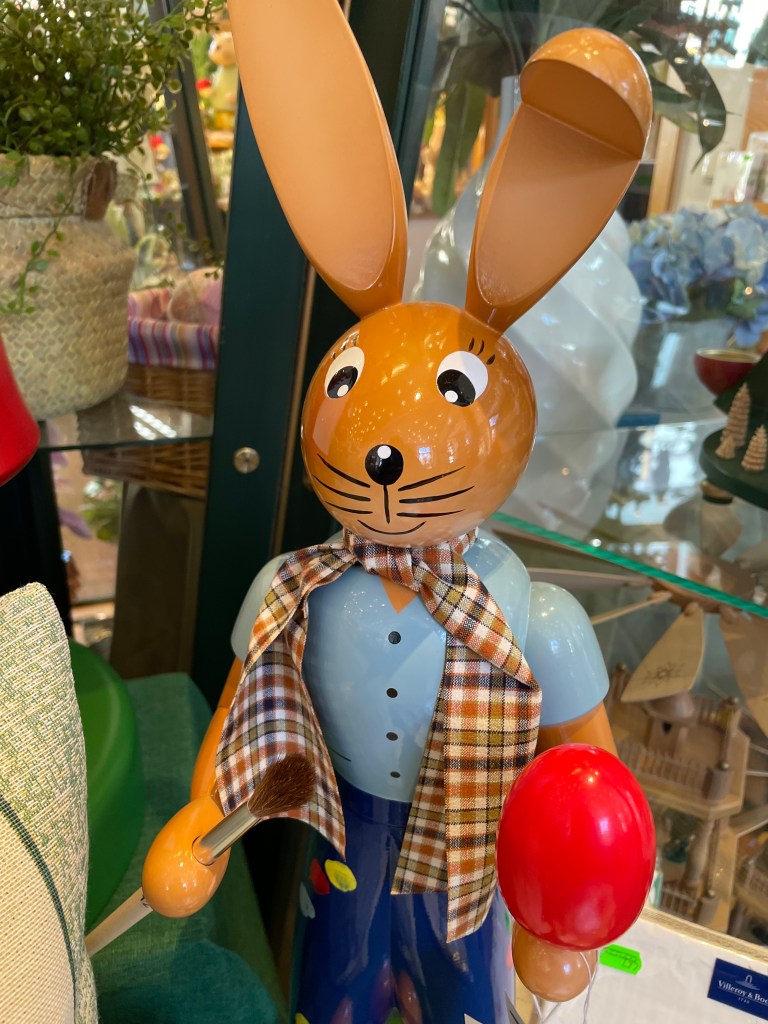
This woman is from Czechia (we are 7 km from the Czech border here).  She was working on bunny faces.
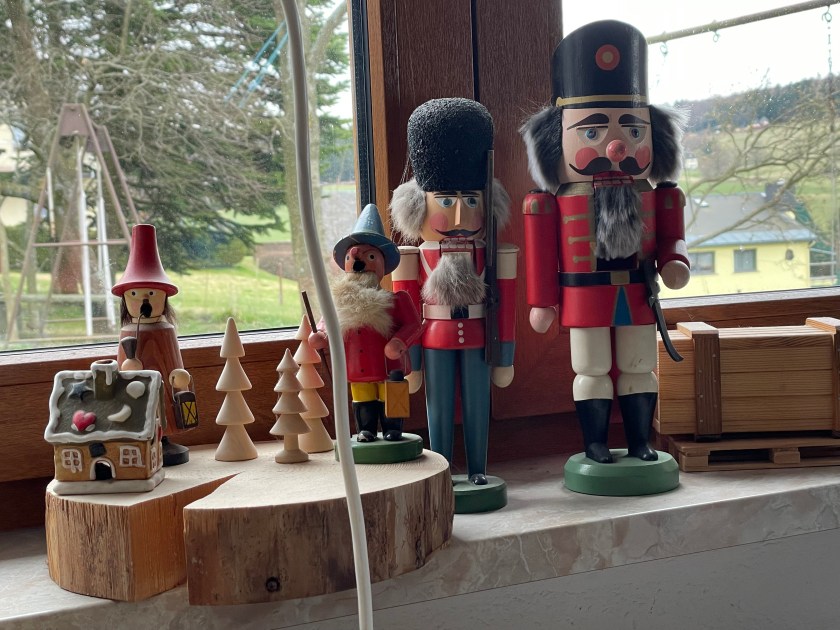
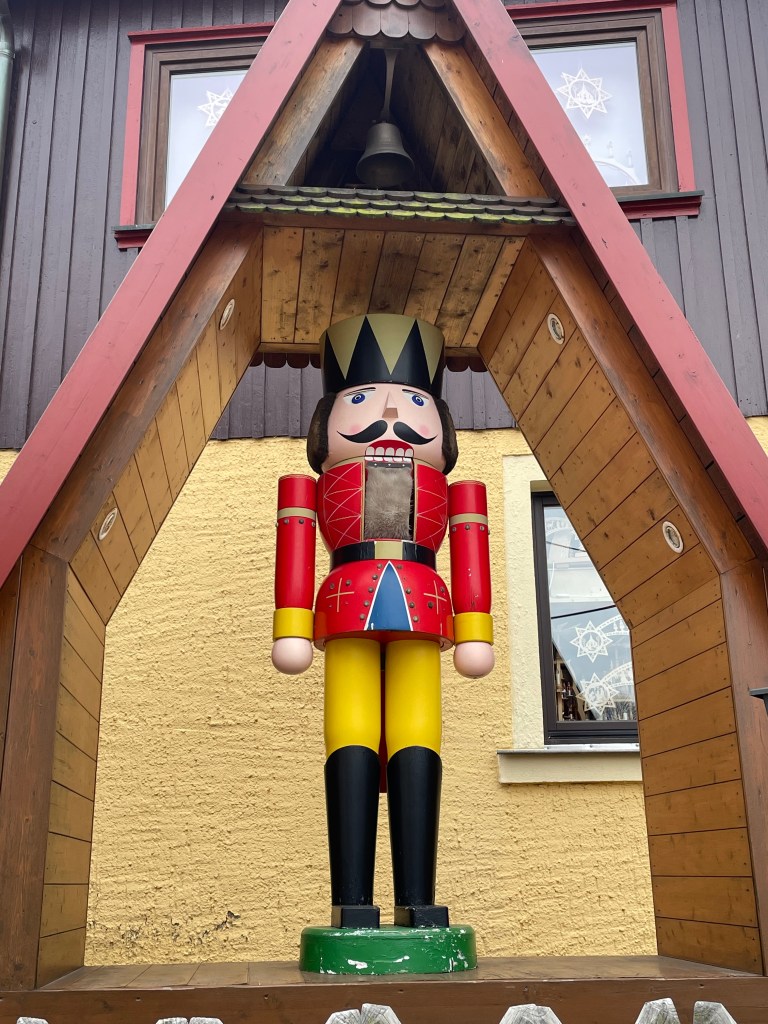
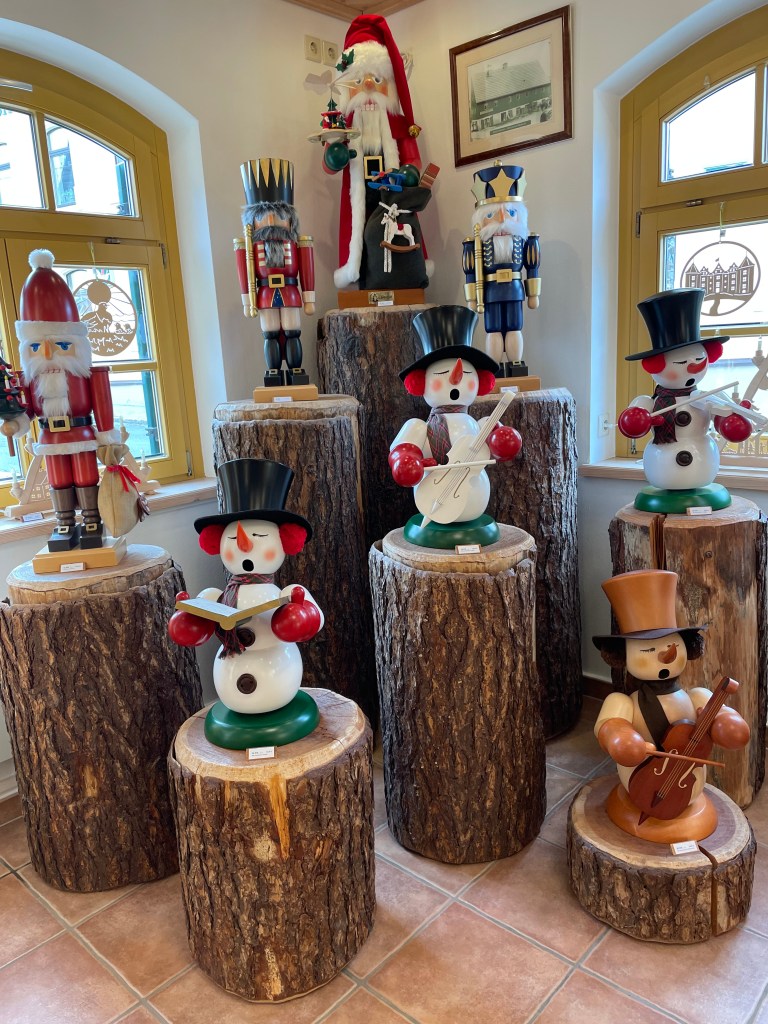
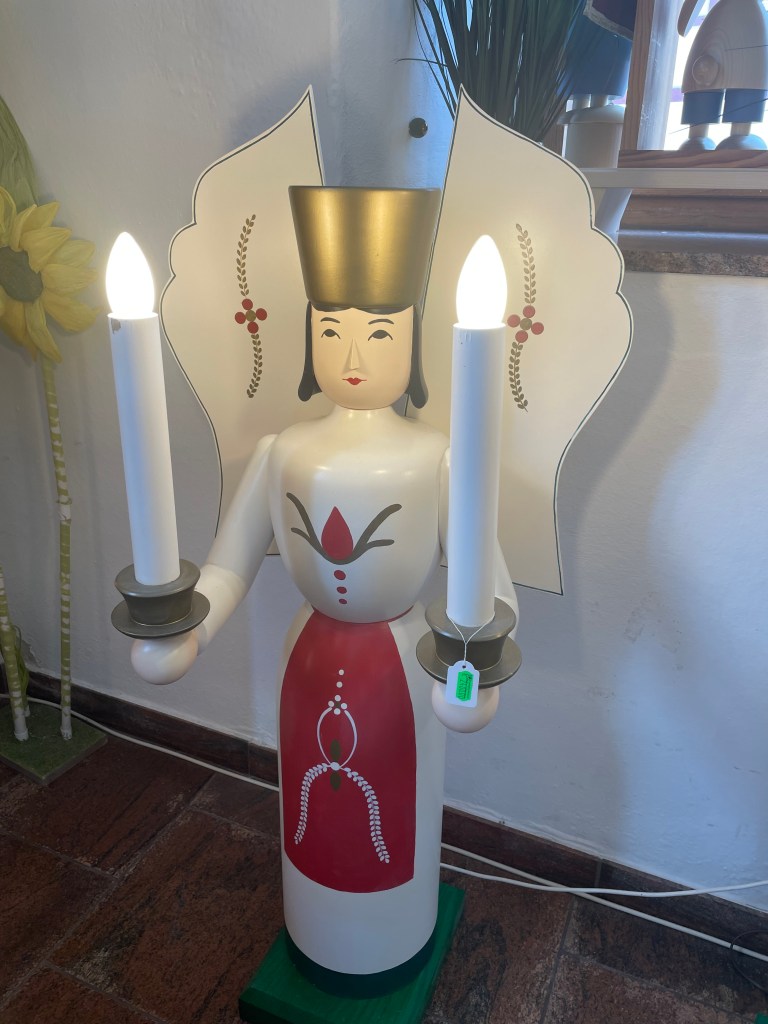
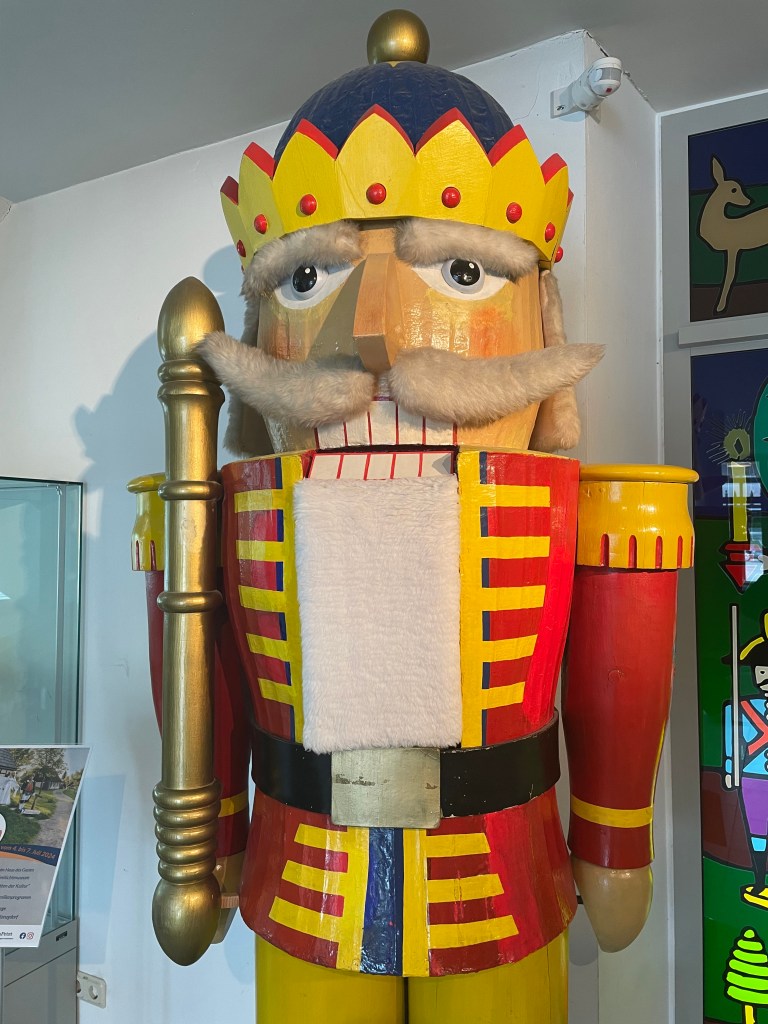
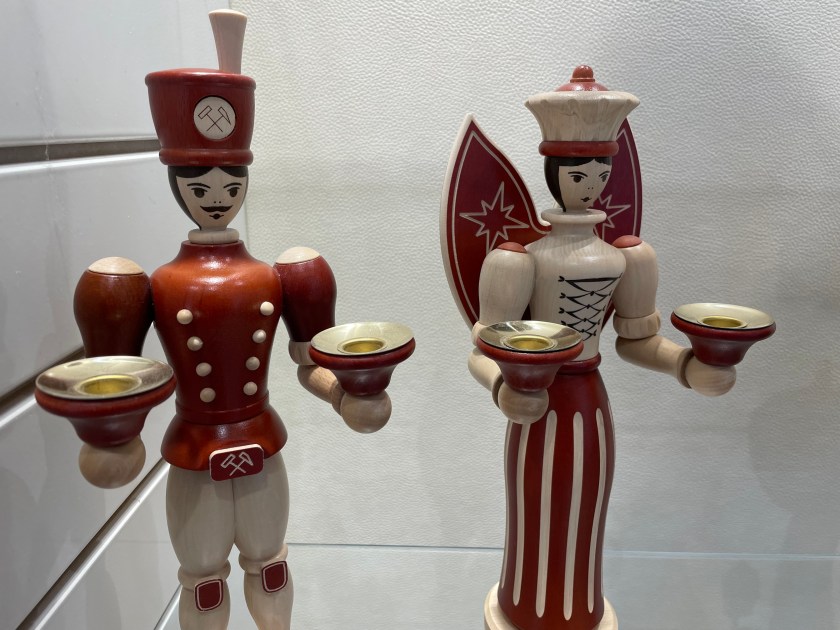
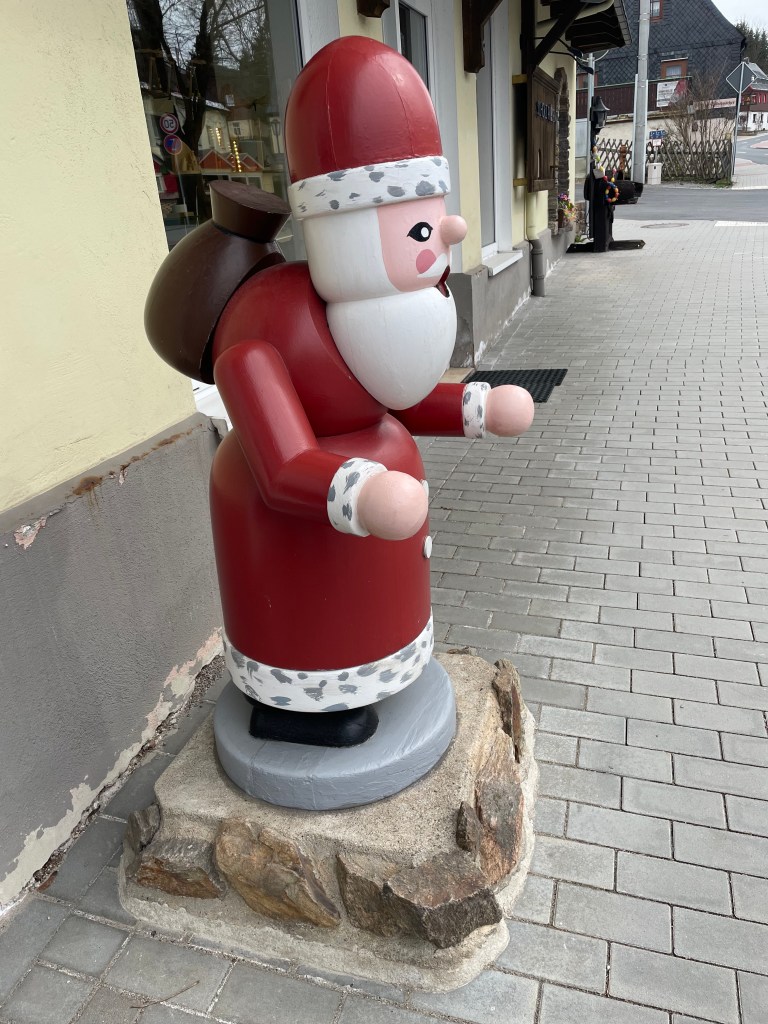
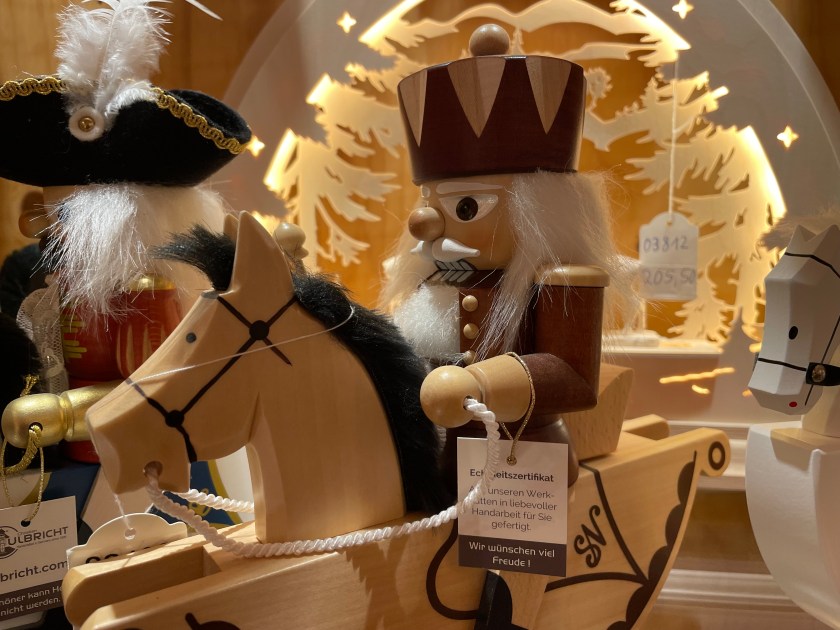
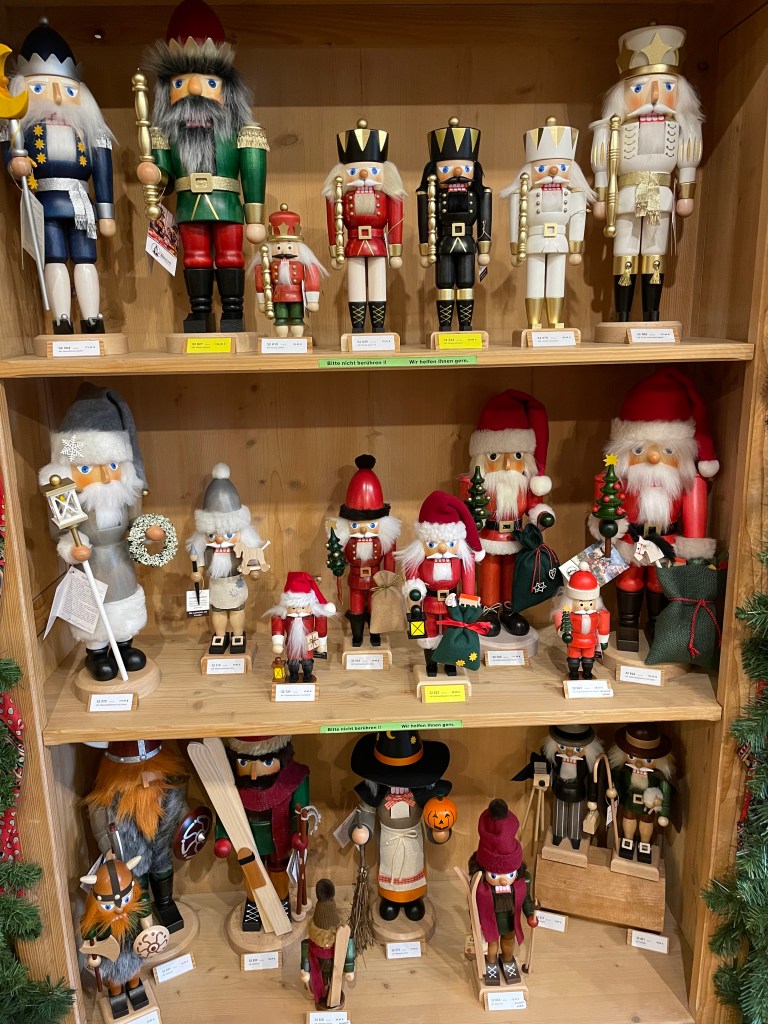
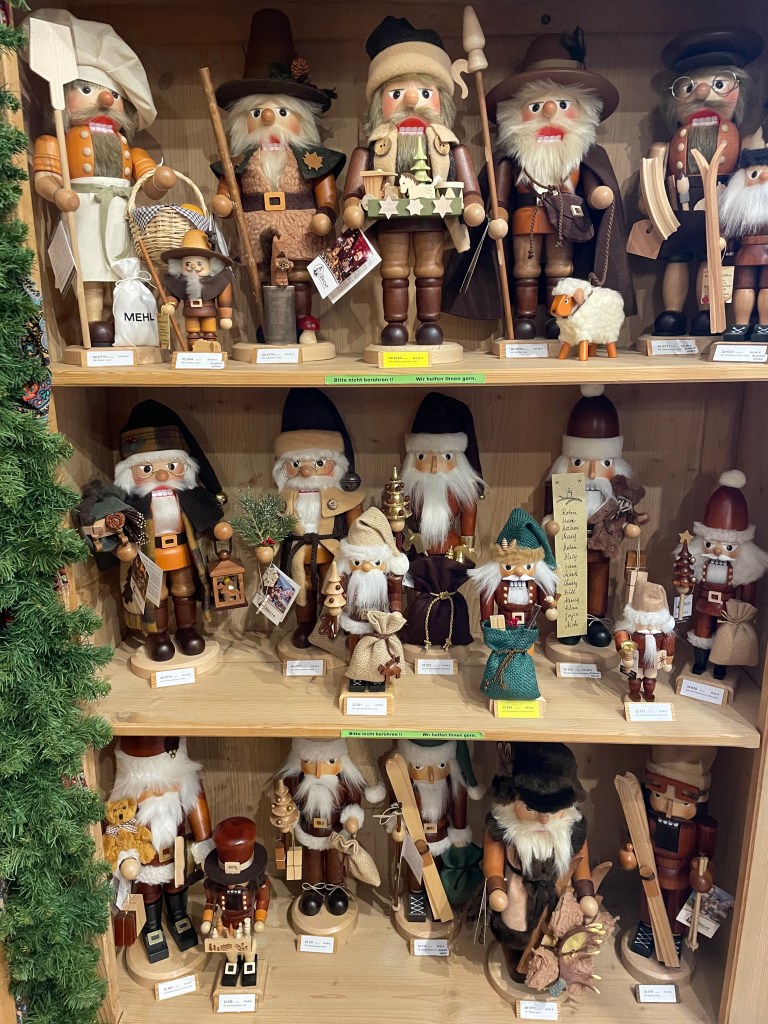
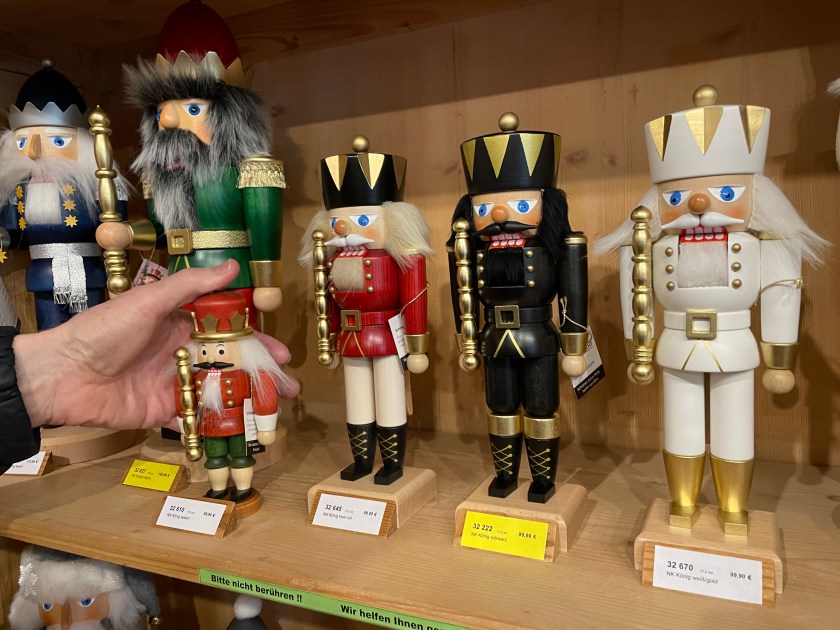
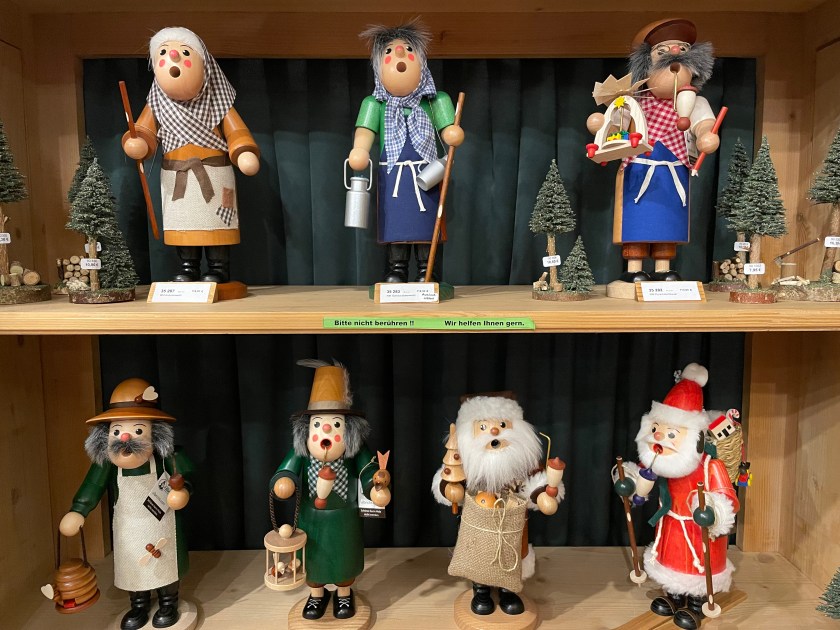
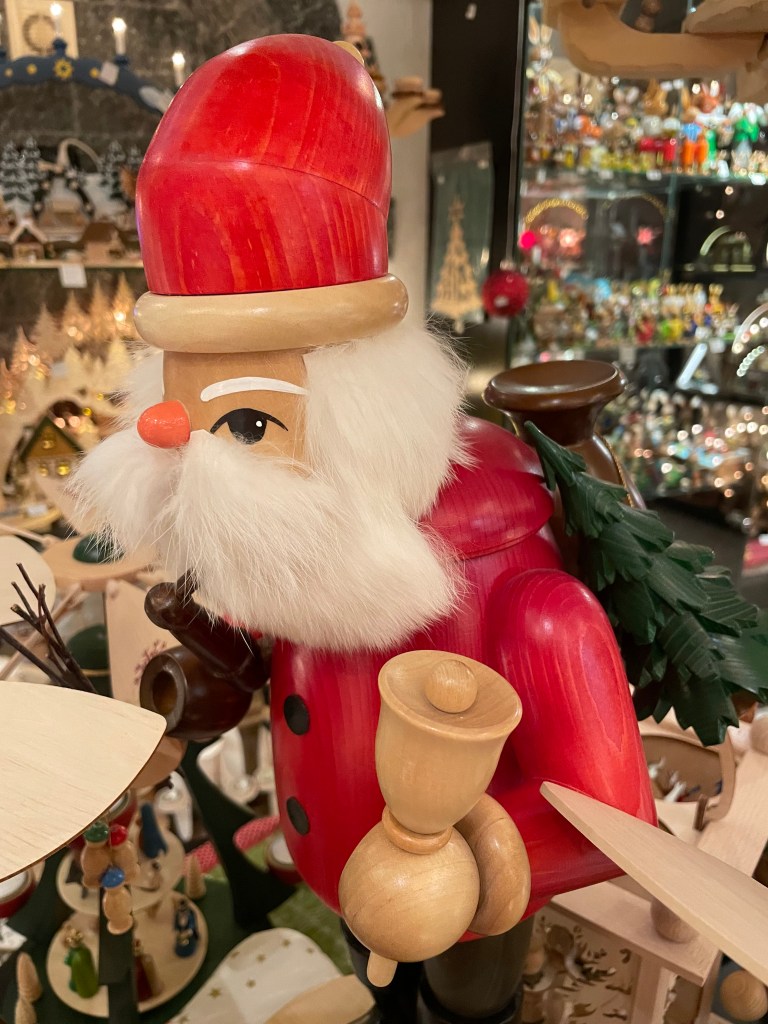
This was a whole shop of nutcrackers and smokers–

It was a delightful day.  A happy day.  Check the next post for one of our favorite visits.