Weimar and the Home of Schiller

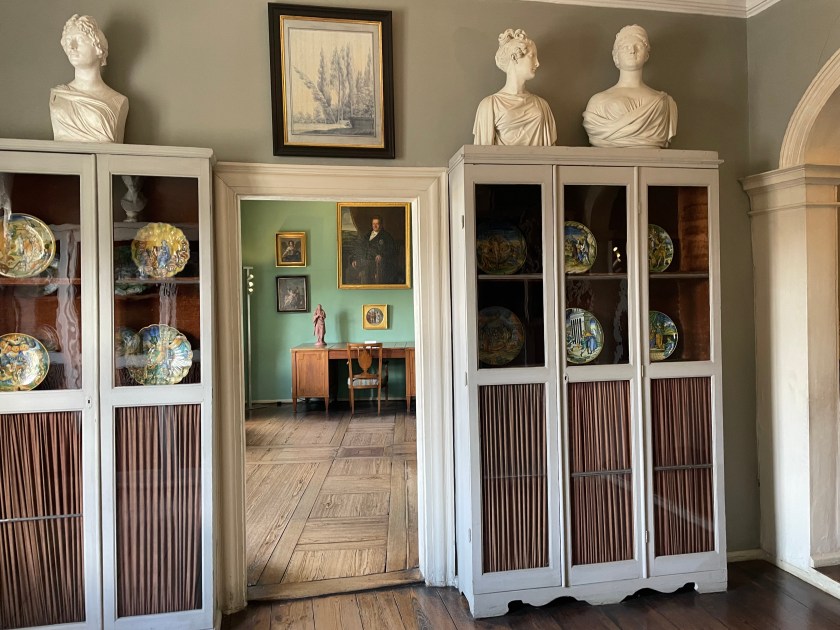
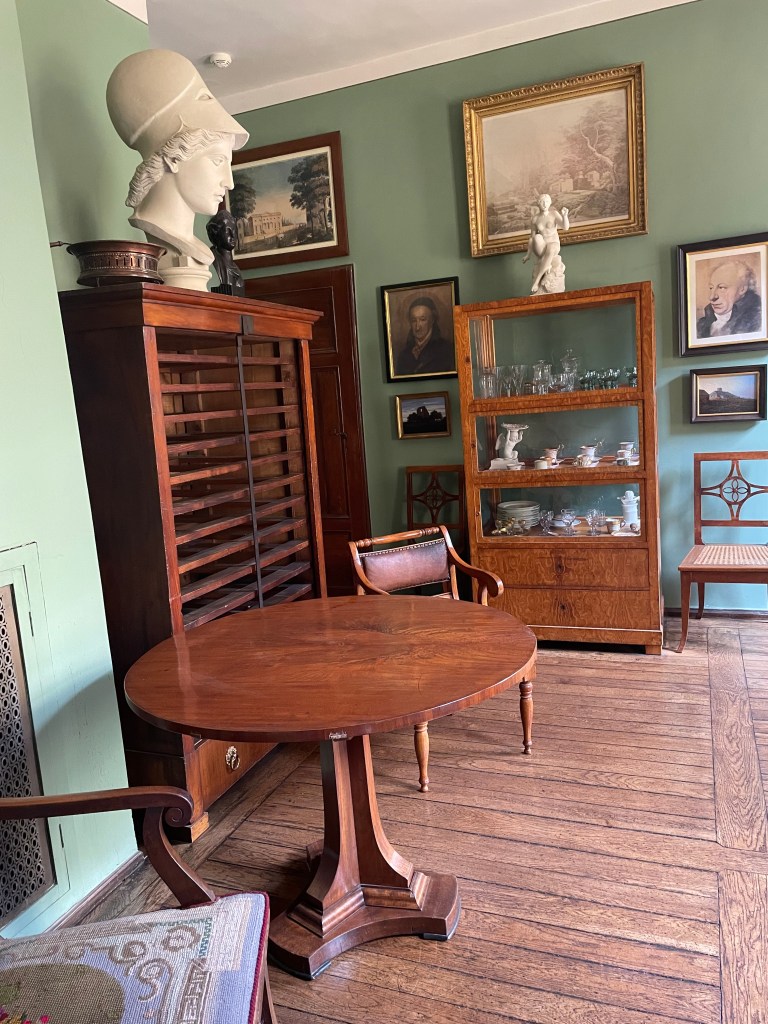
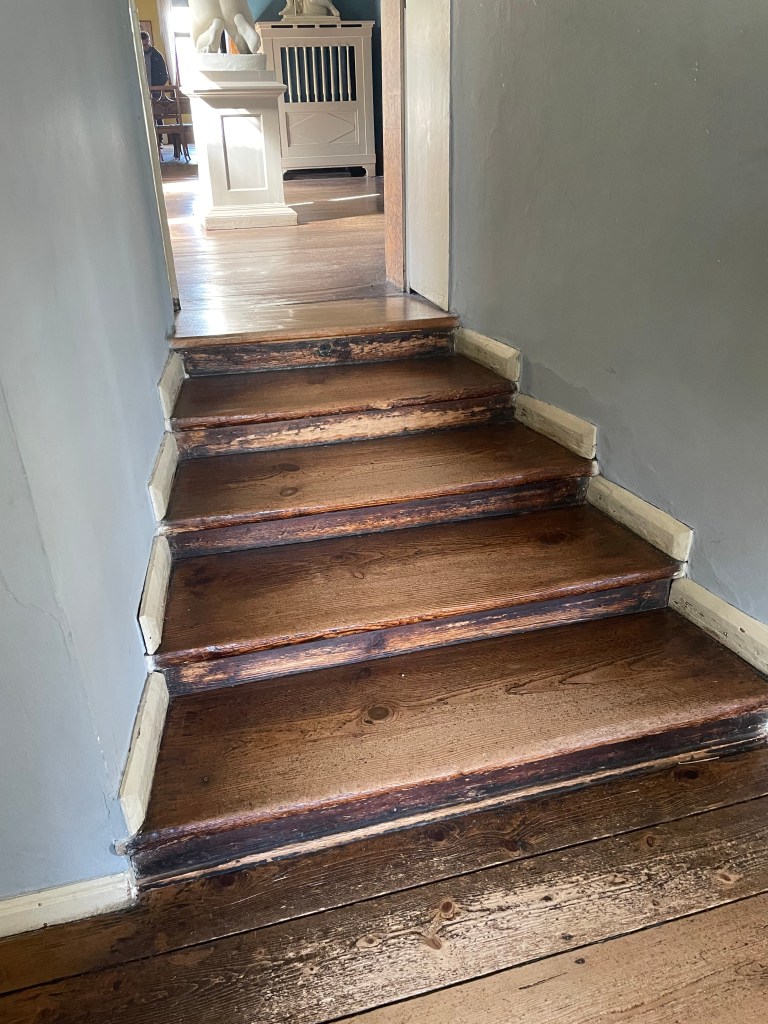
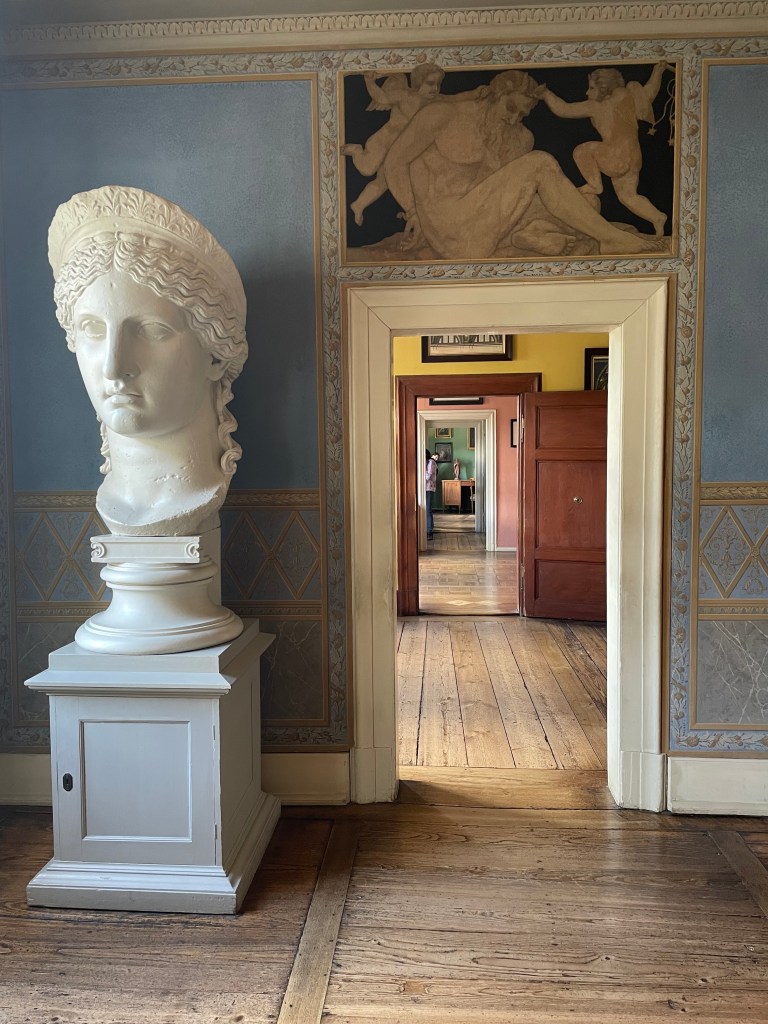
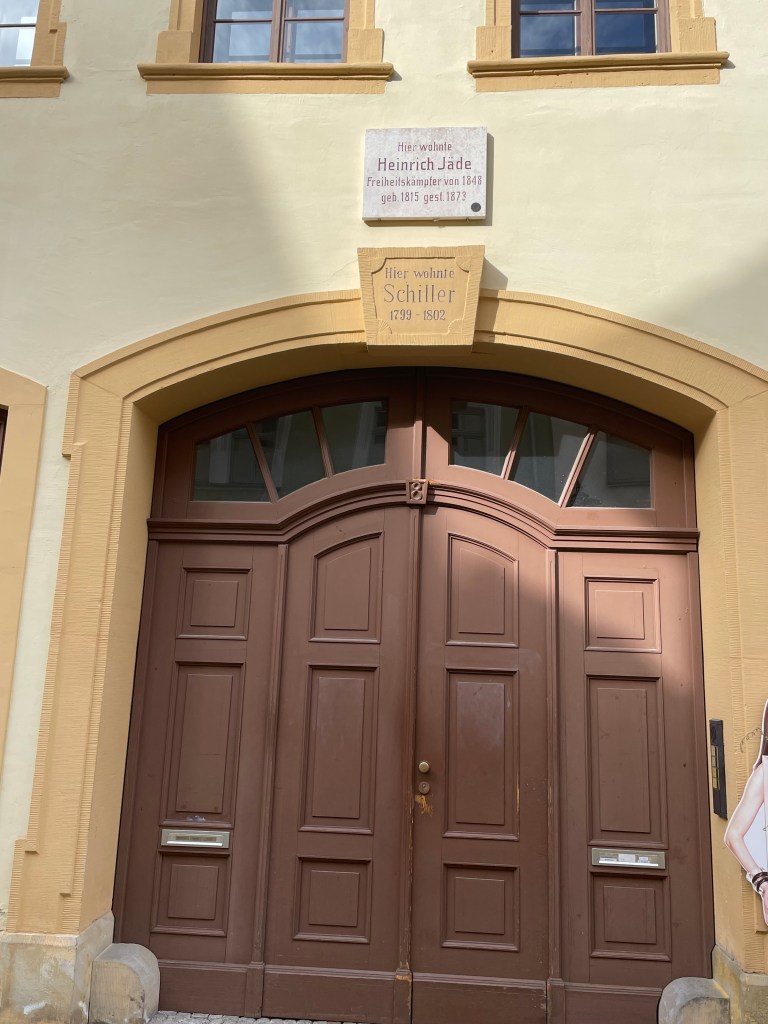
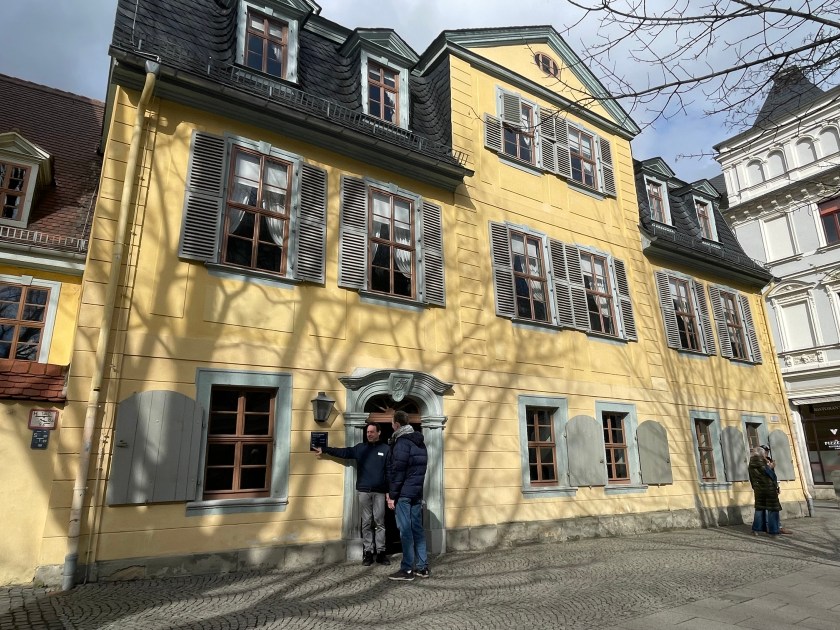
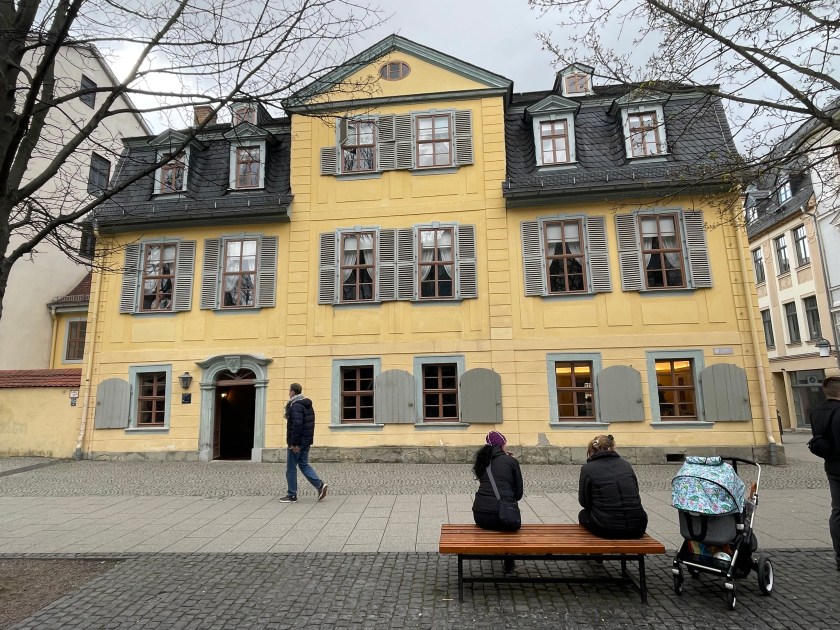
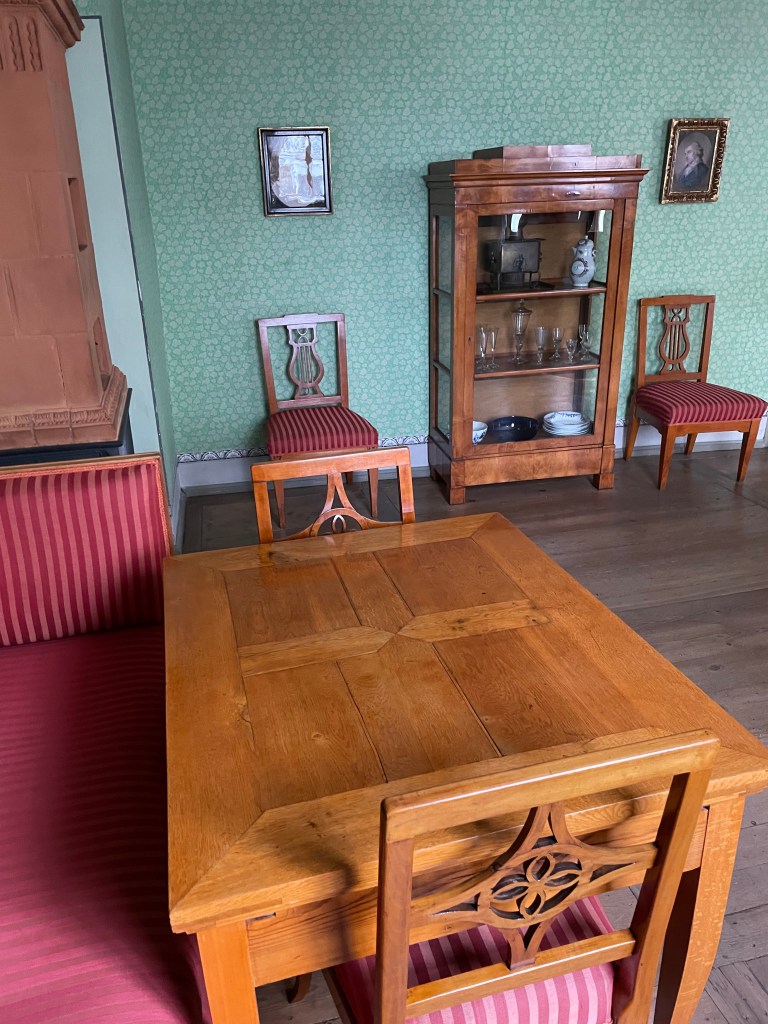
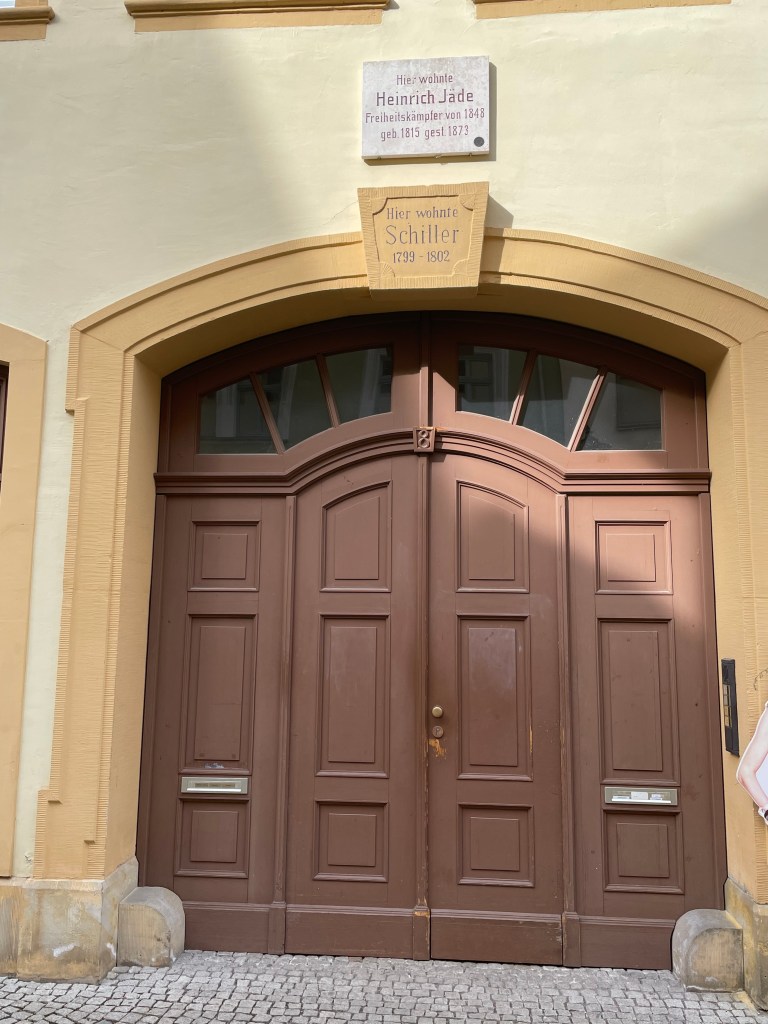
Here is the home where Schiller lived at the end of his short life.  Again, you can read/hear the entire interesting tour free of charge, room by room with photos on this website.

This is from the introduction to the tour:

The spacious residence on Esplanade was originally built for a merchant in 1777. Schiller moved in with his family in 1802 and had some alterations done. Following the poet’s premature death in 1805, his wife Charlotte continued living here until she died in 1826. During those years, she had let out several rooms to tenants. Eventually her children sold the property and some of the furniture. In 1847 the city of Weimar purchased the building and converted it to the first poet memorial in Germany that same year. The rooms have been restored and refurbished several times since. A new museum was built in 1988 adjacent to the Schiller Residence which now serves as the entrance to the historical residence and venue for temporary exhibitions.

From the audio tour:

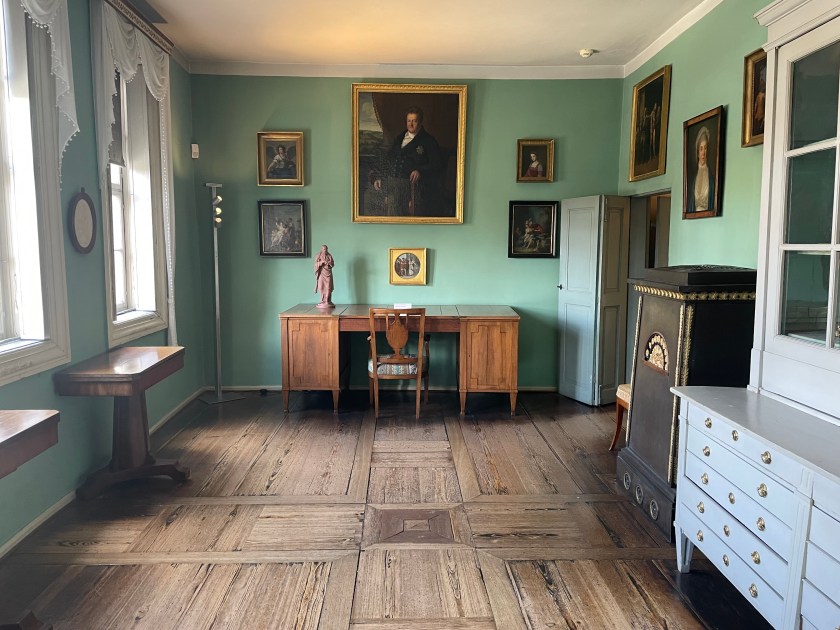
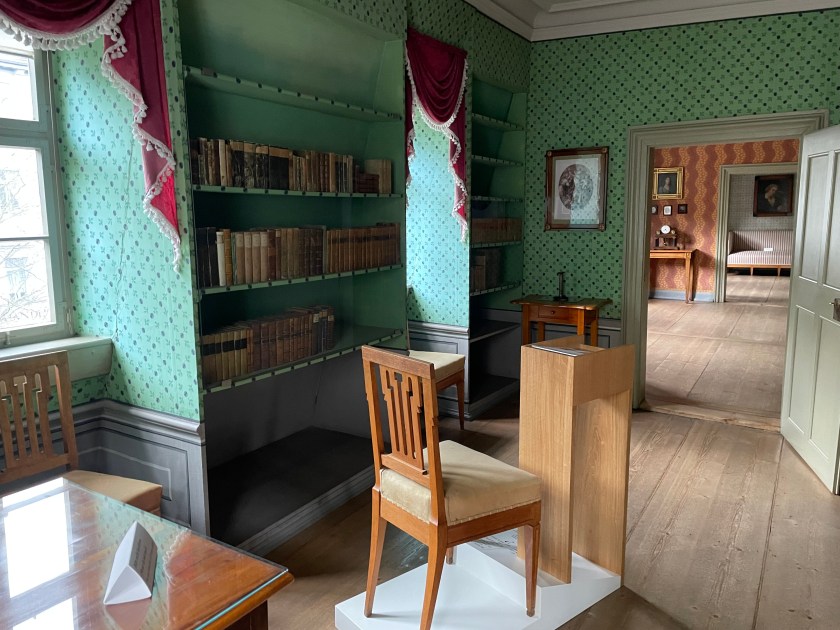
Study

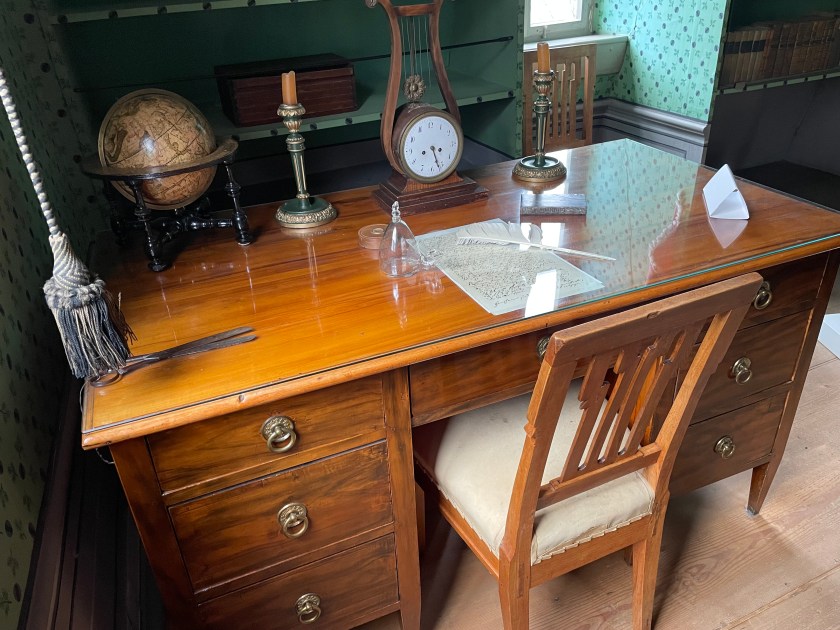
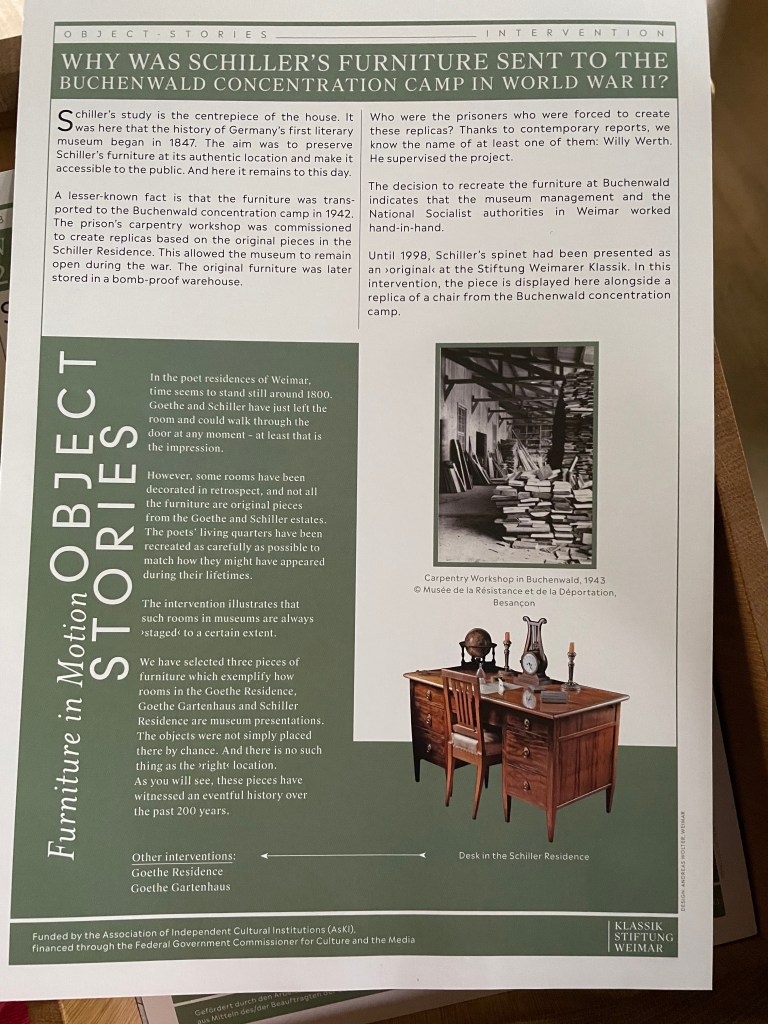
You are now in Schiller’s inner sanctum – his study. This is where he came when he wanted to read, think and write. When he was gripped by an idea, he would stay here day and night, working feverishly. The study, with its furniture, prints and everyday objects, is largely as it was during Schiller’s lifetime – so this is where we come closest to the great writer. Schiller sat at this desk and dipped his pen in this glass ink bottle. The marble letter weight, the table clock and the snuff box were all personal possessions – and this is also where he wrote his last plays The Bride of Messina and William Tell.

Schiller chose the wallpaper himself. The wallpaper you can see here is an exact copy of the original. He made some practical changes to the room as well, having a window in the gable wall put in to give him more light at his desk. For his collection of books, he also had special built-in bookshelves made to fit the pitch of the roof. For conservation reasons, the books on show today are a selection of second editions; Schiller’s original books are in the Duchess Anna Amalia Library. Although often ill, Schiller planned ahead, setting himself ambitious goals. He got through an amazing amount of work, planning to write one play a year. The publishers paid him well, and his plays were performed across Germany. As Schiller wrote to his brother-in-law Wilhelm von Wolzogen in 1804:

“My work is my biggest joy, it makes me happy in myself and outwardly independent, and if I can only live to reach fifty with my mental powers undiminished […].“

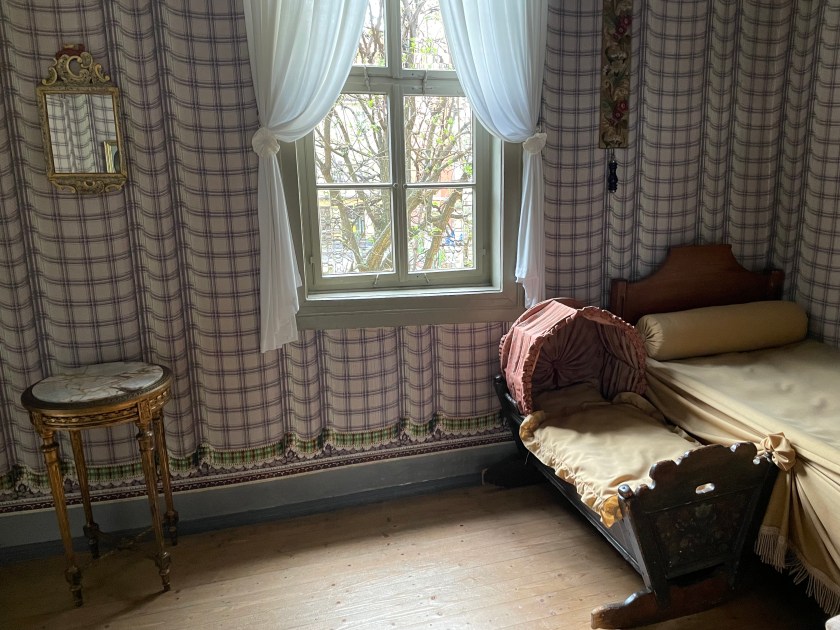
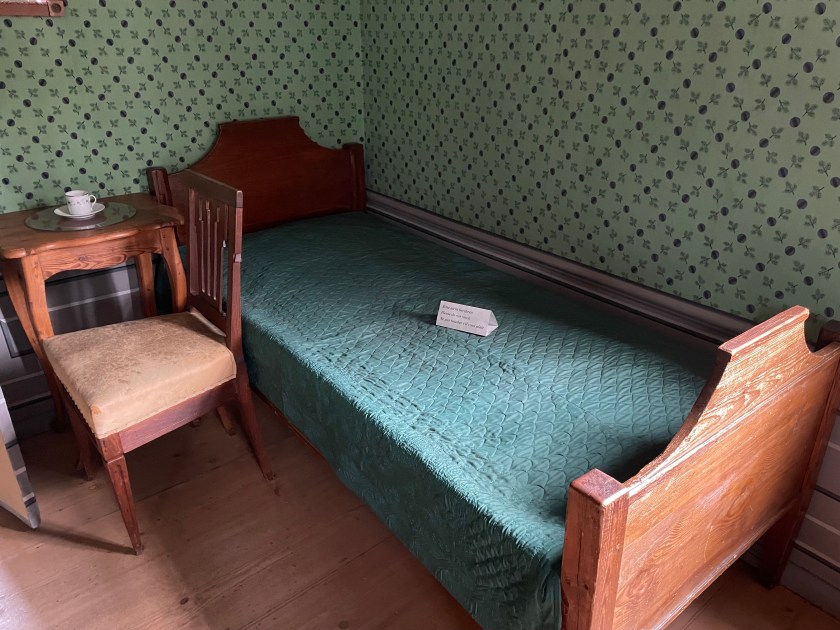
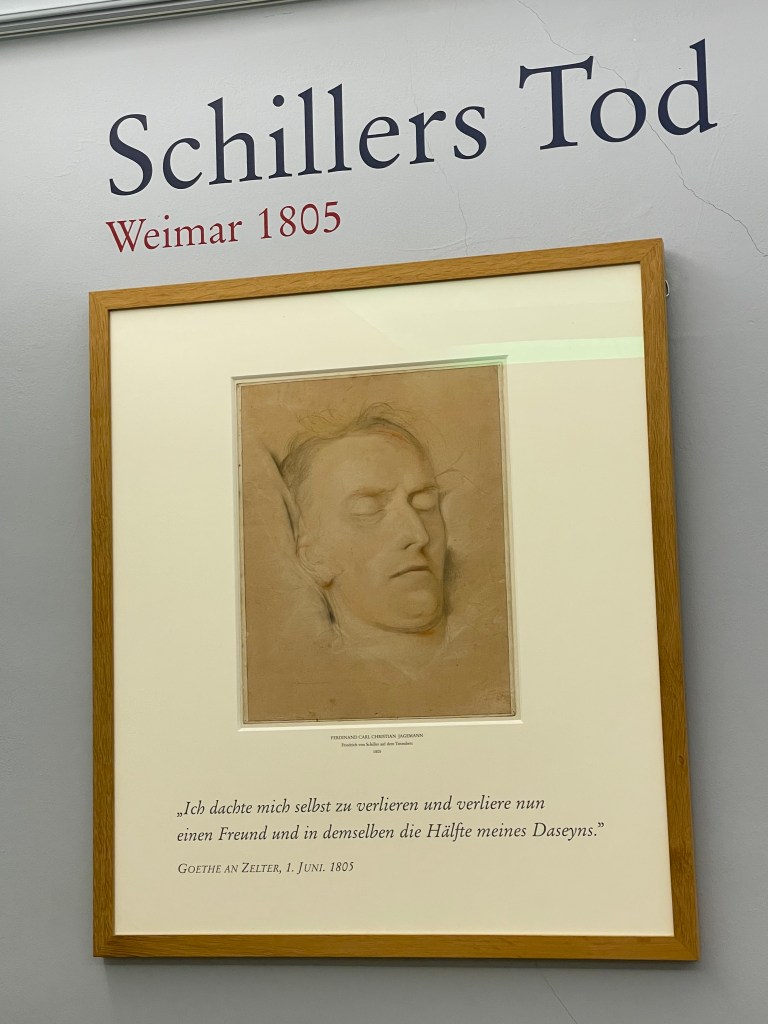
But it wasn’t to be. Scholars believe the last lines Schiller ever wrote are those on the paper on the desk. They come from his unfinished play Demetrius. On the evening of May the ninth 1805, Friedrich Schiller died here in this bed from pneumonia. He was only 45 years old.

This was interesting:

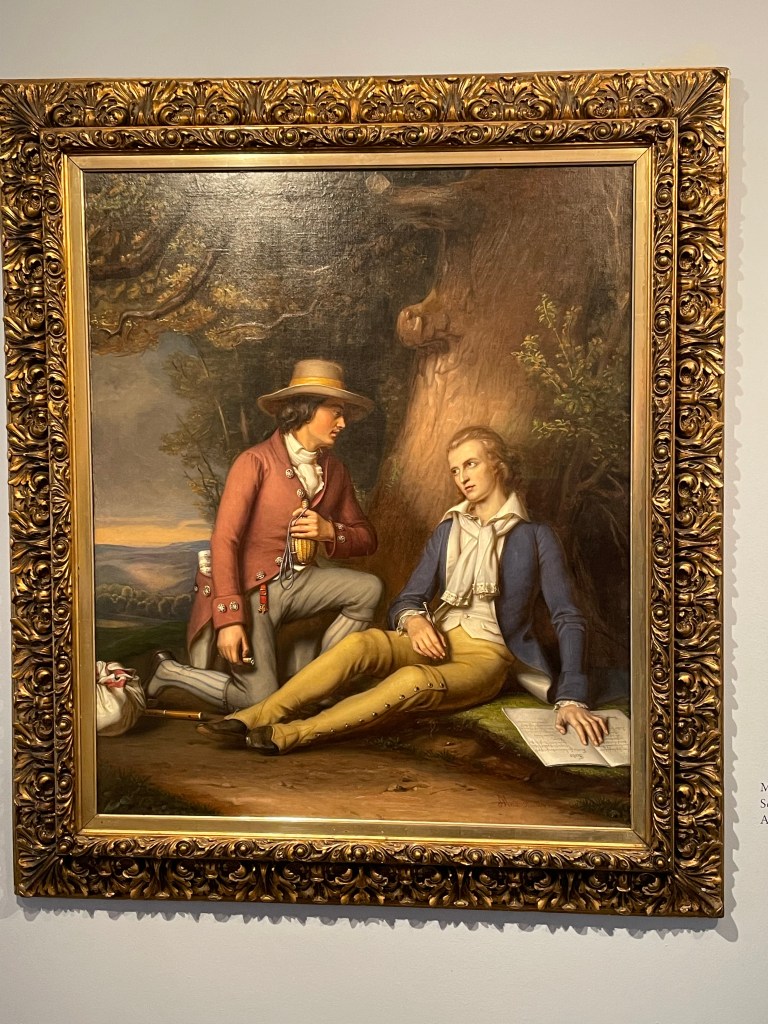
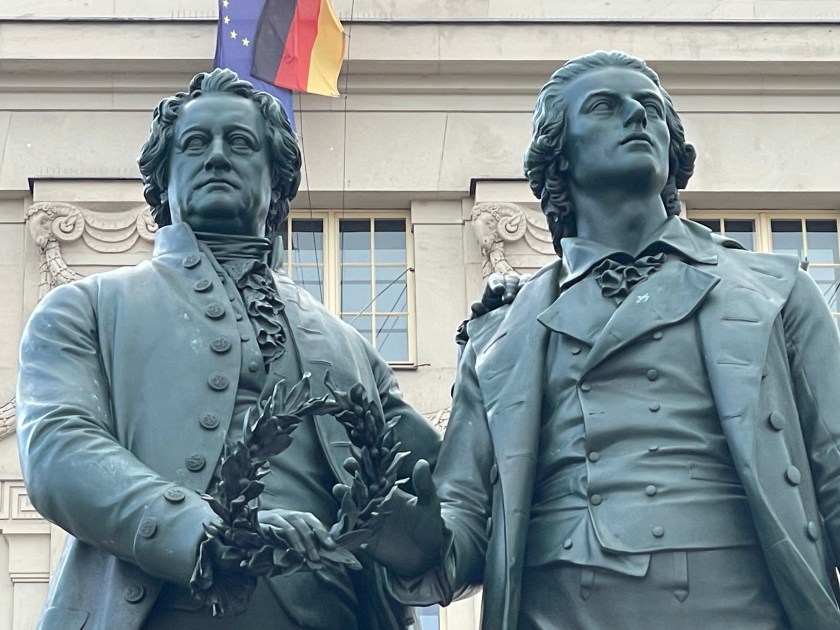
Goethe and Schiller, friends.

Wandering Around Weimar

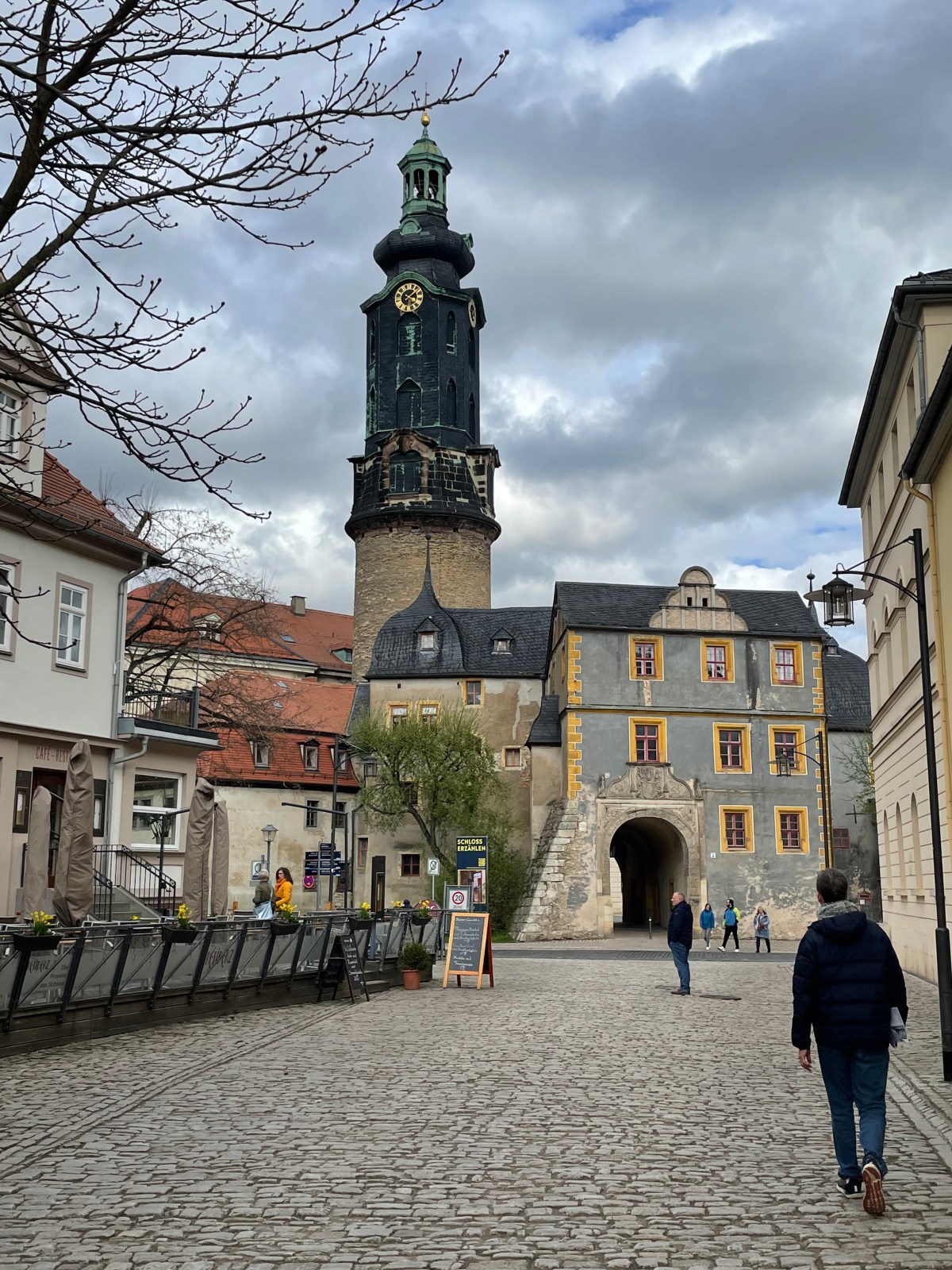
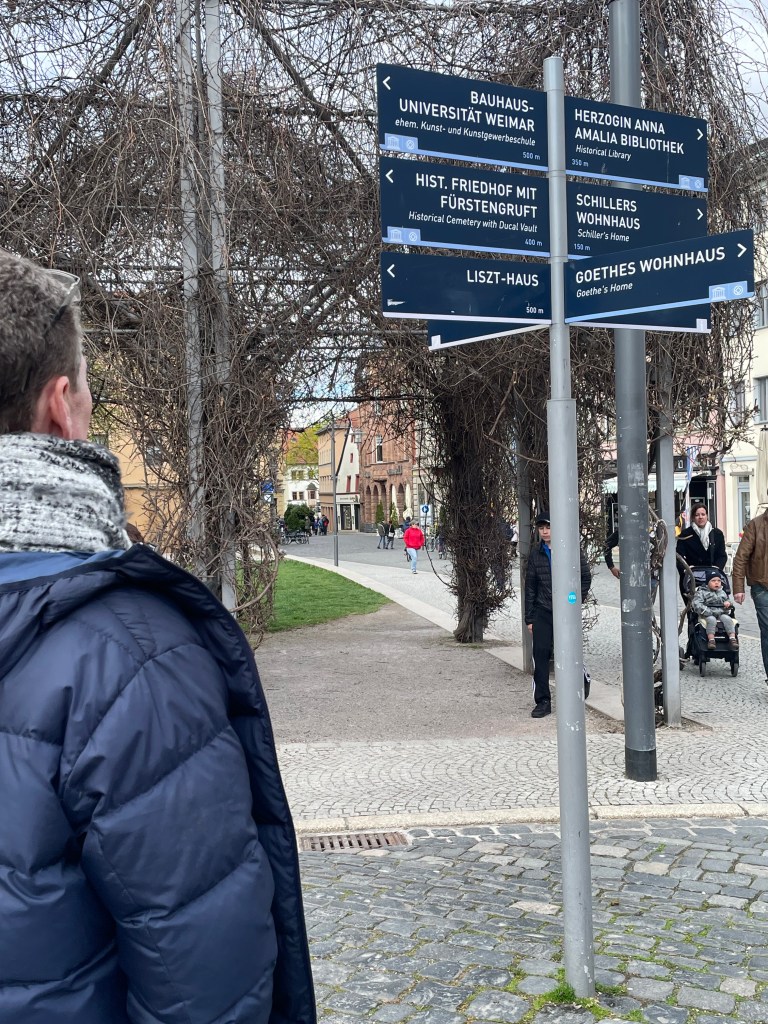
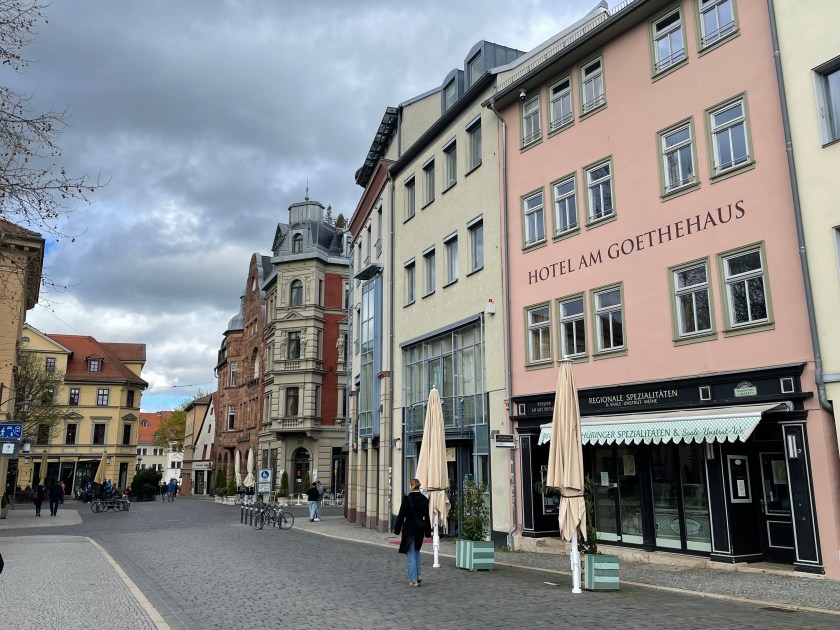
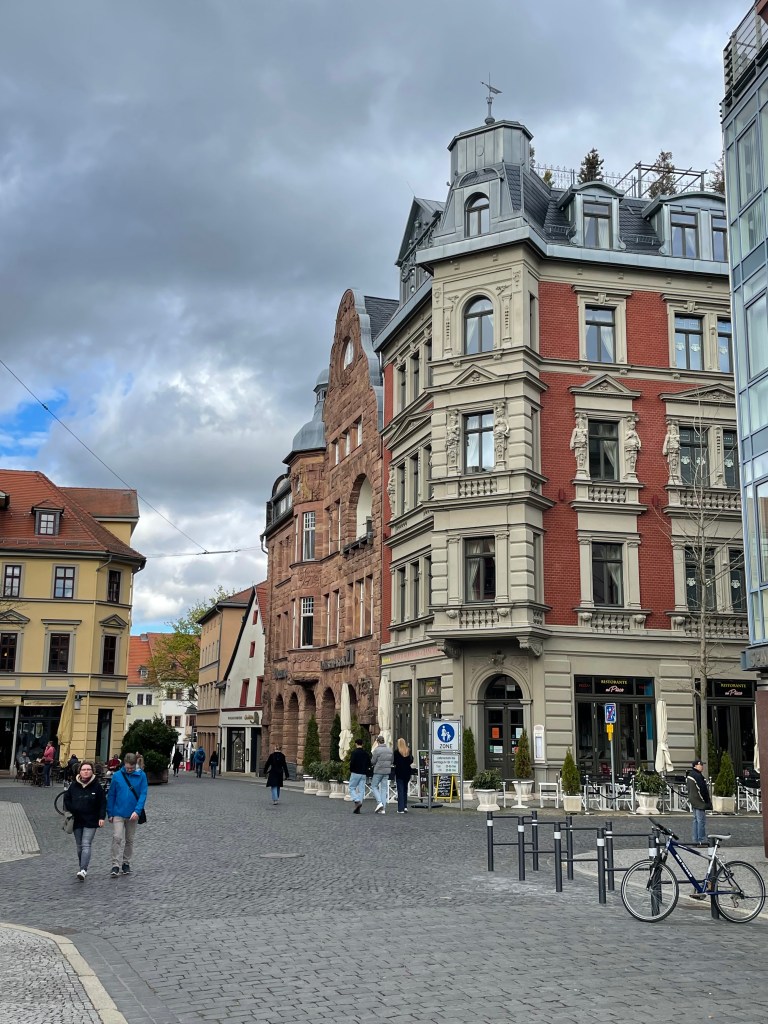
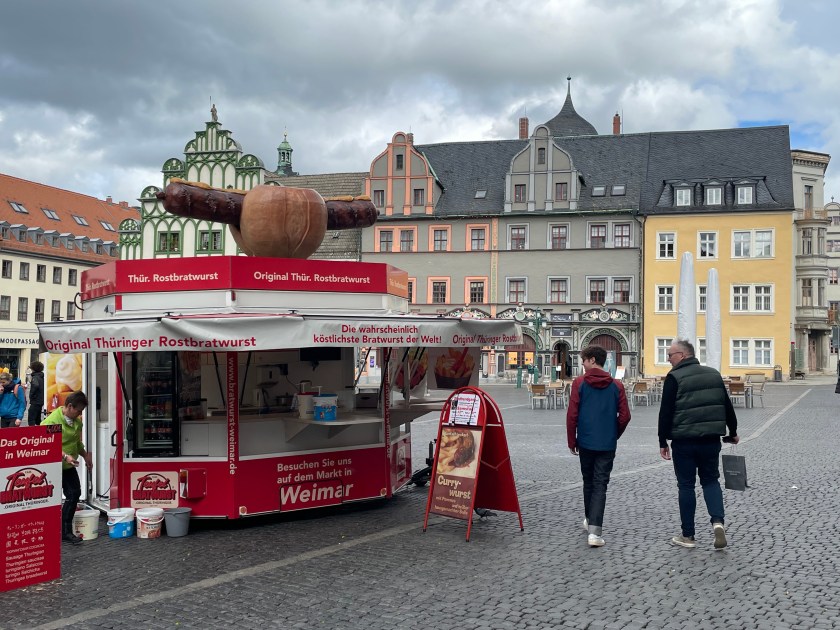
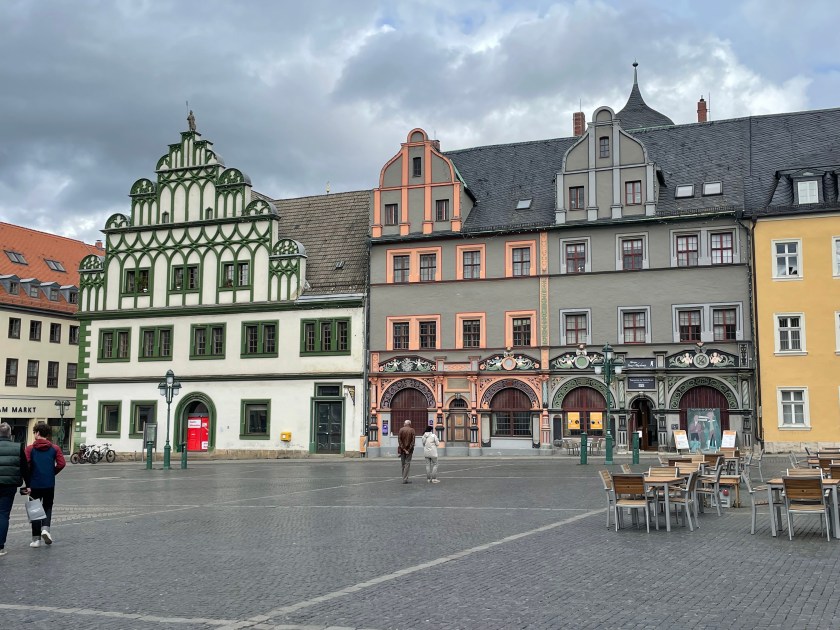
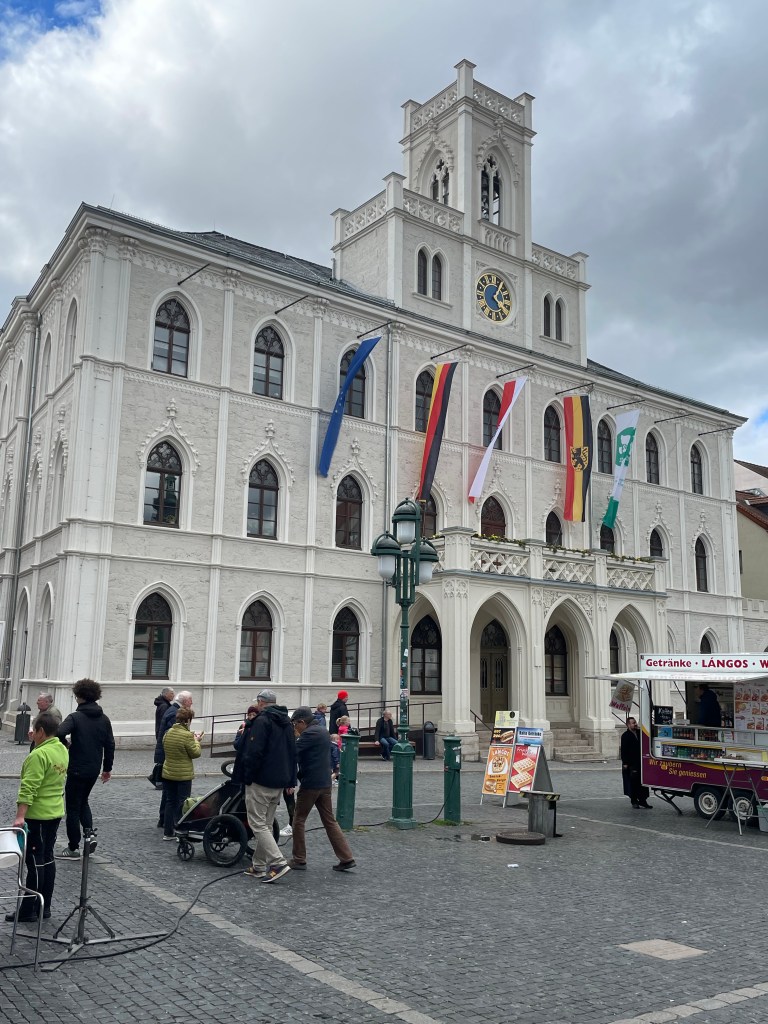
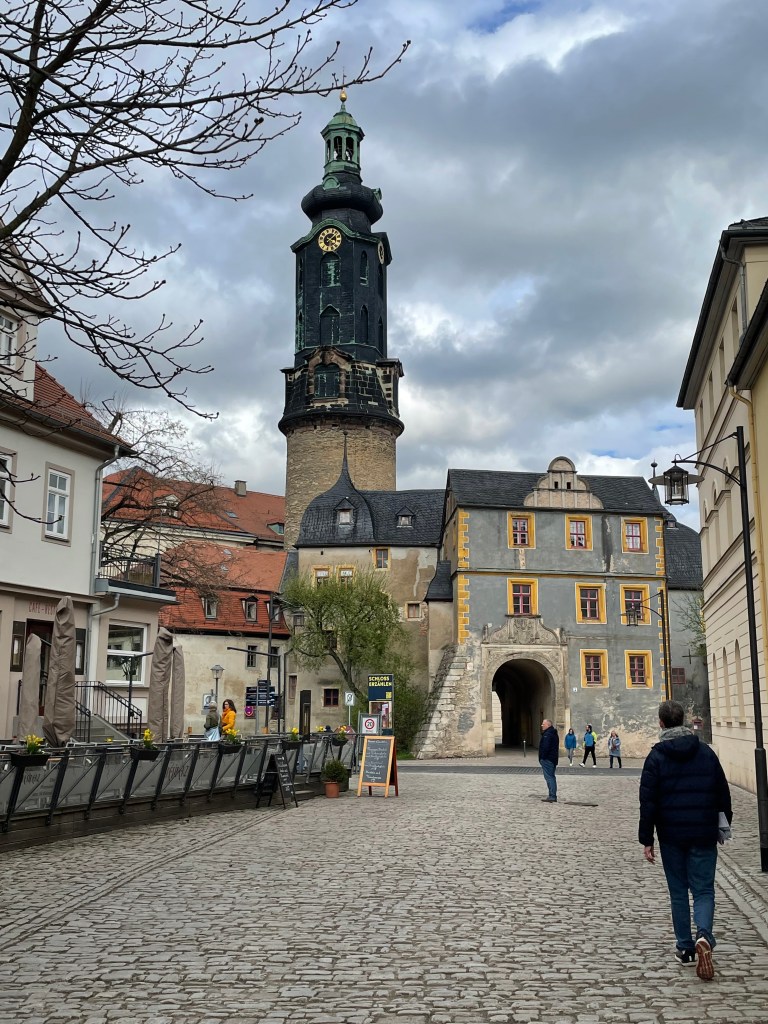
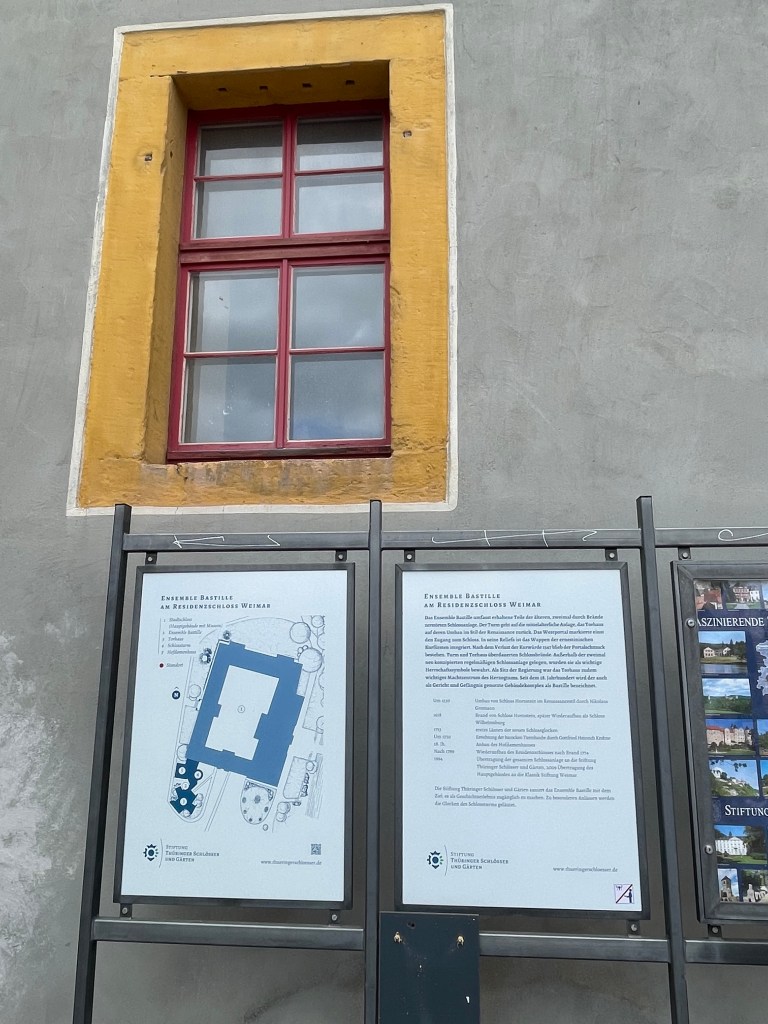
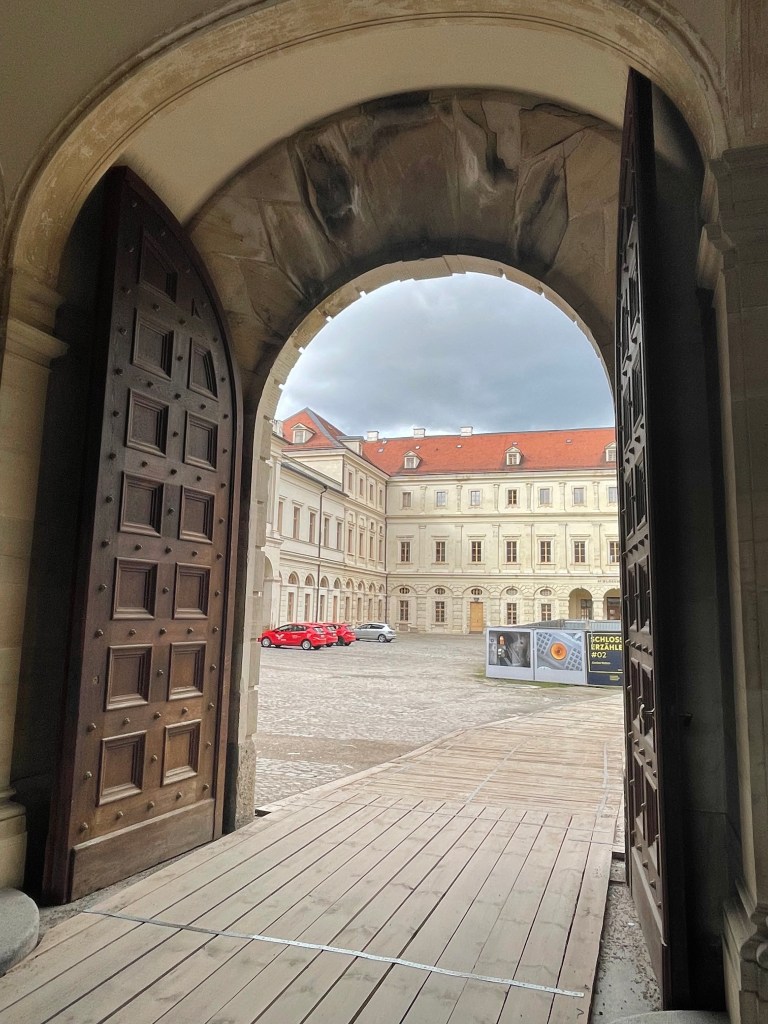
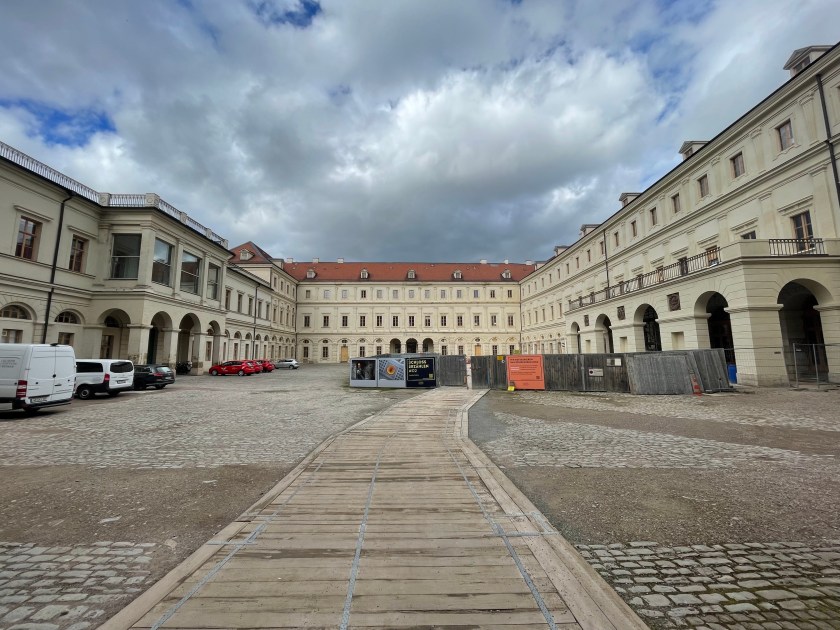
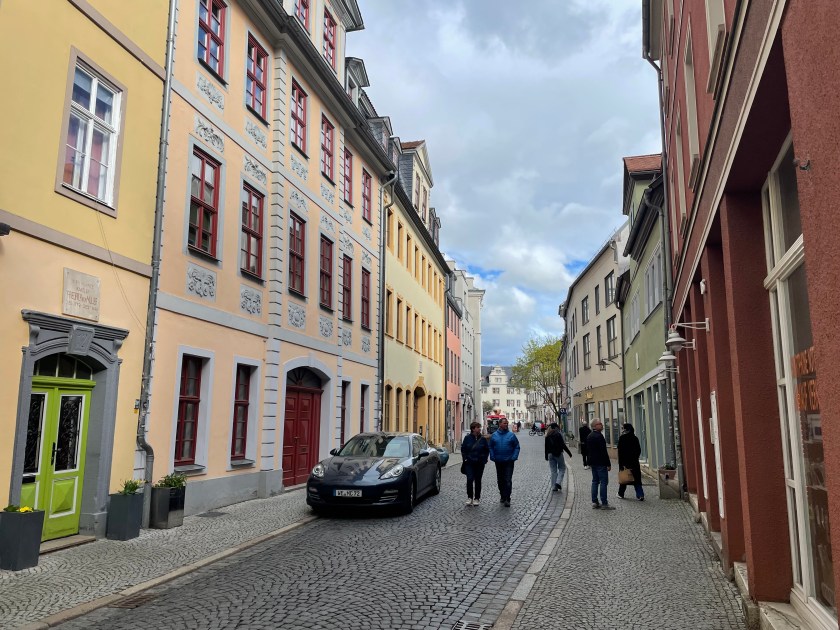
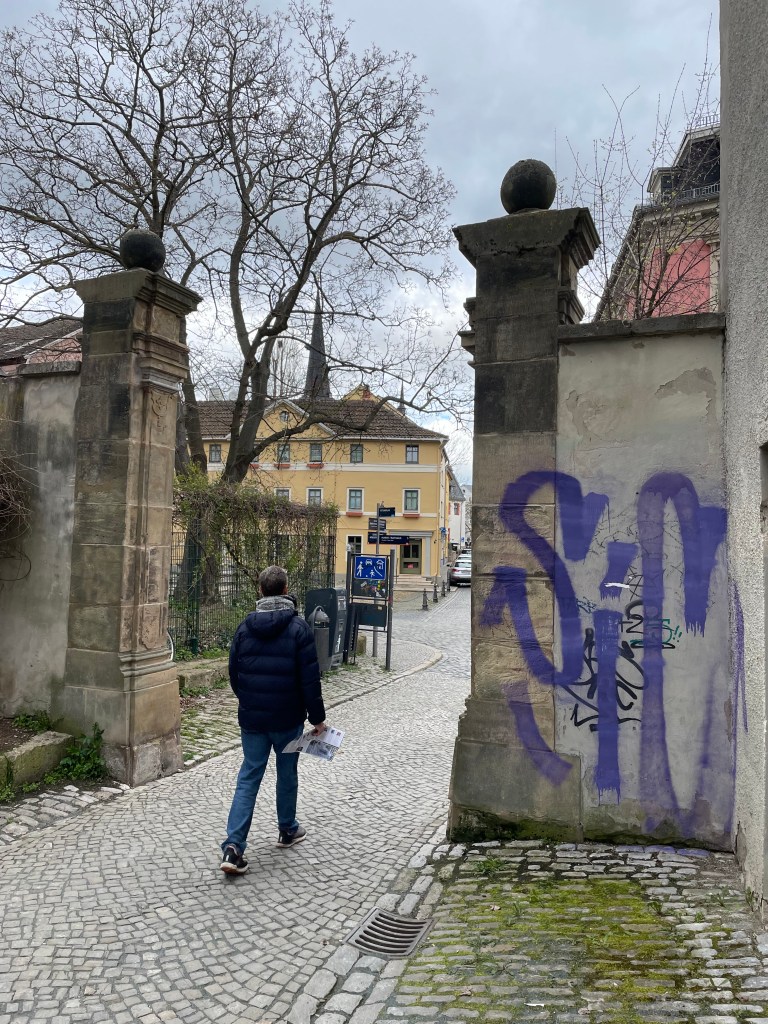
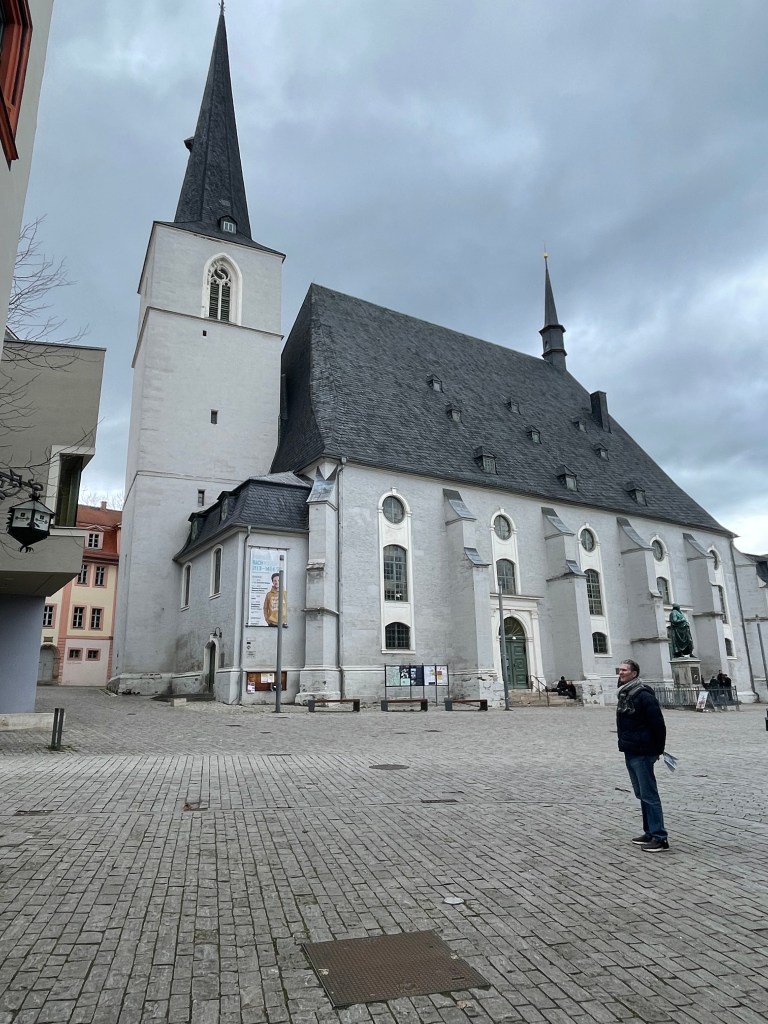
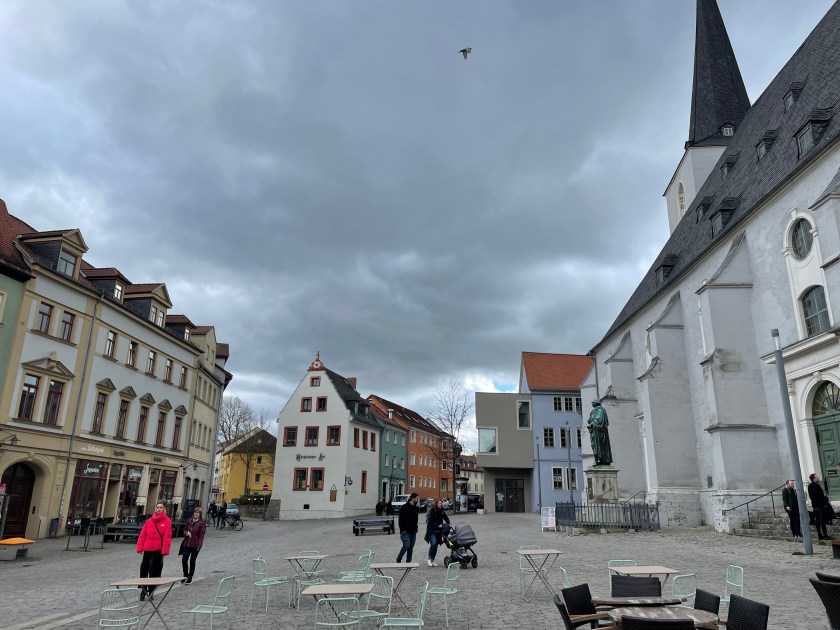
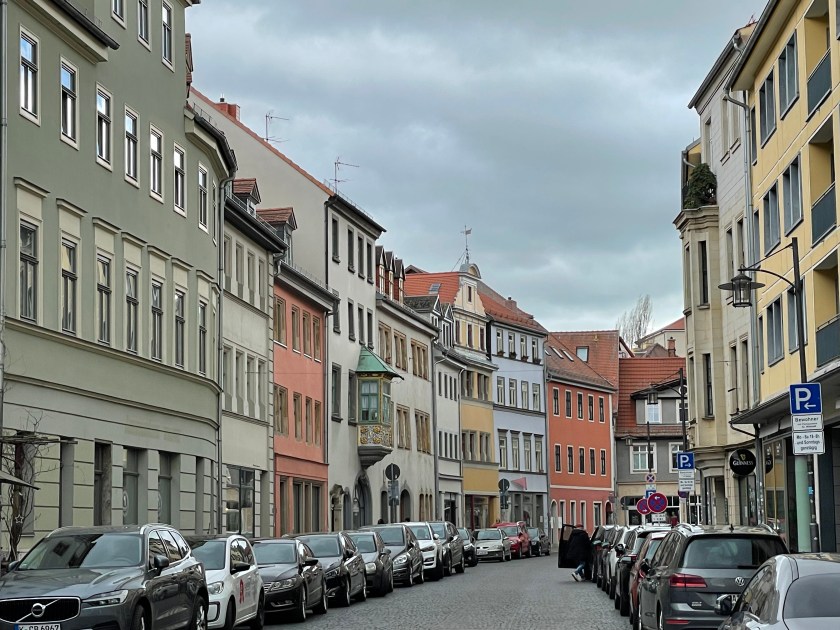
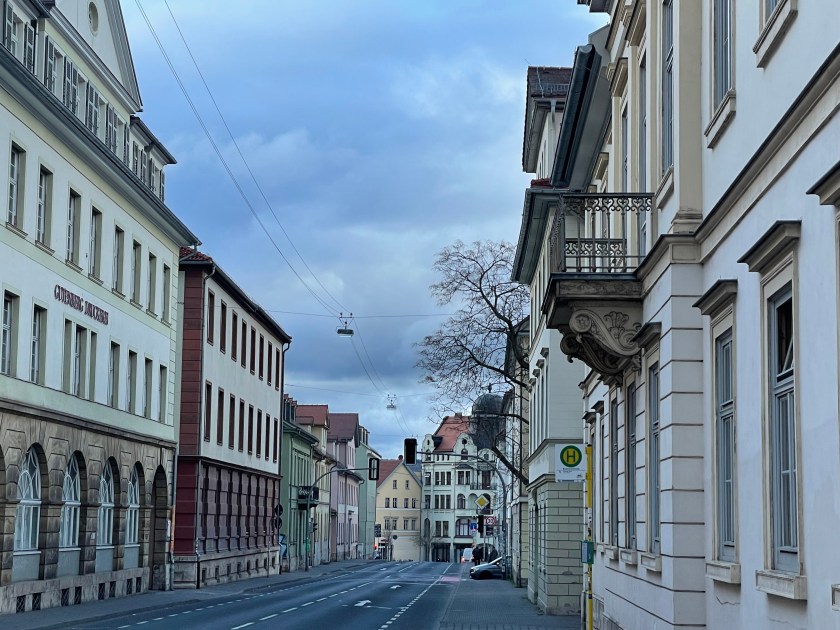
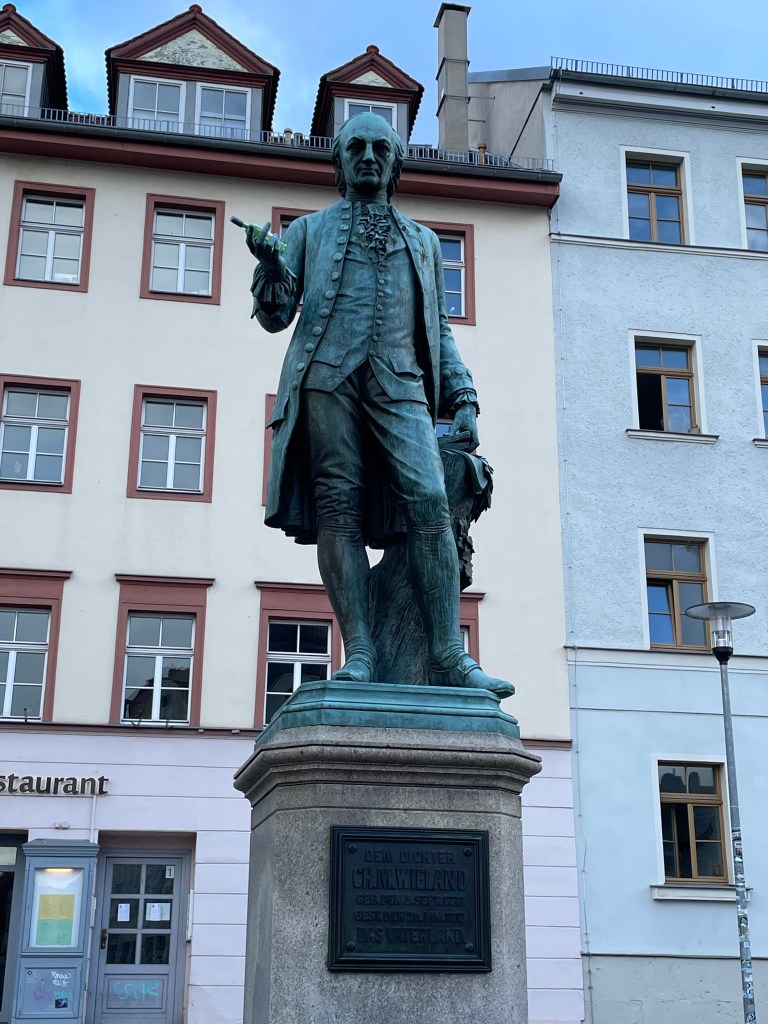
After visiting Goethe’s home, we walked around town–we looked in on a castle/palace courtyard (being restored), the main church (closed), the Goethe-Schiller Square, we walked the promenade, and we saw lots of people eating ice cream cones (it was cold and windy). This town was a magnet for great thinkers –they seemed to come here and stay here.

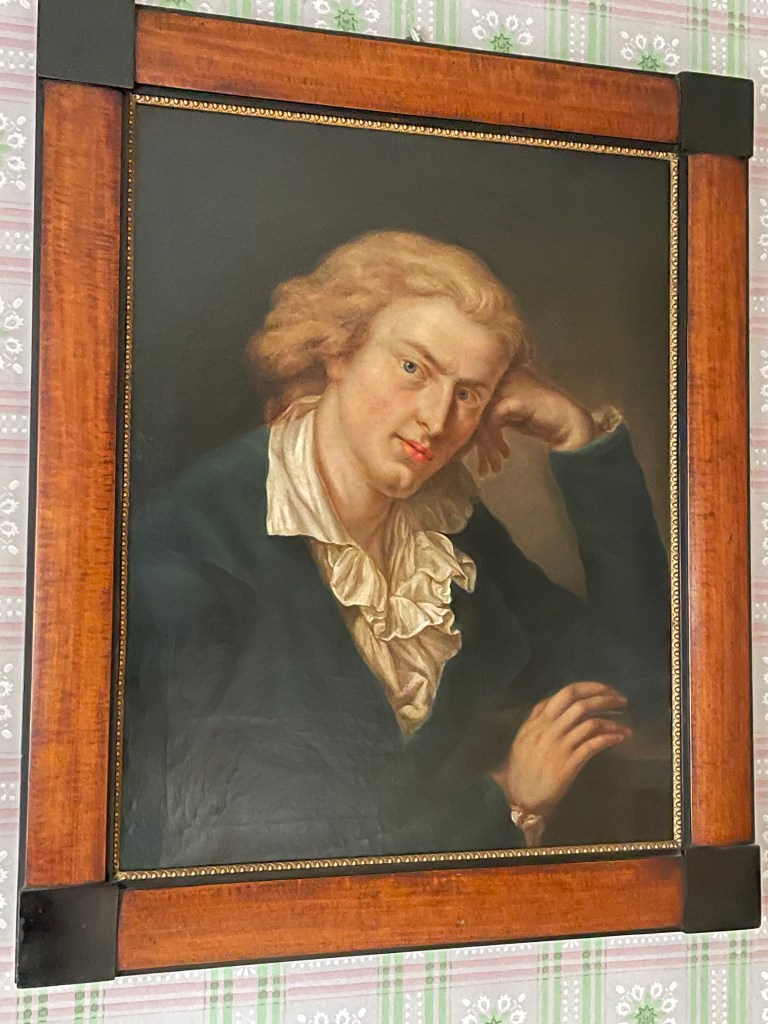
Then we circled back to the Schiller Haus, where Friedrich Schiller and his family lived. His story is different from Goethe’s. He came here poor, from Wuerttemberg, after leaving life as a soldier. He wanted to write, so he lived in exile, away from his family from age 22 on.

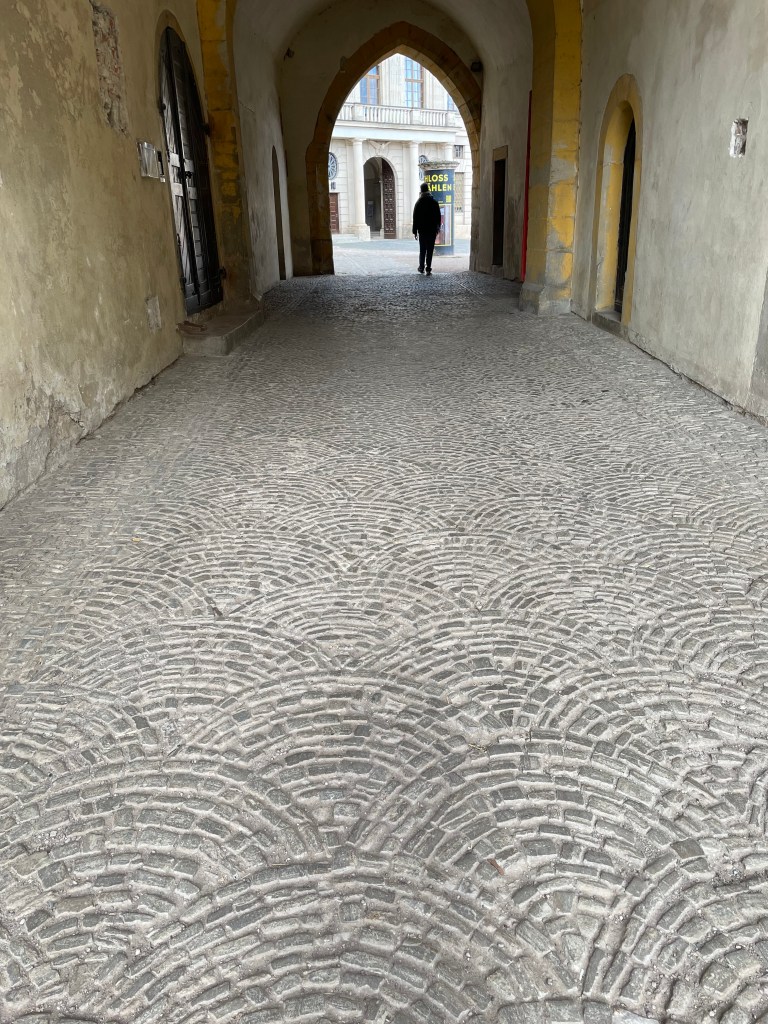
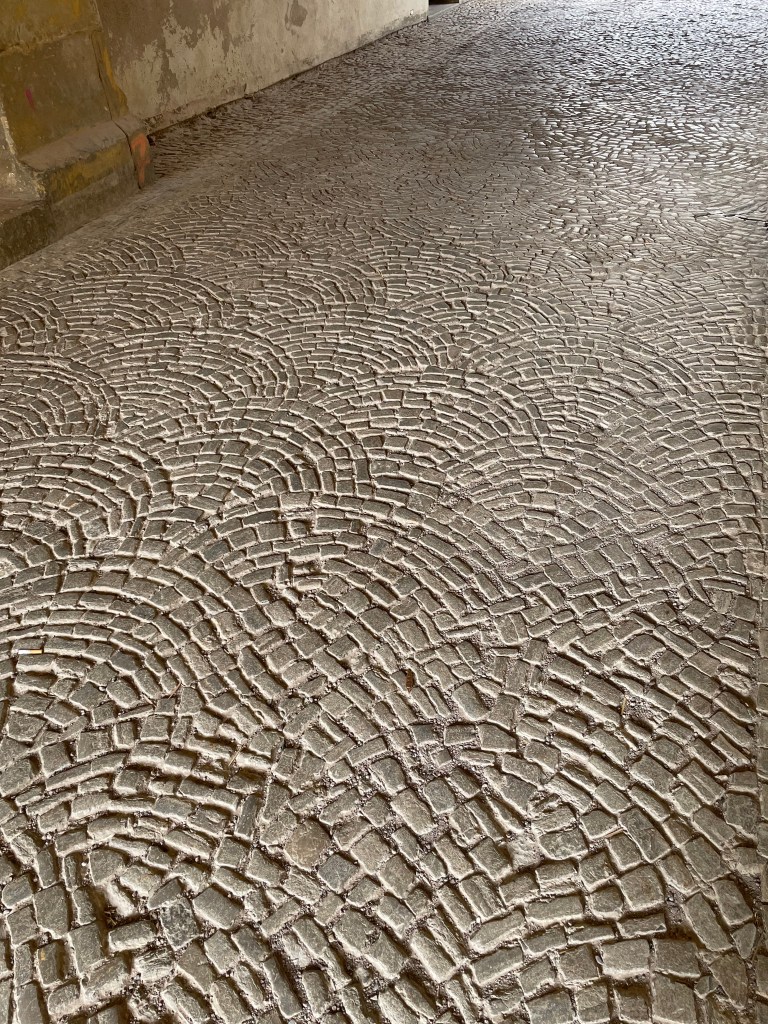
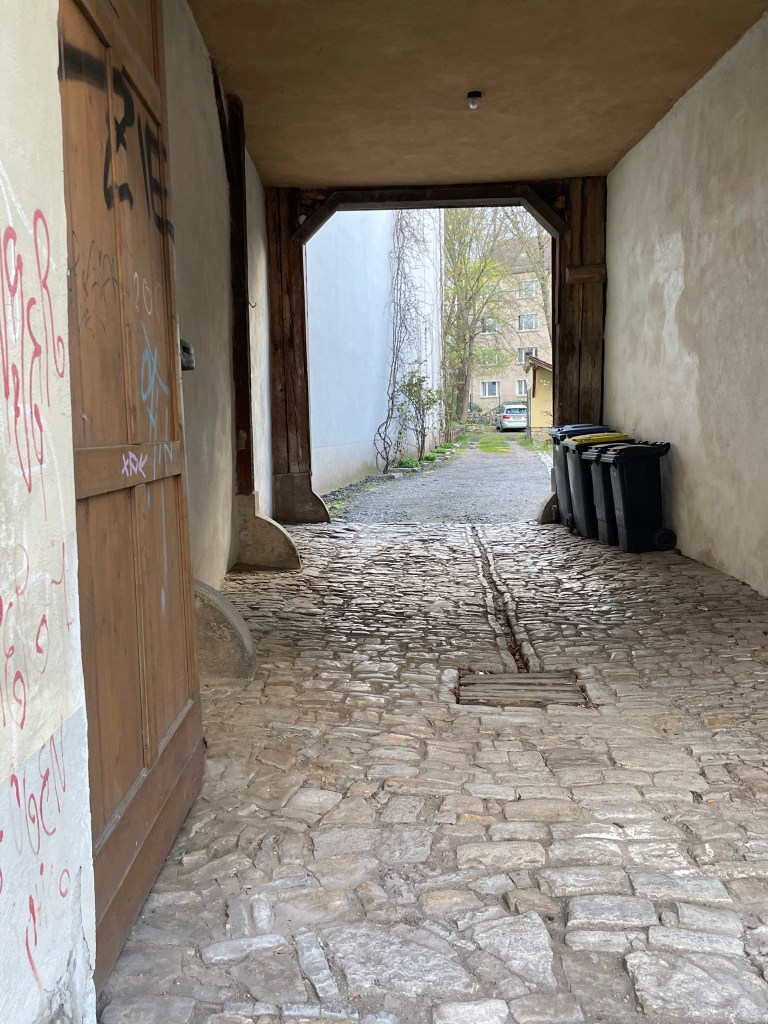
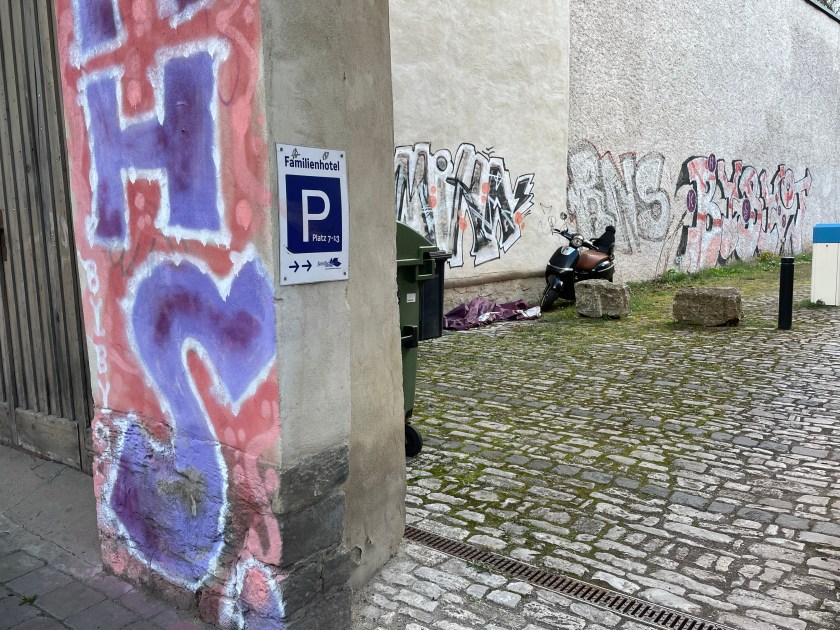
Interesting pavement:

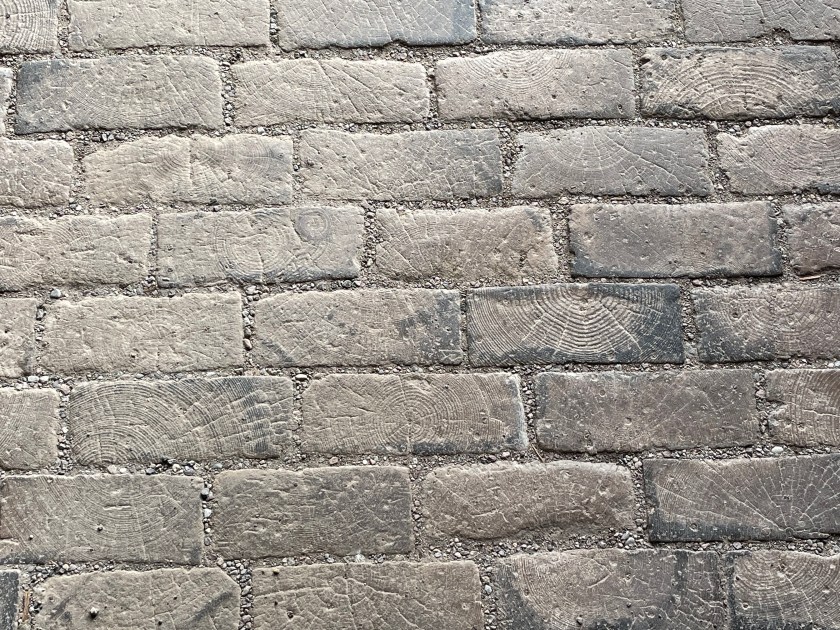
These pavers look like wood:

Weimar and the Home of Goethe

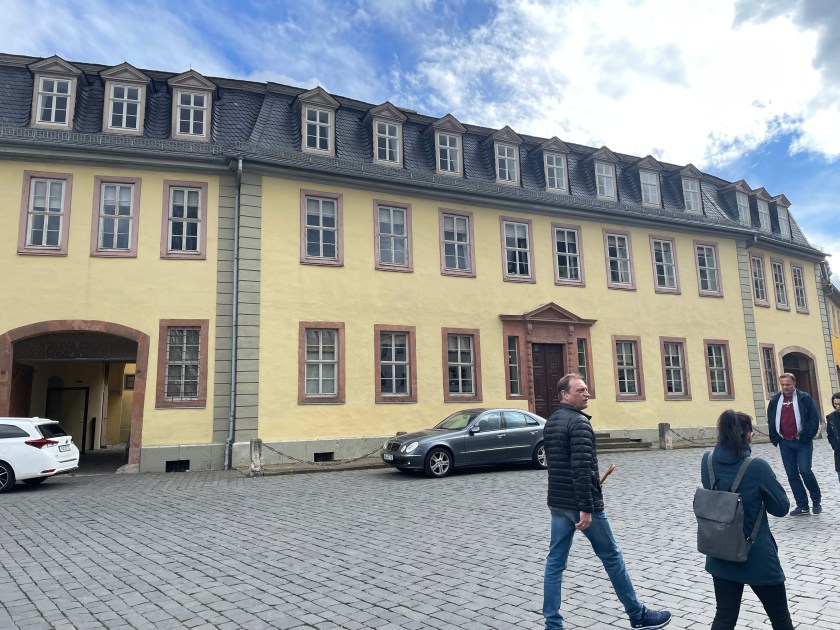
Weimar was our last destination on this Easter Weekend trip.  We went first to the Goethe Haus and spent an hour there, with an English room by room tour (from a QR code and app on our phones).  Goethe was like the Thomas Jefferson of Germany–a real Renaissance man.  He was gifted this house by a wealthy city leader and he lived here many years until his death at age 82 here in this house.

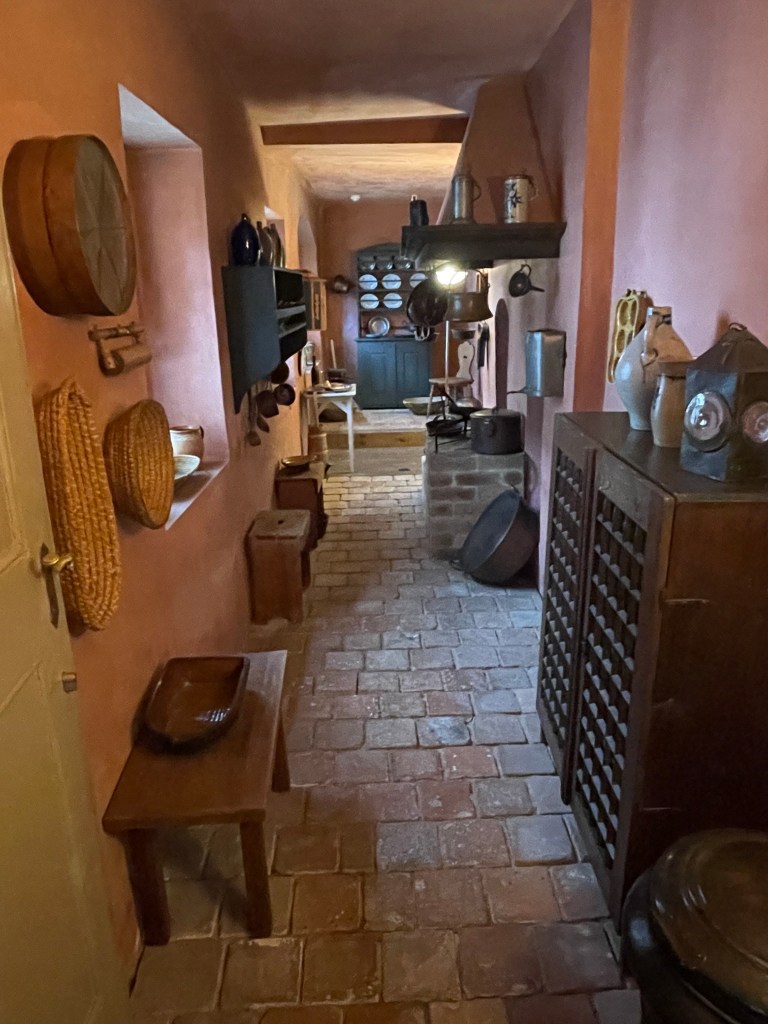
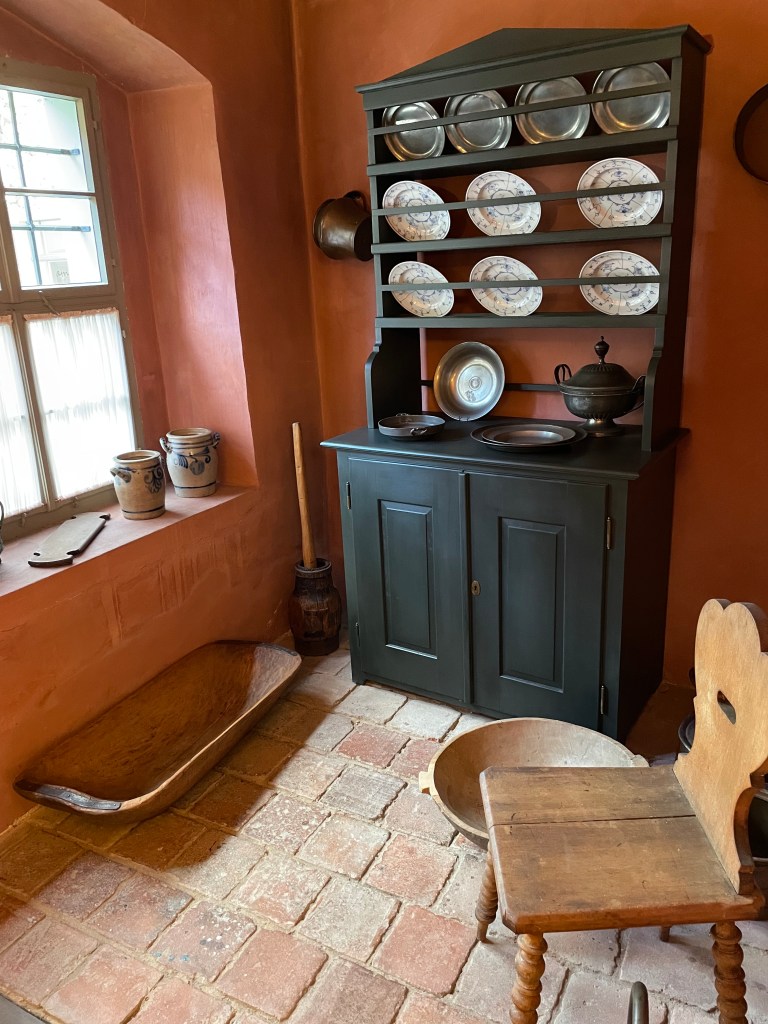
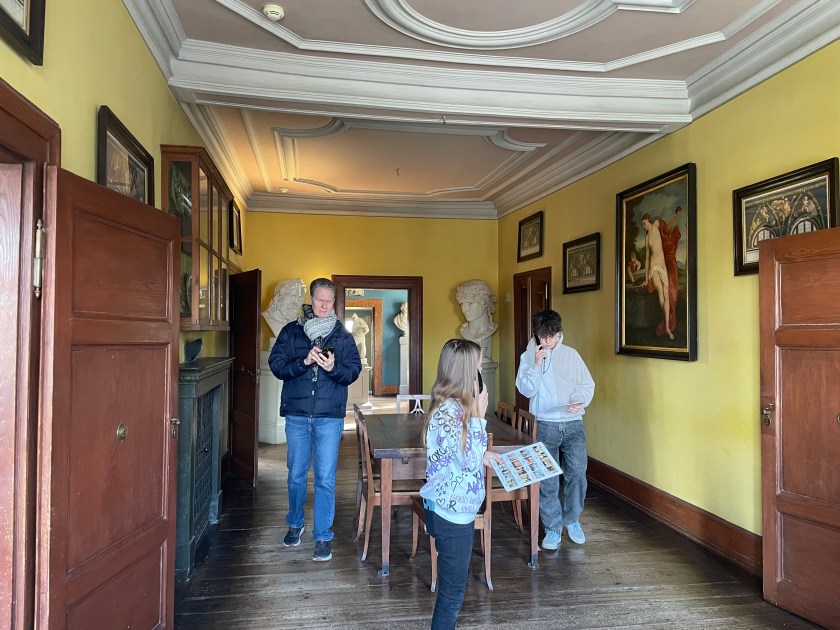
It’s always interesting to think about being “in the room where it happened,” as we went through his very home, looked in on the different rooms, the kitchen, the bedrooms, his study and library, and the chair he was sitting in when he died.
Johann Wolfgang von Goethe is the most important German literary figure of modern times and is often compared to Shakespeare and Dante. He was a poet, dramatist, director, novelist, scientist, critic, artist and statesman during what was known as the Romantic period of European arts.
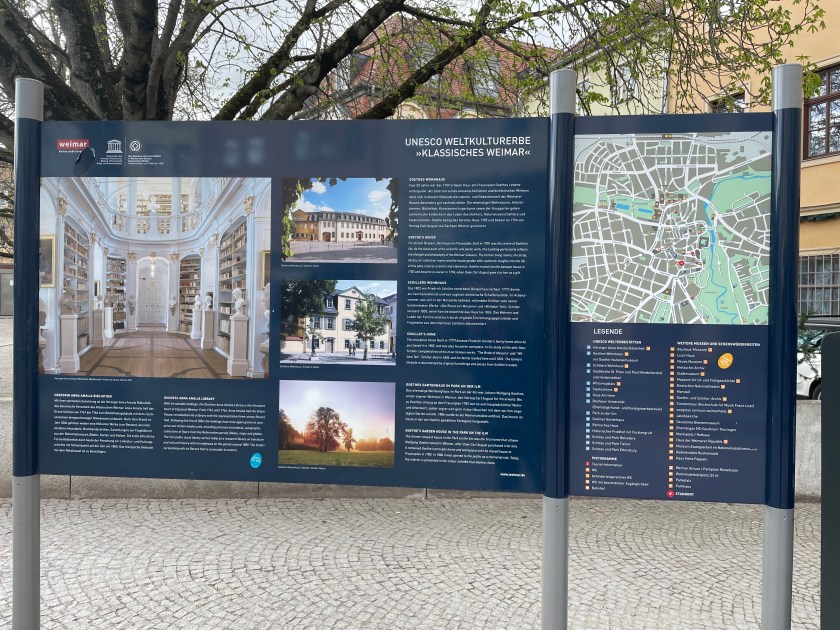
This is a wonderful website that offers all of the audio tours with photos, if you’d like to take the tour yourself:
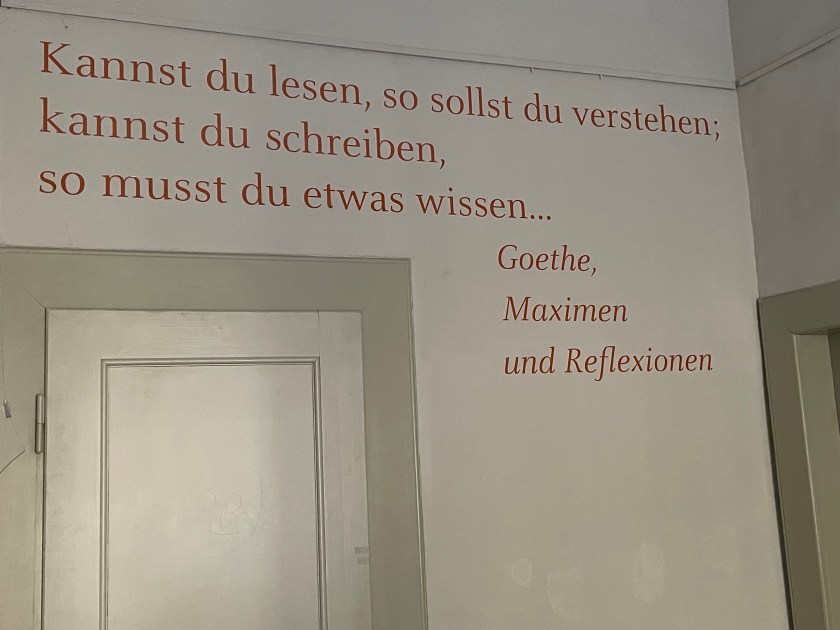
Johann Wolfgang von Goethe (1749-1832) is a giant in German and world literature. In fact, he coined the term Weltliteratur and spoke Greek, Latin, French, English, and Italian. Aside from its quality, the sheer volume of work during his 82-year lifetime is impressive. Among other works, Goethe wrote a worldwide, best-selling novel (Die Leiden des Jungen Werthers, 1774), volumes of poetry, and several dramas, including his masterwork: Faust — a massive two-volume drama that was not entirely finished by the time of the poet’s death. Goethe also dabbled in painting and science (Farbenlehre/“Theory of Color”), although his greatest achievements by far were in literature.
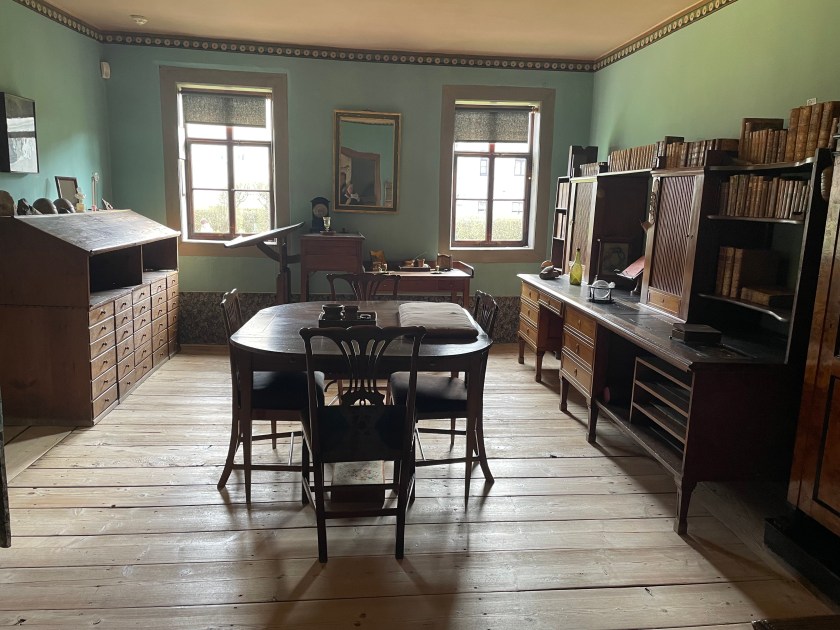
This is the room where he worked.  Here is the explanation from the audio tour:

Study

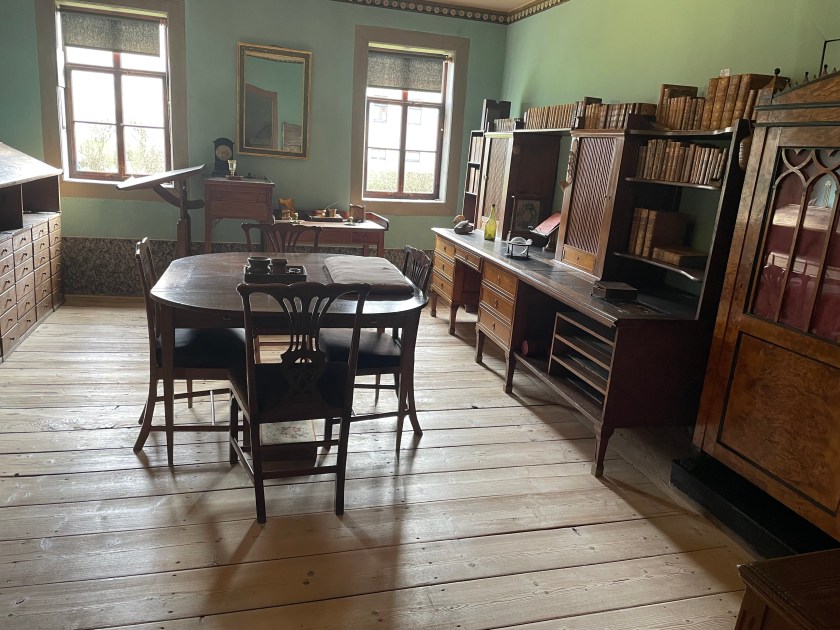
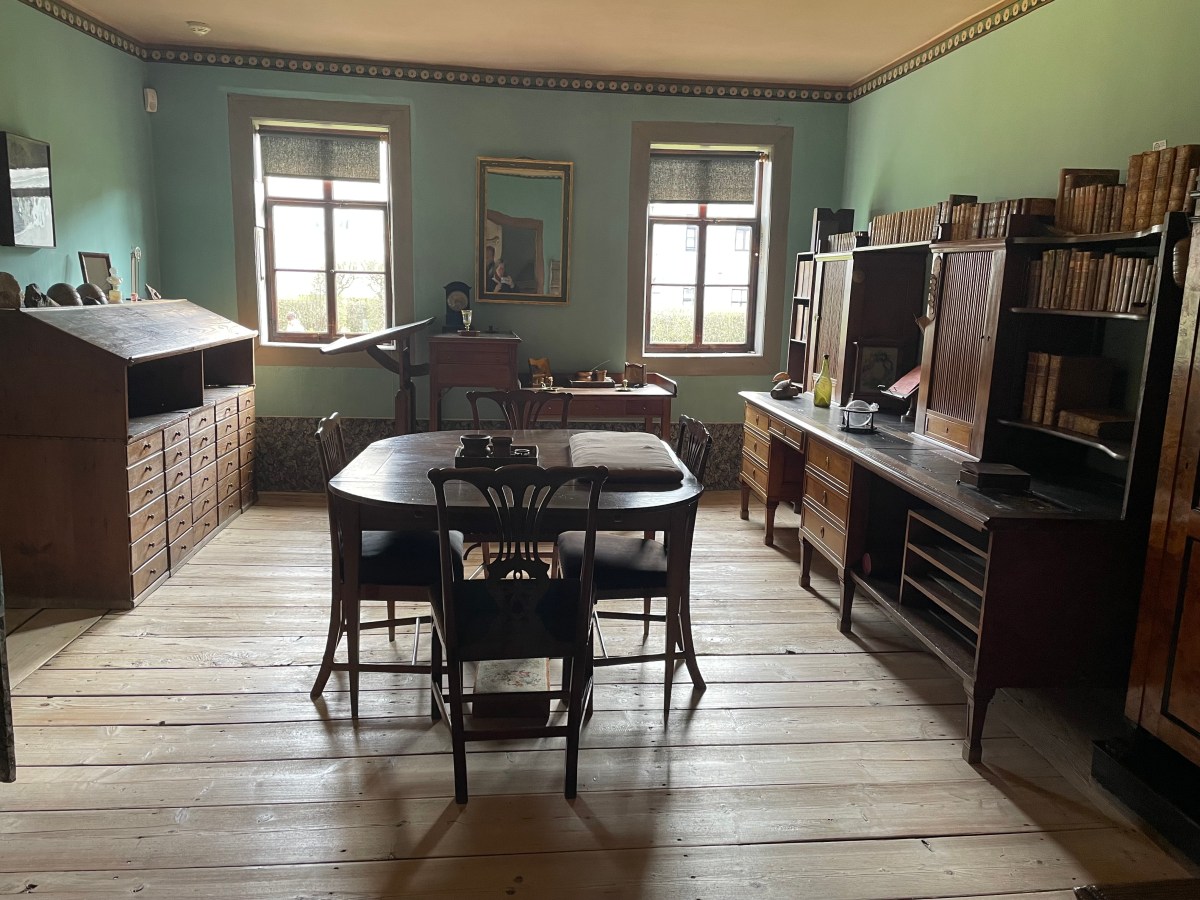
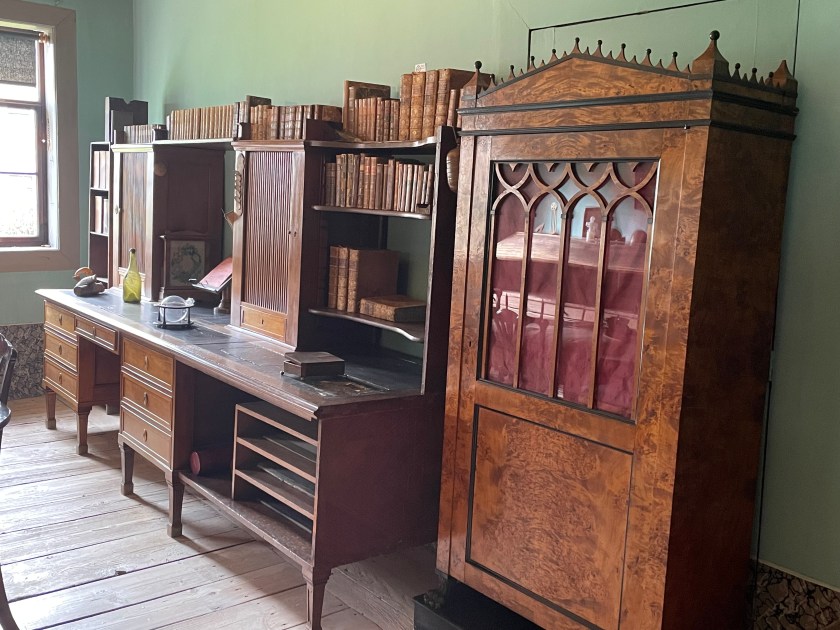
Goethe’s study is the most important room in the house. Here everything is virtually as Goethe left it on the 22nd of March 1832 when he breathed his last in the small bedroom next door. The walls are green – because according to his Theory of Colours, green brings “real satisfaction“ to the eye. It comes as no surprise then that green was Goethe’s choice of colour for the room in which he spent the majority of his time. Goethe’s most productive hours were in the morning. He would dictate, in his study, to his amanuensis John and others, often pacing round and round the large desk in the middle of the room for hours as he did so. It was here too, that he completed his great later works, among them the second part of Faust, the manuscript of which he kept along with other texts in the library cupboard case next to the desk.

Goethe chose simple, functional furniture for this and the adjoining rooms. This selfrestraint was deliberate: “Being surrounded by a roomful of comfortable, tasteful furniture prevents me from thinking and puts me in a passive state.“ Consequently, there are no pictures on the walls, only practical things, like a list of instructions to the gardener on the jamb of the left-hand window. The objects on the tall desk to the left are items Goethe used for his scientific investigations. In their midst is a white flacon with a bust of Napoleon as its stopper. Its opaline glass, reflecting the colours of the spectrum, was confirmation for Goethe of his Theory of colours. Before you leave this room, take a look at the cushion on the large desk. It was there for Goethe to rest his arm on when he read for a long period of time!
 

From the audio tour:

Servant´s Room and Bedrooom

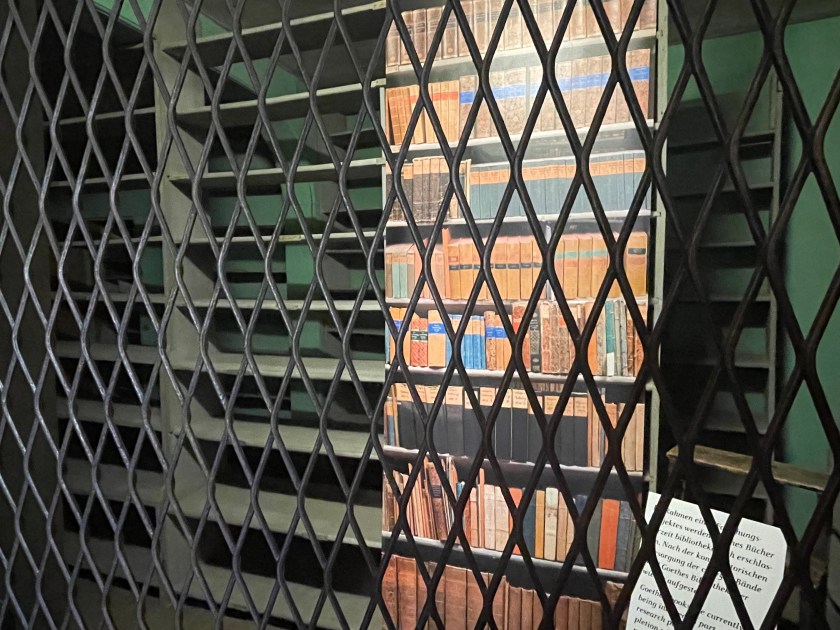
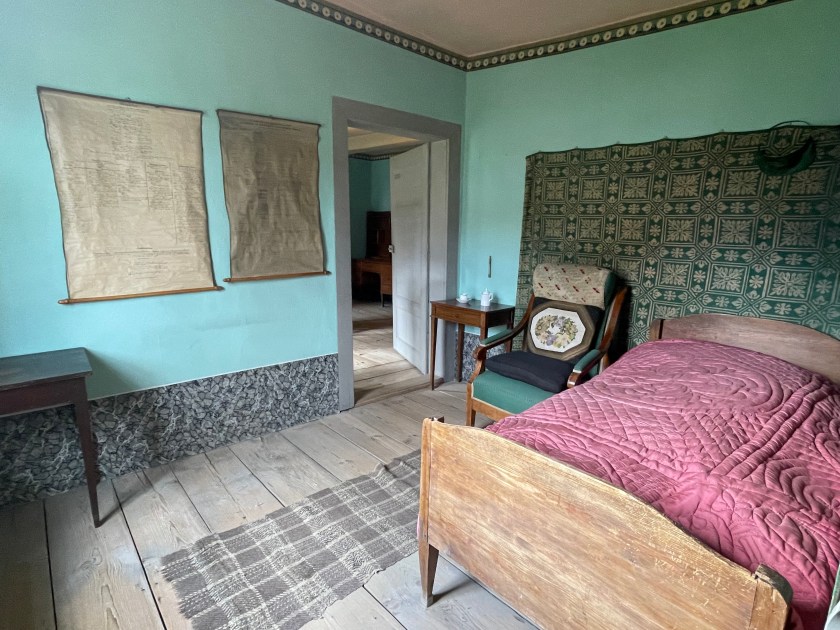
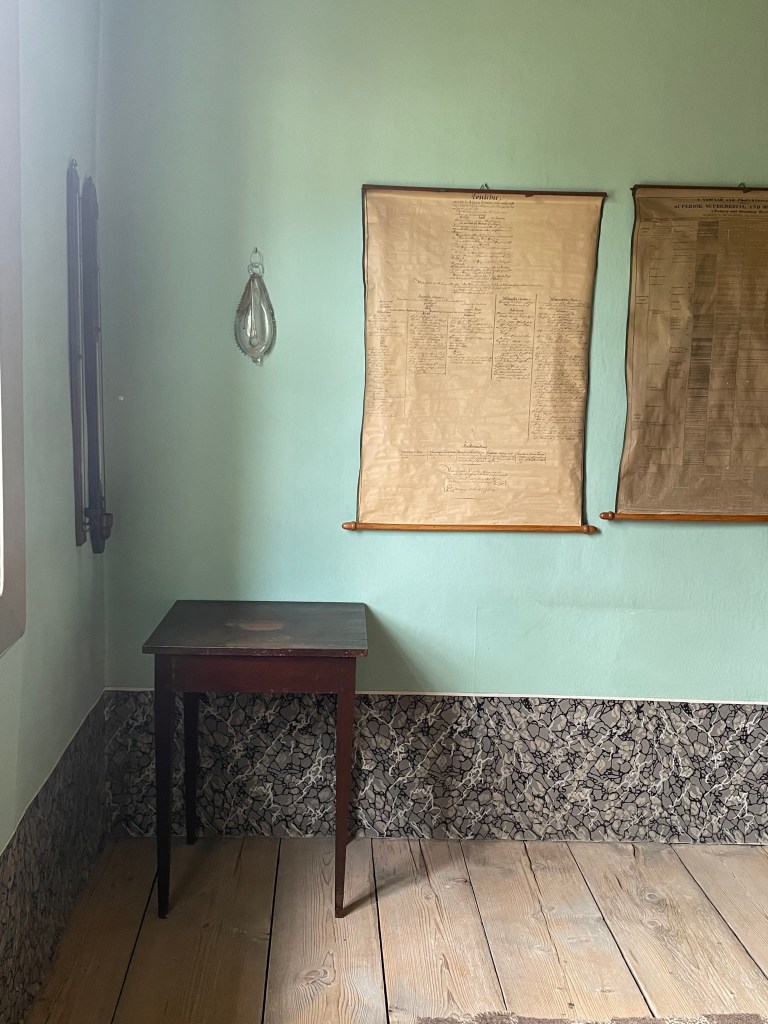
You’re now in what’s called the Servants’ Room. It originally housed Goethe’s reference library, and was later sometimes used by his servants as a bedroom. Since these servants also played the role of personal secretaries, they did their copying work in this room, as well as in his study. In his later years, Goethe used the small room next to this as a bedroom, being as it was conveniently close to his study. As there was no means of heating it, Goethe would sometimes be forced in the cold winter months to move to a warmer bedroom in the house. In this small chamber, he had a wall hanging of coarsely woven linen fixed around the bed to provide some protection from the cold emanating from the masonry. Above the bed hangs a green eyeshade, which he would have put on to soften the harsh light when he was reading. On rising early – in summer around 4 o’clock, in winter about 6 – Goethe would no doubt have often contemplated the two large charts hanging on the wall. He started using charts like these when he was boy, a useful tool to help him learn by heart. The examples here provide an overview of musical theory and geology.

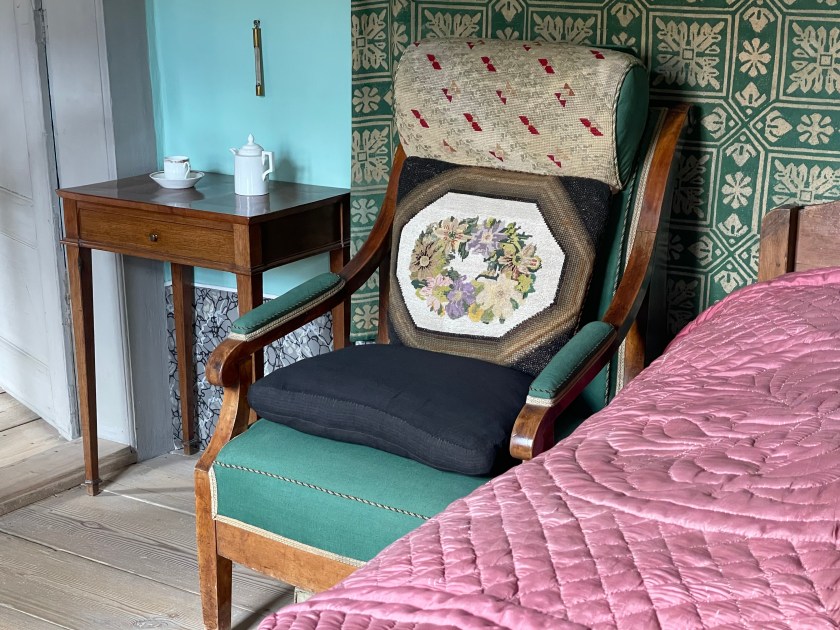
Goethe died in the armchair next to the bed on the 22nd of March 1832 at around midday. His daughter-in-law Ottilie was with him. The obituary notice that appeared the next day reported that he was: “In full possession of his intellectual powers and loving to his last breath.“ Some of the rooms in Goethe’s house were opened to the public within weeks of his death. With the founding of the Goethe National Museum in 1885, it became Germany’s foremost poet’s memorial. You can find out more about the writer and the major themes of his life in the adjoining building. If the weather is fine, you may like to take a look around the garden first.
Garden

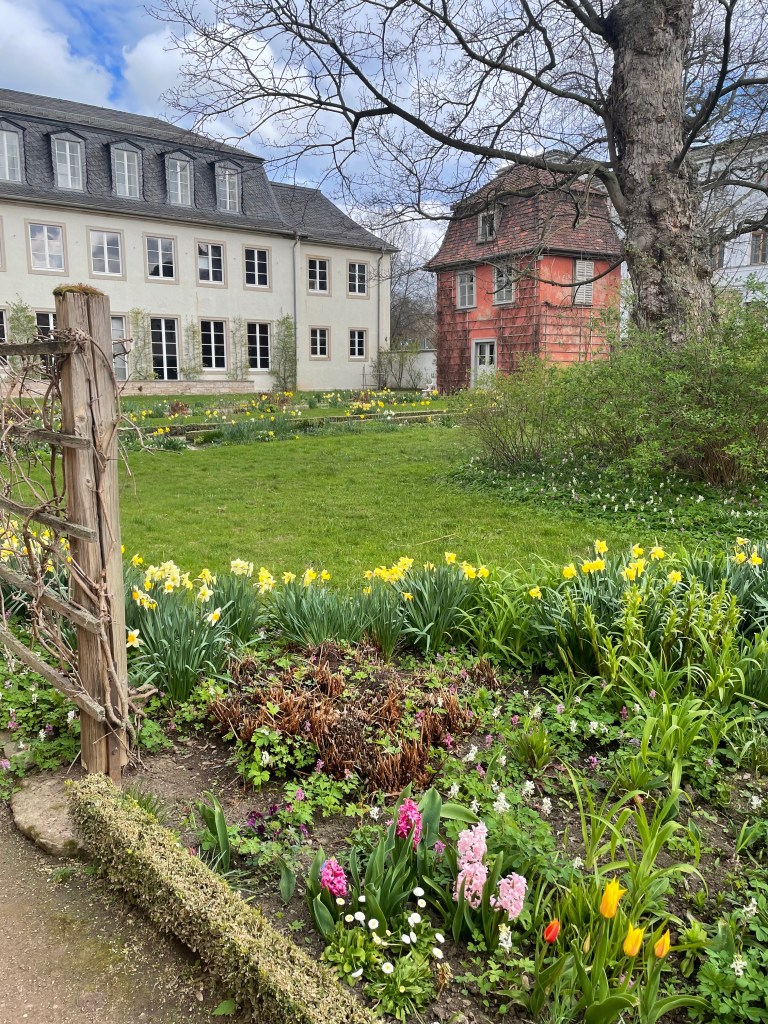
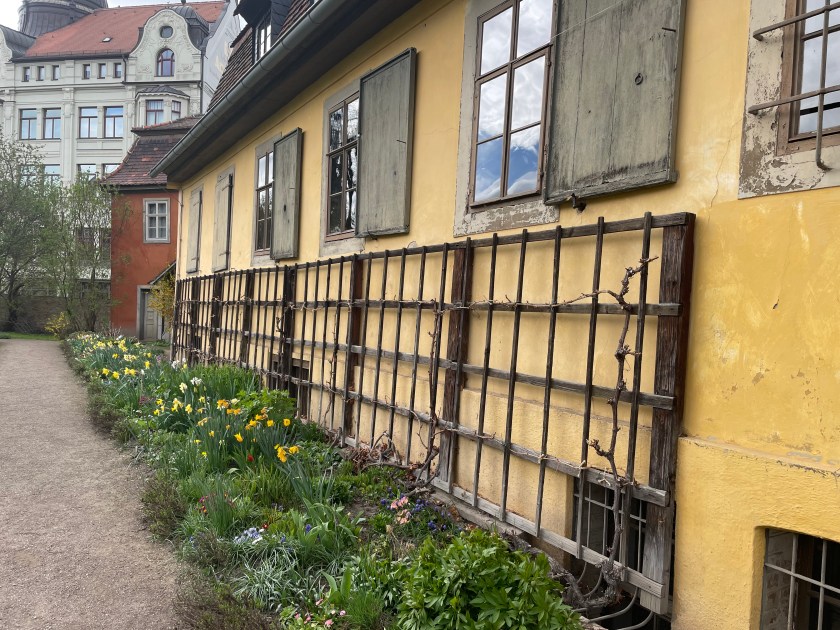
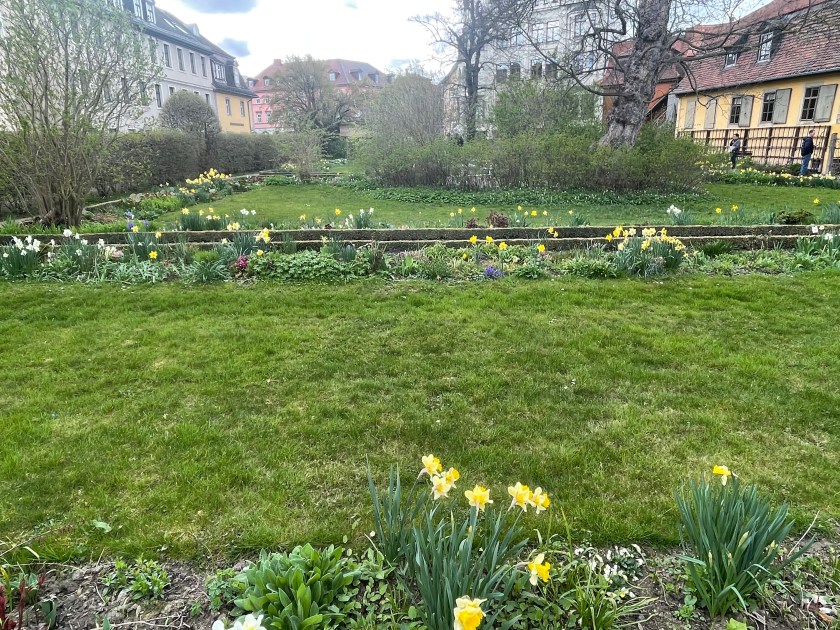
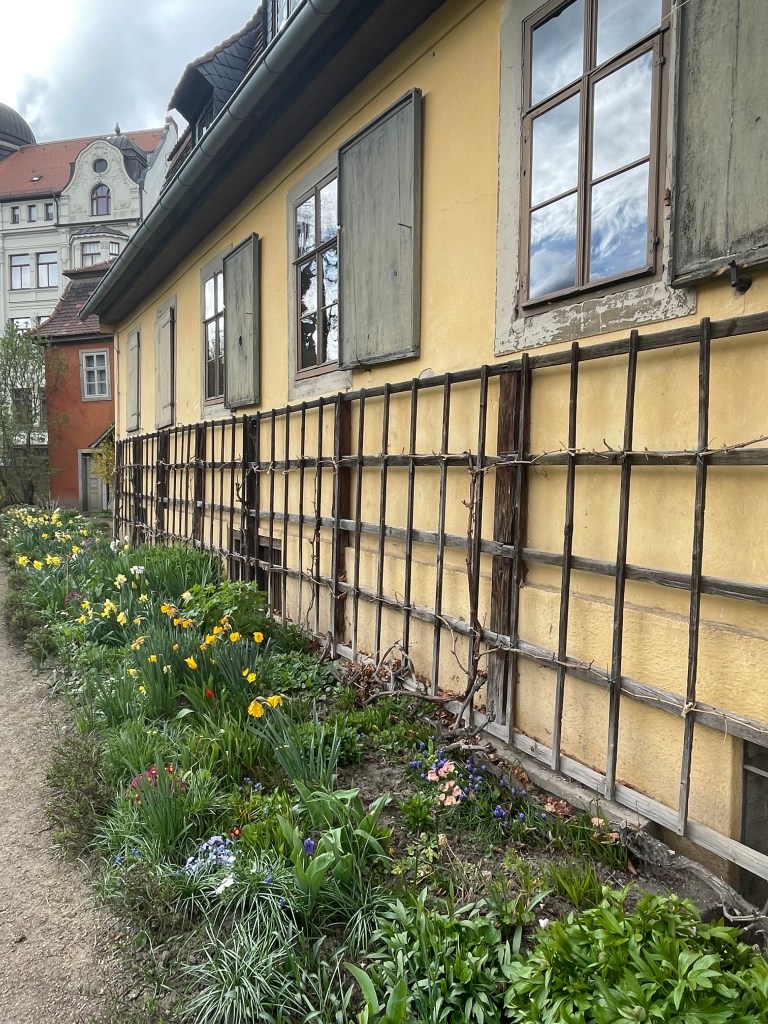
A walk around the garden is an attractive prospect if the weather is fine. Today we reach it via the steps in the inner courtyard. Goethe and his guests would usually have gone through the Bridge Room and then down the wooden outside staircase. Goethe laid out his garden as a cottage garden, as was the fashion in Europe around 1800. It’s divided into five largish sections, edged with flowerbeds and box hedges. In Goethe’s day, the area inside, which is now lawn, would have been planted with vegetables. There would have been potatoes and cauliflowers, even asparagus and artichokes. Goethe and Christiane also planted cherry trees, and grew apricots and grapes on trellises mounted against the south wall of the house.

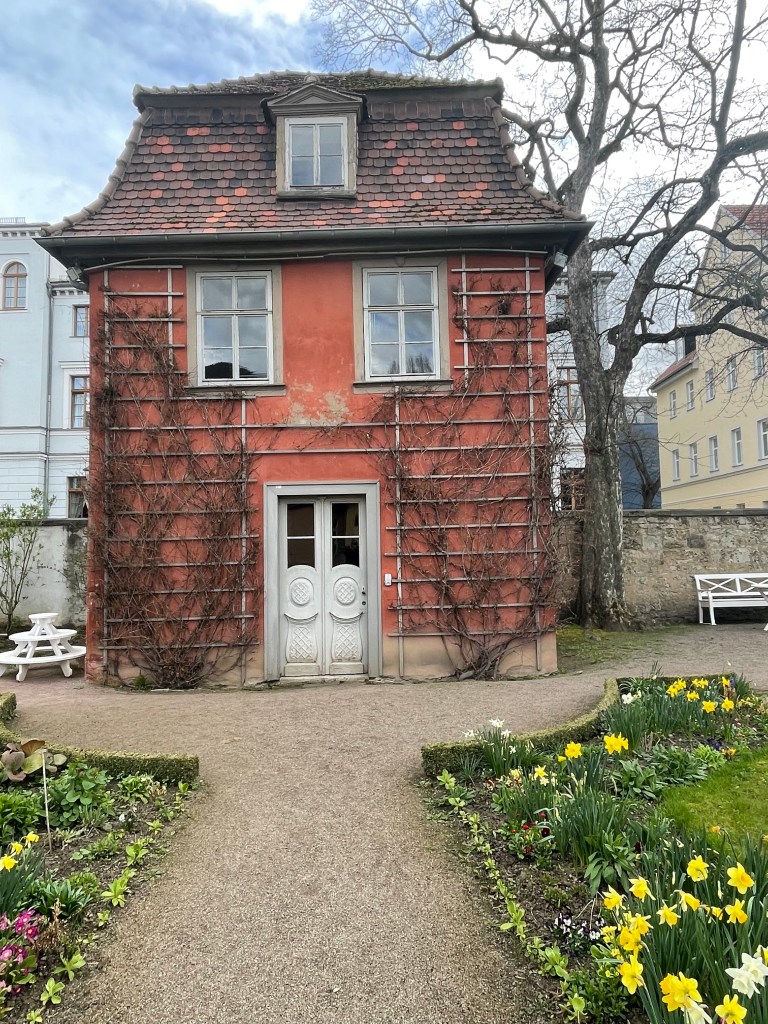
Goethe also used the garden for his botanical experiments. With the help of show beds, he would observe the development of the natural plant families, so broadening his understanding of their botanical classification. And these observations also inspired his poetry: “Wonderment fresh dost thou feel, as soon as the stem rears the flower Over the scaffolding frail of the alternating leaves. But this glory is only the new creation’s foreteller, Yes, the leaf with its hues feeleth the hand all divine, And on a sudden contracteth itself“ In the red stone gazebo at the edge of the garden, Goethe kept his natural science collection, some of which you’ve seen in the anteroom to his study. But above all, Goethe and Christiane loved to relax together in their garden. Christiane wrote to Goethe in 1793: “I do hope you will return while the days are still fine, so that we can maybe sit around a bit just enjoying the garden. I so much look forward to that.”

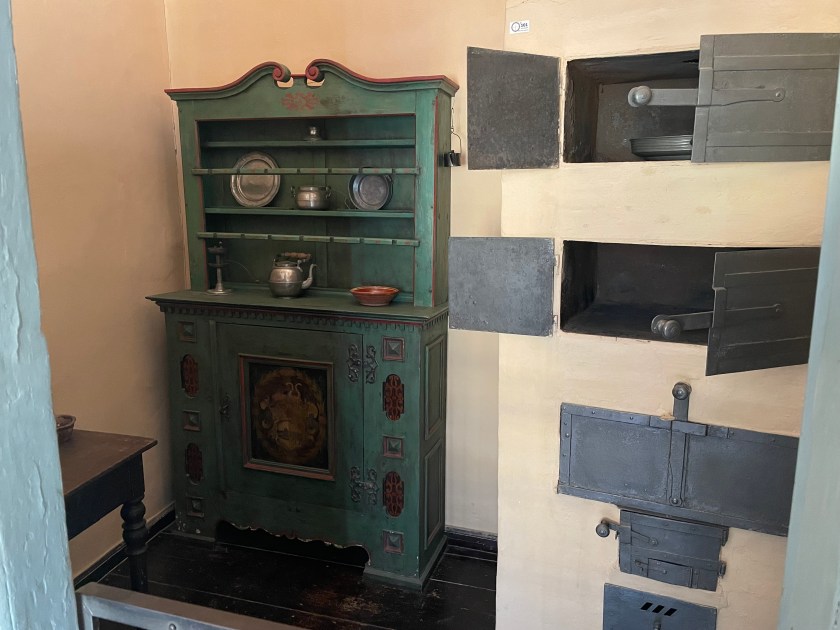
This is the inner courtyard of the home.  Visiting here reminded me of visiting Thomas Jefferson’s Monticello in Virginia.  Every little detail was interesting for a reason.  Goethe lived a purpose-filled life.  He had a good mind, and he was an important part of this Weimar community.

Next we visited the home of Schiller, one of his dear friends.

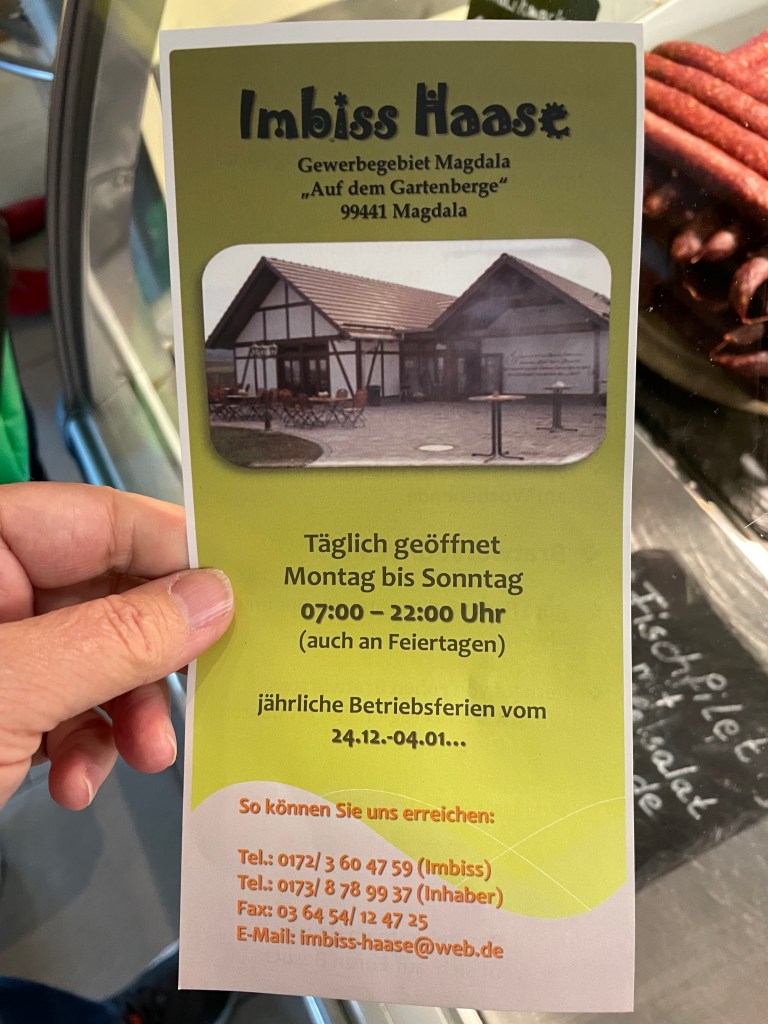
Brats at the Imbiss Haase

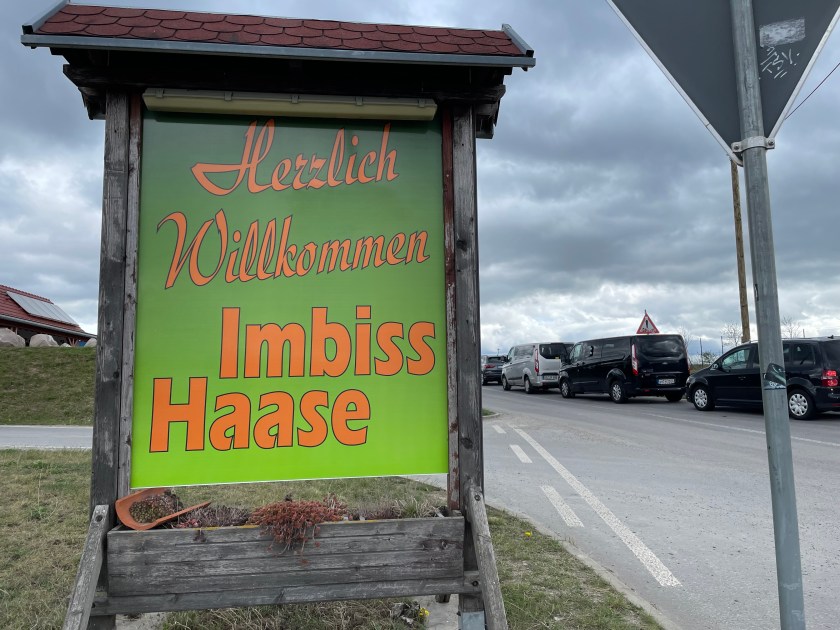
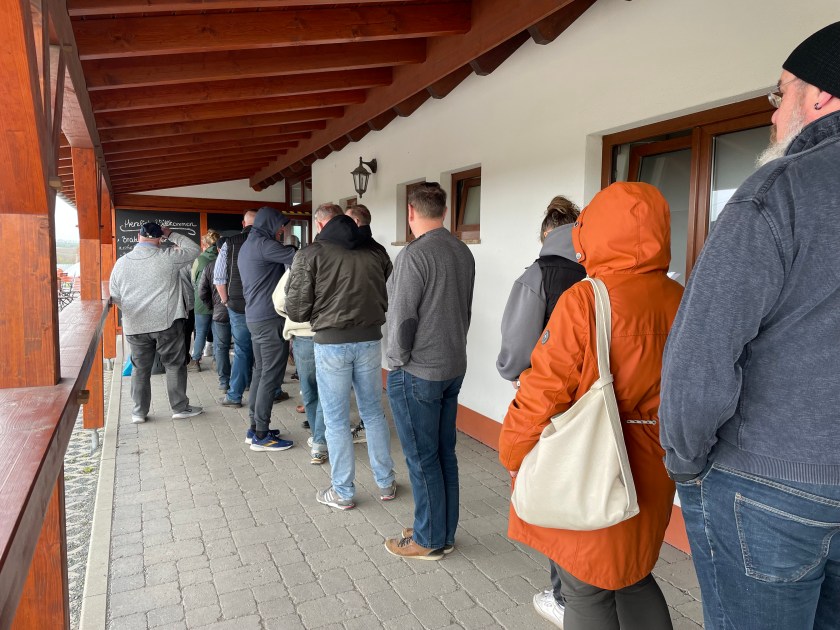
When traveling between Leipzig and Weimar, our next destination, locals will tell you about a must visit stop just off the highway where they claim the best Brats in Germany are served.  We decided to give it a try on this cold and blustery day.

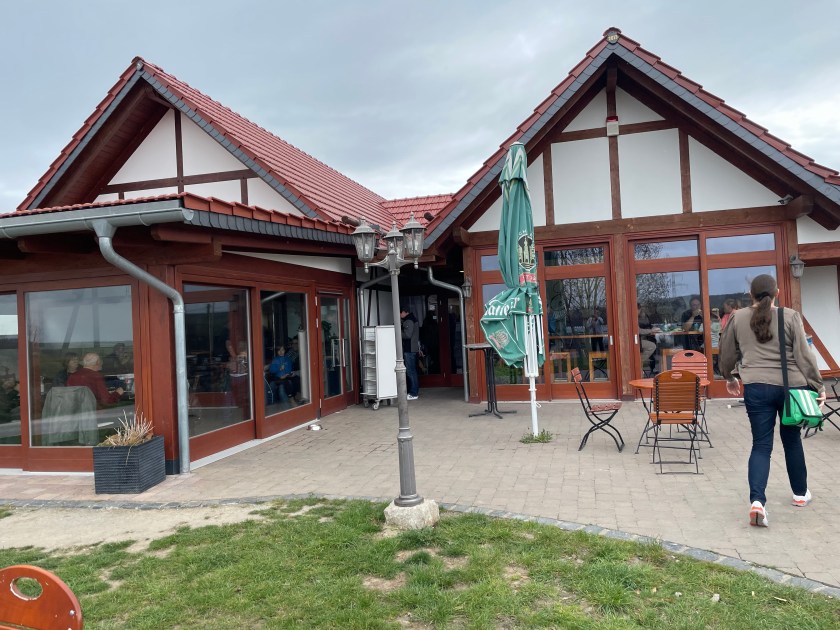
When we found this Imbiss Haase restaurant, it looked like a truck stop.  There were at least 100 cars parked and in the drive through line.  We found a place to park by a field and made our way to this quick serve restaurant.  We ended up waiting in a 45 min line outside.  Eventually we went through the doors and into a small serving area with a few tables.
From what we’ve been told, this place makes their own Brats (of all kinds) onsite.  They are sold for a great price, but you have to wait in line, and everyone was just fine with that.
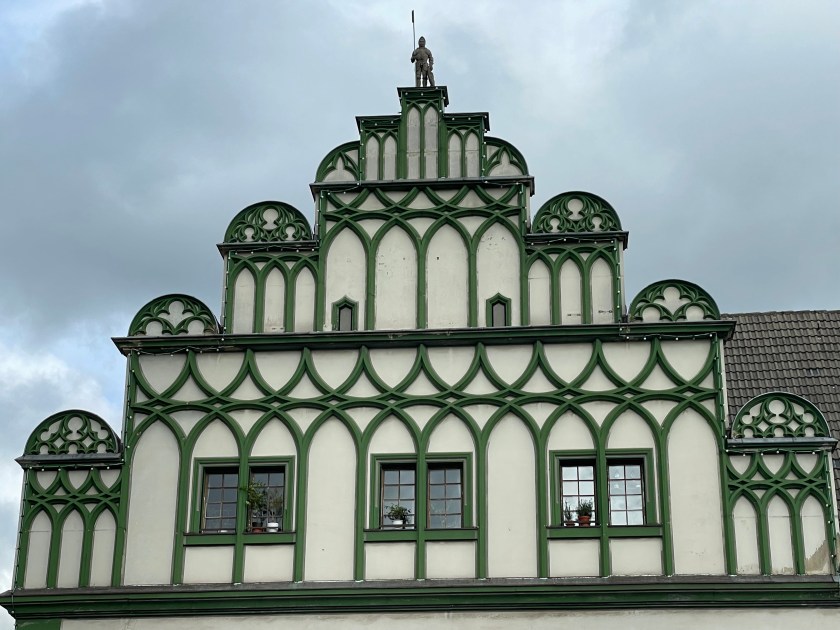
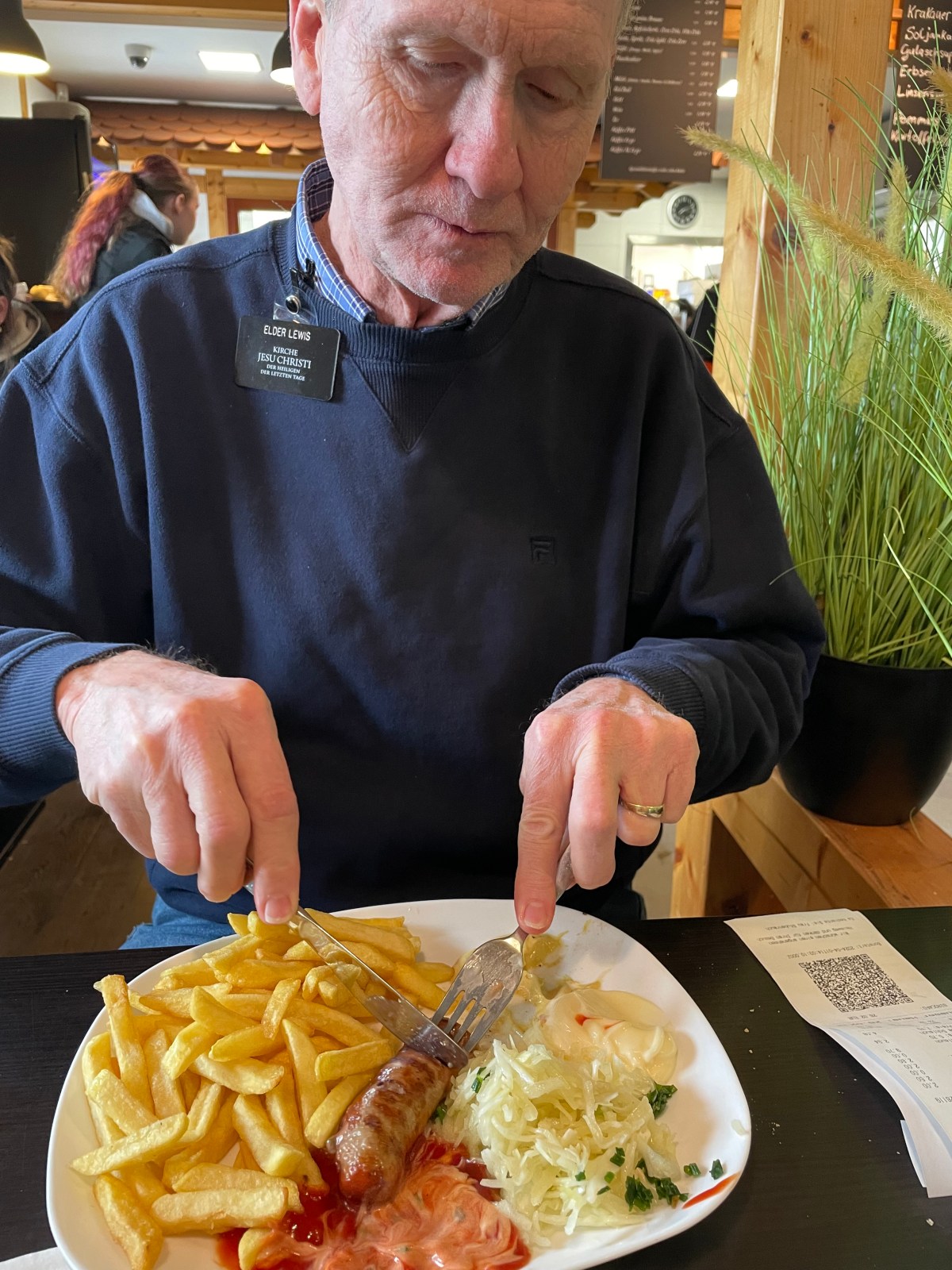
Finally inside, you can decide what sort of Brat you want.  A Brat in a bun was under 2 Euro.  An uncooked Brat was under 1 Euro.  After such a long wait, we decided to get a dozen to take home.

You could get your Brat in a meal, or in a bun to go.  We found the last available seat and enjoyed a really good quick meal.

It was worth the experience and it was fun to be with so many other people, anticipating a delicious Brat.

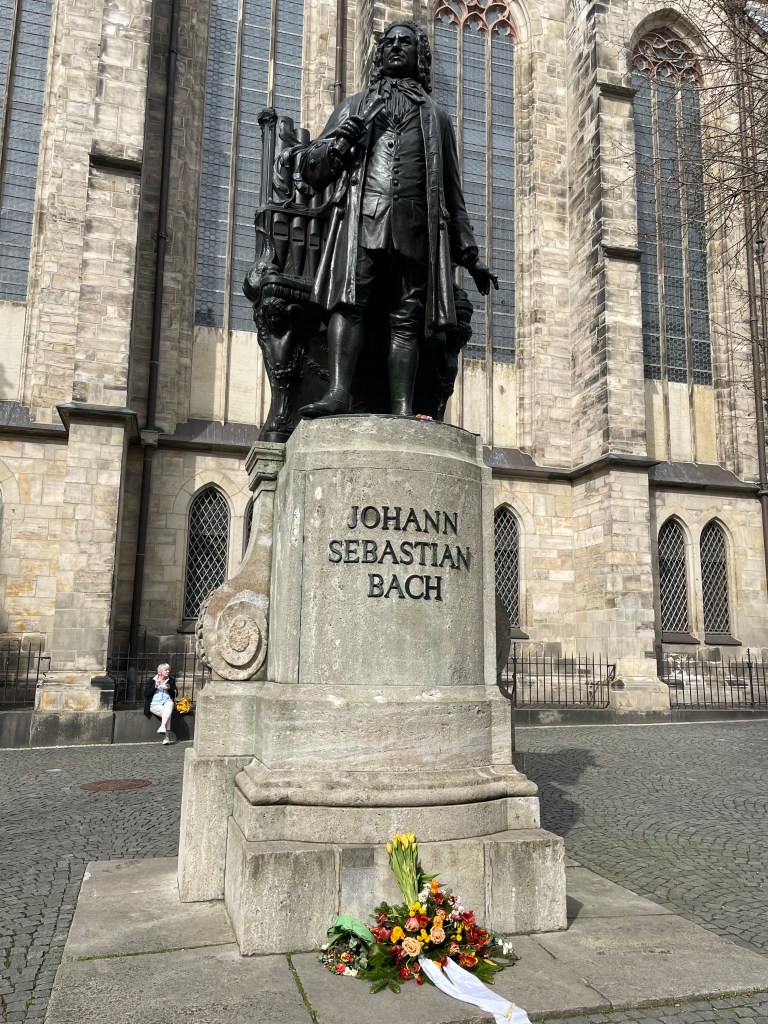
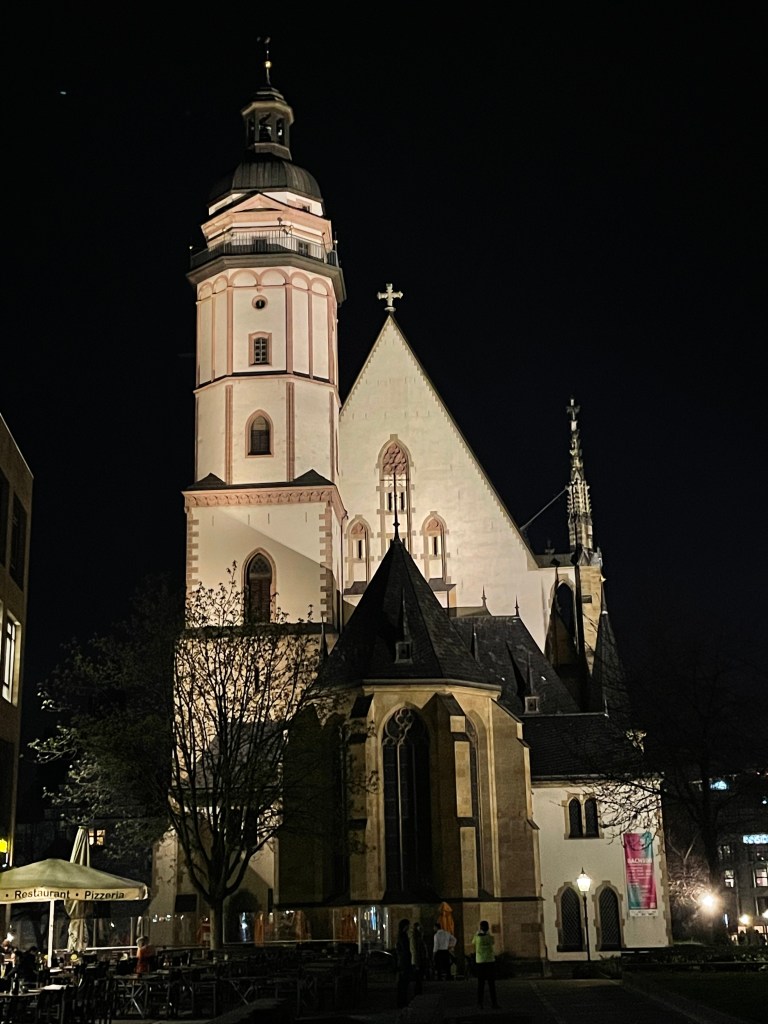
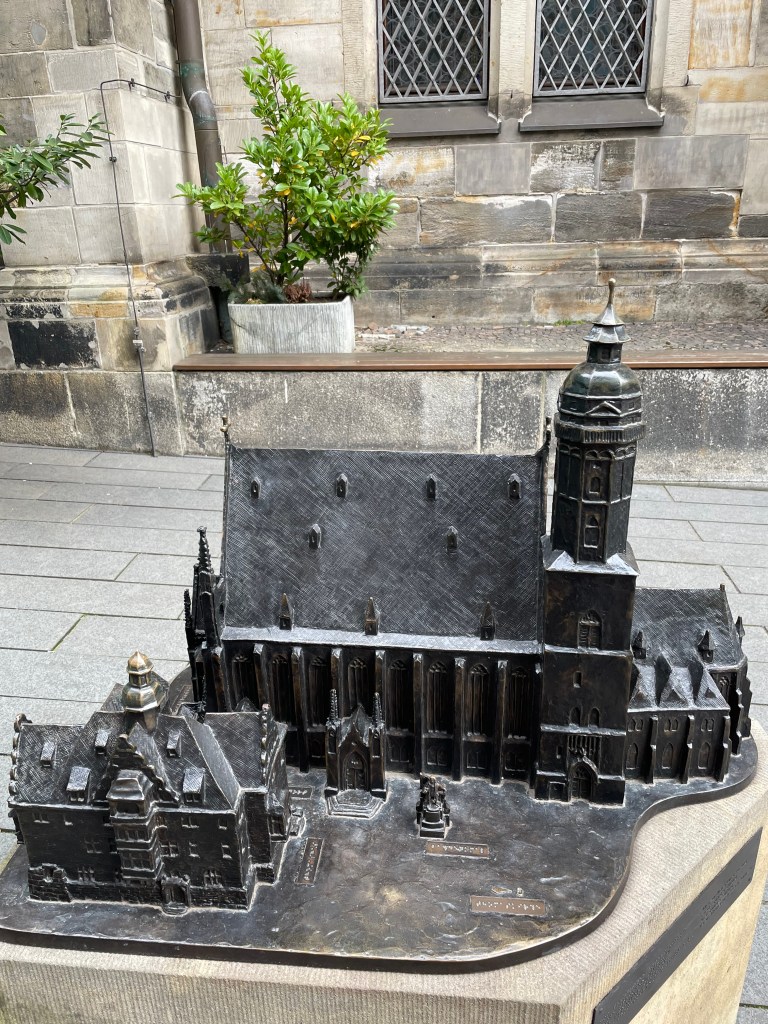
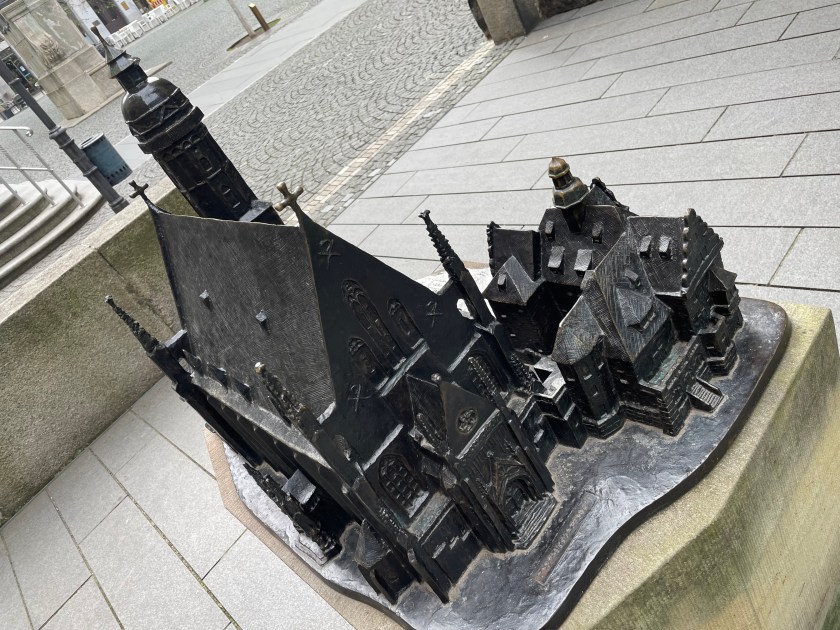
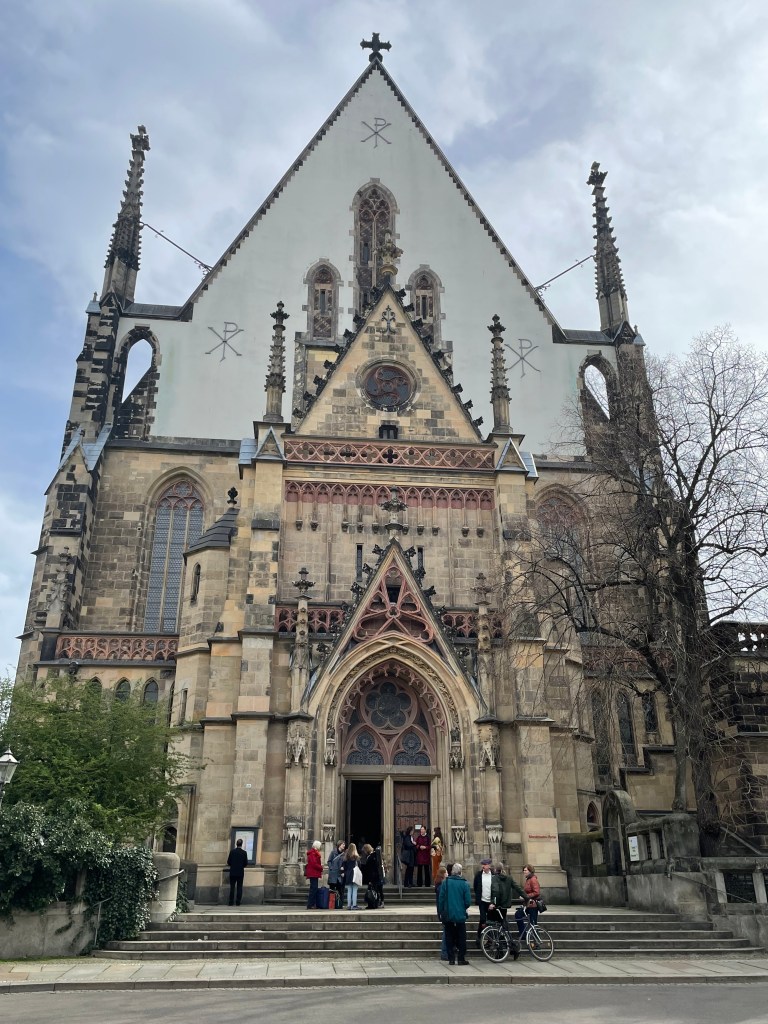
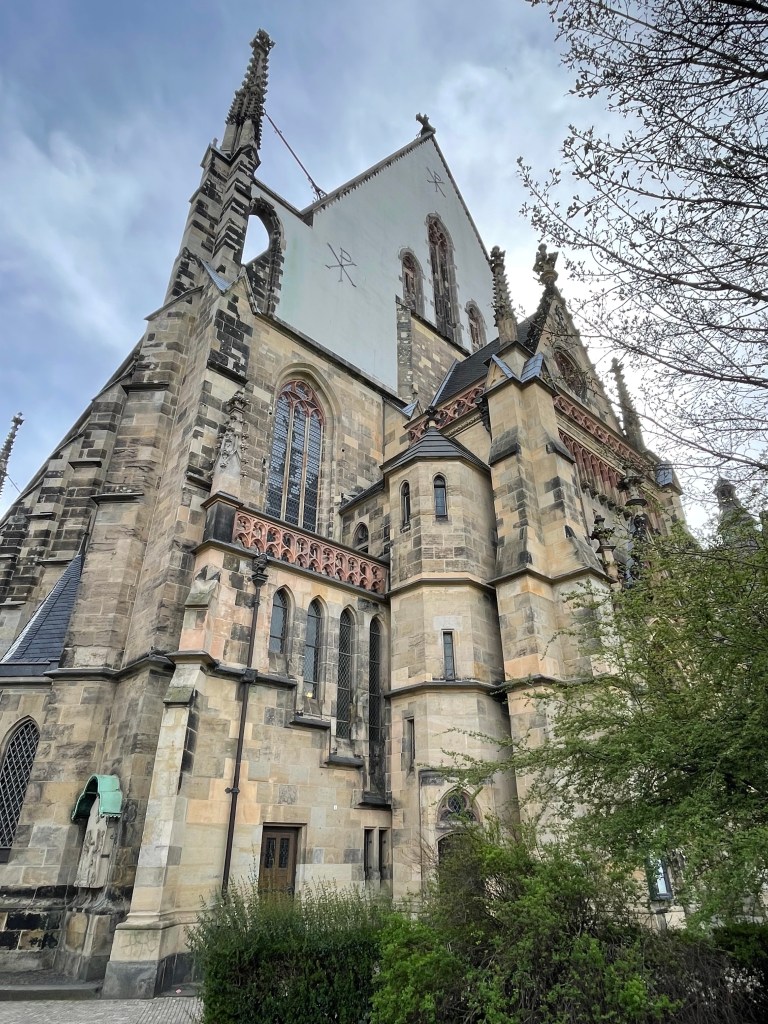
The St. Thomaskirche in Leipzig, where Bach worshipped and performed

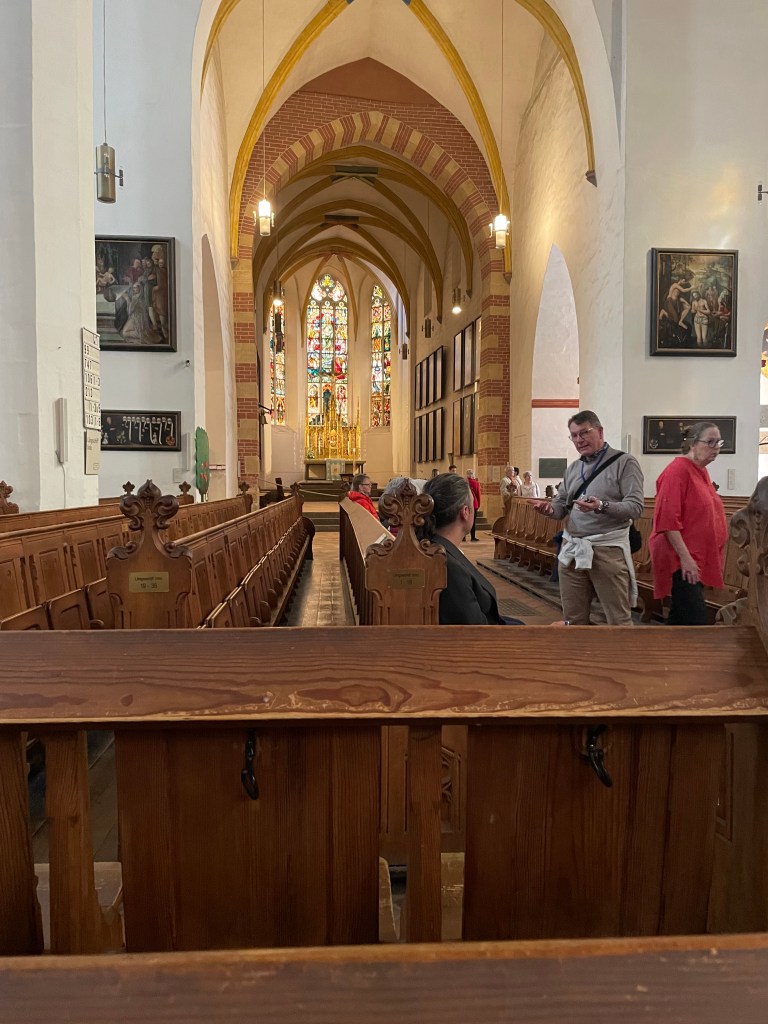
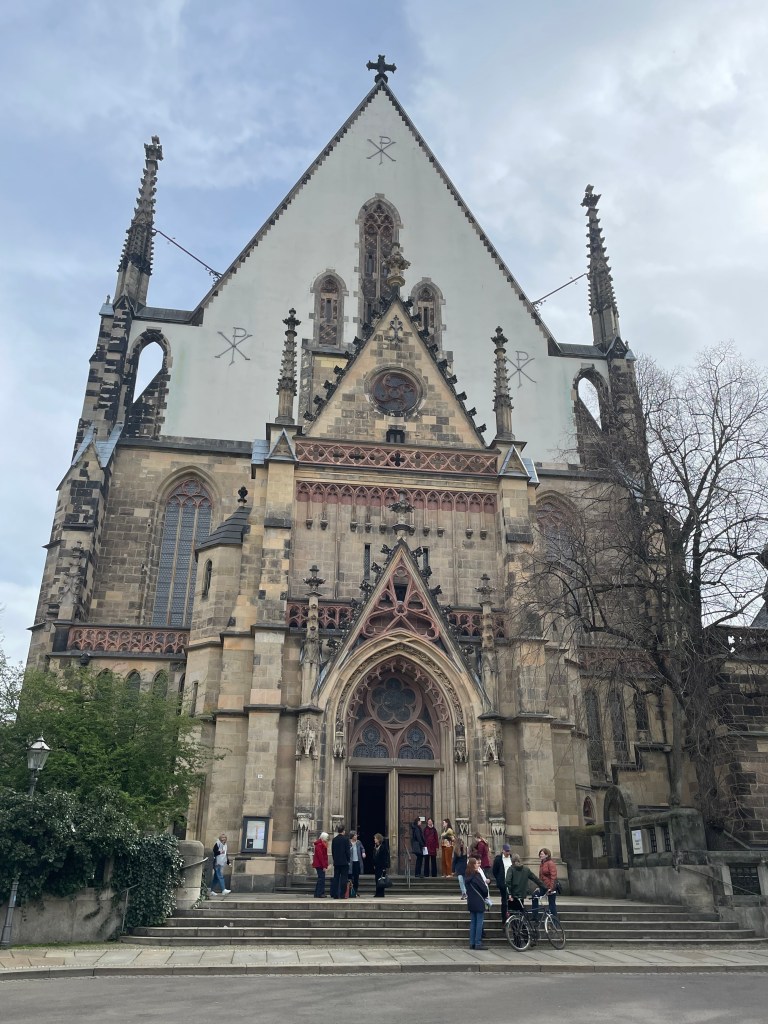
Johann Sebastian Bach and his family attended the St. Thomas Kirche here in Leipzig.  All of his children were baptized there.  Richard Wagner was also baptized here.  Mozart visited and played here.  It’s a beautiful church with good feels, the highlight of our visit to Leipzig.
Bach and his family lived  in Leipzig for many years, until his death in 1750 at age 65. He was going blind and had cataract surgery on both eyes (in March and then in April), leaving him blind. The British doctor was a “charlatan” and it’s believed he blinded hundreds of people. Bach died from complications of the surgery that led to a stroke in July. His last words were, “”Don’t cry for me, for I go where music is born.” His last work was dictated note by note from his bed.
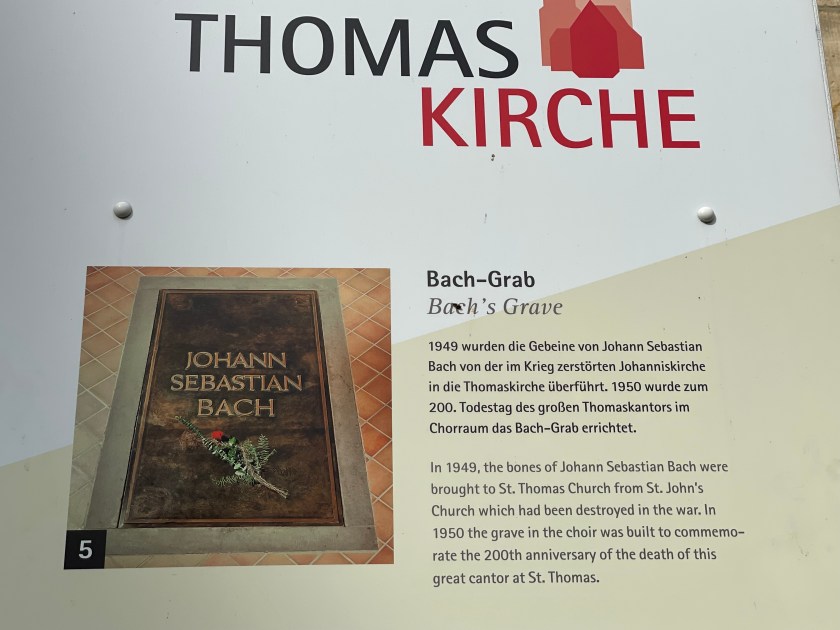
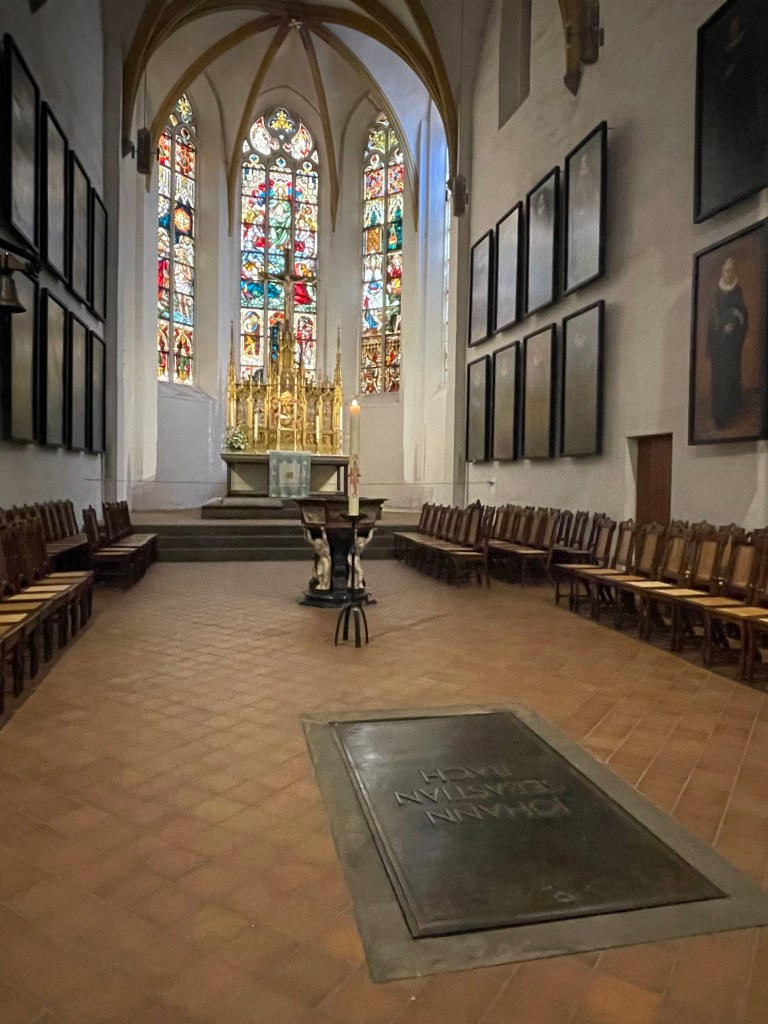
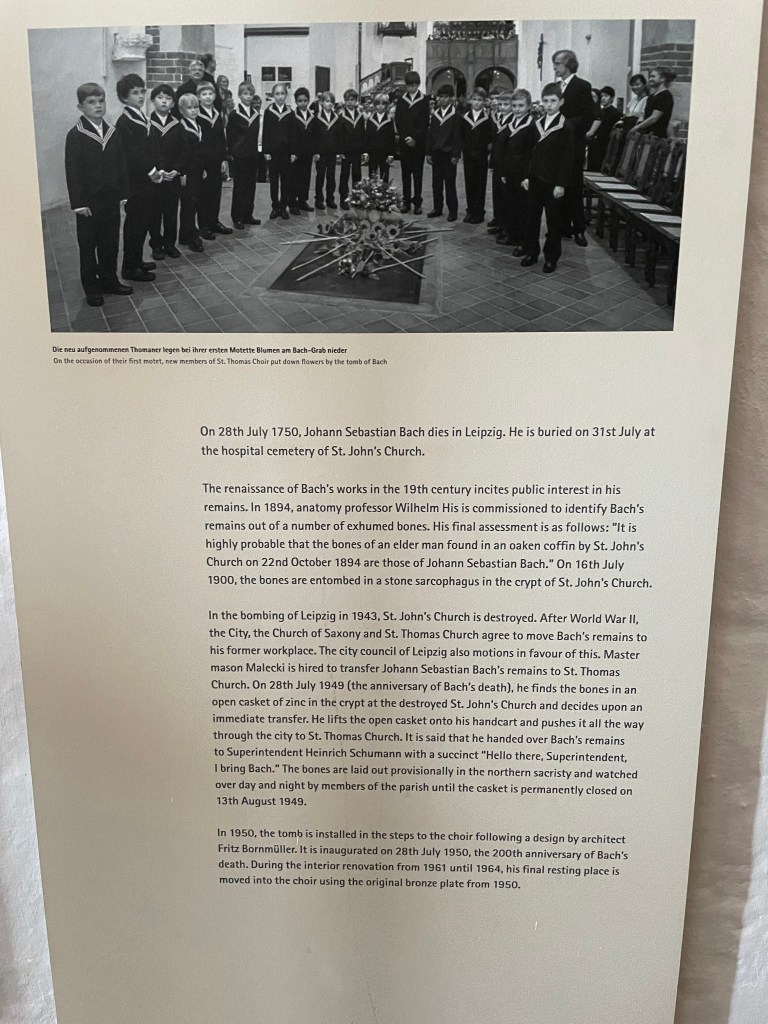
Bach died at the Johann Hospital and was buried at the St. Nikolai church. When it burned down some years later, they identified and took Bach’s bones in a wagon/wheelbarrow to the St. Thomas Kirche to be buried there. Now they’re in a crypt inside the St Thomas church (under the floor in the choir section. Bach and his family attended church here.
Tomb of Johann Sebastian Bach
The remains of Johann Sebastian Bach have been buried in the Thomaskirche since 1950. After his death on 28 July 1750, Bach was laid to rest in the hospital cemetery of the Johanniskirche in Leipzig. With the start of the Bach renaissance in the 19th century, the public started to become interested in his remains and their whereabouts. In 1894, the anatomy professor Wilhelm His was commissioned to identify the composer’s remains amongst disinterred bones from the cemetery where Bach had been buried. He concluded that “the assumption that the bones of an elderly man, which had been found in an oak coffin near the Johanneskirche, were the remains of Johann Sebastian Bach” (translated from German) was very likely. On 16 July 1900 the bones were placed into a stone sarcophagus underneath the Johanniskirche.
During the bombardment of Leipzig on 4 December 1943 the Johanniskirche burned down. The bones from Bach and Christian Fürchtegott Gellert were found without damages in 1949 in the crypt of the ruin. The bone from Bach was transferred to the Thomaskirche. The new grave with a bronze cover (sponsored by the Leipzig cultural officer of the Soviet Army) was inaugurated on 28 July 1950, 200 years after the death of the composer, who is now buried in the sanctuary of the Thomaskirche.
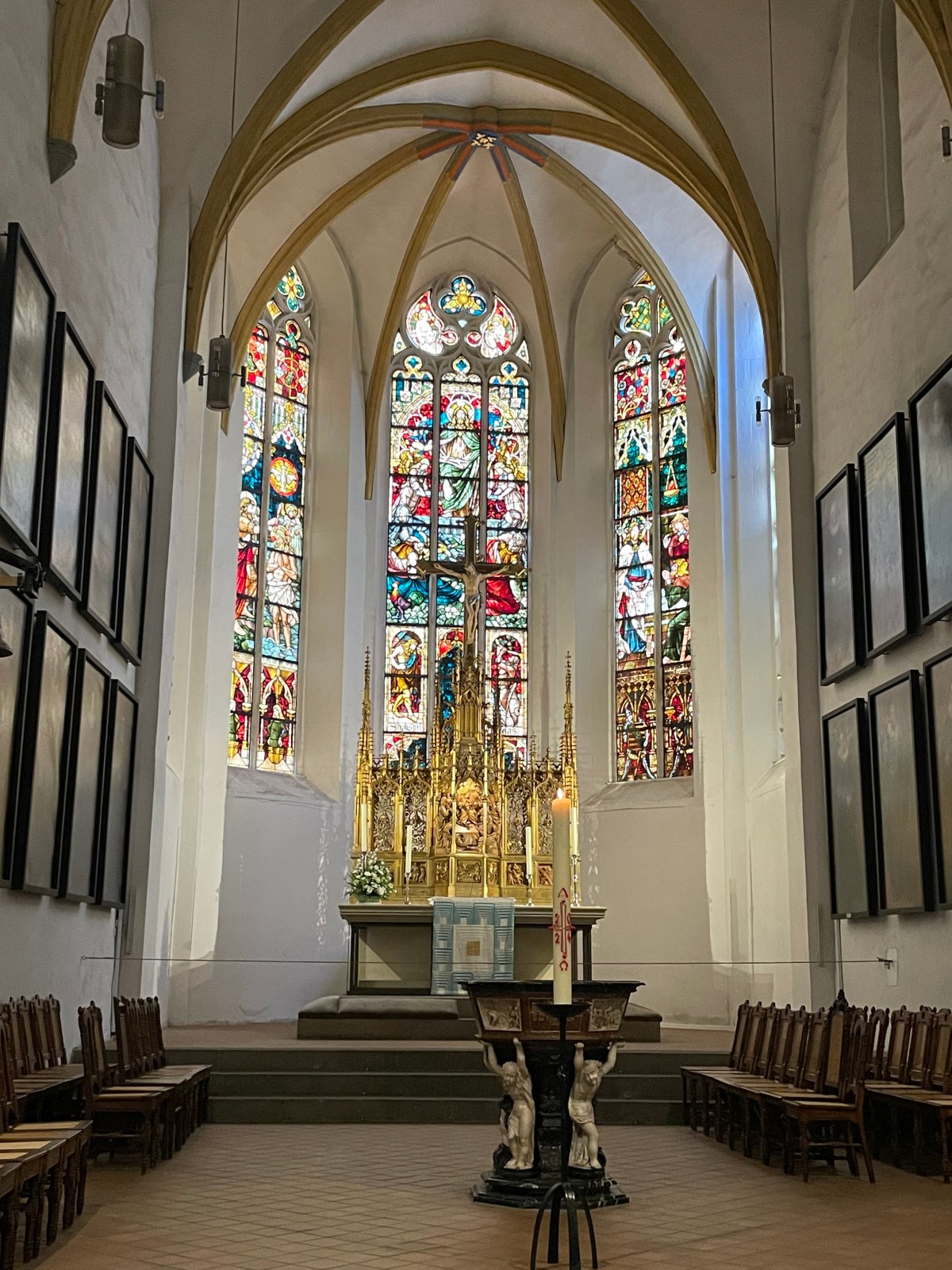
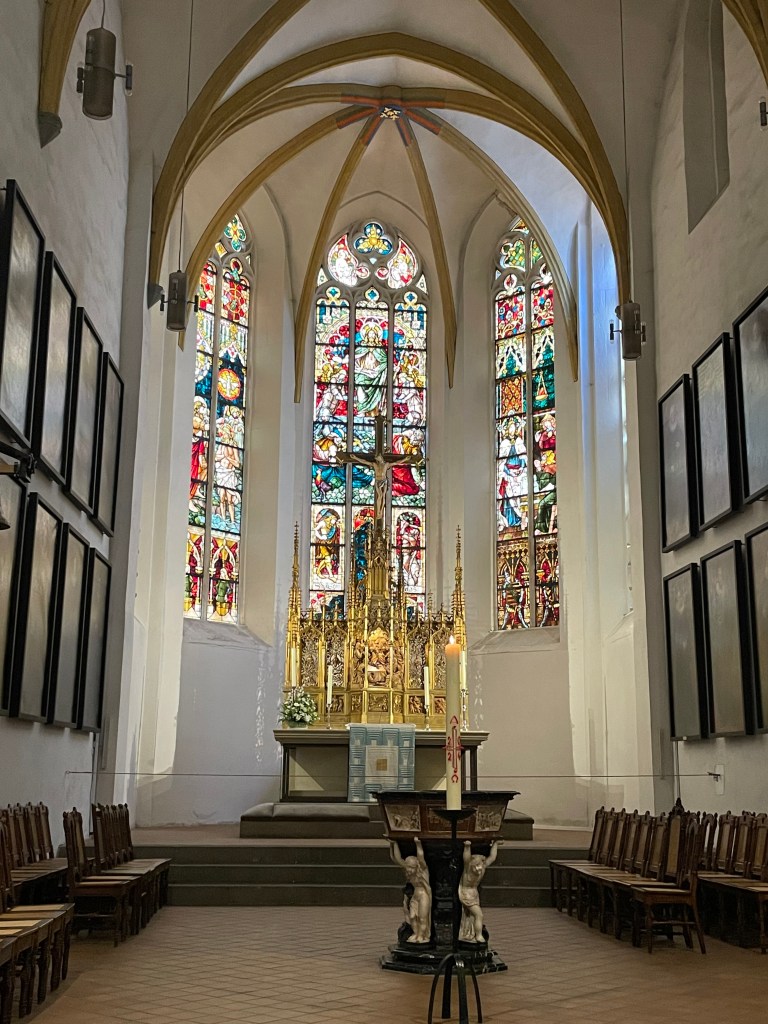
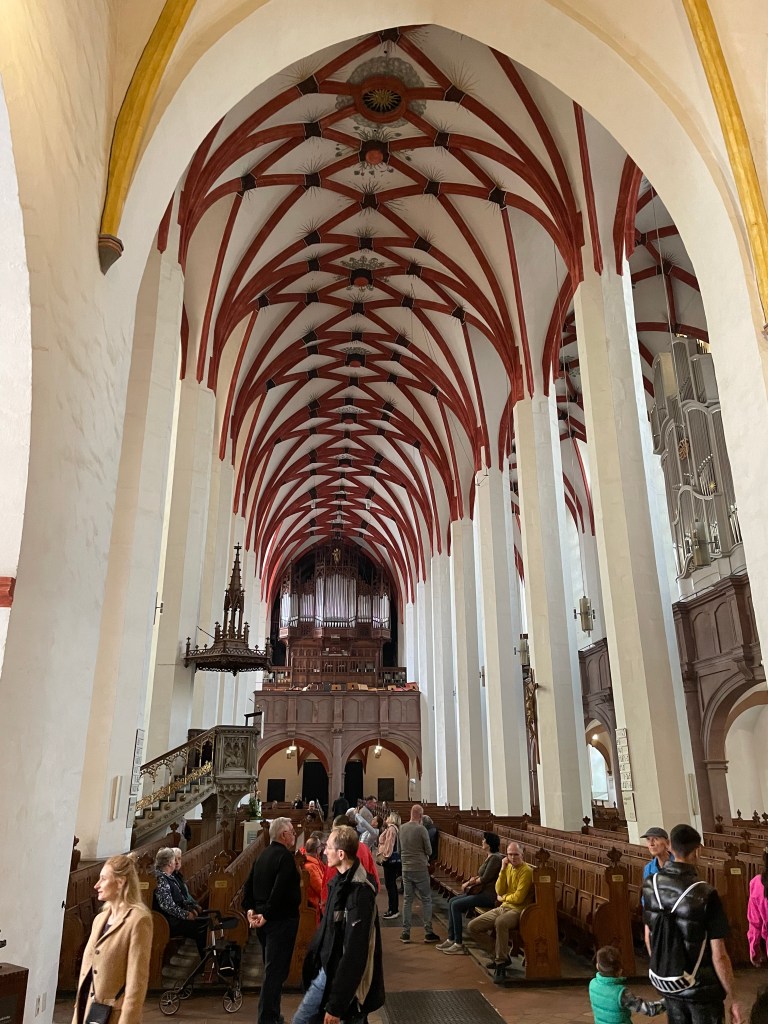
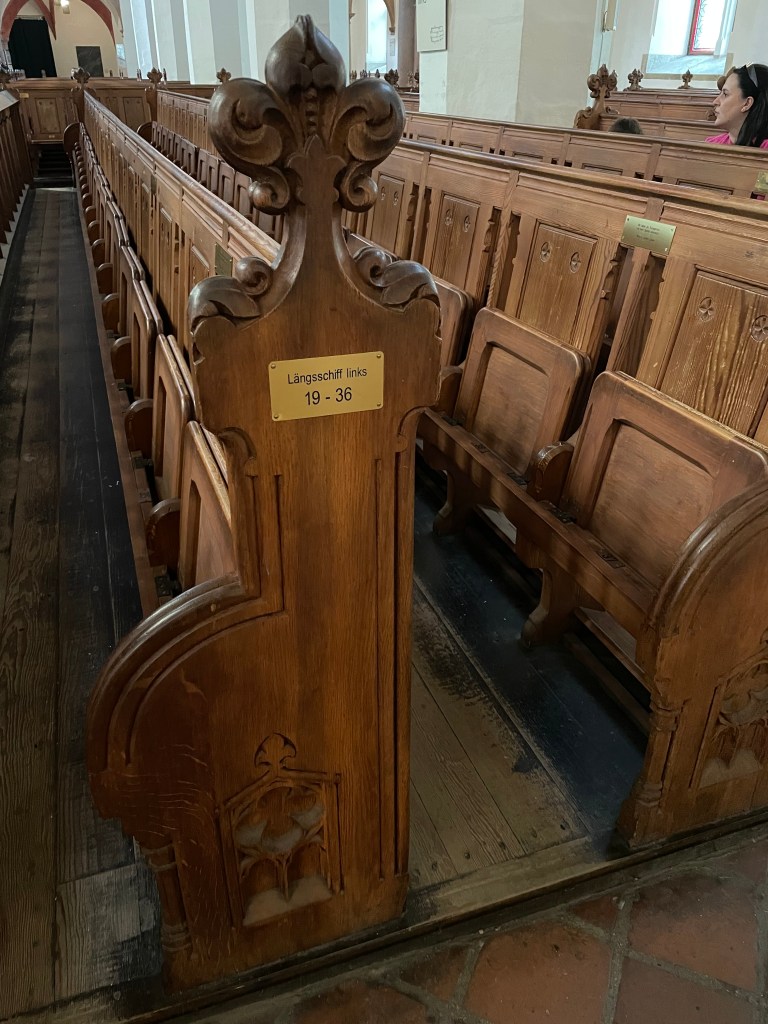
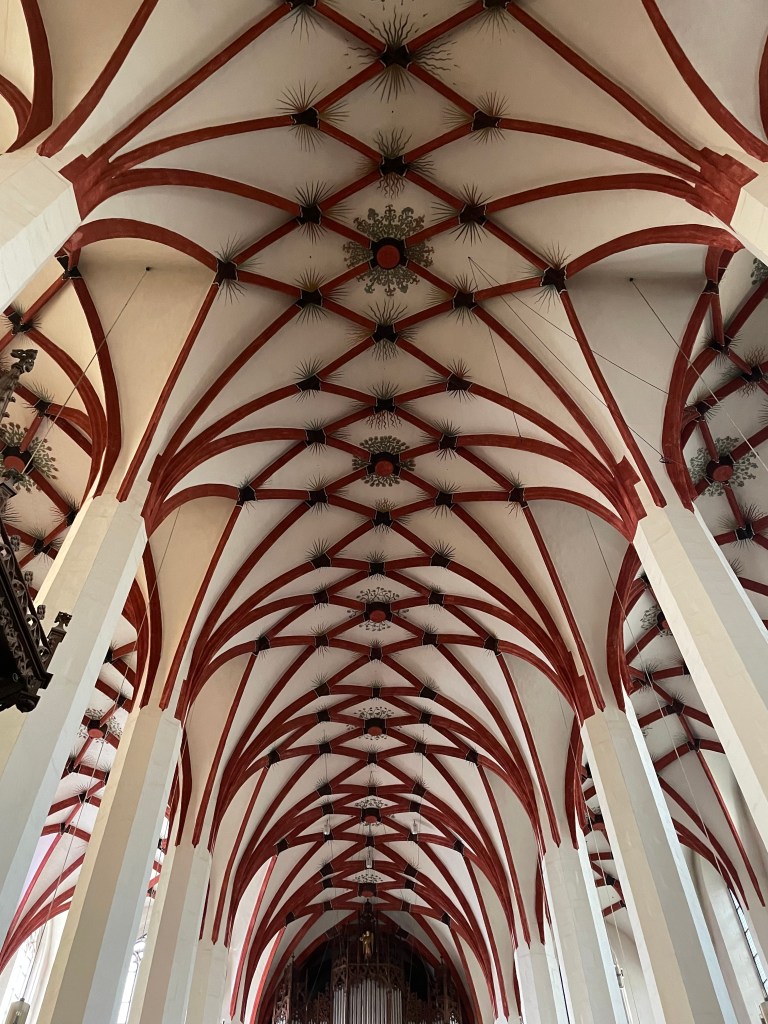
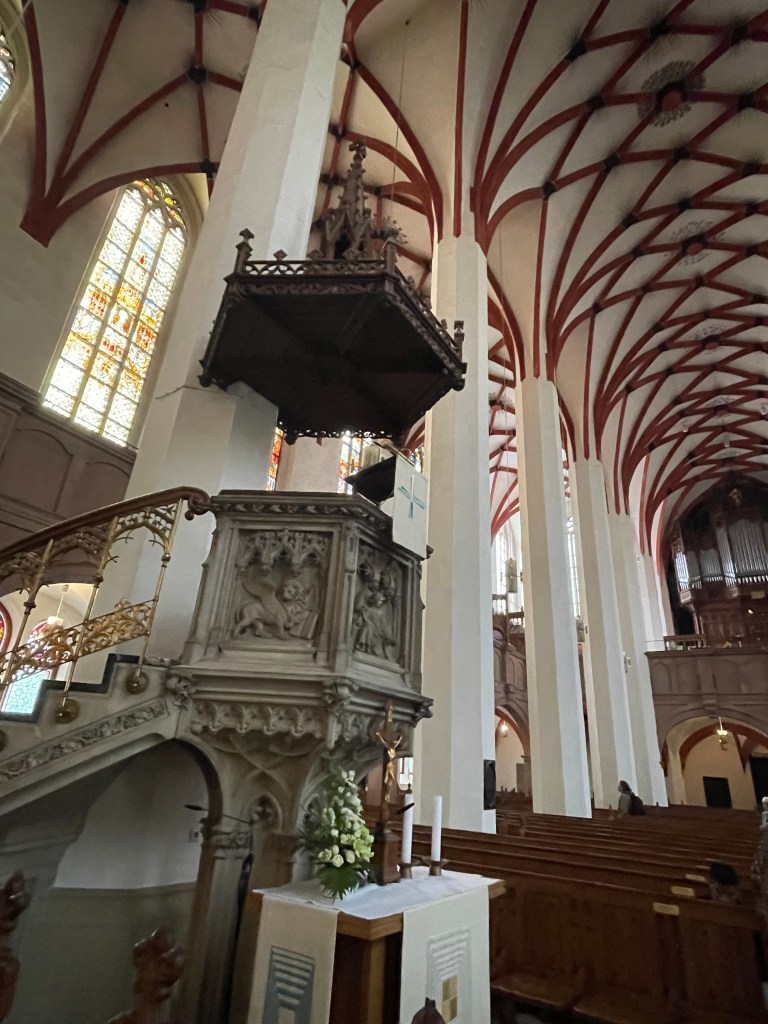
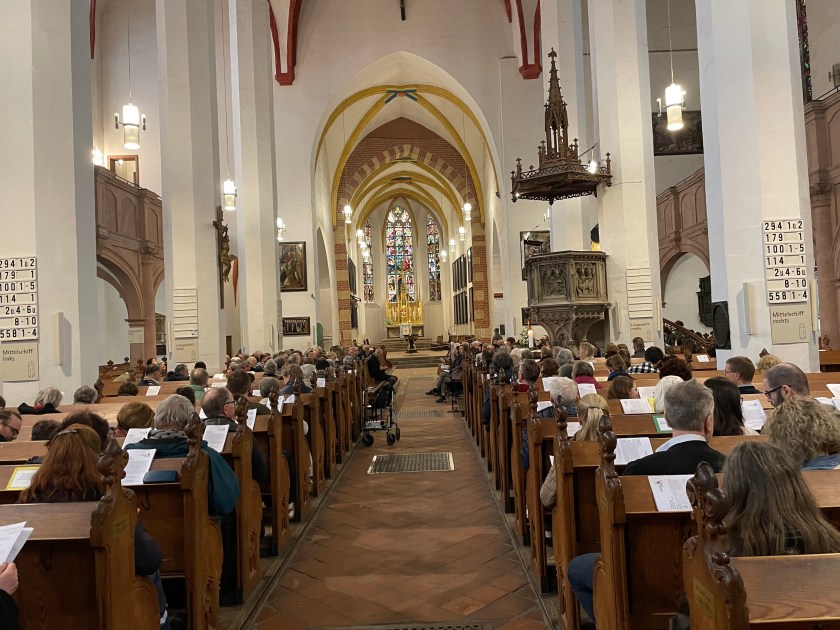
On one end of the church is the choir nave behind the altar where the choir sat.  Above was a beautiful stained glass window.  The pulpit is the fancy stand the preacher climbs up into, usually part way back in the church (so people can hear him).  In St. Thomas, the pews on either side of the main aisle faced each other instead of facing forward.  I’ve never seen that before.  Then at the back, they faced forward.  The ceiling was light with red criss-crossing ribbing in the gothic ceiling.  It was simply beautiful.

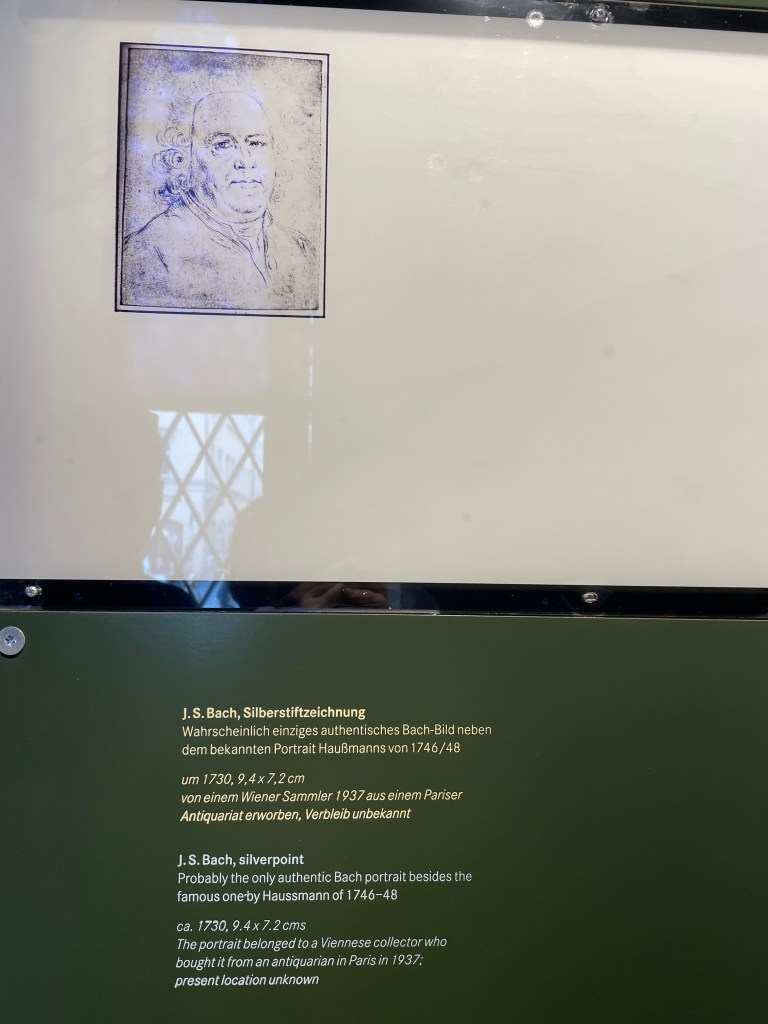
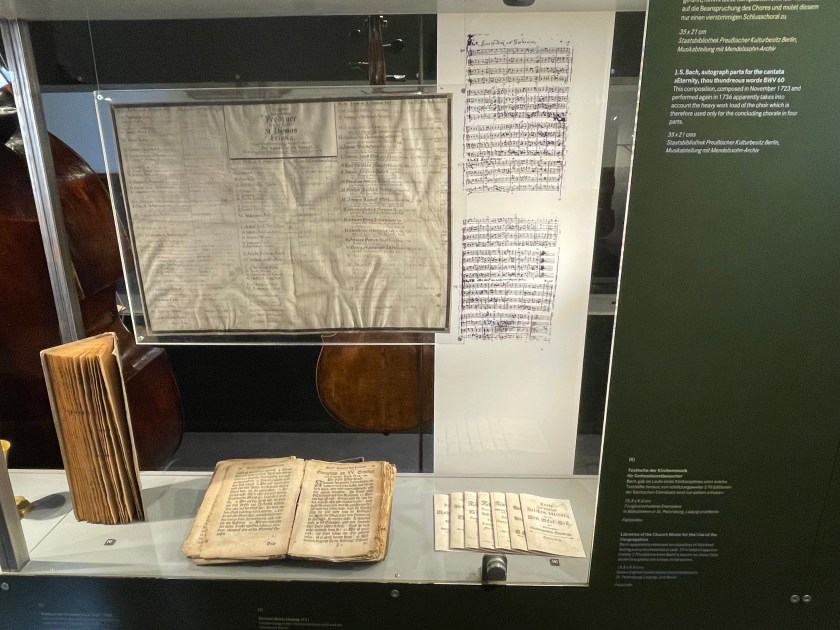
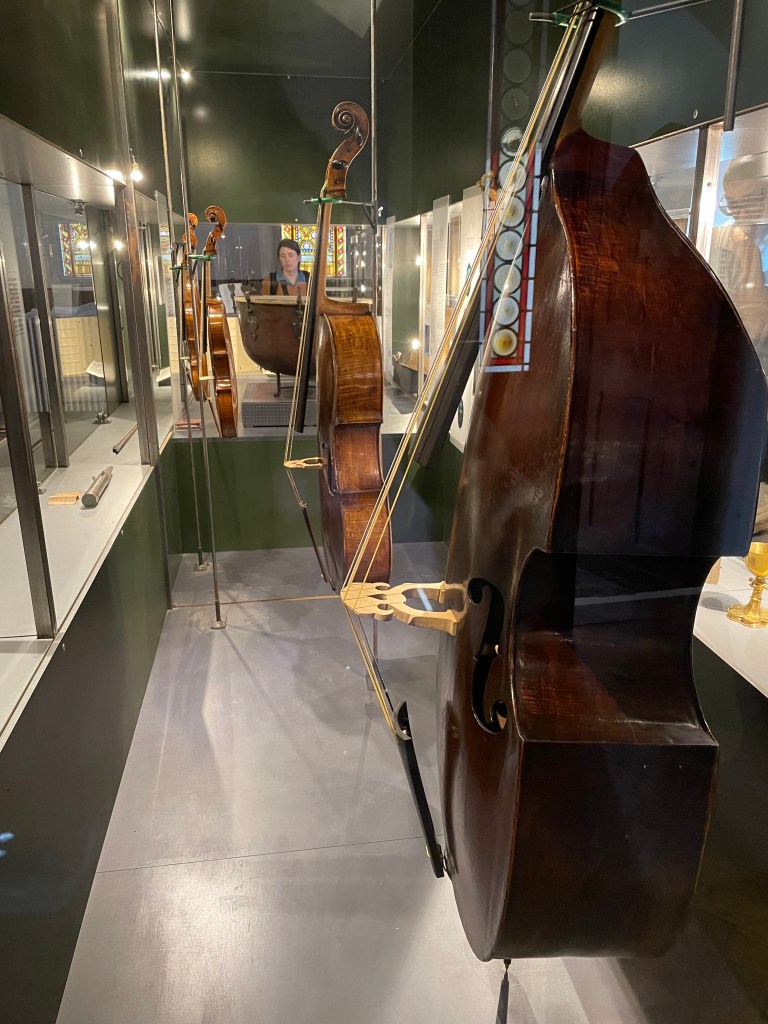
There was a room in the church like a little music museum.  We saw instruments used during Bach’s time here and some of his original music.

This is the beautiful choir chamber.

Below you can see Bach’s grave stone in the floor of the choir area.

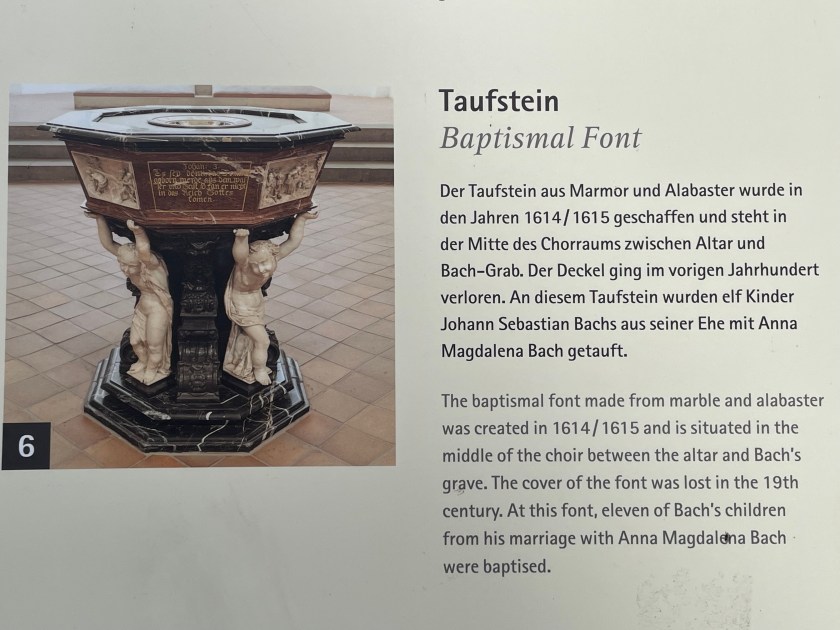
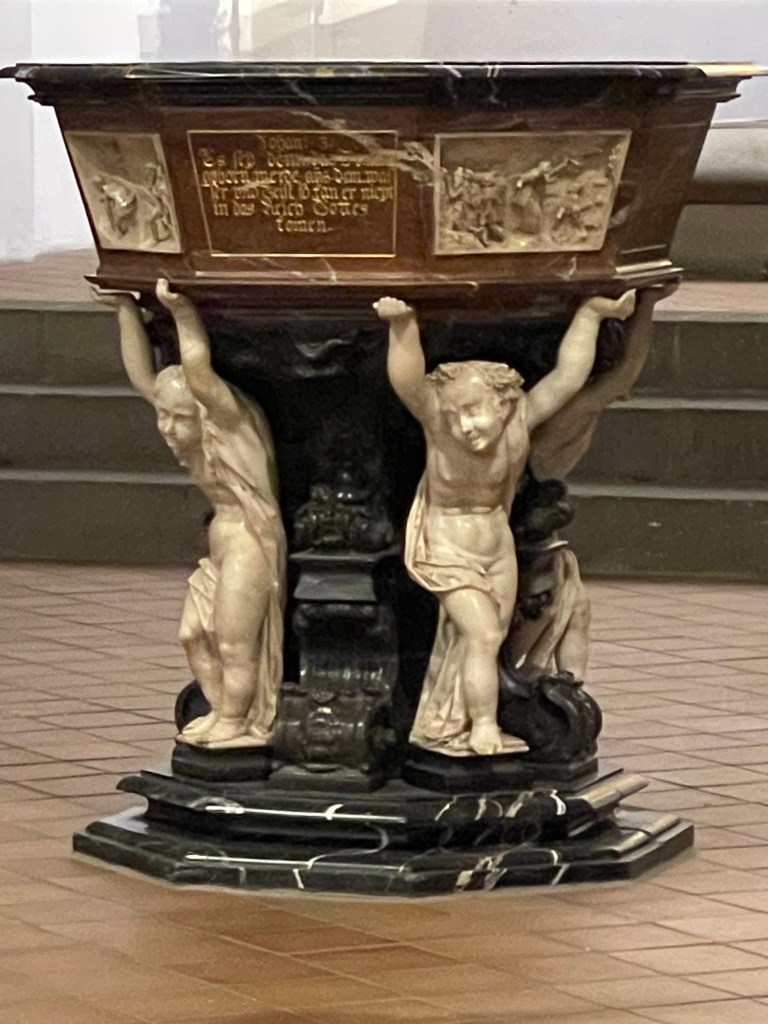
This is the font where Bach’s children were baptized.

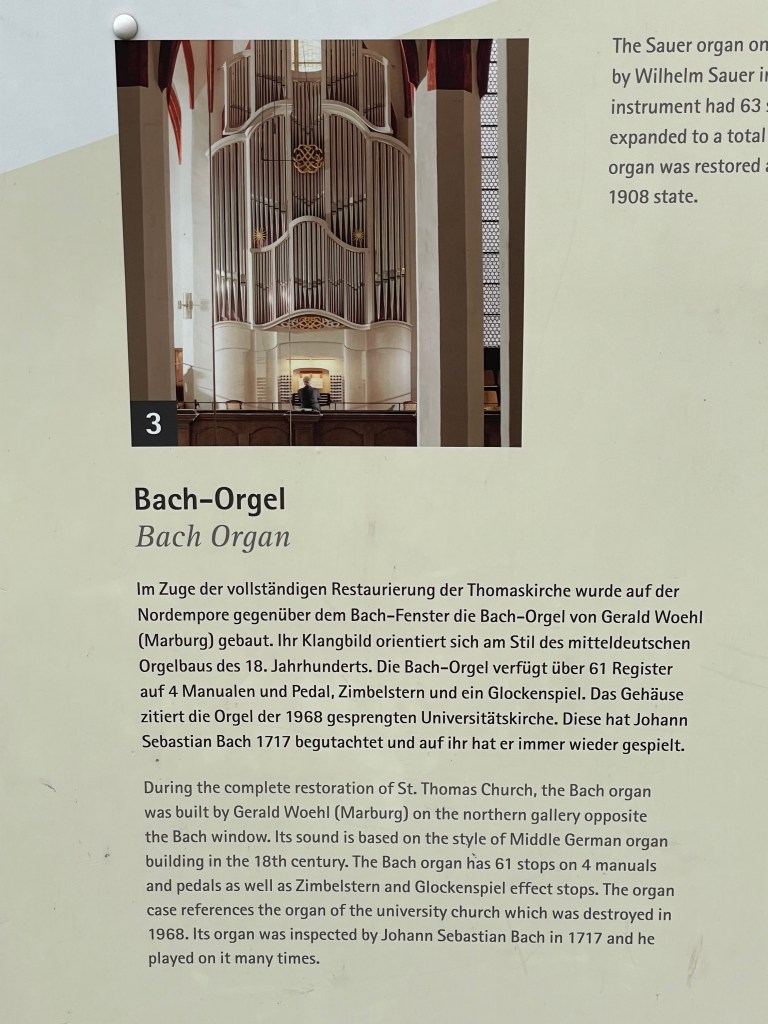
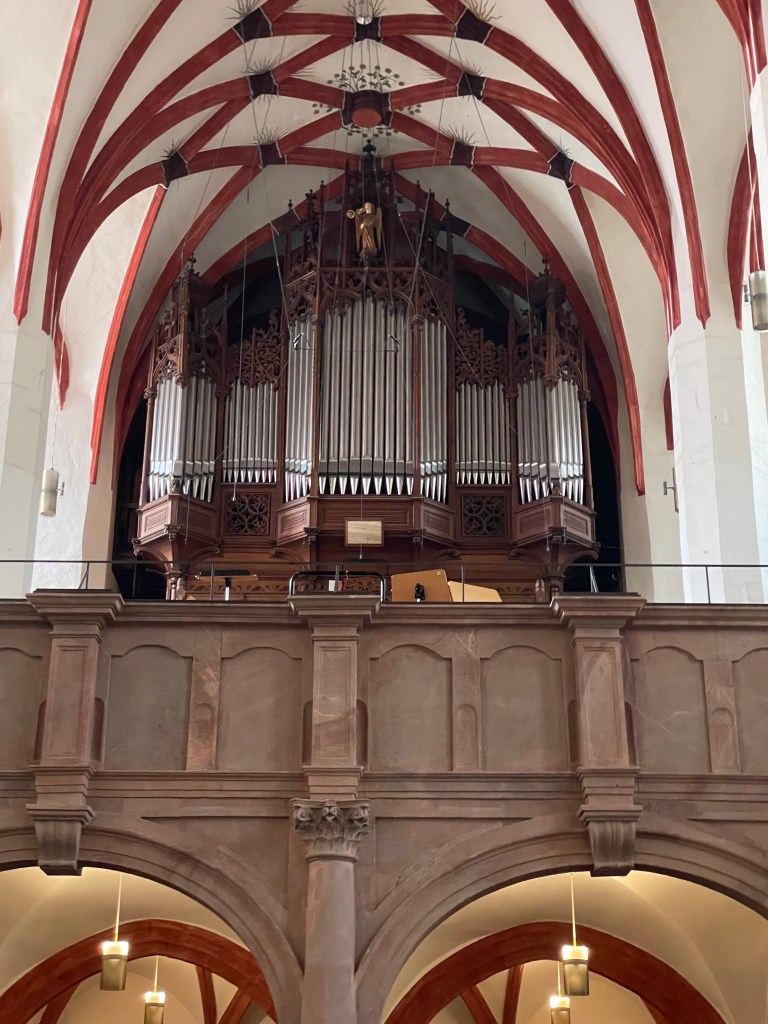
There are 2 organs in the church, the Bach Organ (explained above) and the main organ used now (below).

John learned about a concert there Monday morning, so of course we’re going.

We came back this evening for another visit.  It was beautiful.

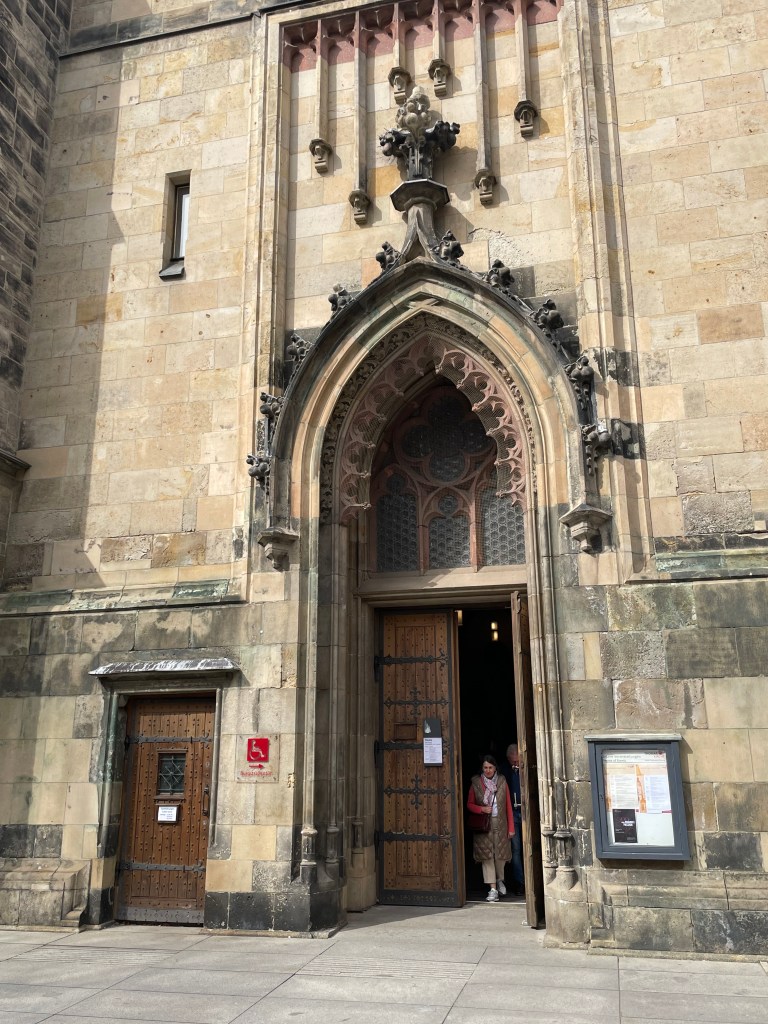
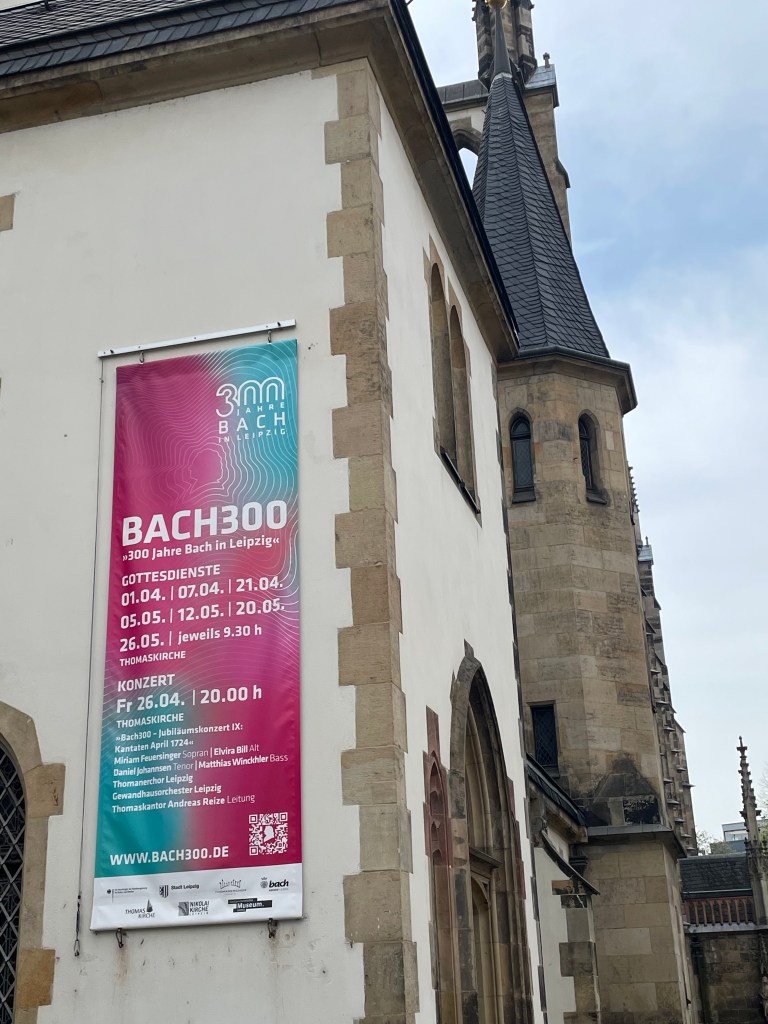
In the morning we came back for the Easter concert.  We had time to walk around a bit before and re-read the posted history about the church outside. When we went in, it was nice to see that the church was quite full of people there for the service–I’d guess maybe 100 or more.

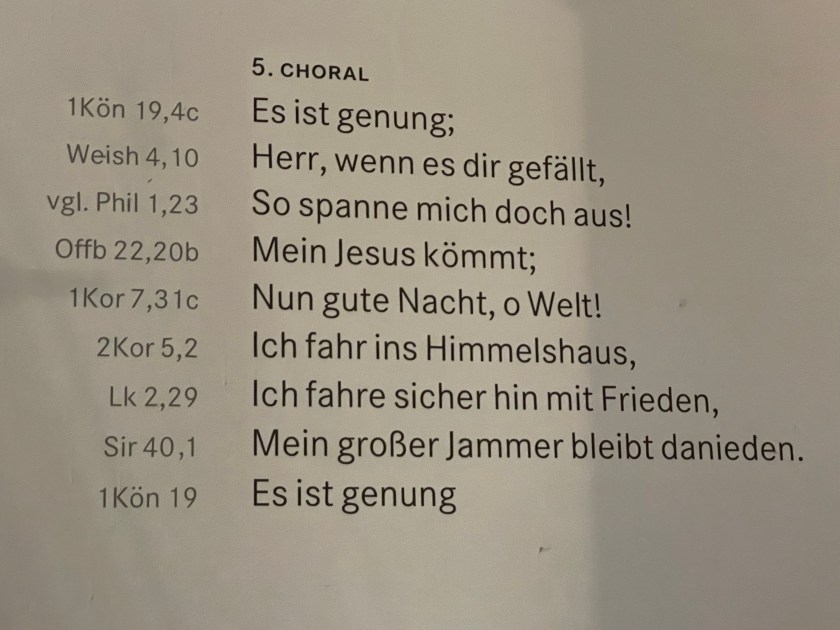
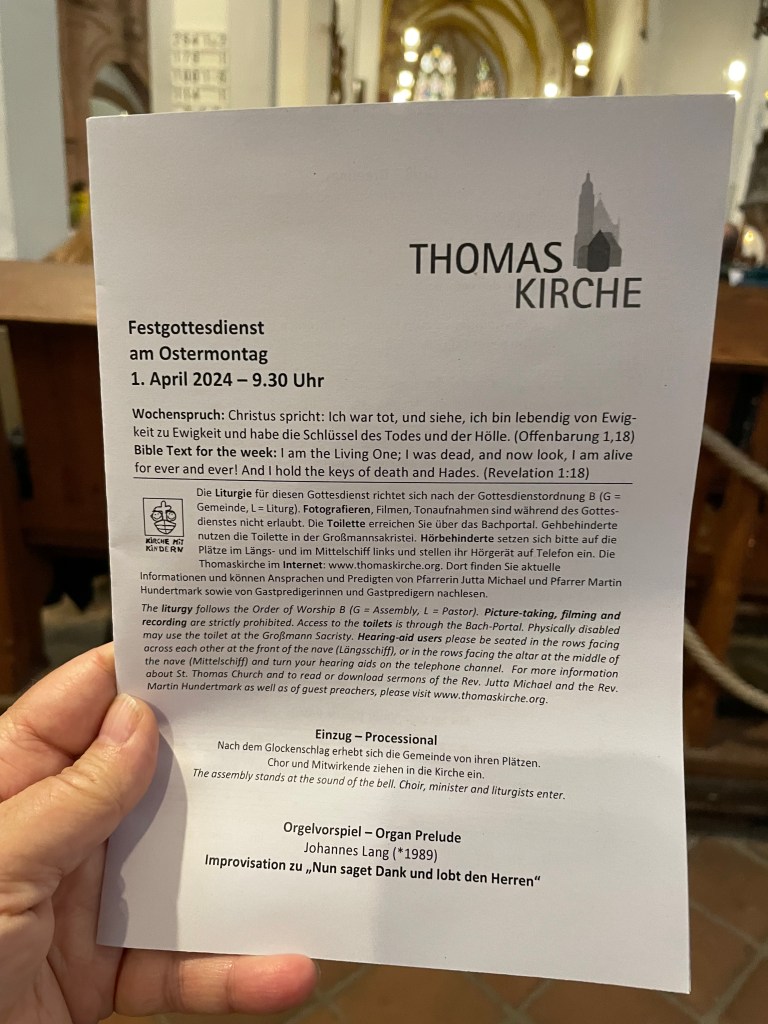
This Lutheran Easter church service featured Bach’s music. There was a printed program that outlined all the parts and talks and music. In the middle of the service there was a Bach cantata. The choir and soloists and a small orchestra were in an upper balcony area by the organ.

There was music throughout the service.  We sang along with some of it. There was a preacher and a preacher woman, taking turns. At one point there was the absolution of all sin where everyone repeated together an asking for forgiveness, and then after that the preacher absolved everyone and said they were now “sinless.”

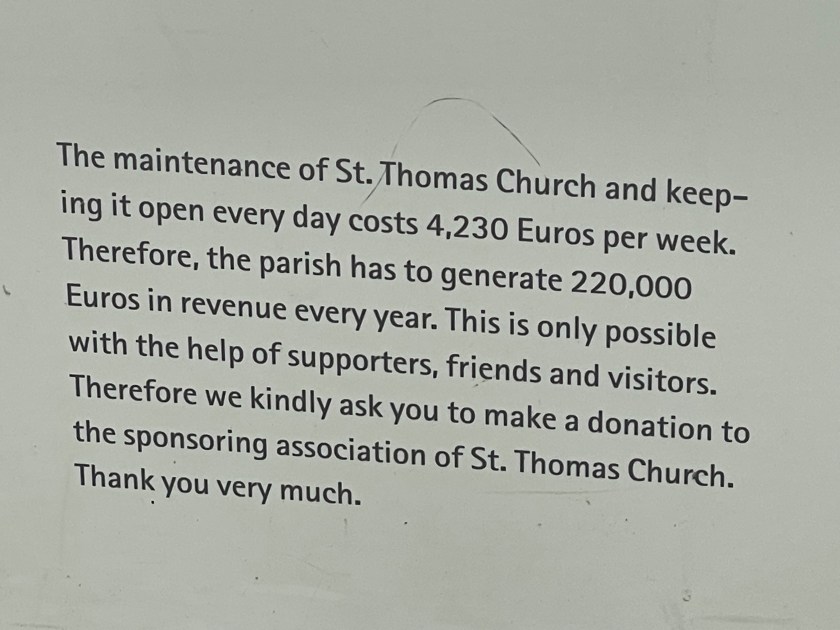
After that, they had people passing the donation bags, personally in front of everyone they could get to. You had to drop money in the bag or you were in trouble. They said on the info outside that it costs 4,230 Euros/week (220,000/yr) to keep the church open, and they depend on donations to do that.

We recited the Lord’s prayer. Other prayers were written in the program. There was some teaching about Easter. It was all good, reverent,  with beautiful music in this beautiful place. It felt like Easter Sunday again.

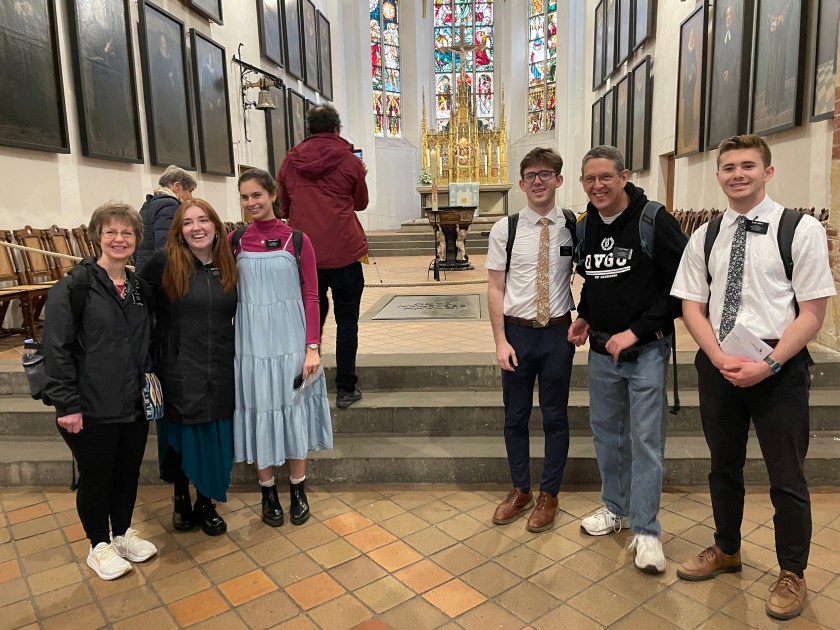
Afterward we bumped into 4 young missionaries and a Leipzig member taking them on a P-Day tour. They’d popped in for the last 15 min of the 1.5 hour service.

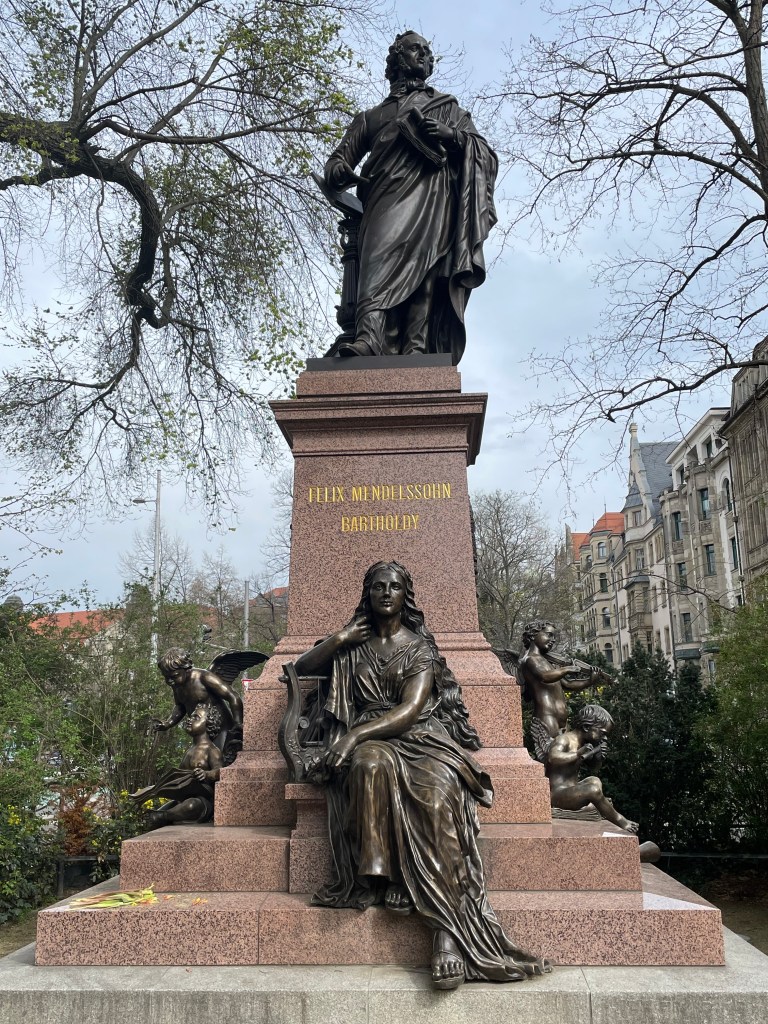
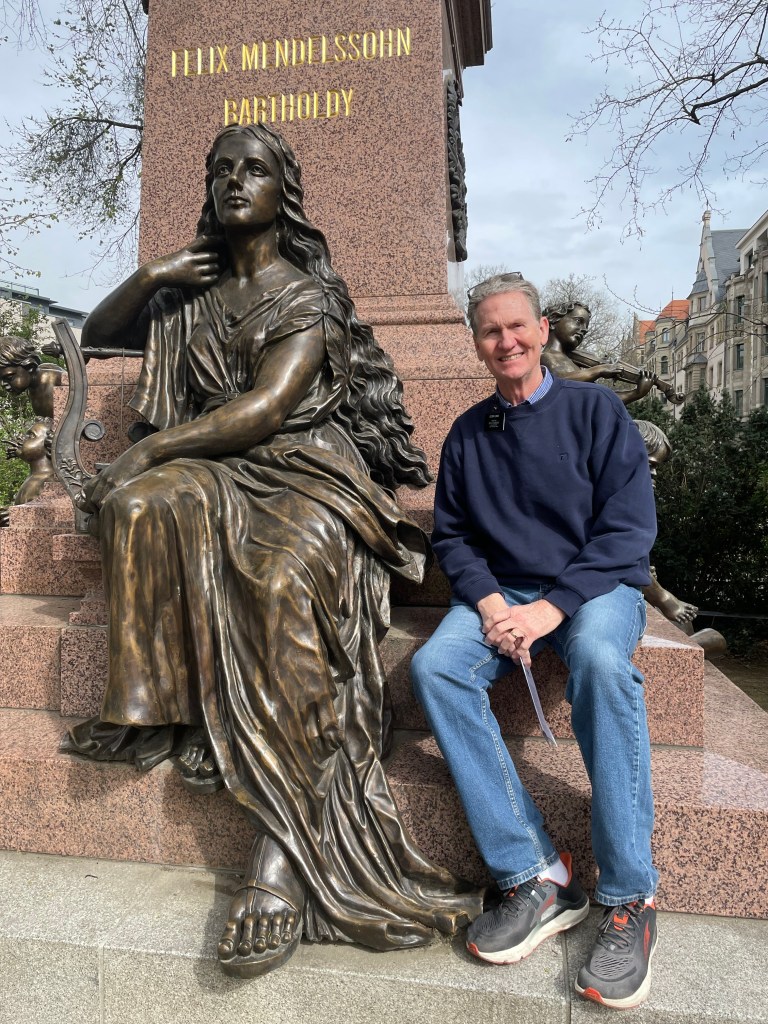
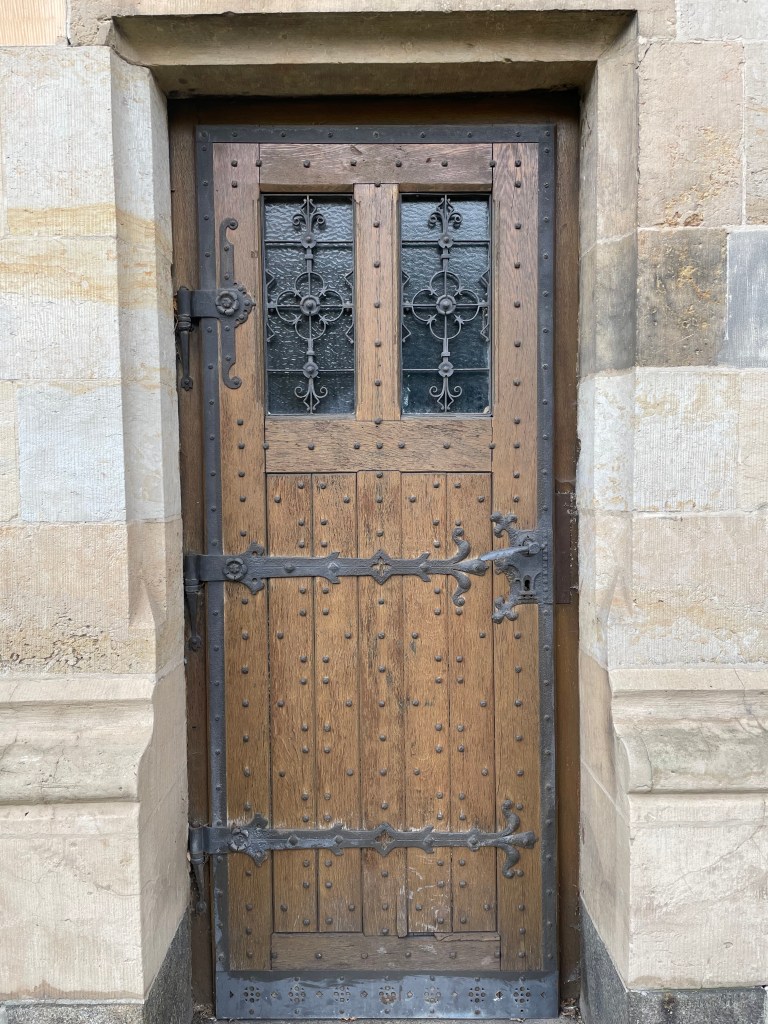
Today we went around to the back side of the church where Mendelssohn is memorialized.  It’s also where the musicians entered and departed.

What a wonderful Easter weekend we are having.  We are loving every bit of it here in Leipzig.