Lohr a. Main and the Snow White Castle

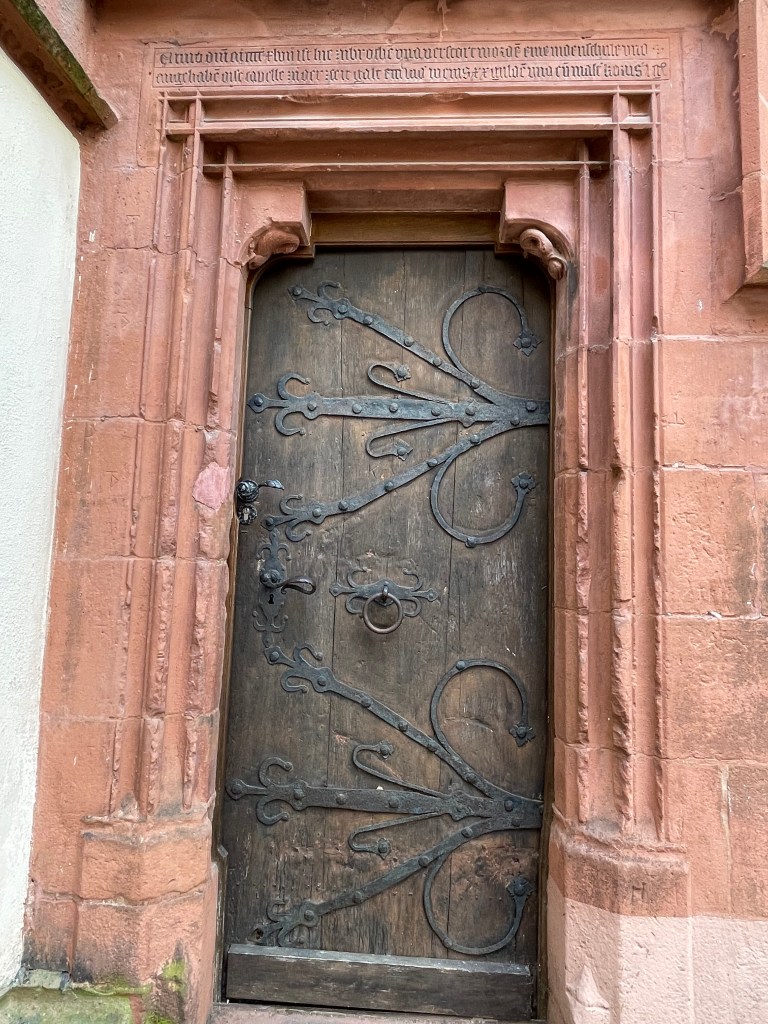
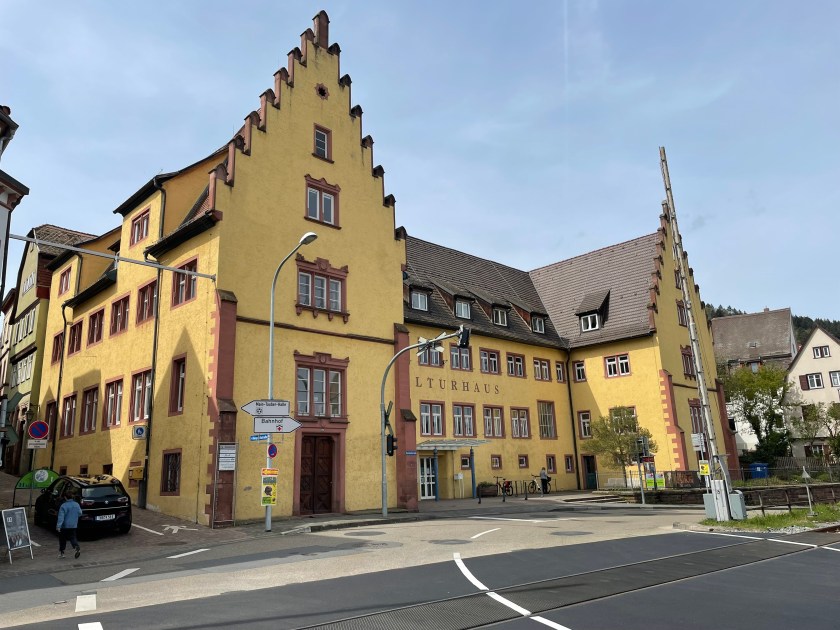
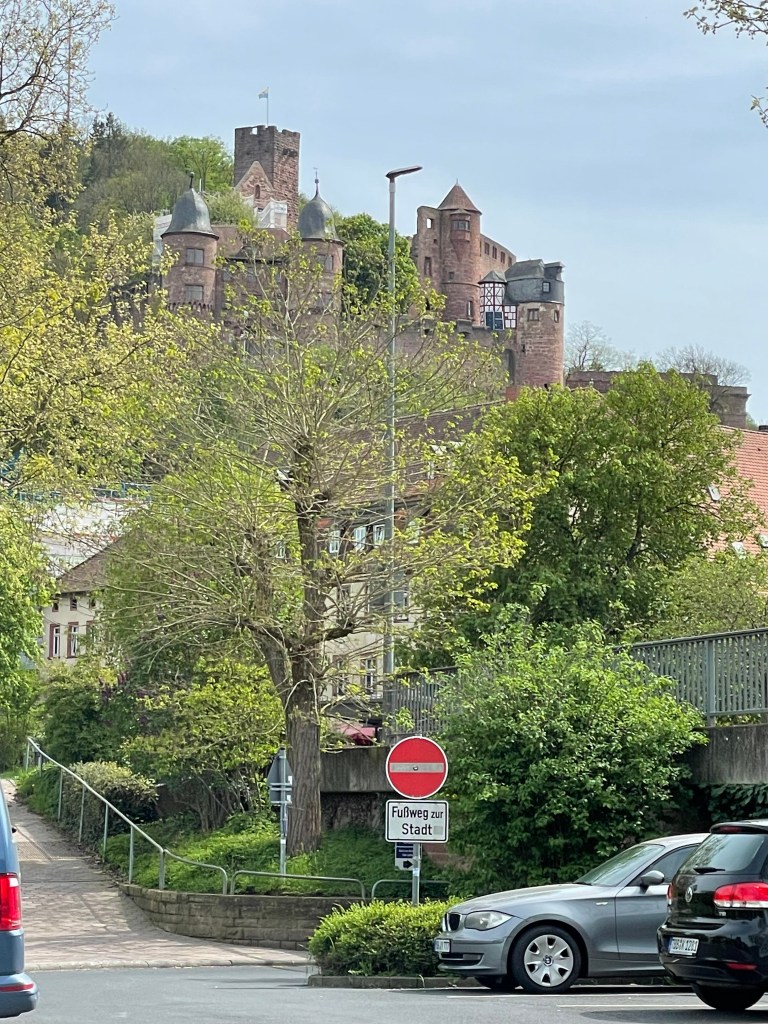
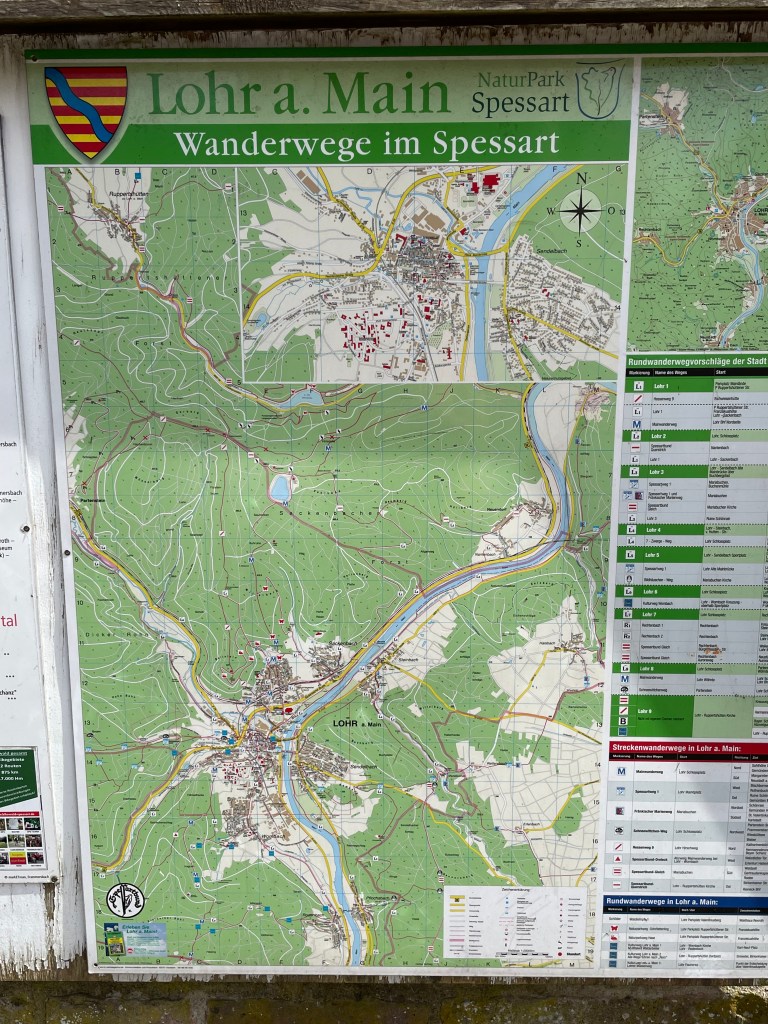
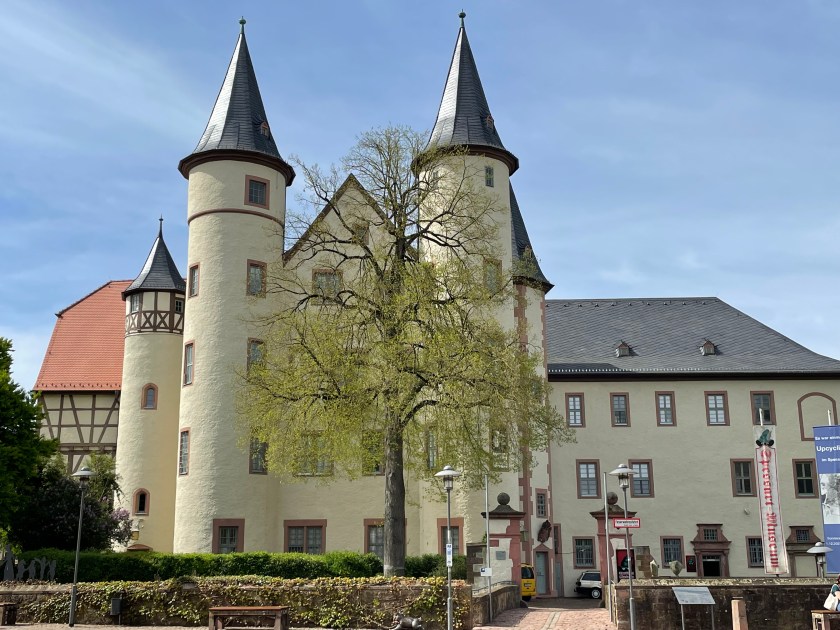
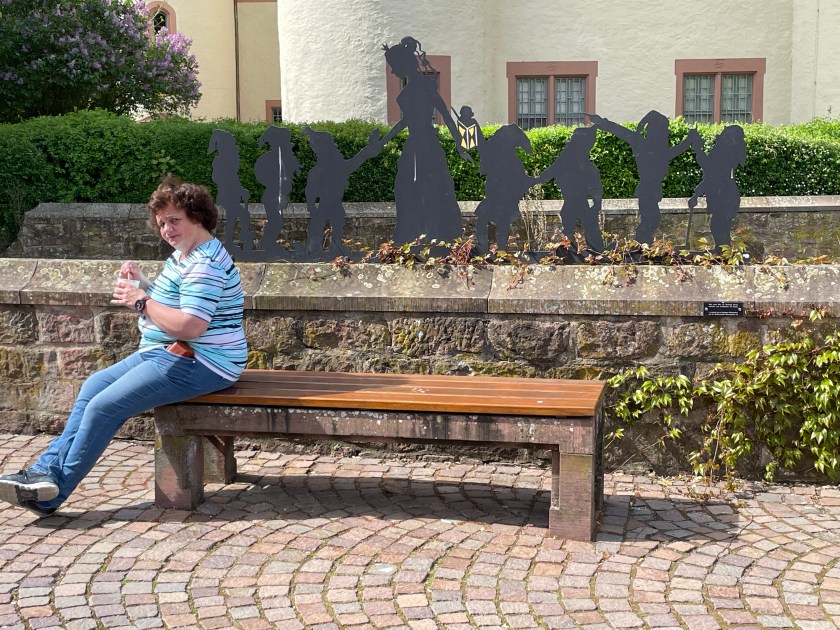
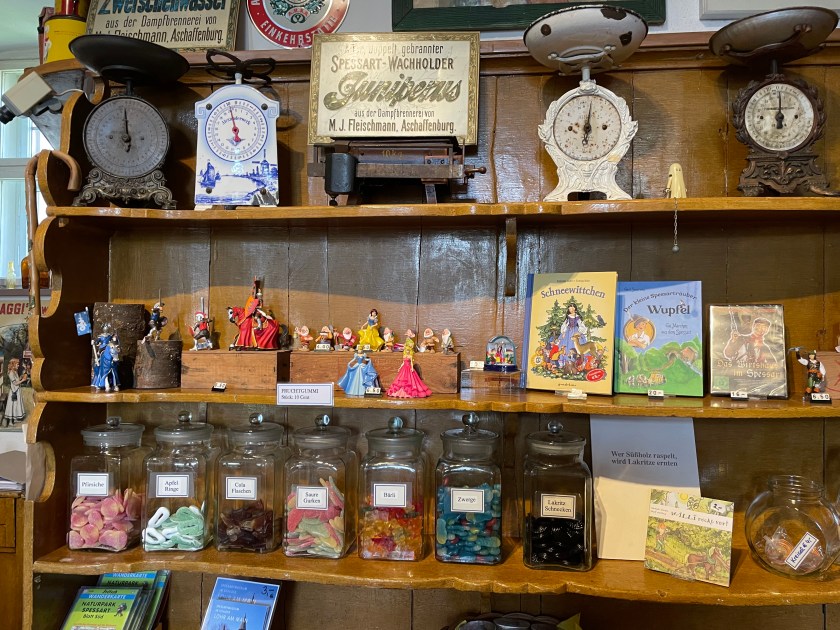
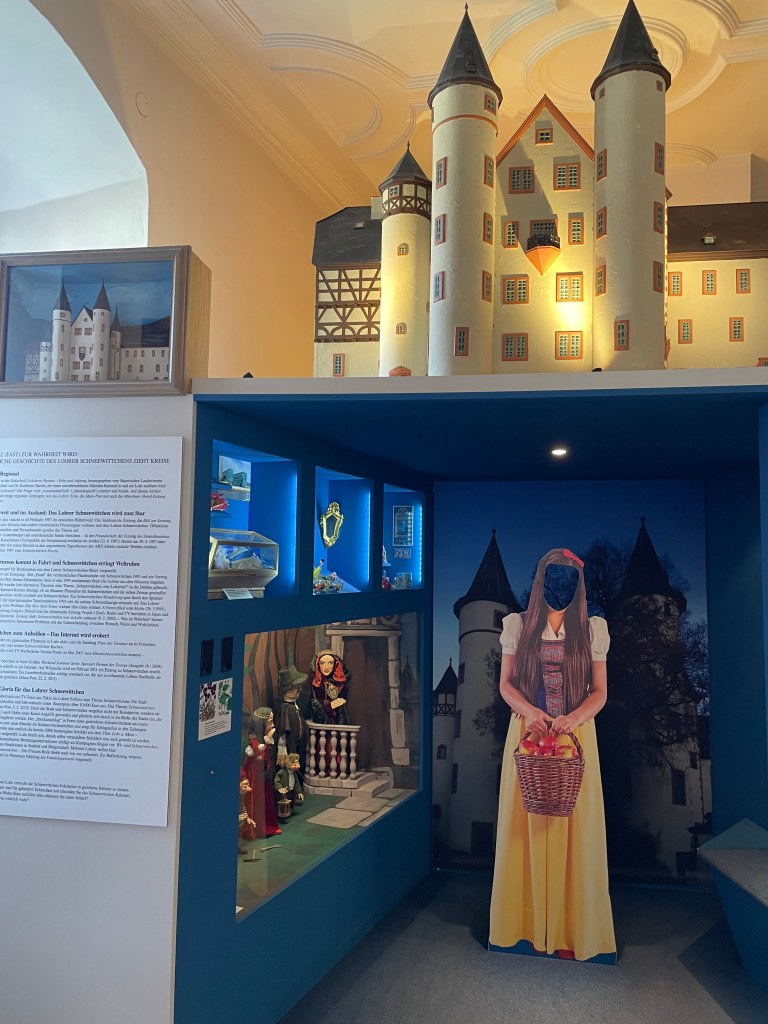
After leaving Wertheim, we drove about 30 minutes through woods and forests and fields and pastures to another town on the river called Lohr  am Main.  We wanted to visit the castle here, in the heart of town, that’s called “the Snow White Castle.”  The town has adopted the fairy tale about Snow White as part of their folklore.

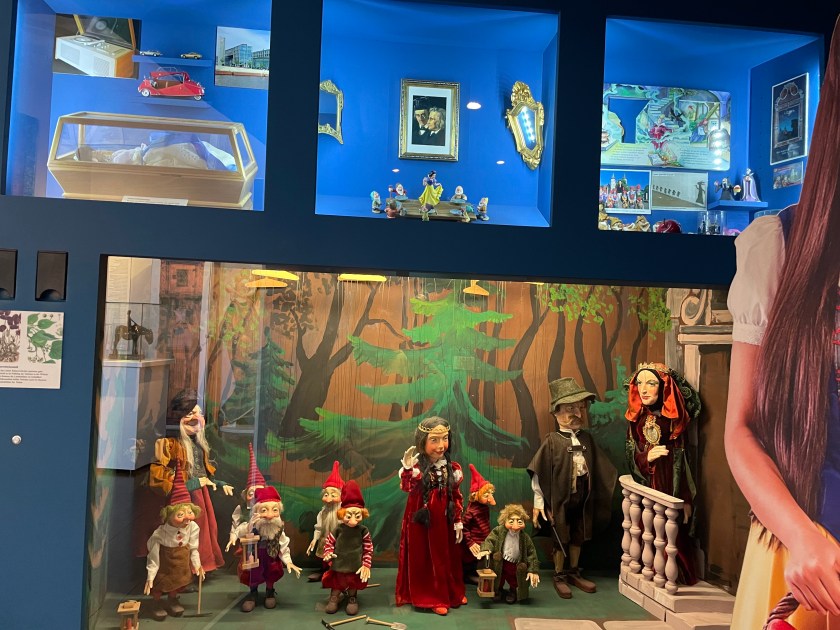
 Lohr am Main is known as the Snow White (Schneewittchen) city because of the real Maria Sophia Margaretha Catharina von Erthal who was the daughter of widower Philipp von Erthal who served the nobility in Mainz (they owned the Spessart forest and the wildlife) and lived in the Lohr castle beginning in the 1720s.
After his first wife’s death, Philipp married a widow  who had children of her own and favored them over the good and kind Maria Sophia, who was ultimately forced to flee her home and stepmother.
It is thought she went to live with miners in the area, who were known for their short stature.
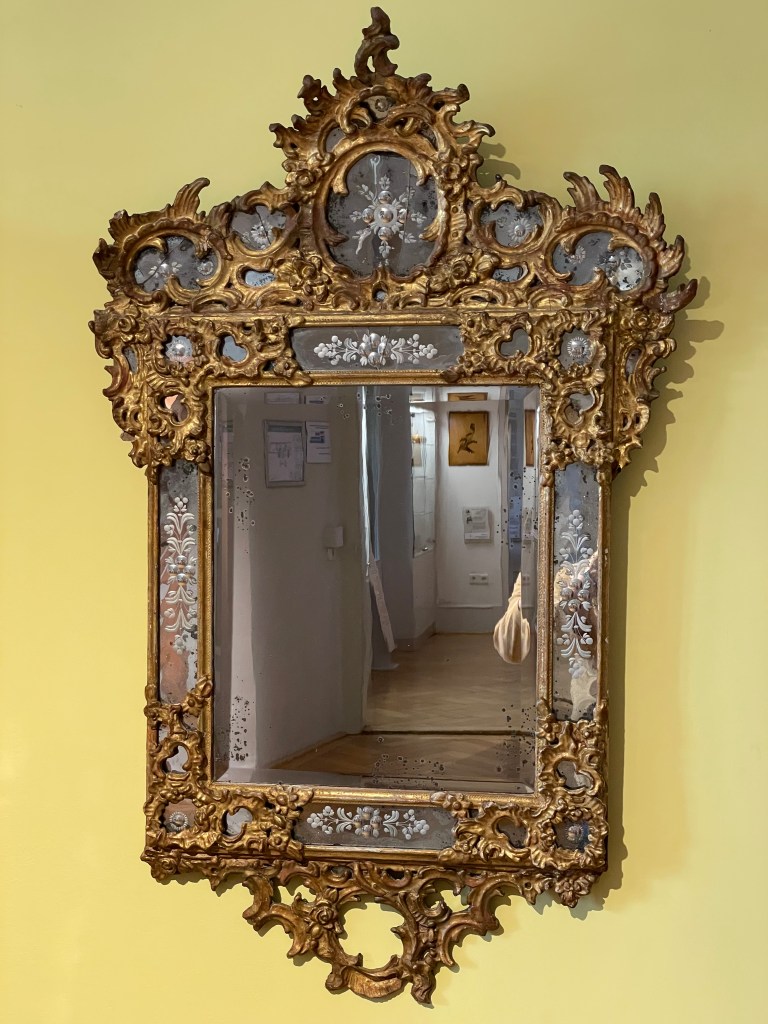
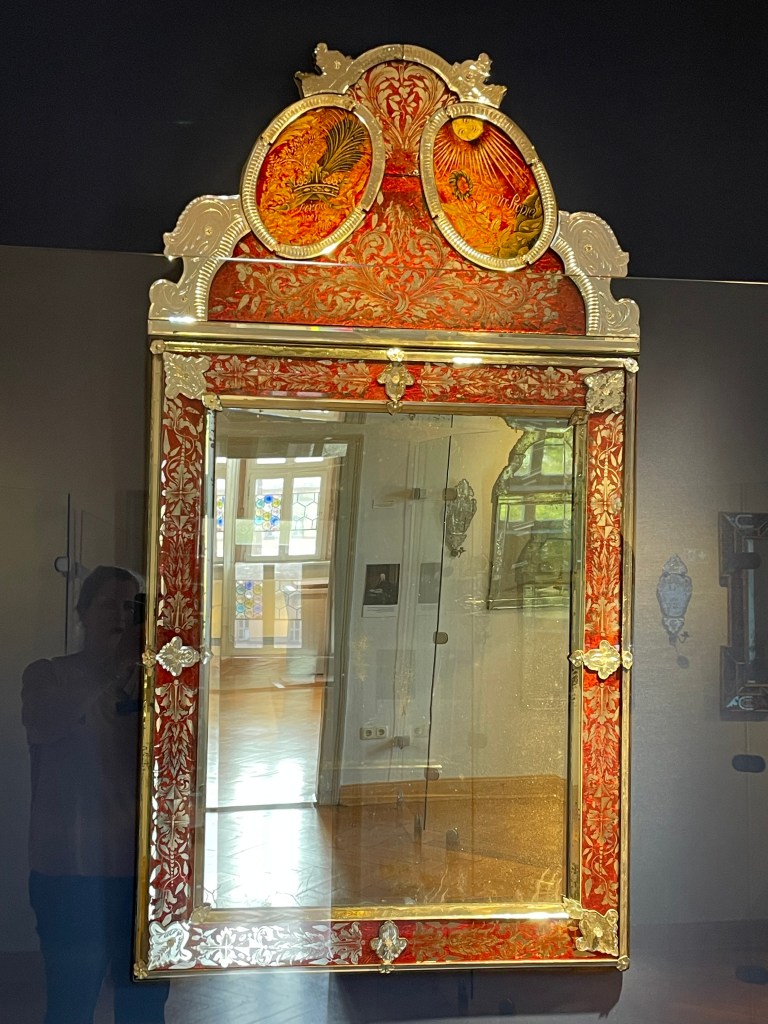
Glass and mirror making were common throughout the Spessart Forest area, so the new Frau Erthal would definitely have had a mirror and one that was used in the castle during lifetime is on display in the castle/museum. Whether it was magic or not back then is not known. But glassmakers could also have made the Snow White casket.
Two other interesting points: apple orchards were common on the edges of the forest in the 1700s and Frau Erthal had access to a poisonous plant that could induce rigidity in a person who ingested it.
So many intriguing similarities exist that Lohr am Main has adopted Schneewittchen’s tale as the theme of the city. There is even a beautiful magic mirror in the Schloßplatz across from the castle!

We only had one hour to see what we could see before closing at 4:oo.  We moved quickly and read and saw as much as we could.  It was a great castle museum!

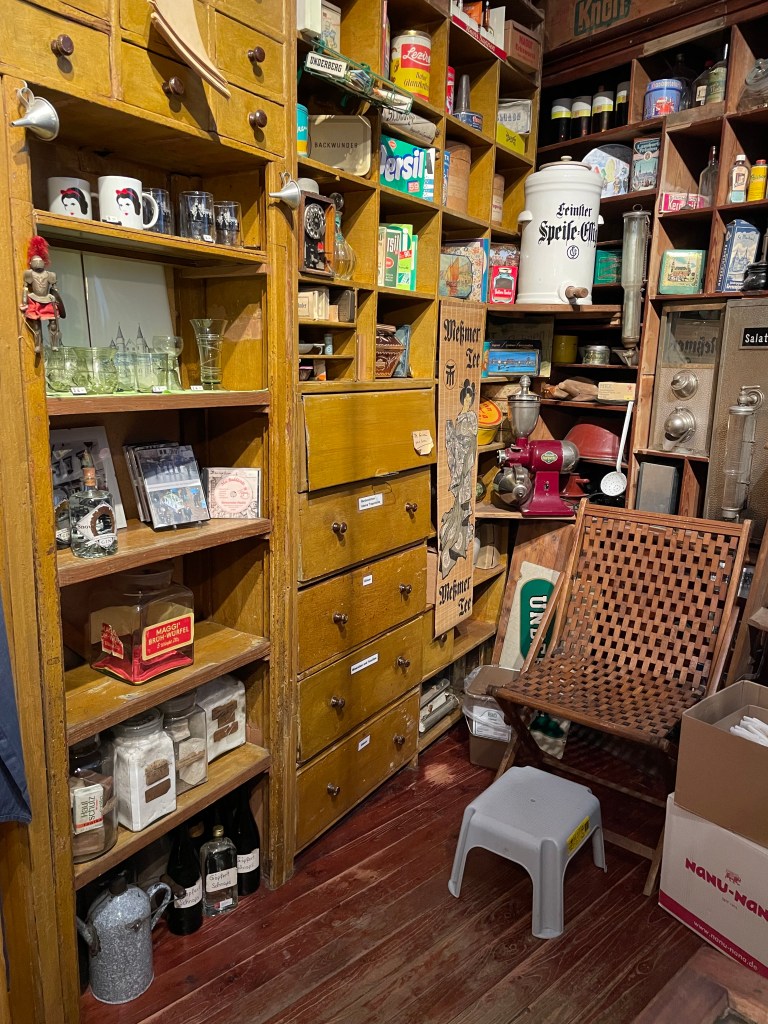
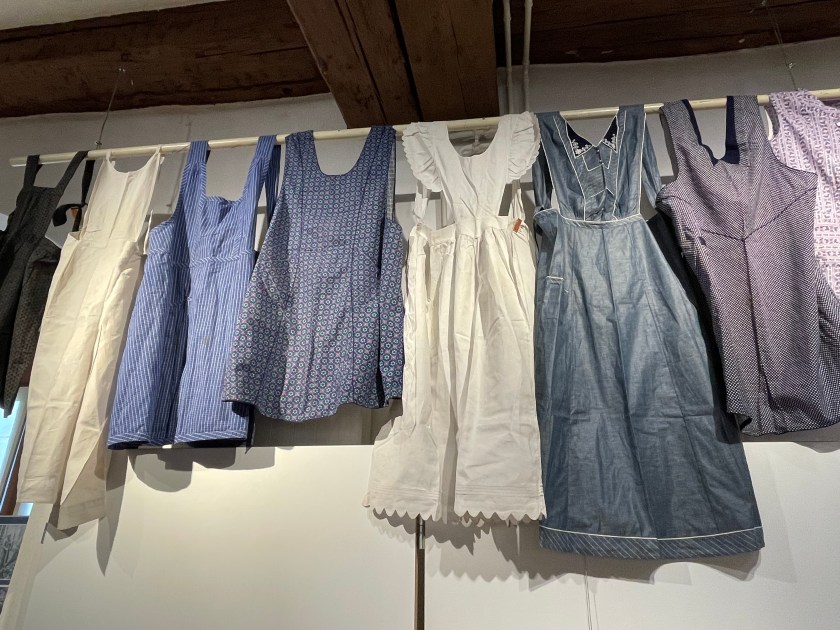
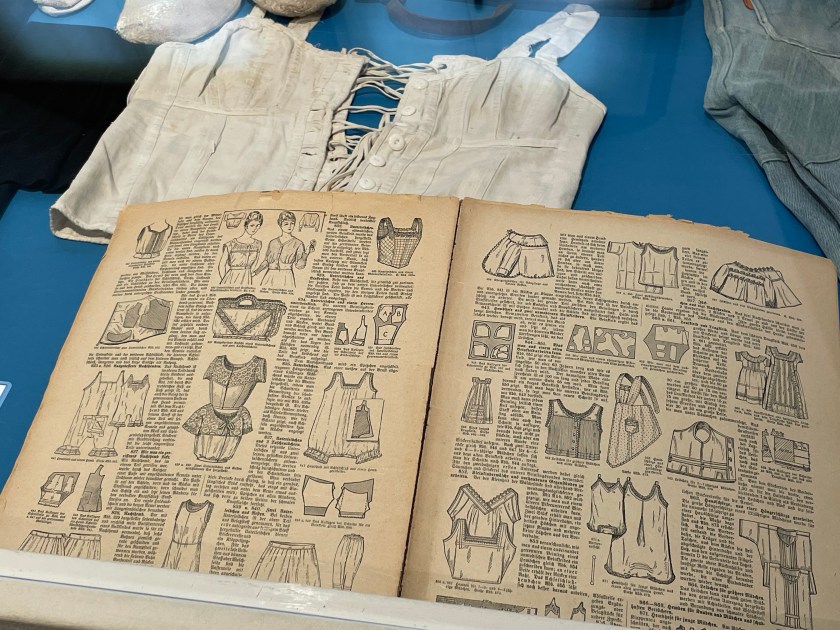
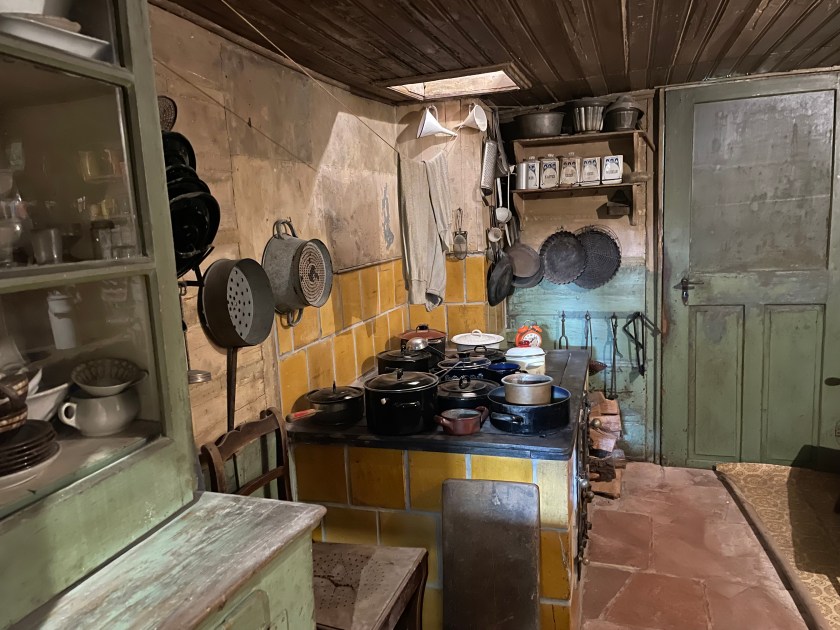
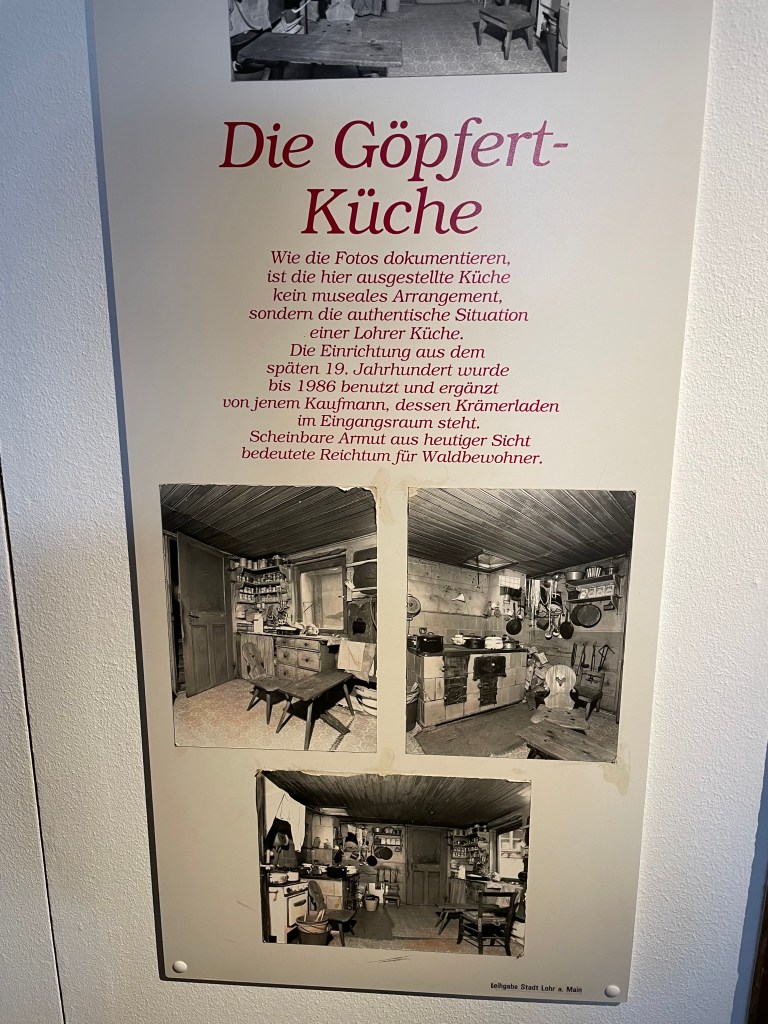
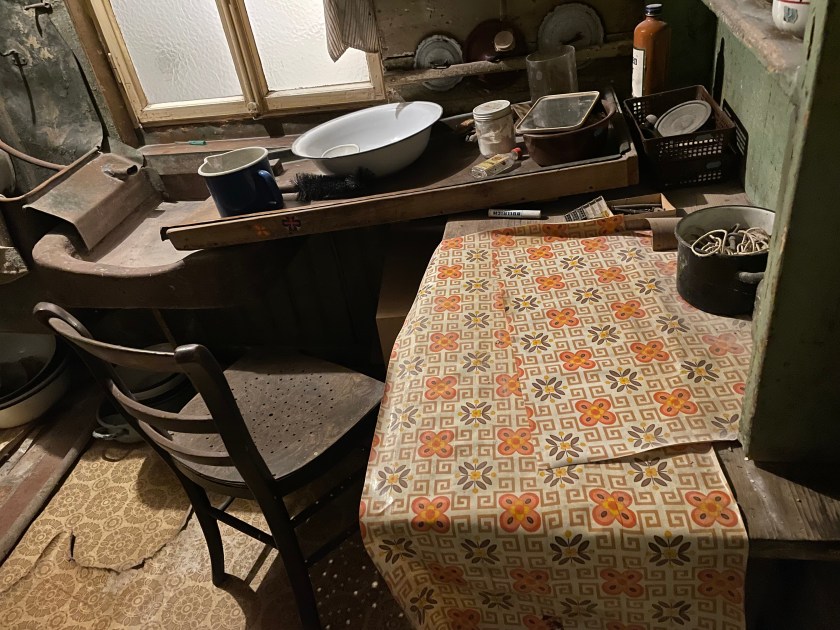
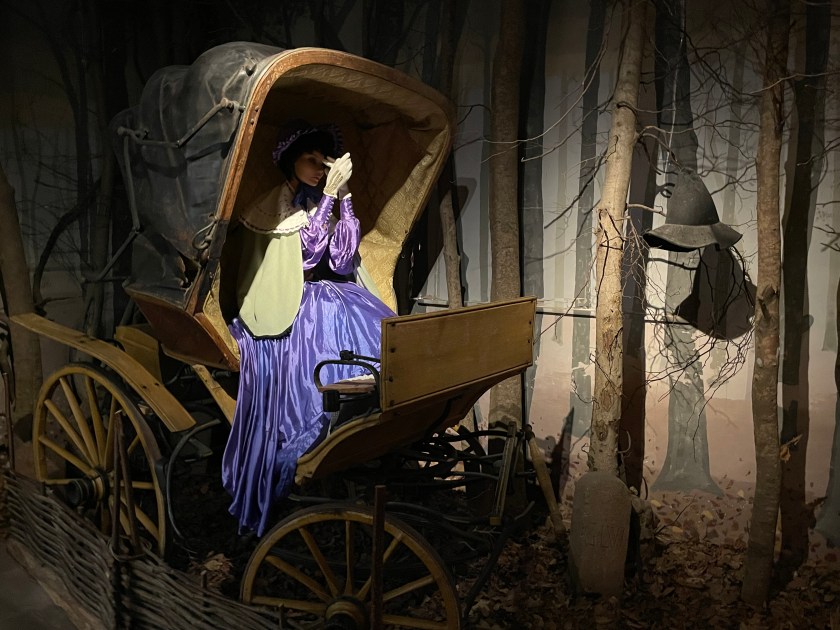
I always LOVE seeing what daily life was like in times past.

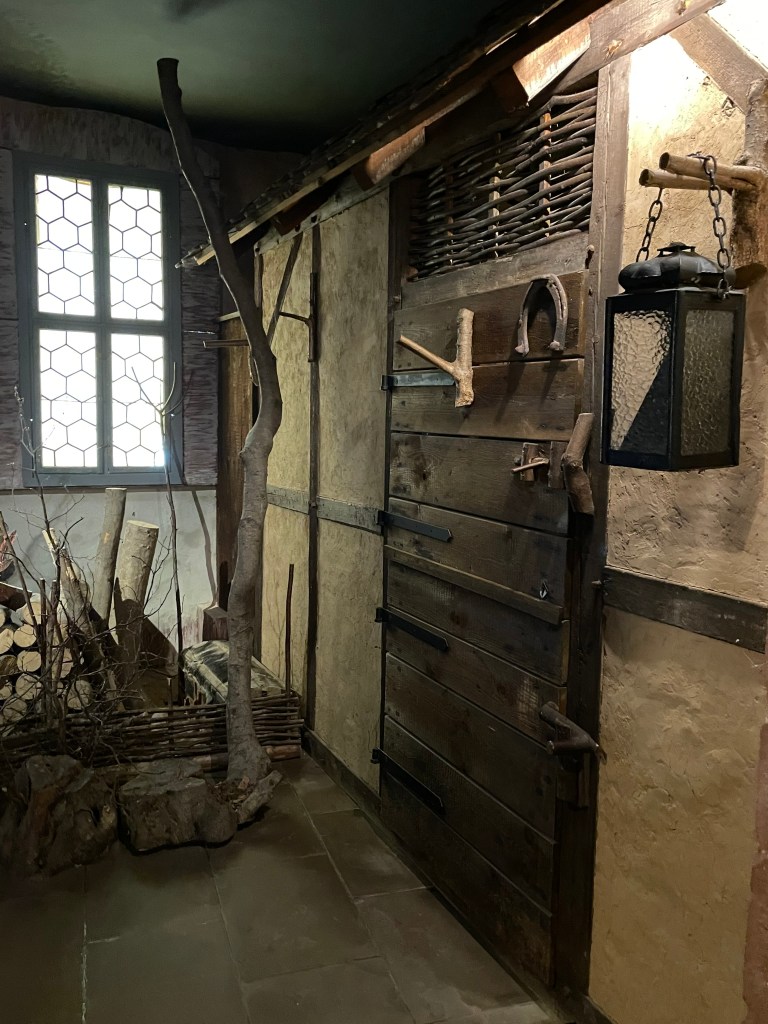
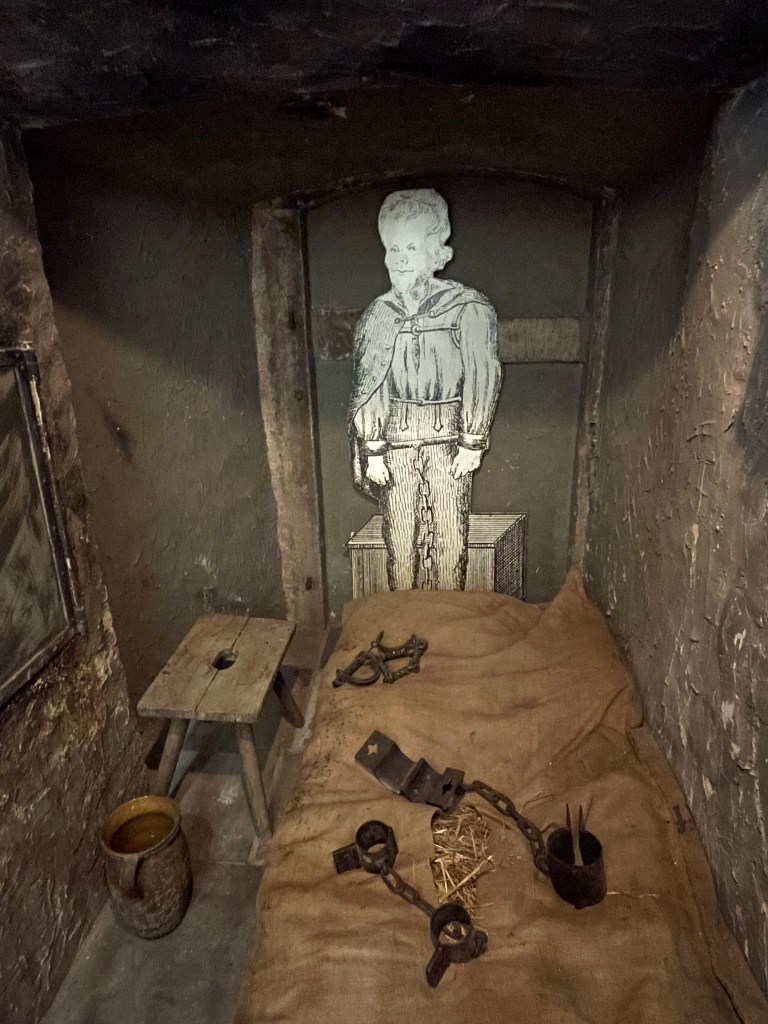
This was a little prison cell.

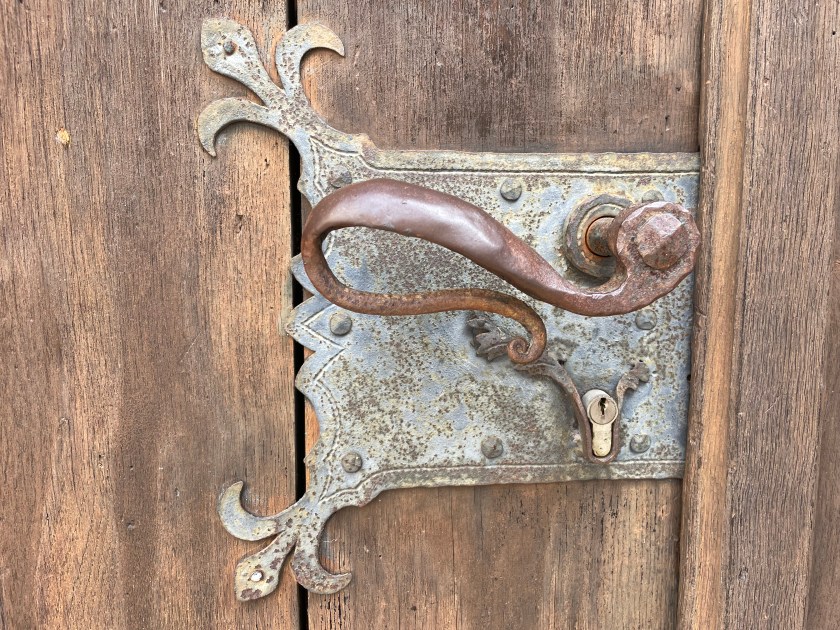
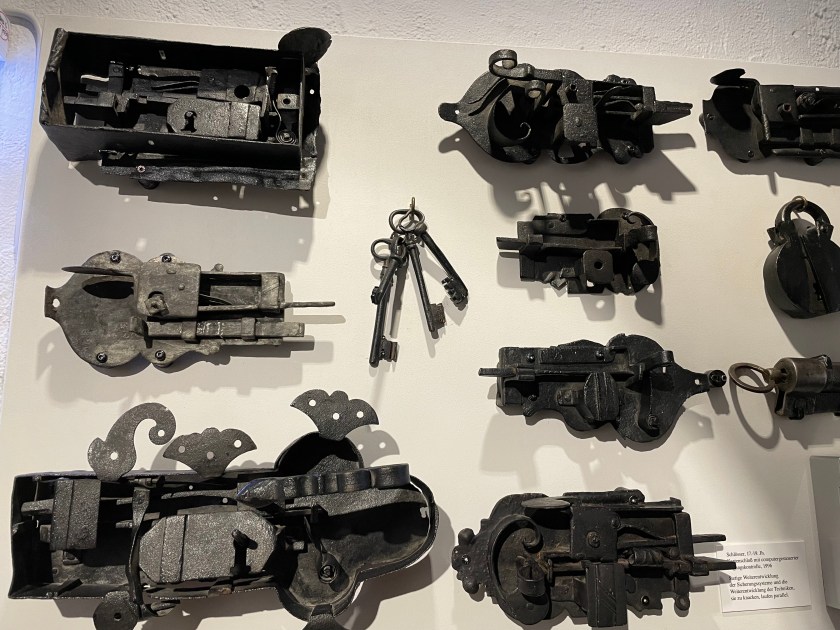
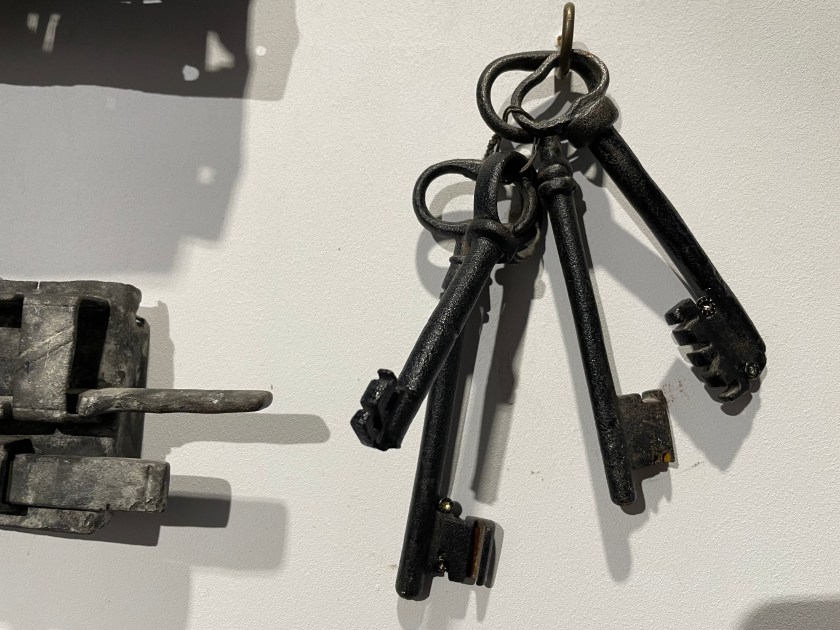
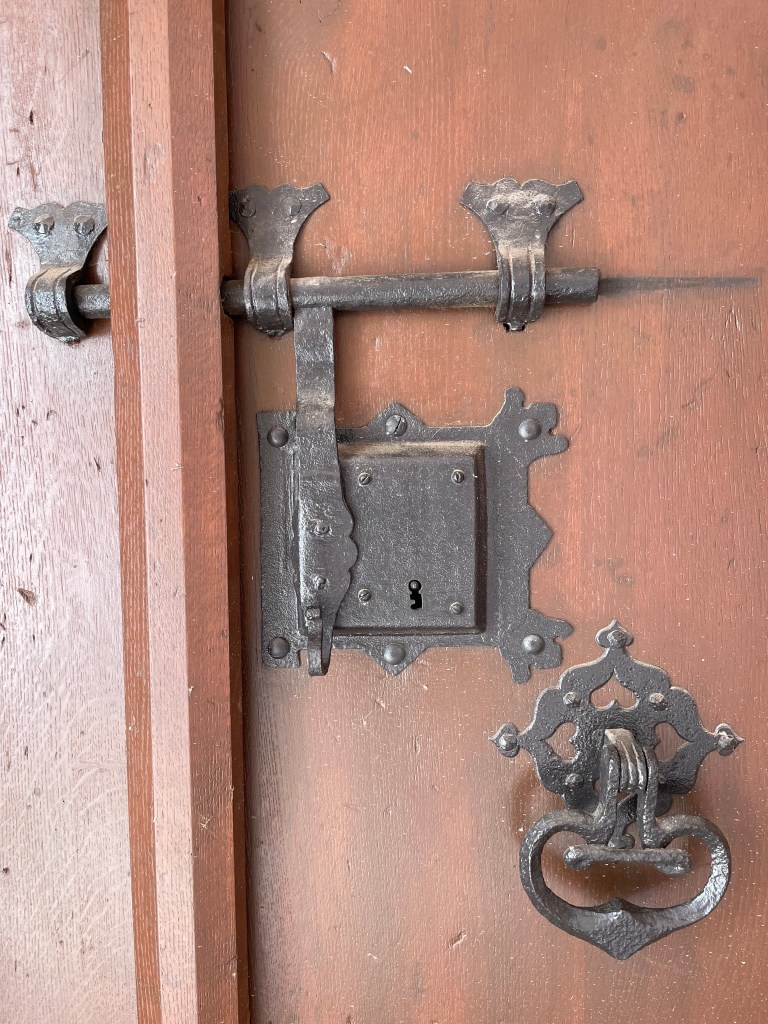
Locks and keys:

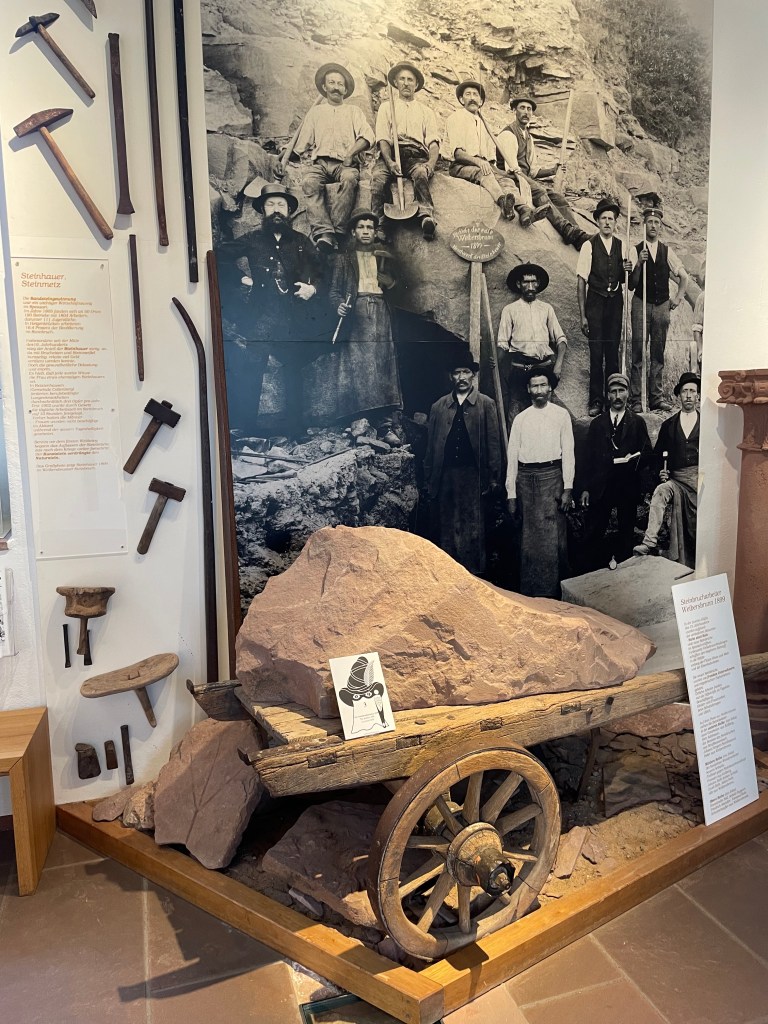
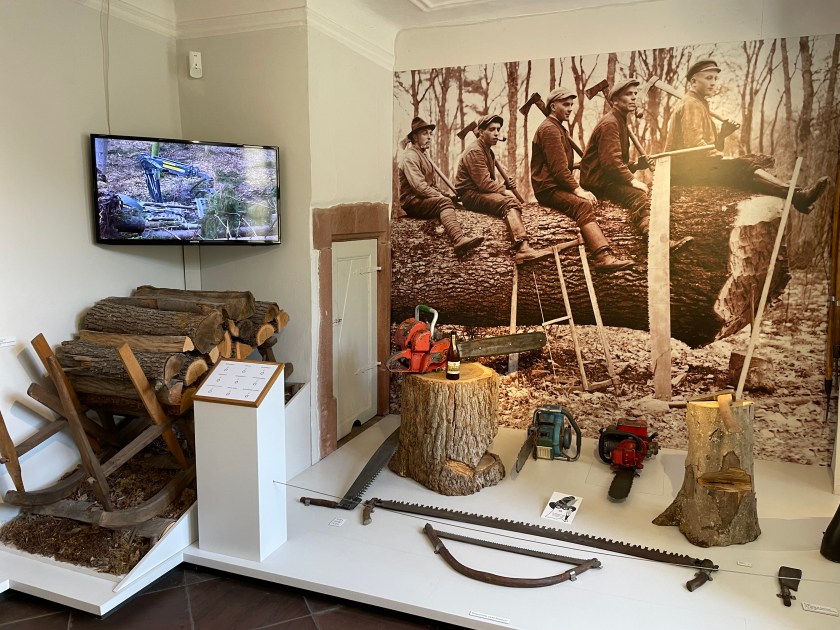
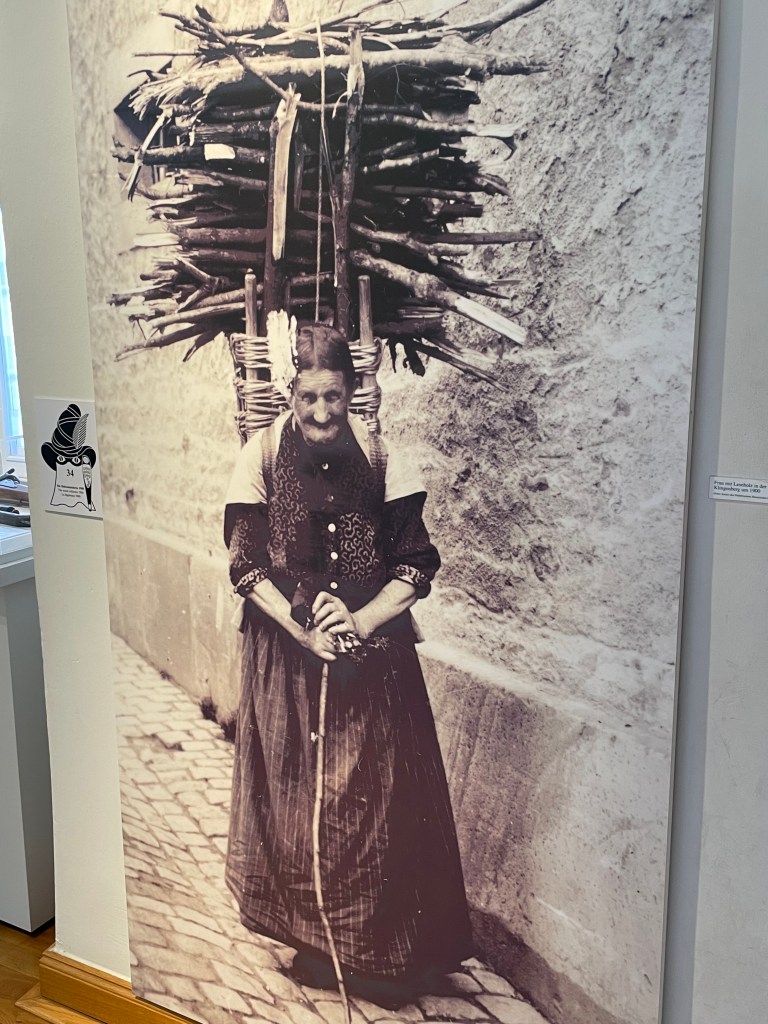
Woodsmen:

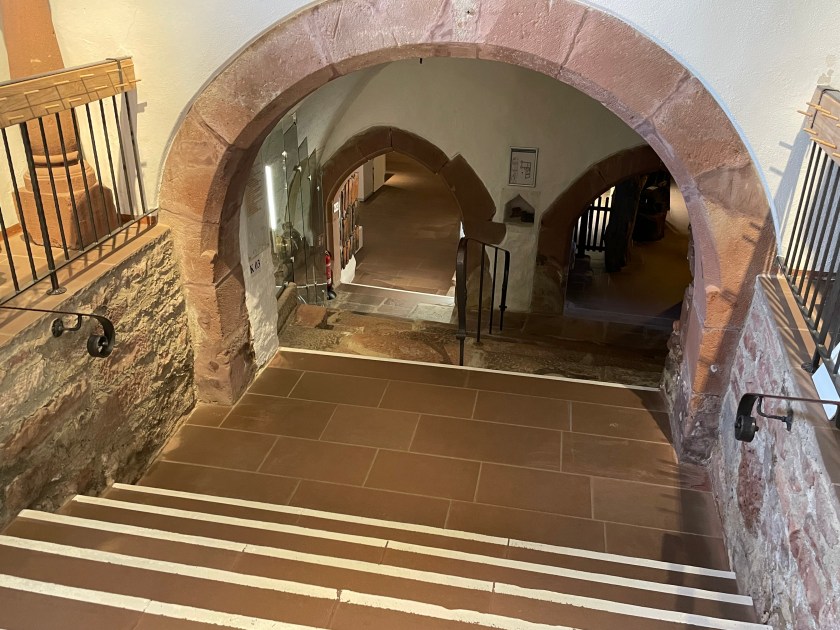
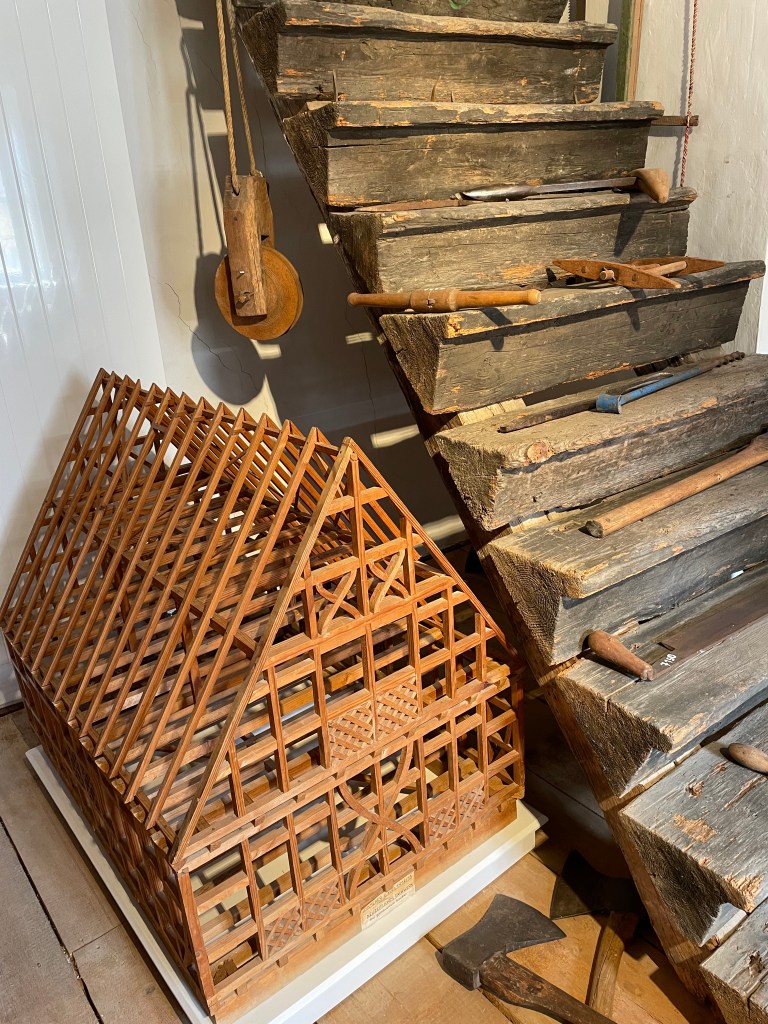
Building tools.  Look how the stairs are constructed.

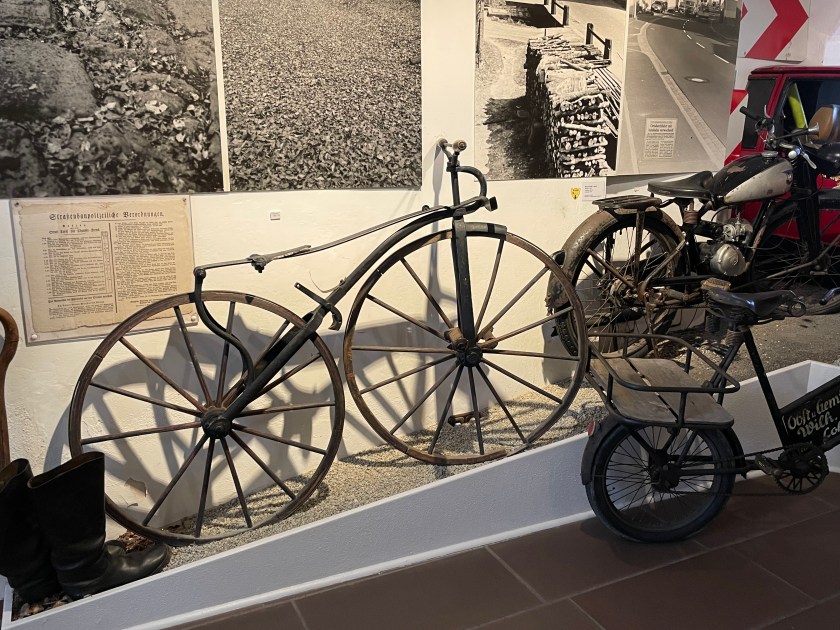
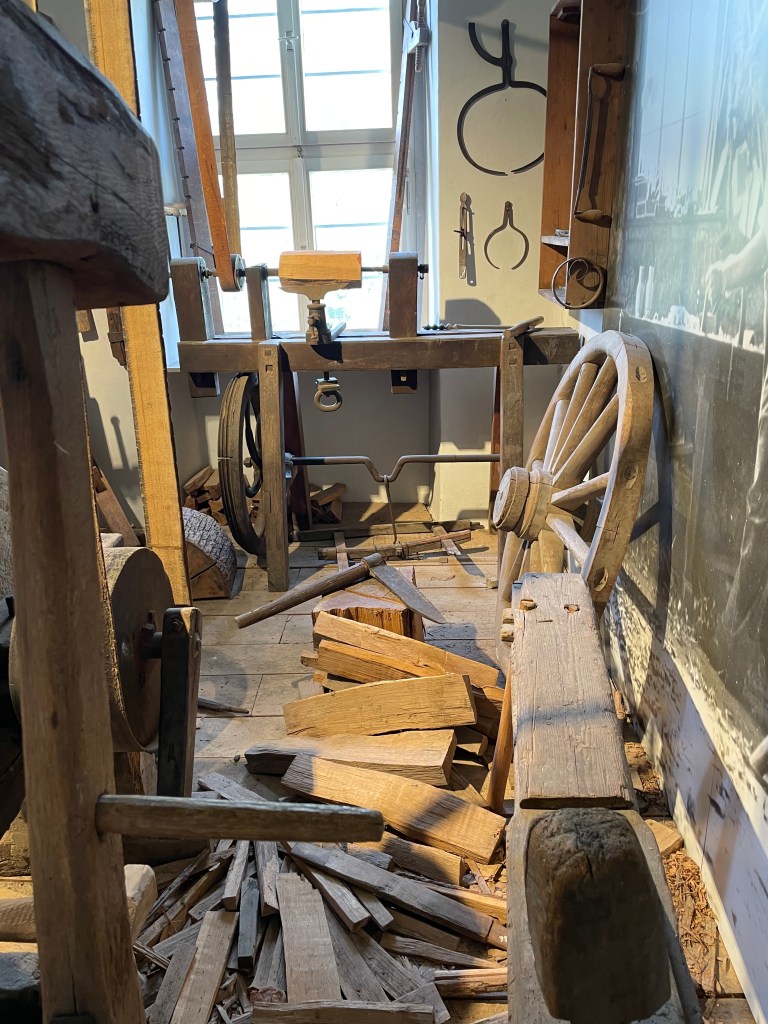
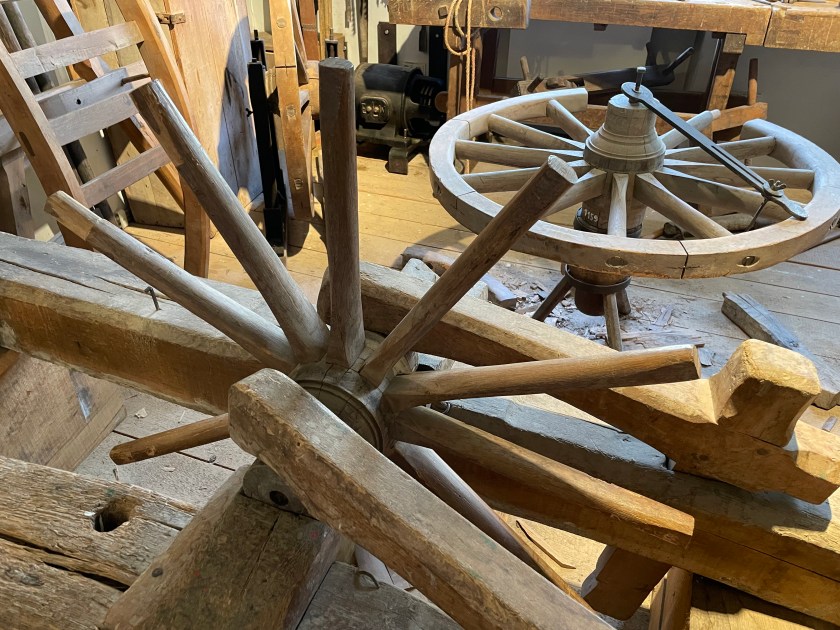
A wagon maker’s shop.

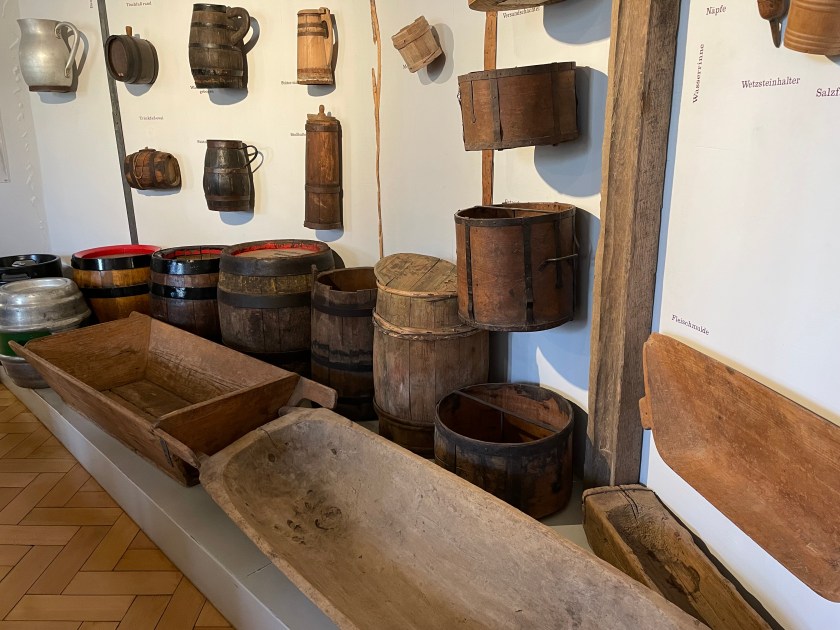
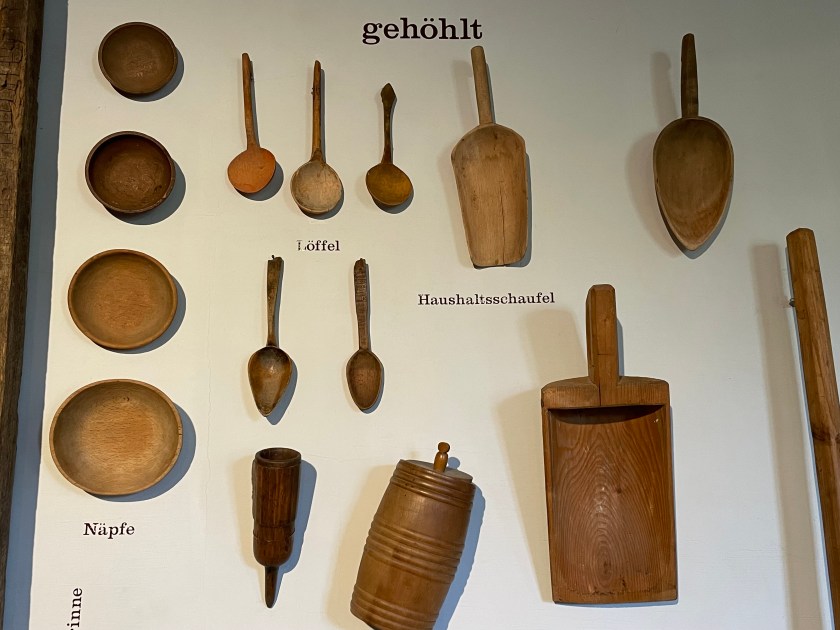
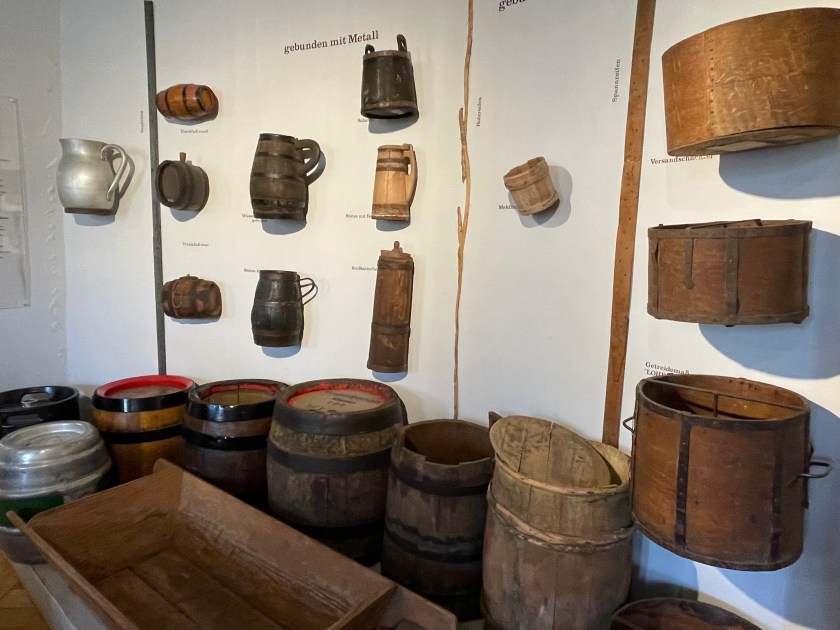
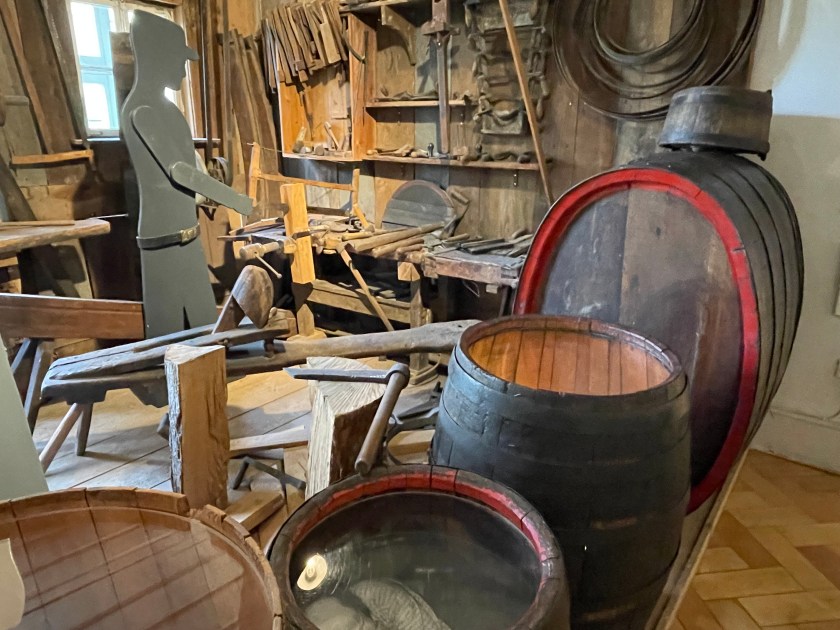
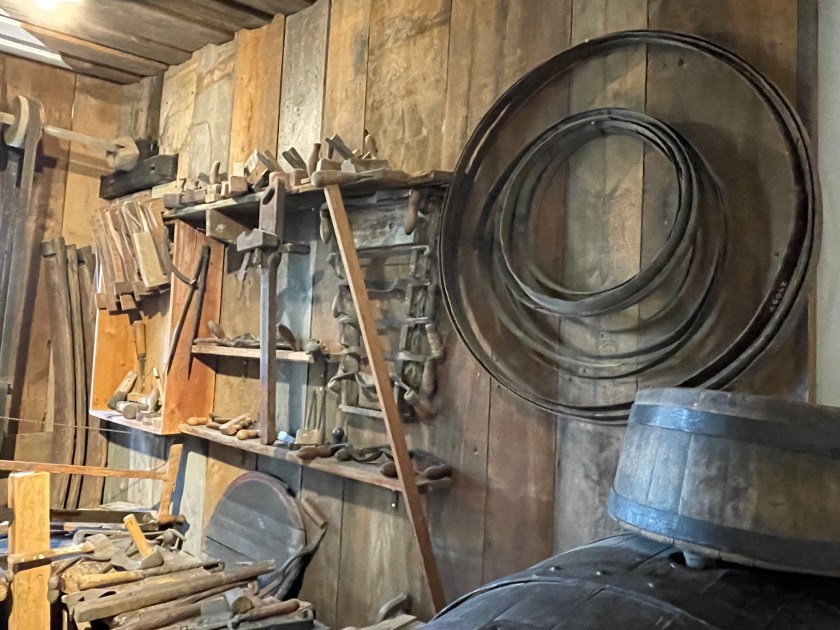
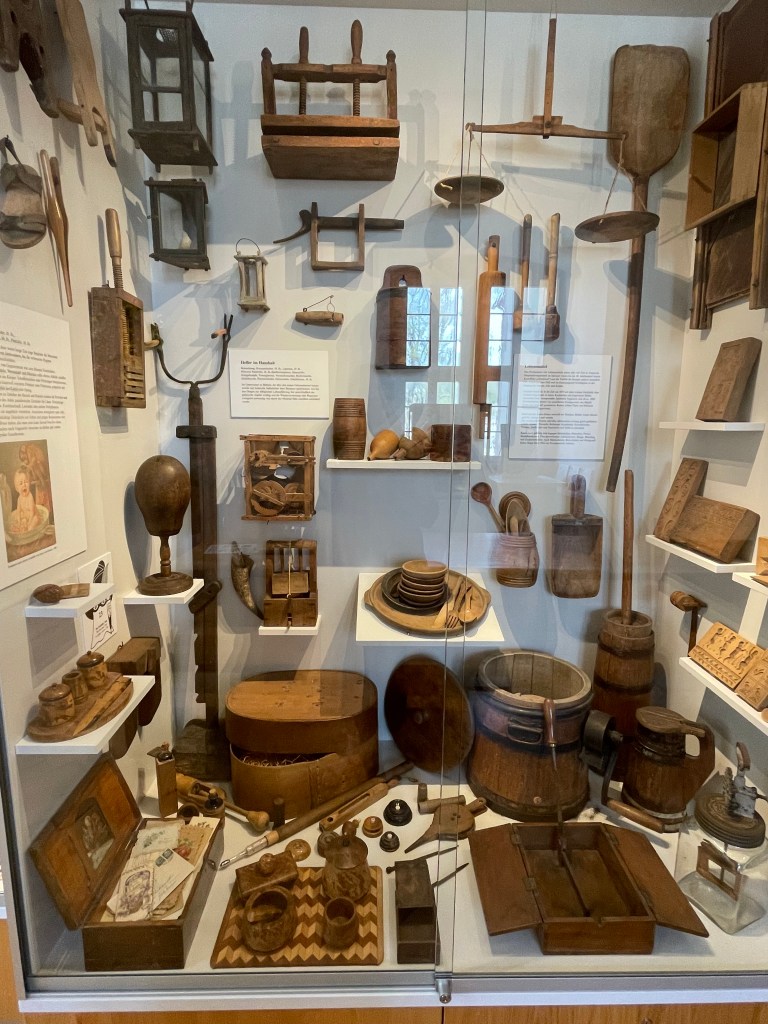
A barrel maker’s shop and more wooden household items.

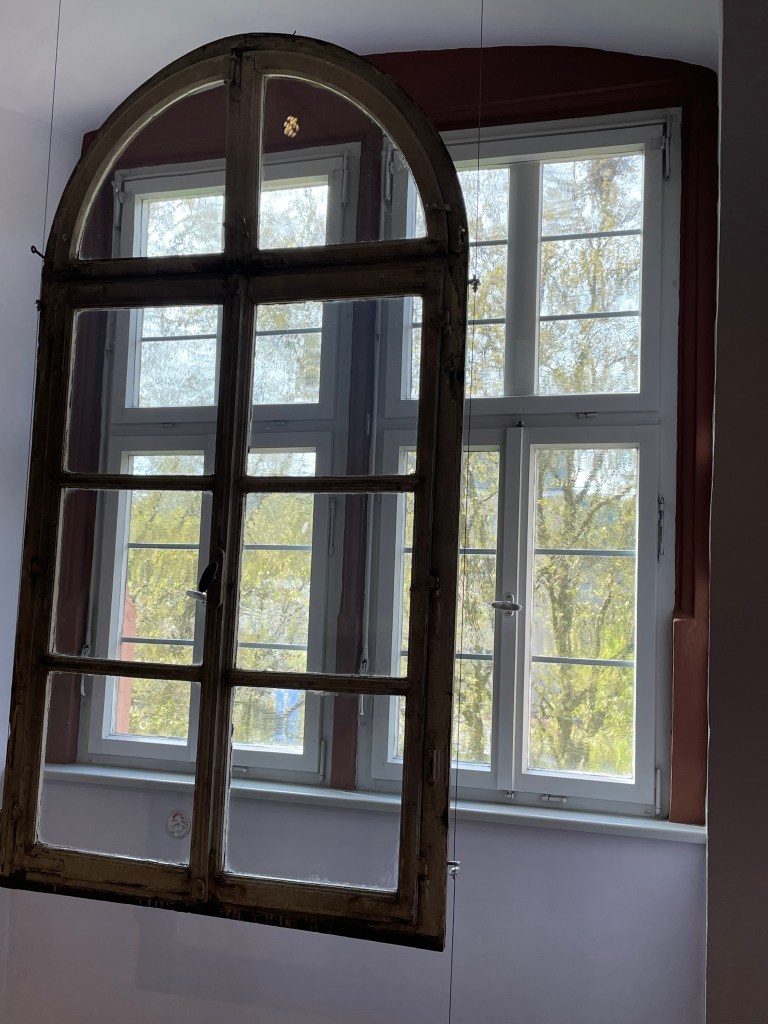
Mirror, Mirror, on the wall.

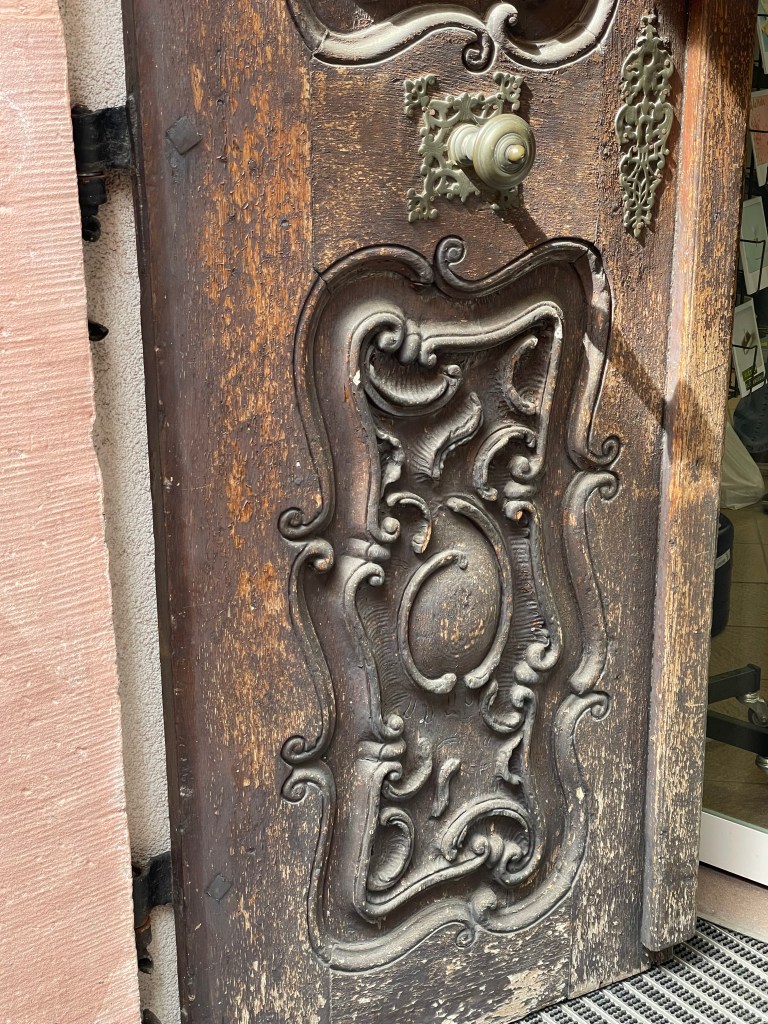
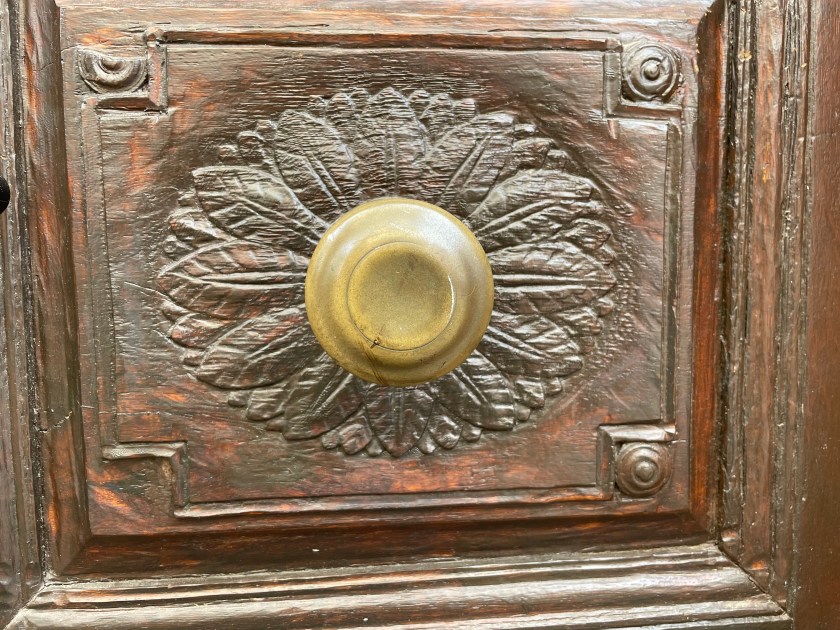
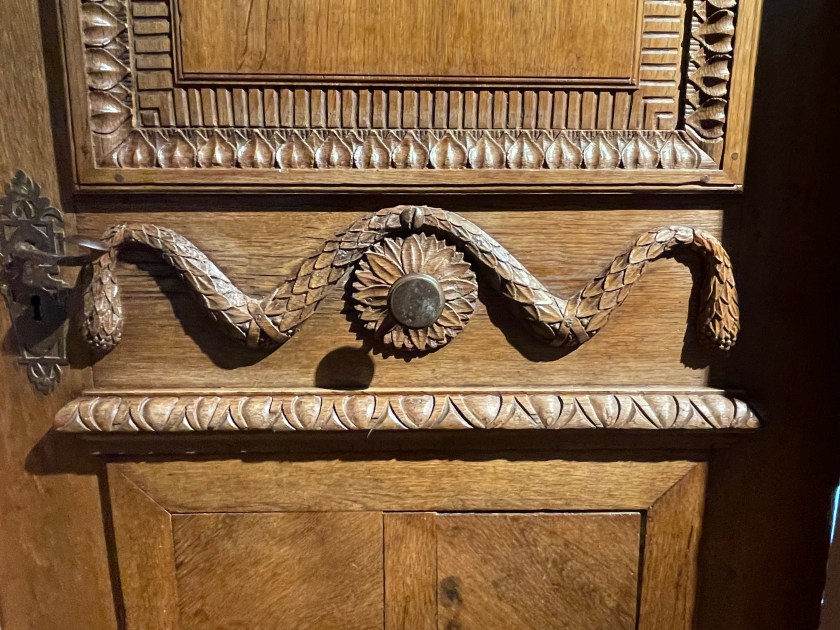
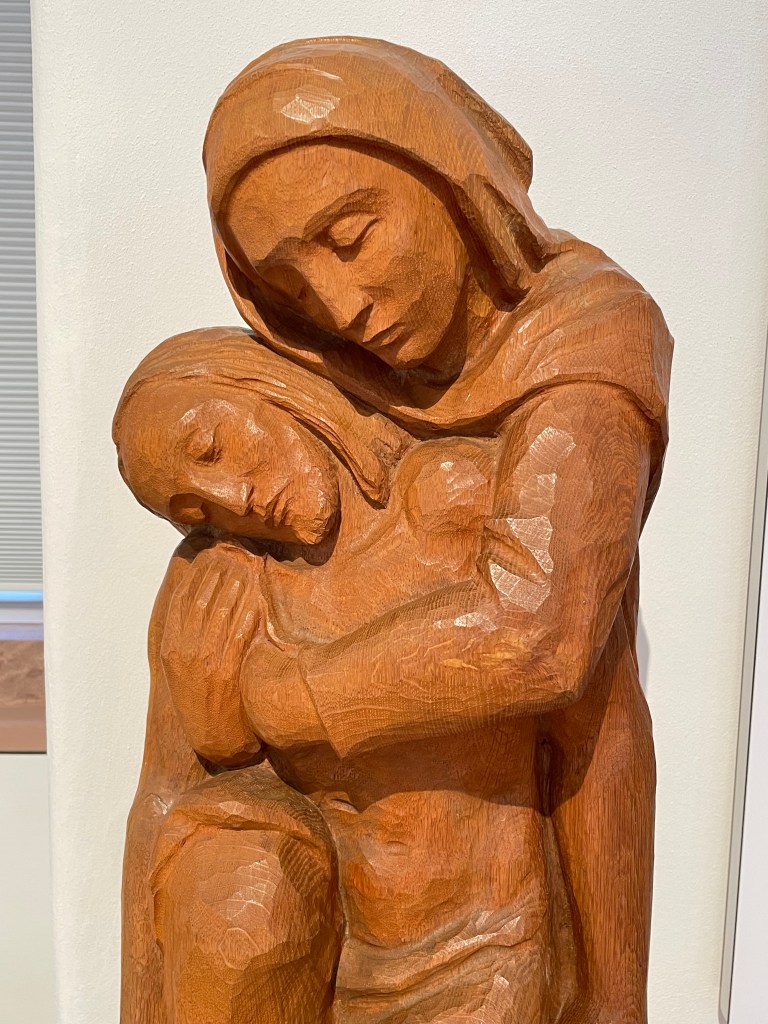
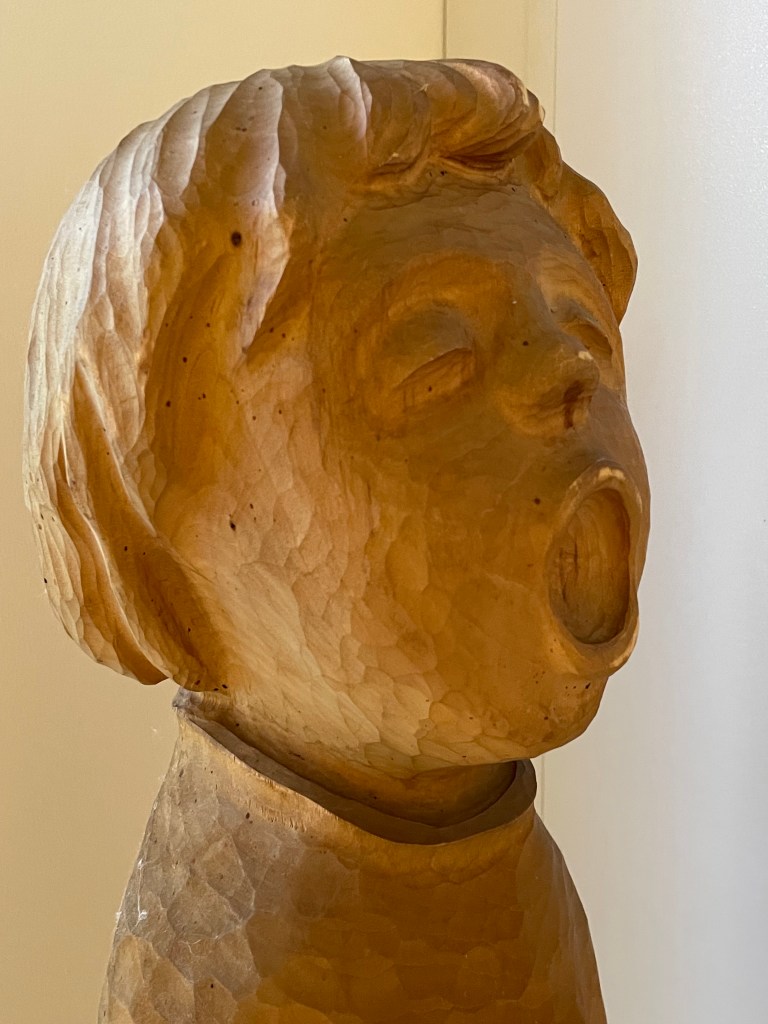
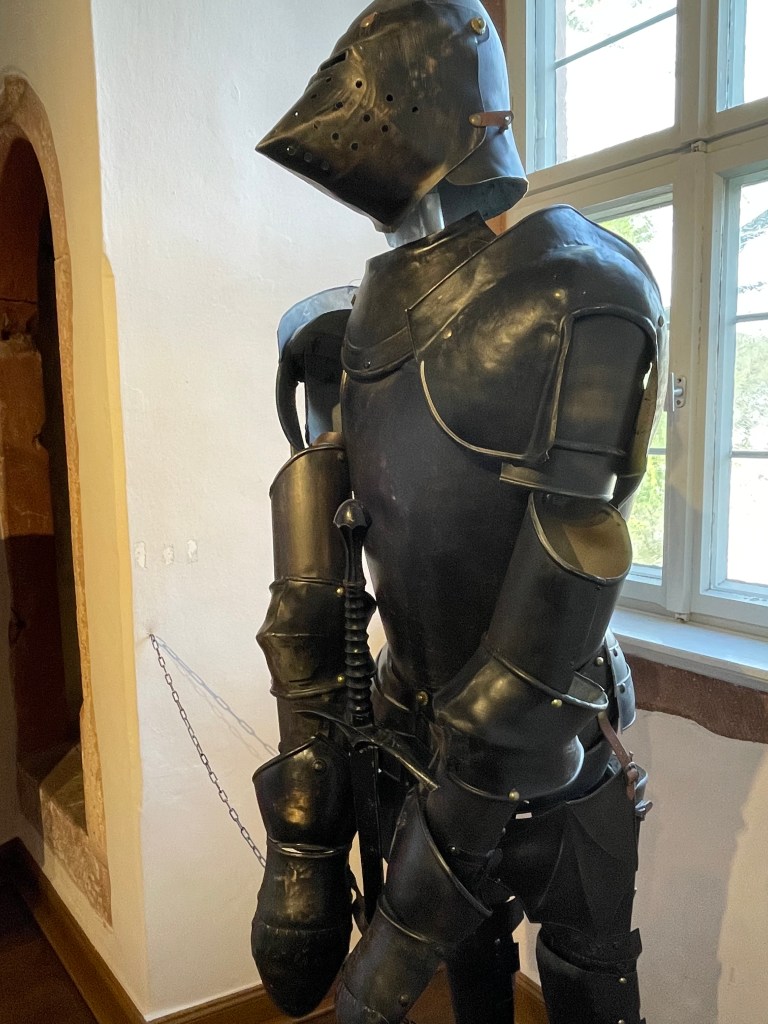
Beautiful carvings.

Displays of children’s toys:

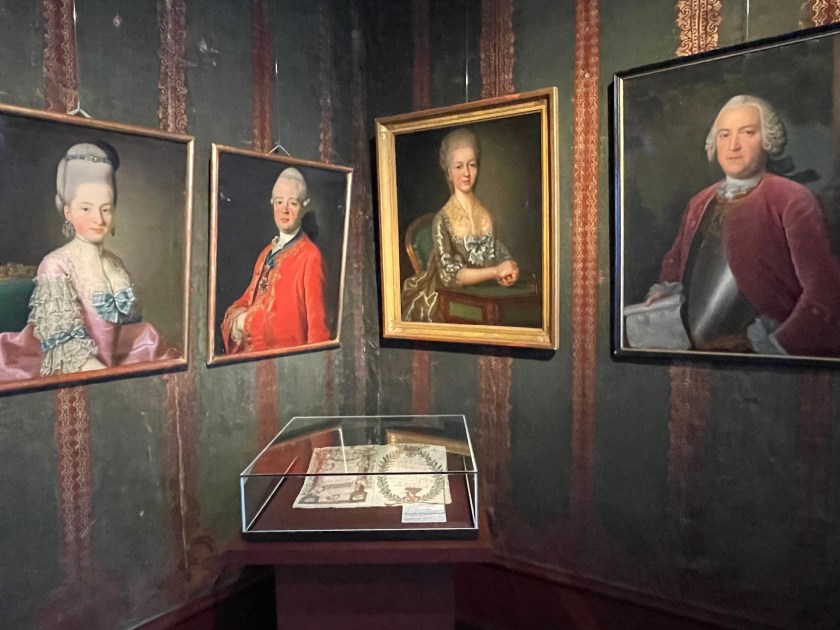
People who lived here:

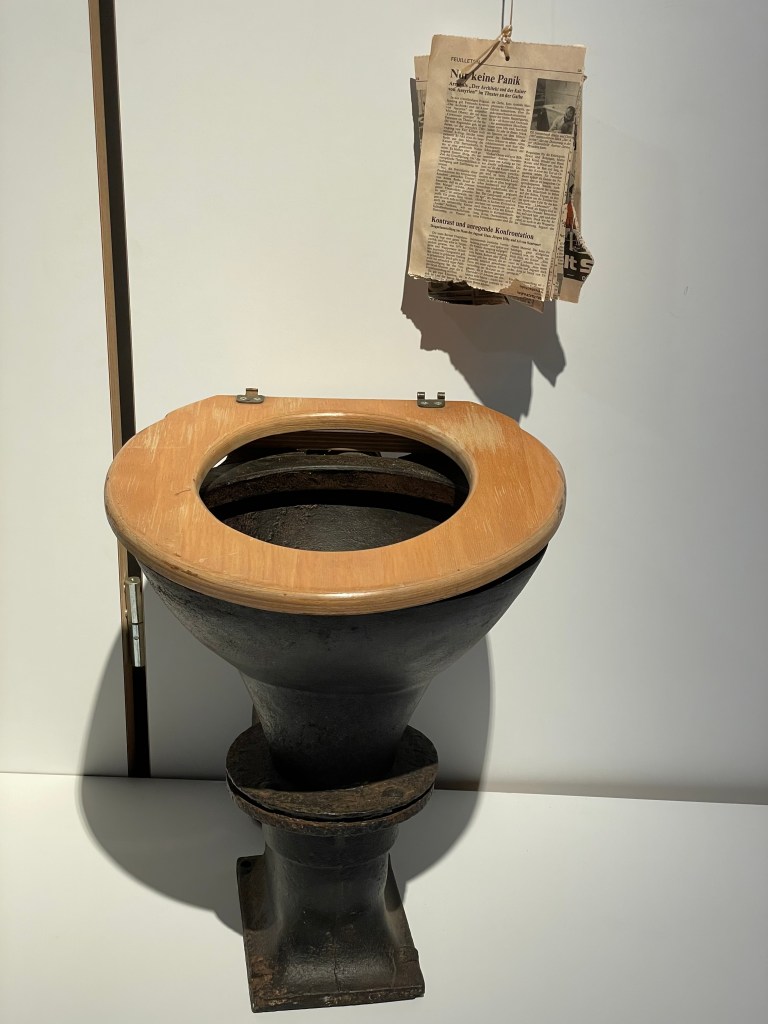
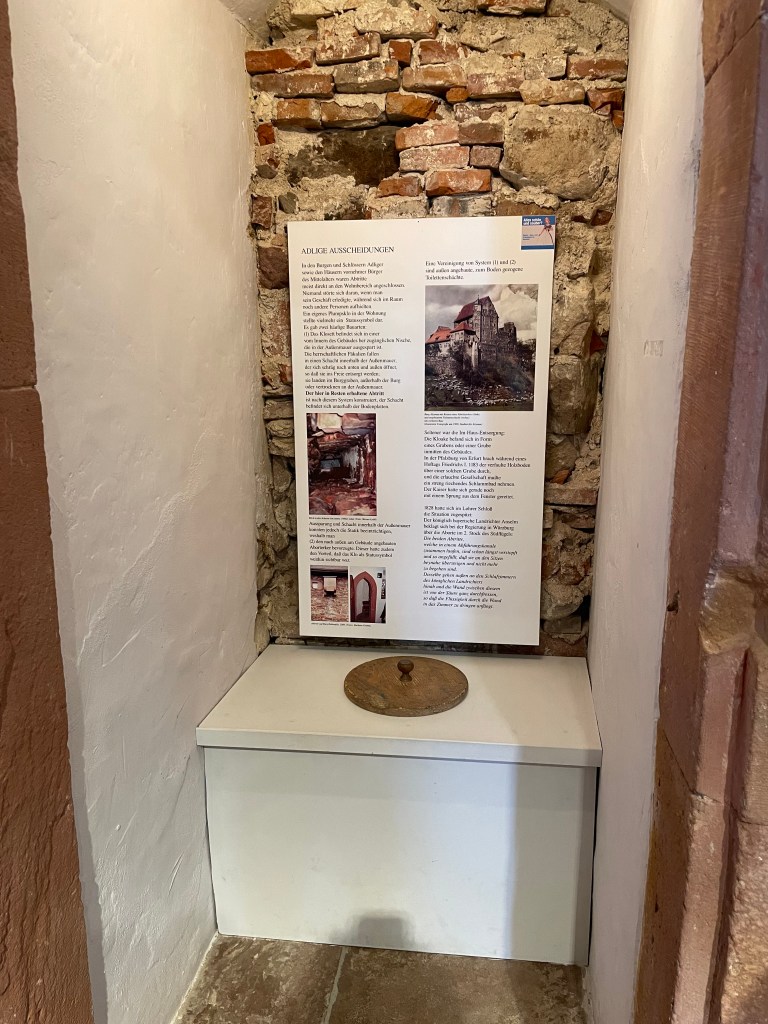
An indoor toilet:

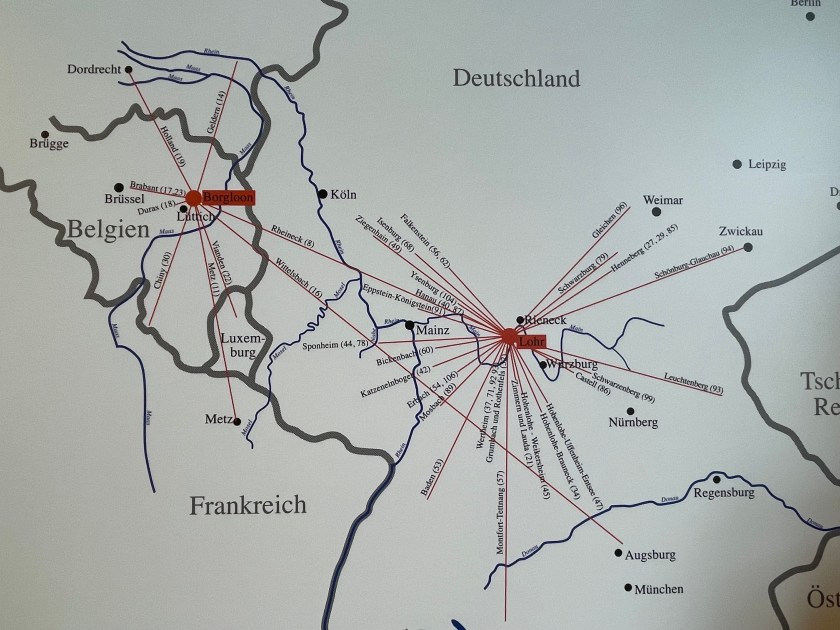
Lohr was once in the crossroads.

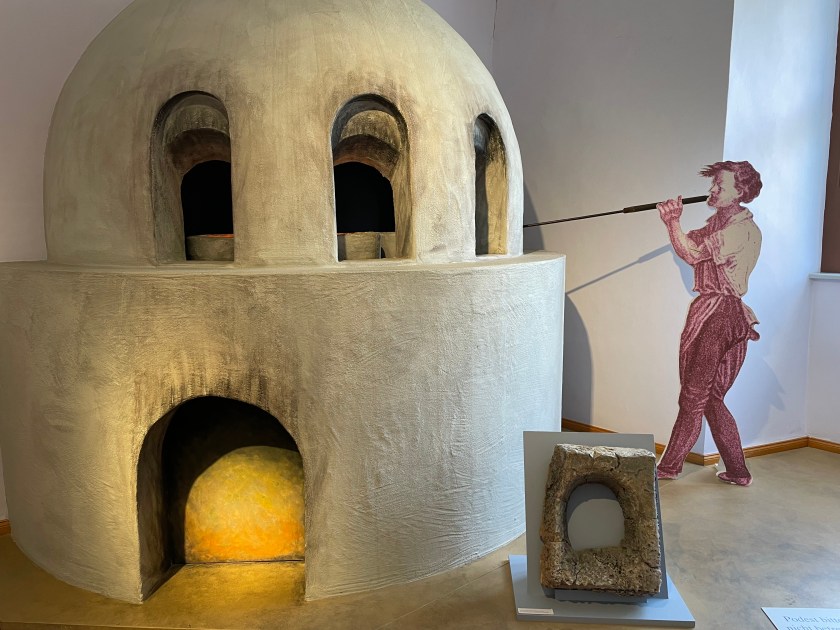
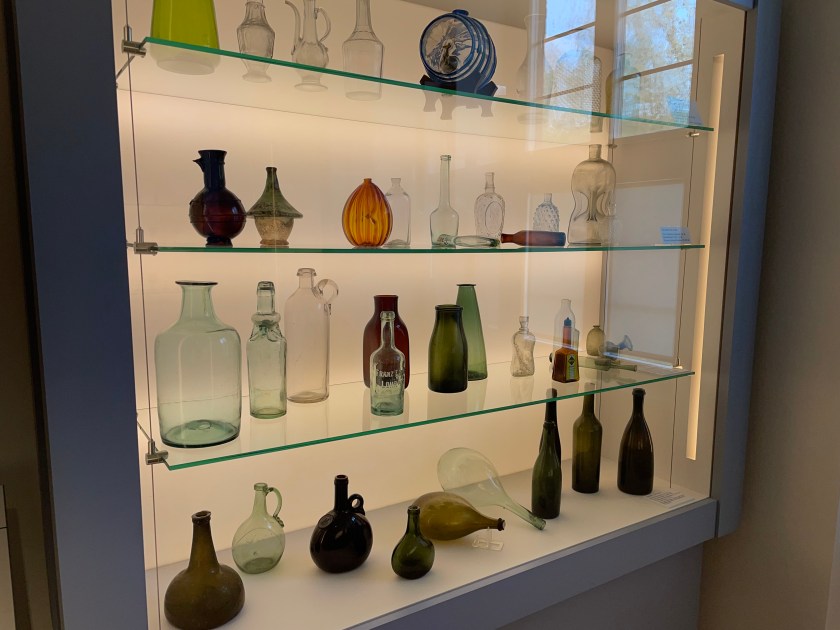
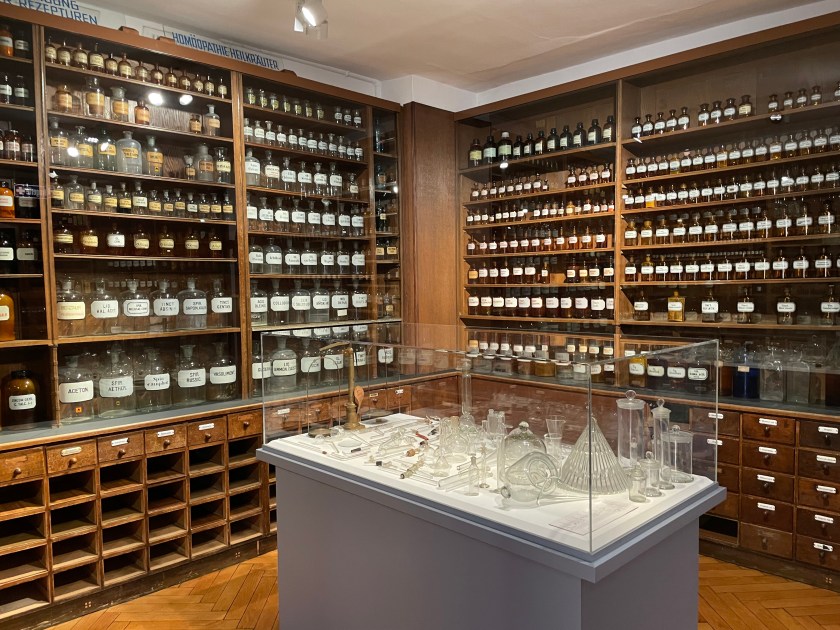
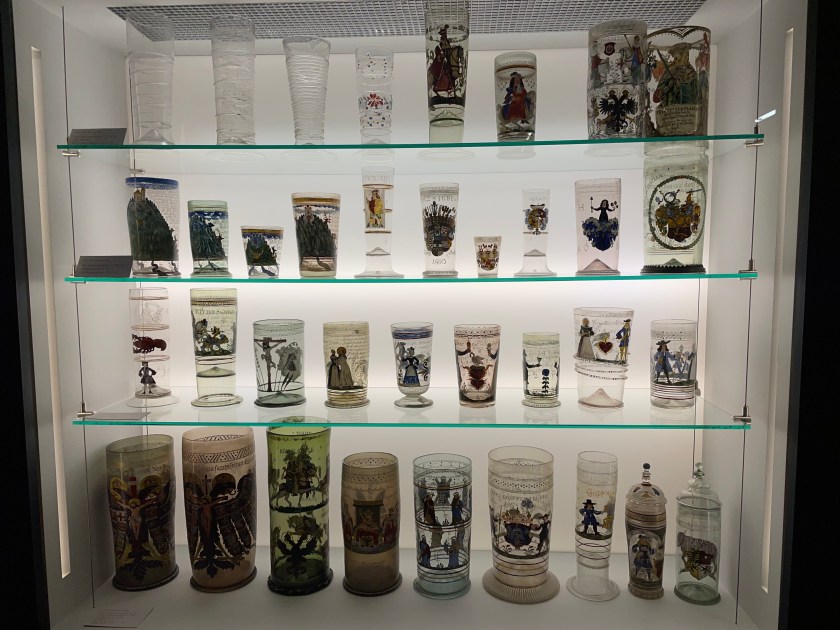
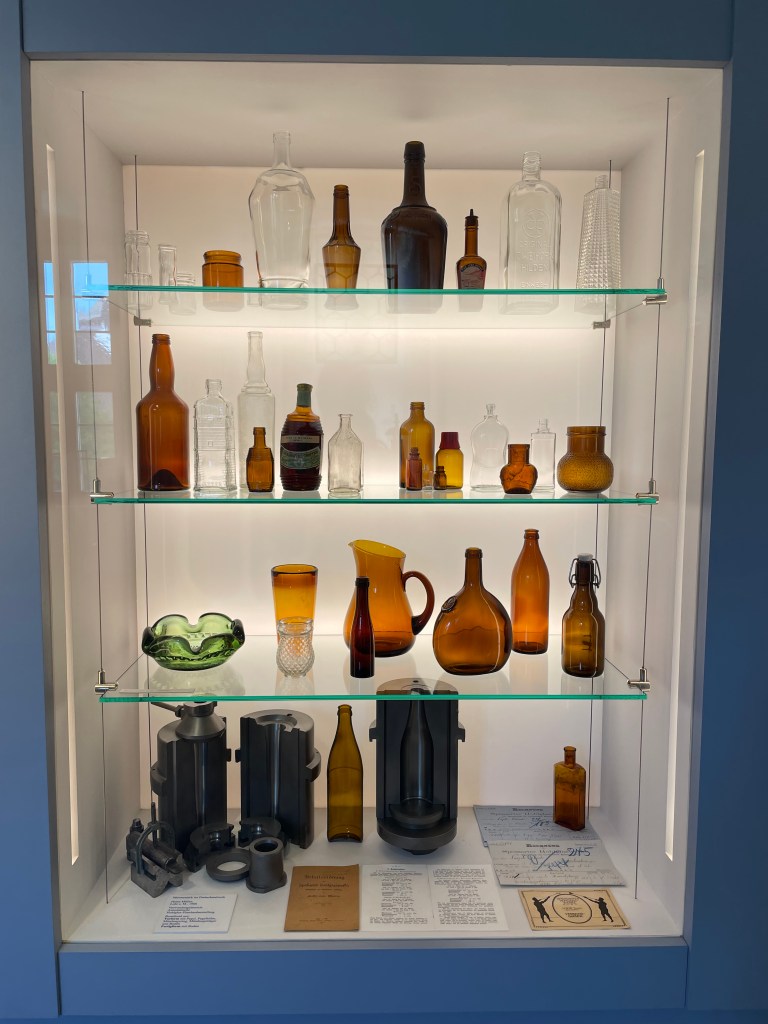
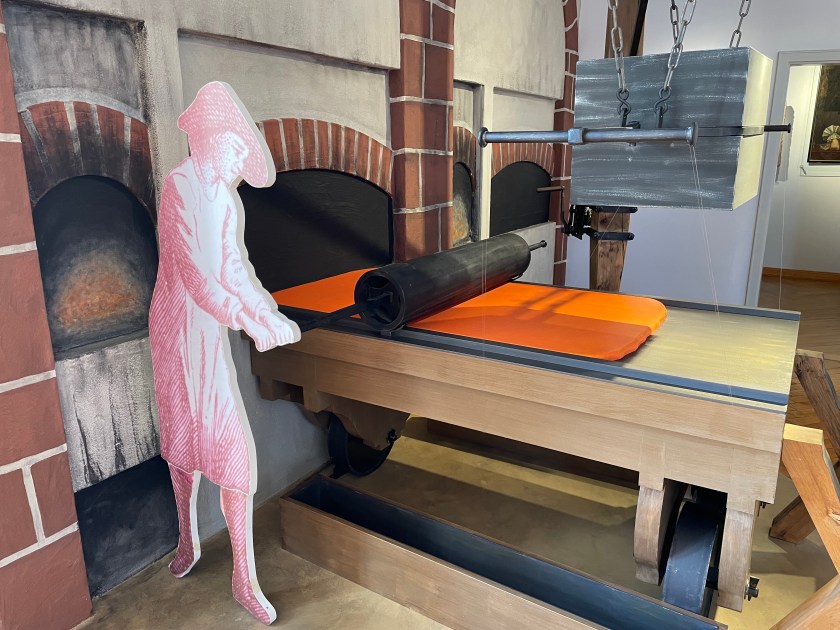
Lohr is also known for glass making.

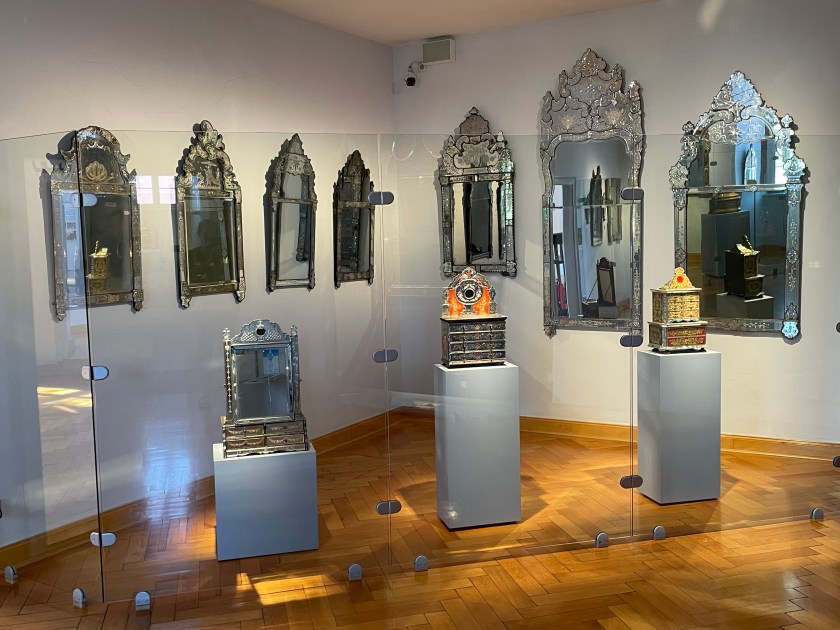
And mirror making.  Fancy mirrors, like the Mirror, mirror, on the wall.

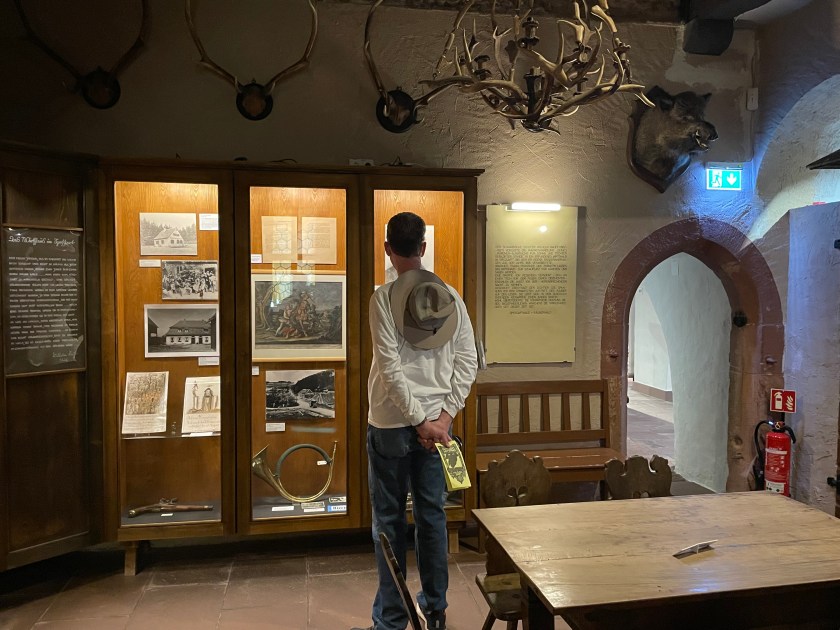
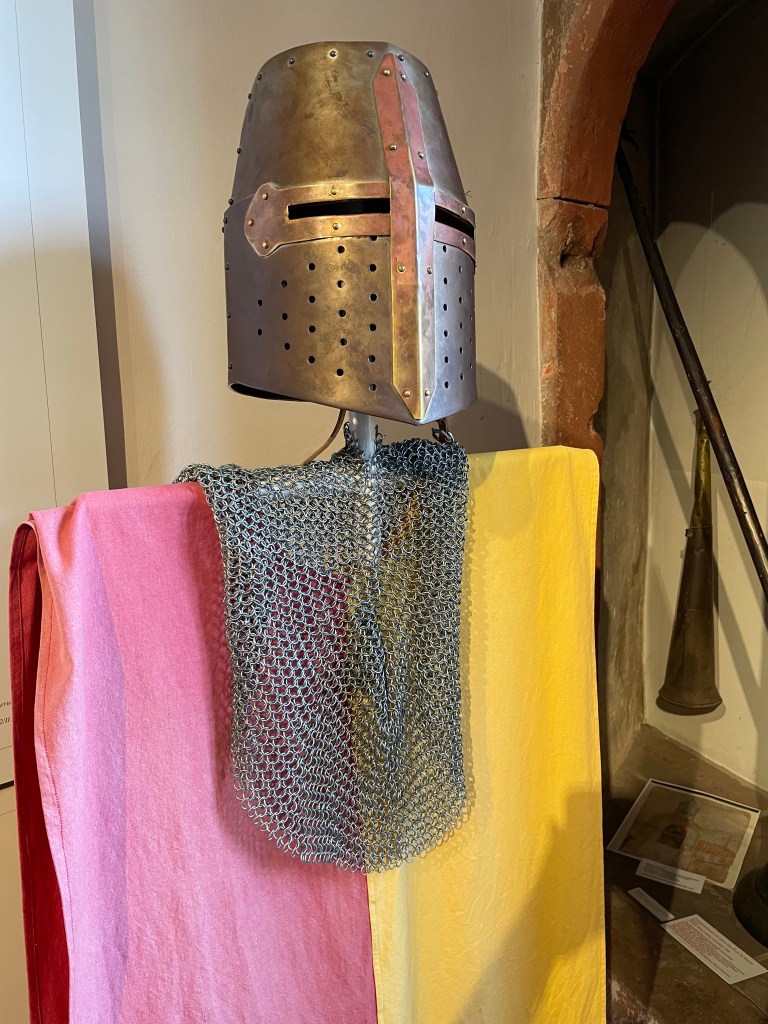
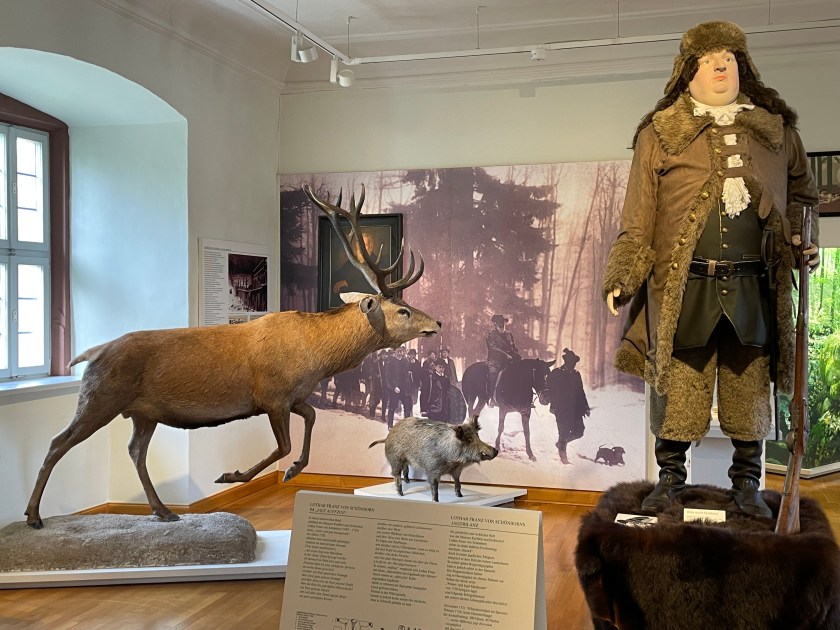
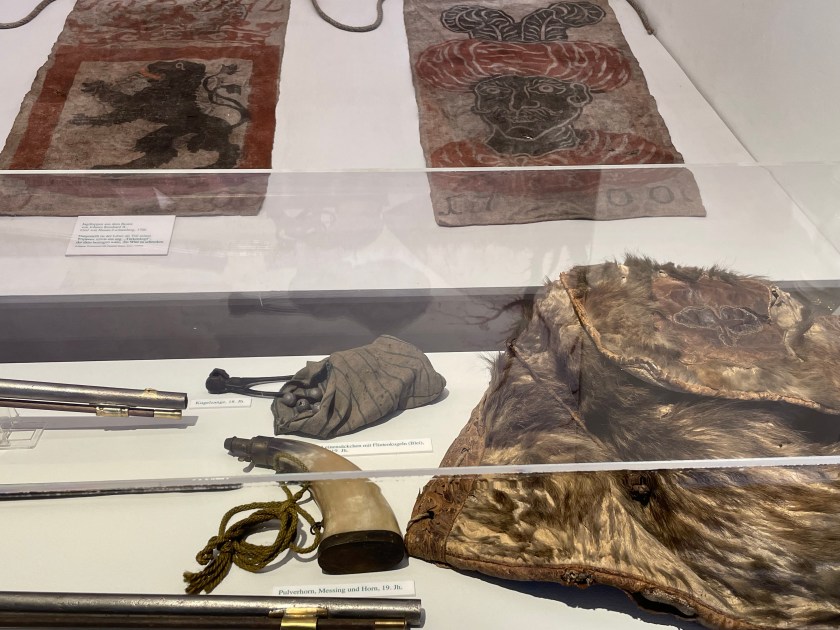
This room was about woodsmen and hunting.

What interesting things we saw!   It would’ve been nice to have another hour here.

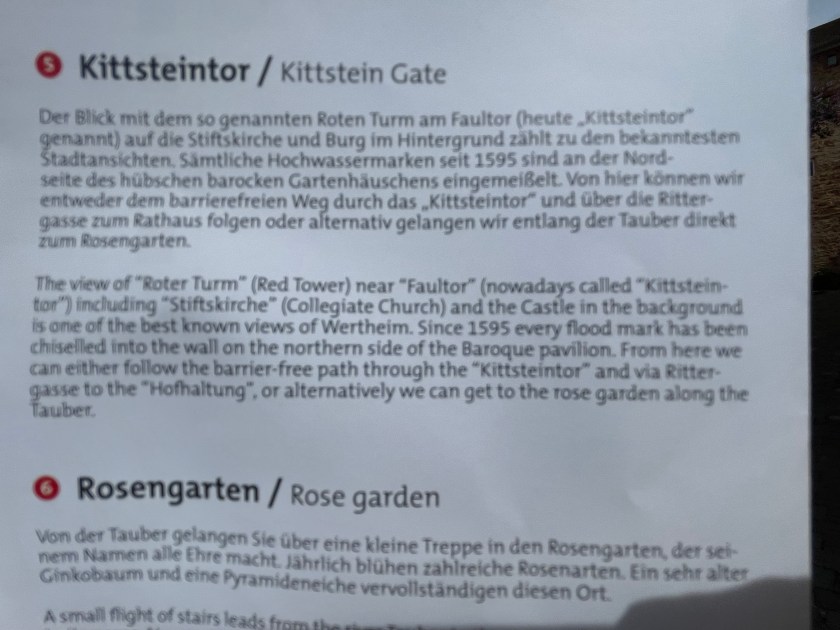
Wandering in Wertheim

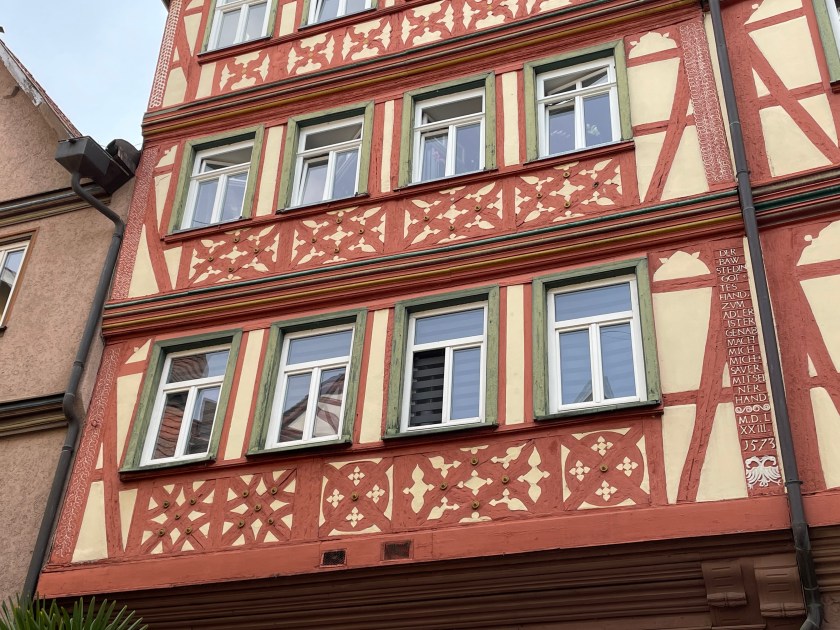
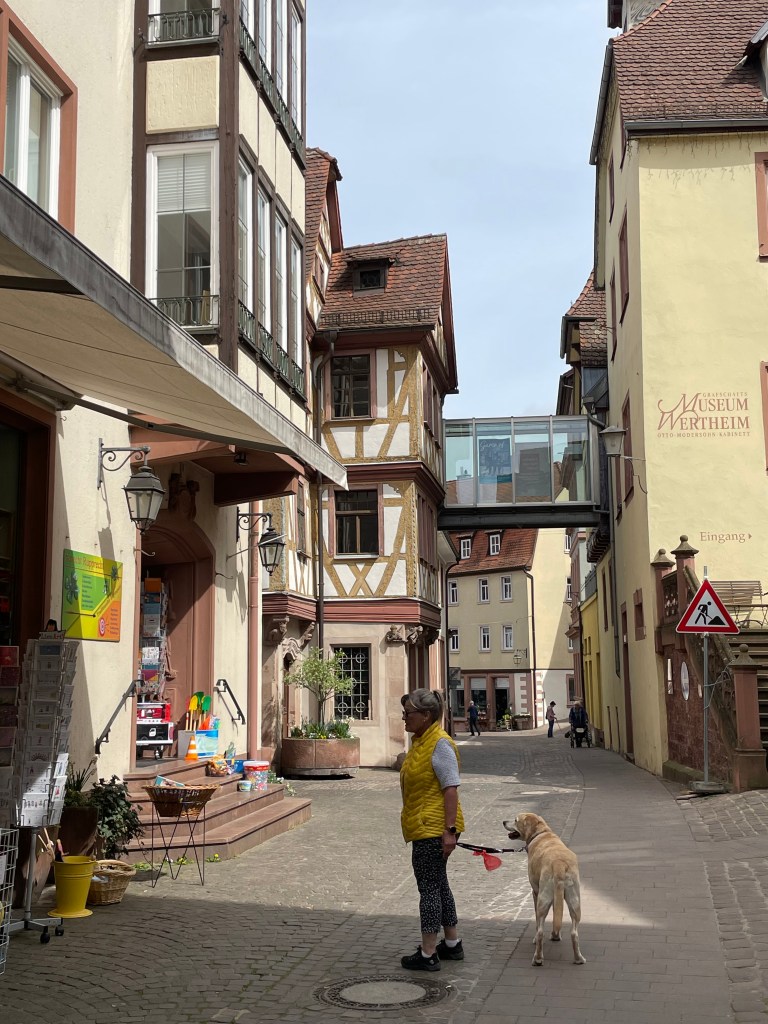
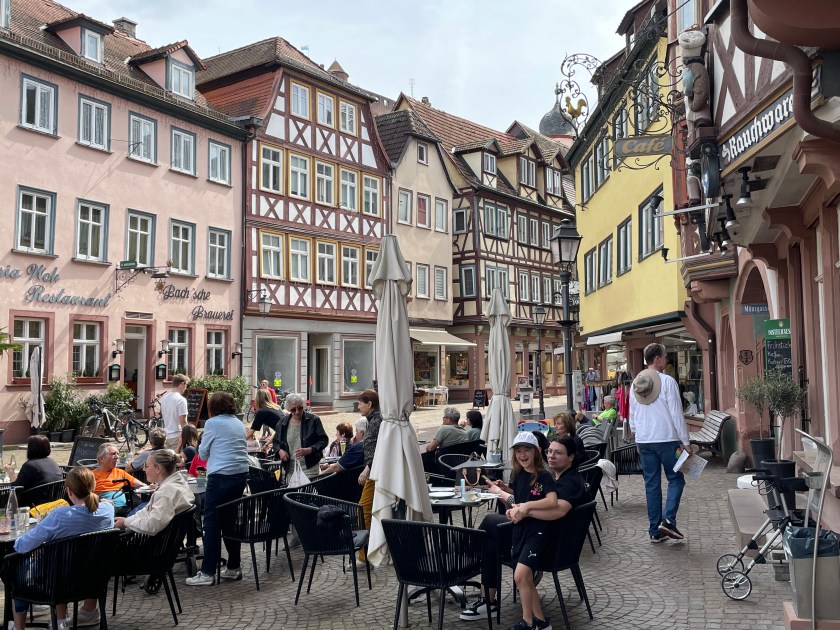
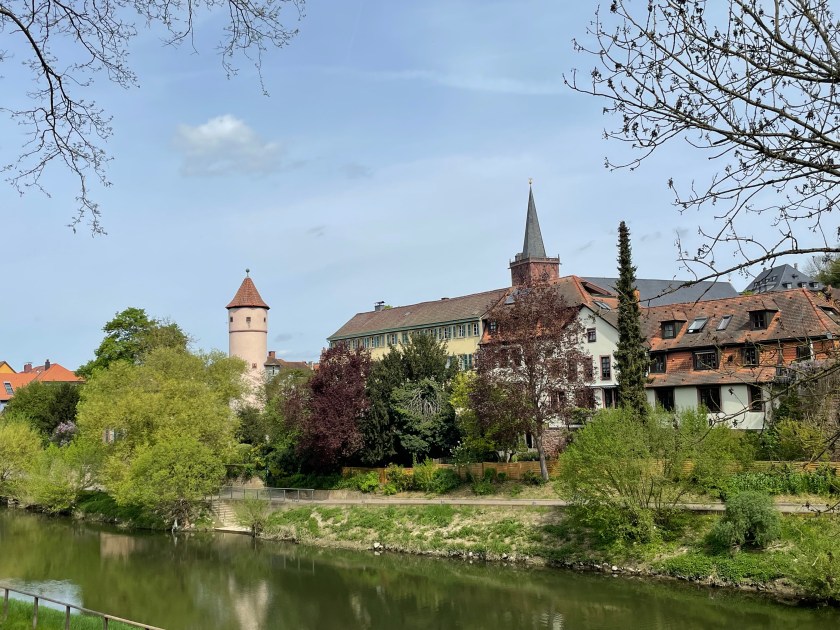
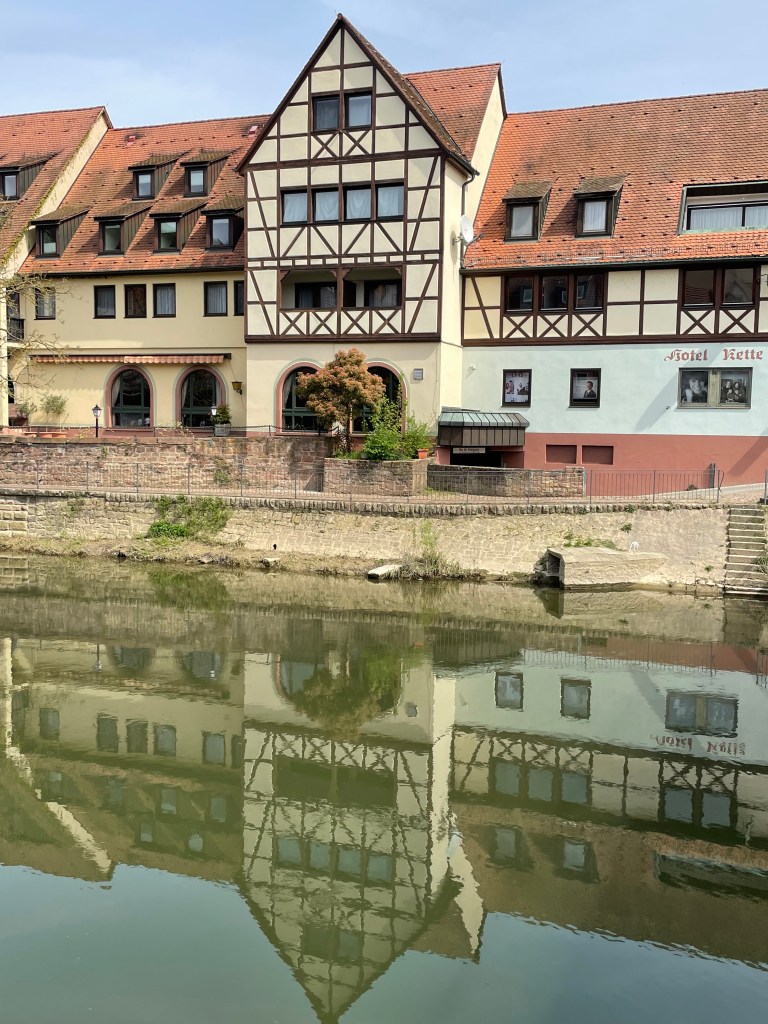
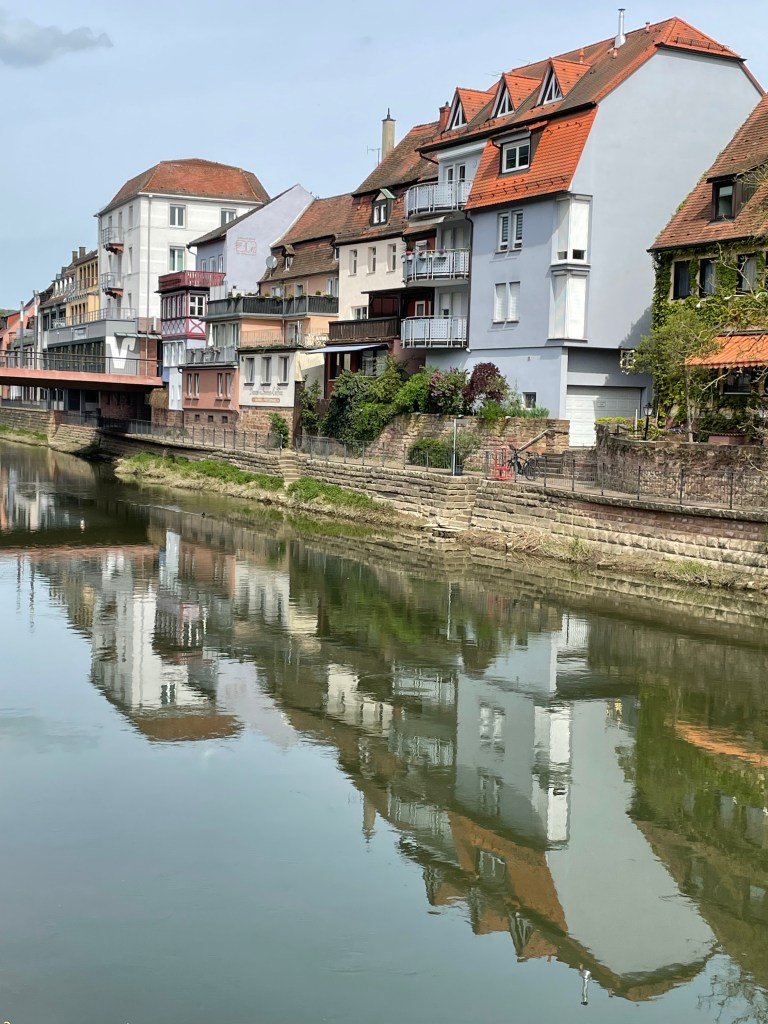
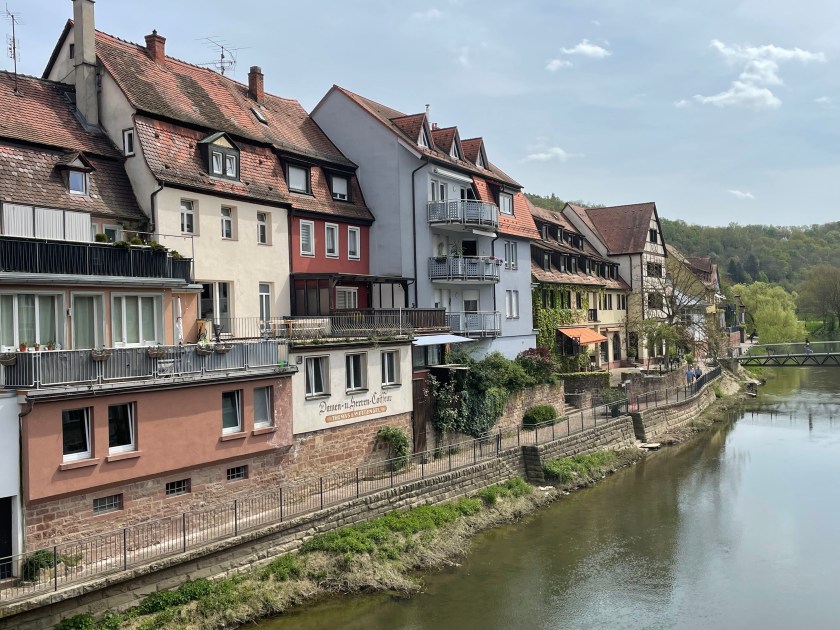
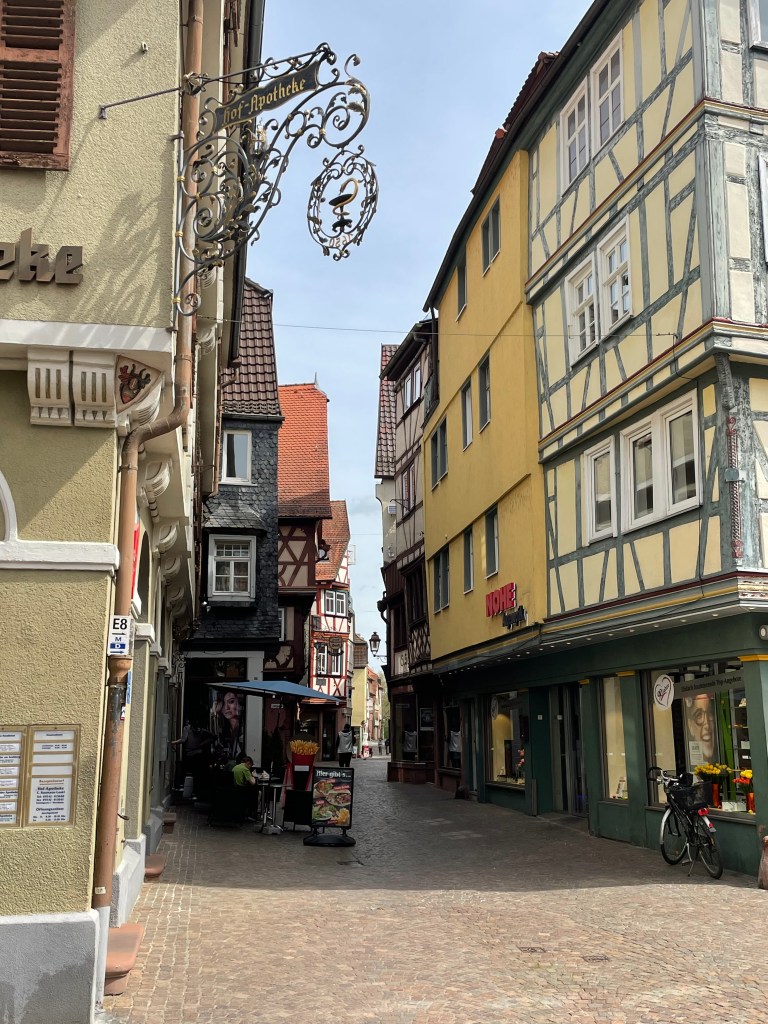
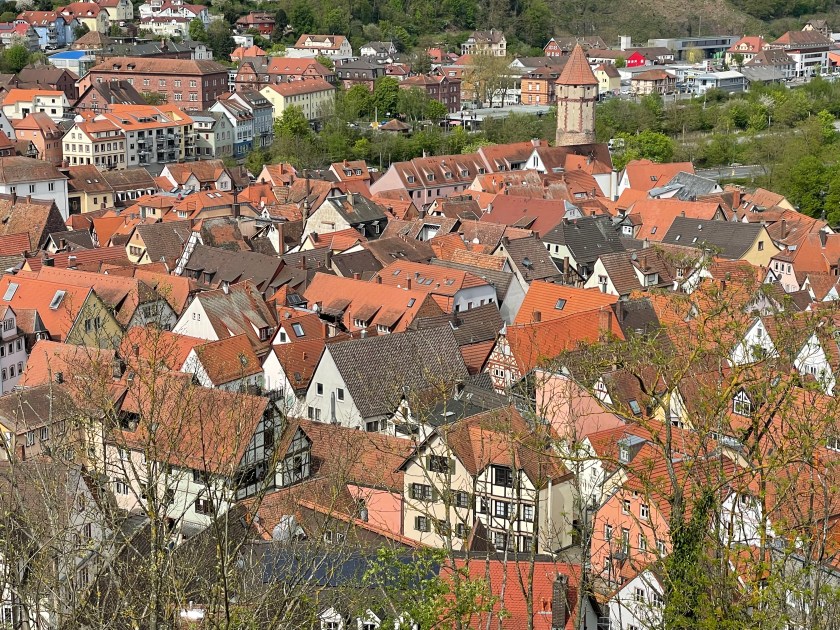
First of all, we LOVED Wertheim.  It has a little bit of everything–the castle, the churches, the old half-timber homes, the rivers, the flower boxes, the people-filled plaza, narrow streets and lots of good history.  This is our kind of place.
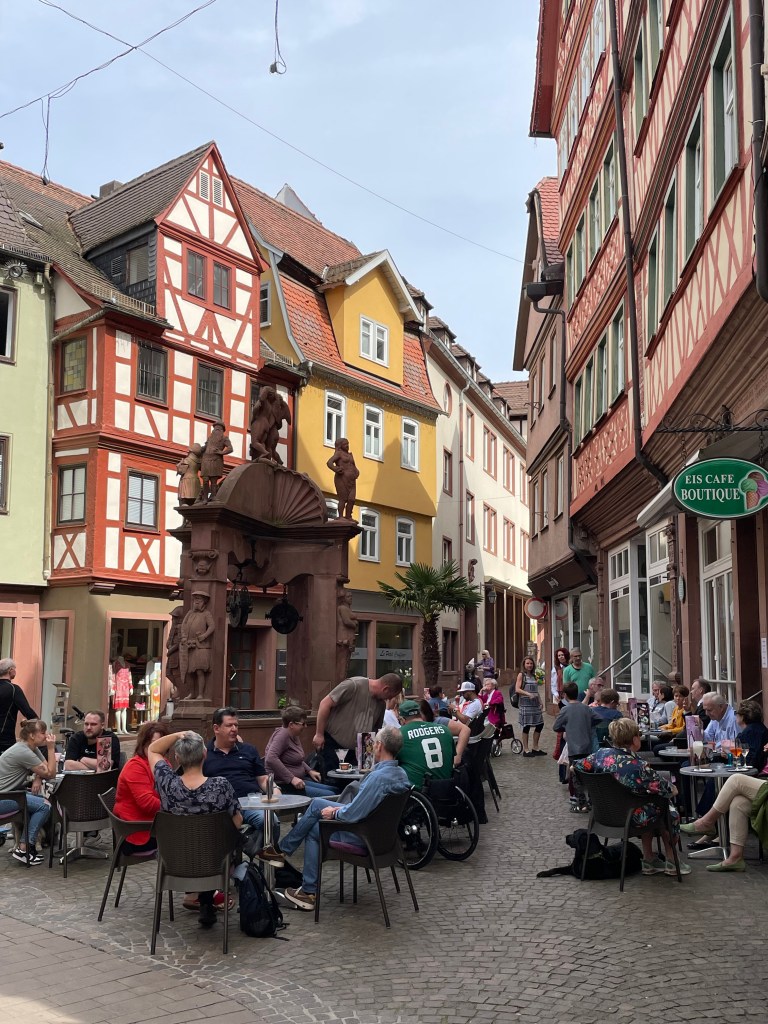
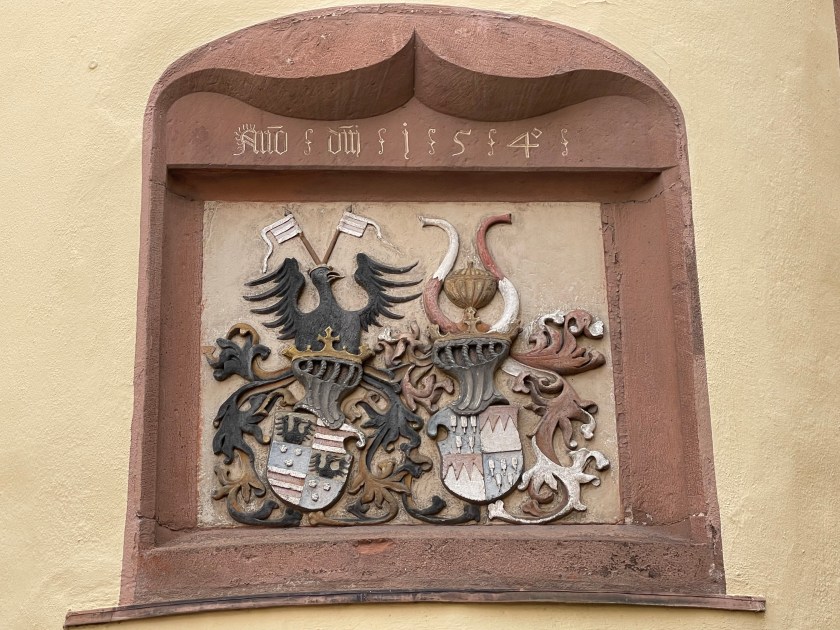
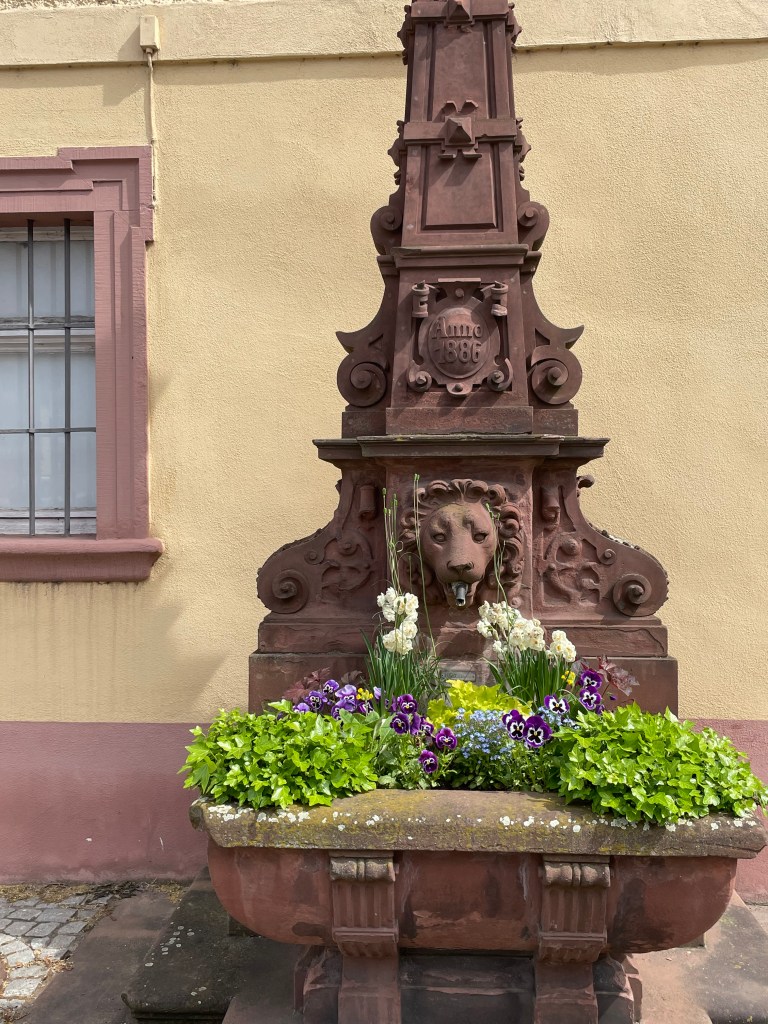
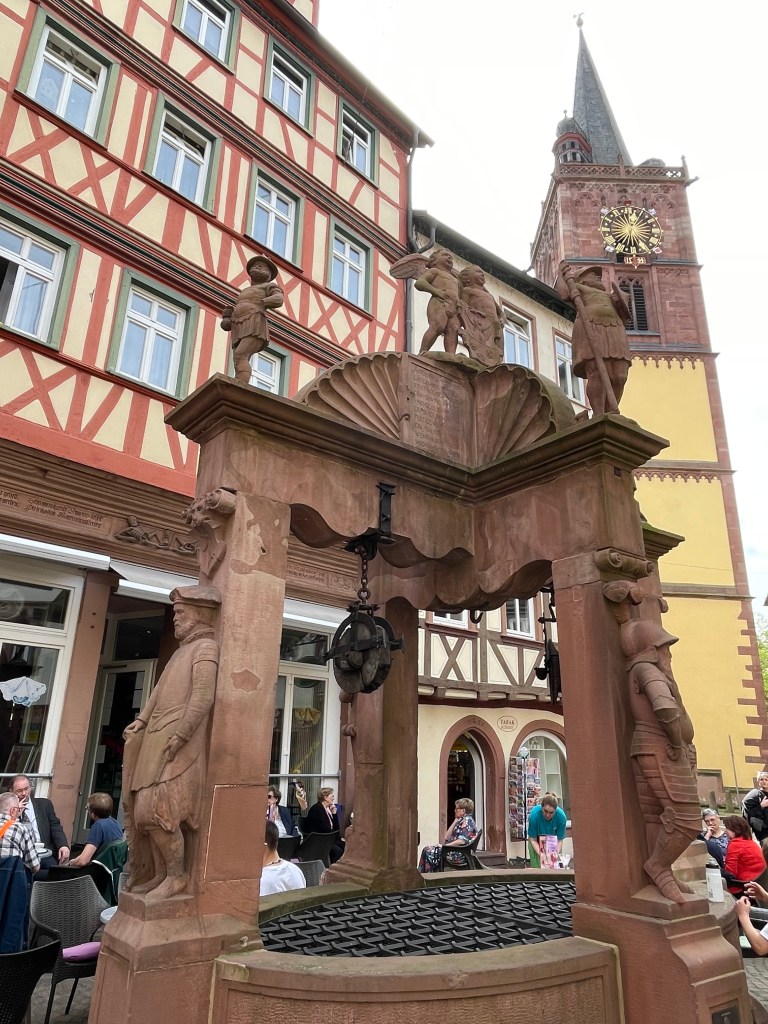
This is the Engelsbrunnen (angel well), created in 1574.  The two angels on top are holding the coat of arms of the shire.
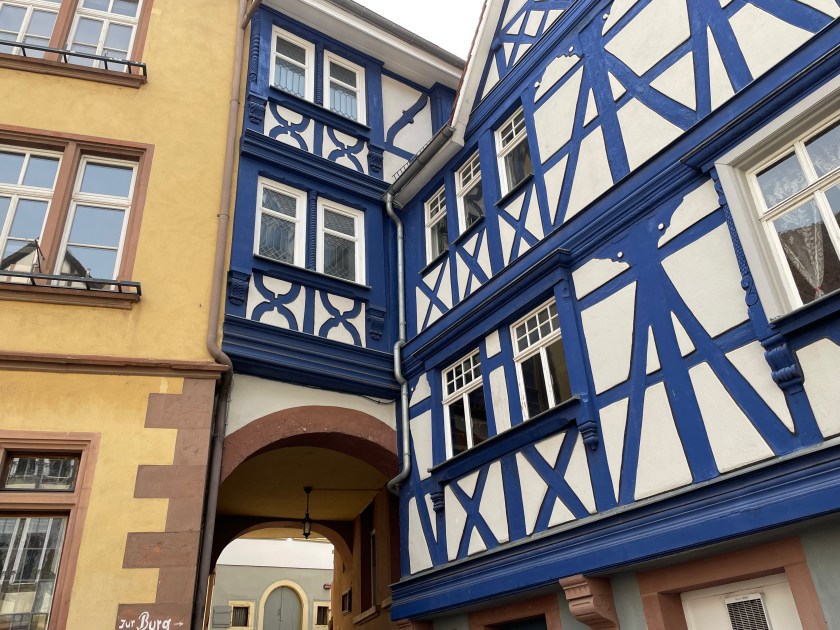
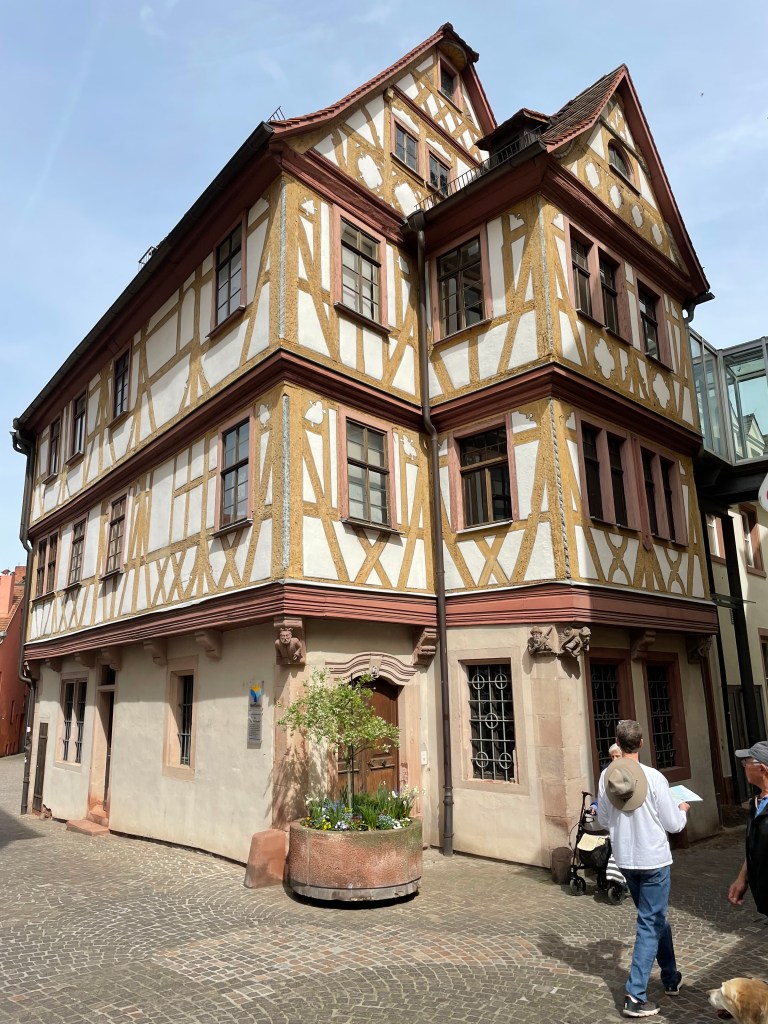
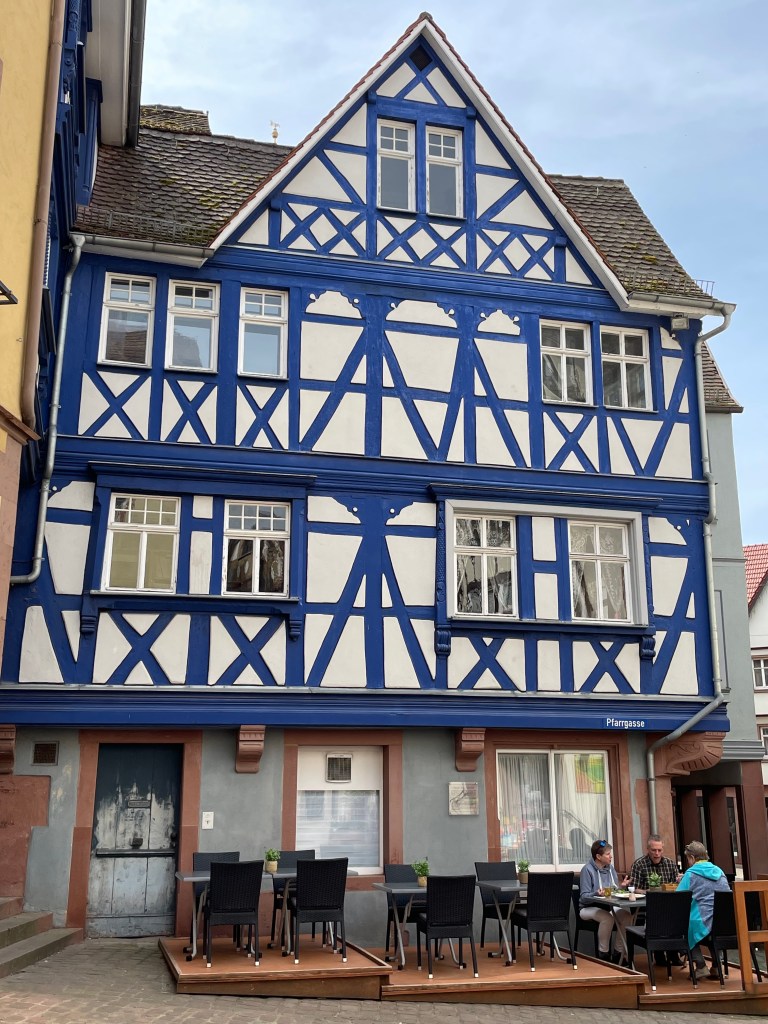
The “Blue House” built in 1593 is one of the half-timbered houses in Wertheim’s old town. “Smalt” was used for the blue color in the framework. Smalt is a glass with cobalt in it. When finely grated, makes a pigment. It’s a very expensive process that would have showcased a landlord’s wealth. It was beautiful!
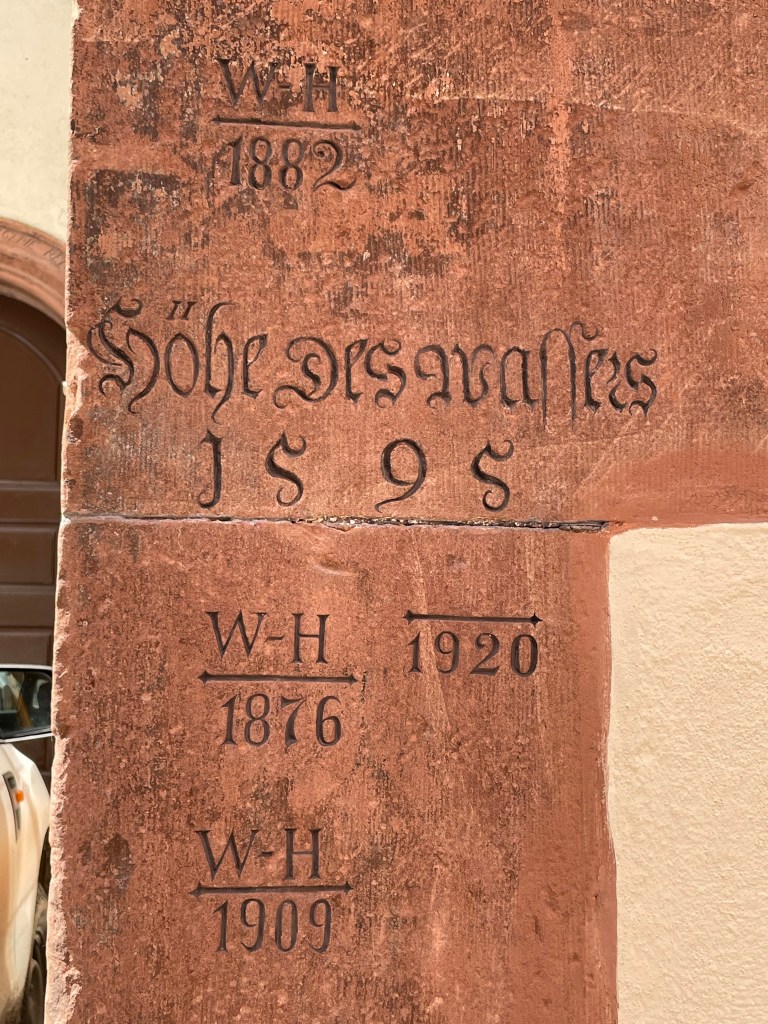
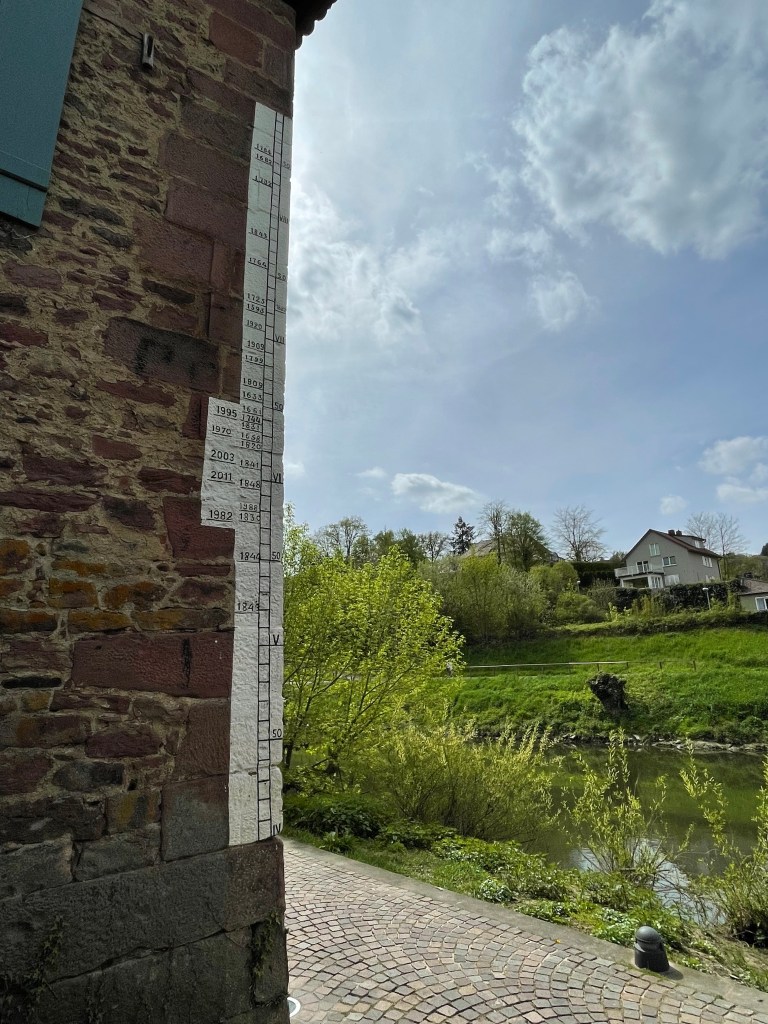
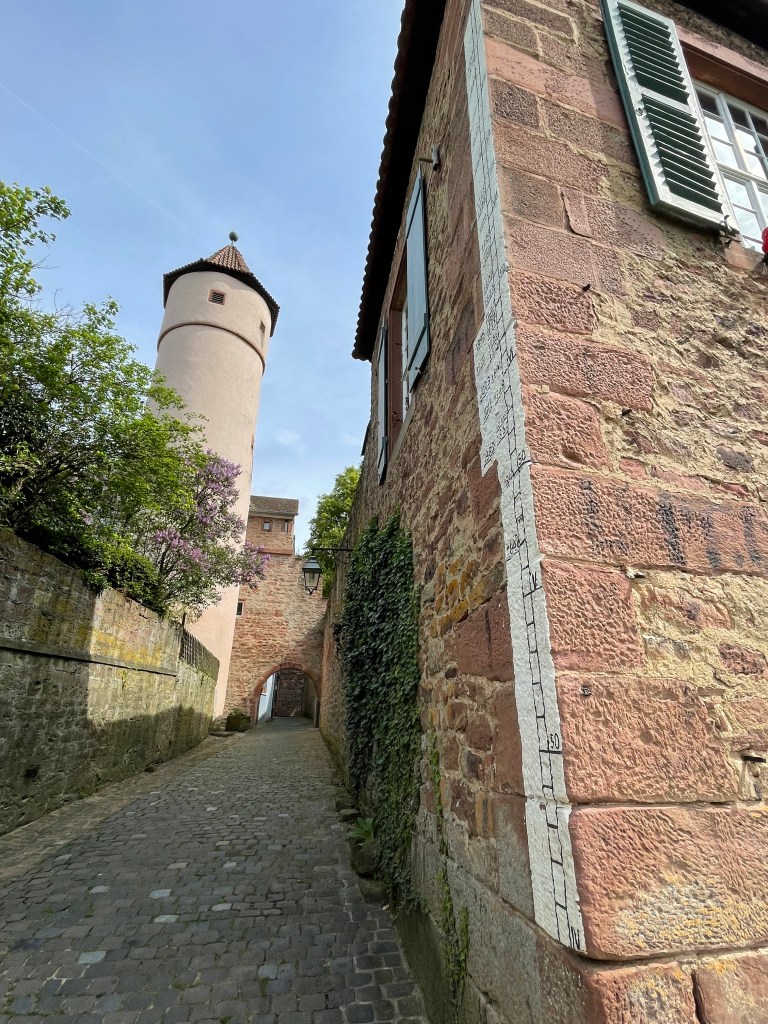
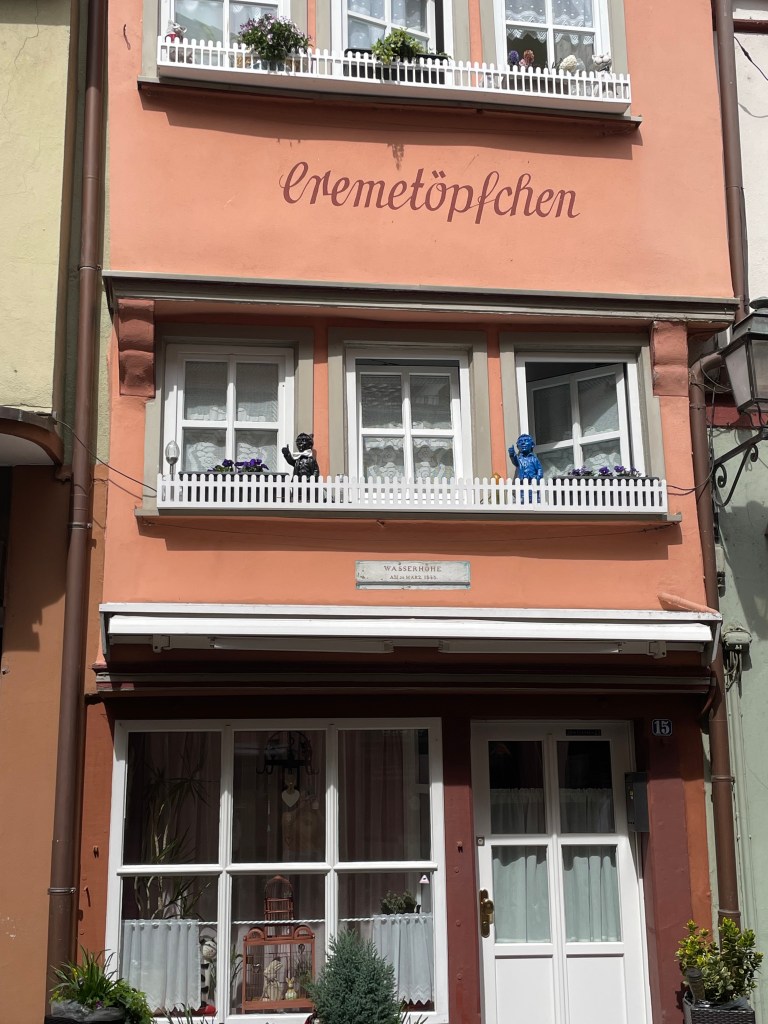
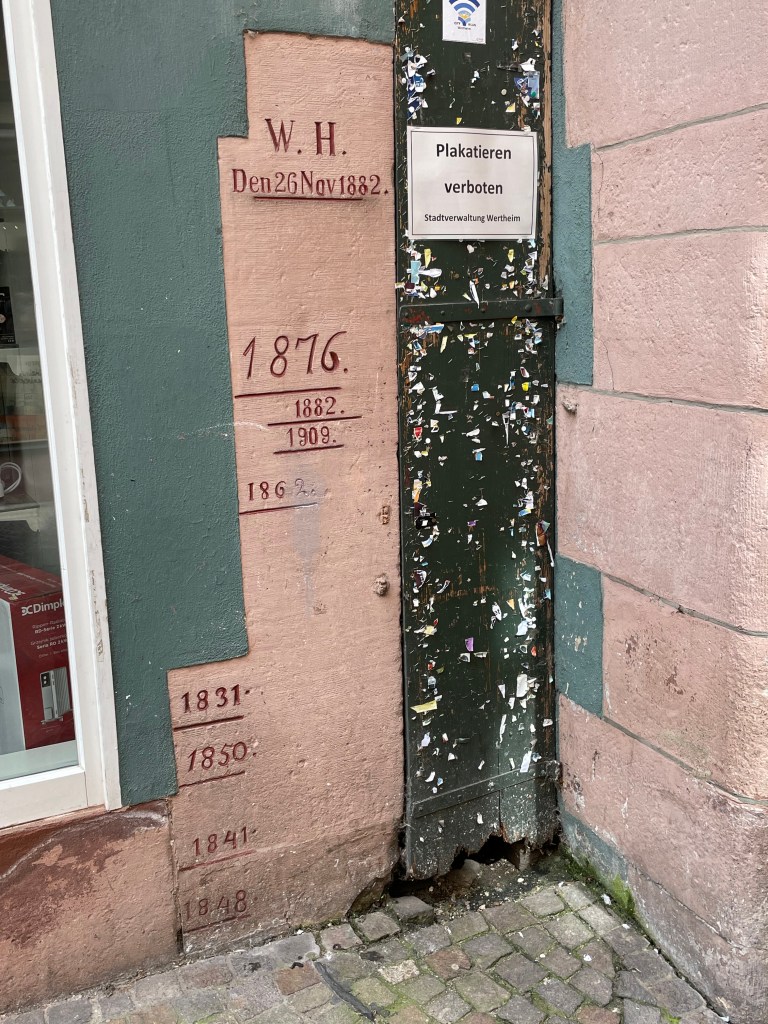
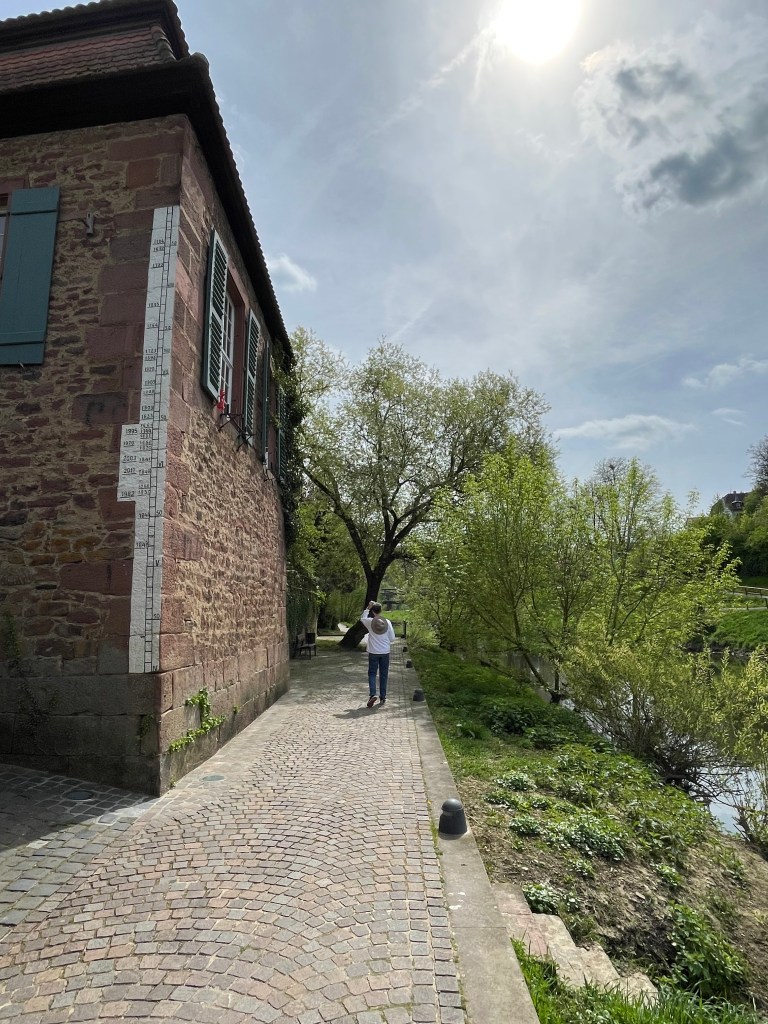
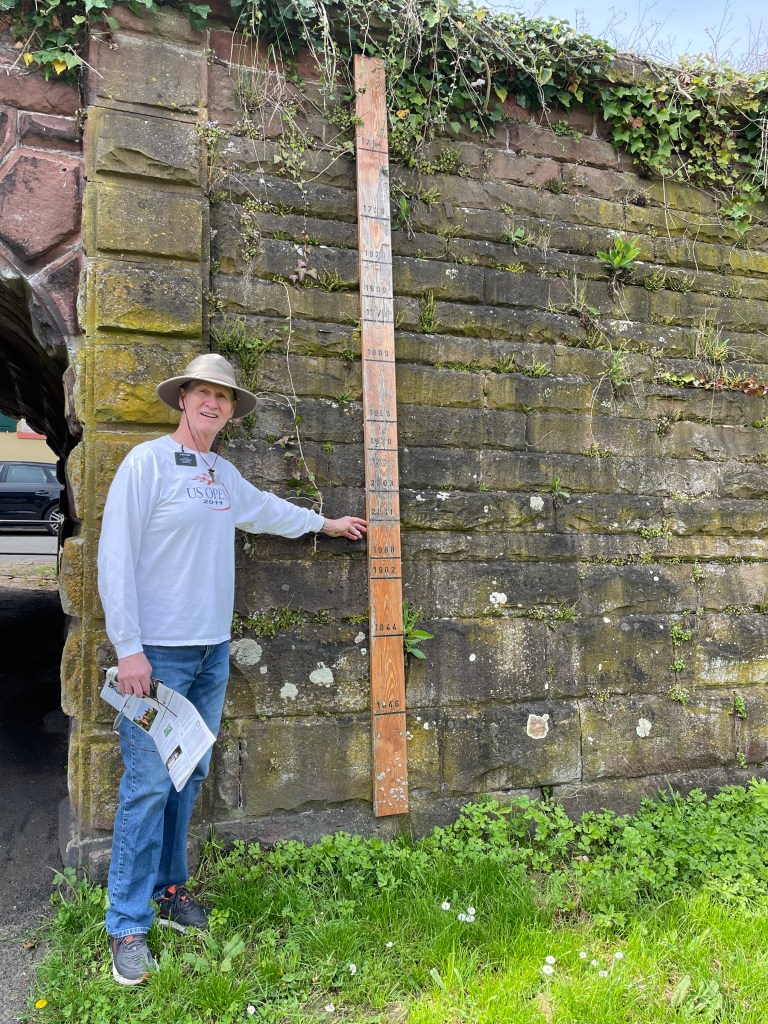
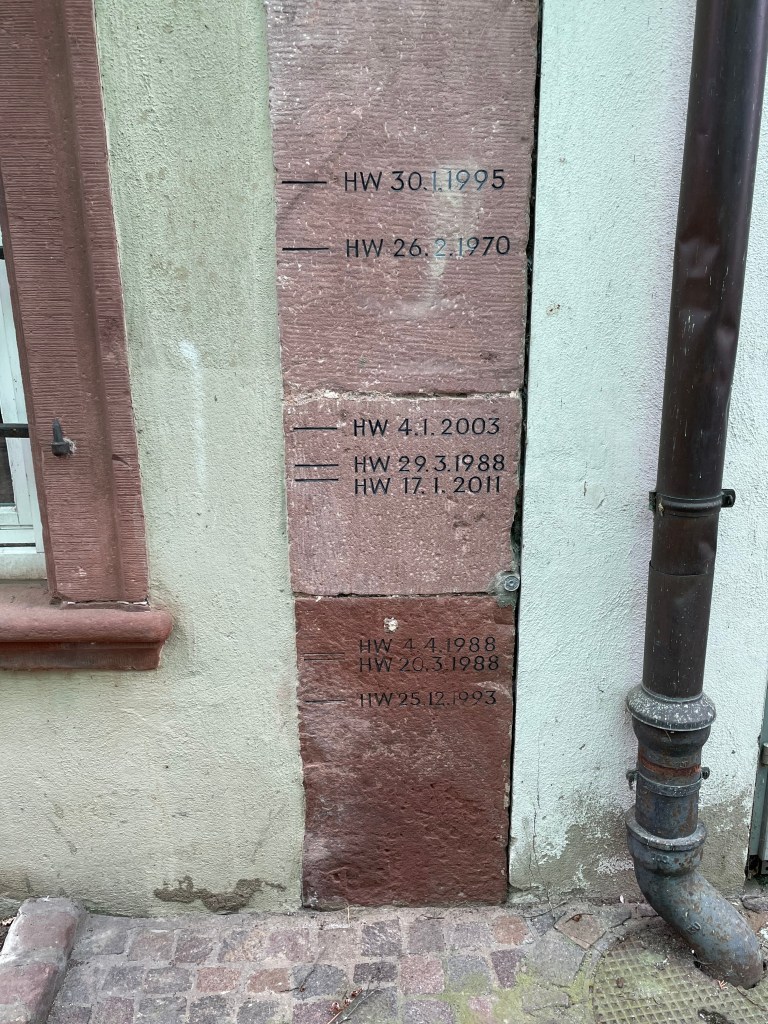
These are the flood marks on buildings in Wertheim. The years are marked and how high the water flowed. Amazing!  You will notice several pics of water marks as you wander with me through the town.  There were many buildings with the markings from floods through the centuries.
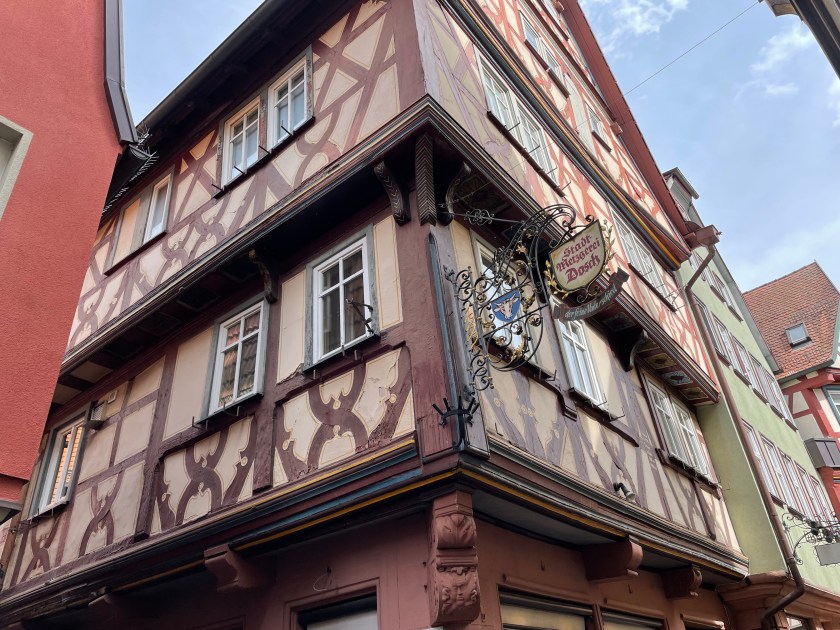
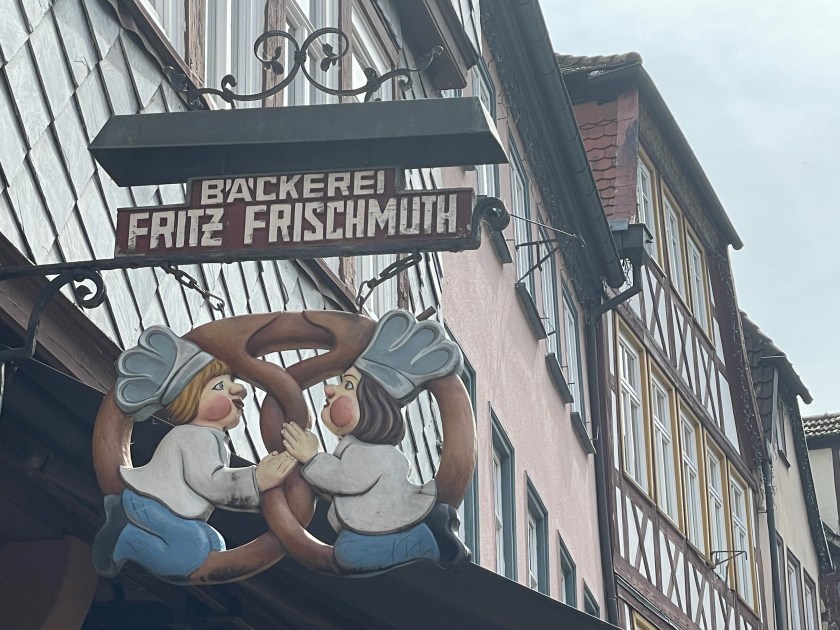
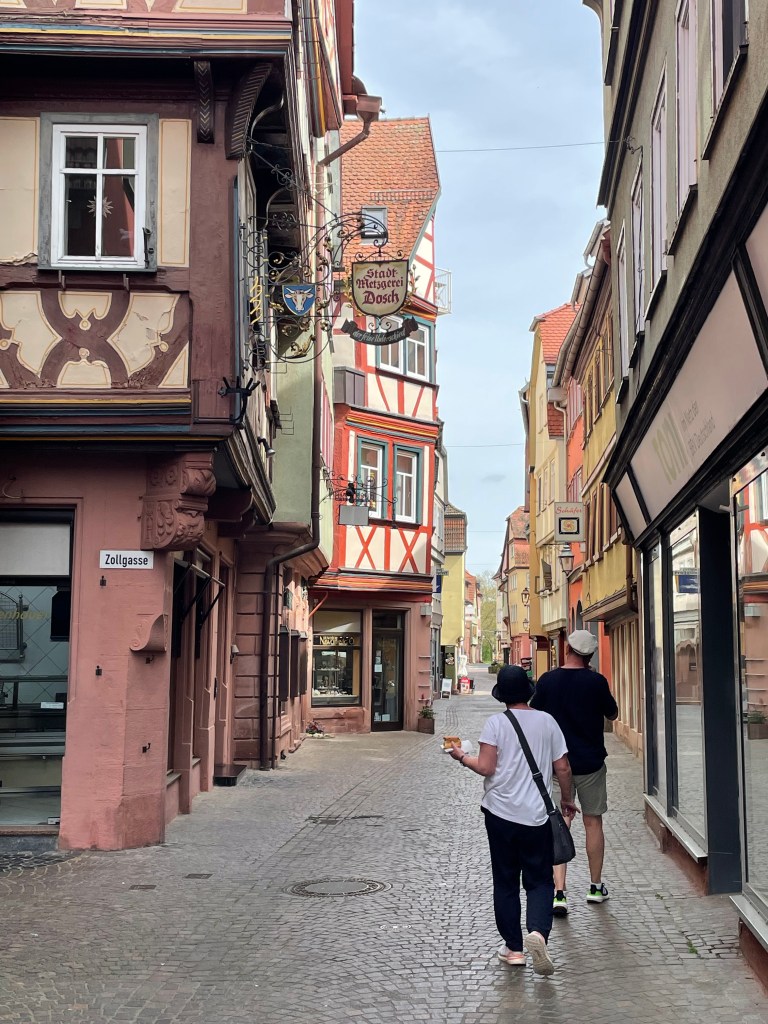
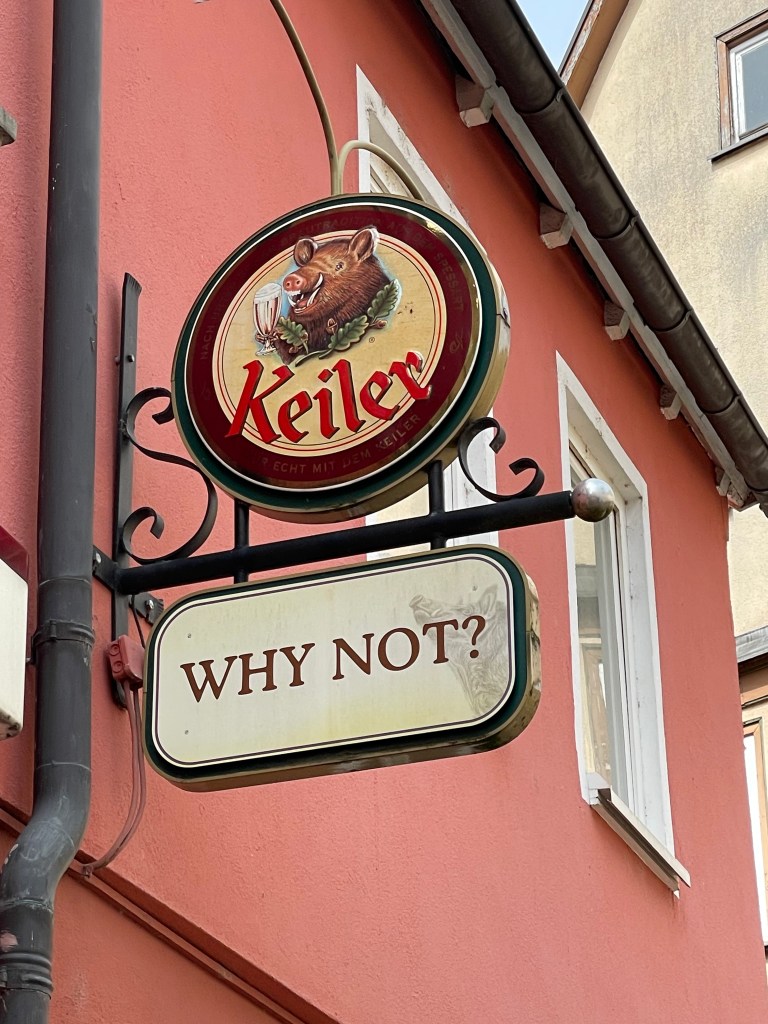
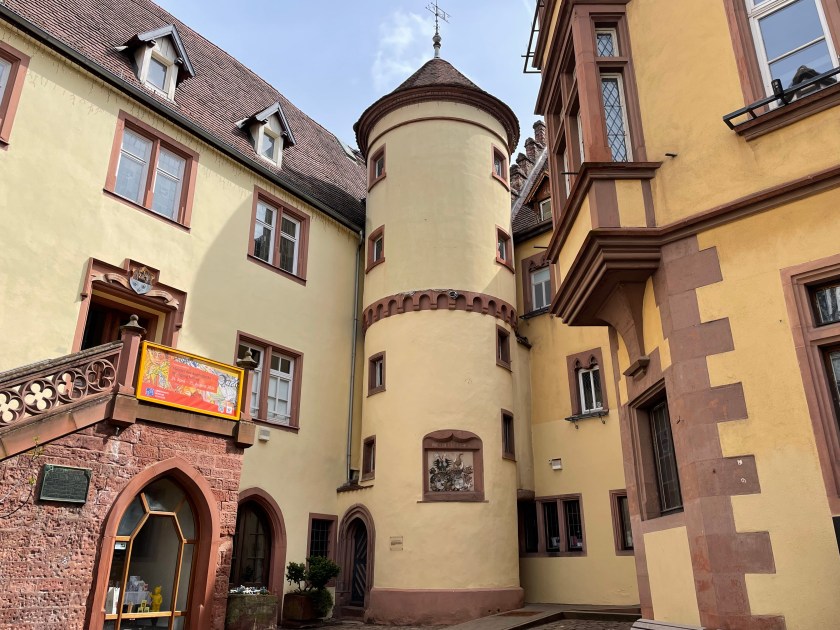
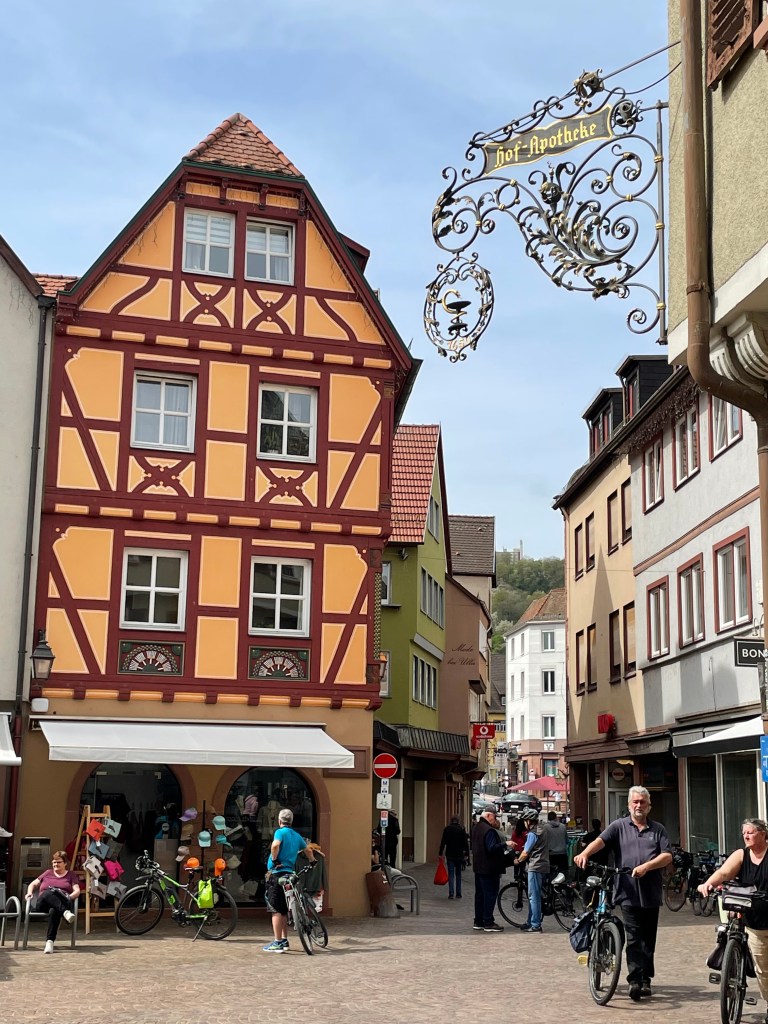
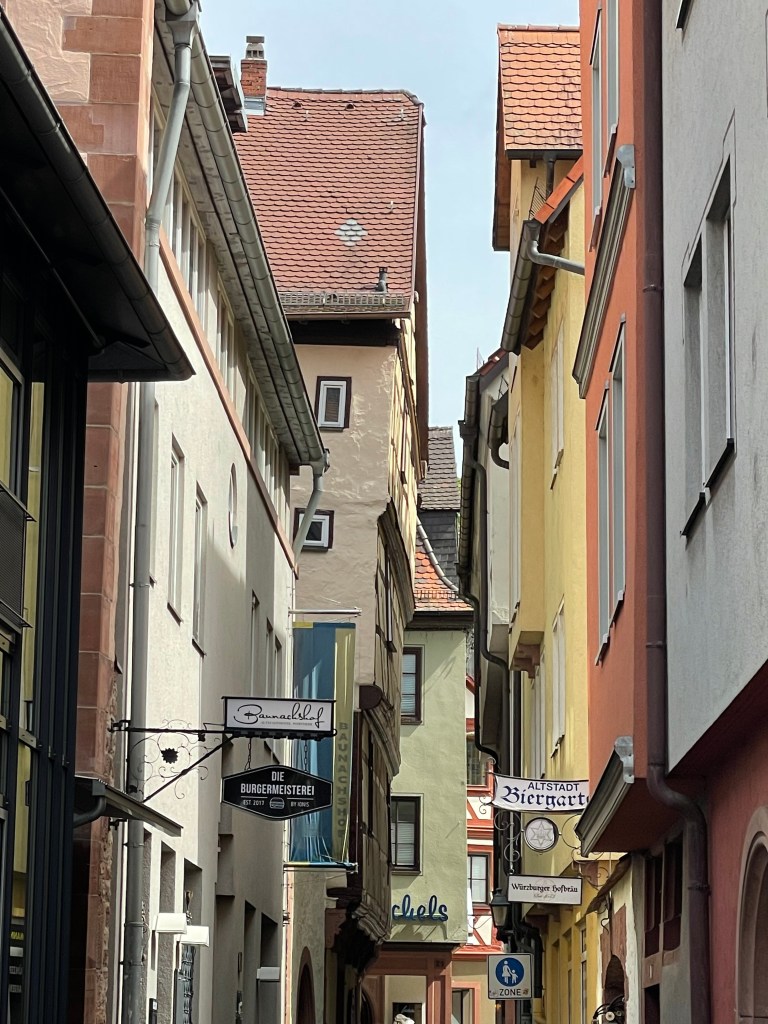
I love the fancy signs.
The big yellow Stiftskirche, or Collegiate Church is the anchor to the town.
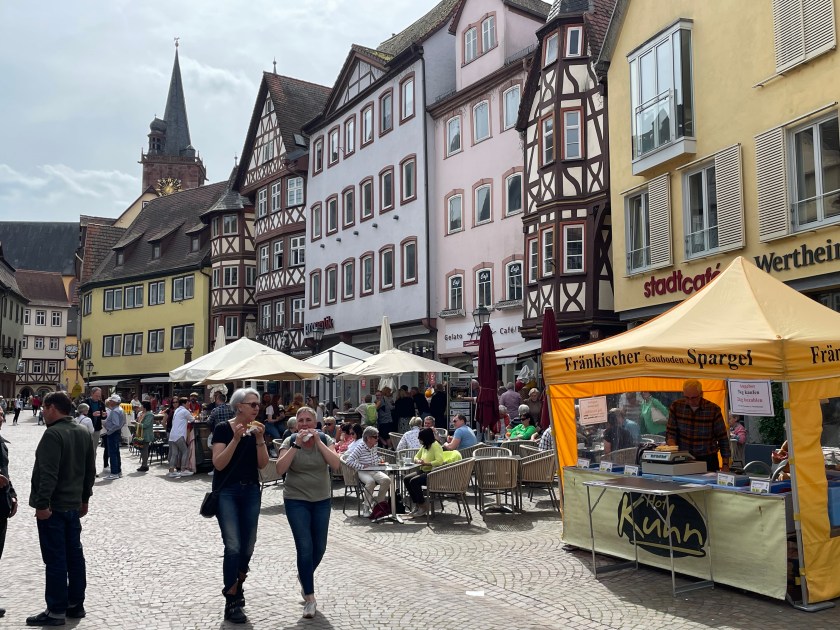
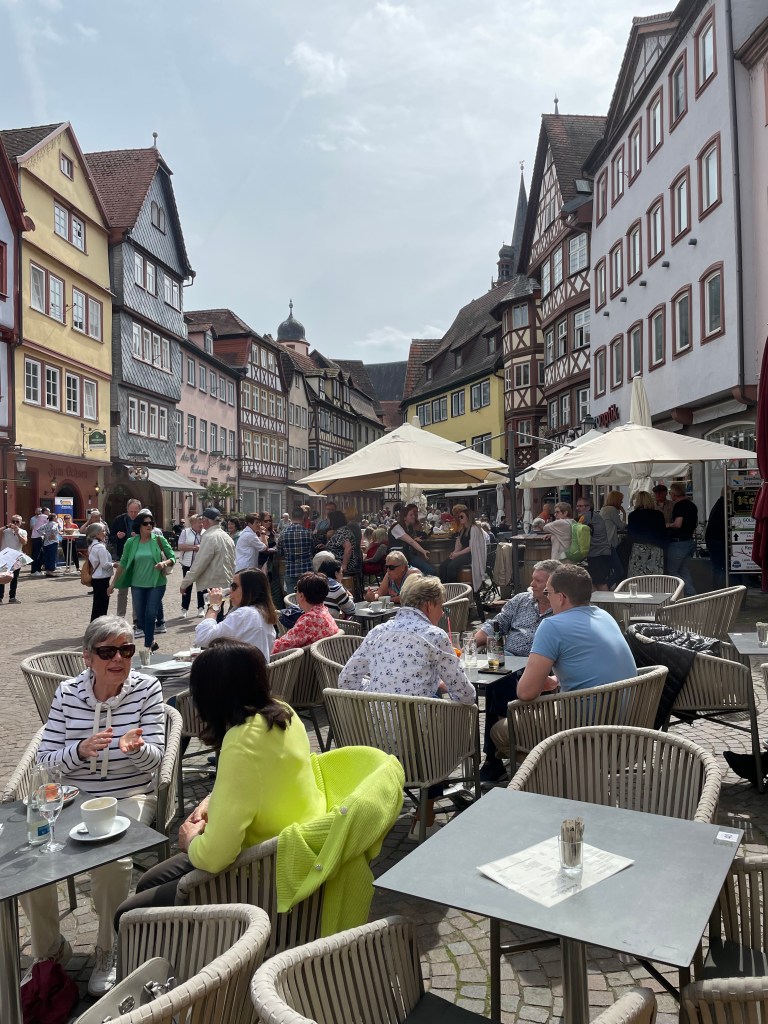
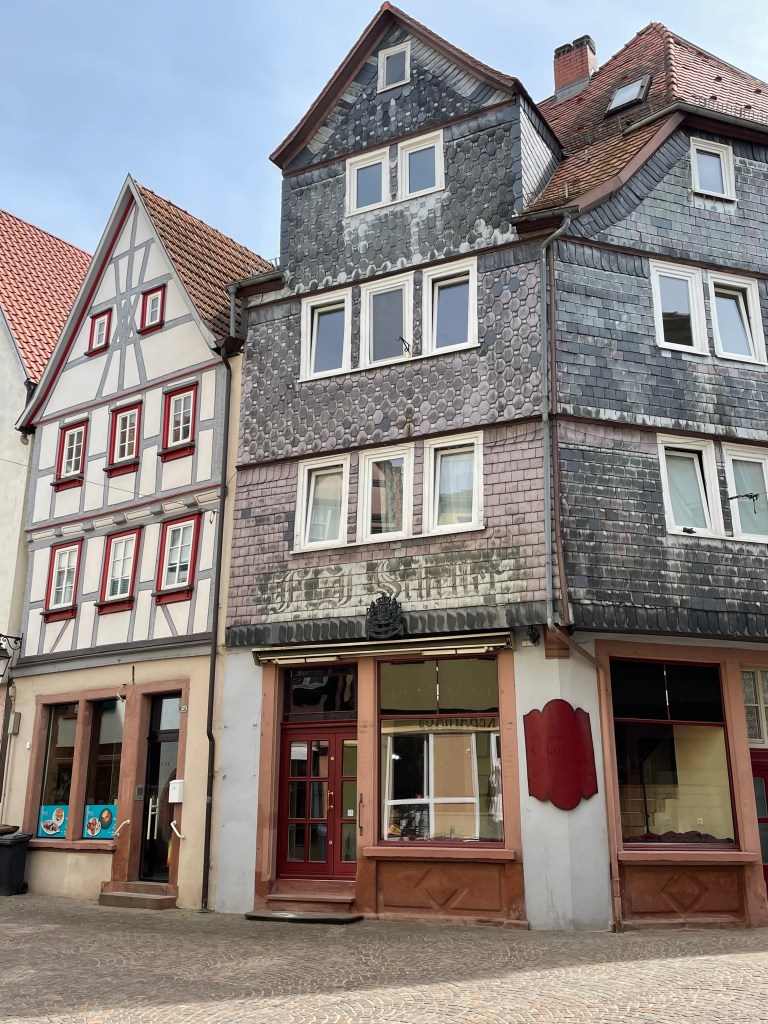
In the early 1500’s when the house on the left below and most of the others surrounding the square were built, taxes were levied based on the square footage of the ground floor. The owner of this building tried to beat the system by making his street level entrance as narrow as possible, and then increasing each subsequent floor by another foot or so.
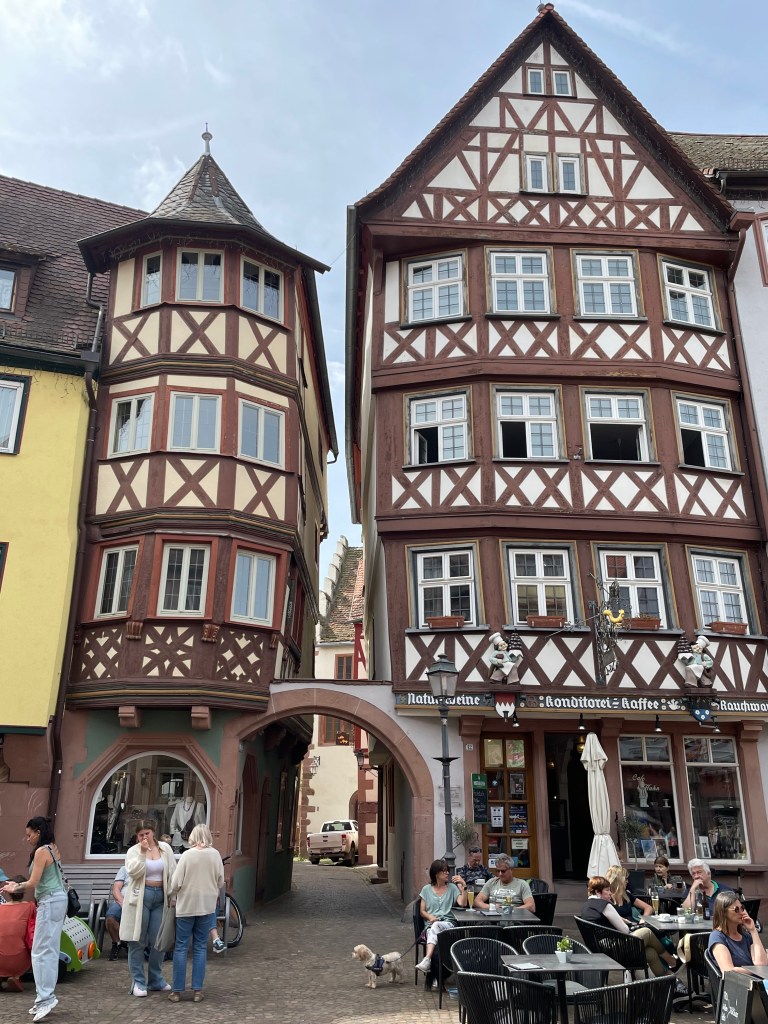
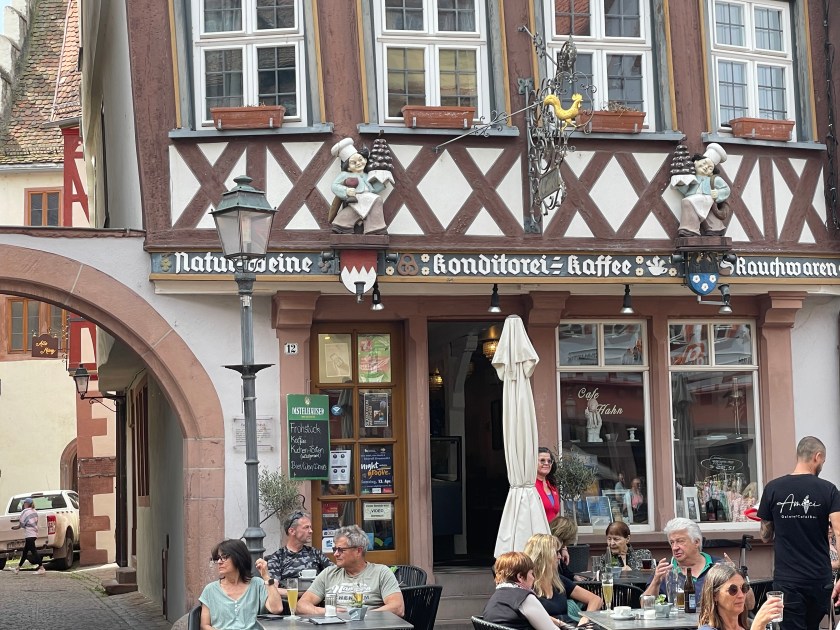
Many of the homes stepped out as they went up.
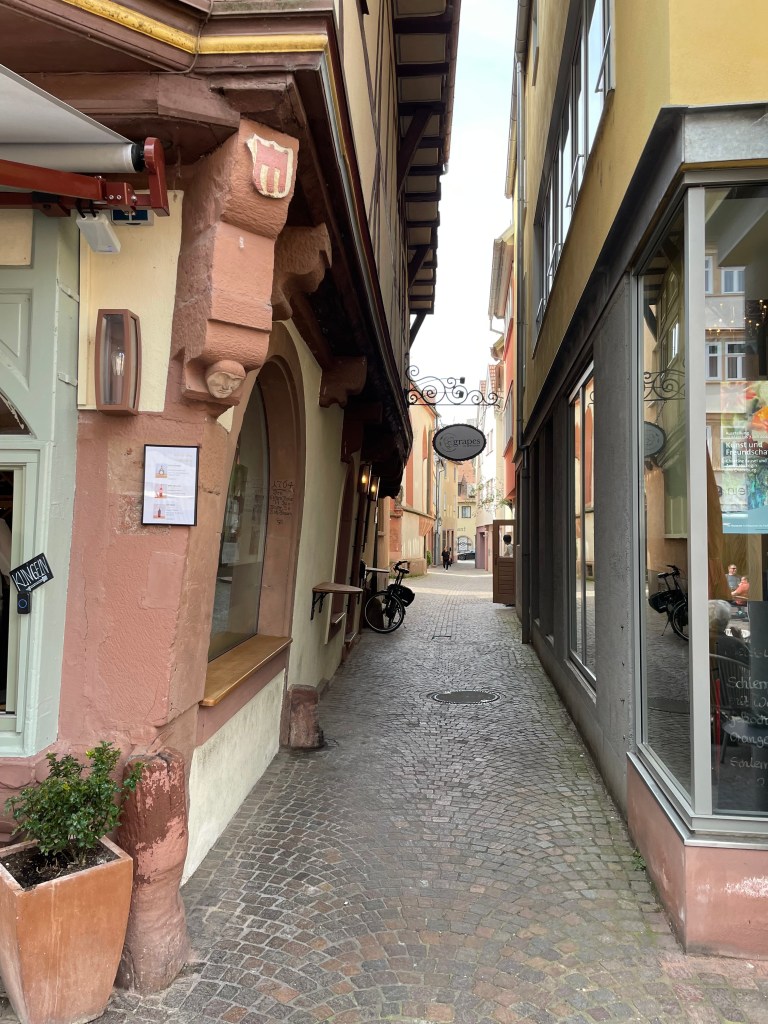
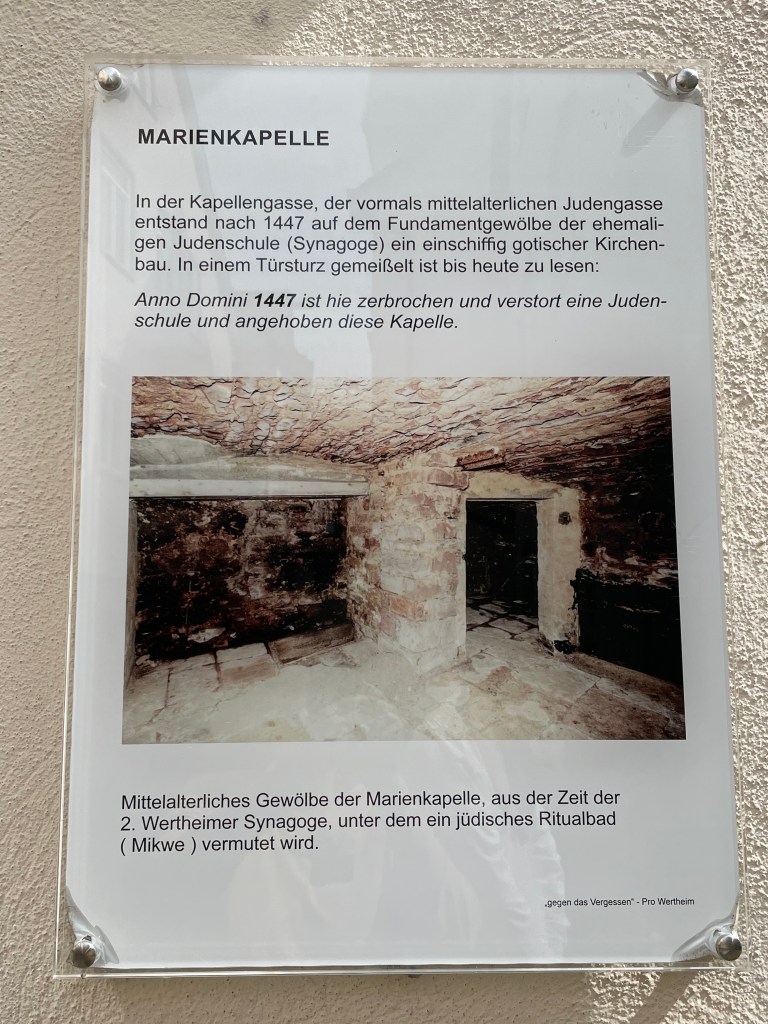
A Mikvah Jewish bath was found in excavations under the Marien Church chappel.
More water marks–the oldest dated 1595!
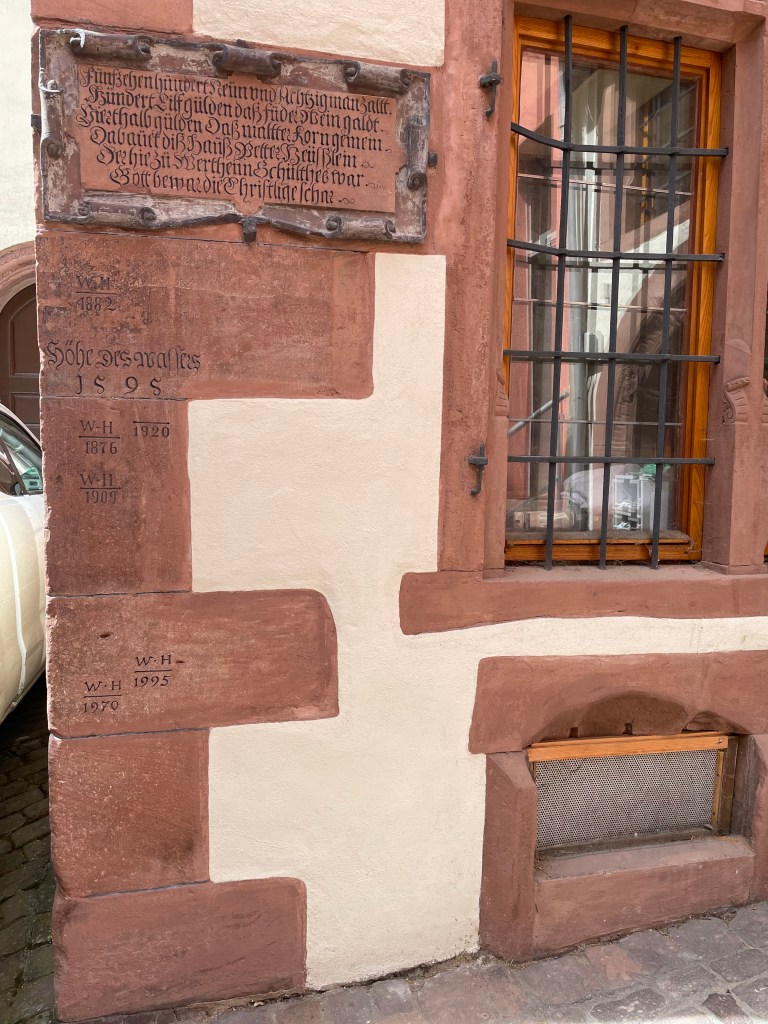
There was flooding here as recent as a few years ago.  Over the years, the street level of the town has been raised a few feet, making some door entrances a little tricky.
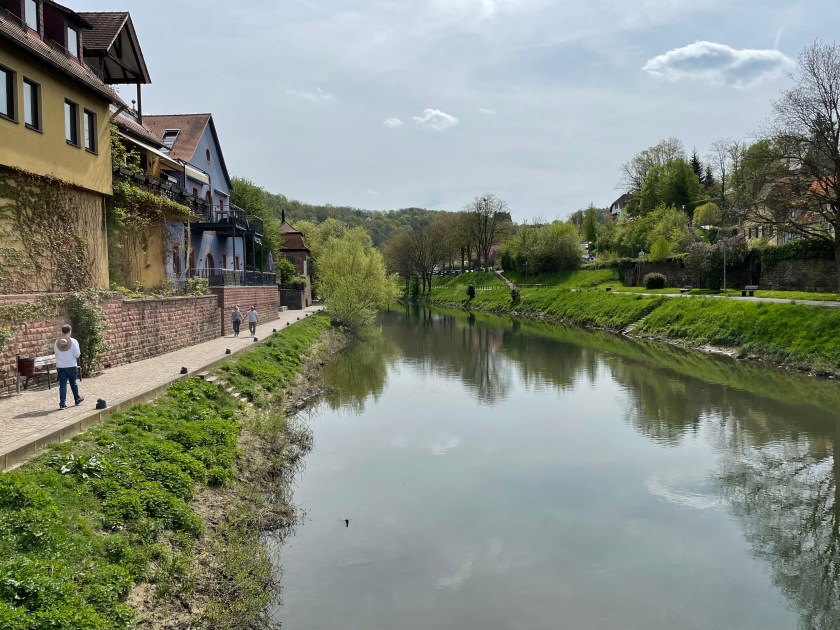
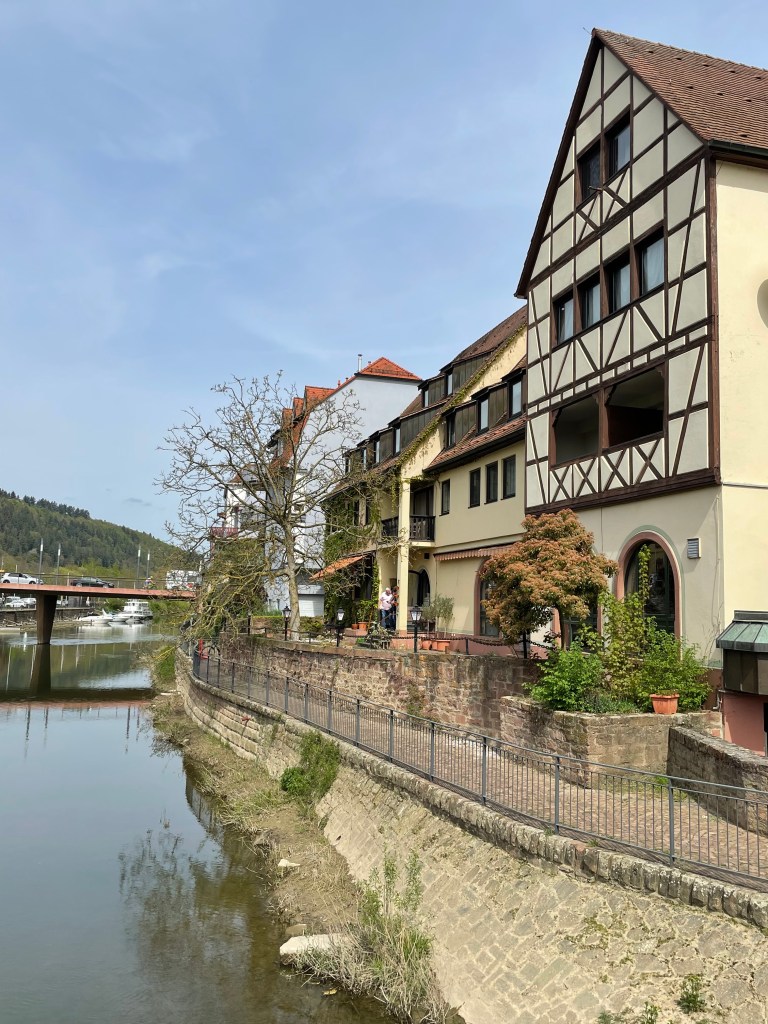
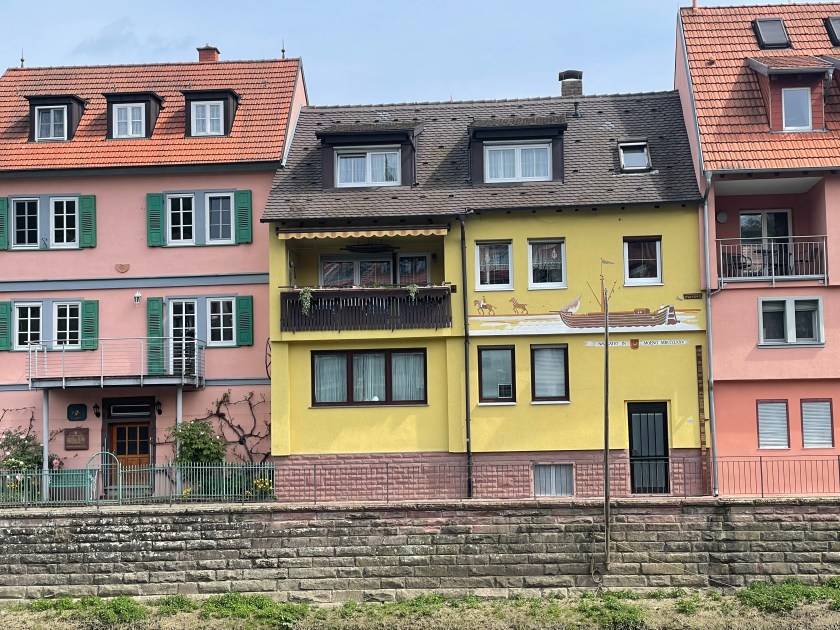
The edge of this building by the river also has an amazing history of the flood levels:
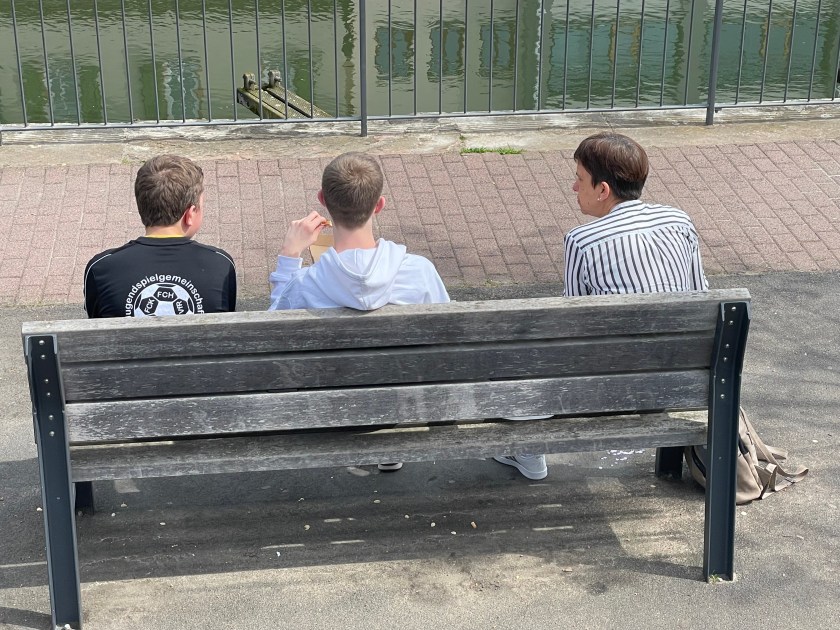
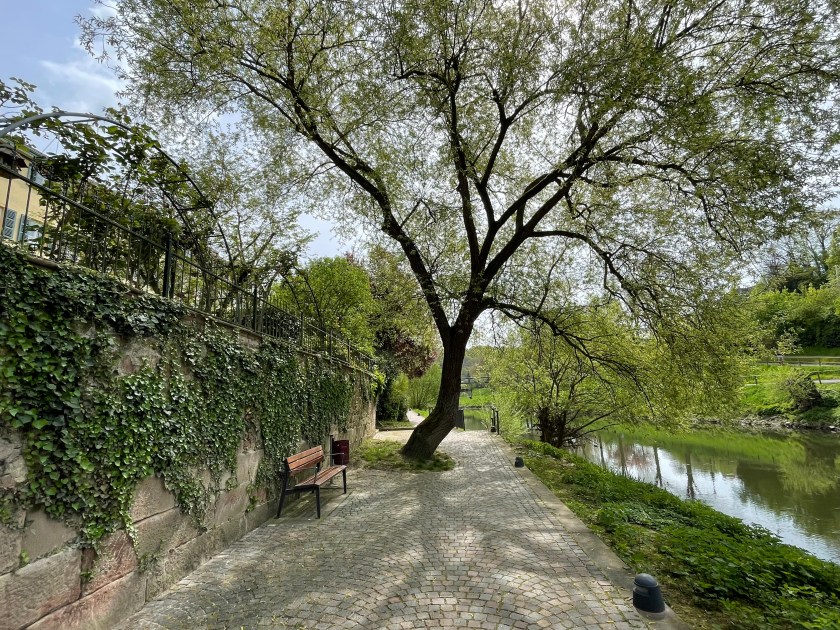
In my perfect world, there will always be sitting places like this one:
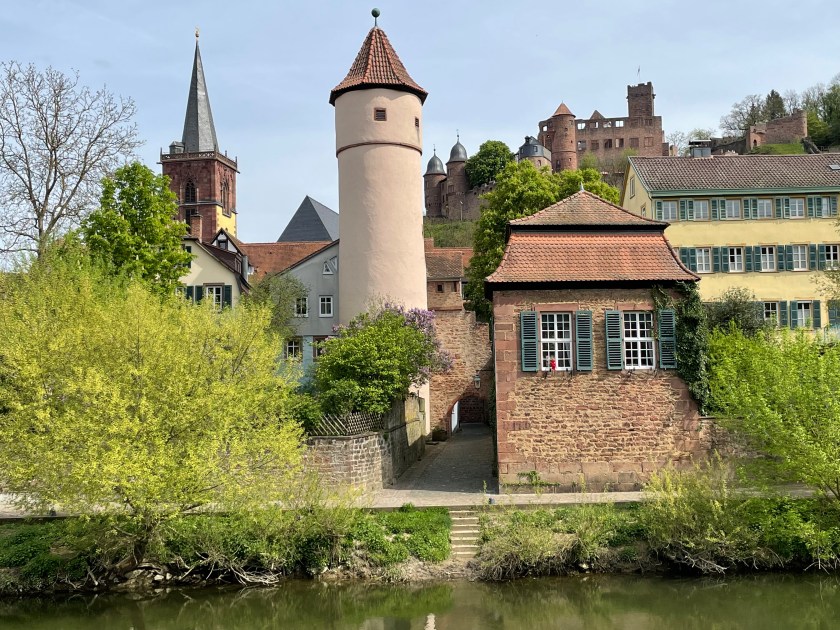
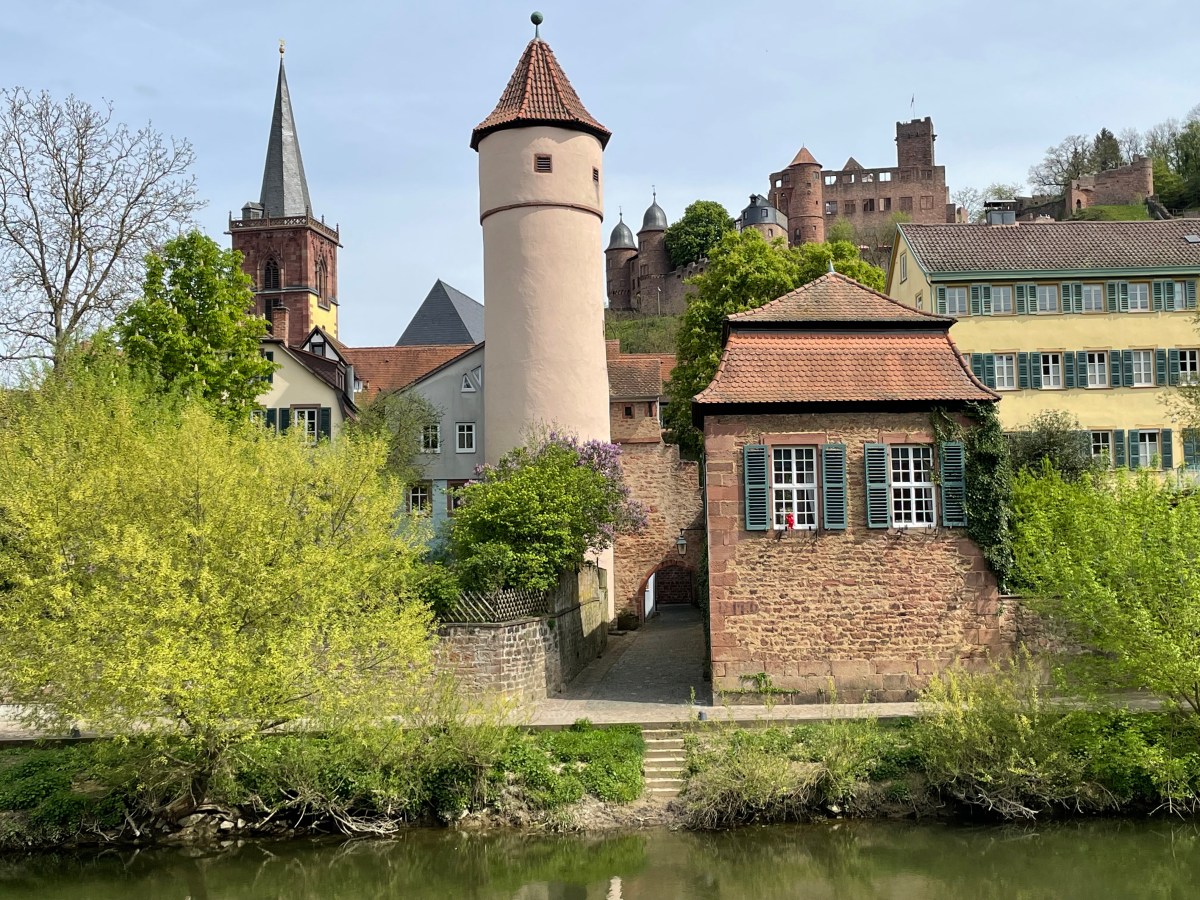
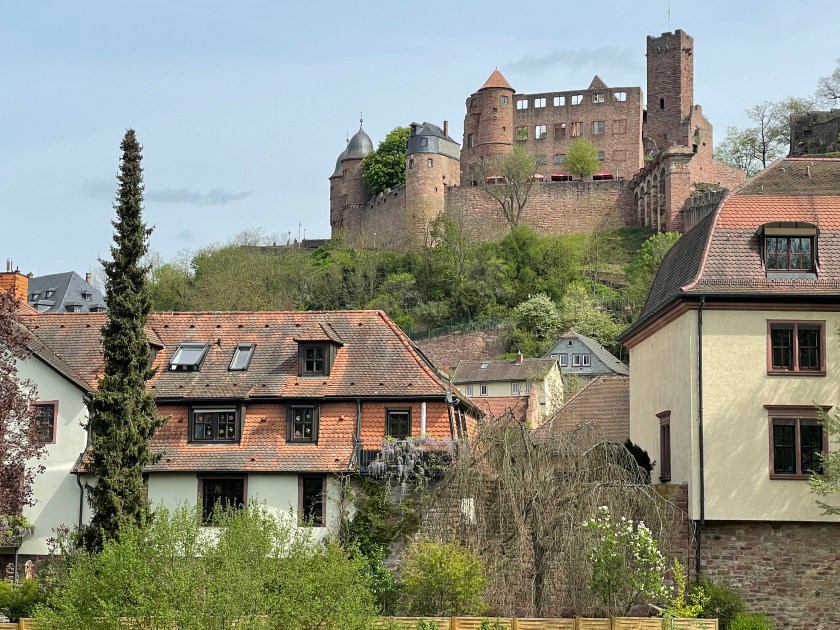
The view of the castle ruins from the river:
More water marks:
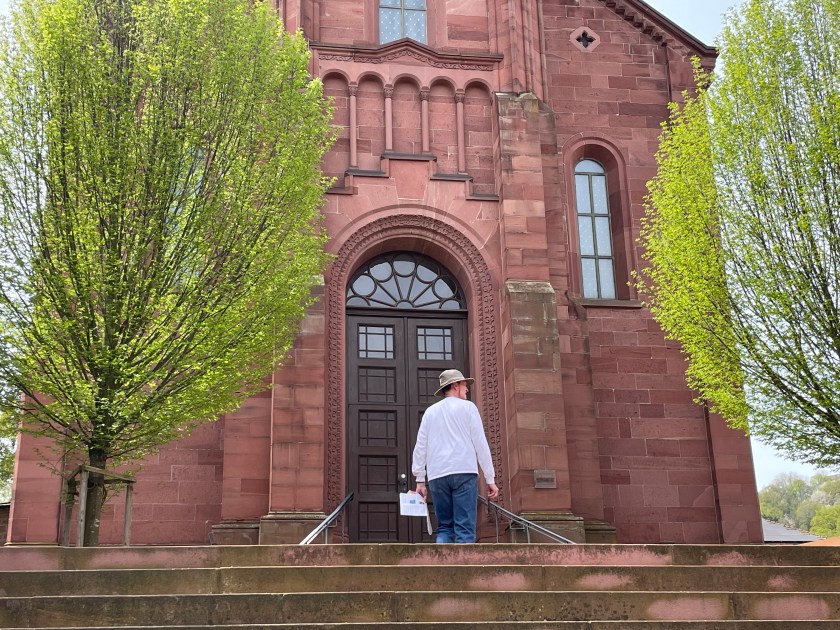
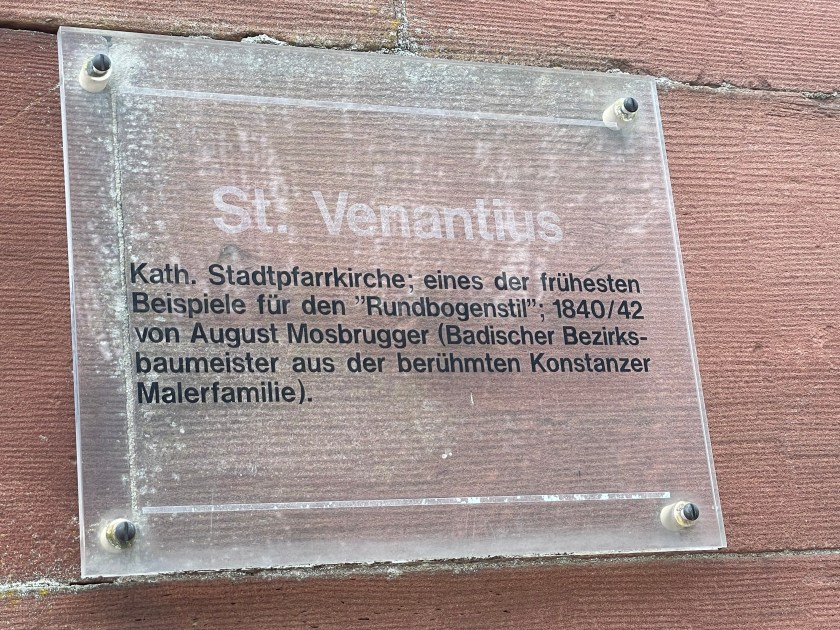
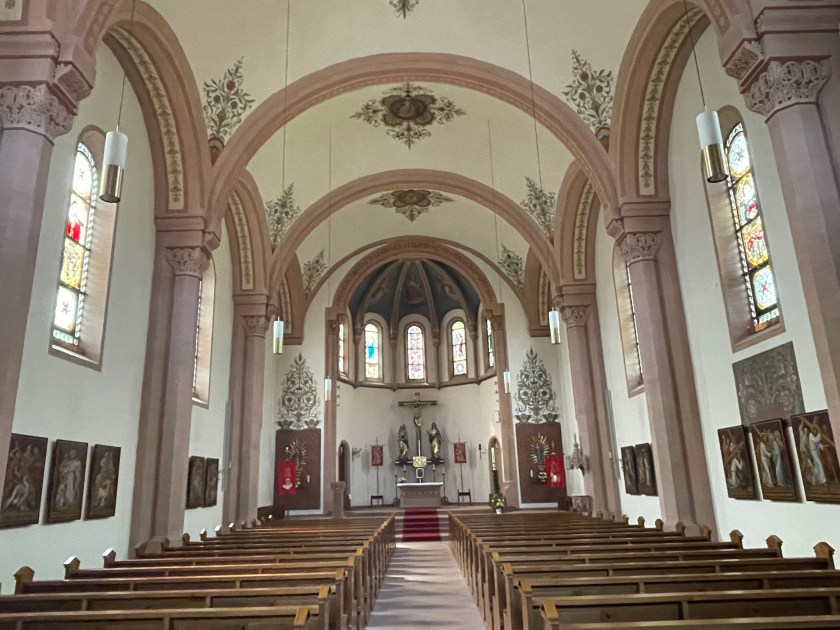
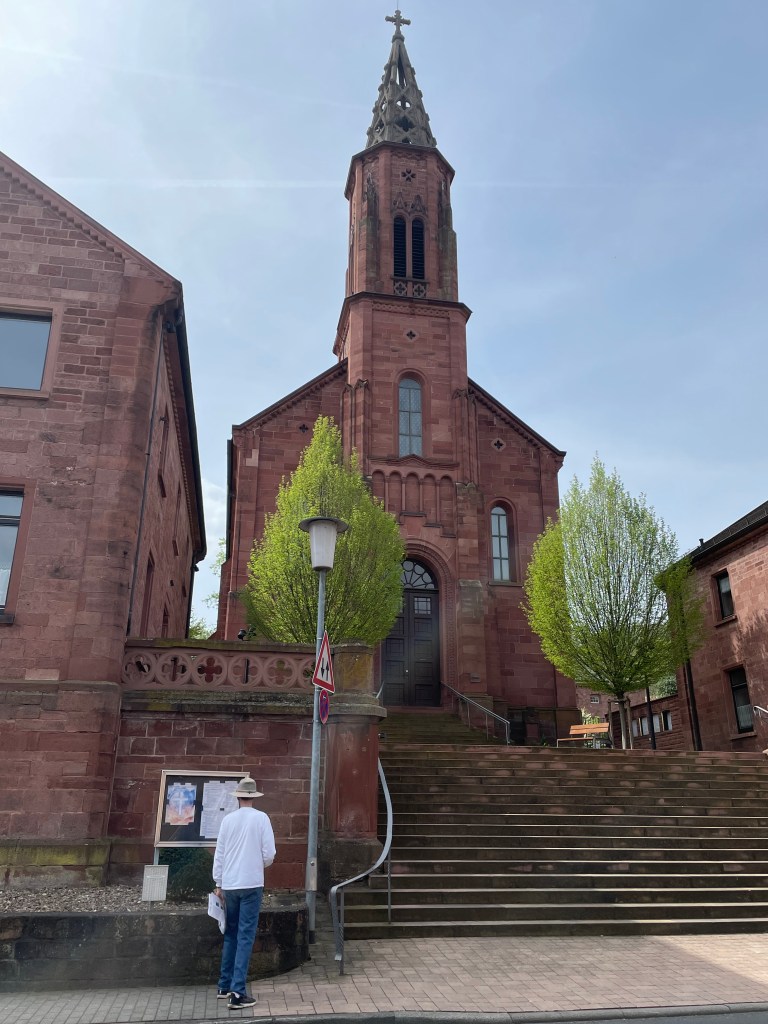
St. Venatius Catholic Church:
These small brass “stumbling blocks,” are in the pavement in front of houses where (mostly) Jewish residents were persecuted or murdered by the Nazis. They mention the name, date of birth and place (usually a concentration camp) and date of death. I always pause to read the details and recognize that a life not so different from mine was taken way too soon. I feel loss whenever I see these Stolpersteine.  https://en.wikipedia.org/wiki/Stolperstein
May be an image of text that says 'HIER WOHNTE SOPHIE BRÜCKHEIMER ΘEBΙ WOLF 4E. 1G.18602 18CO. DEPORTIART DEPORE TIaRT 1940 QUES ERMORDET ERMORDET1942 1942 IN AUSCHWITZ HIER WOHNTE SELMA BRUCKHEIMER 1393 DEPORTIERT 1940 GURS ERMORDET 1942 ERMORDET13421 IN AUSCHW1TZ TZ HIER WOHNTE HILDA BRUCKHEIMER 36 南認包者 DEPORTTERT DEPORTIERT1942 342 KRASMICZN RASMI ERMORBET ERMORDET194218 1042 AUSOHWITZ HIERANOHNTE HEDWIG BRUCKHEIMER ၂၆.၀ 台海菌 DEPOFTIERY1342 1842 FRERY ERMORDET 1842 ERMORDET1042I0 IN AUSGEWTT之'

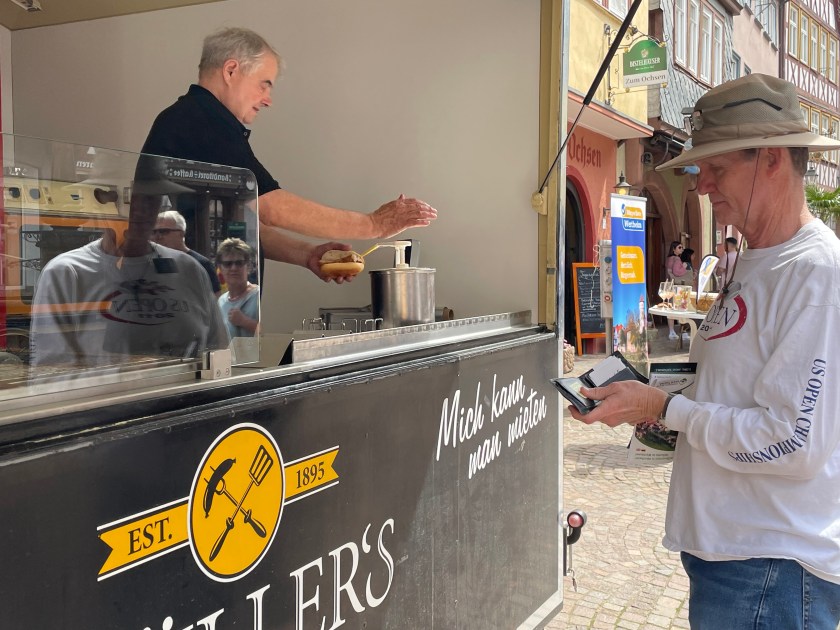
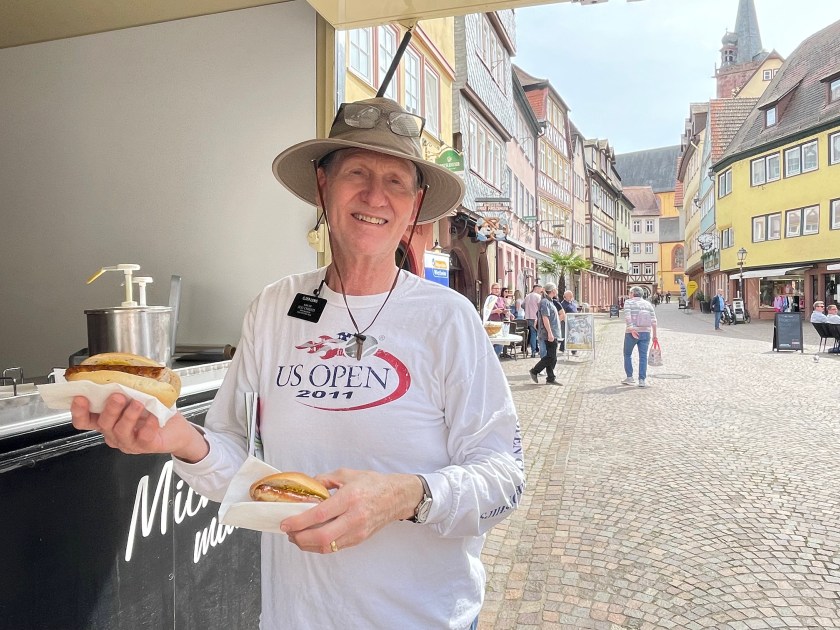
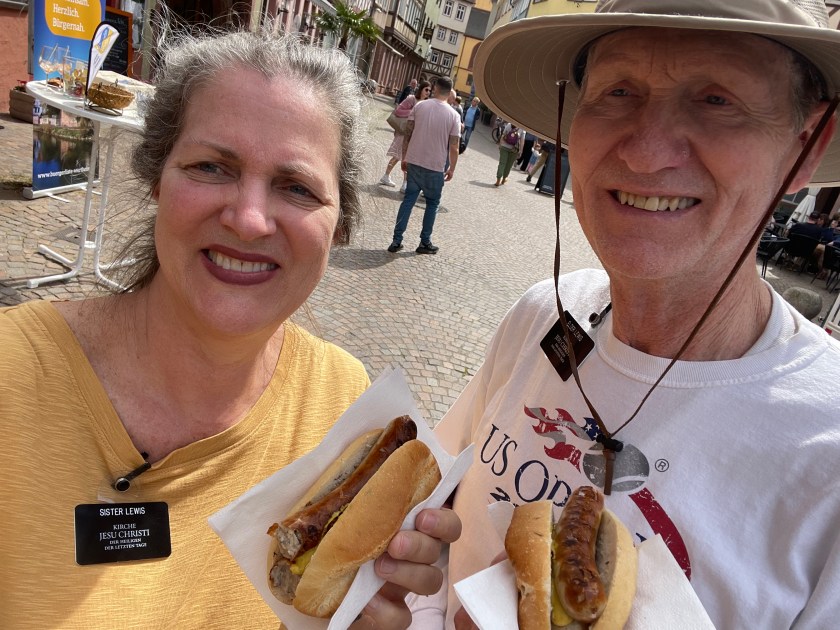
Time for Brats!

More recent water marks:
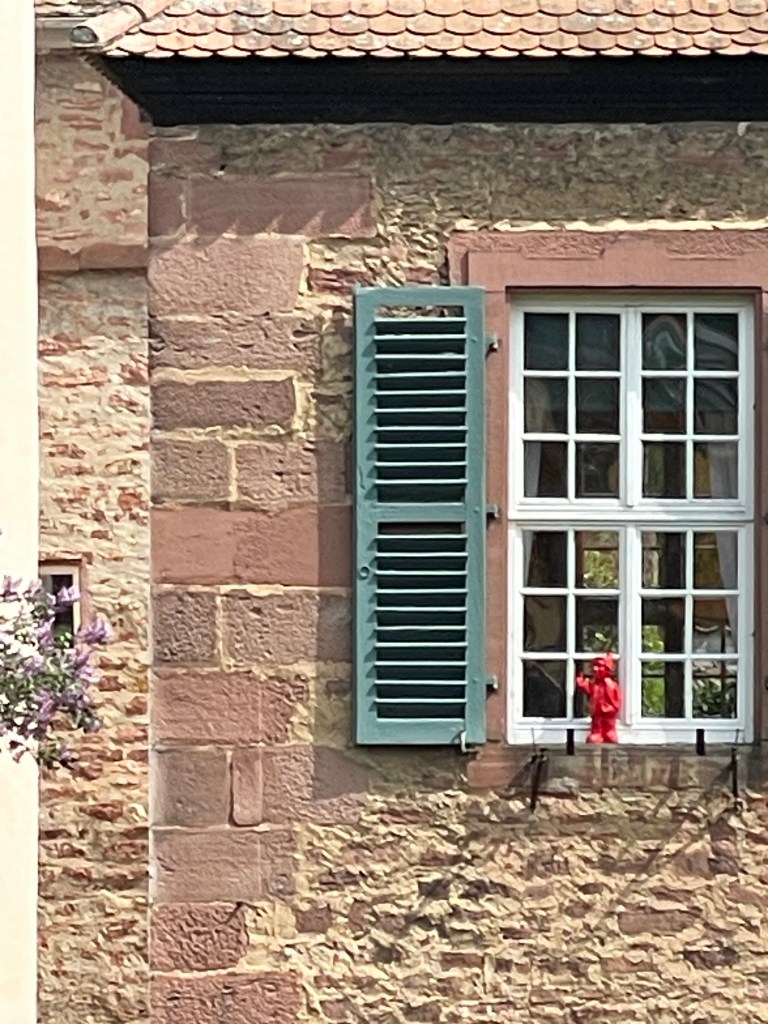
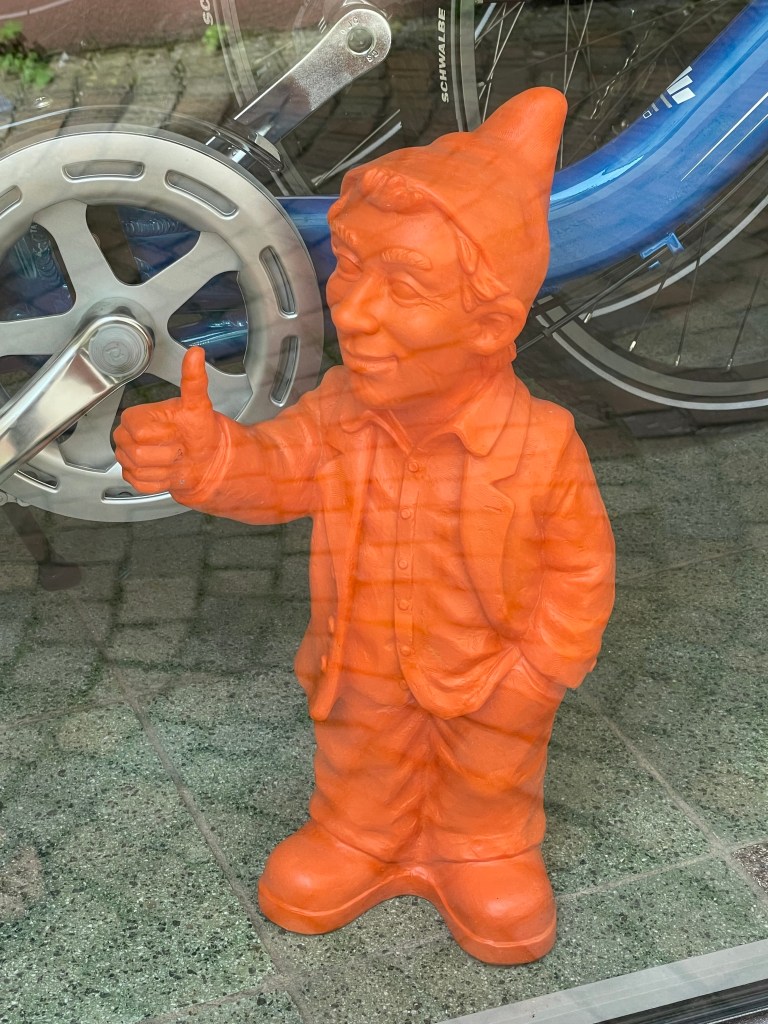
These little guys are planted around the town, often in upper windows.  Maybe you noticed some.
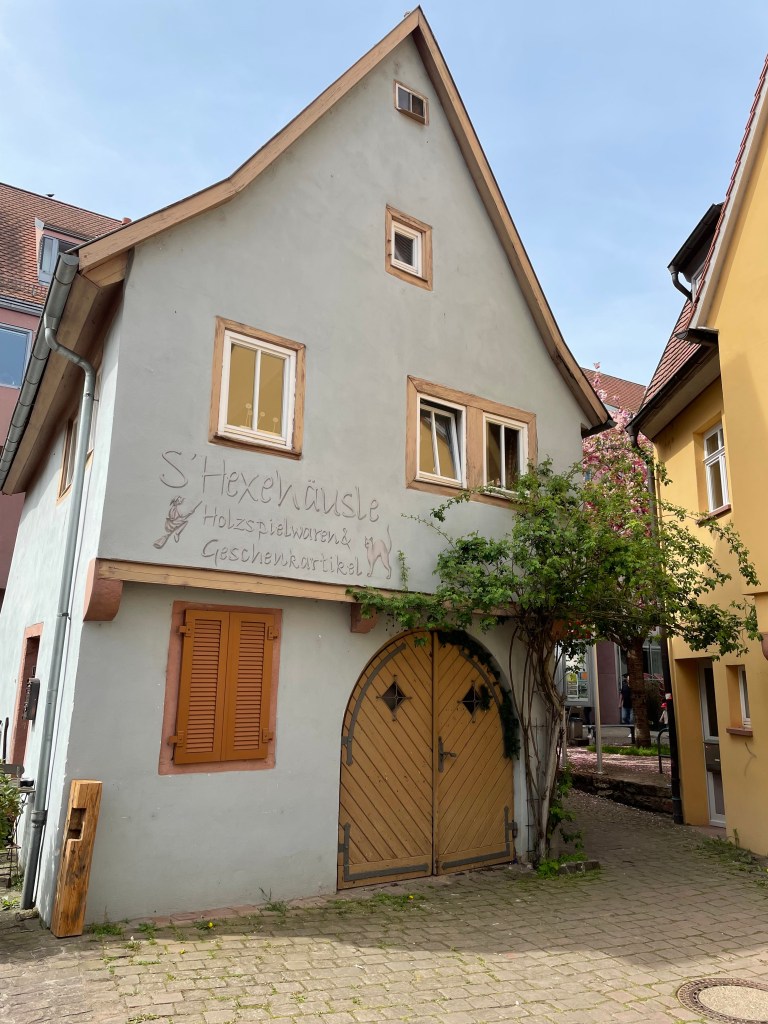
A little witches house:
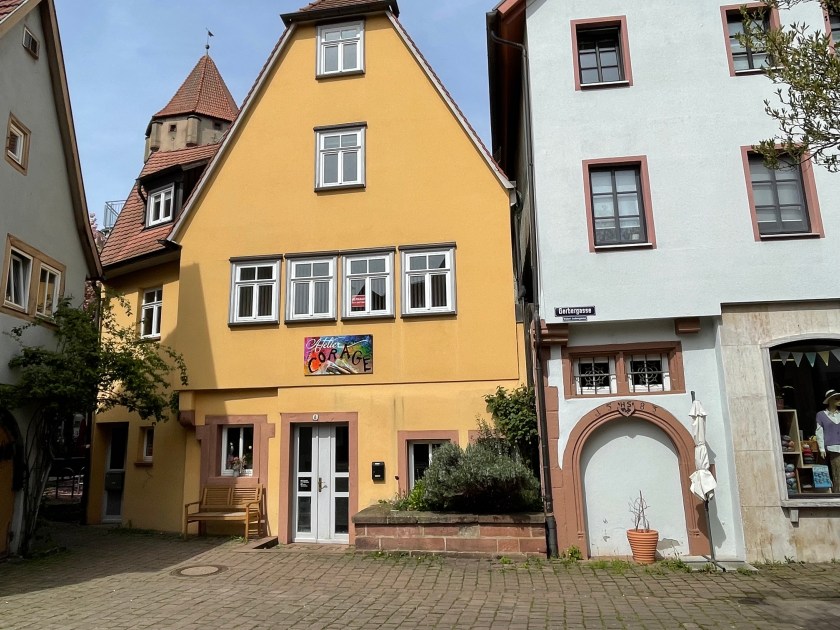
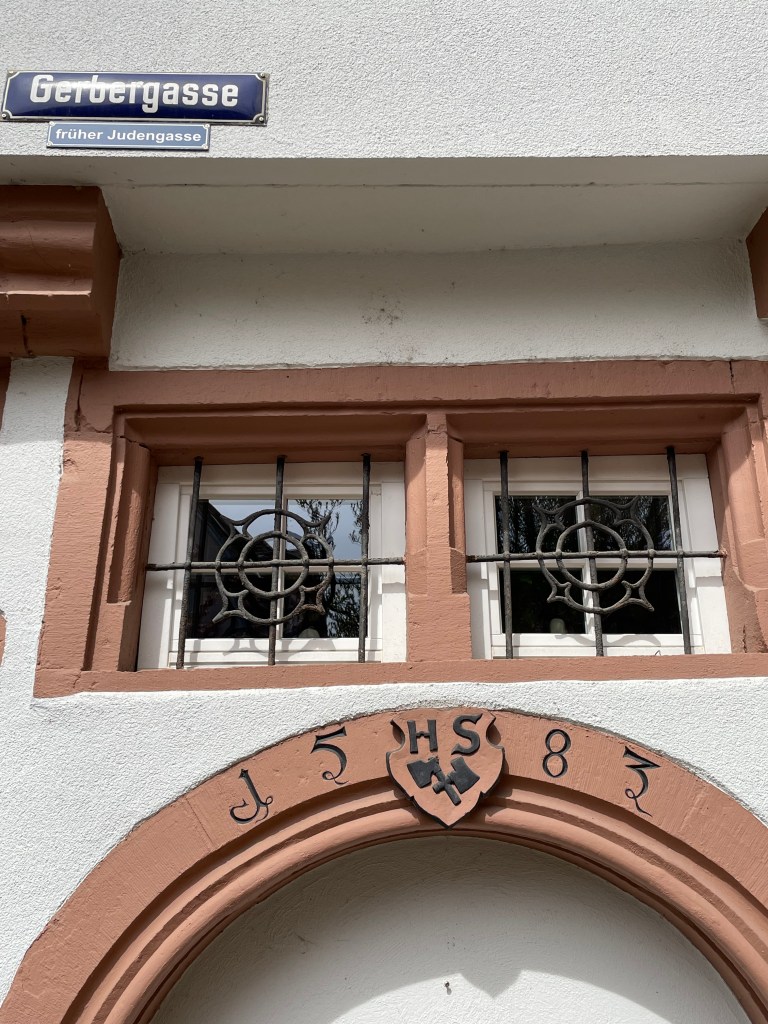
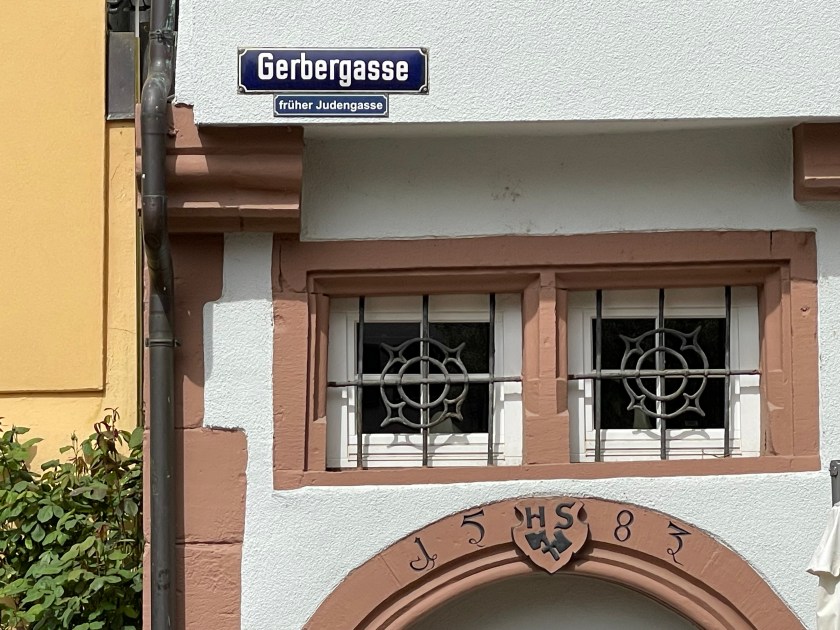
This was formerly the Jewish street, the date on this house is 1583:
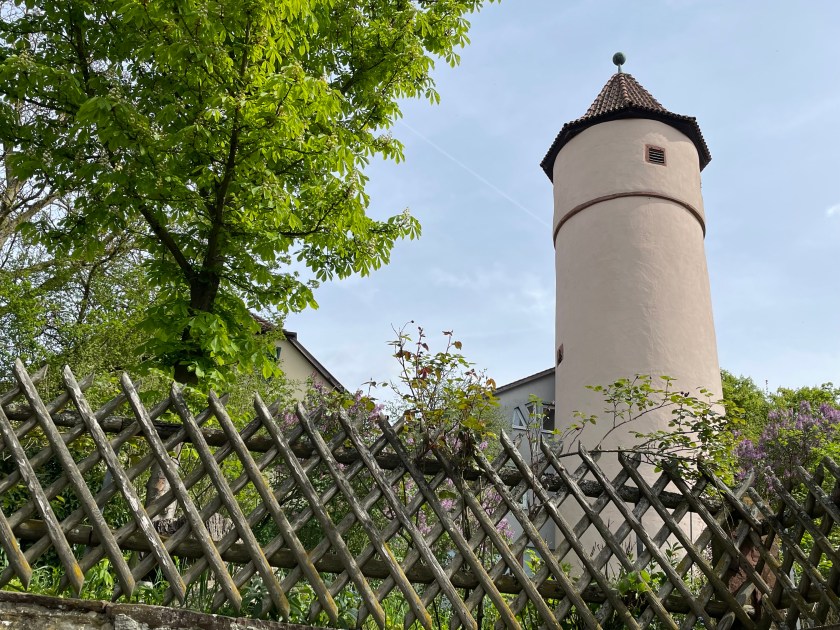
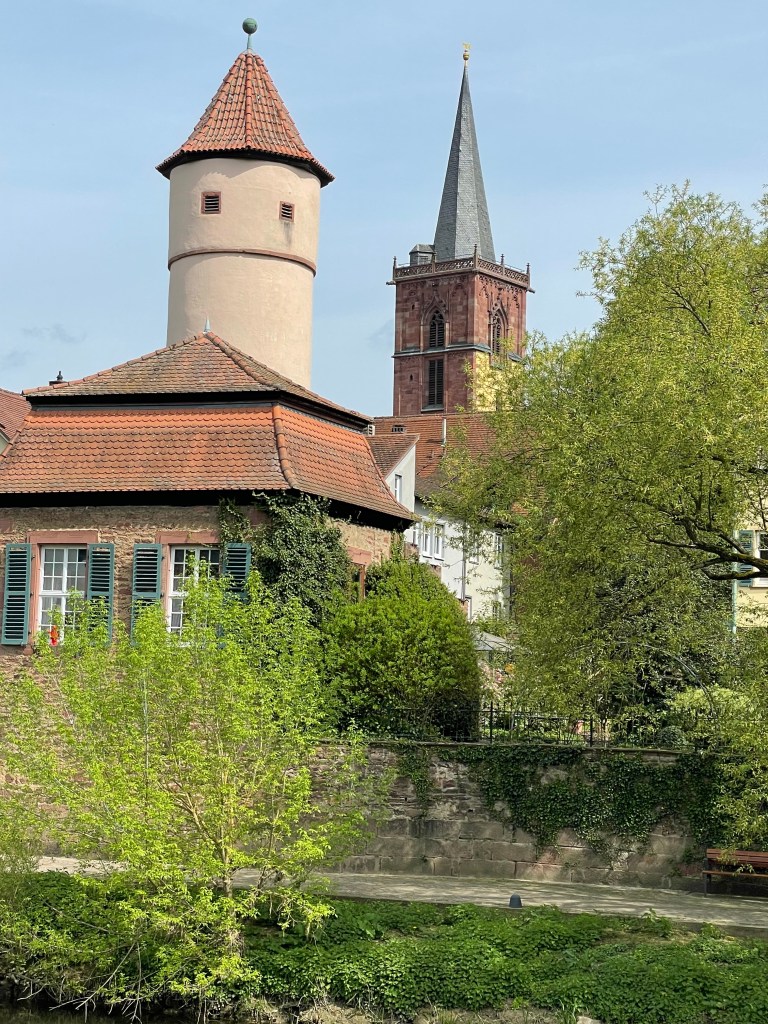
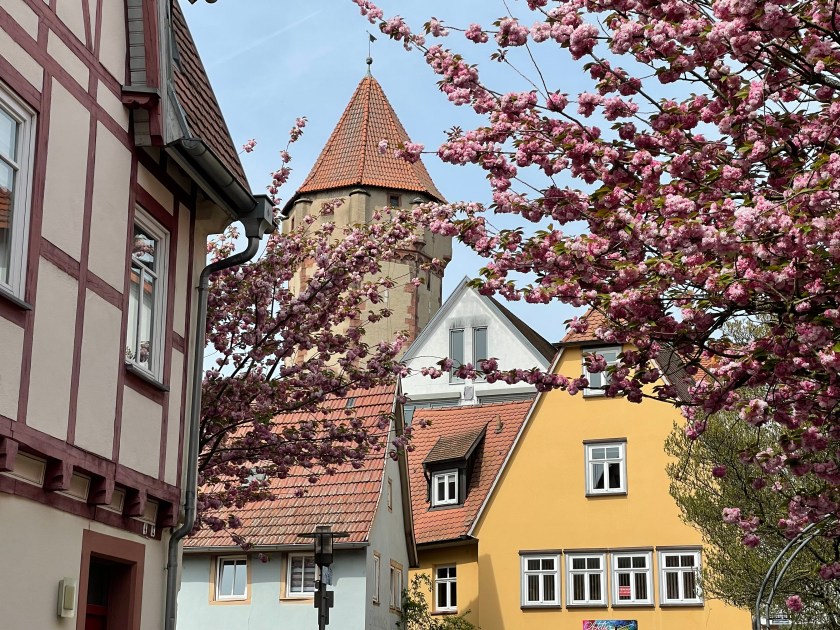
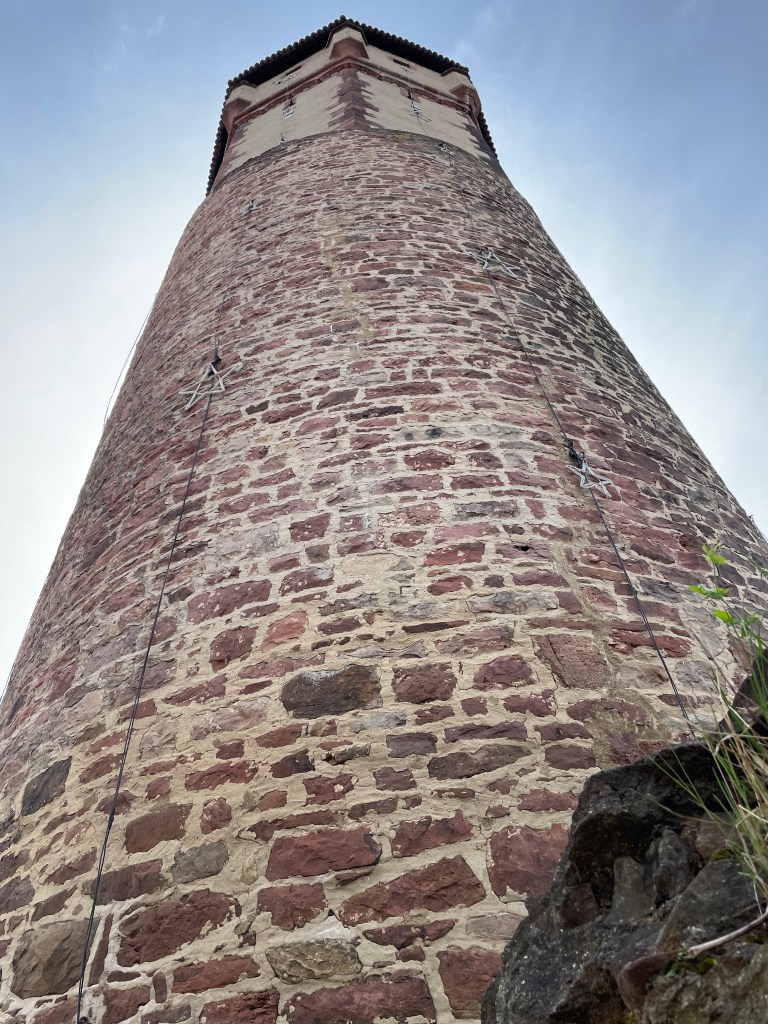
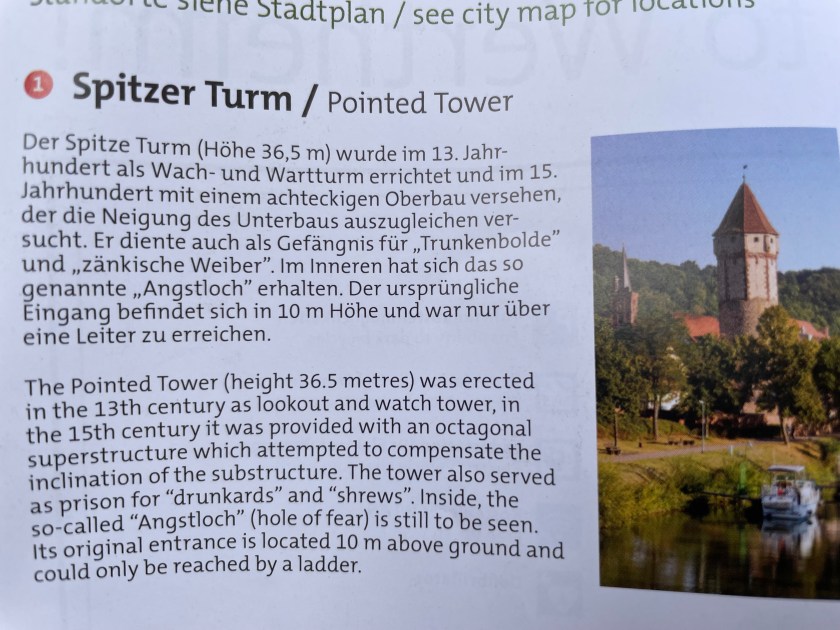
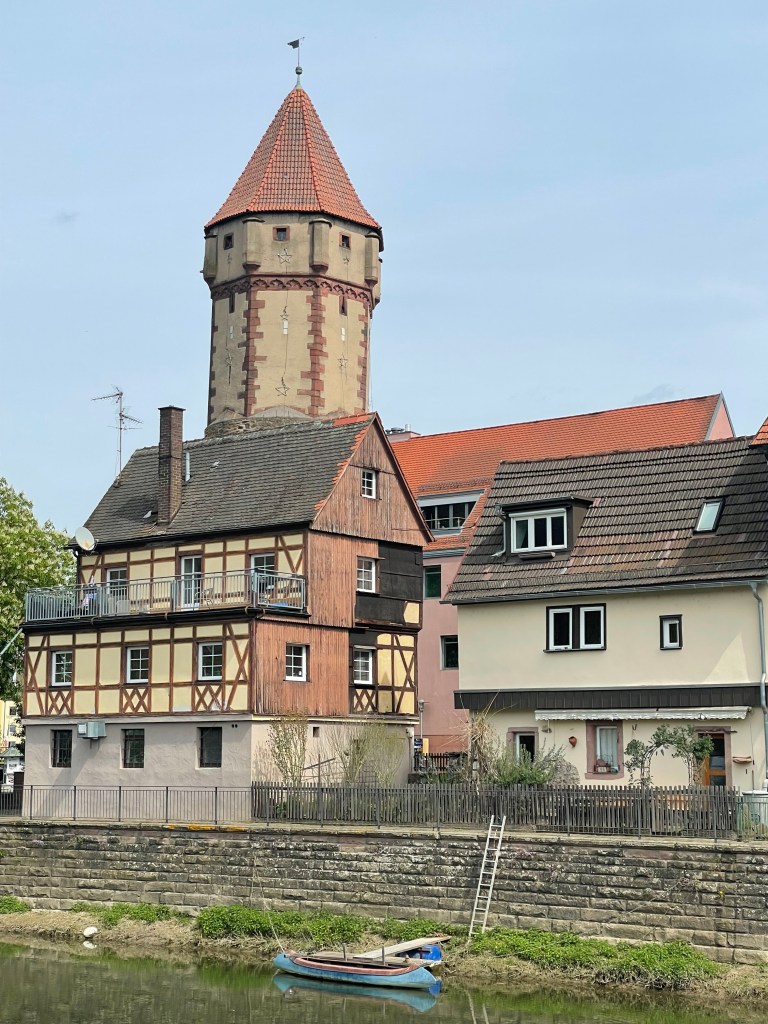
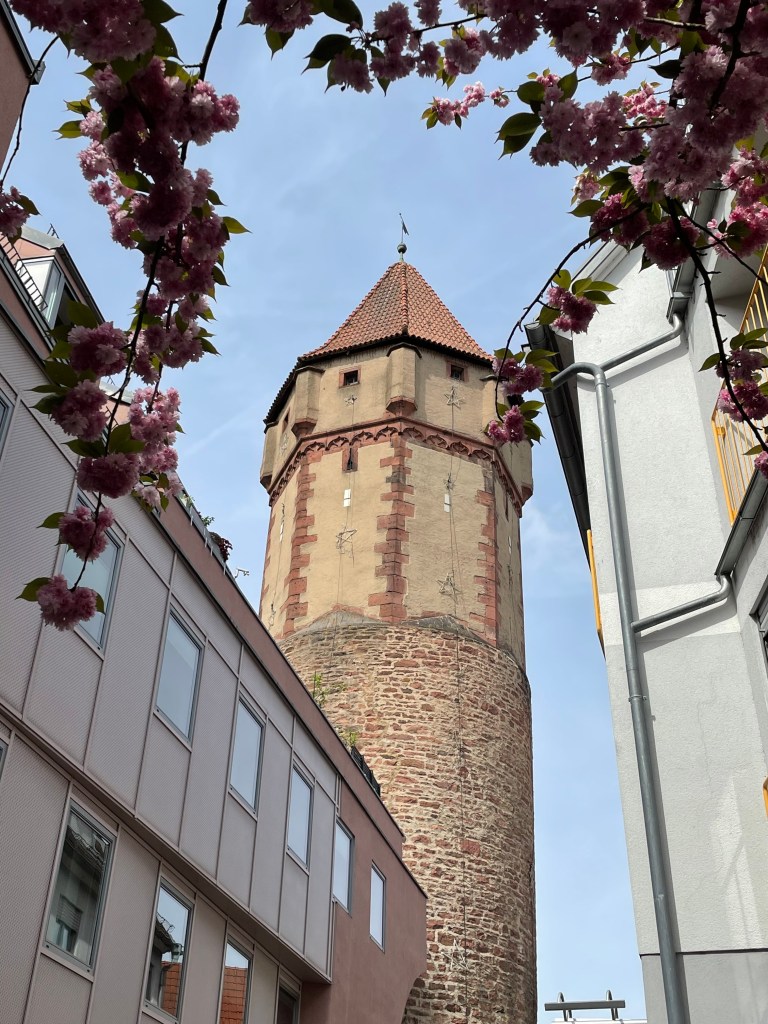
This tower, built in the 1200s served as a watchtower.  In the 1500s the top octagonal structure was added.  The tower also served as a prison for “drunkards and shrews.”  The original entrance is 10 meters above ground level and was called “the hole of fear.”
What an interesting little town, packed full of history and fascinating details!
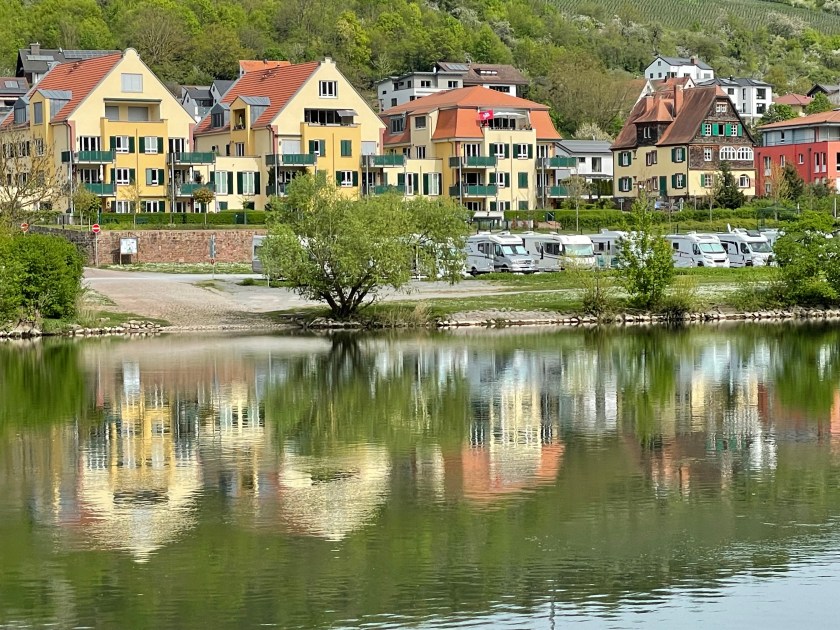
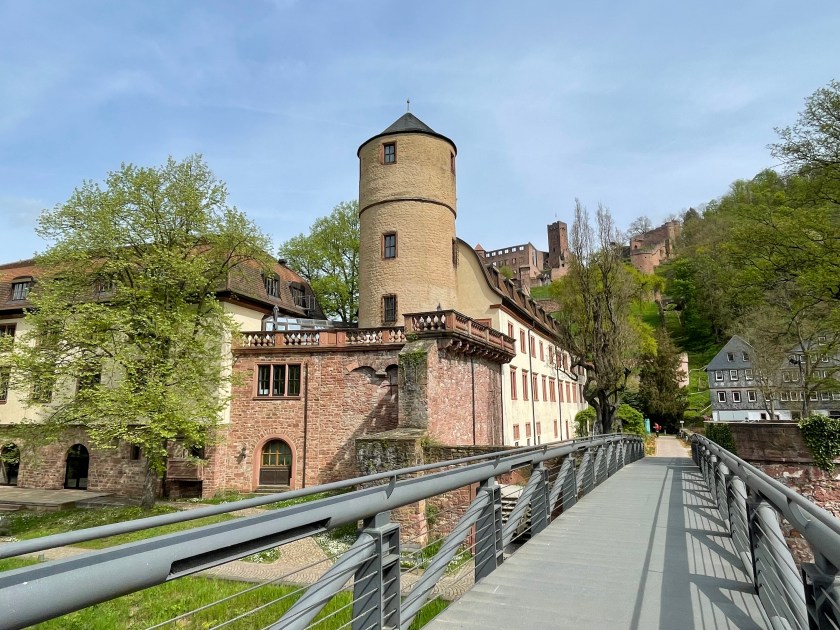
Wertheim Castle, between the rivers

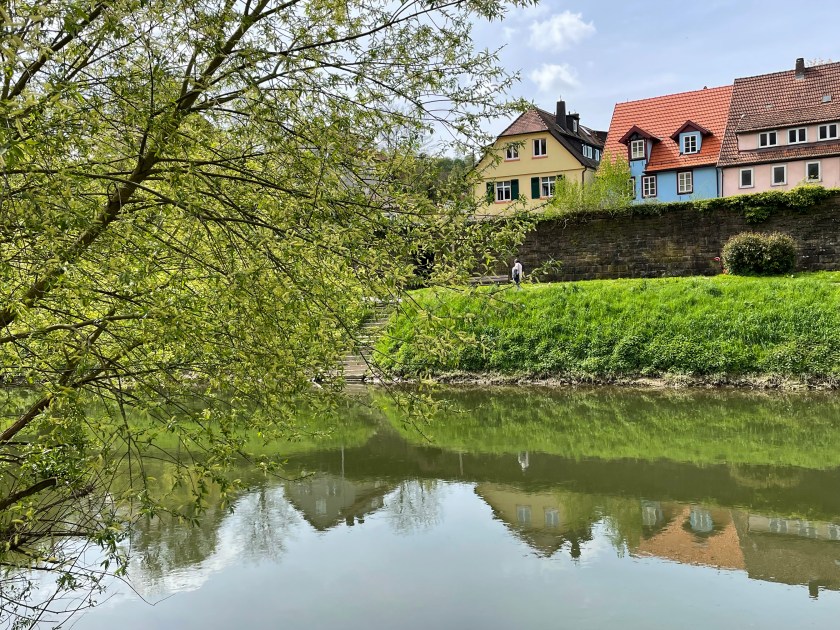
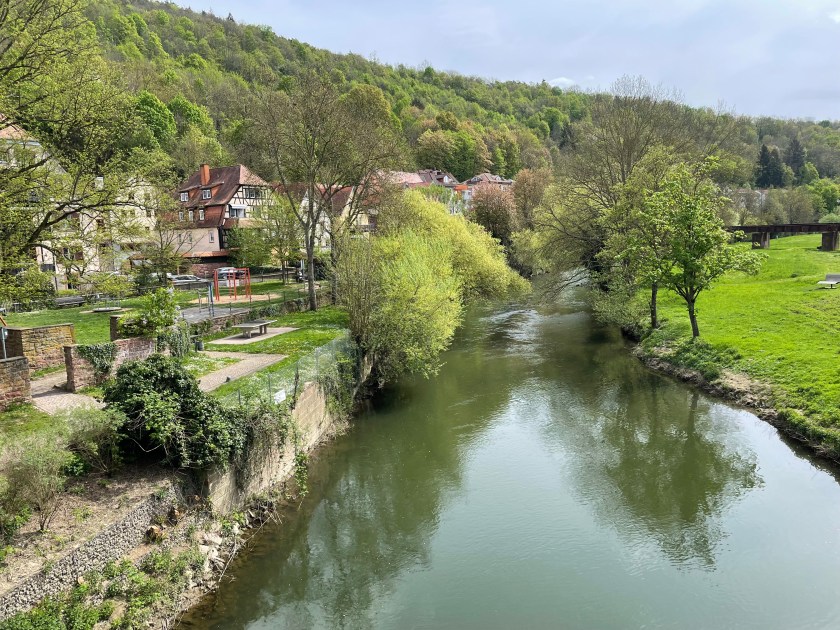
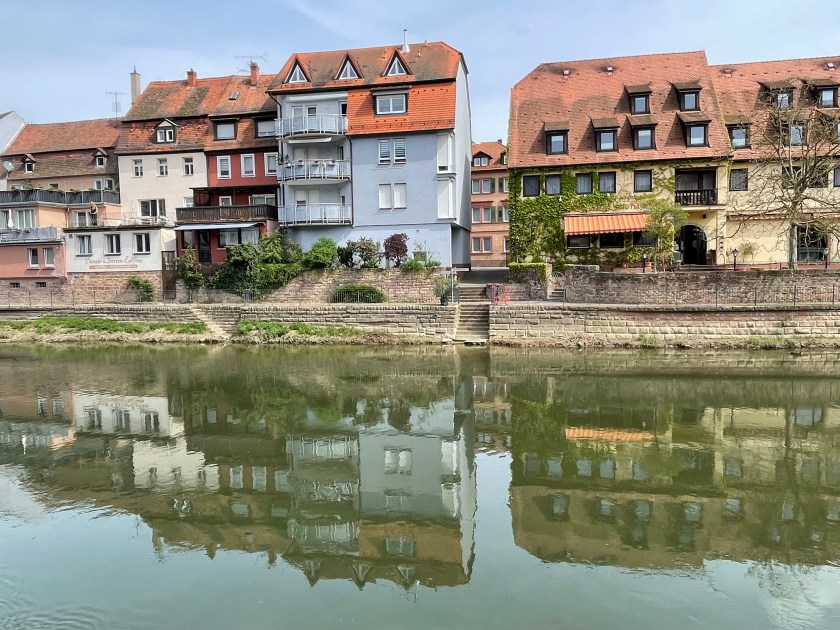
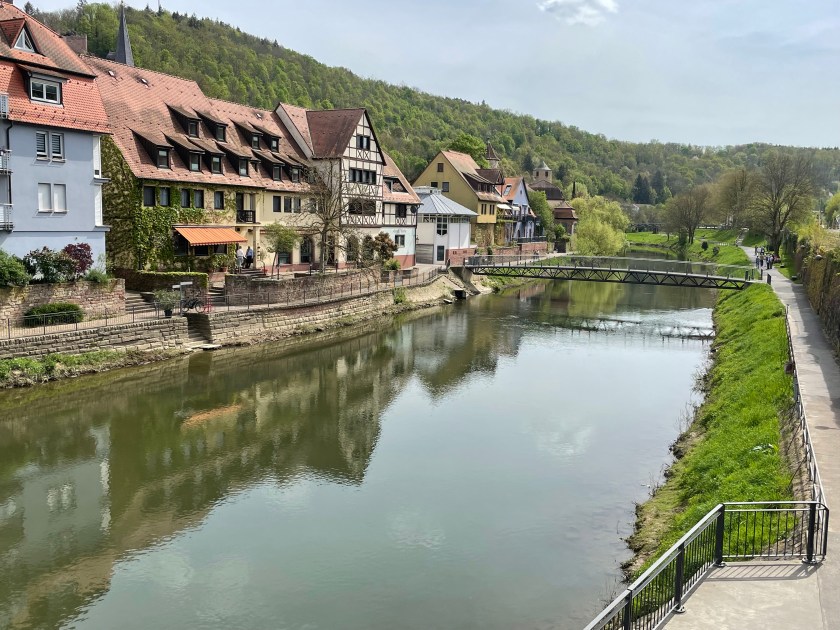
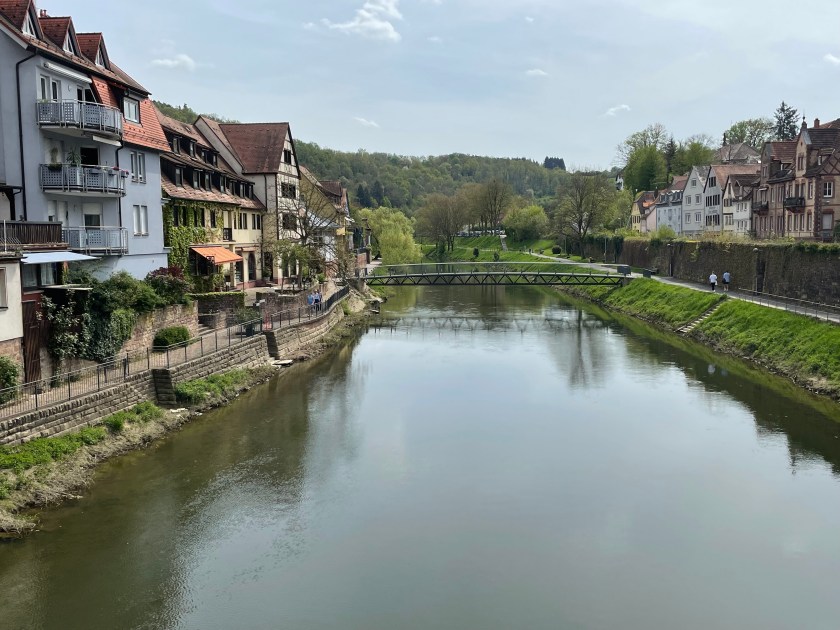
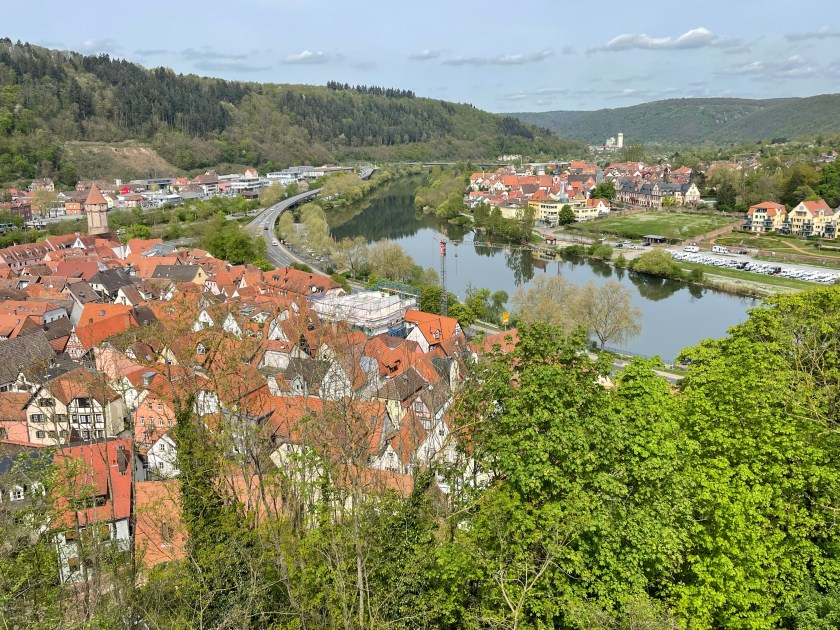
Wertheim is in the confluence of the Main and Tauber rivers, the town is in a triangular shape with water on 2 sides (the land between the rivers coming together, a little wedge of space).

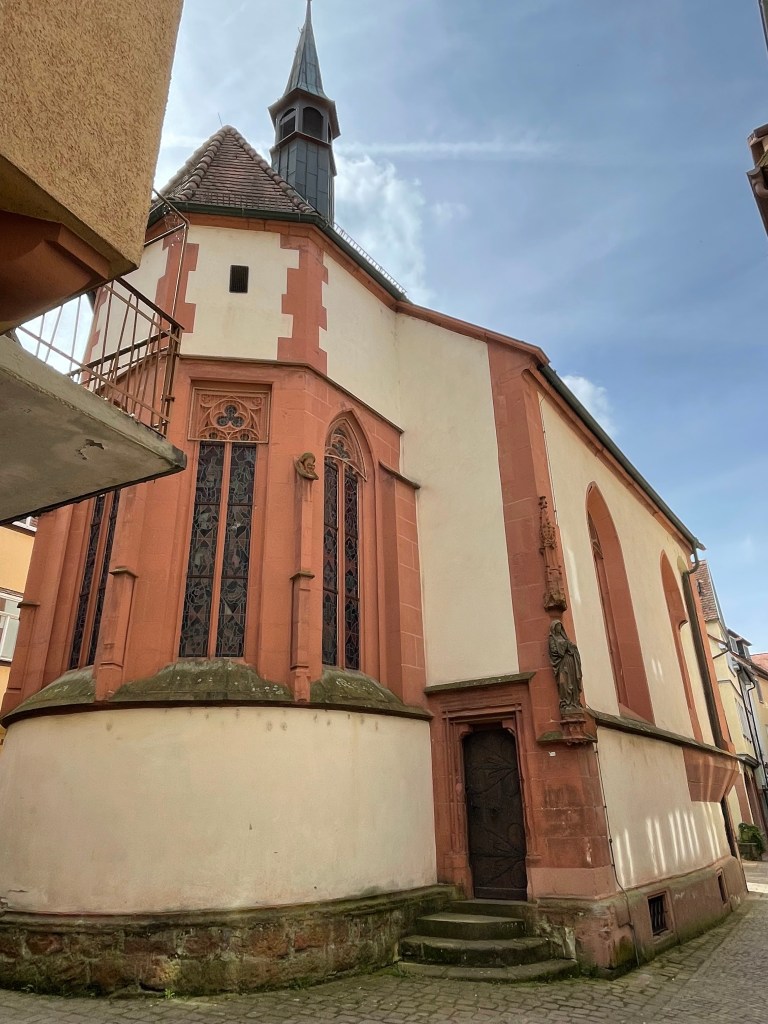
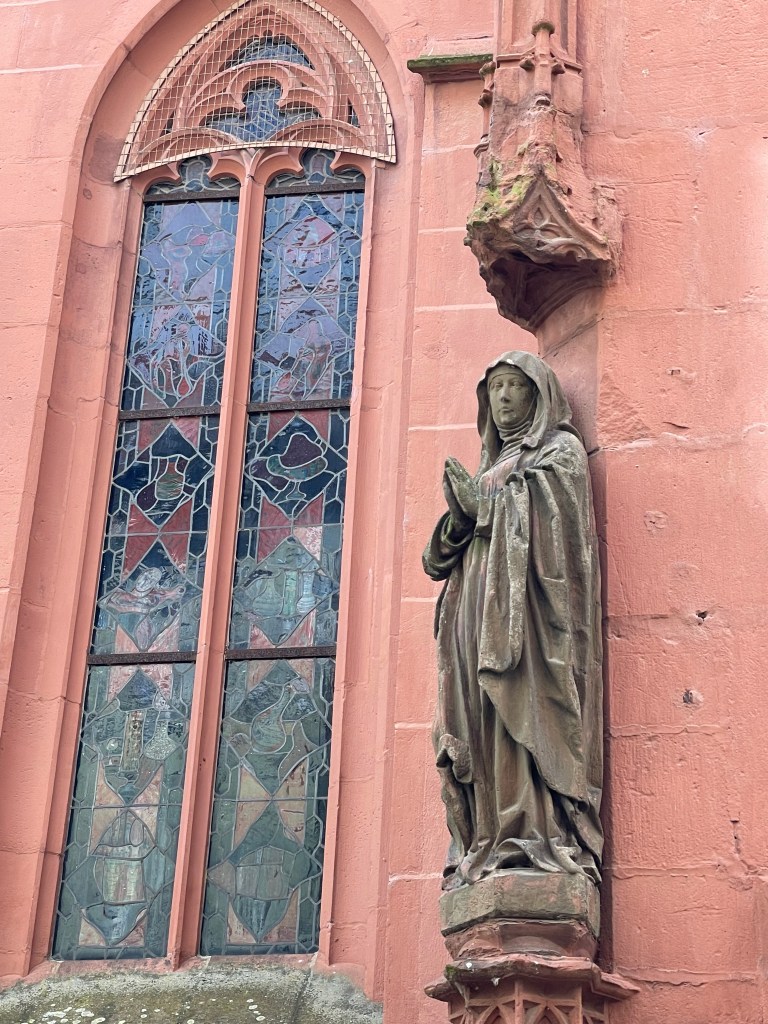
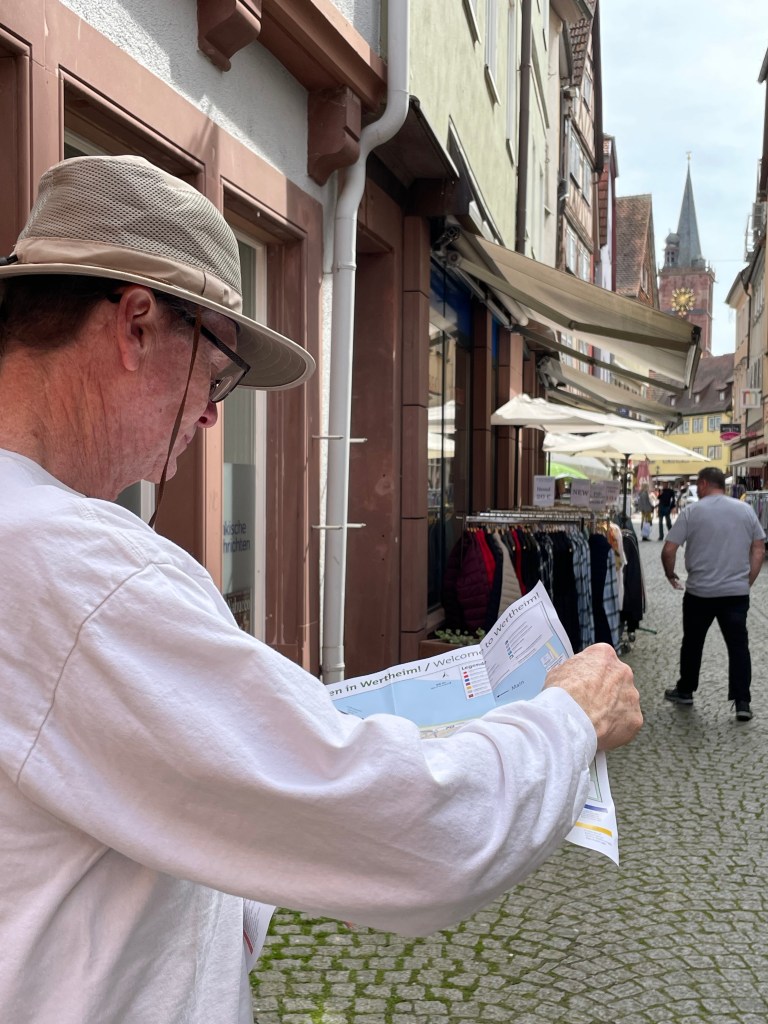
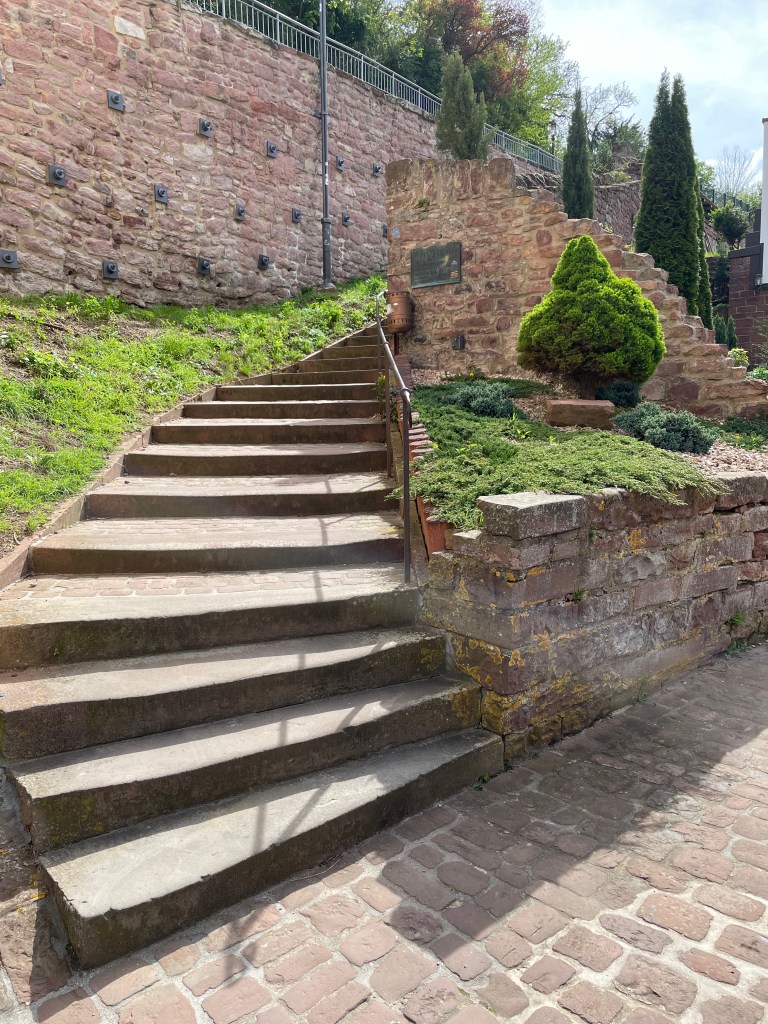
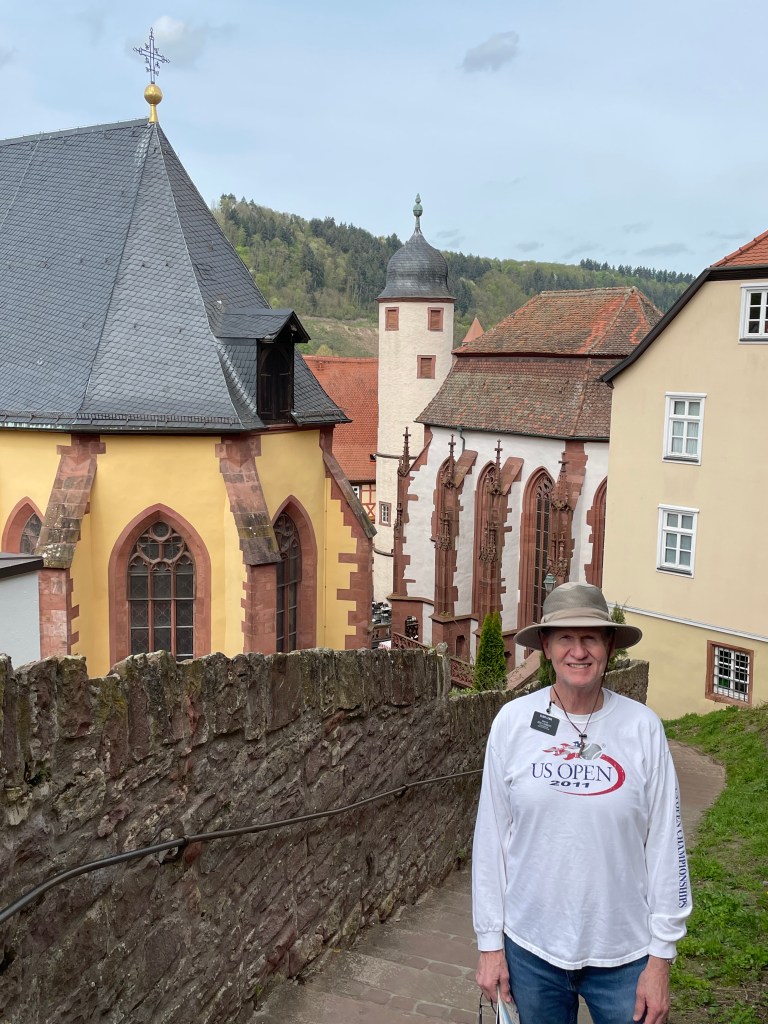
We came out of the organ concert into a small plaza by the church.  The locals were friendly and helpful (when they saw us with a map). They told us to go up the hill first to the castle ruins overlooking the town.  On the way up to the castle, we stopped at this very old chapel, Kilian’s Kapelle, (below on the right).

The big yellow church is on the left and the plaza is down below.

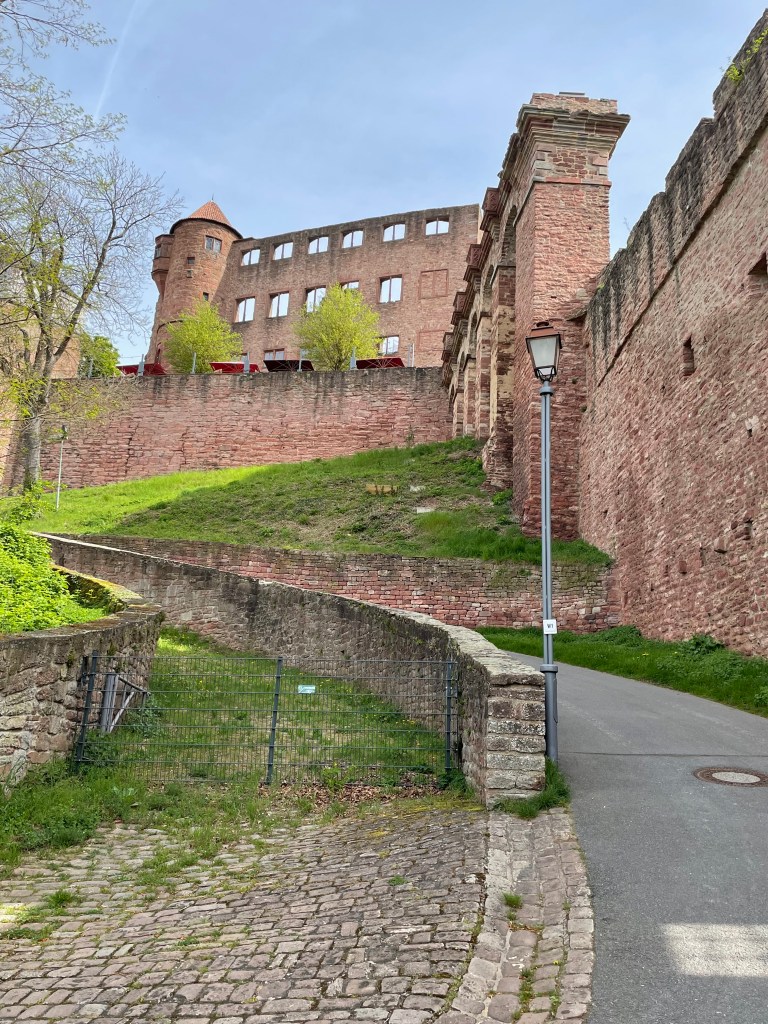
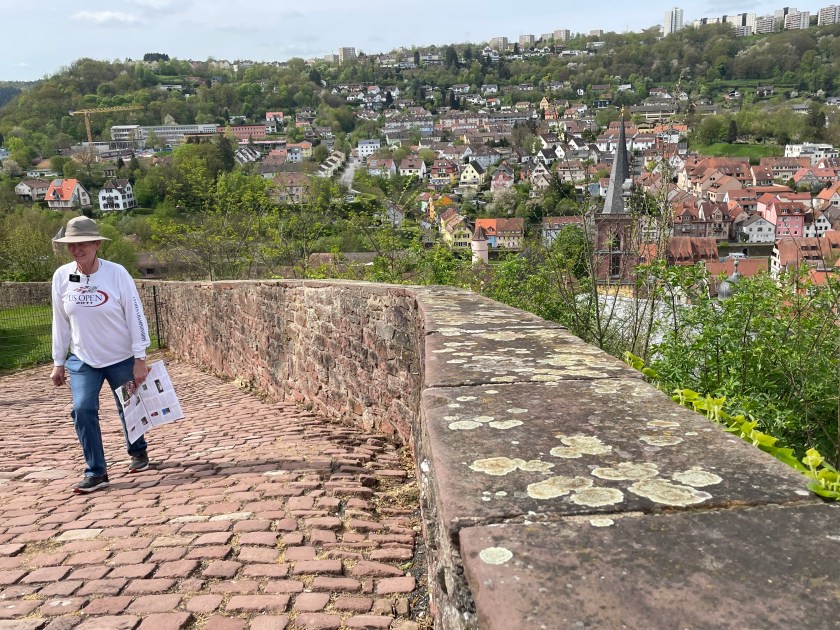
Then we continued up the trail to the castle ruins.

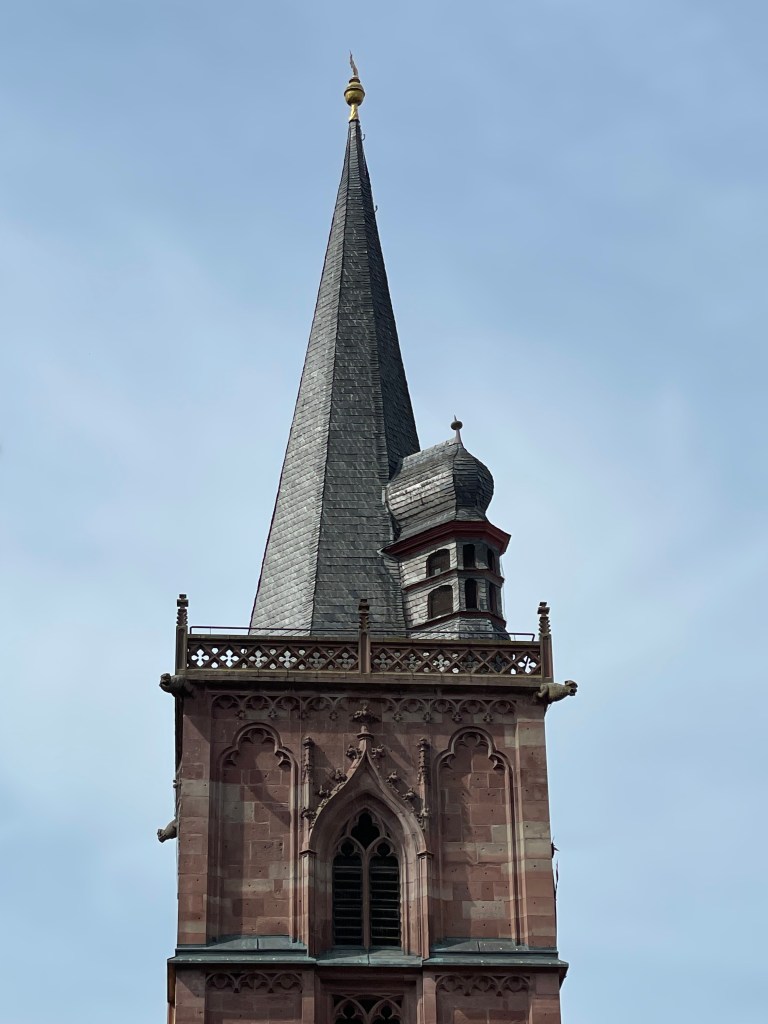
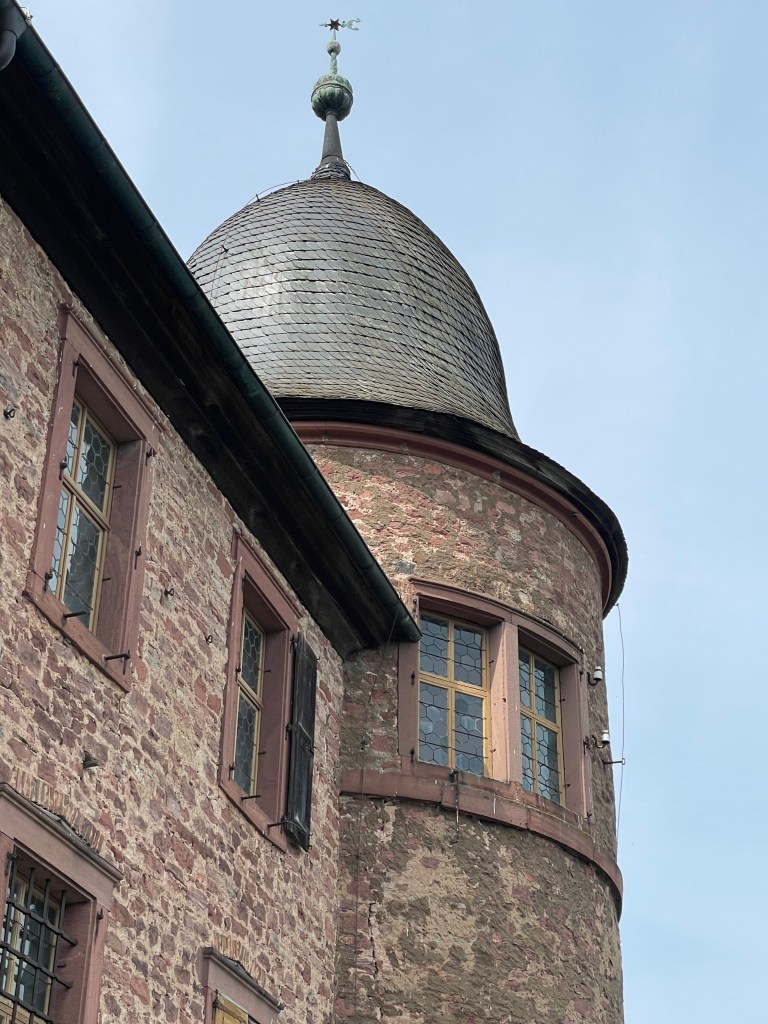
I would like to go into that little room on the spire tower.

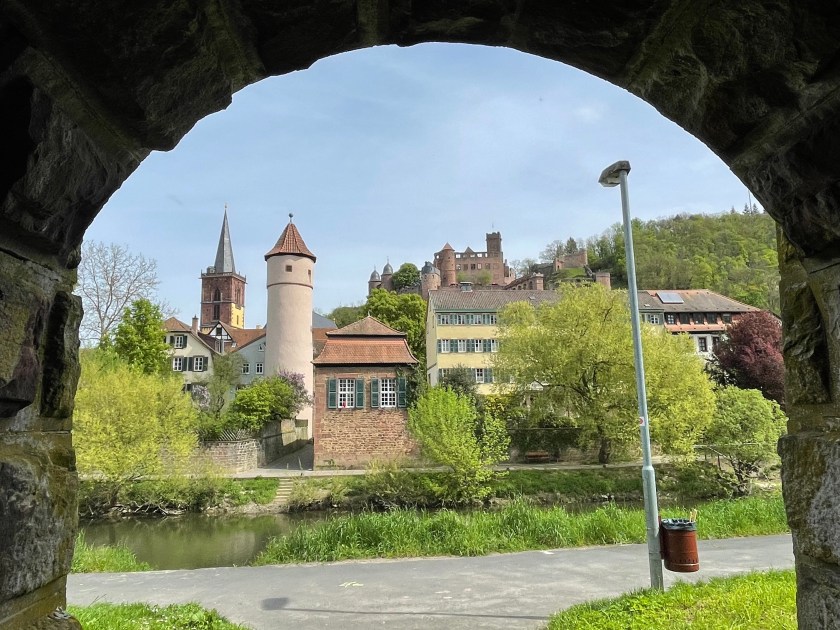
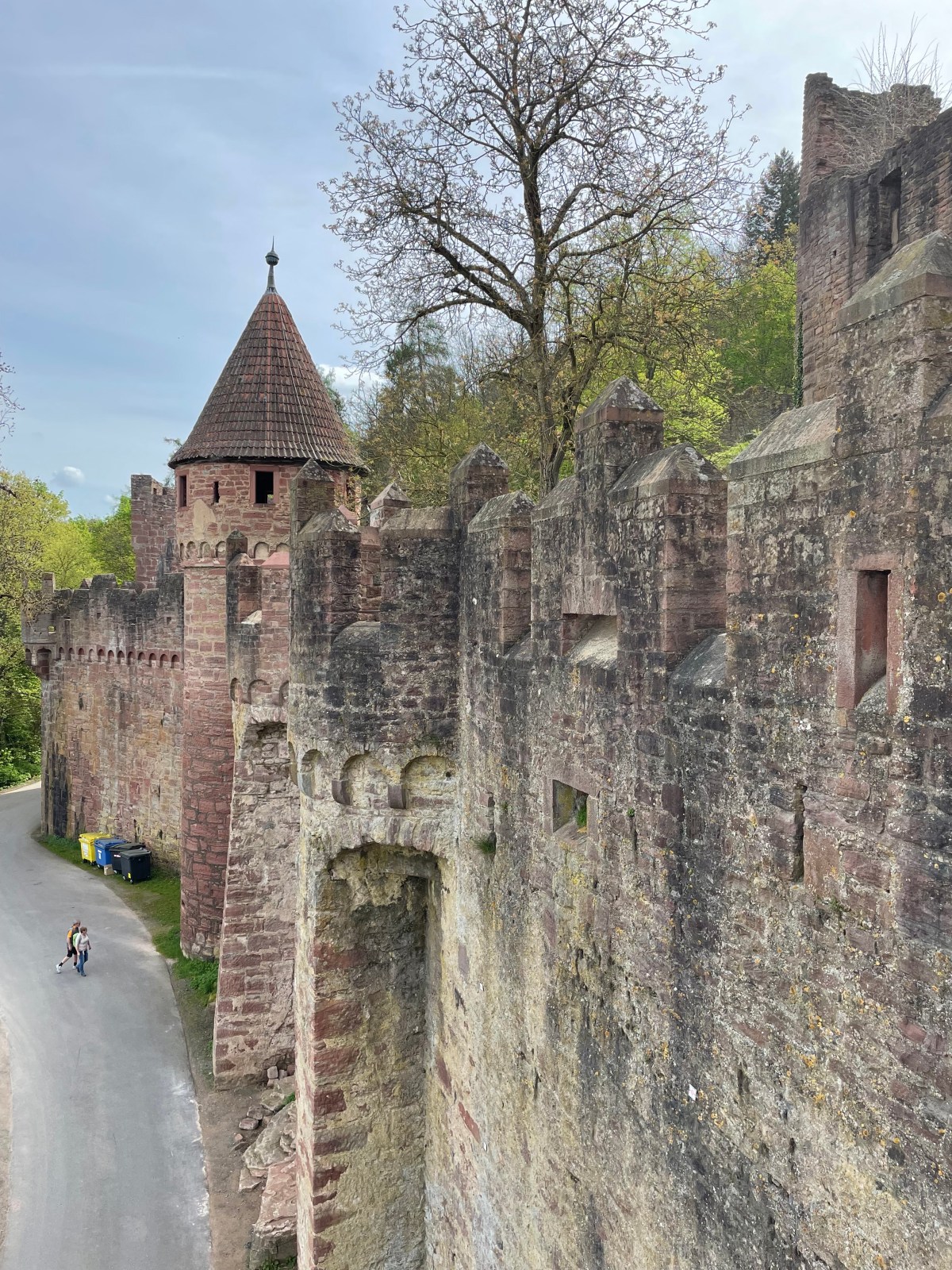
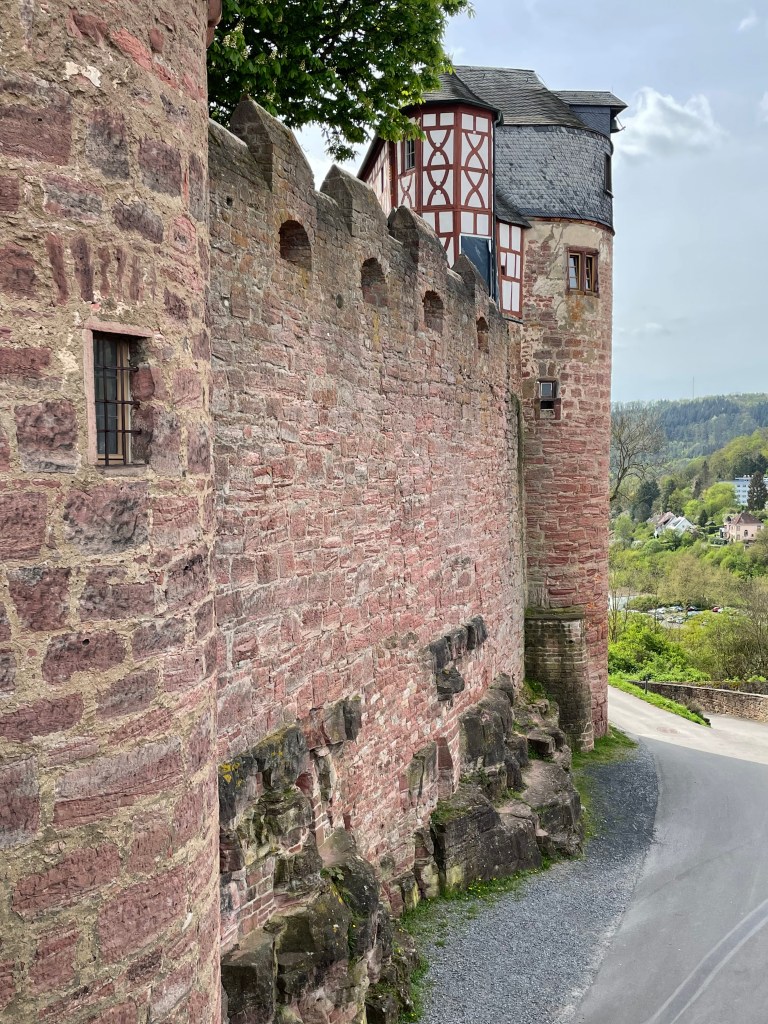
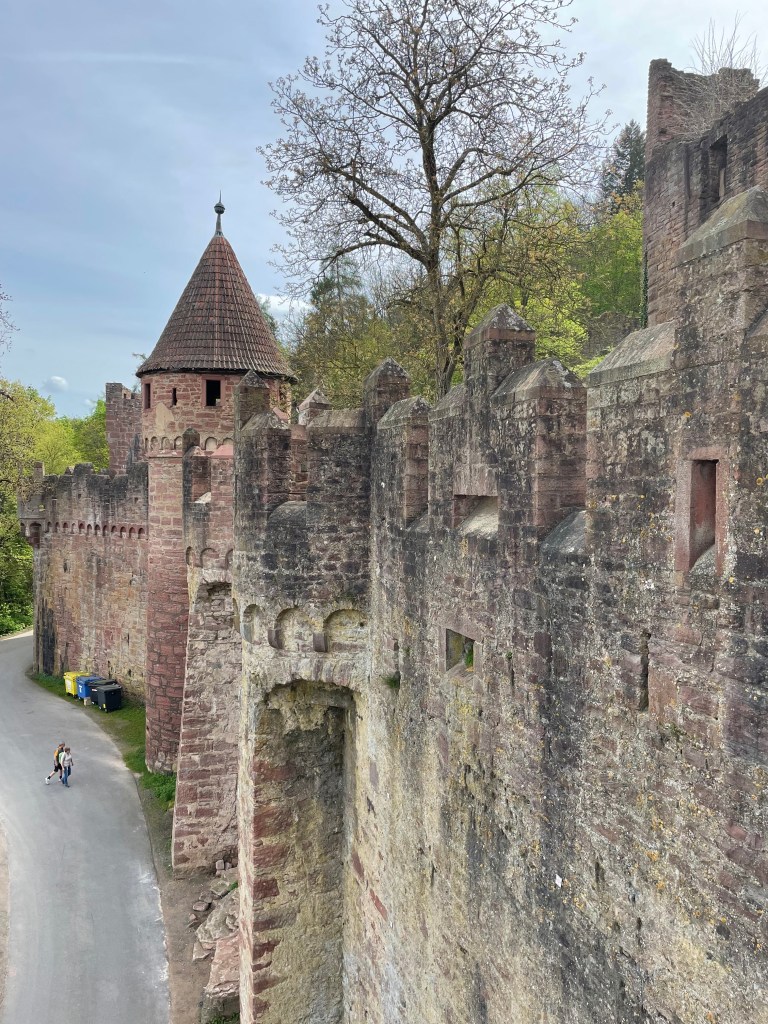
The castle (Burg Wertheim) was used in the 15th-17th century by the local counts. It has a deep moat and impressive bulwark. It was partly destroyed in 1618 during the 30 Years’ War. Now it’s used for cultural events. We didn’t pay a bit extra to hike the ruins, we just wandered around them. There’s a nice restaurant on top overlooking the town, and nice views.

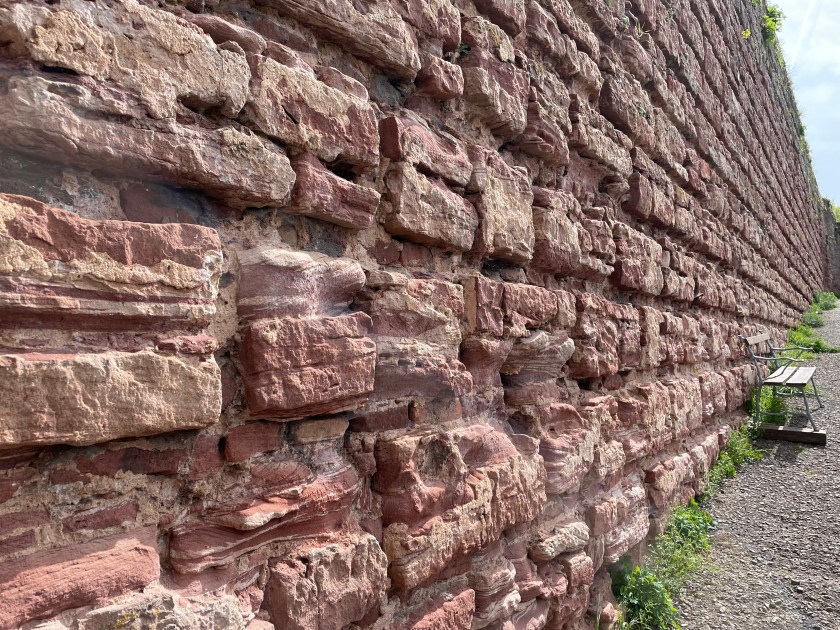
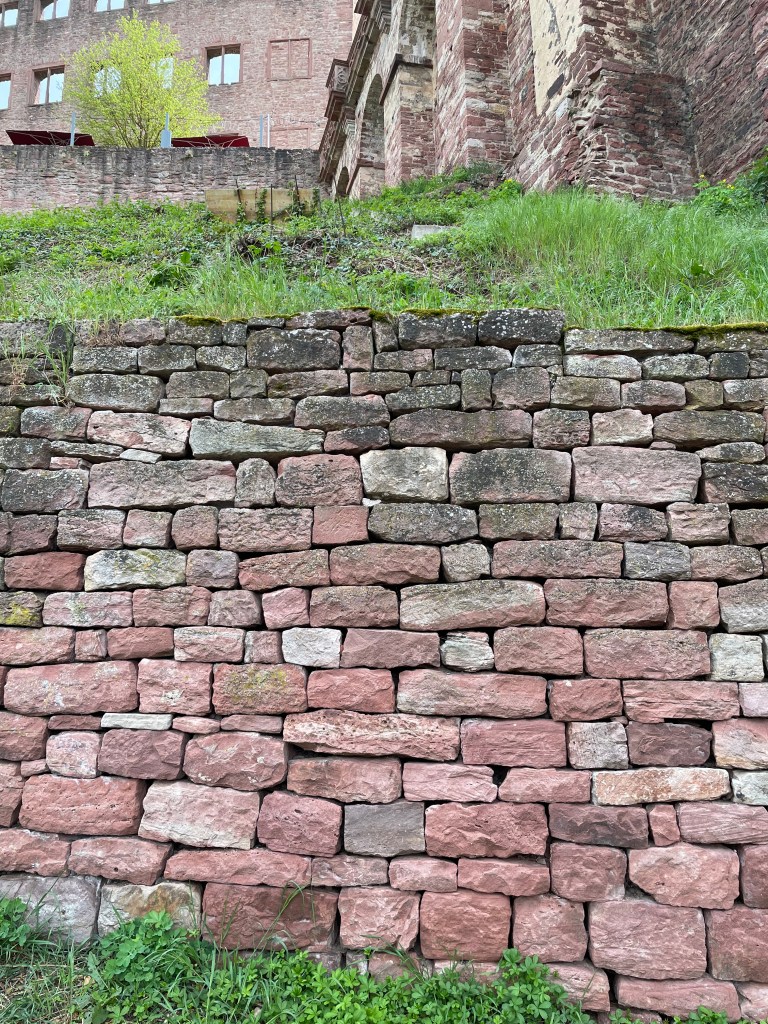
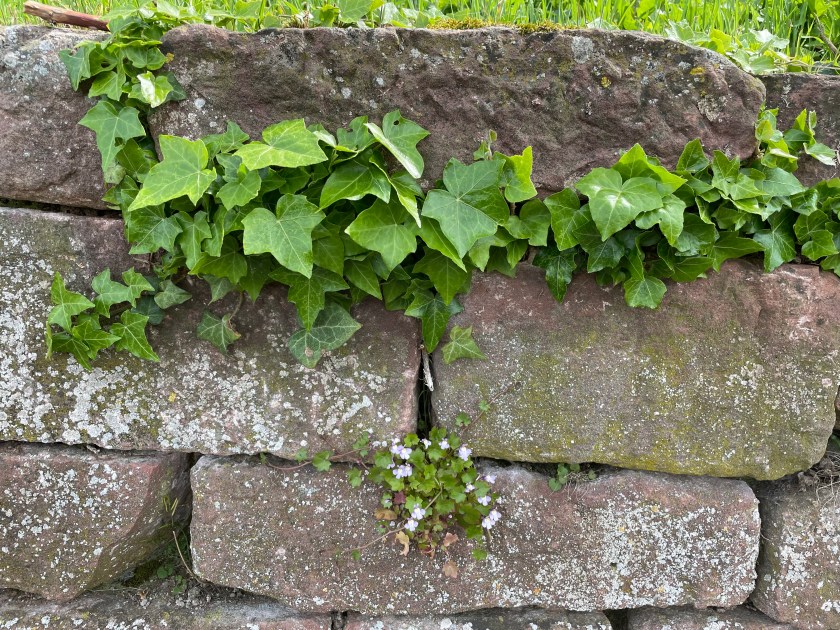
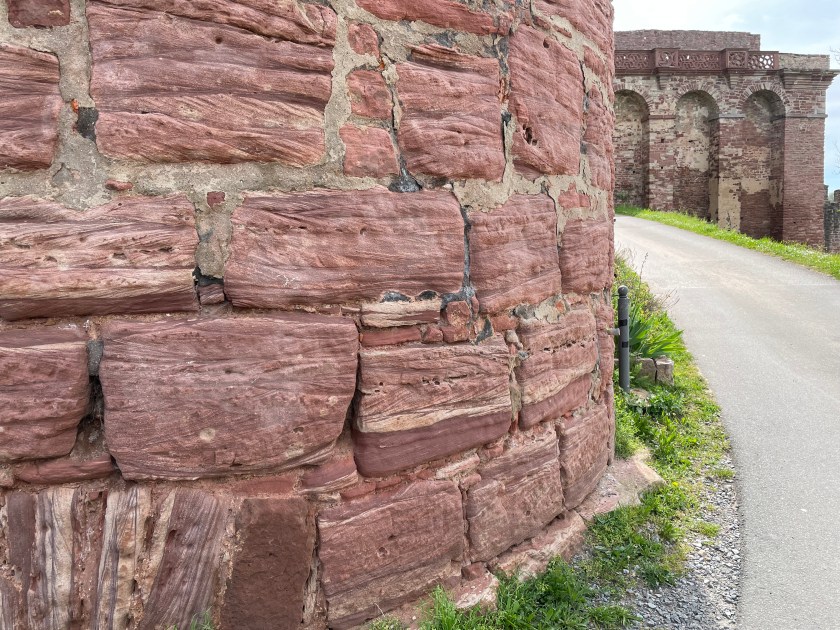
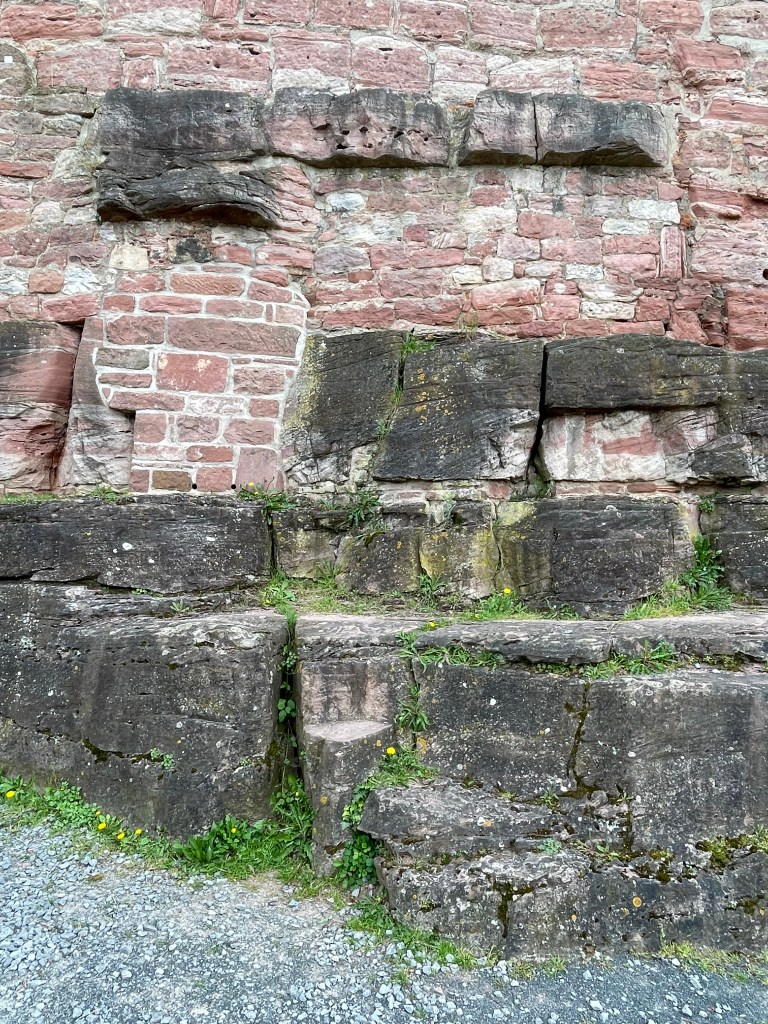
The stones fascinate me.

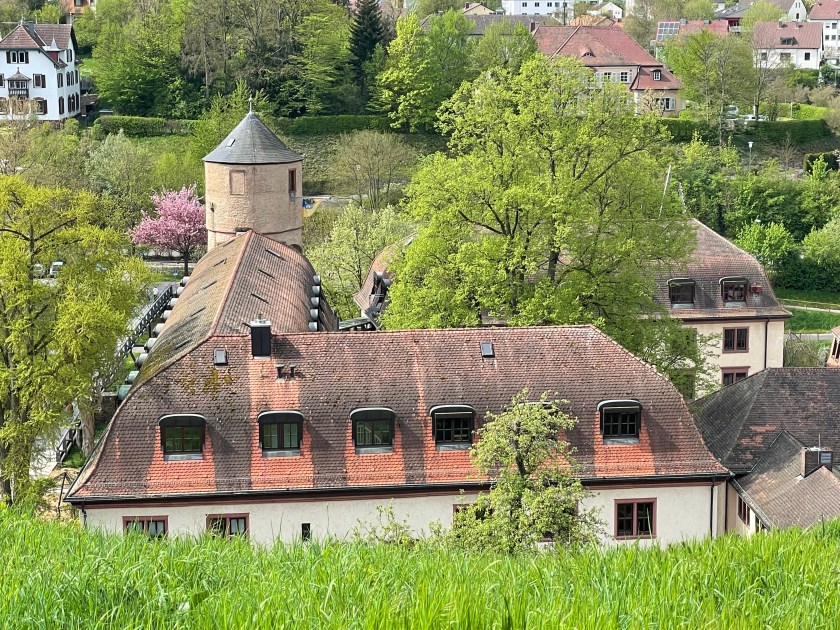
This is looking down on the palace (not open).

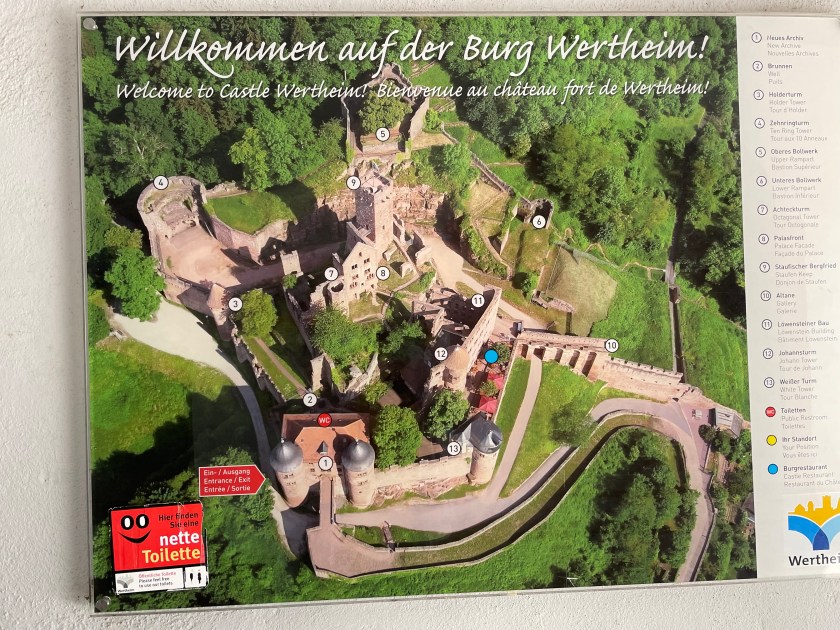
Here’s an aerial view of the castle.

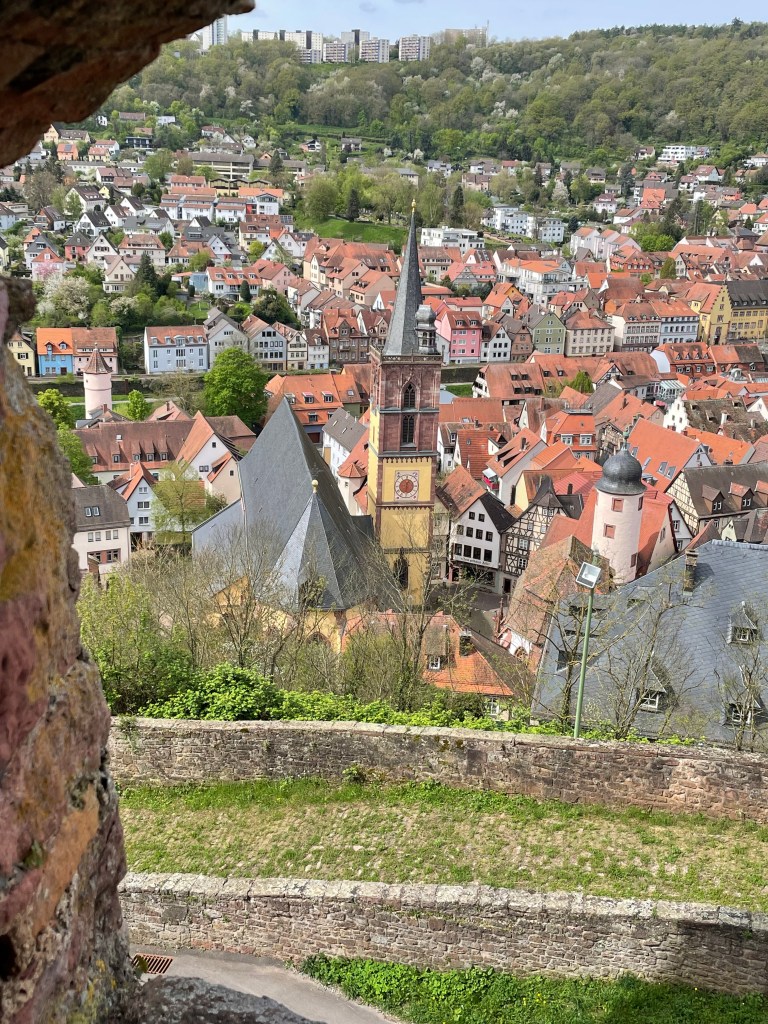
A look at the yellow Collegiate church below.

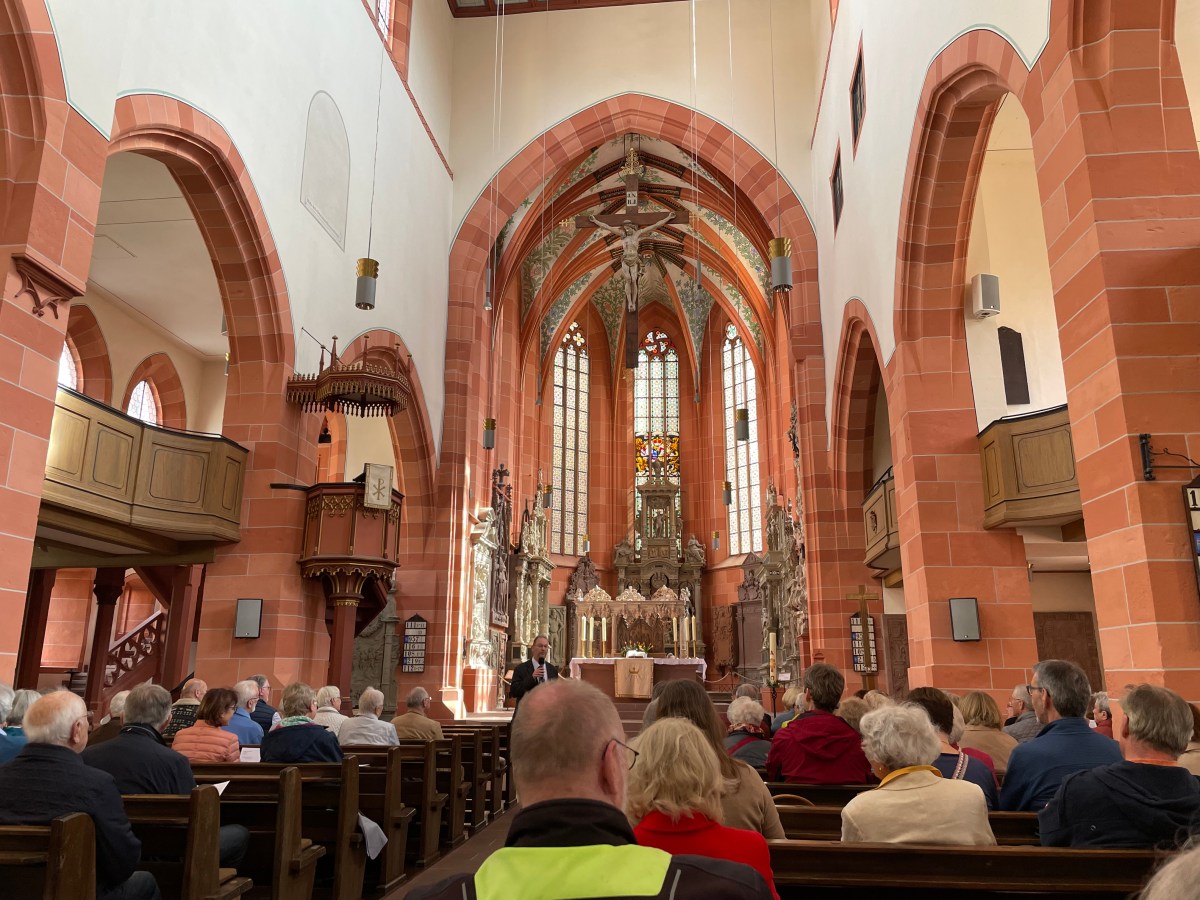
An Organ Concert in Wertheim

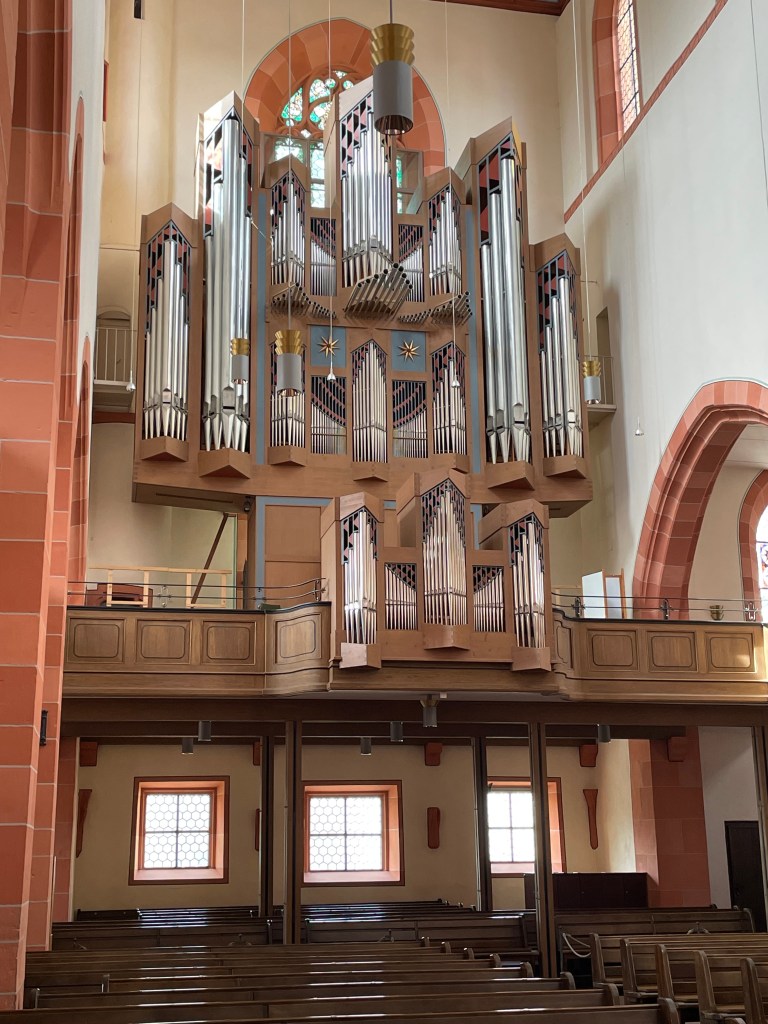
Our Saturday outing  this week took us to Wertheim.  We planned to be there at 11:00 for an organ concert before taking a look around this charming town.  Every week a concert is performed here, from Easter until October.

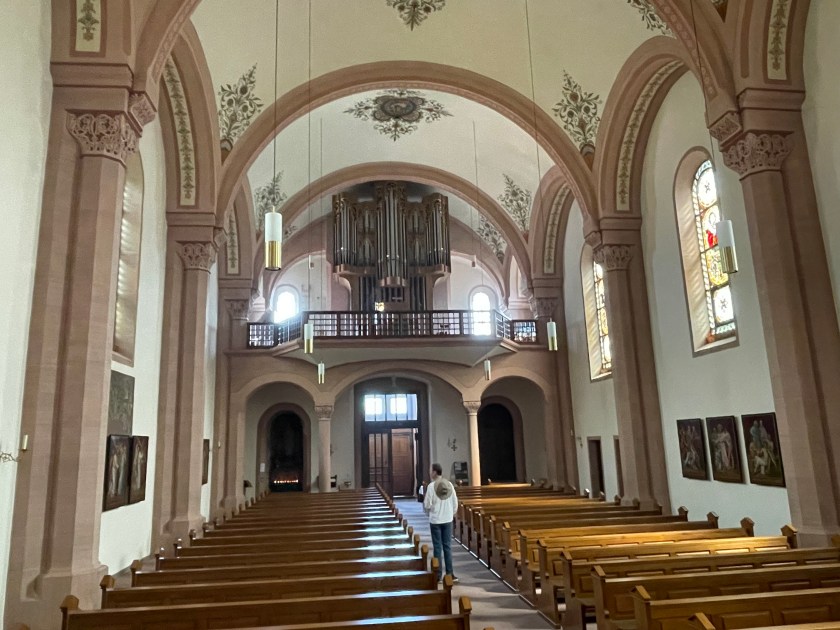
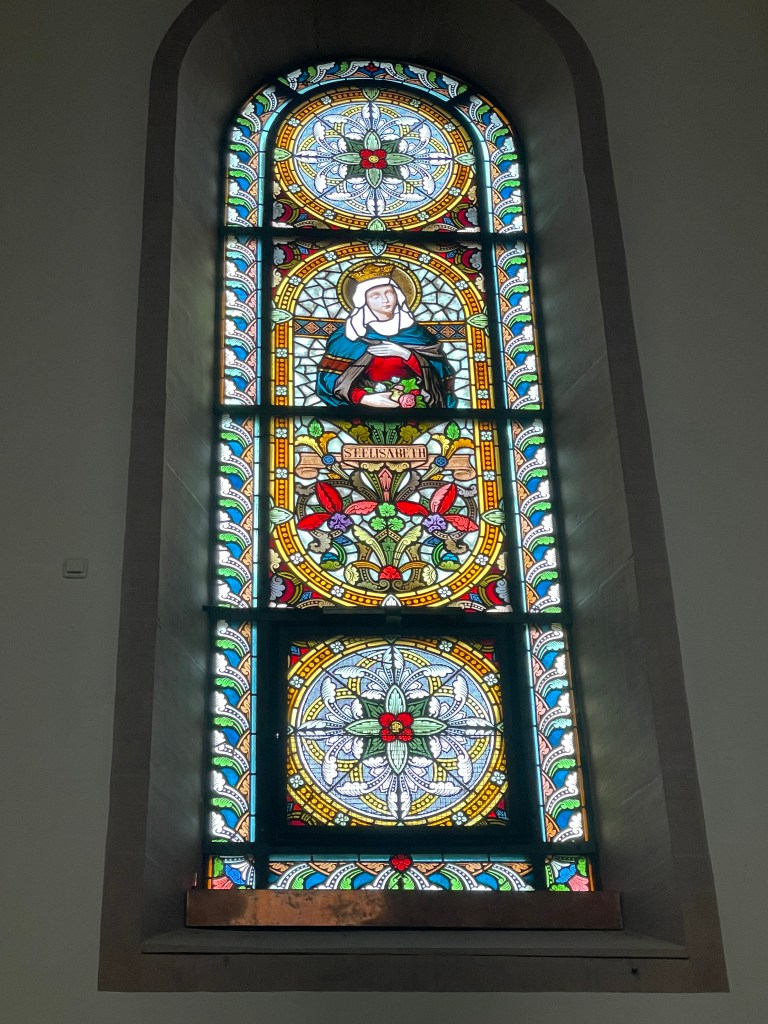
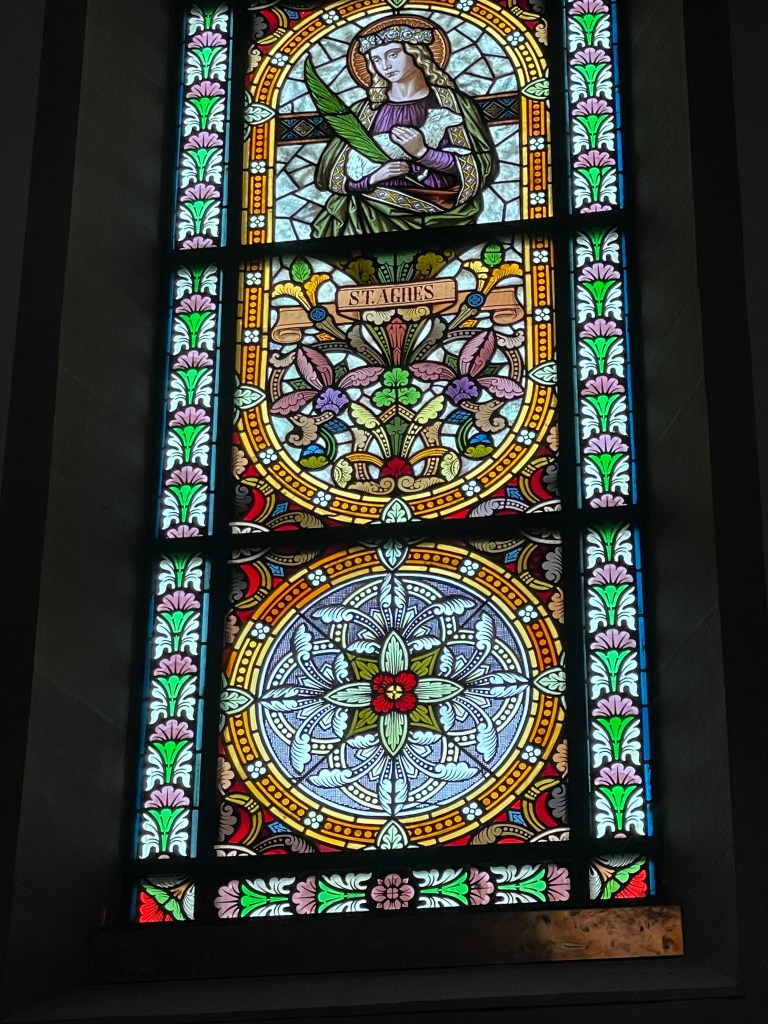
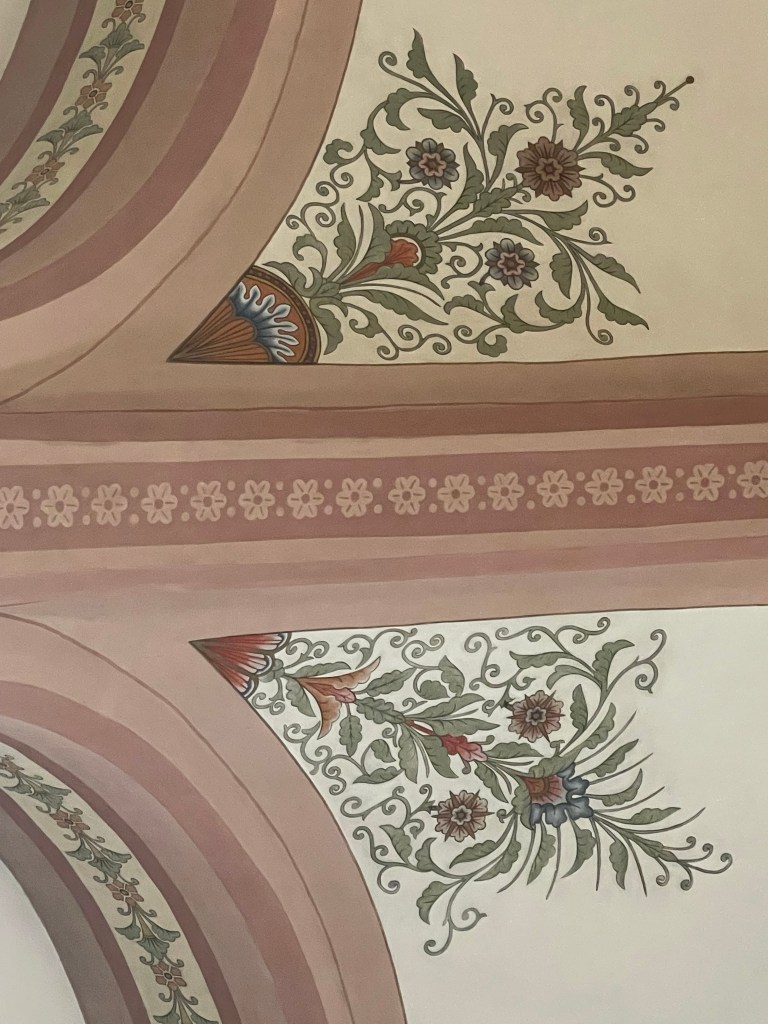
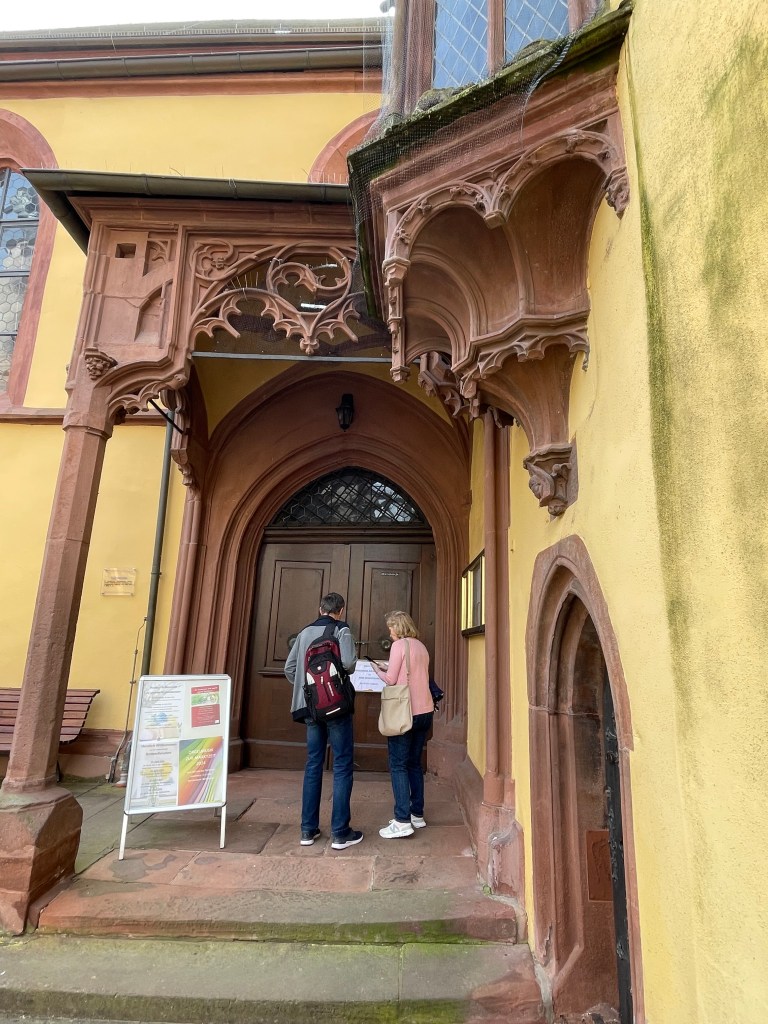
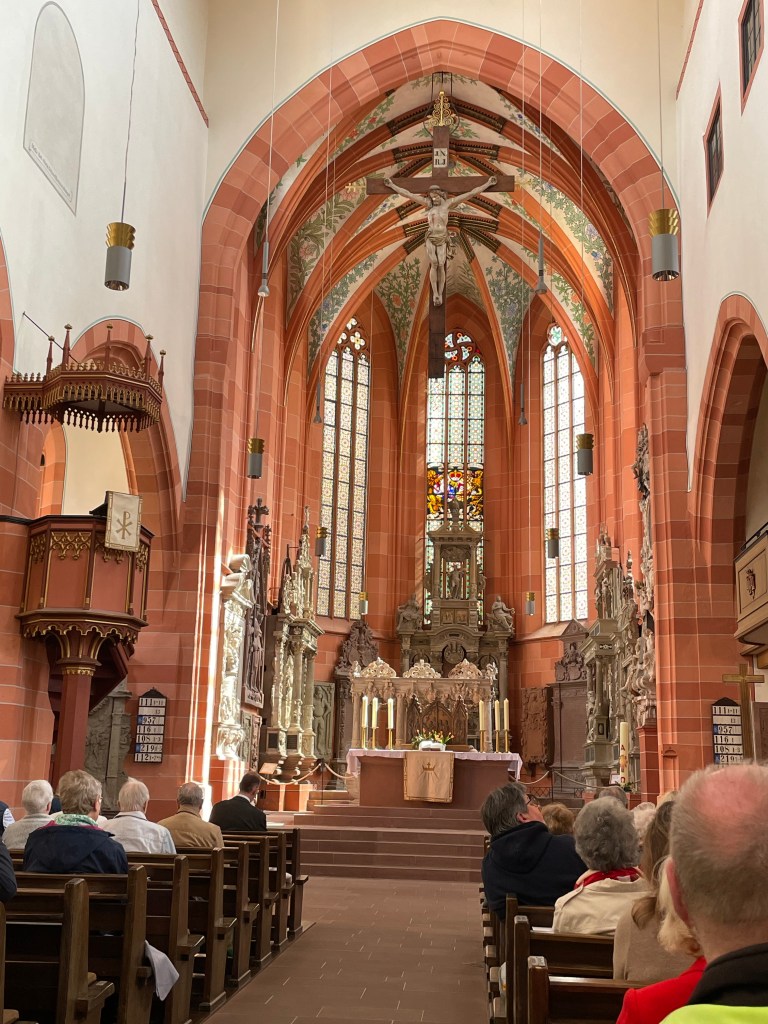
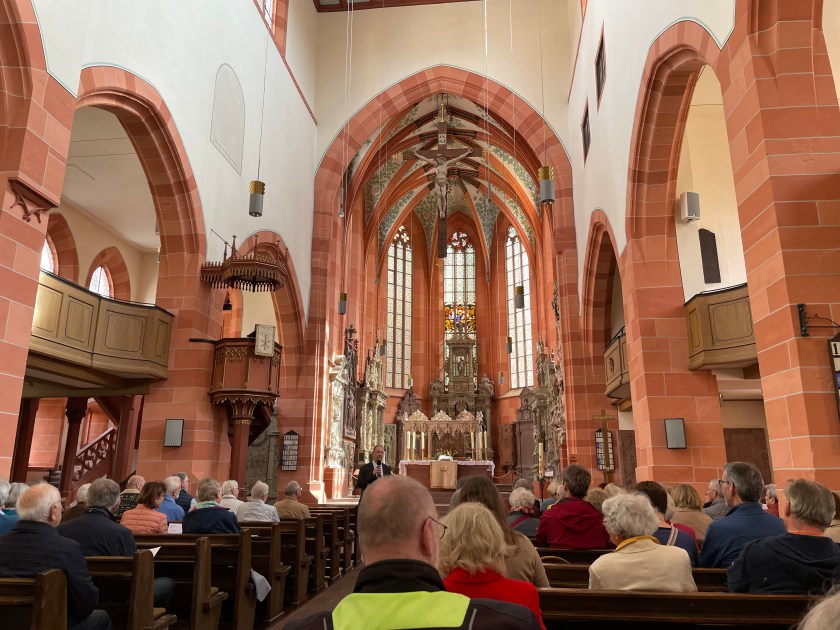
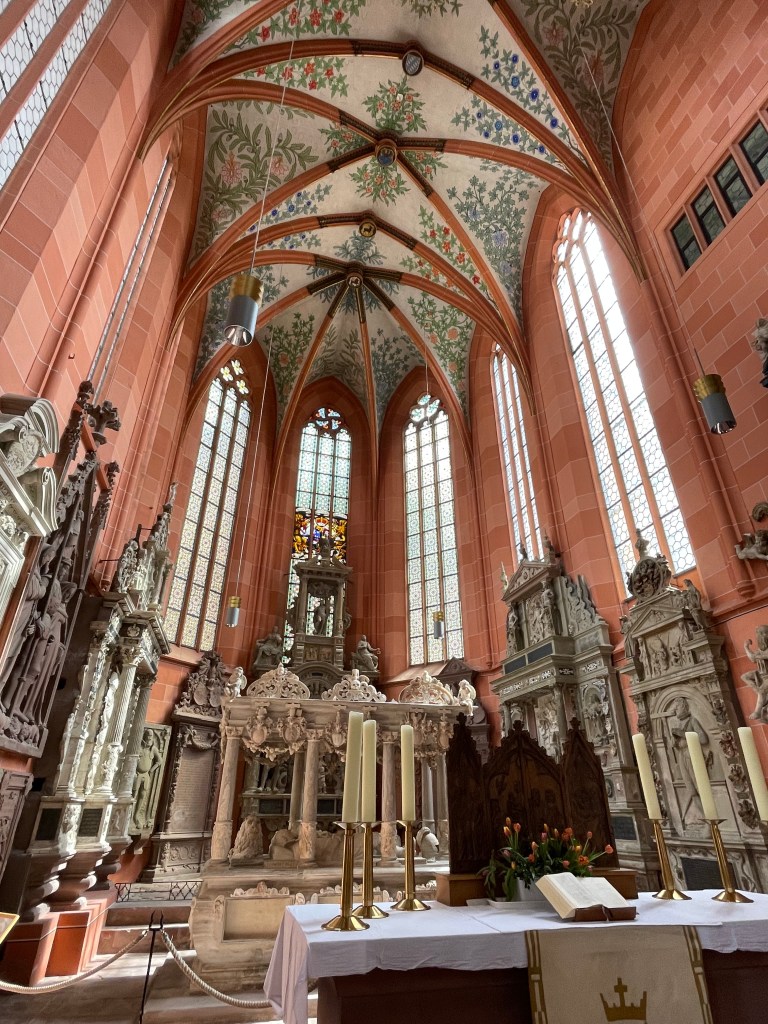
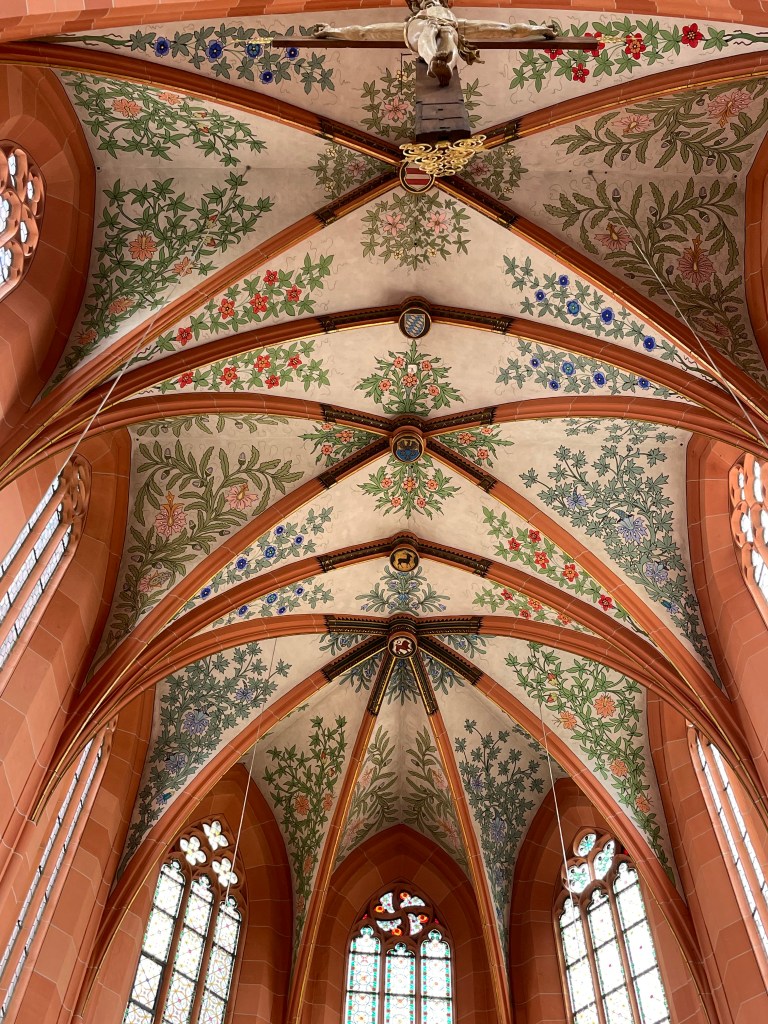
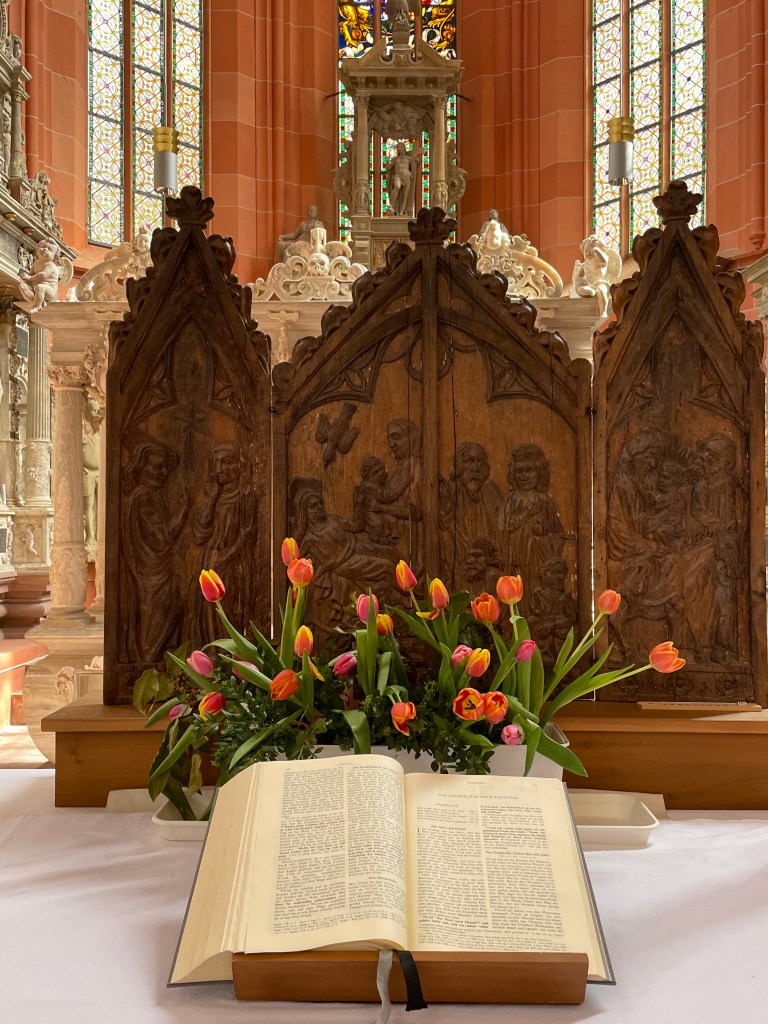
This large yellow church, the Collegiate Church, a Lutheran parish that dates all the way back to 1384, was first built in 1383/84.  It was gothic and beautiful inside (re-done, in 2007 to look like it once did). It was filled with locals, there for beautiful music. The walls inside were light, with pinkish sandstone arches and the ceiling had beautiful floral patterns painted on it. It felt feminine and it was really beautiful.  We were told that daily services have taken place here since 1419!
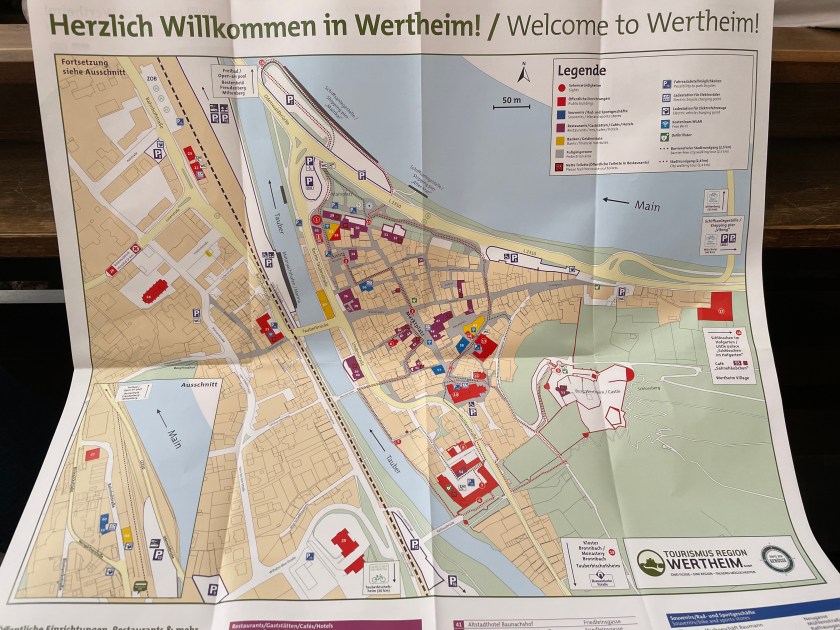
The concert featured a Bach piece and 3 others and it lasted about 45 min. After that we asked the locals to direct us to the best place to start the walking path on the map John picked up at an info place by where he parked the car (he dropped me off at the church). I love these little towns with walking path maps, so we know where we’re going and we don’t miss anything.

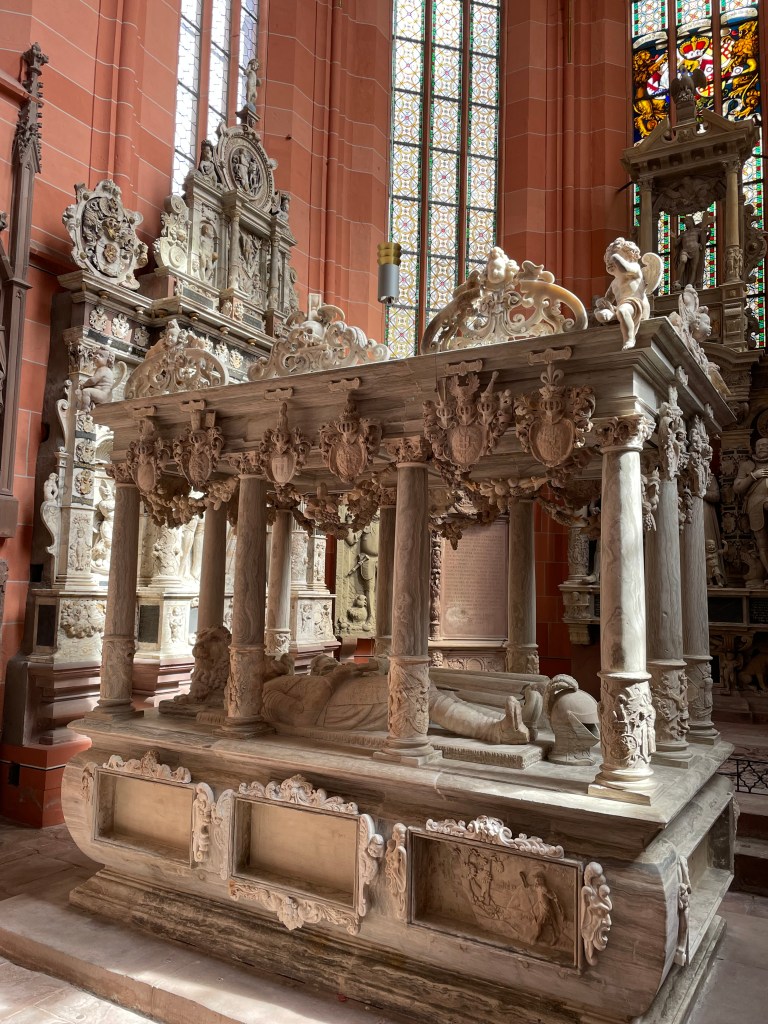
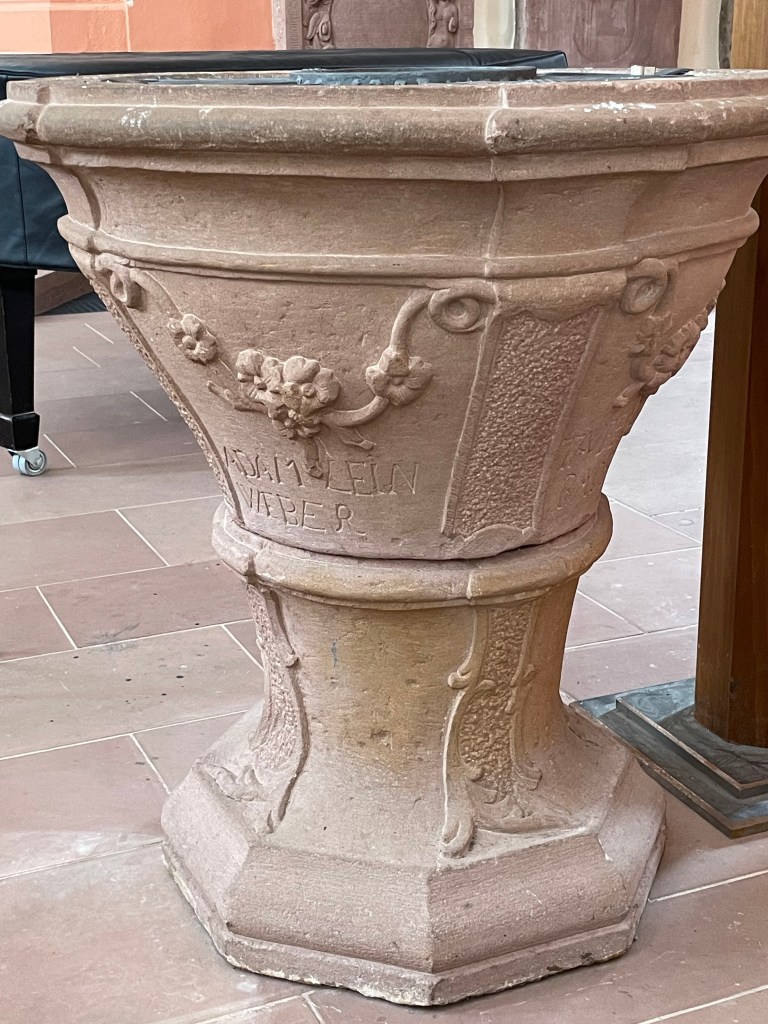
We came back later, after some wandering to see more of the church.

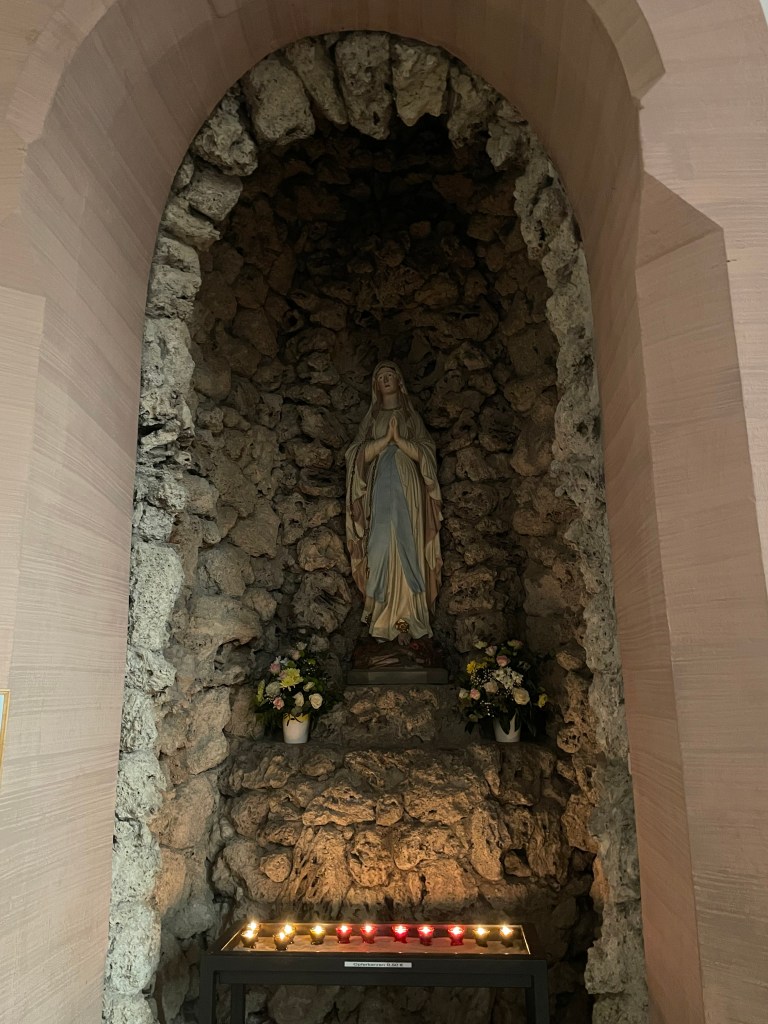
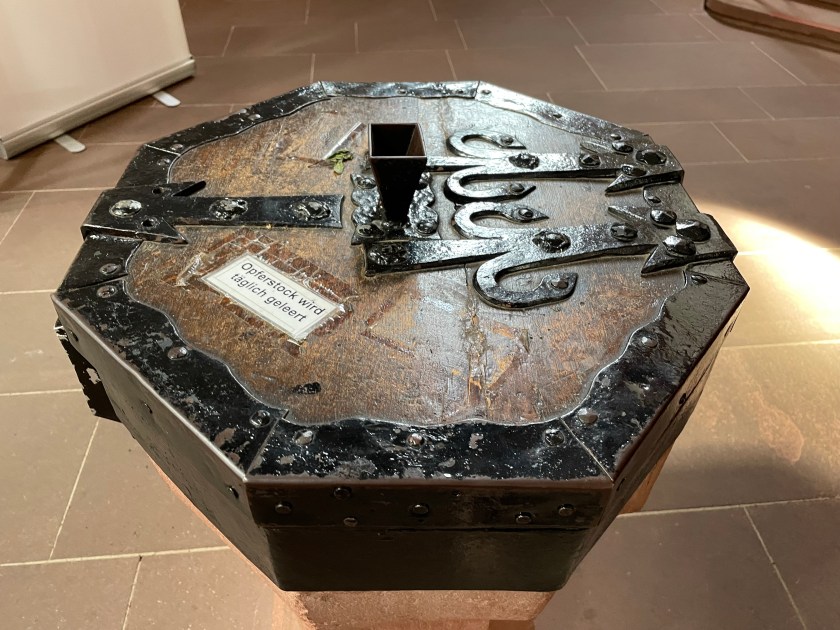
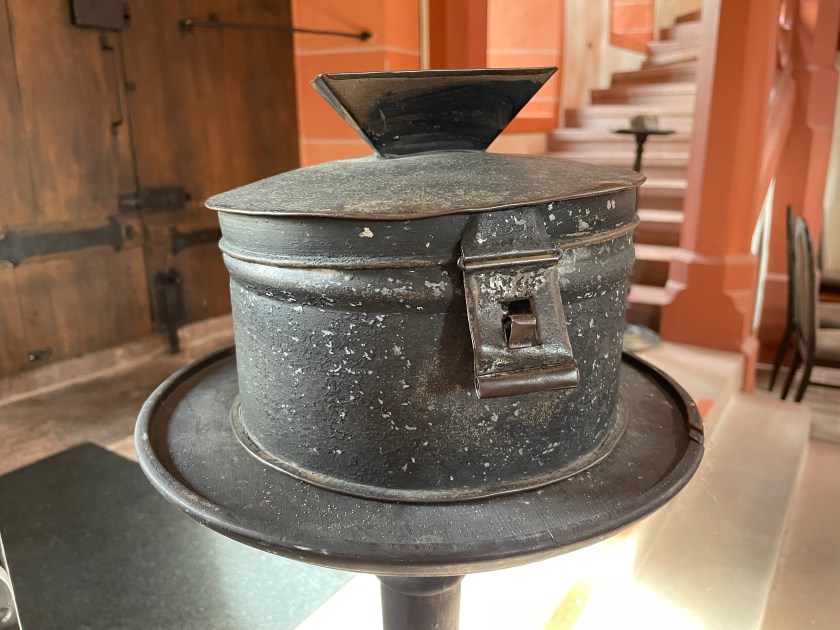
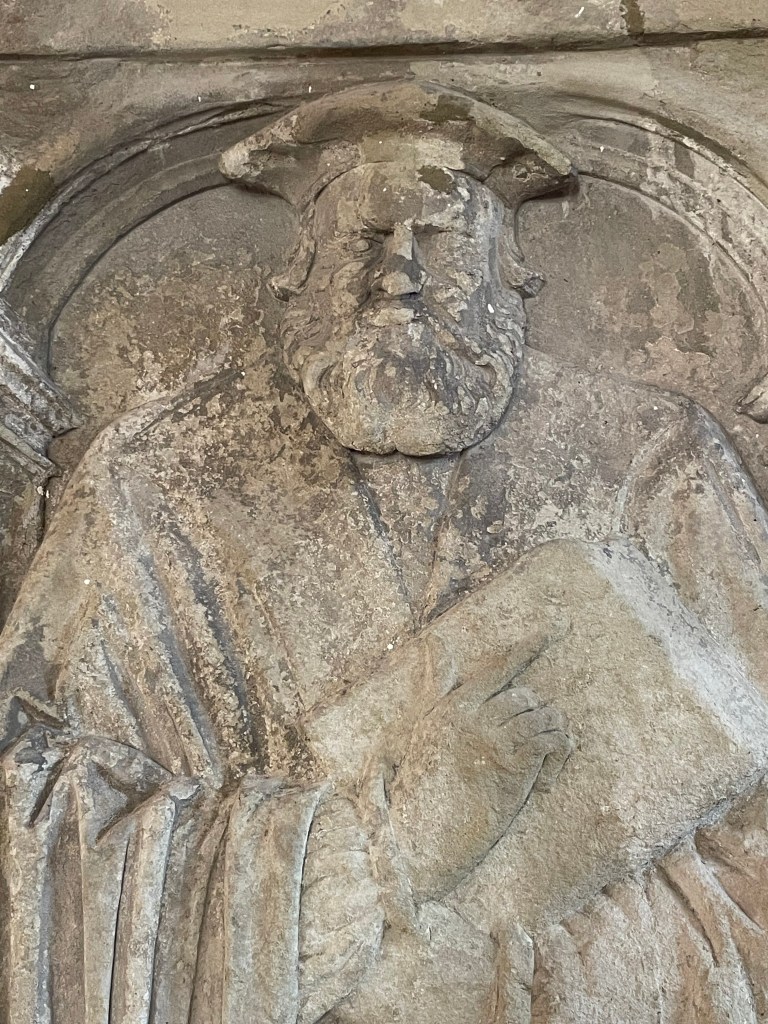
Collection boxes.

I think this ceiling is spectacular!

After the concert, we spent a few hours seeing this fascinating little town that sits between the confluence of the Main and Tauber rivers.

The Moving Begins

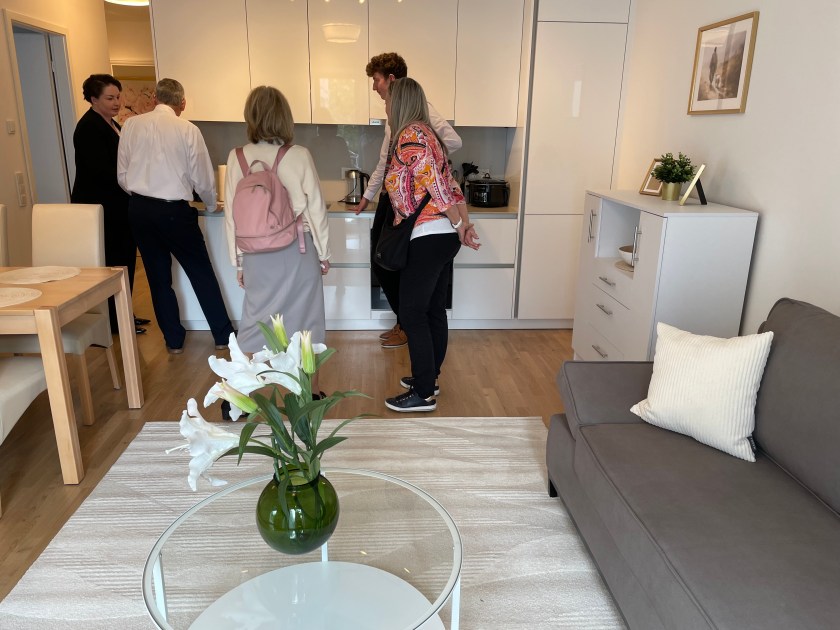
For several months John and I have been working with the facilities team to find new apartments for our Frankfurt Area missionaries.  For a real long time, missionaries have lived in the apartments on Portstrasse, next to the old Area Offices and the Stake Center.  The Area Offices moved to the Phoenix Haus last year and the Mission Office moved into the old Area Offices here at Portstrasse.

In the meantime, our missionary apartments are getting older and older and the management/landlords haven’t kept up with the maintenance.  It’s time for us to go elsewhere, so we’ve been looking and visiting apartment complexes since the first of the year.

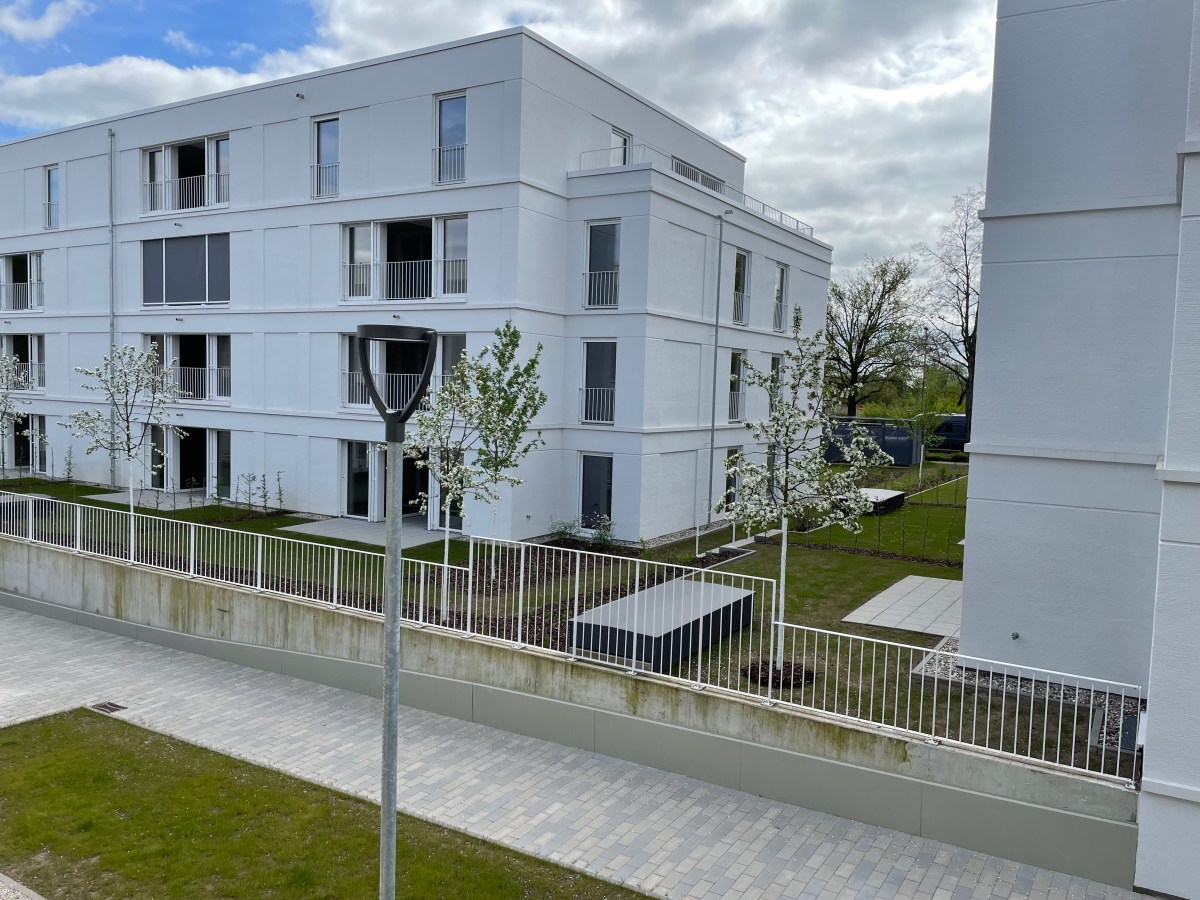
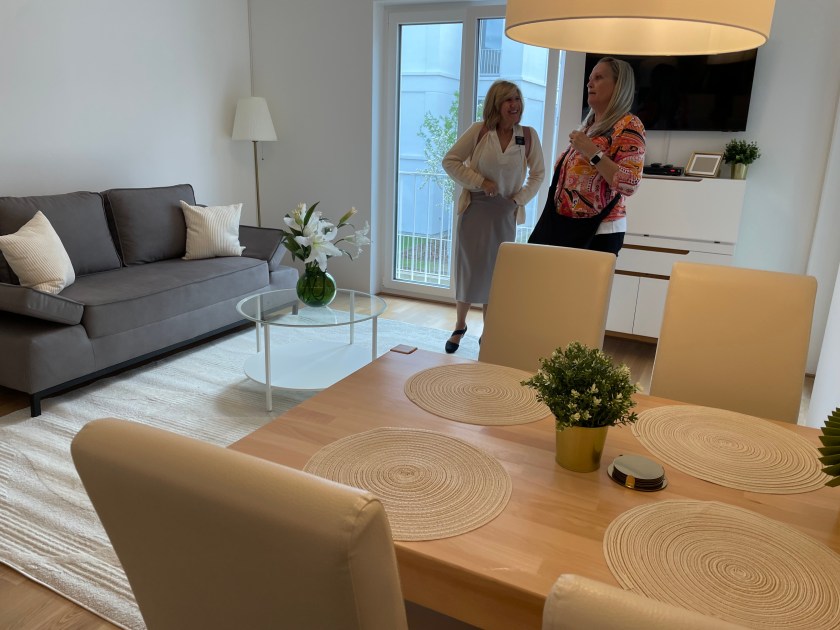
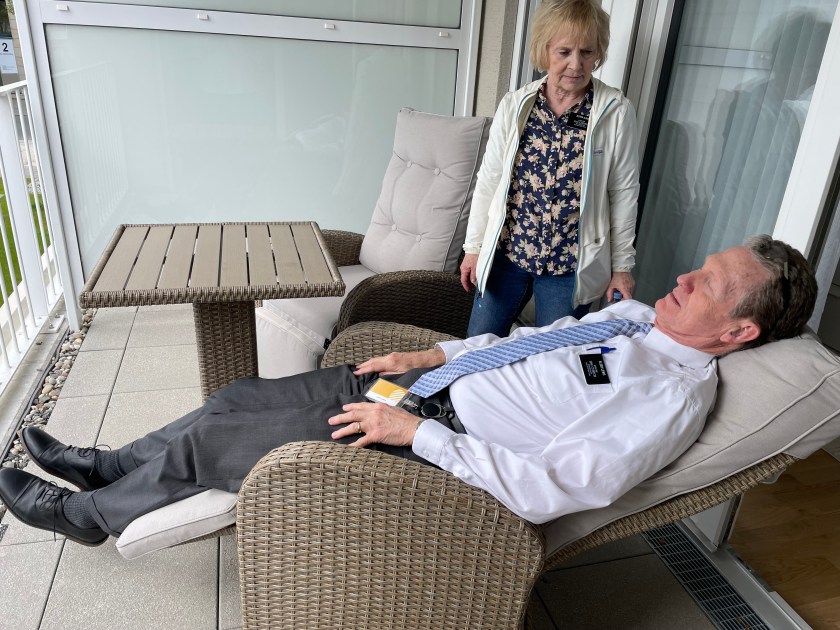
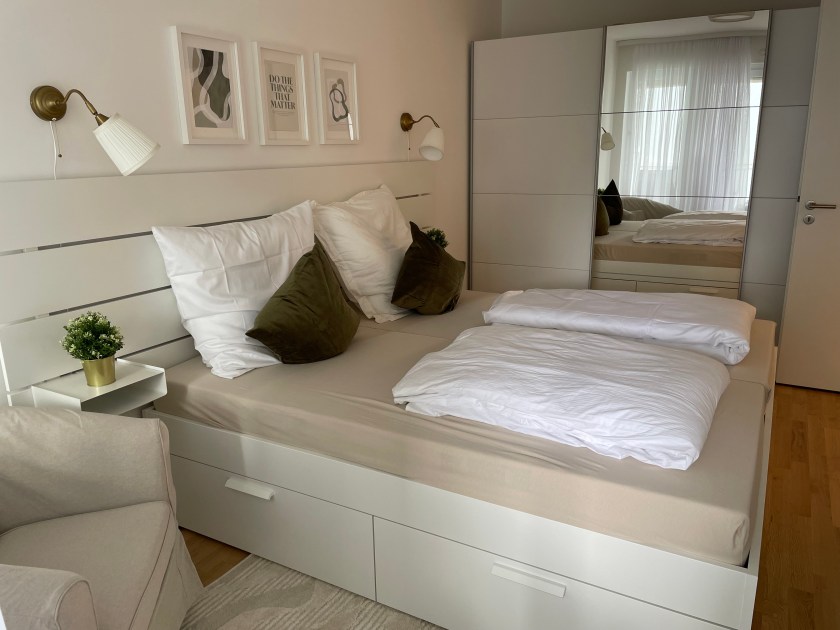
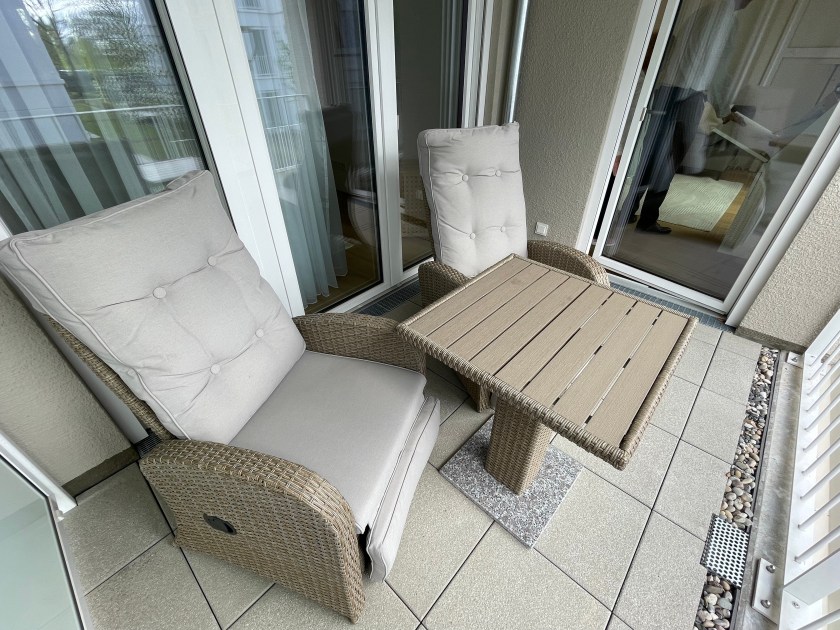
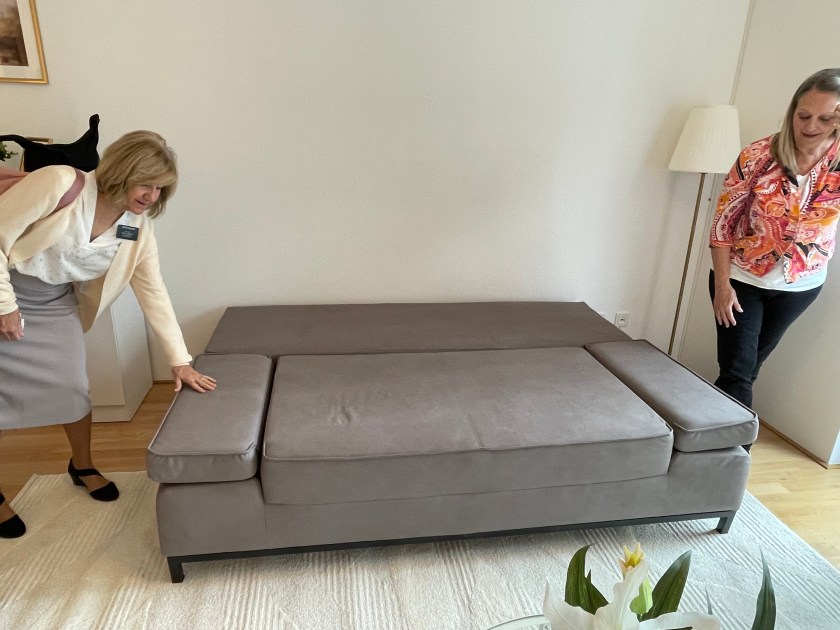
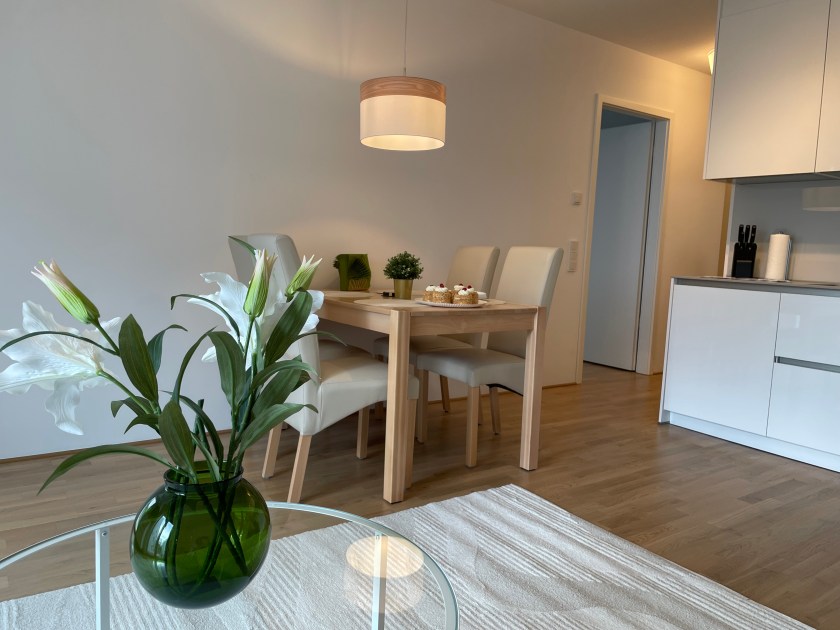
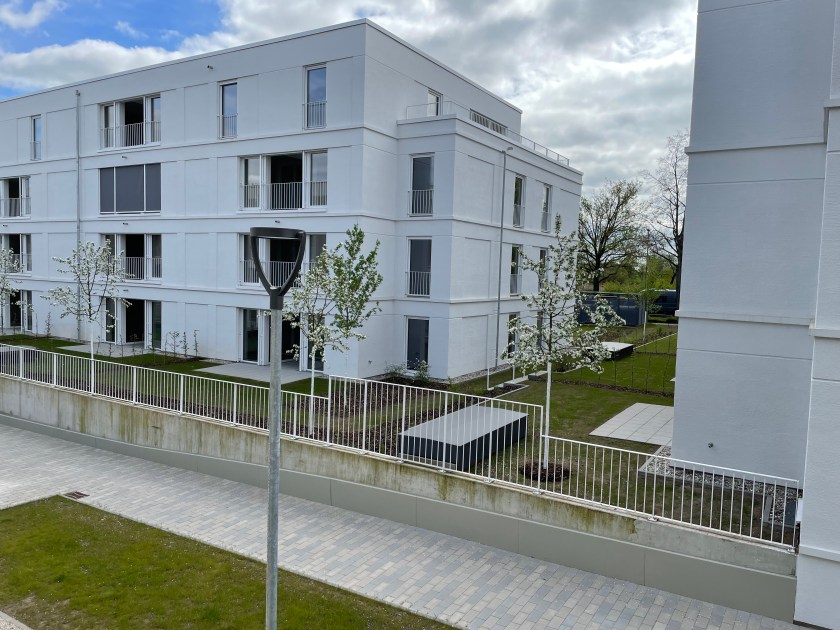
We finally found a wonderful place in Bad Homburg, newly built, with enough apartments to accommodate us.  For the last few weeks, the church lawyers have been working on the contracts.  We signed for the first 3 apartments and our 3 newest missionary couples will move in as soon as they are furnished.  The first of the 3 was finished this week and the Feinauers were the first to move.   It was a very exciting day.

Here we are at the big “reveal.”

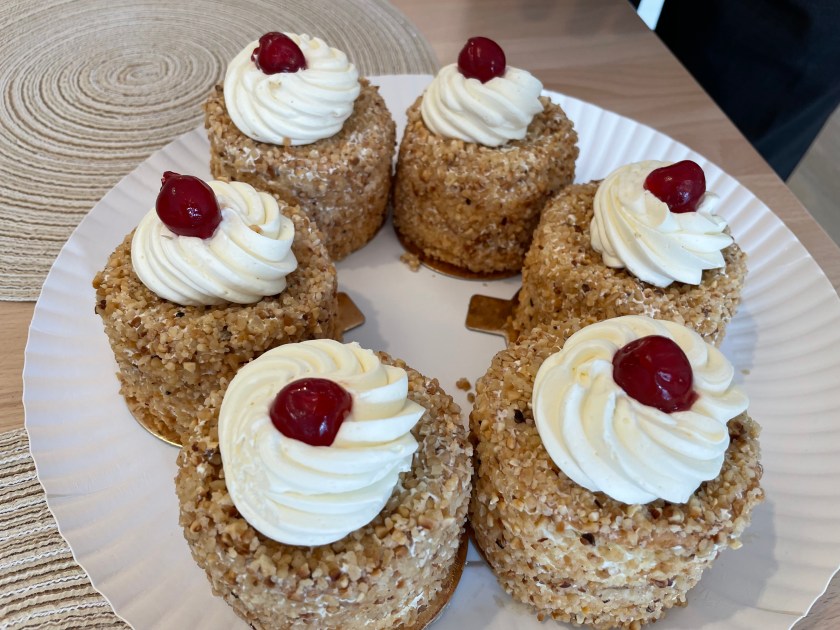
John picked up a few Frankfurter Kranz from the bakery this morning to help us celebrate.  These are traditional cakes made to look like a crown.

Soon we will be able to talk about this shift with the rest of the missionaries.  It’s an exciting time (as much as we love our cozy little Portstrasse apartment).  It will be wonderful to have all of the missionaries living in one complex.  Right now we are scattered in several areas, in addition to Portstrasse.

Training Welfare and Self Reliance Couples

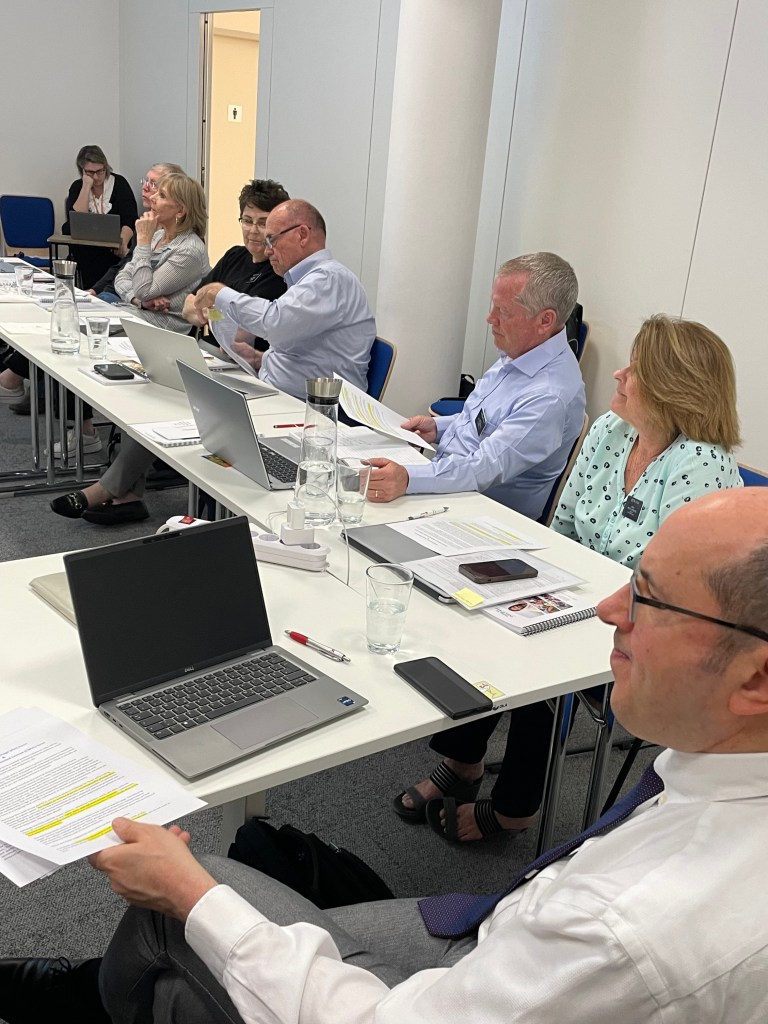
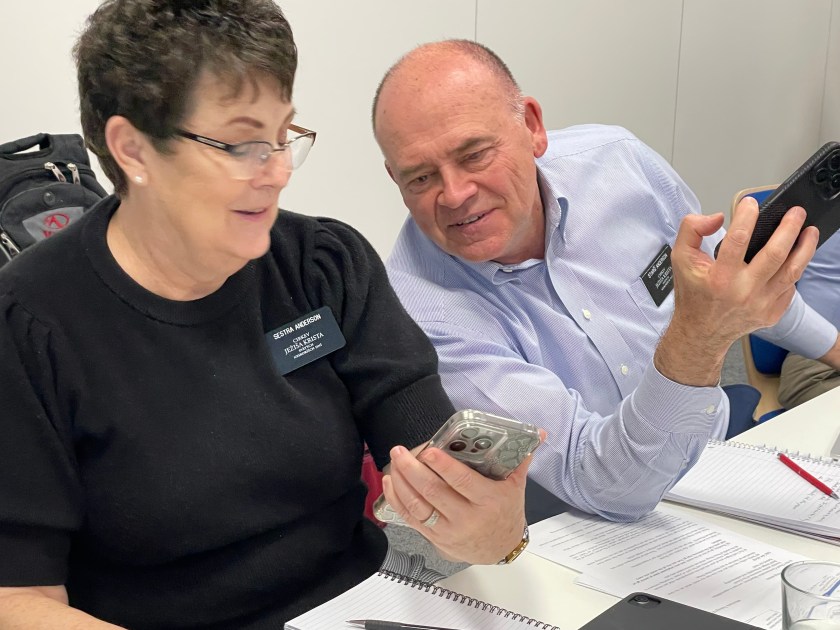
One of our favorite jobs is to help train humanitarian missionary couples serving in other countries.  Every time a new batch arrives, they come to Frankfurt for a few days of training.  John and I are brought in to help teach them about writing news articles, photography and permissions.  I get the fun part, John does the permissions.

My favorite part is teaching them how to take photos using only one hand.  It’s a game changer!  We had a lot of fun this afternoon with this group.