The Roman Bridge in Trier

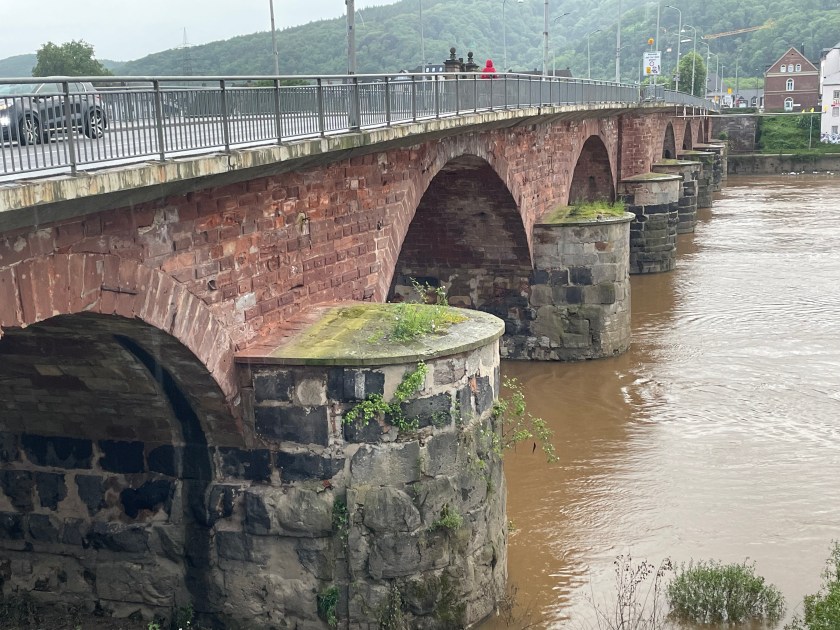
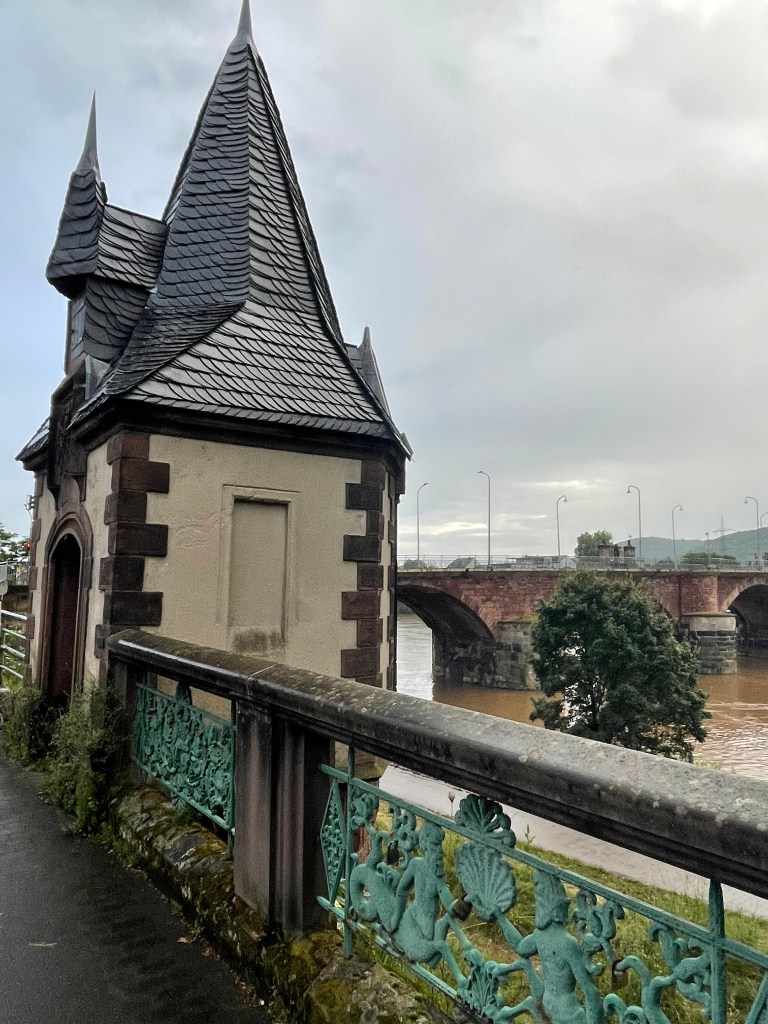
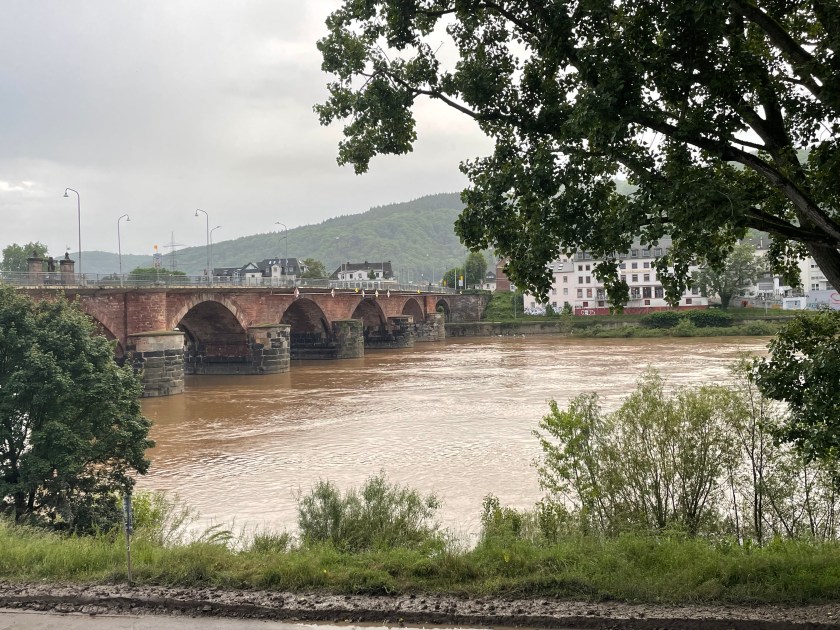
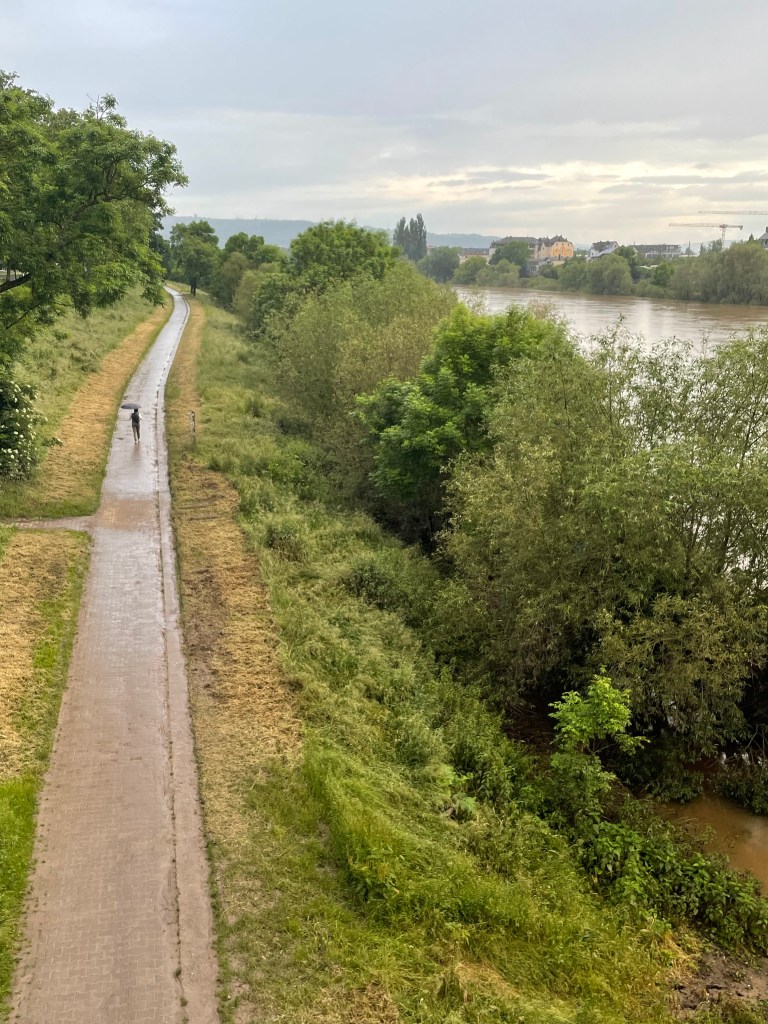
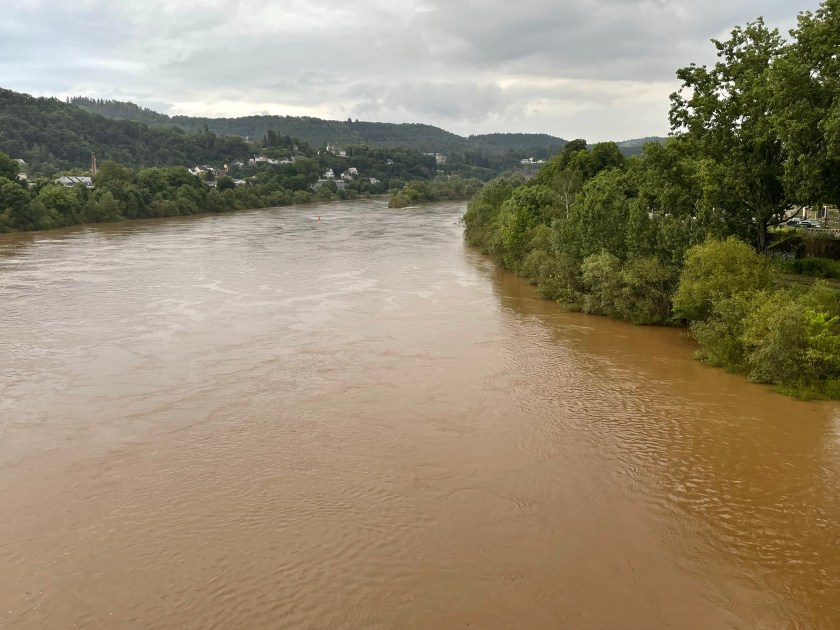
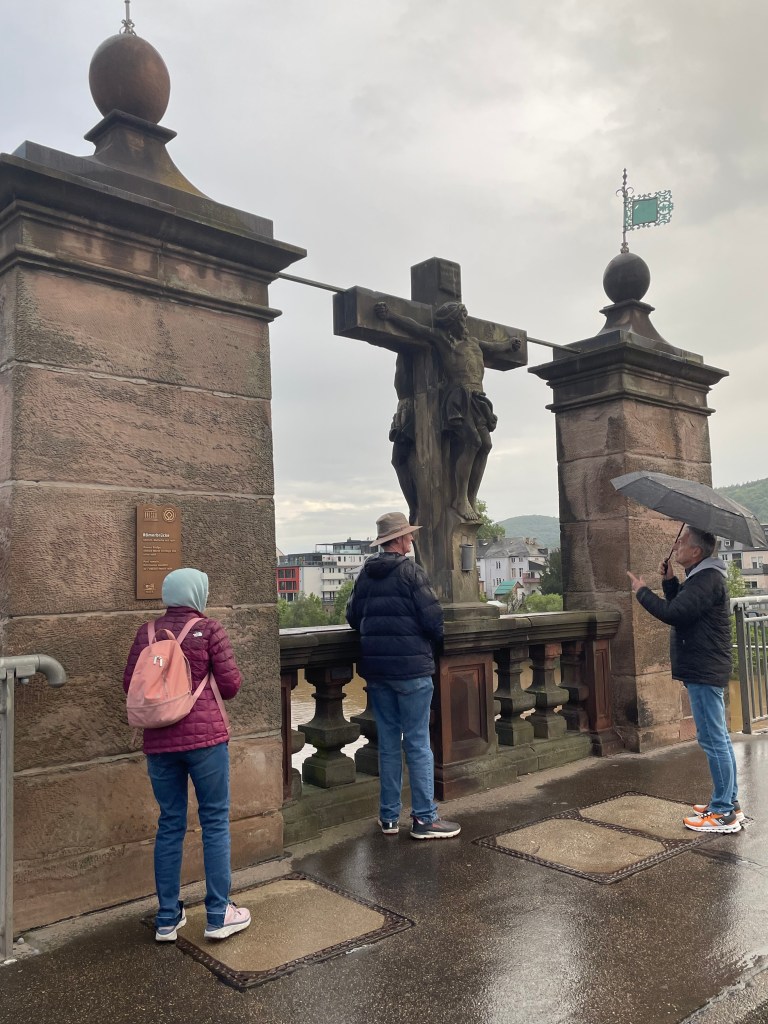
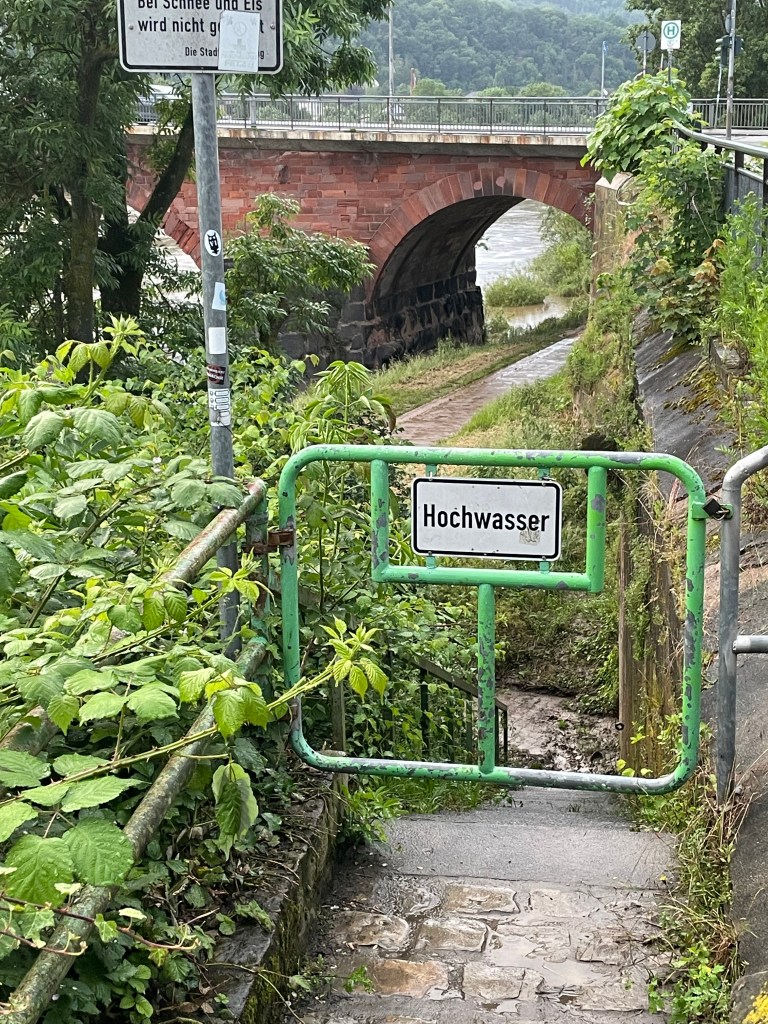
This evening after dinner we walked across town to the old Roman Bridge.  The stone bridge is very picturesque, but the Moselle is muddy. Here we saw evidence of the flooding in Trier from the fierce rains a few weeks ago.  The water levels were high.

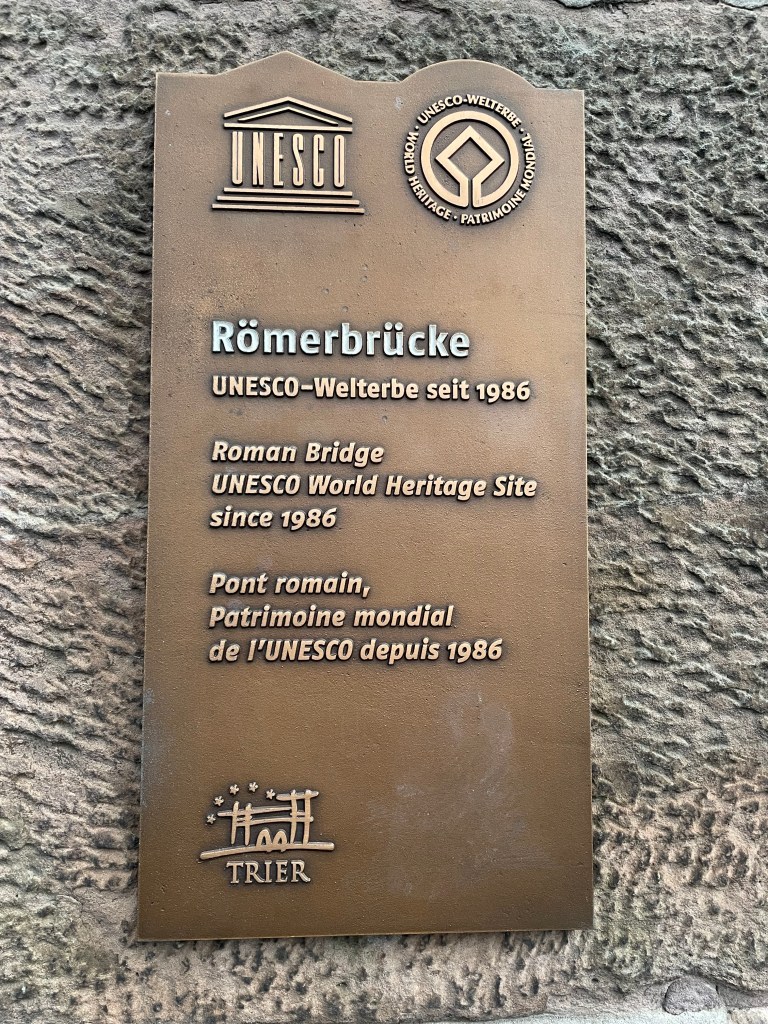
The Roman Bridge in Trier is the oldest bridge in Germany.  The nine bridge pillars date back to the 2nd century A. D.  The stone pilings of the Roman Bridge date from A. D. 144-152 and are deeply embedded in the bedrock underneath the river gravel.  We learned how they dated this in the museum from cross sections of the wood (trees) used as pilings.

We walked out onto the bridge to look at the Mosel River.  It was so dirty with all the overflowing rain waters.

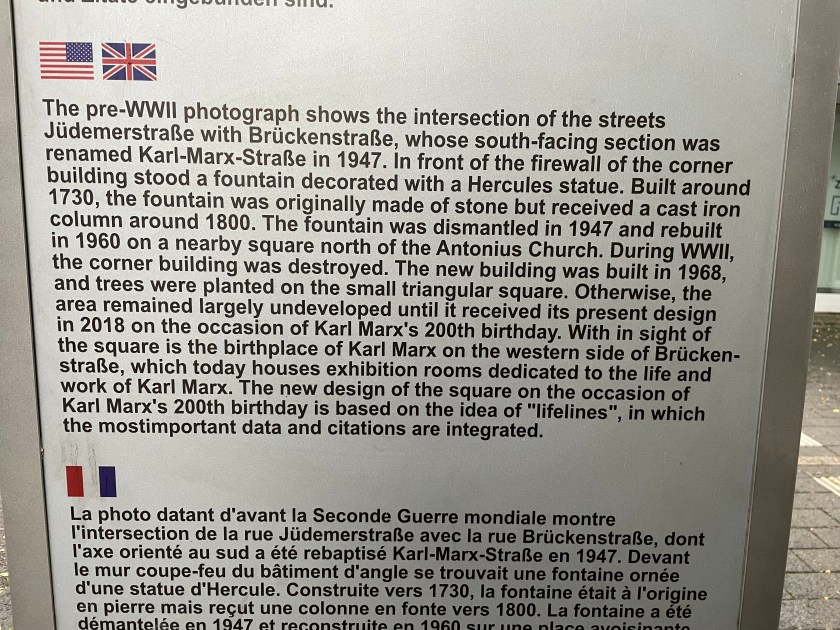
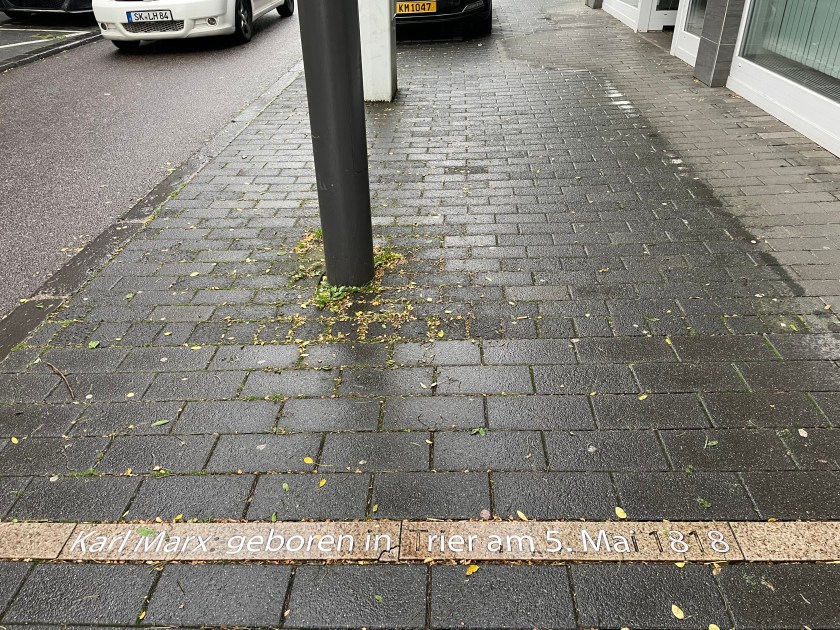
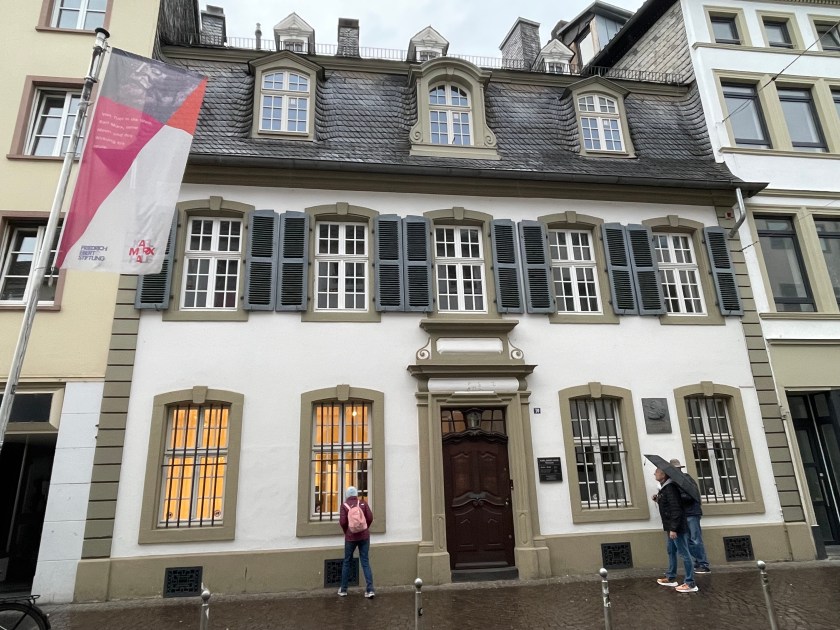
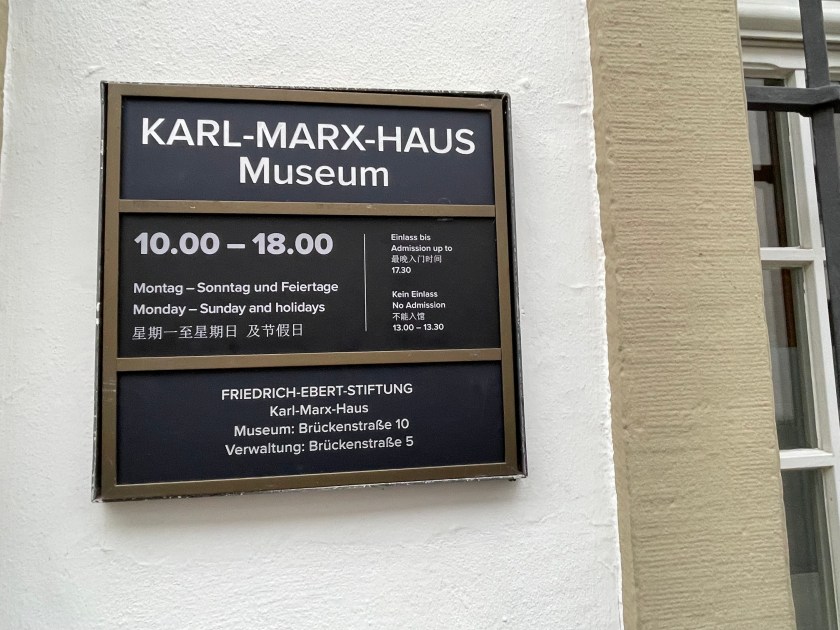
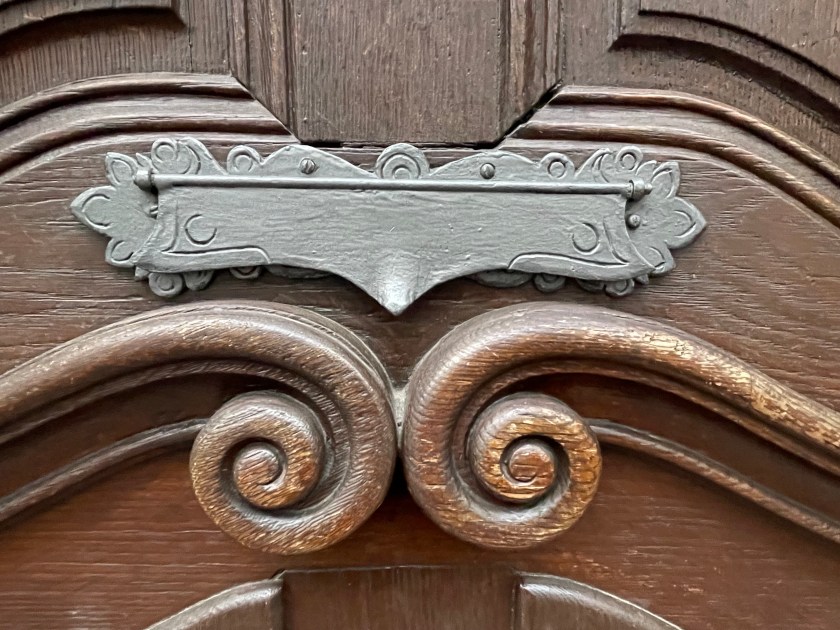
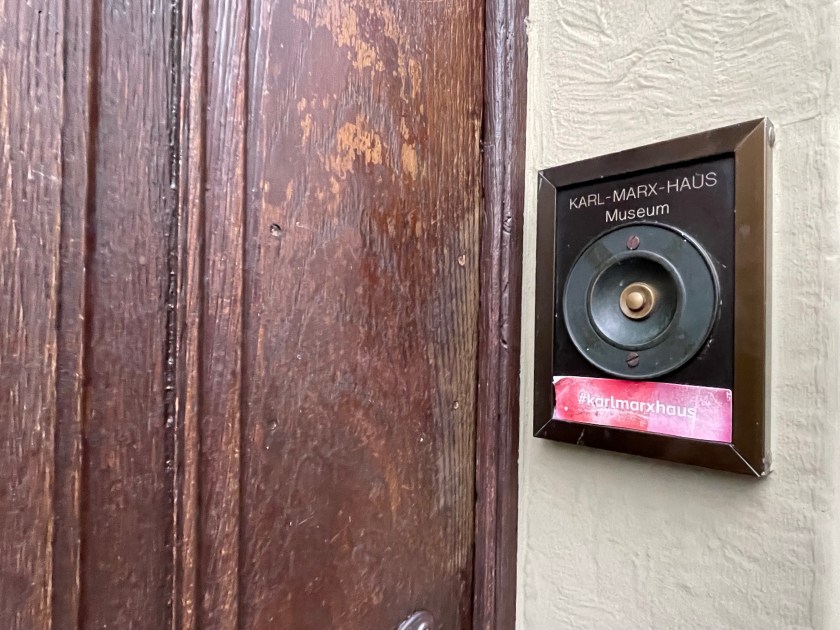
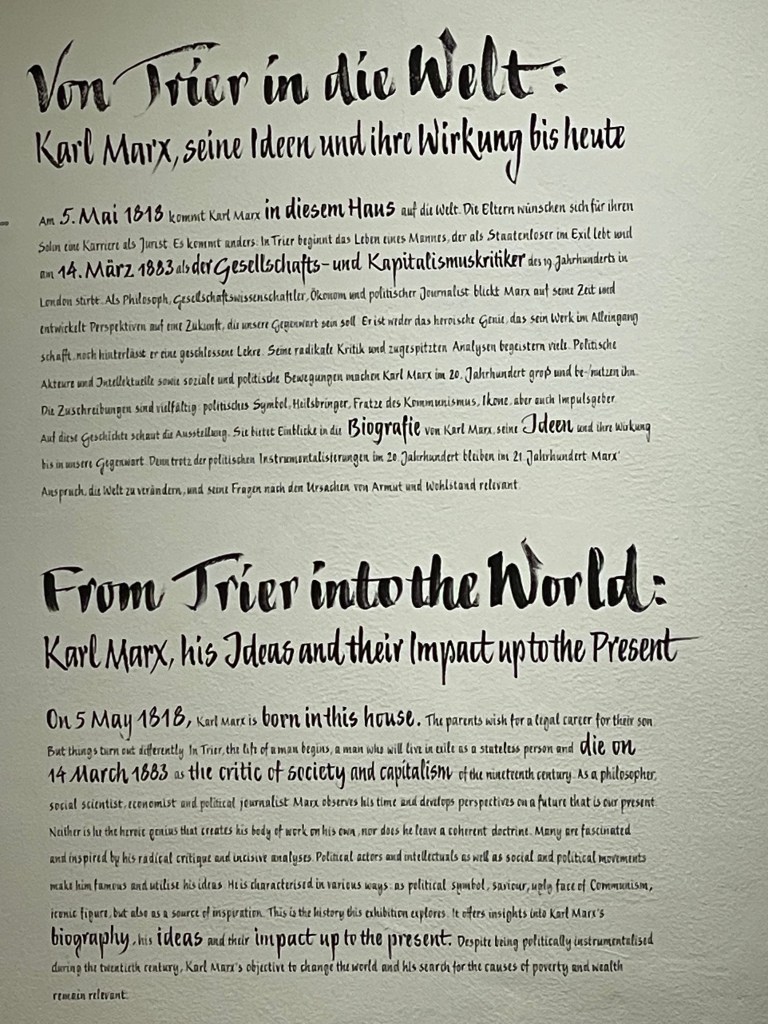
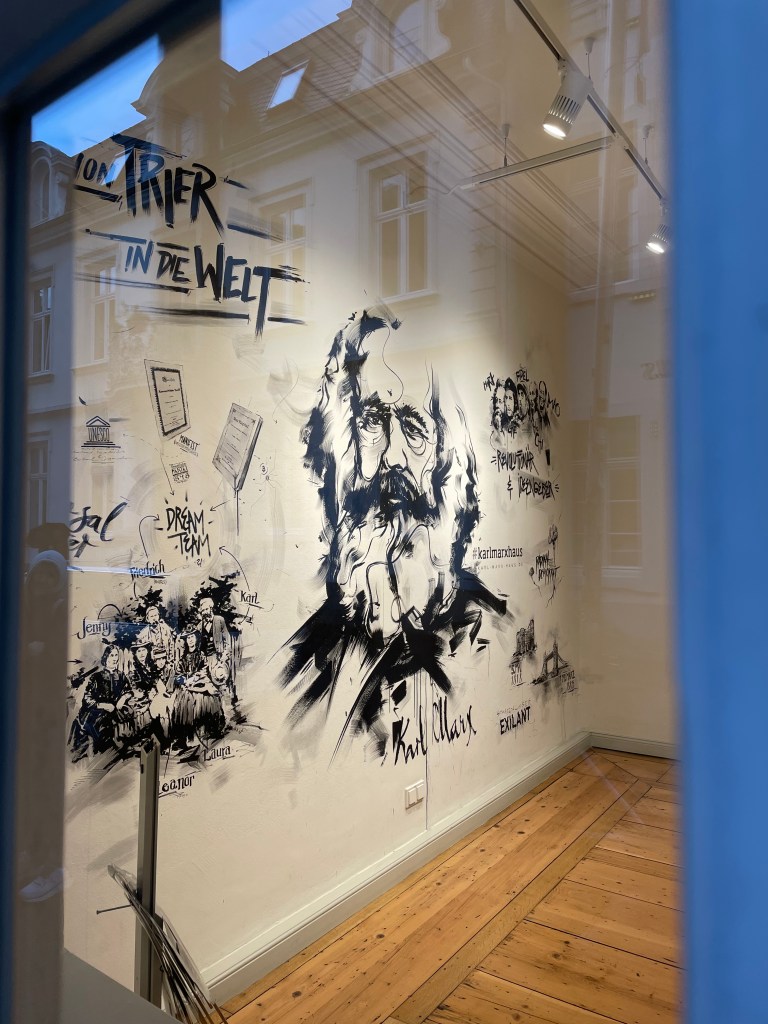
The Home of Karl Marx in Trier

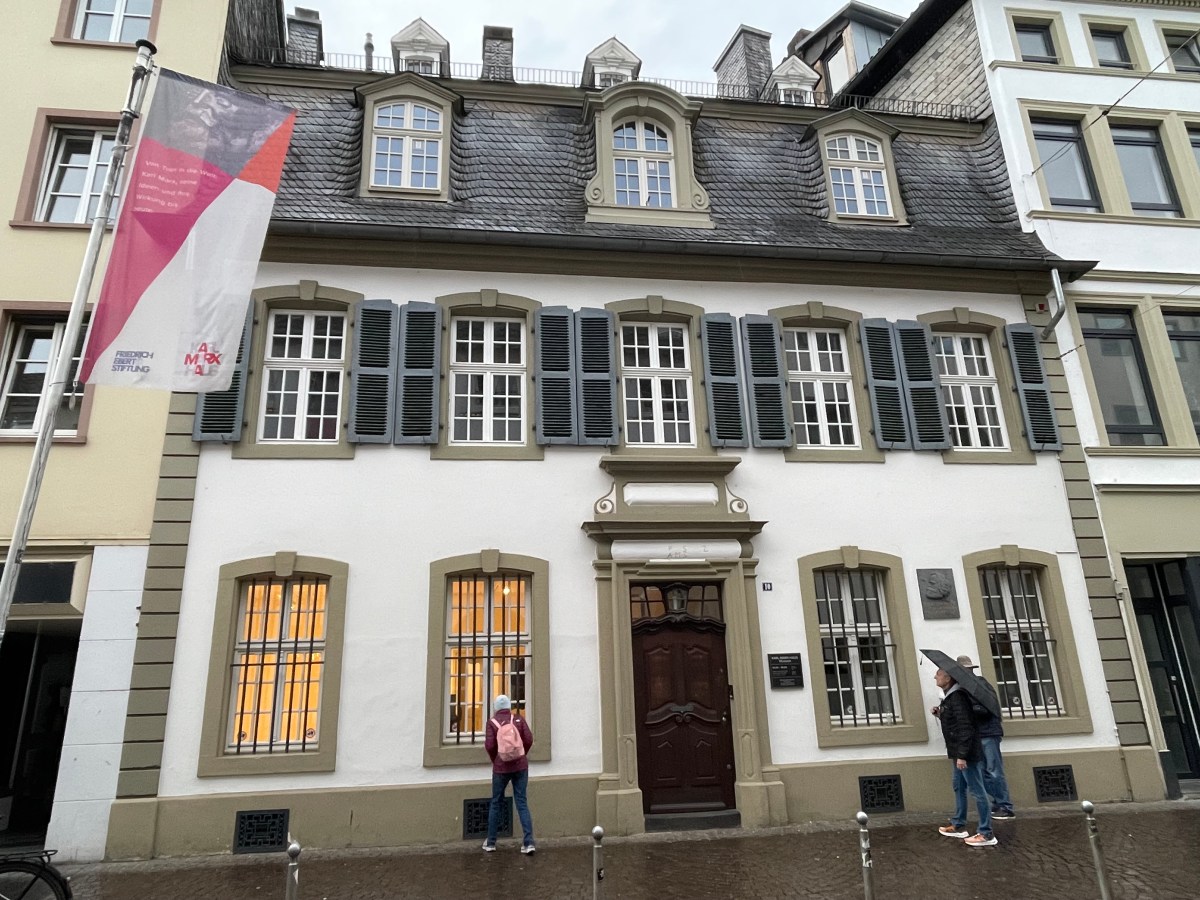
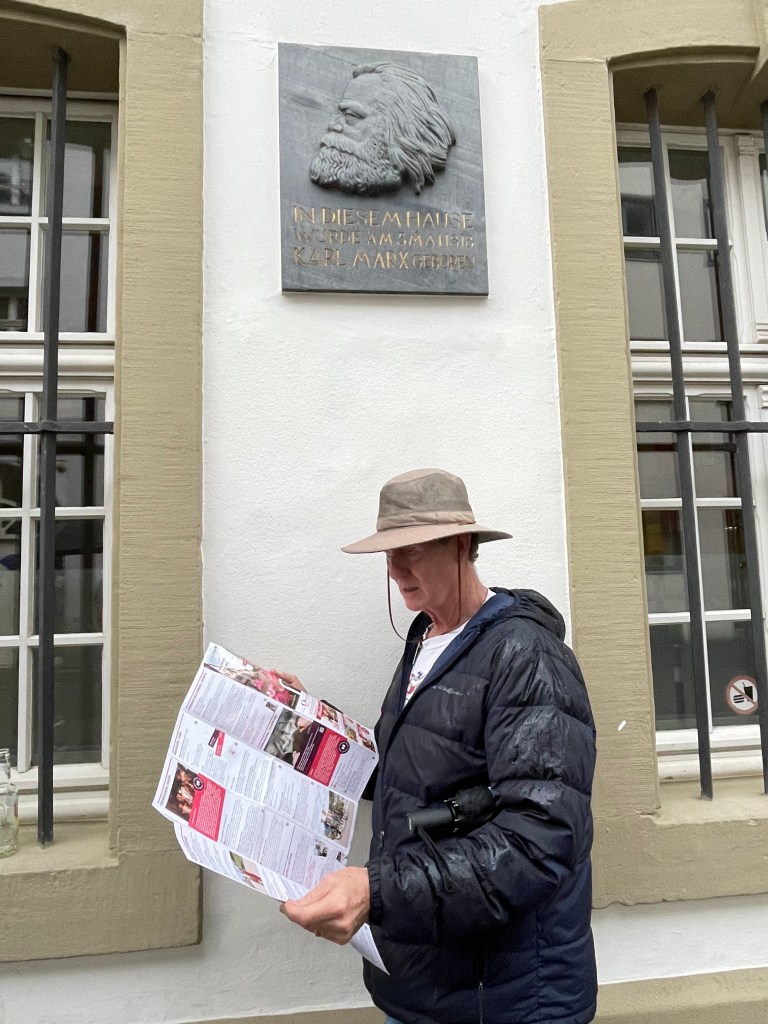
This evening we set out to find the home where Karl Marx was born.  We are getting to know Trier really well!  Here’s what we found.

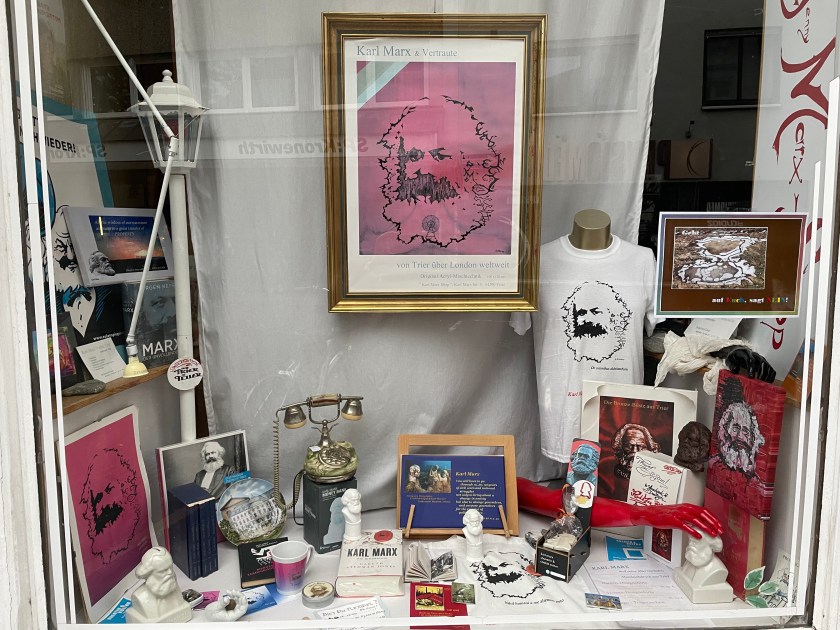
It was interesting that some people we asked about where the house was told us he wasn’t really born here, but in a home by Porta Nigra, that now houses a trinket shop (that would make Marx turn over in his grave).  Everything we saw here says this is his birth place.

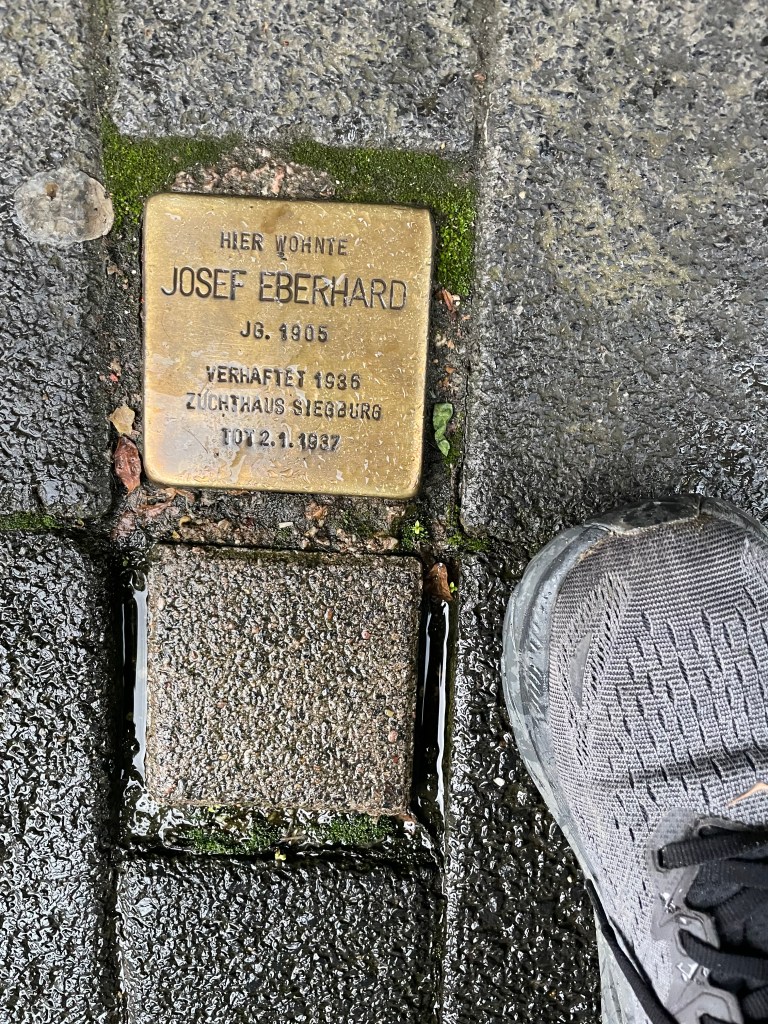
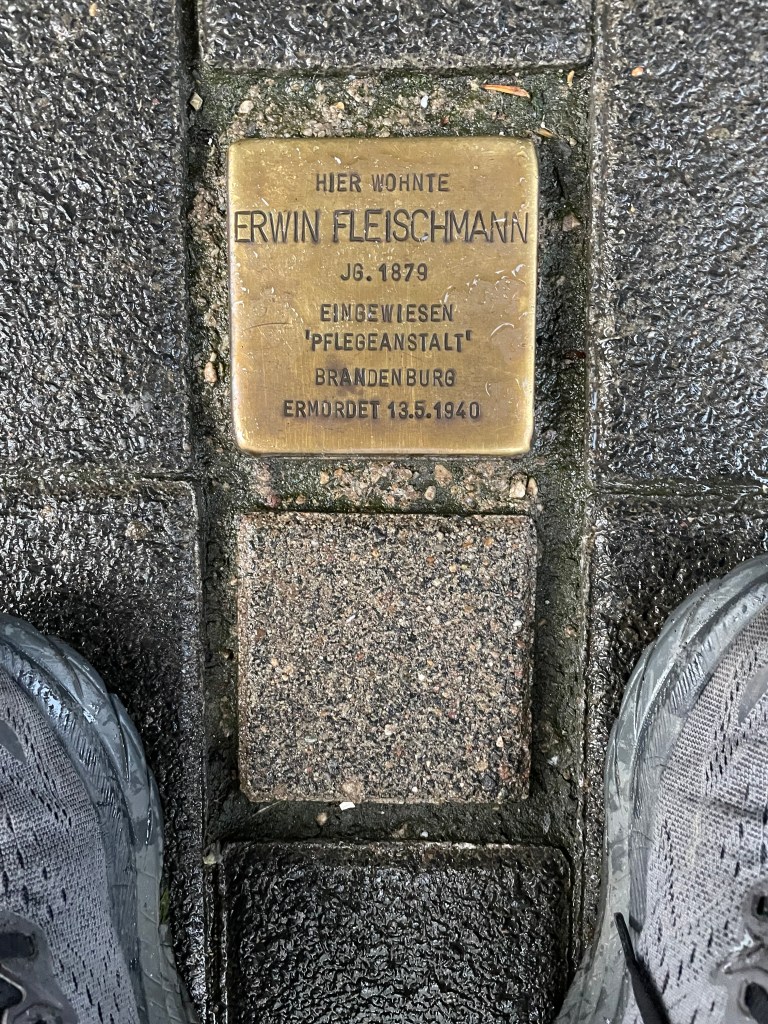
We also happen upon some more stumbling blocks on this street.  A solemn reminder of tragic days in these neighborhoods.

St. Gangolf Church in Trier

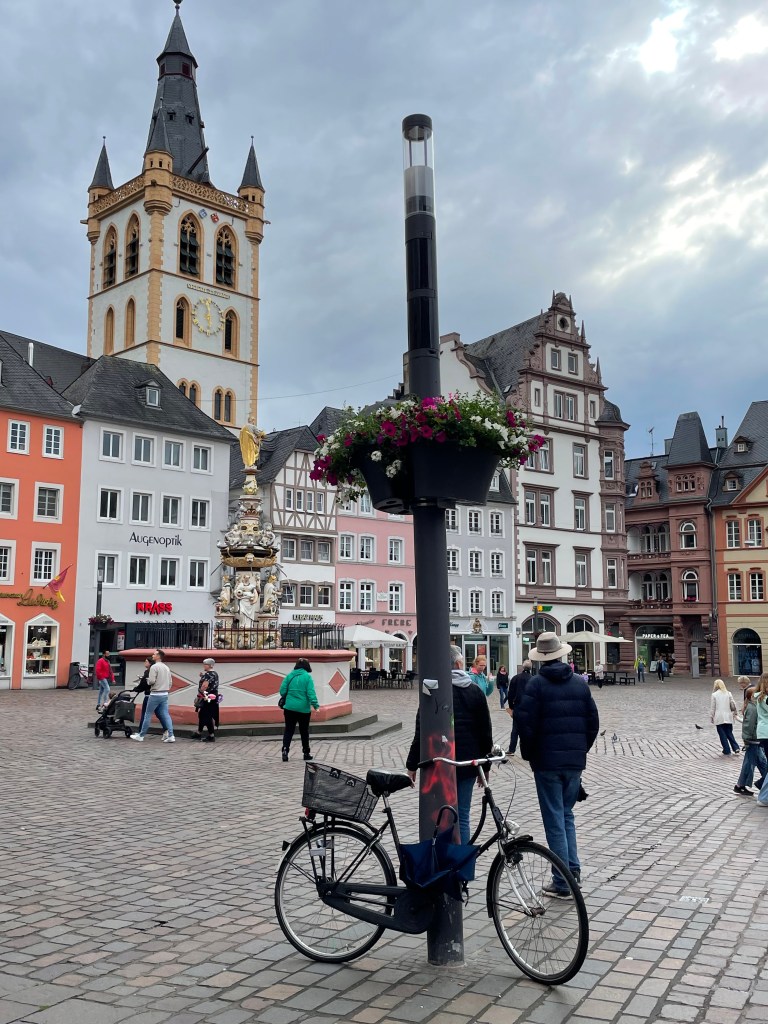
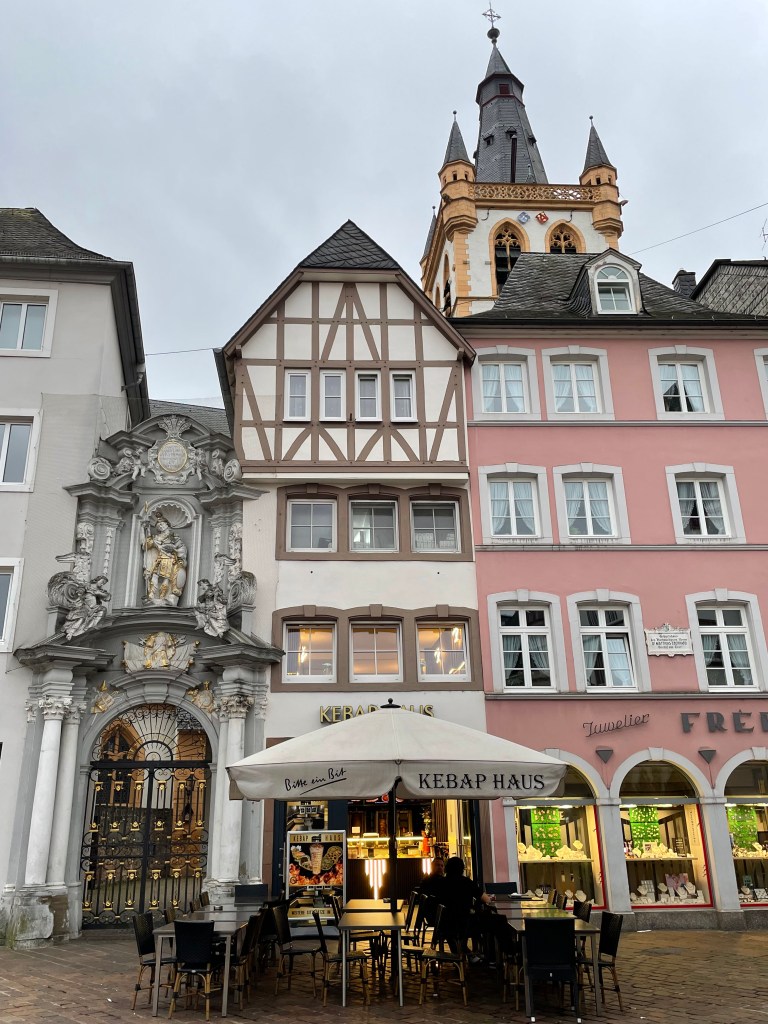
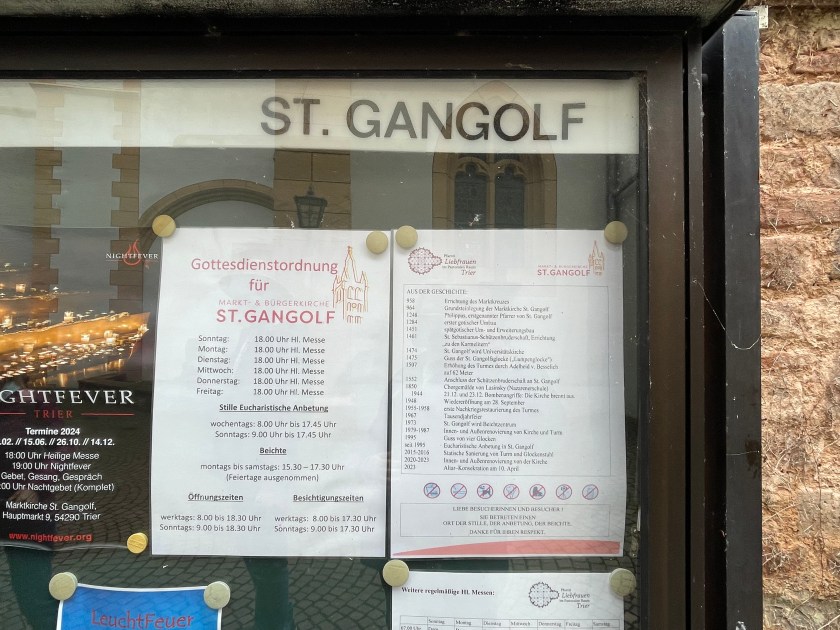
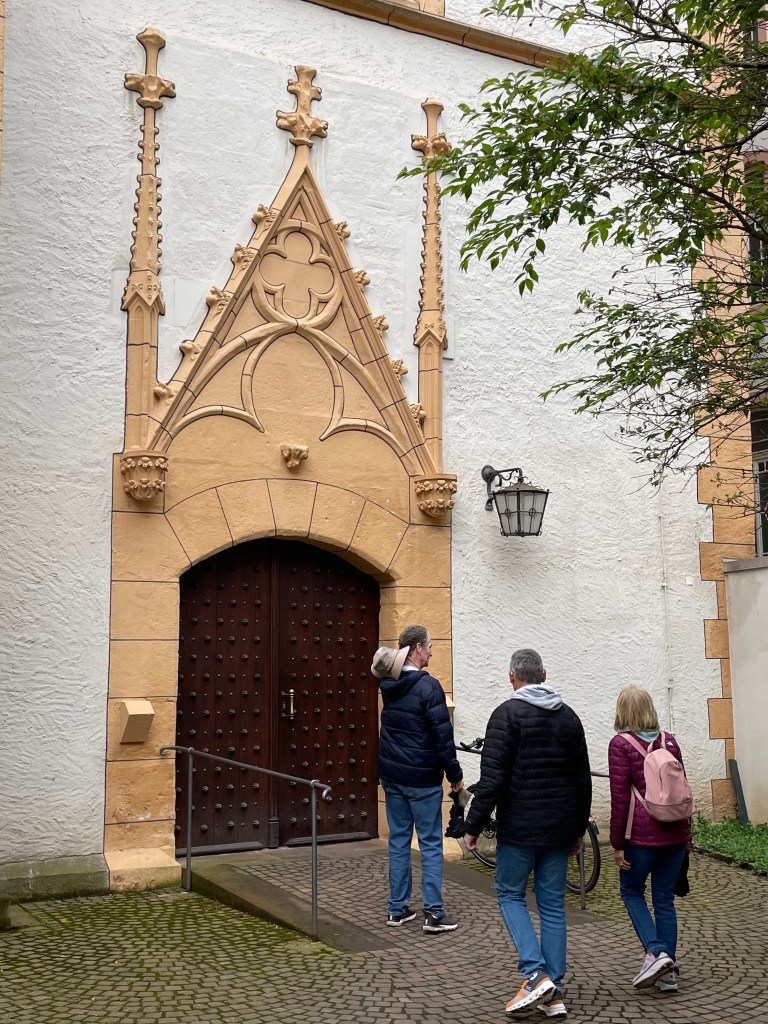
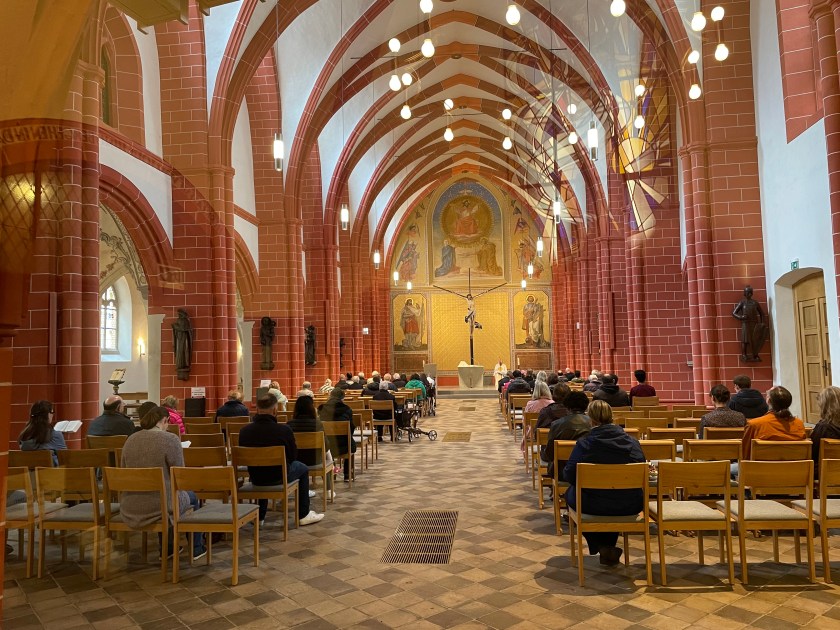
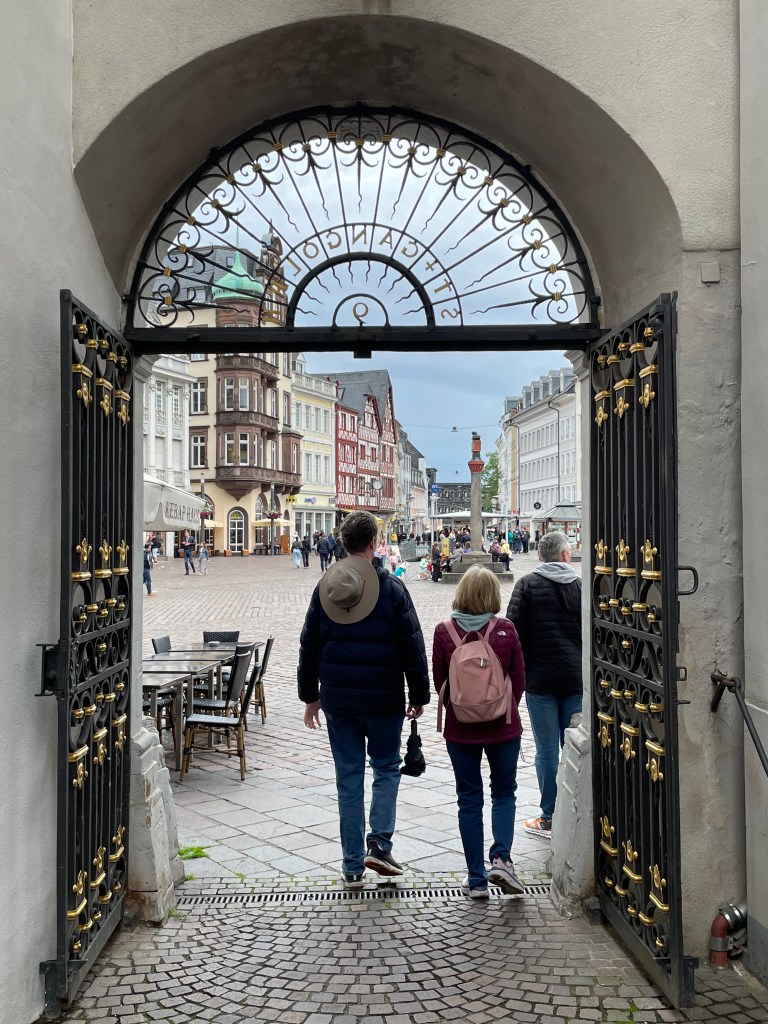
It took us a few walks around the block to figure out how to find the entrance to the St. Gangolf Church.  It was behind other buildings, with no street entry.  We finally asked and were directed to the gate “after the Kebab House.”  Sure enough, that took us behind the buildings to the door of this beautiful church that was tucked away and poking out the top of the block.

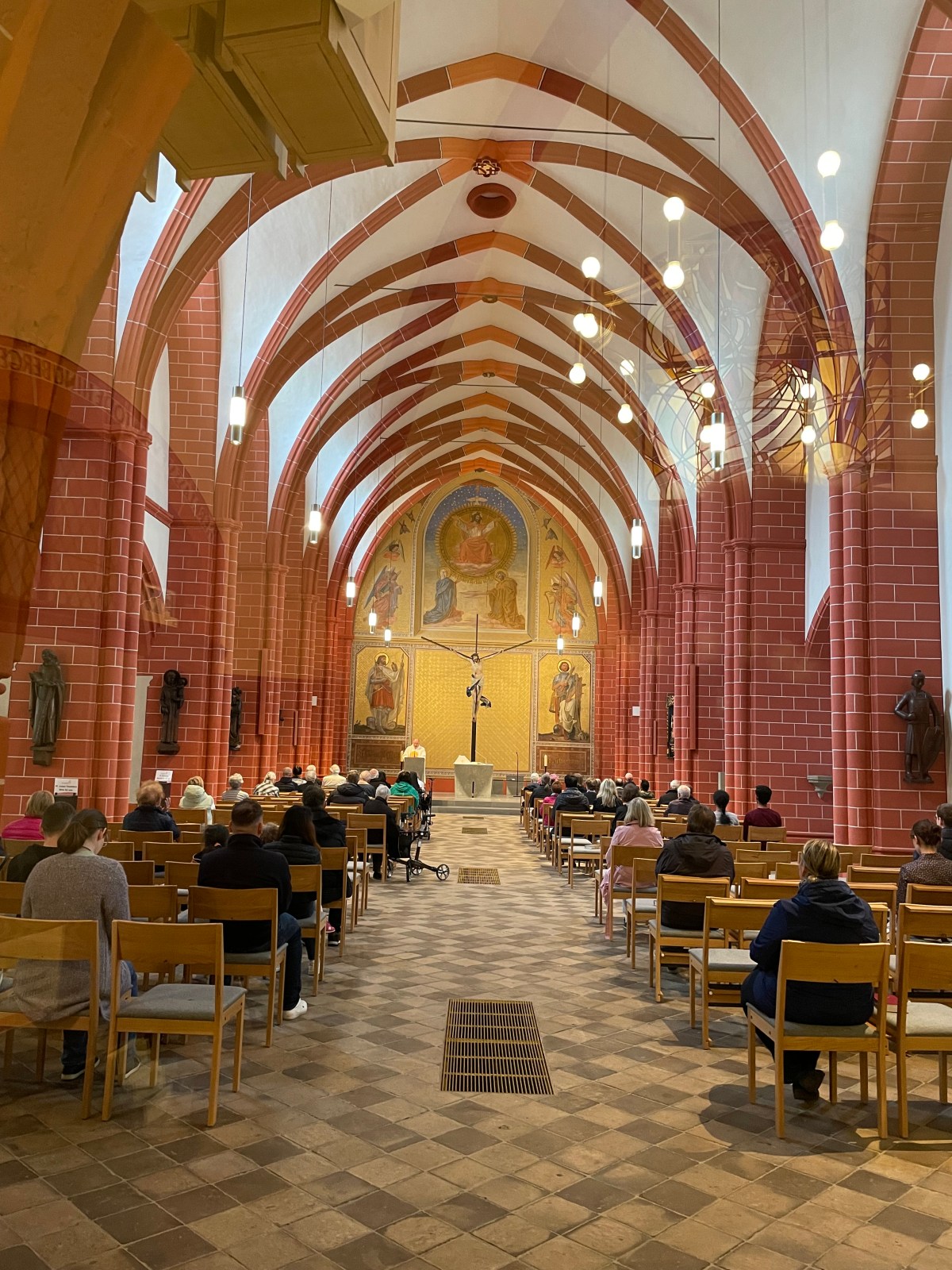
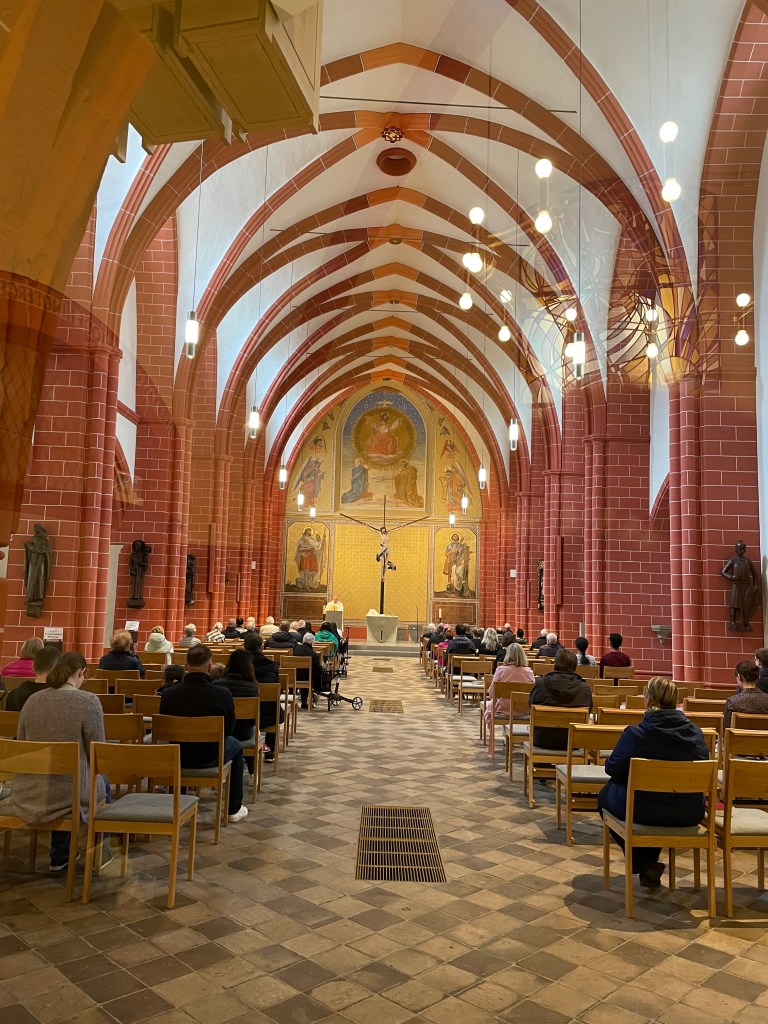
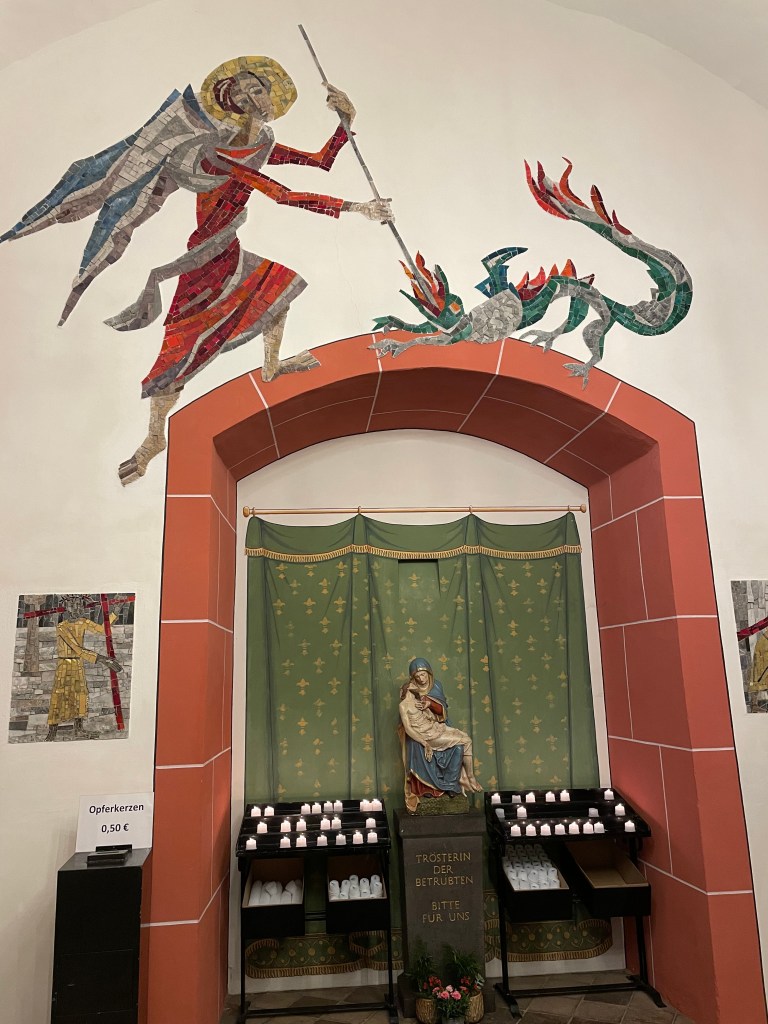
They were actually having a church service inside, so we just looked in through the glass.  It was beautiful and I was so happy to see people actually going to a church!

The Church of our Lady (Liebfrauen) Basilica in Trier

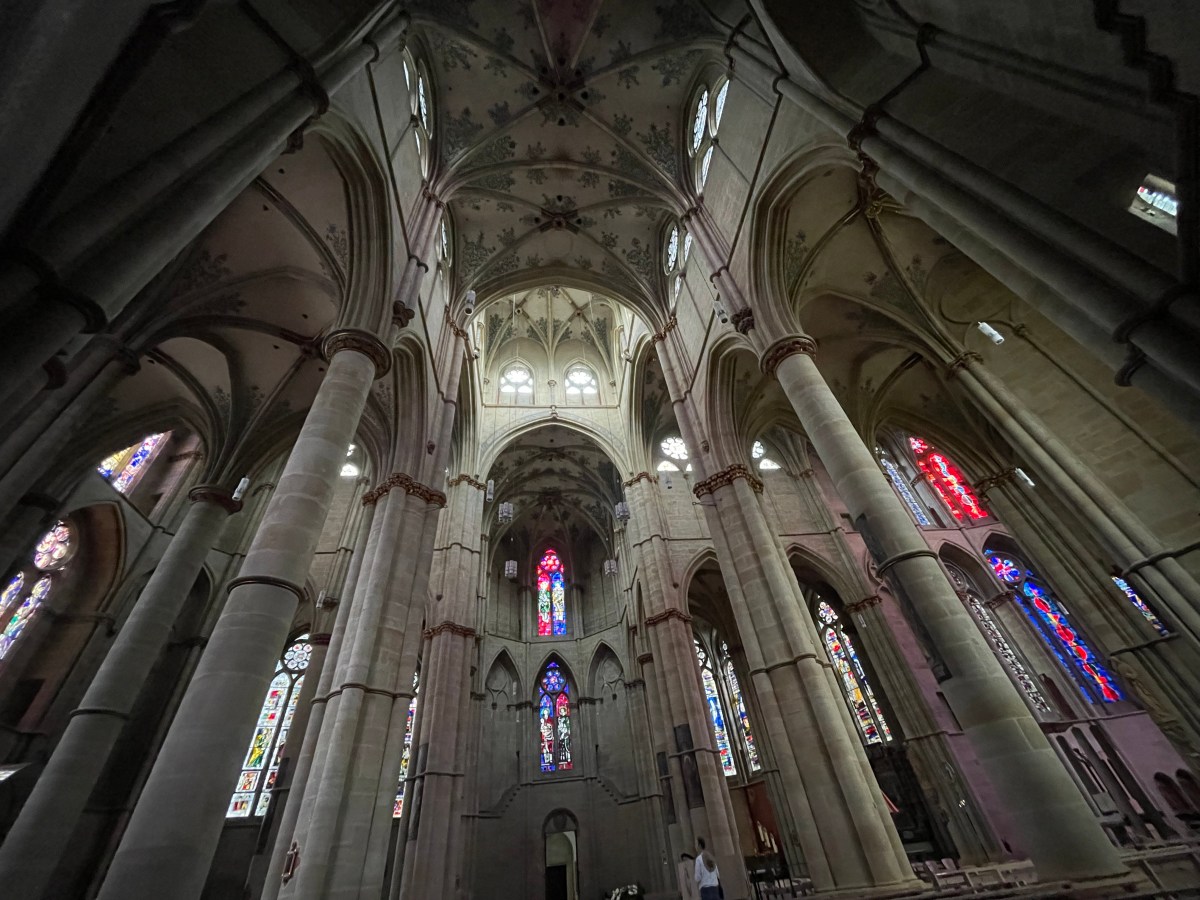
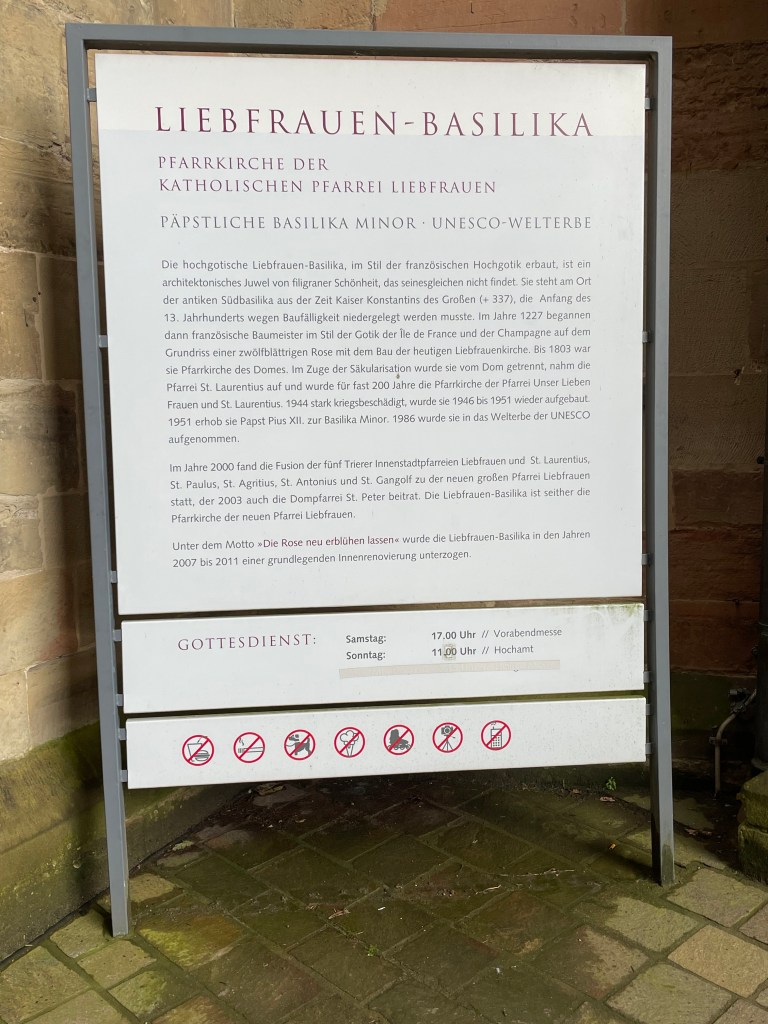
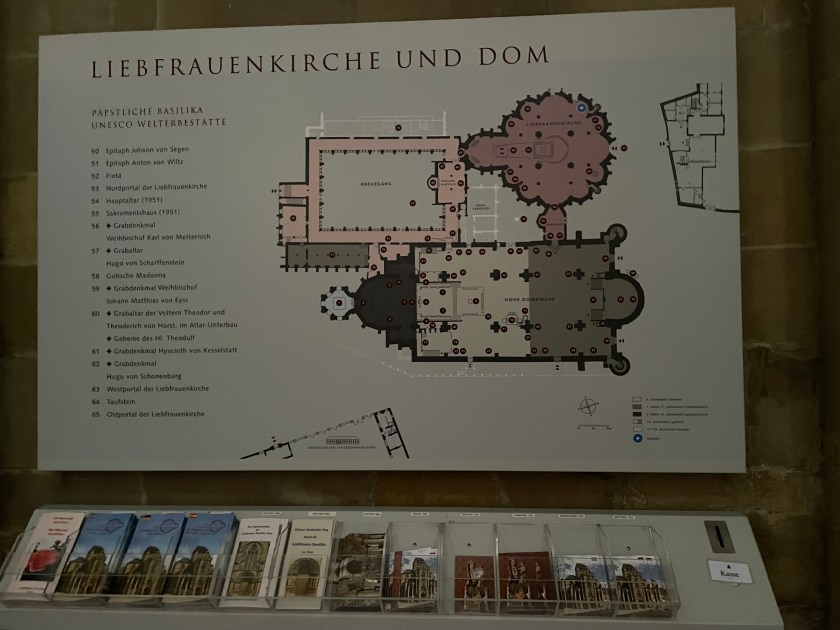
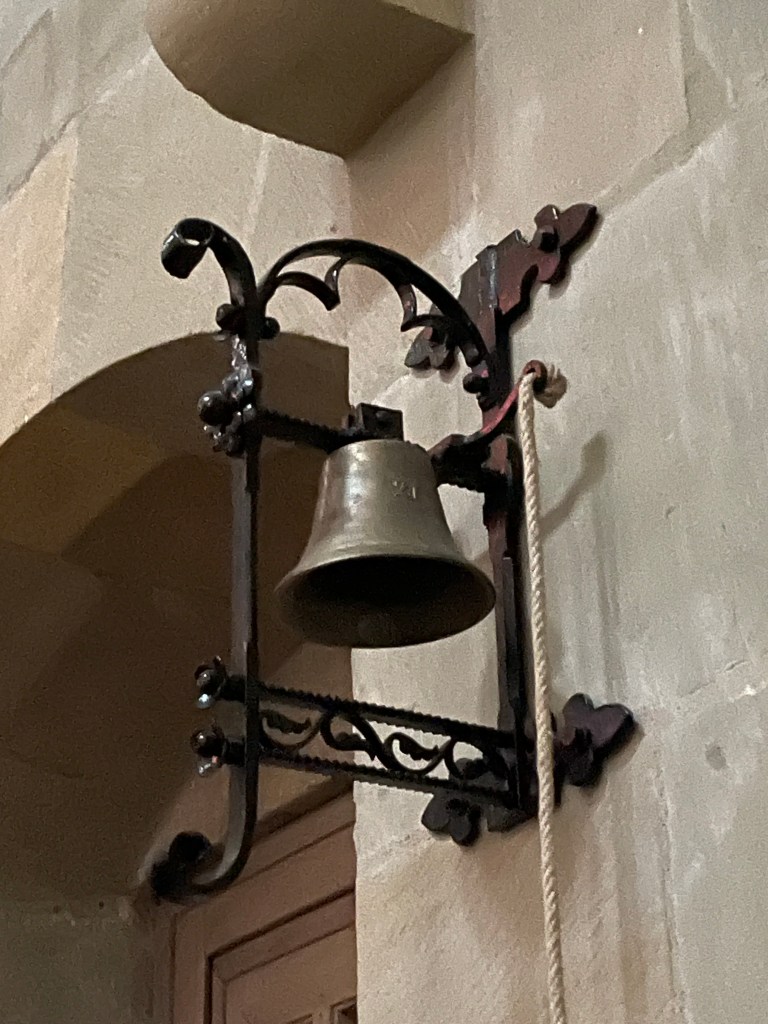
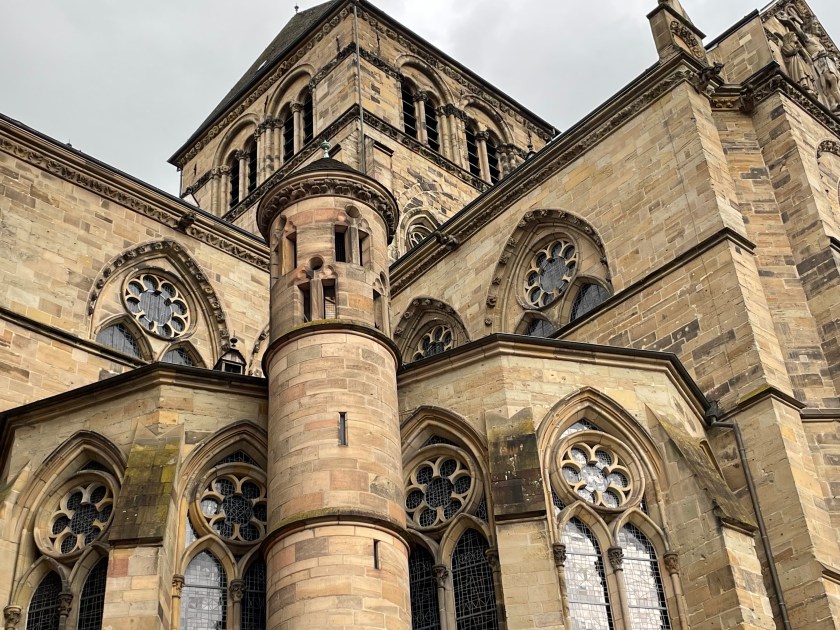
We waited until the Church of our Lady Basilica opened this evening, then returned to go inside.

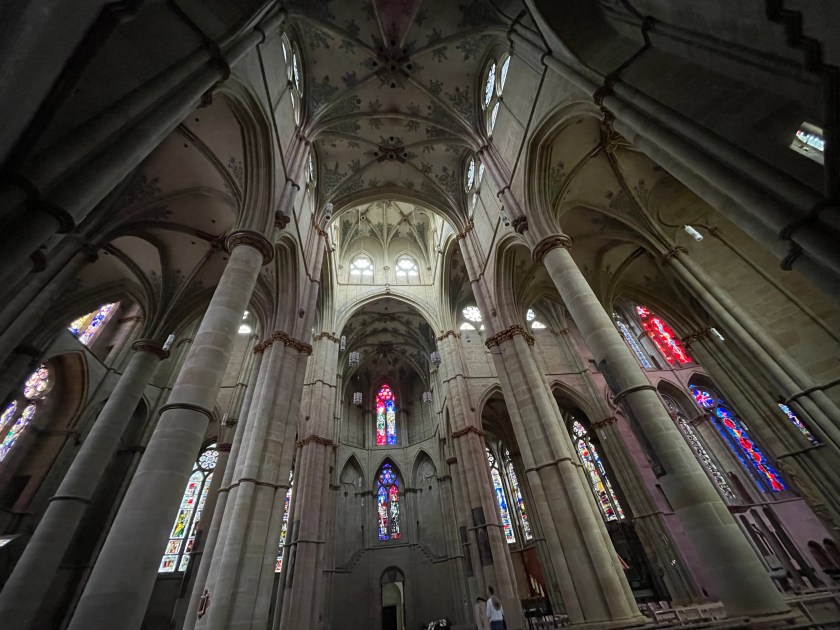
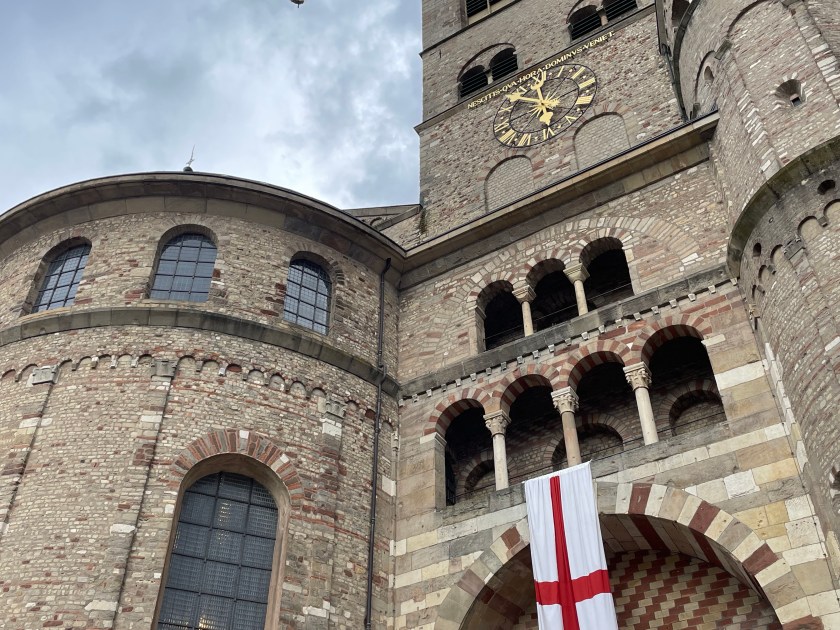
The Church of Our Lady in Trier is located right next to the Trier Cathedral in the center of the city. Together with the Elisabeth Church in Marburg, it is considered the oldest Gothic church in Germany and the most important and earliest Gothic central building in the country.

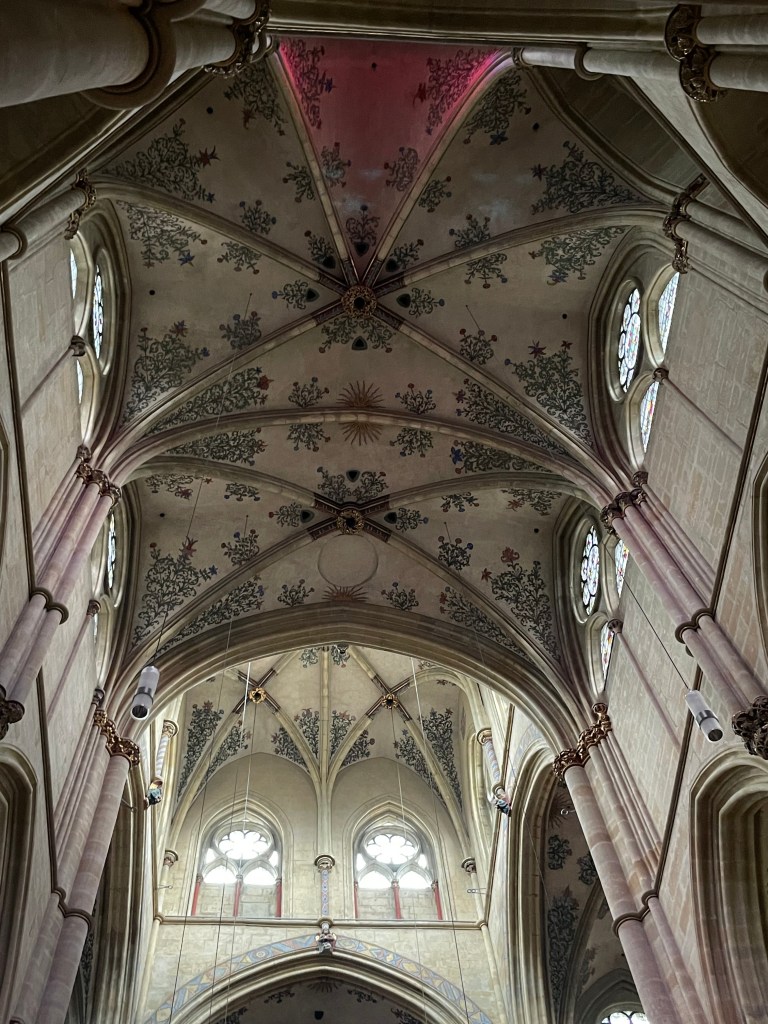
The ceiling was spectacular.

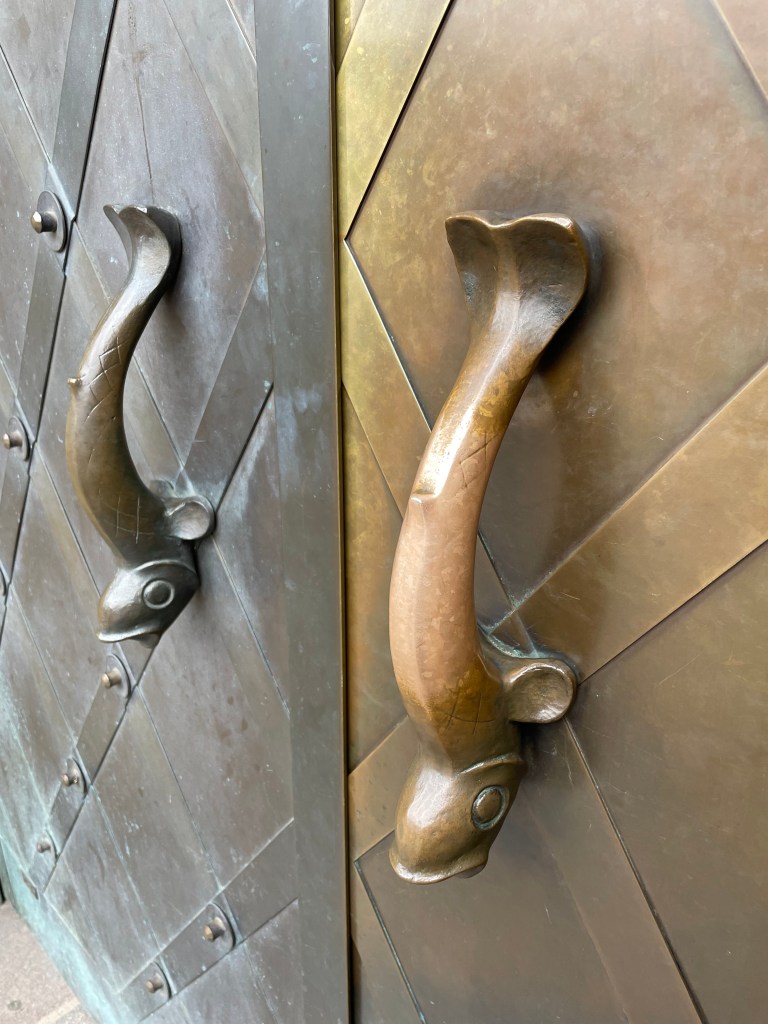
I’m loving the attention to detail here.

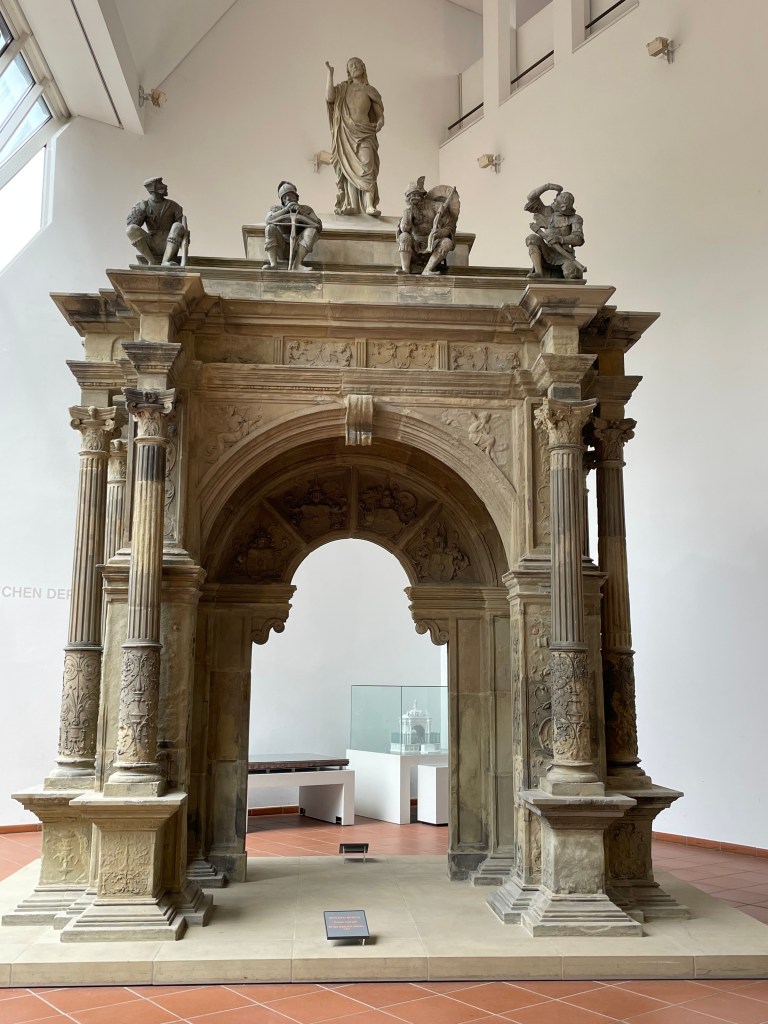
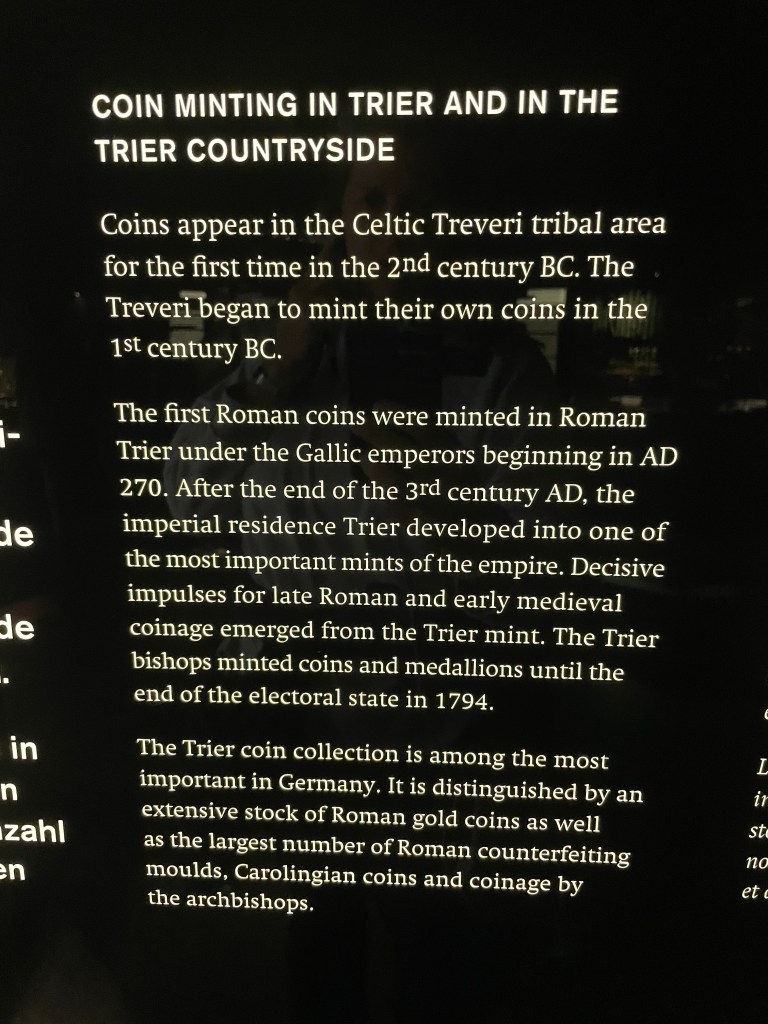
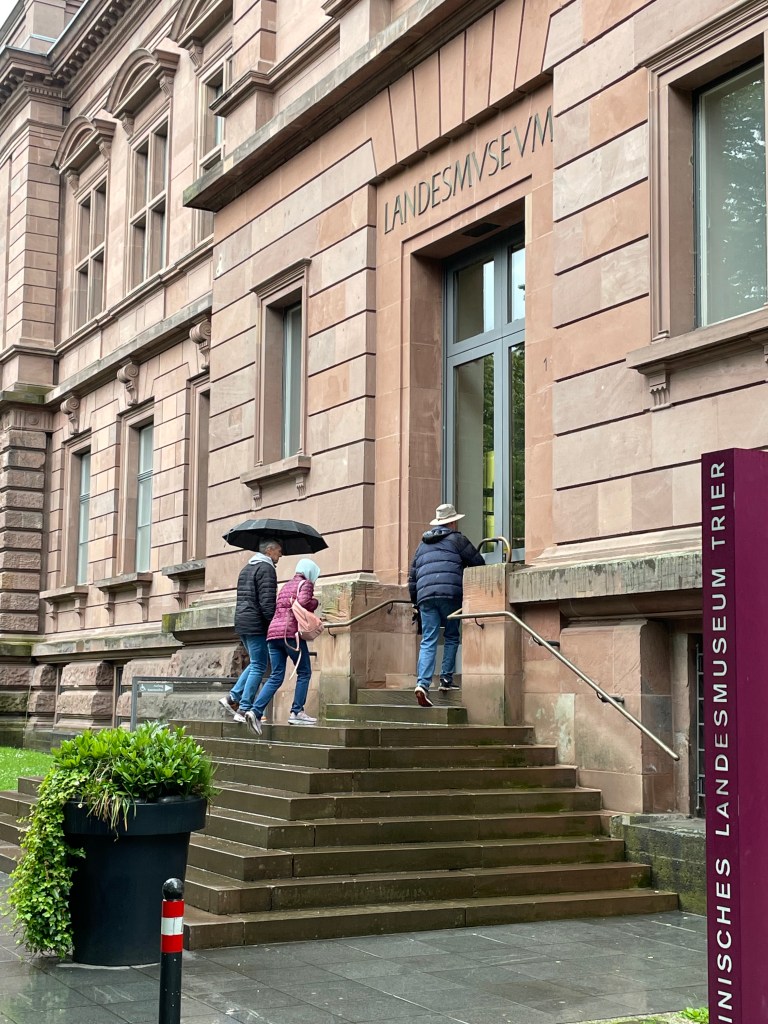
The Trier Landesmuseum

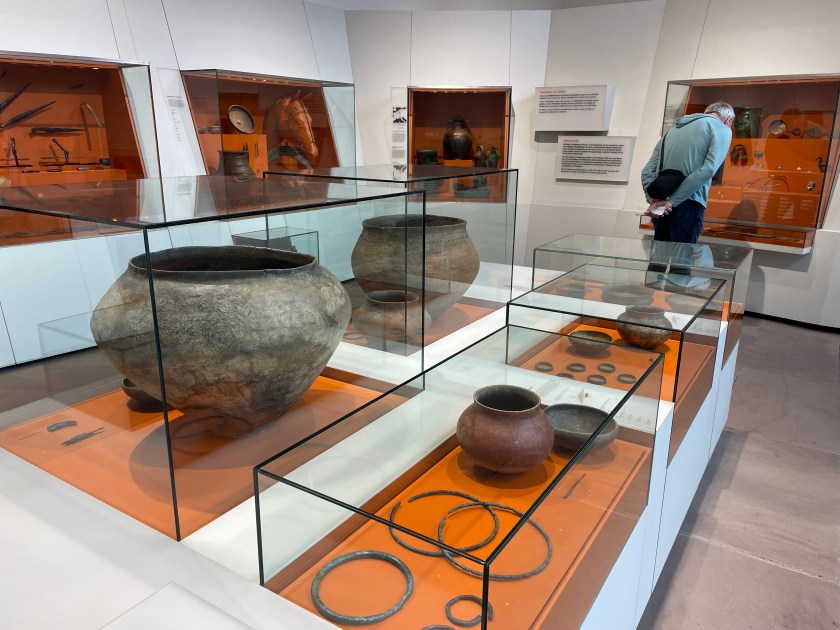
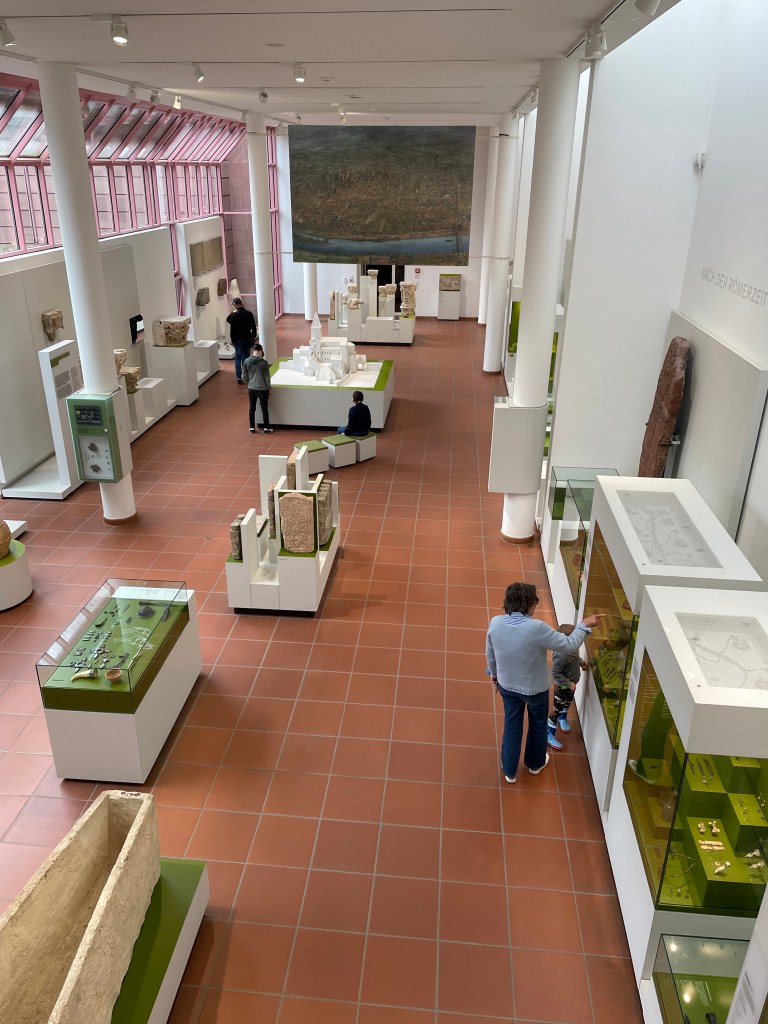
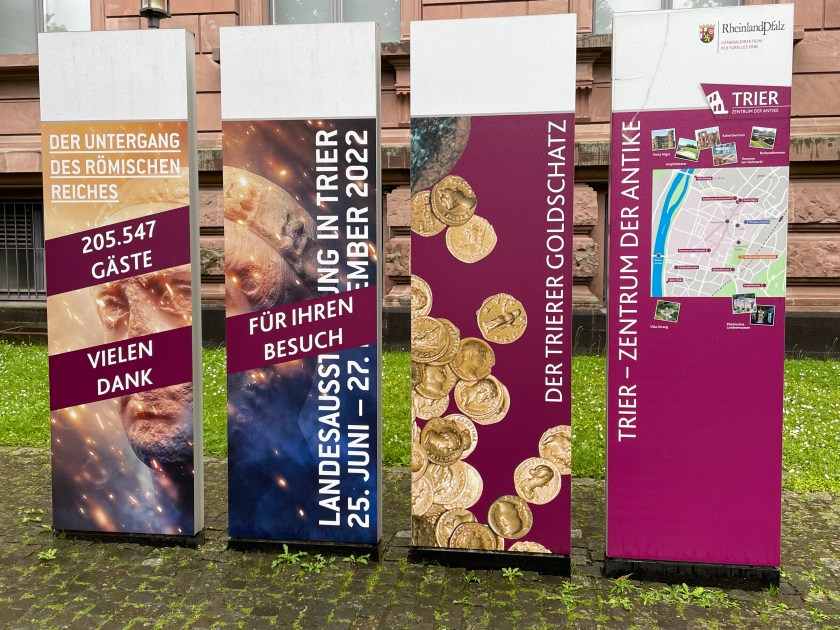
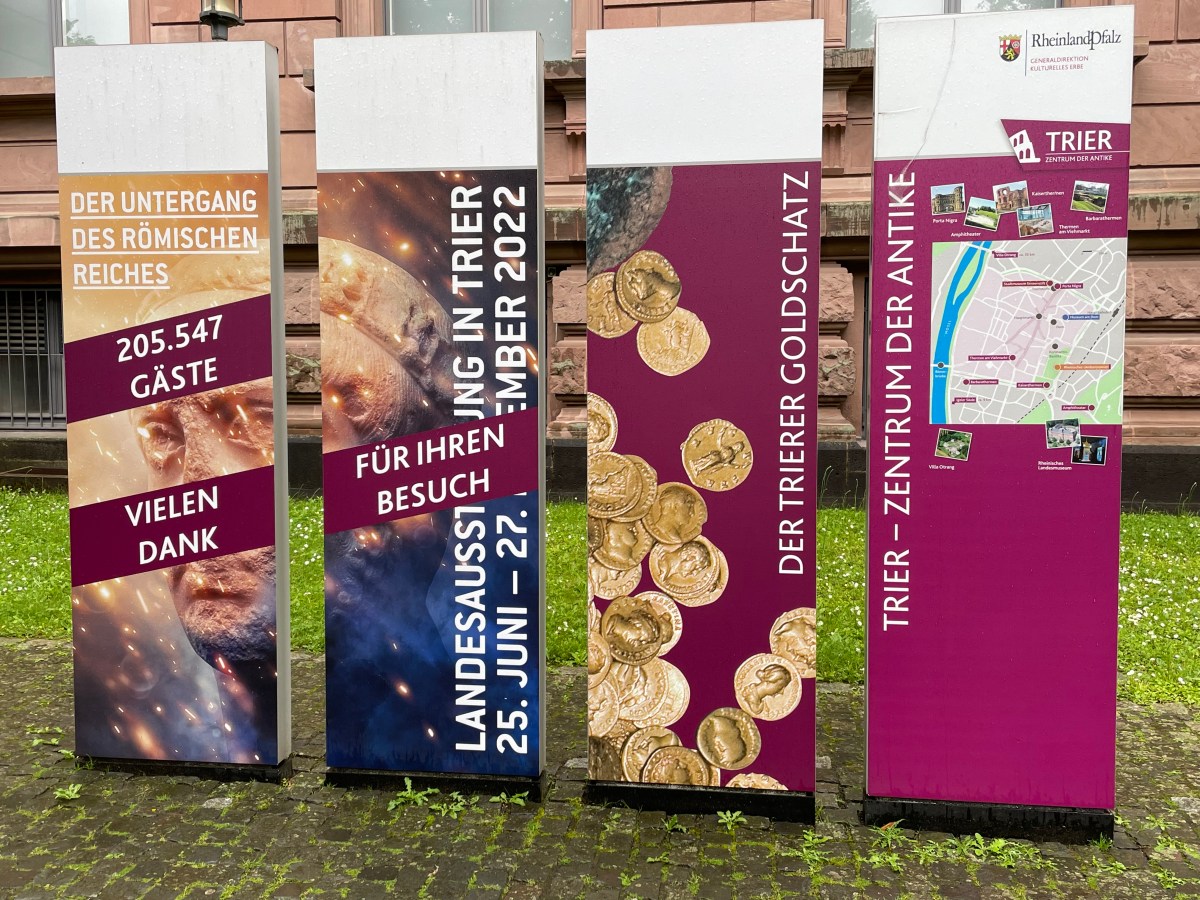
This is a fantastic museum that’s almost as good as a trip back in time to Rome!  We loved the exhibits and all of this fascinating things kept here.  It’s definitely worth a look, and it’s on the punch card.
Almost 50 years ago I sat in high school German classes and when our work was done, we got to read Asterix comic books.  I had no idea then about this huge Roman world in Germany.
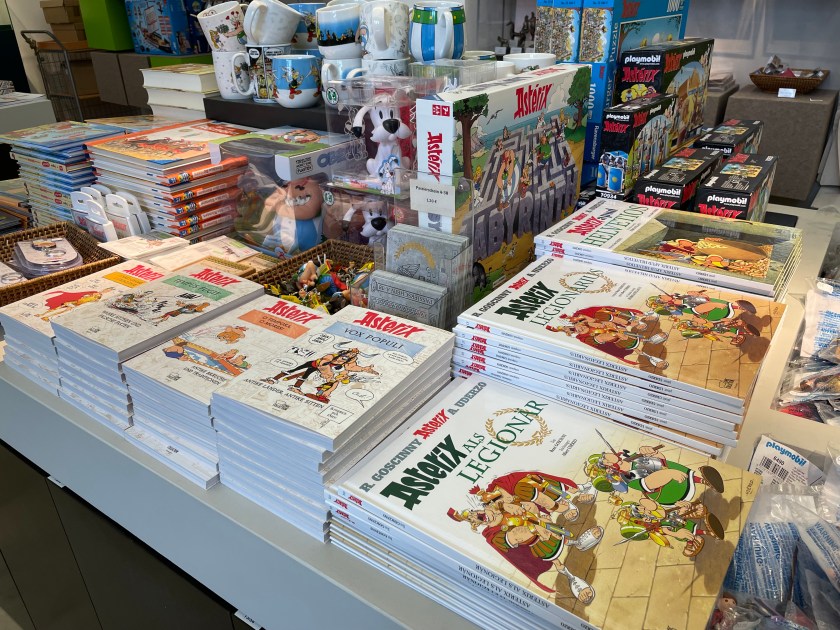
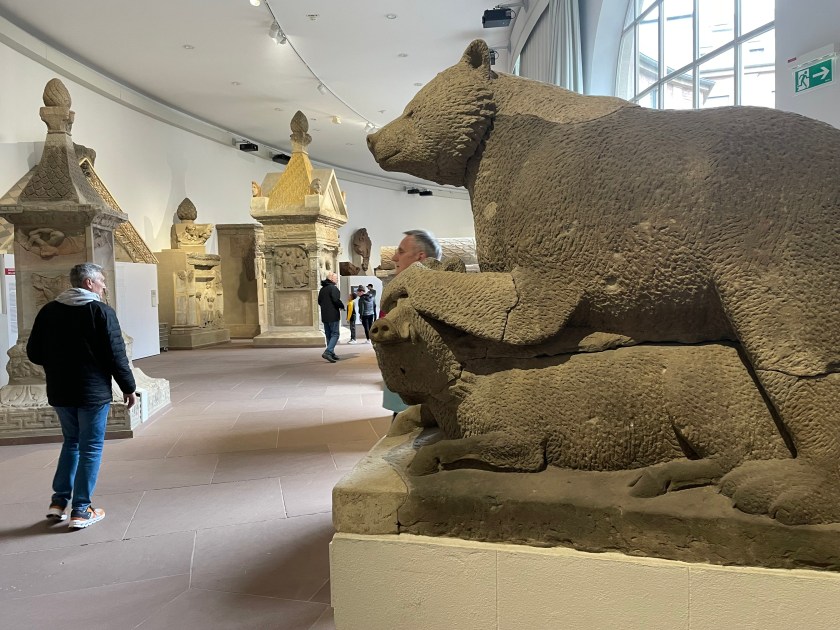
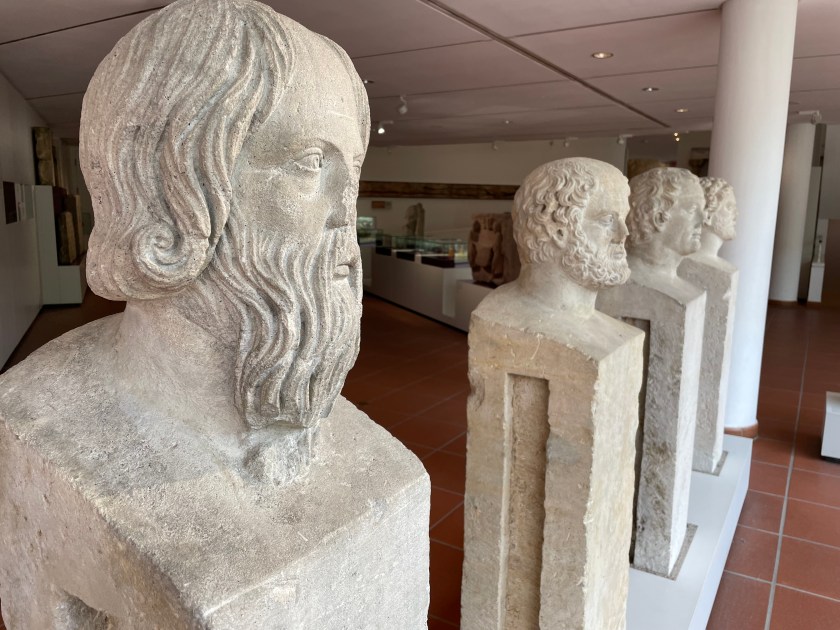
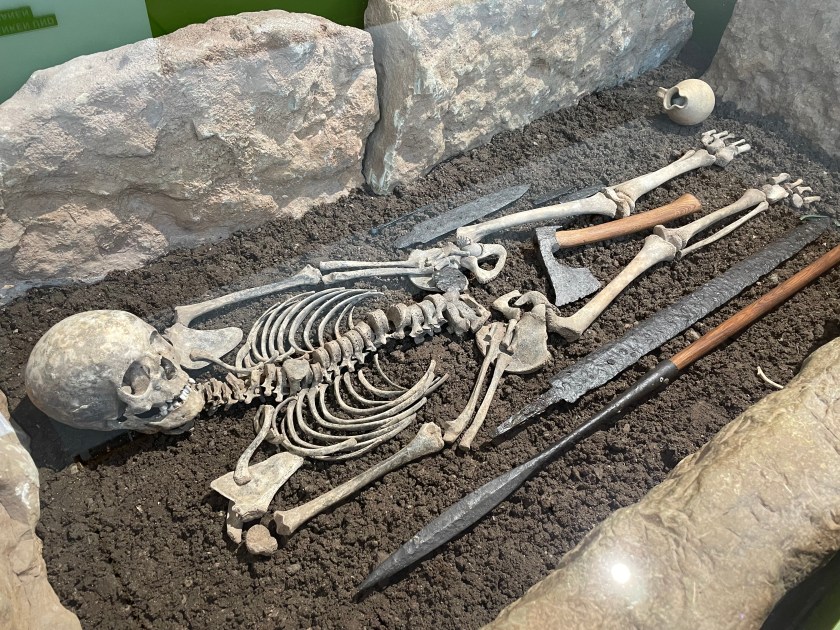
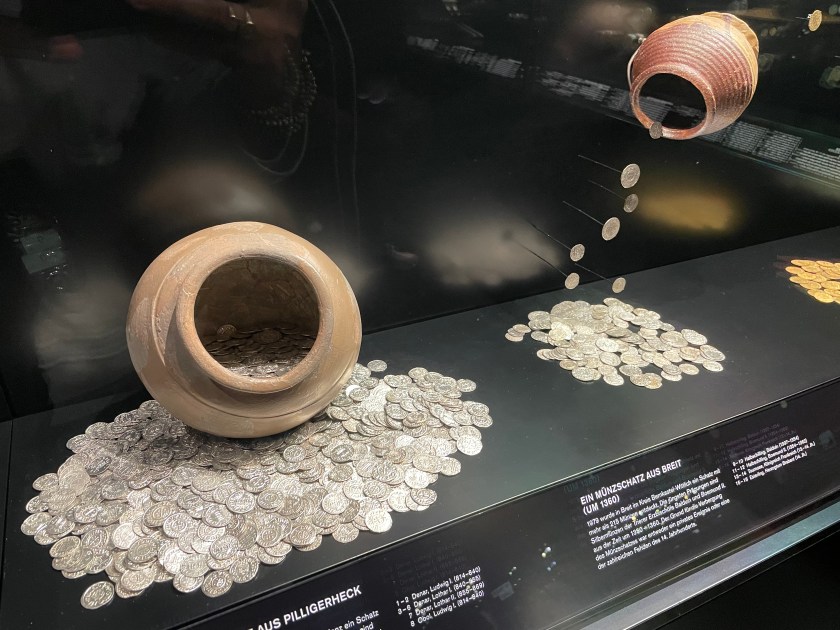
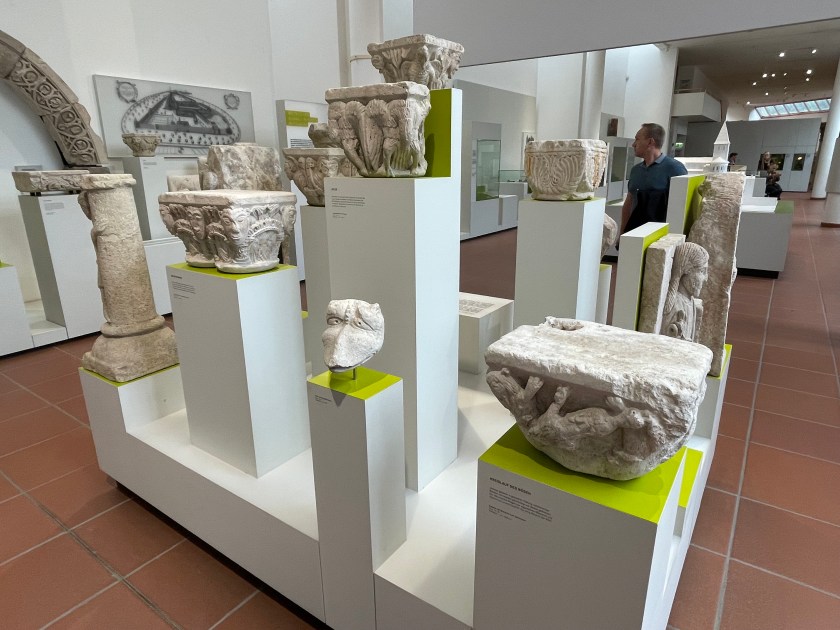
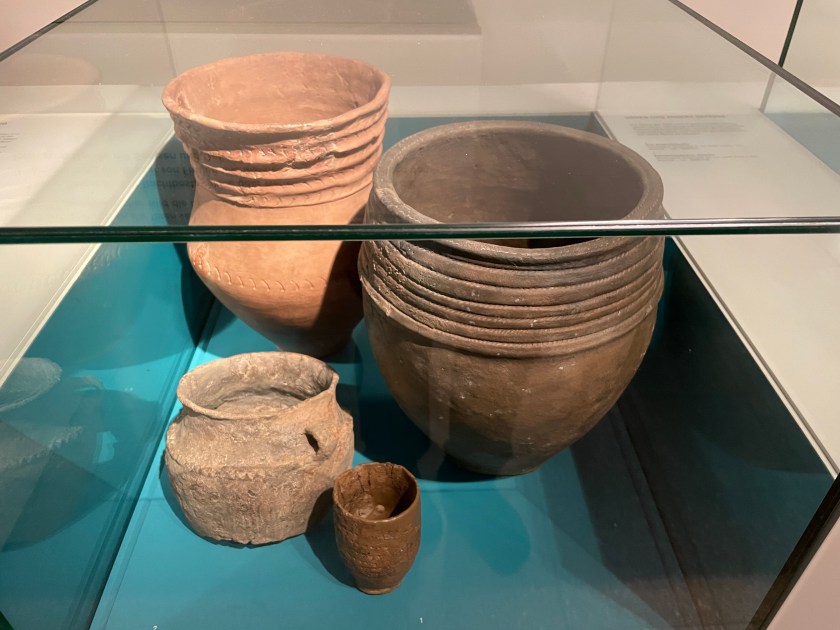
Here are a smattering of things I found interesting in the museum:
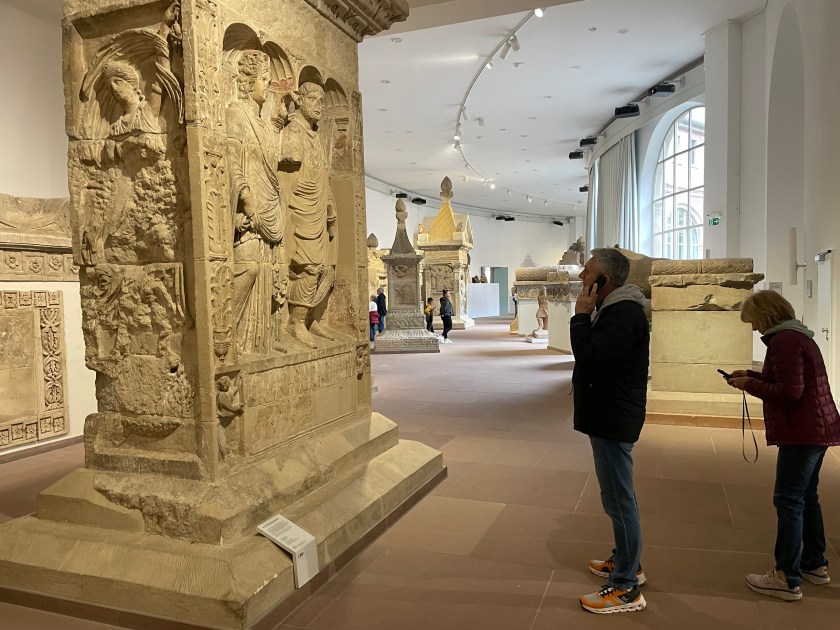
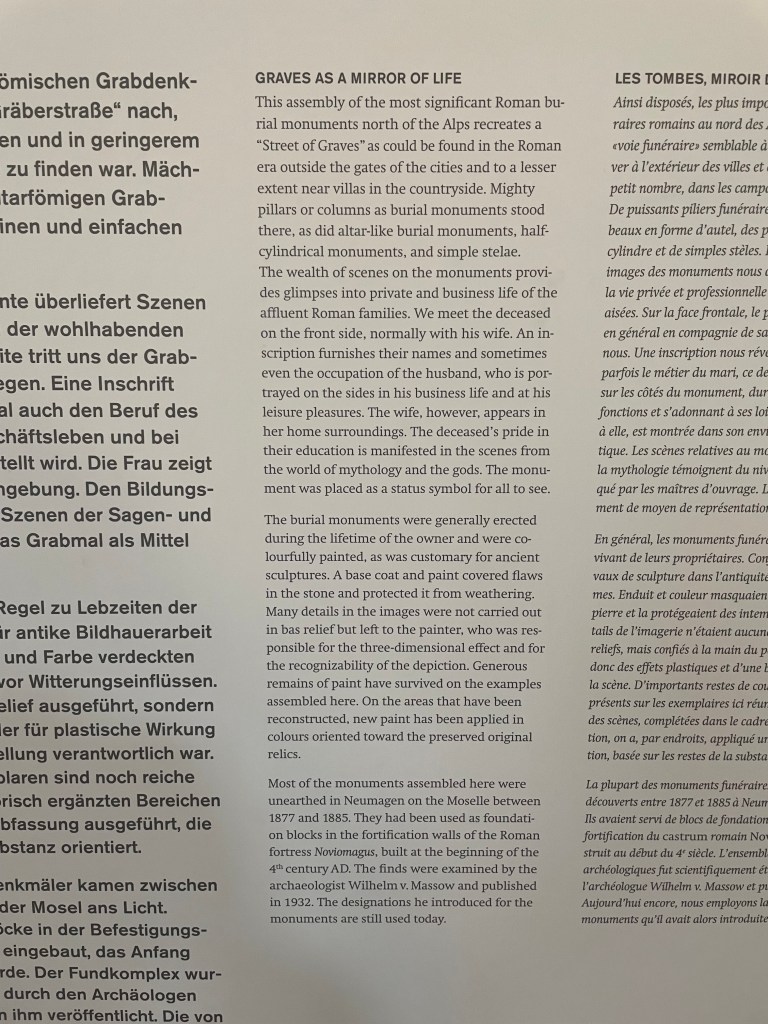
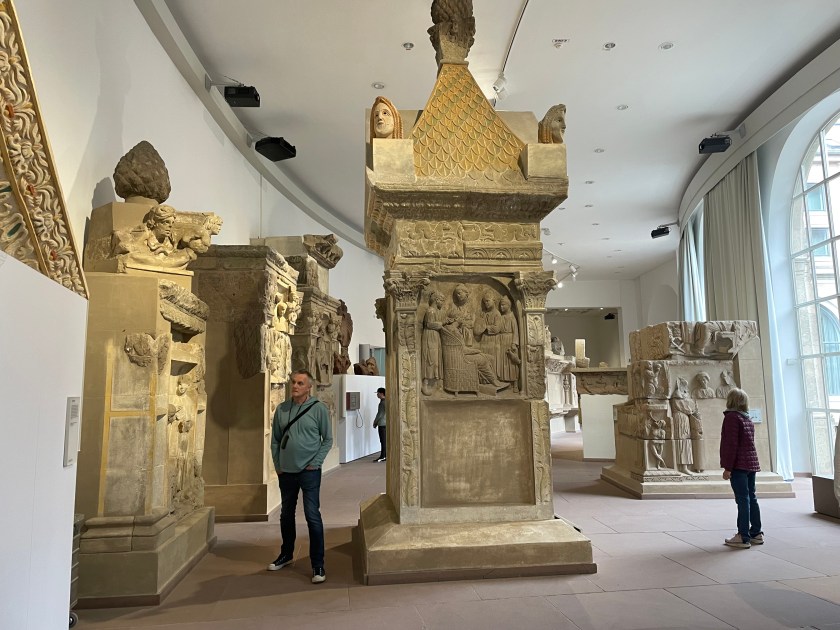
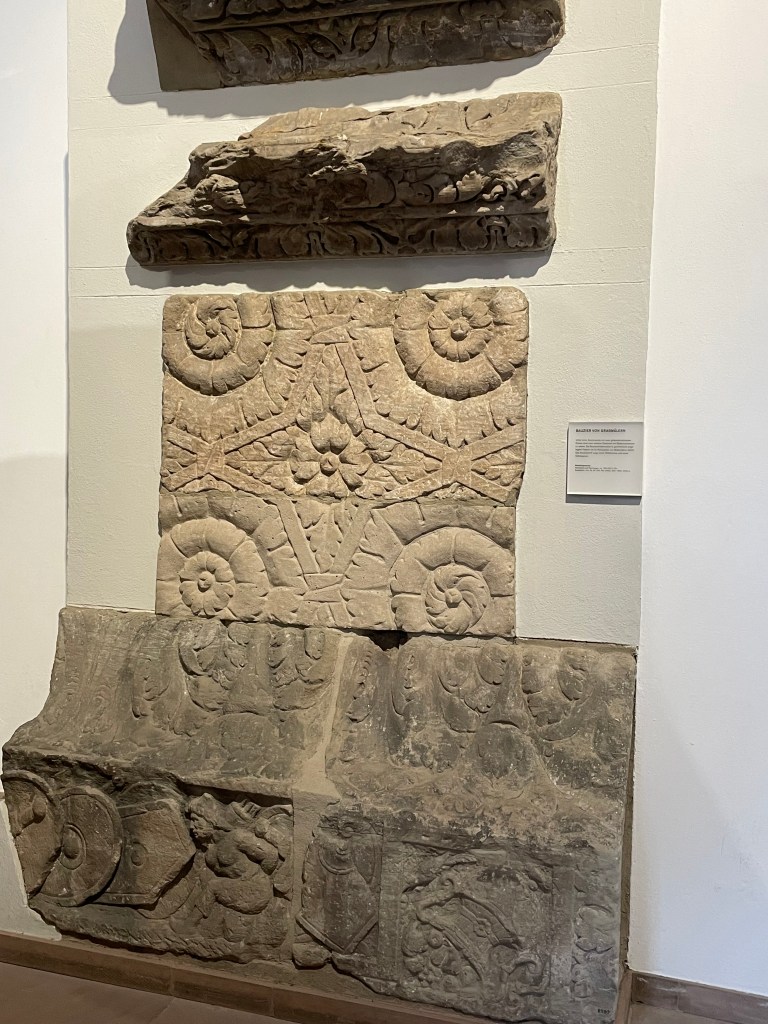
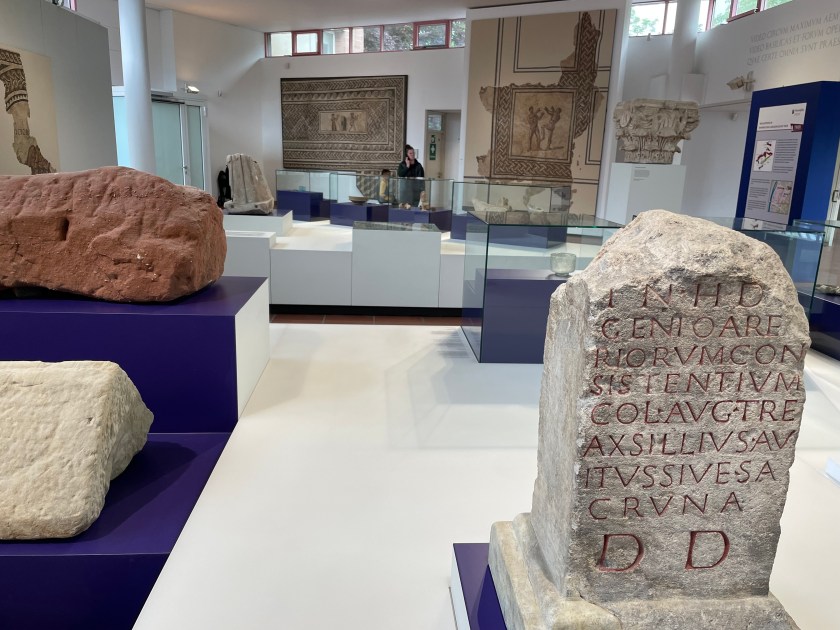
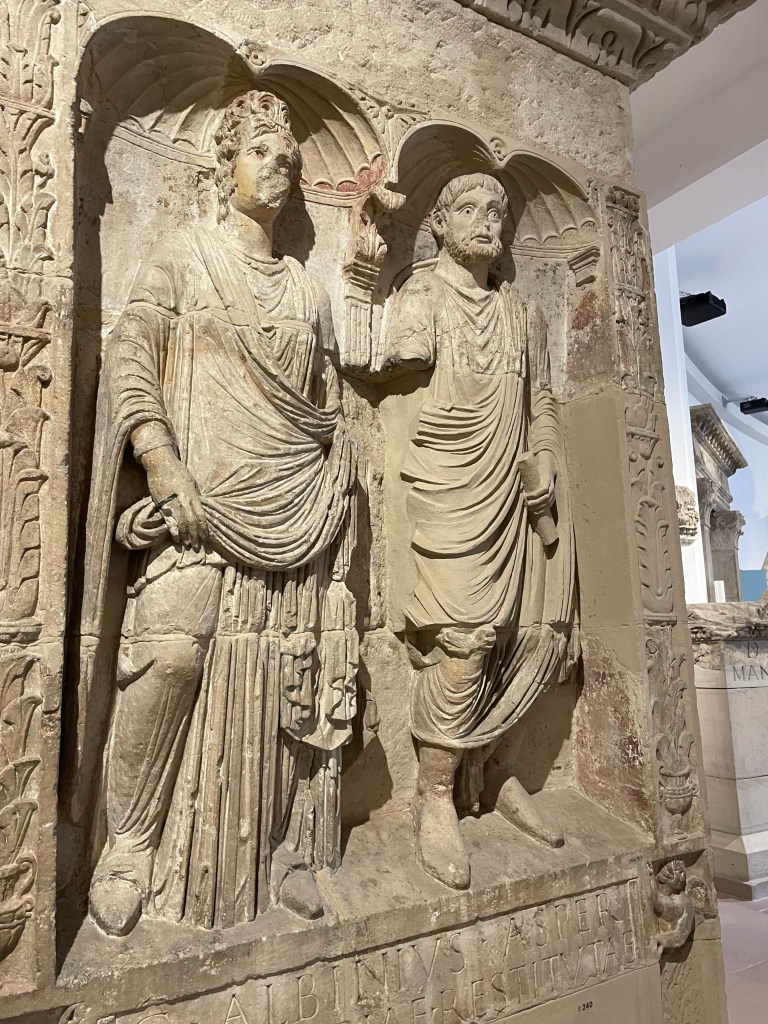
These were huge cemetery memorial stones found outside the city walls.
This one is very famous, and now is one of the icons of Trier.  It’s a riverboat transporting kegs of wine.

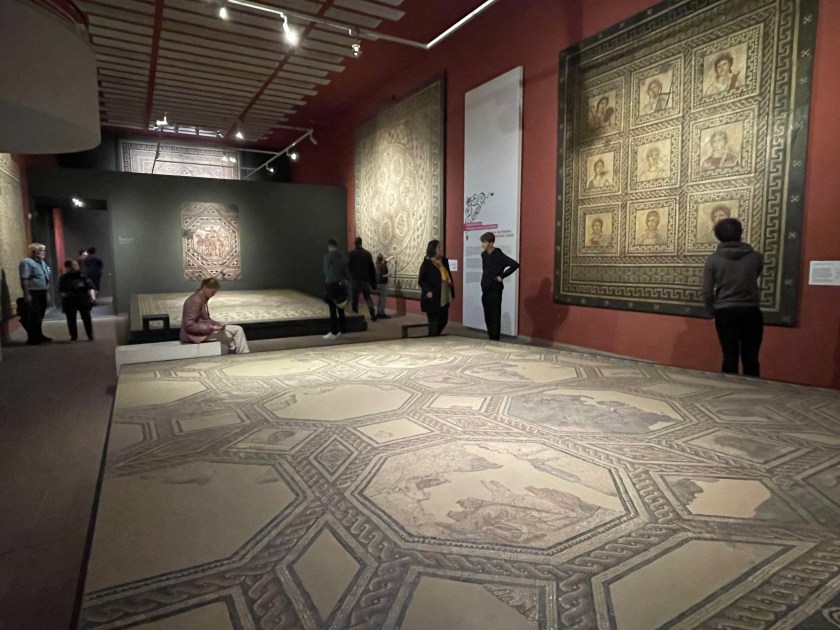
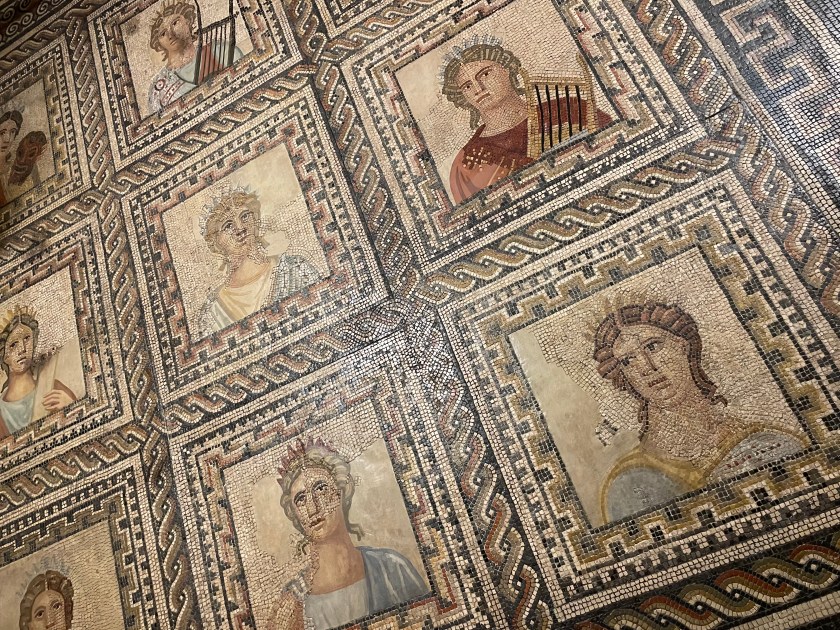
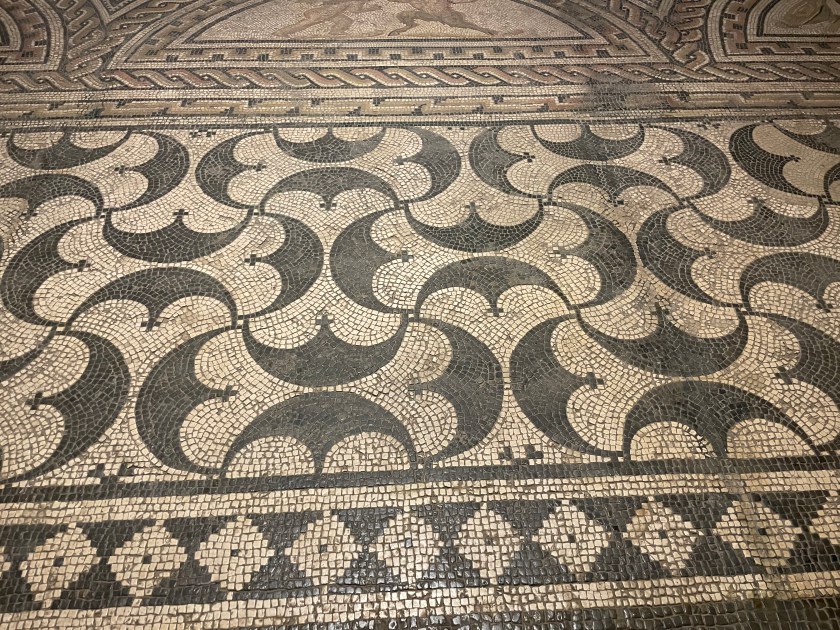
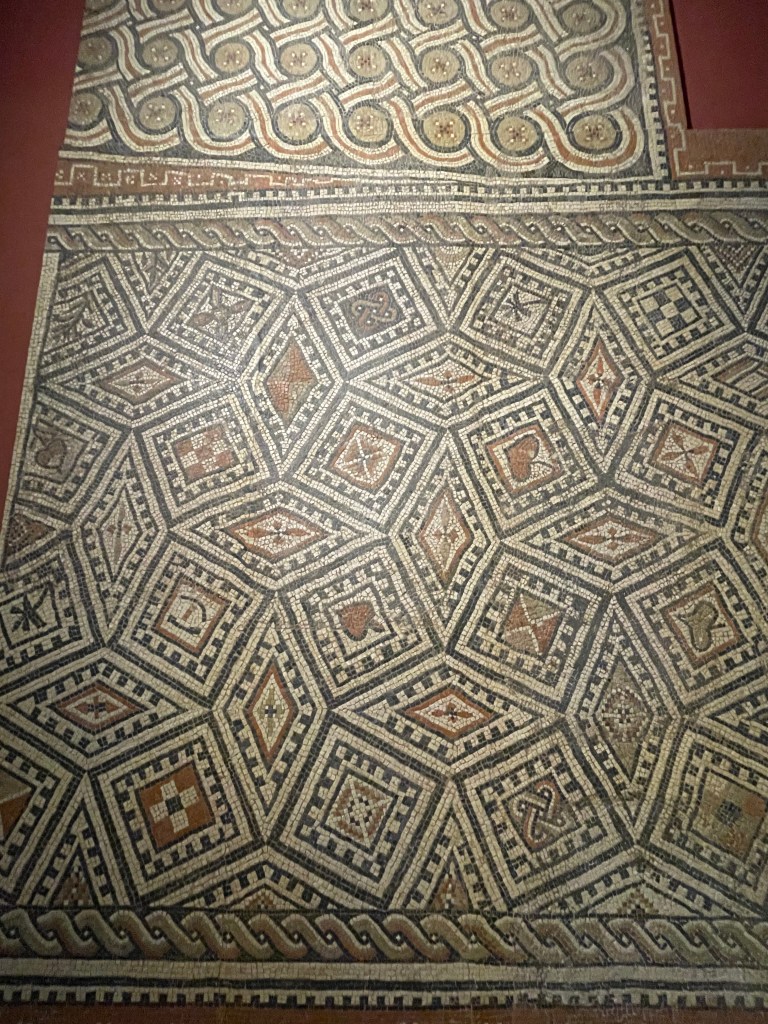
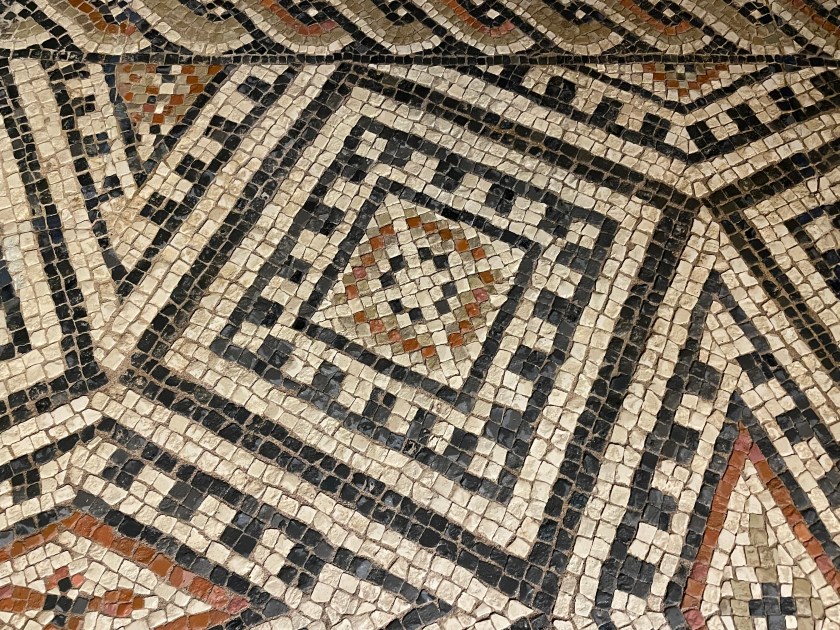
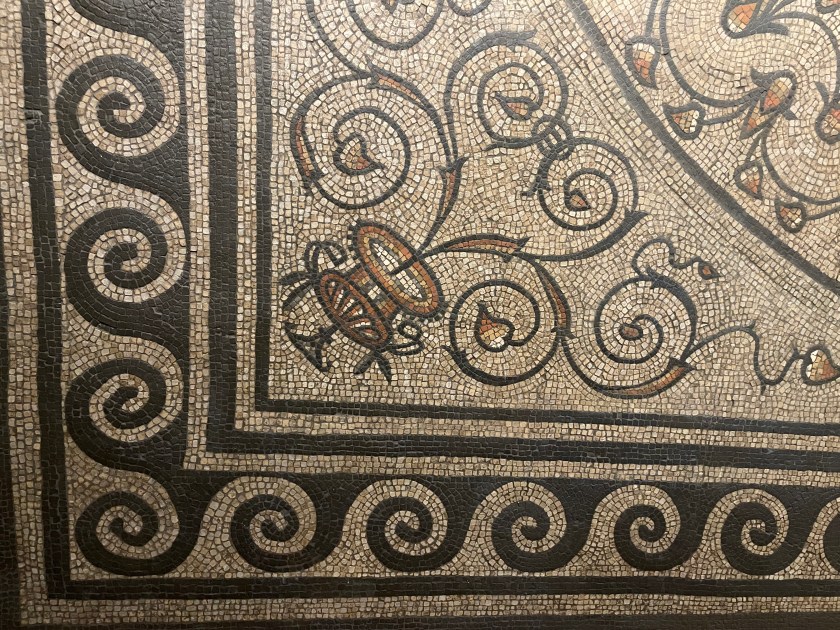
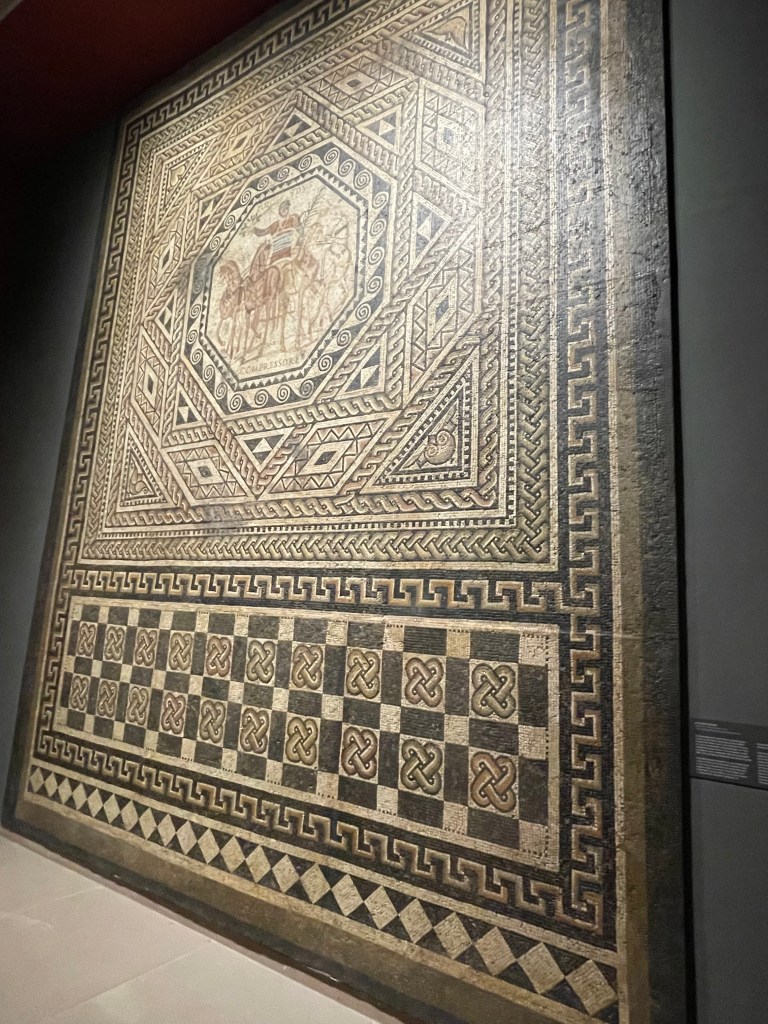
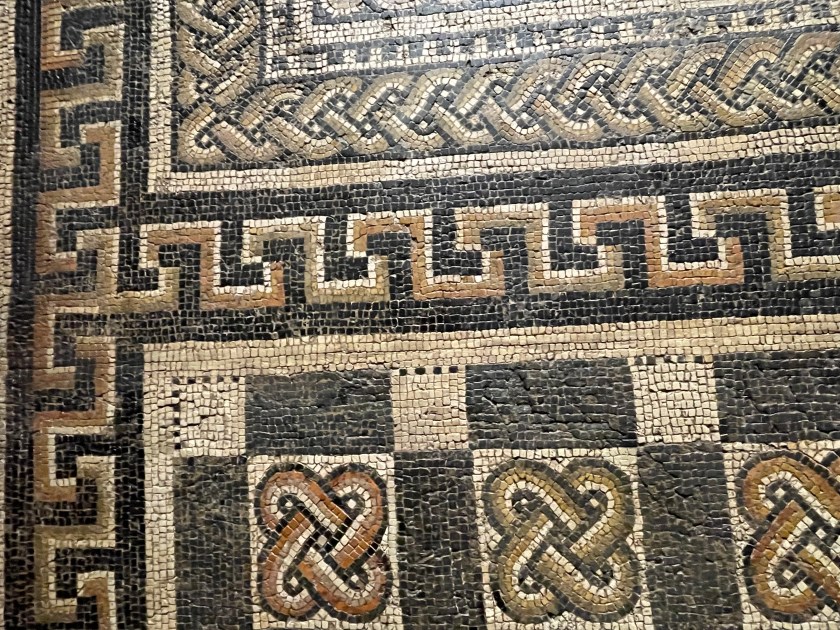
Oh my, the mosaic rooms!!  I felt like I was in an ancient quilt show.  this is the finest collection of mosaics north of Rome.
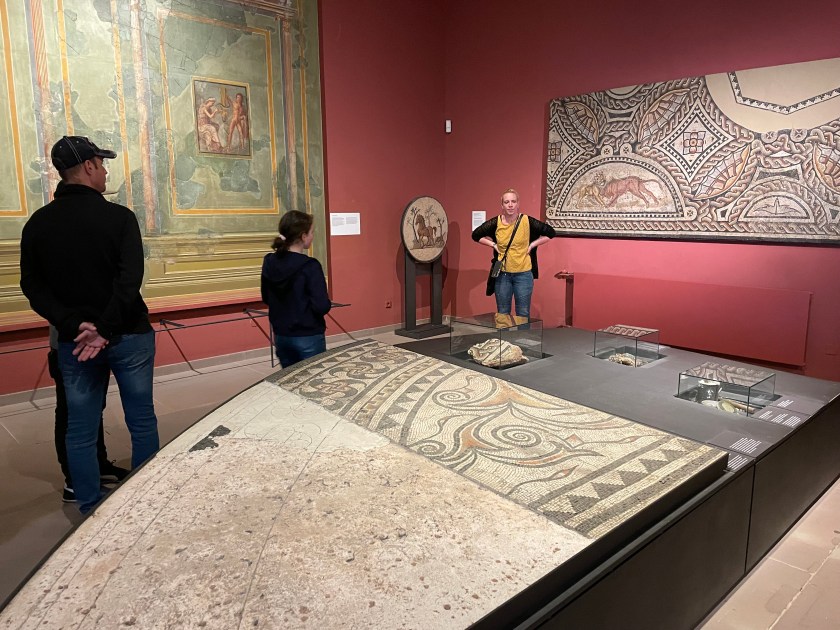
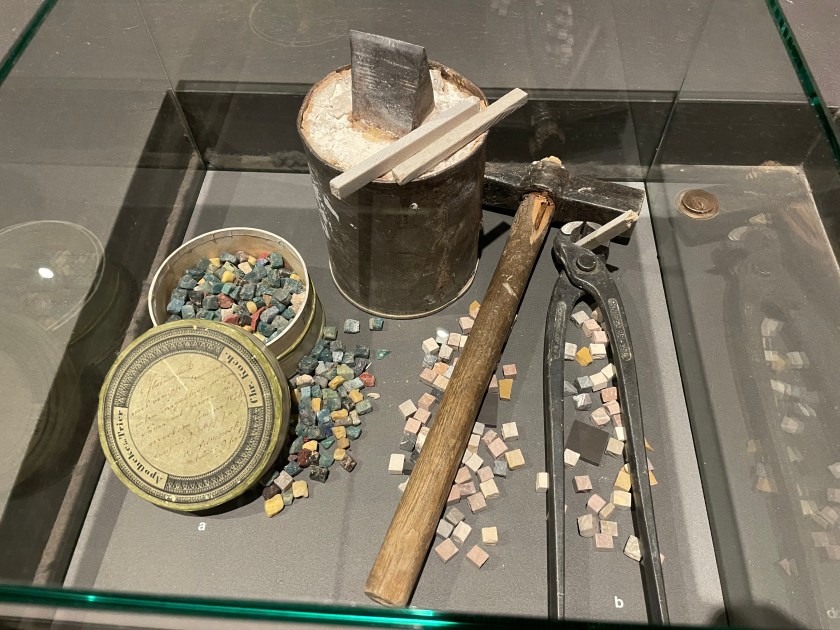
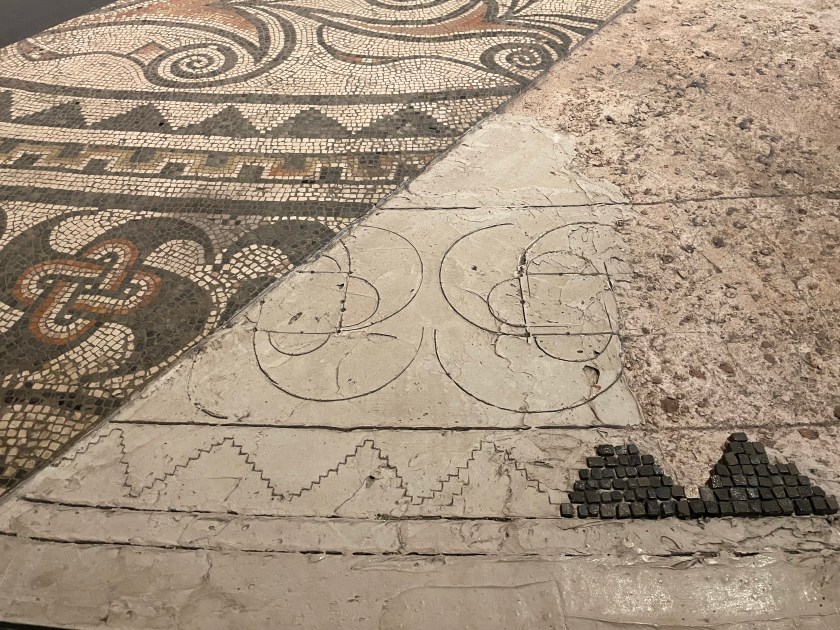
Here’s a mosaic in the making:
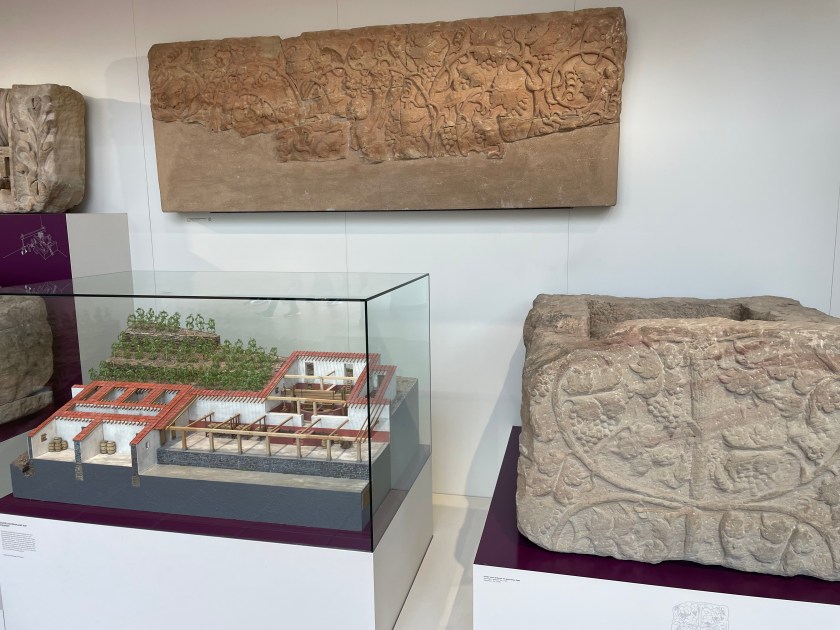
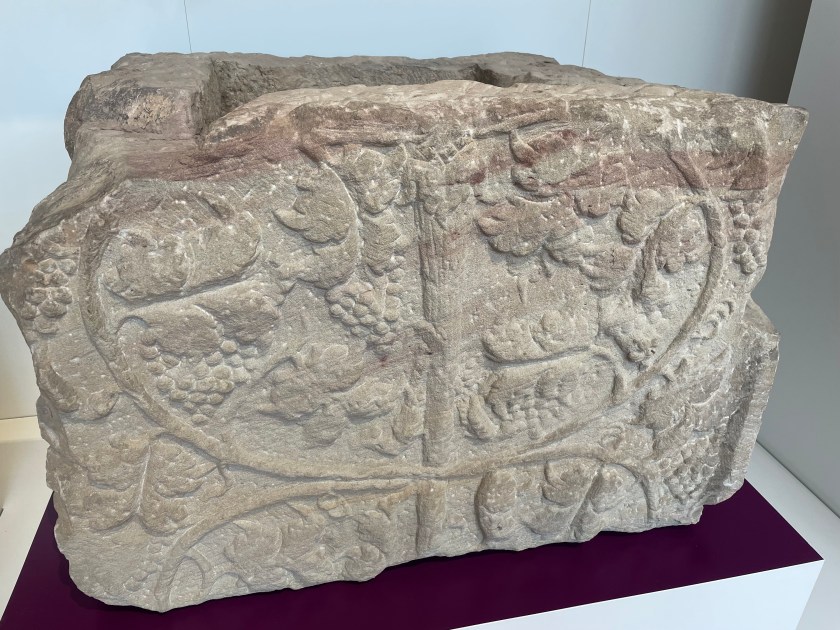
Wine making.
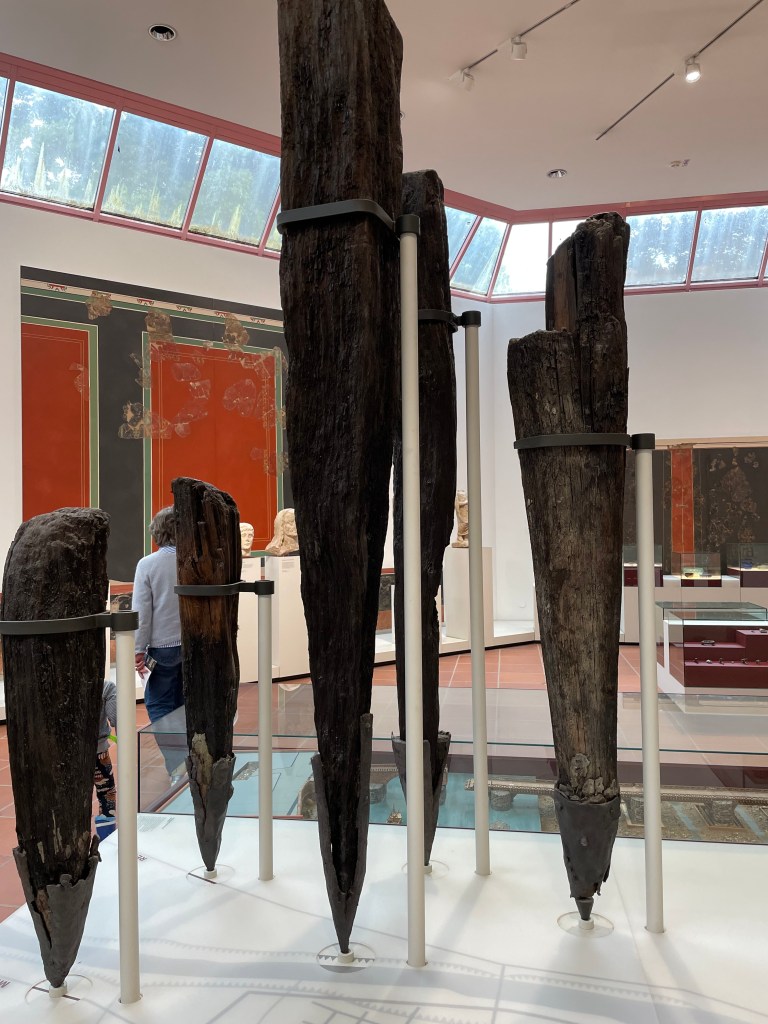
This slice of wood is from the pilons in the river used to create the Roman bridge.  This is how they were able to date the bridge.

The Roman Bridge in Trier is the oldest bridge in Germany. The nine bridge pillars date from the 2nd century AD. The stone pilings of the Roman Bridge date from A.D. 144-152 and are deeply embedded in the bedrock underneath the river gravel.

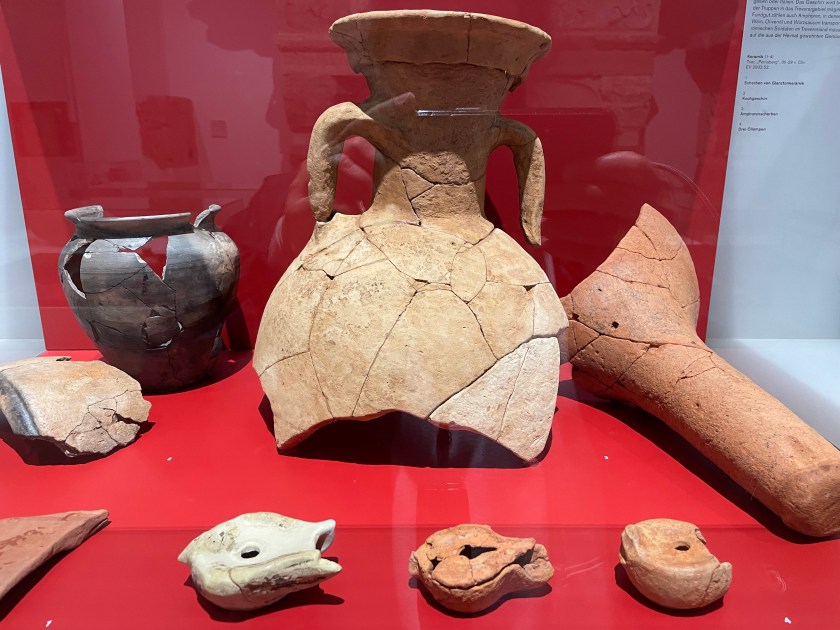
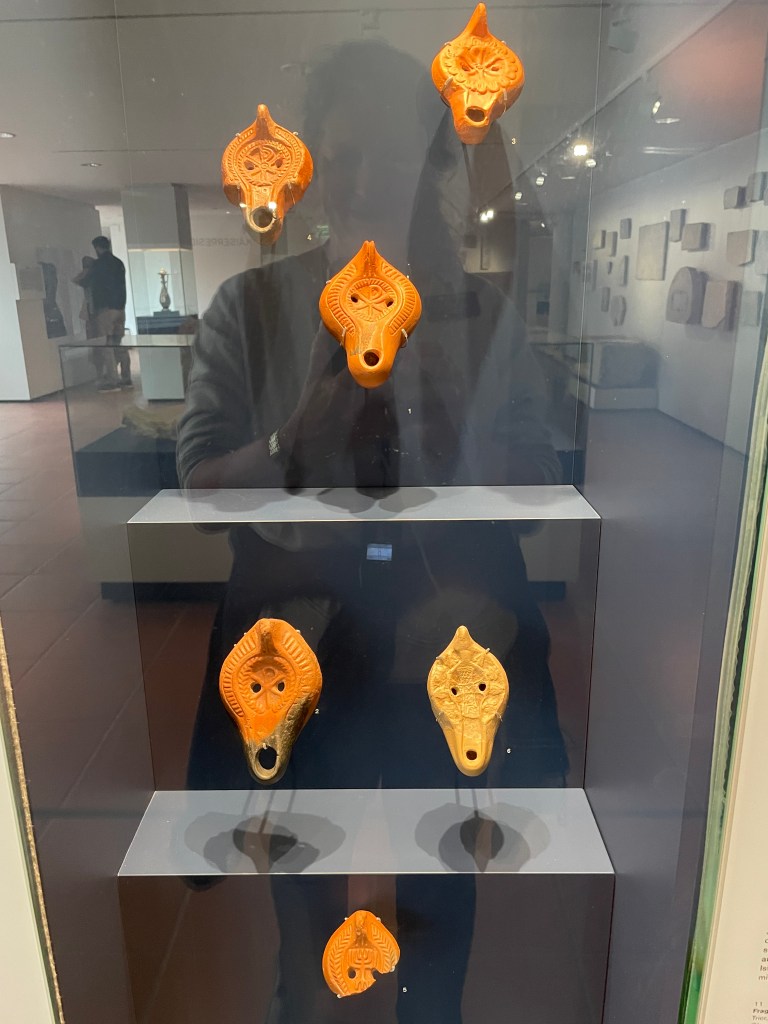
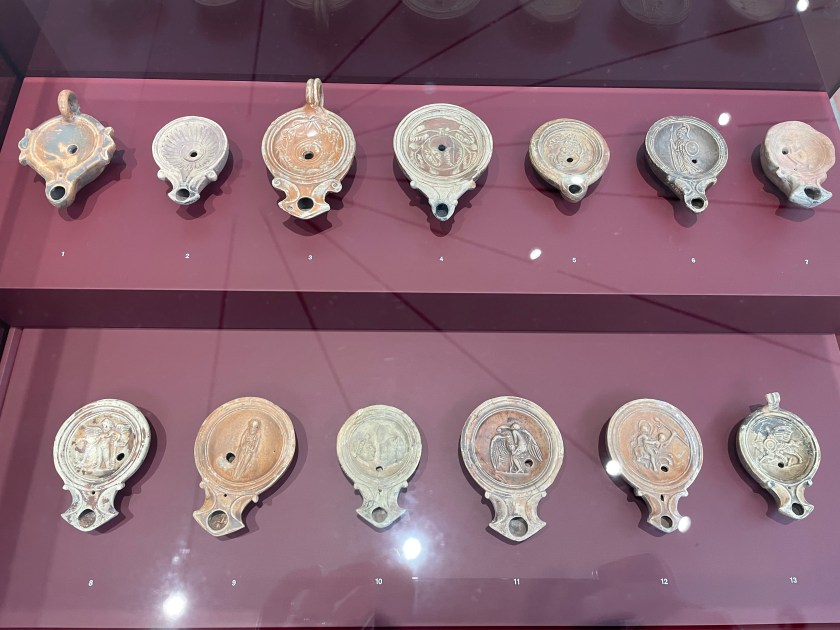
Roman oil lamps.
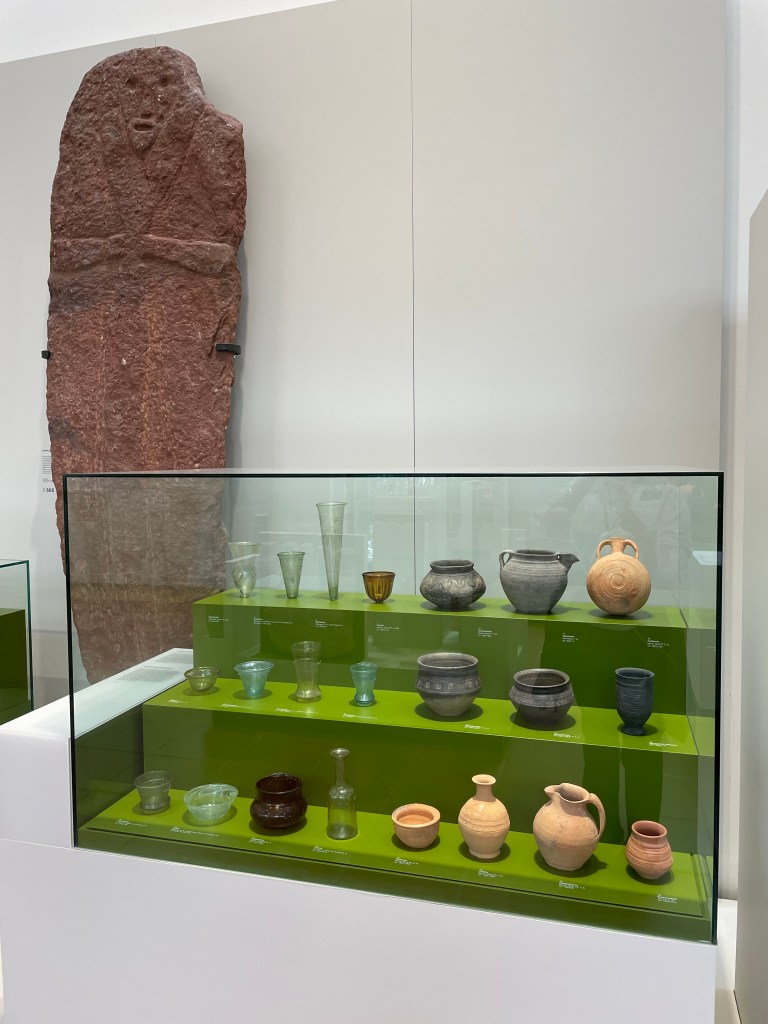
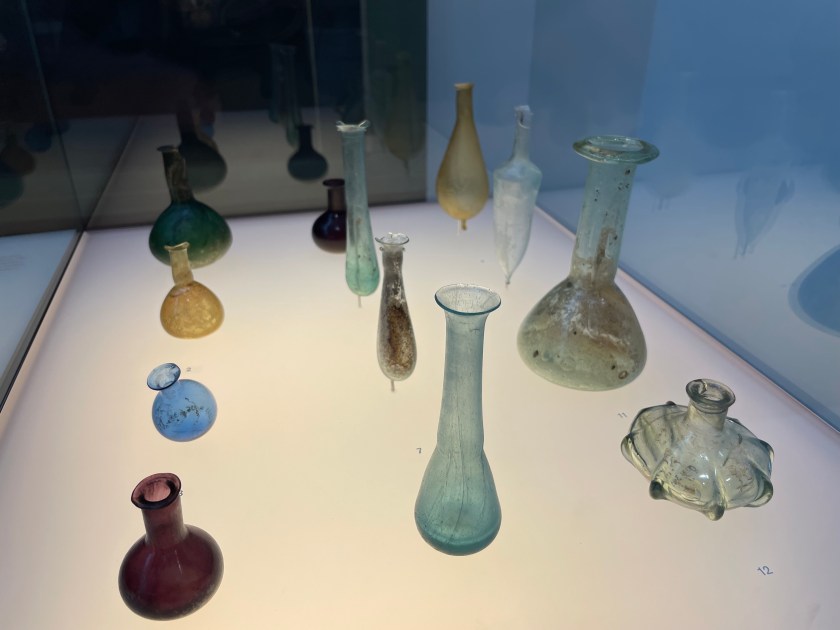
These Roman-era glass bottles reminded me of the tear catchers we saw last year in Jerusalem.
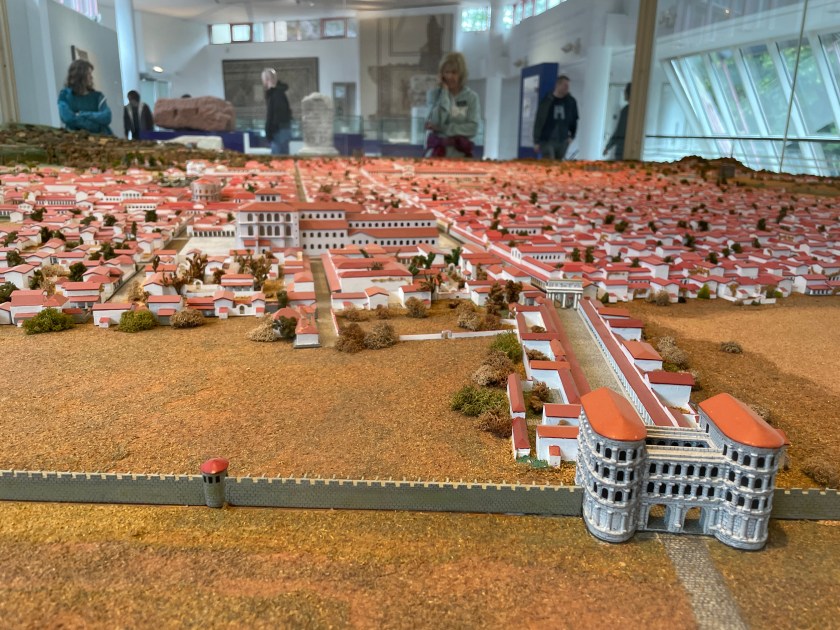
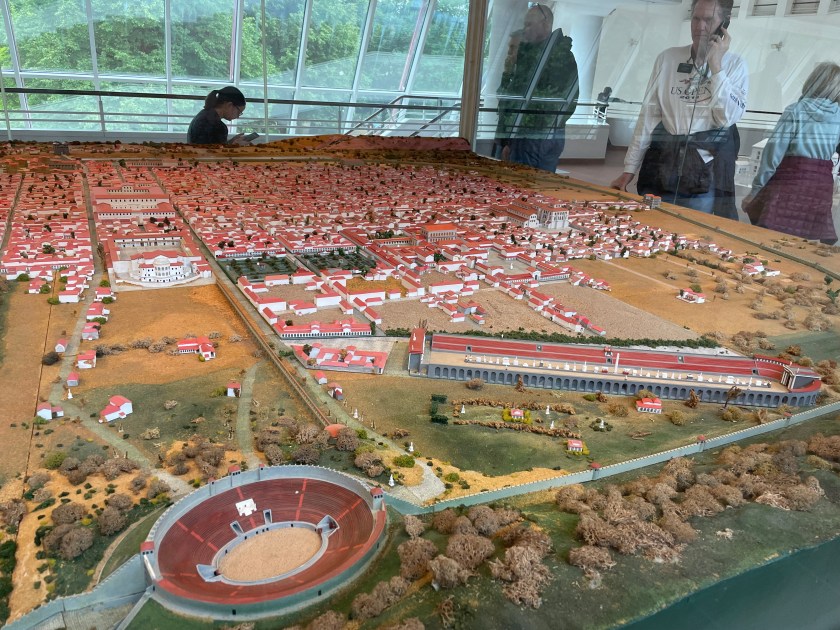
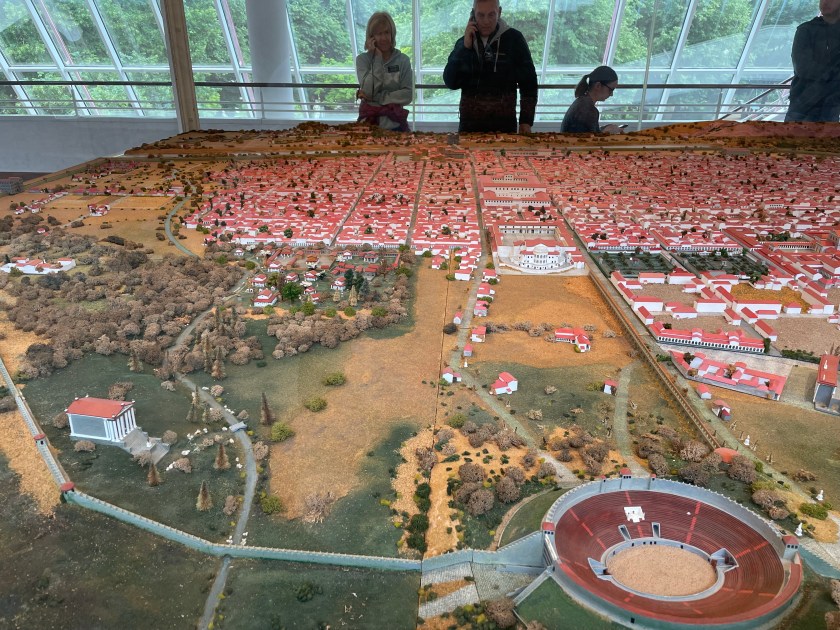
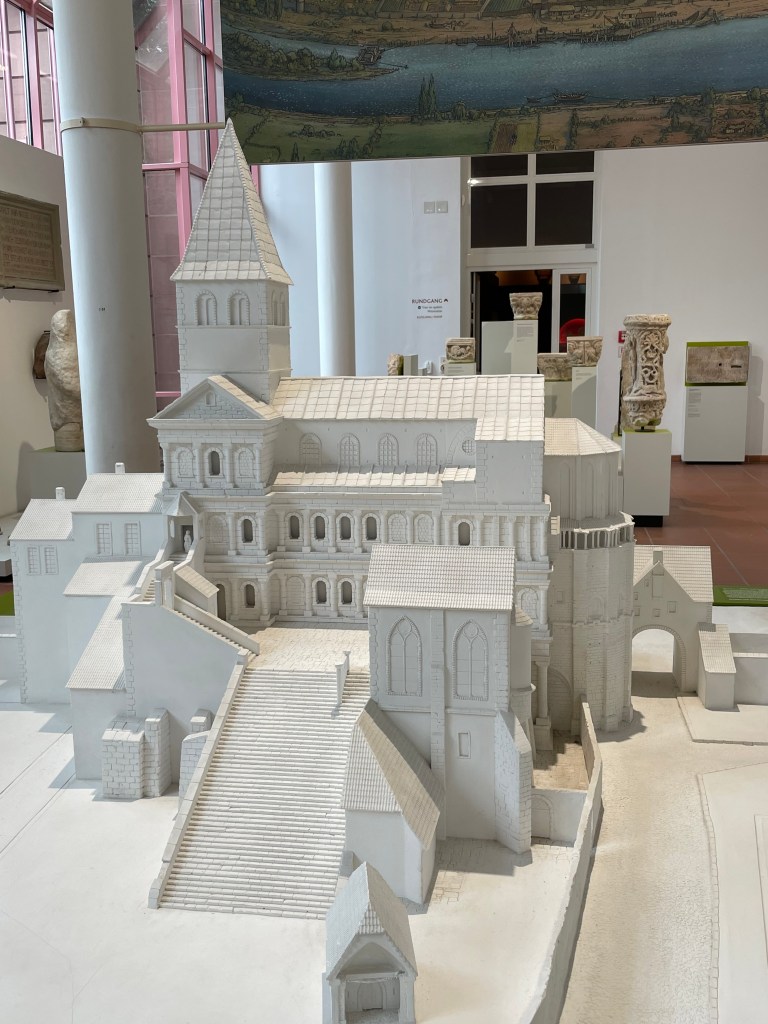
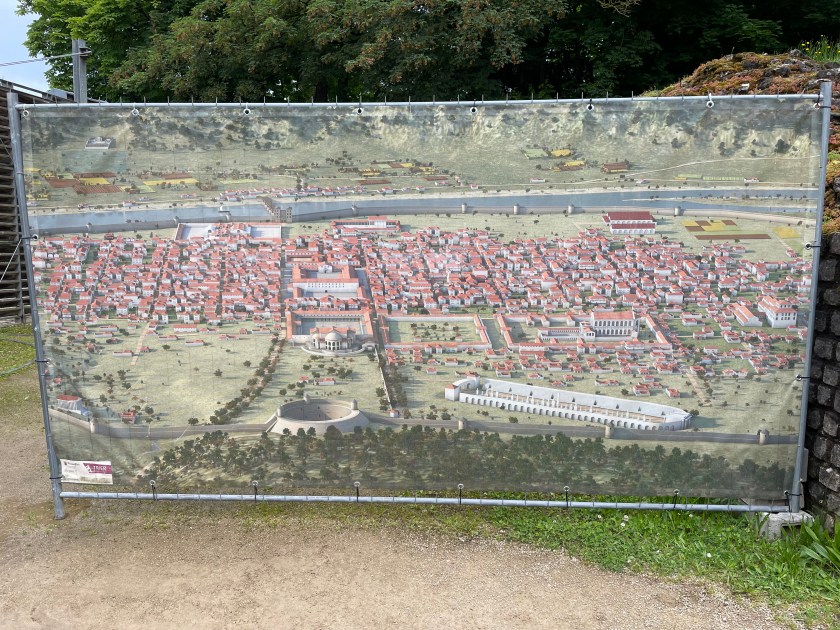
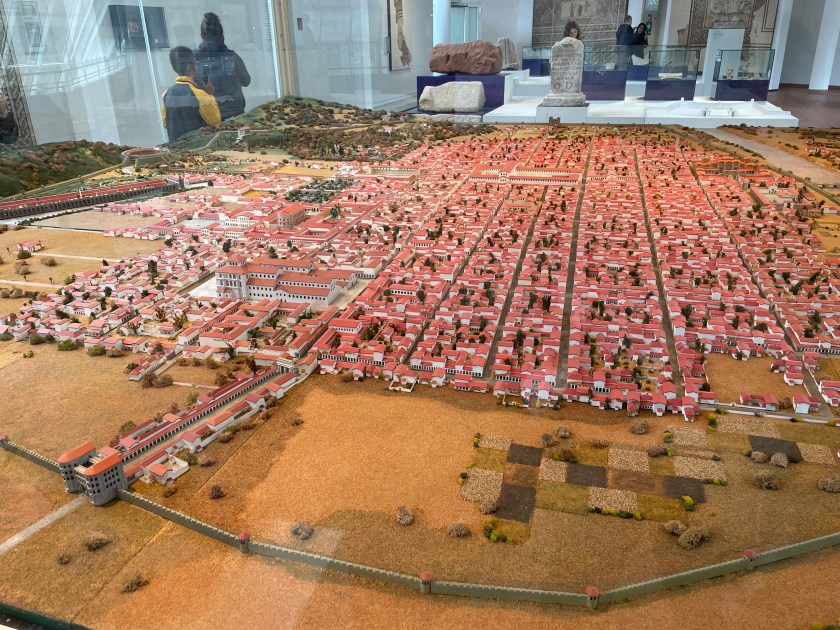
It’s always nice to get the perspective from these models.  The Porta Nigra is in the lower left.
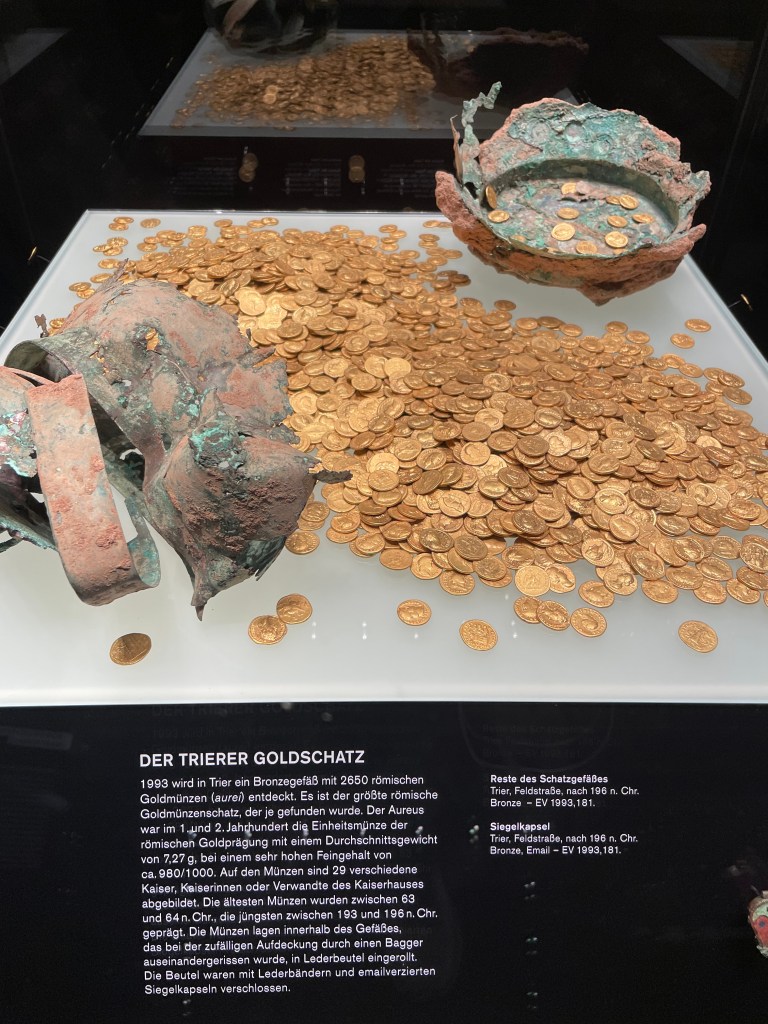
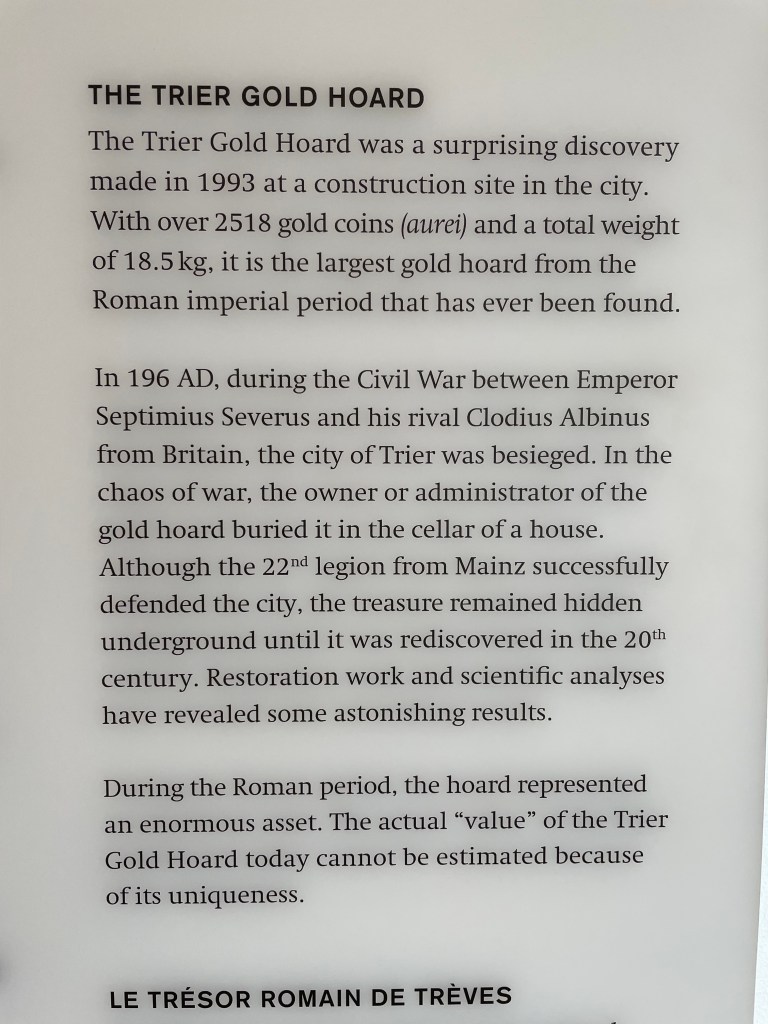
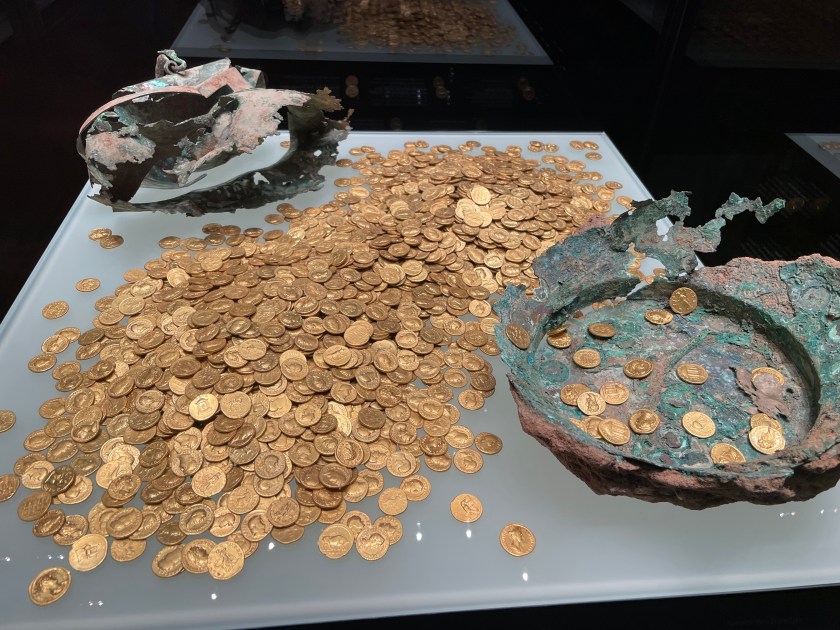
The “Trier Gold Hoard,” kept here in a vaulted room, is the largest Roman gold hoard ever discovered. Twenty-five hundred gold coins weighing 18.5 kilograms, were found during an excavation in 1993, nearly 1,800 years after it was hidden.
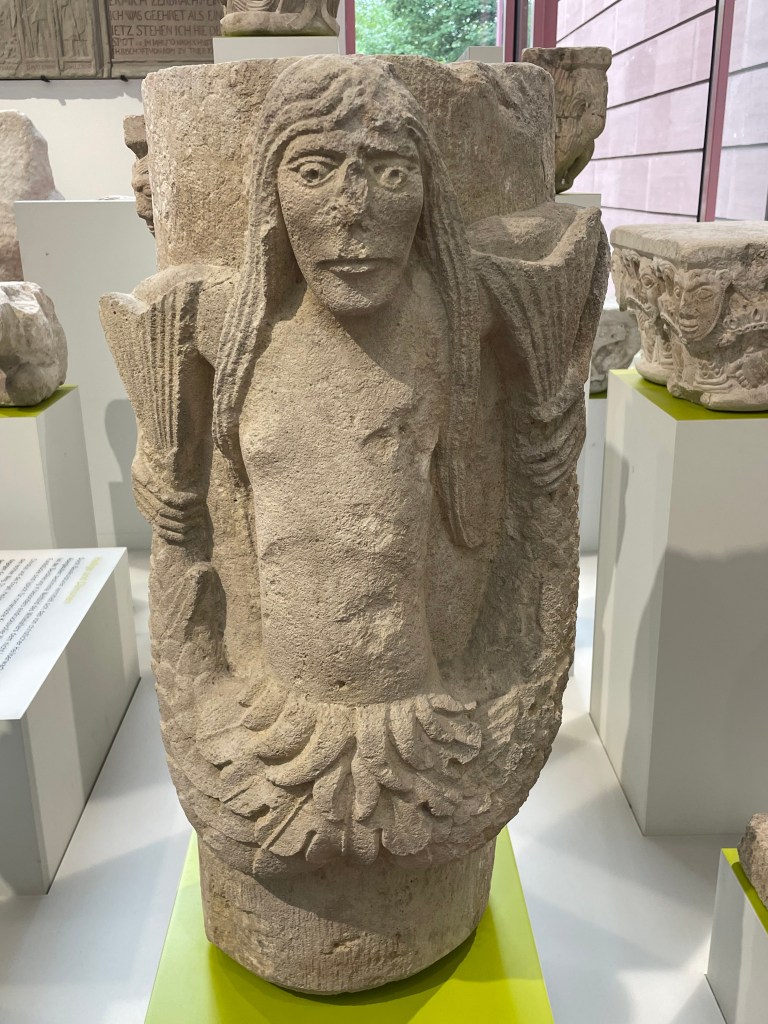
Mermaid doing the splits!
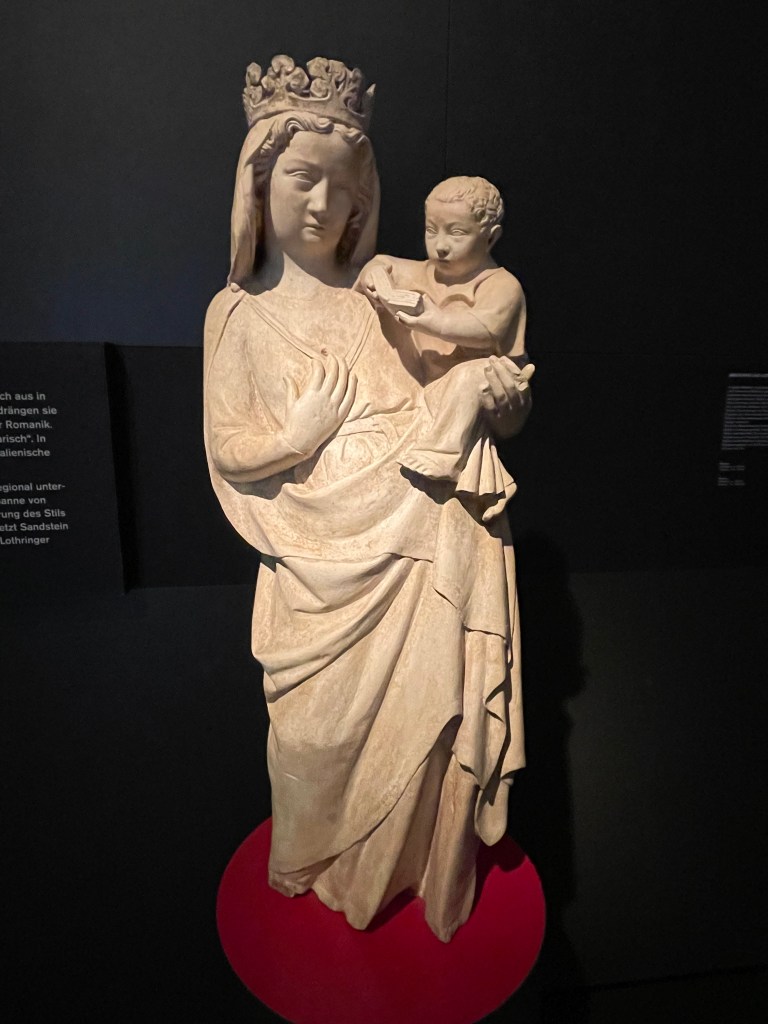
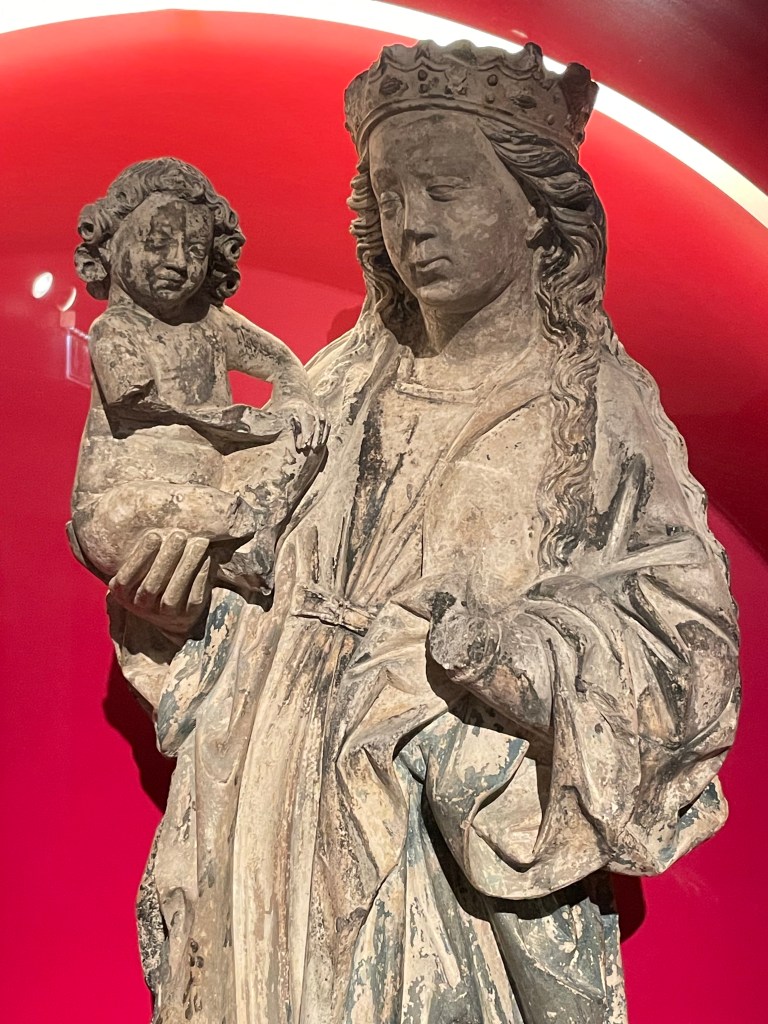
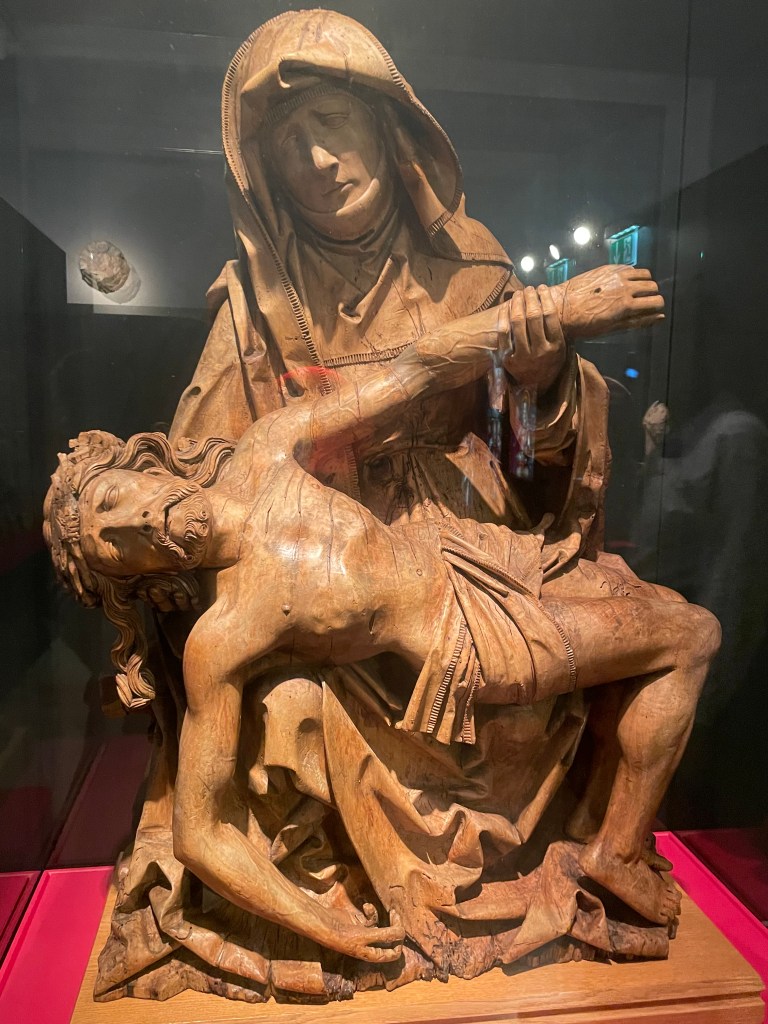
Beautiful Madonna sculptures.

That was really fun.  There are so many interesting things to see here!
The Amphitheater in Trier

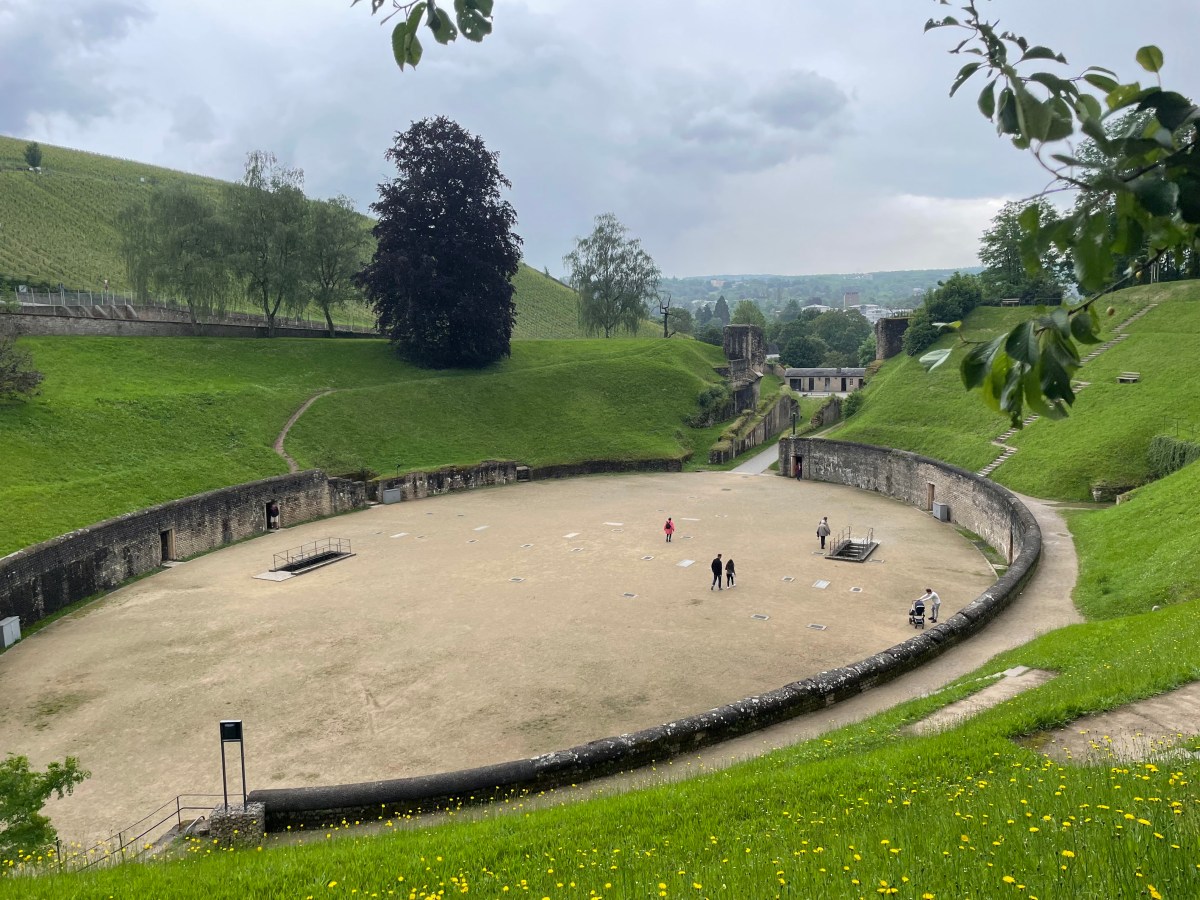
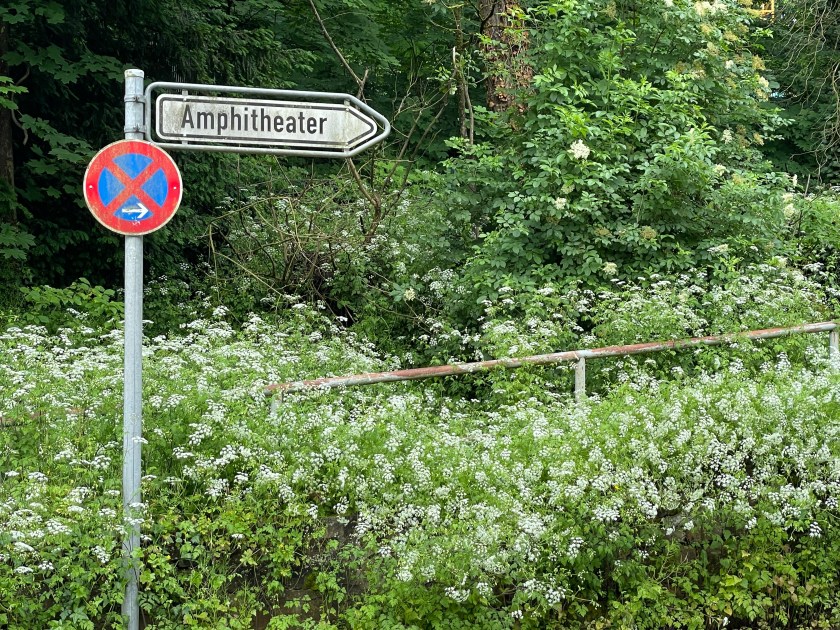
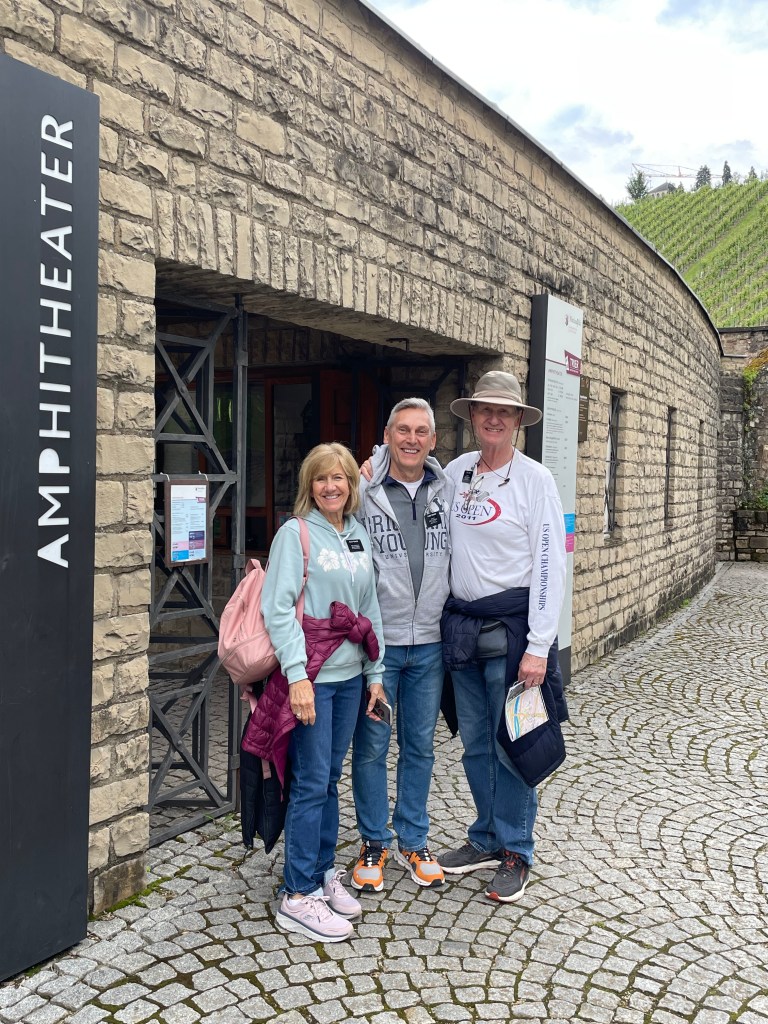
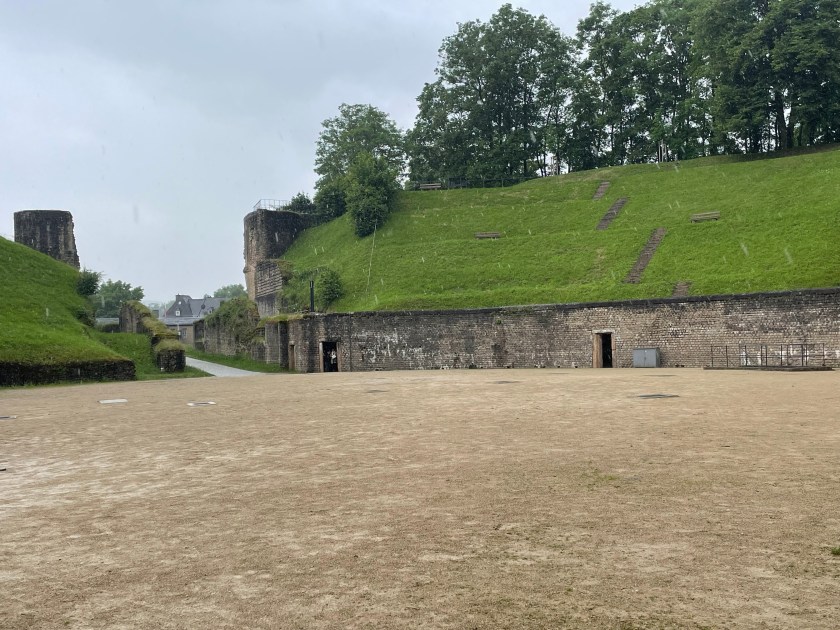
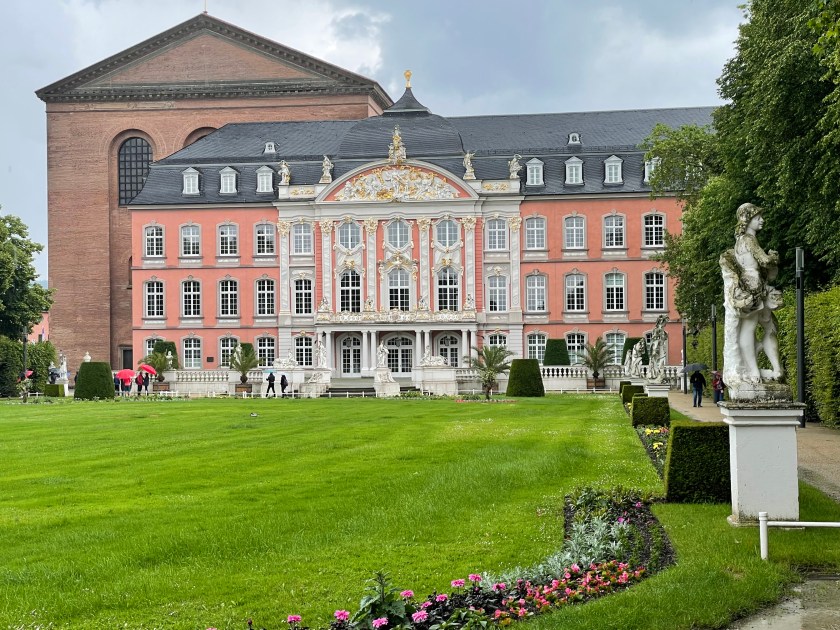
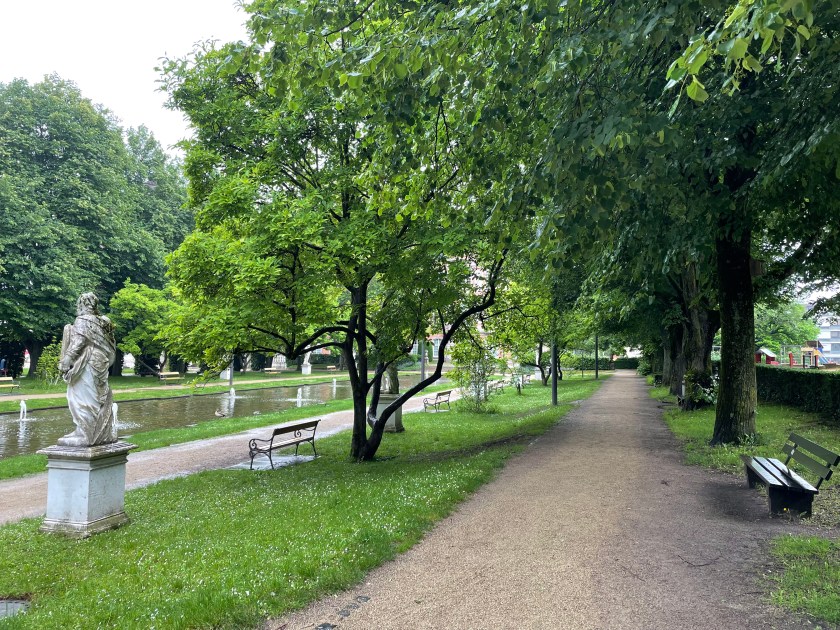
From the Imperial Palace gardens, we walked down under the road to the far side of the old Roman town to the amphitheater.

We passed by this stumbling stone along the way.

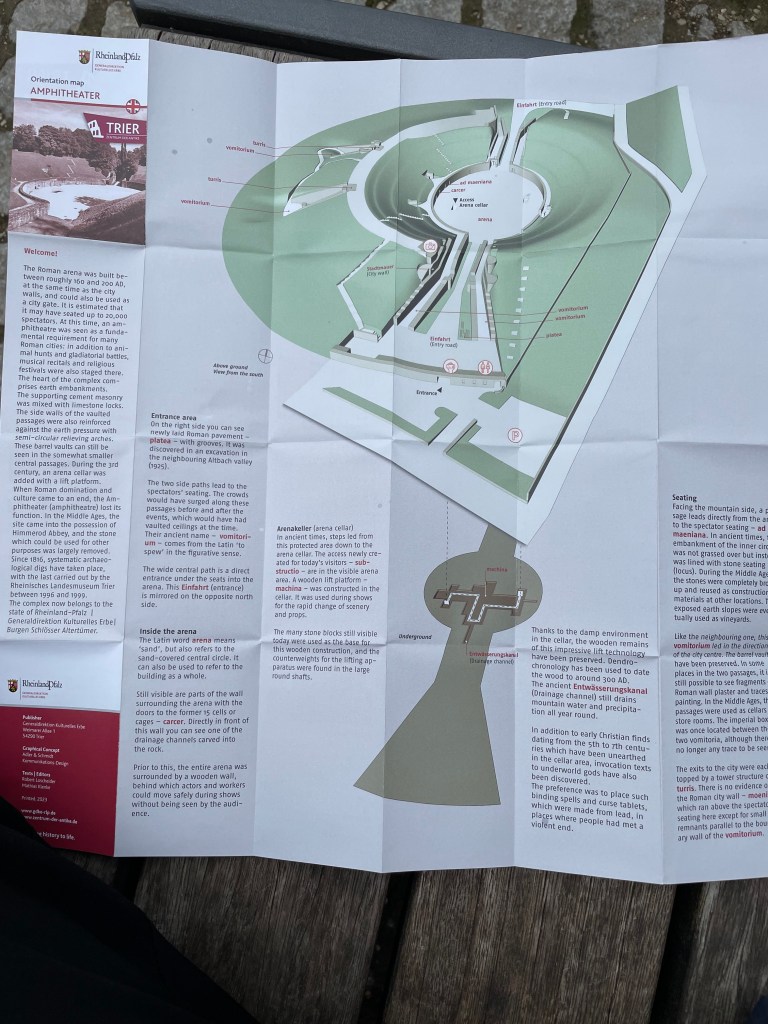
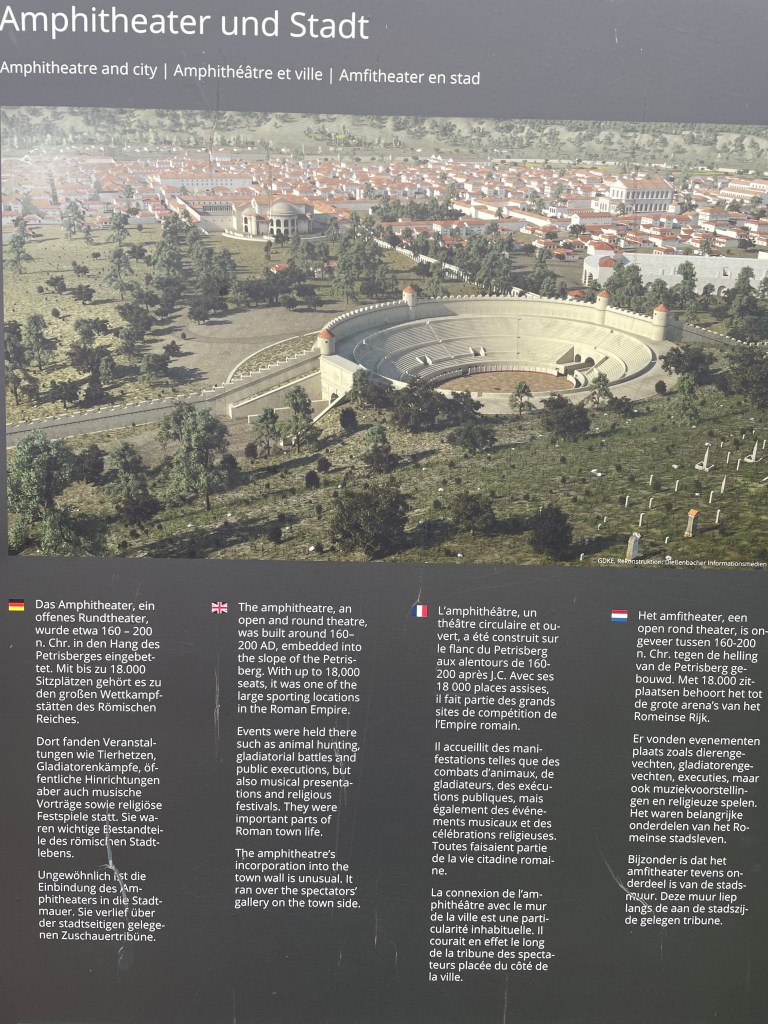
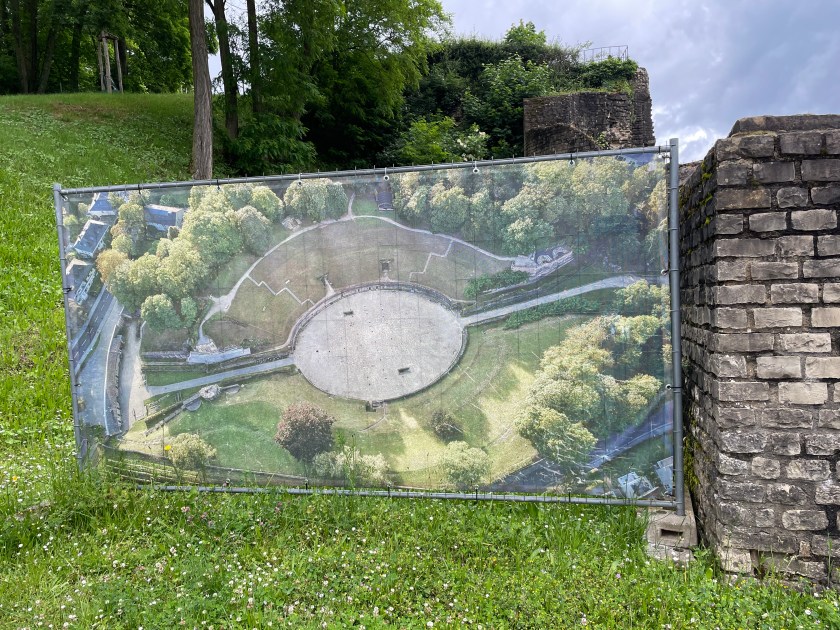
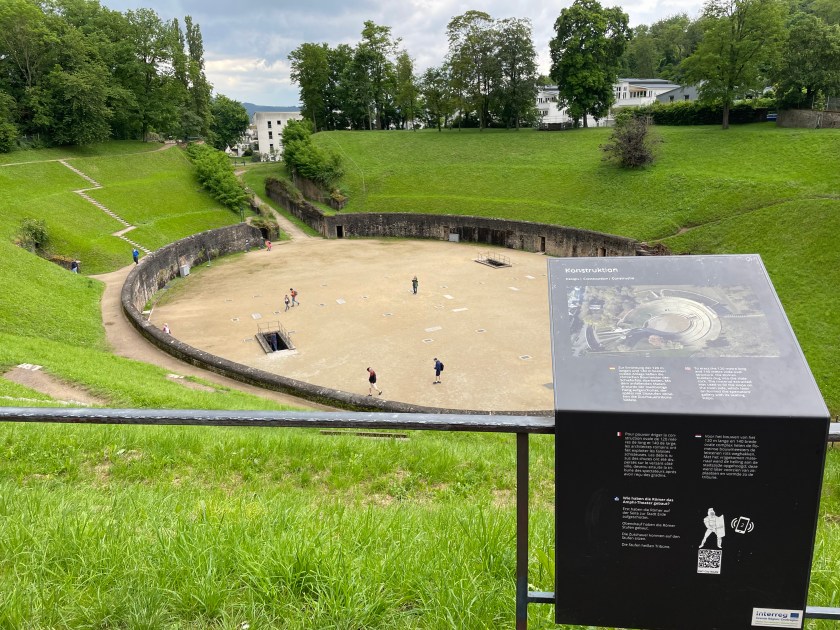
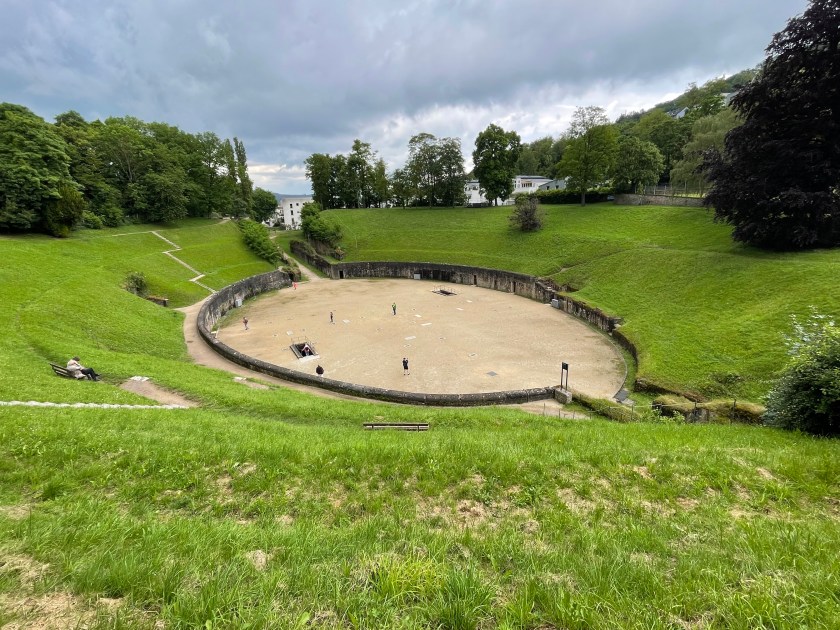
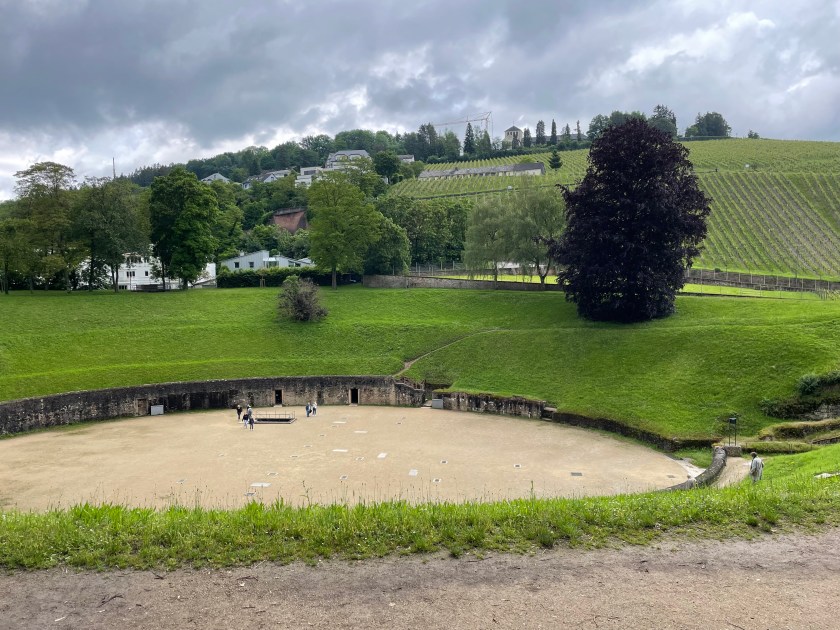
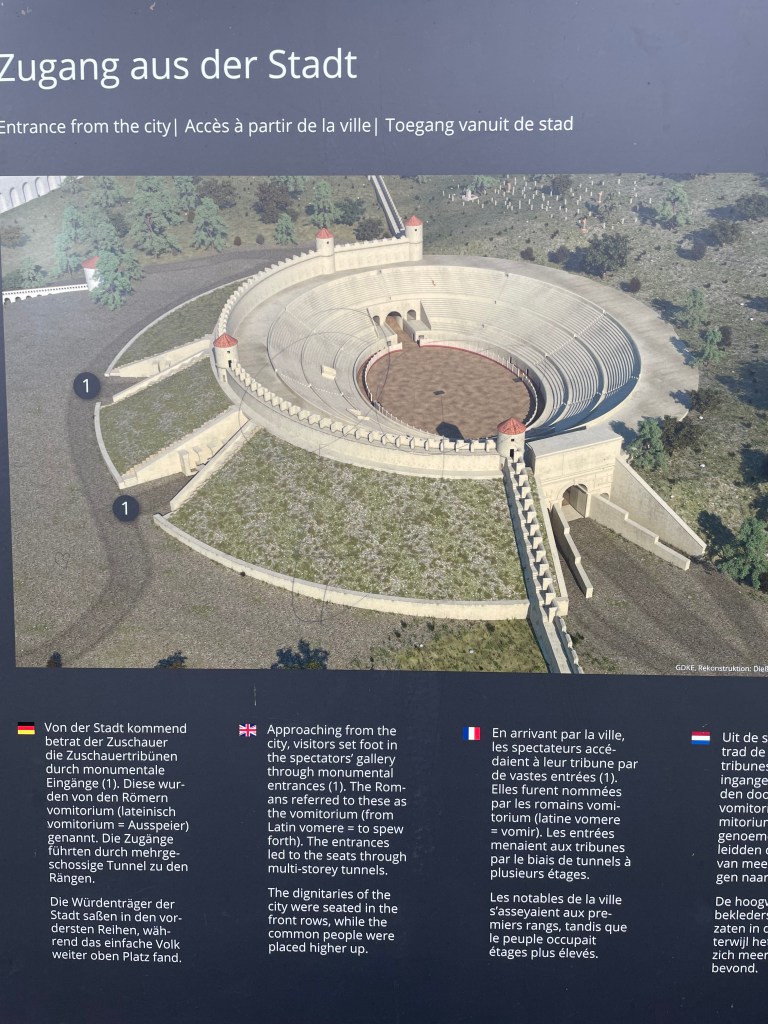
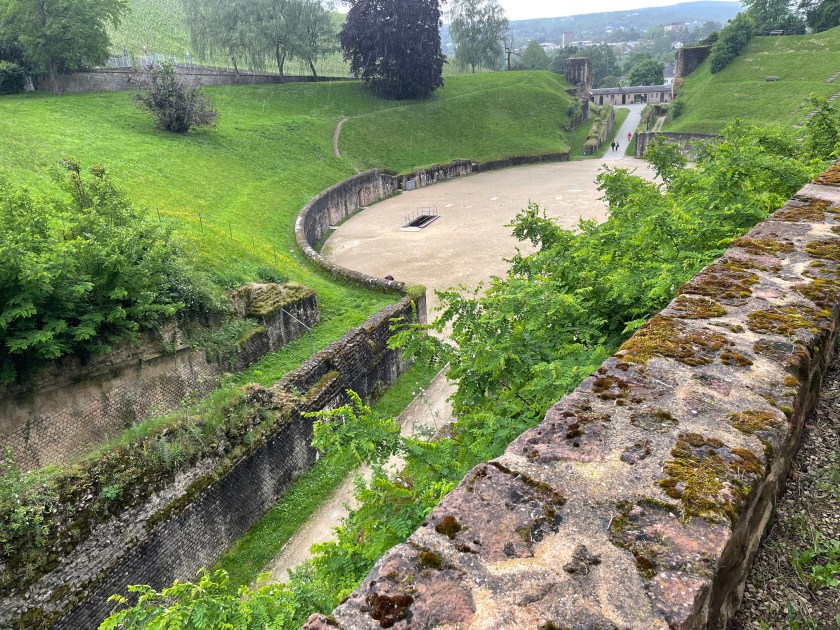
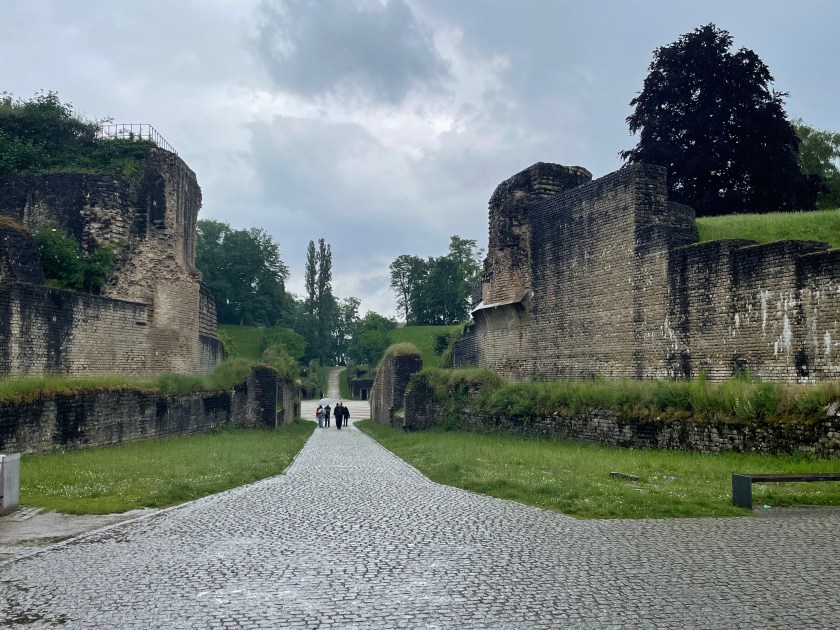
This Roman arena was built between 160 and 200 A. D. at the same time as the city walls.  In fact, the amphitheater became part of the city wall and could be used as a city gate.  They think this stadium held as many as 20,000 spectators.

Stadiums like this were used for animal hunts, gladiatorial battles, musical events and religious festivals.  During the Middle Ages, this arena was used for other things and many of the stones were repurposed.

The hills around the arena are now covered in vineyards.

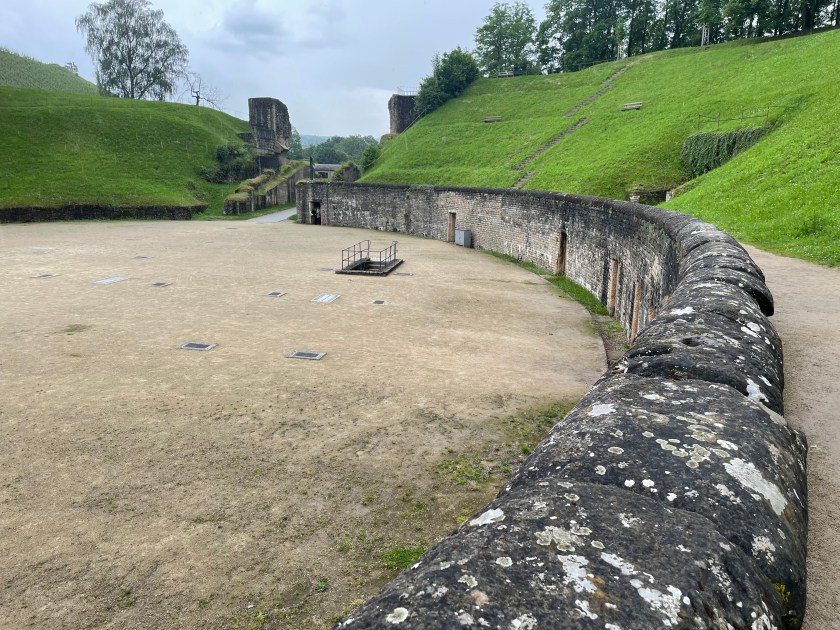
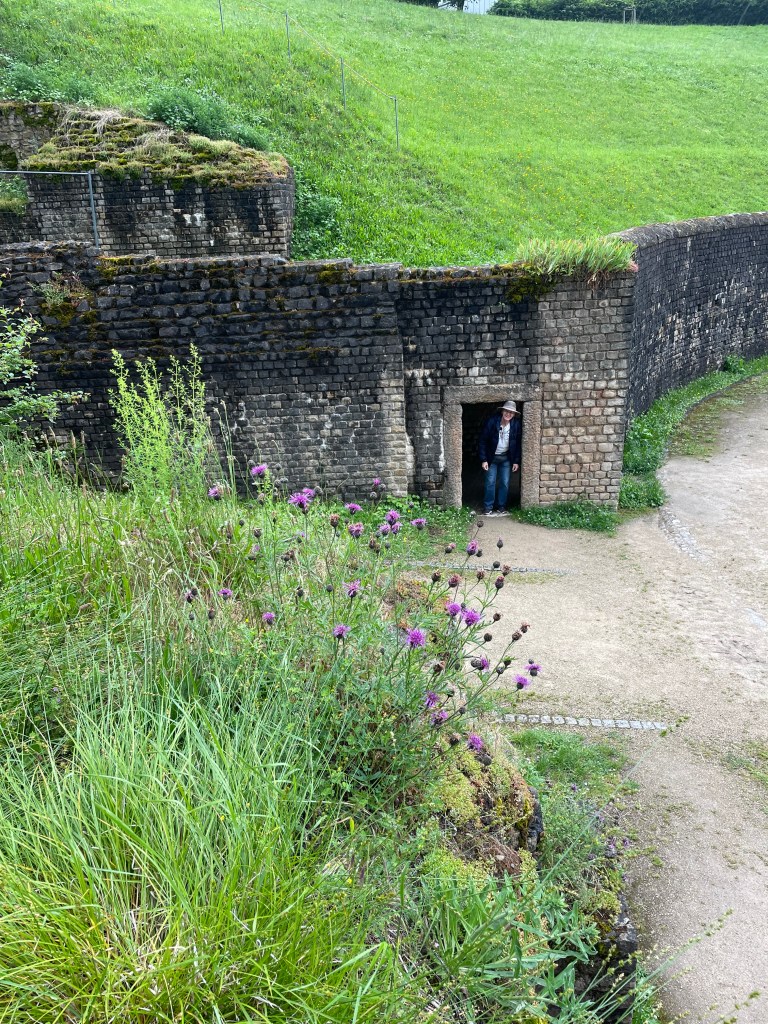
There are 15 cells or cages around the arena walls where animals or participants were kept.

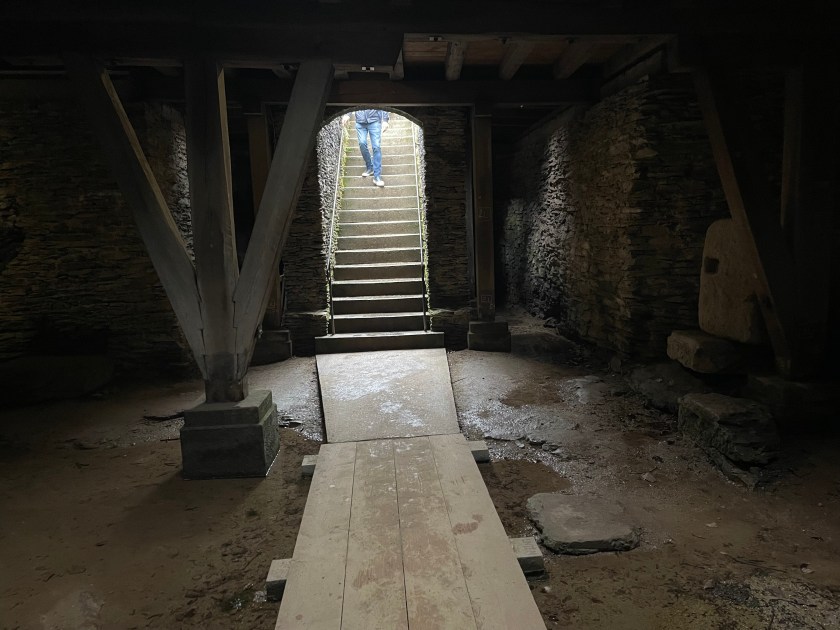
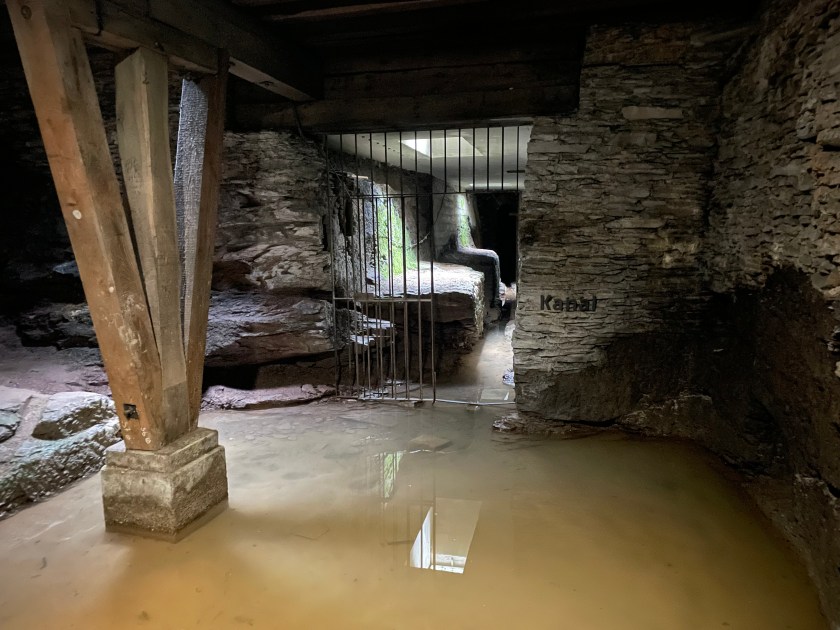
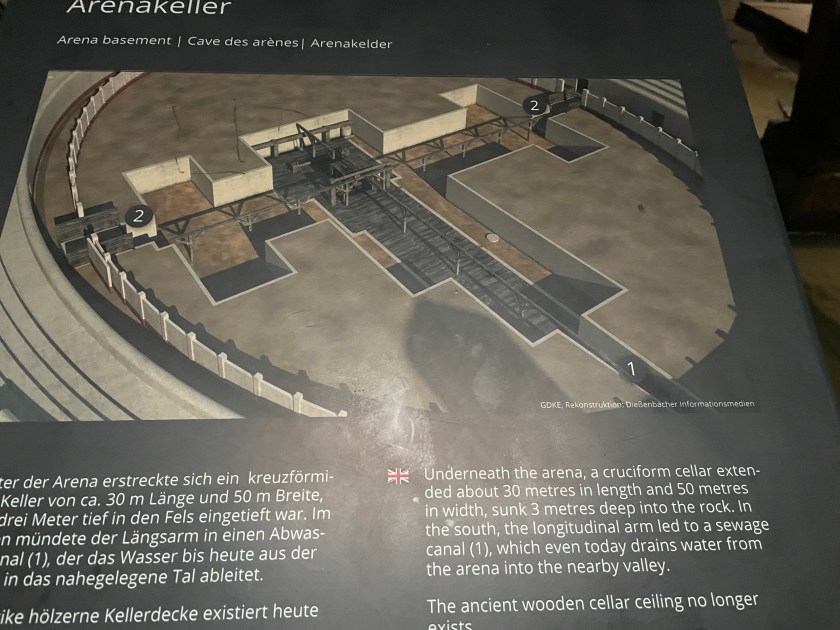
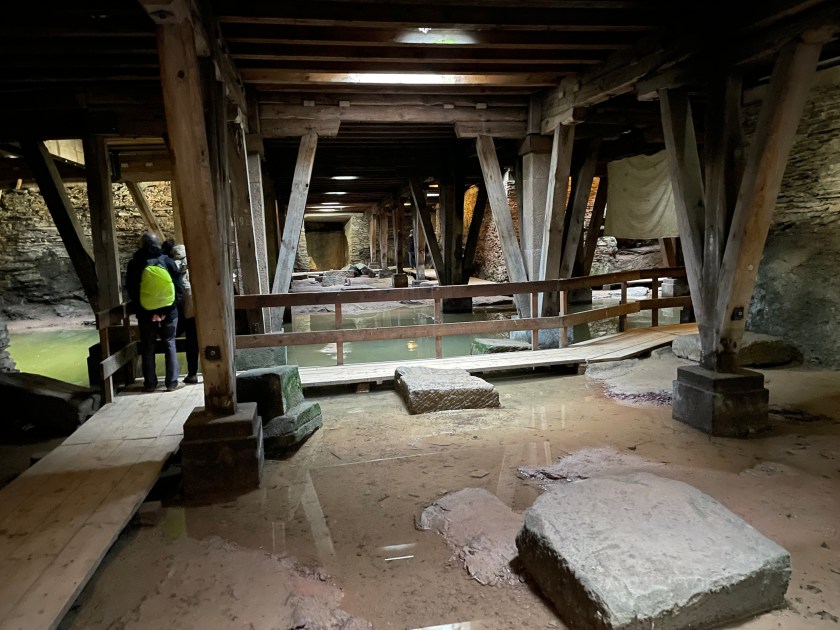
There are 2 places where steps lead down into the arena cellar (updated for tourists today).  There’s a wooden lift platform down here that was used during shows for changing scenery or sending animals up.  Because of the damp environment, the wooden remains have been preserved.  The wood dates back to 300 A. D.

There were also some early Christian finds down here dating from the 5th to the 7th centuries, including some prayer texts to gods of the underworld. The practice was to put binding spells and curse tablets made from lead in places where people had met a violent end.

The entrances or exits were called “vomitoriums” because they spewed people in and out of the arena, the main entrance leading back to the city center.

We headed back into the city on this drizzly day.