Arriving in Luxembourg

Why Luxembourg Is the Best Country in the World - Business ...

From Trier, we drove about 45 minutes to Luxembourg City in Luxembourg.  This little country is 51 miles long and 35 miles wide.  It’s nestled between Germany, France and Belgium.  Most people there speak French.  The population last year was about 683,000.

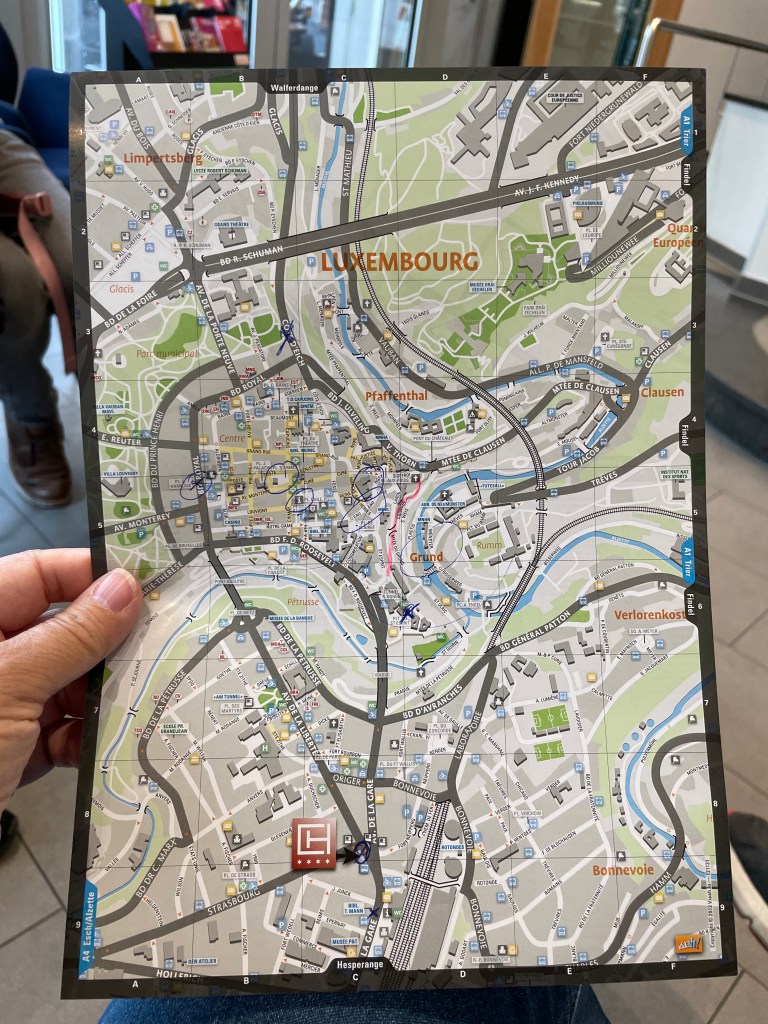
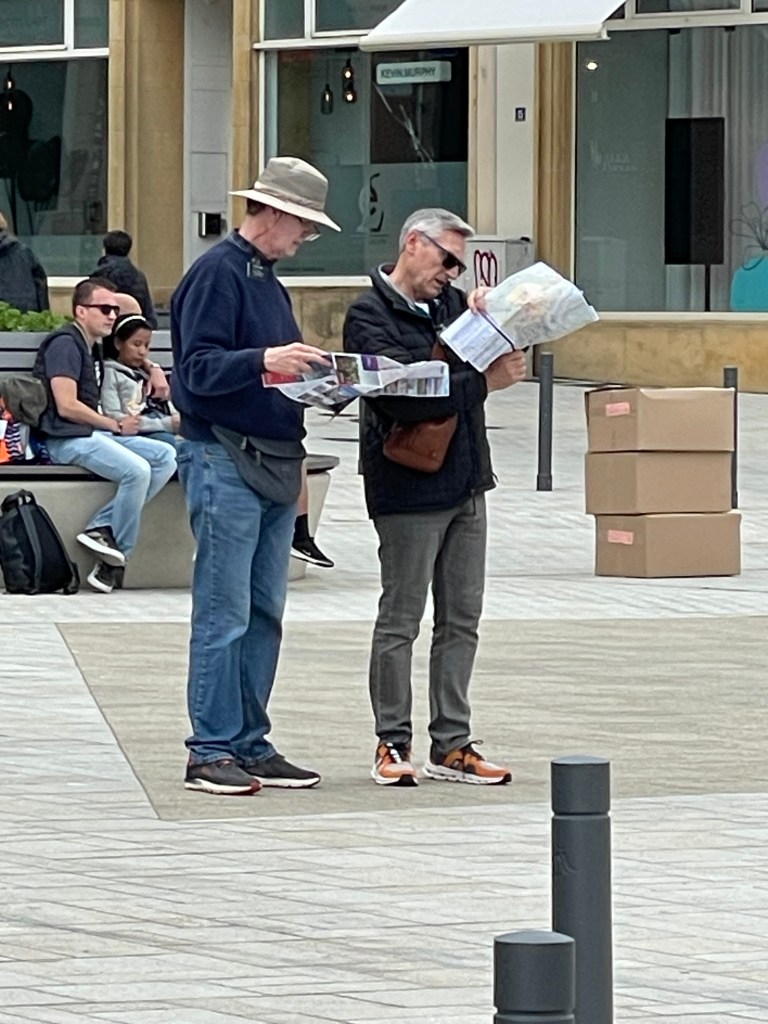
After settling into The City Hotel near the main train station, we were ready to go exploring.  We learned that all the public transportation here is free, fast and efficient.  So off we went with our little map.  The Old Town is the gray area in the map center.  That’s where we headed.
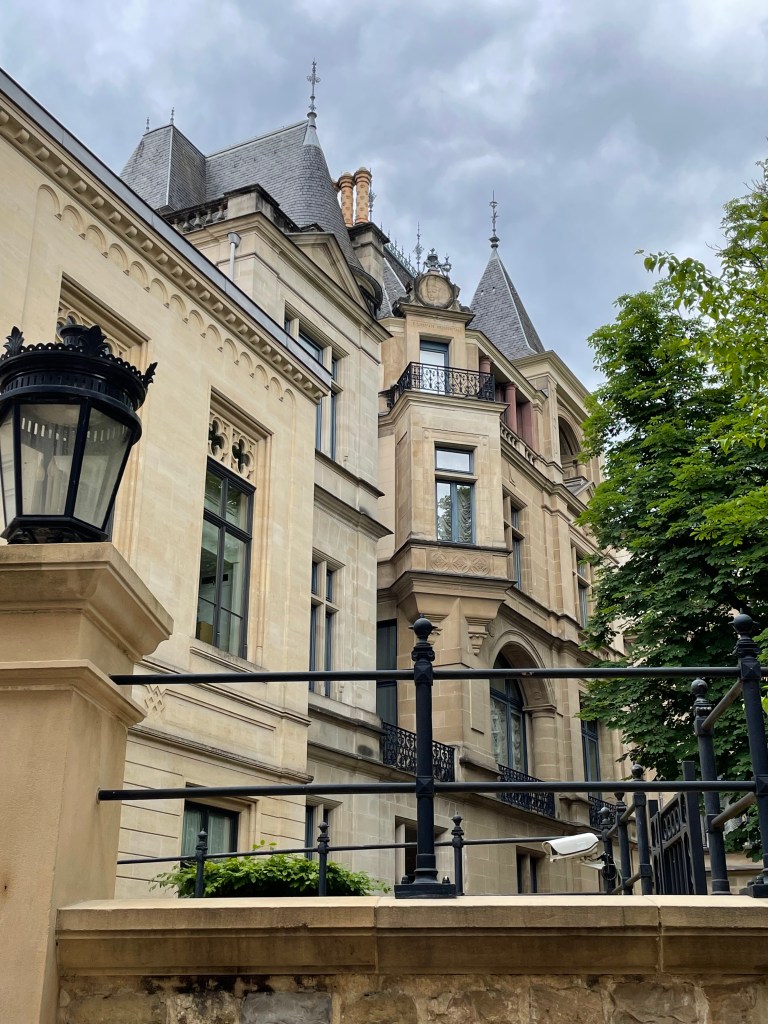
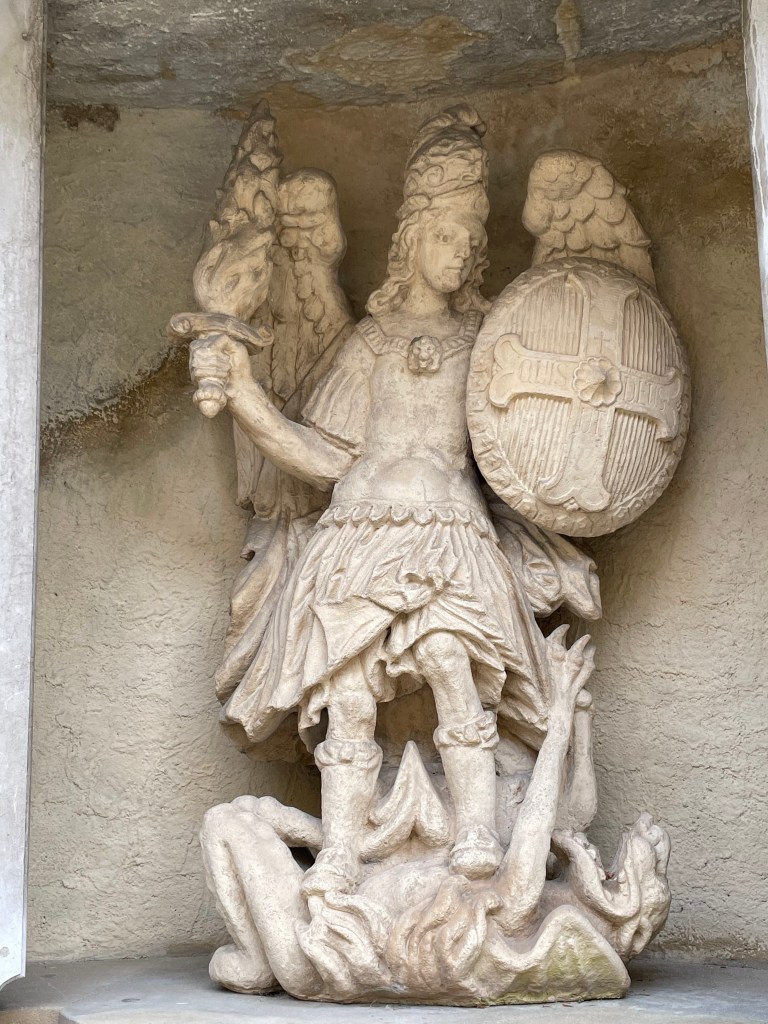
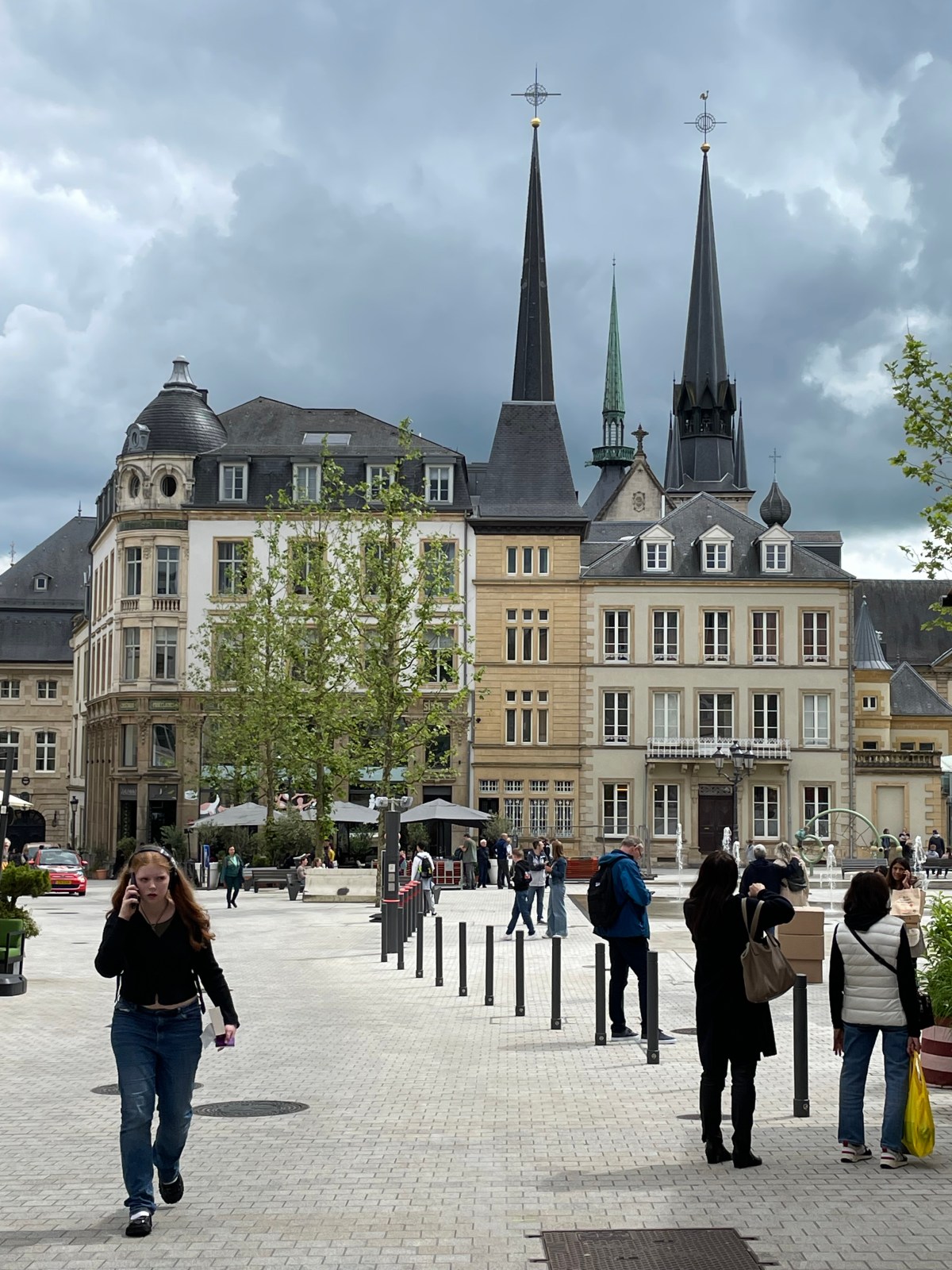
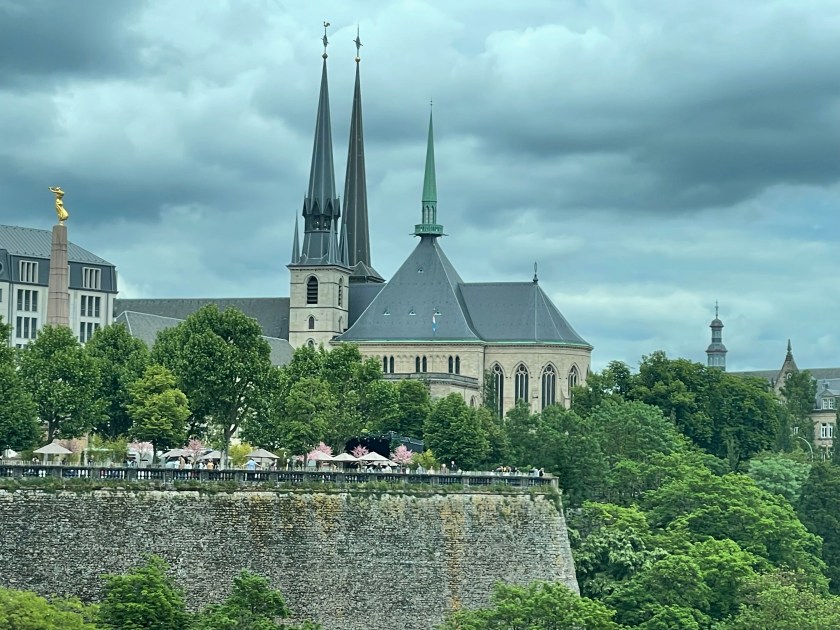
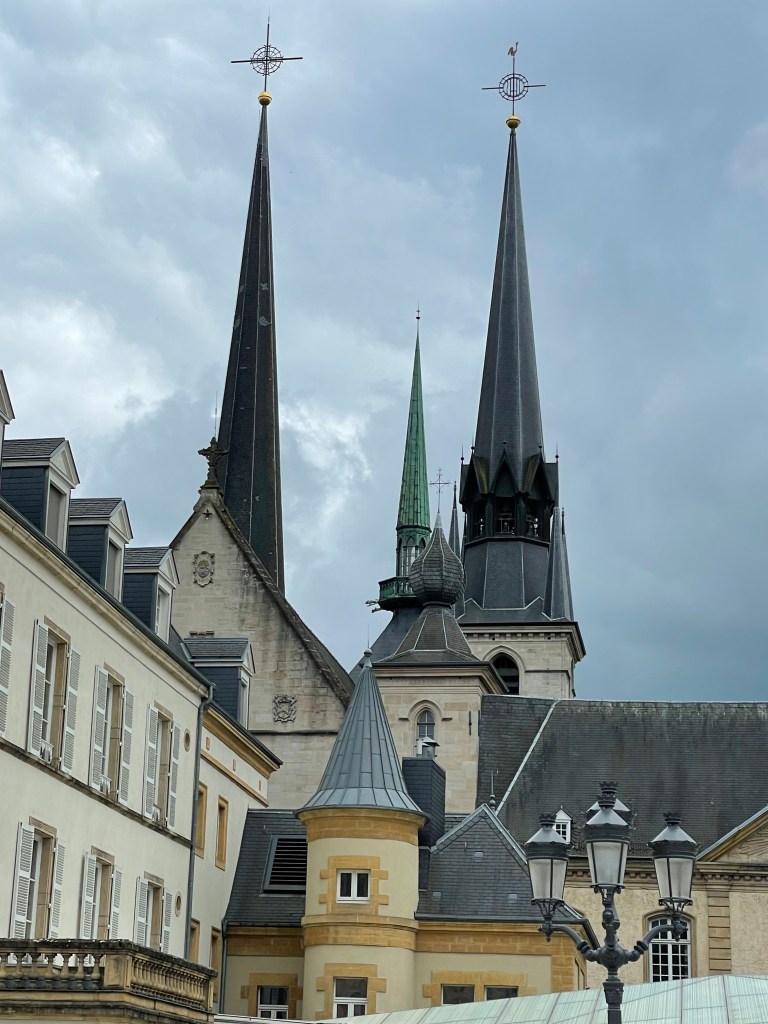
From the tram, this was one of our first views.  I thought we saw Angel Moroni on the left!
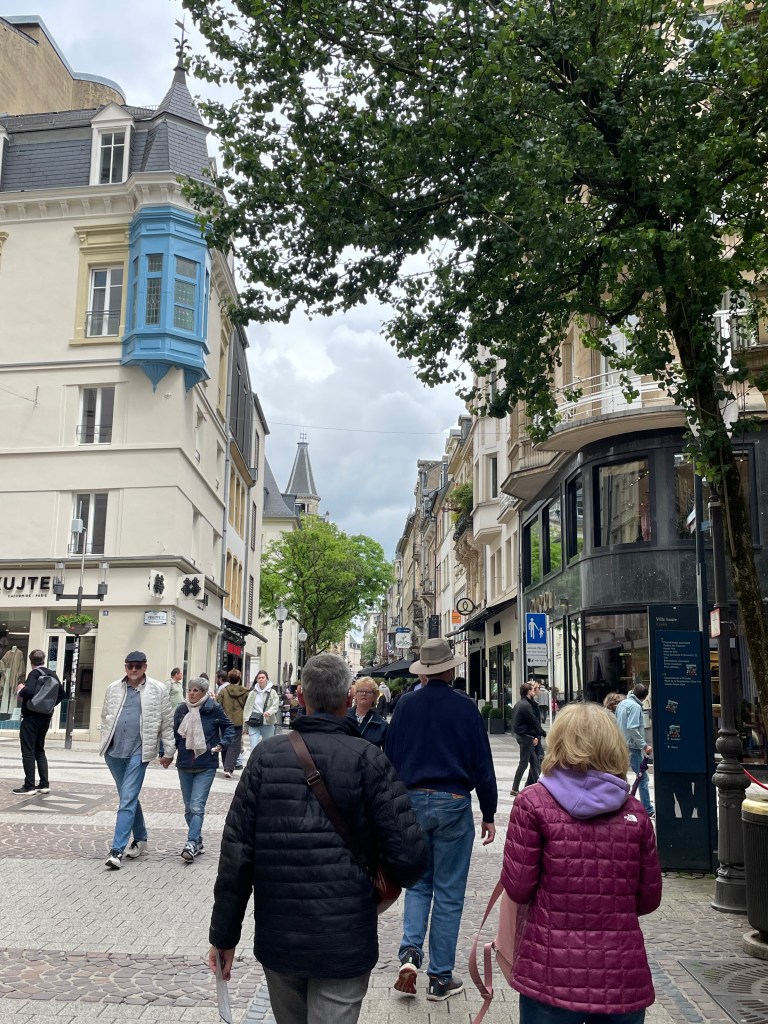
We walked into town, visited the tourist information office, then planned our own 2-hour walking tour.
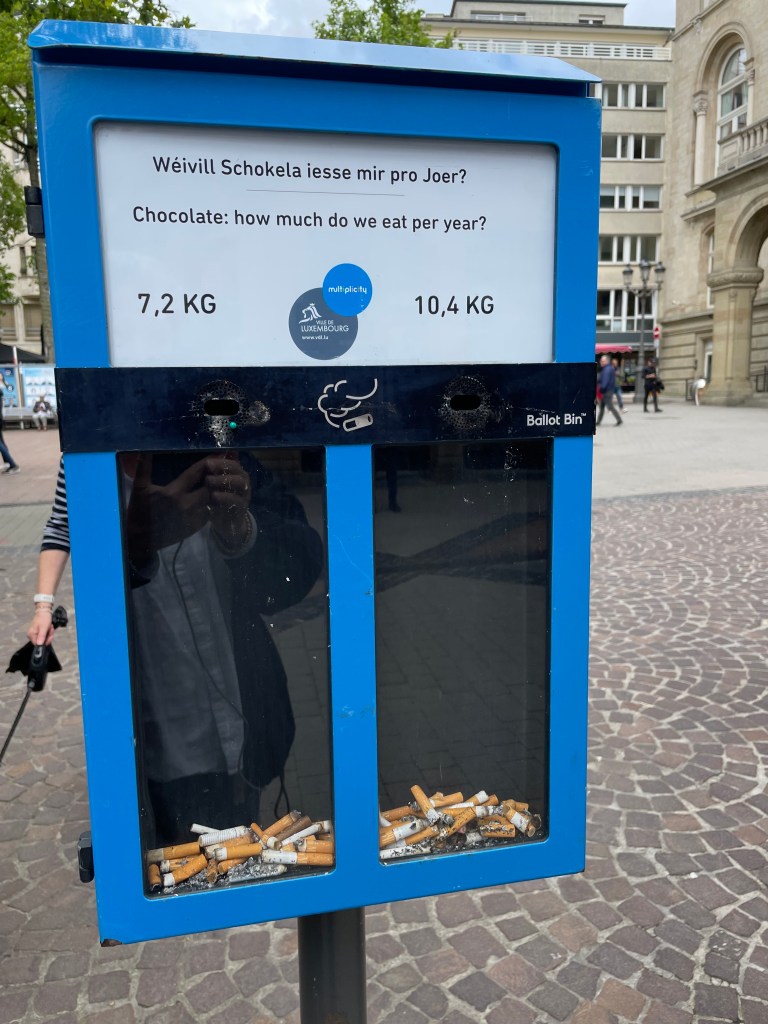
Here’s an interesting way of polling in the main plaza–cast your cigarette butts here:
Here’s Wilhelm II (Guillaume II) on a horse.

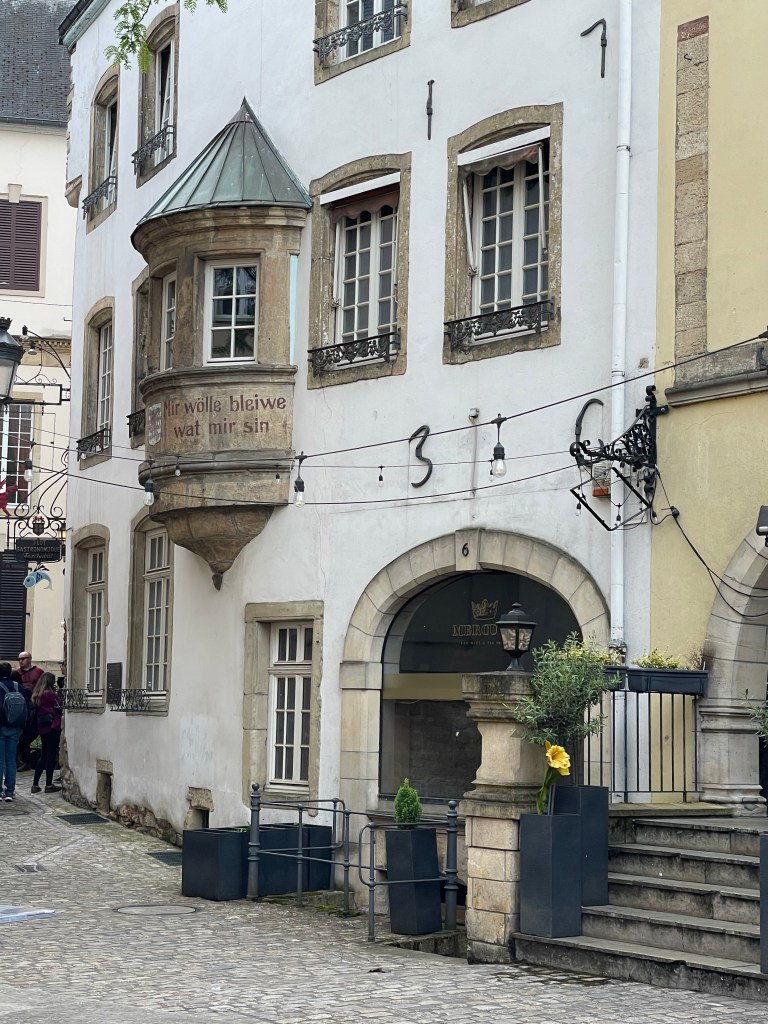
Everywhere we looked we saw something interesting.
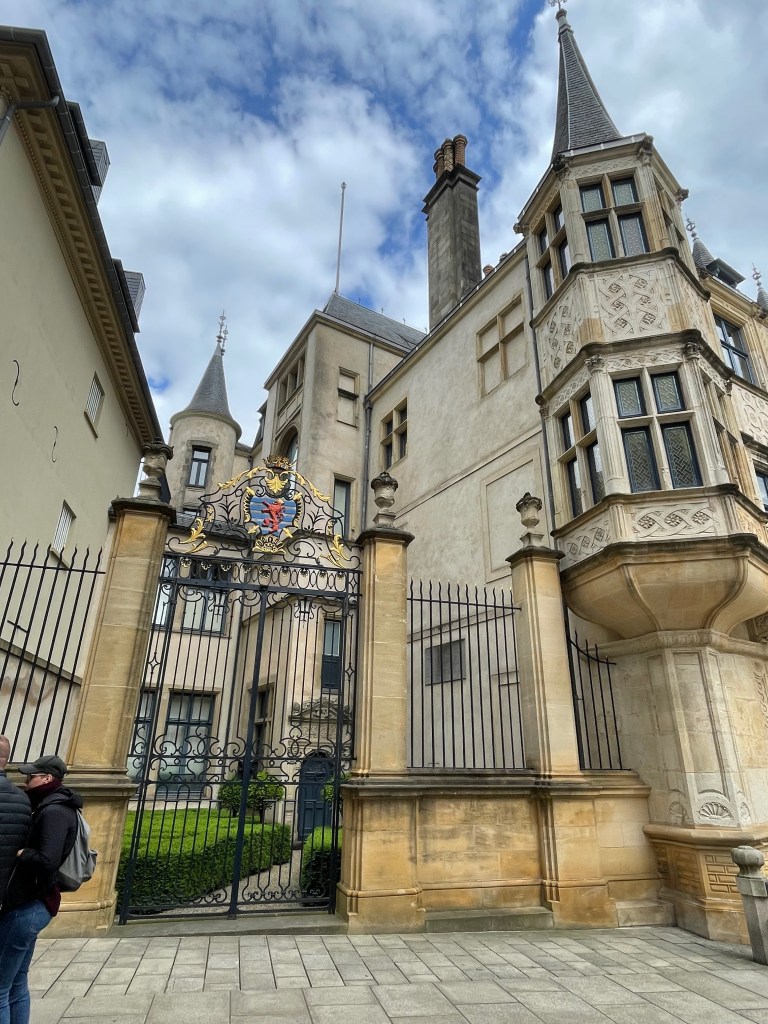
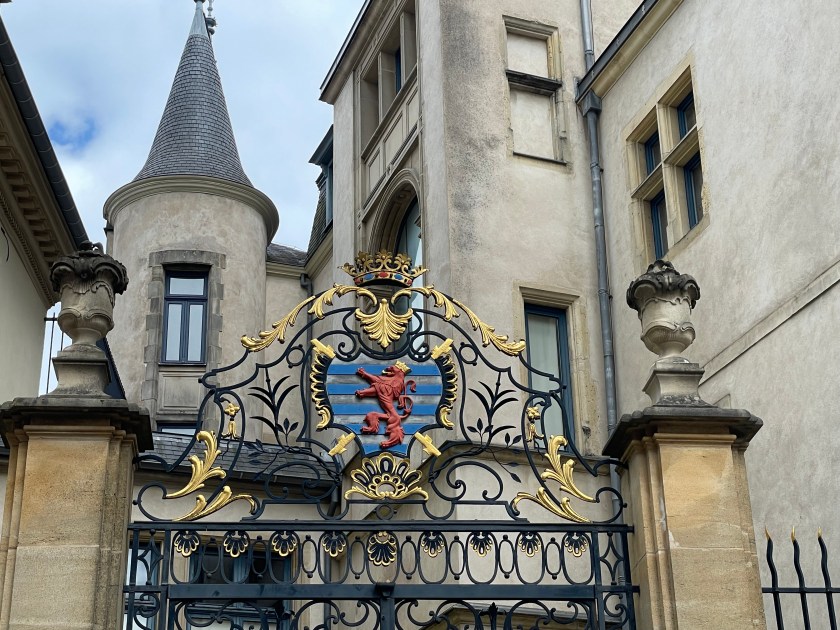
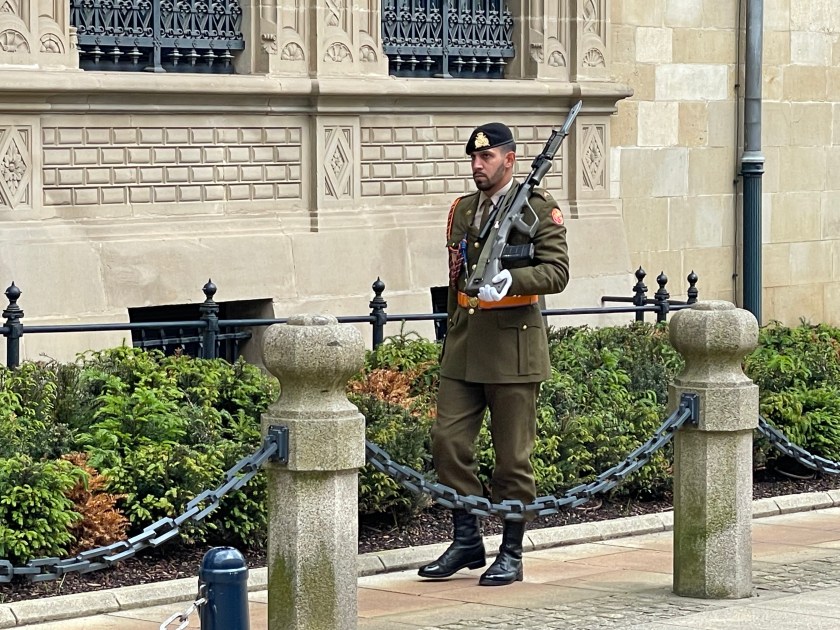
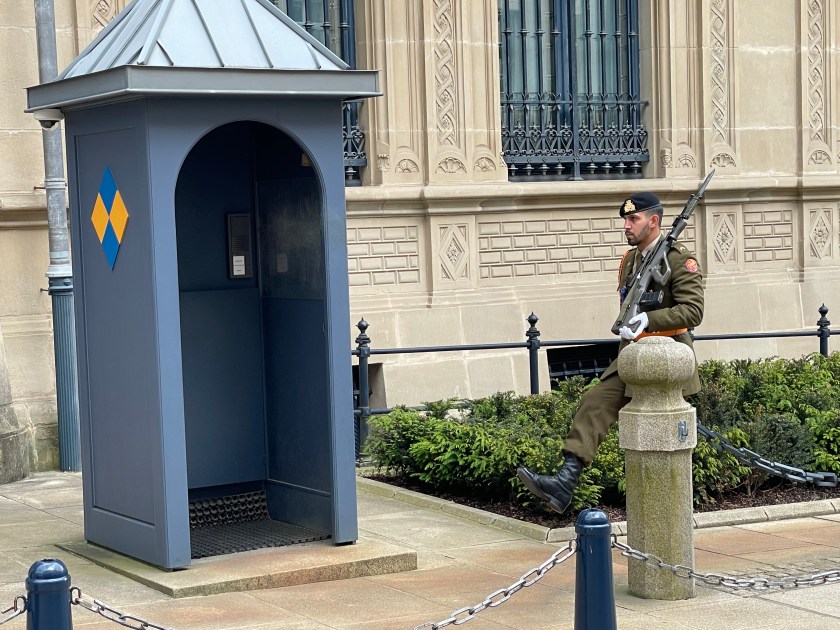
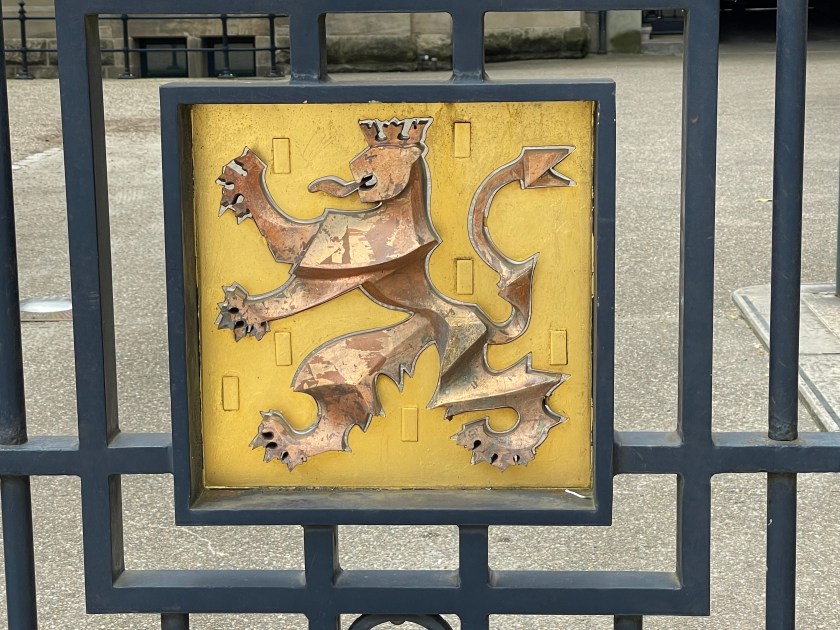
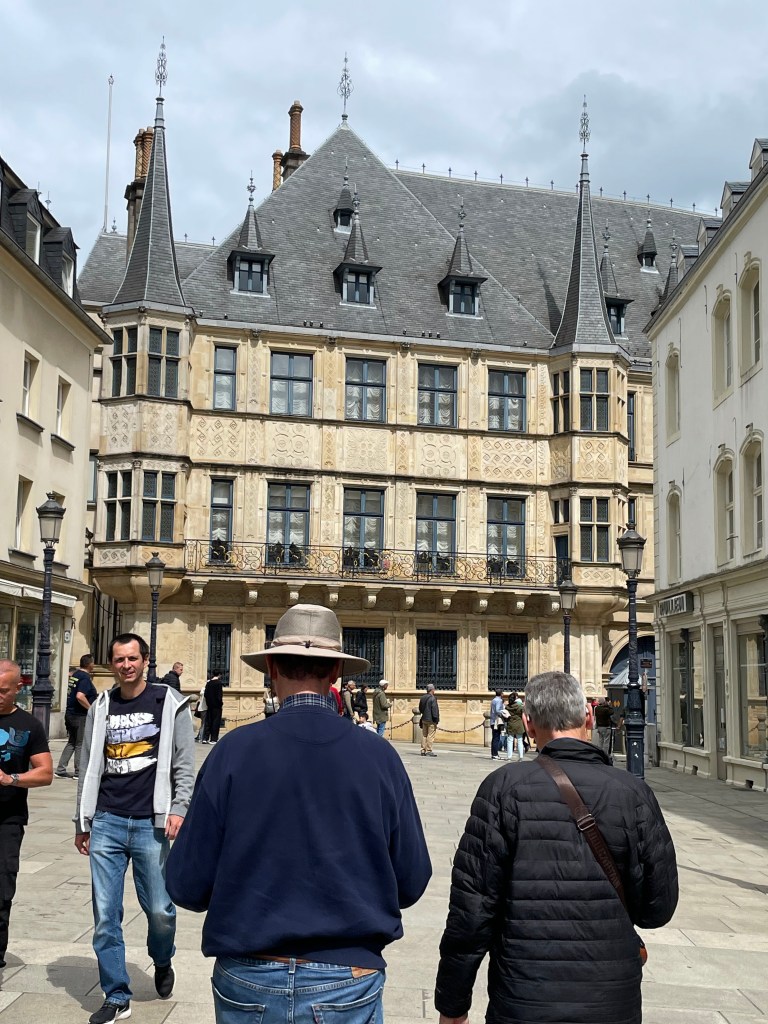
From the big plaza we went a block or two to see the Grand Palace of the Grand Duke and duchess of Luxembourg , Henri and Maria-Theresa.  A very formal, stiff guard marched back and forth in front of the door. Next to that was Parliament (Chamber of Deputies).
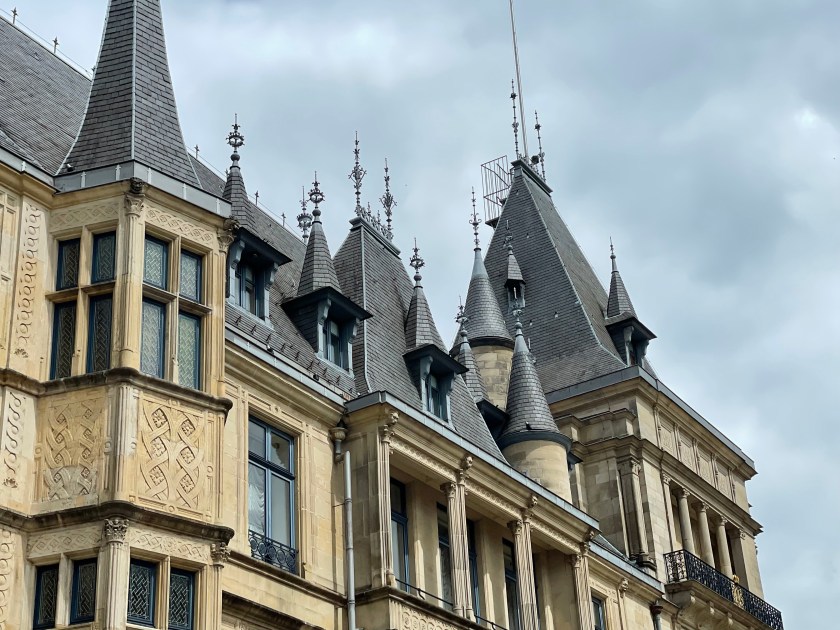
It was classic and impressive.
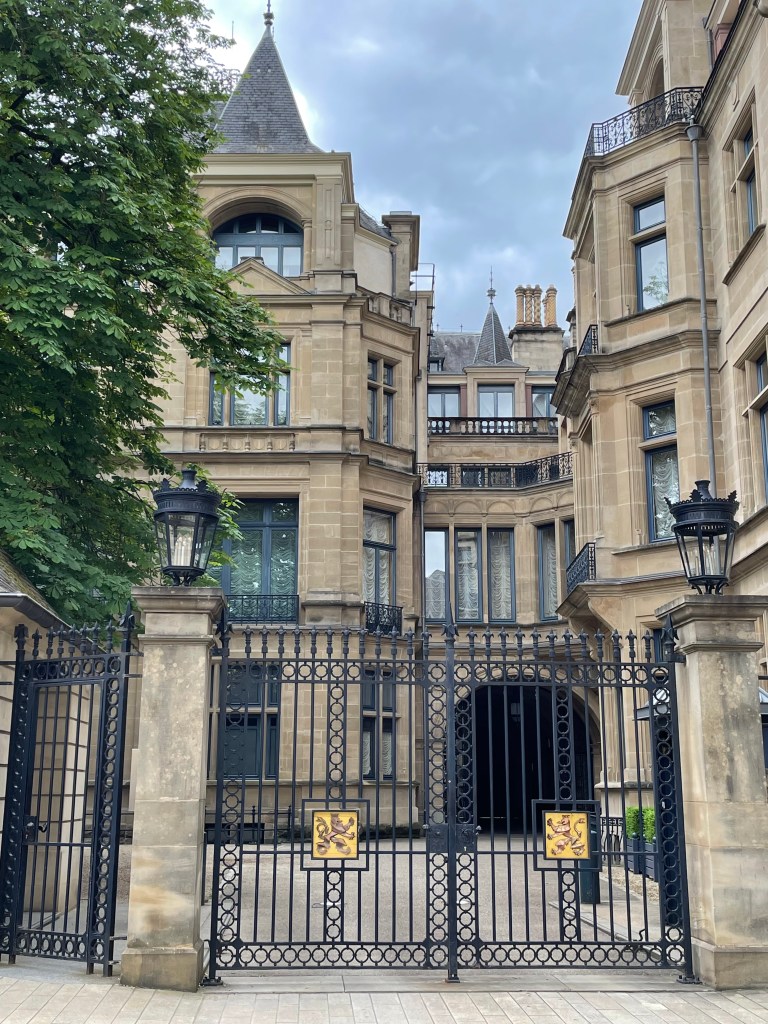
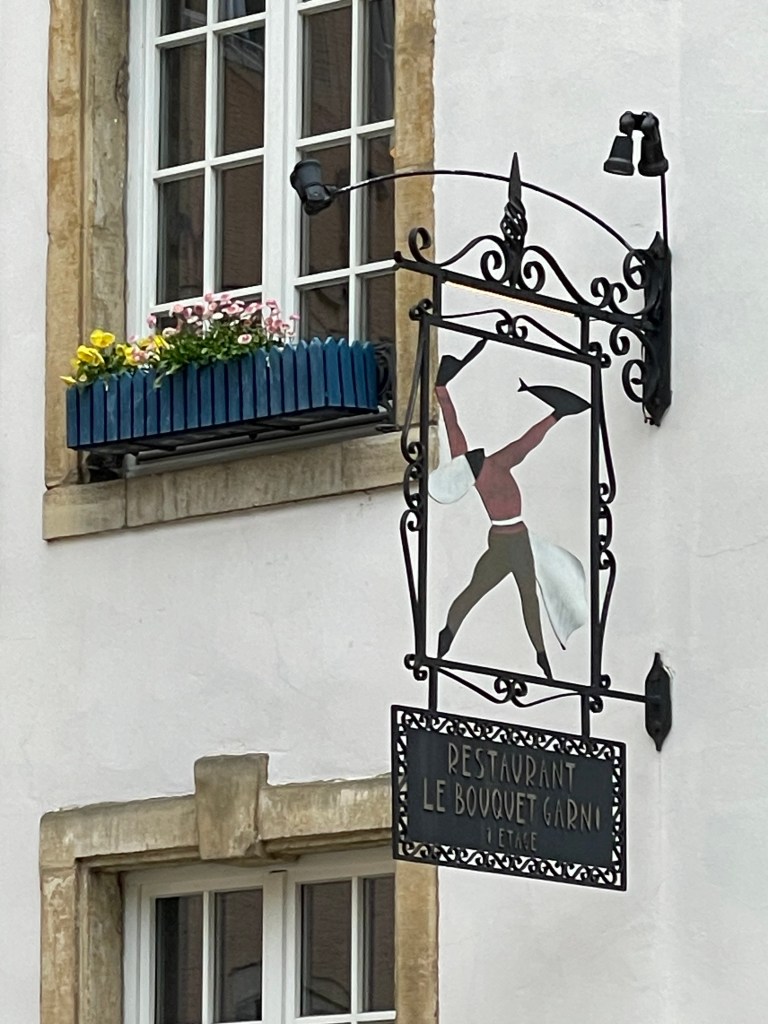
Here are some fun shop signs:

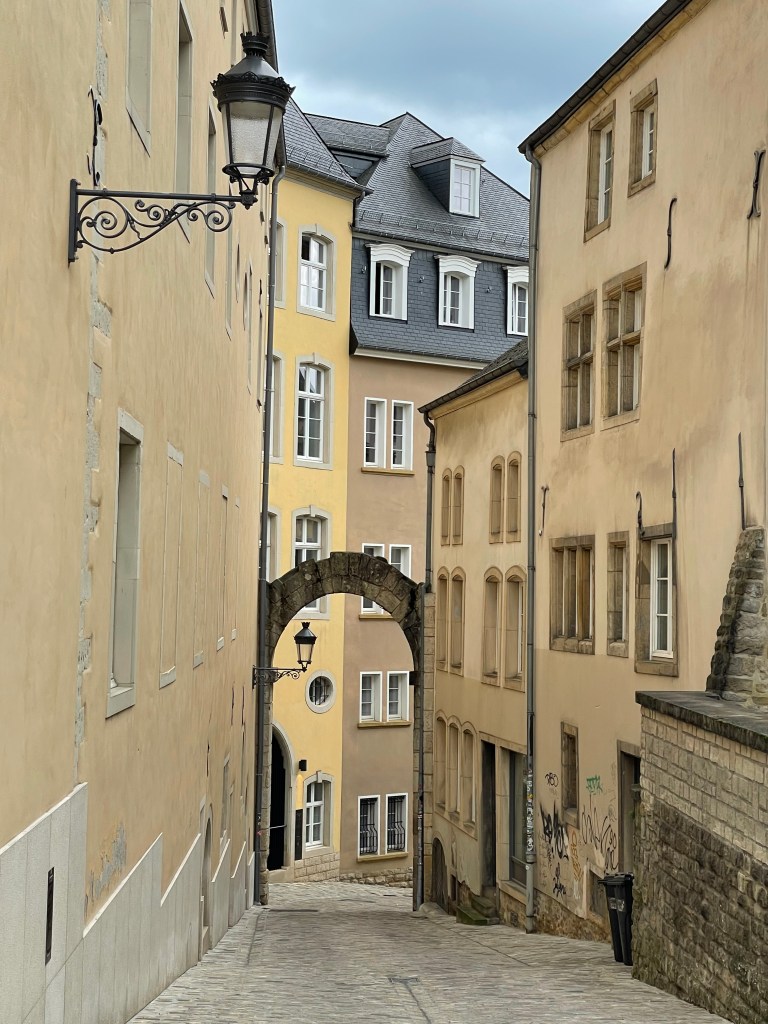
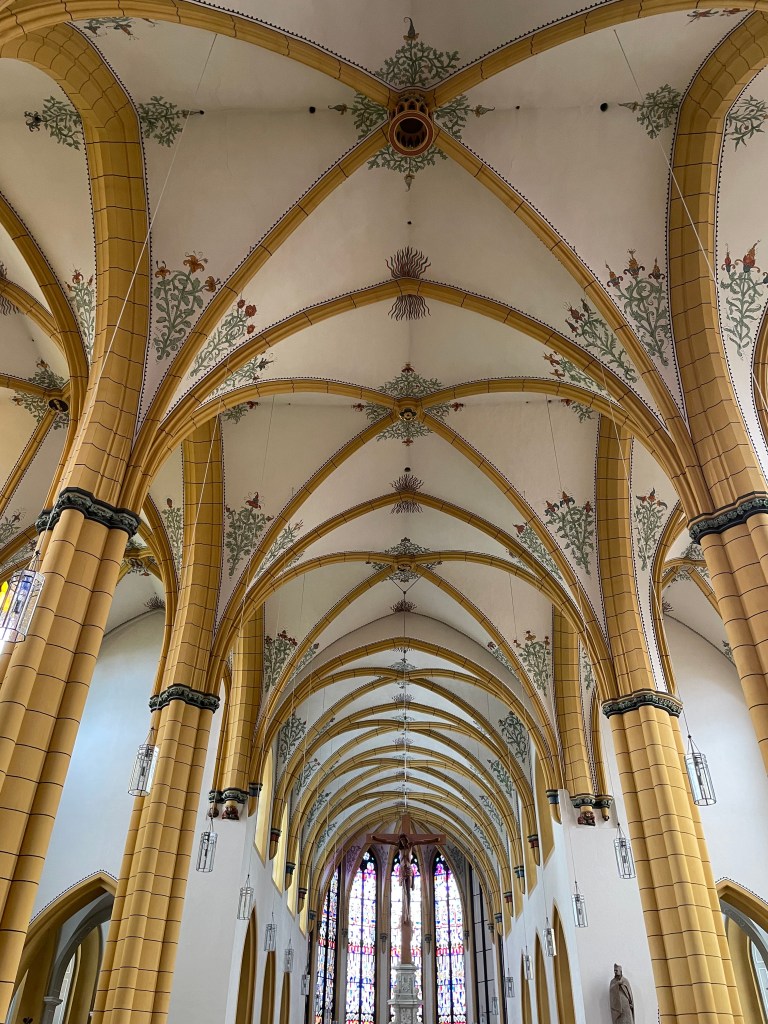
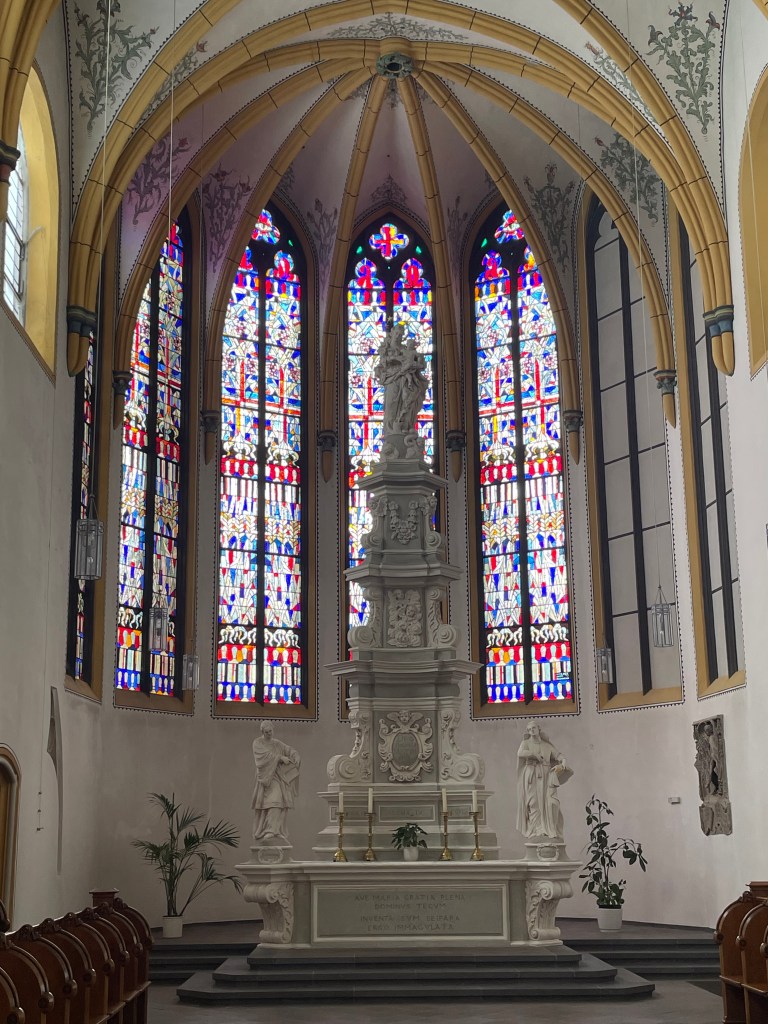
Then we wound our way down the streets, gradually moving downhill to the St. Michael’s, the oldest church in the city.
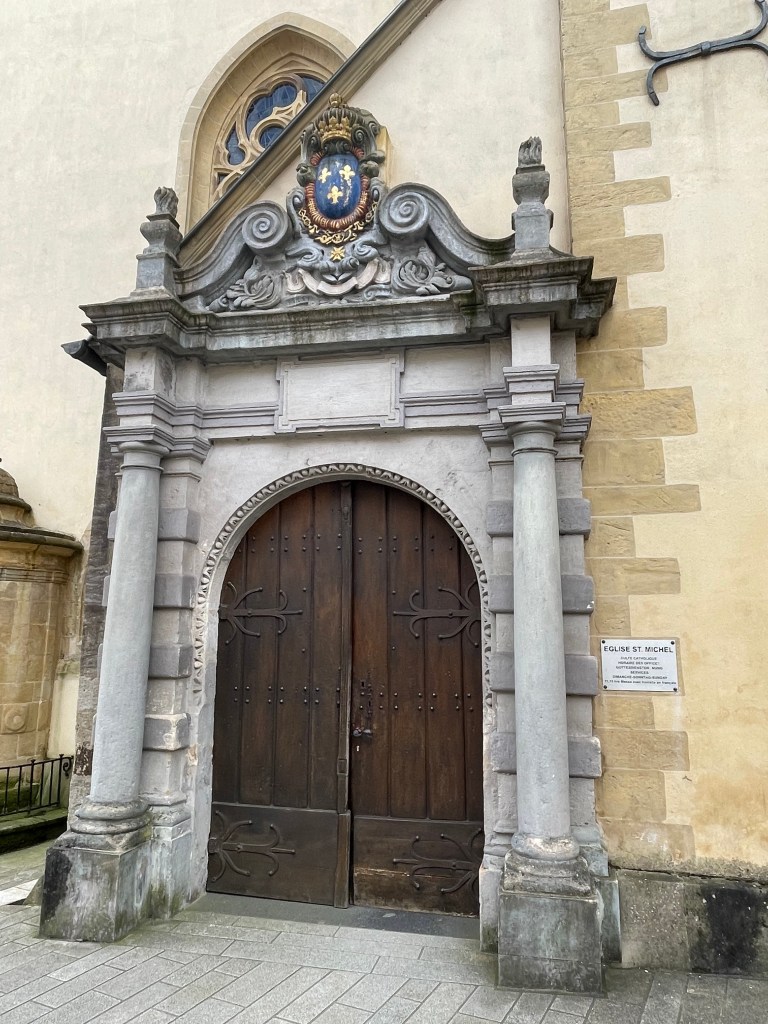
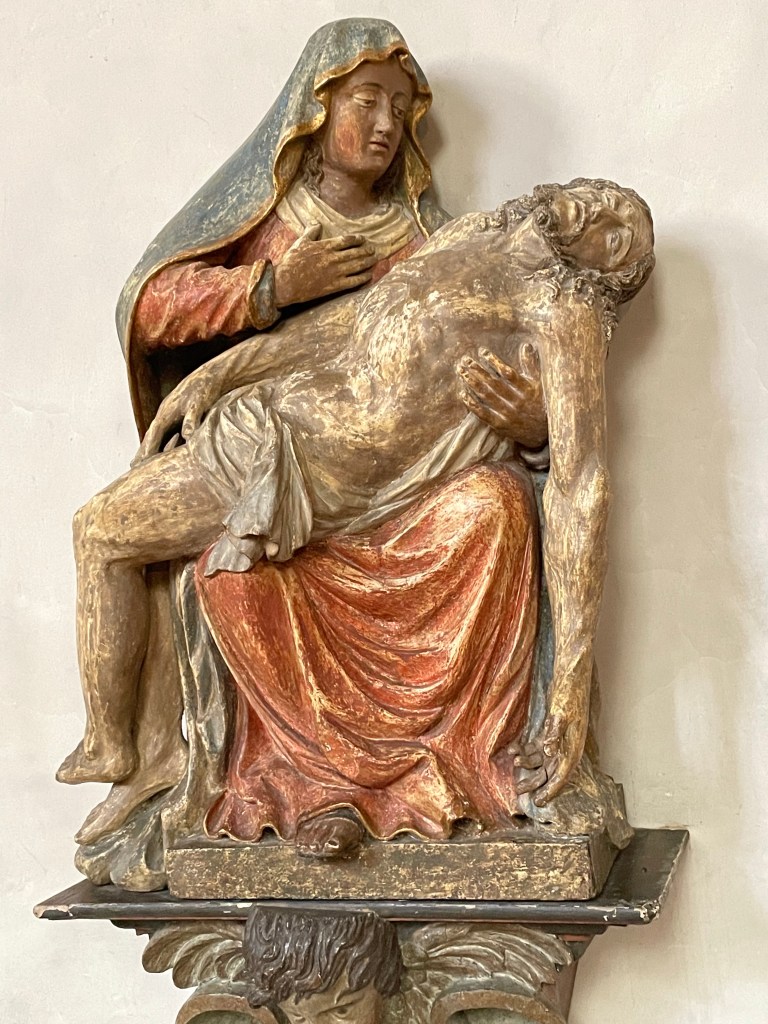
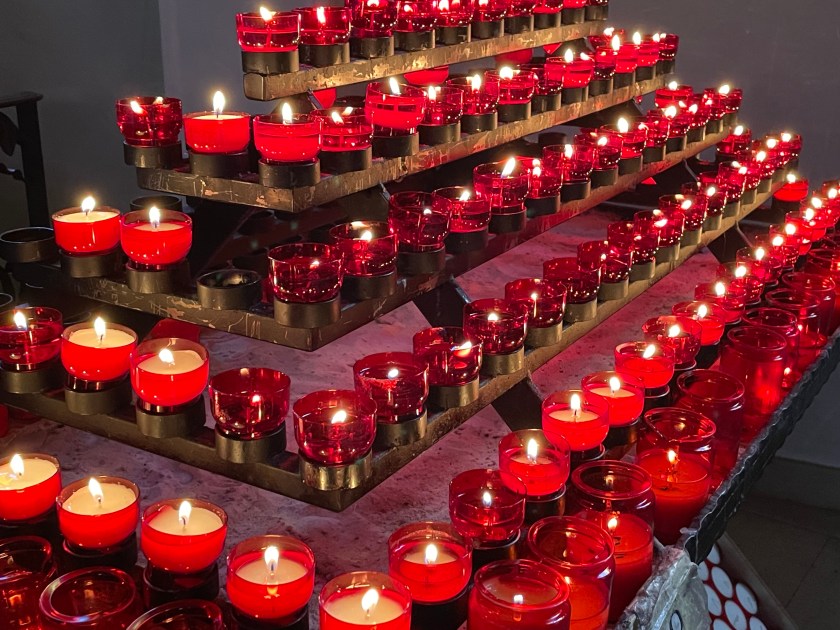
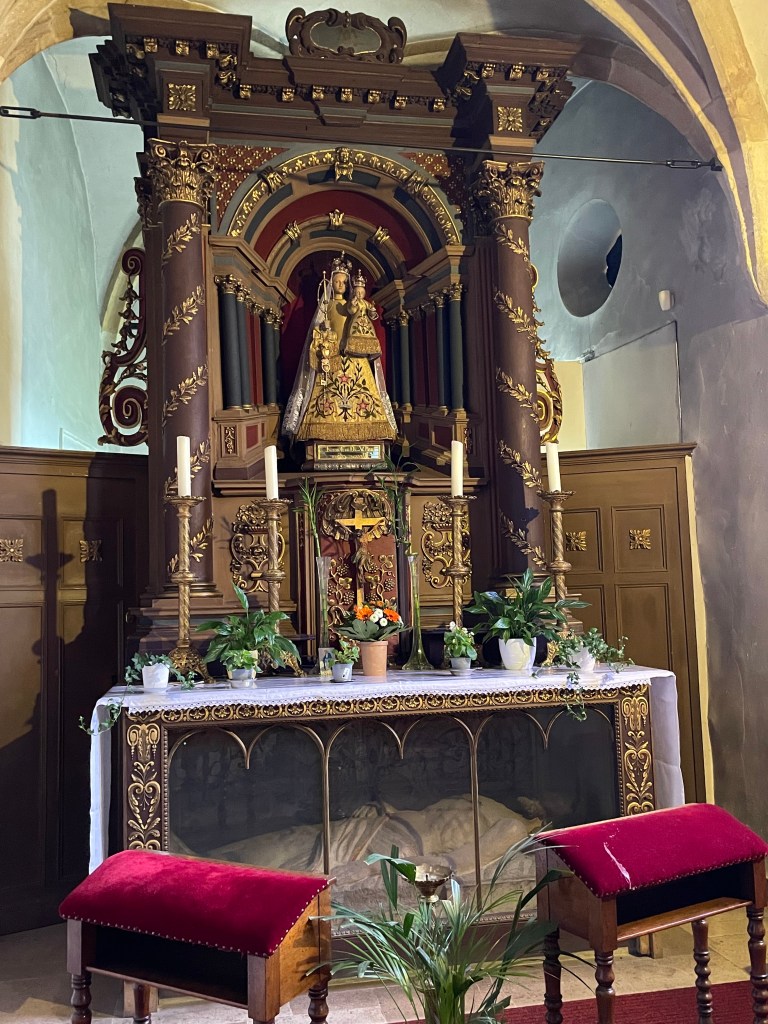
I always love a good sit in an old church.  Next to the old city fortification ruins.
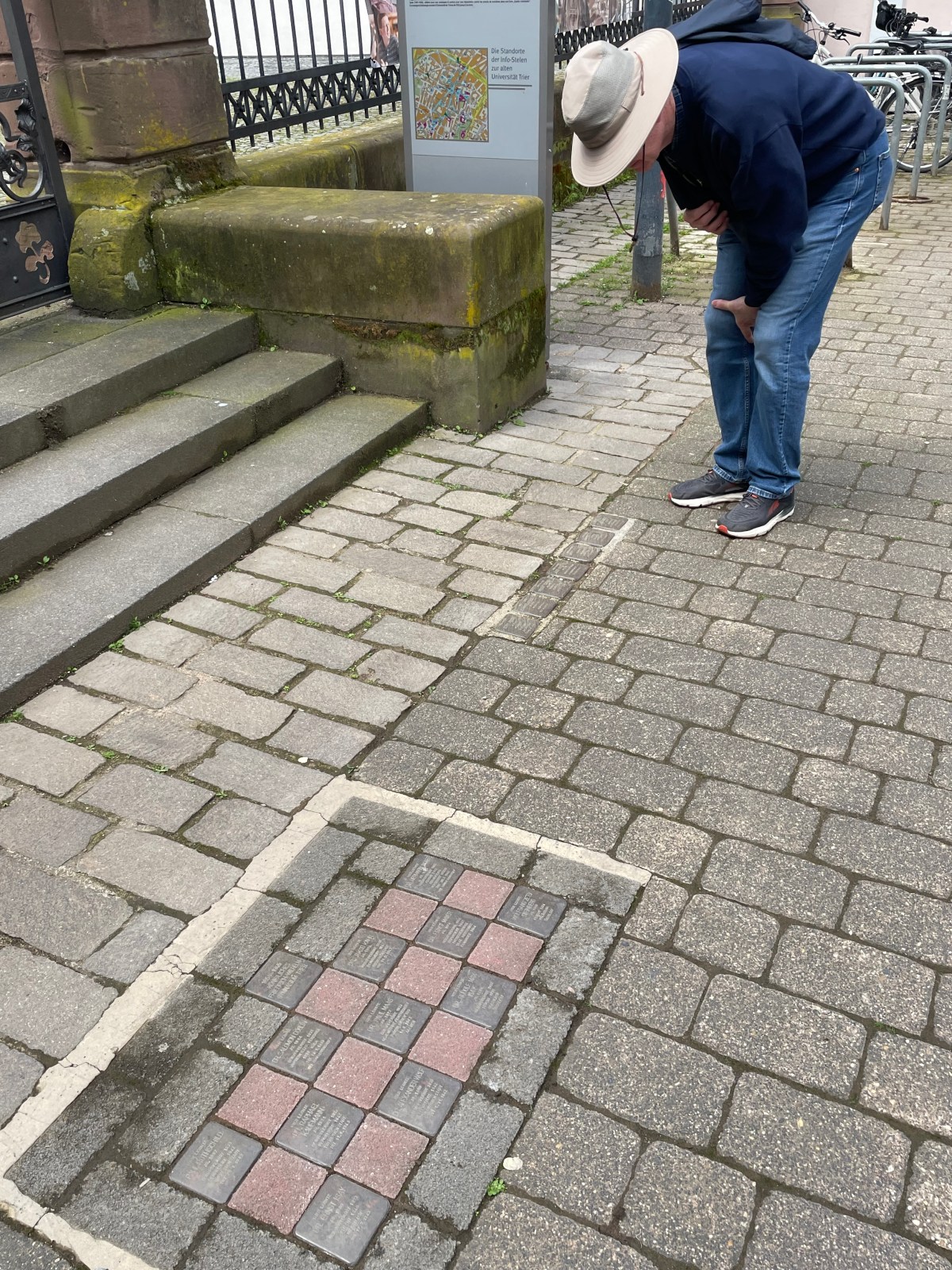
Stumbling Blocks in Trier

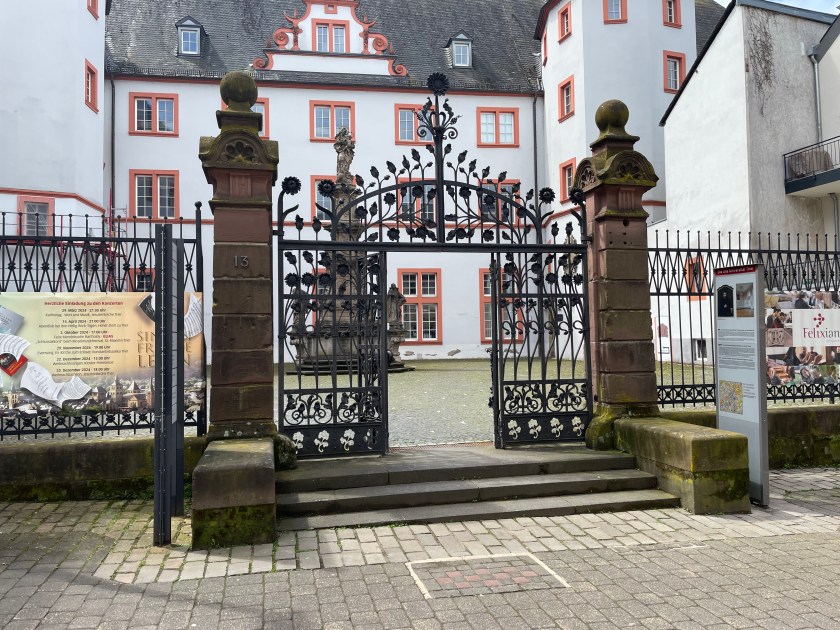
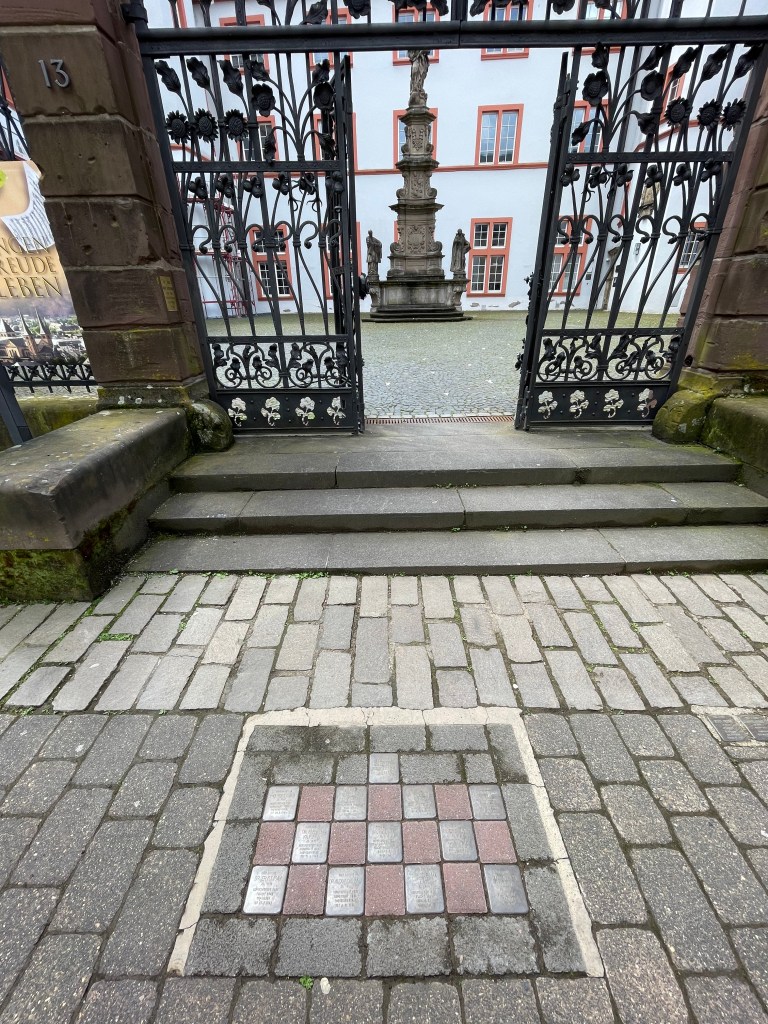
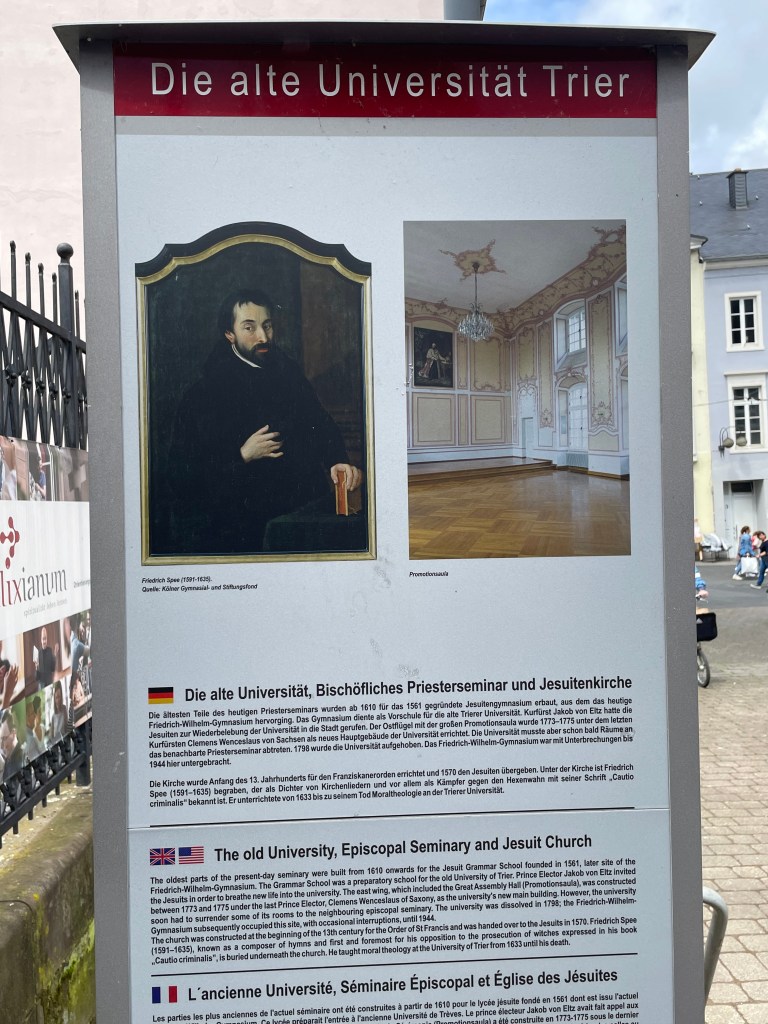
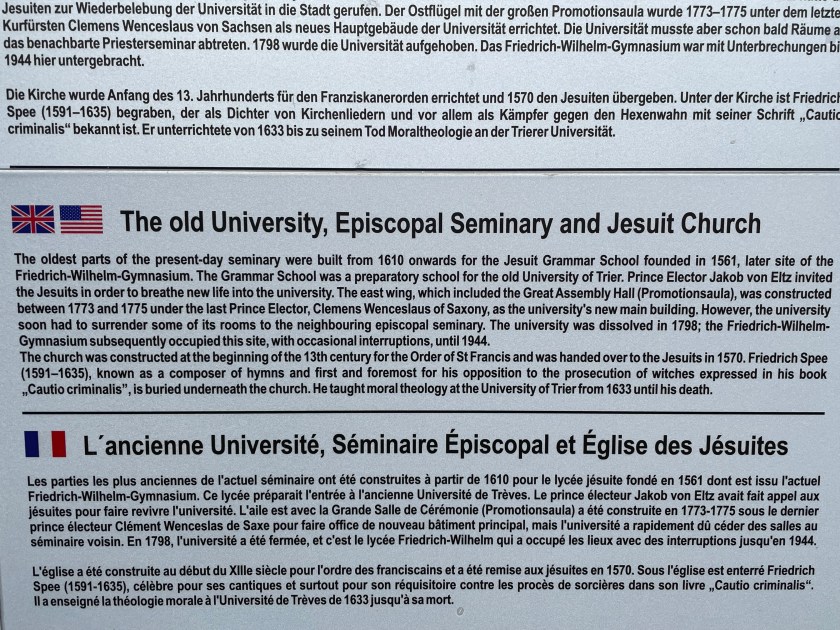
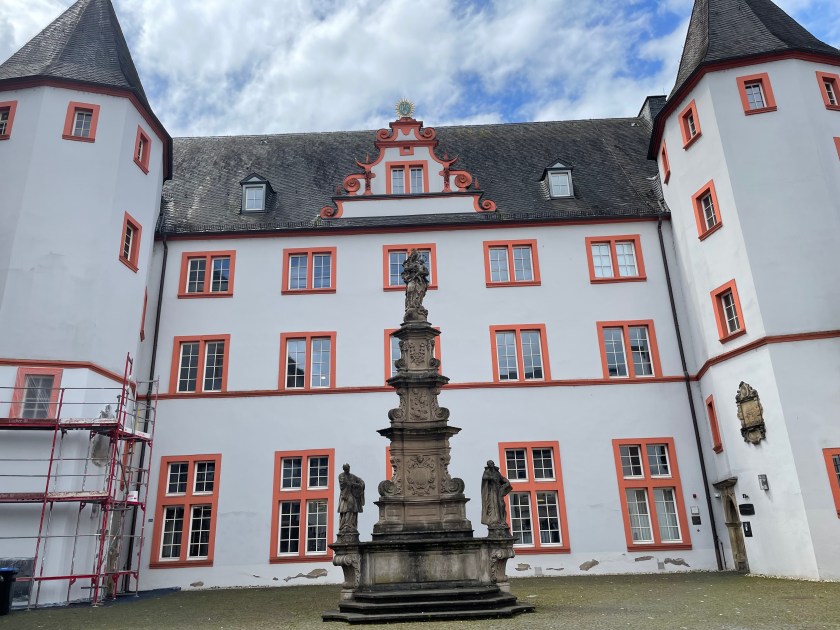
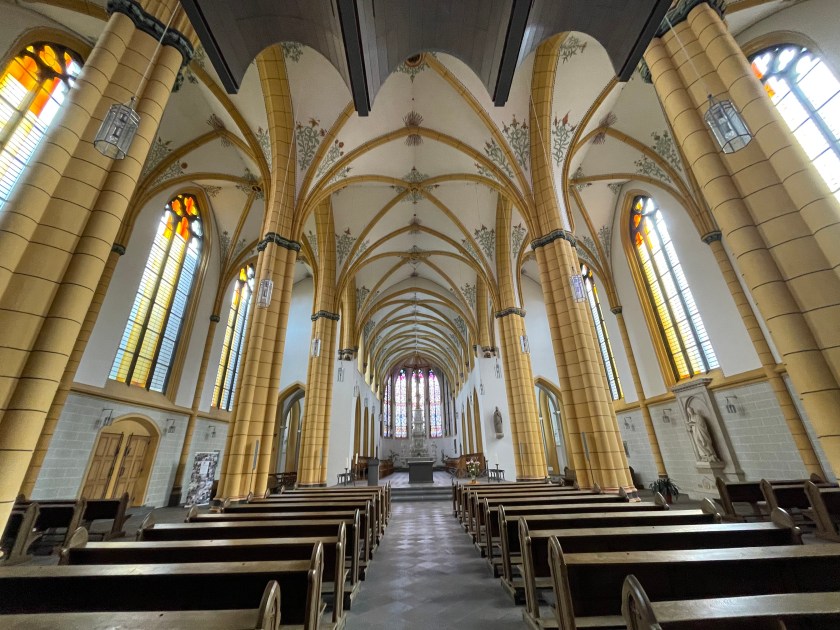
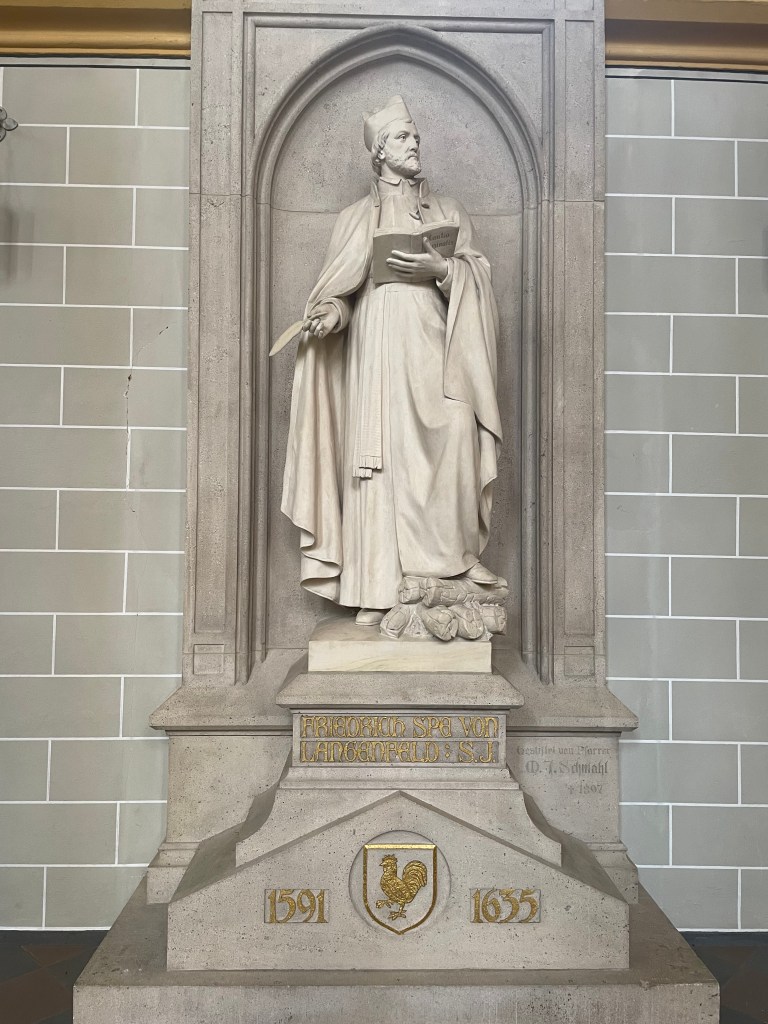
On our way back to our hotel, before leaving Trier, we walked past this old university, Episcopal Seminary and Jesuit Church.  It’s served many functions through the centuries.

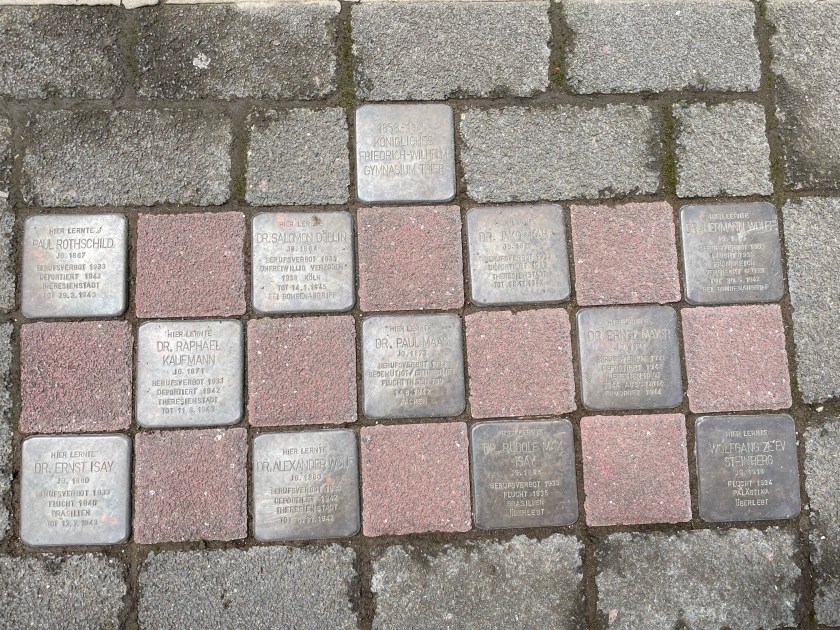
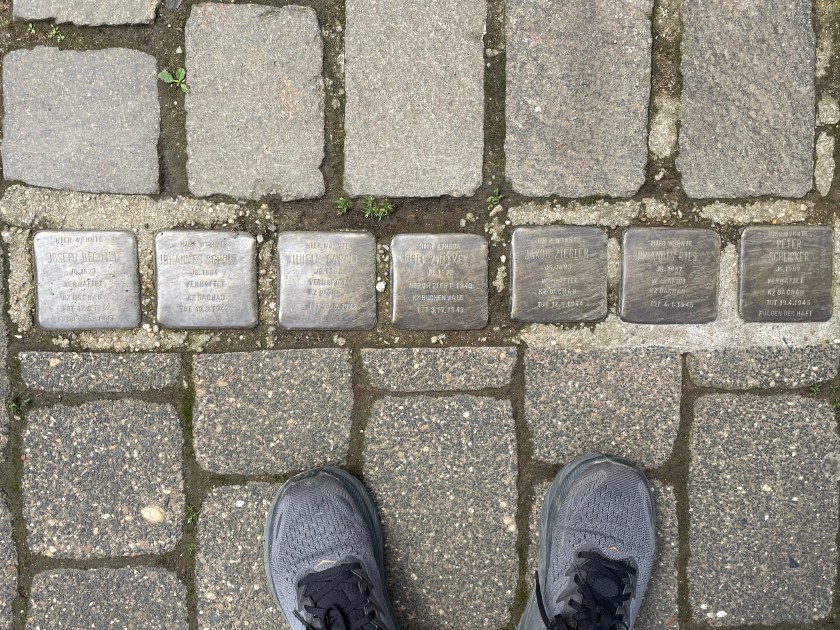
What caught our attention were the Stolpersteine, or stumbling stones in front of the gate.  These stones memorialize Jewish graduates who were banned from their professions and taken from here.  You can read about what happened to them here.  Most were killed.

STOLPERSTEIN / STUMBLING STONES for:
Dr. Alexander Wolf
Dr. Ernst Isay
Dr. Ernst Mayer
Dr. Hermann Wolff
Dr. Jakob Kahn
Dr. Paul Maas
Dr. Raphael Kaufmann
Dr. Rudolf Max Isay
Dr. Salomon Döblin
Wolfgang Ze’ev Steinberg
Paul Rothschild

These other 7 Stolpersteine are memorials to 7 martyred priests who were killed for opposing Hitler’s regime.  They taught in this school.

Joseph Bechtel
Wilhelm Caroli
Johannes Ries
Peter Schlicker
Johannes Schulz
Jakob Anton Ziegler
Josef Zilliken

2000th Anniversary Art Piece and the Jesuit Church in Trier

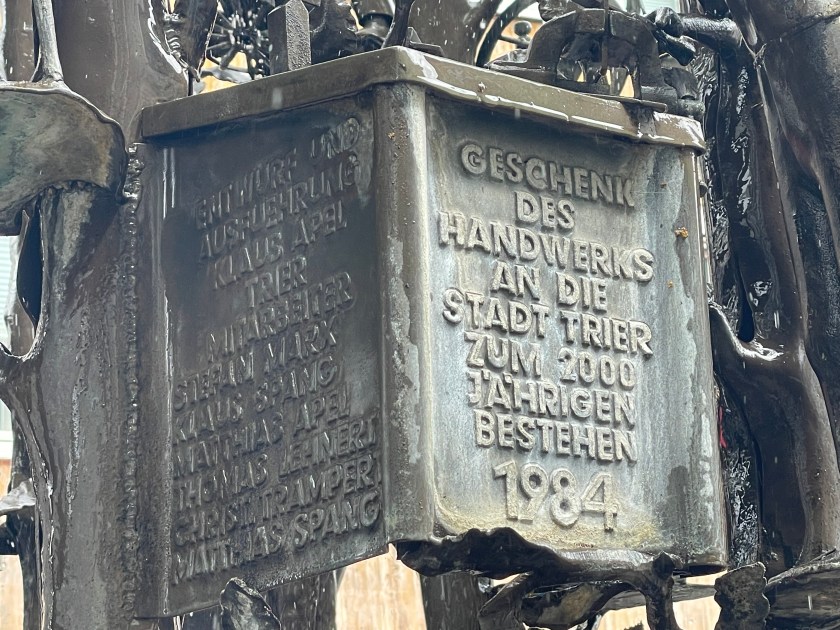
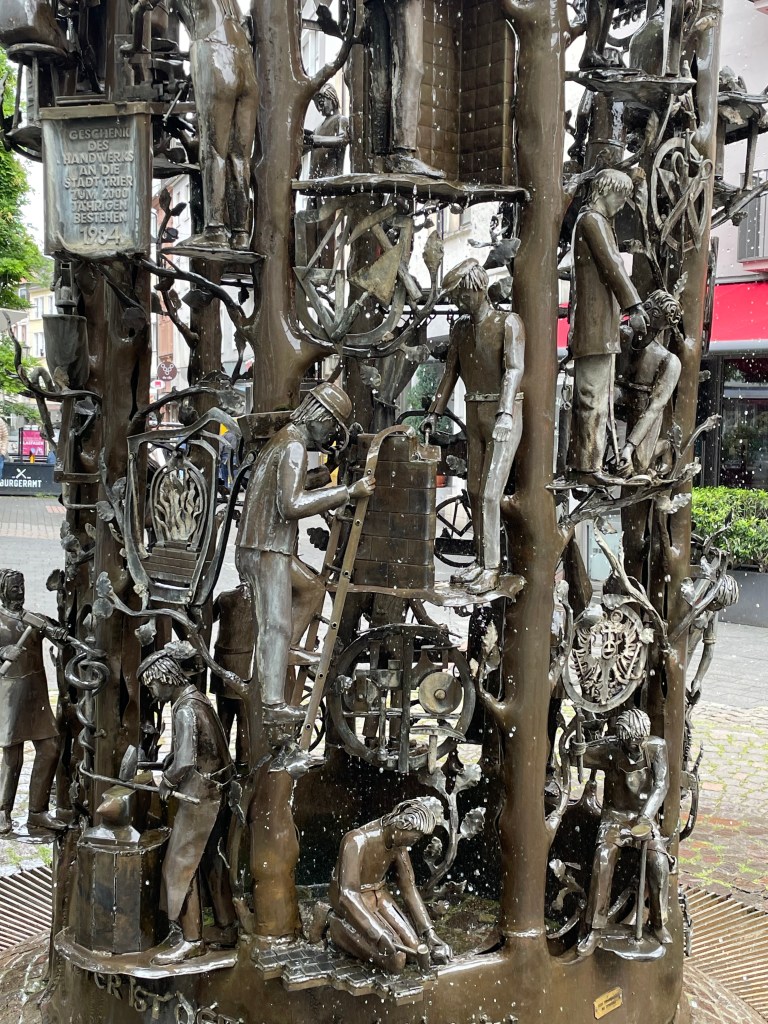
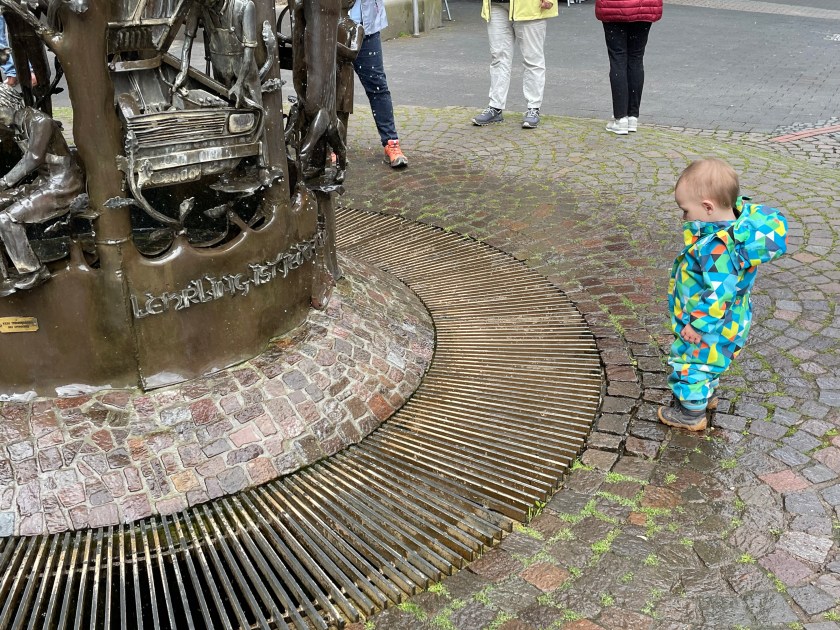
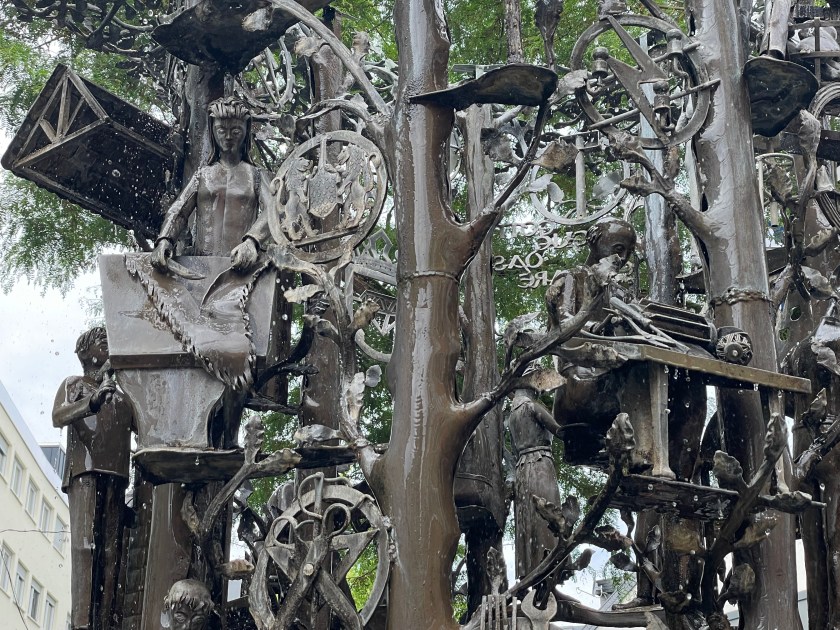
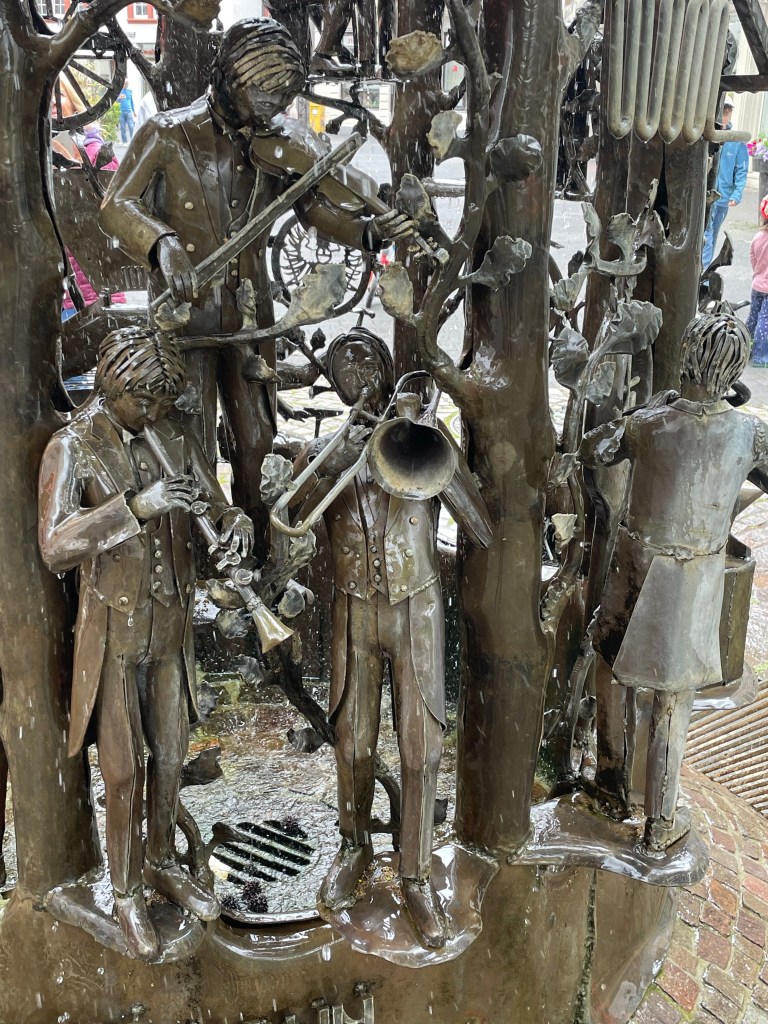
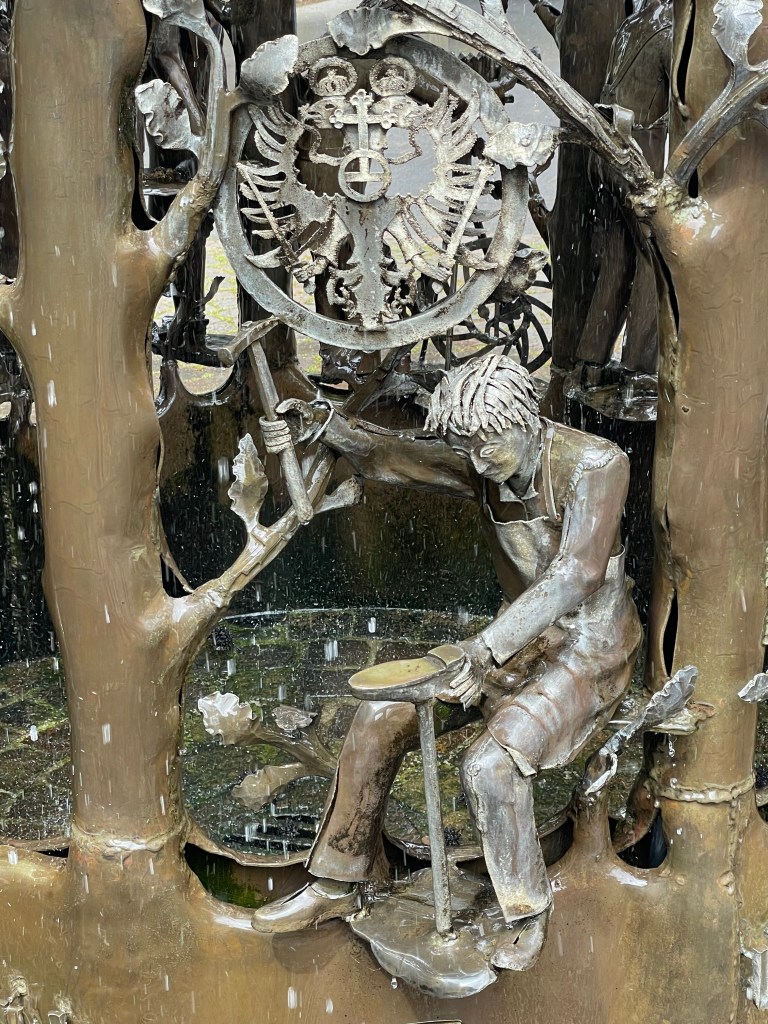
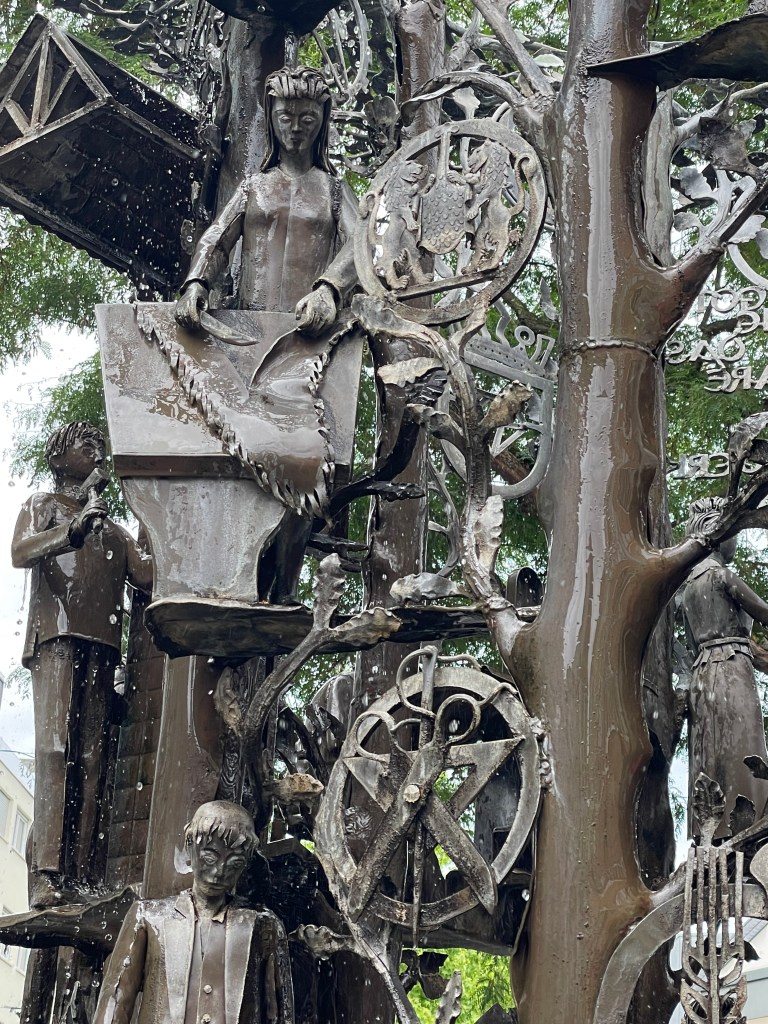
This very interesting piece of sculpture was presented to the city of Trier in 1984 in celebration of its 2000th anniversary.  It represents the handworkers and city laborers.  We looked at it for a long time, smiling at the detail.

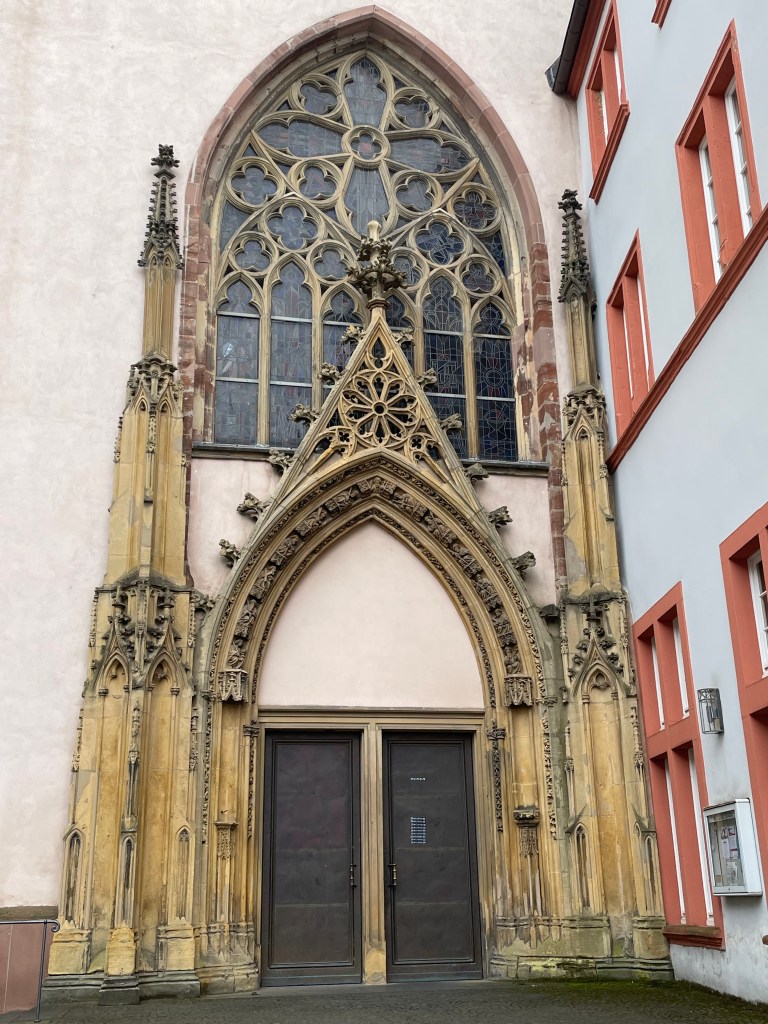
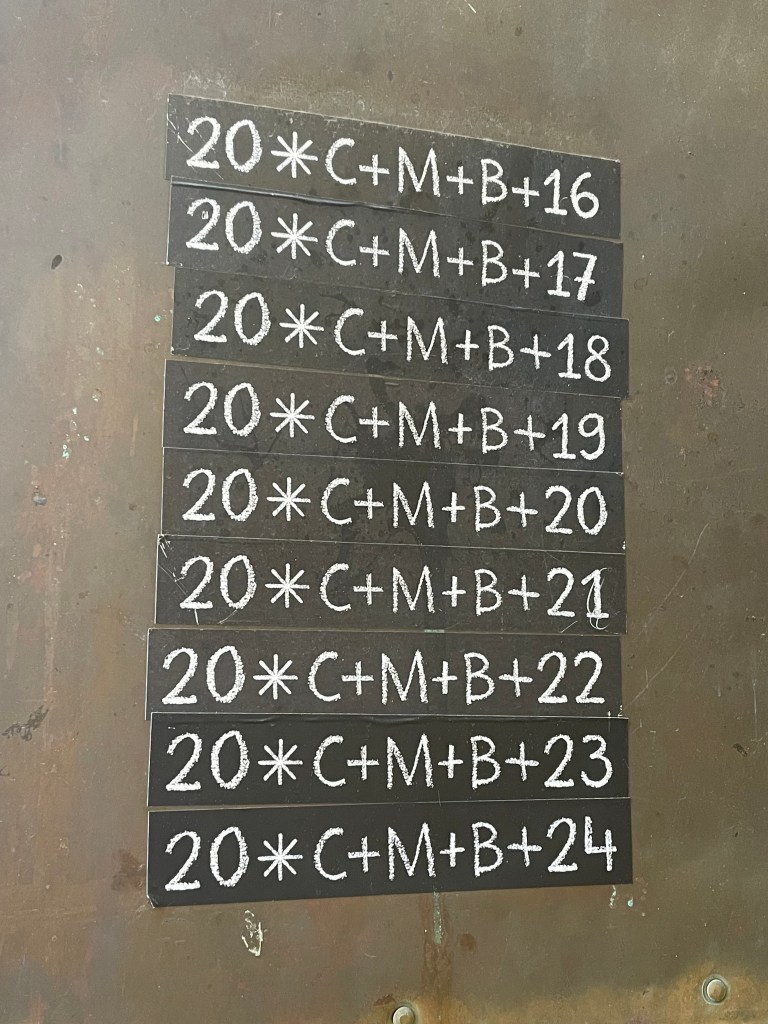
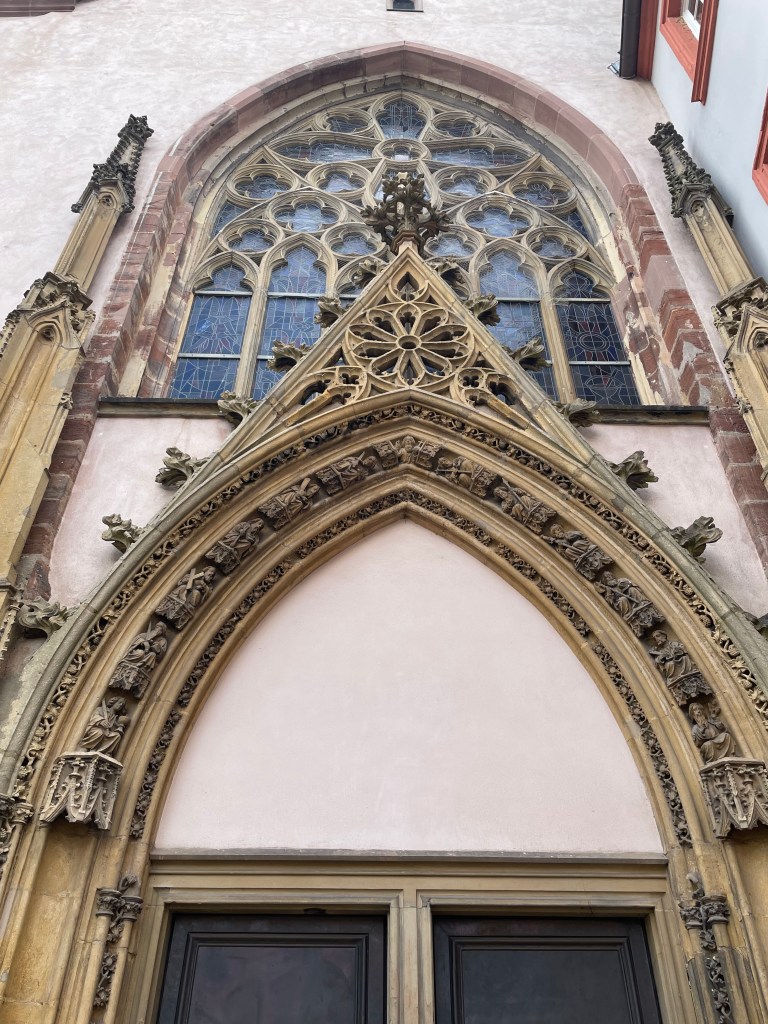
Here is the nearby Jesuit Church.  Notice the many dates on the door when the 3 Wise Men visited.

The Forum Roman Baths at the Cattle Market in Trier

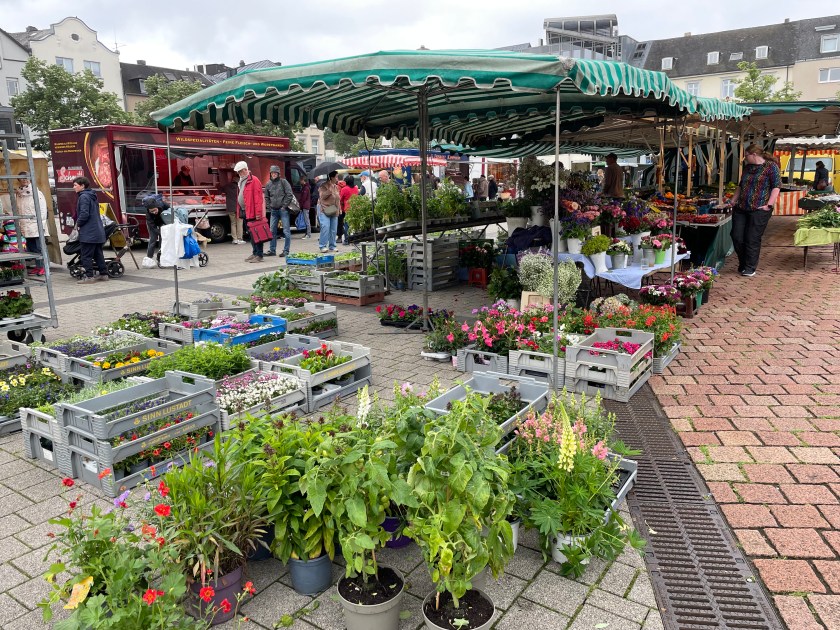
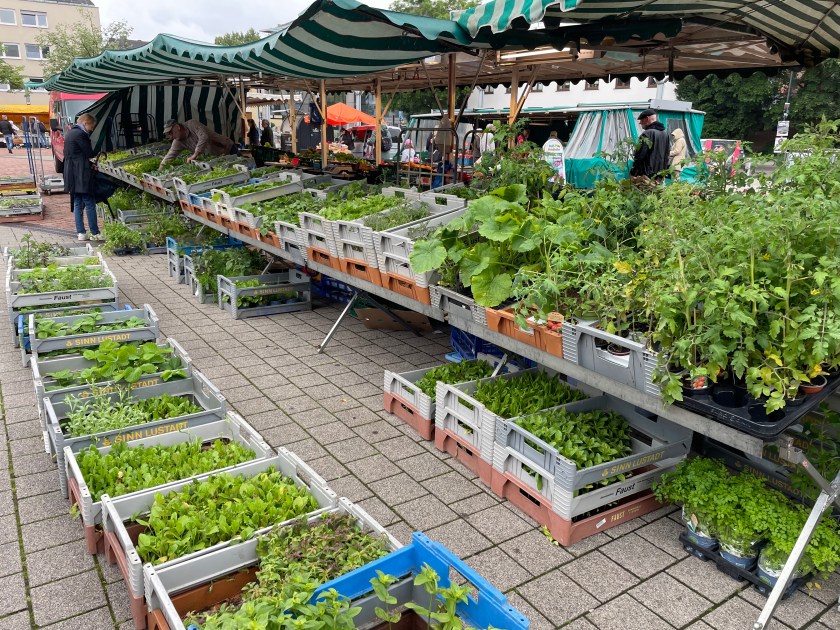
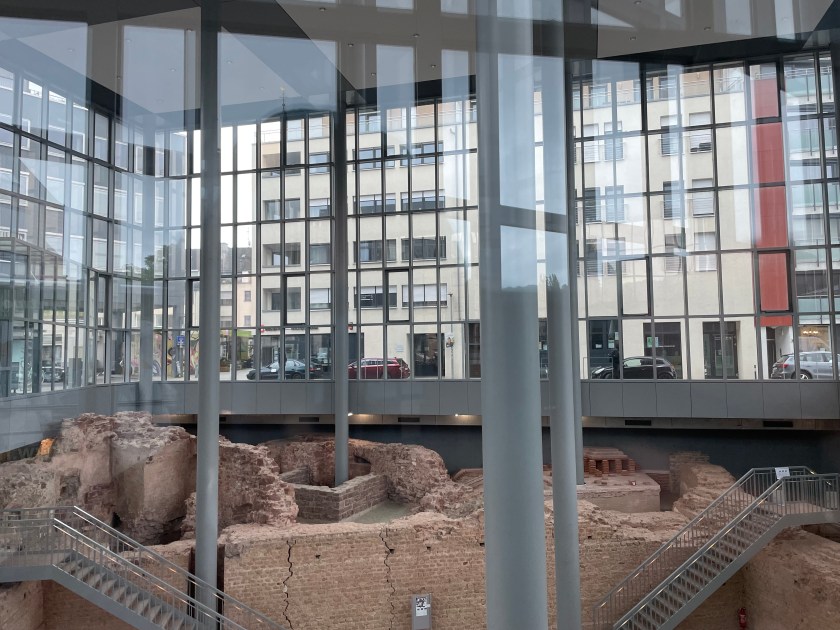
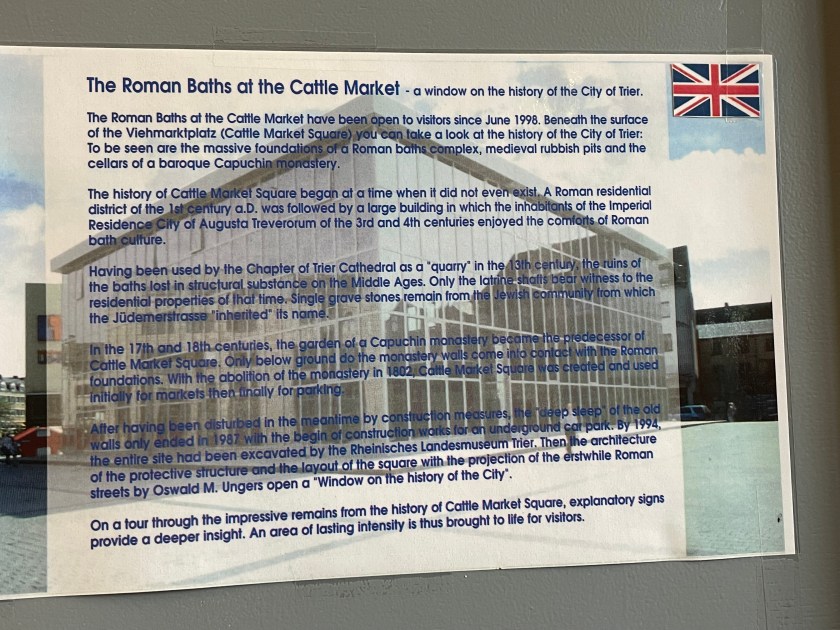
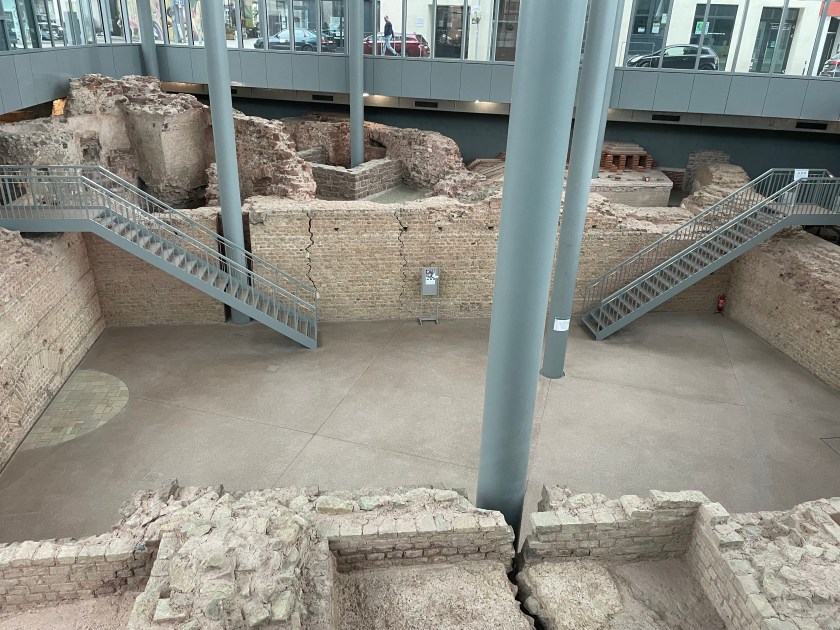
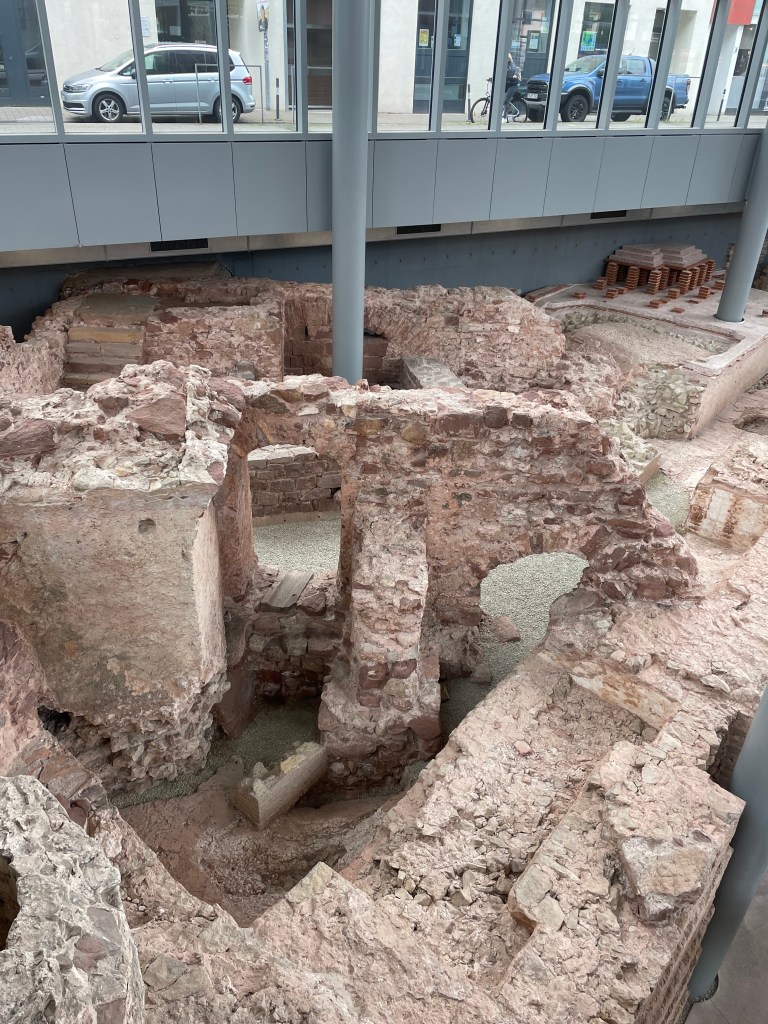
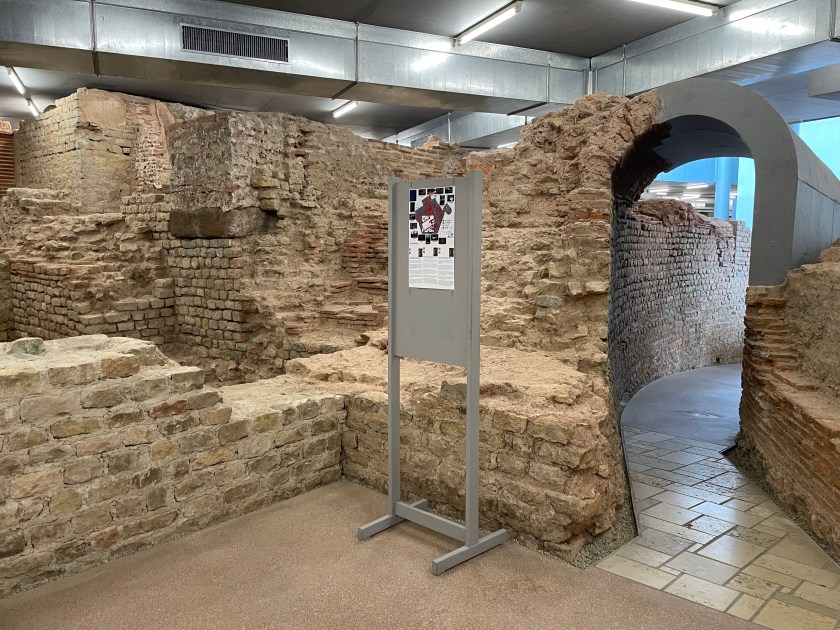
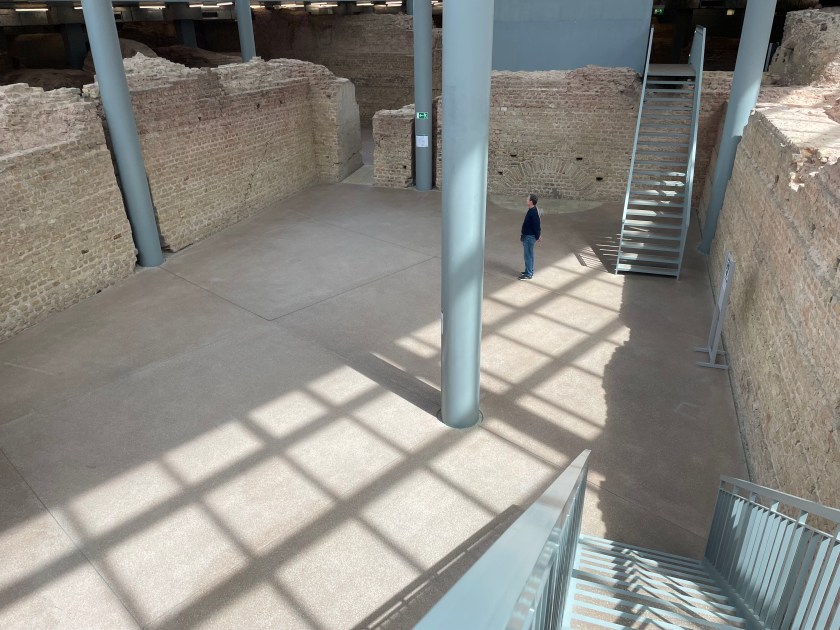
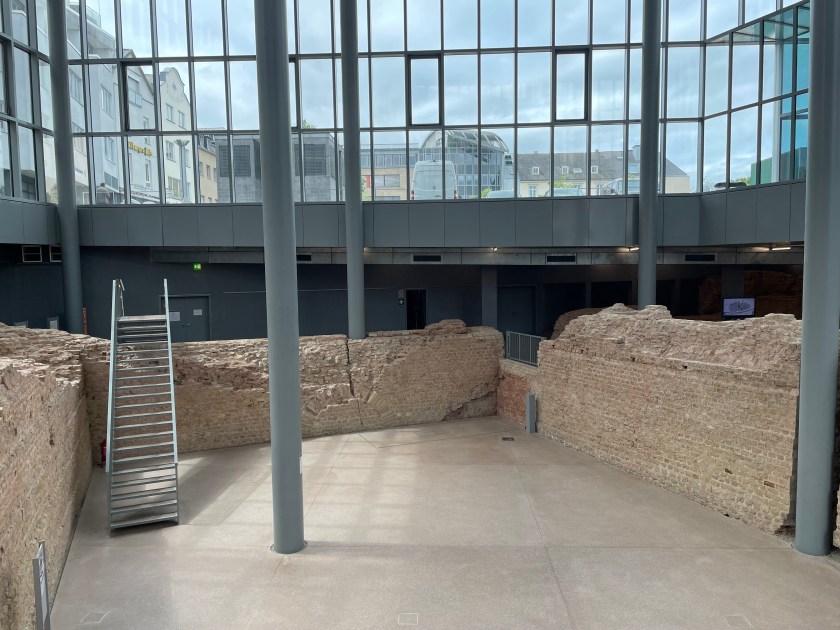
Yesterday we walked right past a glass building and didn’t even realize it was the 3rd of the large Roman Baths in Trier, covered excavations.  So when it opened this morning at 11:00, we were there.  Just outside were these farmers’ markets.

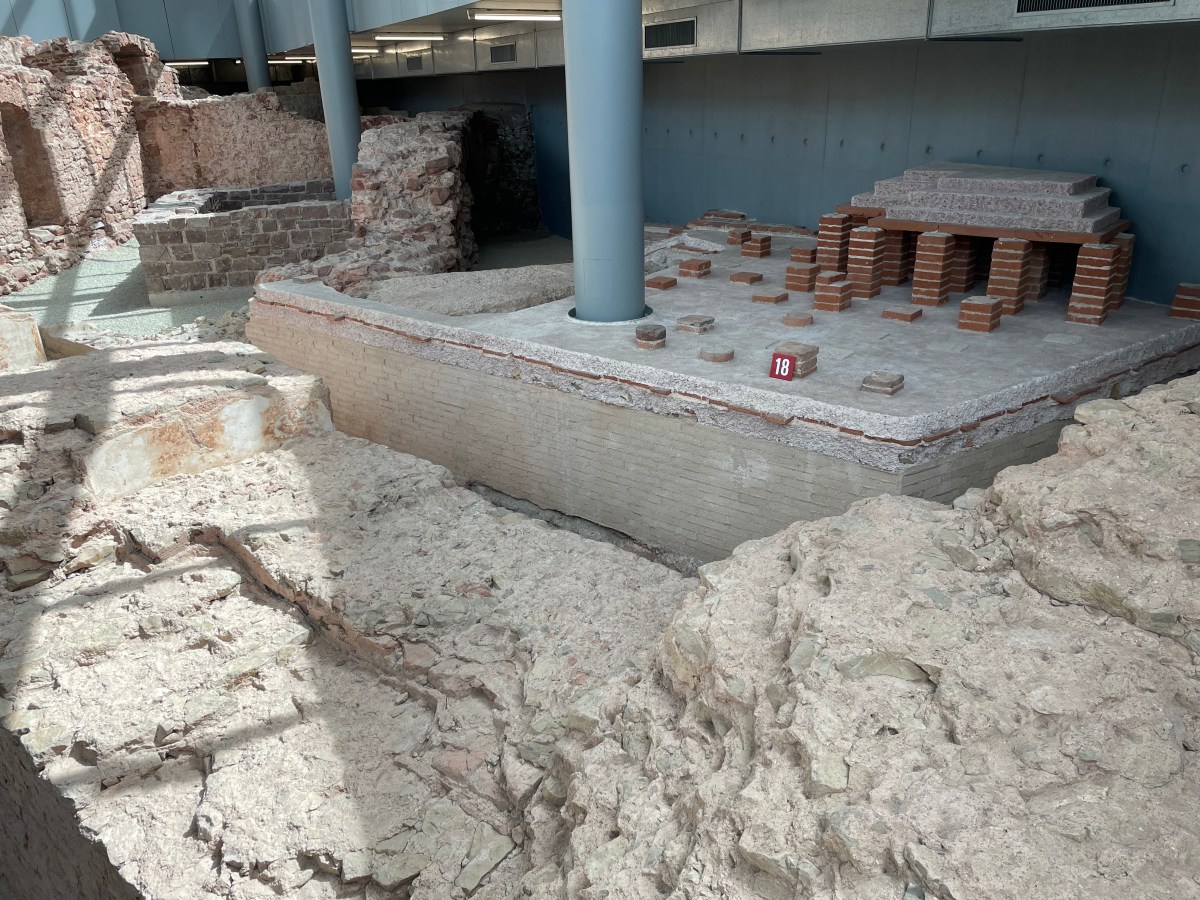
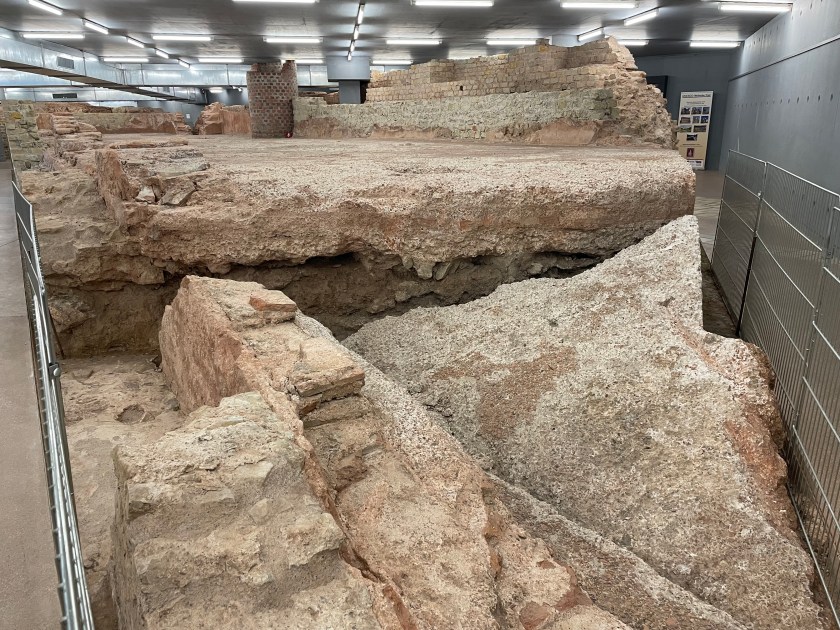
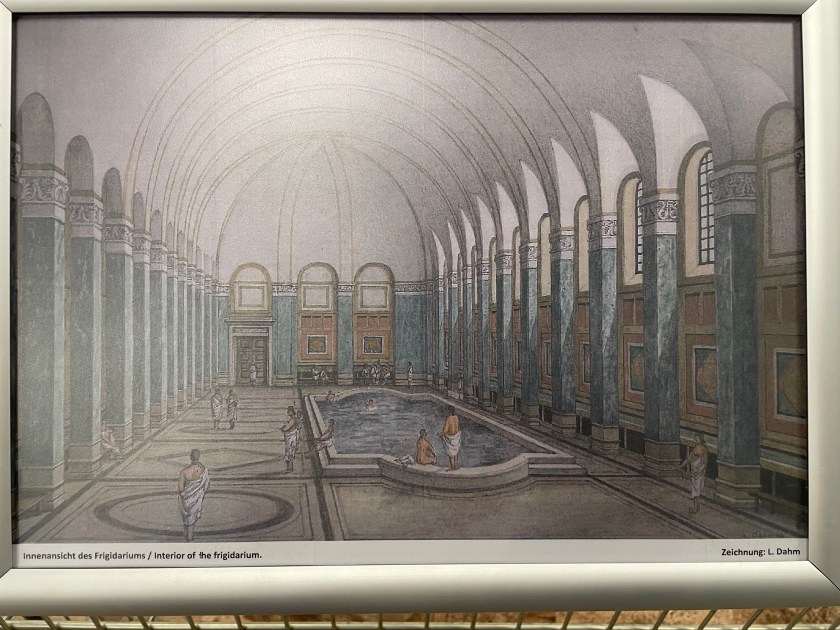
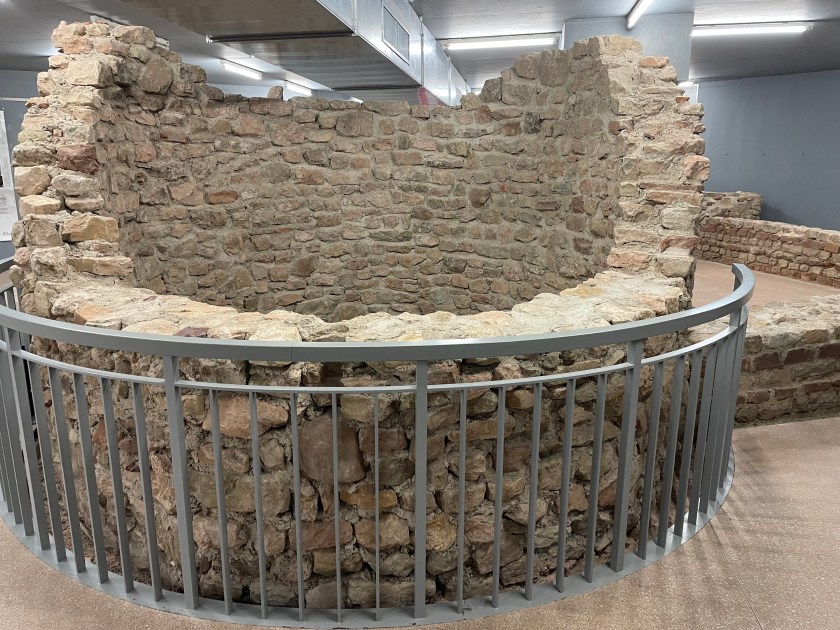
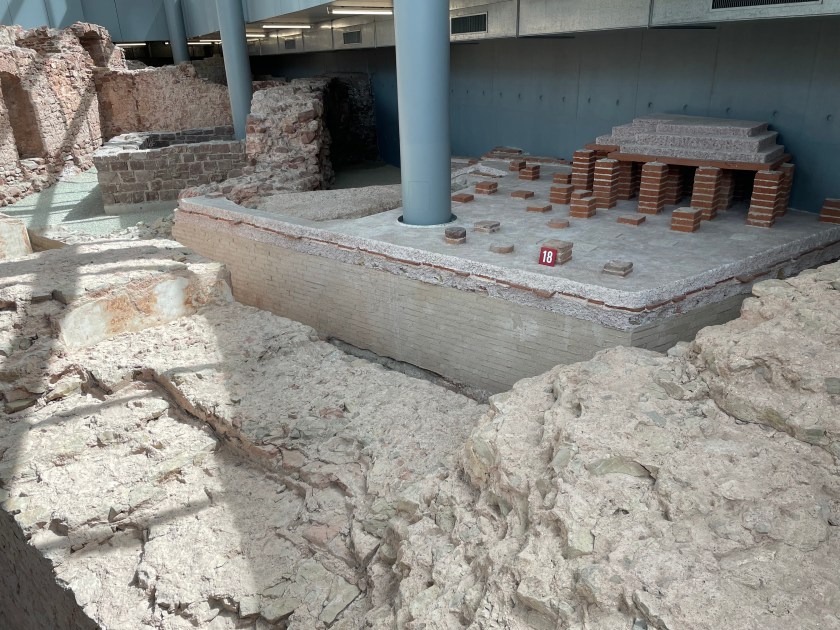
I loved how they’ve preserved this site and made it accessible for visitors.  It’s right in the heart of town, and was under other buildings, but found and excavated in 1994.  The Forum Baths of Trier were converted in the 4th century C.E. from some older buildings, dated to around the 2nd century C.E.

Like the other bath houses in Trier, the Forum Baths were in use through the end of the 4th century. But the complex fell out of use during the early fifth century when Trier was repeatedly attacked and destroyed during the Migration Period.

In the 13th century, the remains of the bath began being used as a quarry for local buildings. In the 17th and 18th centuries, a monastery was built over the eastern part of the bathhouse. In 1802, the monastery was dissolved and nine years later, in 1811, the garden was transformed into a cattle market from which the ruins get their name.

Here’s how it looked back then:

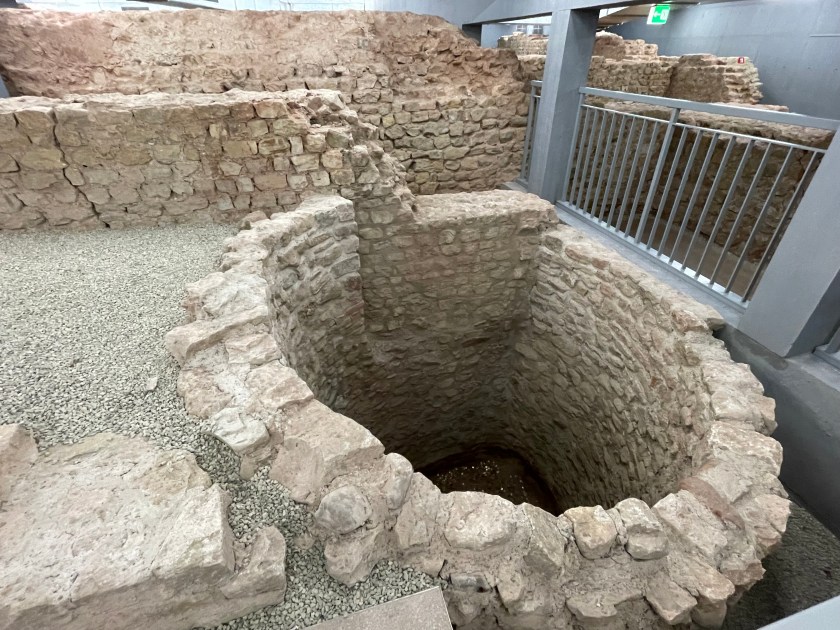
This was a latrine pit:

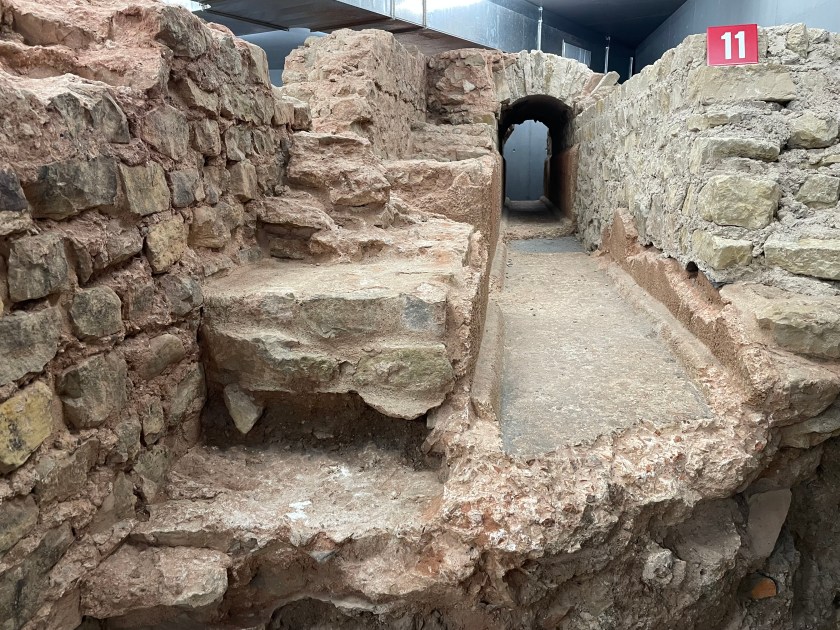
There were lots of explanations about what was what and how the water was heated and cooled.  There was also an animated film showing how the processes worked.  It was all quite interesting.

The St. Antonius Church in Trier

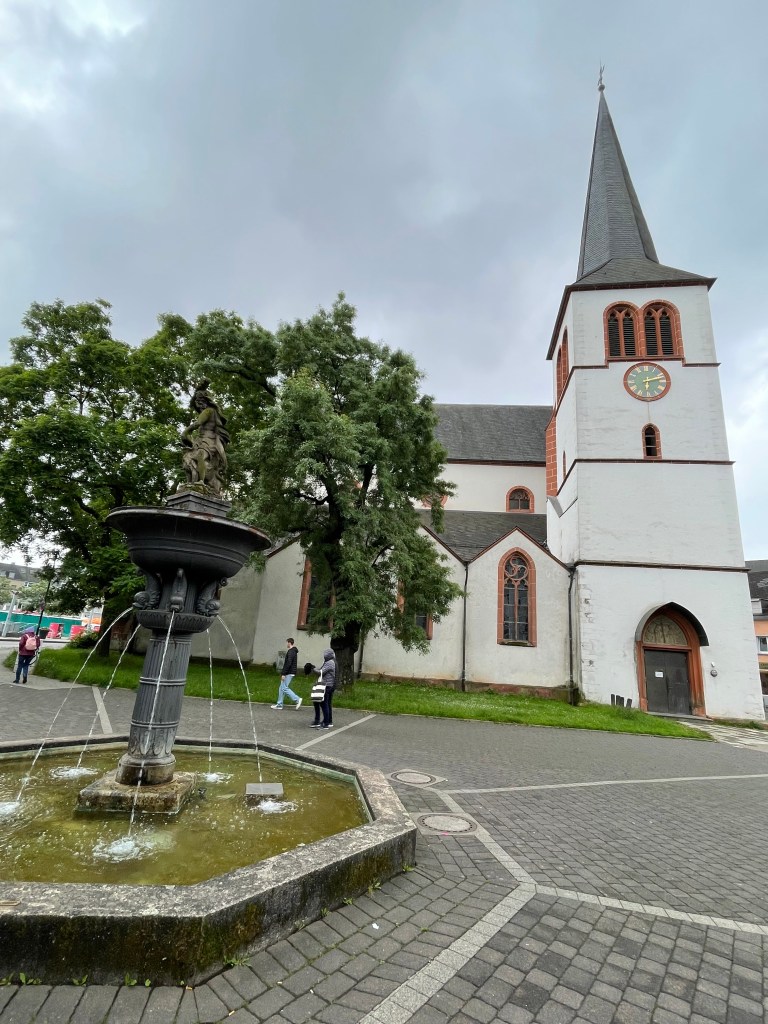
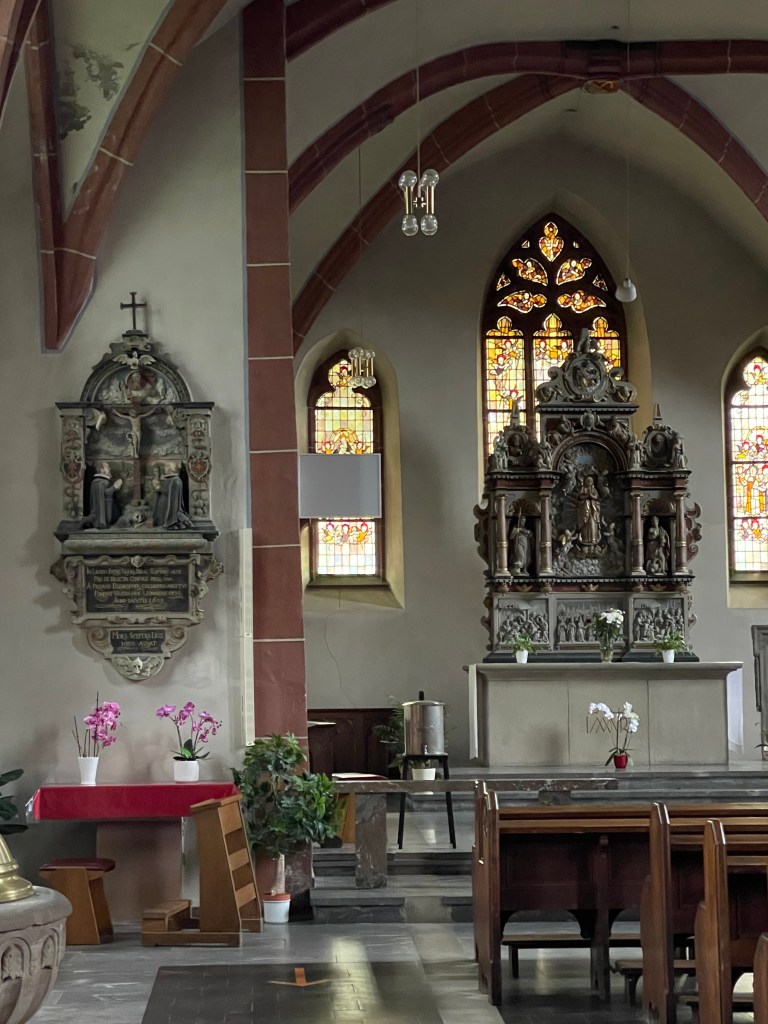
This morning we had a few last things to see in Trier before moving on to Luxembourg.  The first was this church (it was closed last night).

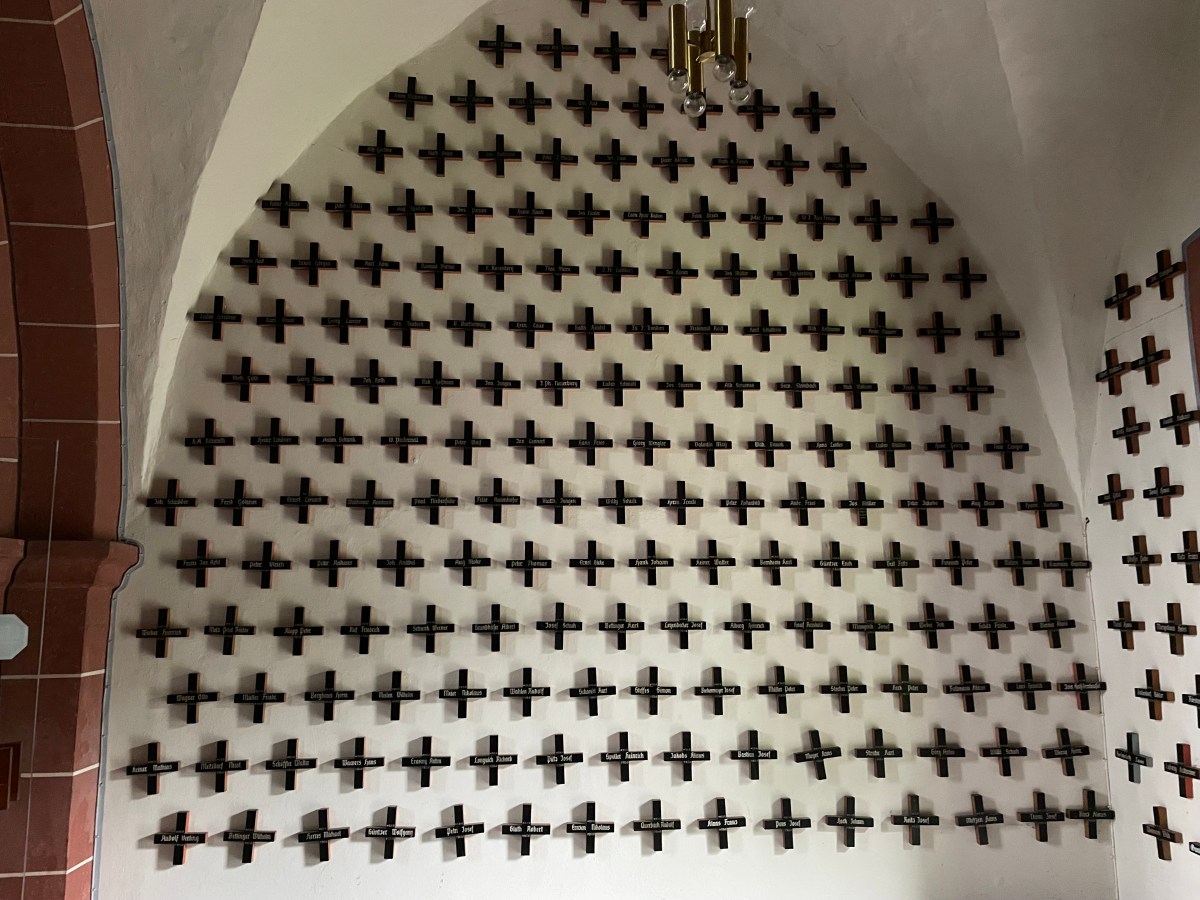
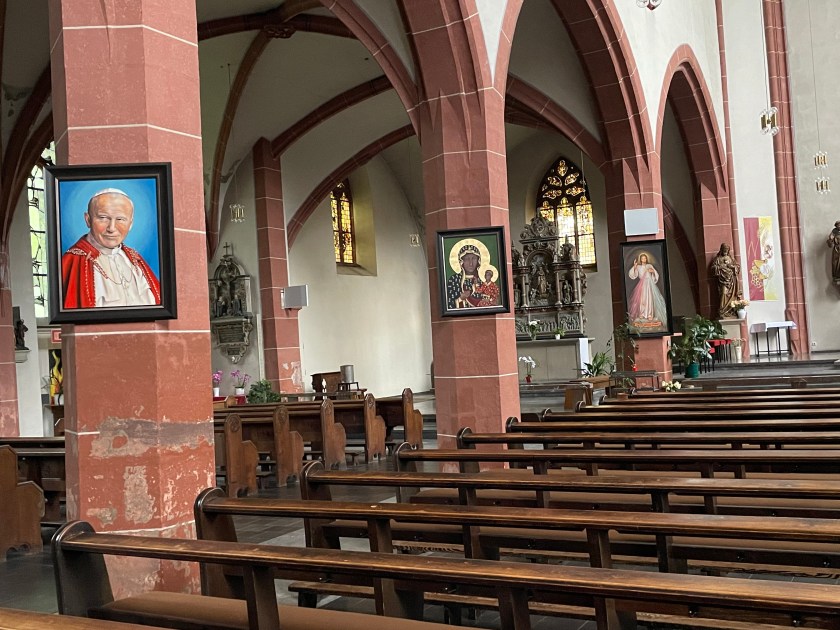
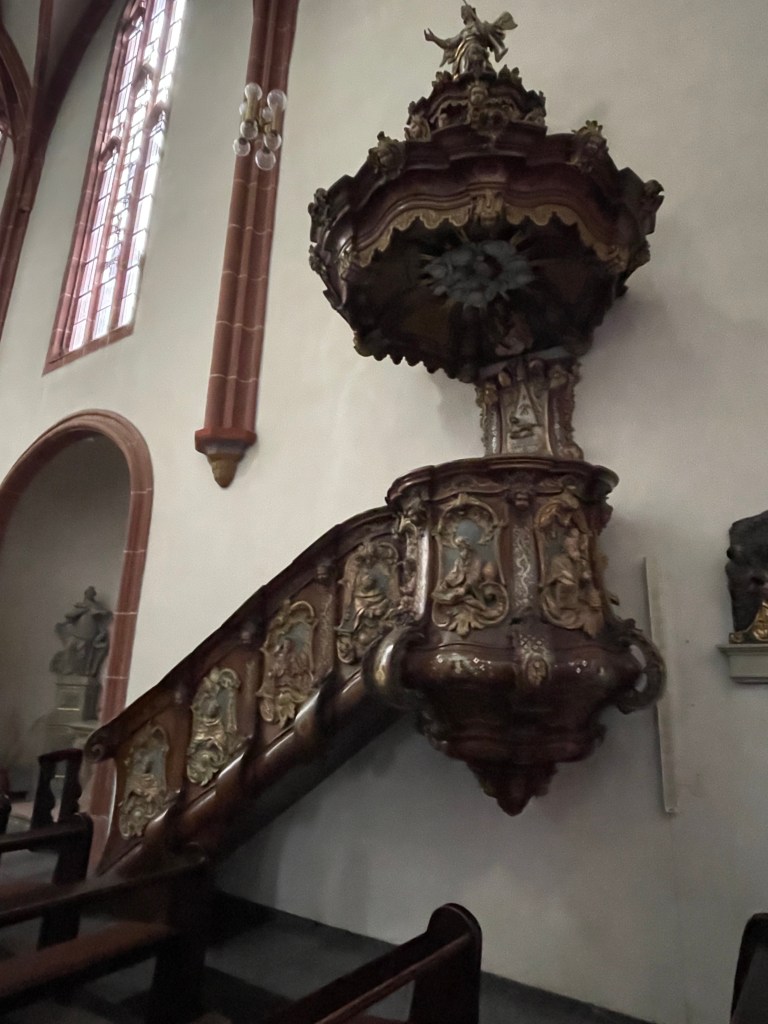
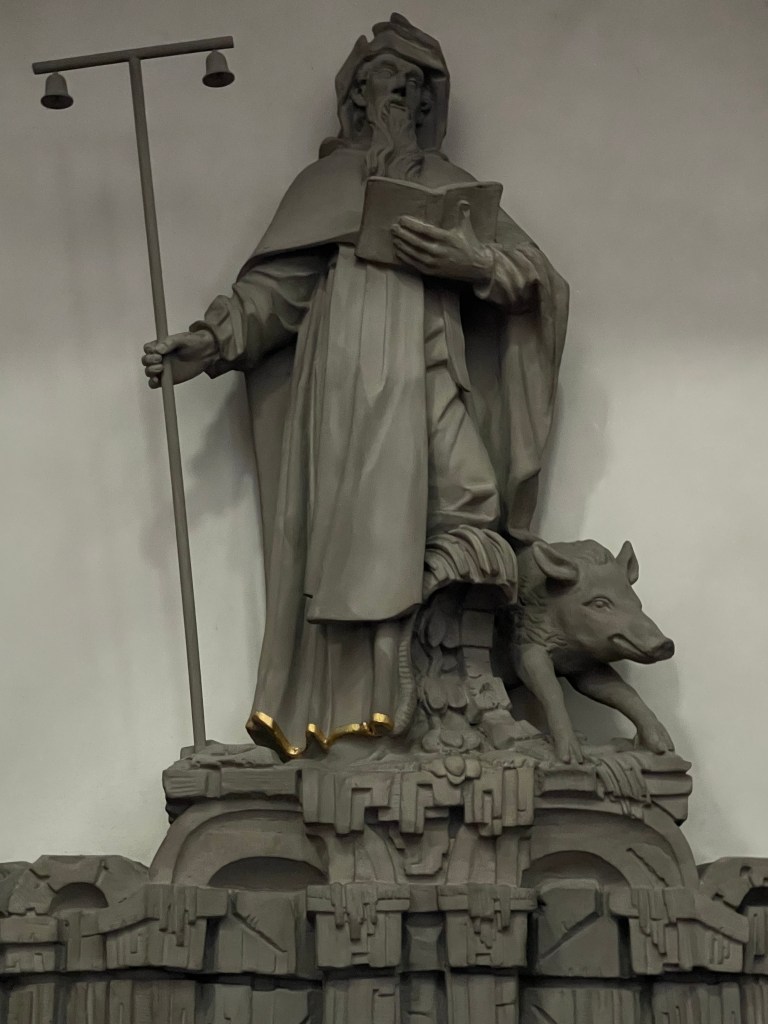
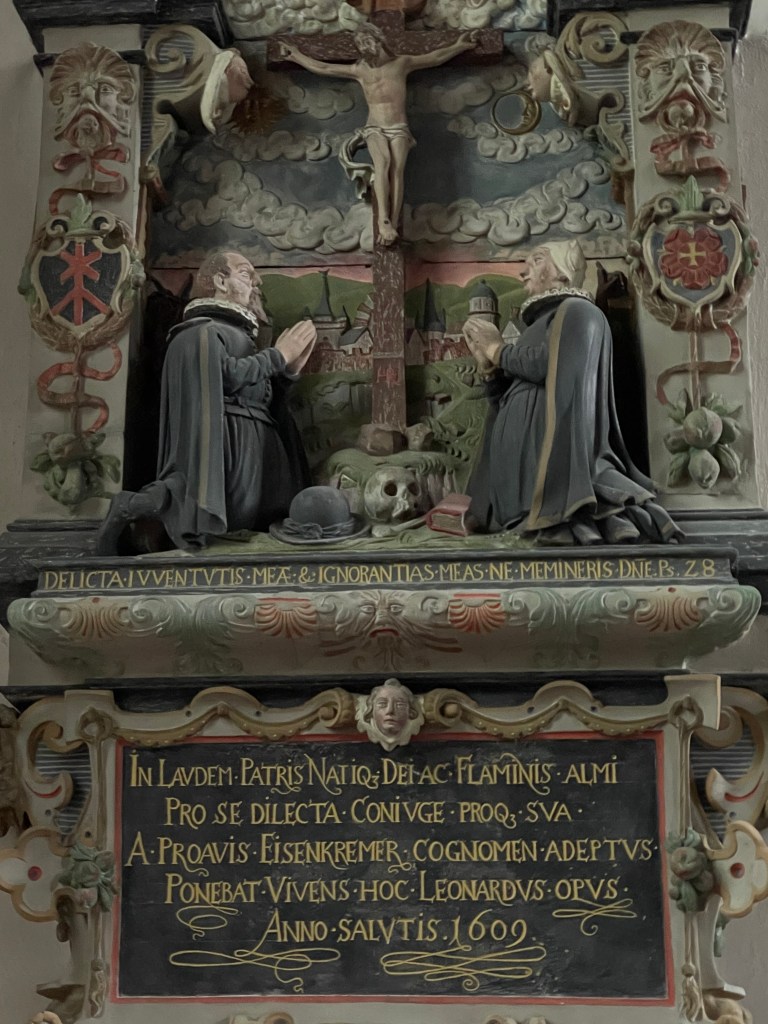
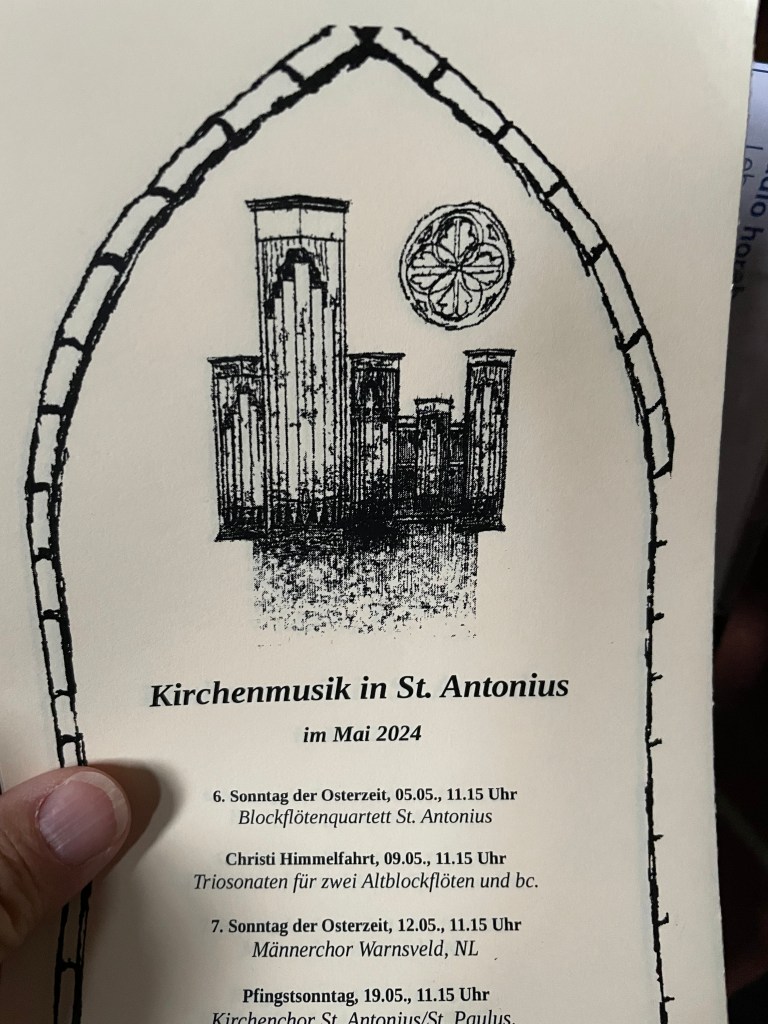
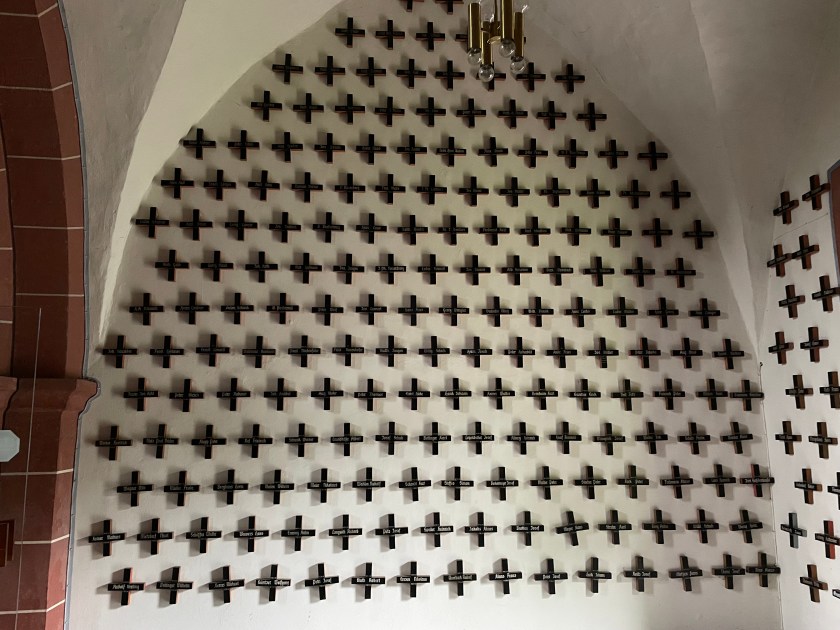
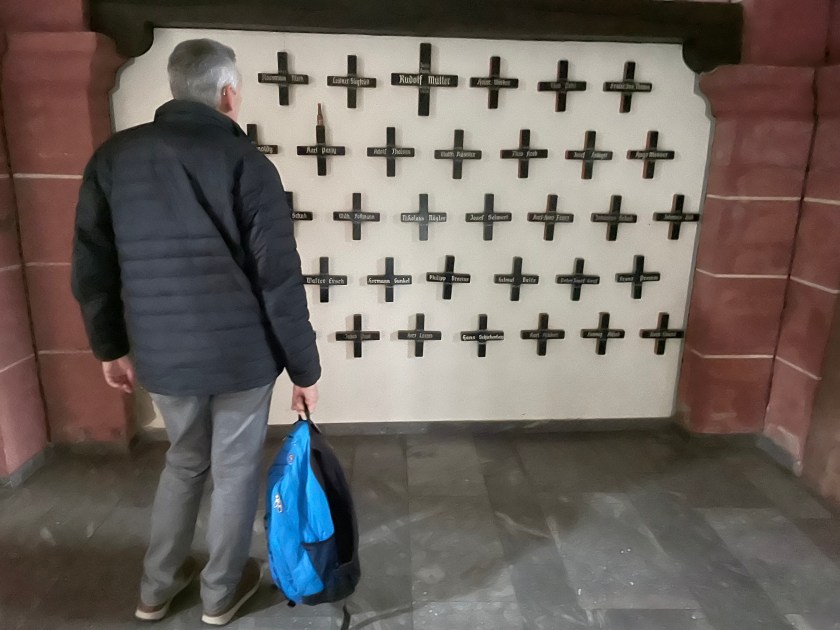
The church, dedicated to the holy hermit Anthony, was built between 1458 and 1514.  The thing I will remember from this church is the memorial inside the front doors to all the soldiers from this parish who died in the wars.  There are so many.  There were so many mothers who wept for these men and boys.


The Barbara Baths in Trier

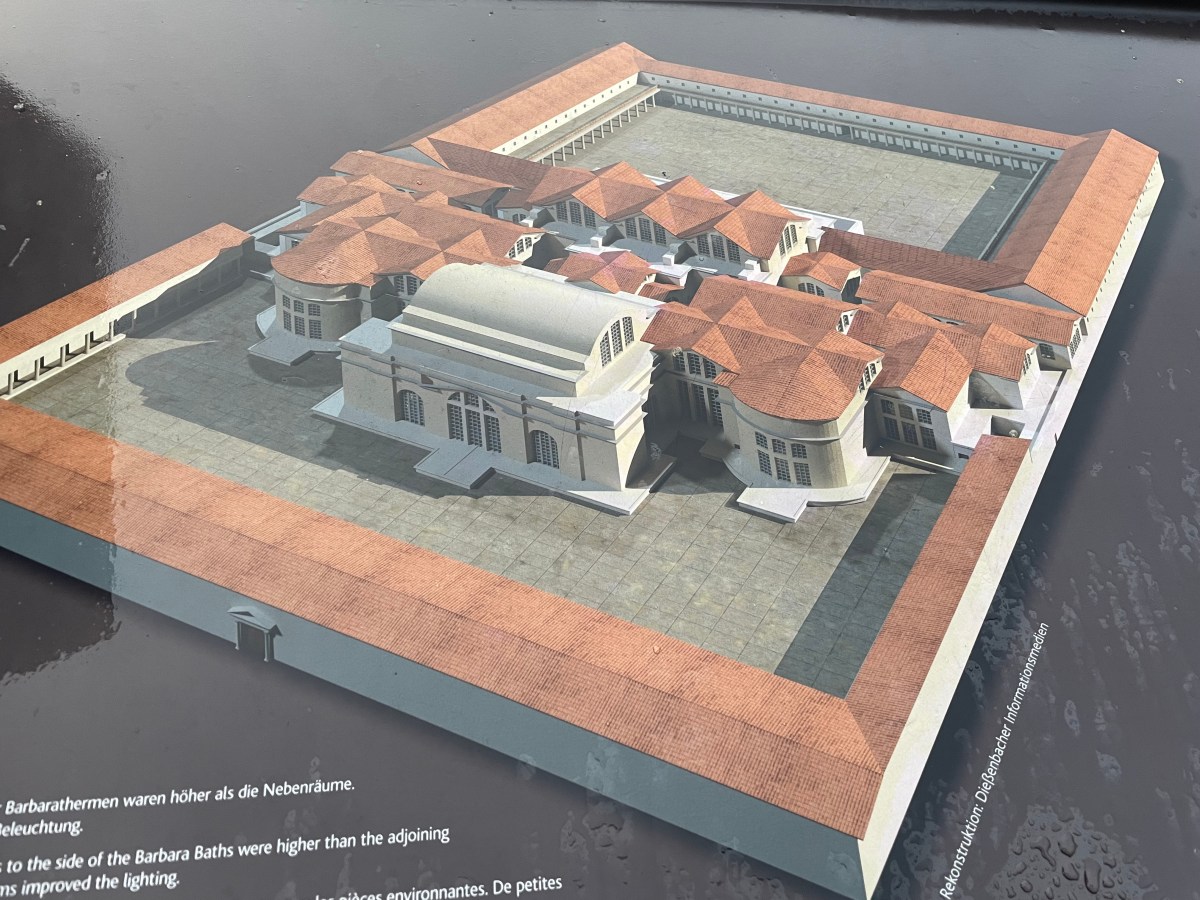
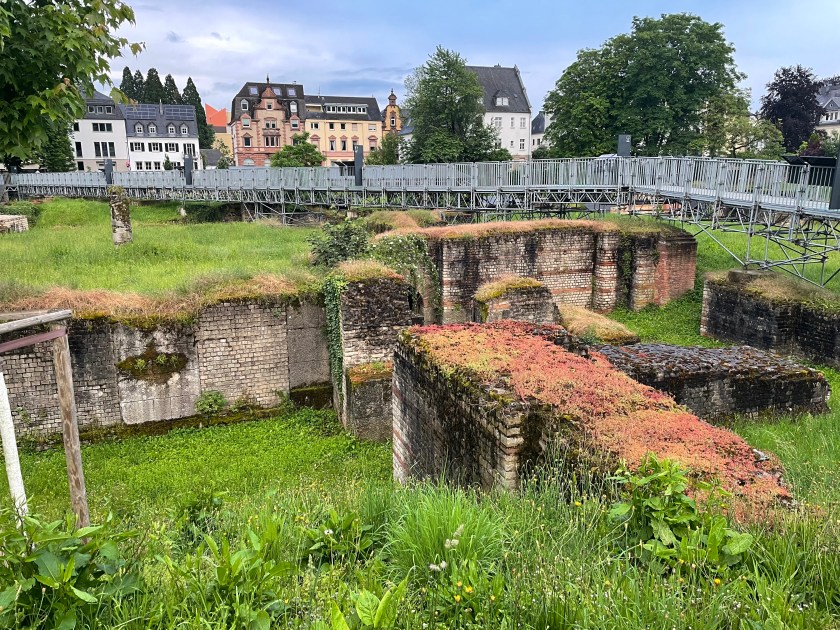
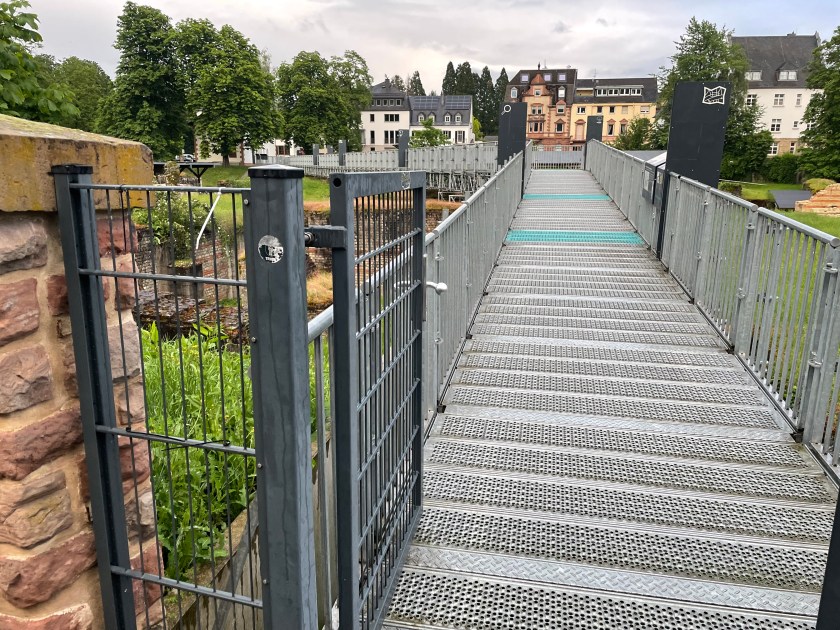
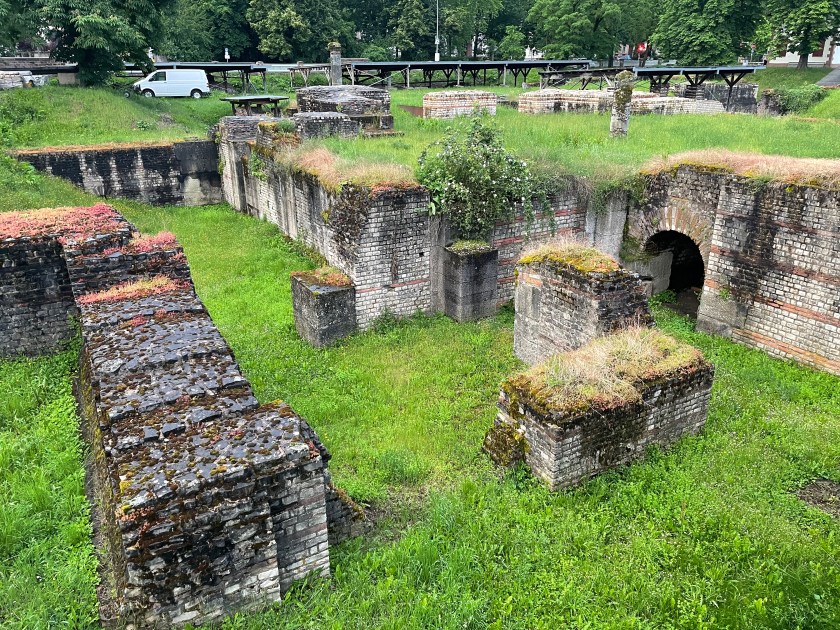
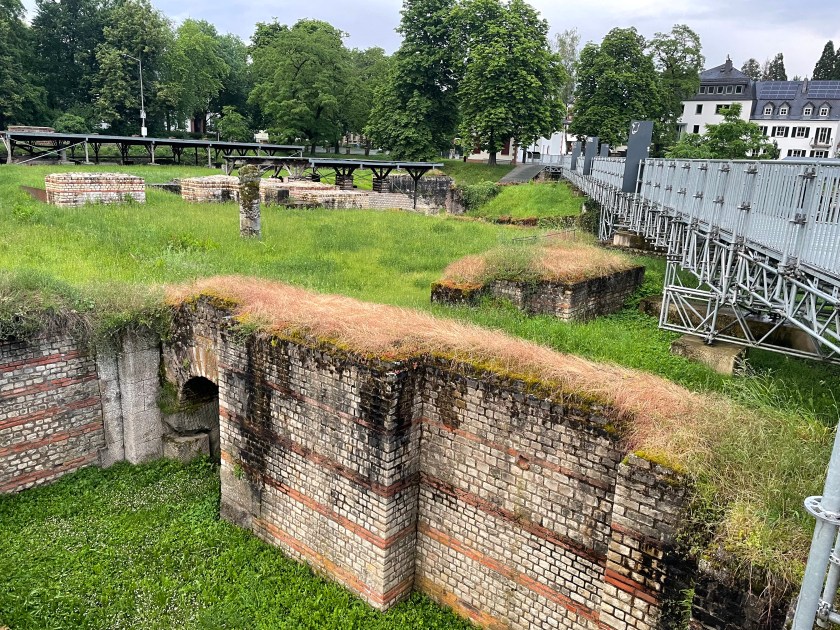
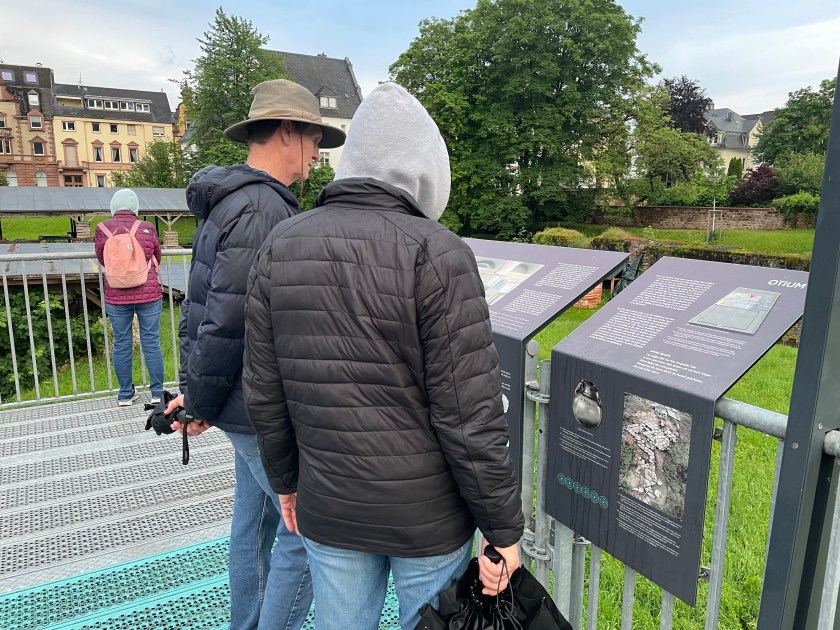
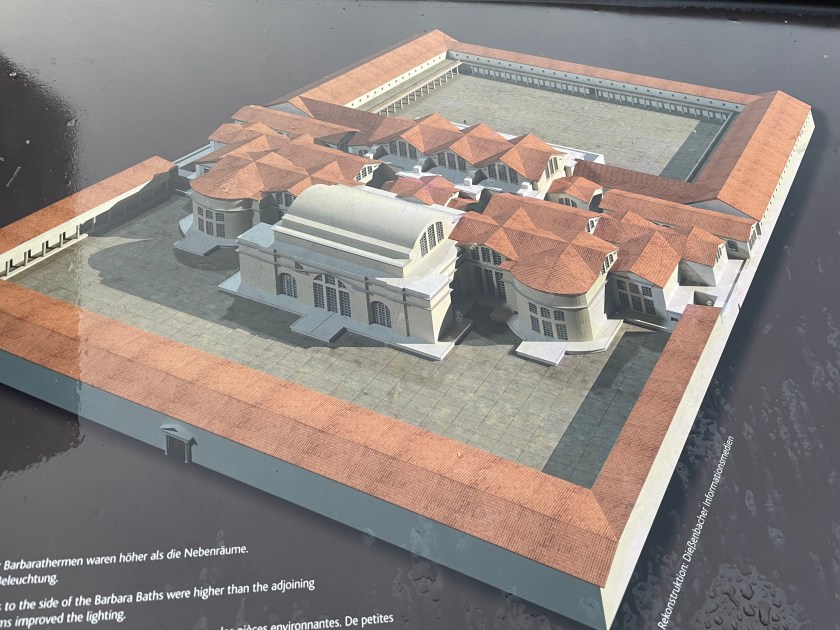
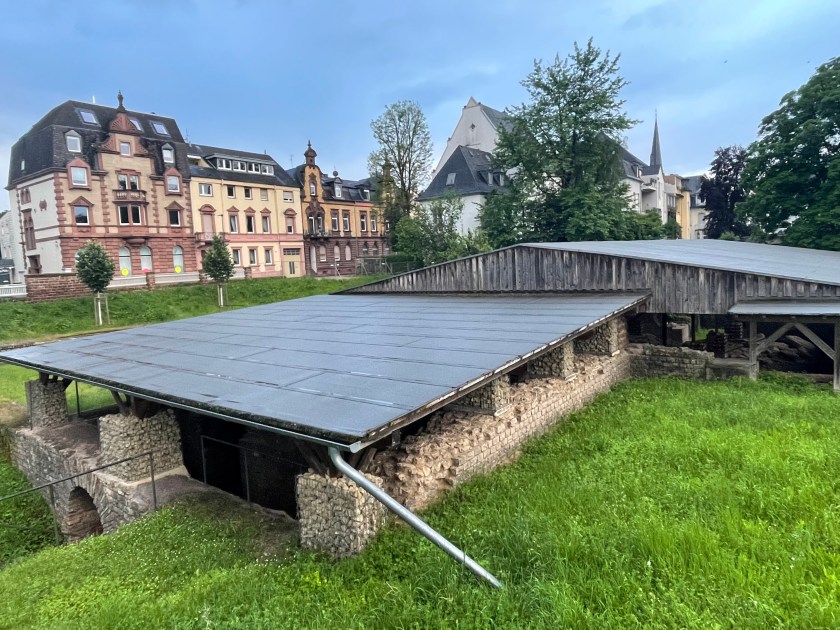
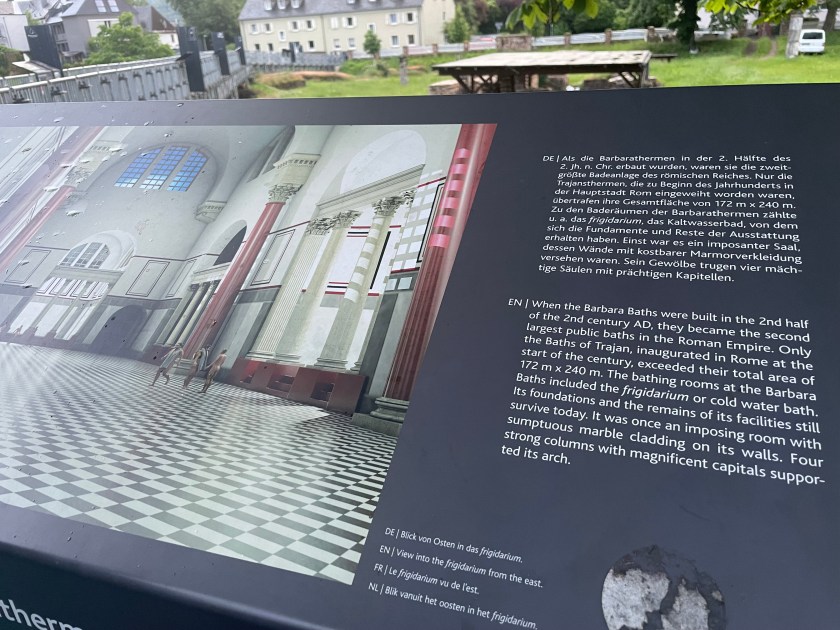
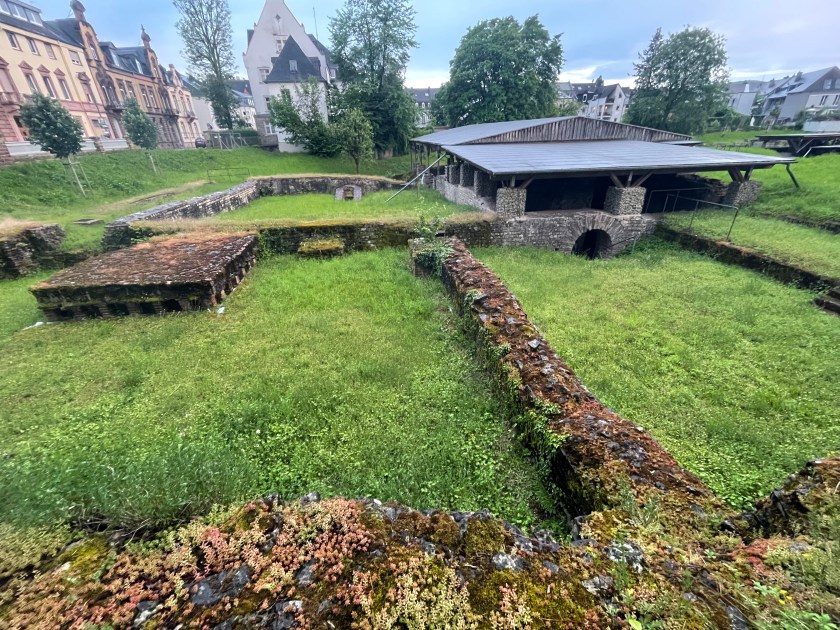
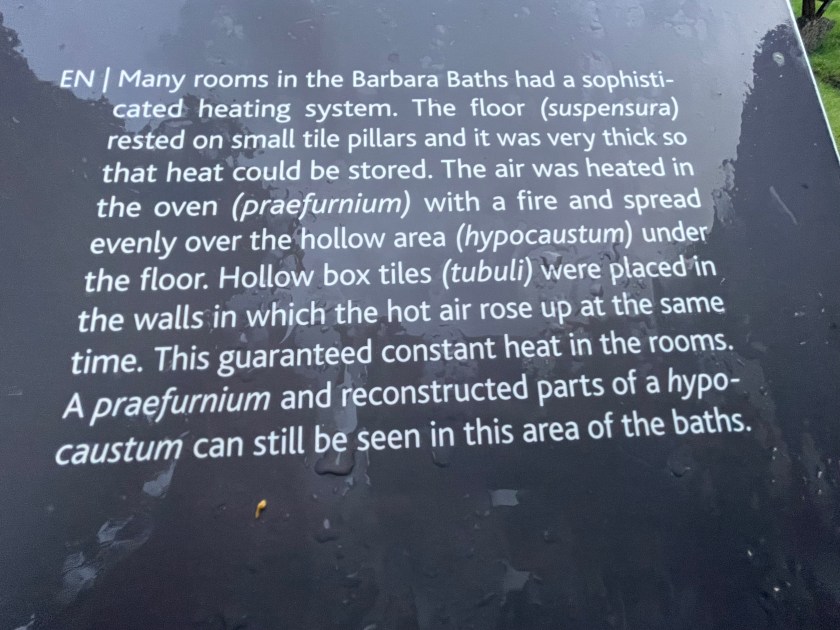
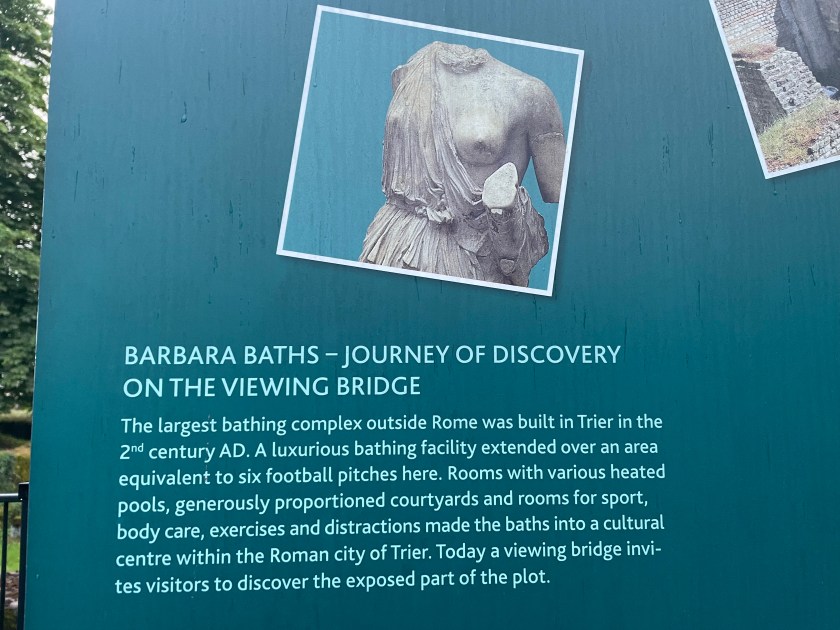
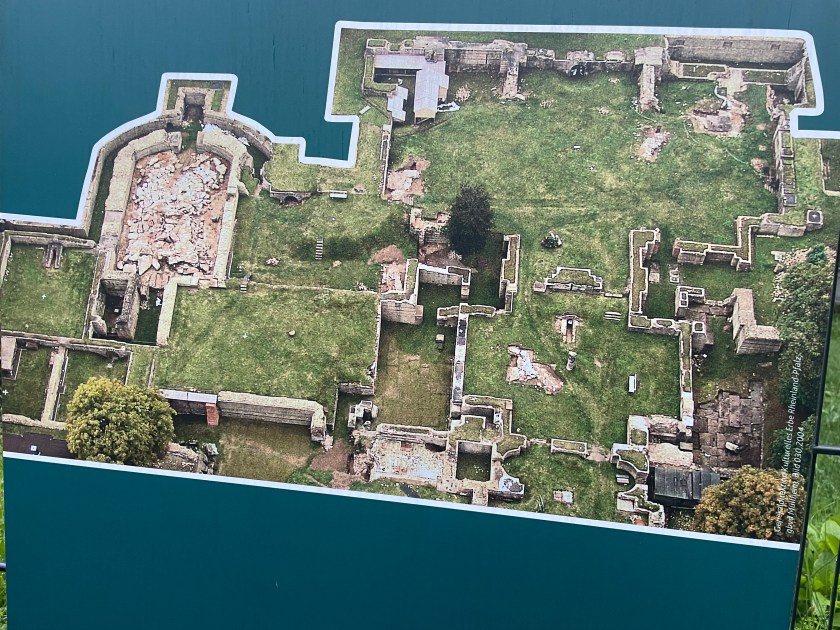
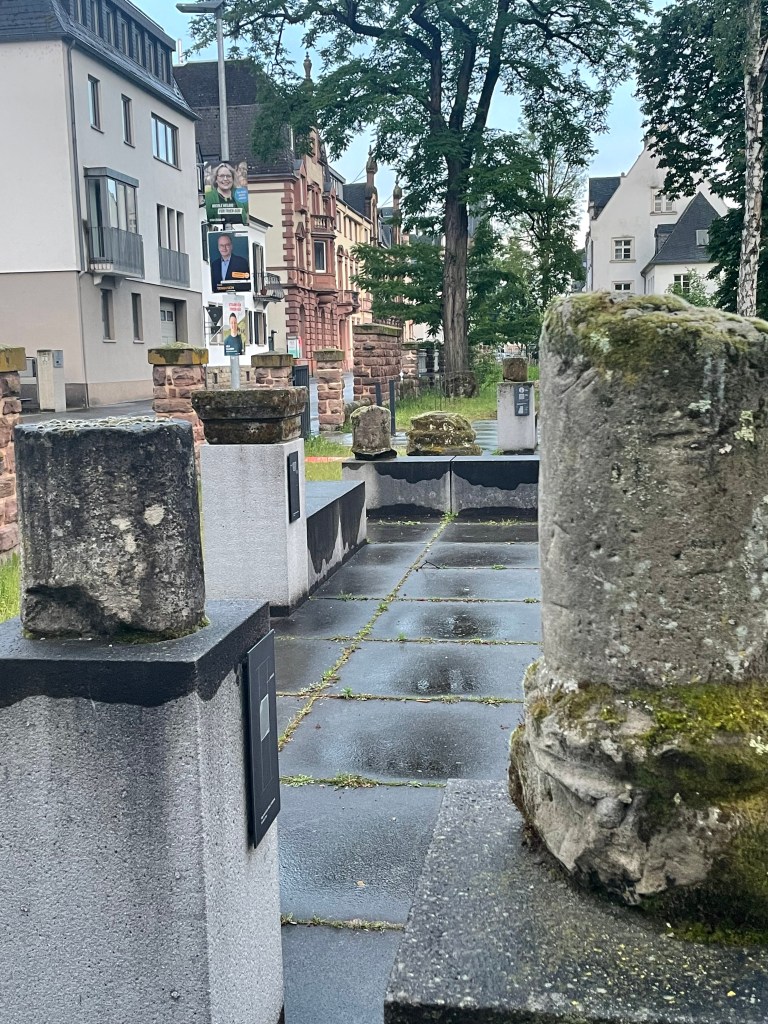
Our final destination today was the Barbara Baths ruins. Unexpectedly, the gates were open (it was almost 9:00 p.m.) and we could walk across the observation bridge, read the plaques, and see the ruins. These baths were actually finished and used and constitute the largest bath complex north of the Alps.
These baths were like today’s gyms with swimming pools, or like city pools where people went to cool off and be with friends.  Some were for the upper class, but there were probably places for the rest of the people too.
On the walk home, we saw the Rathaus and the nearby Hochbunker that was built during WW2.  We passed the St. Antonius Church on the way home, long after opening hours. After a stroll around the Kornmarkt in front of our hotel Hof, we got to our room.
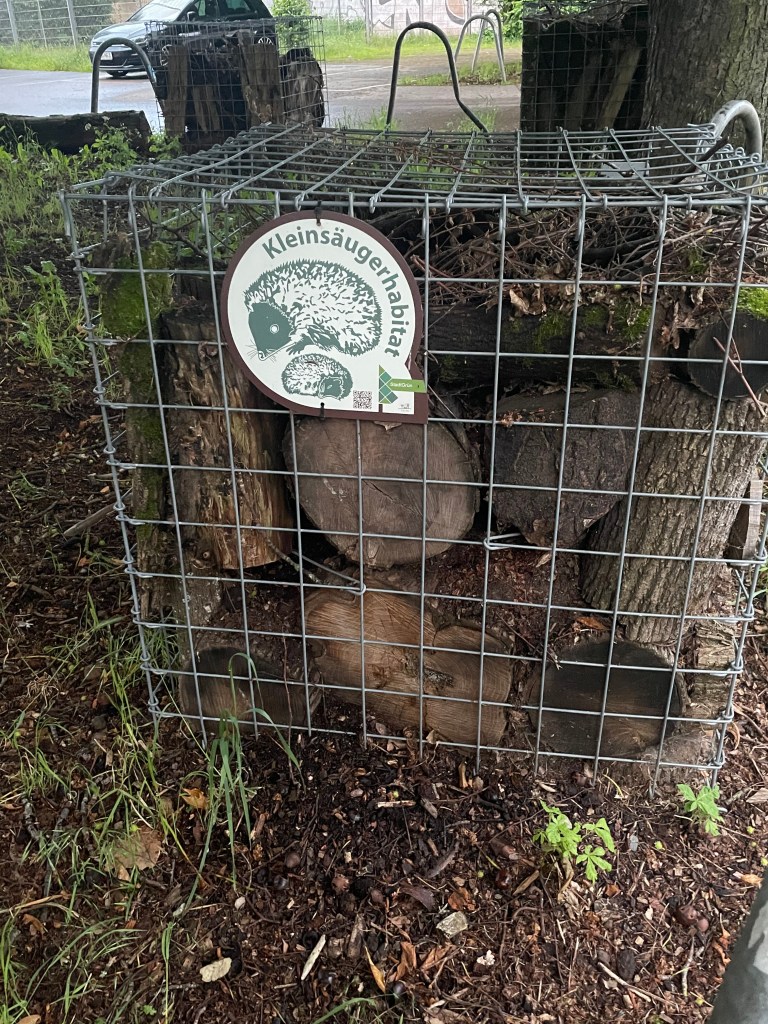
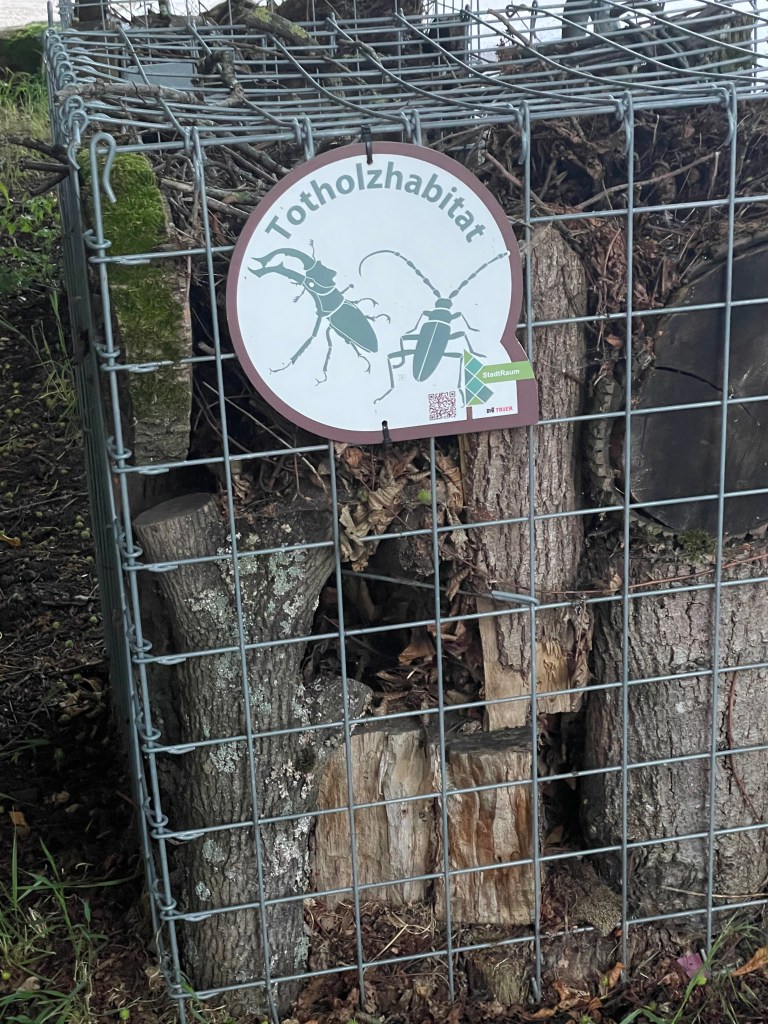
I noticed these critter and bug habitats as we walked past a park.  I’ve never seen such a thing.  The call this a dead wood habitat for beetles and for hedgehogs.

We had a great day, filled to the brim with interesting things to see and do.