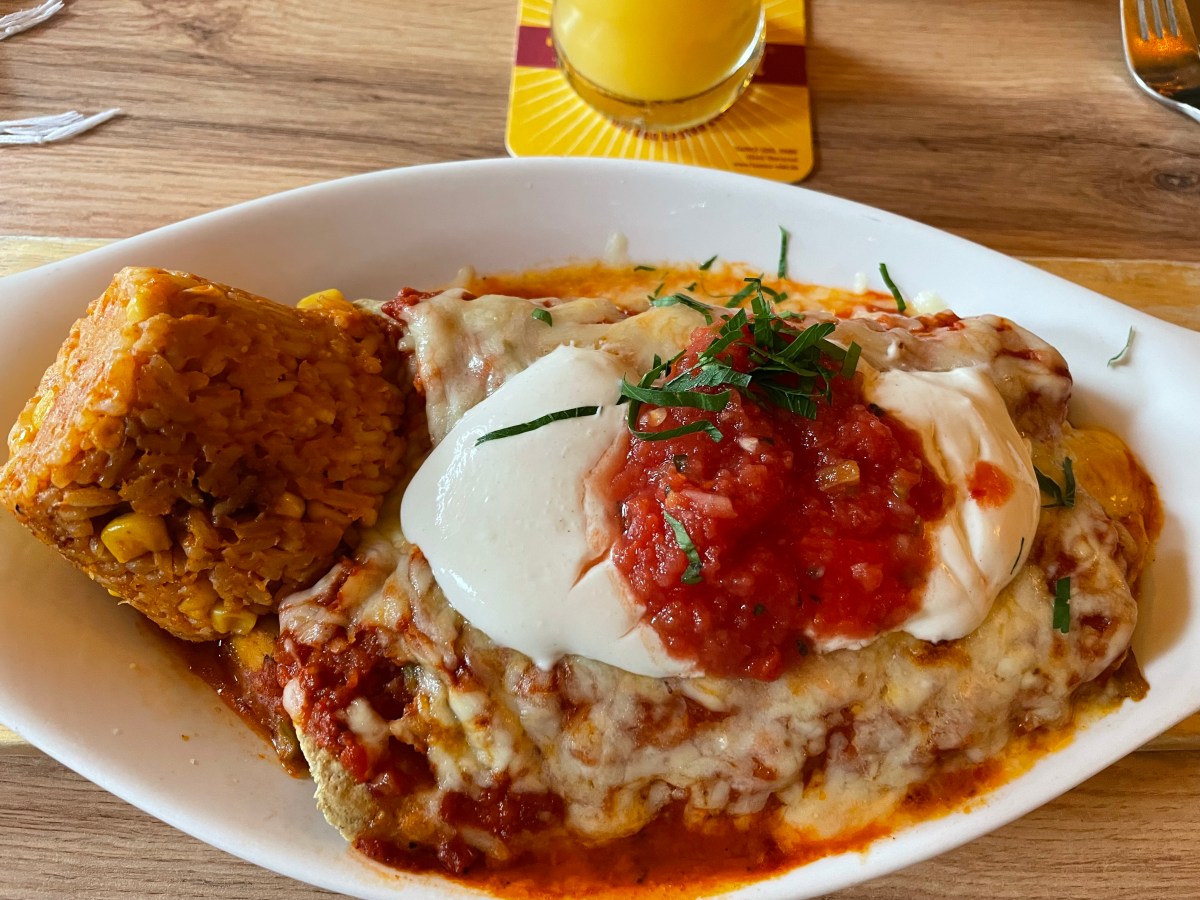
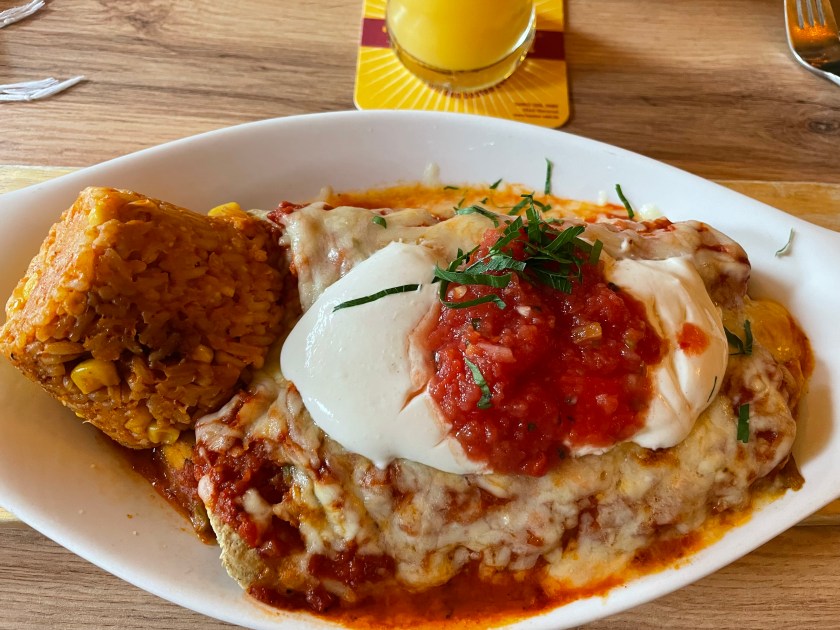
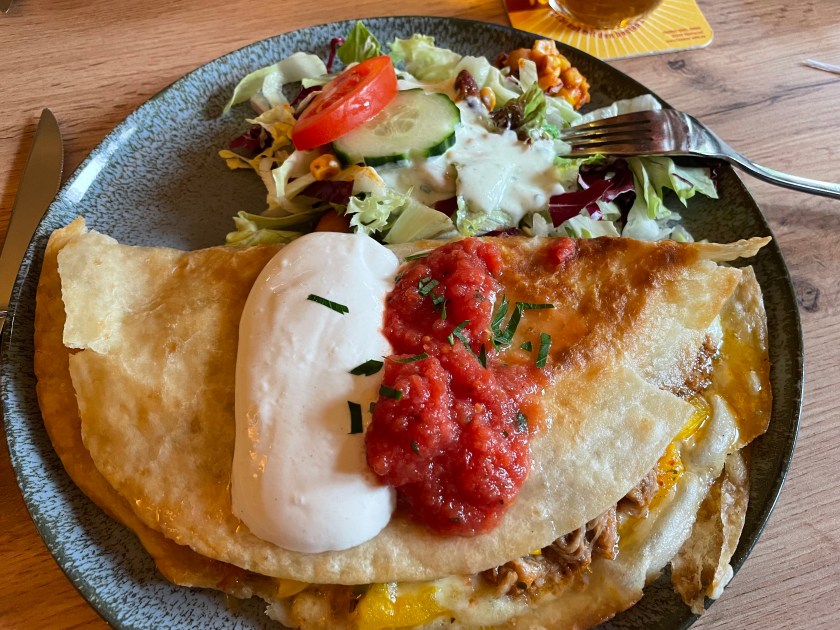
People sometime ask us what food we miss most here in Germany. The answer is easy: MEXICAN FOOD. (Which is why I brought 6 lbs of corn tortillas back with me.) Tonight we went with friends to El Dorado in Bad Homburg, one of the very few Mexican restaurants we’ve found here. It’s really good food in a really fun atmosphere.
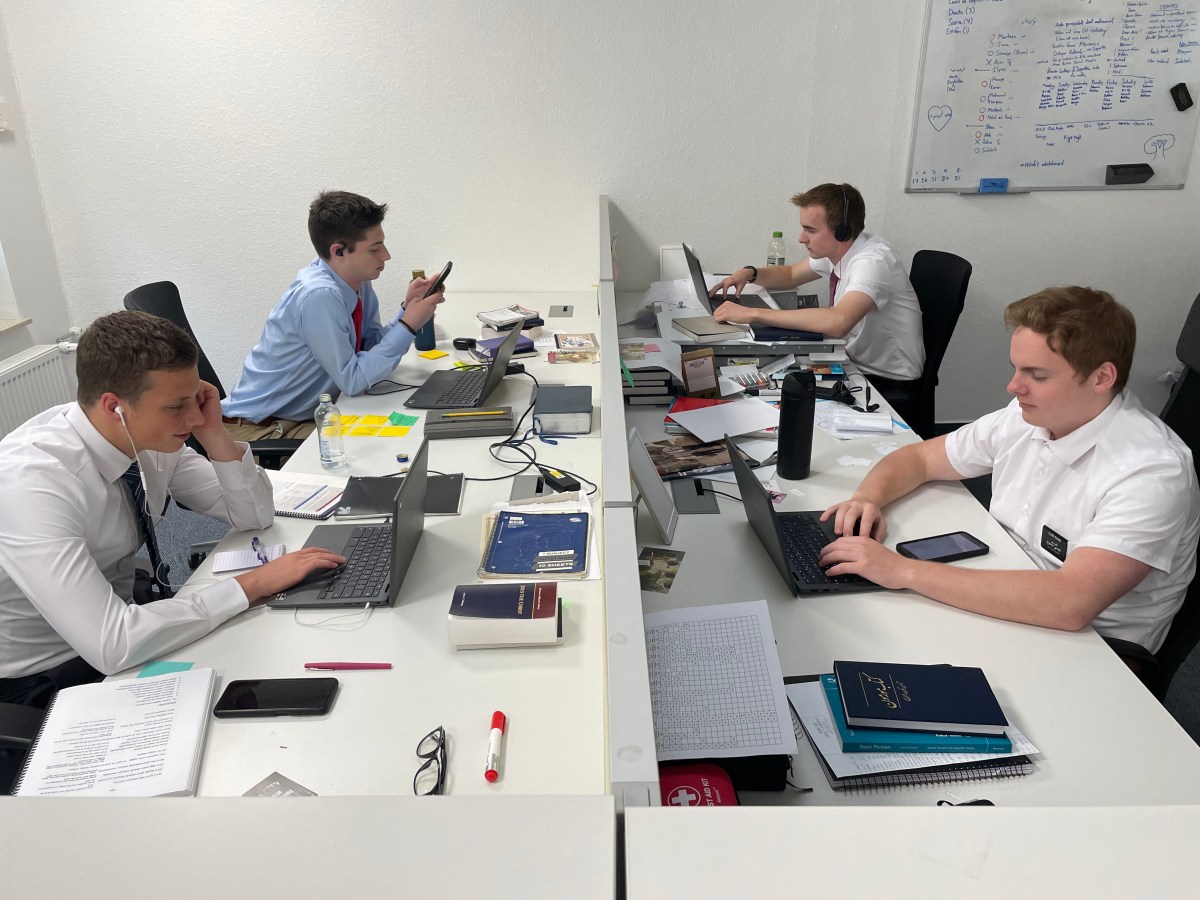
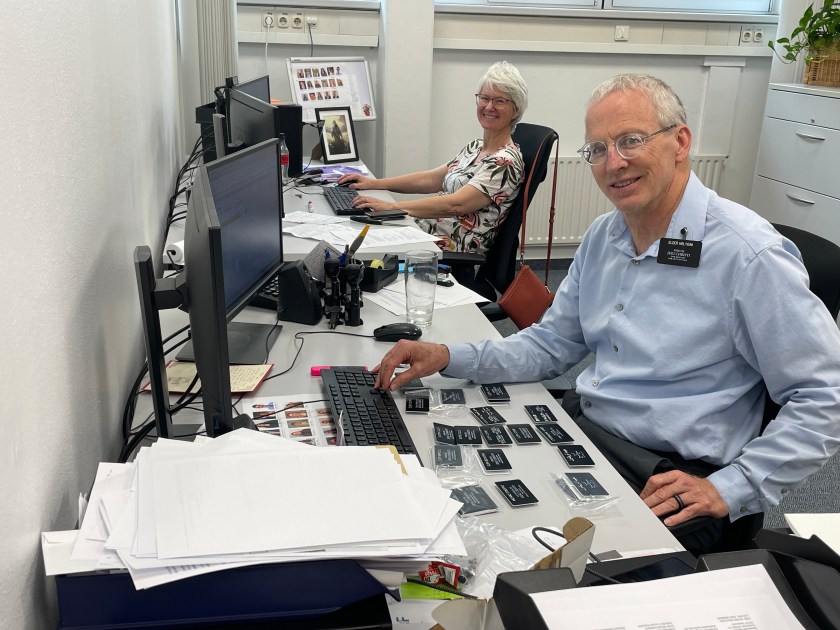
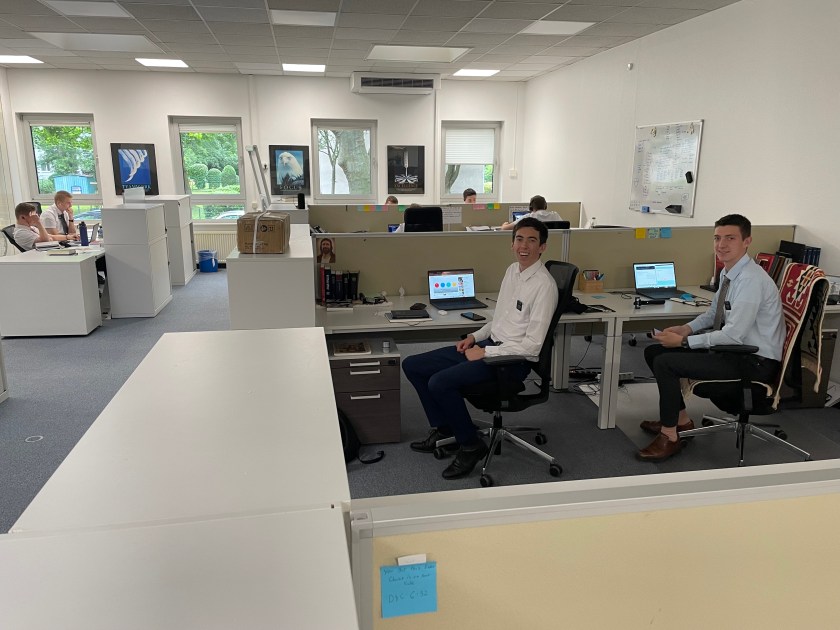
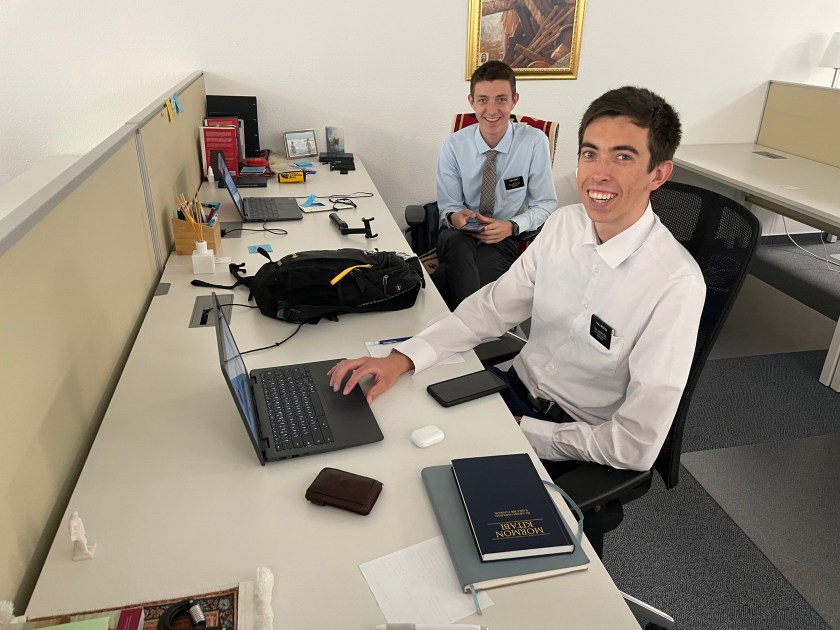
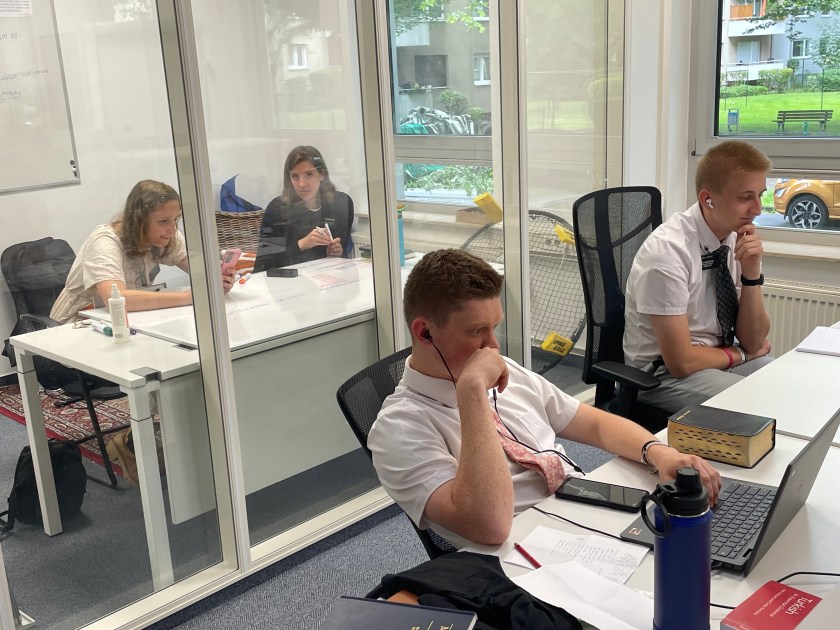
We work in the Central Europe Area Office. That’s separate from the Frankfurt Mission. Today we popped into the Mission Office for a few minutes and here’s what we found–Elder and Sister Holyoak hard at work and the missionaries who live here but do remote missionary work in Turkey.
These are our Turkish missionaries who teach online, then travel on weekends to Turkey to perform ordinances. What a unique and marvelous missionary experience they are having!
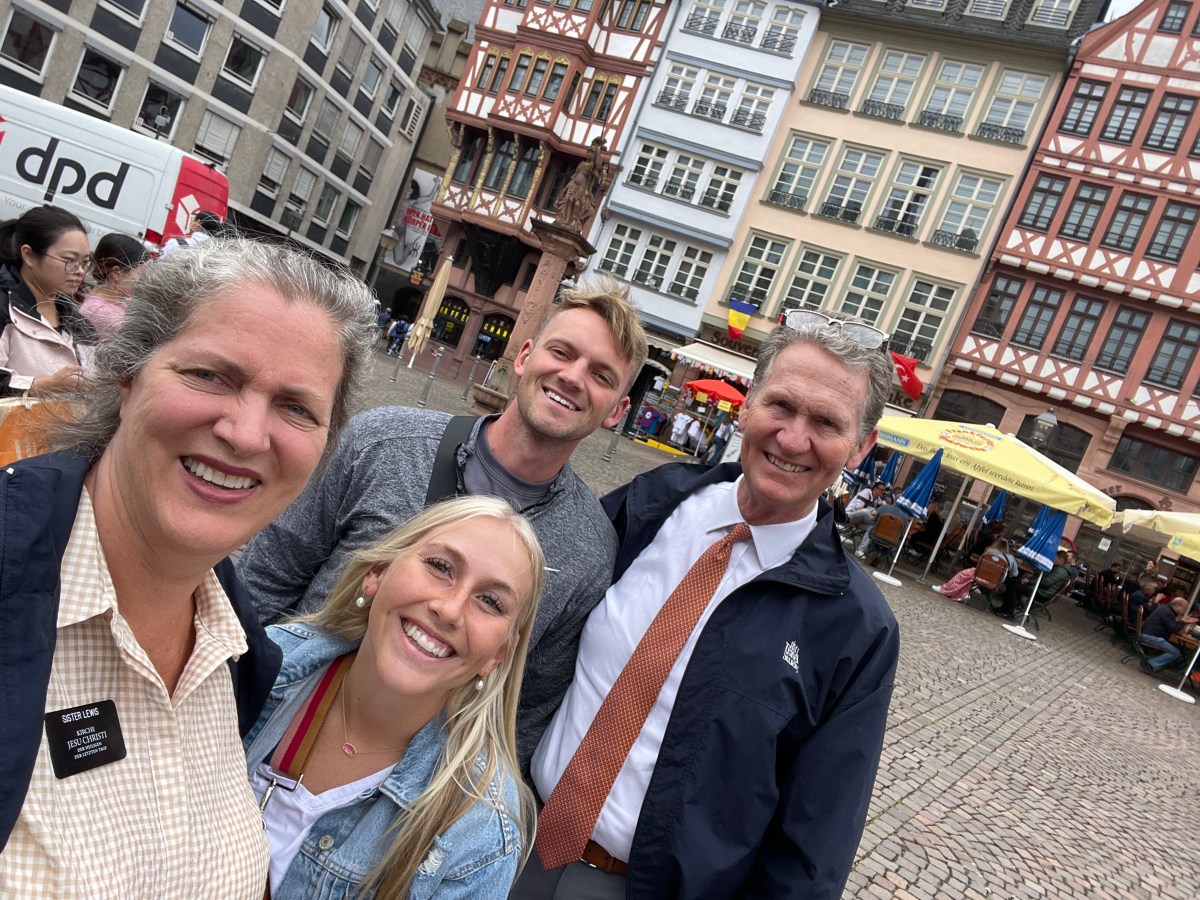
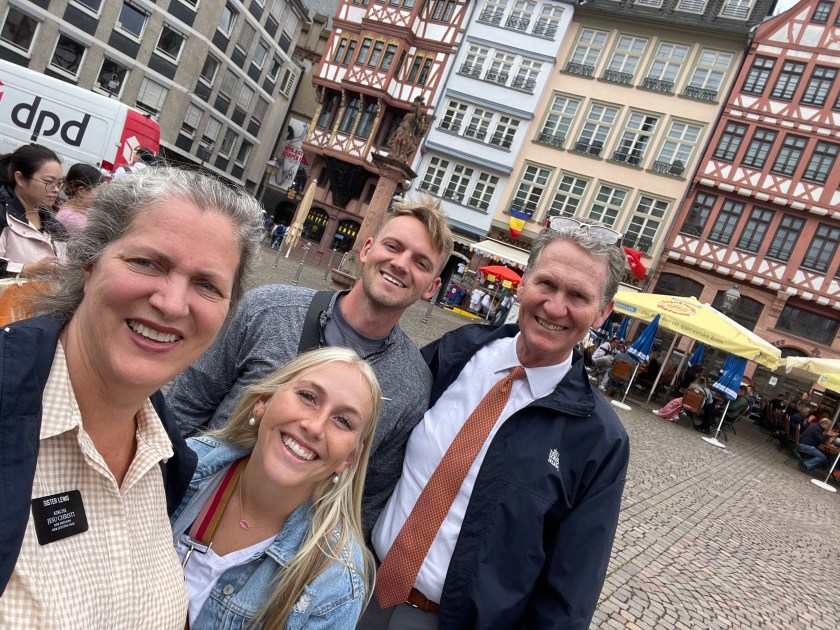
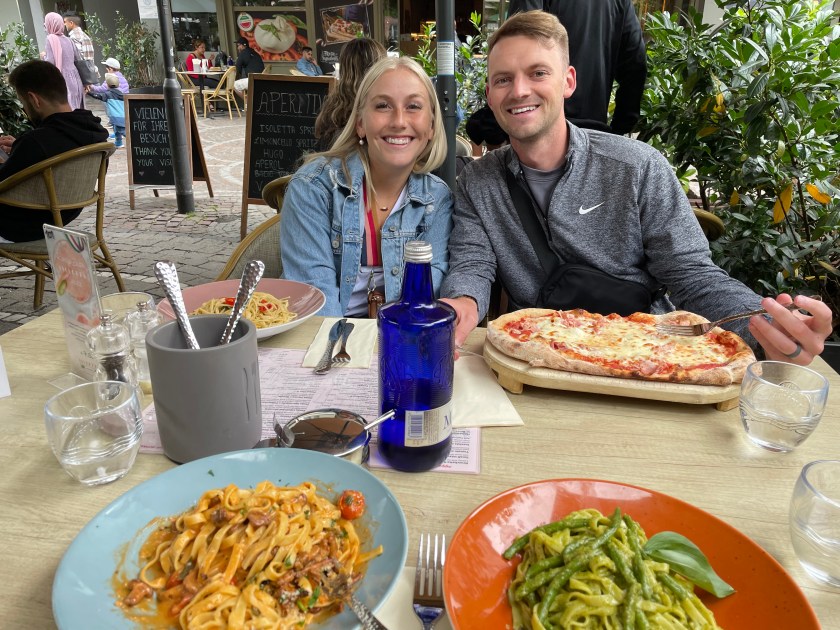
Carter Smith, one of our Yakima missionaries, and his wife Makylee, came to Frankfurt last night to see the soccer match. They’re here in Germany visiting friends. They blew in late last night and today after our meetings we took them to downtown Frankfurt to show them around for a couple of hours. It was fun.
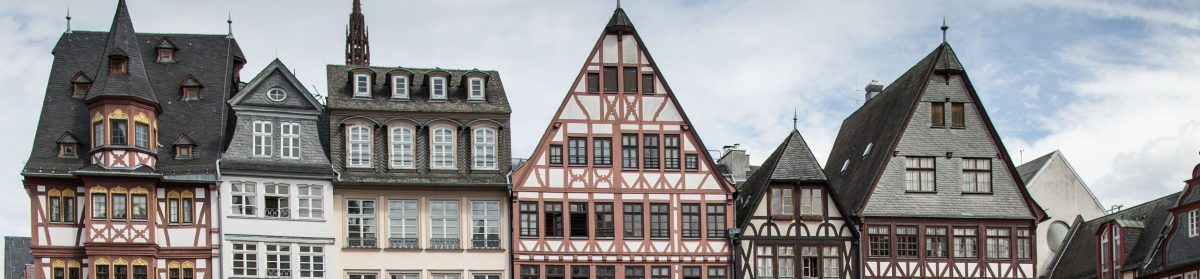
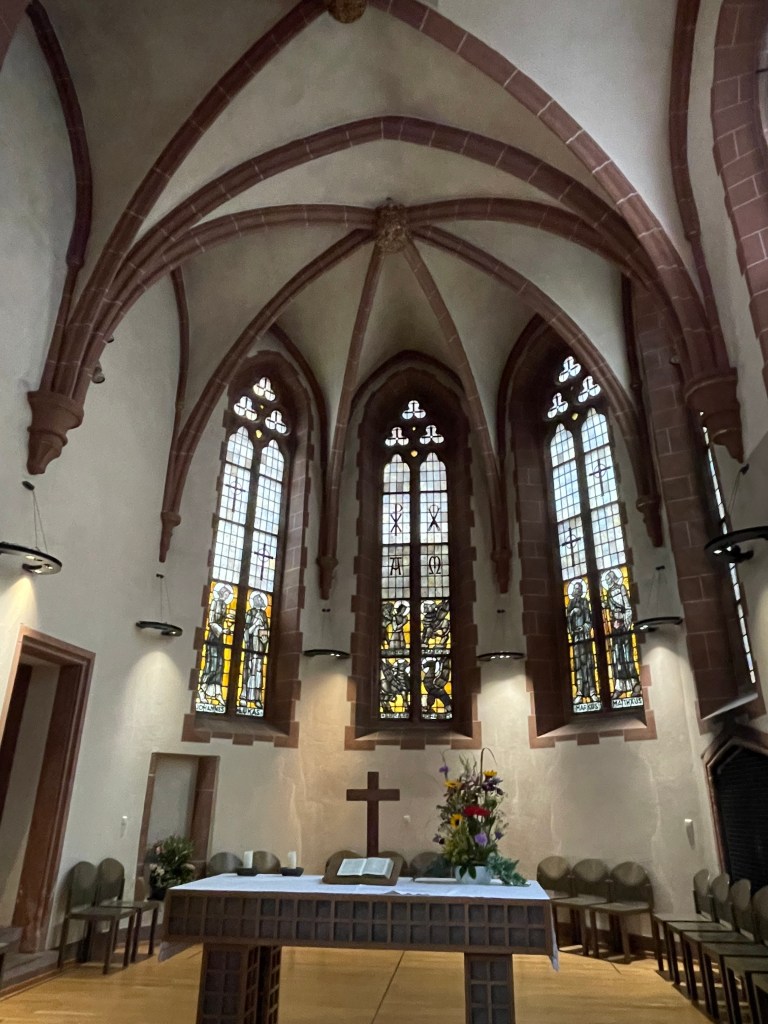
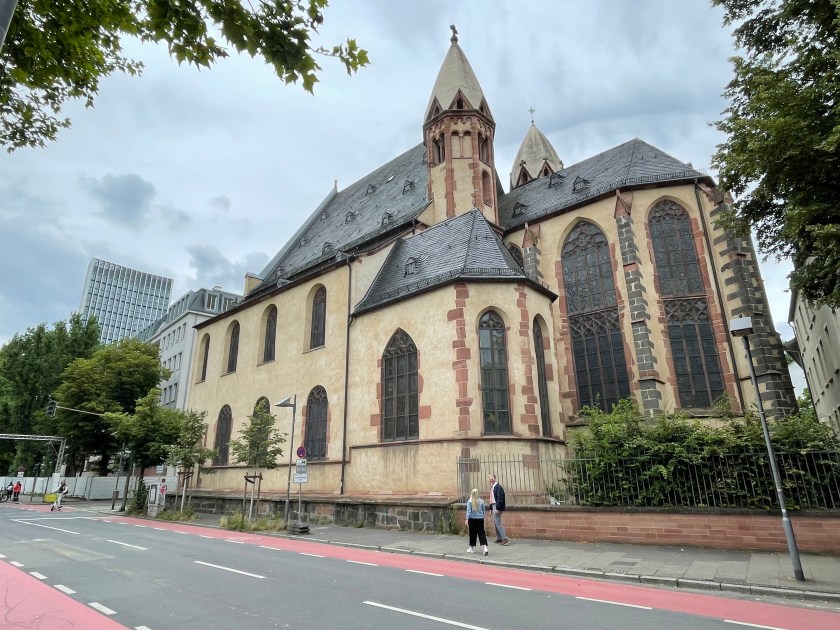
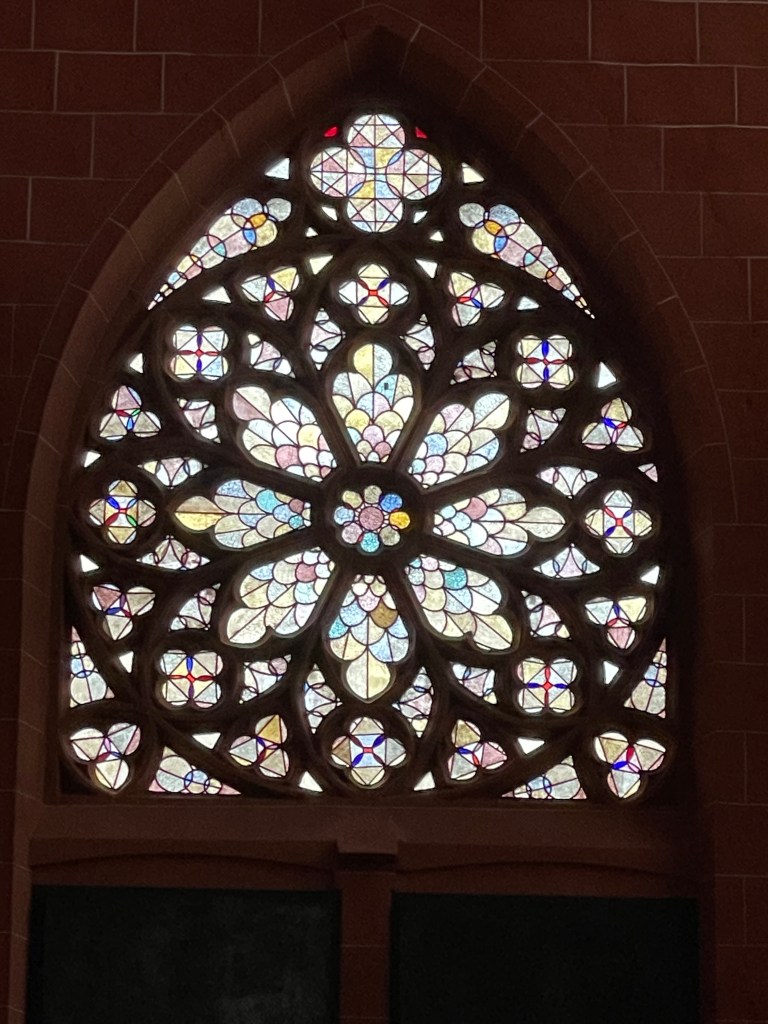
Every time we are down town, I try to see something I’ve not seen before. Today we went to the Dom, the Plaza and into some of the old churches. We saw the Fan Zone from the Fussball games and the bridge with the locks. Then we had some really good Italian food before they had to be back on the road again. We sure love our missionaries!
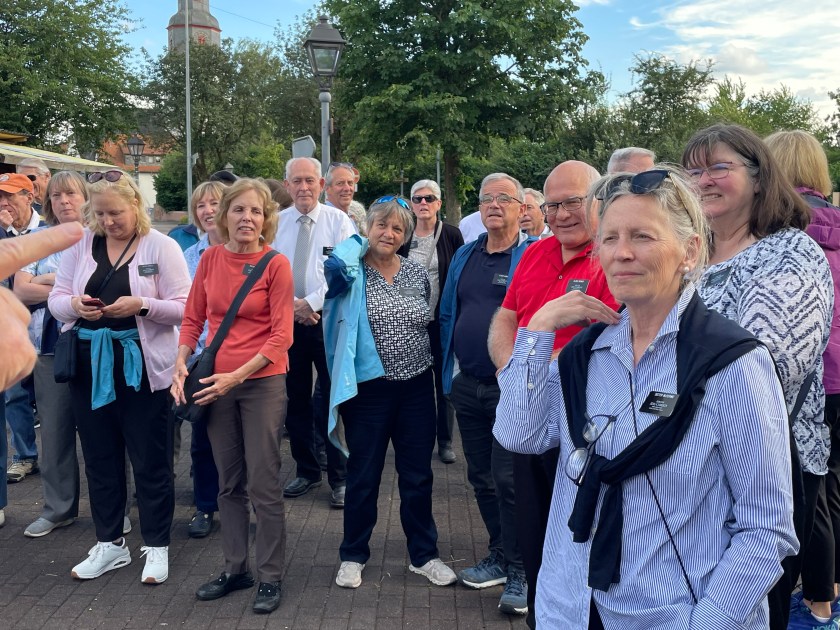
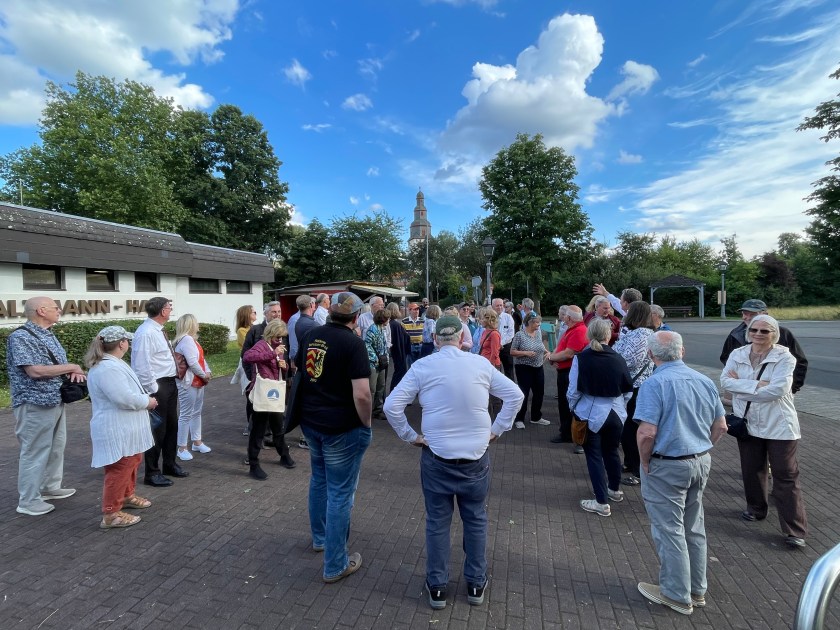
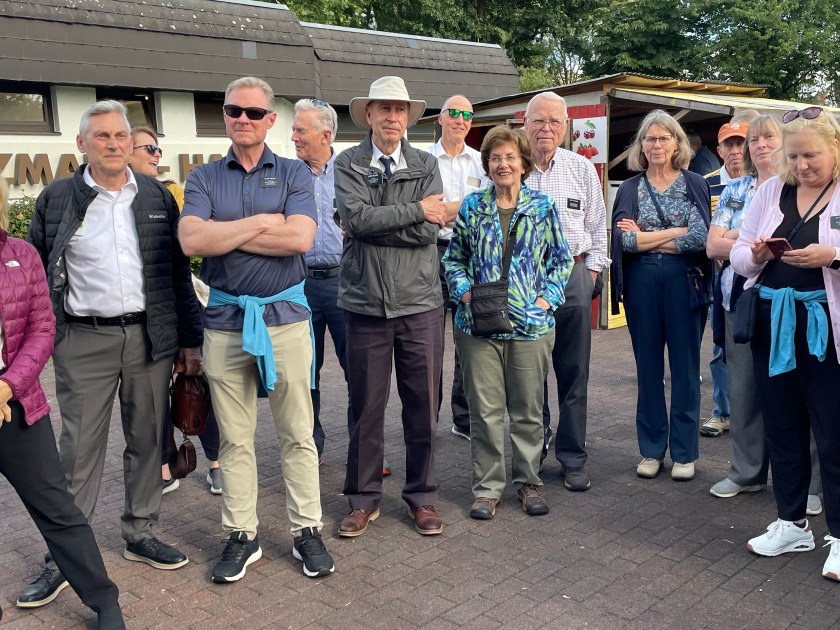
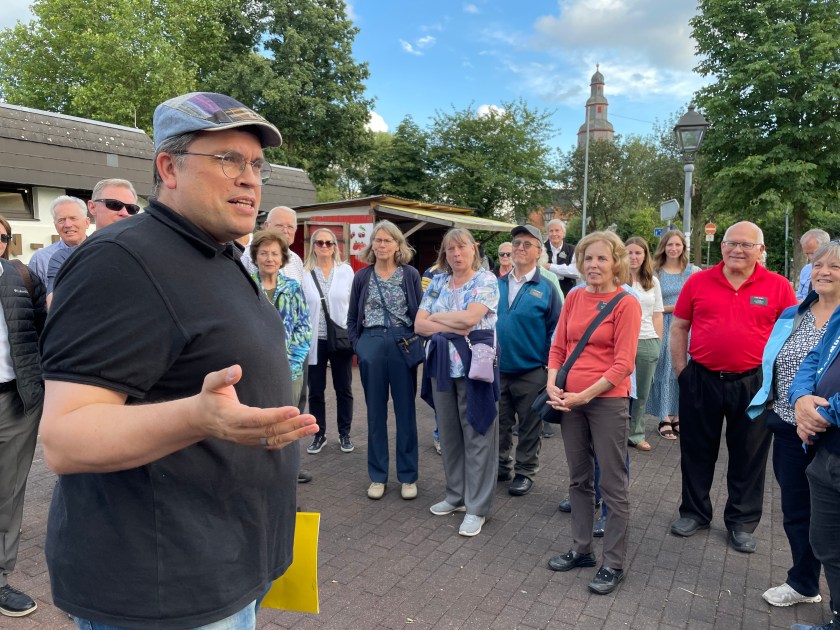
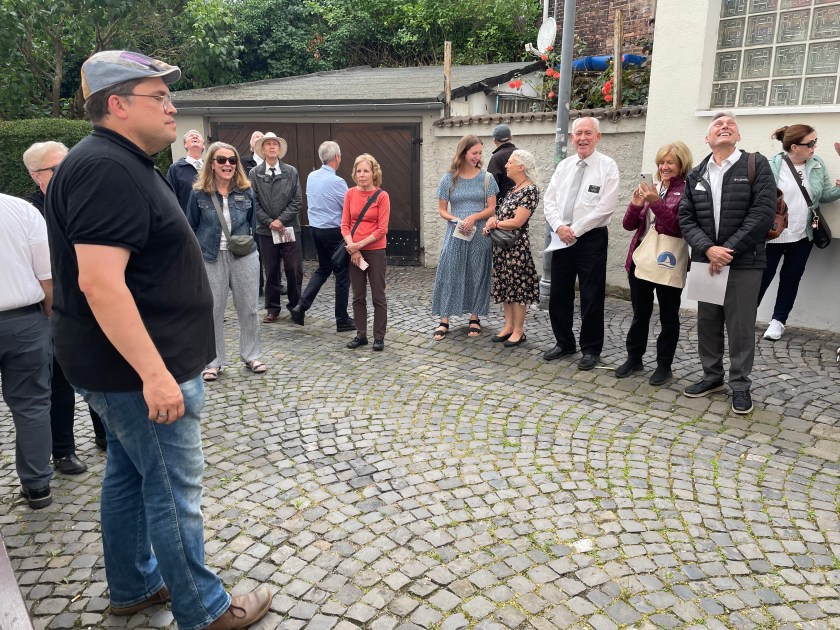
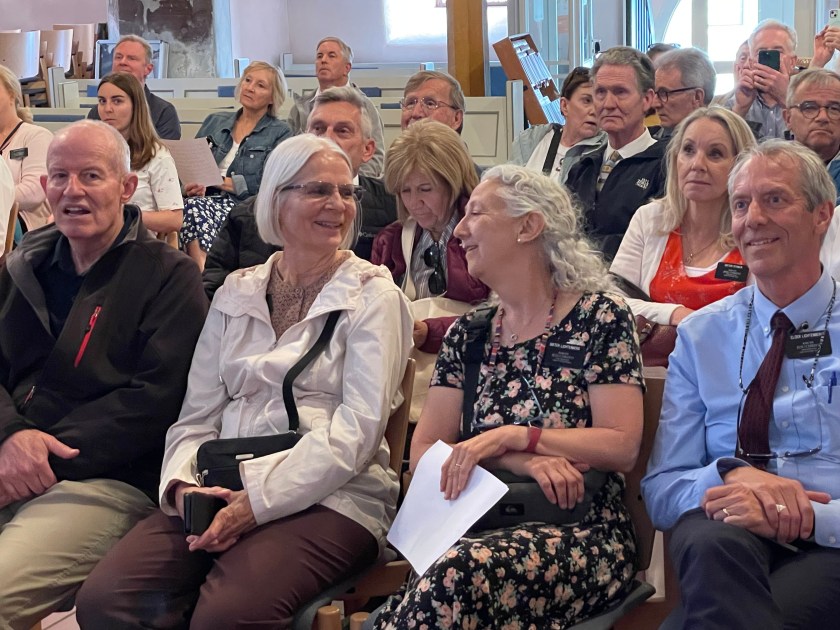
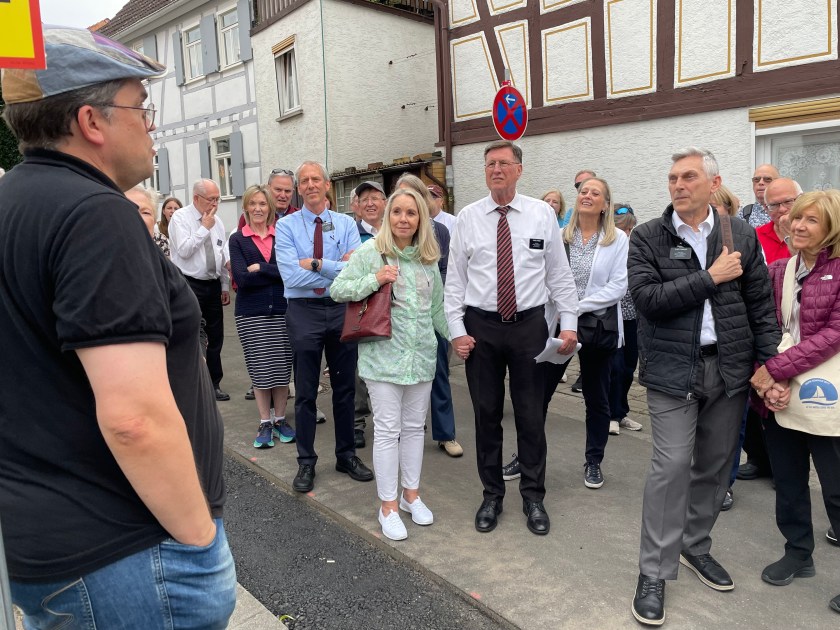
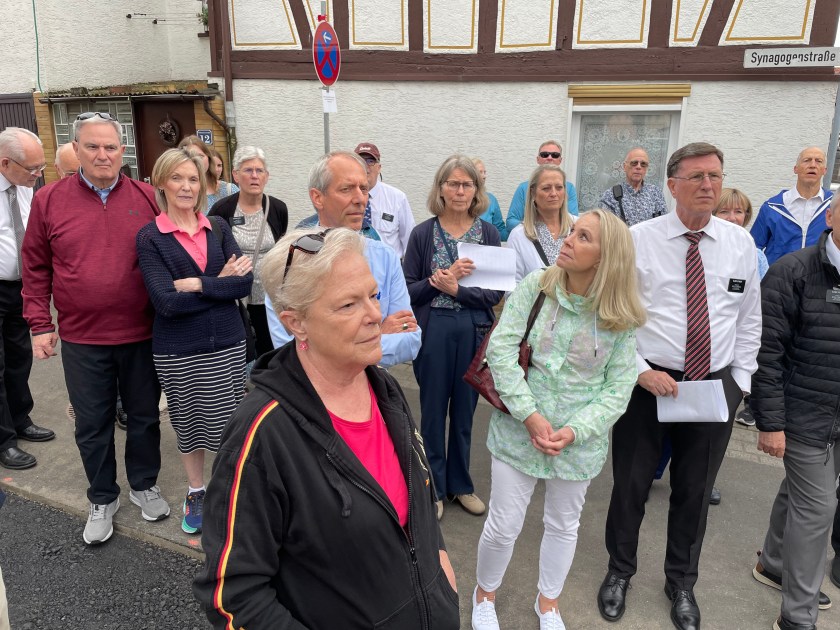
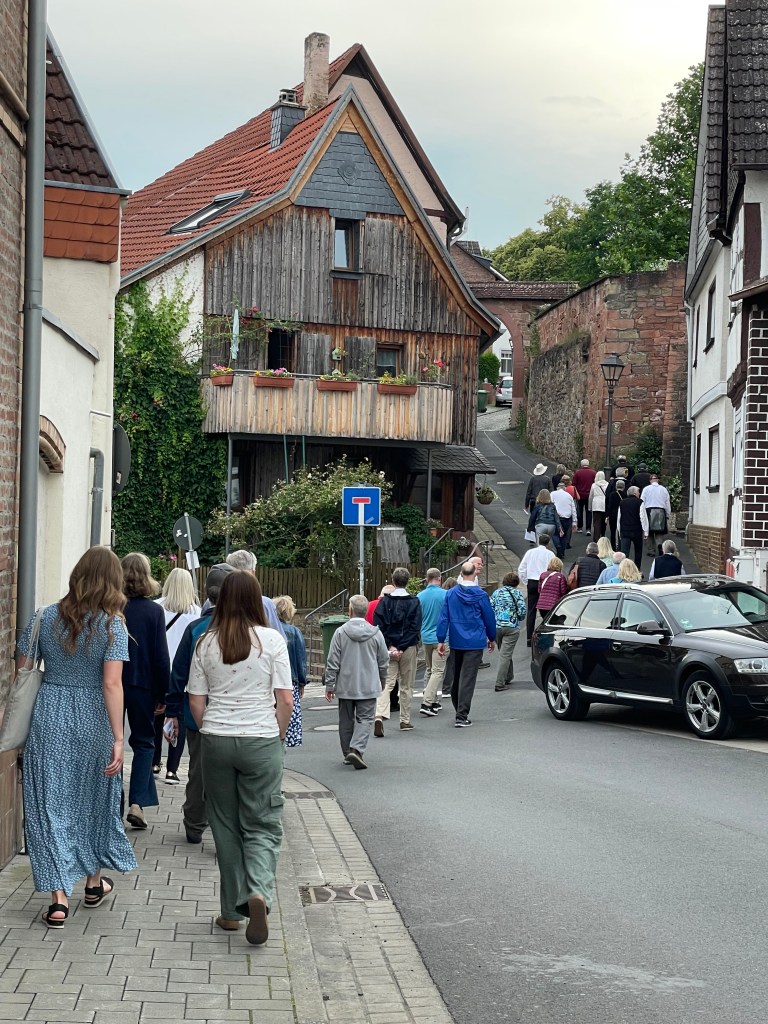
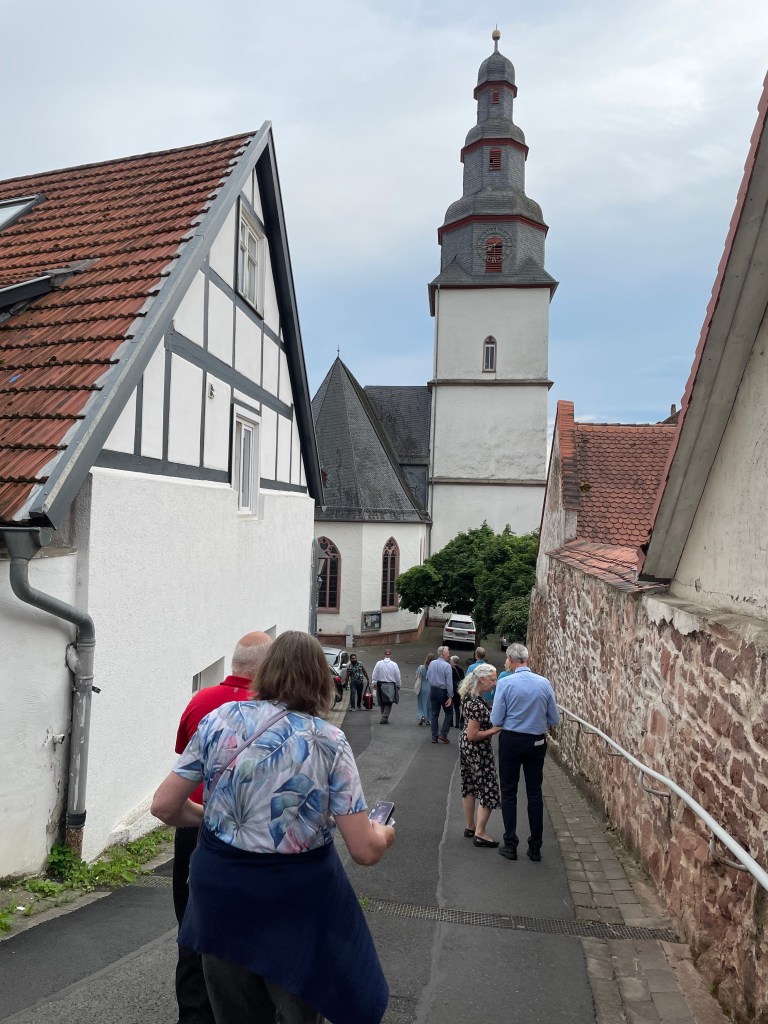
Tonight for our monthly zone activity, we took a walking tour through Windecken, led by our work colleague, Ralf Grünke, who lives in the area. We had a wonderful evening full of interesting sights and information.
Below is a map of Windecken from 1727. This town was first mentioned in 850 A. D. and a castle was built here in the 1200s. The castle was one of the residences of the Lords and Counts of Hanau. On May 15, 1634, the castle was plundered and destroyed by Croats.
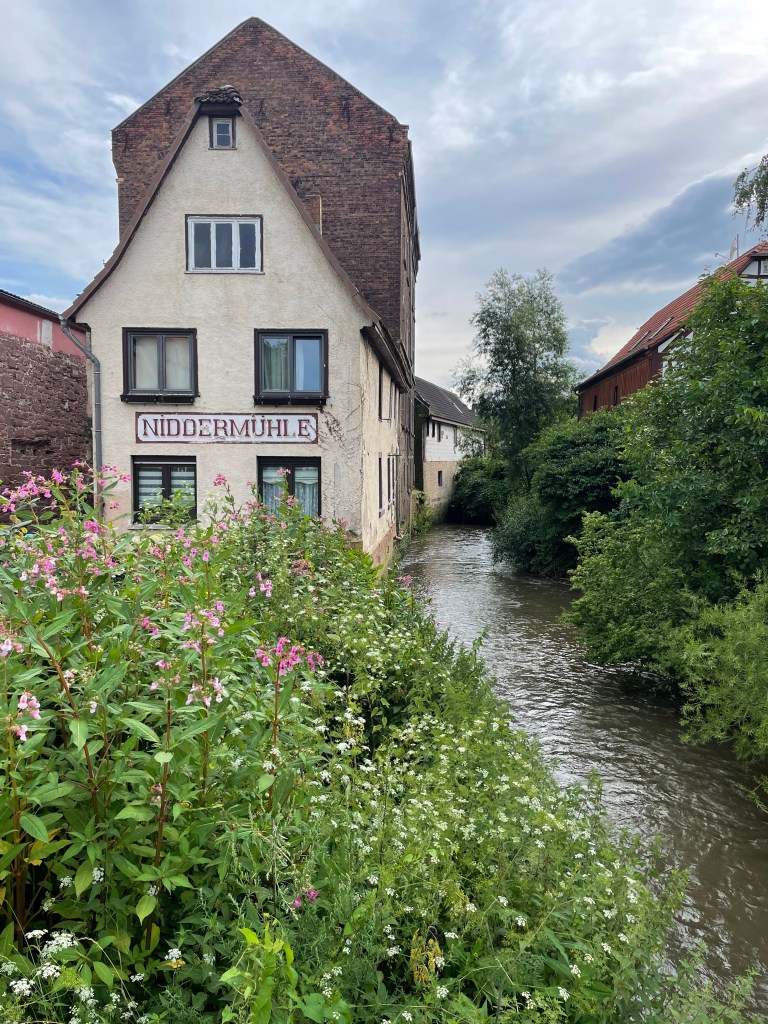
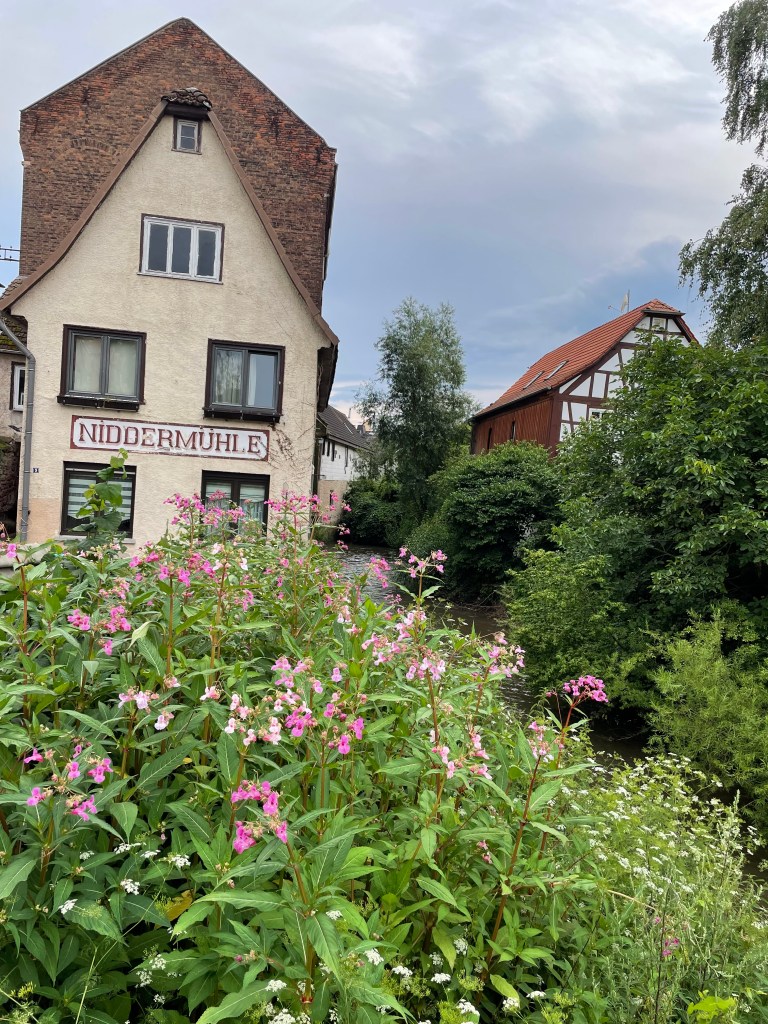
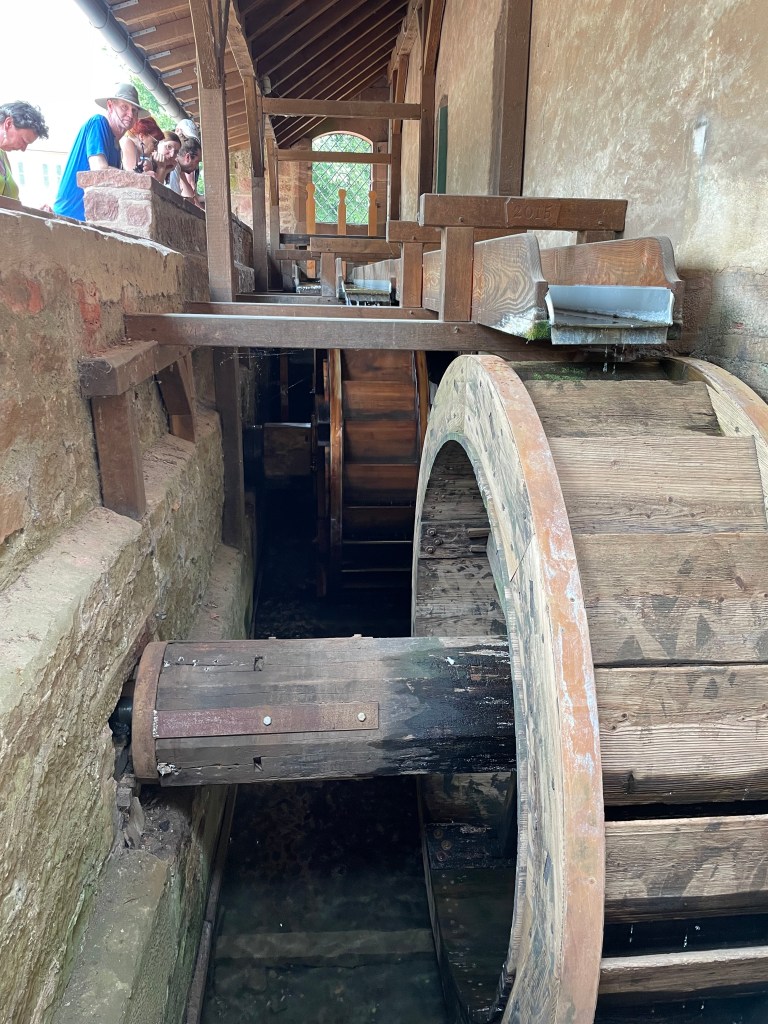
This medieval “city” sits on the Nidder river and was once a marshland. At one time there were 4 mills here.
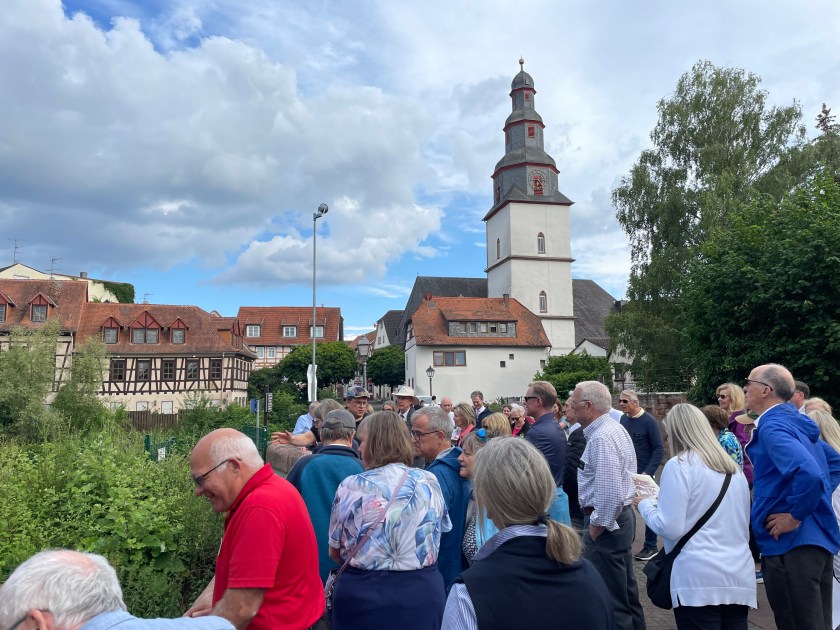
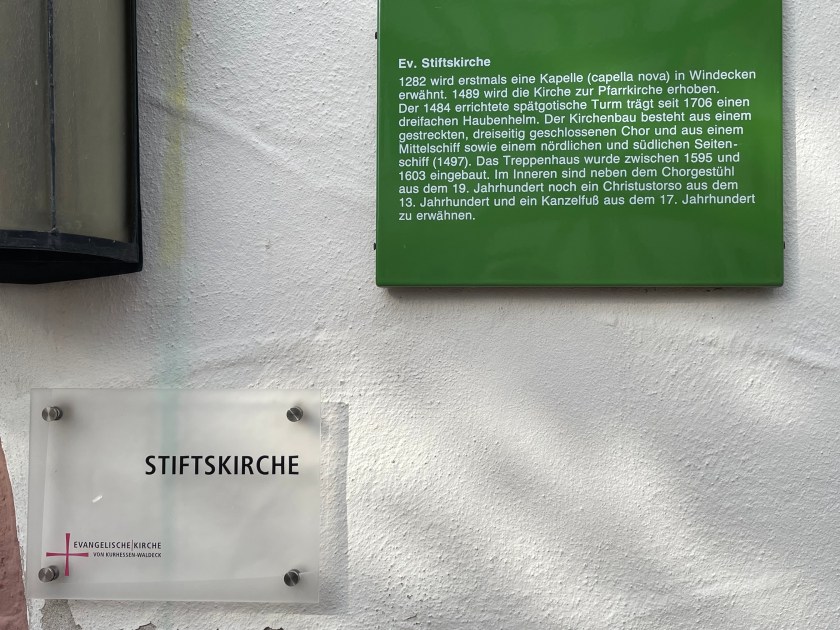
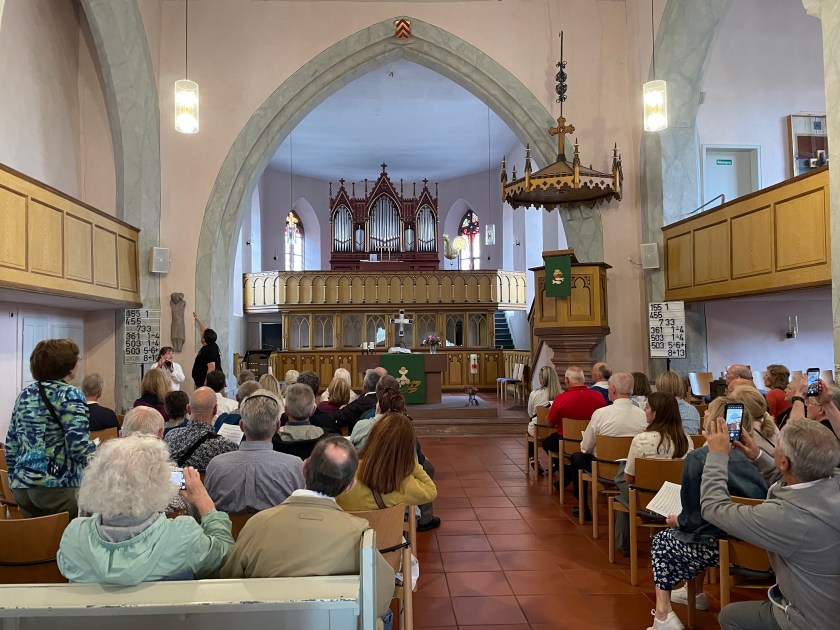
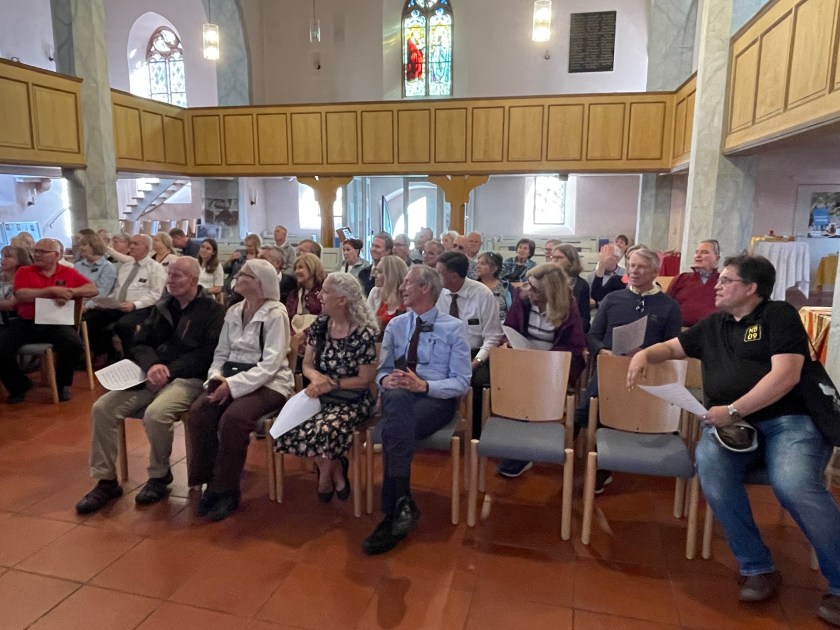
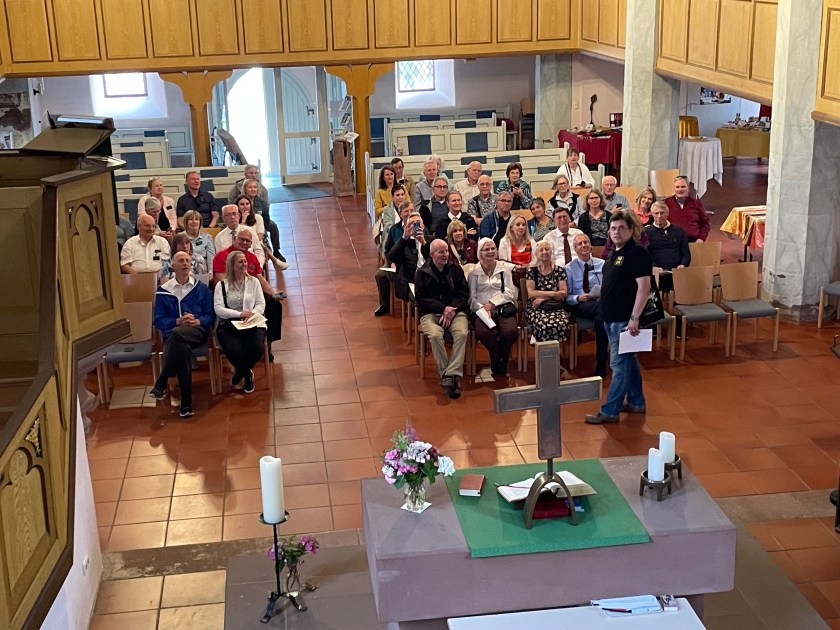
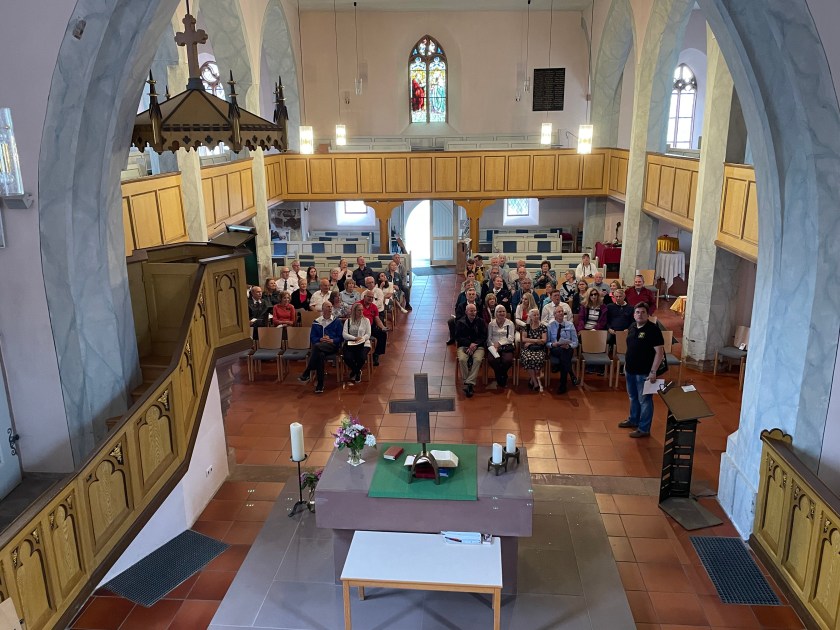
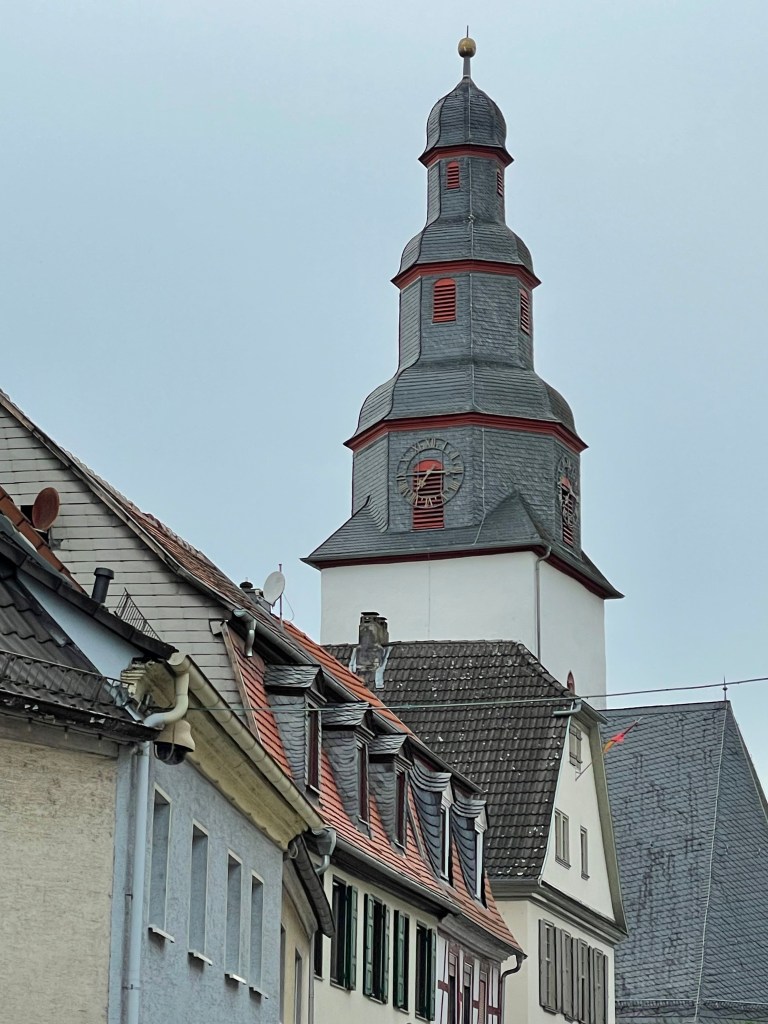
We learned about the old village church that dated back to 1282. Ralf invited a local friend who now lives in the vicar’s home and is a medieval music teacher to tell us a bit about the church. He had a key and let us take a look inside.
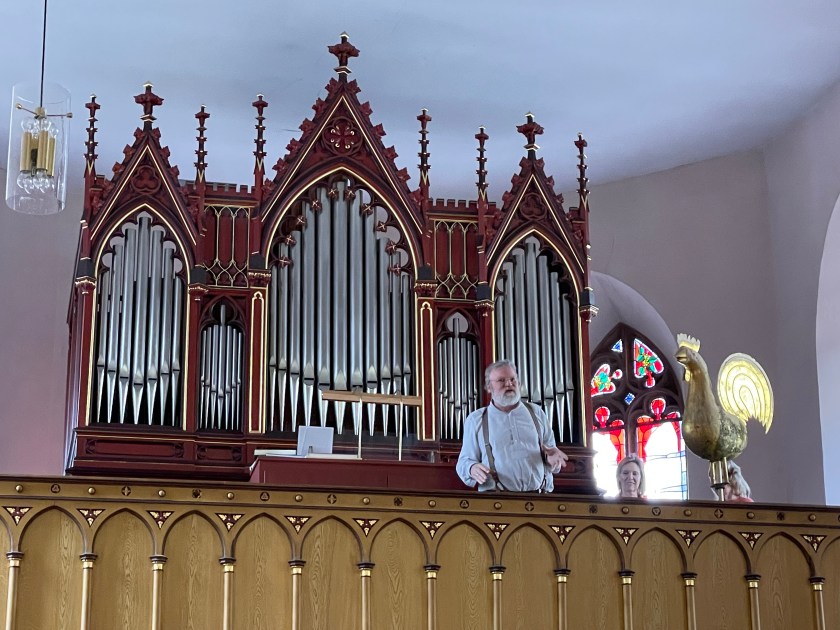
Once inside, we were treated to a organ piece–“A Mighty Fortress is our God.” We sang along, then he invited any organists in our group to come play the old pipe organ. It filled the church with a powerful spirit as we sang Martin Luther’s words.
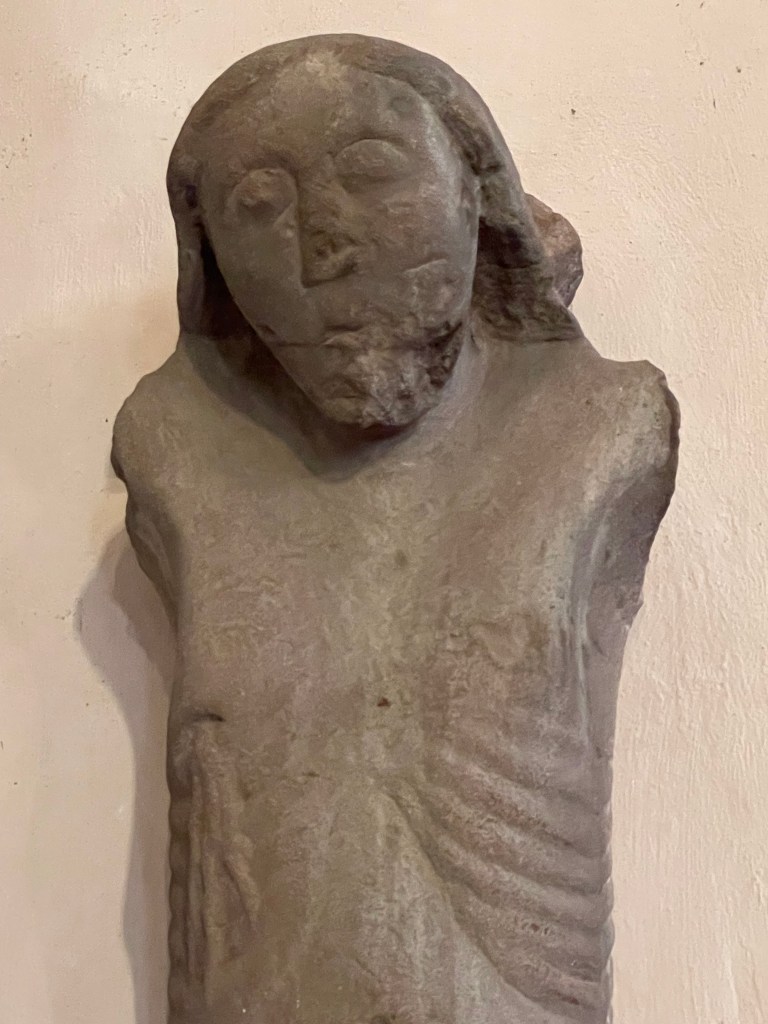
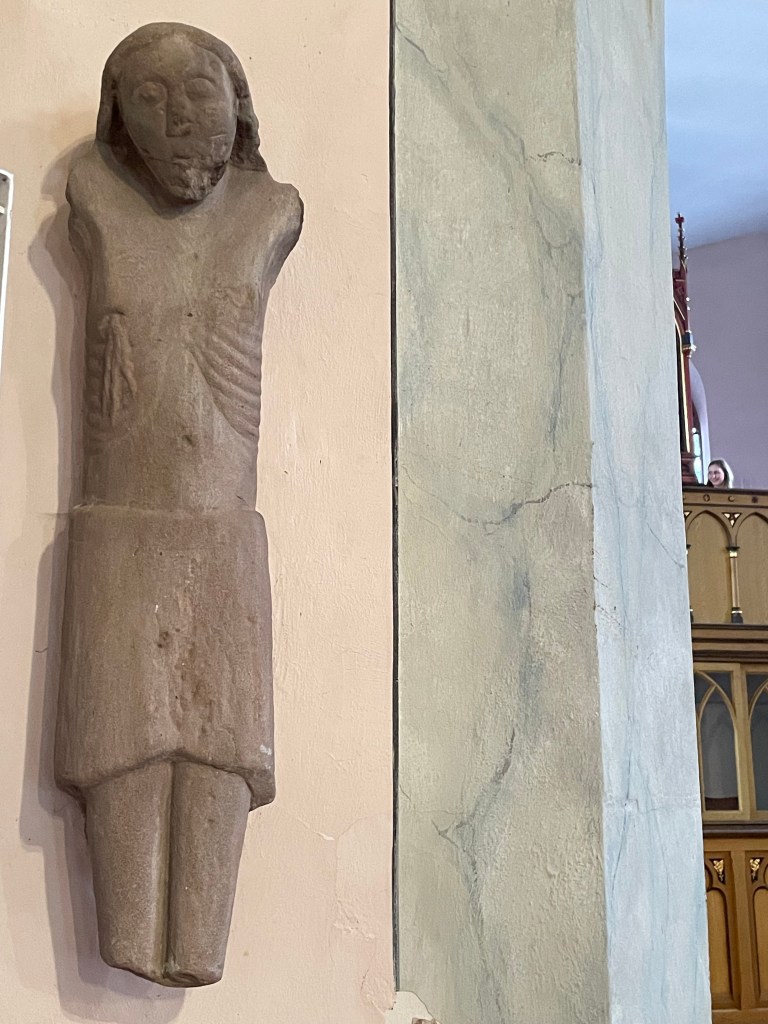
A Very Old statue of Christ:
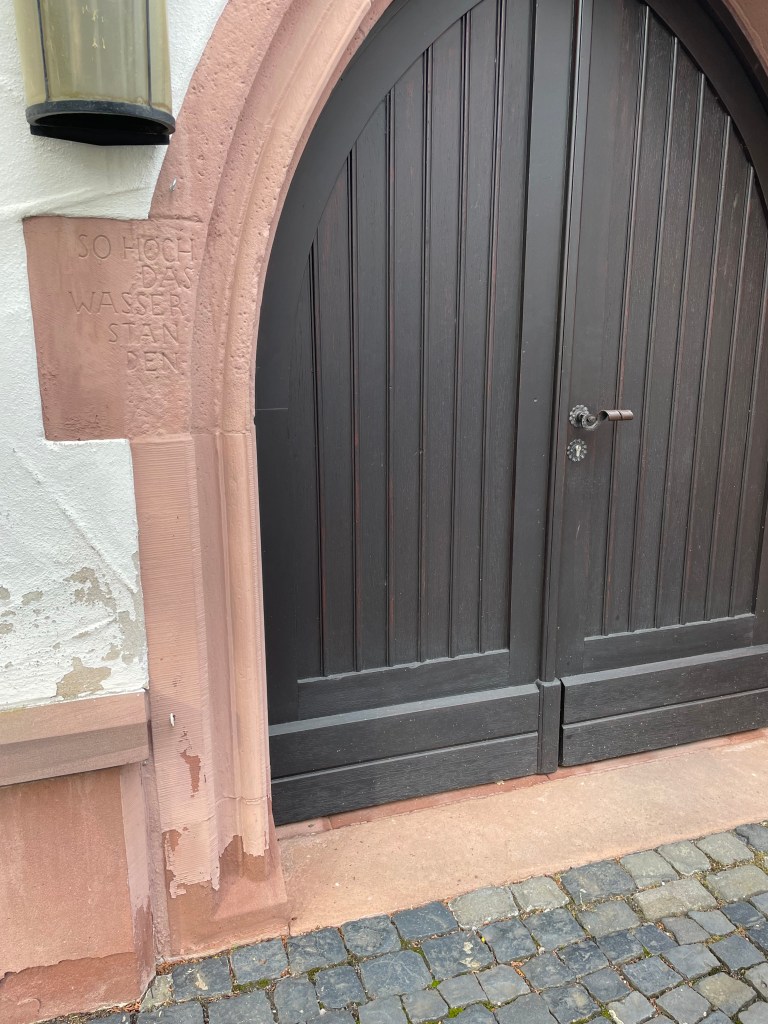
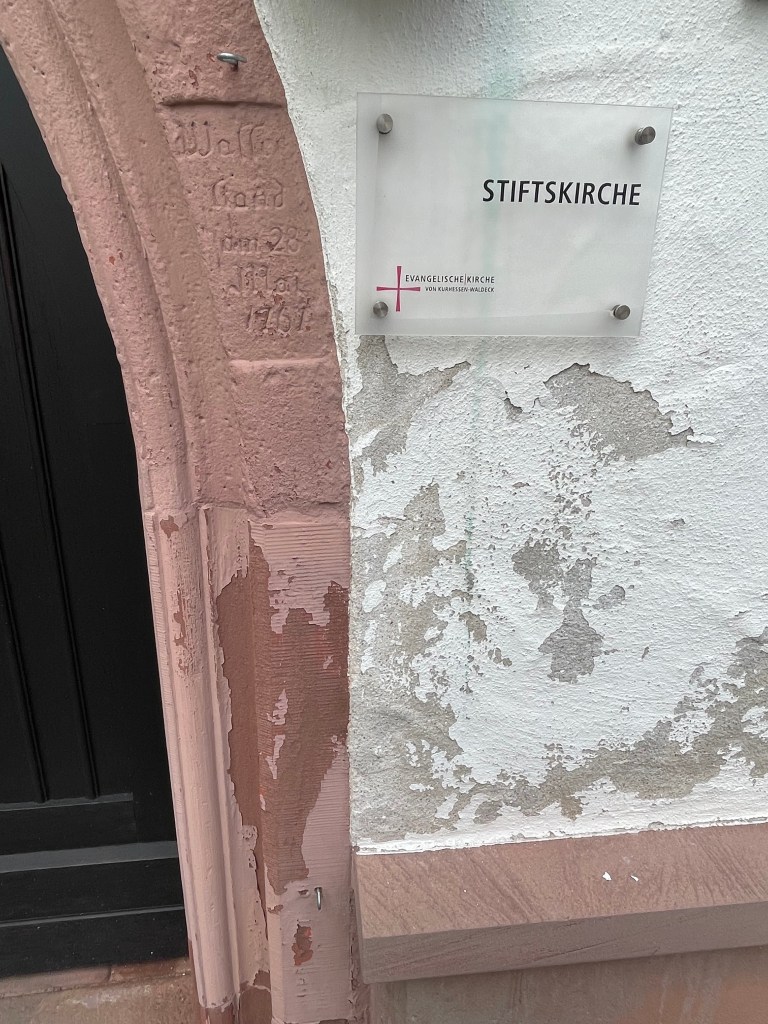
Because of the Nidder River running through (and under the town), there have been historical floods here. These marks on the church door document the high water level on 28 May 1761.
Then we went back into the narrow cobblestone streets to take a look around.
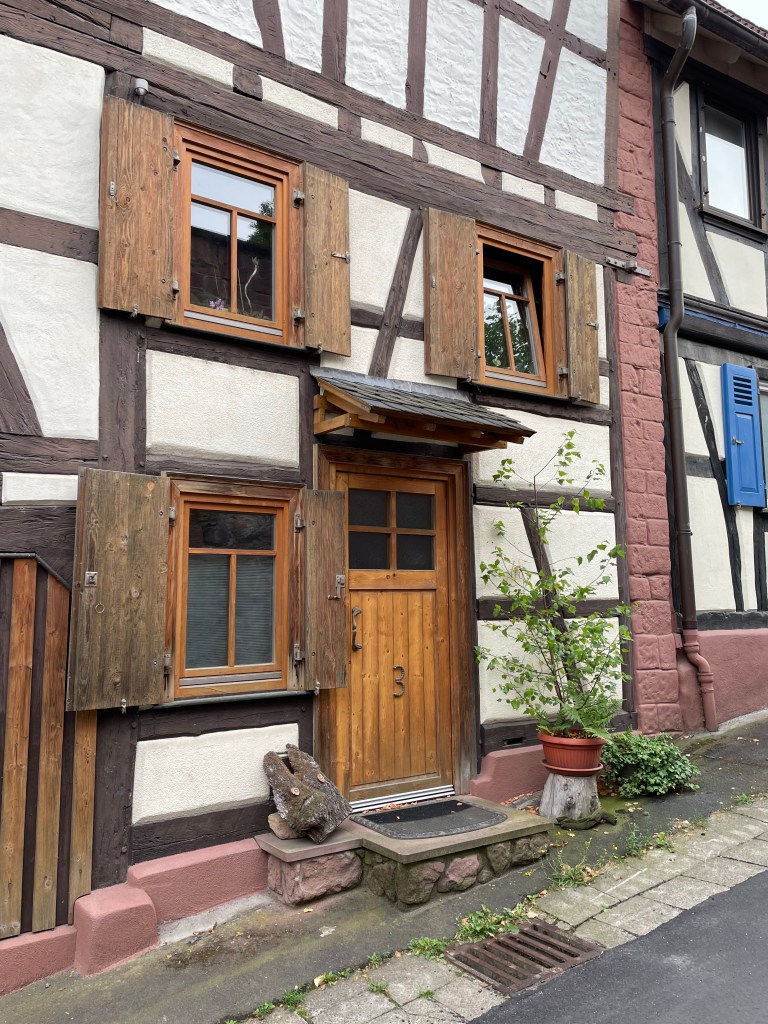
Beautiful details here.
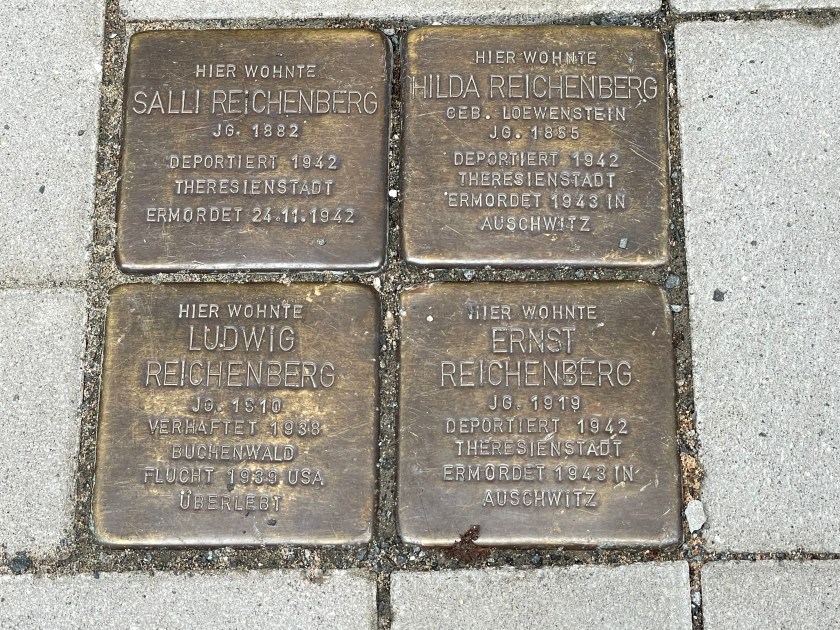
Our next stop was in front of a mercantile store from the 1930s where the Jewish Reichenberg family lived and worked. They were a prominent family in the community; father Ludwig was a WWI War hero and he displayed his badge of honor in the store window.
Throughout Europe, these Stolpersteine, or stumbling blocks commemorate the lives of Jewish citizens who were taken from their homes during the war. Most were murdered. The stones give each person’s name, birth date, date of deportation and place of death. You must bend to read their names, giving each a moment of two of your attention and respect.
Ralf explained that he is on a committee in Windecken that helps to care for these memorials and his family actually sponsored one of this family’s very stones–the son, who attended the same school his Ralf’s children attended and played soccer as his sons did.
When you visit a town in Europe, you can check online to see where the Stolpersteine in that town are located, for example, here’s a link to the 17 memorials in Windecken. You can read more about the Stolpersteine project here. It’s the largest art installation in Europe, with more than 100,000 memorials in more than 1,200 cities, each one is a sobering discovery by those passing by.
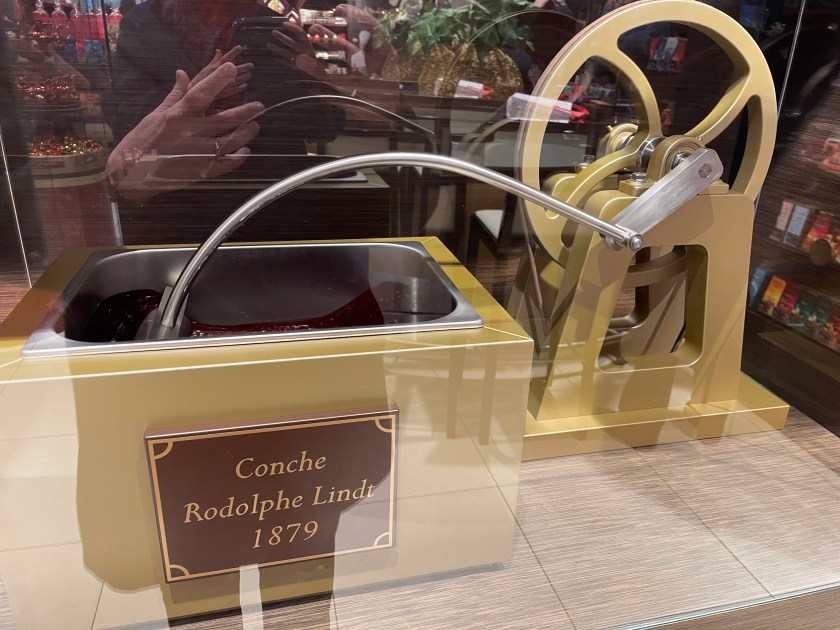
Ancestors of Rodolphe Lindt , the inventor of the conche , came from Windecken. The conching machine is a special kneading and stirring device in chocolate production that makes the melting character of the end product possible. You can see replicas of these machines in Lindt chocolate stores today that look like this:
We saw this Conche machine at the Lindt shop in Baden-Baden.
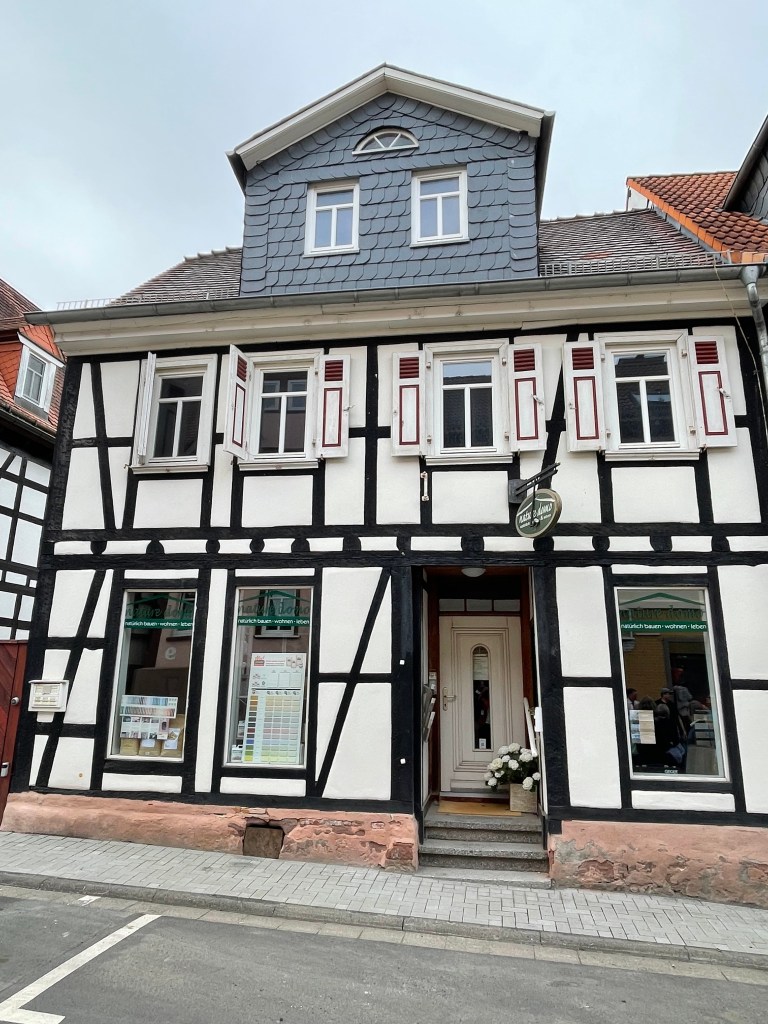
Below is the Lindt family home. One branch of the family owned a bakery in Windecken until the 19th century.
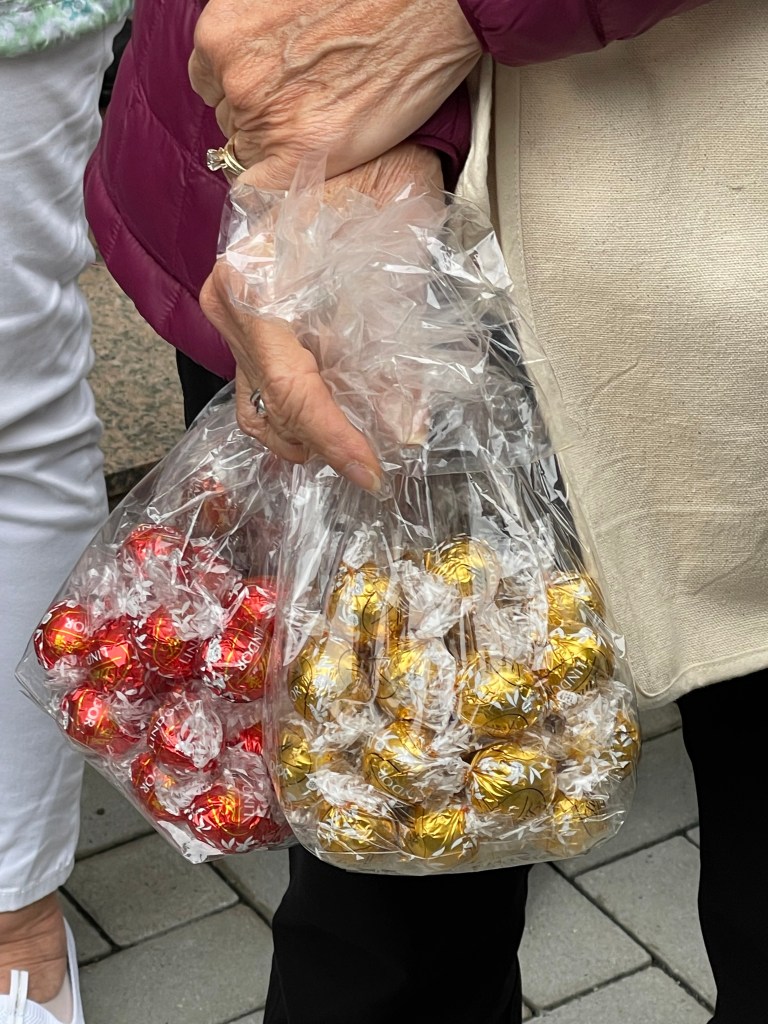
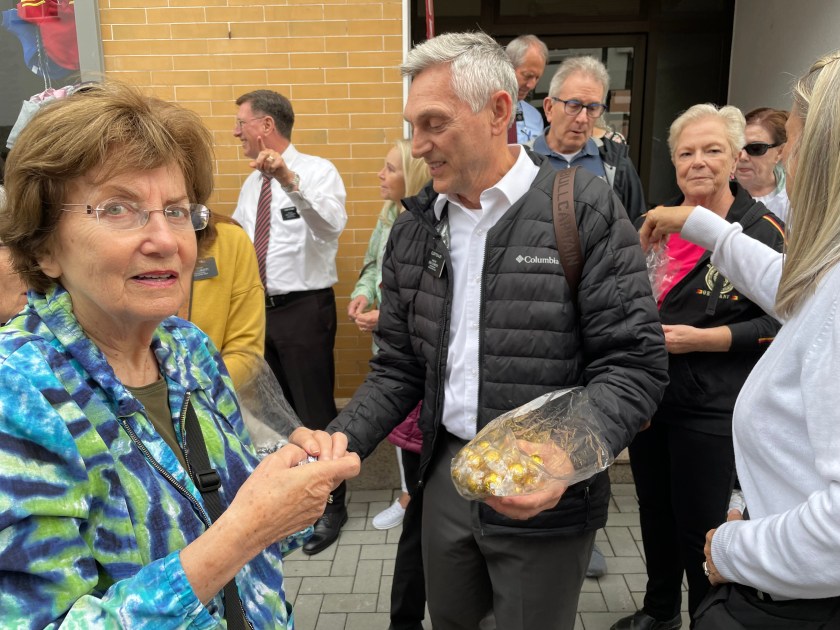
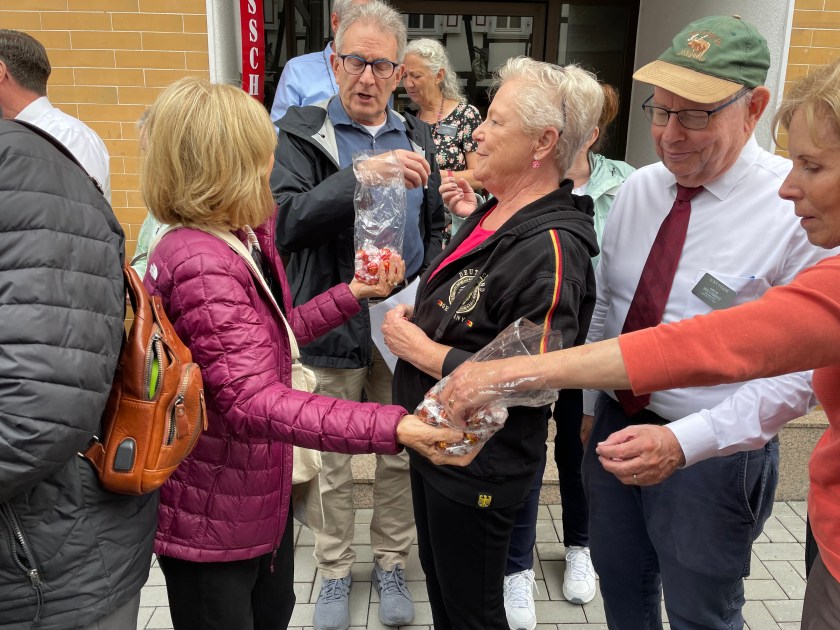
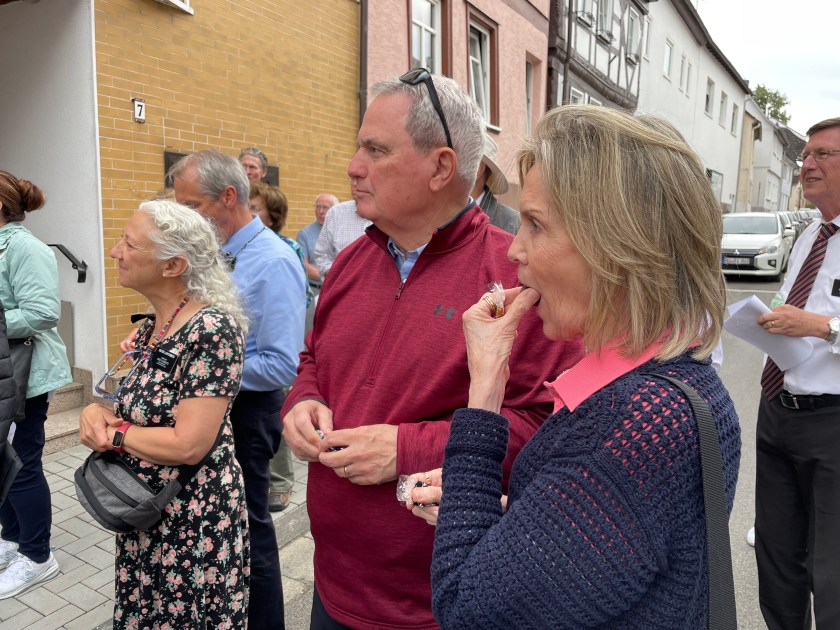
Everyone got to enjoy a Lindt ball as we learned about this family’s home place.
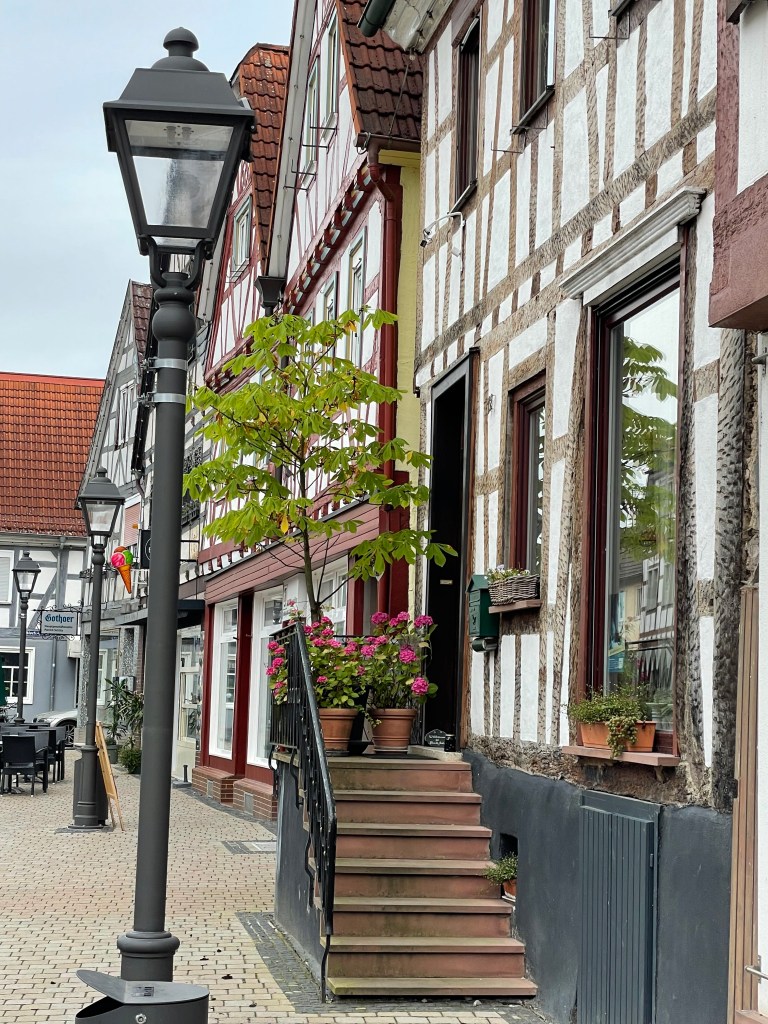
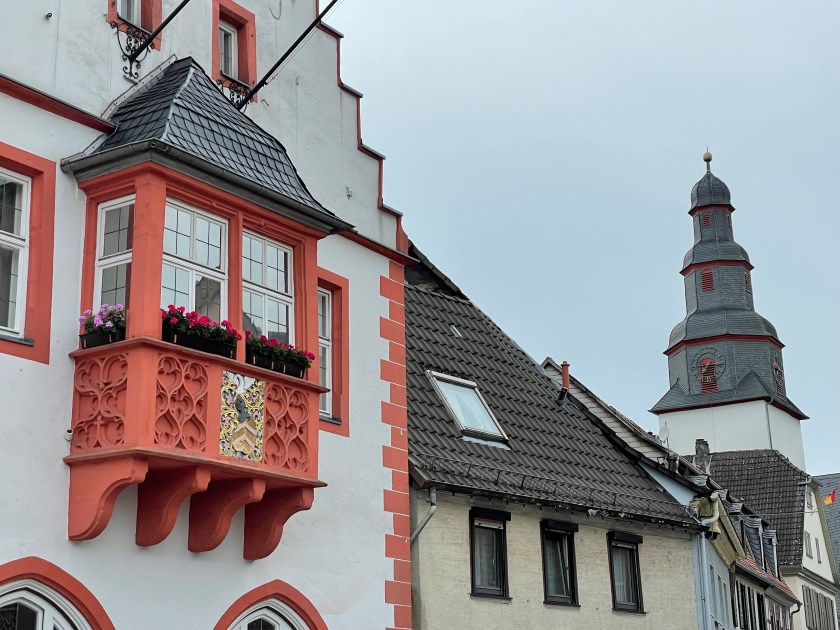
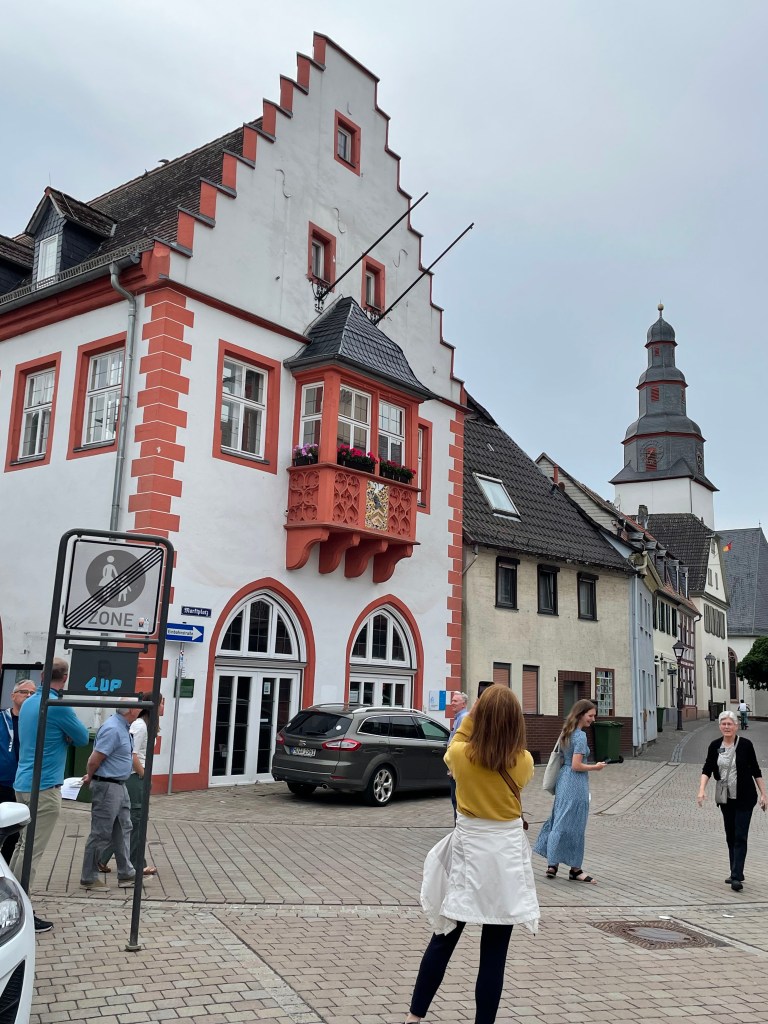
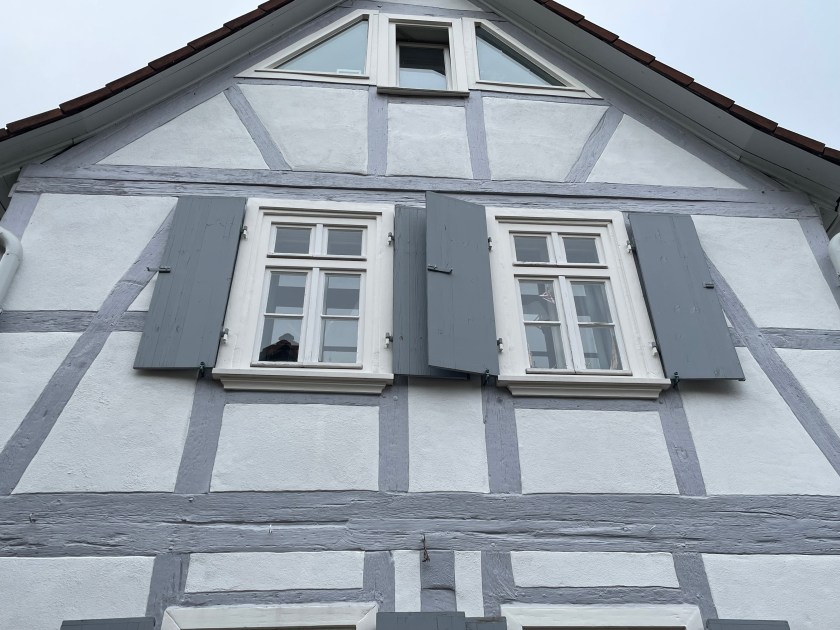
Then we continued to the town square, passing by some very old homes.
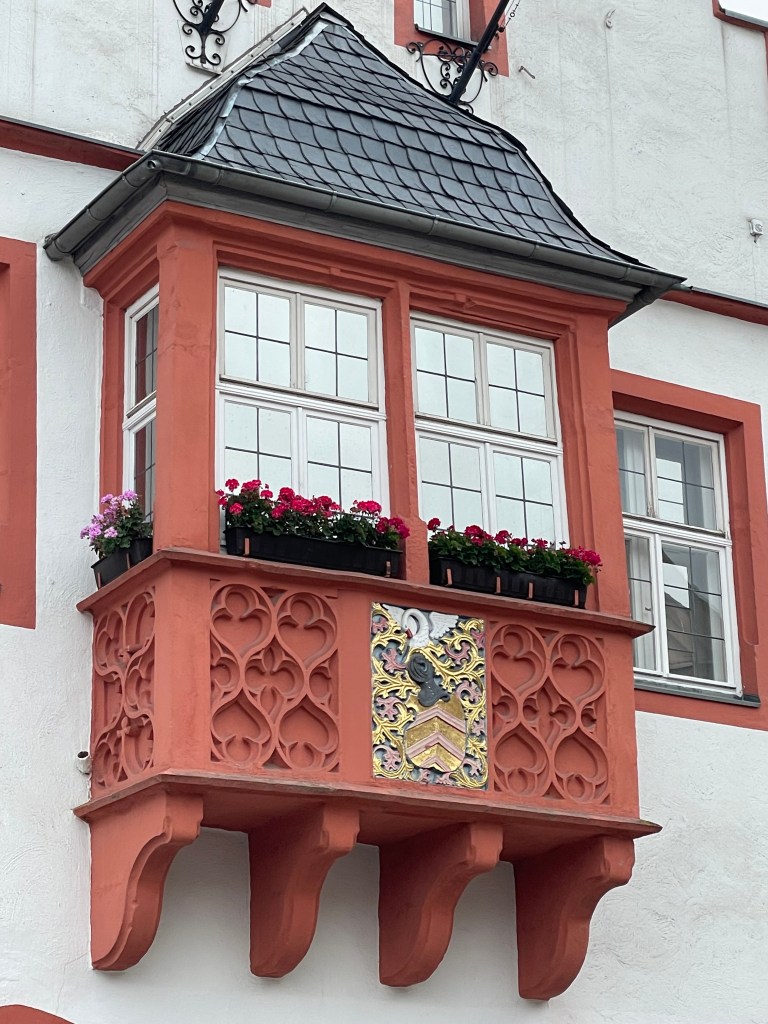
The swan is the symbol of this city.
This is the old City Hall, now a library.
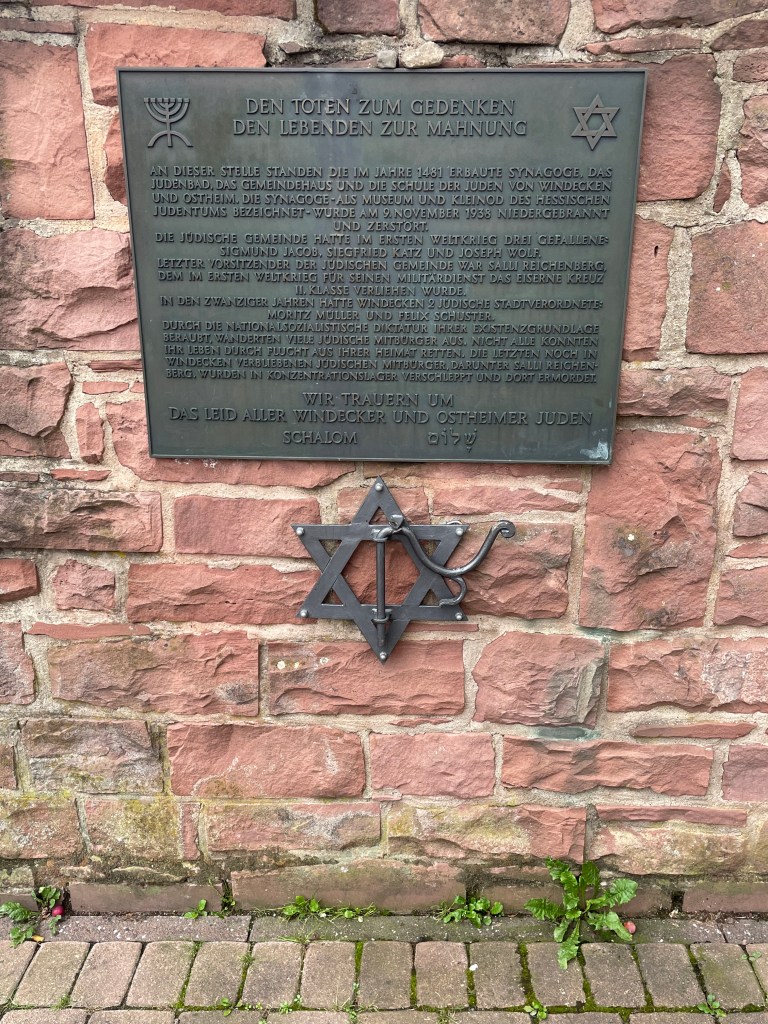
Ralf took us to the place where the old Jewish Synagogue once stood. It was built in 1481 and it was destroyed 9 November 1938 on Krystalnacht, the night the Nazis opened the doors of hell and let their minions loose on the Jewish people. There is a Jewish cemetery in Windecken with a few stones still standing.
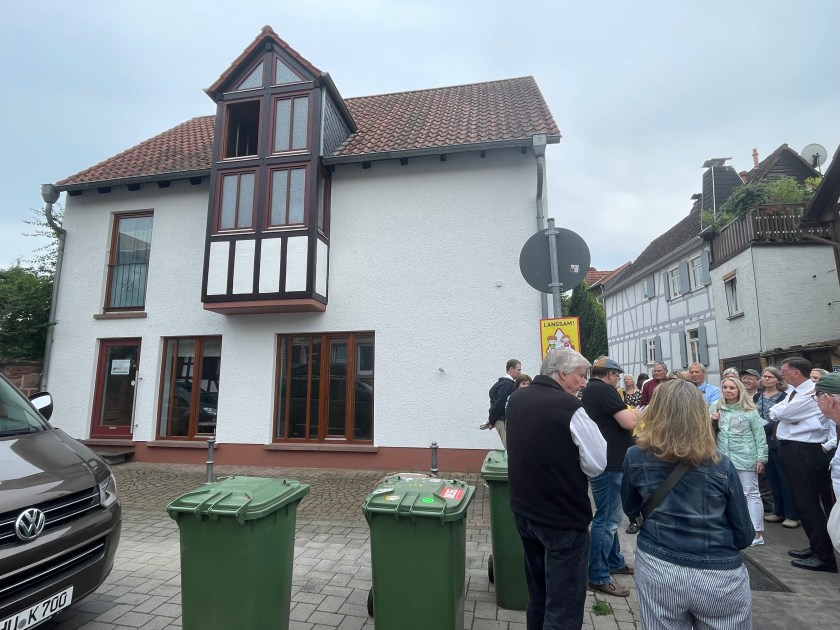
This church was built where the synagogue once stood:
Heinrich Wilhelm Kurz (1862–1934) was the next famous person we learned about who hails from Windecken. He was an inventor who developed a rotating washing machine, a pancake turner, a tumbler, an overrun brake and an independent wheel suspension for carts, a toilet seat for small children and the sugar shaker. Kurz never applied for patents. However, he recorded his inventions in a small notebook. His grandson Theodor Jacob applied for a patent for the sugar shaker in 1953 and produced it from 1954 in his company Helly in Hanau.
Almost every restaurant in Europe has one of these sugar dispensers right next to the napkin holders!
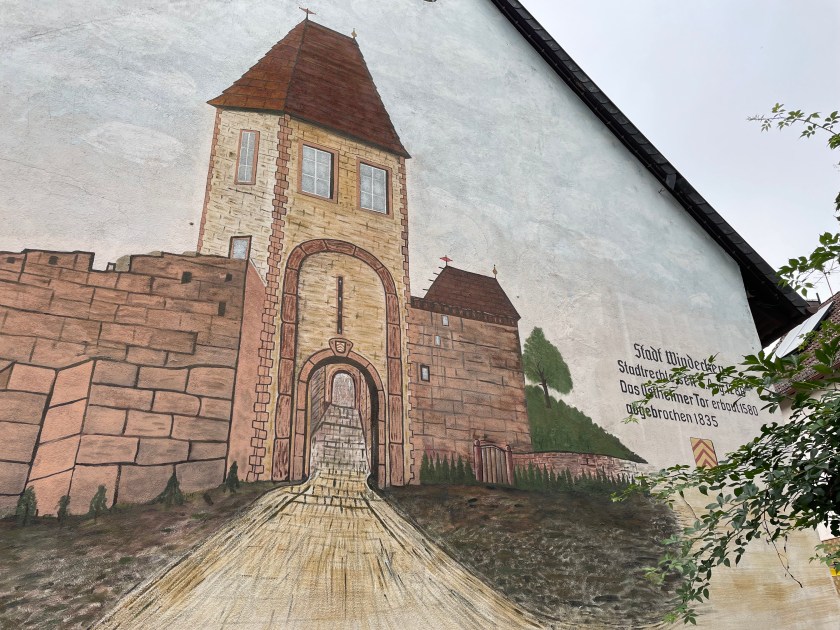
Here’s a part of the old city wall:
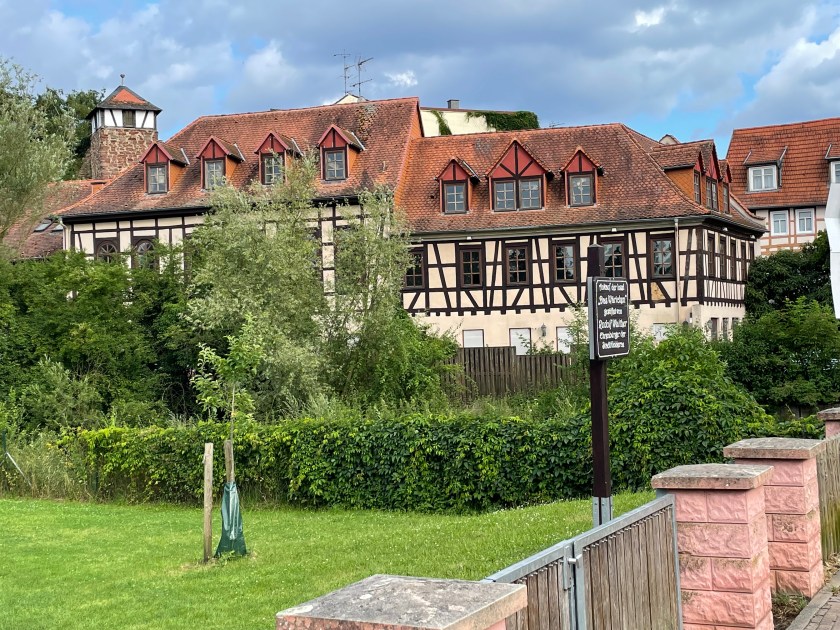
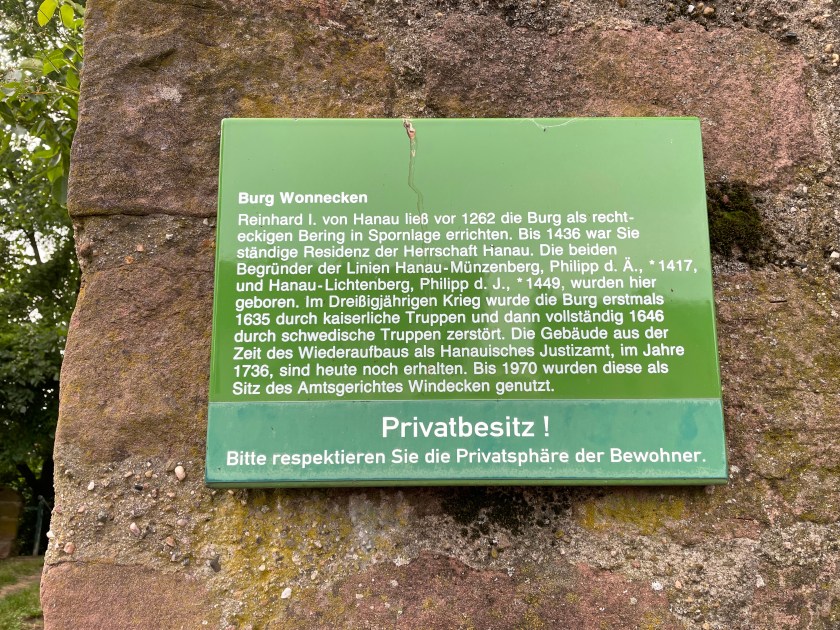
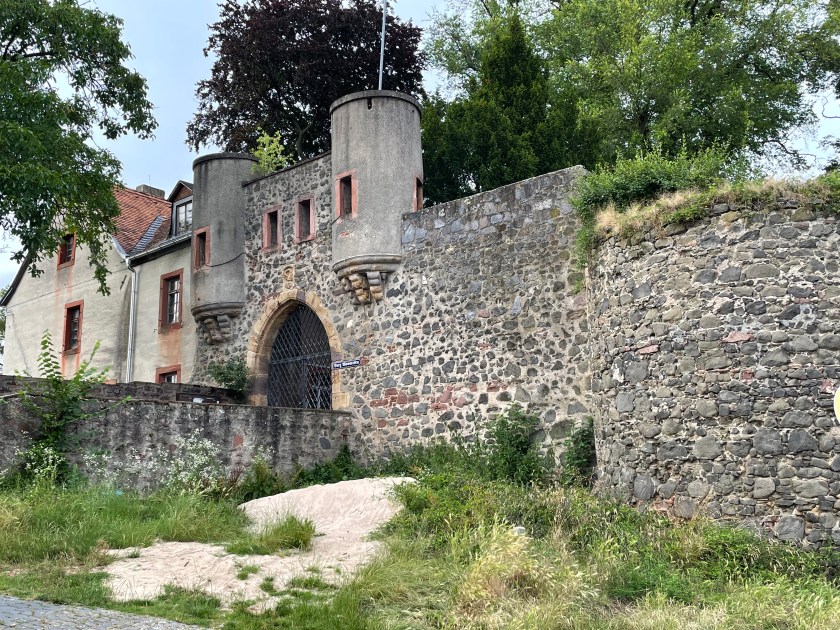
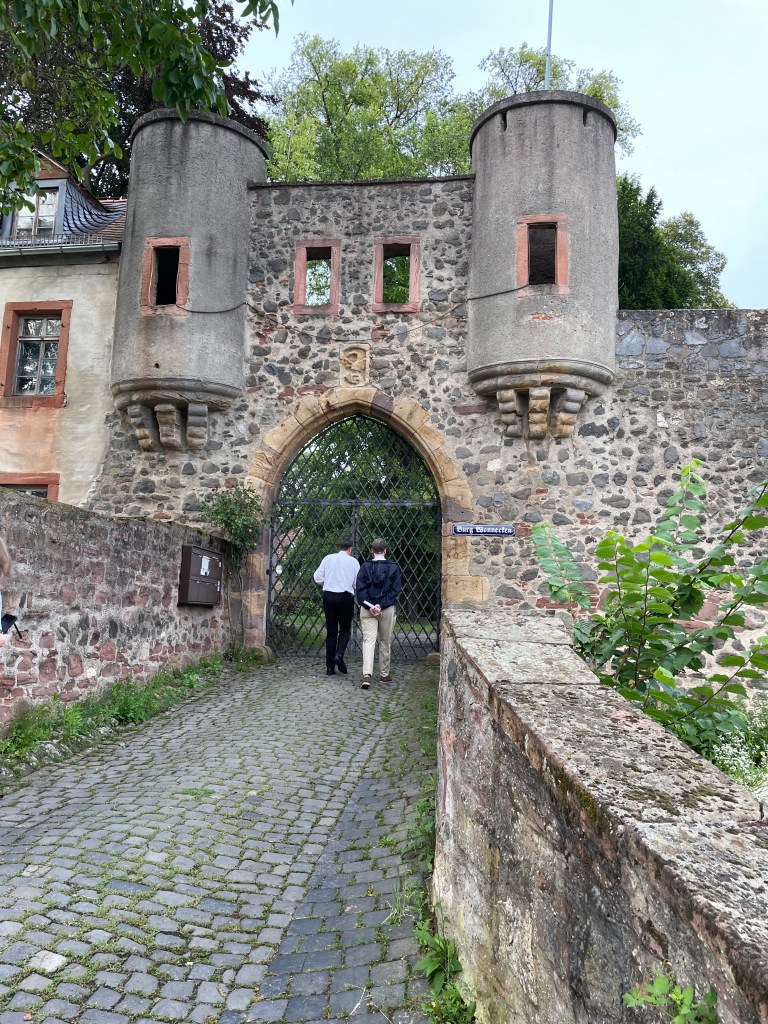
We ended our tour by walking up the hill to the remains of the castle.
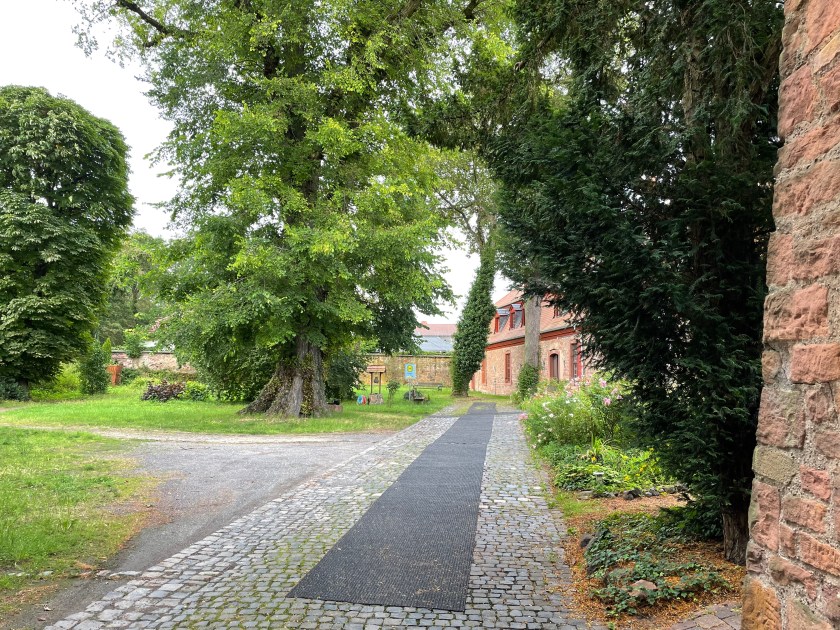
What’s left of the castle has been turned into a day care for people with dementia. There is a nice garden courtyard behind a big gate where they can wander. There is a pretend bus stop so if someone thinks they have to go somewhere right now, they’re taken to the bus stop, where they may sit for hours until they forget where they thought they needed to go. It was sweet.
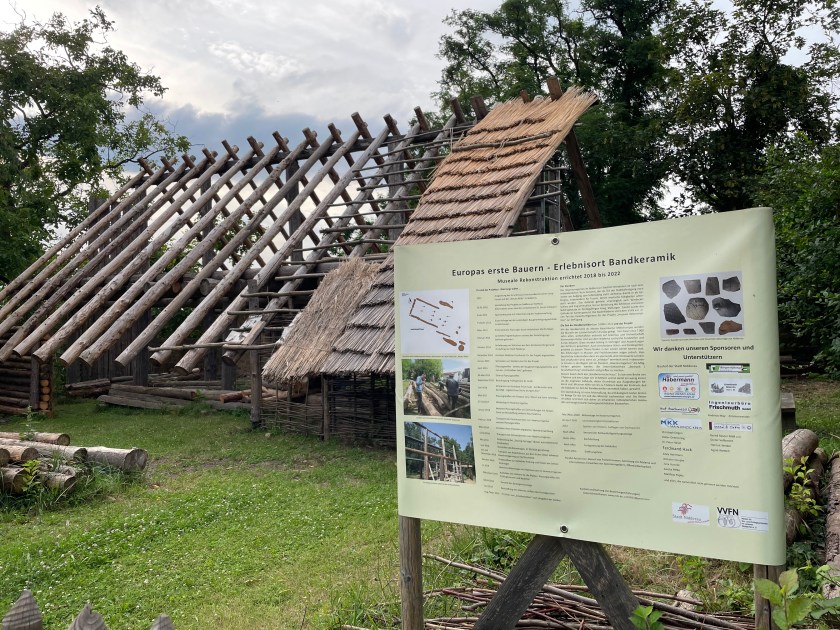
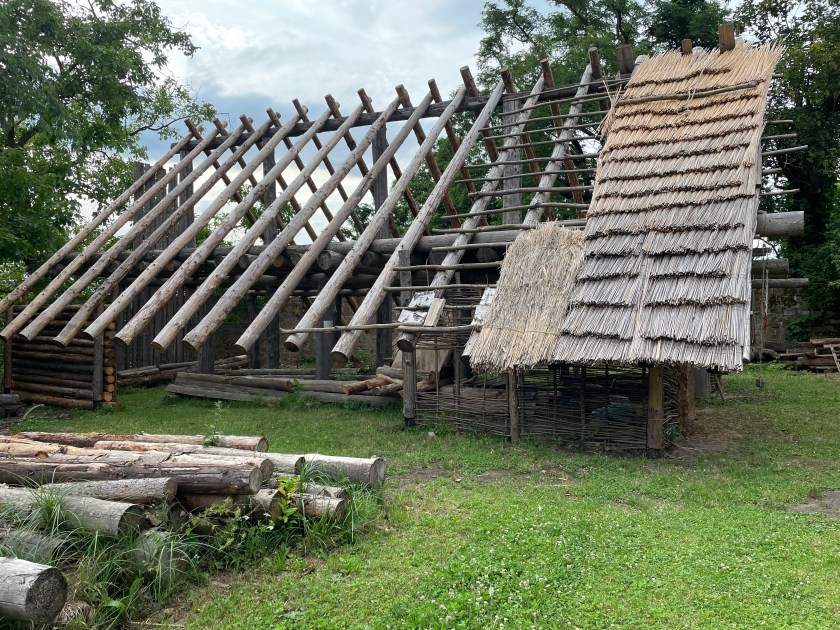
On the way back down we passed by this history project, where a home is being constructed with the same methods used 100s of years ago. It’s a learning experience for interested historians.
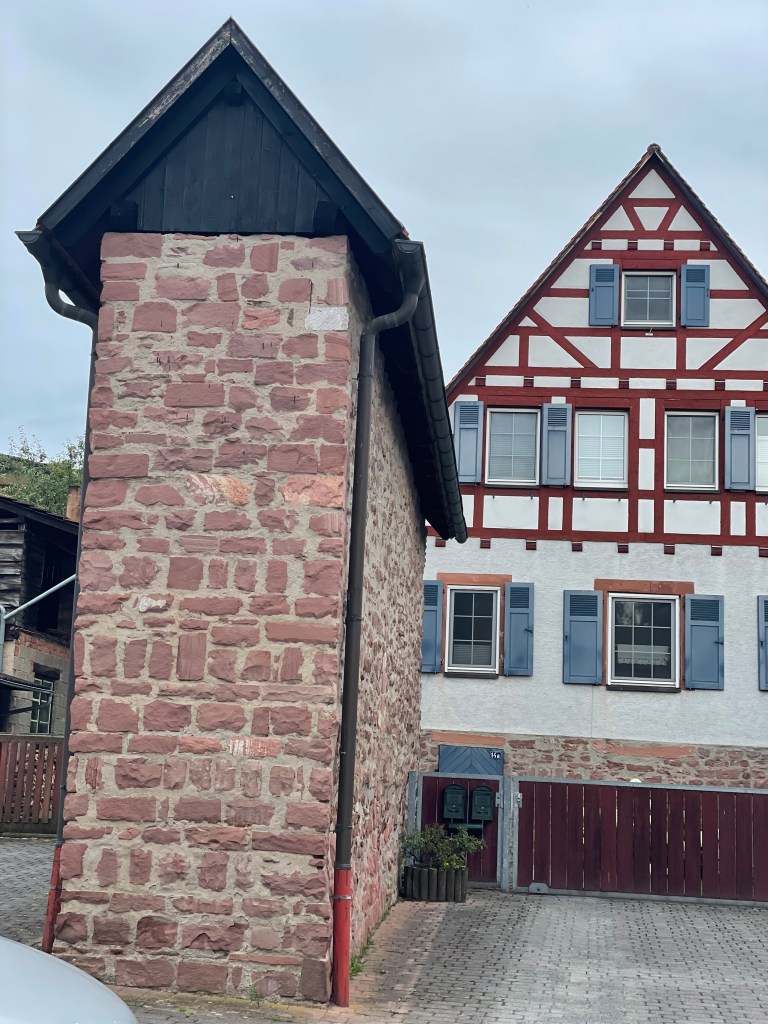
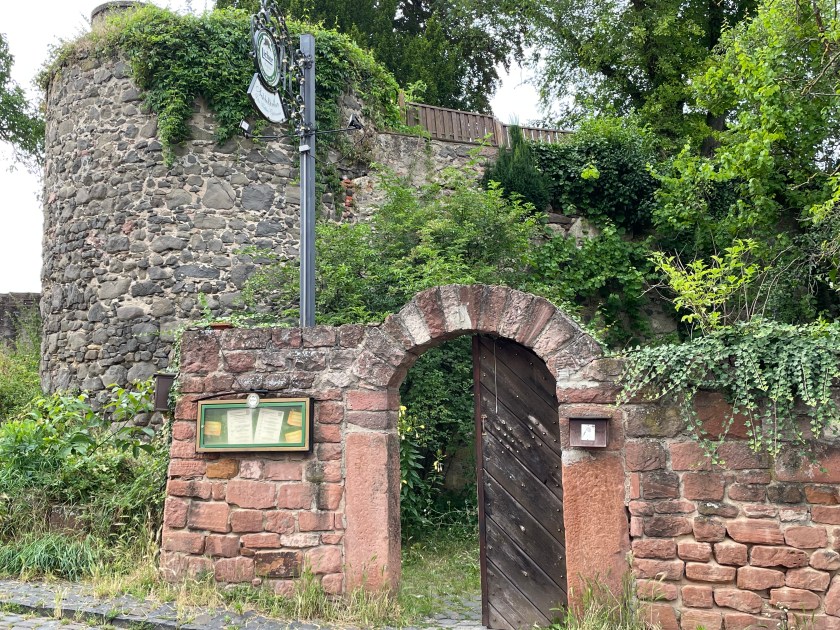
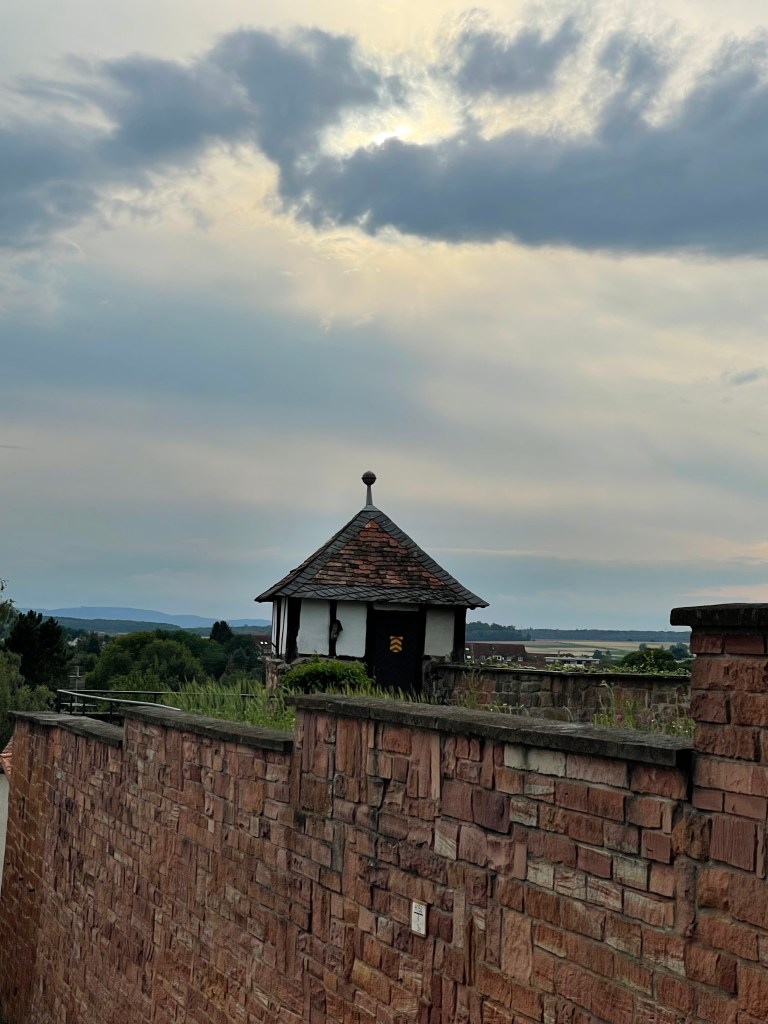
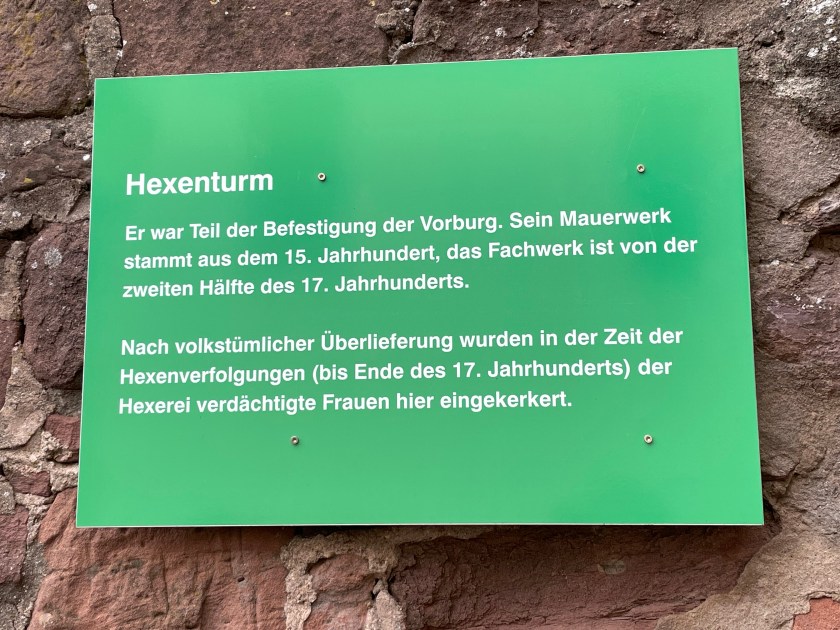
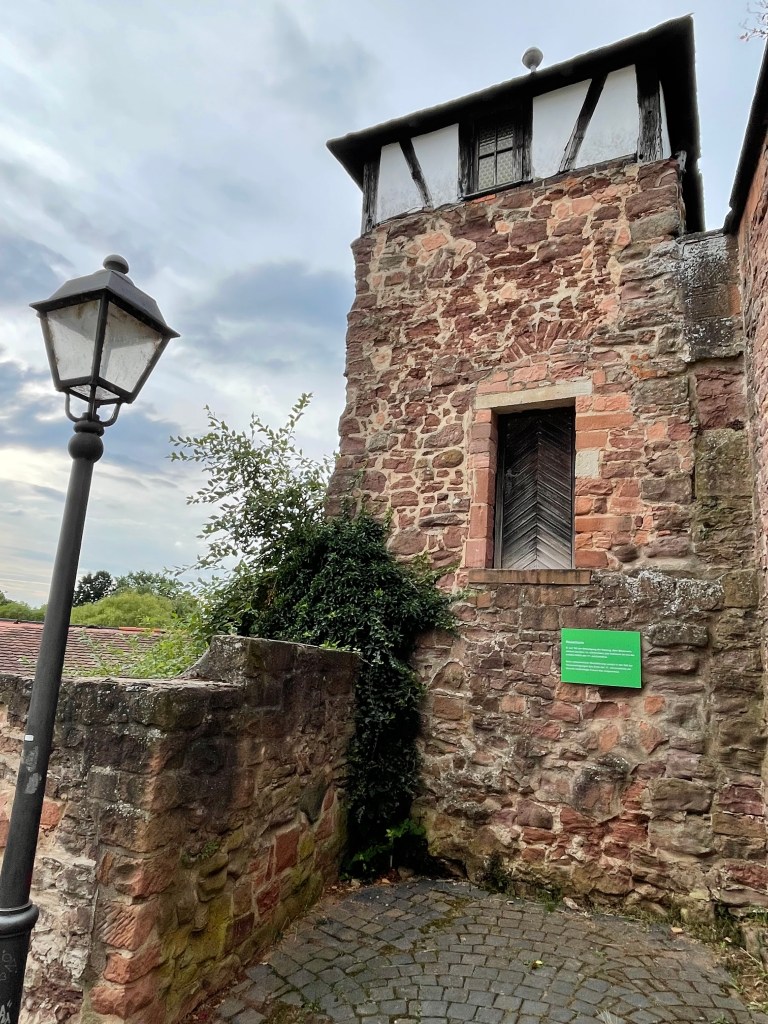
The last Sehenwurdigkeit (noteworthy site) was this witches tower, built into the castle/city wall. There’s no specific evidence that this one was used as a prison or torture place for witches, but perhaps it was. This one was built in the 1400s.
Here’s link to the first time we visited Windecken with Ralf last November. There are different pics and words in this post.
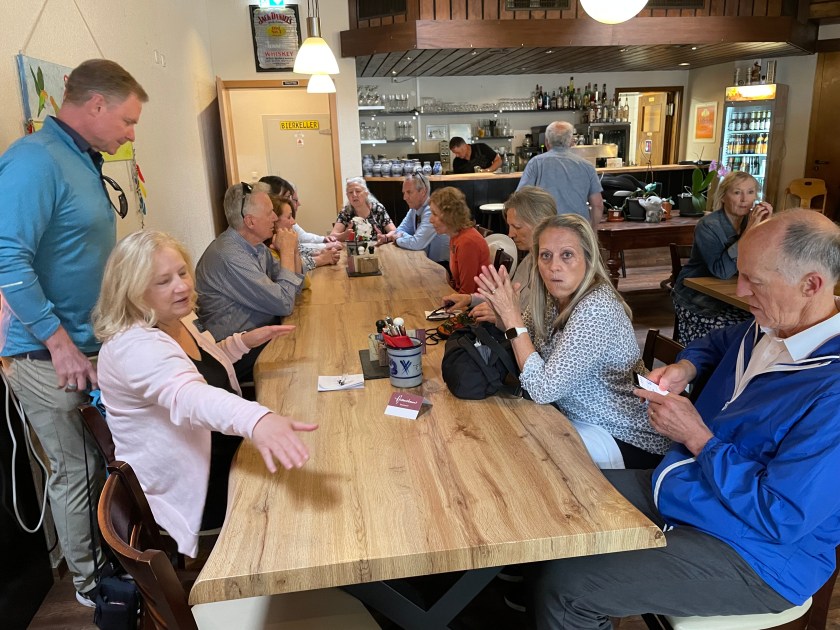
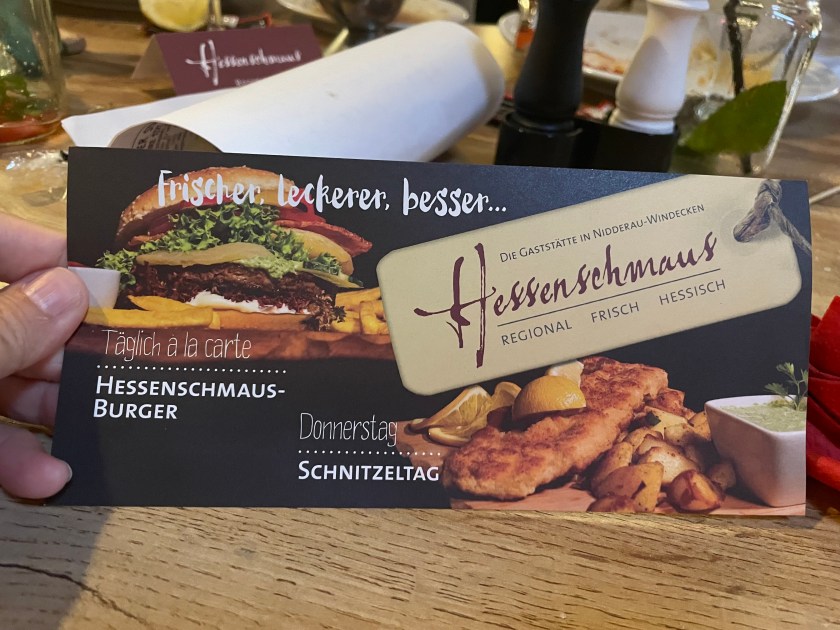
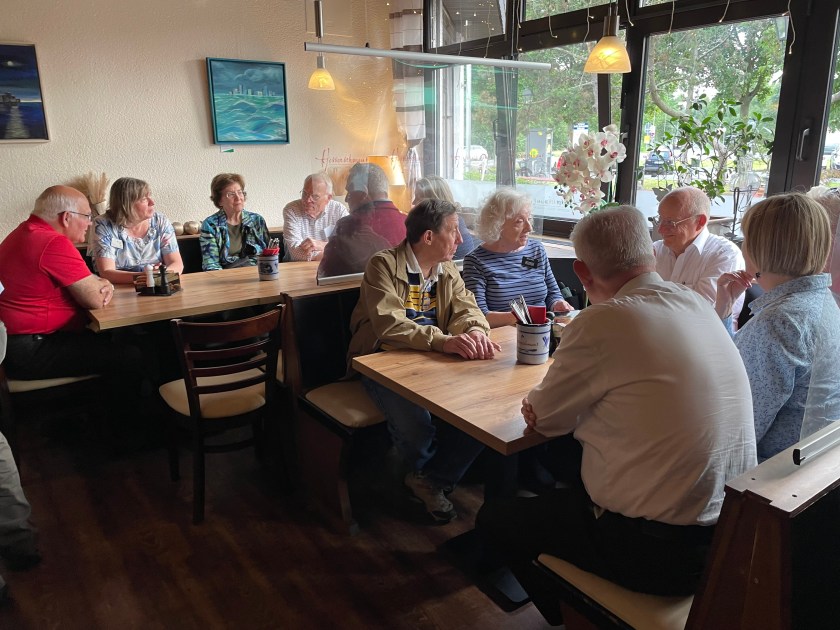
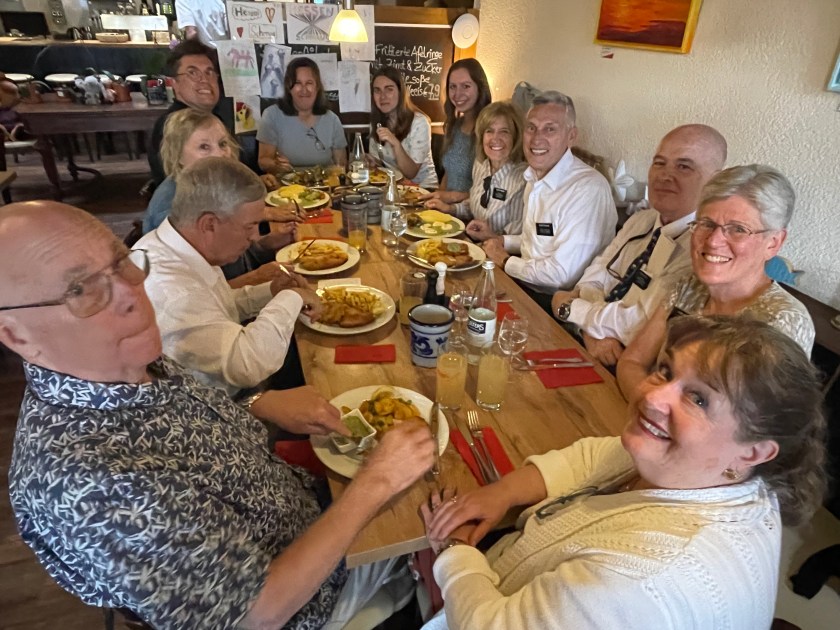
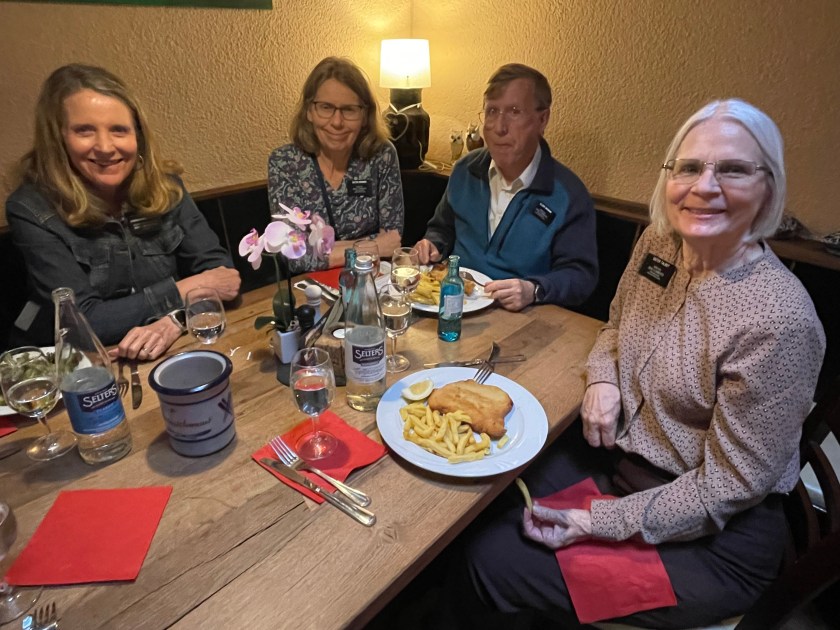
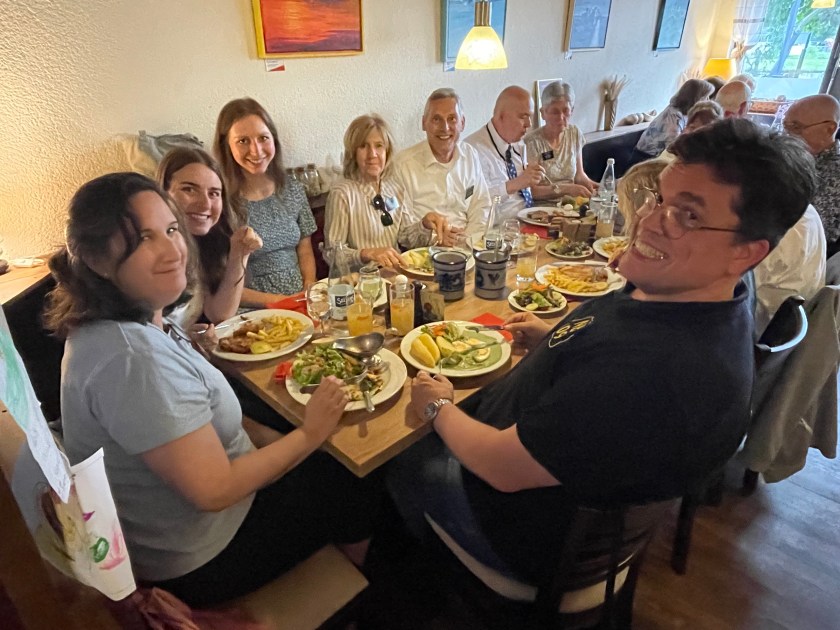
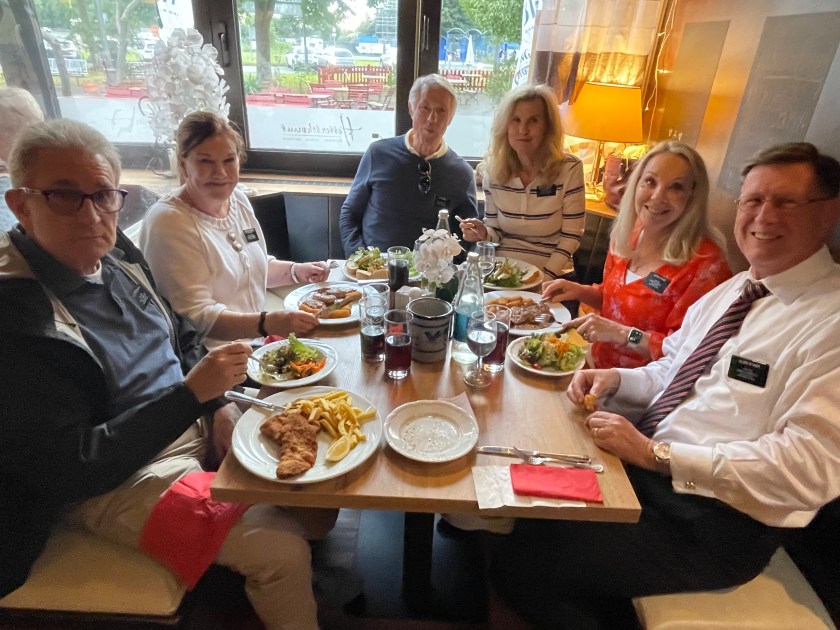
By about 7:30 we were ready for our dinner at the local restaurant, Hessenschmaus. There were about 50 of us served and we were served delicious food. What a great evening! Everyone enjoyed their meals, visiting and good company.
Our thanks to Ralf for his excellent tour and to all who came!
After a pretty full day helping another of our Offenbach Branch members move, John and I drove over to Seligenstadt for the afternoon. It wasn’t far from the place we had been working.
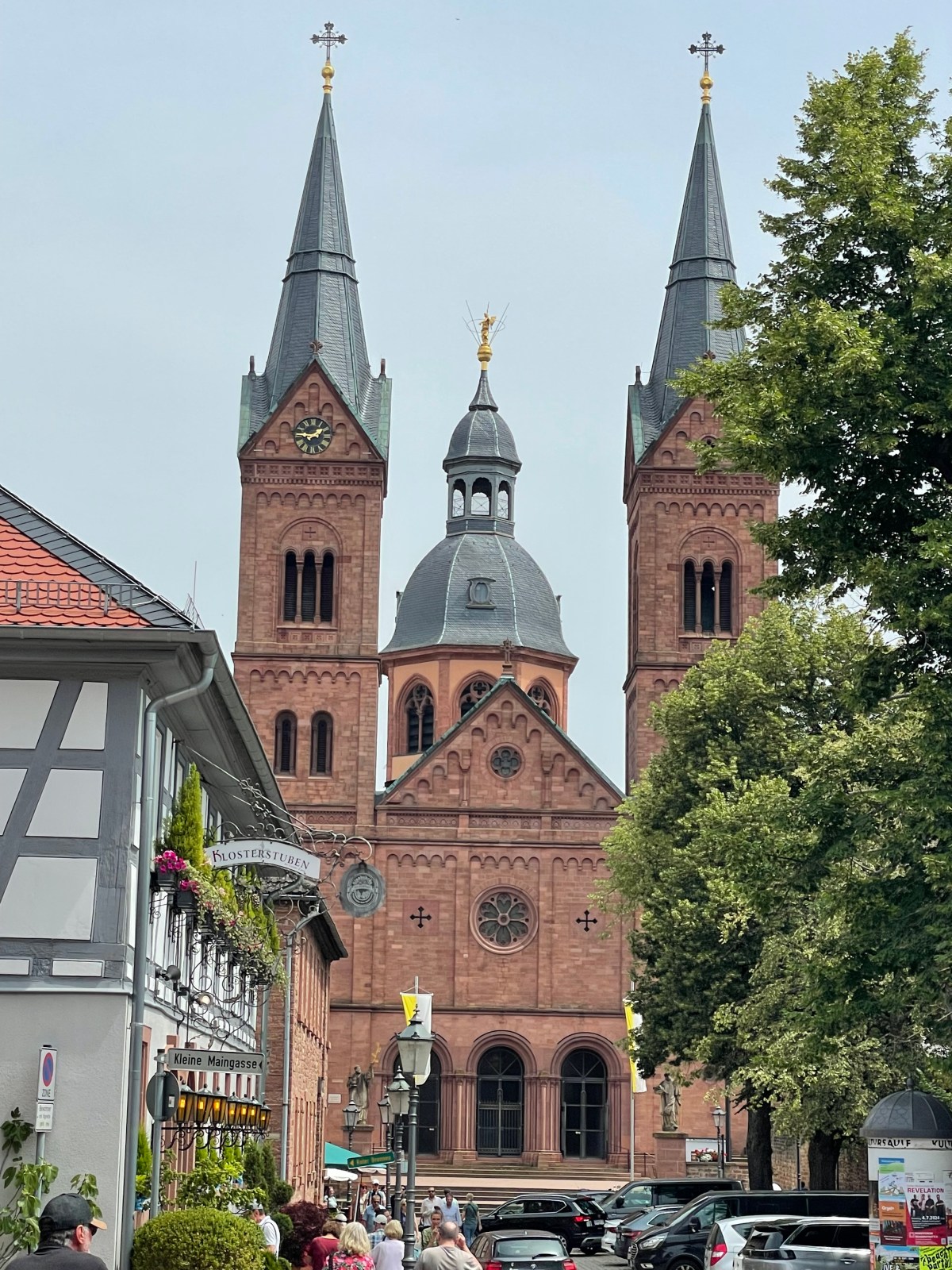
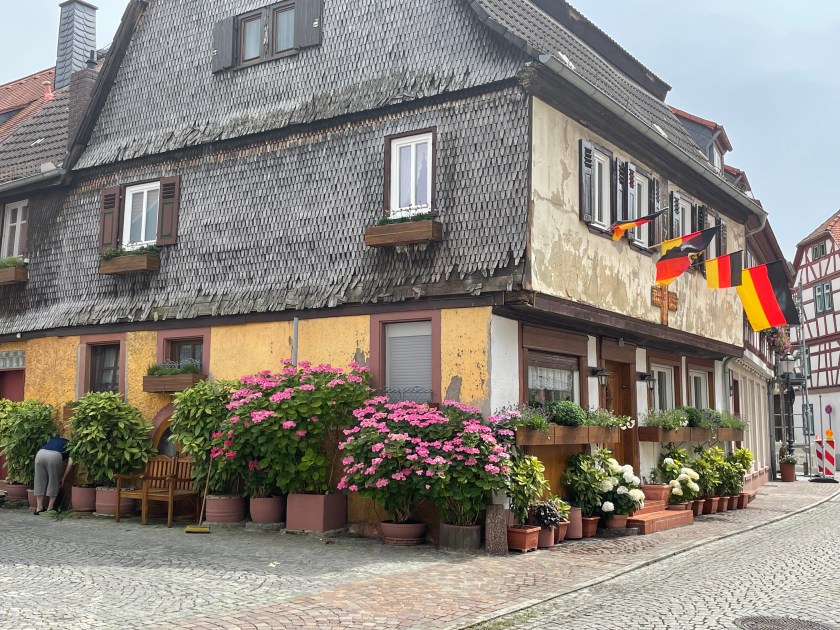
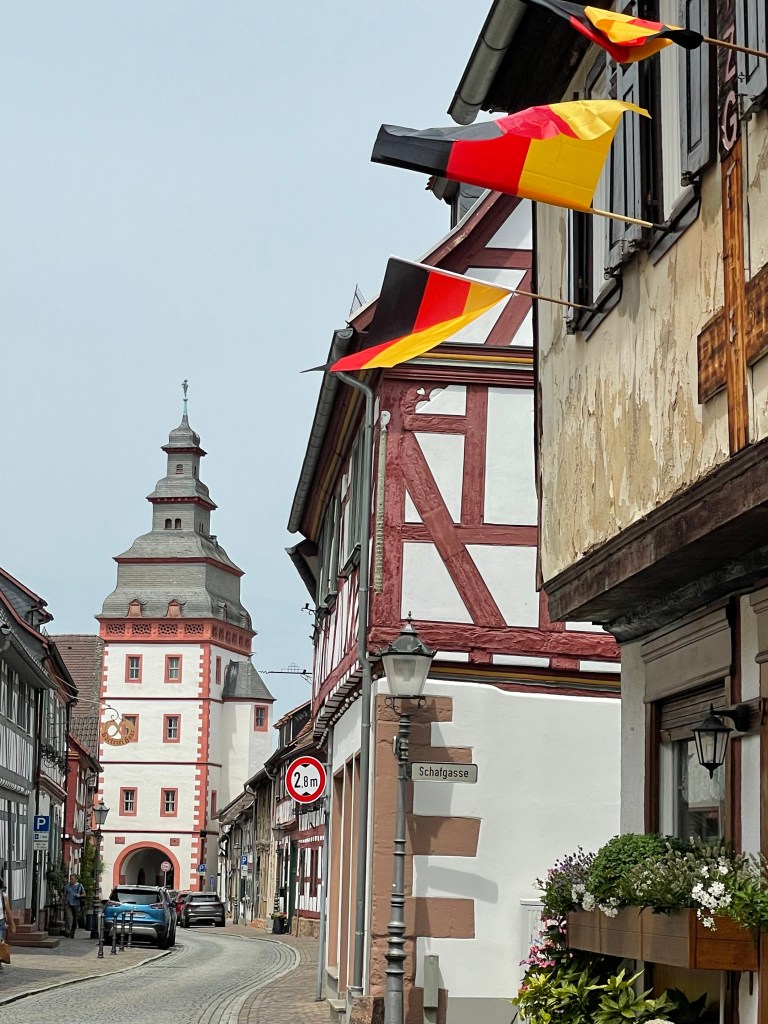
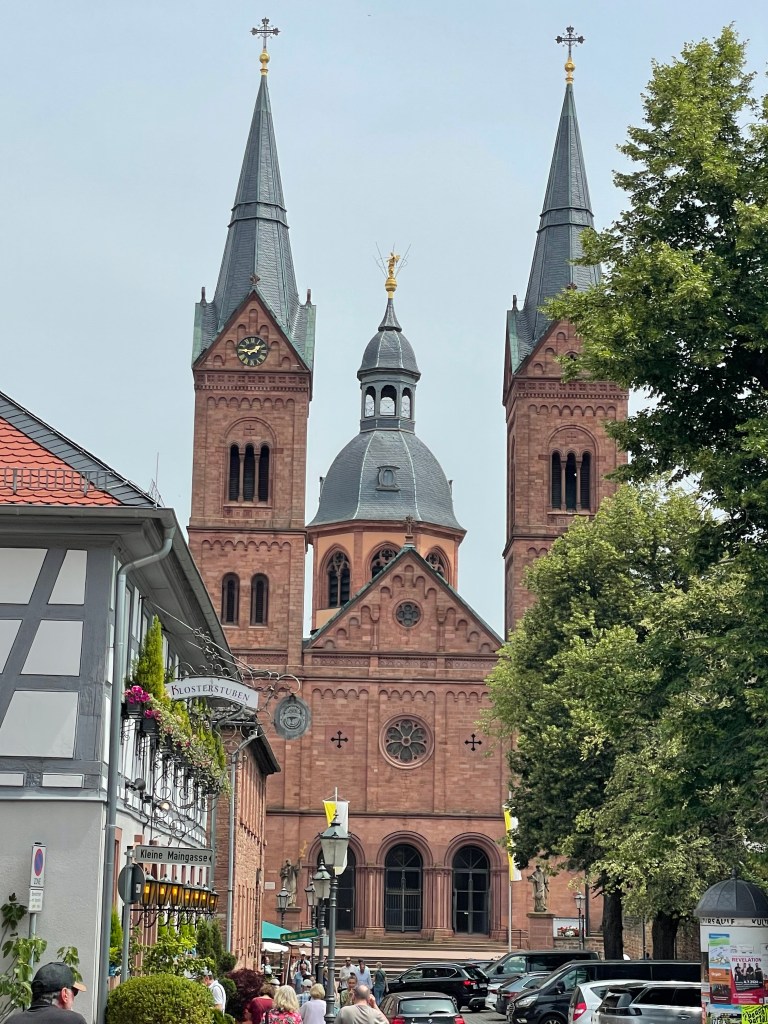
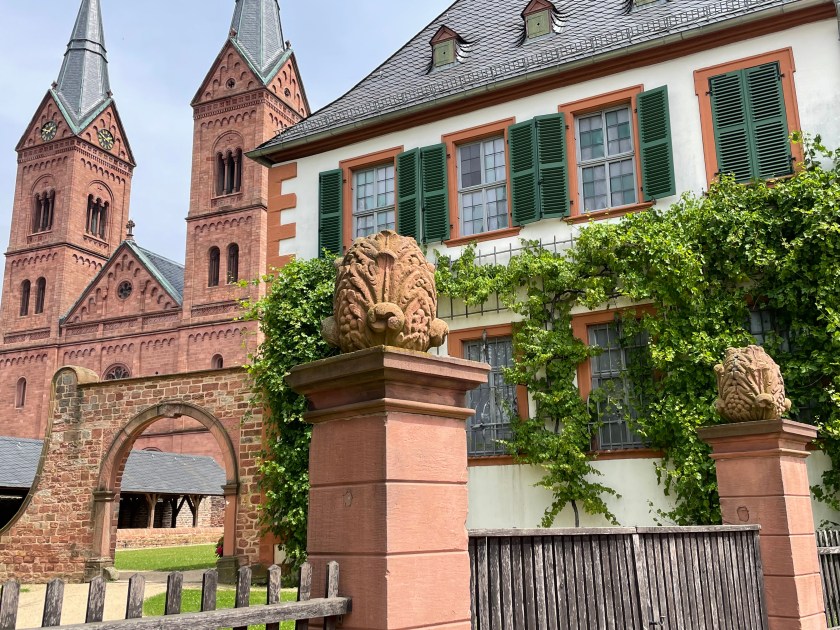
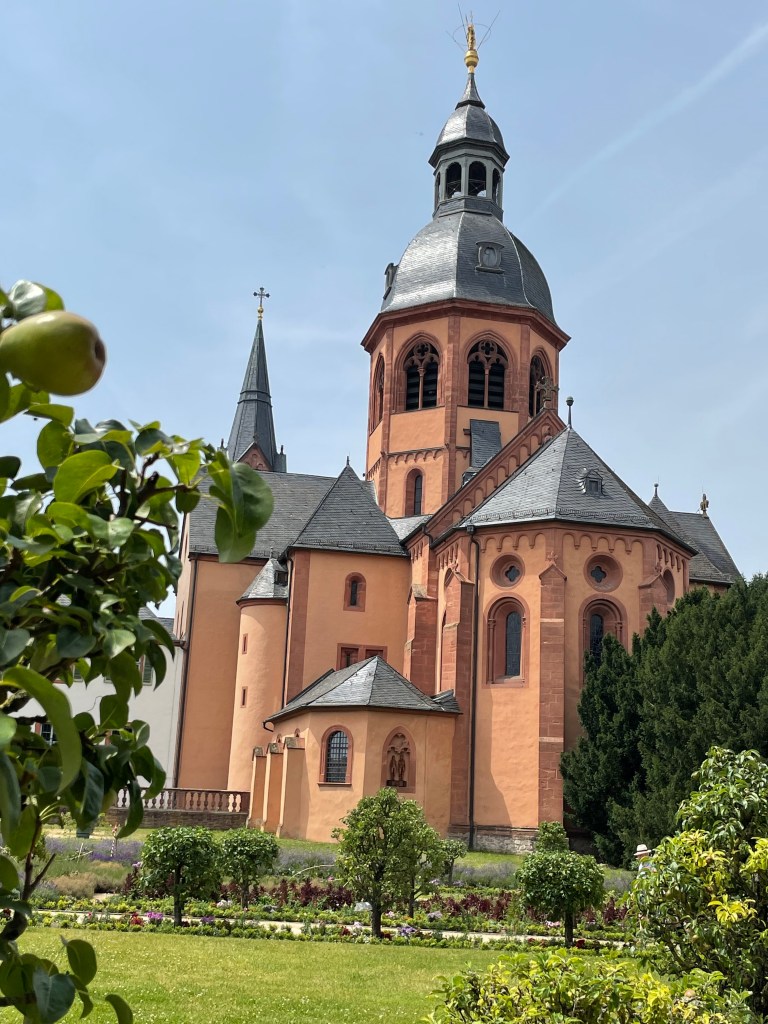
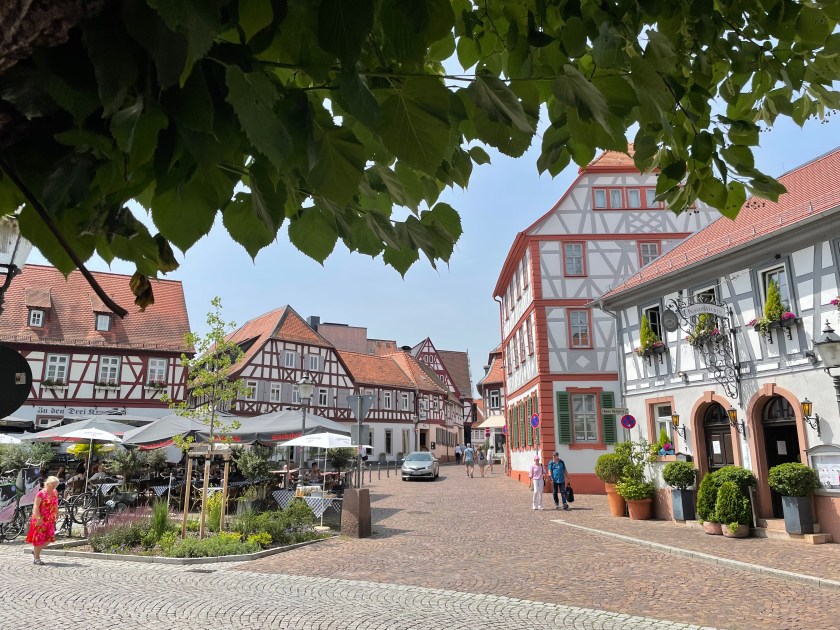
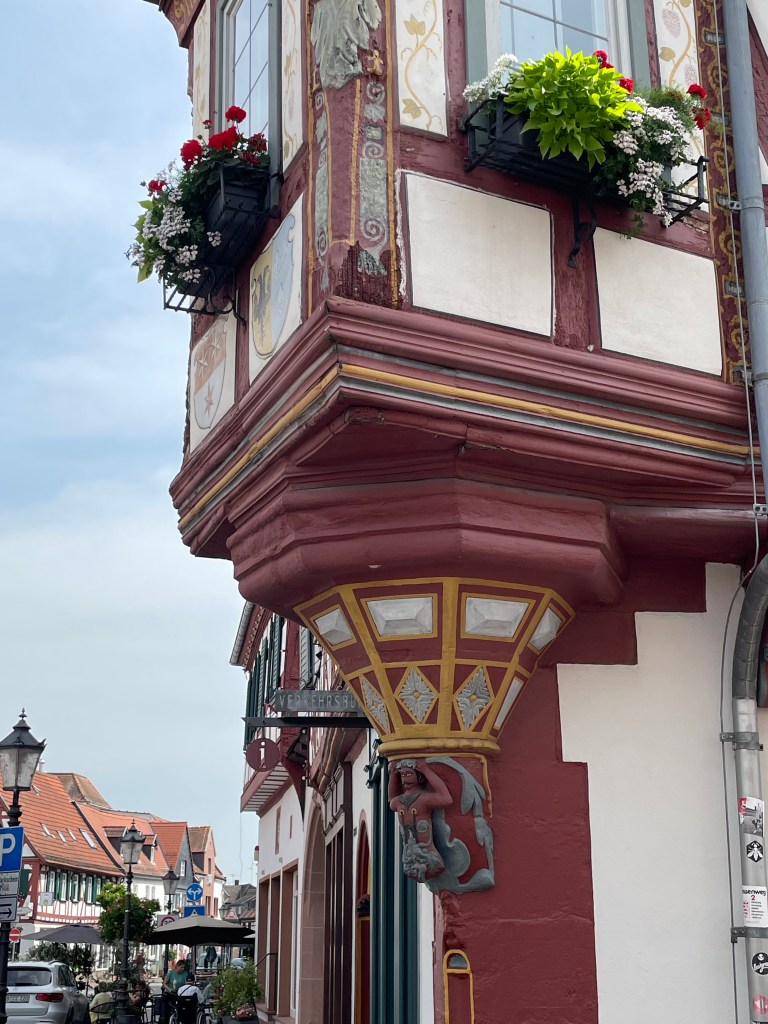
We’ve been to Seligenstadt before–such a fun quaint town with a real old Altstadt, Basilica/church and a Cloister with a big garden. It was really hot and muggy today, not all that pleasant to be out. We were hot and sweaty from the move, but we wandered around town and saw things we didn’t see the last time we came here.
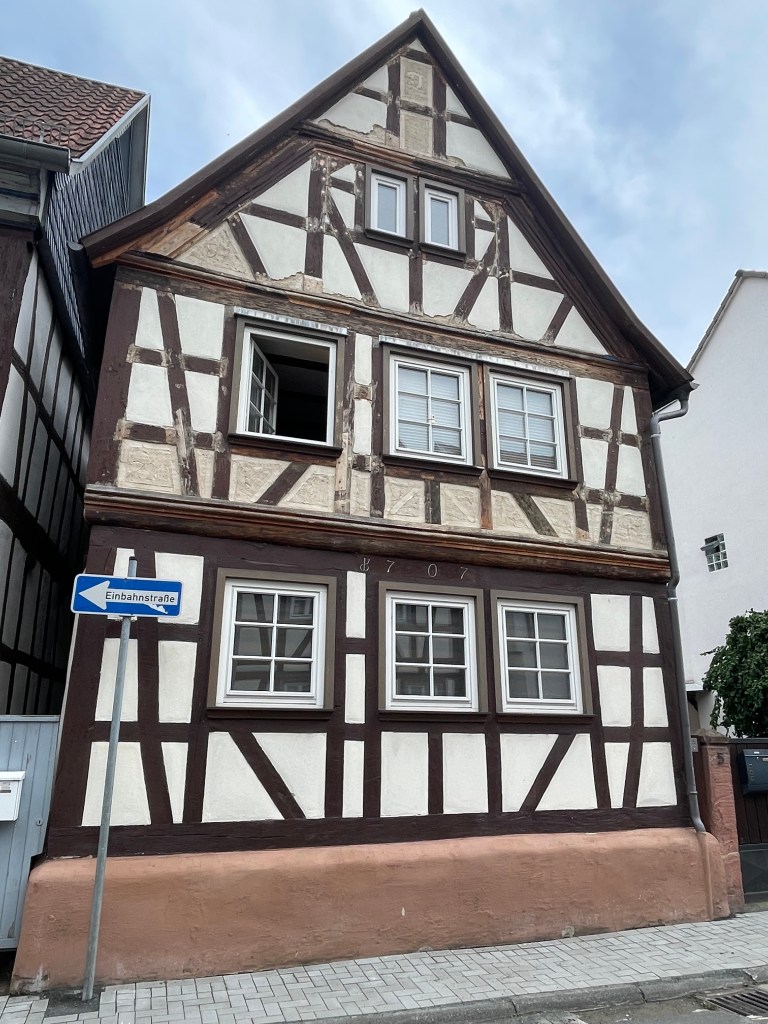
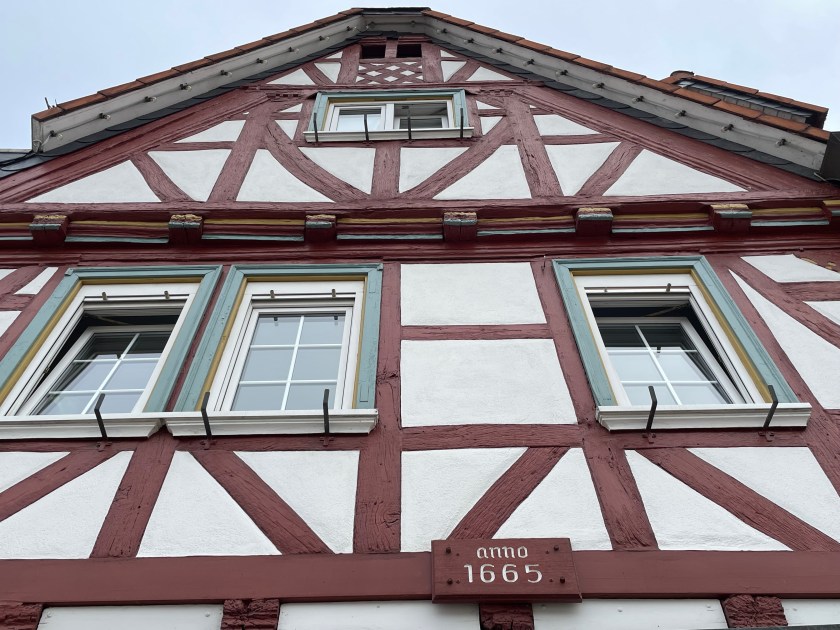
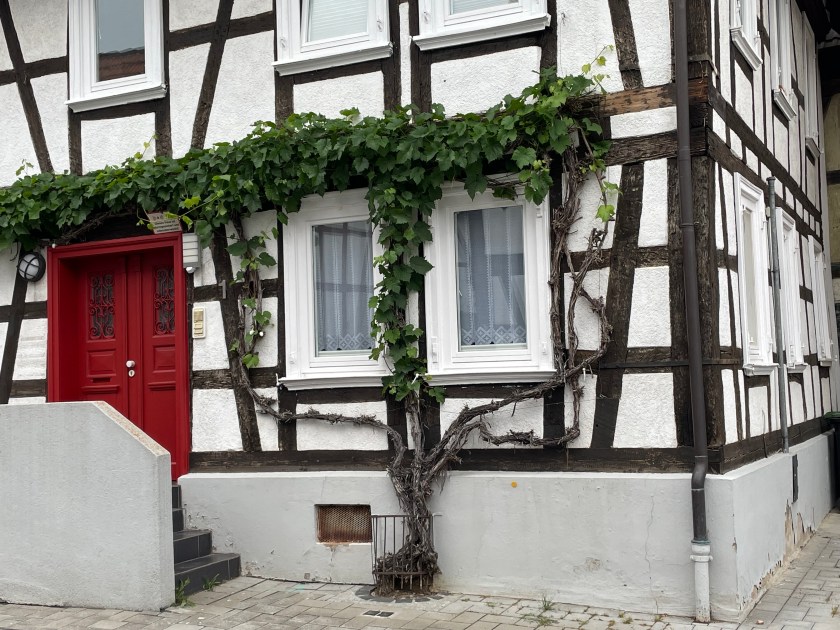
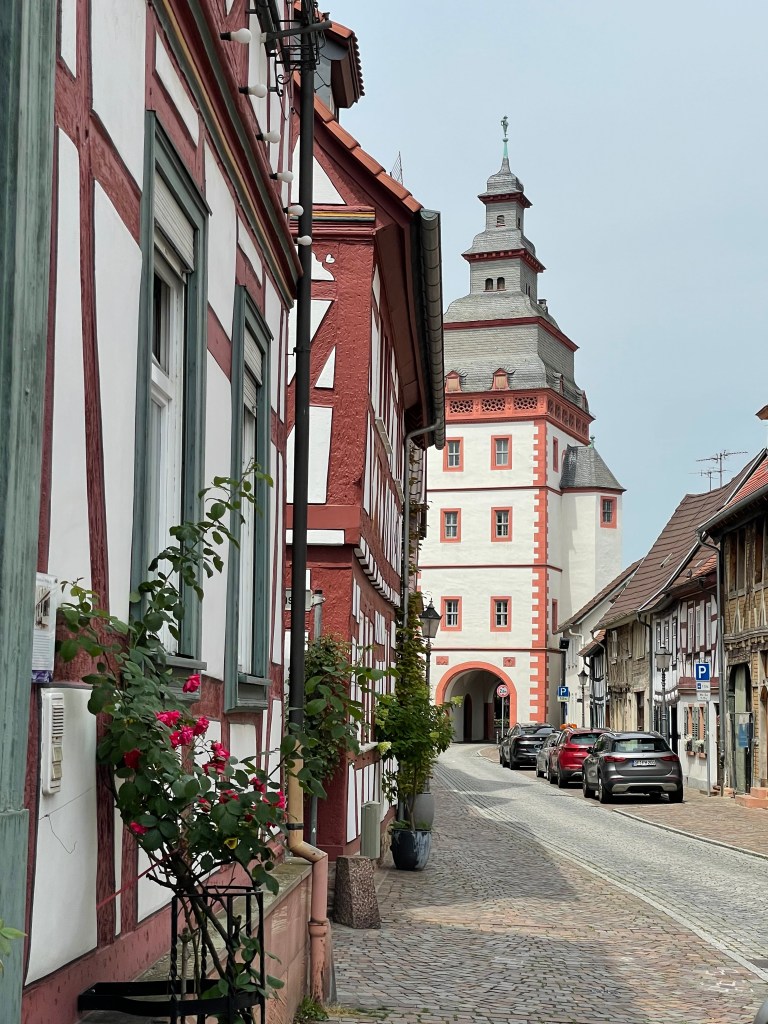
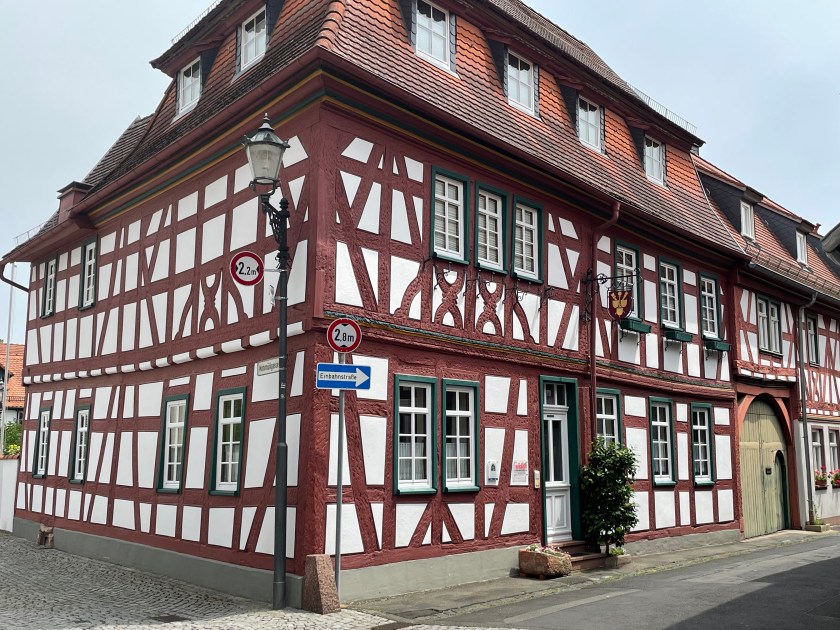
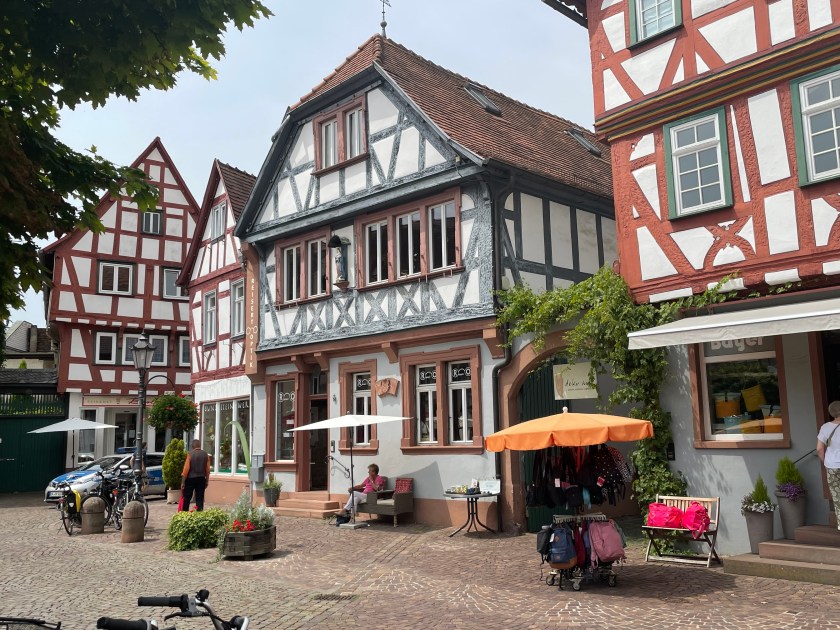
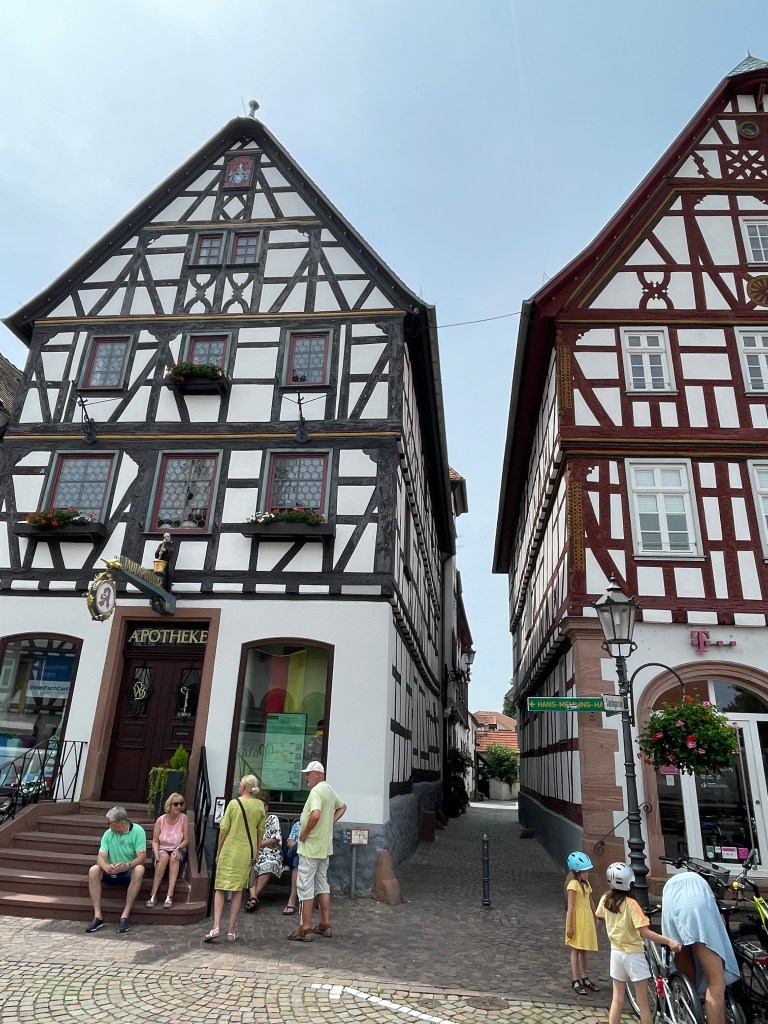
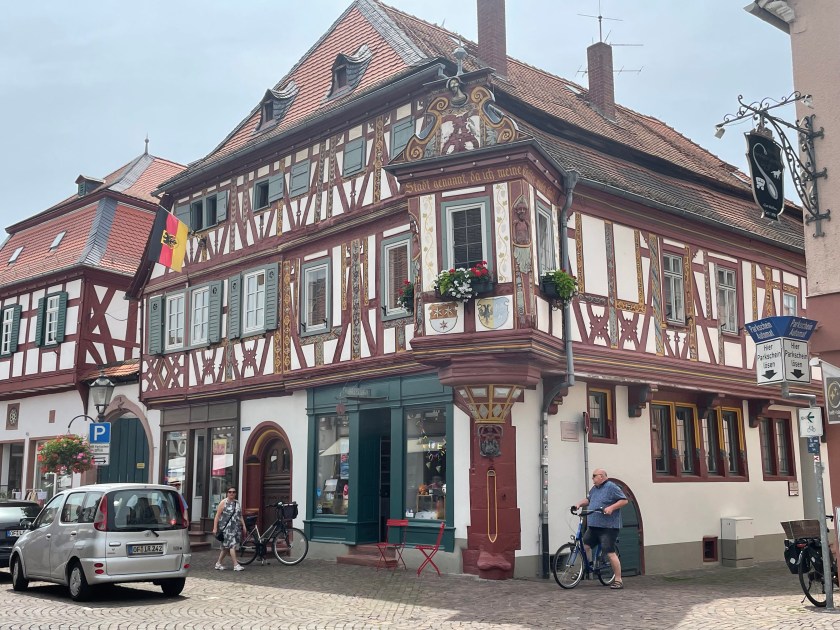
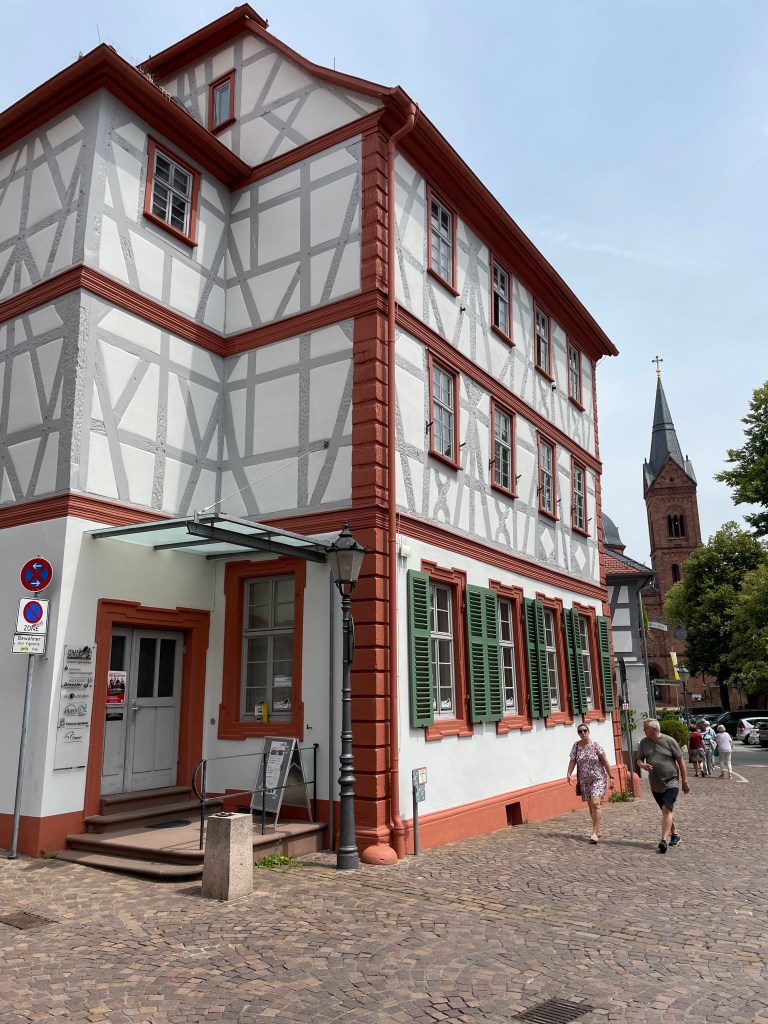
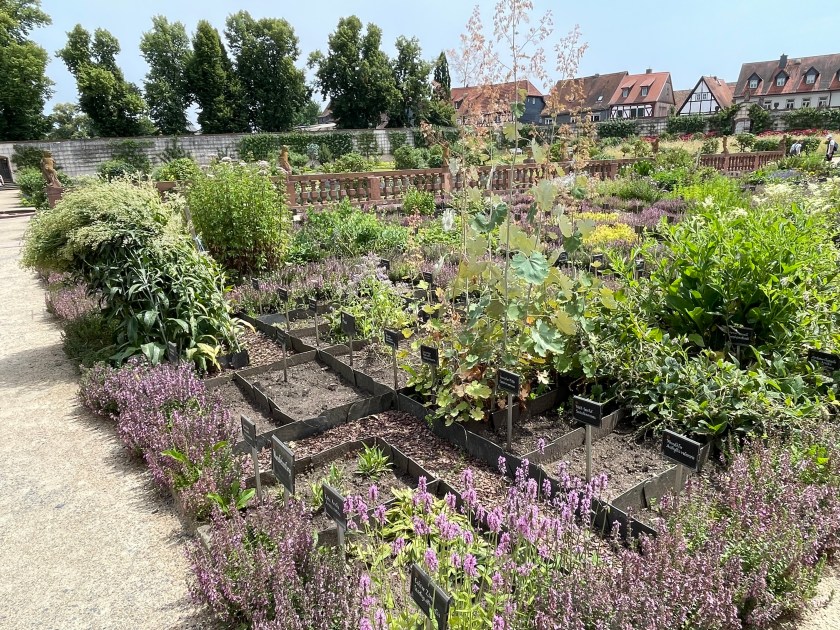
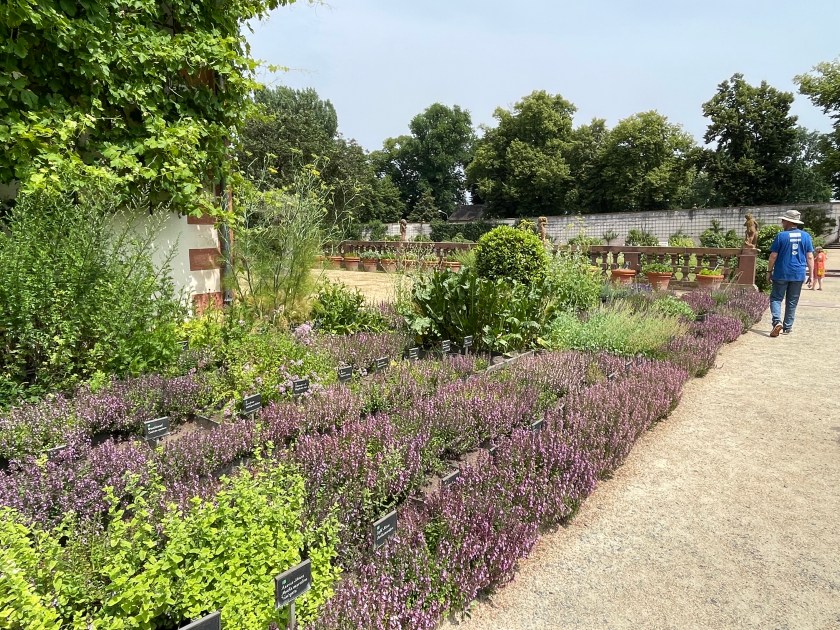
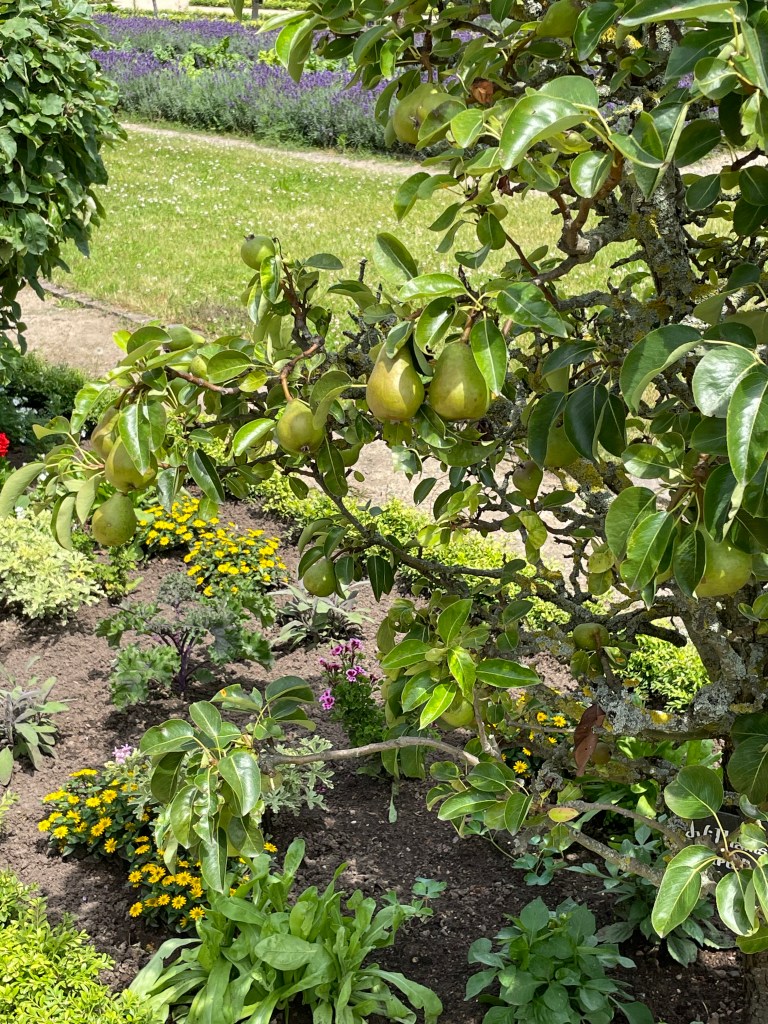
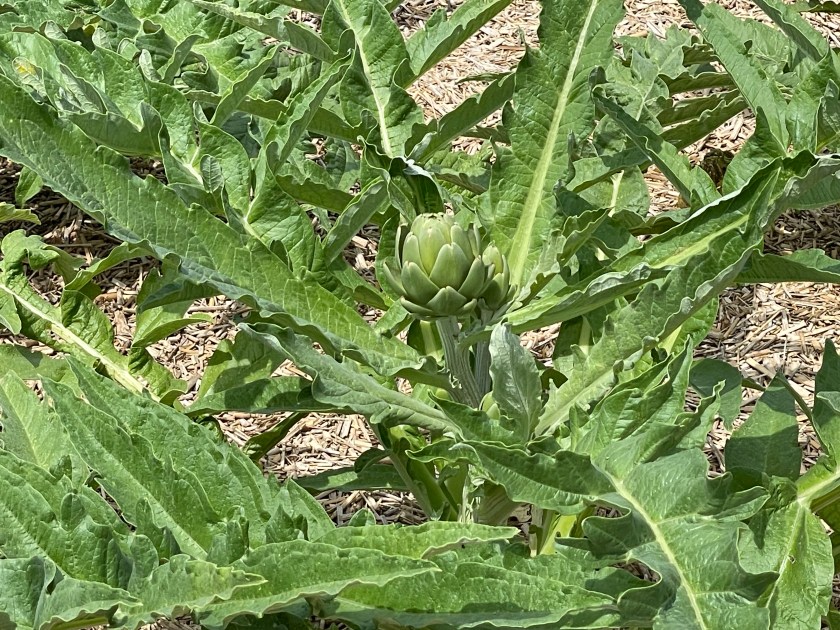
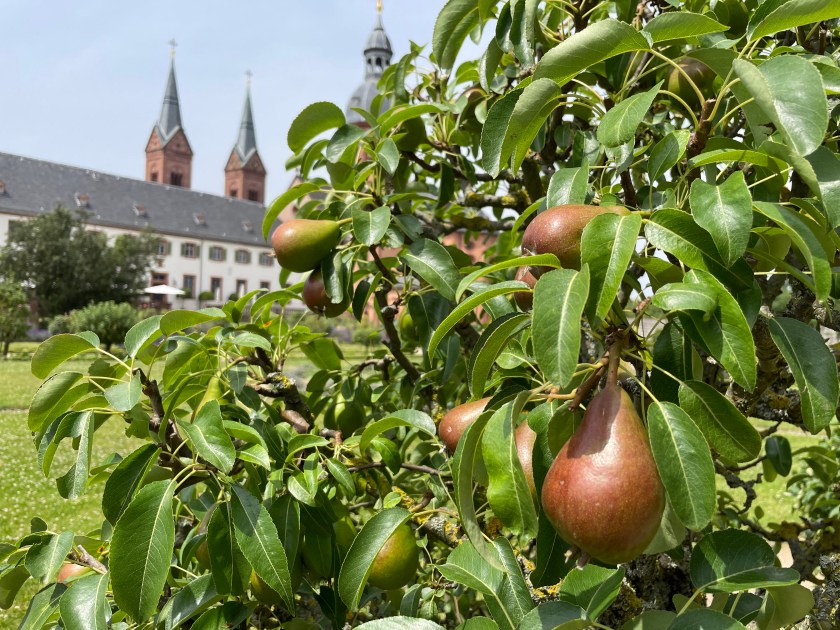
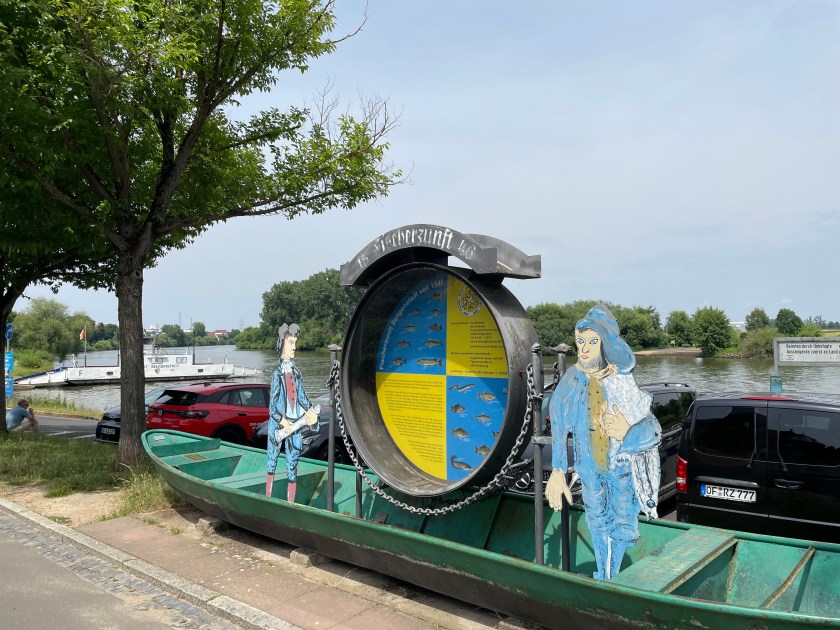
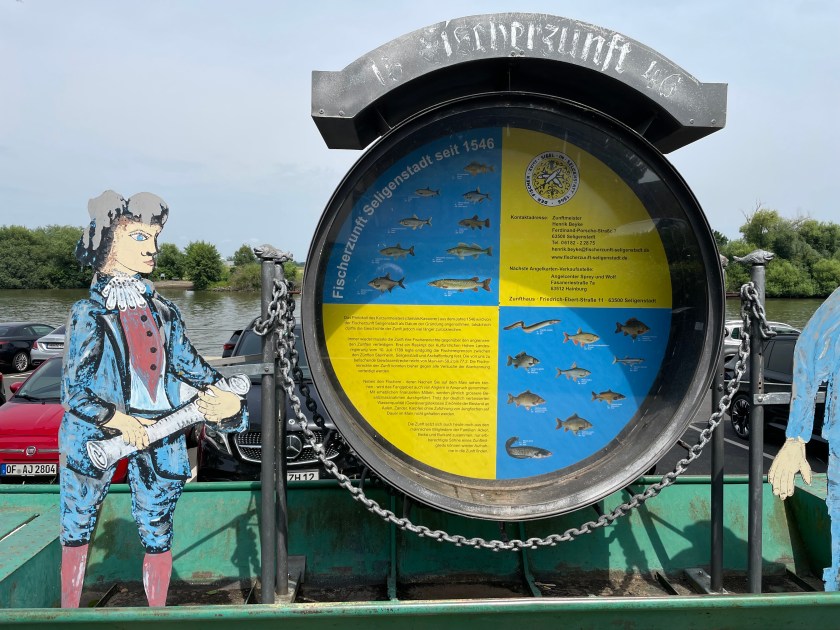
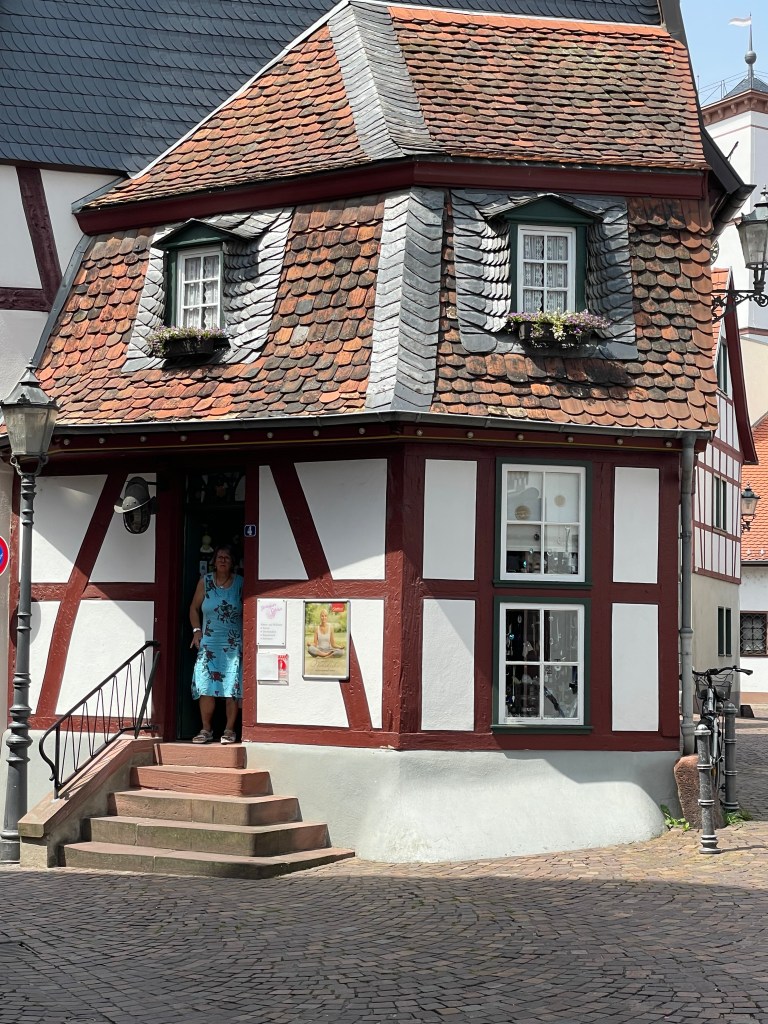
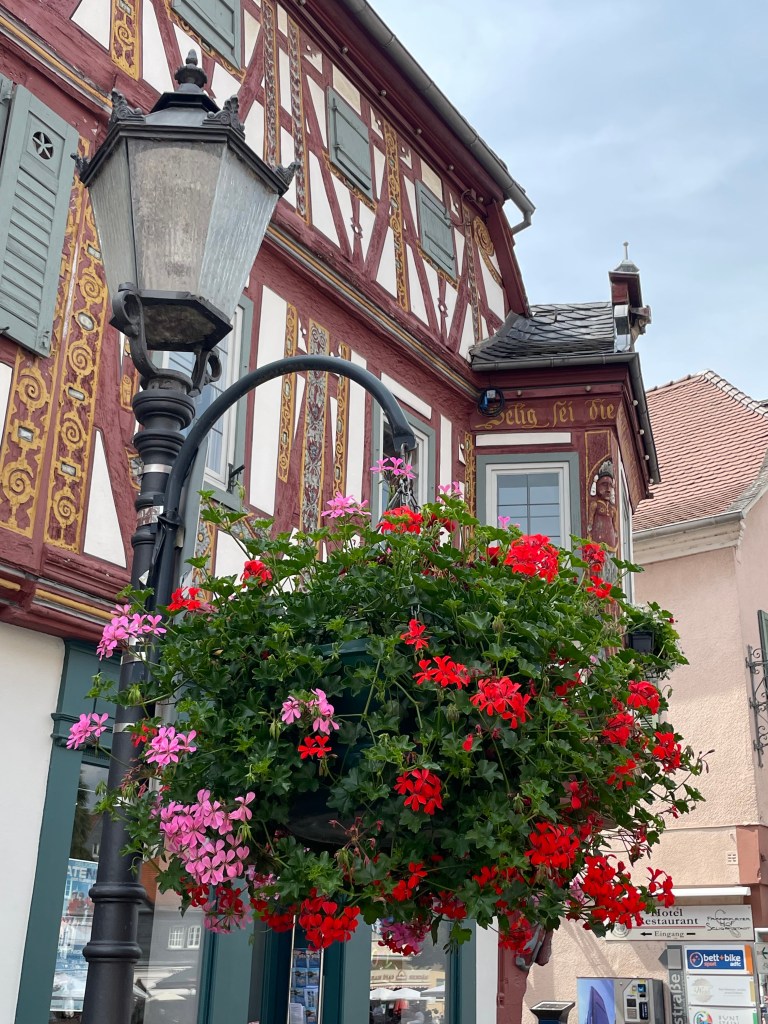
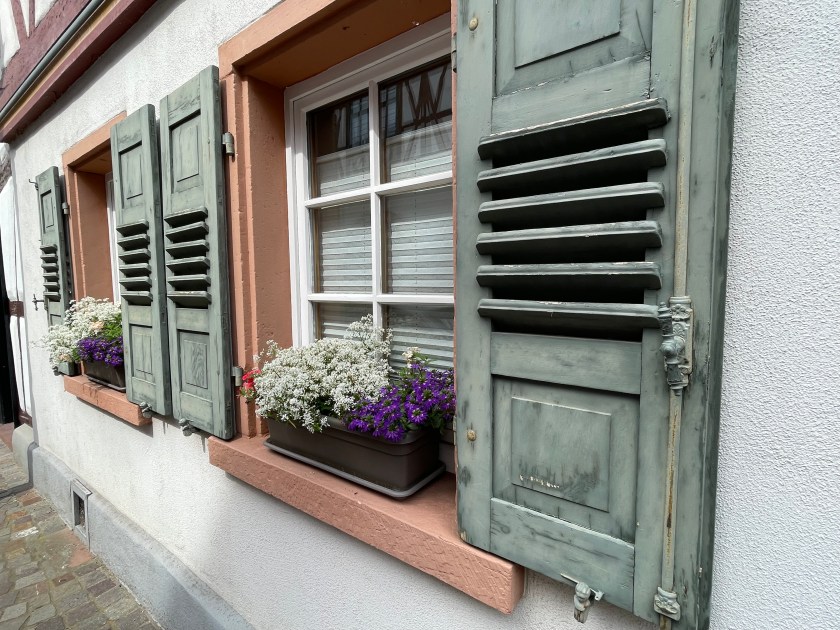
We enjoyed the old Fachwerk /half-timber homes, we found Stolpersteine/ stumbling blocks, we sat by the river for awhile in the shade, we enjoyed the Cloister gardens (lots of fruit and vegetables grown there). The platz was full of locals, and lots of outdoor cafes.
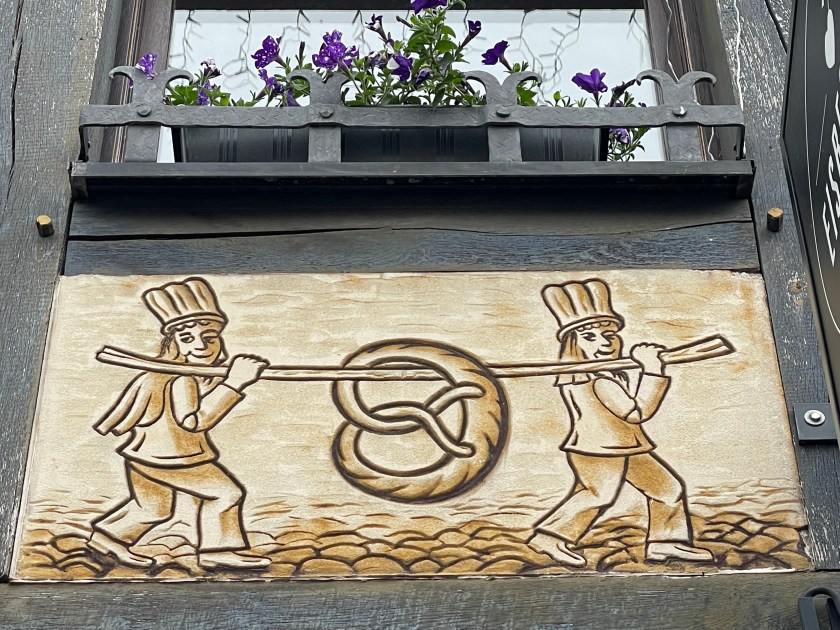
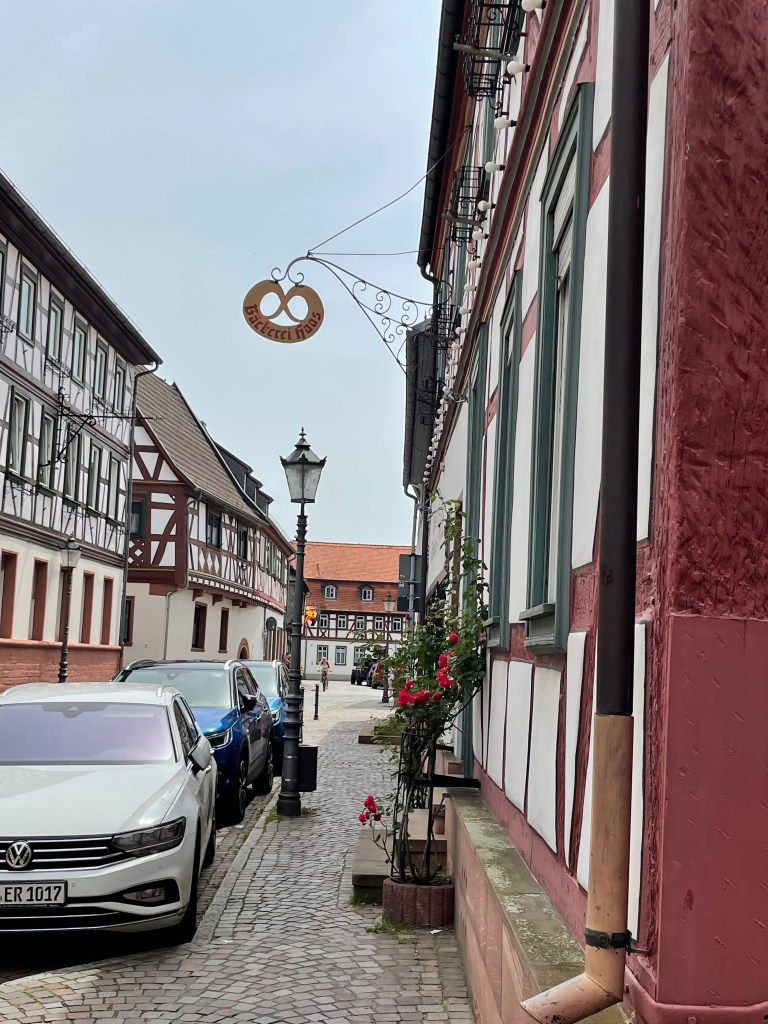
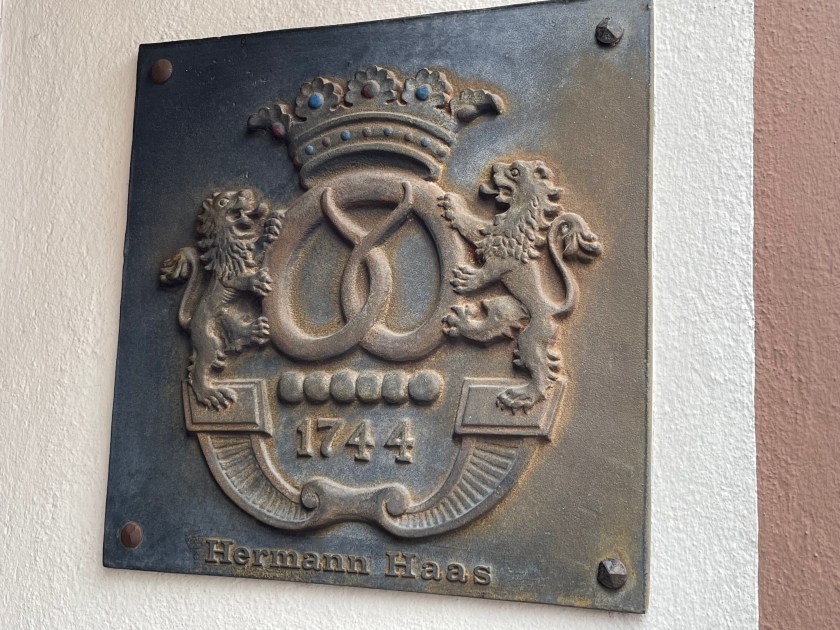
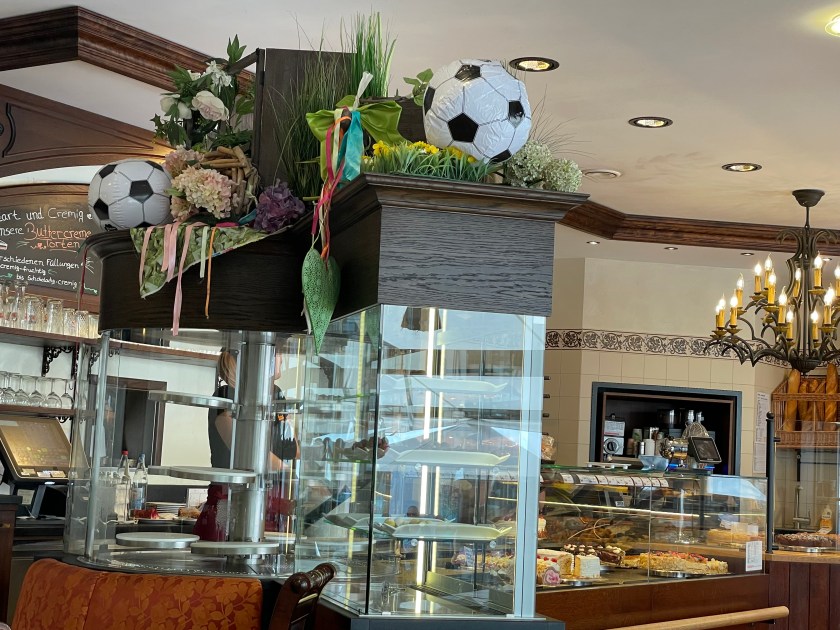
We raced first to find a bakery that was highly recommended to us, and we slipped in the door just as they were closing. They suggested we go to a cafe on the square that had their baked goods for a better selection. Bakeries often have a pretzel sign over their doors.
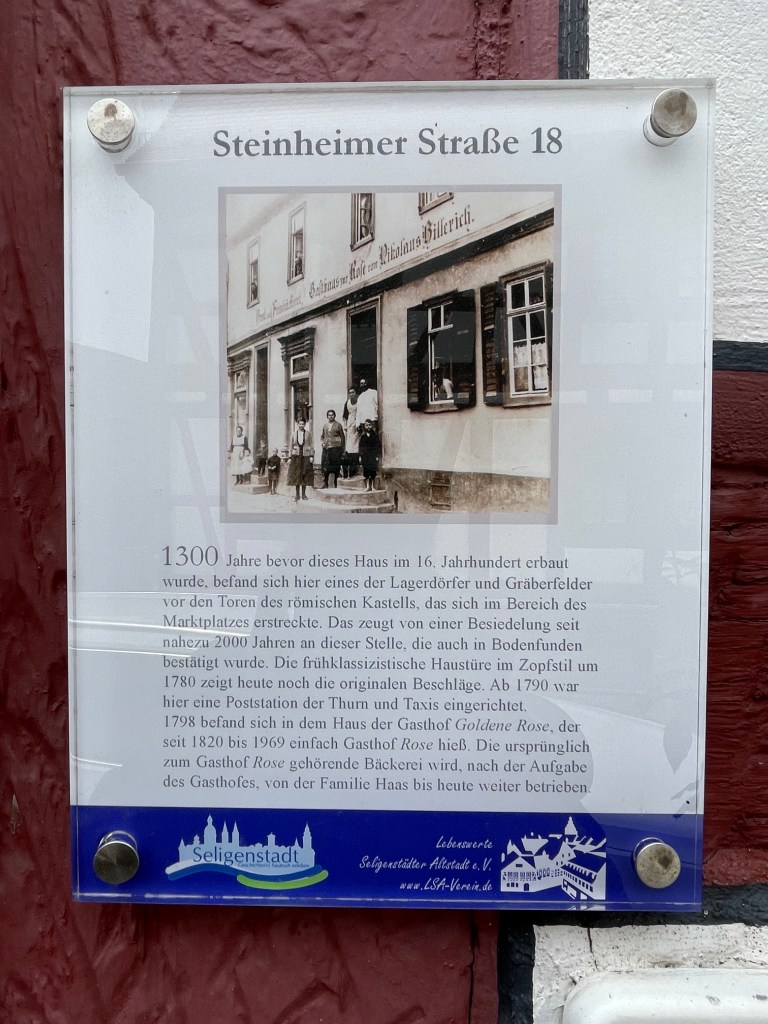
This bakery has been here a long long time.
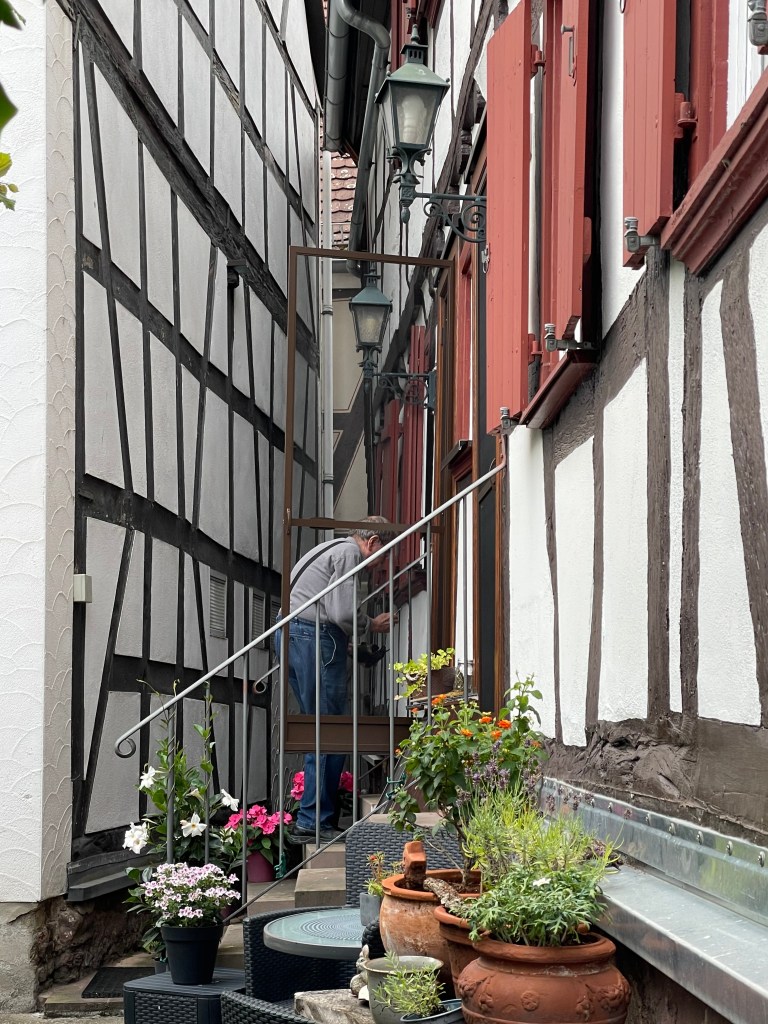
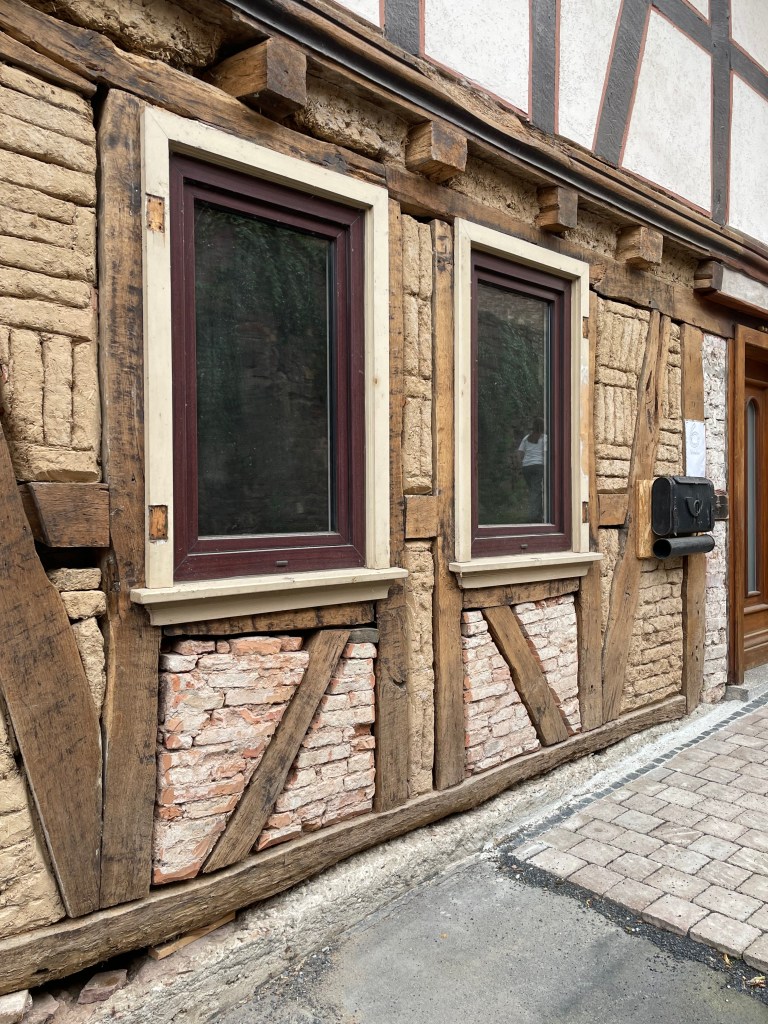
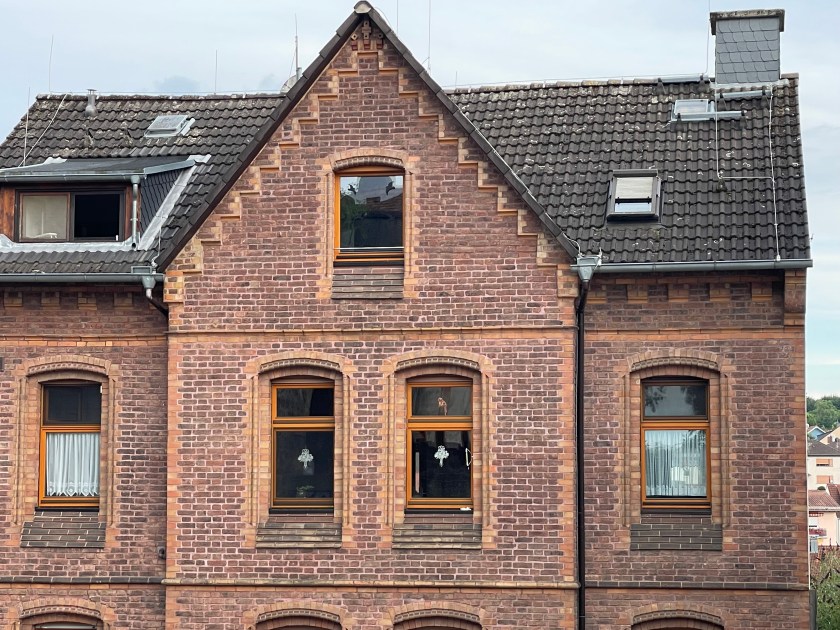
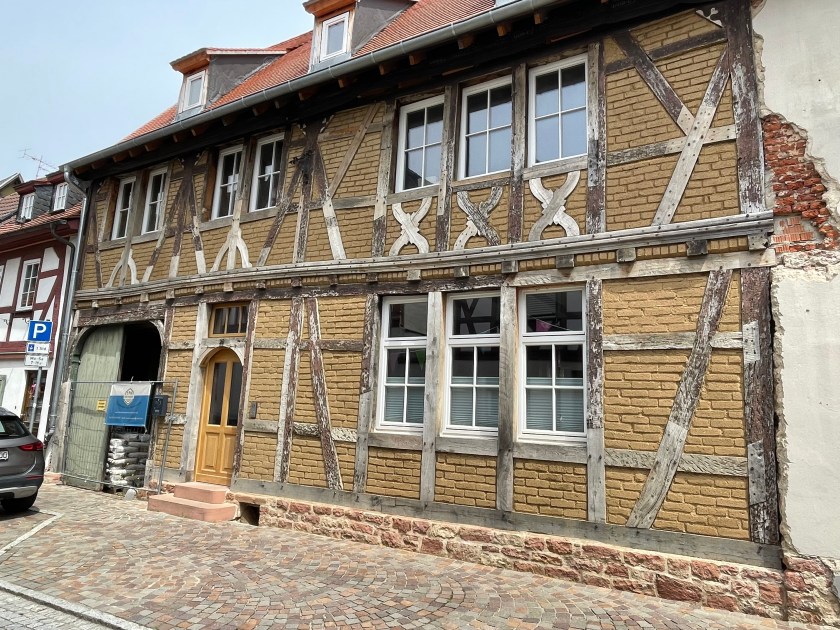
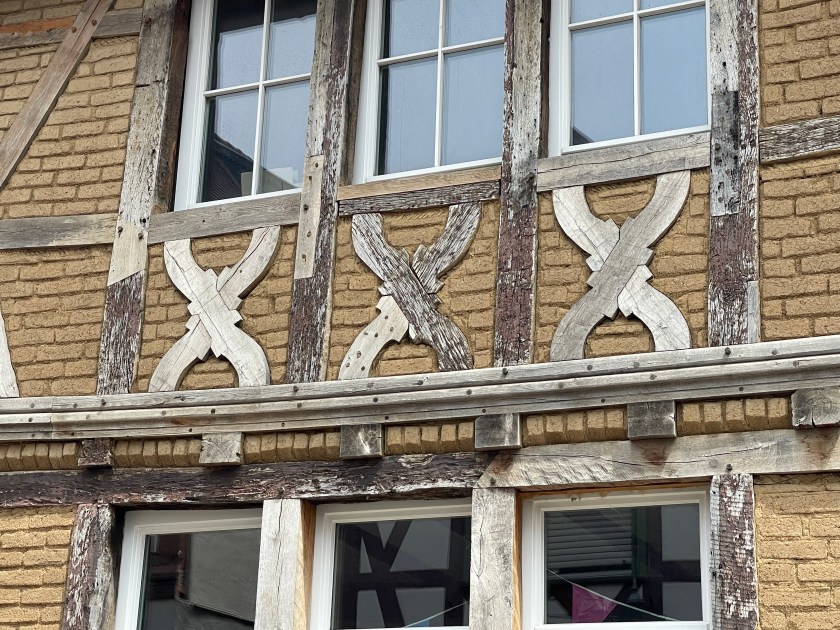
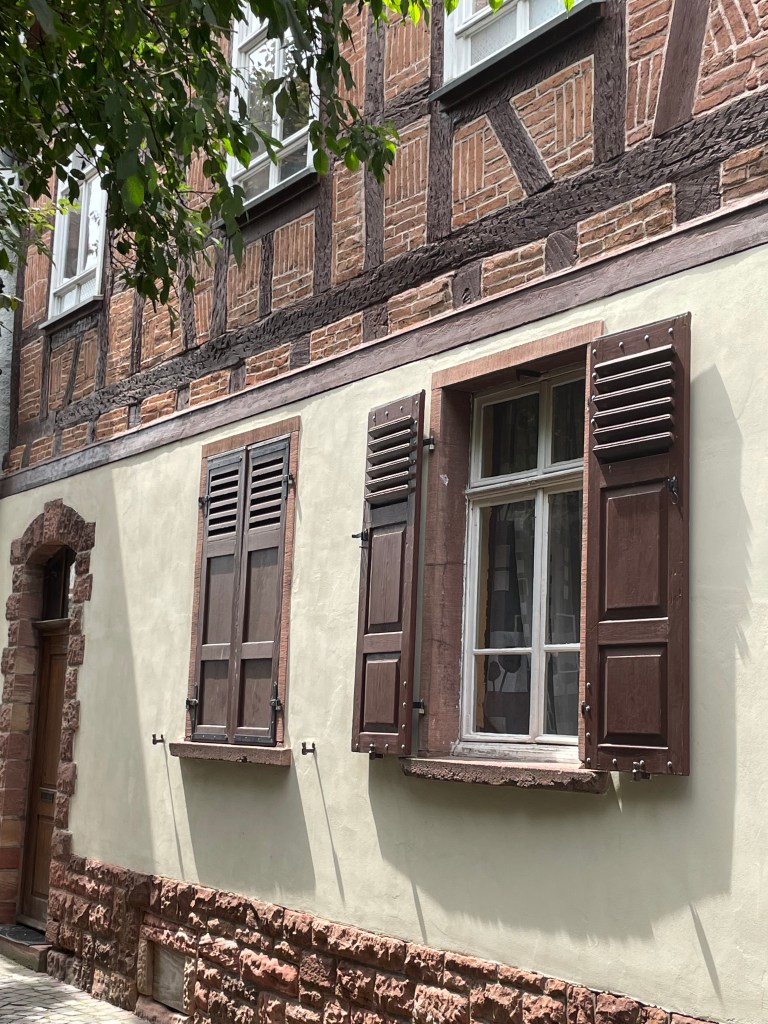
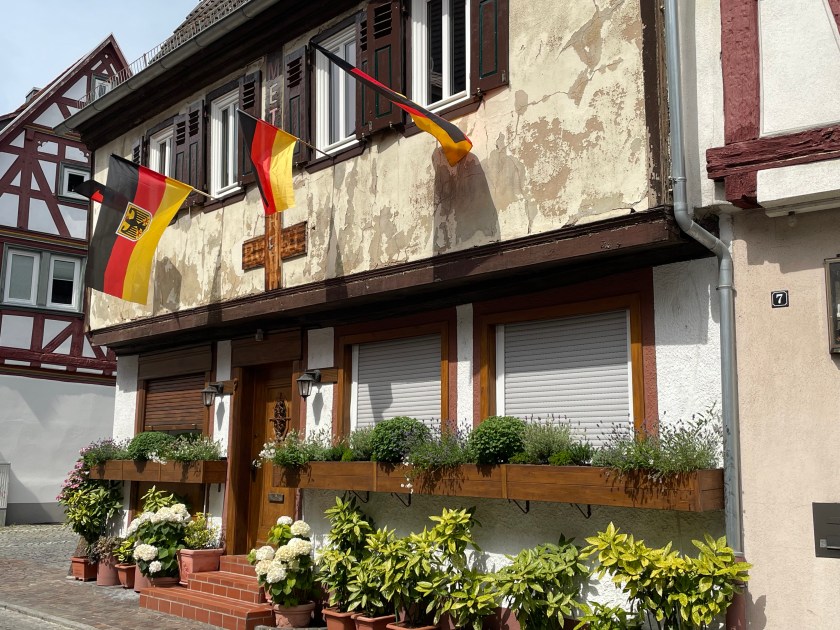
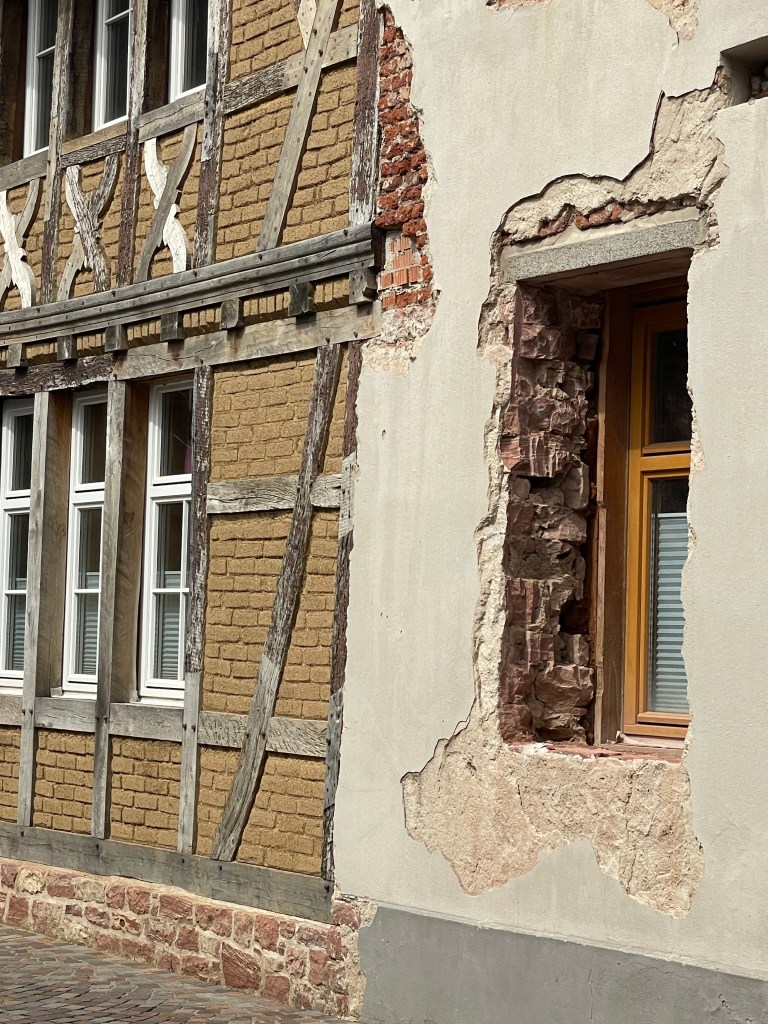
The homes along this particular street were very old. Here is one that’s being restored. You can see what’s under the plaster.
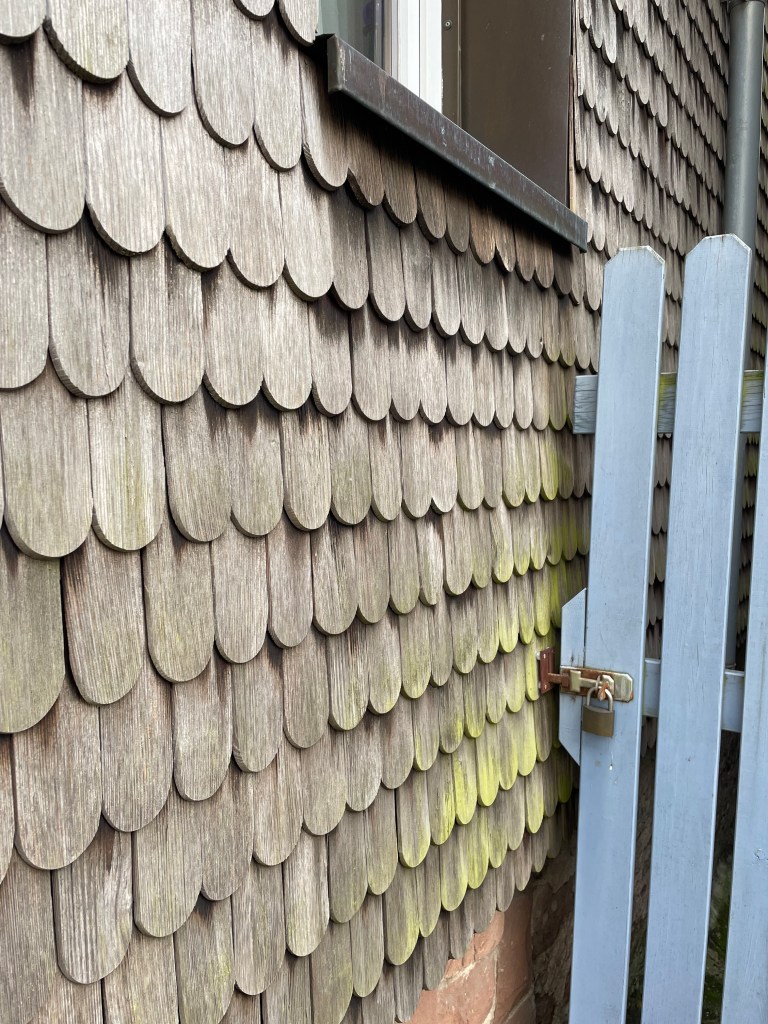
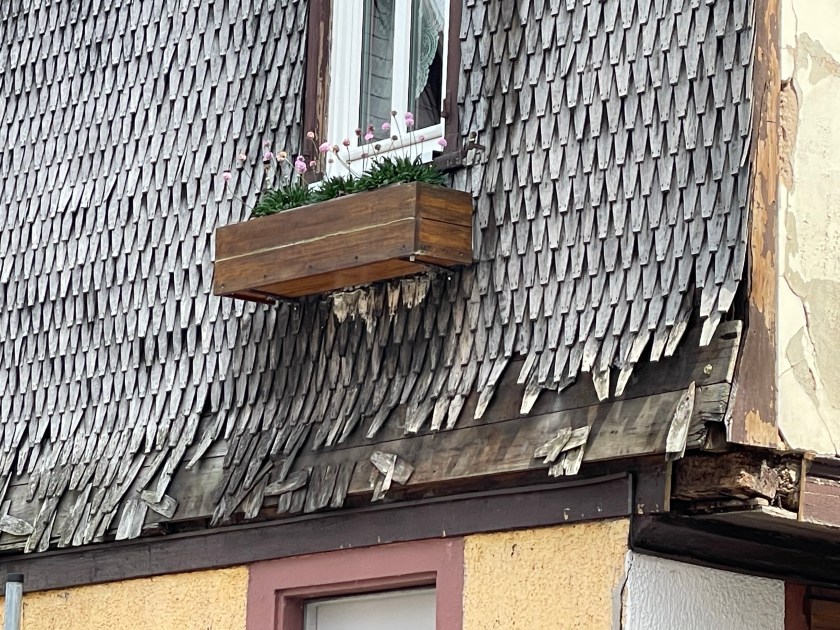
These shingle tiles look like they’re added one by one.
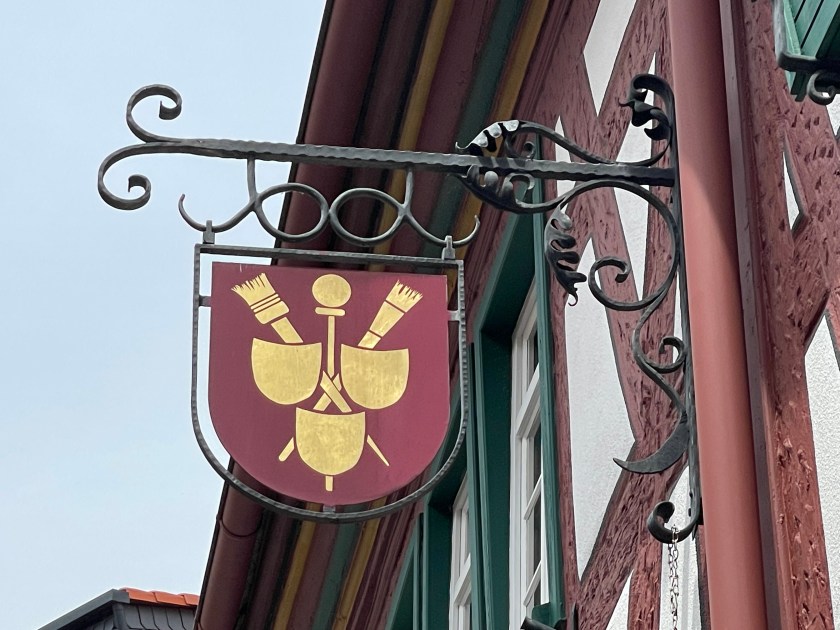
A painter’s shop:
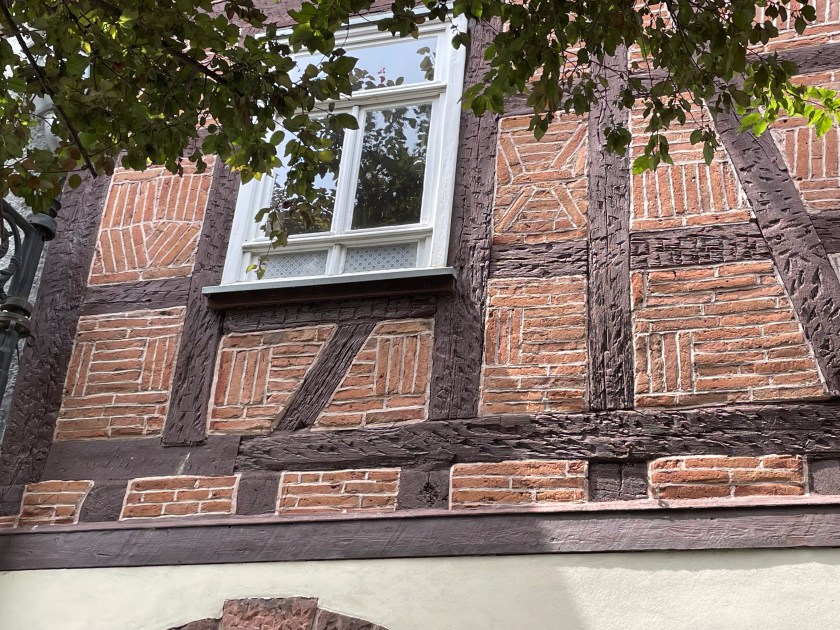
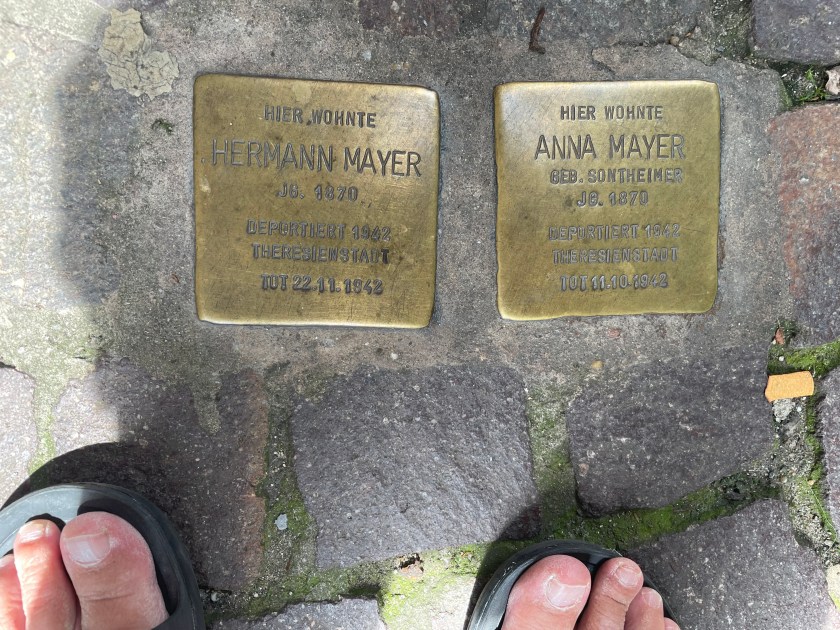
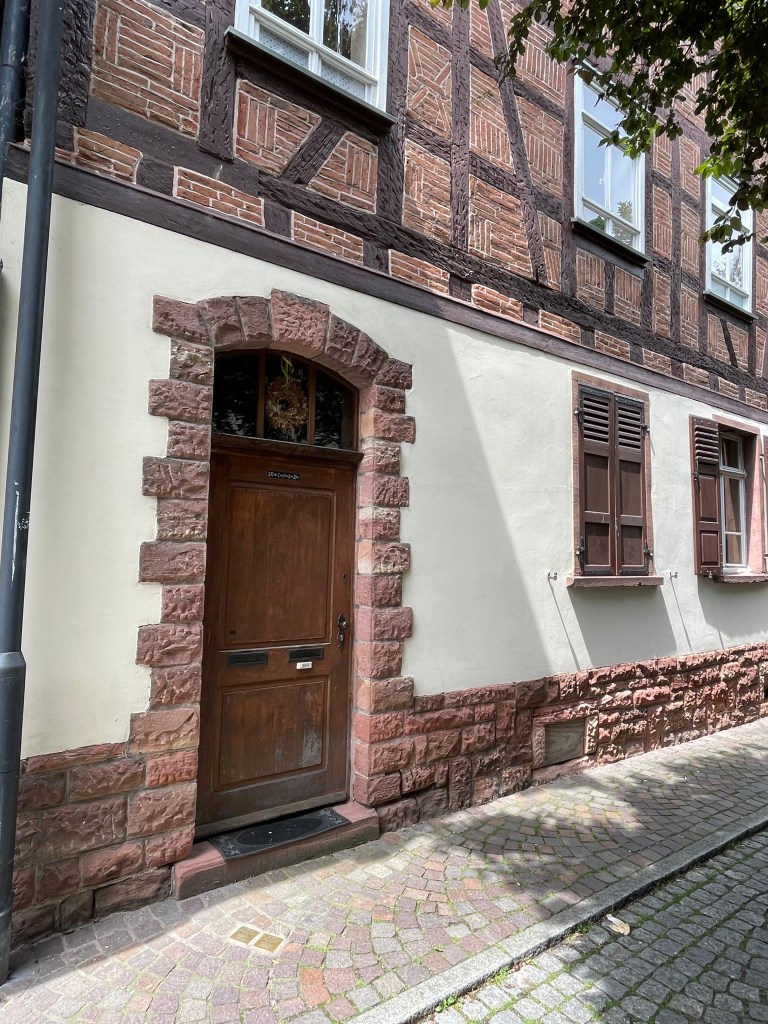
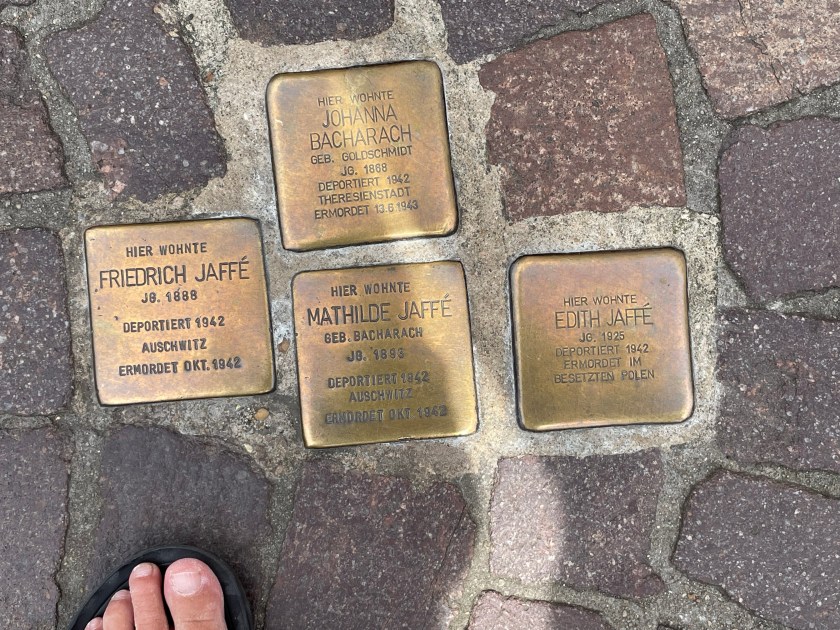
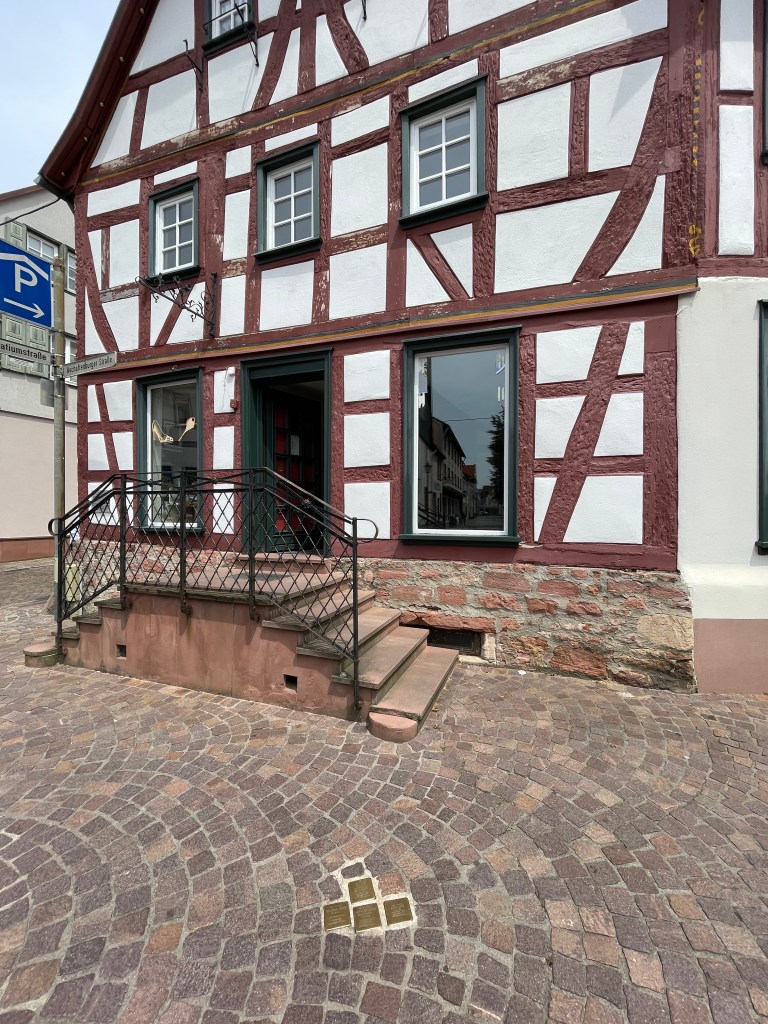
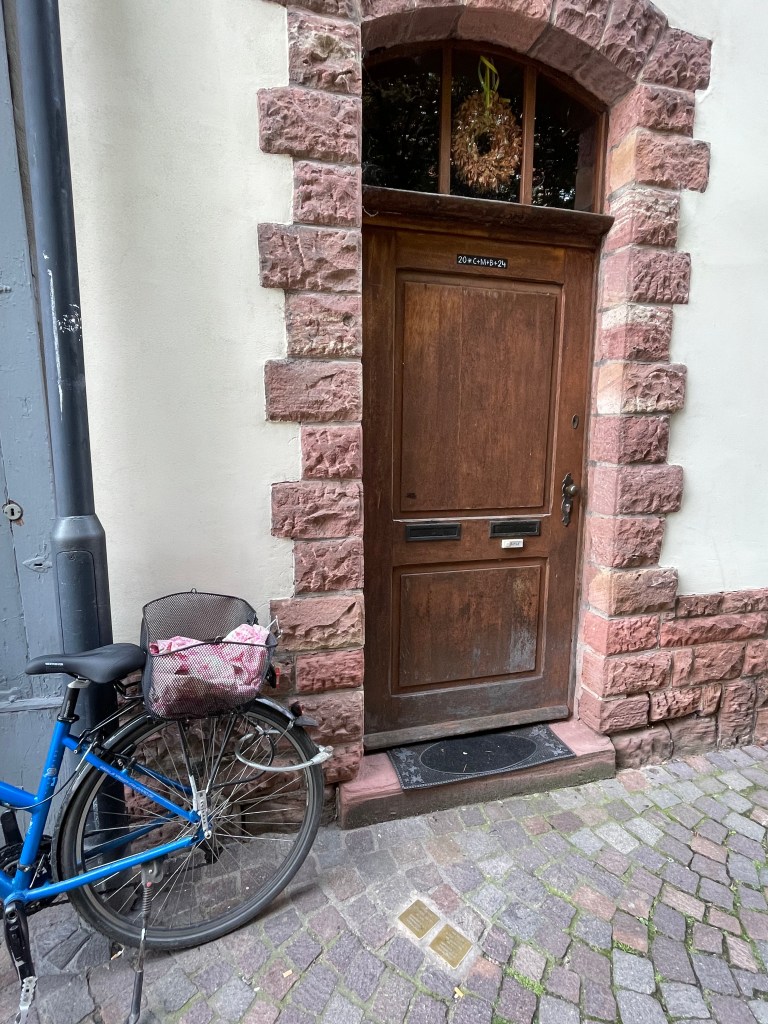
I was so busy looking at the brickwork above, I almost didn’t notice the Stolpersteine below. Here is the couple who was taken from this home, deported and killed.
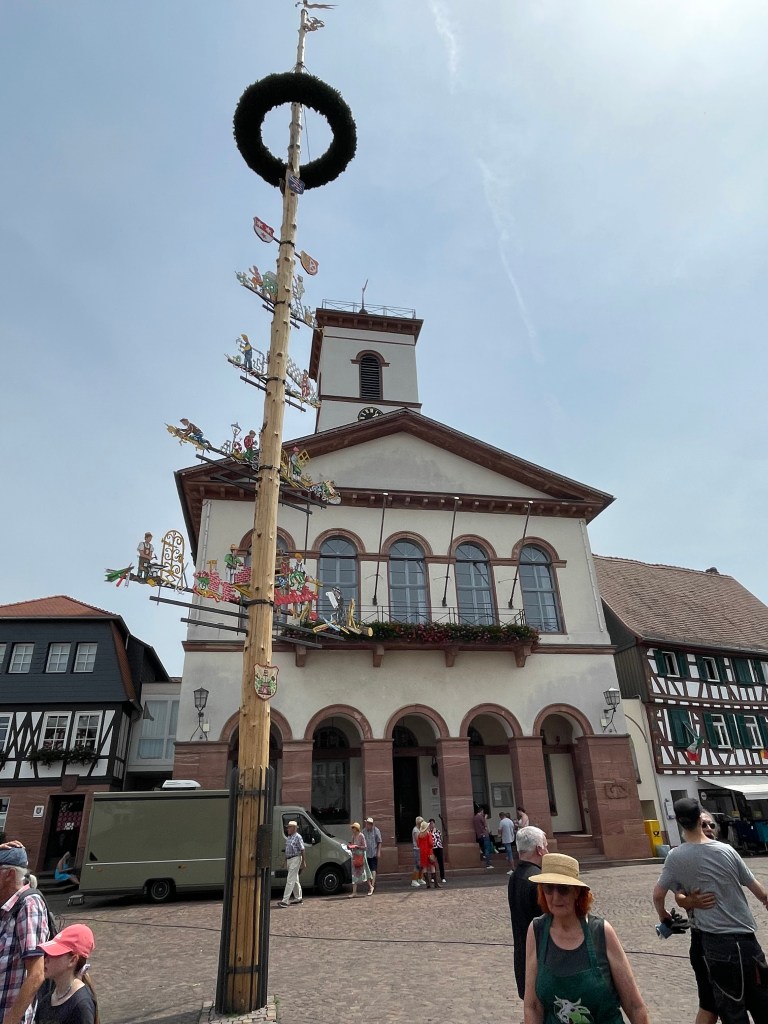
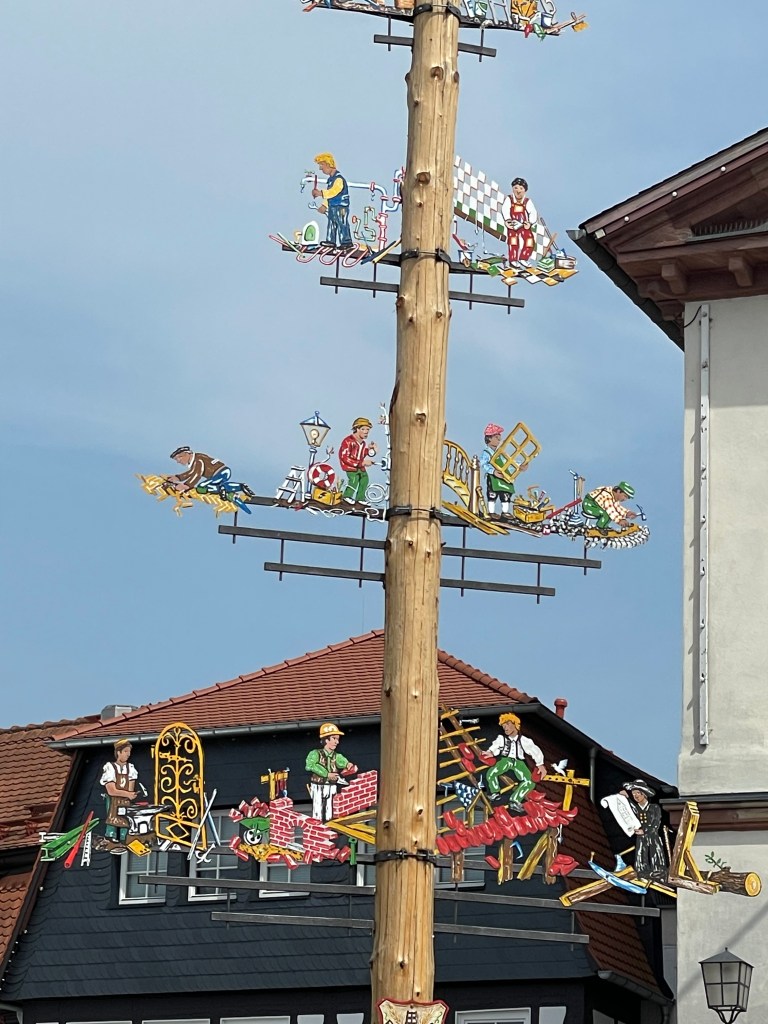
I think this is a May Pole, still standing in the town square.
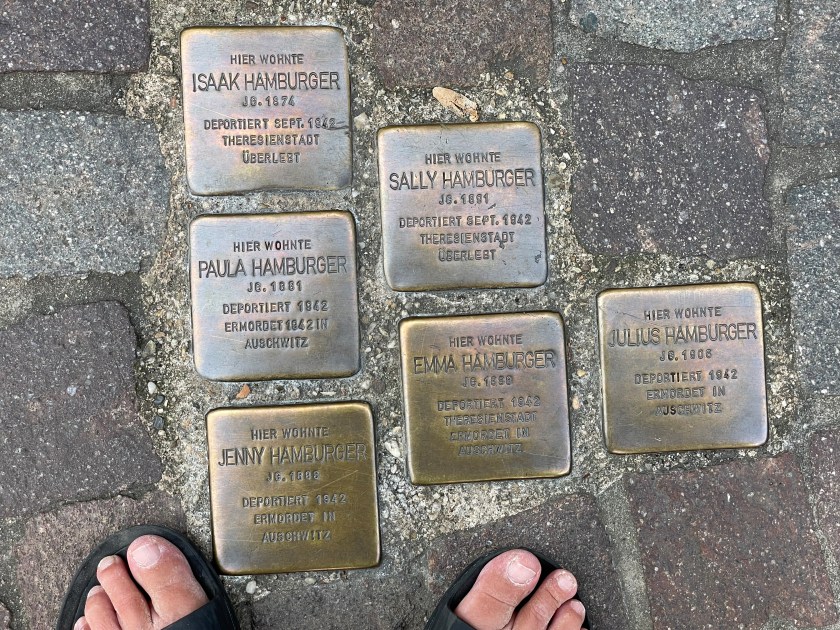
More Stolpersteine. These homes were fine homes. I wonder who commandeered them after removing the families who lived here, loved here and were pulled away from here.
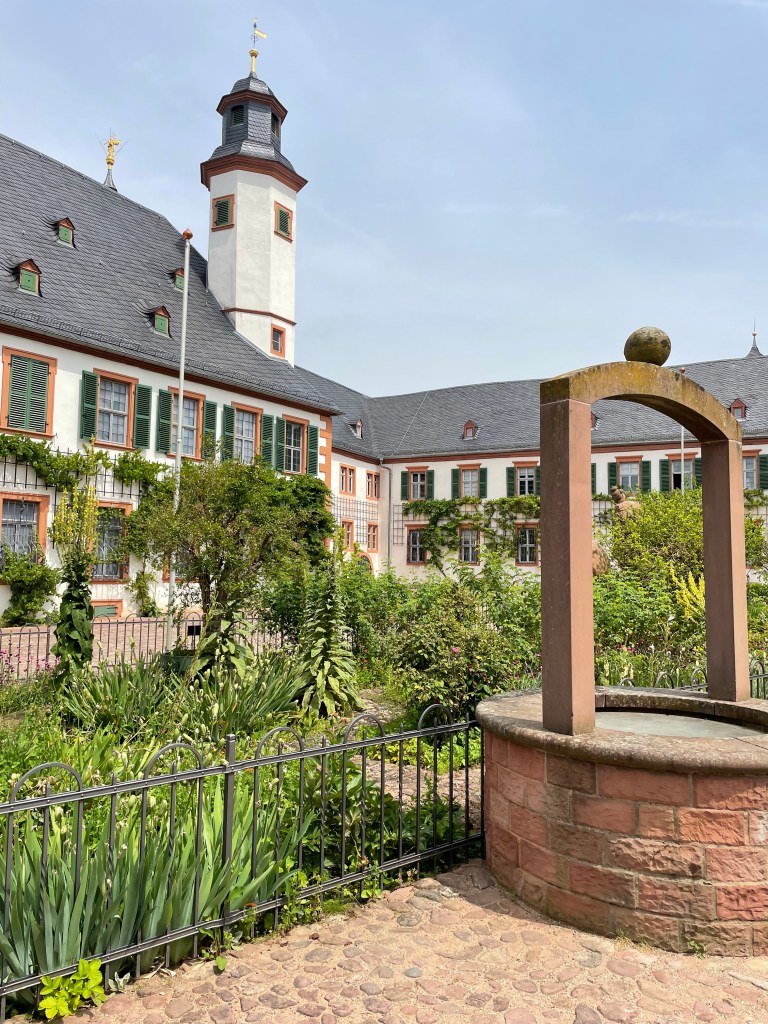
Last time we were here, we didn’t have time to see the Cloister behind the cathedral. Today we walked through gardens and Cloister grounds.
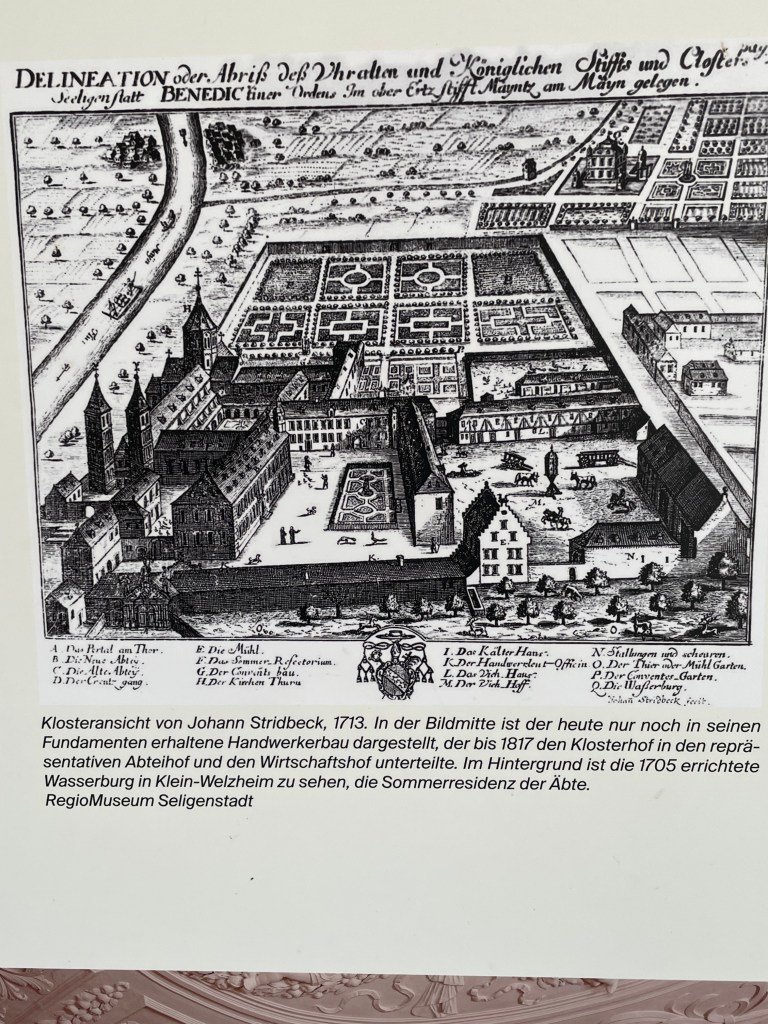
Here’s how the gardens looked in the 1700s:
It was SO HOT and humid today. The cathedral is near the river Main.
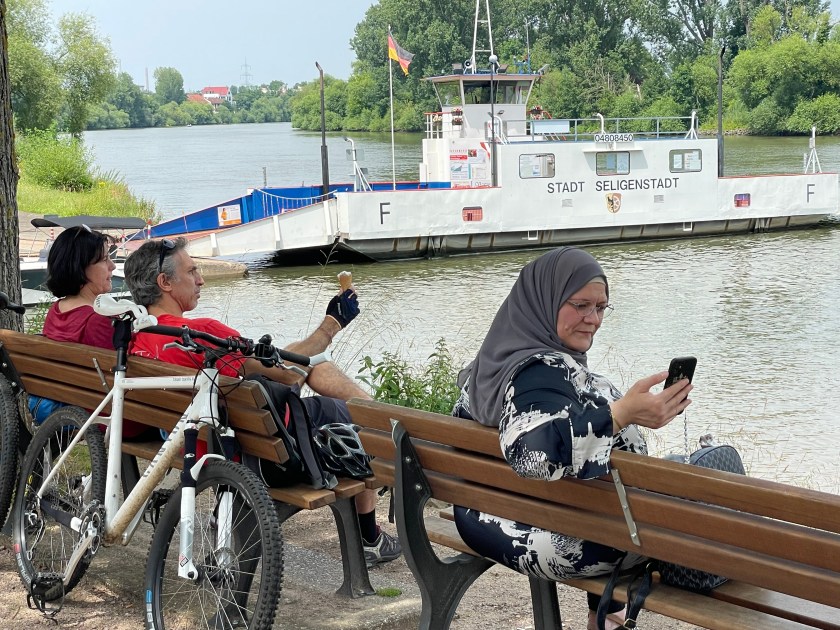
We sat for awhile in the shade, watching people along the river.
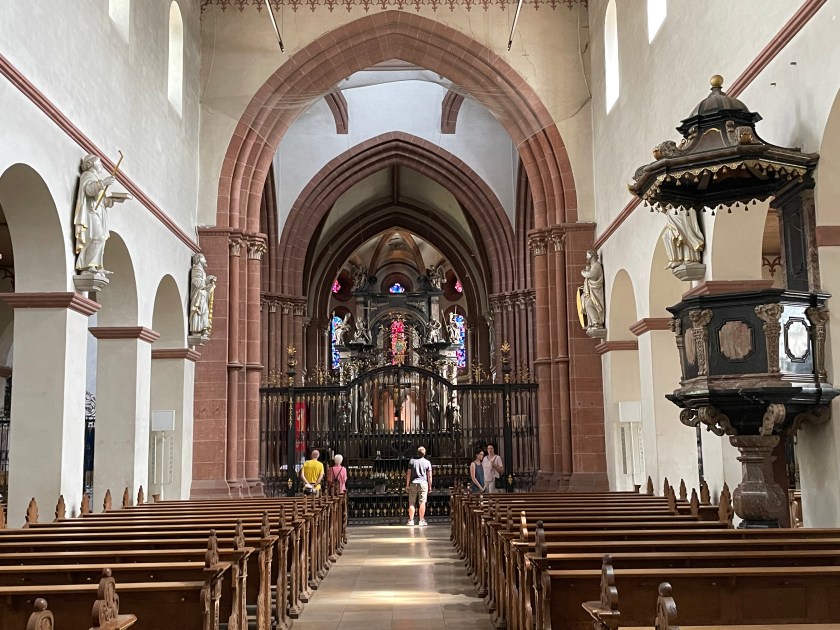
Then we revisited the cathedral. I see something different each time I’m in a place like this.
Then we went back to the square to find some food.
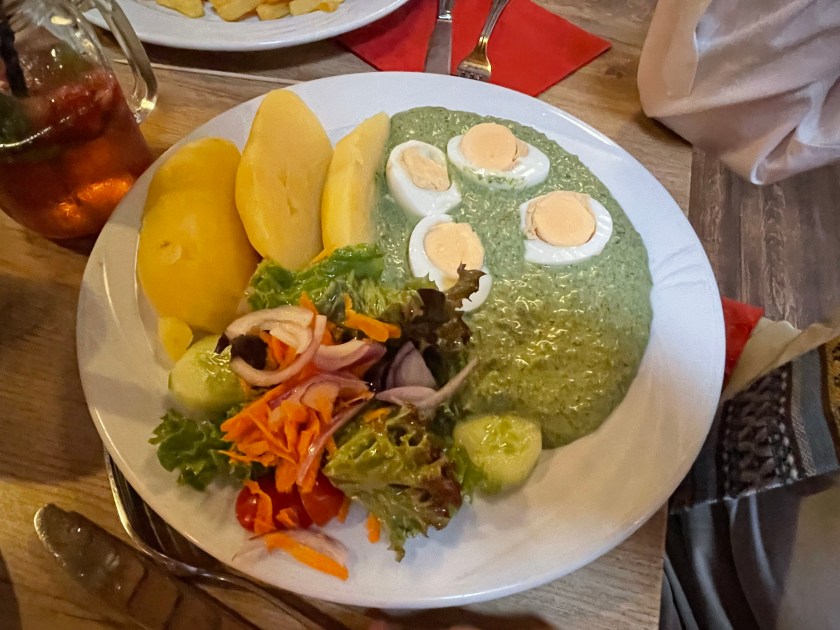
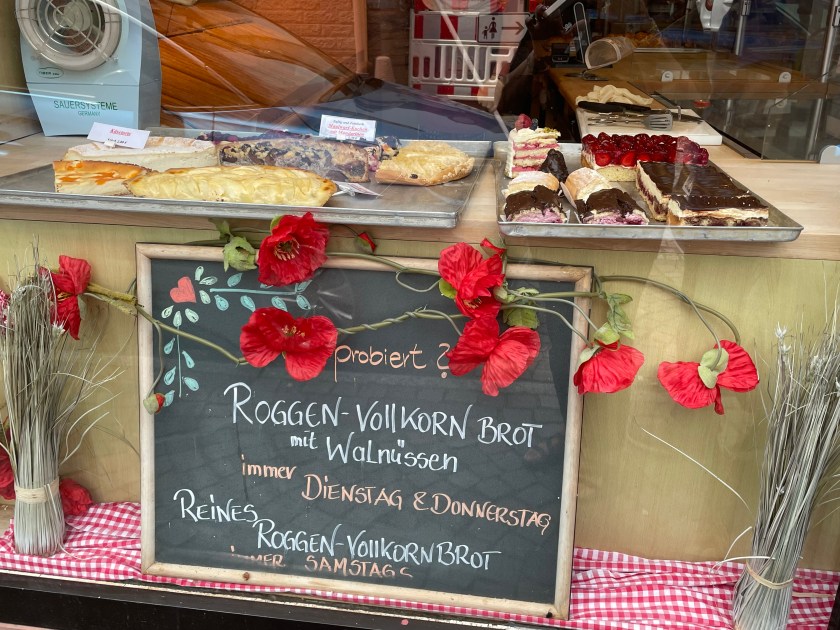
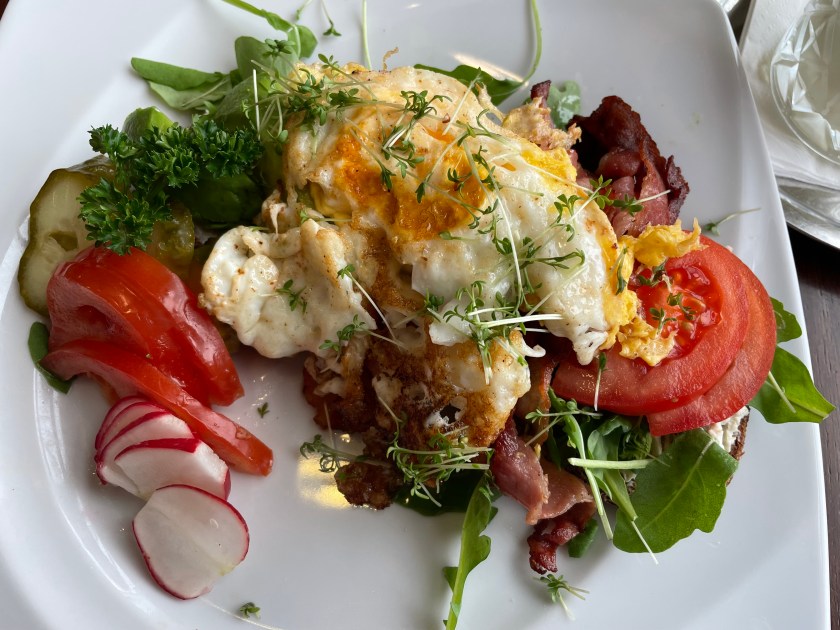
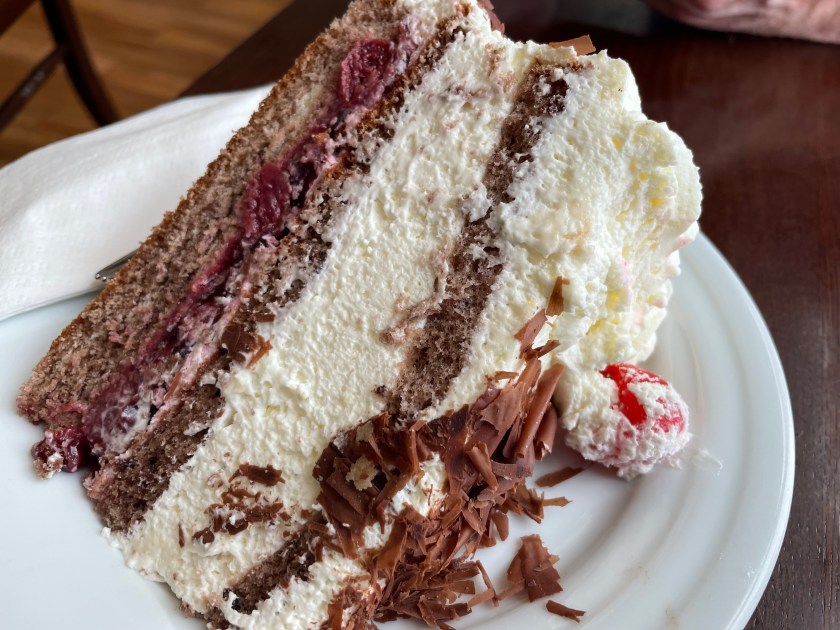
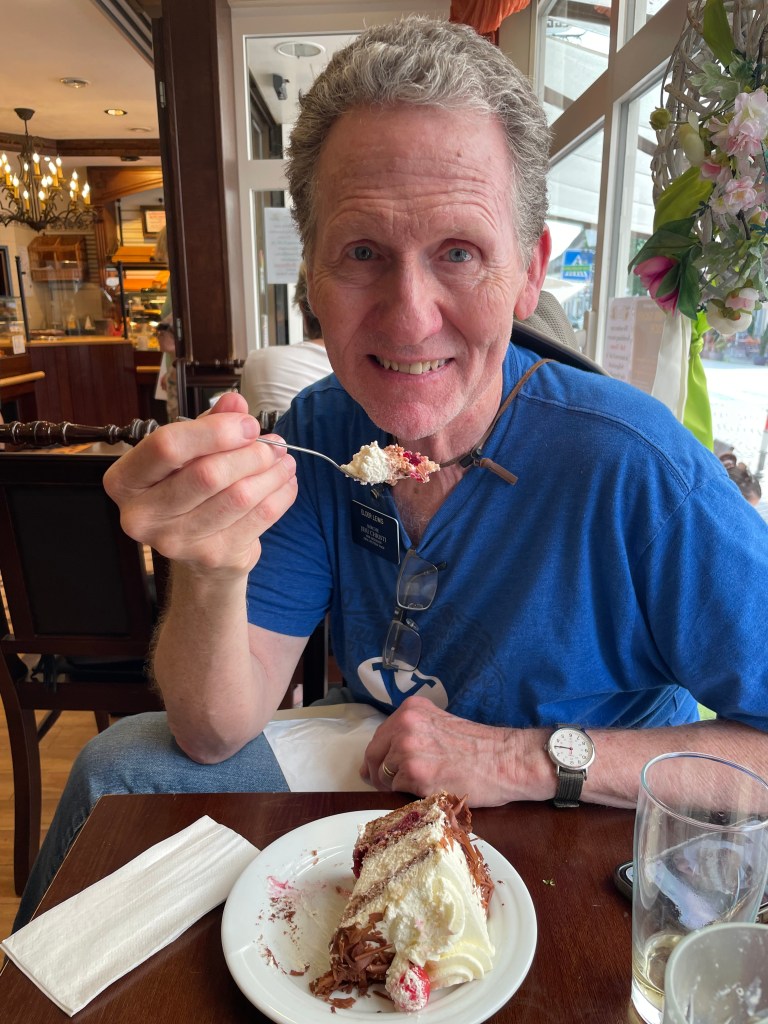
We had a tip about a favorite bakery that had black forest cherry chocolate cake, so we stopped for lunch in that cafe/bakery. We had delicious avocado toast with bacon and tomato and a fried egg on top. It was really good. I also got a delicious banana milkshake (we were so dehydrated and thirsty). John got some of the cake.
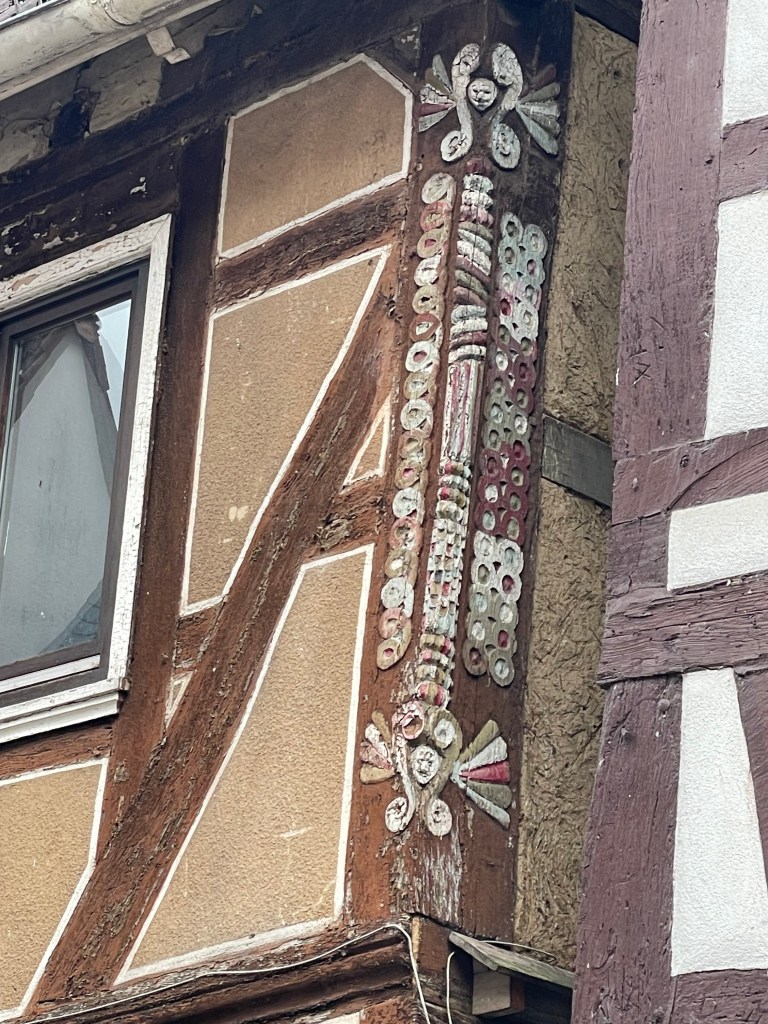
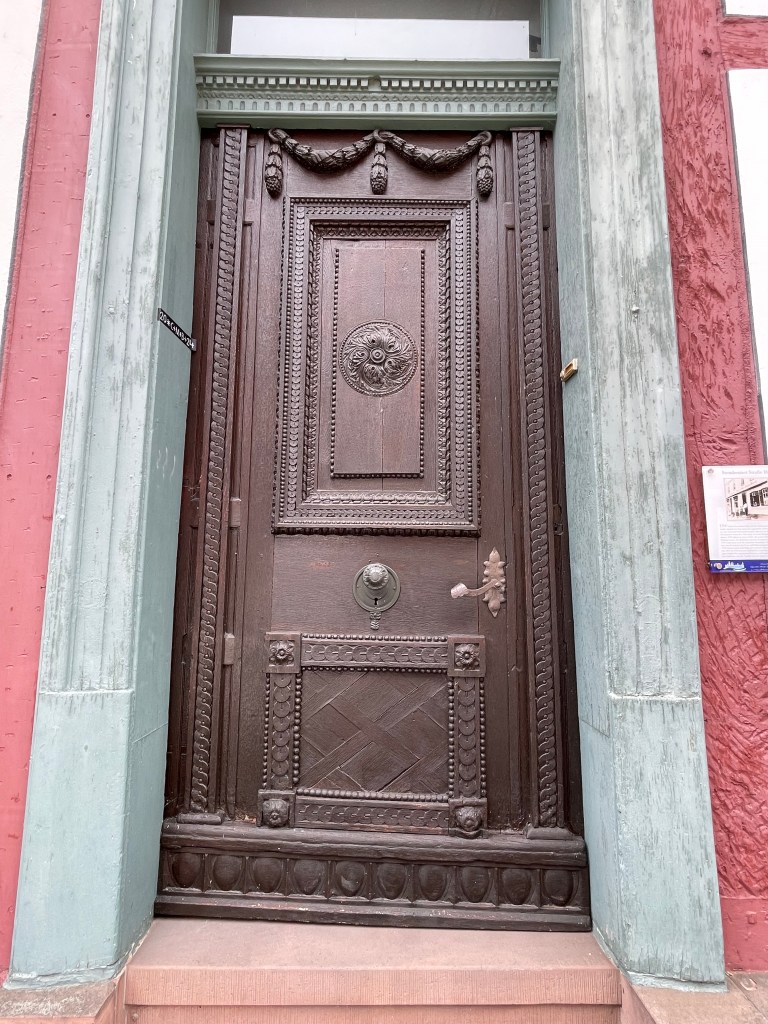
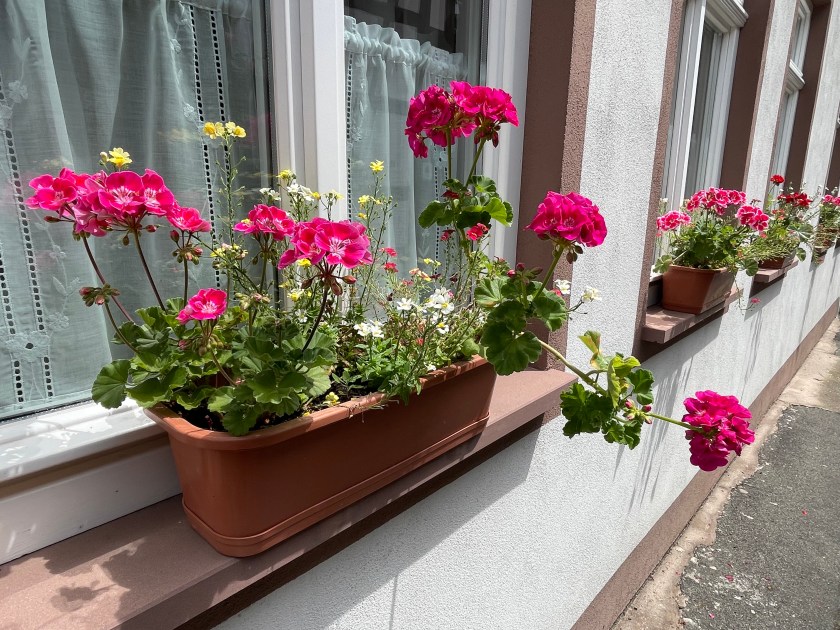
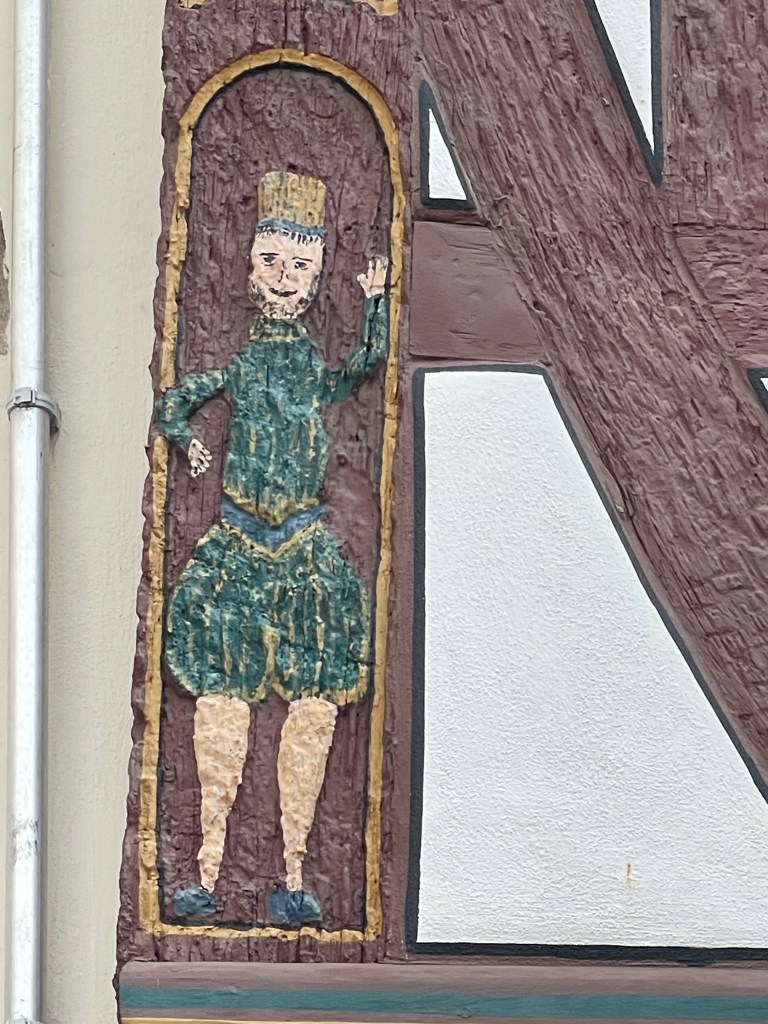
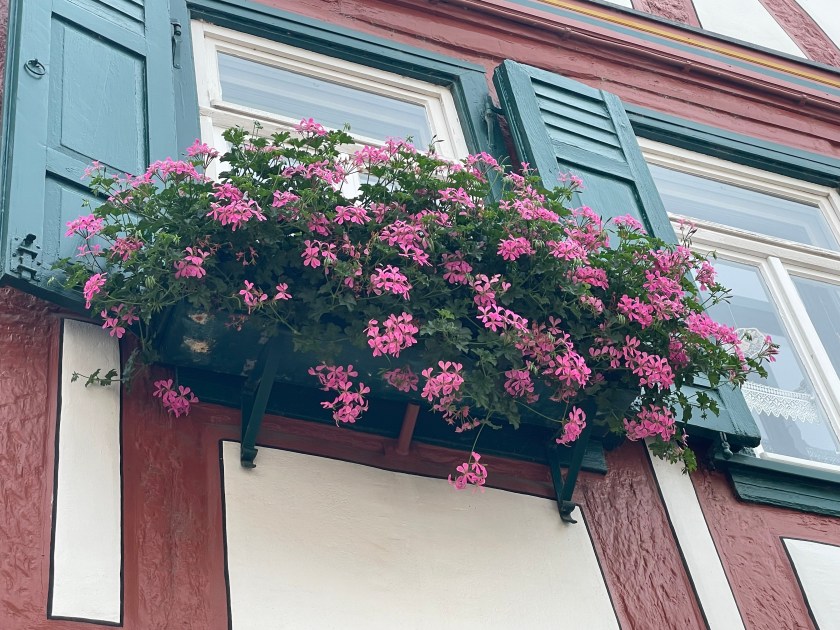
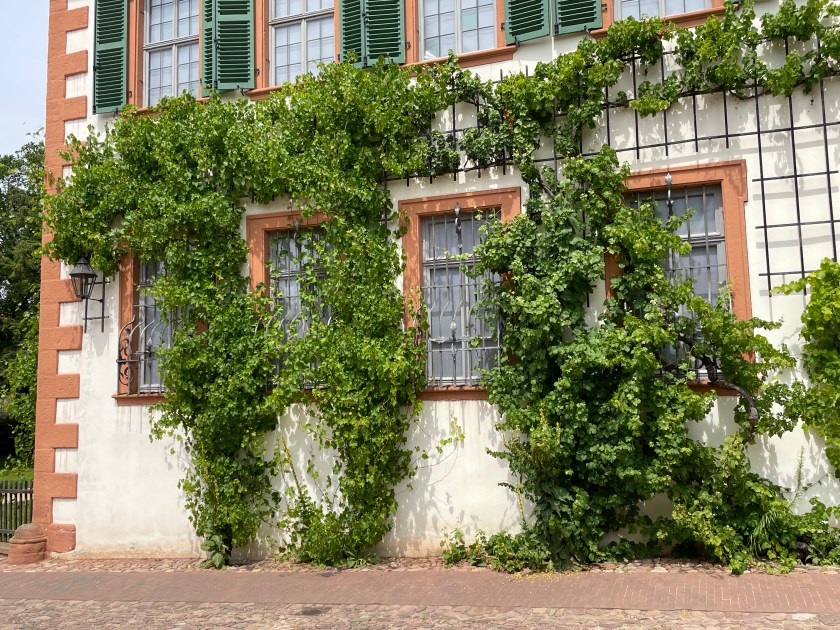
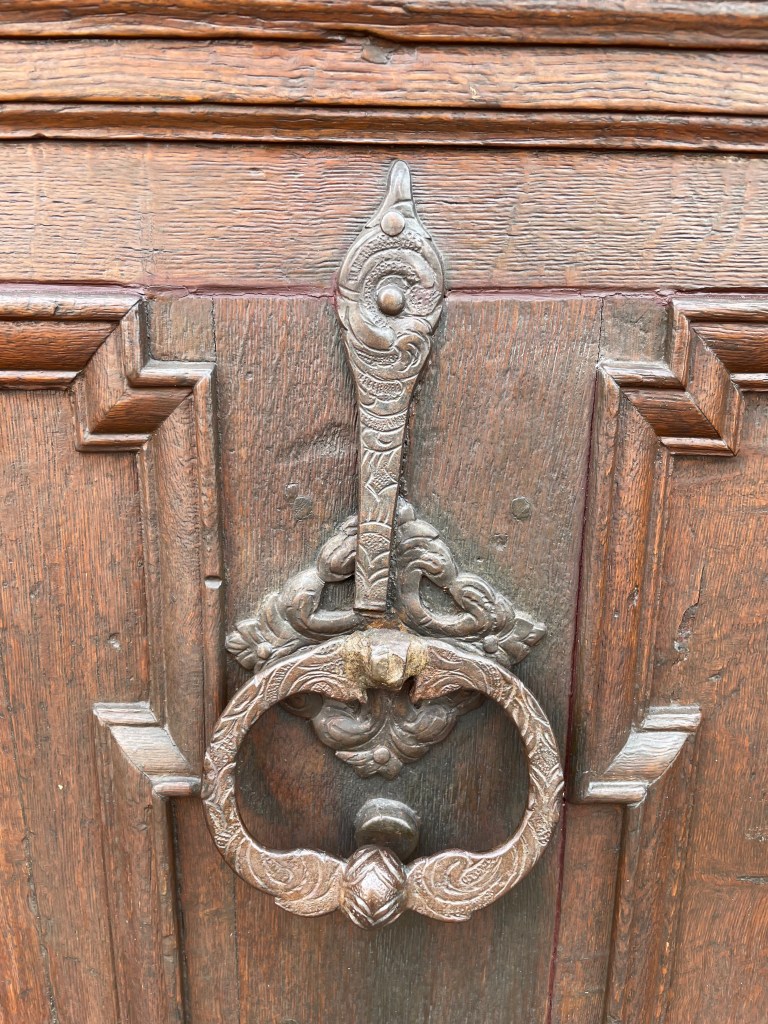
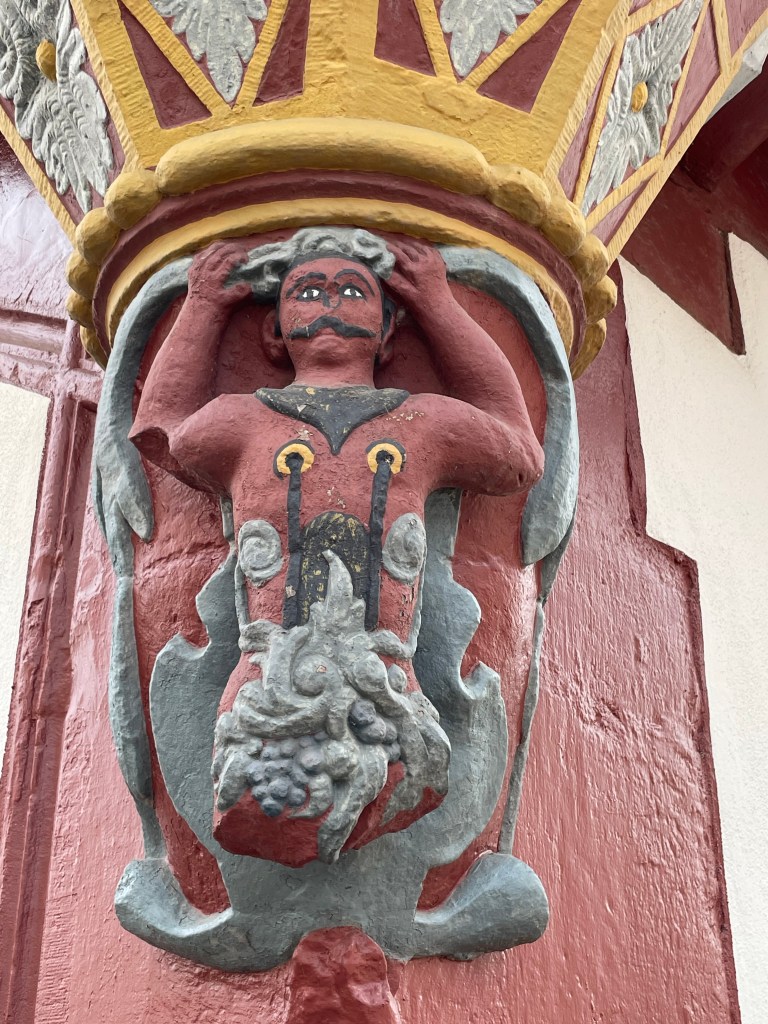
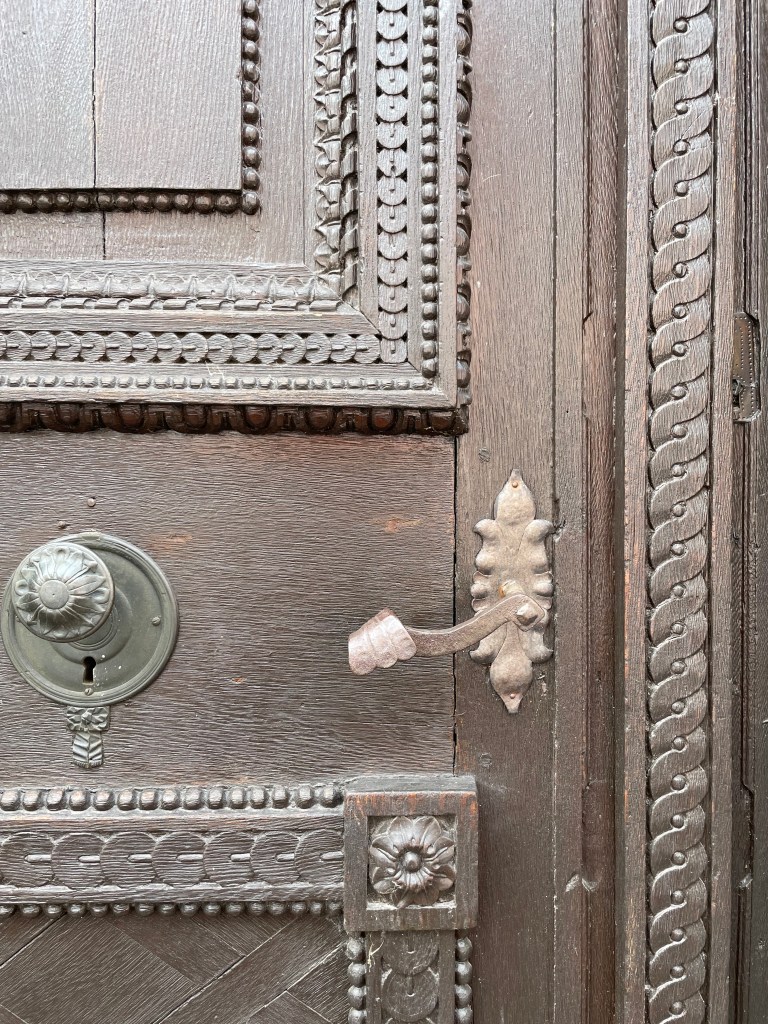
Oh, the details. I can’t get enough of them.
More Stolpersteine:
A family of 6, taken from here. “Uberlebt” means they survived. “Ermordet” means murdered.
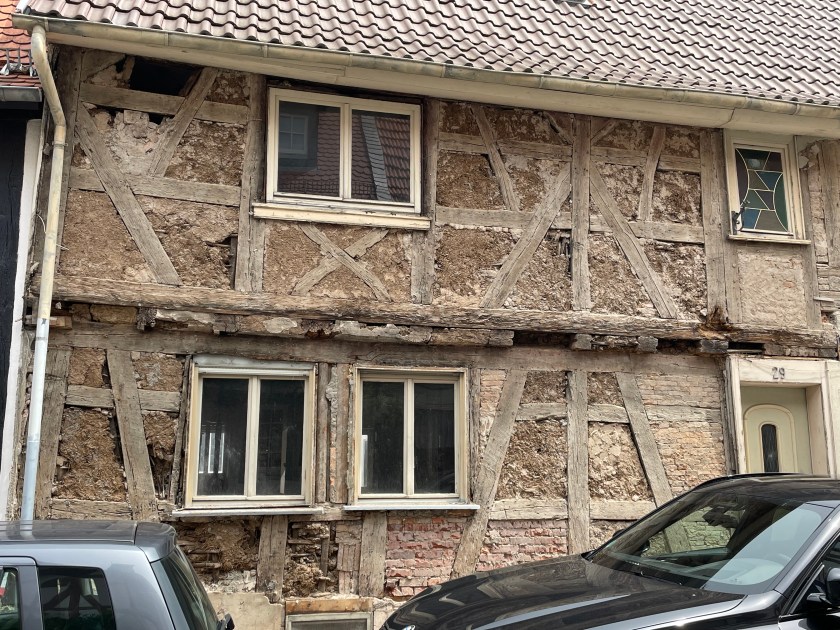
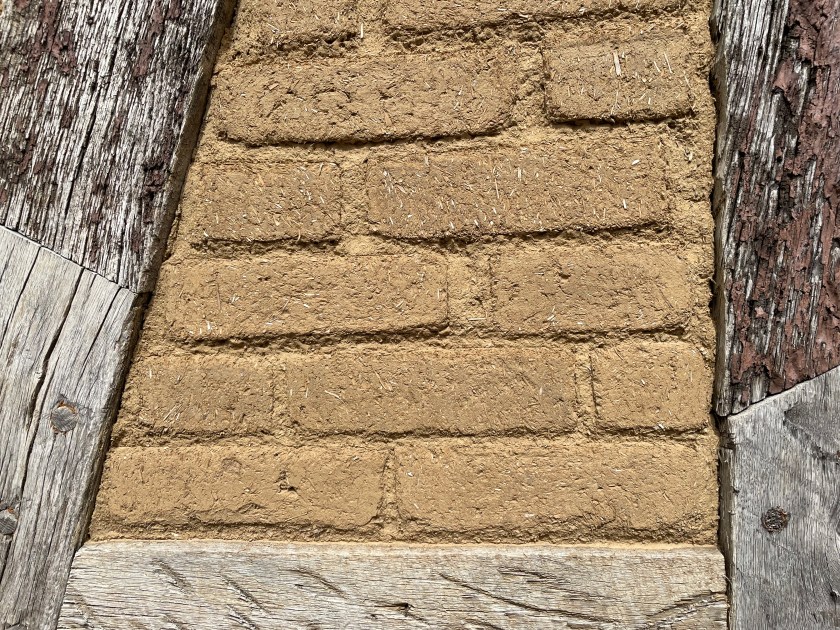
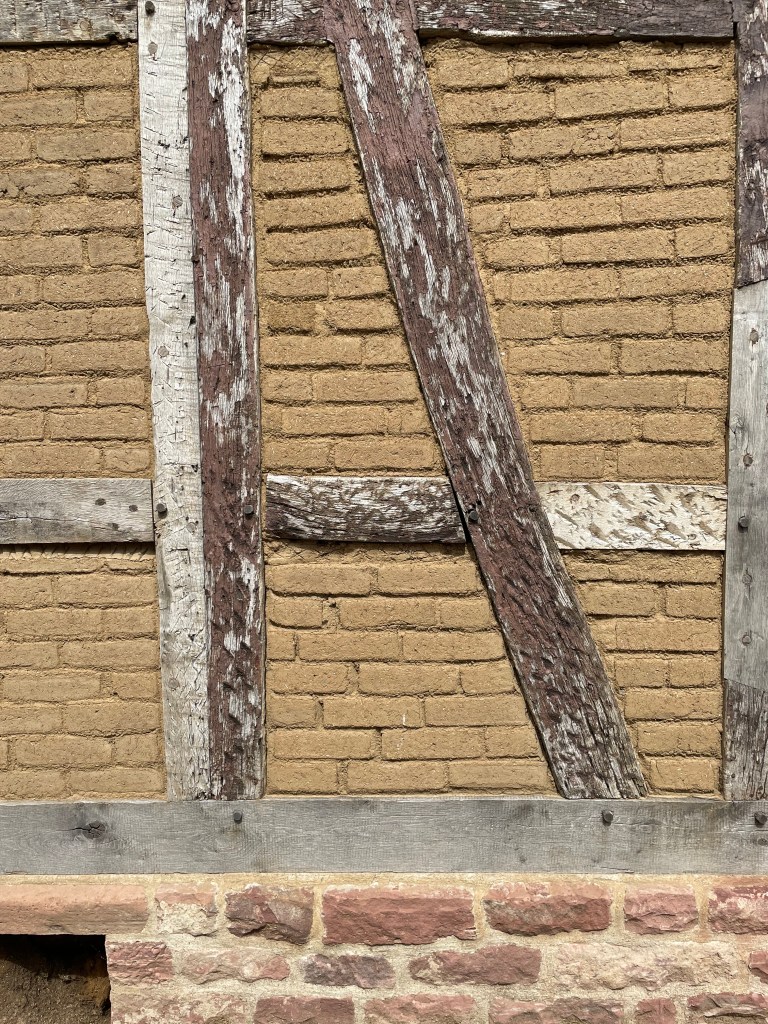
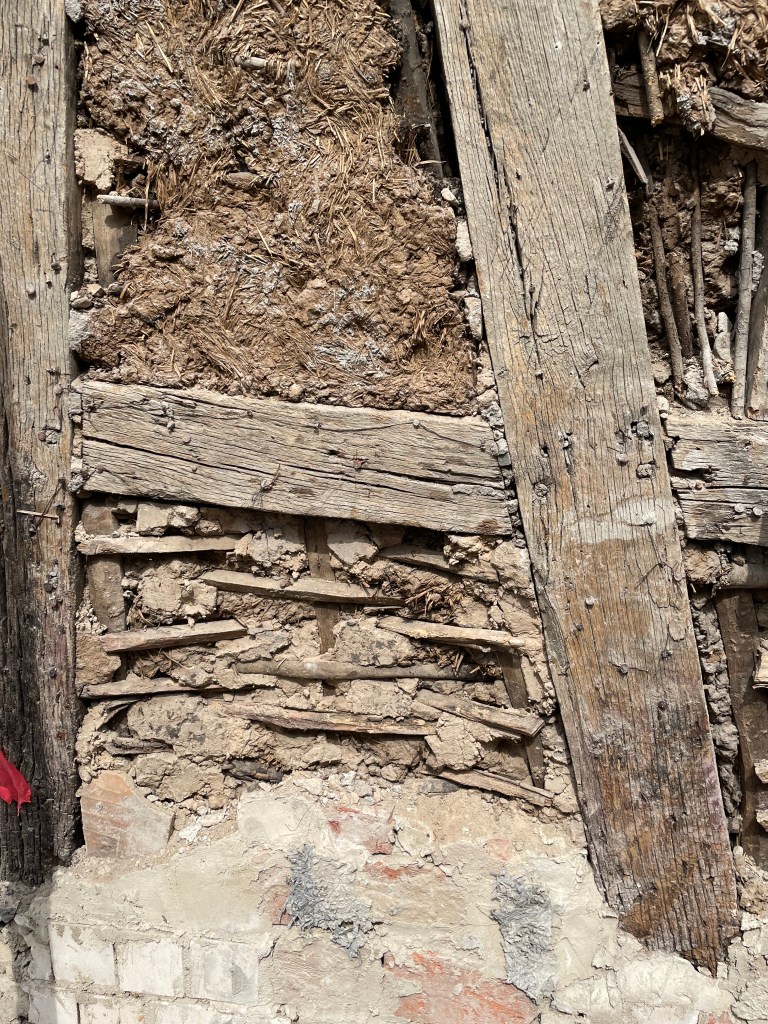
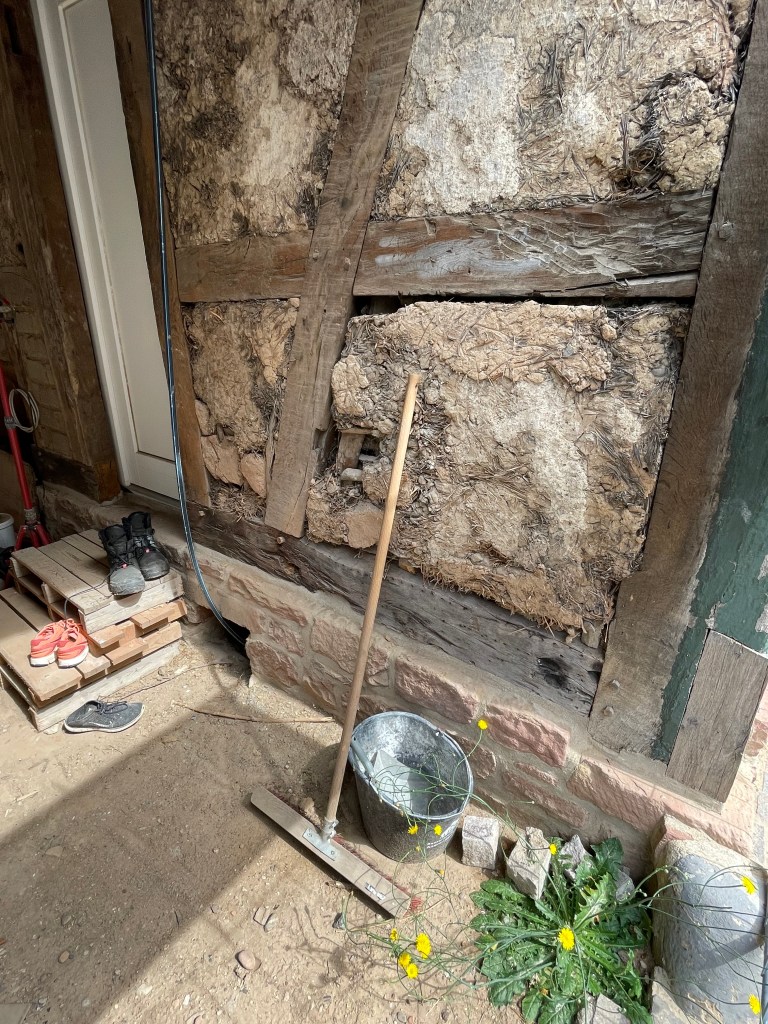
Here’s a look at old-time house construction:
You can see the straw in these mud bricks that are 100s of years old and still hard as rock.
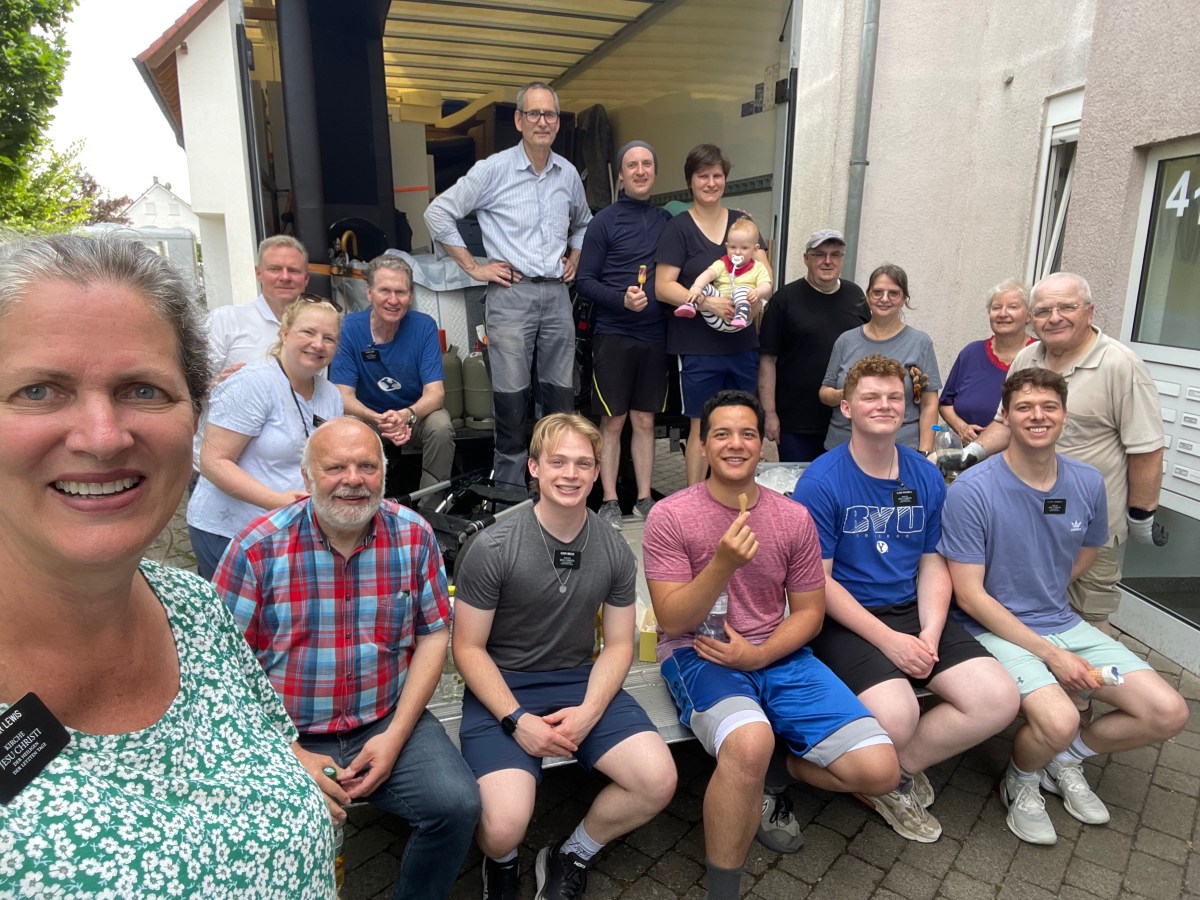
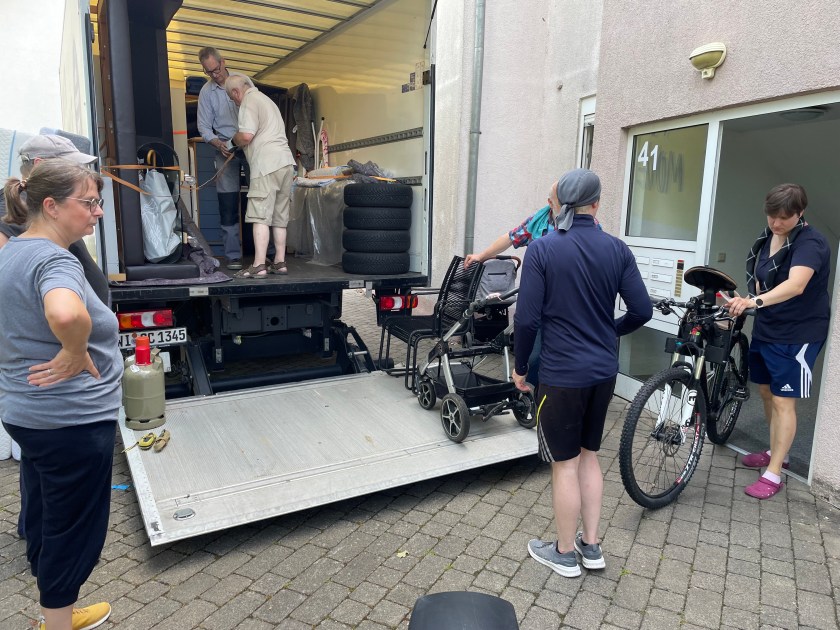
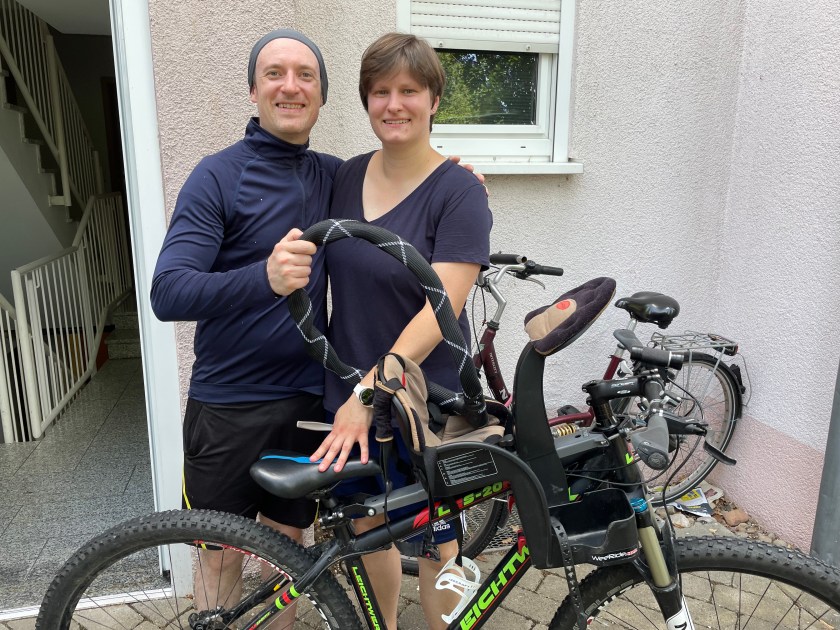
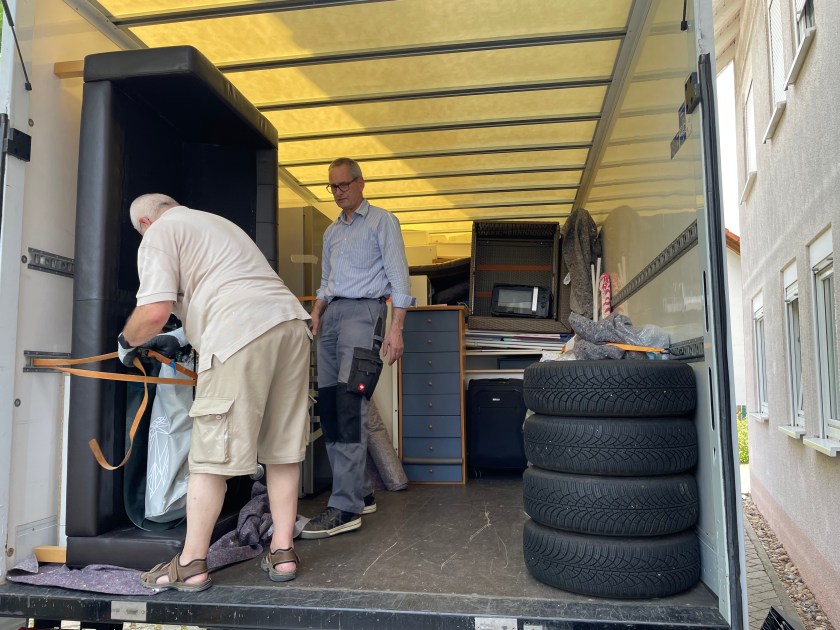
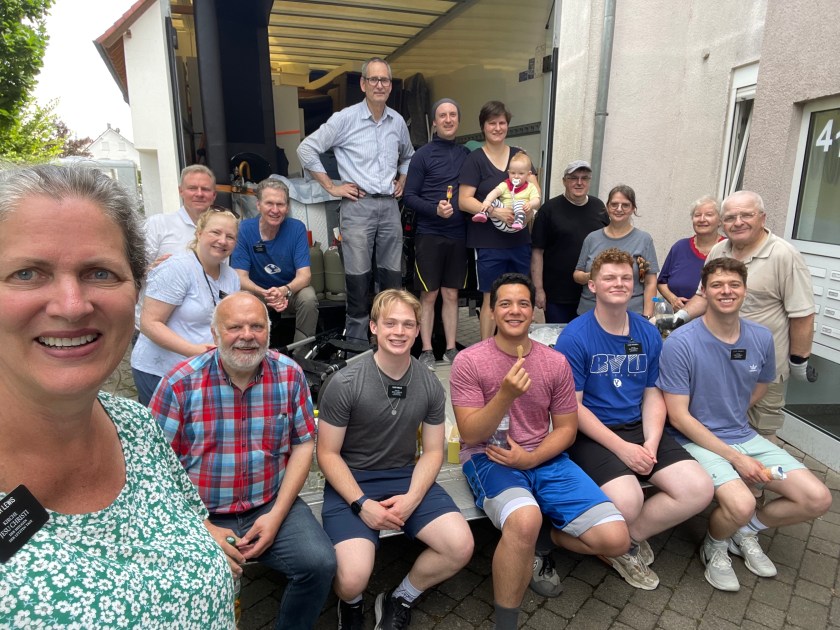
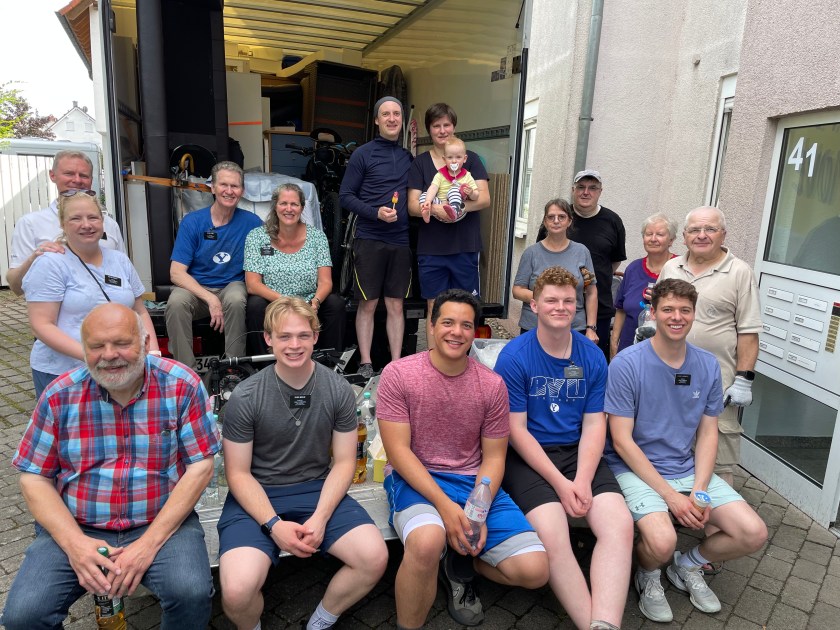
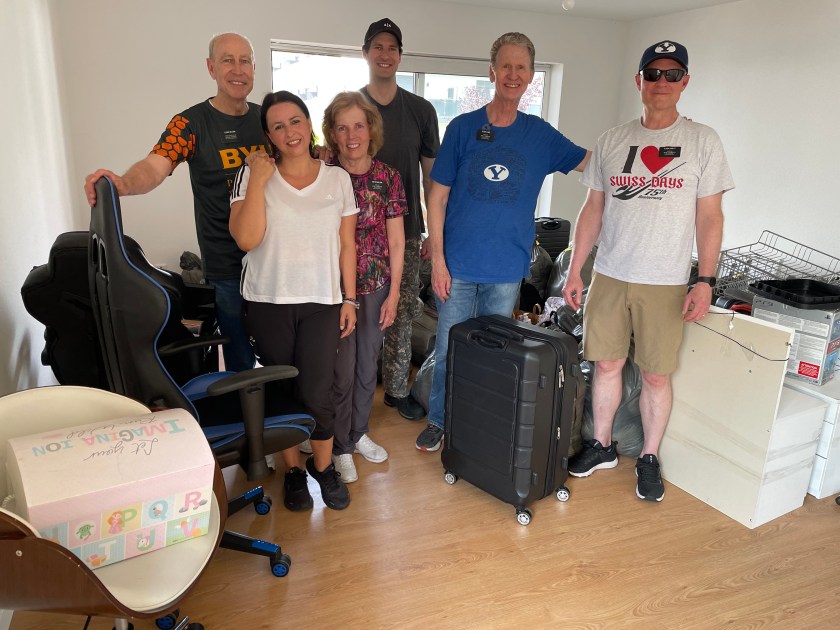
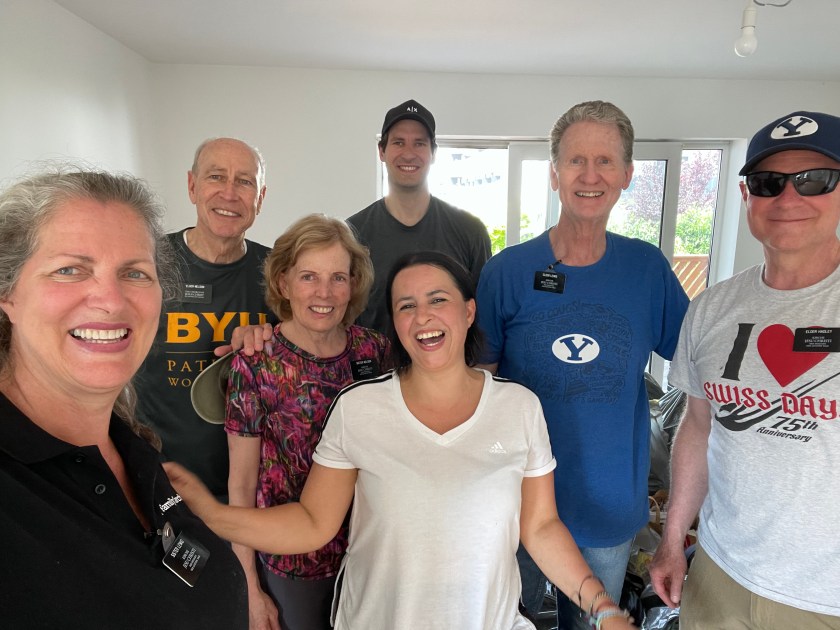
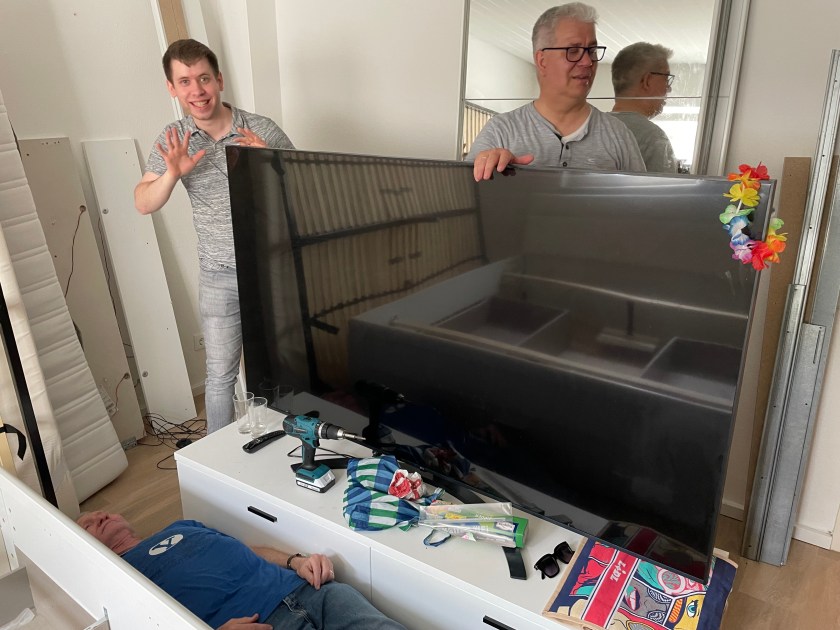
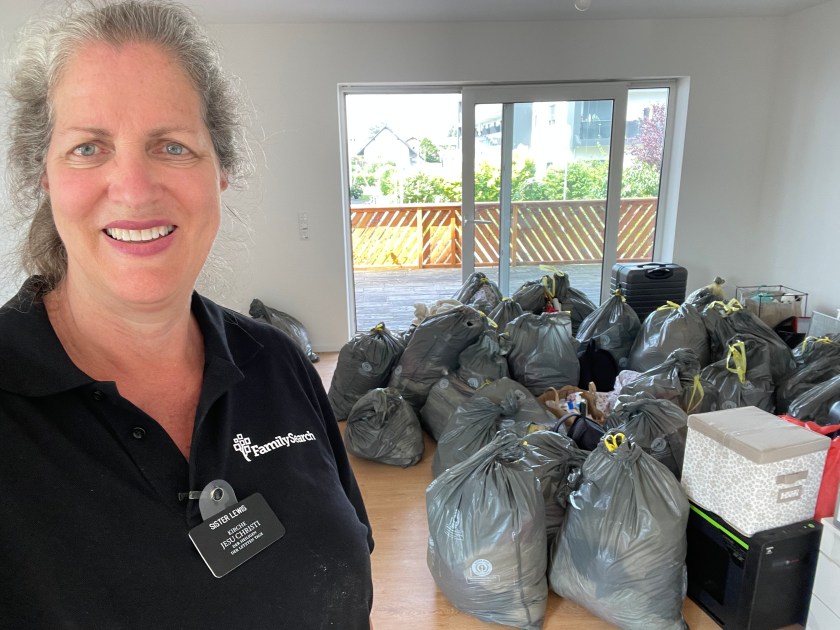
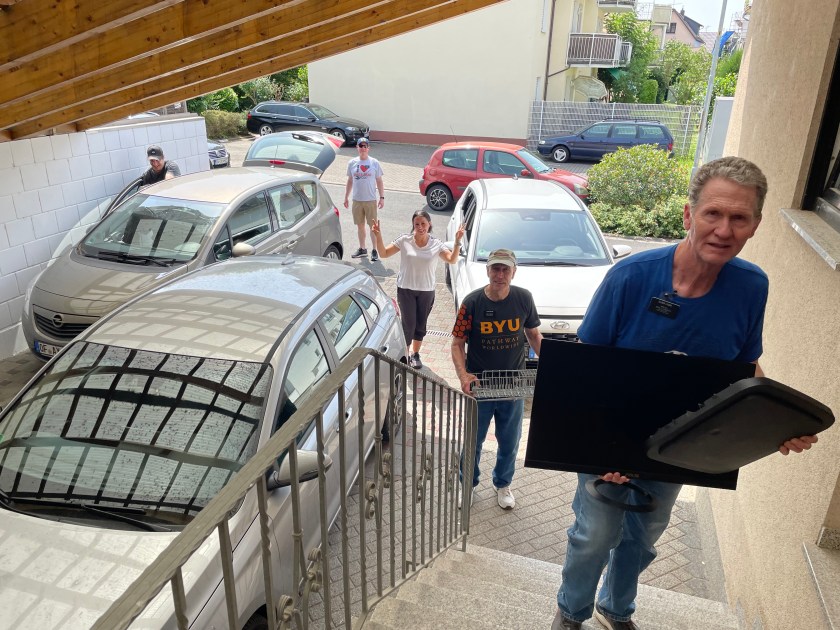
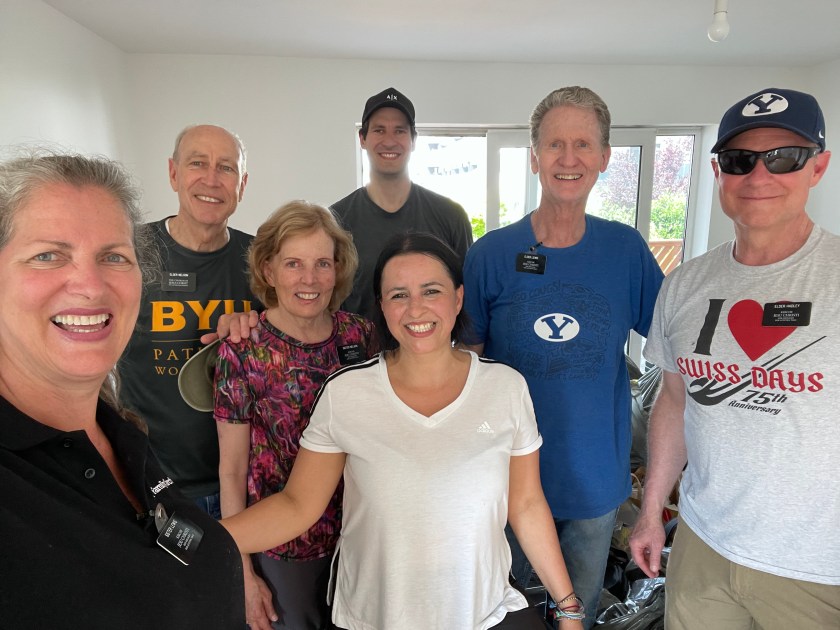
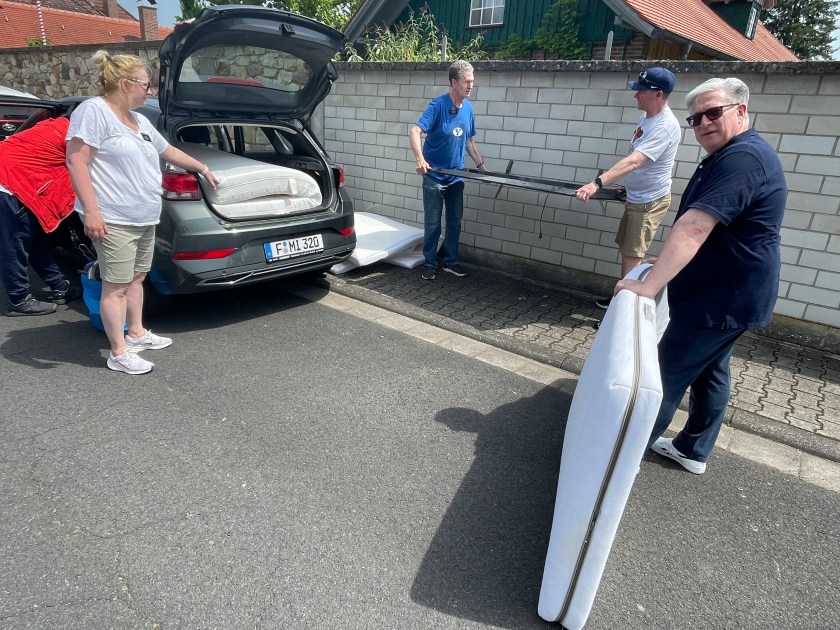
This weekend members of our Offenbach Branch helped 2 families move–one Friday afternoon and one Saturday morning. Lots of helpers made the work easier and fun, although we’re sad to see Dorris and Daniel Muench move out of the branch to Munich. We will really miss their little family.
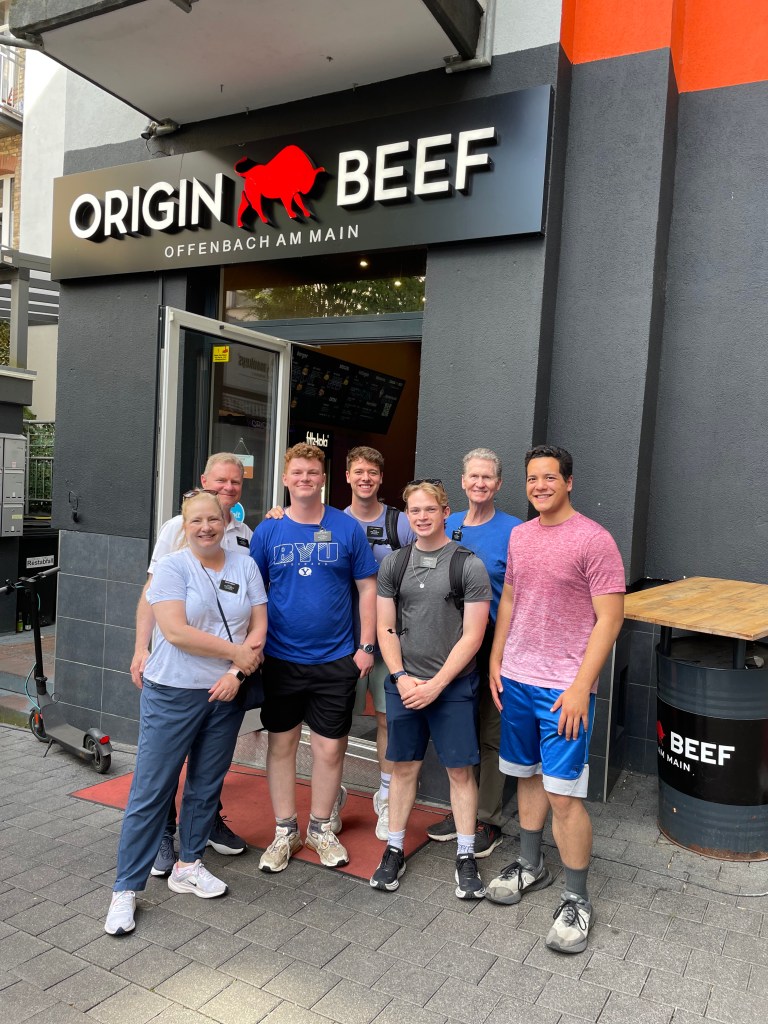
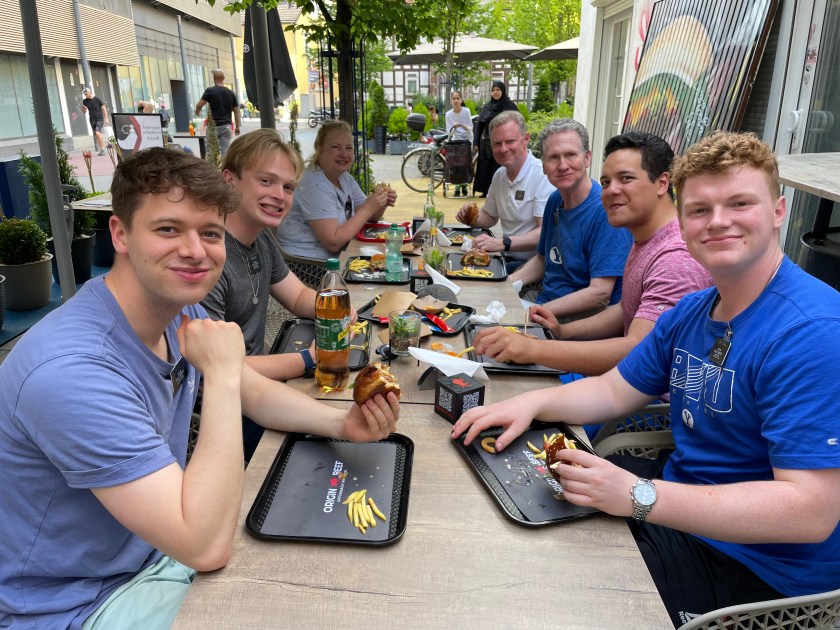
After the moving, we took the young Elders out for burgers before heading over to the branch game night activity.
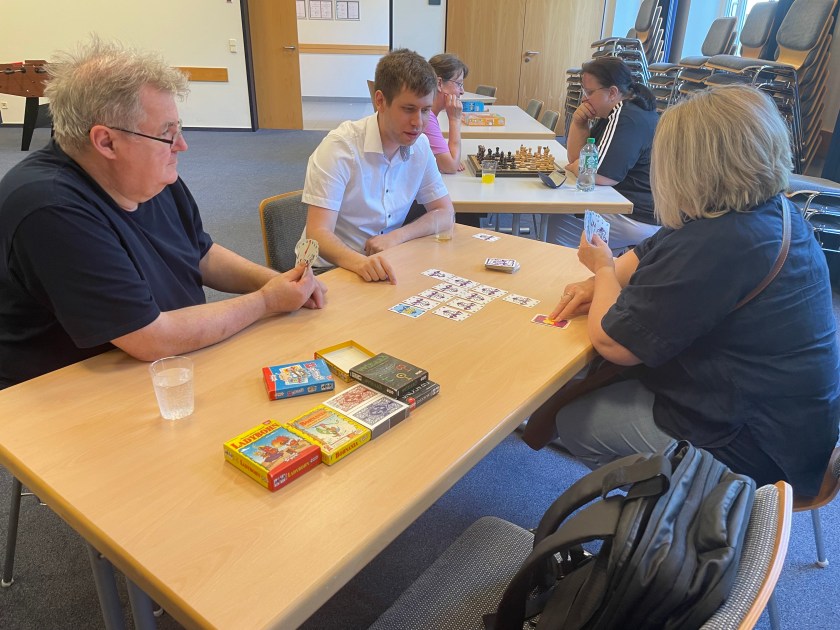
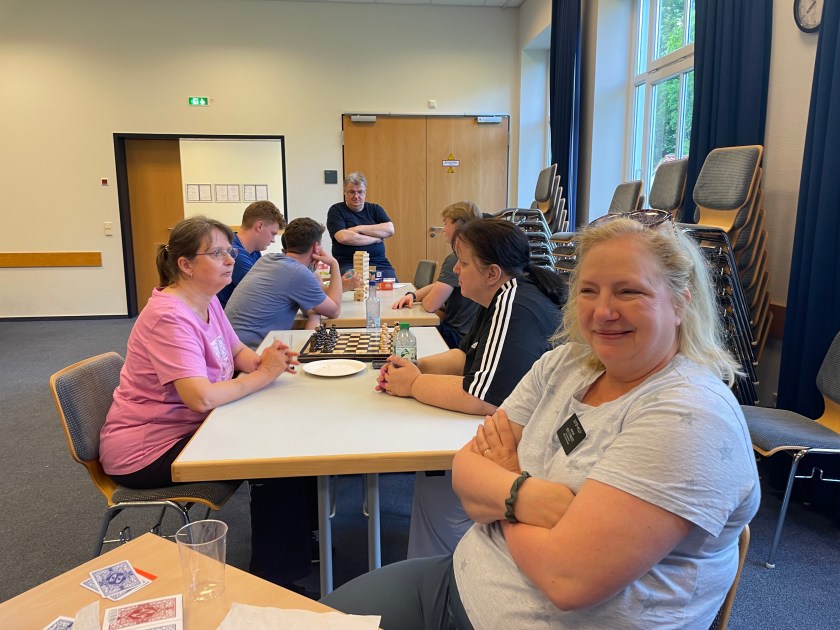
We learned a really fun new game this evening. It’s called “Nimmt Sechs” or Take Six. I ordered the game to introduce to our missionary friends.
Then this morning, we returned for another big moving day with Karen Castellanos and her family who were moving about 10 minutes away.
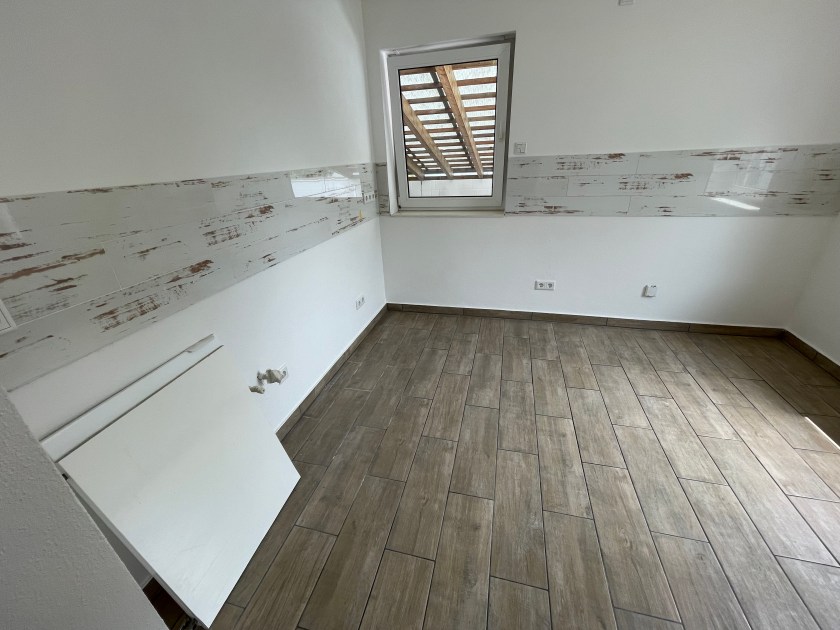
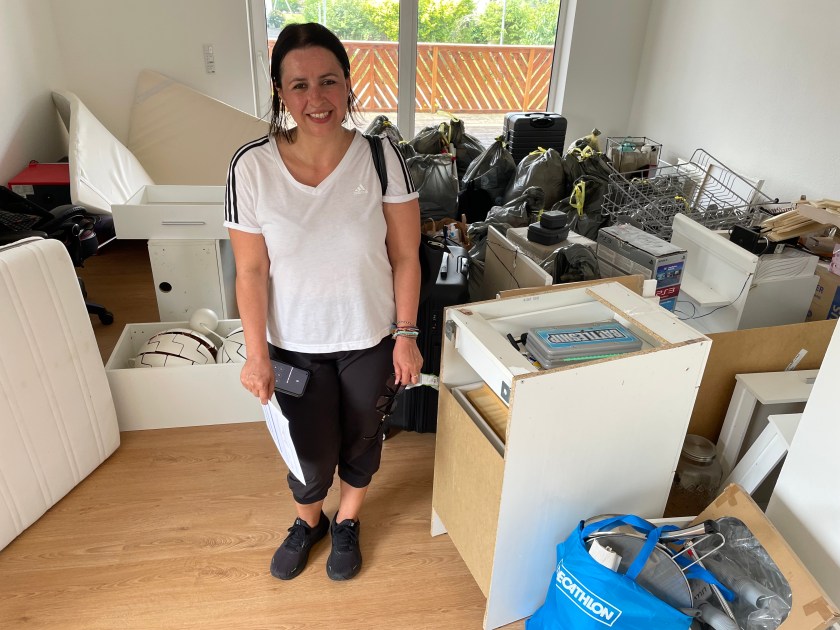
We learned a lot about moving in Germany. When you go, you strip EVERYTHING out of your apartment. Below is the kitchen Karen is moving into. Everything is bare. You take out cupboards, shelves, appliances, built-in units, window coverings, EVERYTHING. It’s a lot of work to move out and it’s a lot of work to move in.


















































































 Our Frankfurt Germany Mission