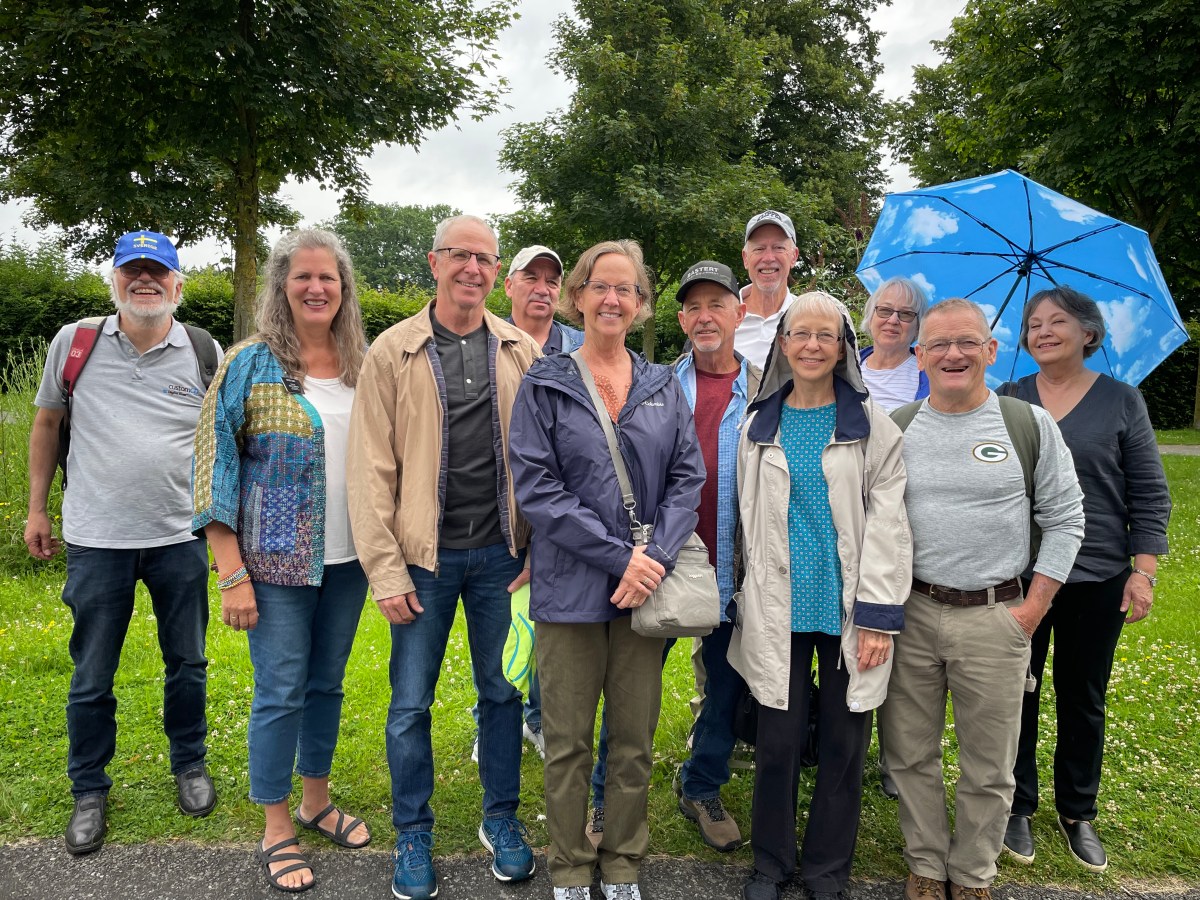
Bringing Families Together –The Bastert Family Reunion in Bielefeld

In the spring of 2005, I signed up for my 2nd German research class at BYU.  I’d completed a semester-long class in German paleography, where I learned to read the old German handwriting and documents.  Not knowing for sure what I was getting into, but confident that I wanted to learn, I signed up for this upper division research course with Professor Roger Minert.

On the first day of class we were each handed a slip of paper with the name of a person who was born in Germany and who died in America.  My slip of paper said  Peter Heinrich Bastert, born 10 April 1833 in Bielefeld,  Westphalia, Germany and died 18 October 1882 in Quincy, Illinois.

My semester-long assignment was to find and tell his story.

On the afternoon of that first day, I remember going to the BYU Library to look at other Immigrant Case Studies from students in other semesters to see what they looked like.  I sad there, in the library, and cried.  I had NO IDEA how to do German research and I had no idea where to begin.

In the weeks that followed, I poured my whole heart and soul into this project.  I prayed a lot and followed hunches.  In class I learned where to look for what kinds records.  I spent hours and hours in the Salt Lake Family History Library cranking microfilm reader knobs and looking at microfilms, searching for the Bastert family and their ancestors.  I collected 100s of names and at the end of the semester, my project was published.

You can read it here.  (It really is interesting!)

Immigrant Case Study, Bastert Family

In the almost 20 years since I met this Bastert family, I’ve been contacted by several family members now living (both in Germany and in the States), who have found digital copies of my work.  Because of this research project,  American Bastert family members have connected to German family members.  And thanks to Facebook and messaging, I have gotten to know several family members and we have become friends.  I felt honored when they declared me to be an honorary family member.

A few months ago I learned that members of the Illinois Bastert family were traveling to Germany for a family reunion in Bielefeld.  Volker Bastert, a German cousin, invited me to join them.  I was Thrilled.

In the following posts, you will learn about this reunion, the places we visited and the experiences we had together.  I’ve always felt like there was some sort of Divine intervention that happened to bring us all together.  I felt that again this weekend in Bielefeld as we met in person for the first time.
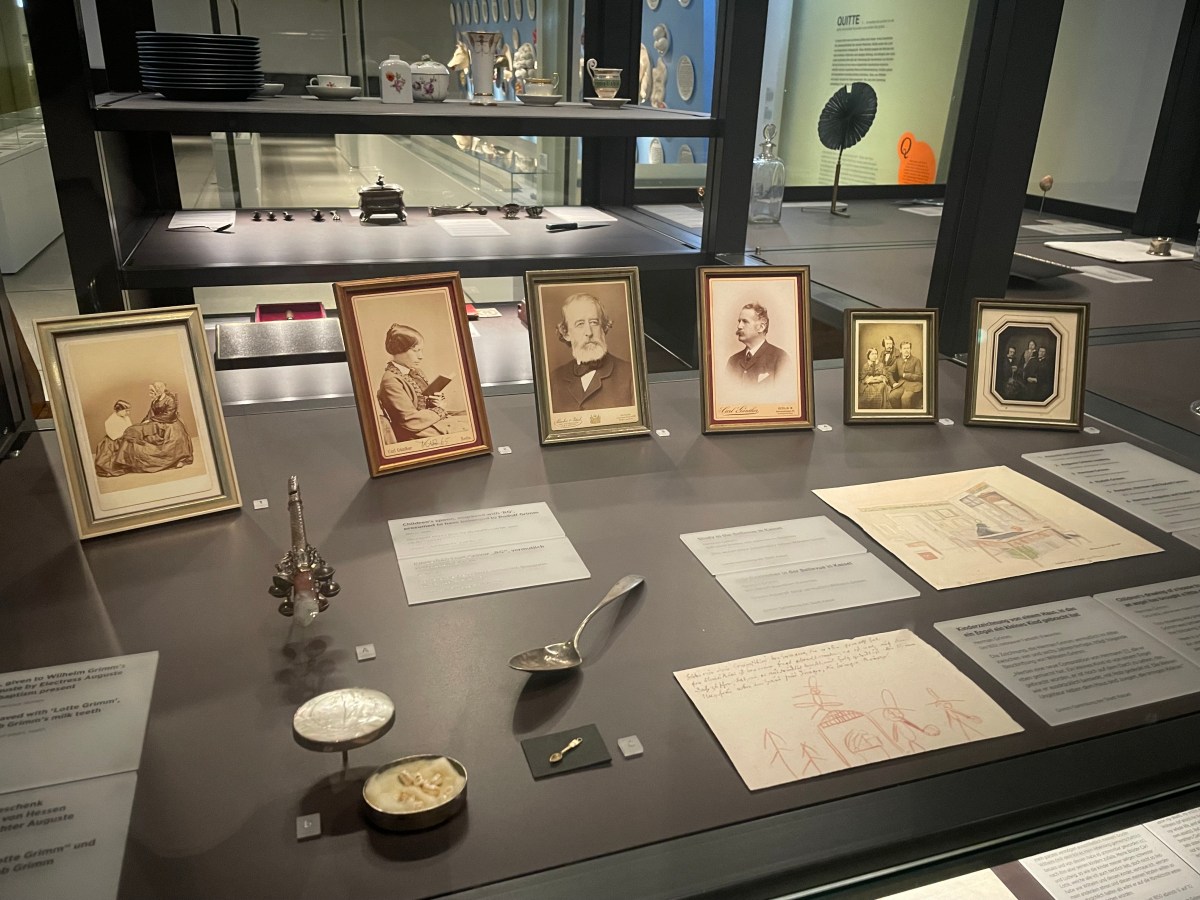
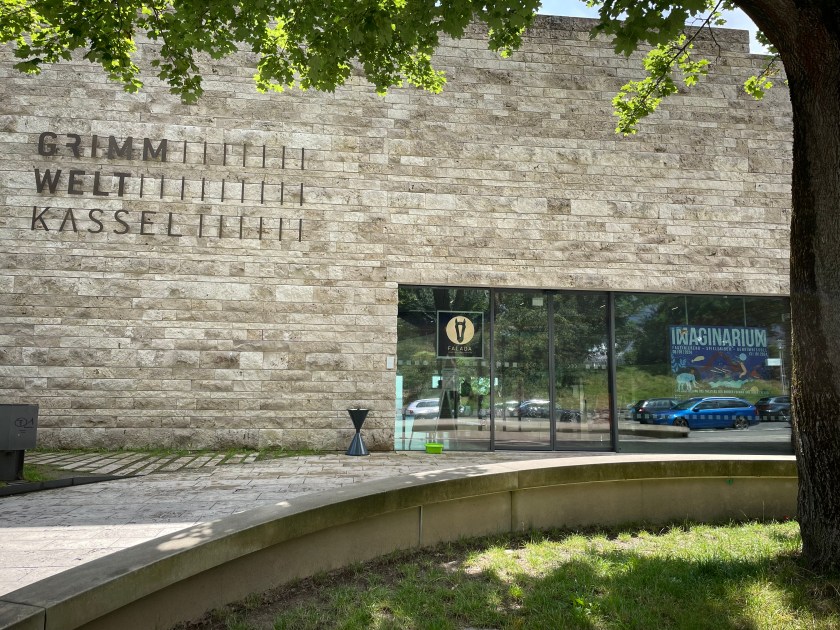
Grimmwelt Muesum in Kassel –The Brothers Grimm

After thoroughly enjoying the IMAGINARIUM exhibit in the museum,

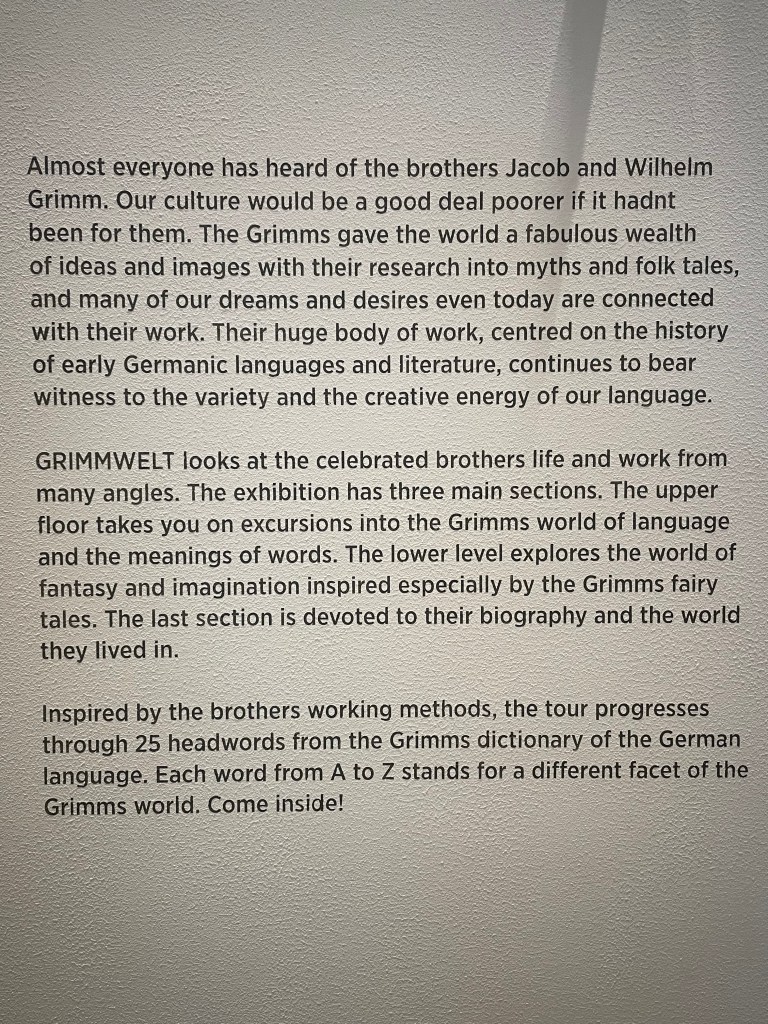
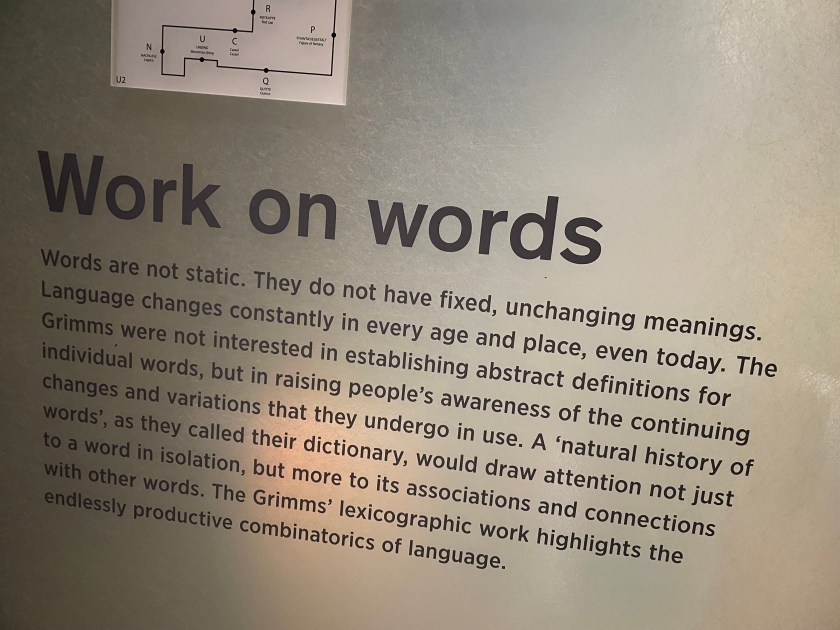
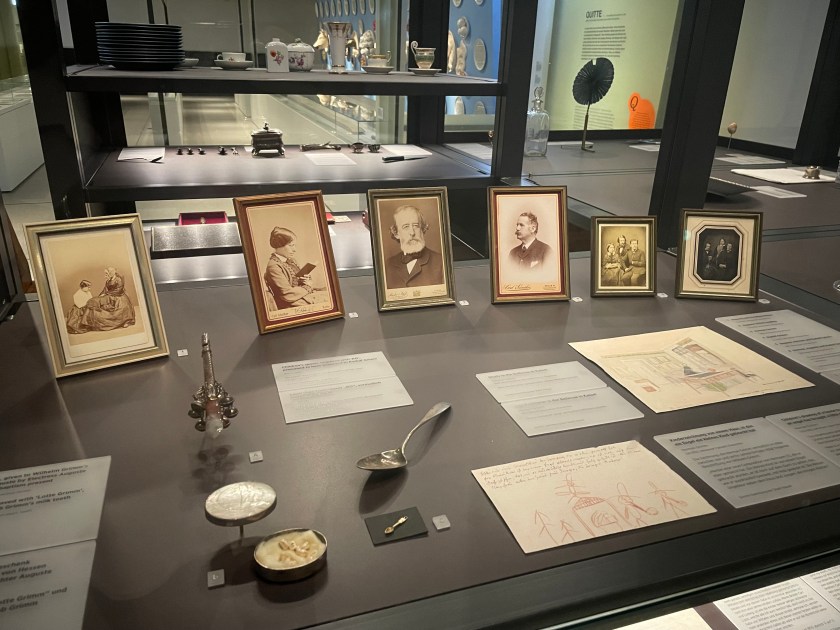
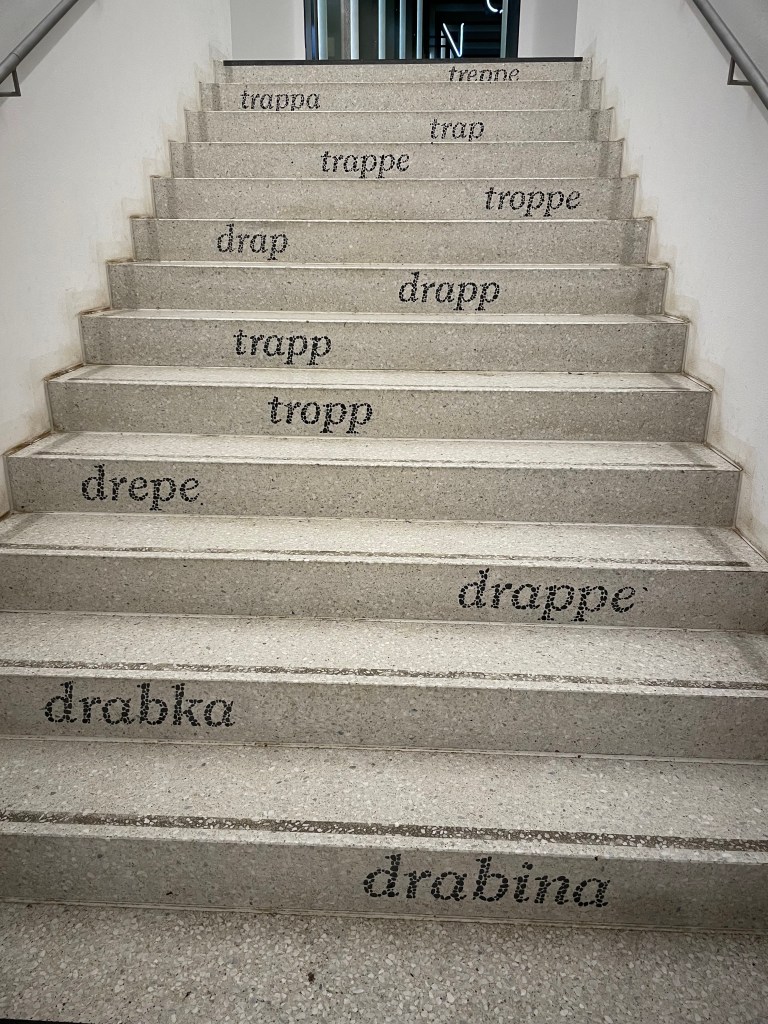
we went into the Grimm Brother’s part. It was set up with letters of the alphabet in random order telling the story of the Grimms, with focus on words and their dictionary, but plenty of other interesting things too. The whole experience was CREATIVE and fun–a very innovative experience.

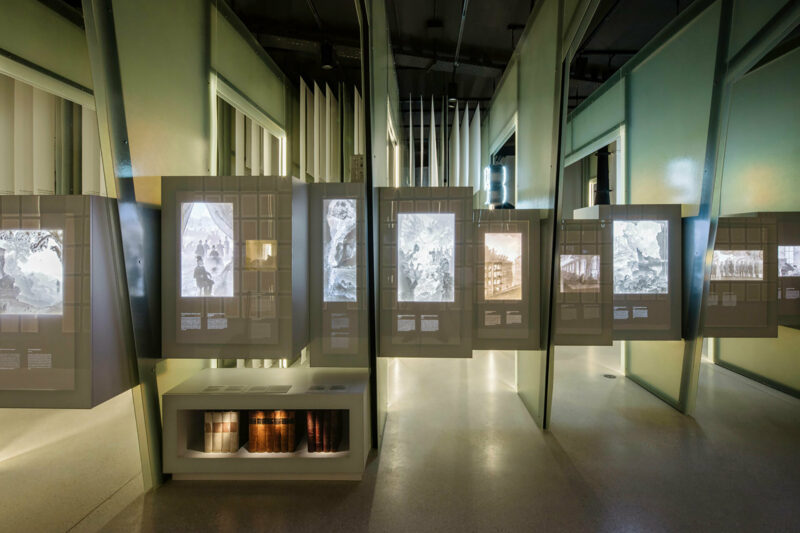
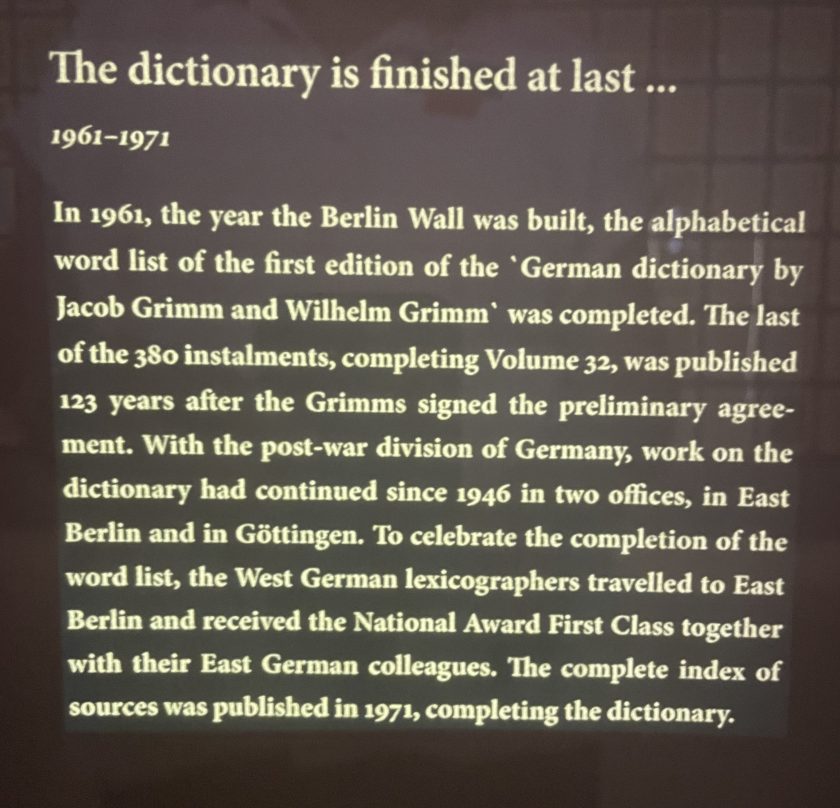
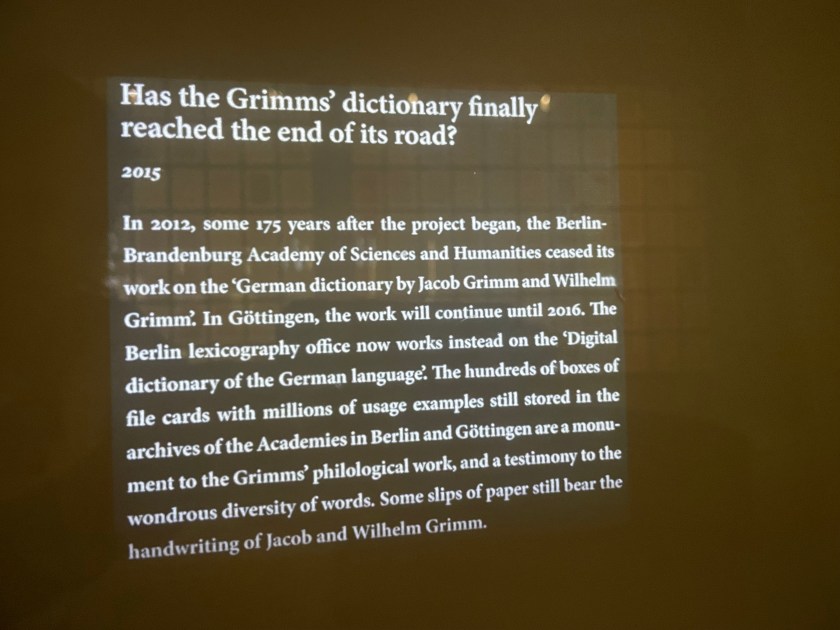
A good part of this part of the museum dealt with the creation of the Grimm’s dictionary.  The history was told in diorama shadow boxes that were fascinating.  So fascinating I forgot to take a picture of some of them.

Look what I found:  The Grimmwelt Exhibit.  Here’s a look at these displays:

14 paper dioramas on the history of the Grimms' German Dictionary.

The “German Dictionary”, which the Grimms began in 1838, is probably their greatest and most extensive work.

The brothers initially thought they could complete this project within seven to ten years, but it was not to be. The dictionary took more than 120 years and the involvement of generations of researchers and compilers to finish.

The reason: Jacob and Wilhelm Grimm wanted to record every single word of New High German – the language established with Luther’s translation of the Bible – and document the origin and use of these words.

Today’s “German Dictionary” contains more than 320,000 individual word entries, but the Brothers only got as far as the letter “F” in their lifetime. This is why the incredible story of the “Grimm”, as the dictionary is commonly known, is told in the FROTEUFEL (“DEMON”) section of the permanent GRIMMWELT exhibition. This entry was the last that Jacob completed before his death.
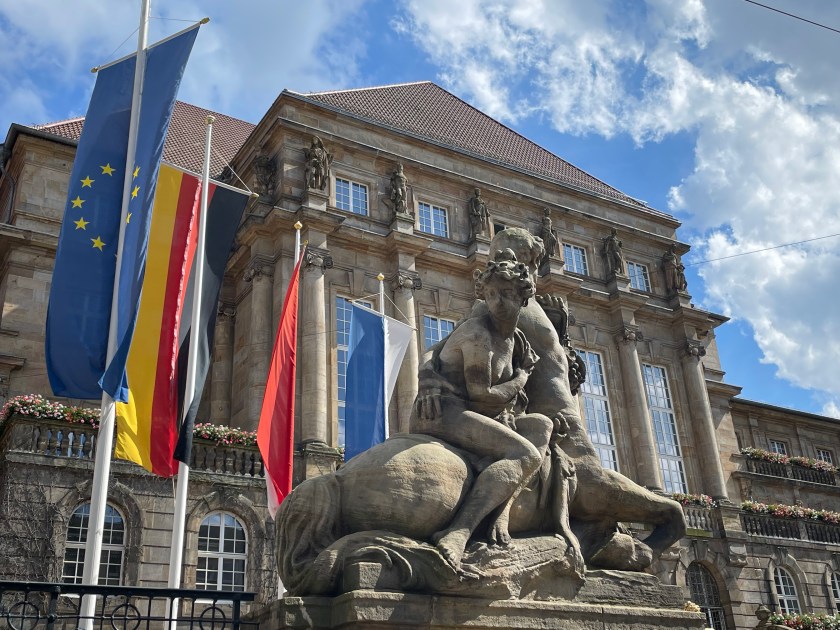
The work on the Grimms’ dictionary finally came to an end in 2016 as the world of digitization took over.  Their original file cards are stored in the archives of the Academies in Berlin and Goettingen.

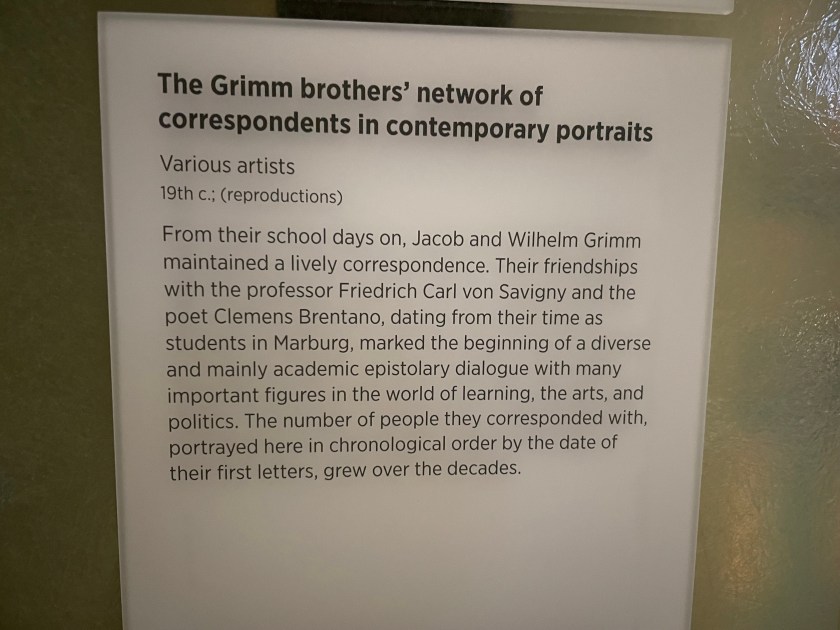
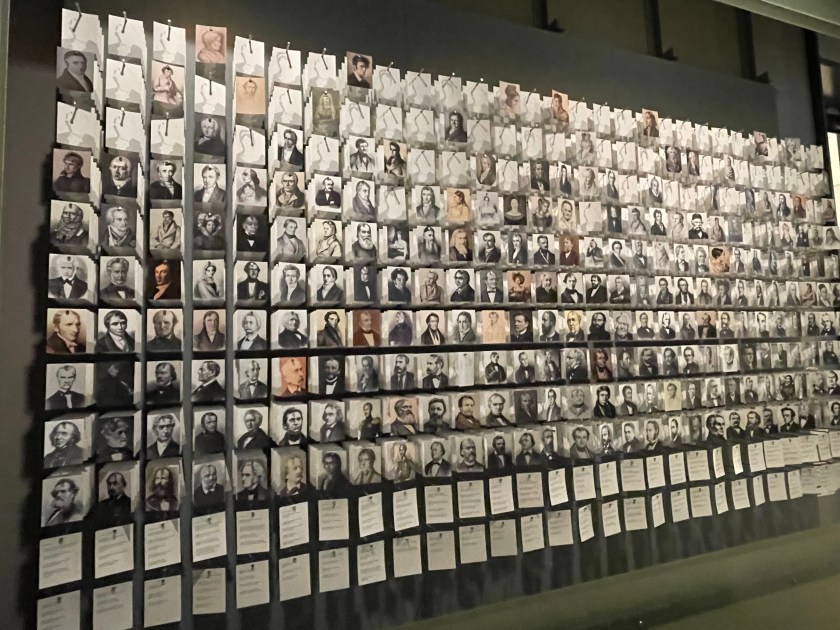
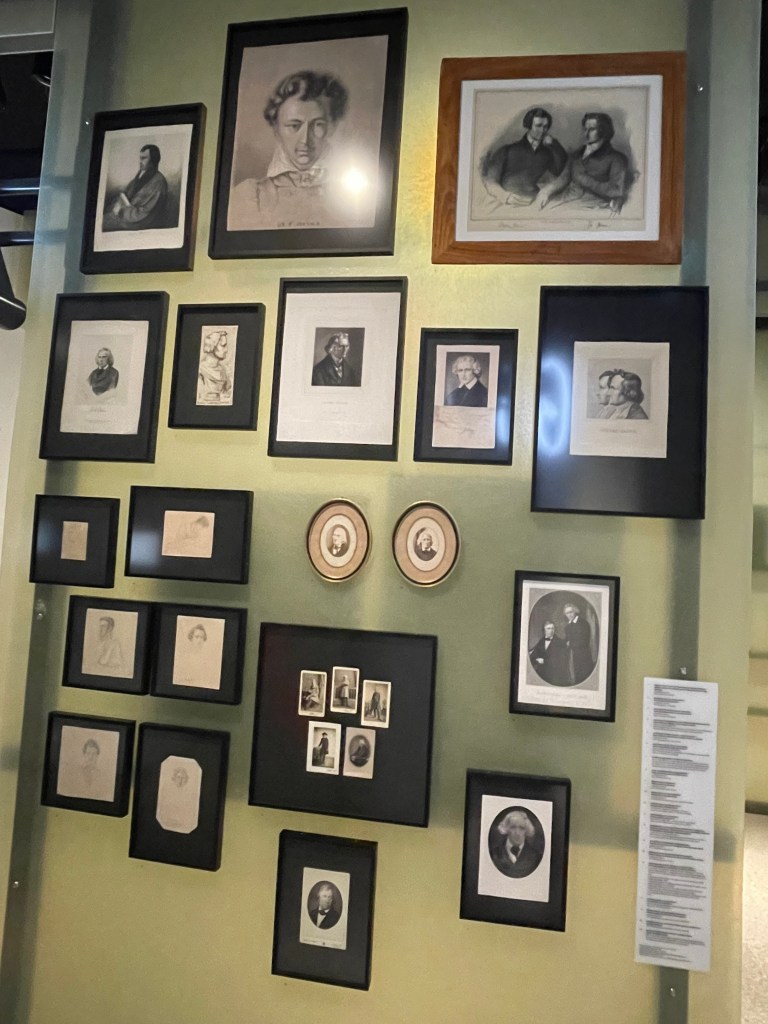
I found this fascinating–in their day, the Grimm Brothers communicated mostly by writing and receiving letters.  This exhibit shows the number of people they corresponded with, shown in chronological order by the date of their first letters.  It grew with the decades.

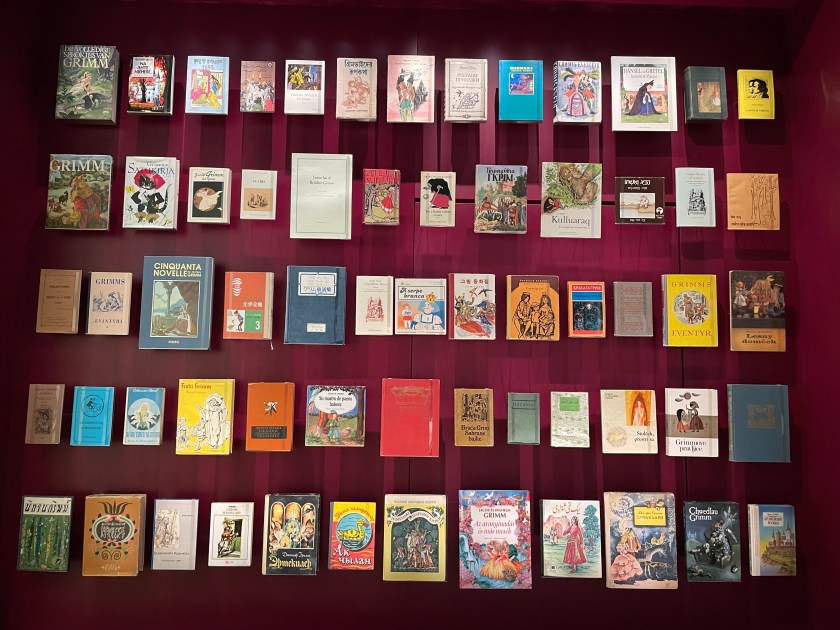
Here are translations of the Grimm’s Fairy Tales:

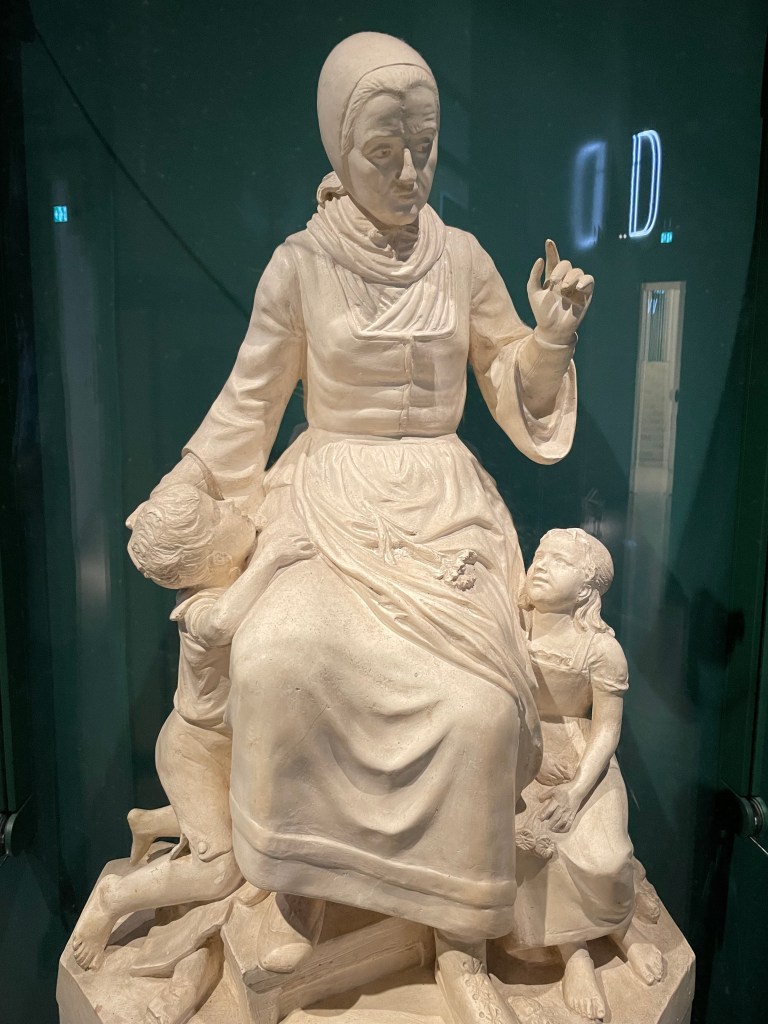
Grimm’s Storyteller Woman:

A Hansel and Gretel hut:

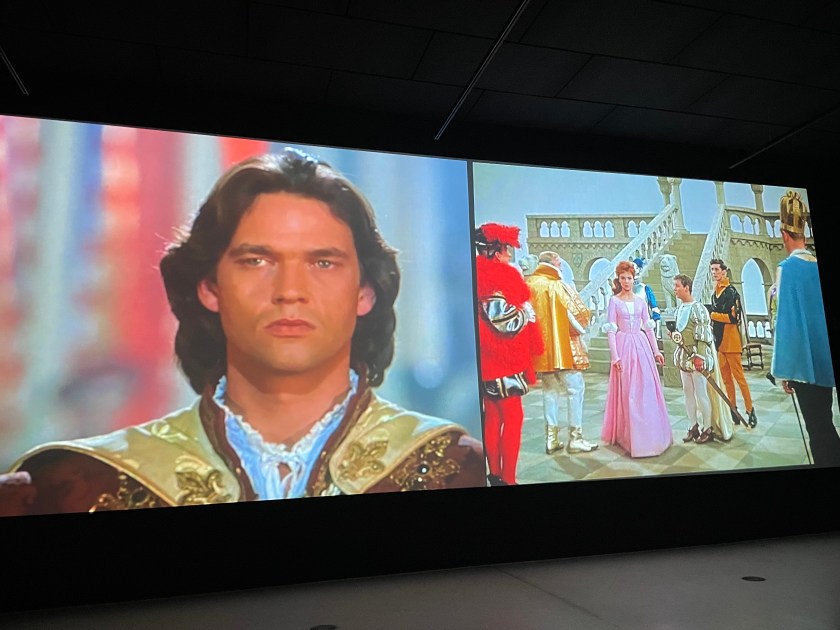
In a theater, they showed a film with scenes from fairy tale movies old and new.  It was really fun to watch!

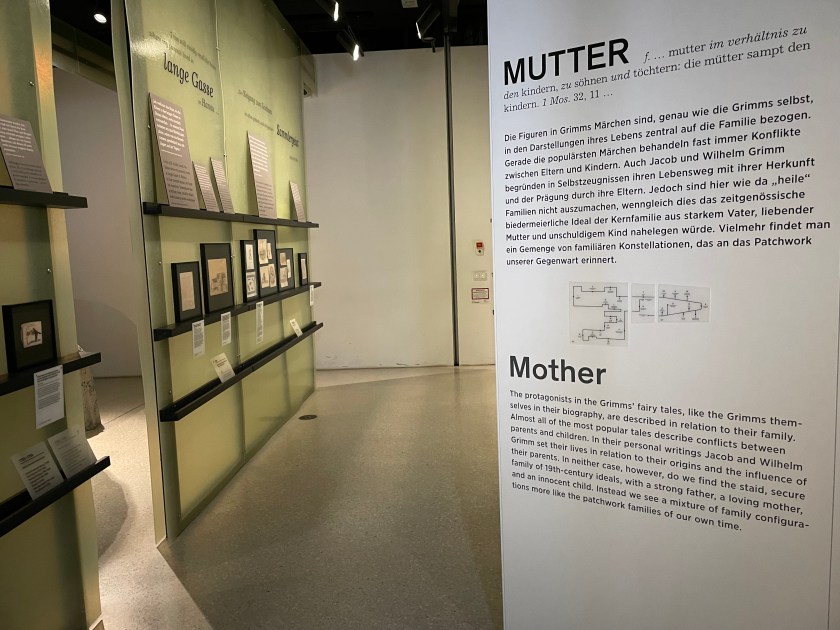
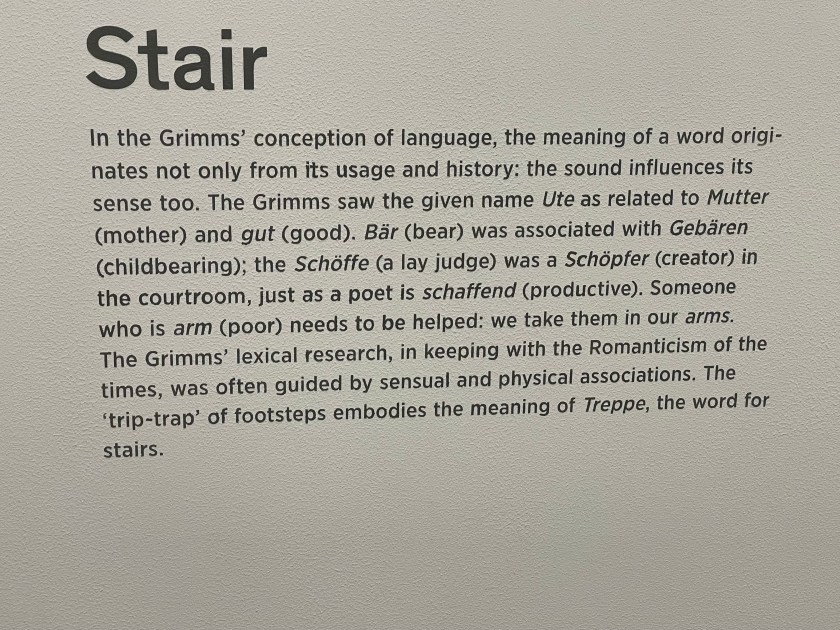
An example of word displays, featuring the word “Mother.”

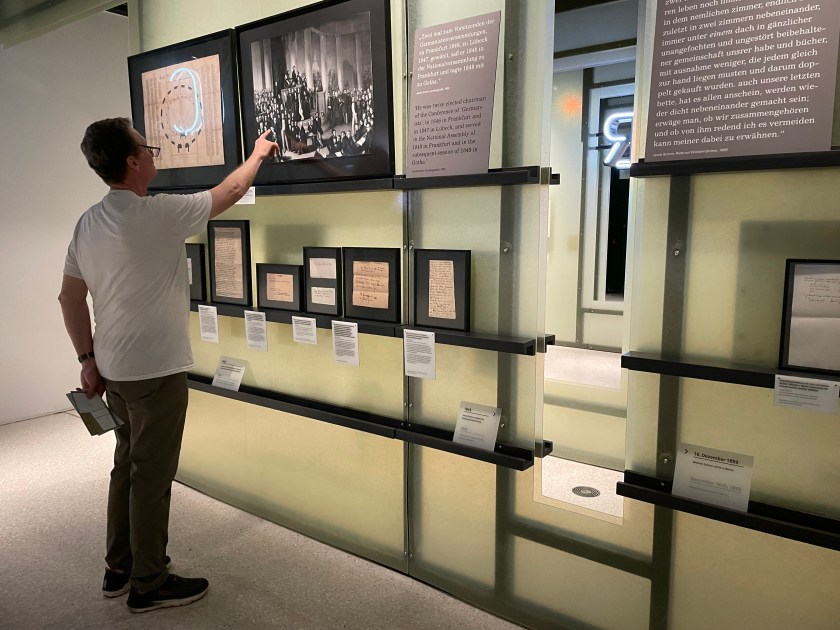
The Grimms in the church of democracy in the Frankfurt Romerplatz:

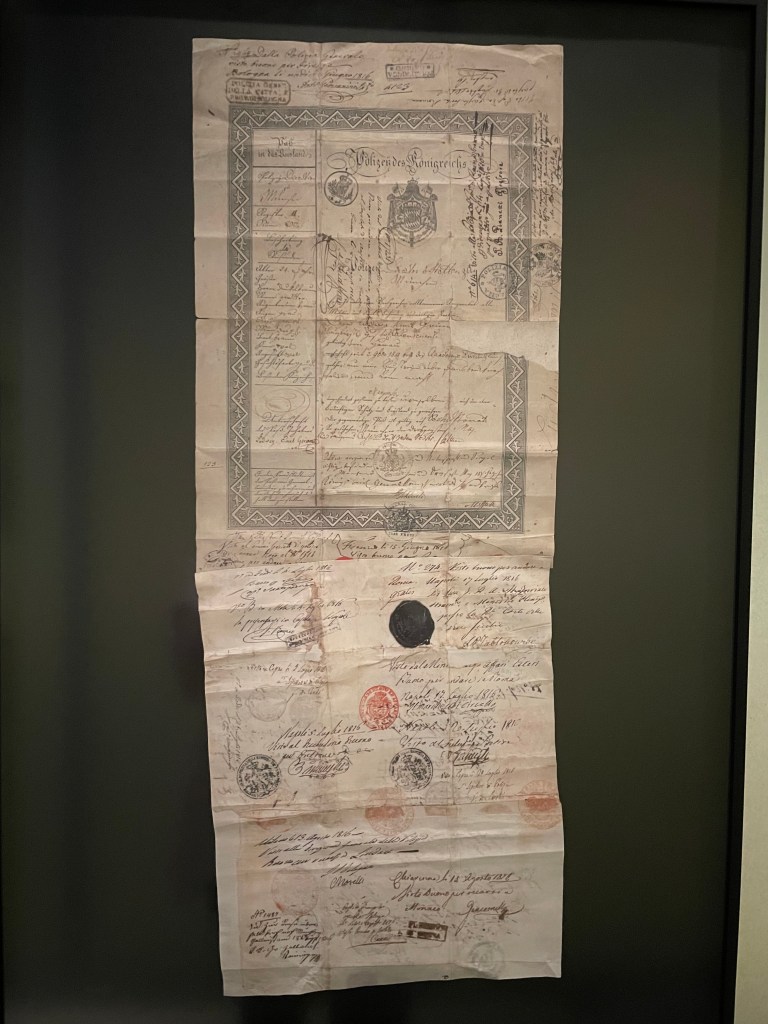
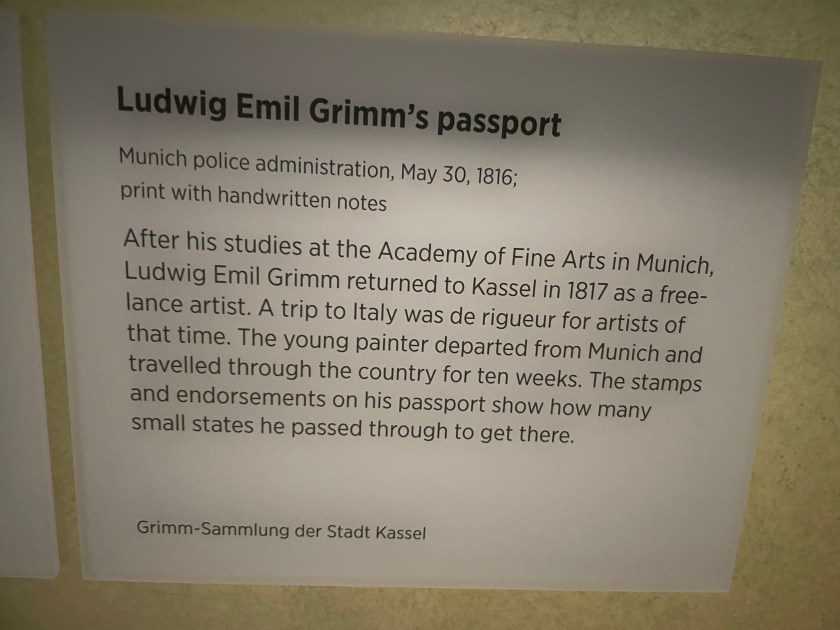
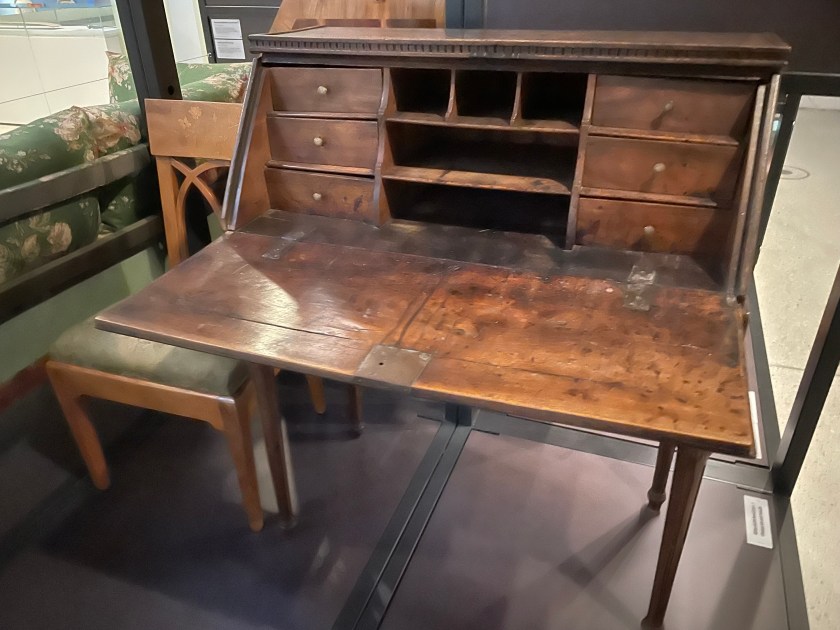
Ludwig Grimm did a lot of the illustrations for the fairy tales.  Here’s his passport:

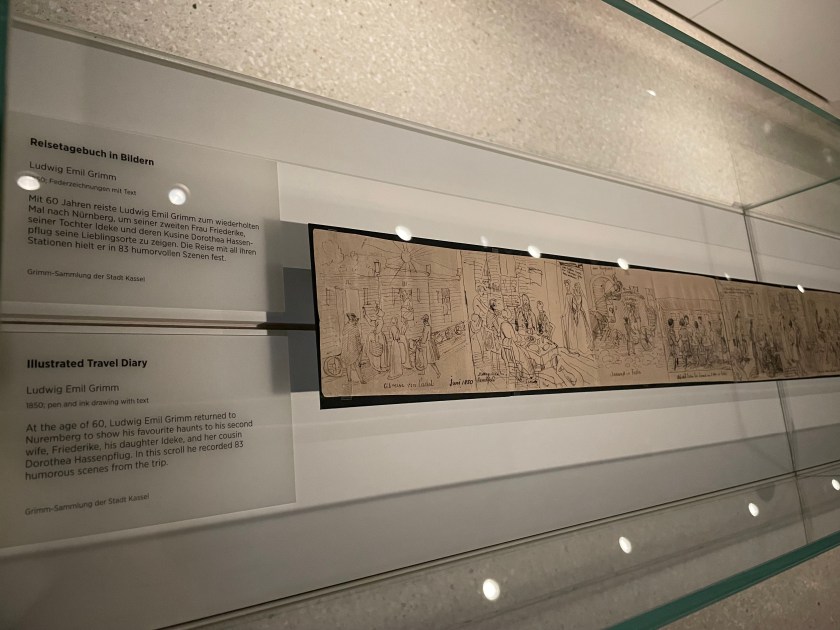
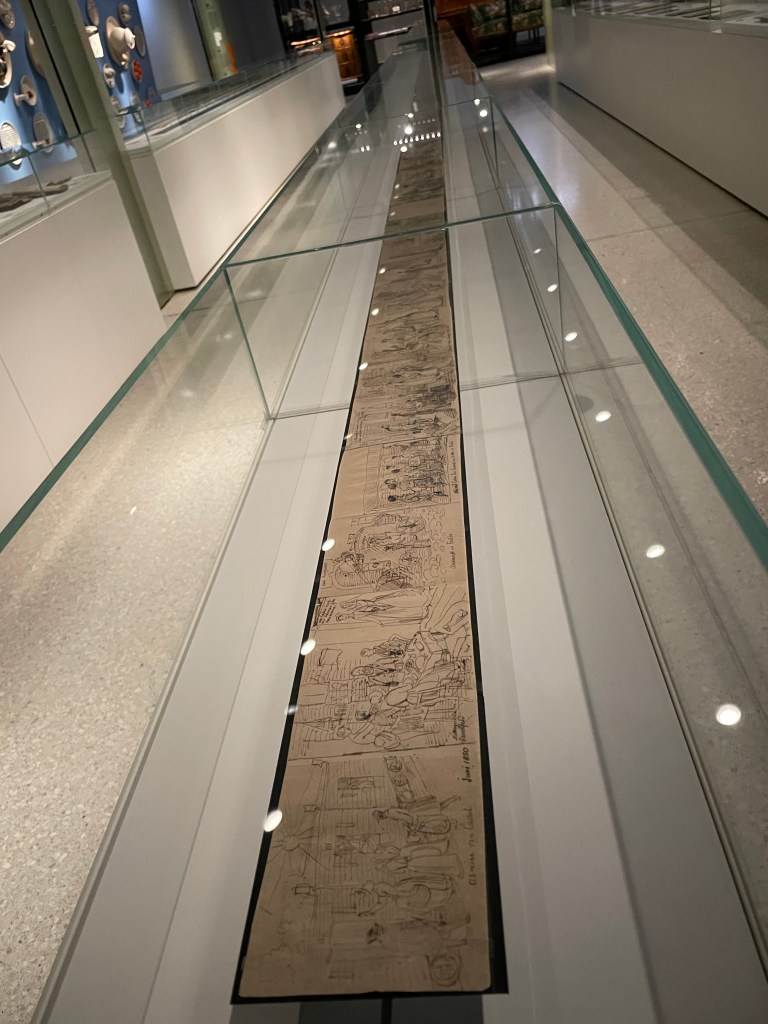
Here’s an interesting travel diary Ludwig Grimm kept of one of his travels:

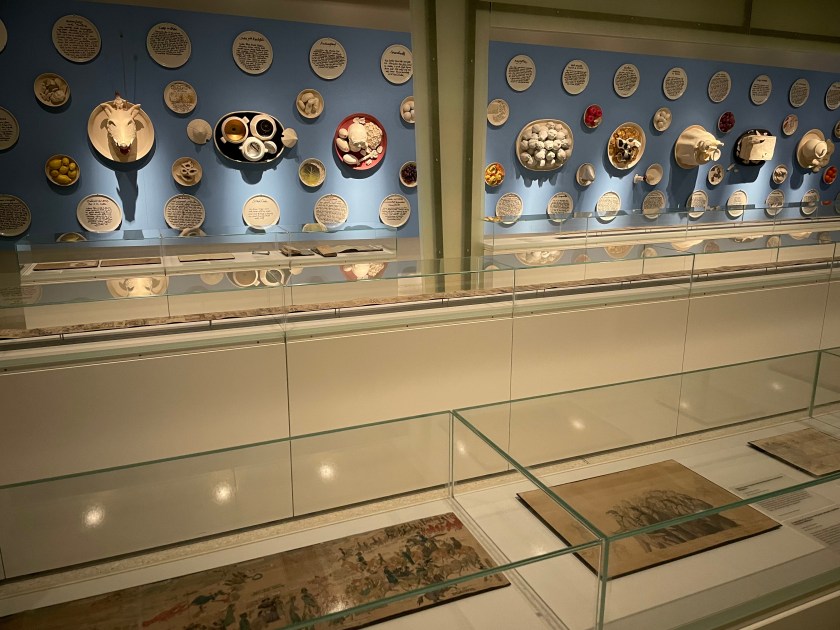
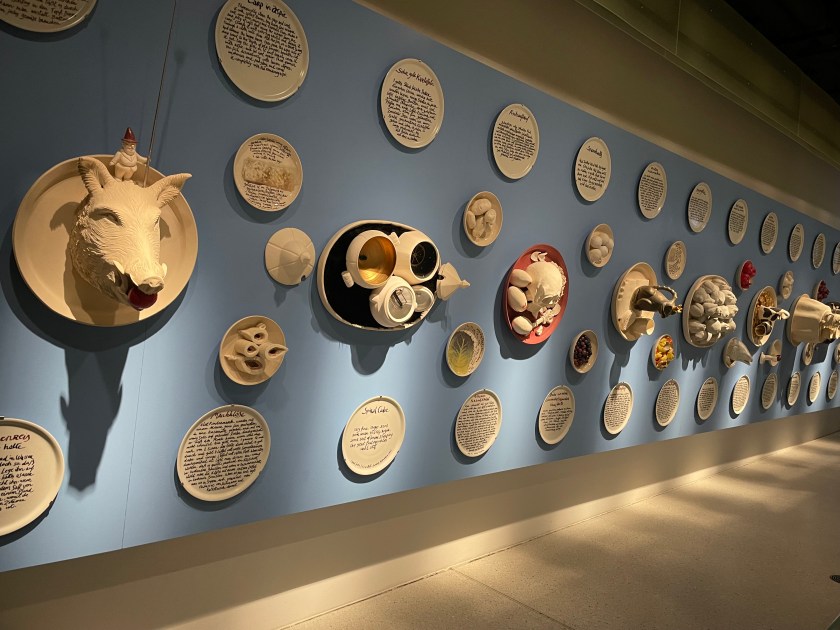
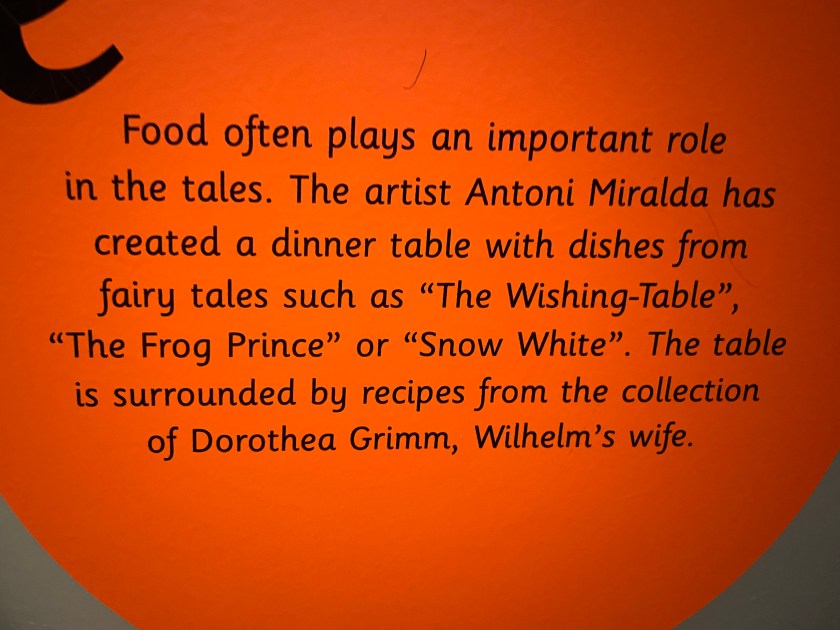
This is a food display of many of the different foods or meals or dishes mentioned in the fairy tales, many with recipes from Wilhelm Grimm’s wife, Dorothea.

What a fun and interesting visit!  What a great day!

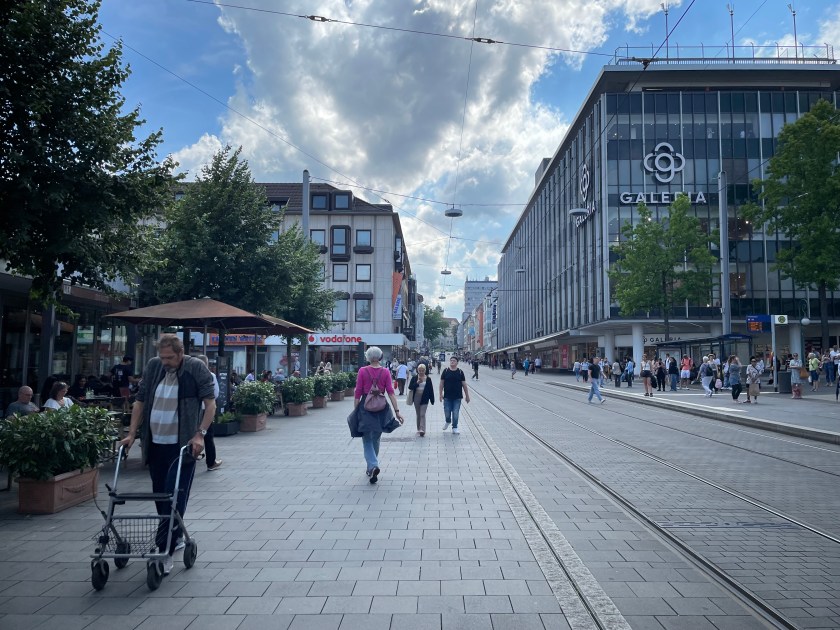
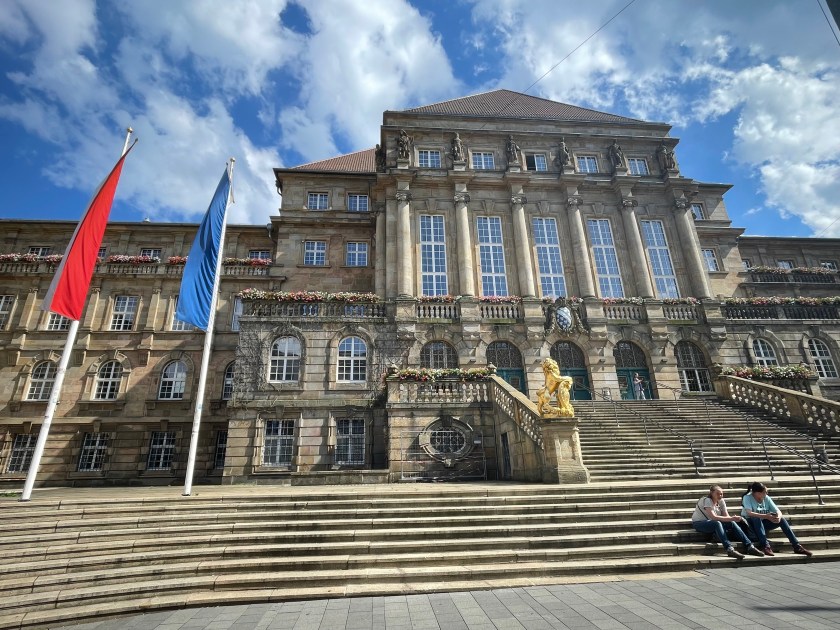
We topped it off with a walk through the downtown part of Kassel and a pastry.

The Grimmwelt Museum in Kassel–IMAGINARIUM Exhibit

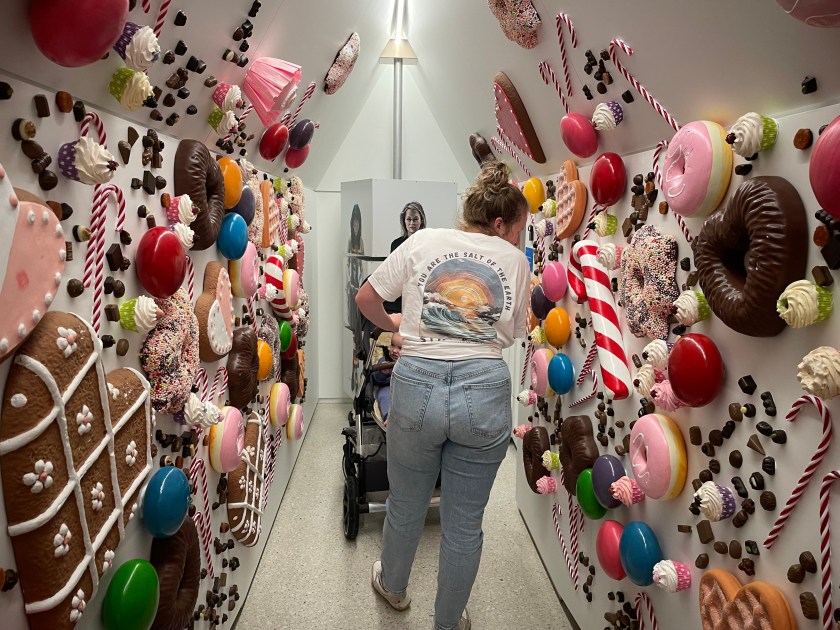
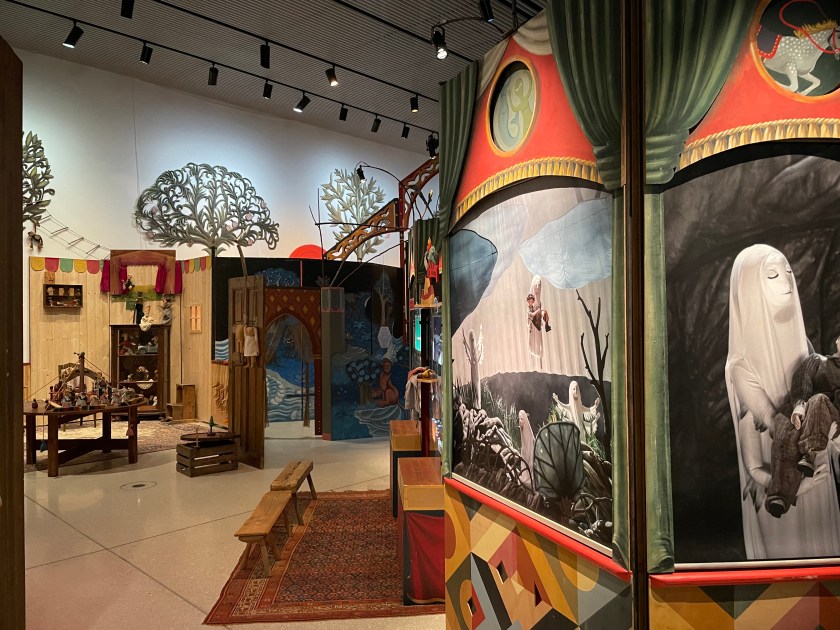
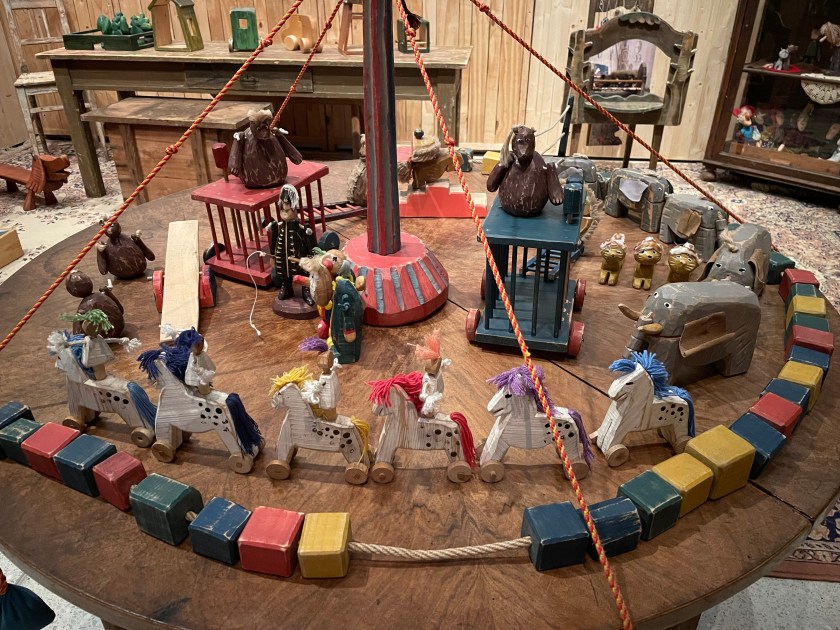
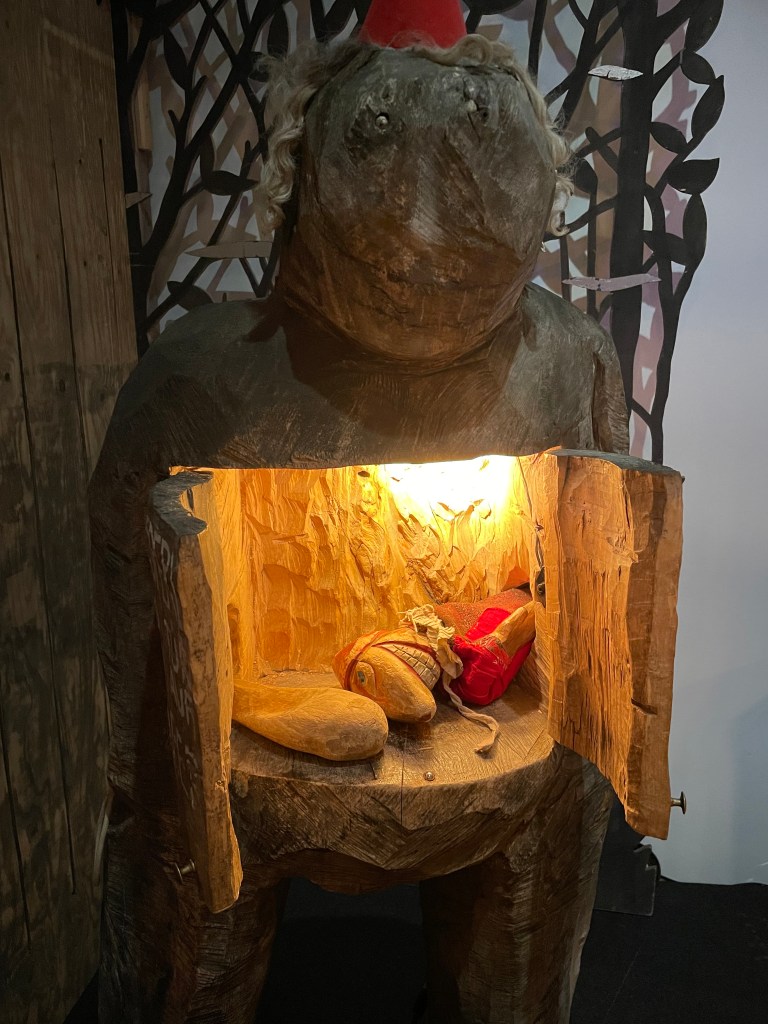
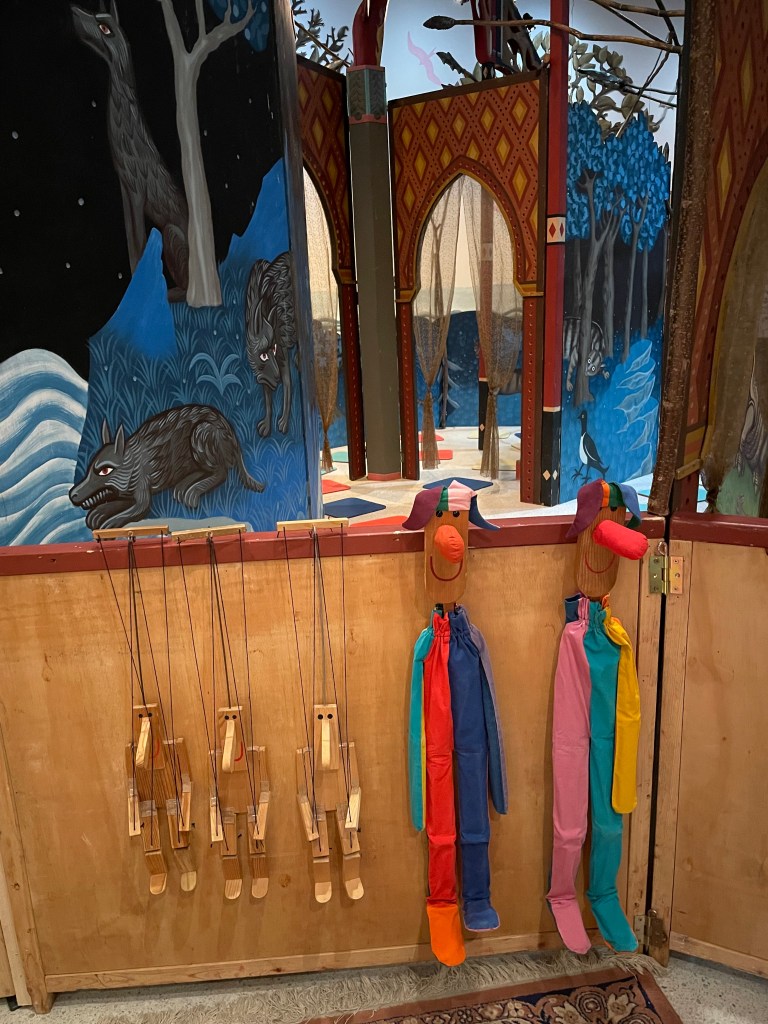
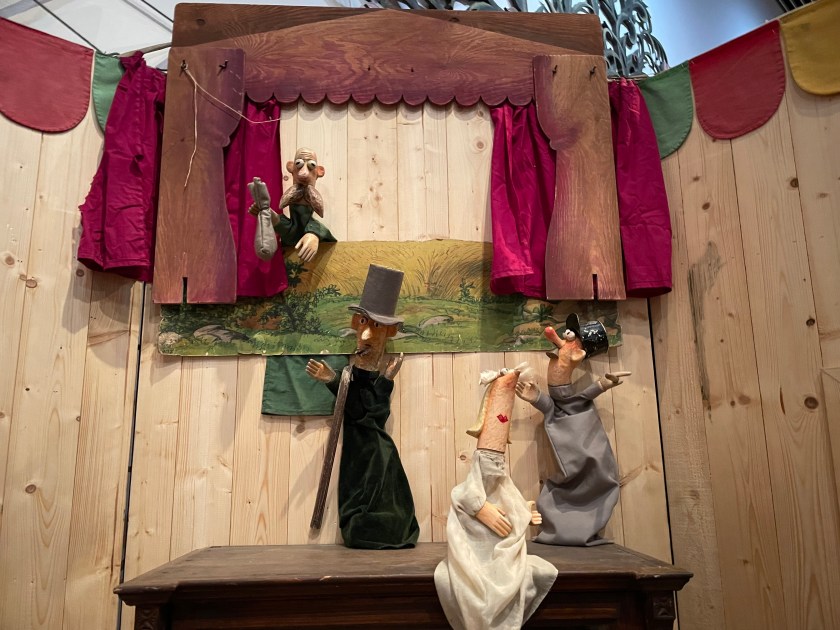
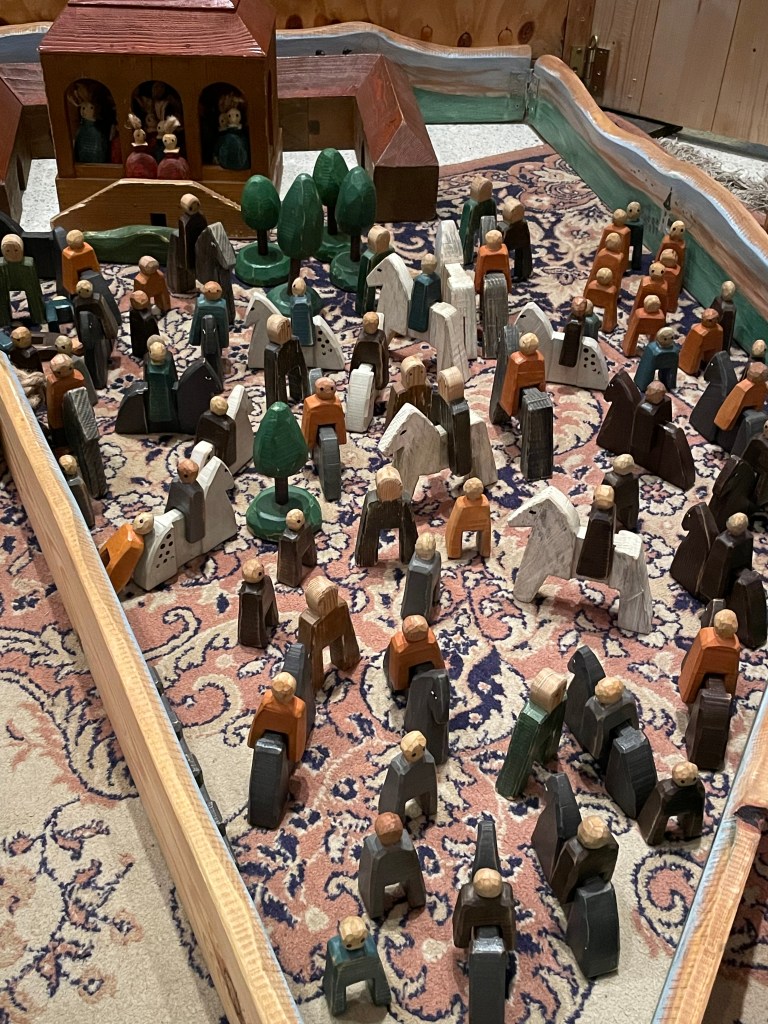
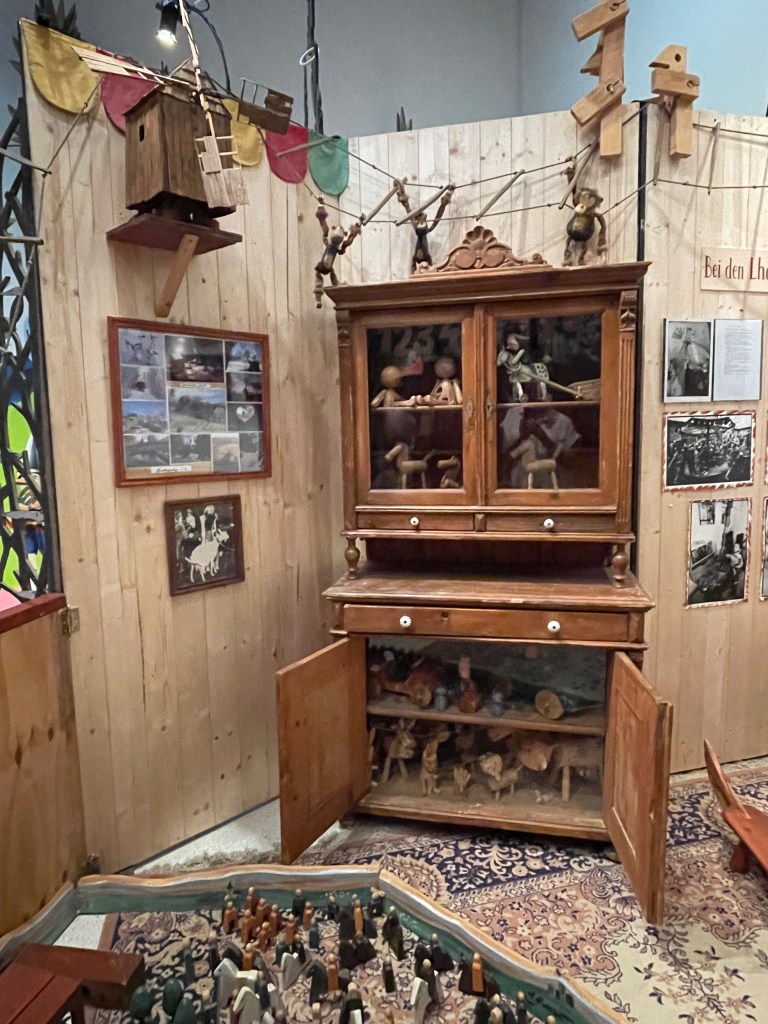
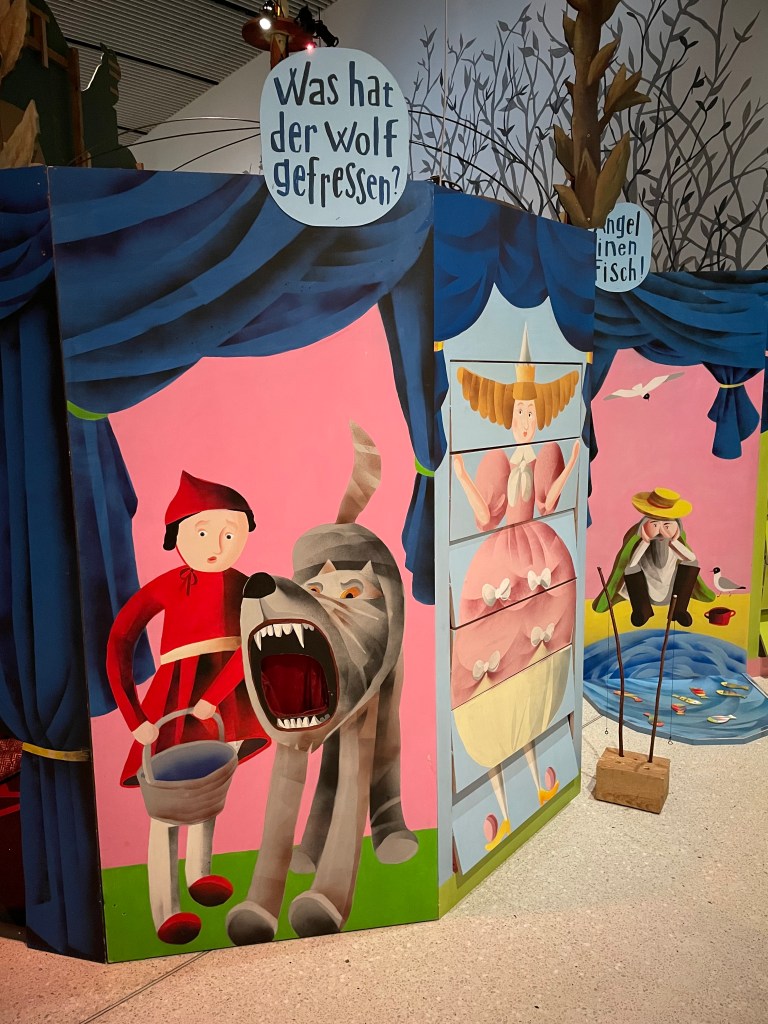
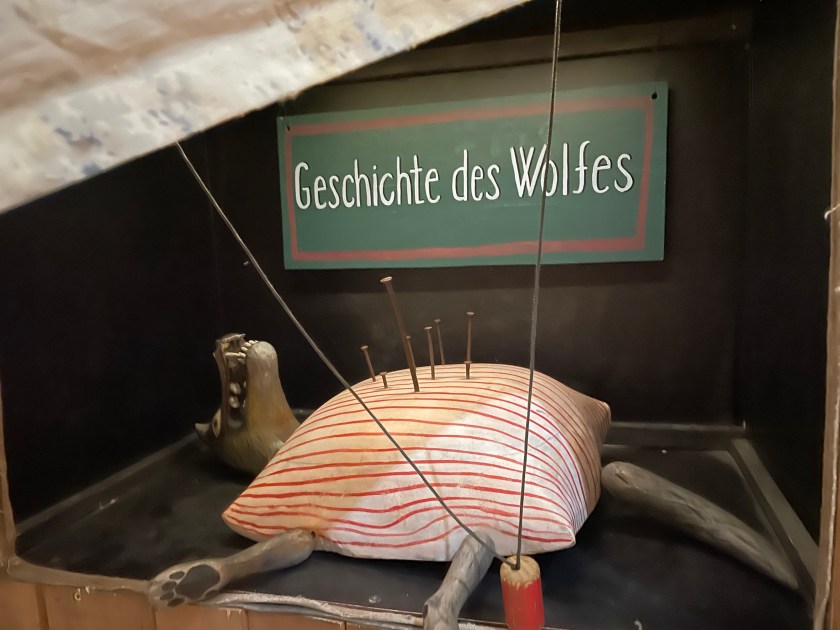
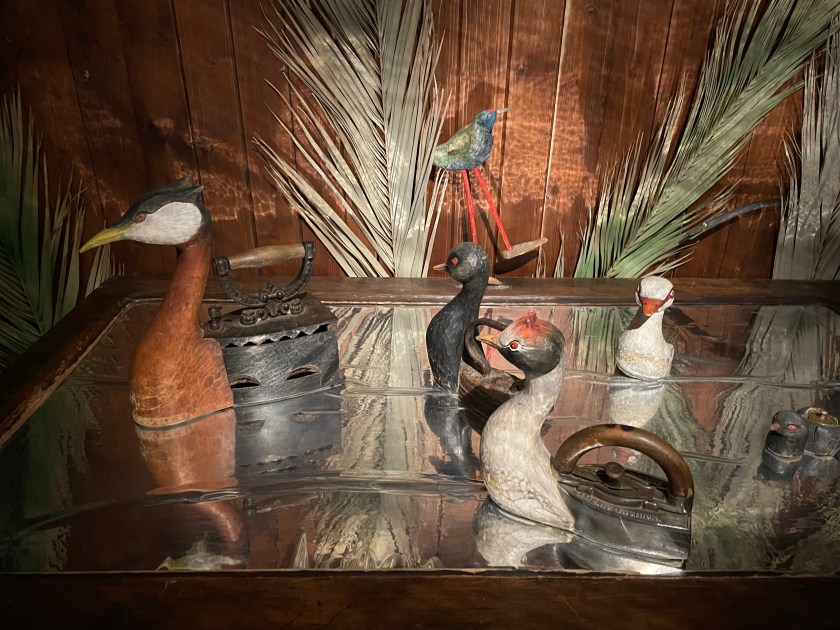
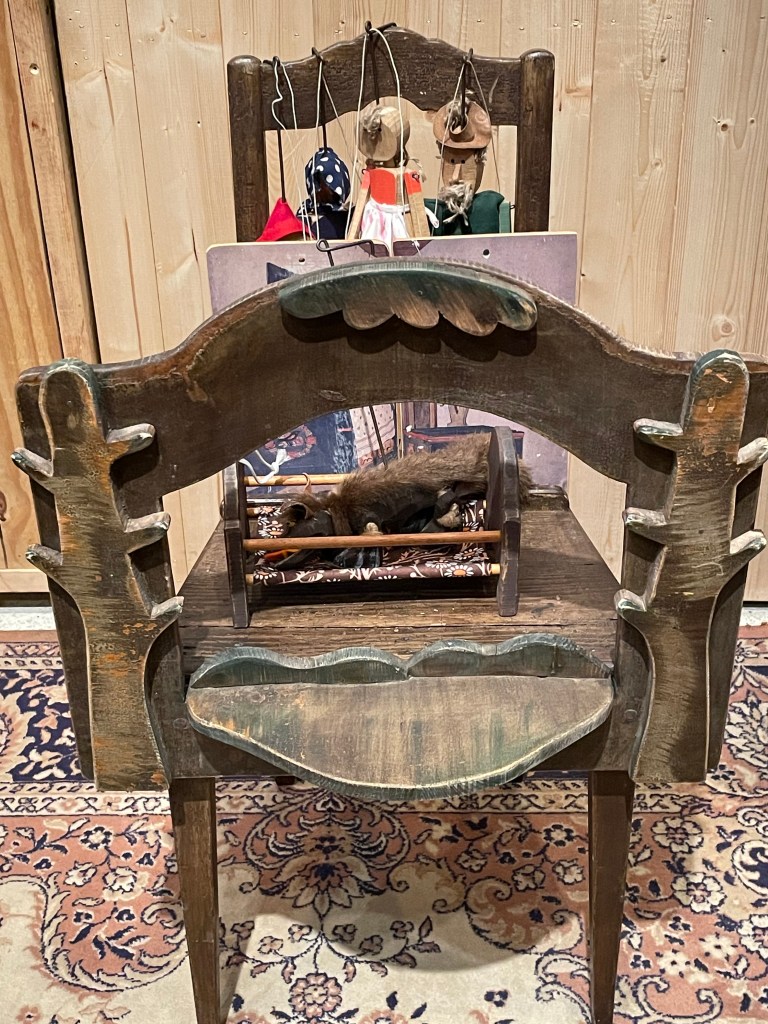
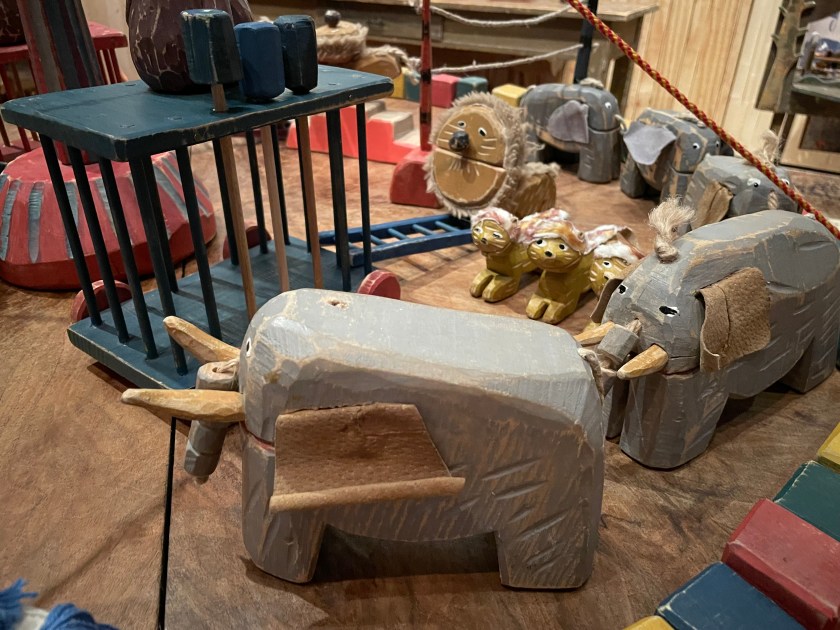
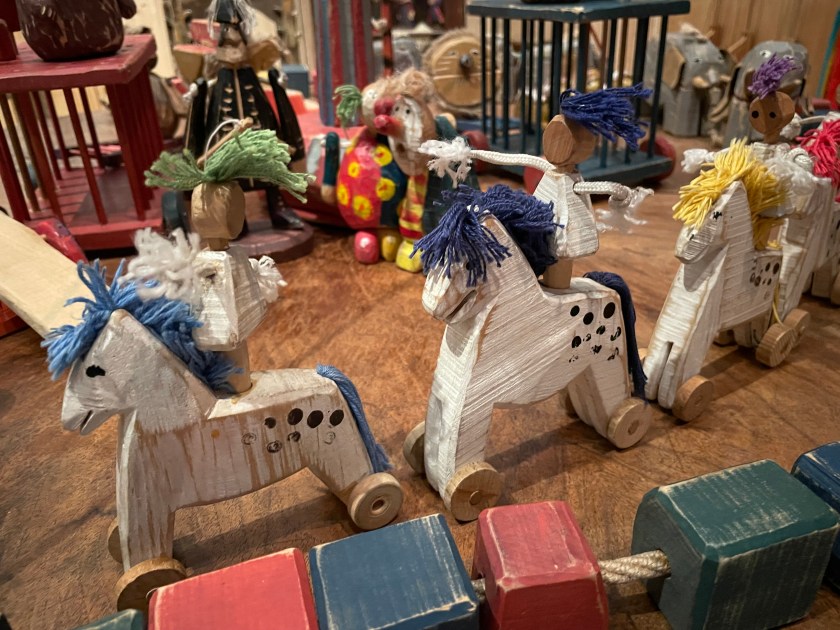
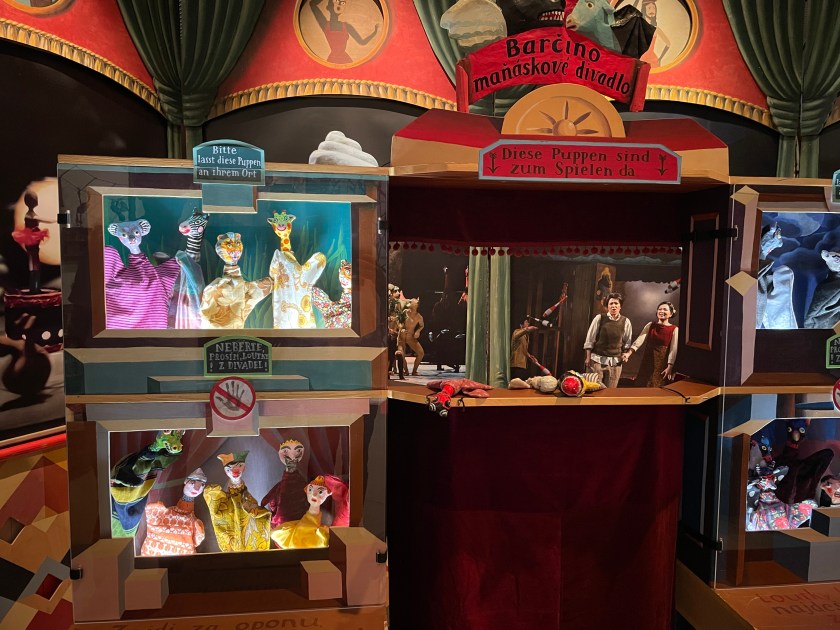
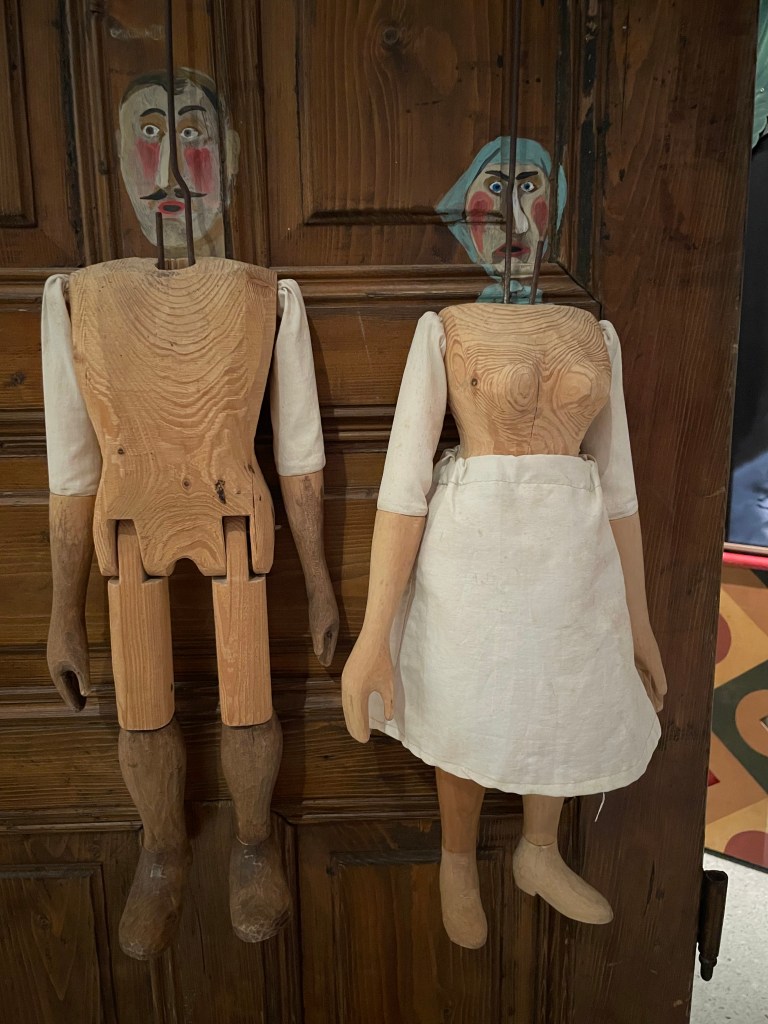
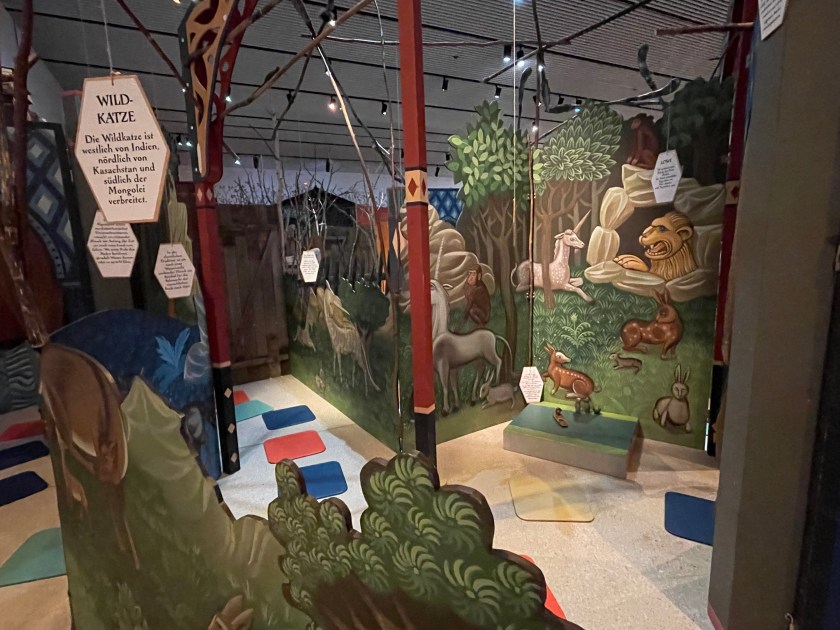
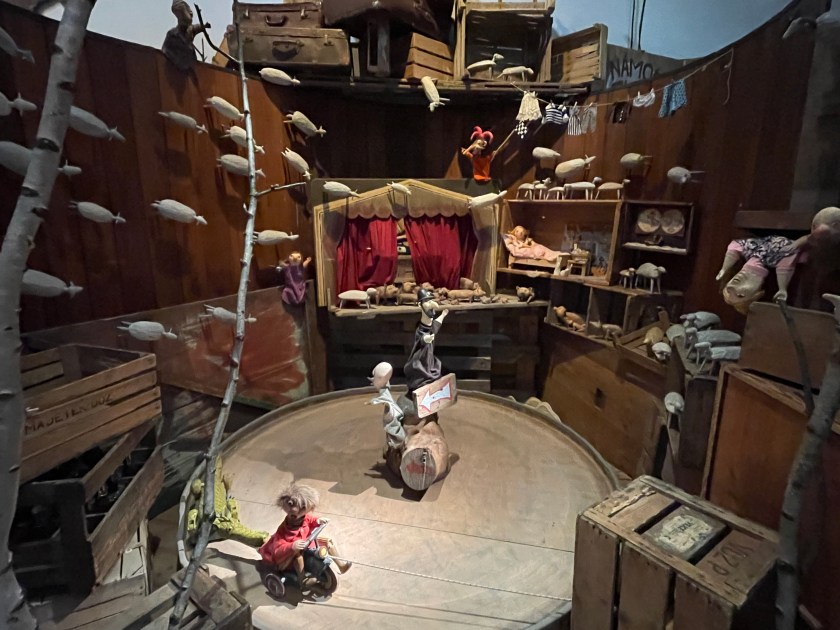
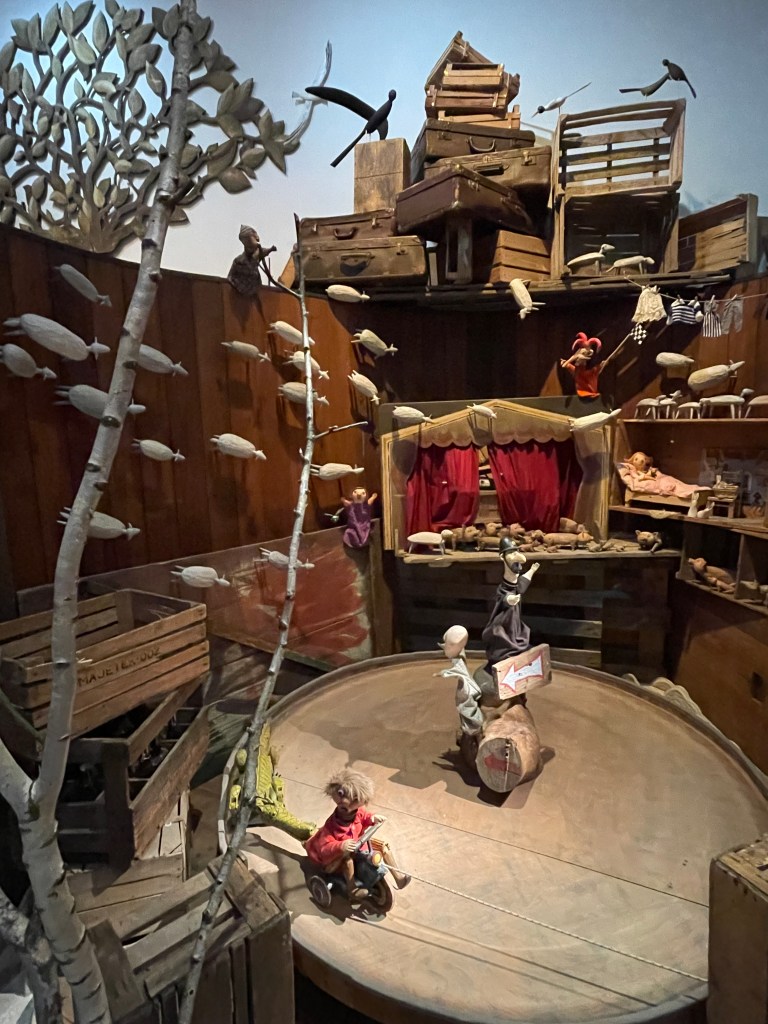
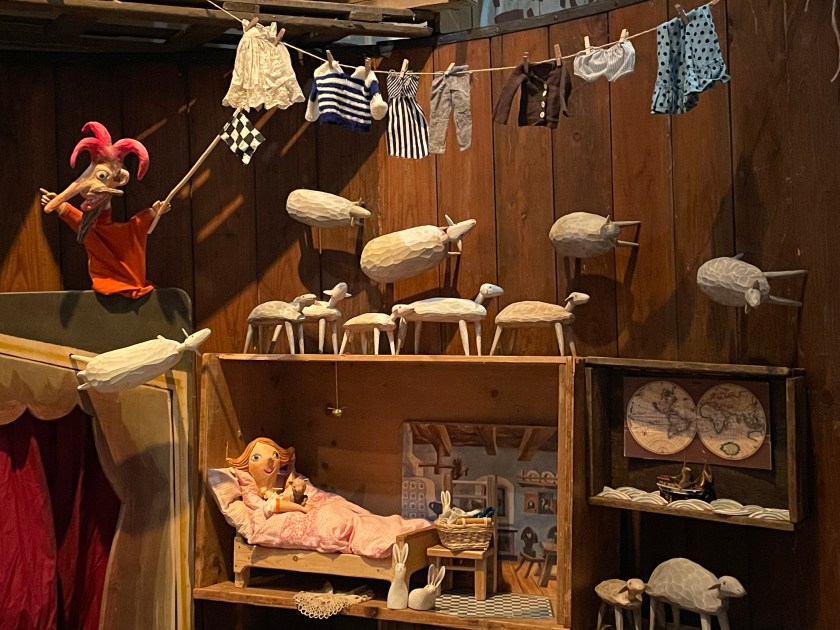
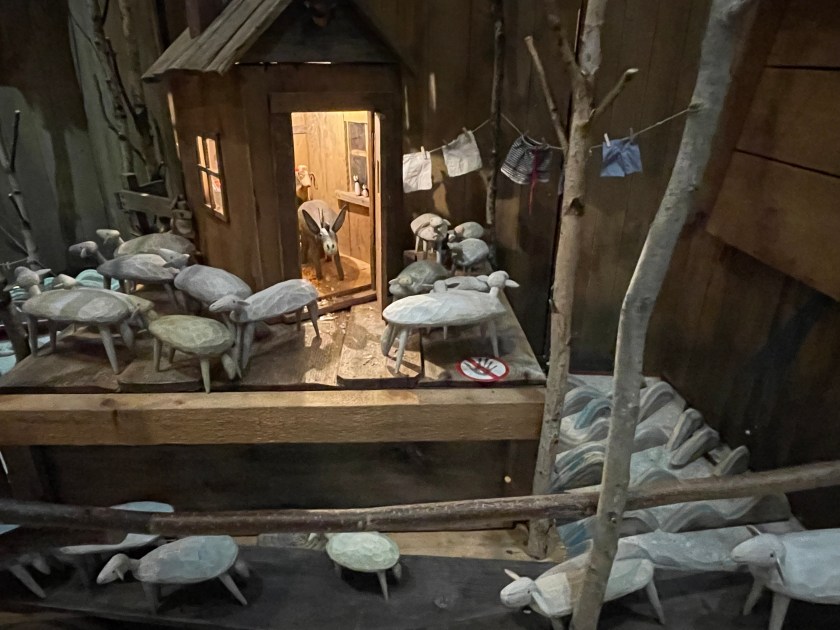
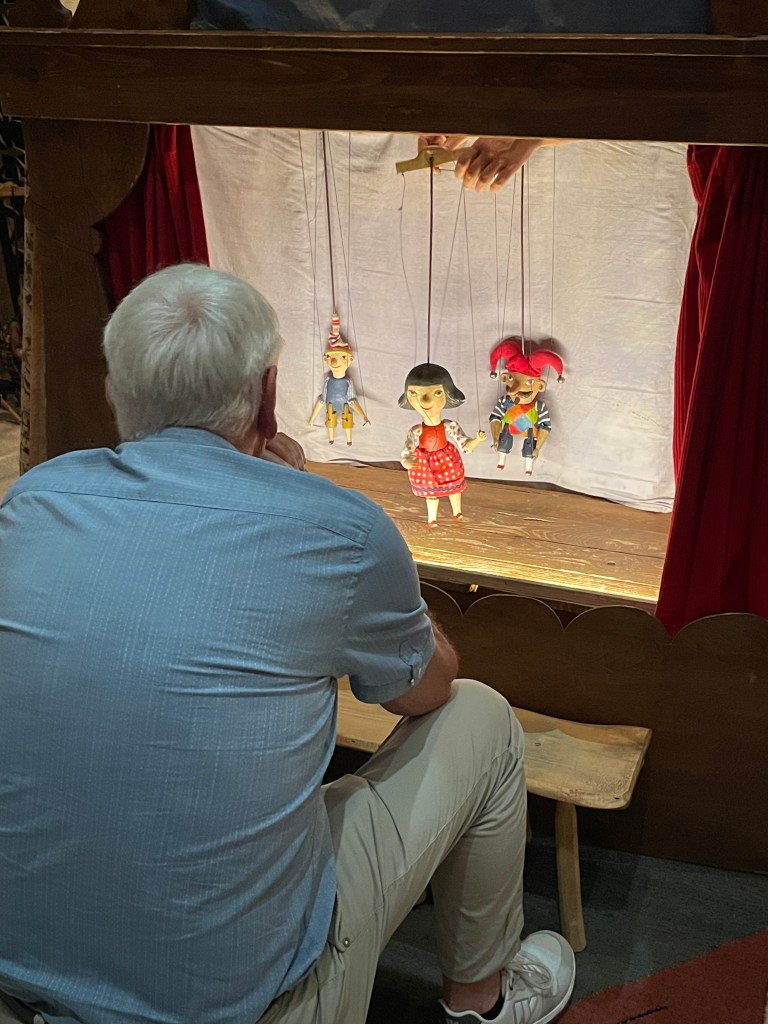
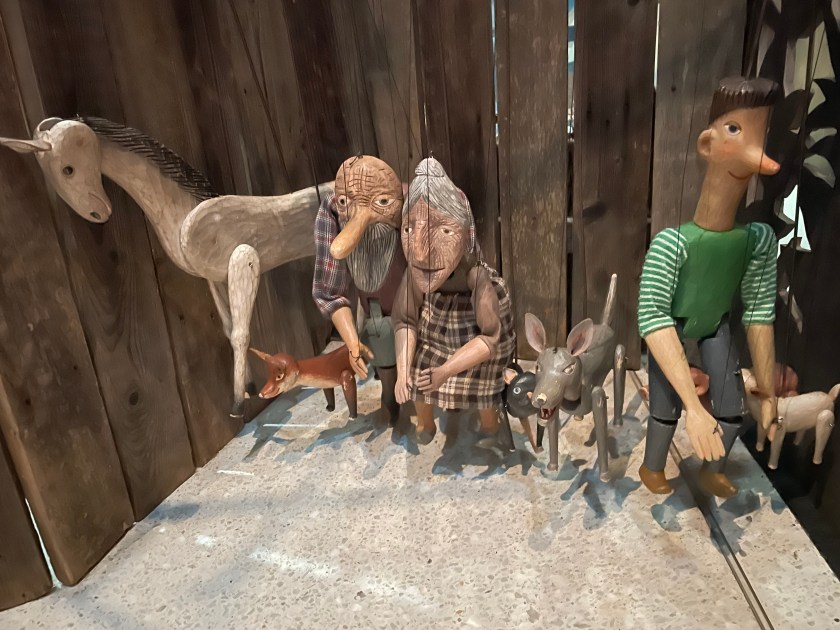
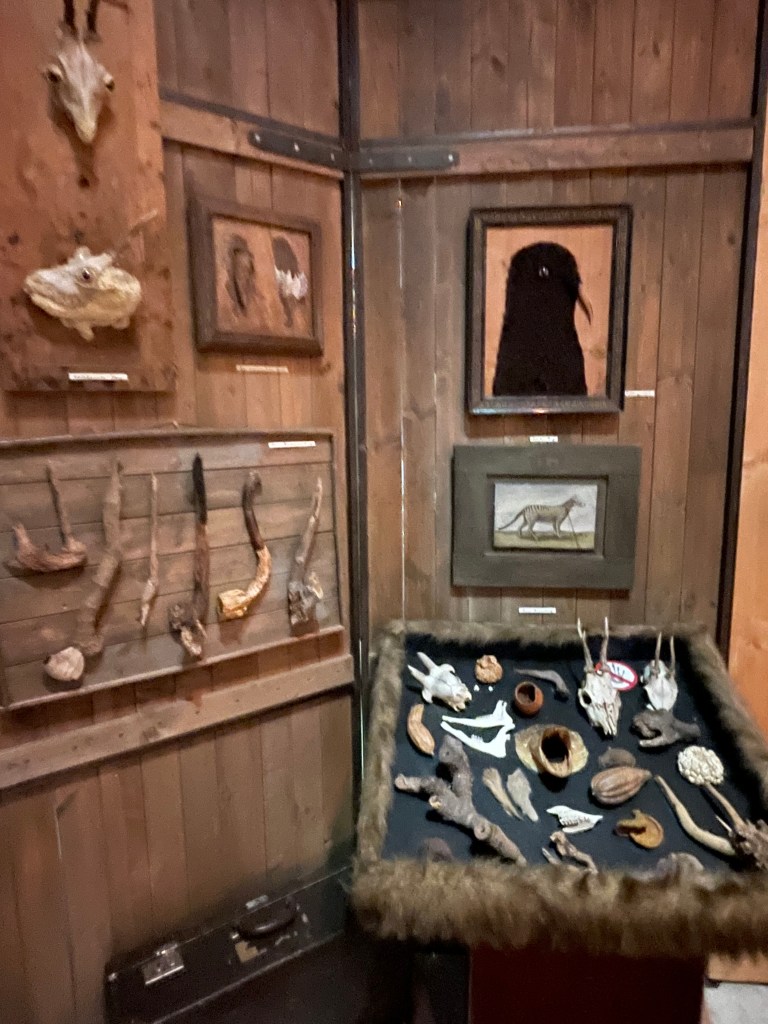
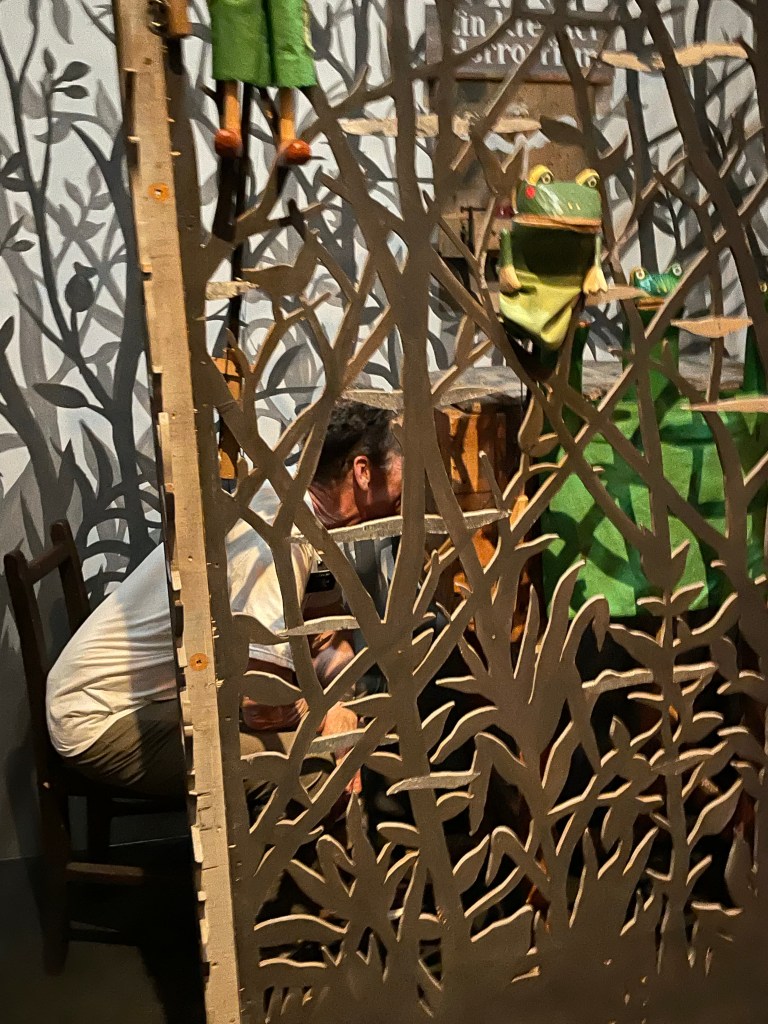
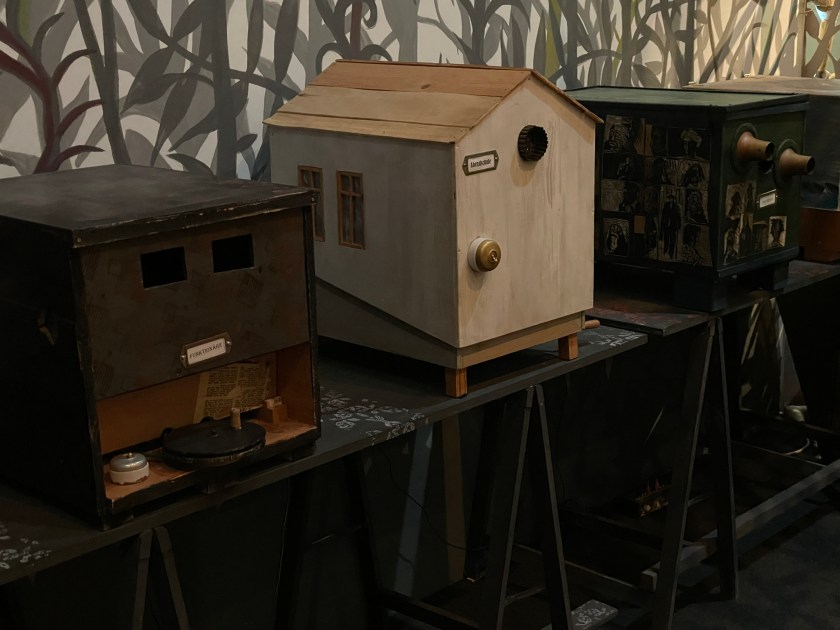
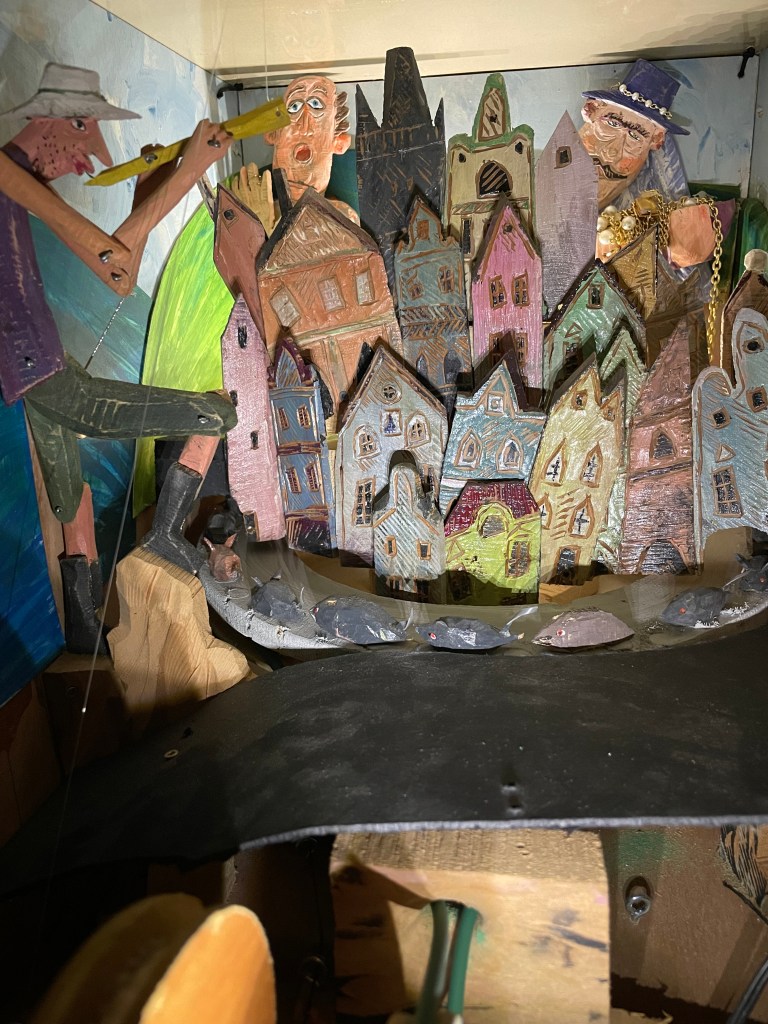
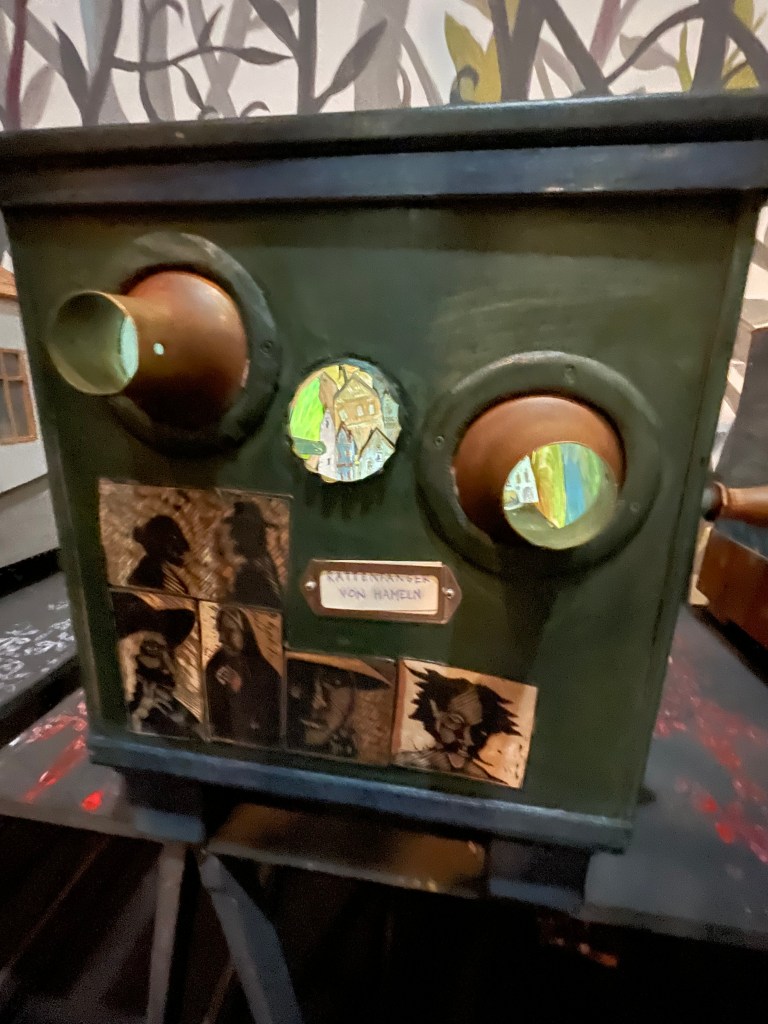
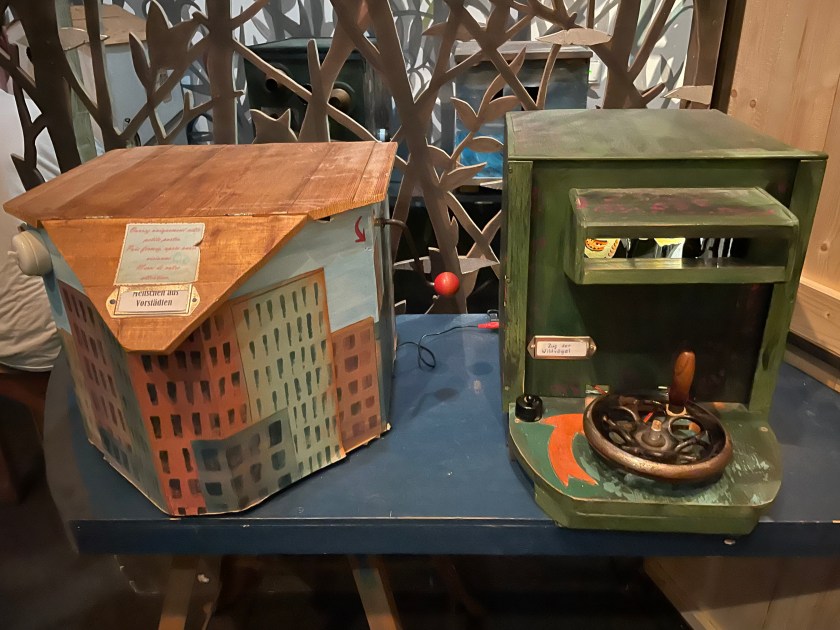
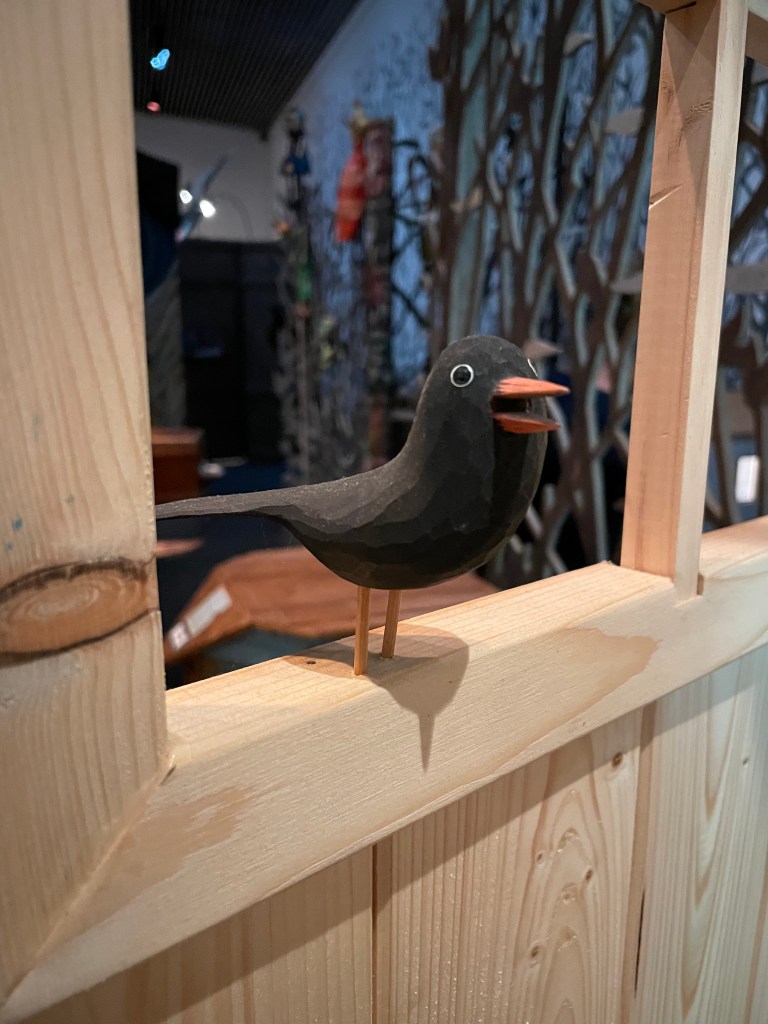
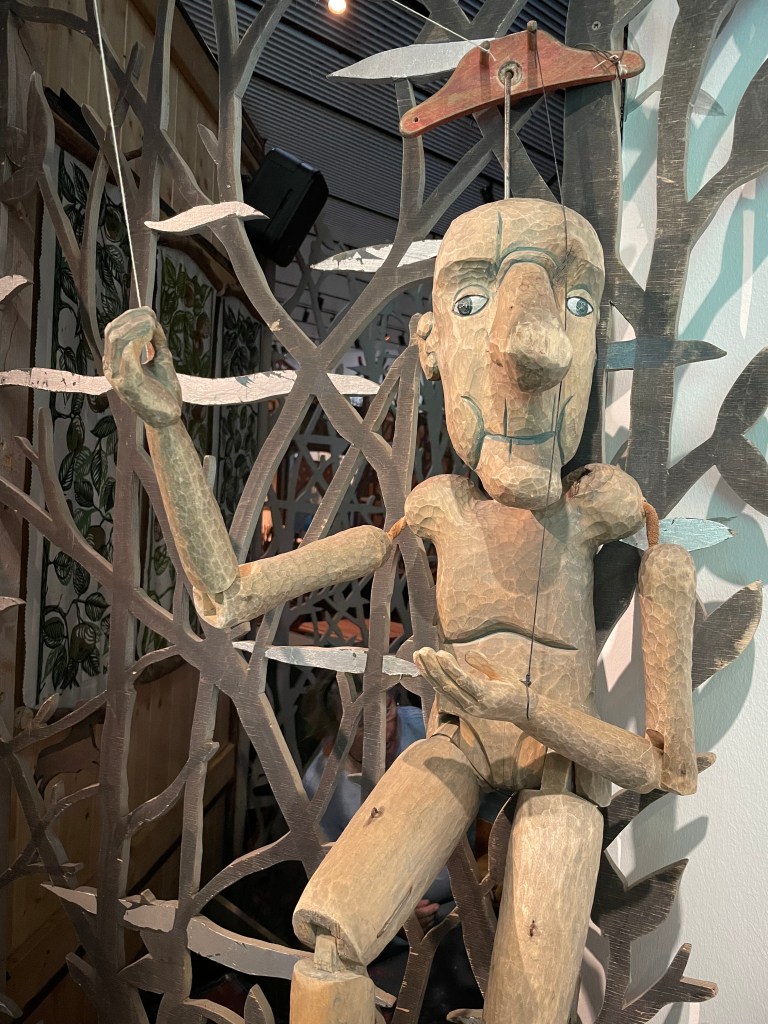
Next we drove to the Grimm Museum on the other side of town.  There was a special exhibit there now from Czechia having to do with puppets and fairy tales and imagination.  It was fantastic.  We loved it.  It was whimsical and fun and so creative.  We couldn’t tell if the crafted items were old or made in today’s world to look old.  It felt like old world folk art.  The exhibits were really fantastic.  The grandkids would’ve LOVED it.
IMAGINARIUM

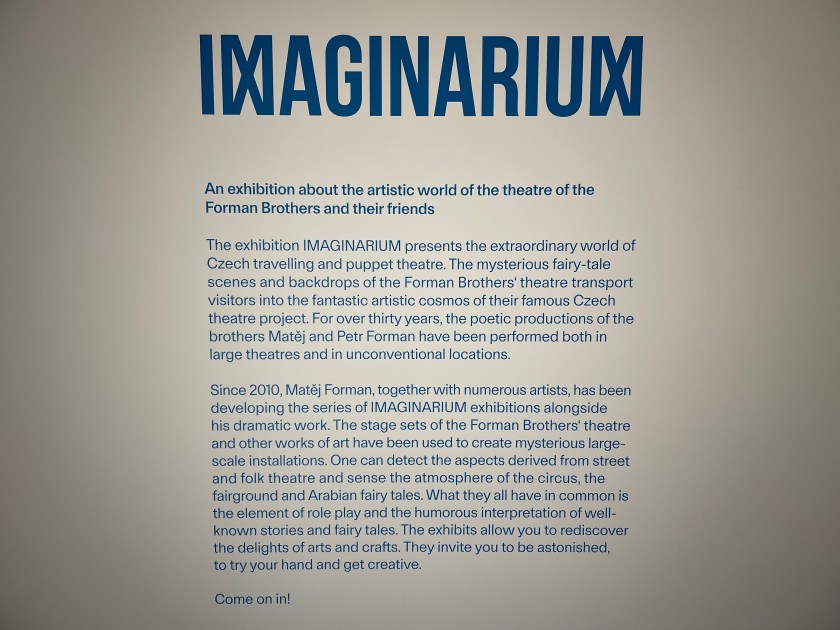
An exhibition about the artistic cosmos of the theater of the Forman brothers and their friends.

In the GRIMMWELT, a large-scale installation is being created consisting of theater sets, playful objects, inventions, dreamy rooms and impressive installations that transport visitors into a fantasy, dream and fairytale world. The interactive exhibits are made of wood and mechanical elements that create a haptic and sensory experience.
The artistic installations revive the joy of craftsmanship and invite you to marvel, participate and be creative. “The gift of imagination gives us the opportunity to be unique. The fascination of handcrafted objects is our focus. “The play and enchantment through simple and beautiful things, the world of theatre, inventions, toys, dolls or everyday objects are the theme and content of our installation,” says curator Matěj Forman.
In its new special exhibition from May 9 to October 13, 2024, the GRIMMWELT Kassel brings the cosmos and art of the Czech puppet and traveling theater and the associated fairy tales and stories to life.
The fairytale, fantastic and mysterious backdrops of the Forman brothers’ theater invite visitors to explore and explore in a playful way. Participation and experimentation are expressly encouraged in the IMAGINARIUM exhibition!

Kassel’s  Alte Meister Art Gallery in Schloss Wilhelmshöhe Palace

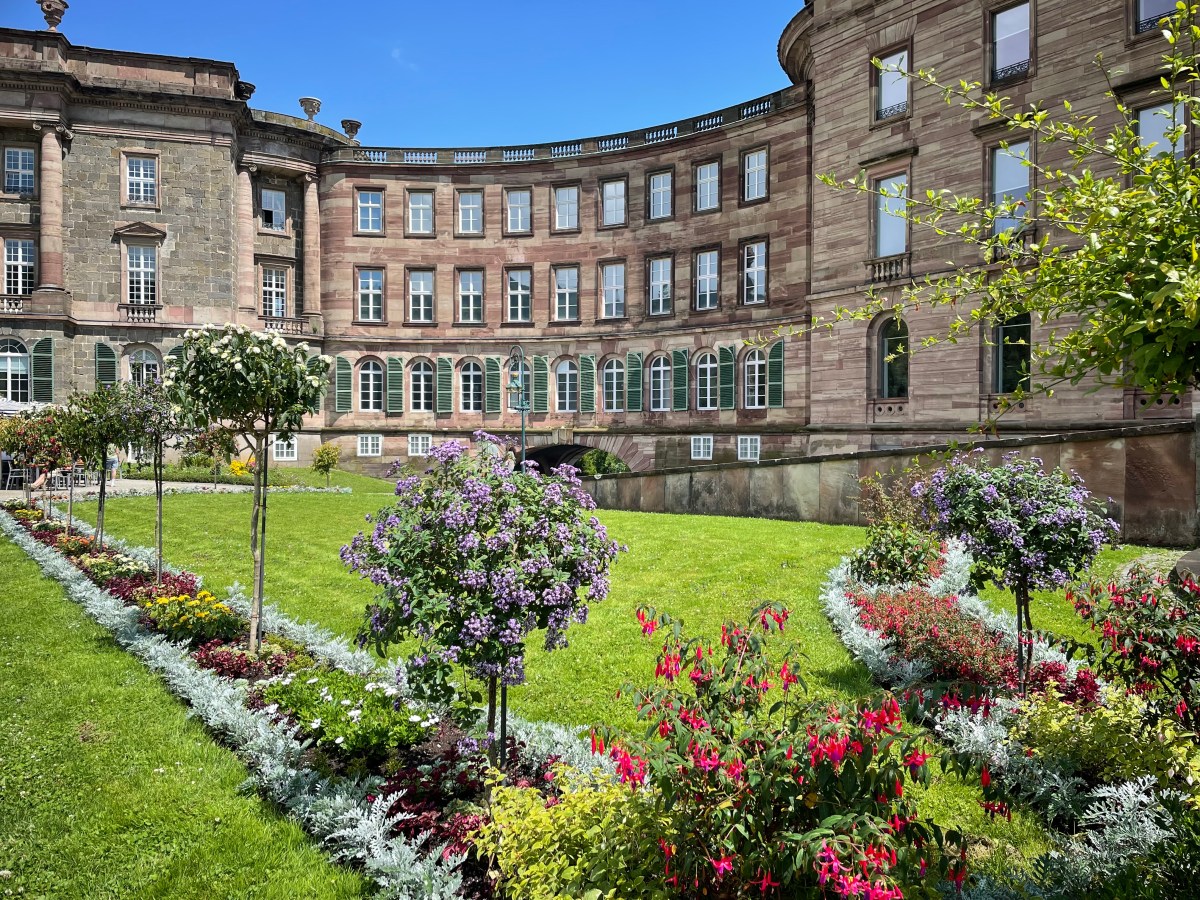
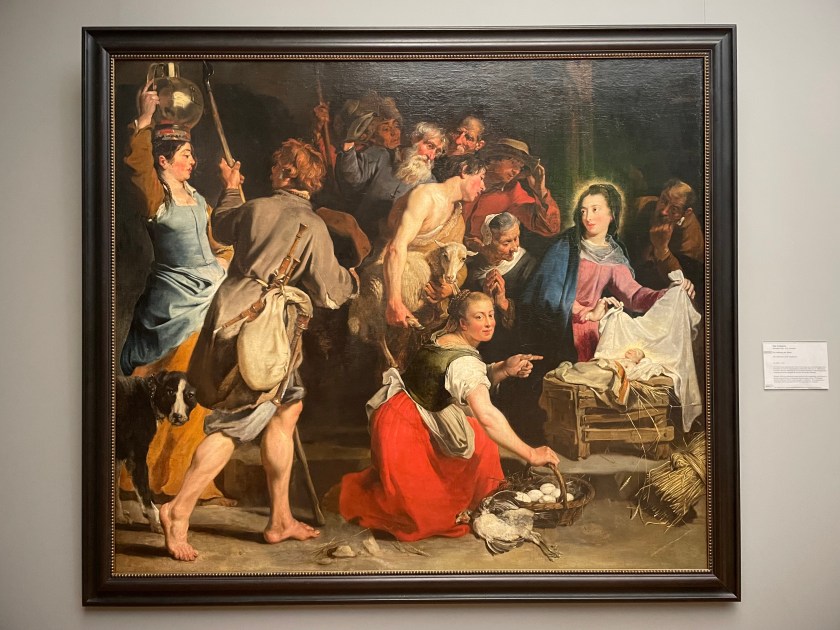
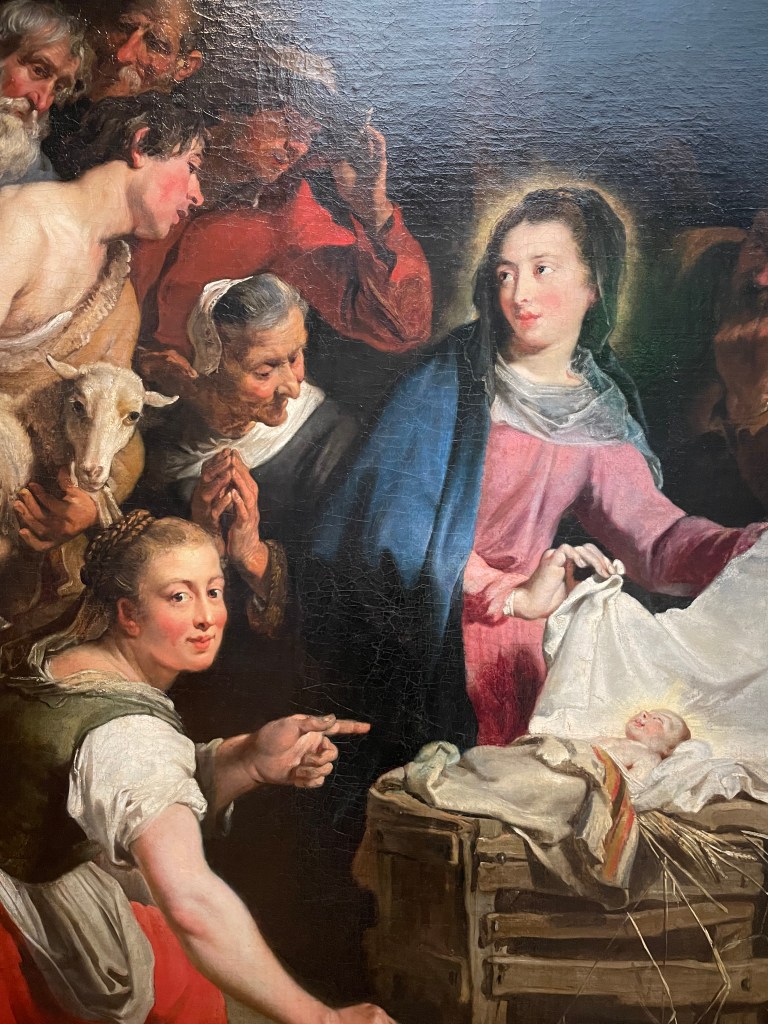
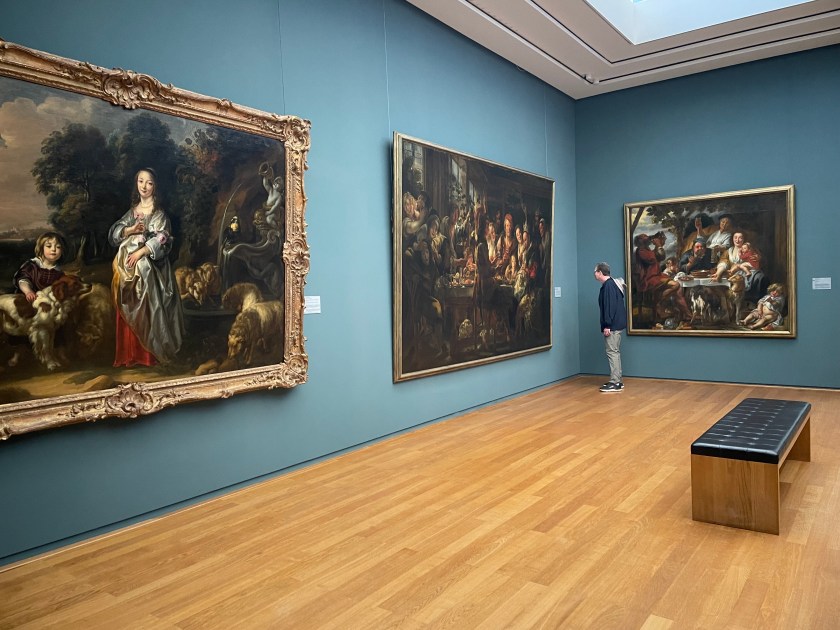
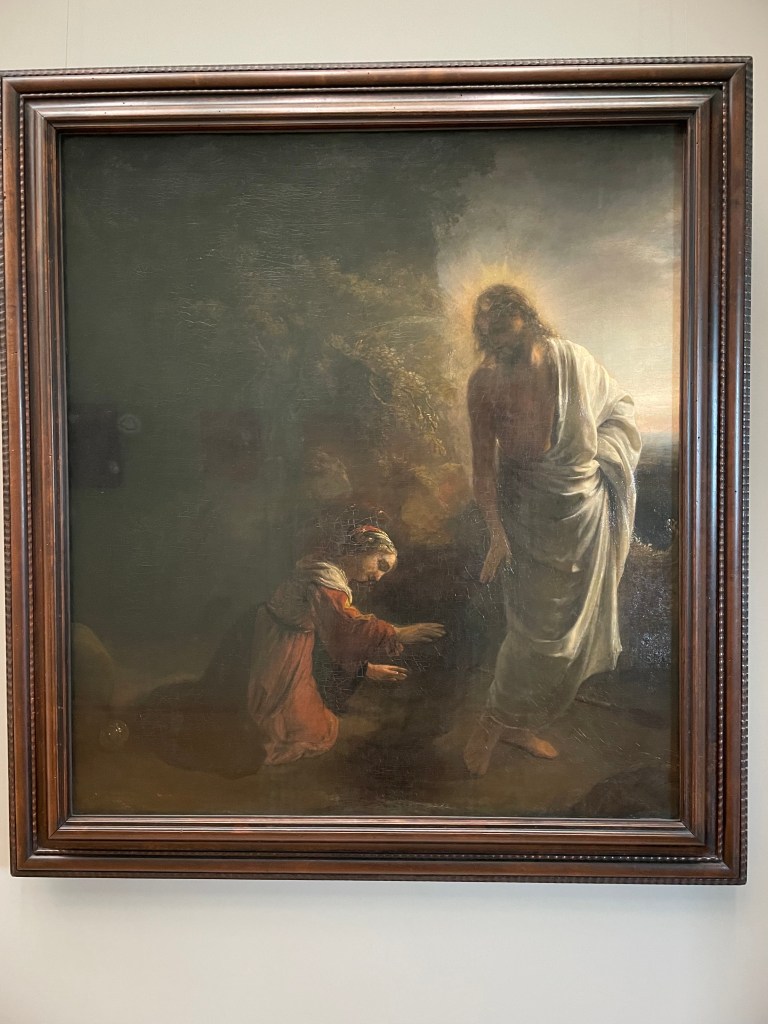
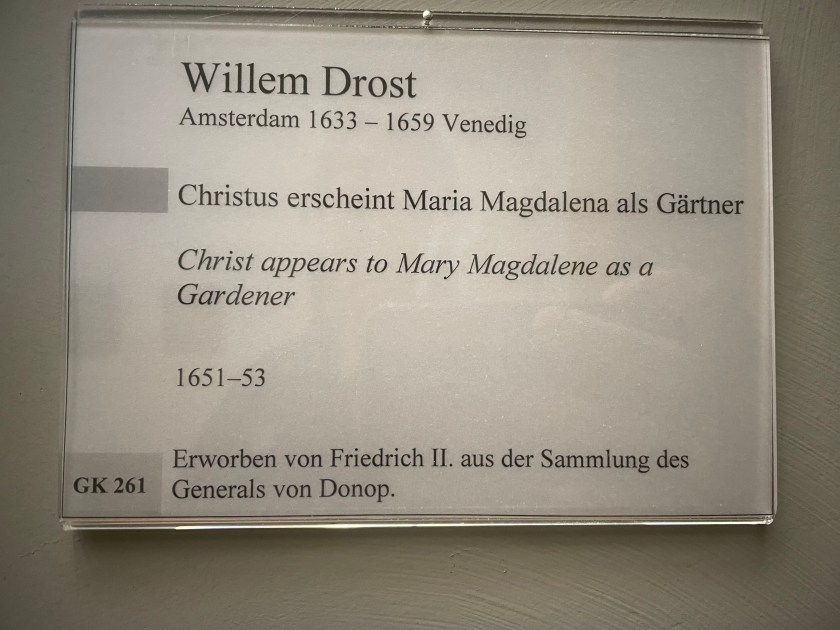
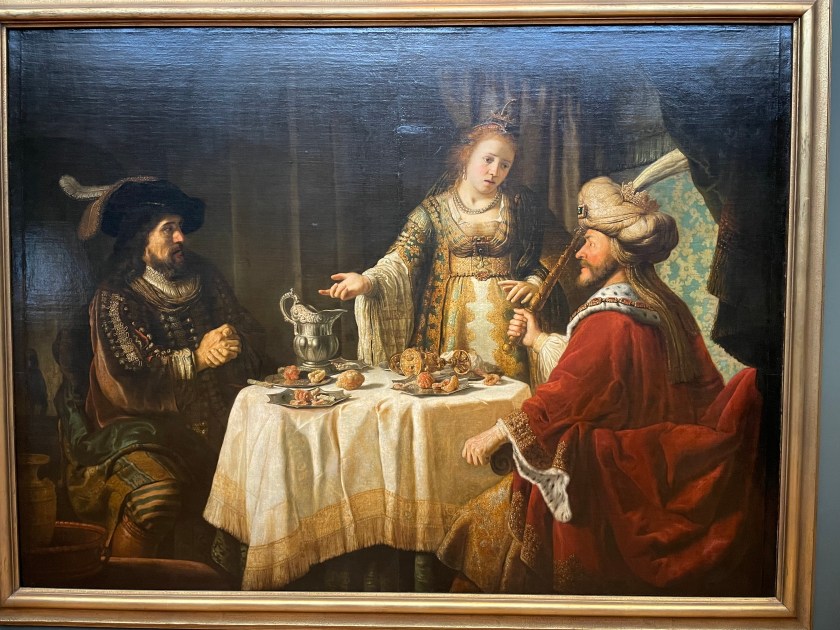
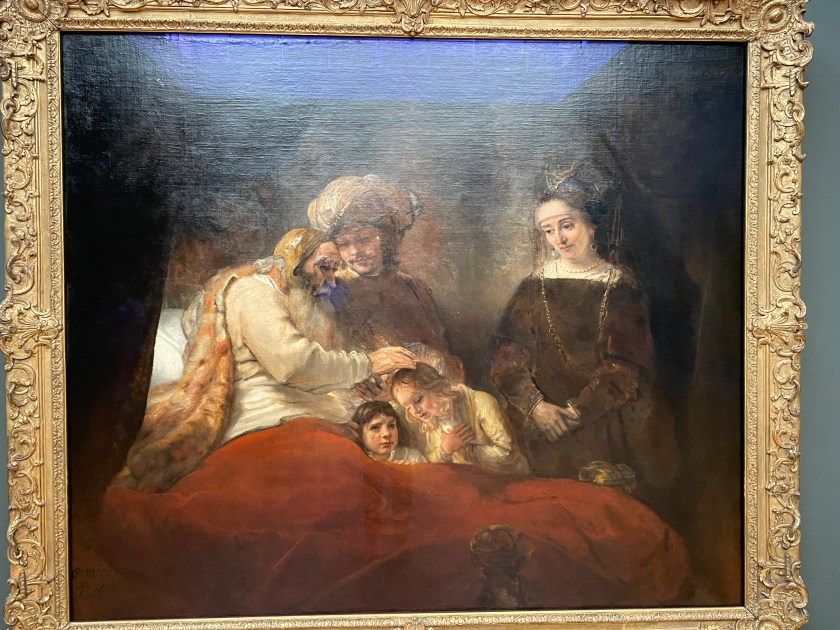
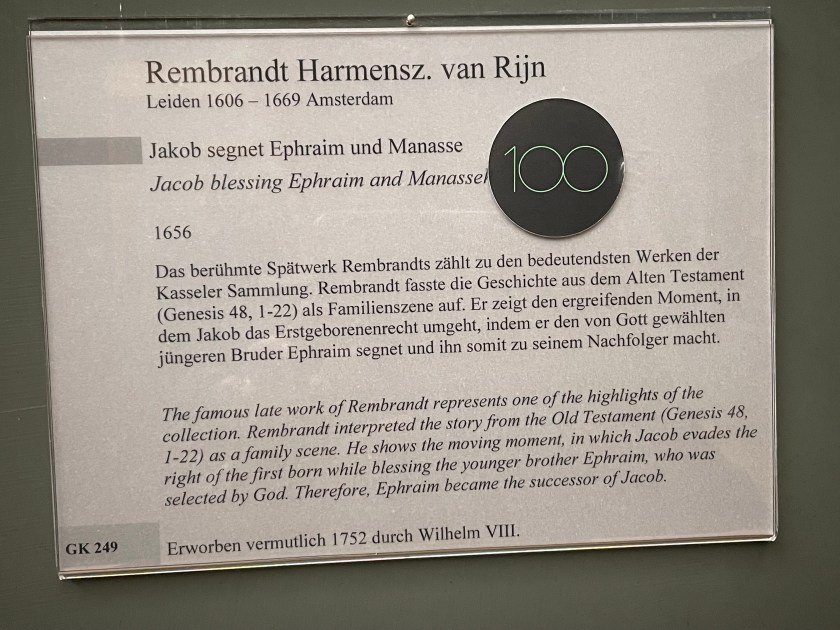
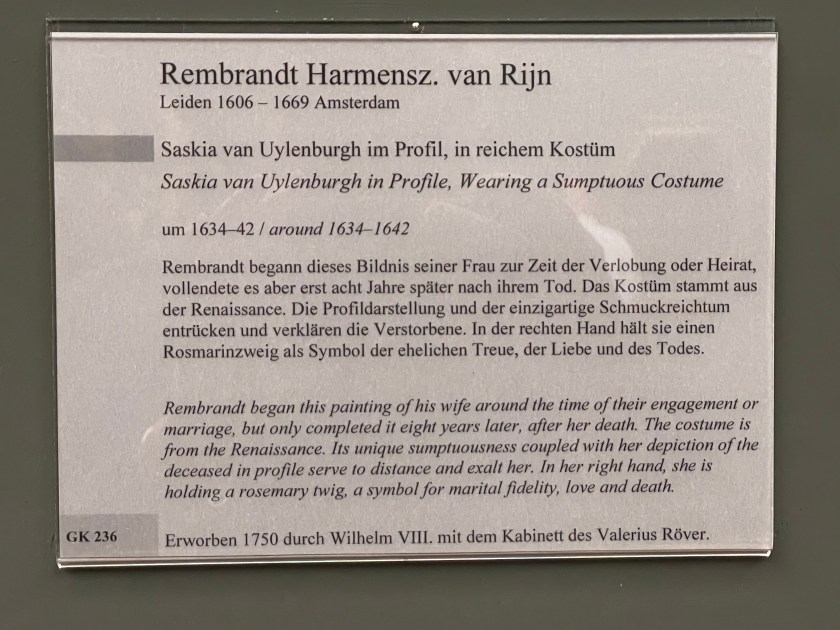
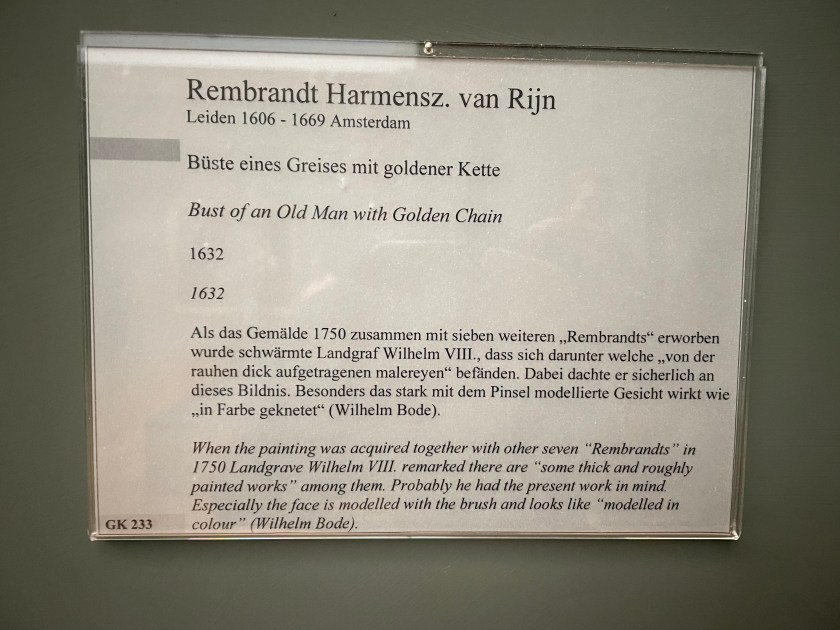
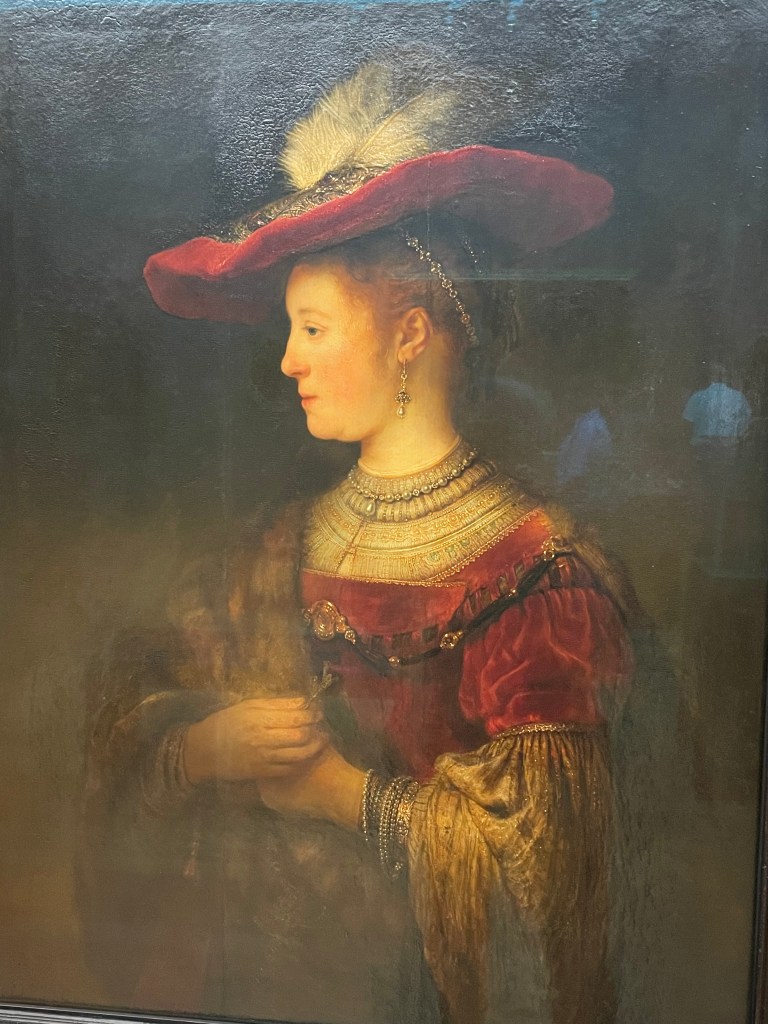
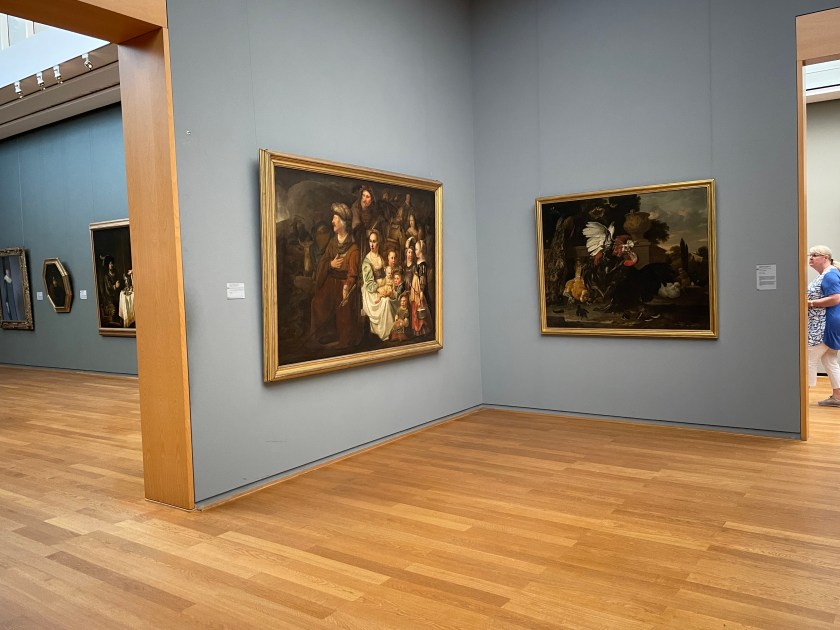
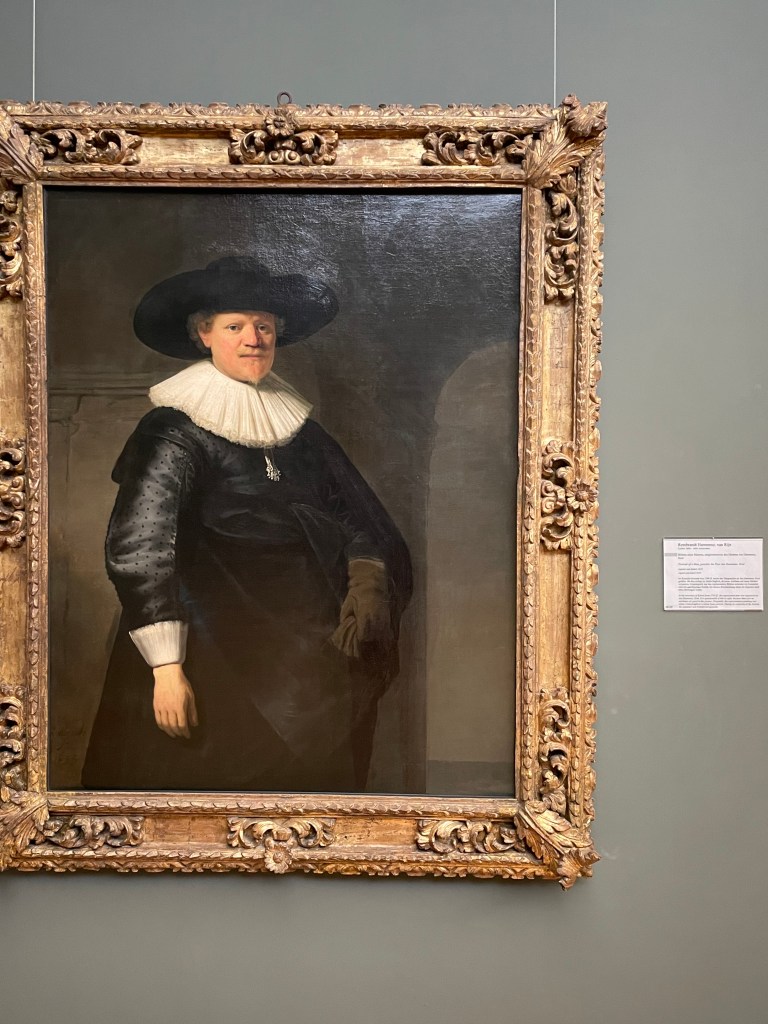
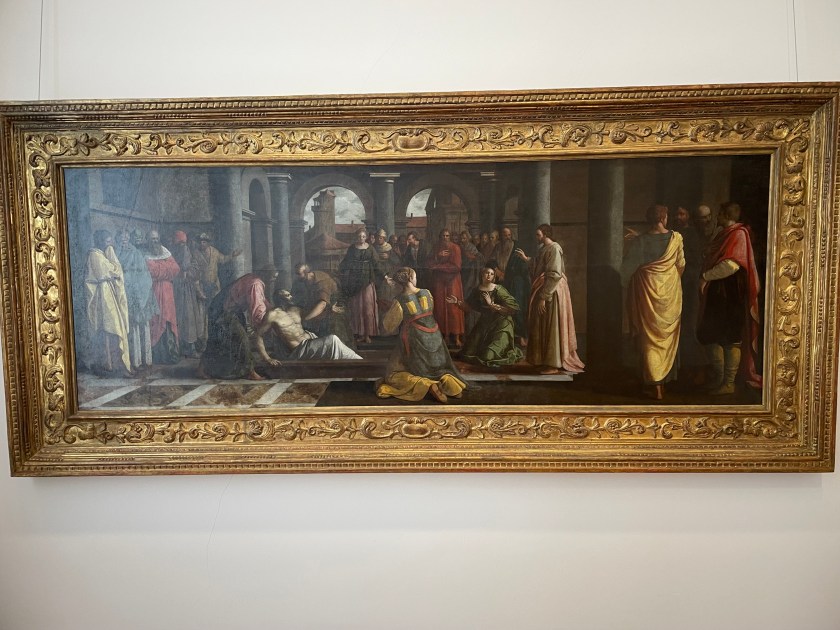
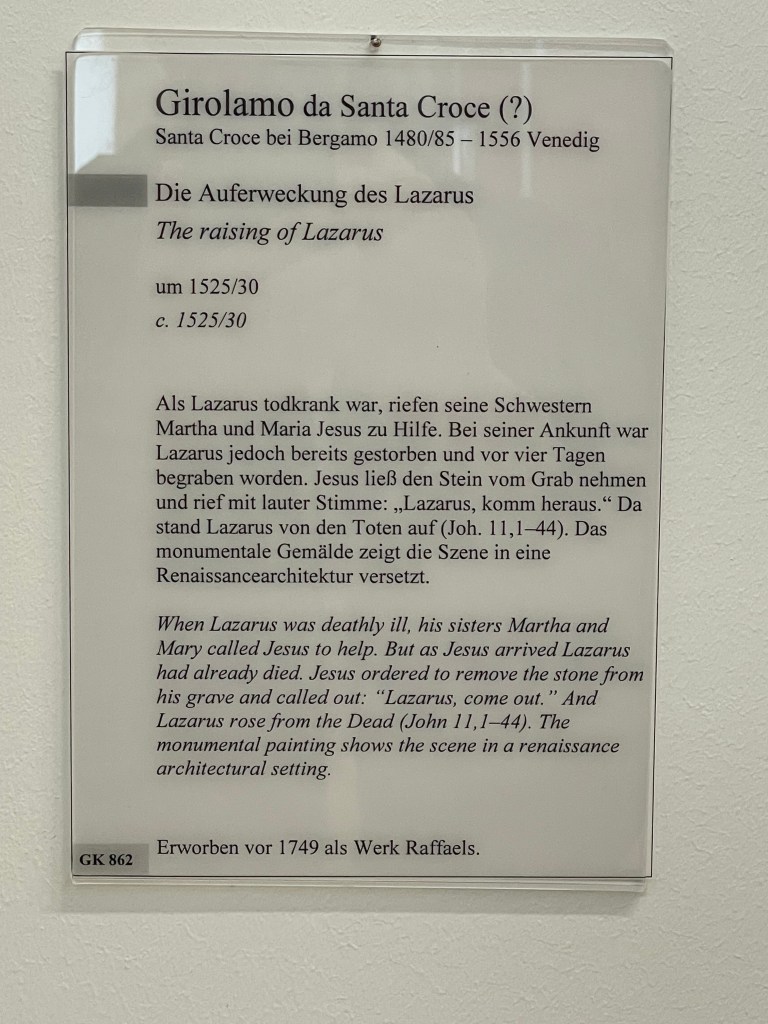
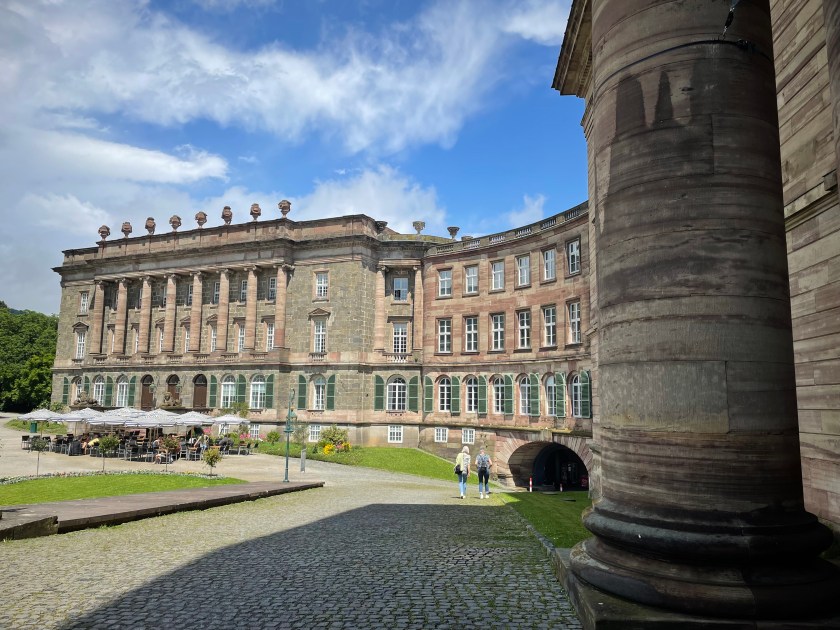
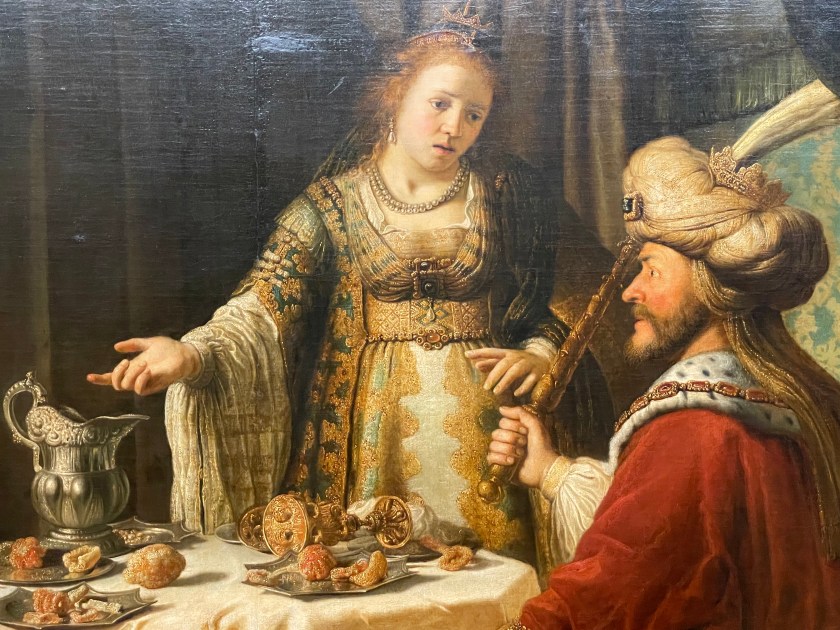
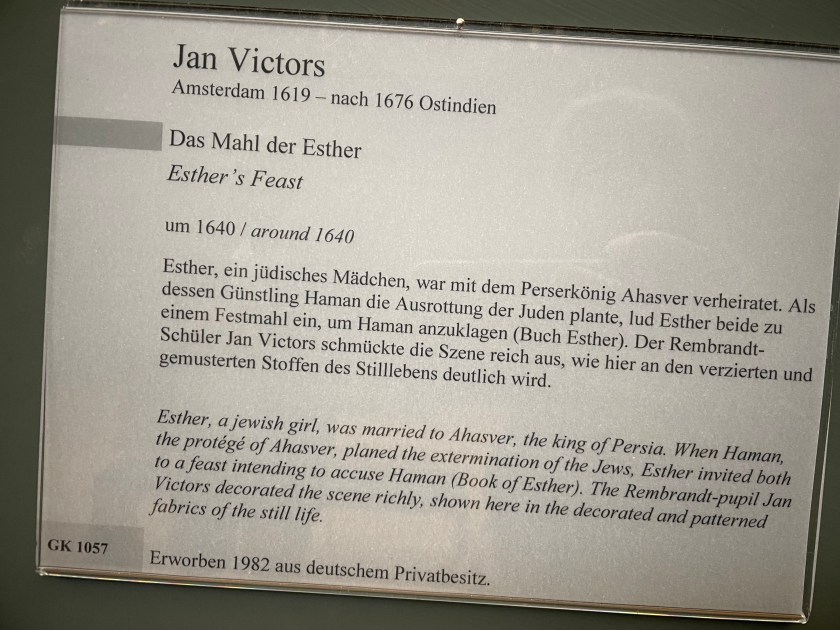
Next we drove to a palace that is now an art museum at the lower end of the park.  One floor in the art museum has works from the Old Masters, including many Rembrandts, so we had one hour (in the pouring rain) to go see them. We could have spent hours there.

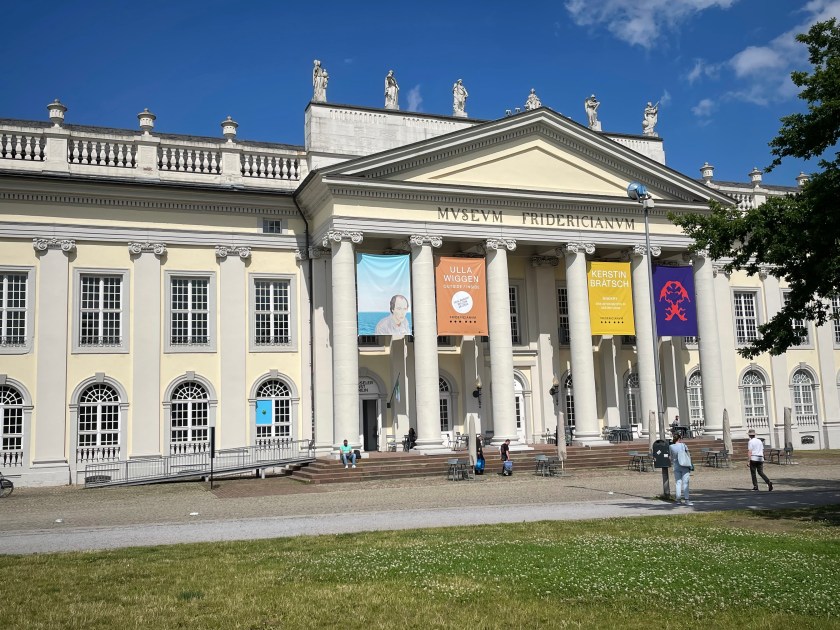
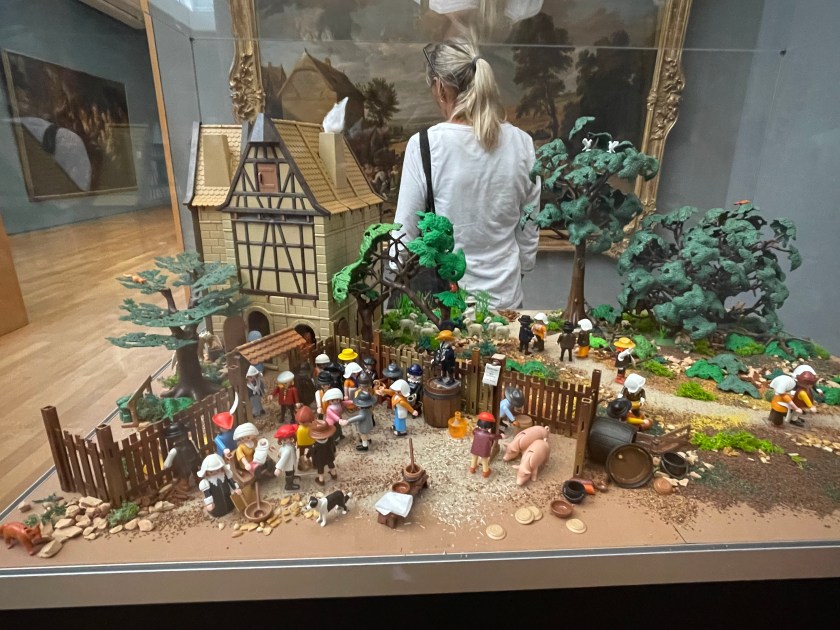
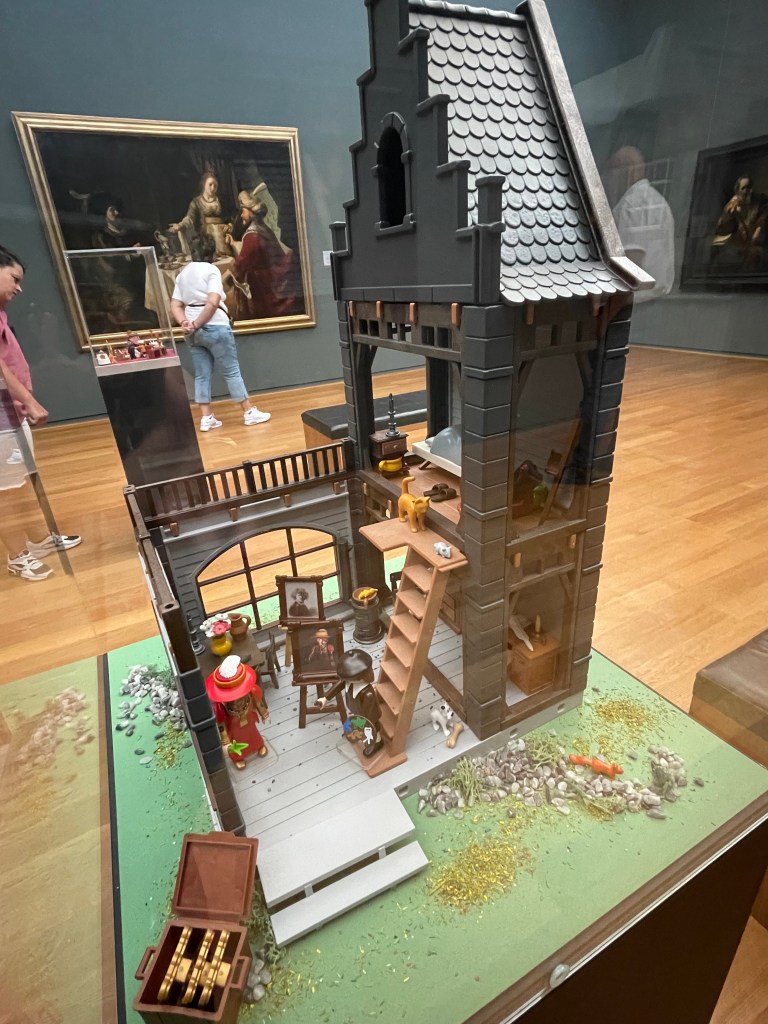
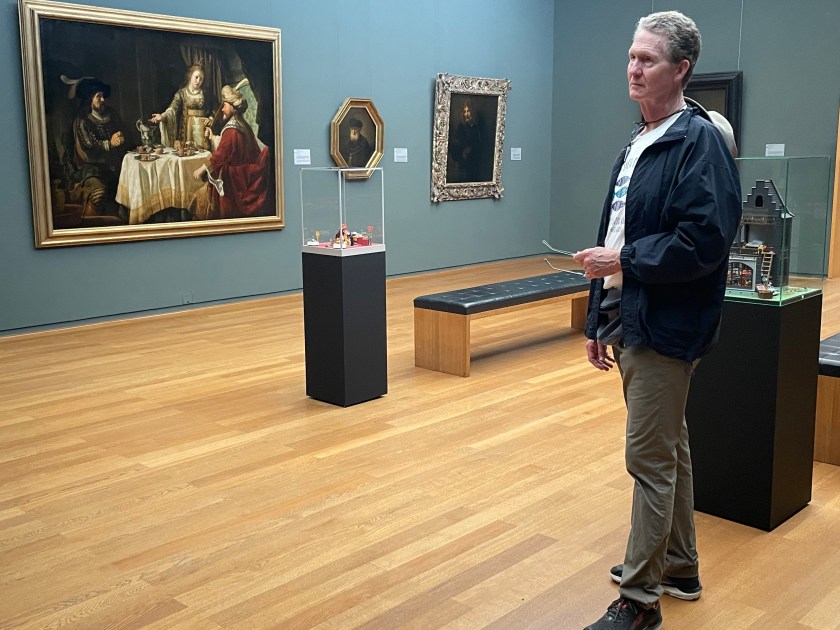
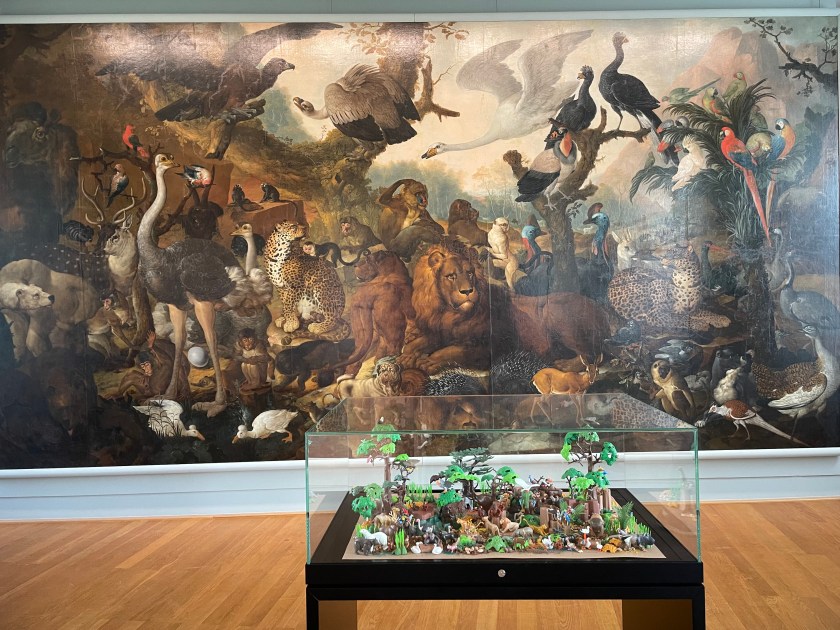
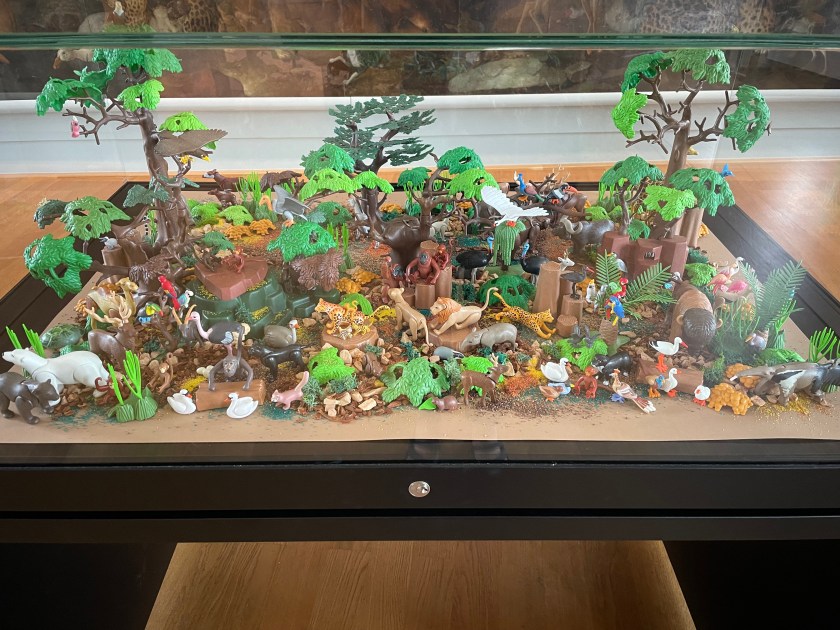
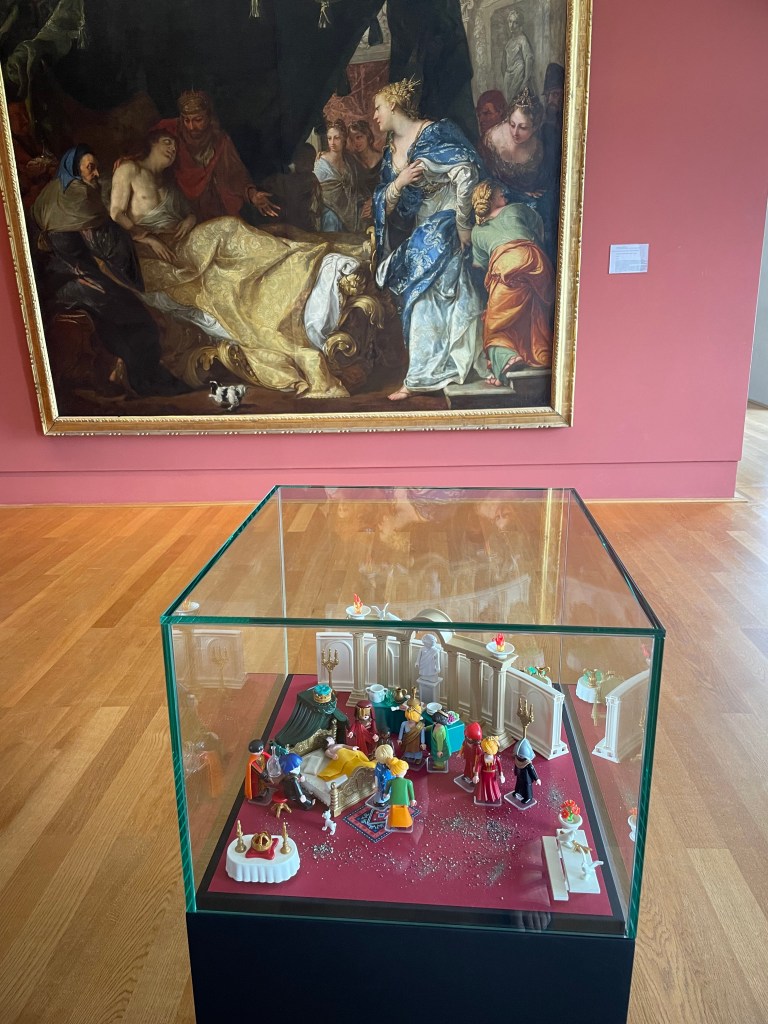
The museum is in the Schloss Wilhelmshöhe.  Interestingly, there was a Playmobil exhibit alongside the glorious artwork, often depicting what was in a painting. That was fun to see.

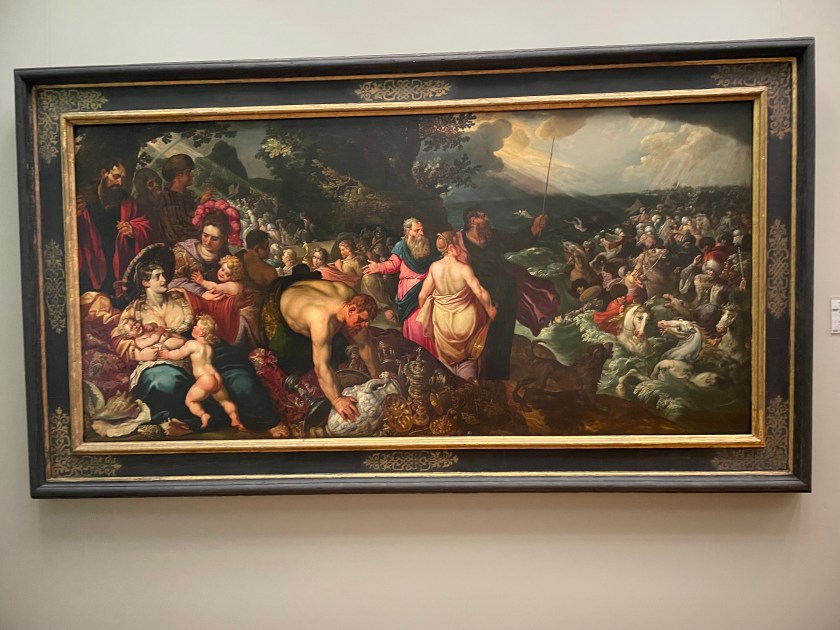
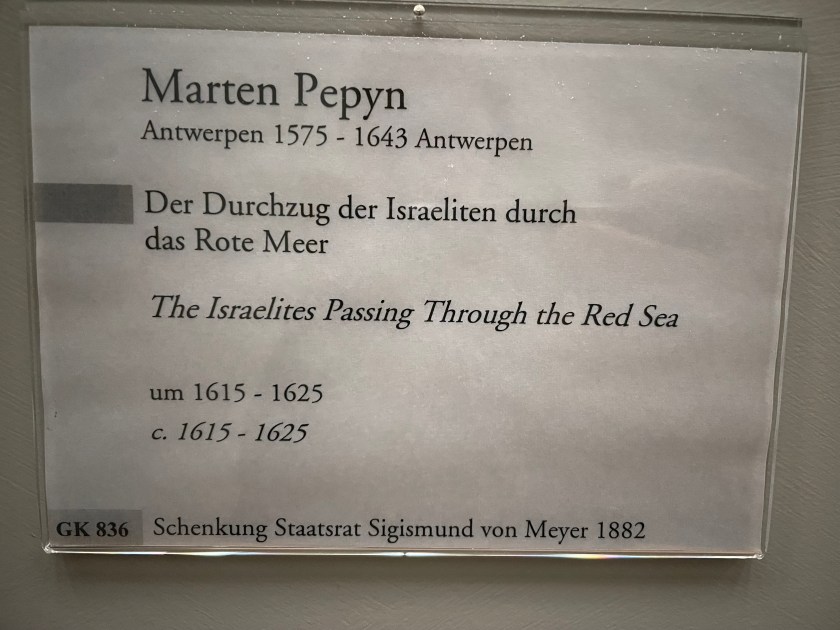
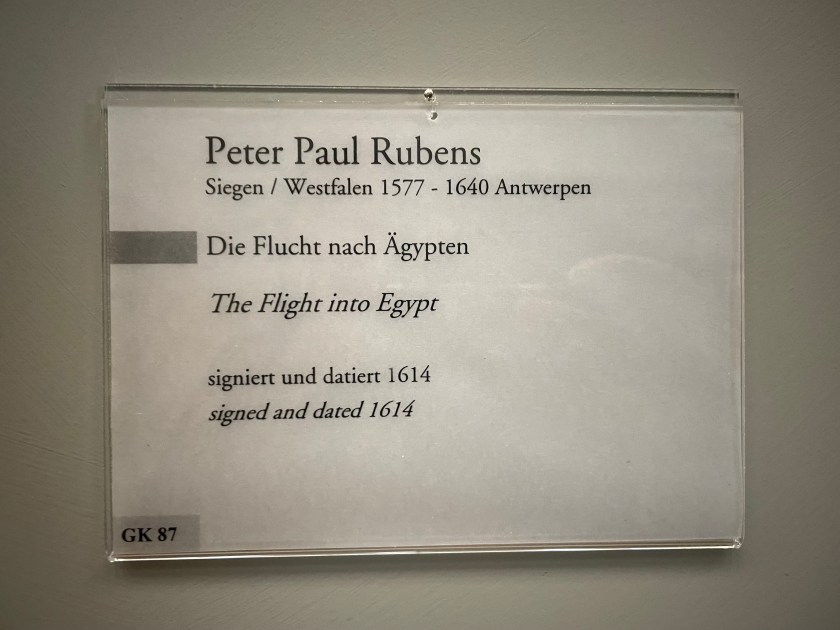
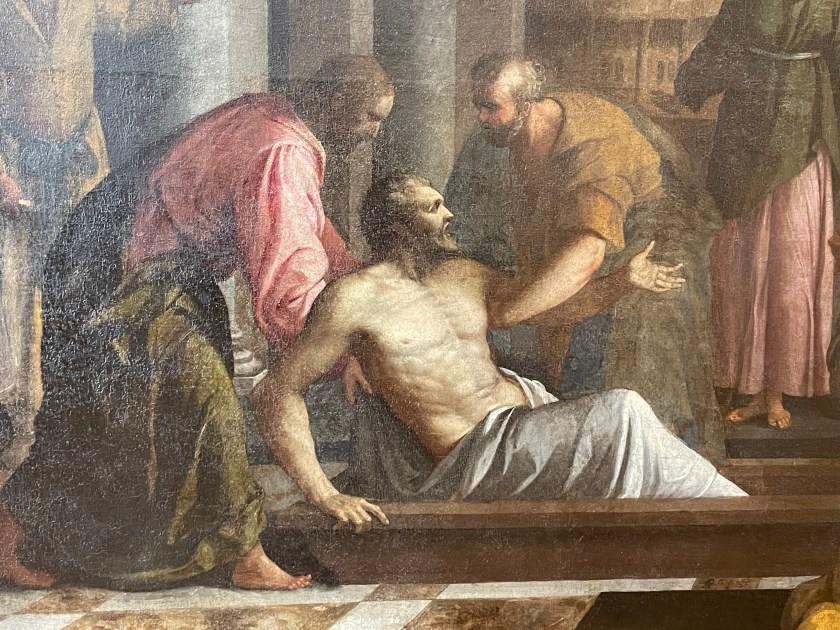
I loved that so many of the works were religious. It’s interesting to see the clothing of the time period of the artist in Biblical scenes. We saw some Ruebens, Doerer, Rembrandt, Van Dyk and more.  The museum also had things from the Roman Period we breezed through.

Here’s how some of the scenes from the artwork was depicted in the Playmobil figures:

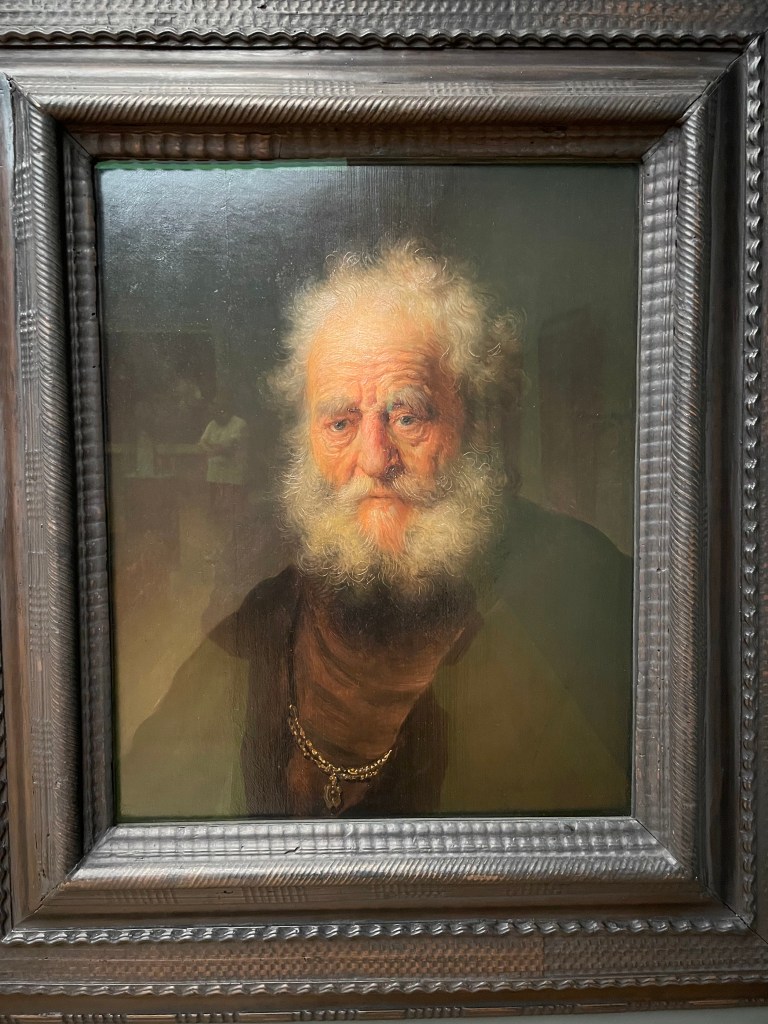
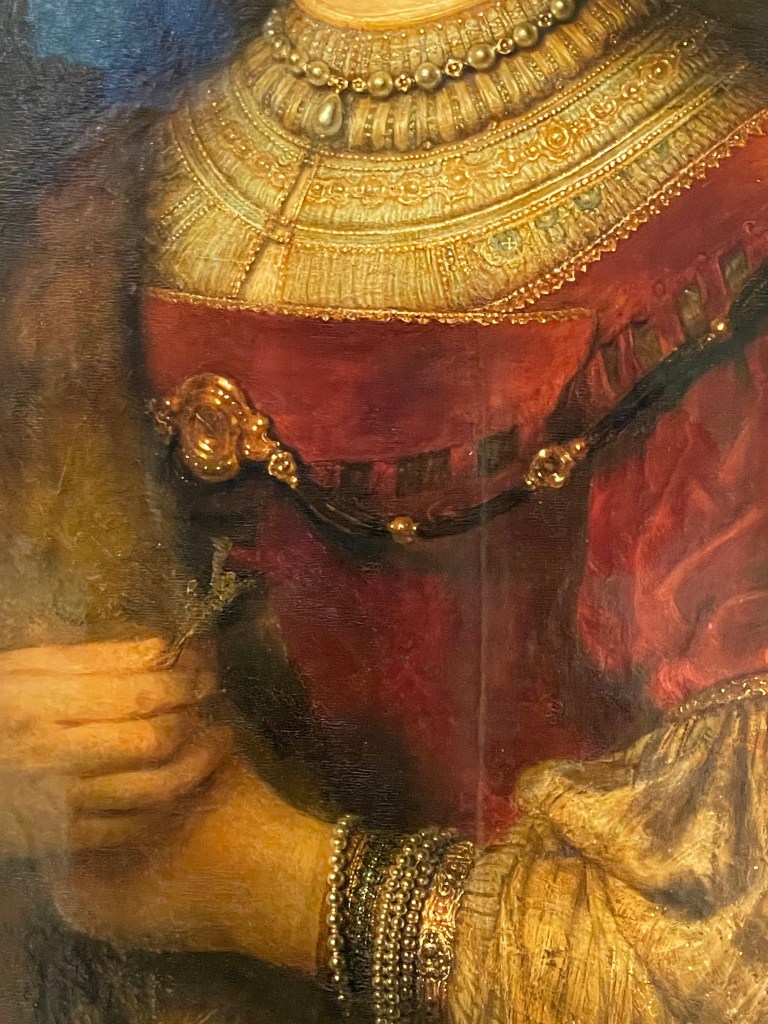
Beautiful faces:

LOVE this face:

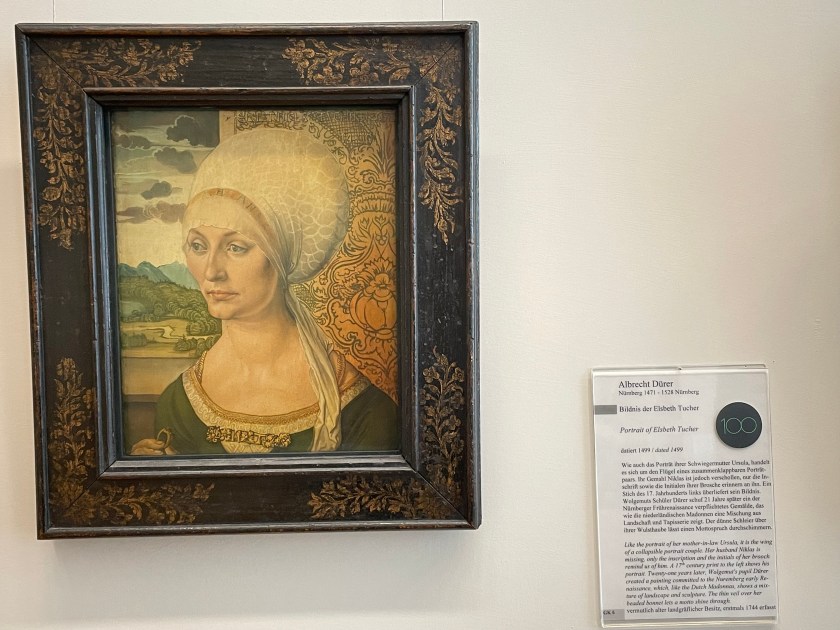
Here’s a piece by Albrecht Duerer:

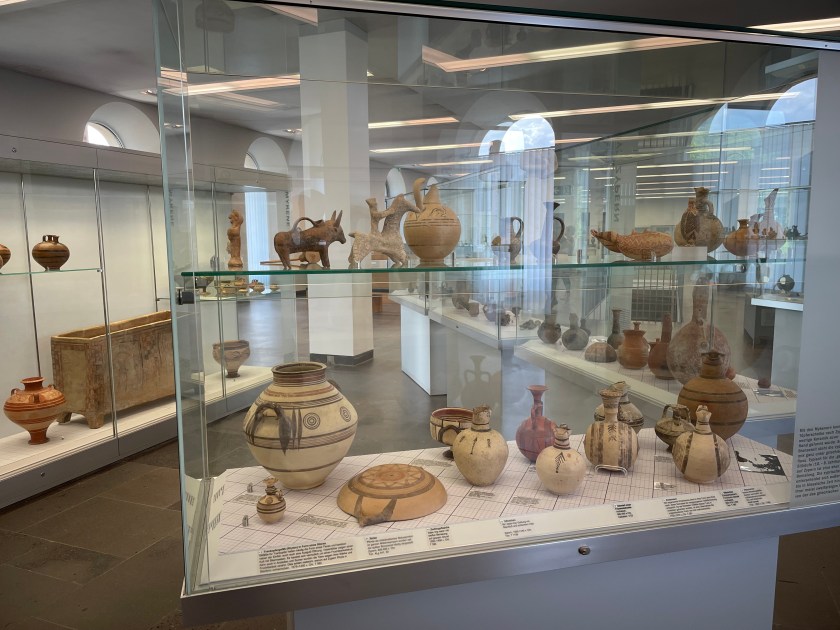
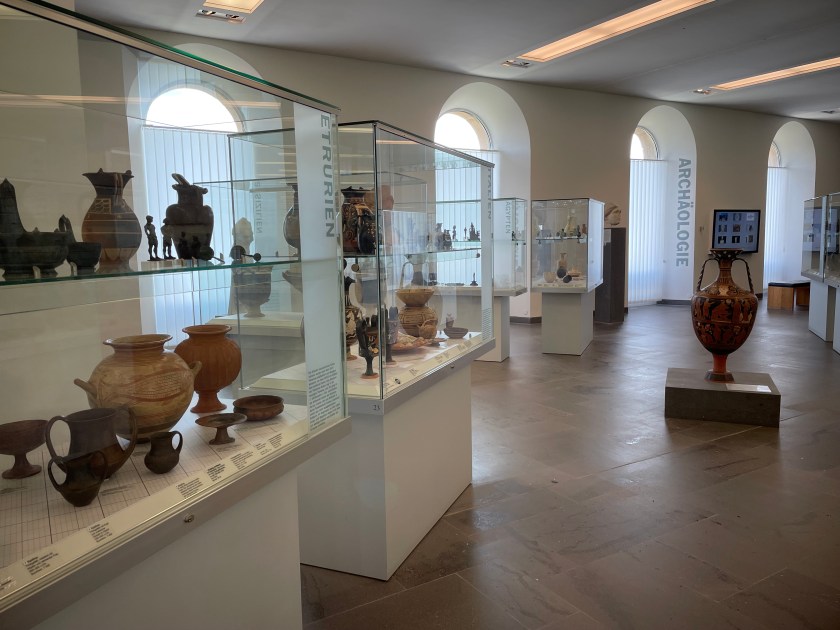
We had to race through the other floors of the museum where Roman treasures were.

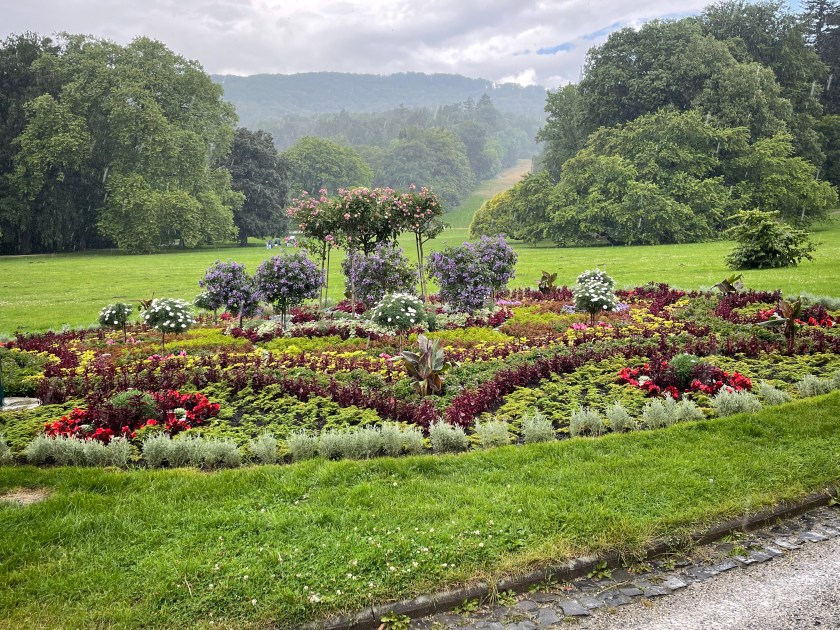
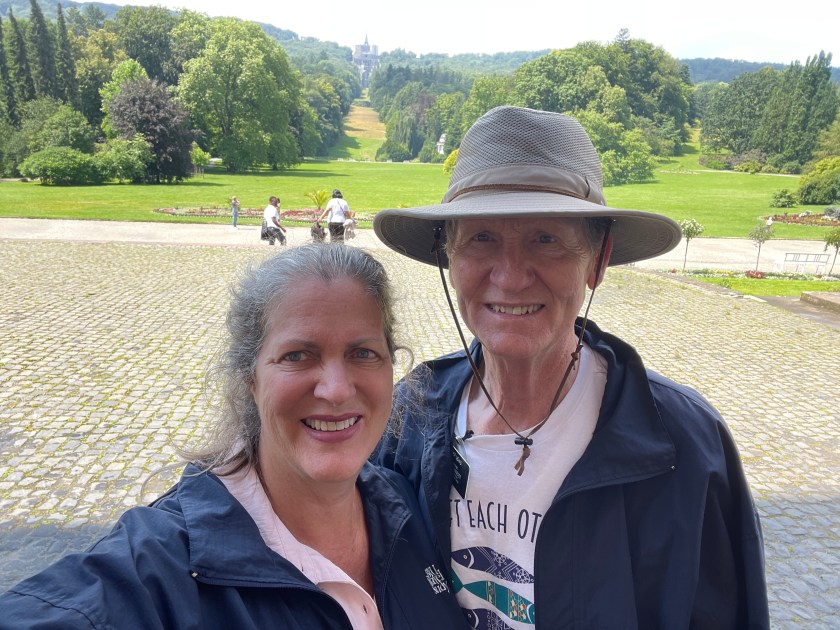
When we came out, the rain had passed and it was like entering a garden of Eden.

Kassel and the 300 Year-Old Hercules Monument

We left work Wednesday evening and drove to Kassel.  We are on our way to a family reunion in Bielefeld Friday and Saturday.  Kassel was right on our way.  This evening we checked into this family-owned hotel, we found a fun restaurant down the street where we enjoyed a good meal and one of the big soccer matches on a big screen TV.

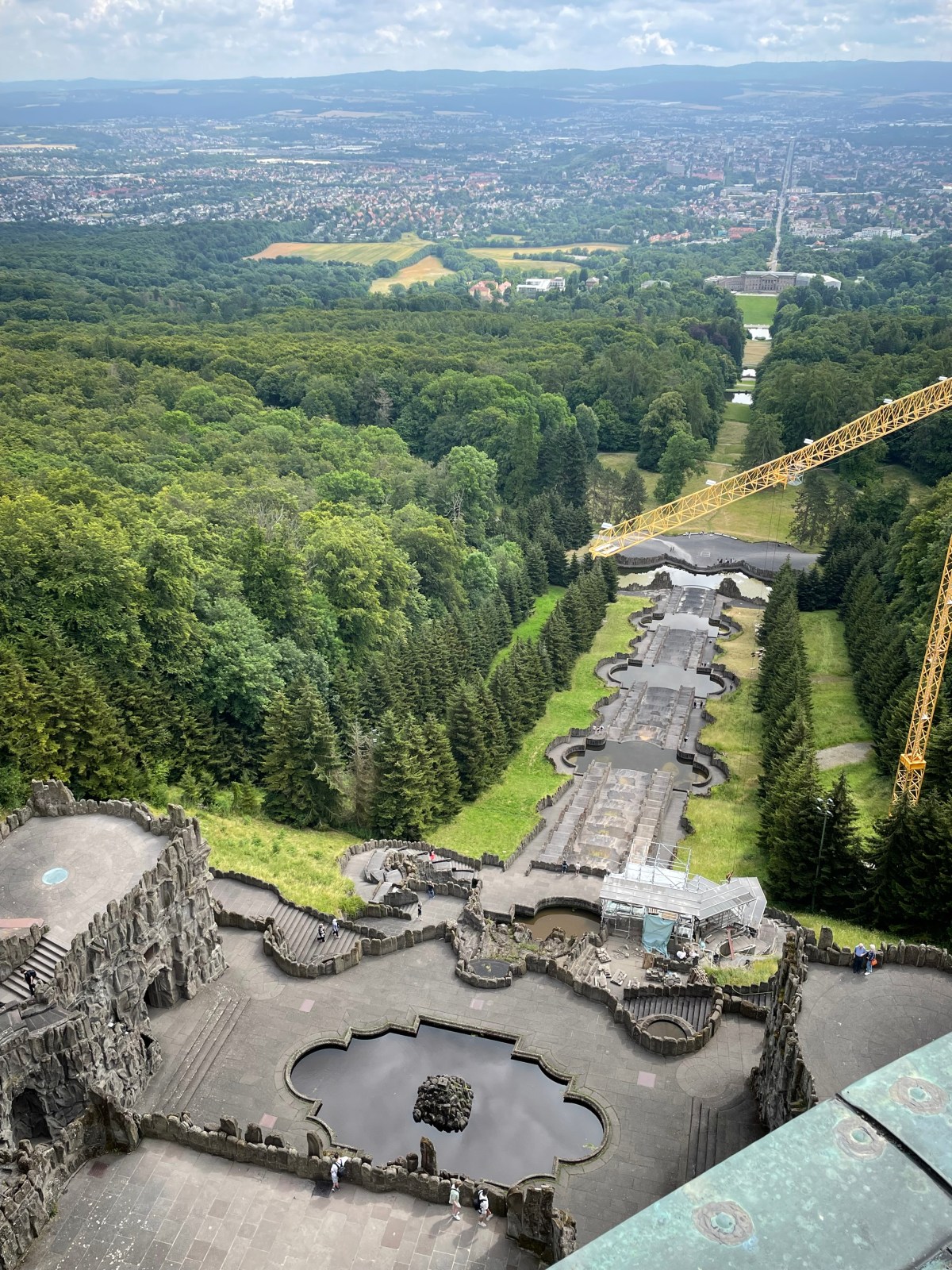
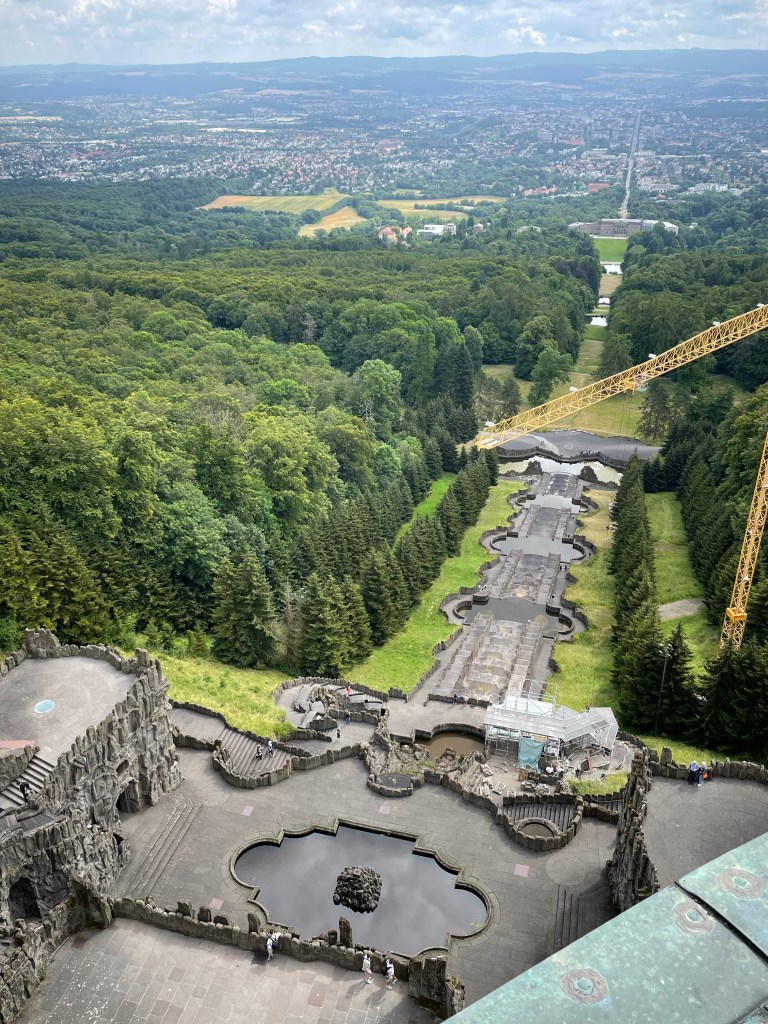
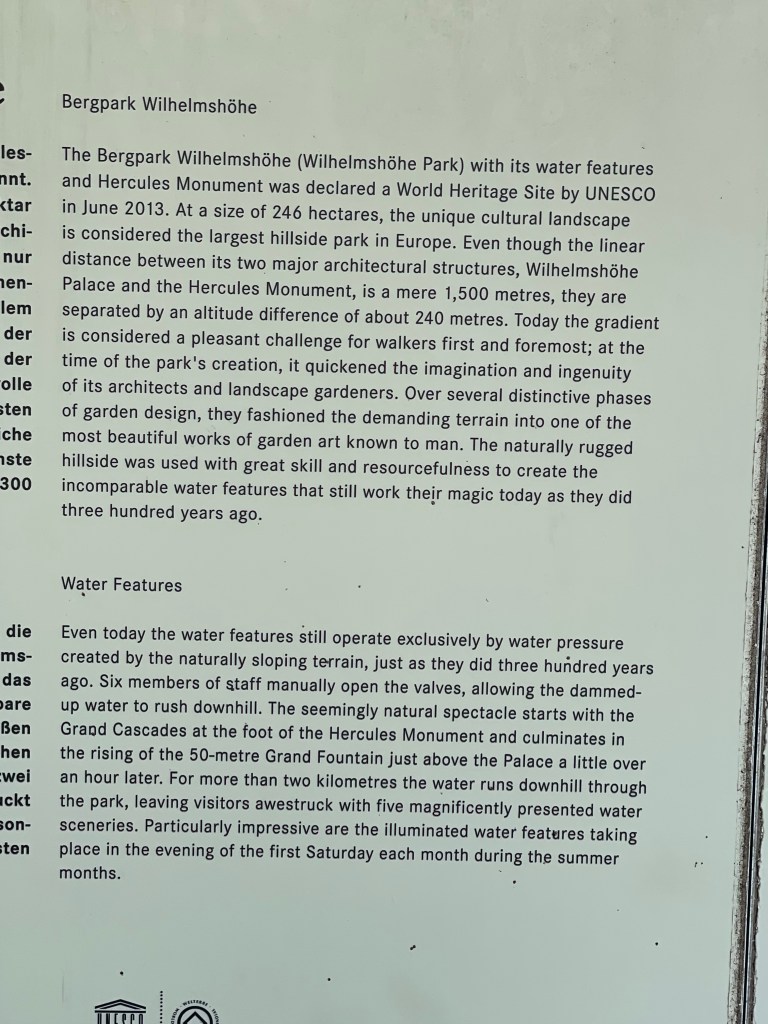
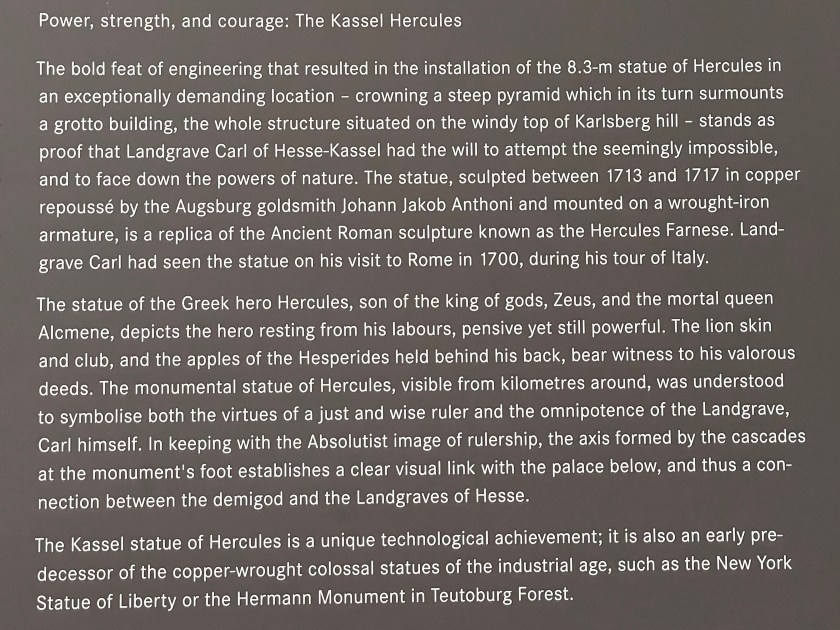
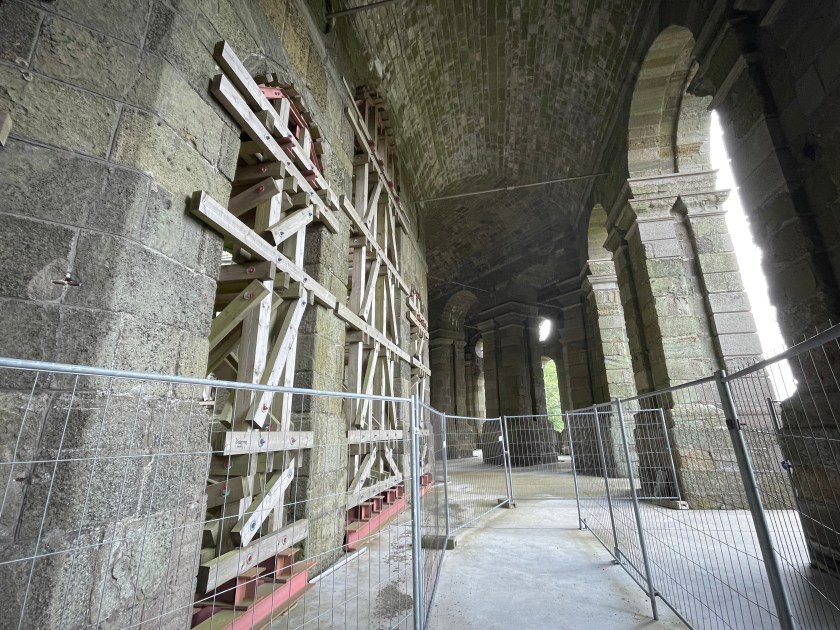
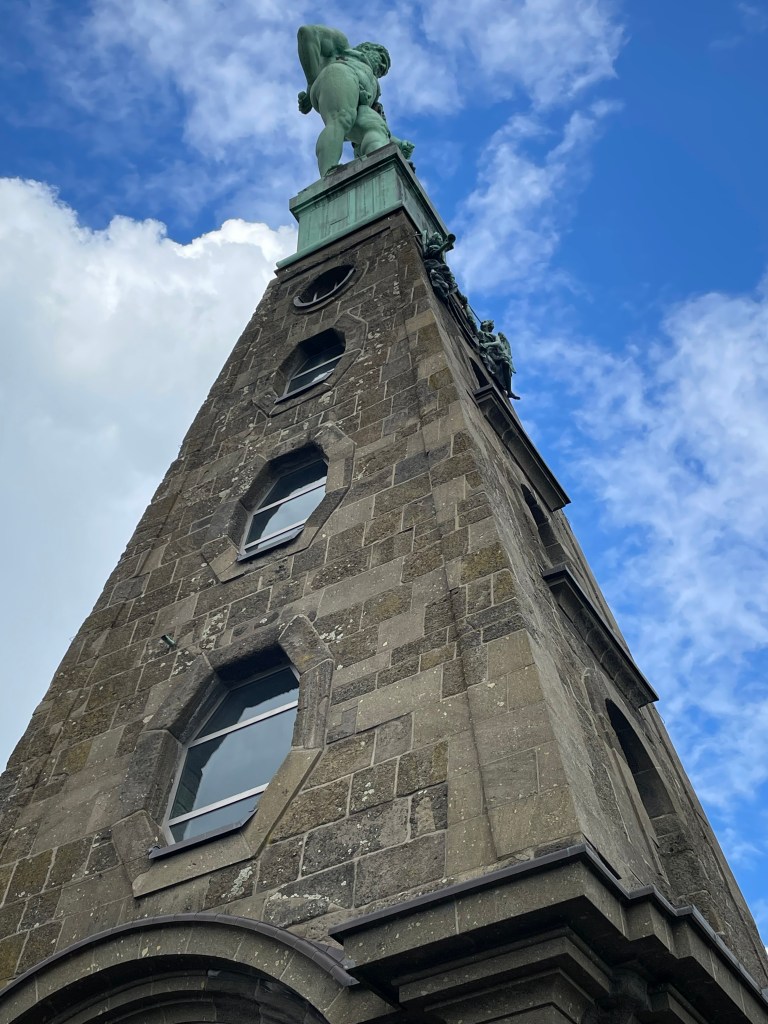
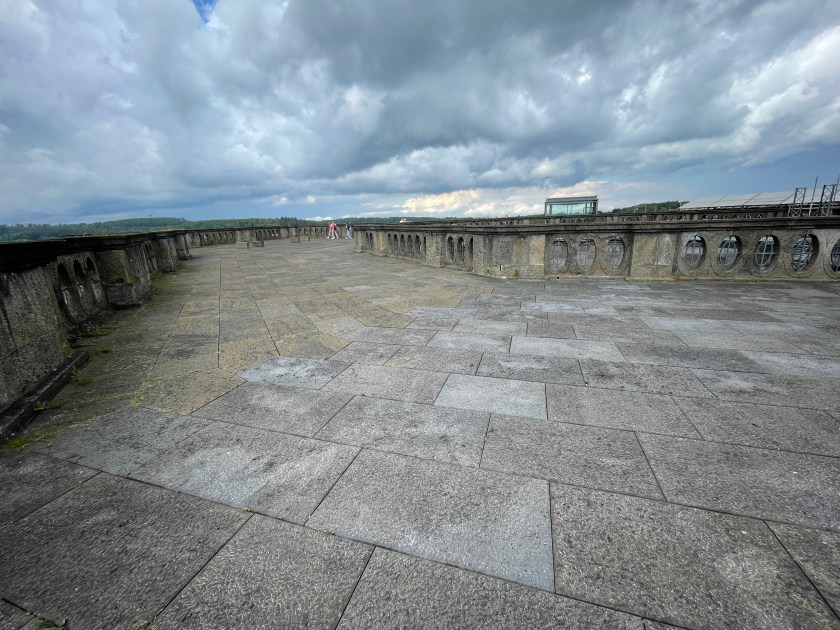
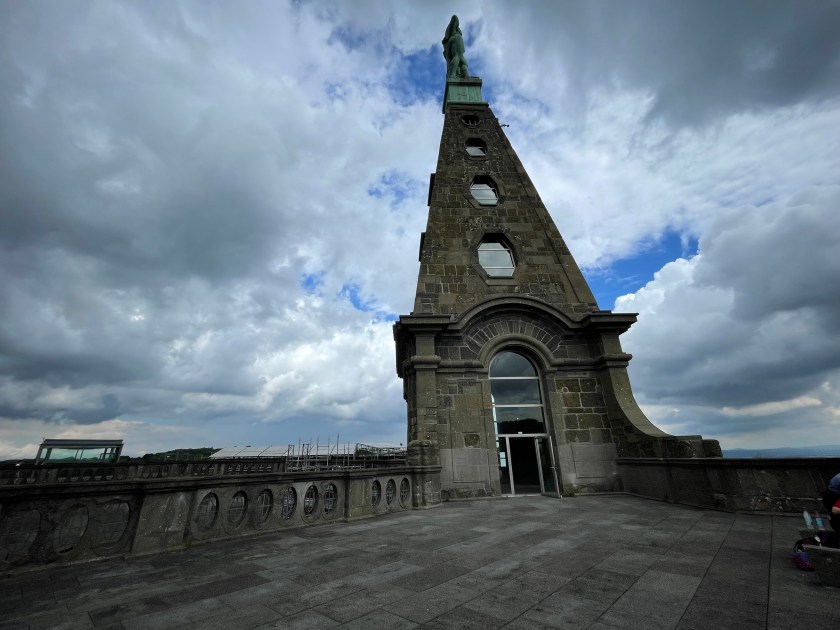
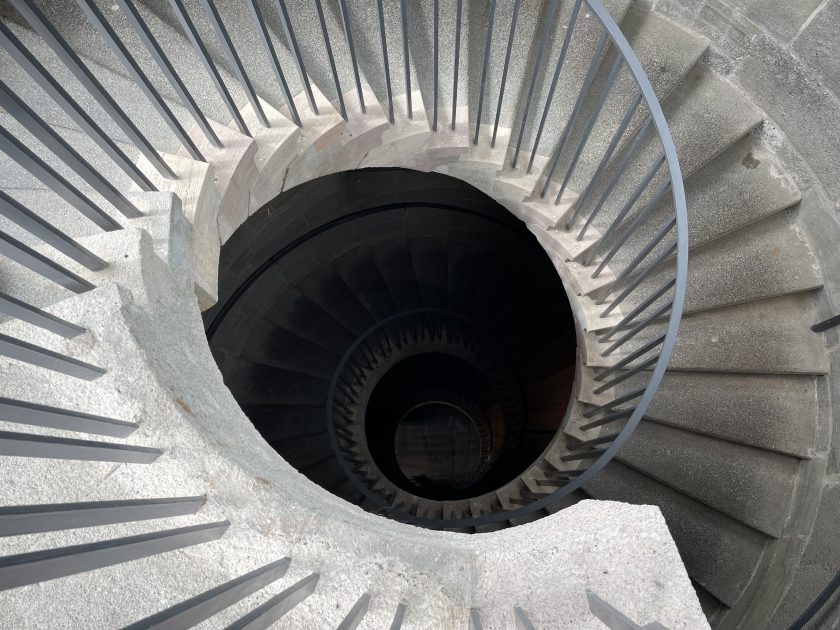
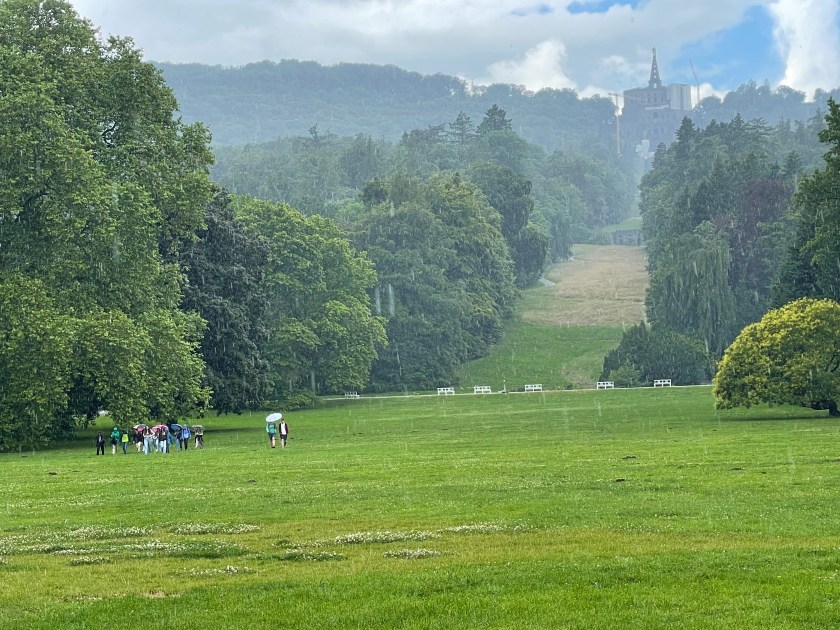
In the morning  we got up and drove to the huge park that’s on the side of a mountain with a Huge Hercules monument up on the top.  It’s built on a huge platform with a tower.  Hercules stands about 8,3 meters tall up on the top.  He’s 300 years old, put there by King Karl.  We explored the monument (climbed up it) and looked down over the park that has lots of amazing water features that are only turned on 2 days a week (not today).

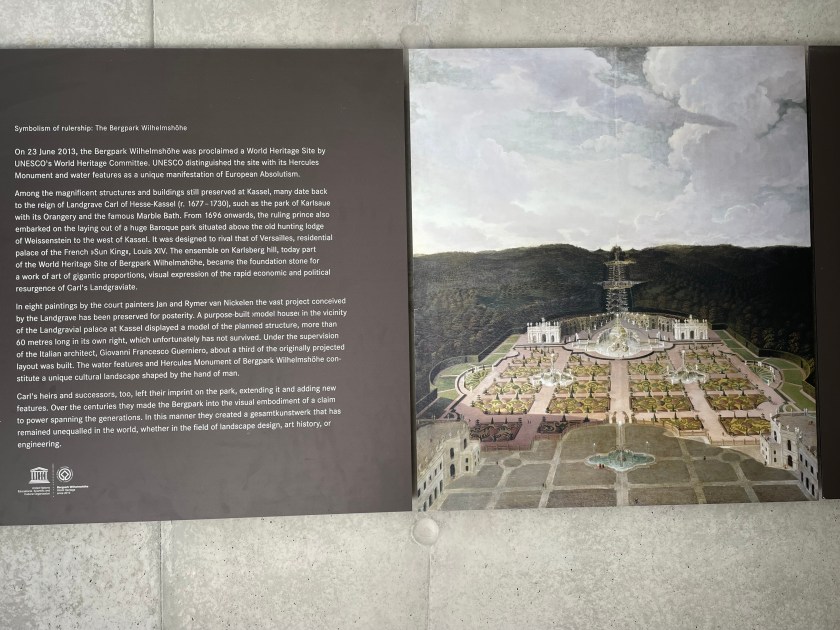
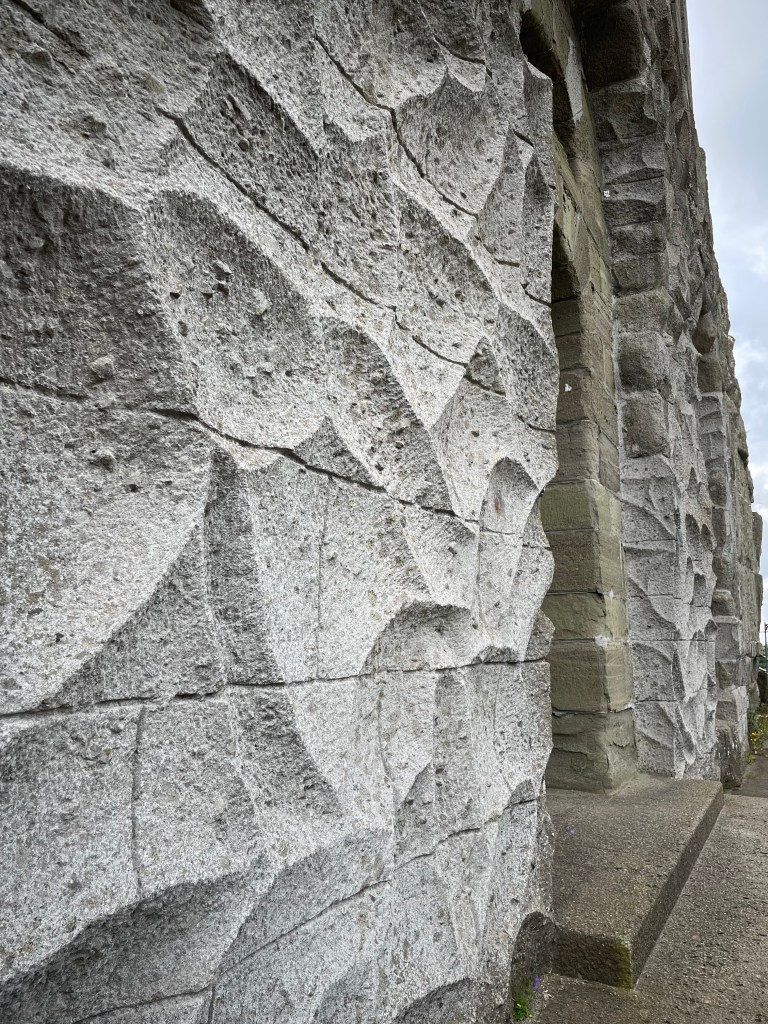
The castle-like Hercules was built between 1701 and 1717 based on designs by the Italian Giovanni Francesco Guerniero . The entire complex, including the cascades in front of the Hercules, is also called Karlsberg after the builder, Landgrave Karl of Hesse-Kassel . Under this term, both spatially and architecturally, it is a baroque aspect and the western end of the Wilhelmshöhe mountain park.
A giant hero who reigns above all
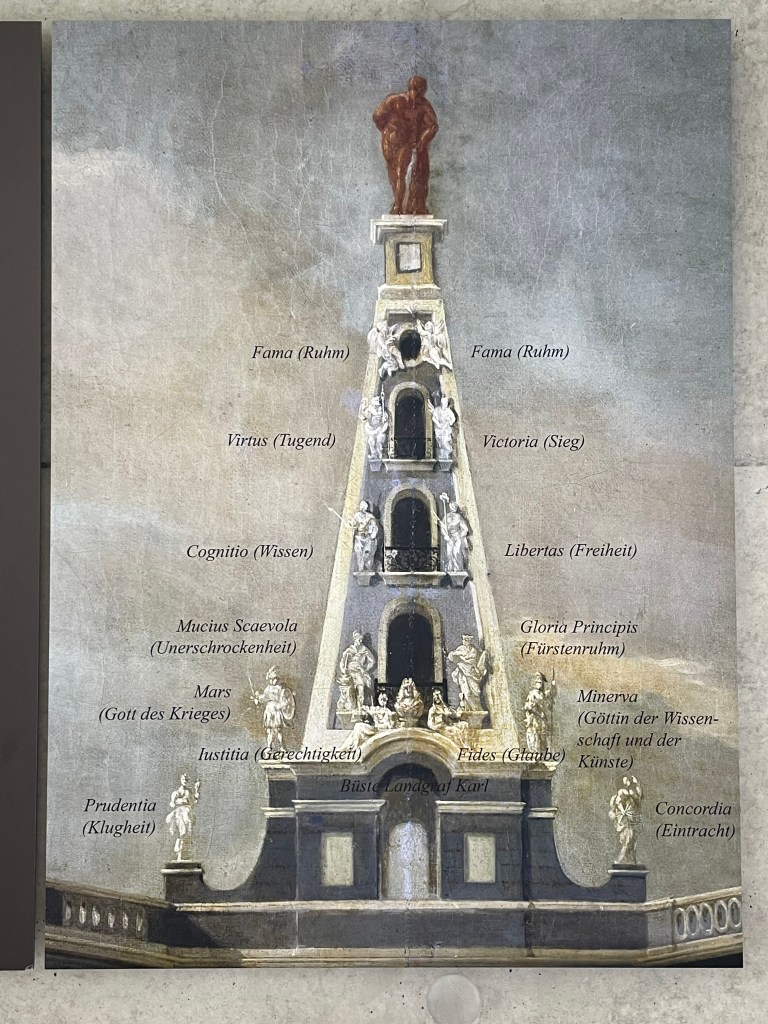
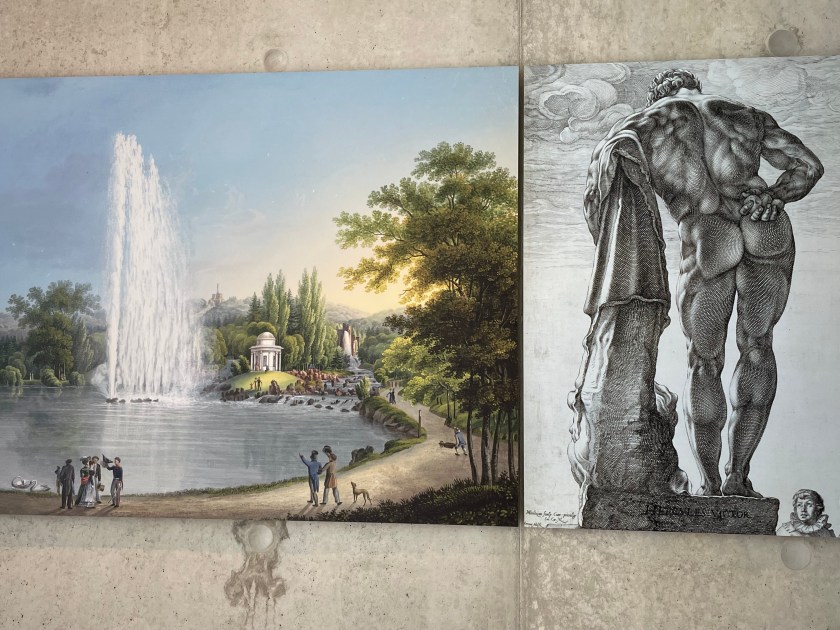
In ancient mythology, the demigod Hercules is known for great heroic deeds. Landgrave Carl chose him over 300 years ago as a symbol of his own power: he had a huge Hercules statue erected high above the Wilhelmshöhe mountain park, which was to be visible from far away. It is one of the oldest buildings in the park and is now considered a landmark of the city of Kassel. 
The entire Hercules monument is 70 meters high and consists of three parts. The water features start in the lower, rocky grotto structure. The grotto leads into an open-plan “giant castle” with a large viewing platform. Here you can enjoy a unique view of the mountain park and the surrounding area. Above it is a pyramid with the statue.
Hercules played a major role in the mountain park being designated a UNESCO World Heritage Site: it is considered a unique princely “representation of power” and the most important landmark in the park.
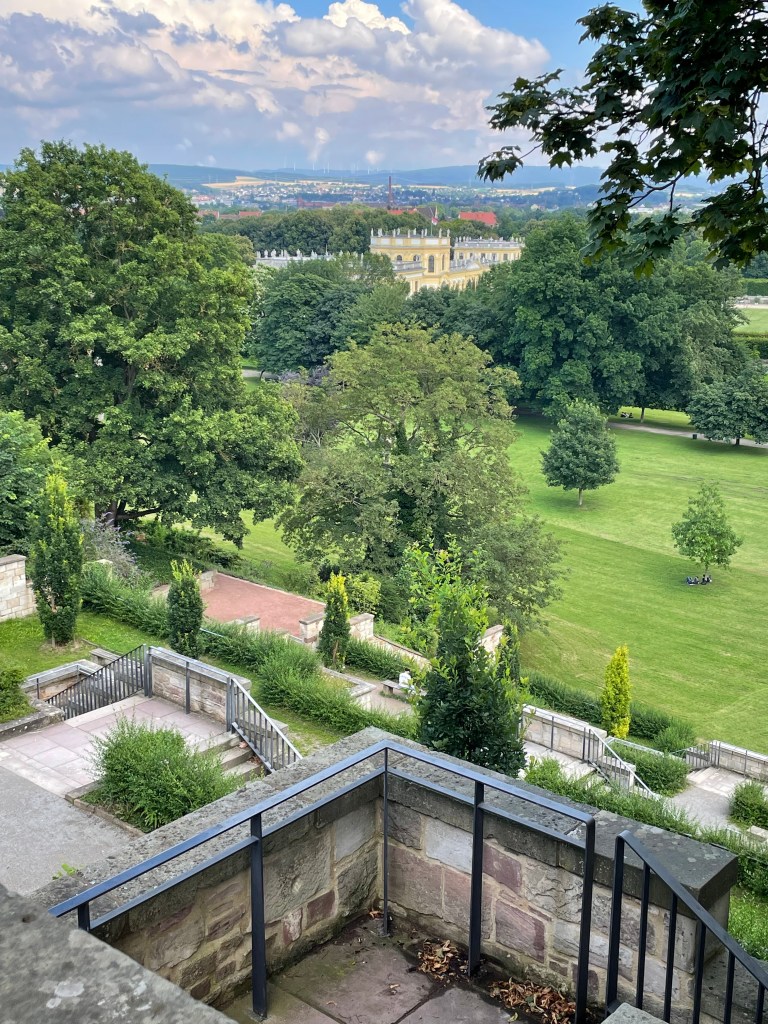
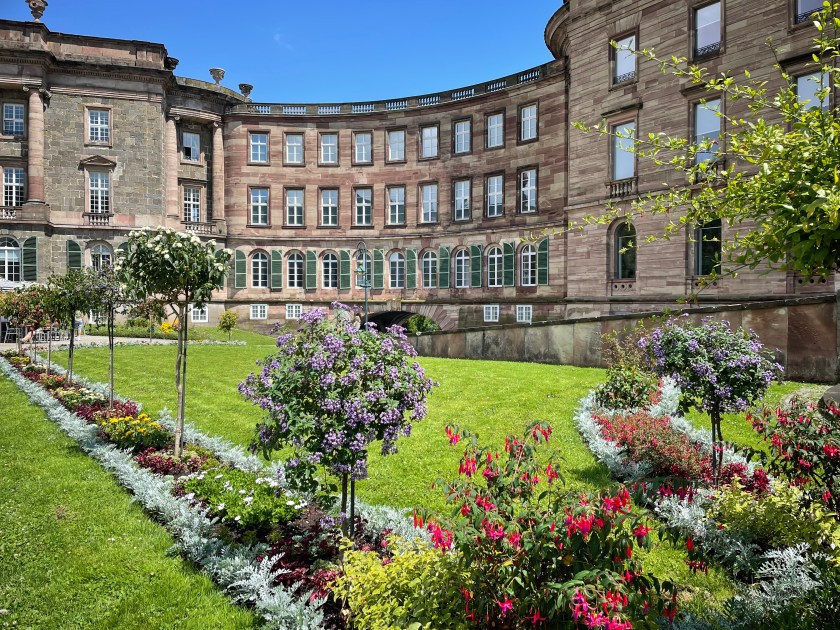
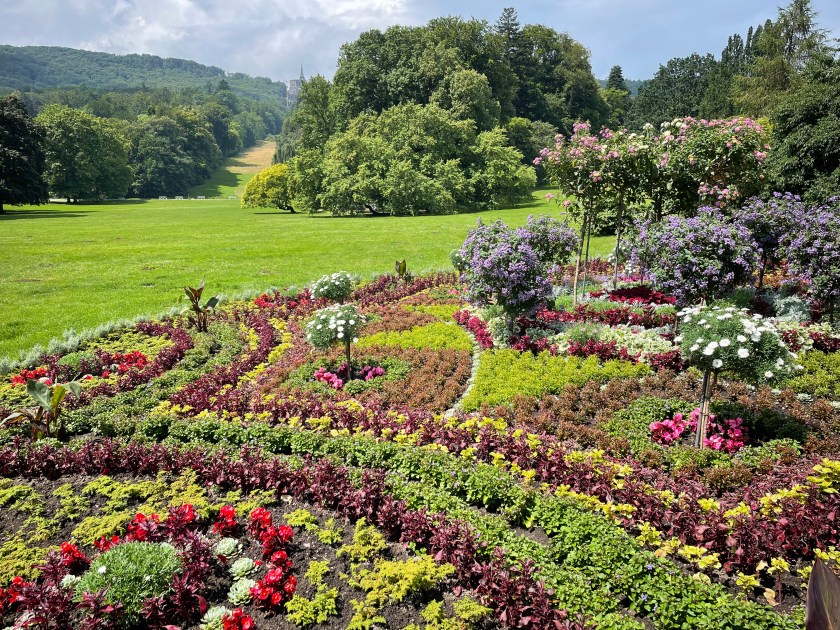
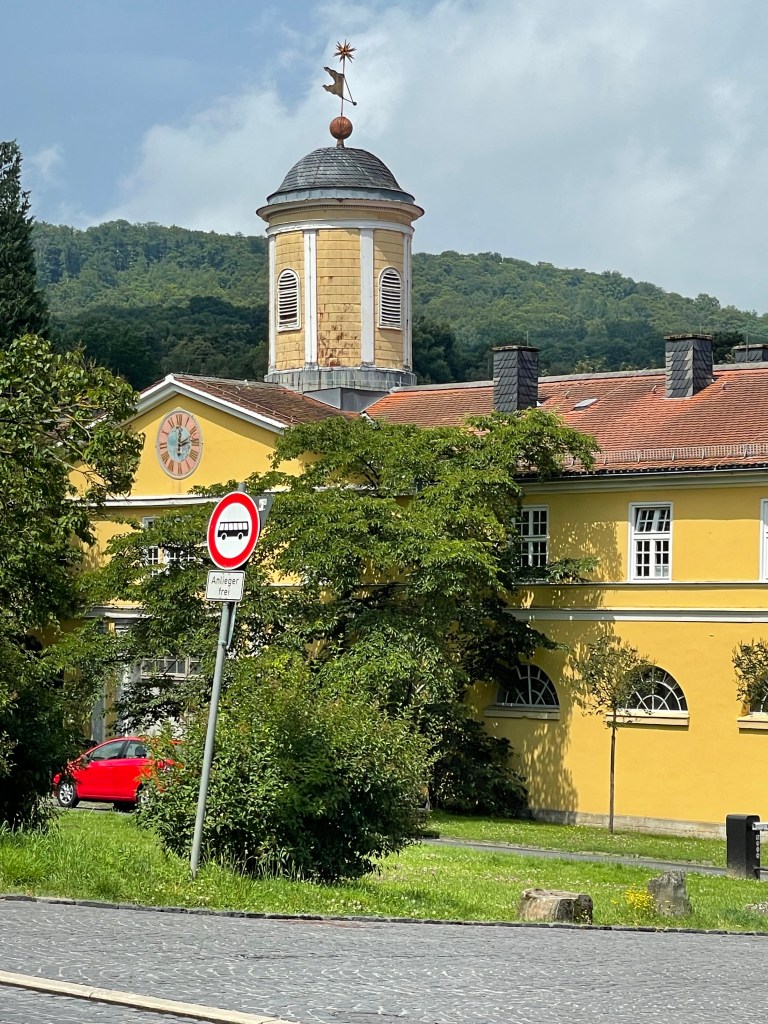
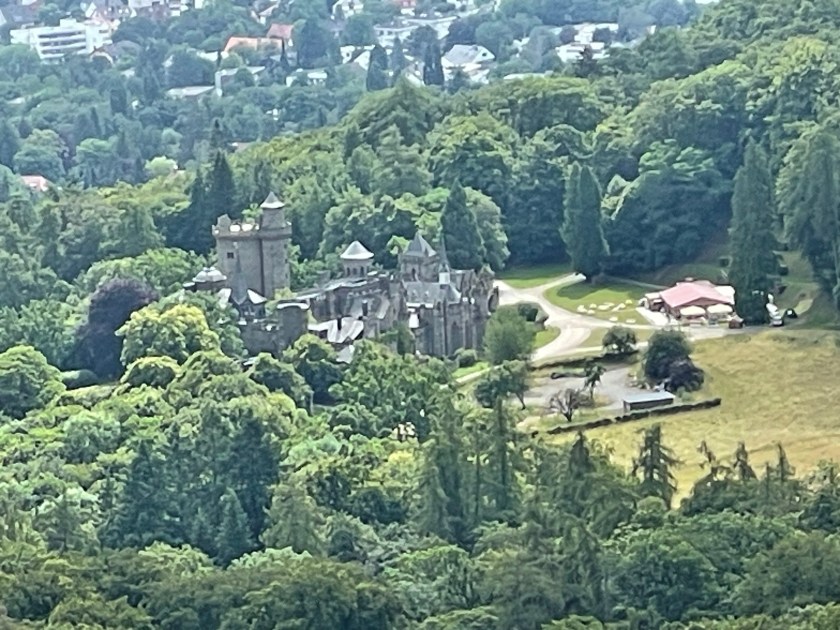
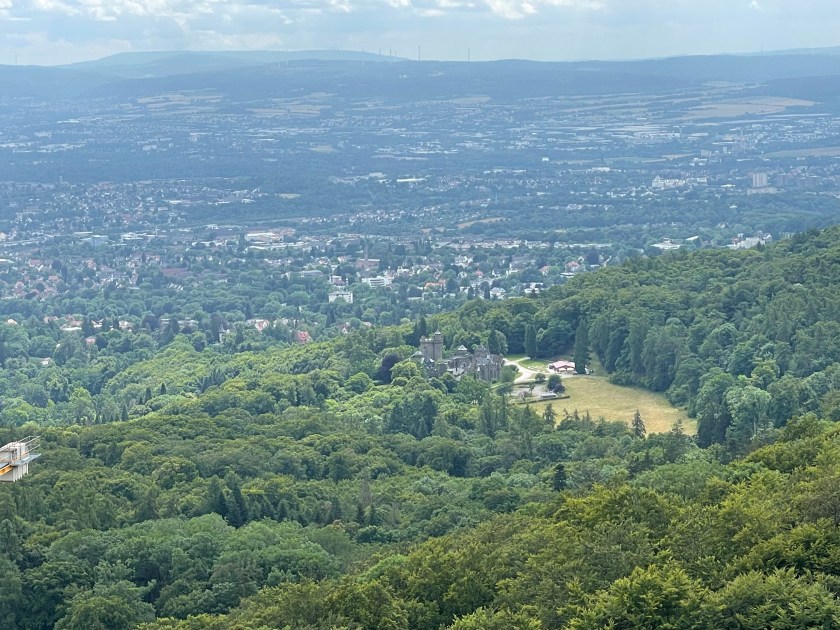
From up on top, you can look down on the gardens and water features that cascade down the mountain side.  There are waterfalls and pools (empty today).  Off on once side is a medieval castle built in the 1800s (to look old).  We didn’t go see it, it was too far to walk.  Instead we drove to a palace that is now an art museum at the lower end of the park.

Here’s the monument we climbed:

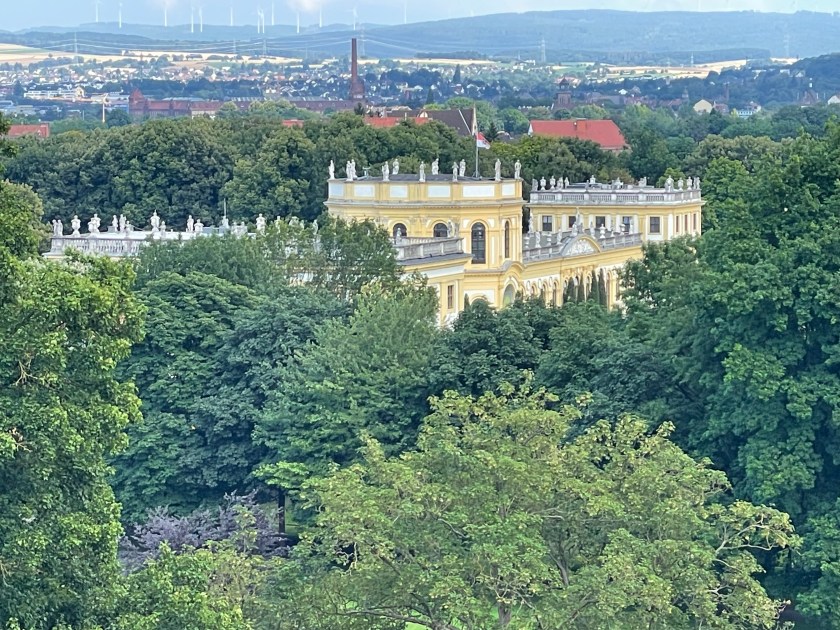
This is the medieval castle built in the 1800s (to look old).  You can hike down to it and tour it (we didn’t have time).

Looking back up from below:

Max and Moritz in the Garden

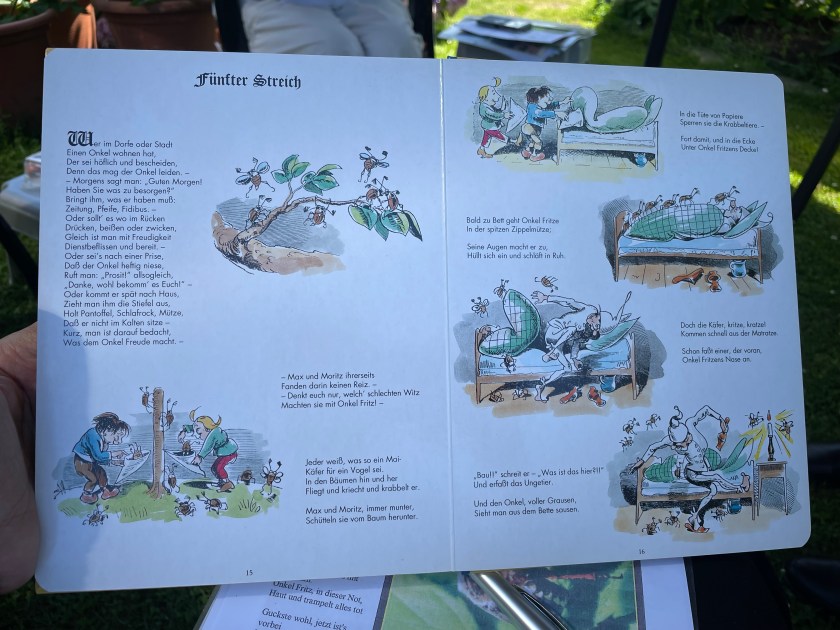
For the last couple of years I’ve been reading the names Max und Moritz in my German lessons.  I had no idea who they were.  Well, today I learned.  Sis Enger taught us about these two pranksters from an old book written and illustrated by Wilhelm Busch in 1865 called “Max and Moritz: A Story of Seven Boyish Pranks”  It’s an inventive, blackly humorous tale, told entirely in rhymed couplets, about two boys who play pranks.

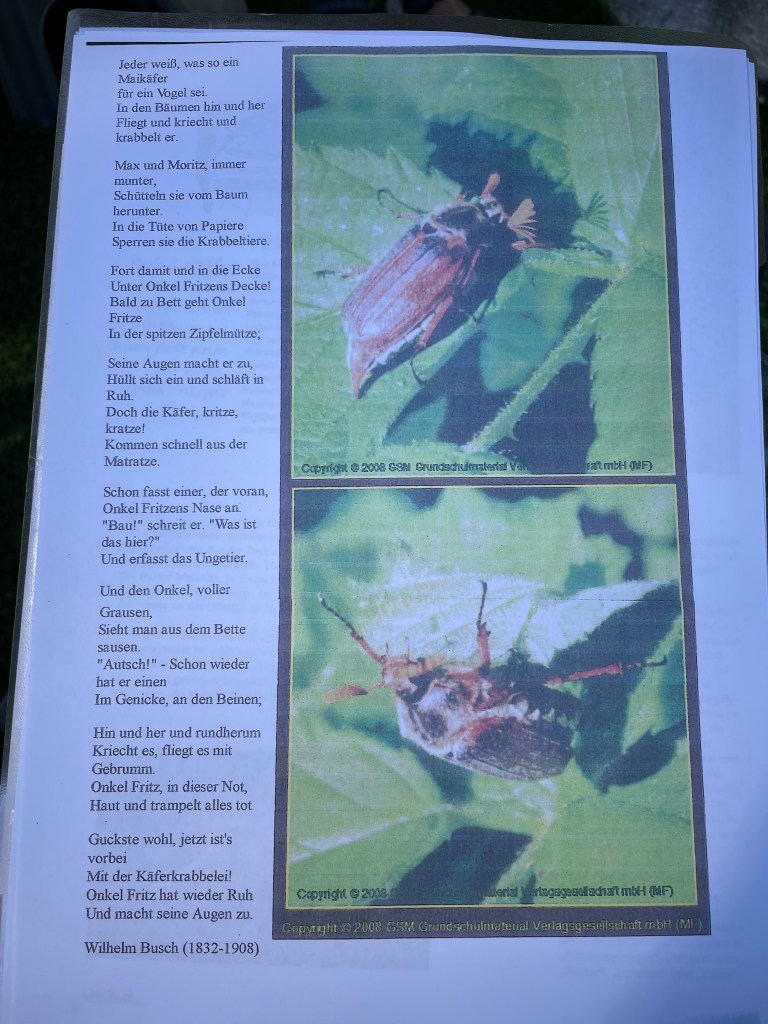
Our lesson was about May Beetles or Maikaefer (similar to our June Bugs).  In the book, the boys collect bags full of May bugs, which they promptly deposit in their Uncle Fritz’s bed. Uncle Fritz is nearly asleep when he feels the bugs walking on his nose. Horrified, he goes into a frenzy, killing them all before going back to sleep.

Erika told us how she, as a little girl who had read the book,  did the same prank on her her mother.

This storybook is one of the best-selling children’s books and has been translated into 300 languages ​​and dialects.

Here’s the Preface to the book translated into English:

Ah, how oft we read or hear of
Boys we almost stand in fear of!
For example, take these stories
Of two youths, named Max and Moritz,
Who, instead of early turning
Their young minds to useful learning,
Often leered with horrid features
At their lessons and their teachers.

The widow’s house (second trick)

Look now at the empty head: he
Is for mischief always ready.
Teasing creatures – climbing fences,
Stealing apples, pears, and quinces,
Is, of course, a deal more pleasant,
And far easier for the present,
Than to sit in schools or churches,
Fixed like roosters on their perches

But O dear, O dear, O deary,
When the end comes sad and dreary!
‘Tis a dreadful thing to tell
That on Max and Moritz fell!
All they did this book rehearses,
Both in pictures and in verses.

Check here for the story of Max and Moritz, written by Wilhelm Busch in German alongside with an English translation.  The stories were darkly delightful and I went right home and ordered the book.

Here’s what the May Beetles look like.  They surface only every 7 years.

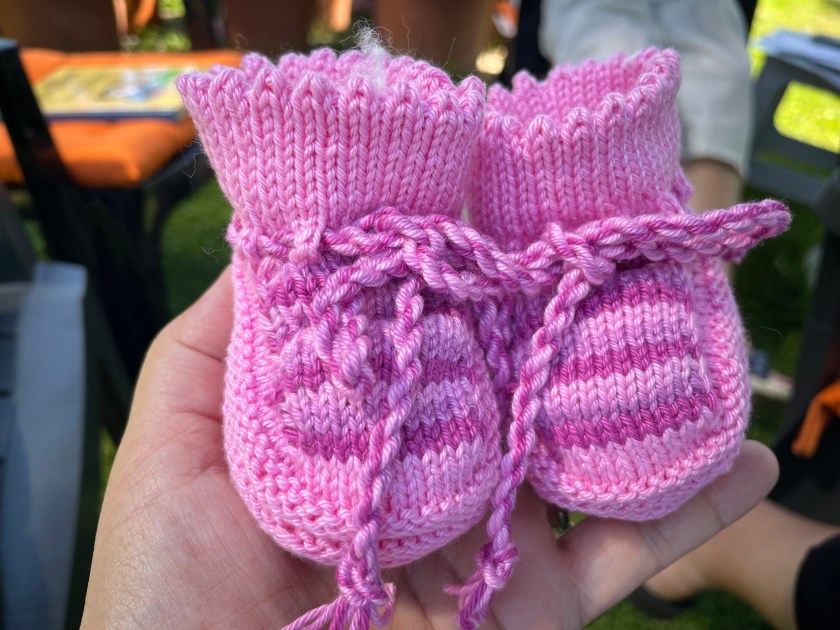
After class, Erika showed us more of the baby booties she knits.  She has donated 100s of these to humanitarian efforts.  Each pair of booties takes her many hours to make, using her great-grandmother’s pattern.

They are little works of art!

Today Erika sent us each home with a little bag of freshly-picked green beans.   We love our time each week in the garden with our dear teacher.