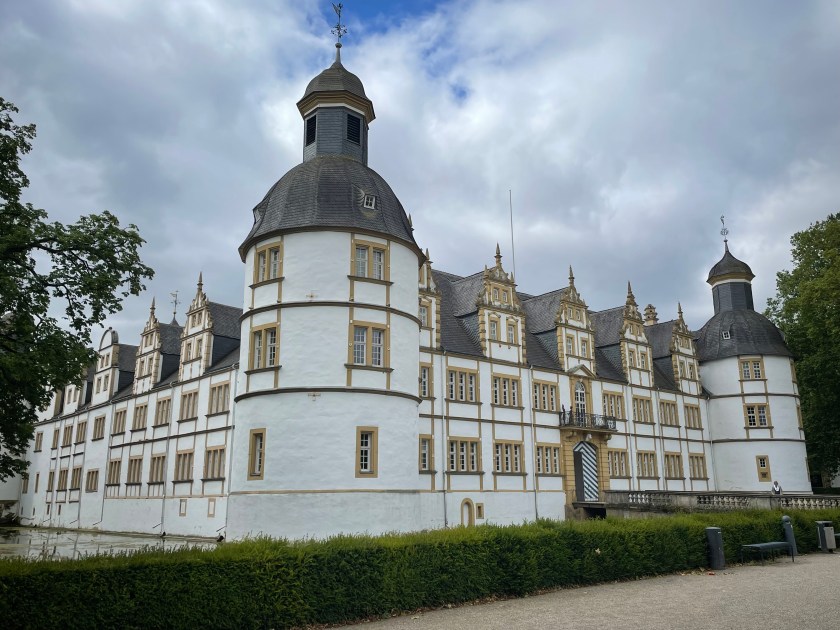
There’s an interesting story connected with the Neuschloss in Paderborn:
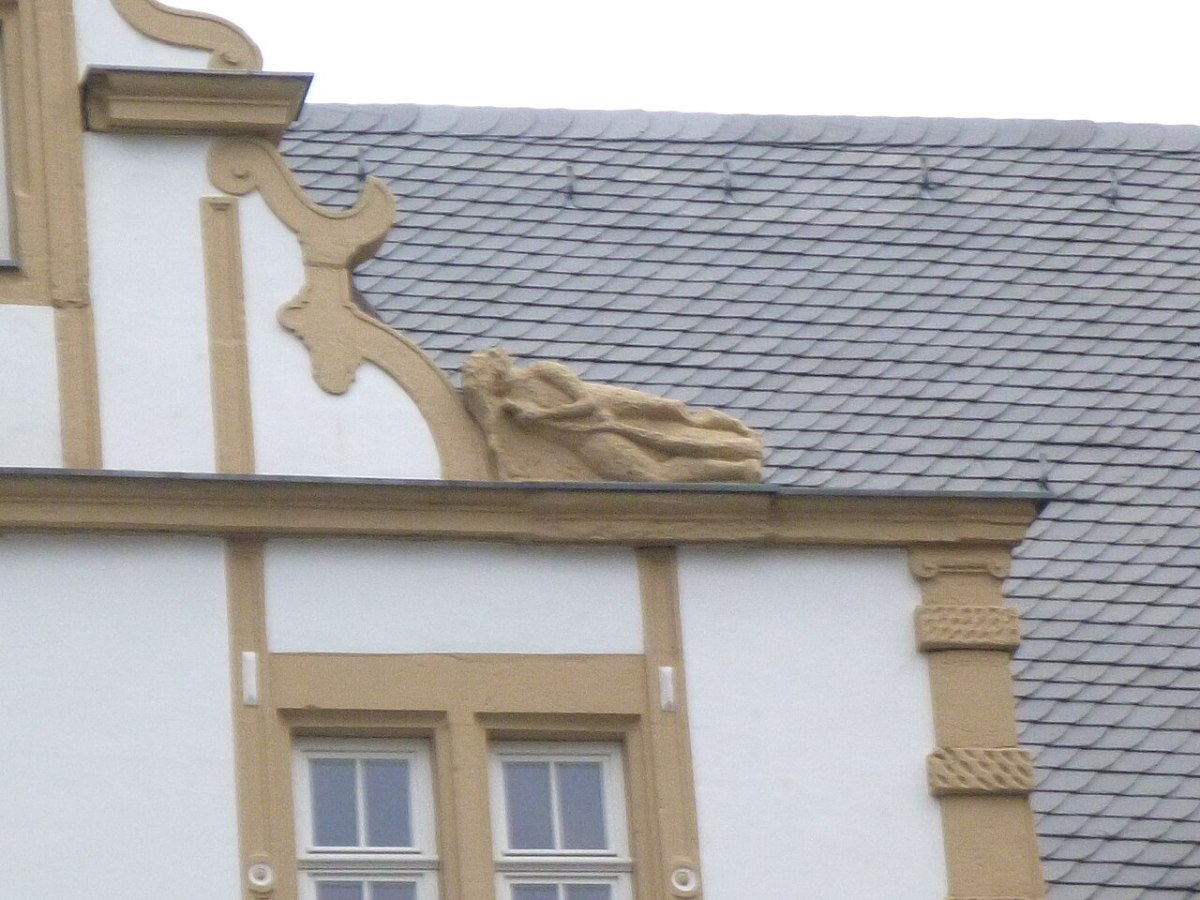
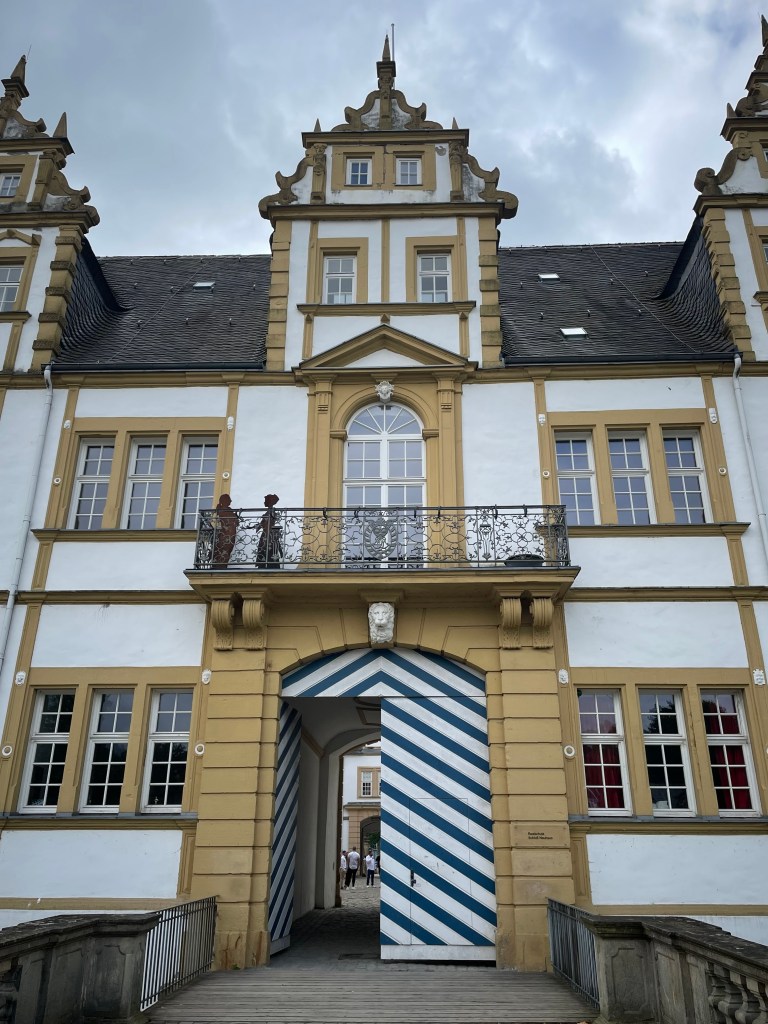
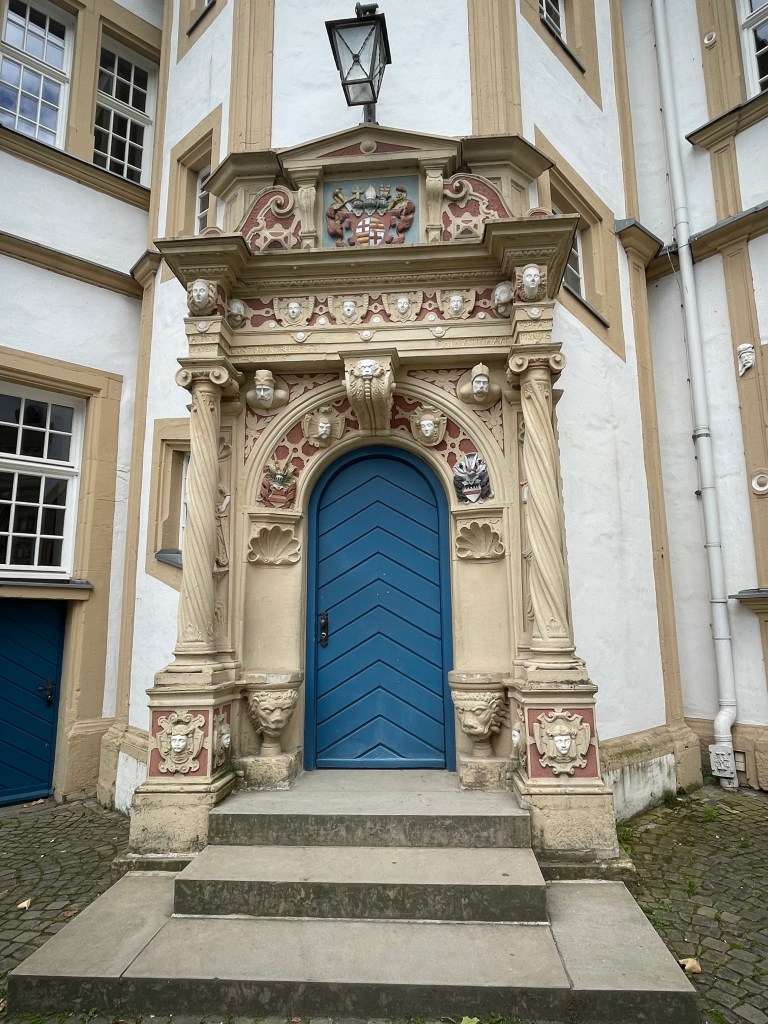
A reclining stone figure stands out on the ridge of the western gable of the Fürstenberg House. Its origin is based on a legend, which is reproduced here in brief:
Prince-Bishop Ferdinand von Fürstenberg (1626–1683) had invited people to a hunt, including a close young relative, a Mr. von Spiegel , who was known as a good shot, but who had no luck hunting that day and was very angry about it. As the hunting party returned to the castle, a roofer who was busy making repairs stopped his work to watch the hunting party arrive. The angry hunter aimed at the roofer – just to show what a good shot he was – and fatally shot him. The bishop’s order to arrest the perpetrator was evaded on horseback. Years later he visited Neuhaus again because he believed the bishop had forgotten the murder. However, he was arrested, sentenced to death and executed at Wewelsburg Castle. A monument was erected at the crime scene to the craftsman who was shot.
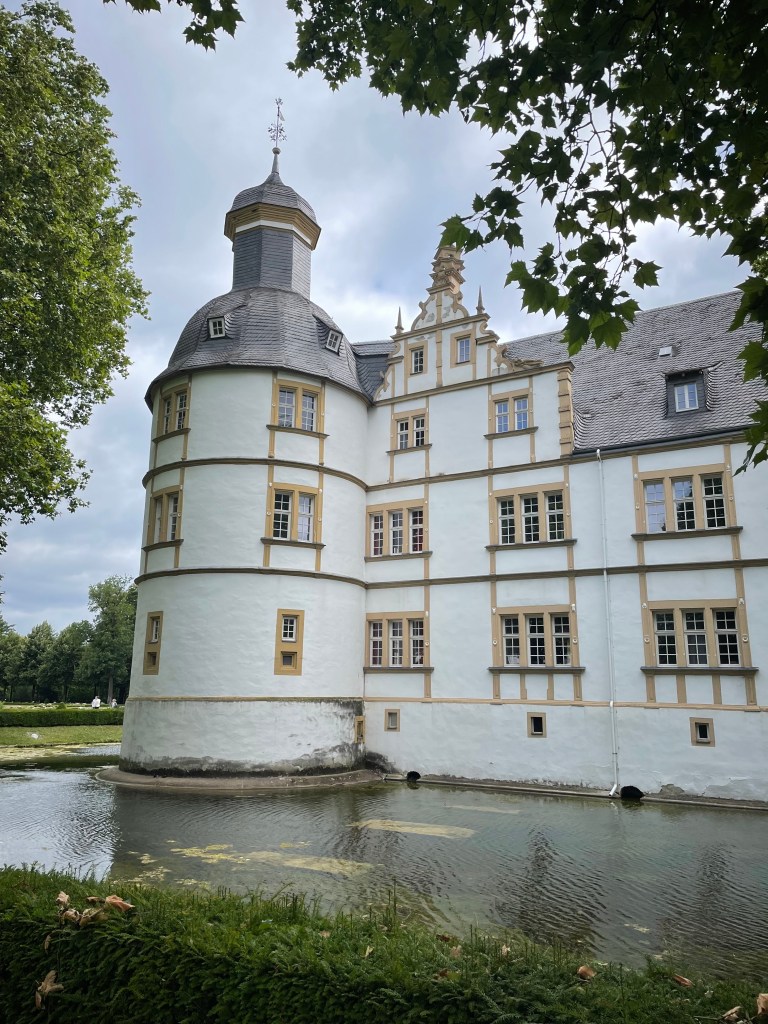
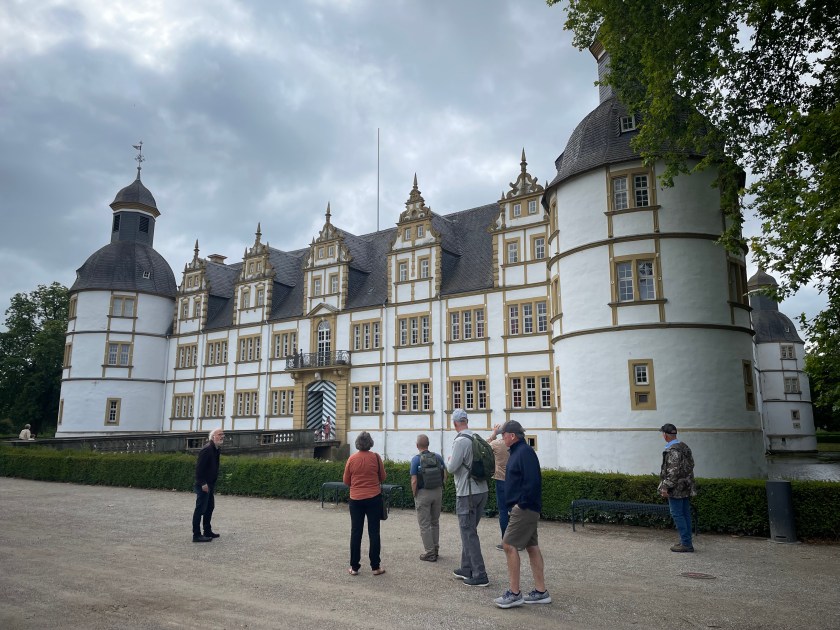
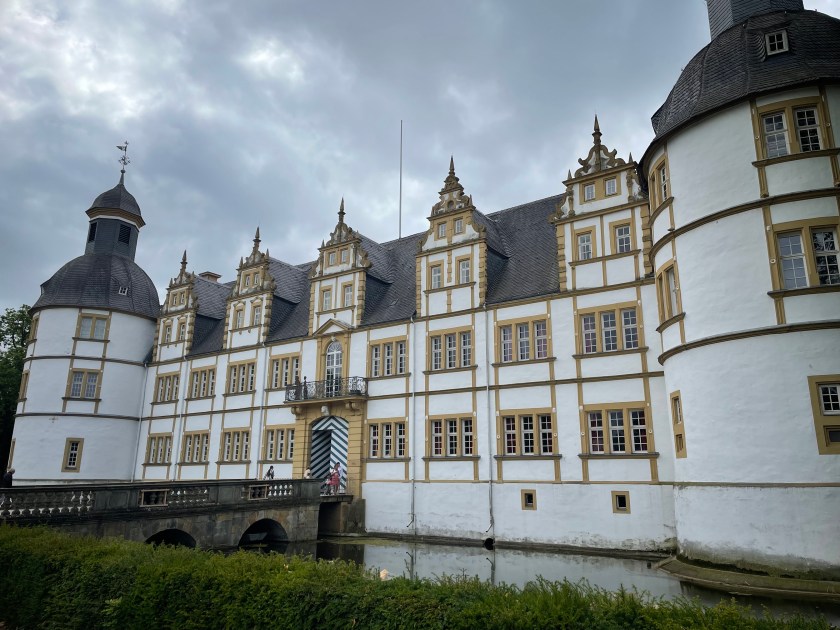
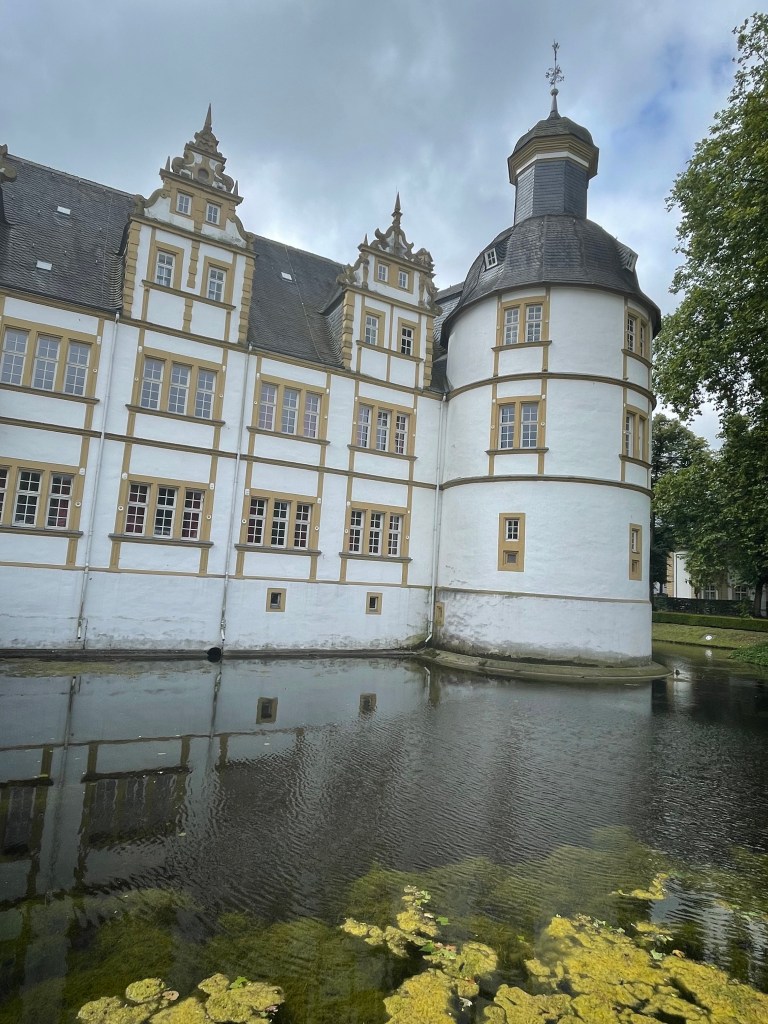
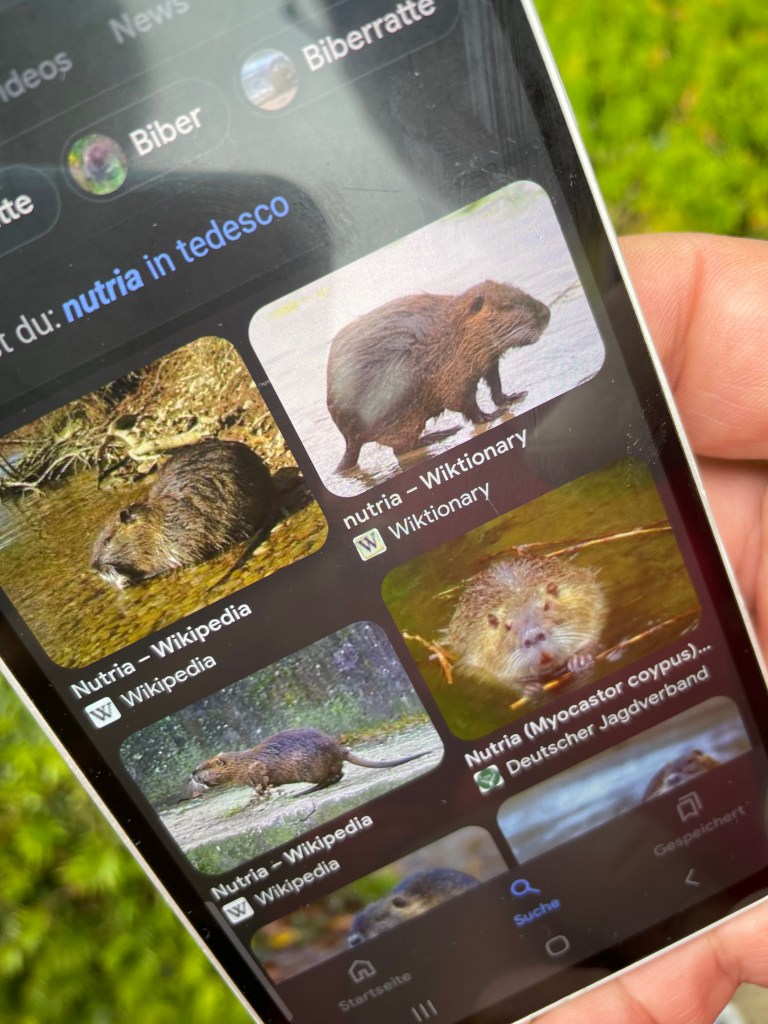
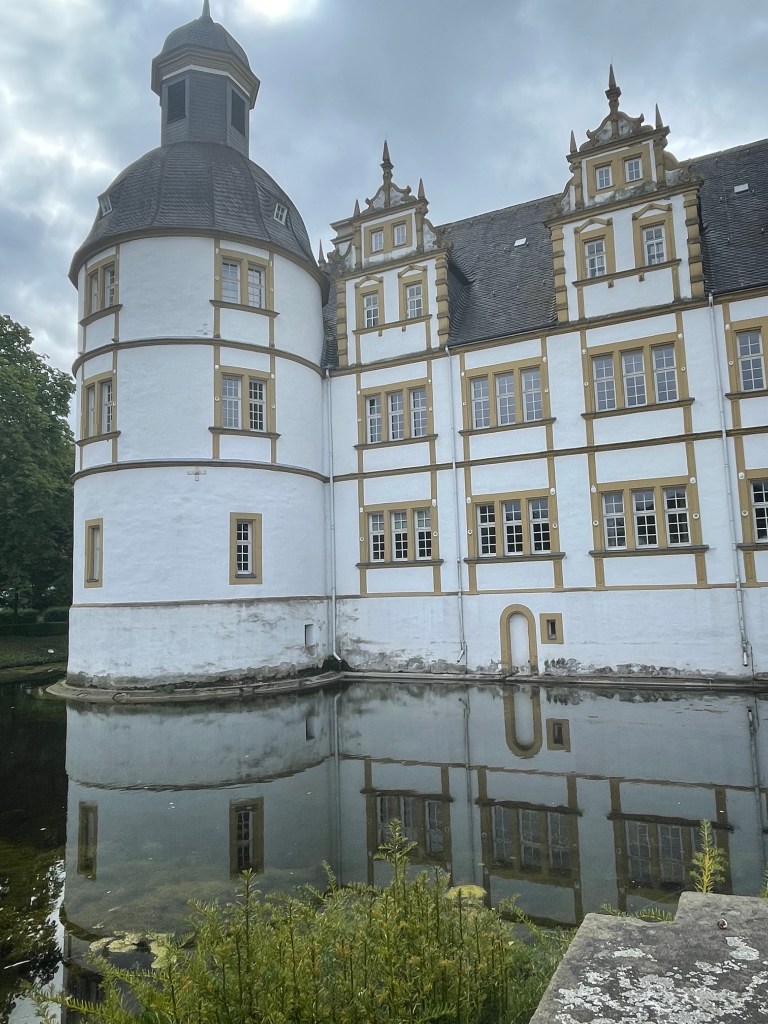
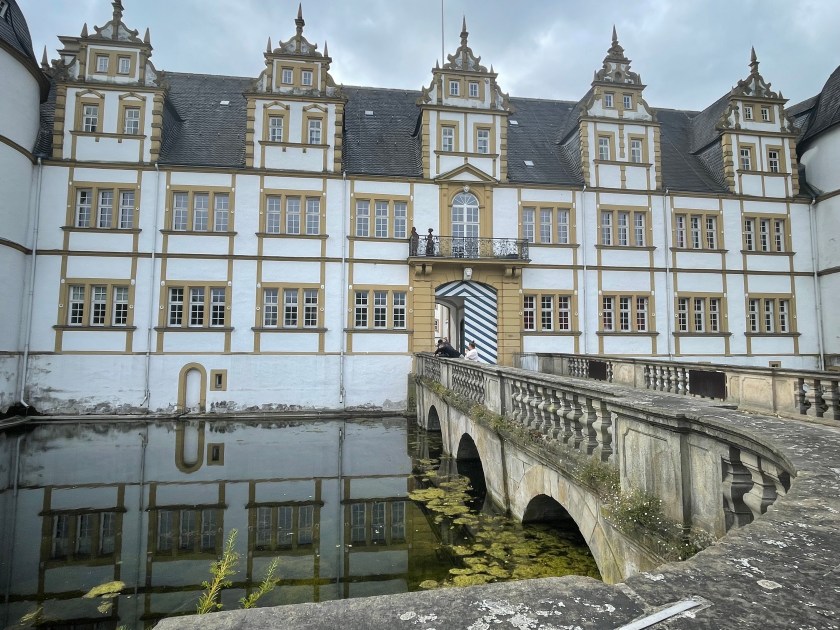
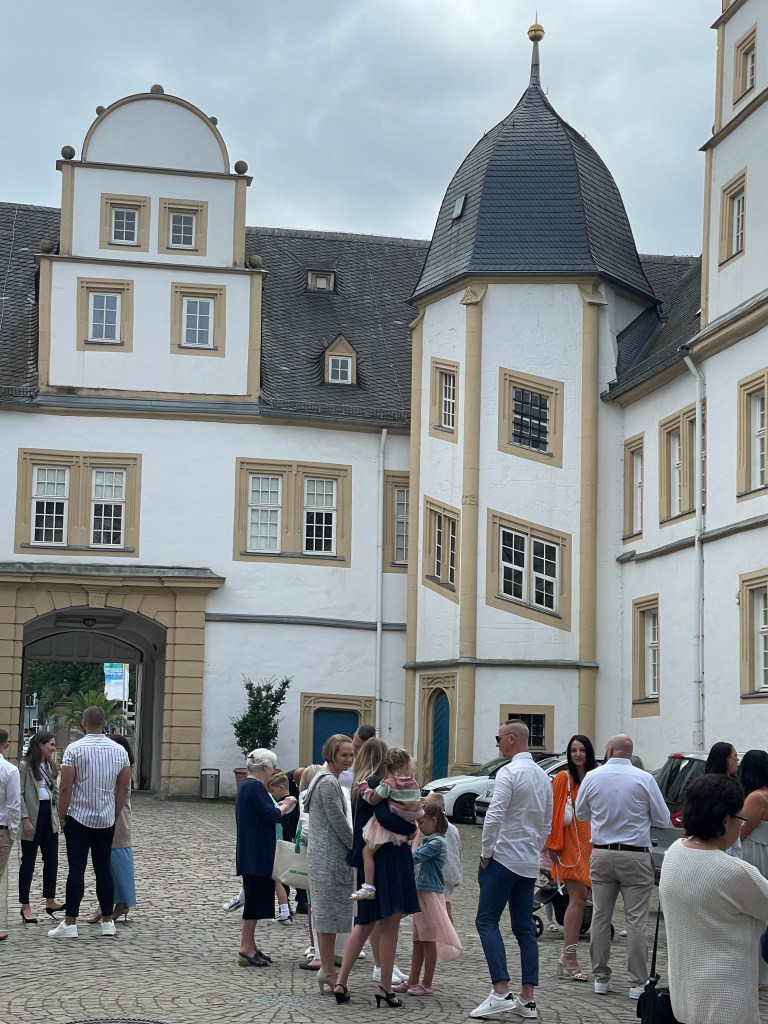
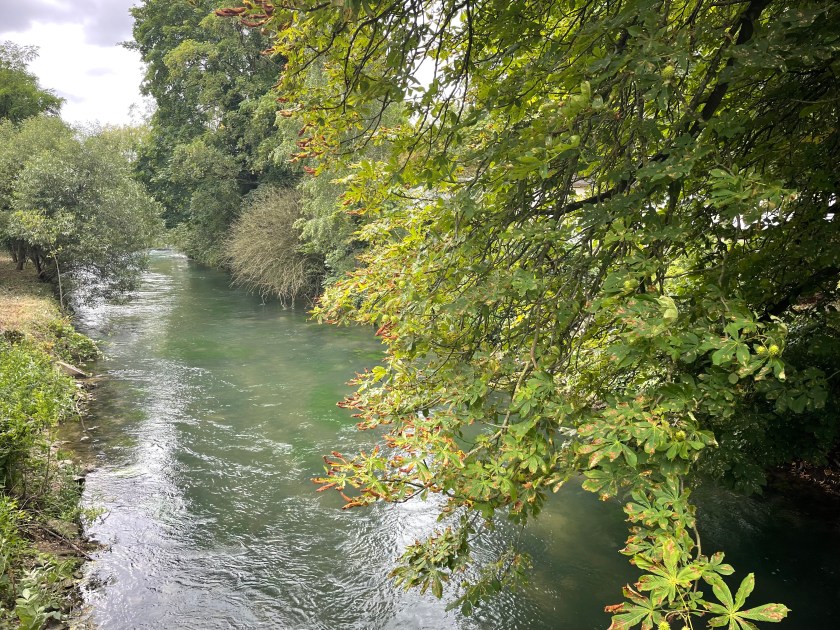
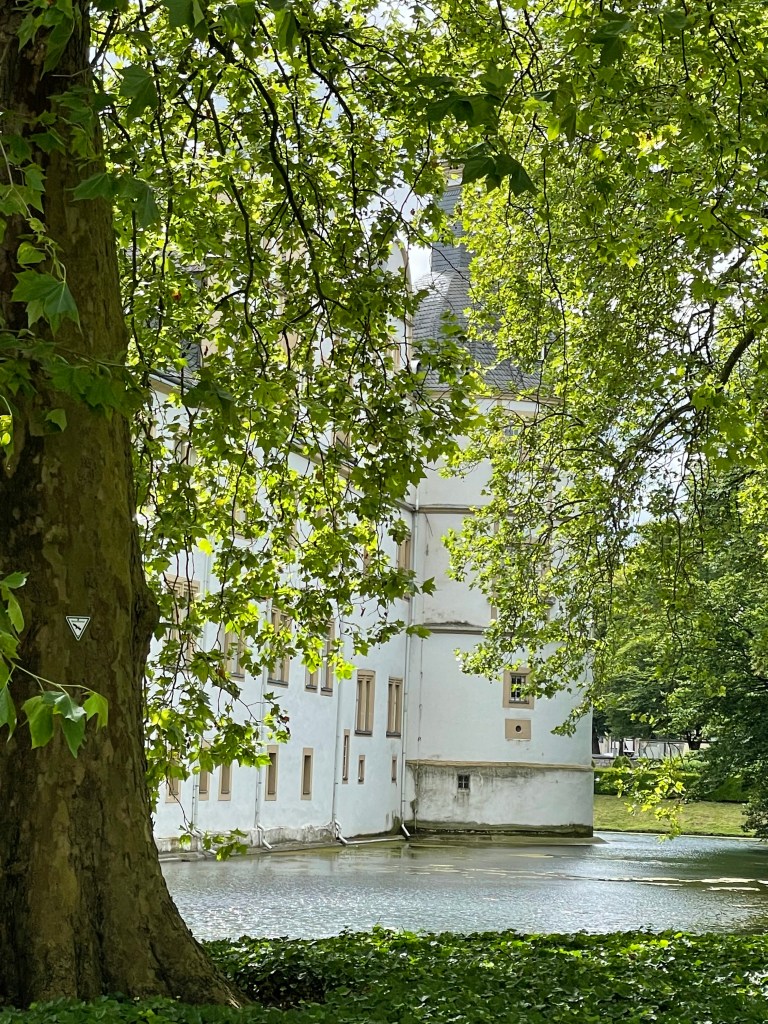
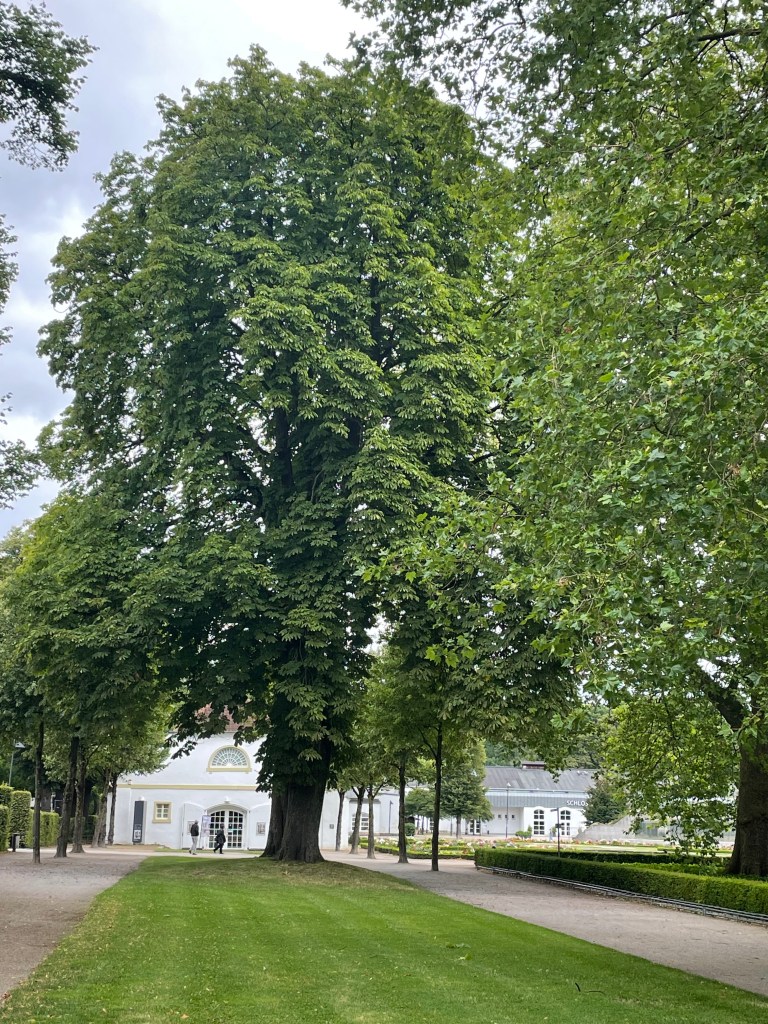
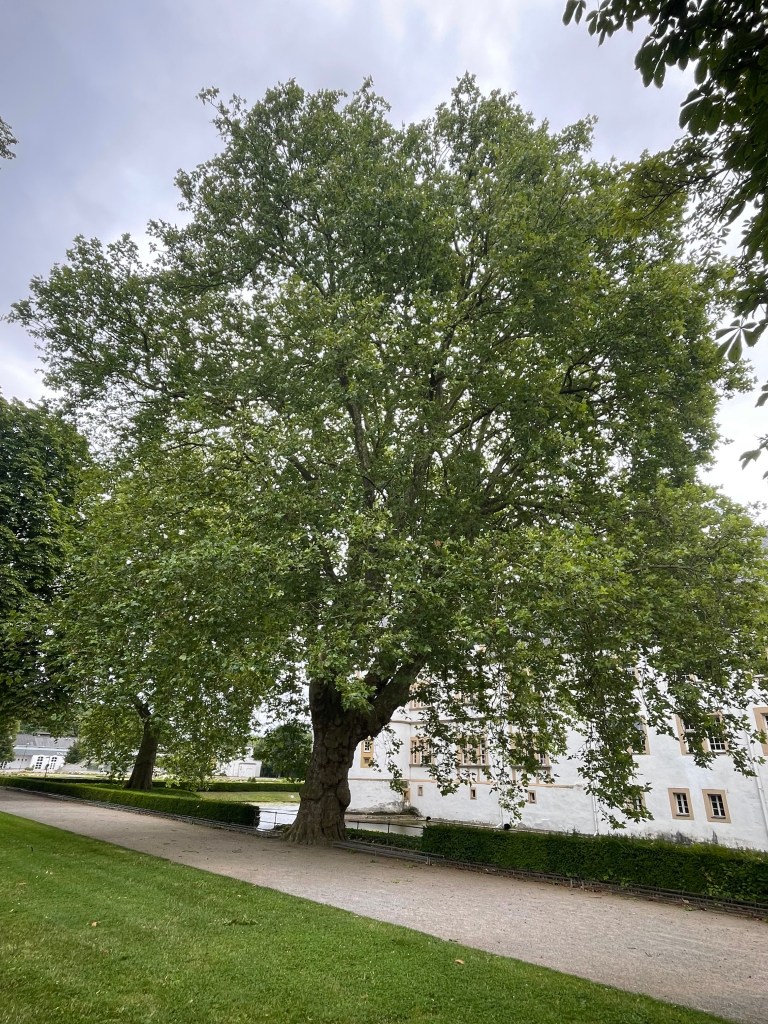
Today we started at the Schloss Neuhaus, about 4 km from the city center in a quiet part of town with flowing water and lots of huge chestnut trees. This beautiful white castle with black tile roofing (think palace) was the former residence of the Paderborn prince bishops. It was surrounded by a moat with ducks and water creatures that looked like long-tailed muskrats called Nutria.
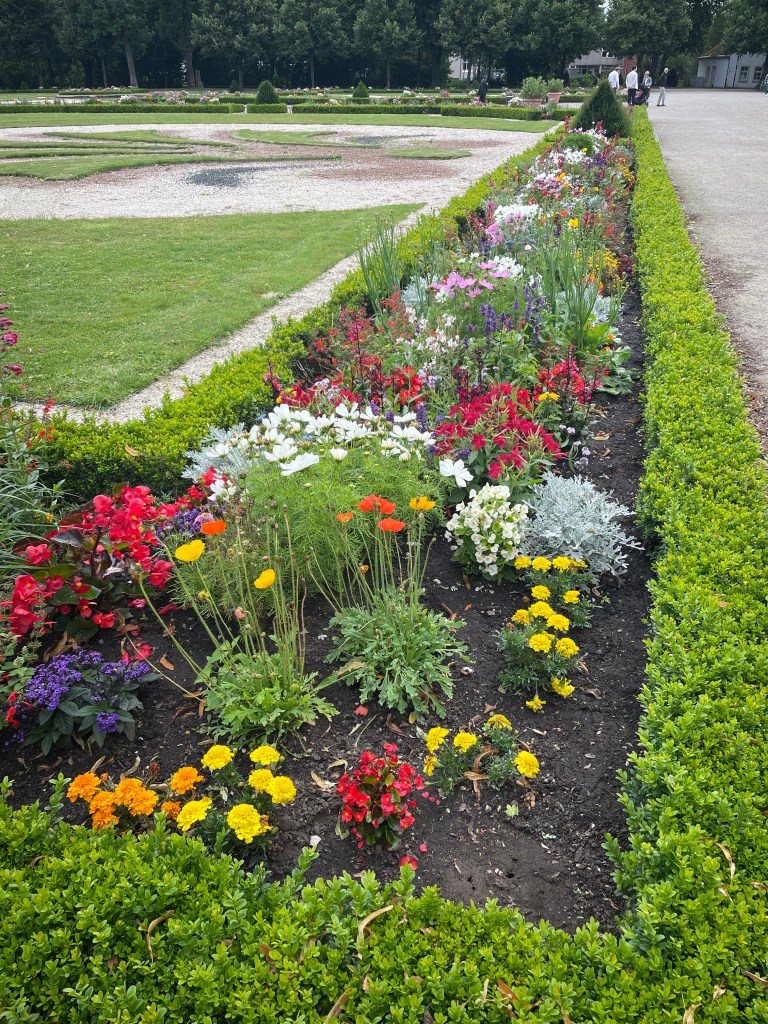
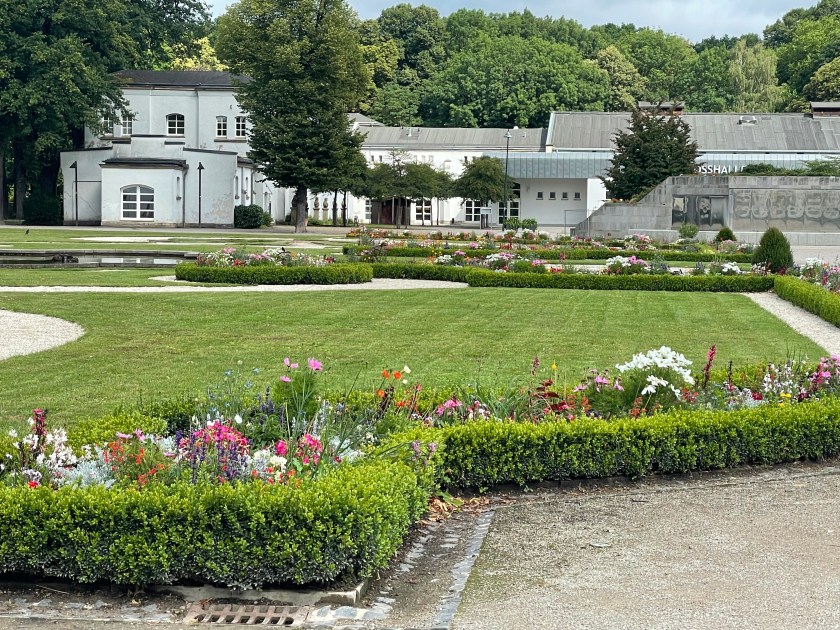
The castle dates back to the 1200s, updated along the way. Now they say it’s from the early Weser Renaissance era. There is a lovely Baroque garden in the front.
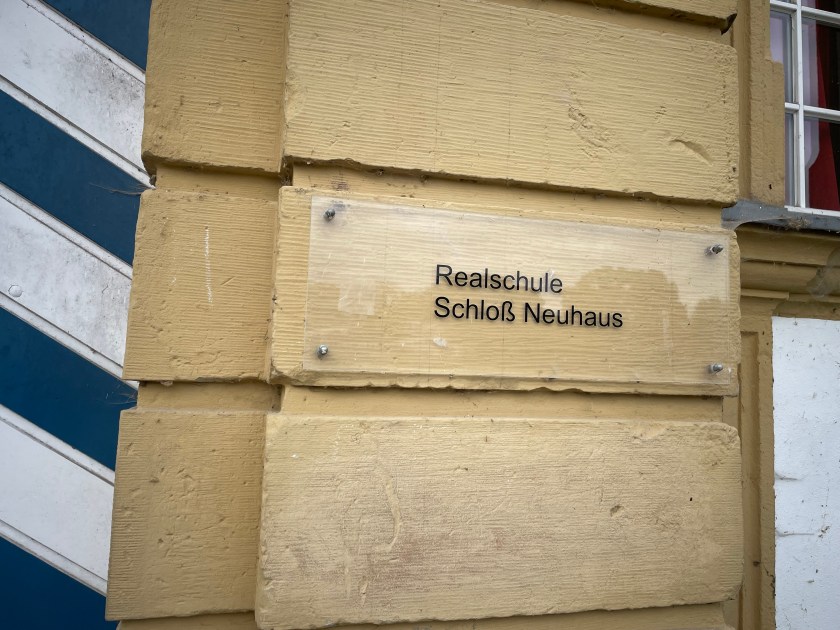
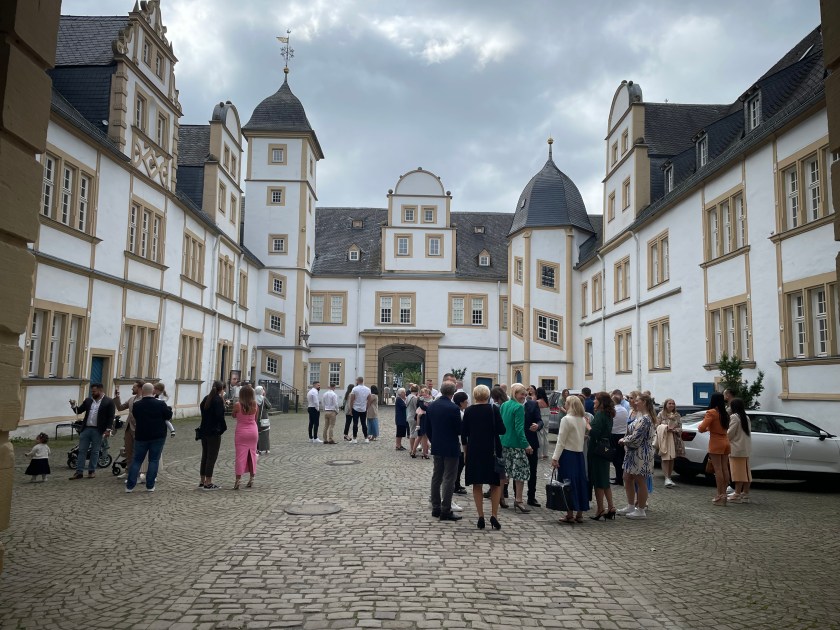
Following the secularisation and the annexation of Paderborn by Prussia, the Schloss fell into the hands of the state. Apart from a few years during the French rule of the Kingdom of Westphalia under Jérôme Bonaparte (Napoleon’s brother), Schloss Neuhaus served as a garrison for different military regiments all the way until 1959 when the British army handed the Schloss back to the German state. It has served as a school and museum ever since and so little of the original furnishings remain. Right now it’s a high school and a civil registry and a place for weddings (one was going on today).
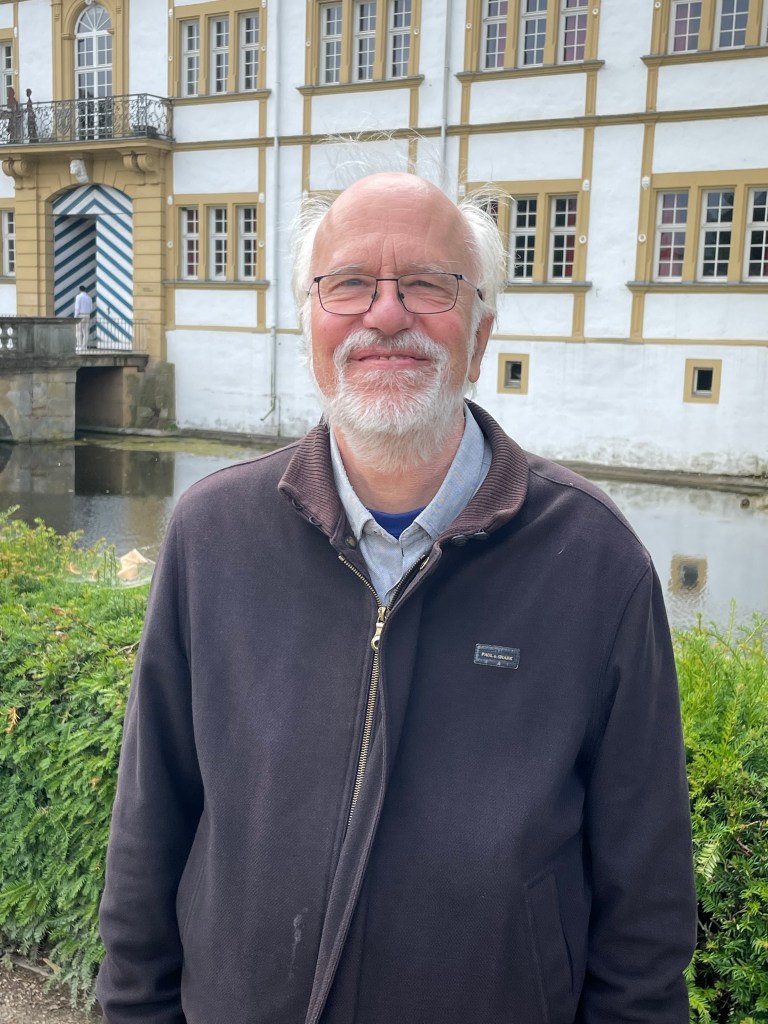
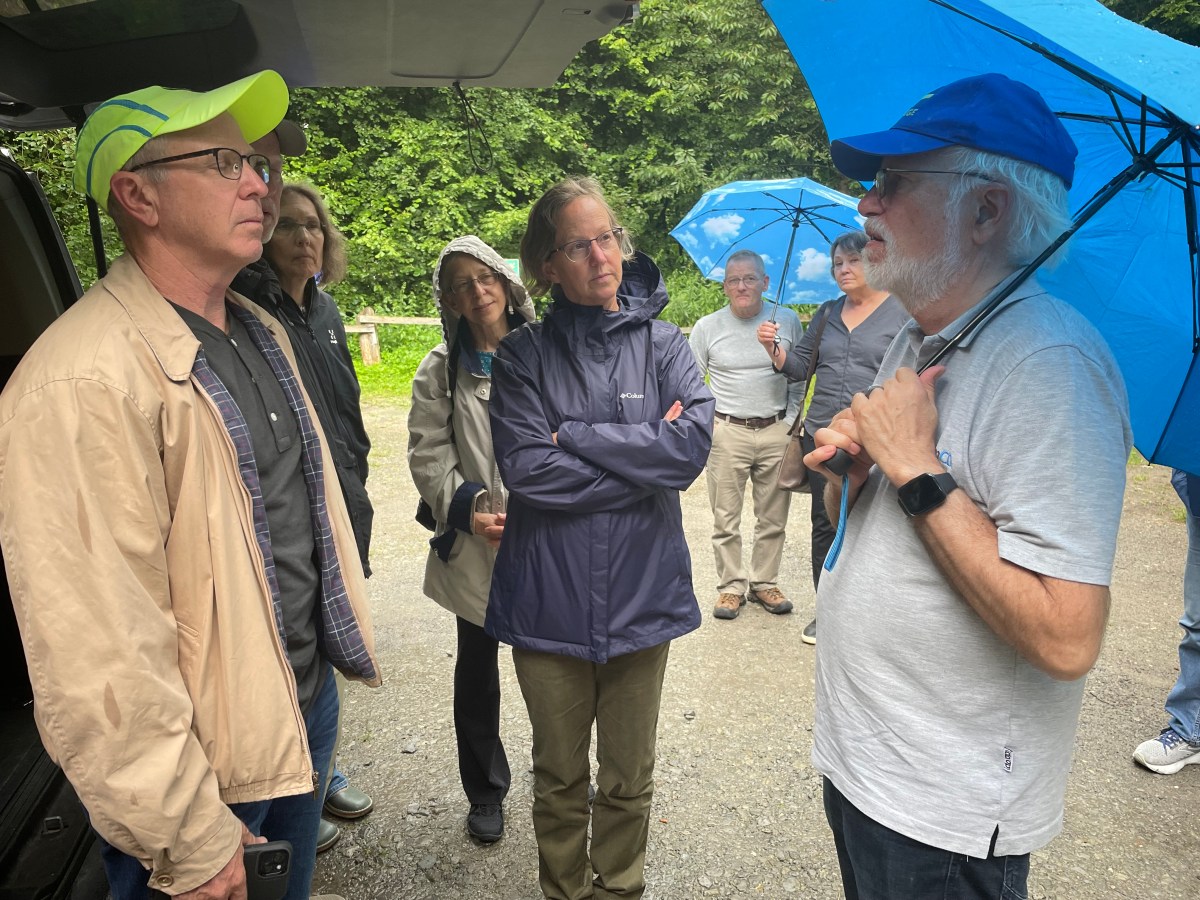
Volker Bastert, our wonderful guide, lives here in Paderborn.
Wedding festivities going on in the Schloss courtyard.
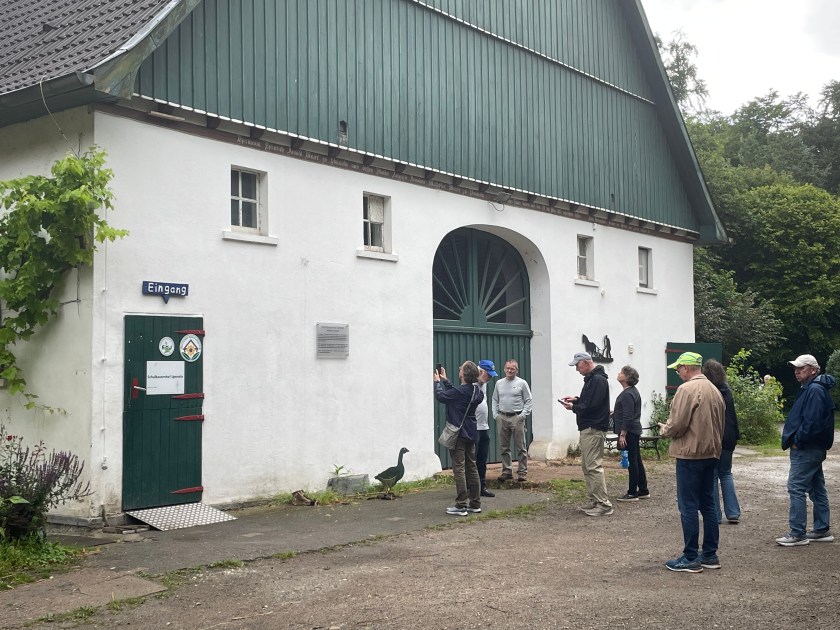
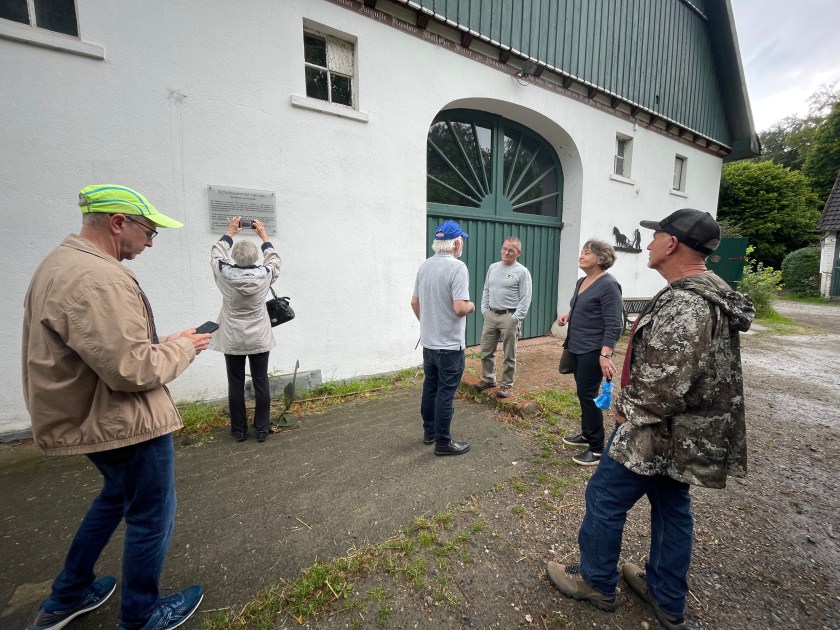
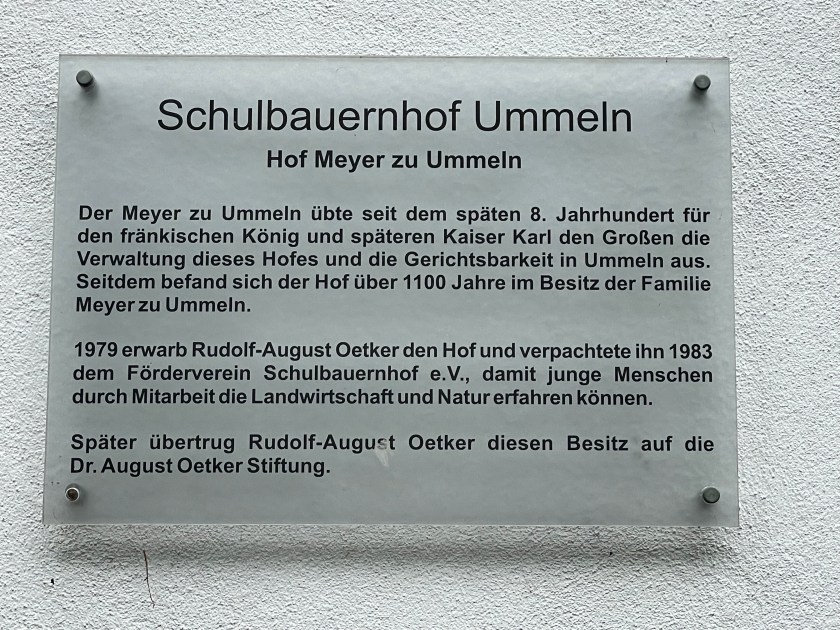
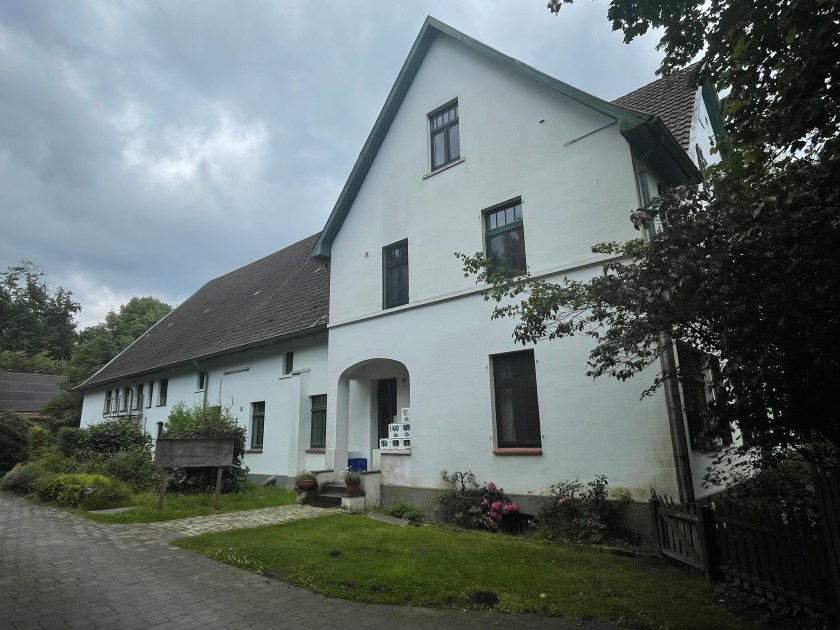
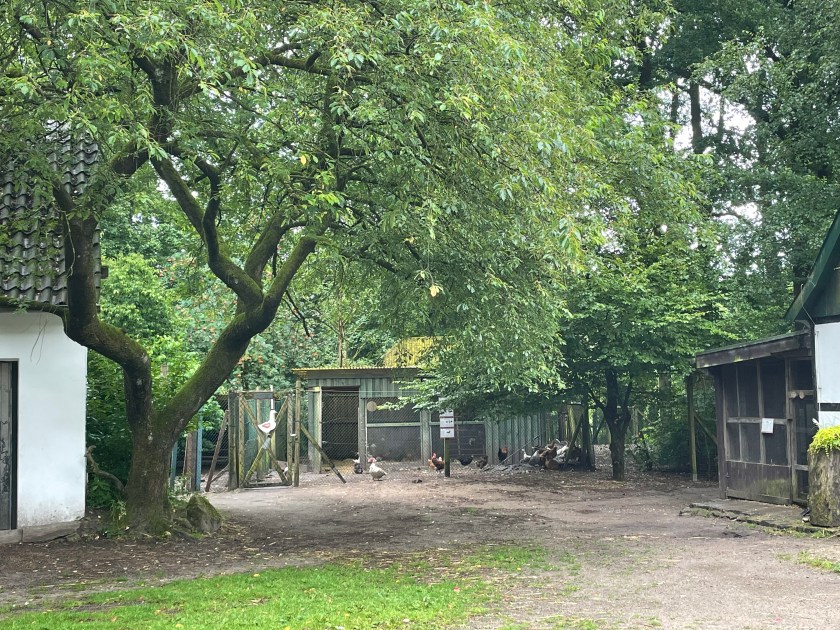
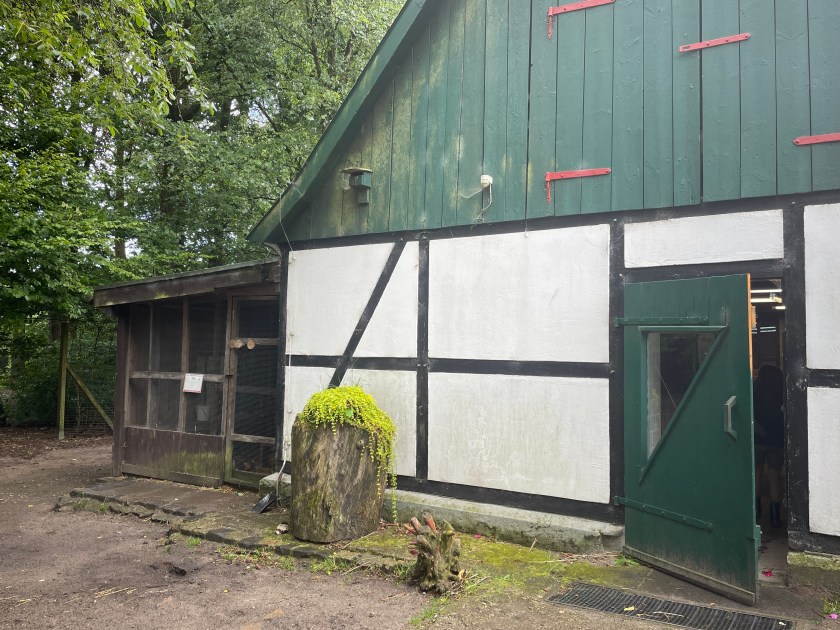
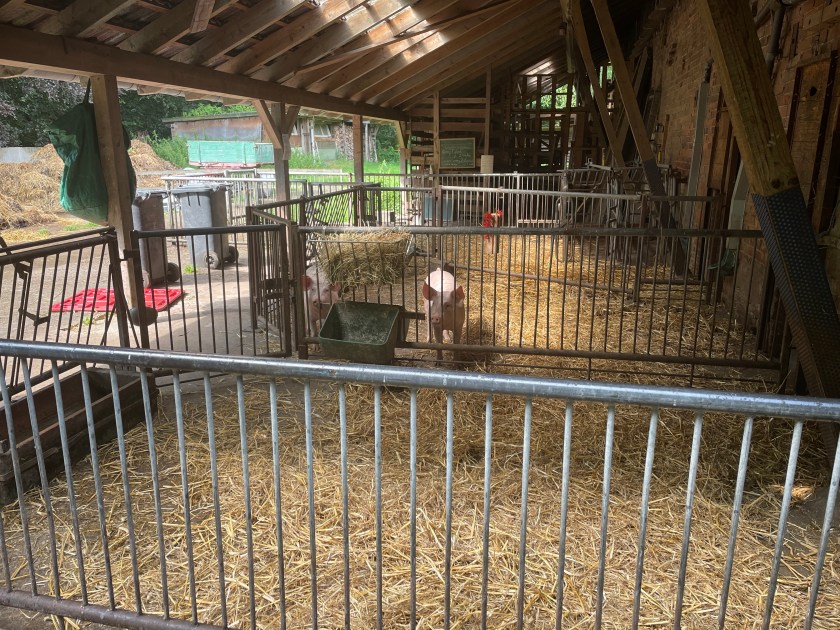
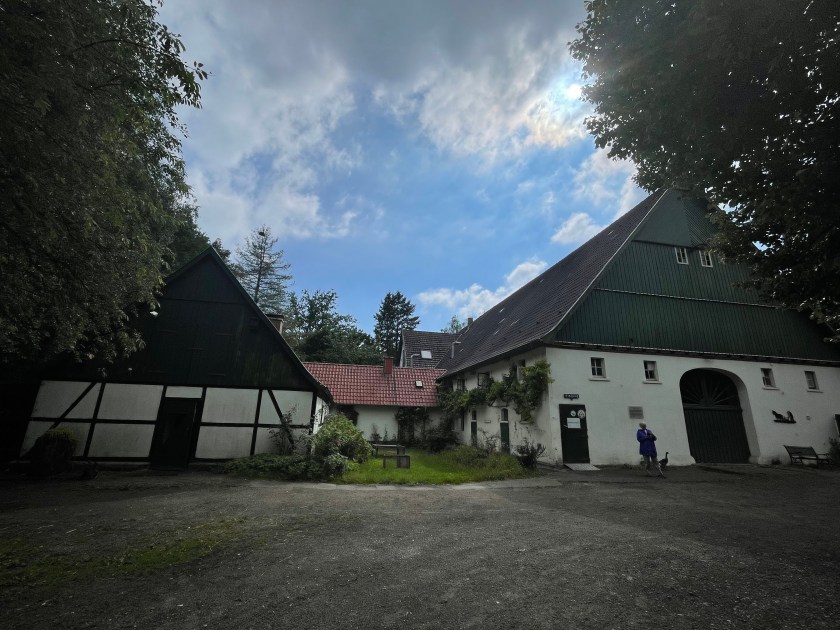
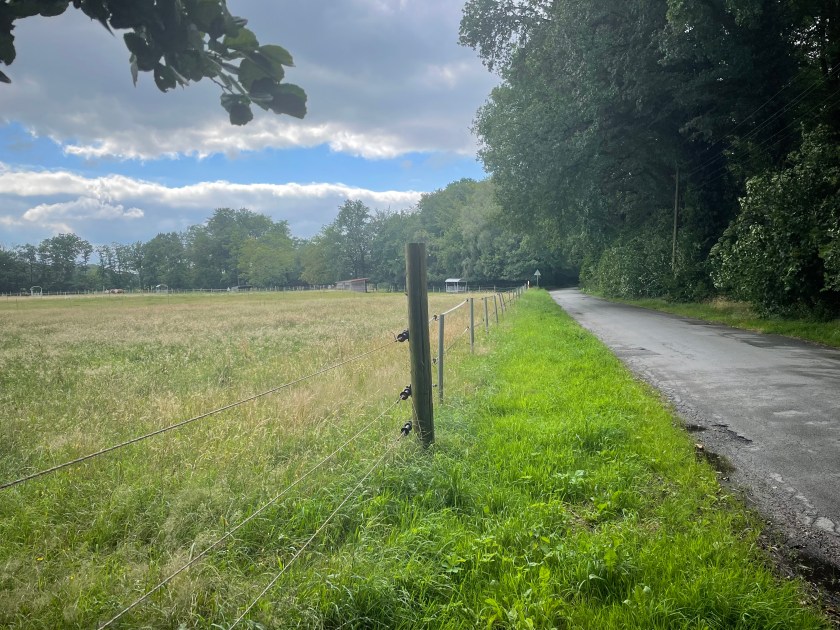
Our next stop was Ummeln, one of the places the ancestors of these friends lived and worked until about 1820. Volker did some searching and found that the main farm home in Ummeln is still here, still used, now as a teaching farm for school kids. They come here now to learn where things like vegetables and farm animals come from.
From my research report:
Peter Heinrich Bastert was born on Wednesday, 10 April 1833, at 7:00
a.m., and was christened on 14 April at the Evangelische Kirche (Lutheran Church) in Brackwede. He was the youngest of nine children. His parents lived in the village of Ummeln until about 1820, then moved three miles away to Isselhort, where the last four children (including Peter) were born. In that era, it was uncommon to move a family. This confirms that they were not landowners.
Three years later, not far from Ummeln, in the village of Quelle, Hanne Caroline Lübker was born on 25 October 1836. Caroline also came from a family of nine. She was the second child. Her parents were Johann Friedrich
Wilhelm Lübker and Anne Margarethe Luise Kotthoff.
The Lübker family came from Quelle, and the Kotthoff family from
Steinhagen. Quelle lies on the outskirts of Brackwede, and Steinhagen about four miles away. In 1912, Ummeln was a rural government district with a
population of 1,776 people. Isselhorst had even fewer people, with 1,517 inhabitants.
The Bastert children had many relatives living in the area. Inhabitants of
these villages attended church nearby at the Evangelische Kirche in Brackwede, (Ummeln is about three miles from Brackwede, and Isselhorst about six miles).
According to documents, the “Meyer zu Ummeln” farm has been around since the 8th century – however, the current farm building was only built in 1914, after the old building was moved and used as a farmhouse museum. The inscription on the beam reads: “Hermann Heinrich Arnold Maier zu Ummeln and his mother Auguste Karoliene Mathilde Maier zu Ummeln had this house built and erected on May 20, 1914. Two pillars of life never break: prayer and work, they are called.”
You can learn more about this school farm and their programs here.
Here, we teach children and young people about the work areas and cycles of ecologically oriented, sustainable agriculture through school trips, holiday camps and other activities. This includes growing vegetables and fruit, farming, housekeeping and working in the workshop. Working with animals and keeping them in a species-appropriate manner on the farm is of particular importance.
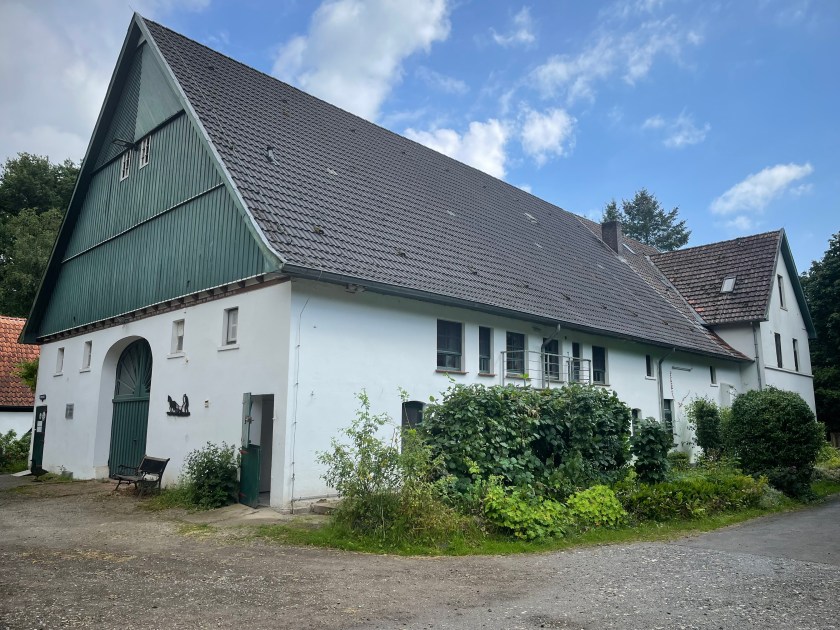
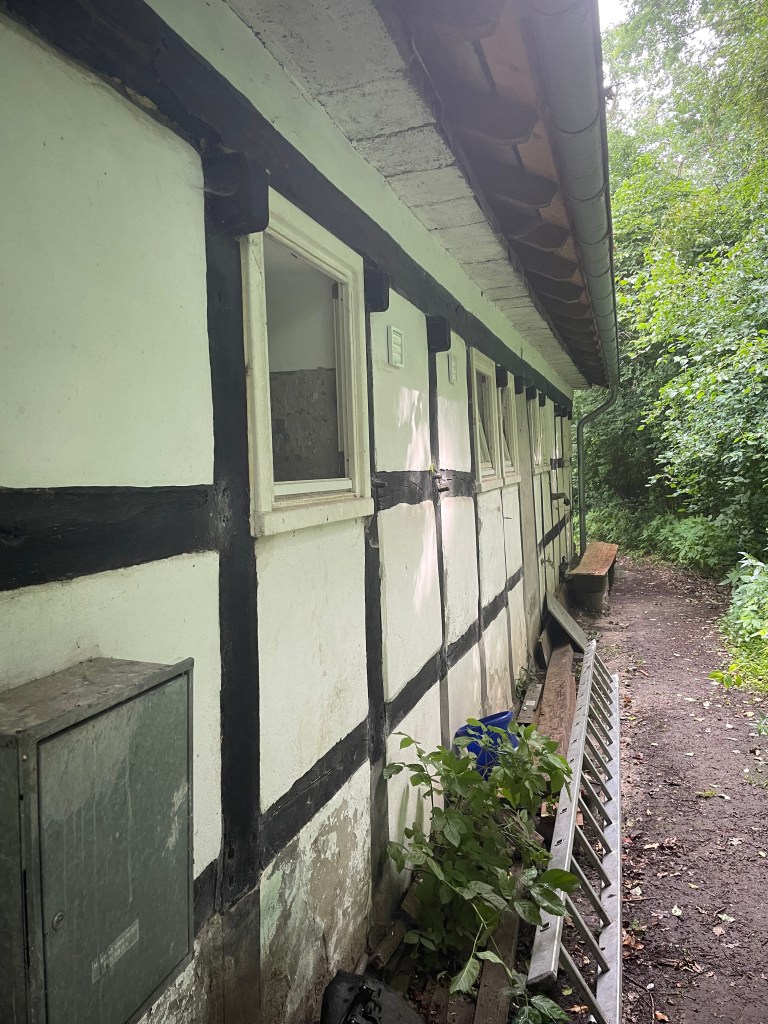
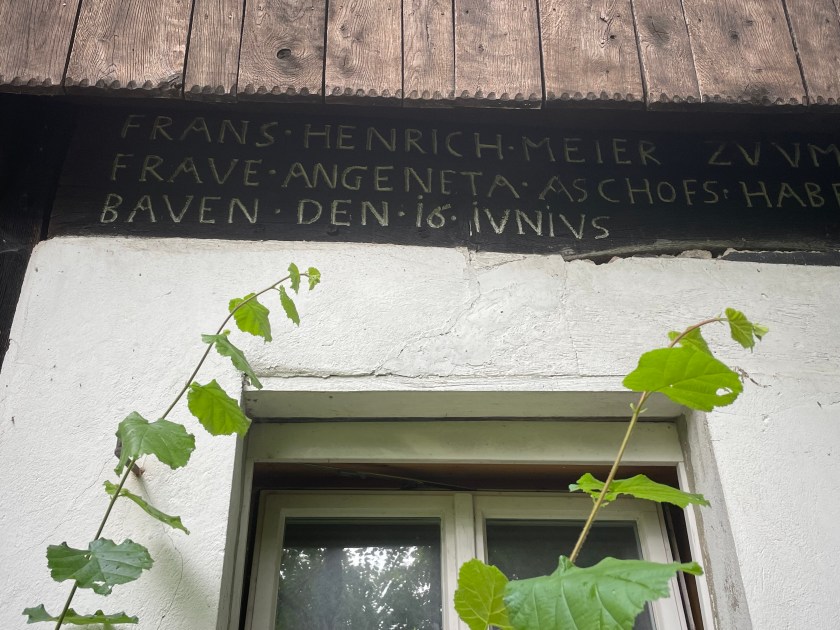
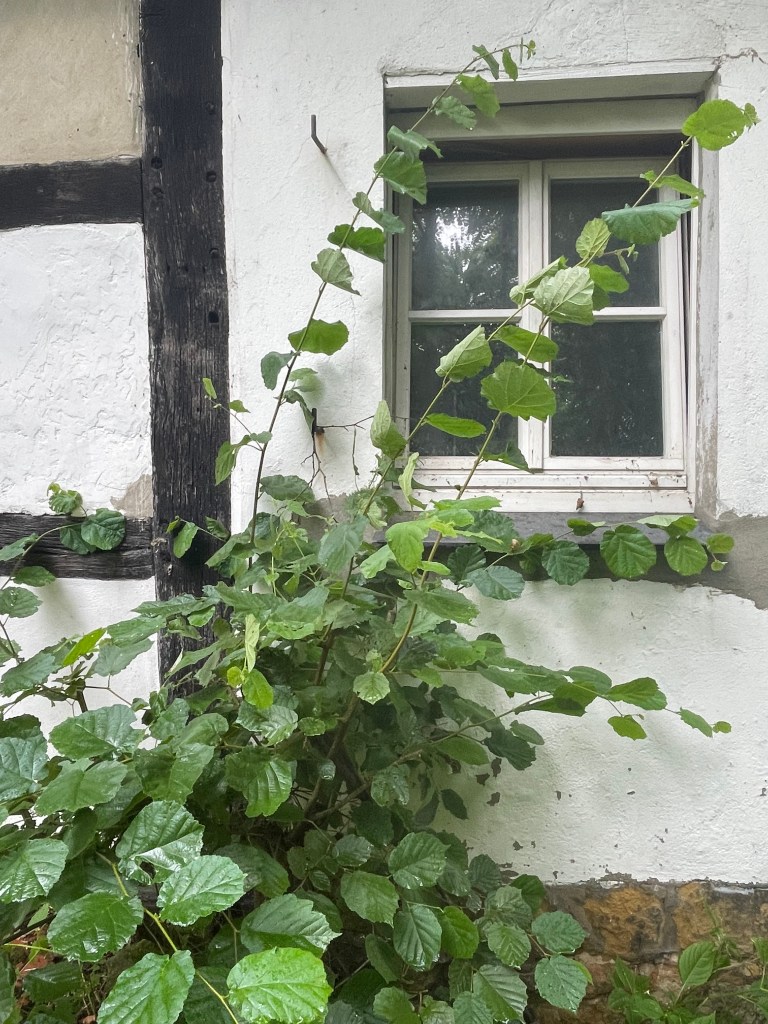
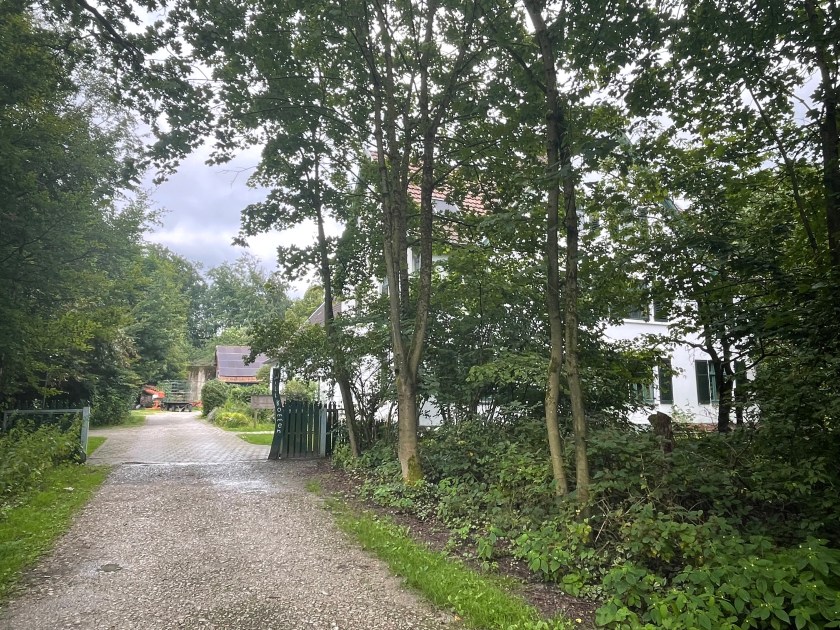
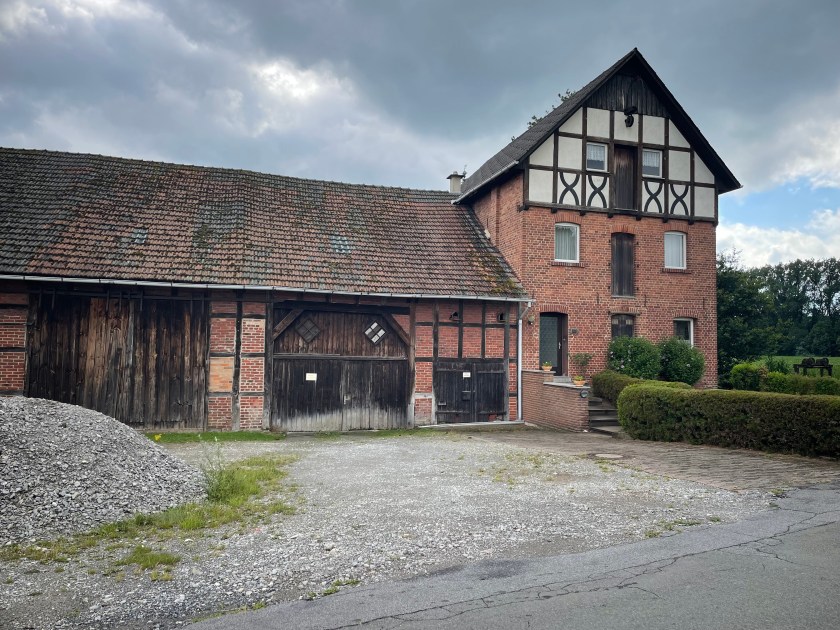
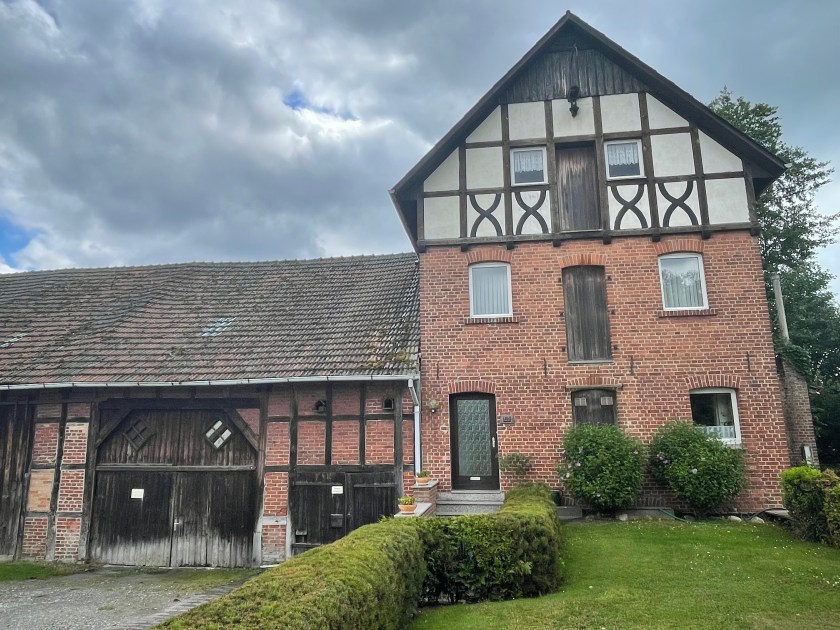
Not far from the Meyer Bauernhof is another home, still standing. This one dates back to 1774, so it was definitely here when the Bastert family was here. Perhaps this is where the landowners lived.
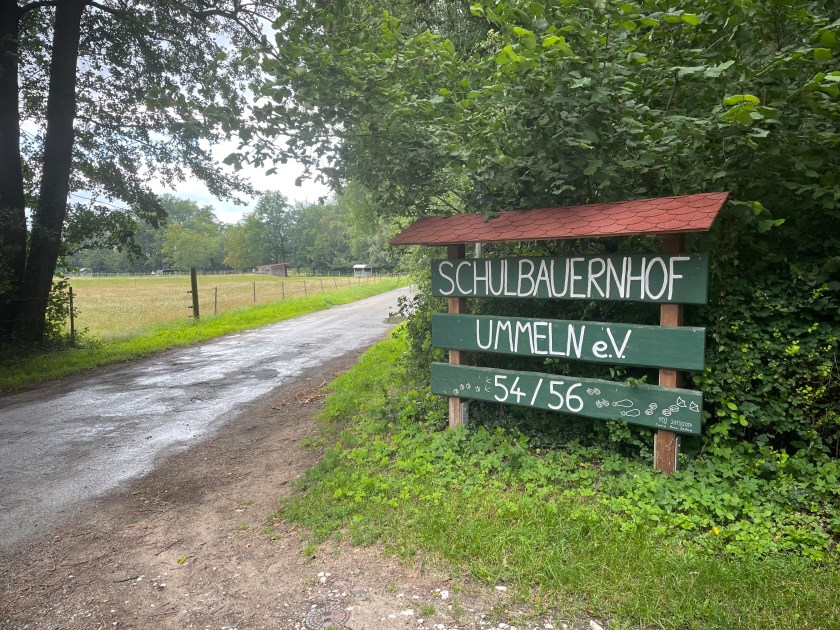
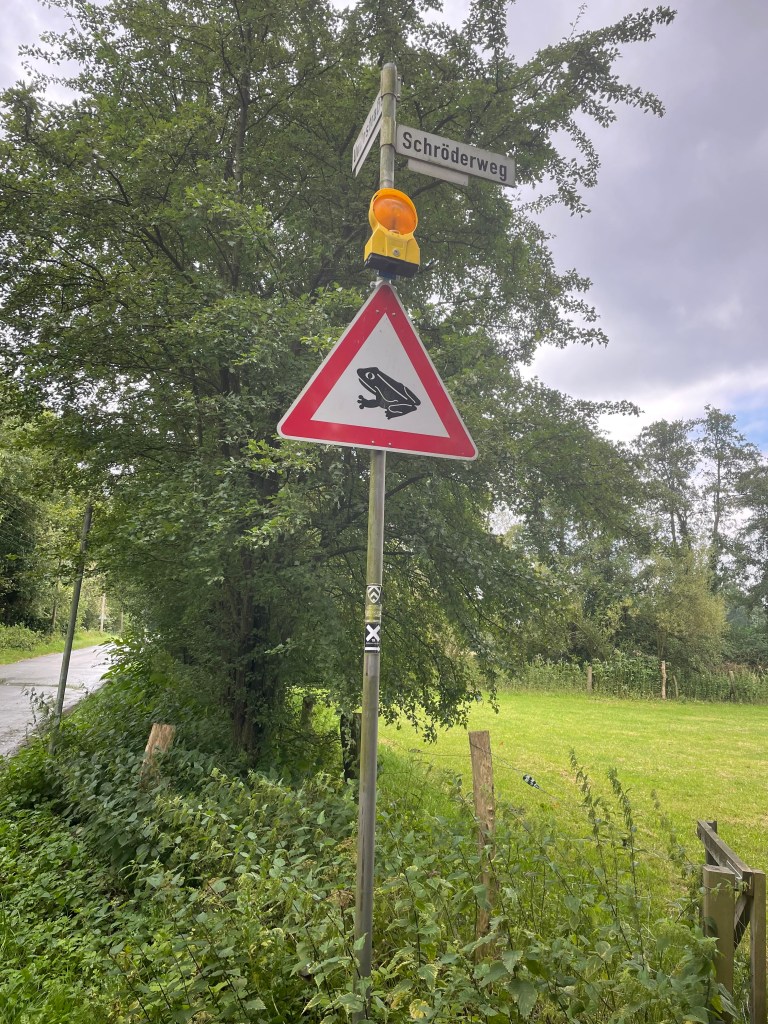
This is the signage at on the road where you turn off onto a dirt road to these old farms.
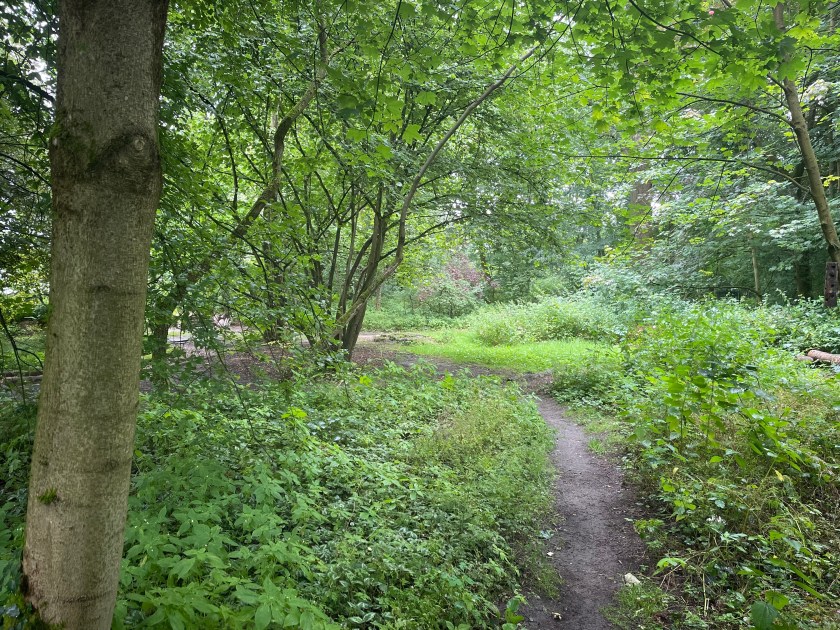
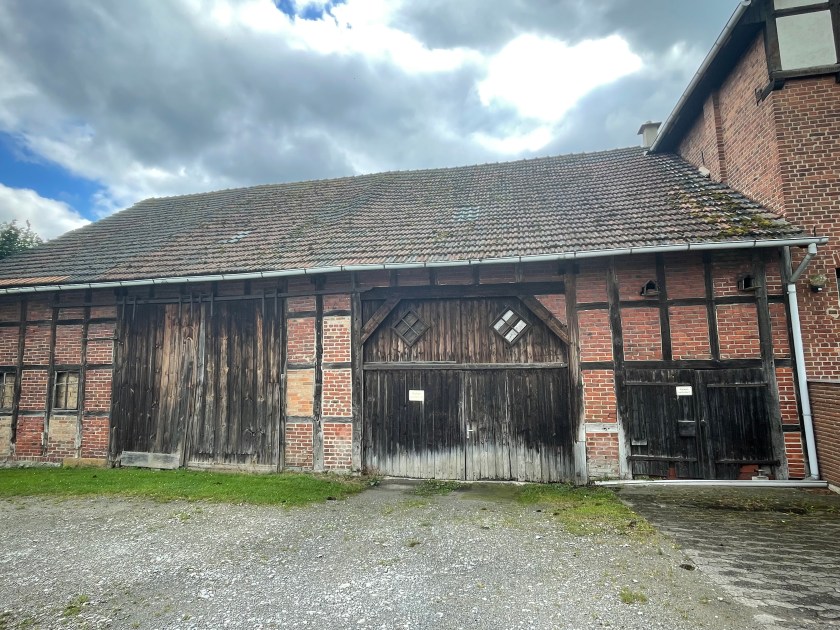
And these are the farms in that area, perhaps similar to where the Bastert family ancestors worked.
Frog crossing??
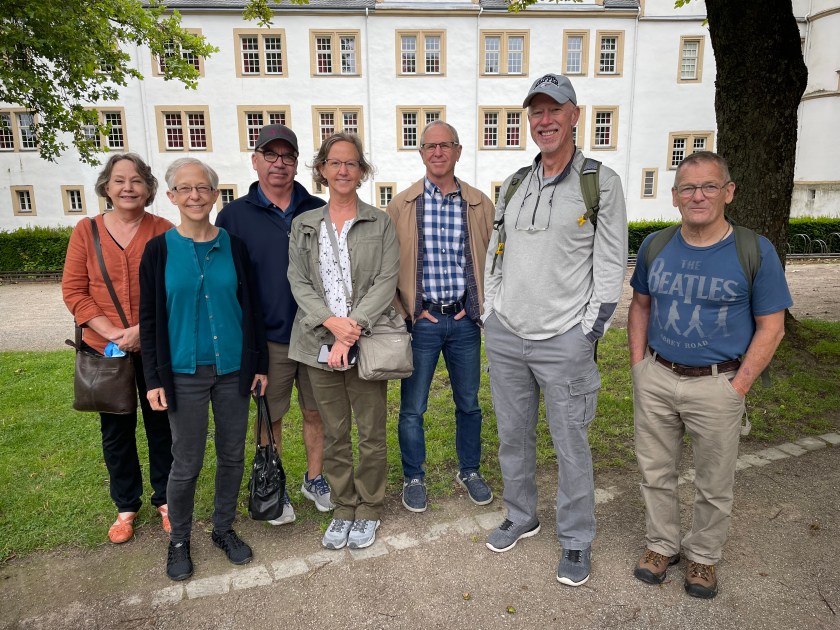
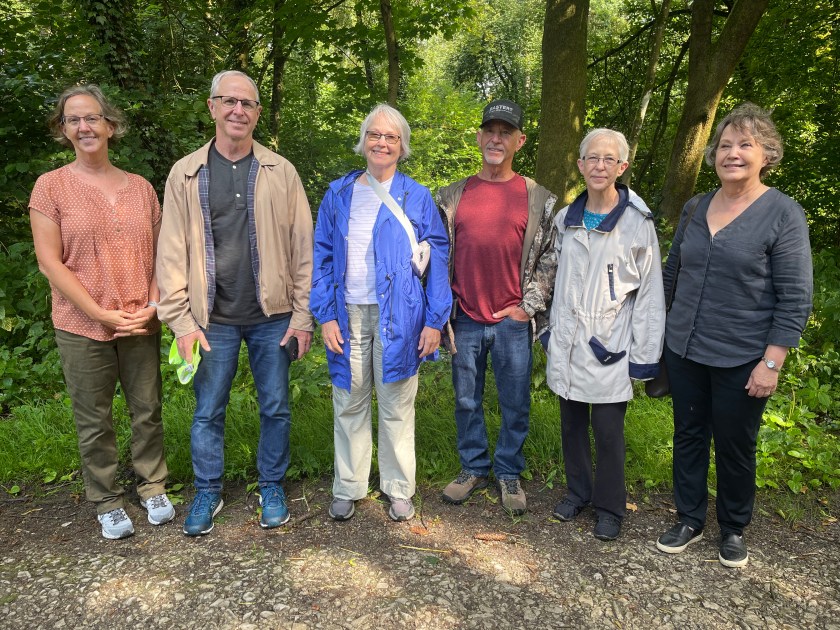
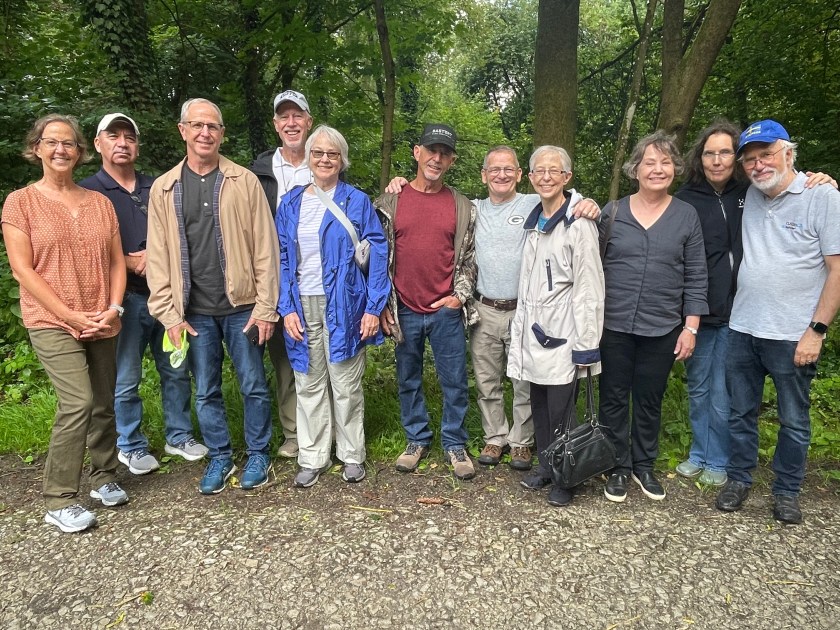
Here are the Bastert siblings from America (left to right): Karen, Andy, Becky, Jim, Alice and Mary.
Here with spouses: Karen and Rick Garnett, Andy Bastert, Becky and Terry Reuschel, Jim Bastert, Alice and Ralph Snodgrass, and Mary Lakamp.
And here, joined by Volker Bastert and his wife, Stephanie on the far right.
Not far down the road is this old Bauernhof, another very old home that may have been standing when the family lived and worked in this area.
After visiting Ummeln, we drove back into Bielefeld to Volker’s home. Volker is married to Stephanie (his first wife died of breast cancer about 15 years ago). Volker has 2 sons, Leonhard (Lenny) and Hauke. They live in other places.
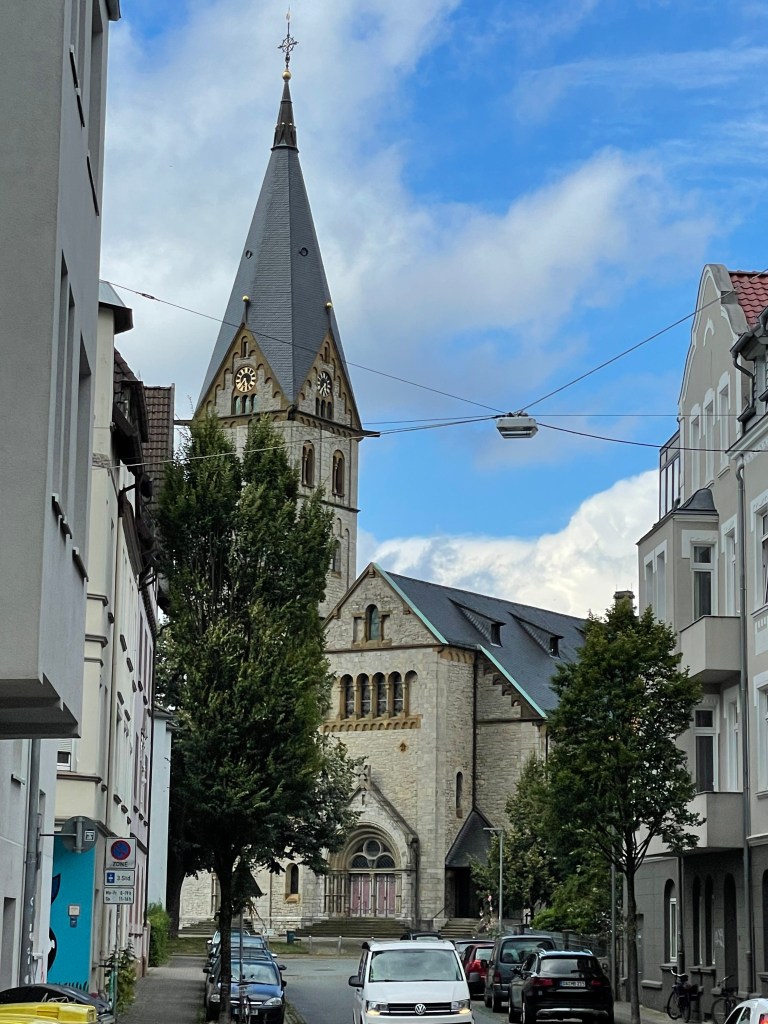
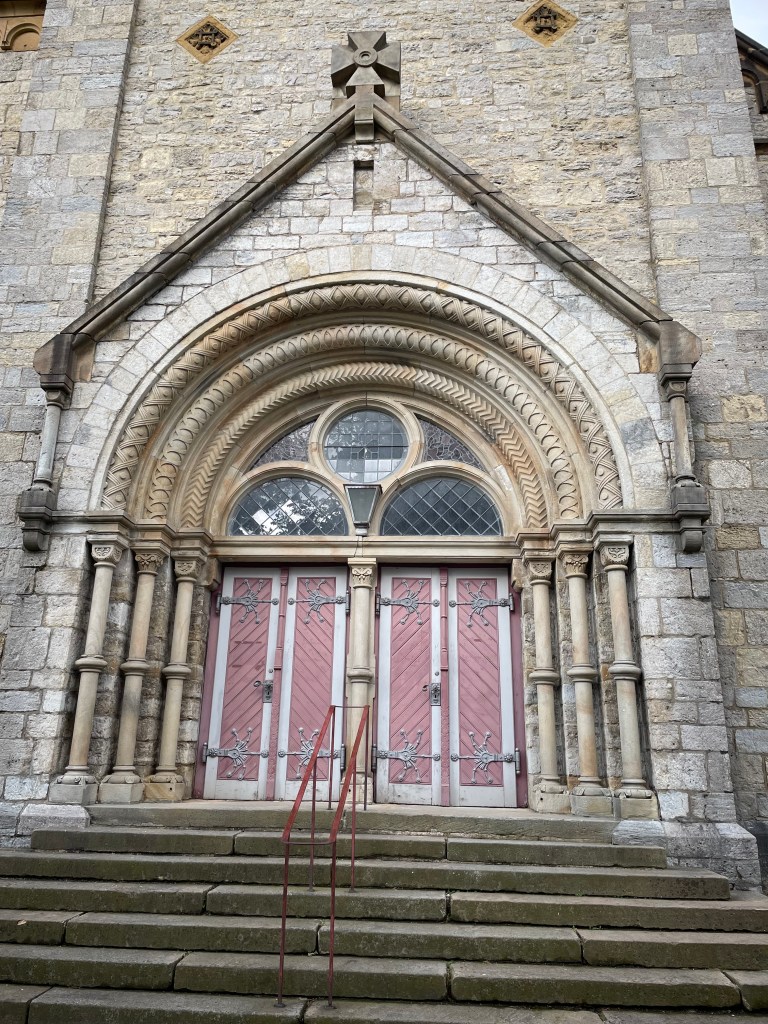
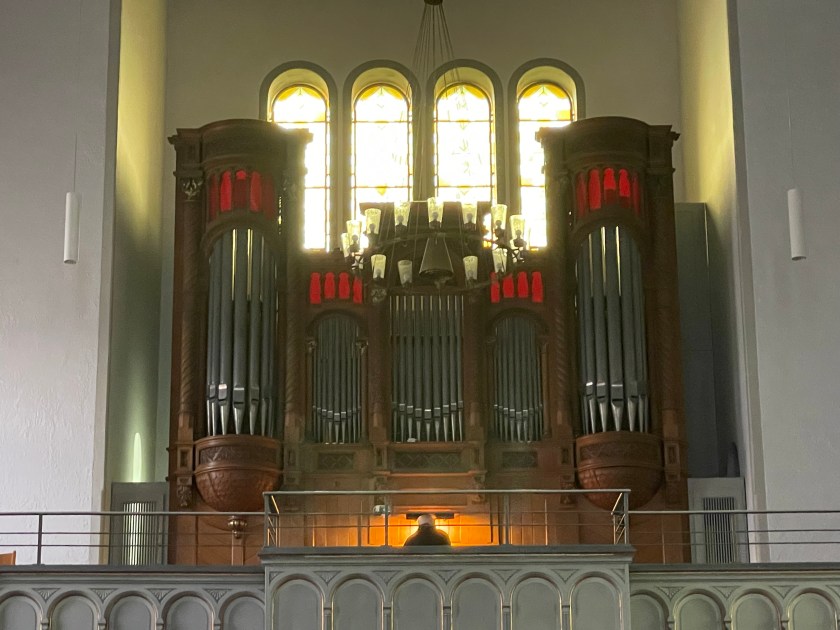
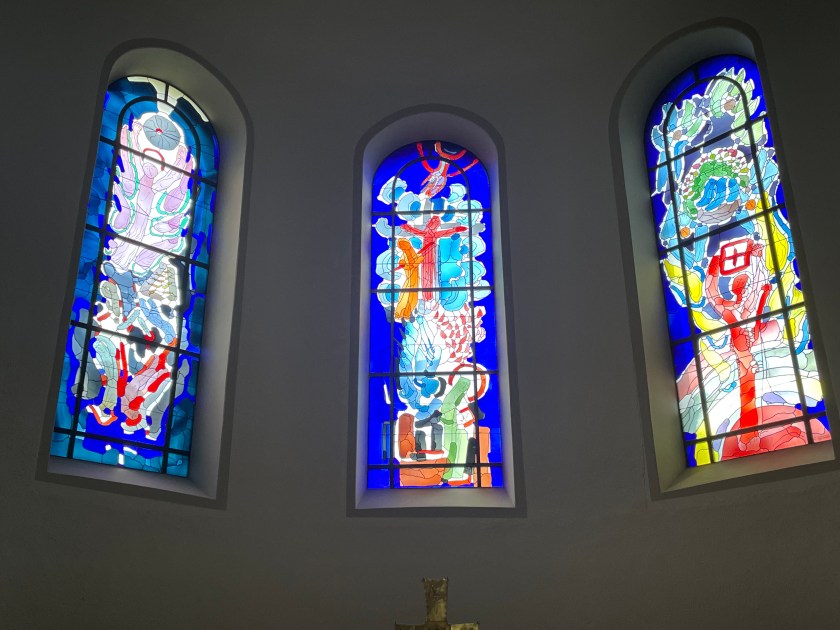
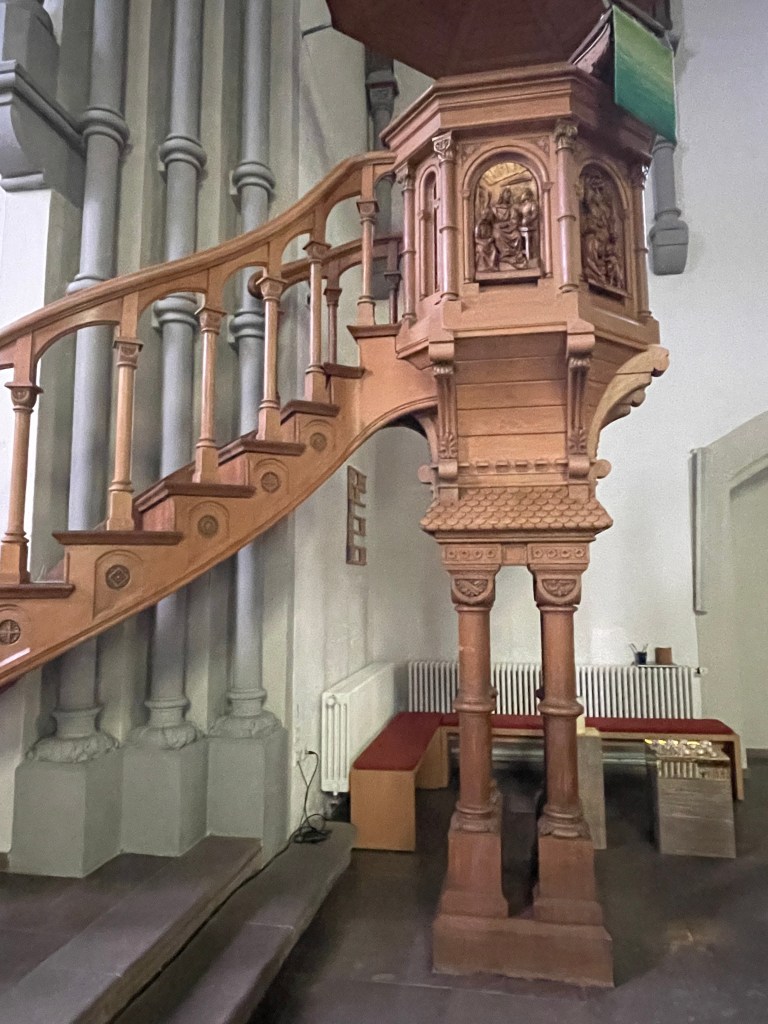
From there we walked into town, first to the church they attend now, where Volker is the substitute organist. He climbed right up to the organ loft organ loft and treated us to a fantastic organ rendition of Bach’s Toccata and Fugue in D Minor. Nothing fills a church like beautiful music!
Then we walked into the town plaza to a favorite restaurant where we spent the rest of the evening enjoying some great German food.
More local Bastert relations joined us for dinner here.
What a fantastic first day of this reunion. This group will spend about 10 days here in Germany. We will stay with them tomorrow and then head back to Frankfurt. I’m really happy to have been invited to be here today.
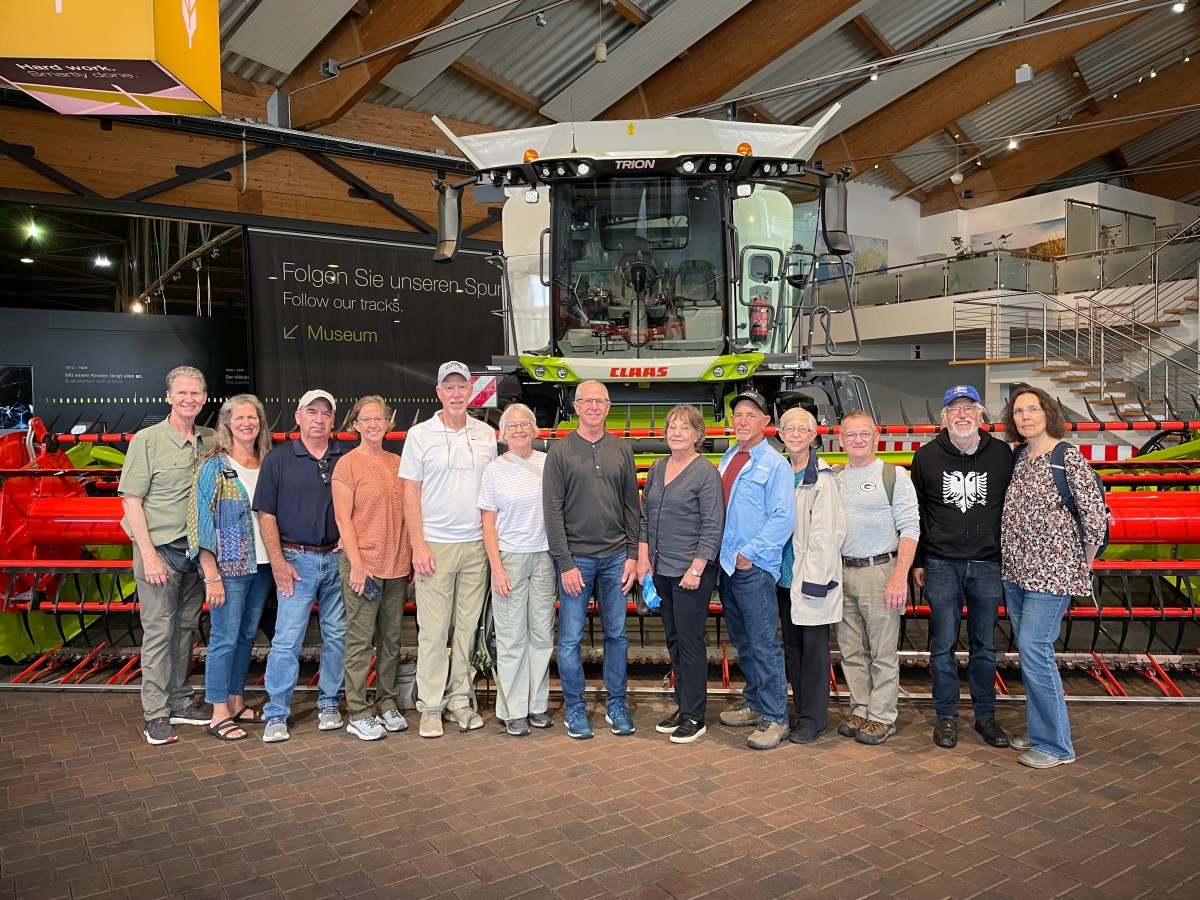
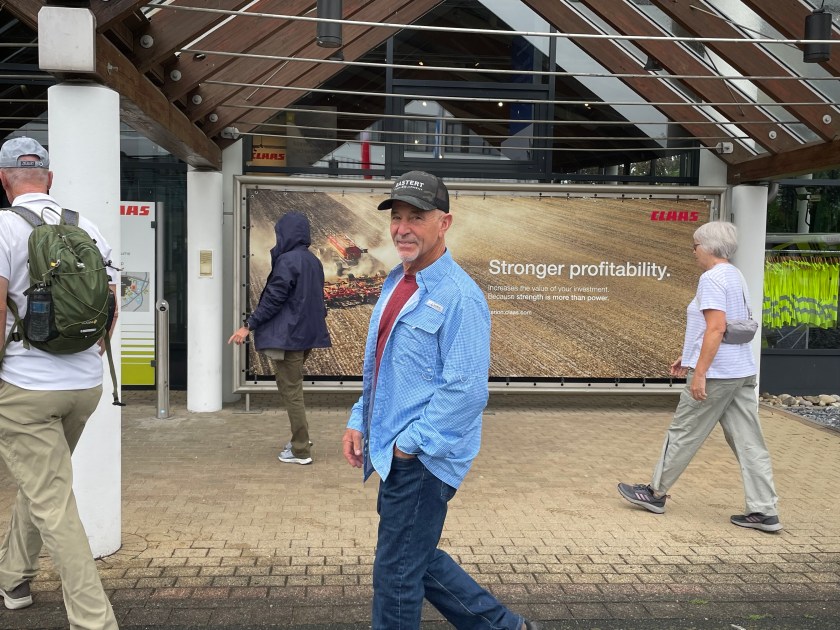
We had some rain on and off all day. Next we drove to a town about 30 min away called Harsewinkel where there is a HUGE factory that makes farm equipment and columbines.
The tour of the facility was long and detailed. They said 20,000 people/year tour the factory. We walked about 4km. Sadly, this is a vacation period for all of the 12,000 workers, so all of the assembly lines were empty of employees at work. We saw an empty HUGE factory.
It was interesting. Every columbine has more than 40,000 parts. The factory covered acres and acres of land and was 3 stories high in most places. They move parts and pieces by robot on tracks up above the ground floor. It was a master-minded production line. Employees use bicycles to get from one part of the factory to another. There are bike stops and bike lanes. They make about 15 huge columbines each day, some cost up to $1 million. All are pre-ordered and pre-paid. There are 500 machines in the back lot waiting to be delivered.
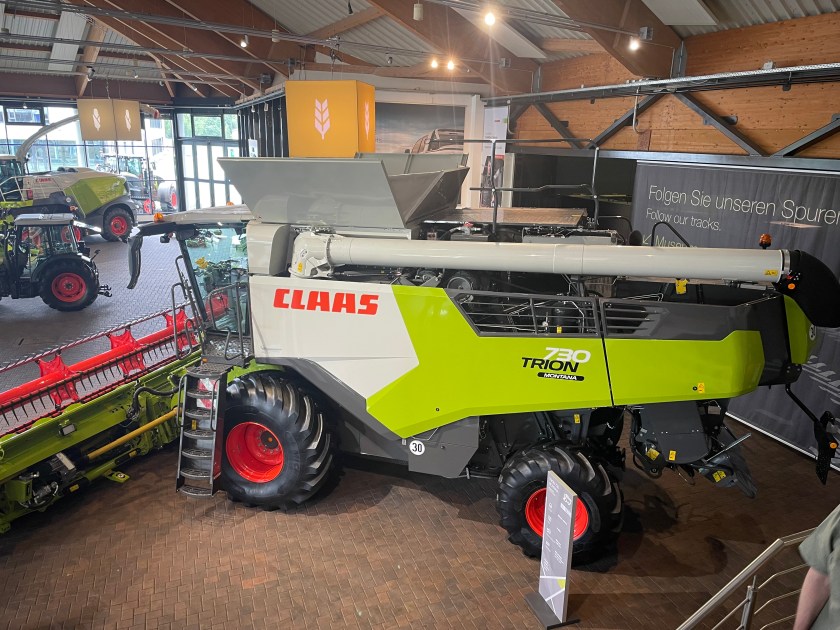
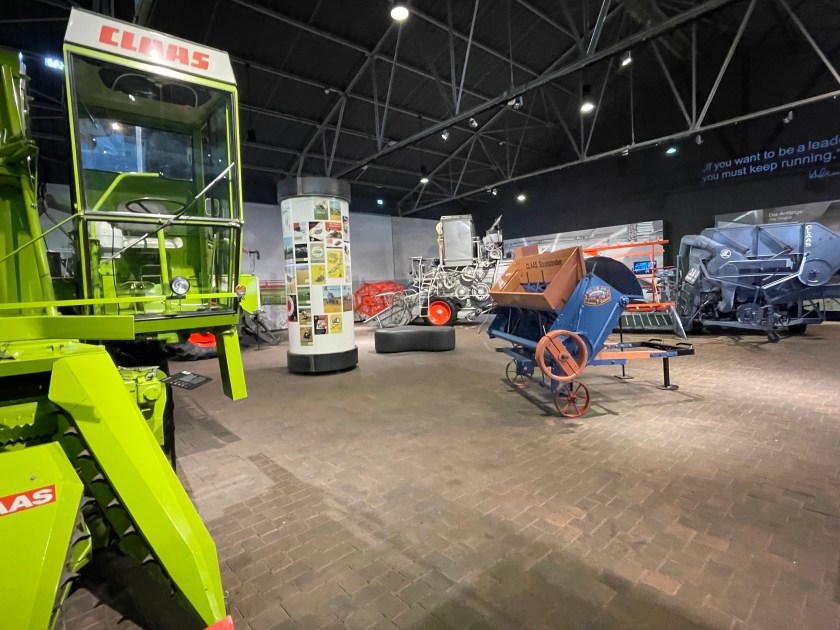
Here’s the showroom. We weren’t allowed to take photos in the factory.
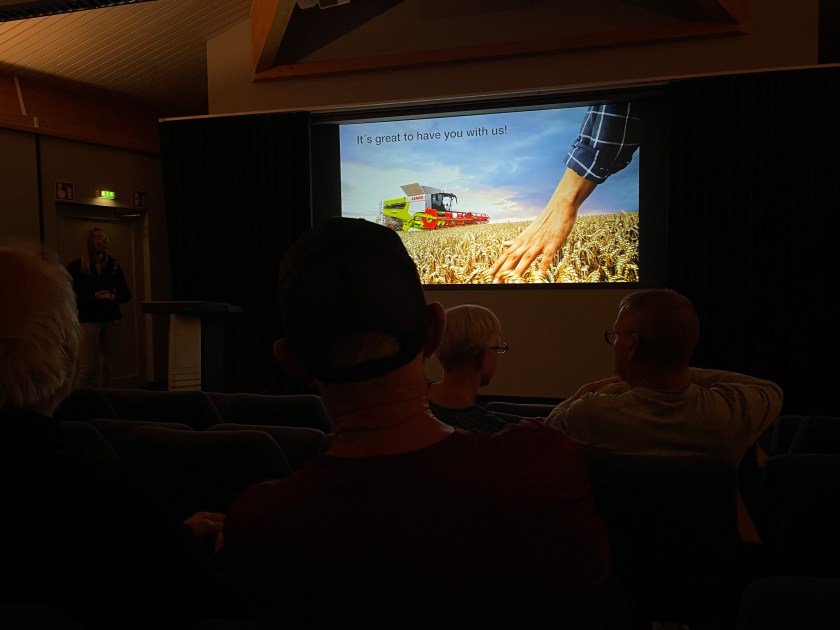
We watched a film about the company before touring the manufacturing plant.
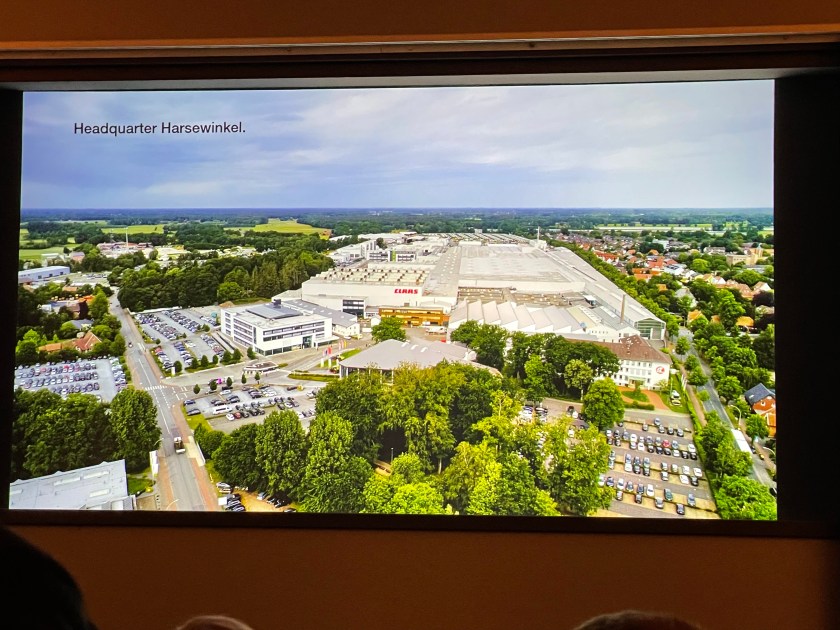
This gives you an idea of the size of this place:
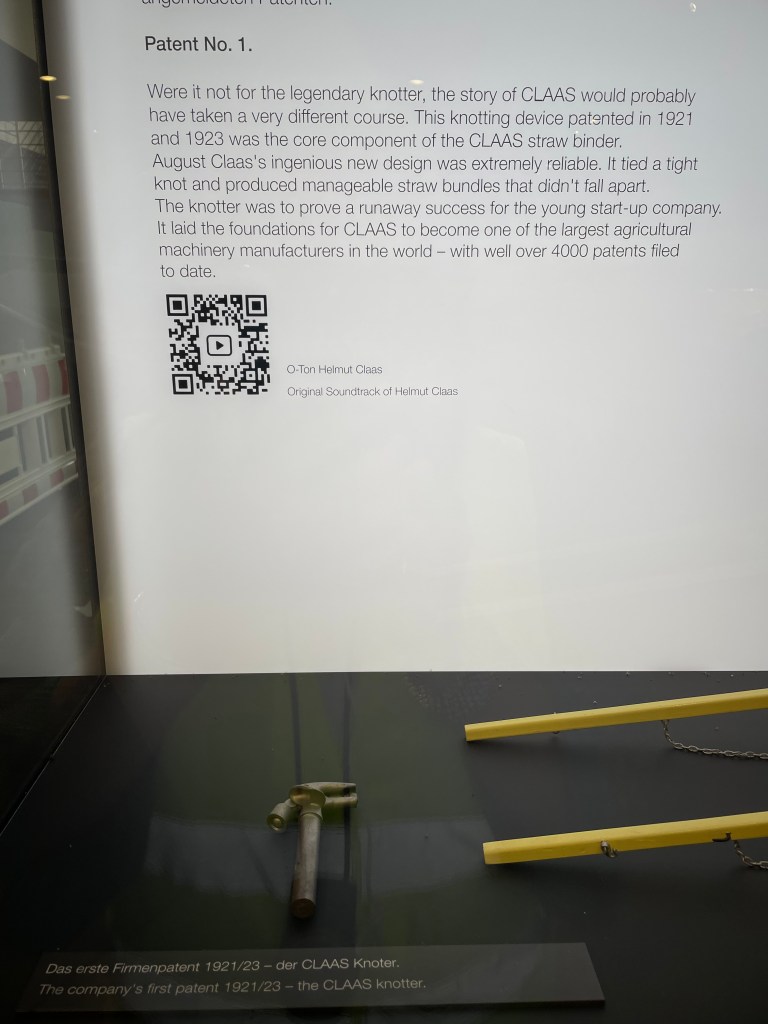
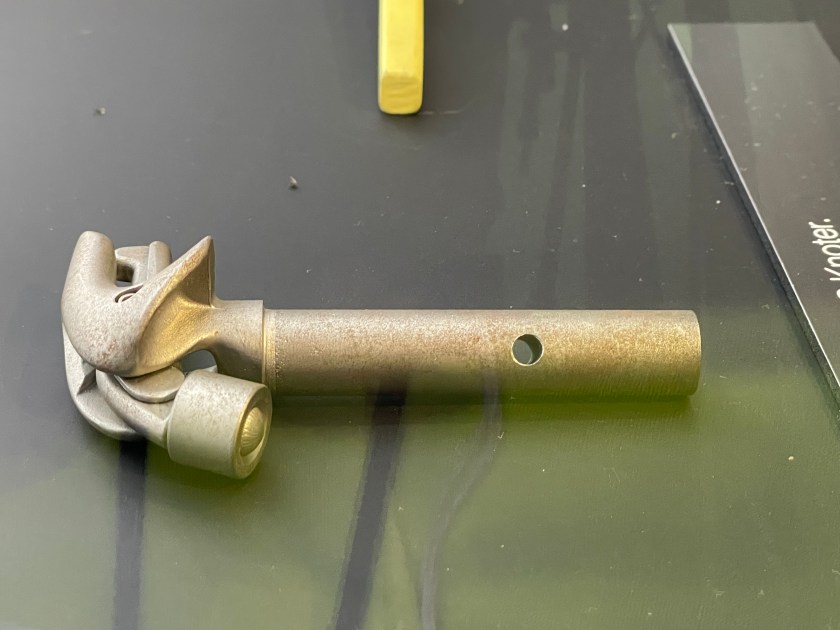
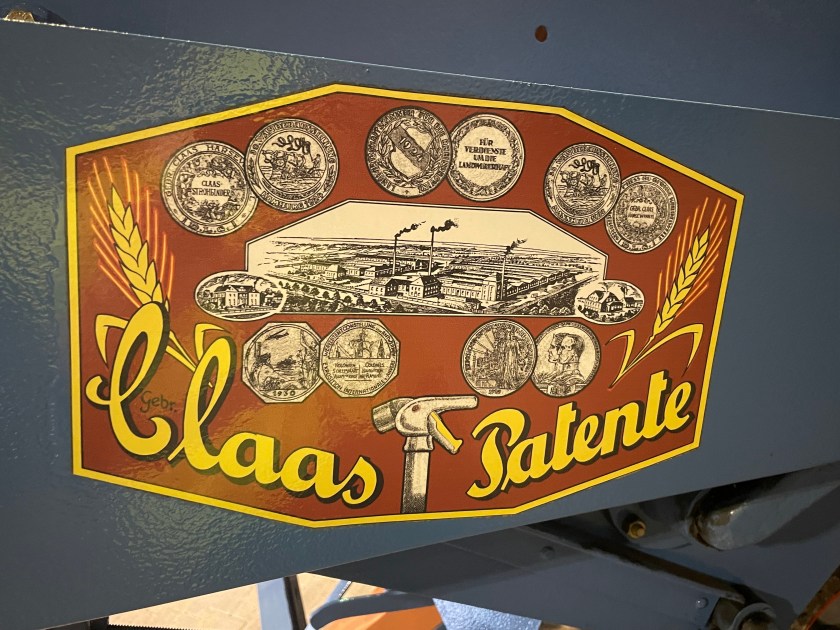
This little knotting device was the beginning of all of this:
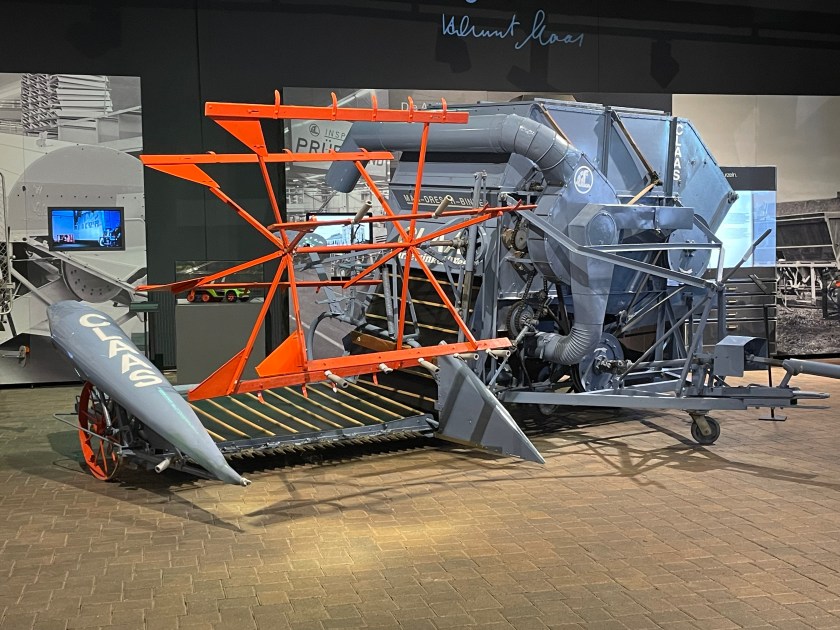
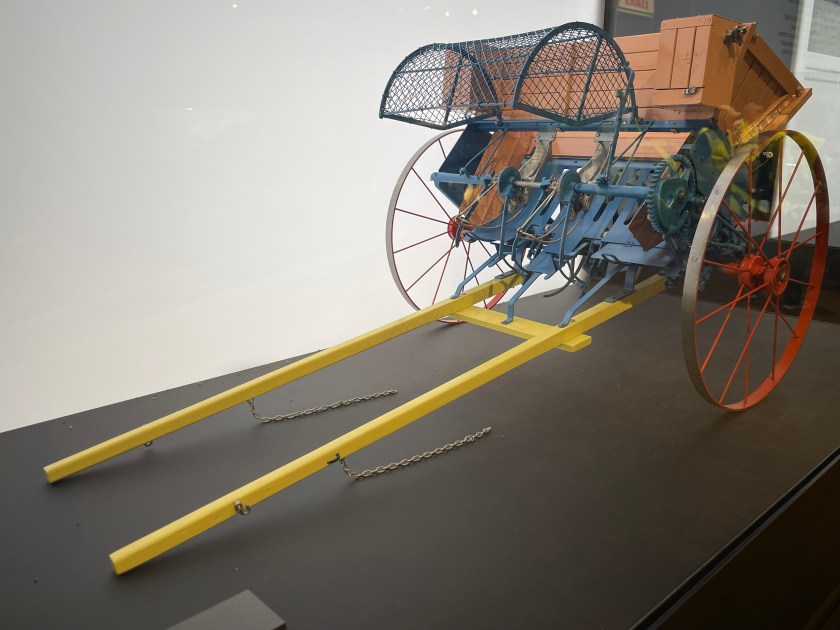
Early harvesters:
Here’s some info about what we learned here:
CLAAS is an agricultural machinery manufacturer based in Harsewinkel, Germany, in the federal state of North Rhine Westphalia. Founded in 1913 by August Claas, CLAAS is a family business and one of the market and technology leaders in harvesting technology. It is the European market leader in combine harvesters and considered as world market leader in self-propelled forage harvesters. The product range also includes tractors, balers, mowers, rakes, tedders, silage trailers, wheel loaders, telehandlers and other harvesting equipment as well as farming information technology. CLAAS employs around 11,500 employees worldwide and reported a turnover of roughly 3.9 billion euros in the 2019 financial year. About 78.5% of sales are generated outside of Germany.
History
Early days
The beginnings of the company go back to 1887, when Franz Claas founded a company in Clarholz for the production of milk centrifuges. From about 1900 onwards, he also manufactured other agricultural machinery there, such as straw binders and cutters for mowing machines.
The official foundation of the company took place in 1913, when the son of Franz Claas, August Claas, informed the responsible office in Herzebrock that he was manufacturing straw binders with two locksmiths and one unskilled worker. In 1914 his brothers Franz jun. and Bernhard Claas also joined the company. The company was then continued under the name “Gebr. Claas.” The fourth brother, Theo, officially joined the company as a partner in 1940.
Growth period
After their return from the First World War, the Claas brothers and sisters moved their company to Harsewinkel in 1919, where they bought a disused hard stone factory and continued production. The export of Claas products now also began from Harsewinkel, initially to Holland, France and Belgium.
In 1930, the development of the first CLAAS combine harvester began, initially as machines using the fore-cut principle. The first CLAAS straw baler was produced in 1931. In 1936, the company launched the first combine harvester designed specifically for European harvesting conditions, the combine harvester (ger. Mäh-Dresch-Binder – MDB). This was then mass-produced from 1937. Until the production was stopped due to the war in 1943, approx. 1400 machines were produced.
At the same time as the 1000th combine harvester was built in 1942, development of the CLAAS SUPER began. This came onto the market in 1946. By the end of production in 1978, more than 65,000 units had been produced by this combine harvester family.
In 1956 a new factory was established in Paderborn. This was now the third location besides the plant in Harsewinkel and the Christopherus-Hütte in Gütersloh-Blankenhagen, which was built in 1948. In 1961, the new CLAAS baler factory in Metz (France) was added, which has been operating under the name Usines Claas France S.A. since 1969.
Helmut Claas, the son of August Claas, became managing director for Engineering in 1962. By then CLAAS was already the No. 1 combine harvester manufacturer in Europe. 1969 saw the takeover of Josef Bautz AG in Saulgau with a factory for forage harvesting machinery. One year later, the Speiser company from Göppingen, which specialised in forage harvesting technology. The company continued to grow steadily and presented new products for forage harvesting such as mowers, tedders, windrowers, loader wagons and trailed forage harvesters.[4][5]
In 1978 Helmut Claas took over as chairman of the management board.
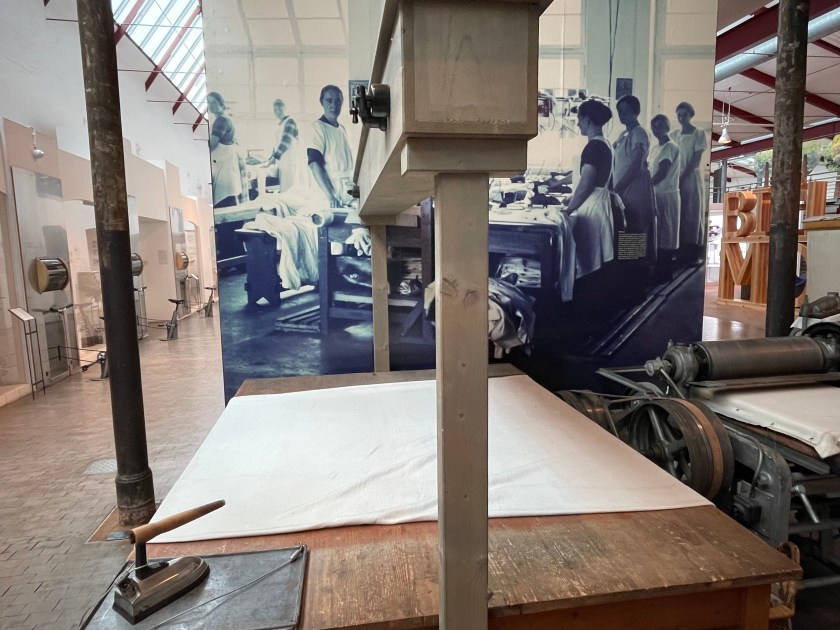
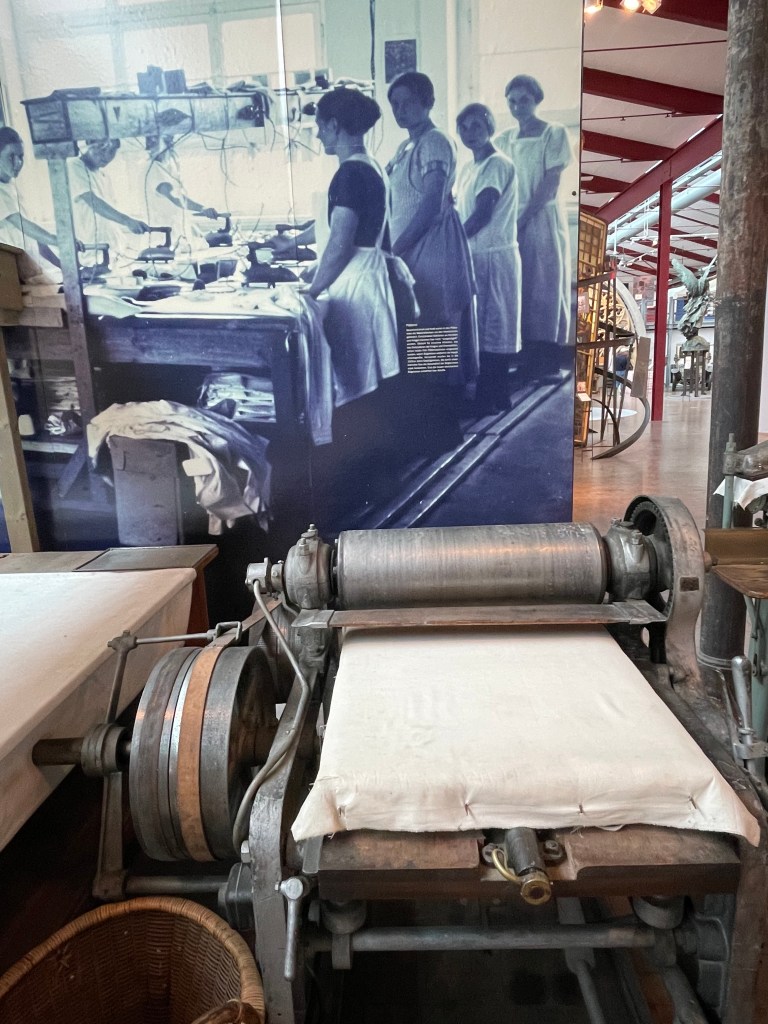
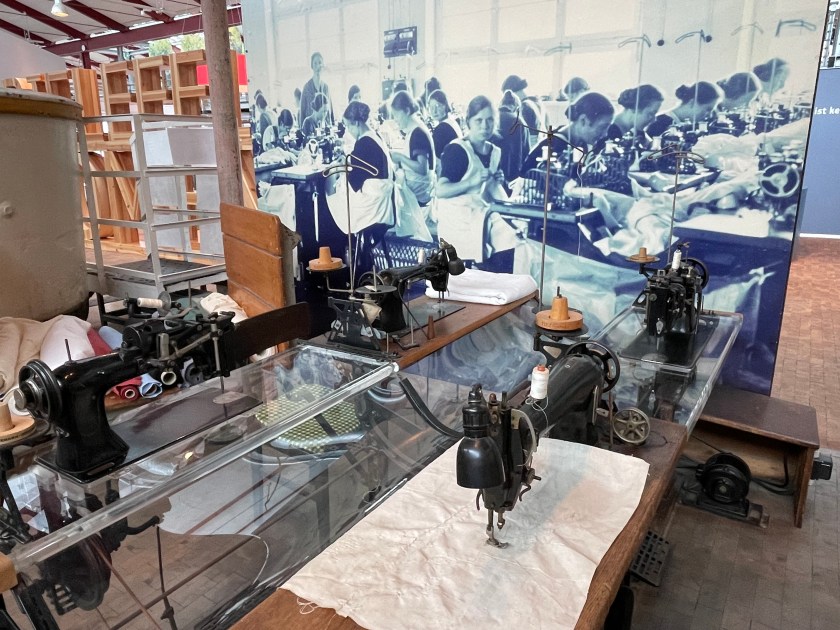
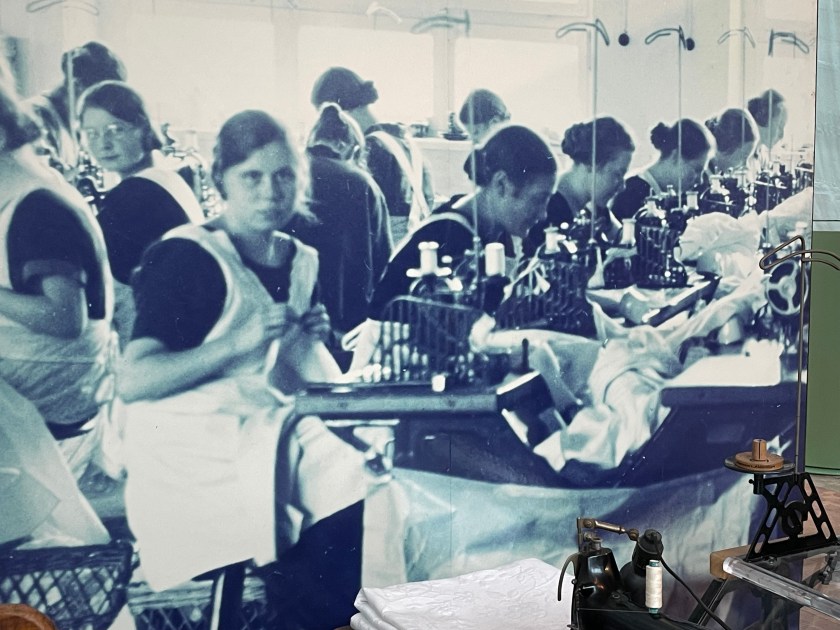
Here is a sad story about the Museum/former textile factory we visited: The Museum Wäschefabrik (linen wear factory museum) at Bielefeld is one of the relatively few places at which the heritage of the manufacture of clothing (as distinct from the production of fabrics) is commemorated. It is also a testimony to the fate of Jewish industrialists during the Third Reich.
The factory was established in 1913 by Hugo Juhl (d. 1939) and his wife Clara (b. 1887) for the manufacture of table linen, bed linen, women’s underclothes and men’s shirts. In 1938 they were forced to sell the business to the Winkel brothers who ran it until the 1980s after which a voluntary body, the Föderverein Projekt Wäschefabrik, was established to ensure the preservation of the factory. A museum (the one we just visited) was opened in the building in 1997. Visitors can see how clothing was made in the mid-twentieth century in rooms filled with ranks of sewing machines, rolls of fabric and reels of thread. They can also learn of the fate of Hugo Juhl’s family.
In 1933, fearing the onset of persecution of the Jews, Juhl’s daughter Hanna (b. 1913) who was married to Fritz Bender, fled to the Netherlands. Hugo Juhl died from natural causes soon after the enforced sale of the factory after which his wife and his other daughter Mathilde (b. 1910) went to the Netherlands. After the Nazi invasion the three women took their own lives rather than face deportation to an extermination camp, although Fritz Bender escaped. There are Stolpersteine (commemorative stones in the pavement) for the three women outside the museum in Bielefeld.
Kein Fluchtweg mehr offen
Hanna had just graduated from high school when she got engaged in 1932. Her bridegroom Fritz Bender moved to Bielefeld and joined her father’s company. Hugo Juhl owned an underwear factory with 70 employees in Viktoriastrasse. But after Adolf Hitler’s “seizure of power,” the Jewish couple no longer believed in a future in Germany.
Hanna and Fritz took a thoughtful approach to emigrating to the Netherlands. In order to bring as much of their wealth across the border as possible, they left separately. They invited all their relatives to their wedding in the seaside resort of Scheveningen. Each guest brought them 200 Reichsmarks, which were then reimbursed by the fathers of the bride and groom. The young couple set up a new life in Amsterdam. Fritz found a pharmaceutical factory. Their daughter Anneken was born.
When the Second World War began and the German Wehrmacht invaded Holland, the family tried to flee to England by boat. The first attempt failed because of the harbor barriers. Hanna then urged her husband to try it alone. Fritz actually managed the dangerous journey across the North Sea in a rowing boat. When Hanna realized that there was no escape route left for her and her five-year-old daughter, she opened the gas tap and put an end to both of their lives.
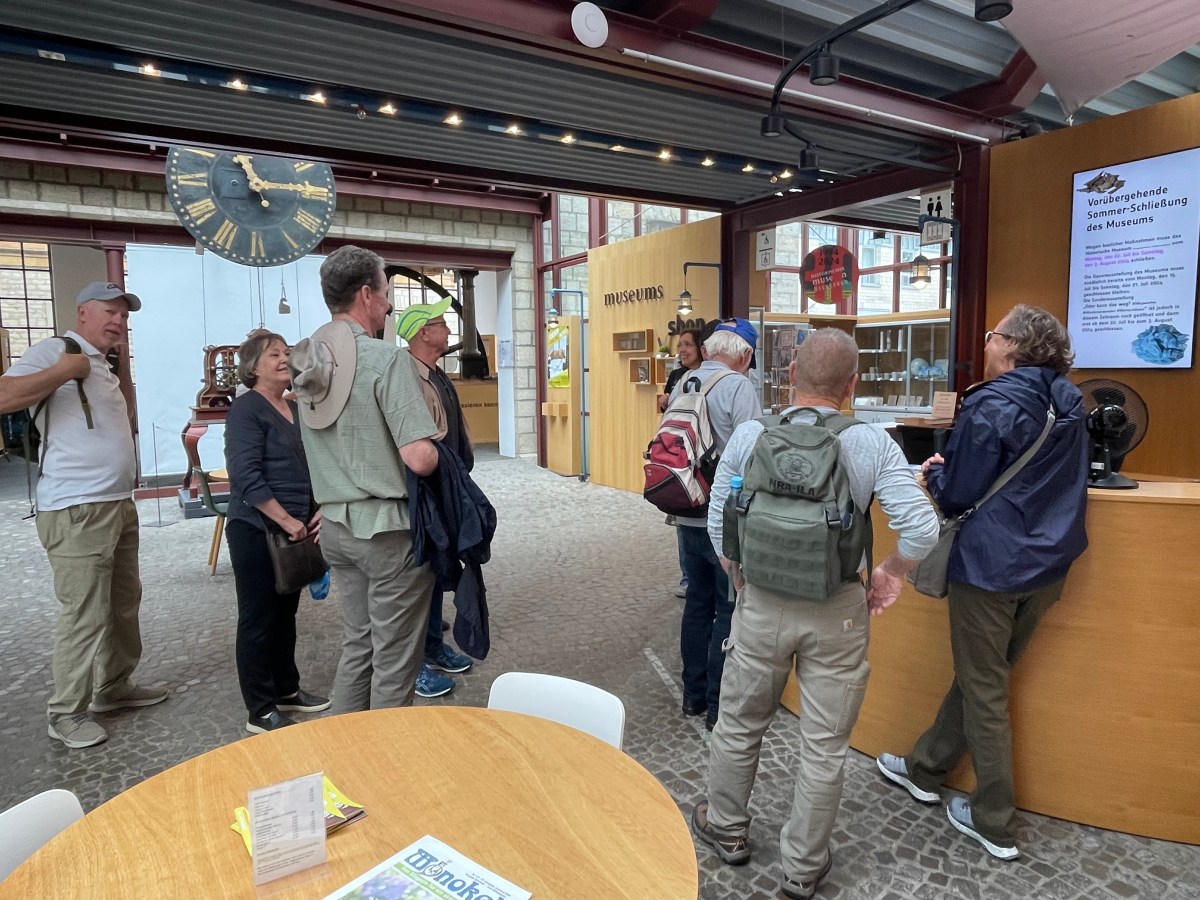
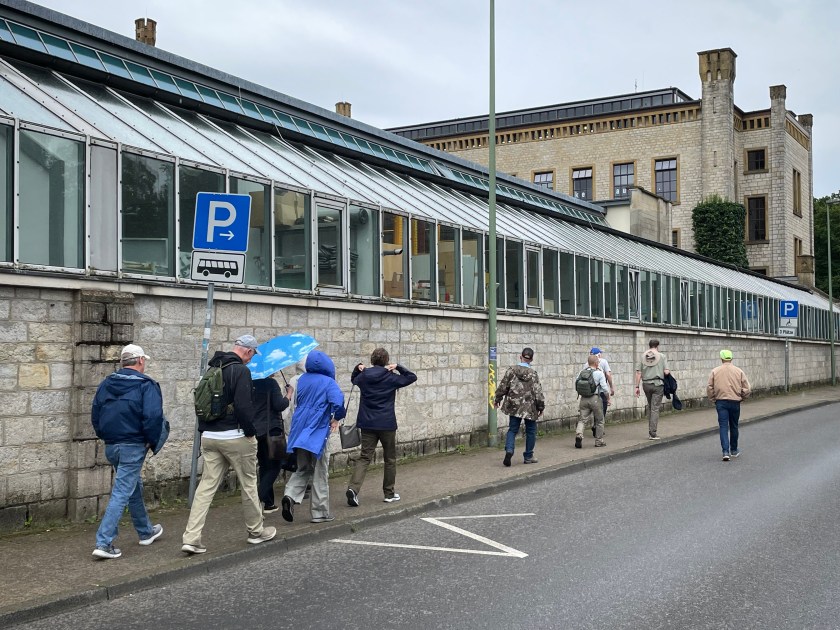
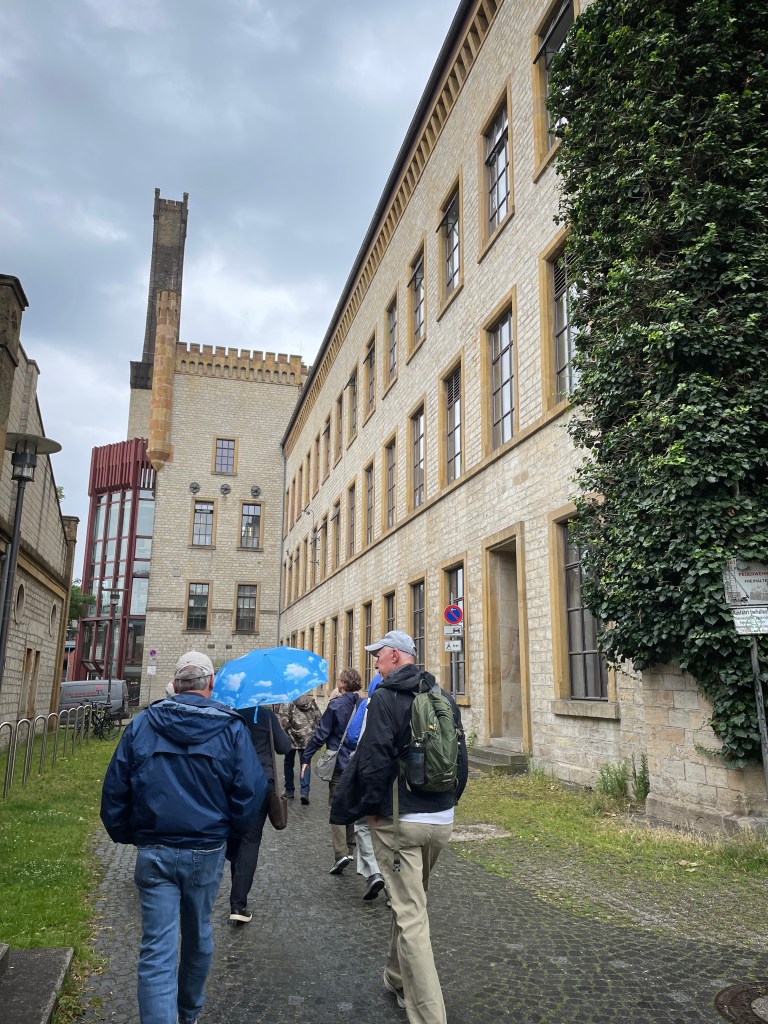
This morning we spent a few hours in the Historical Museum in Bielefeld. The museum is located in part of what was once a textile factory. Now it houses the museum and a Hochschule (a junior trade college).
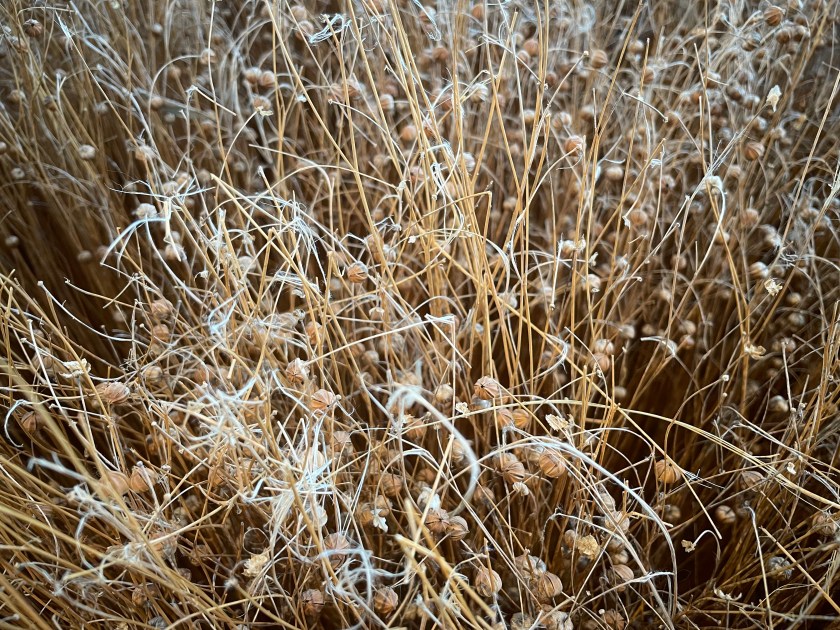
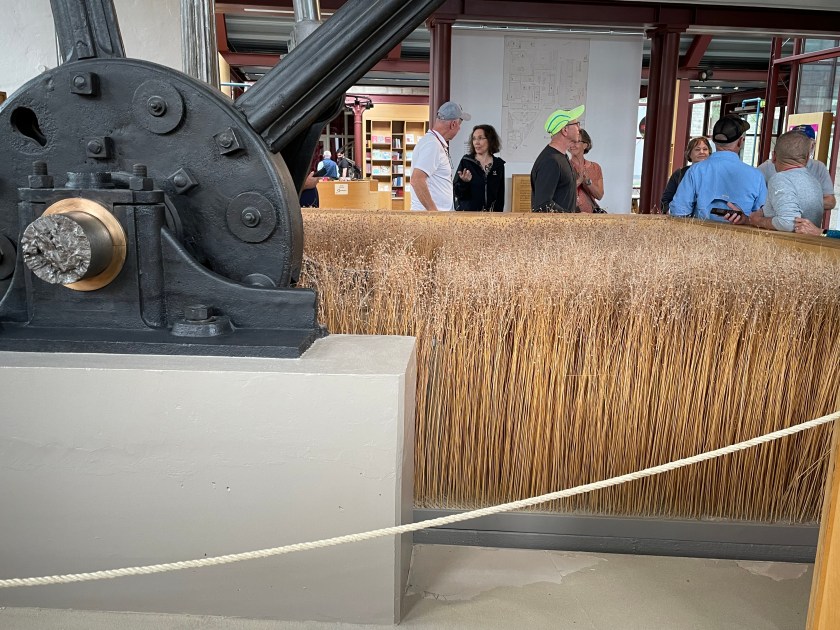
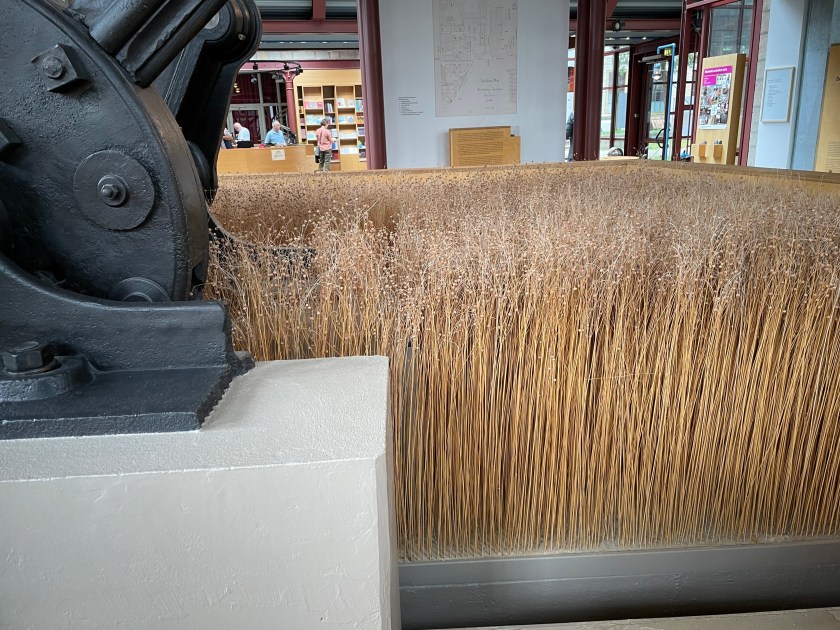
The first exhibit we saw inside the museum showed how flax is grown and harvested to be used for making linen. Here is the flax plant:
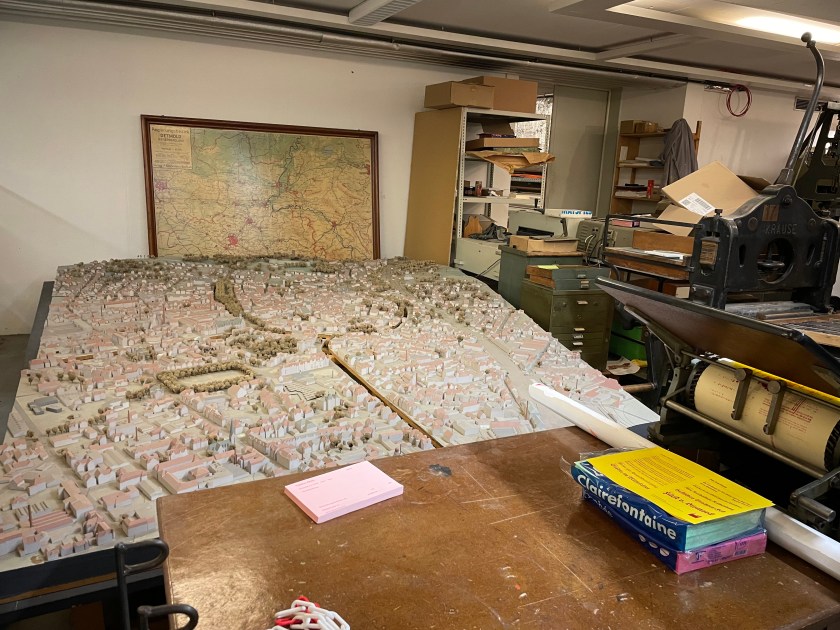
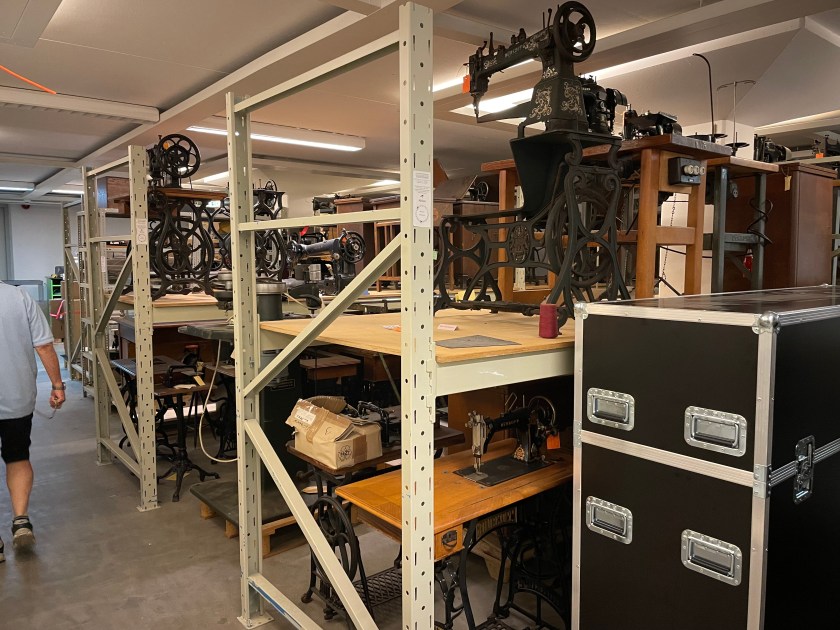
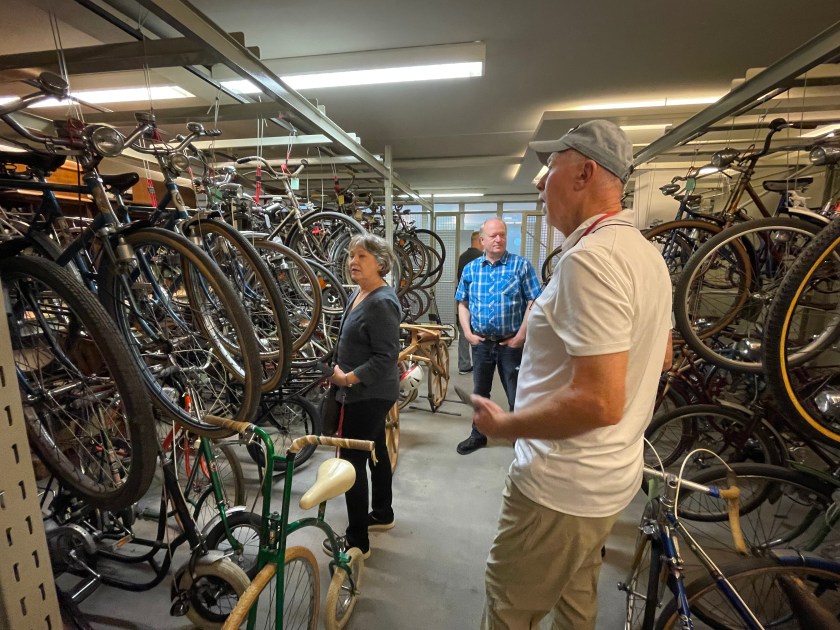
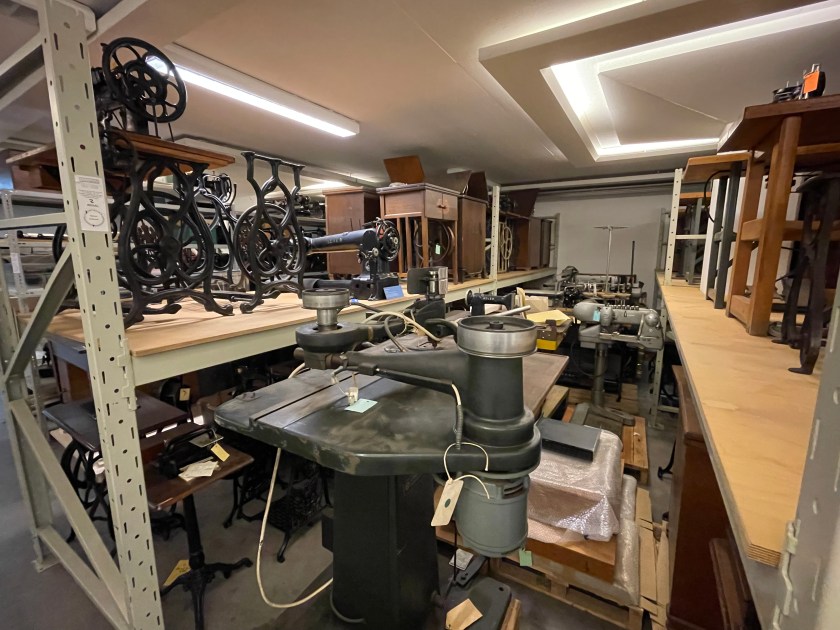
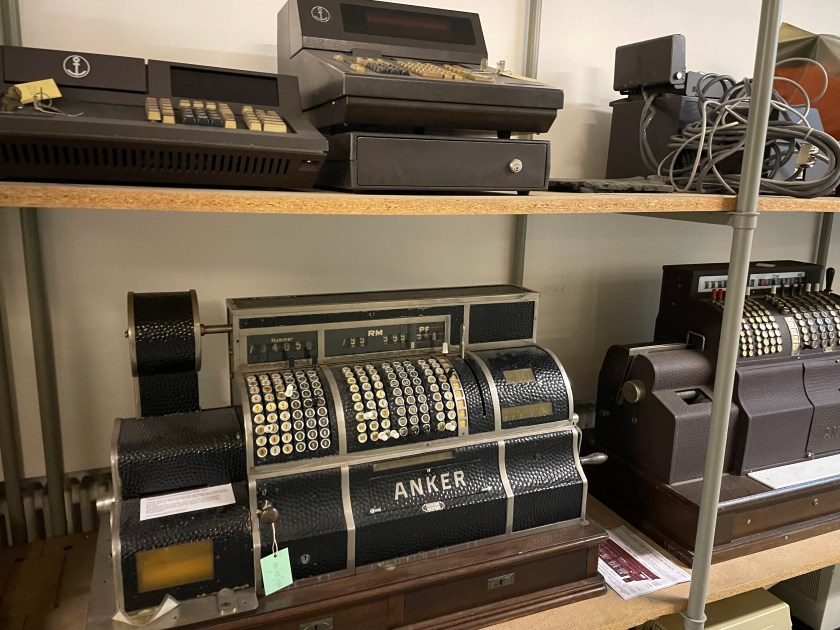
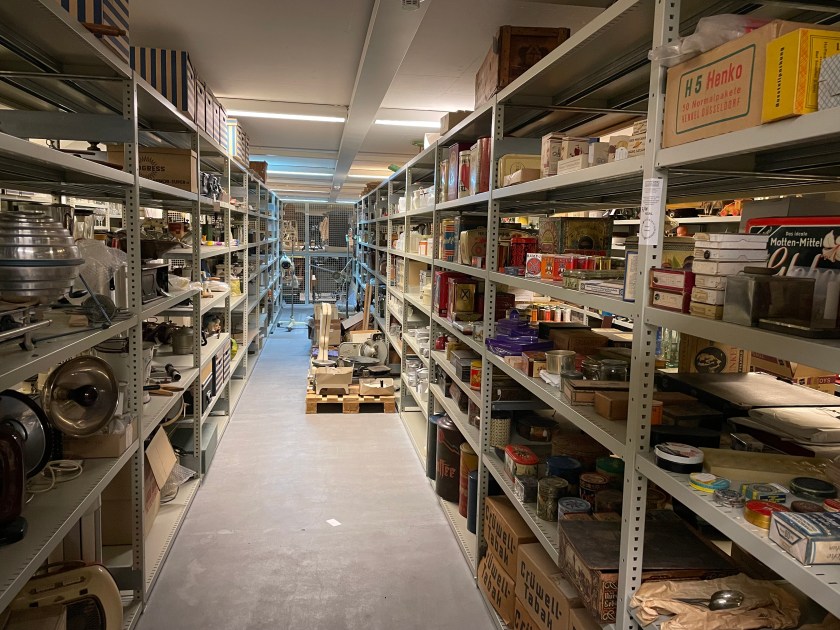
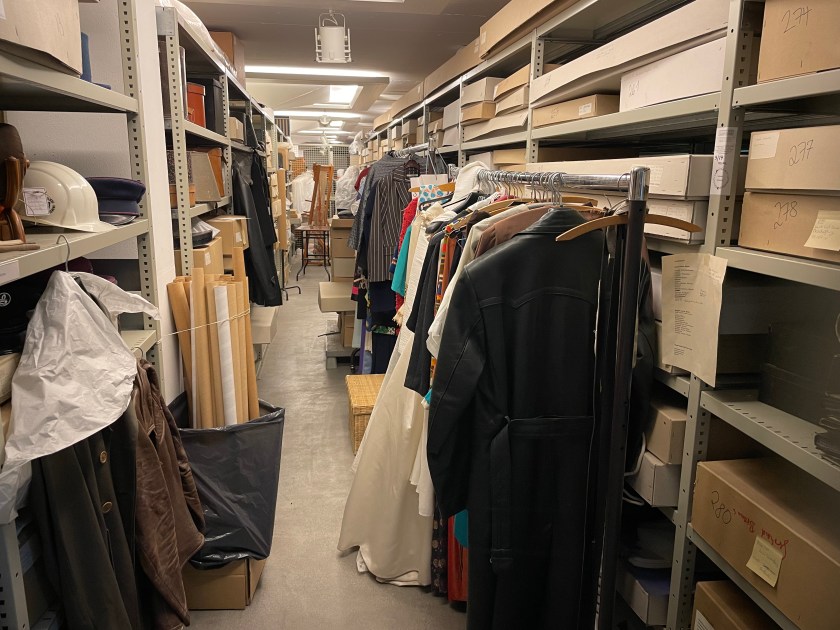
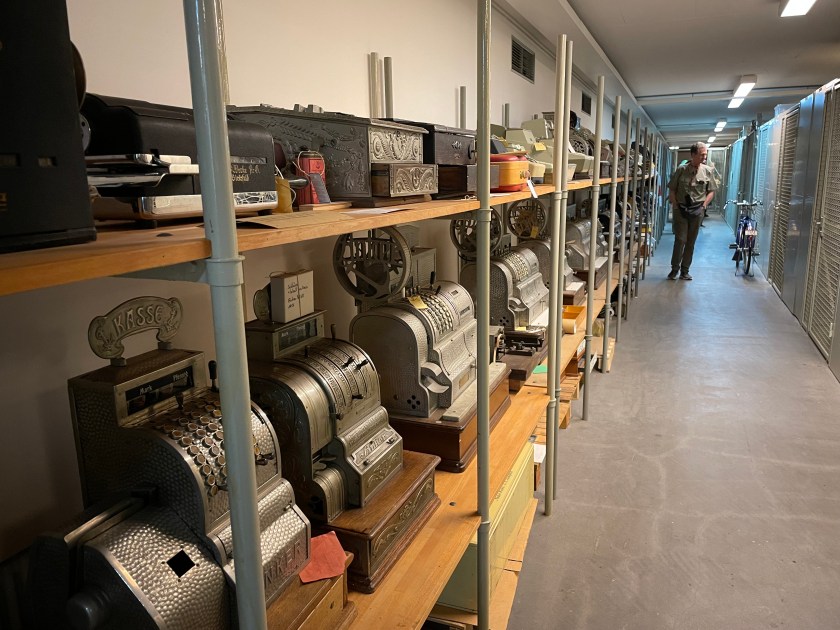
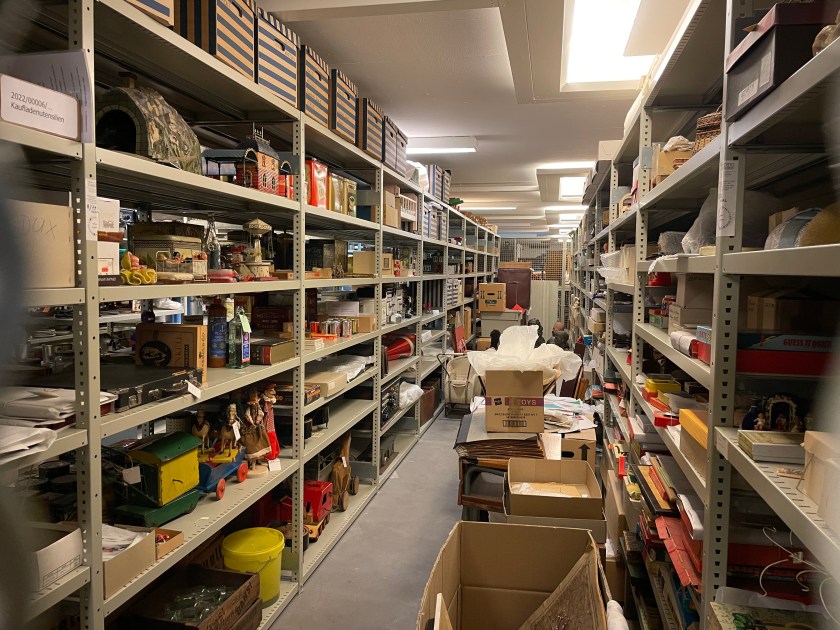
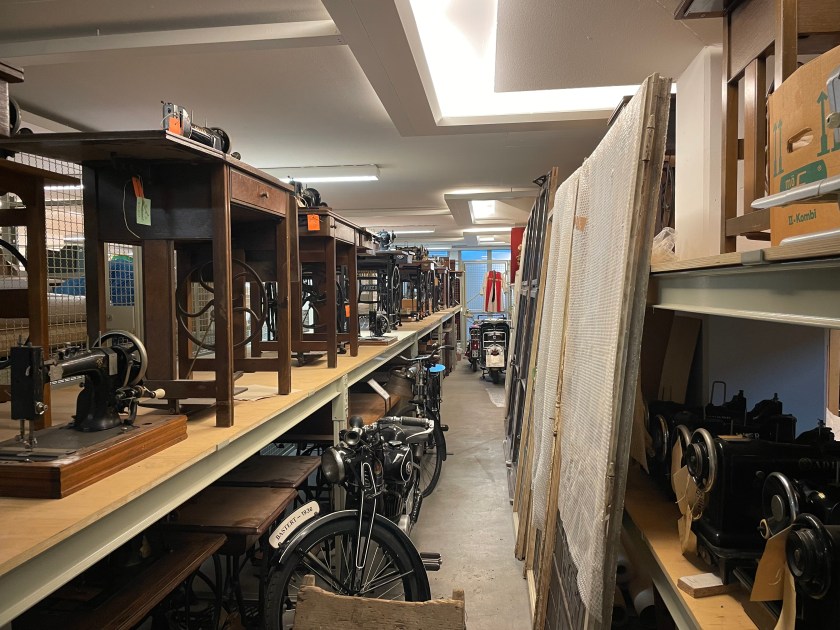
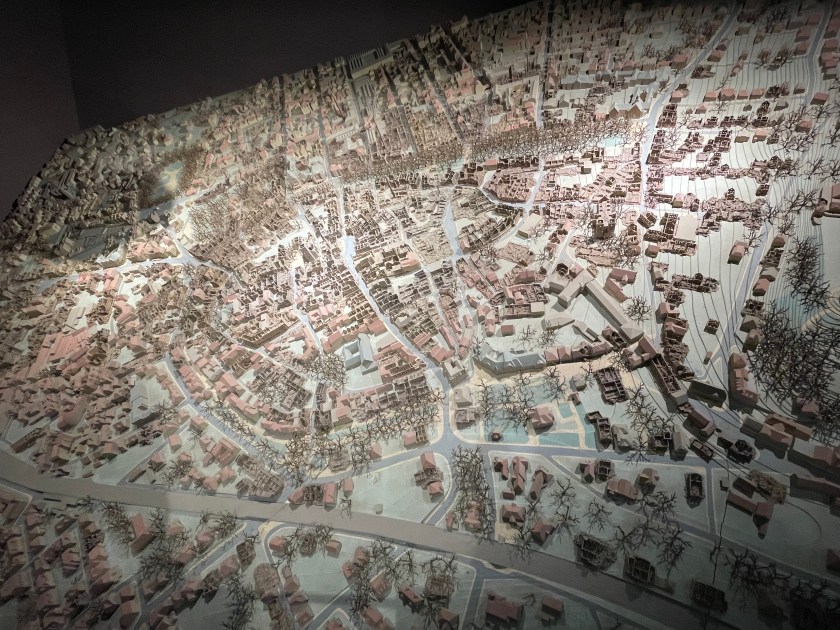
The museum was great–the best part was that they took us down into the underground storage areas of the museum where we saw rows and rows of shelves filled with treasures that may never see the light of day up above in the displays. They are working on a panorama of Bielefeld down here.
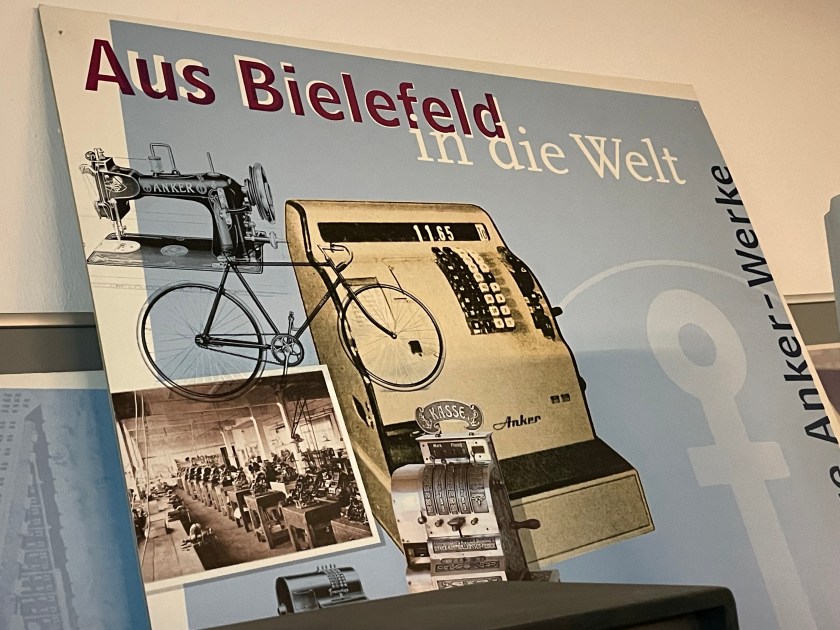
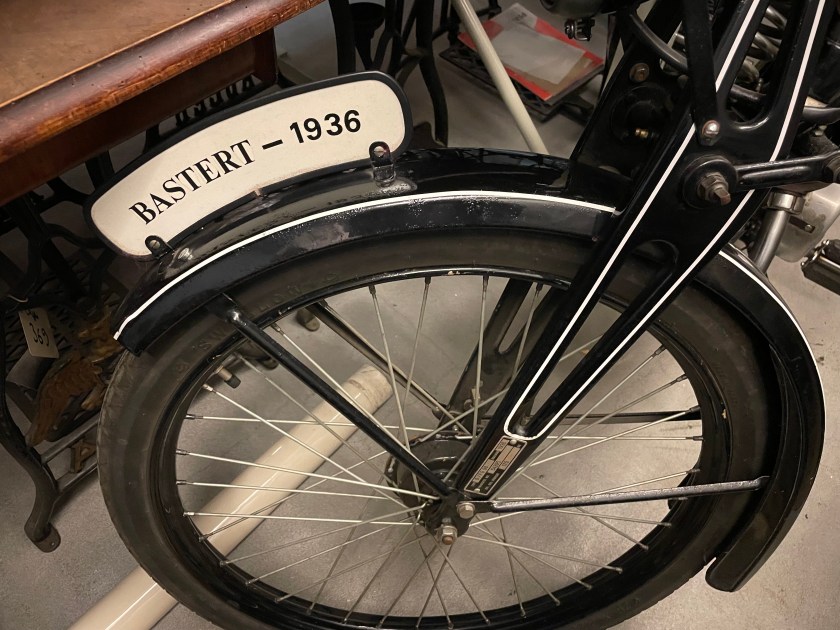
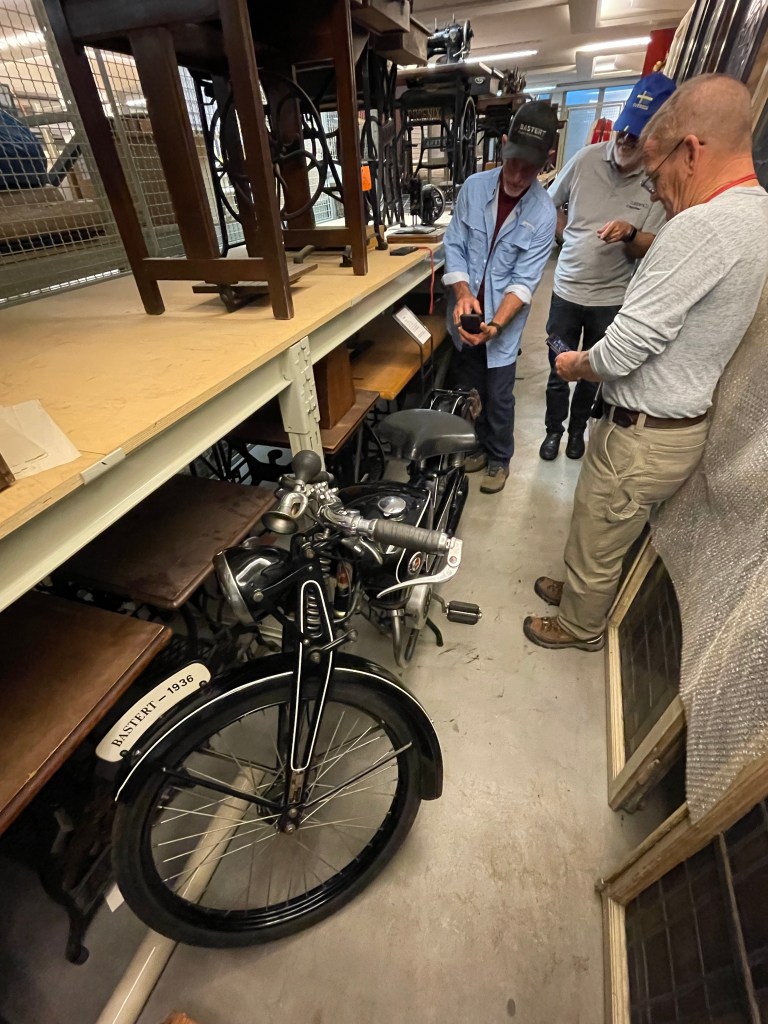
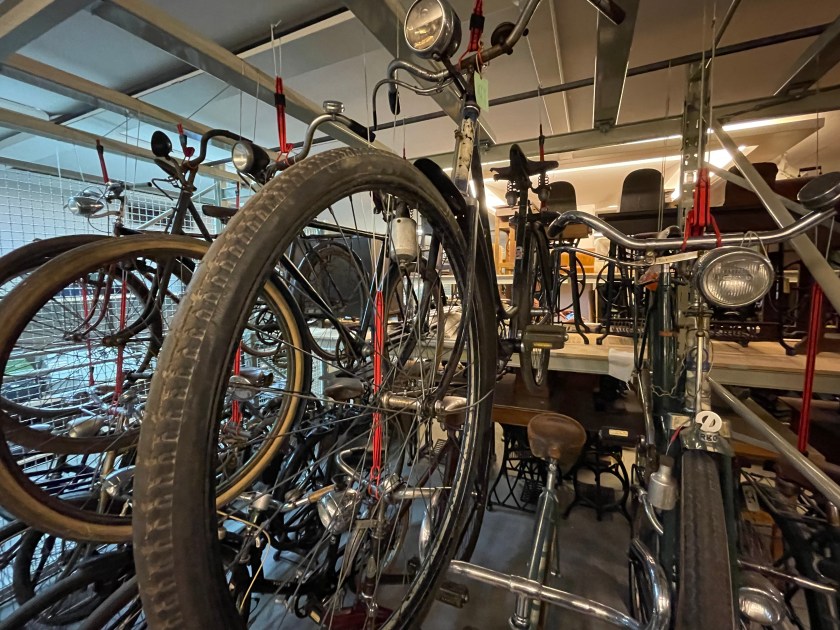
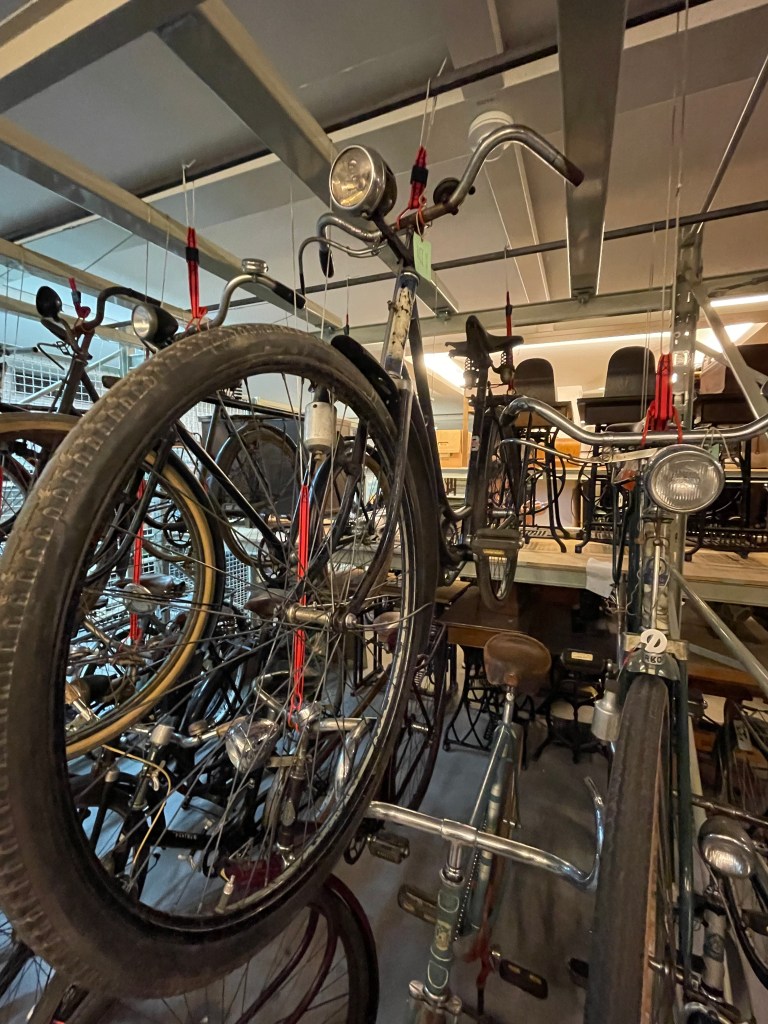
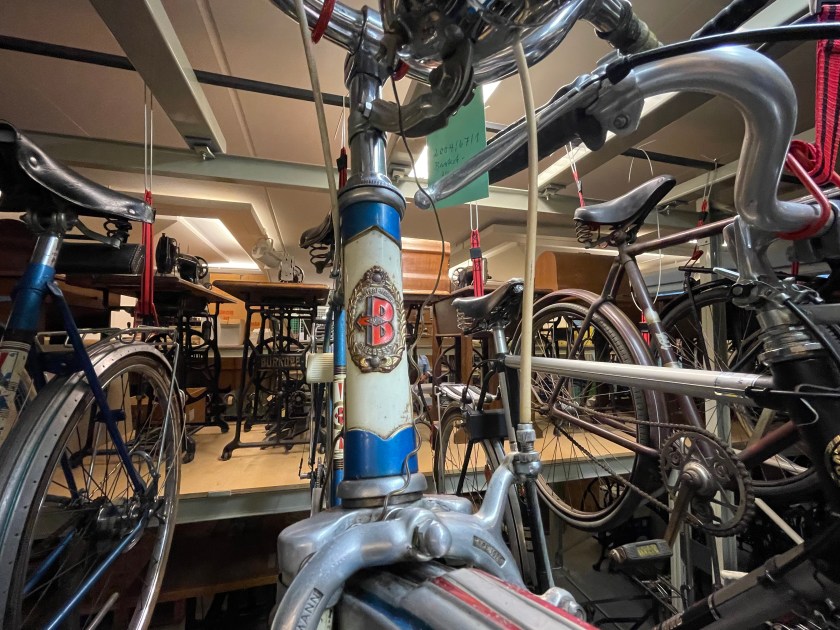
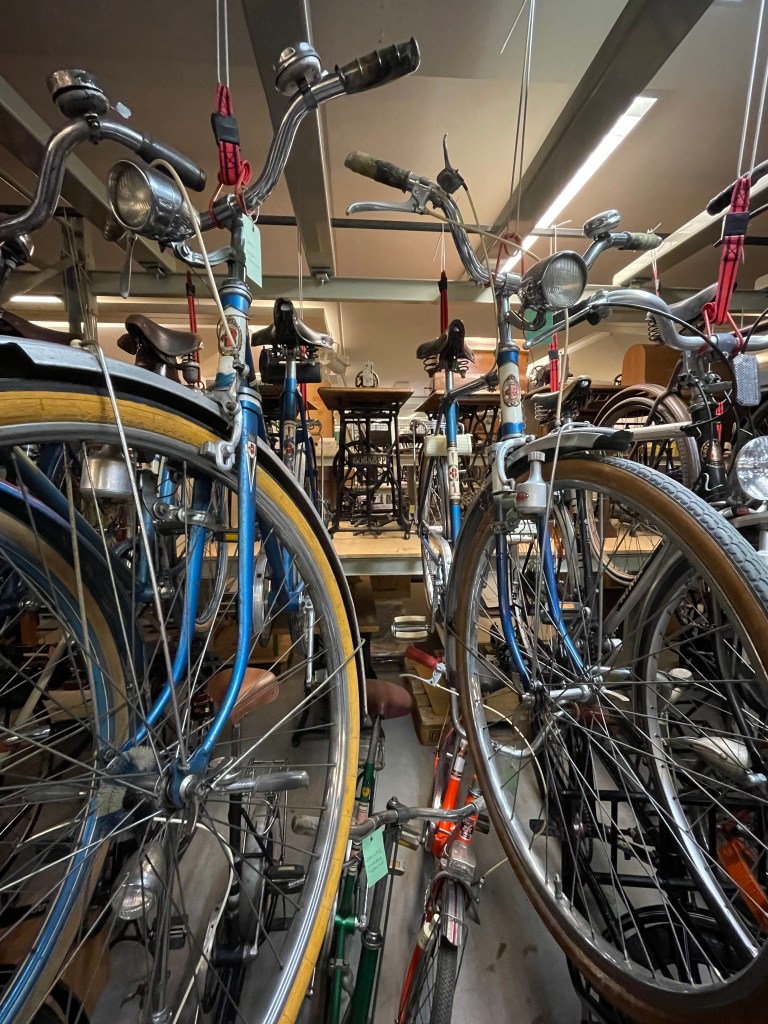
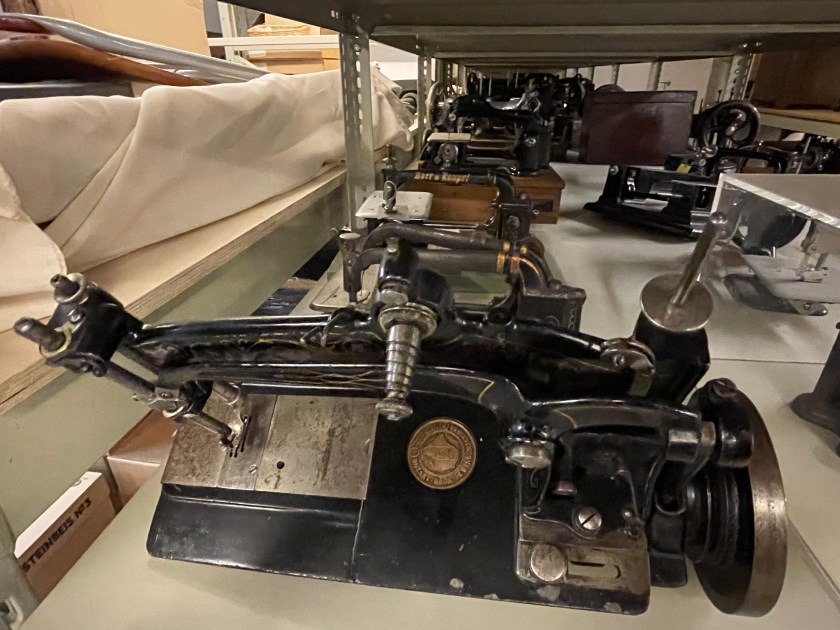
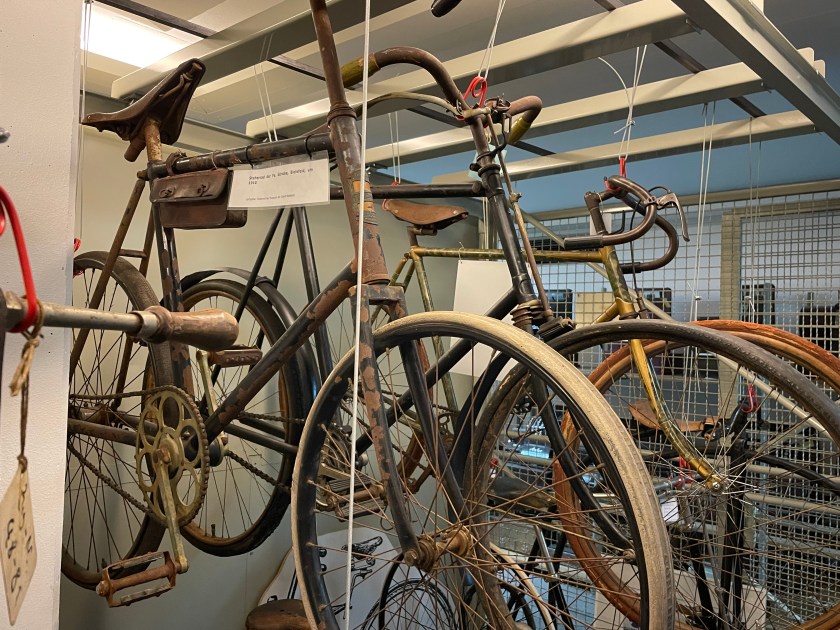
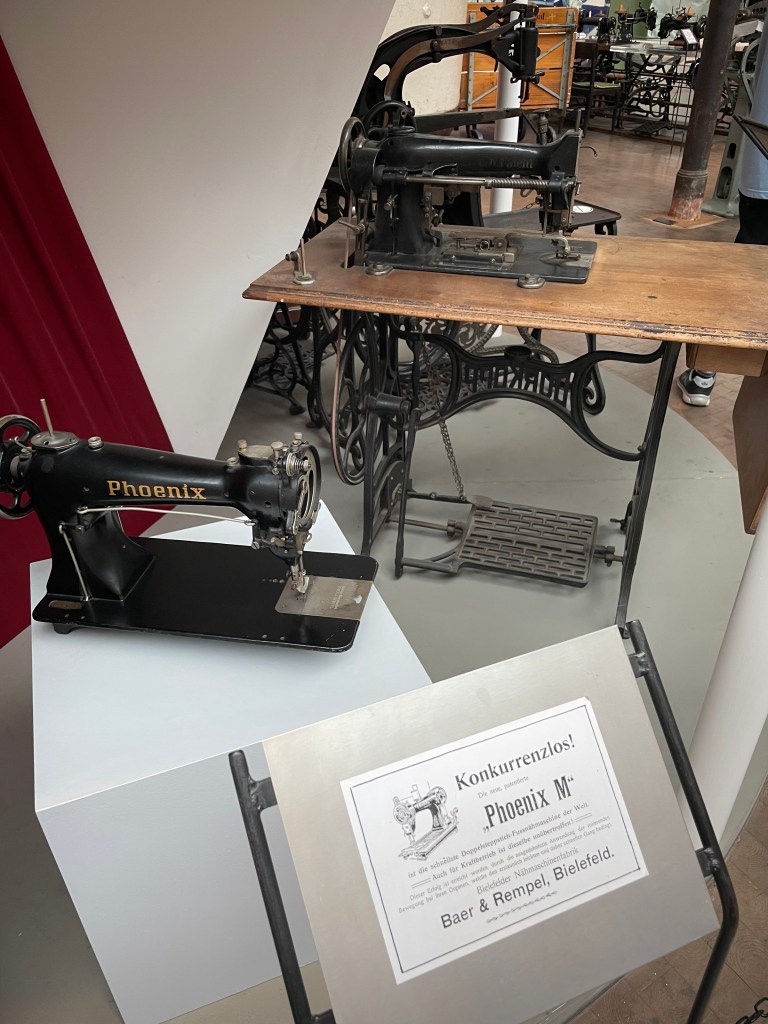
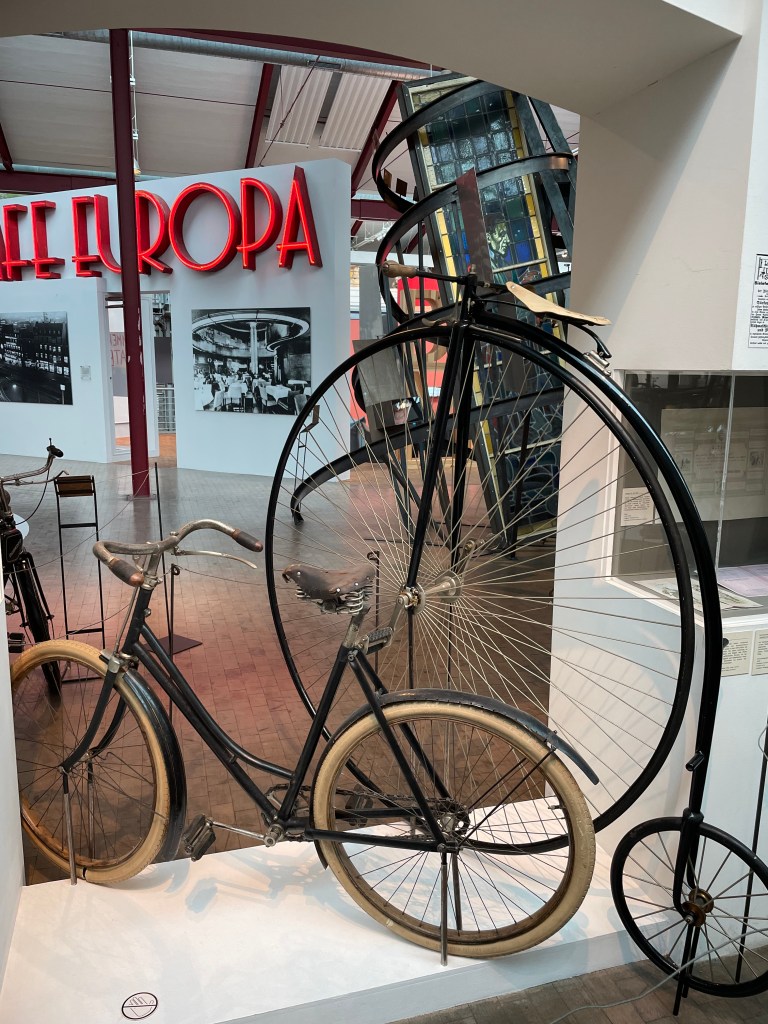
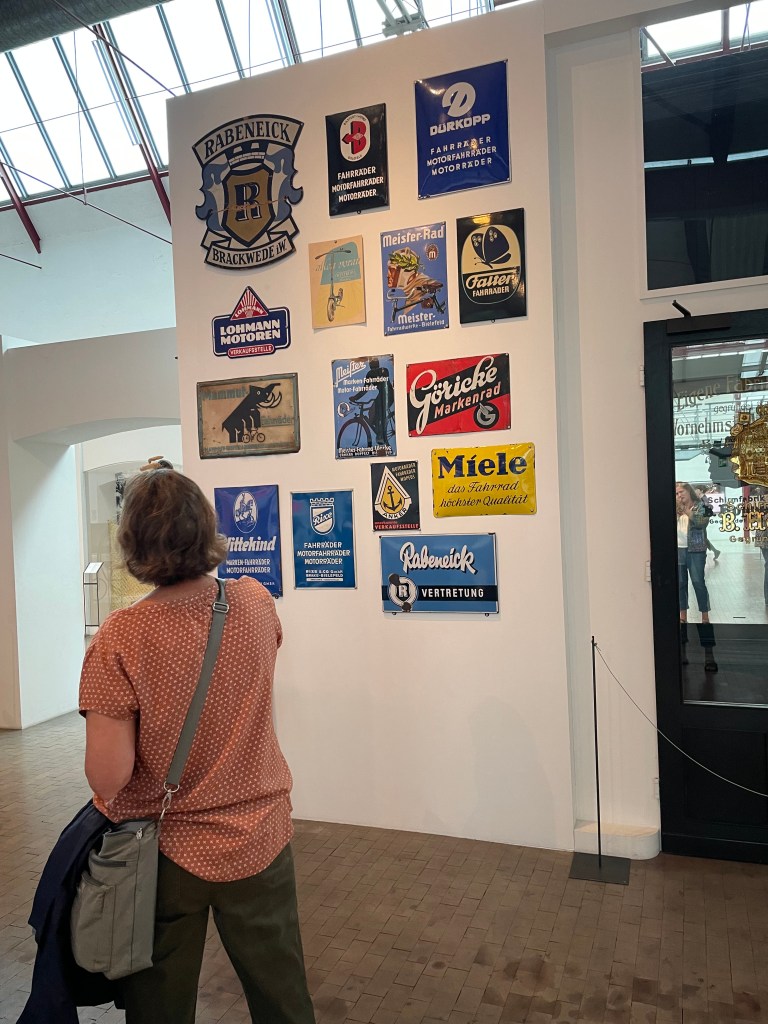
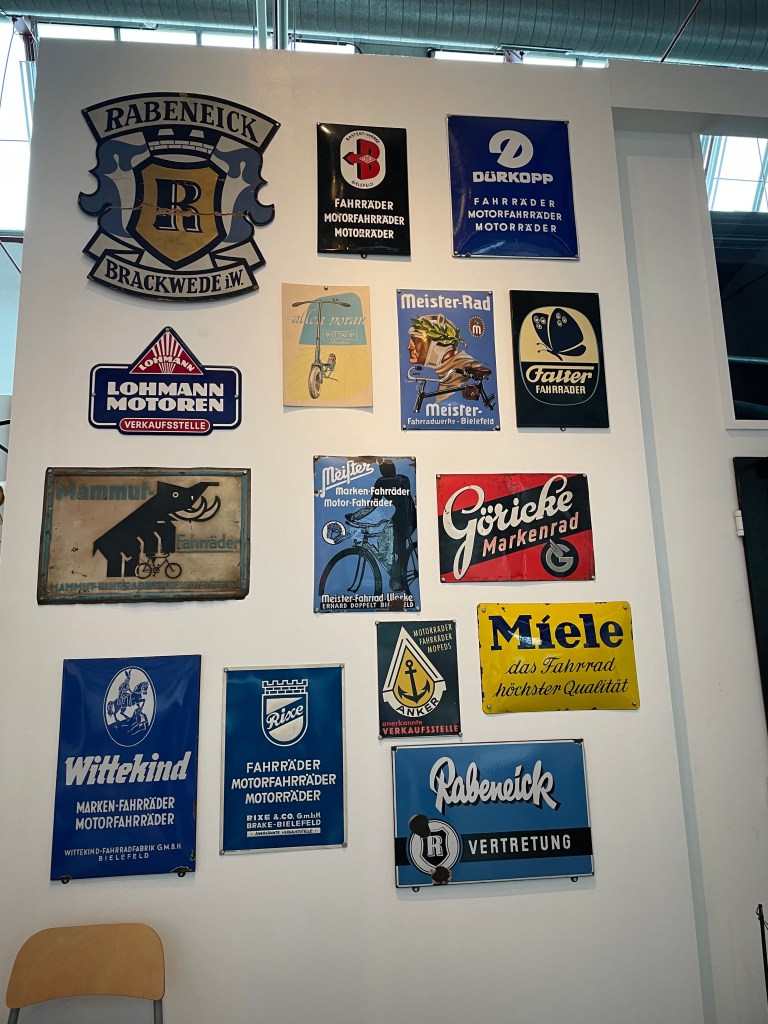
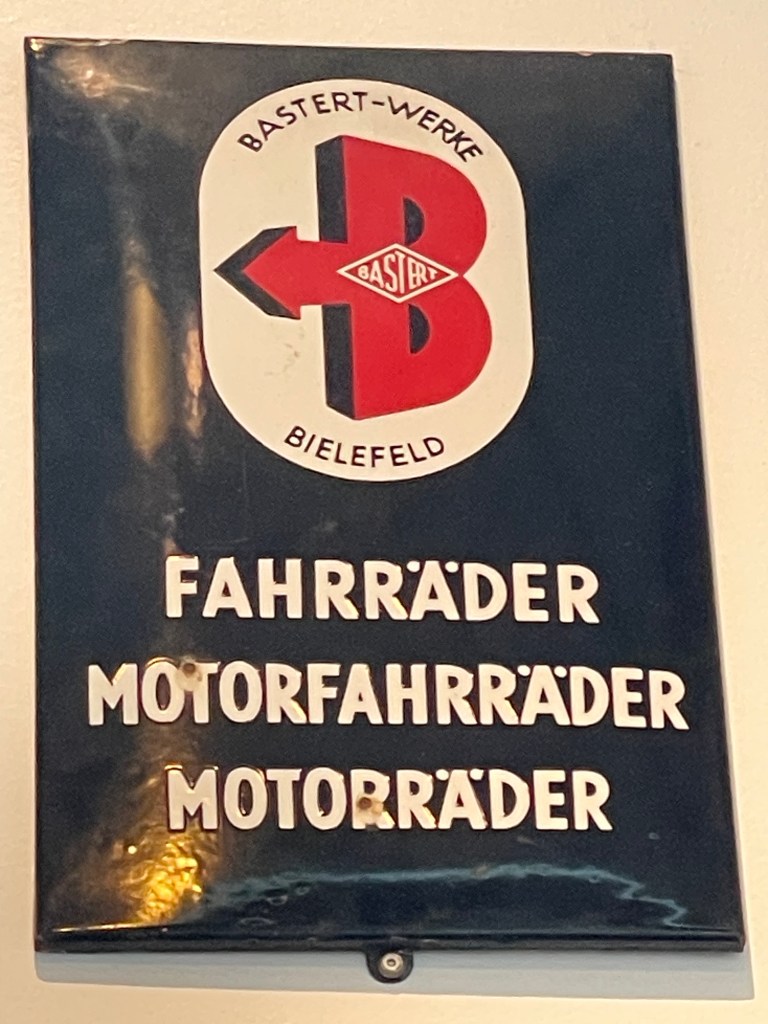
In the basement they showed us Bastert bicycles and motorcycles in their collections. Bielefeld had several factories–there was a big factory that made sewing machines, a factory that made adding machines, linen making factories with weavers, and factories where clothing was sewn. This basement storage area was filled with items from these factories through the years.
I volunteered to be the photographer today and tomorrow, so I’m including ALL of the photos I took for the family here.
Many of these bikes had the Bastert factory emblem on them.
There were also rows and rows of historical household items and clothing.
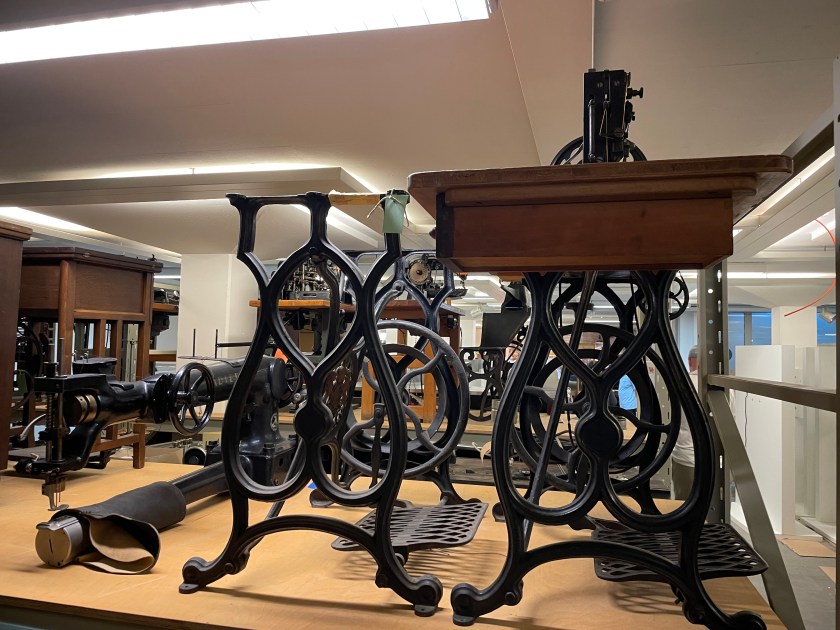
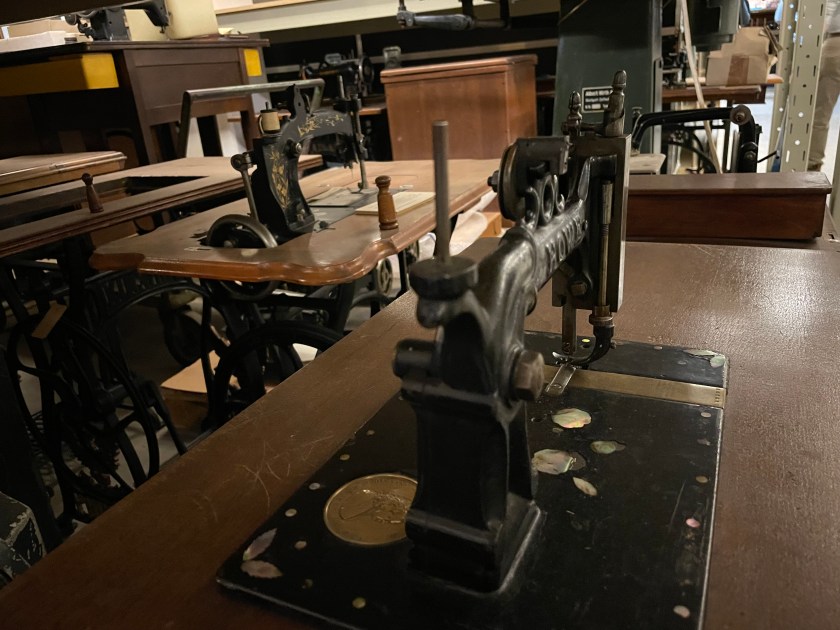
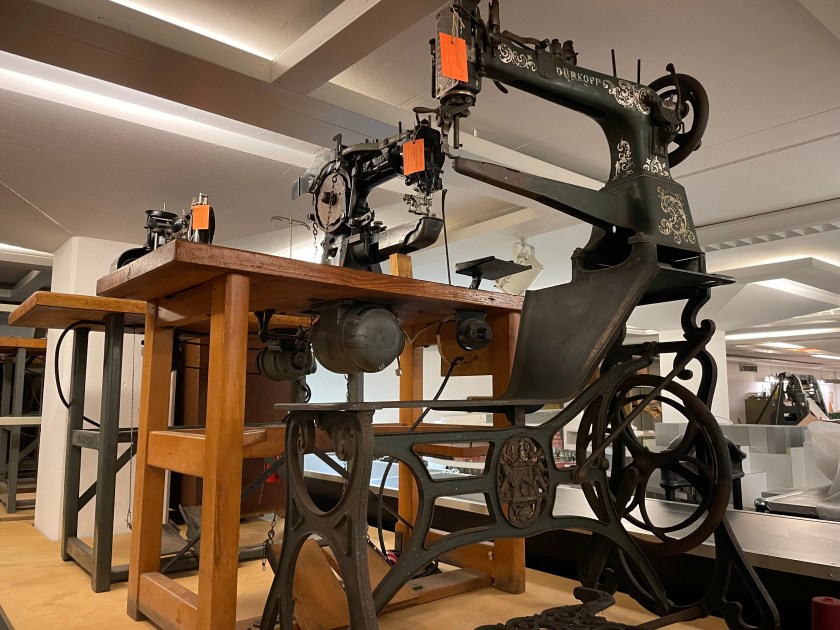
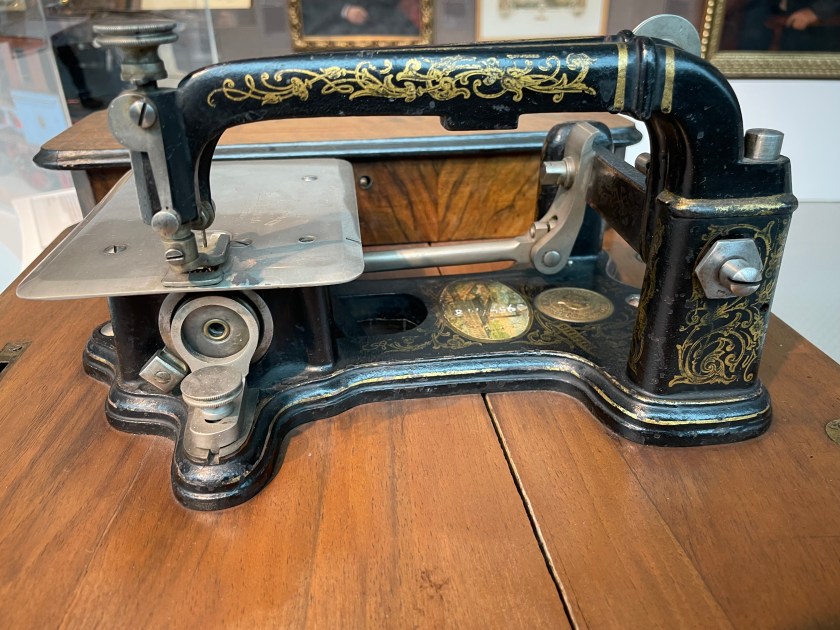
I’ve never seen so many vintage sewing machines in one place.
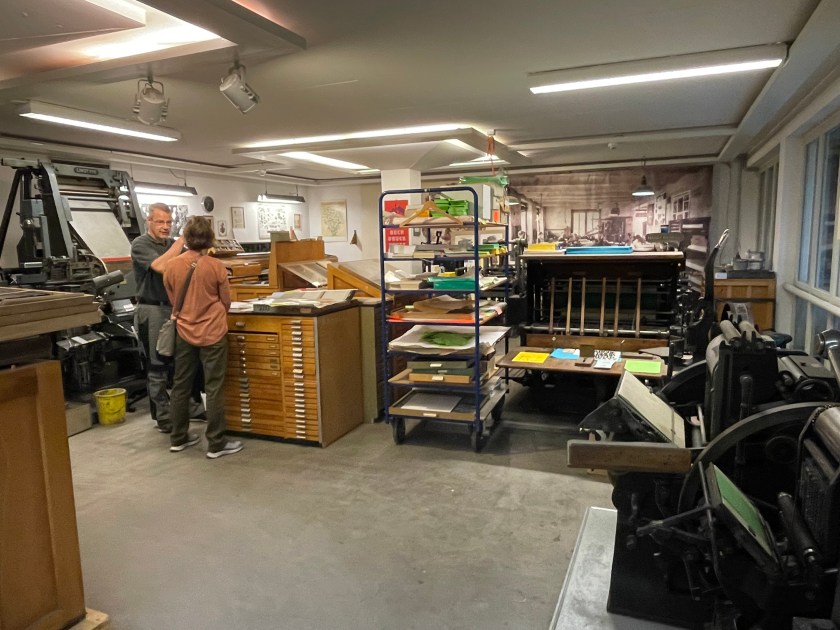
Where the historians work:
Then we went back up above ground. Volker said that last time he was there, they had a Heulering hut display, that would’ve been the type of housing the Bastert family lived in 6 generations ago when they were tennant or sharecropper farmers. That was the generation I researched. The father was Caspar Heinrich Bastert. Three of his sons went to America in the 1850s. My project was about one of those sons, Peter Bastert. I was sorry that display had been taken down.
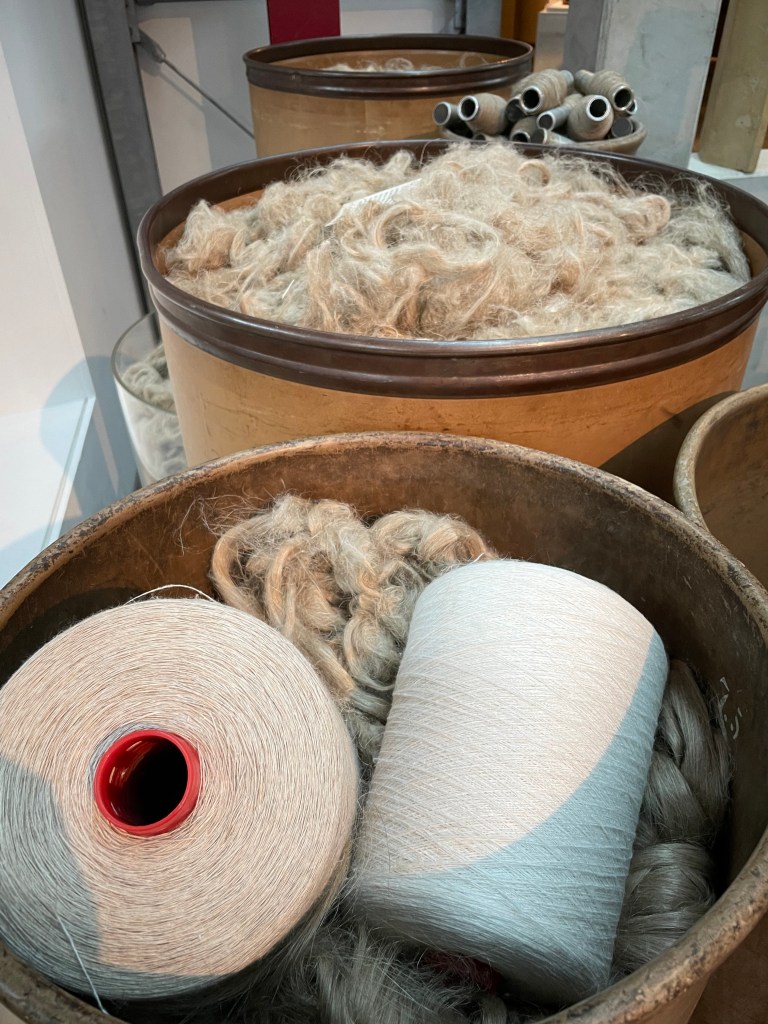
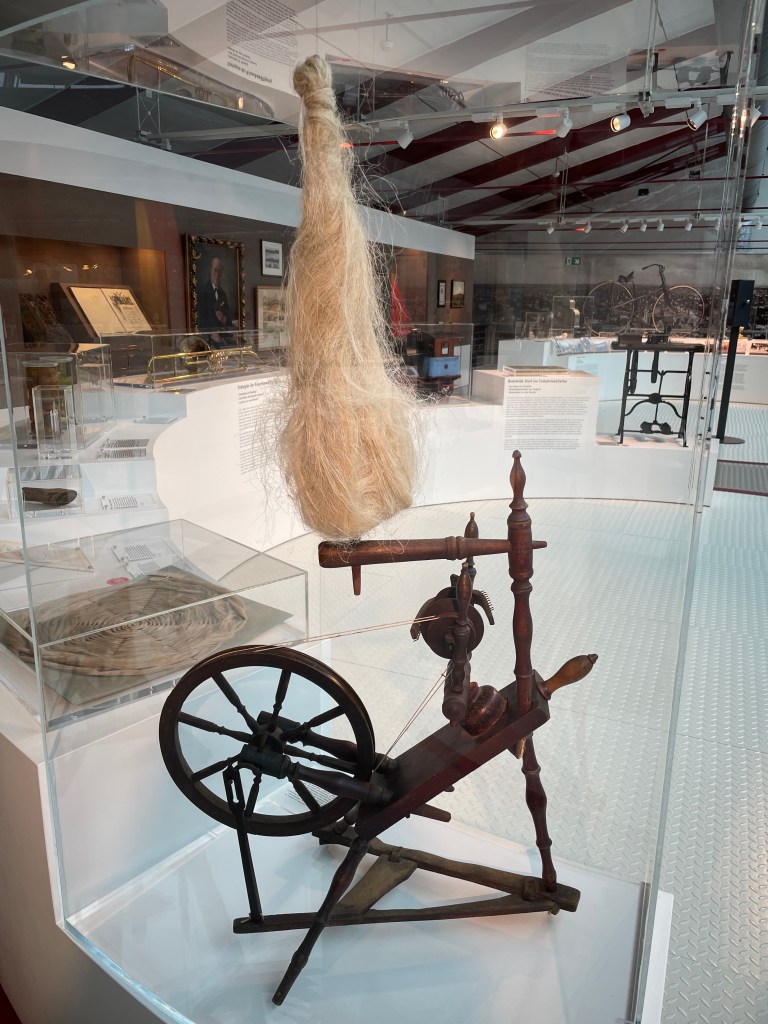
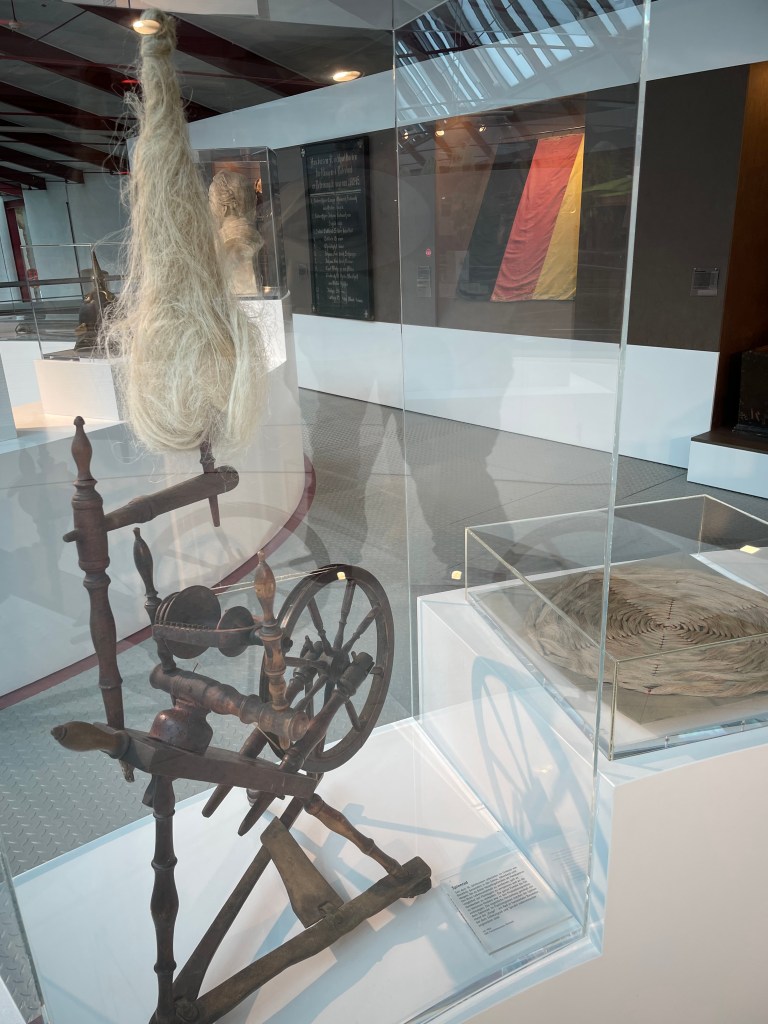
This display shows how the flax is harvested and prepared to make linen.
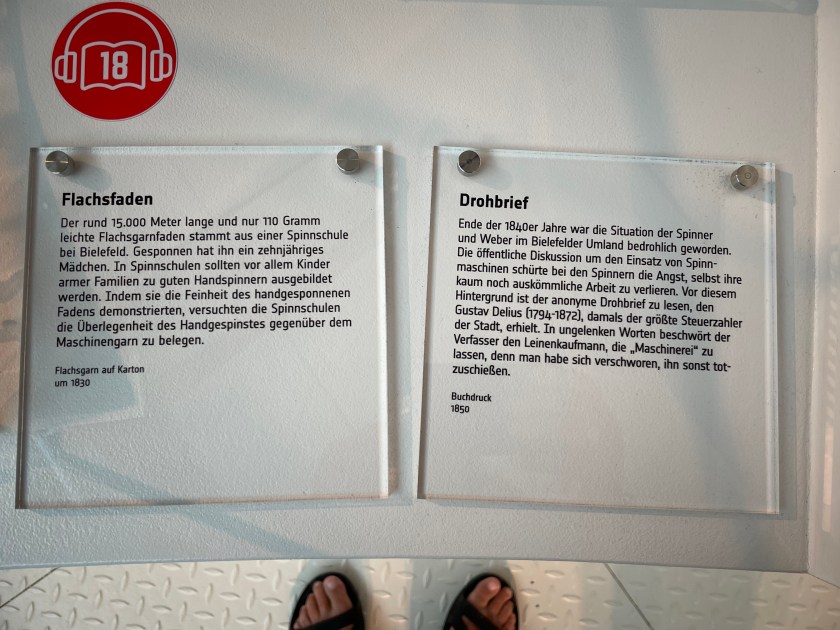
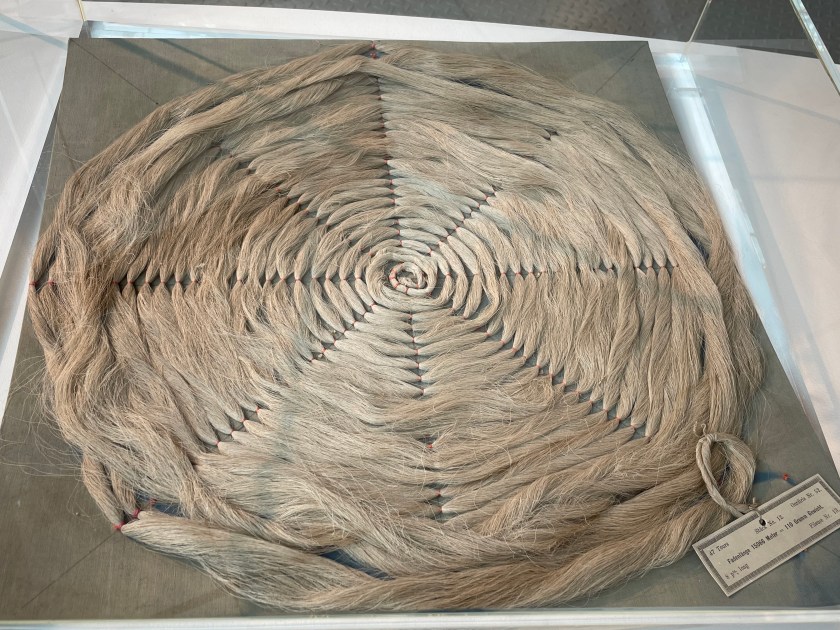
This mat was spun and made by a 12-year-old girl.
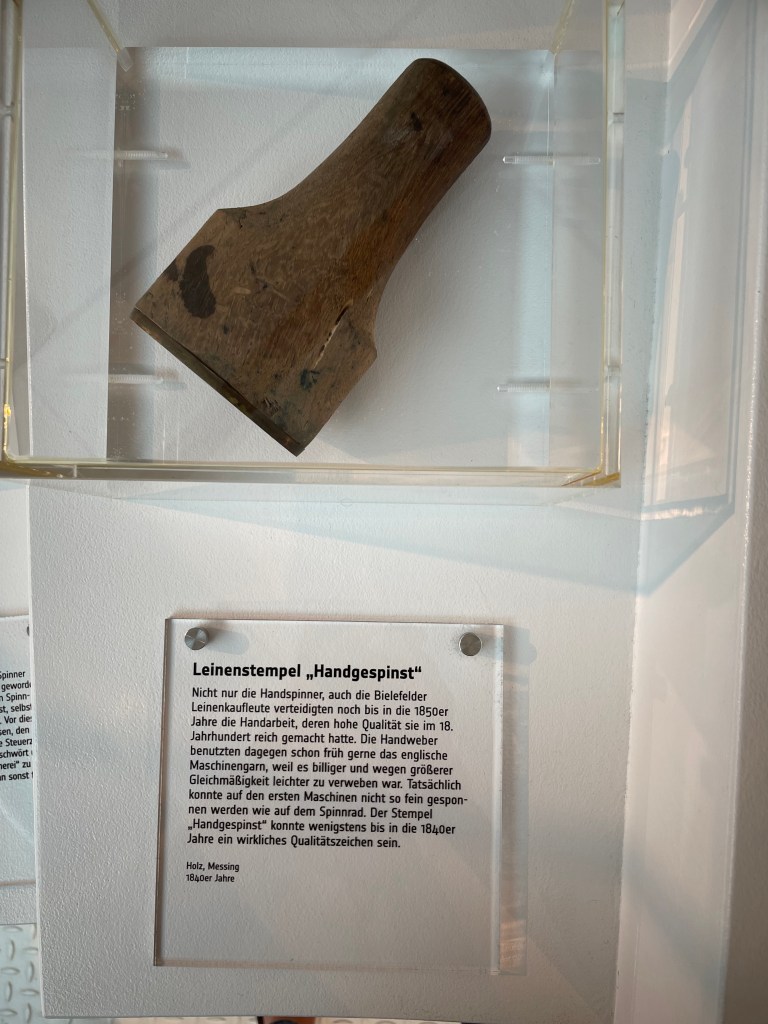
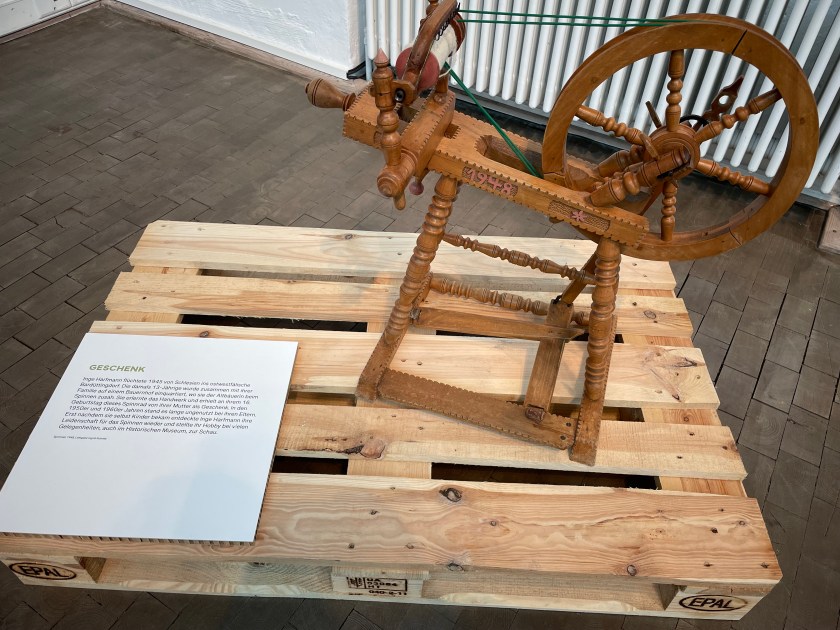
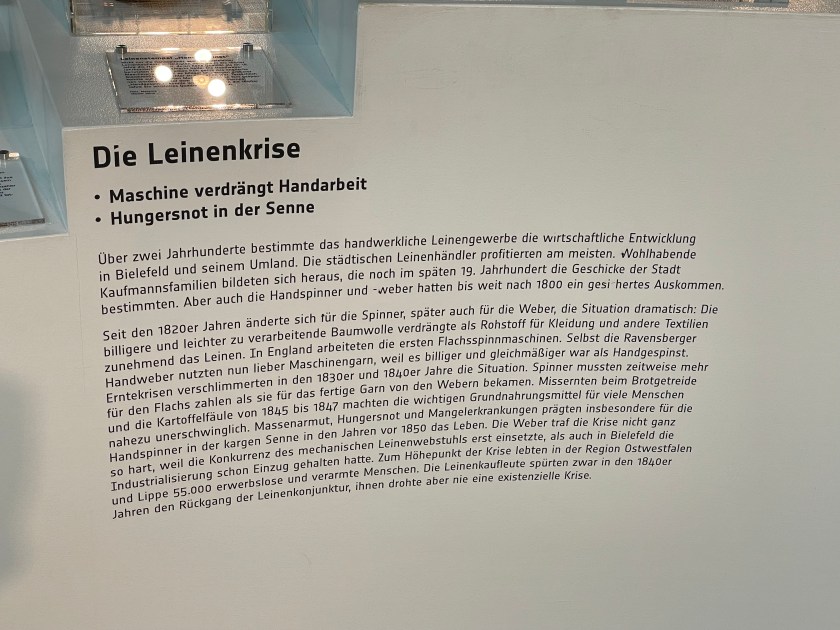
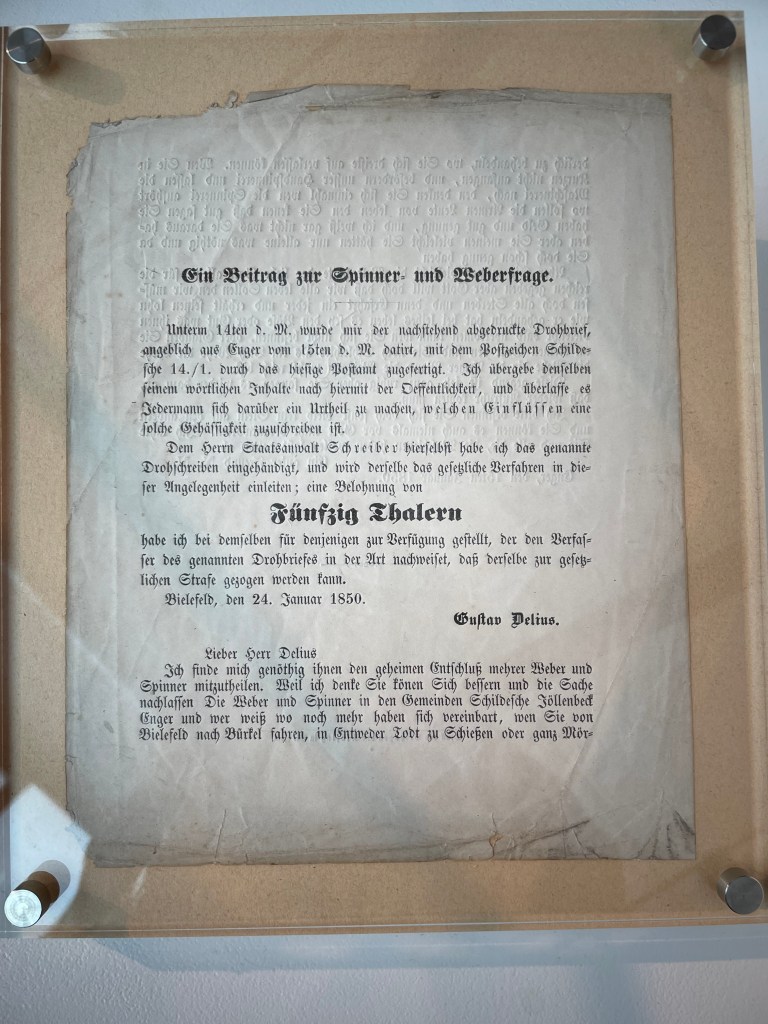
The contributions of spinners and weavers:
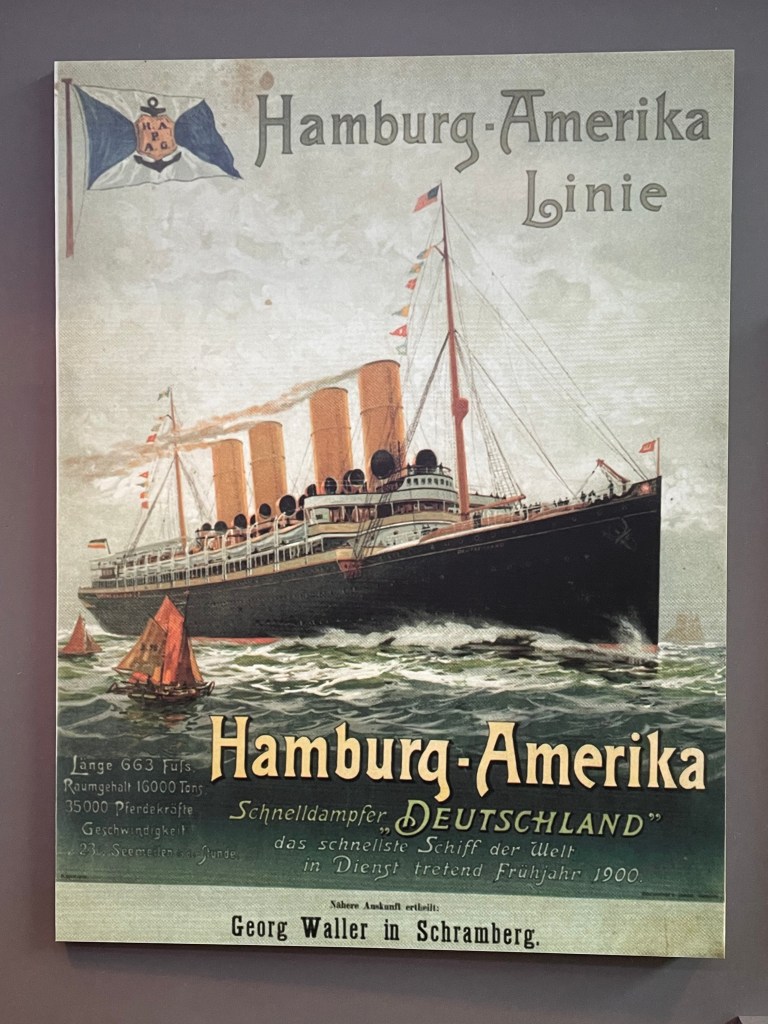
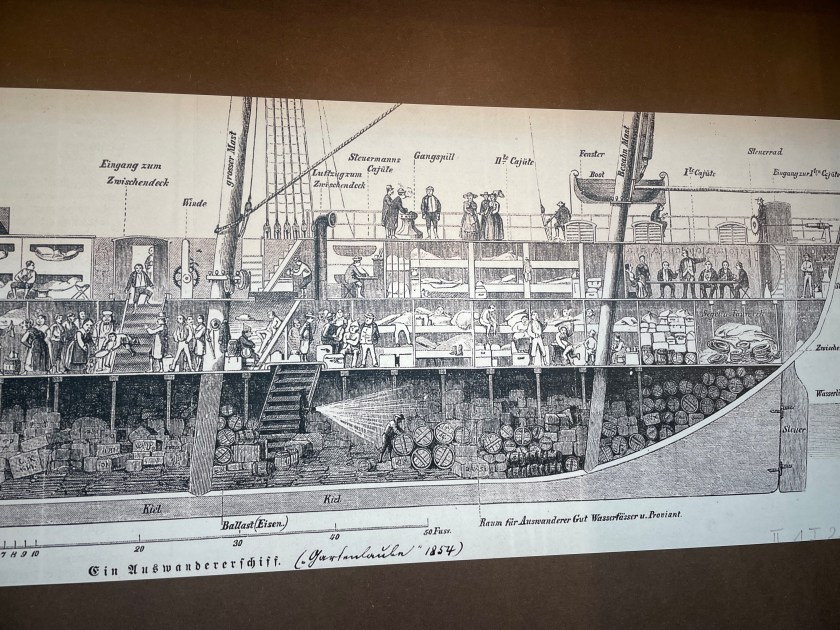
This display shows what life was like on a passenger ship in 1854, the very year Peter Bastert immigrated to America.
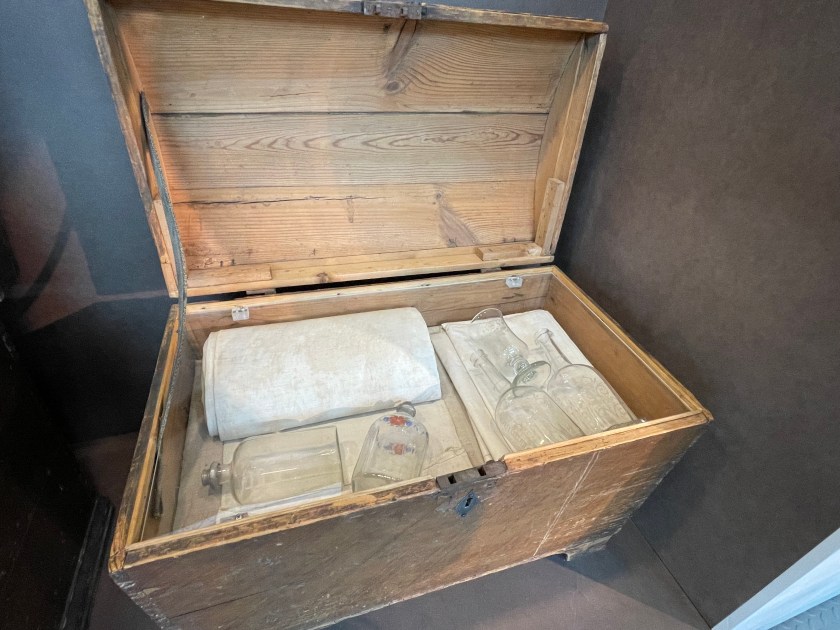
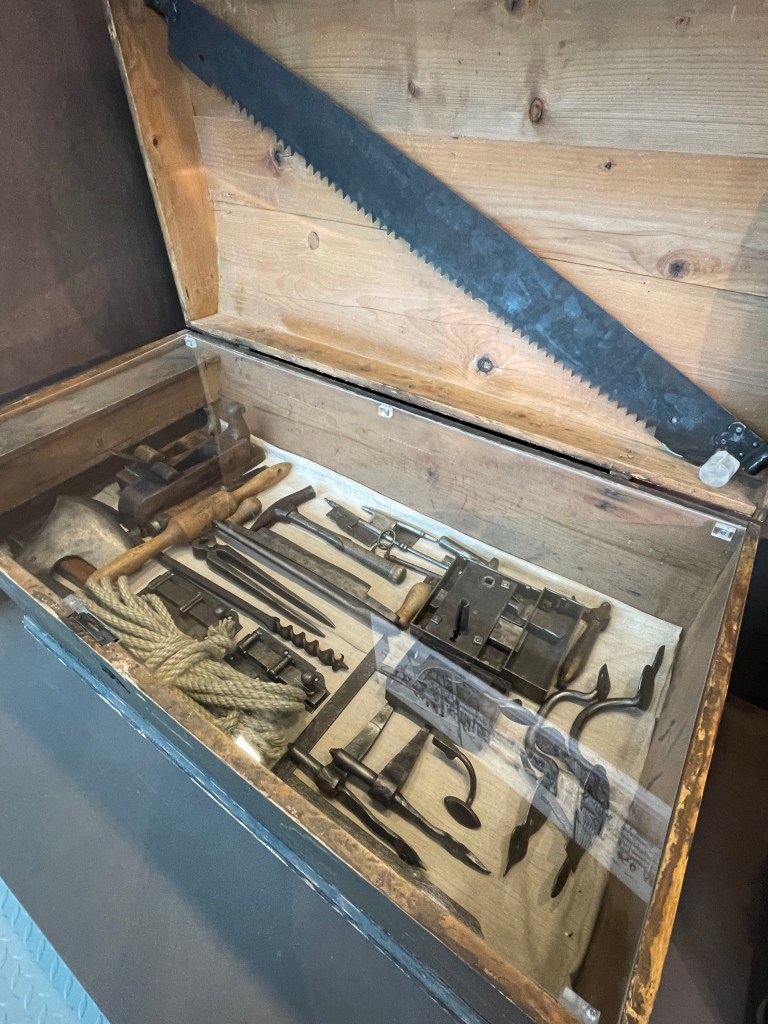
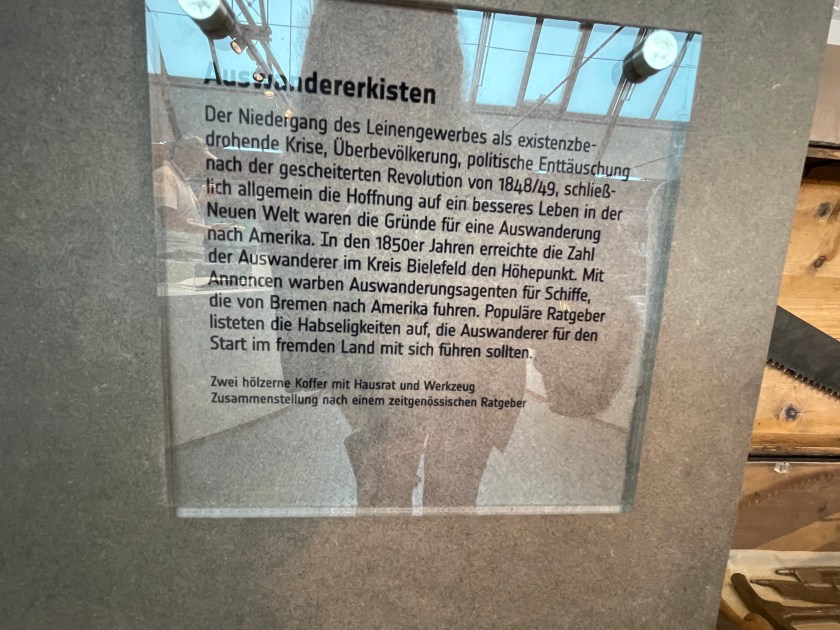
These are passenger trunks, packed for travel.
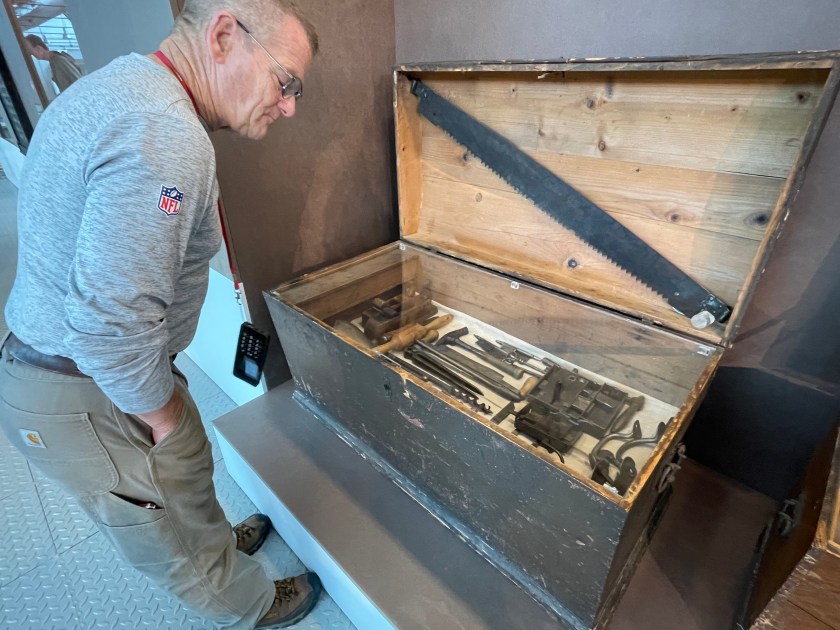
A tradesman’s tools.
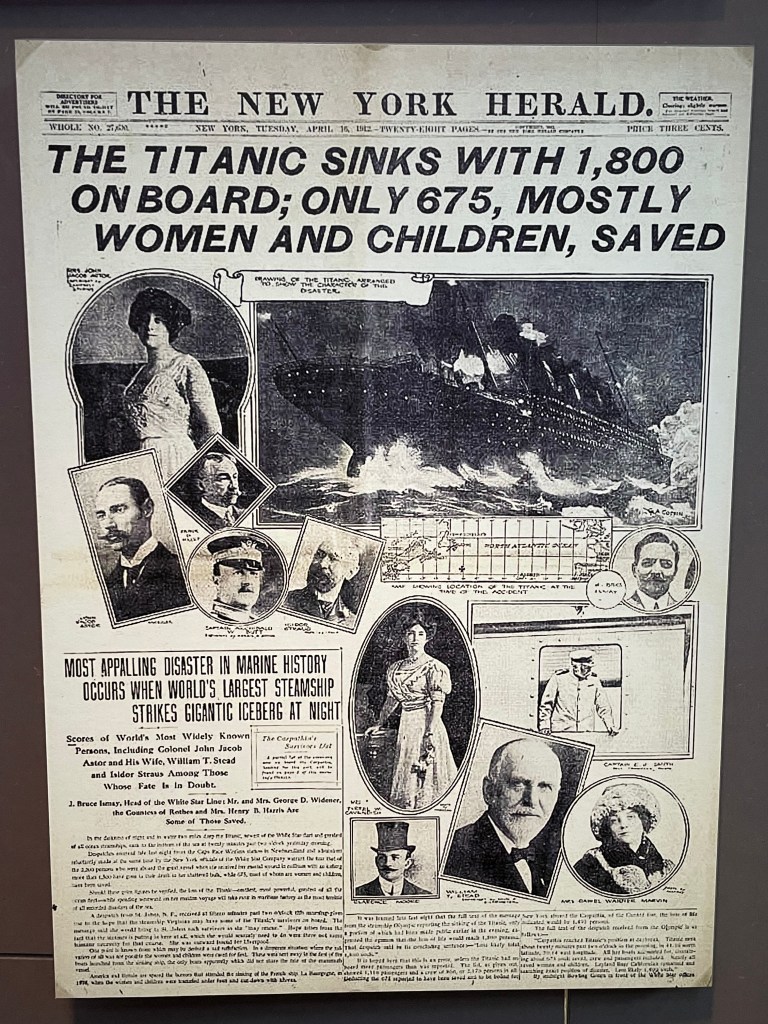
Many people left Bielefeld in the 1850s to immigrate to America. The Titanic sailed in 1912.
People hoped for a better life in the New World.
These are preserved potatoes that show the disease that caused crop failures during that time, leaving so many families hungry and without hope.
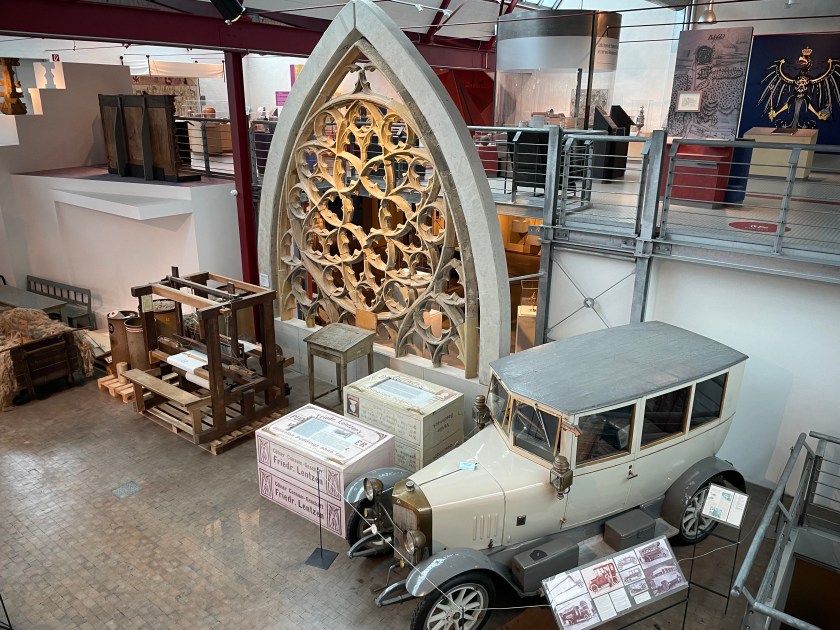
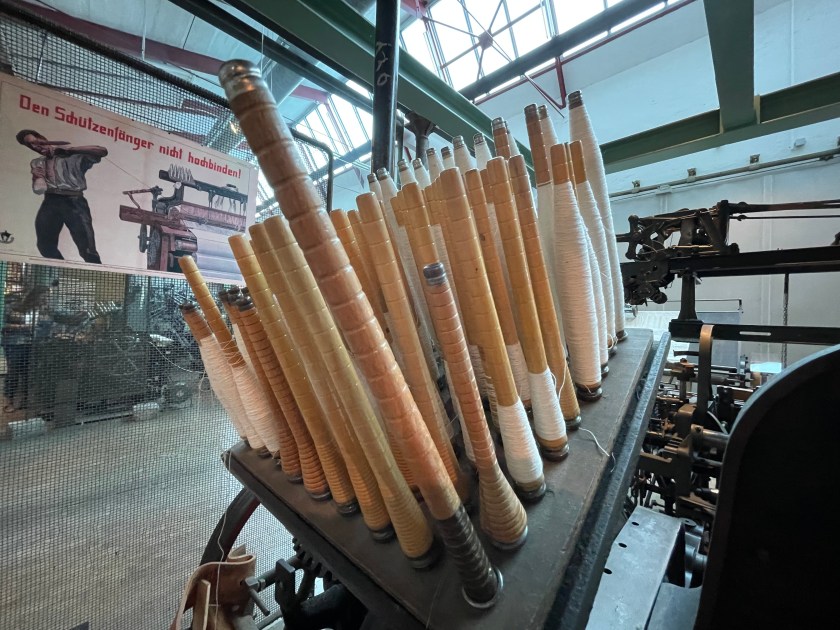
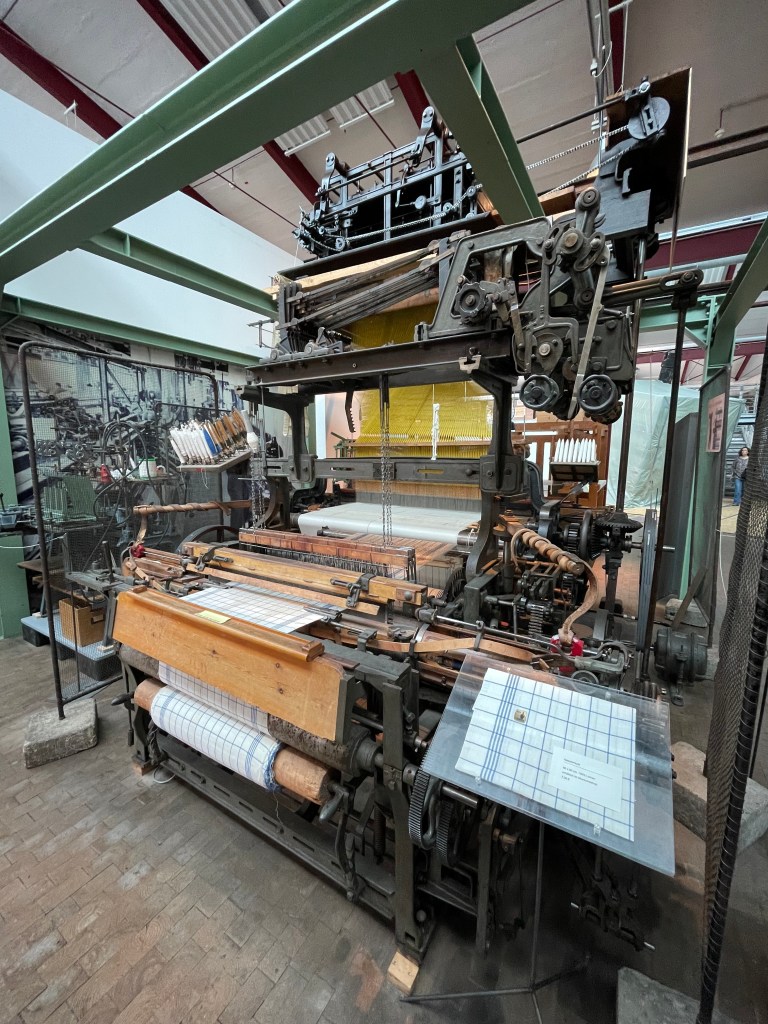
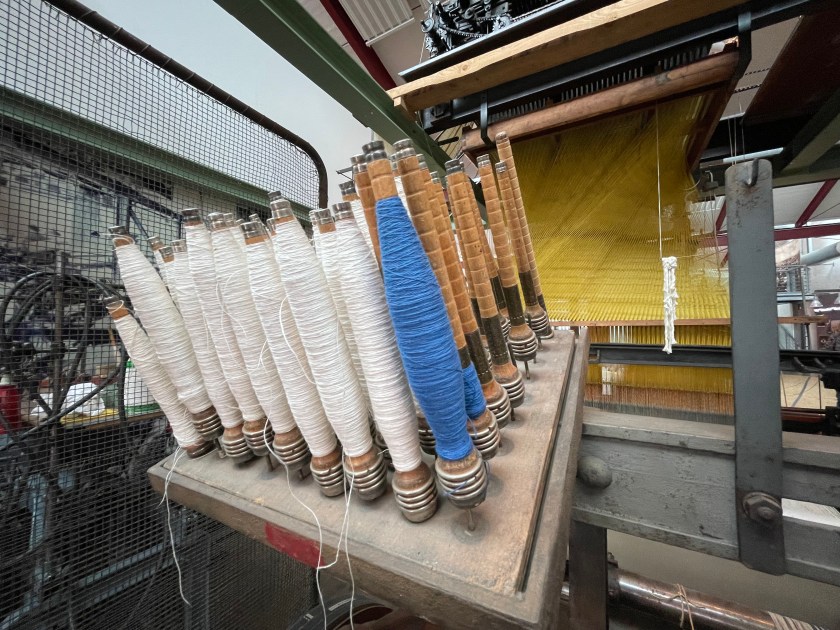
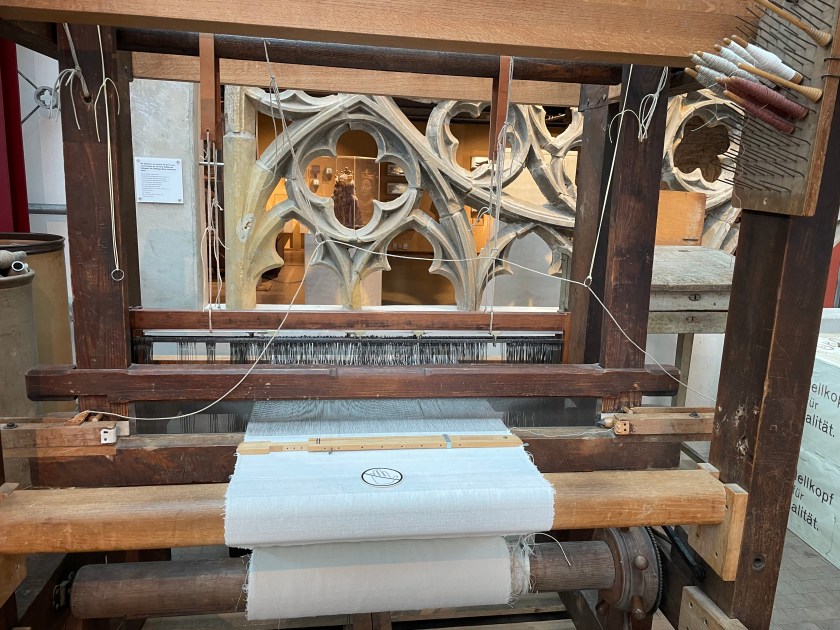
There were many generations of weaving looms and machines in the museum.
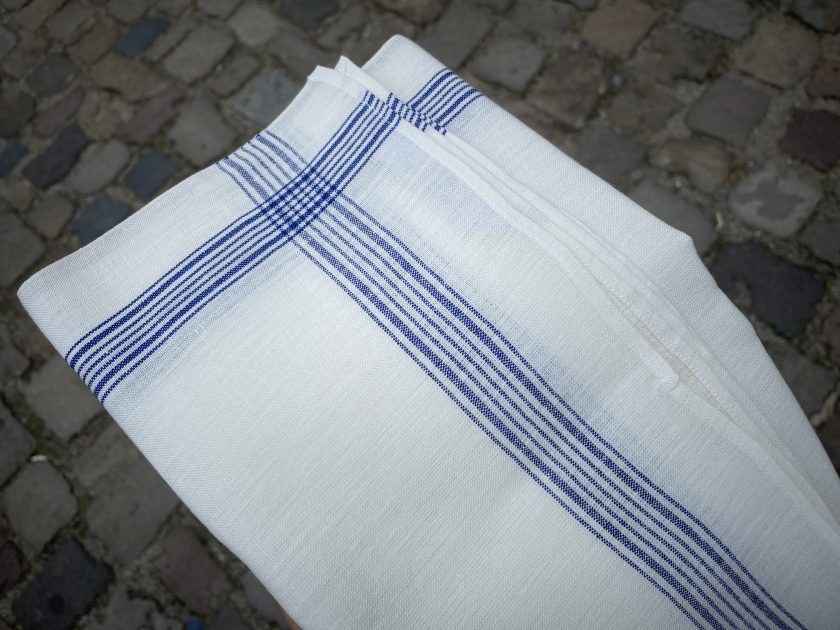
This is a traditional linen hand towel, still sold today, in fact, I bought one to remember this place.
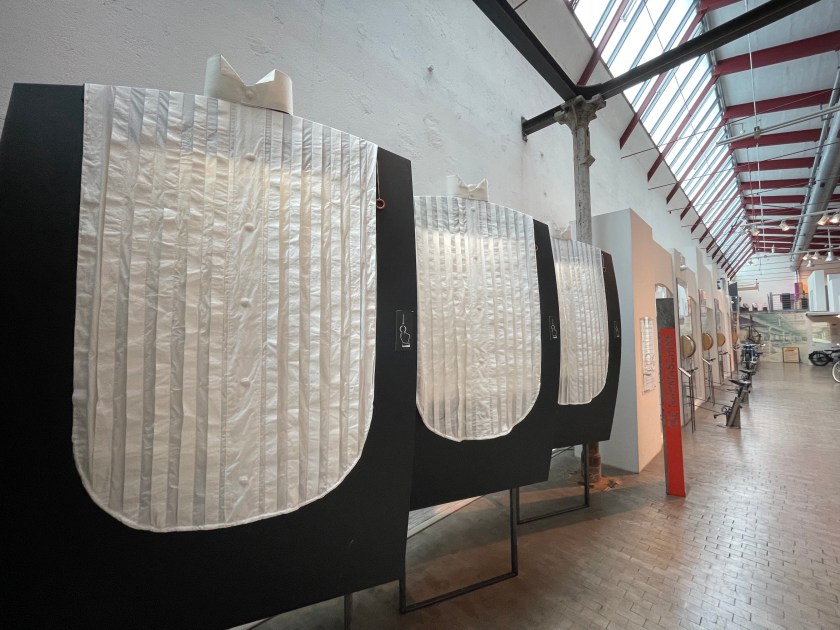
Here are samples of some of the clothing made in the factories.
Men with their tools.
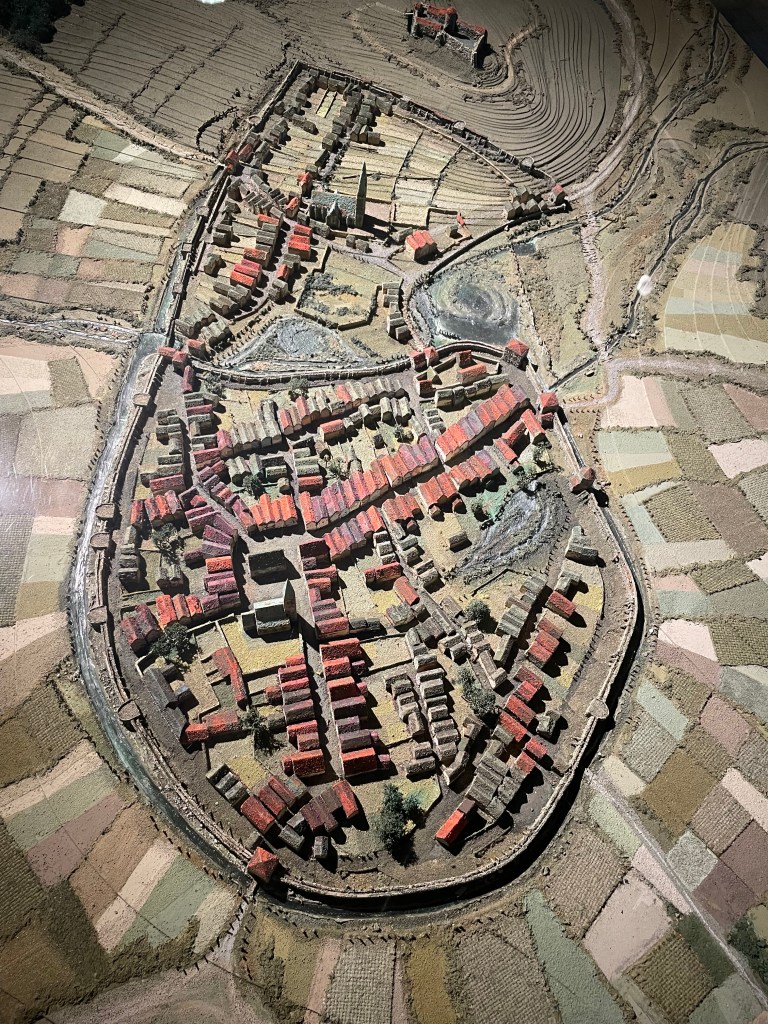
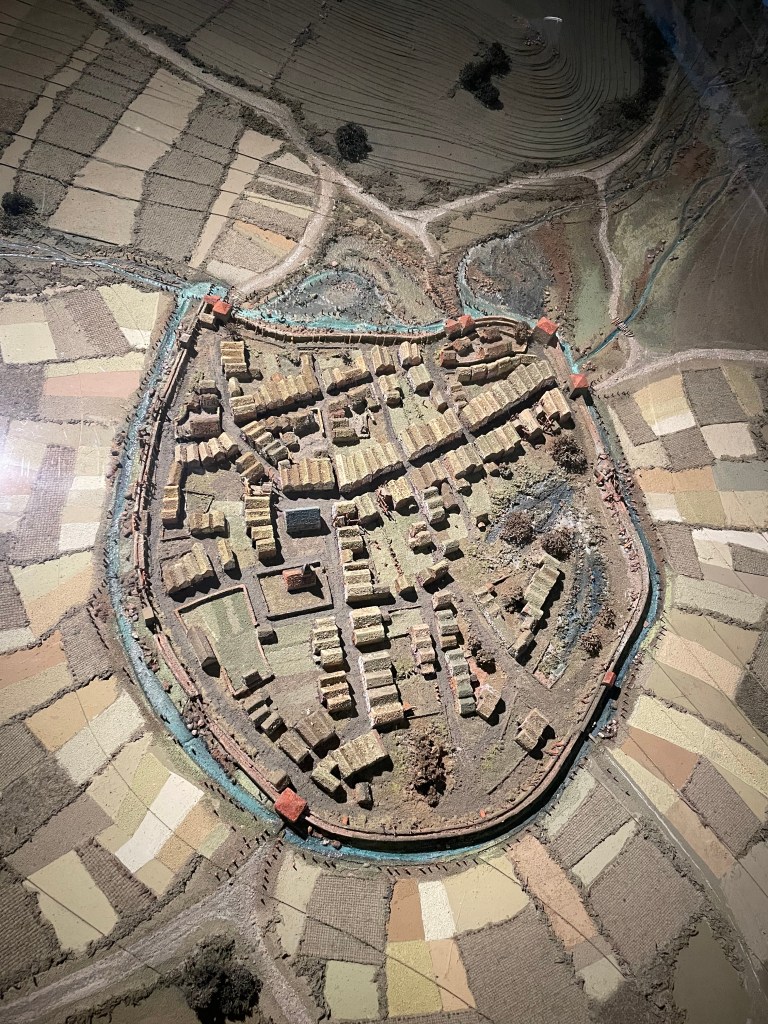
Bielefeld long long ago:
Below is Bielefeld in the 1200s when it was founded.
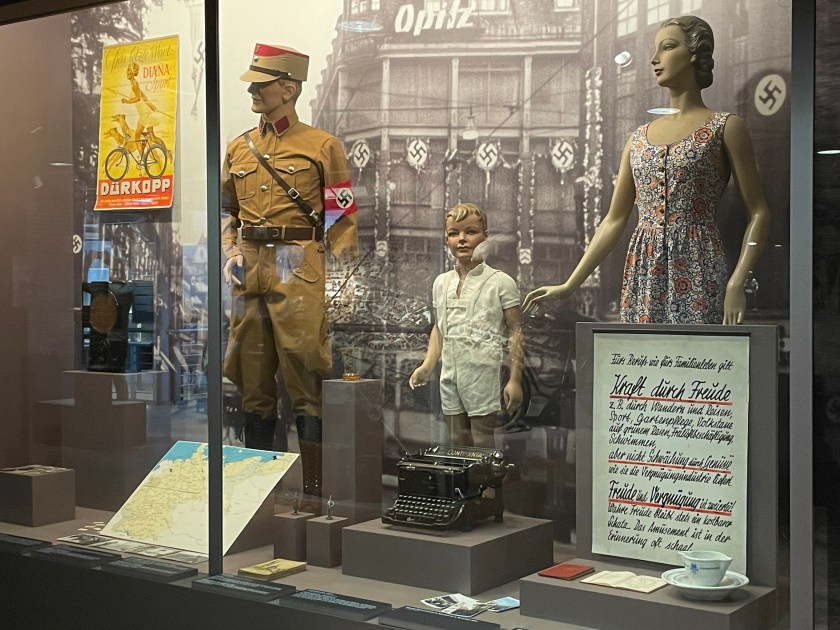
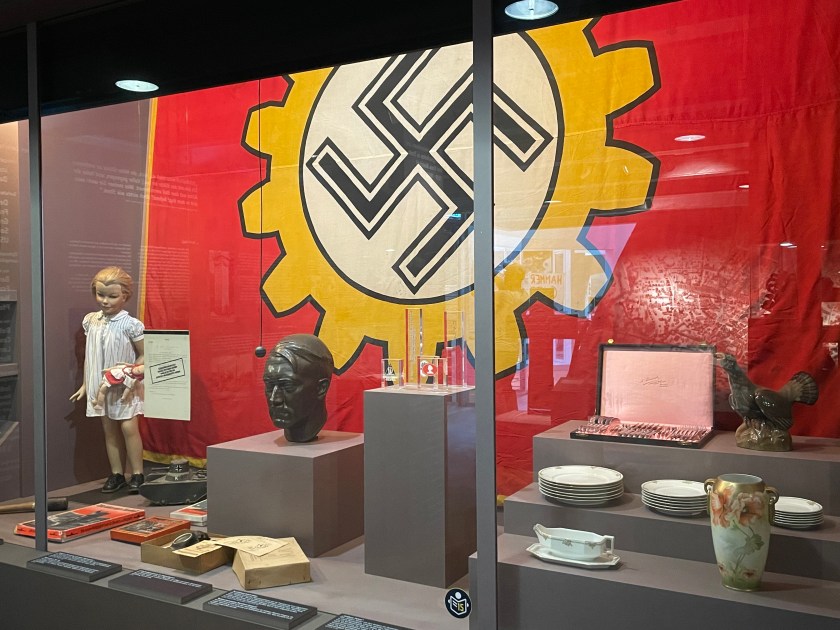
Next we saw some displays from more recent times (WWII).
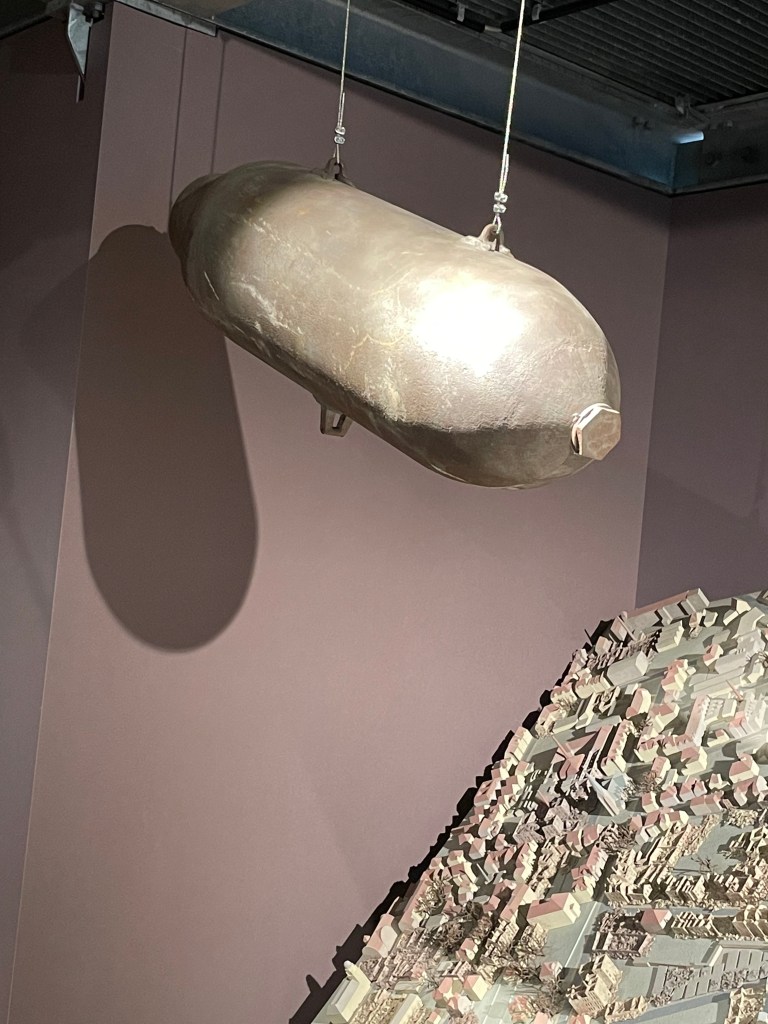
Bielefeld was heavily bombed during the war.
The first bombs fell on Bielefeld in May 1940. More bombs fell on August 12th, September 3/4th and October 1st. The first major raid was on 13 June 1941 when the town centre and the Dürkopp works were badly damaged. This was followed by Wellington raids on the 5/6th & 8/9th July.
For the next three years Bielefeld was free of major air-raids but this was soon to change. From June 1944 onwards hardly a day or night went by without the sound of an air-raid siren and the population was in a state of constant readiness to take to the shelters.
On September 30th 1944, the centre of Bielefeld was completely destroyed by 257 B-17s dropping 596 tons of bombs. Over 700 years of history was obliterated in less than 30 minutes and over 600 inhabitants were killed.
On November 29th 1944 the Americans attacked again with 152 B-24s and 512 tons of bombs. When the alarm came two trains were nearing the viaduct. The trains stopped and the passengers jumped off and looked for shelter in nearby buildings and old bomb craters.
This is a great museum. There was, of course, a lot more that I didn’t photograph. But these pics seemed interesting to the family.





























































 Our Frankfurt Germany Mission