
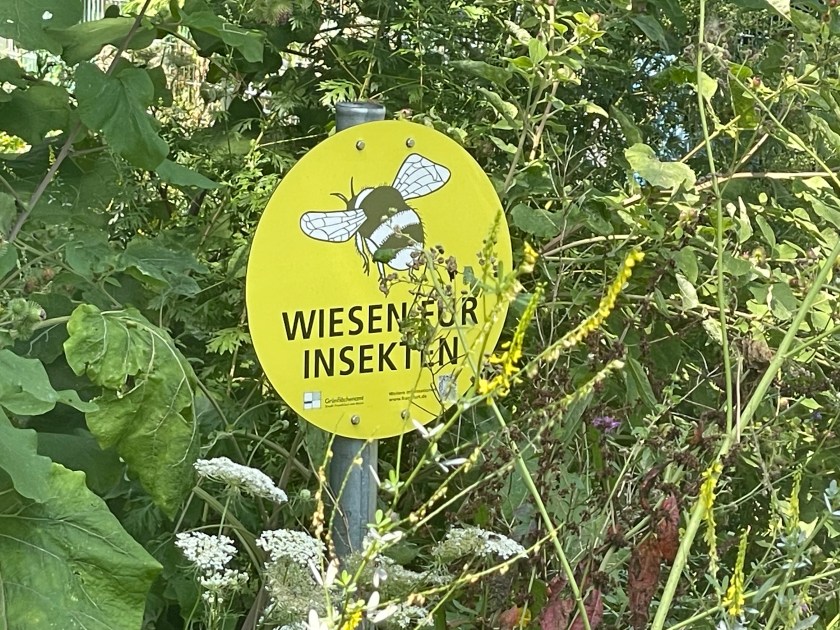
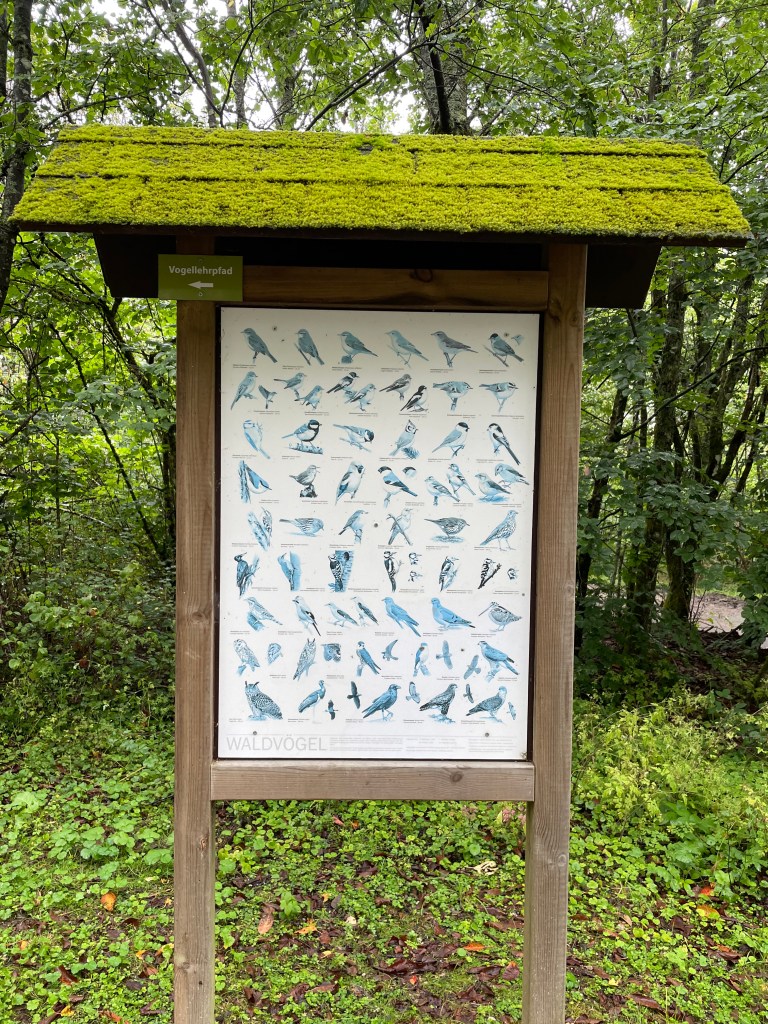
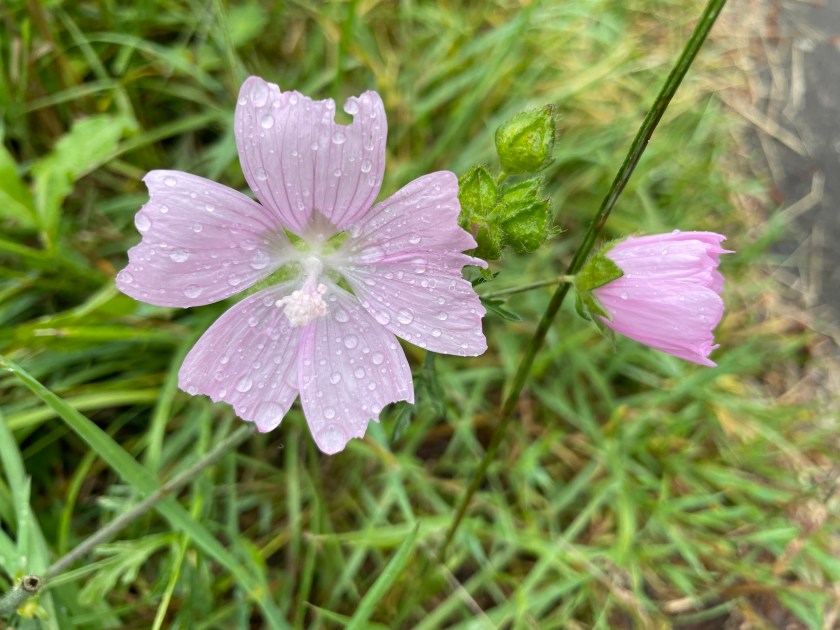
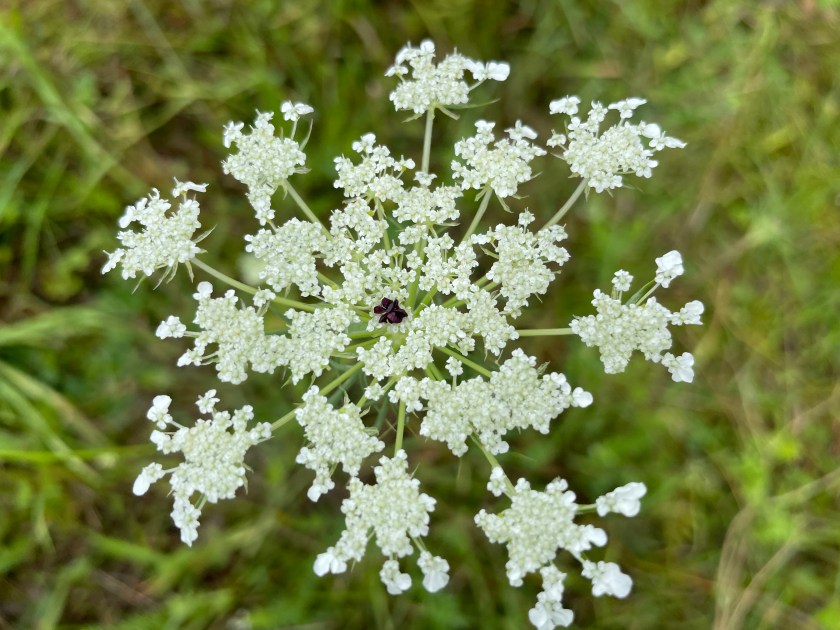
Germans are so kind to insects and animals in nature. Here is a public gathering place for bees and bugs.
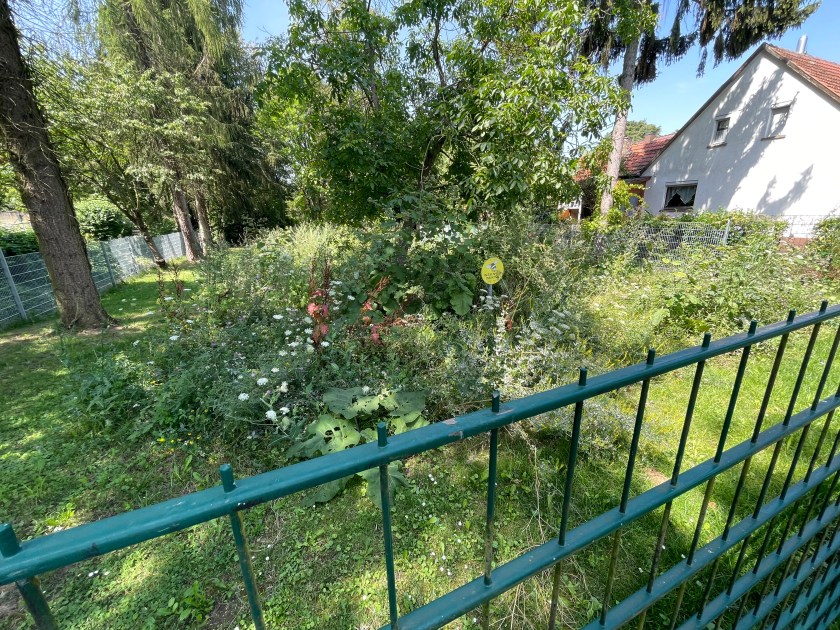
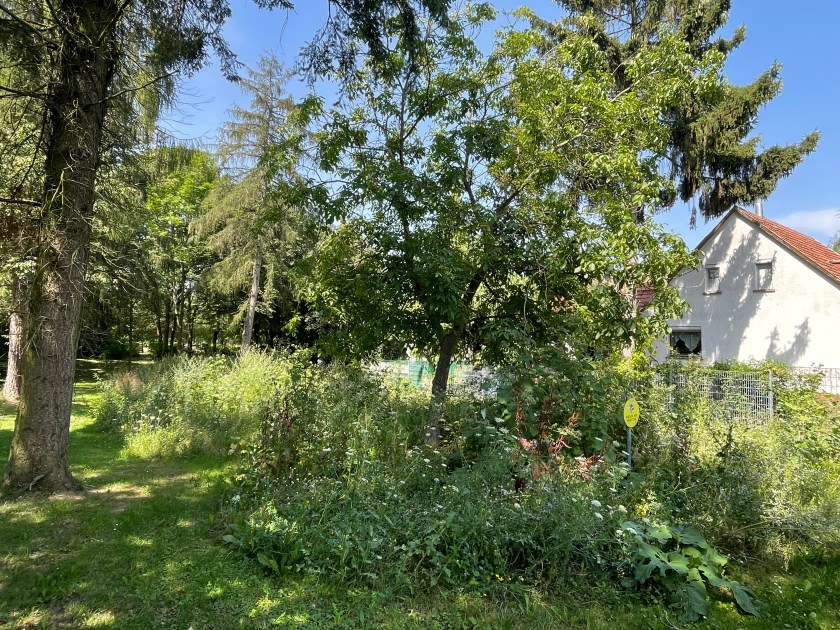
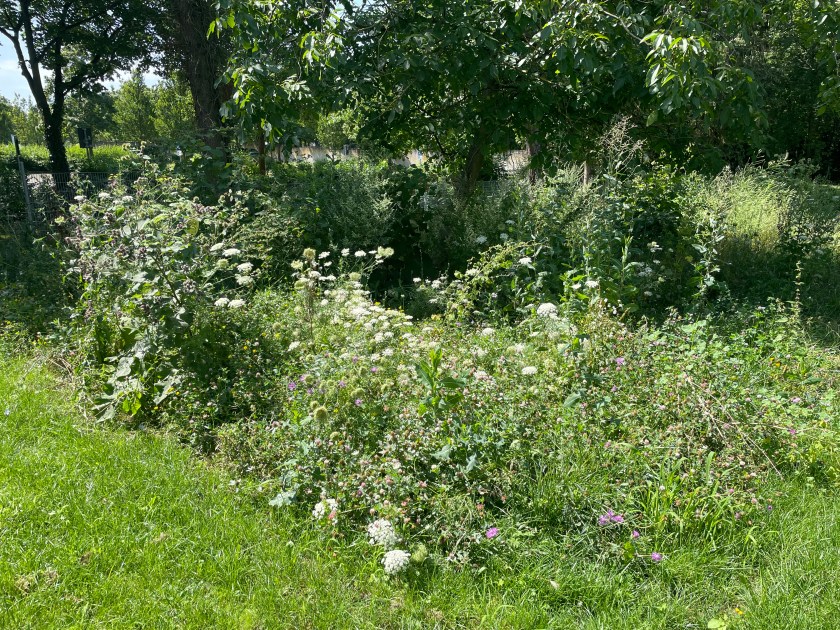

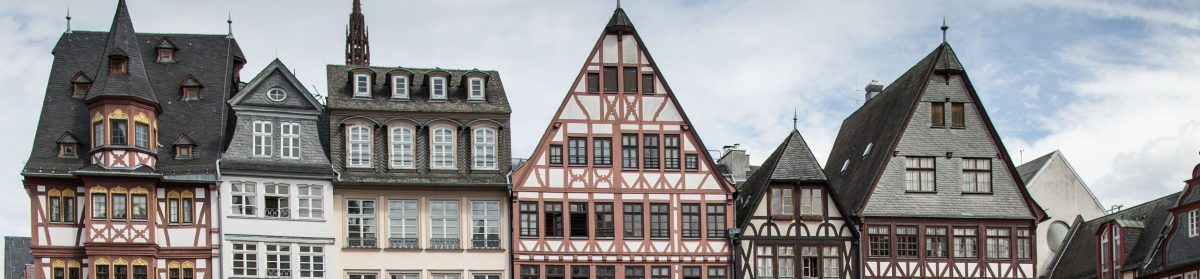
Germans are so kind to insects and animals in nature. Here is a public gathering place for bees and bugs.
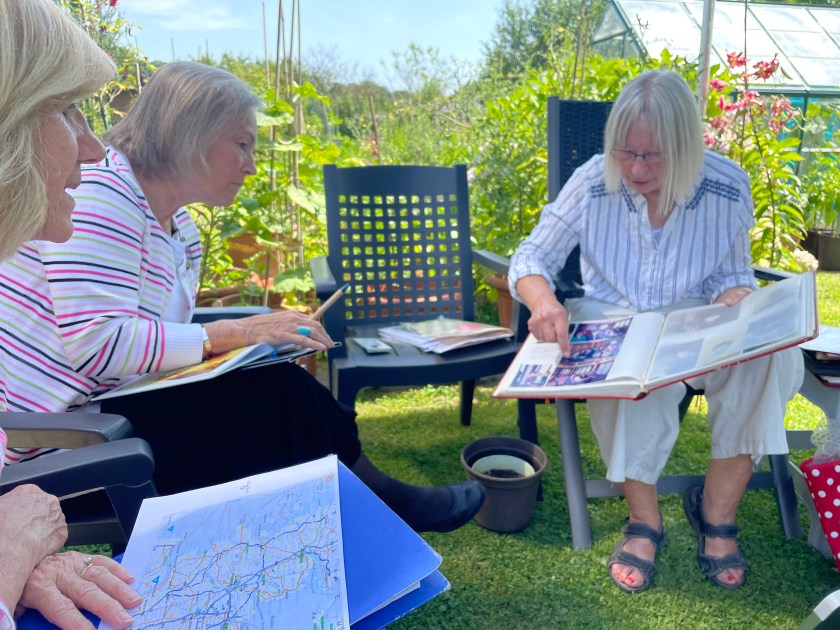
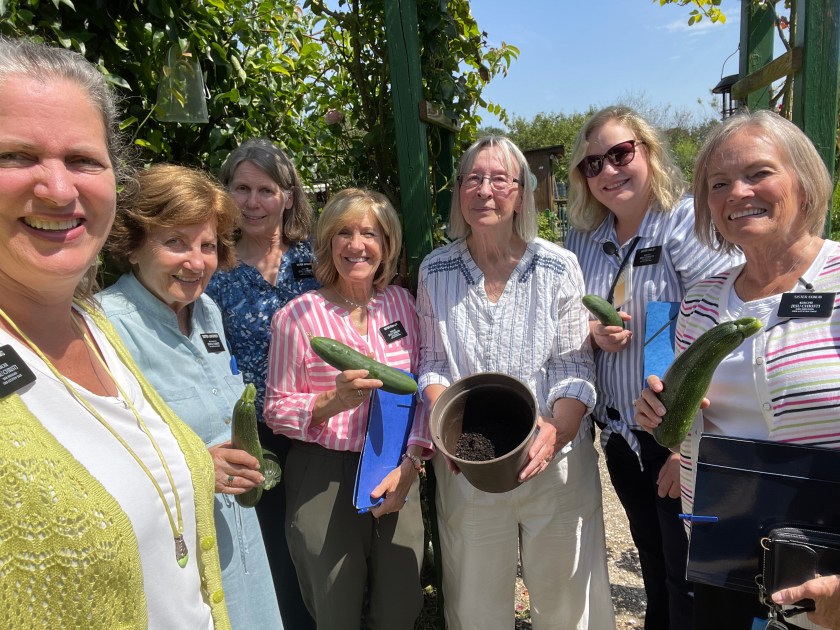
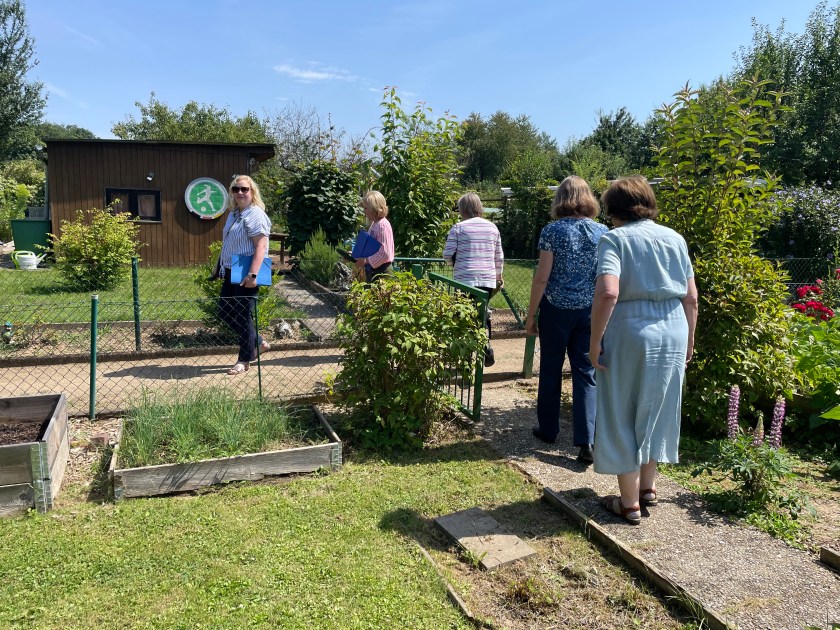
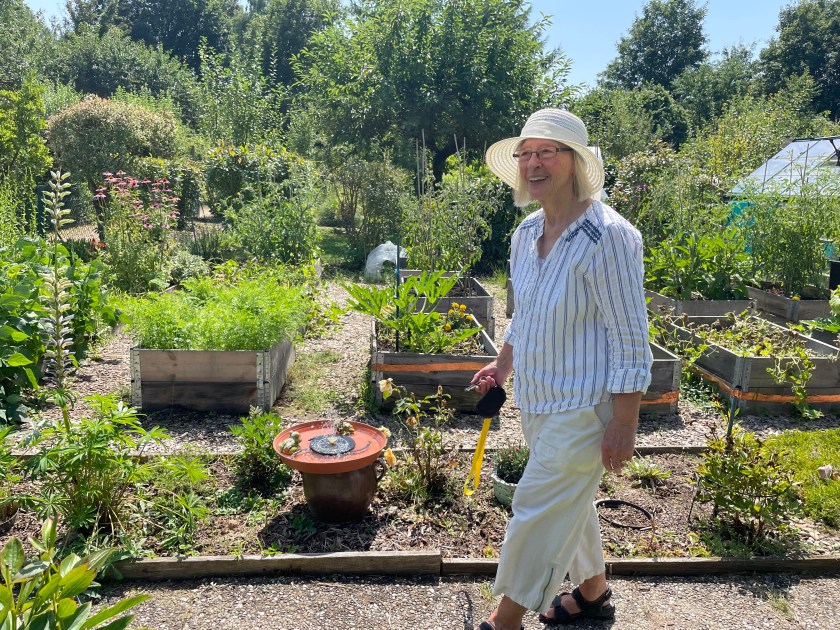
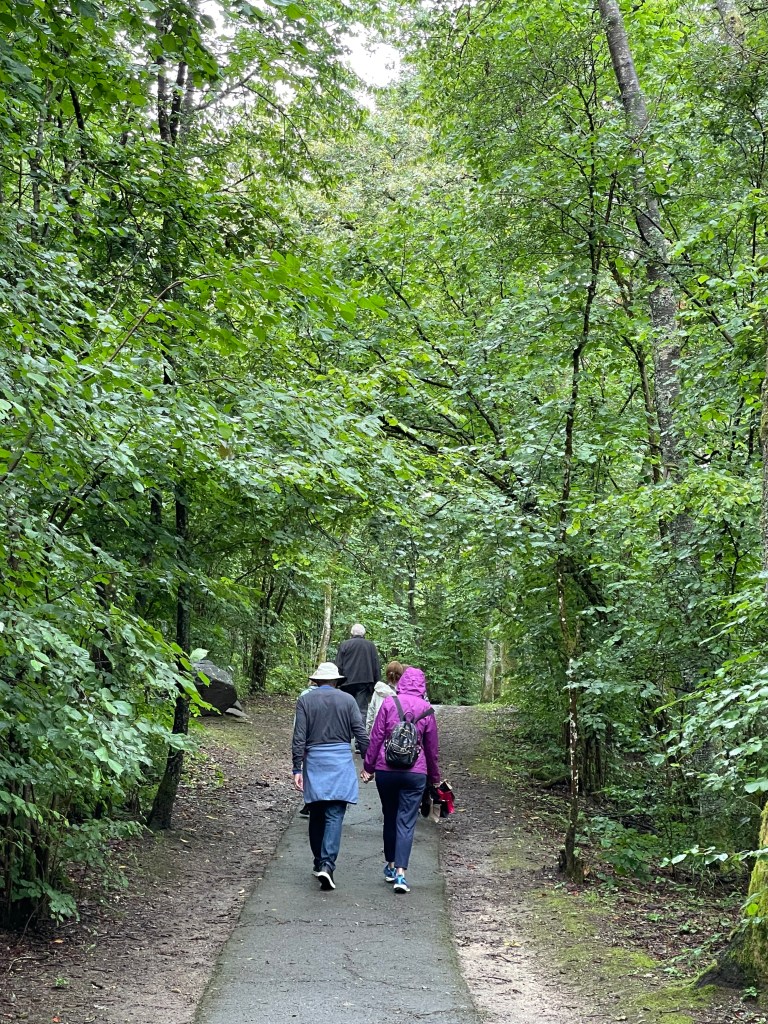
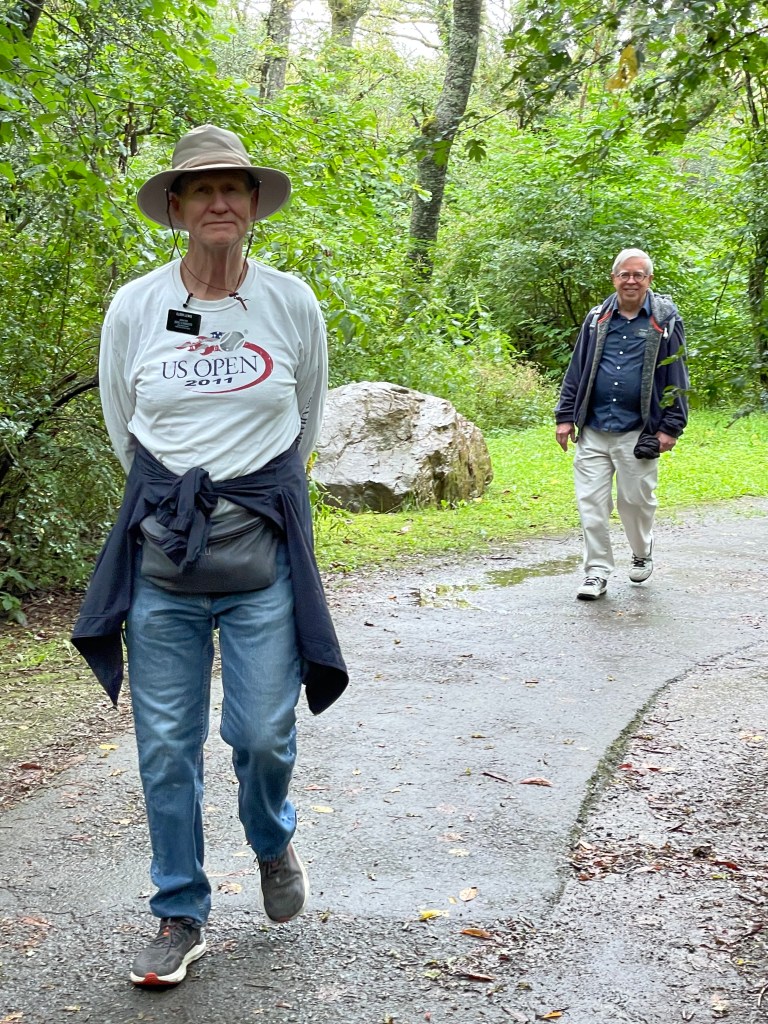
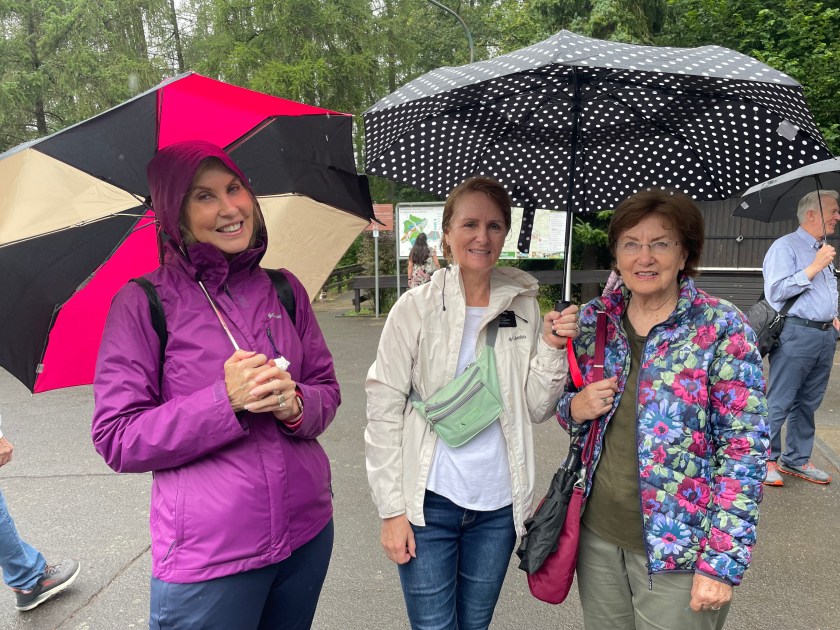
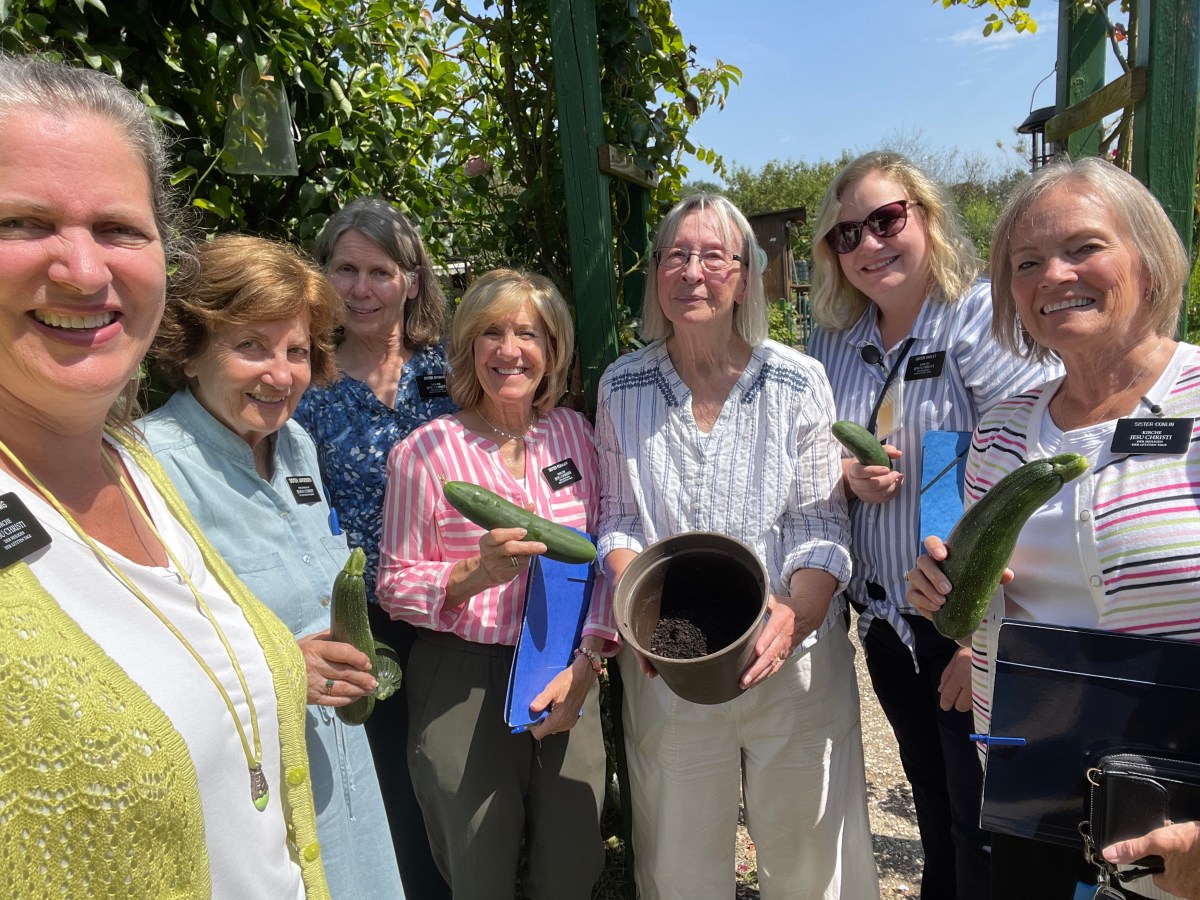
Today we escaped again to the garden to enjoy a bit of time in nature with our dear Sis Enger.
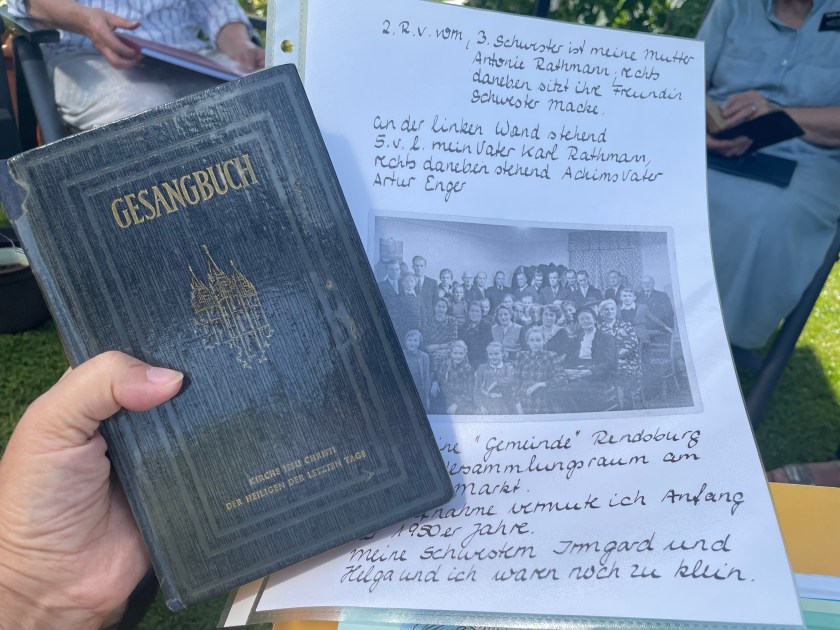
Today Erika brought some old historical books from her childhood Ward up in northern Germany. She told us the very interesting story of her Great-grandmother, Charlotte Amalie Lange, (b. 8 May 1863) who joined the church in 1928. Charlotte’s daughter (Erika’s grandma) had an illegitimate daughter who became Erika’s mom. The grandmother gave her child to her mother (Erika’s Great-grandma) to raise. Both Charlotte (the Great-grandma) and Erika’s mother learned of the gospel and were baptized in the river on the same day in 1928.
So Erika was taught the gospel because her mother was raised by her faith-filled Great-grandmother. Her grandmother’s generation did not receive the gospel, but Erika did. (This Great-grandma is the one who knitted the booties that Erika now makes.)
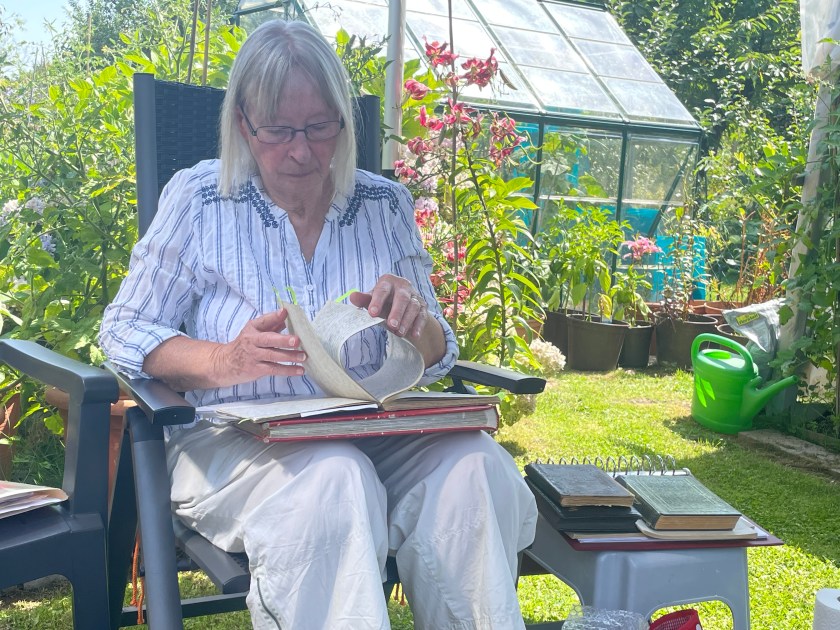

This is a photo of the Great-grandmother’s family:
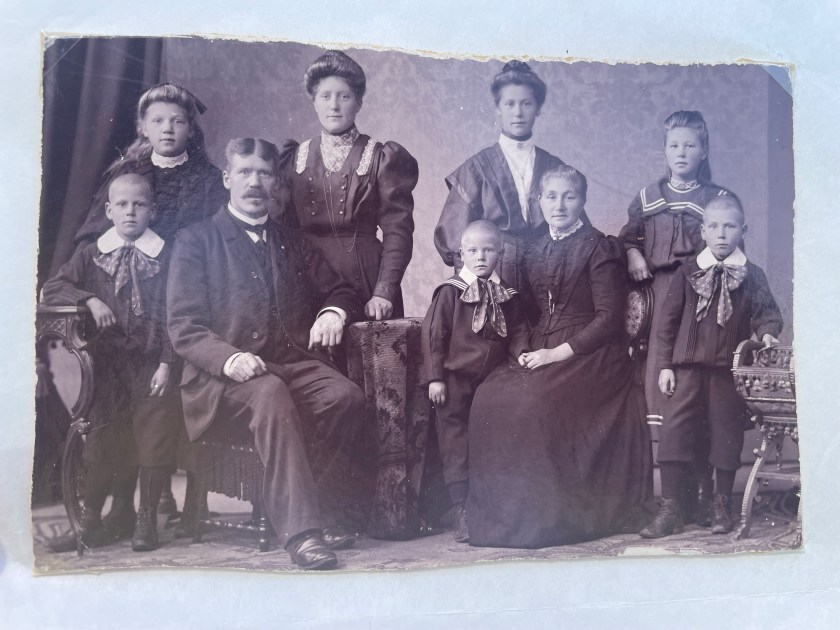

And here are some very old books from Erika’s childhood:
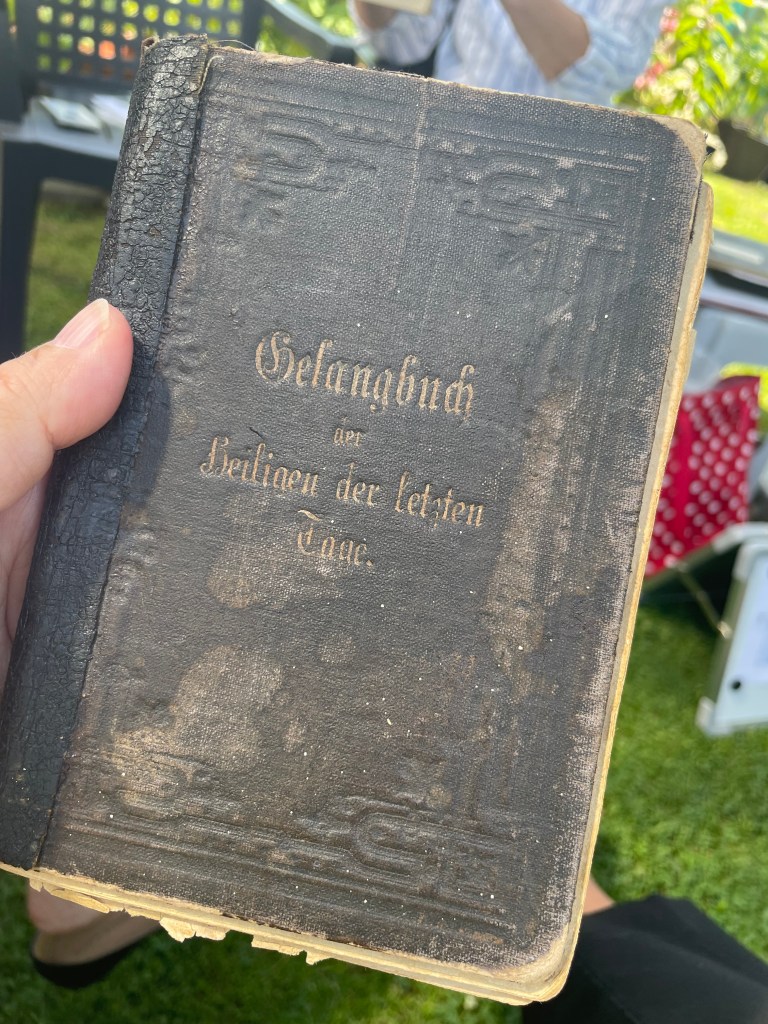
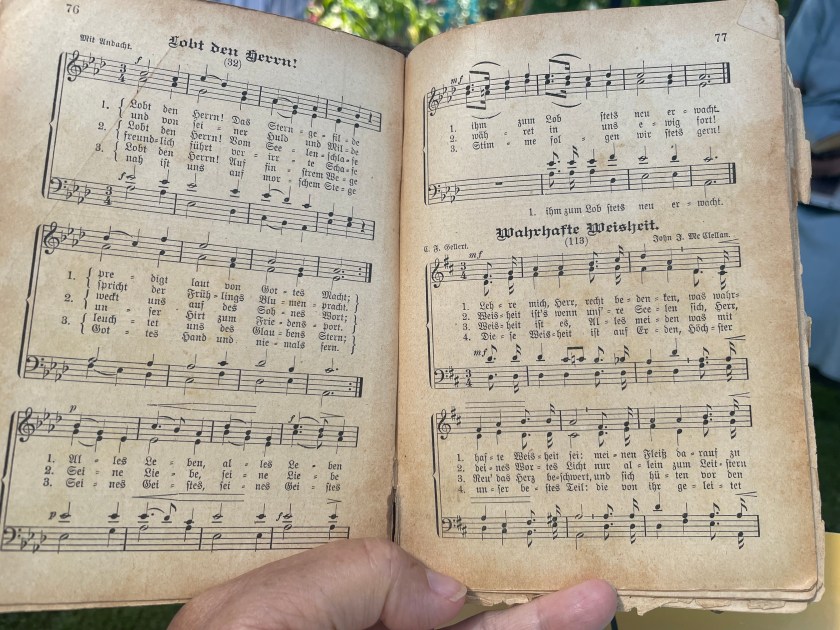
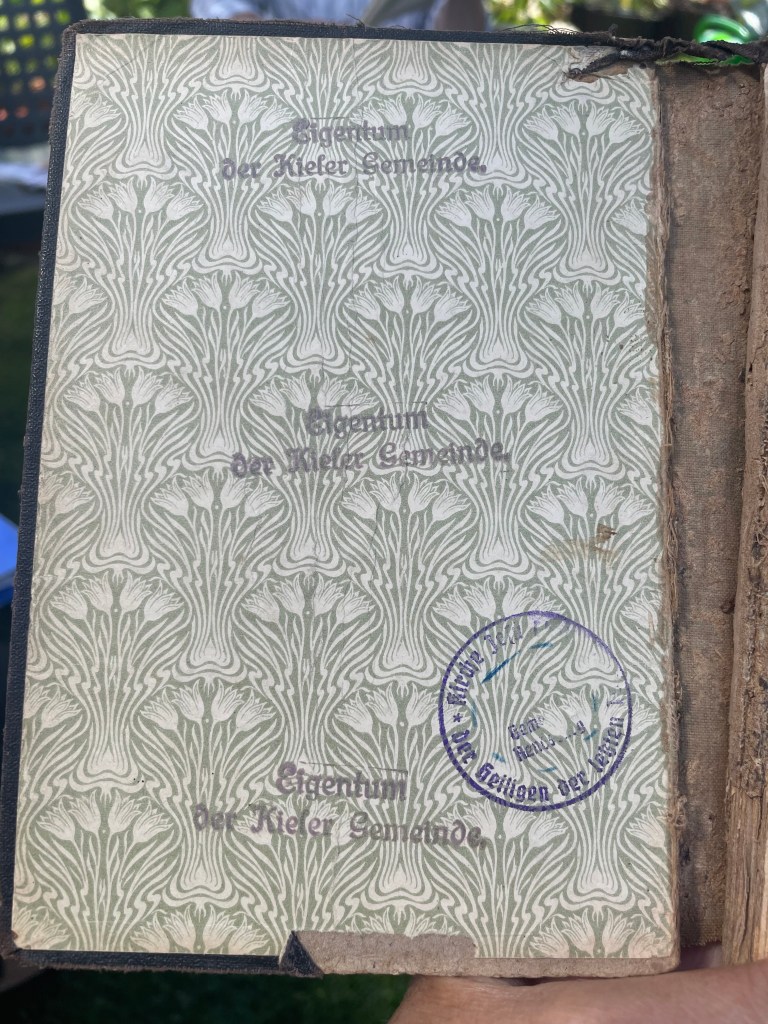

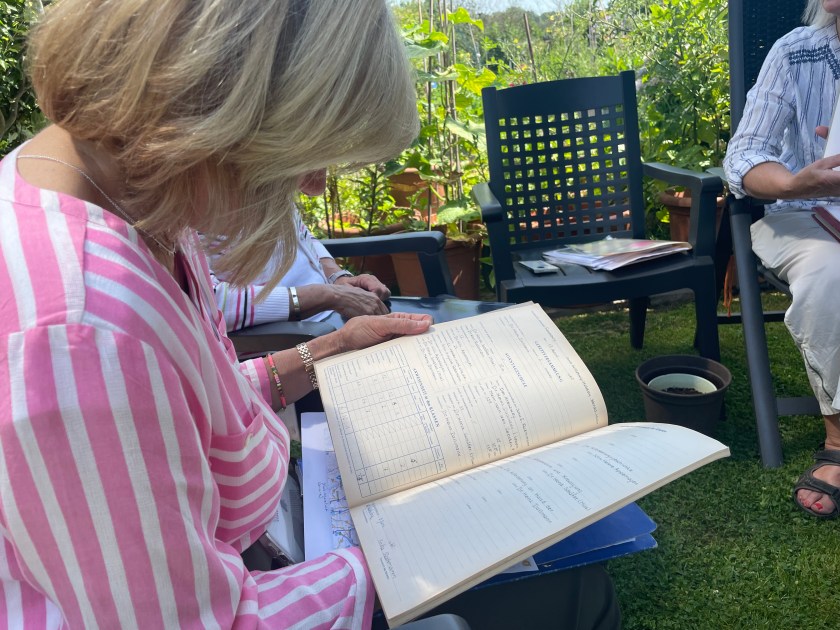
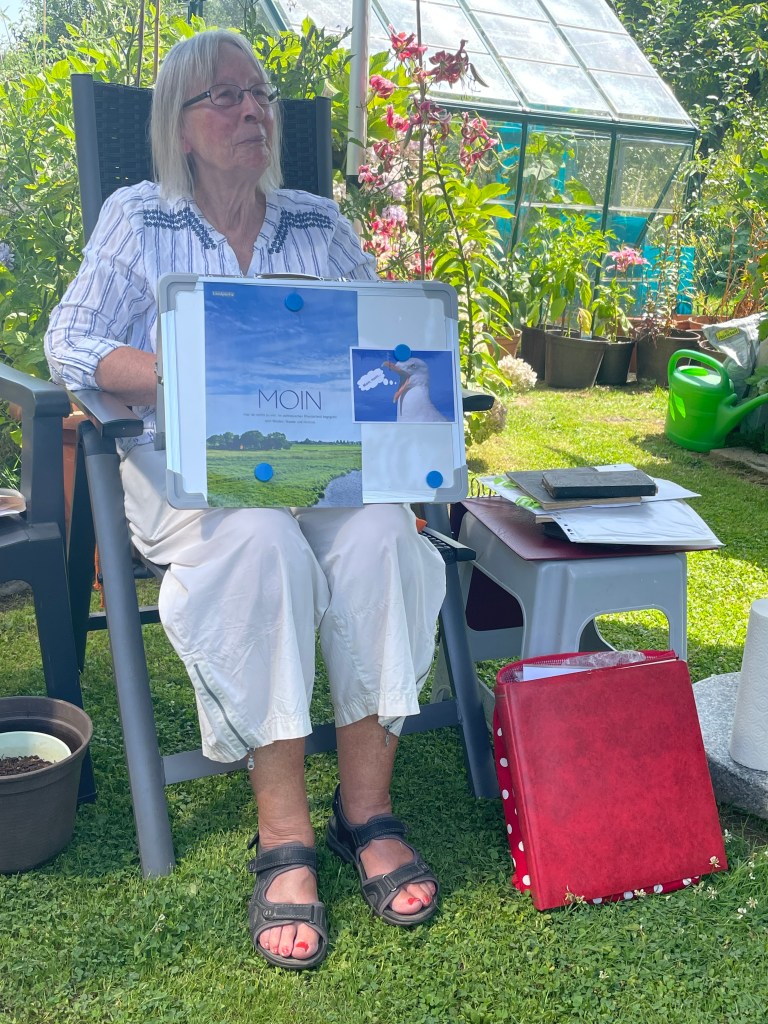
We learned that the common greeting from northern Germany is “Moin.”

After the wonderful history lessons, the excitement began! Erika pulled out this bucket of May Beetle larvae! These were all found in one garden box!

This small bucket probably had 100 larvae in it. They are as big as the end of your thumb (3 cm long). They are white with a golden brown head and rather creepy– translucent things that can move, burrow and squirm. They stay in the ground for 3-5 years before emerging as a May Beetle (like a large June Bug).
Interesting facts: one lady May Beetle can lay up to 30 eggs about 15 cm deep in the ground. The larvae eat roots and become pupae after 3-5 years in the ground, then emerge as Beetles in May. They eat the leaves of Beech and Oak trees and fruit trees. They are heavy little bugs, so they have to fill their lungs with air before they take off to fly. Females live about 7 weeks. Males die first. They have a brown shell and wings and big feelers.
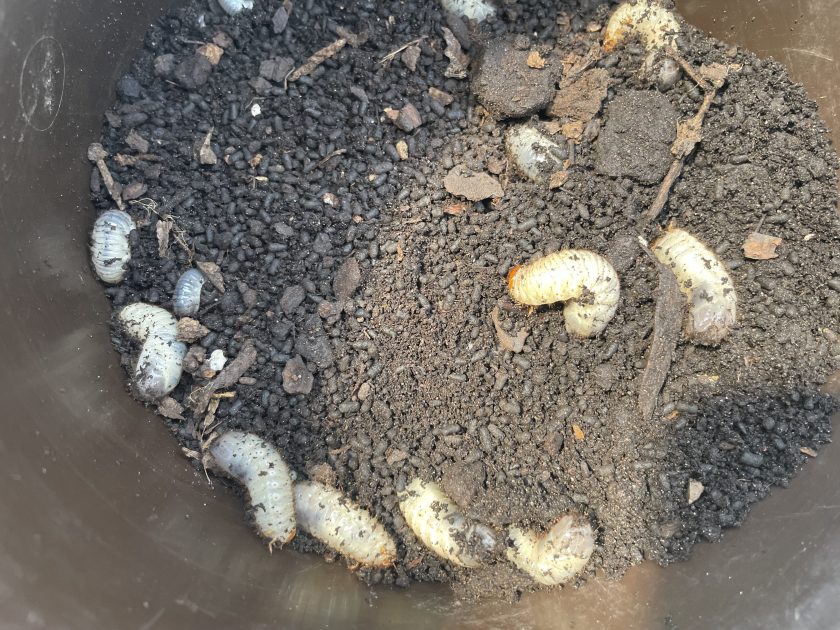
These larvae will be fed to the birds this evening!
The next interesting story we learned was about a man named Till Eulenspiegel (that means Owl Mirror).
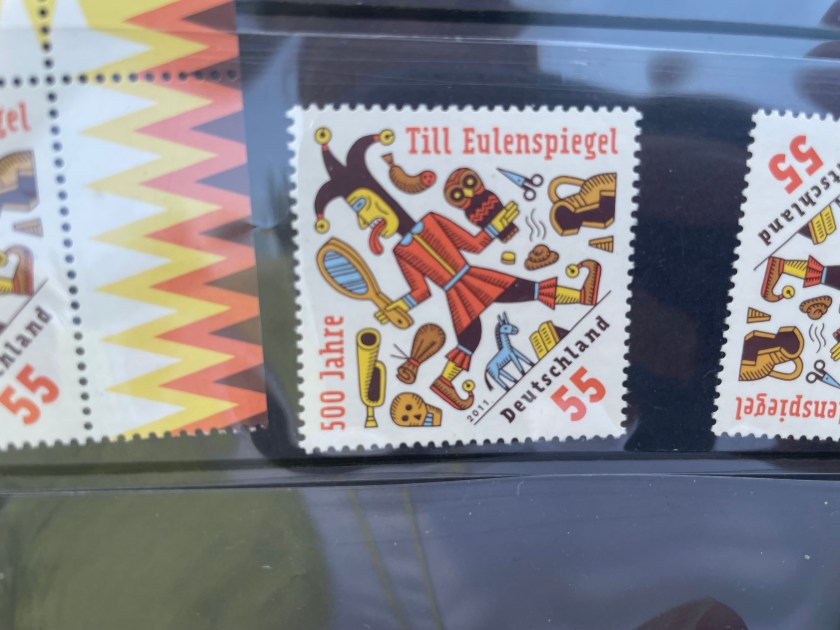
From Wikipedia:
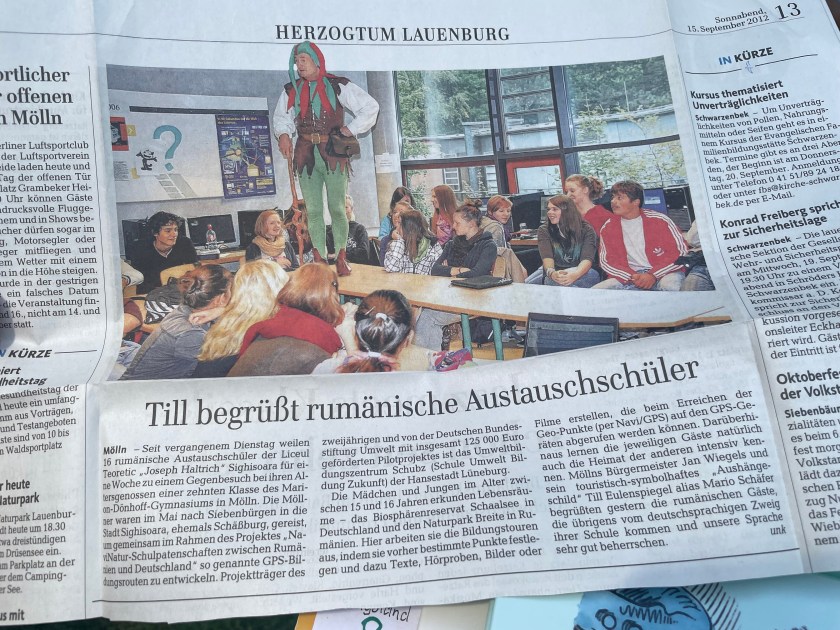

They say Eulenspiegel was buried in a hollowed out log, but when it was being lowered into the grave, the ropes broke and he landed upside down, and they left him that was as a last joke to the jokester.
There are statues and figures in towns all over Germany of Till Eulenspiegel. Usually brass, and usually there is a toe or finger sticking out that you can rub for good luck. It was fun to learn about this little piece of culture.



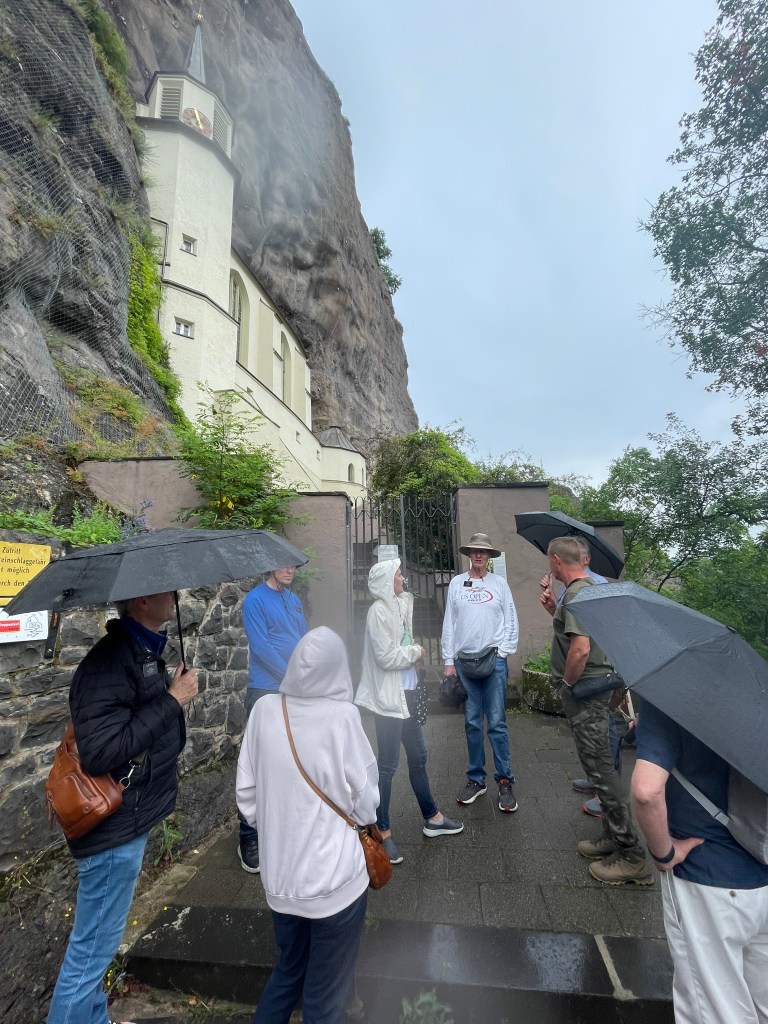
Before we ate, John asked around to find out about climbing up to the famous church built in stone on the side of the mountain (the town is at the base of the mountain). There are castle ruins up on top of the mountain.
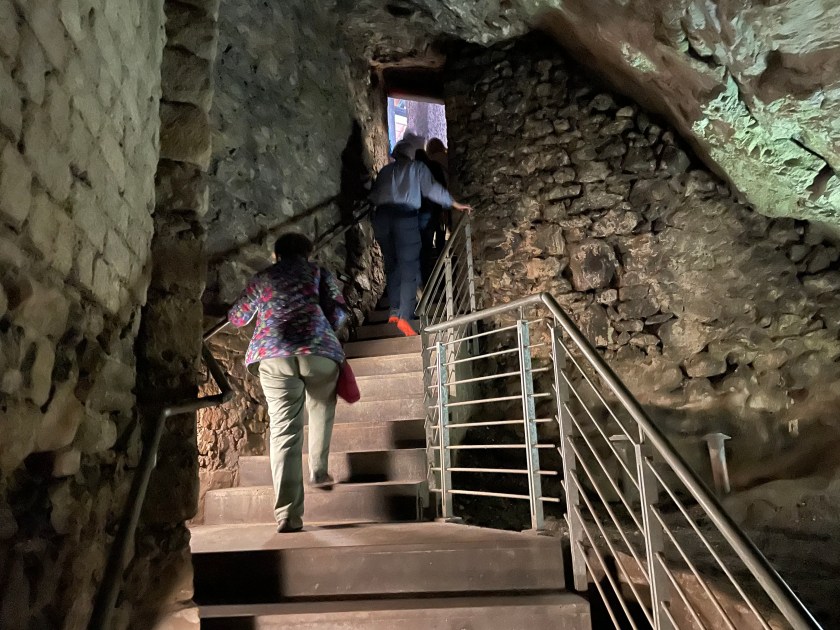
John found the right person to ask and he was directed to the man who gives the tours. He’s friends of church members who live in Idar Oberstein and was very friendly. The church tours were over for the day, but he offered to take us up. 5 Euro each for a tour. So most of us climbed 237 stone steps to the church. We were told there was a natural cave in the stone mountain and the church was built in that cave, hugging the mountain side.
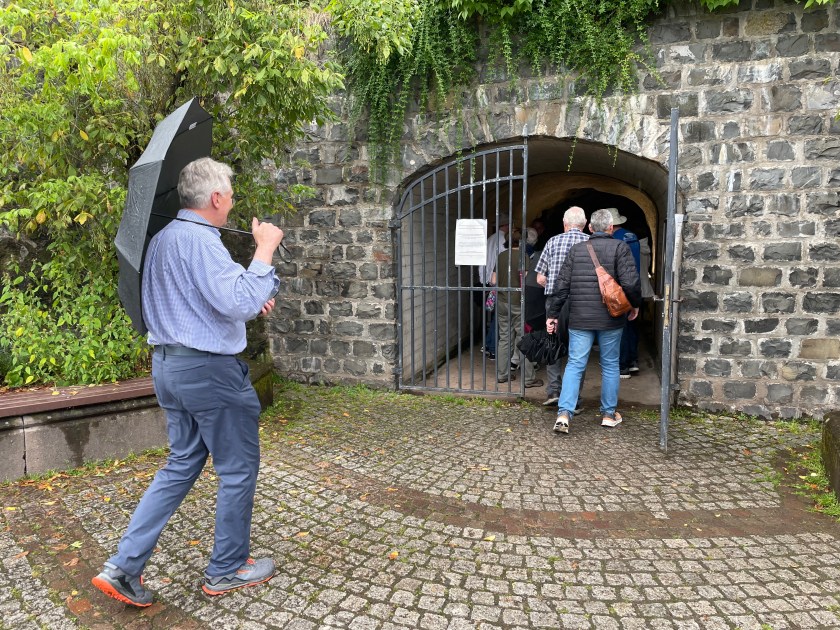
Here’s where the steps started:

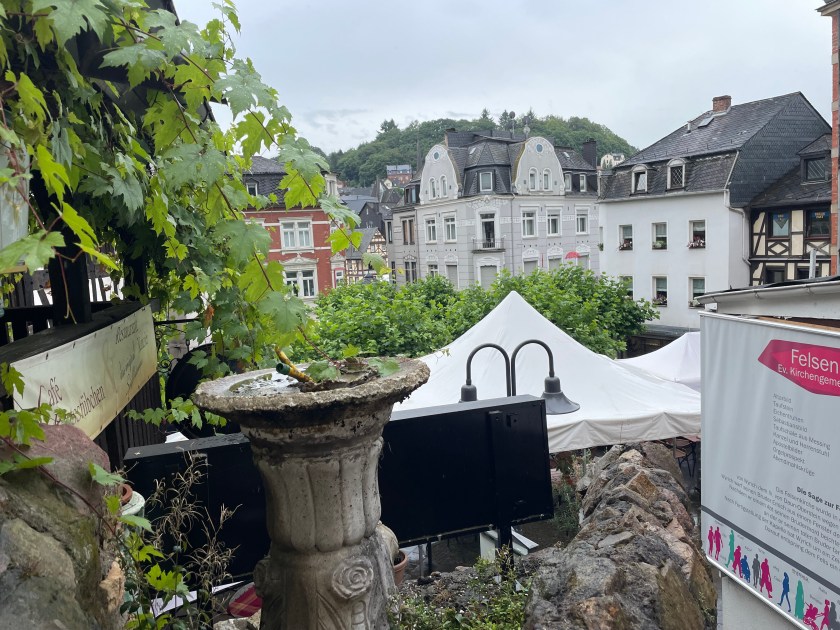
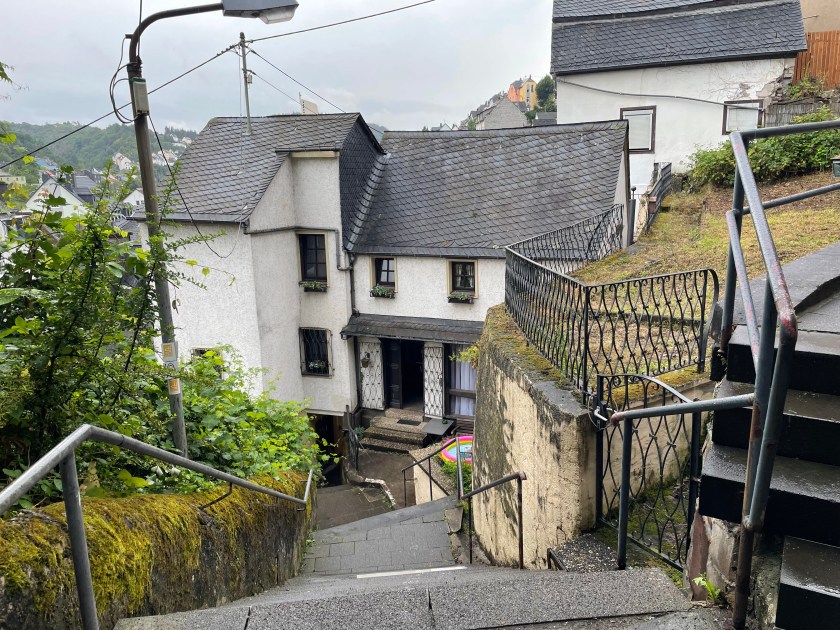

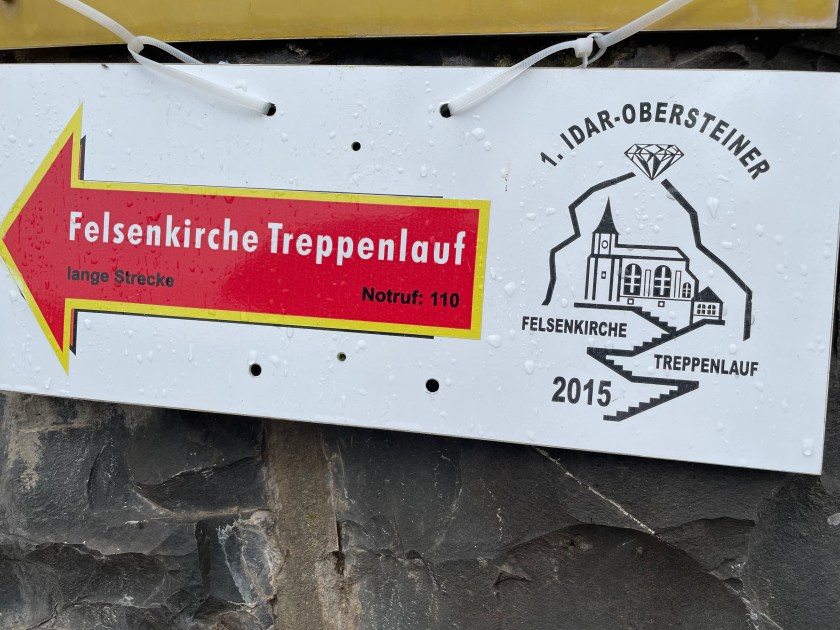
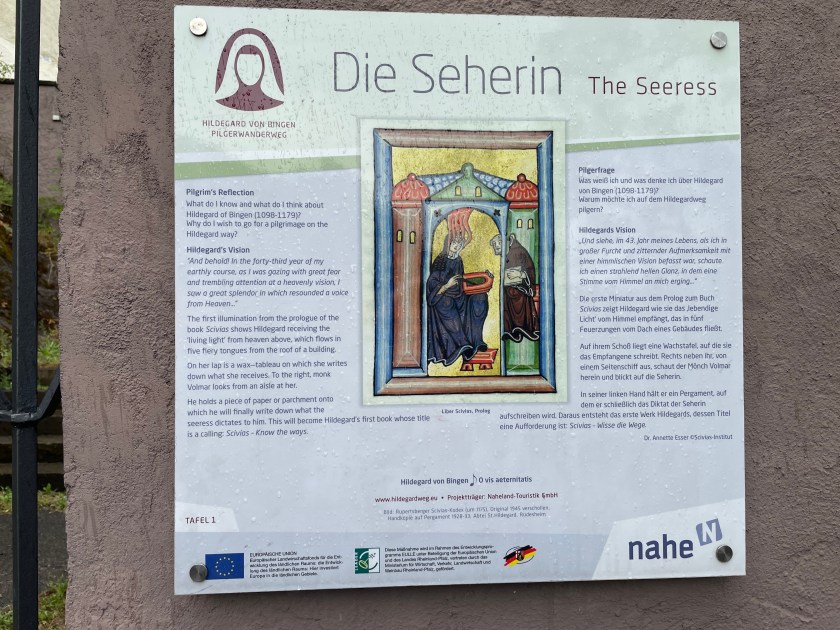
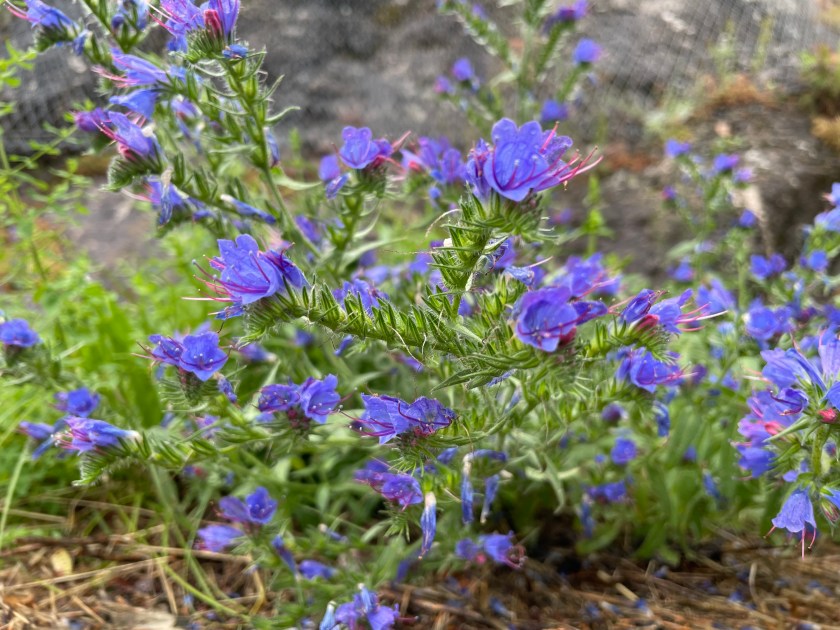
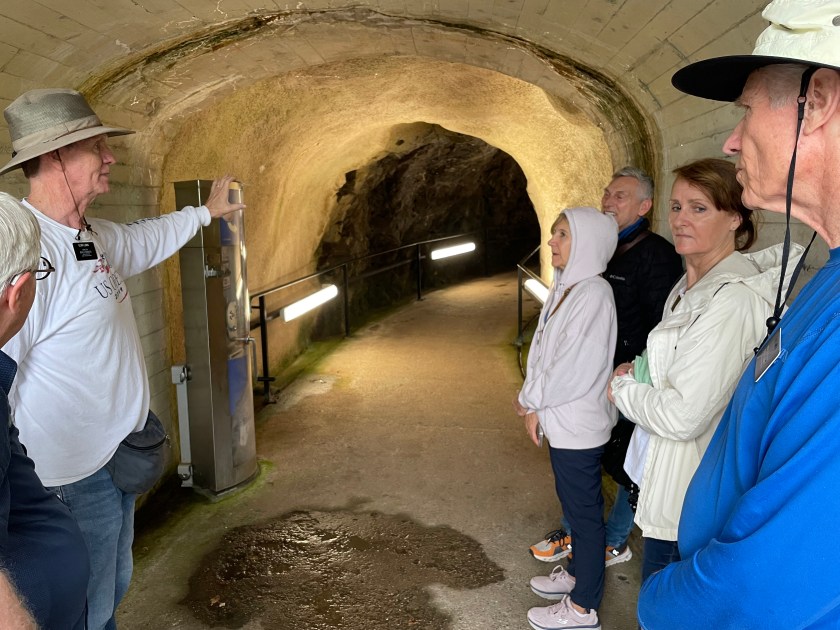
Because an earlier step path became dangerous, a tunnel has been drilled into the side of the mountain to get to the entrance of the church.
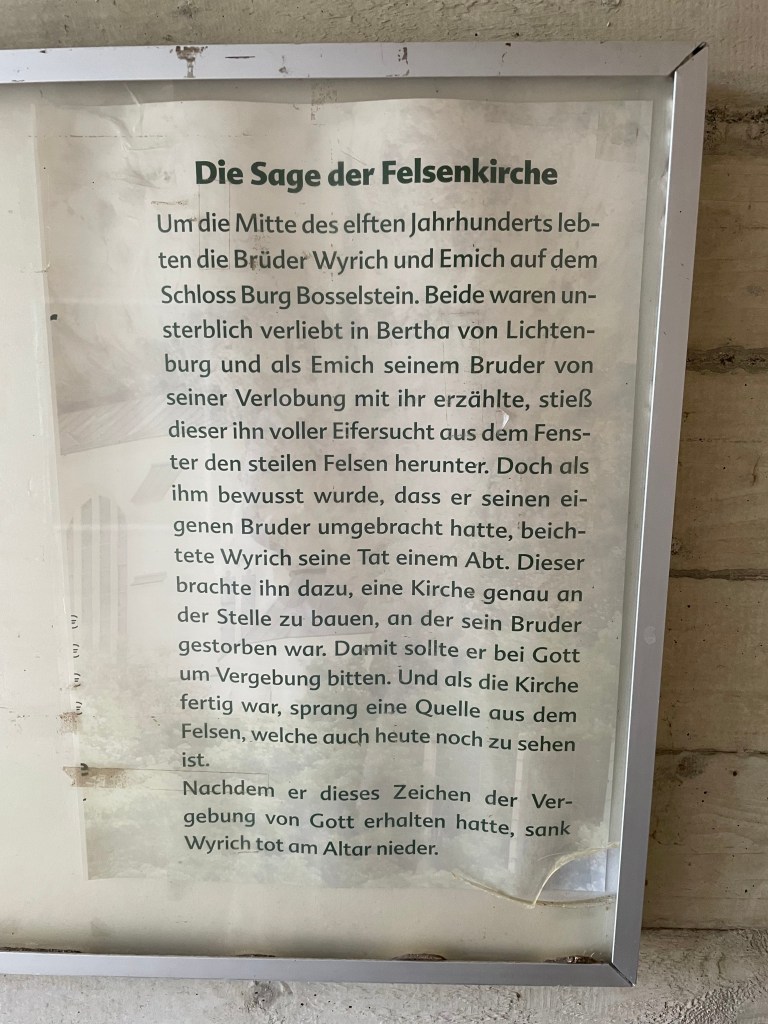
Above is a tragic tale, posted in the tunnel. Here’s the legend:

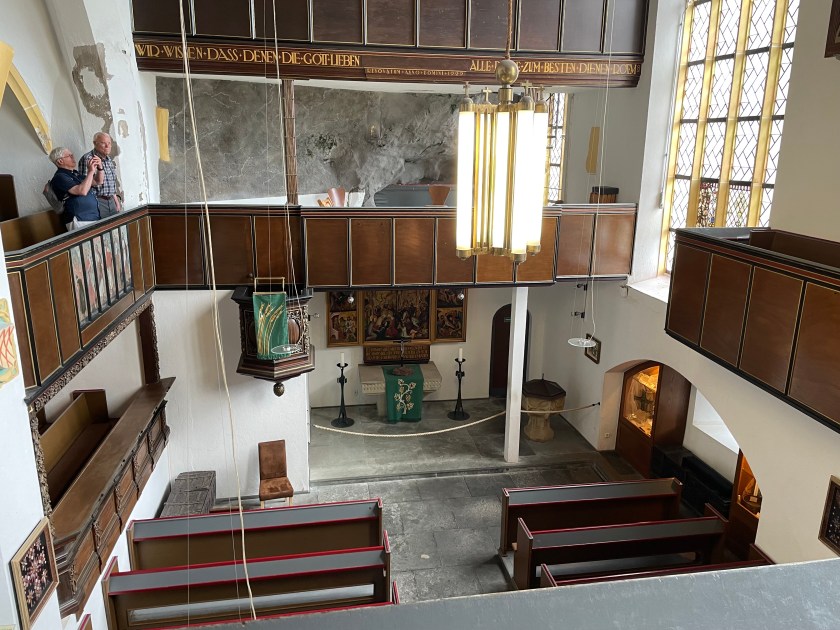
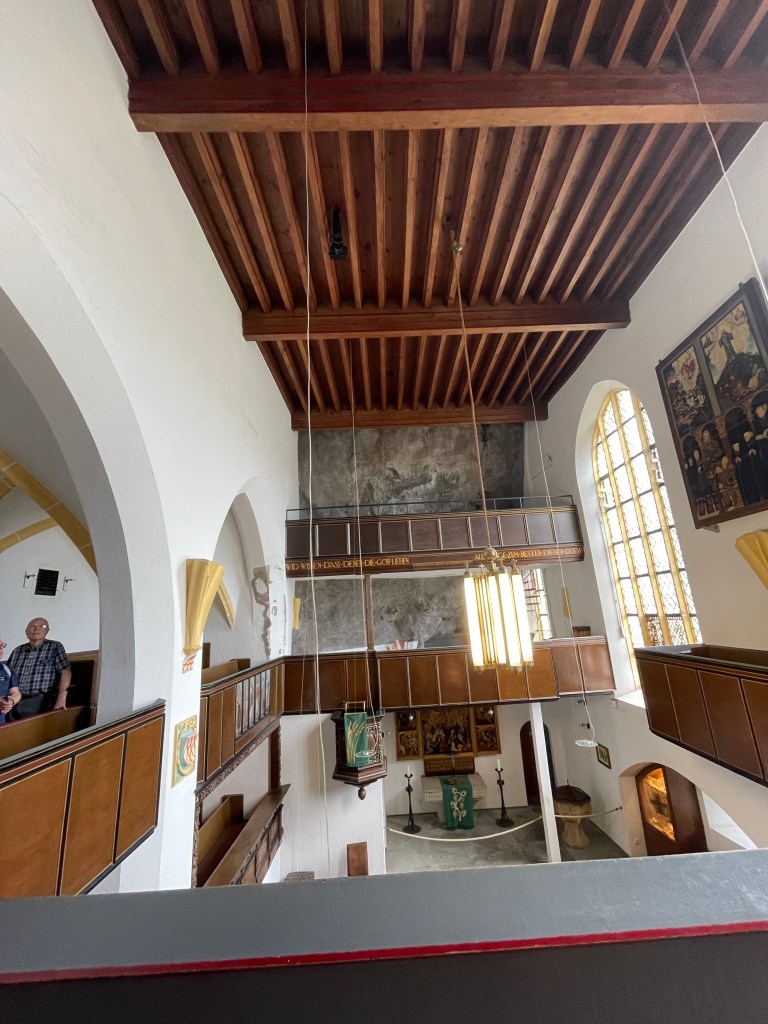
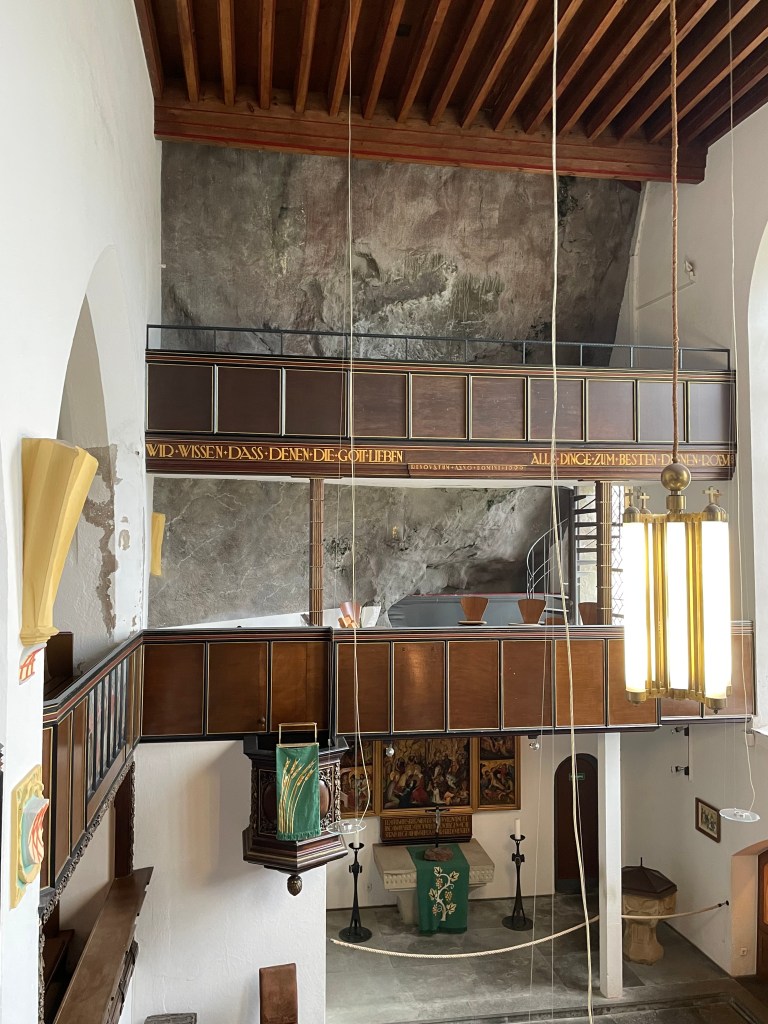
Inside the church, you can see the rock wall above and behind the altar.
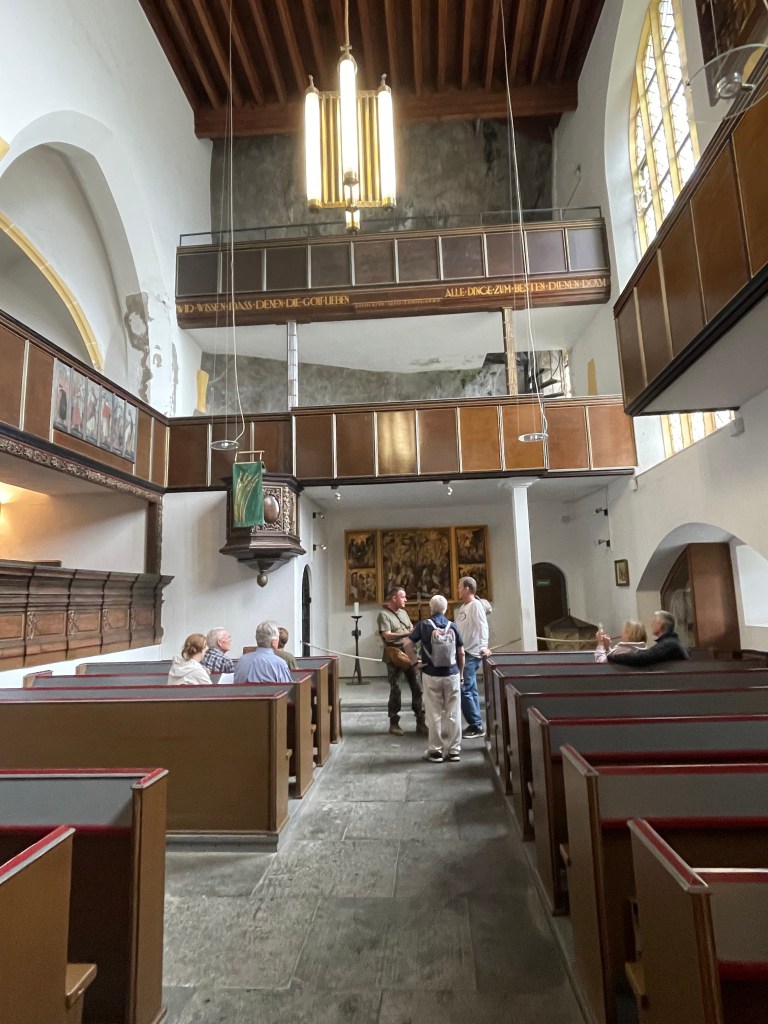
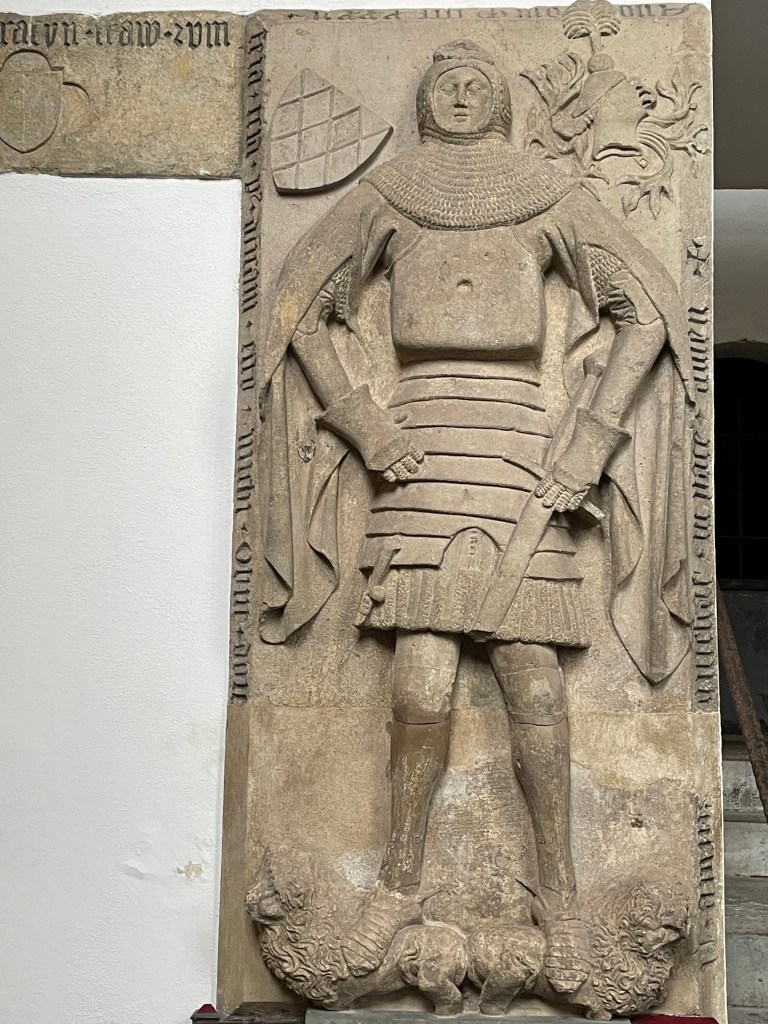
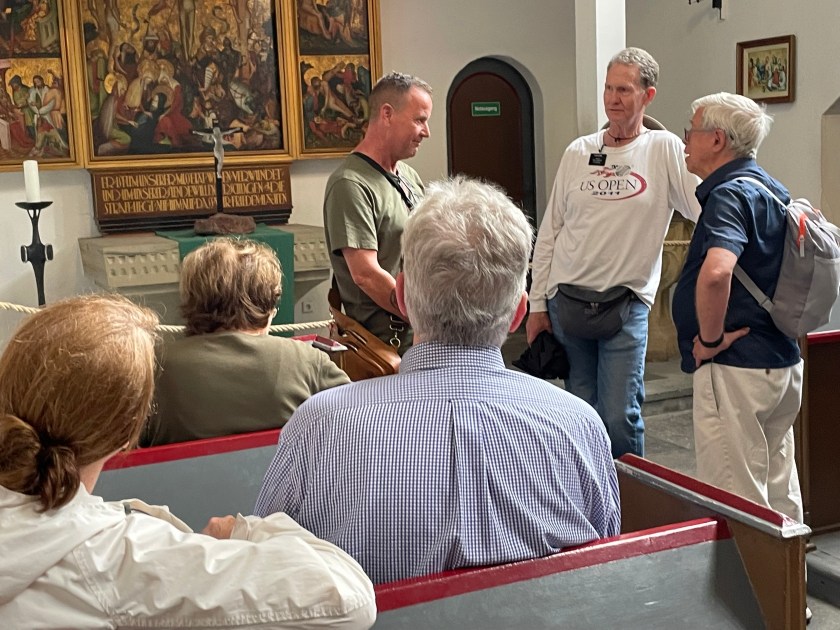
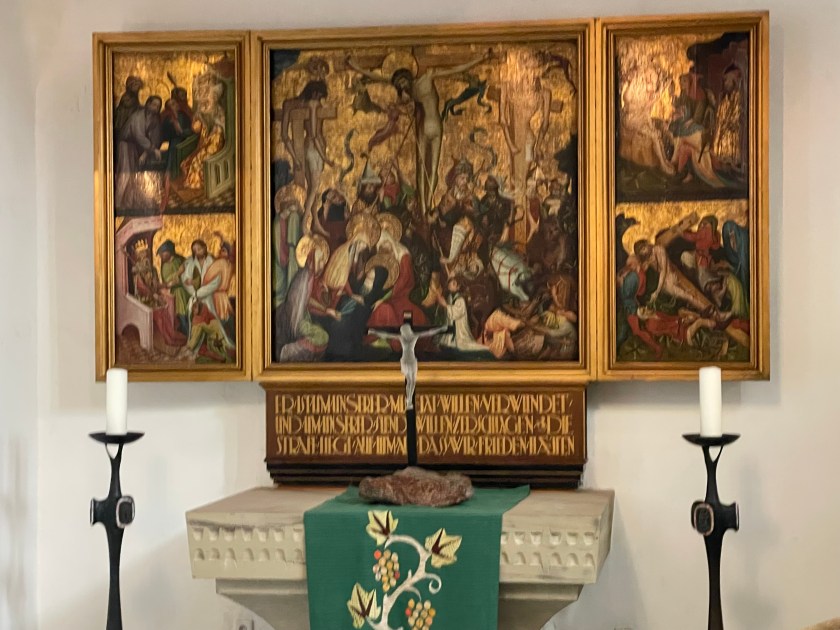
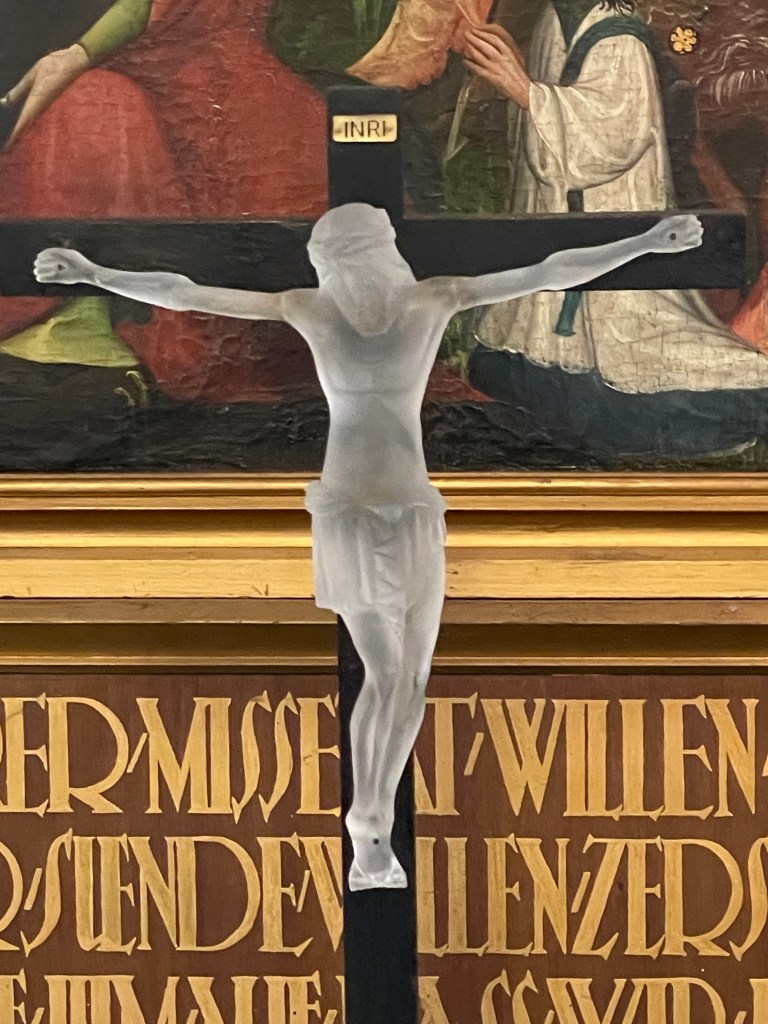
There were interesting things in the church (one fairly large room) to see. There’s a beautiful altar piece from the 1400s that was only recently discovered and restored. It was buried in a storage room in the church. There were old crosses from medieval times. There’s a beautiful crucifix that’s carved from white crystal, about 10″ high. The artist went to Jerusalem and bought a Roman coin from the time of Christ. He used the metal to fashion nails to drive through the hands and feet of his sculpture.
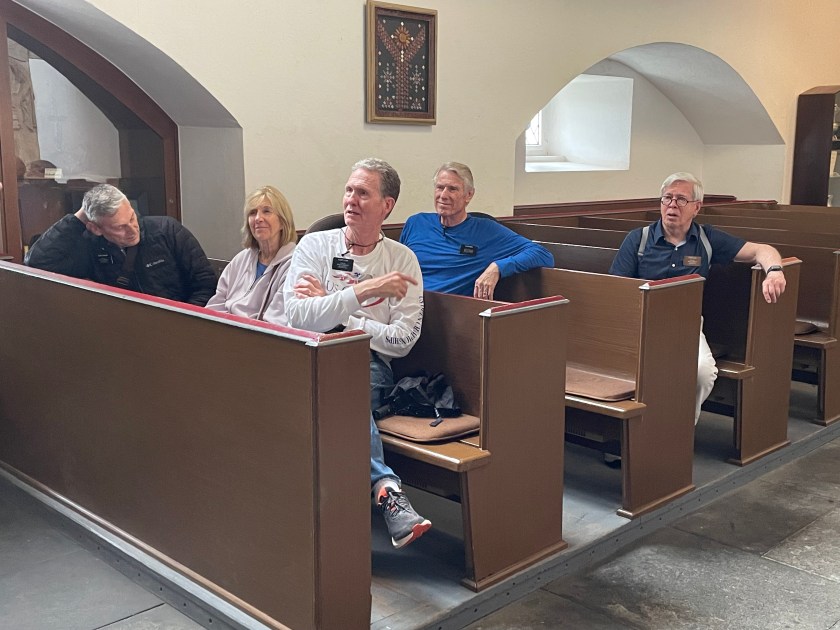
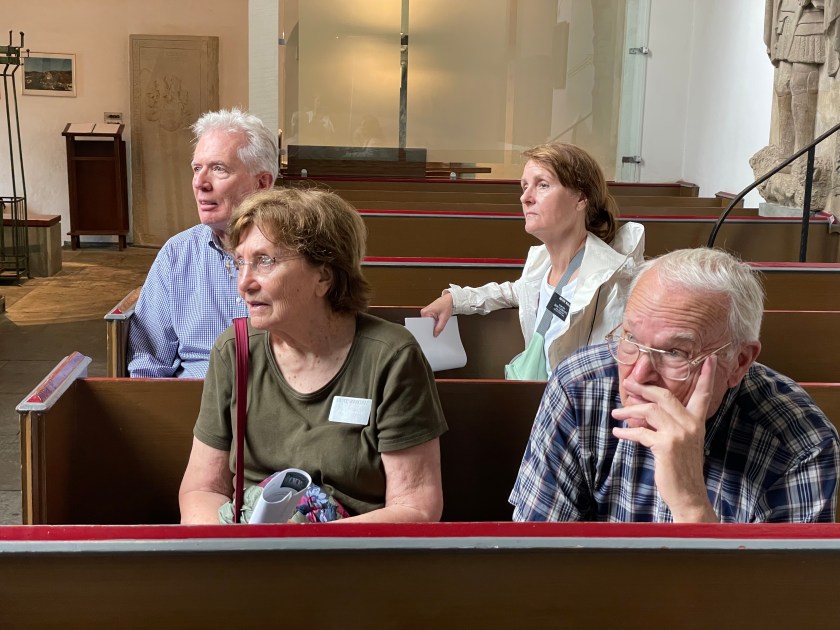
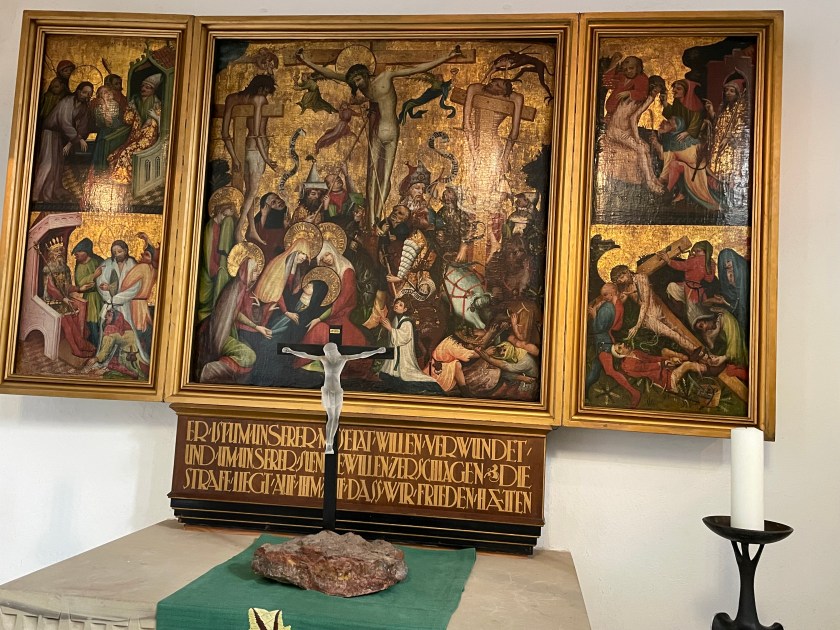
There were interesting things in the church to see. There’s a beautiful altar piece from the 1400s that was only recently discovered and restored. It was buried in a storage room in the church. There were old crosses from medieval times. There’s a beautiful crucifix that’s carved from white crystal, about 10″ high. The artist went to Jerusalem and bought a Roman coin from the time of Christ. He used the metal to fashion nails to drive through the hands and feet of his sculpture.
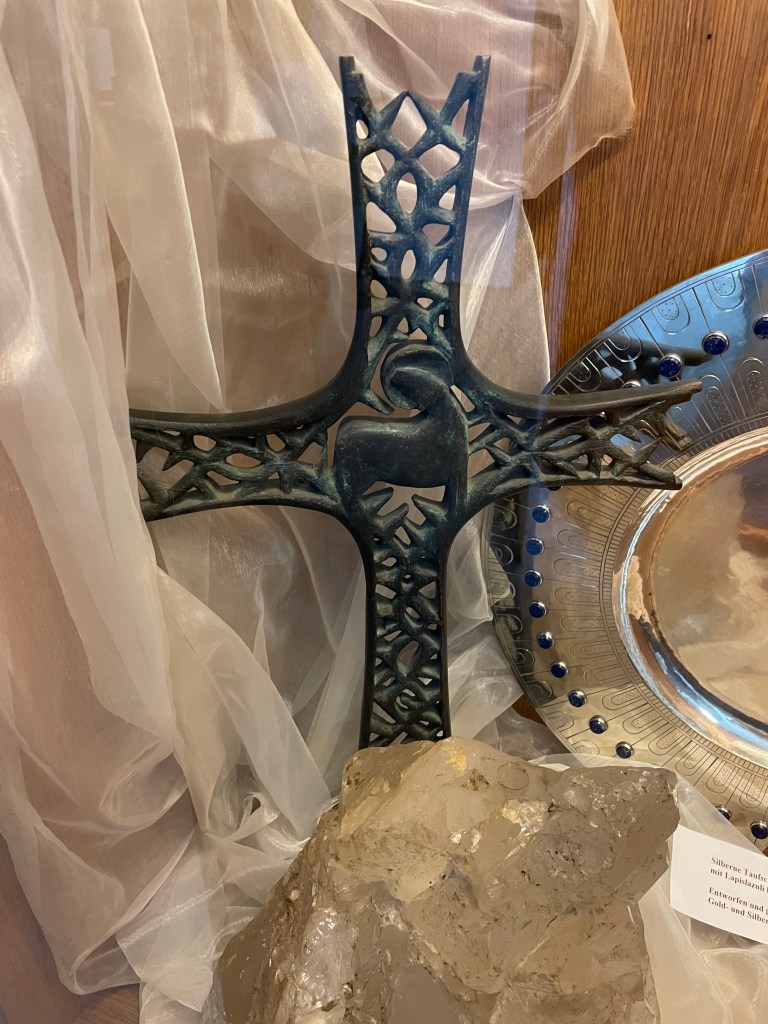
Below is a gemstone cross discovered in the mine.

A very old baptismal font cover from the 1500s:
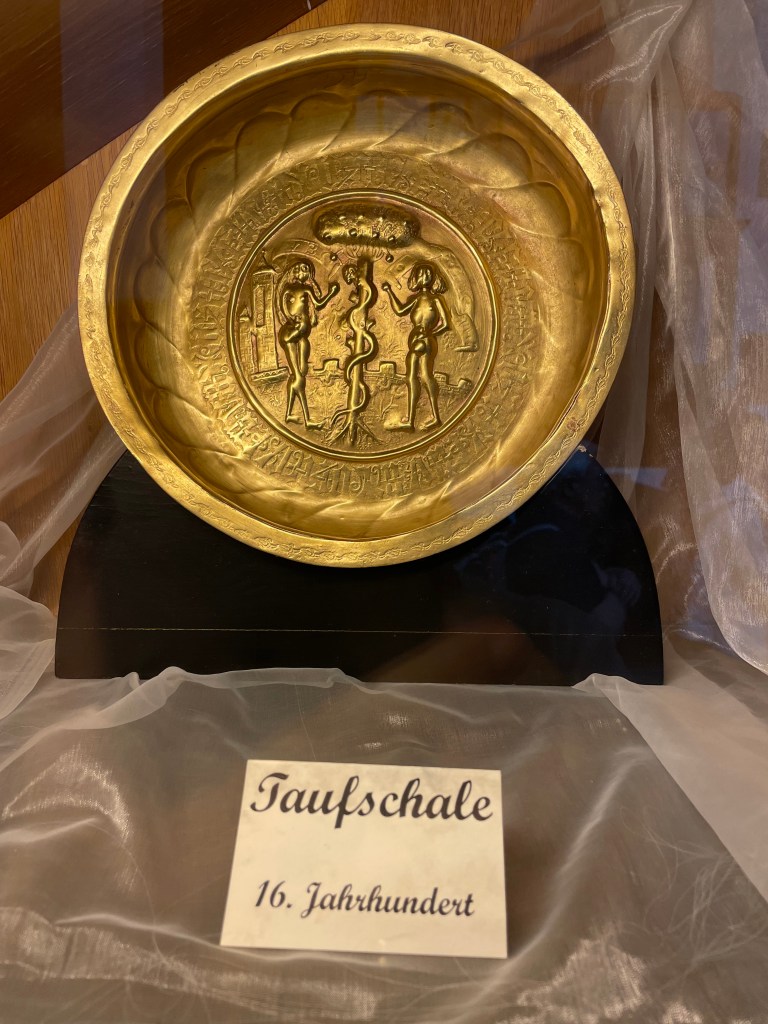
There were different historical artifacts in cases and our fun guide took his time telling us all about them and their stories. Most were related to mining and stonework.
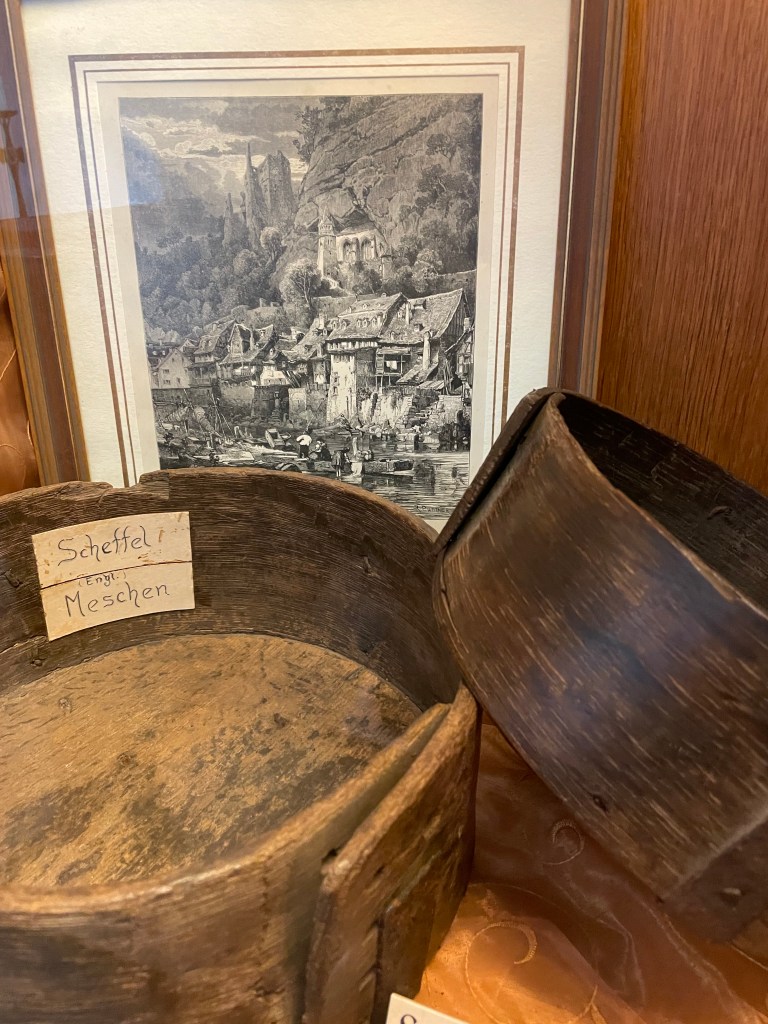
The sketch below shows the church in relation to the castle up above.

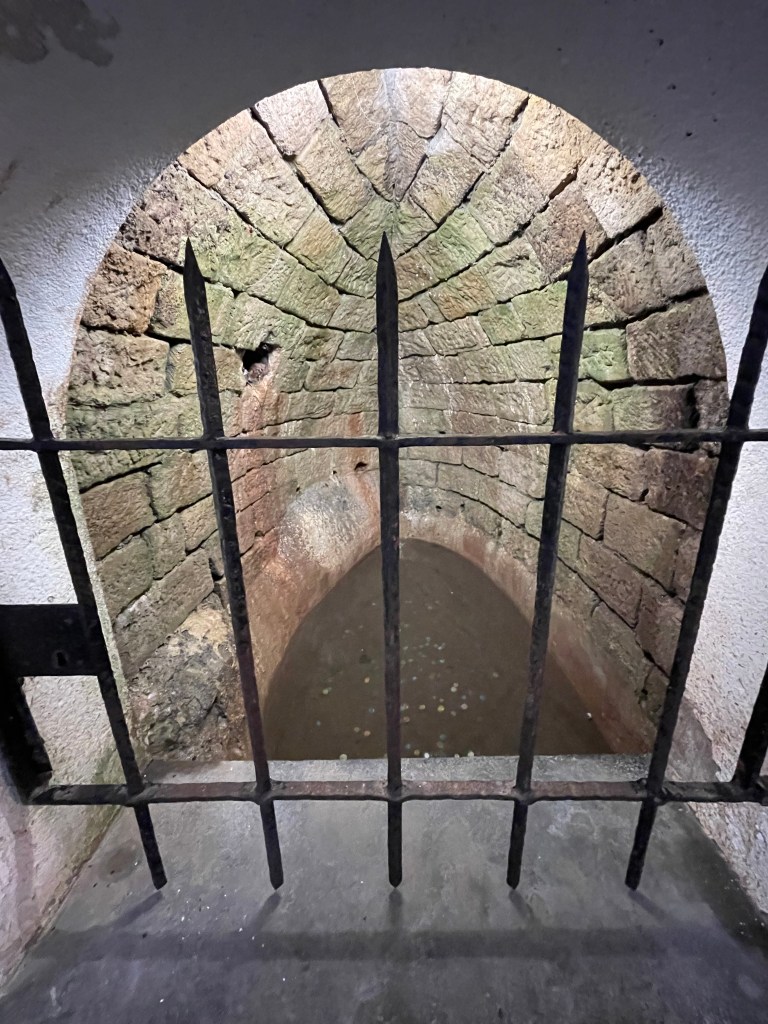
Then we climbed up from the chapel into a side room and saw the natural spring that drips pure water through the mountain stone into a shallow dipping well.

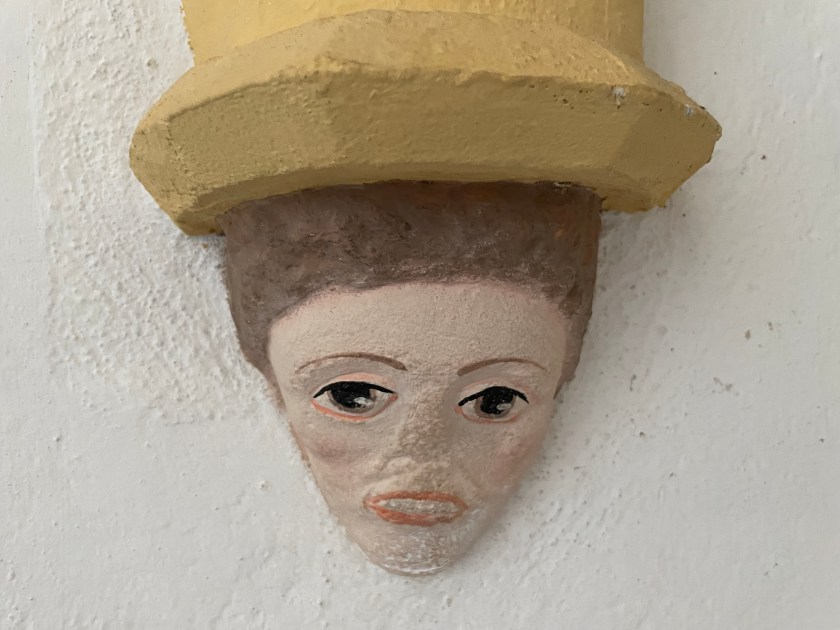
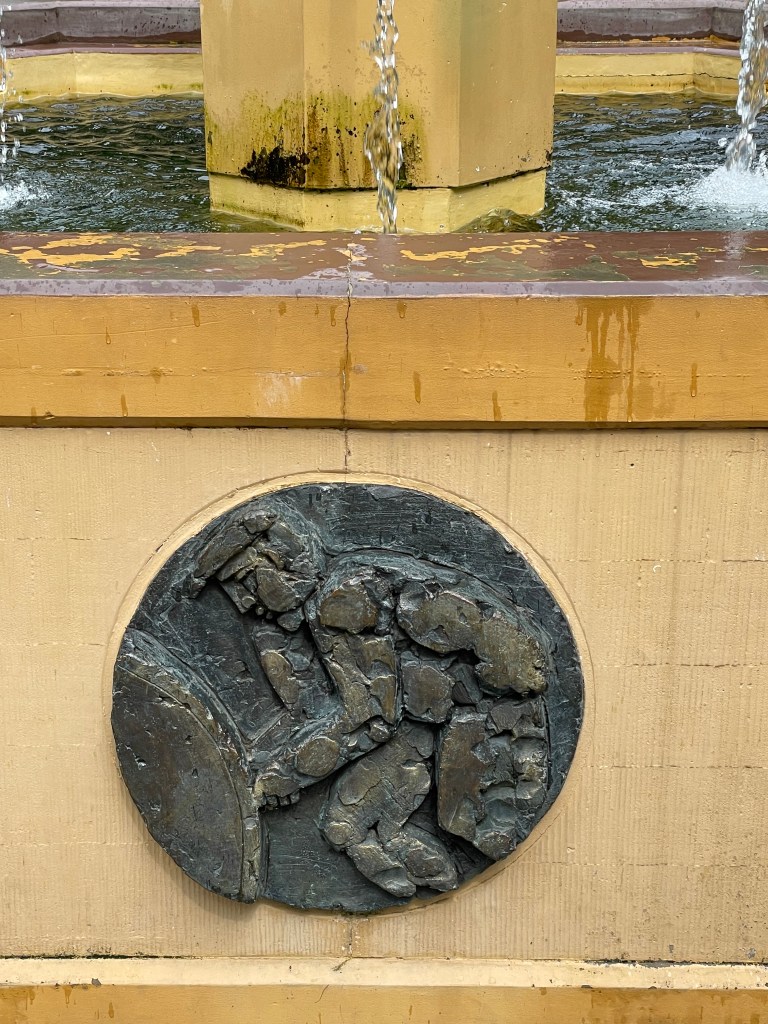
Some think this is the builder’s self portrait:

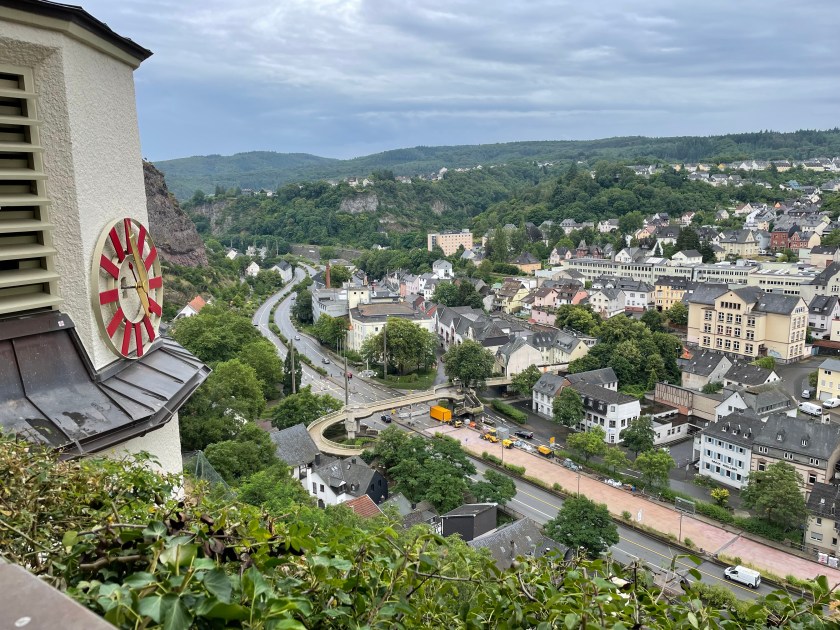
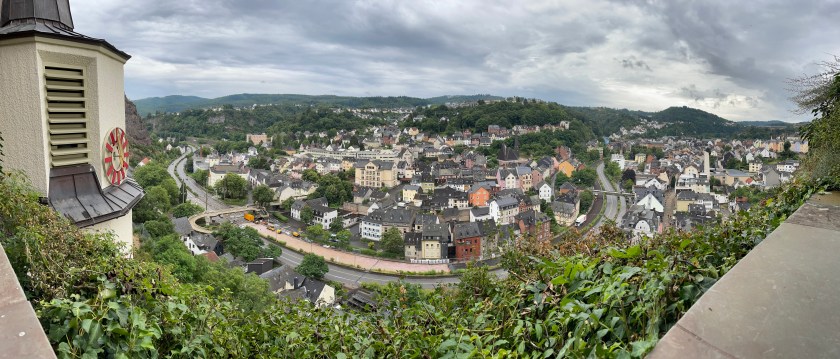
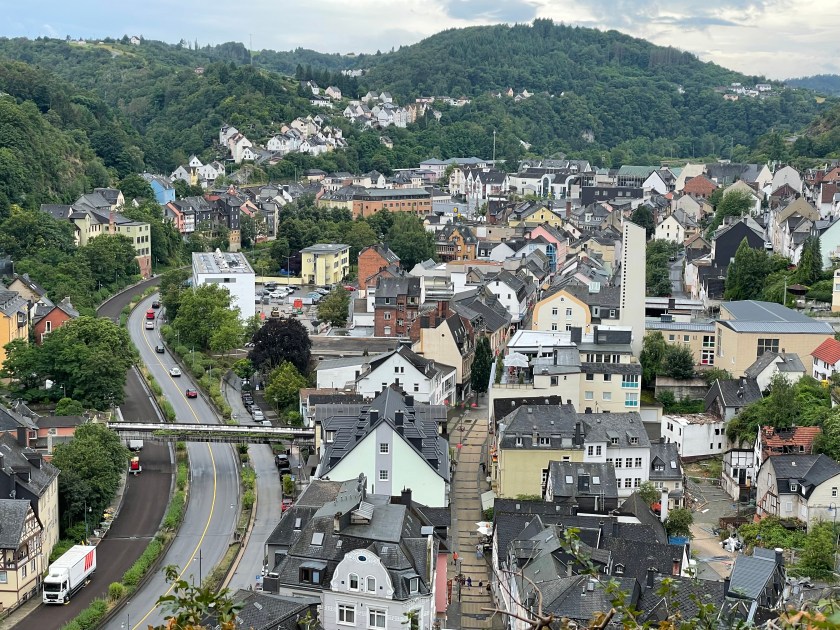
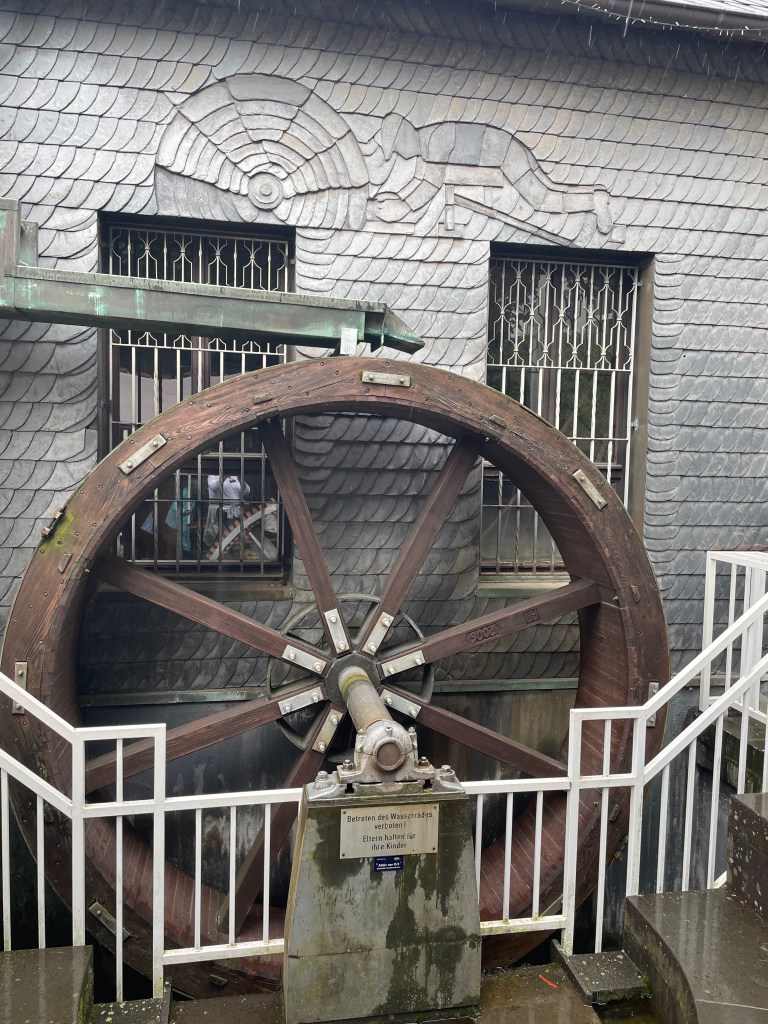
And then the river pops out again from under the road, once it’s out of town.
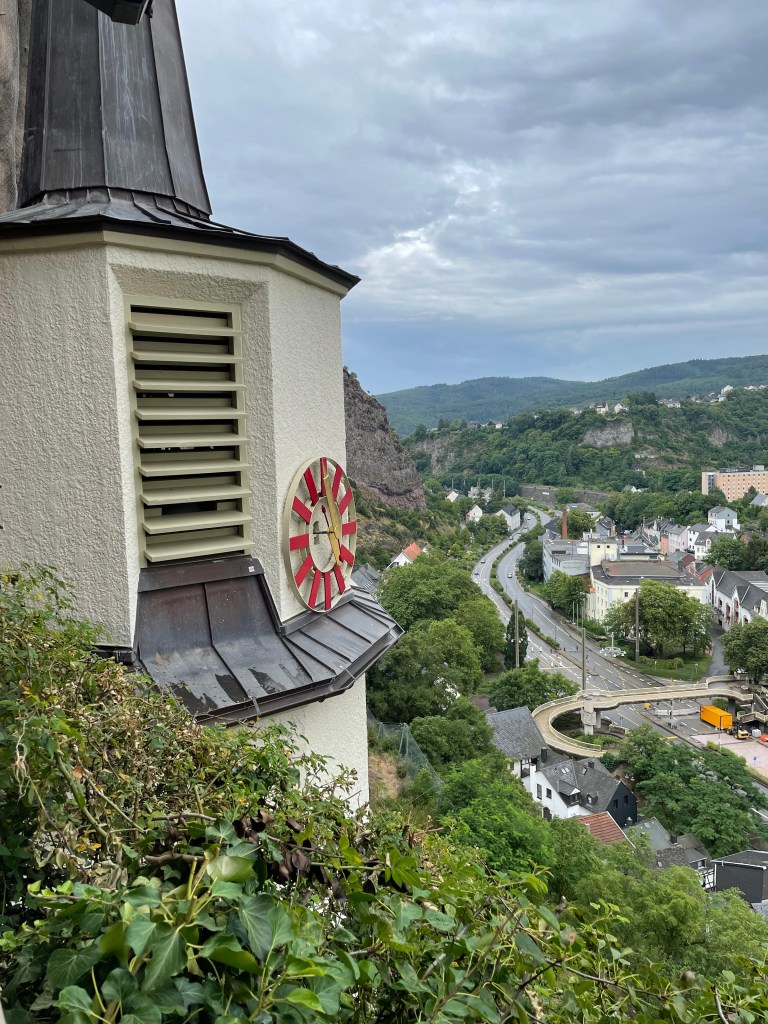
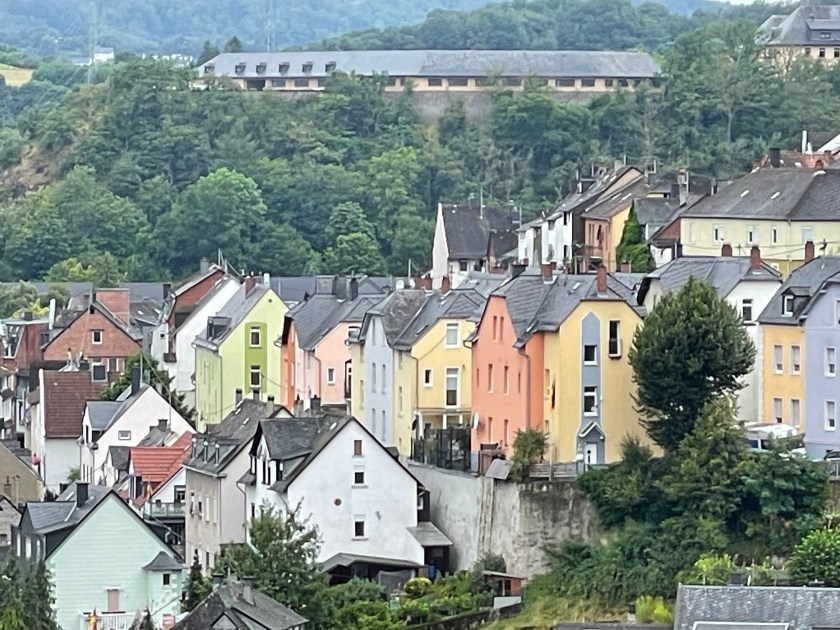
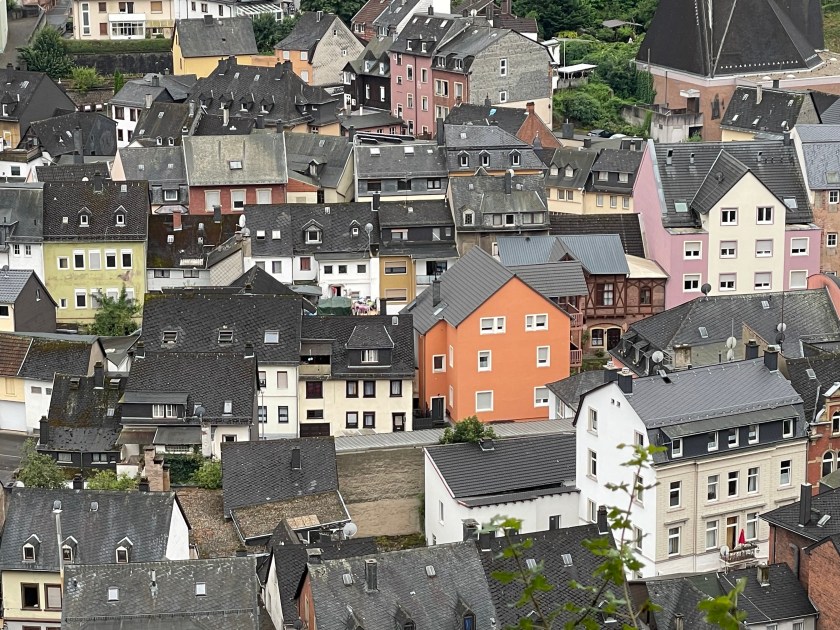
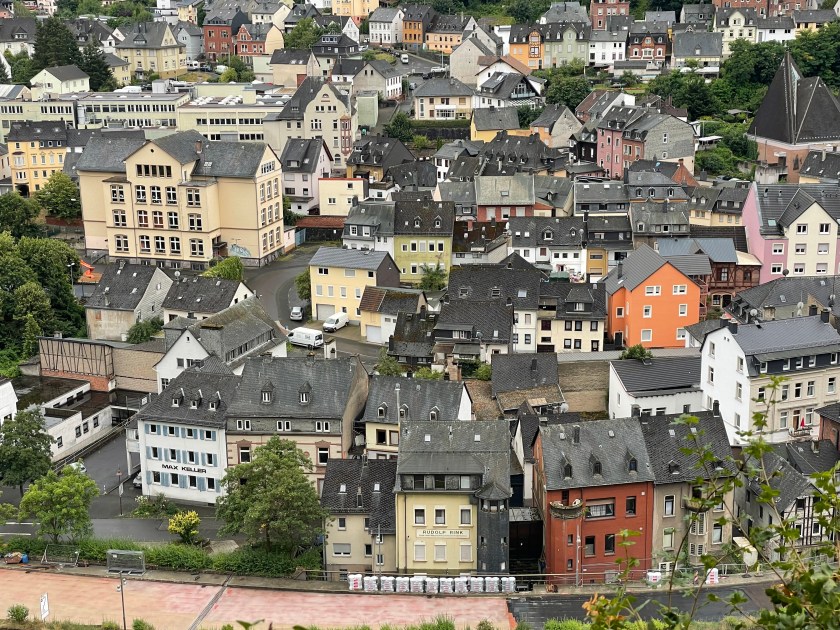
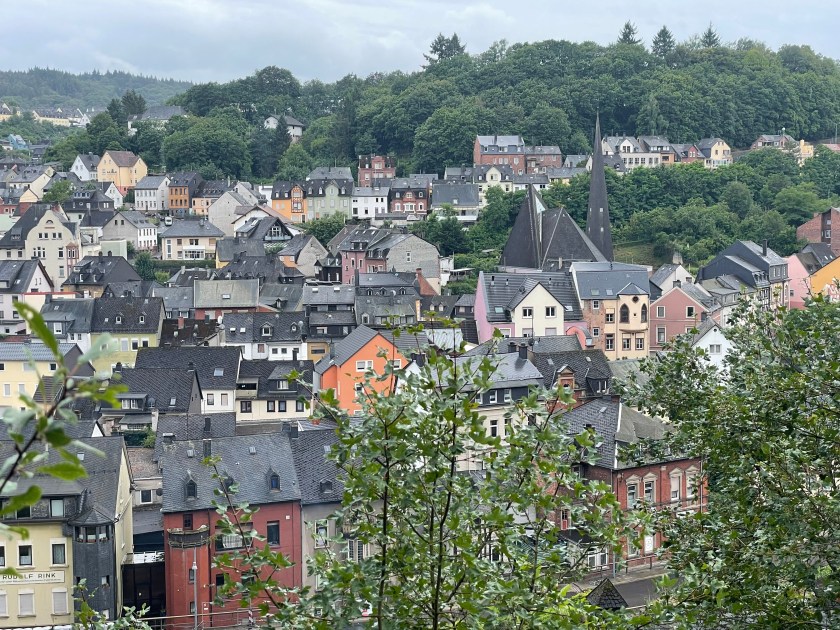
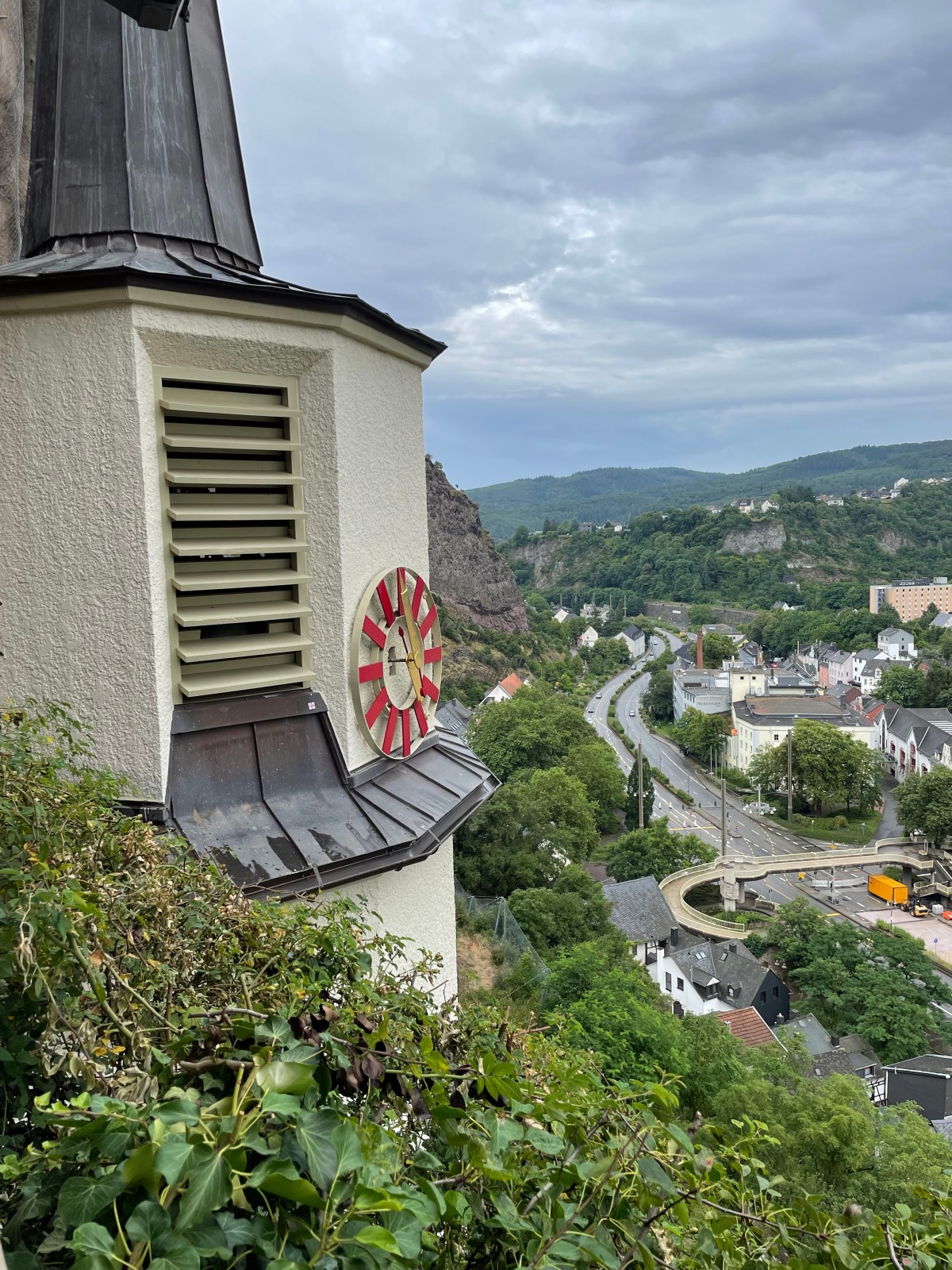
After enjoying the beautiful views of Idar Oberstein from above, we climbed back down, passing by the bell tower.

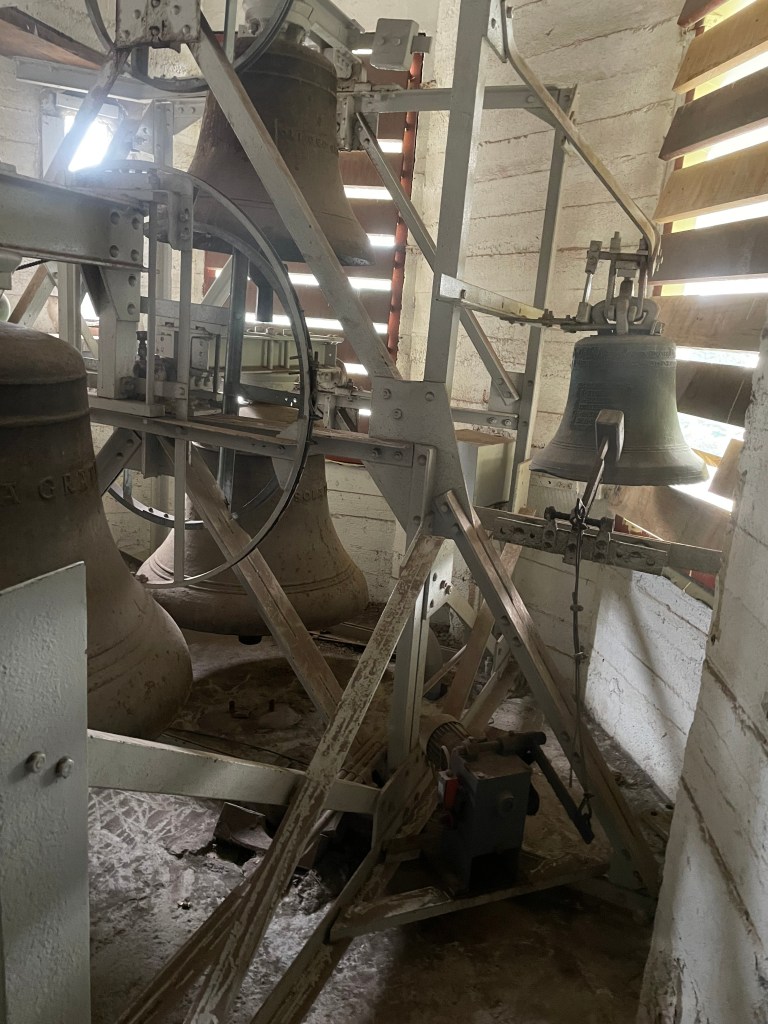

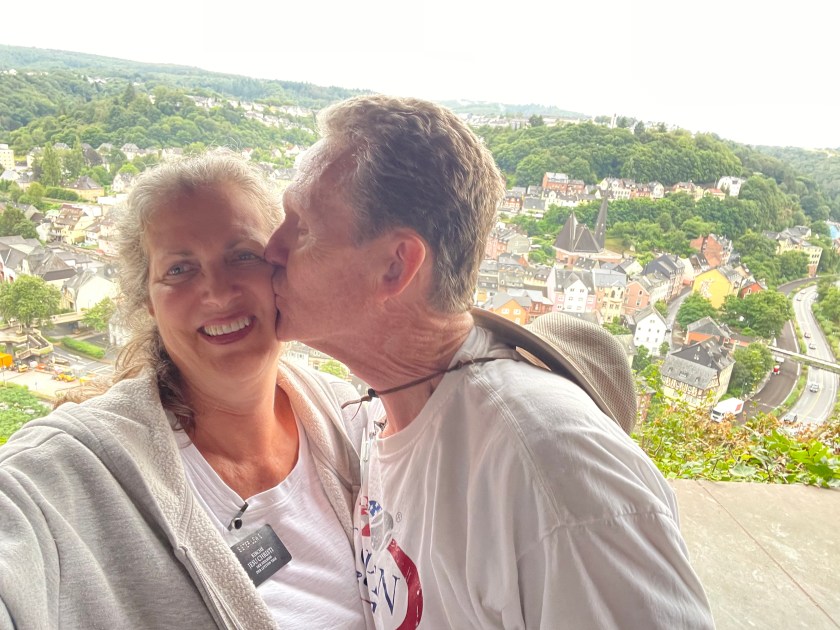
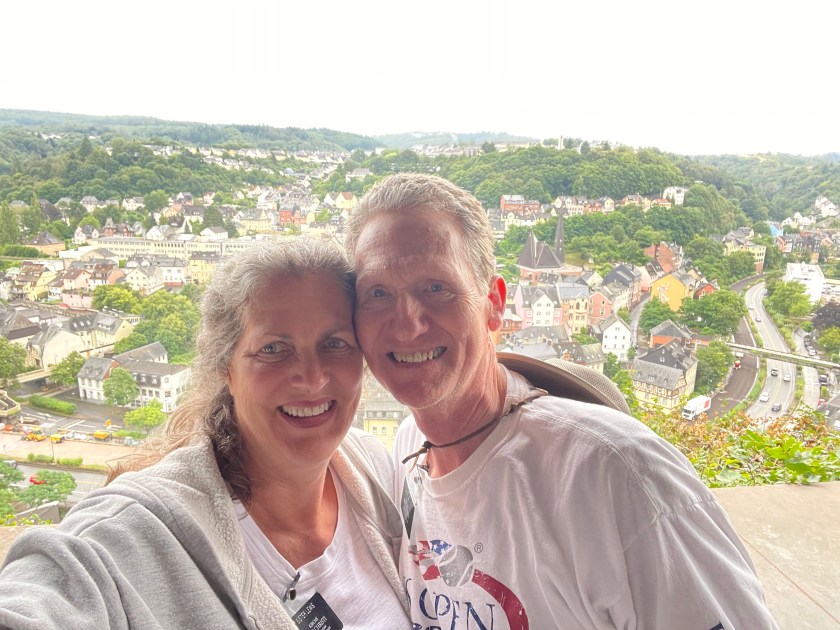
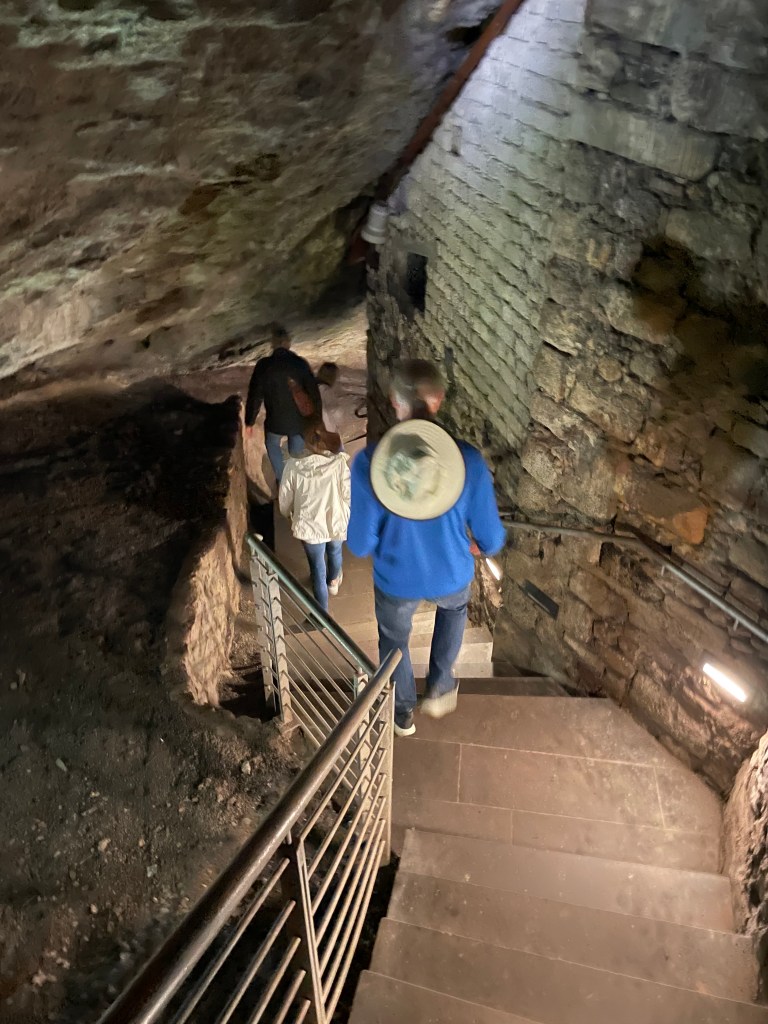
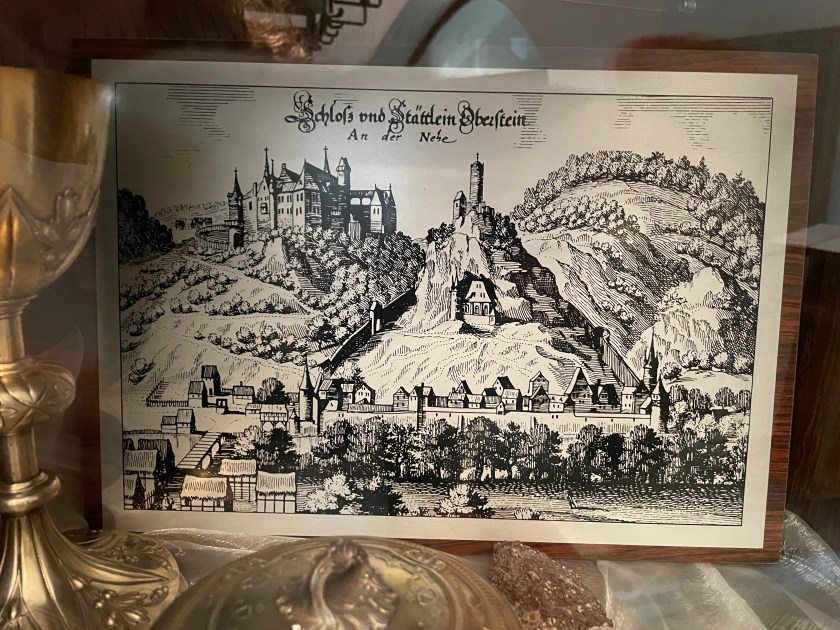
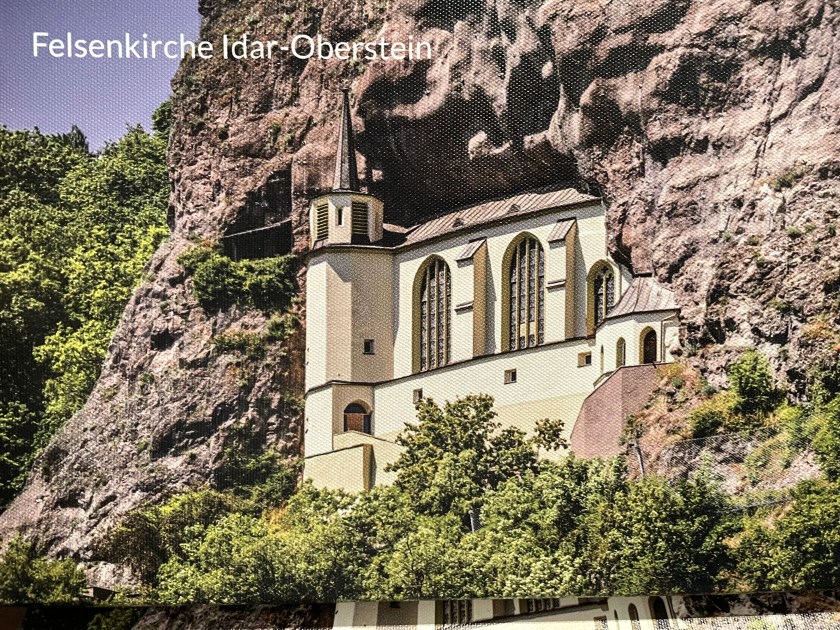
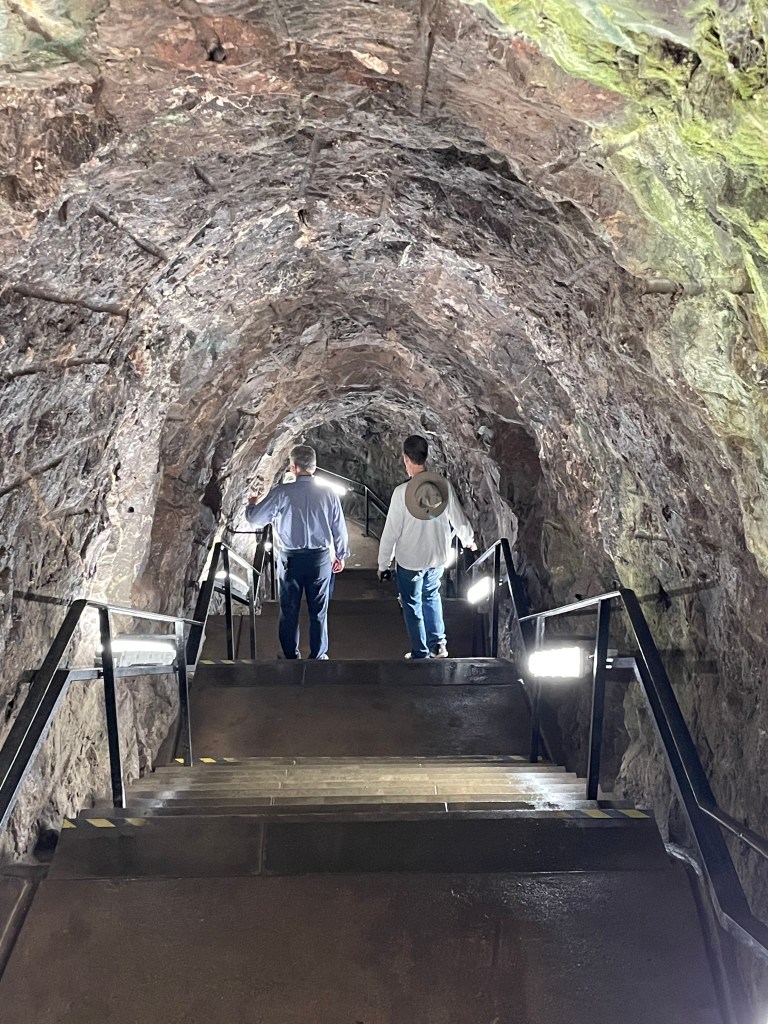
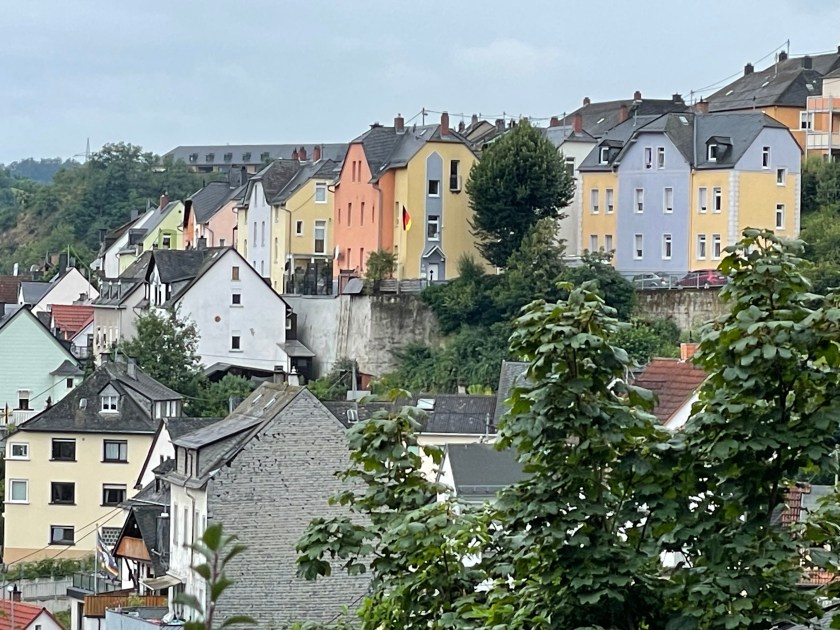
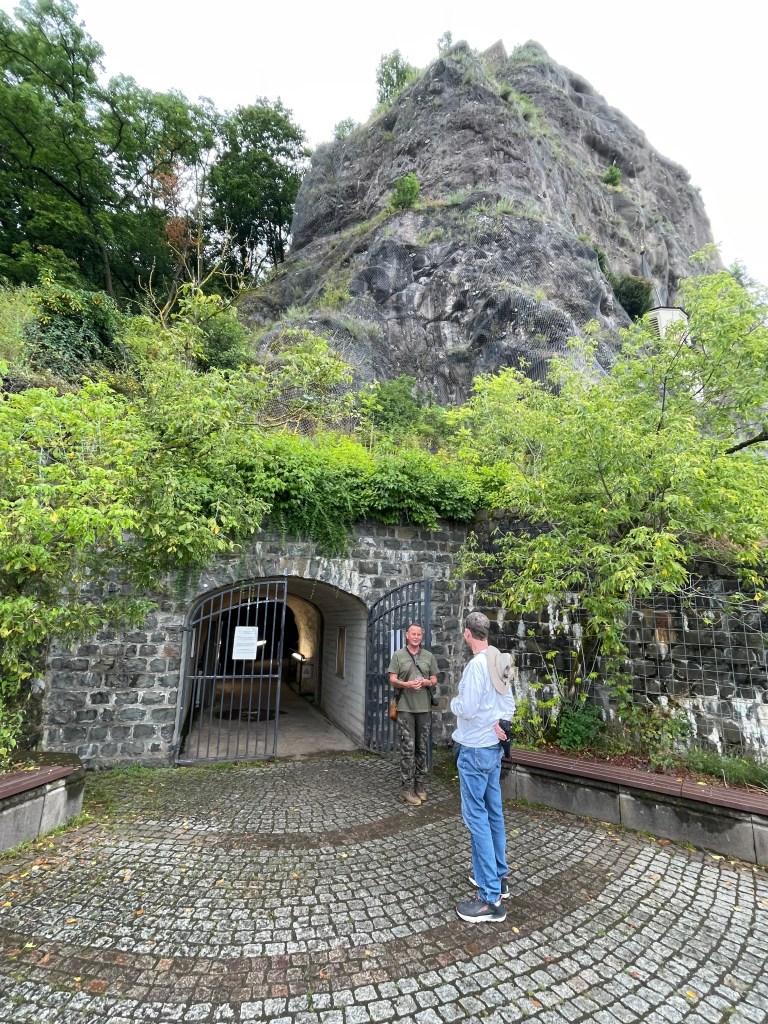
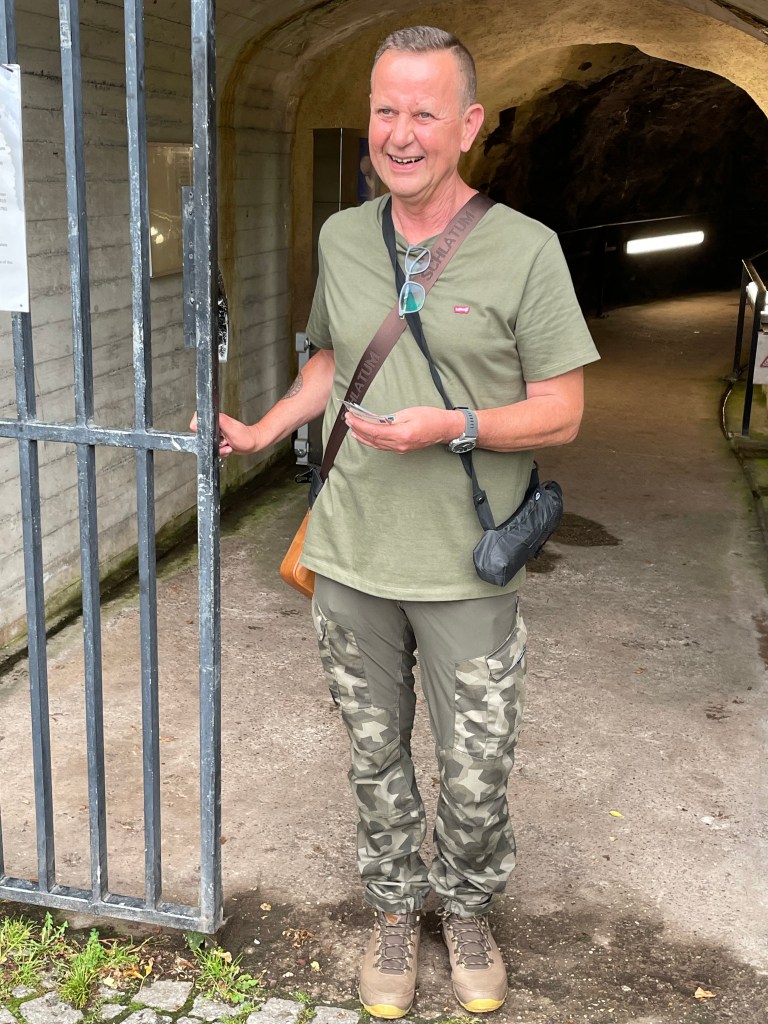
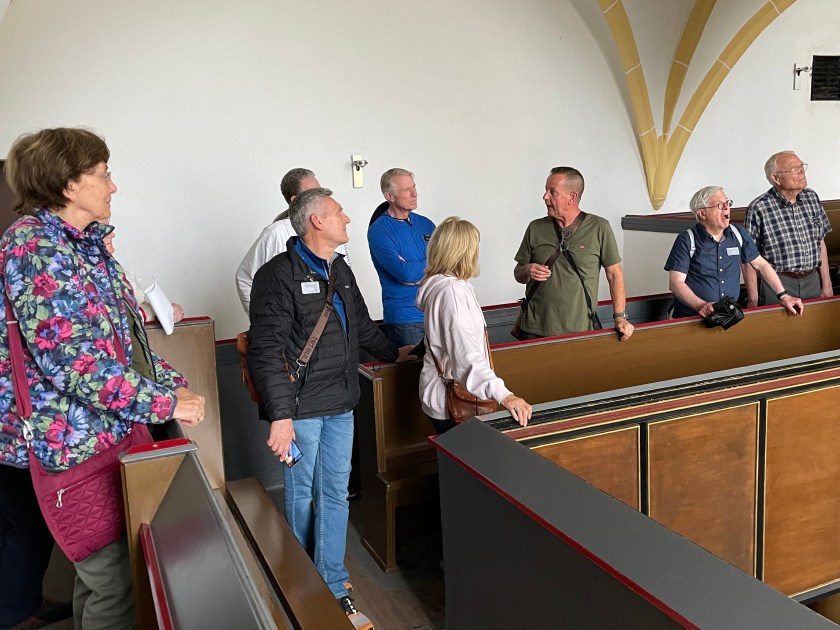
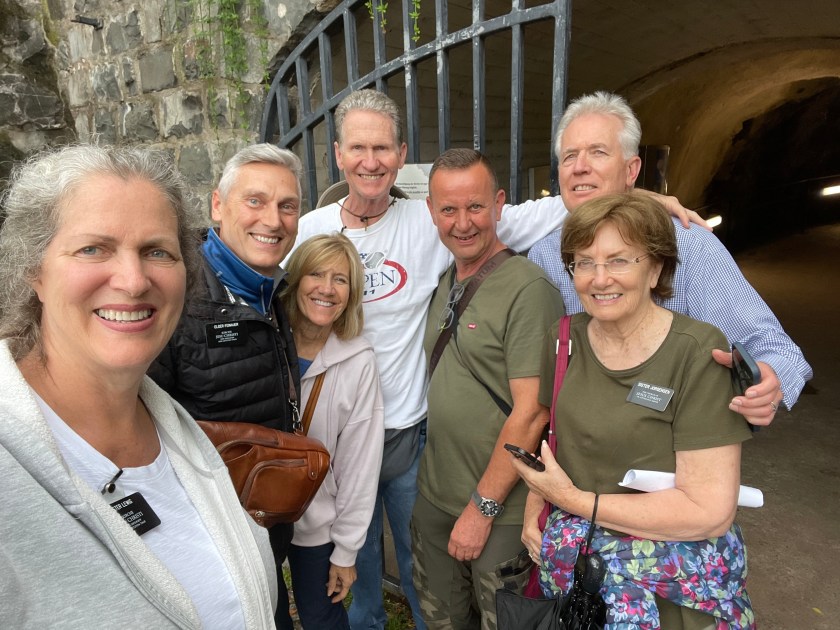
What an amazing bonus, to get to go into the church after hours and have this personalized tour. We loved it, every bit.

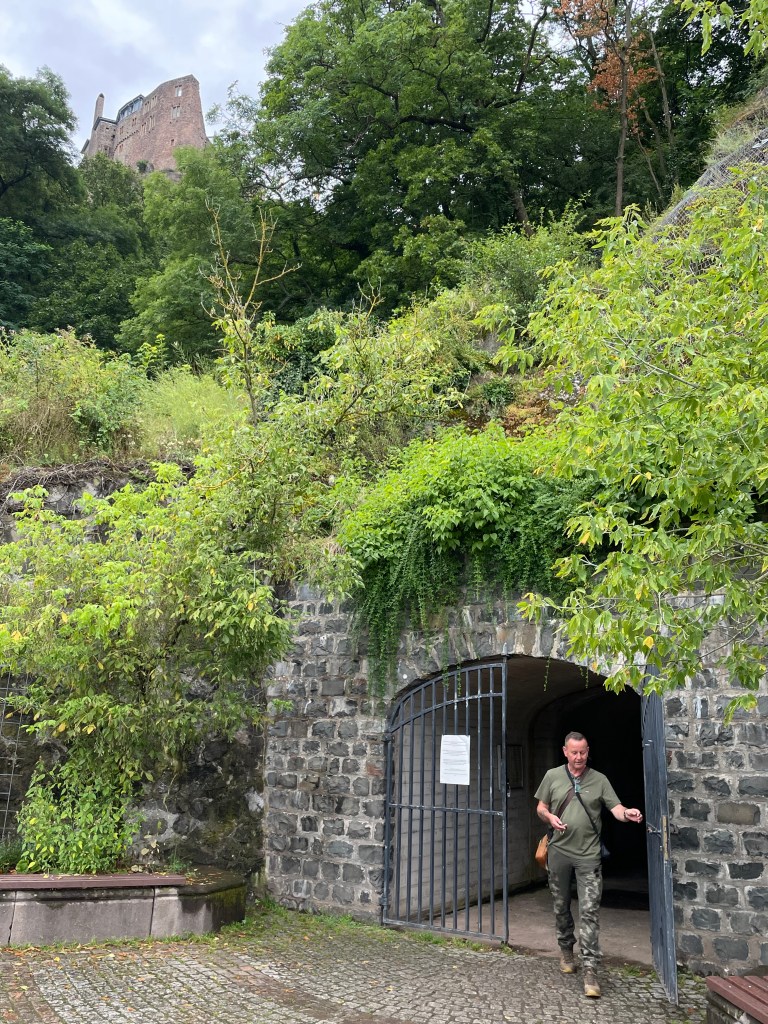
You can see the castle remains up above.

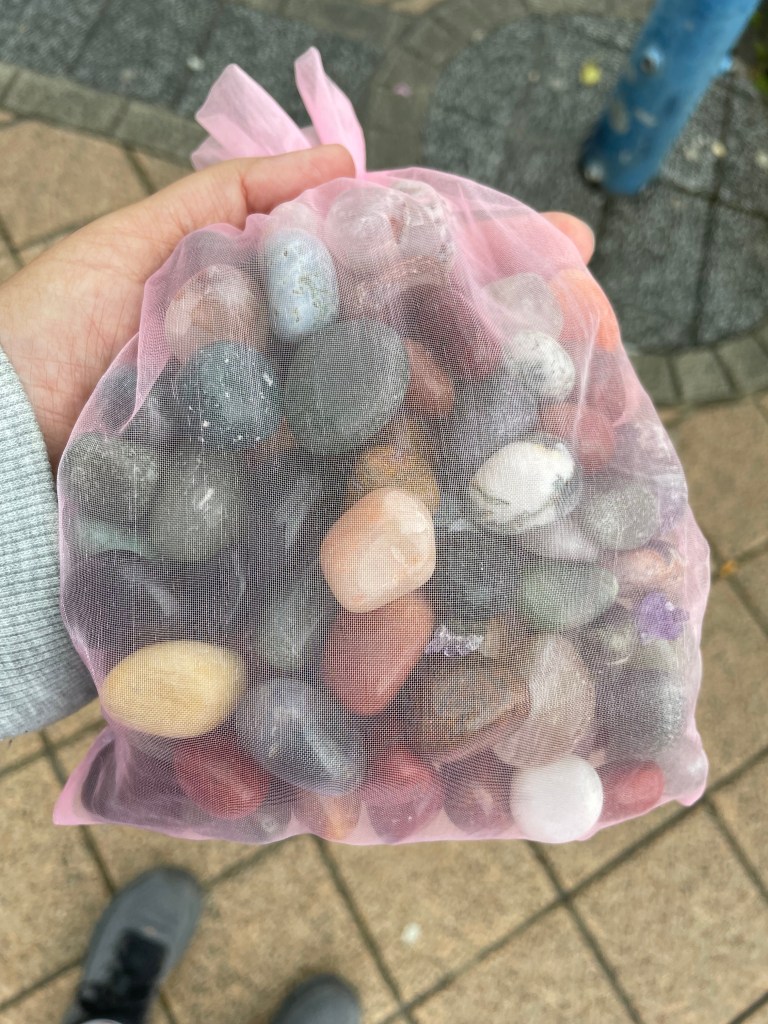
After touring the gemstone mine, we came into town. We were told by other missionaries not to shop at all the gem stores along the main shopping street until after going to the Outlet Store “on the other side of the bridge.” It took a little doing to find it, but we did. It was mostly jewelry, not a place to buy stones. I was hoping to get some stones for the grandkids and I found a bag of gemstones for 6 Euro, so I got one of those.

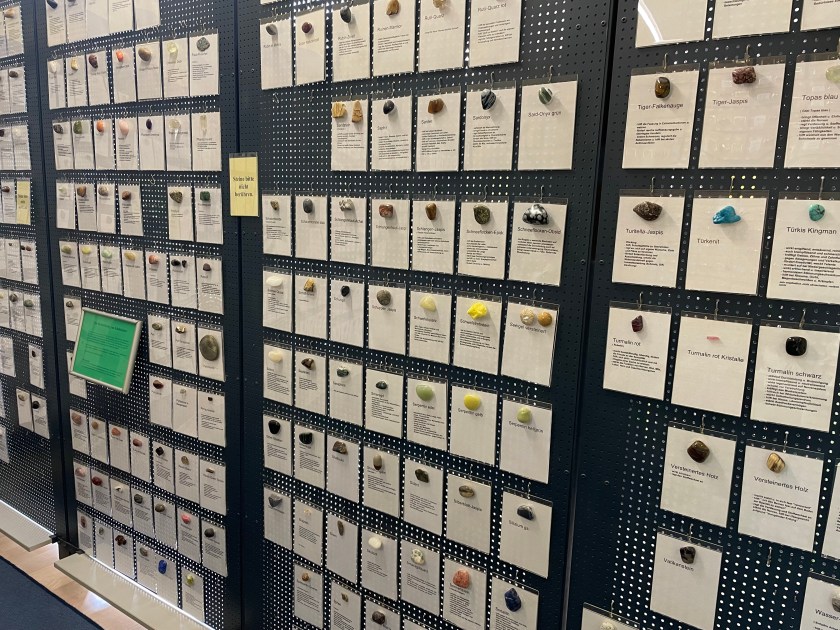
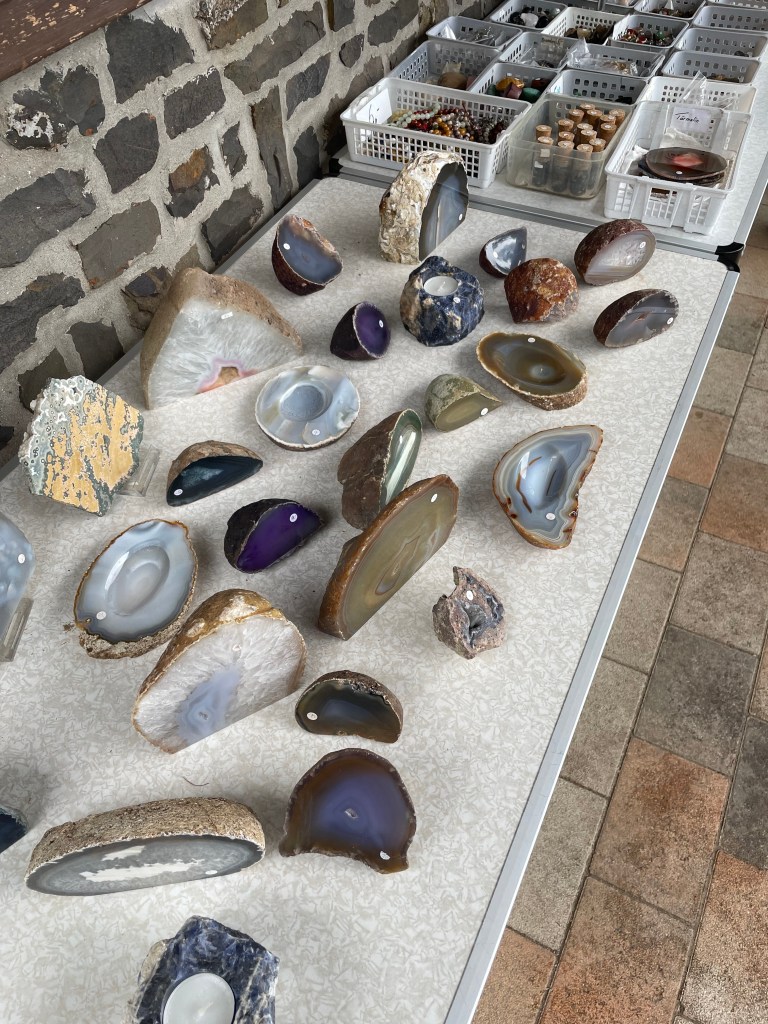
There were 2 walls like this showing all the different kinds of stones. Most of what’s sold here comes from other parts of the world, now that this is a famous gemstone place.
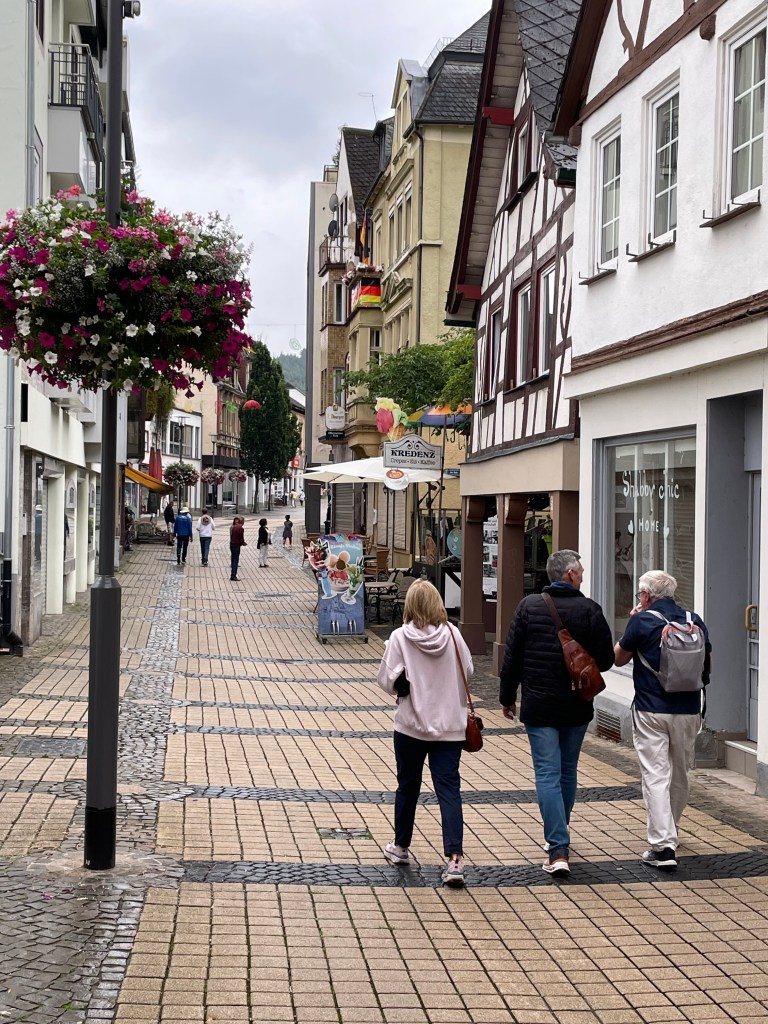
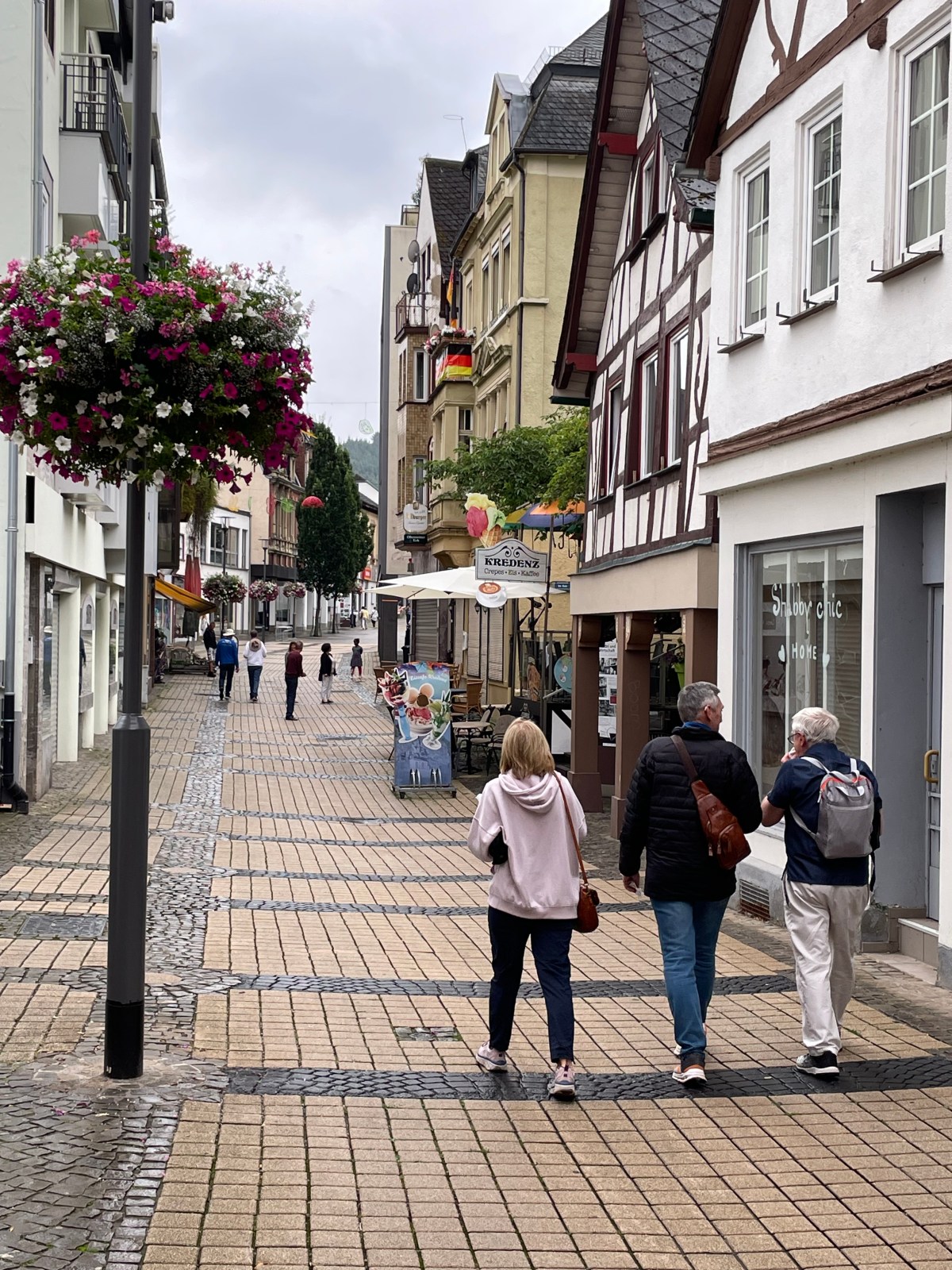
Then we went into town to wander and shop and eat.

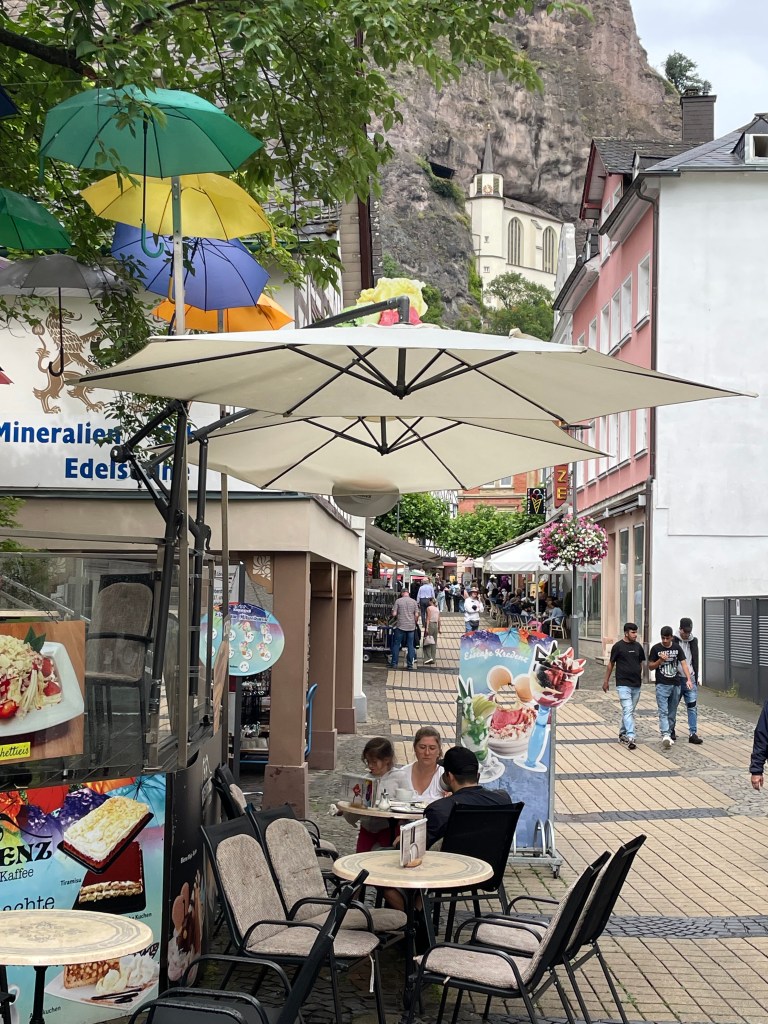
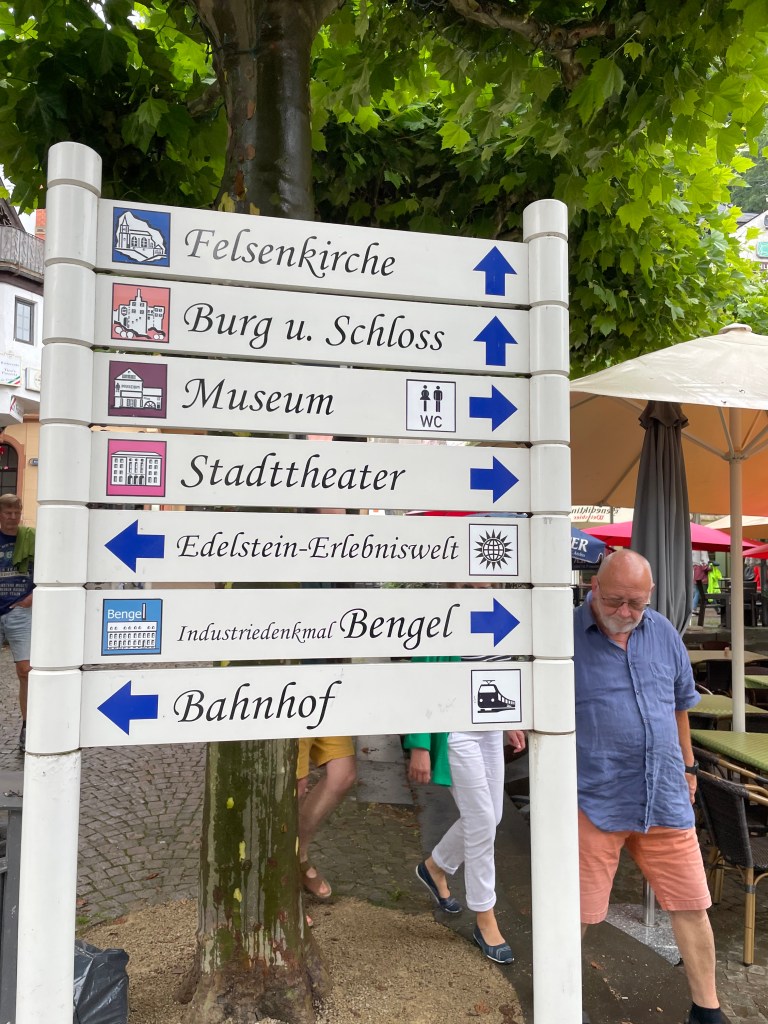
You can see up ahead the famous church (Felsenkirche) built into the rock mountainside.

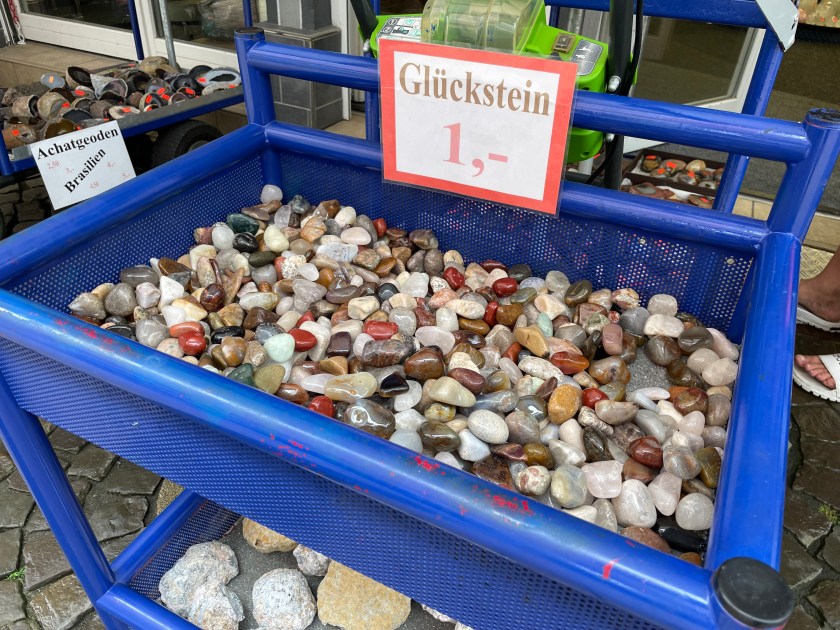
Good luck stones, 1 Euro:
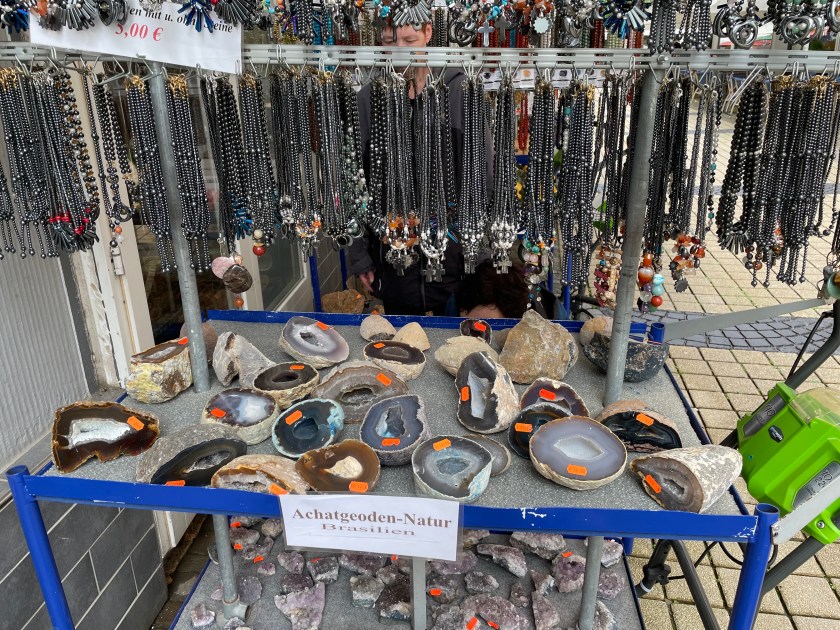
There were lots of shops selling gemstones of all shapes, colors and sizes.

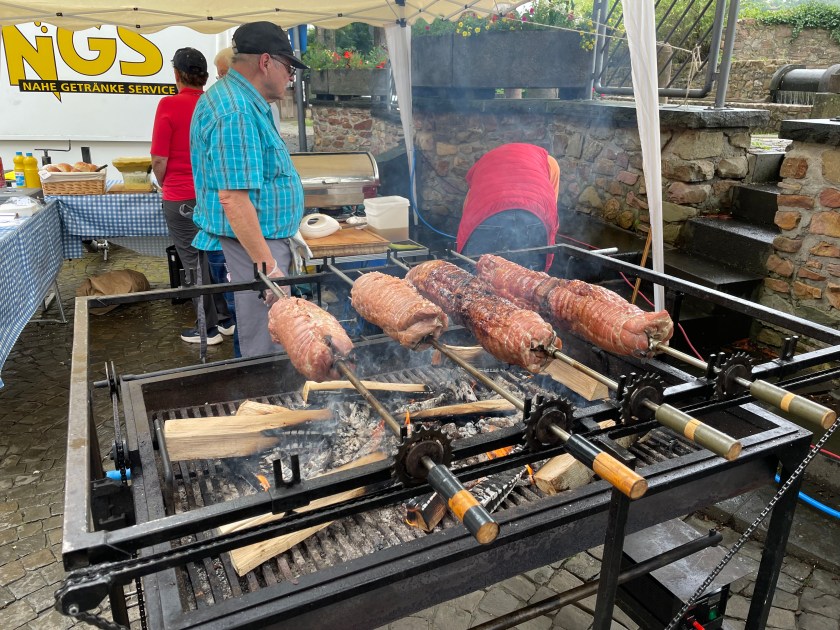
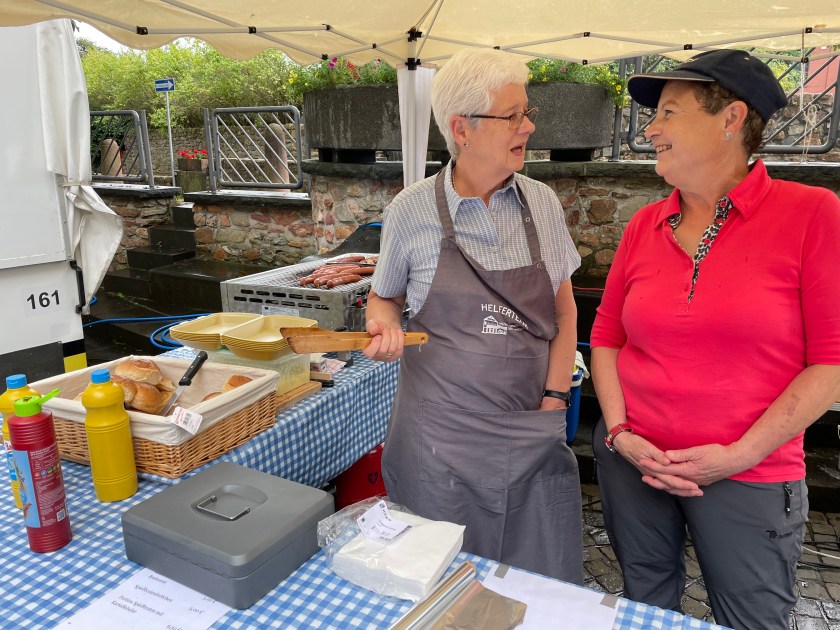
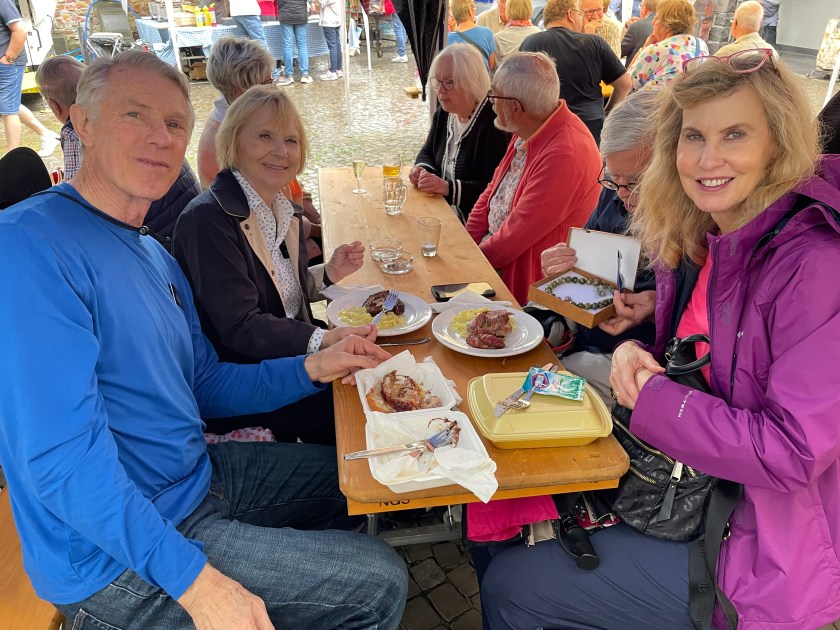
There’s an interesting relationship here between Germany and Brazil because of the miners that left here to find better work there. When we got to the heart of the town, there was a special festival going on (one weekend each year) and the food being served was Brazilian grilled pork roasts. They had several big rolled pork roasts on spits over a beechwood fire. For about 5 Euro, we each got 2 slab cuts of the pork with a roll or potato salad. It was a fun meal.


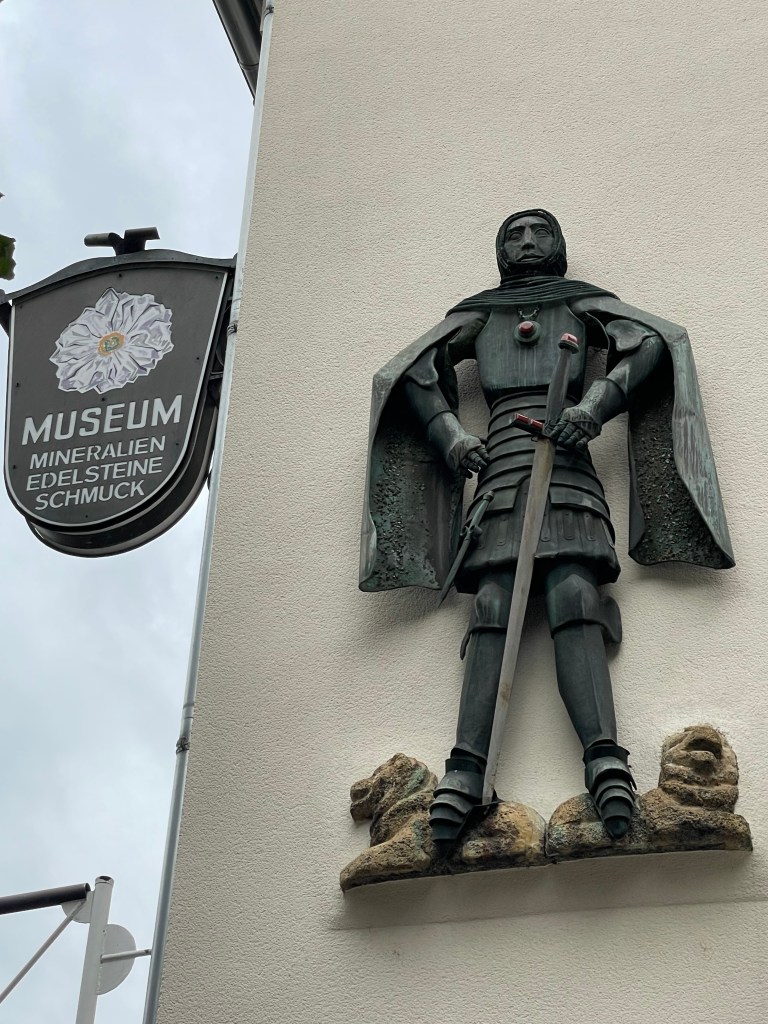
Also in the heart of town was a gemstone museum, free today for the festival, and open late. These were some of the wonders found there:

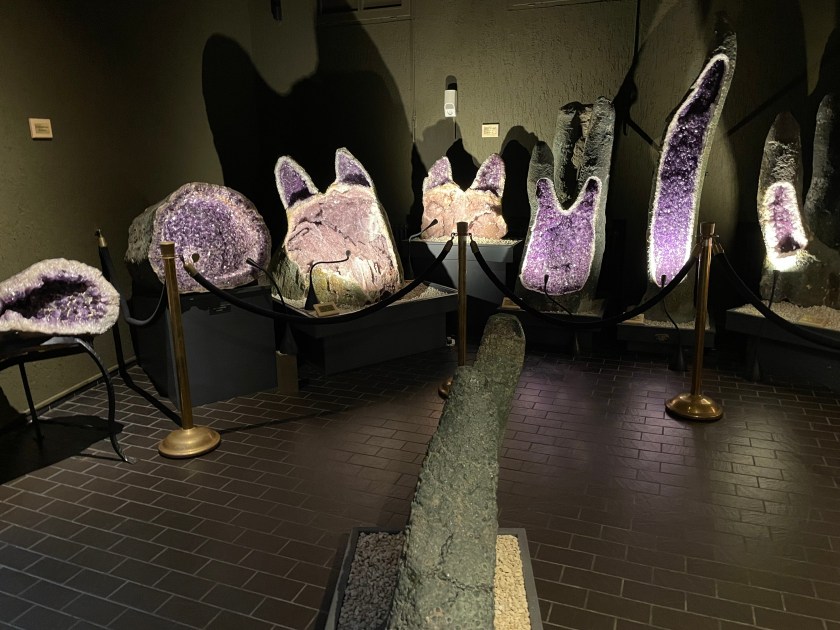
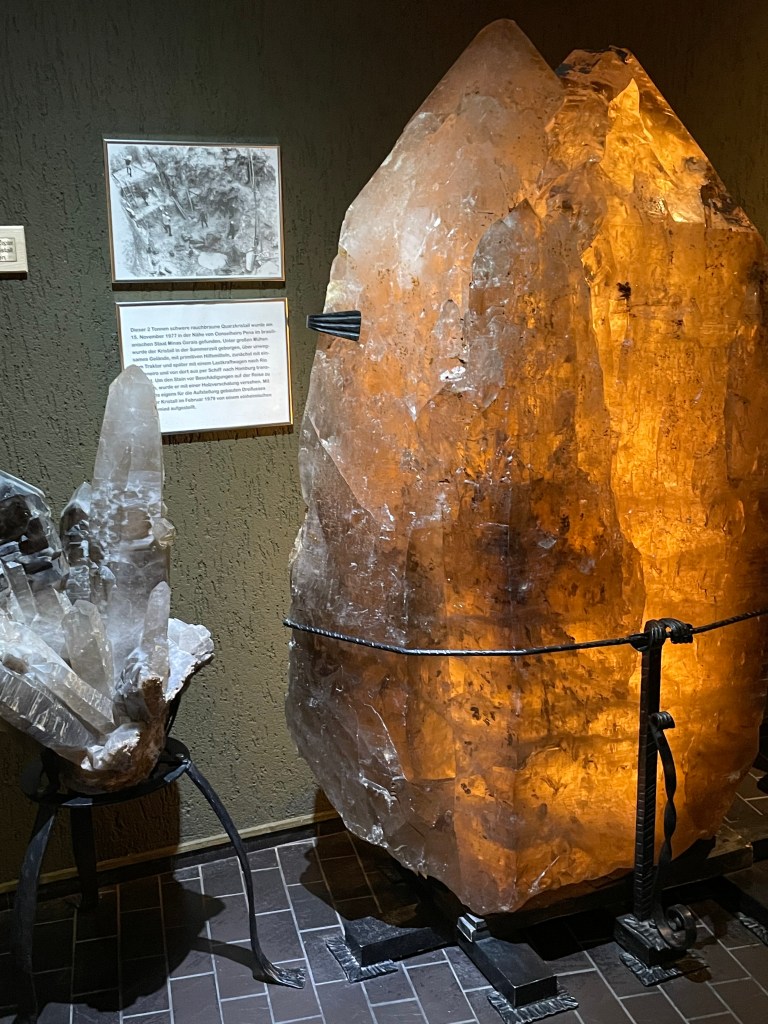
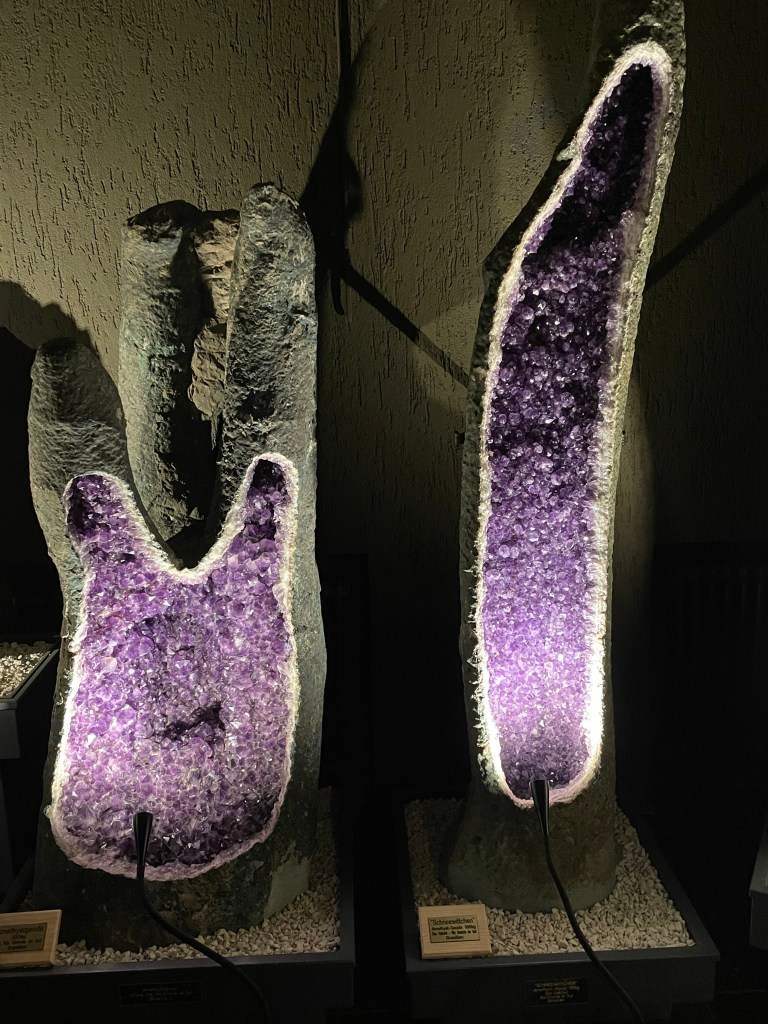
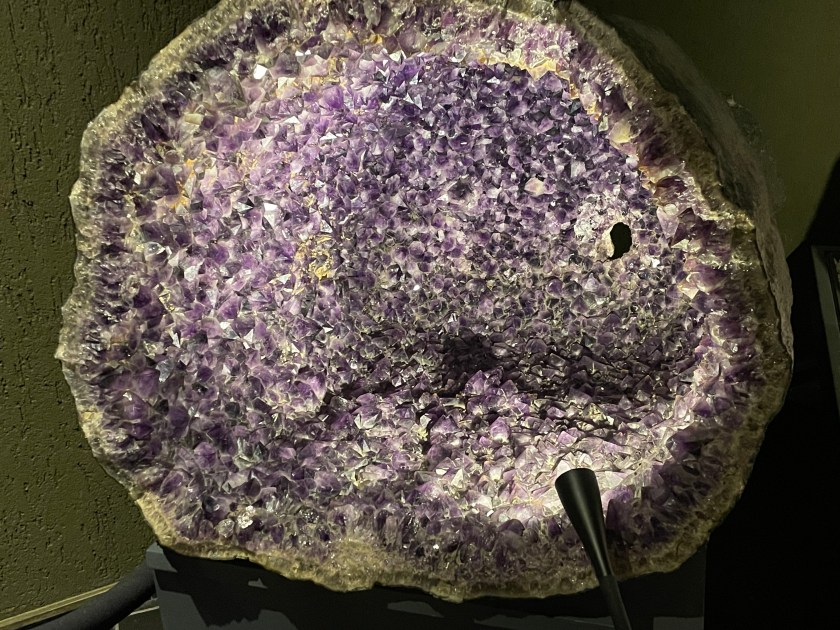
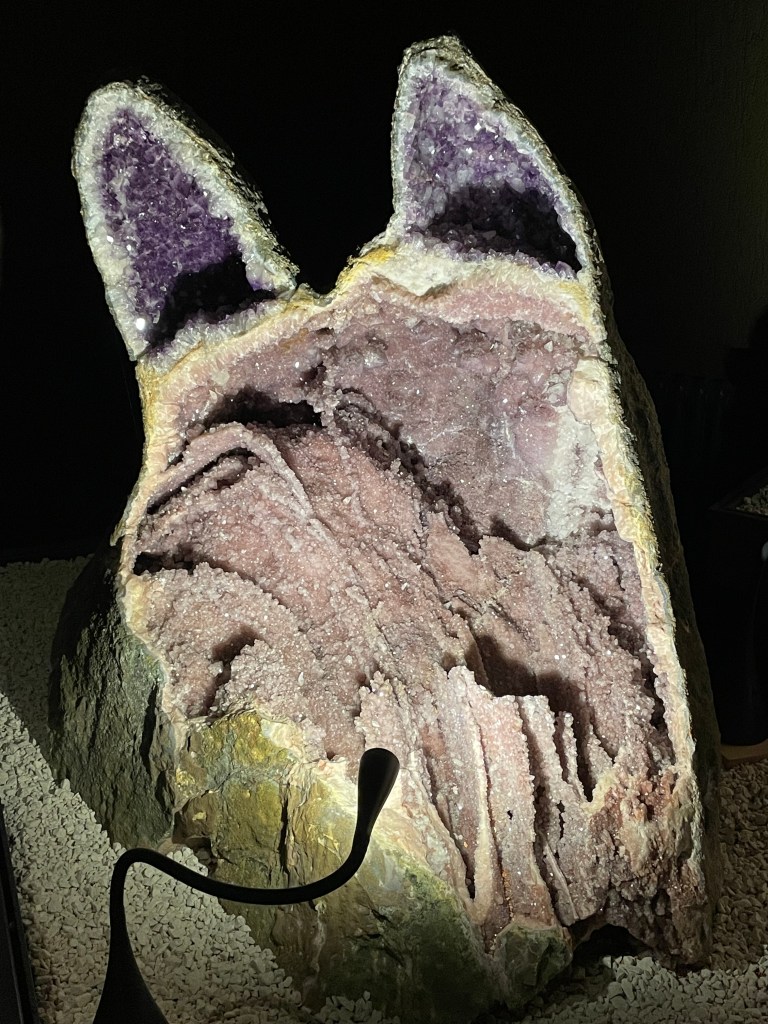


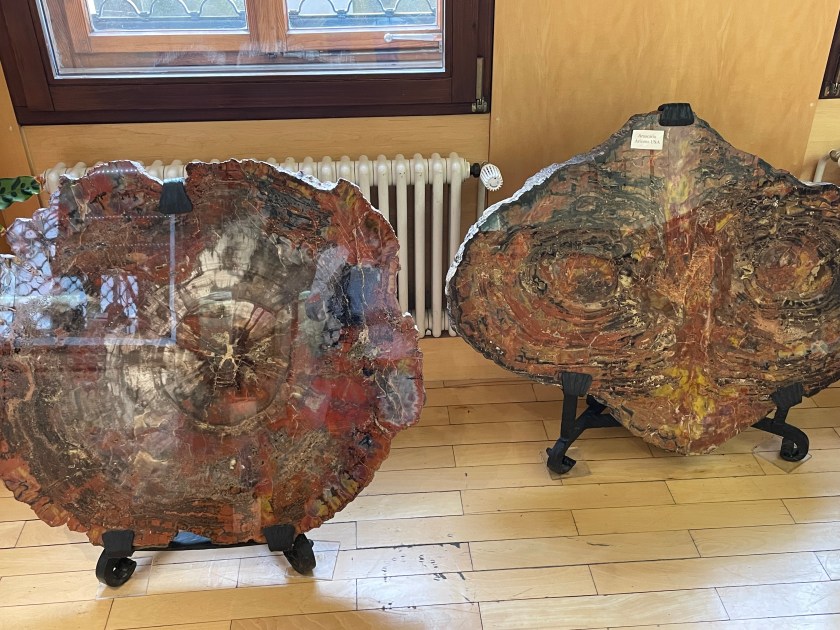

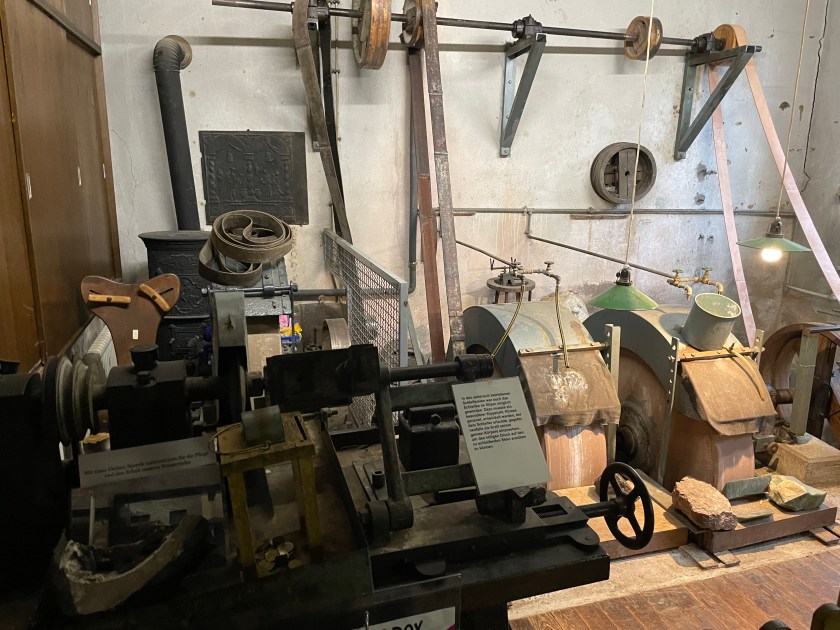
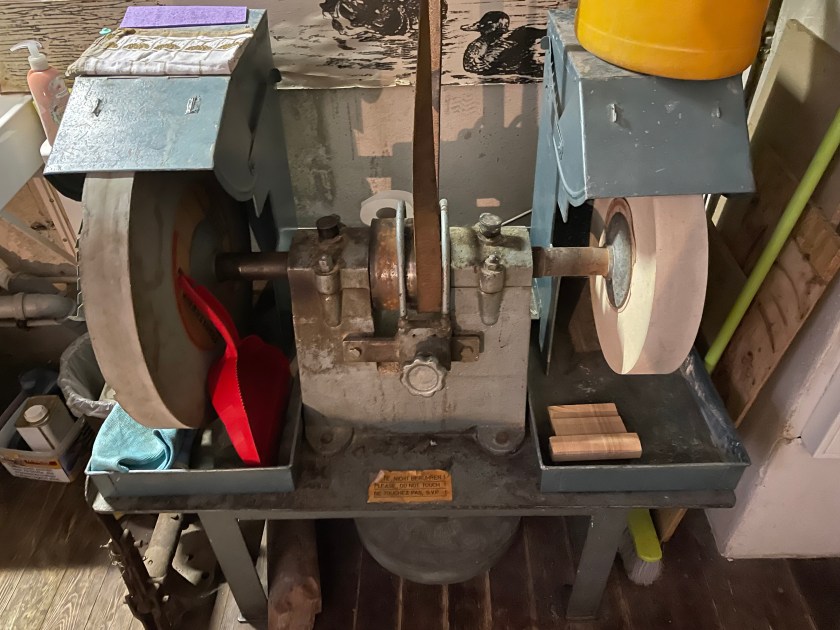
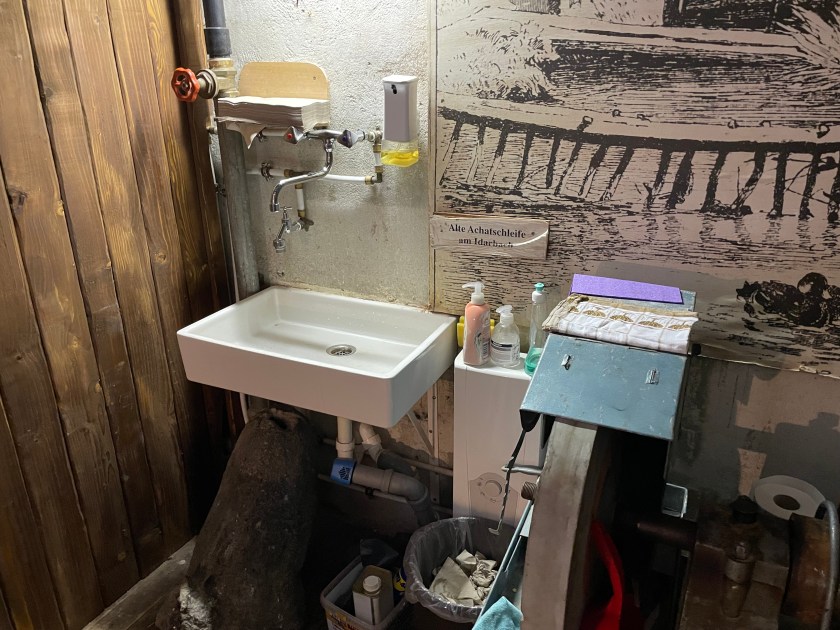
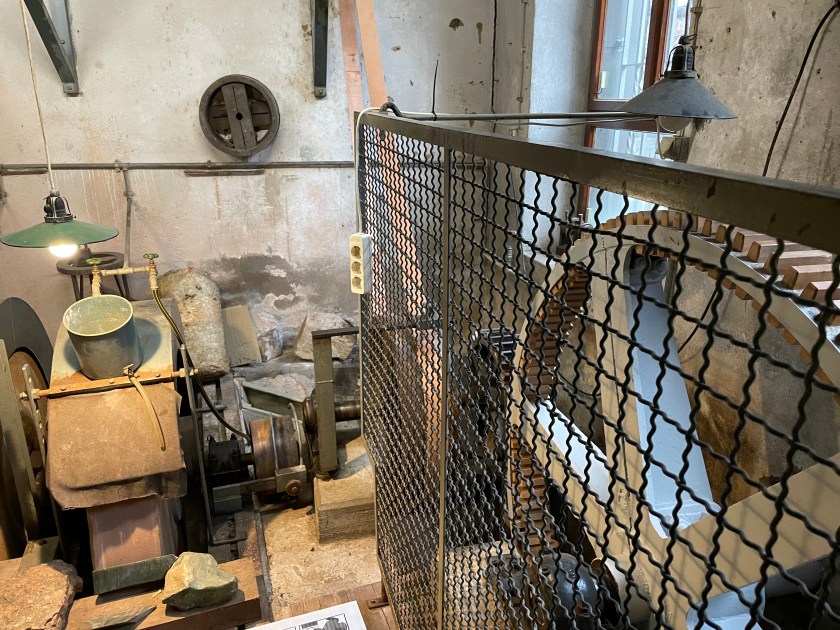


I bought another bag of stones for the grandkids here.


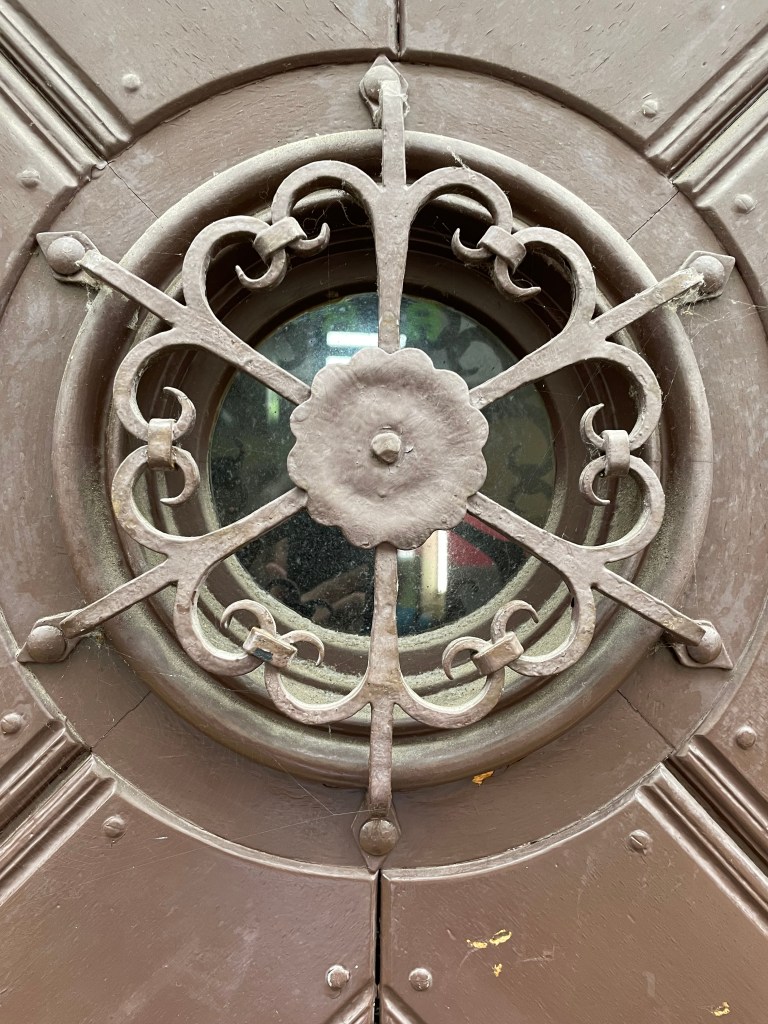
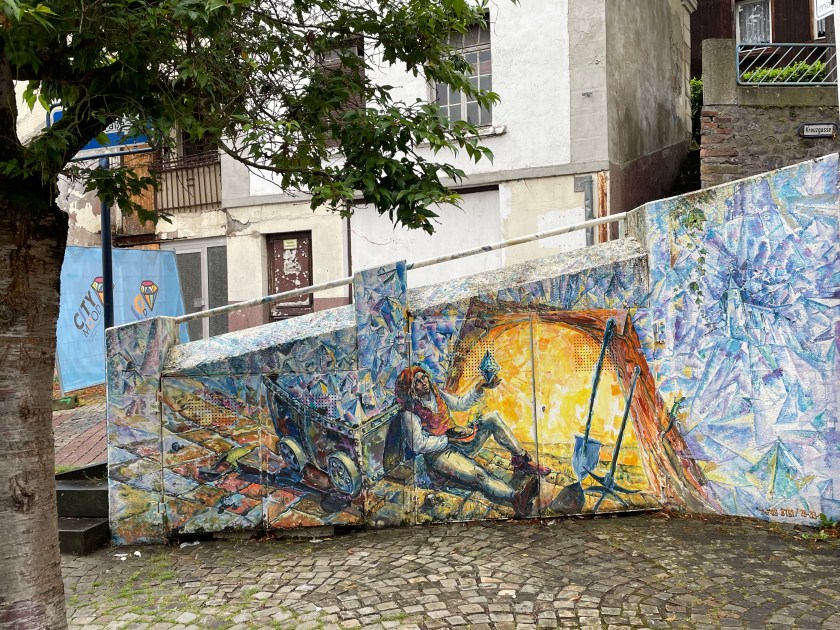

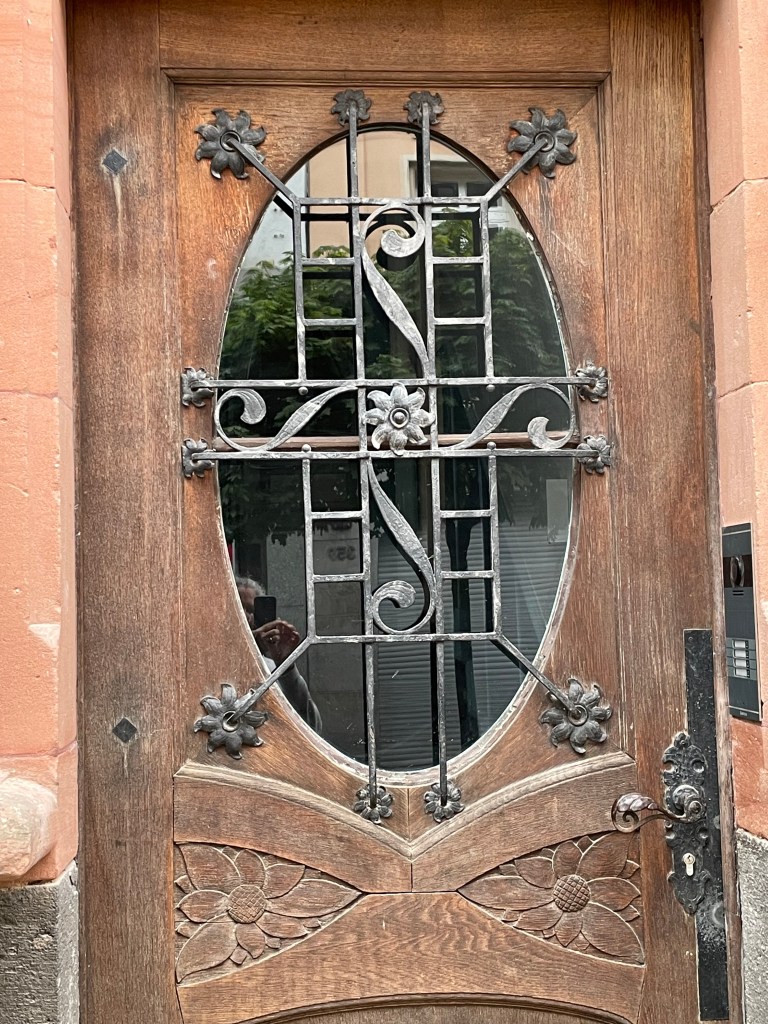
See the fascinating story about the river flowing through Idar Oberstein in the next post!

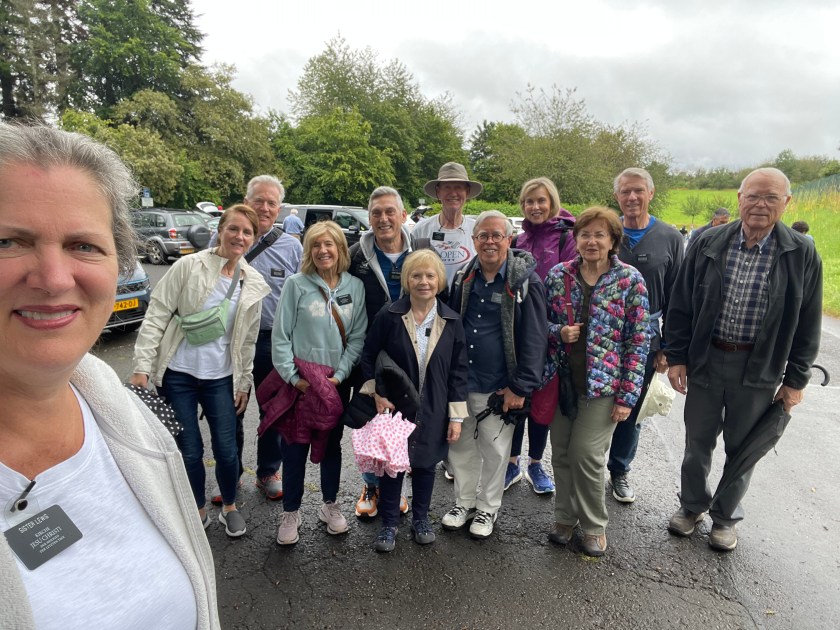





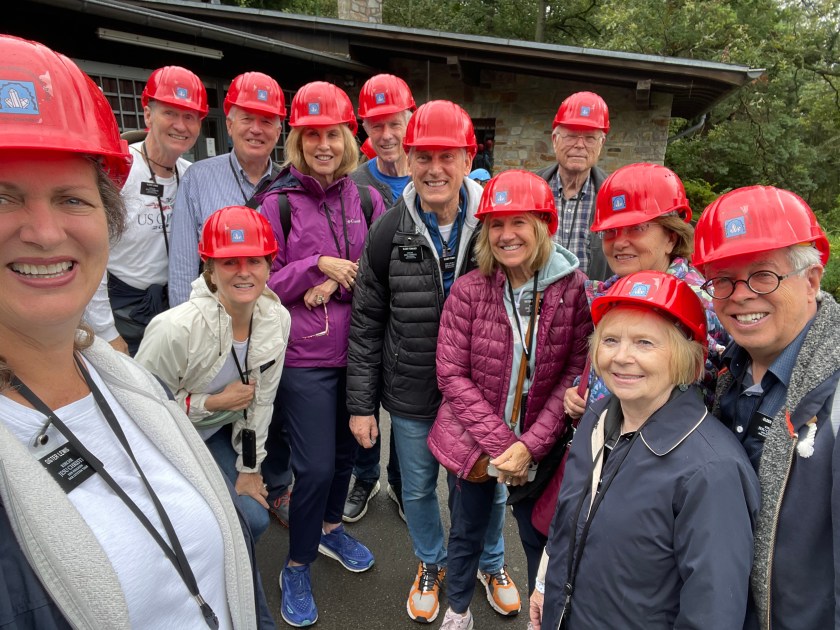
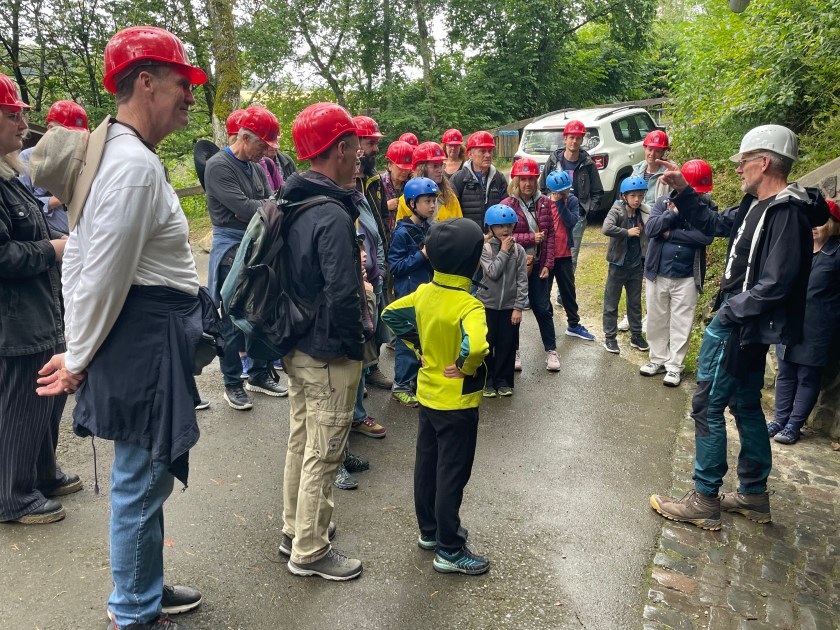
At the entrance, we found a gift shop, a ticket office and a place to get a snack. They told us 300-500 visitors come here every day! There were lots of families here today, in fact we met an LDS family from Chile who saw our nametags and stopped to say hello.


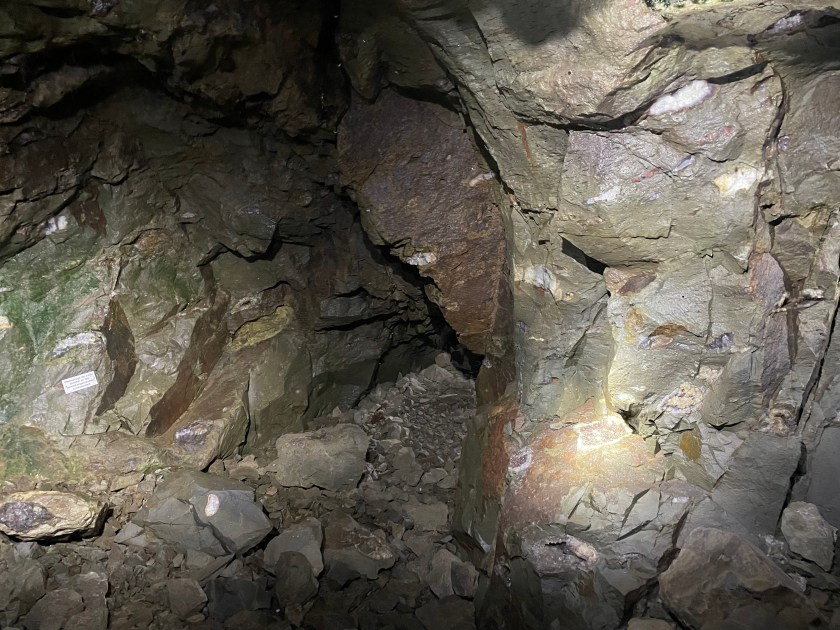
In this mine, they made all the passages big enough for guests to walk through (the miners crawled), in fact, it took one man 1 year to chip out 1 meter of stone one meter high. It was rough work. The miners only lived to be 35-45 years old. They worked in the dark with oil lamps, trying to find geodes in the stone, then they’d chip them out and sent them whole to the cutters in town.
Here’s this mine today with the path we followed. At the top are the natural lakes (pure water drips down through the stone from above).

There’s a fun video of walking through the mine here:
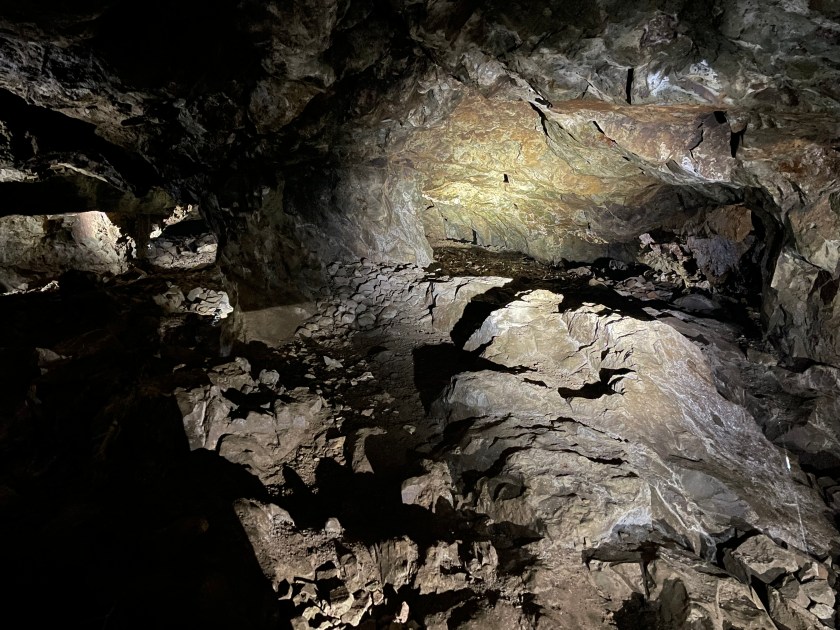
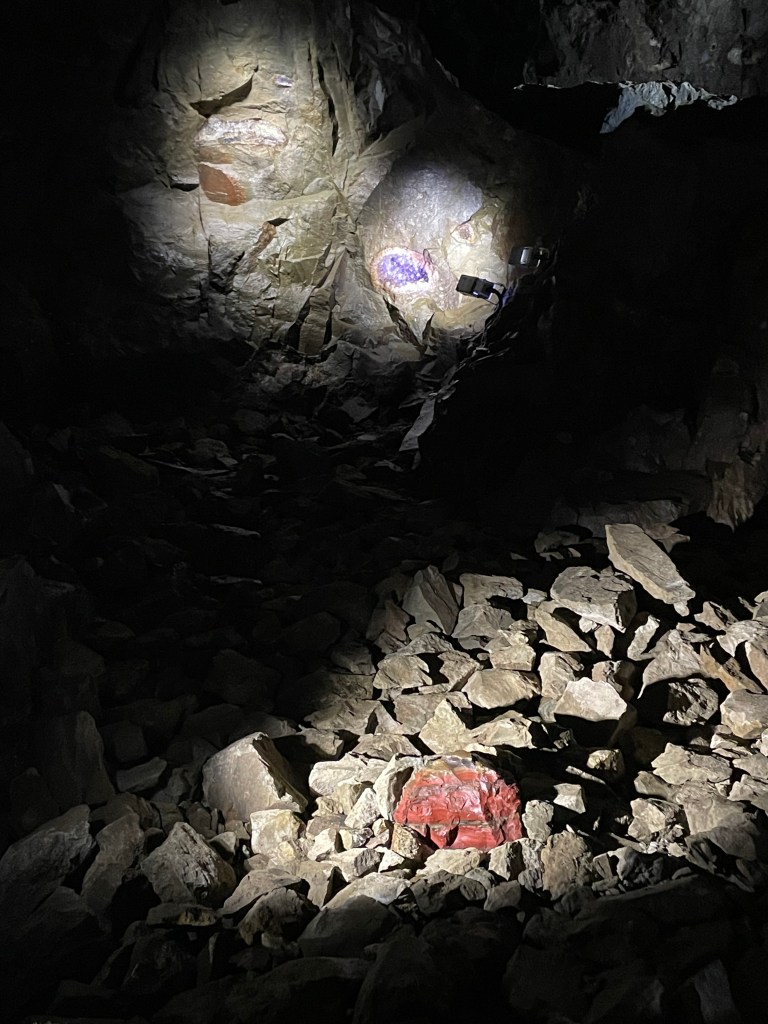
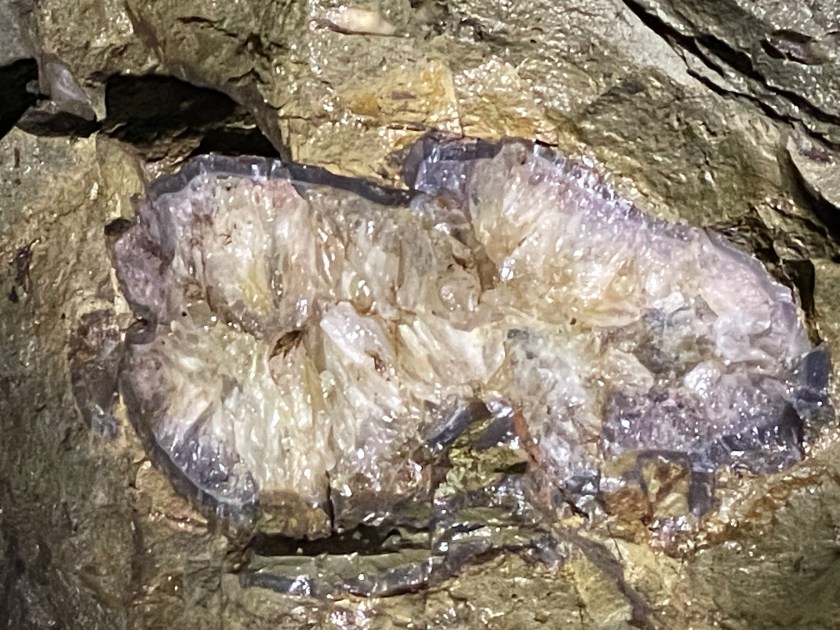
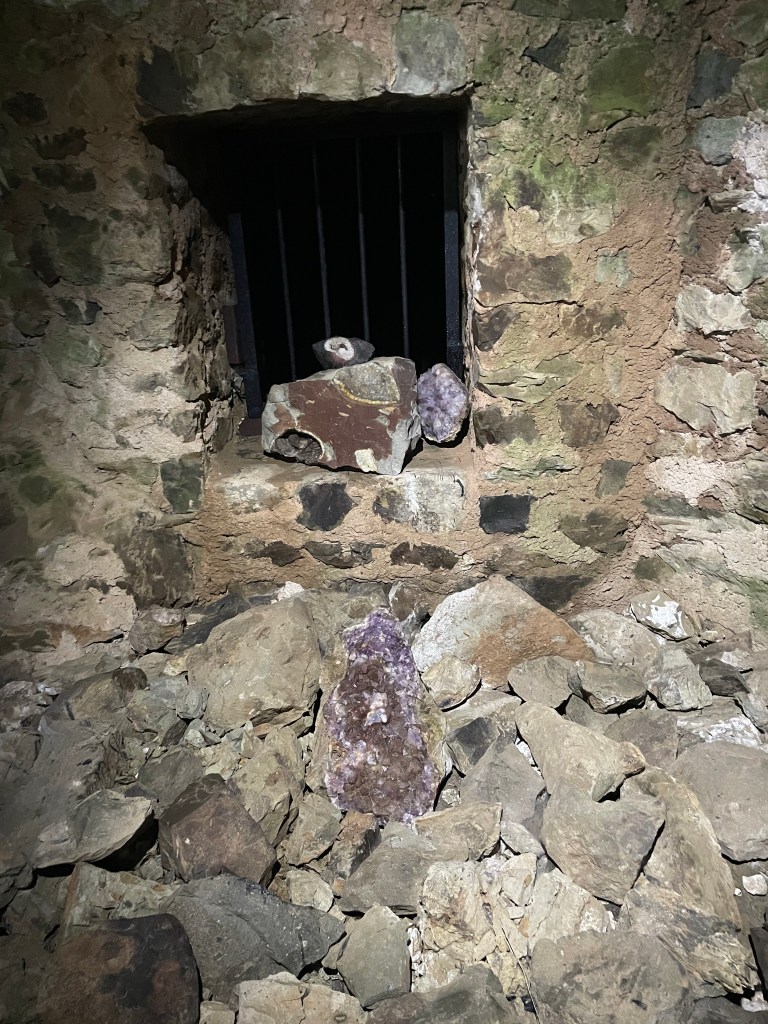
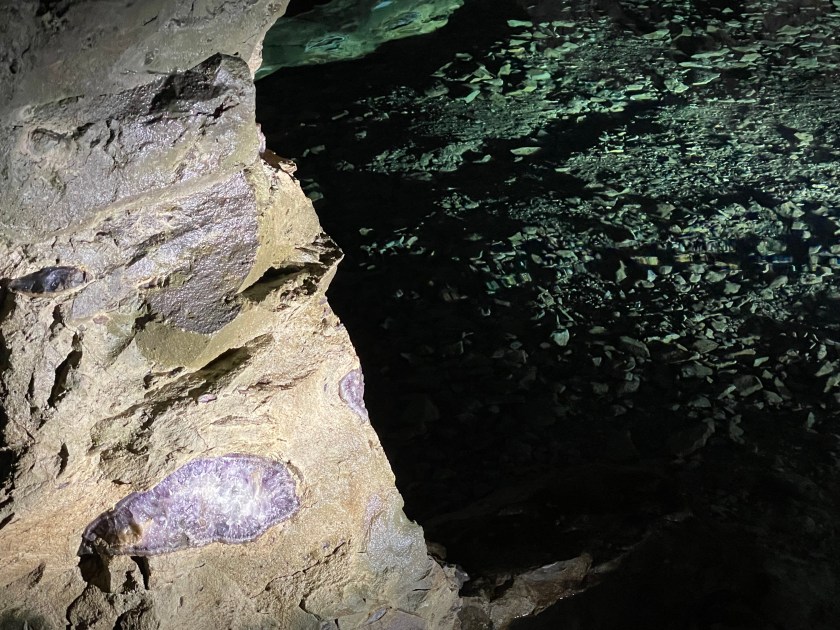
As we walked through this interesting place, we saw lots of geodes embedded in the stone and also others that had been placed here to show us the various types of gems found here.
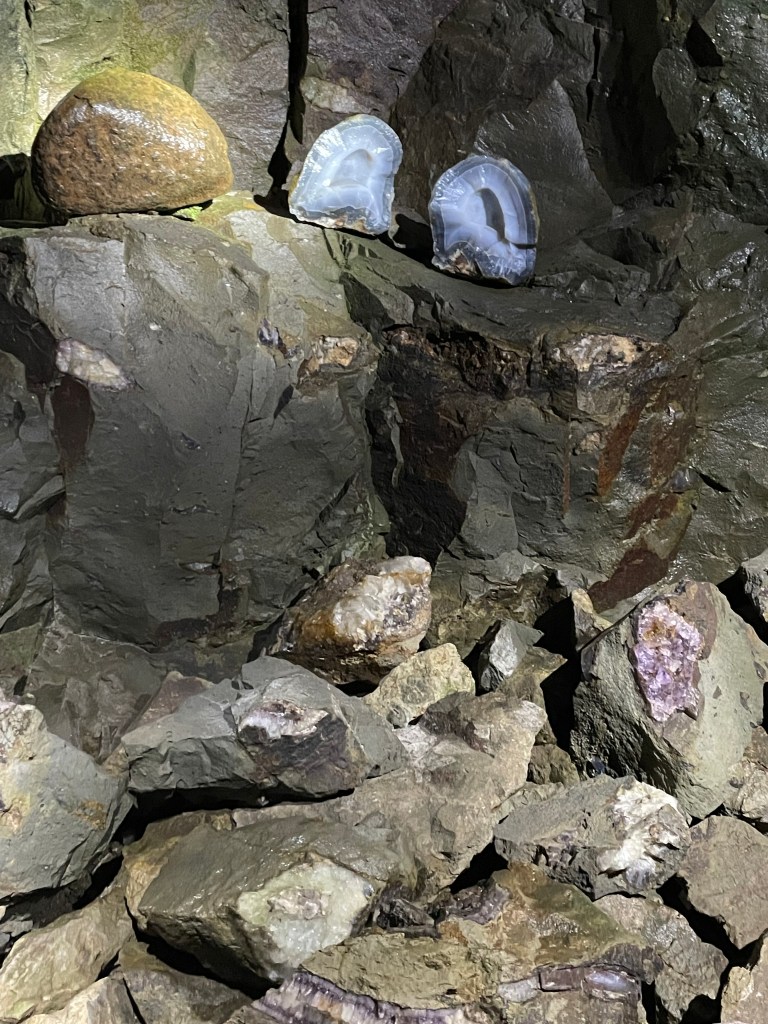
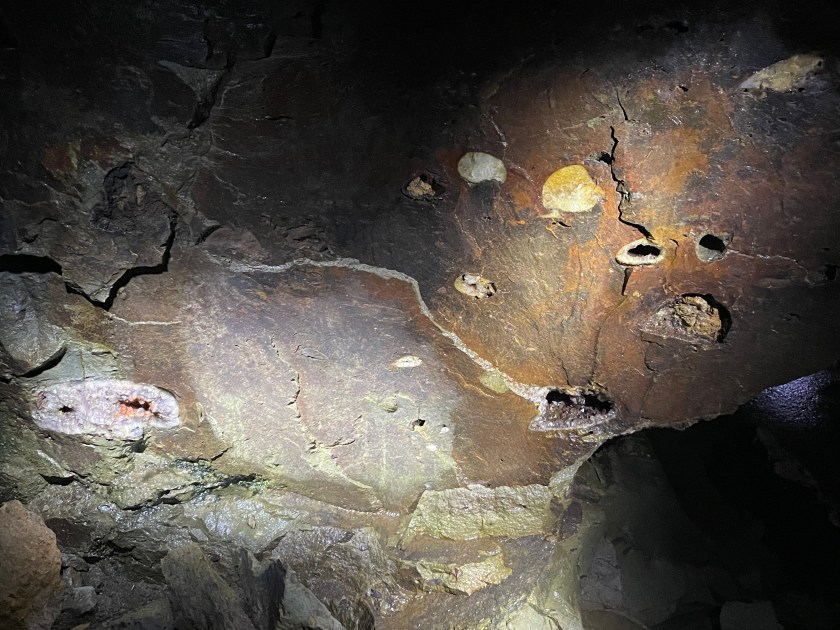
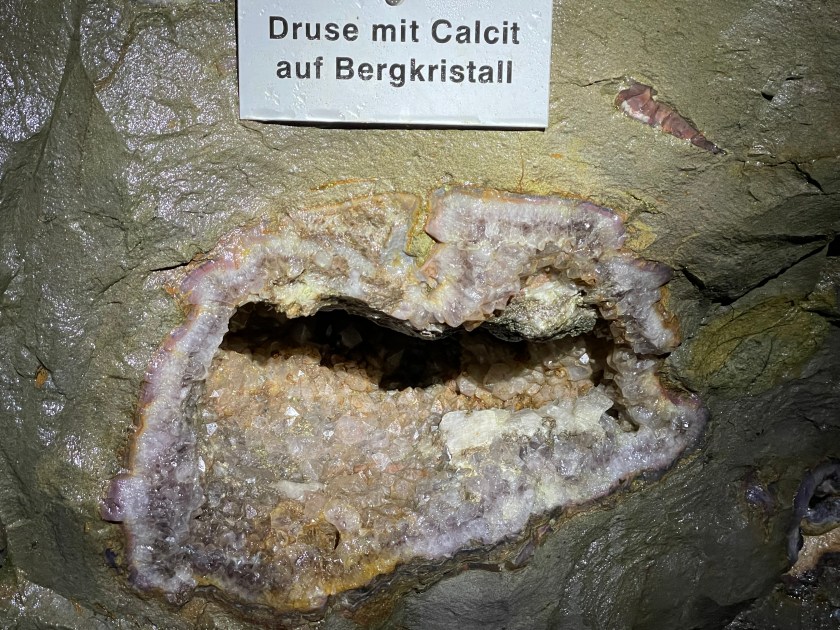
We learned that miners would follow veins in the stone, marked by the geodes and the shape of the geodes that pointed the direction of the lava flow.
Here’s the crystal clear lake:

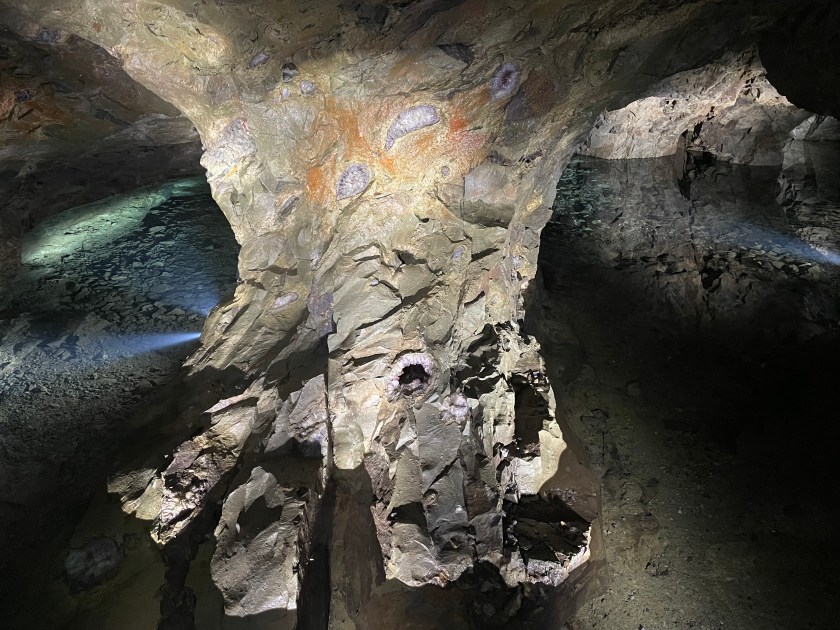
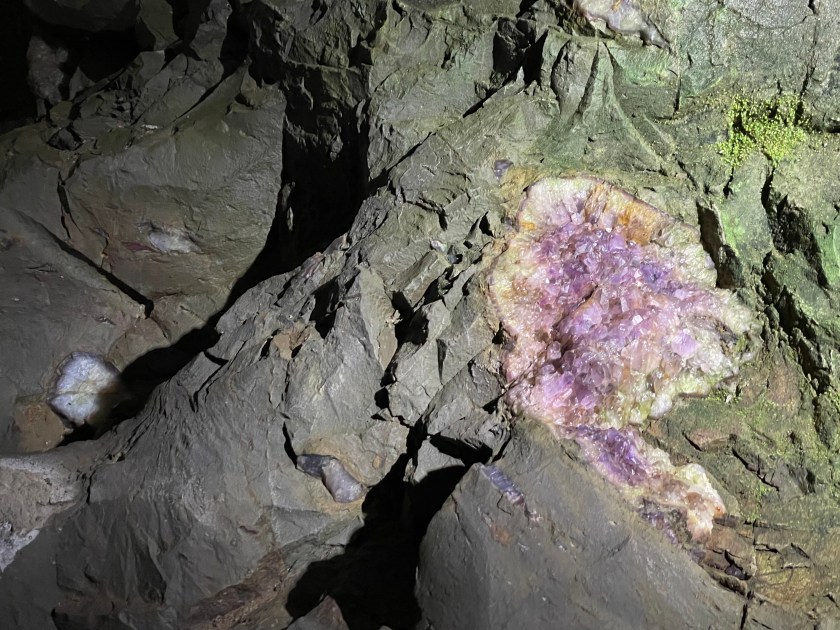
The gemstone below looks like raw meat:


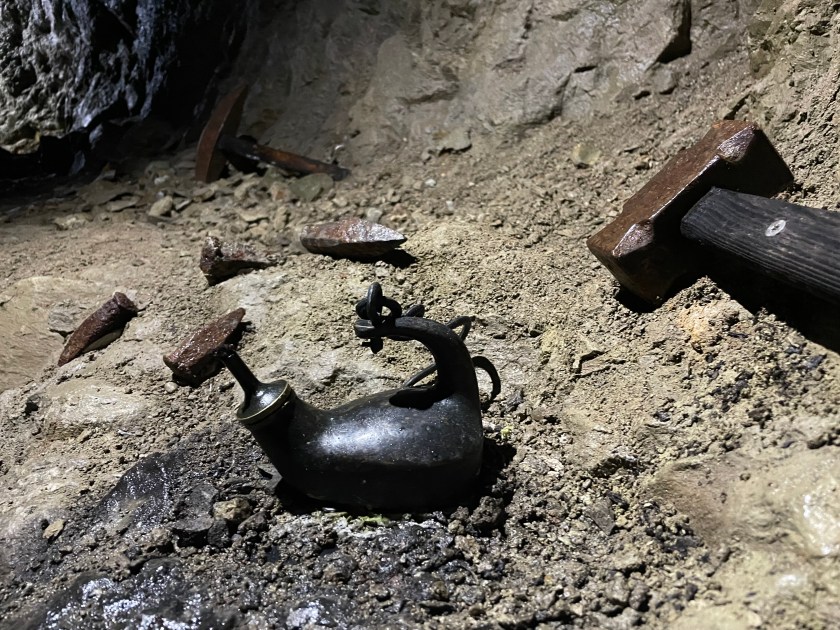
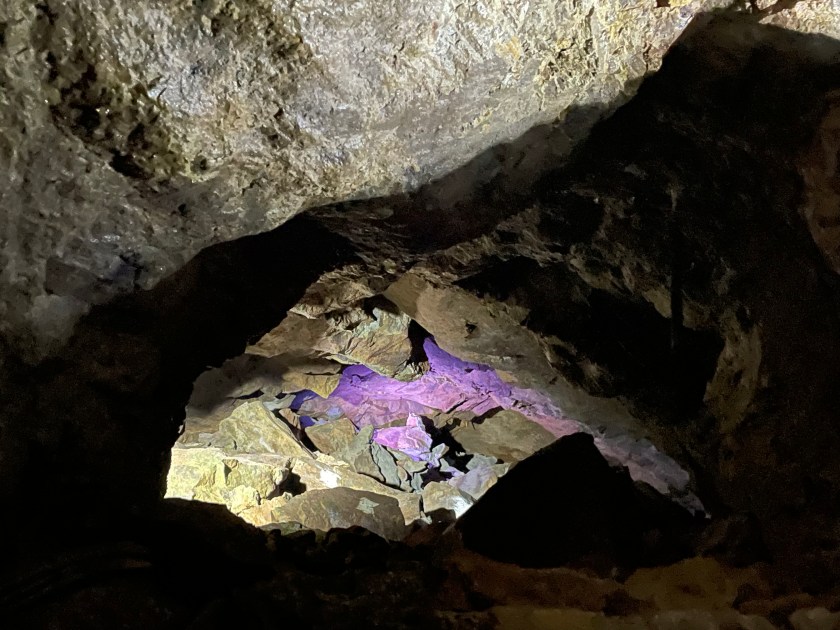

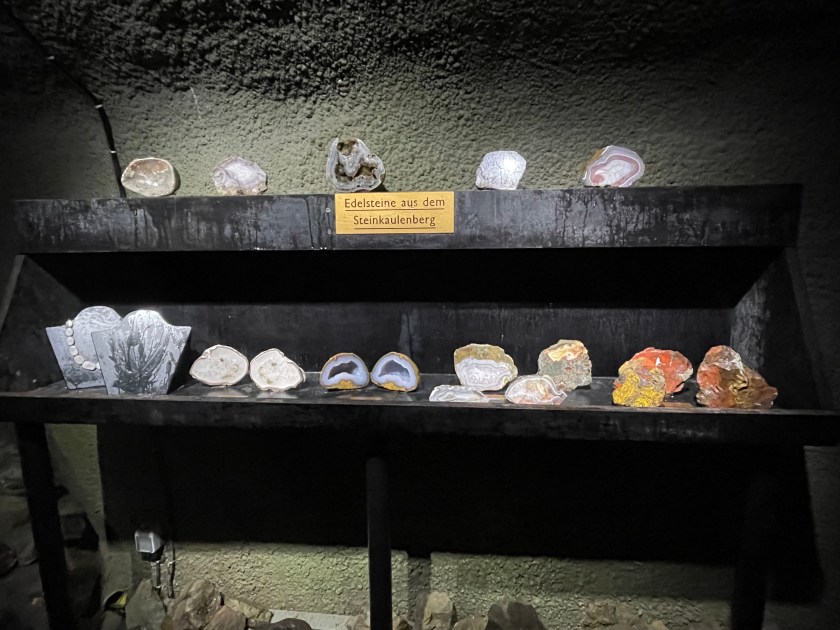
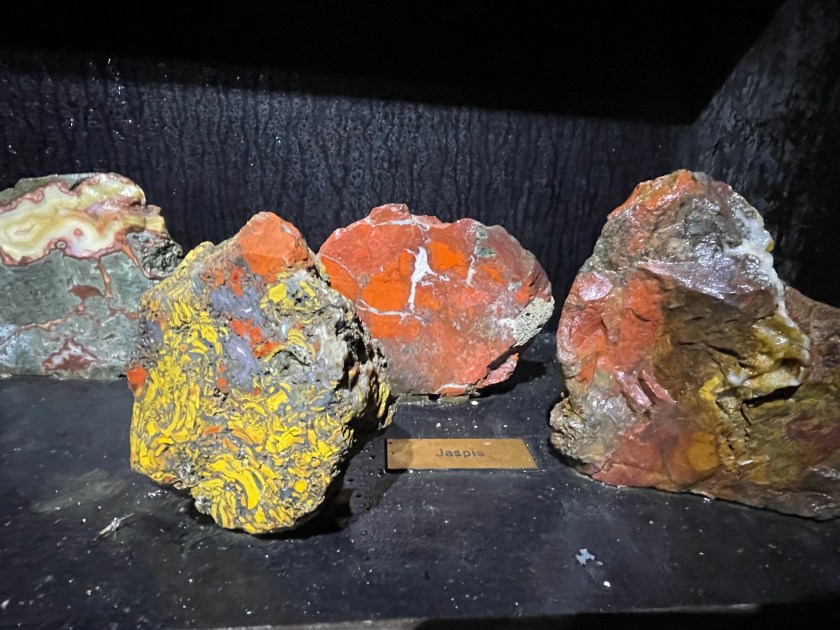
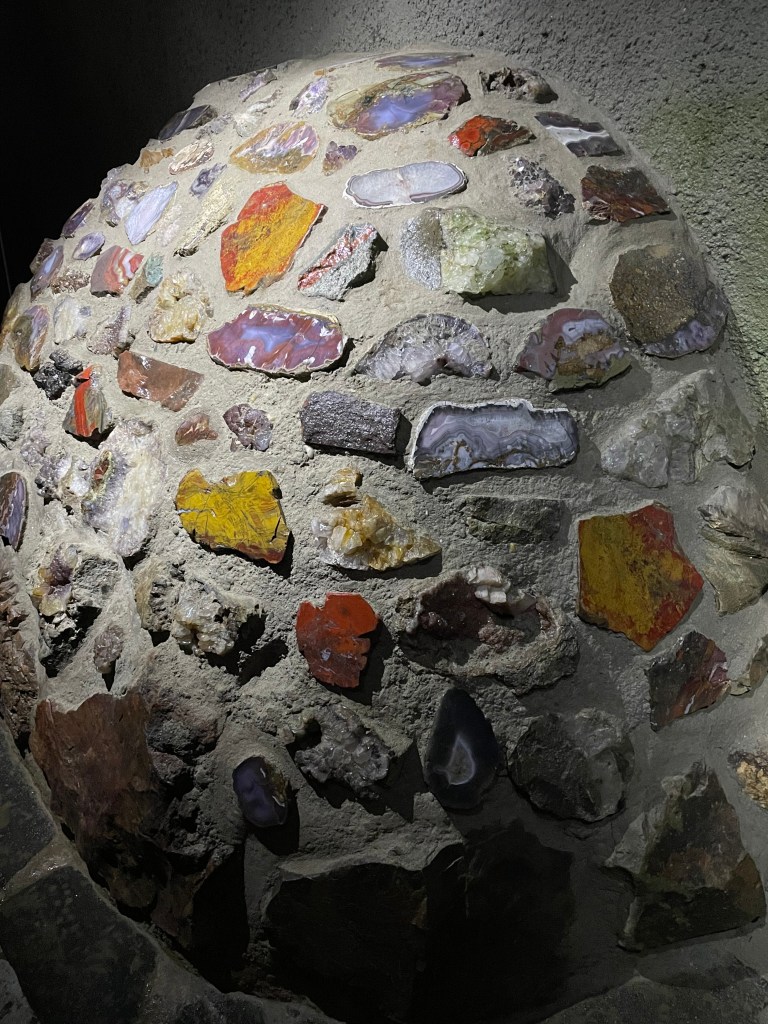
The tour lasted about an hour. It was so interesting. I learned things I didn’t know before.
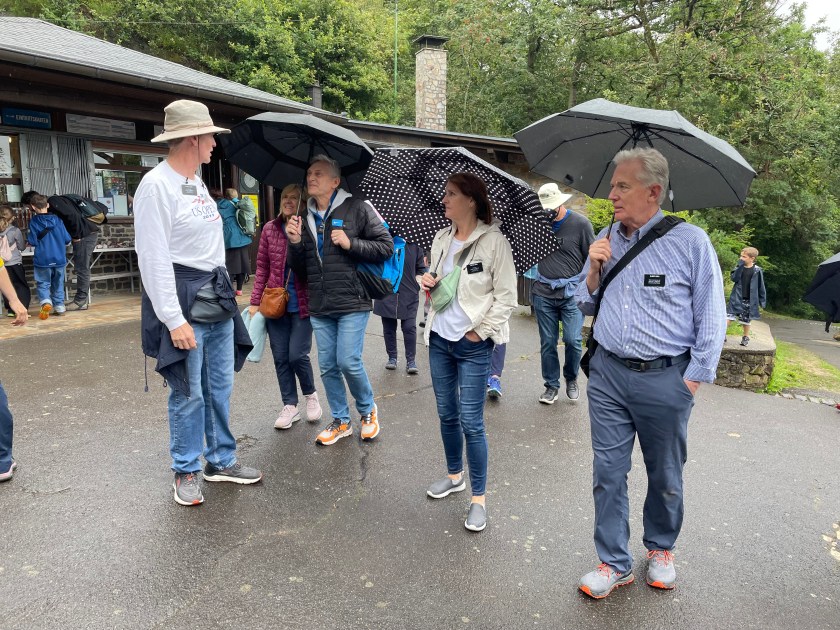

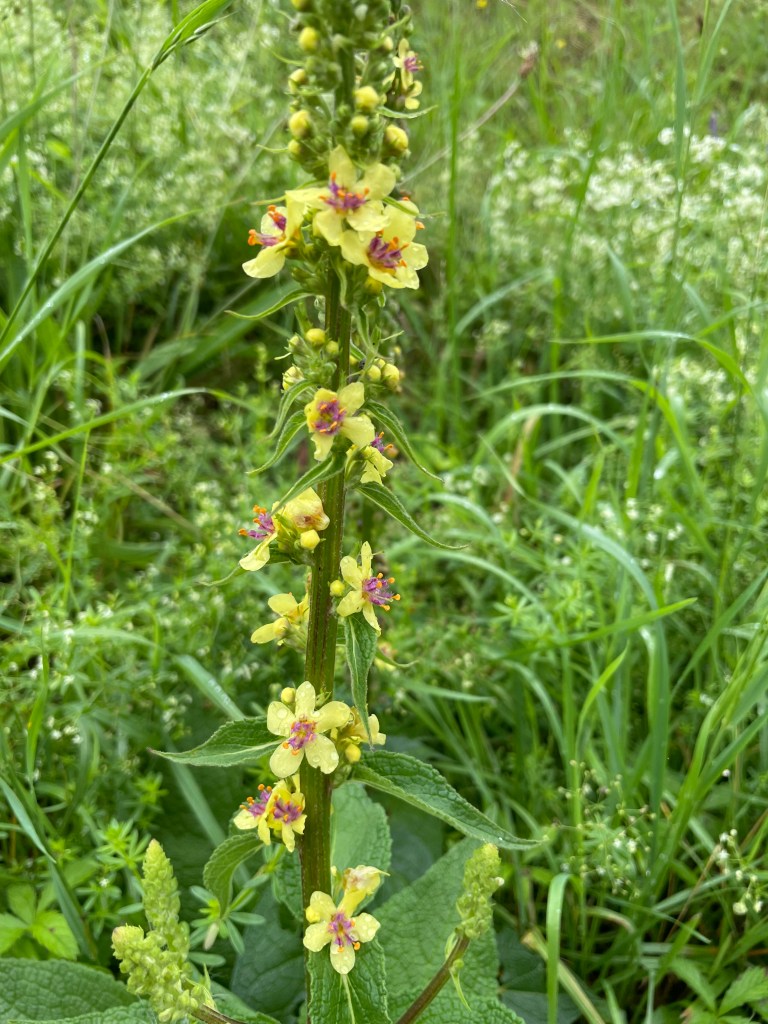

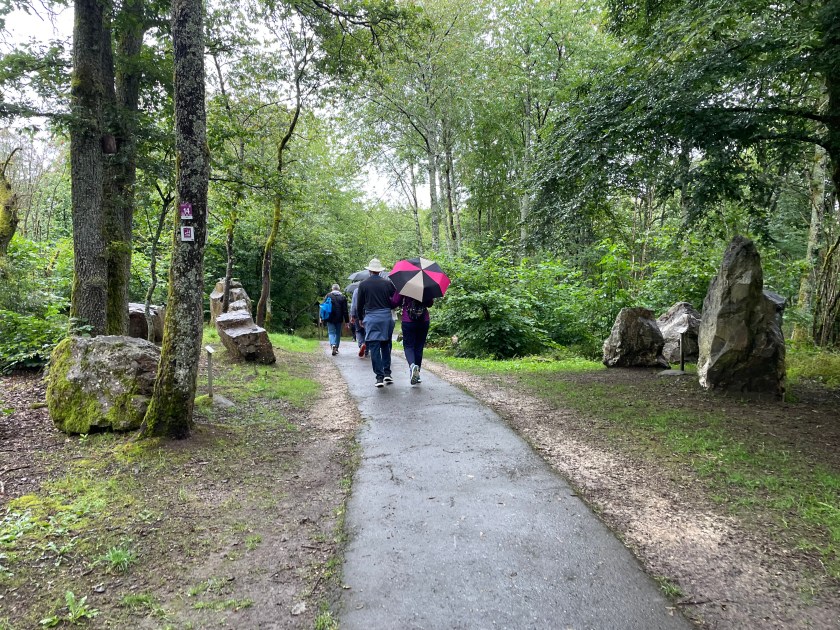
After this mine experience we drove down into town and spent the rest of the day wandering there.

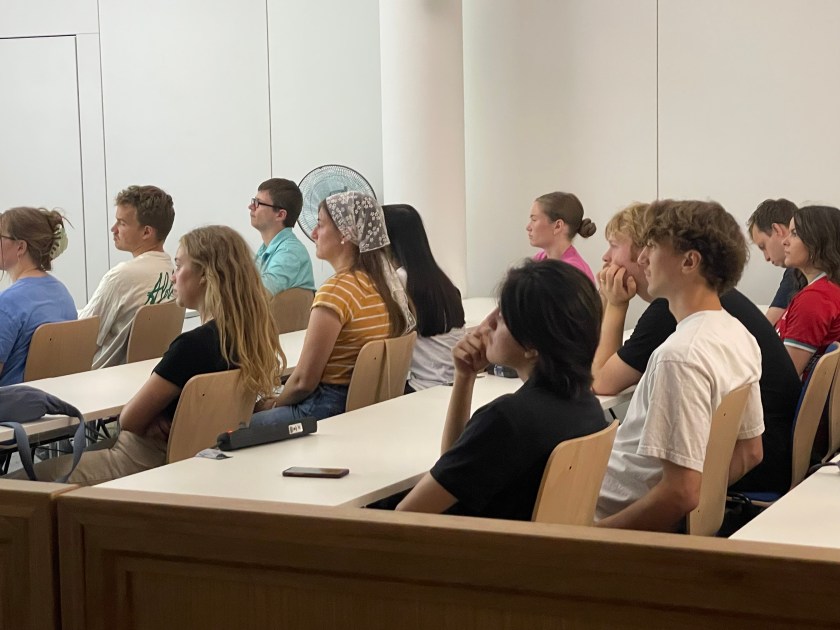
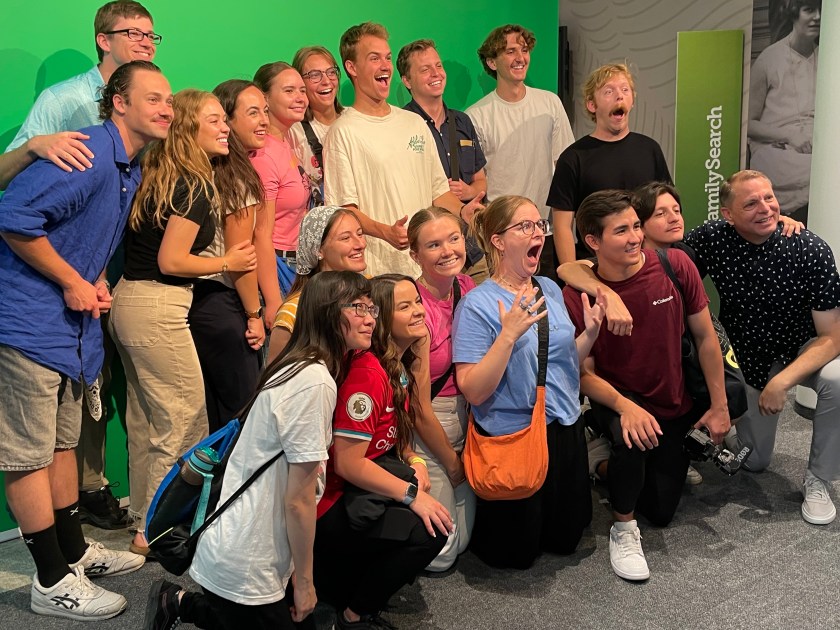
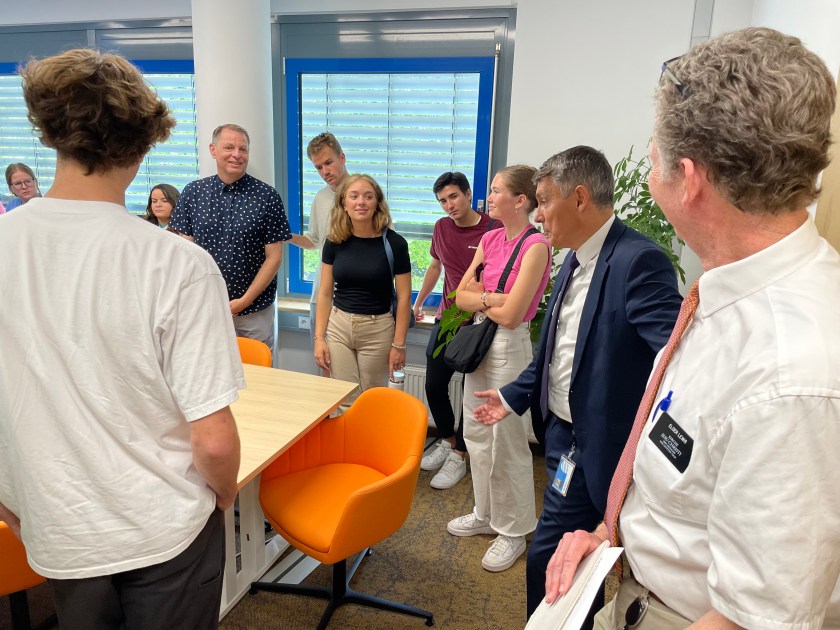
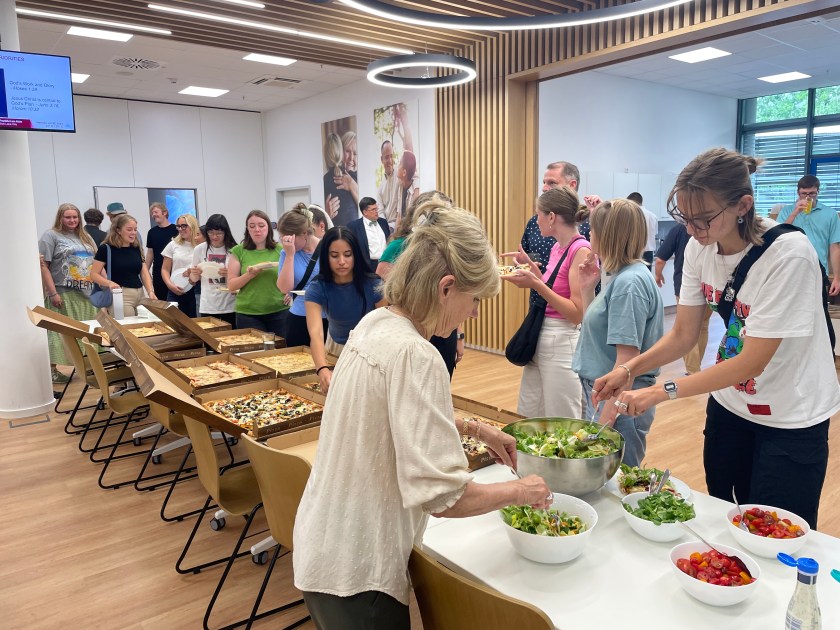
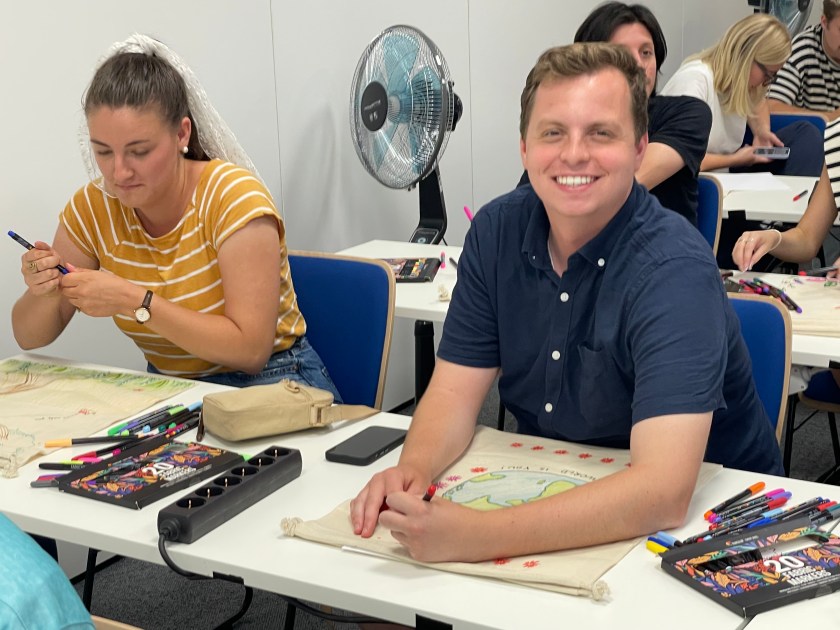
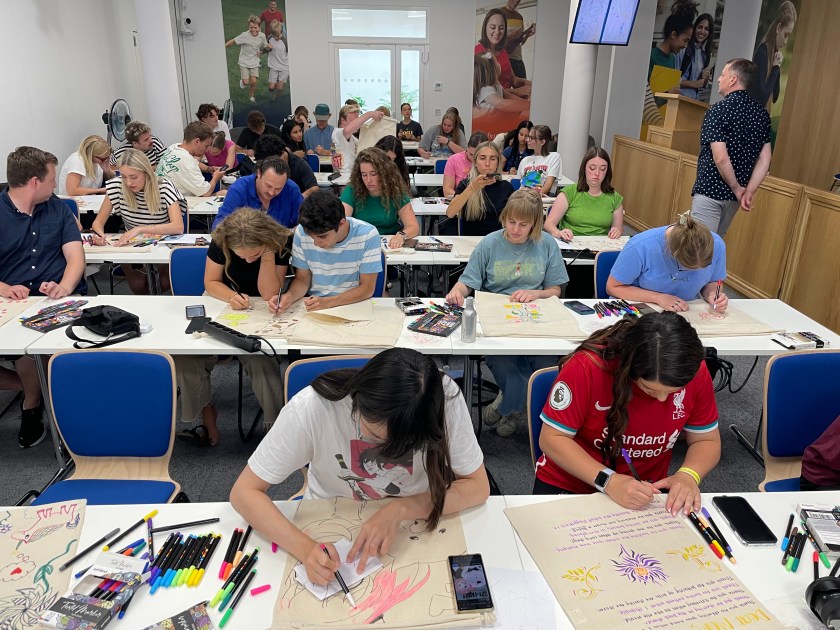
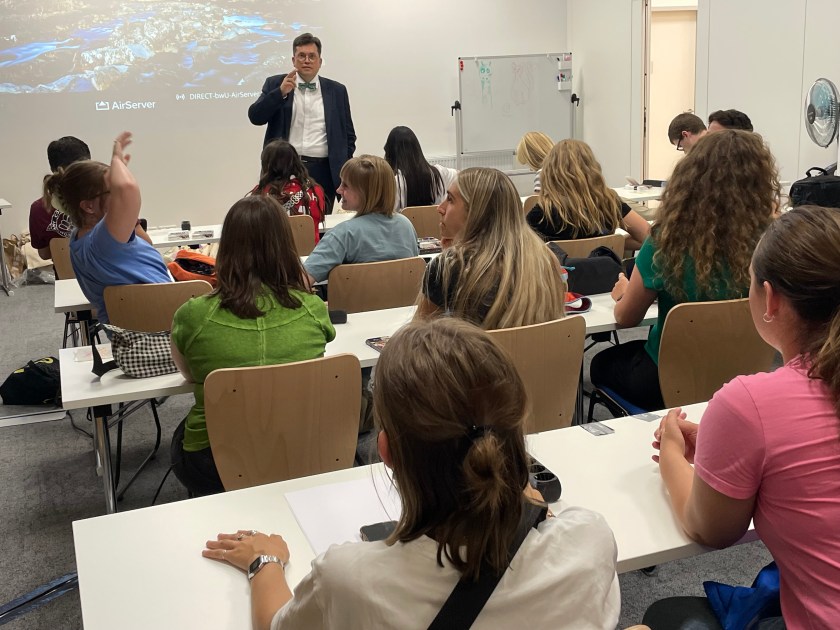
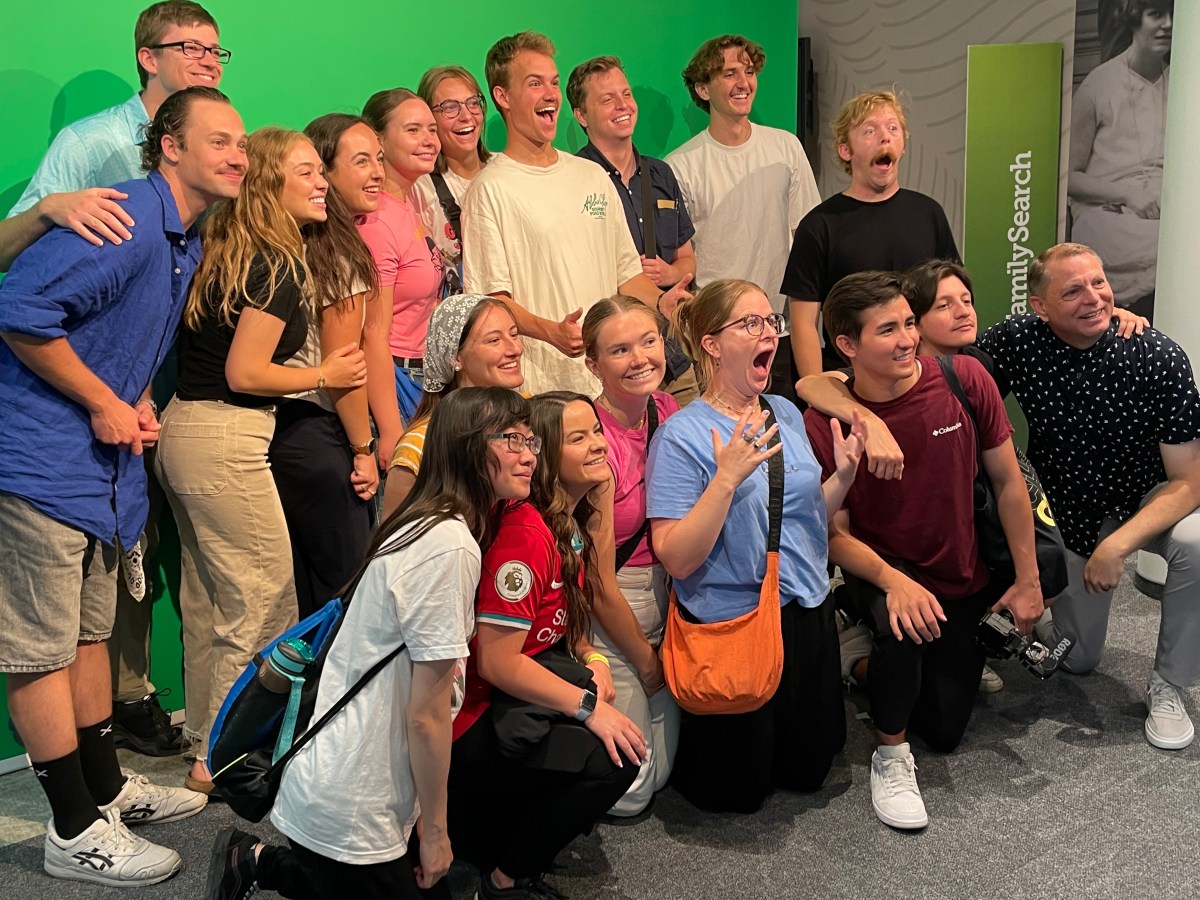
We had a group of about 40 BYU Advertising students from the Communication Dept. come this morning. They’re on a 7 week study abroad program going through Europe. We met with them at about 11:00. Dinis explained who we are and what we do. We divided them into 2 groups and gave them a 1 hour tour of the building, then we had pizza brought in for lunch.

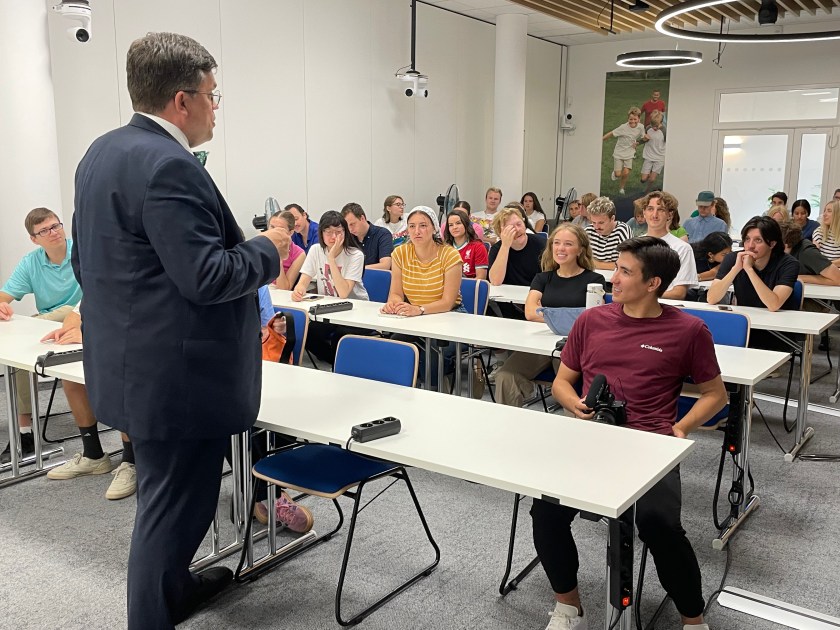

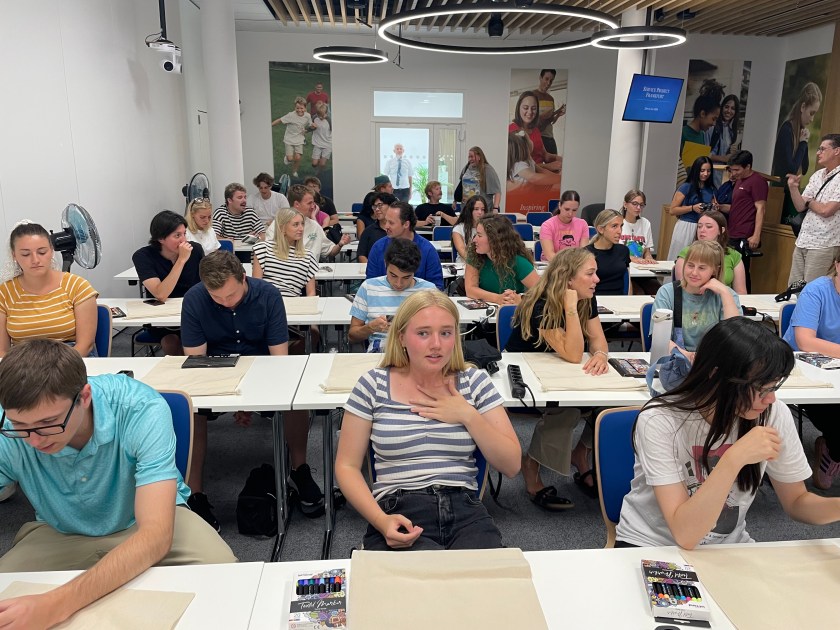
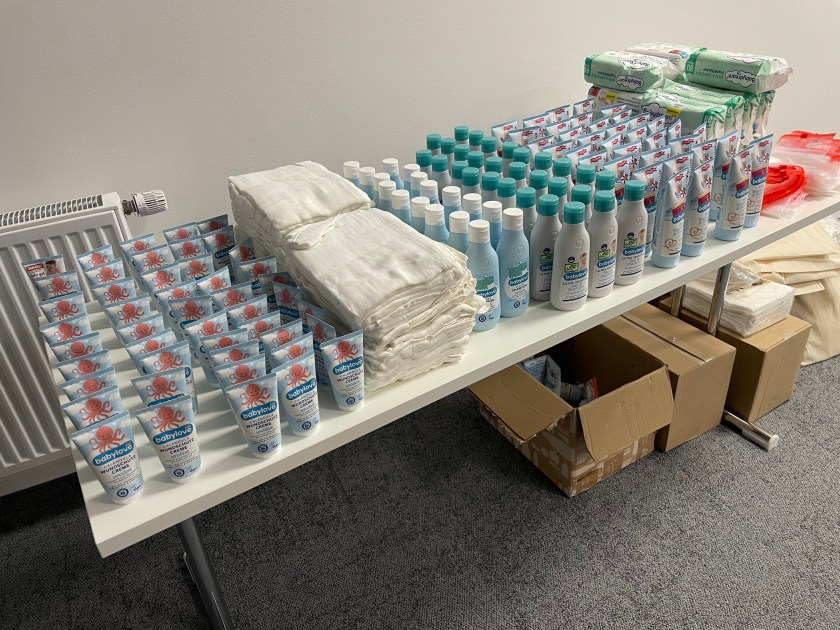
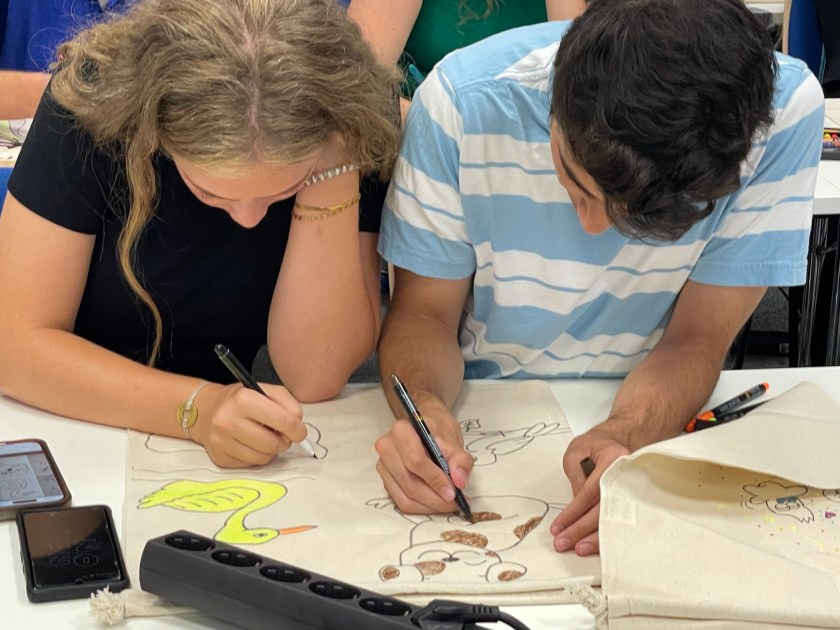
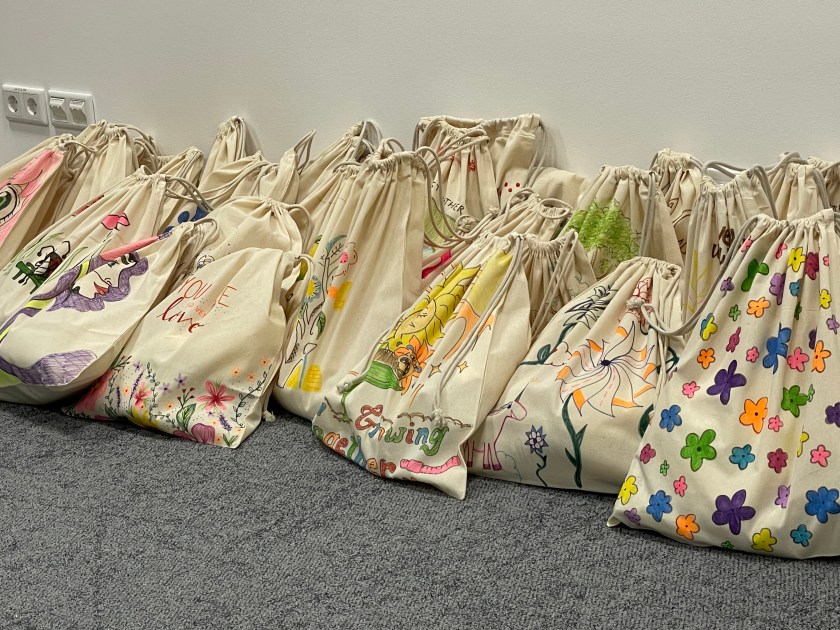
After that the WSR folks organized a humanitarian project–decorating canvas bags with fabric pens that were then filled with hygiene items for new mothers–shampoo, lotion, soap, a burp cloth and some baby wipes.
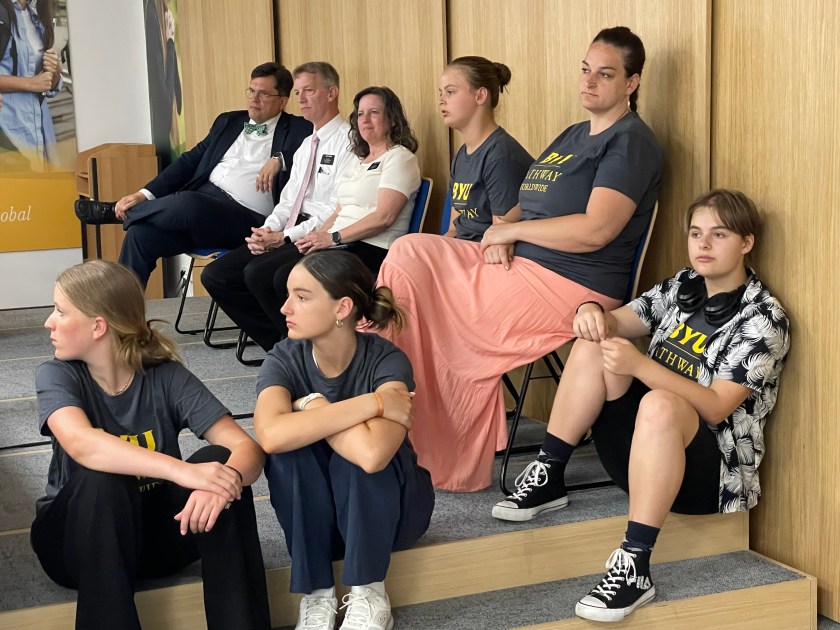
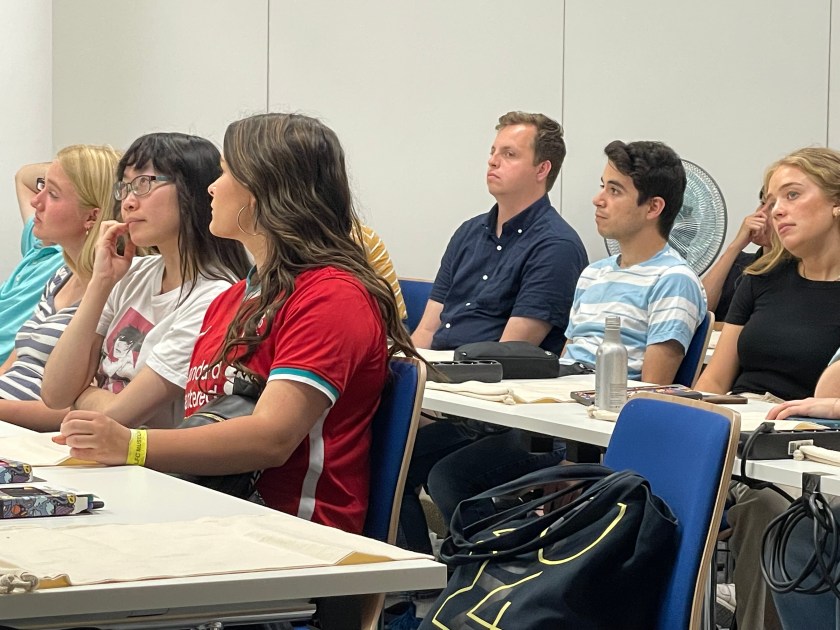


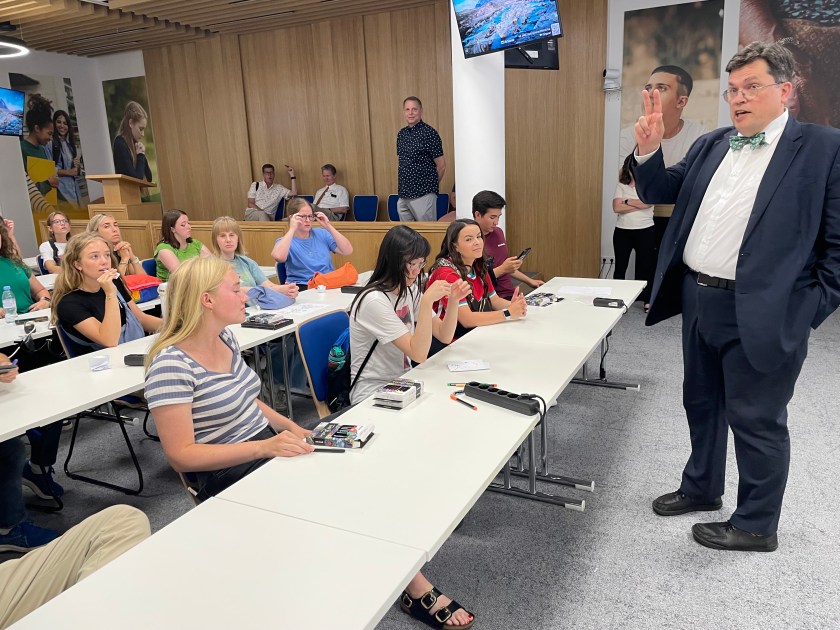
Then some more Q&A with Ralf and an interesting game he did with them where 3 or 4 were taken out of the room and the rest spread out in the cafeteria. The instruction was that no one could speak at all. Each had to randomly pick 2 people in the group and then situate themselves in an equilateral triangle to those 2 people. Then the 3 or 4 were brought in and he said GO, and the others moved into position. Everyone was in motion for some time until finally everyone settled into a triangle with their 2 people and stopped. The 3 or 4 had to guess what made people move and why. They couldn’t figure it out.
Ralf finally explained what we were doing, then he said it’s like the communication world–everything you say and do affects someone else and it’s a constant movement of saying the right thing to the right people–the message is different for everyone, so there is constant change. It was an interesting analogy.

 Our Frankfurt Germany Mission