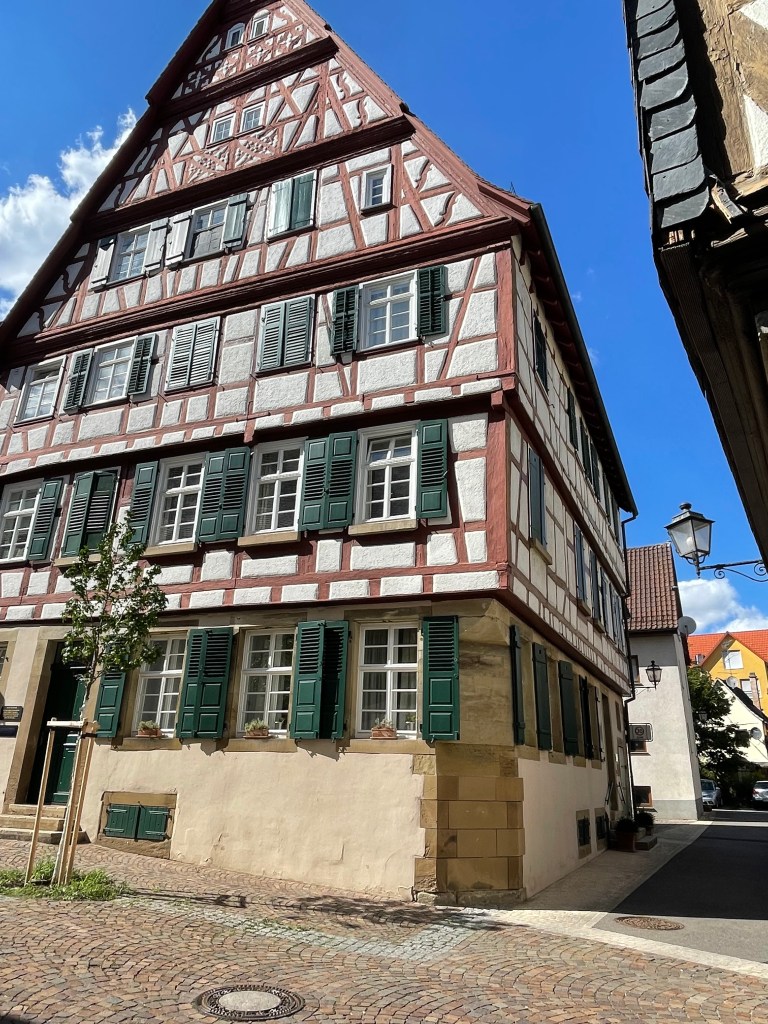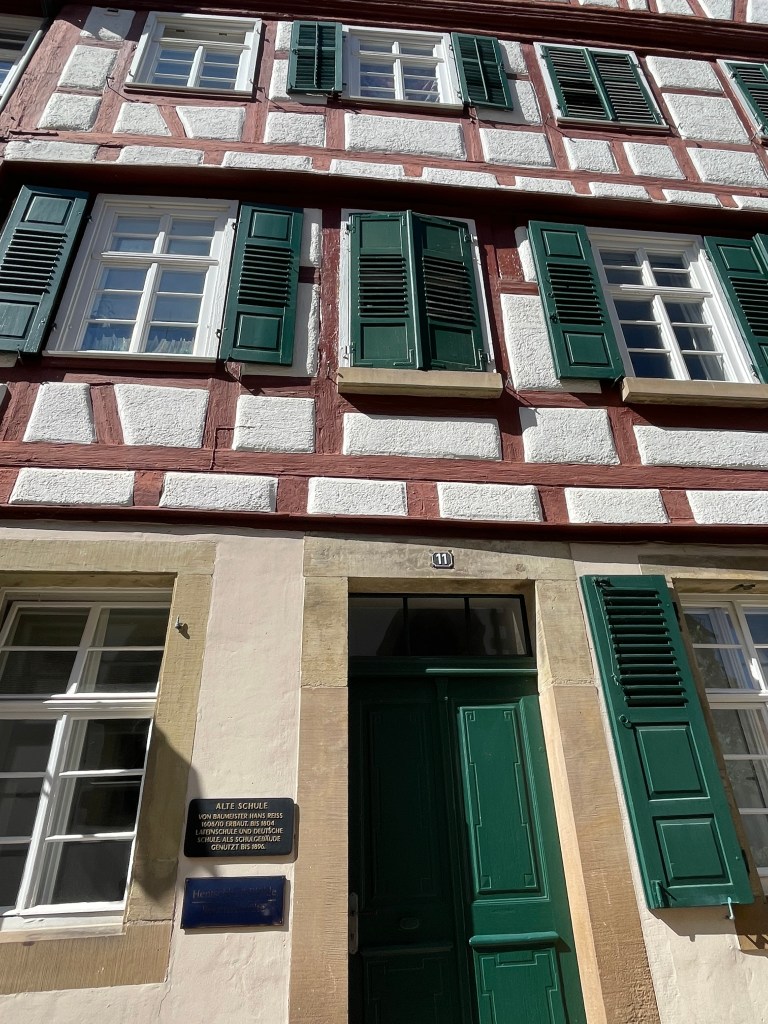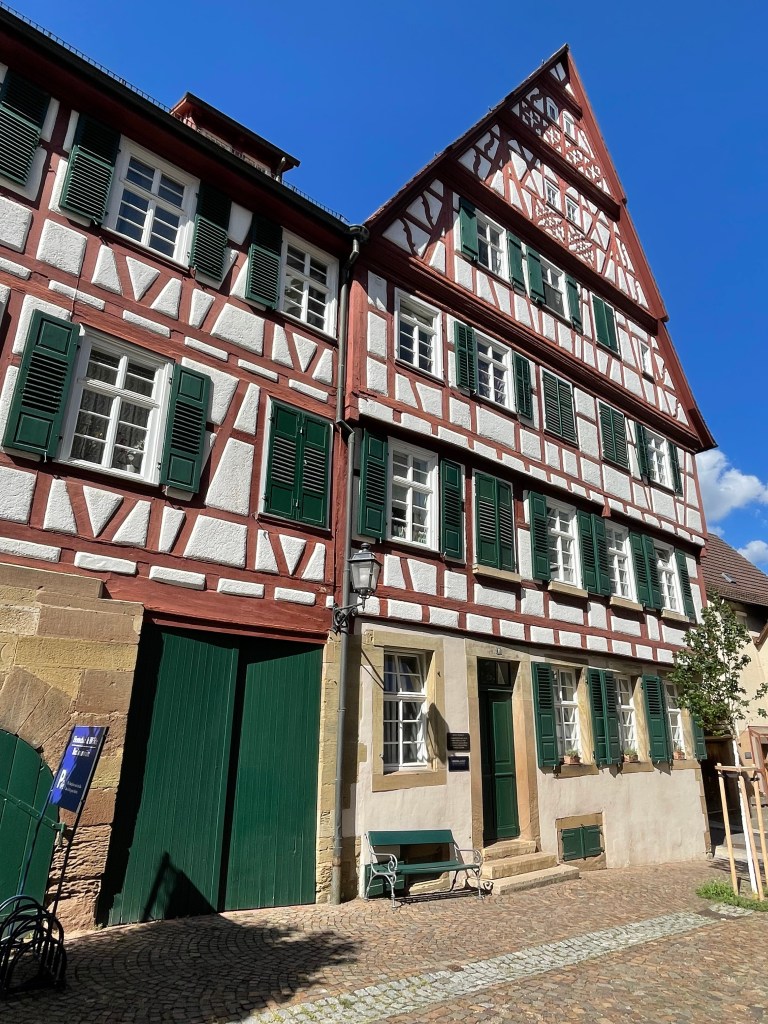
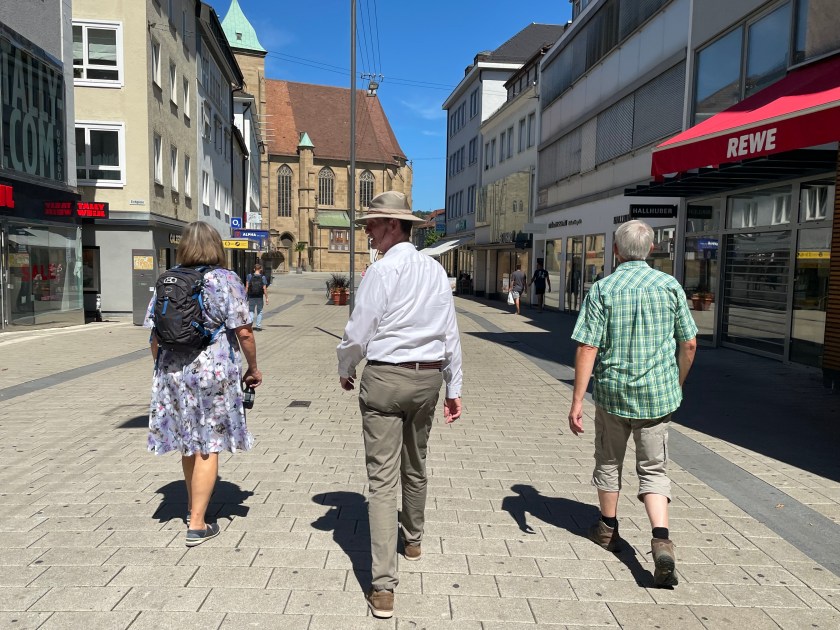
A Day in Heilbronn where Rudolf Laemmlen attended school

After church in Heilbronn, we went into town and spent a few hours seeing the sights here.  I wanted to walk in places where Grandpa Rudolf walked when he was a student here.

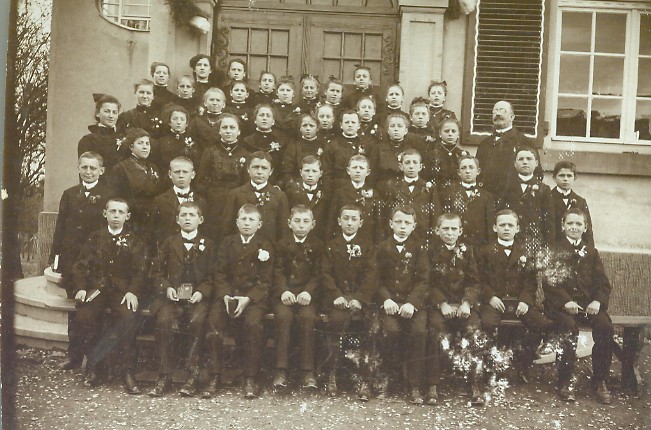
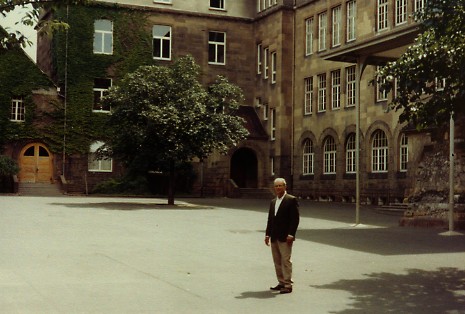
My Grandpa Rudolf was a bright child and a good student. Of all the children in his family, he was selected to attend a better school in Heilbronn. The railroad ticket cosh 10 DM (about $2.50) for three months of transportation.
Rudolf is in the 2nd row, far right.
Rudolf visiting the school he attended in Heilbron (1970s visit).

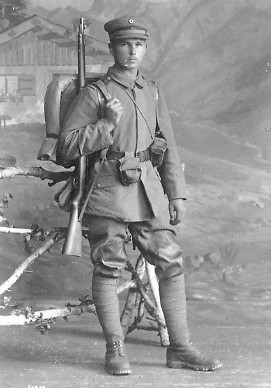
In 1914, when Rudolf was 15 years old, World War I broke out. His brother, Hermann joined the Ulanen cavalry regiment in Ludwigsburg in 1912, survived the war.  Grandpa said he came home at the end of 1918 half deaf and nervous. Hermann was in the infantry from 1915 to 1918. Grandpa was drafted in July 1917 into Regiment 122 based in Heilbronn. After three months, he asked to be transferred to the mountain artillery, Sonthofen Allgau.  He was only in one bloody battle–at the Marne, against the Americans. He returned home January 1919.
   

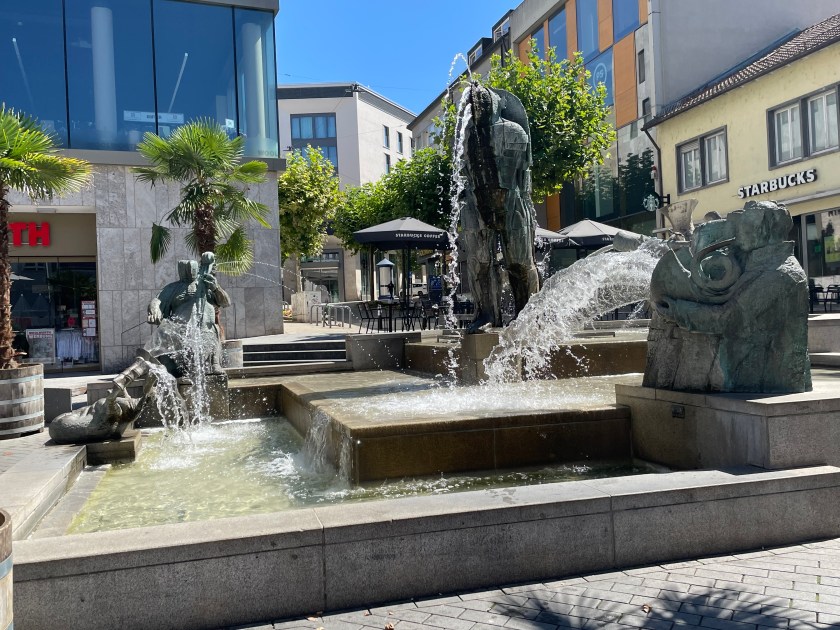
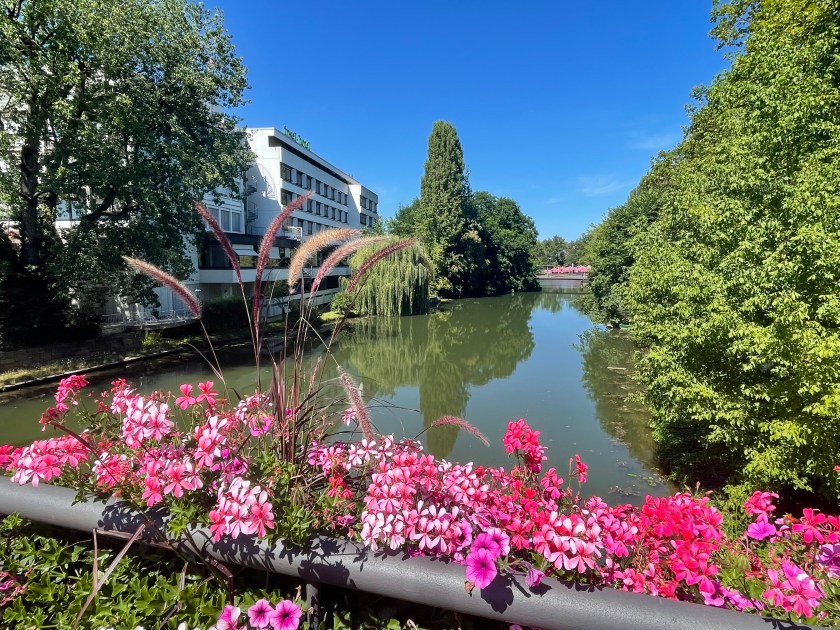
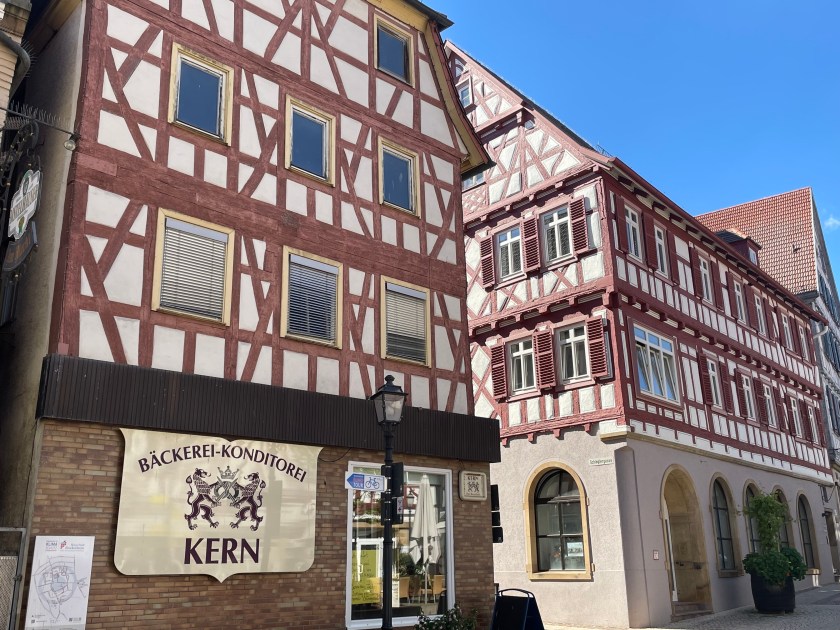
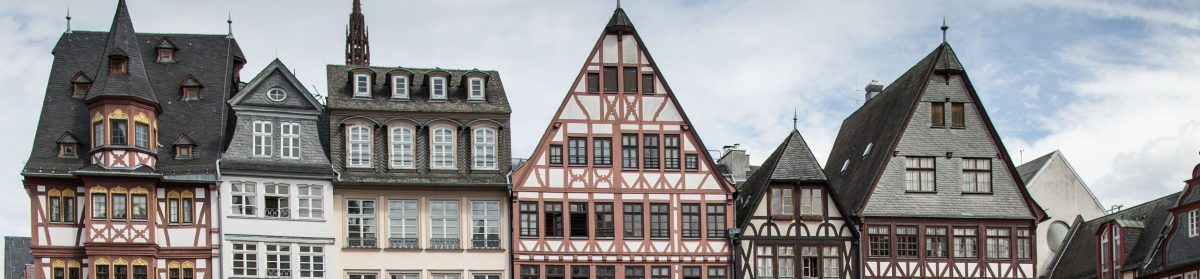
Here is how Heilbronn looks today:

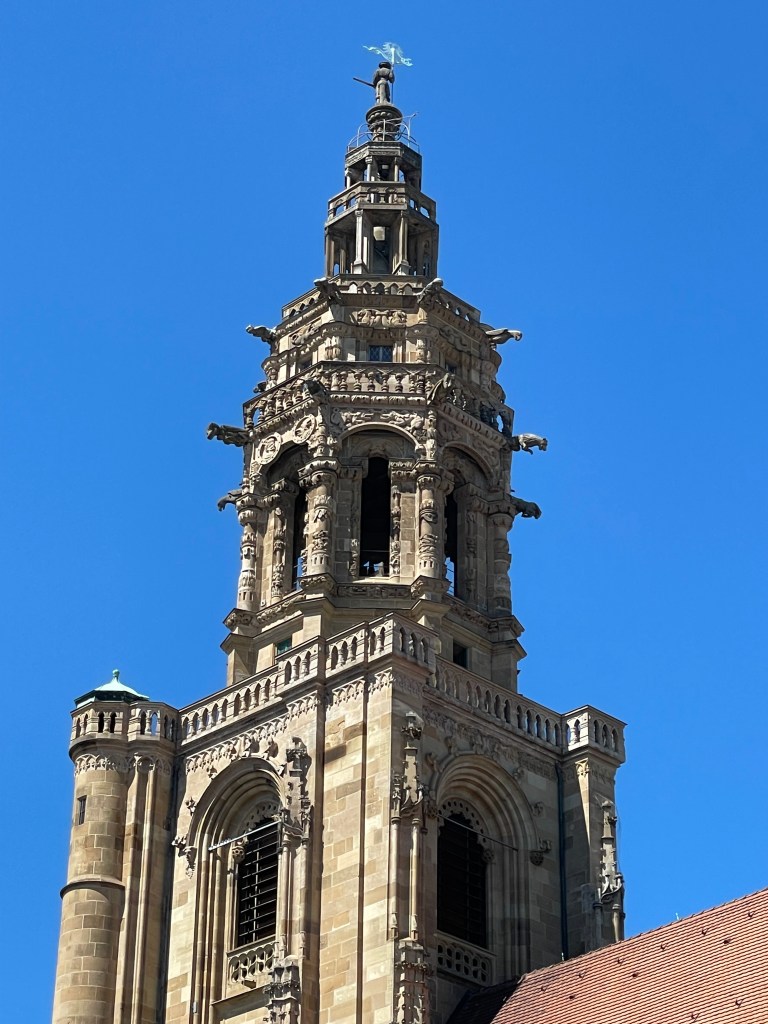
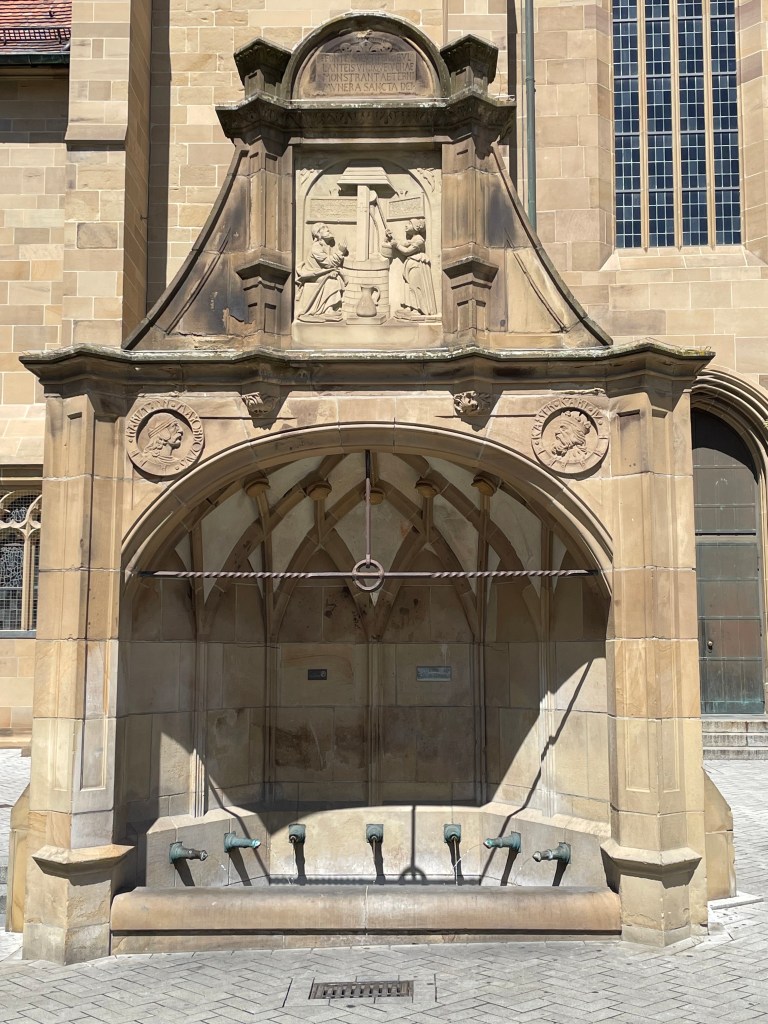
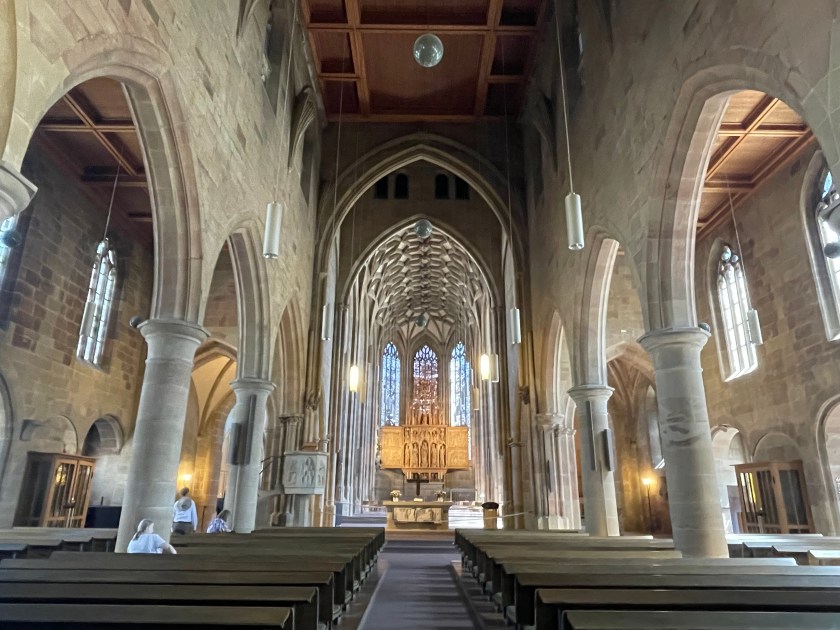
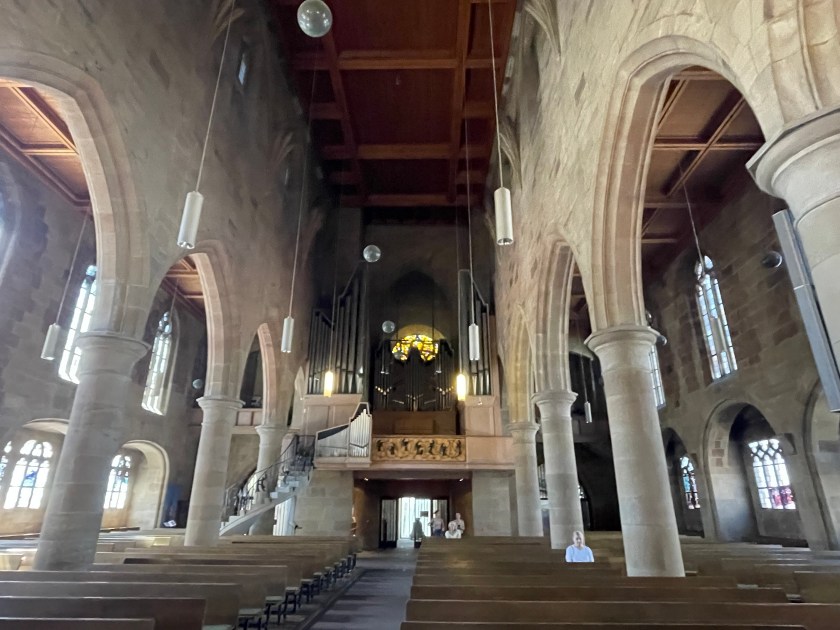
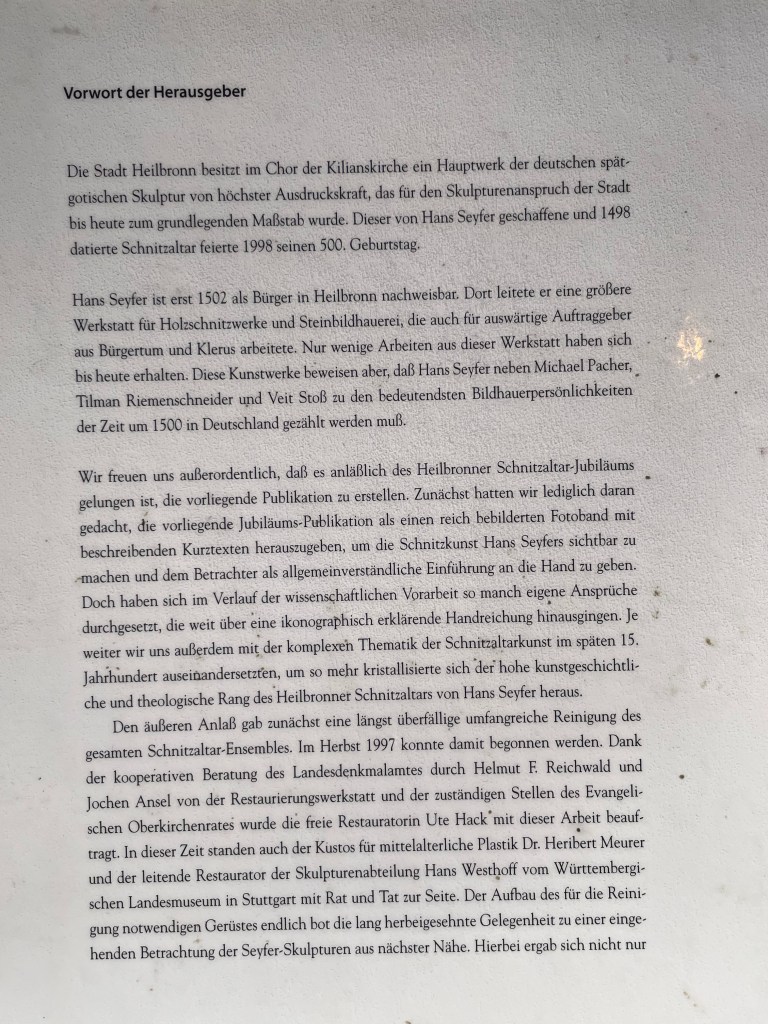
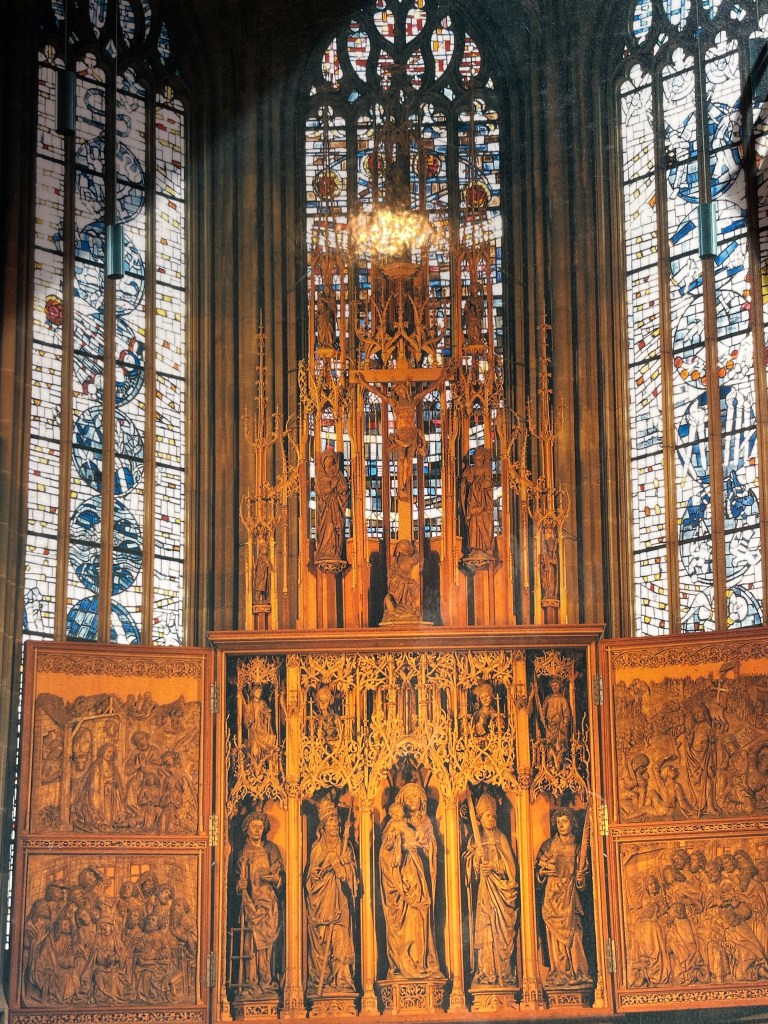
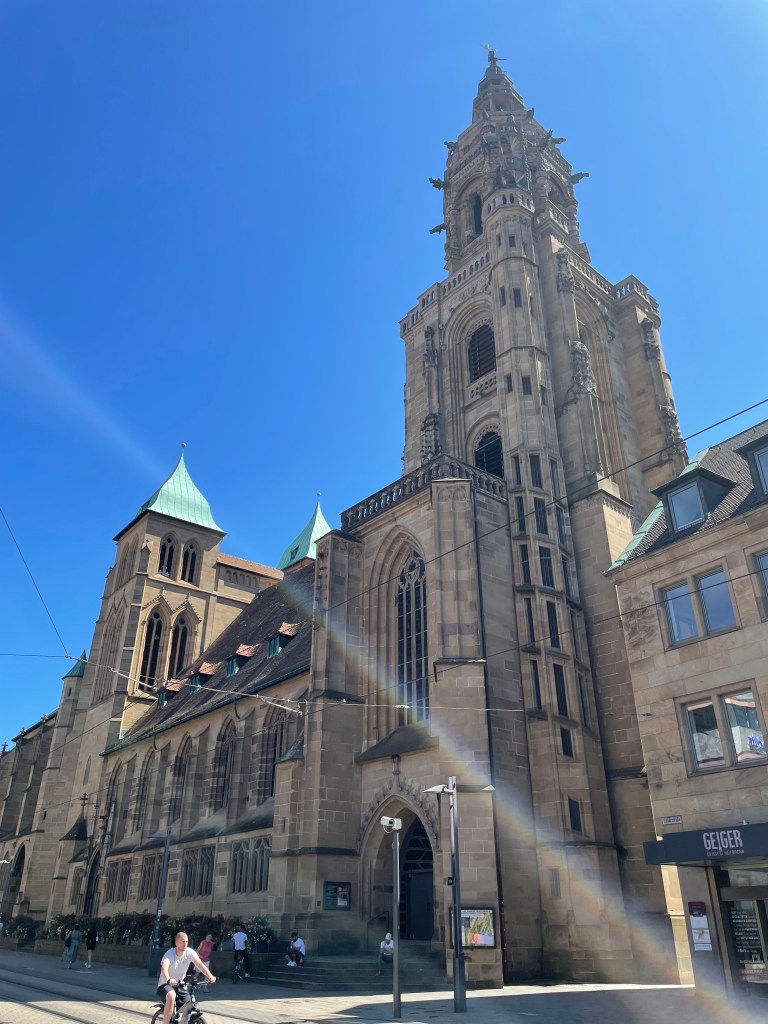
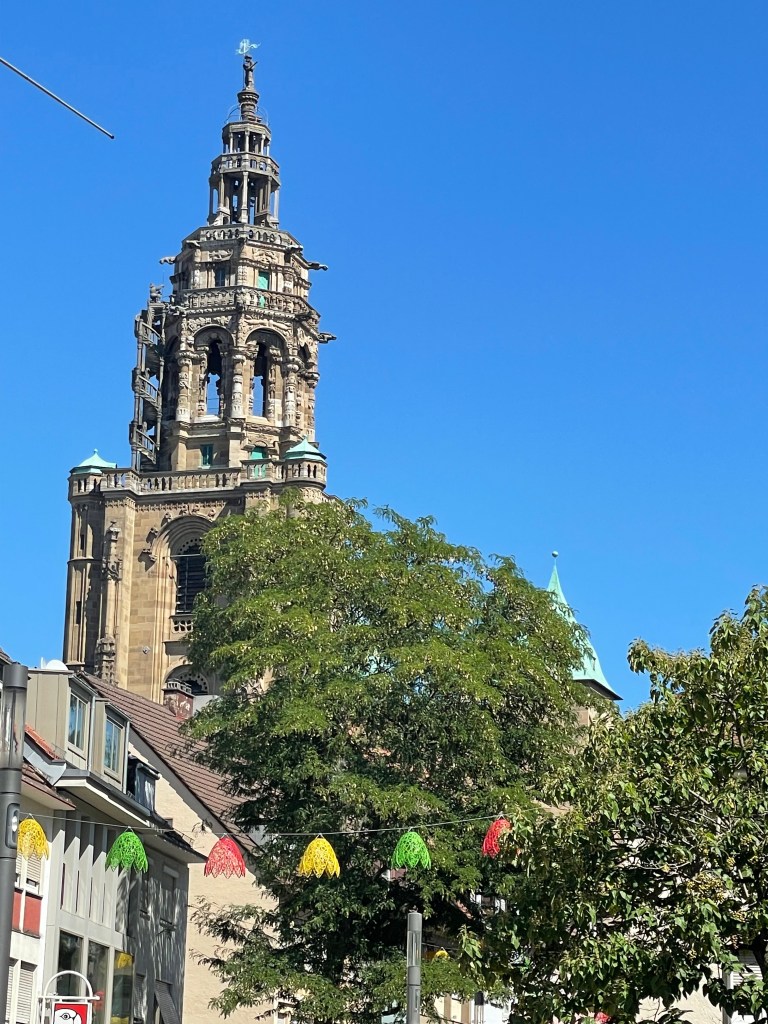
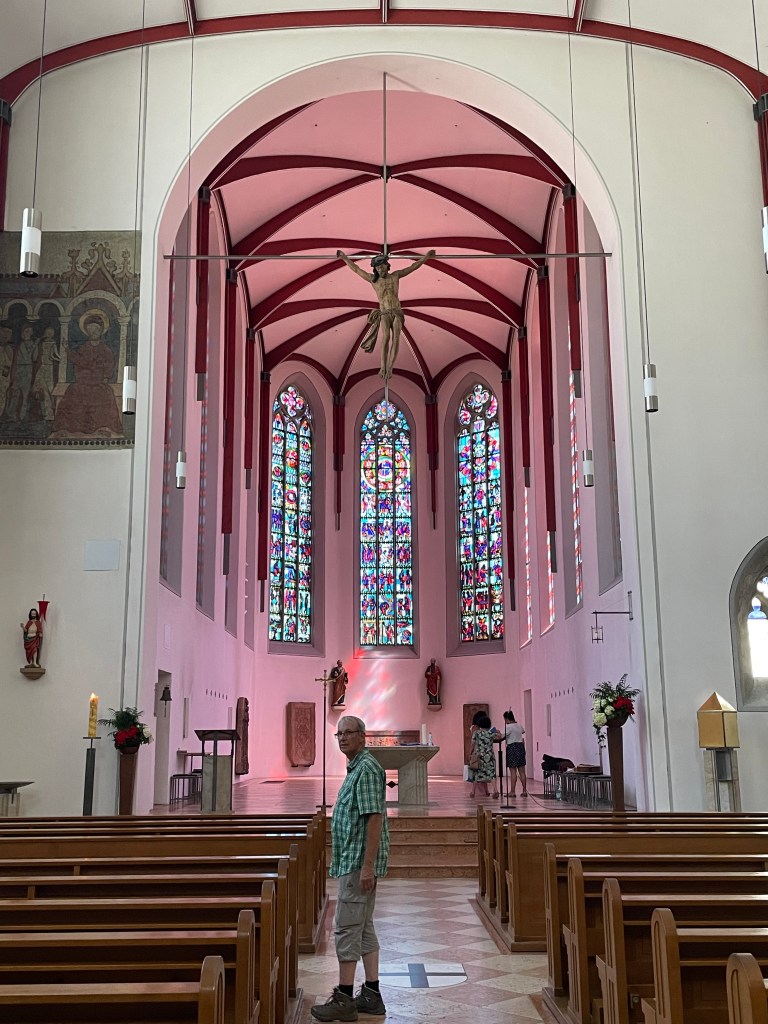
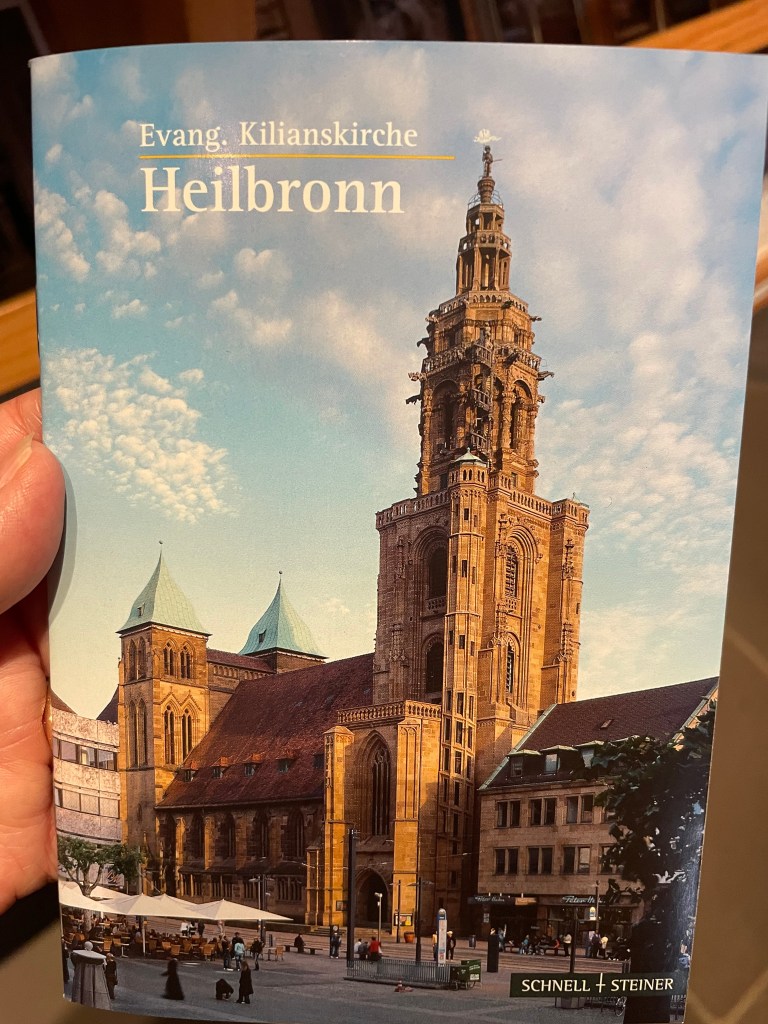
We went into the Altstadt, or old part of town, and stopped first at the Kilianskirche, the old protestant church there.
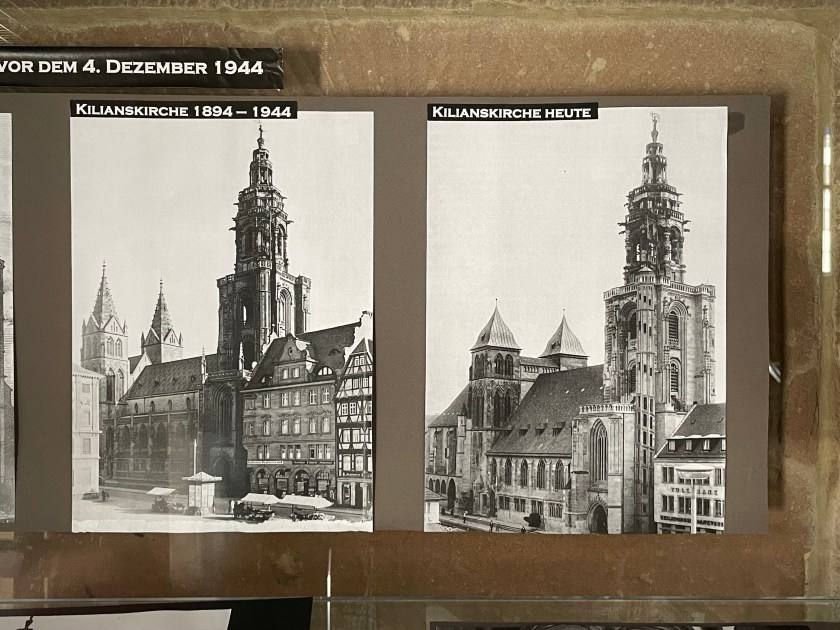
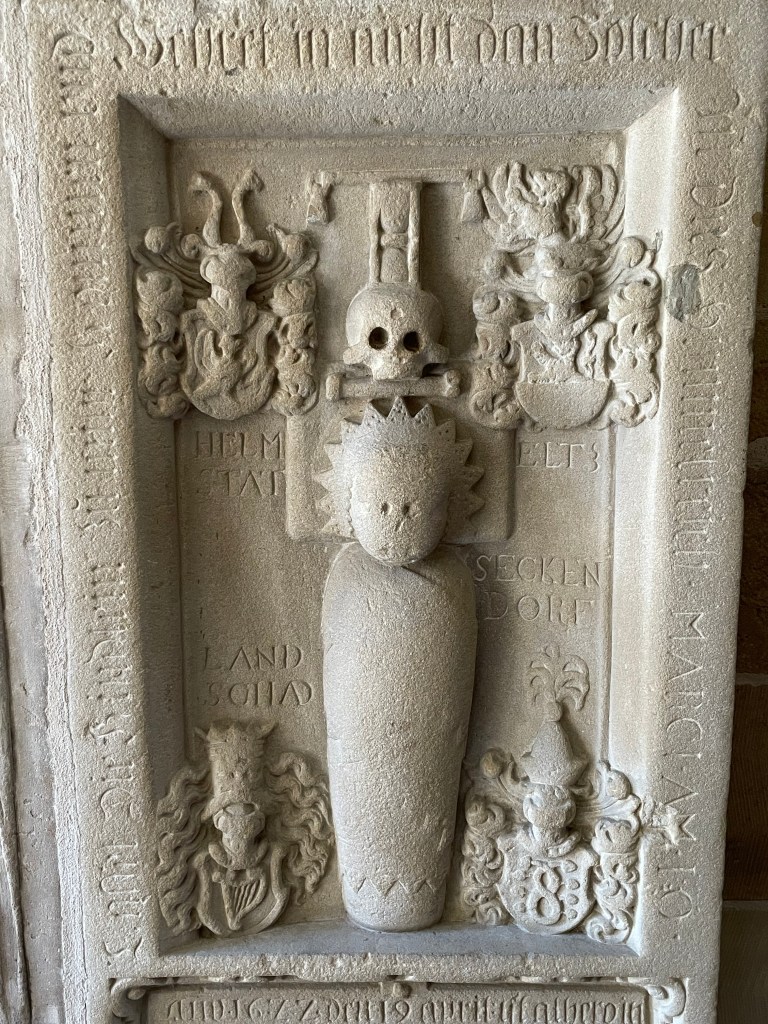
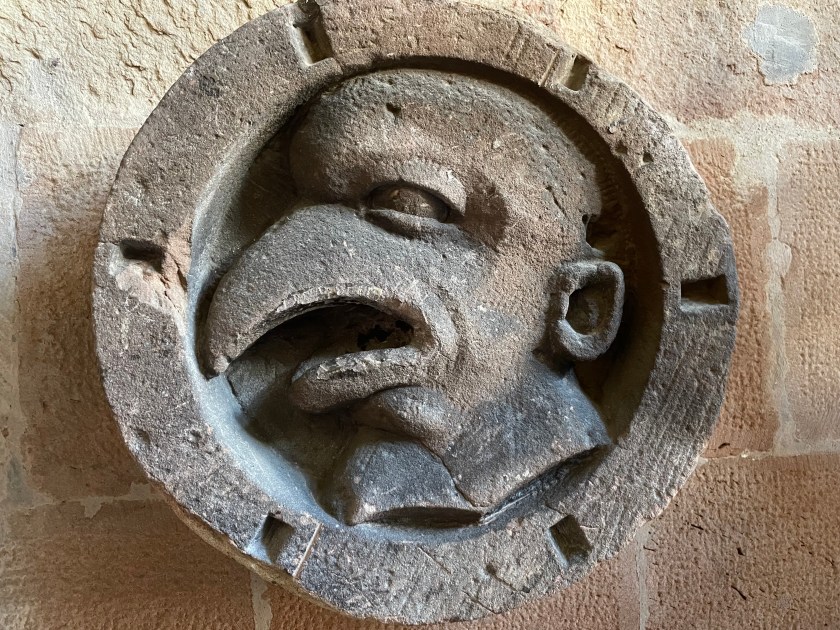
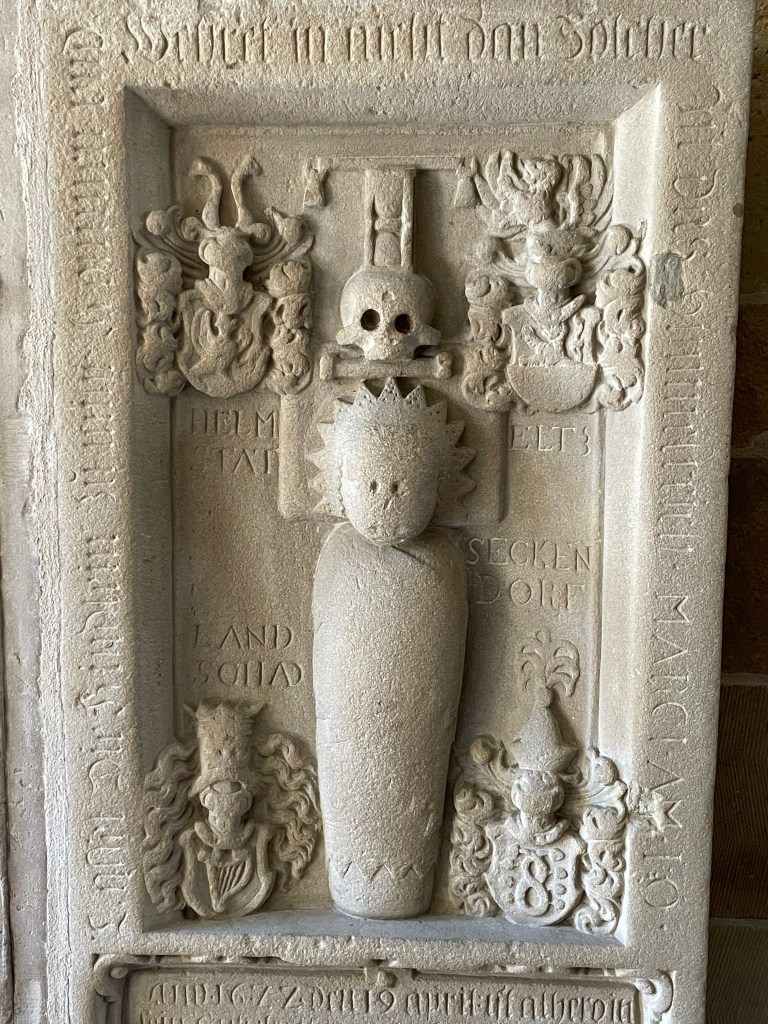
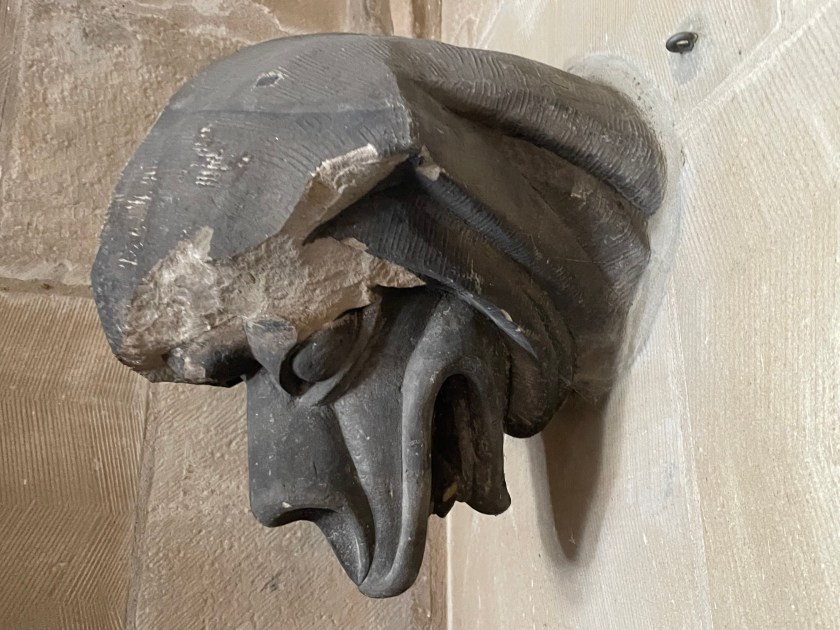
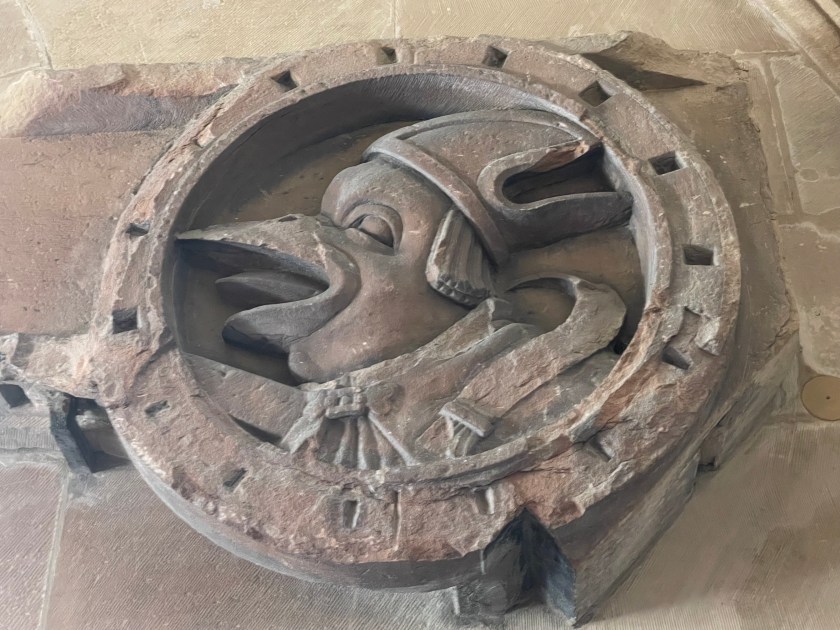
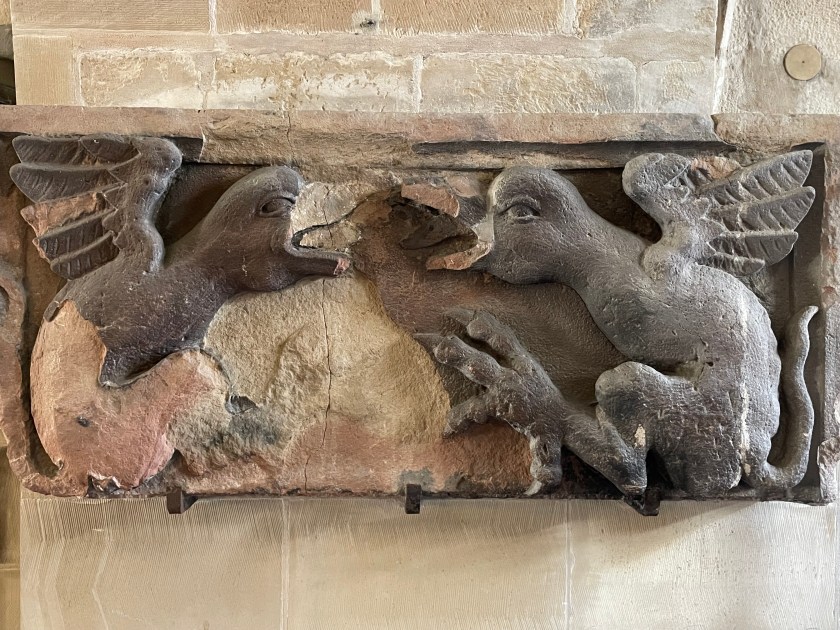
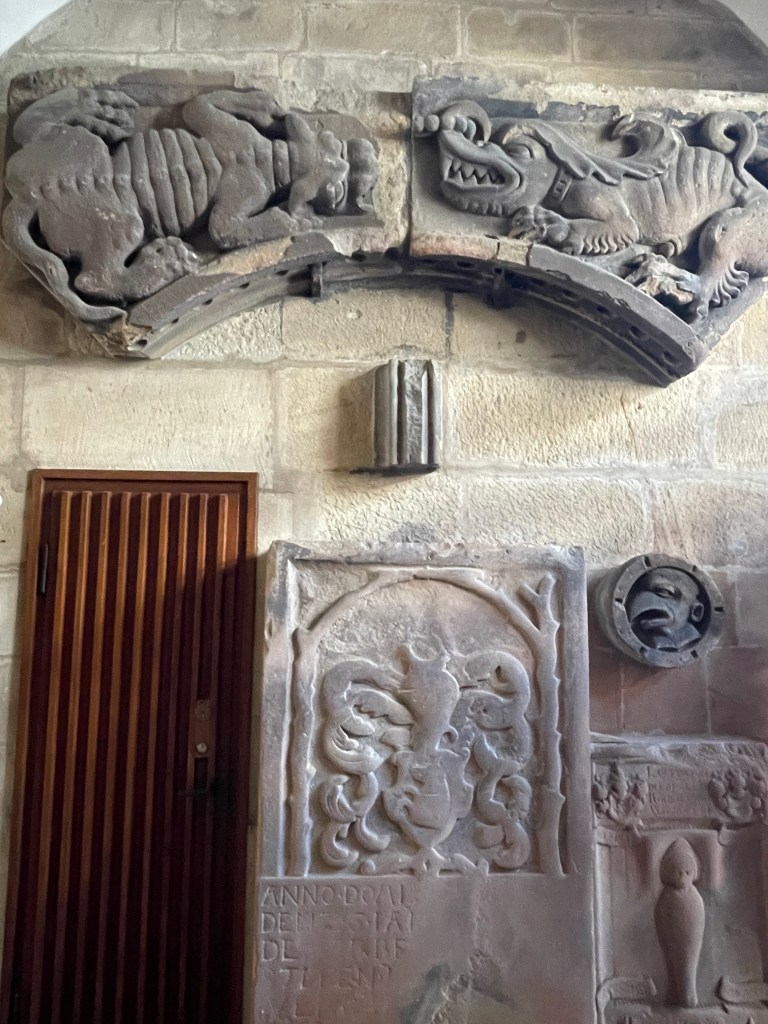
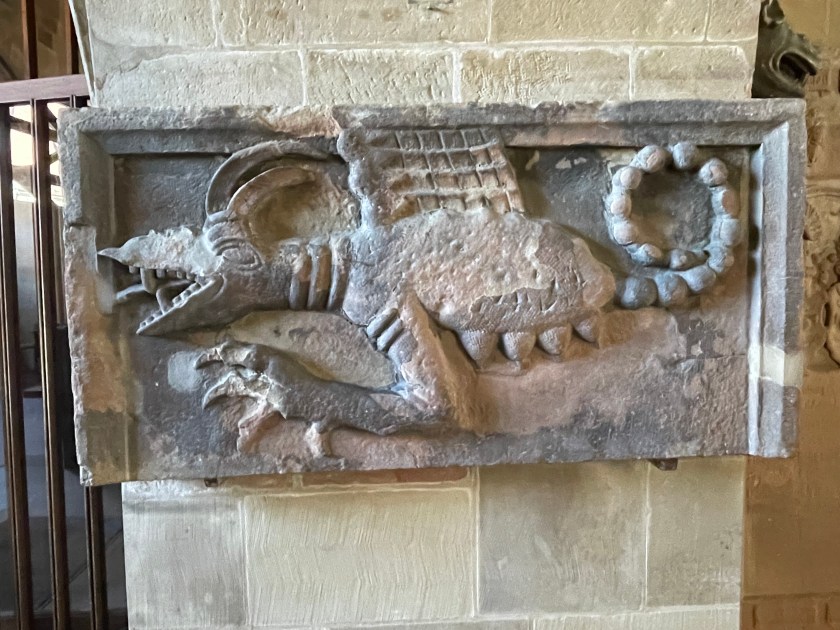
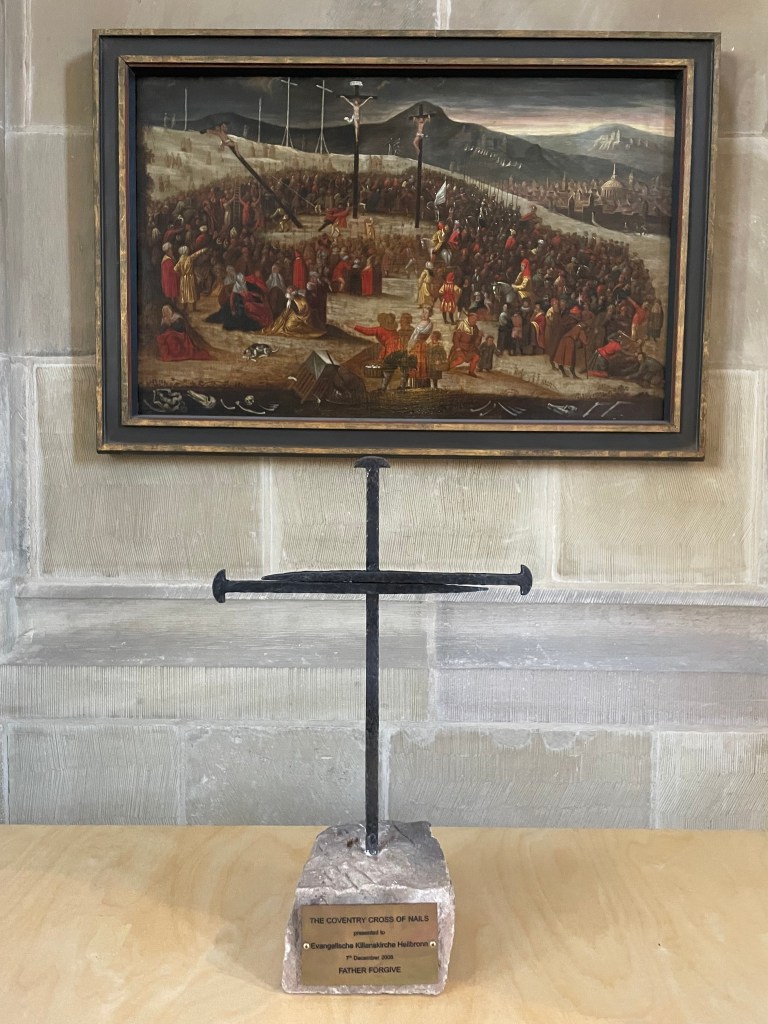
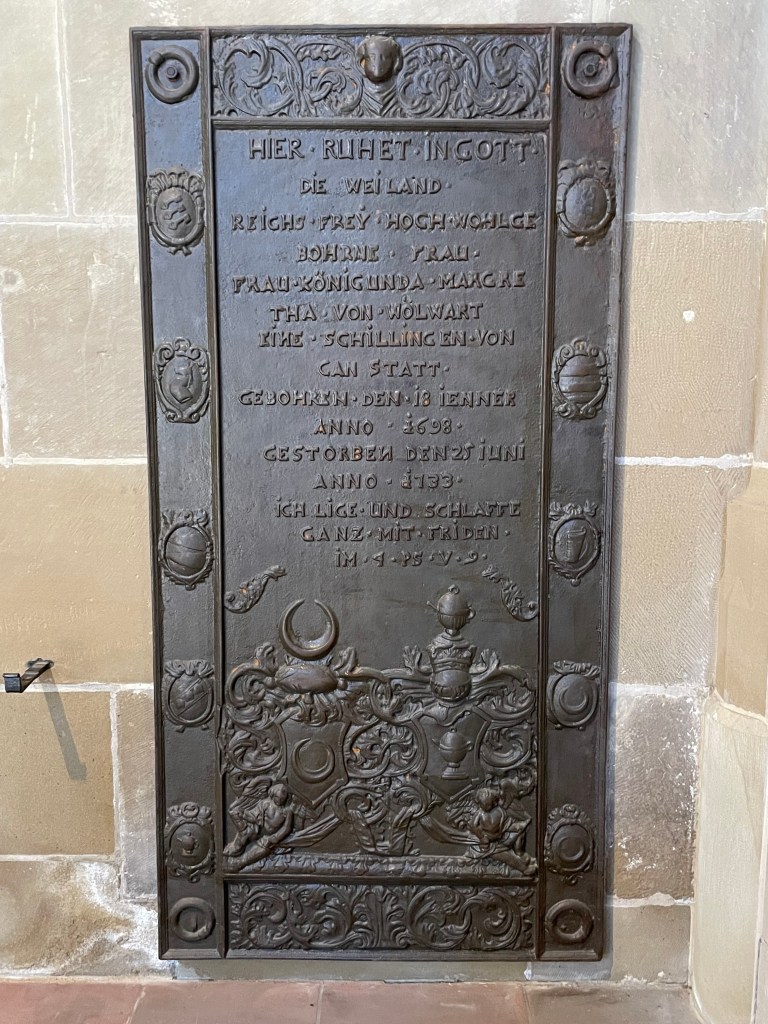
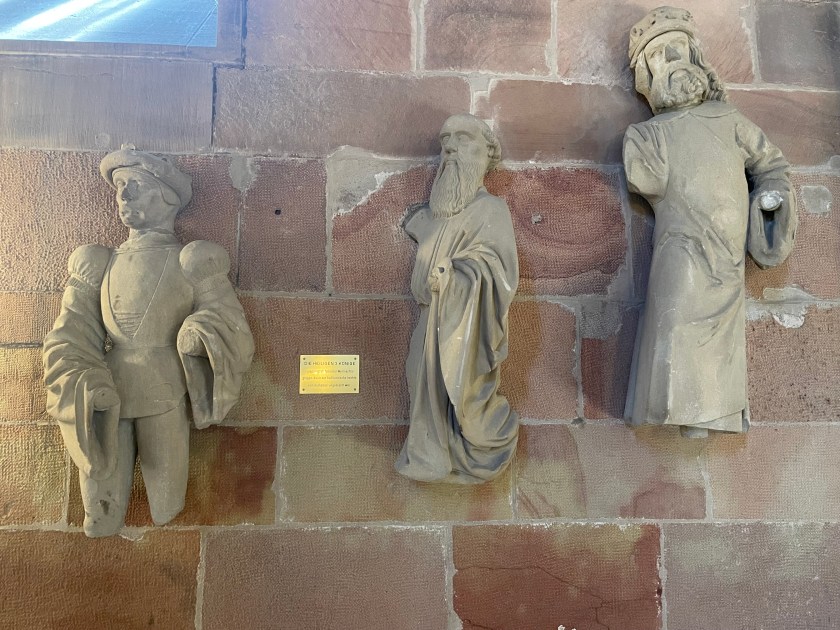
These are parts and pieces of the church that were salvaged after the bombing.
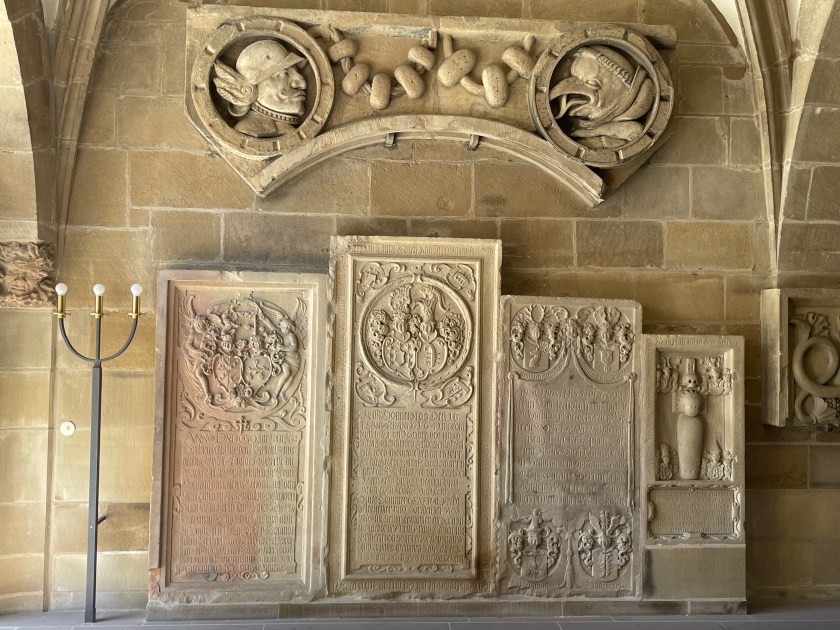
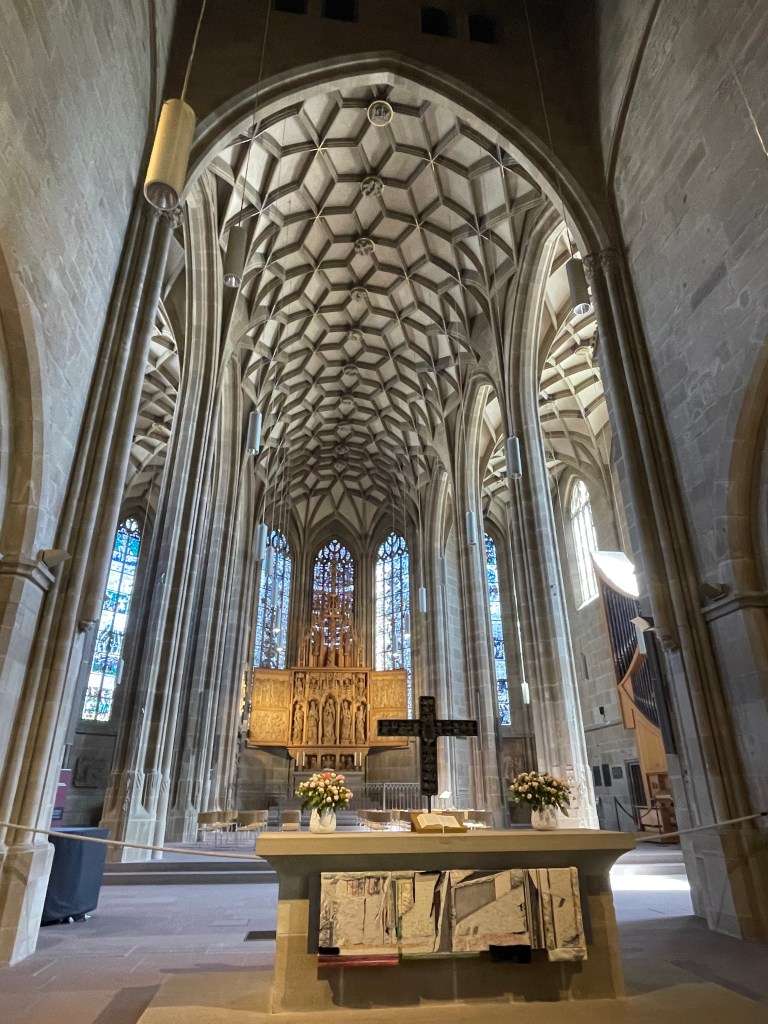
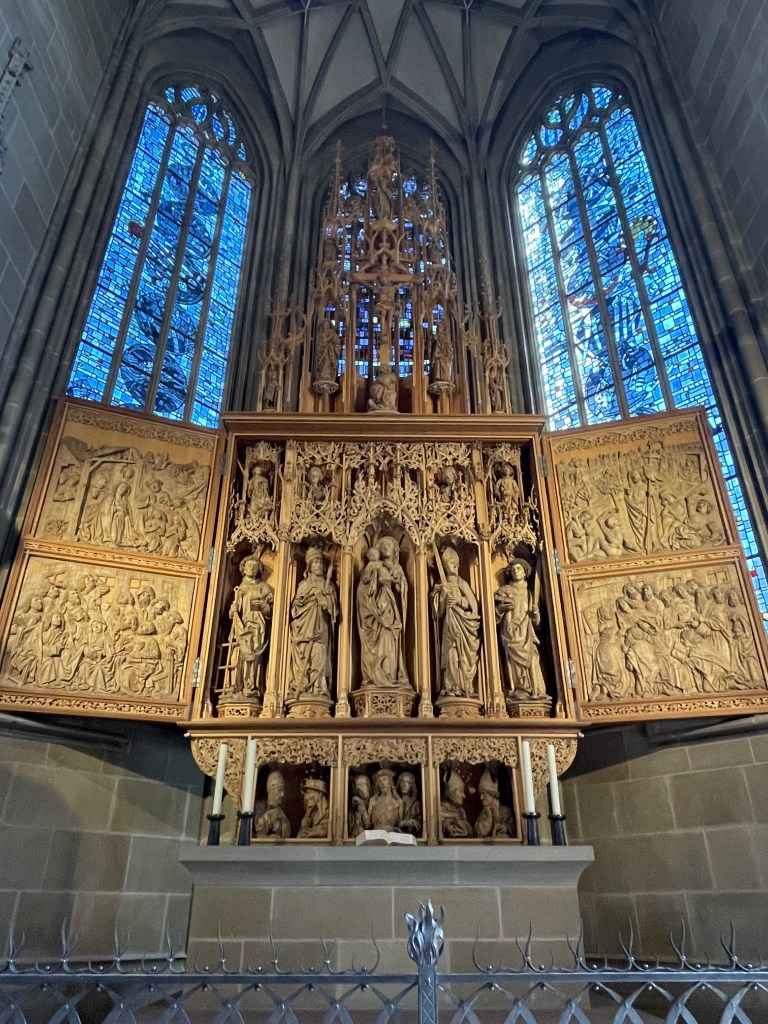
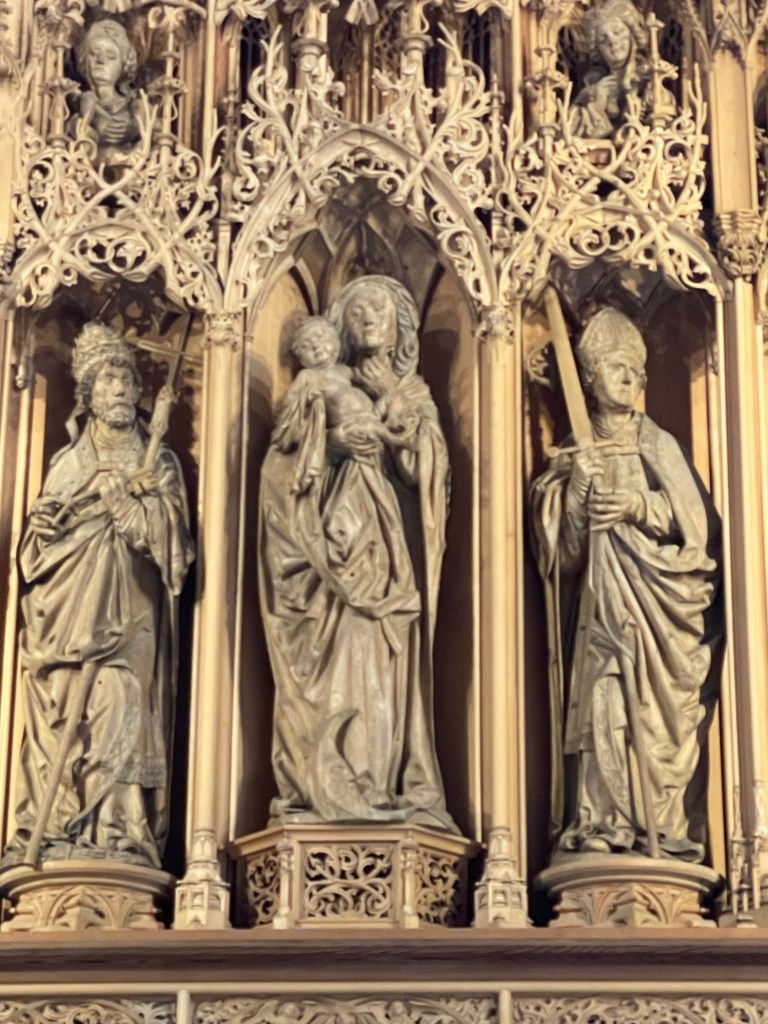
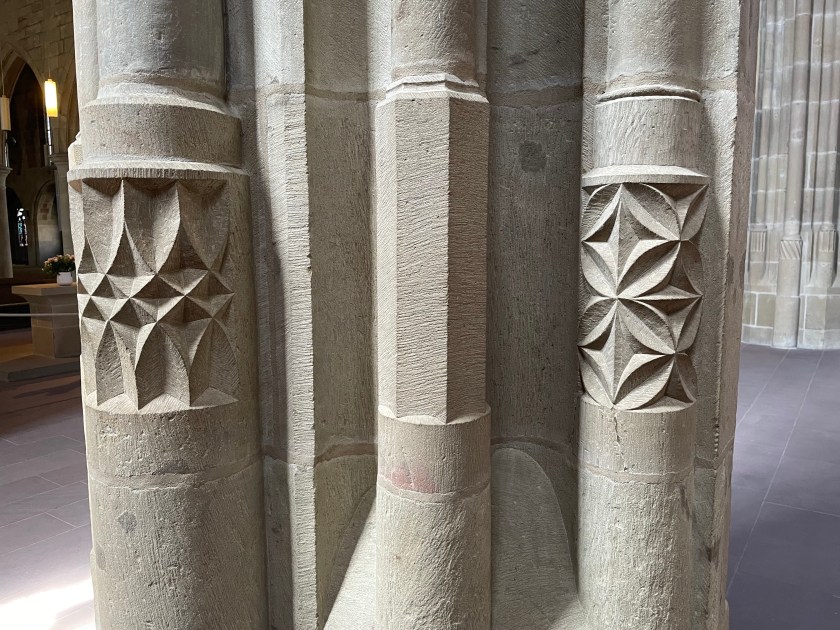
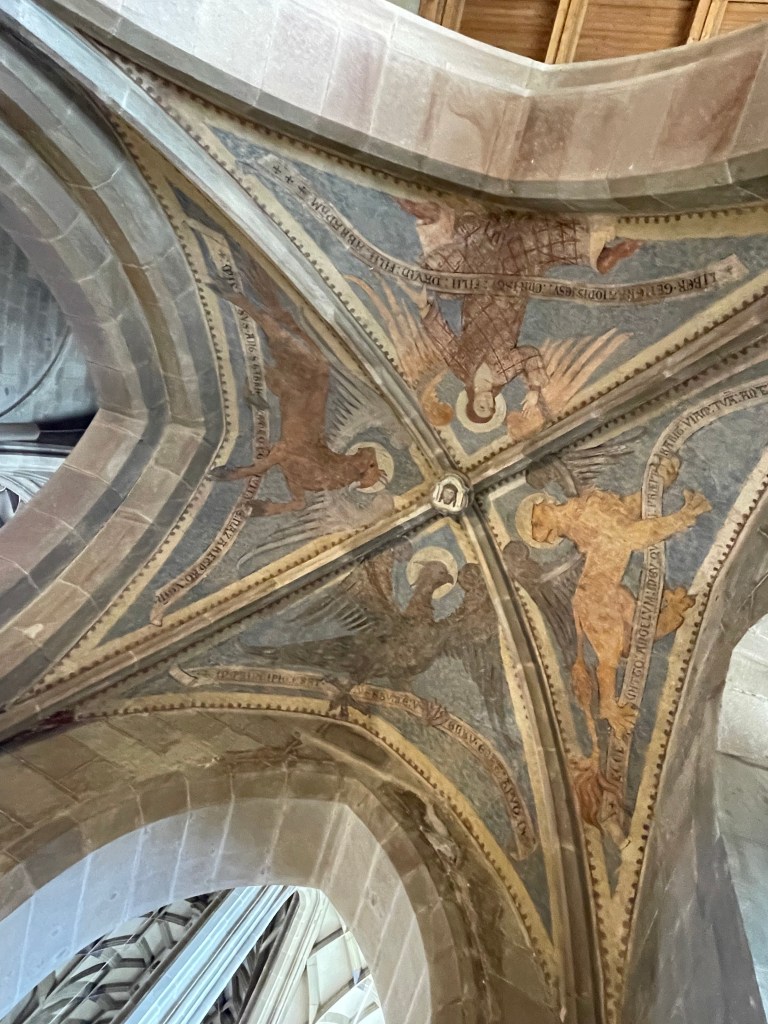
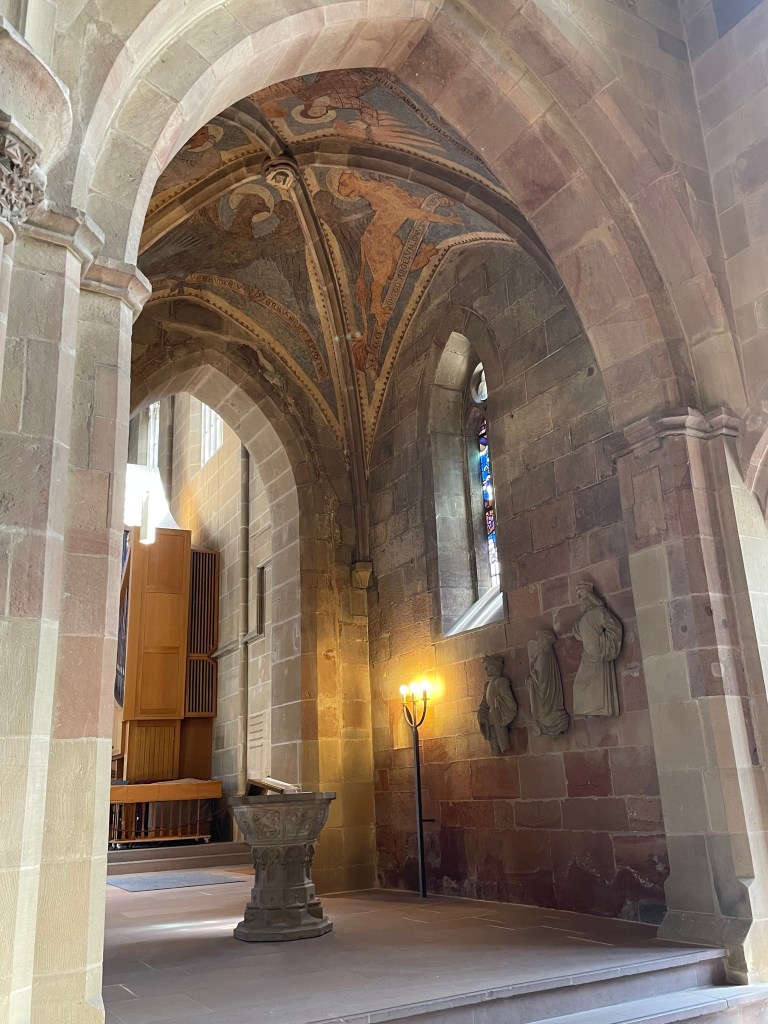
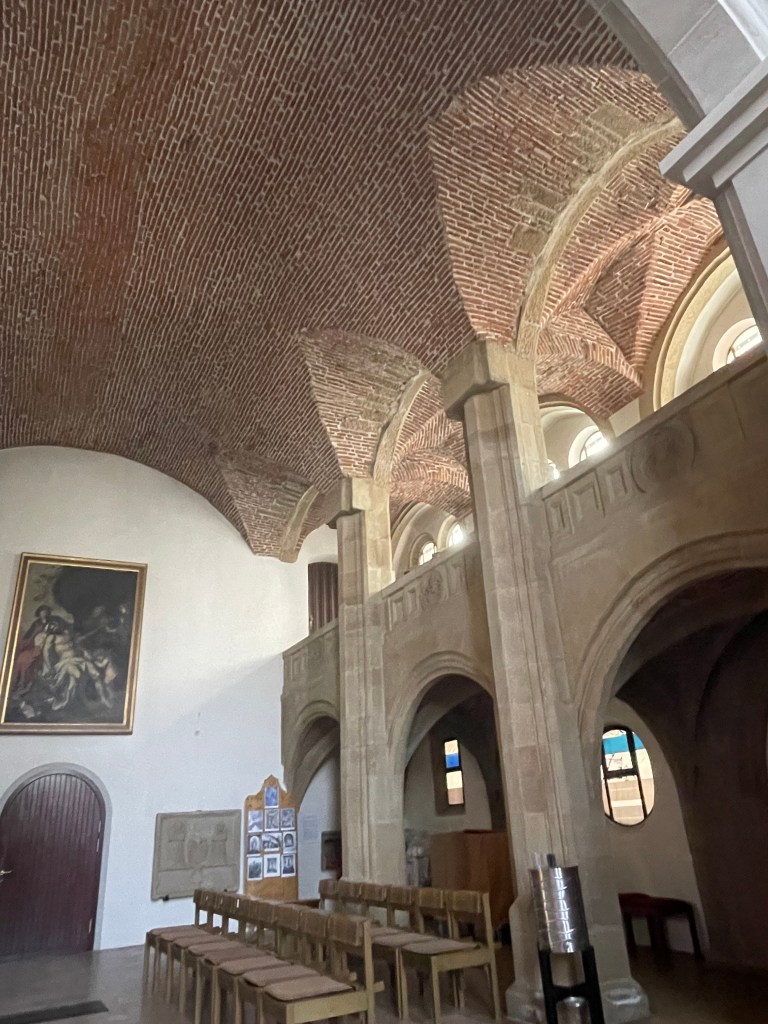
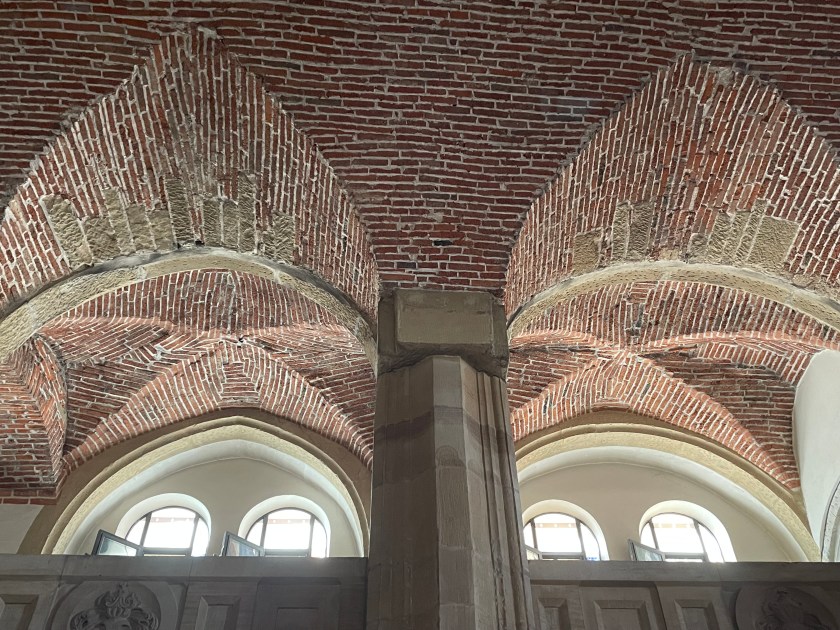
The interior of the church is really beautiful.
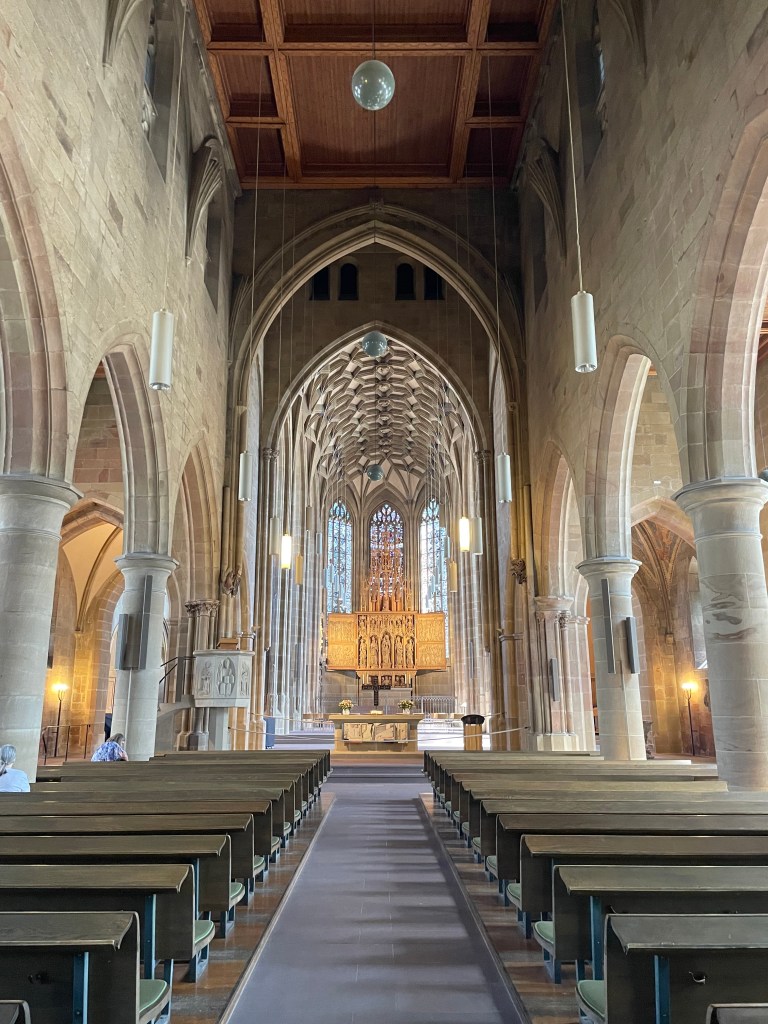
Most churches today have displays with before and after the war photos, telling their history.
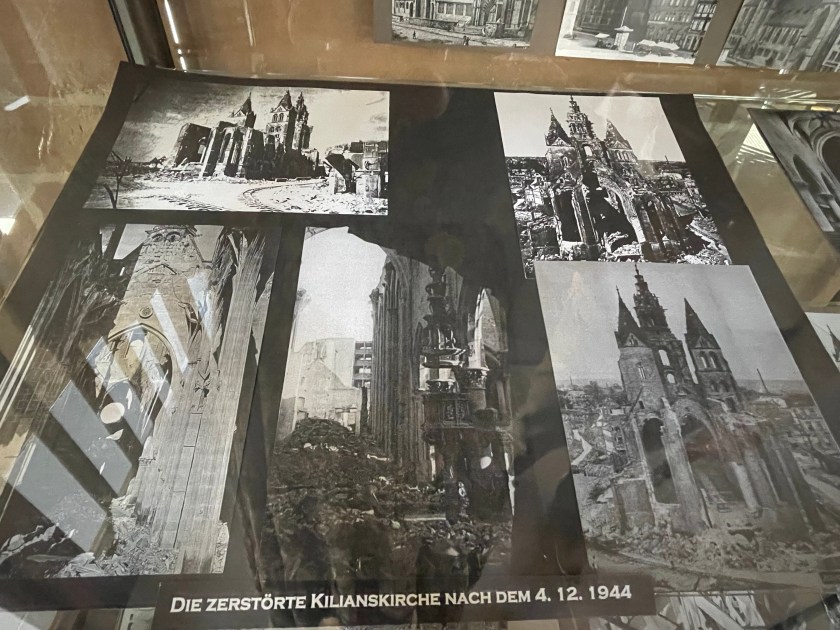
Heilbronn was heavily bombed.

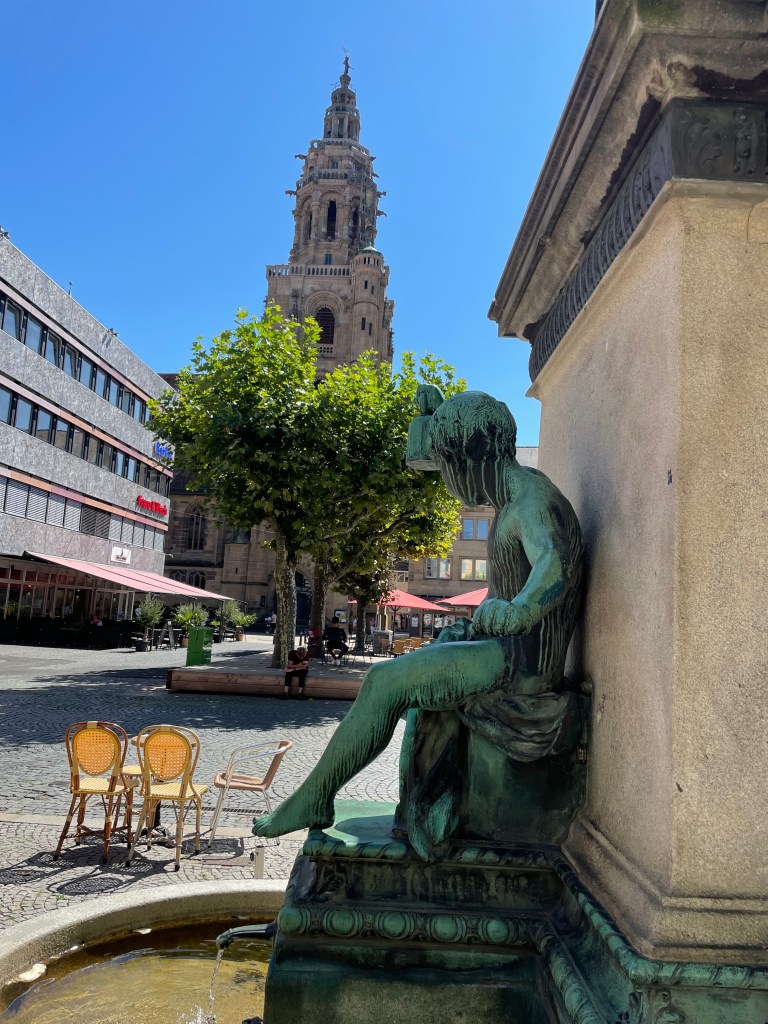
Here’s how it looks today.  The church is in the heart of Heilbronn.

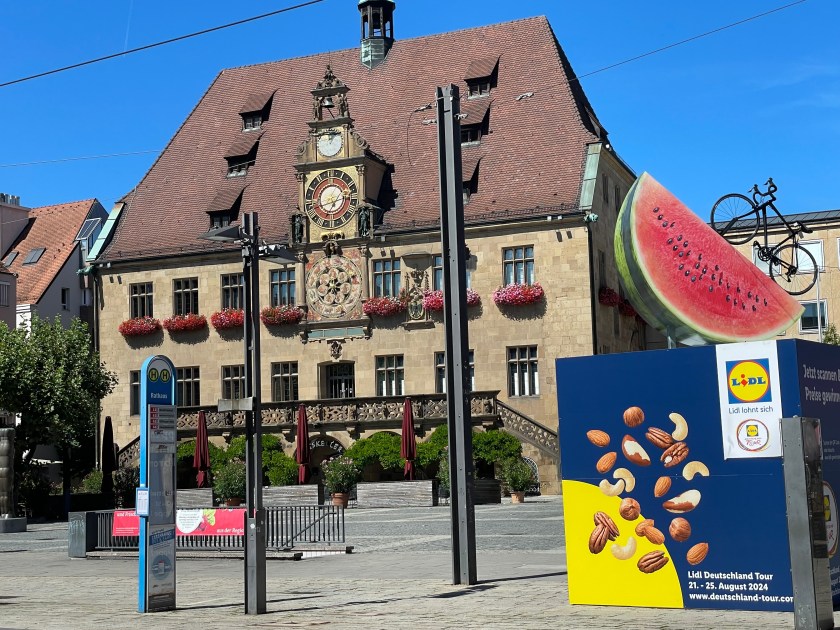
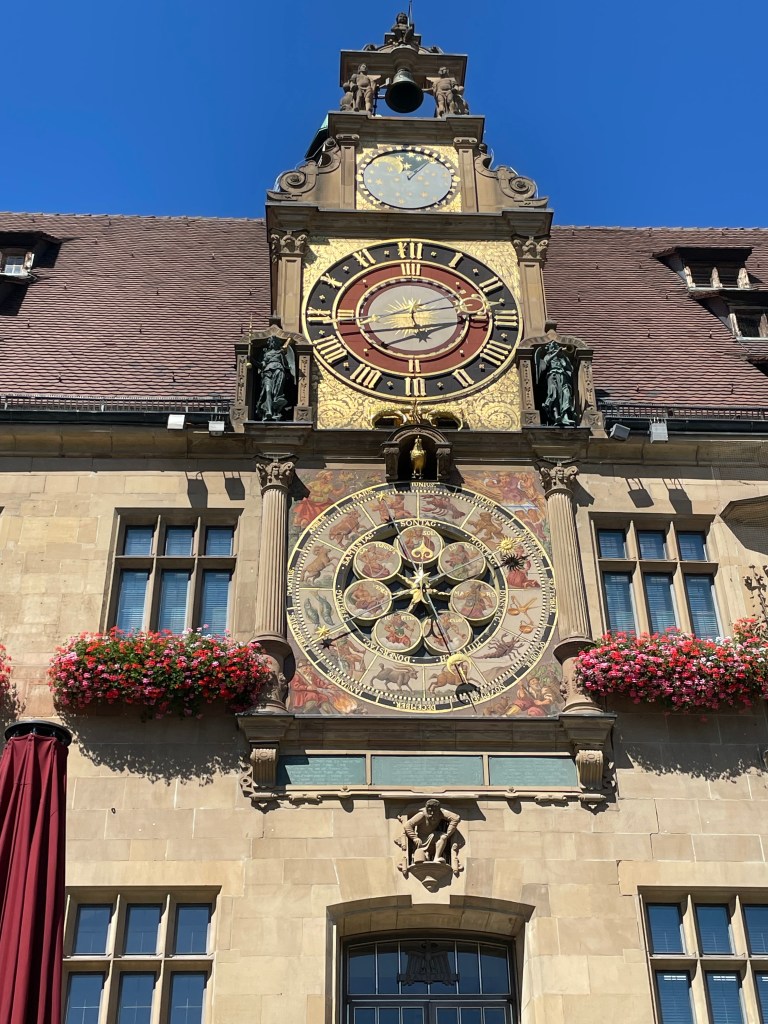
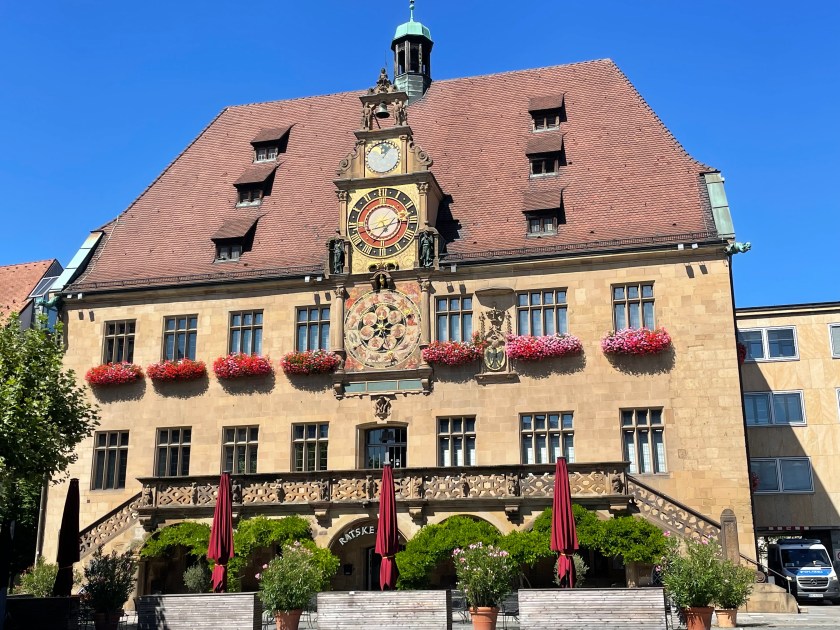
This is the old City Hall in the square near the church.
We walked over to the bridge over the Neckar River.
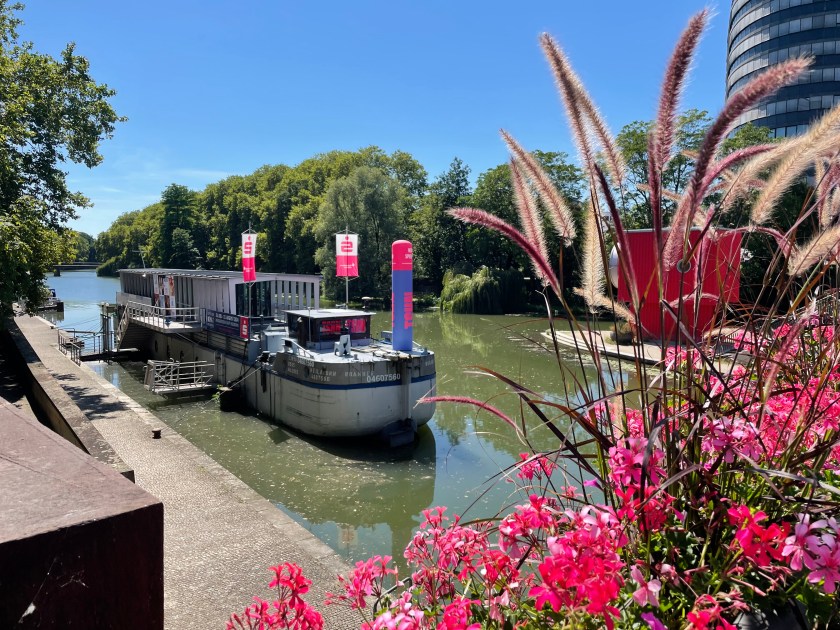
You can see above and below the water level markers from years when it flooded here.

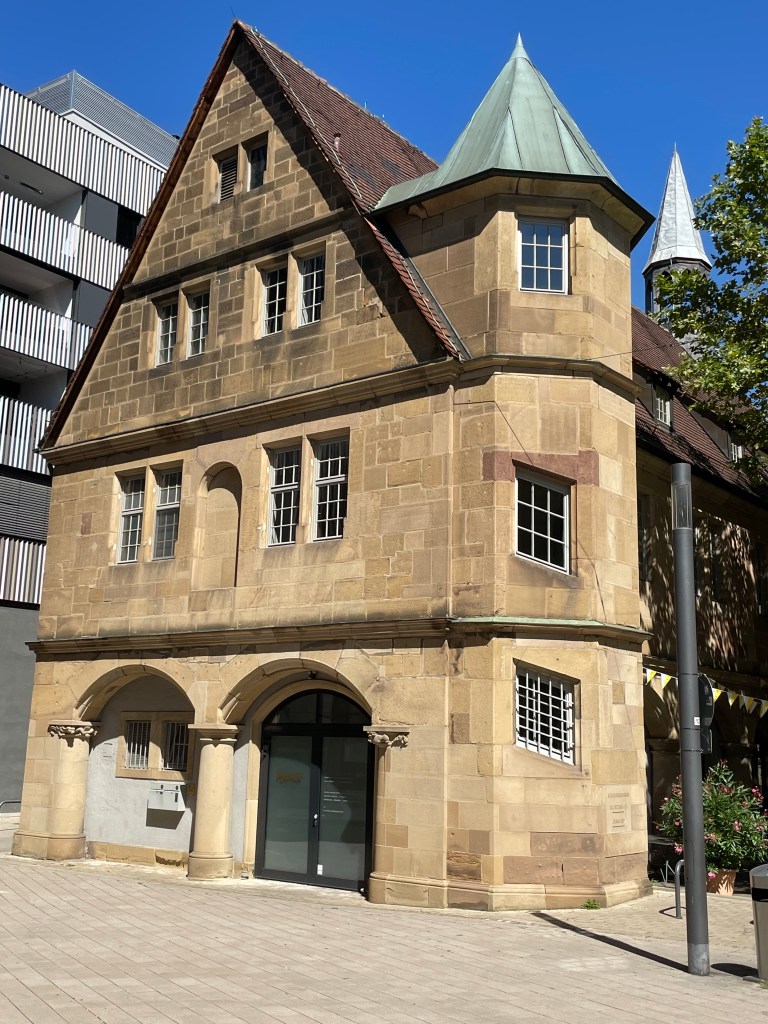
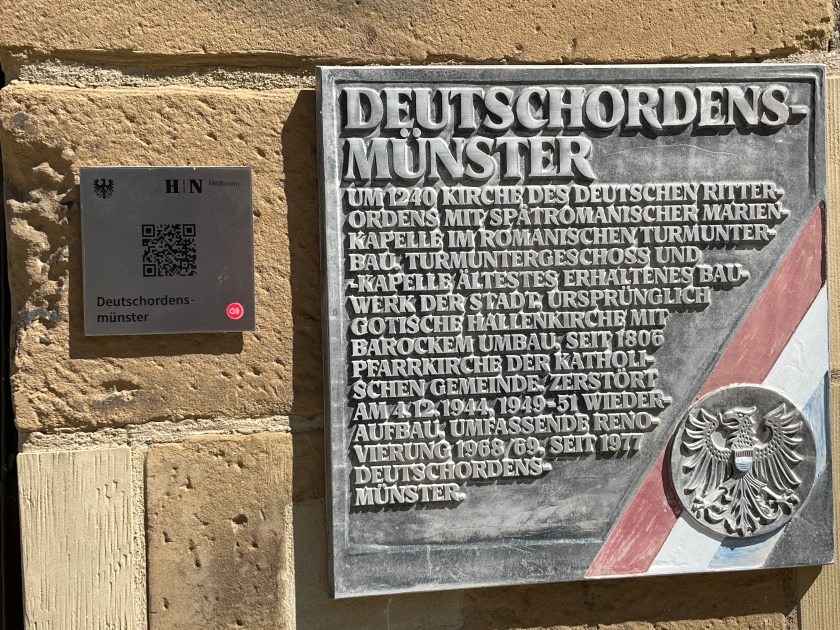
Here is another old church in Heilbronn, dating back to 1240.  It also was bombed and rebuilt.
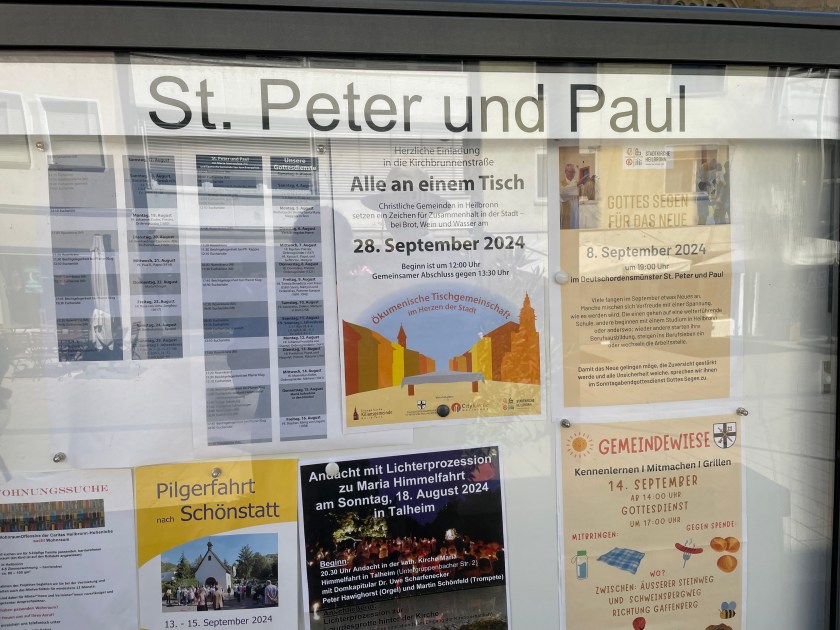
The story of the destruction and rebuilding:

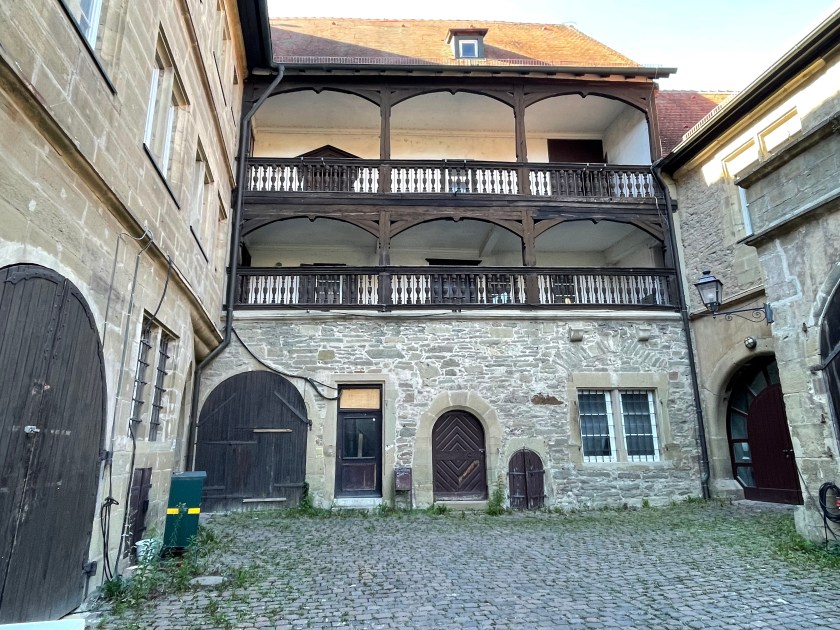
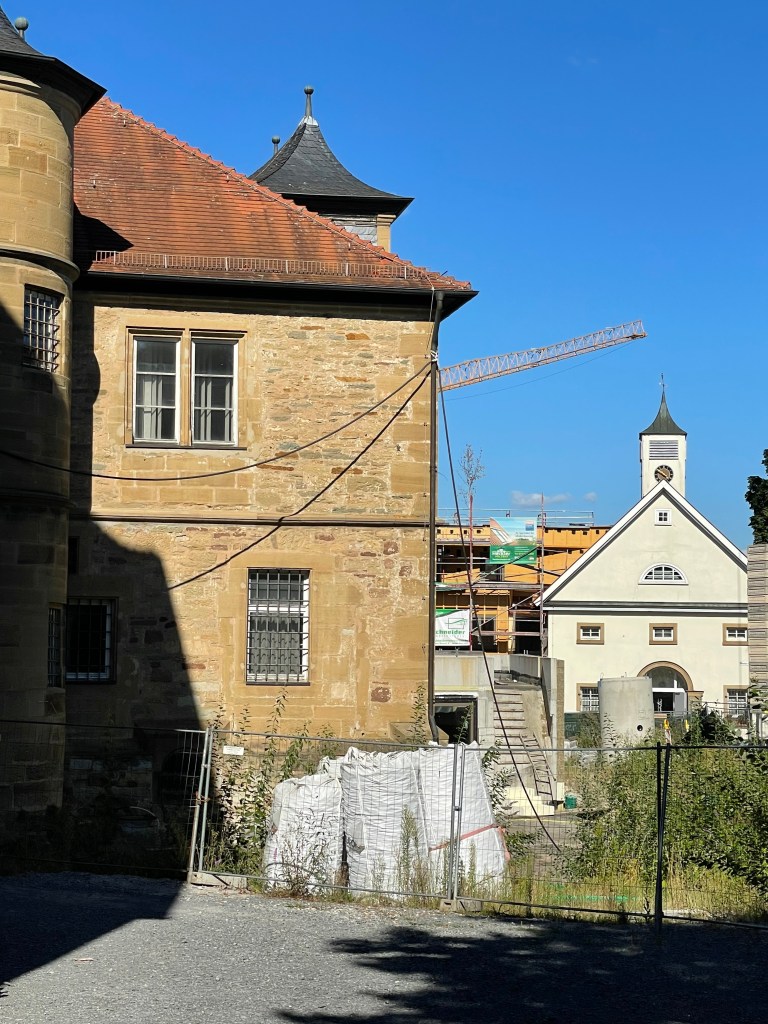
Below is another old Schloss/palace, now re-purposed.
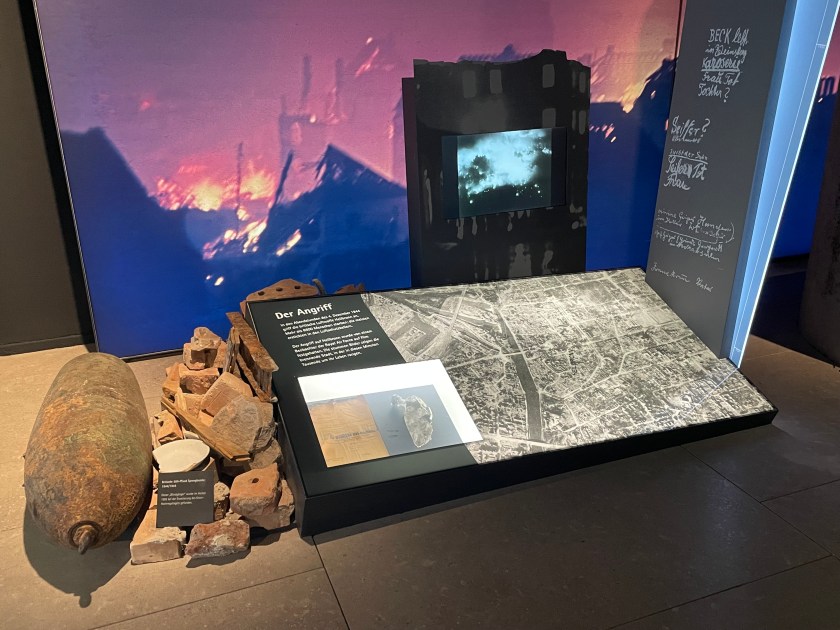
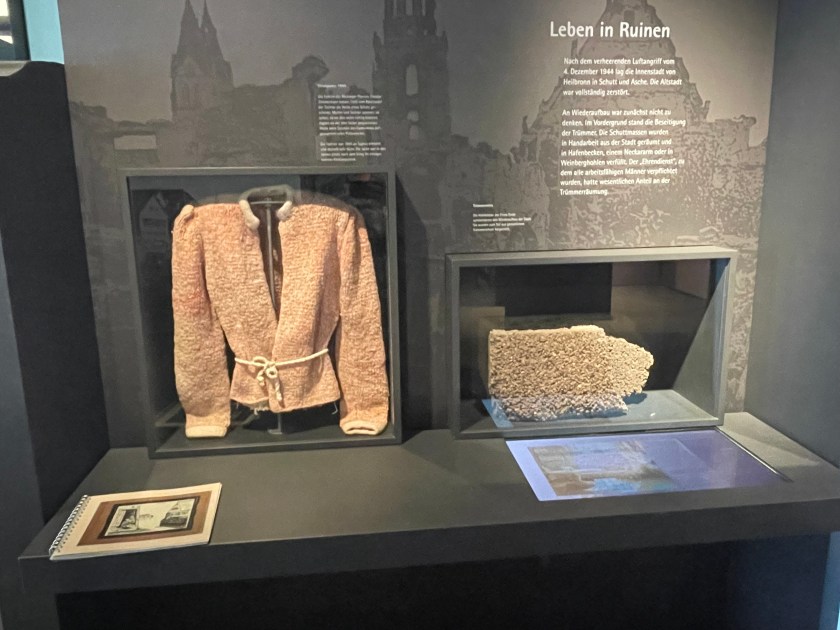
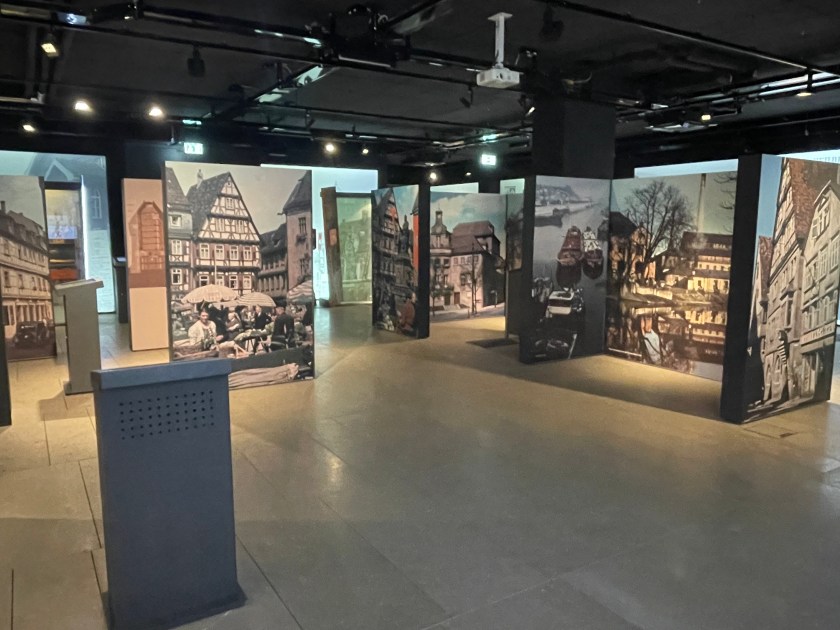
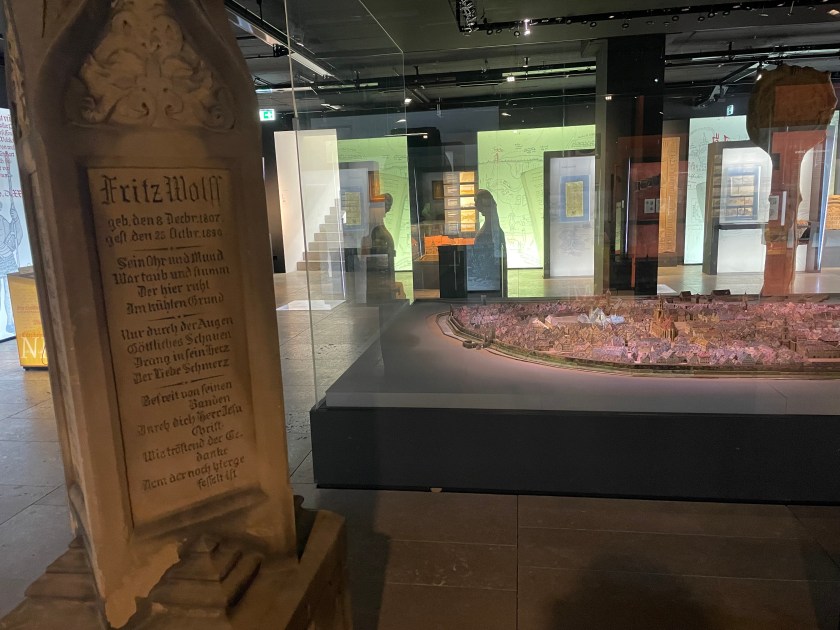
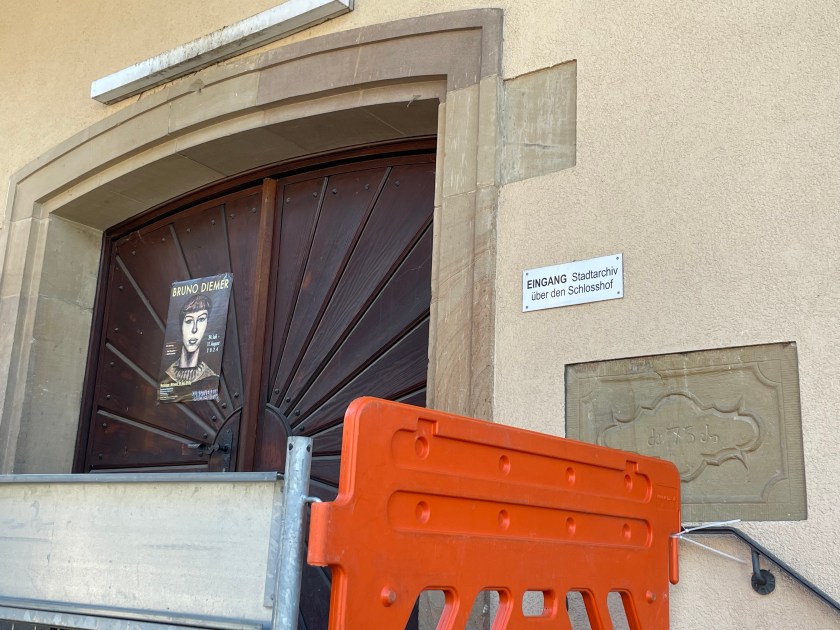
We happened upon the city archives (that made me feel rather excited), and found it contained a museum that was open today.  Inside we watched several interesting films in both English and German about the history of Heilbronn.

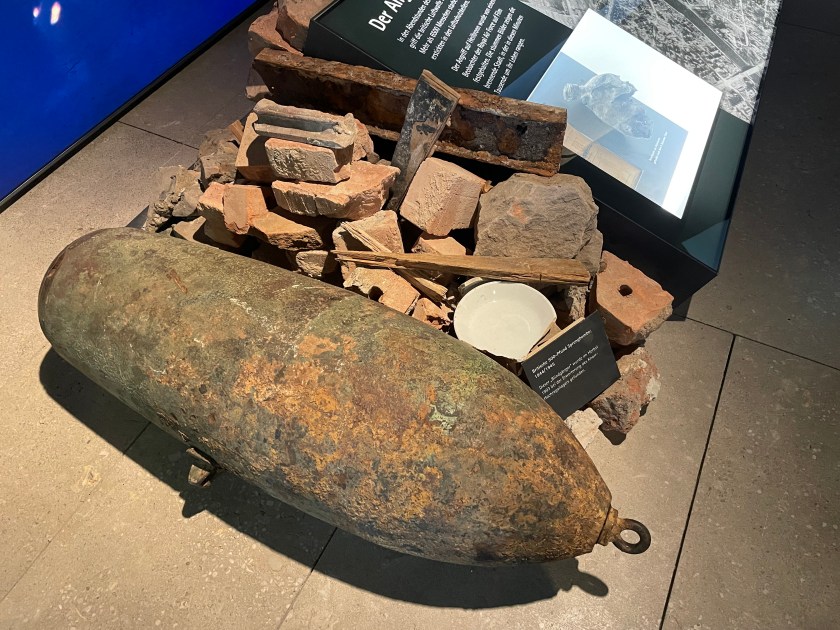
Below is a bomb from the air raids dropped on Heilbronn during the war.
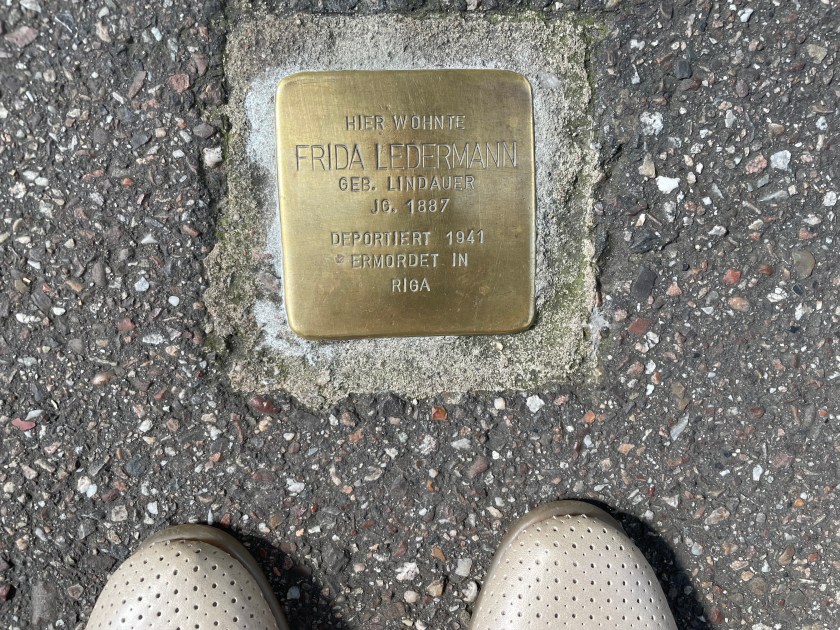
We only noticed one Stolperstein today.
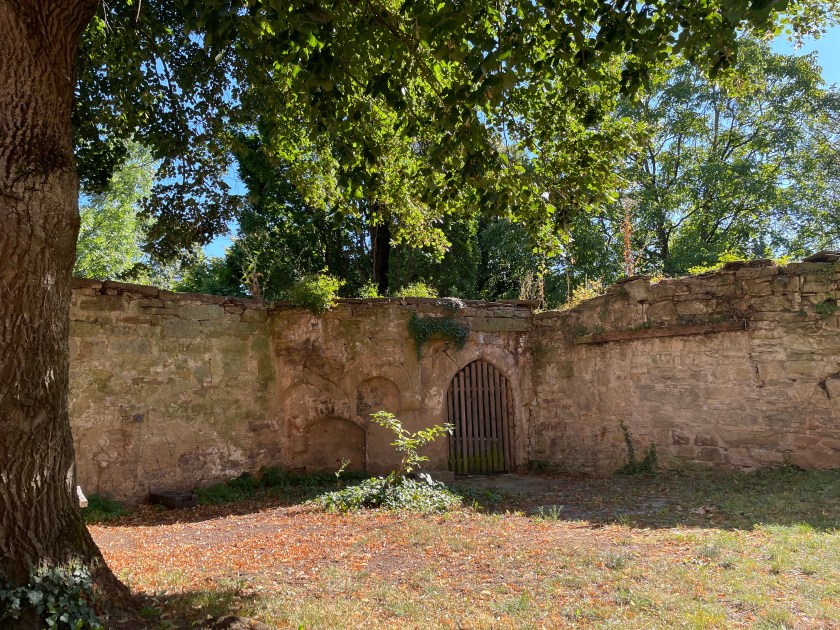
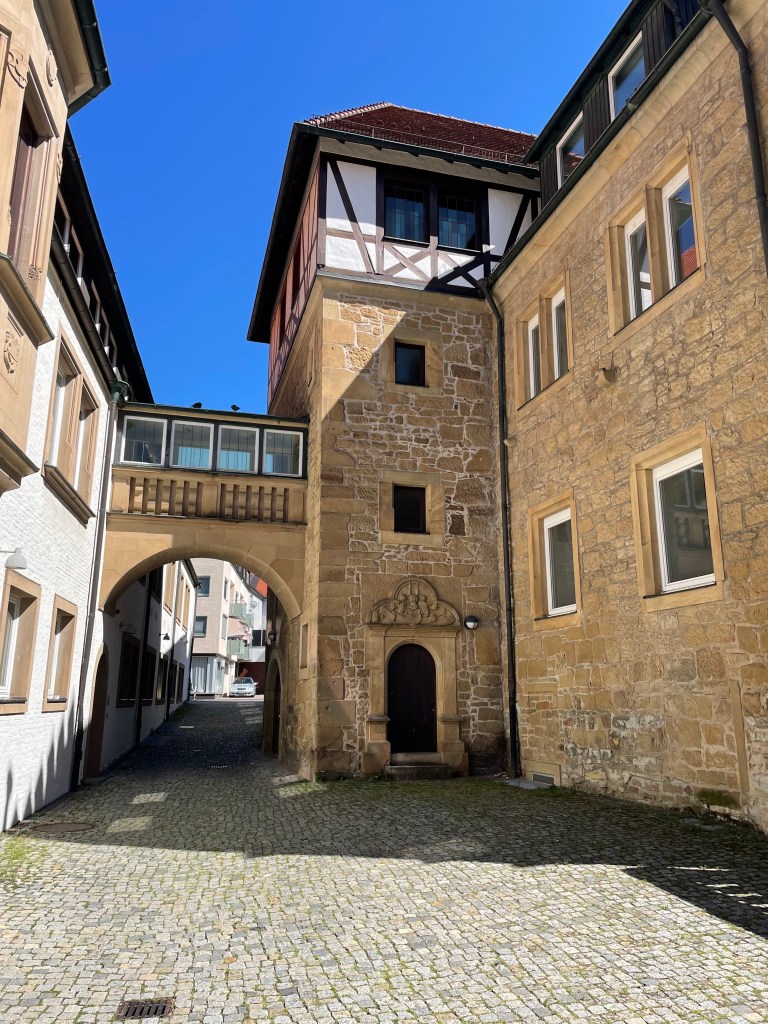
There are a few watchtowers that were part of the city wall, still standing.  We saw this one with a fun art installation as we departed.

Sunday in Heilbronn with Martin and Jutta

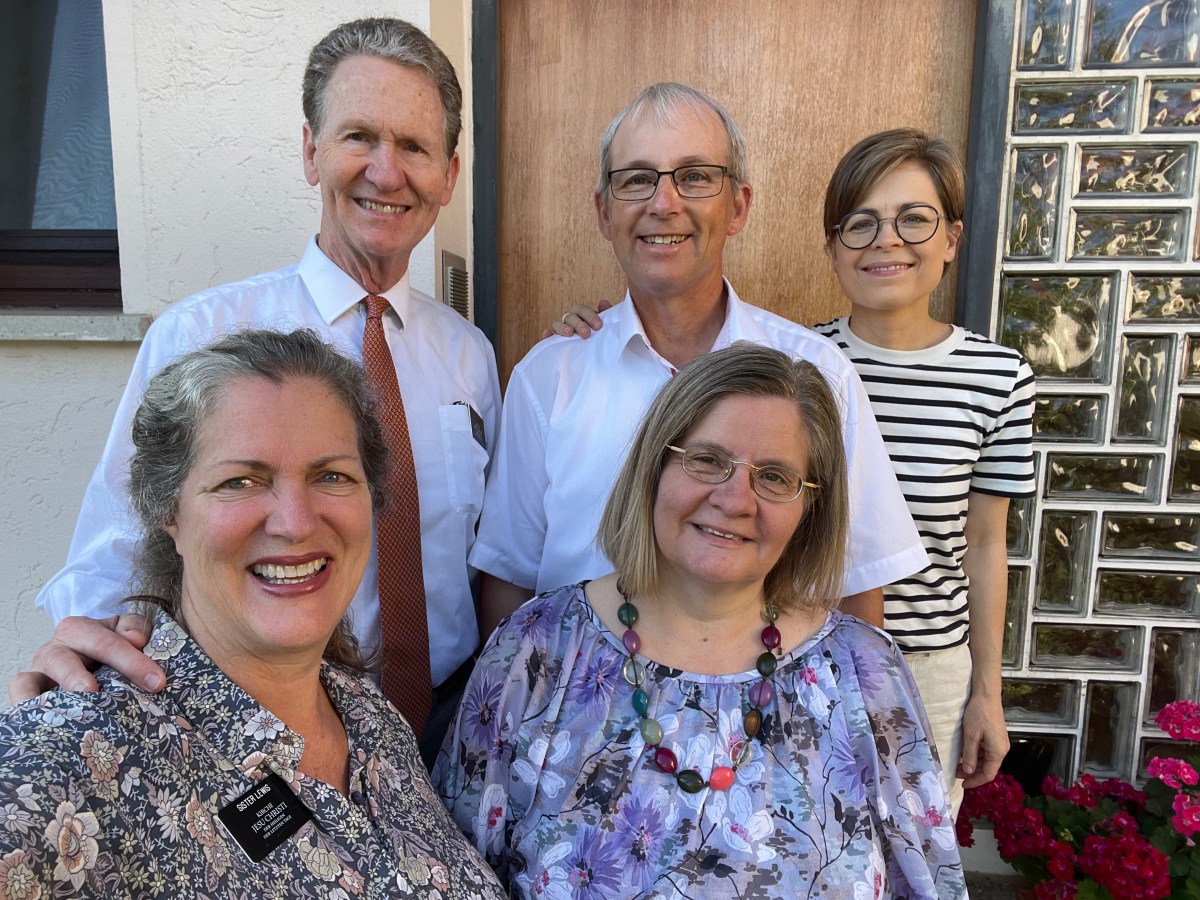
This morning we attended church in Heilbronn, about 10 minutes from Leingarten.  We really enjoyed having Martin and Jutta with us.  After great meetings, we learned more about the Family History Center here in this building.

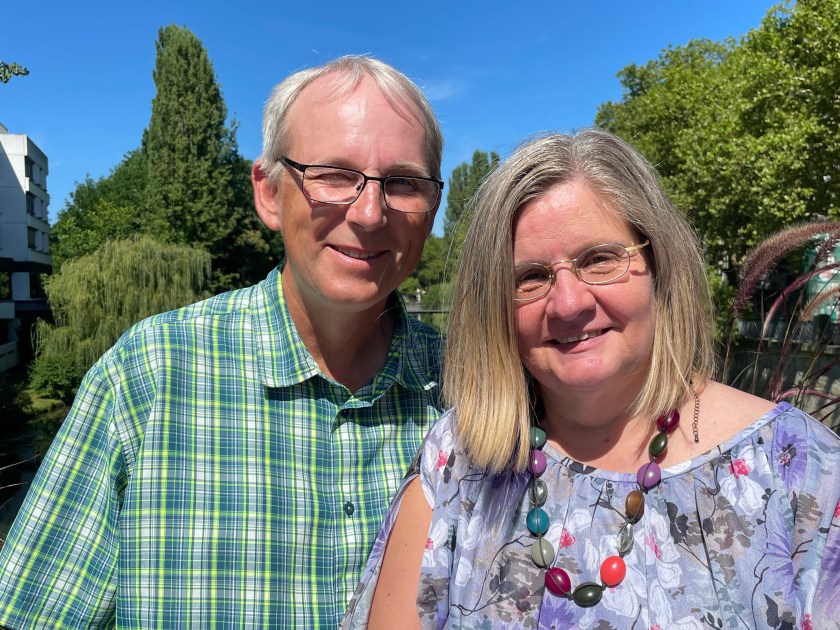
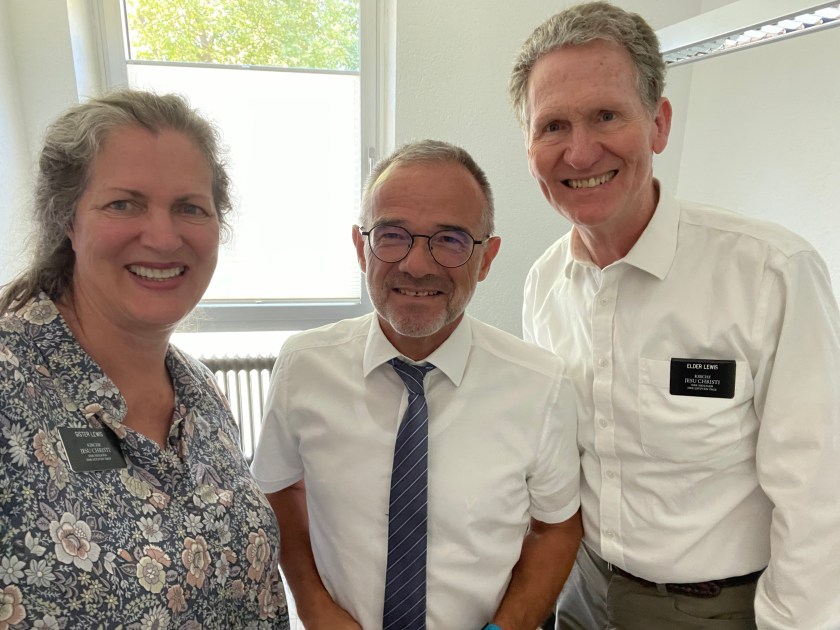
We also met Elder Huber’s twin brother, Georg!  His wife, Jutta, was our Relief Society teacher.

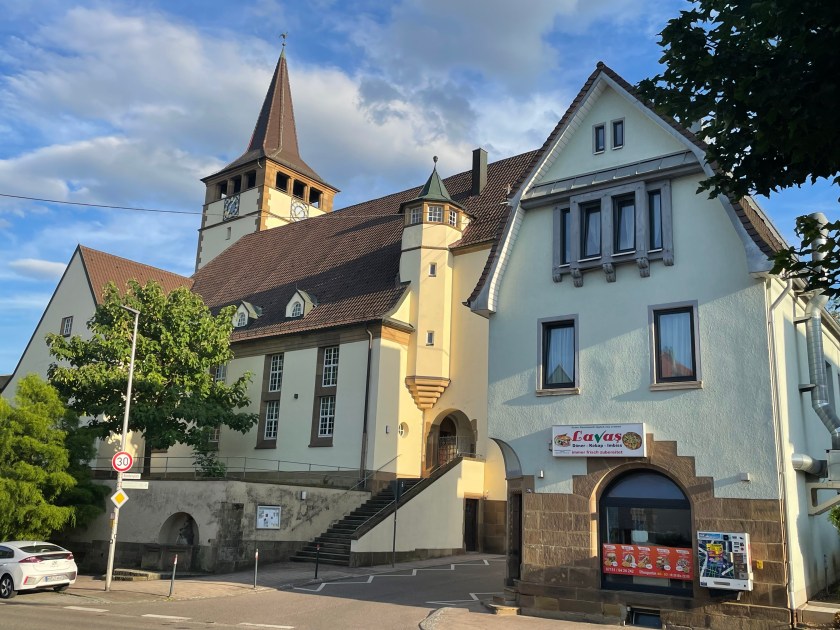
The Home of Richard and Marie Wacker in Grossgartach

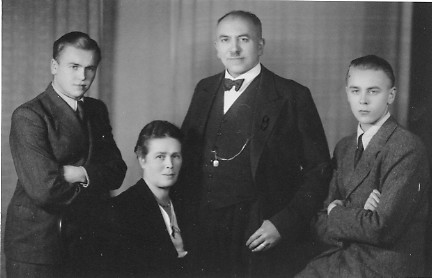
My Great-grandfather, Johann “Heinrich” Wilhelm Laemmlen, from Grossgartach had five children:  Karl Albert “Heinrich,” Maria Paula, Hermann, Rudolf, and Paul Wilhelm.

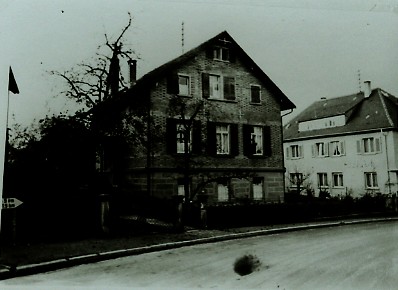
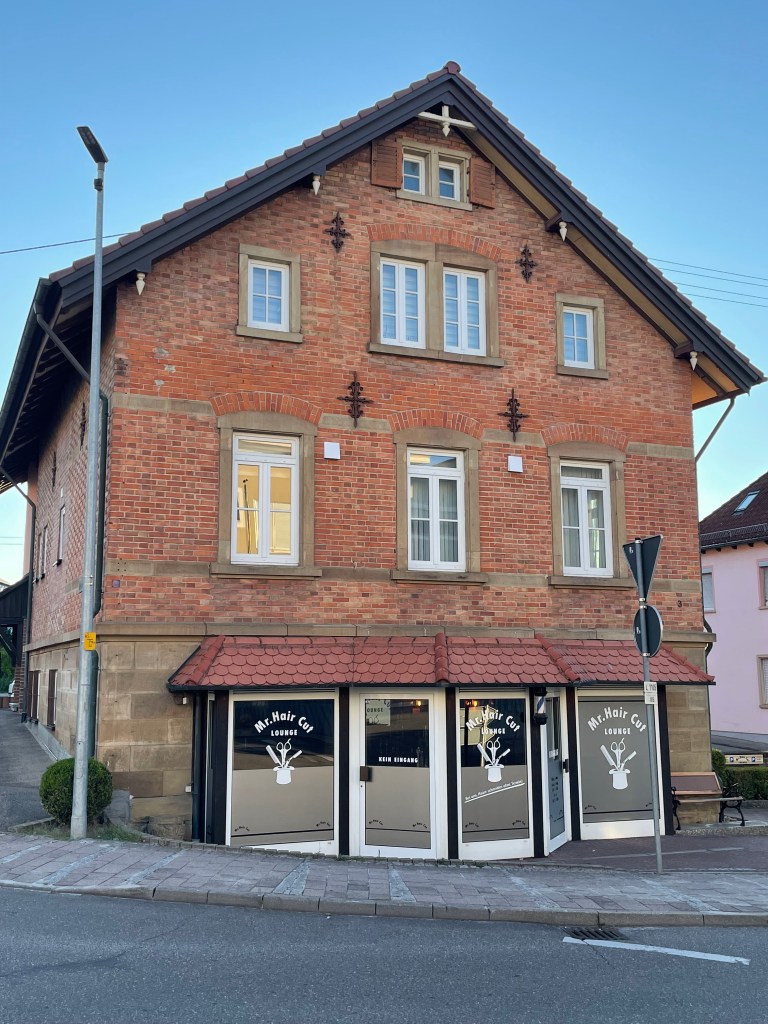
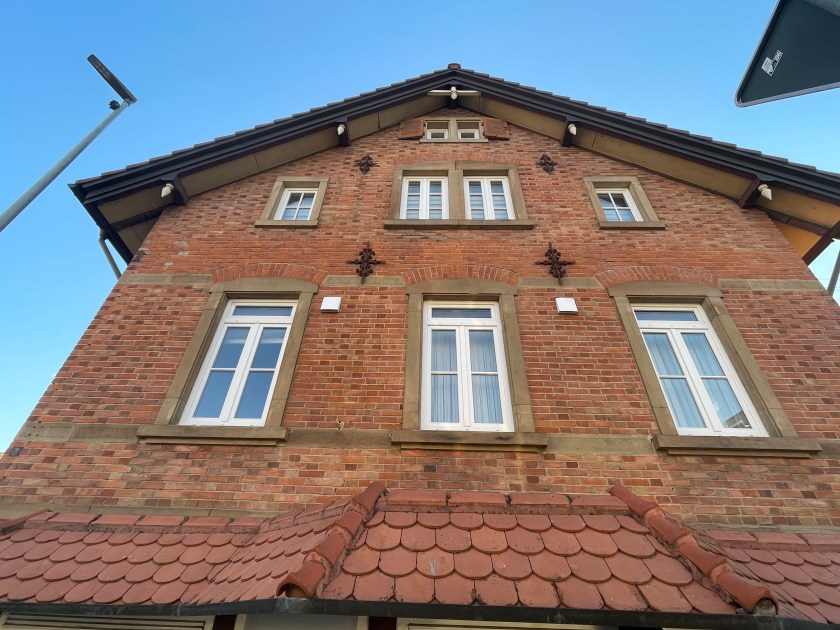
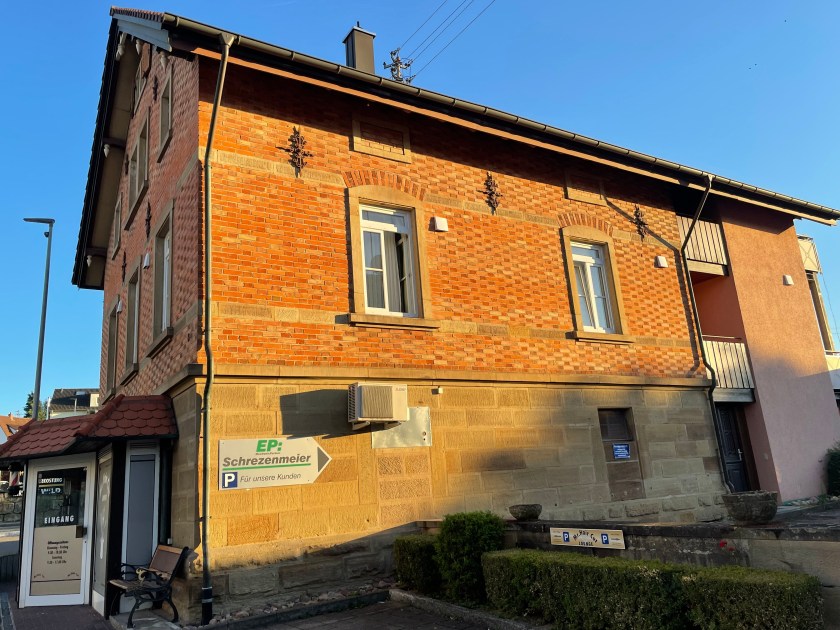
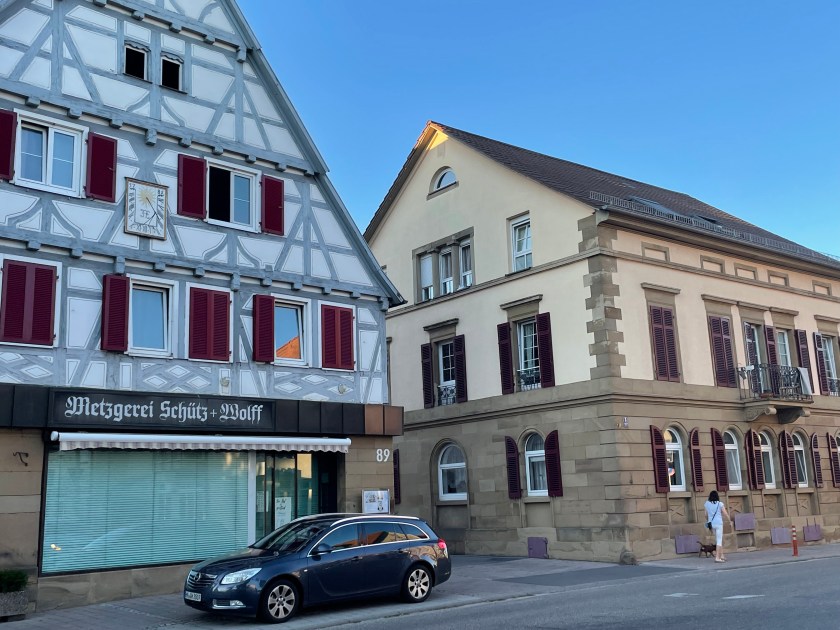
Maria married Richard Wacker on 8 April 1820 in Grossgartach.  In 1933, they acquired this home at the east end of Heilbronnerstrasse in Grossgartach and their two boys, Walter (1921-1943) and Heinz (1923-1945) were raised here.  Both boys died in the war.

Here is the history of the home:

Built in 1883 by Schultheiss Schott.

Acquired in 1933 by Richard Wacker.

Occupied in 1985 by the Wilhelm Schütz Family.

Here are photos of Onkel Richard’s home taken today:

Below are photos I took of the home in 2009:

On the Street Where they Lived –Heilbronnerstrasse in Grossgartach

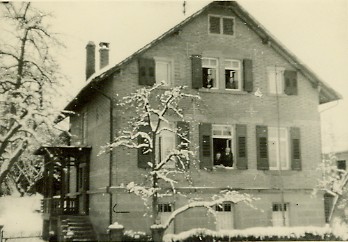
Above is a photo I took in 2009 of my Grandpa Rudolf’s house (center house with shutters).  Below is my Grandma Elsa’s house across the street, also taken in 2009.

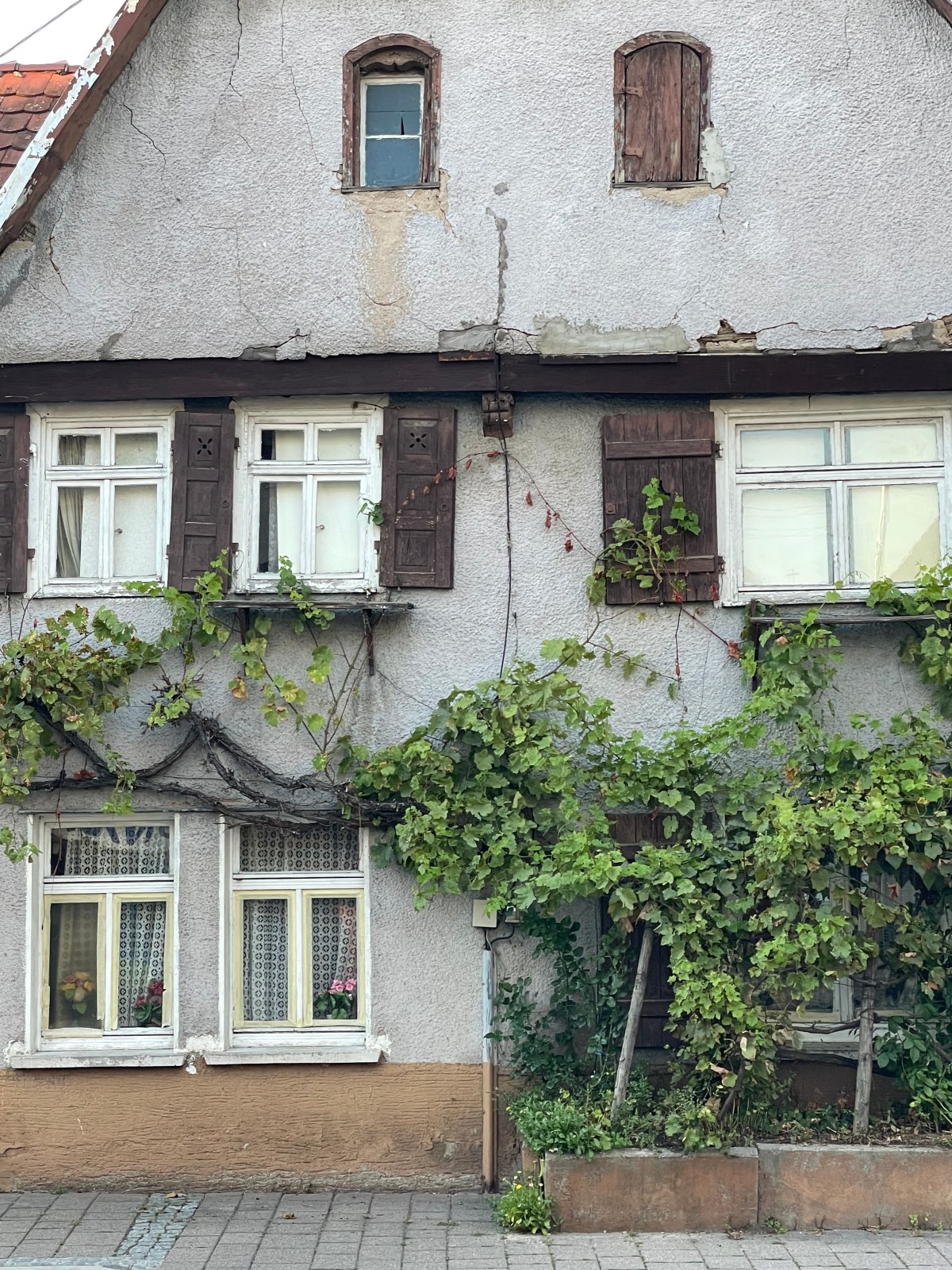
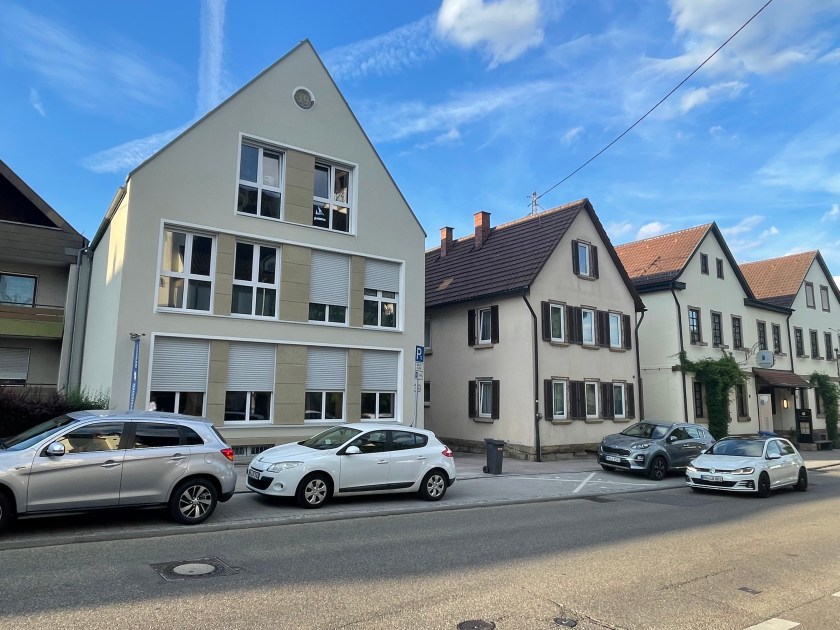
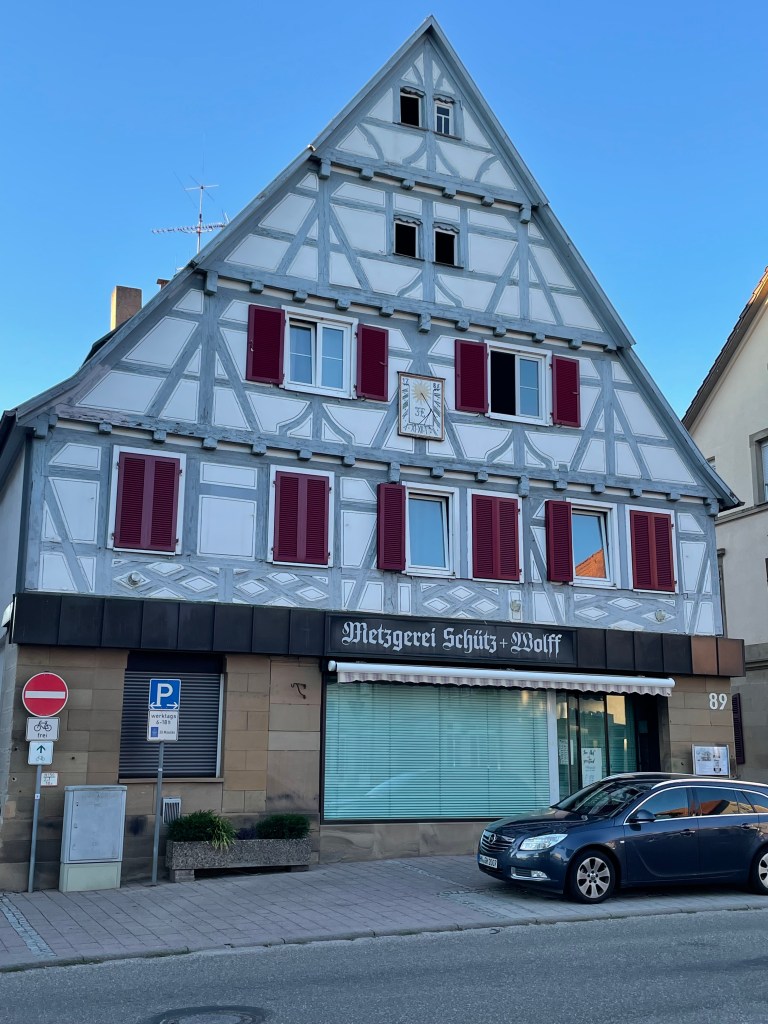
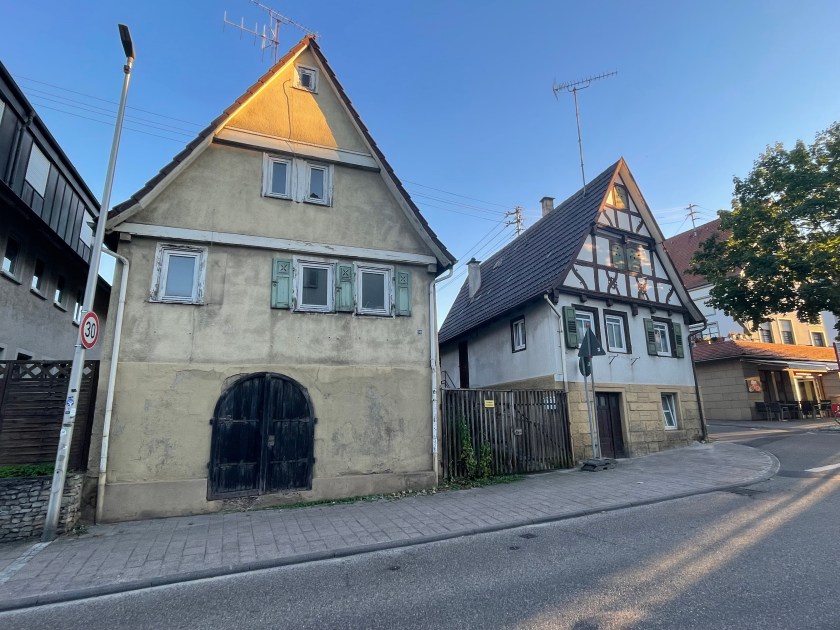
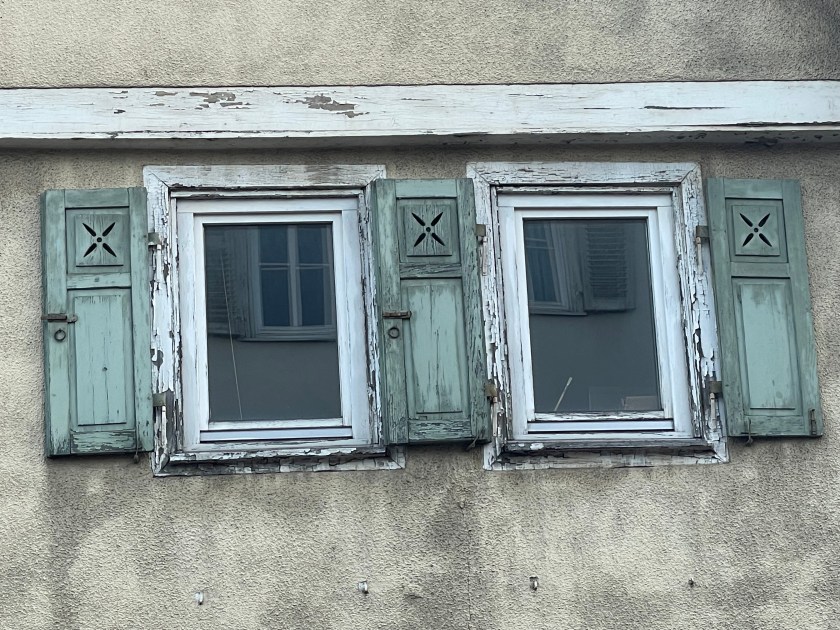
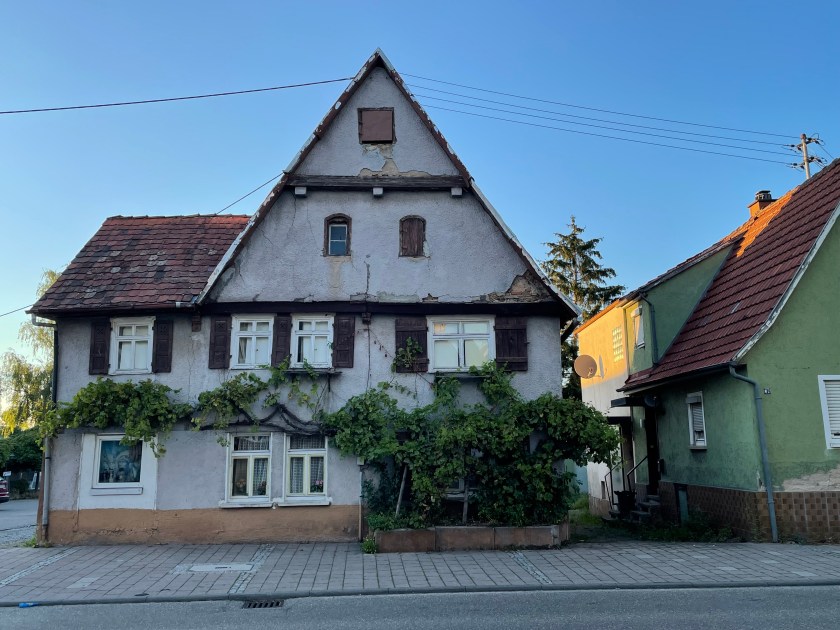
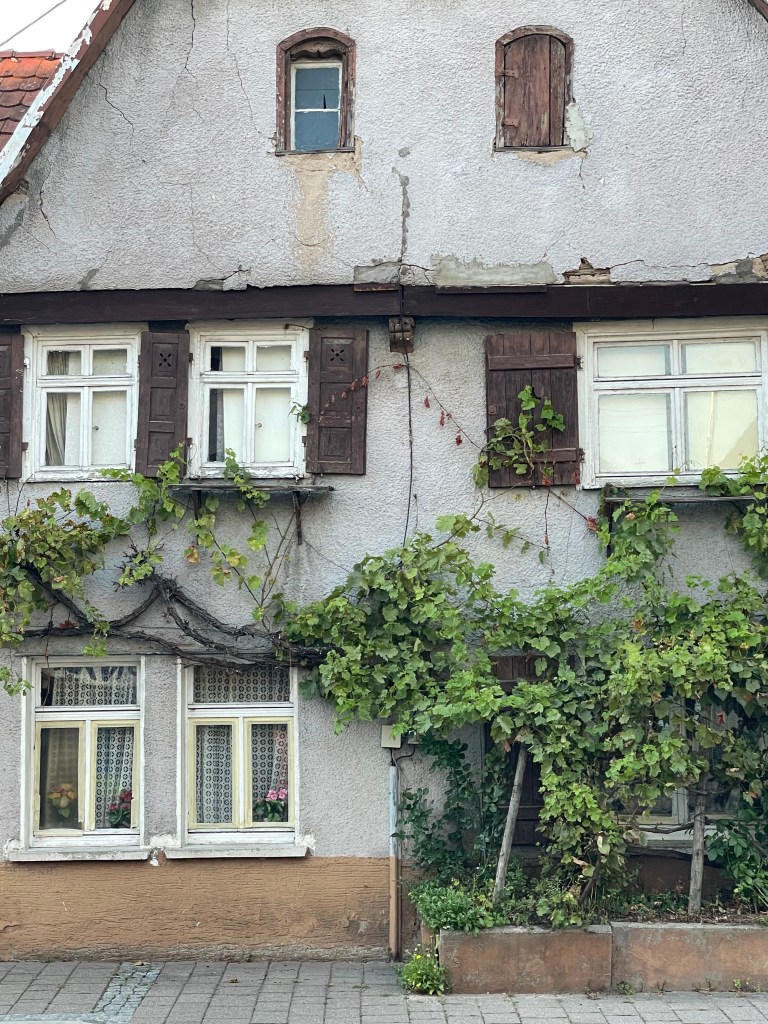
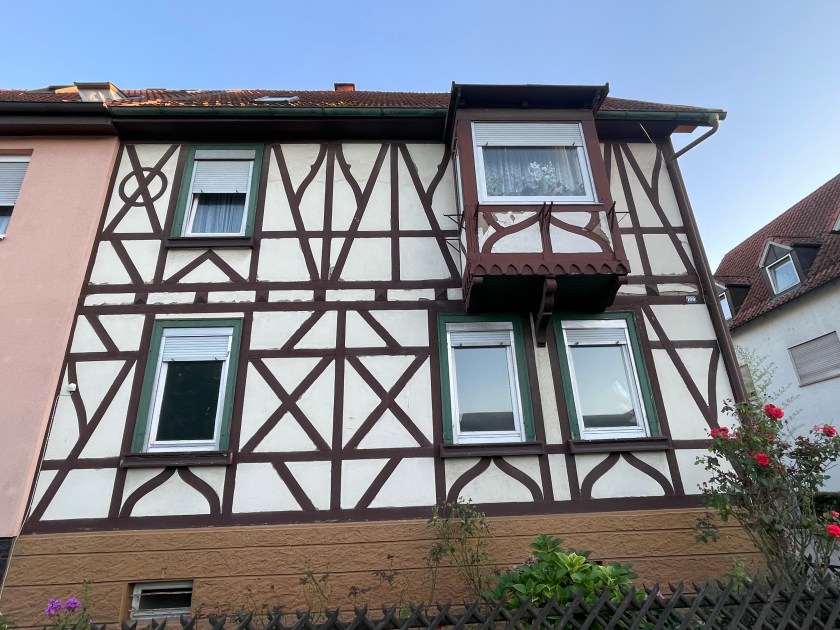
This evening we walked up and down Heilbronnerstrasse and I took photos of some of the homes that were old enough to have been here when Grandma and Grandpa grew up in the early 1900s.  These are the homes where their neighbors and friends lived.

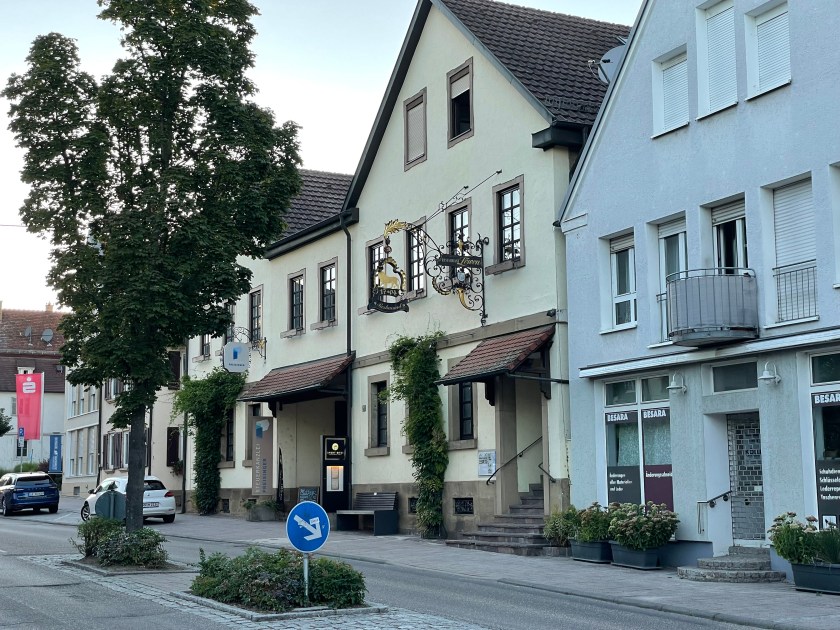
These are the homes on the street where they lived.
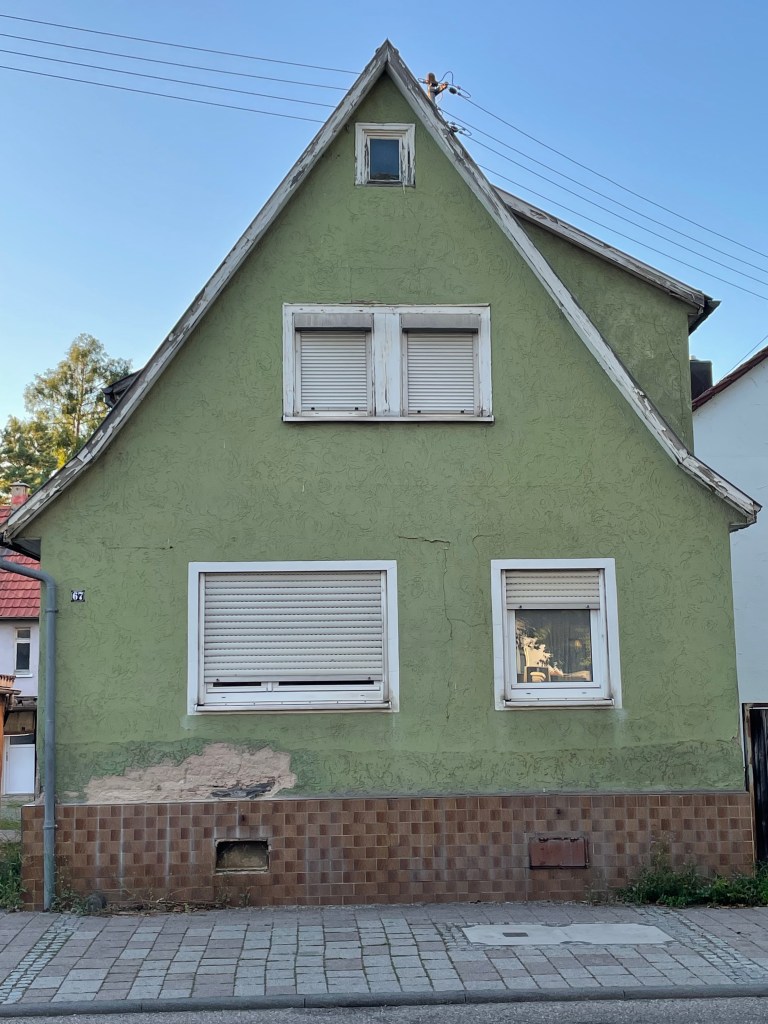
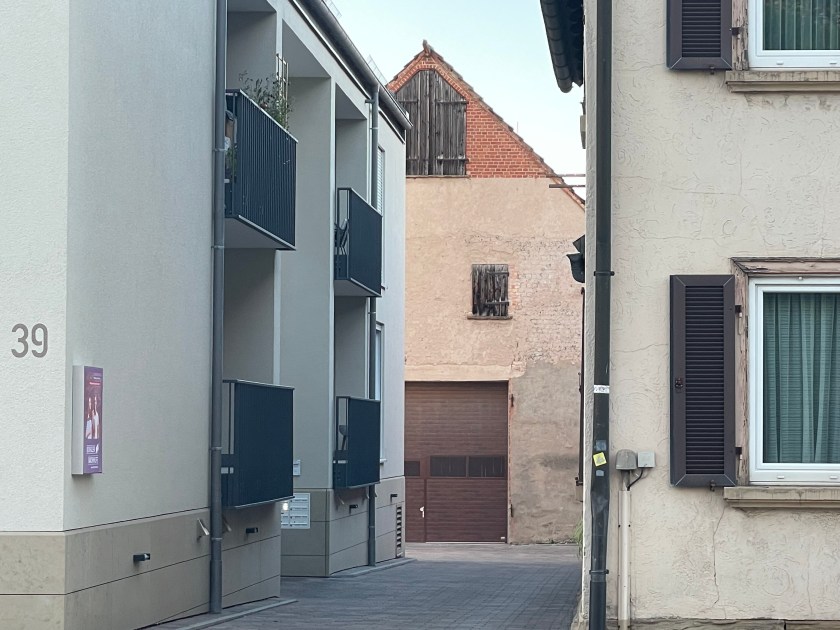
Below on the left is the new apartment building that now stands where Grandpa’s home stood.

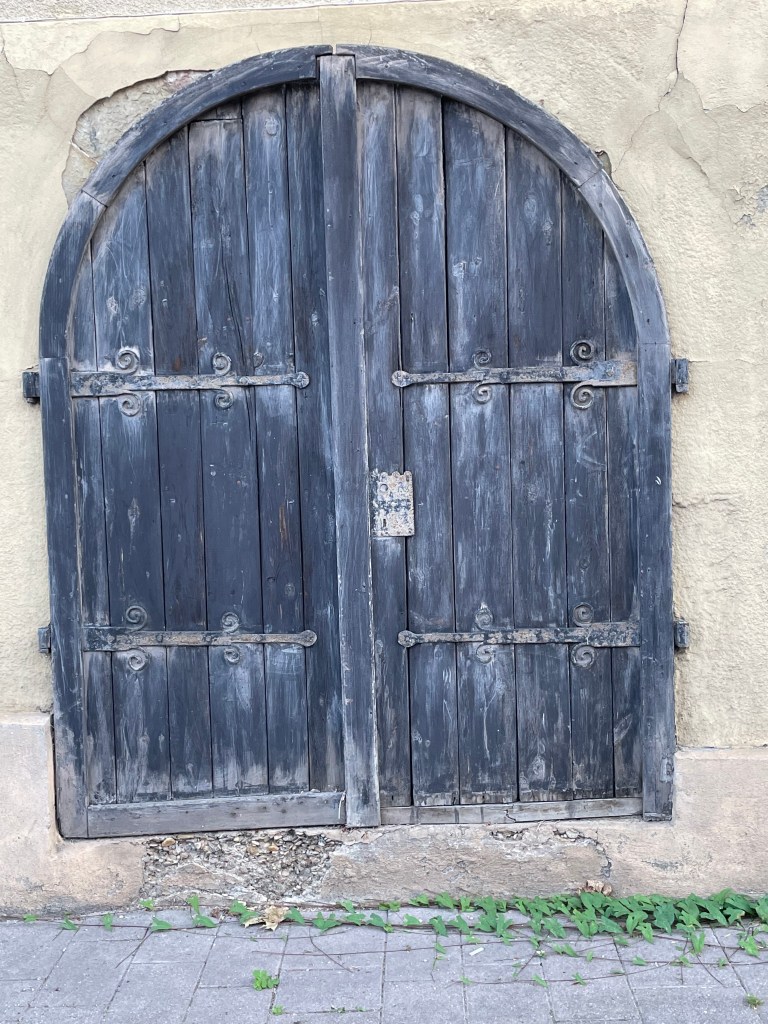
Grandpa’s barn behind the new building:


This home is where Grandpa’s sister, Marie Wacker lived with her husband, Richard.  It’s on the west end of Heilbronner Strasse.
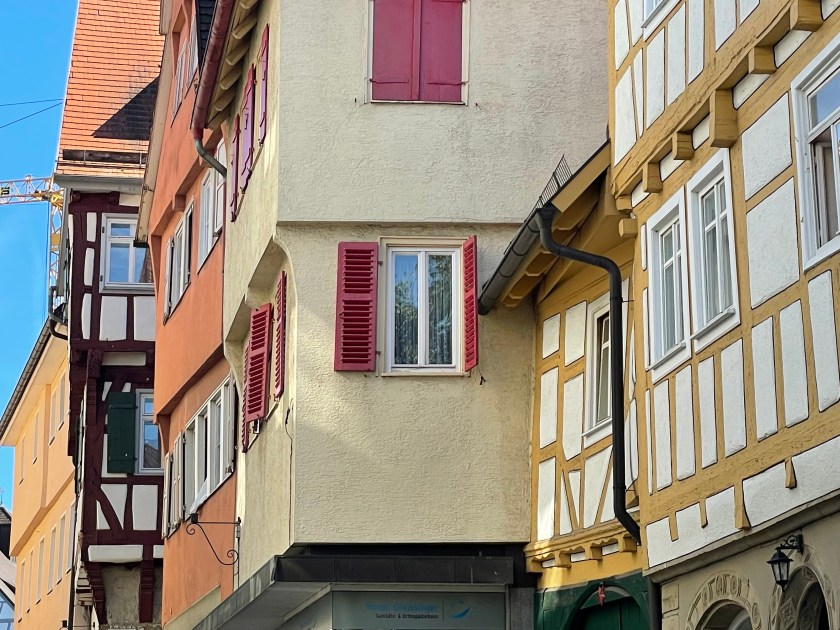
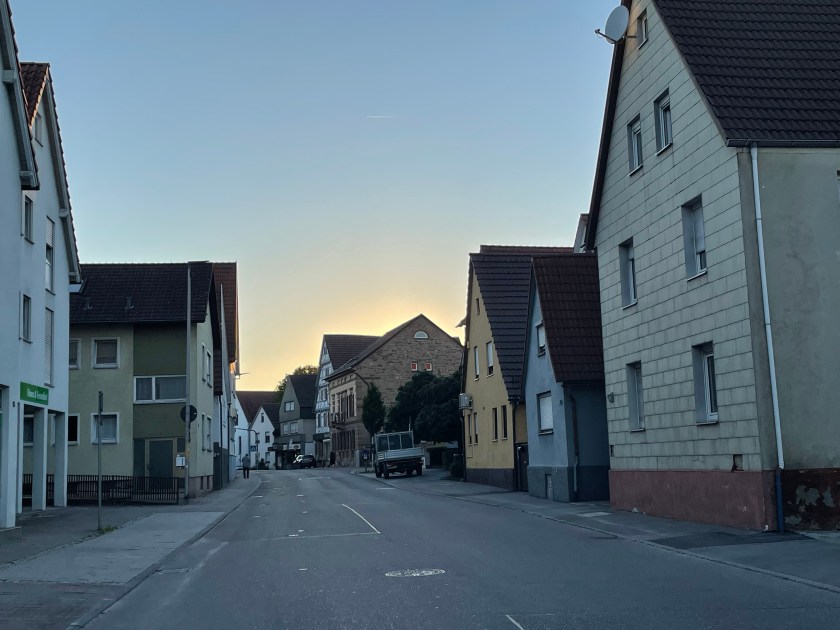
Looking east to west along Heilbronnerstrasse at the end of the day:

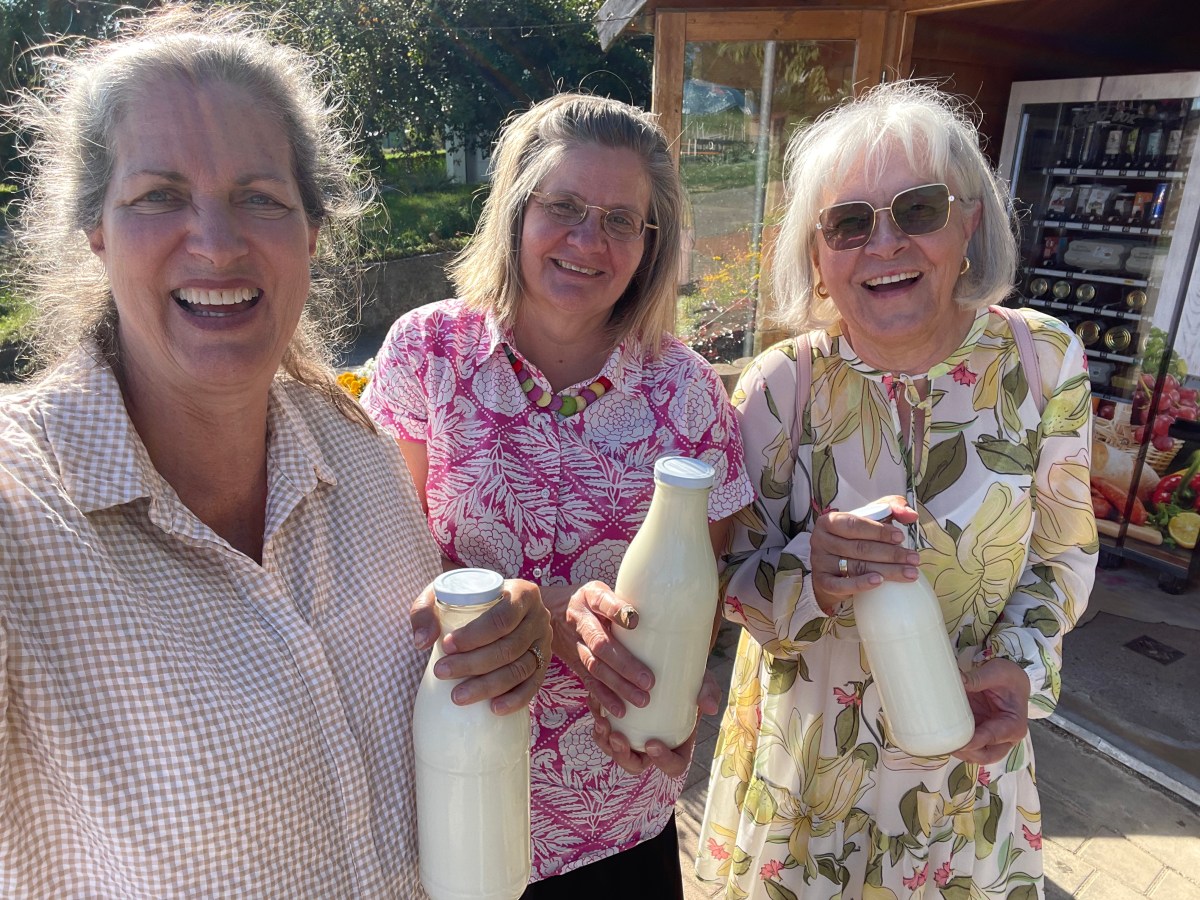
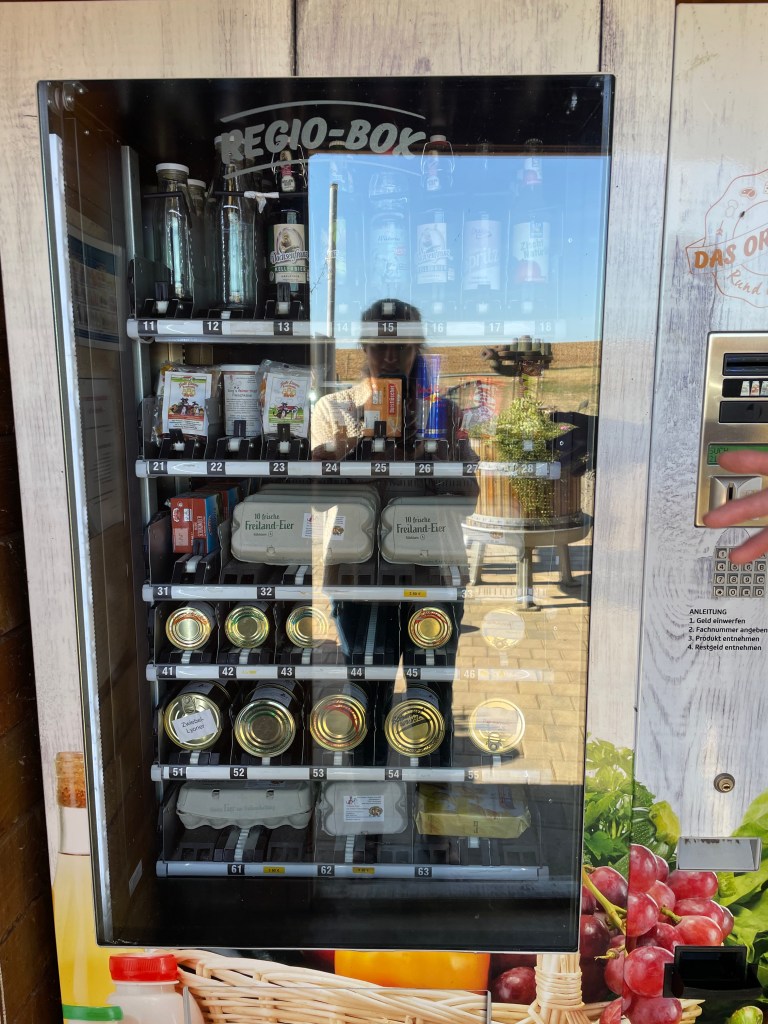
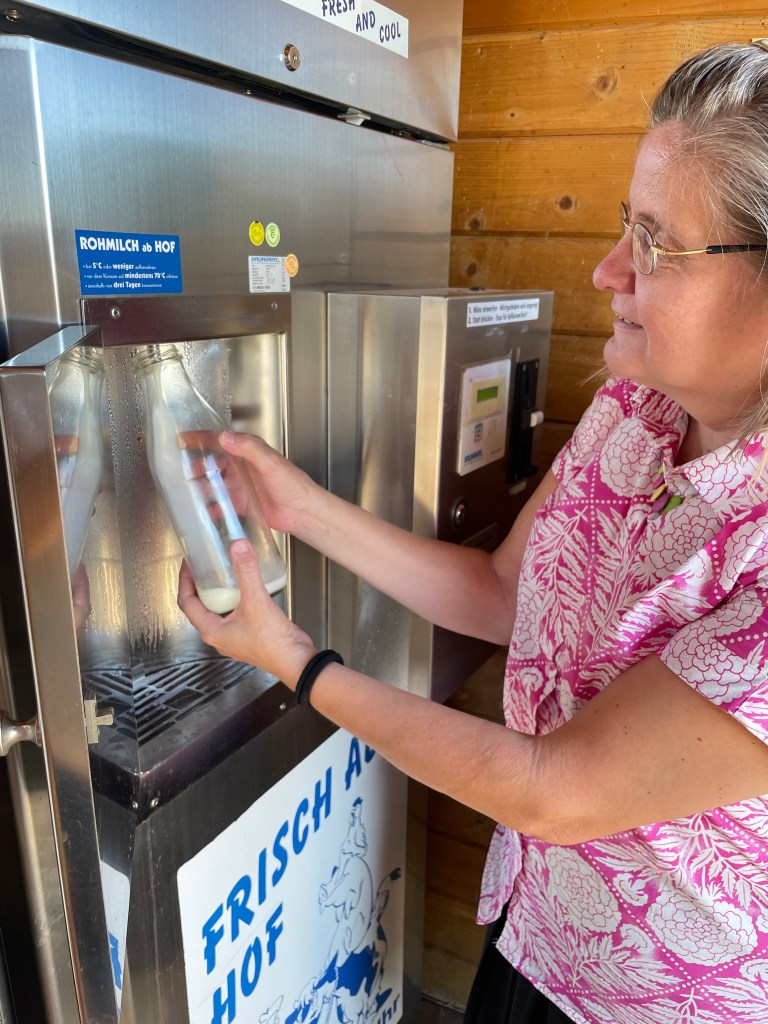
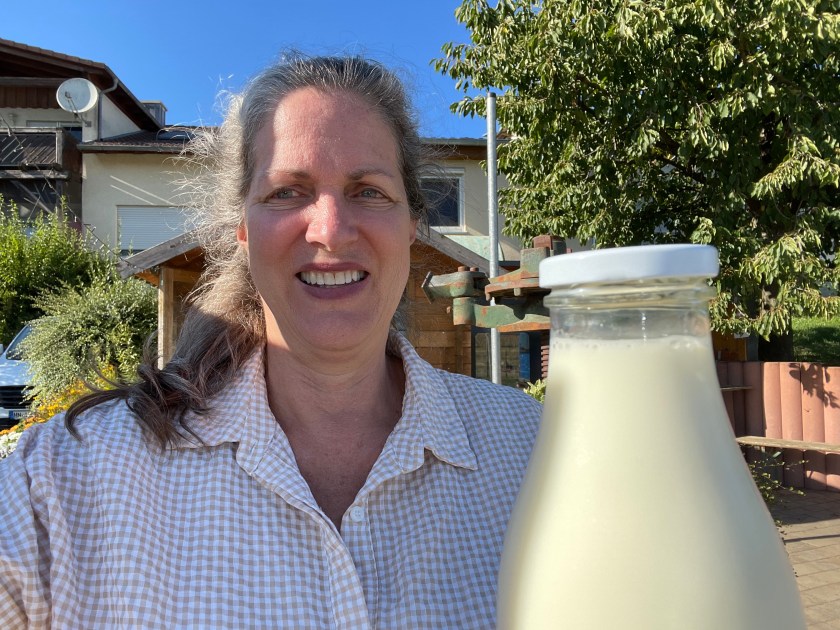
Fresh from the farm–a milk vending machine!

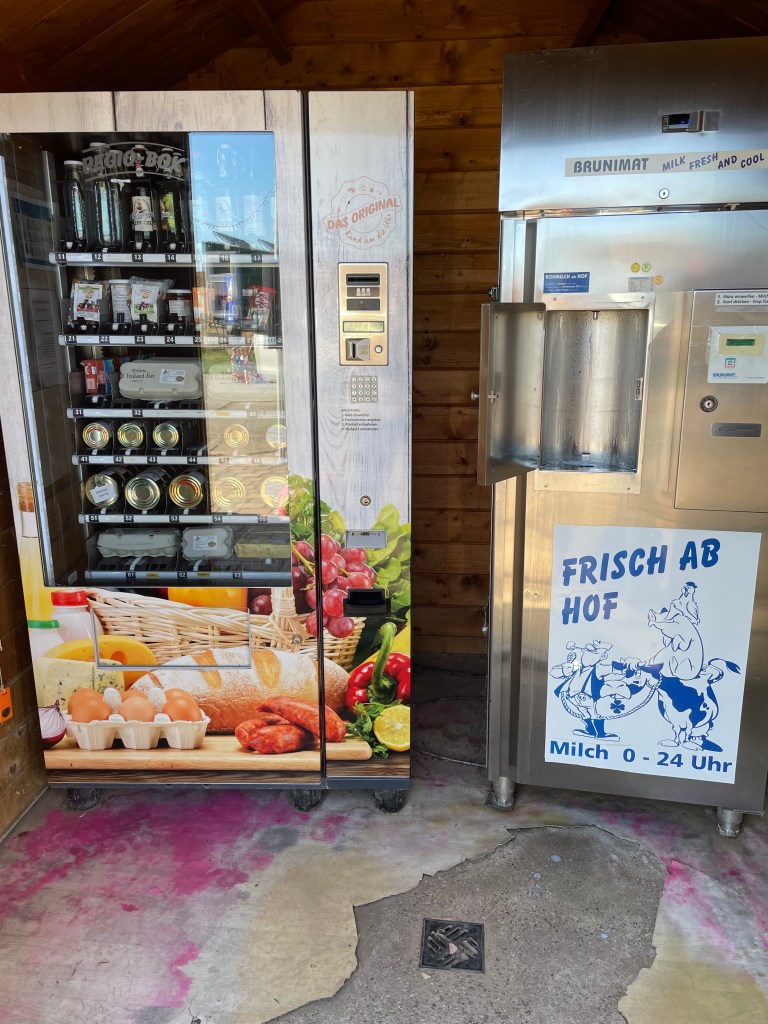
On the way back from Brackenheim, we stopped at a family dairy farm where there was a Milch Tankstelle (milk vending machine) by the road.  The word for gas station is “Tankstelle.”

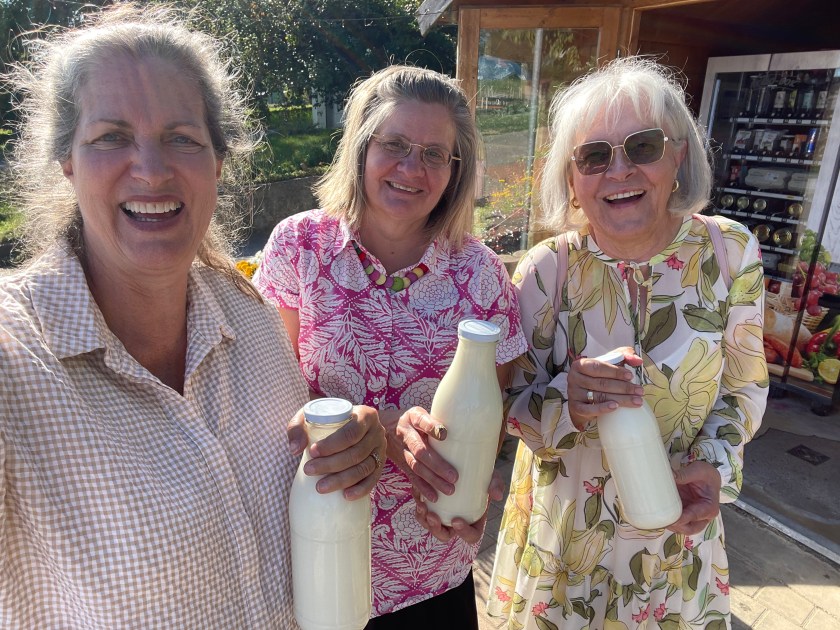
In a little covered building there was a vending machine with things like glass milk bottles, eggs, farm products, and a few canned goods. For 1 Euro you can buy an empty liter bottle for milk.  Next to it is a milk dispenser with ice cold fresh milk. You can fill your bottle for another Euro. It was fun and it’s open 24/7.

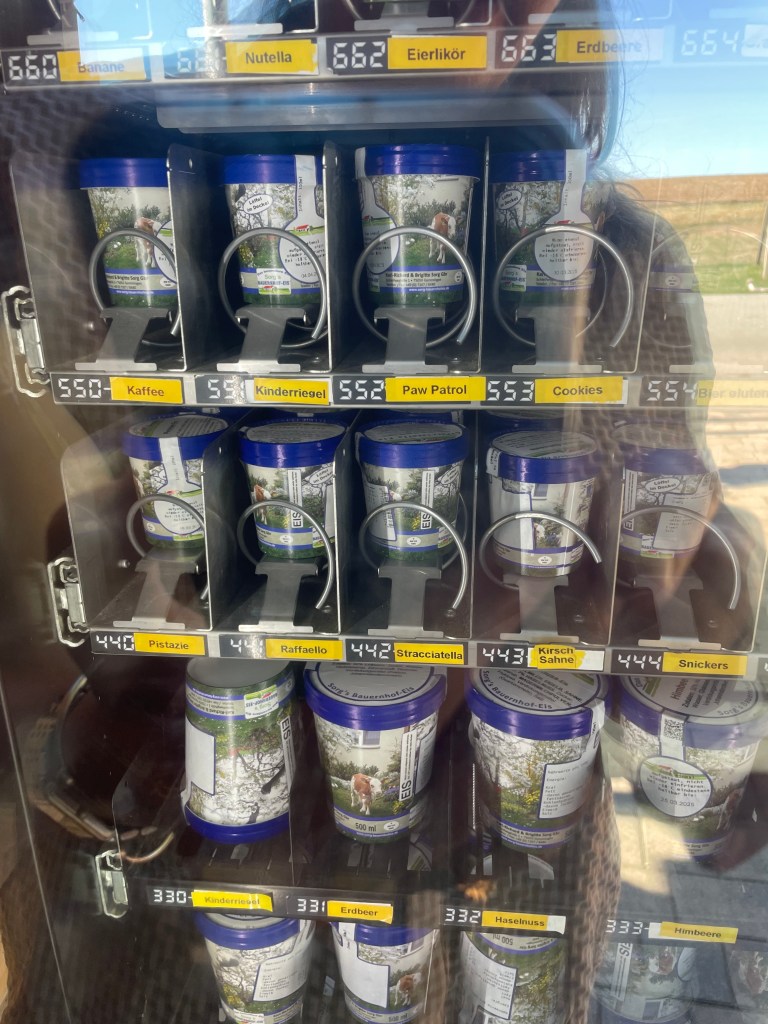
Next to it was an ice cream vending machine with single serve cups, and 2 larger sizes of their homemade ice creams.

I am loving this farming world and being with my cousins!

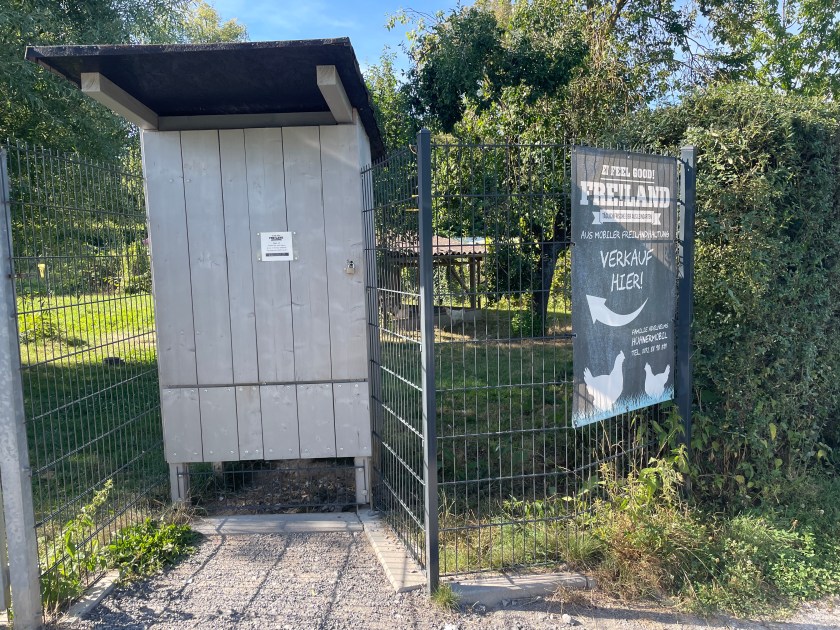
On Sunday, we passed by this egg vending machine, but it was closed on Sunday.  It’s the same idea–come get your eggs, any time, all week long!

Brackenheim, an Ancestral Town

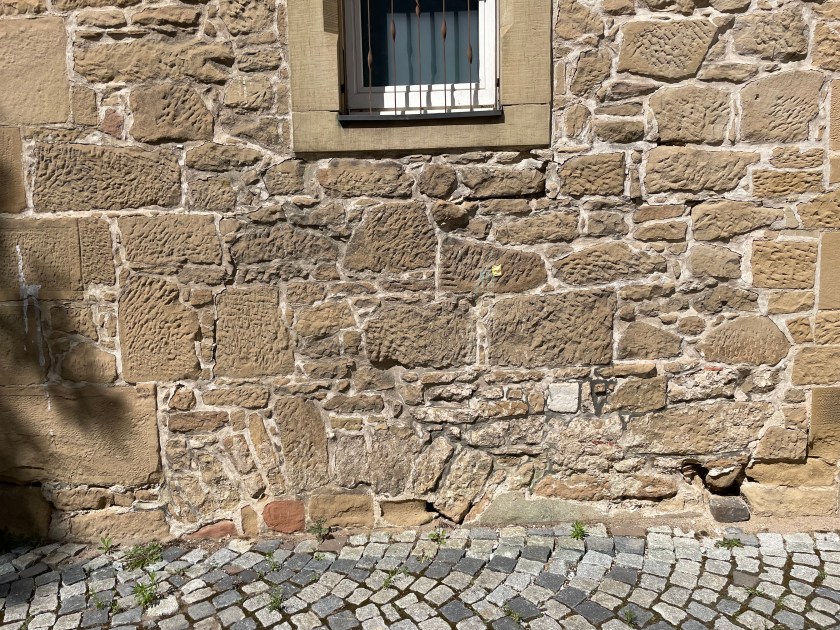
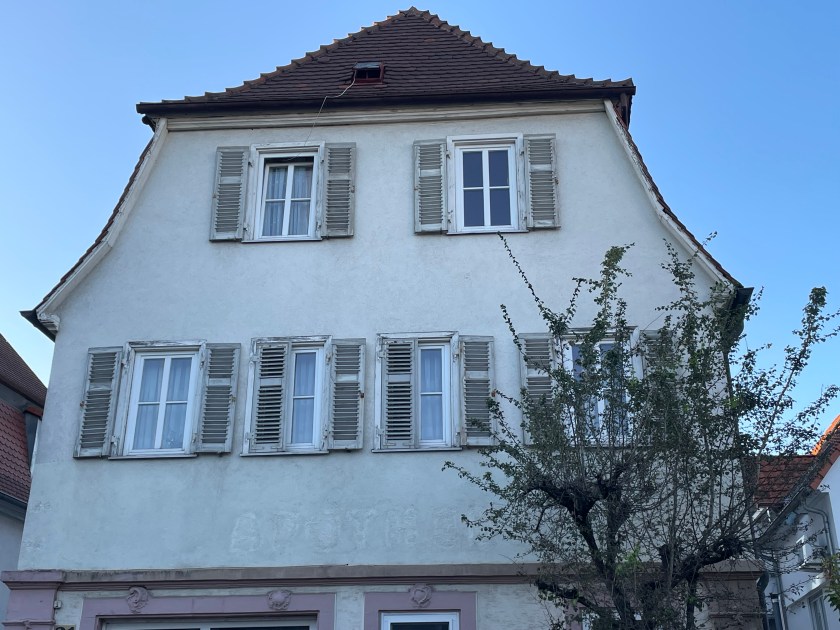
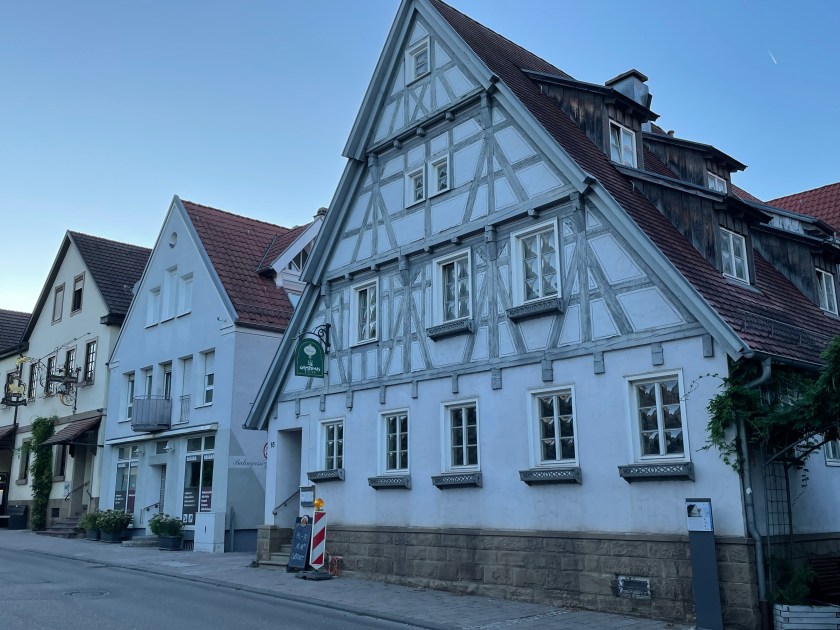
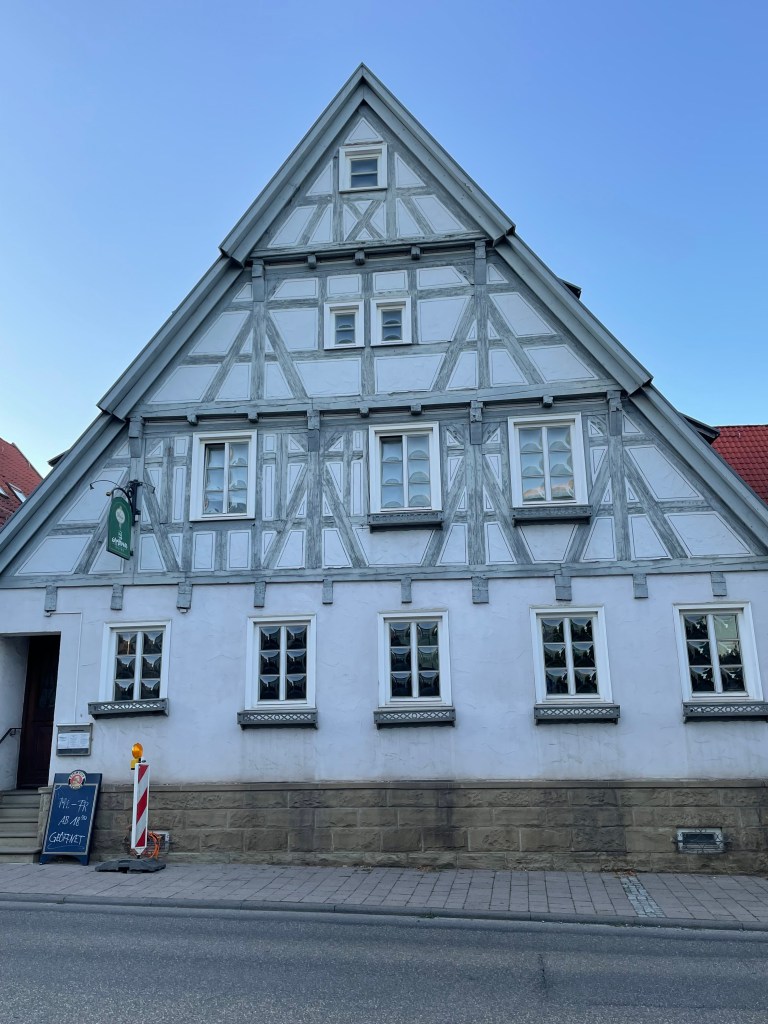
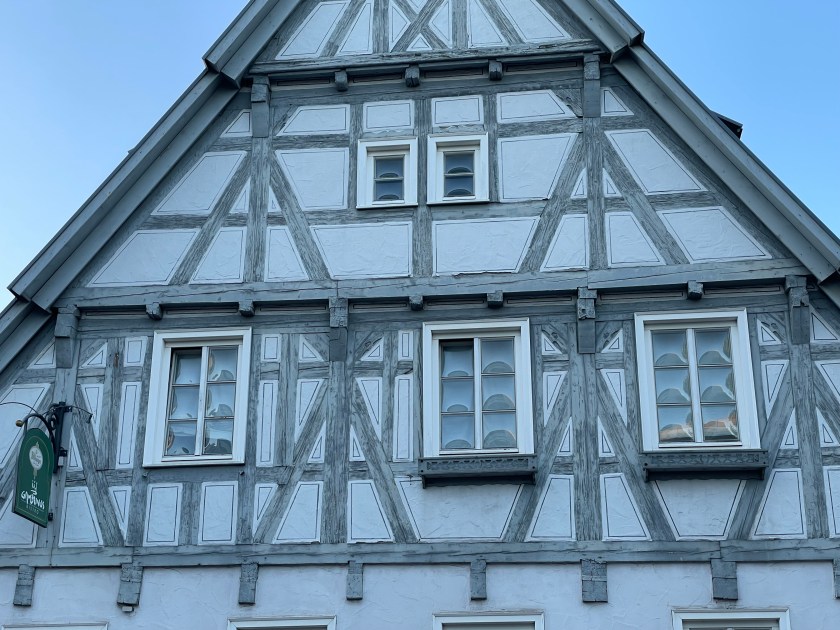
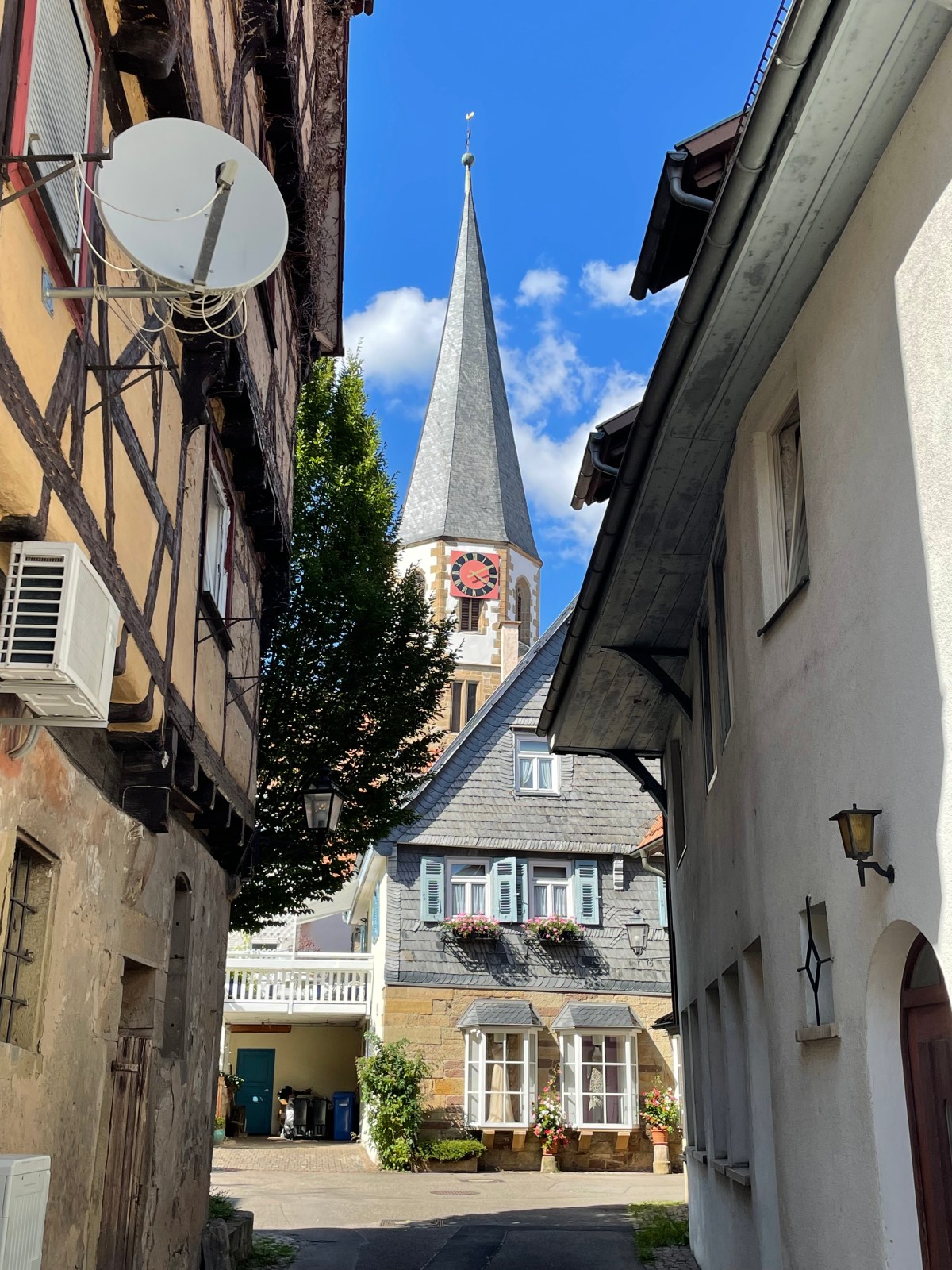
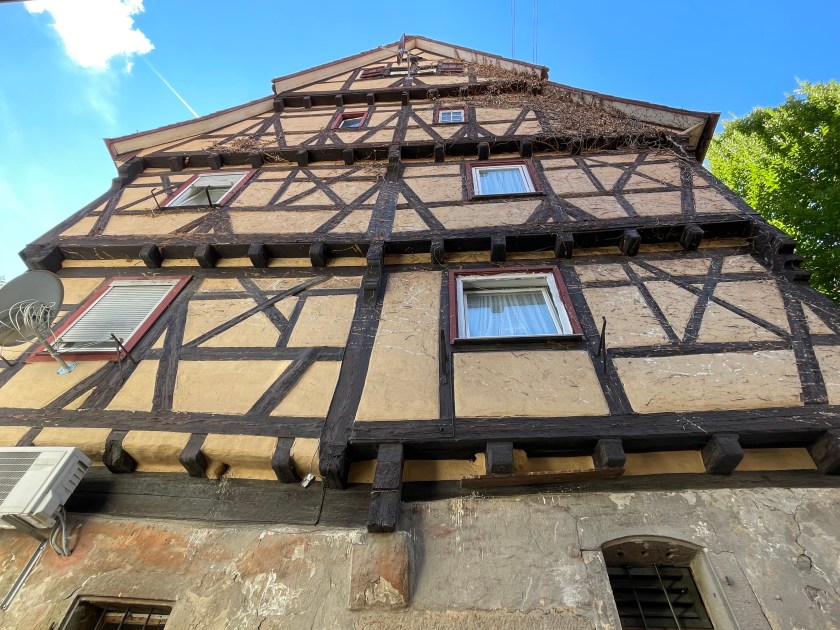
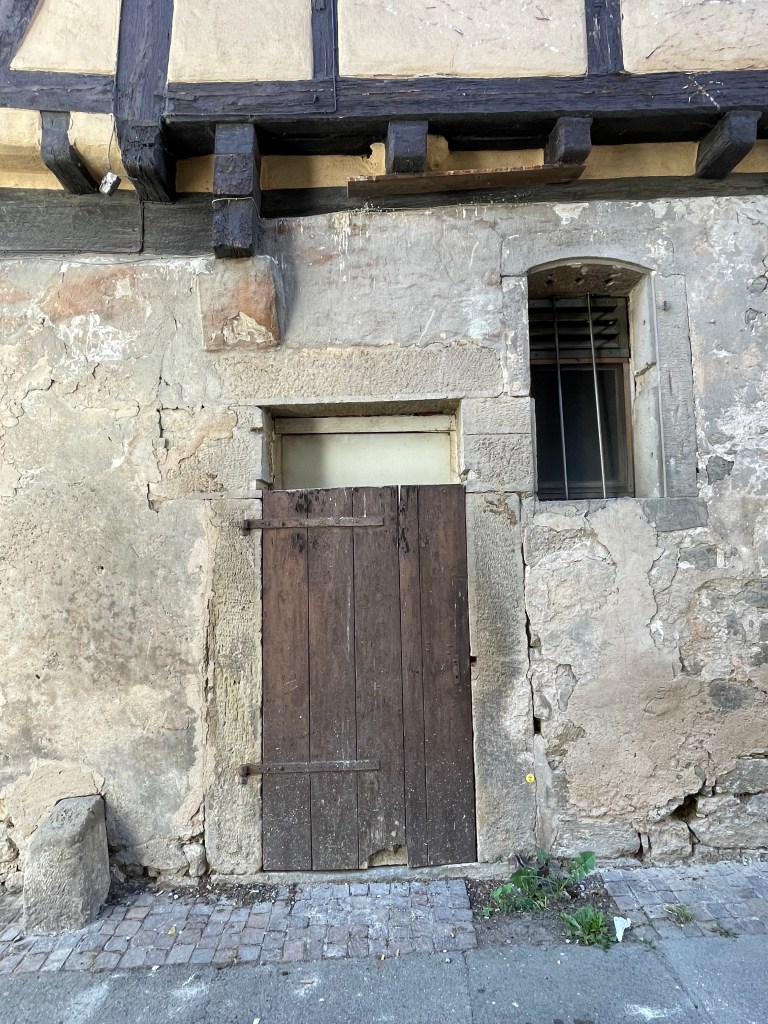
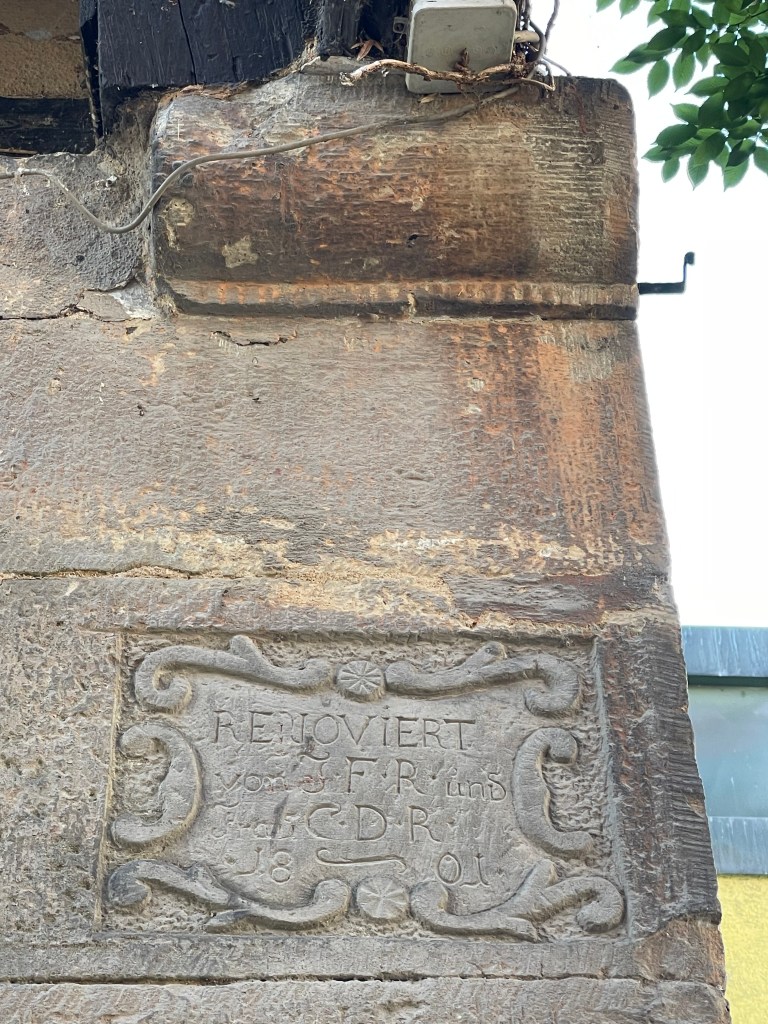
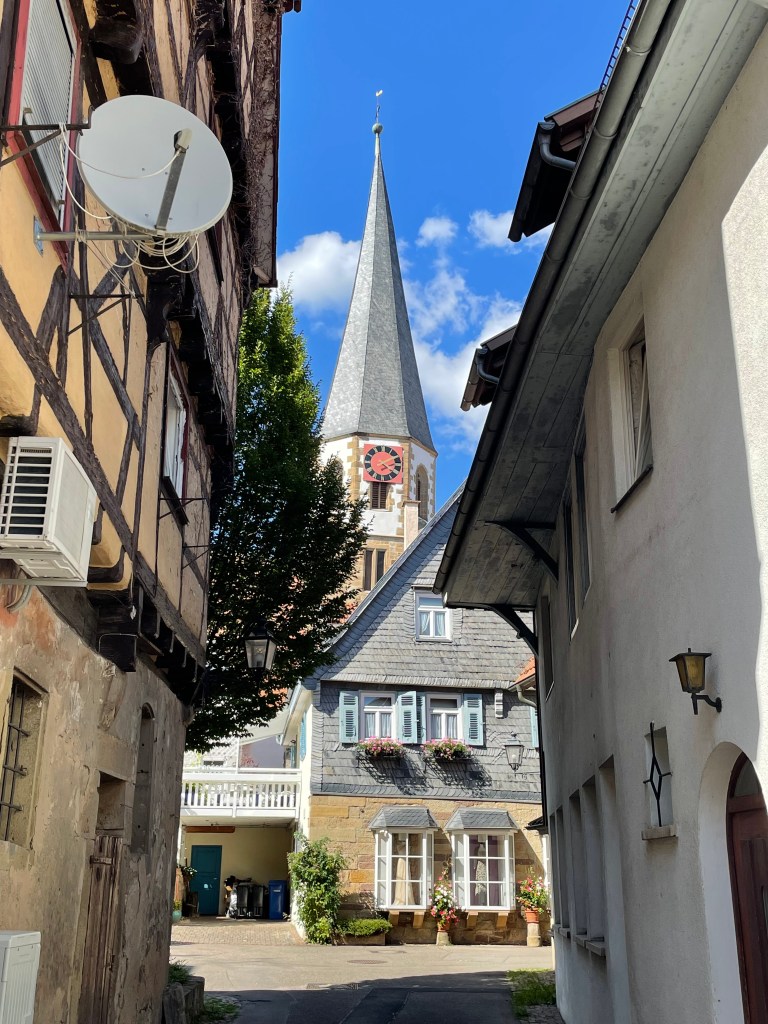
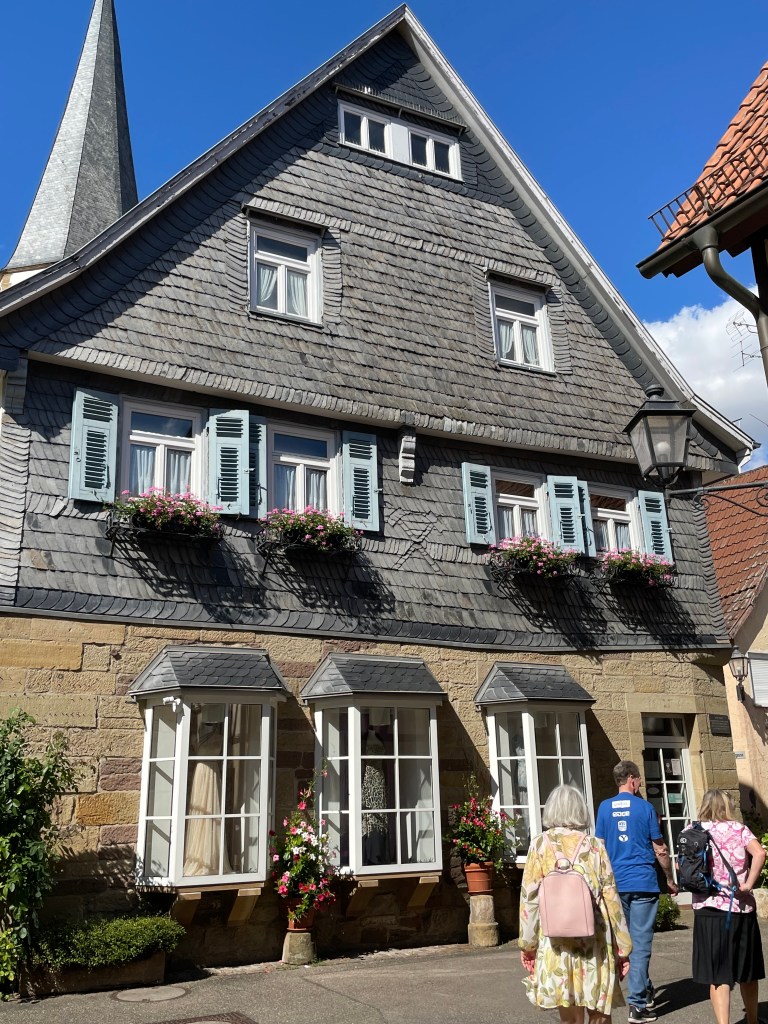
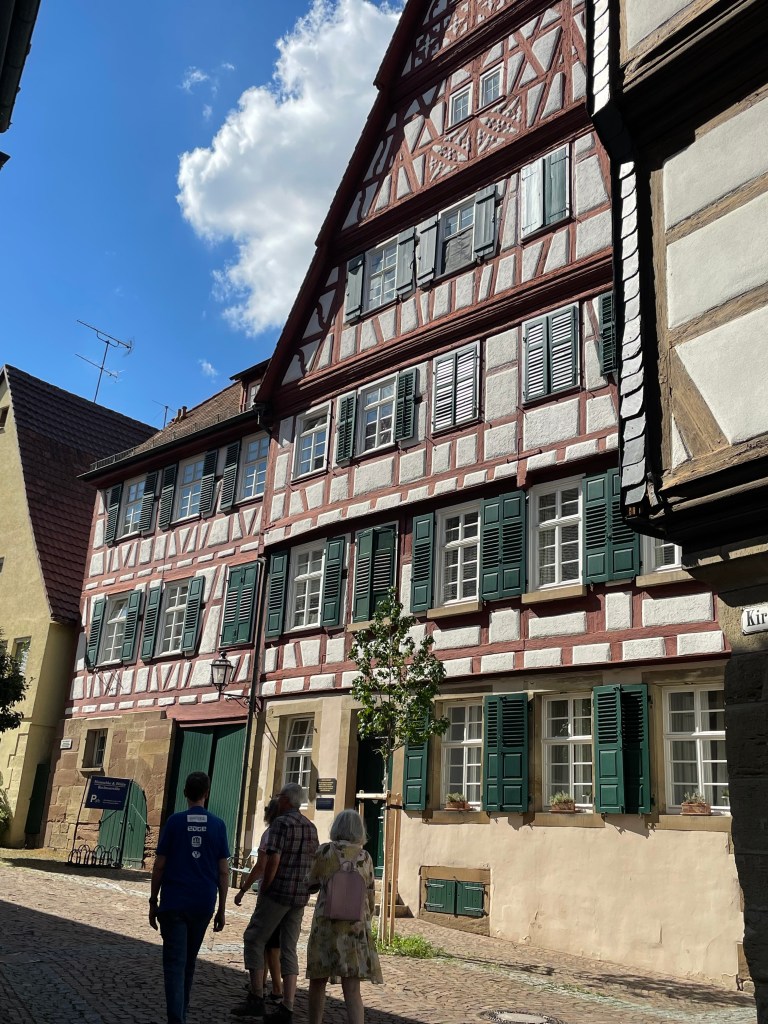
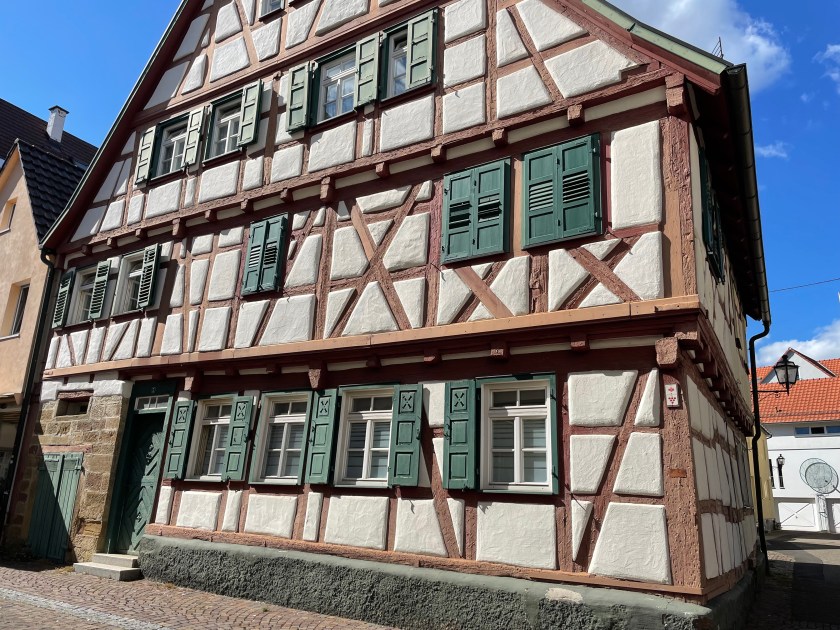
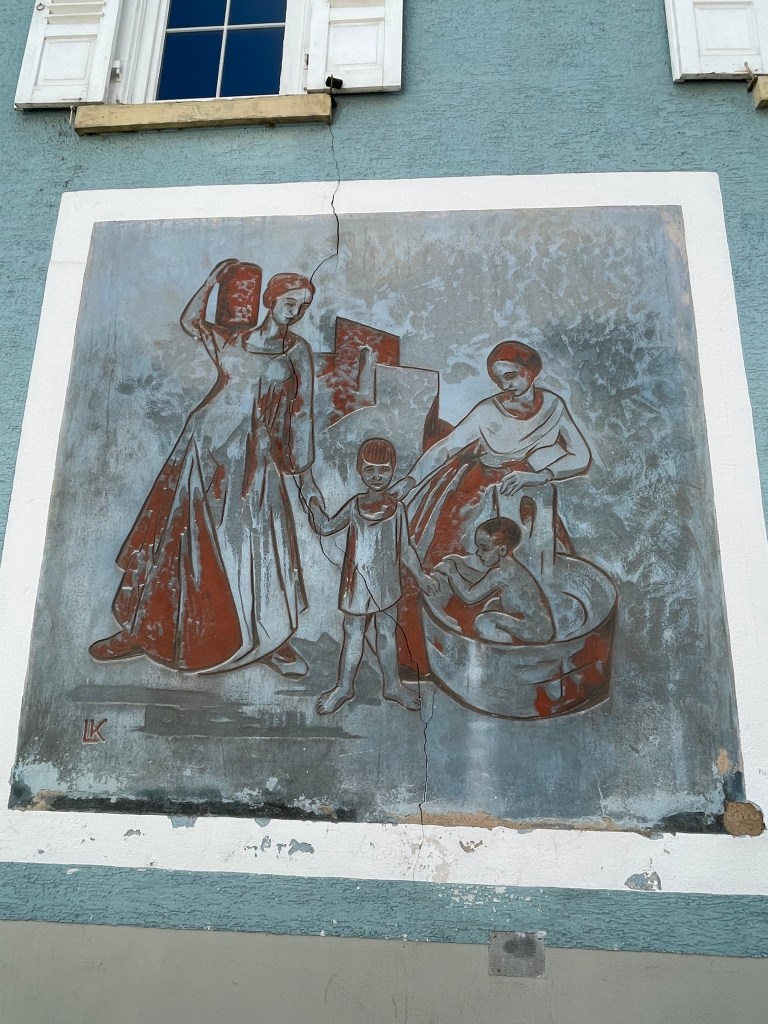
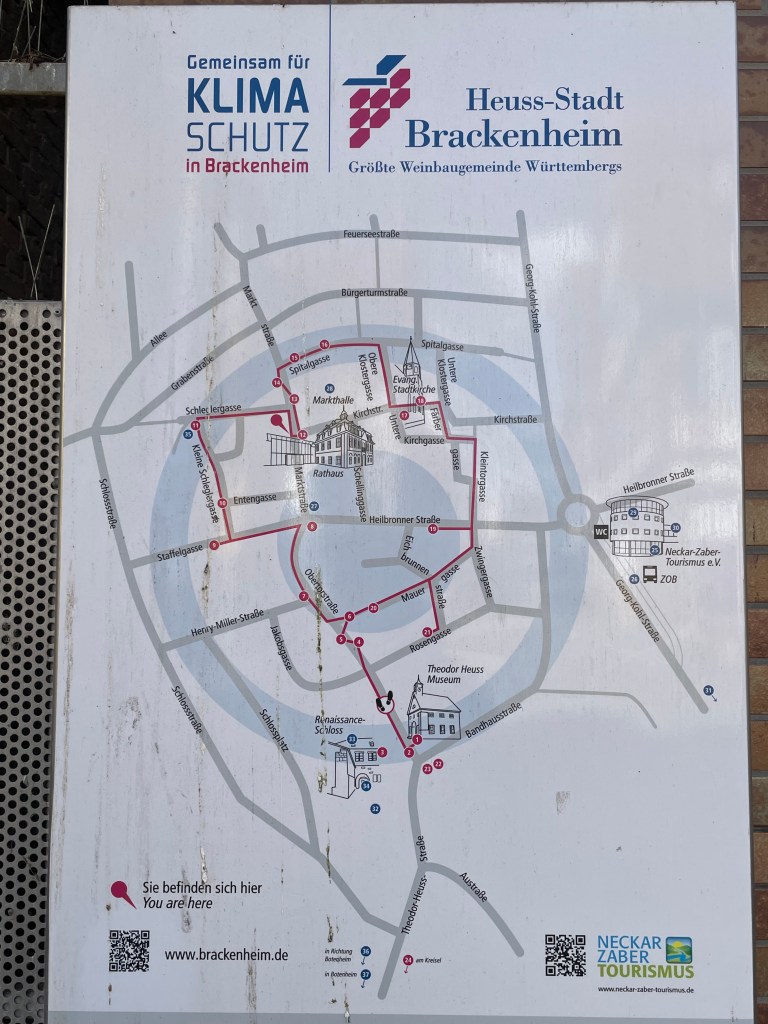
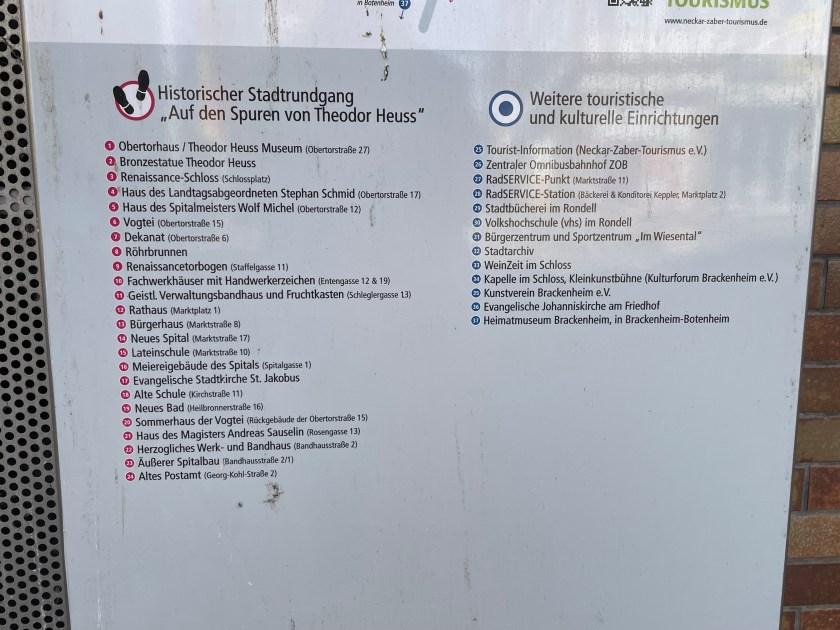
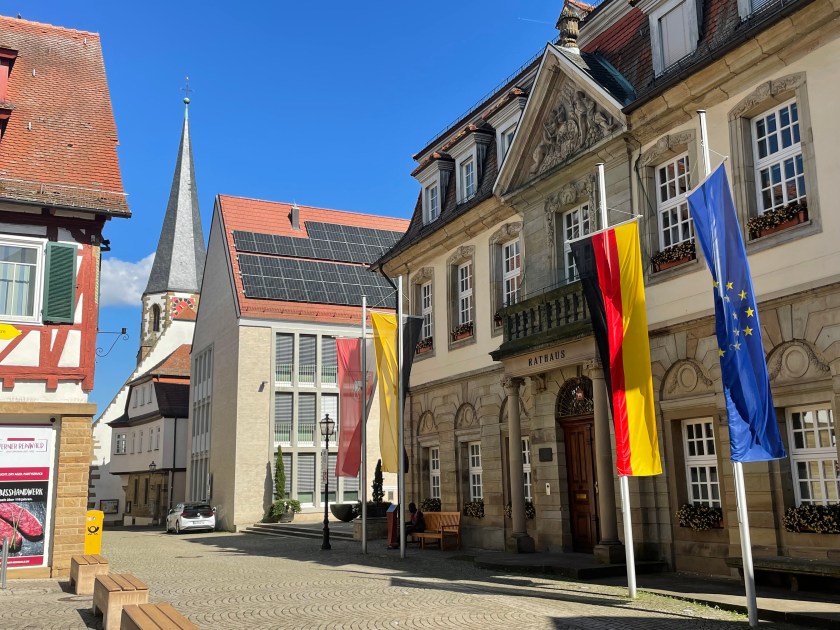
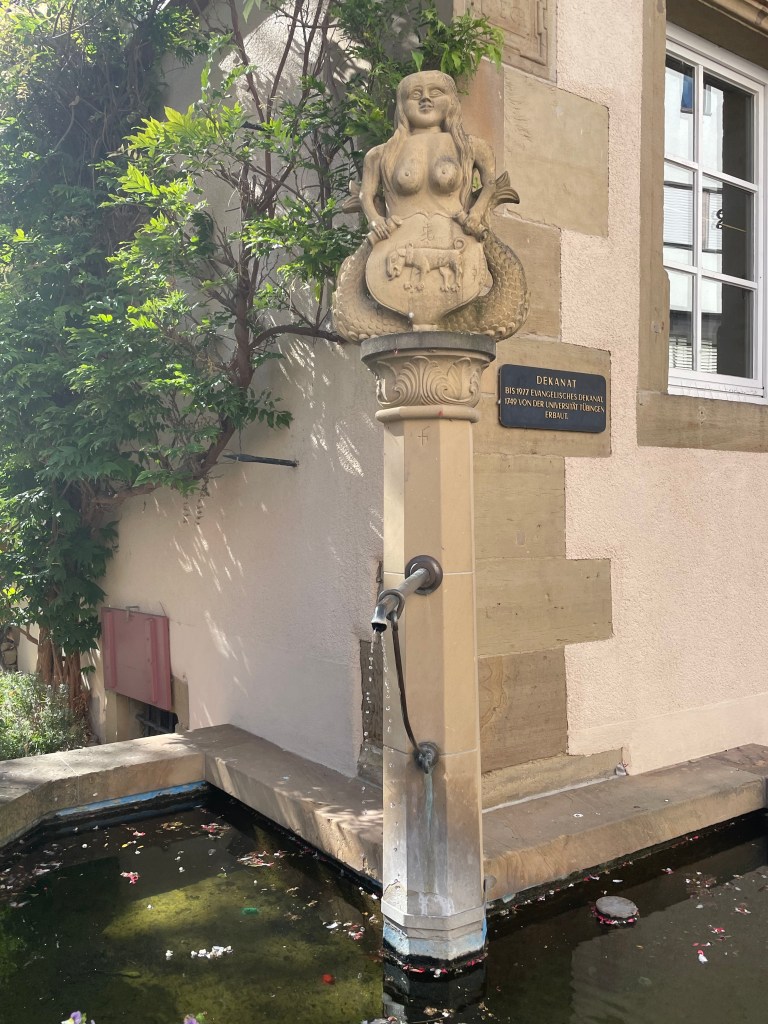
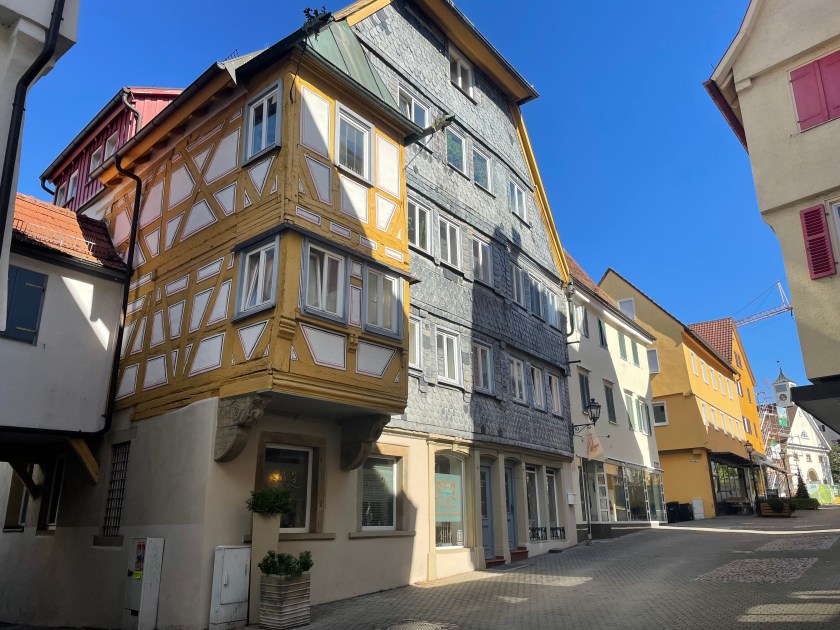
After visiting the old Brackenheim churches, we wandered around the old part of town, getting a feel for this place where my Laemmlen family comes from.  I try to photograph things my people would have seen when they lived here.  In today’s world, the old is mixed with the new in most towns, especially after WWII, but here is a look at some of the old:

Many homes in this area have the black or gray slate tile siding.

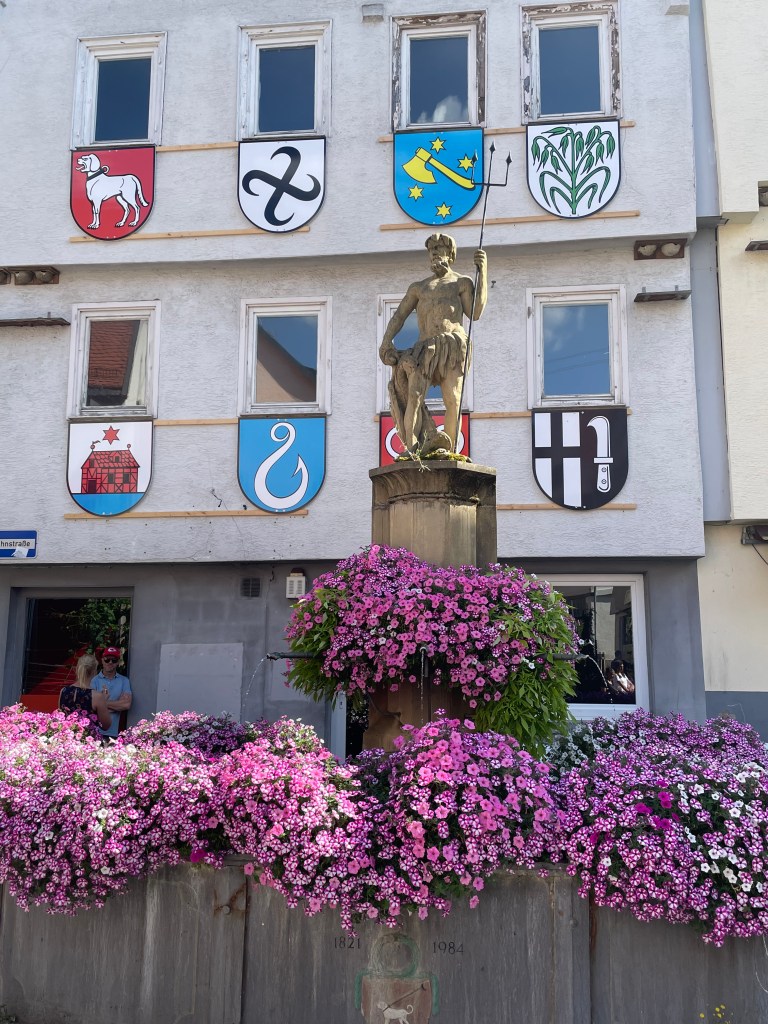
The Brackenheim coat of arms is the red one with the white dog.

Jutta’s friend, Elfrieda came with us today.  She is so kind, letting us stay in an apartment she rents.

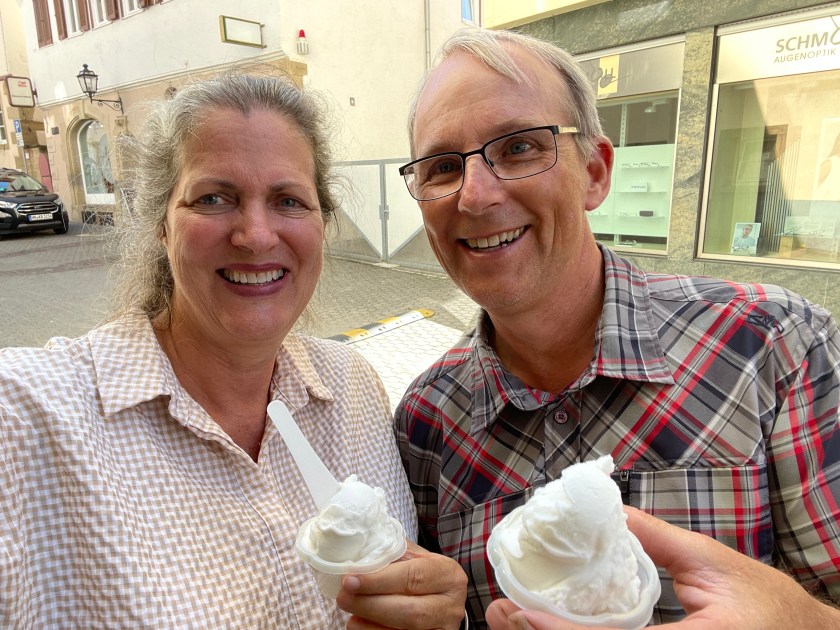
When Martin and I both picked the same flavor of gelatto (citrone, or lemon), we said to each other, “we must be related!”