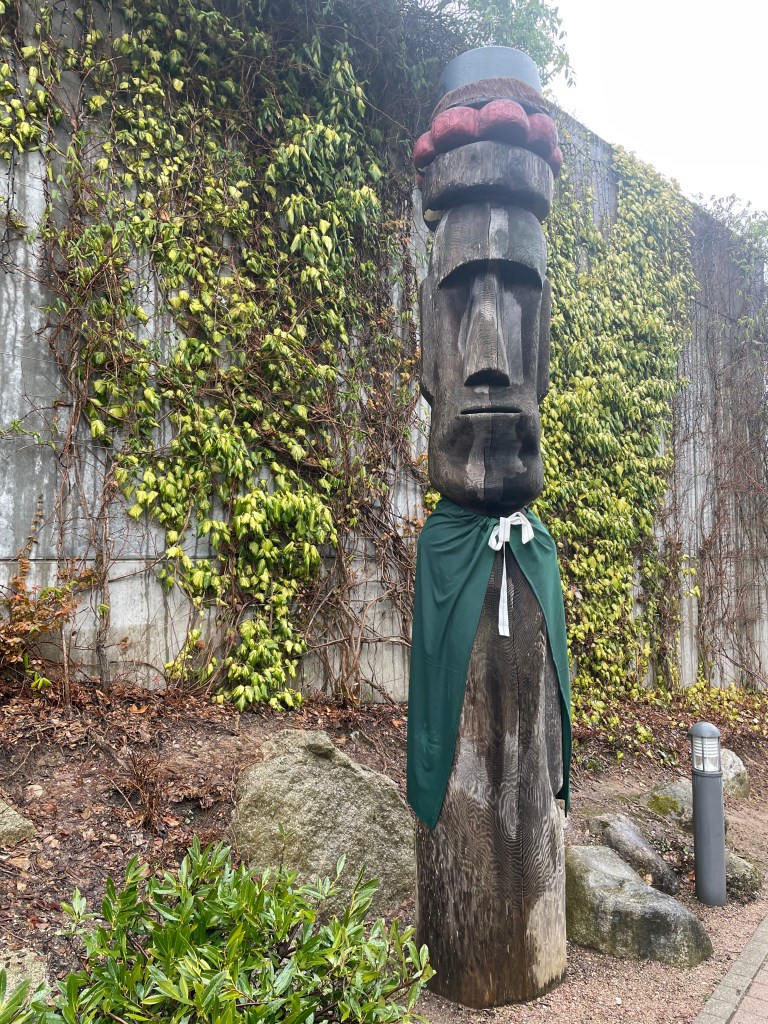
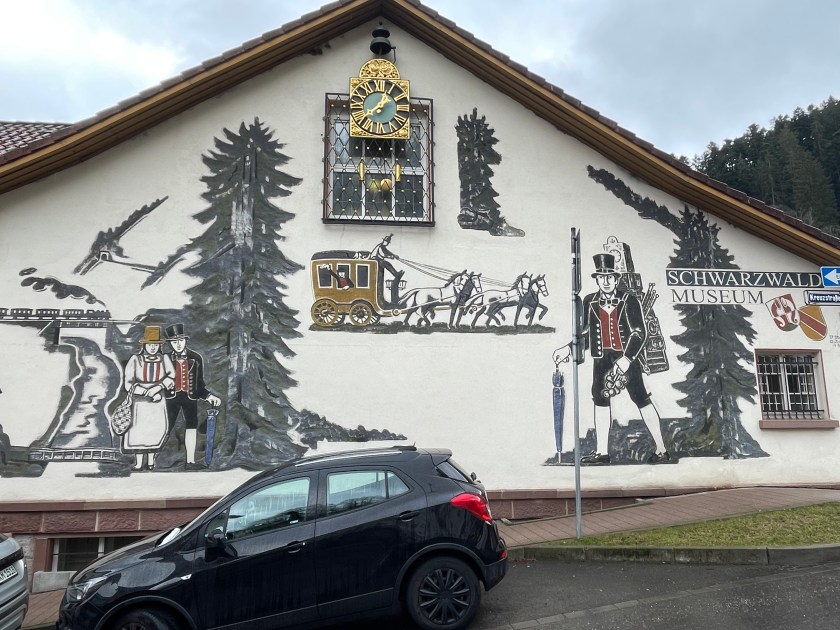
The Schwarzwald Museum in Triberg

We started at the Tourist Information office at 11:00 and checked on things to see and do here.  Because of winter and Fastnacht, not many places here were open right now (Winter Pause).  Many of the stores didn’t open at all today.  A few of the tourist shops were open, but most of the wood carving stores were closed.

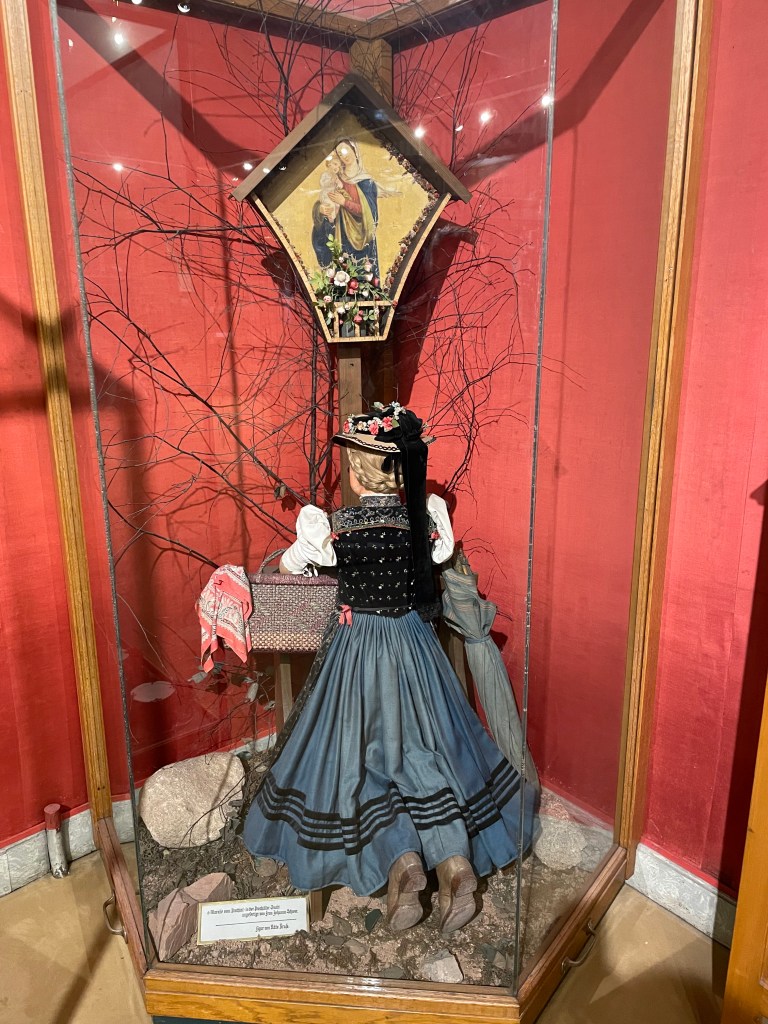
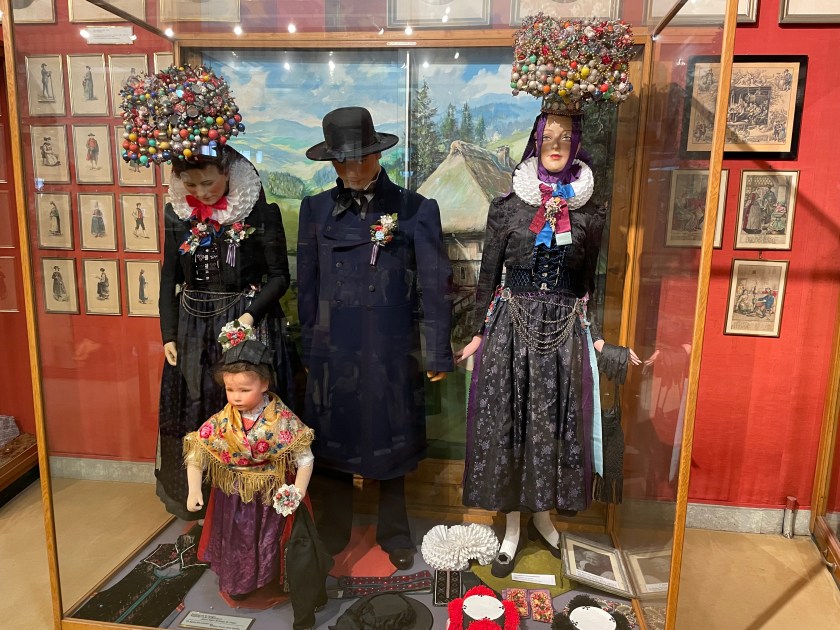
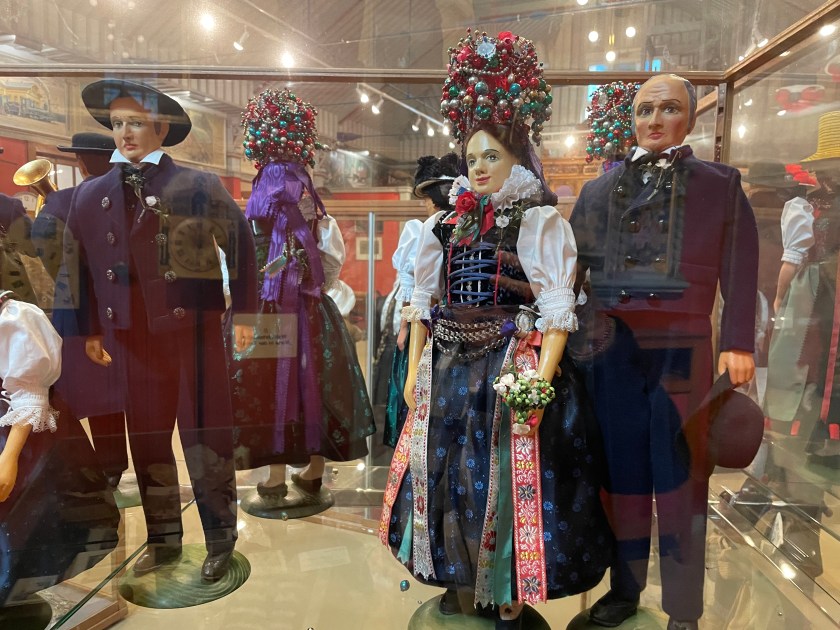
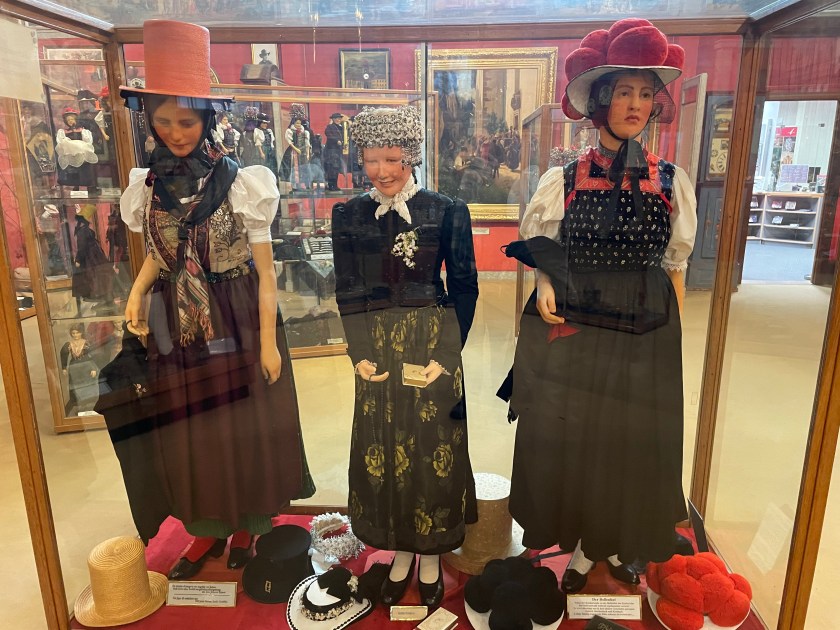
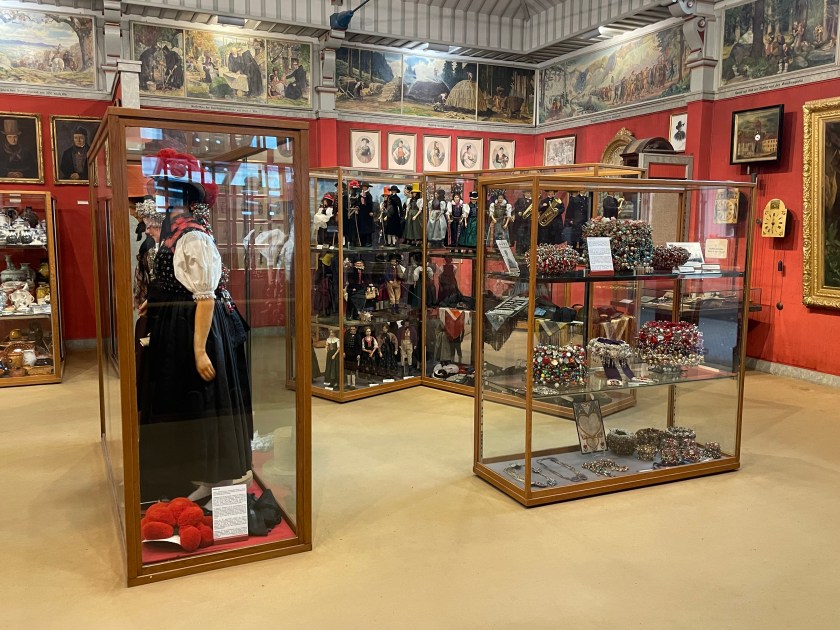
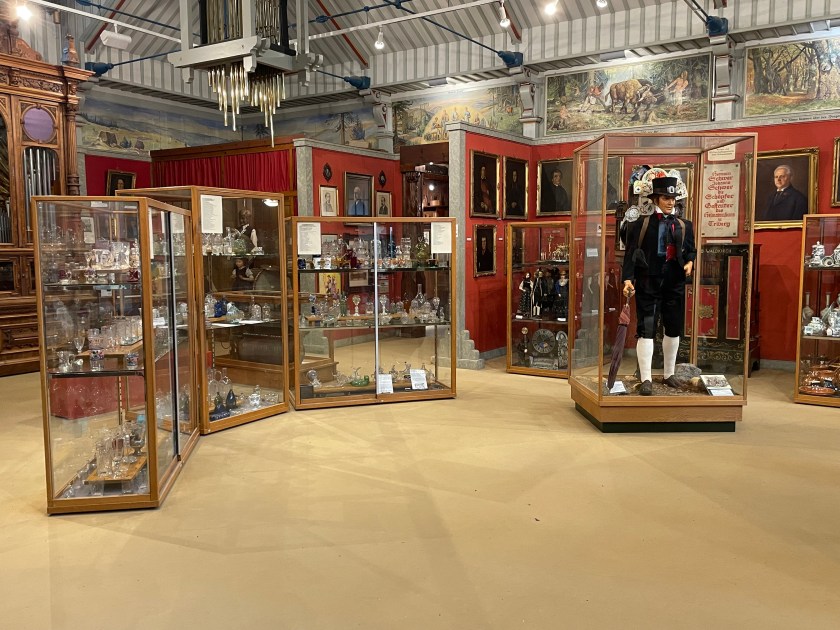
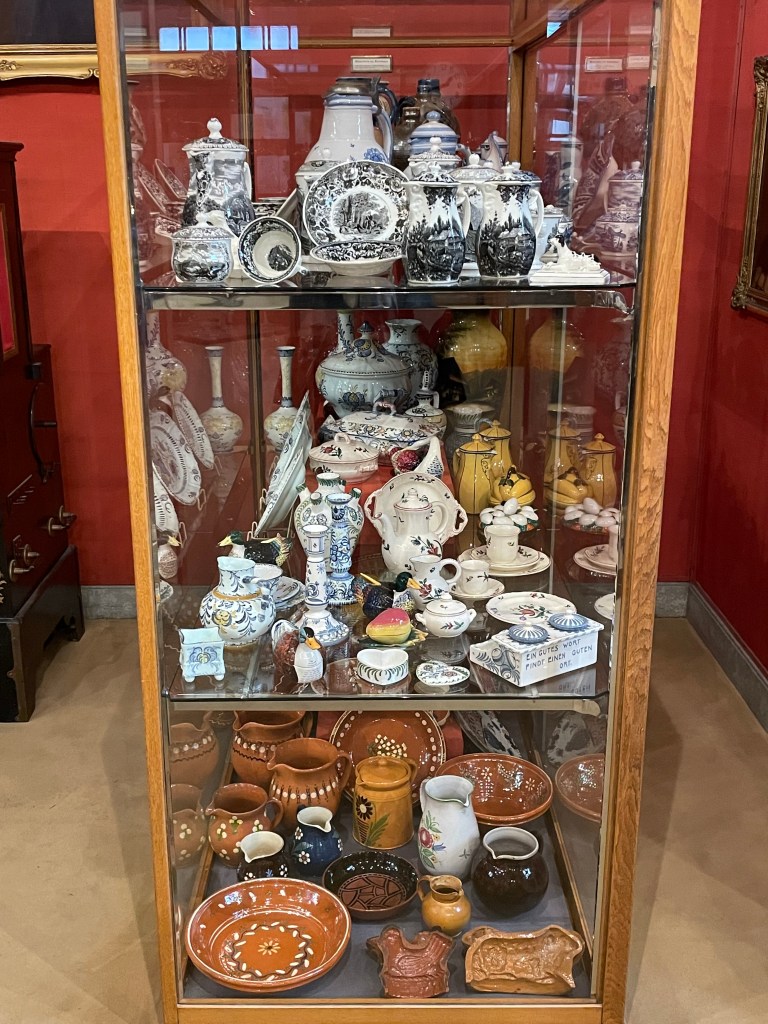
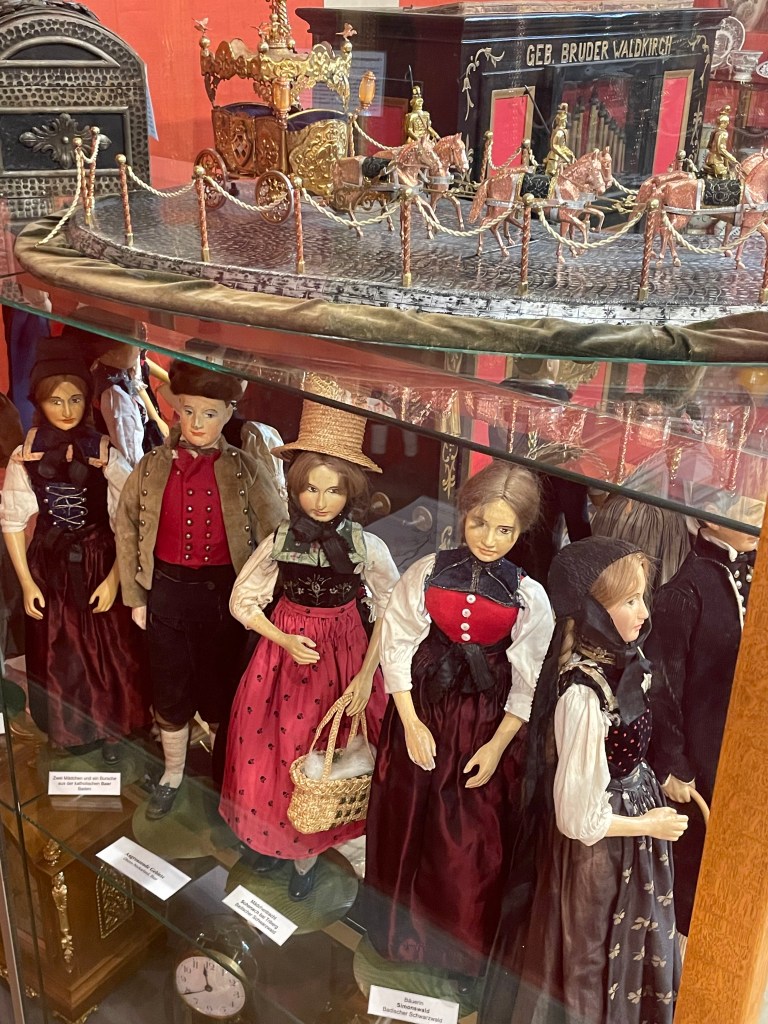
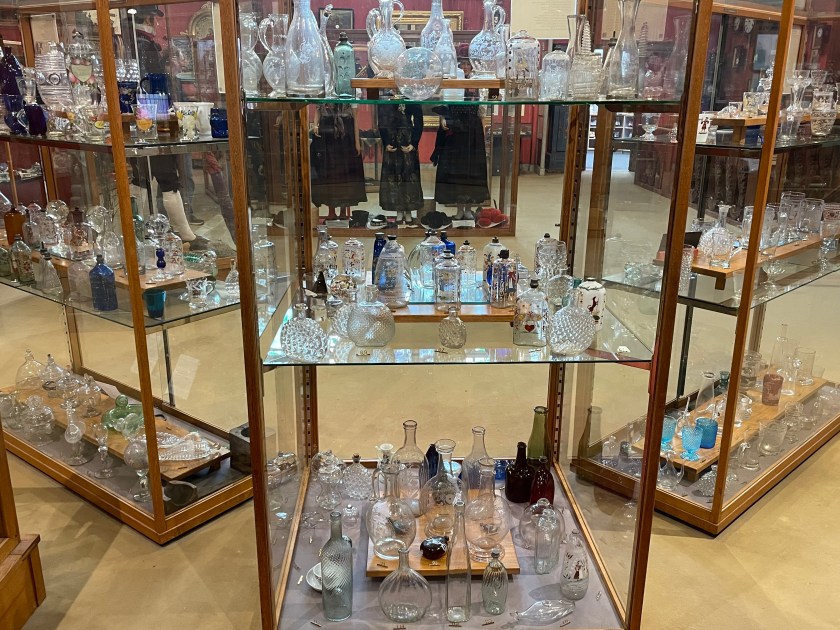
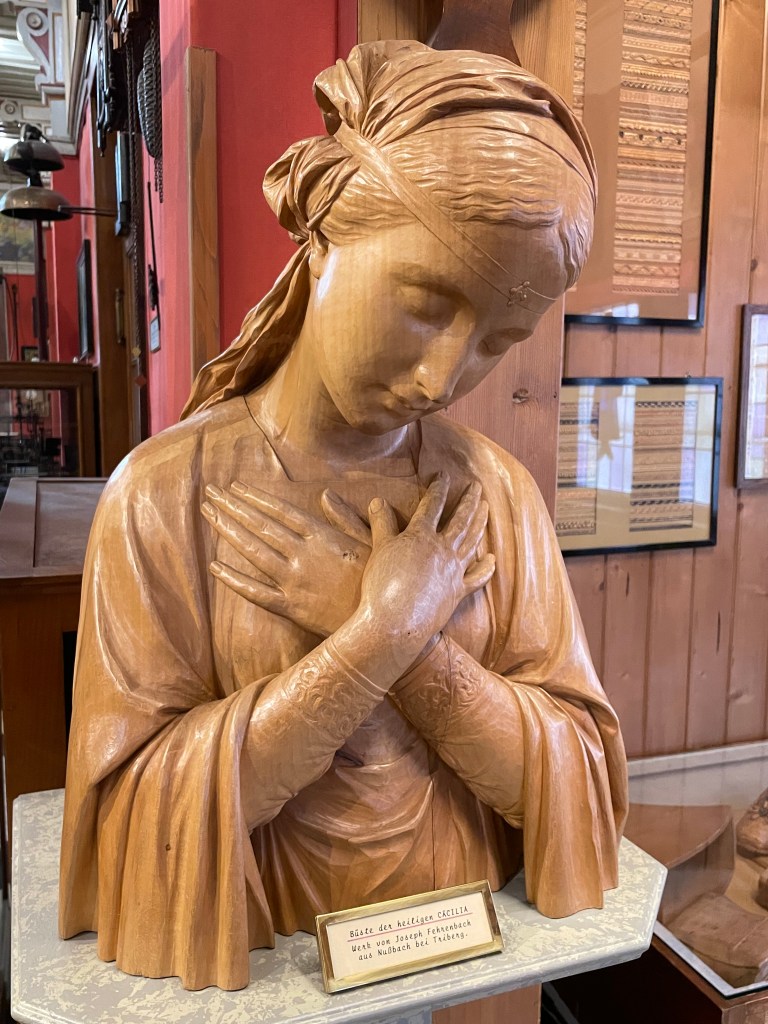
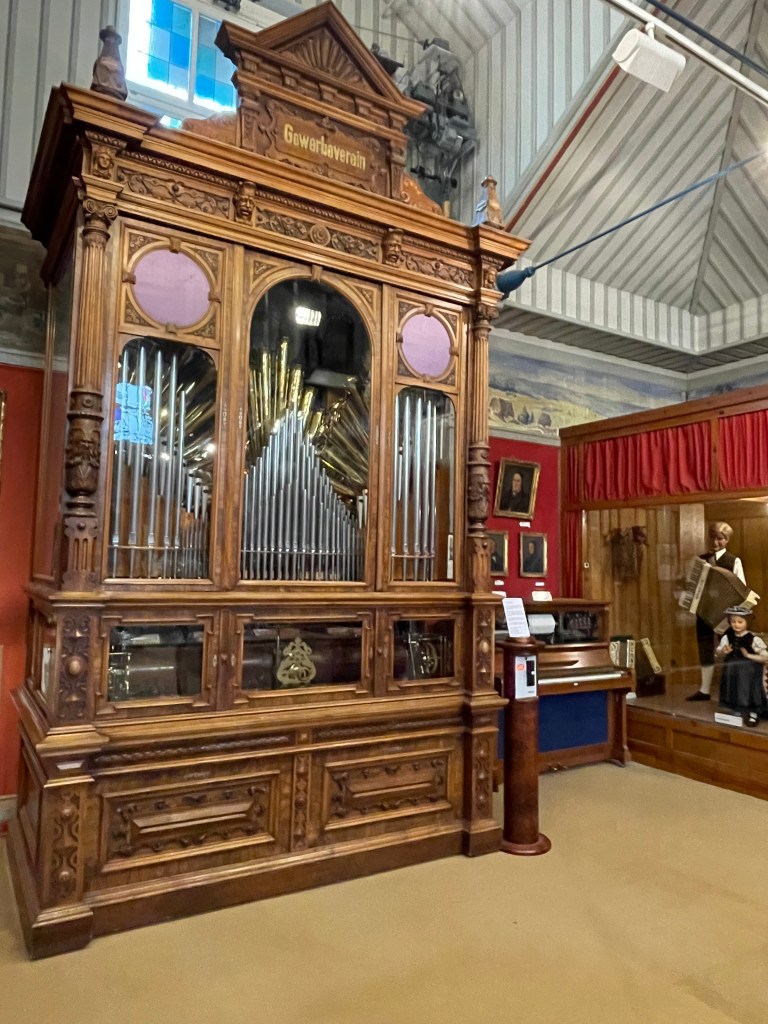
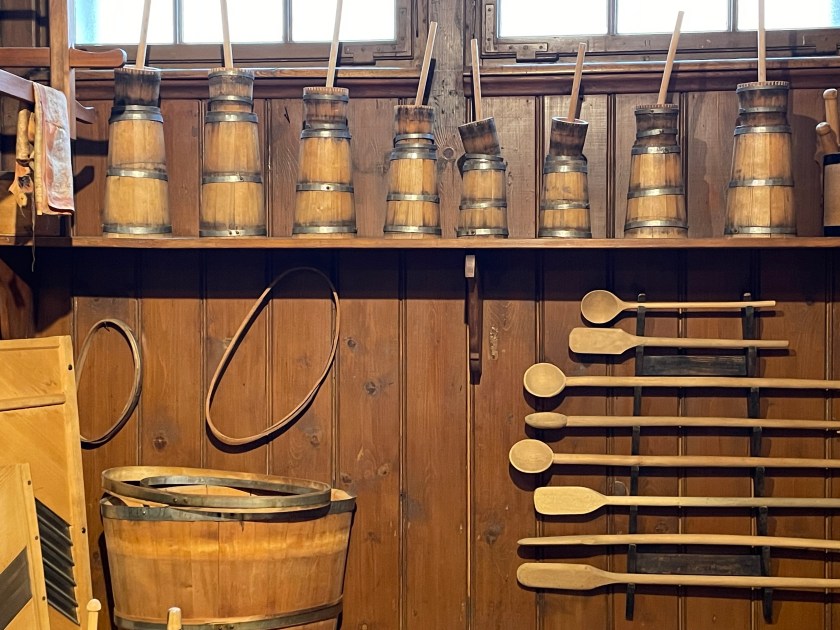
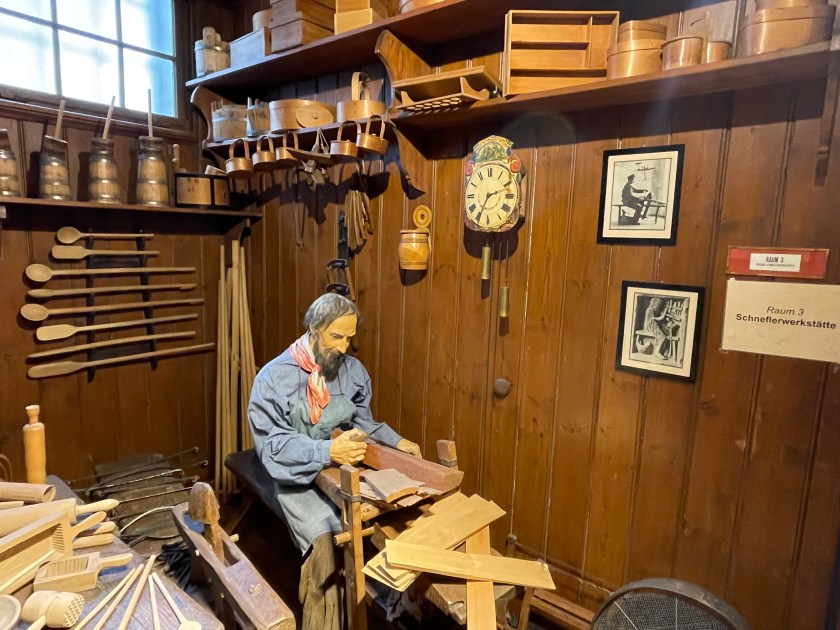
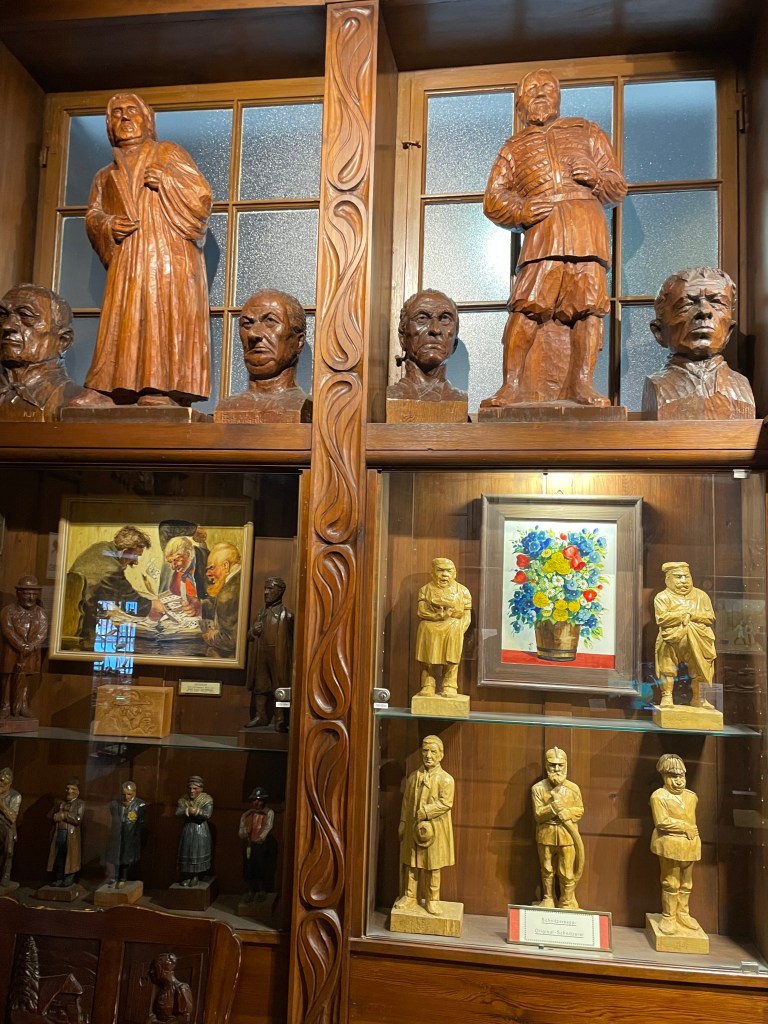
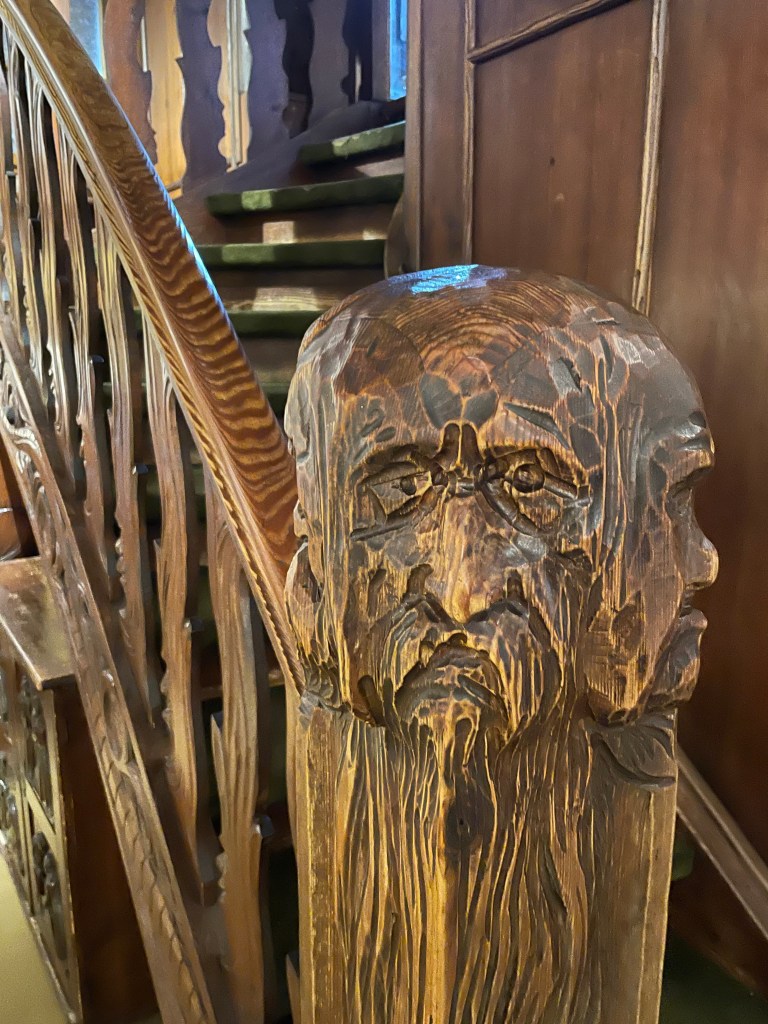
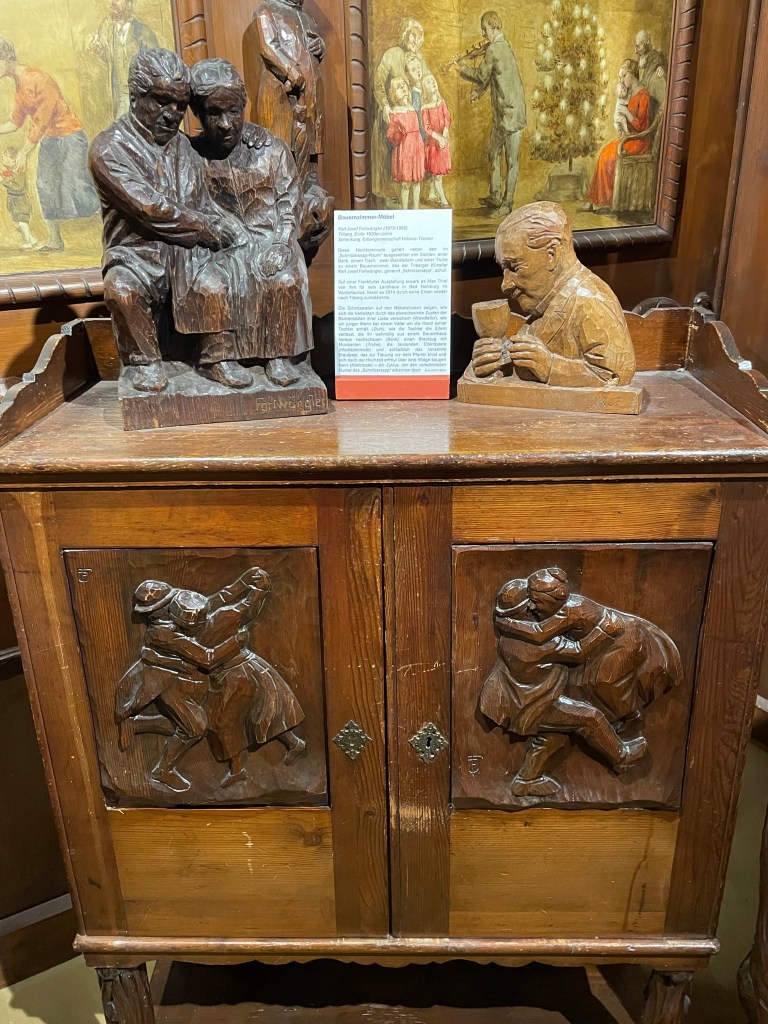
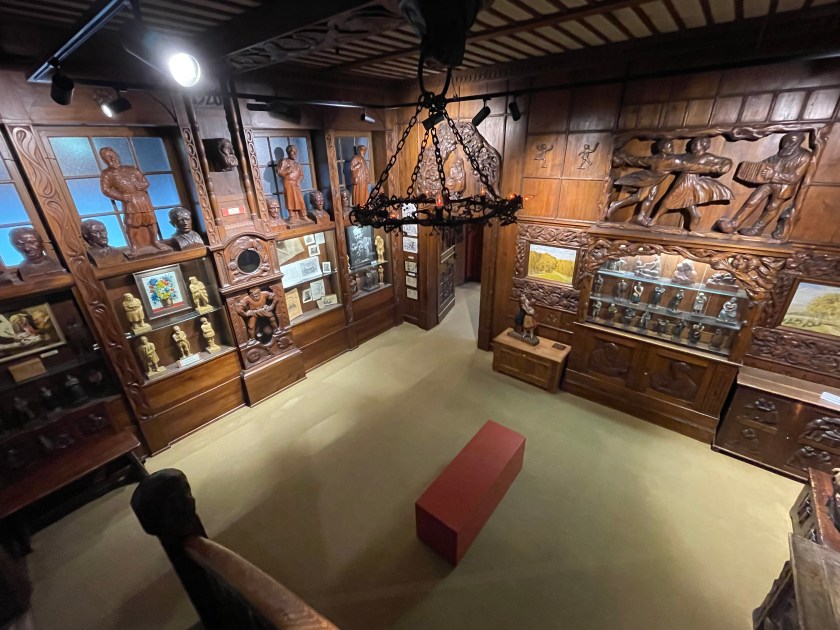
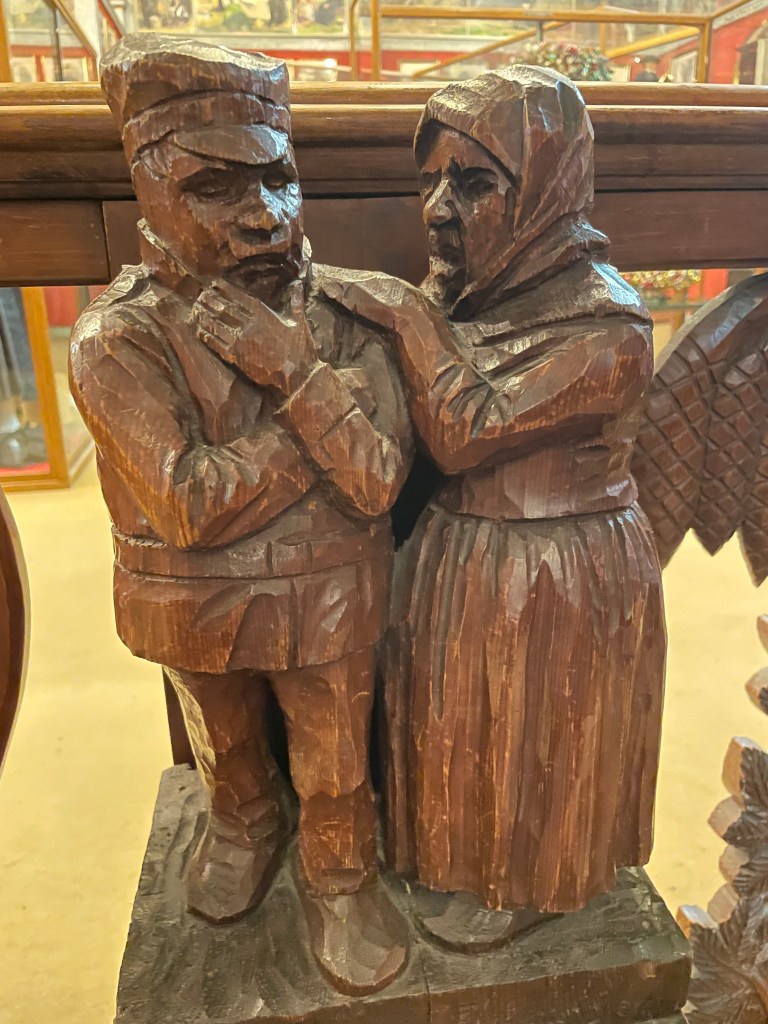
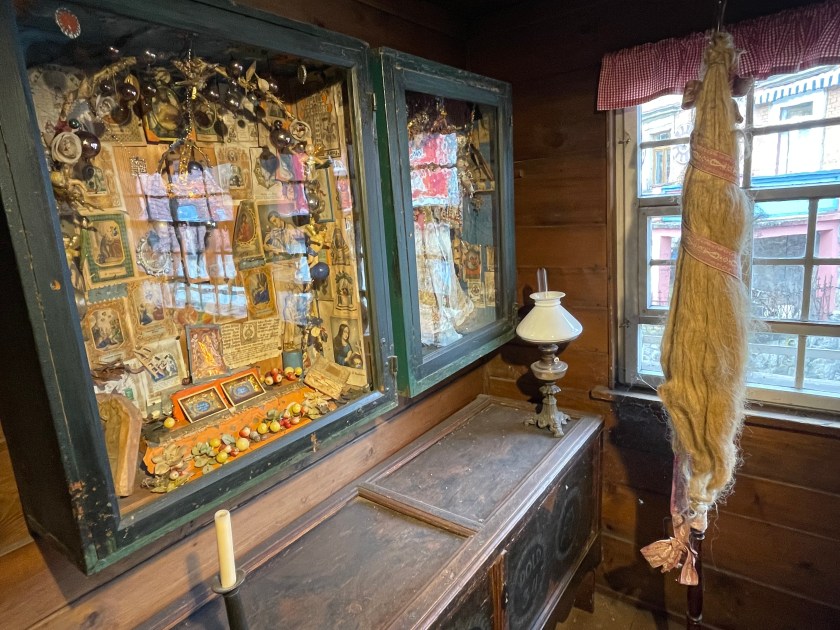
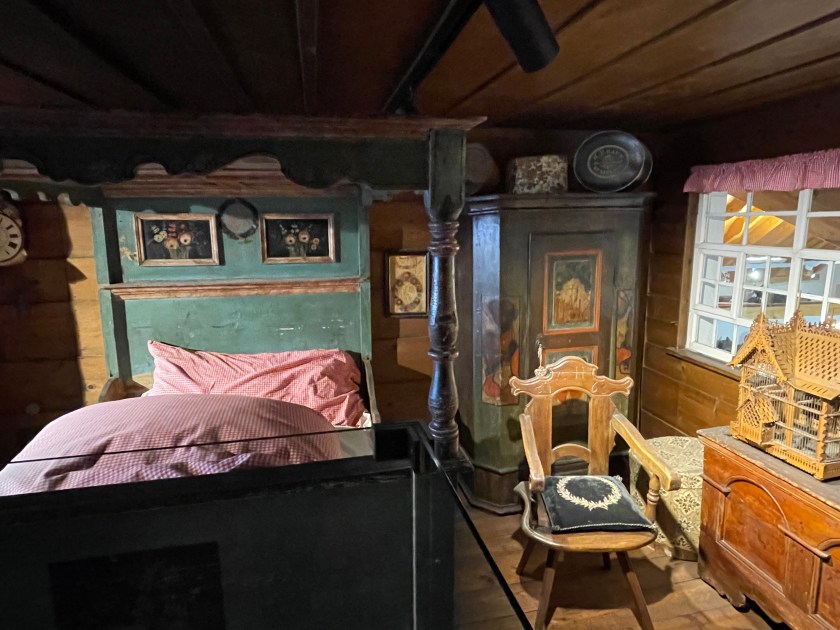
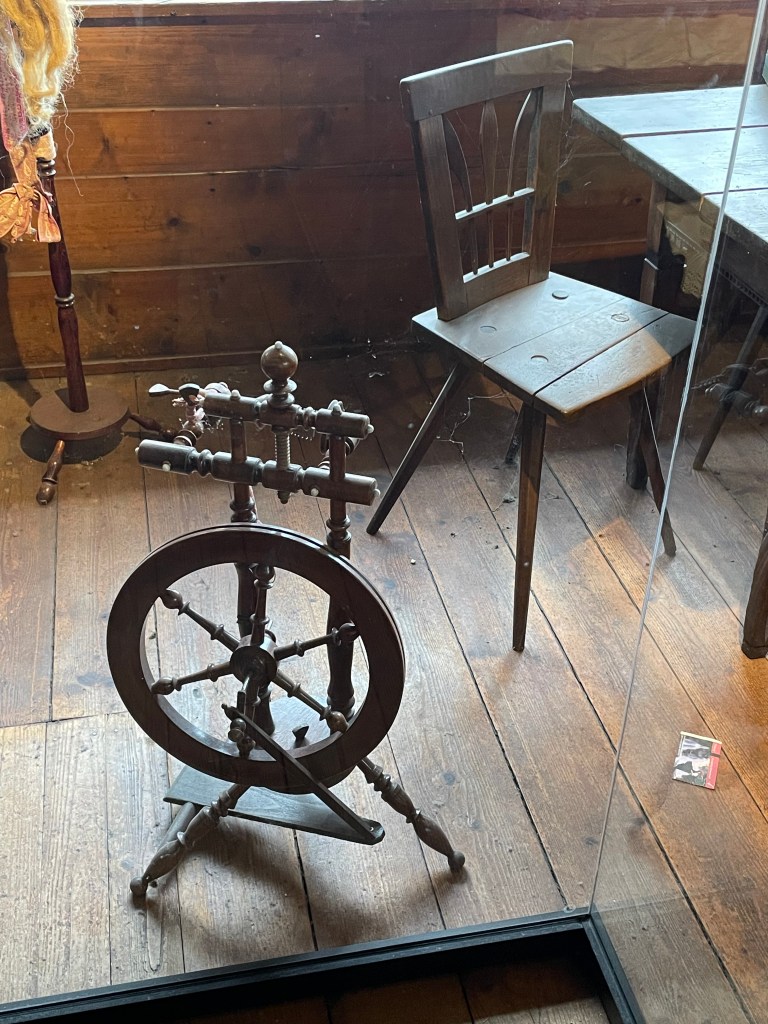
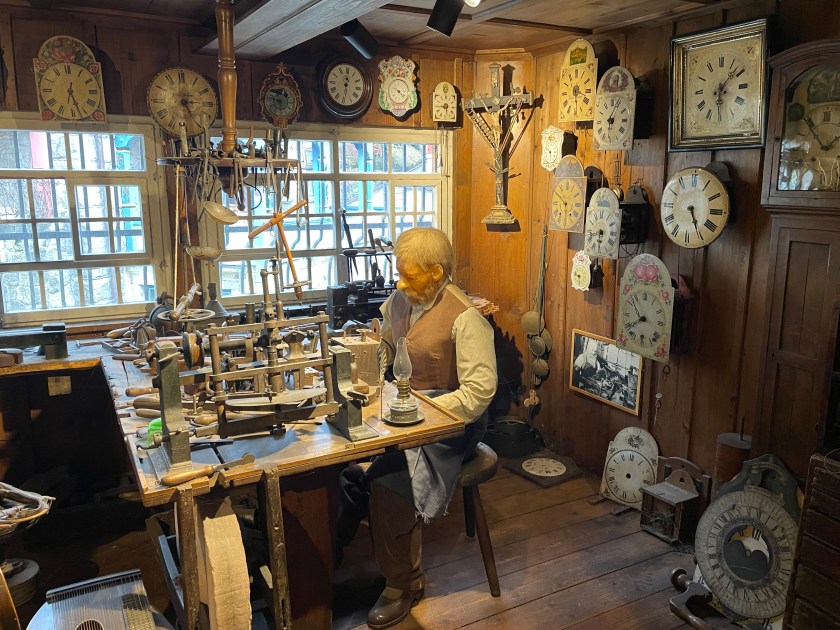
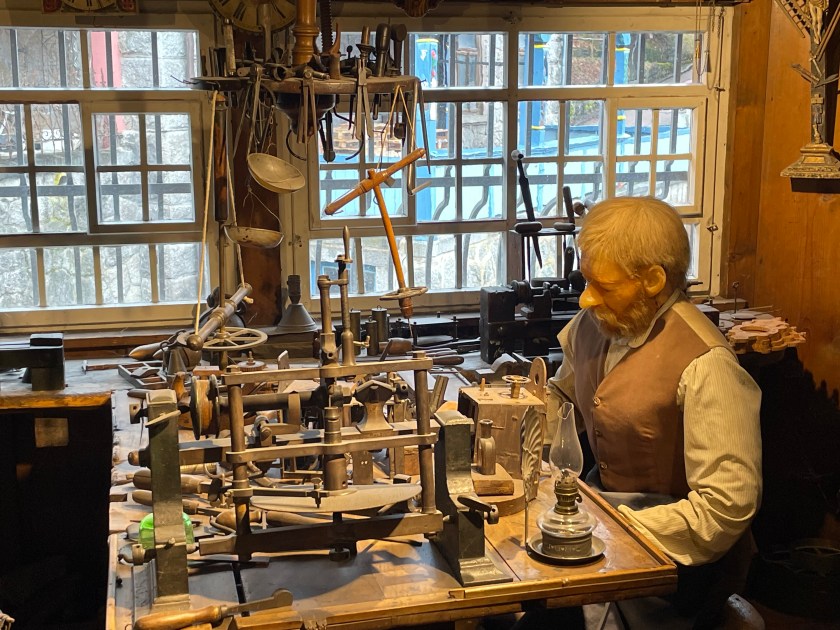
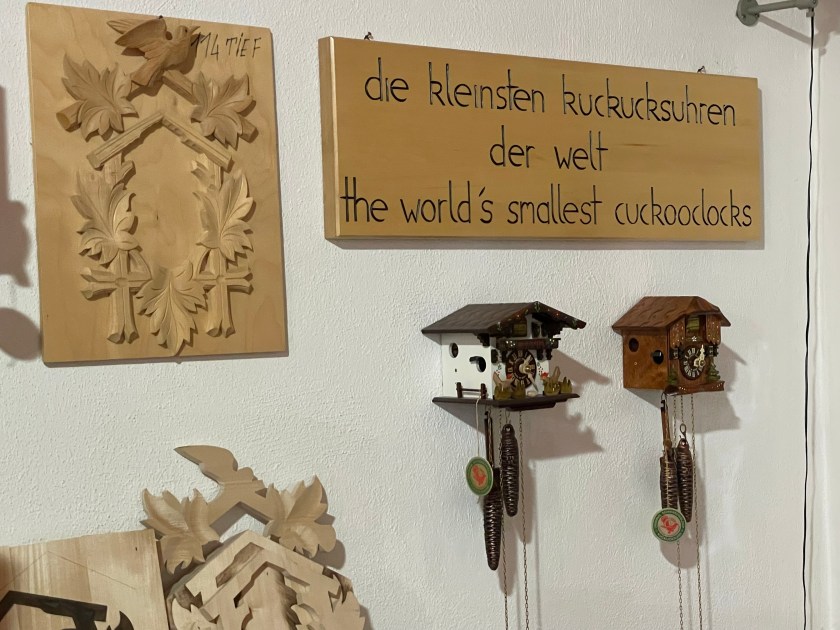
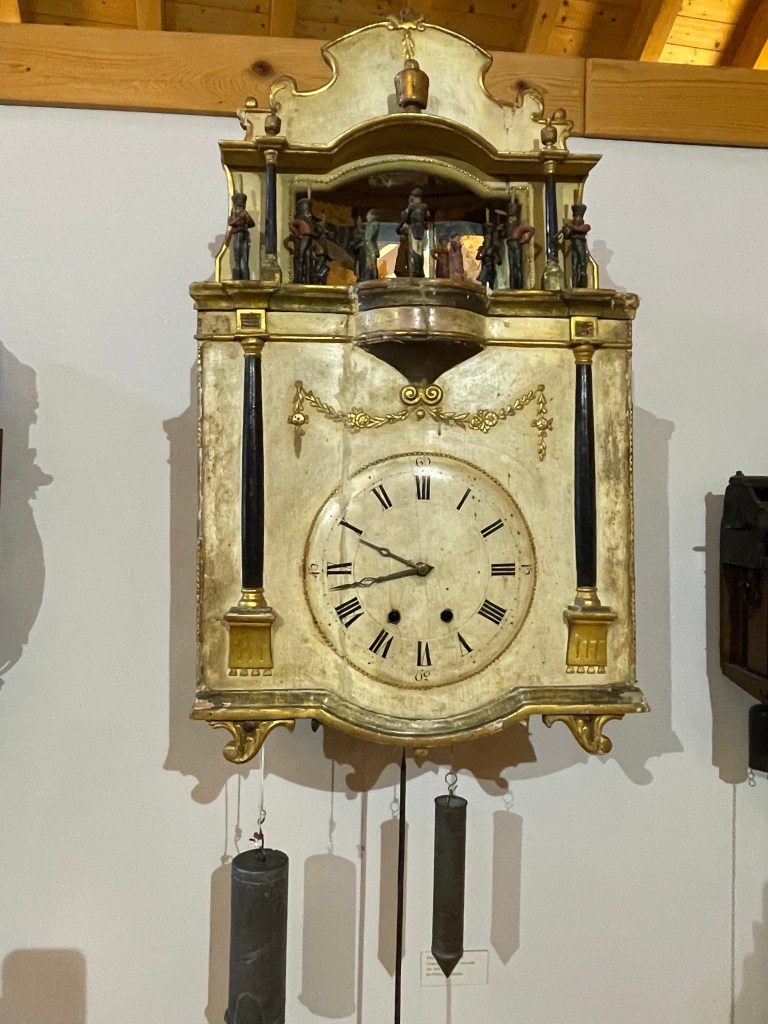
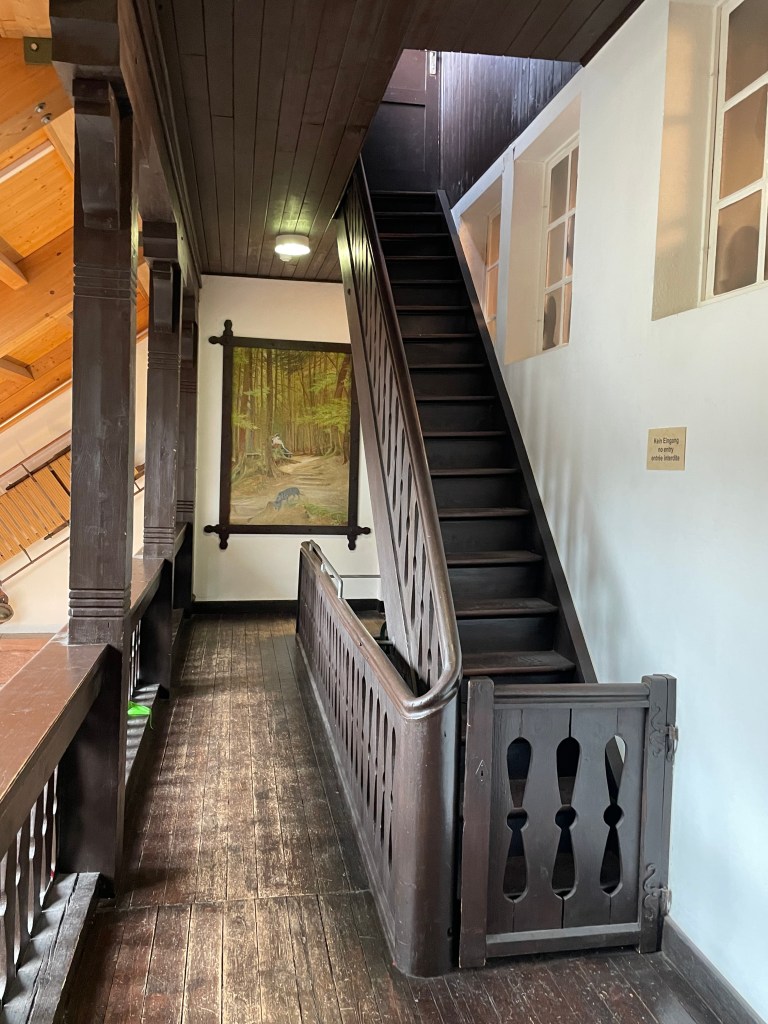
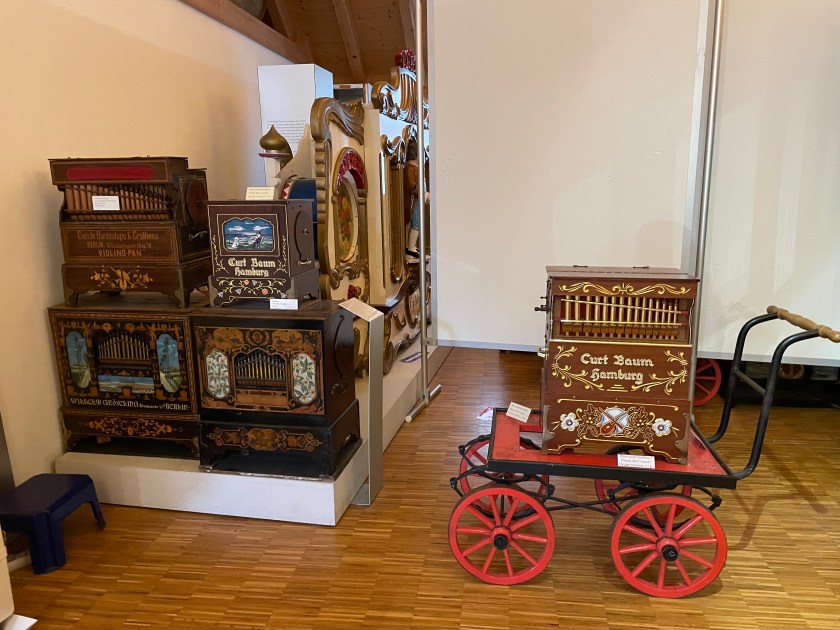
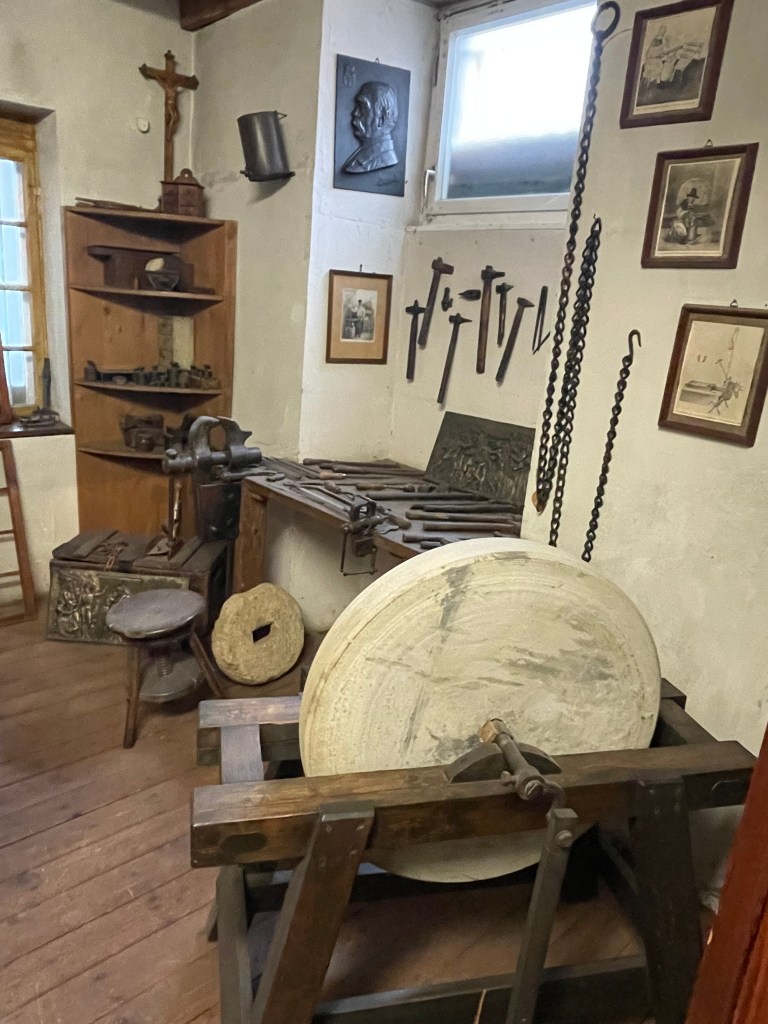
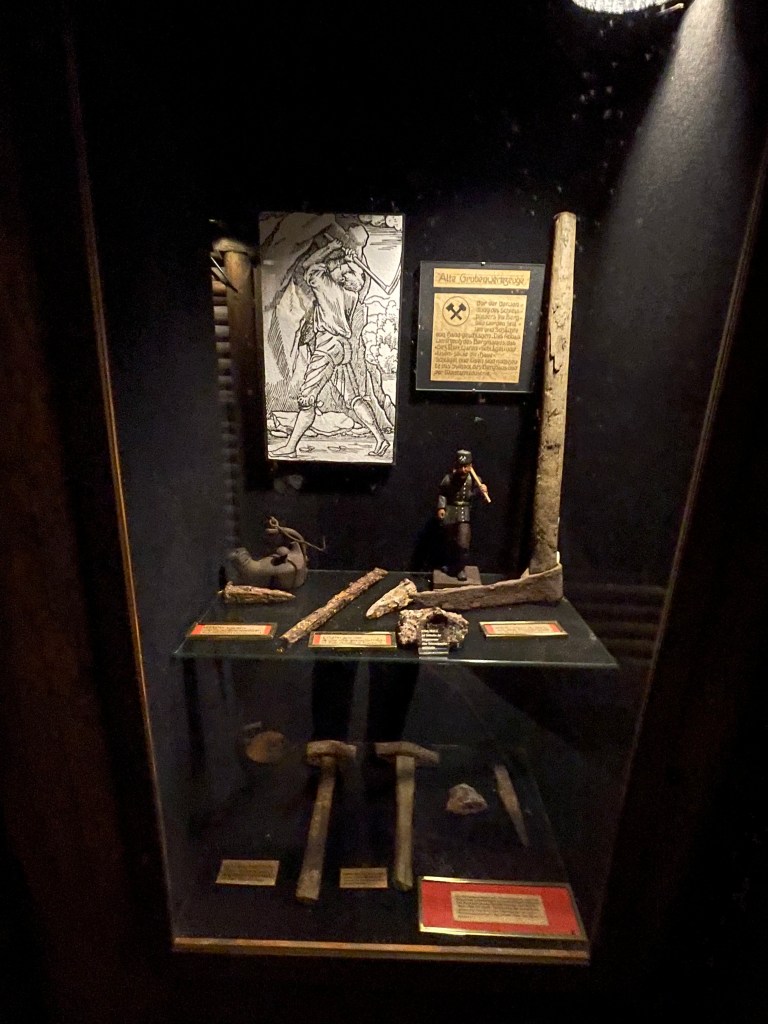
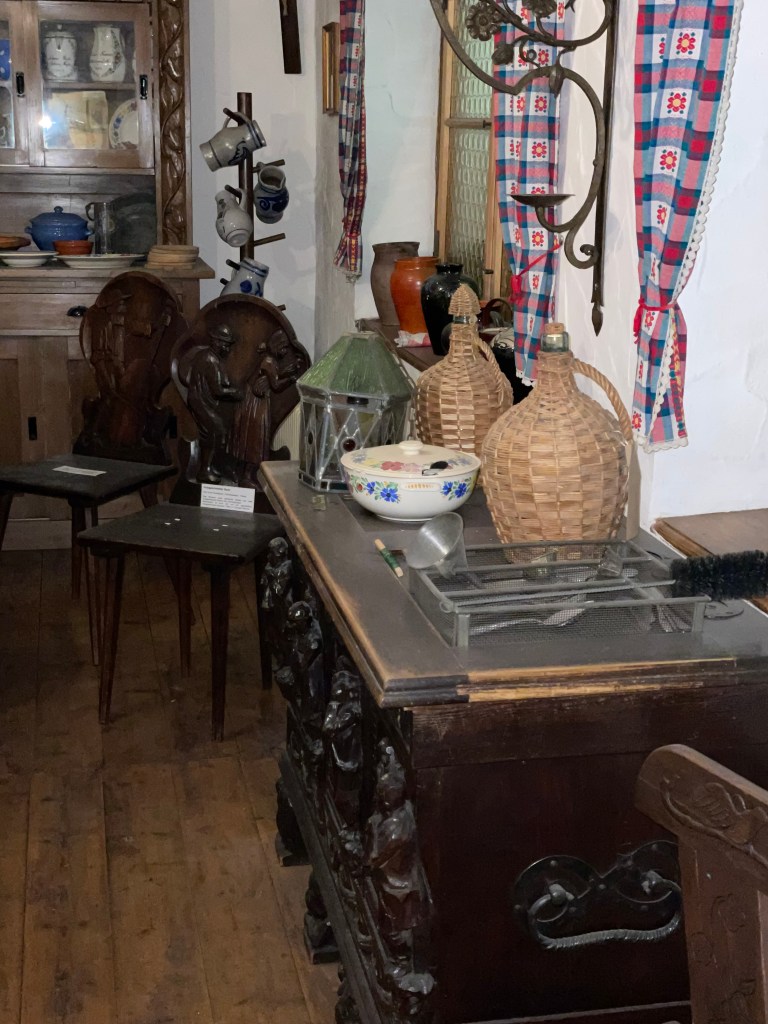
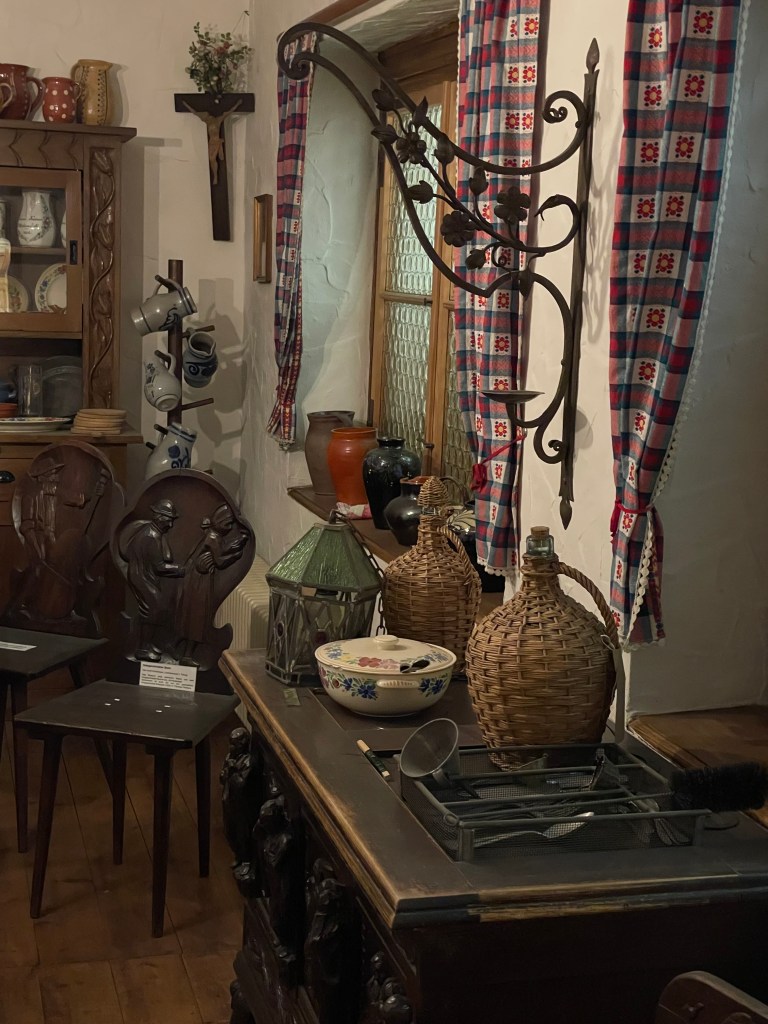
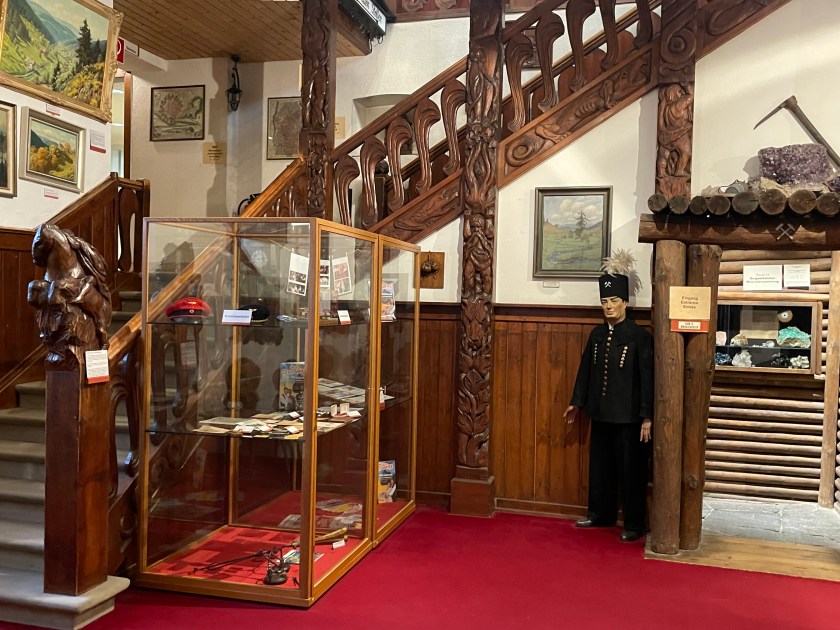
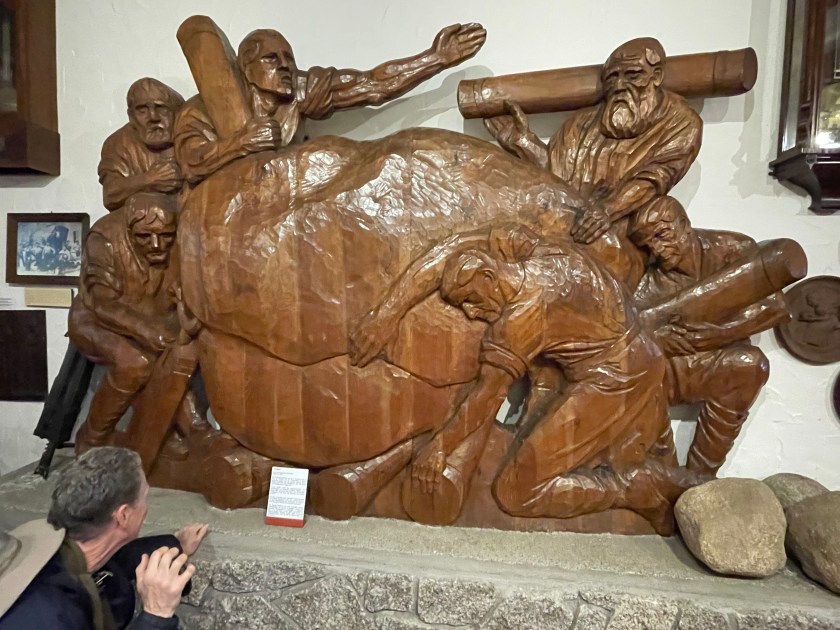
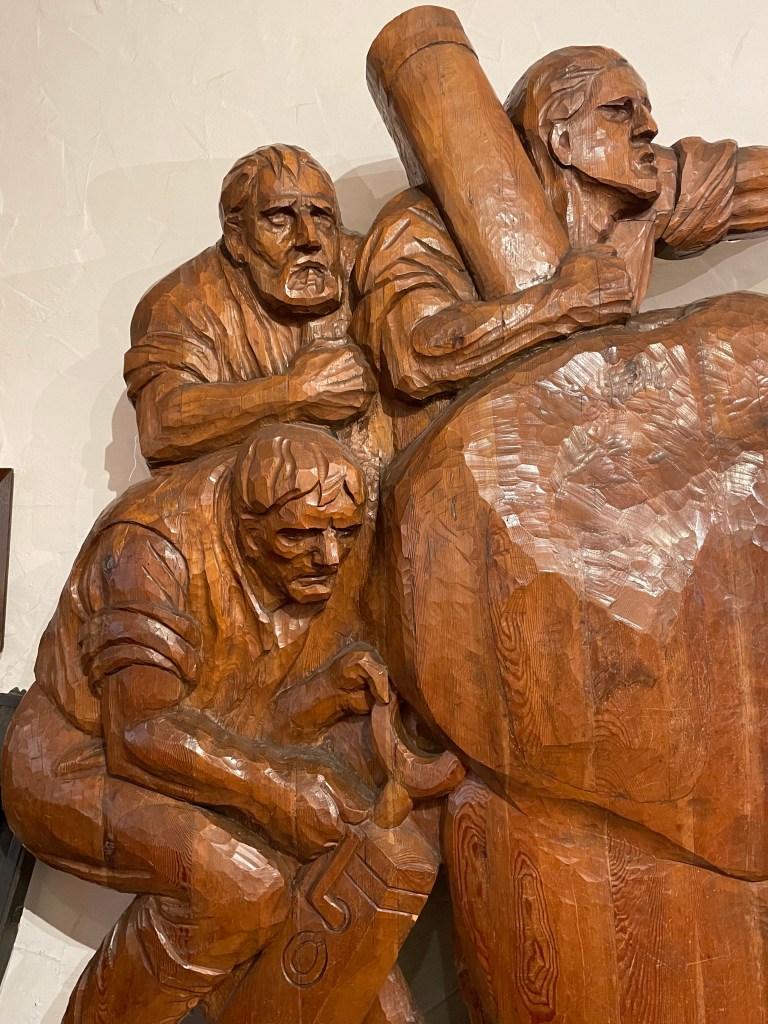
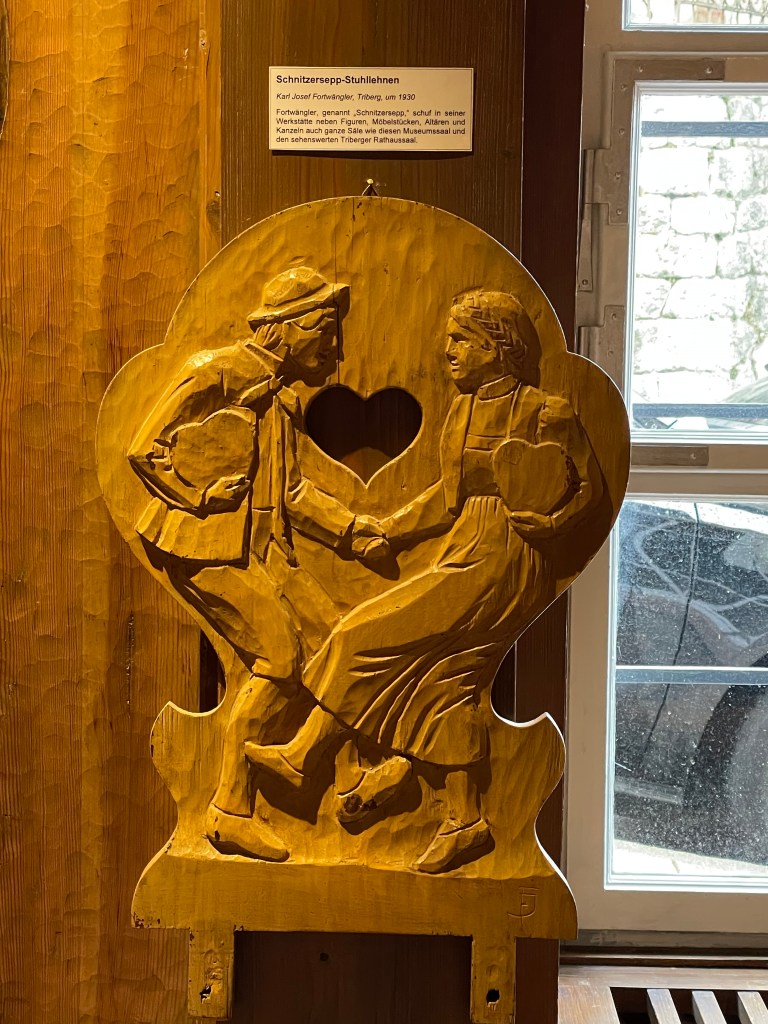
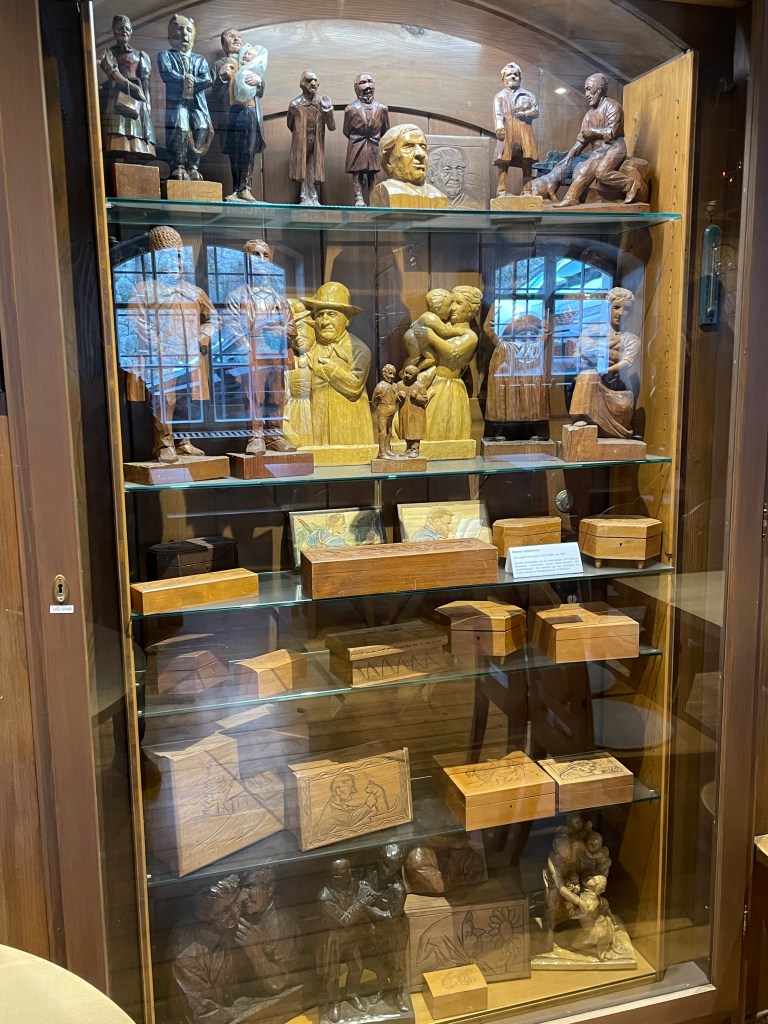
We first went to the Schwarzwald Museum by the Tourist Office. We spent about an hour in the museum and it was Wonderful. Lots of good German Black Forest history.  We saw traditional clothing, celebration clothing, and house wares.  The museum was filled with beautiful wood carvings and carved furniture.  Some rooms in the (house) were set up as they would have been–with straw weaving, watch making, wood carving, and a typical bedroom.  We loved it all.

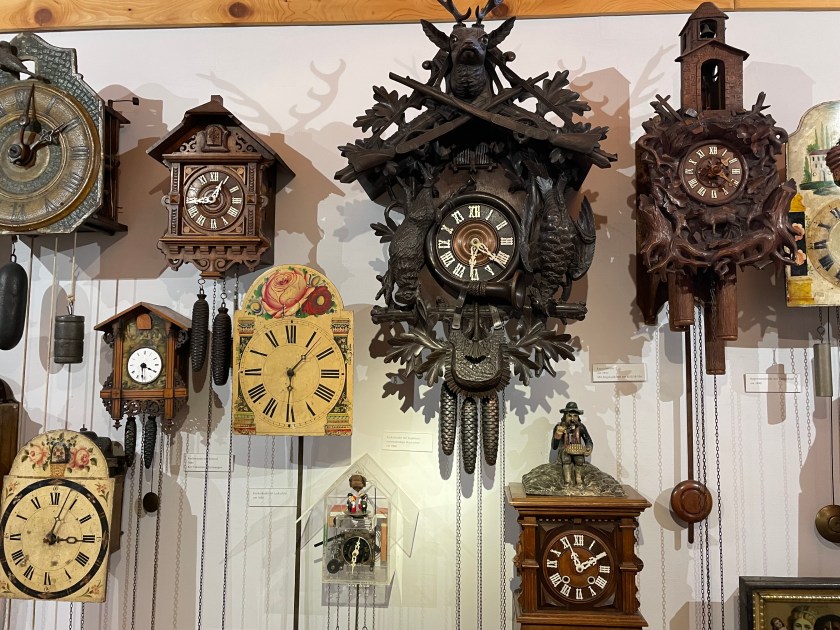
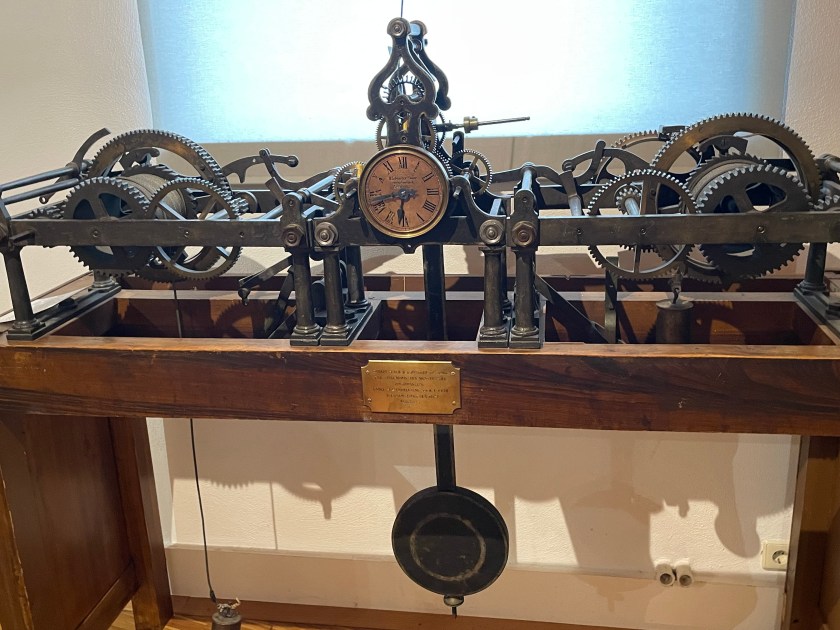
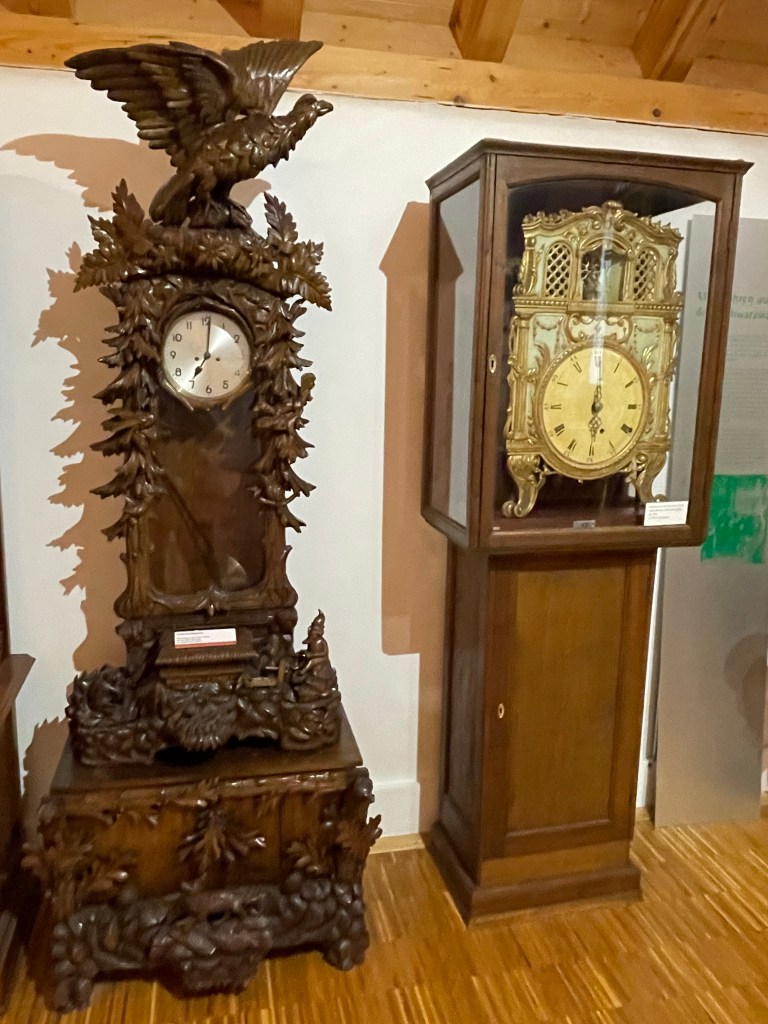
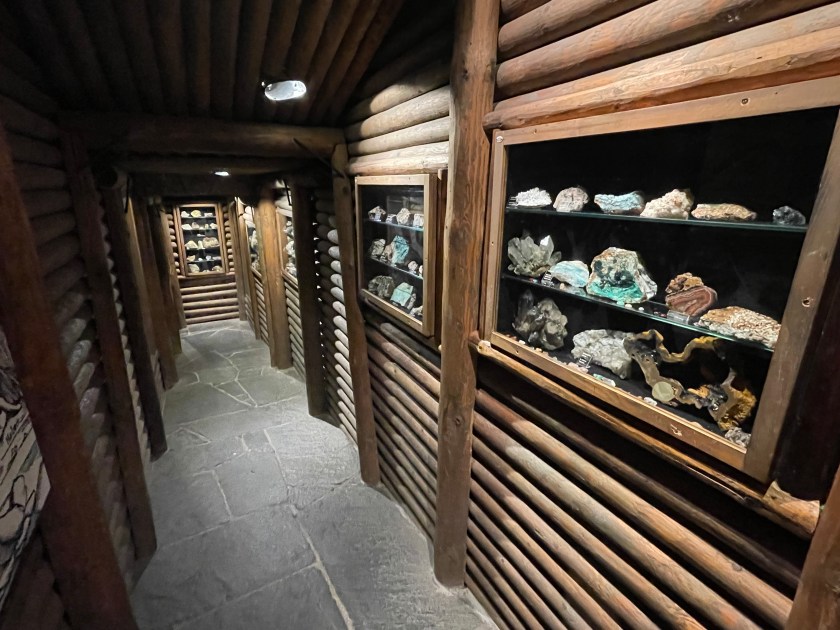
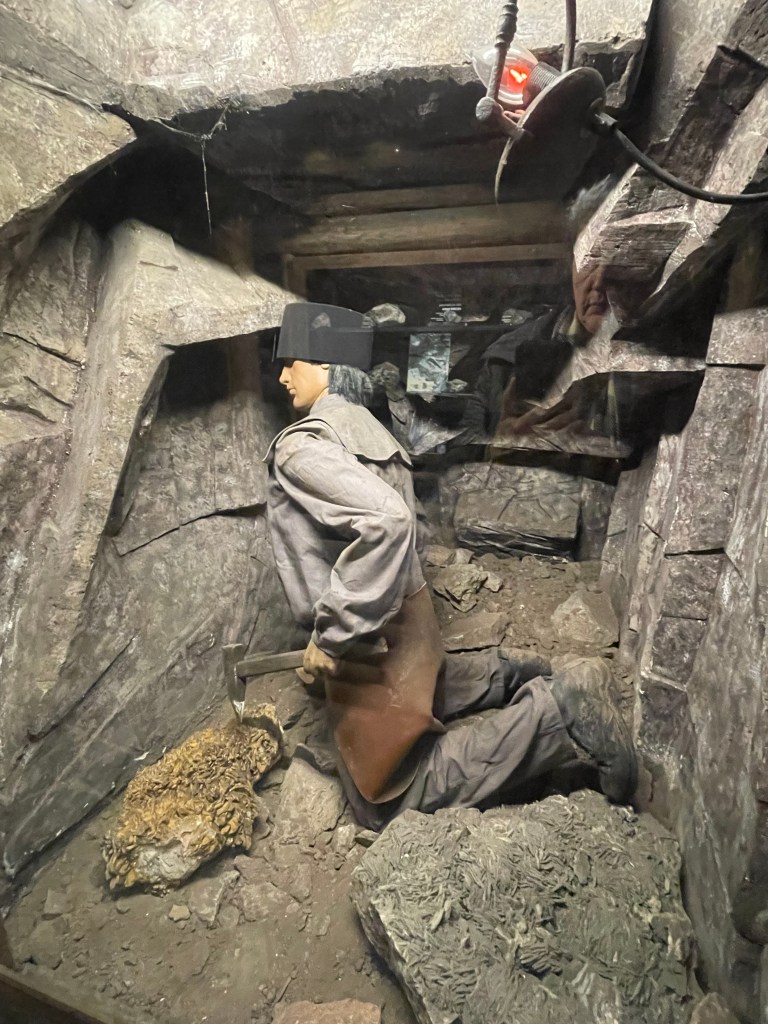
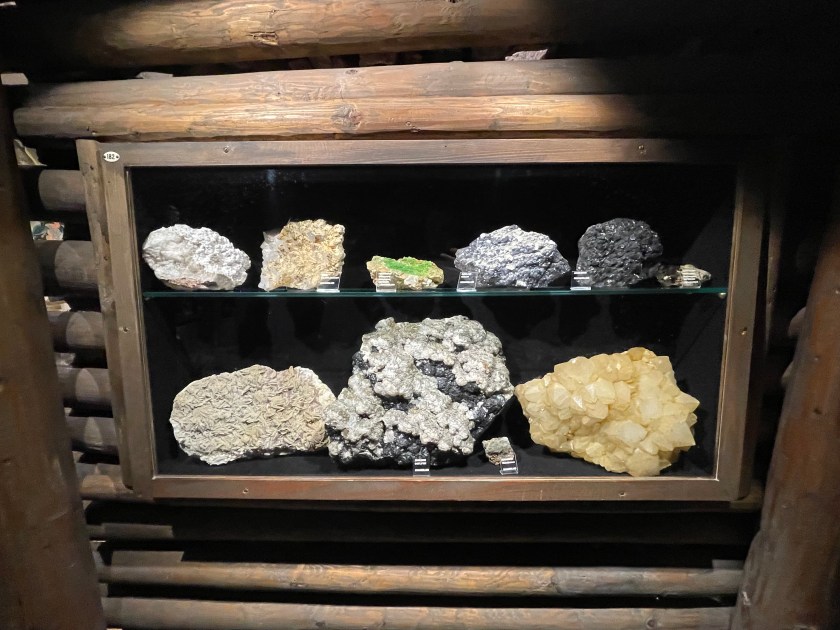
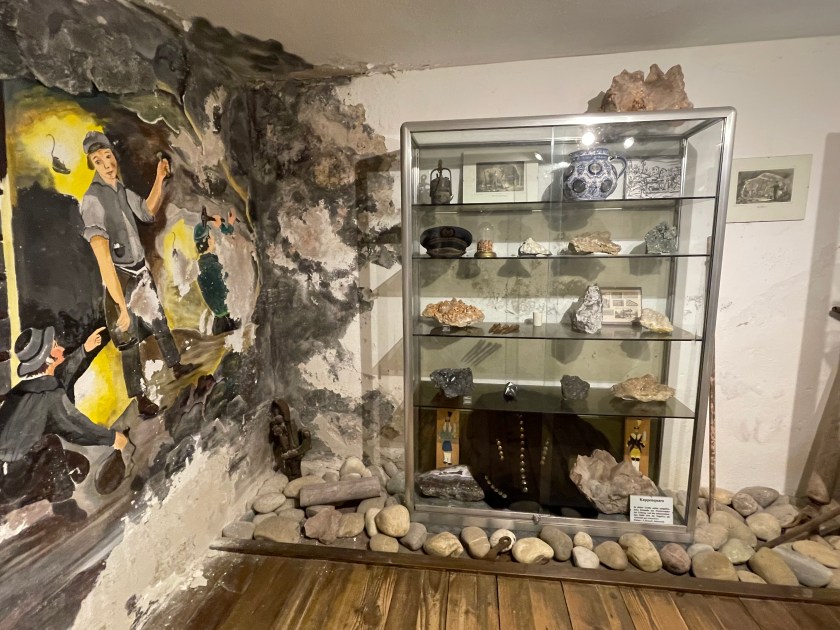
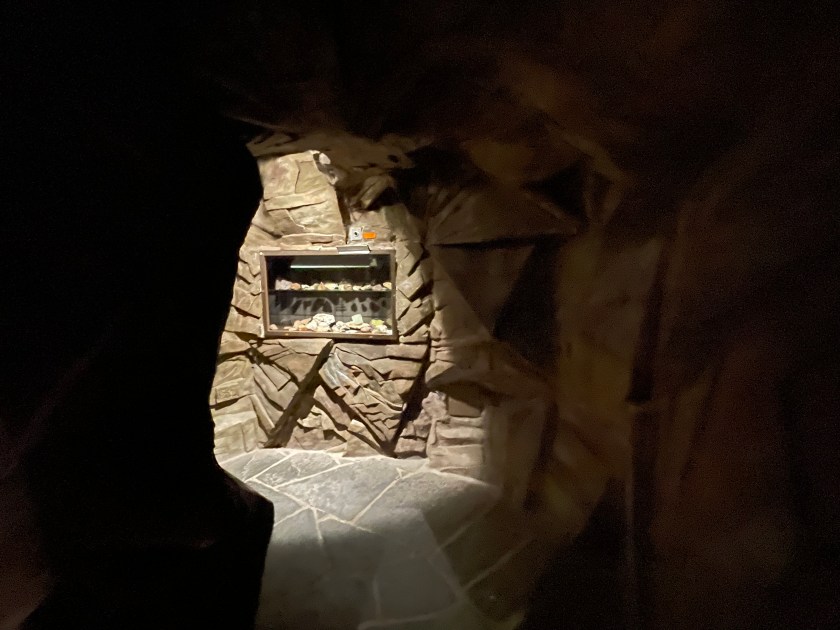
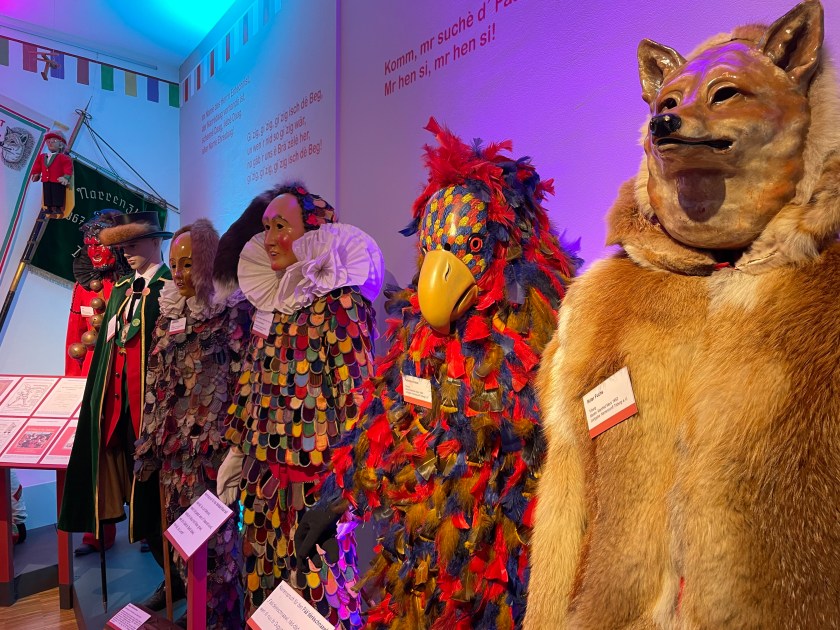
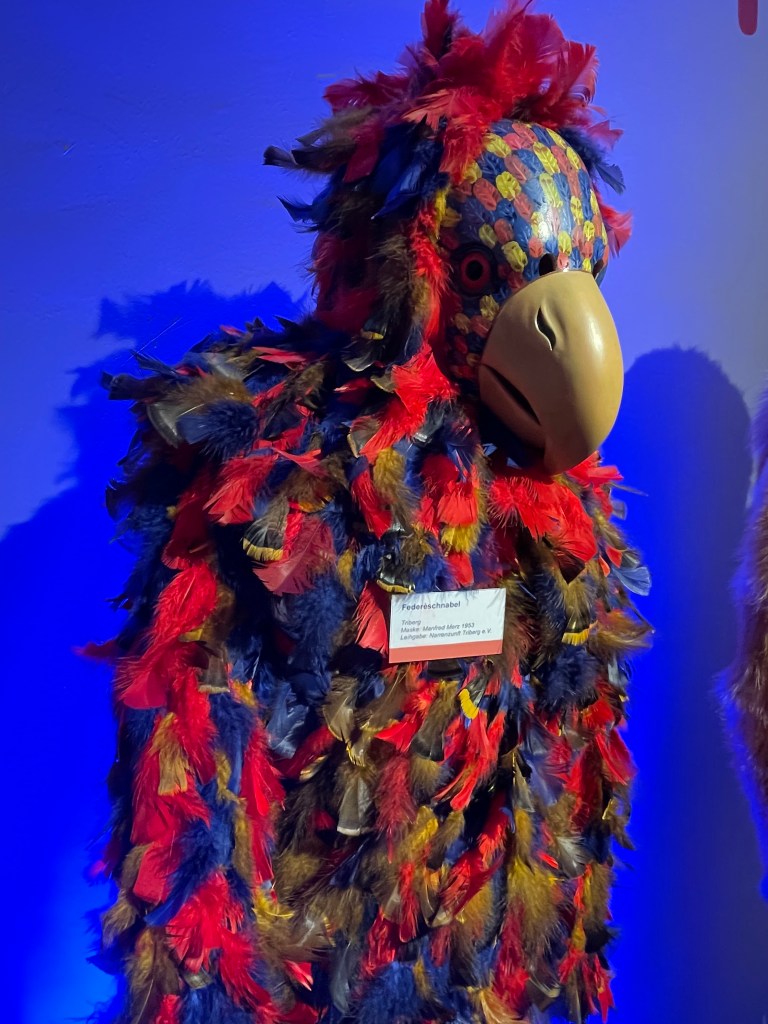
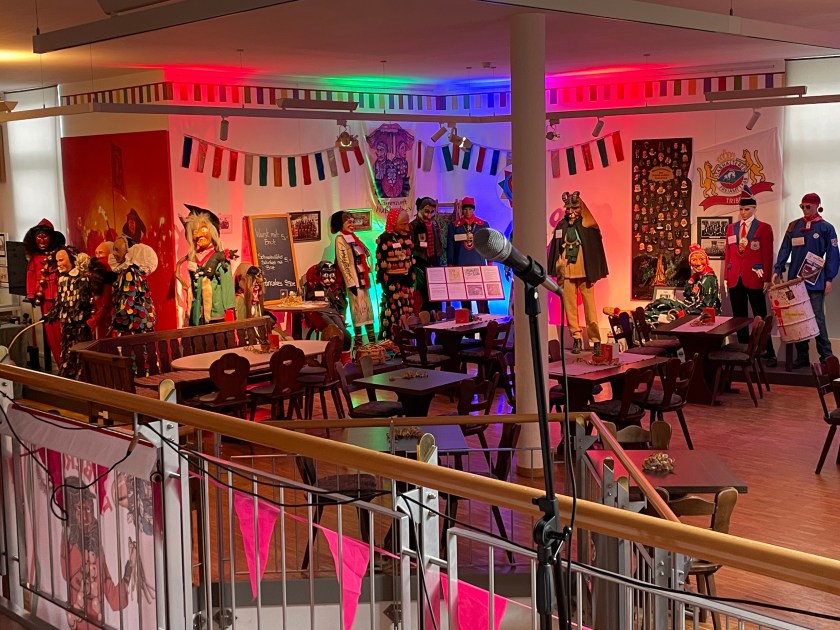
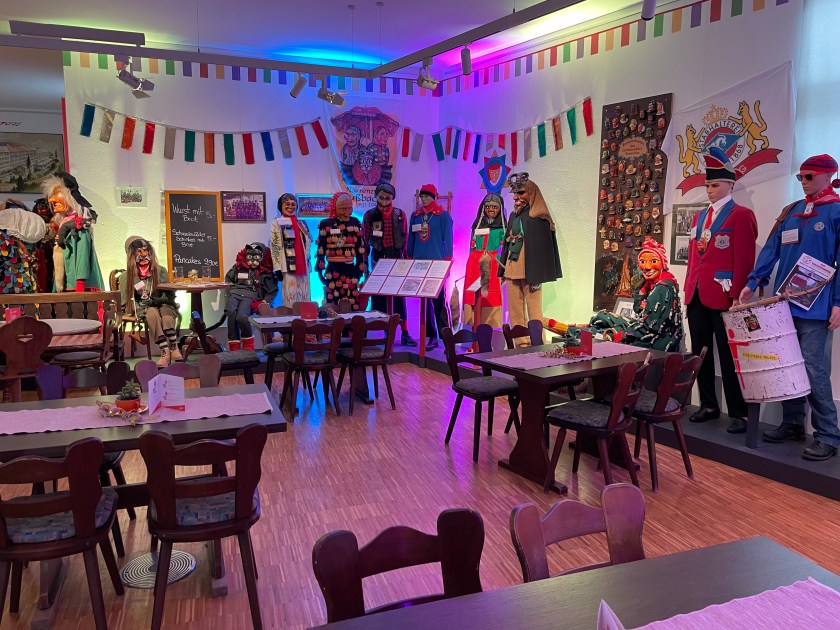
There was a beautiful collection of old clocks and beautiful carvings. There was a section that went down under the house made to look like you were in a gemstone mine. At the end of the tour was a restaurant/room all set up for Fastnacht partying. Around the room were historical Fastnacht costumes and mannequins with masks. It was all so fun and so interesting. We really enjoyed it.
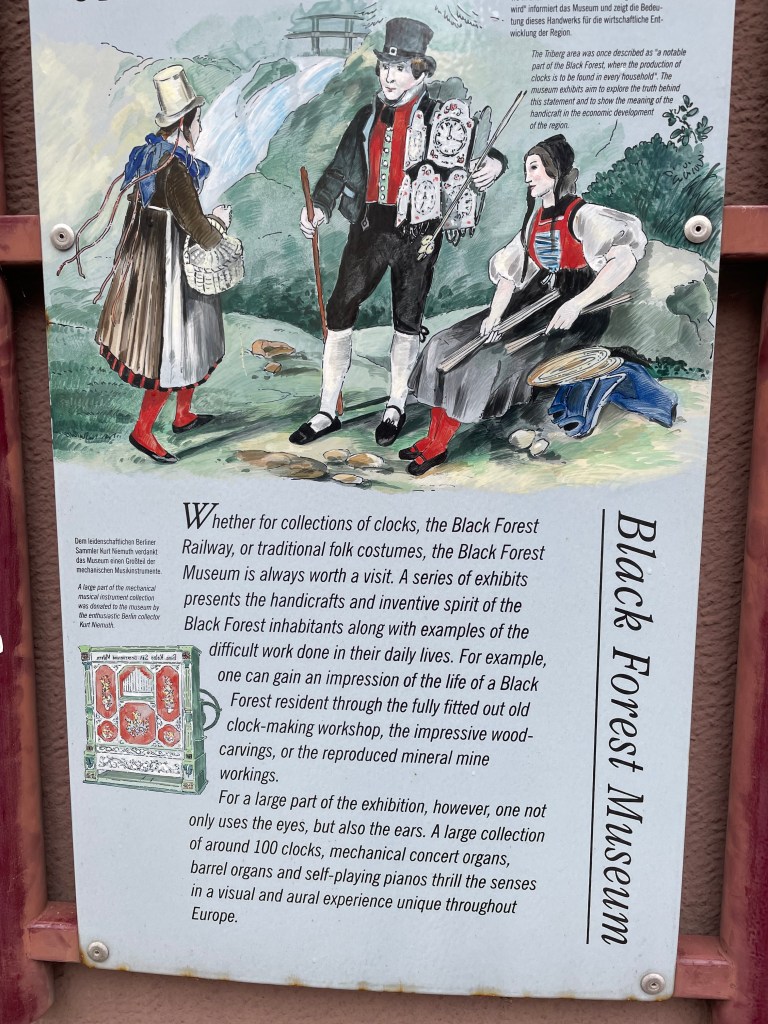
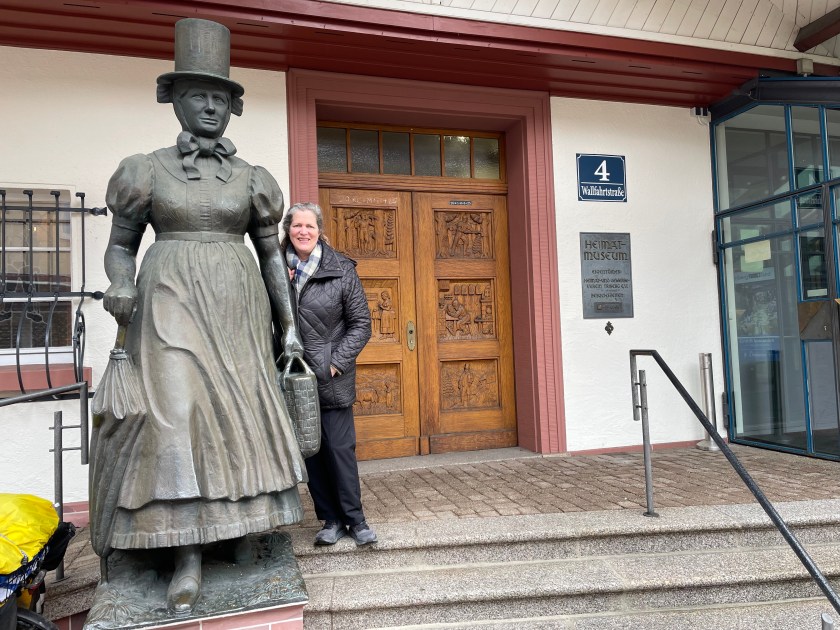
Come walk with me through the museum:
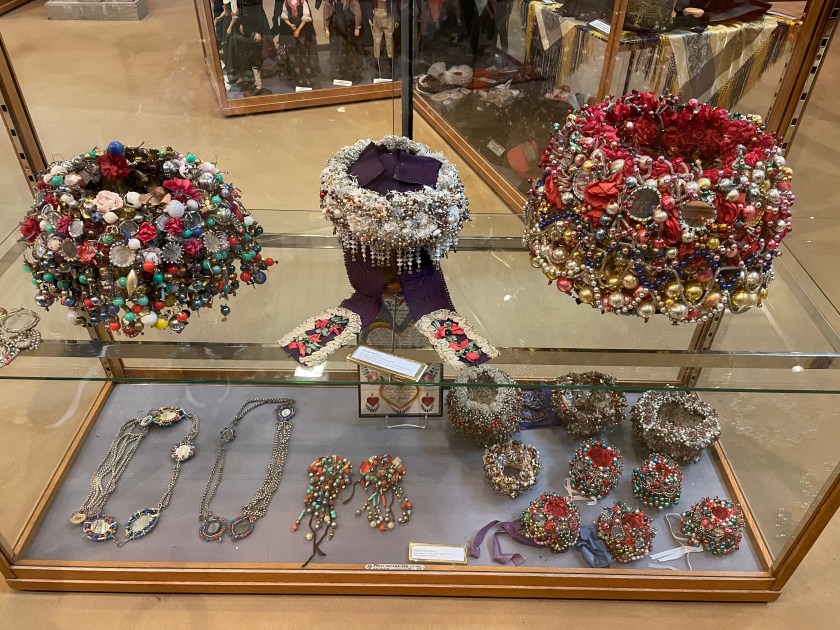
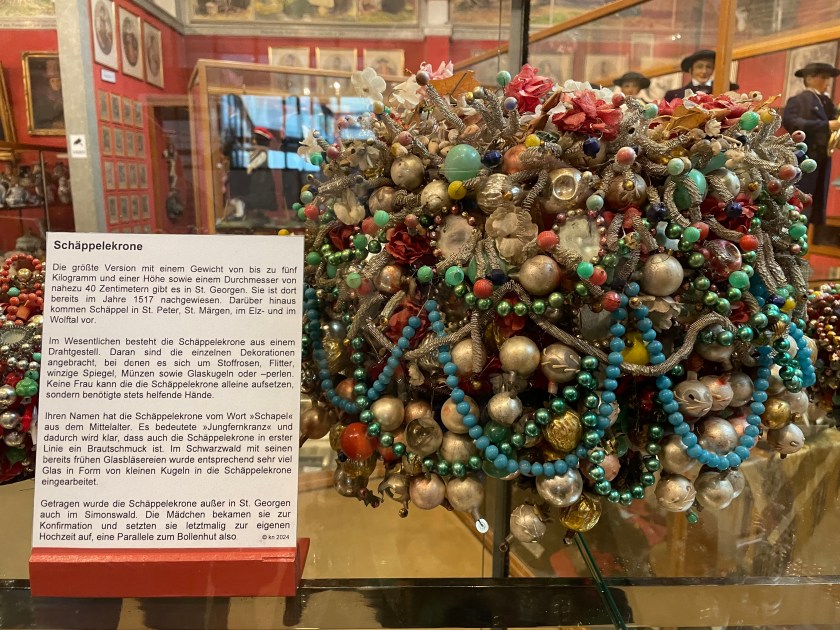
These decorative crowns were worn by brides and used for special celebrations.  They weighed up to 5 kilos!
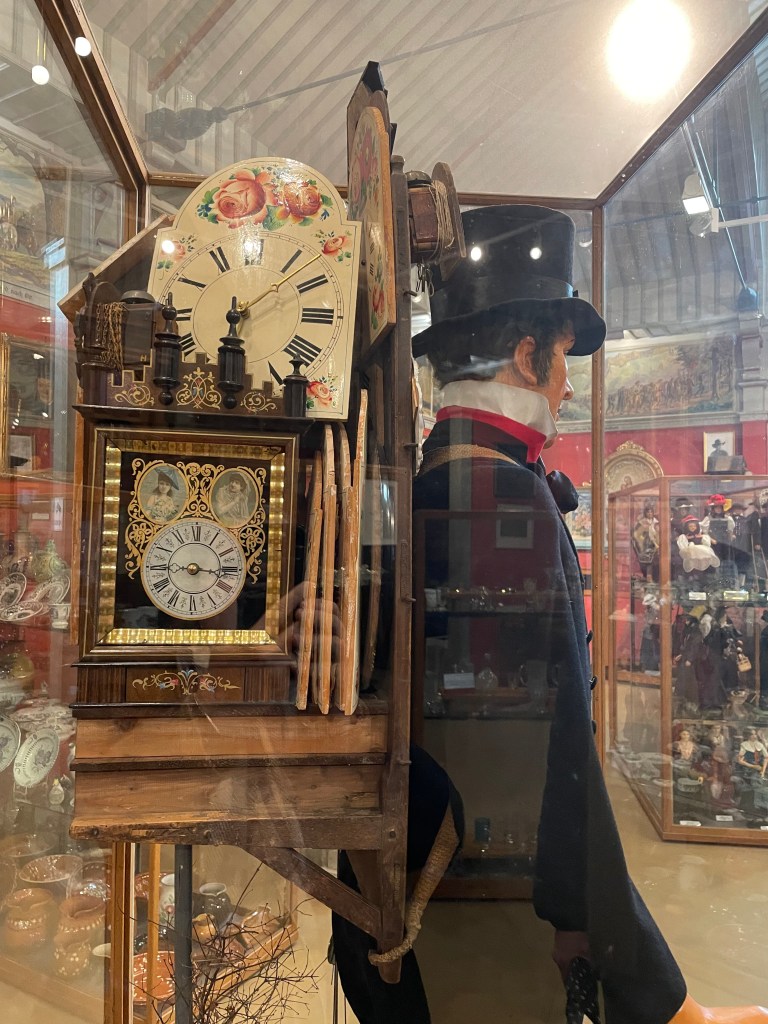
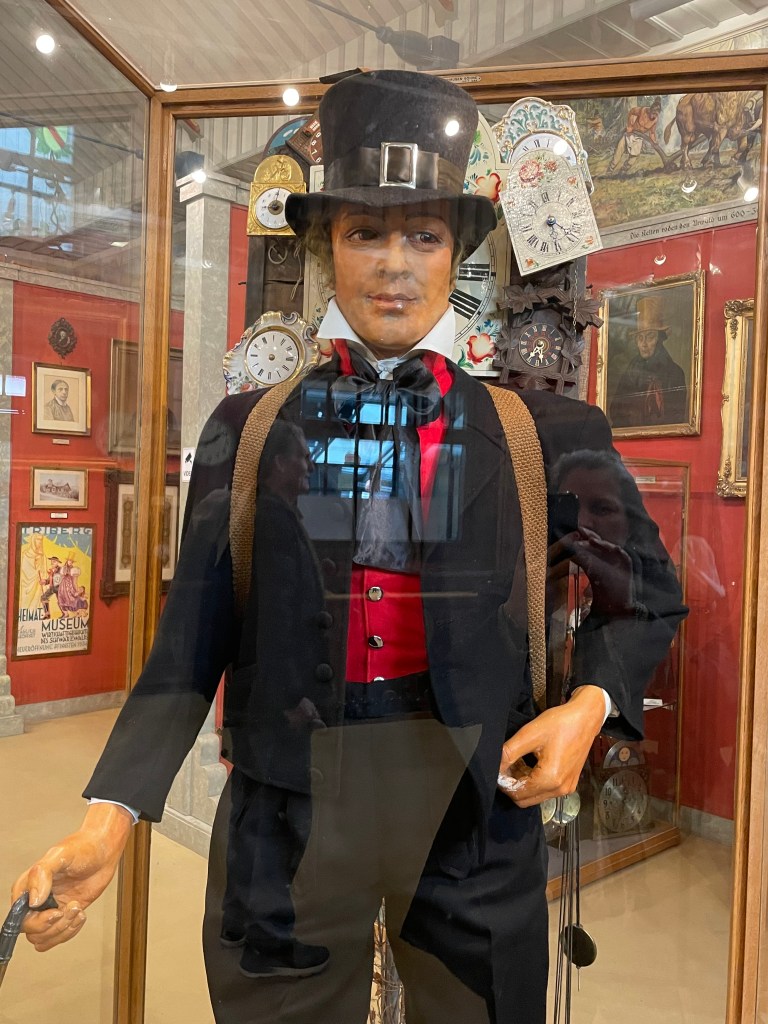
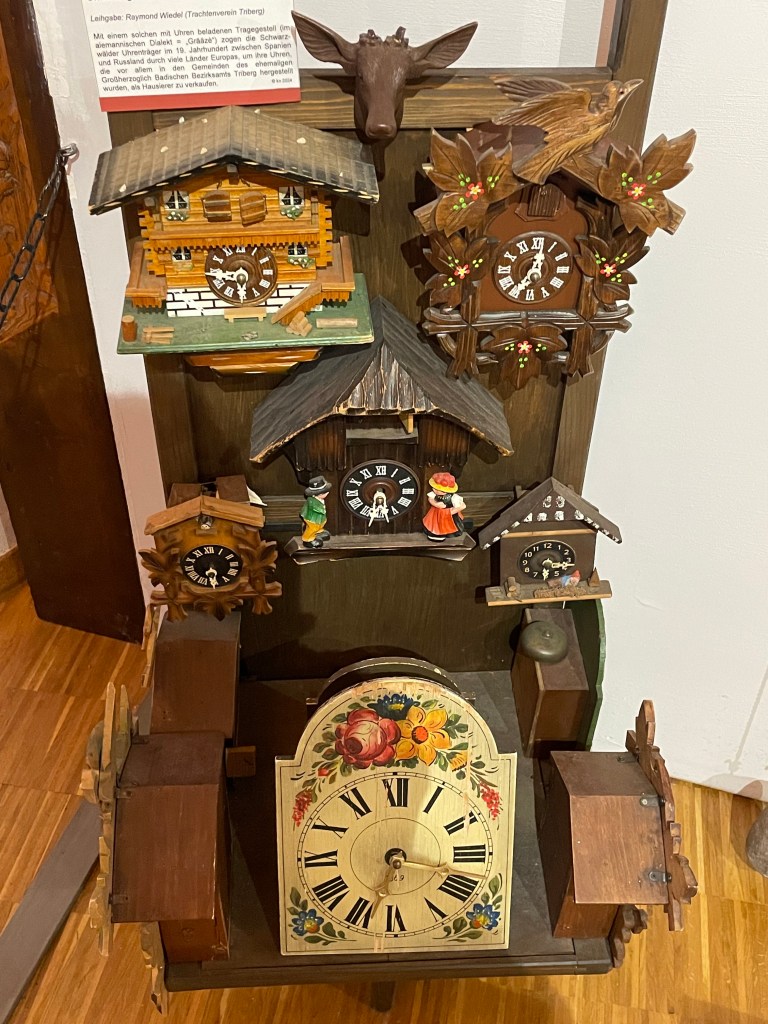
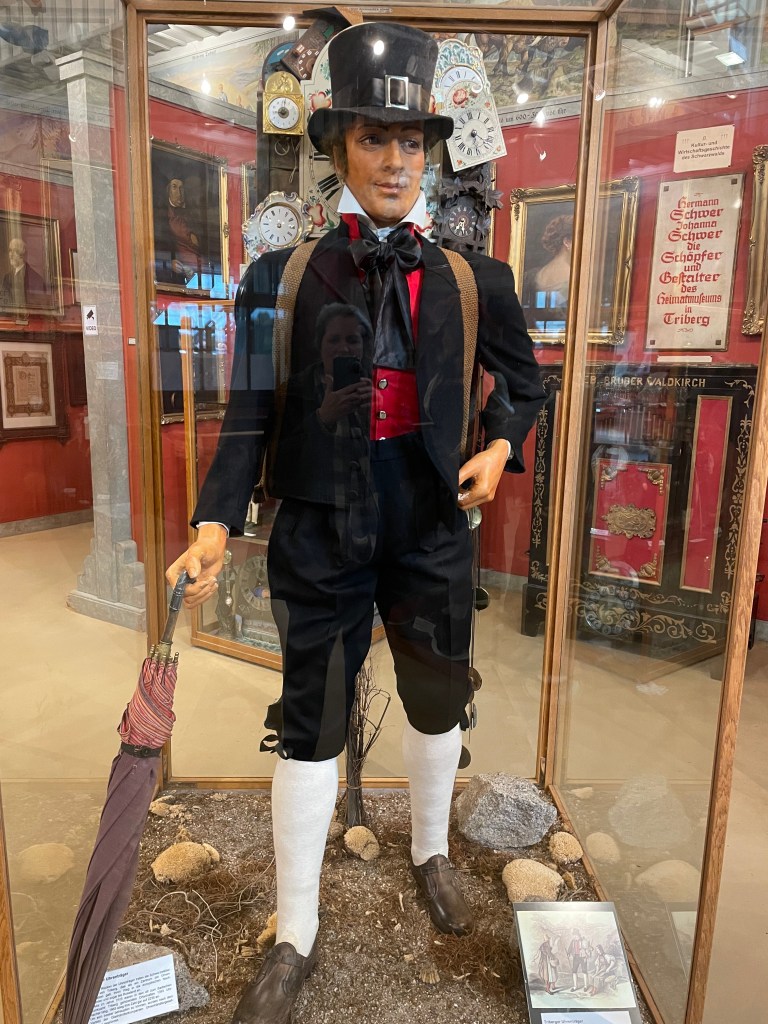
This is a clock peddler salesman.
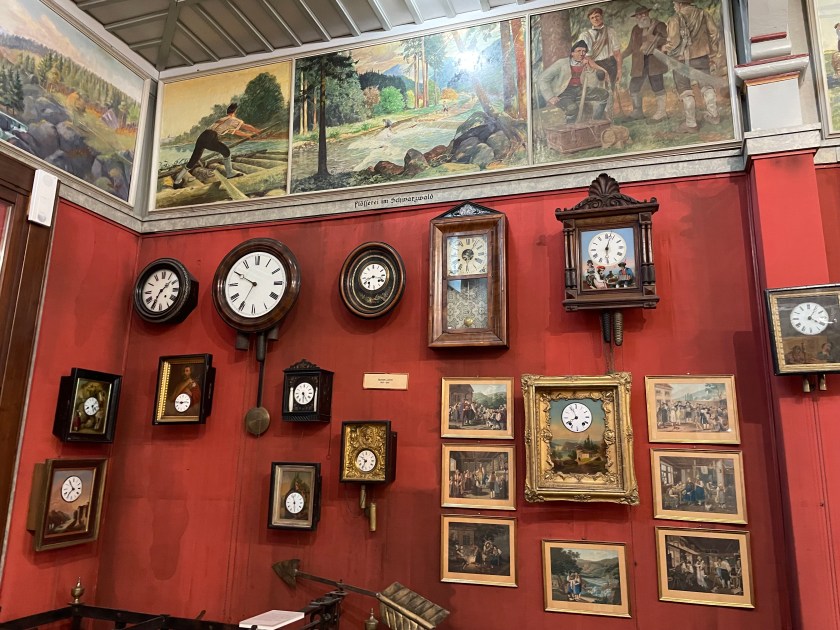
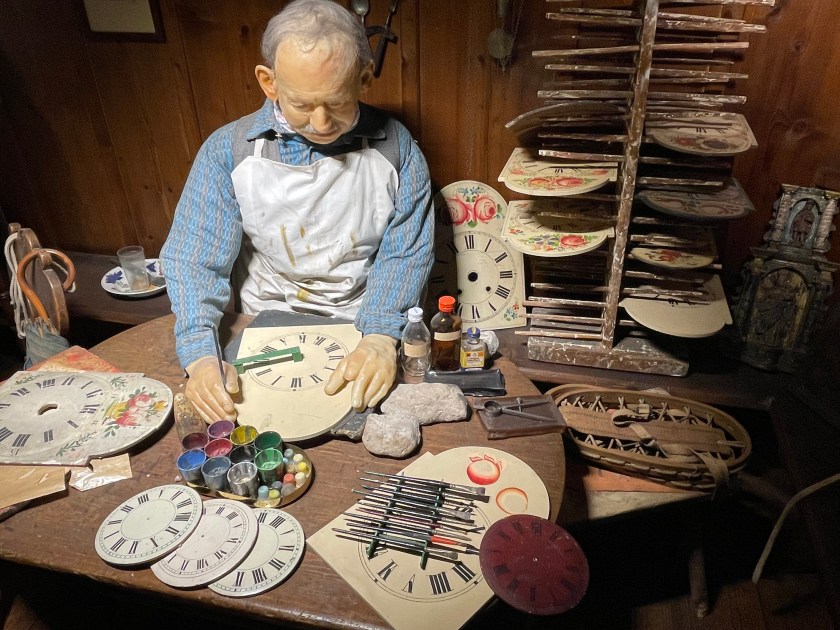
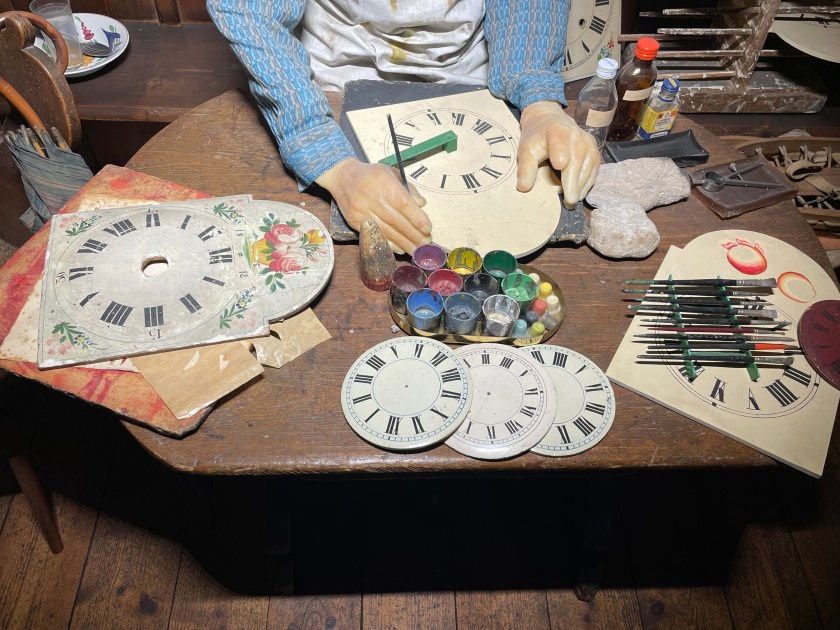
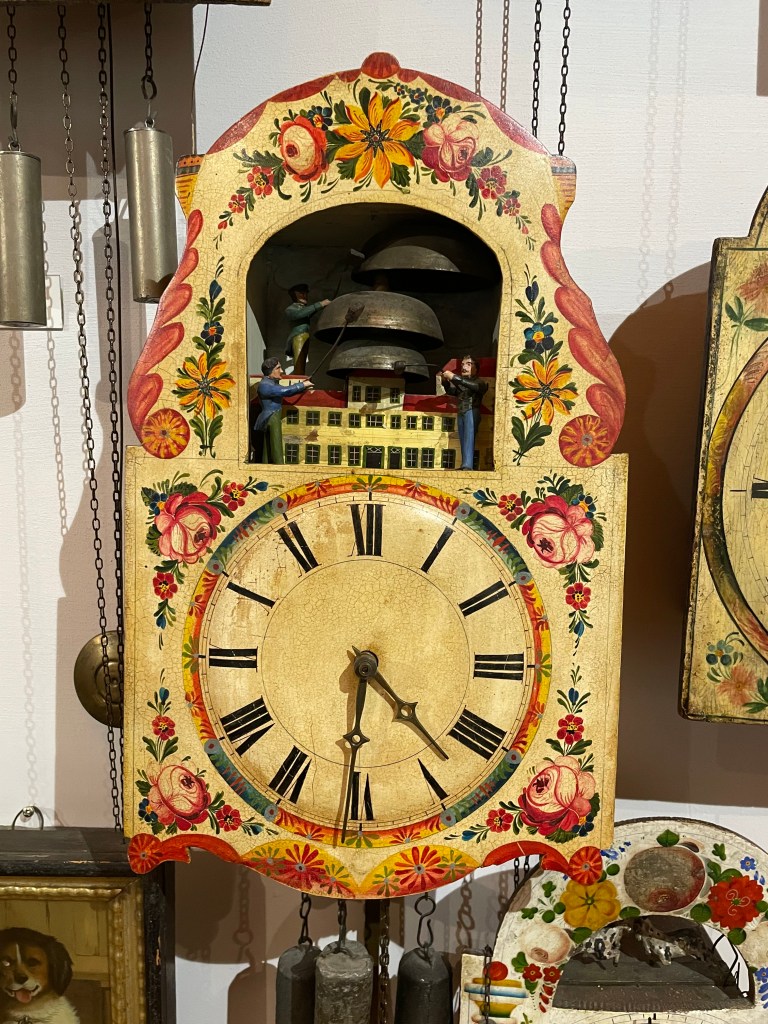
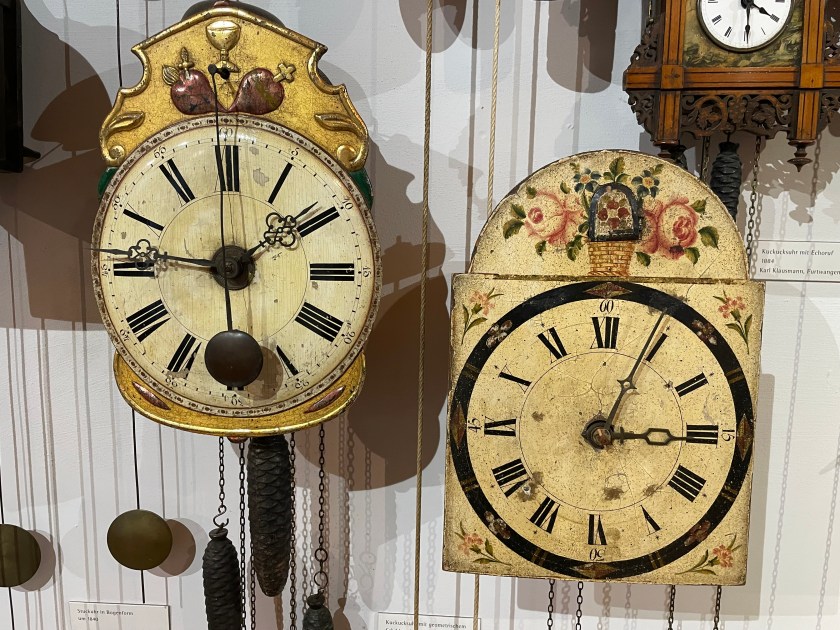
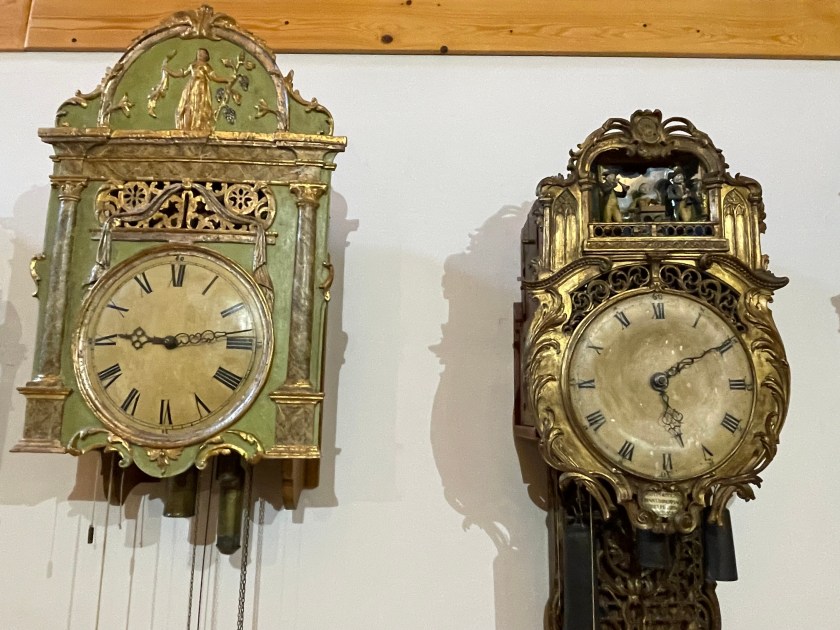
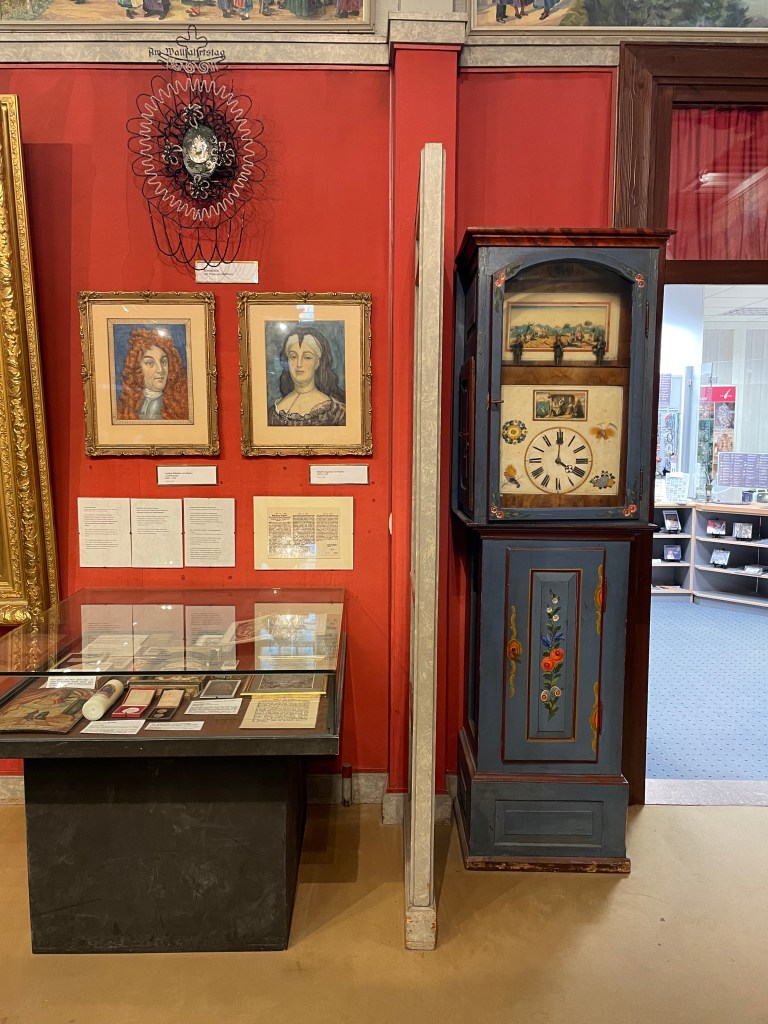
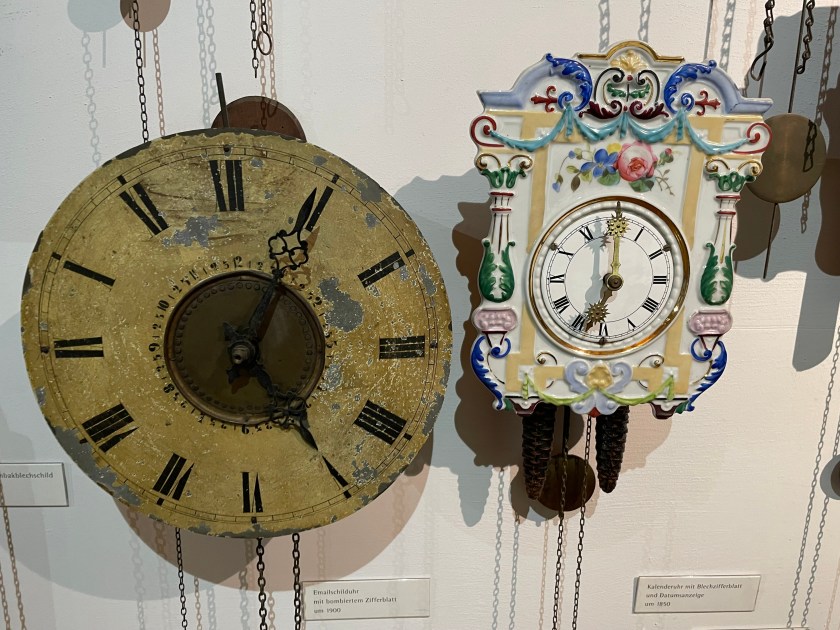
These flat, painted clock faces were common because they took less time to make and they were easier for the salesmen to carry.  I love them.

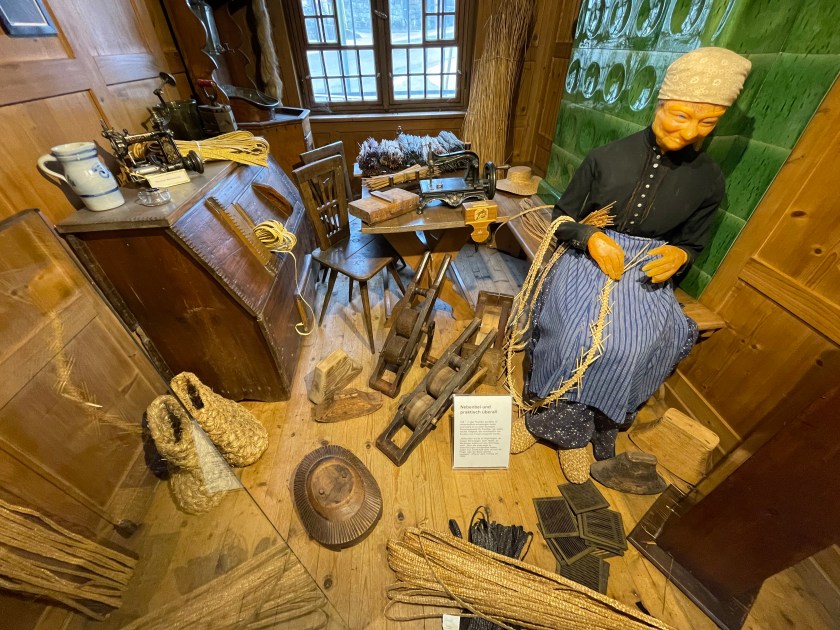
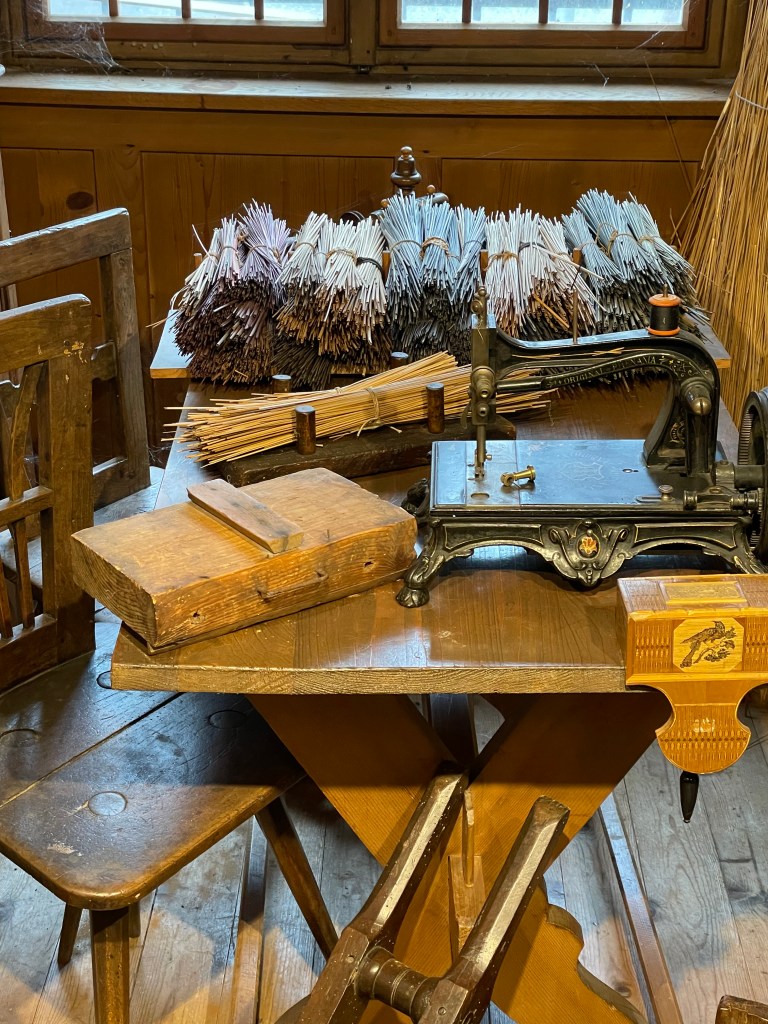
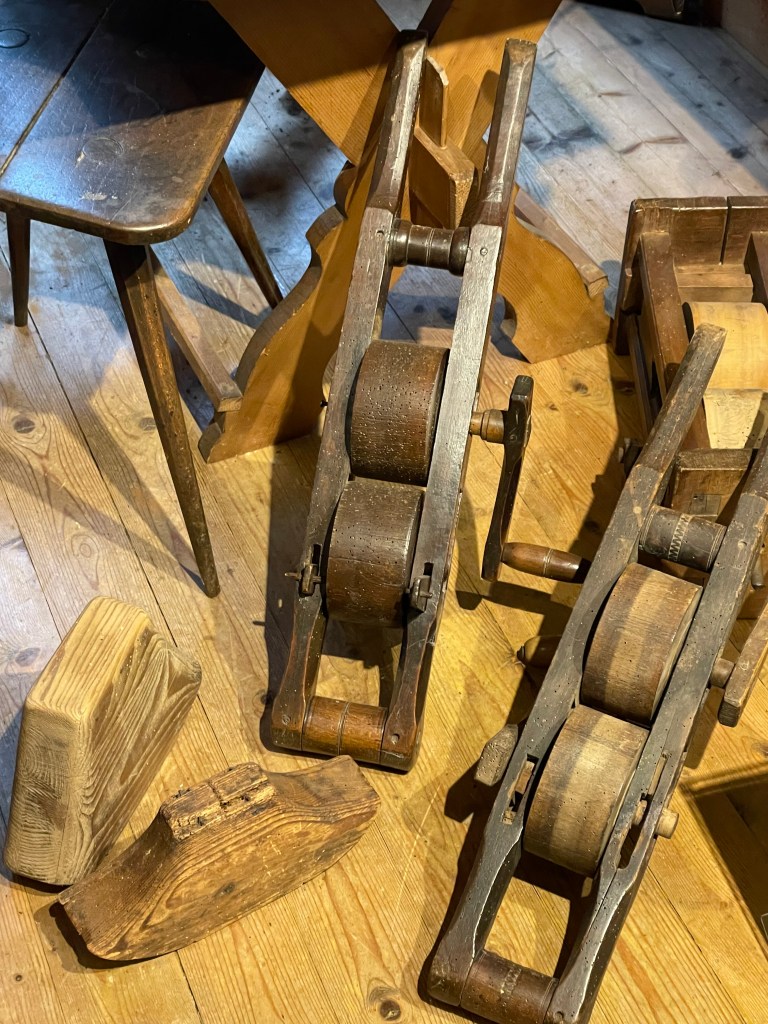
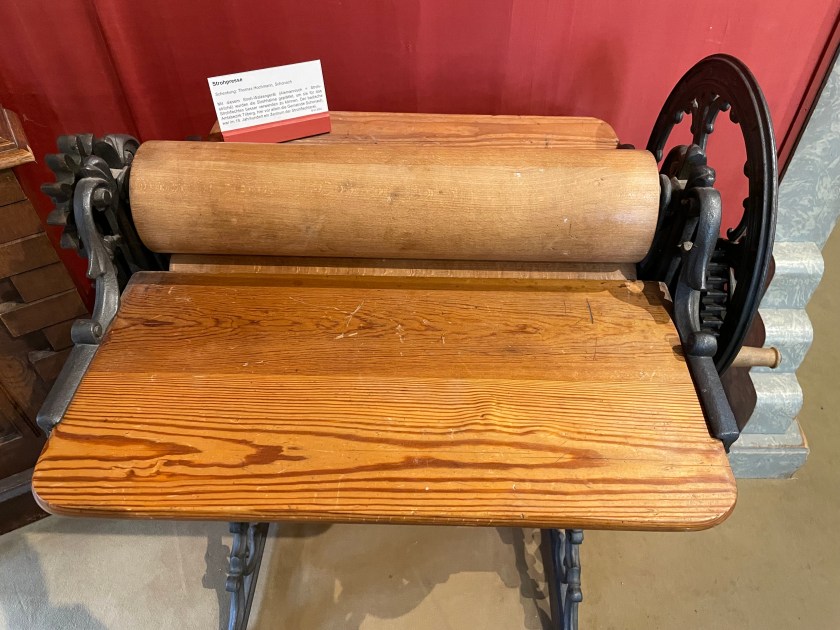
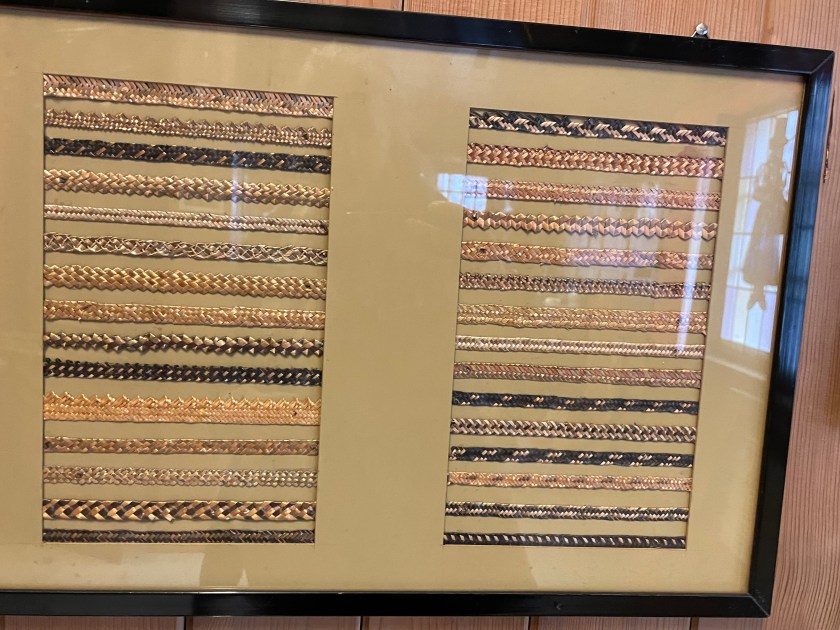
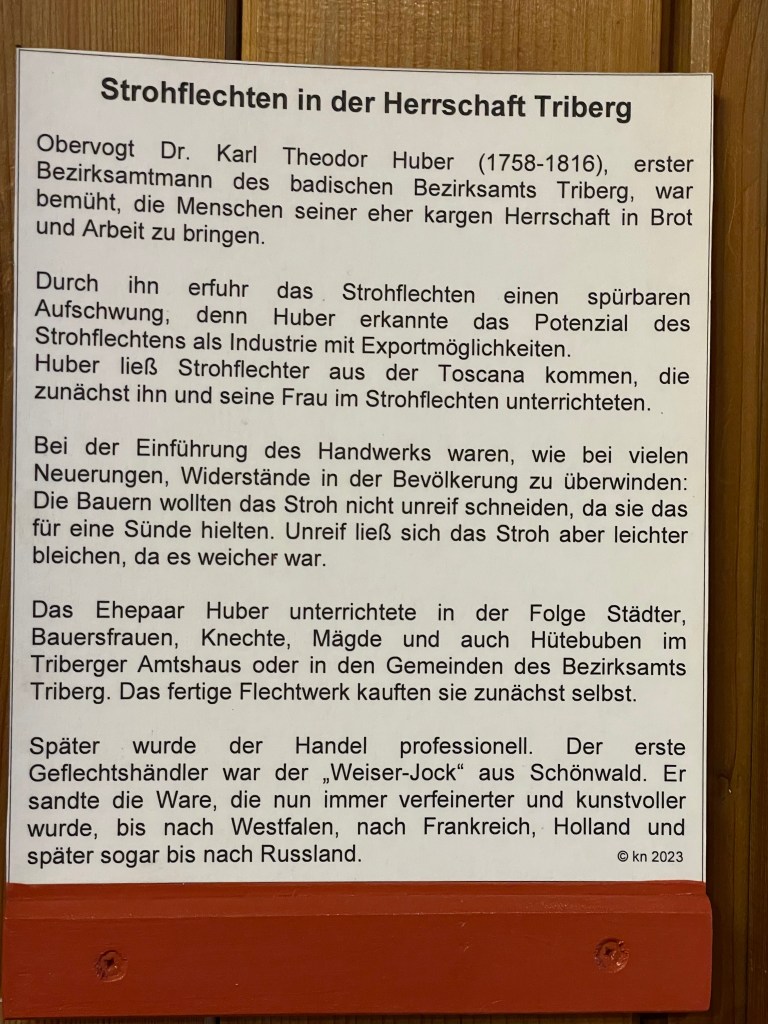
These next photos show the straw weaving industry from the Black Forest.  Many of these home industries kept these mountain people busy during the cold and snowy winter months.
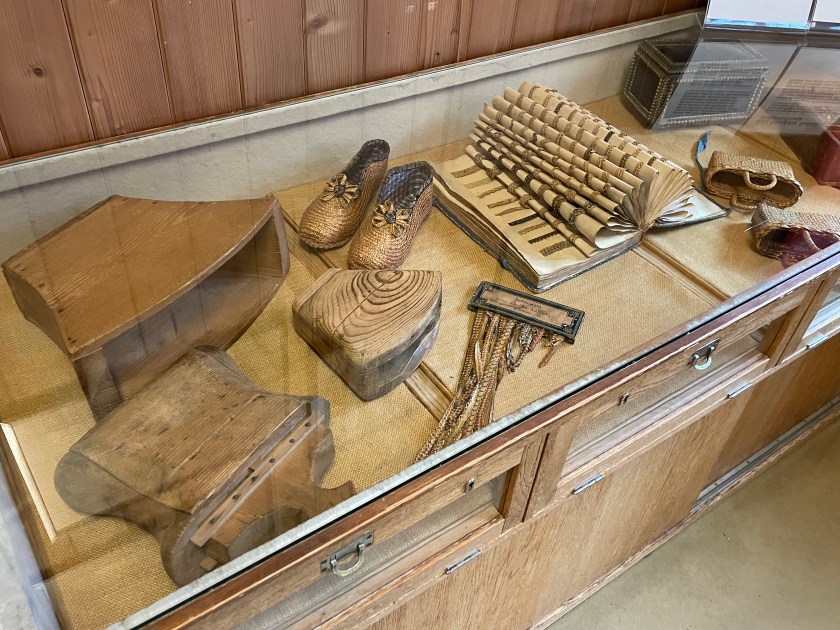
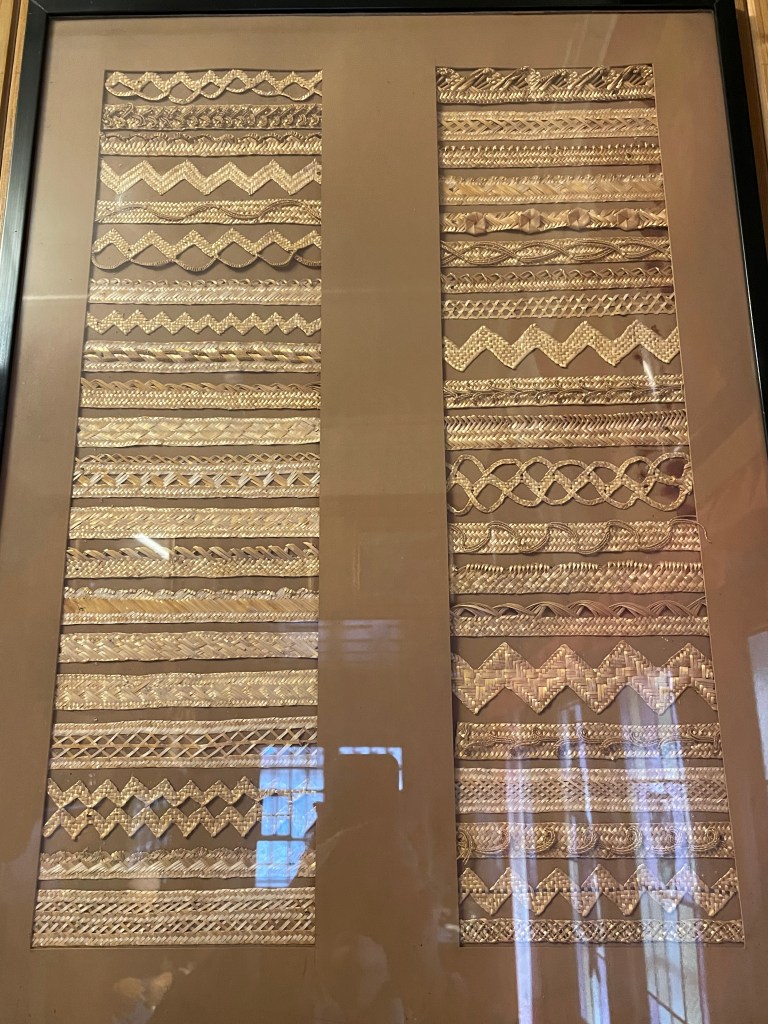
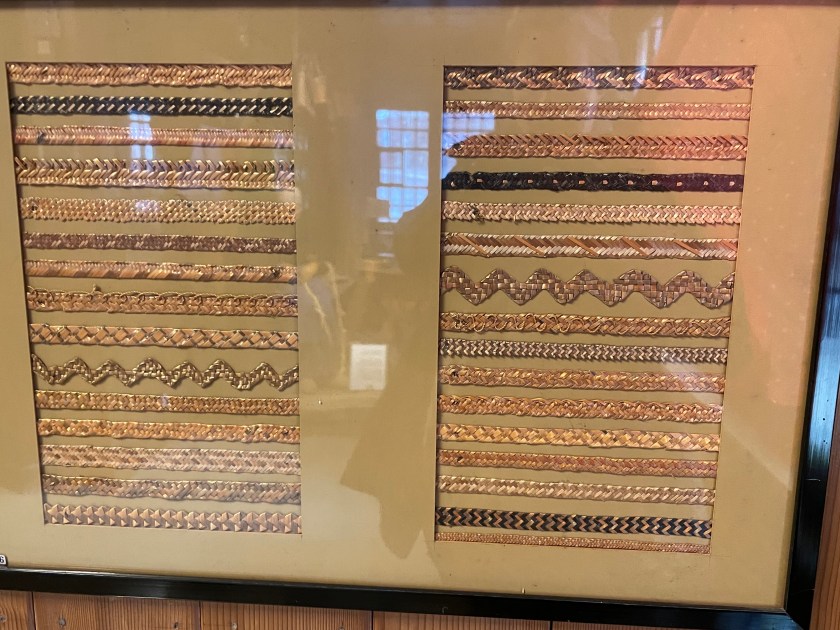
These woven straw ribbons are intricate and beautiful.
These straw samplers show all the different patterns.
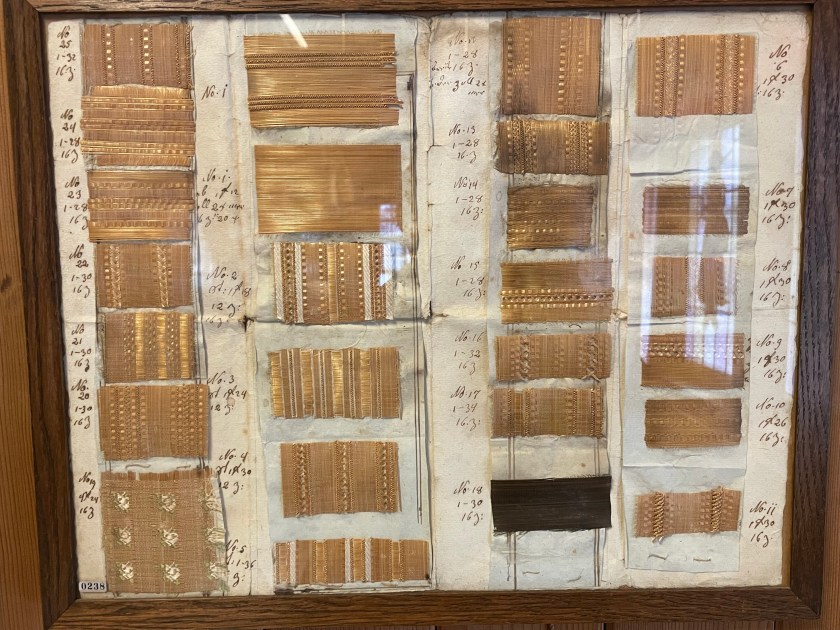
History of straw weaving:
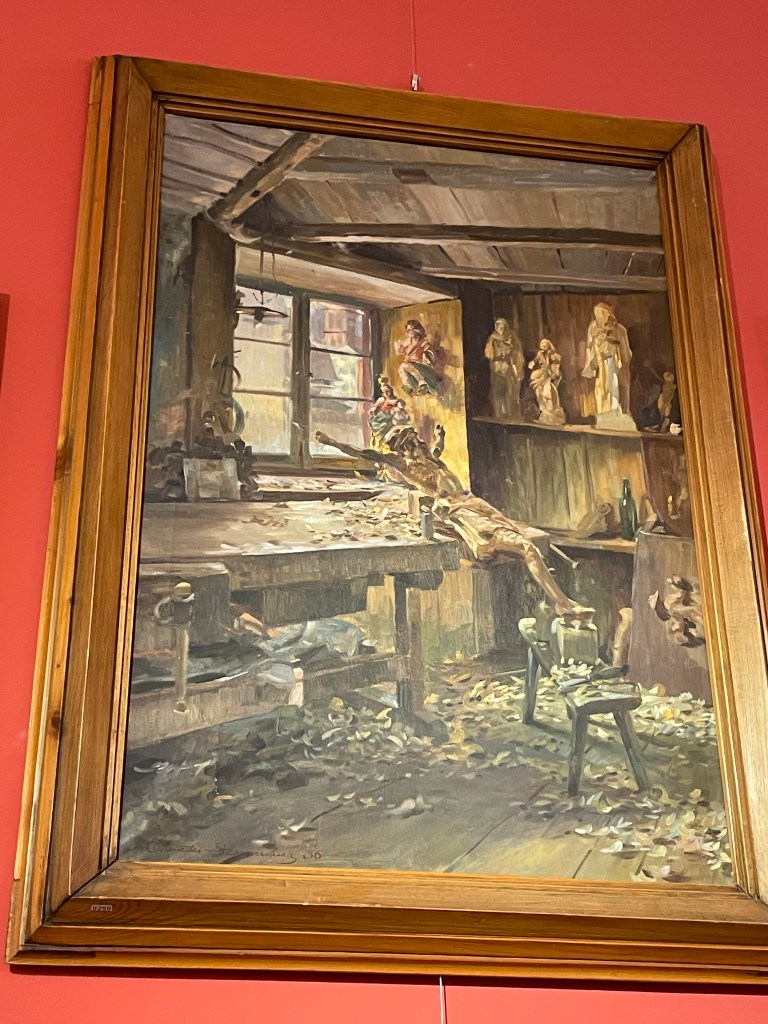
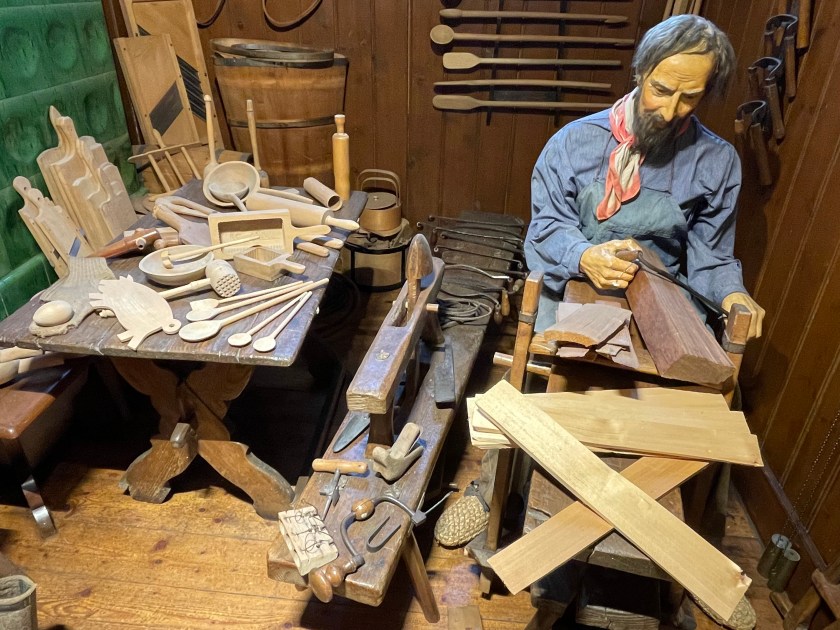
Here’s a woodcarver’s workroom:
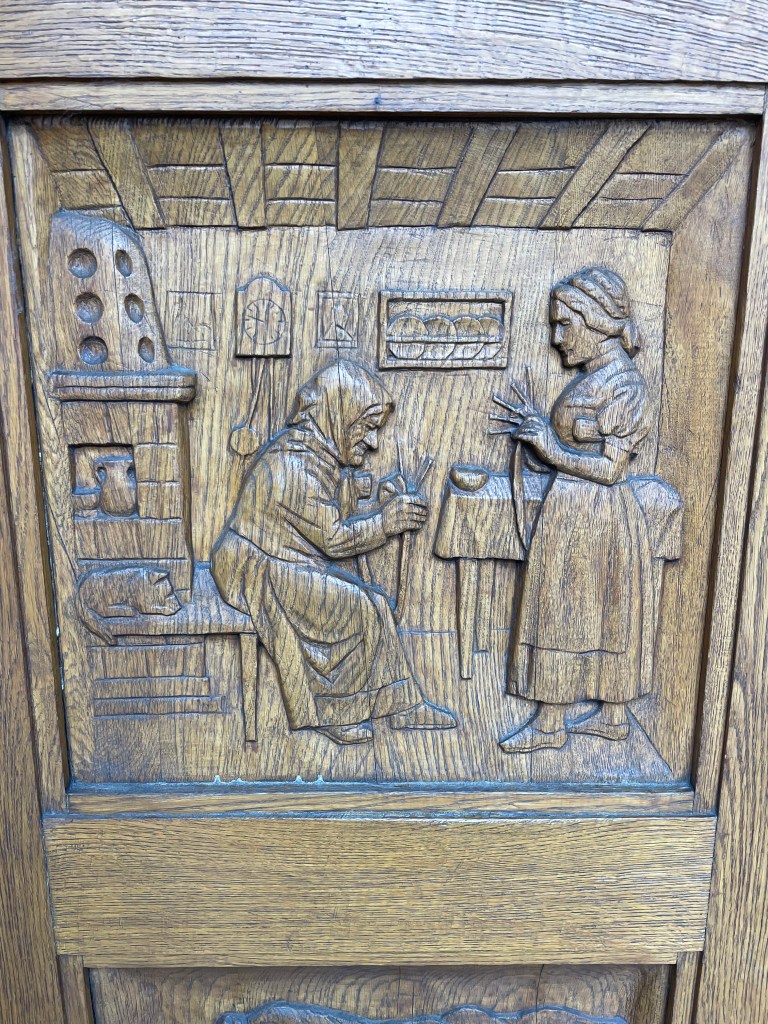
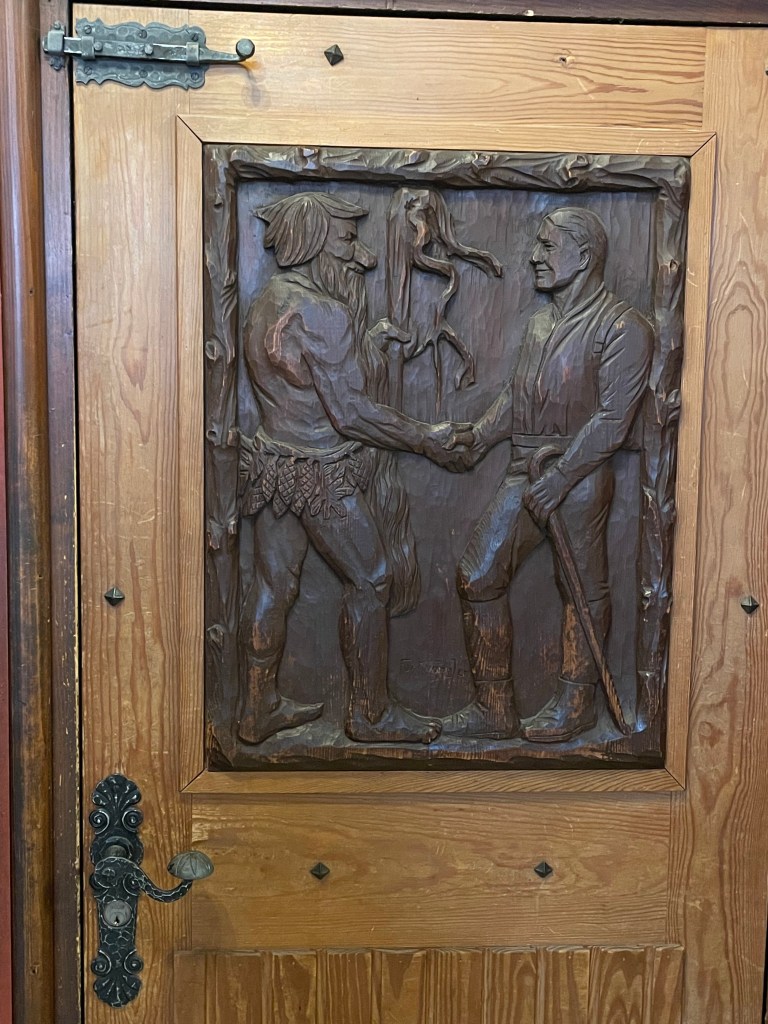
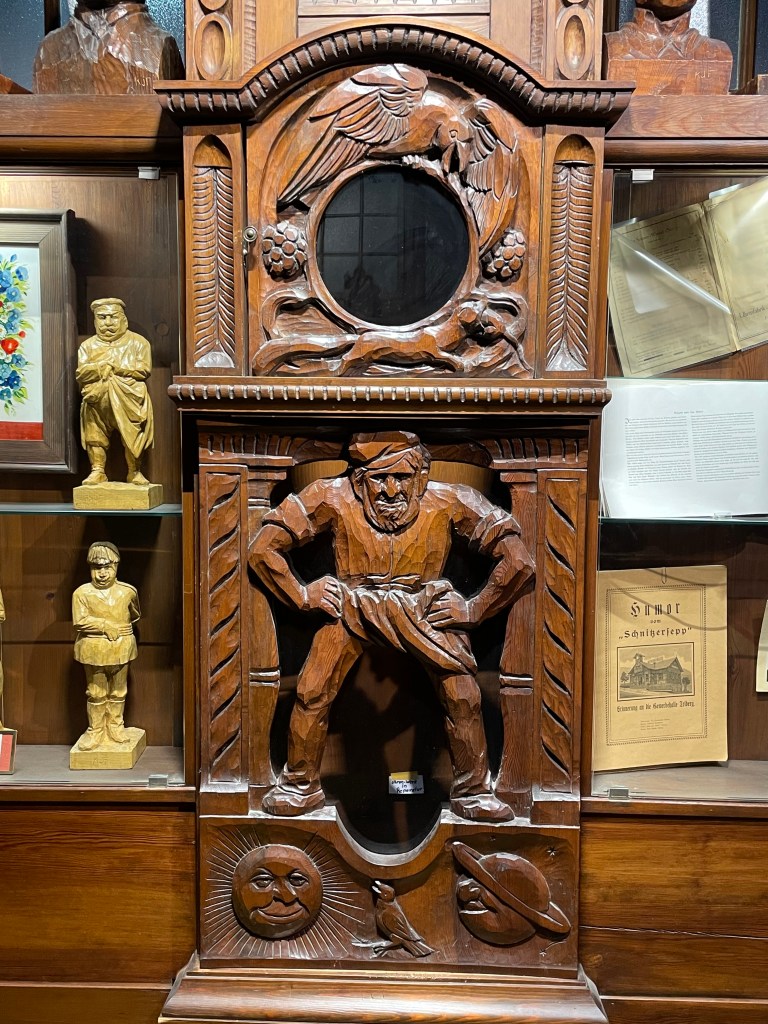
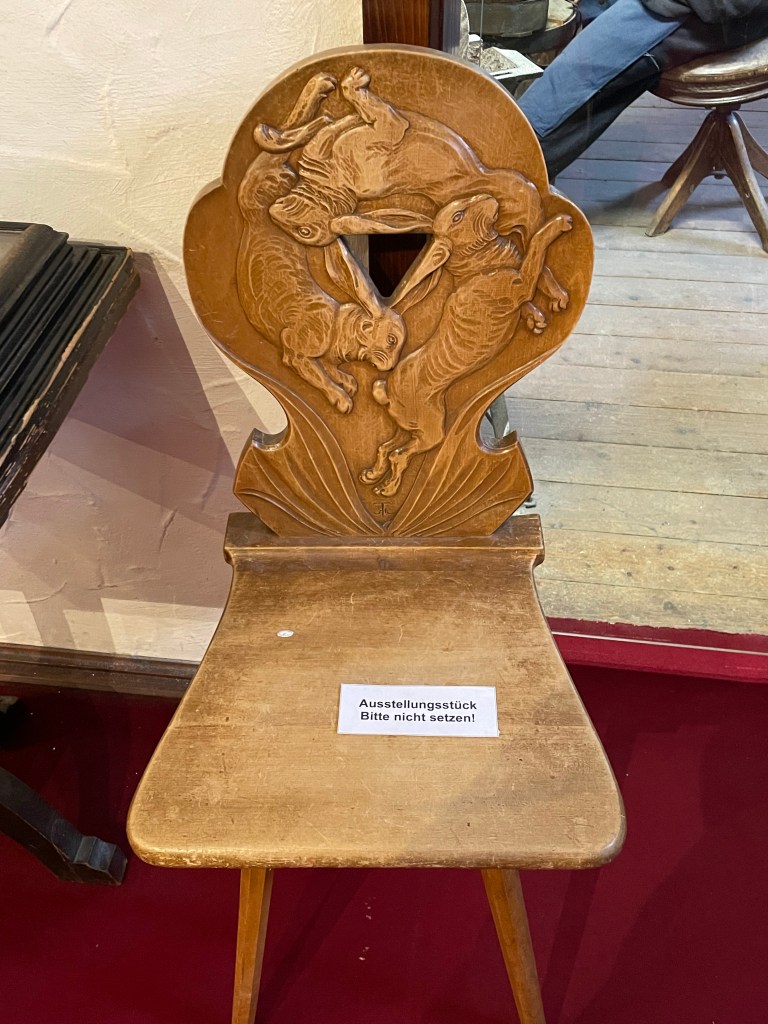
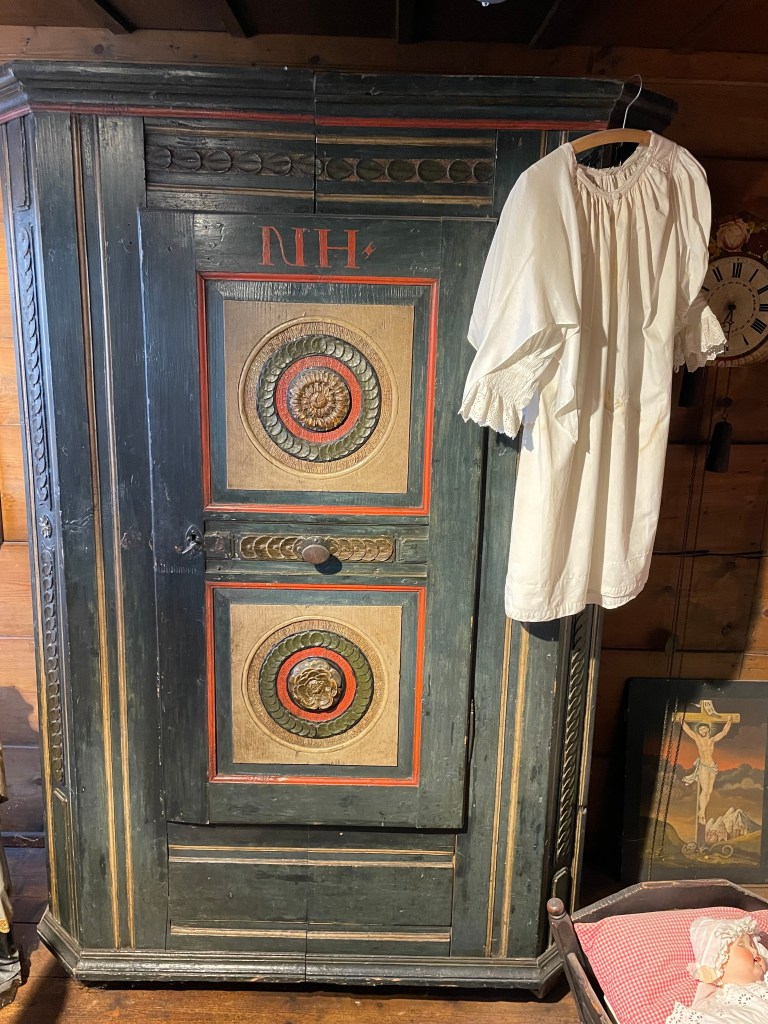
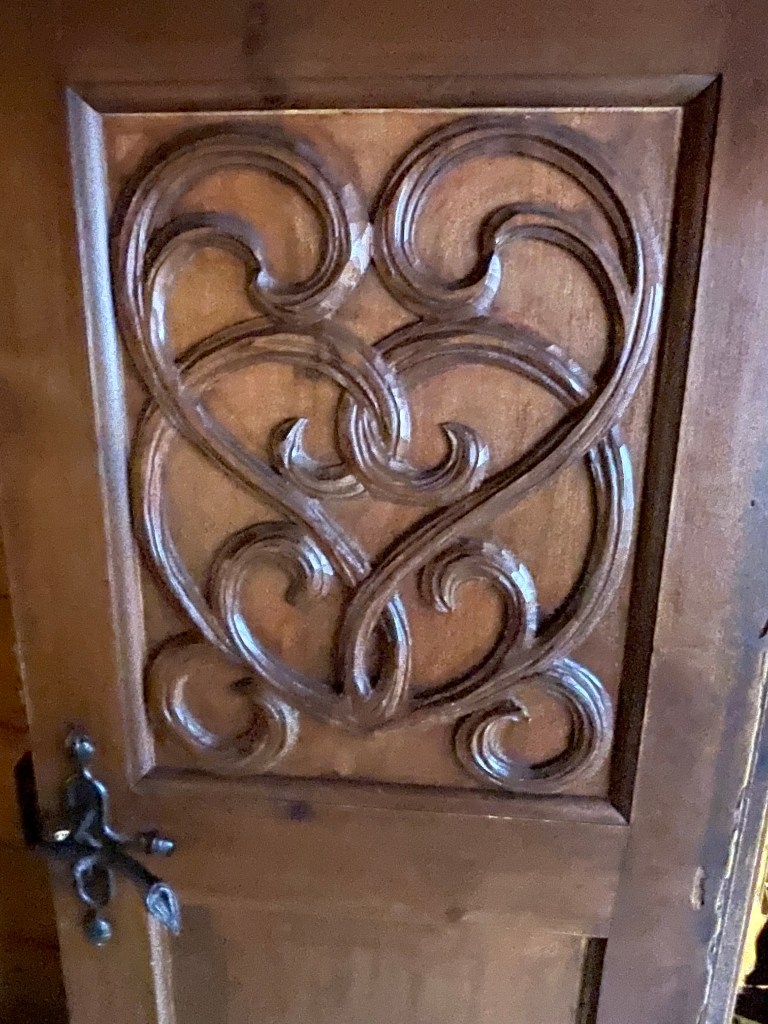
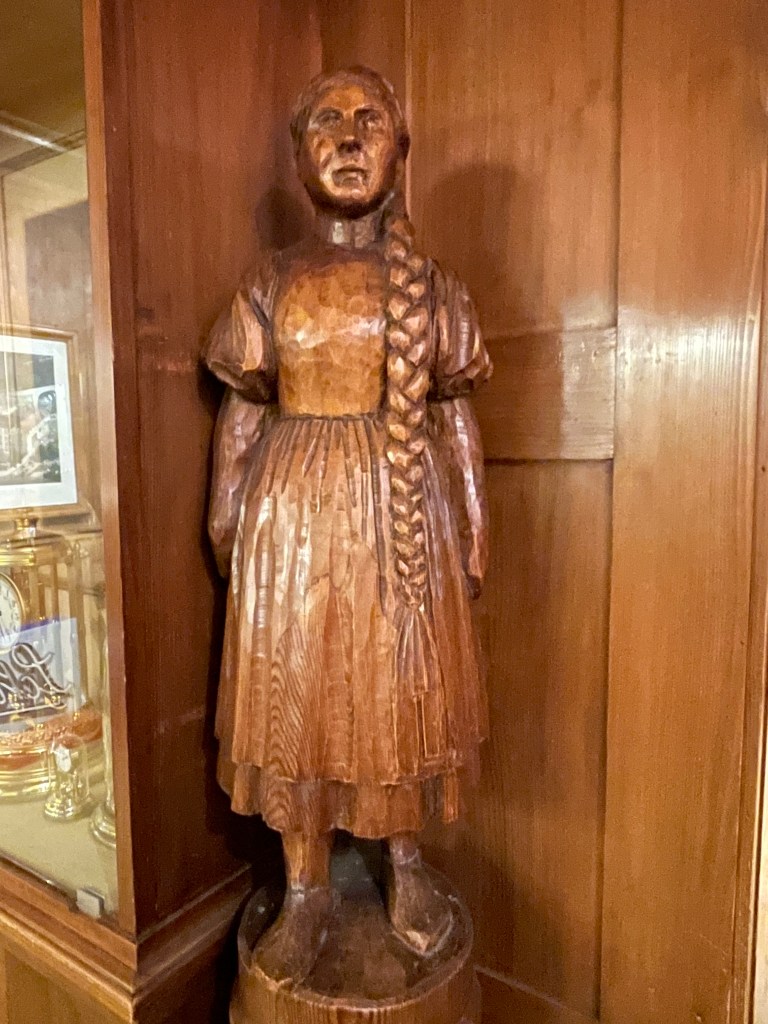
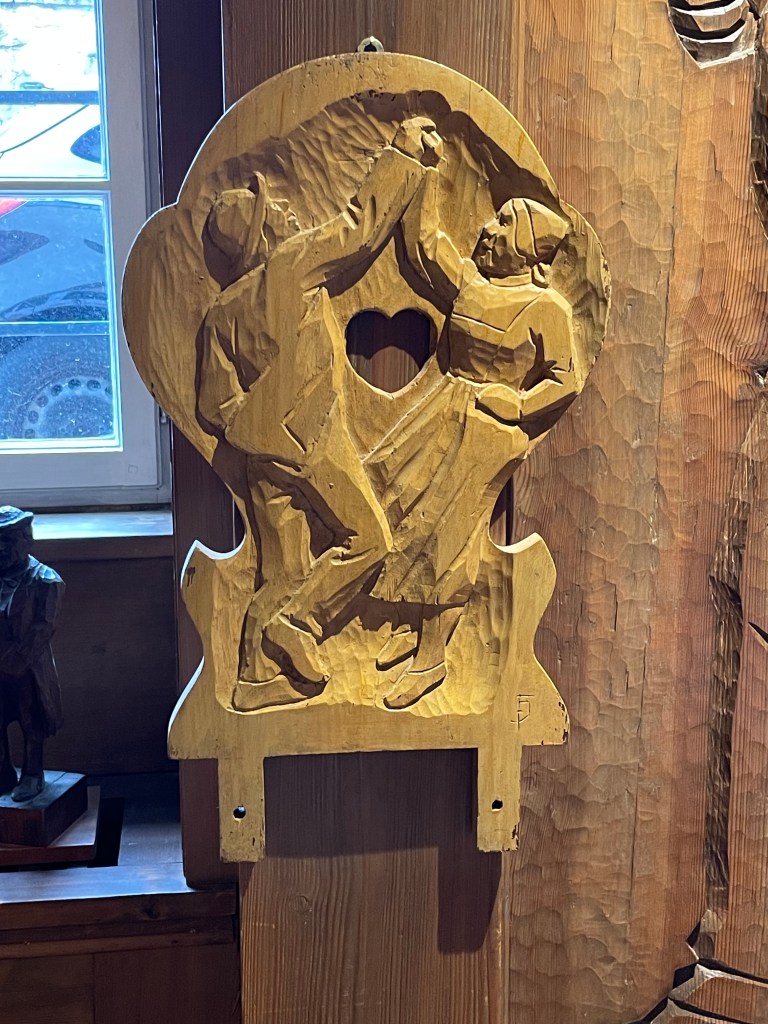
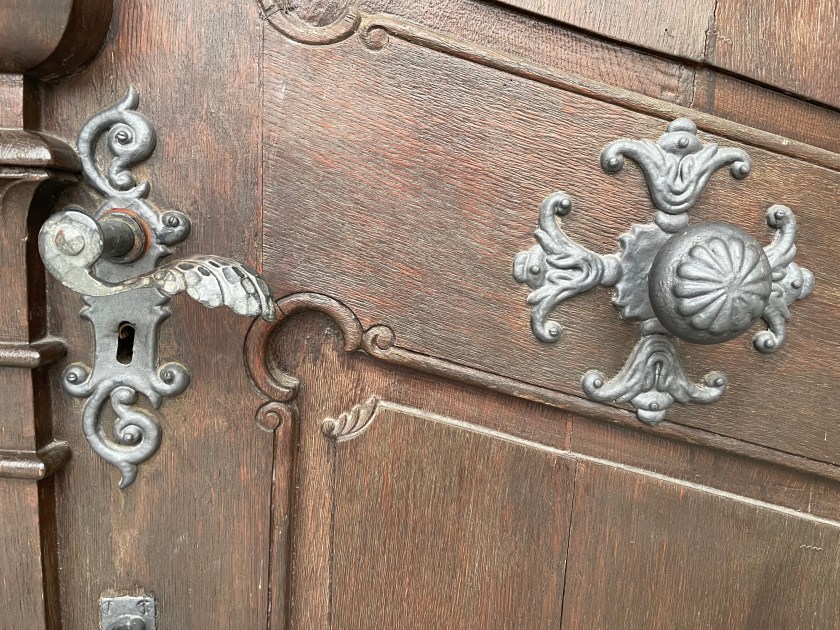
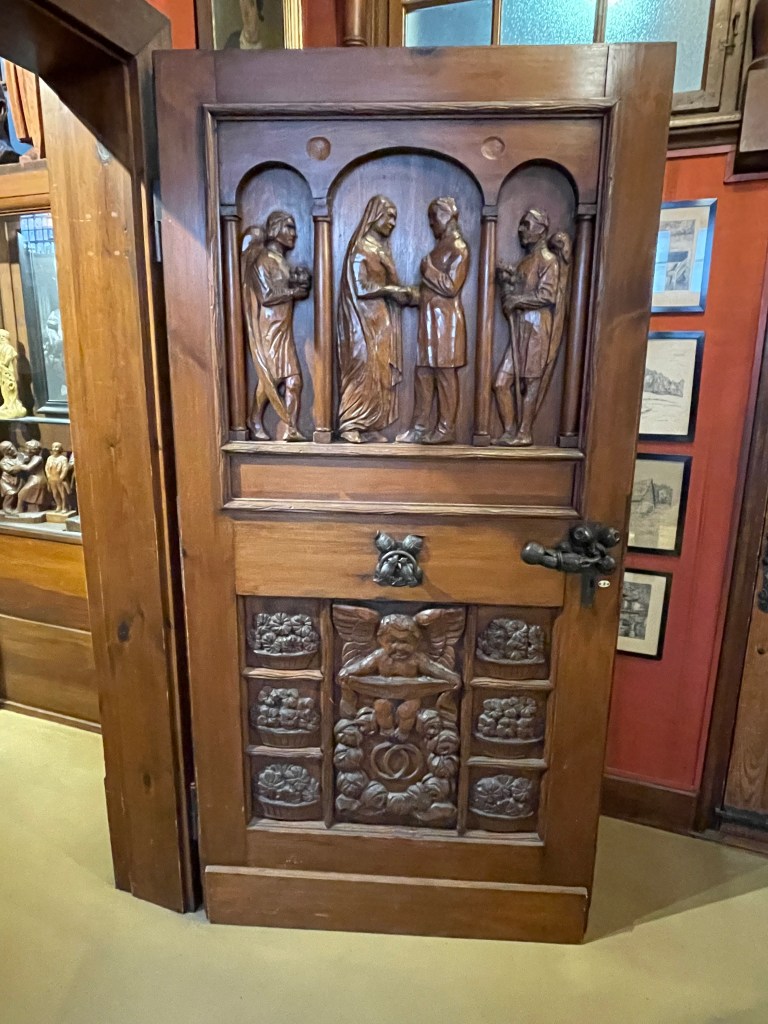
Doors and furniture were beautifully carved.  The carvings tell stories and capture images and faces from long ago.  Fascinating!
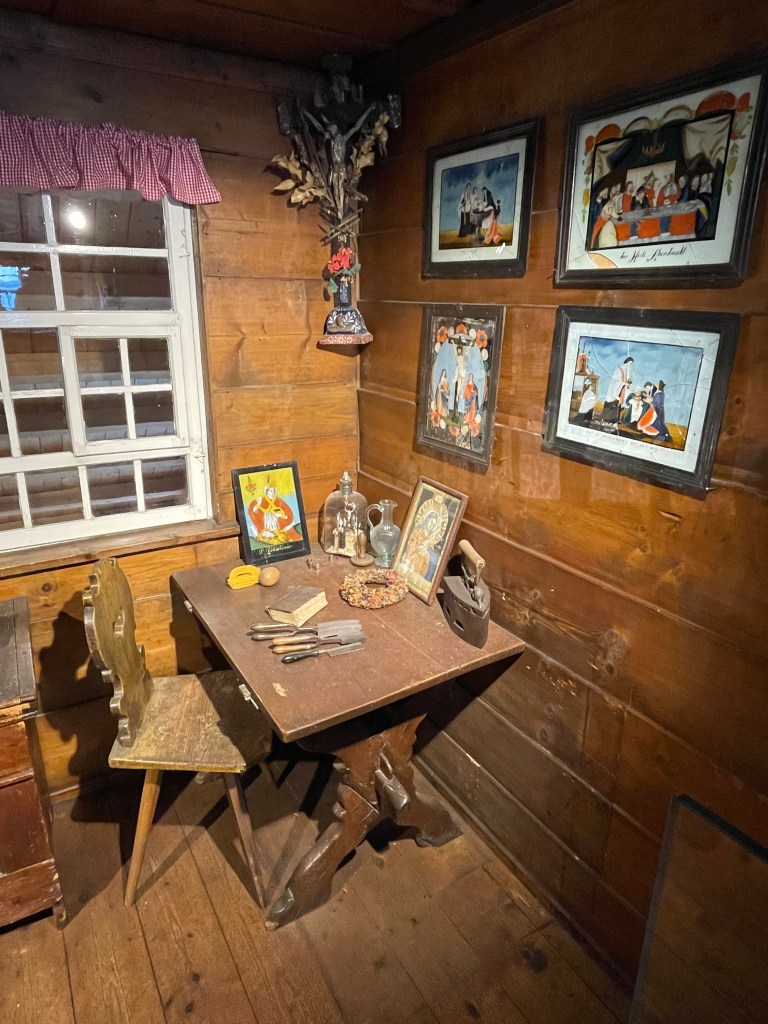
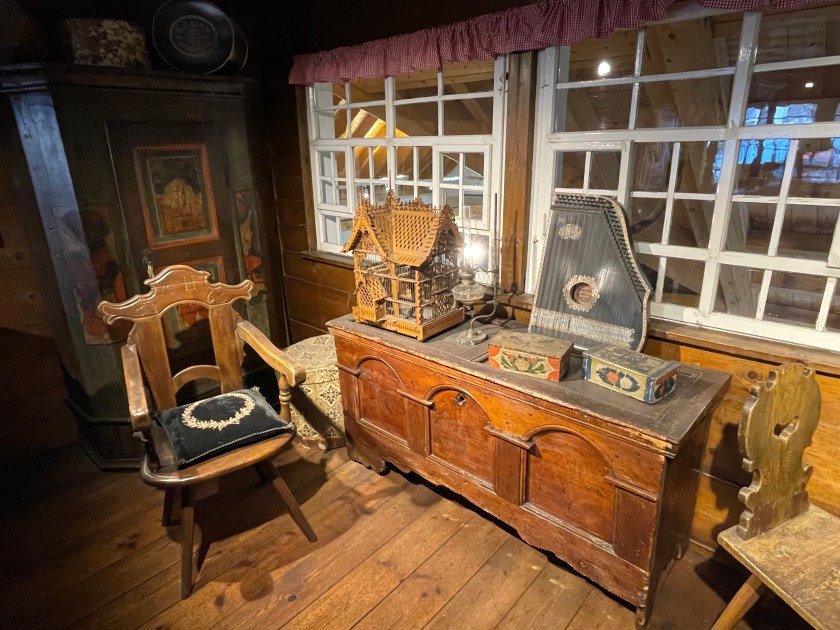
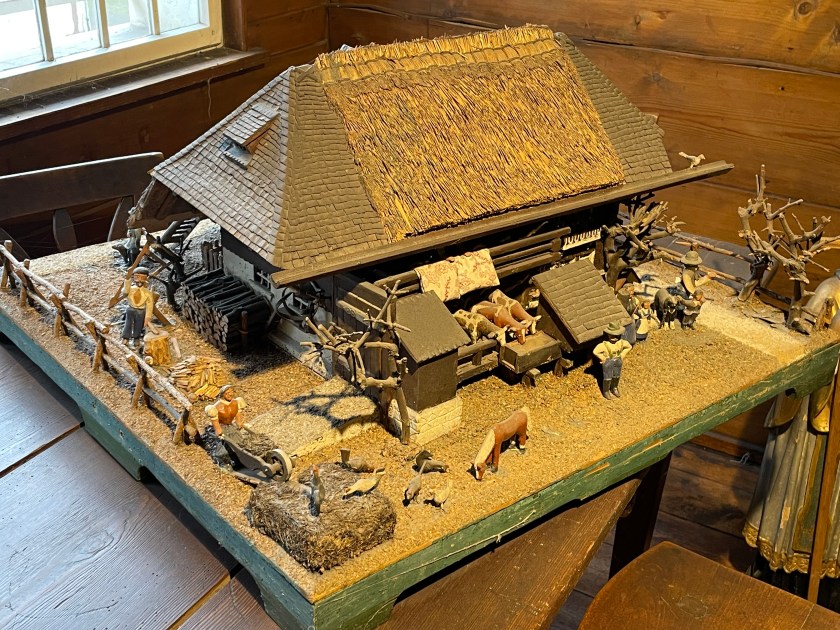
A typical farm house:
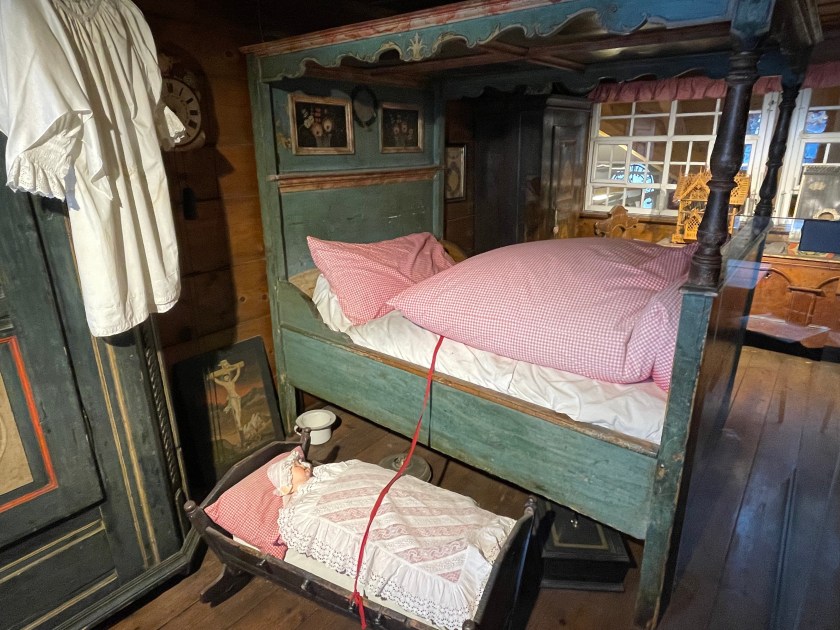
A bedroom:
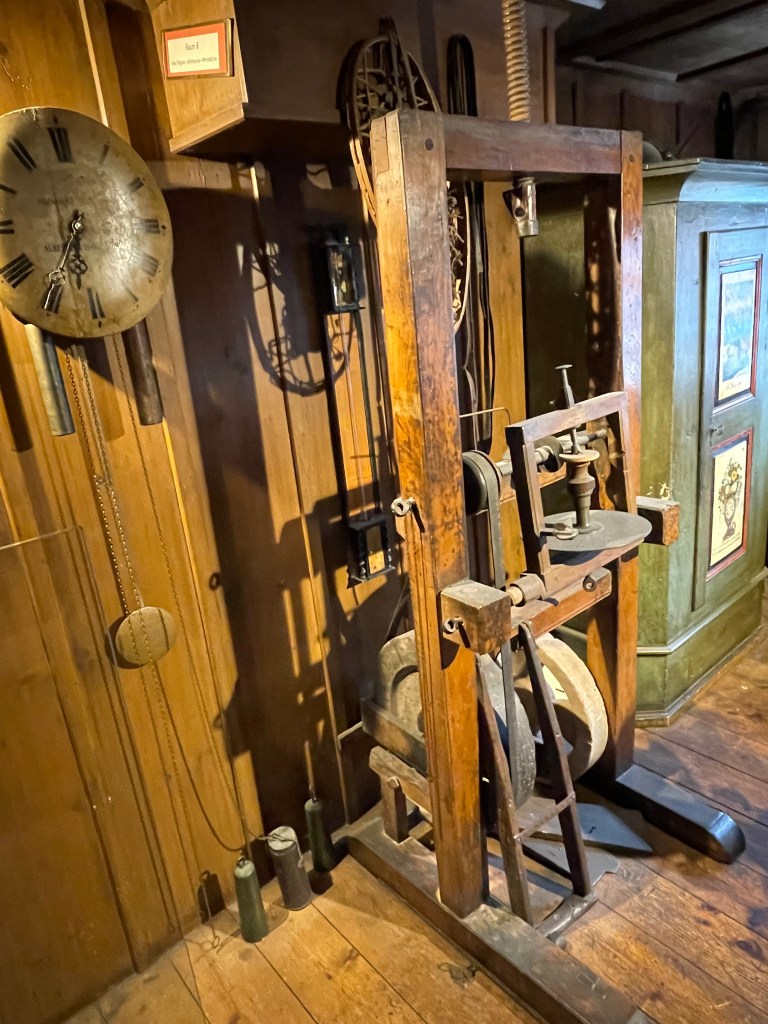
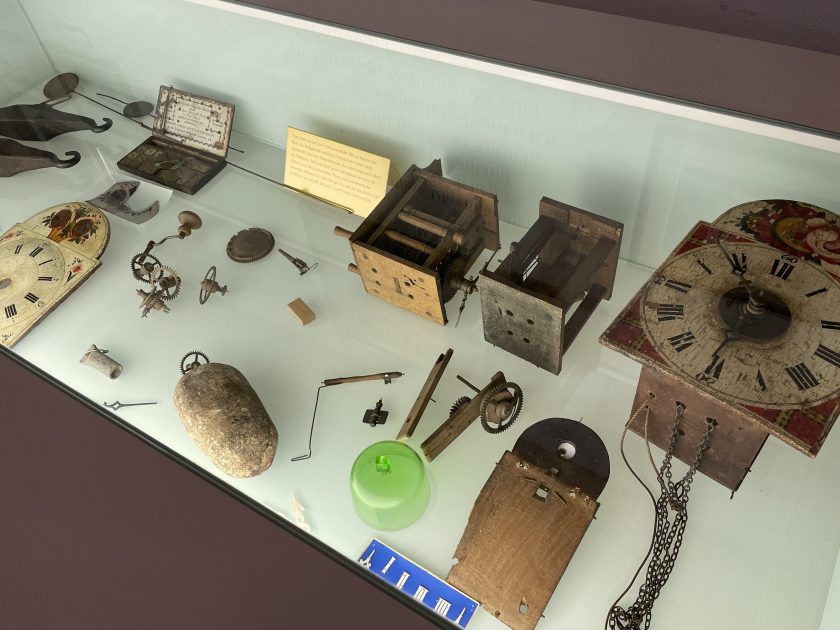
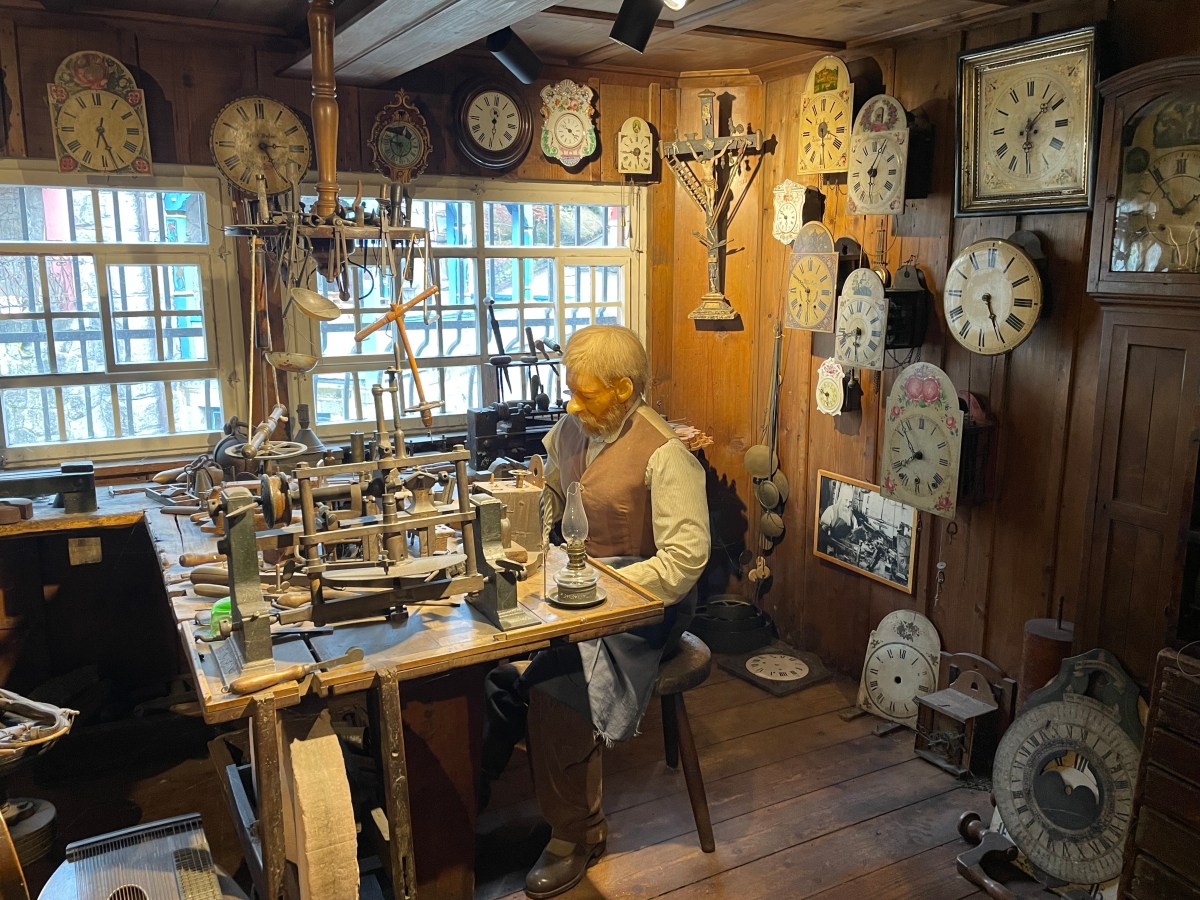
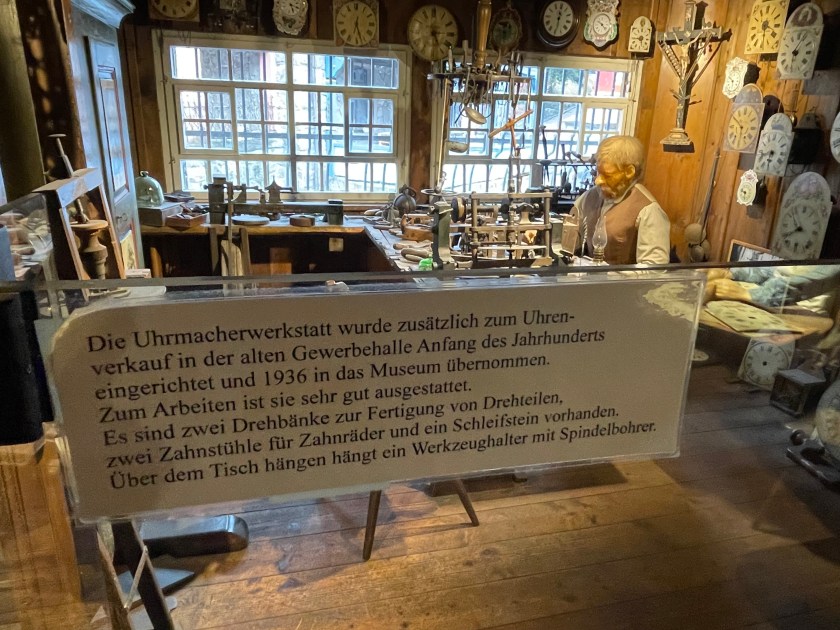
The clock maker’s shop:
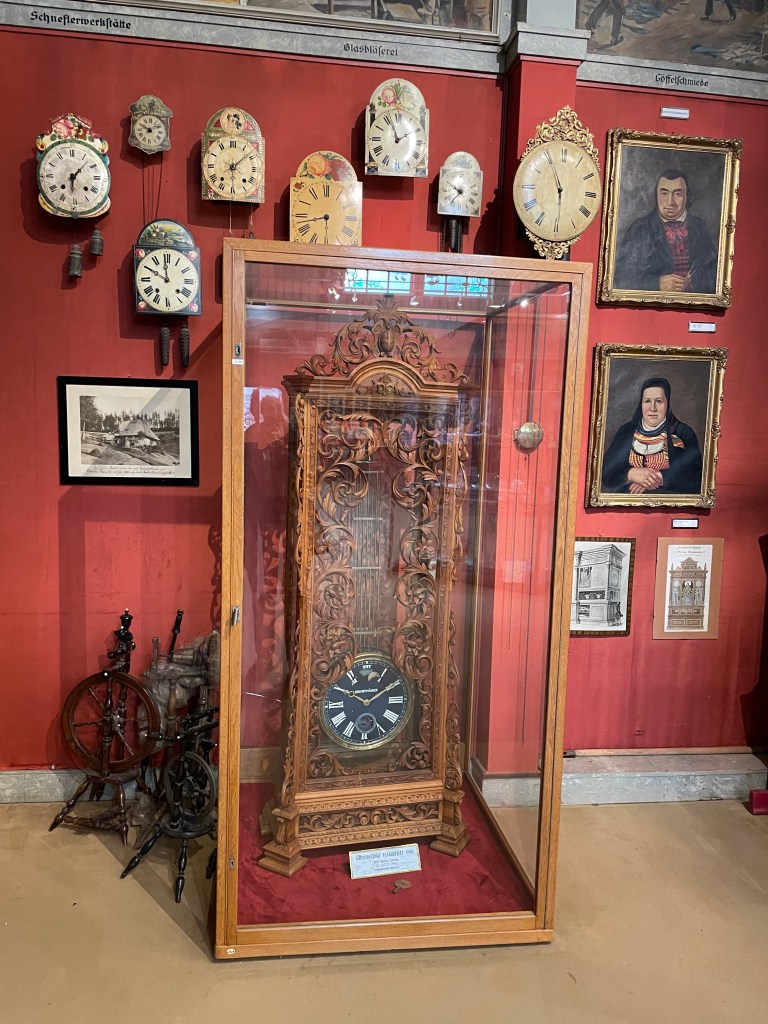
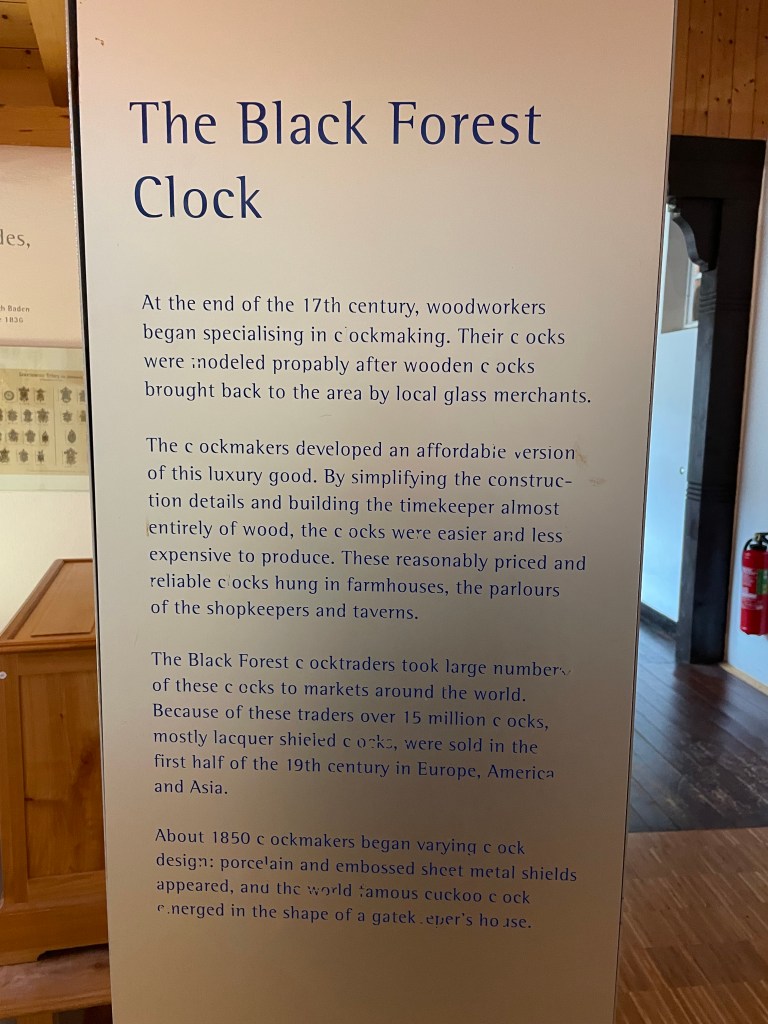
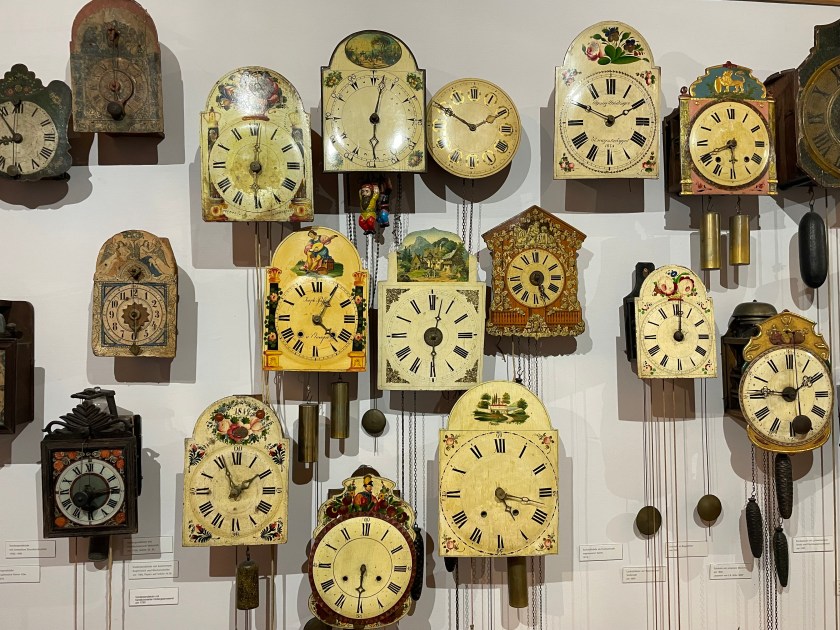
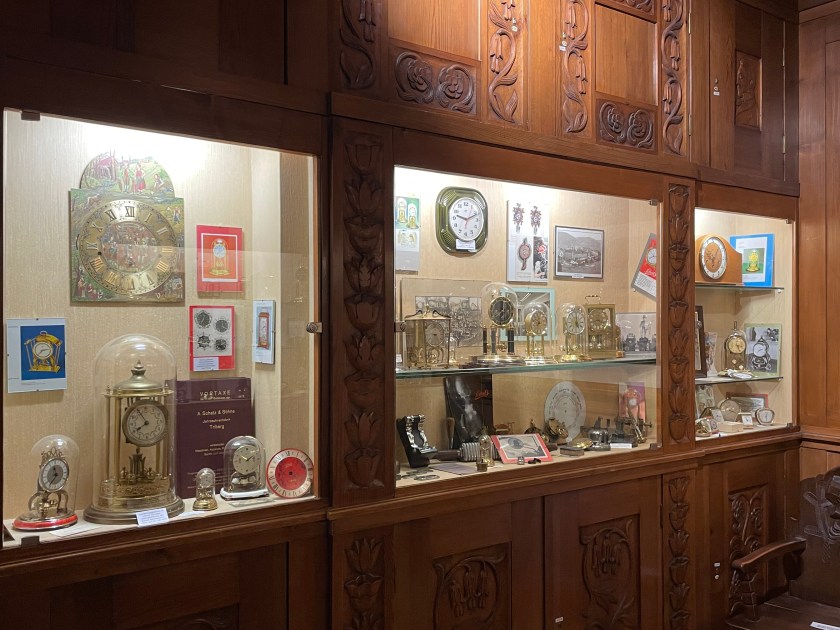
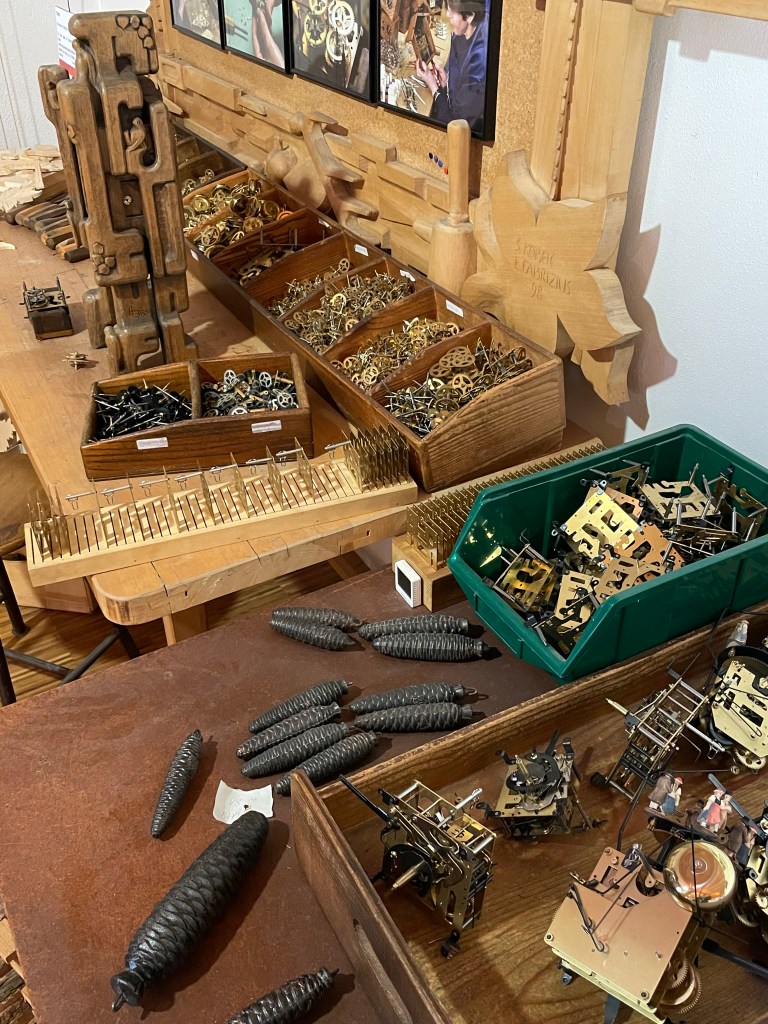
Oh, the beautiful old clocks!!

“Because we are here in the strange/unusual part of the Black Forest where clock manufacturing is carried out in all homes.”

“If you ask these watch dealers where they travel, they answer:  To the land of watches.  This is their common saying, they may afterwards travel in France, in Turkey, in North America or elsewhere.”

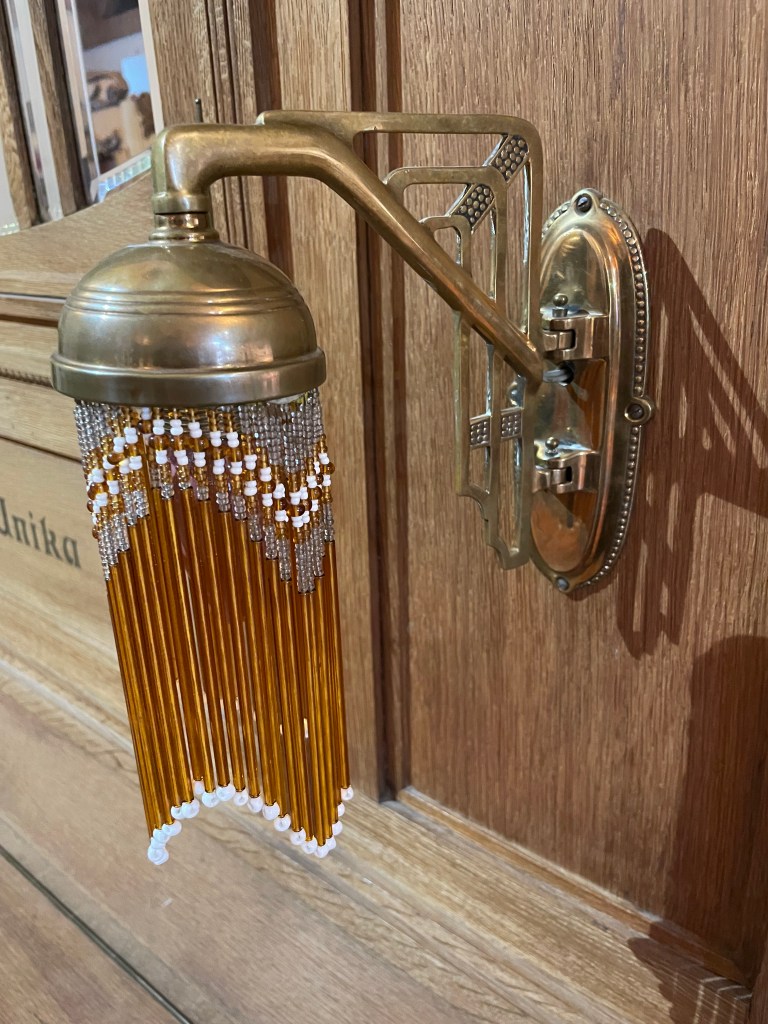
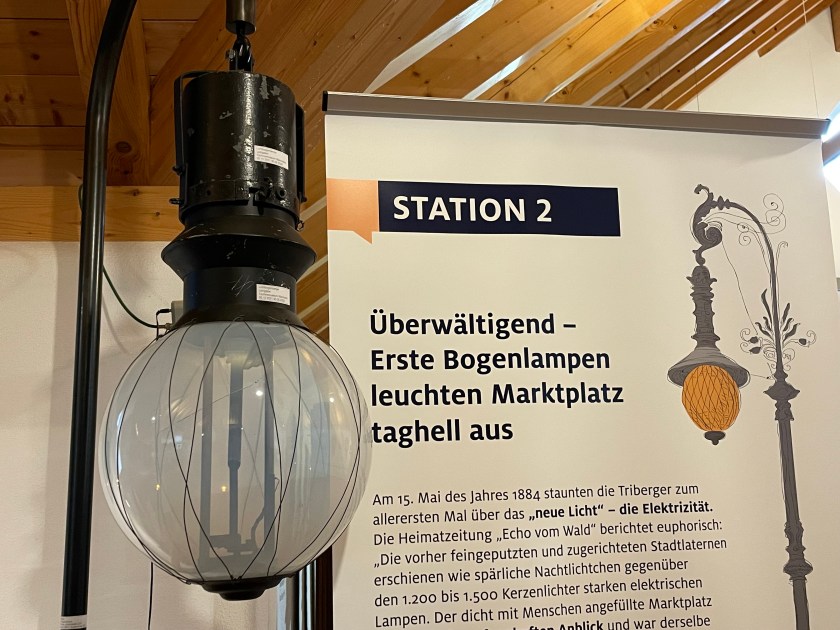
Electric lights came to Triberg in 1884.
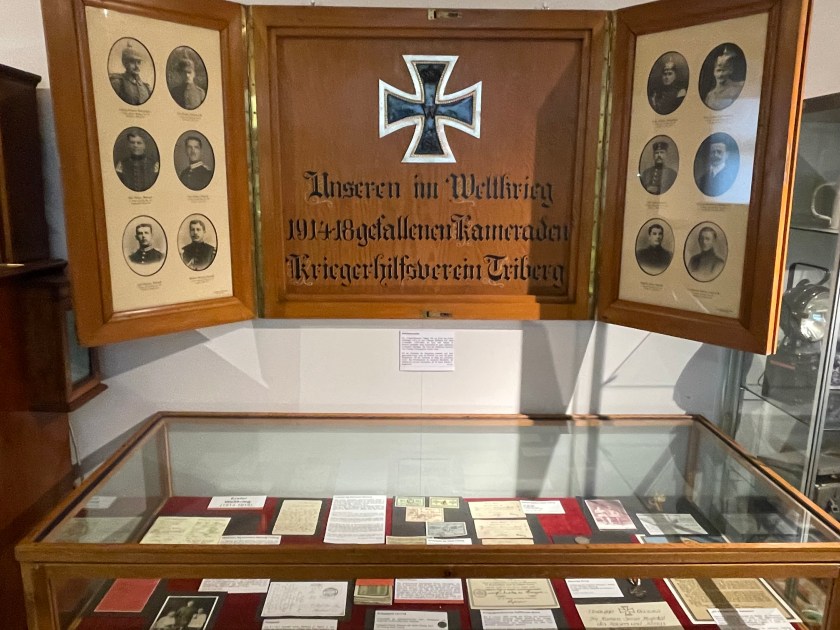
Soldiers from Triberg who died in WWI.
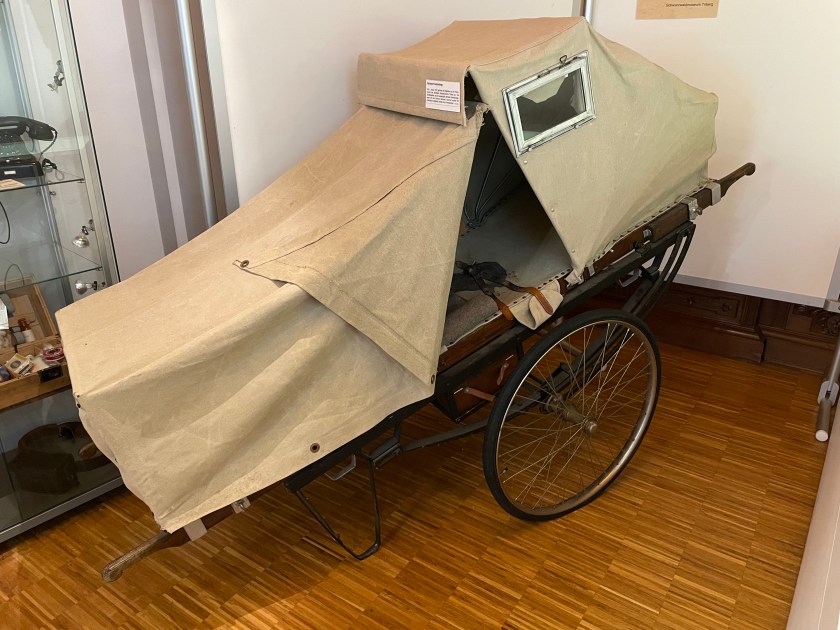
A medical transport.
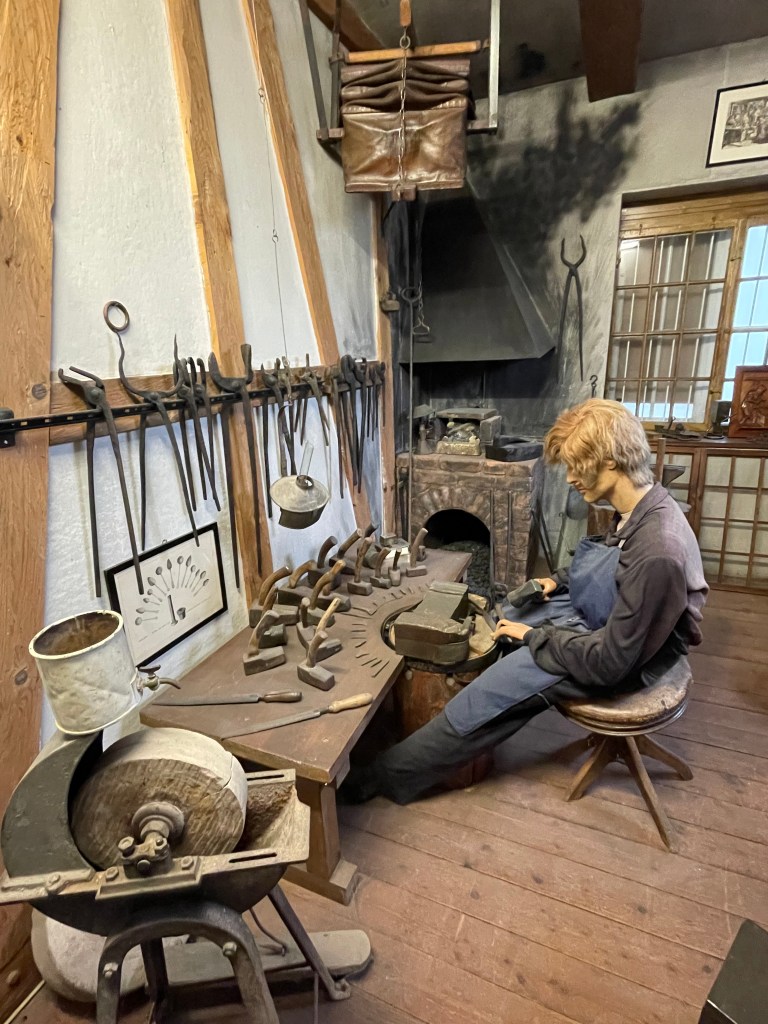
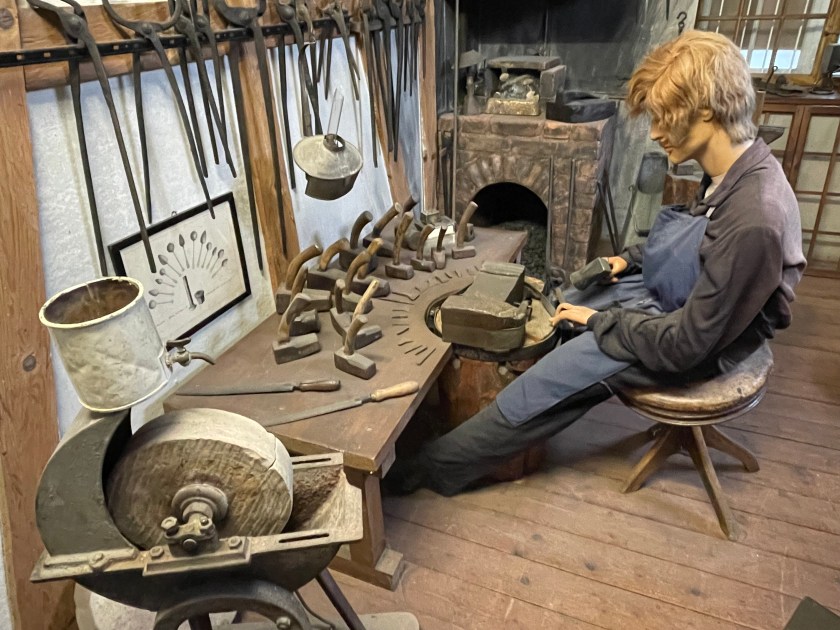
A blacksmith/tool maker.
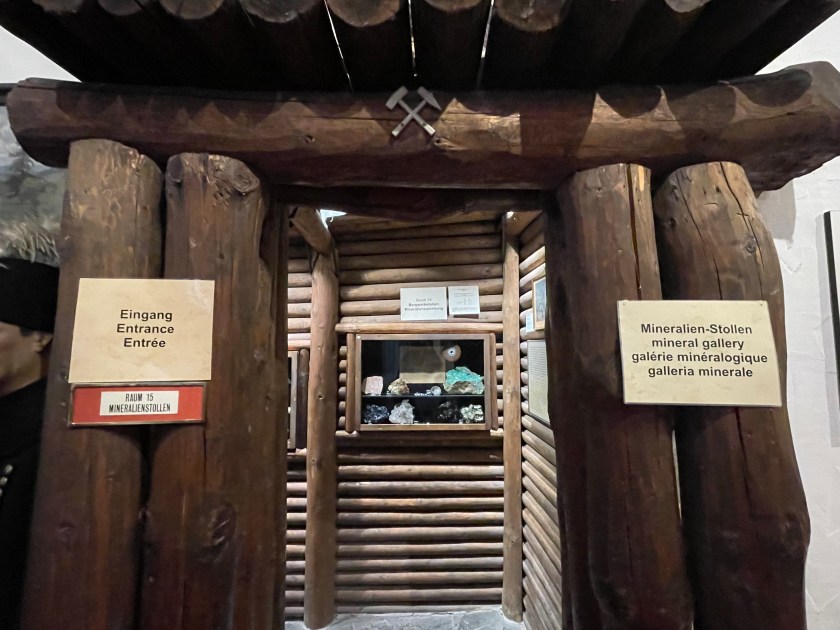
This part of the museum was made to look like the gemstone mines.
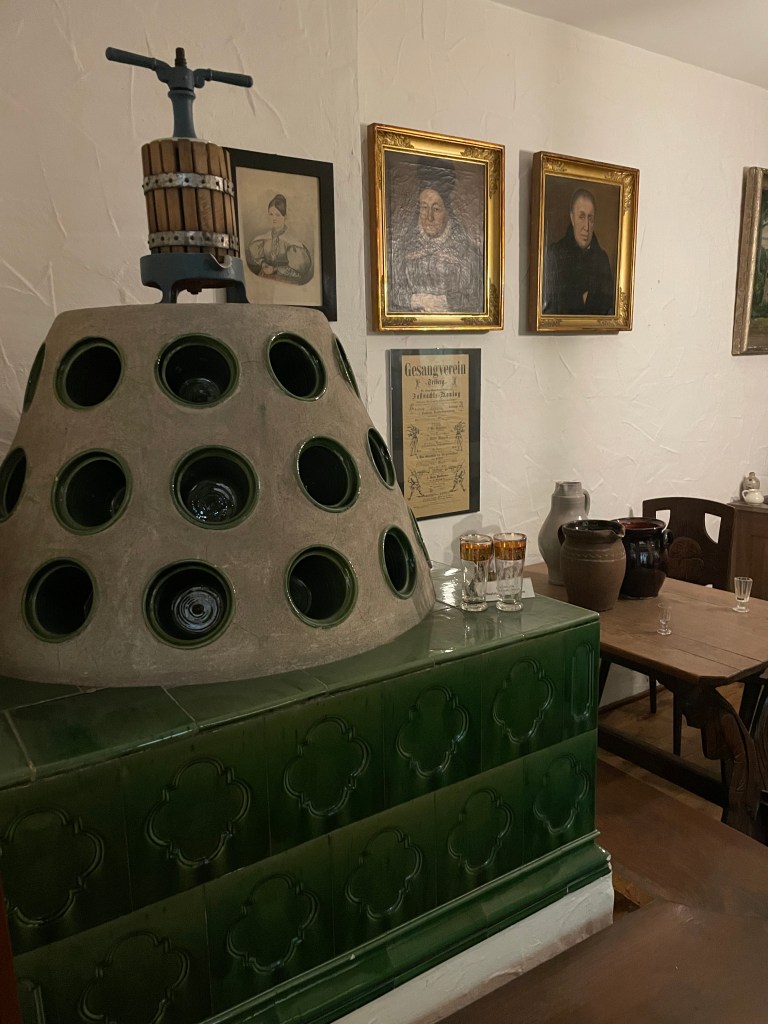
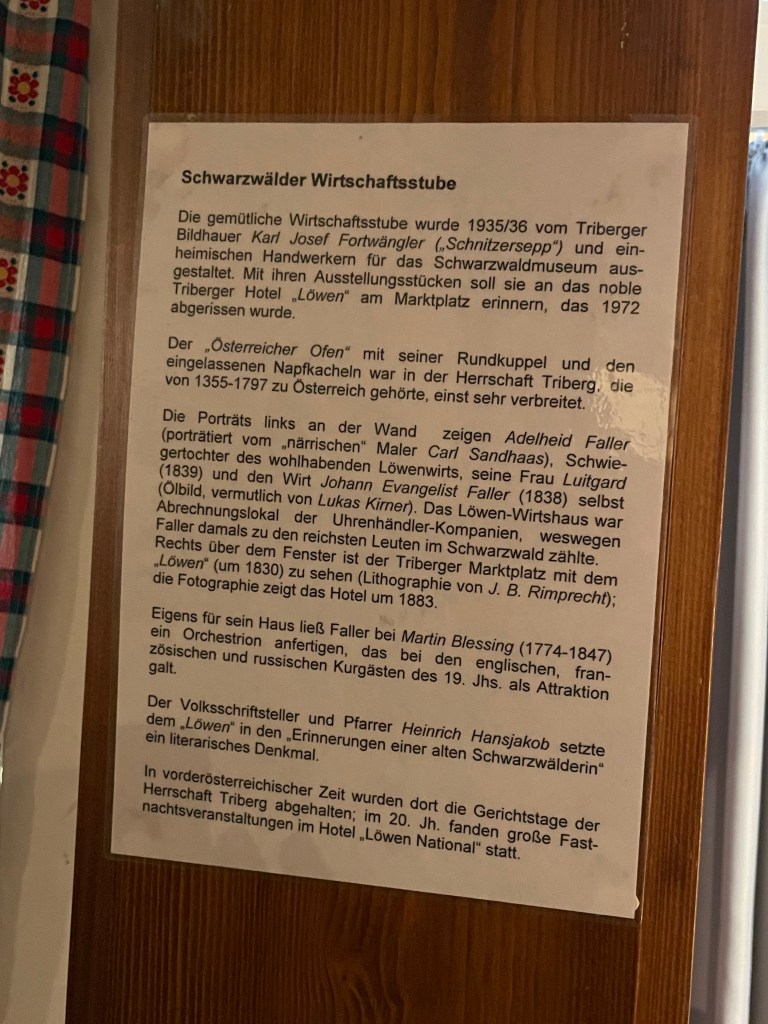
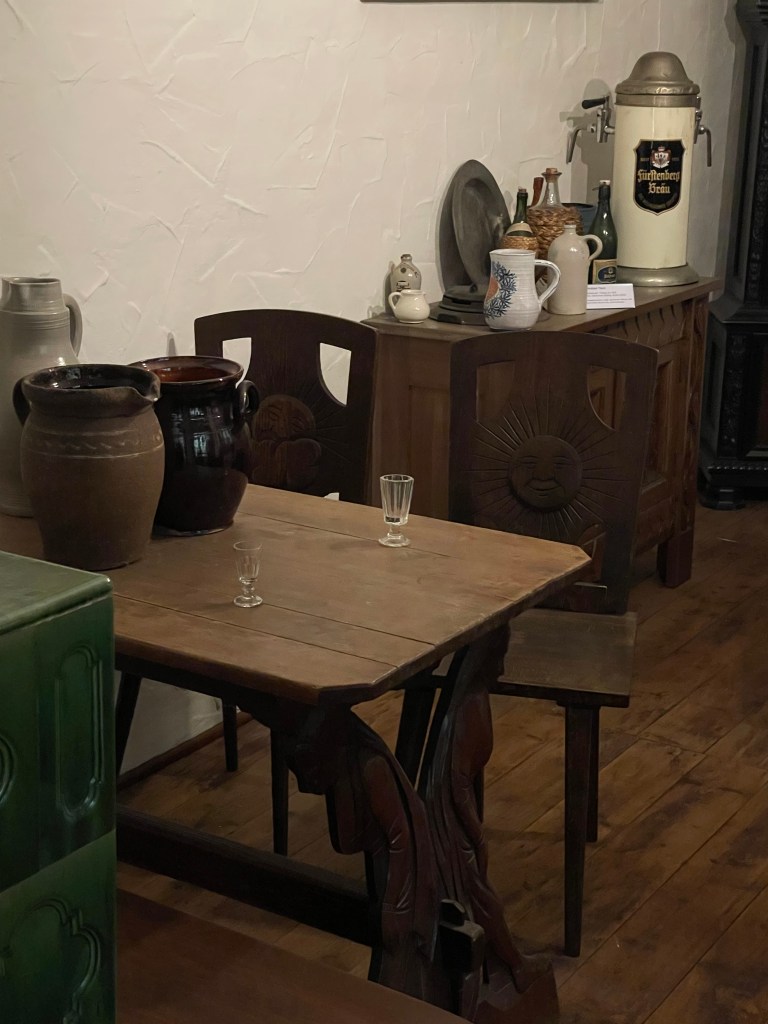
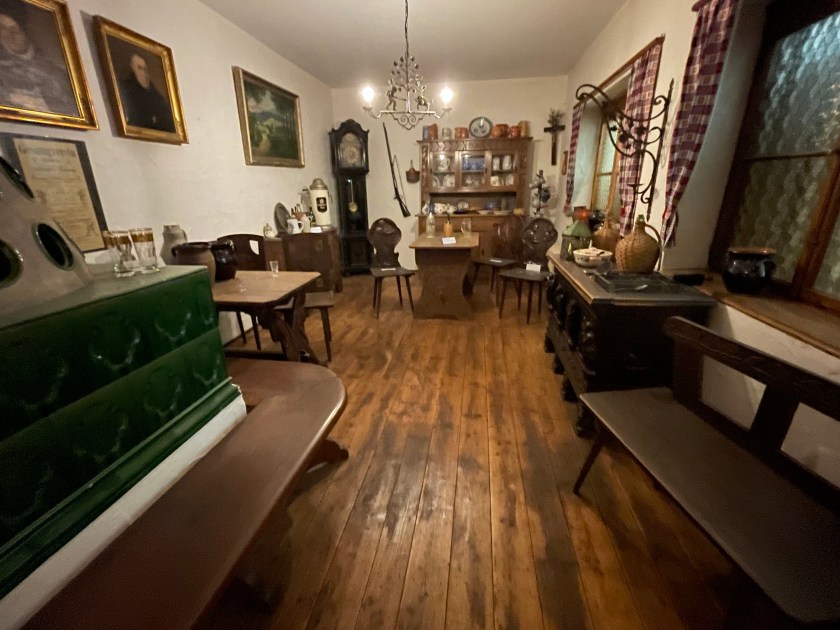
Next we saw a room that replicated a cozy restaurant in the Loewen Hotel.
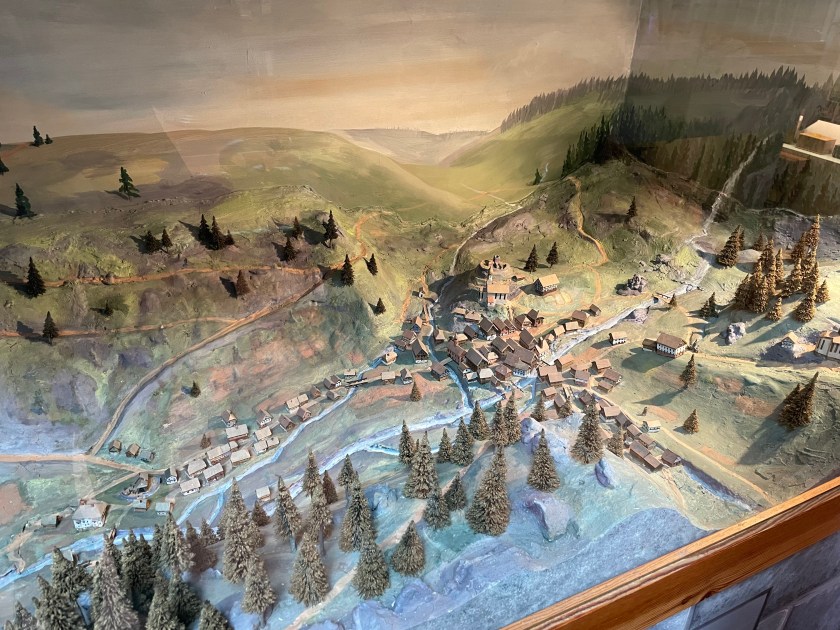
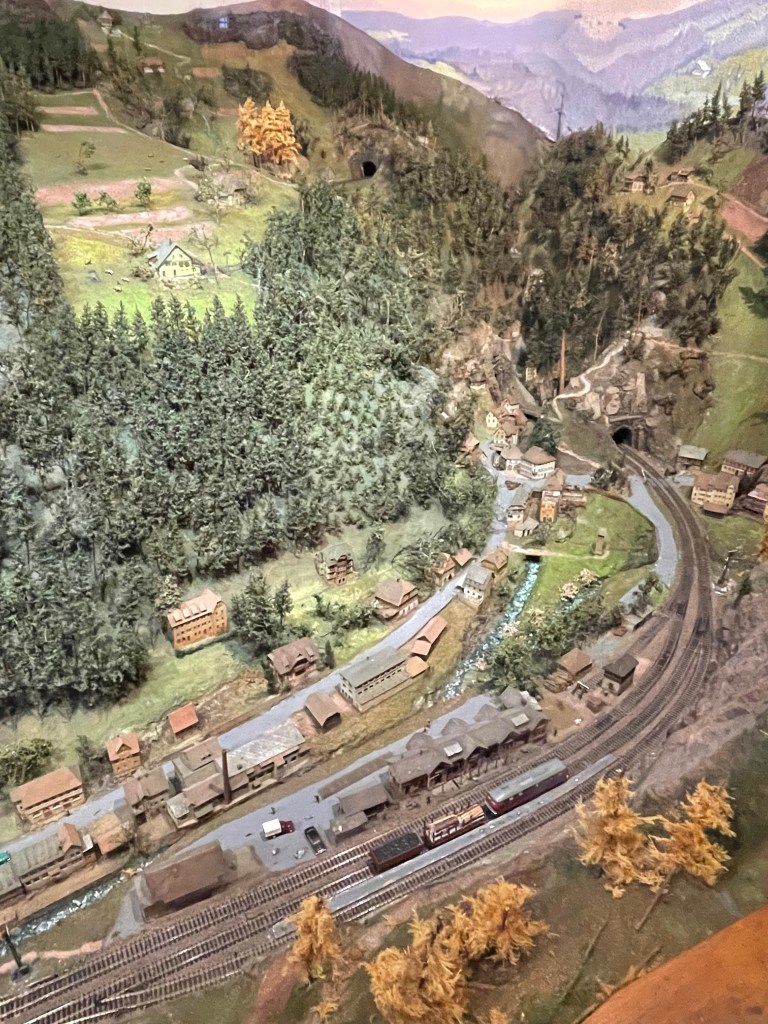
An old replica of the town of Triberg:
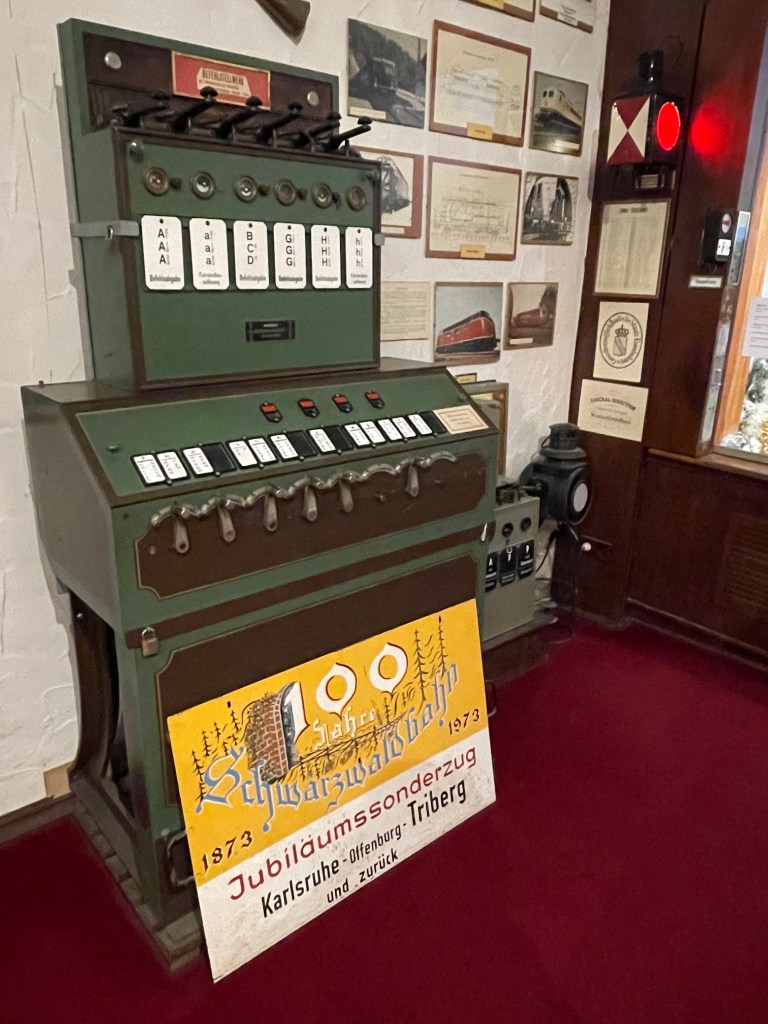
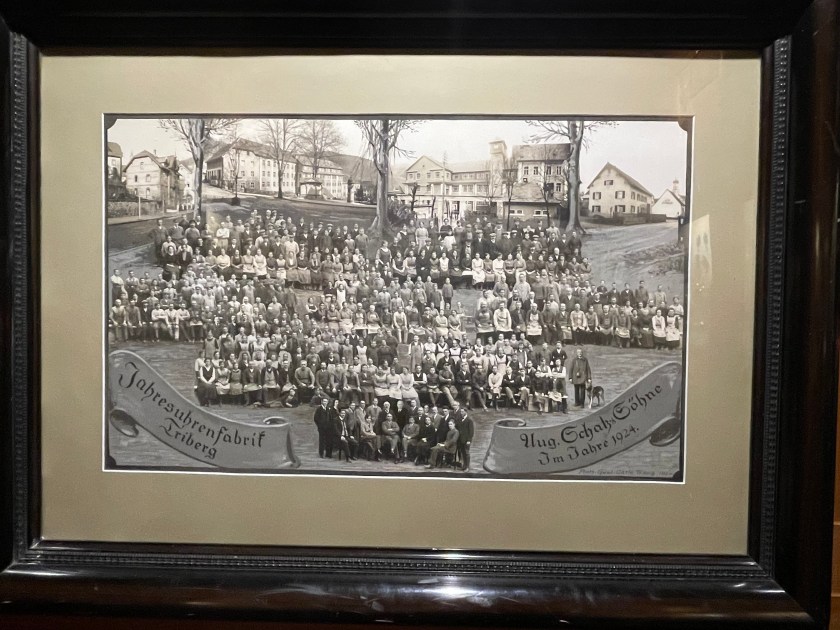
The 100 Year Jubilee:
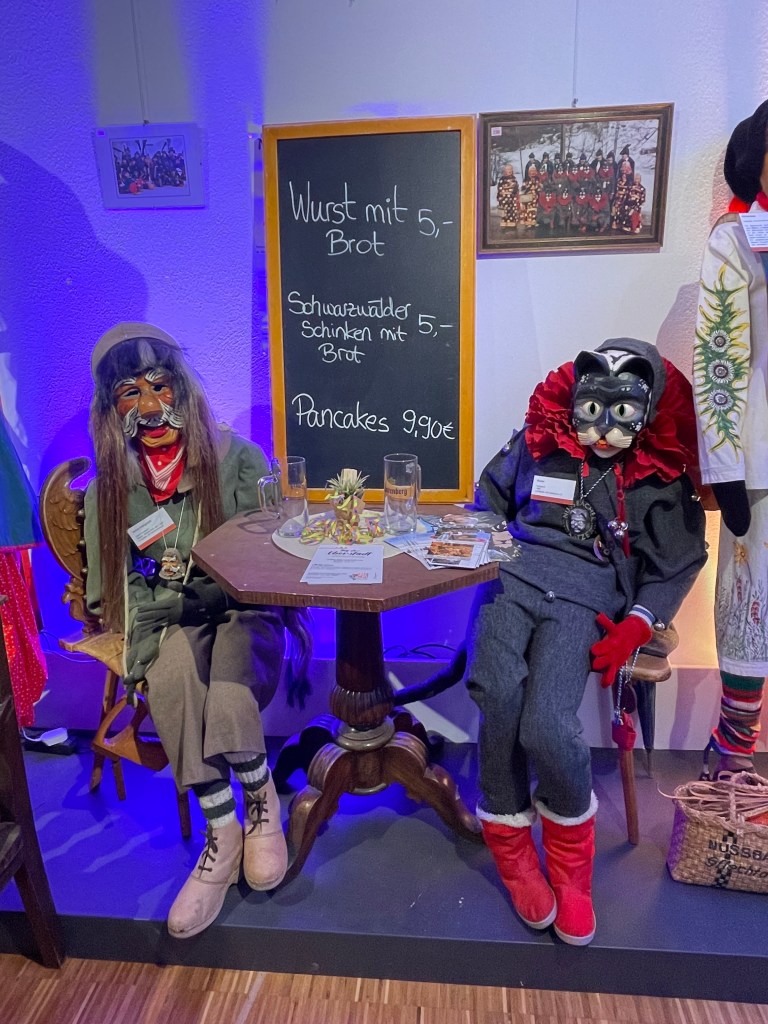
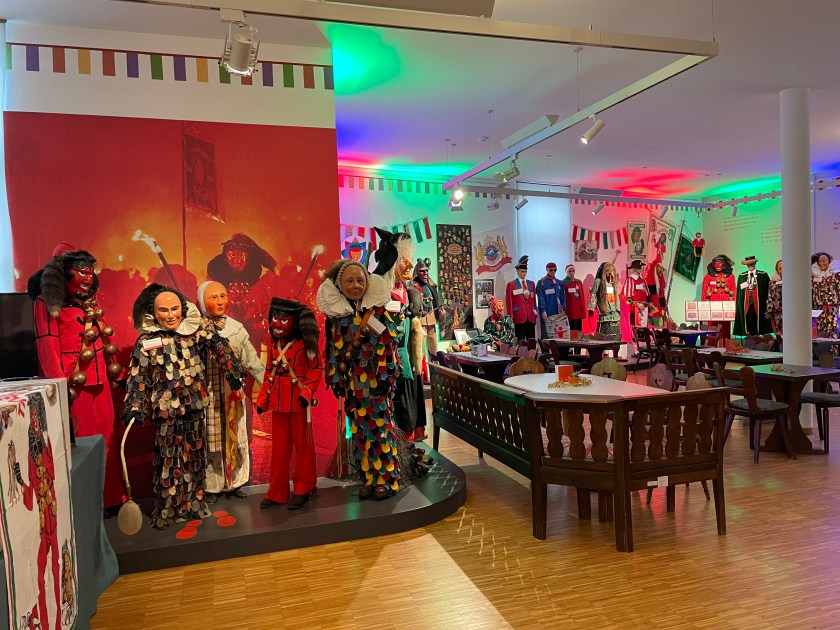
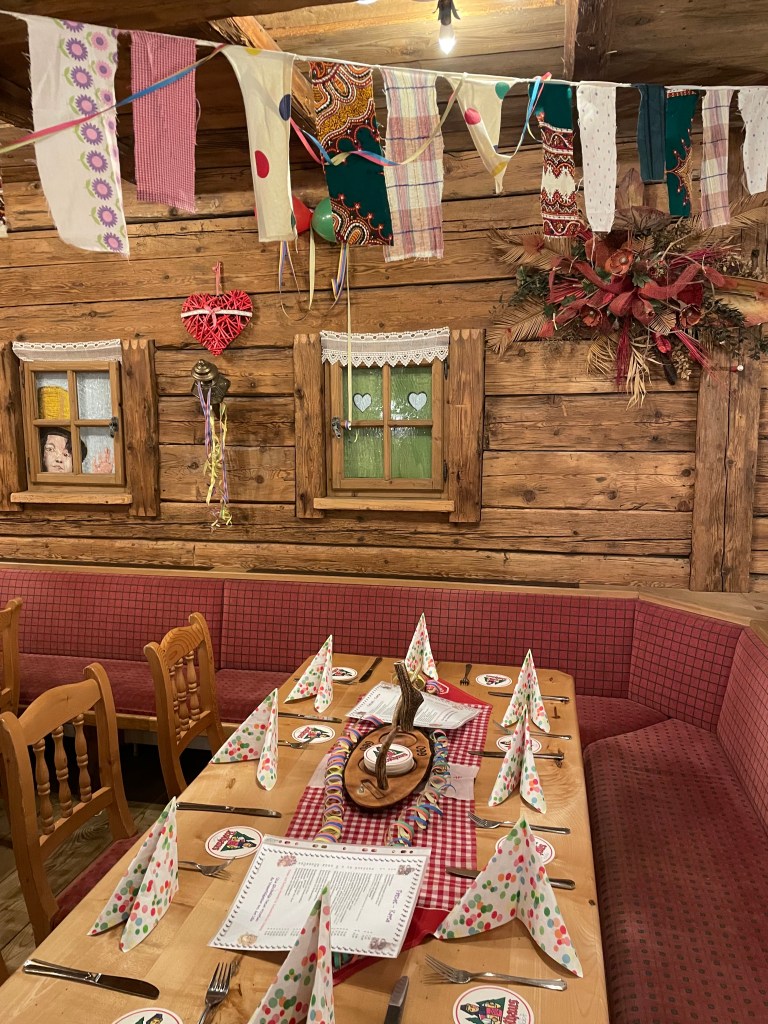
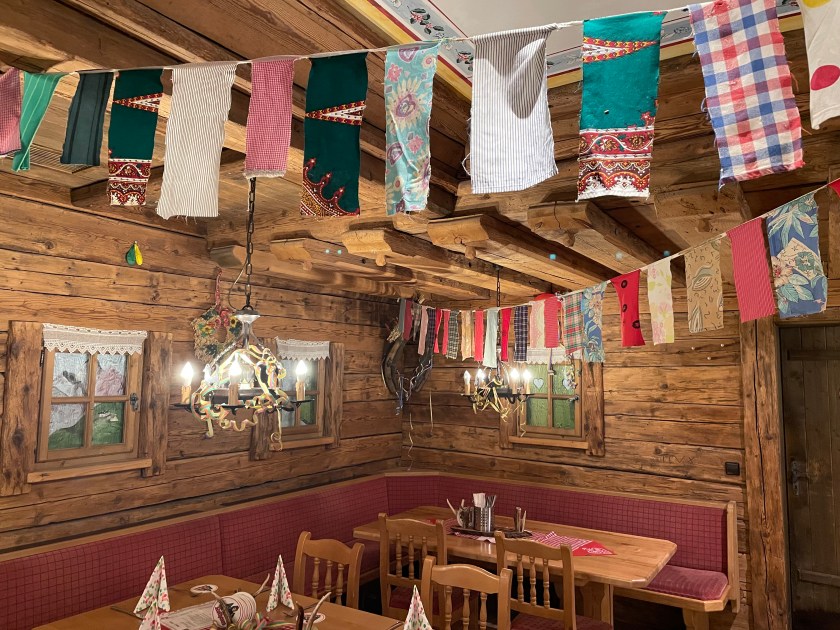
This part of the museum looks like it’s used as a restaurant today, maybe for special events?

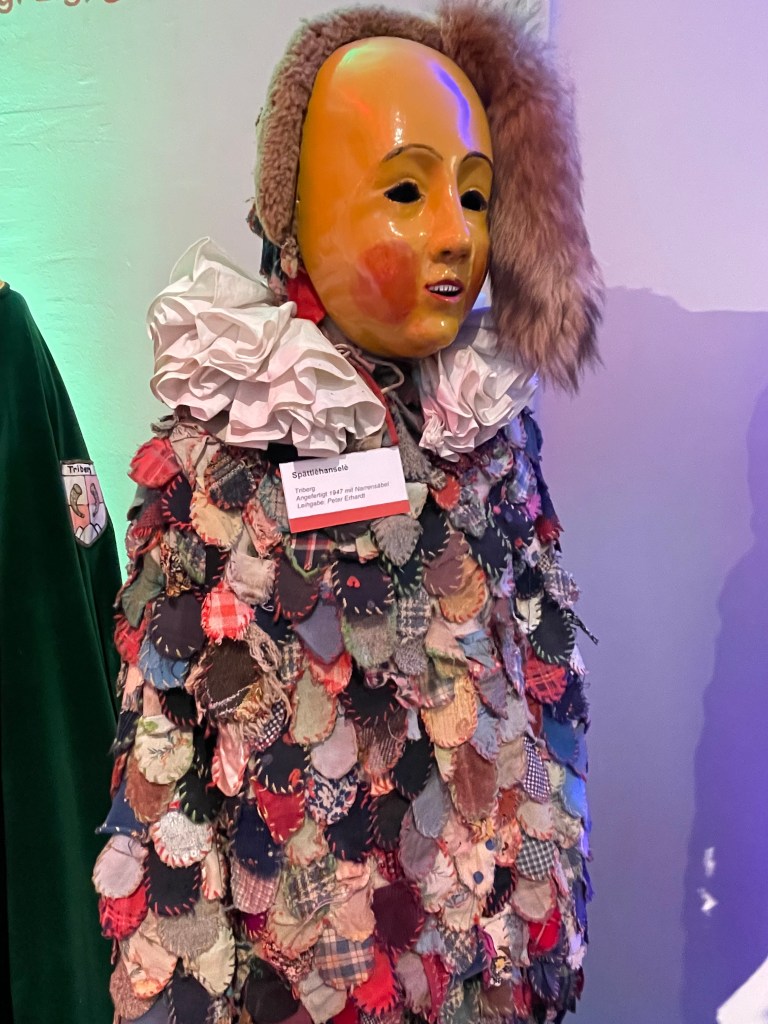
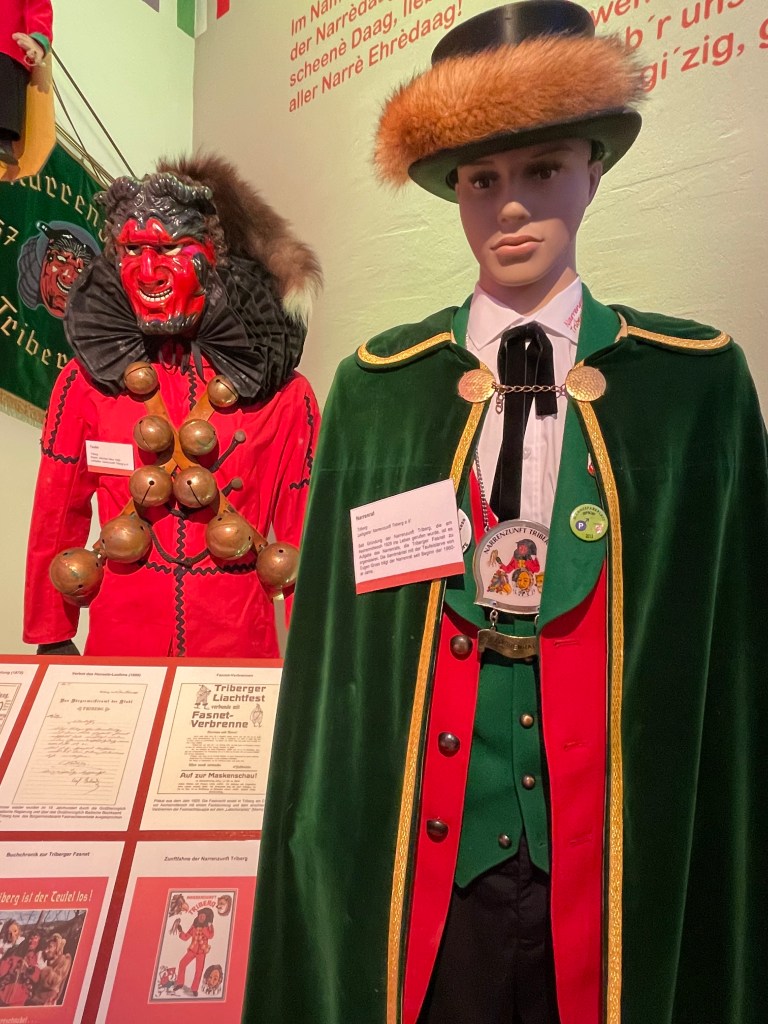
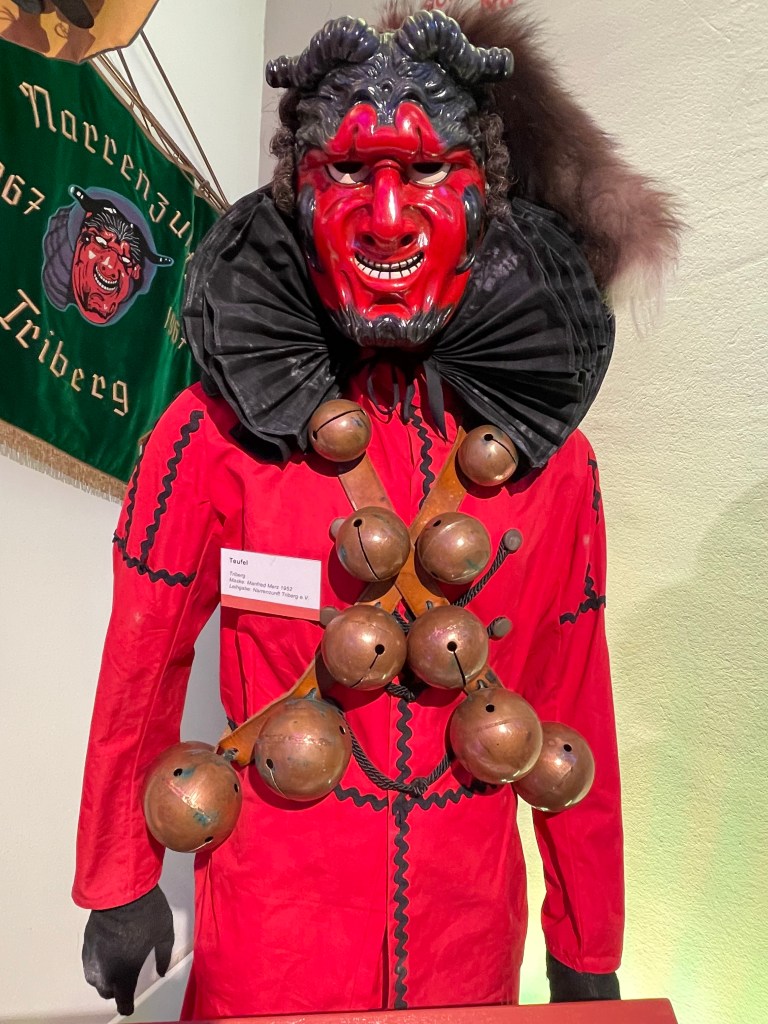
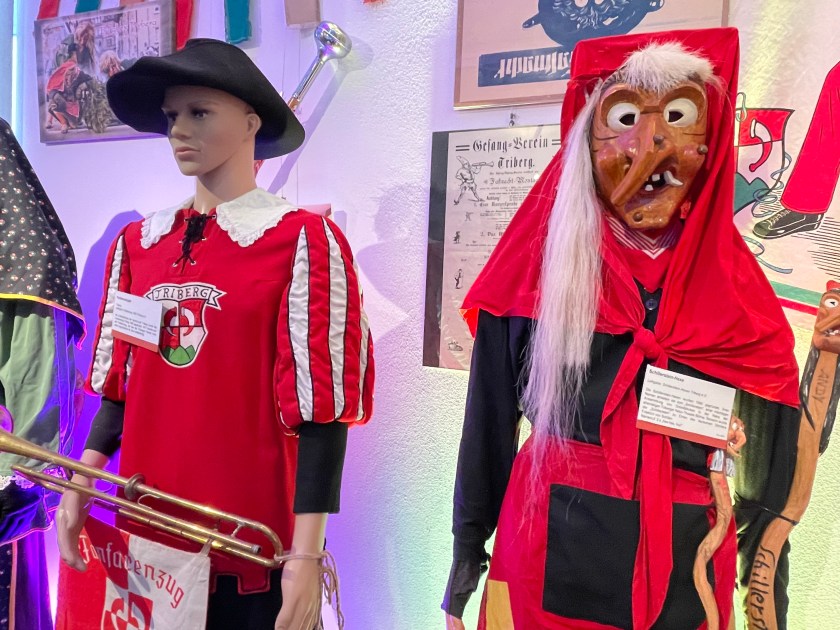
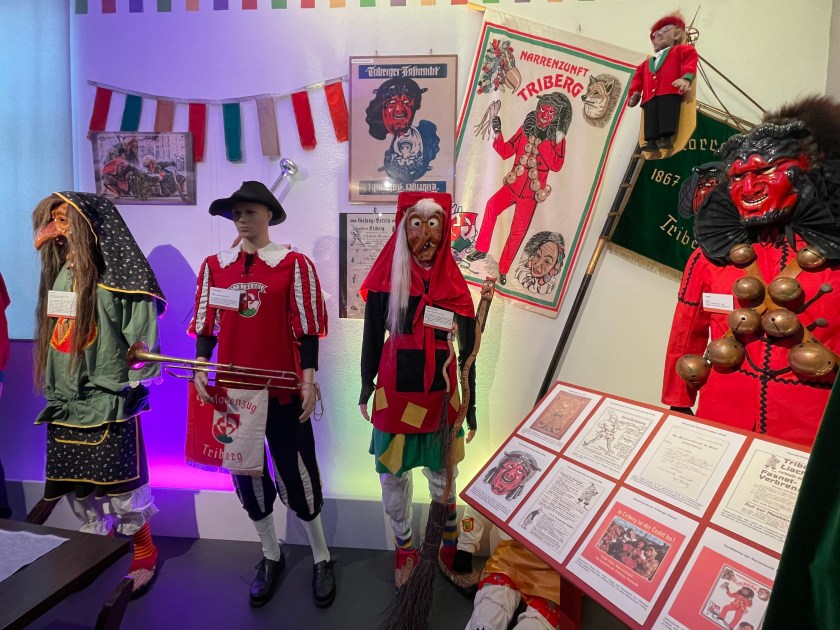
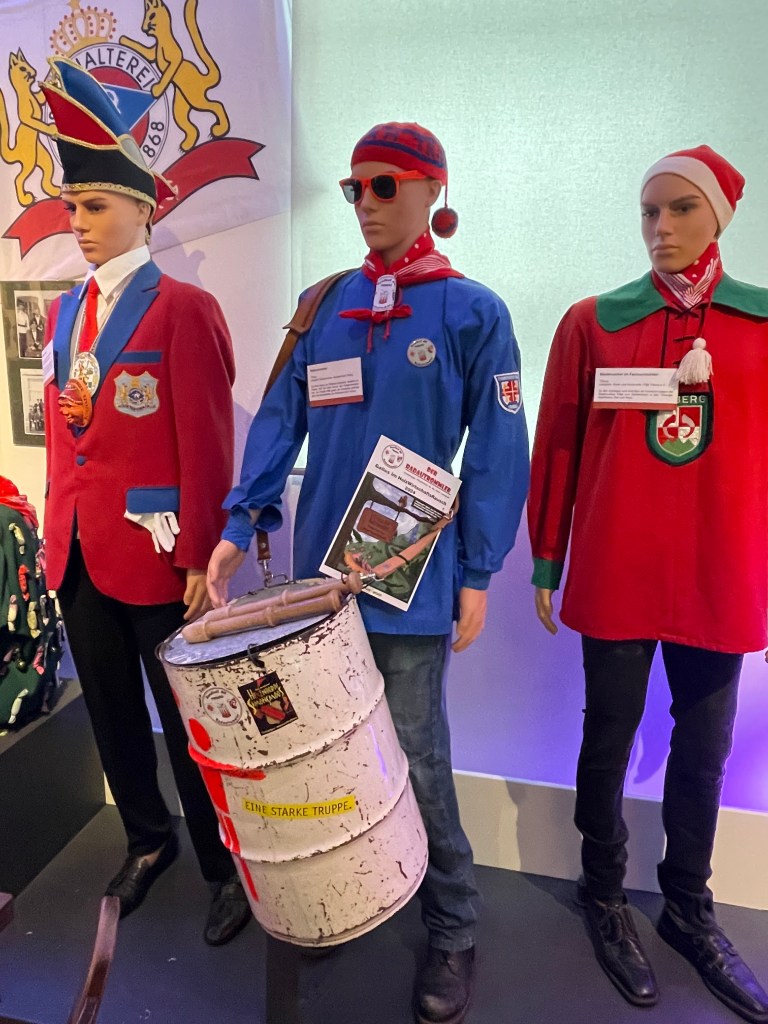
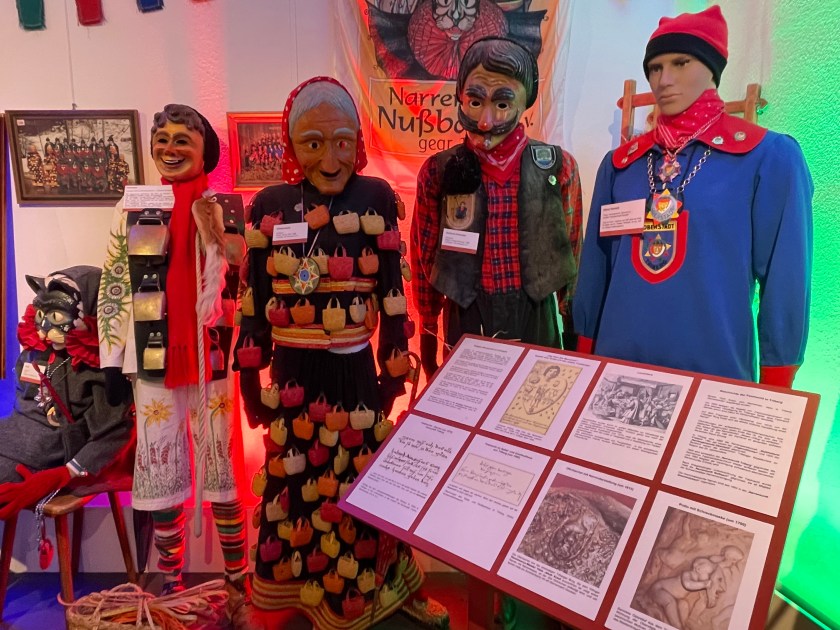
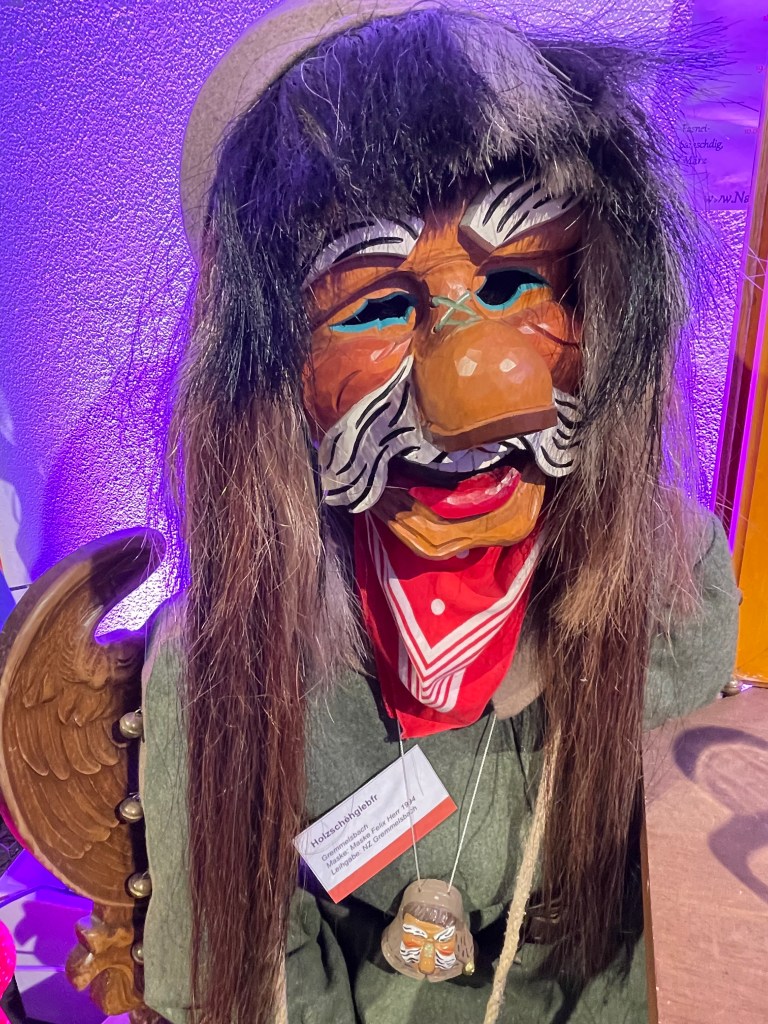
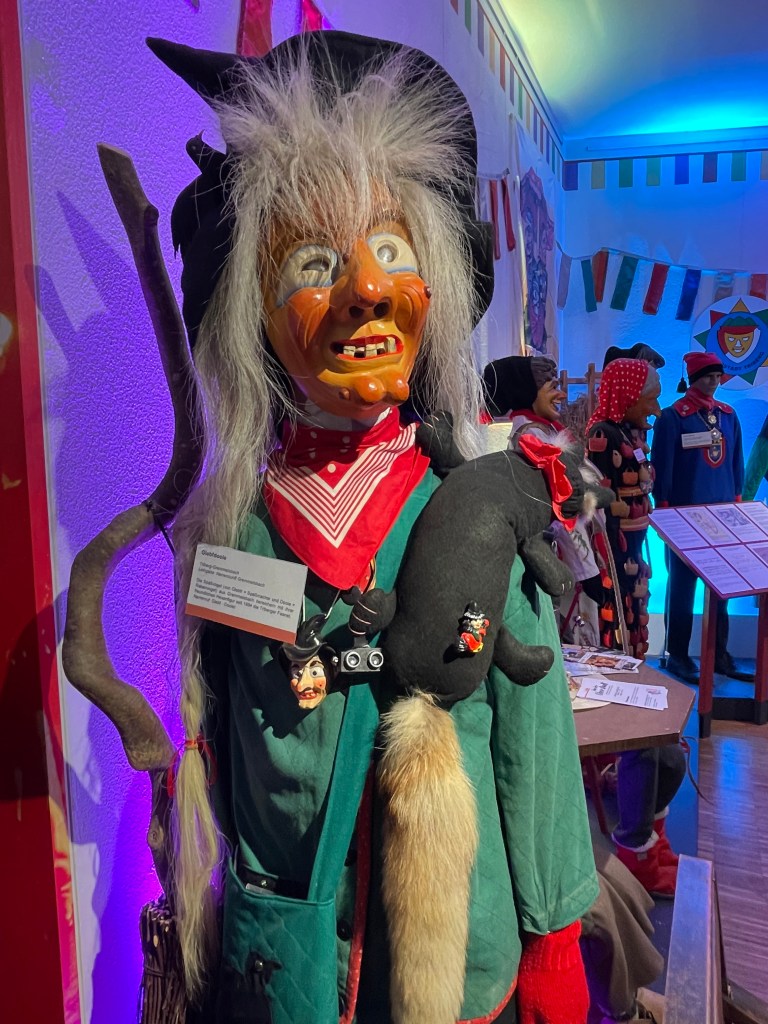
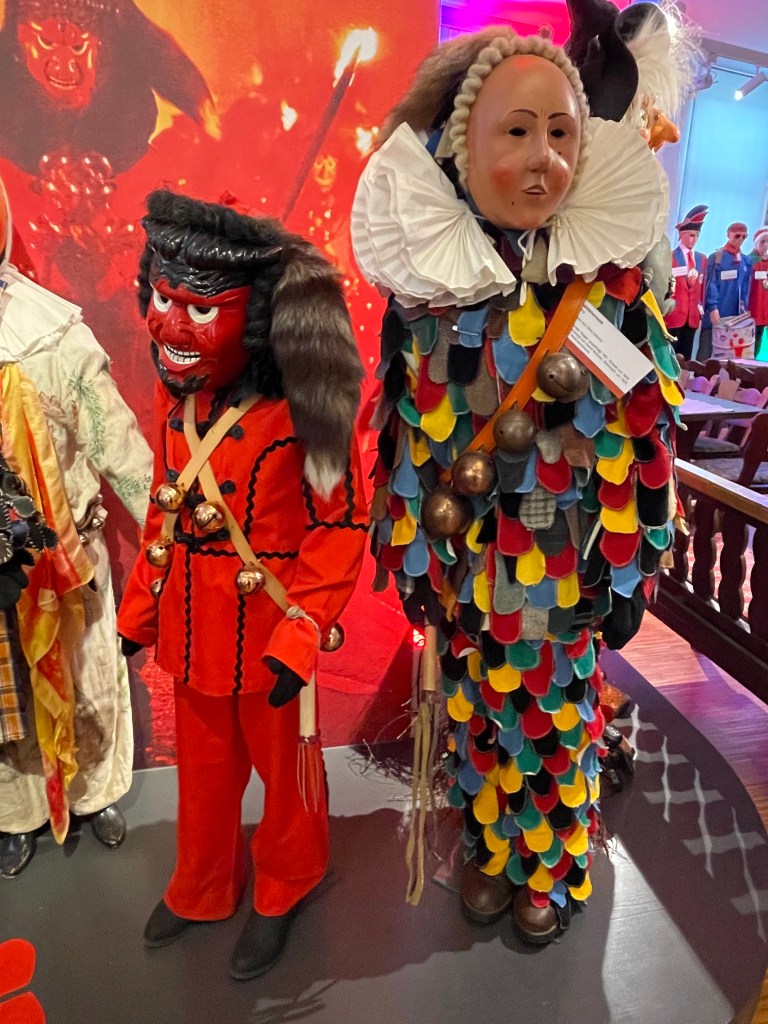
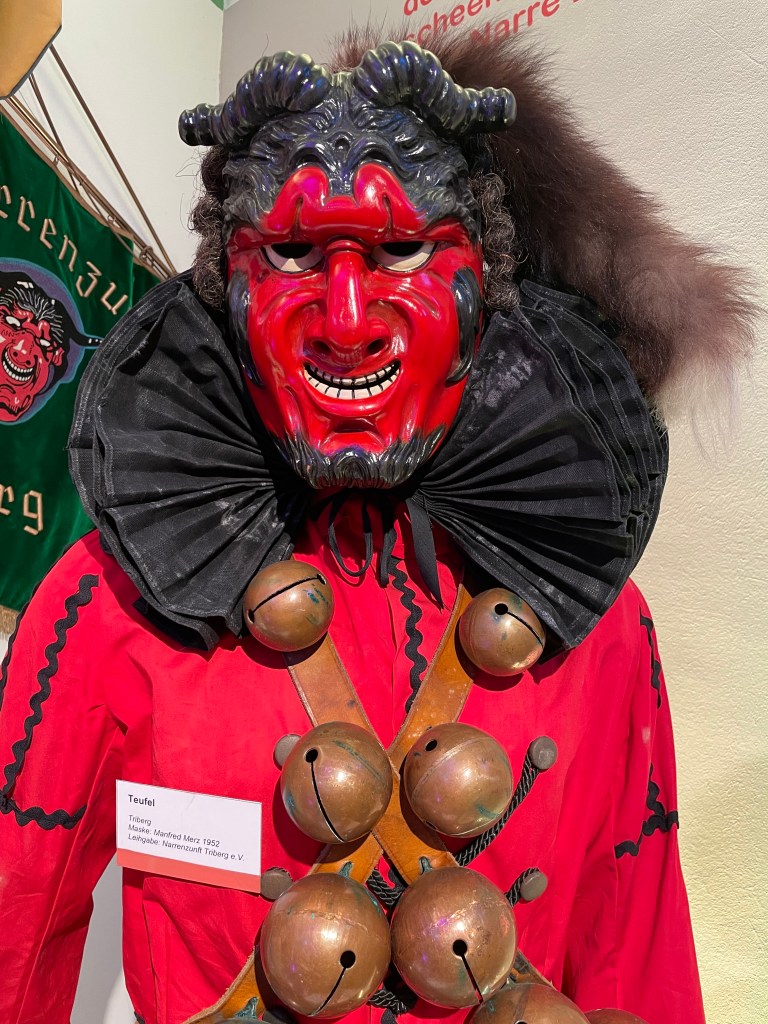
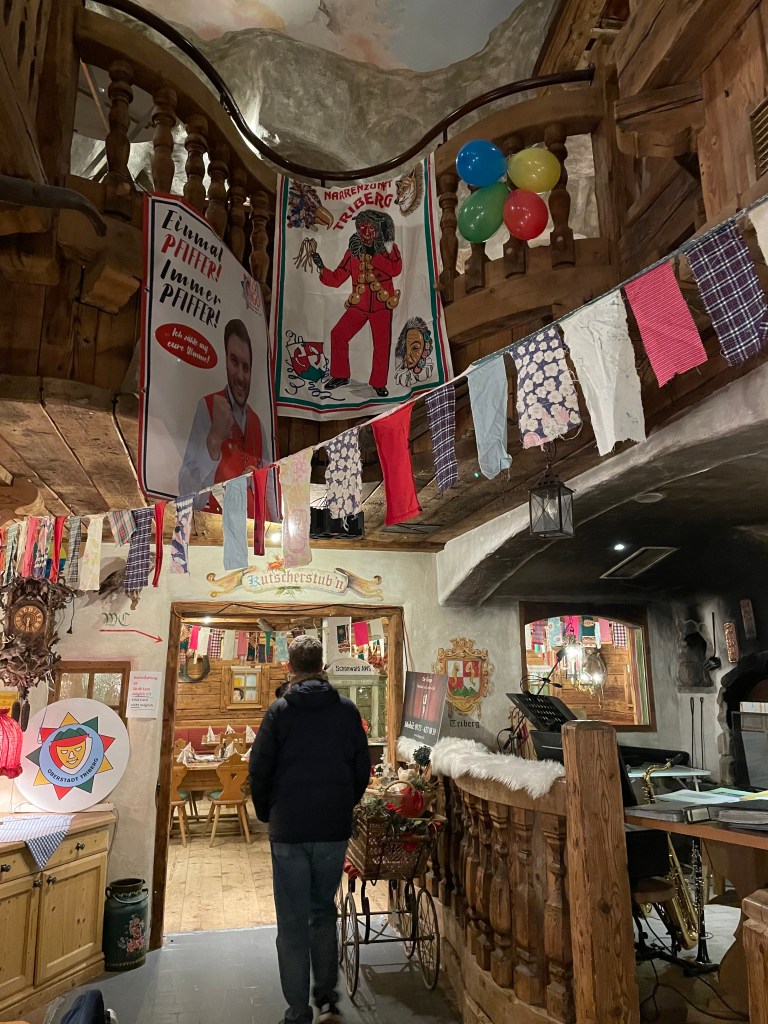
The last part of the museum/restaurant had a wonderful display of Karnival costumes from years past.
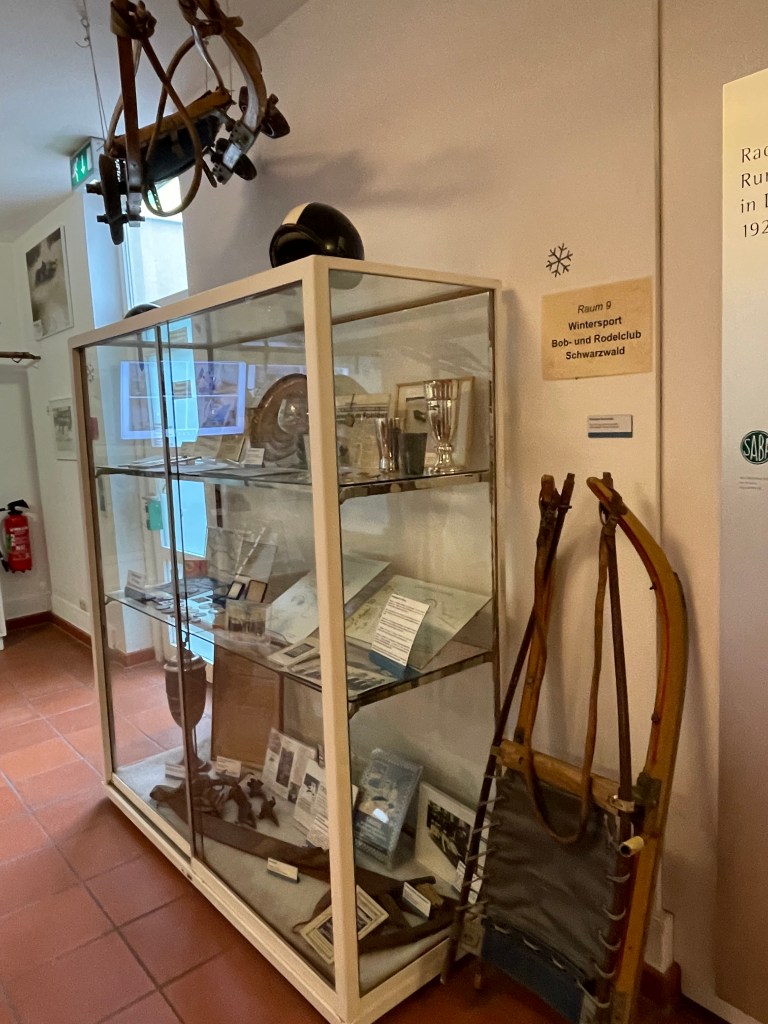
The museum tour ended in a room with sleds, toboggans and ski items.

We loved spending time here.  It was so interesting and so nicely presented.  I love the culture and traditions of this part of Germany, not so far from where my people come from.
Triberg and the Longest Waterfall in Germany

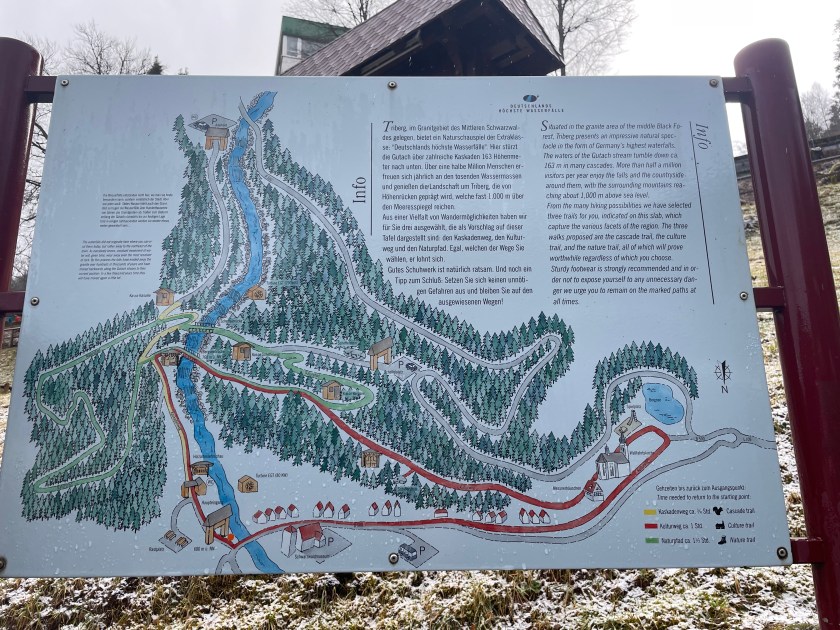
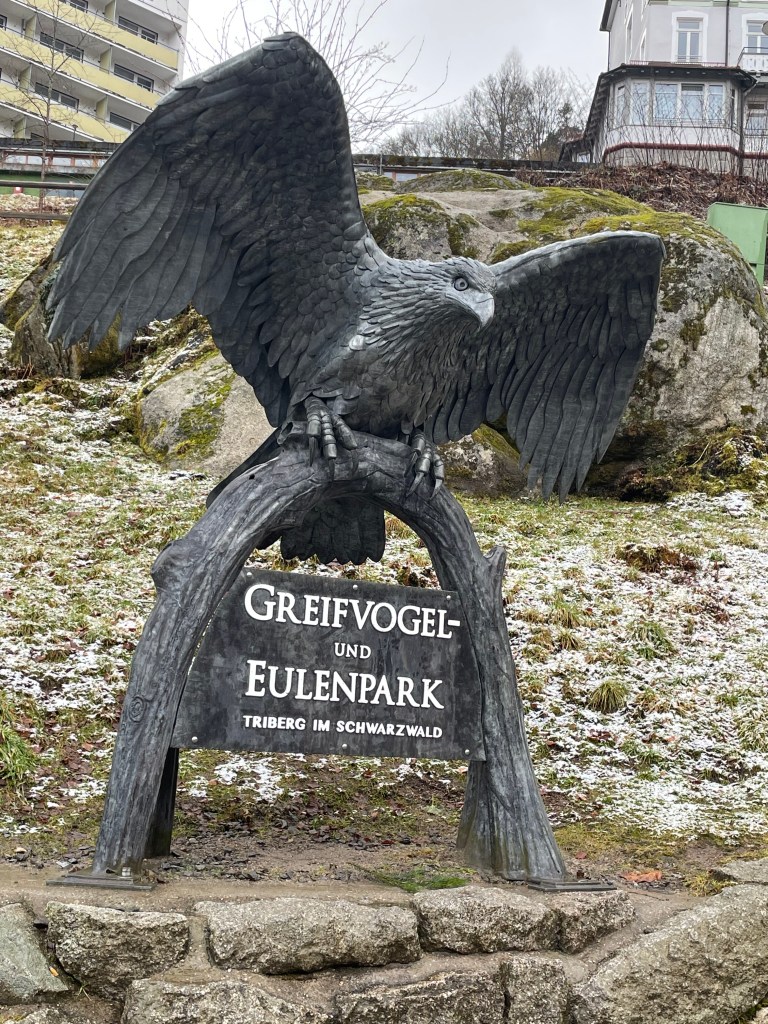
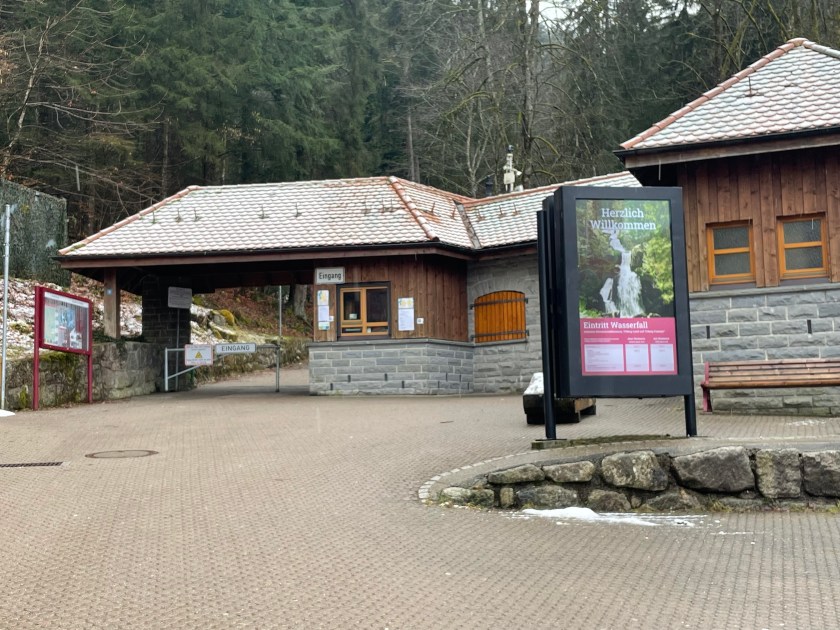
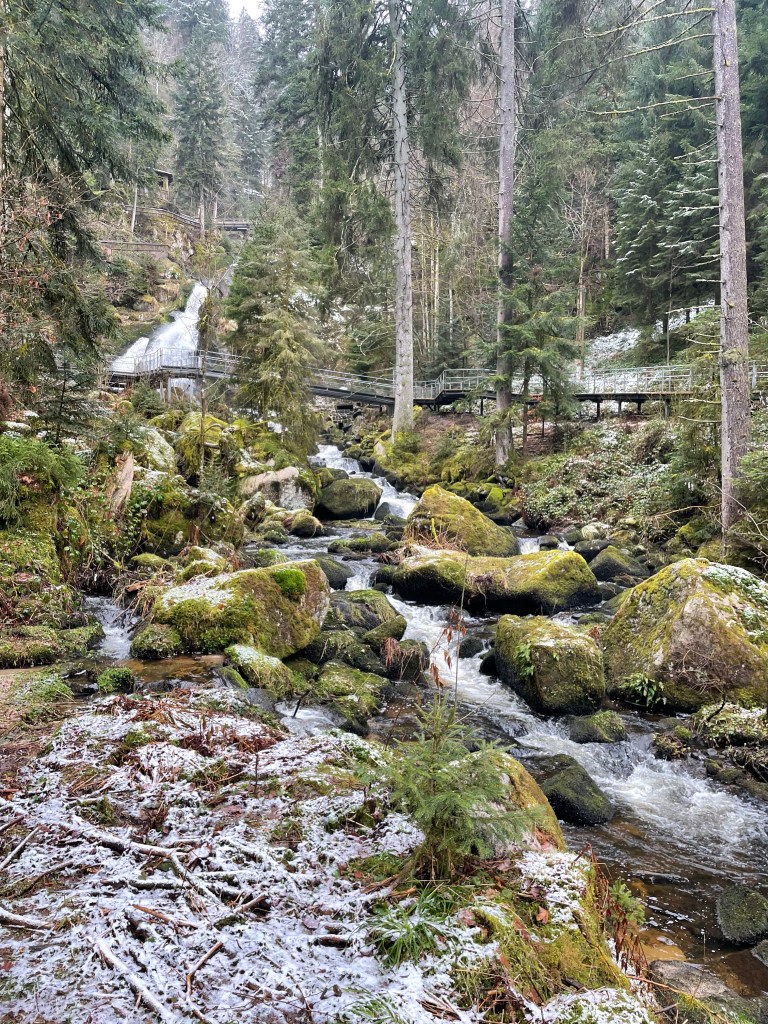
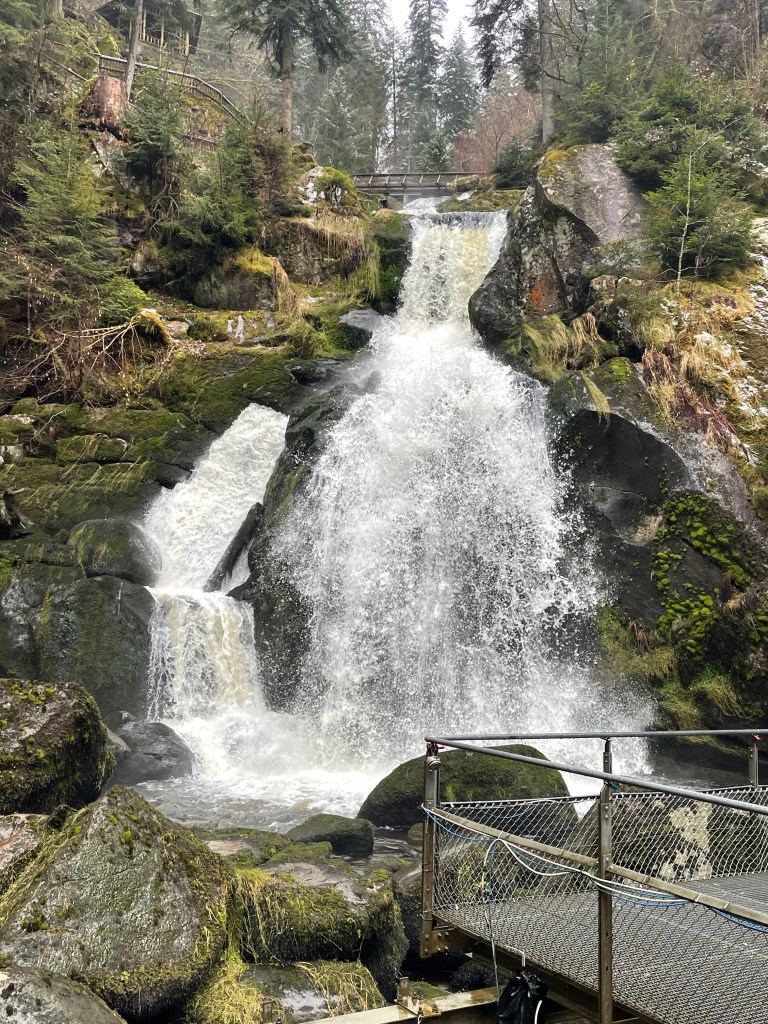
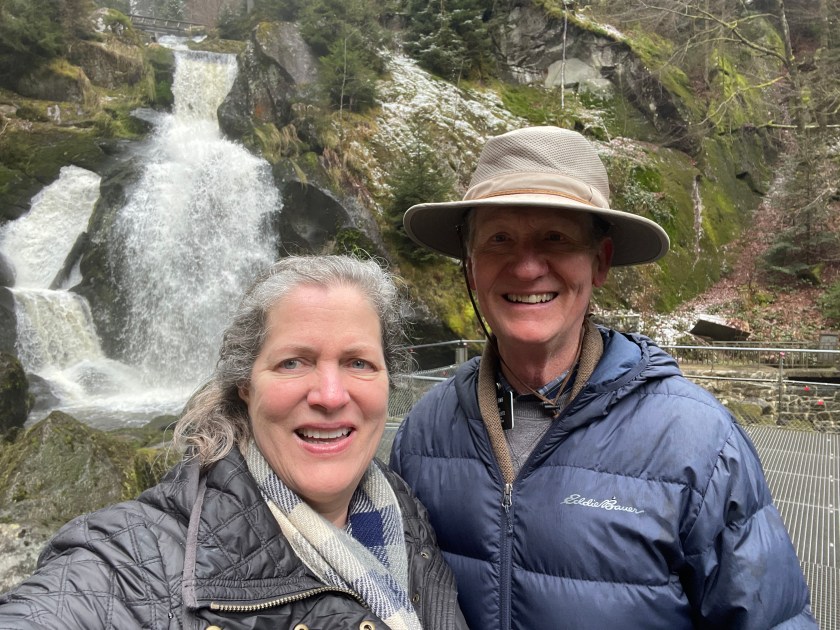
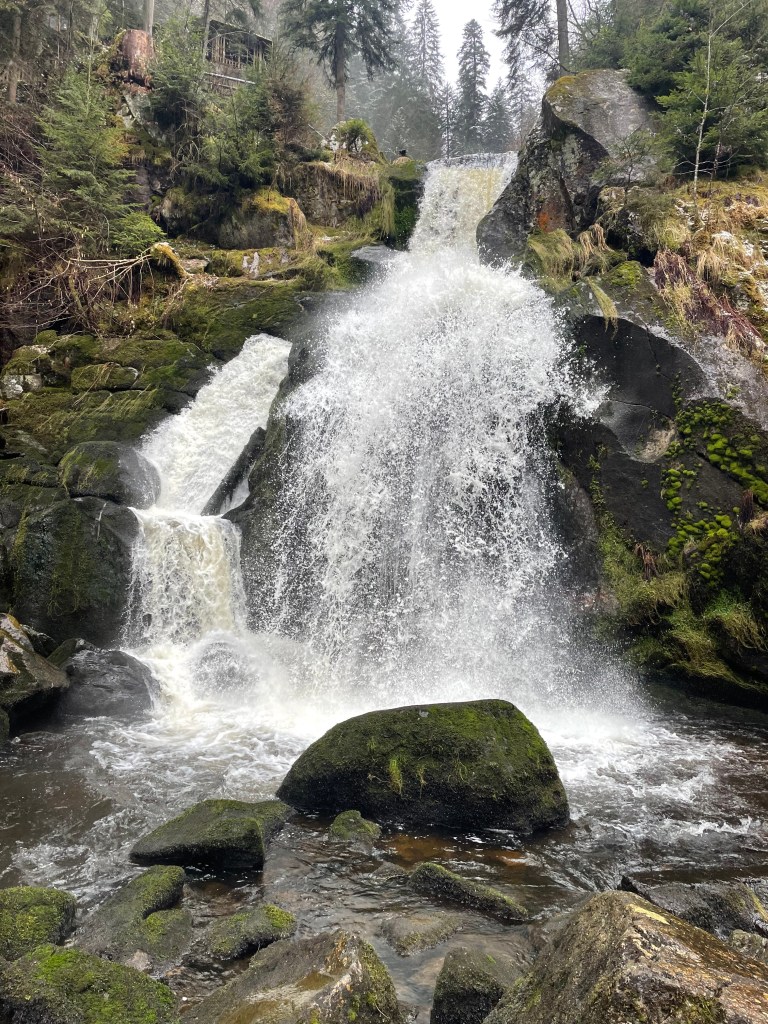
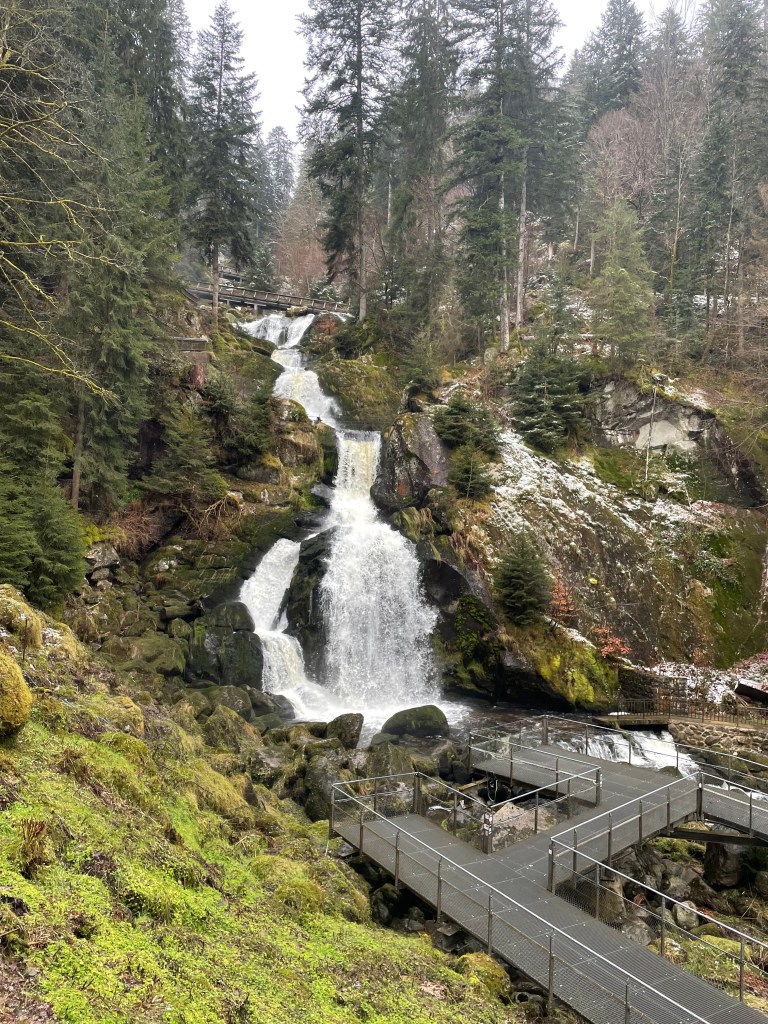
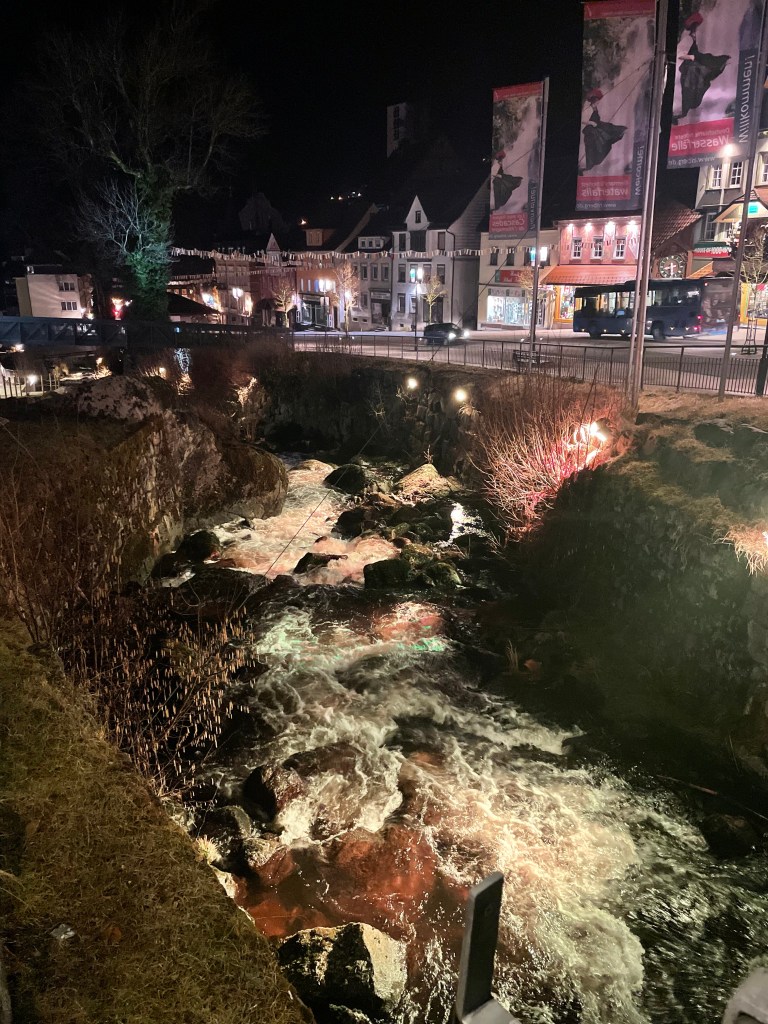
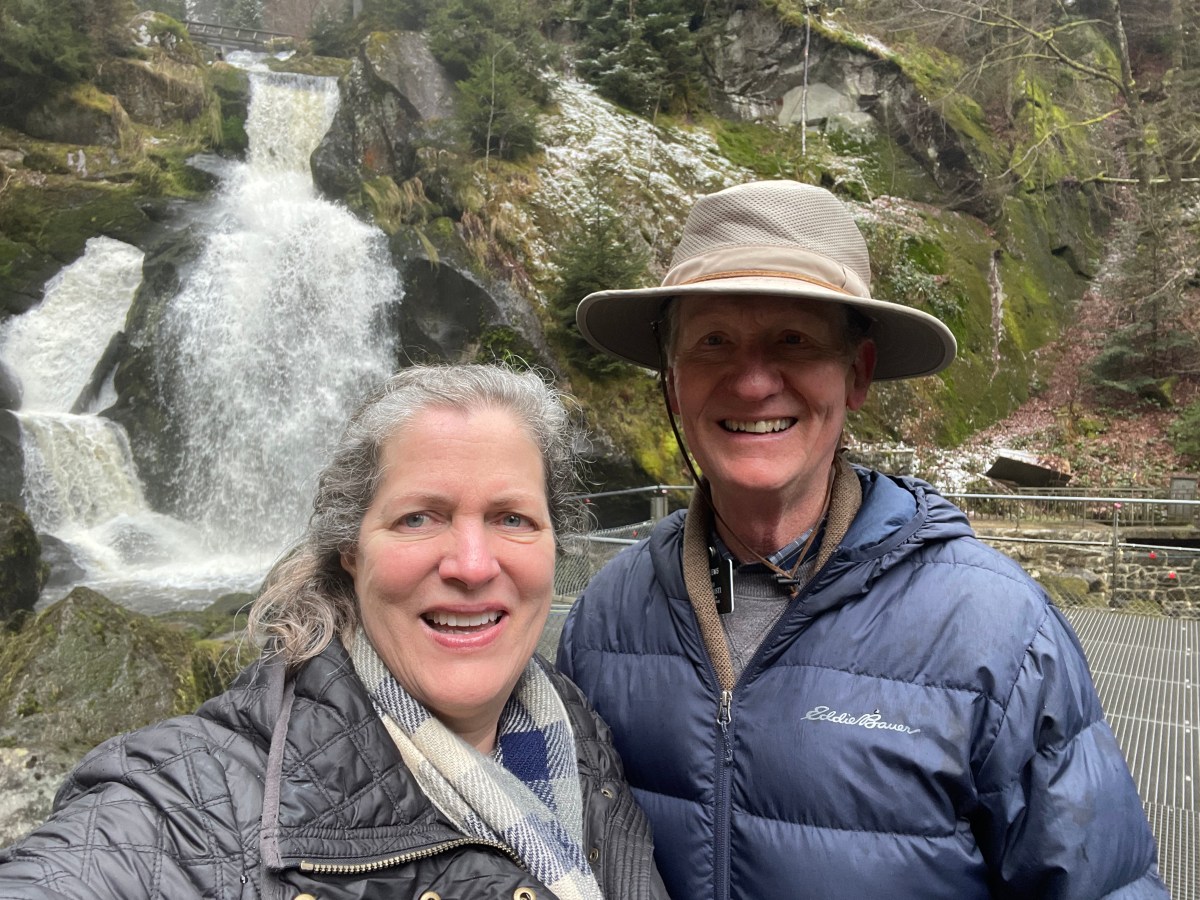
We had a pretty perfect day, beginning with a morning hike to the waterfall.  Nothing in town opens until 11:00, so we went to the waterfall behind the restaurant we visited last night.  We paid a few Euro to go to where the falls were, up the hill on a nice paved path. It was about a 15-20 minute walk up.  They say this is the tallest/longest waterfall in Germany.  The water flows, crashing down over the rocks, and all the way down the valley through the town.   It was something fun to do.

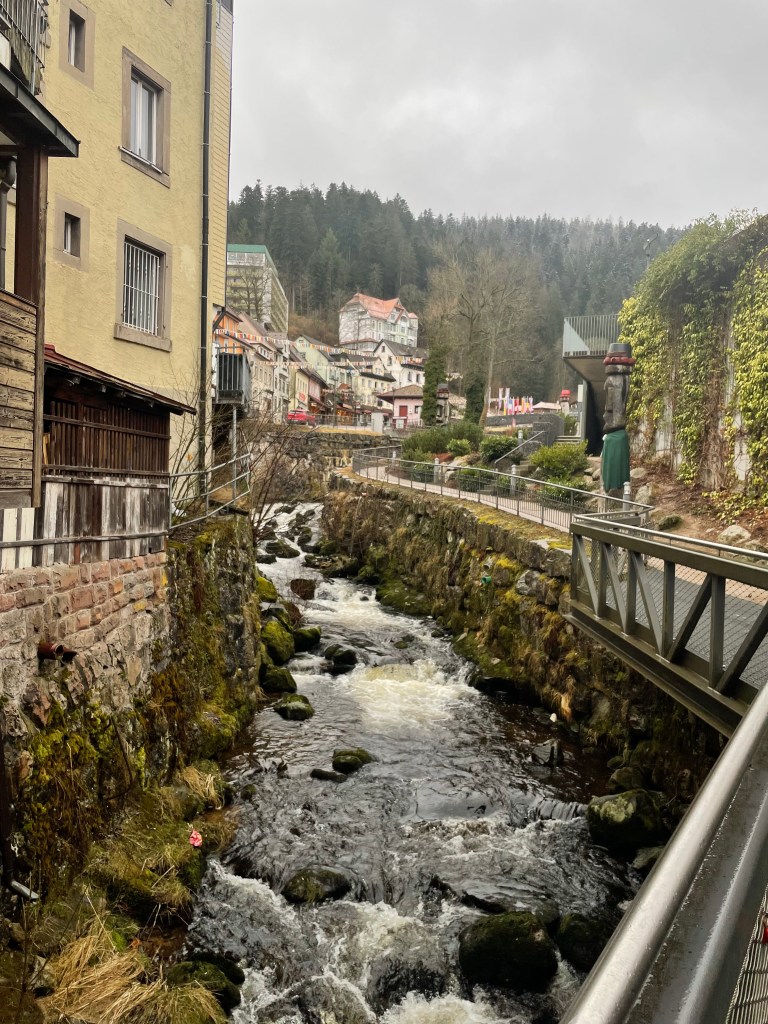
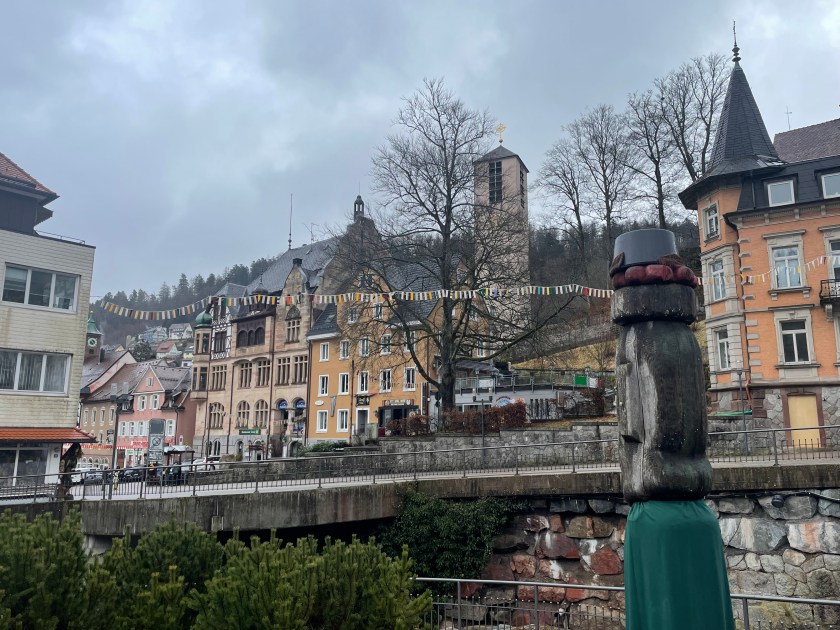
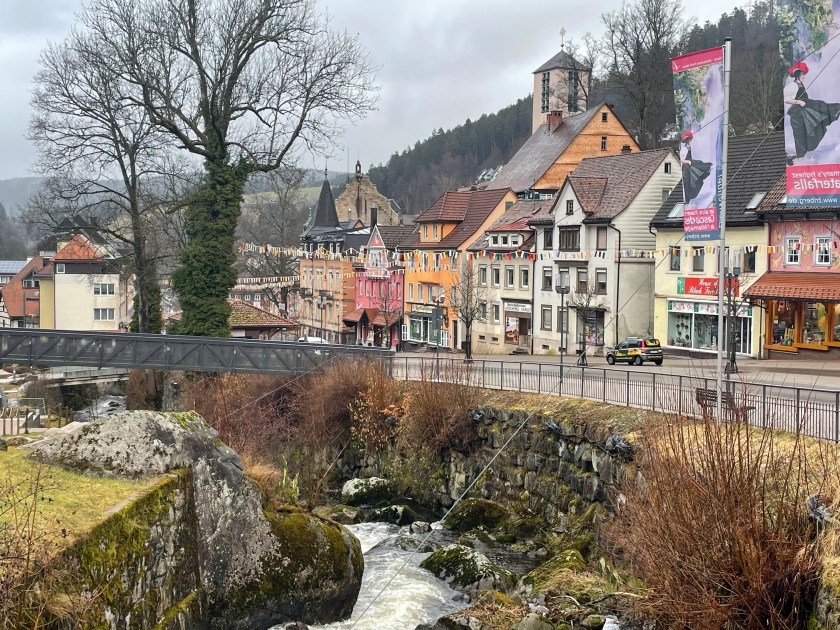
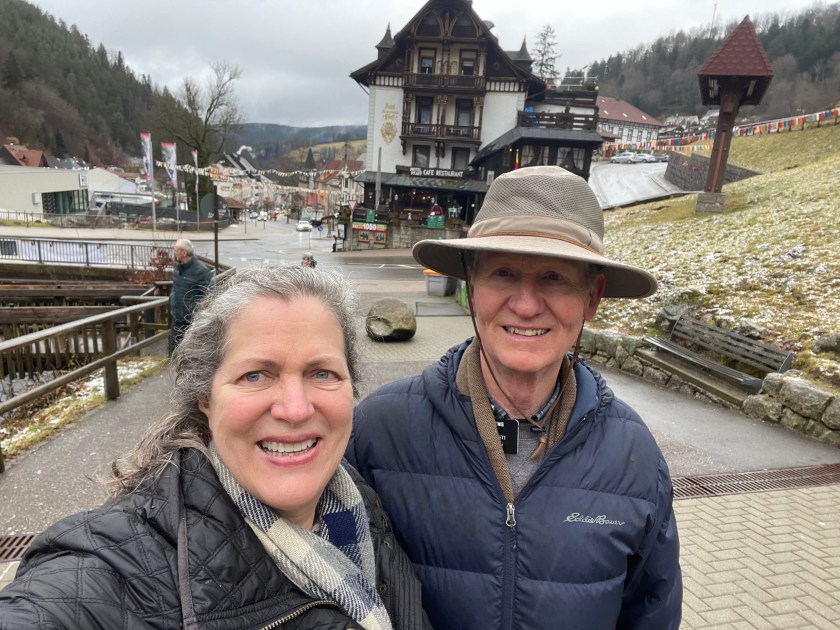
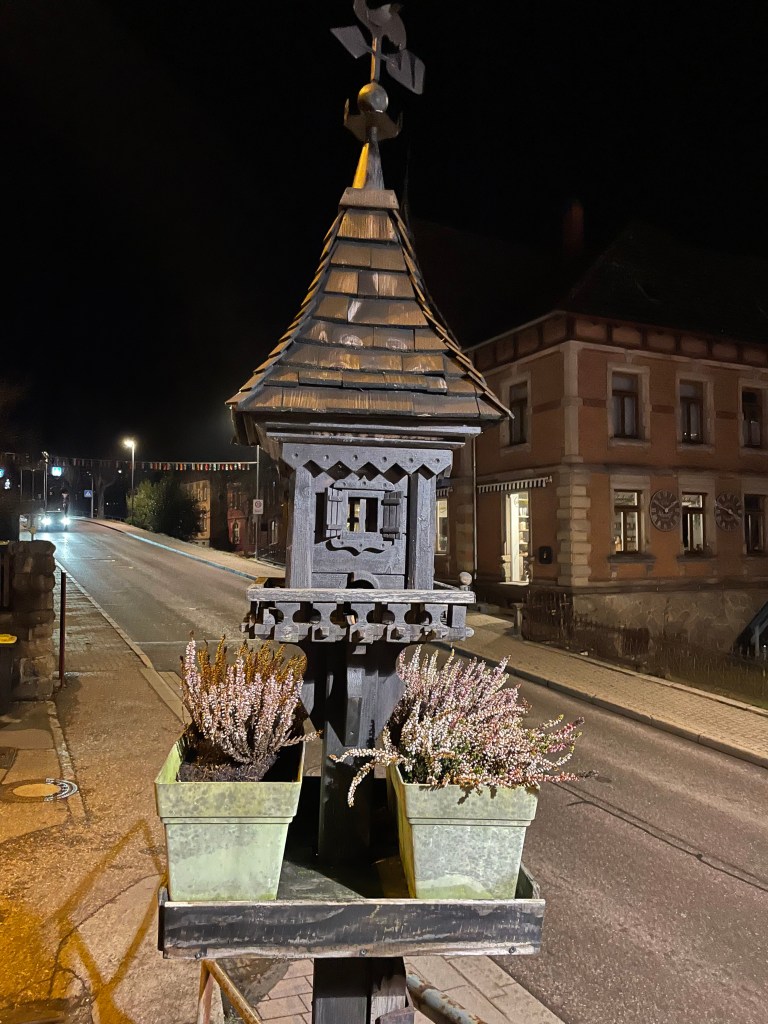
These first photos are outside our hotel room and our walk through town  down in the valley, where the water flows down from the mountainside.

Everyone dresses up for Karnival!

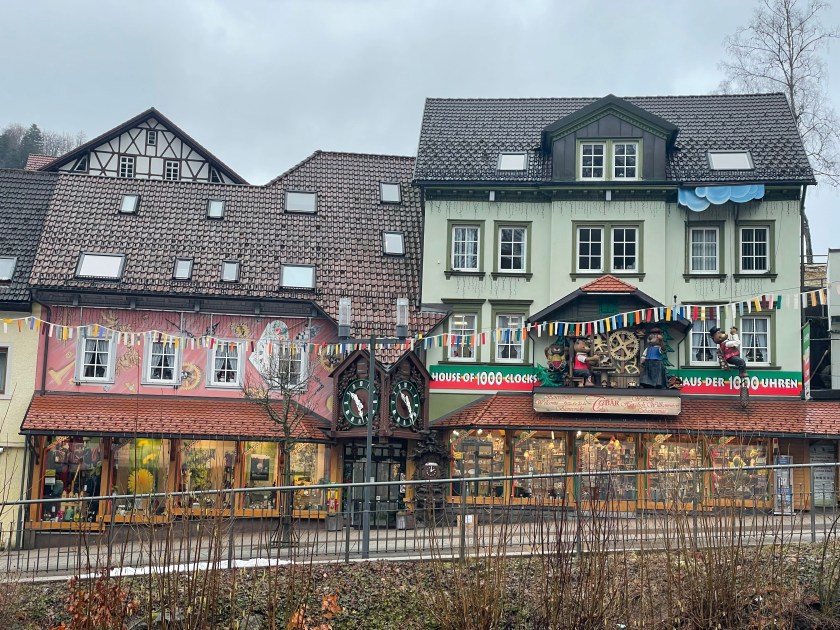
Some of the cuckoo clock stores:

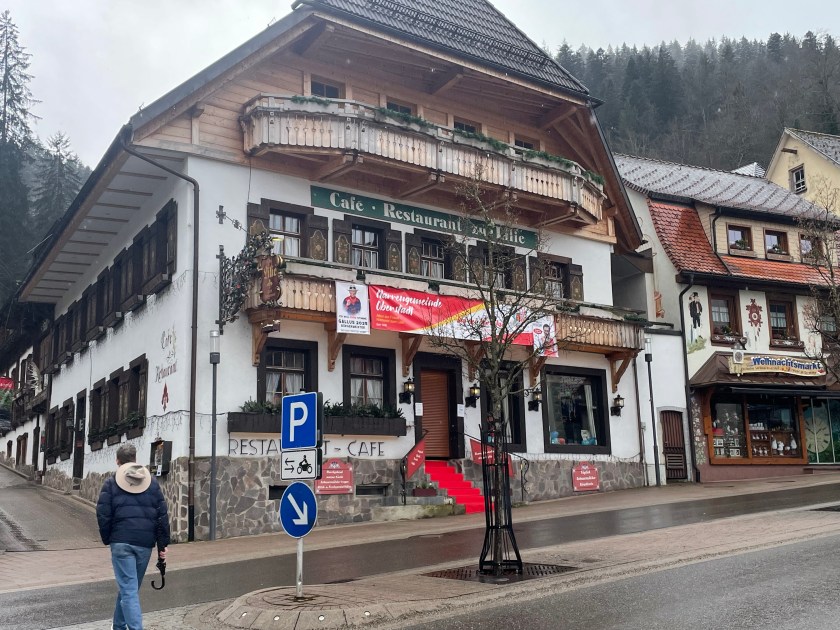
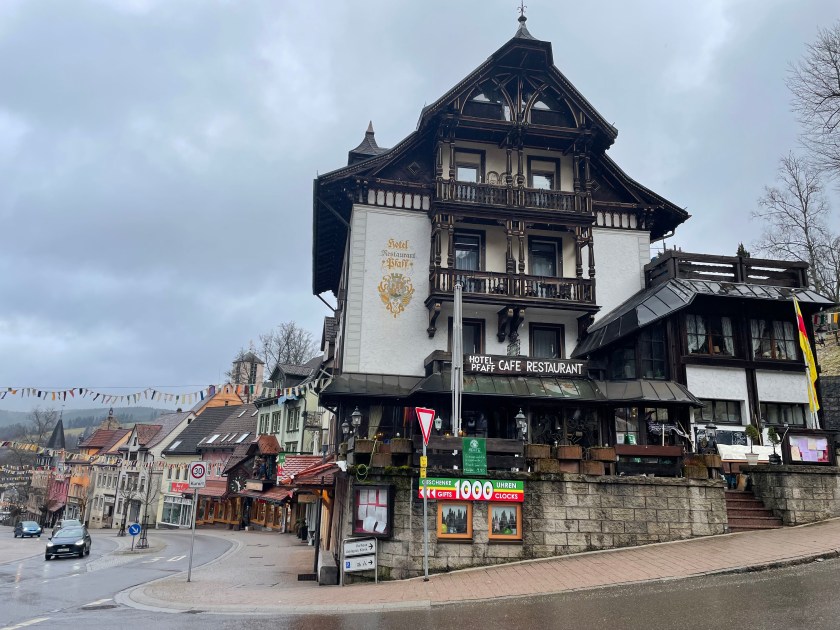
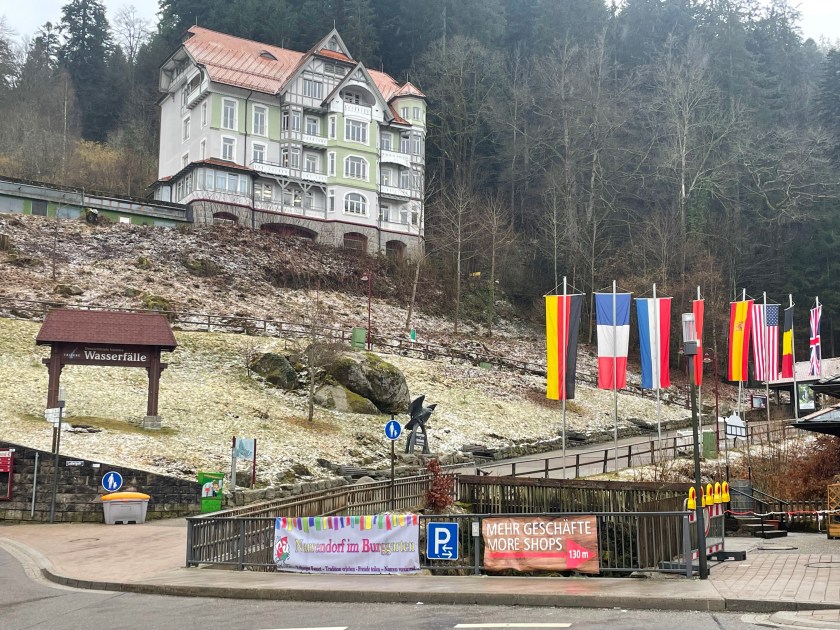
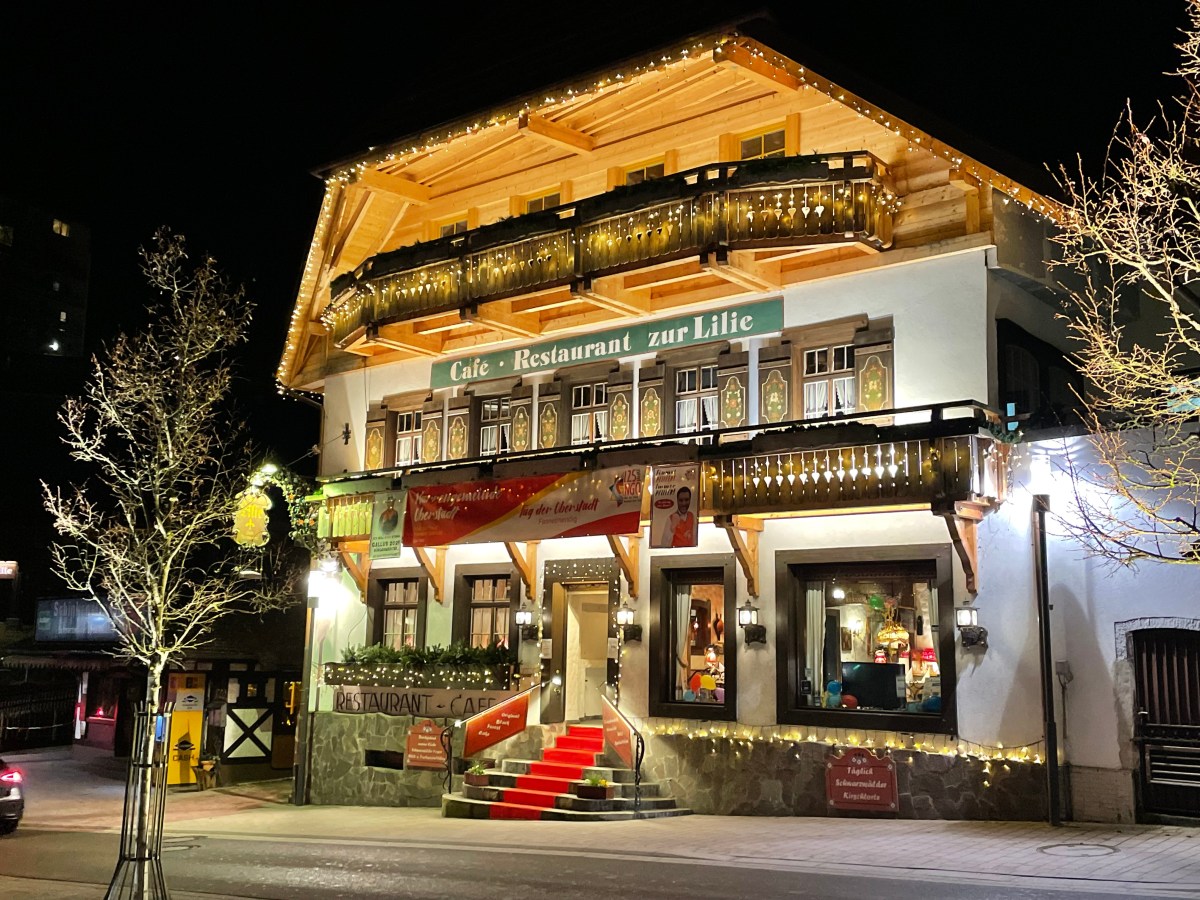
Here’s last night’s restaurant.  You enter the waterfall area to the left.

Looking back down mainstreet:

From Wikipedia, the free encyclopedia:

The Triberg Waterfalls are waterfalls near Triberg in the Black Forest in Baden-Württemberg. With a descent of 163 m, it is one of the highest waterfalls in Germany and a landmark in the Black Forest region.

Above Triberg, in the midst of Black Forest, the Gutach river plunges over seven major steps from a gently undulated high plain into a rocky V-shaped valley.

In Triberg, at the bottom of the falls, the deep valley forms a basin just wide enough for a small town. The steep basin and the waterfalls were initially formed by two faults in the granite and then by glaciers during several glaciations of the Pleistocene.

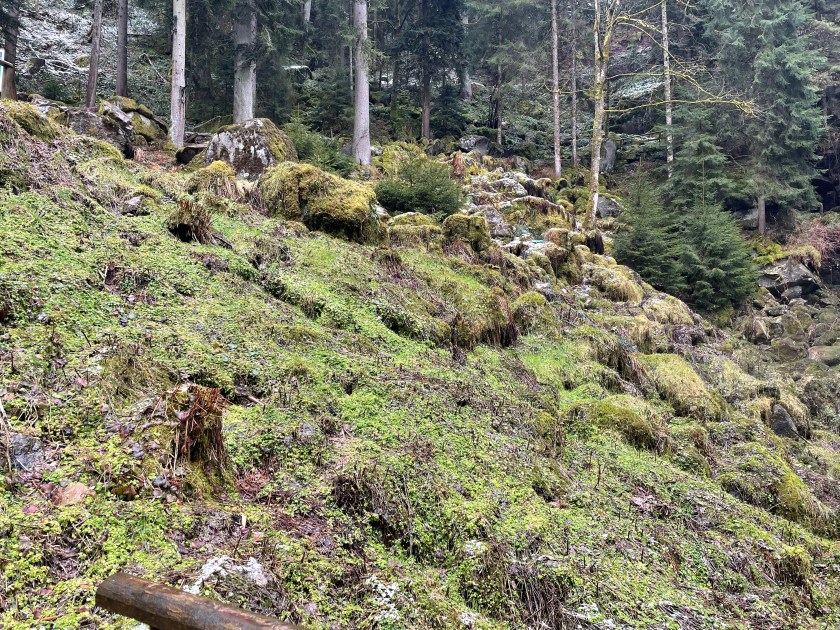
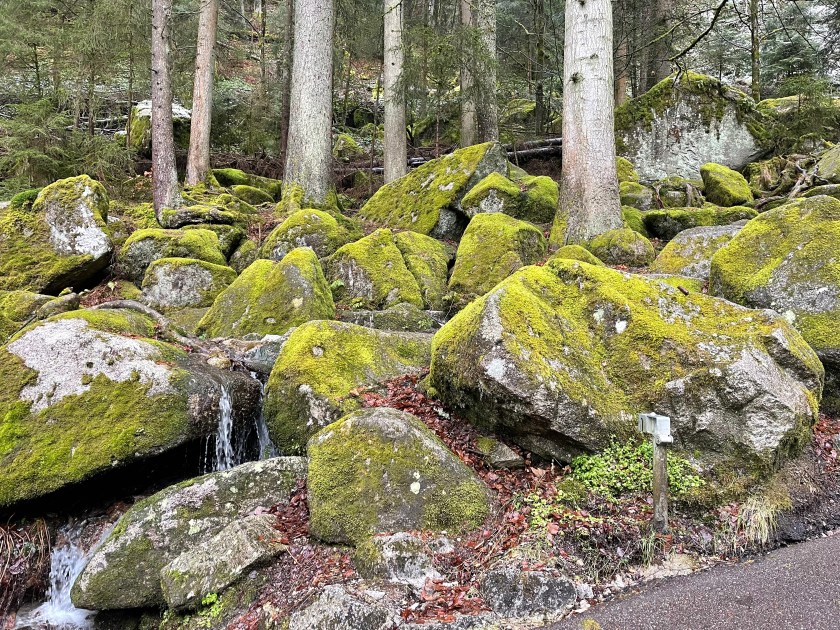
Everything was so green and covered with moss.

Ernest Hemmingway visited here.

Triberg in the Black Forest

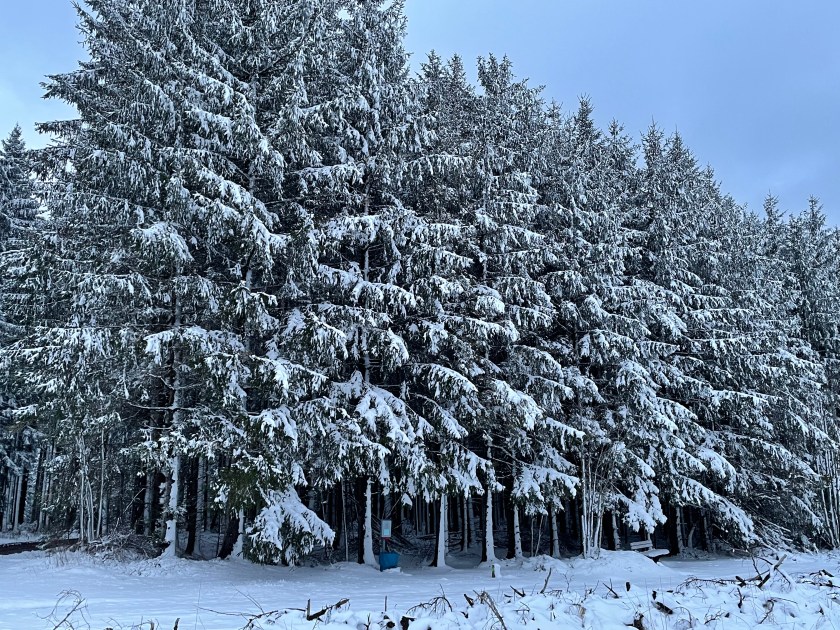
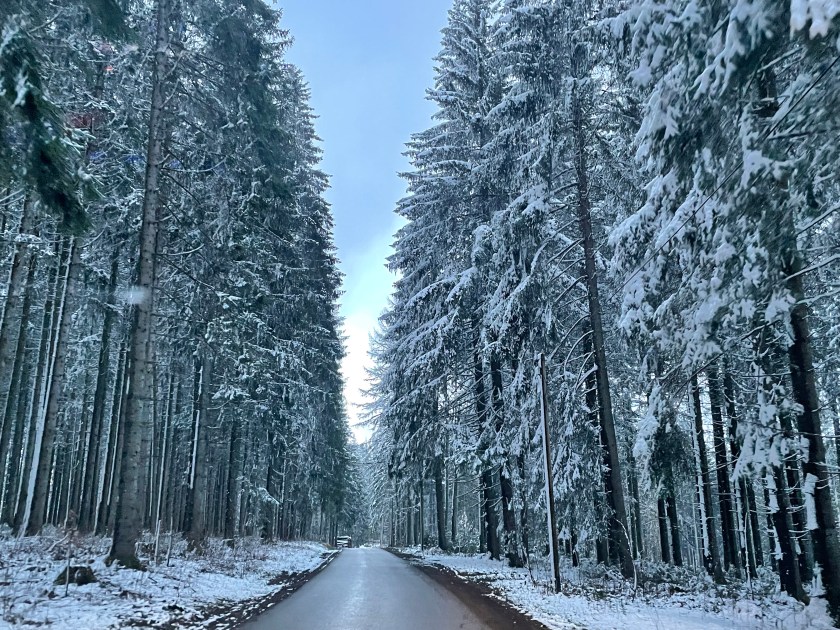
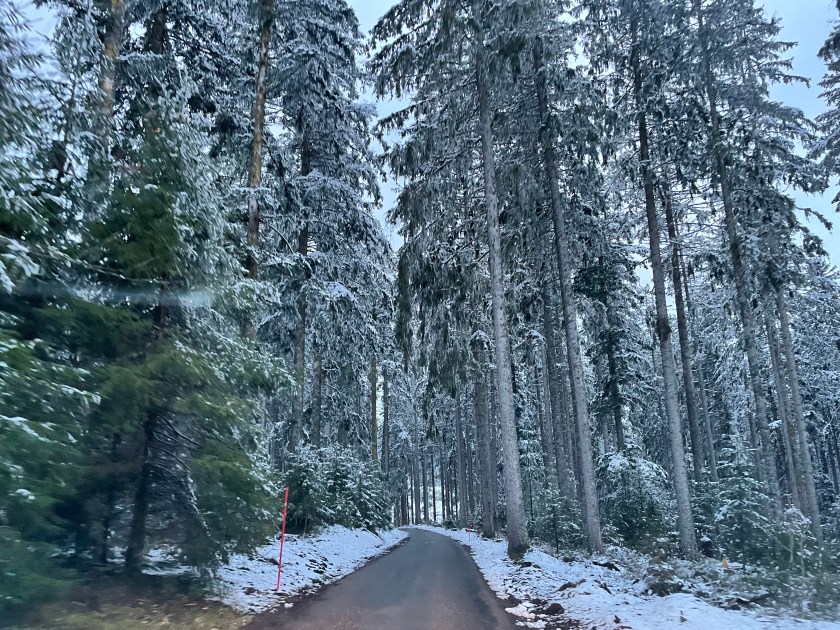
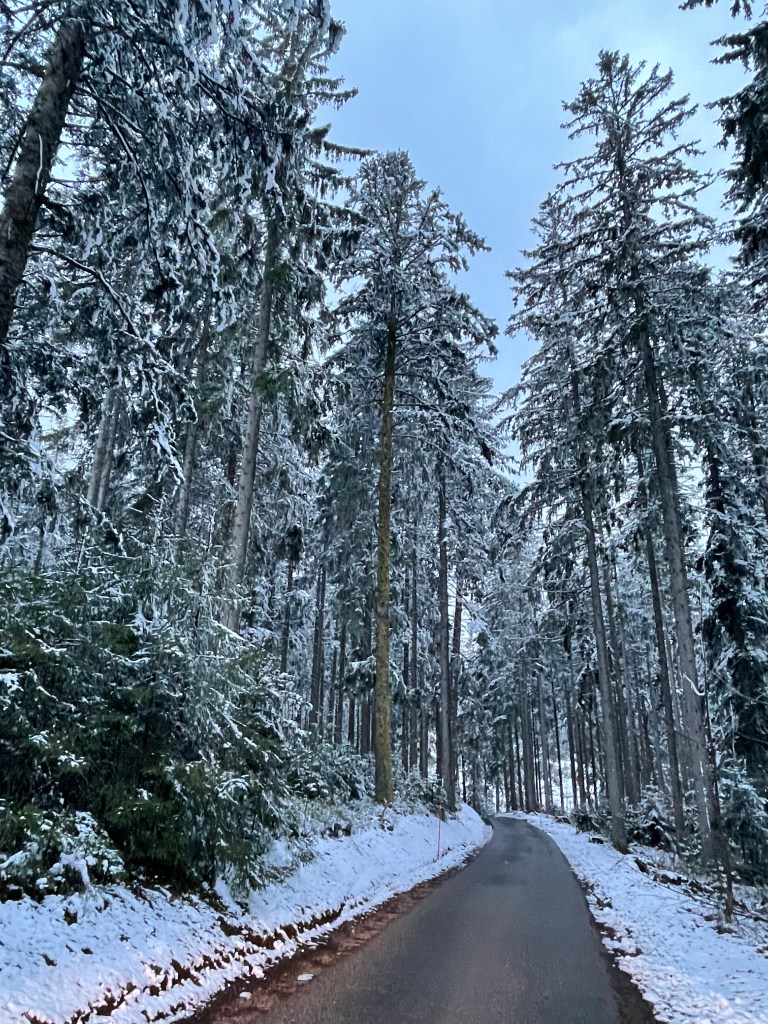
We left Donaueschingen as the sun was lowering. Our next destination was Triberg, where we had made a hotel reservation for tonight–a town in the heart of the Black Forest. We set the GPS to the “economical route” and were on our way.  Today it snowed in the Black Forest and soon we were seeing snow on the ground, then on the trees, then covering everything.

Our little route took us up and around and through little towns, and the road got smaller and smaller, until it was a single lane country road through the forests.  We wondered where in the world it was taking us, but we stuck with it, after asking 2 girls jogging if the road we were on led to Triberg.  They didn’t think so, but then decided it was one way of getting there.  John was a little worried.  I loved it.  It was an adventure and it was like being in a completely different world.

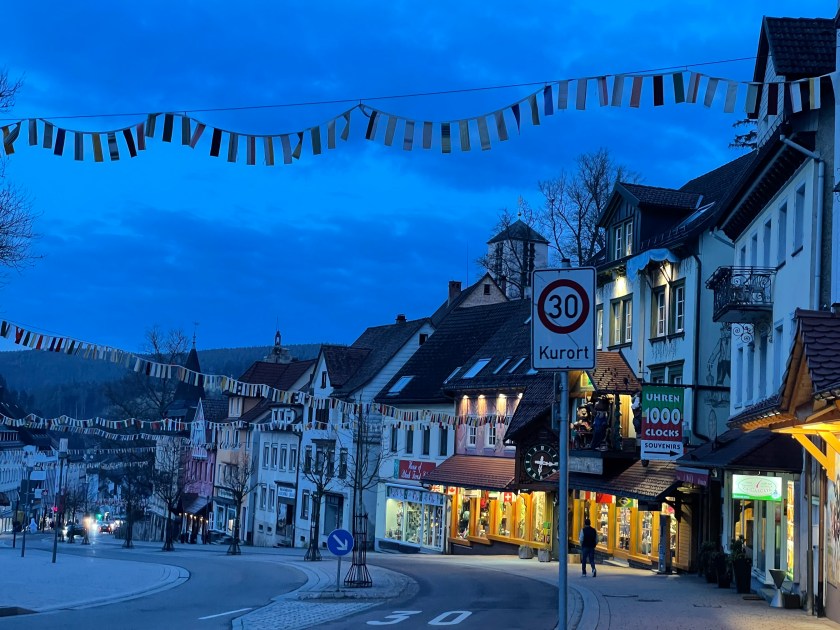
We did eventually get there–I think it was a short-cut over a mountain on a back road. We came into Triberg as it was getting dark.  This looks like a really fun town, also decorated with streamers in the streets.  It’s a town in a steep valley with water running through the town.  The tallest waterfall in Germany is here.  And this is the heart of cuckoo clocks and wood carving in the Black Forest.  It’s going to be fun tomorrow when we can look around.

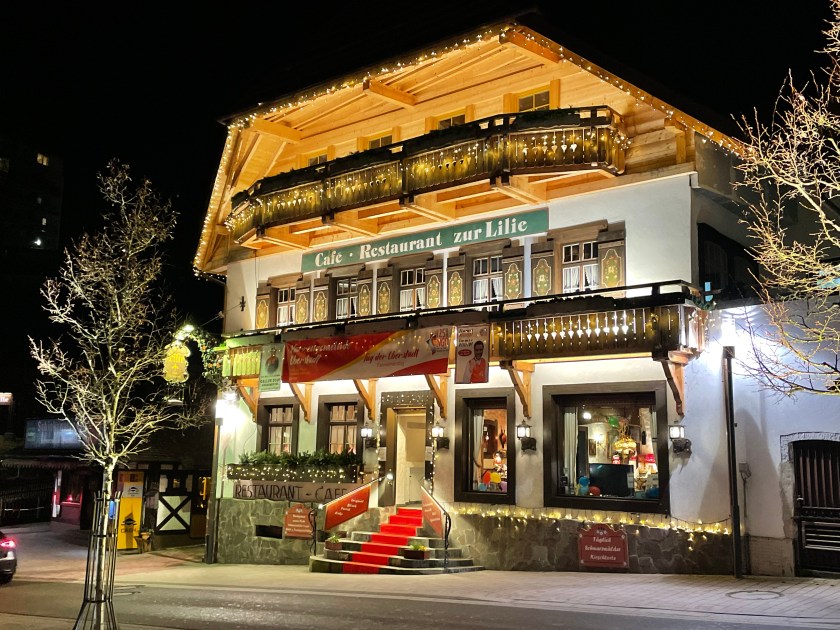
It looks like many of the shops will be closed, or may close for Fastnacht. We found our Hotel –the Landgasthof zur Lilie, checked in at the big chalet building, then found our rooms were down the street and around a corner. We are in a little room in a nondescript building. It’s fine, but not the chalet experience we were expecting.  It seems that in this off-season, most of the hotels and shops are taking a Winter Pause.

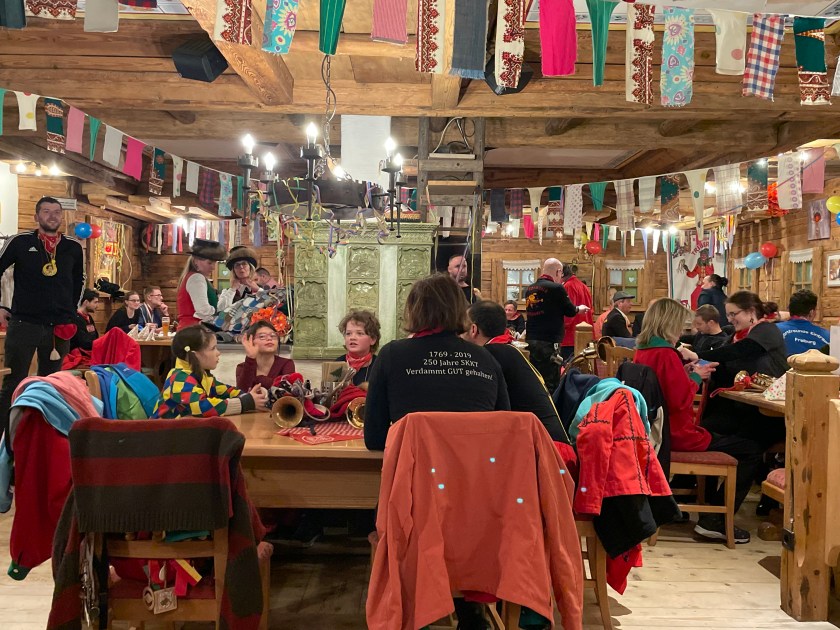
For dinner, we went to the hotel restaurant where we checked in and it was really amazing.  Everything was decorated for Karnival.

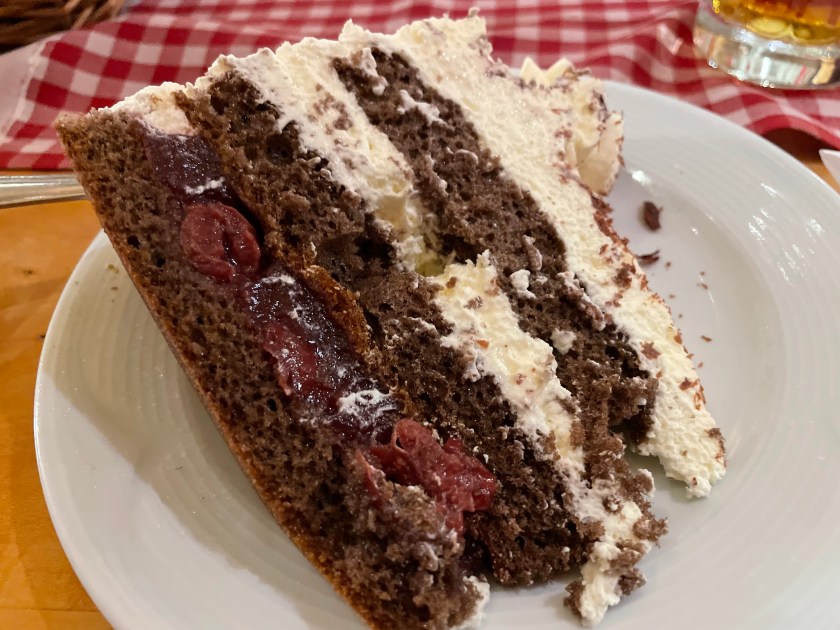
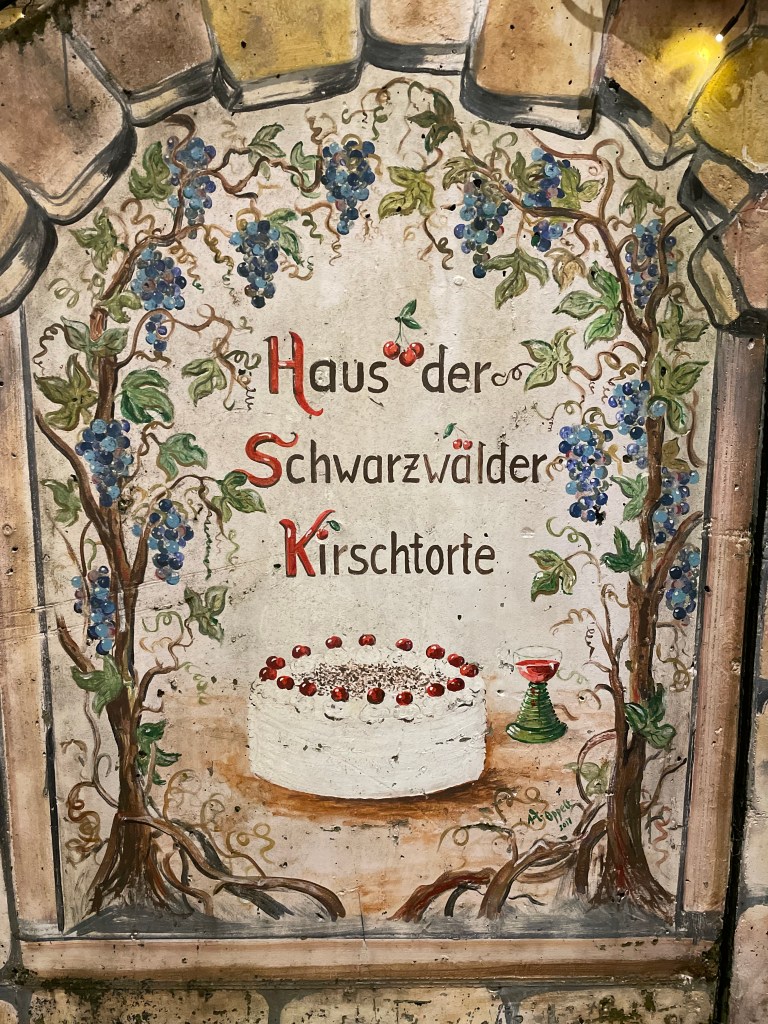
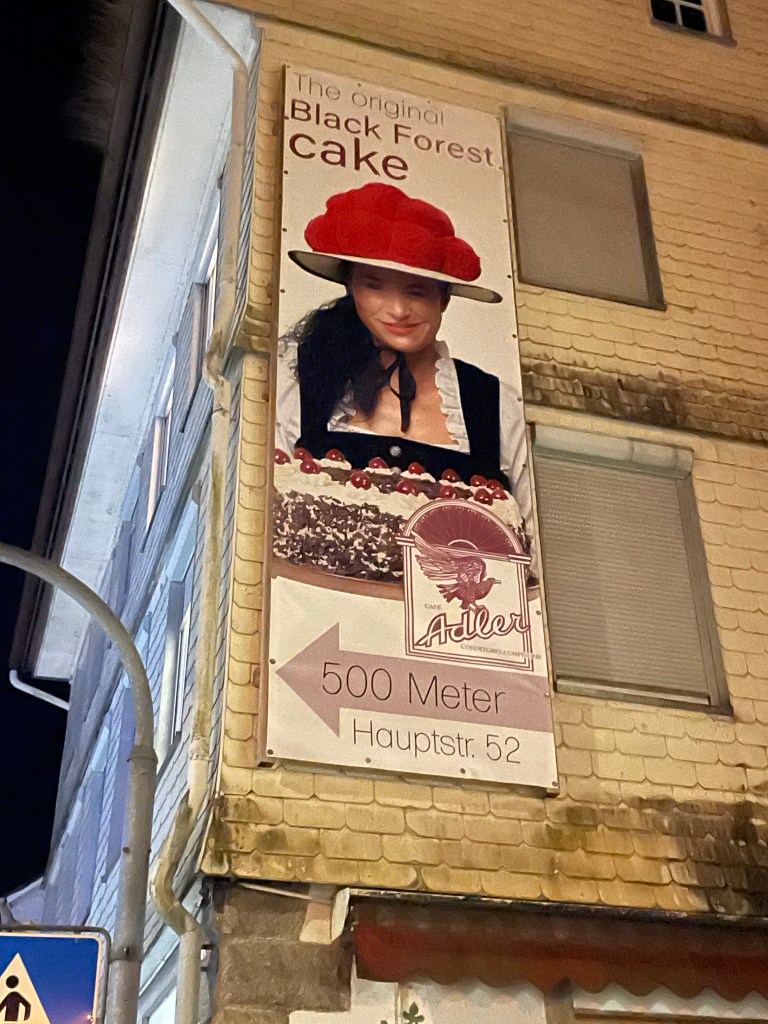
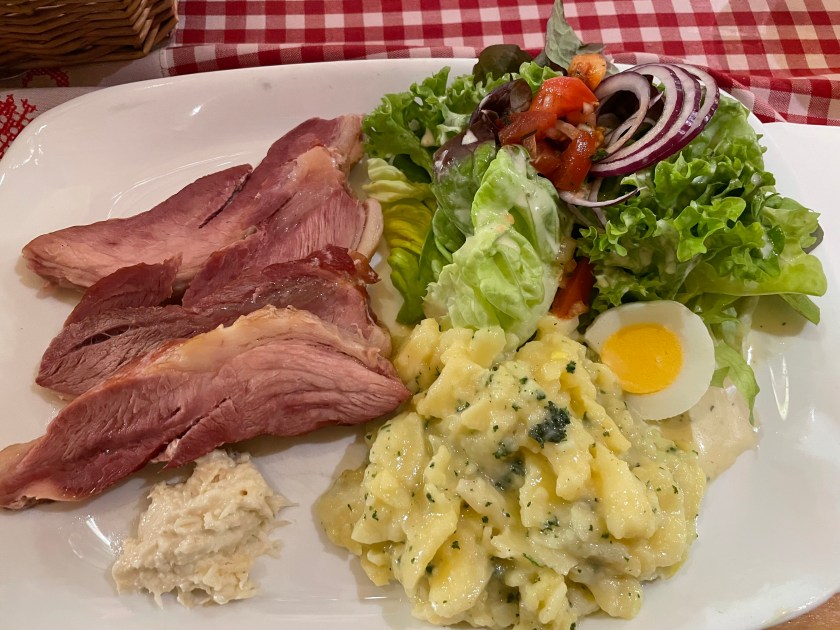
I ordered Black Forest Ham served with a delicious green salad and German potato salad.  Quite possibly the best German meal I’ve had!  John got Brats one last time. Then we had Black Forest Cake with cherries and whipped cream. It was delicious.

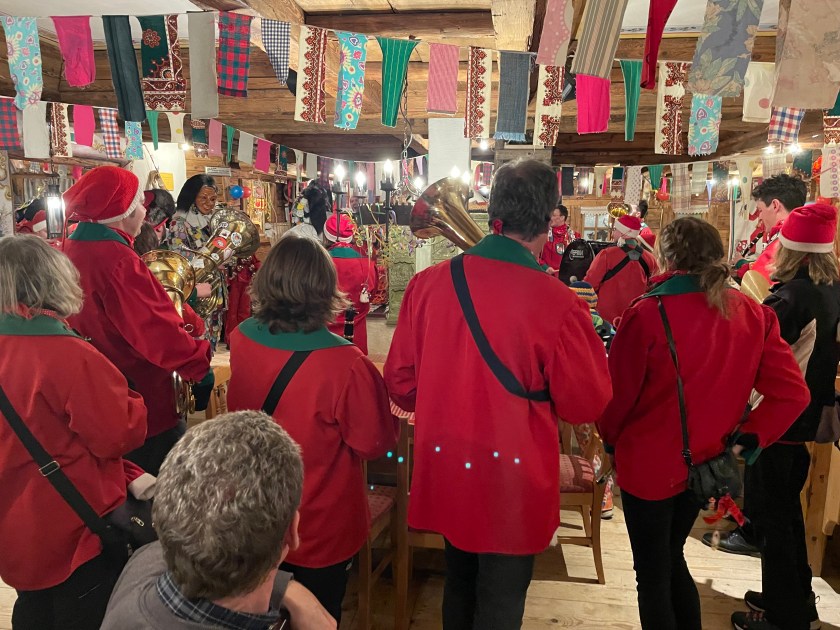
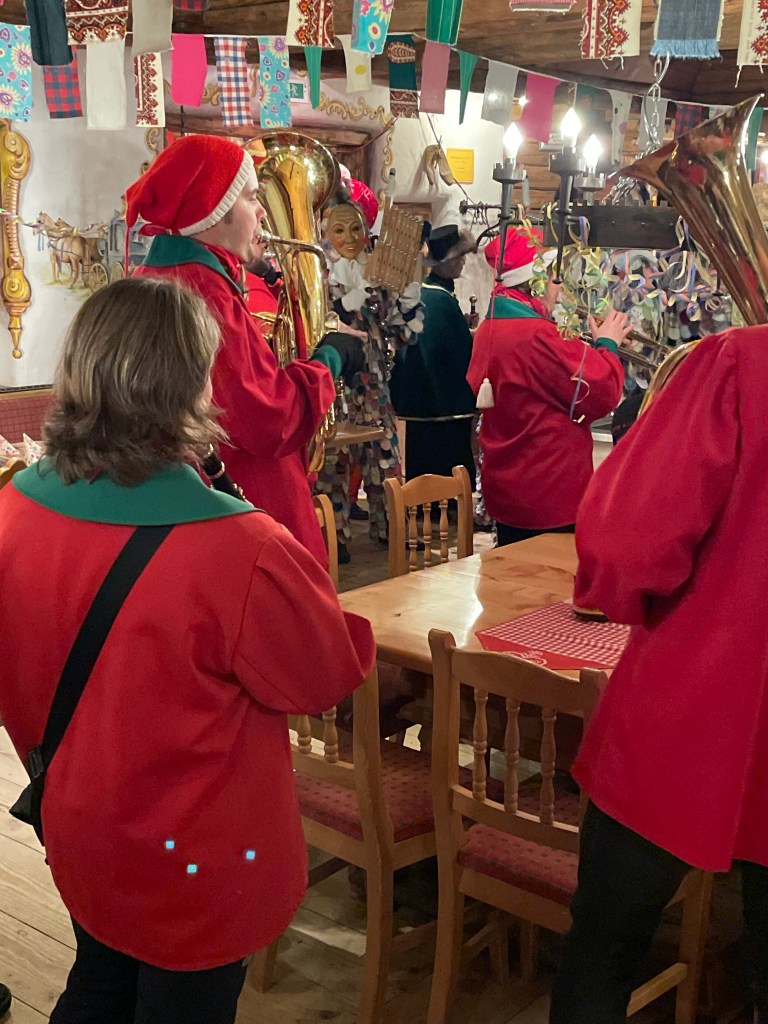
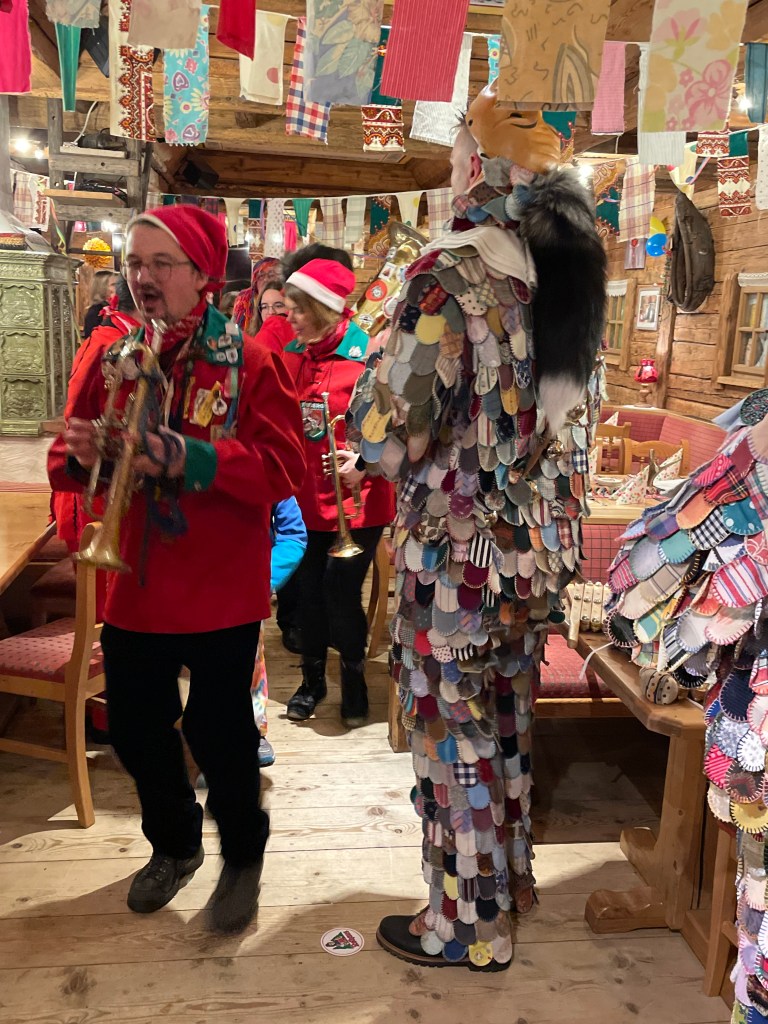
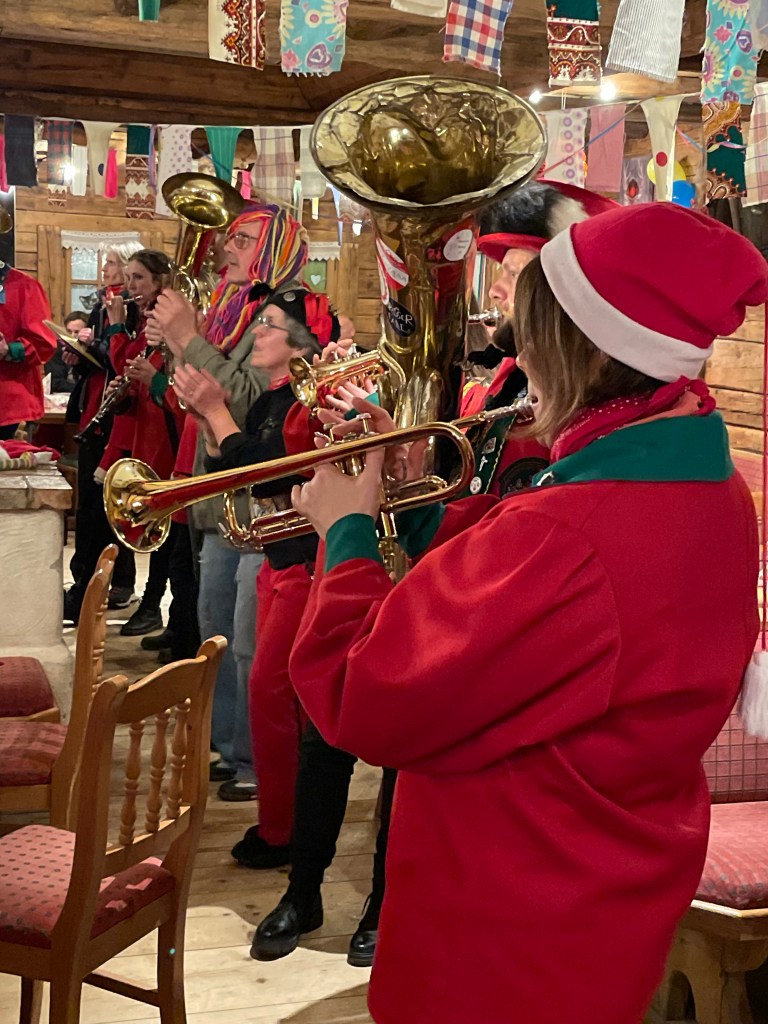
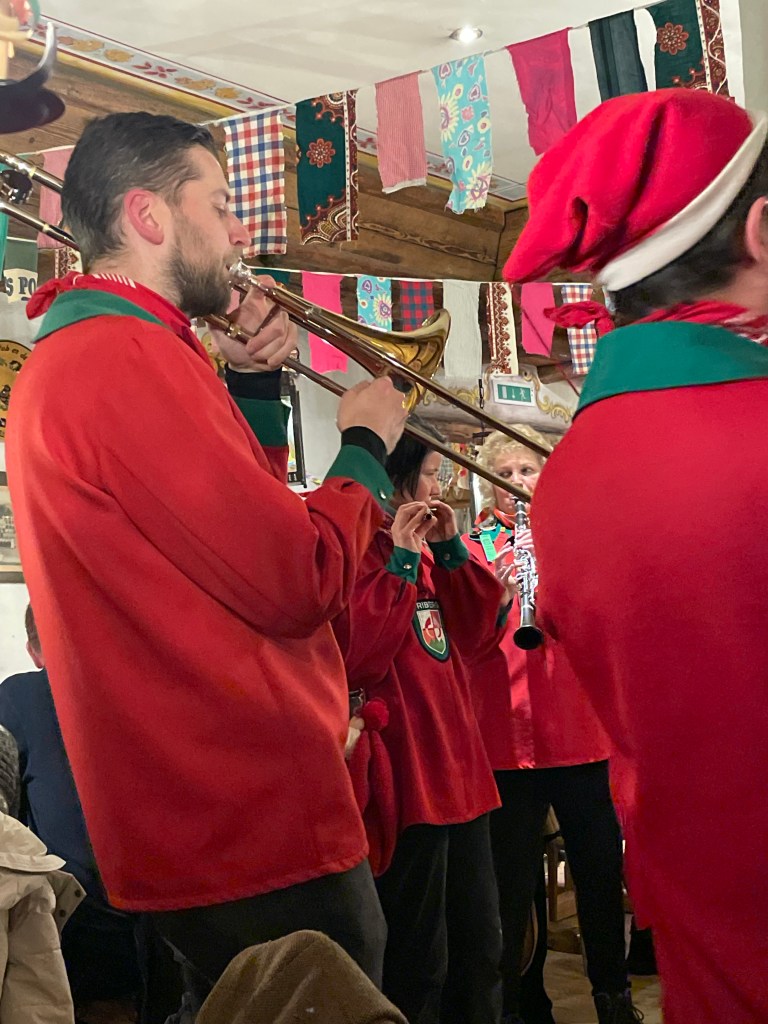
Something really fun happened between our dinner and dessert–an entire troupe of musicians (all ages and in family groups) came into the restaurant, playing Fastnacht oom-pah-pah music with brass and drums and every fun and loud instrument.  There were about 50-60 in the group, all dressed in red uniforms and traditional Fastnacht costumes.  We thought we were so lucky to be there when they came in.  Then after playing 5 or 6 big songs, they all took a seat and settled in to order meals.  I was amazed that we just happened to be there, but the waiter said during Fastnacht, there are so many groups like this that go around playing music in restaurants.  We just happed to be there too. It was really fun and festive.

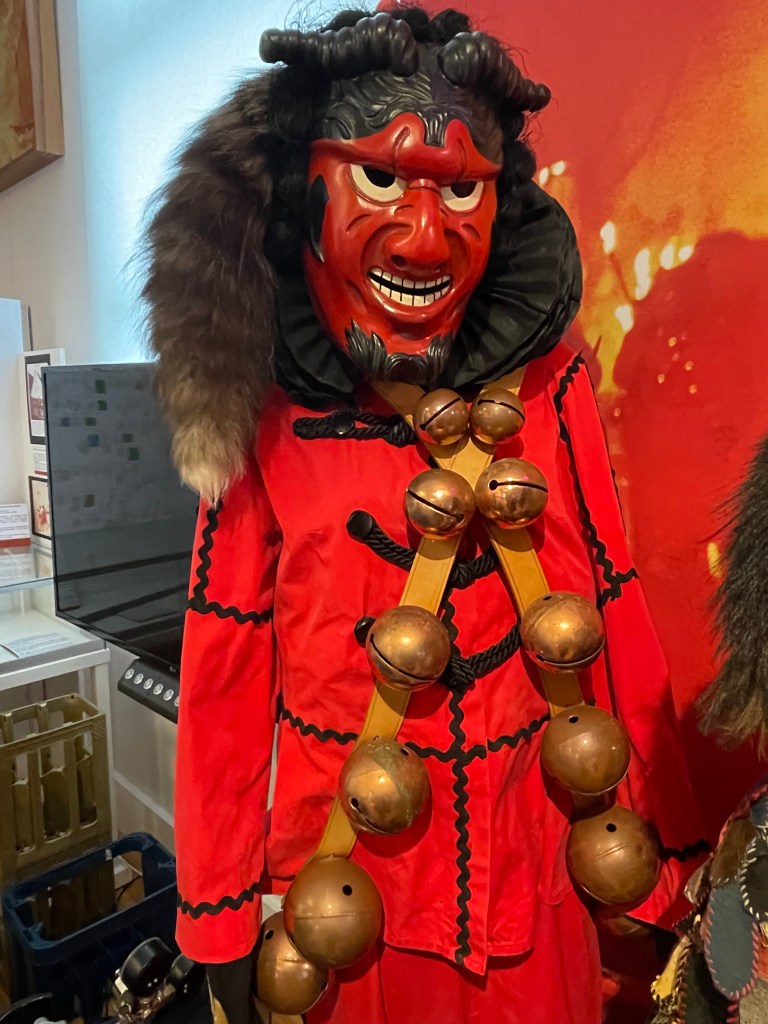
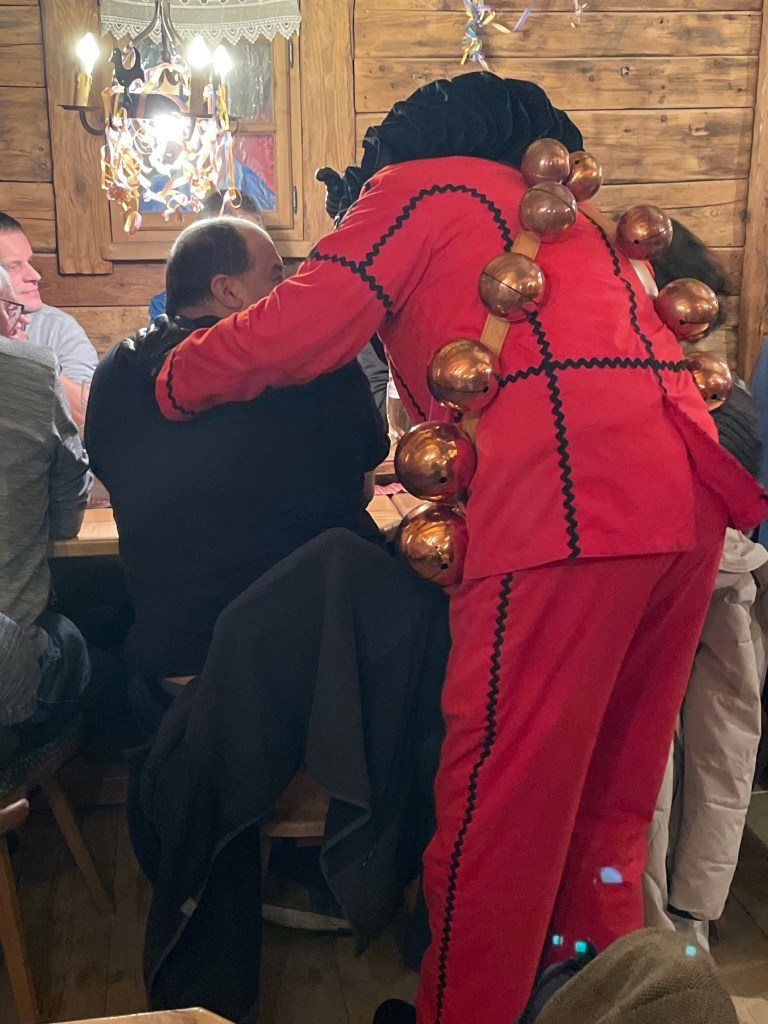
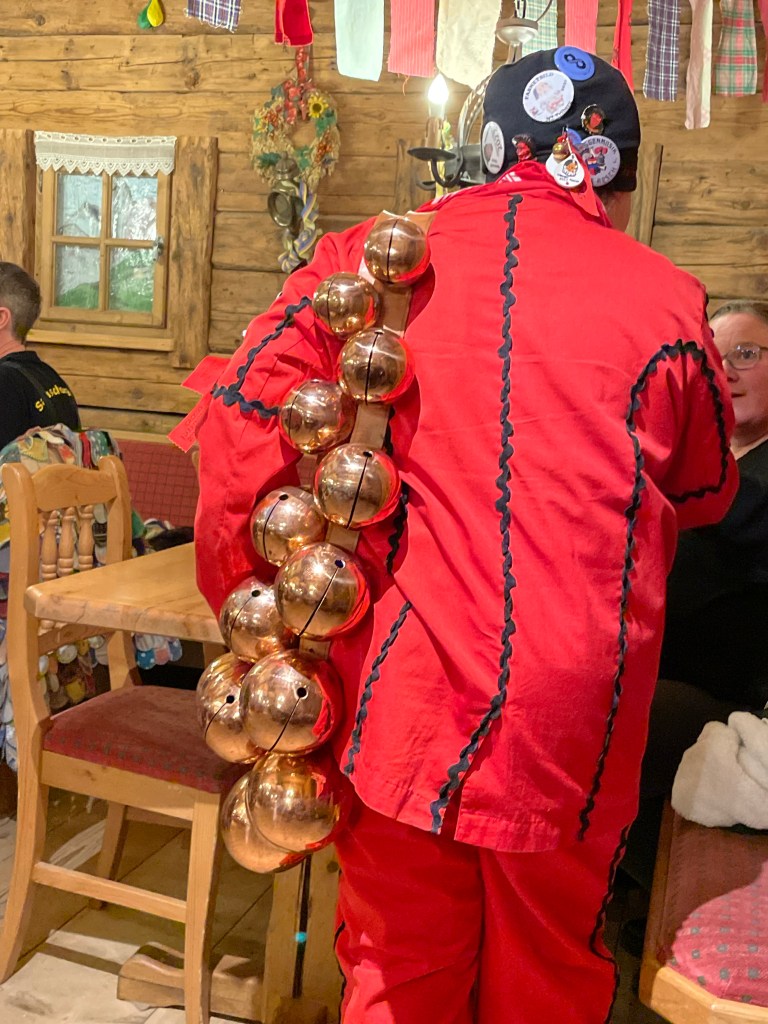
The fellow with the big bells represents the devil, or the bad guy who goes around scaring children and annoying adults–but all in fun.

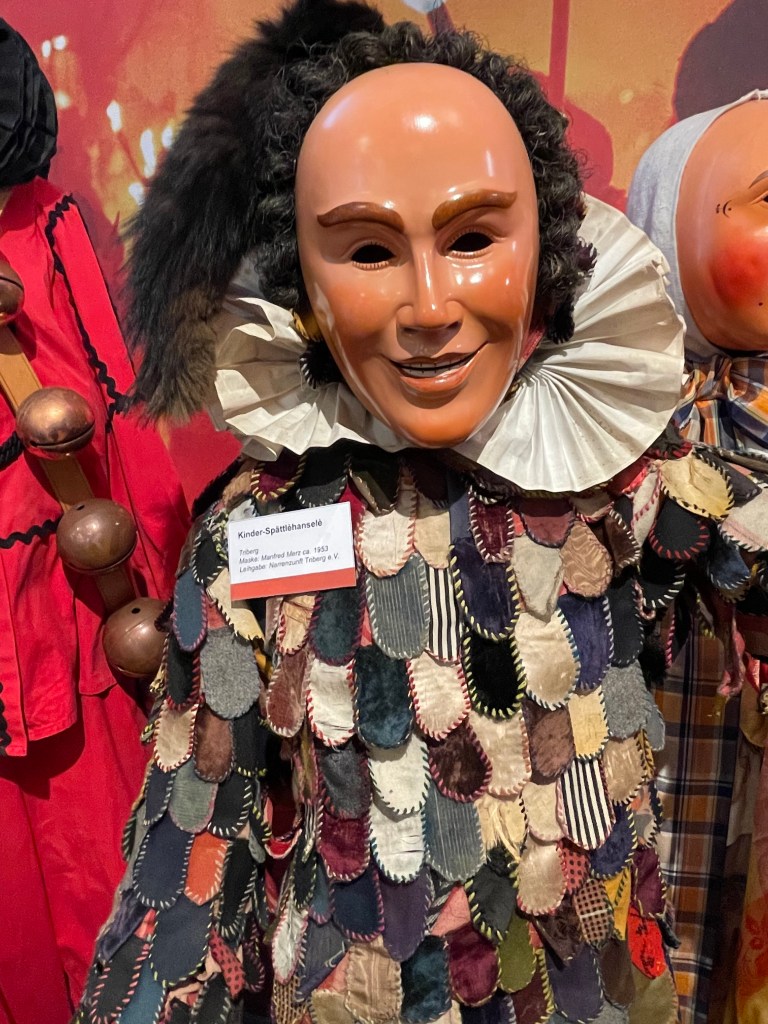
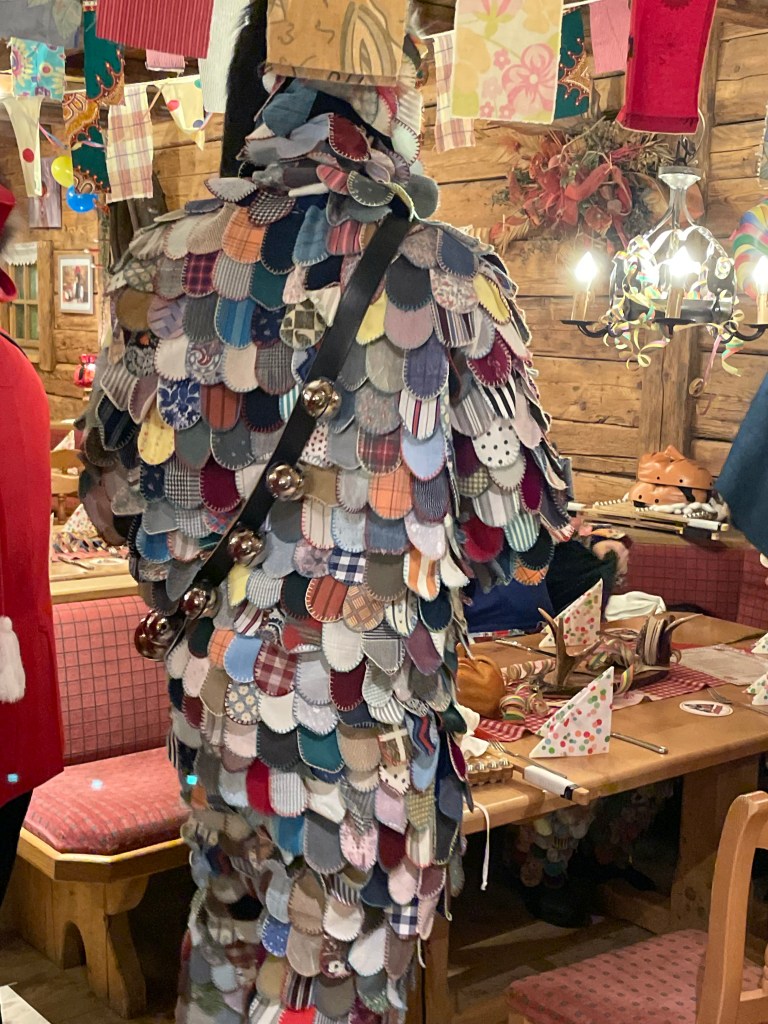
These fabric costumes were Amazing!

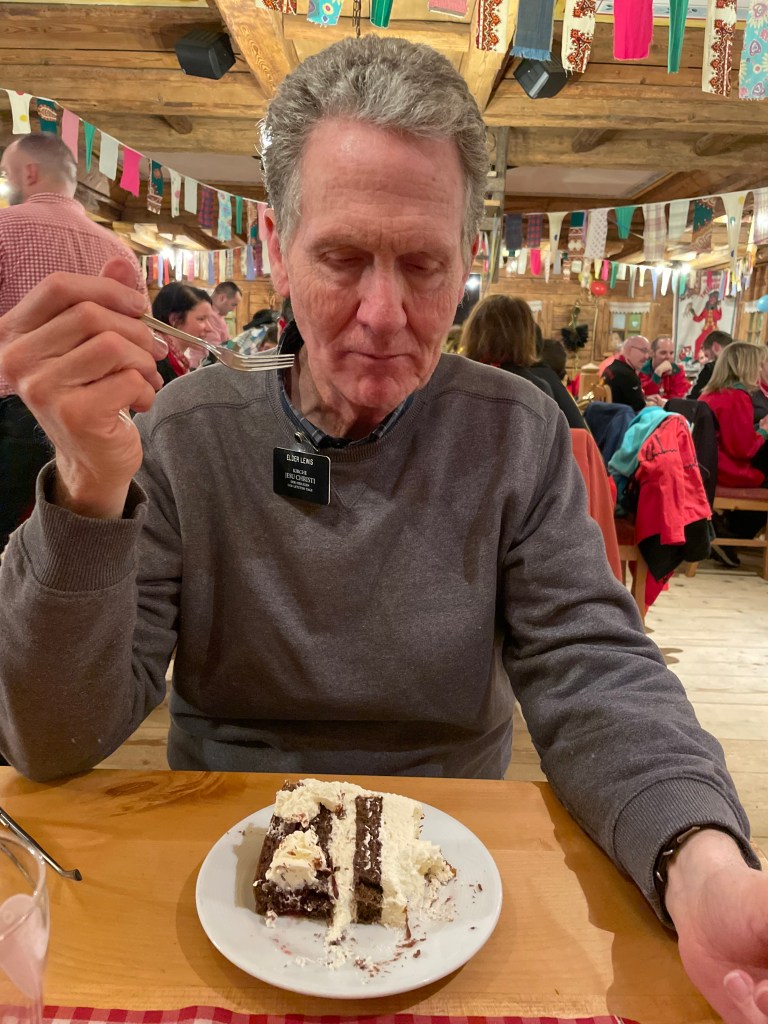
After the very fun music, we enjoyed some really delicious Black Forest Cake.

Then we walked around town a bit to get the lay of the land before heading back to our room.  It was cold out, with a few flurries of snow falling down.

Doneauschinger and the source of the Danube River

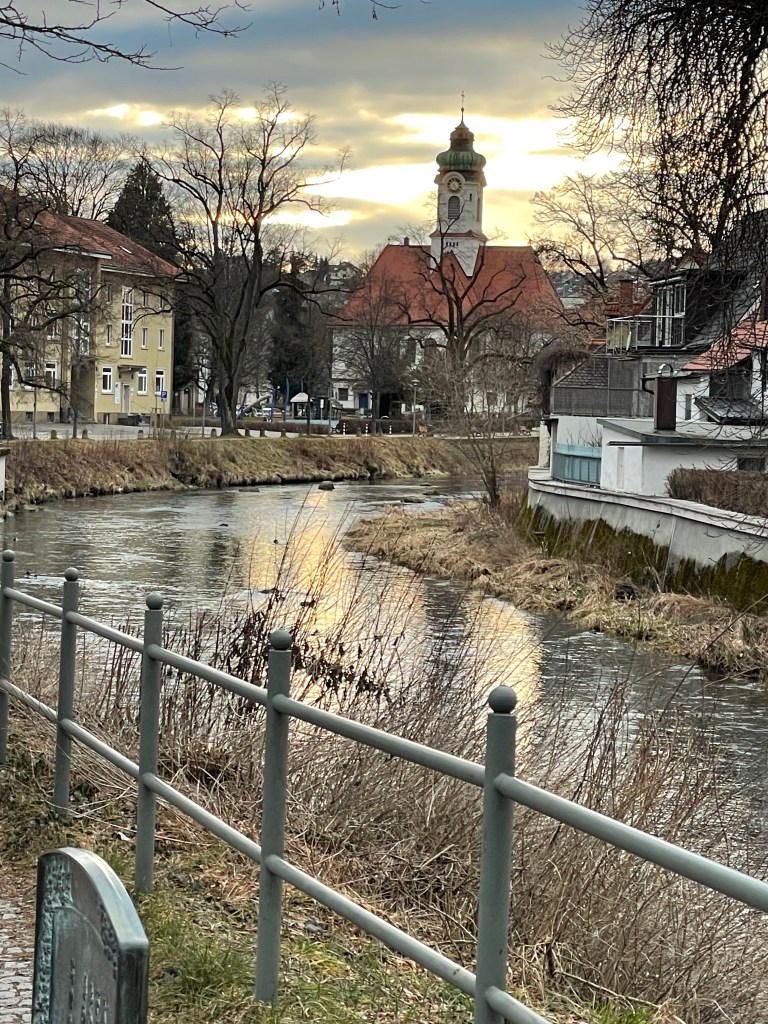
We drove from Dettingen through more small towns and more (now German) countryside to Donaueschingen.  This was another town John selected to visit today.  It known as being the source of the Donaubach in (historically considered the source of the Danube).

Wikipedia: Donaueschingen is a German town in the Black Forest in the southwest of the federal state of Baden-Württemberg in the Schwarzwald-Baar Kreis. It stands near the confluence of the two sources of the river Danube. Donaueschingen stands in a basin within low mountainous terrain.

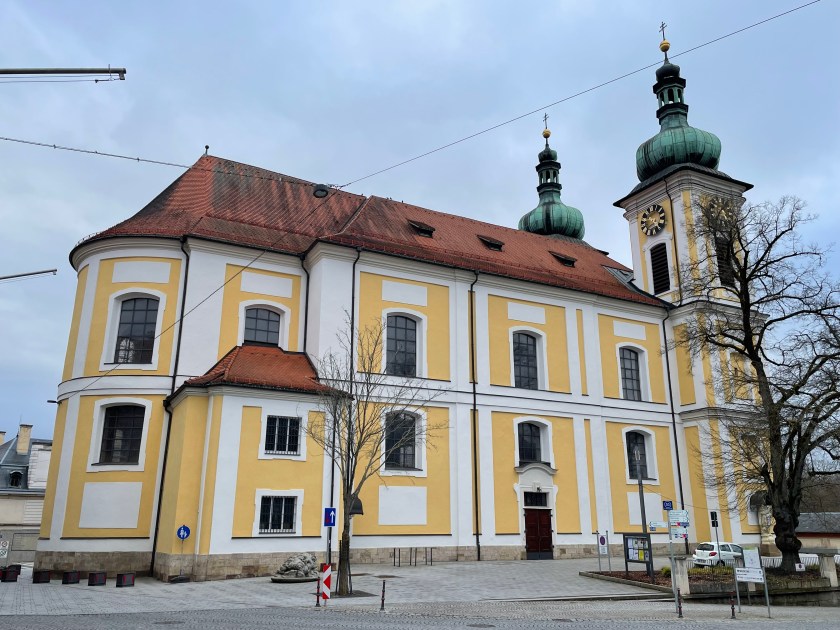
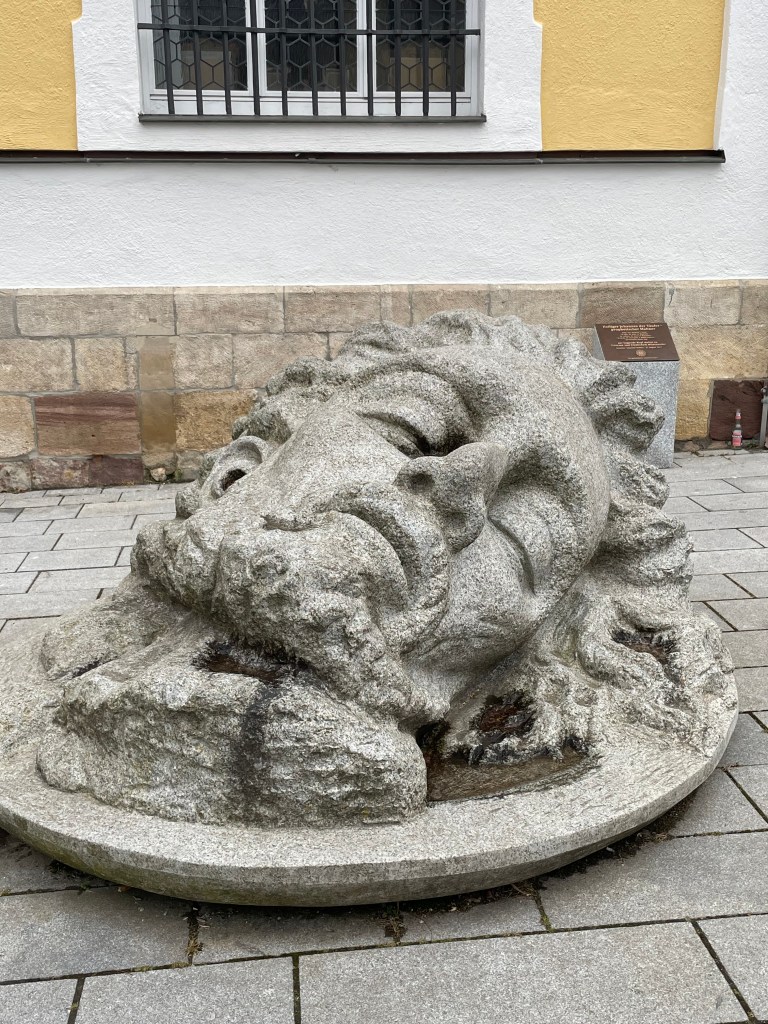
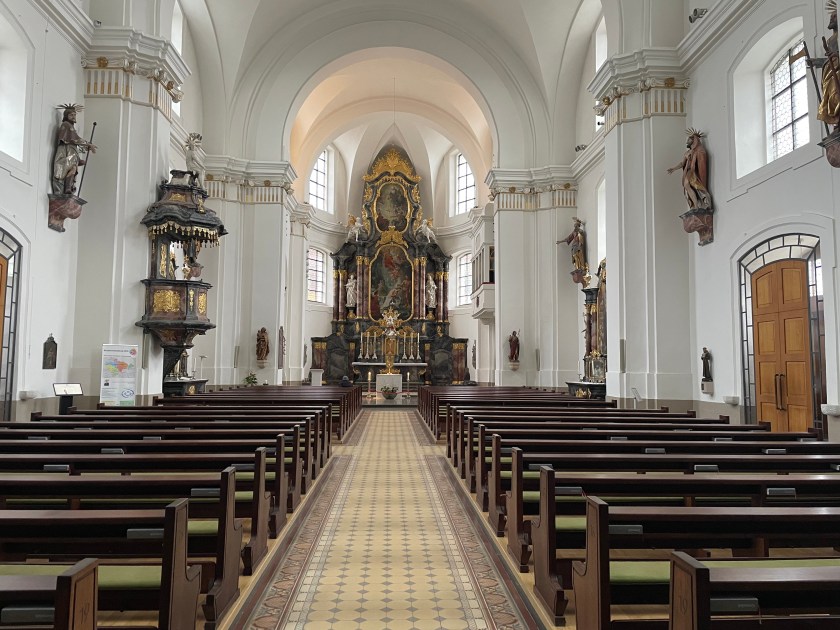
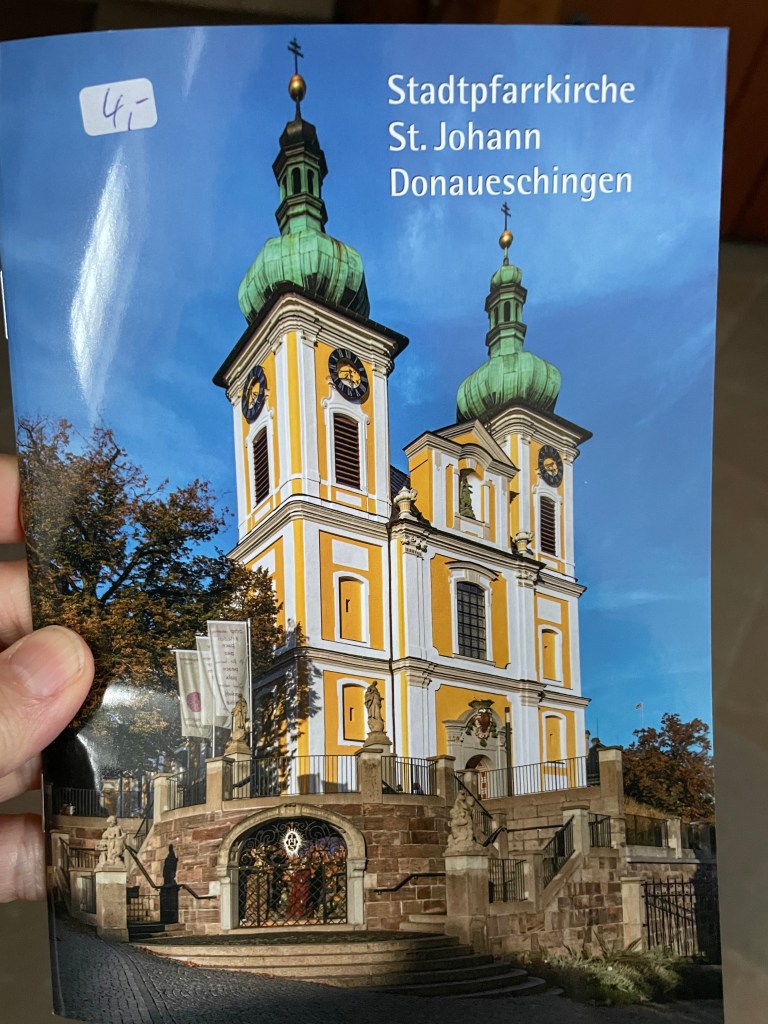
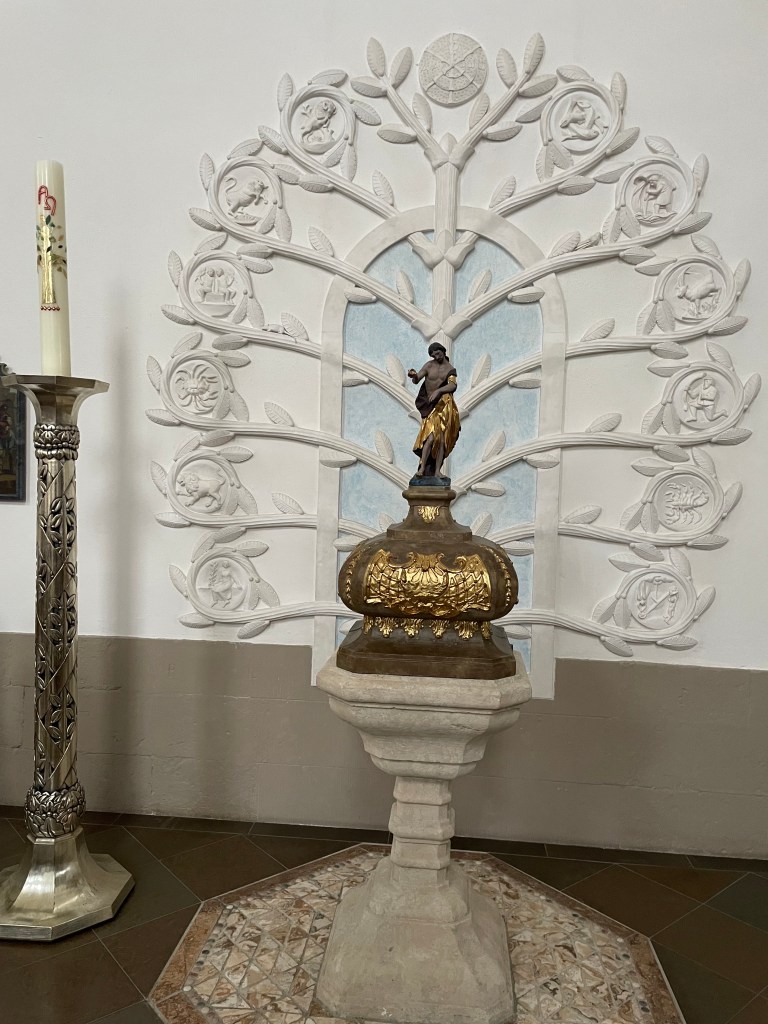
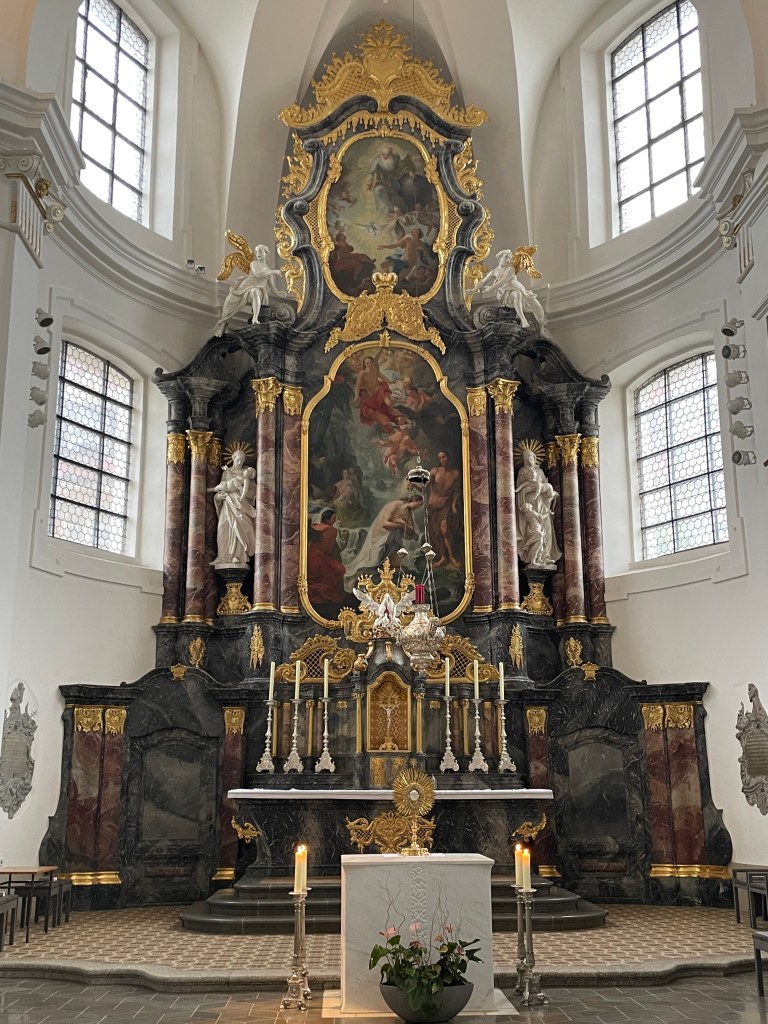
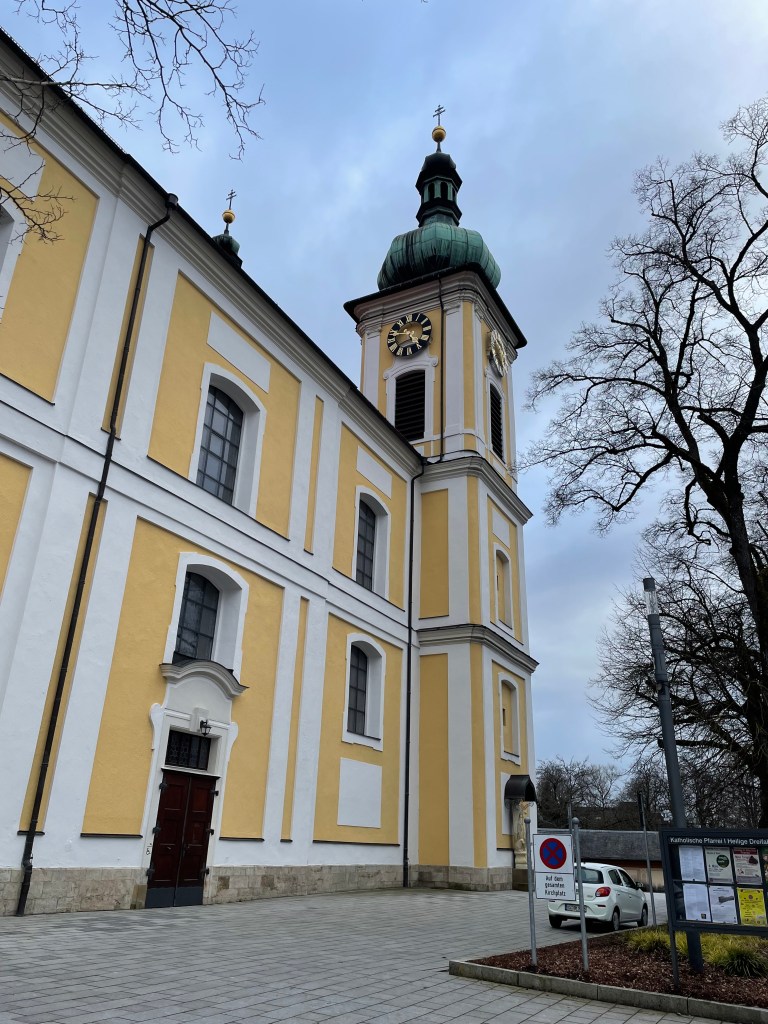
There was a big yellow onion-spired church (St. Johann) named after John the Baptist, near the Quelle (source) of the river.  There was a sculpture of the Baptist’s head out front.

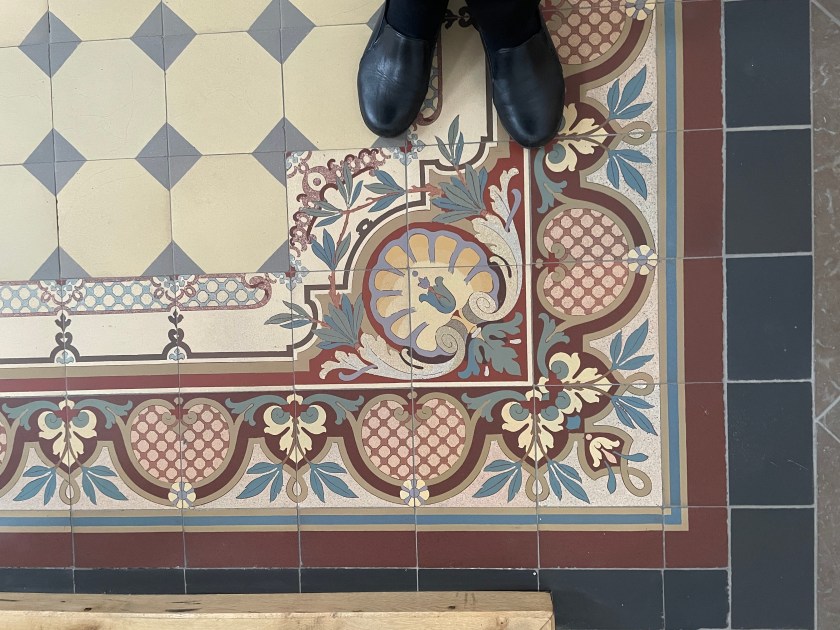
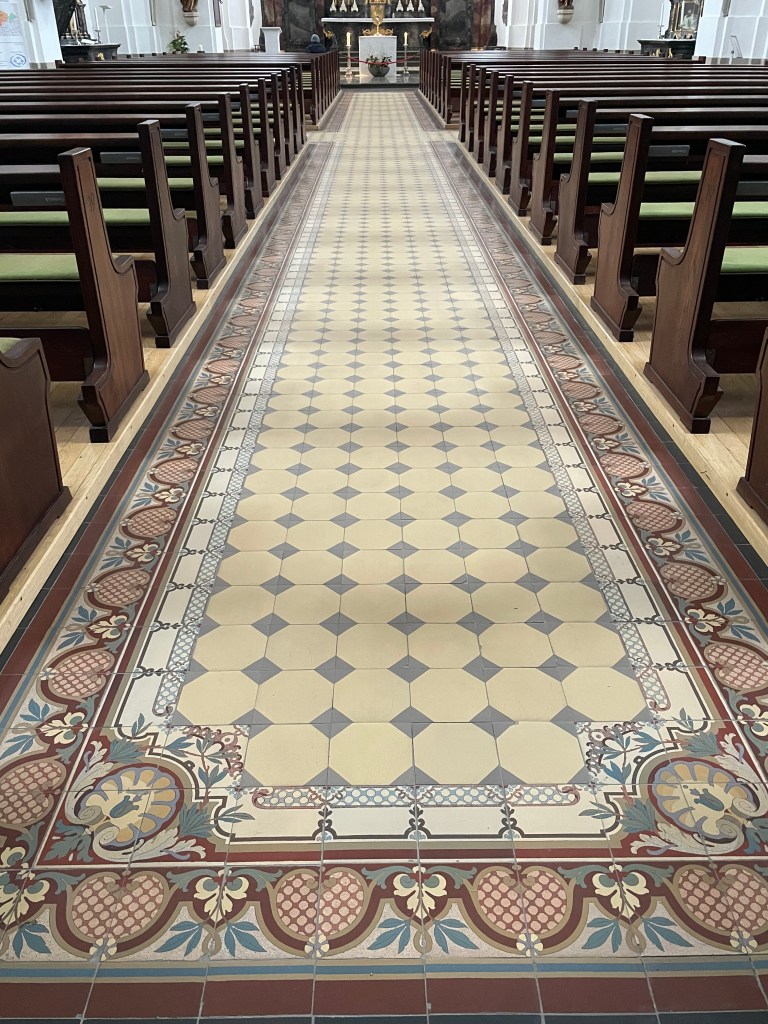
The floor is beautiful.

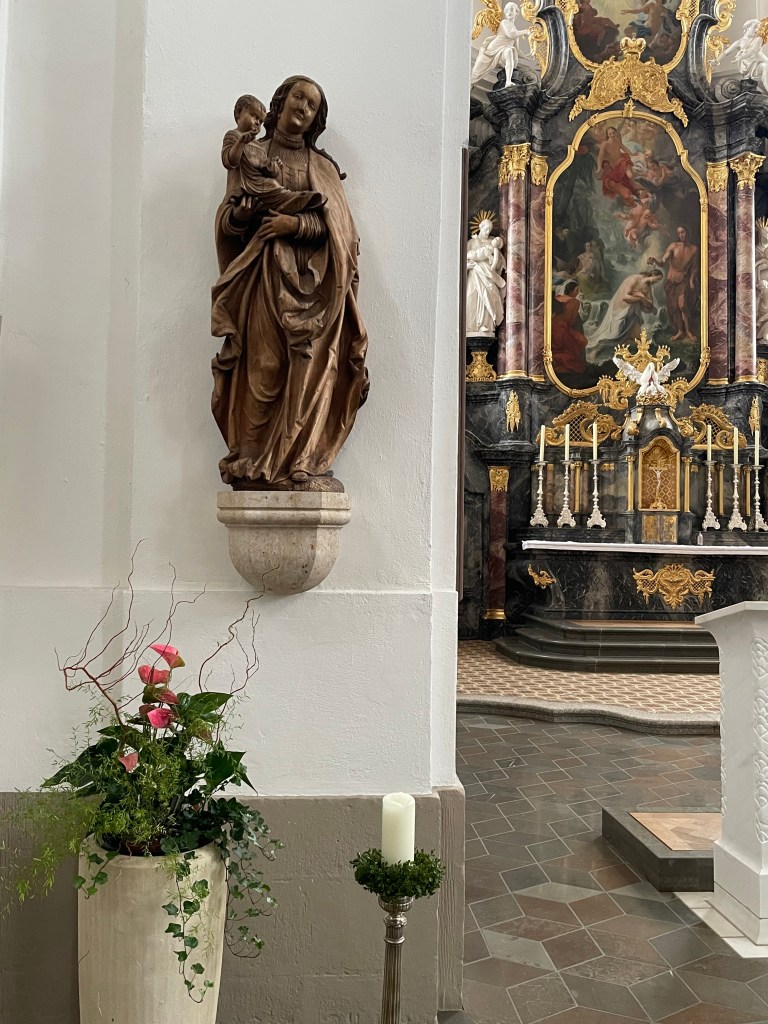
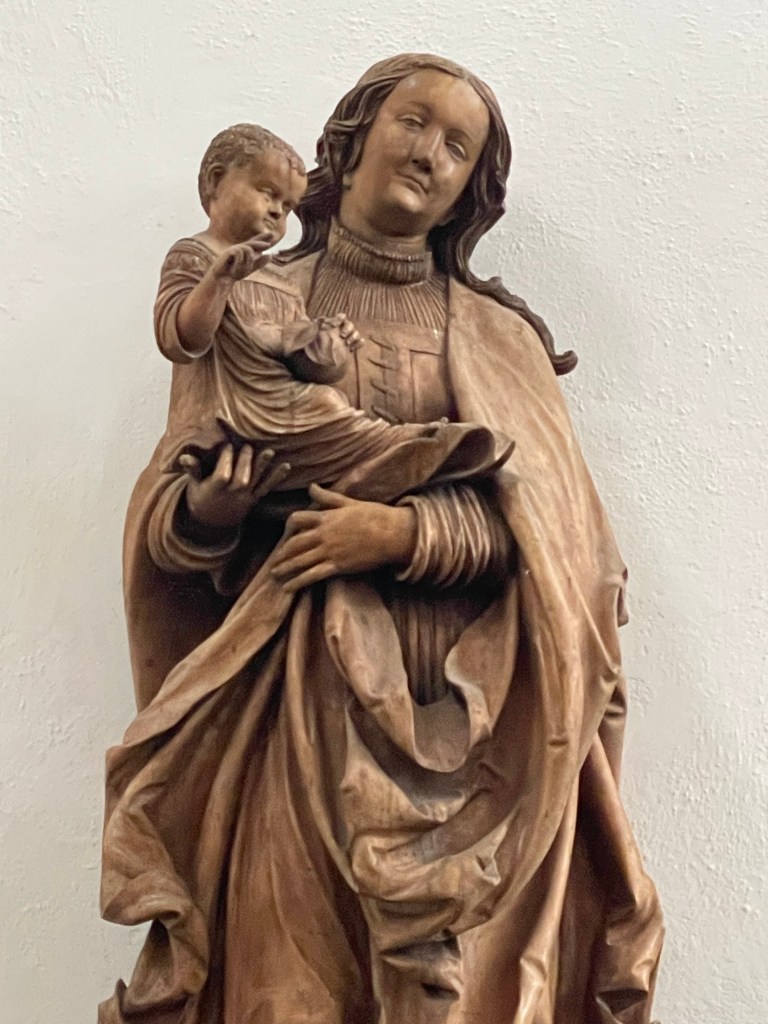
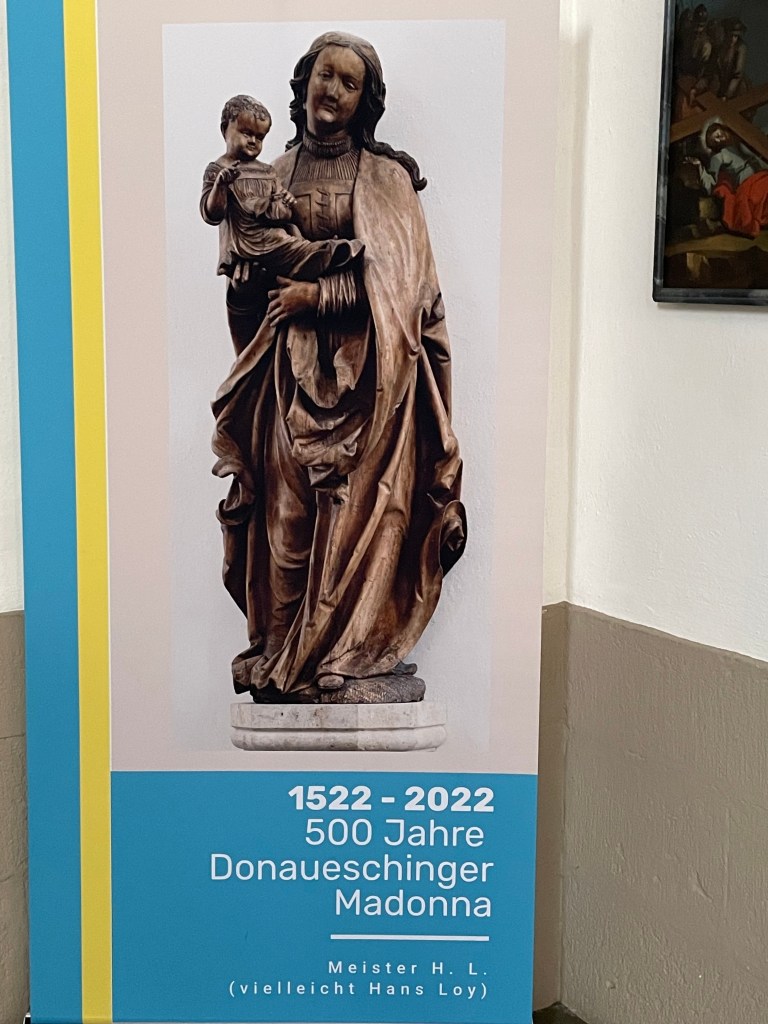
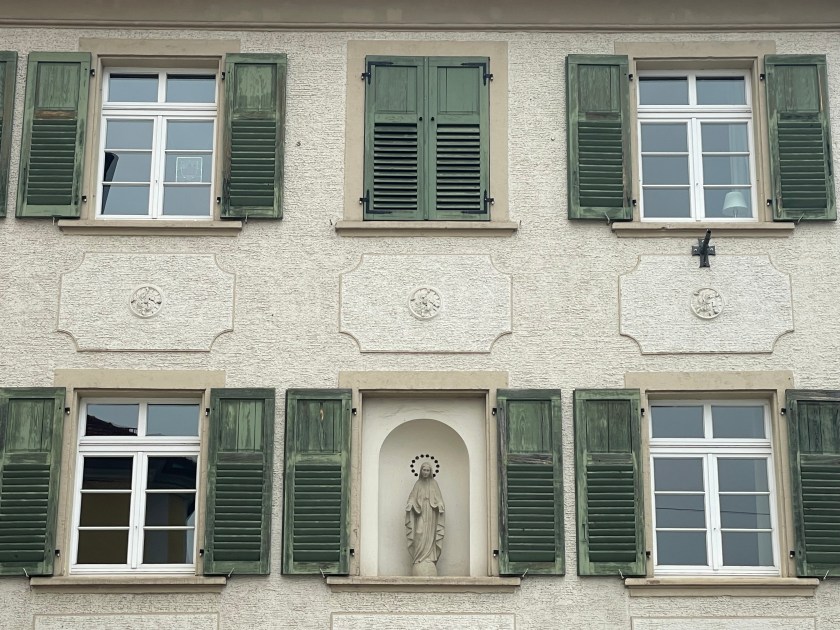
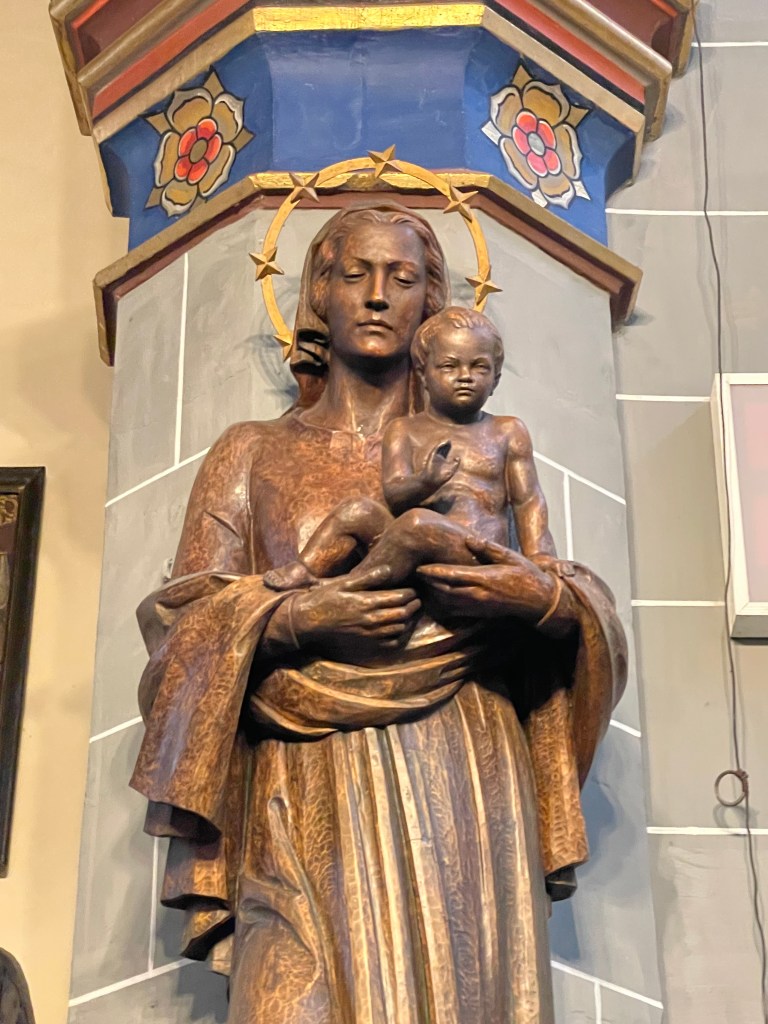
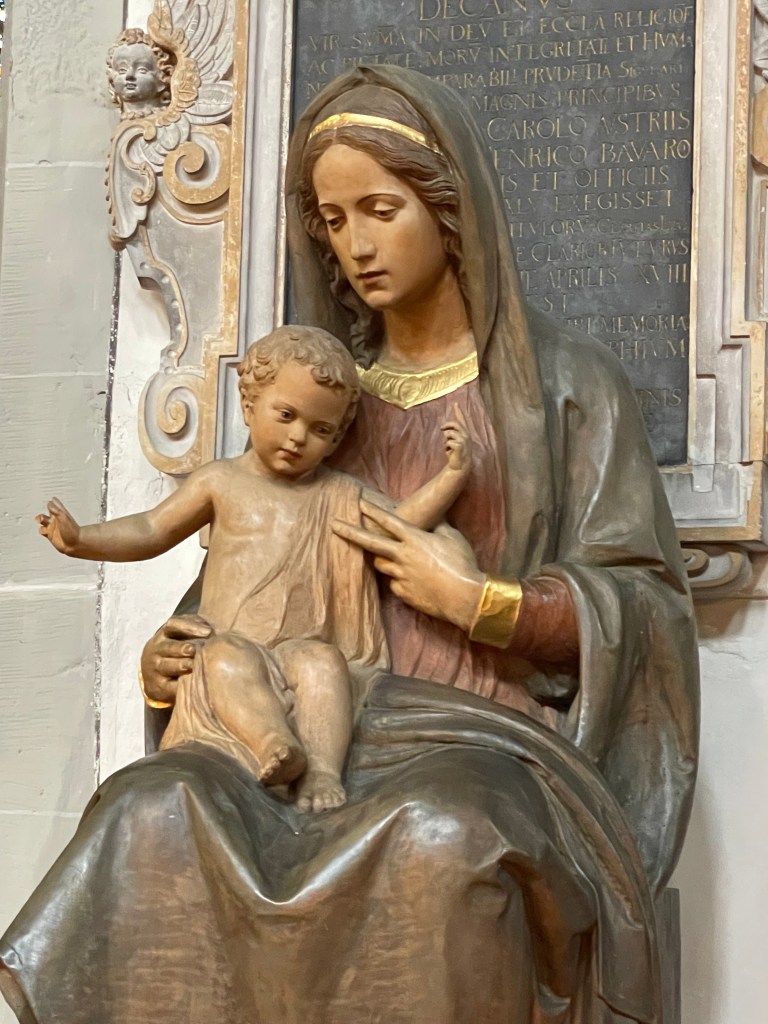
Inside the church is a beautiful life-sized 500 year-old wood carved Madonna and Child sculpture.

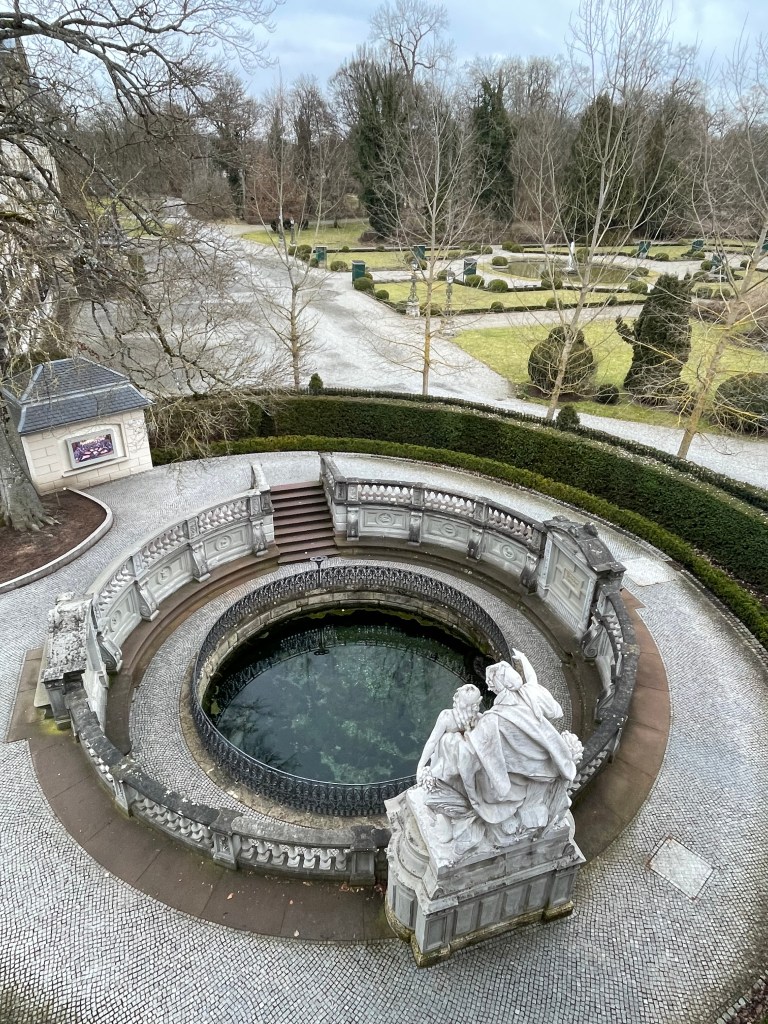
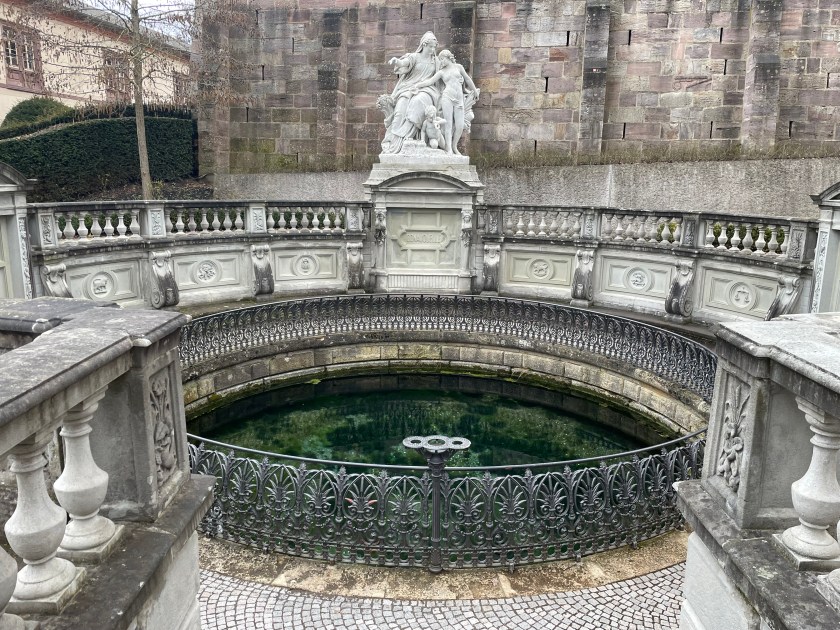
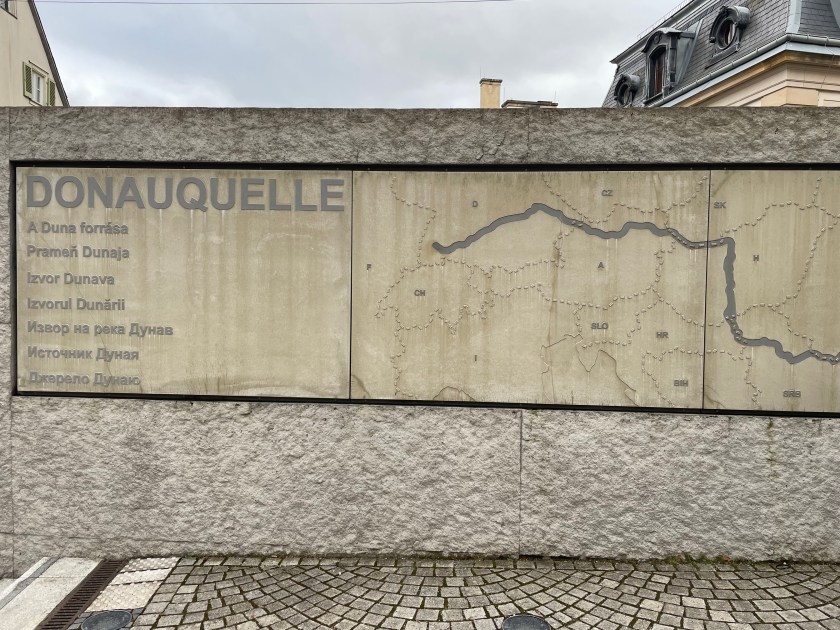
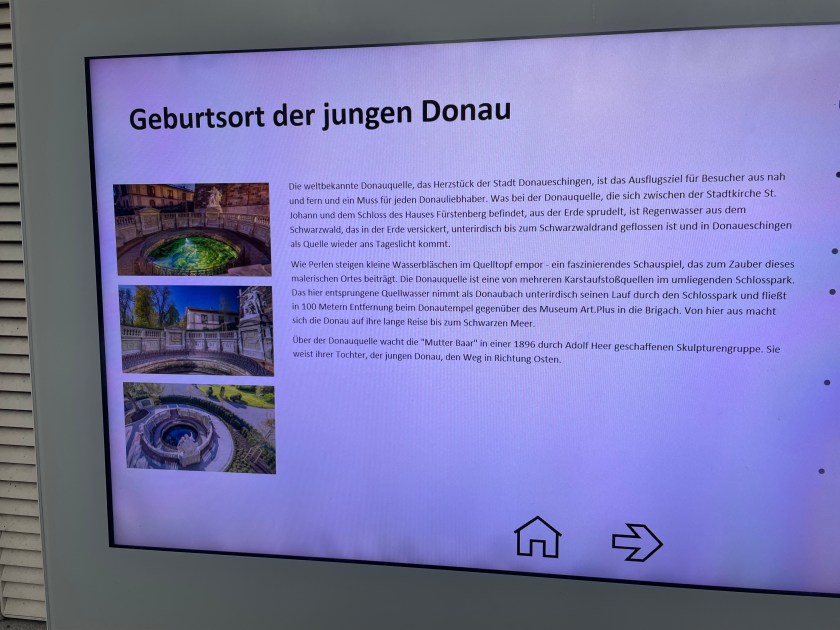
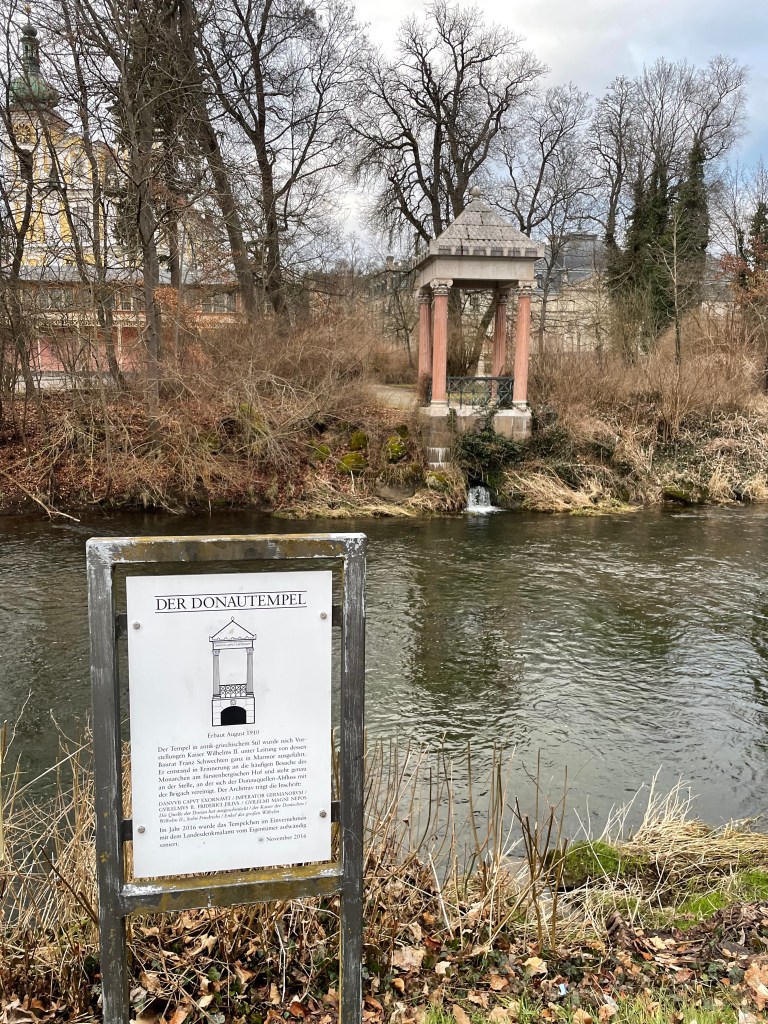
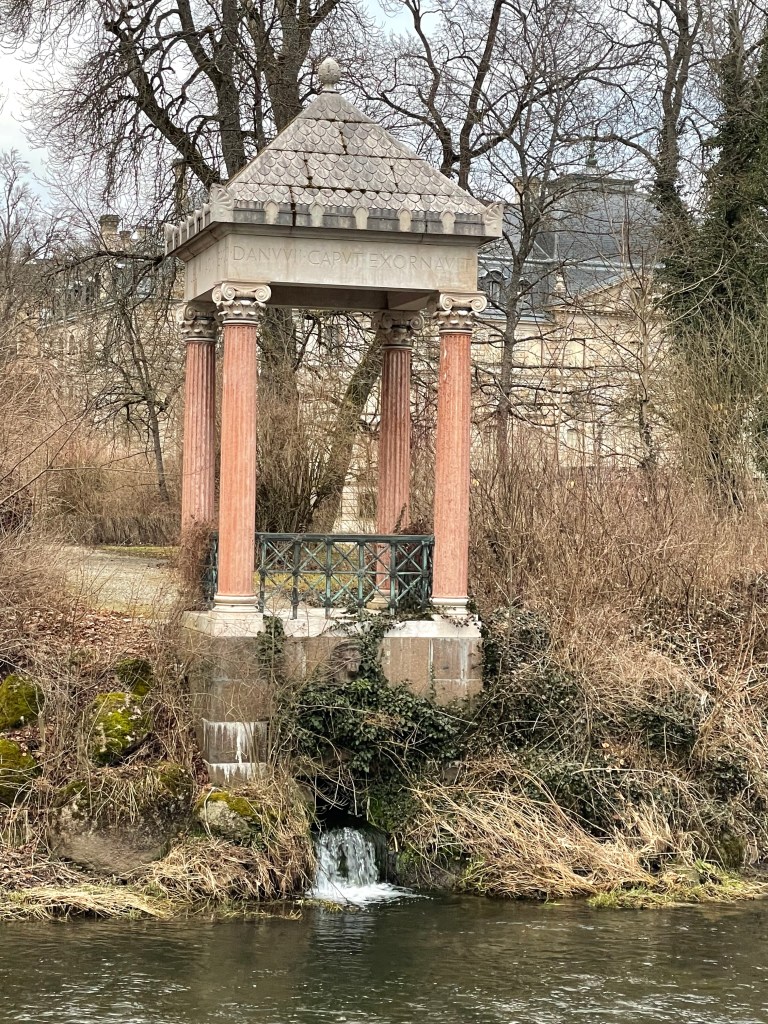
Outside, we went down several flights of stairs to the Quelle where the water was bubbling up from the ground. There are several underground springs that come up and they consider these the origin of the Danube River.

The Donaubach rises on the castle grounds near the left corner of the front face of the castle Donaueschingen in a karst spring. This karst spring has an embankment of 15 to 70 L/s and enters into the Brigach after flowing 90 meters belowground. The Brigach and the Breg become the Danube after 1.5 km. The source is one of 22 sources in the area of the junction of Brigach and Berg. All of these sources are fed by both water which trickles away above them and rainfall which trickles away on the karstified downs of a landscape called Baar. Together, the Brigach and the Breg empty out between 400 and 1000 L/s.
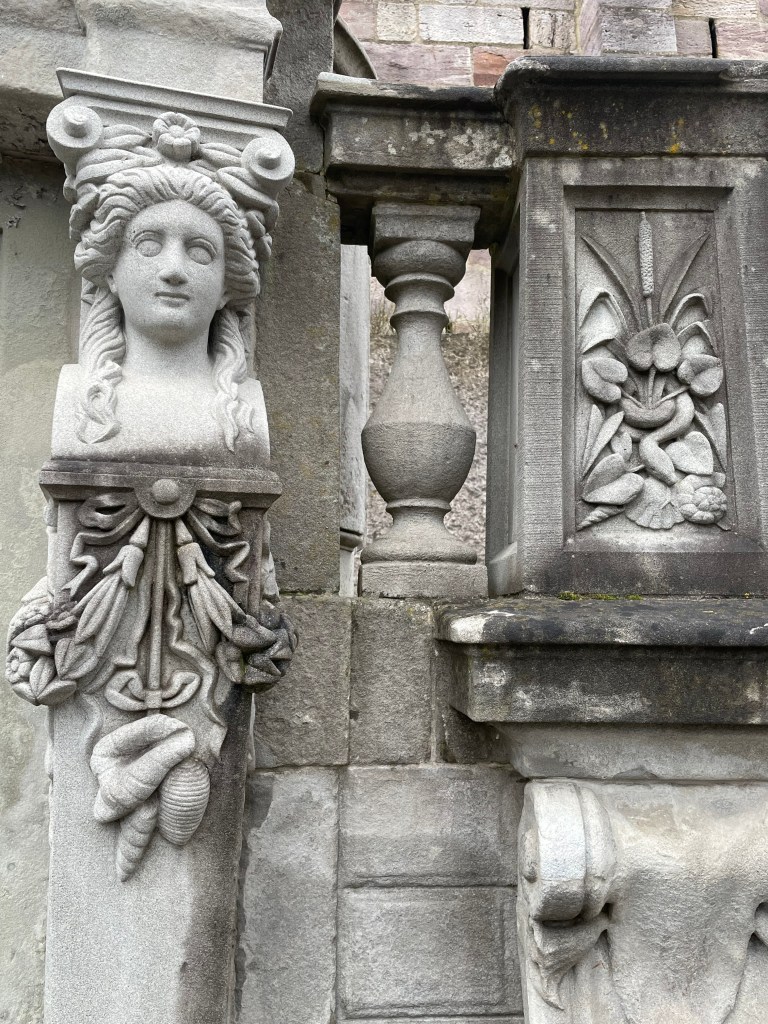
The Donaubach spring was considered the source of the Danube since the 15th century at least (Hartmann Schedel in his Weltchronik from 1493), but several hints suggest that this might have been true even in Roman times (Pliny the Elder in Naturalis Historia), in which the river was located in the fringes of the populated areas. The oldest cartographic depiction by Sebastian Münster from 1538 shows the Donaubach spring as a rectangular pool; in 1875, the spring was modelled into a round pool after Adolf Weinbrenner’s design. In 1895 the artist Adolf Heer created a group of statues above the pool, depicting “the mother Baar” showing her “daughter”, the young Danube, the way. The supposed source of the Danube is a popular tourist attraction.. . .
The river Danube properly begins with the confluence of the two headwater streams Brigach and Breg in the region of Donaueschingen. The river flows on from there into the delta of the Black Sea, after 2811 km.
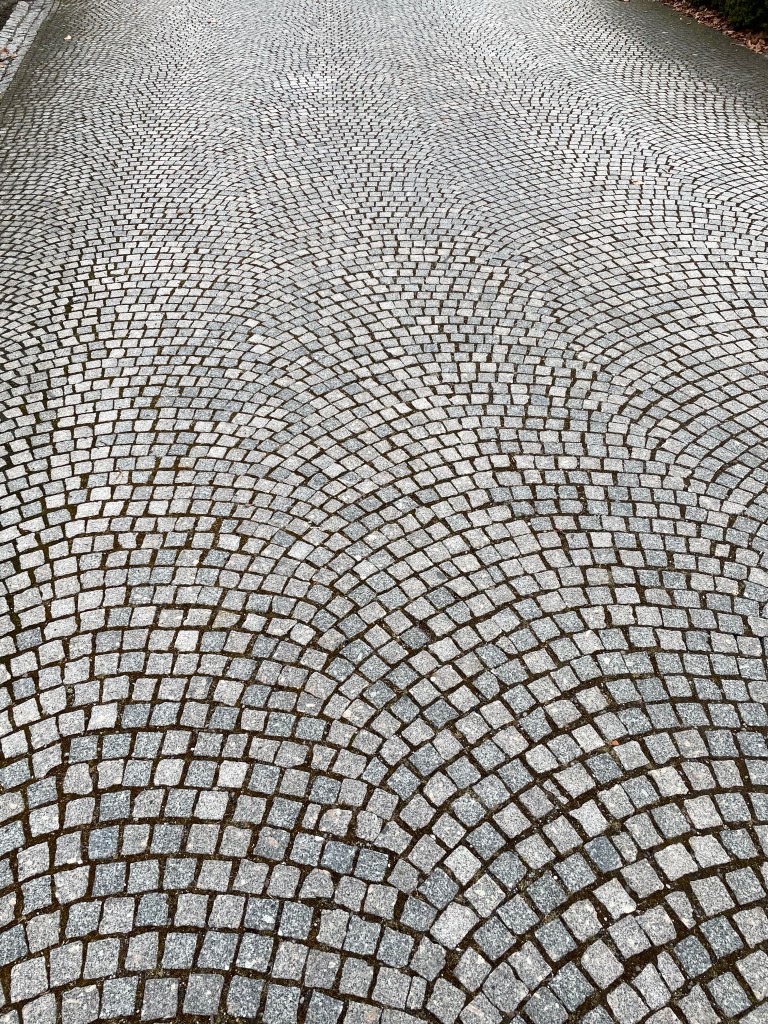
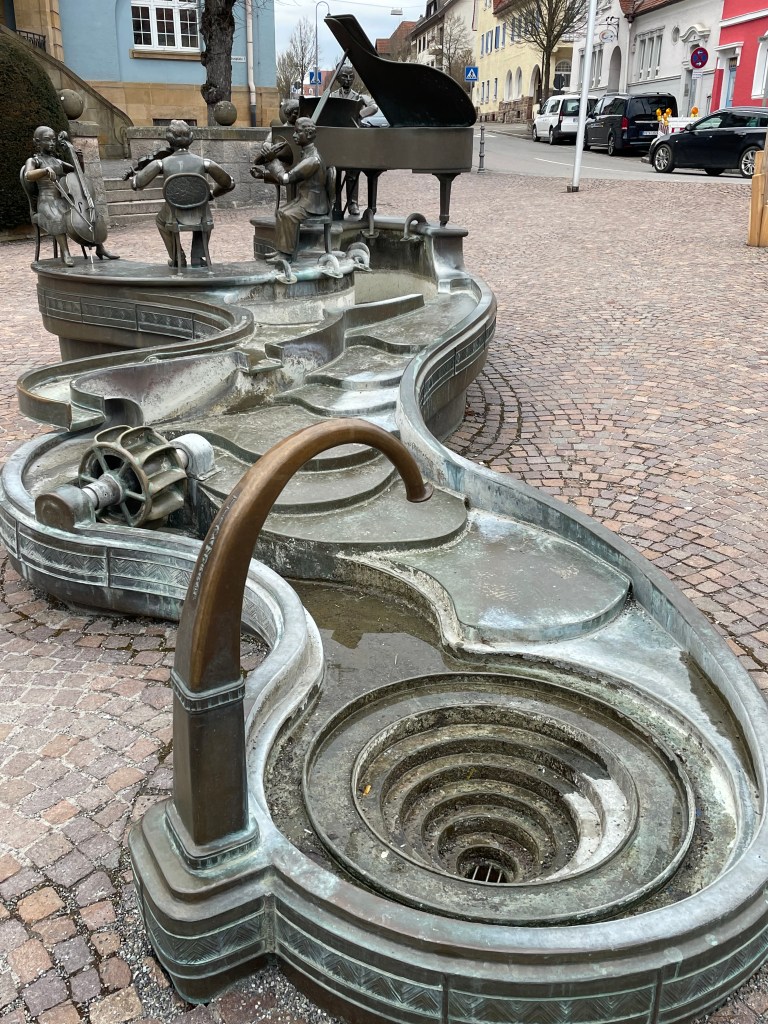
Beautiful cobble stones:

Here’s how the town is situated:

Then we walked into the town center, which was quite festive as Karnival approaches.

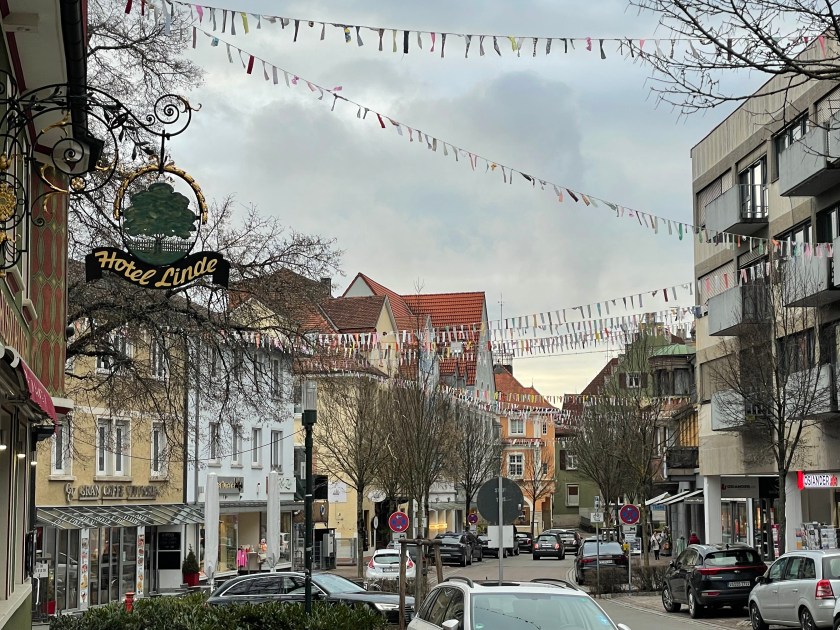
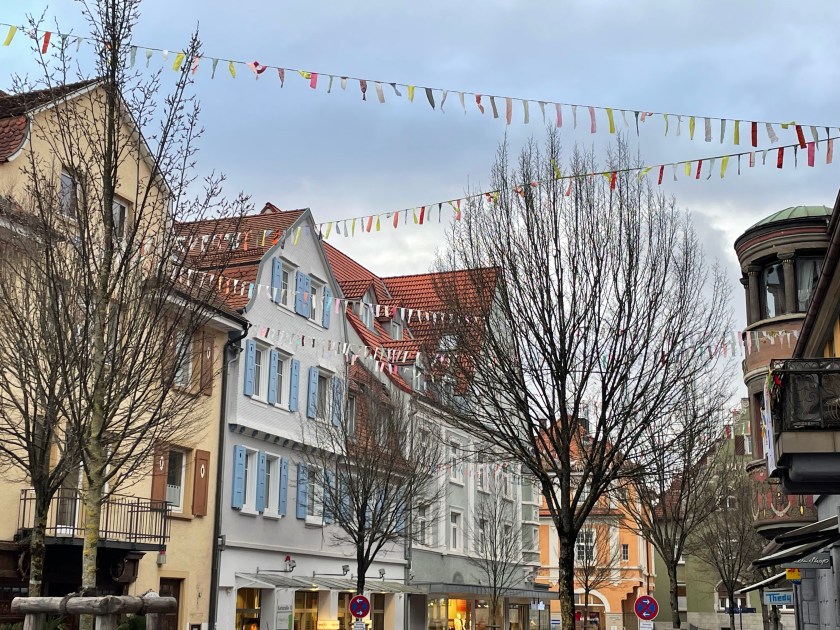
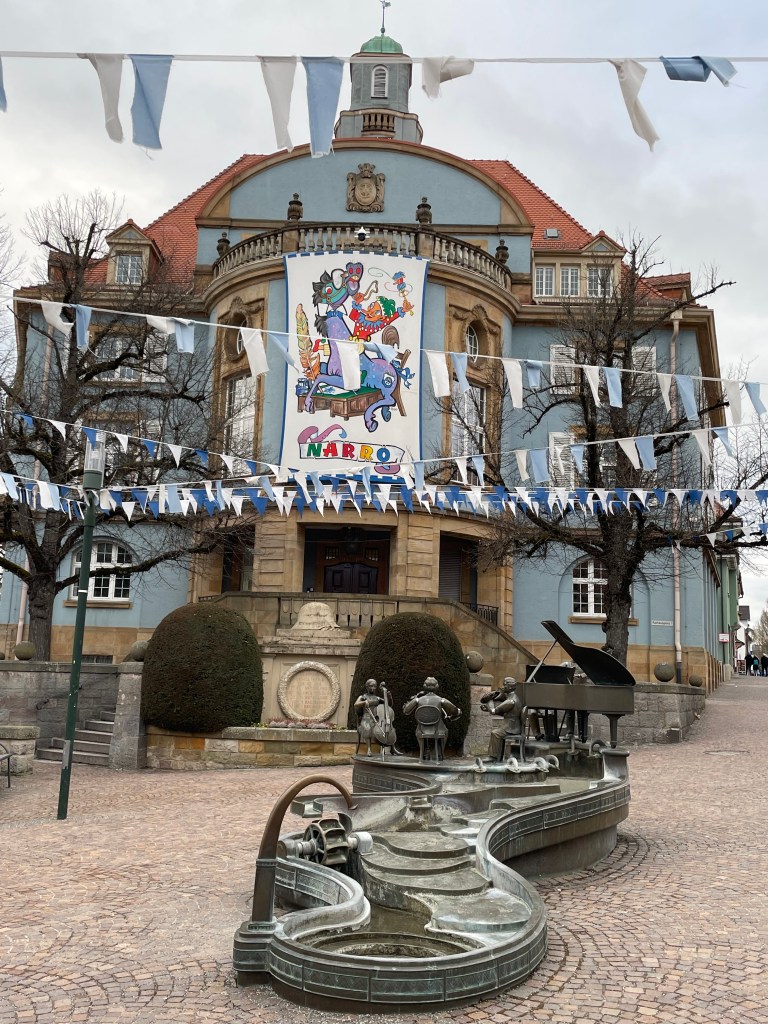
We stopped at the Tourist Info office and got a walking map and took a walk around town.  Everyone here in these towns is setting up for Karnival or Fasnacht/Fasnet.  There are banners hanging in all the towns, draped back and forth across the streets. Fabric strips about 3-4″ wide by about 12″ long hang from the banners/ropes and decorate streets everywhere.  Town squares are also criss-crossed with these hanging banners of fabrics.

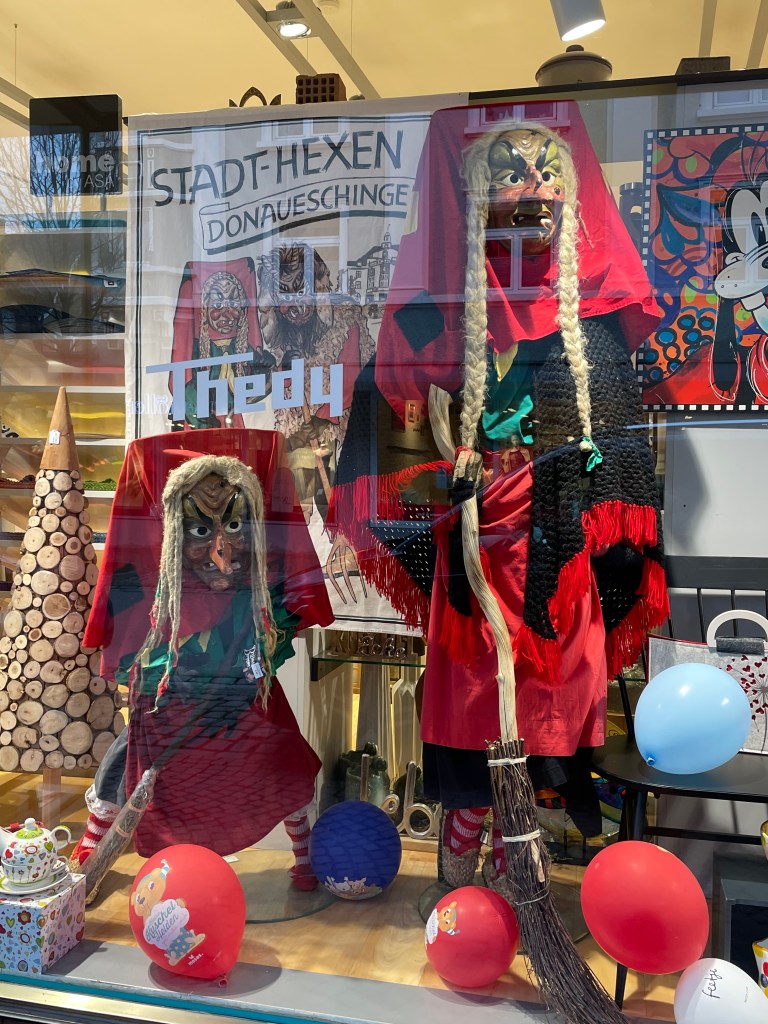
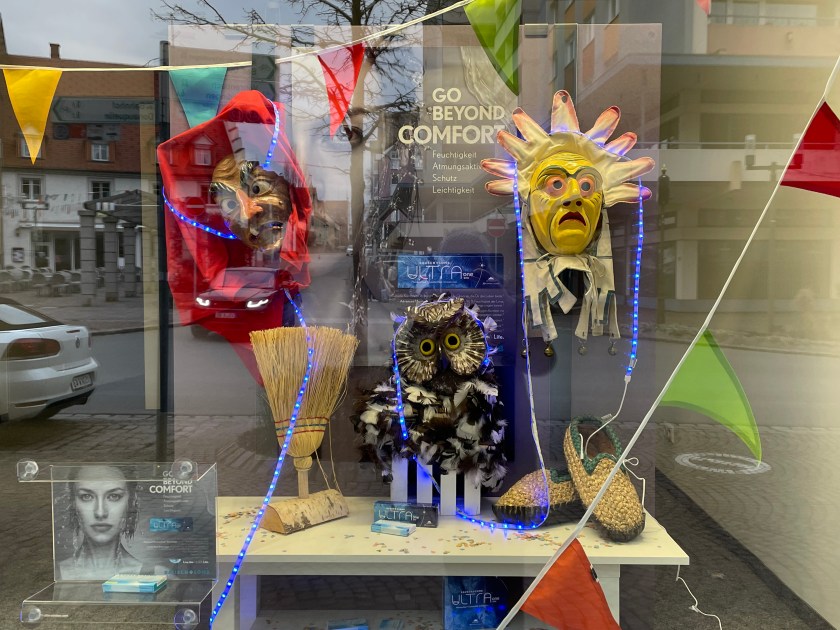
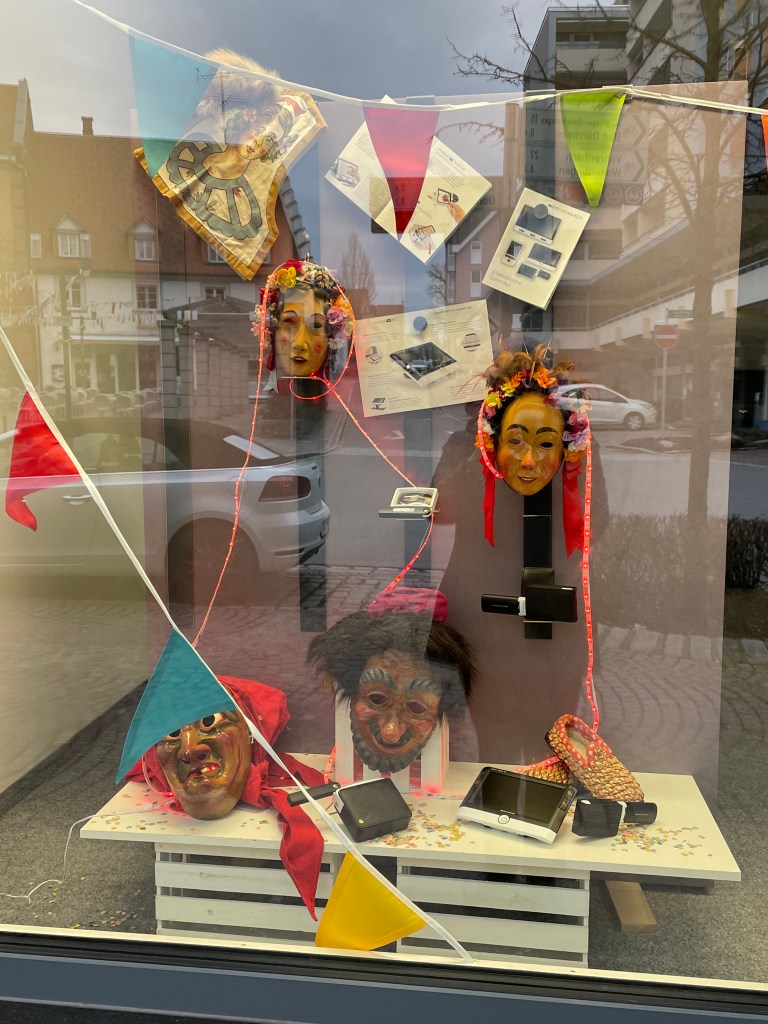
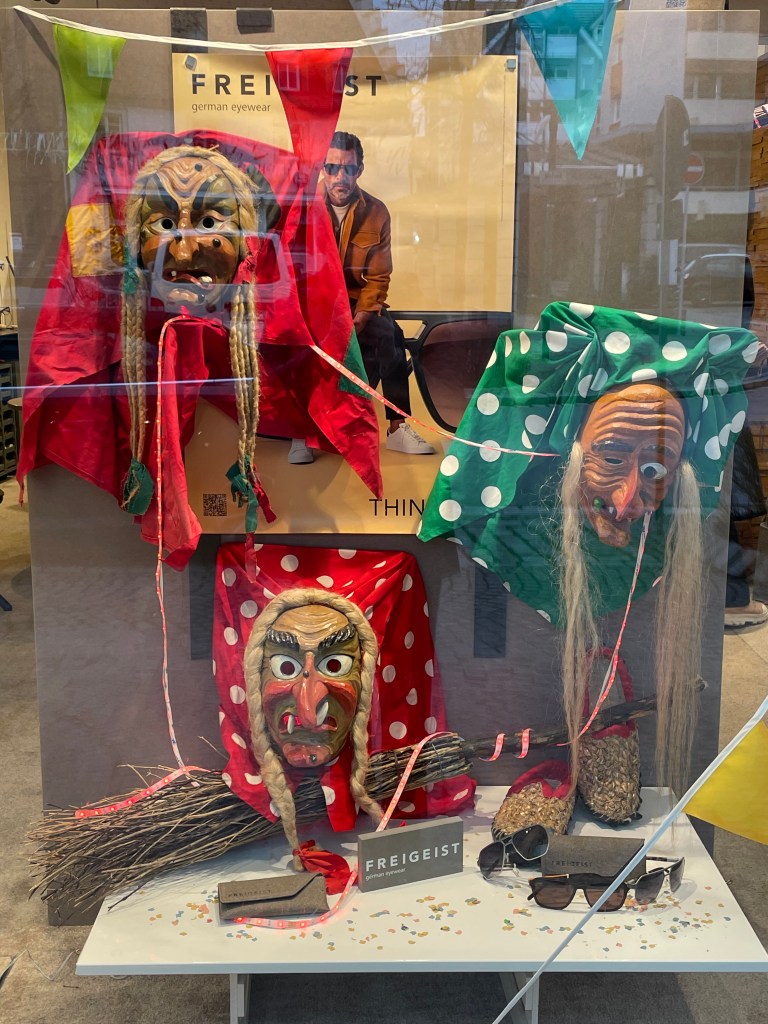
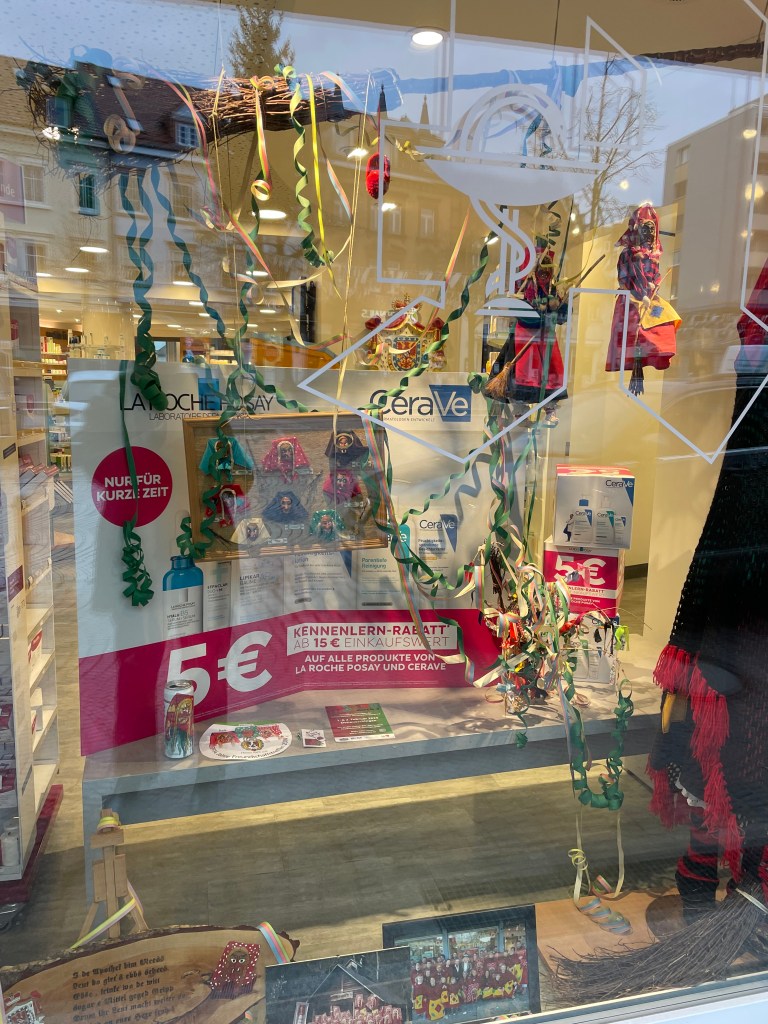
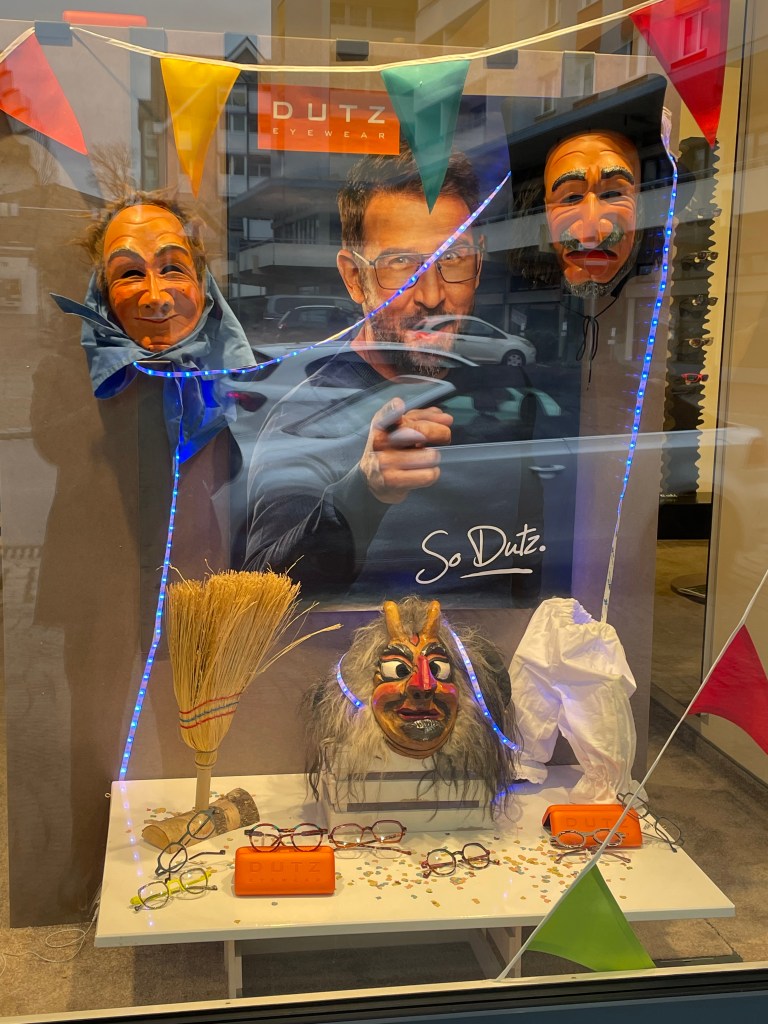
The Fastnacht theme here seems to be “the Fool, or “Narro.”  The German word for fool is Narr.  Shop windows are filled with scary masks and costume faces and witches and fools. The celebrations begin this week.  It’s as big as Halloween at home with lots of masks and costumes and fun.

These photos of the shop windows aren’t great, but they give you an idea of the Karnival decor.

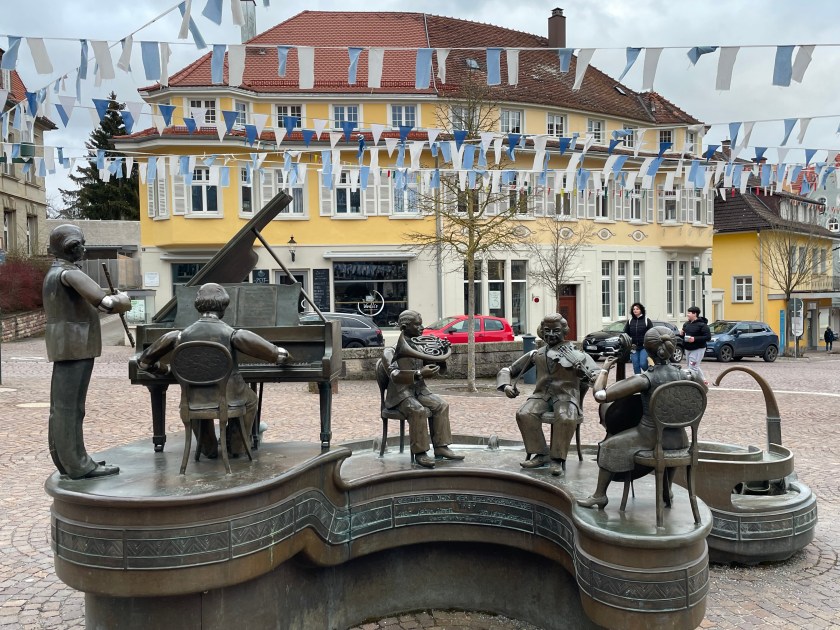
This is the old Town Hall.

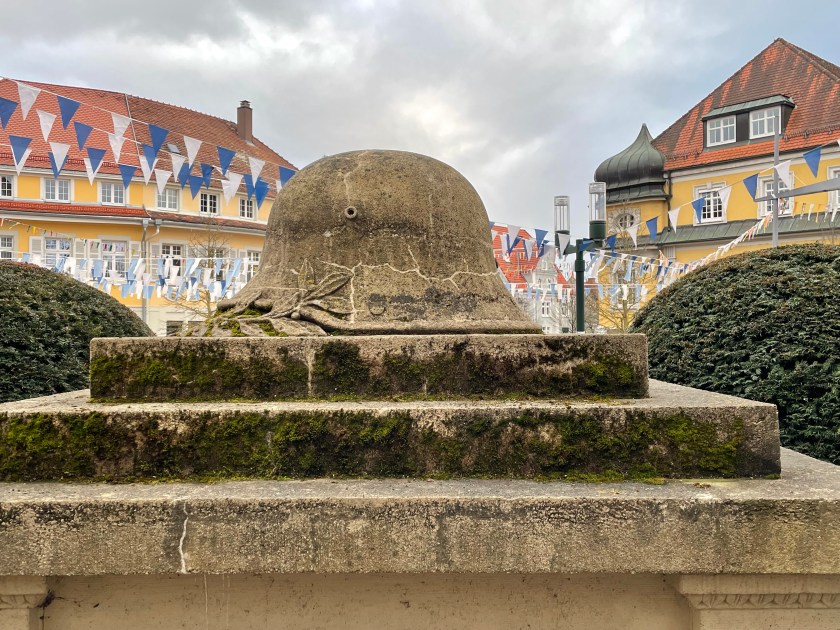
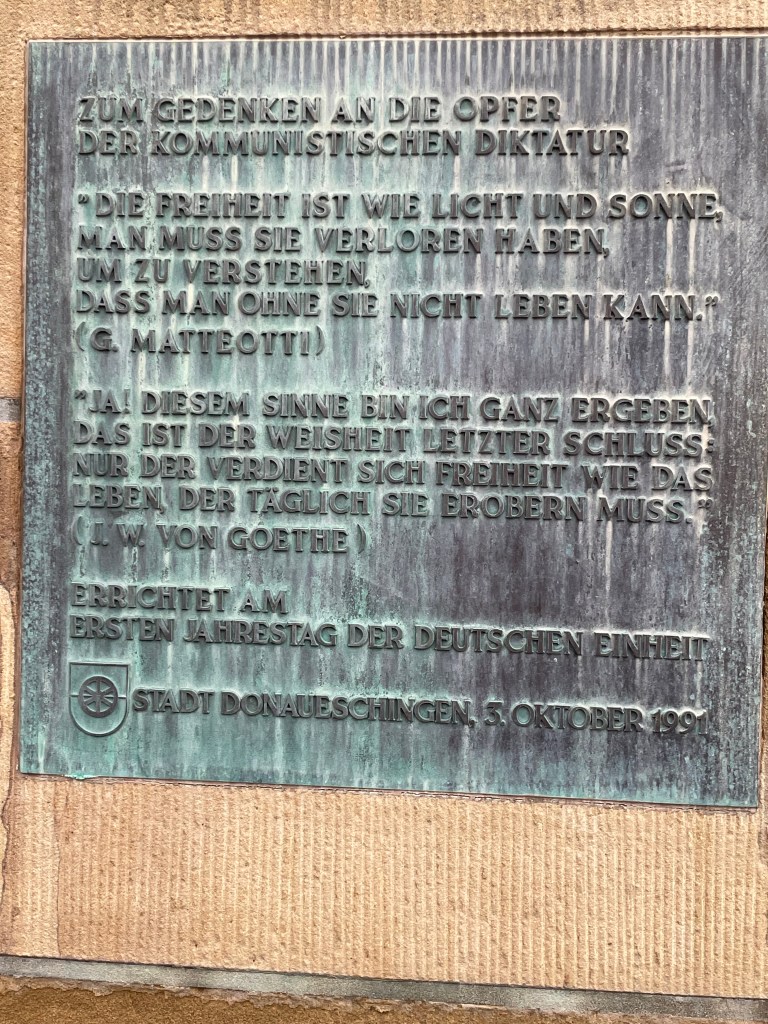
A memorial for those who died in the war.

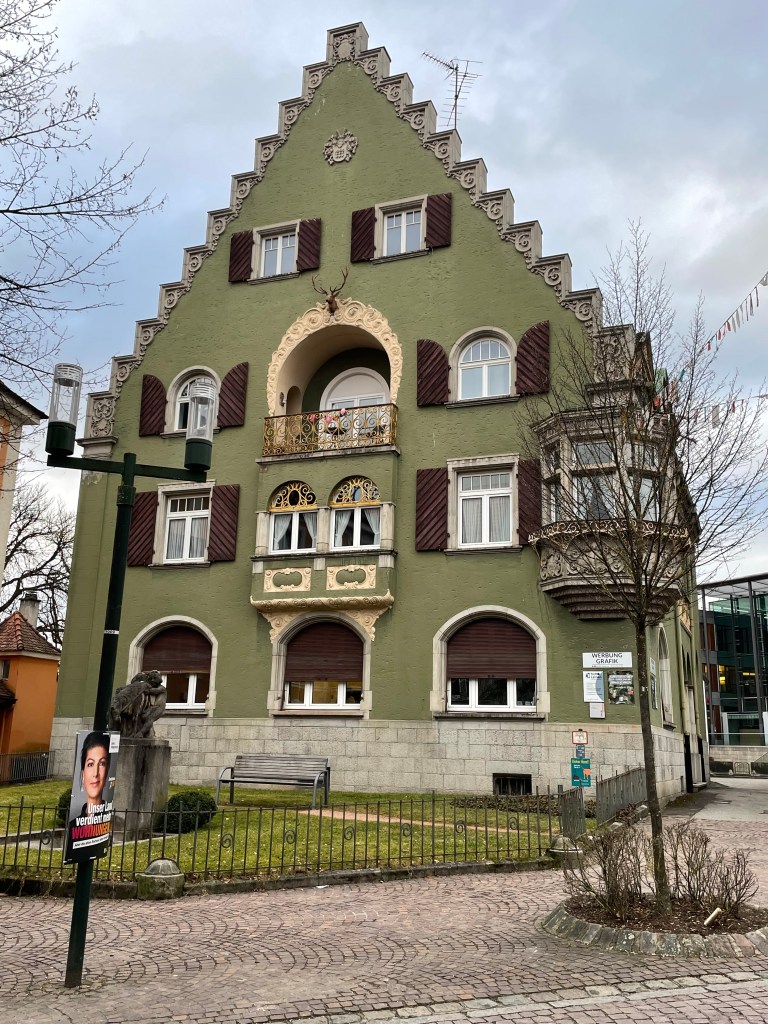
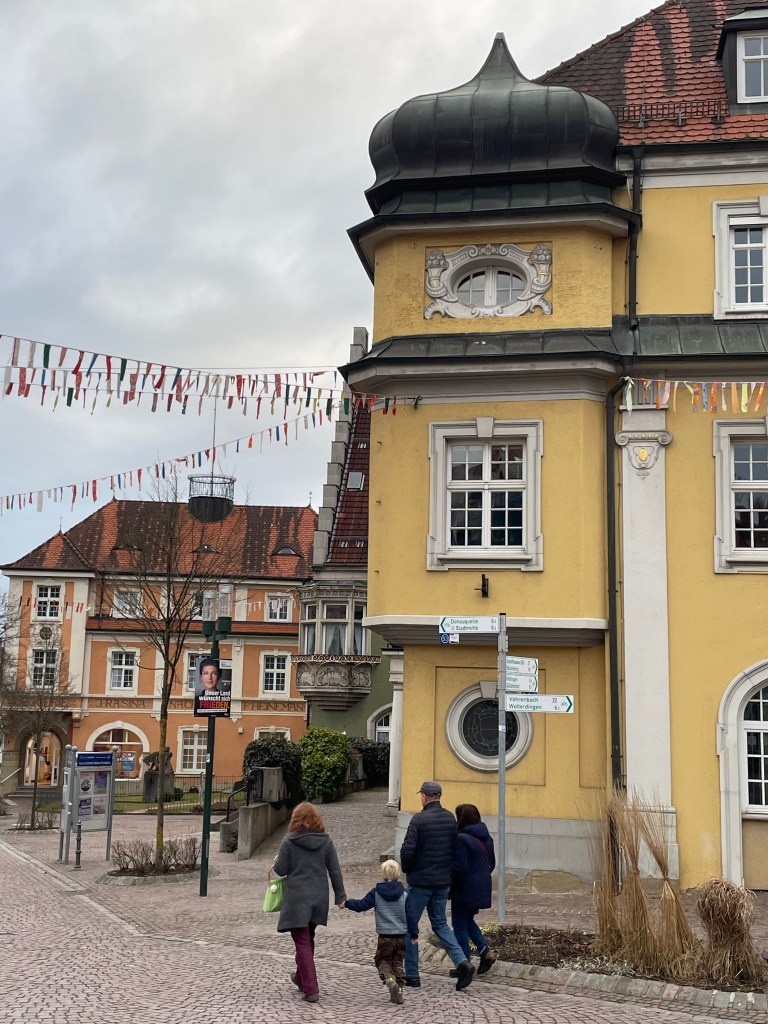
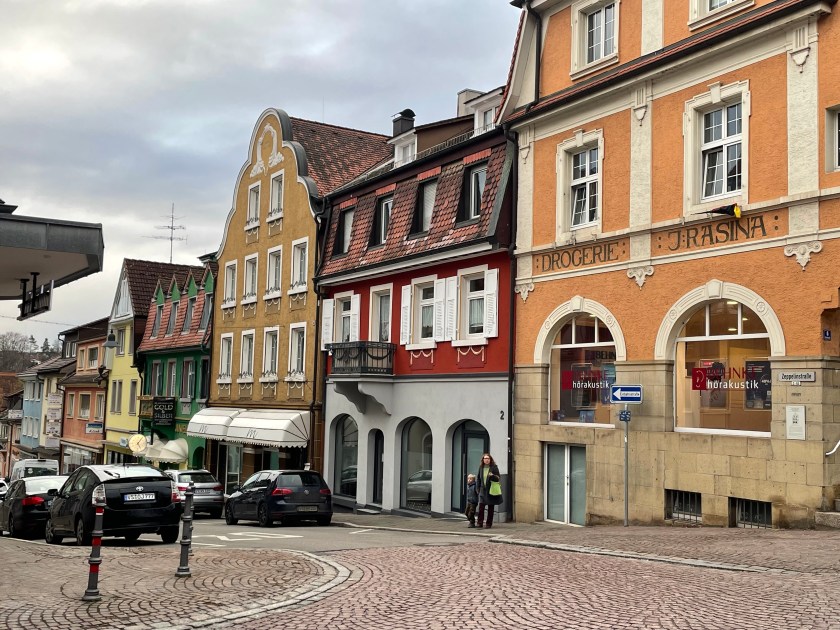
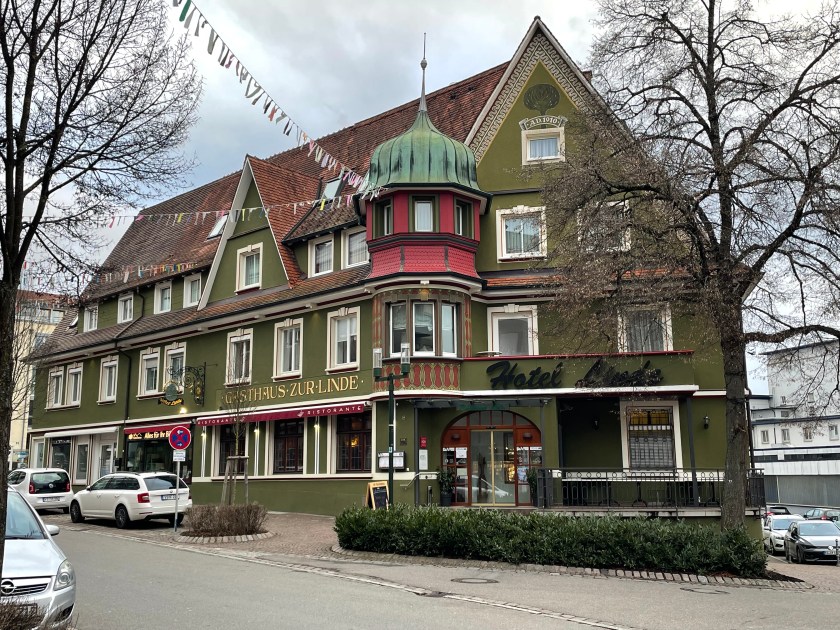
I’m loving the colors of the buildings here.

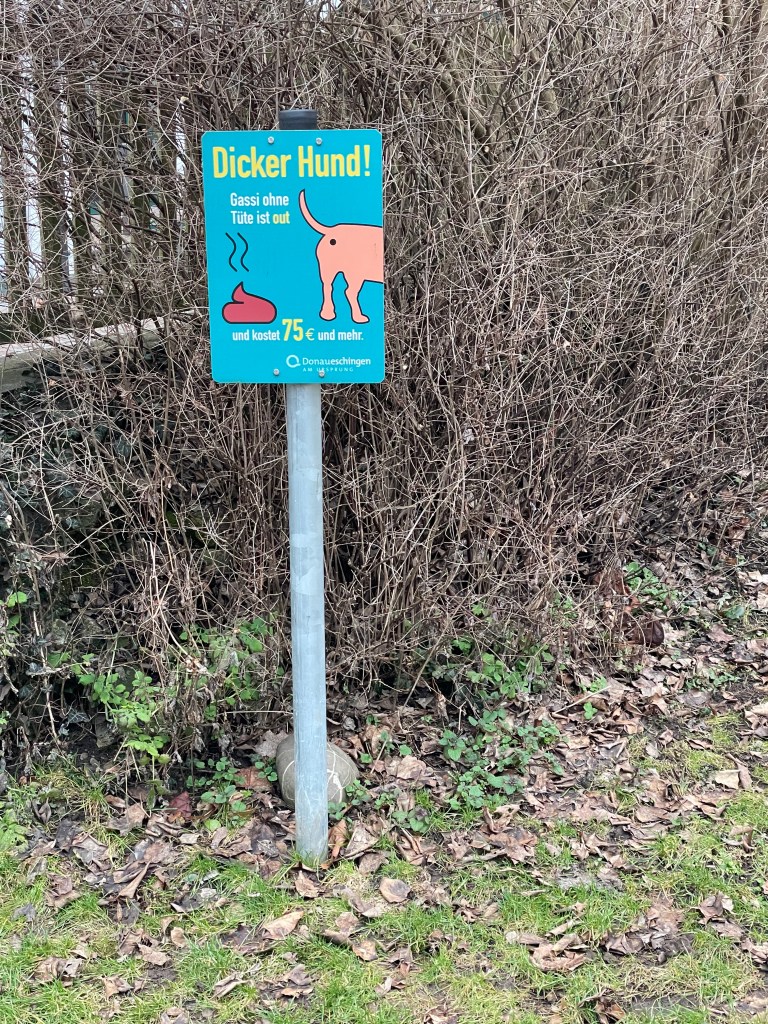
If you don’t put your dog poop in a bag, there is a 75 Euro fee!

Down by the river.

Dettingen and Finding the Schoff Family

In 1976 I came to German for the first time as a summer foreign exchange student.  I lived at the bend in  Kapitan Romer Strasse #40, with the Schoff family.

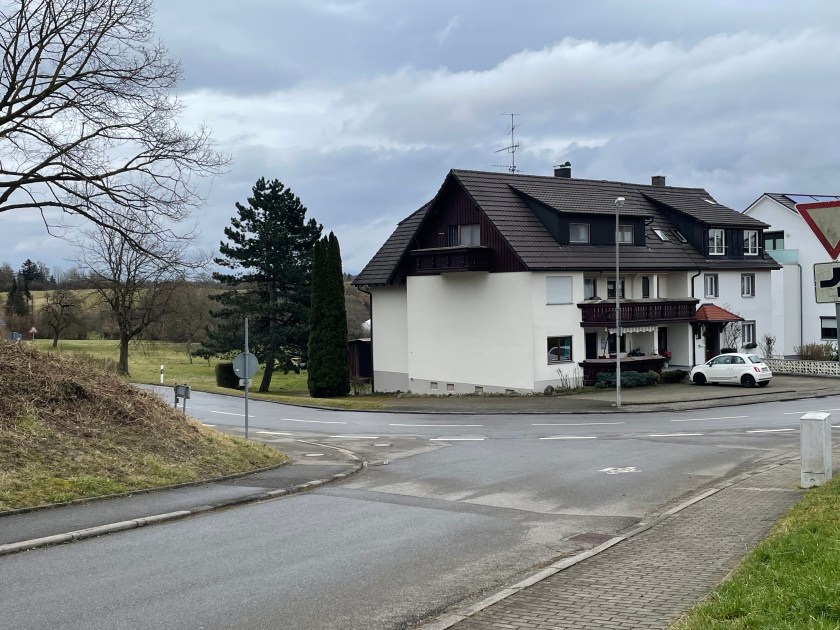
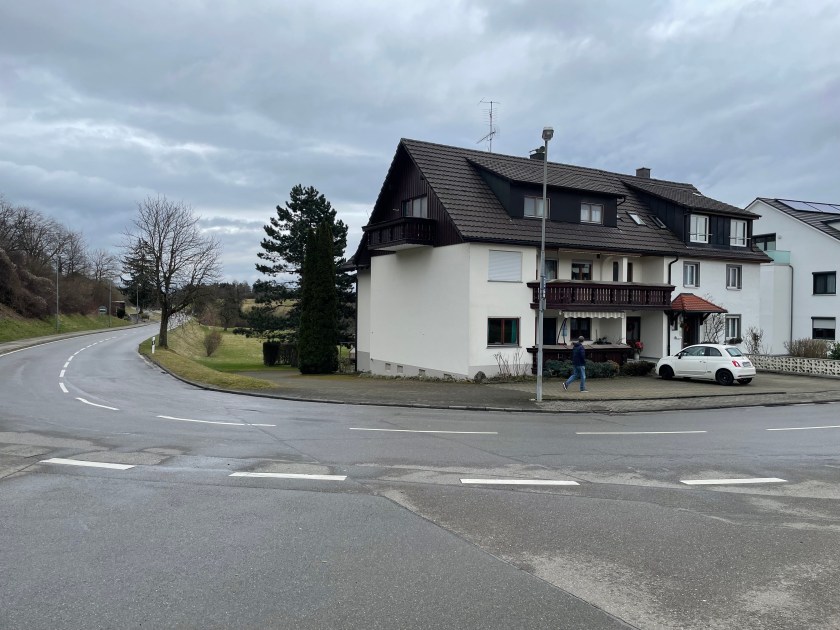
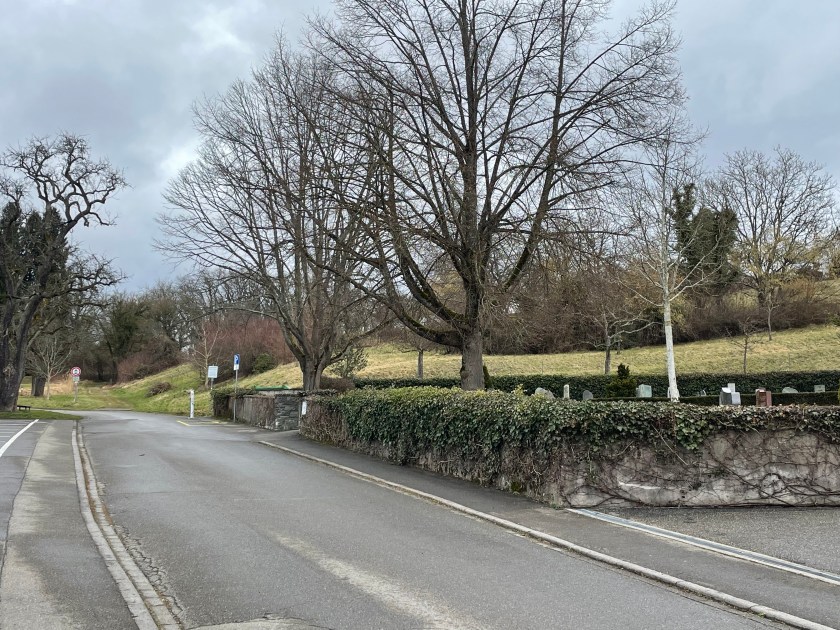
We found the place where the street turns at the end of town. I lived right where it turned before the cemetery, and beyond the cemetery was the woods where I loved to wander and pick wildflowers.

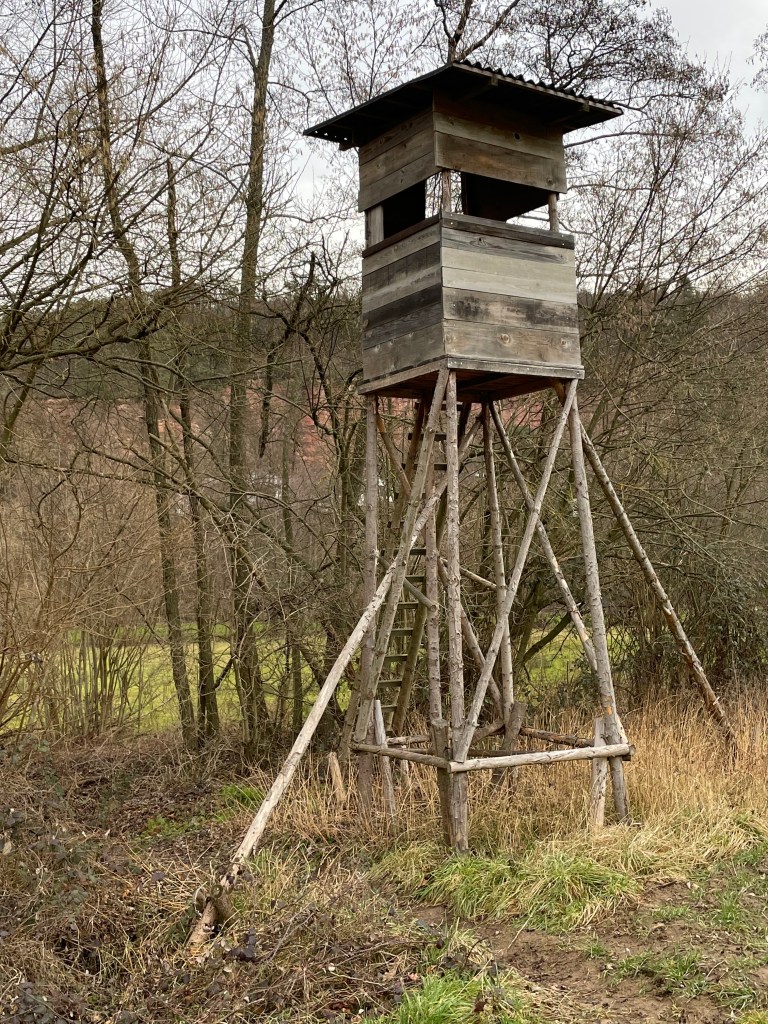
I read the Book of Mormon twice that summer, often sitting in a Jägerstand in those woods.  These hunting stands were made of wood, with wooden ladders, like a small tree house on stilts.   For me, this place was my refuge and my special secret place.  It’s where heaven came to me as I read.

I took a picture of the Jägerstand below last month as we left Beudingen. You see these little hunting stands, also called a Hochsitz (high seat, or a high perch) in the woods and in farm areas.  Hunters secluded themselves here while waiting for deer or other animals.

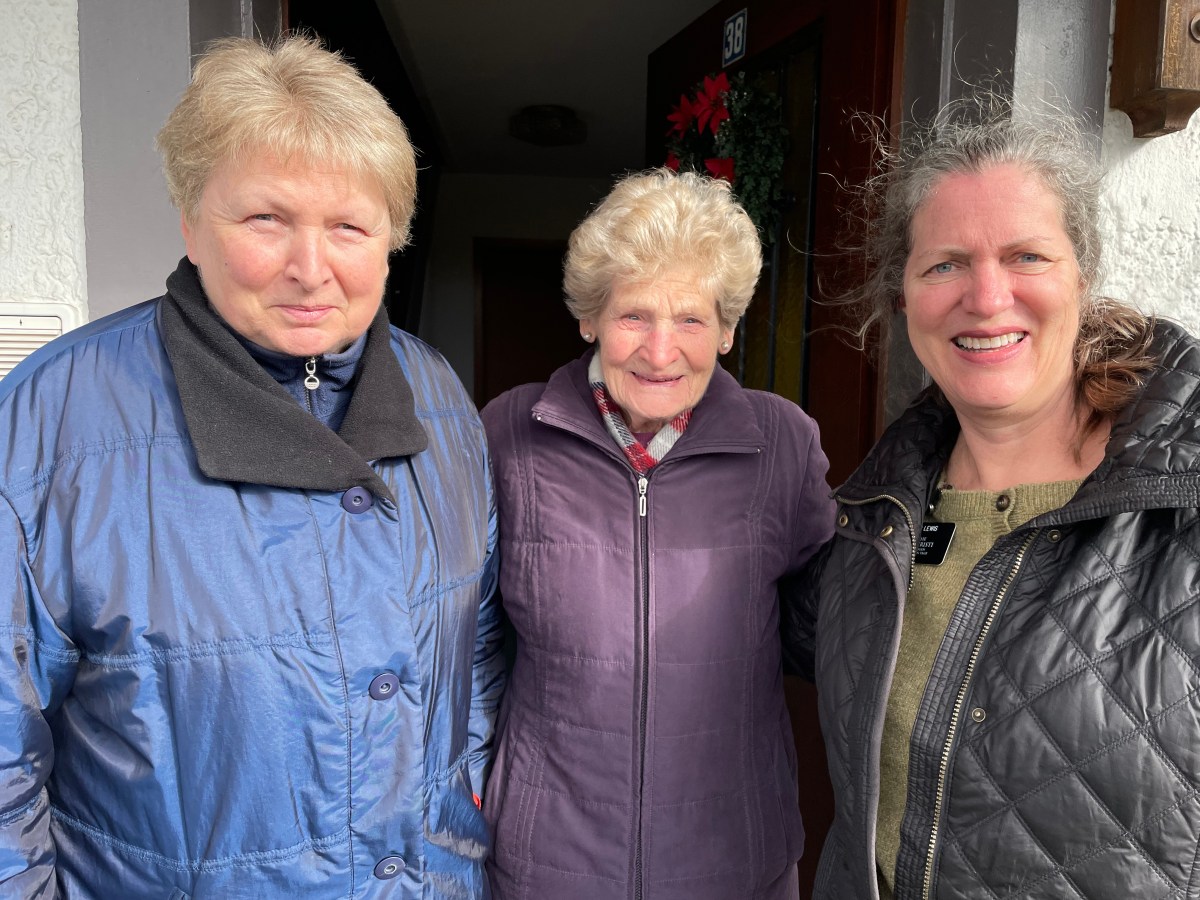
While I took photos of the house that now stands in the same place where I lived (it has been completely remodeled, enlarged, and made into a multi-family apartment building),  John went to the door and read the names on the doorbell plates.  He waved me over and said, “you’re not going to believe this,” he said.  “The name Schoff is still on the door!”  I could hardly believe it. C. Schoff living upstairs and P&M Schoff on the right part of the building. “You have to ring the bell,” he said. I got excited.  We rang C. Schoff first.  Could it really be Consuela, my exchange sister??  It was.  And her mother, Maria, was still living in the original part of the old house down below.

They both came out and stared at us. I told them who I was–the American from California who had come to live with them in 1976. Frau Schoff couldn’t remember me at first (she is now in her late 80s). She looks just the same, but older. Paul, the father died about 20 years ago of cancer.

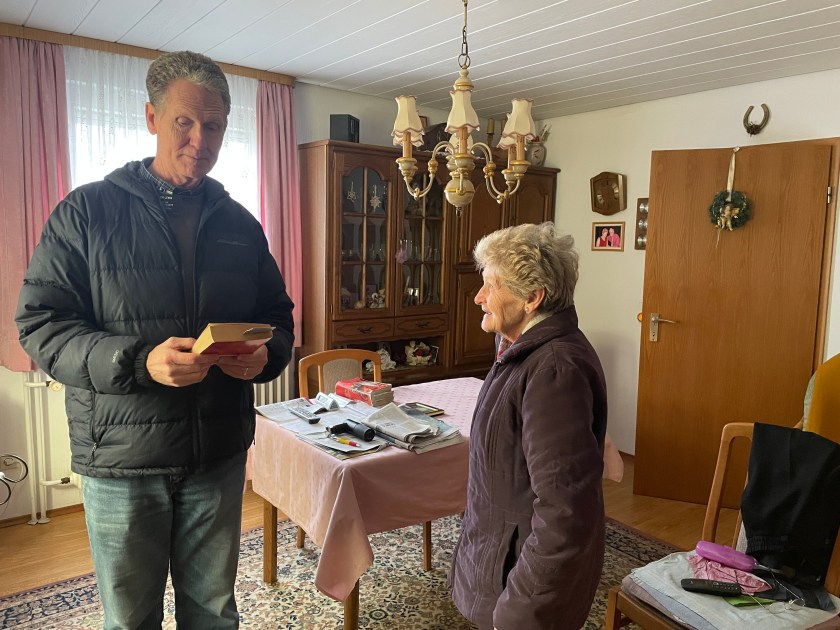
In 1976, Consuela was 15 and I was 17. She remembered me and the more we talked, the more they both remembered.  They invited us in and we spent about an hour there in the little part of the house where I once lived.  There was the kitchen that once went out into the animal stalls.  They had a cow and pigs and chickens when I was there.  Now there is a sunroom and the new apartment building where the old barnyard stood.  That summer long ago, we ate from a garden in the back yard–every day we had salad greens, Kohlrabi and home-grown pork.

Consuela and I shared a bedroom upstairs (someone else lives up there now). They showed me the kitchen and the sitting room on the main floor where we had our meals. It was like a grandma house now. Small, filled with memories and knick-knacks. Maria brought out the wedding books. Anita, the younger sister (she was 6) now lives with her husband and 4 kids in Konstanz. Consuela got married at age 31 to a man named Schiller (he was at work).  They have a boy named Manuel who is 30 years old now.

It made me SO happy to be there and to see them again after 48 years!  I’ve always felt sad that after that summer I went home and my life went on into my busy senior year of high school and then I was off to college, never really looking back.  Today I made things right by returning to thank them.  I felt so happy to see them again and to remember the good times I had there. That was a memorable and life-changing summer for me.

Here’s a video clip I to send to the kids in a SnapChat:

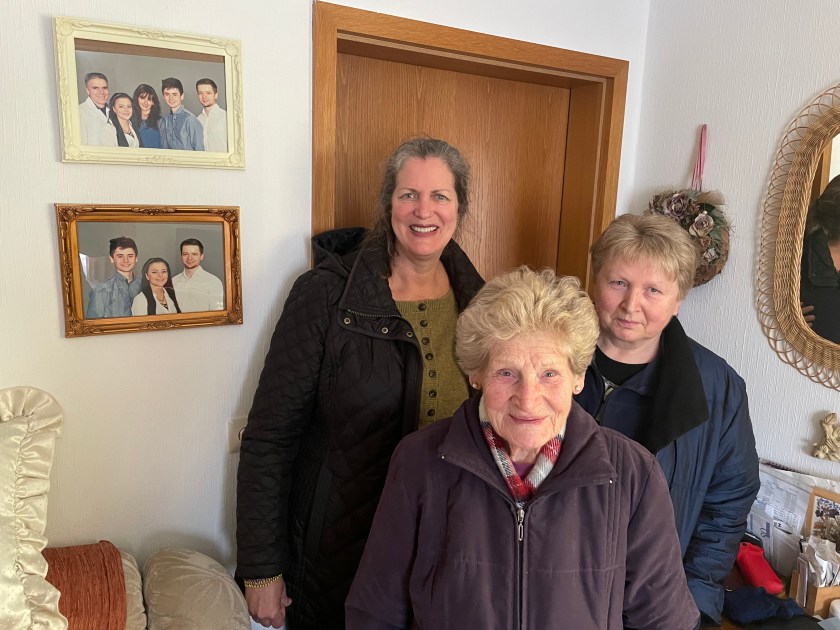
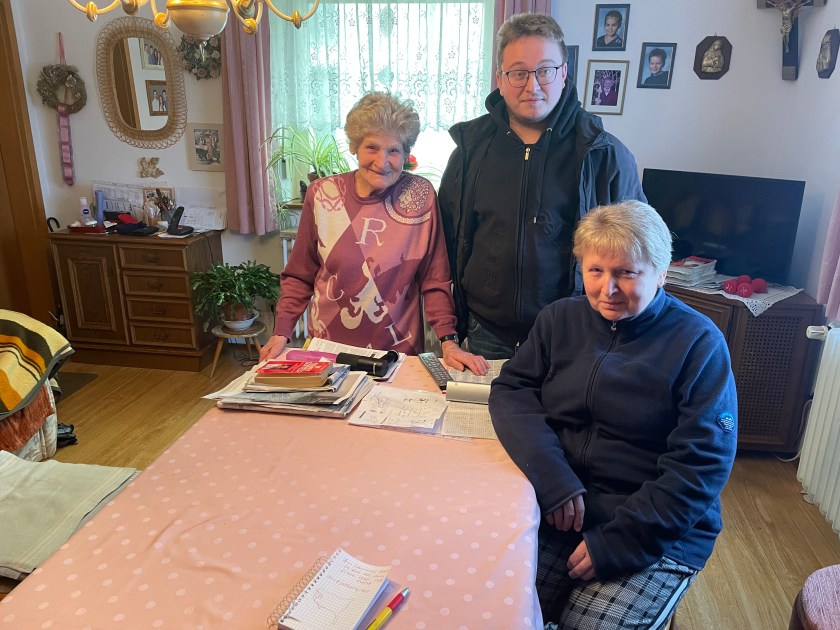
Consuela, Maria and Ann, reunited!
Younger sister, Anita and her family in the photos on the wall

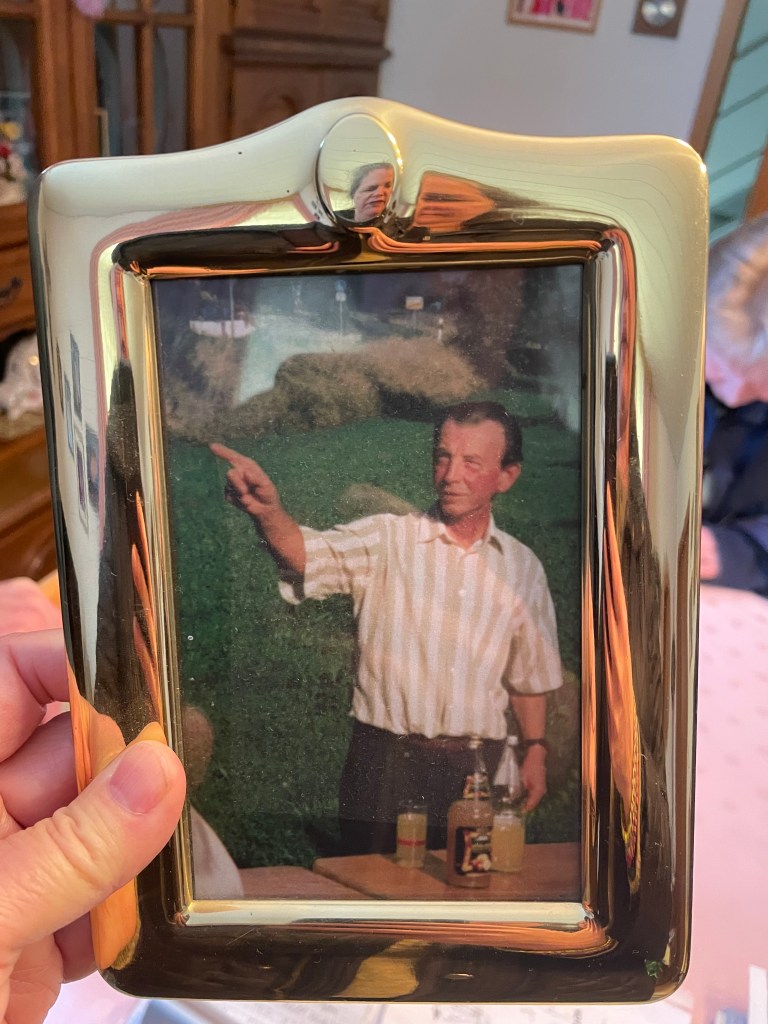
This was Paul, the father.  He wasn’t around much when I lived there.  He died of cancer 20 years ago.

Maria, Manuel and Consuela

Konstanz am Bodensee

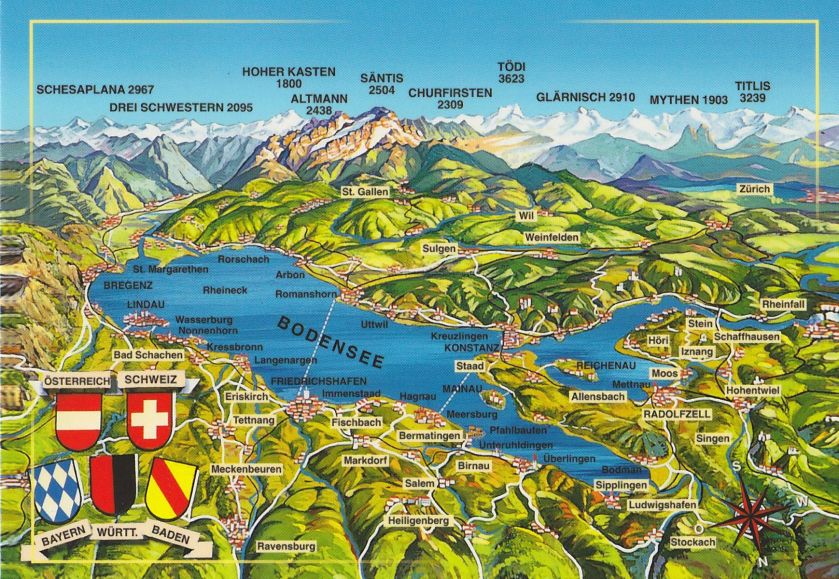
After leaving Stein am Rhein in Switzerland, we started to make our way back to Germany through the luscious Swiss countryside.  We drove to the Bodensee, or Lake Constance, bordering both Switzerland and Germany.  The Rhine River starts in the Swiss Alps and then flows through Lake Constance.

This area is meaningful to me because in 1976, when I was 17 years old, I came to Germany for the first time as a summer exchange student with an organization called Youth For Understanding.  I was placed with a family in the Konstanz area, in a town called Dettingen.  We decided today to take some time to try to find the home where I stayed.

We drove along the southern Swiss side of the Bodensee. It was really fun to see more of this beautiful lake and resort area that I’d not seen years ago when I was on the German side.  The lake lies between the two countries. There were fun lake front homes and farms all along the way.  This is a really popular area in the summertime. We drove by apple orchards and vineyards and old farms as we approached the city of Konstanz, where we wanted to stop and take a quick look around.

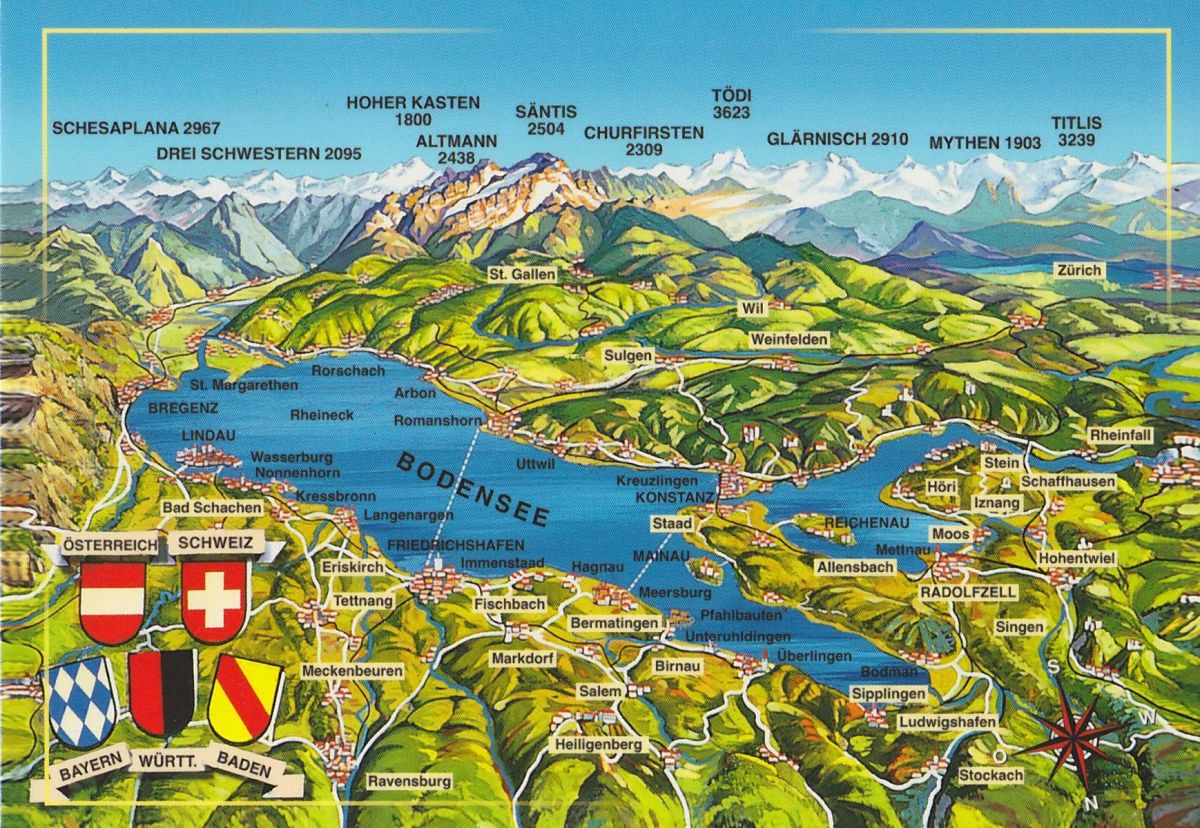
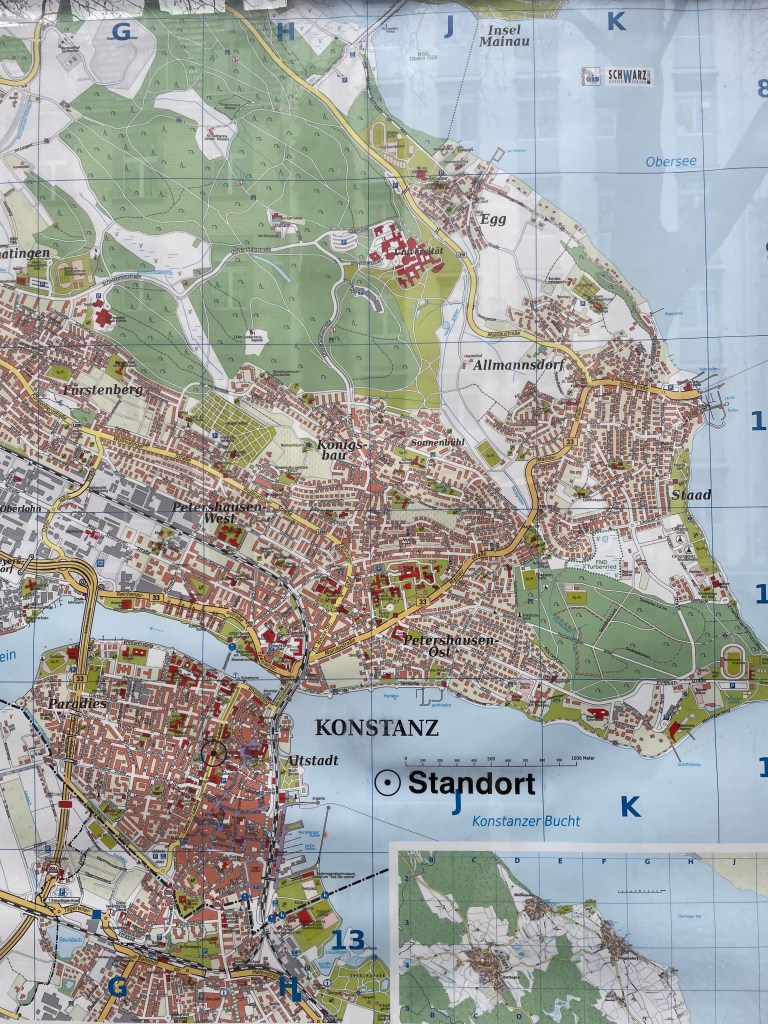
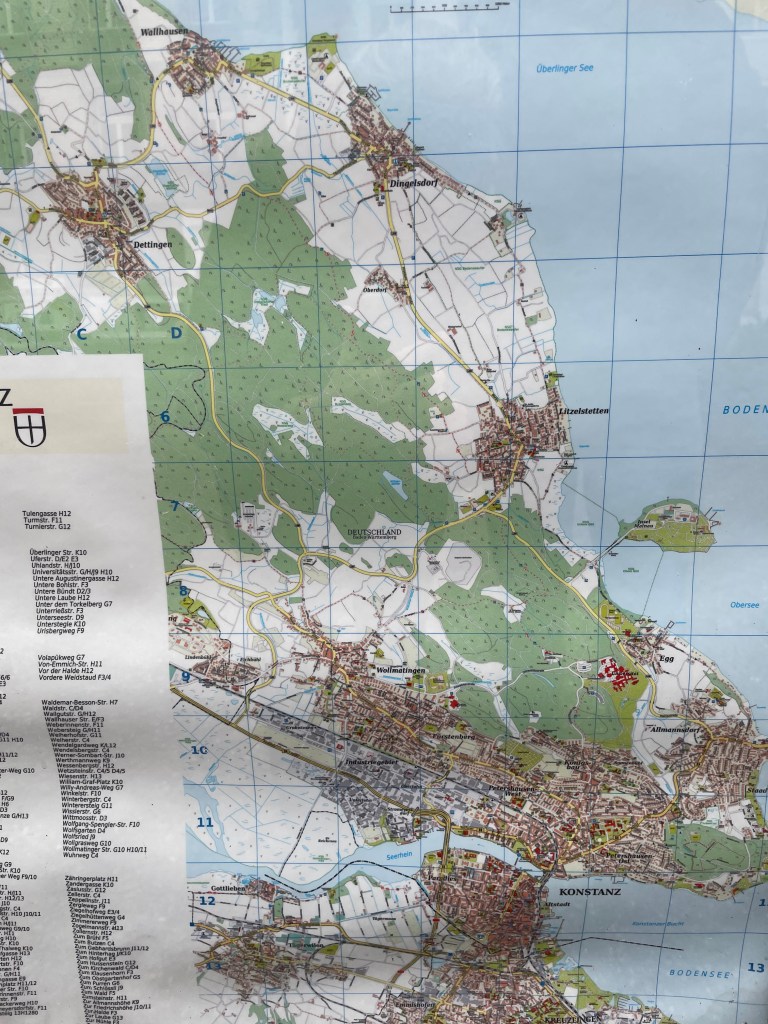
On the map below, Dettingen, where I lived, is the village at the top left.

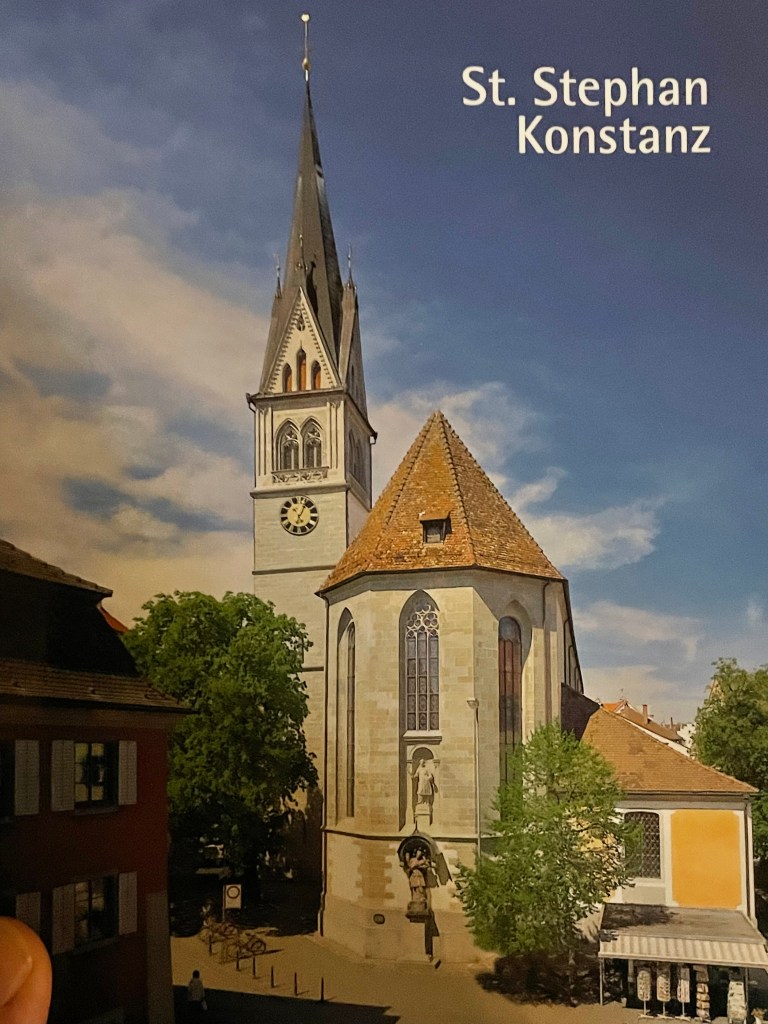
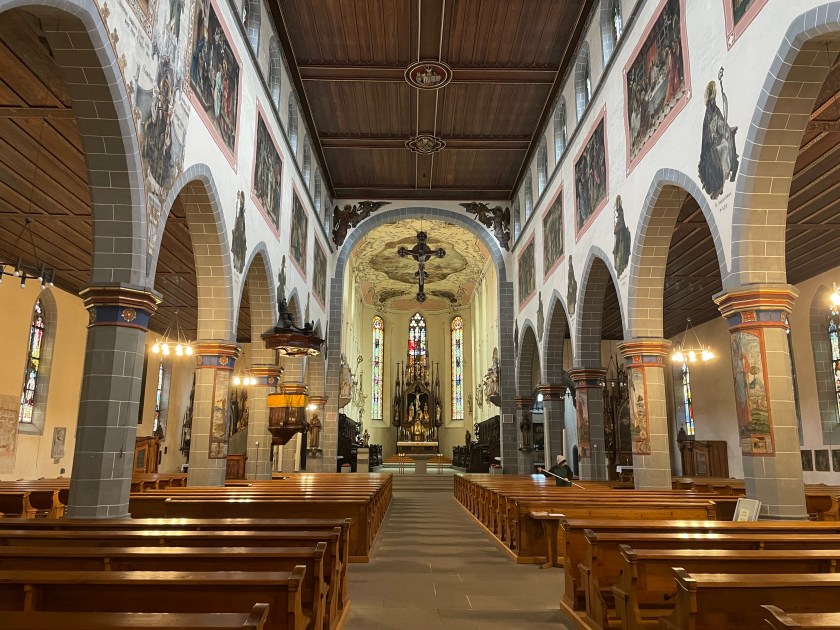
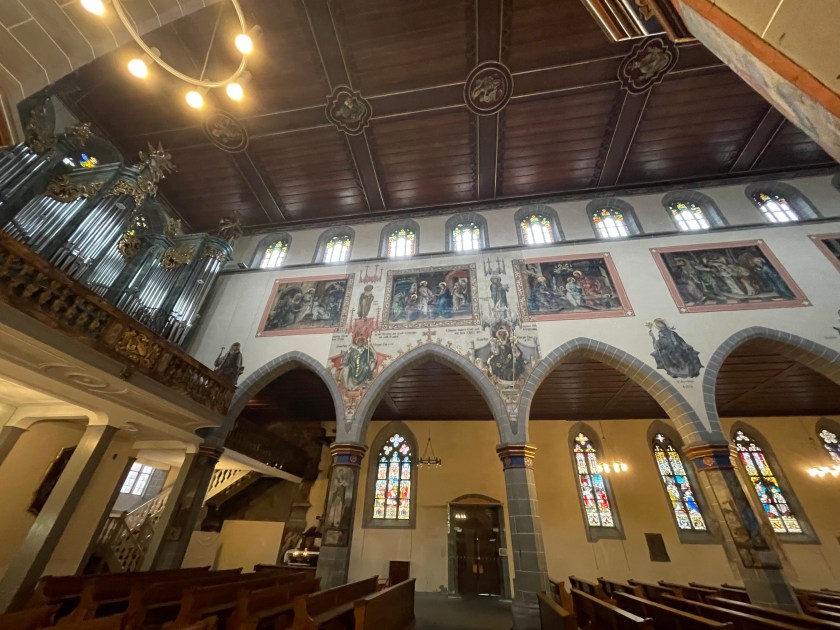
We found parking in the city center and walked to the main Cathedral called St. Stephan.  I don’t remember ever exploring in Konstanz in 1976.  I was by myself much of that summer, finding my own way around.

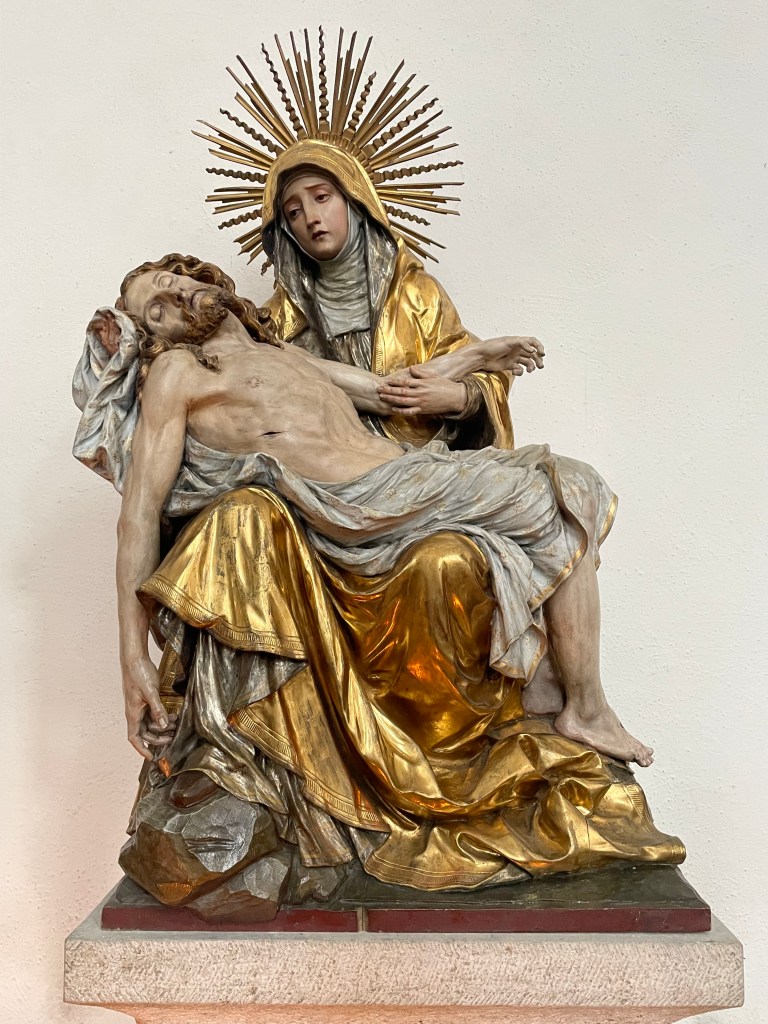
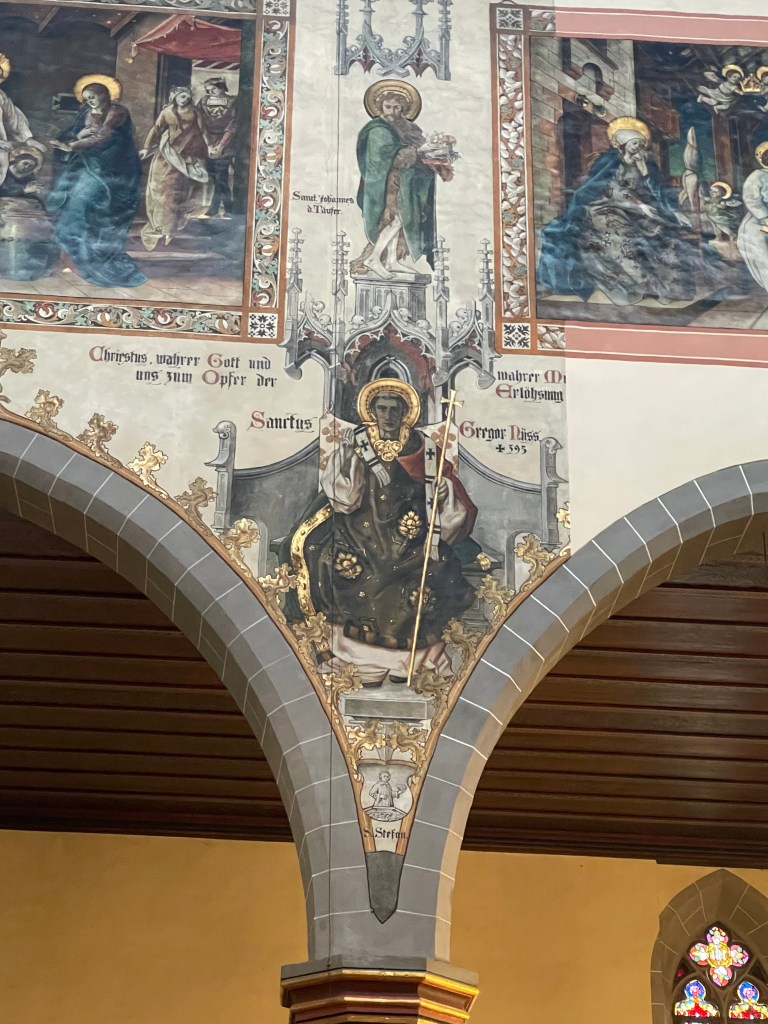
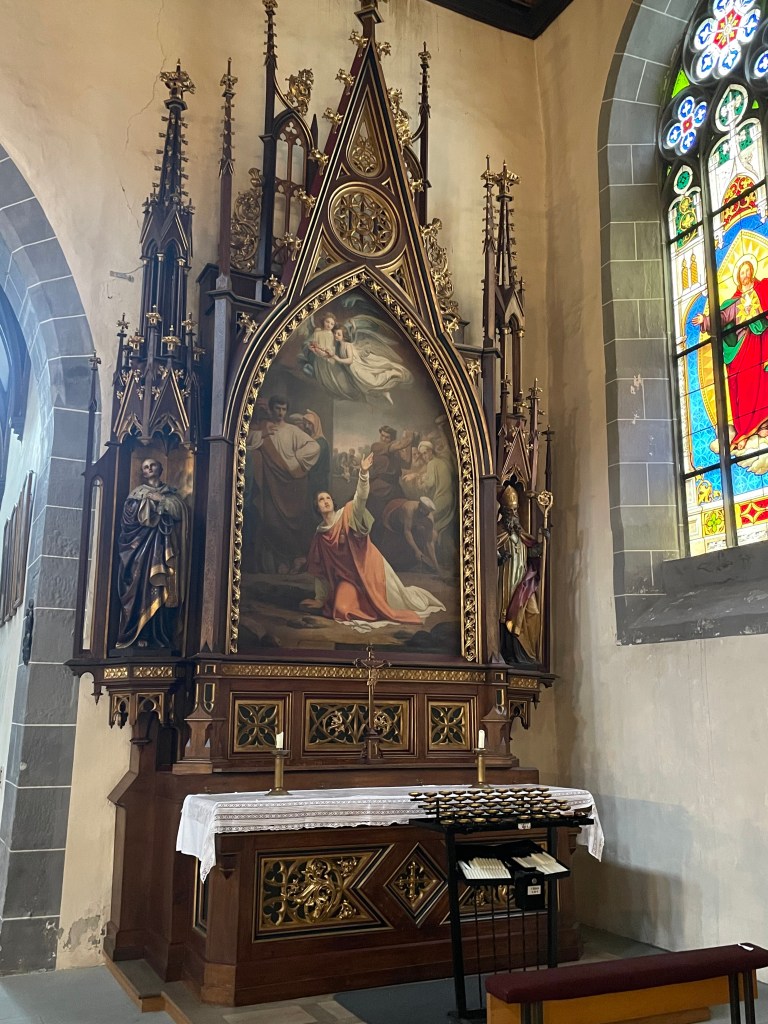
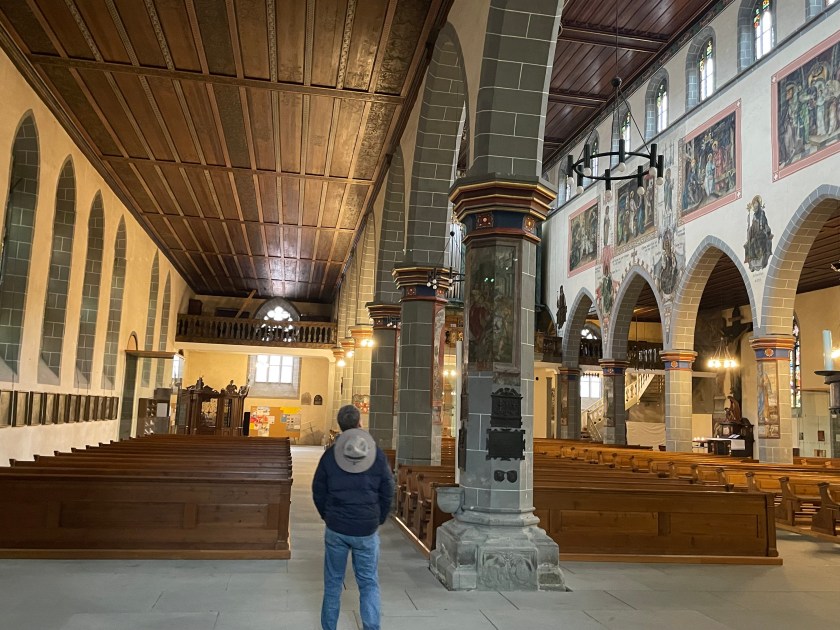
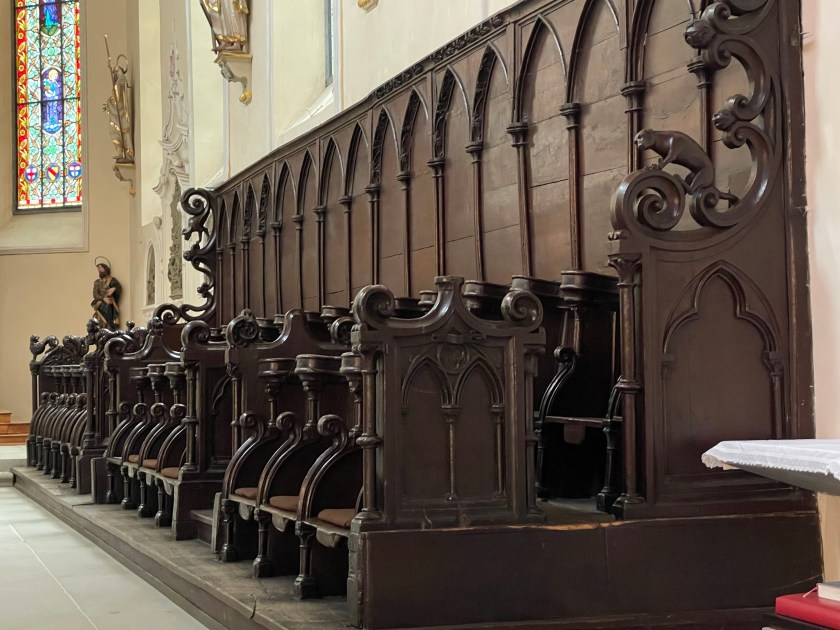
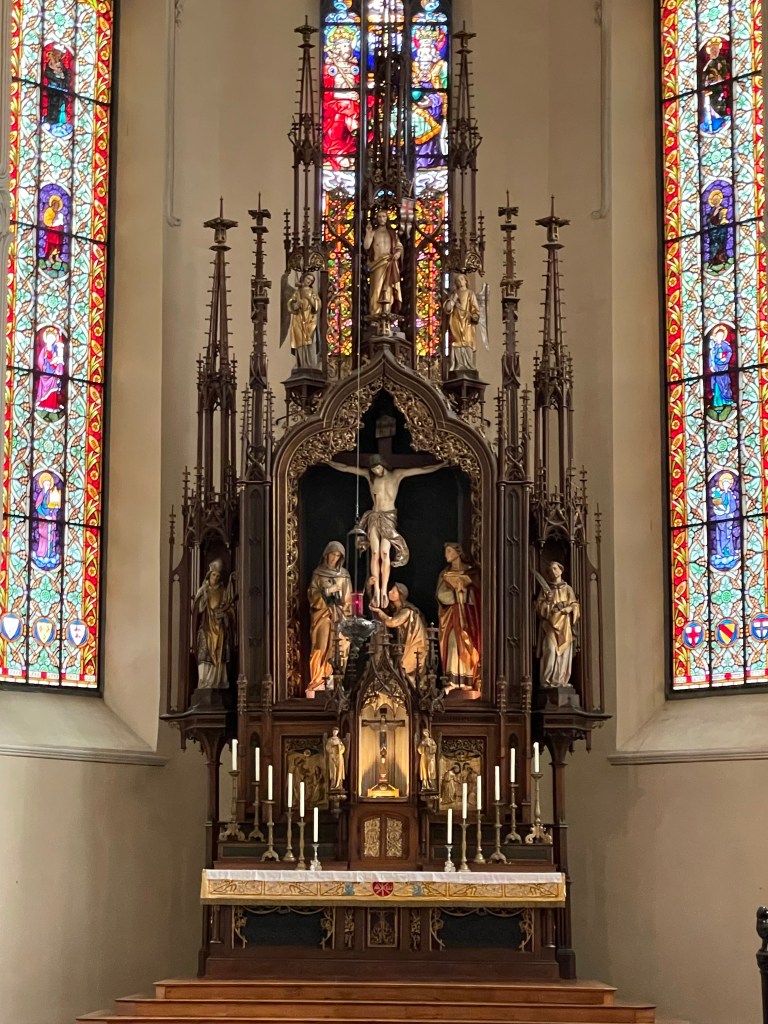
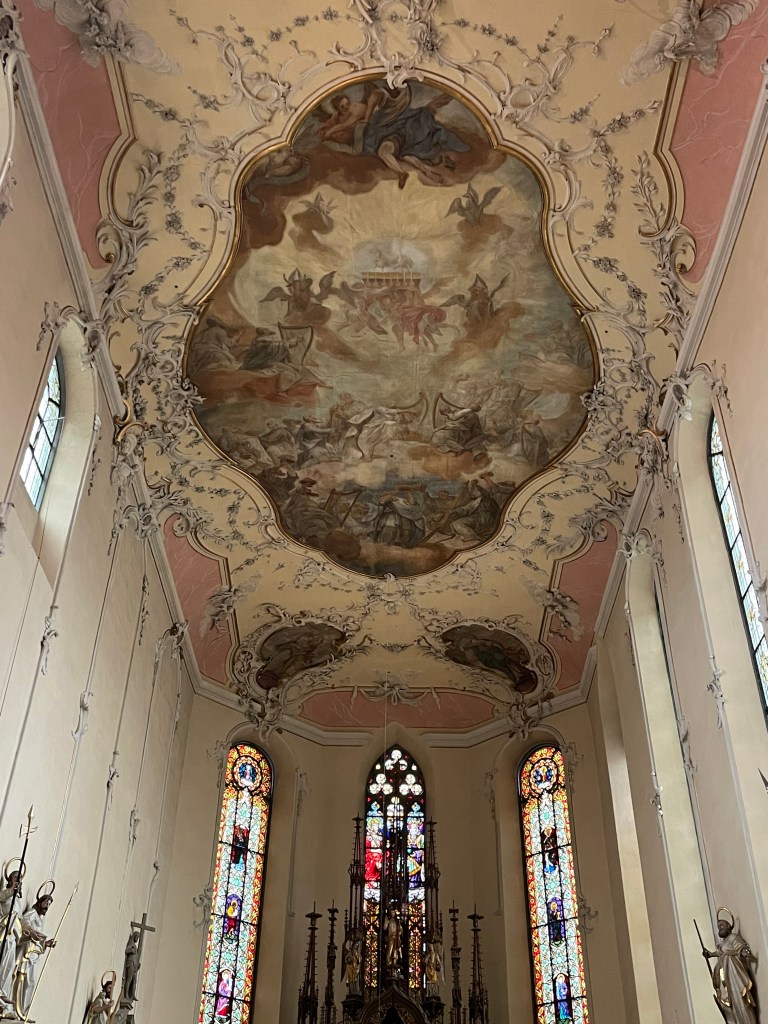
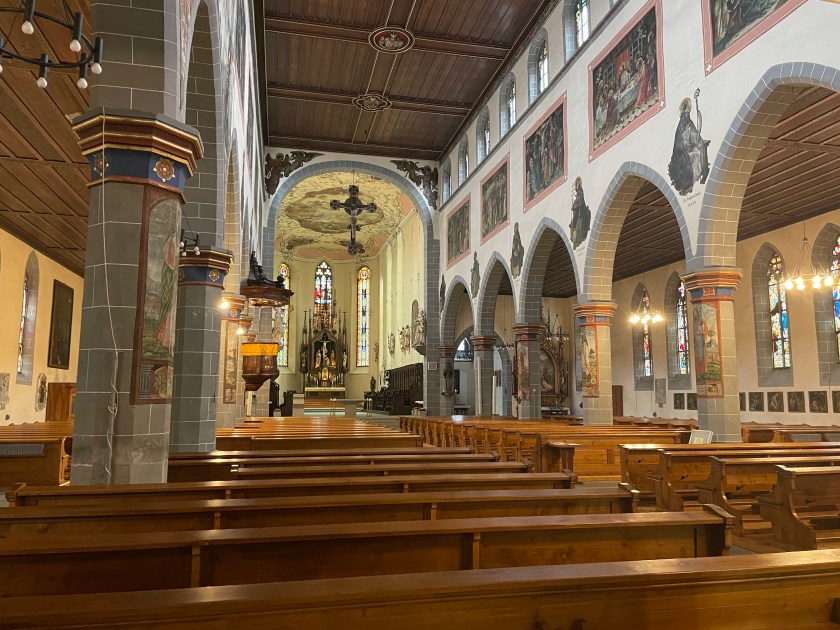
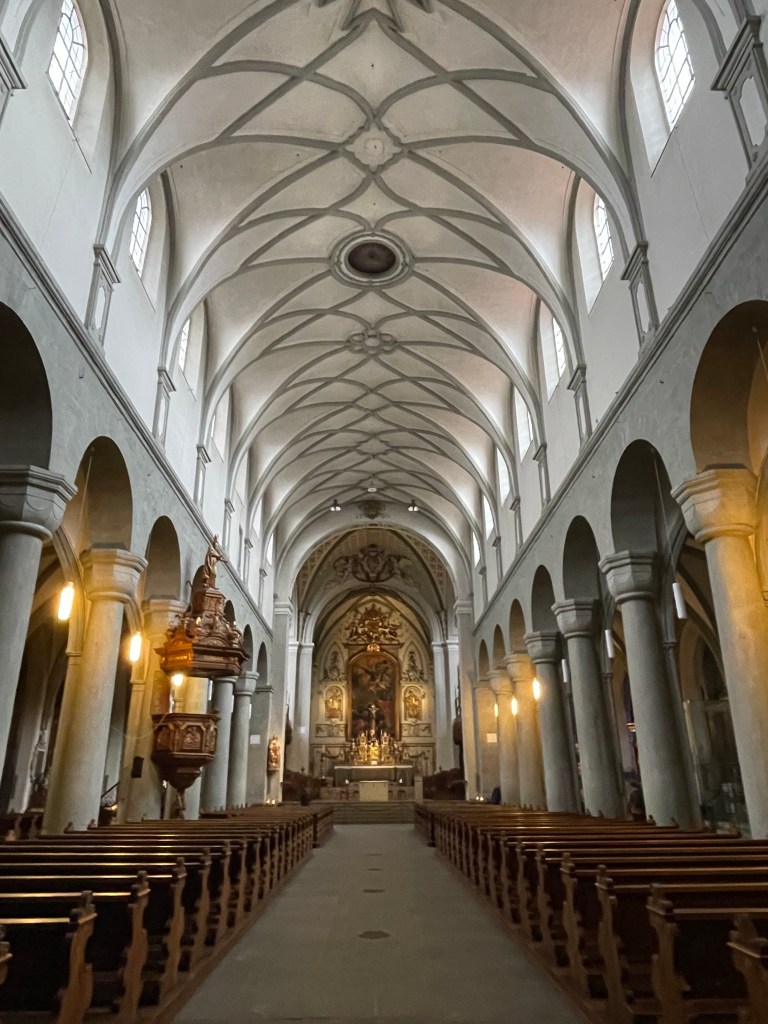
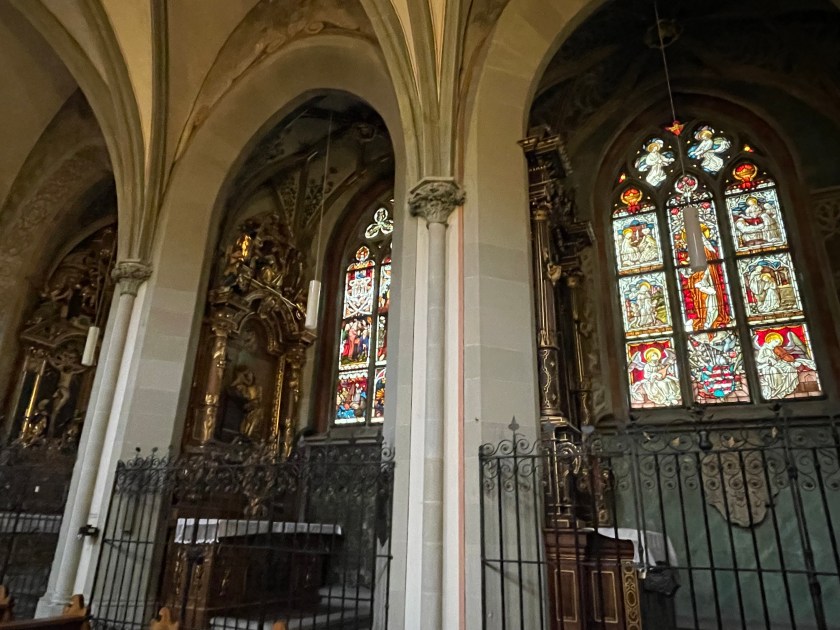
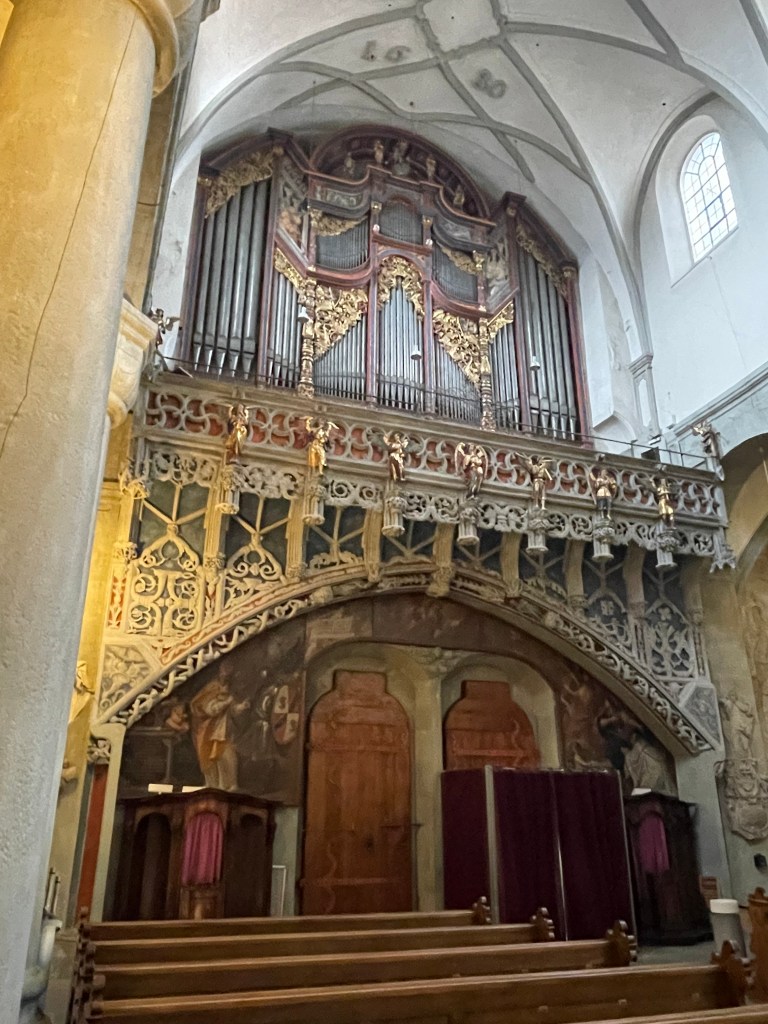
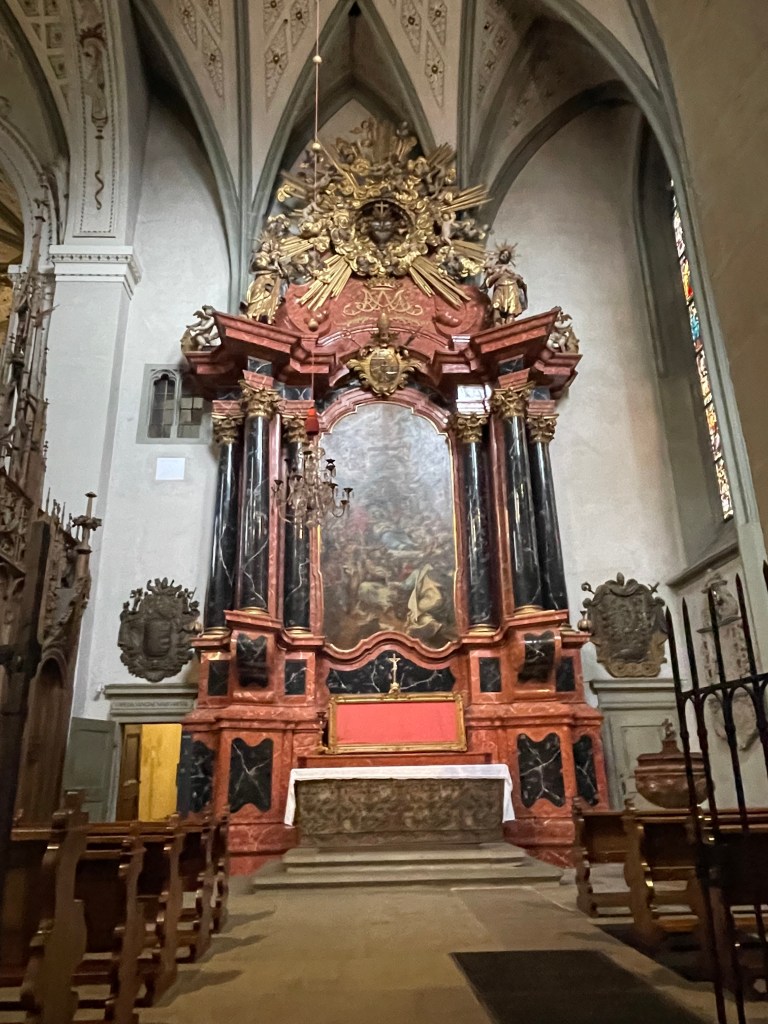
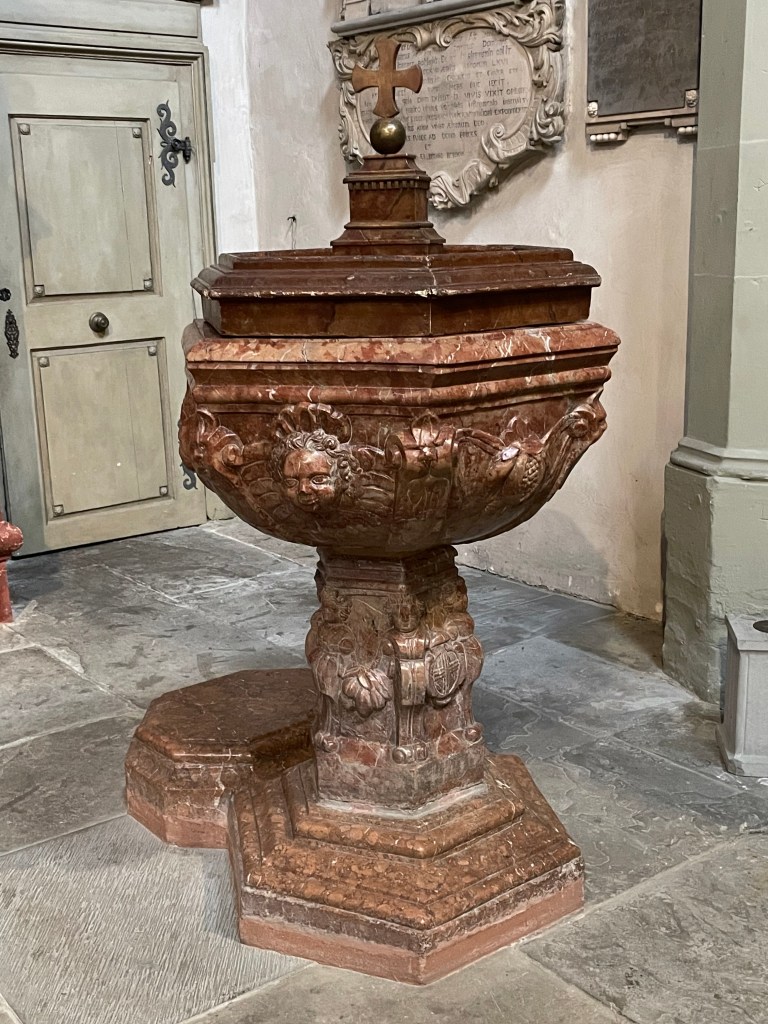
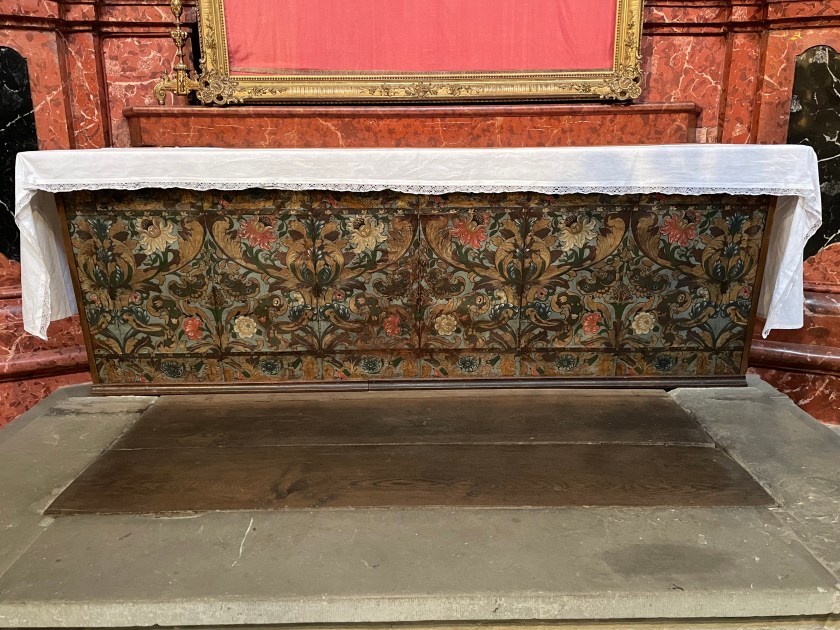
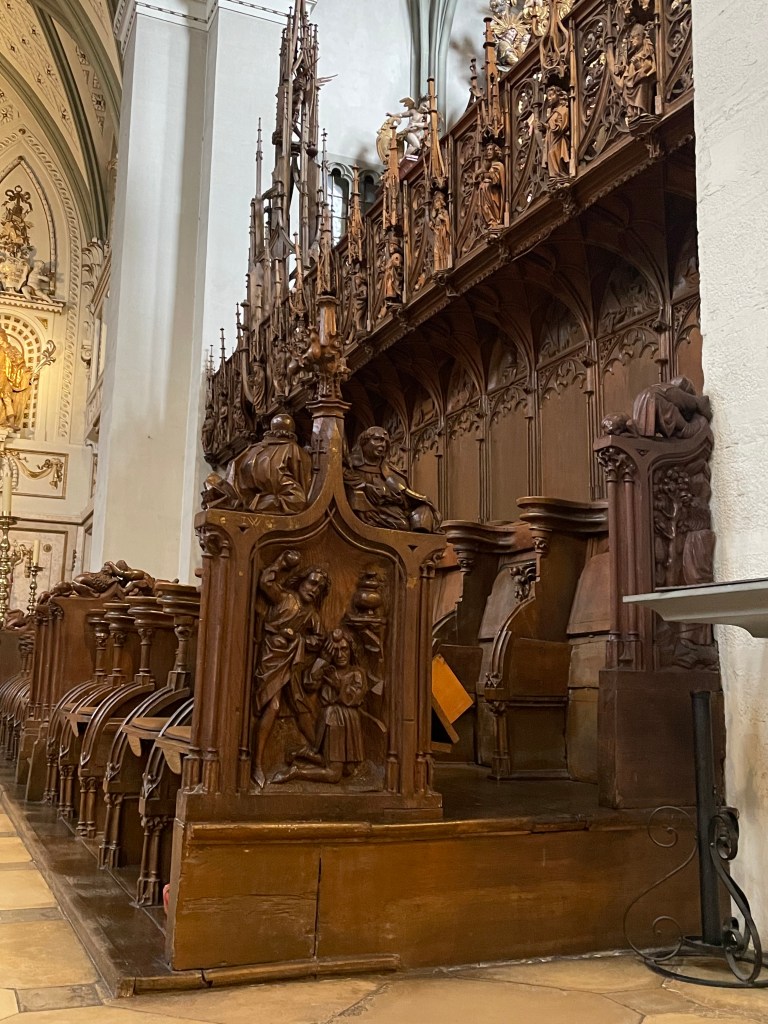
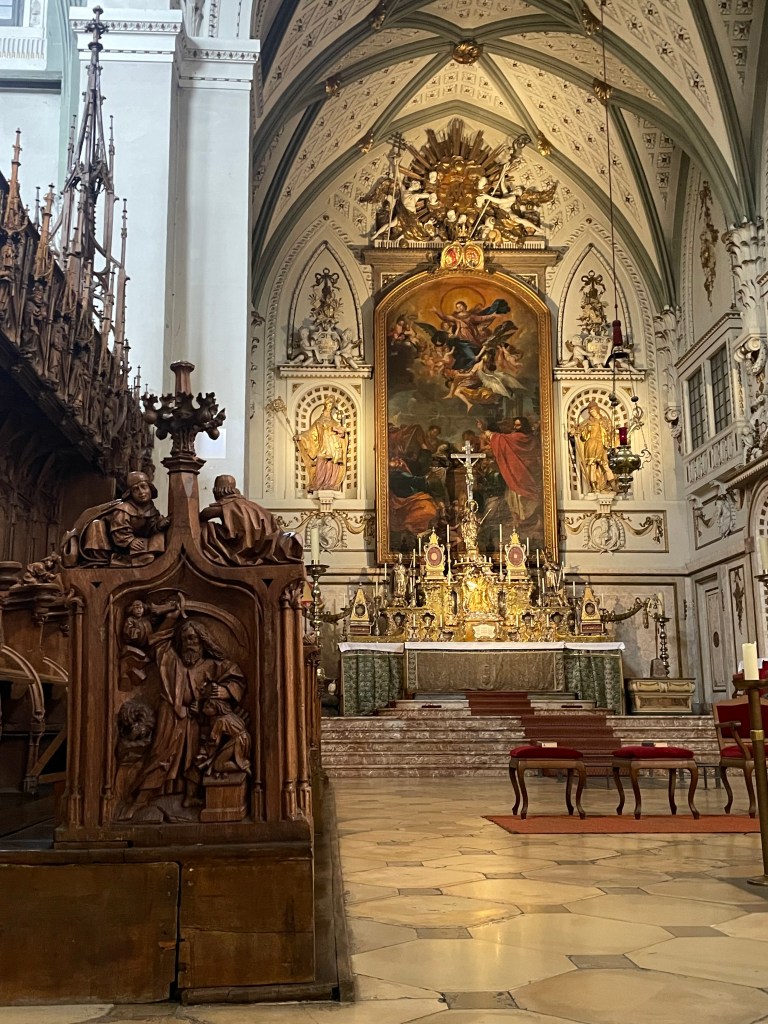
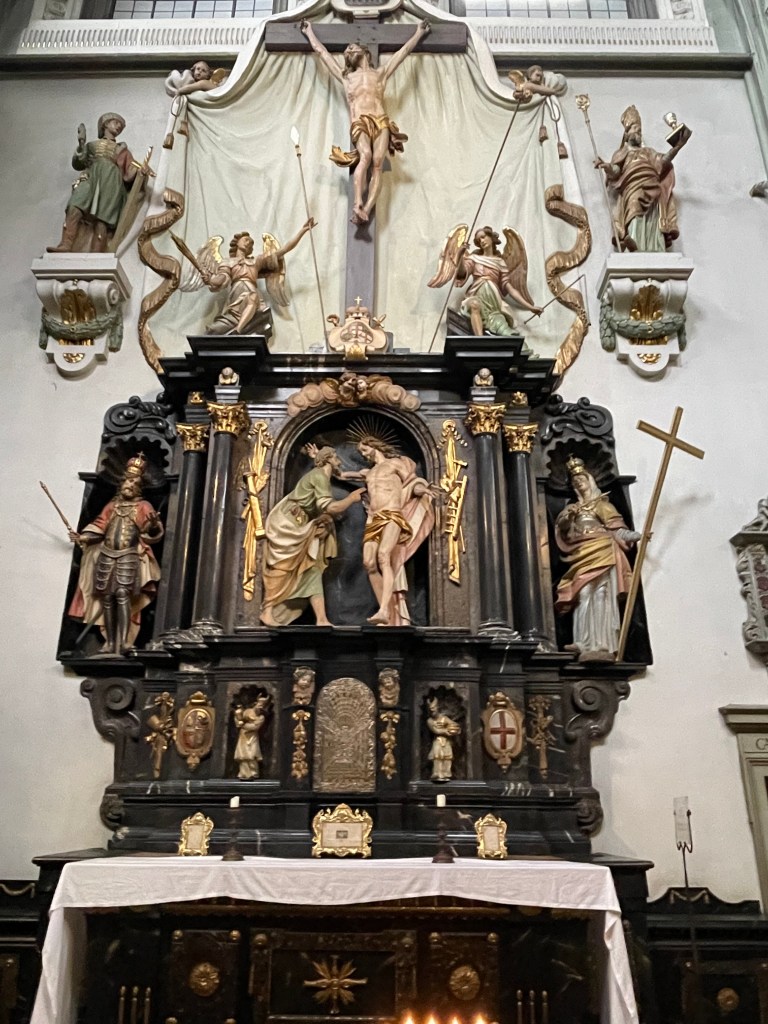
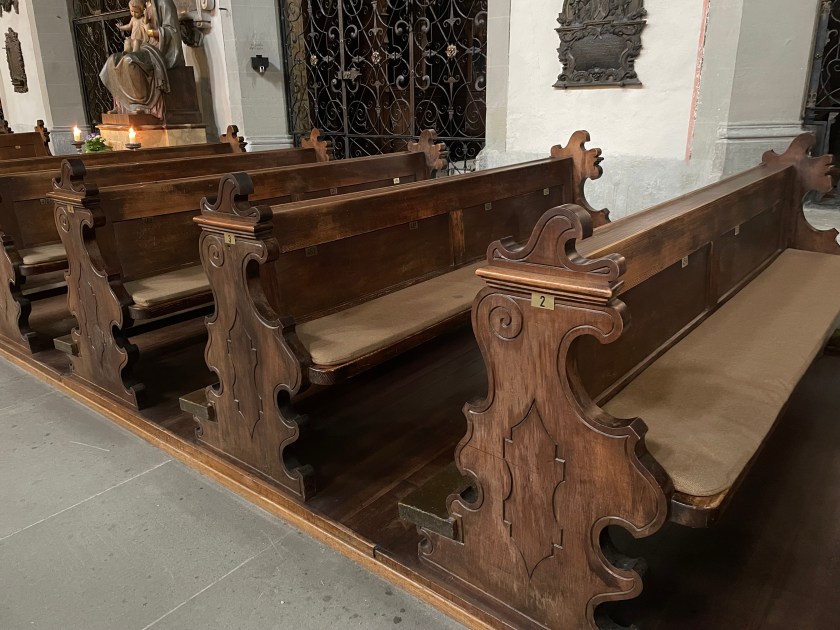
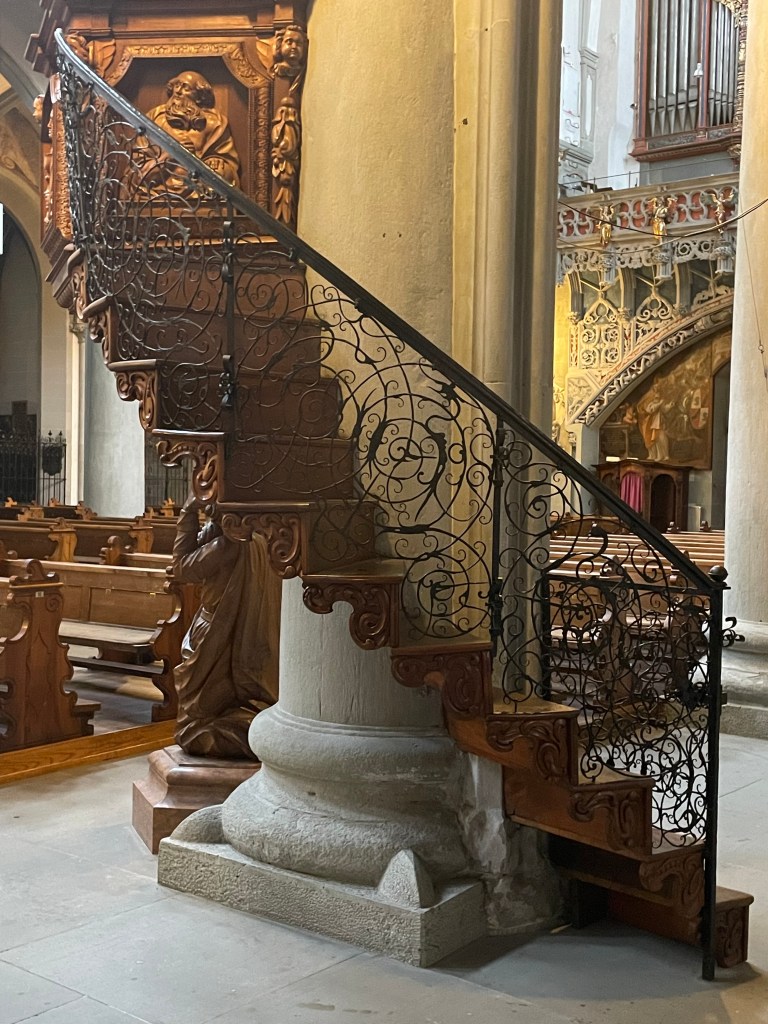
Churches in old city centers are like magnets for us.  We are drawn to them.  We visited 2 very old churches–St Stephan and then the main cathedral. Both impressive and old with beautiful art and wood carved sculptures.

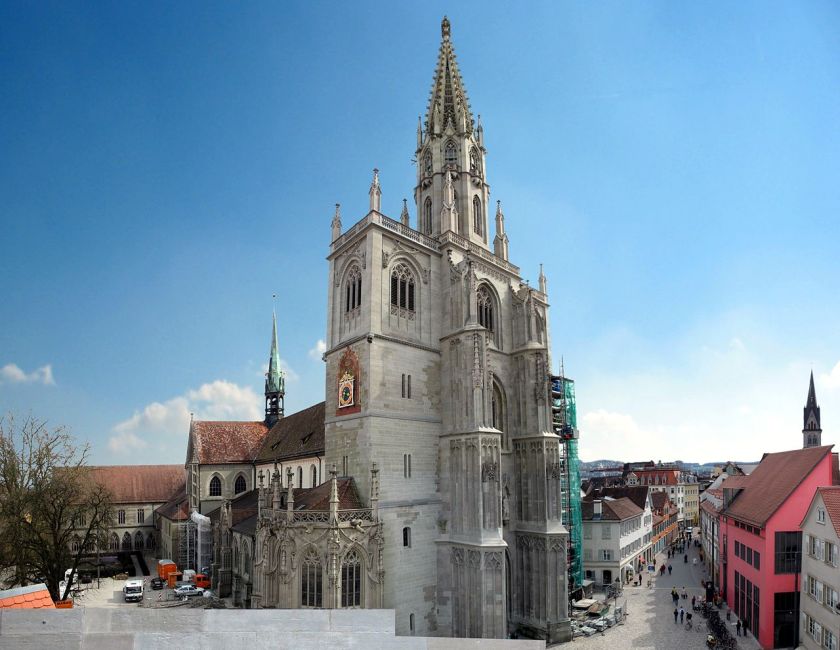
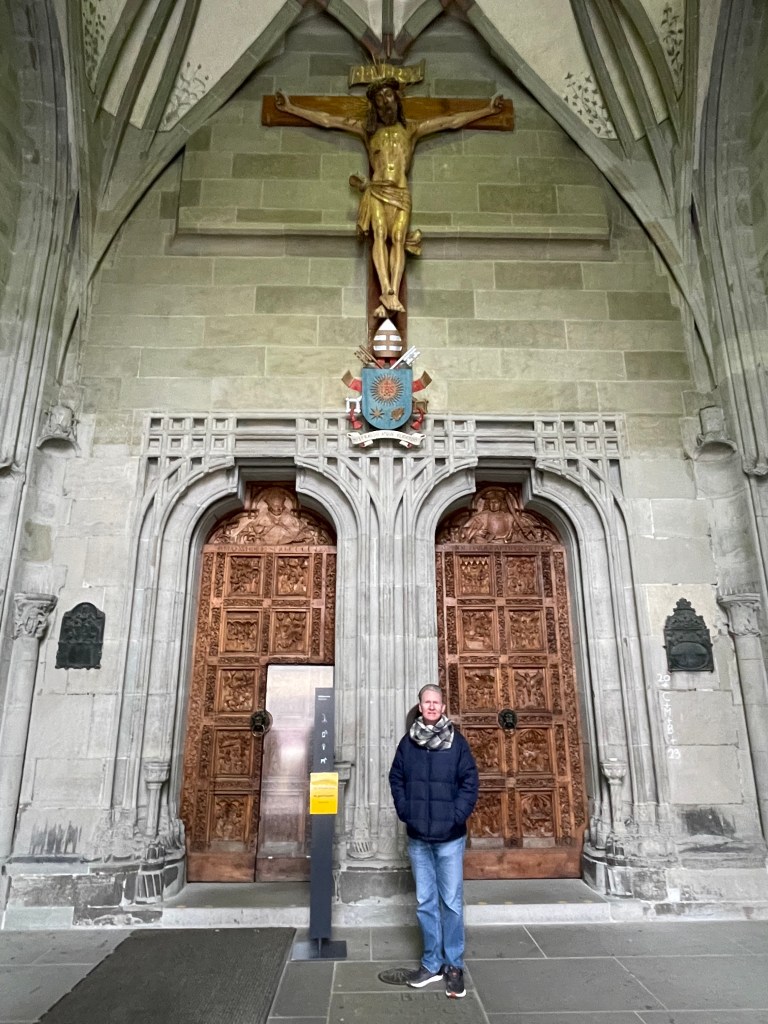
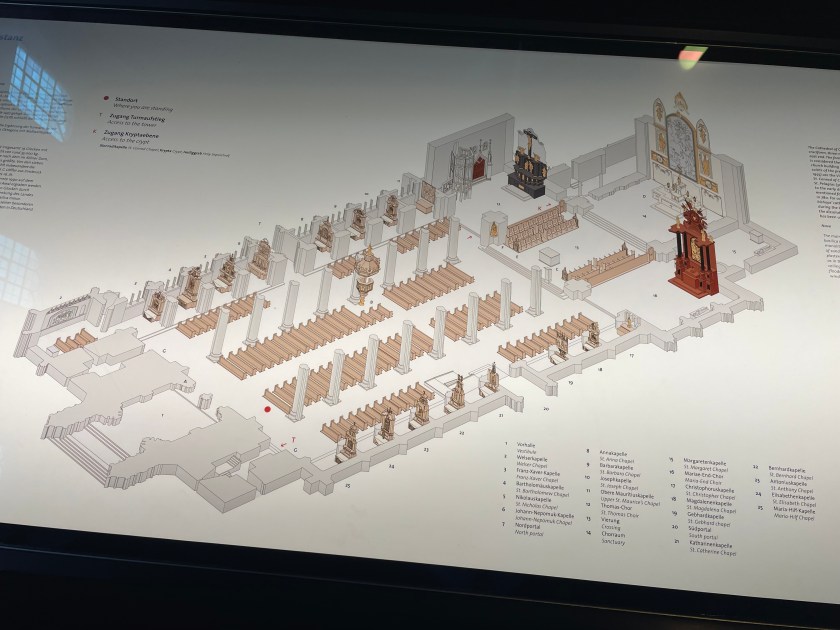
Below you will enter the Main Cathedral.

photo from Wikipedia

From Wikipedia:  The Holy Sepulchre was built in 940 on orders of Bishop Konrad (934 – 975) who was canonized in 1123.

In 1052, the cathedral collapsed. Its reconstruction took place under Bishop Rumold von Konstanz (1051 – 1069), with the eastern transept and three naves separated by 16 monoliths.

The next 300 years saw the construction of one tower, followed by the second, then a great fire destroyed one tower along with parts of the basilica as well as 96 other houses in the city. The south tower was completed in 1378.

From 1414 to 1418 the cathedral hosted the Council of Constance, the most important assembly of the Church during the Middle Ages, and the only one on German soil.  Martin V, who had been elected Pope by the Conclave and thereby ending the schism dividing the Church, was enthroned in this Cathedral in 1417.  (More history in Wikipedia.)

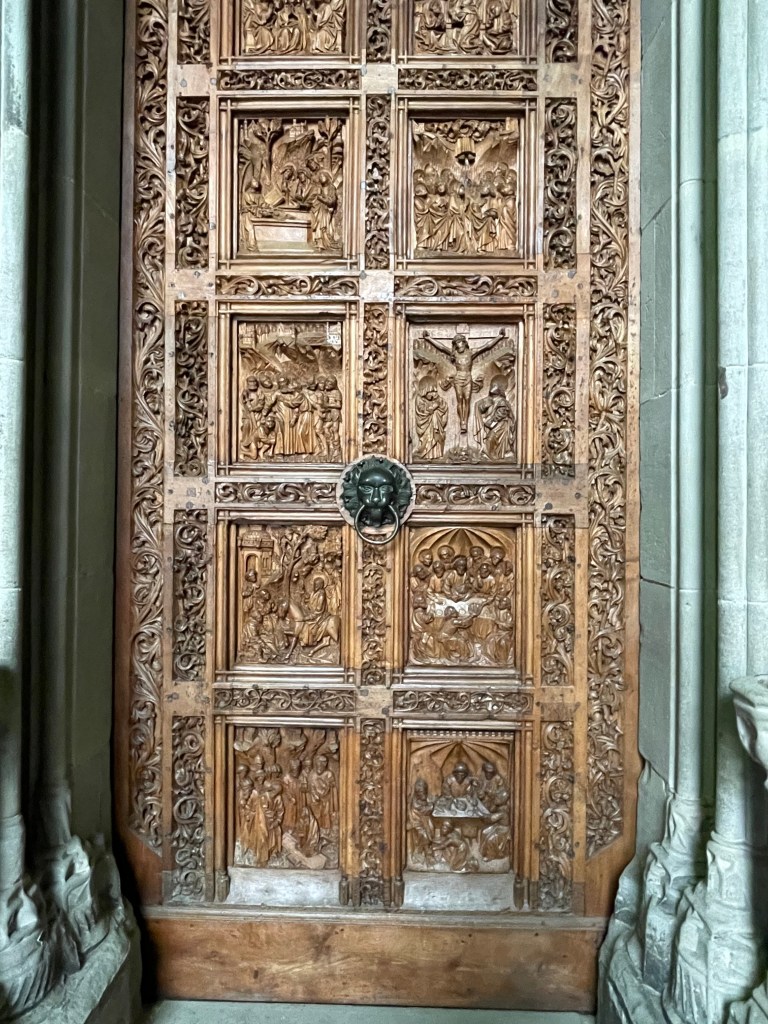
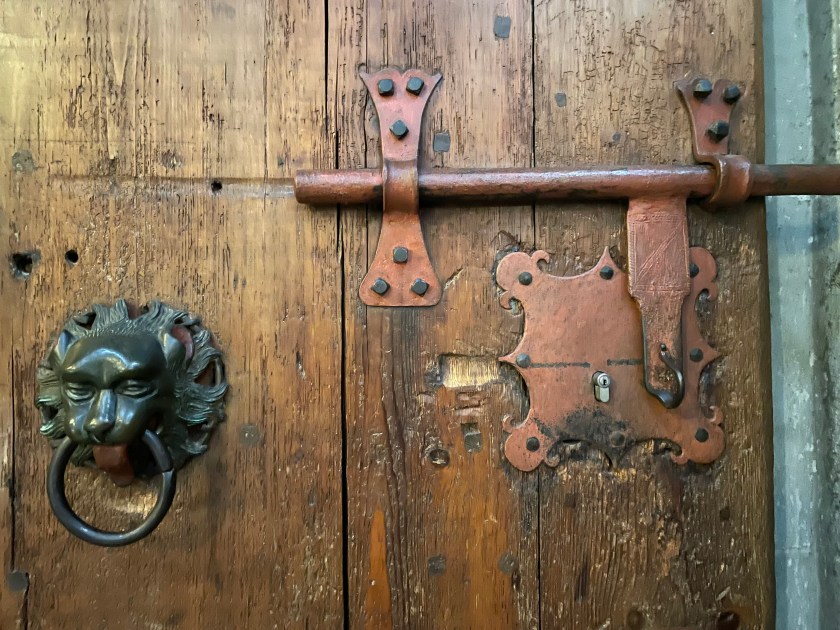
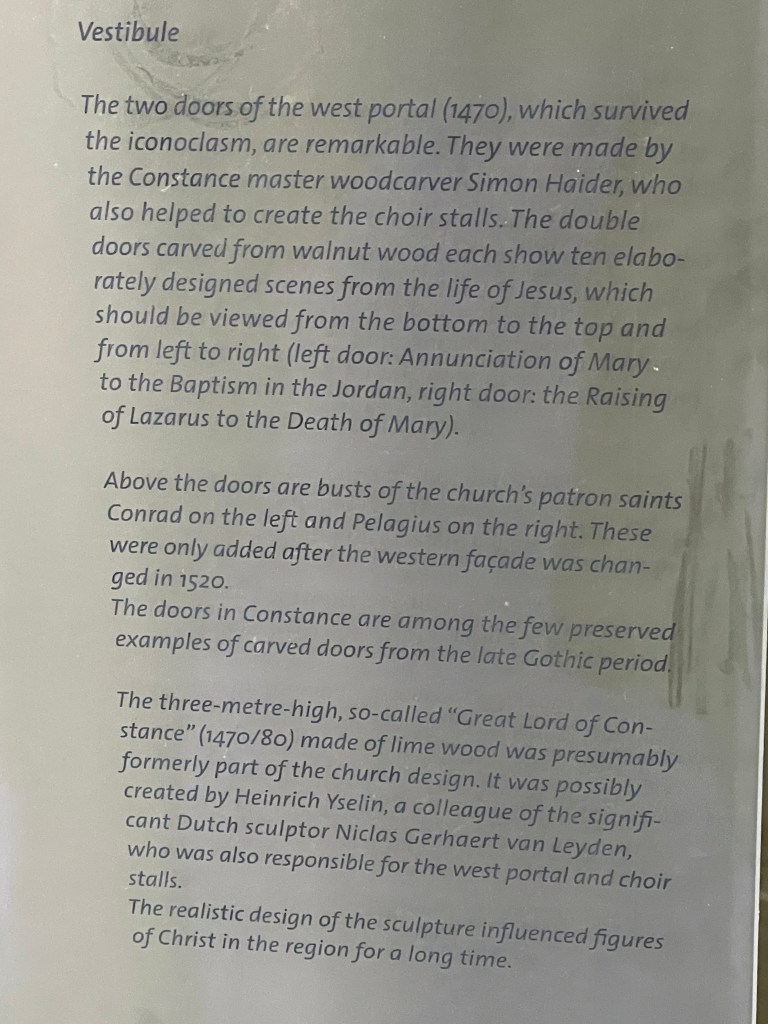
The wood carvings on the two doors of the main portal depict the life of Jesus in 20 stations. Above both doors, semi-circular reliefs show busts of St. Conrad (left) and Pelagius (right).

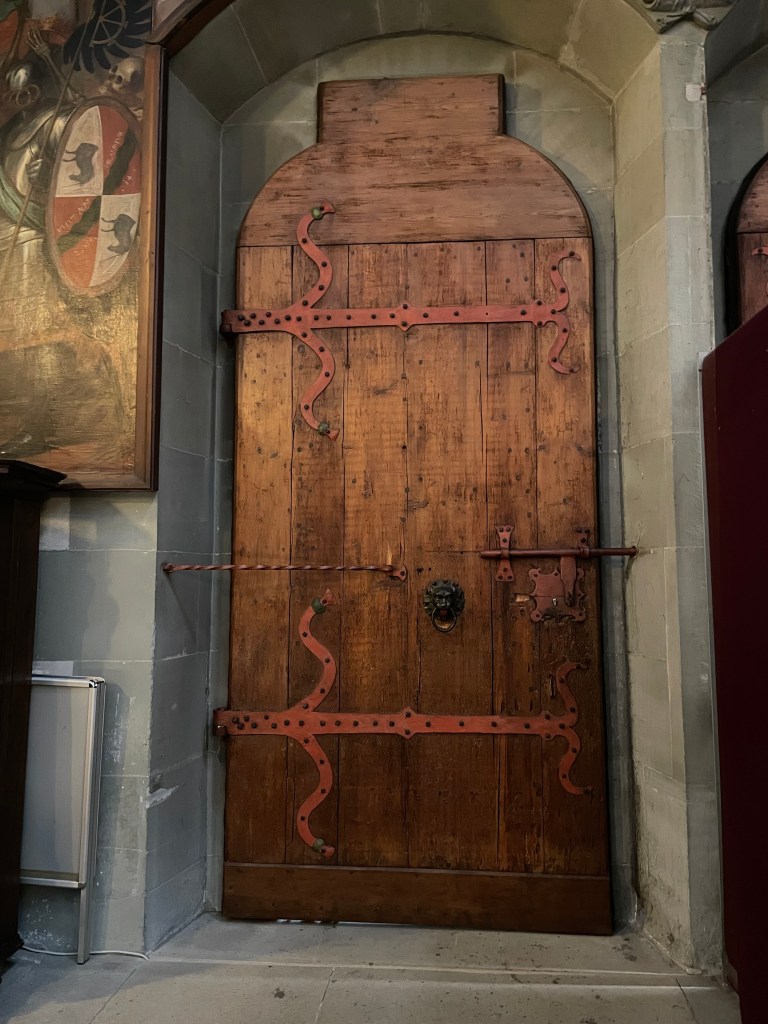
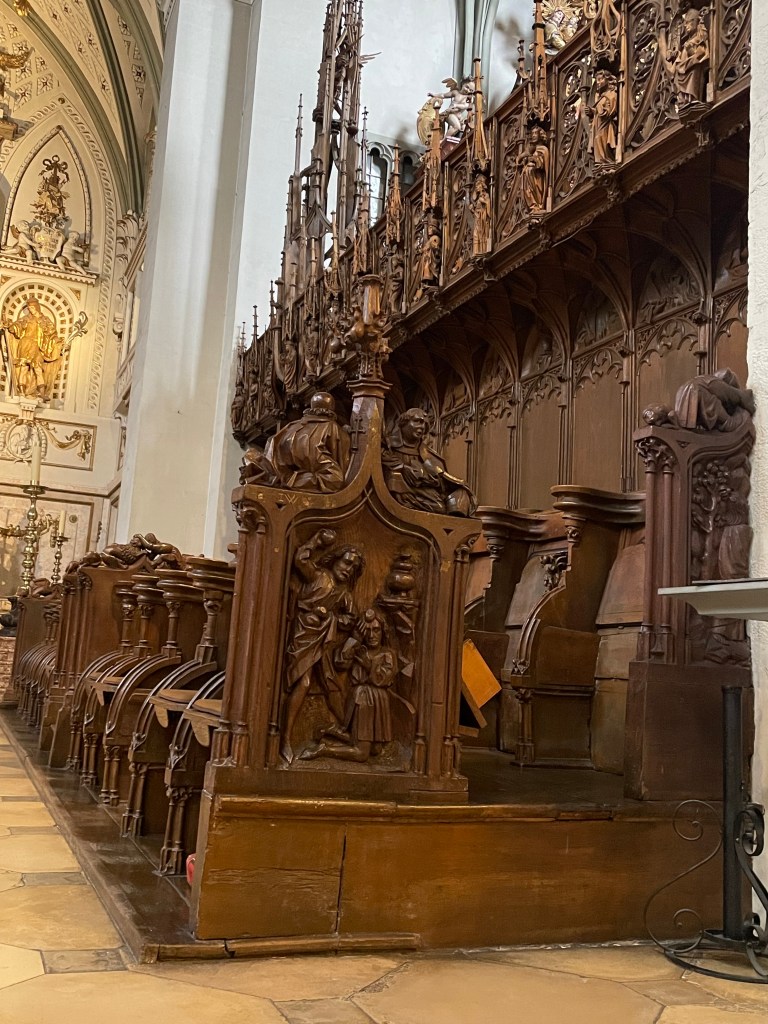
The wood carving in this church is spectacular.

A quilt-ish floor!

A window-washer outside the Cathedral:

The town looked interesting and left us wanting to see more, but we had to keep moving.