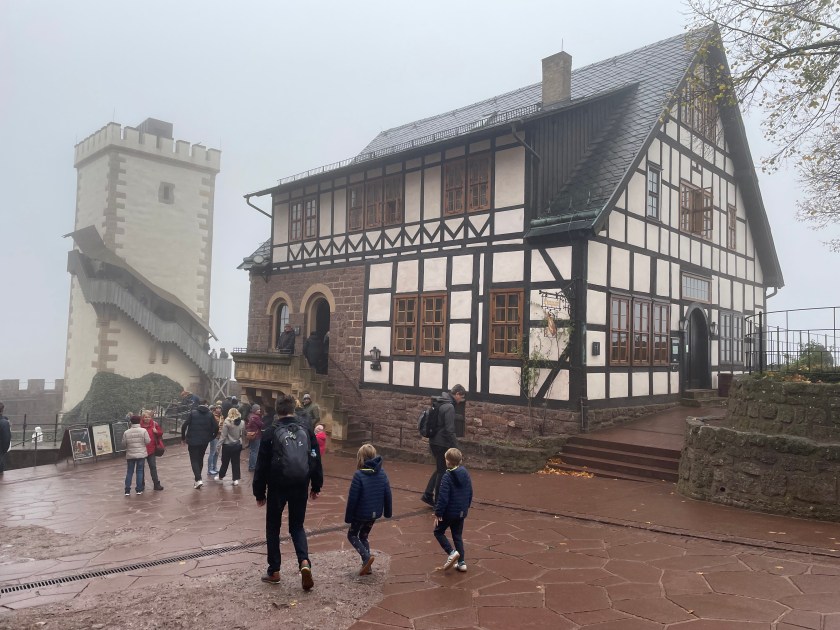
After visiting Eisenach, we went up the hill to the castle at Wartburg. This was one of the first places we visited when we arrived in Germany. More about it here.
We went back to our favorite Brat food truck on the way to the castle and had delicious Thuringer Brats. Oh, so good.
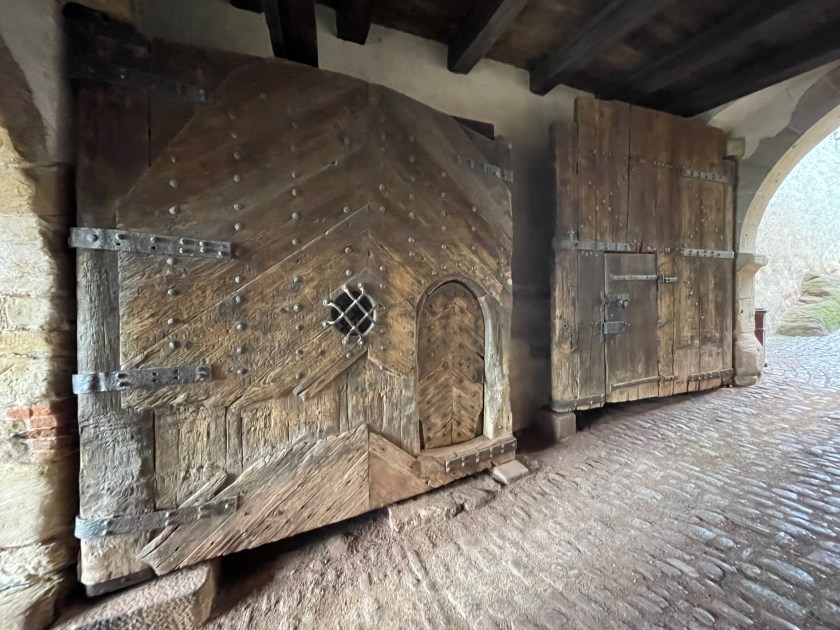
We drove up through mystical woods, into the misty forest. It’s really hard to capture the colors and the feeling of the woods in a photo. Or the sound of rain on the fallen leaves that cover the ground. The stone walls lining the paths and road were covered in bright green moss and ferns. There were mushrooms on fallen trees. It smelled woodsy and it was lovely to be there.
You can catch a small bus ride up to the top of the mountain.
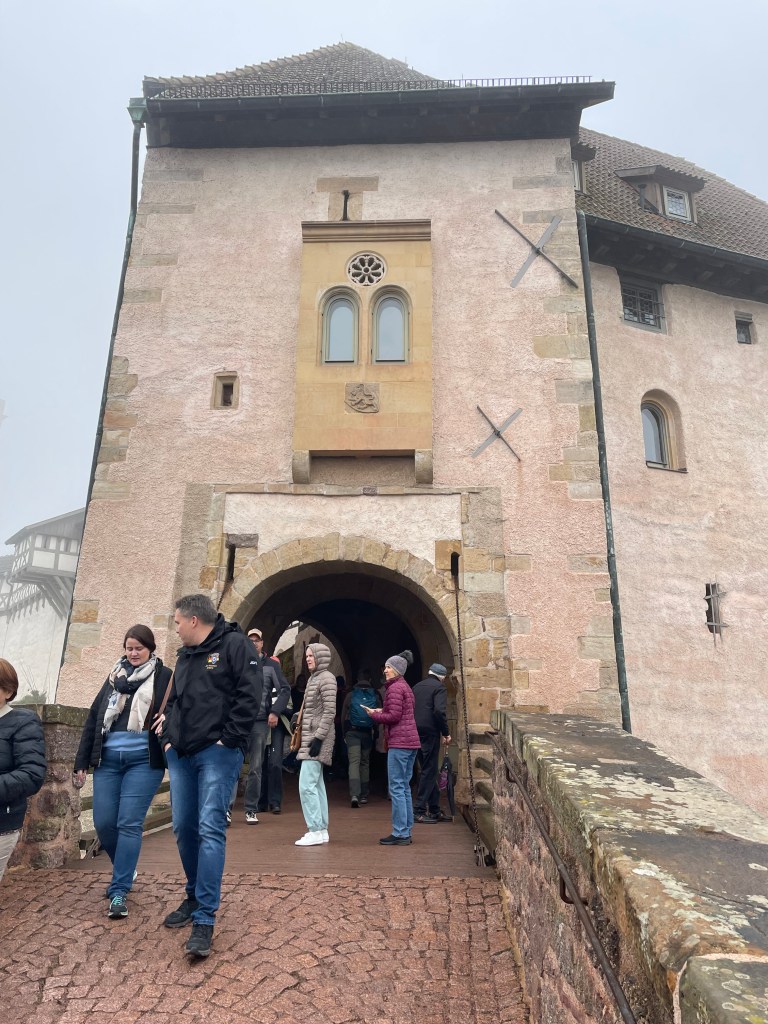
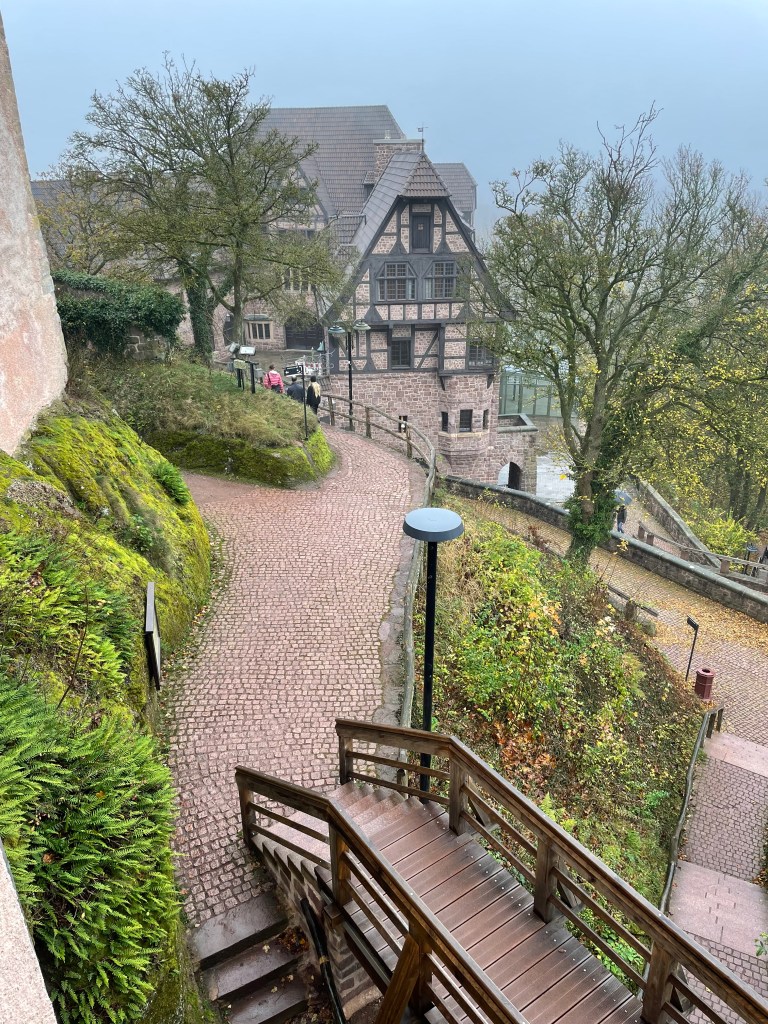
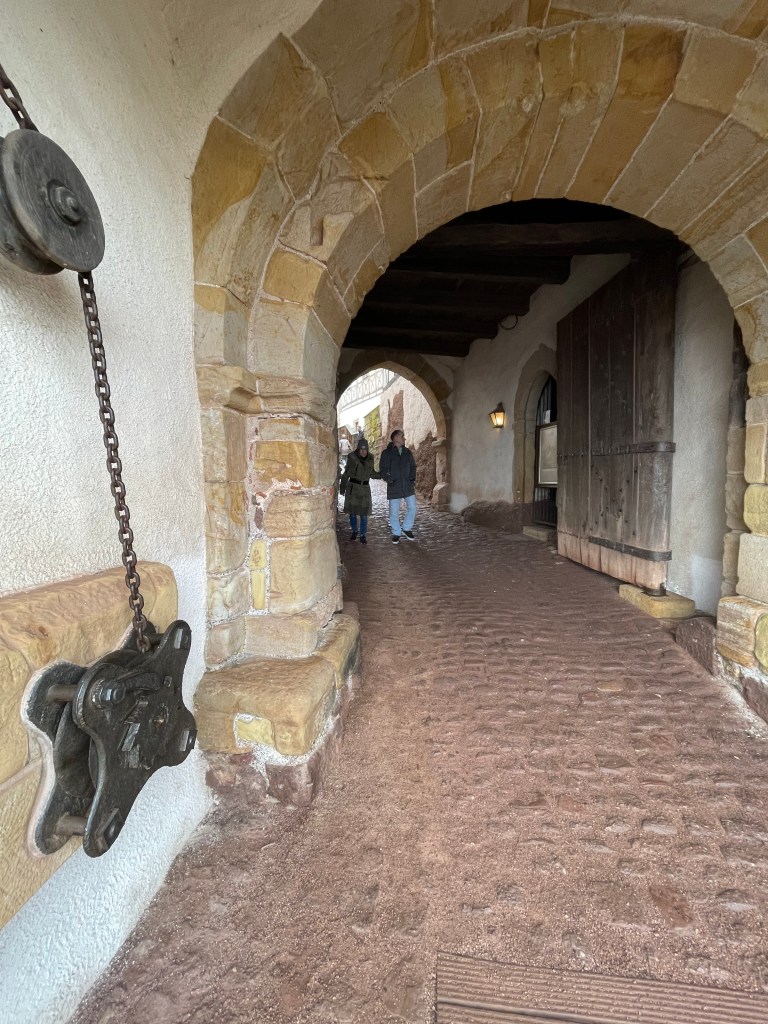
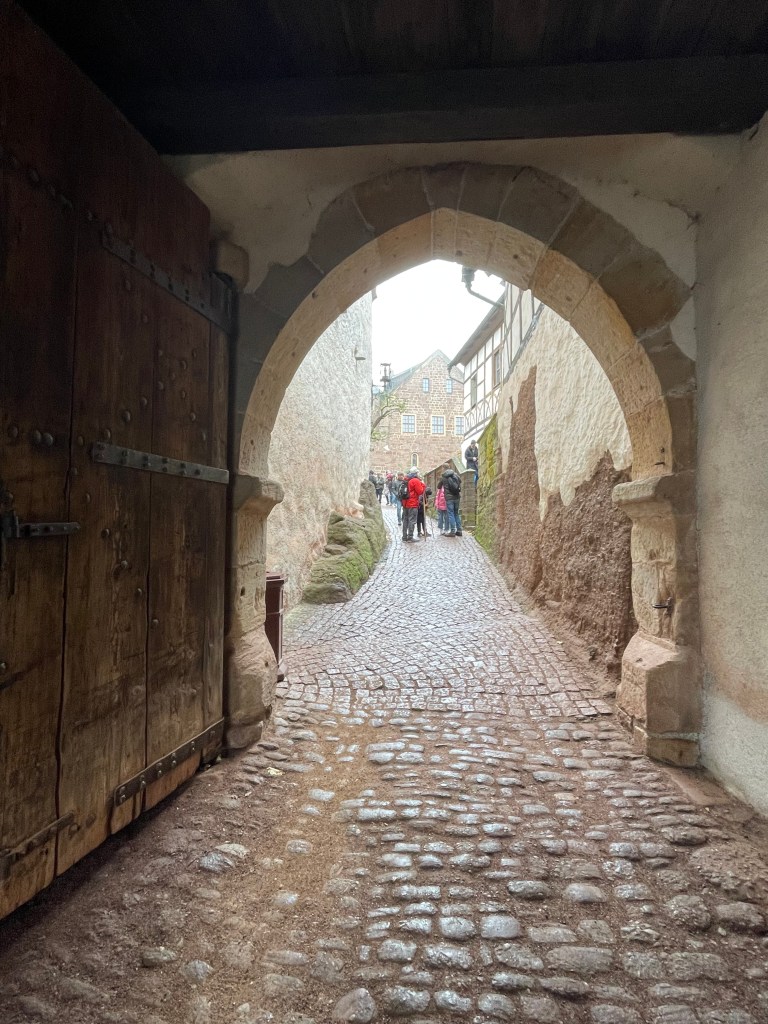
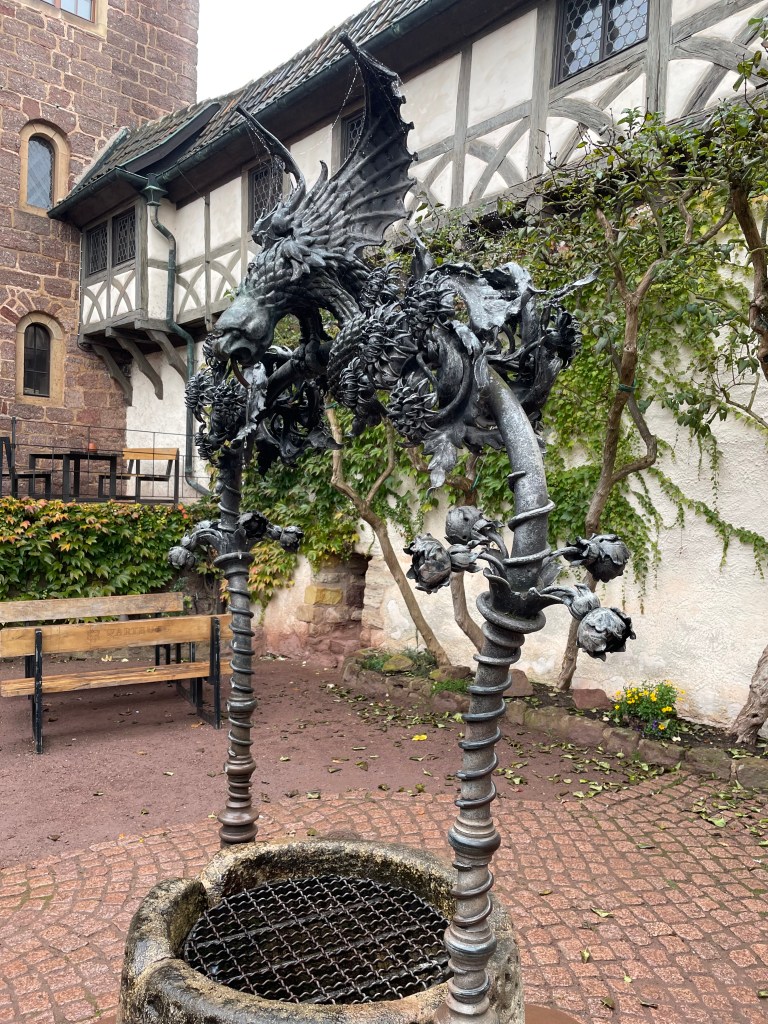
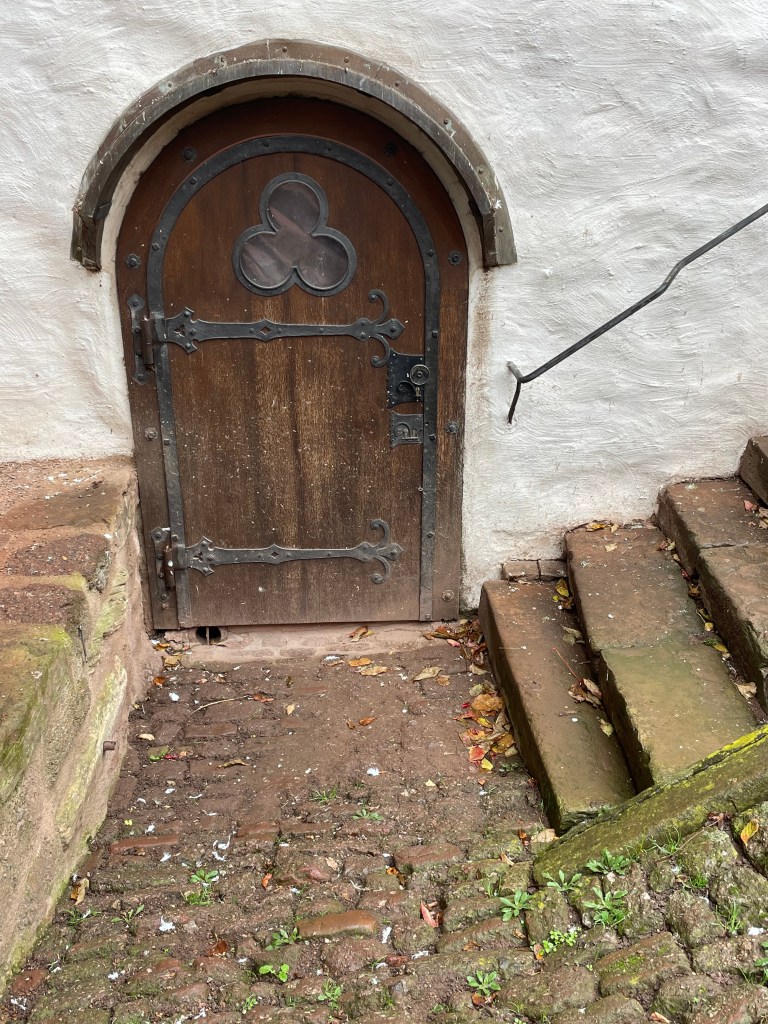
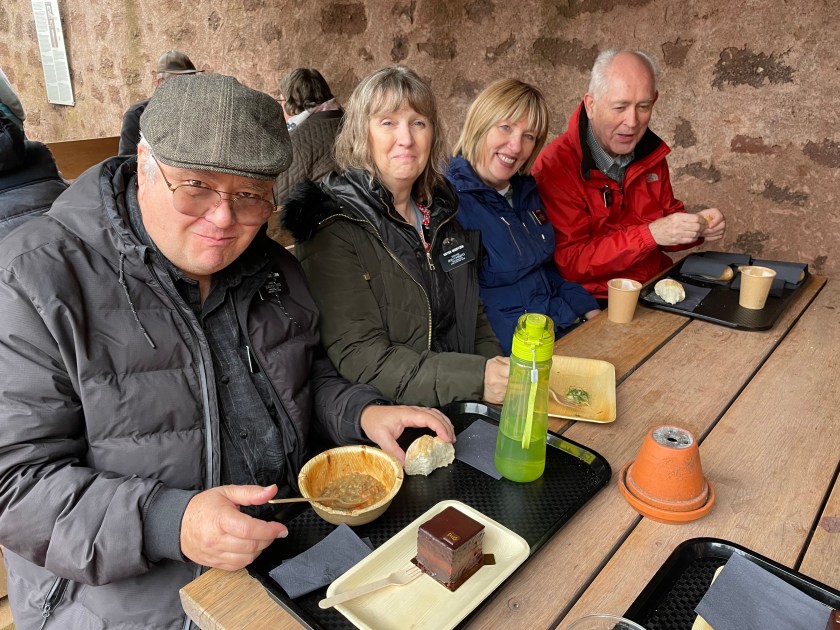
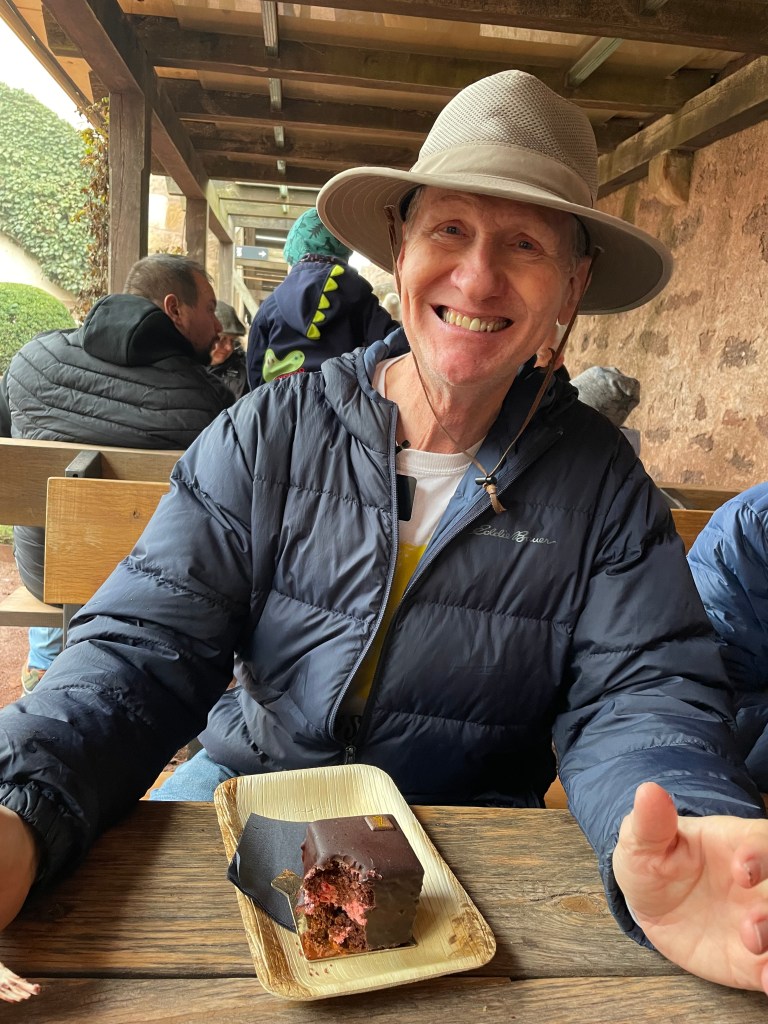
We’d signed up for an English tour at 1:30 and had to be ready by 1:00, so we wandered around the castle top and buildings until then. Some got food at a a snack bar with soup and cakes while we waited for the tour.
Wikipedia:
The Wartburg is a castle originally built in the Middle Ages. It is situated on a precipice of 410 metres (1,350 ft) to the southwest of and overlooking the town of Eisenach, in the state of Thuringia, Germany. It was the home of St. Elisabeth of Hungary, the place where Martin Luther translated the New Testament of the Bible into German, the site of the Wartburg festival of 1817 and the supposed setting for the possibly legendary Sängerkrieg. It was an important inspiration for Ludwig II when he decided to build Neuschwanstein Castle.
Wartburg is the most visited tourist attraction in Thuringia after Weimar. Although the castle today still contains substantial original structures from the 12th through 15th centuries, much of the interior dates back only to the 19th century. In 1999, Wartburg Castle was inscribed on the UNESCO World Heritage List because of its quintessential medieval architecture and its historical and religious significance
At 1:30 the tour began and we got to go inside.
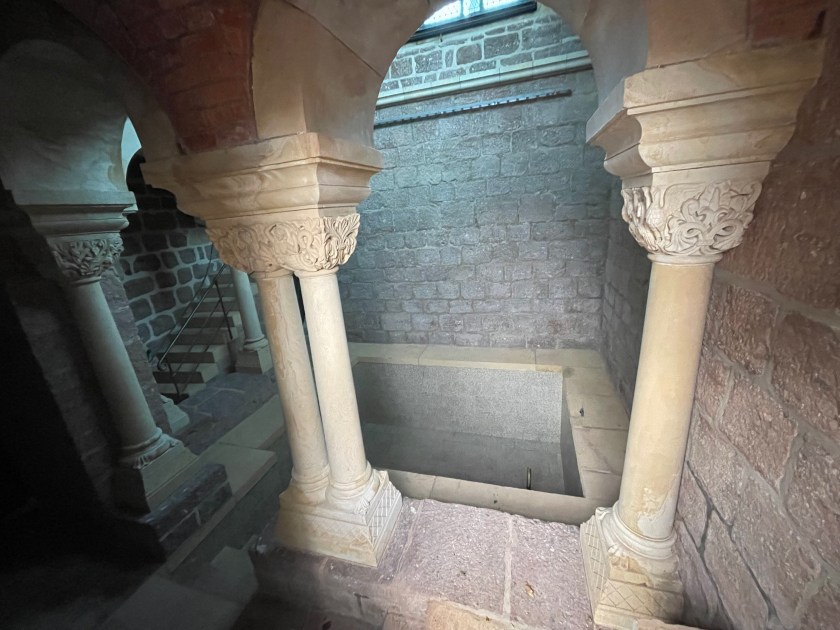
These are baths for the knights.
Our guide told stories about Elisabeth, the young girl who became a Saint. She was born in Hungary, and came to the Wartburg Castle when she was 4 years old. We learned about her here and in Marburg.
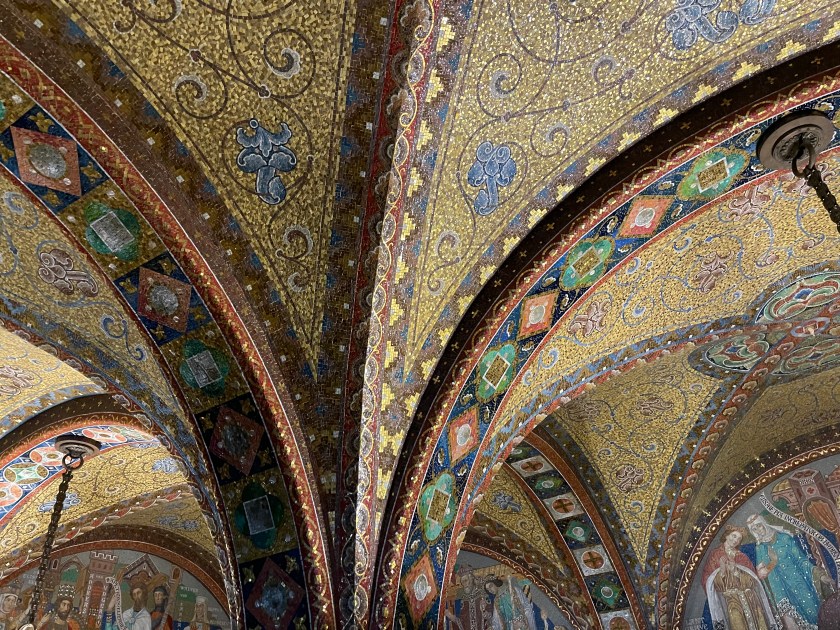
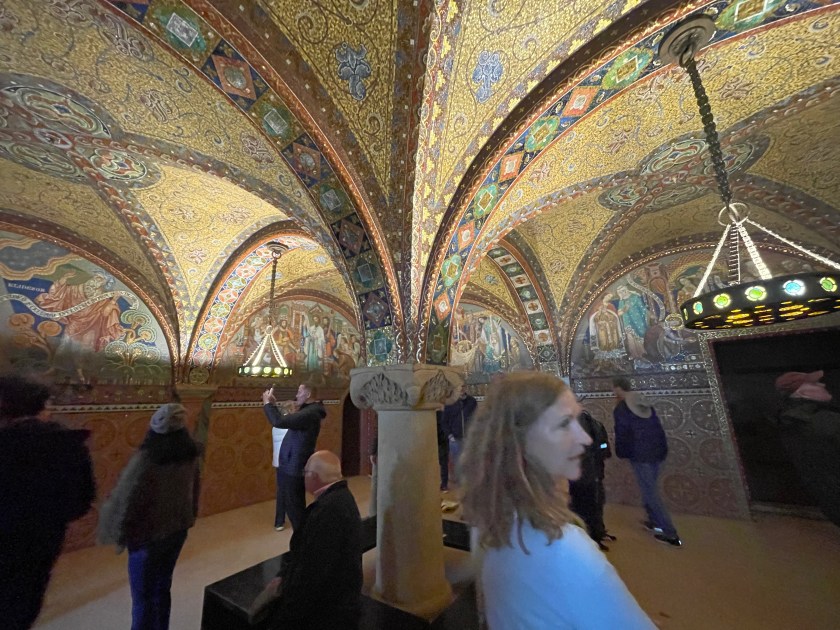
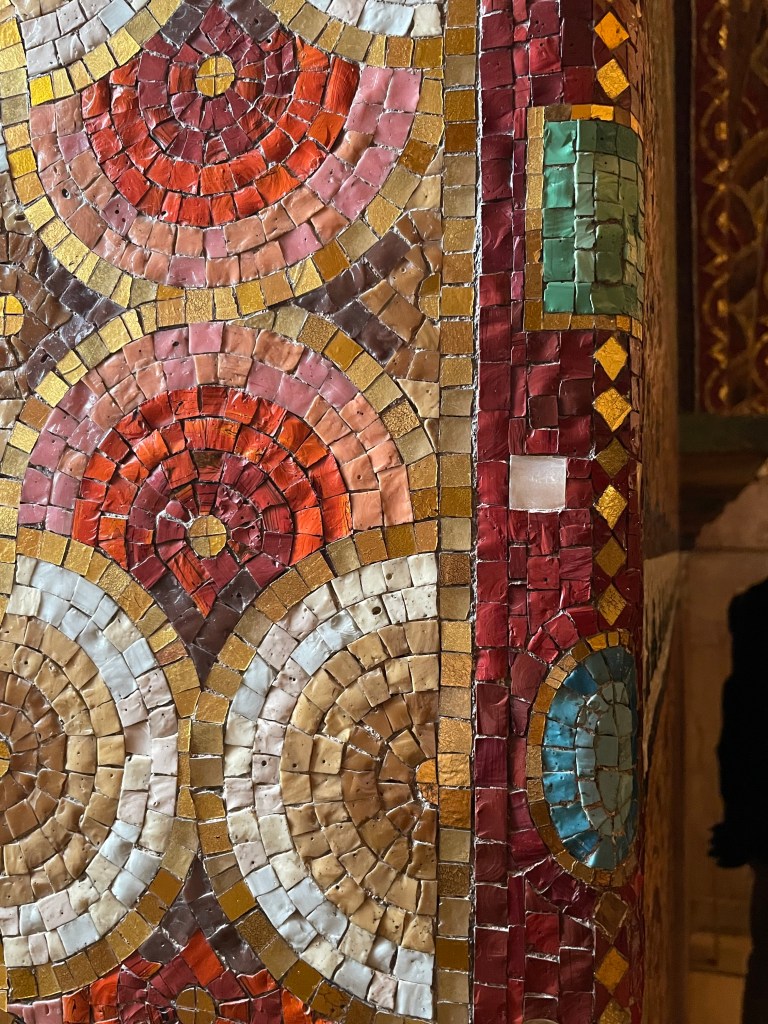
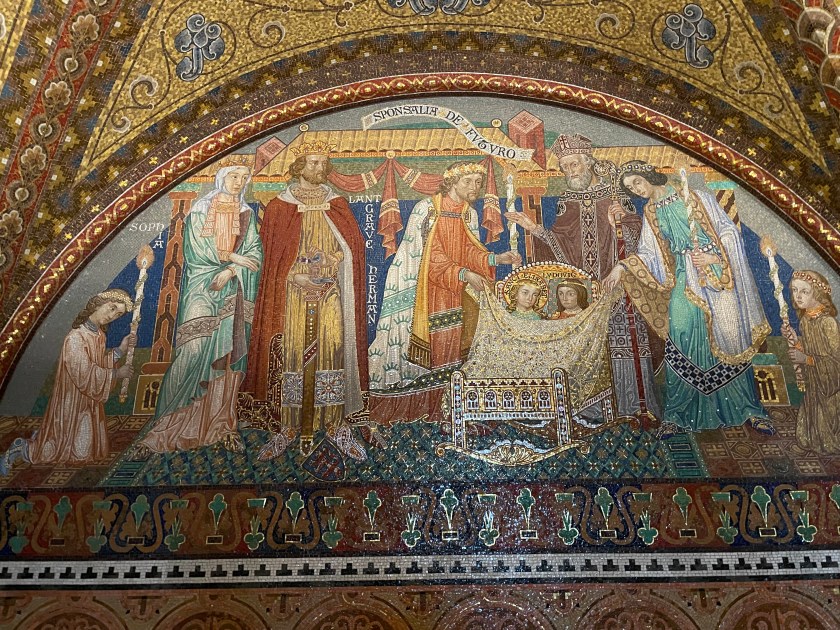
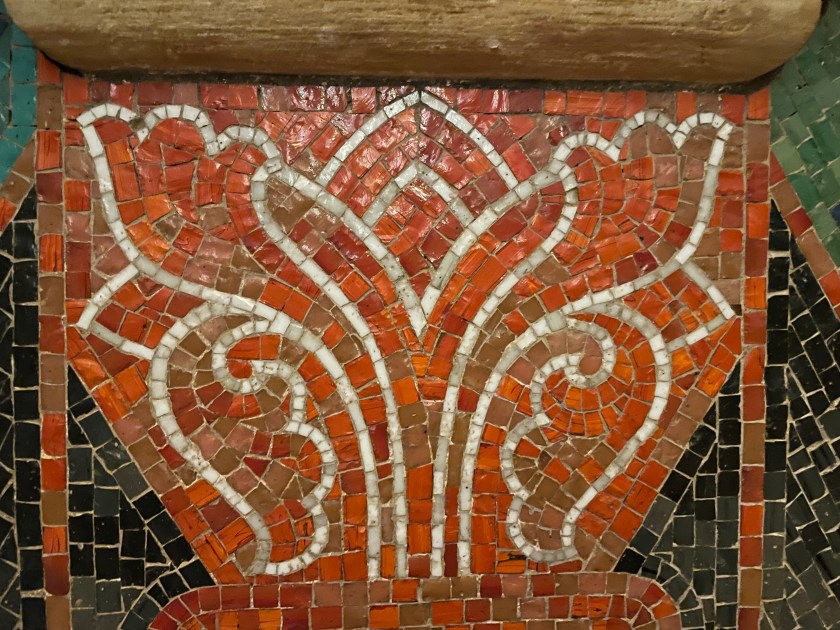
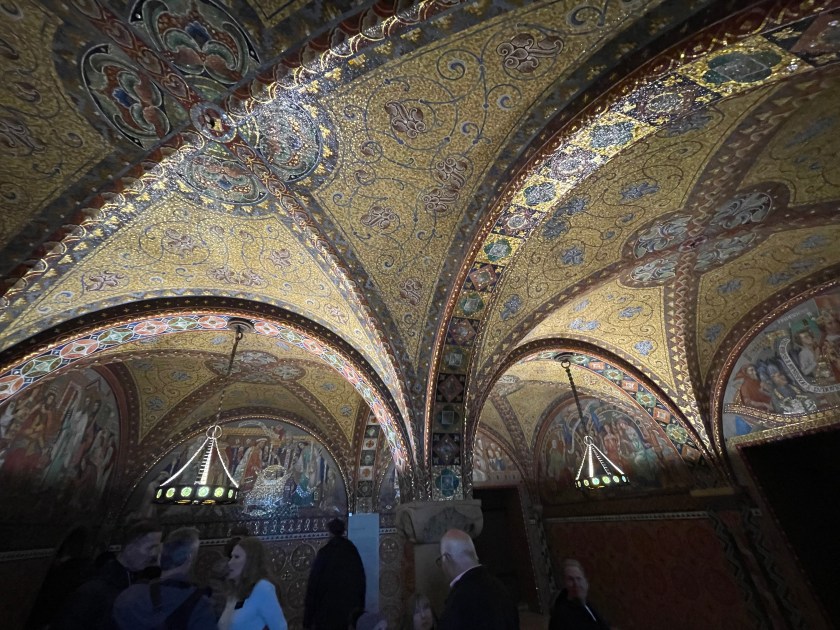
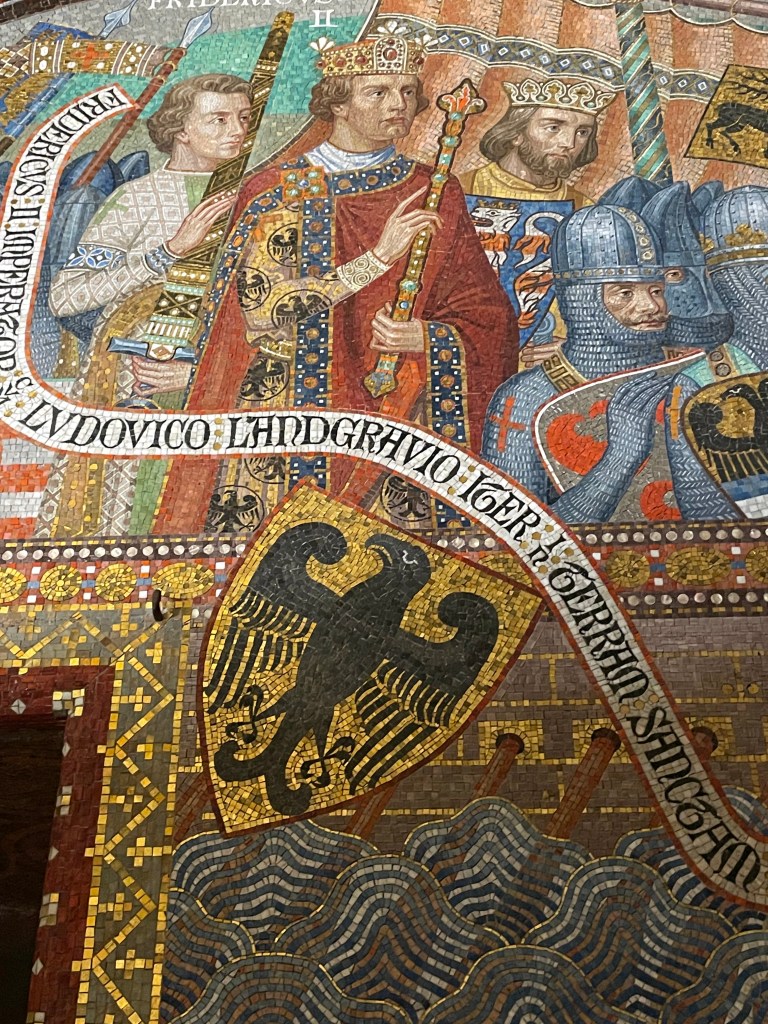
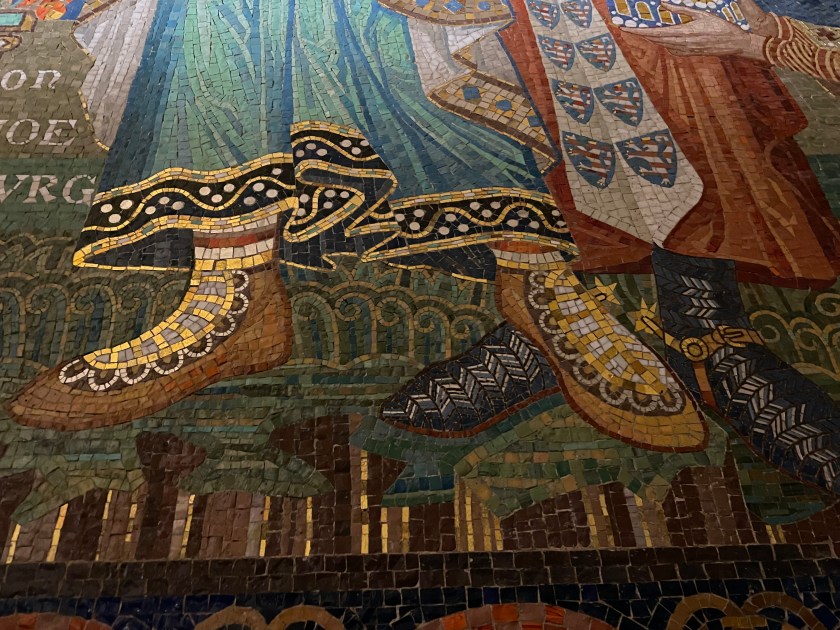
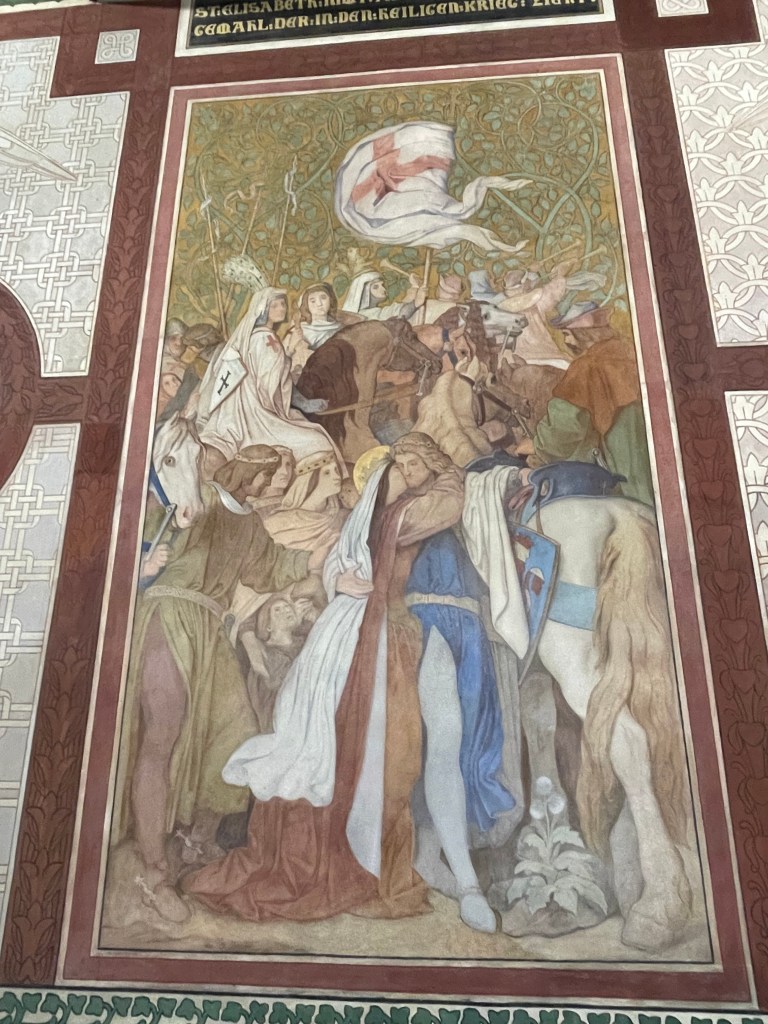
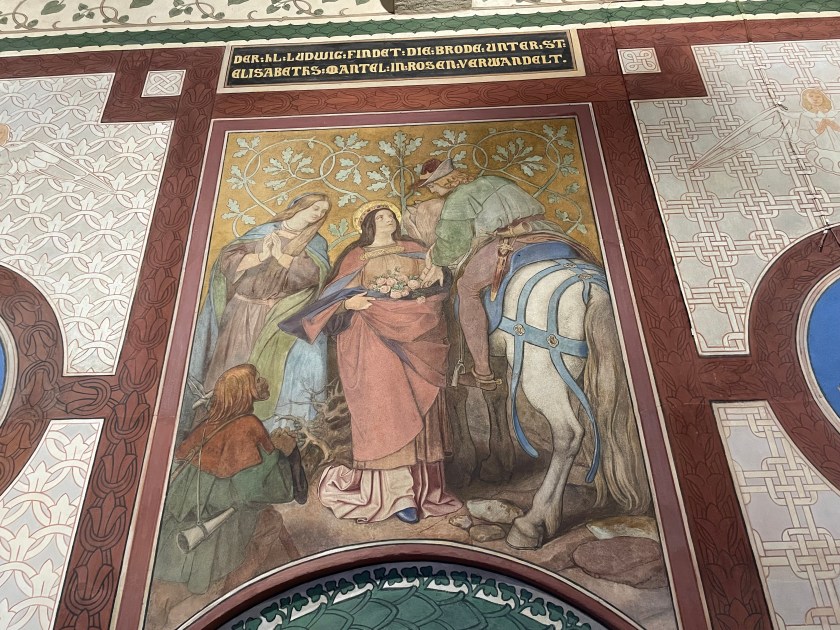
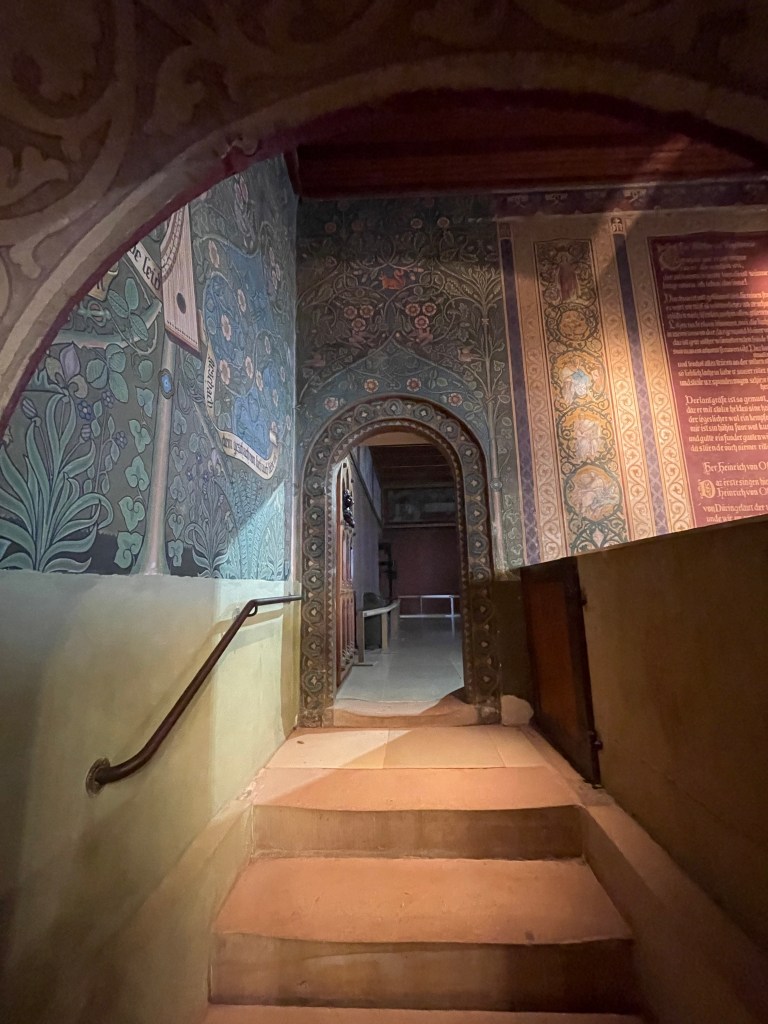
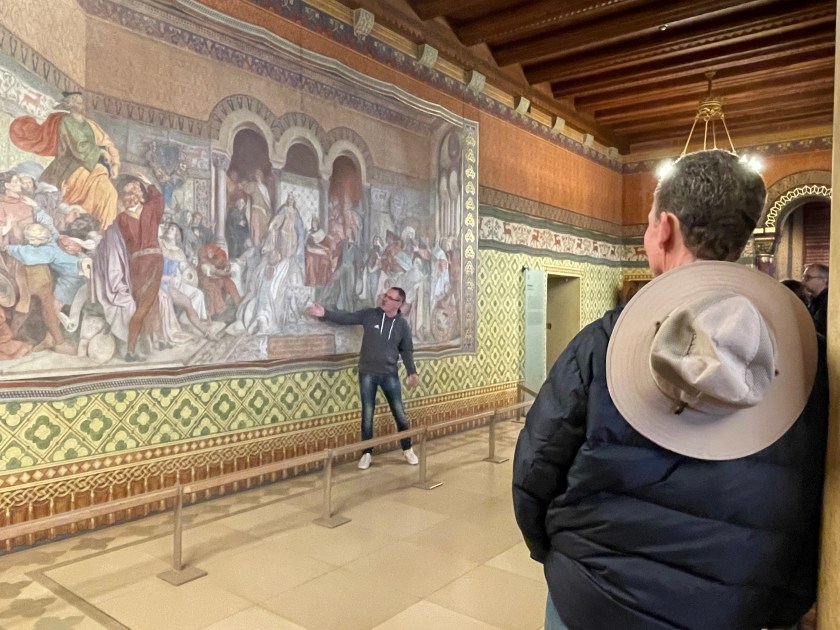
One room inside the castle (decorated in the early 1900s) was completely covered, walls and ceiling, with beautiful tiny mosaic tiles and murals that told the story of Elisabeth.
This Elisabeth-Kemenate room is one of the most ornate rooms of the Wartburg in Eisenach. The mosaics showing the life of St. Elisabeth of Thuringia, who once called the castle and this very room her home and later gave up royal life to aid the poor, were created in elaborate Neo-Byzantine style on behalf of Kaiser Wilhelm II between 1902 and 1906 by August Oetken. Nine out of the ten depictions show scenes from Elisabeth’s worldly life, only the tenth mosaic scene shows a legend, the so-called Miracle of the Cloak.
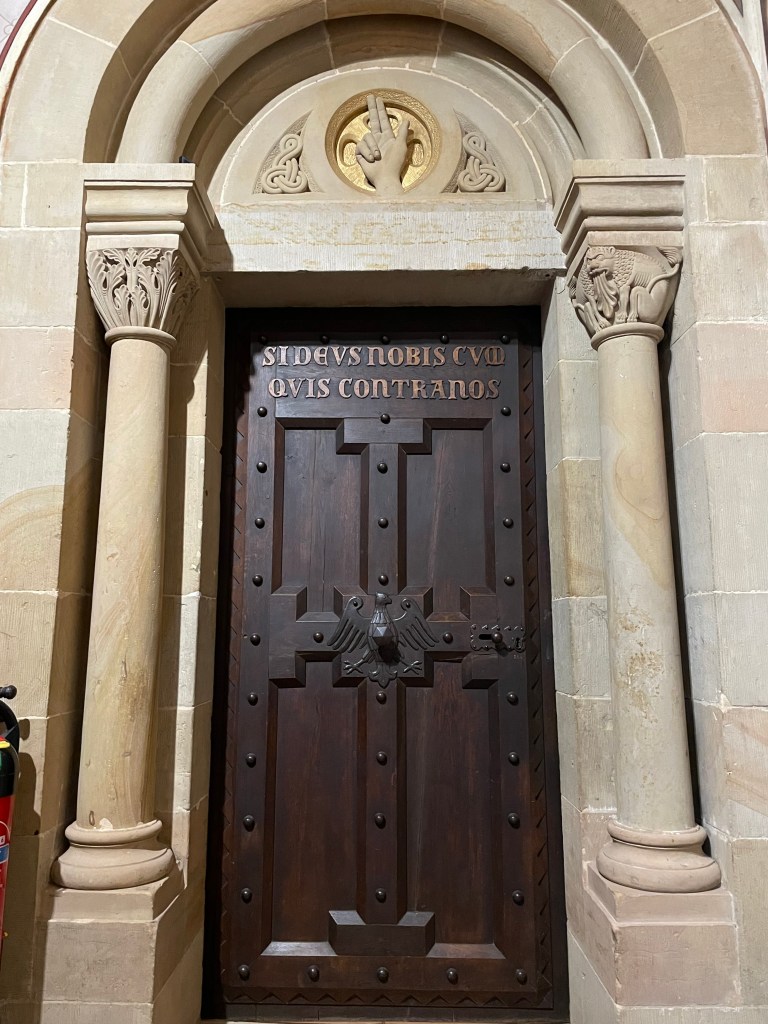
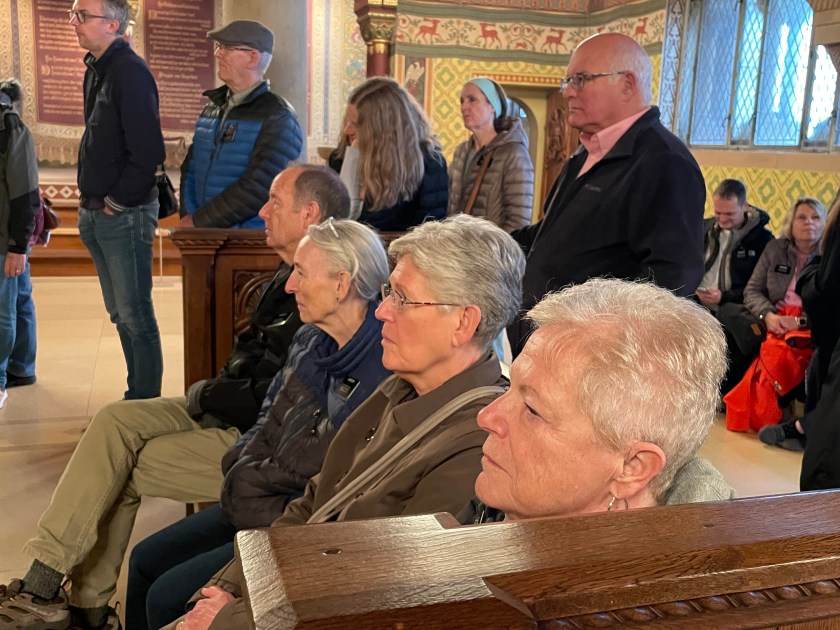
This is the castle chapel.
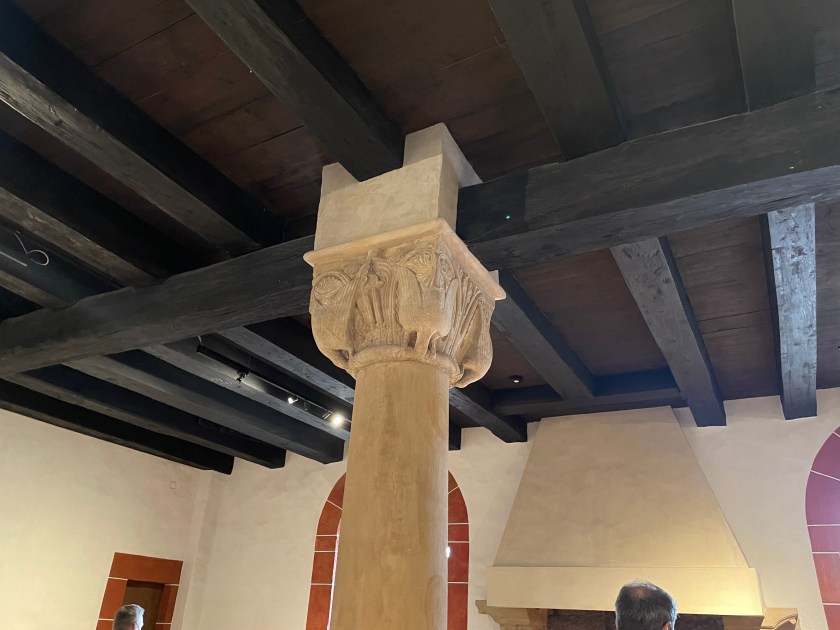
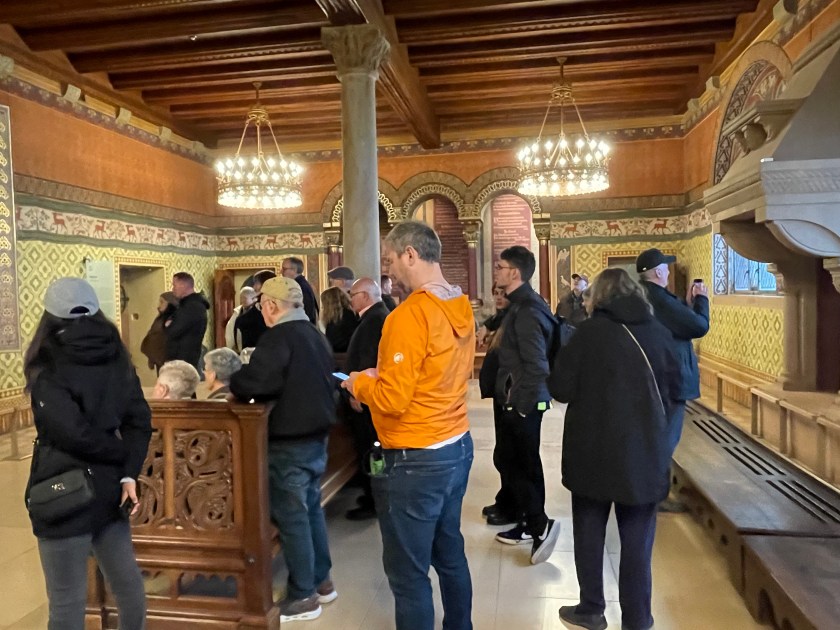
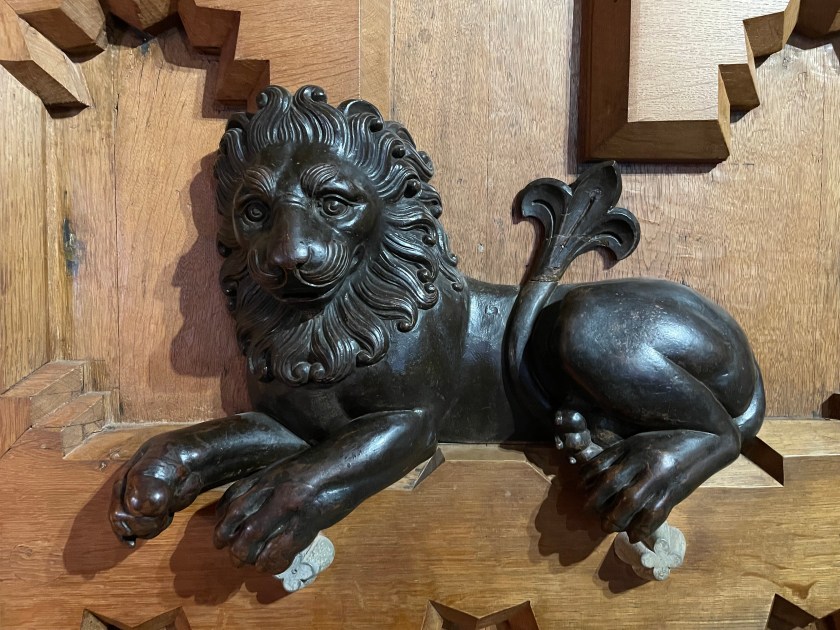
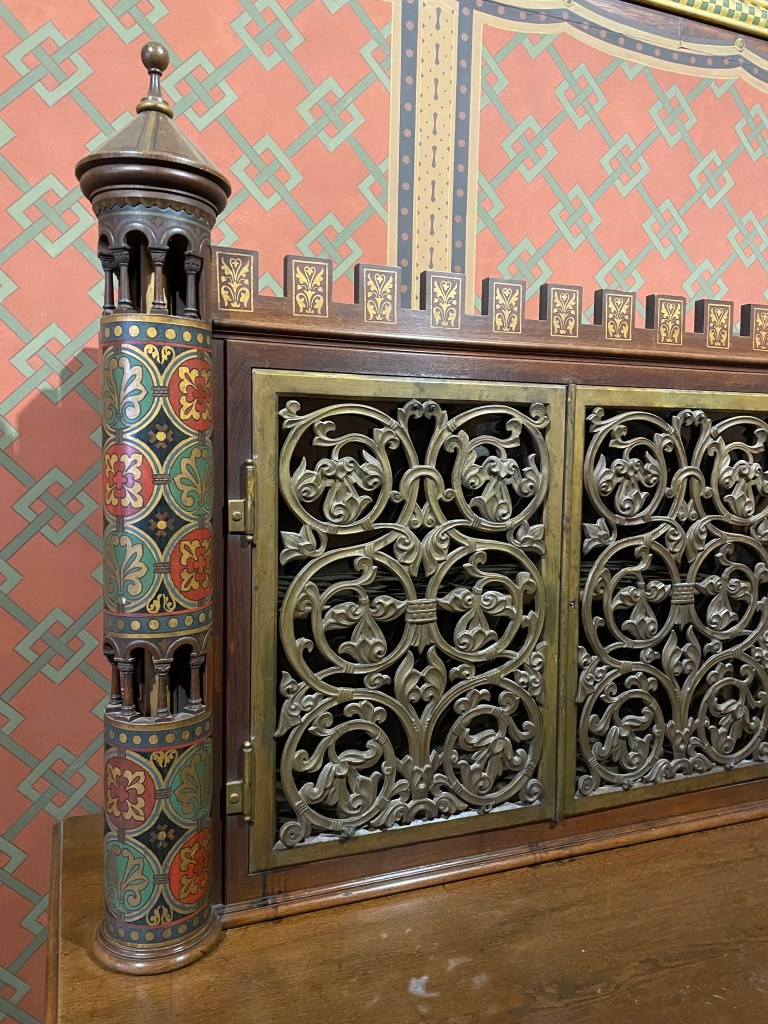
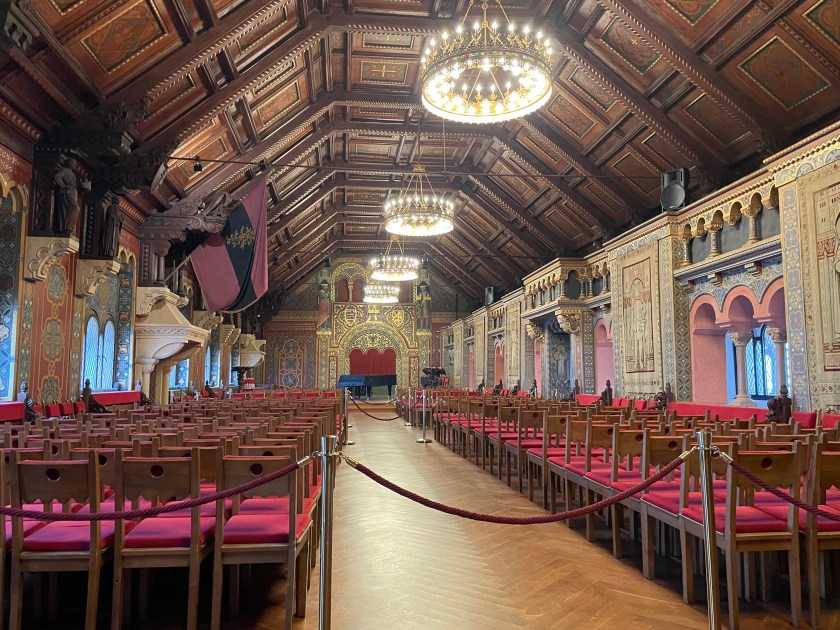
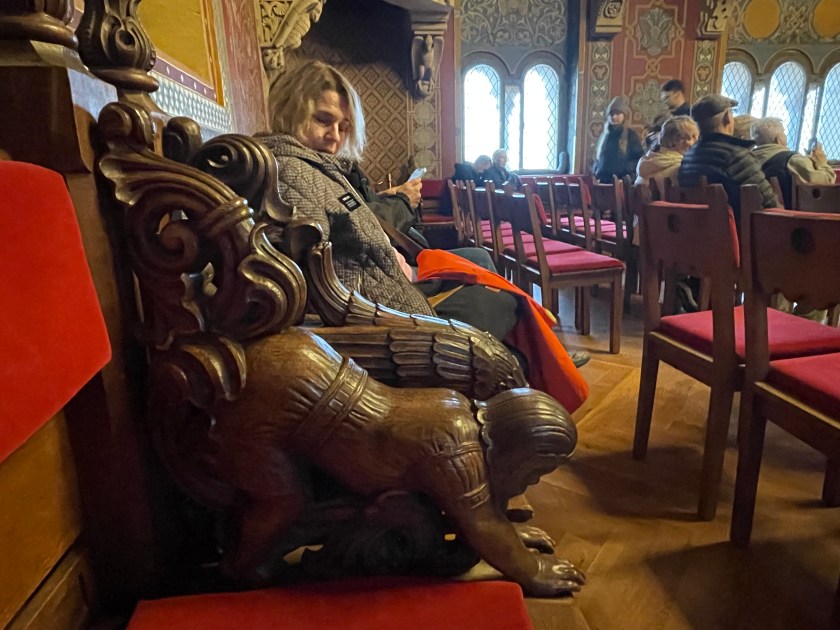
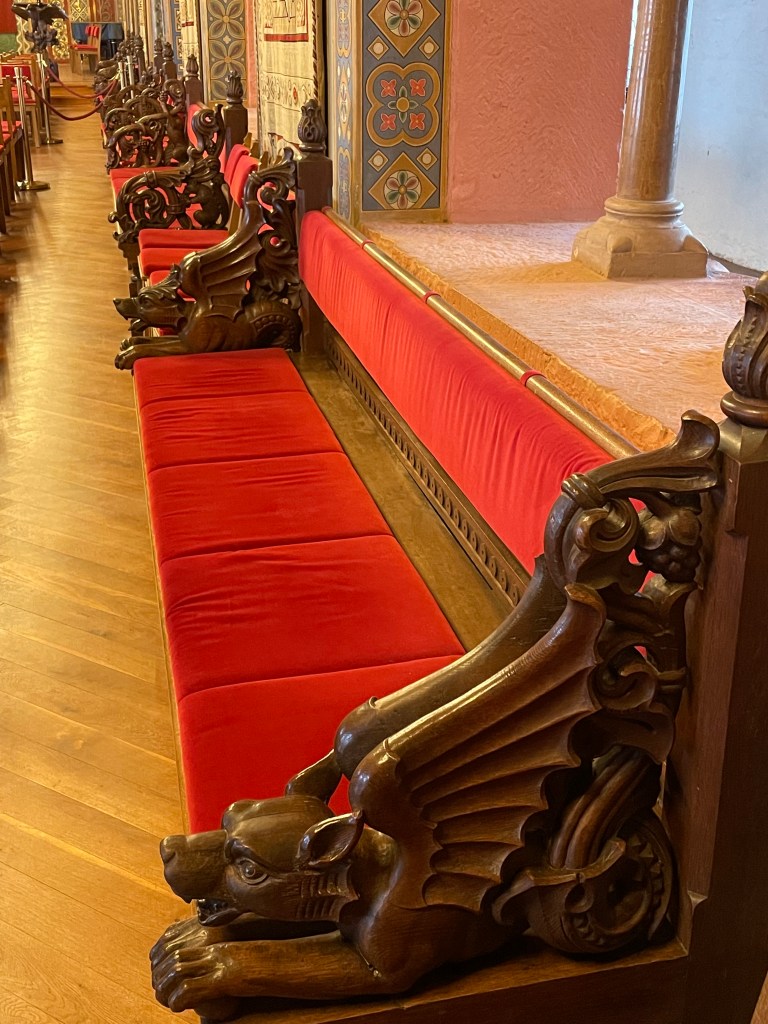
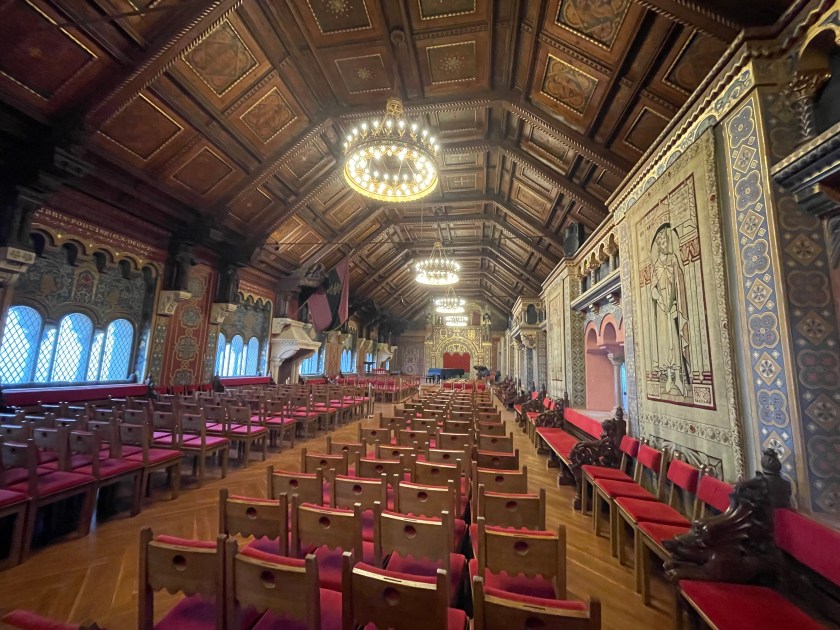
The tour ended here in this great hall upstairs. Concerts, graduations and special events are held here now. The details and woodwork was incredible.
From here we were allowed, with our ticket, to go through the castle museum and then down a long hall to see the room where Martin Luther translated the New Testament from Greek into German, making it available for the first time to the people here.
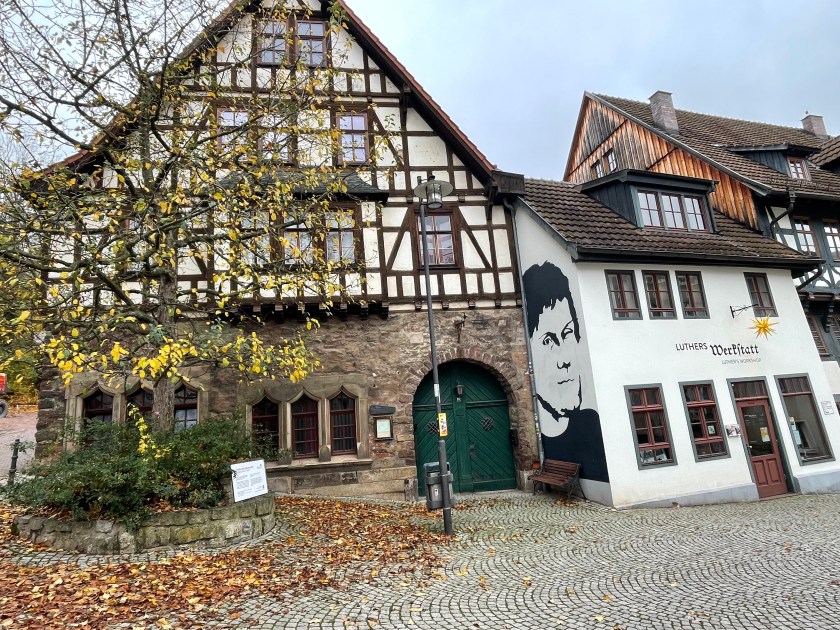
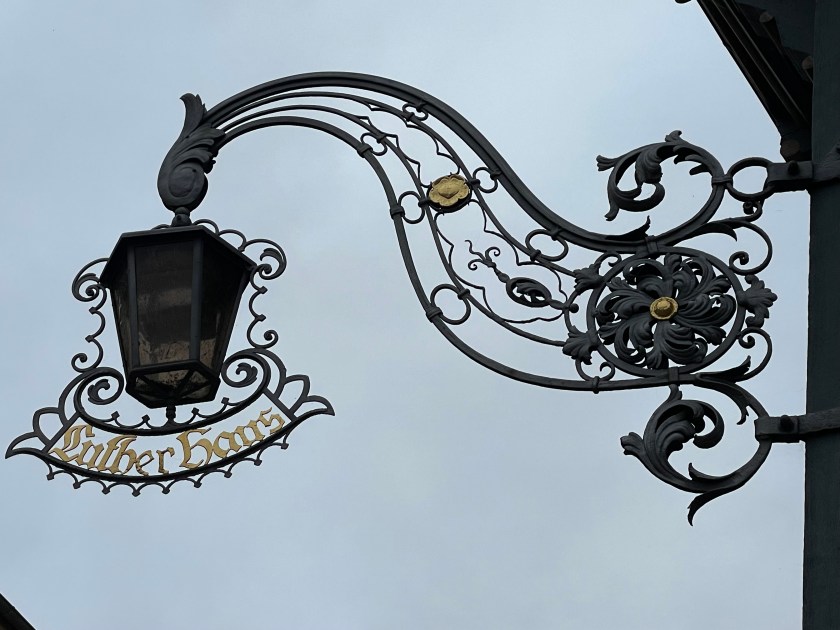
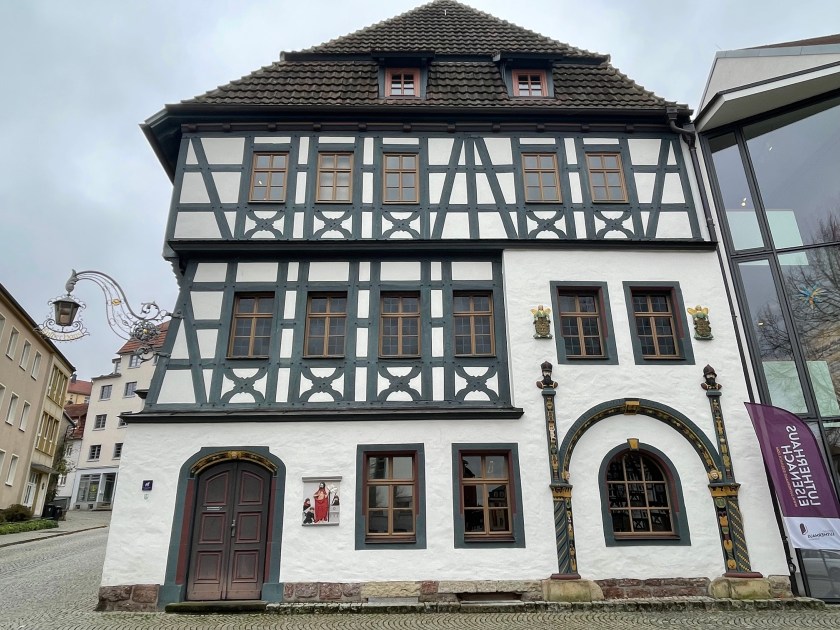
From the Bach home and museum, we walked into the Altstadt, passing by the home where Martin Luther lived. Martin Luther grew up in Mansfeld but spent the most important years of his schooling here in Eisenach where he attended St. George’s Latin School from 1498 to 1501 in preparation for attending the University of Erfurt.
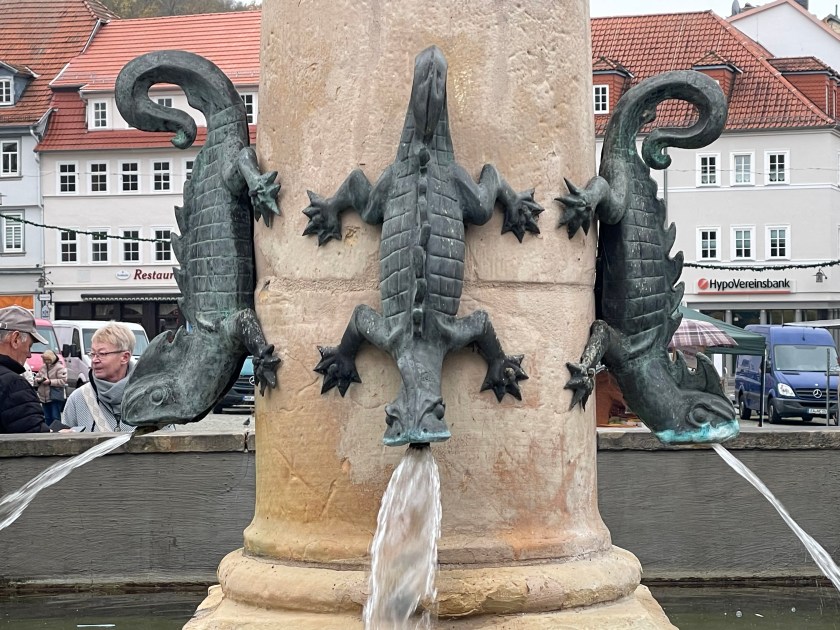
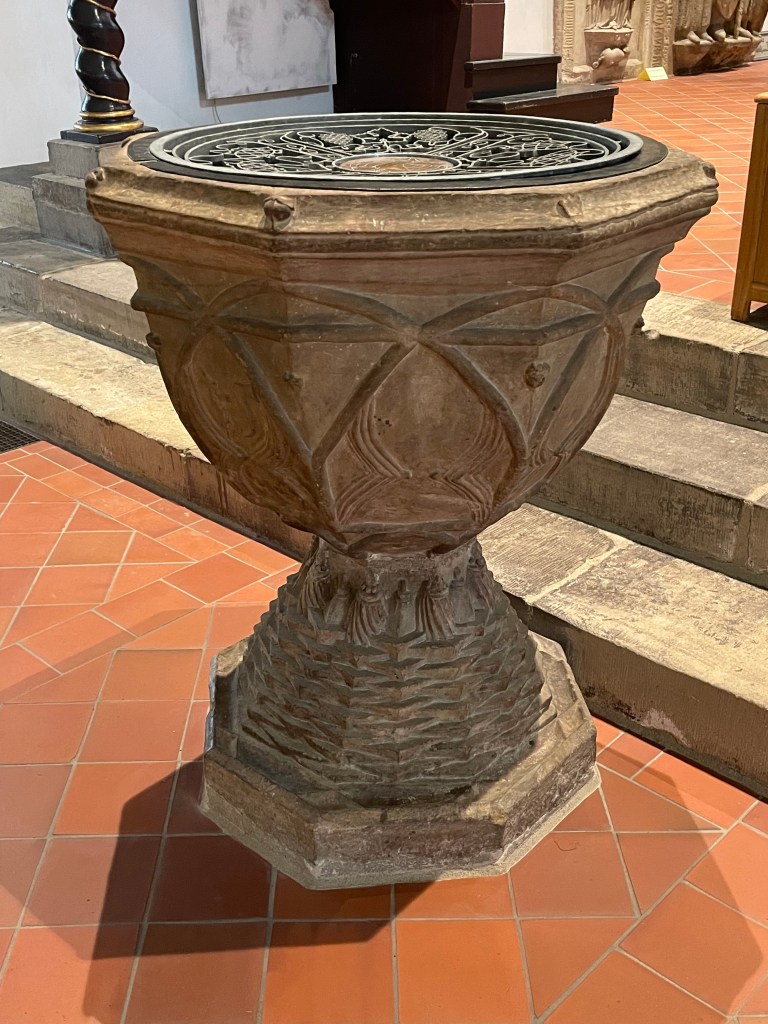
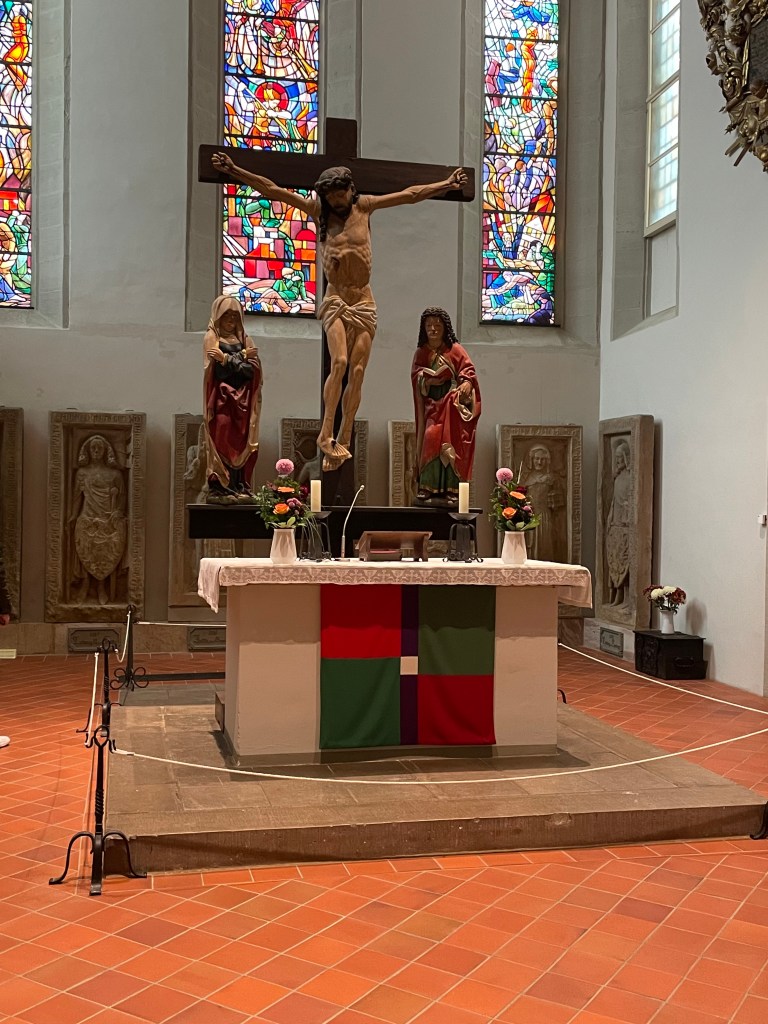
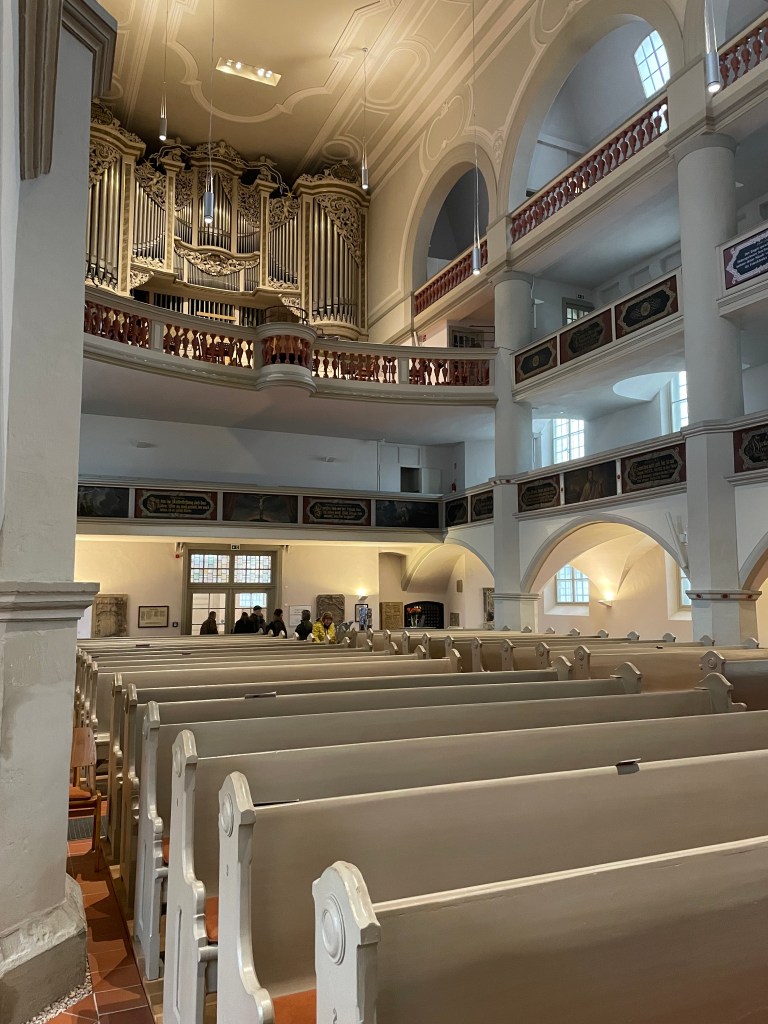
The Evangelische Kirche (Lutheran) by the town square.
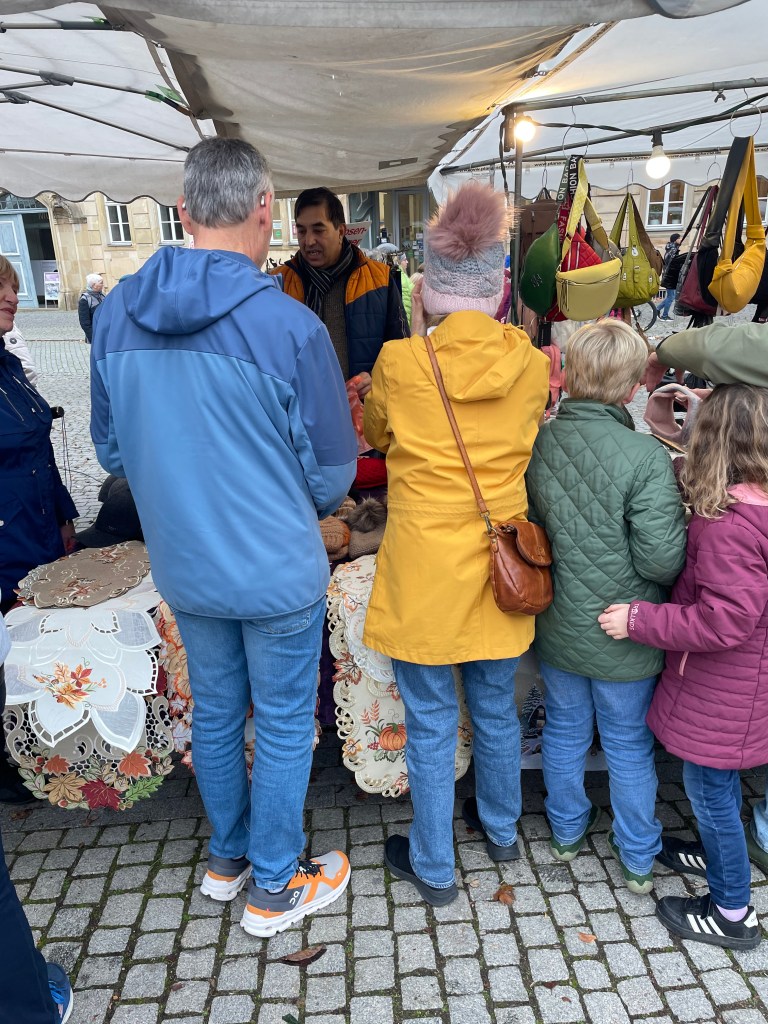
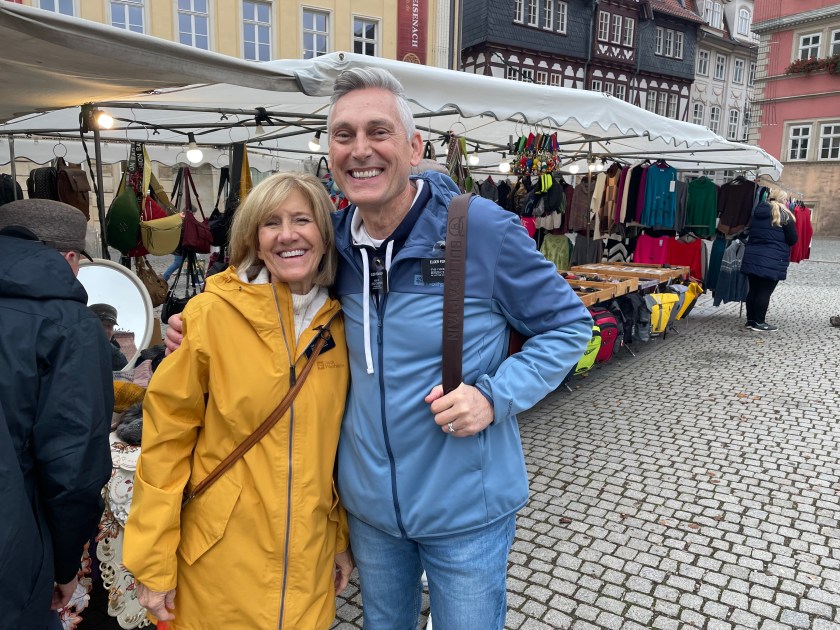
There were some Saturday market shops set up in the plaza by the church.
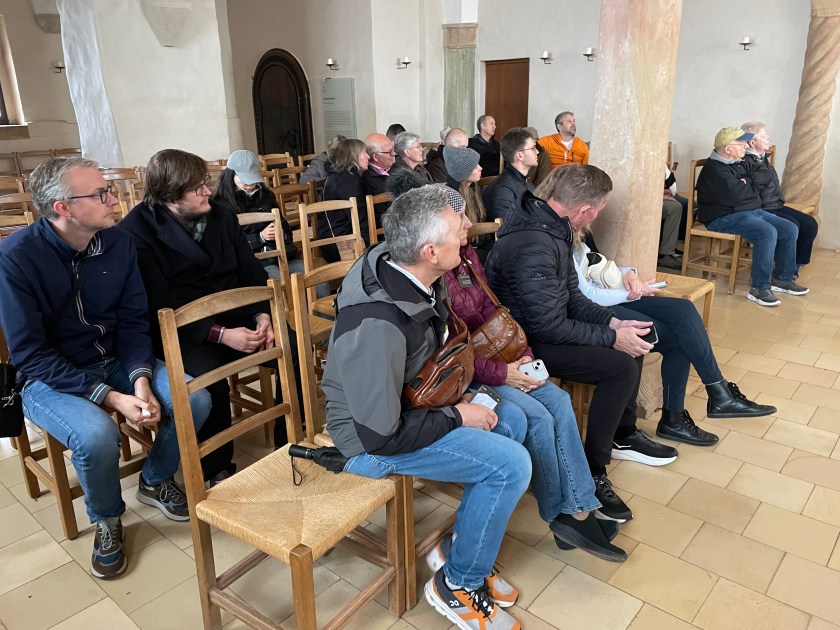
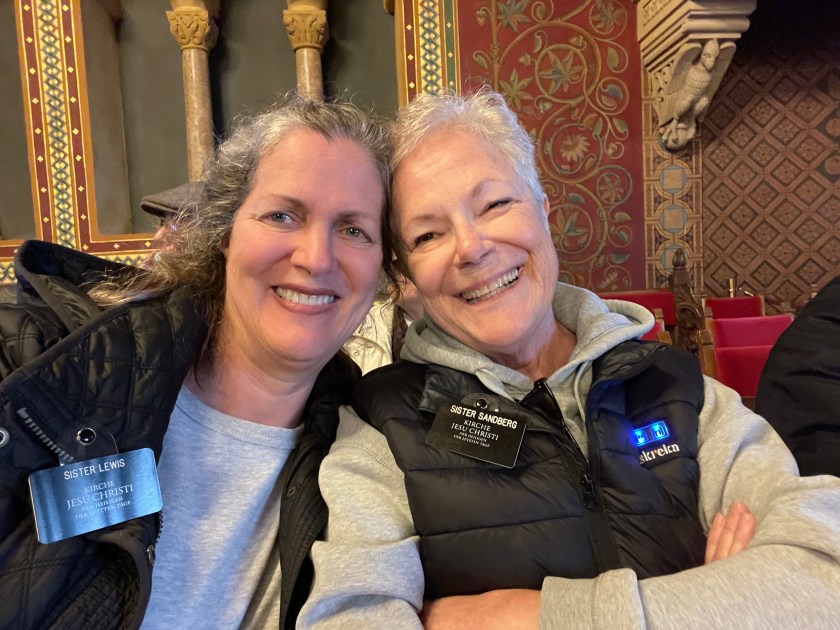
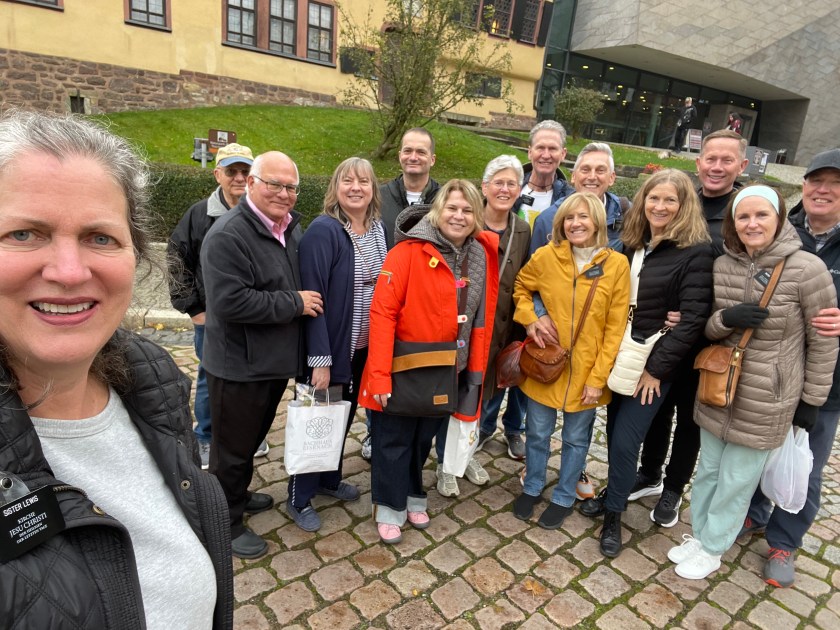
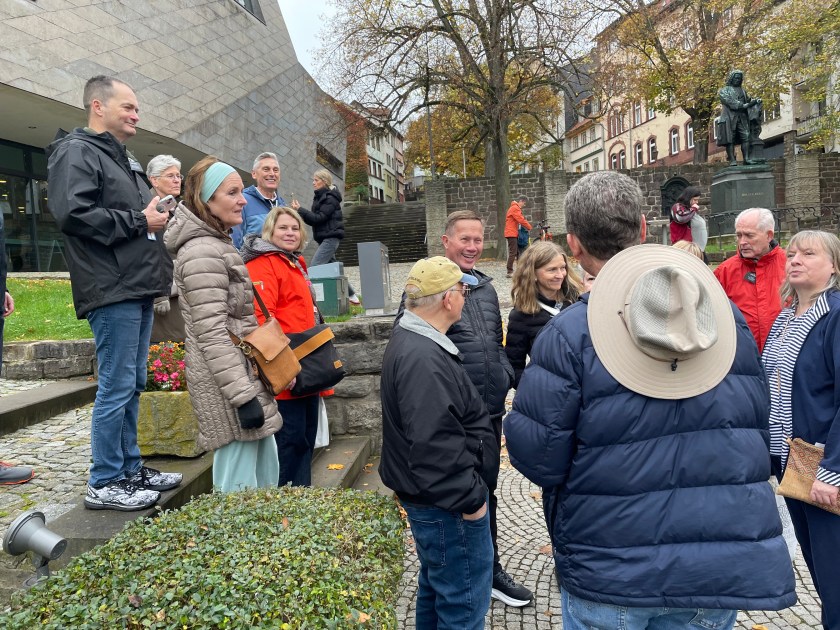
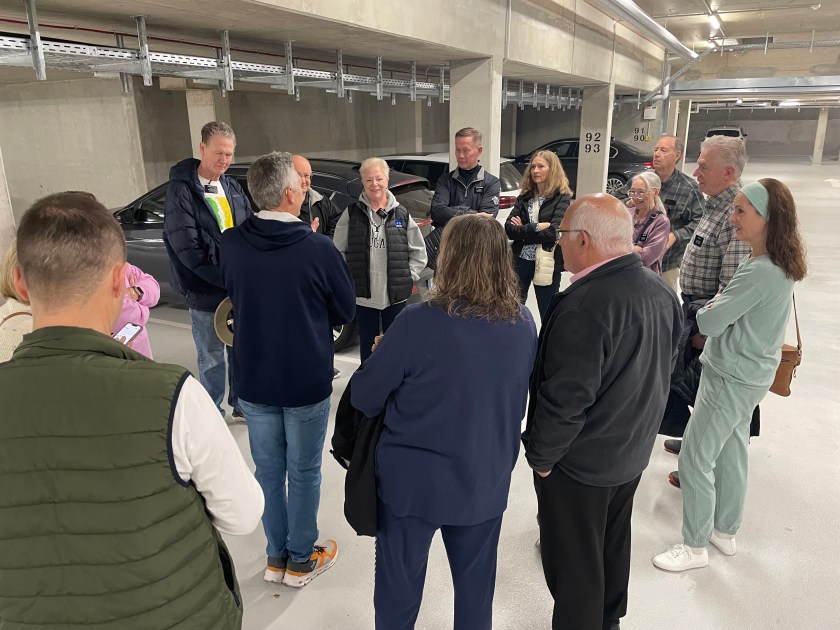
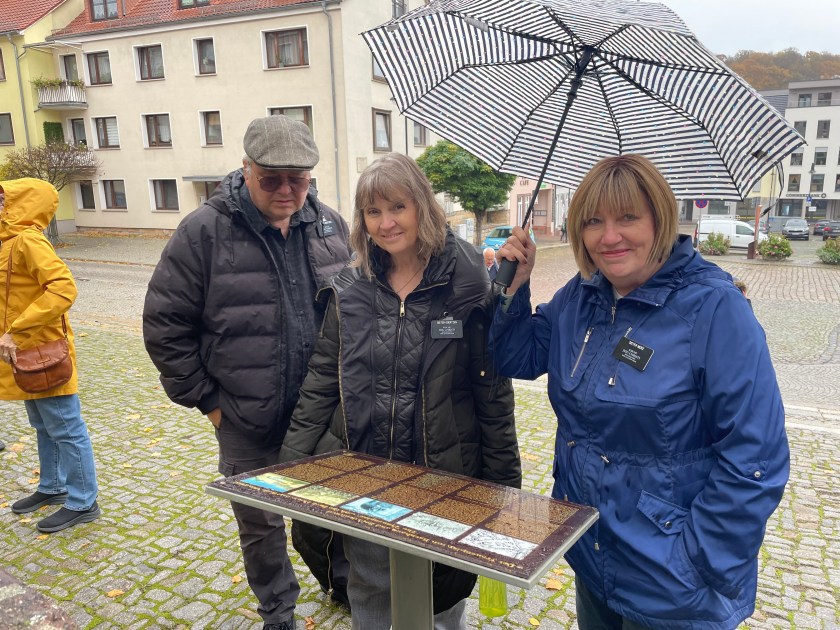
Then we headed back to the Bach Haus before loading back into our cars. Here’s our traveling group today:
Today we had another small group outing pop up. This time to Eisenach. The drive was beautiful. Germany is beautiful in the Fall. The leaves here have gone from green to gold to burnt orange or rust. We drive through rolling fields and forests. The fields are either green with winter crops or plowed and an earthy brown. The woods are spectacular with the dull oranges and yellow-gold leaves, mixed with the evergreens. Today was overcast, with low-hanging clouds that coved the earth in a fine mist. Sometimes it felt like we were driving through clouds or fog.
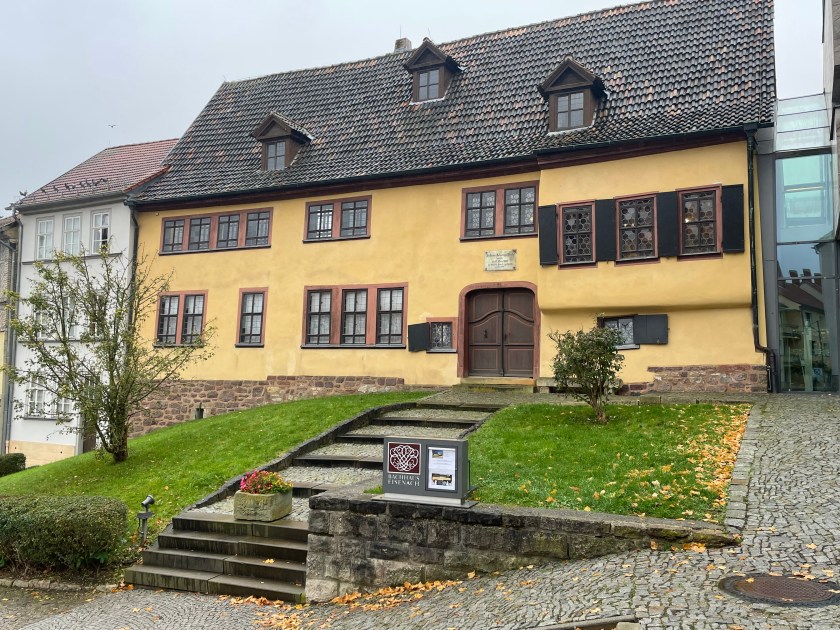
Above is the Bach home. Below is the Bach Museum right next to it.
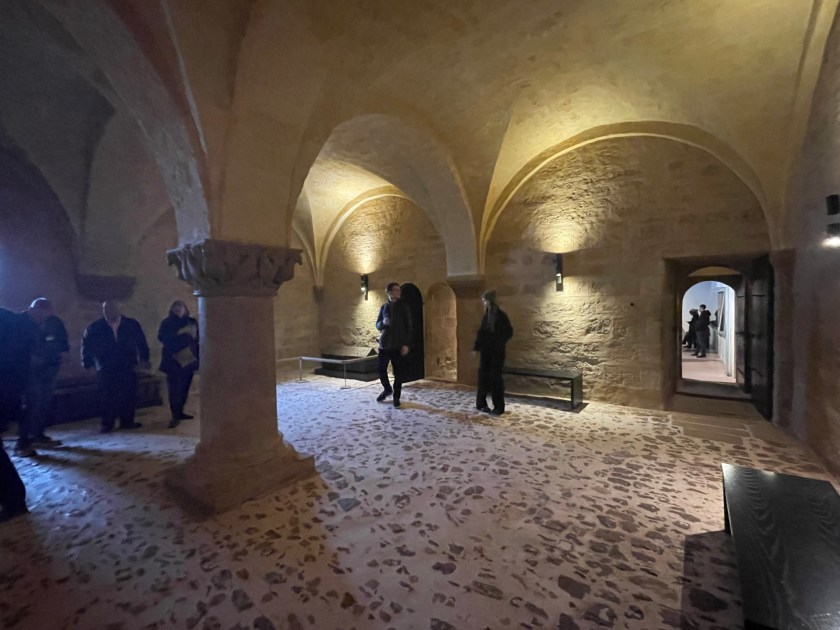
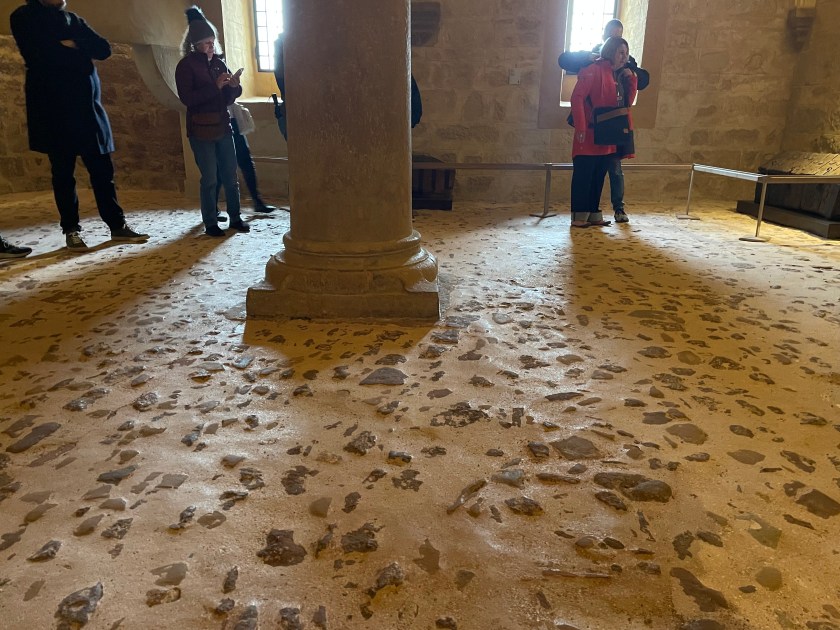
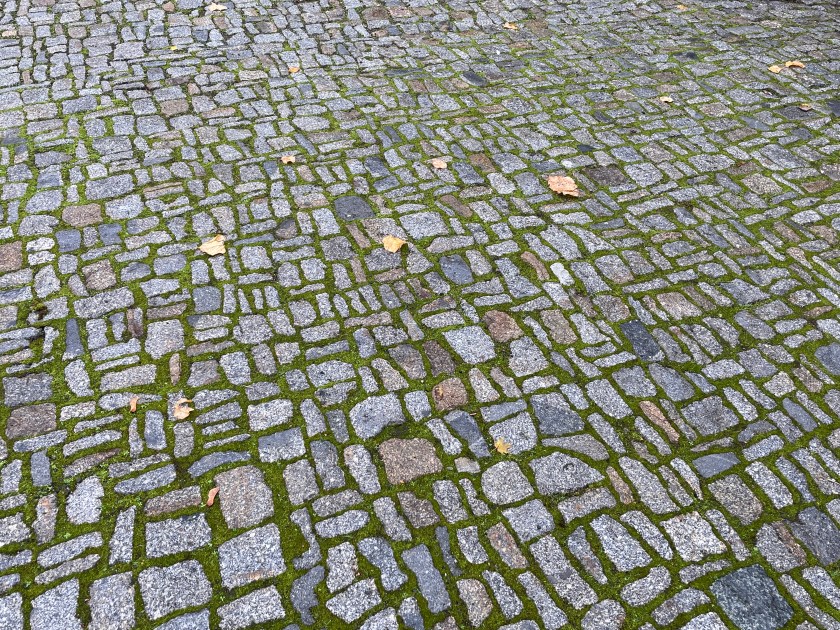
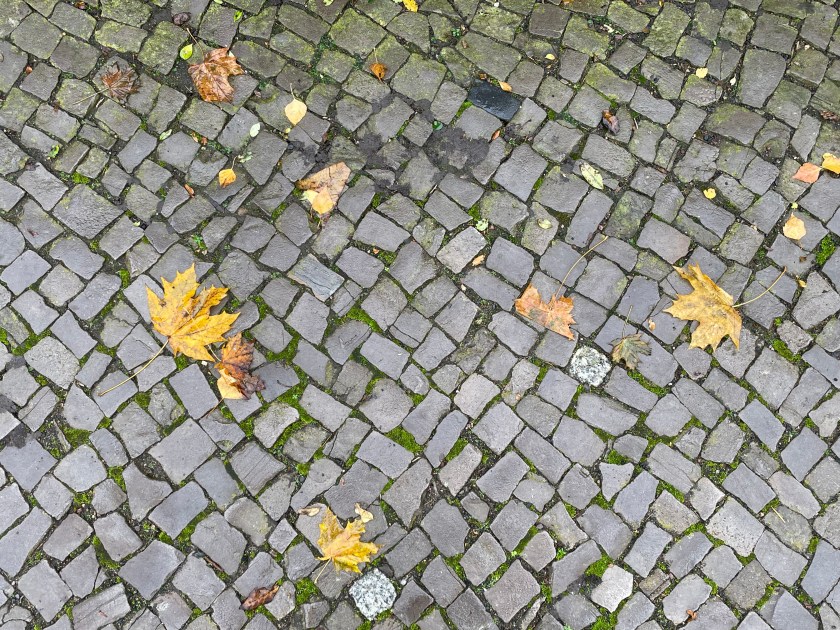
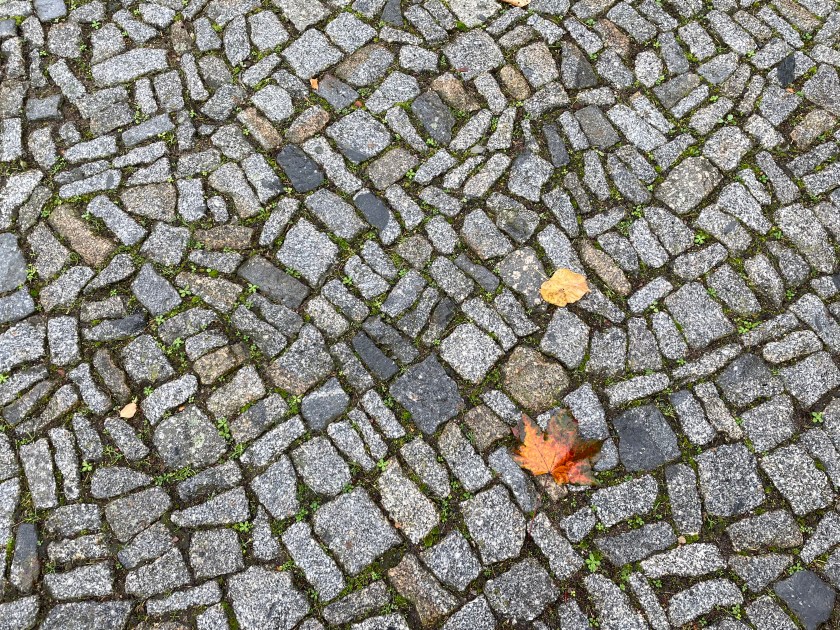
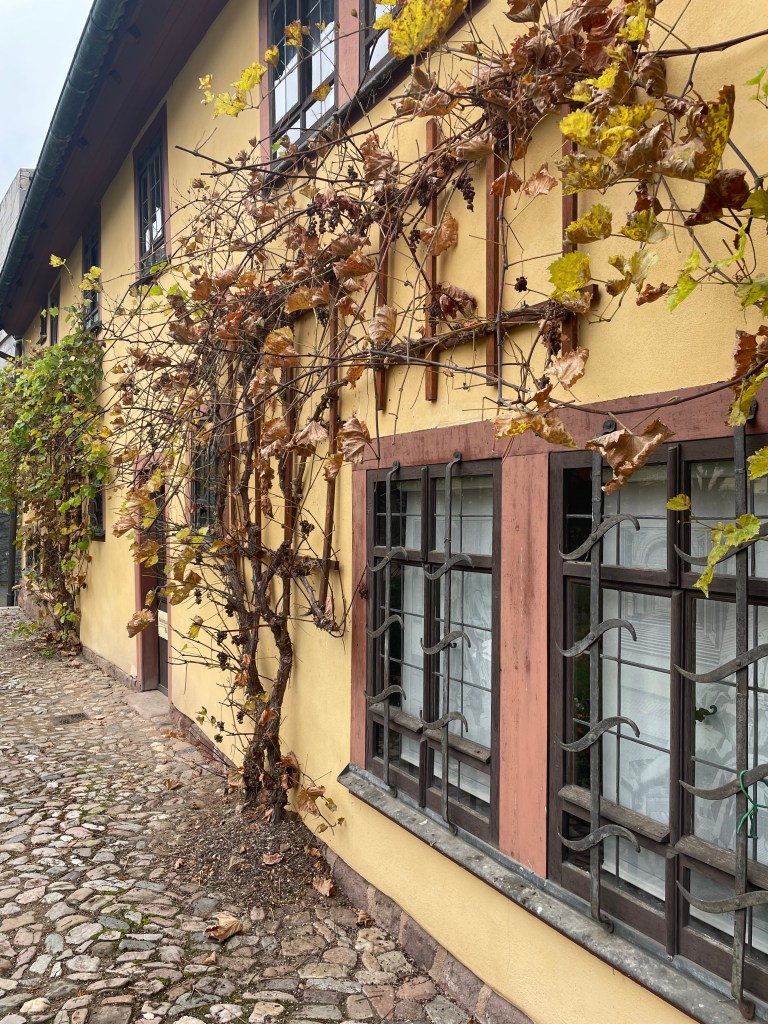
The stone pavers here were exceptional, fit together like a puzzle.
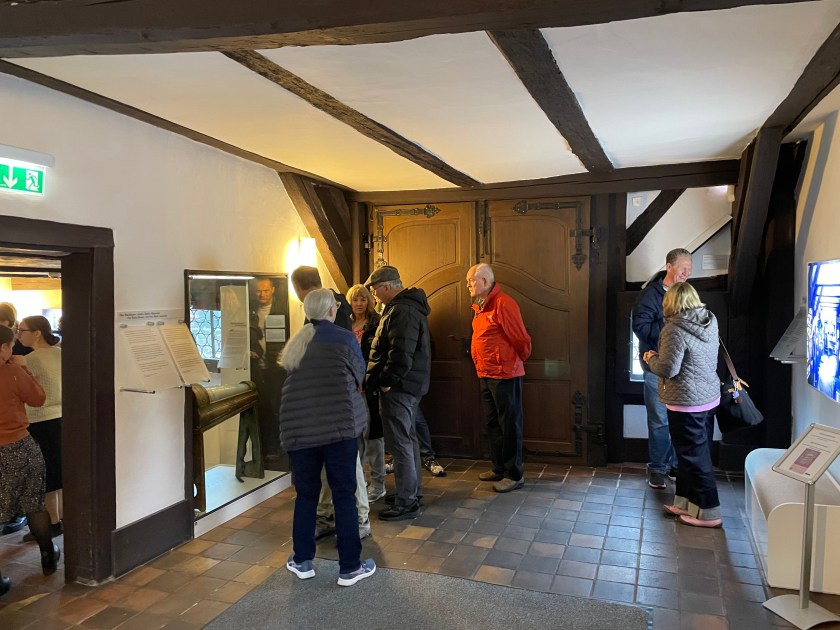
We got to Eisenach by 10:30 and spent the first hour and more at the Bach Haus, the place where Johann Sebastian Bach was born and lived his first 10 years. His family was musical. His parents died when he was still young and he moved from here. The home has been turned into a museum about Bach, with many of the rooms fitted with furniture and musical things from his time period. I love being in these old old homes.
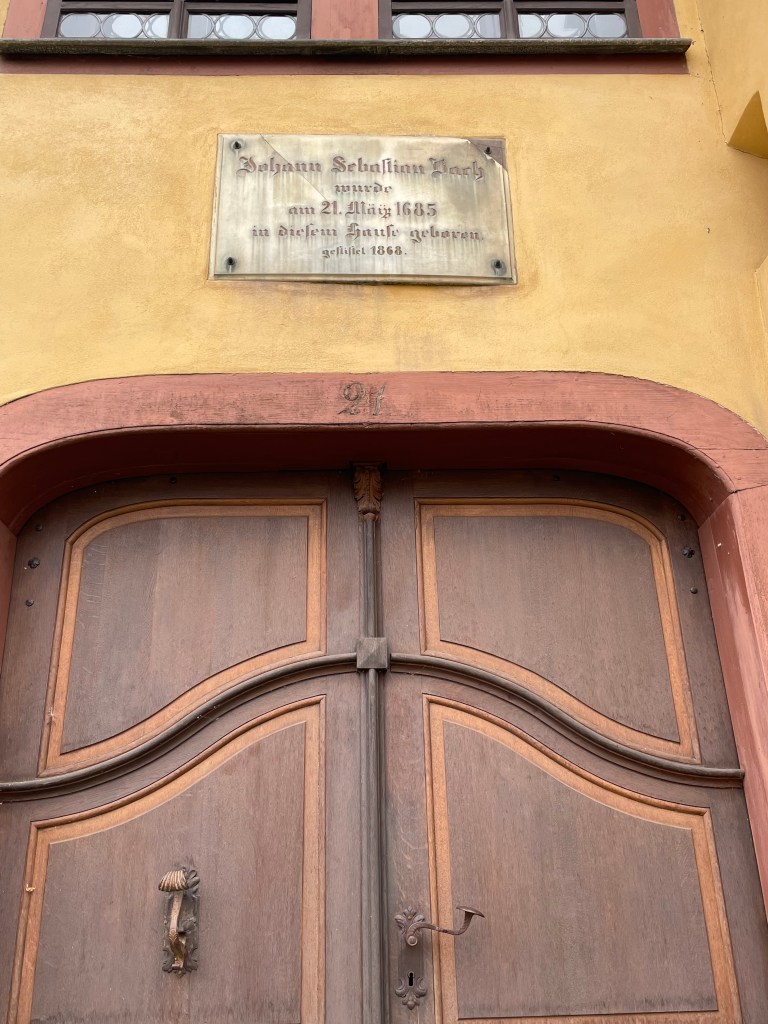
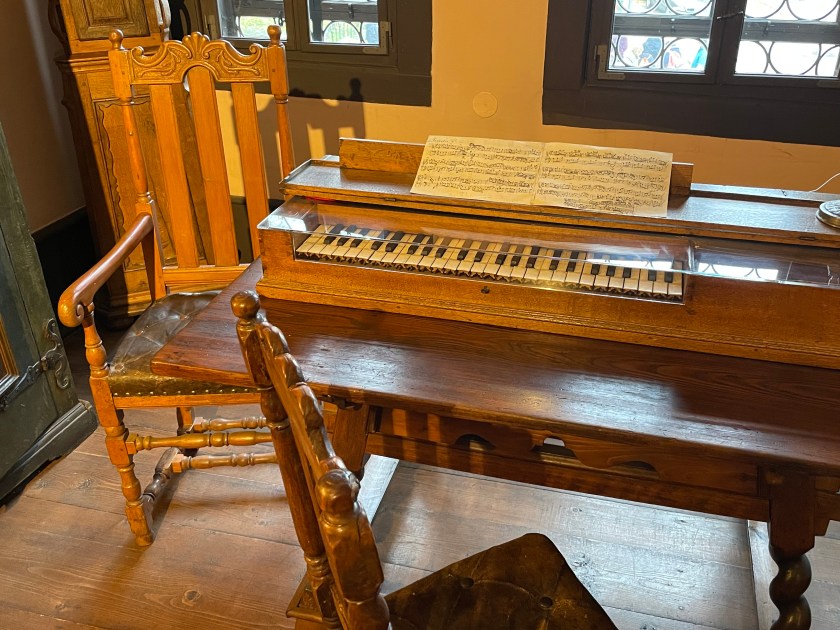
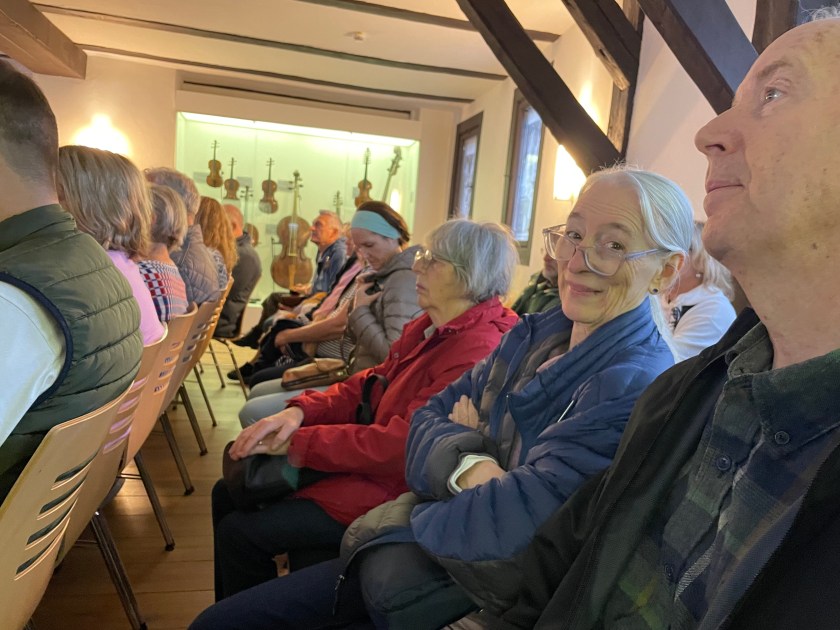
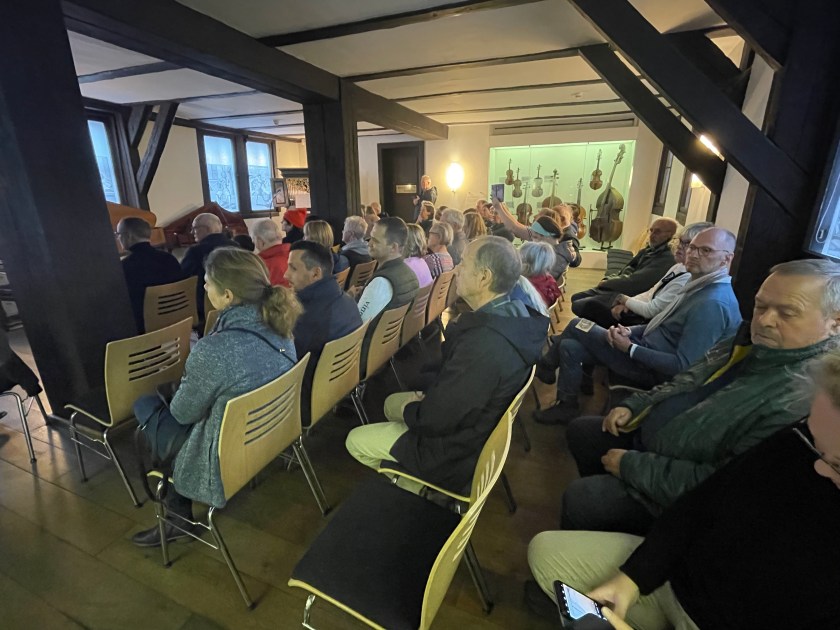
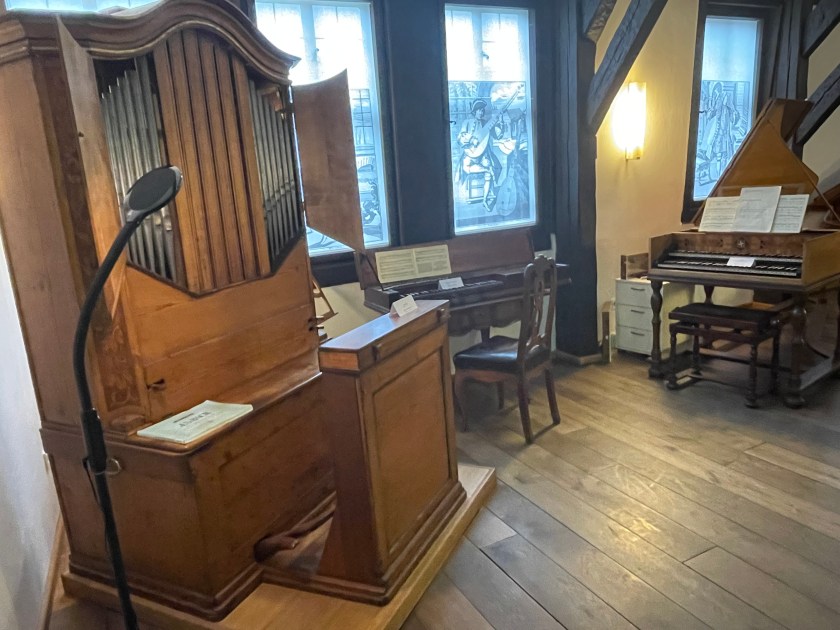
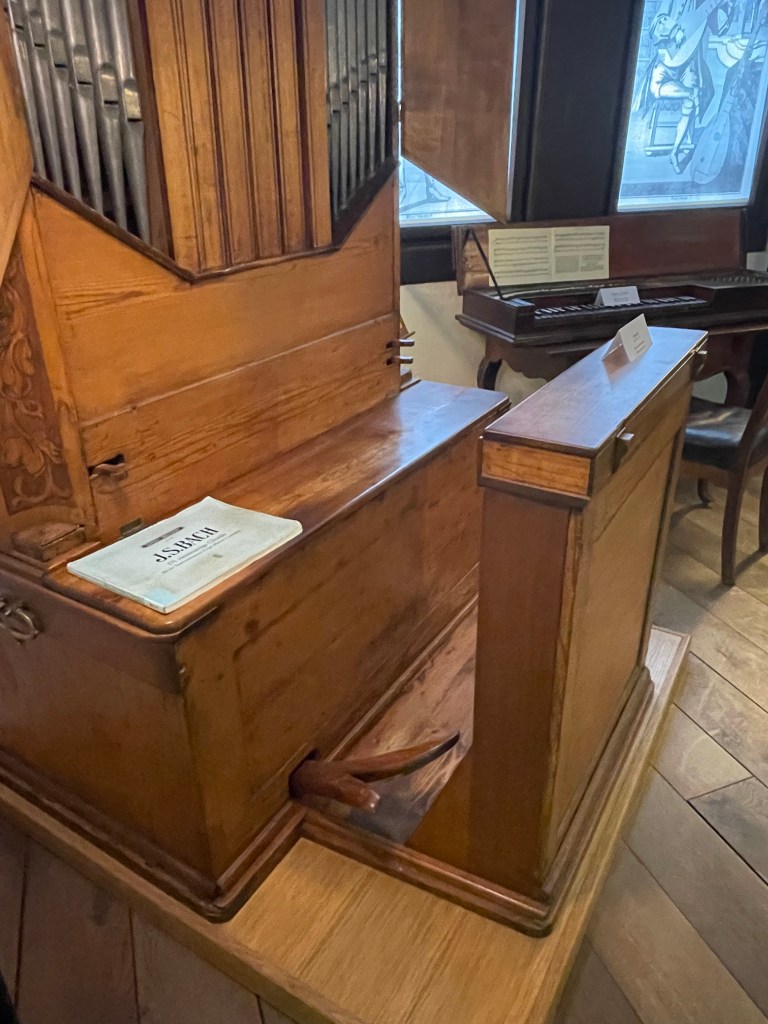
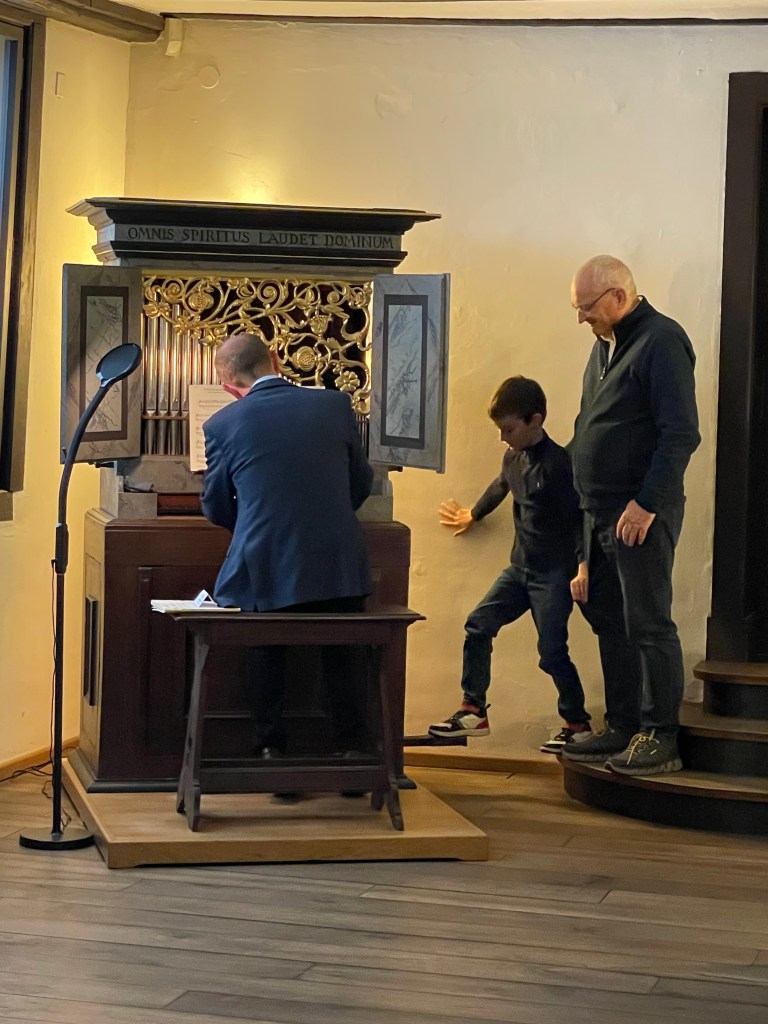
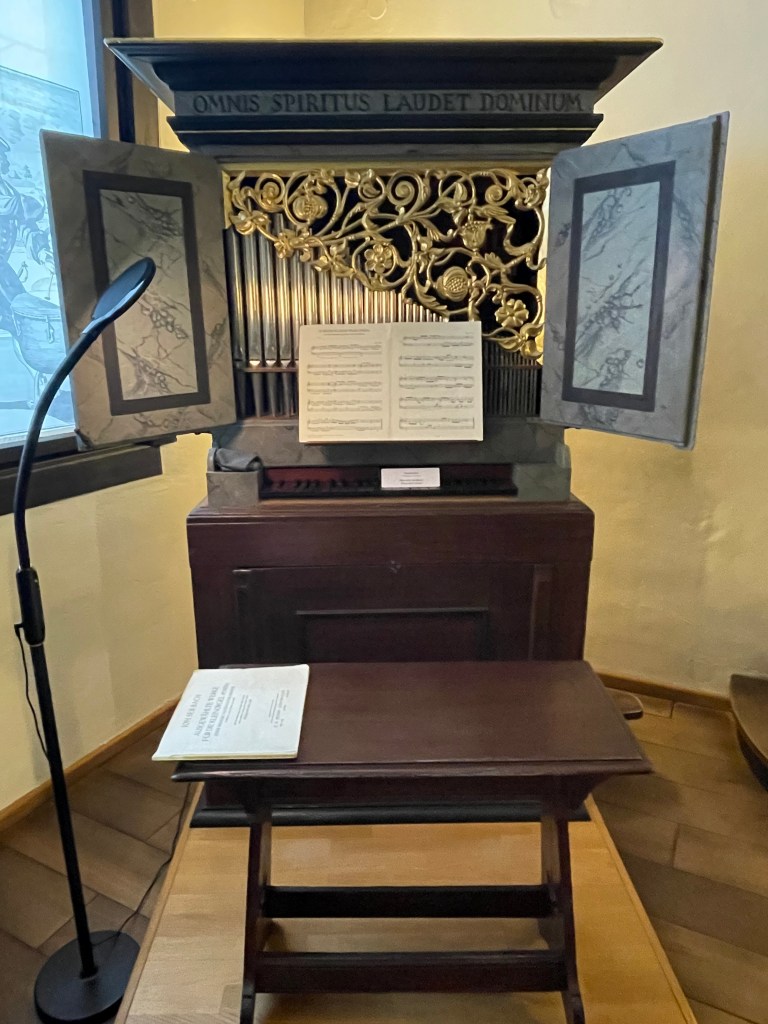
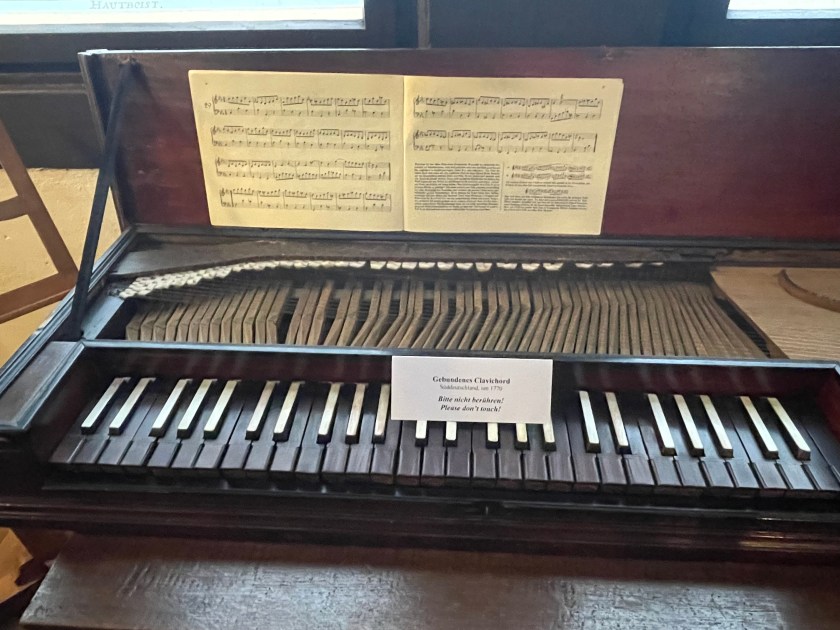
Bach was born in this home in 1685. There was a work room, bedrooms, a simple kitchen, a toilet hanging out over the back yard, and a room made into a little concert hall/music room, where at 11:00 a Bach musician came and played on 5 different old instruments that were 200-300 years old– 2 organs, 2 harpsichords and a table top keyboard.
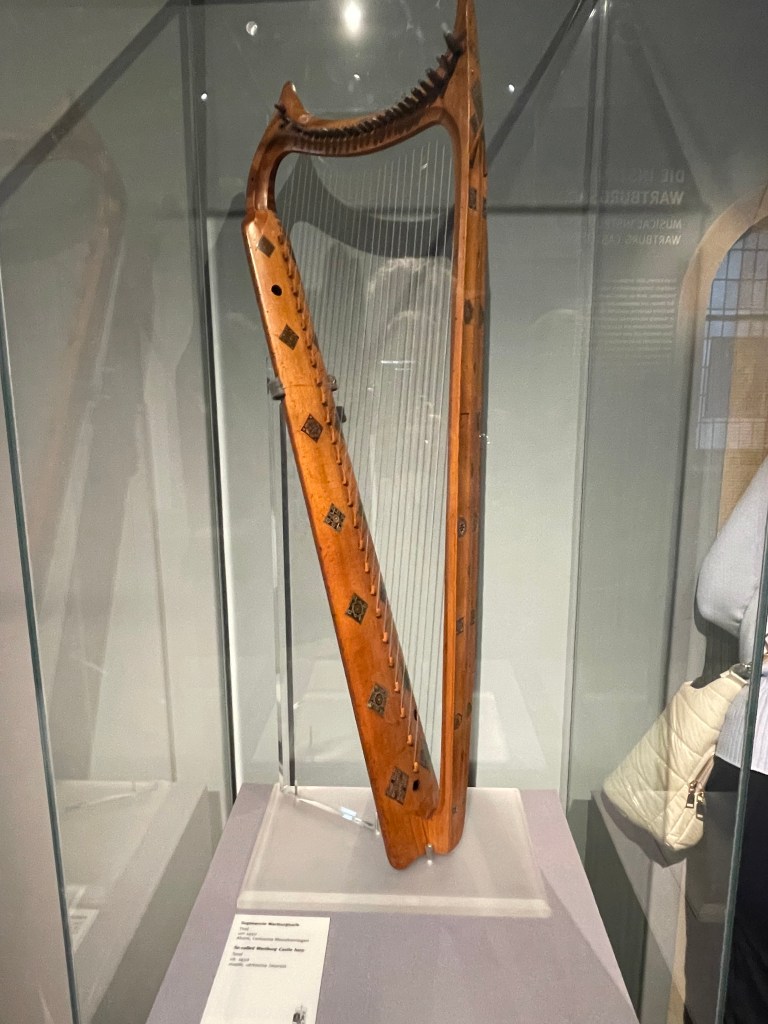
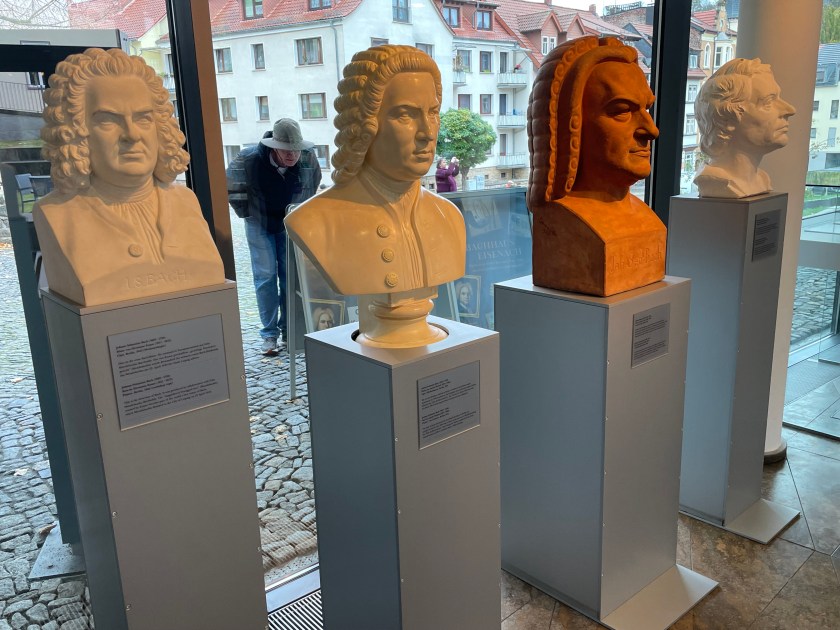
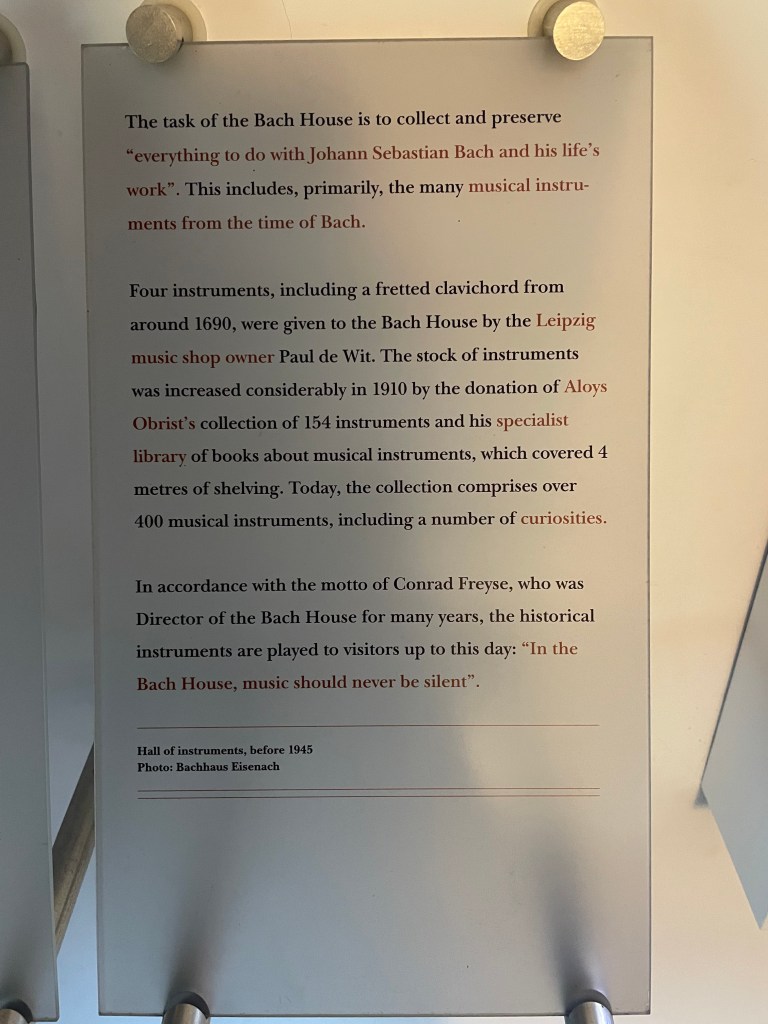
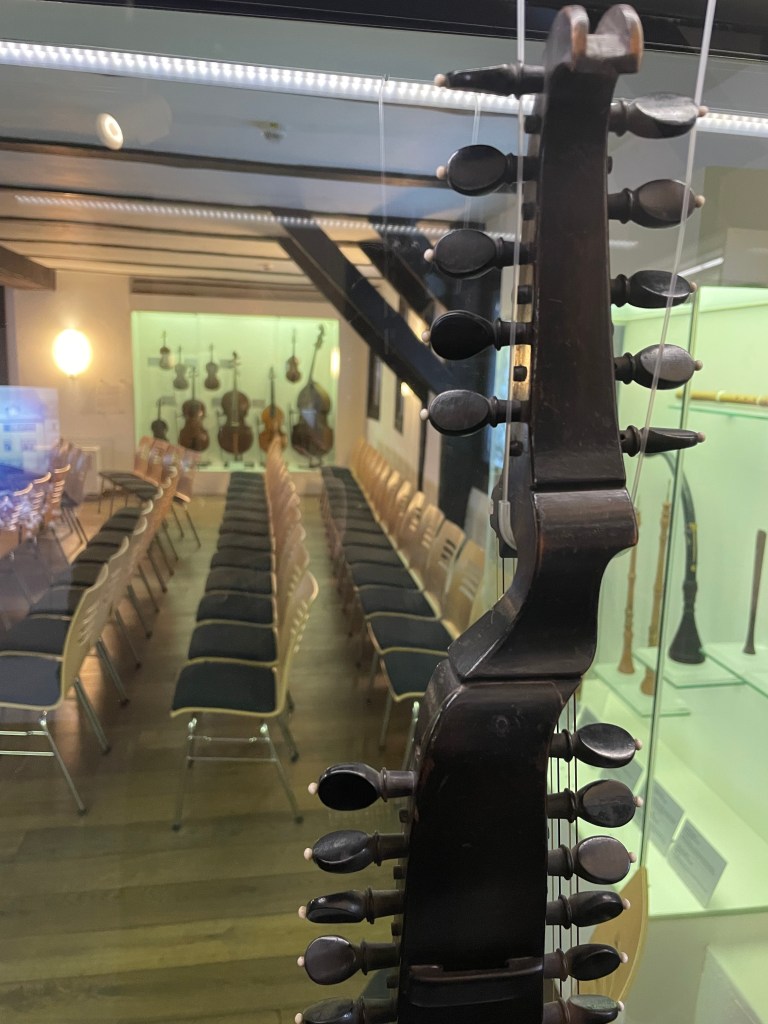
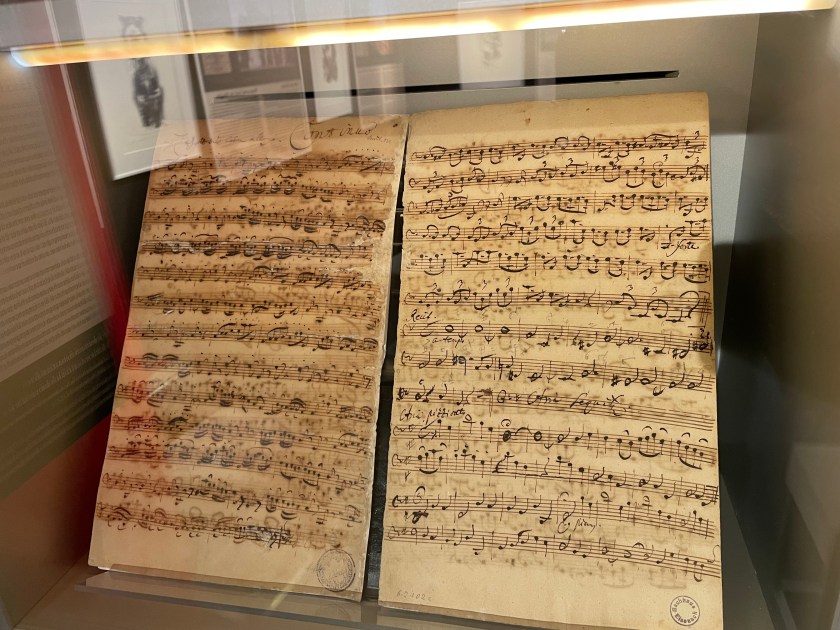
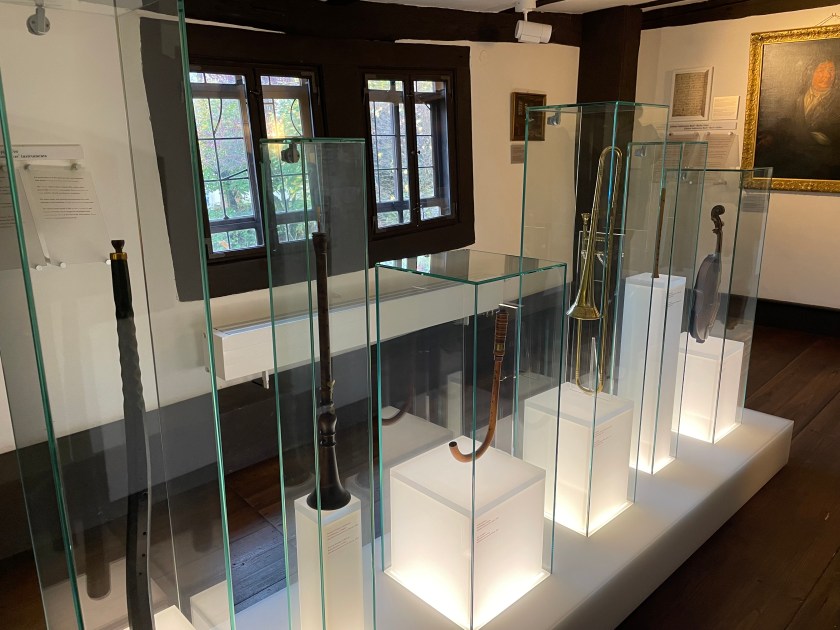
There were other old instruments in the home displayed, along with things that belonged to the Bach family, books and music. It was really interesting.
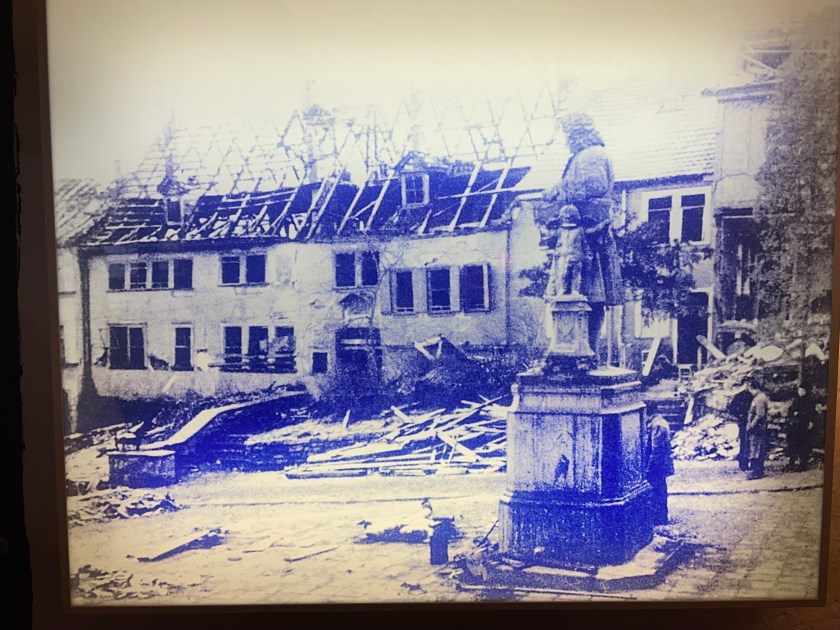
Here’s the destruction to the home during WWII.
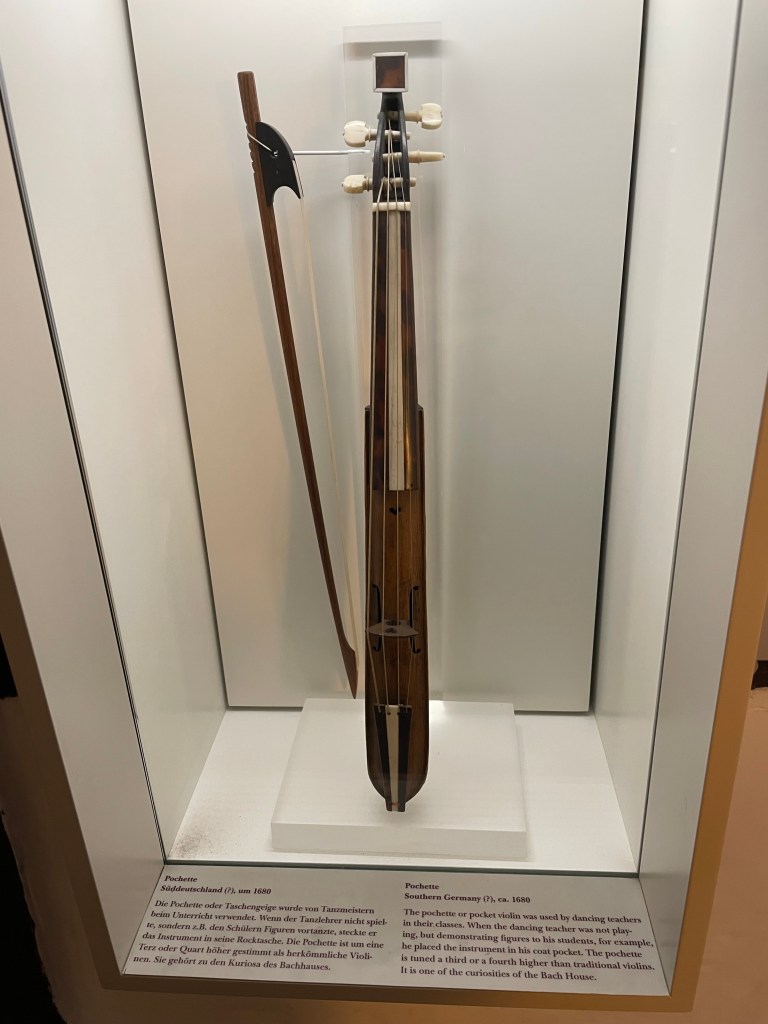
A “pocket violin.”
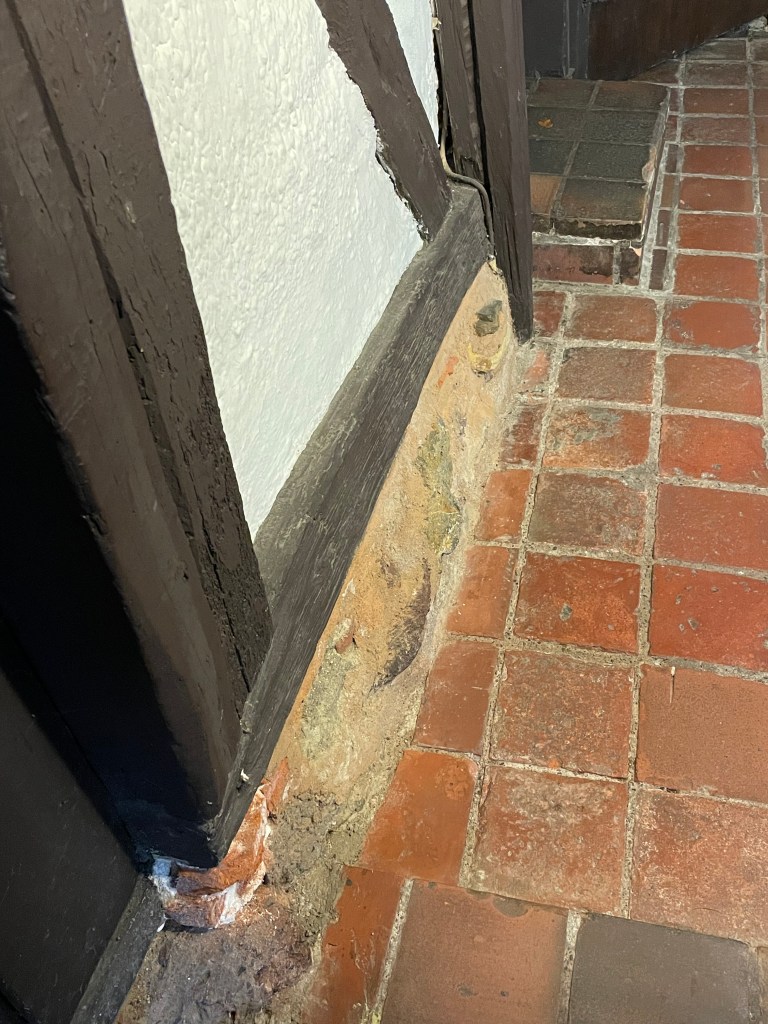
Old construction:
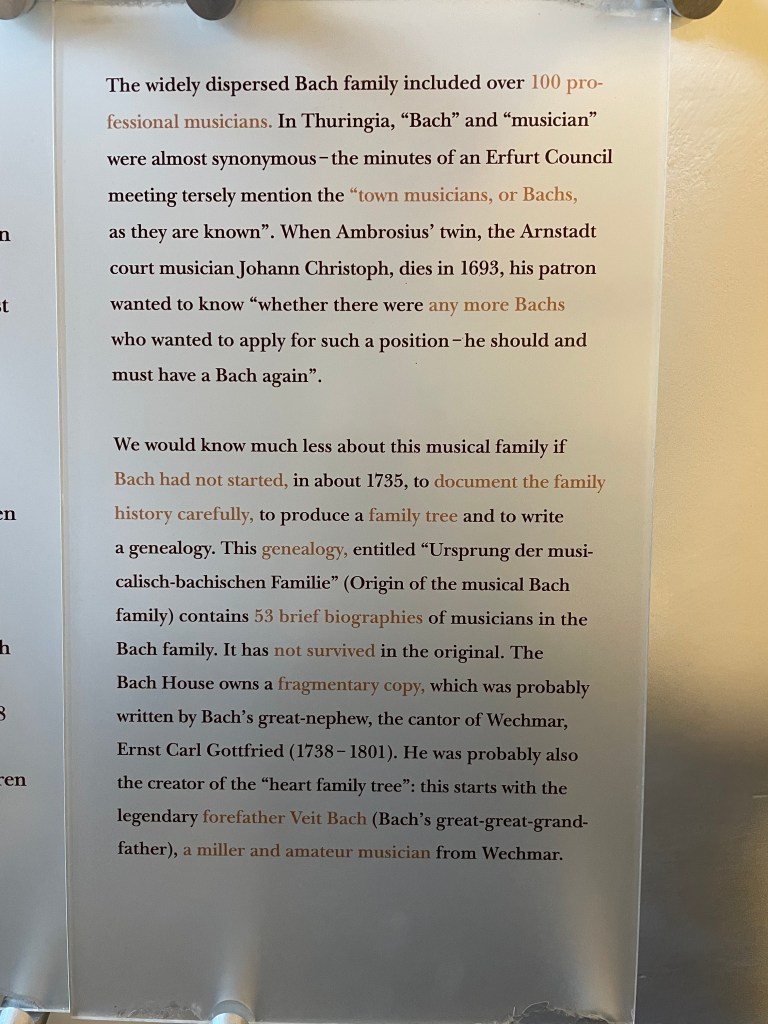
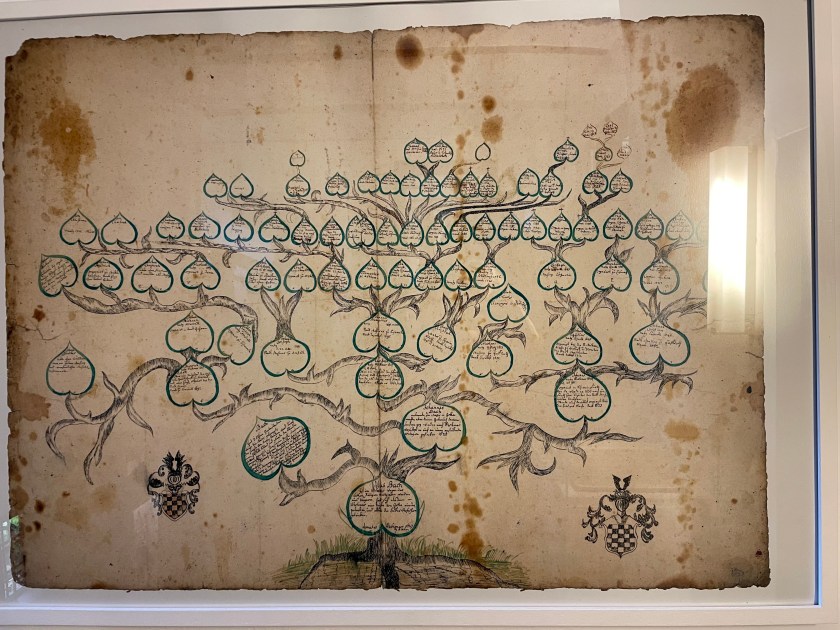
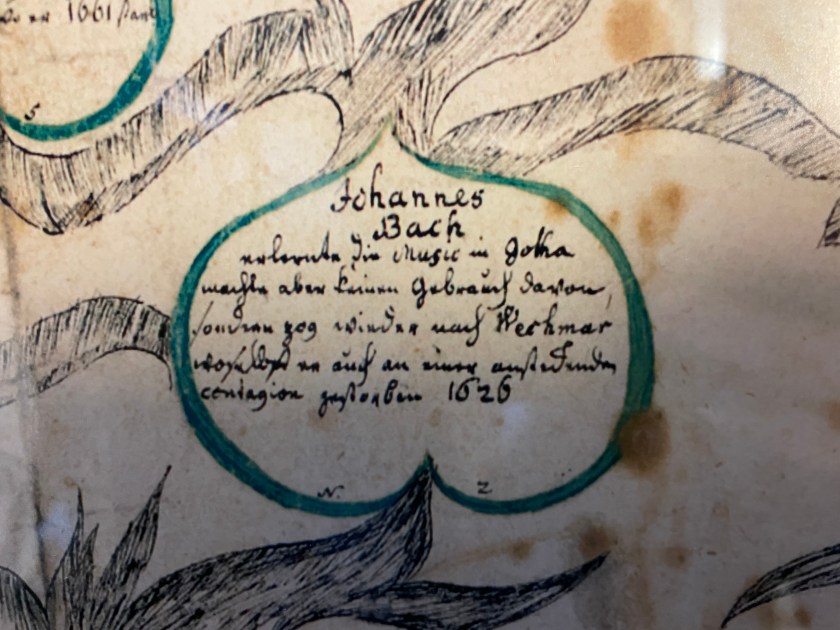
Fascinating family history!
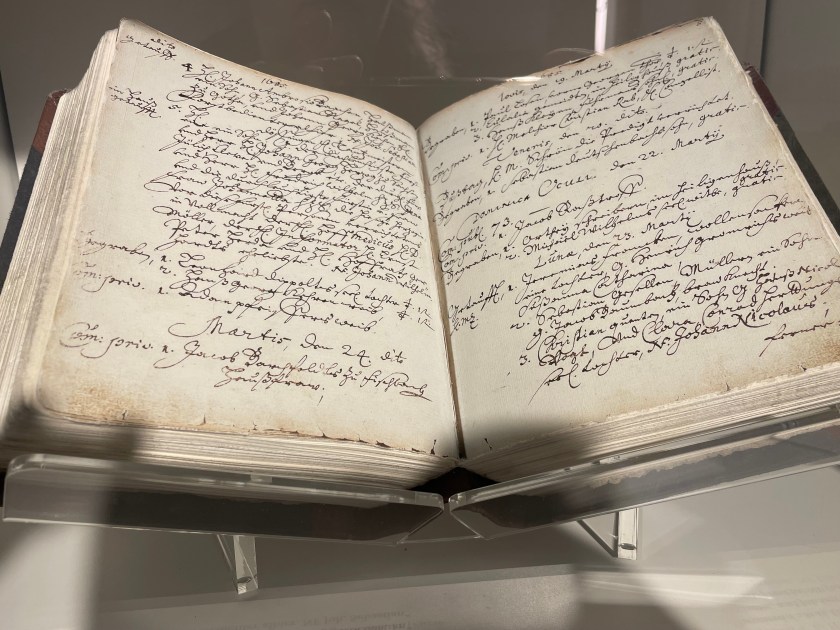
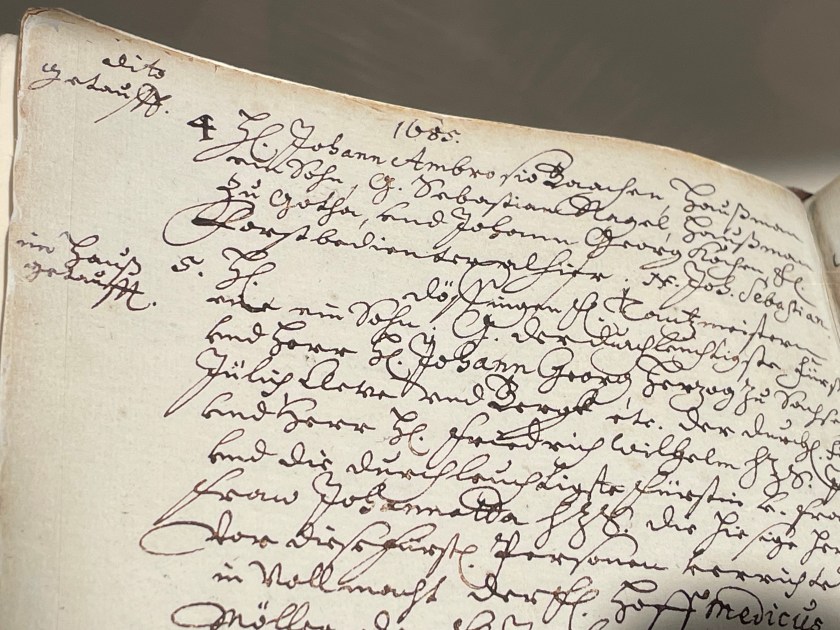
Here is the entry of Bach’s baptism in the church record books:
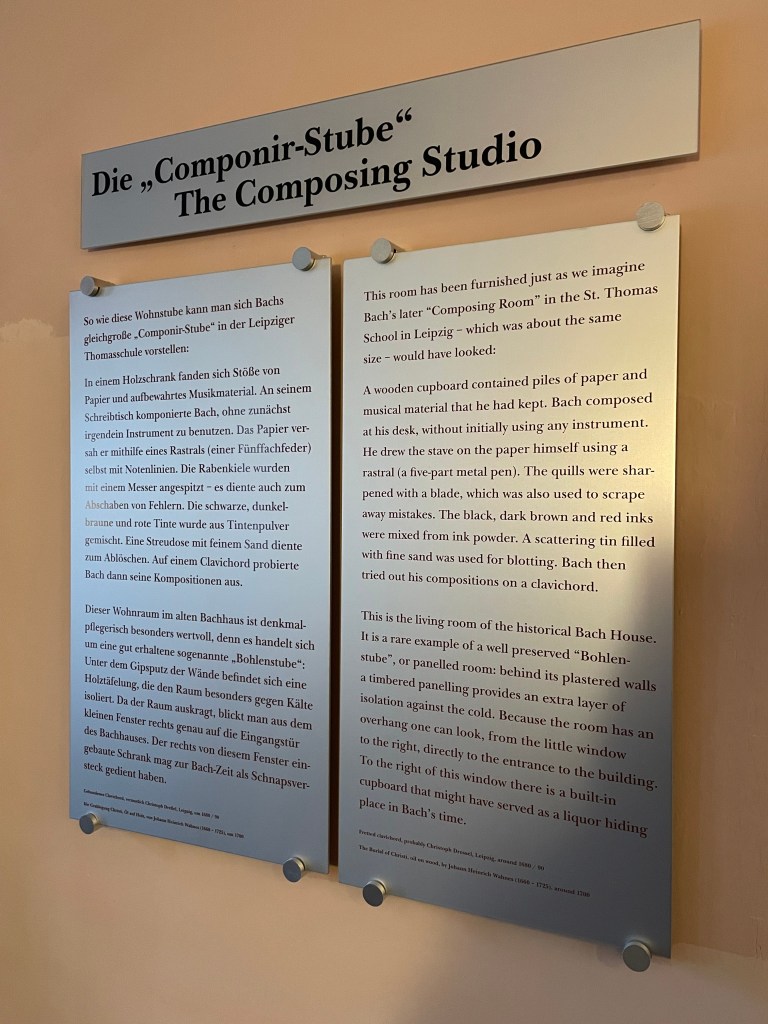
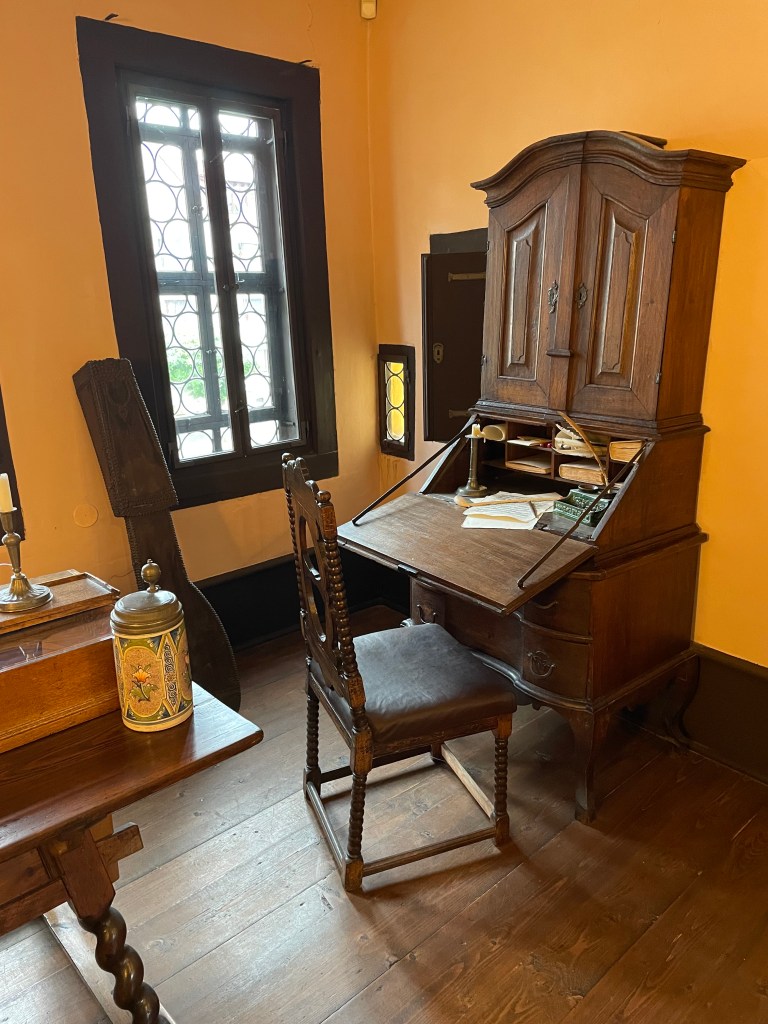
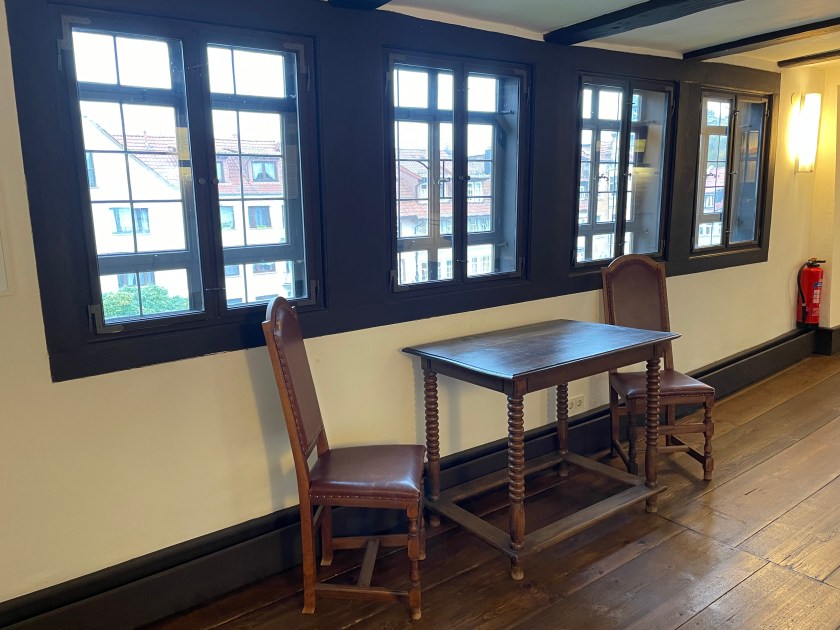
This room was set up as Bach’s composing room might have looked.
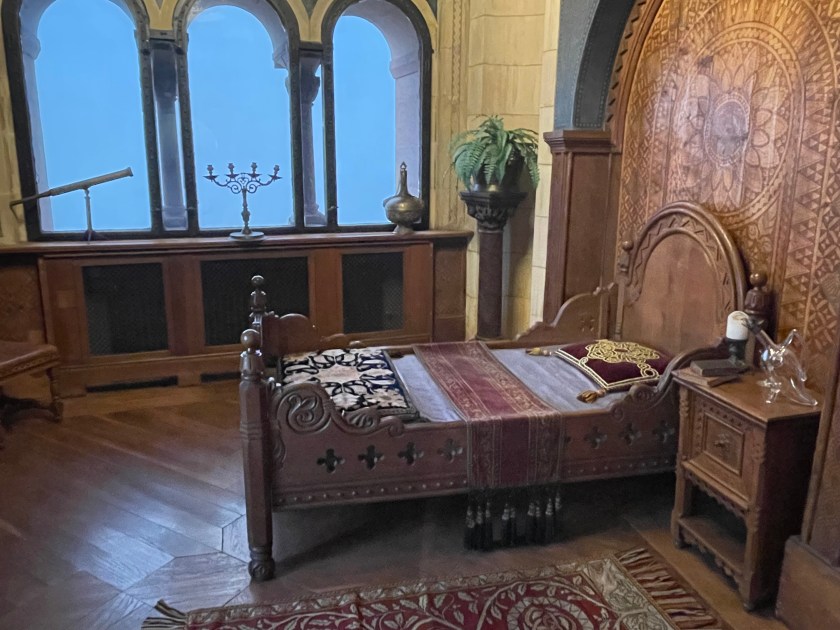
A period bedroom:
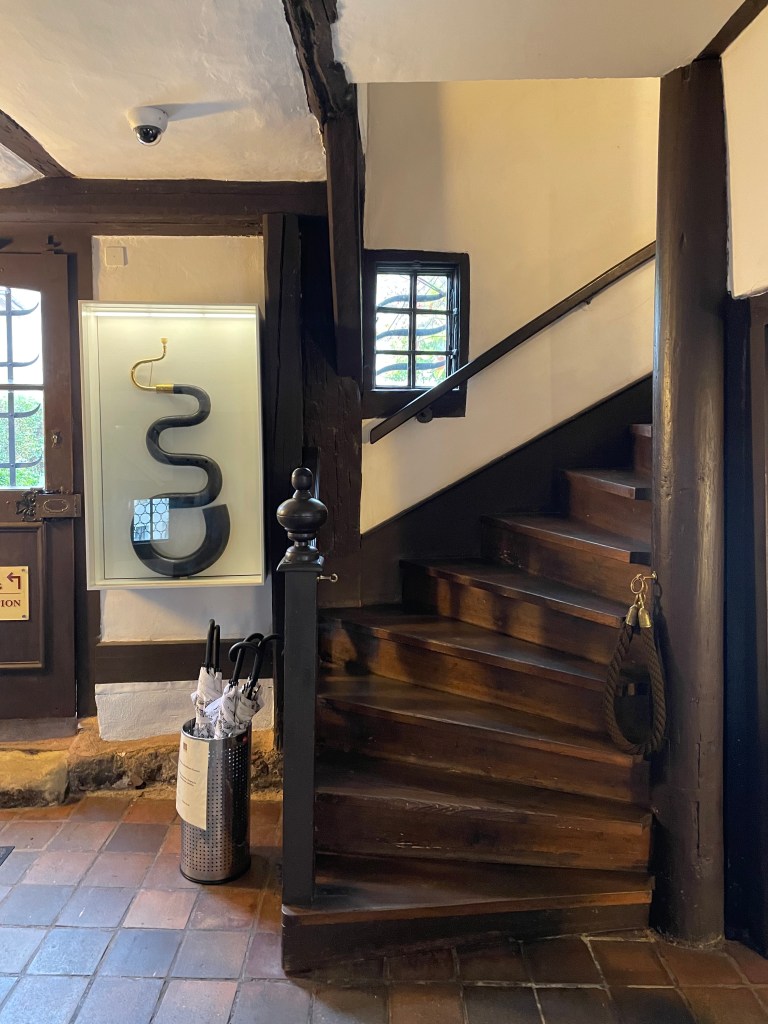
Interesting staircase:
Interesting display for our eye surgeon son, Adam:
Bach played many instruments. Those displayed here are from his time period.
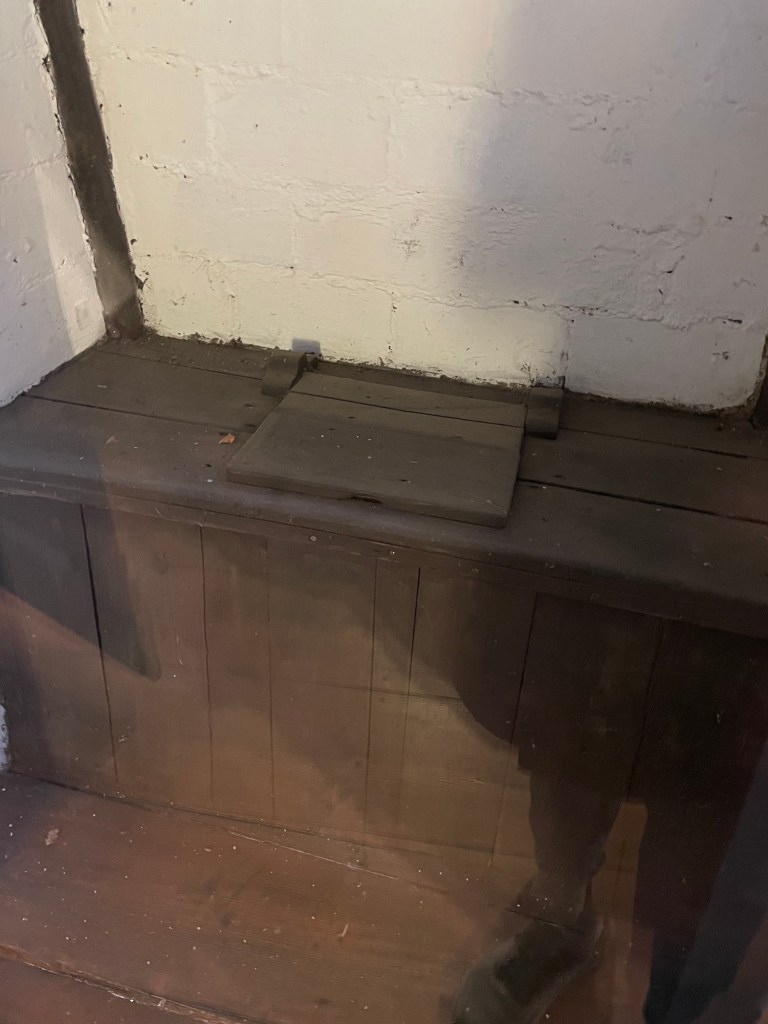
This is the toilet. When we get to the pics in the backyard, you’ll see where it empties.
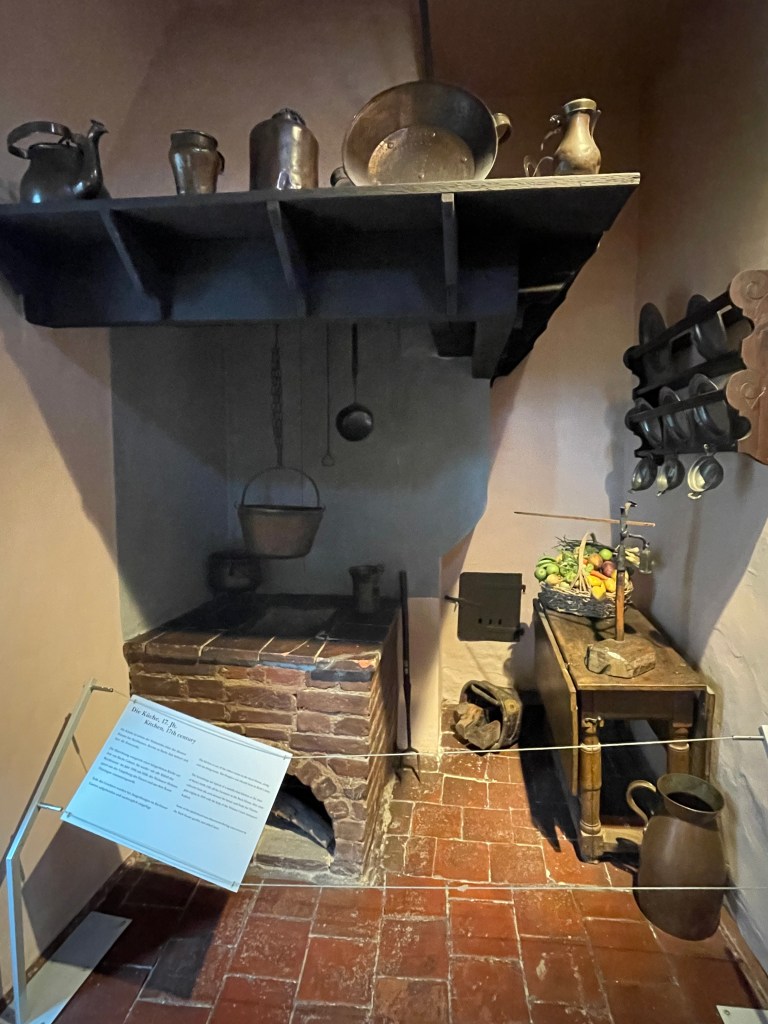
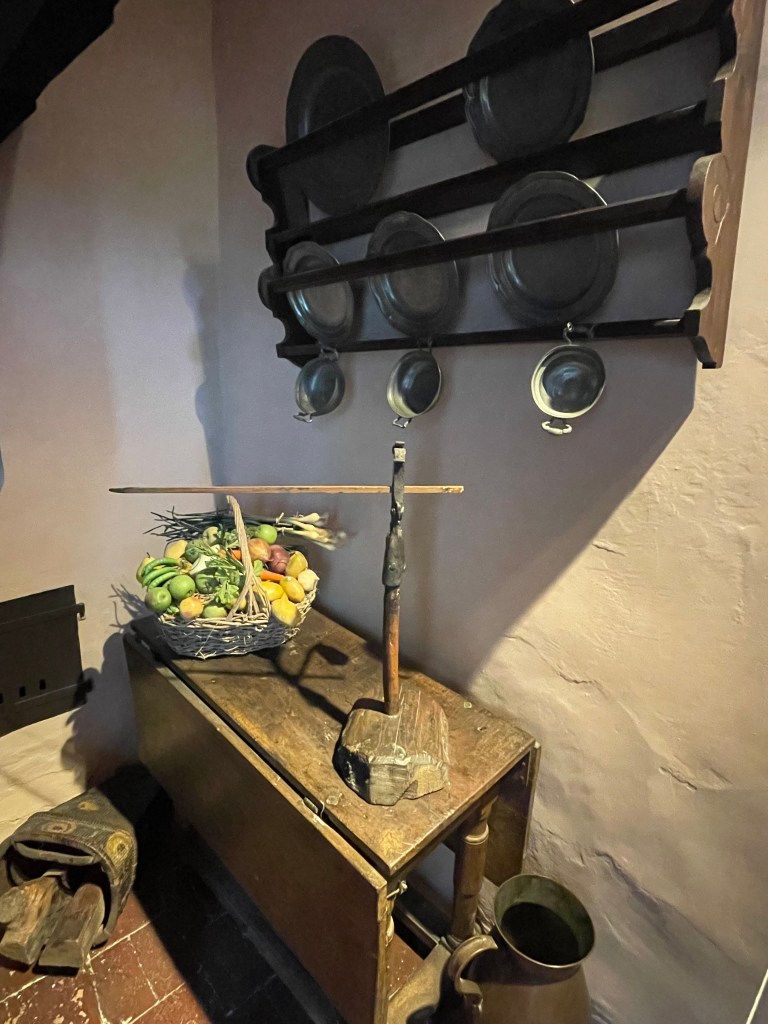
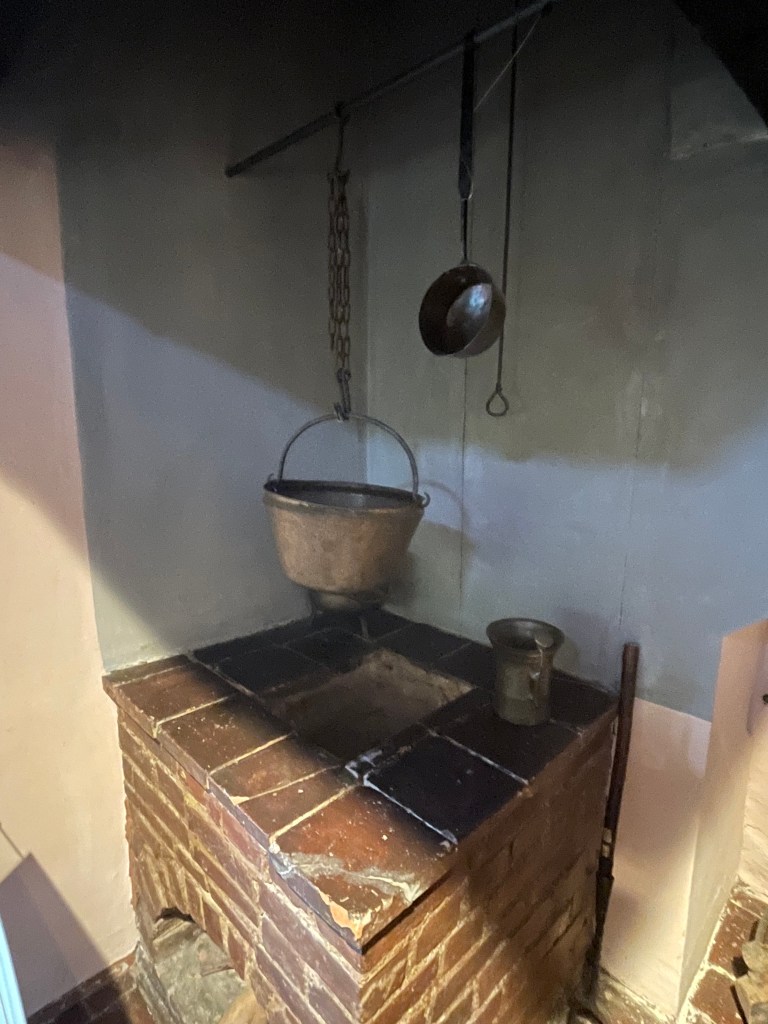
The kitchen, where a woman’s work was never done.
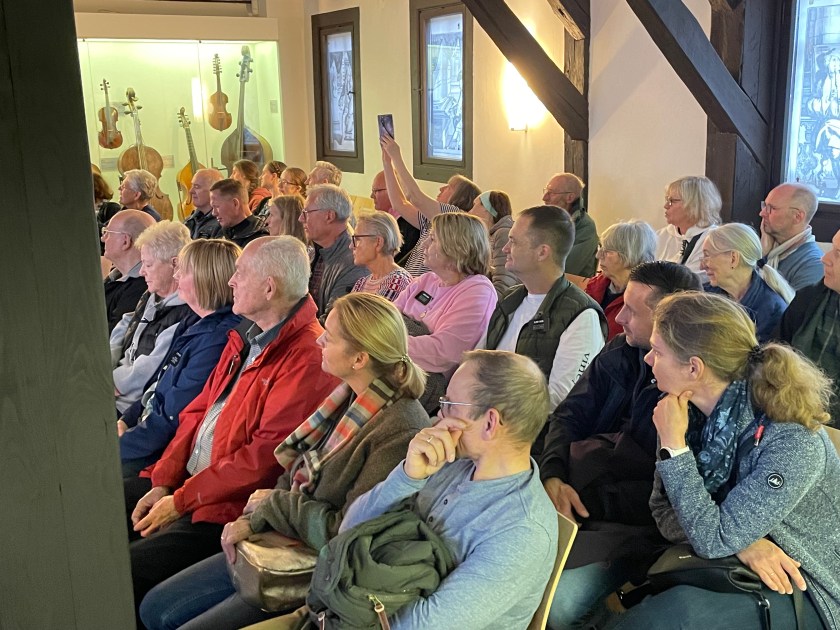
At 11:00 there was a special musical presentation by a Bach expert. He played several pieces, each on a different instrument. All of these instruments are 200-300 years old.
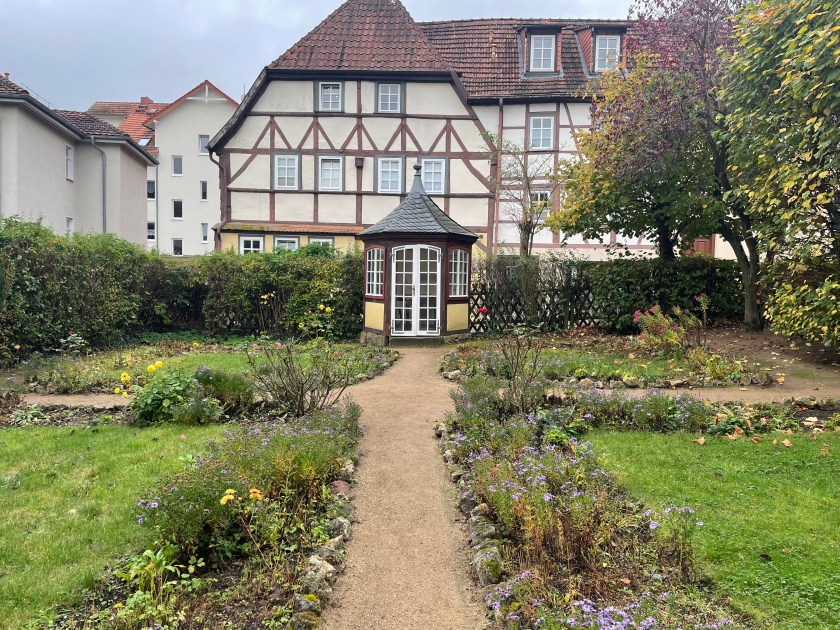
Here’s the back yard:
Sticking out from the top floor is the little toilet room with a trapdoor in the floor.
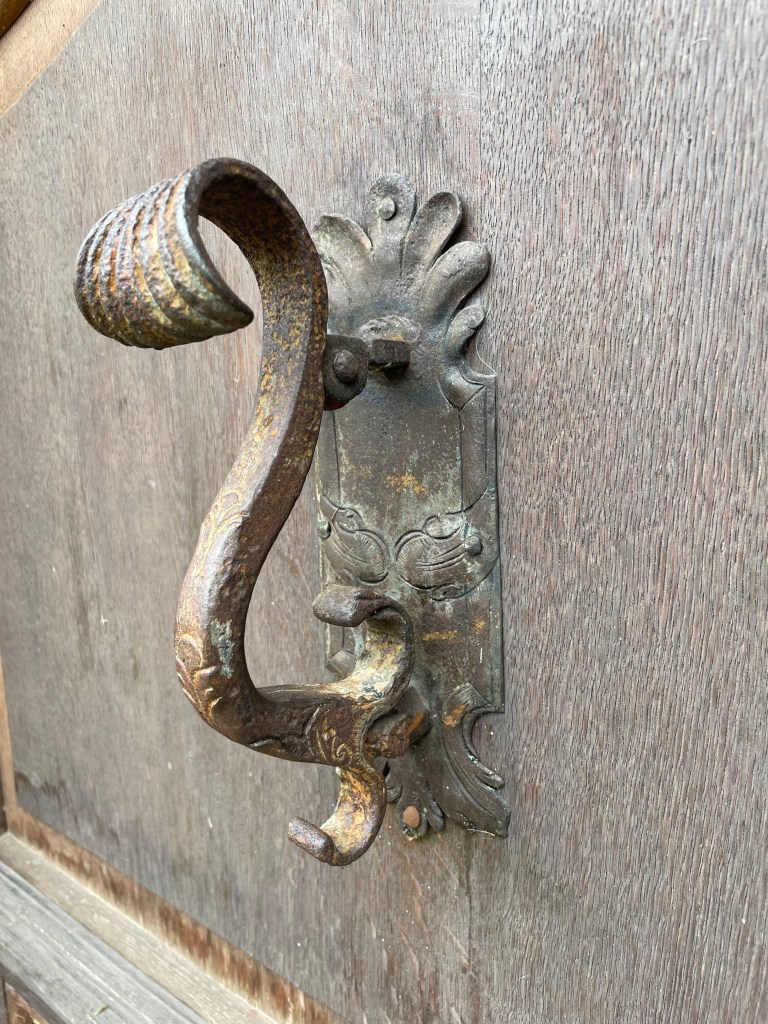
Back inside. The front door.
Johann Sebastian Bach has suffered immense personal losses during his life. First he lost his little daughter, later three more children and finally his first wife. After these severe blows of fate, he married again, Anna Magdalena, but the suffering continued with her too: together they had to cope with the death of four more daughters and three sons. Bach lost eleven of his children in total.
These tragedies have moved many researchers and admirers of his music to ask themselves a question: How could Bach continue to live after so many losses? How could his heart keep beating, his soul keep creating? And above all: How was it possible for him to continue composing such sublime music despite these deep wounds – cantatas, cellosuits, fairs, concerts? –some of the most beautiful music the world has ever heard.
The answer lies in Bach’s deep belief. He closed each of his scores with the words “Soli Deo Gloria” (“To God alone be the glory”) and often began with “Lord, help me.” For Bach, composing was not just an artistic act, but an act of dedication and faith. His music was an ongoing prayer, a dialogue between him and God.
When we listen to Bach’s works, we not only experience an unparalleled musical master’s degree, but also participate in a spiritual conversation. His music transcends notes and melodies, becoming the bridge between the mundane and the divine. This merging of art and faith allowed Bach to overcome unbelievable personal tragedies and create works that to this day inspire and move people around the world.
A friend posted this on her FB this week:
I am working on the program for our Utah Baroque Ensemble concerts this month. This verse is the English text for the chorale at the end of Bach’s Cantata 39. The title of the work in English is “Break your bread with the hungry.” In this season of harvest bounty, thanksgiving, and choosing leaders, I think we could all benefit from reminding ourselves of the ideals and promises that all Christians strive for. [translation by M. Marissen and D.R. Melamed]
Blessed are they who out of mercy take on the distress of the stranger, are compassionate with the poor, and faithfully pray to God for them. They who are helpful in word, and when possible, in deed, will in turn receive help and obtain mercy.
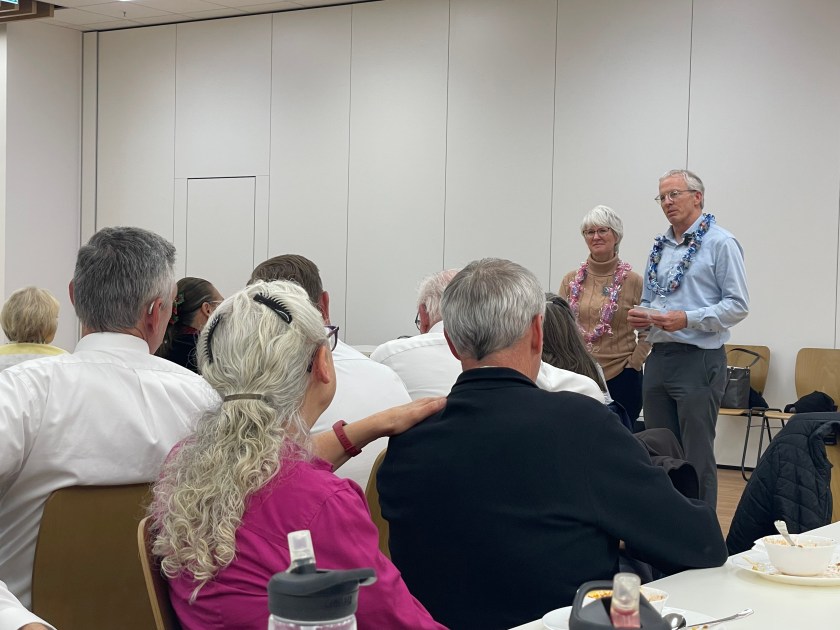
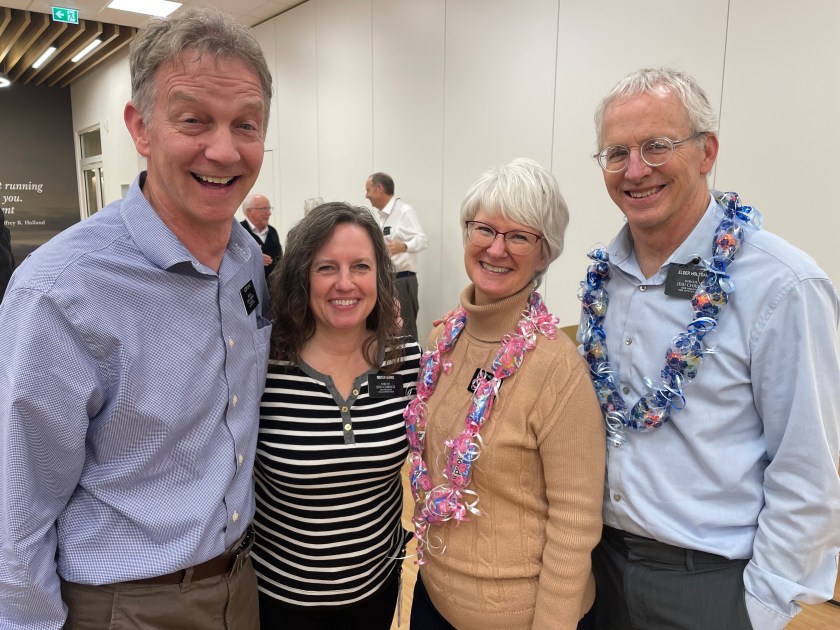
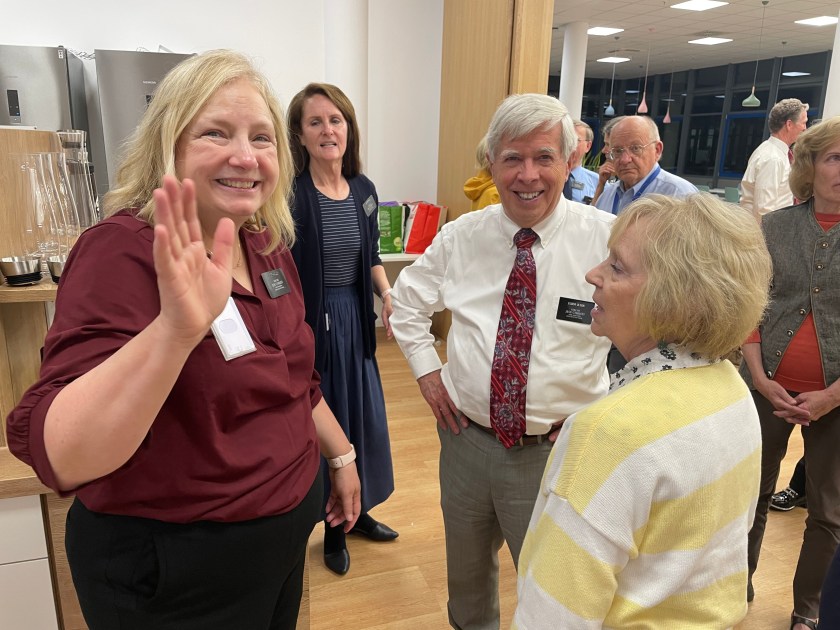
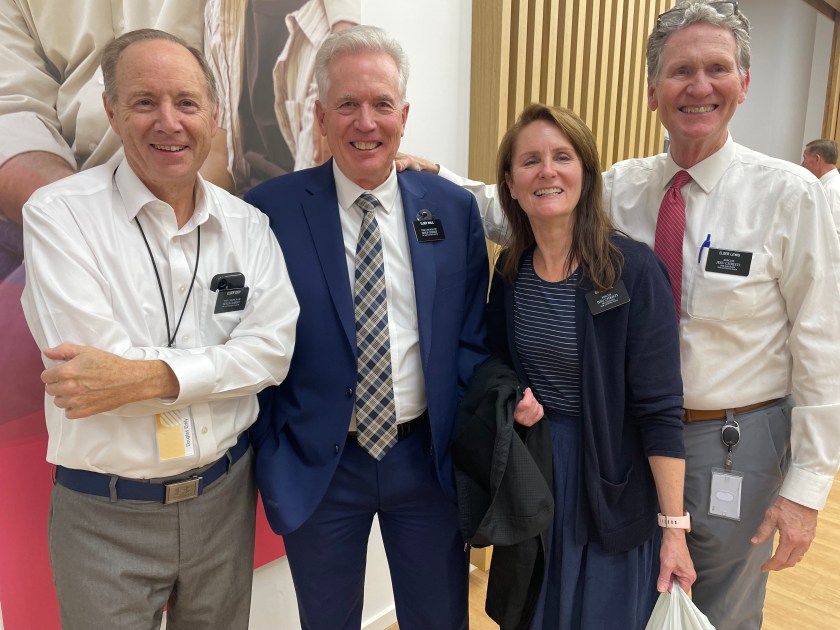
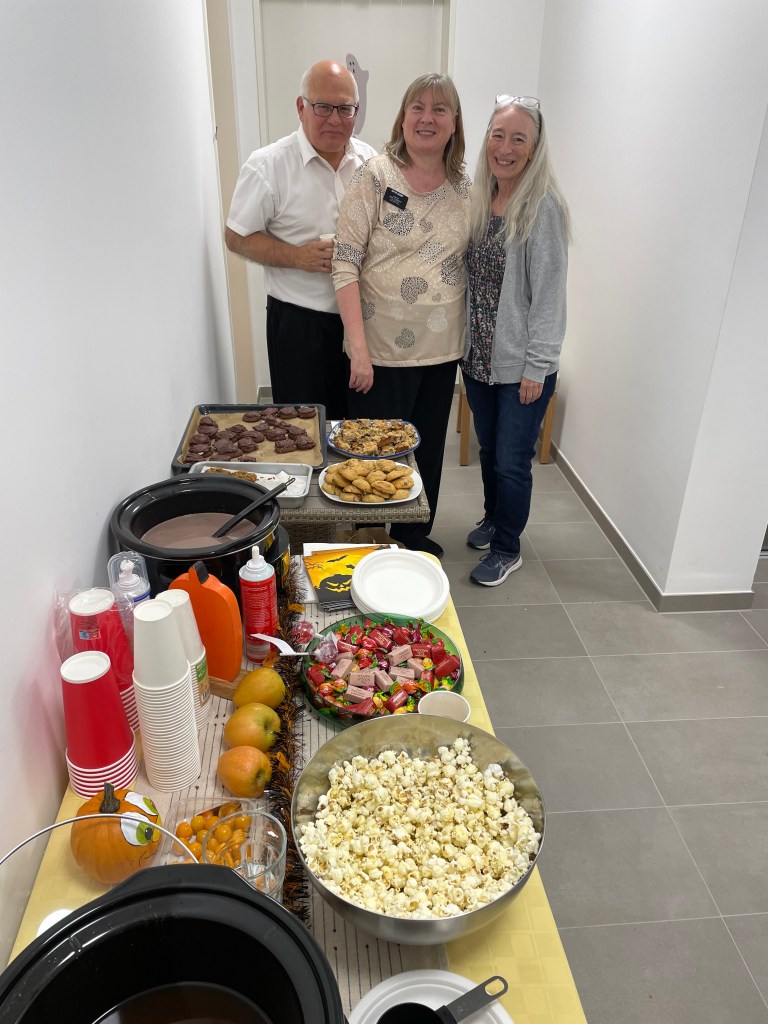
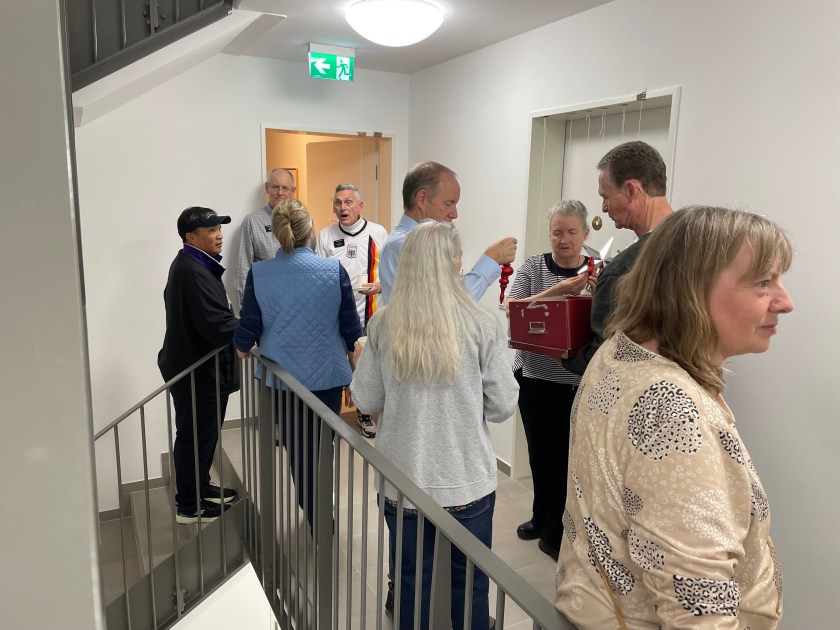
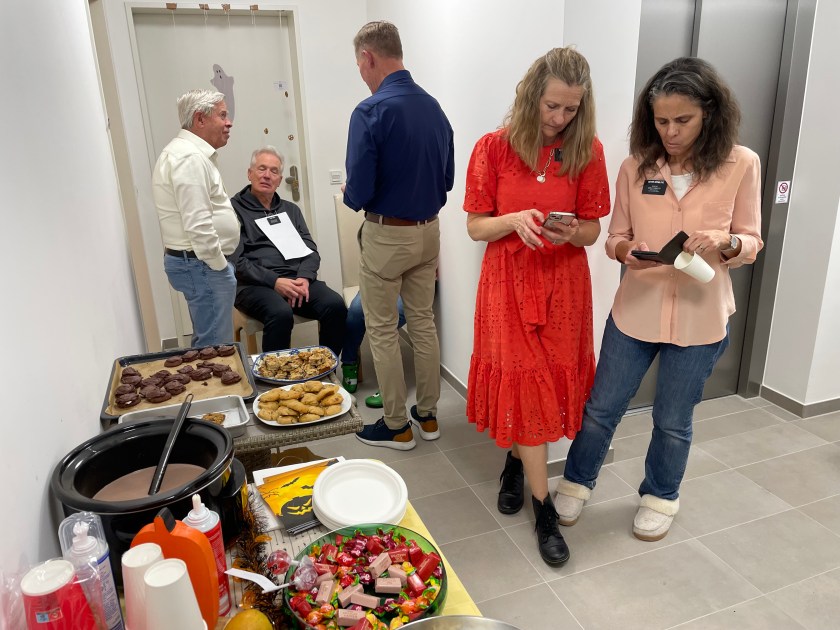
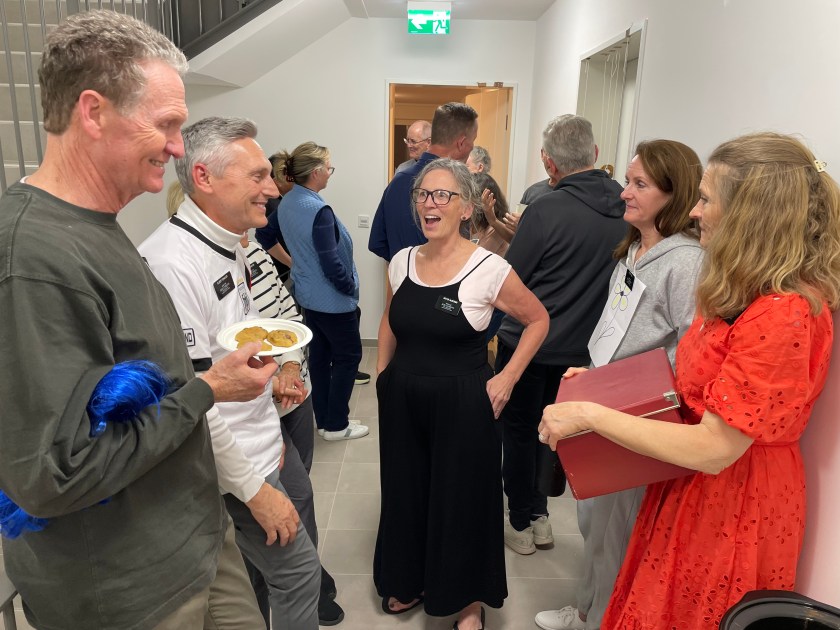
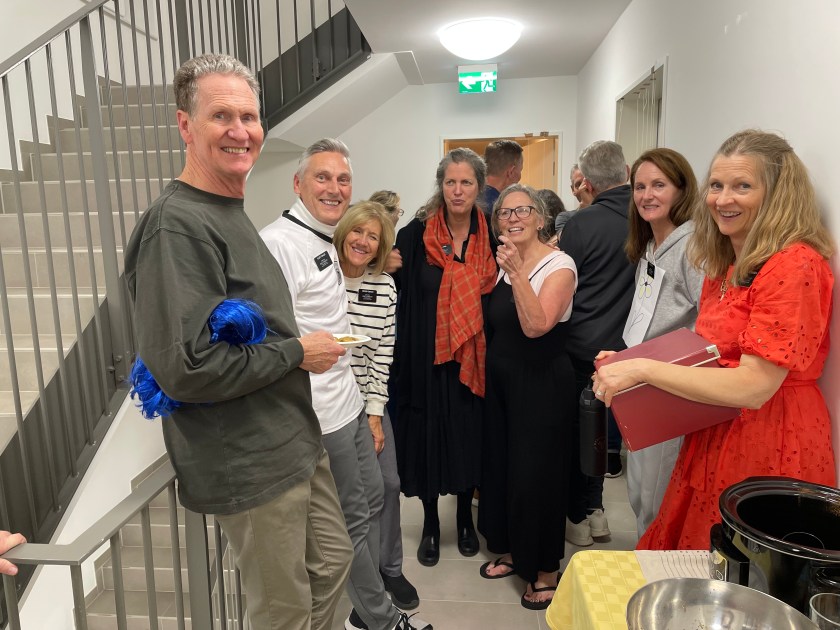
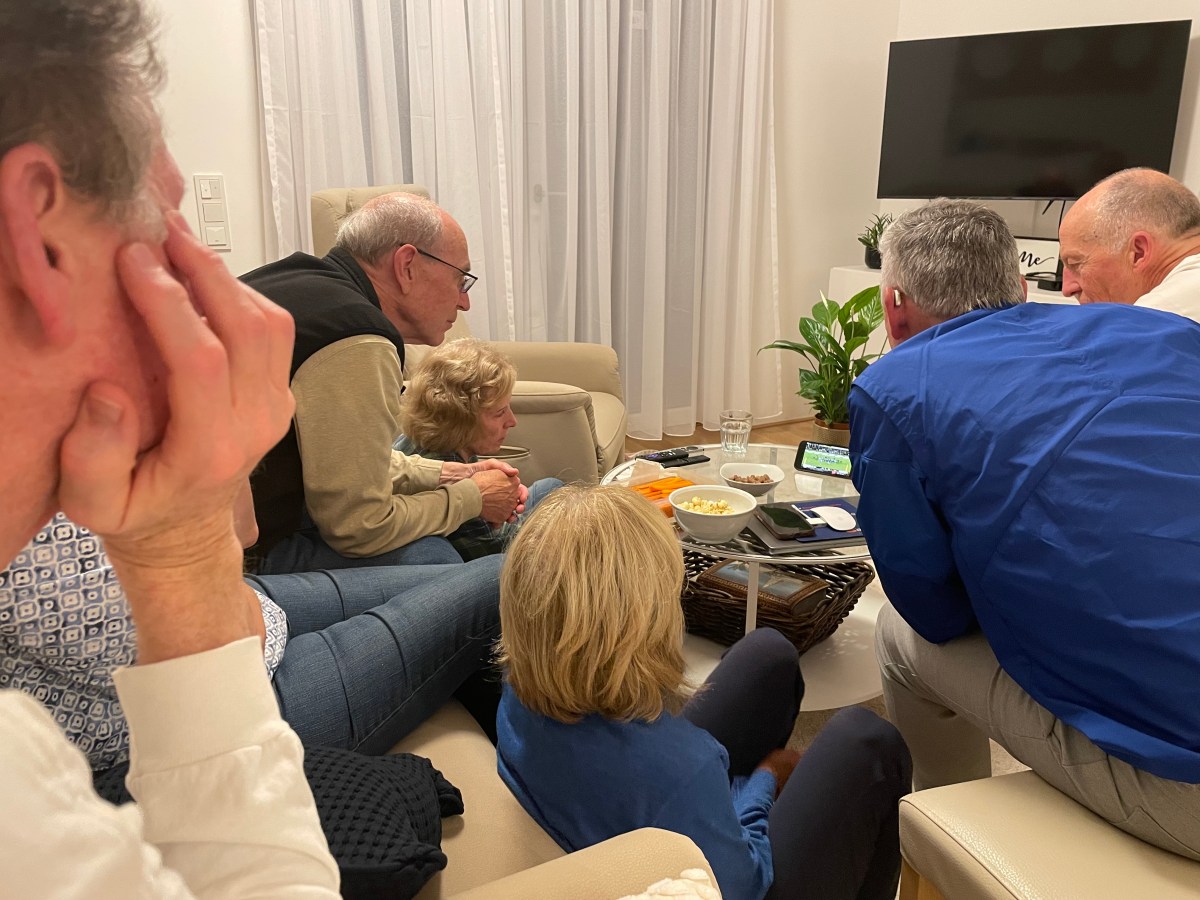
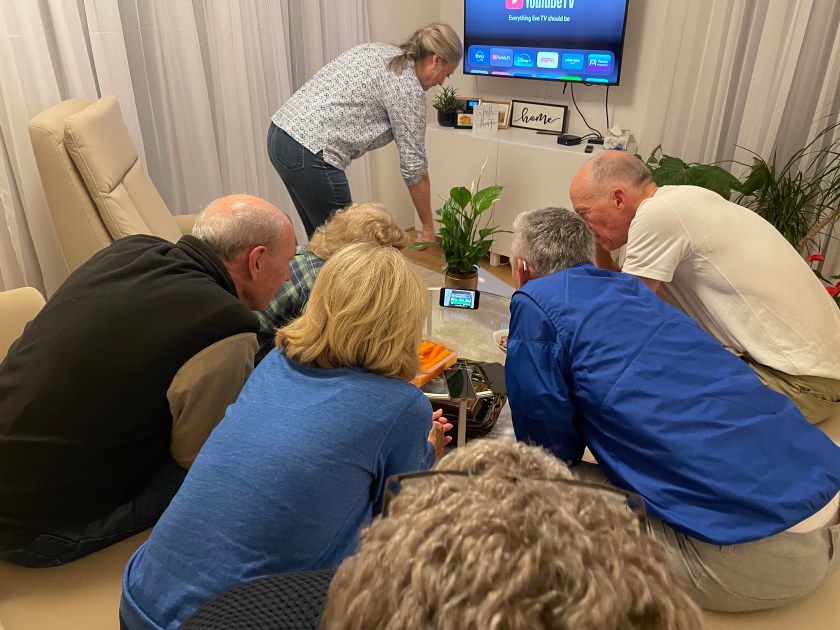
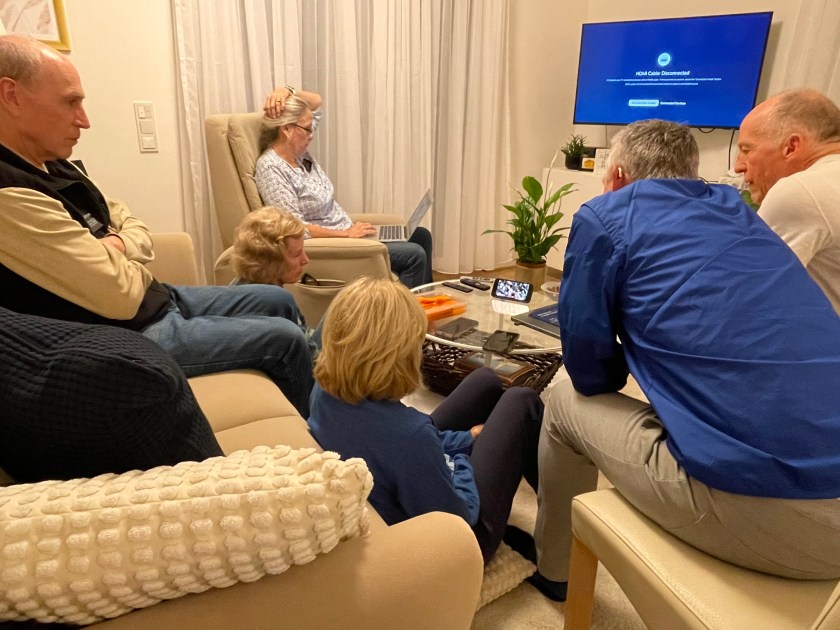
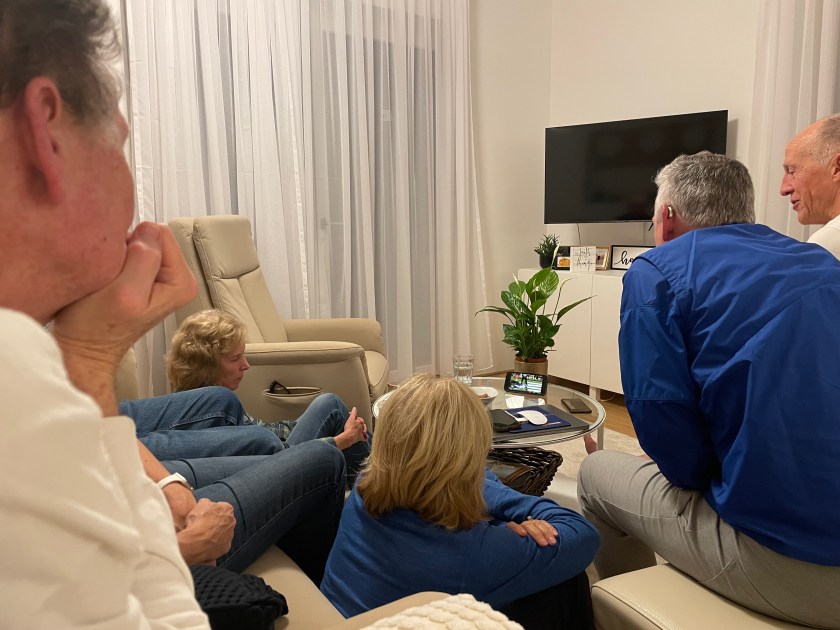
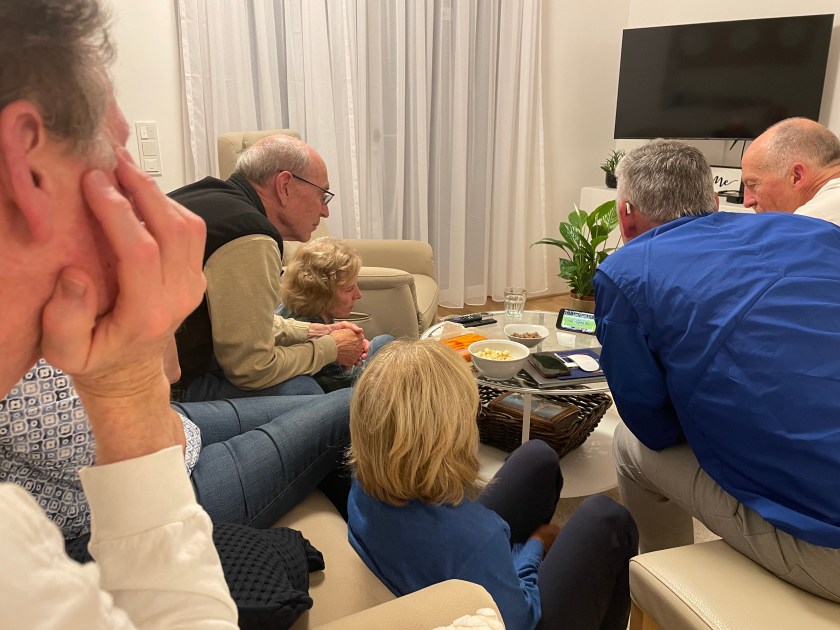
Brent Romney leads the die hard group of BYU fans here in Frankfurt. Late tonight a few of us gathered to watch BYU extend its winning streak to 8 and 0. It was pretty exciting, even watching on a cell phone.
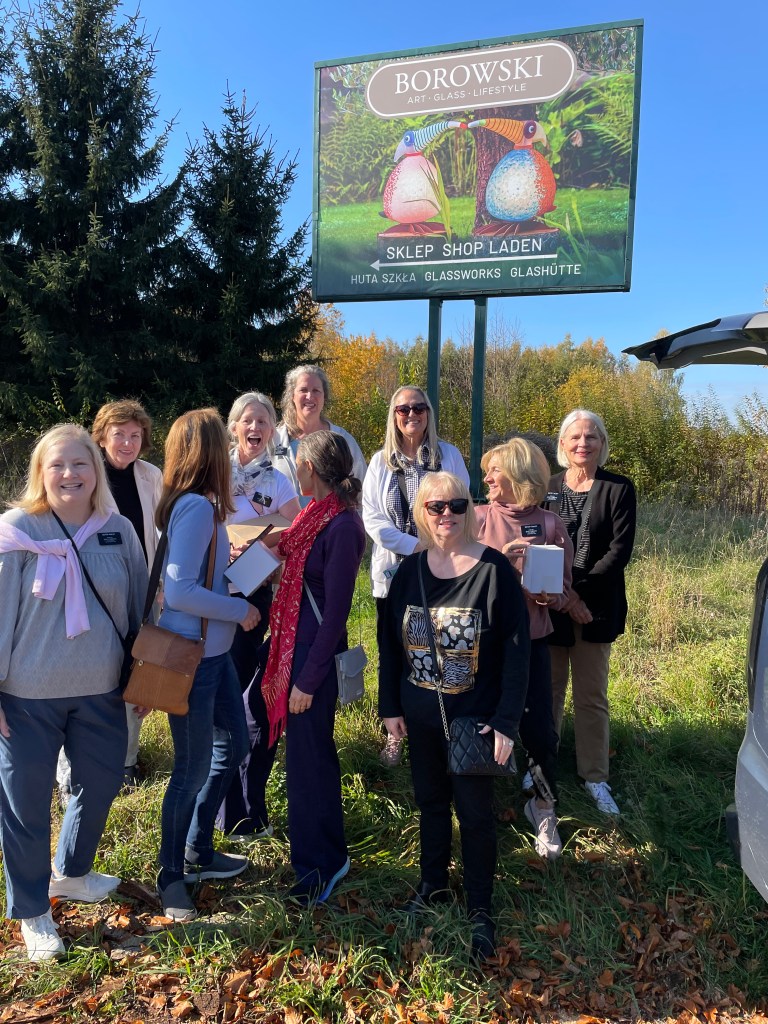
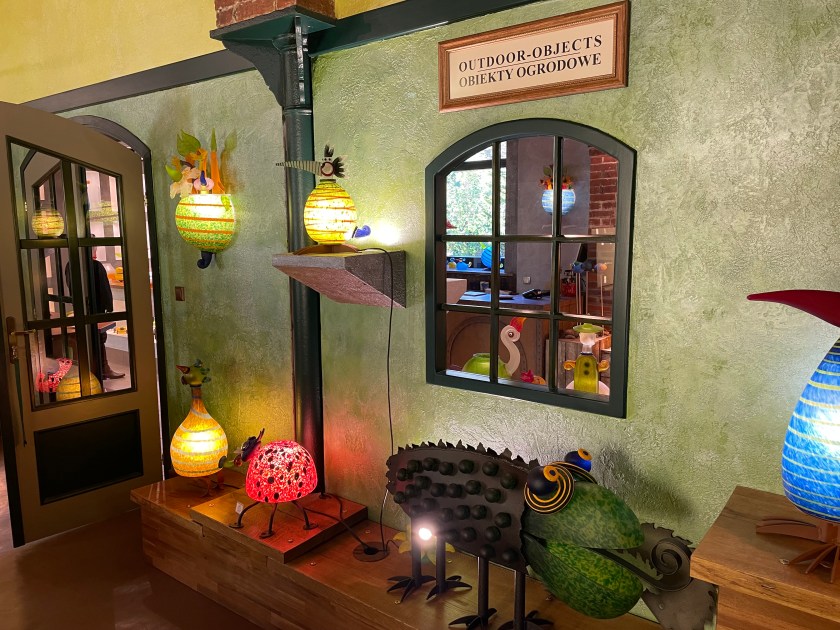
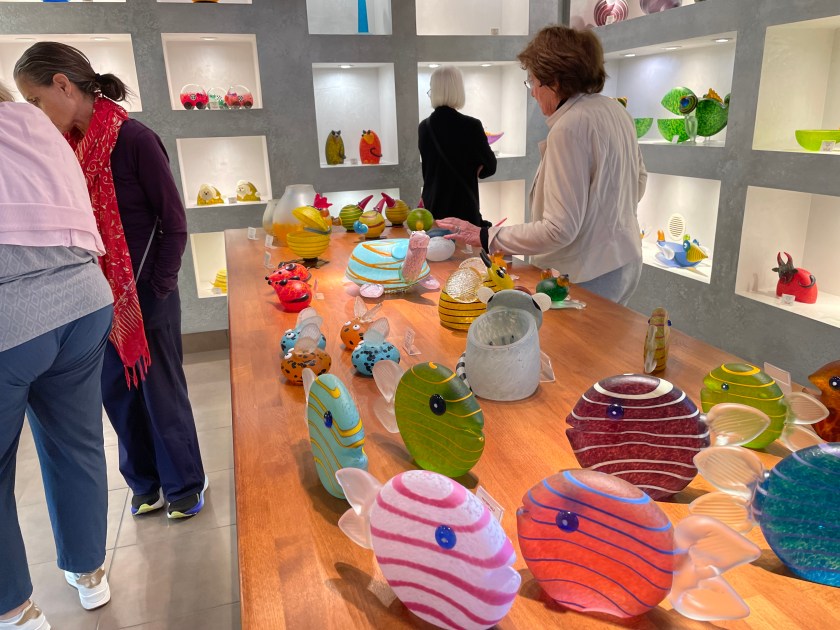
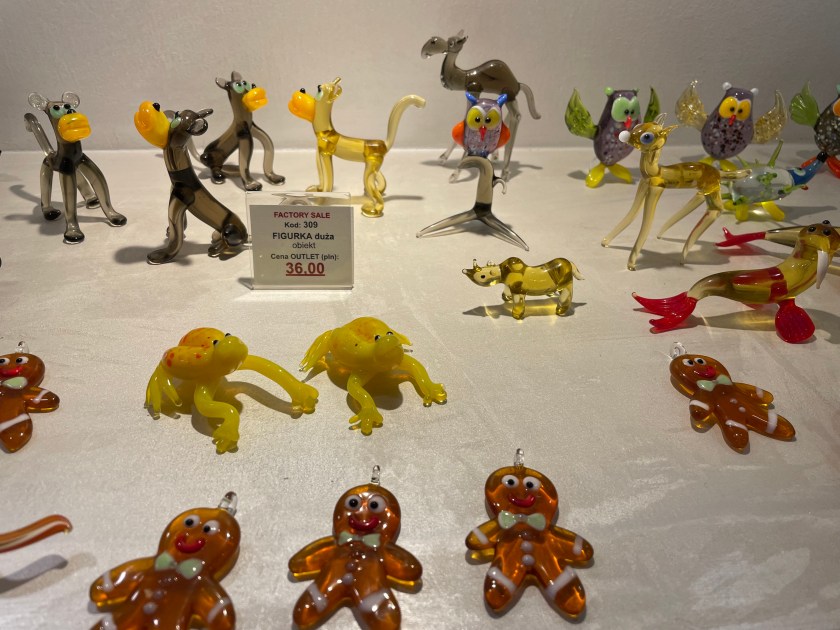
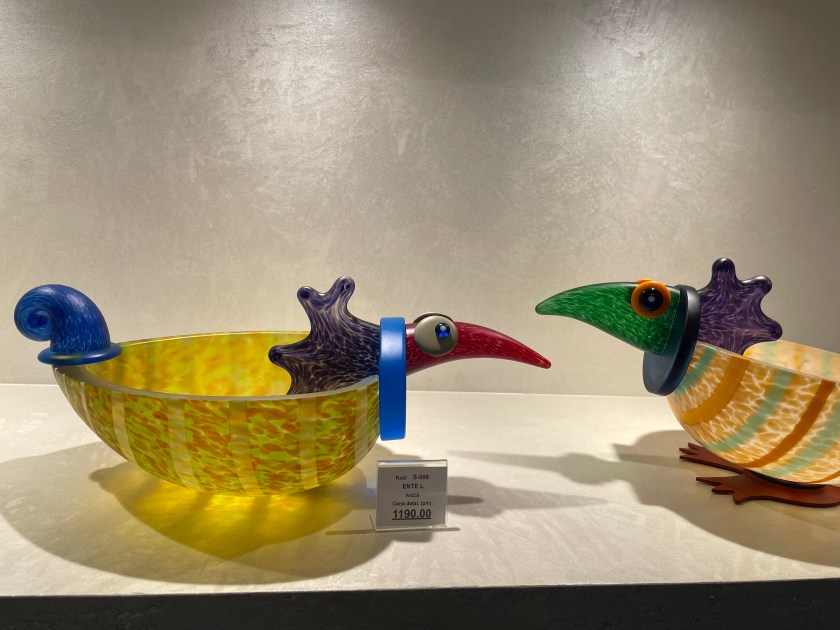
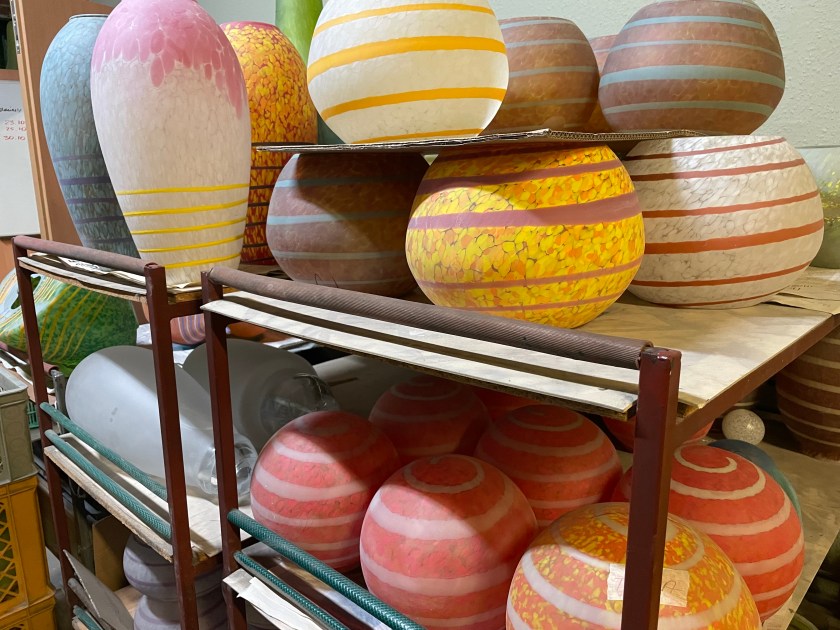
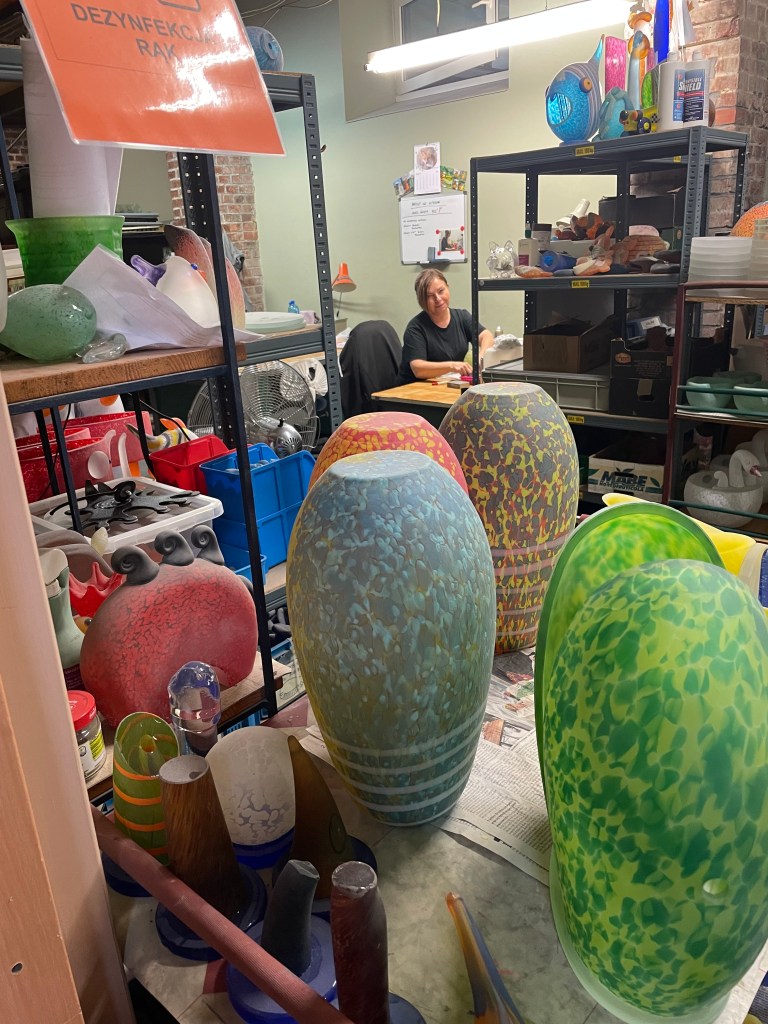
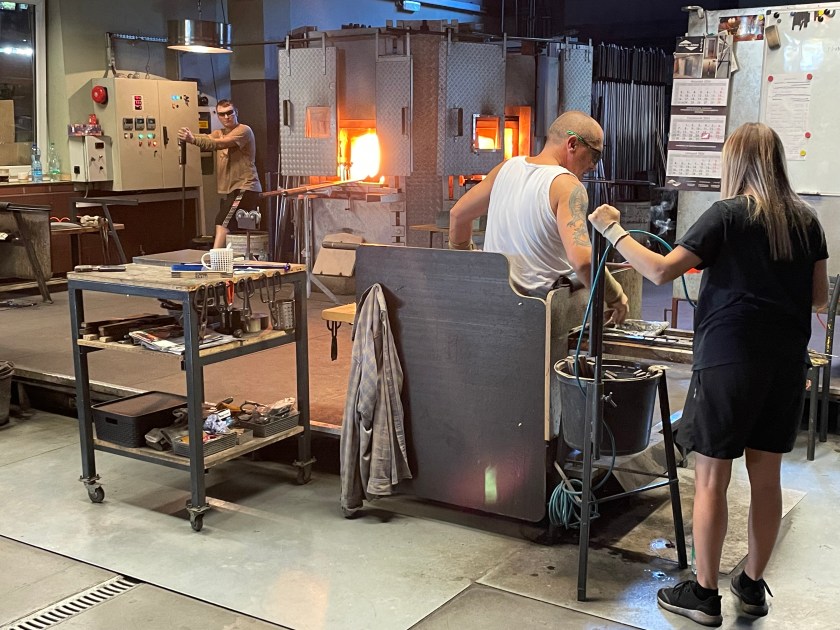
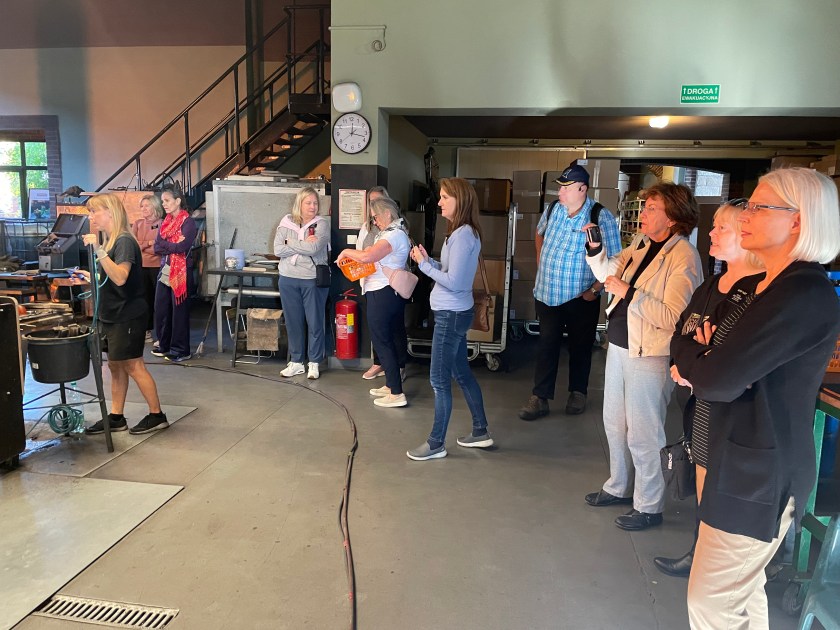
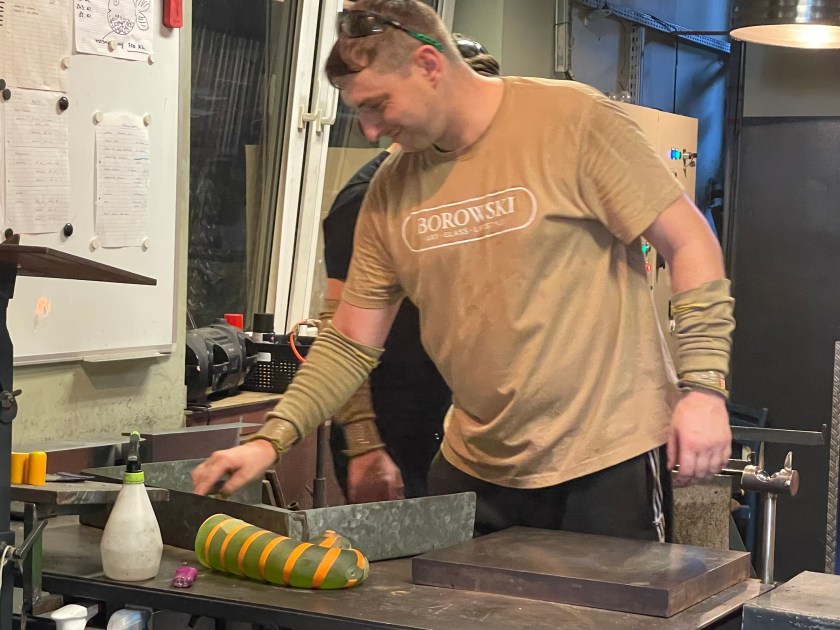
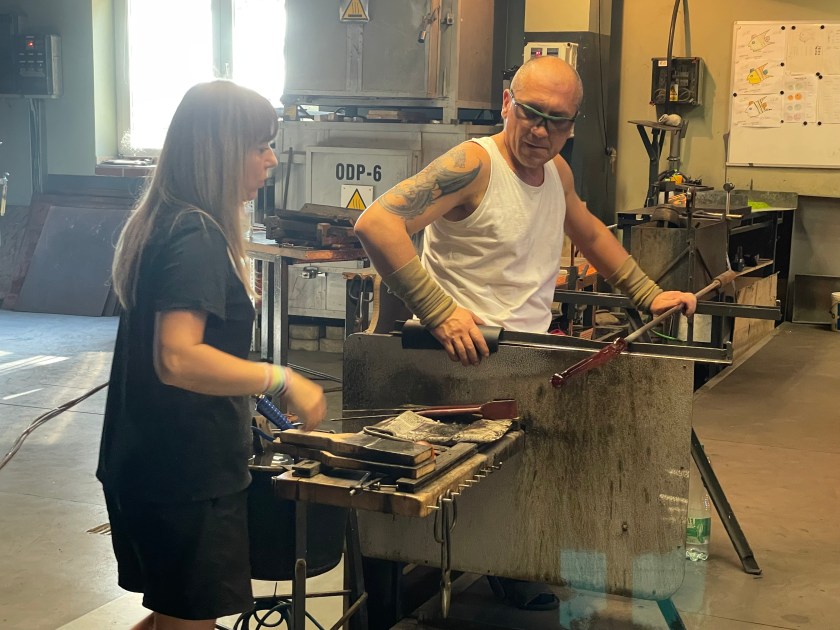
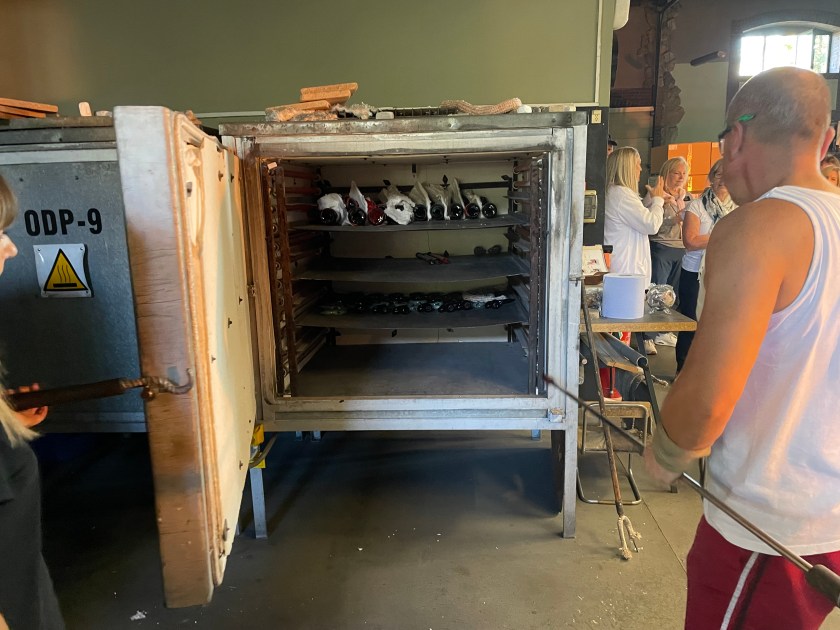
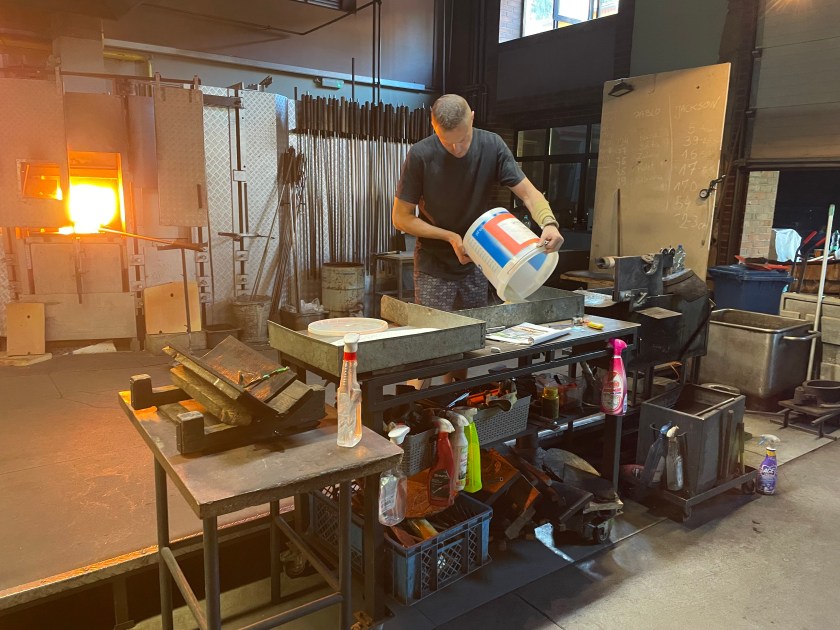
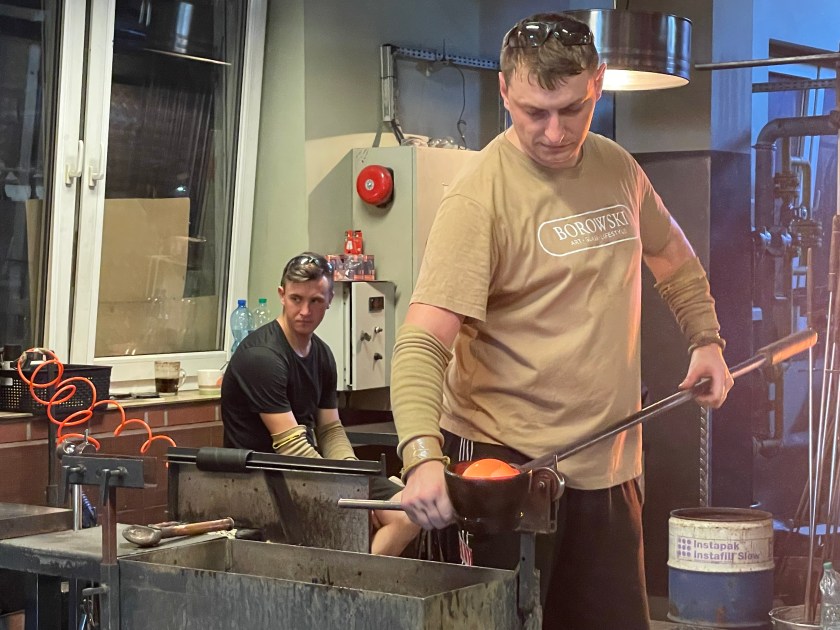
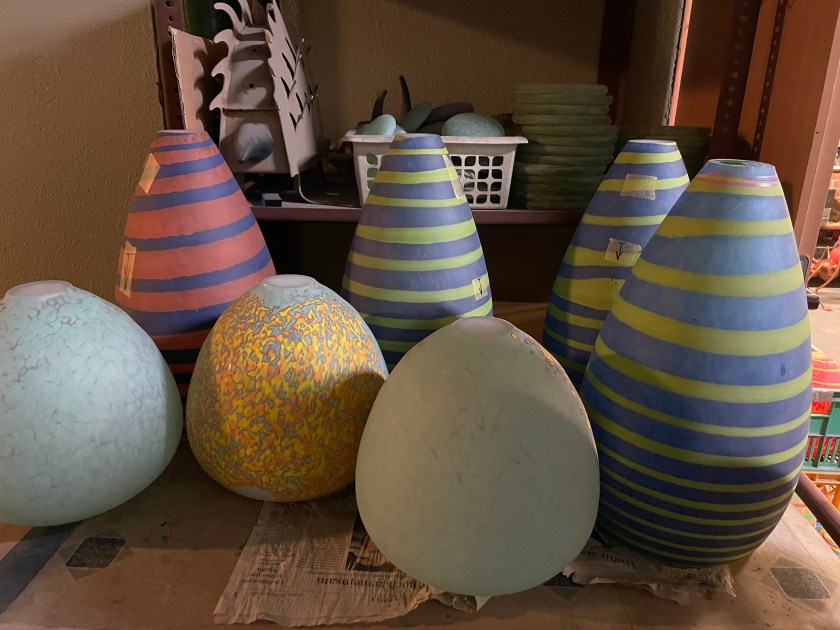
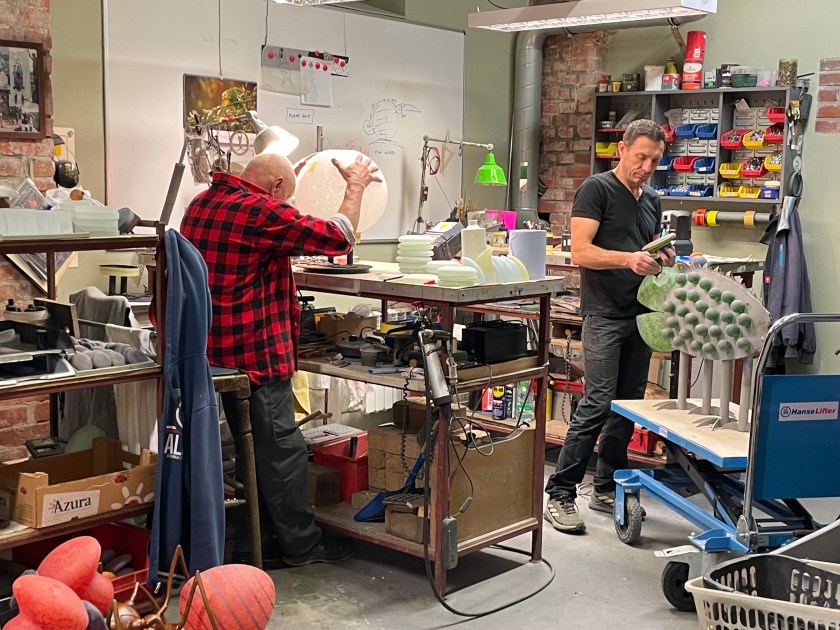
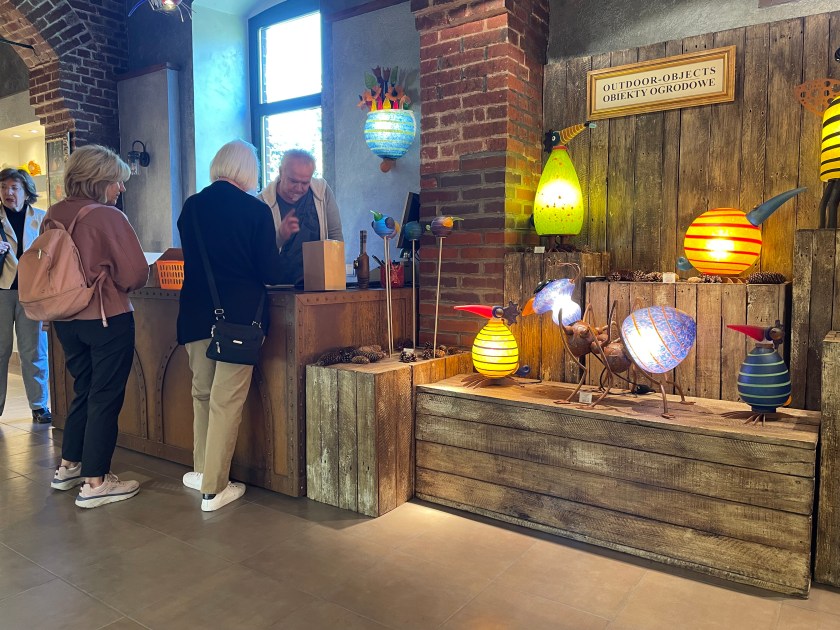
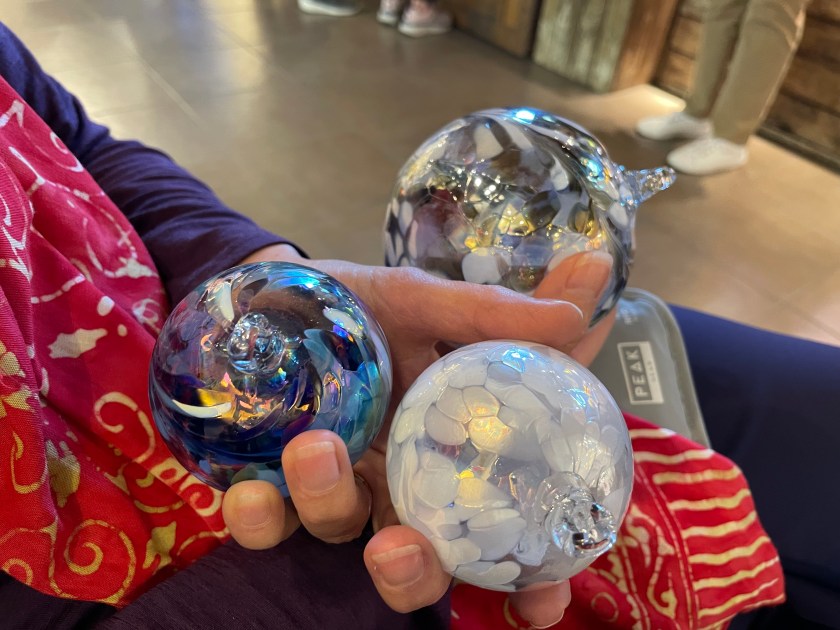
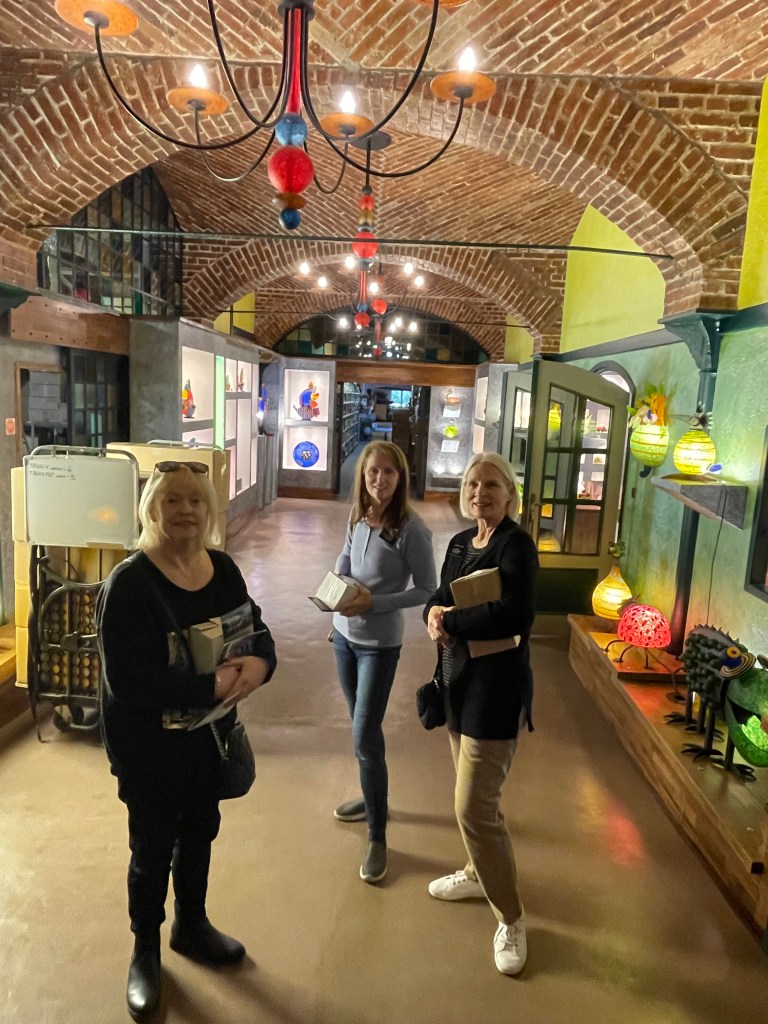
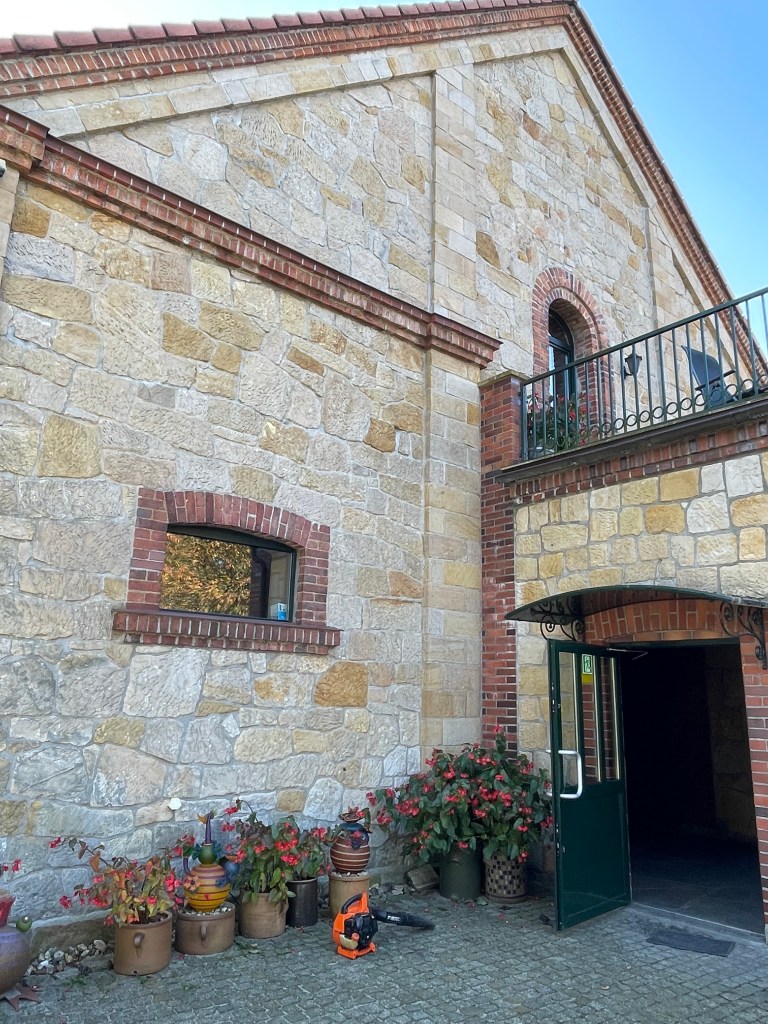
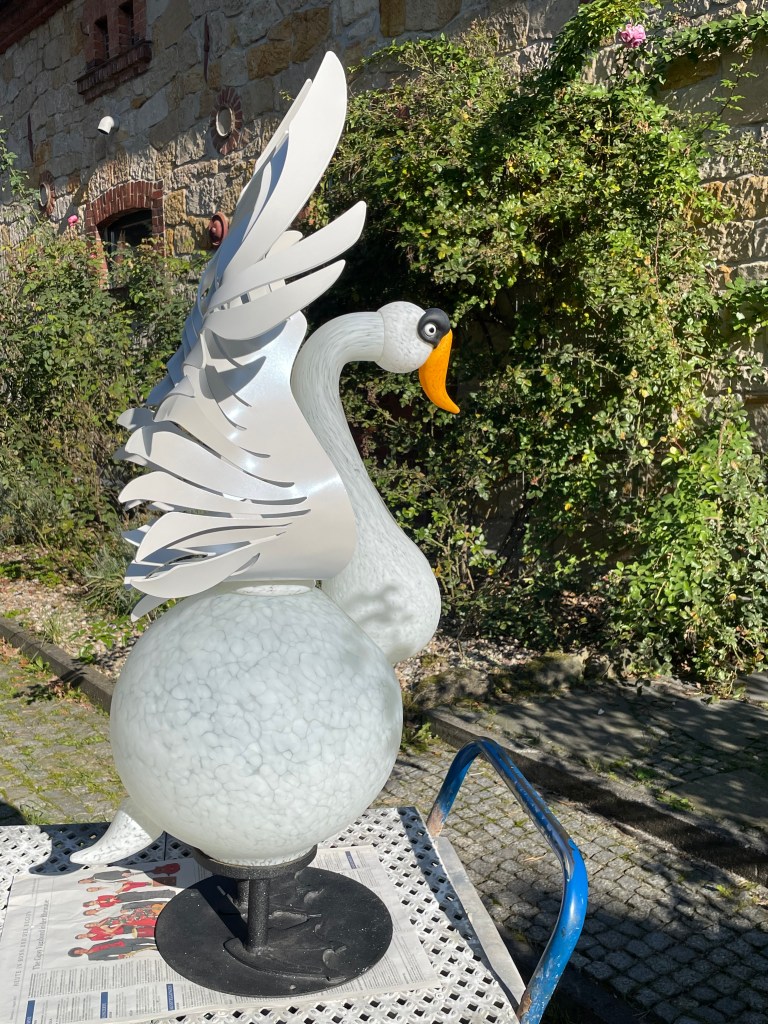
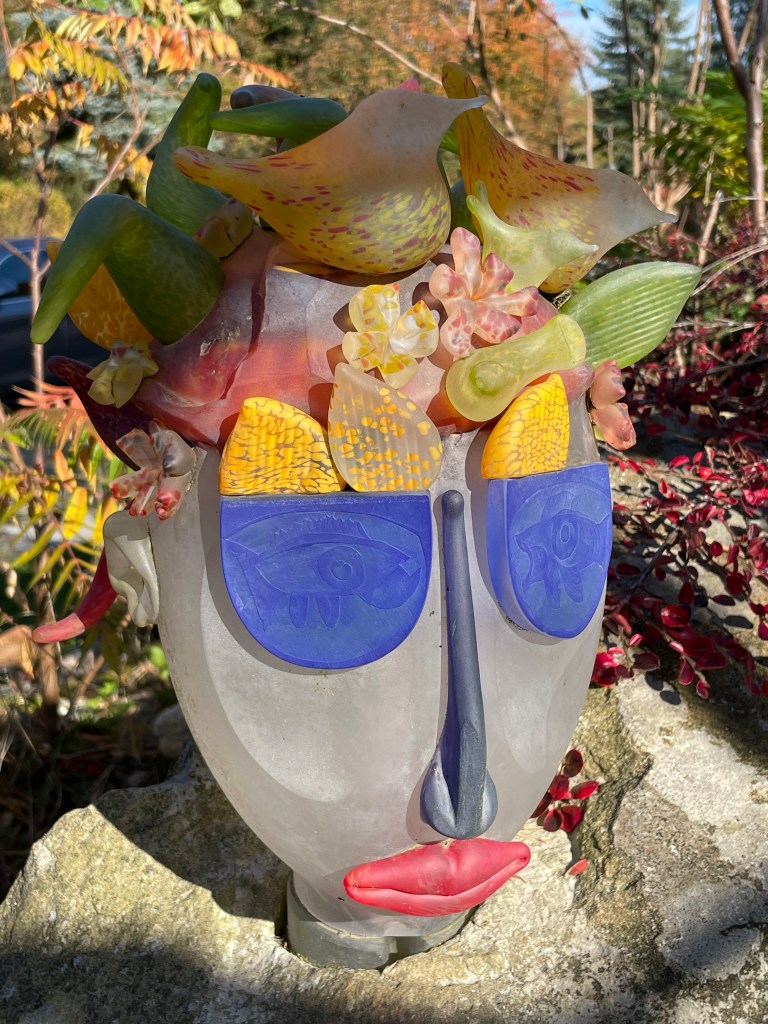
In Boleslawiec we got to visit a glass factory where artisans made yard art and other interesting pieces. We had fun looking at the creations and then going into the back room where the glass was blown and fashioned into all sorts of funky things.
The showroom:
The glass workers:
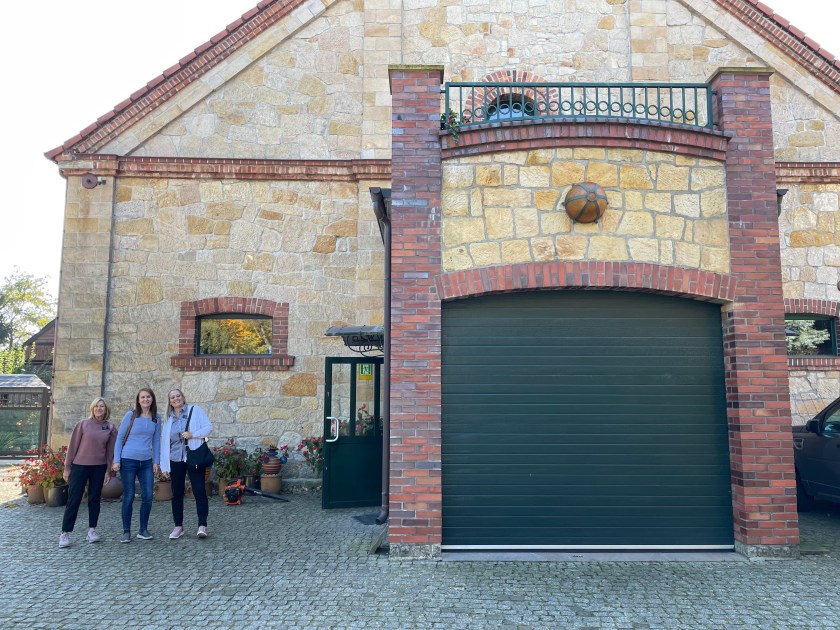
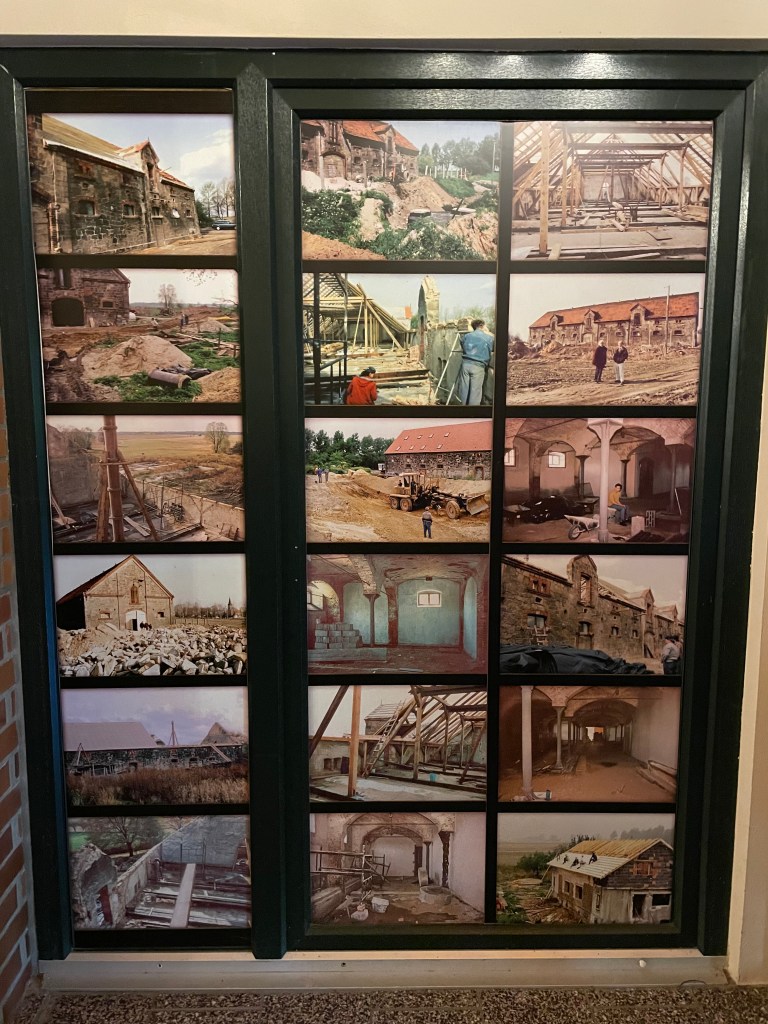
This is a historical building, restored into this glass factory.
































































































 Our Frankfurt Germany Mission