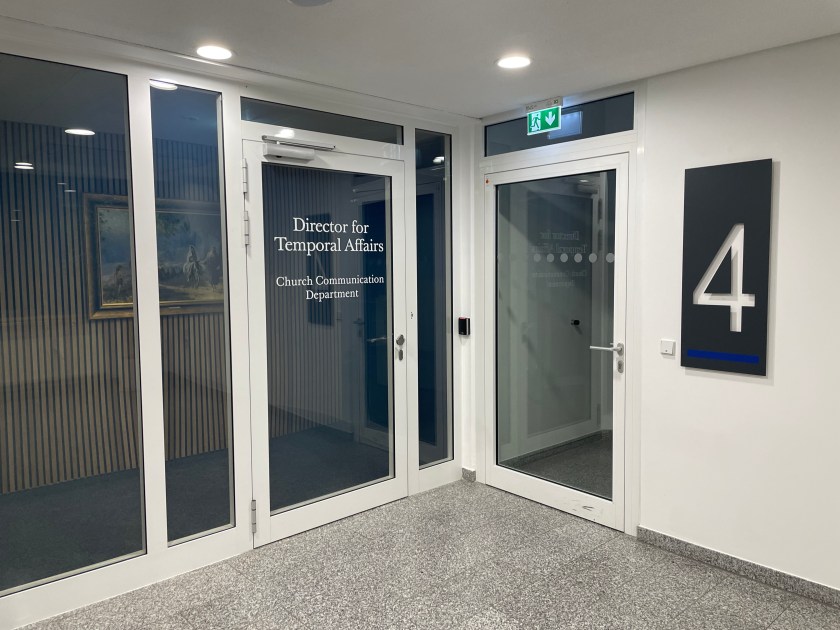
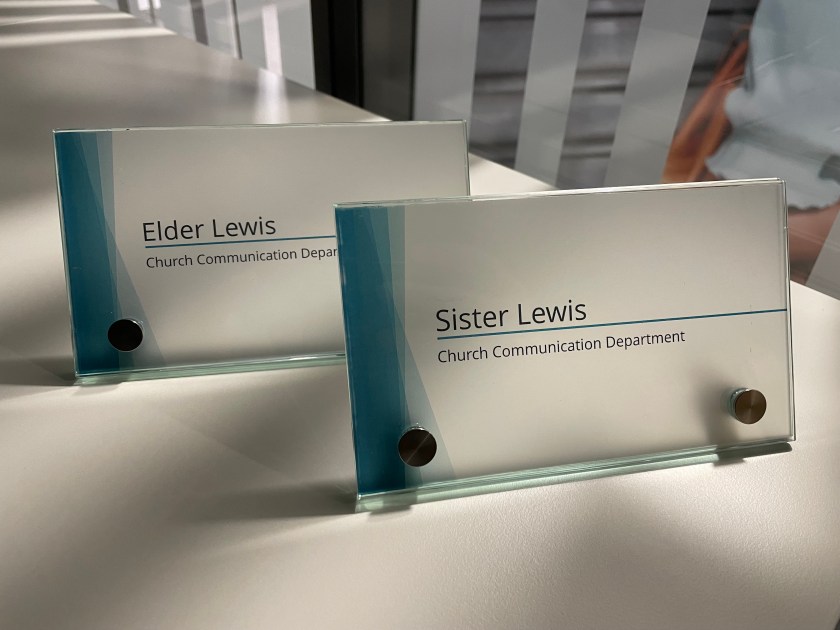
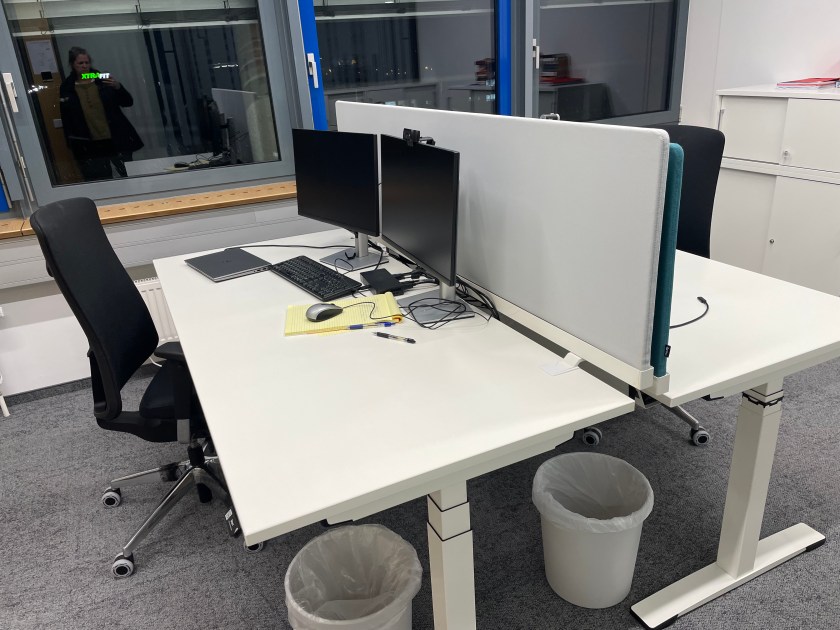
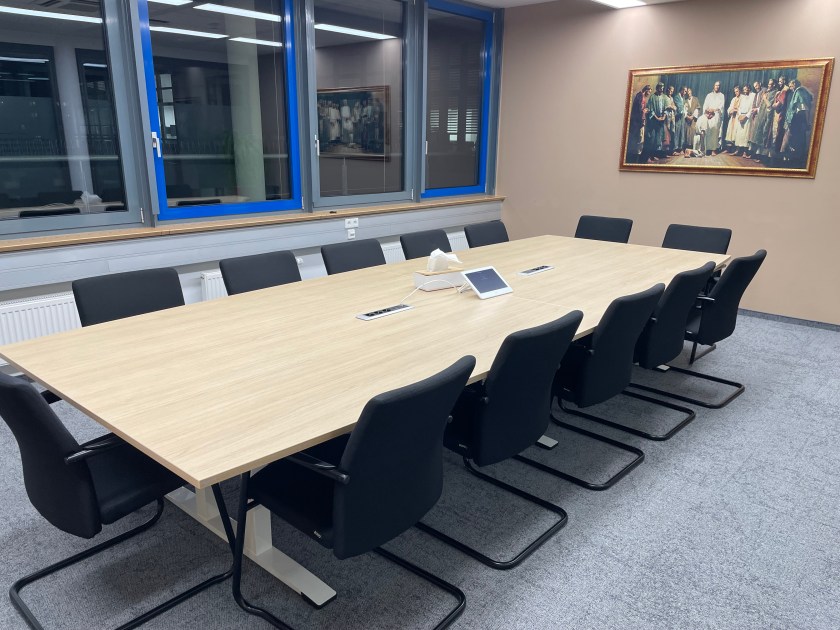
Late this evening we were back at the Phoenix house to unload the Book of Mormon Musical banners and displays. I took a last walk through our 4th floor, empty now, taking a few photos of the places where we’ve spent our last 18 months, then we drove away again, this time for the Last Time. It felt sad and empty. Everyone was gone, and now we are GONE.
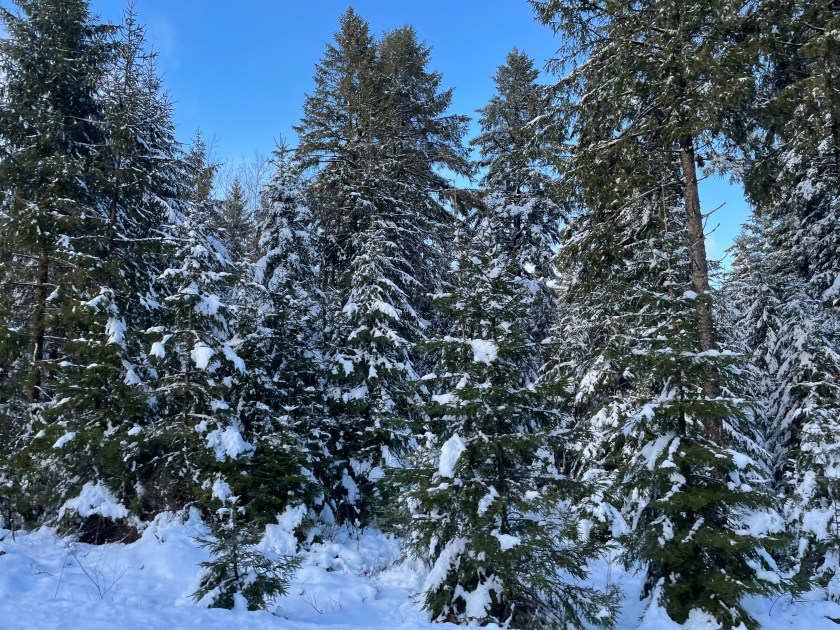
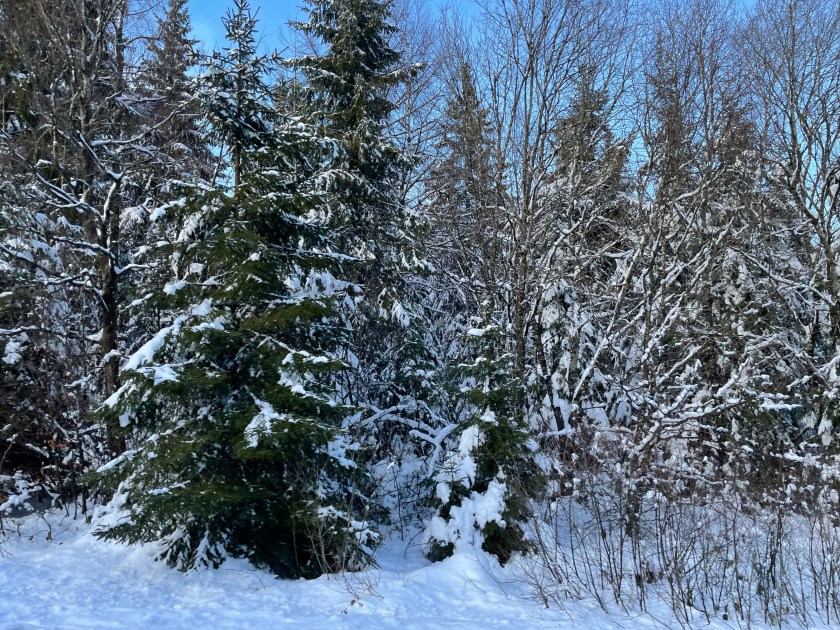
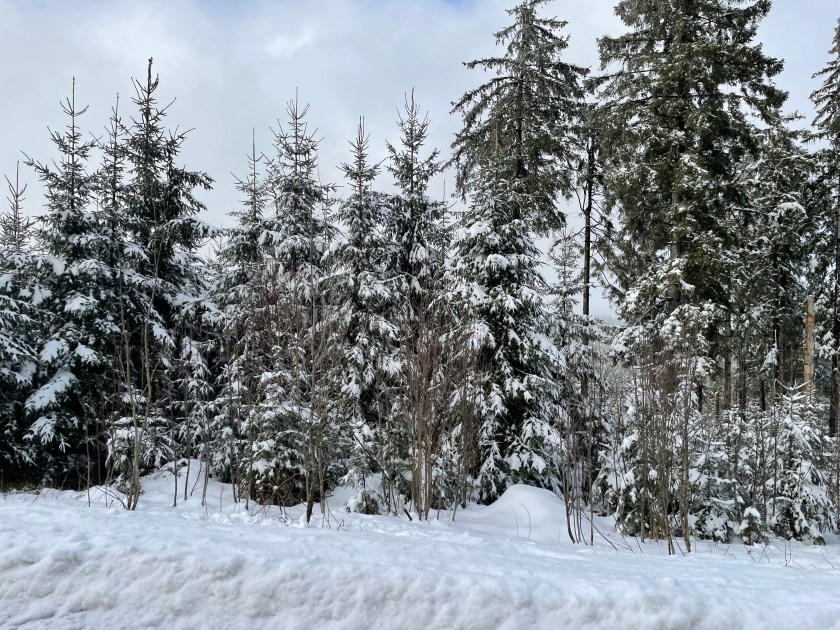
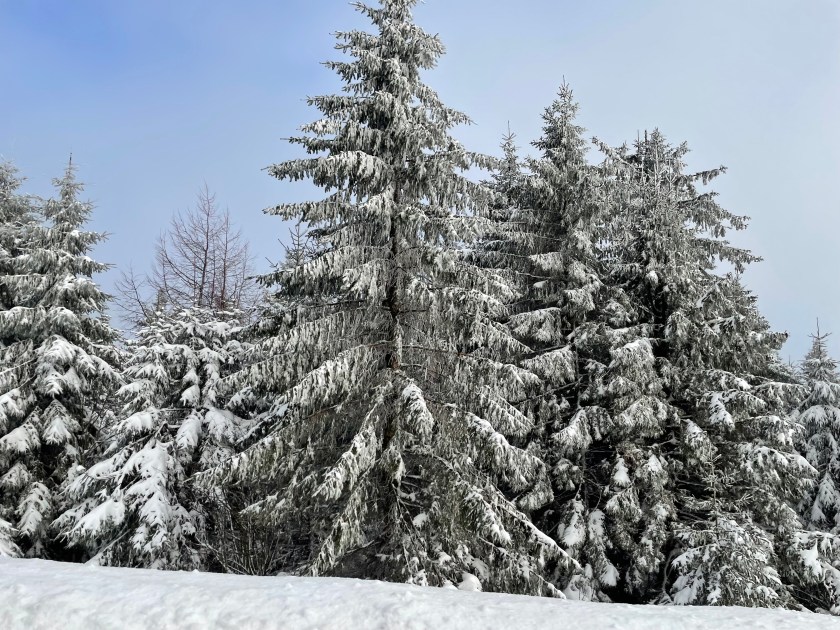
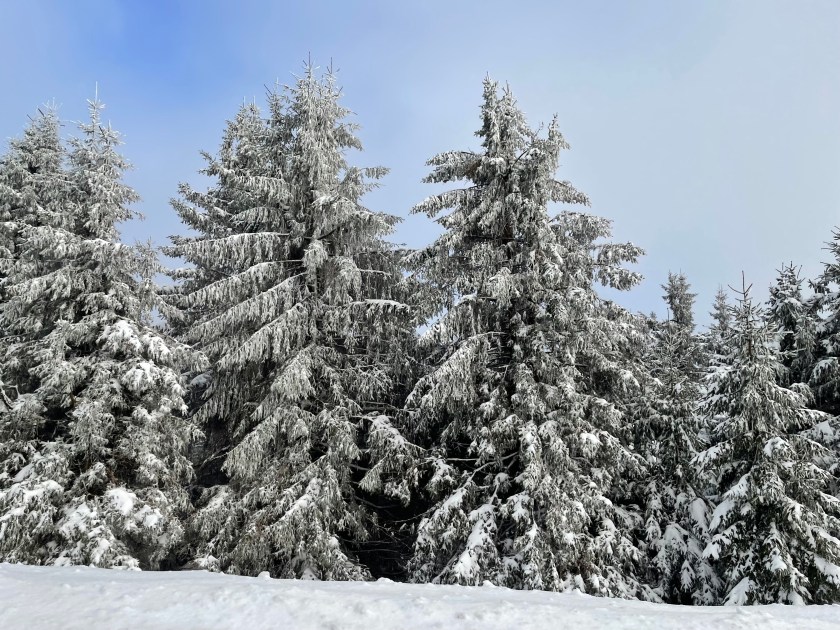
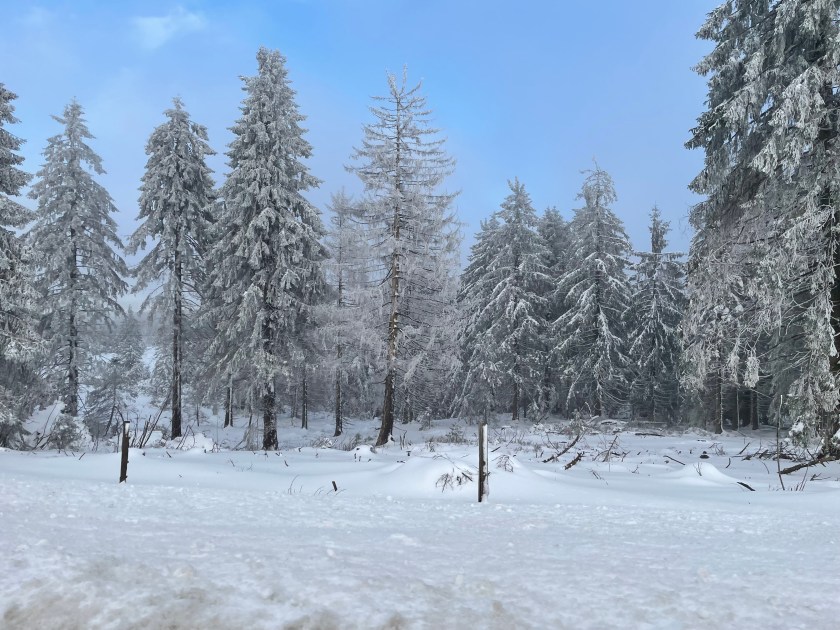
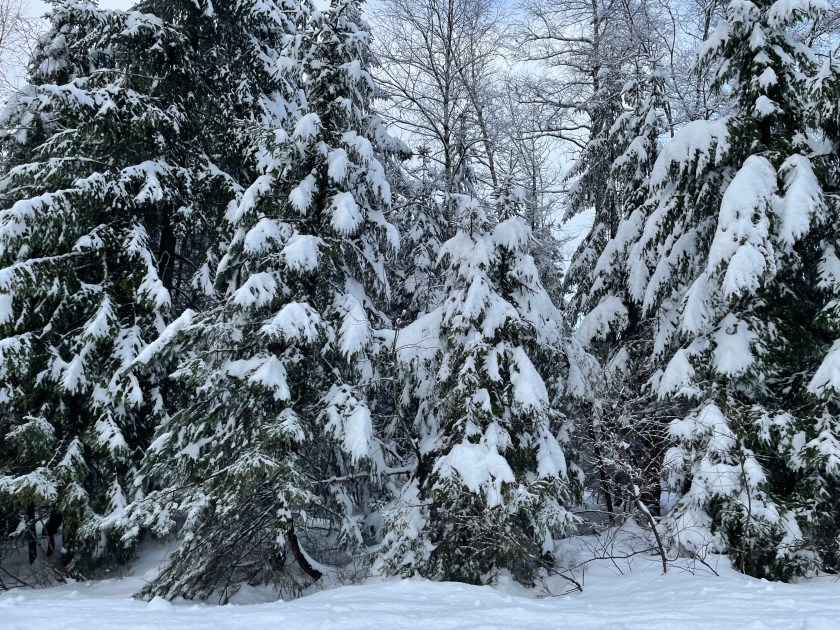
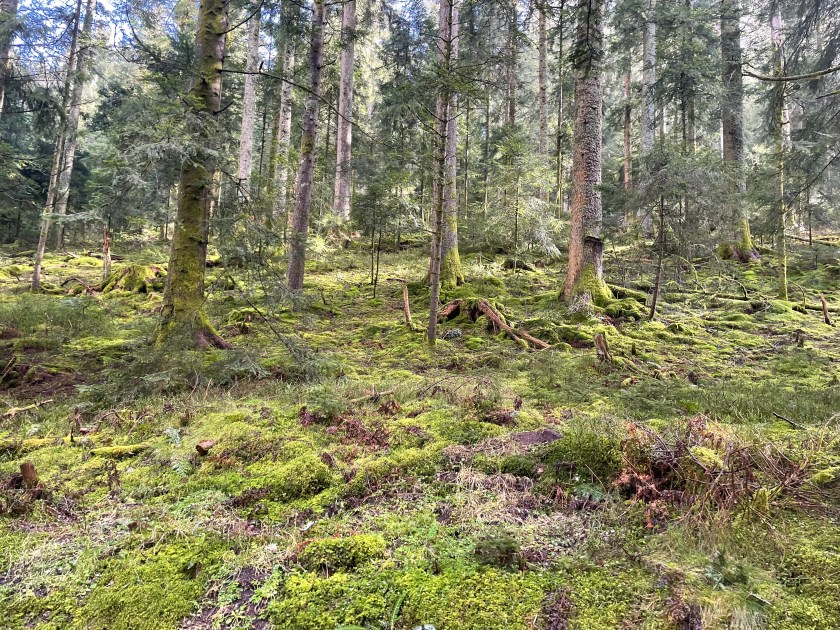
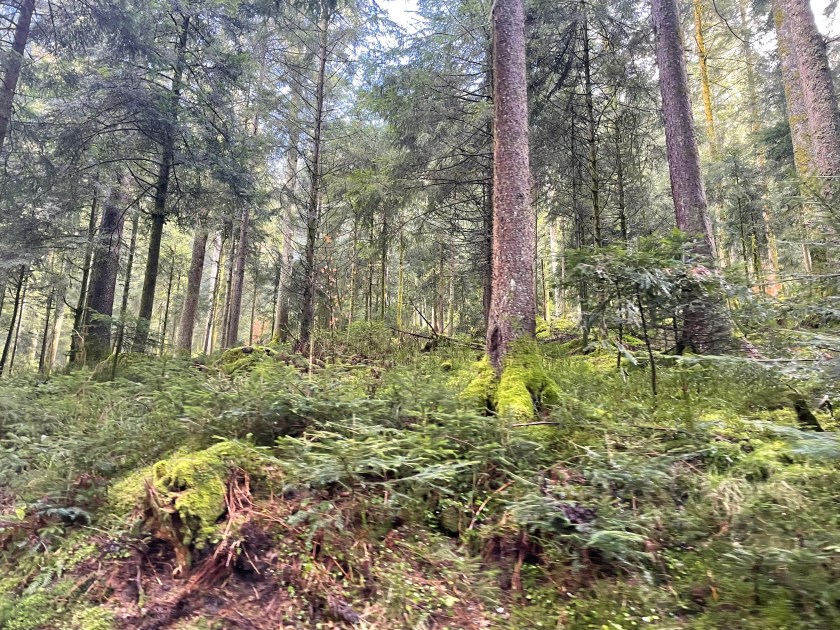
After leaving Schiltach, drove on, going back into the woods. As we climbed up into the mountains we came into snow. It was Beautiful, like driving through a forest of flocked pines, oh, so lovely. The trees all look the same, over and over and over. It’s called the Black Forest because it’s so dense and there is so much undergrowth. Everything on the ground is covered in green moss, looking like it never sees the light of day.
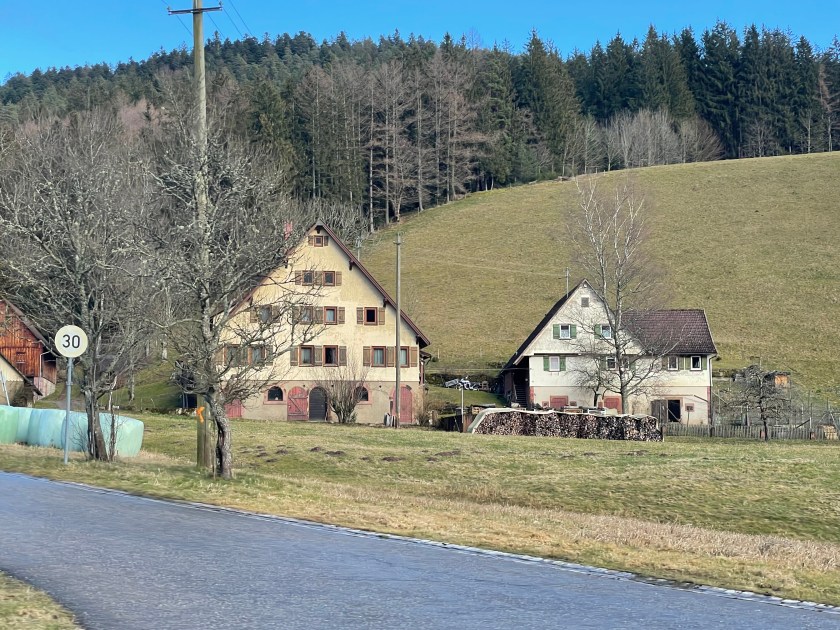
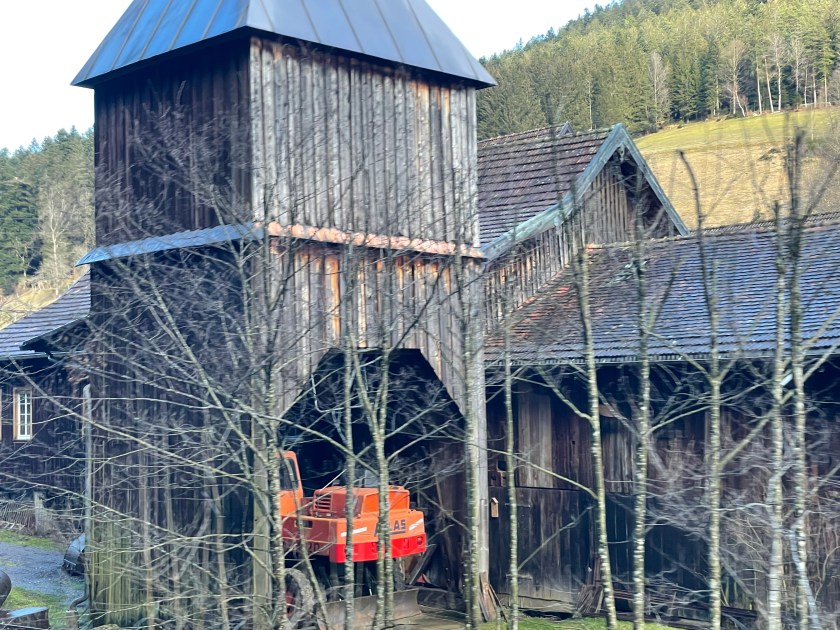
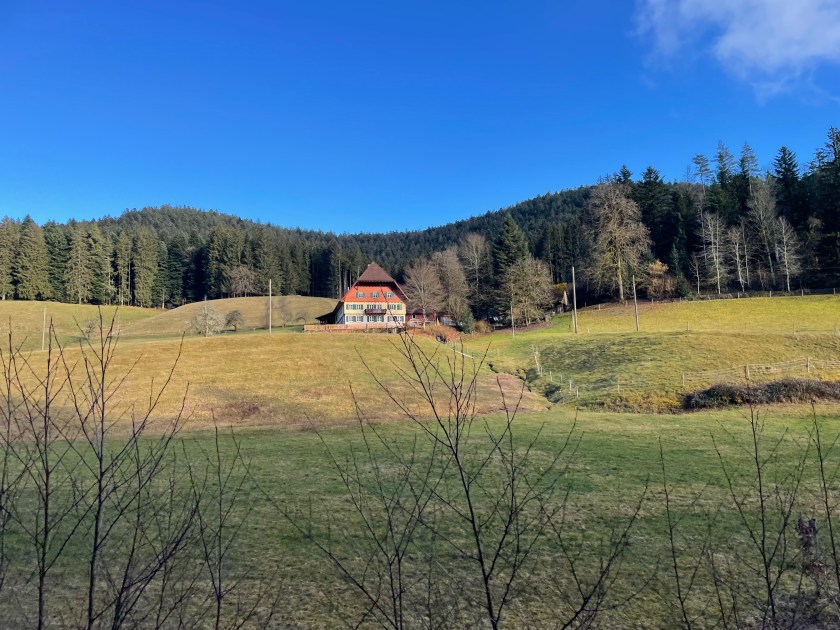
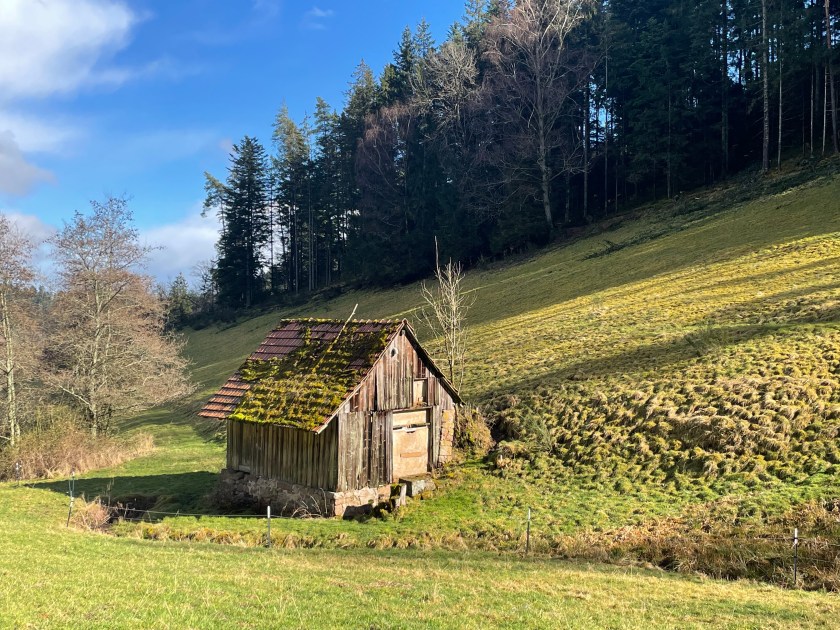
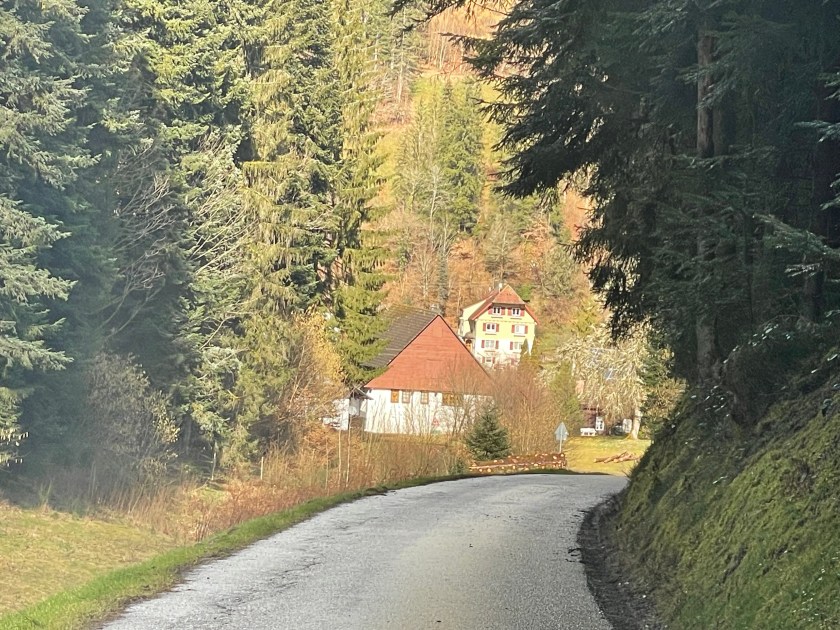
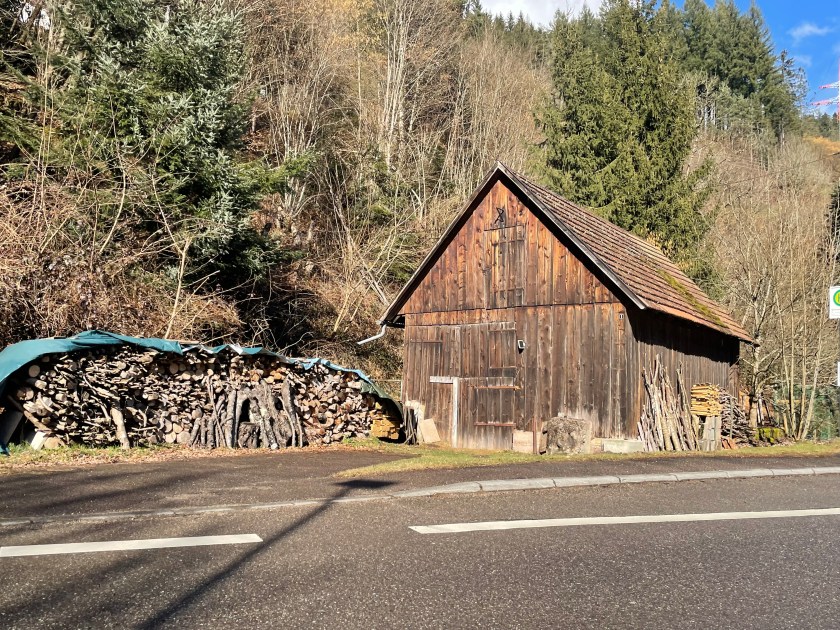
Here are a few pics of old farm homes along the way, as we began to climb higher and higher.
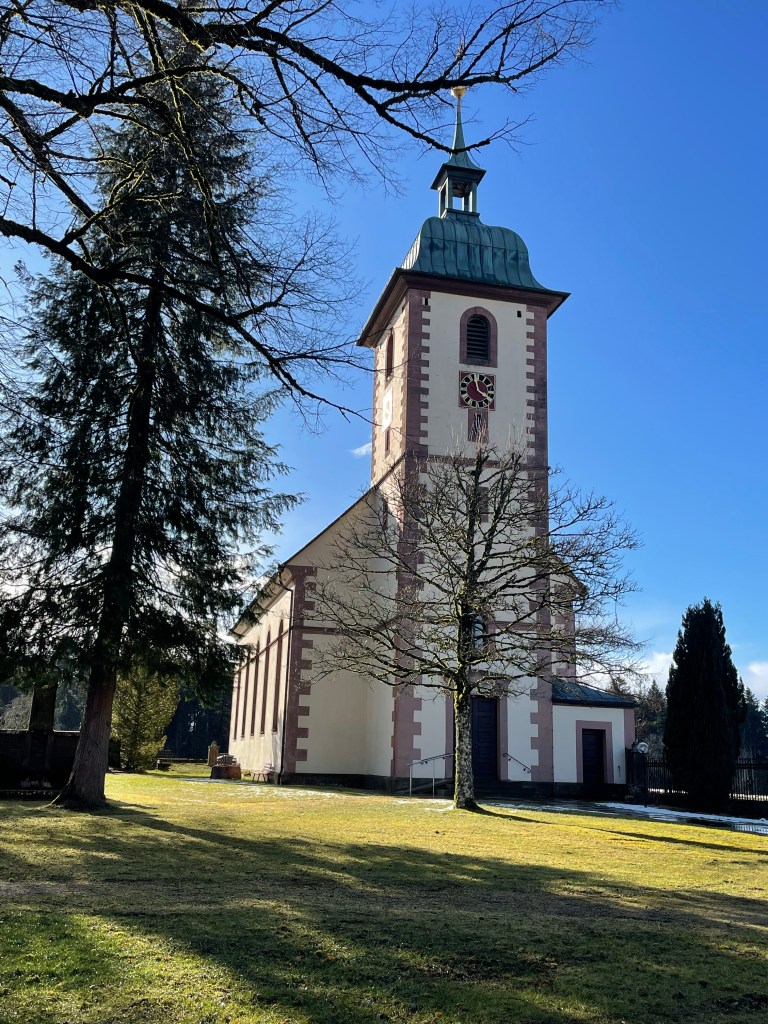
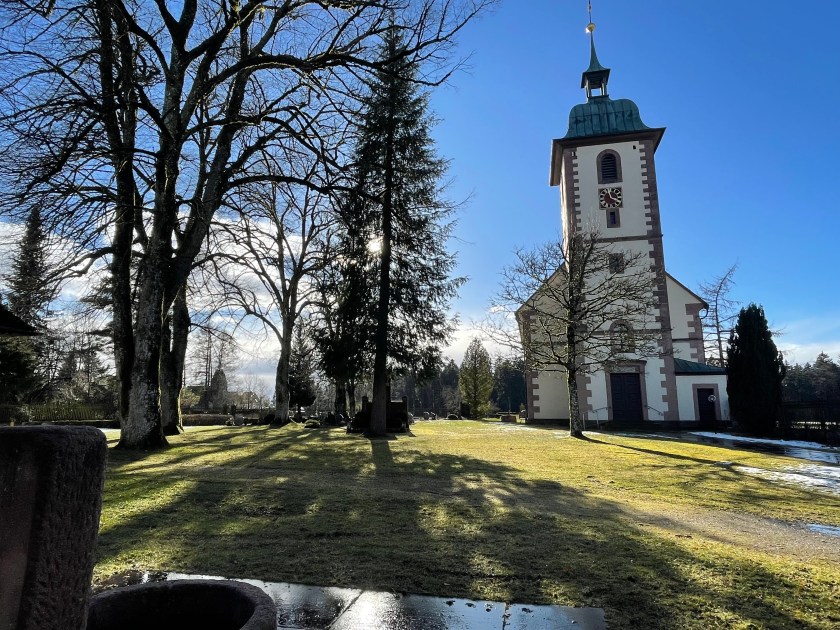
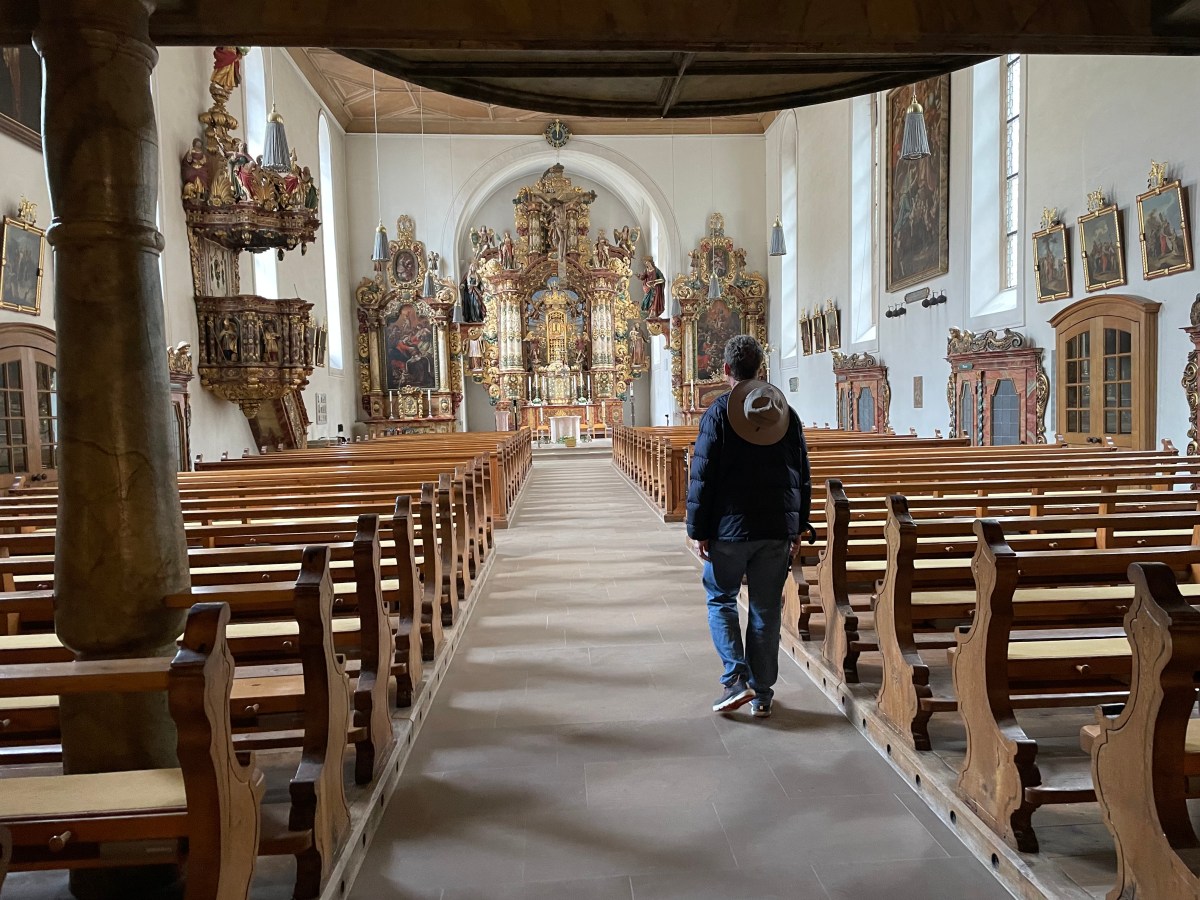
This was a beautiful church in a small village.
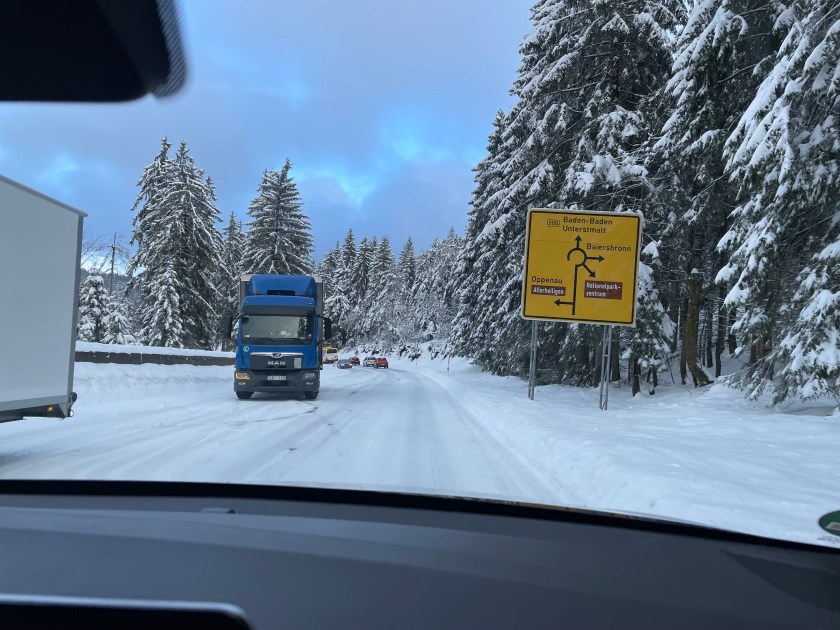
We climbed up and up and in and out of clouds. And misty snow. We were on more back roads, with very few other cars coming or going. John was cautious on the narrow road, pulling over often to let cars pass. The roads were cleared, except for one stretch that was rather treacherous. There were some large trucks at the bottom of a hill that couldn’t make it up this patch of uncleared icy road. We passed them carefully on the way to our last destination today: Mummelsee, a high mountain lake. It took about an hour to get there through these snowy mountains.
A treacherous spot:
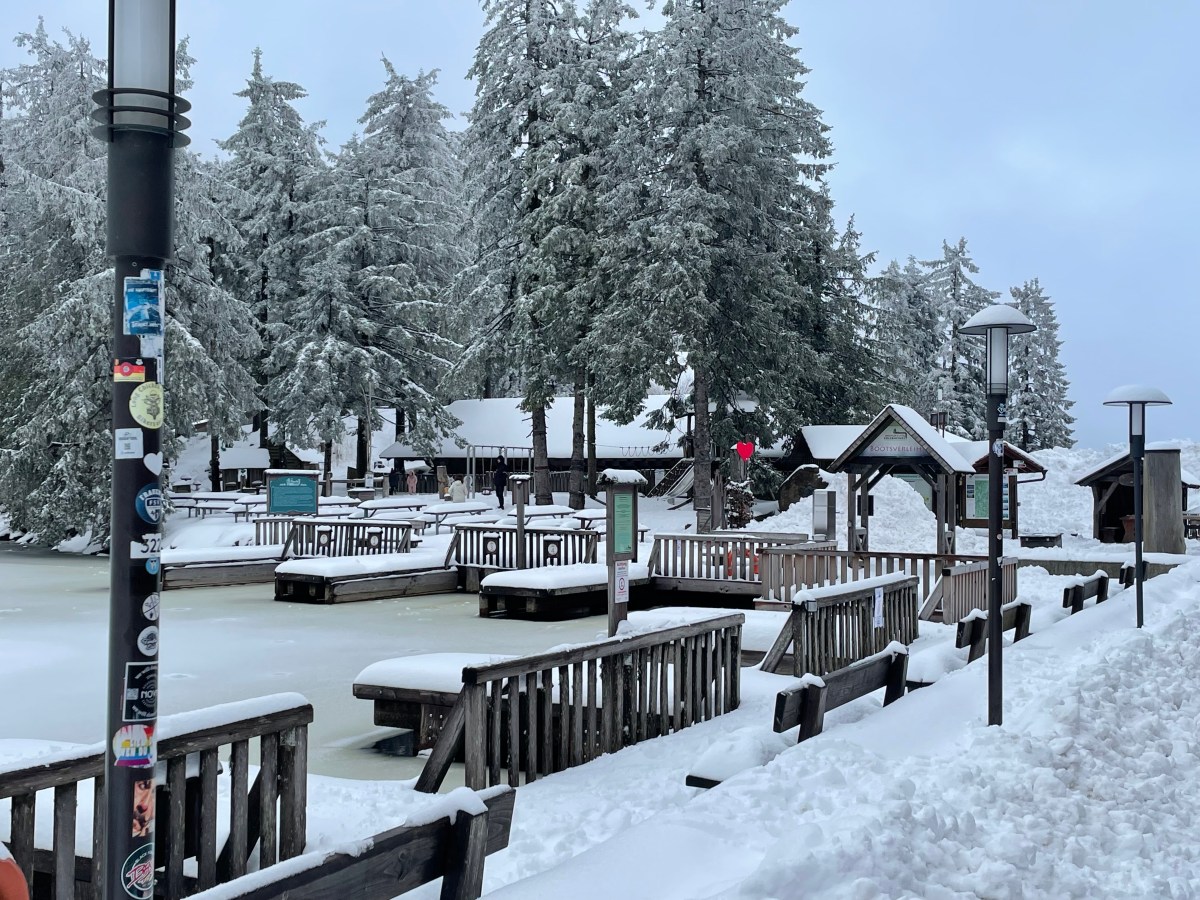
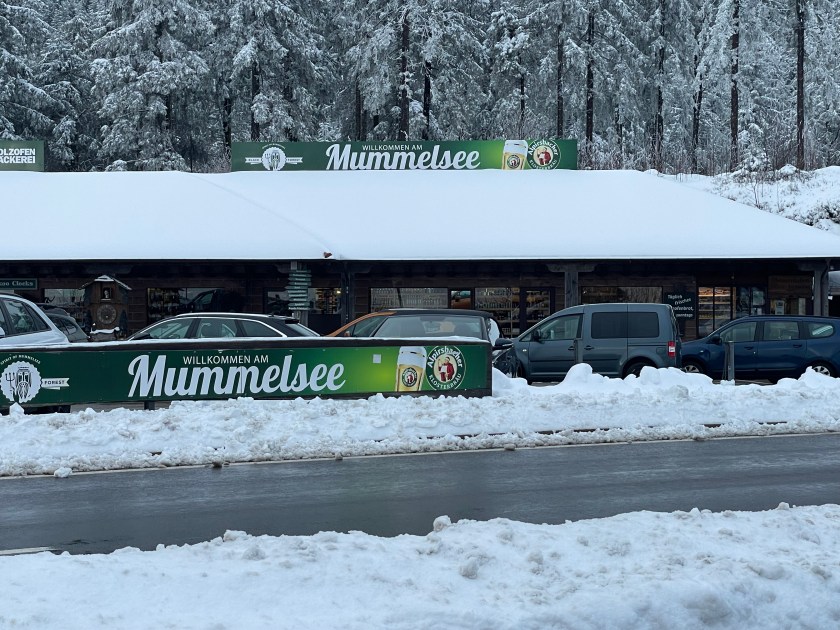
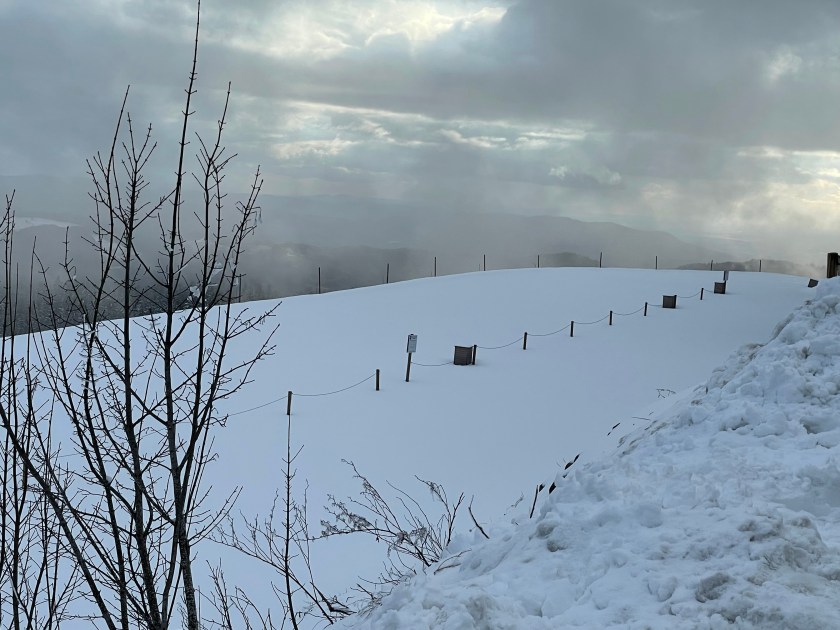
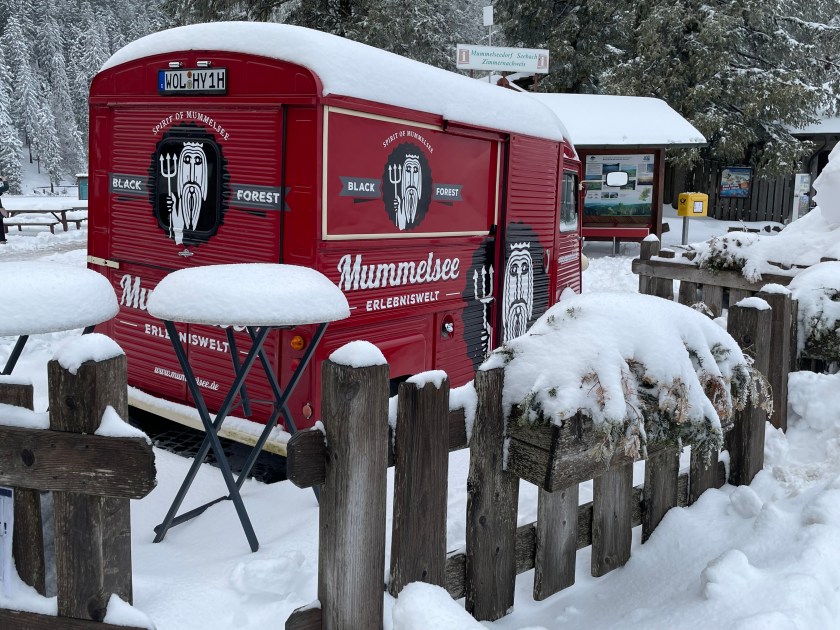
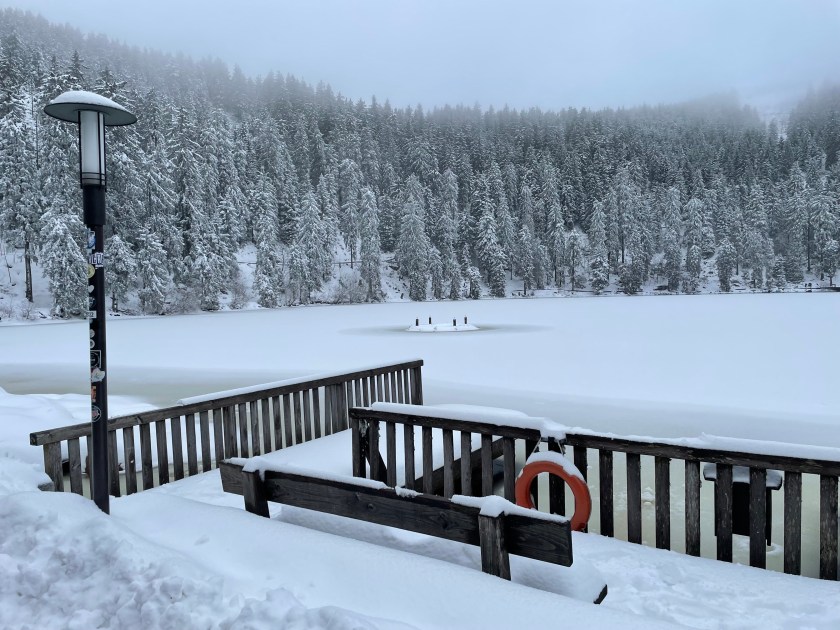
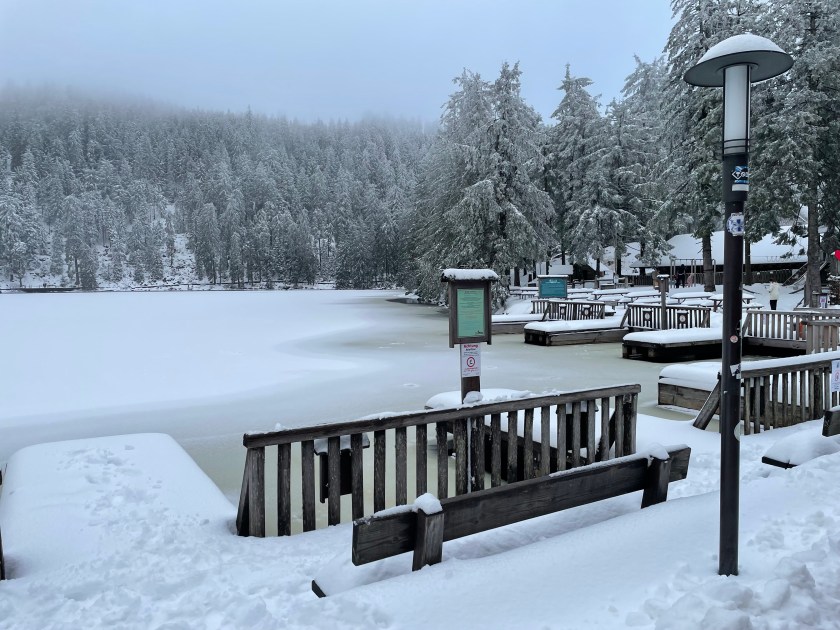
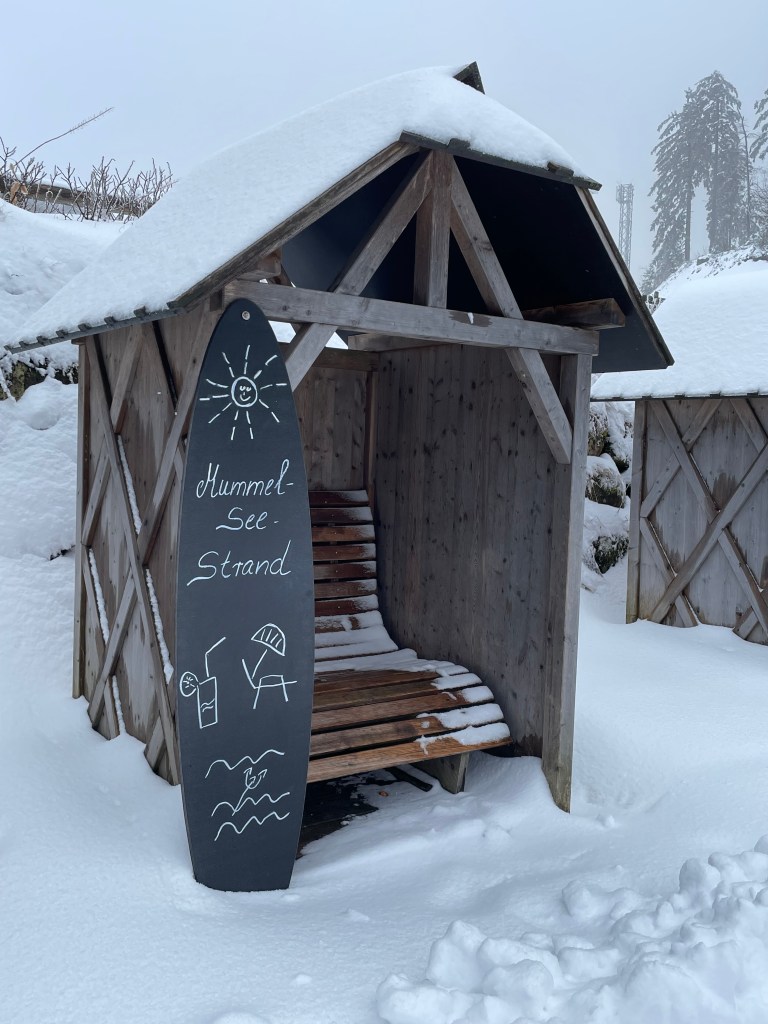
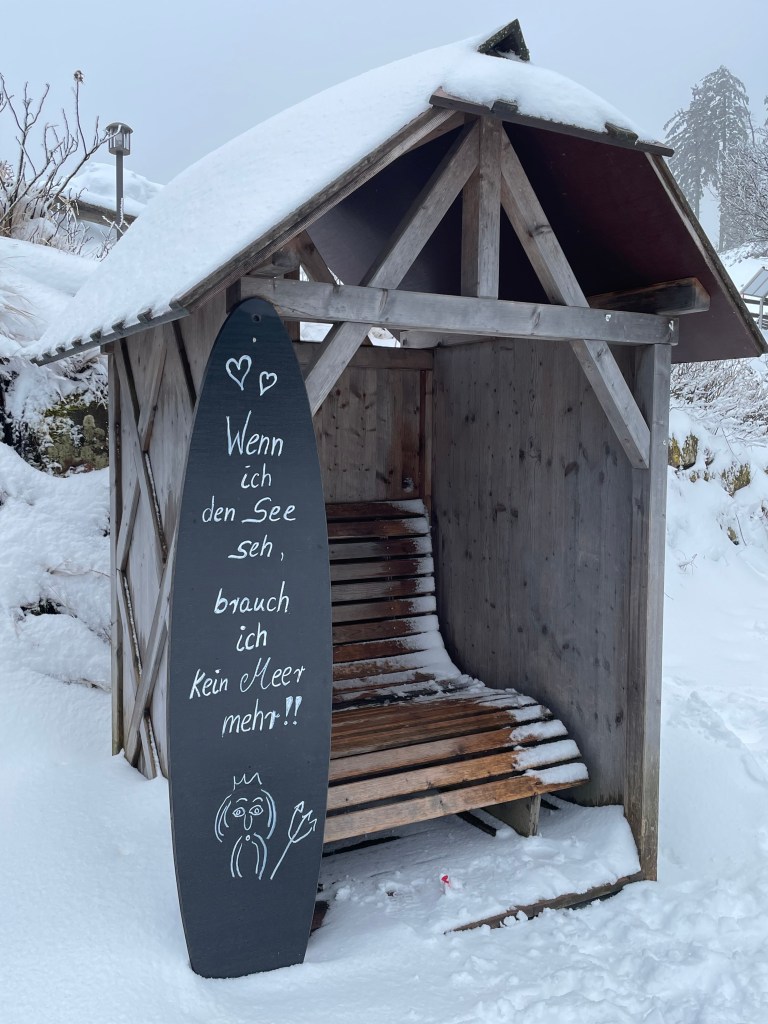
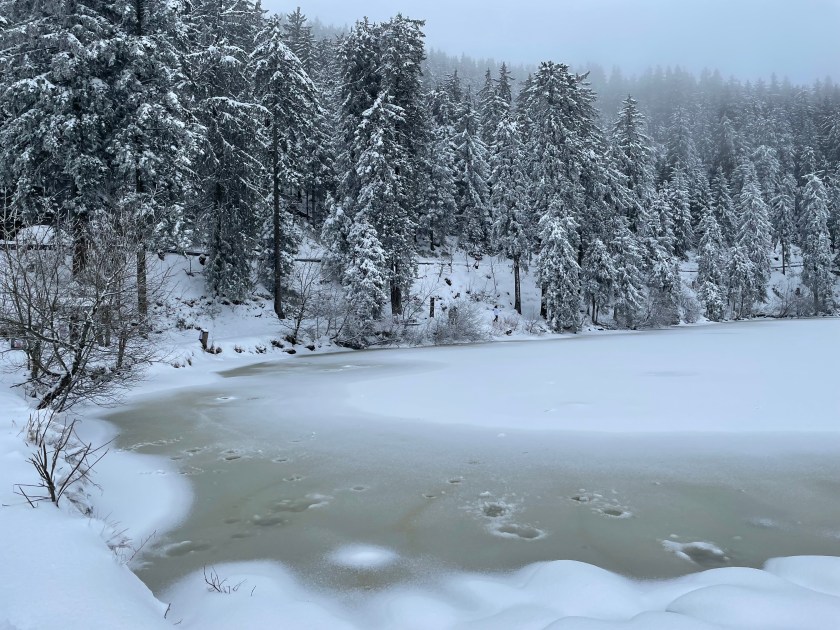
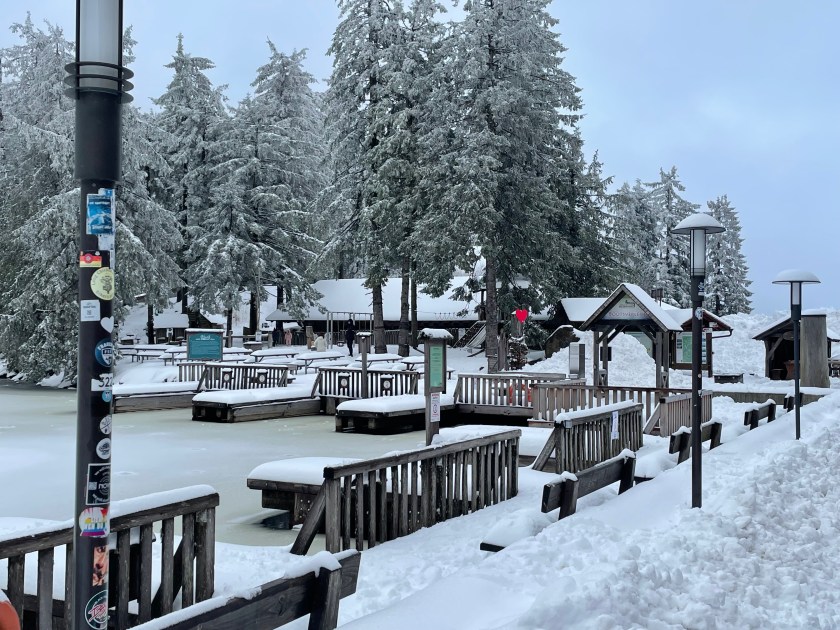
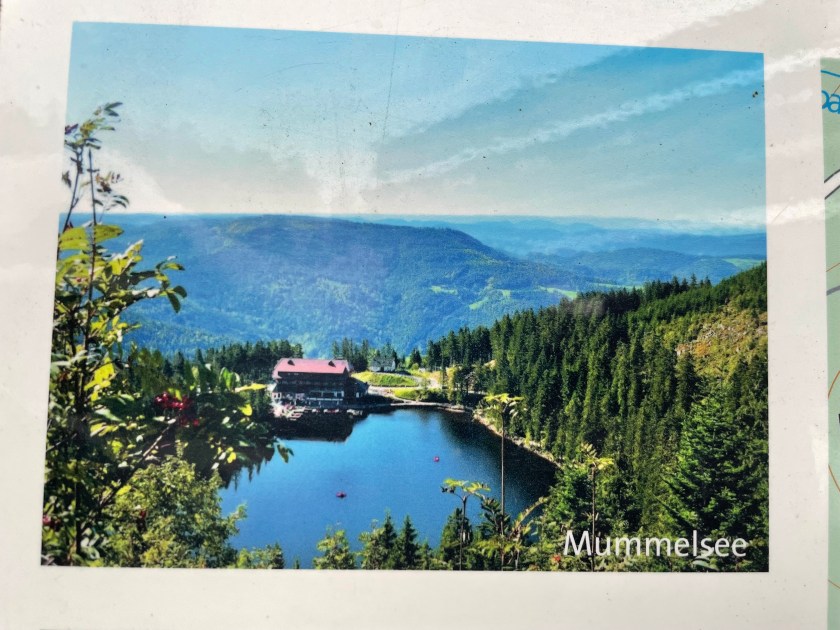
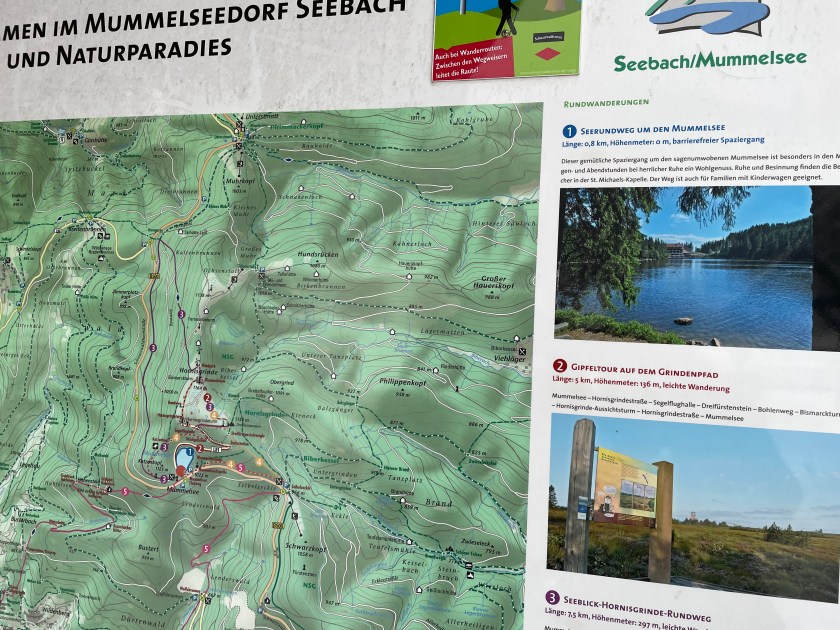
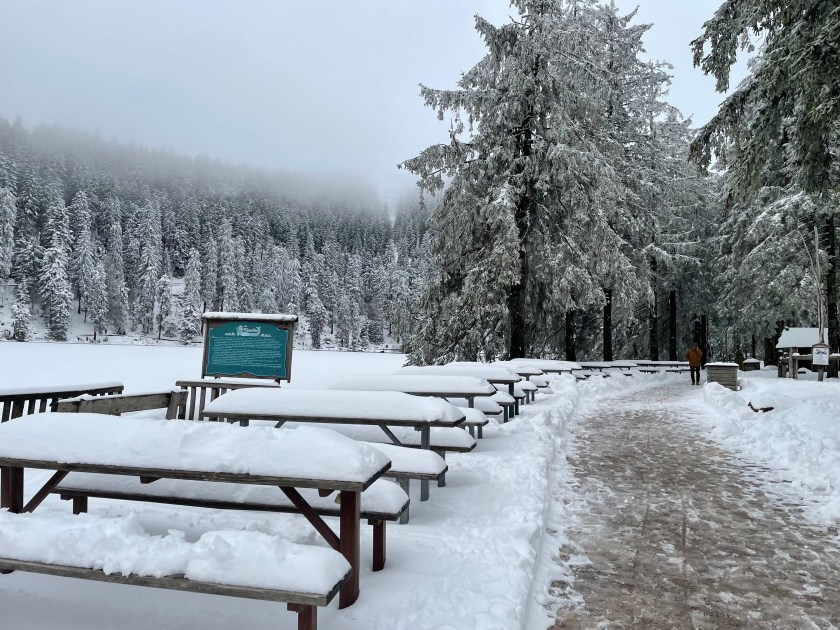
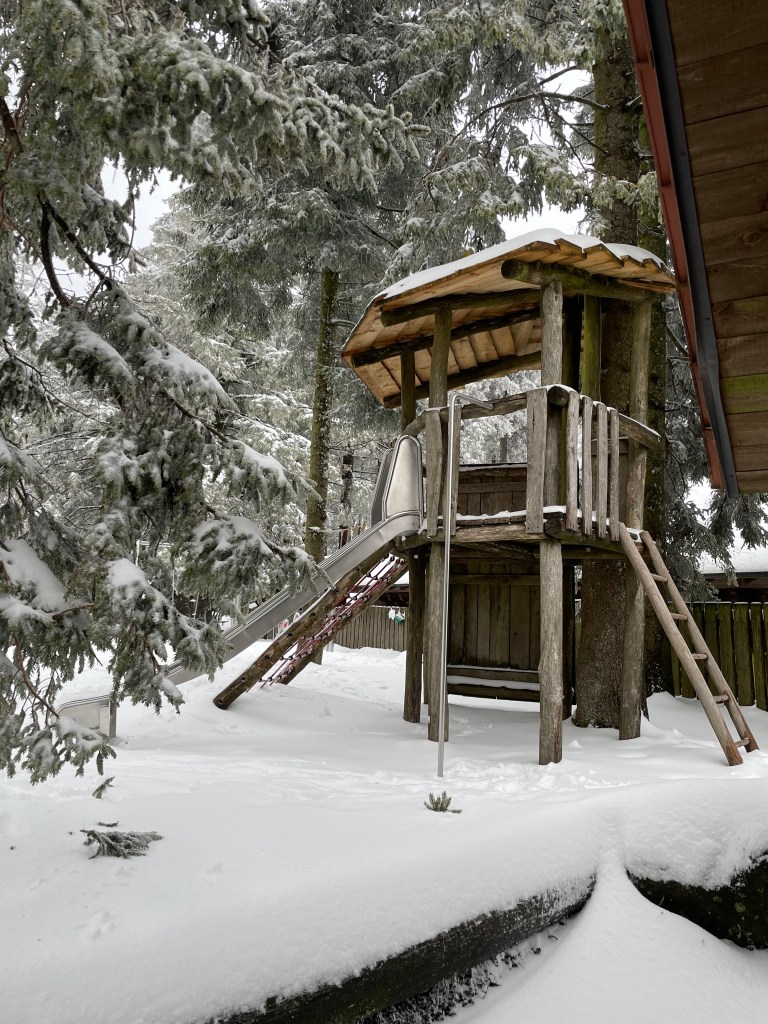
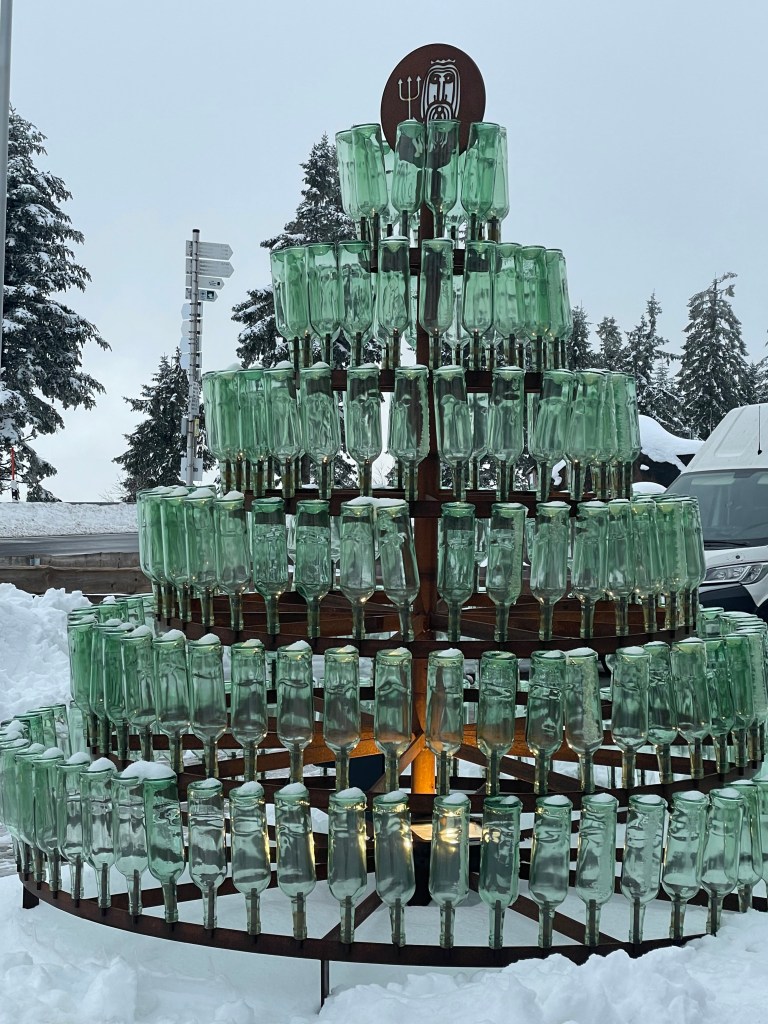
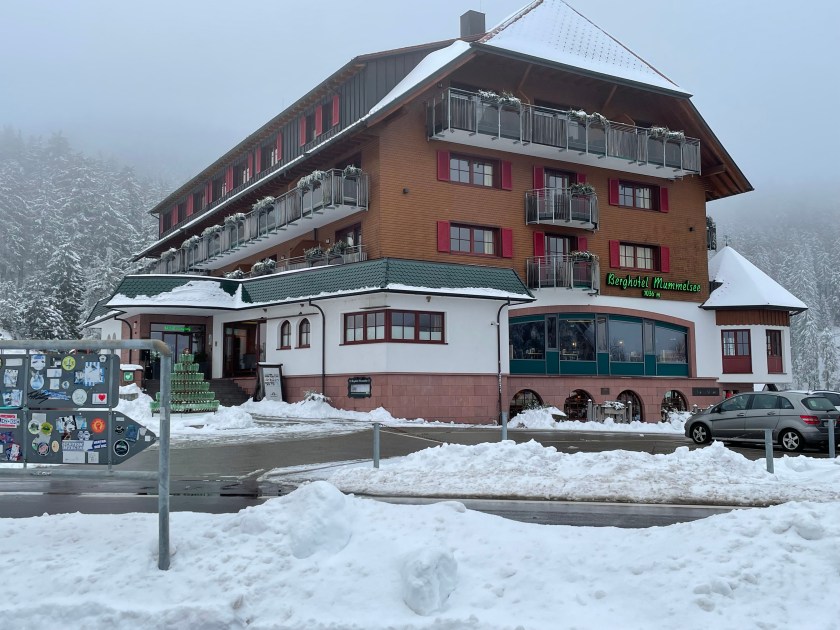
I’m not sure what exactly we expected to see on top of this last mountain, but it wasn’t a small frozen lake covered in snow! The photos were all taken in the summer! There is a large hotel/lodge at the little lake and a ski resort nearby. I think most of the people visiting here are skiers. There was a cleared path around the lake with a few people walking it through the snow. There were little docks for paddle boats and picnic tables, all with several inches of new snow.
A summer view:
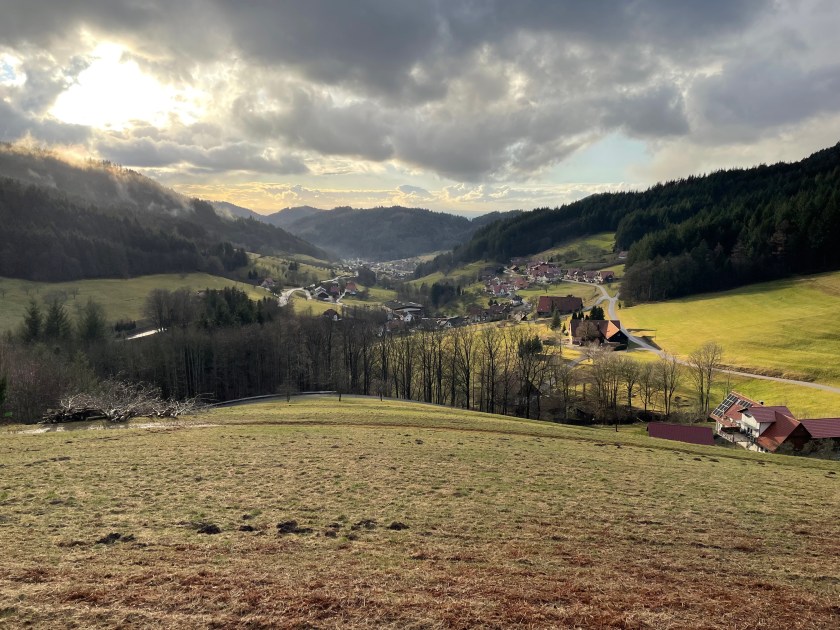
We stayed about 10-15 minutes there, looking around, then we carefully headed back down another way. We descended quite quickly into a spectacular green valley with scattered villages. It looked like these were nice newer homes, maybe retirement places for wealthier people who like living near a ski resort. It reminded me of Midway.
Once down in the valley, we got on the freeway, heading back to Frankfurt, about 2 hours, 45 min away.
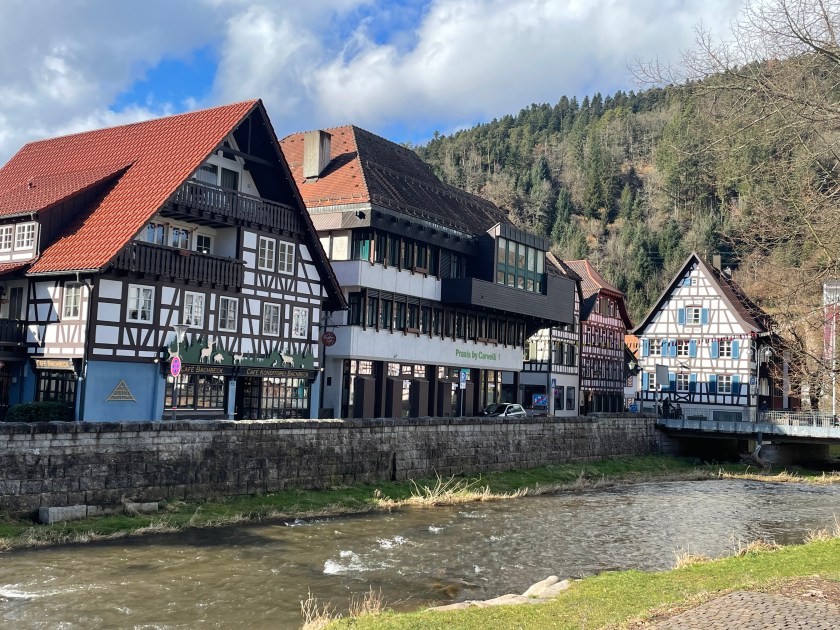
After winding our way through forests on narrow mountain roads, we eventually made our way to Schiltach, the town John had found on a website as one of the best Schwarzwald Towns to visit–an old Medieval town off the beaten path.
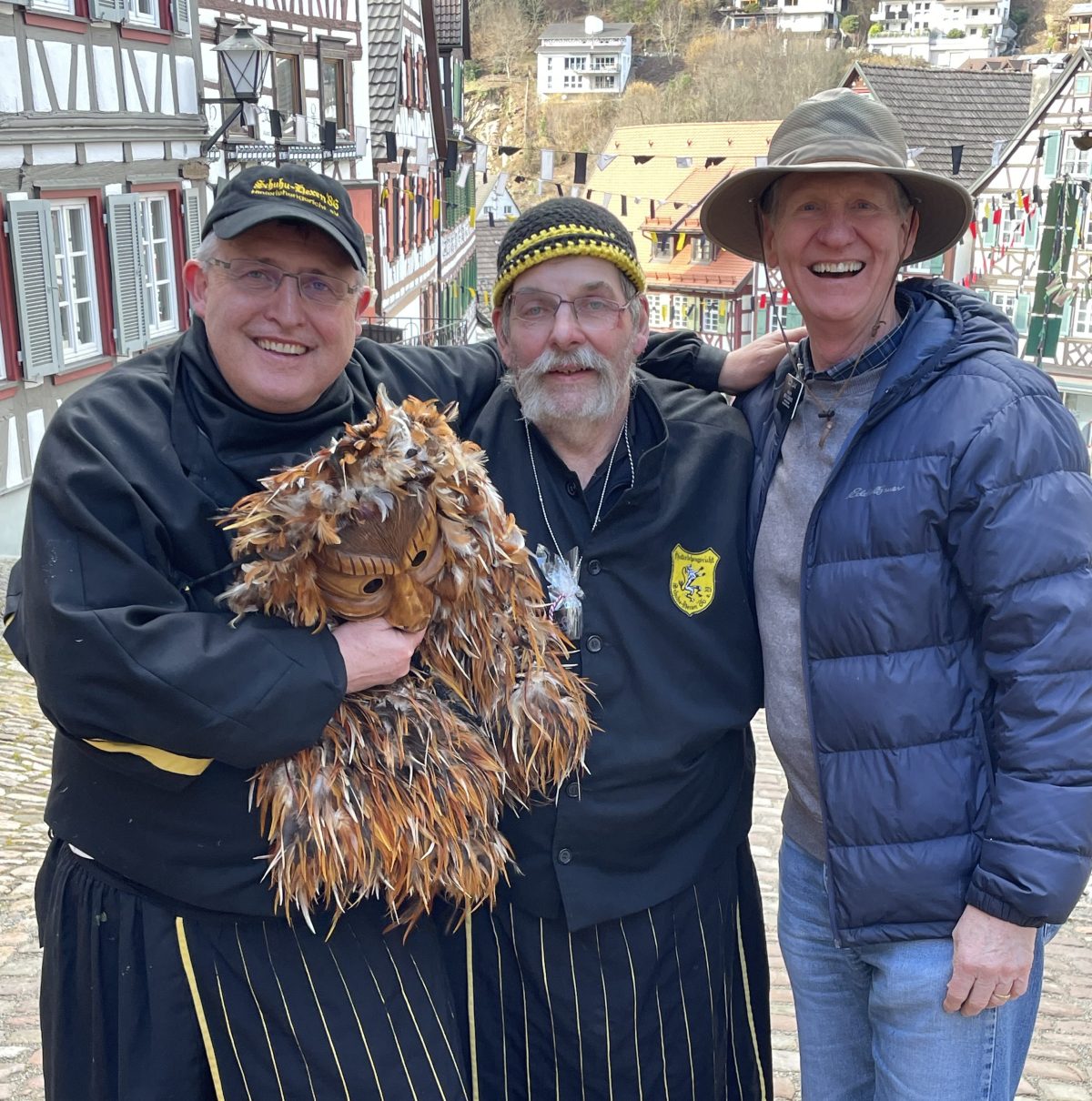
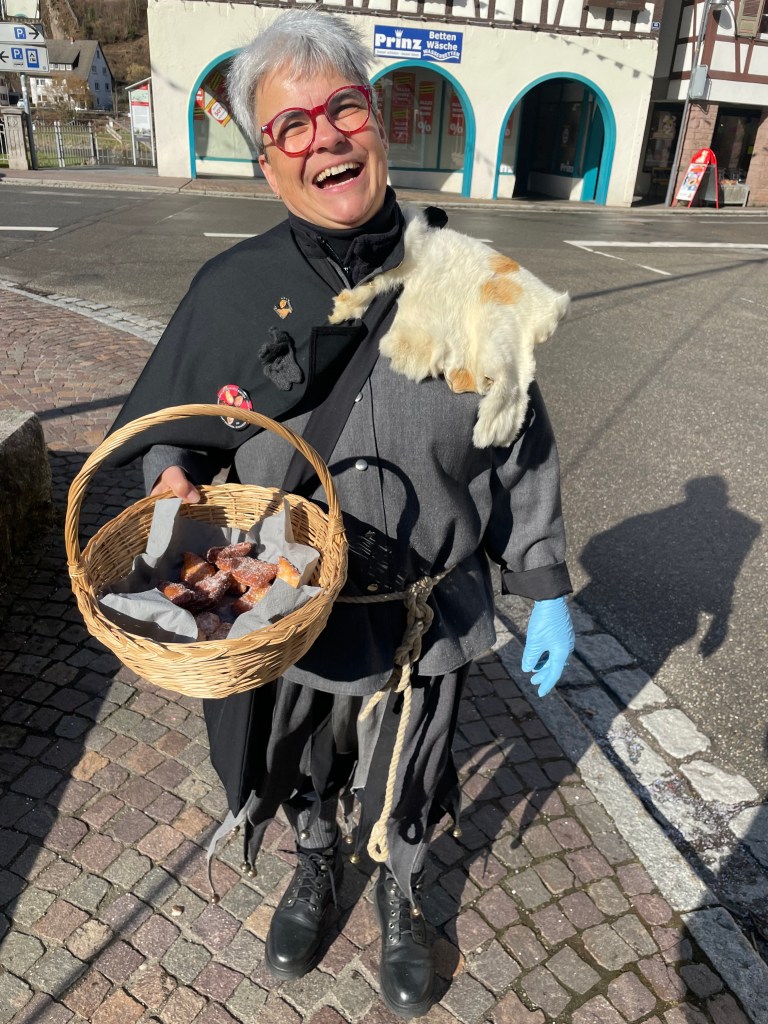
We parked by the river and then wandered into town. Almost immediately we were met by a lady about our age, dressed for Fastnacht in black and gray with a costume skirt that had points and bells on the tips. She had an animal skin over her shoulder and she carried a basket filled with little square donuts covered with sugar. She came right up to us and offered us one, welcoming us to Schiltach. We noticed a few other costumed men doing the same thing along the main road. When John asked her if she had made the donuts herself and she proudly said, “yes!”
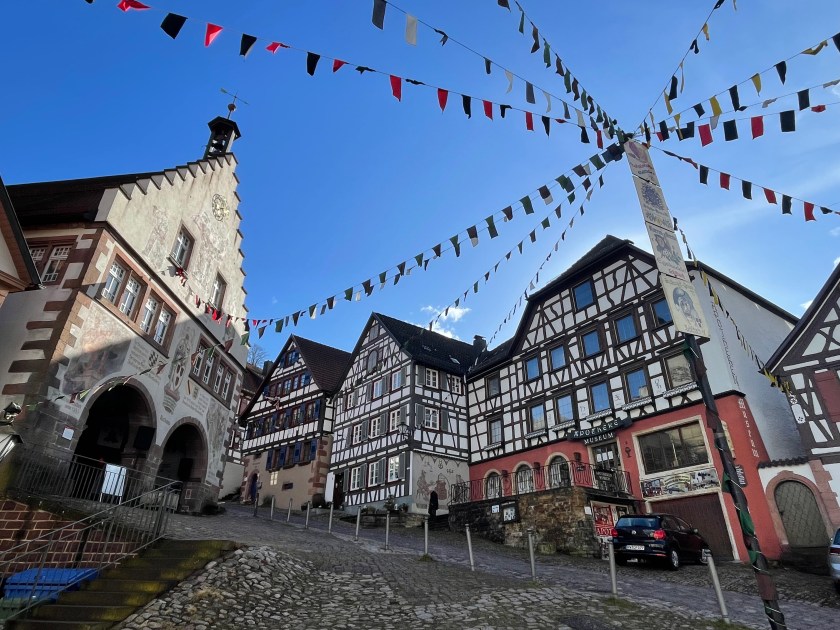
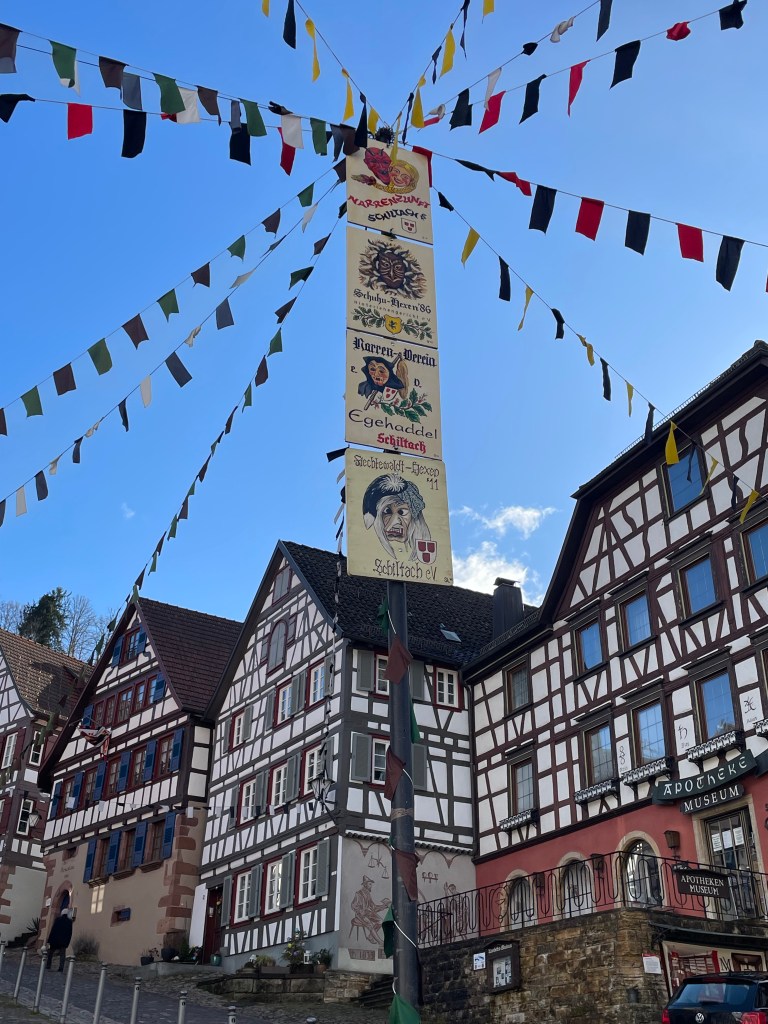
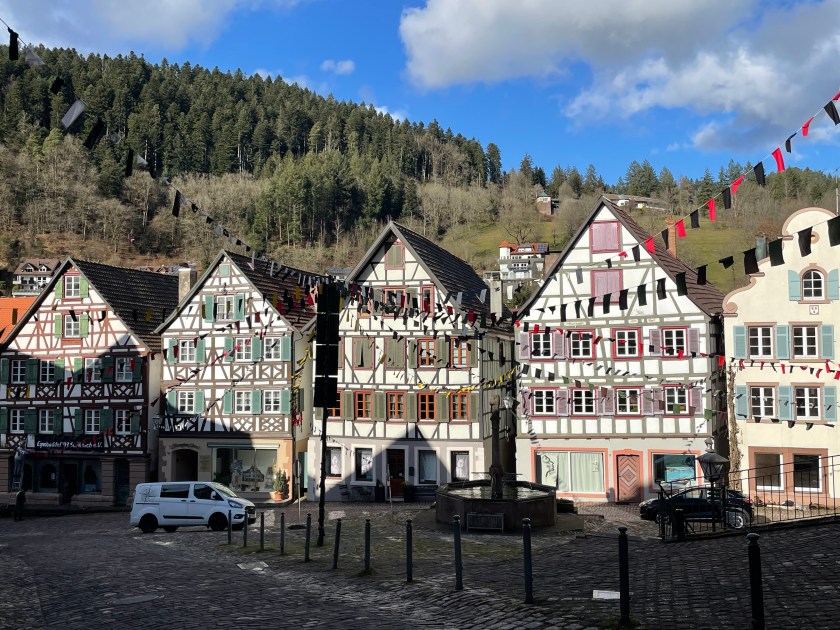
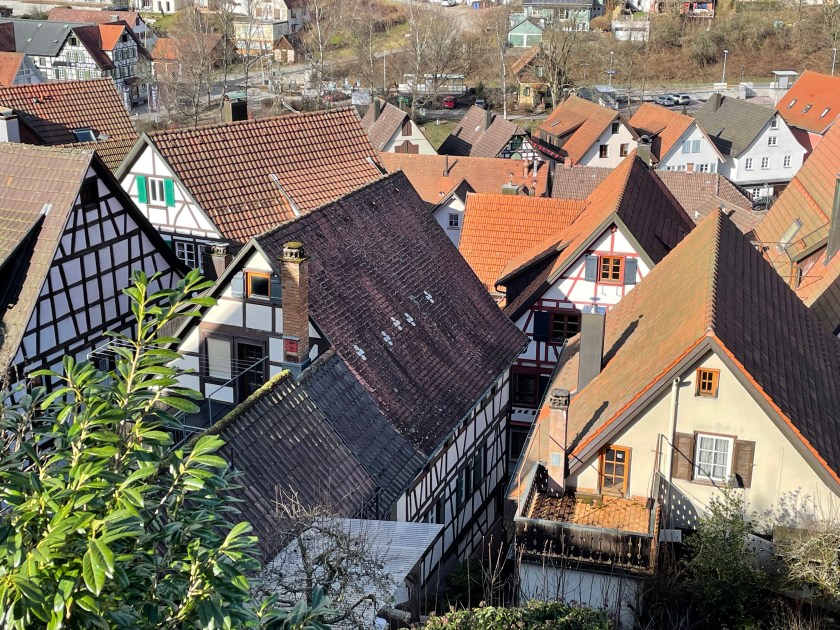
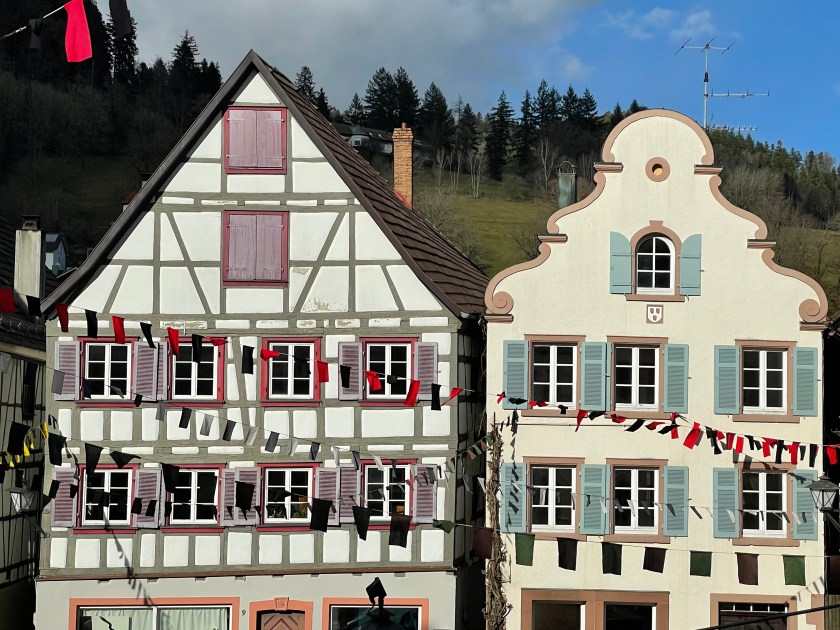
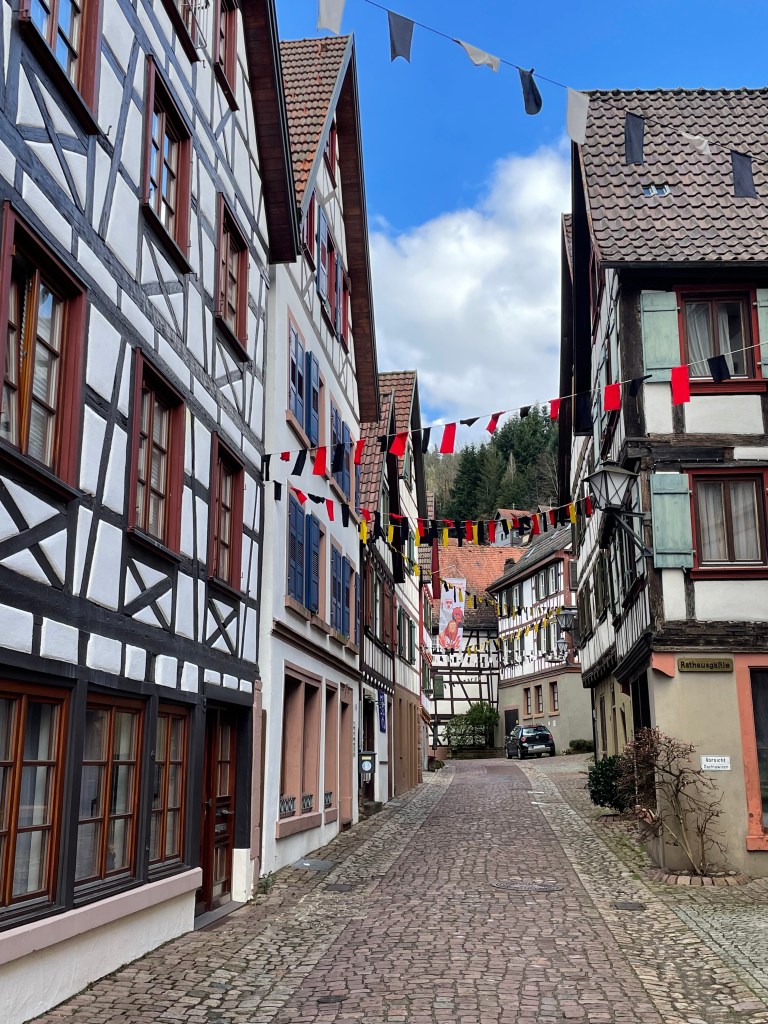
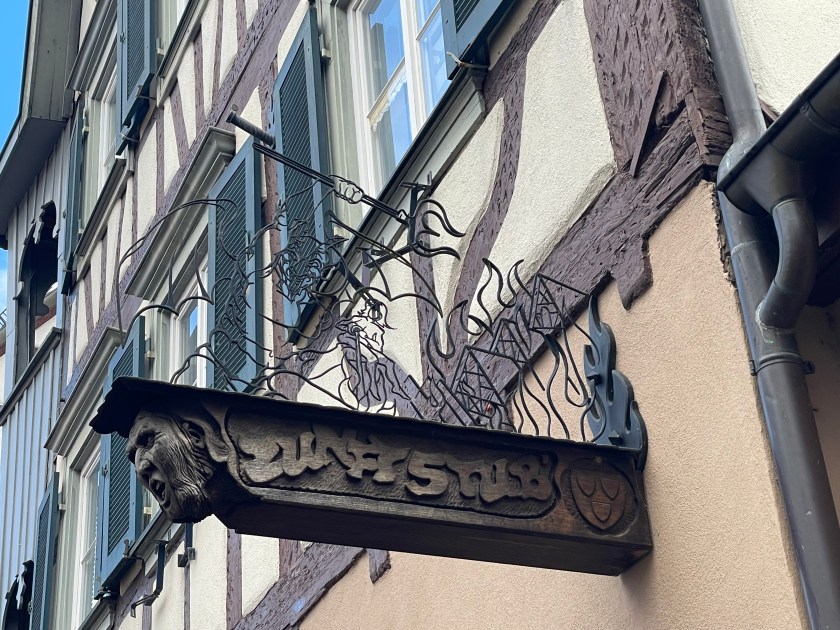
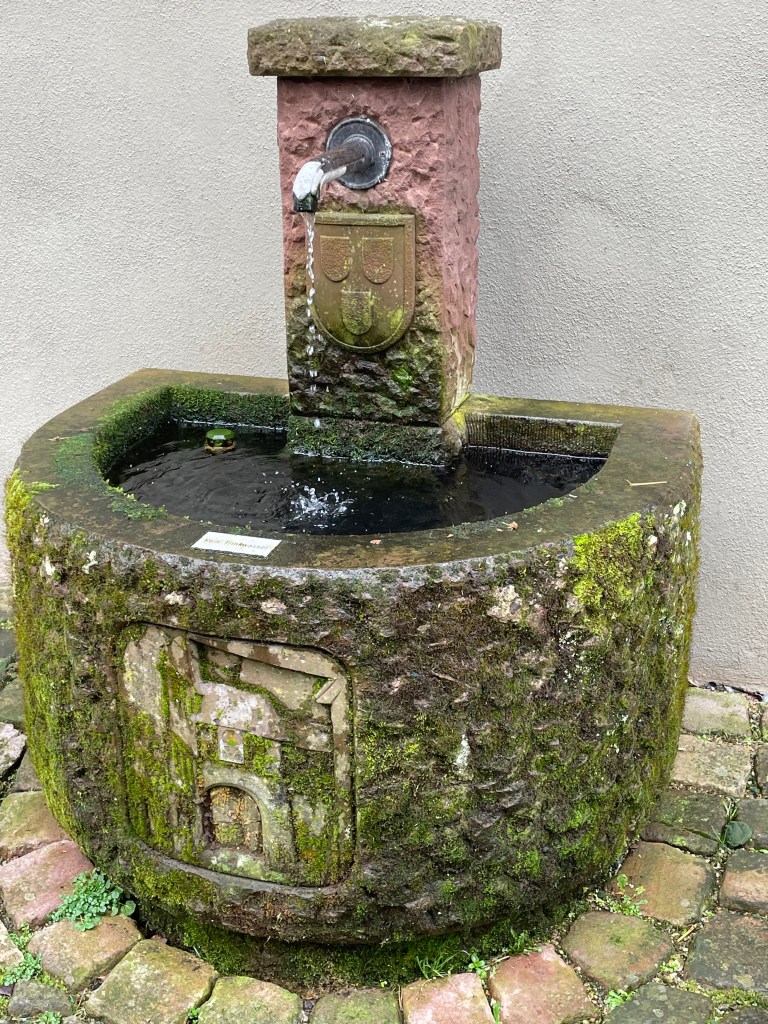
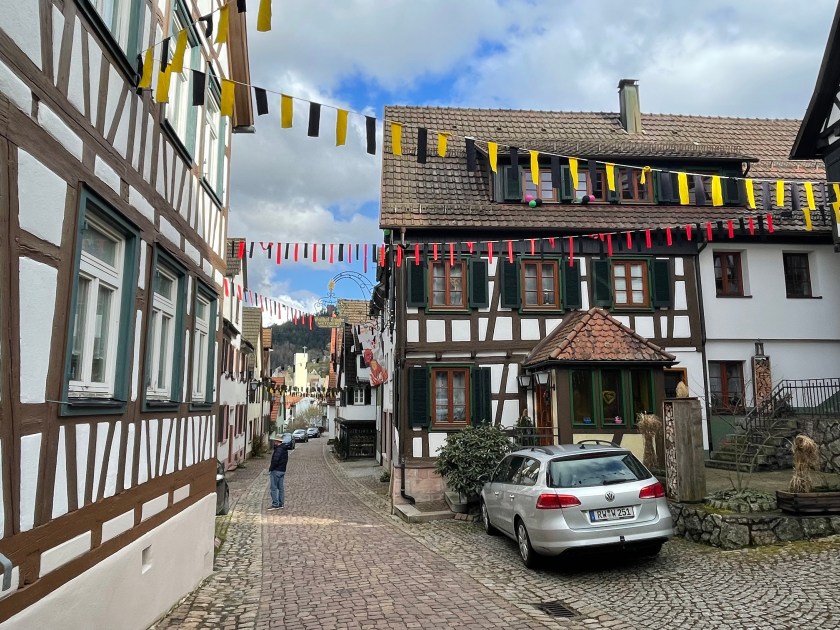
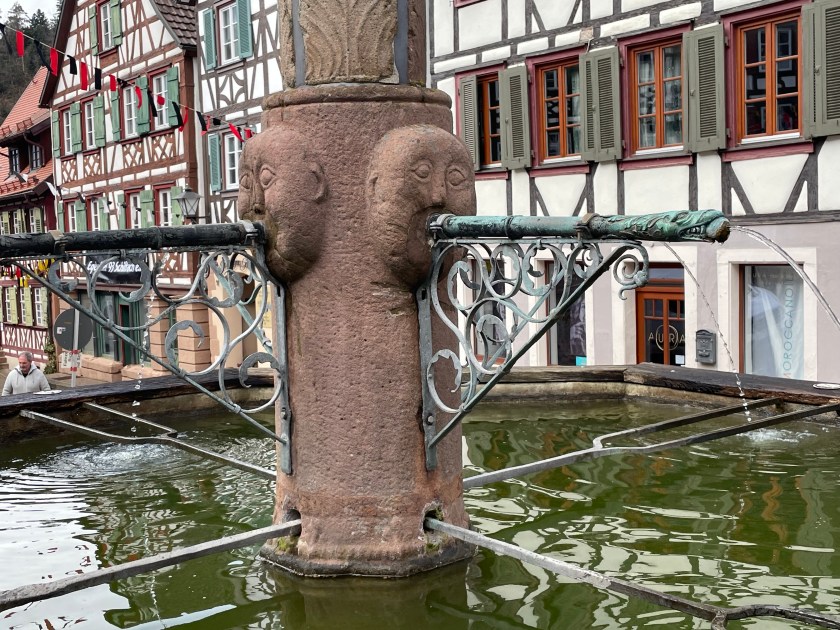
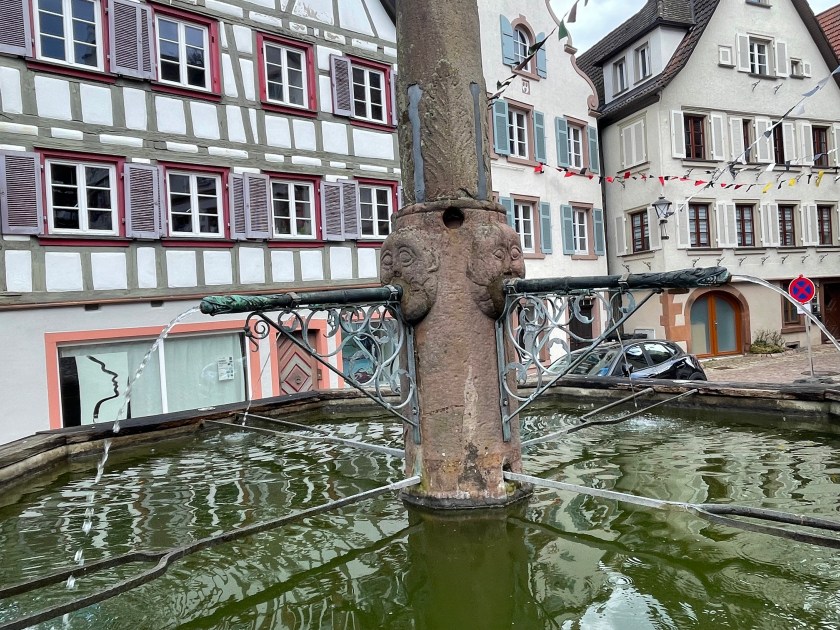
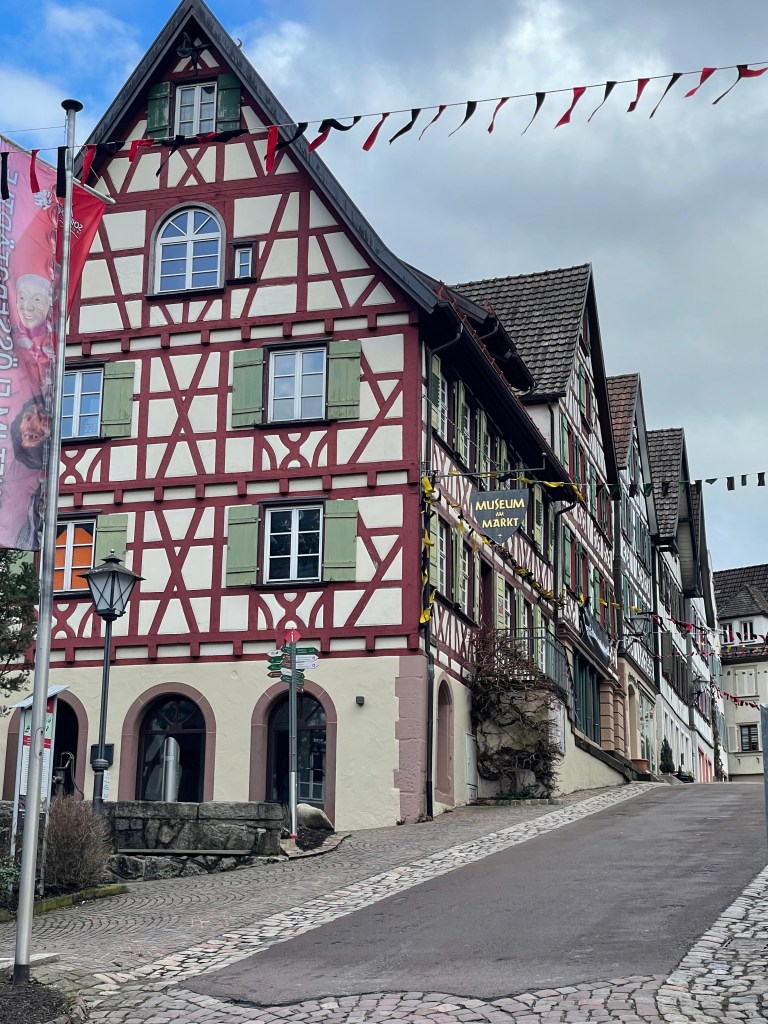
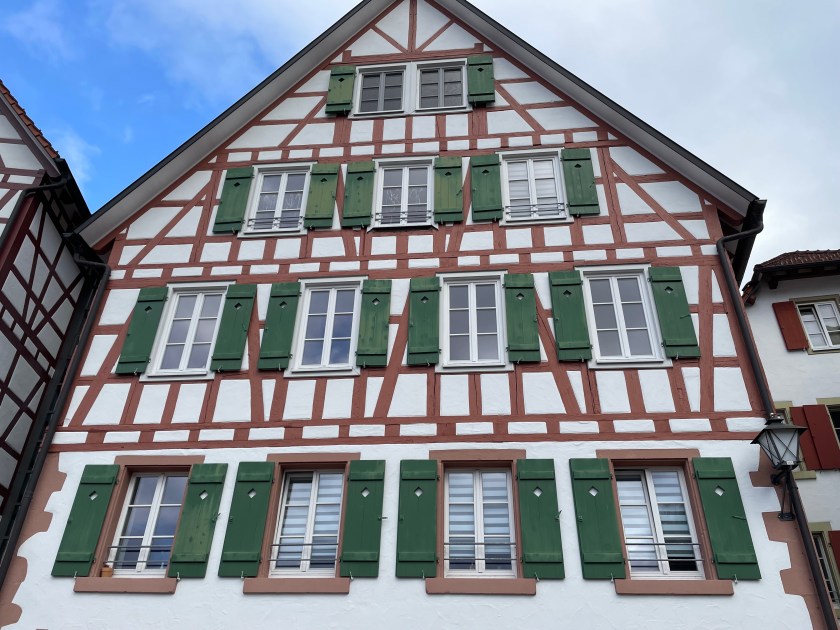
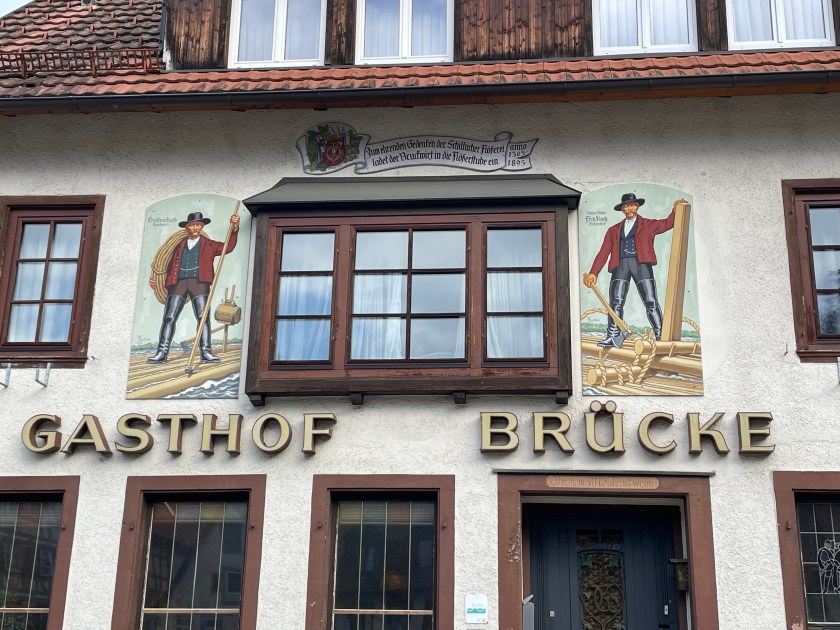
There was excitement in the town. People were out decorating for Fastnacht festivities (the time of breaking the fast after Lent). There was a town square on the hill (quite steep cobblestone roads) with a May Pole in the center by the town fountain/well. The Fastnacht banners (fabric strips) were attached to it, radiating out from the center to all the buildings in the square. The buildings were magnificent. Beautifully preserved, colorful, artistic architecture.
We noticed other townsfolk also with baskets, handing out donuts and welcoming visitors.
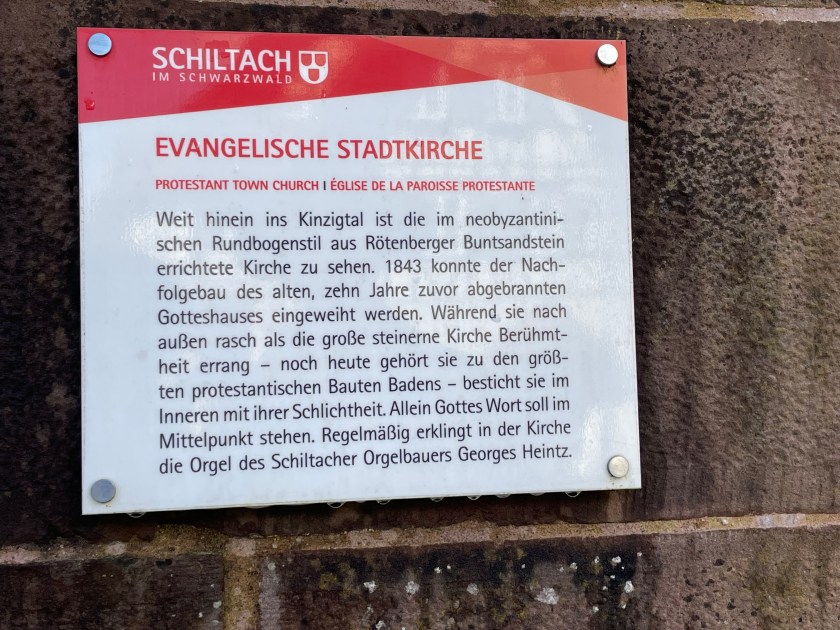
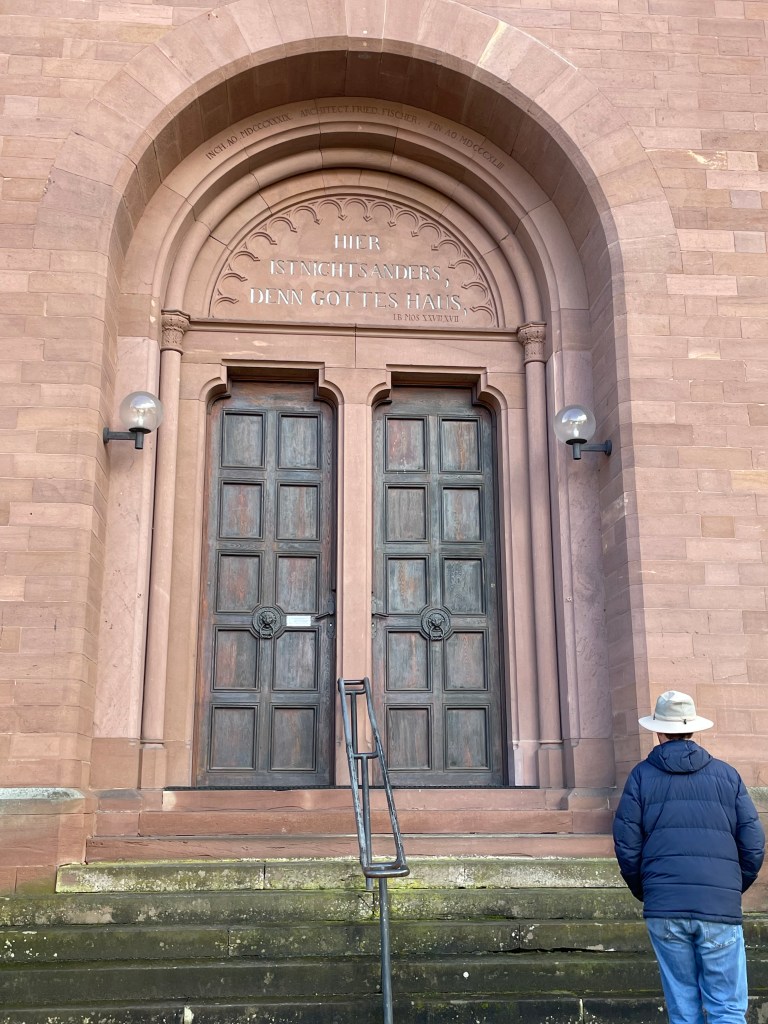
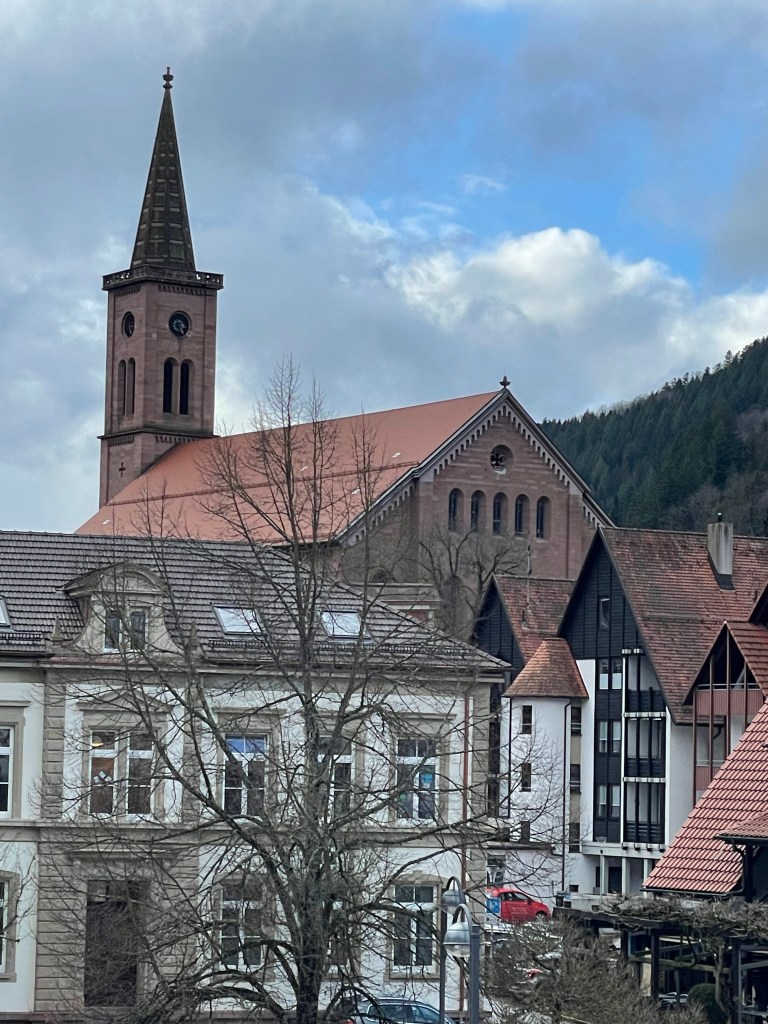
We walked over to a big protestant city church built between 1839 and 1843. Large and solid (and locked), one of the largest protestant churches in Baden. No frills on the outside.
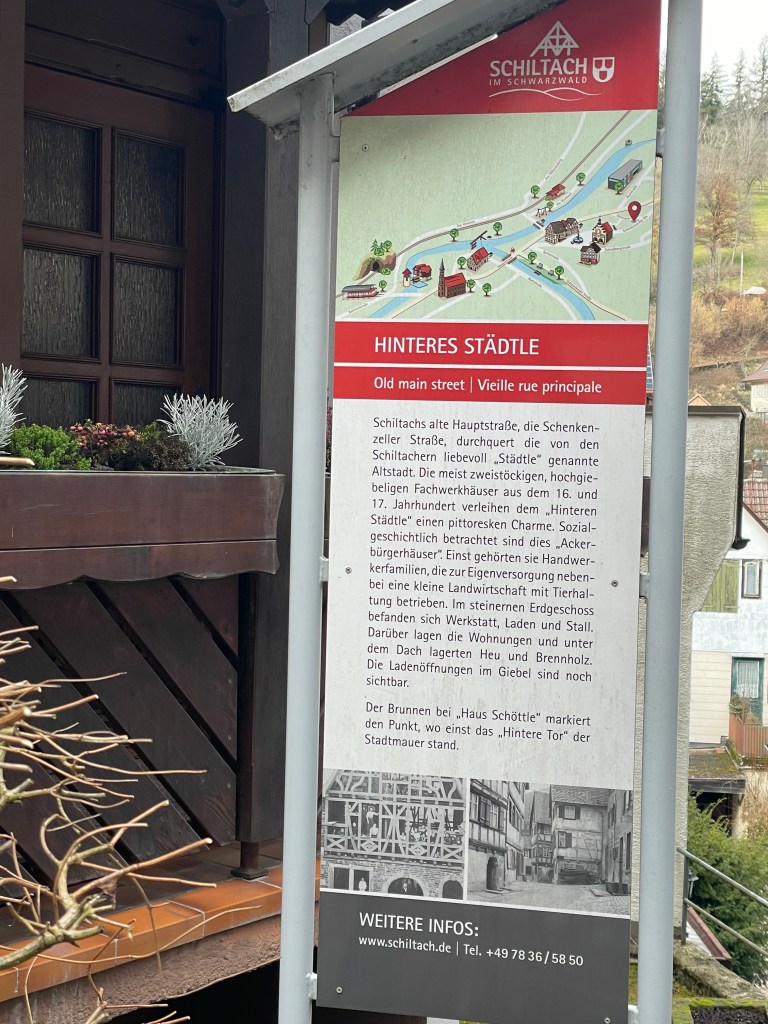
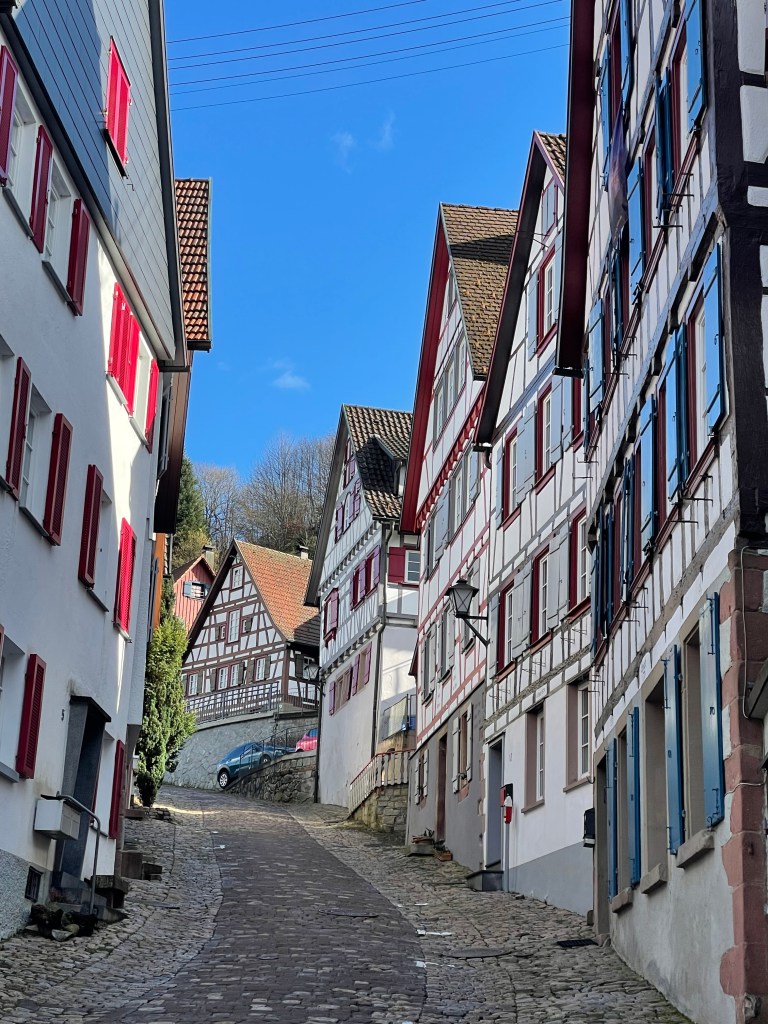
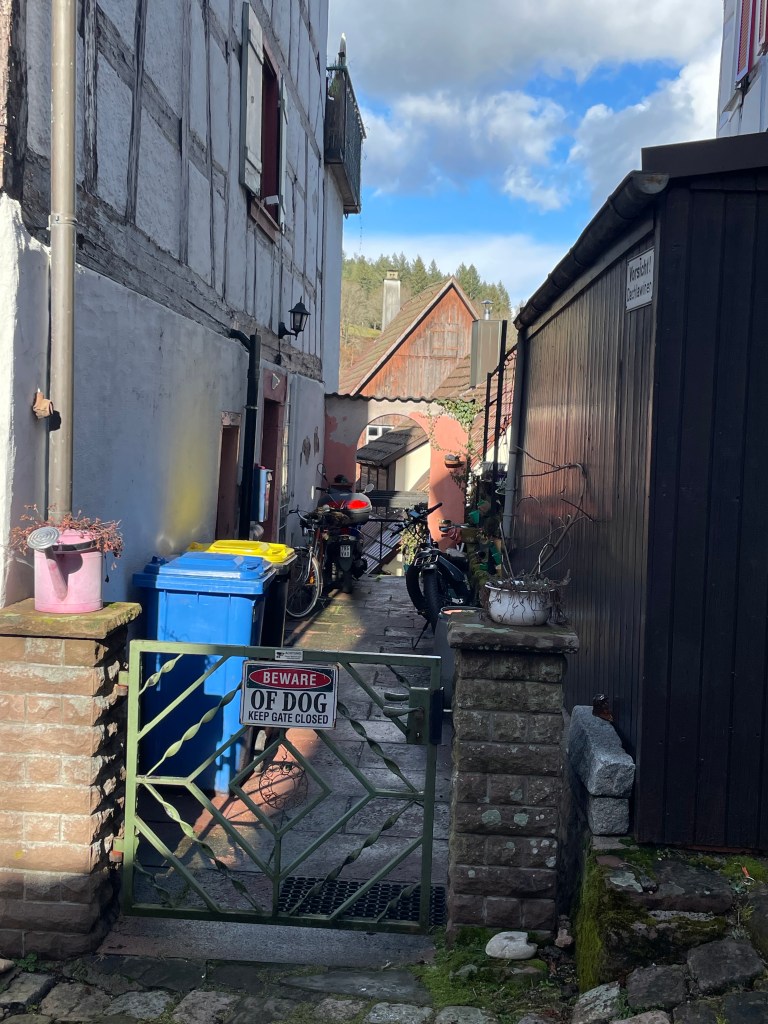
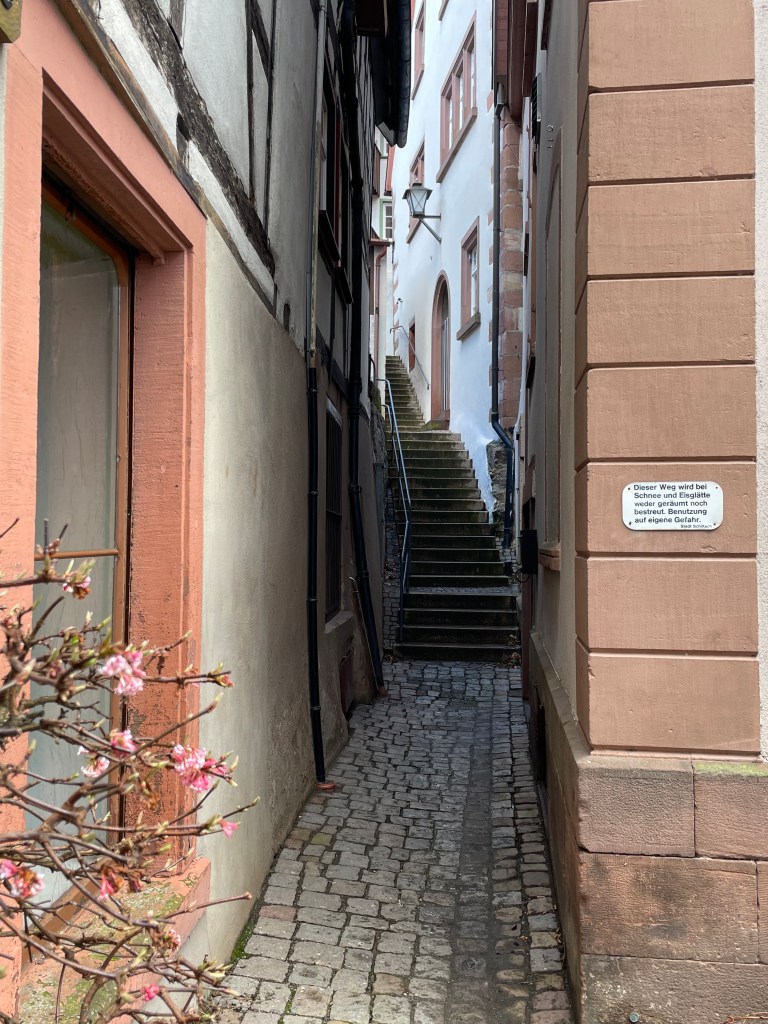
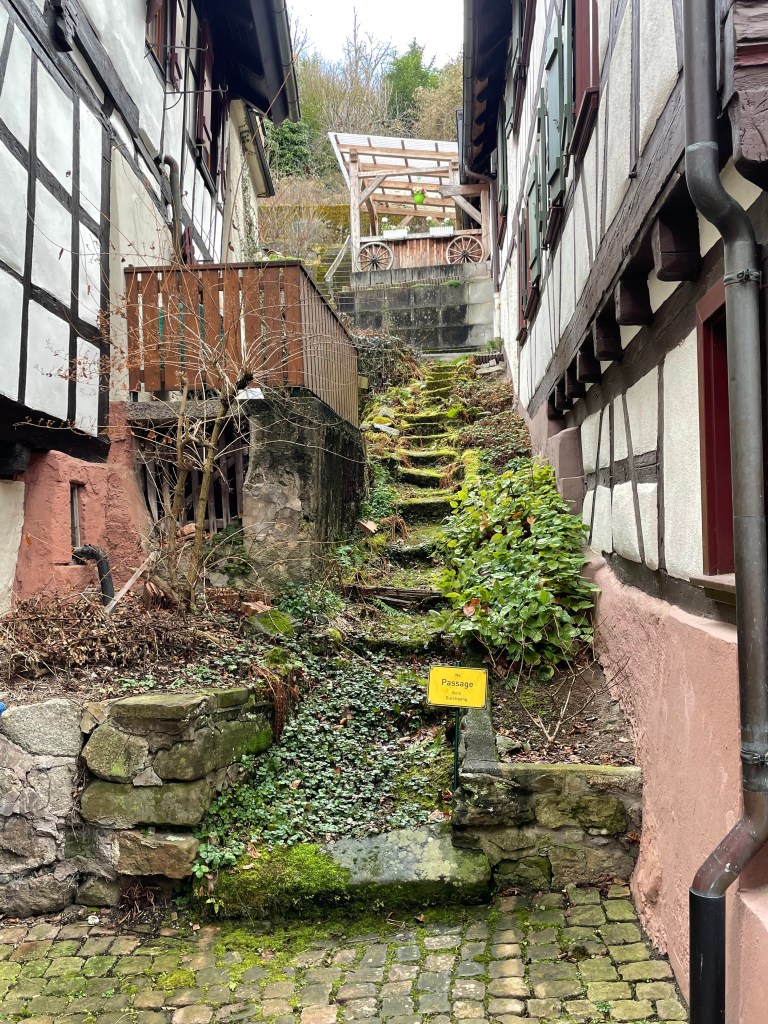
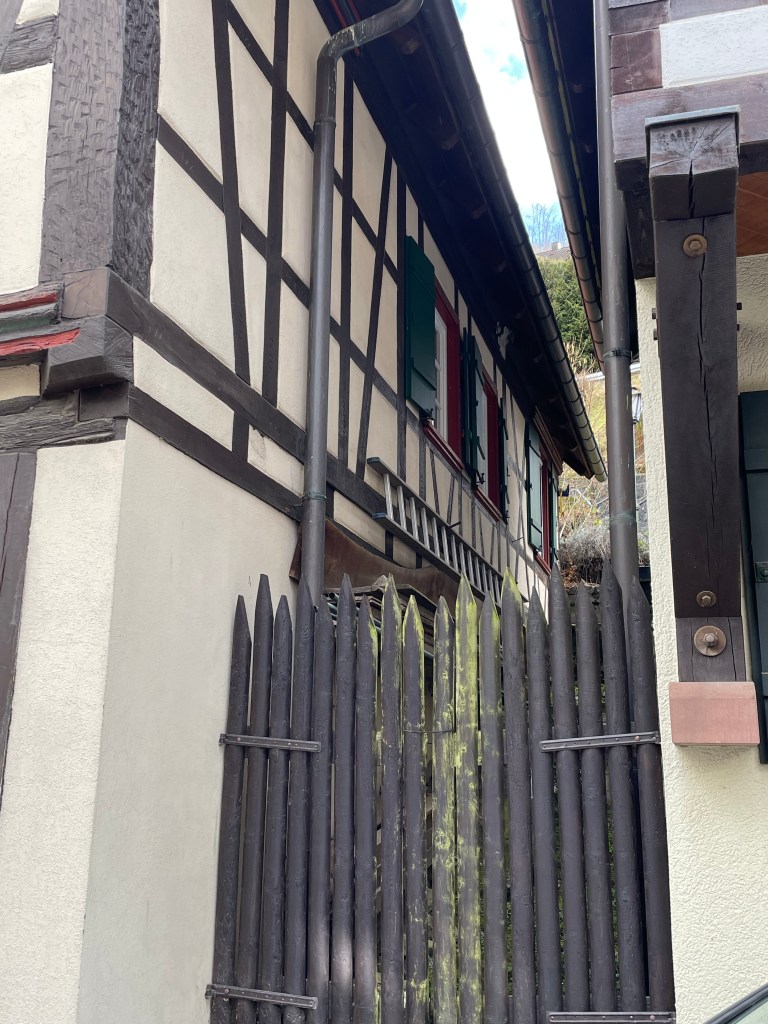
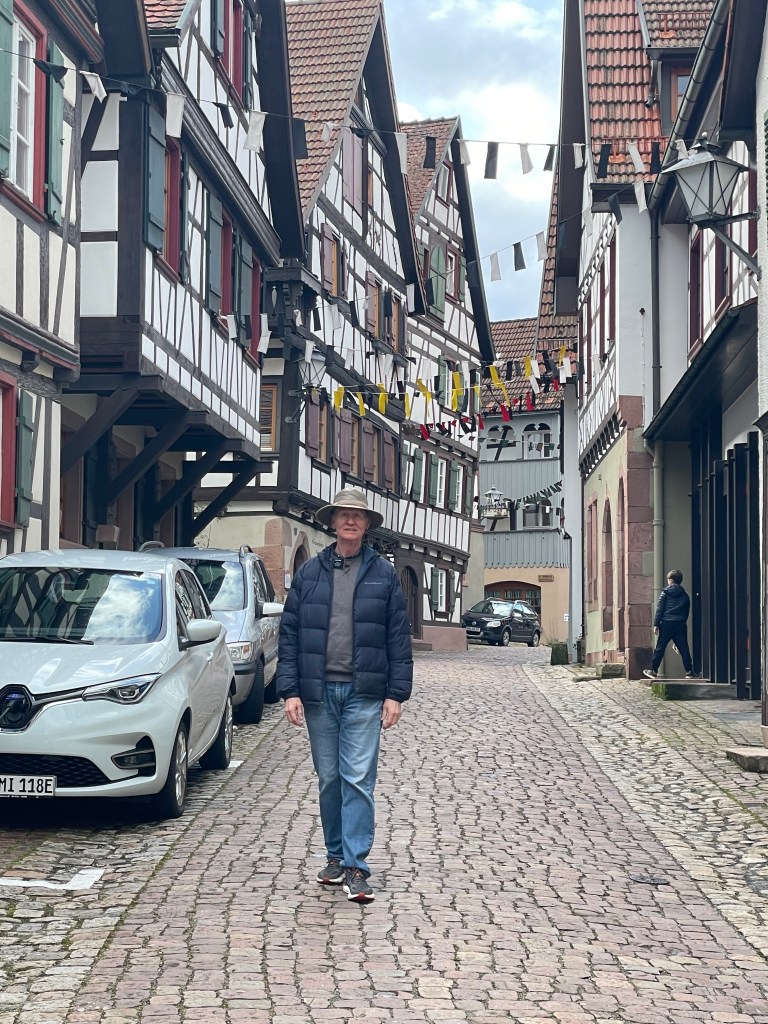
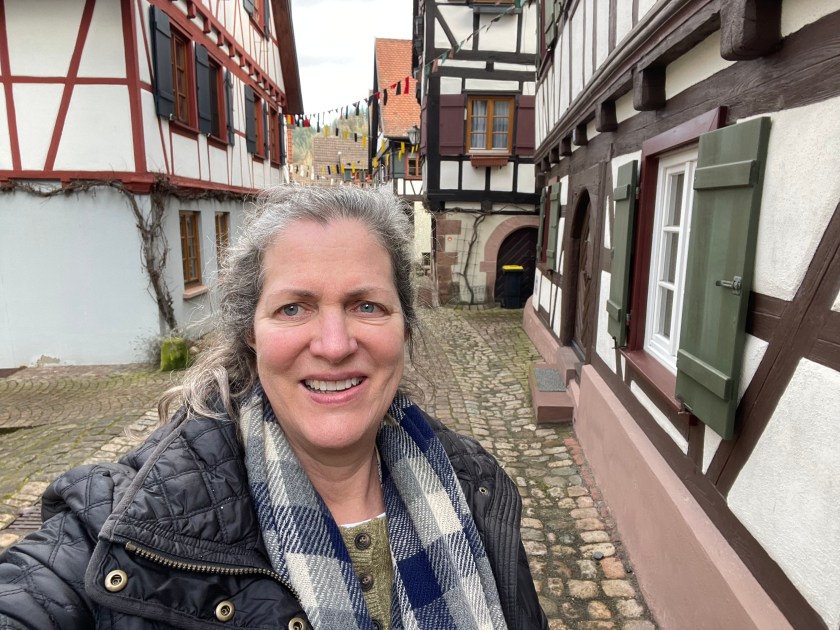
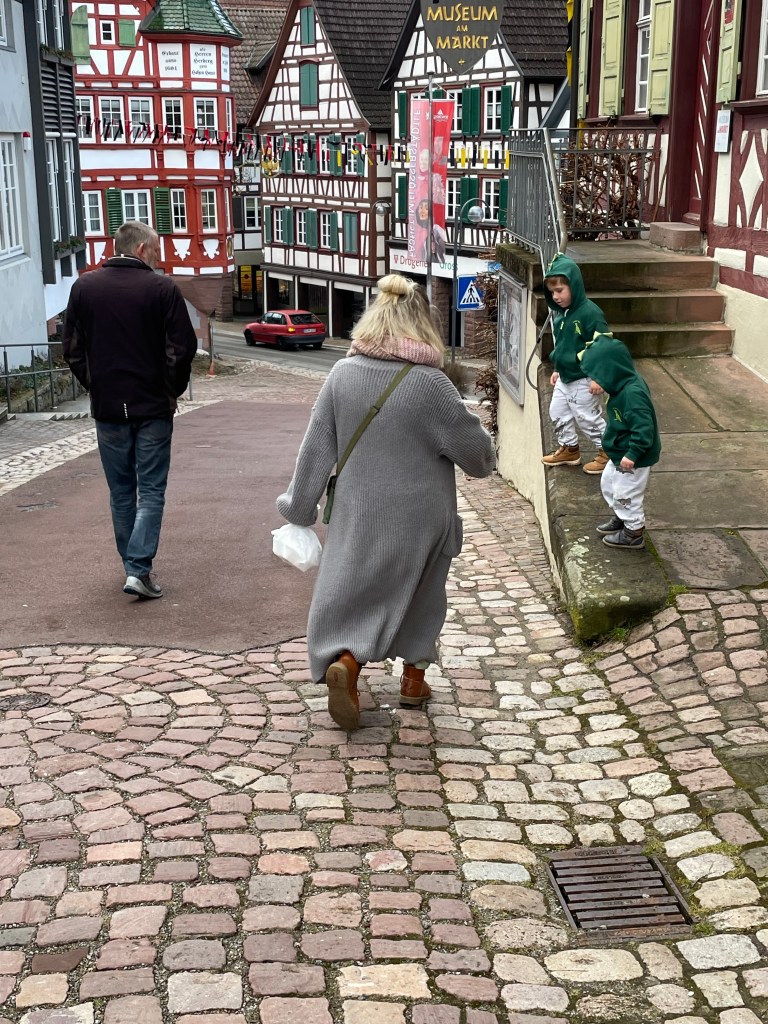
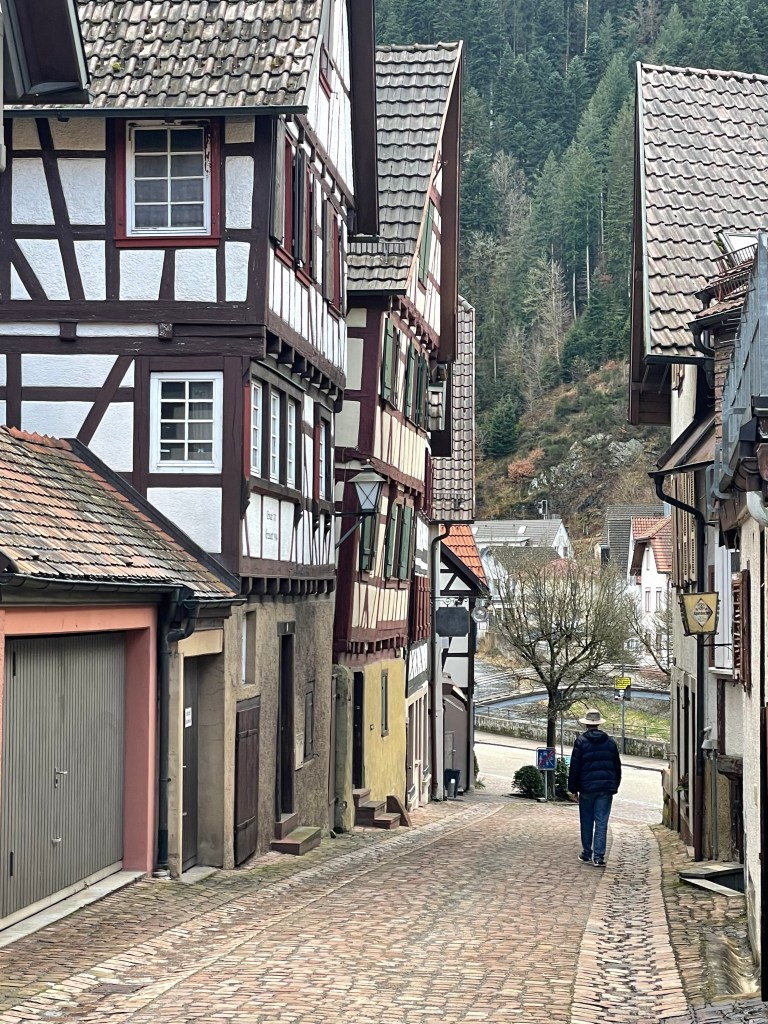
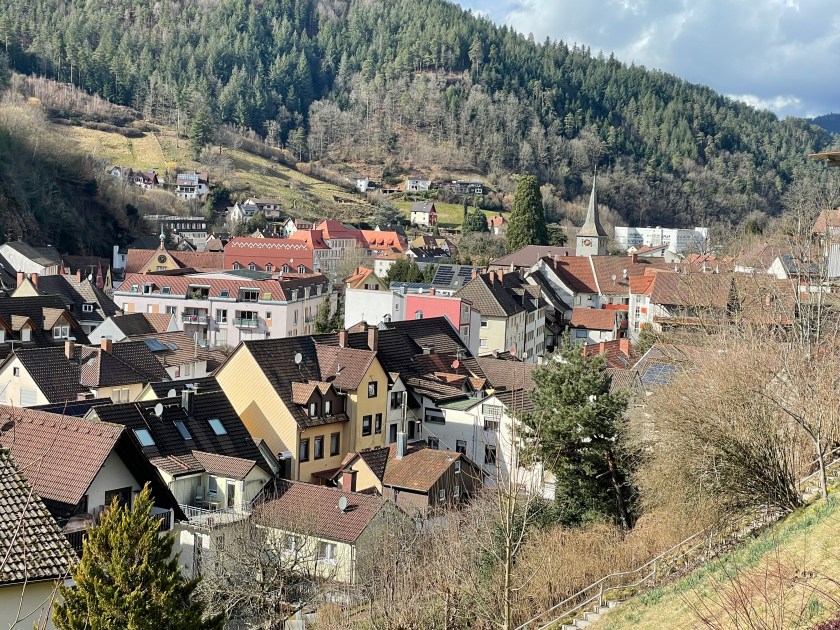
The town isn’t big. A river runs through it. The walking tour takes you up one old Medieval street and then back down the one behind it. I took lots of photos so I remember this place. It really was such a delight.
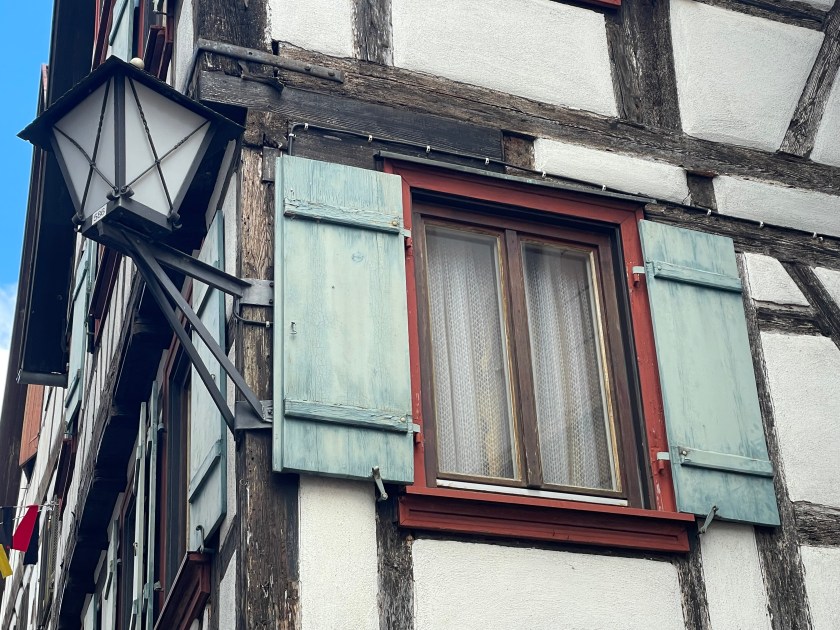
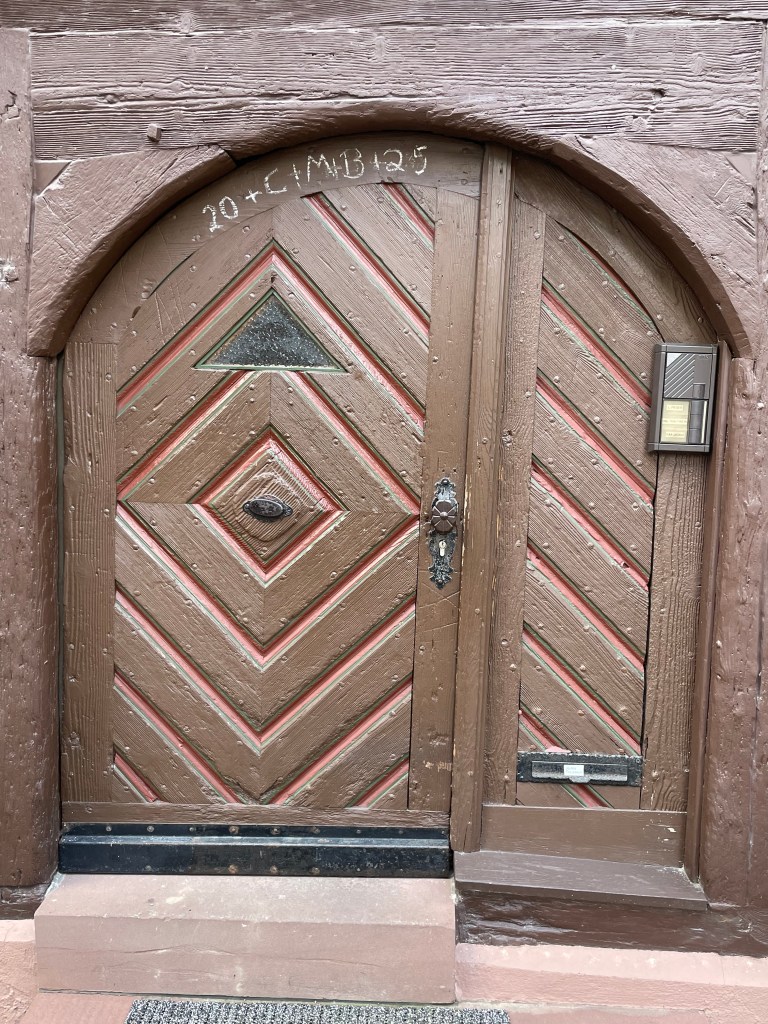
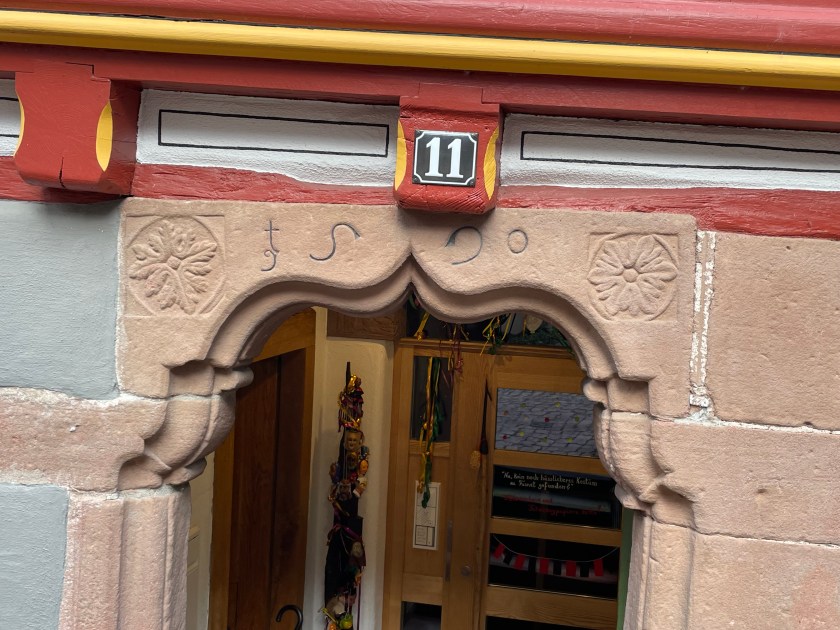
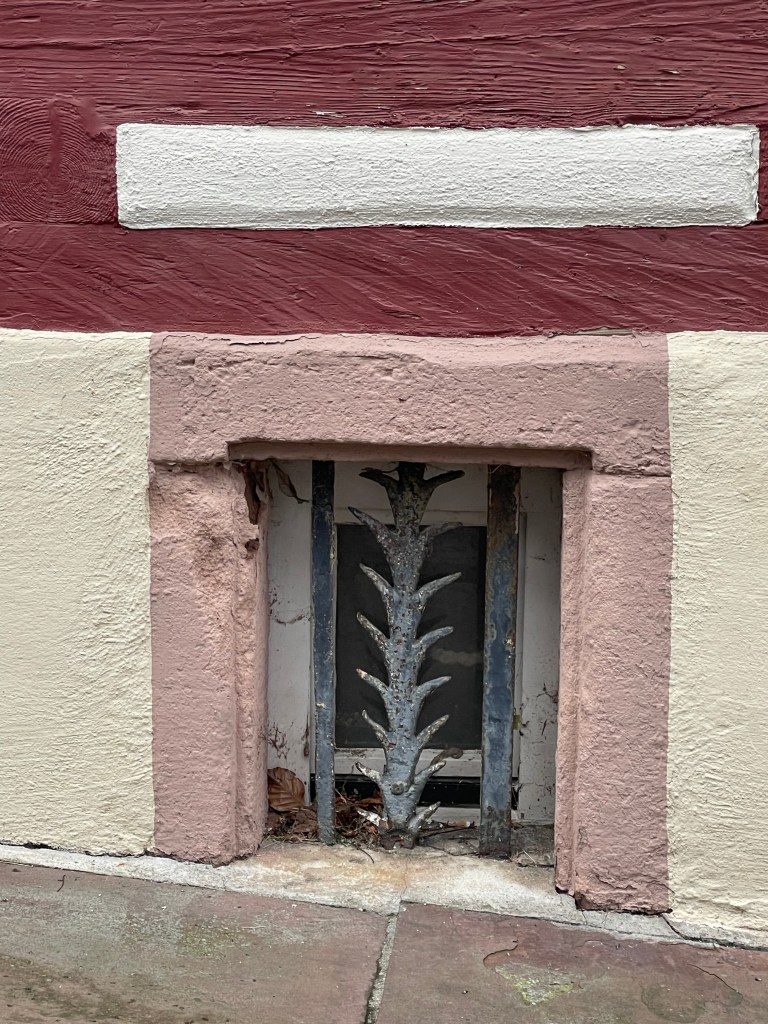
Again, I started to feel panicky, that soon all of this will be behind us. When I get that feeling, I just want to take photos, knowing my memory won’t hold it all. This detail, that view, this window, that date over the door. I want to capture and hold it all in my heart and mind. We were both rather quiet, as we soaked it all in, one last time, knowing that tomorrow we get on a plane and leave this place.
The town square, decorated for Karnival celebrations.
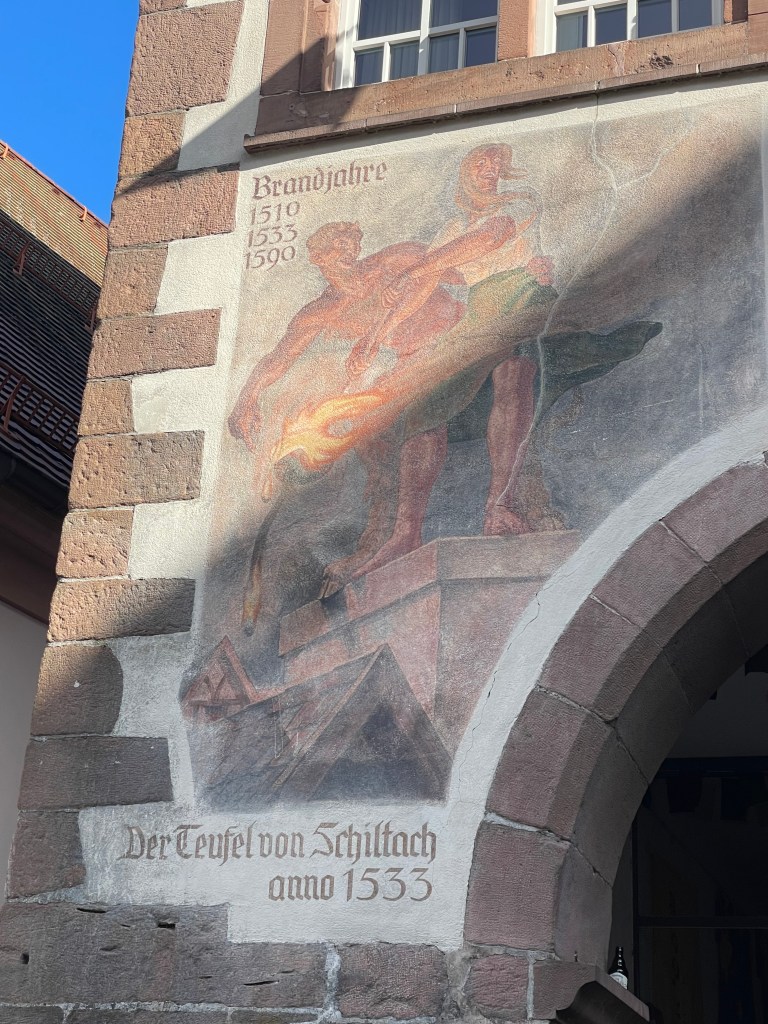
This is the old Town Hall:
Above is a depiction of the Devil from Schiltach (1533). These Faustnacht celebrations go way back!
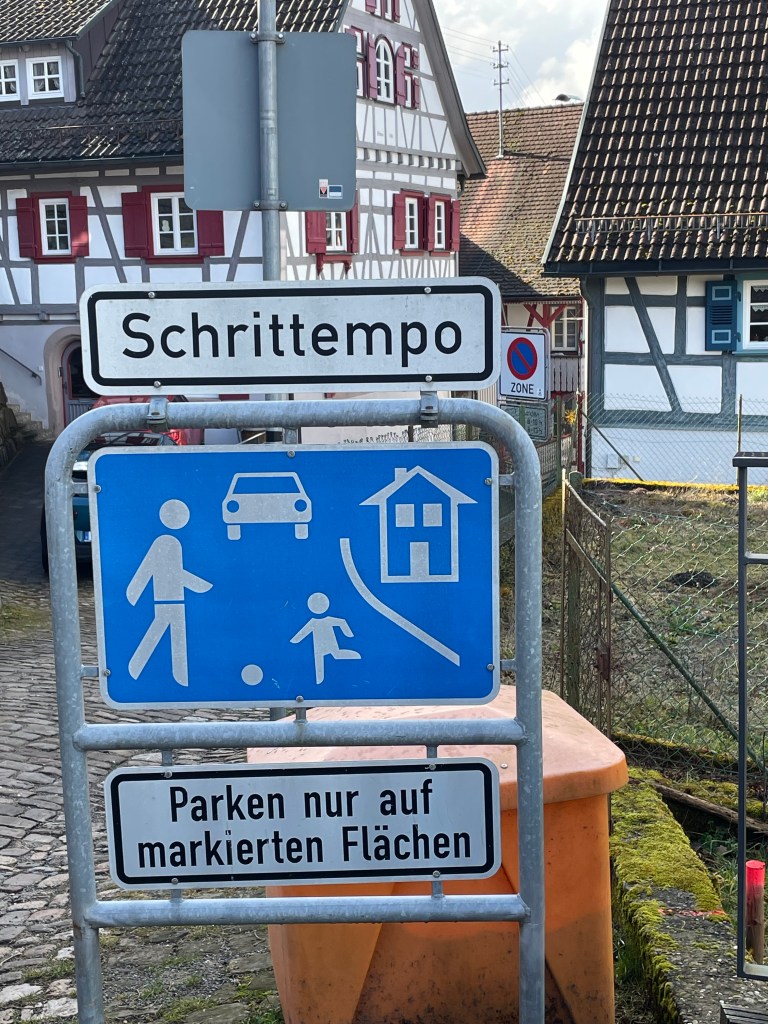
“Schrittempo” means walking speed.
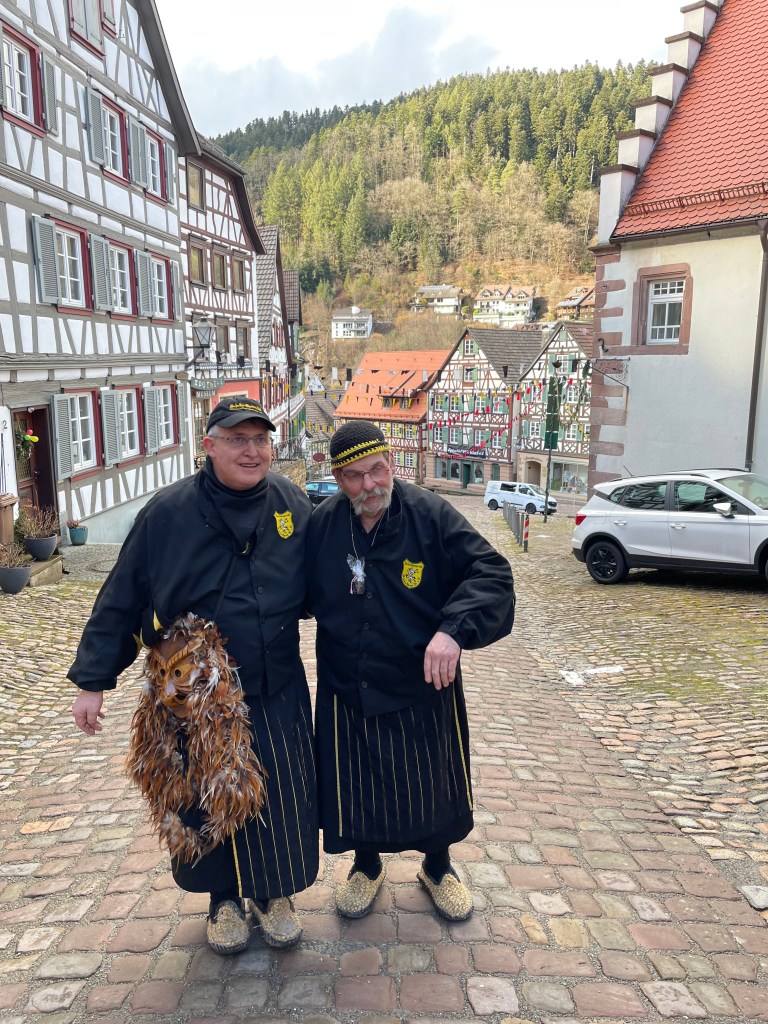
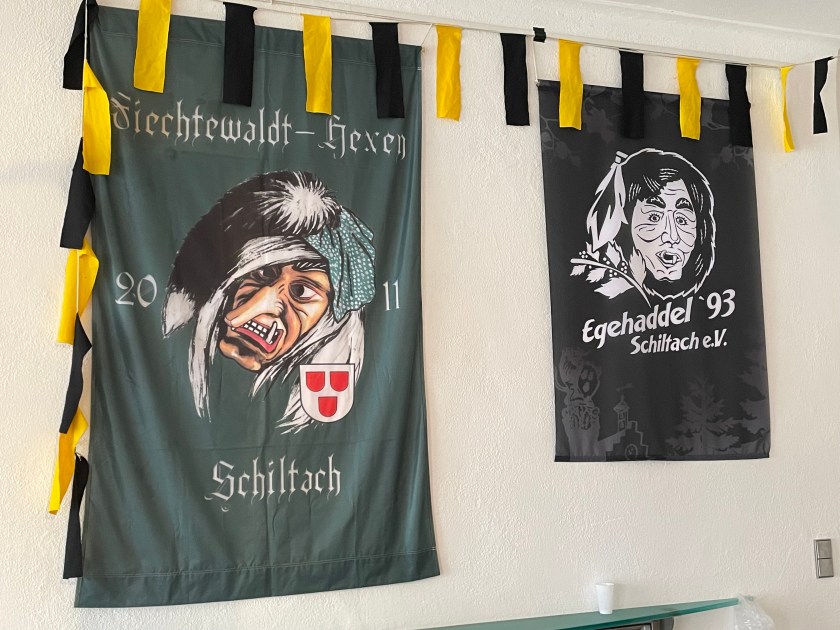
More Karnival characters!
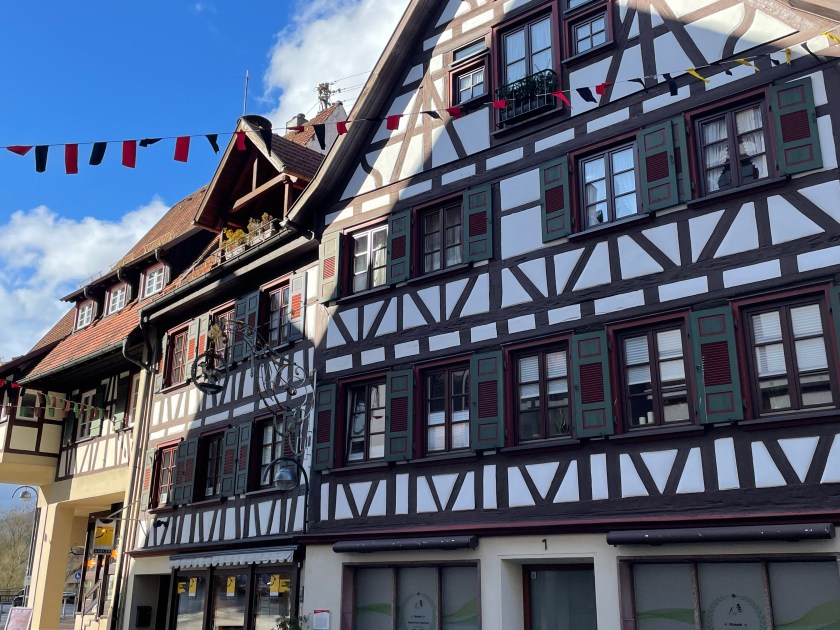
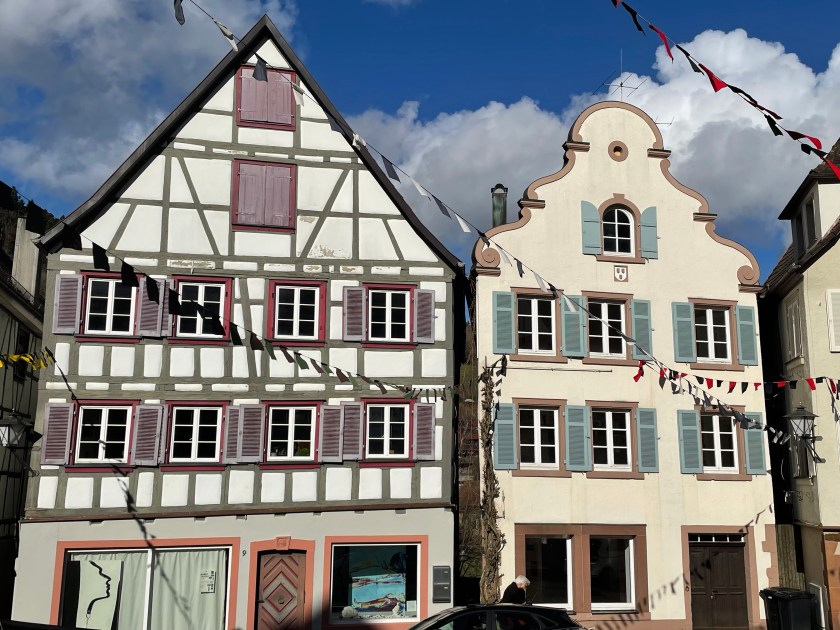
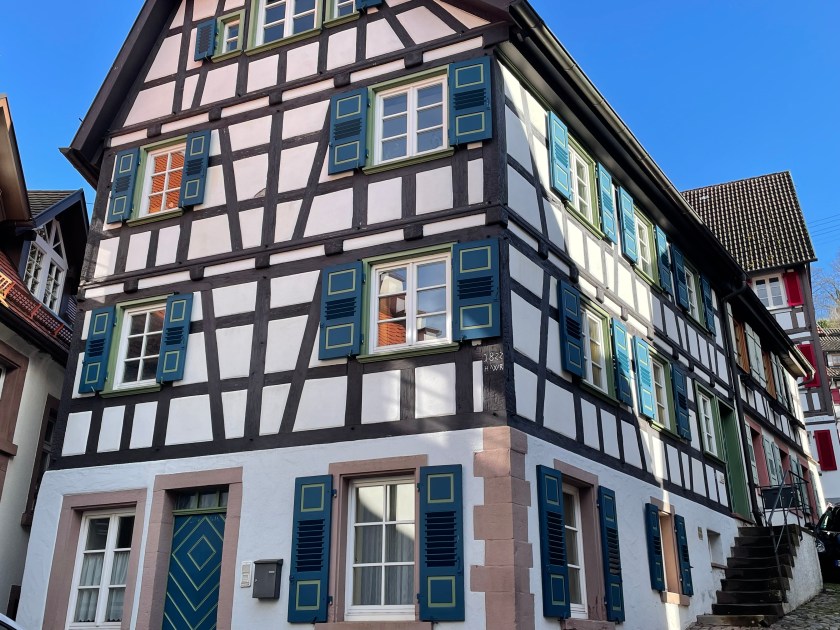
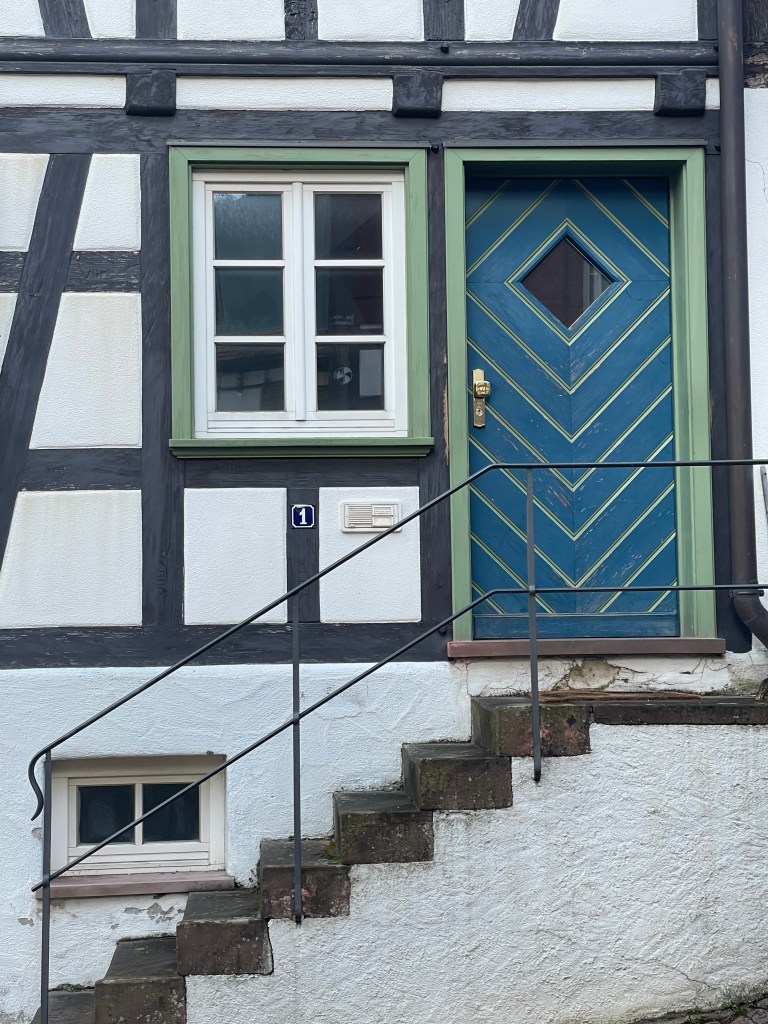
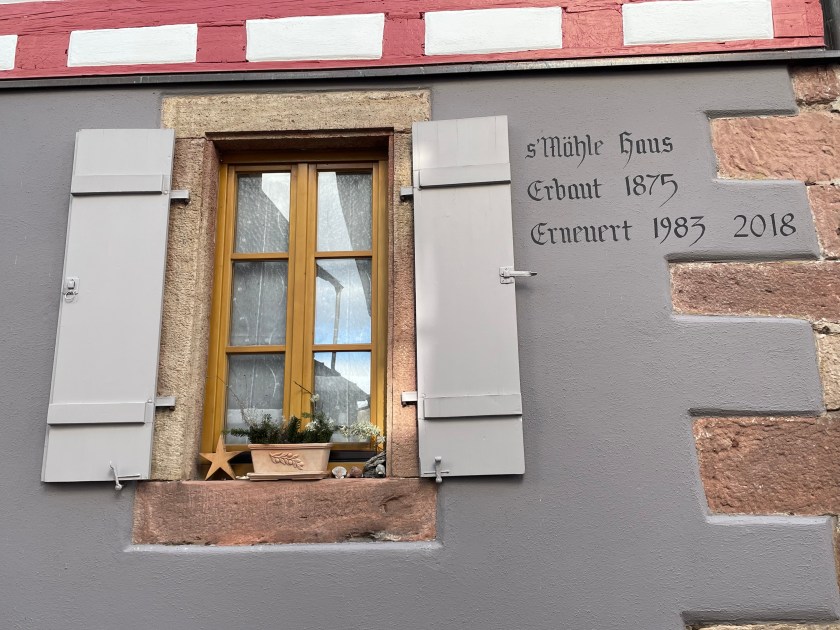
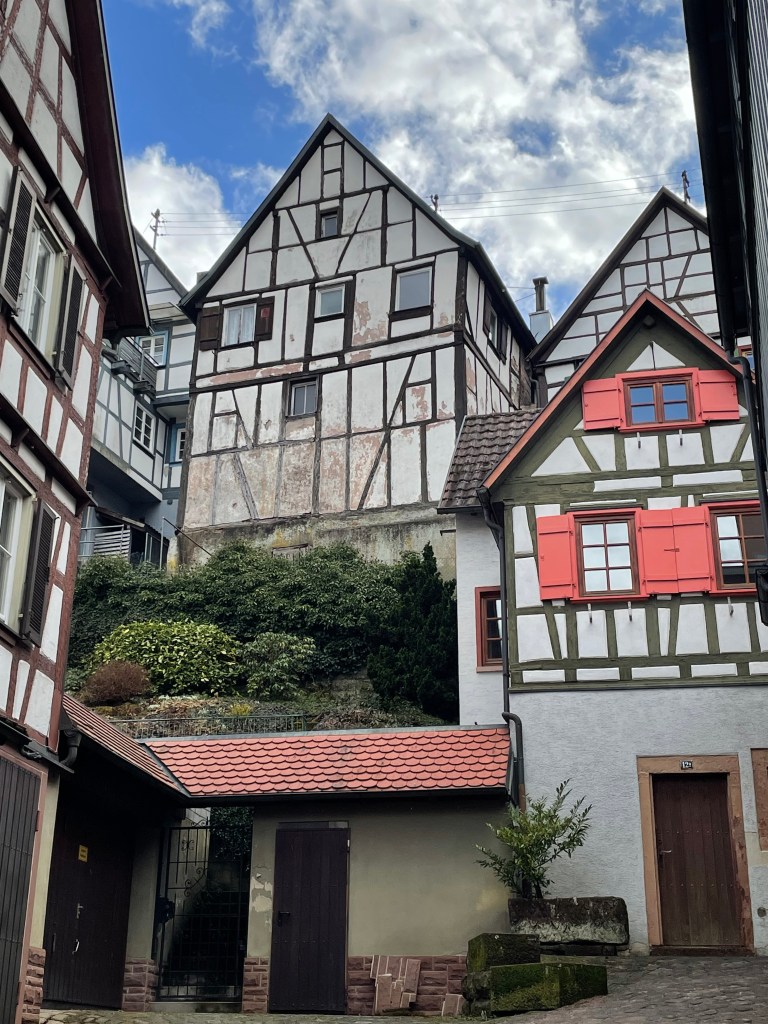
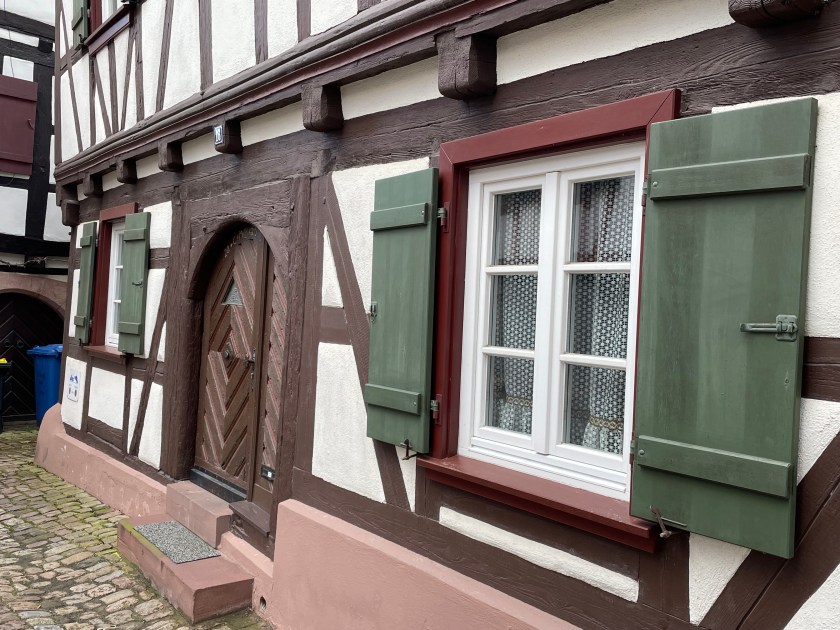
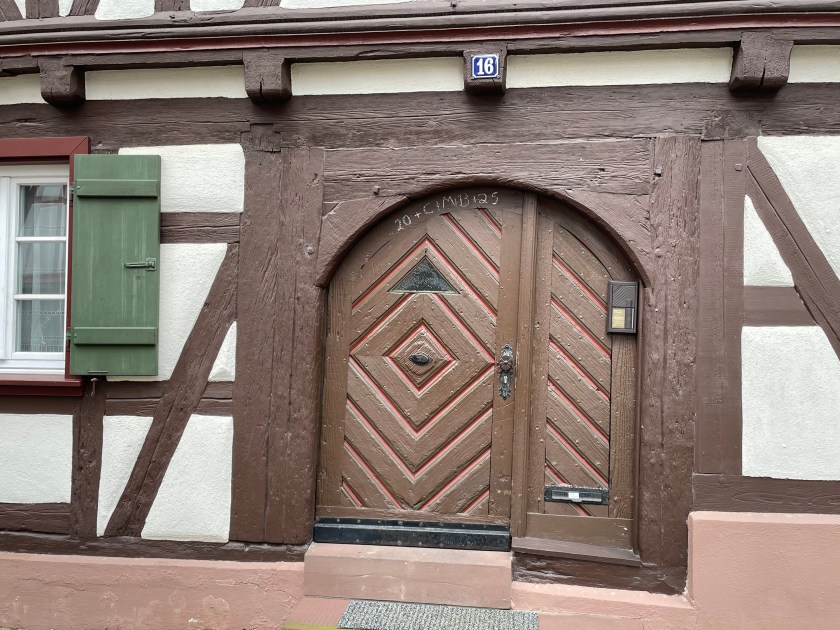
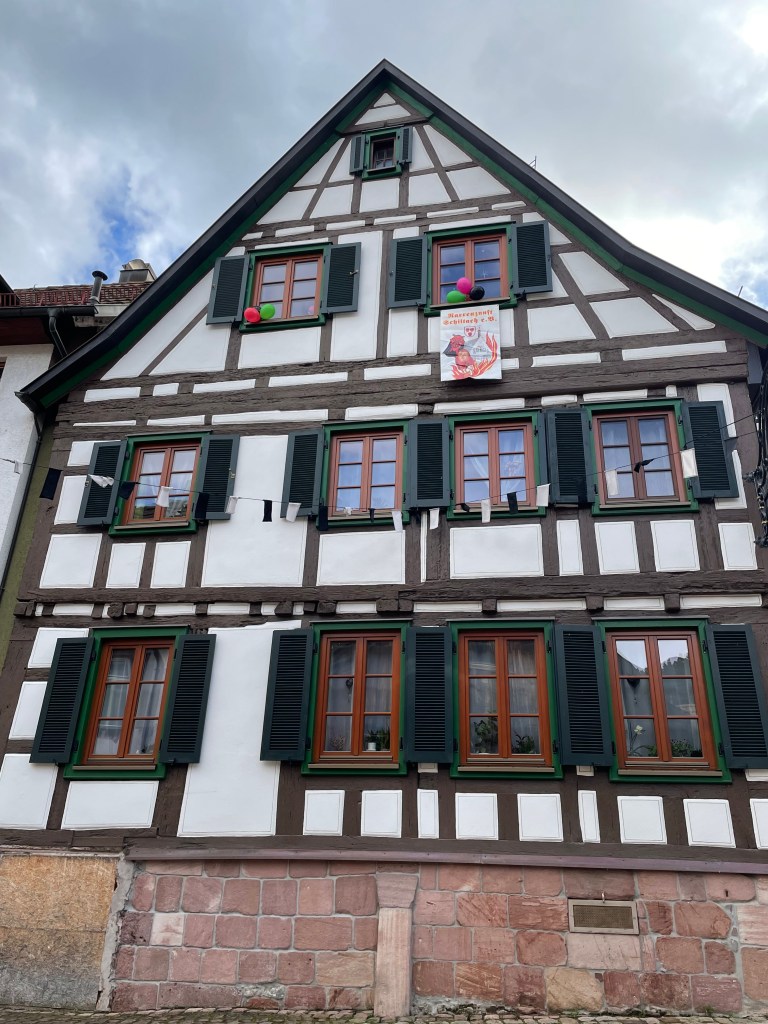
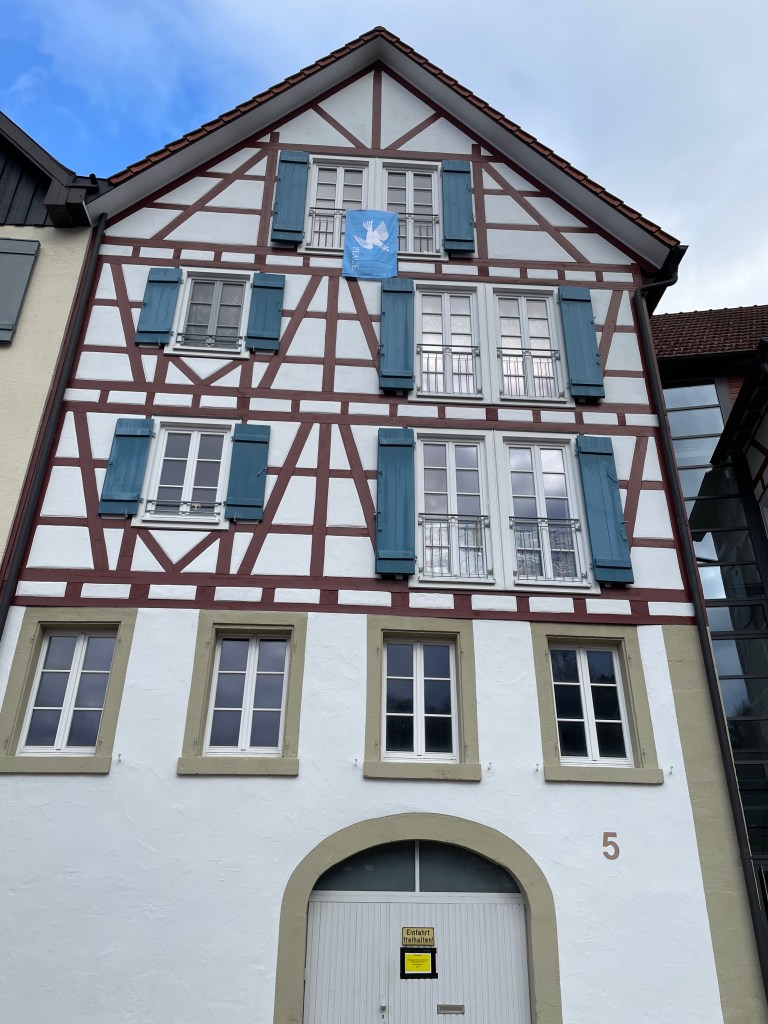
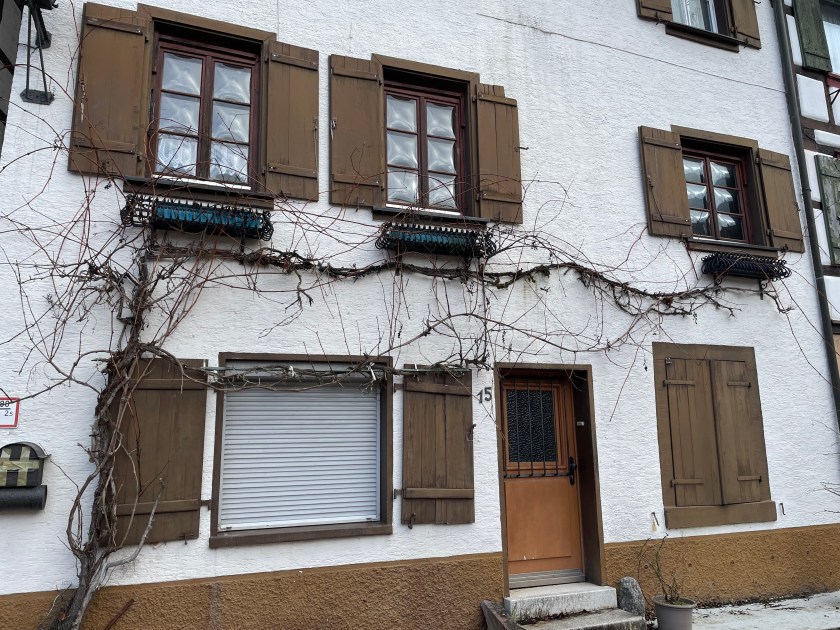
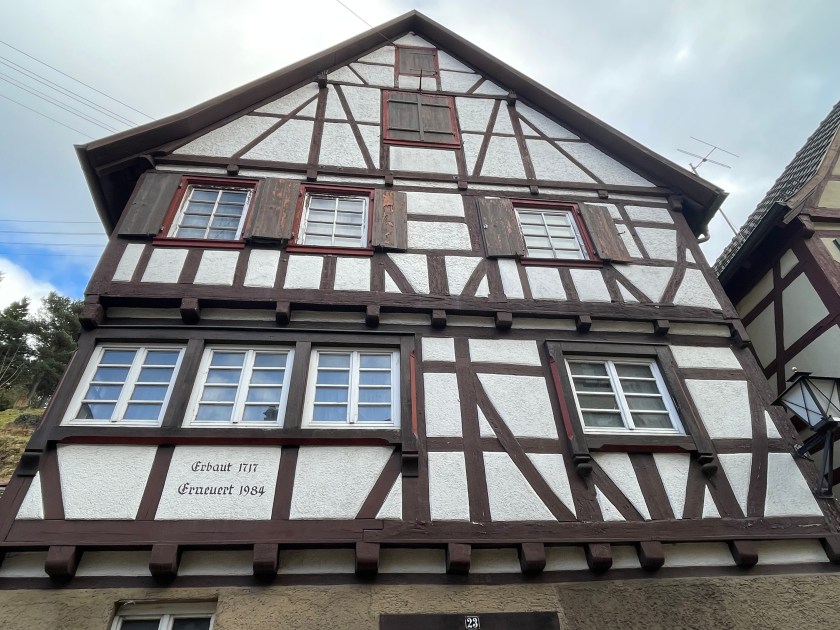
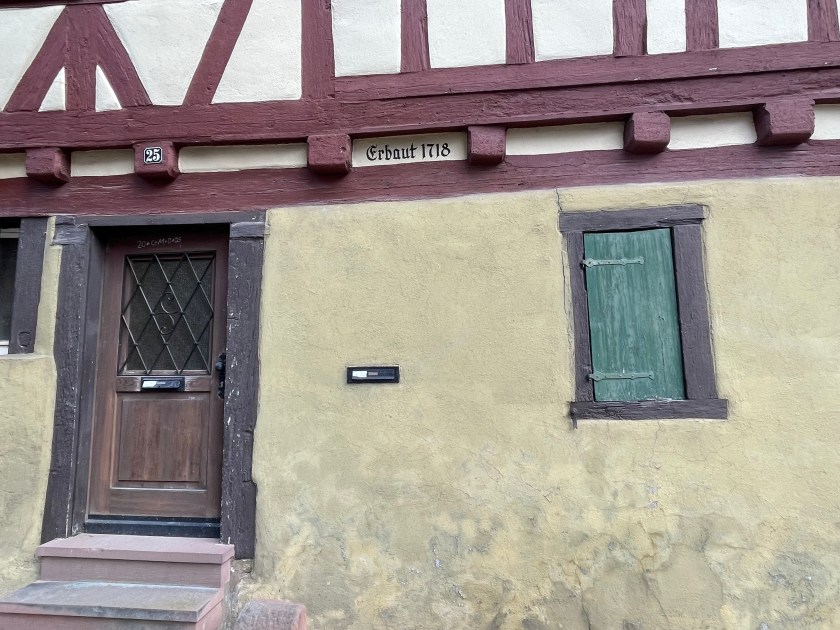
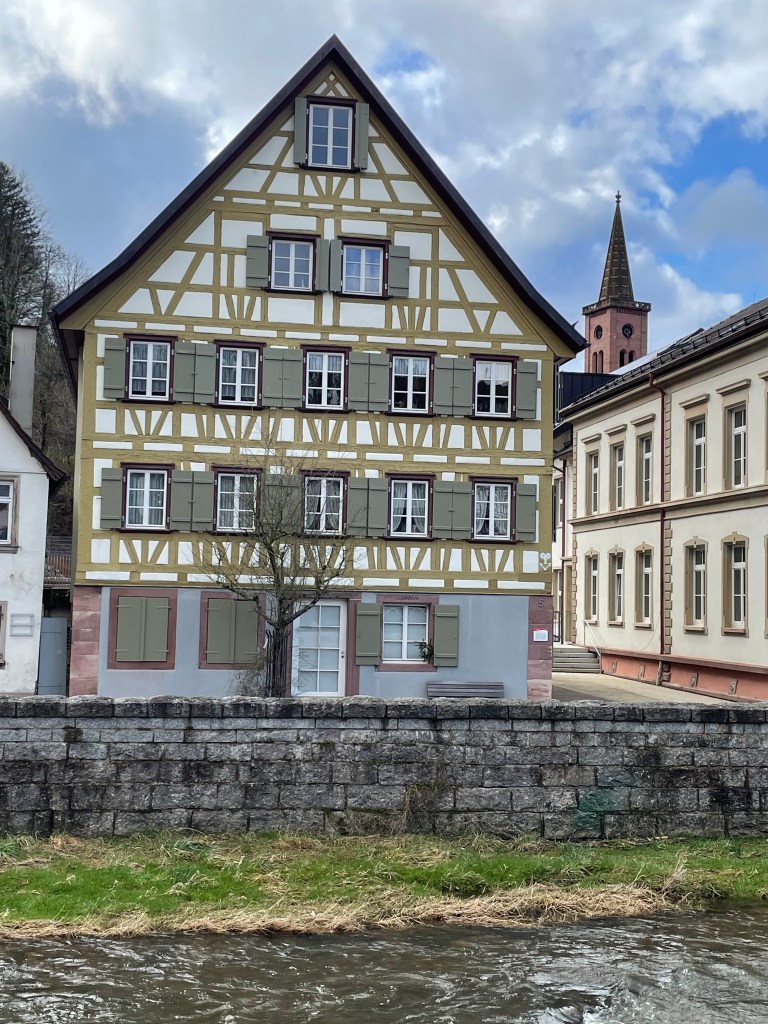
These old homes are amazing. The one below was built in 1591!
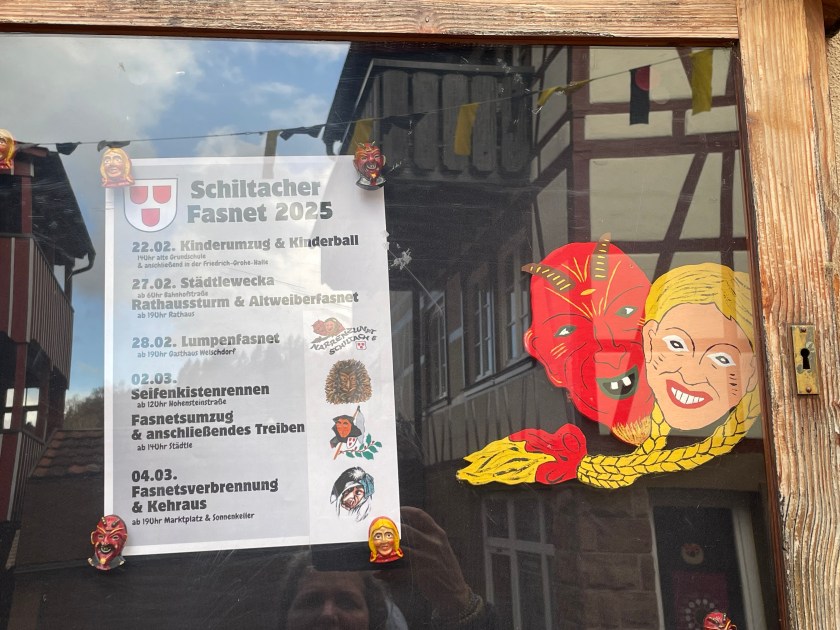
Here’s the town’s Fastnacht’s celebration schedule. Today is the city wake-up call. Tomorrow is the rag carnival.
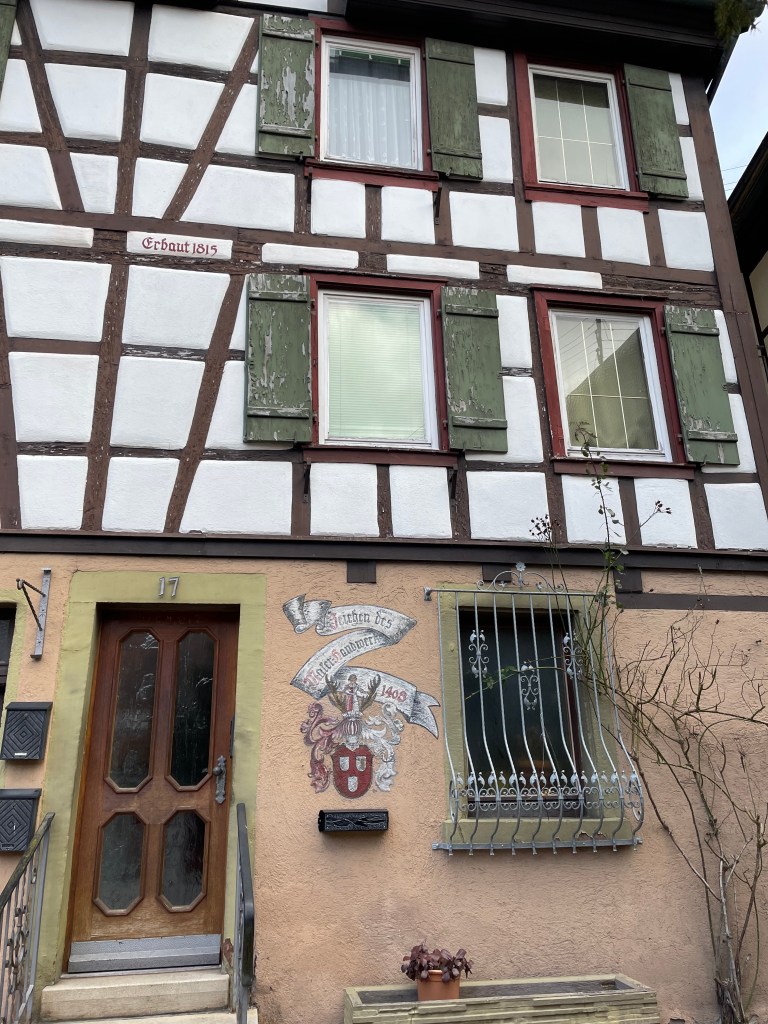
Another hold home from 1590:
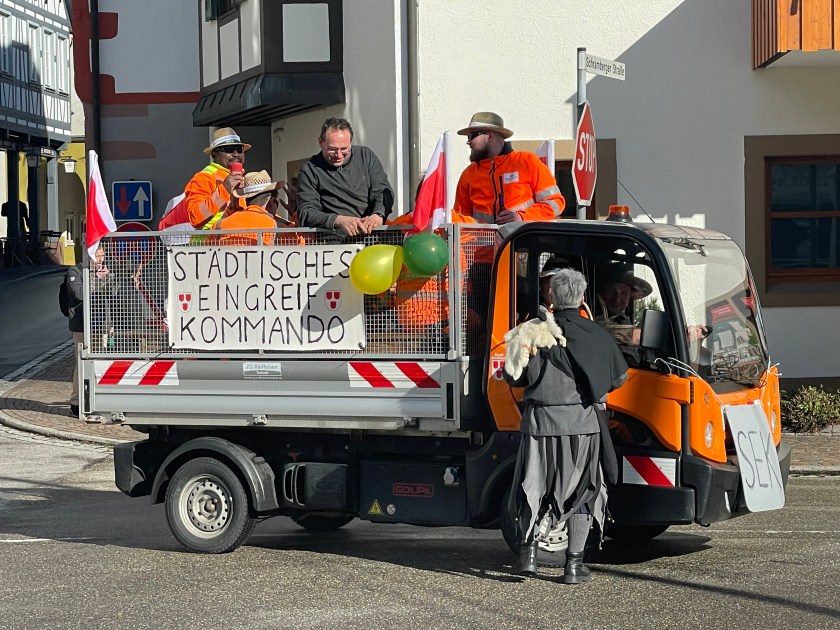
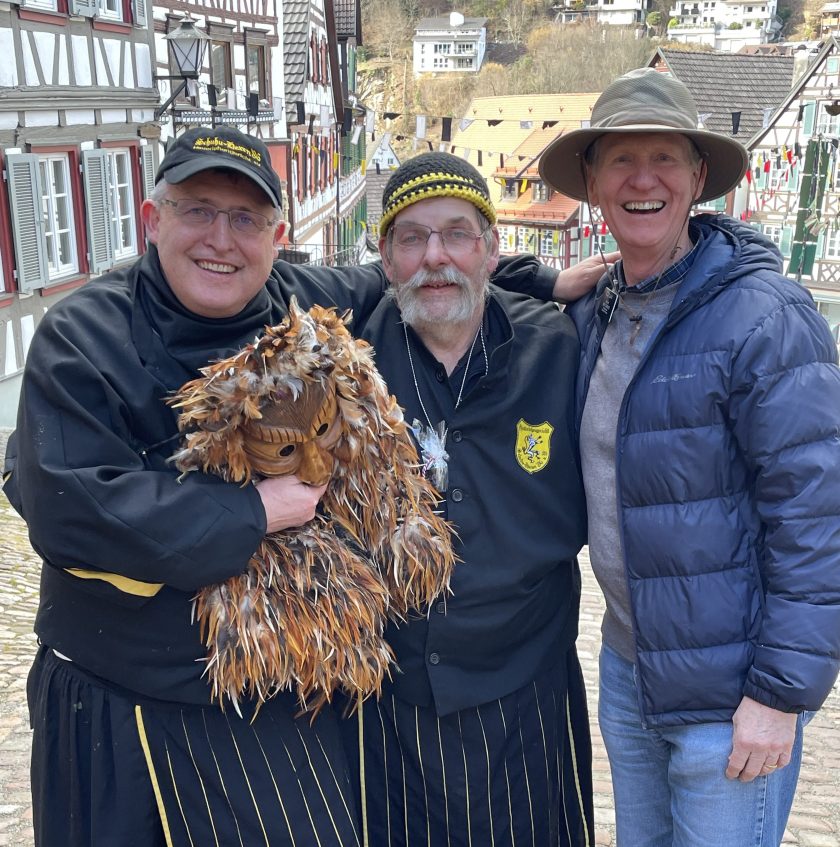
Most of the people we saw were dressed up.
Another built in 1590:
It was hard to drive away from this place. But we had one more stop to make before the sun set. I love Germany.
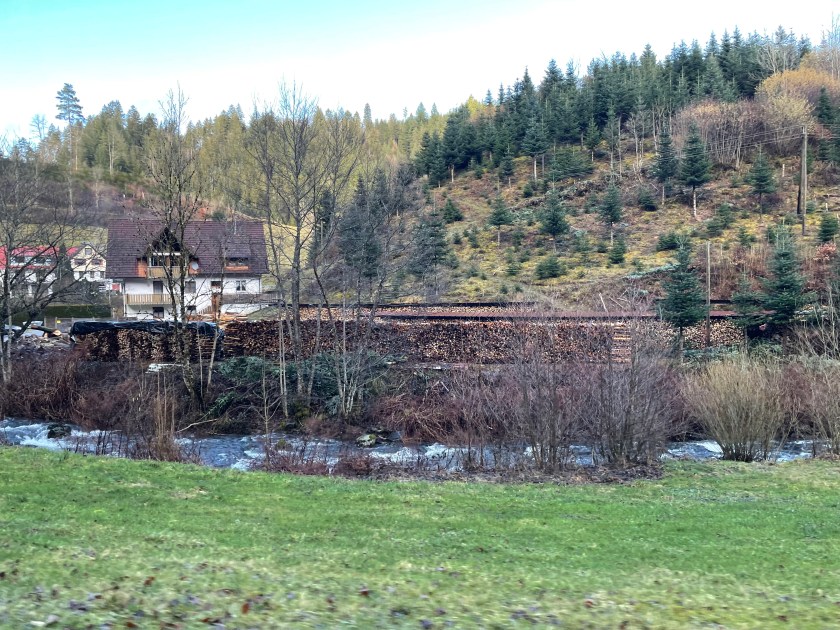
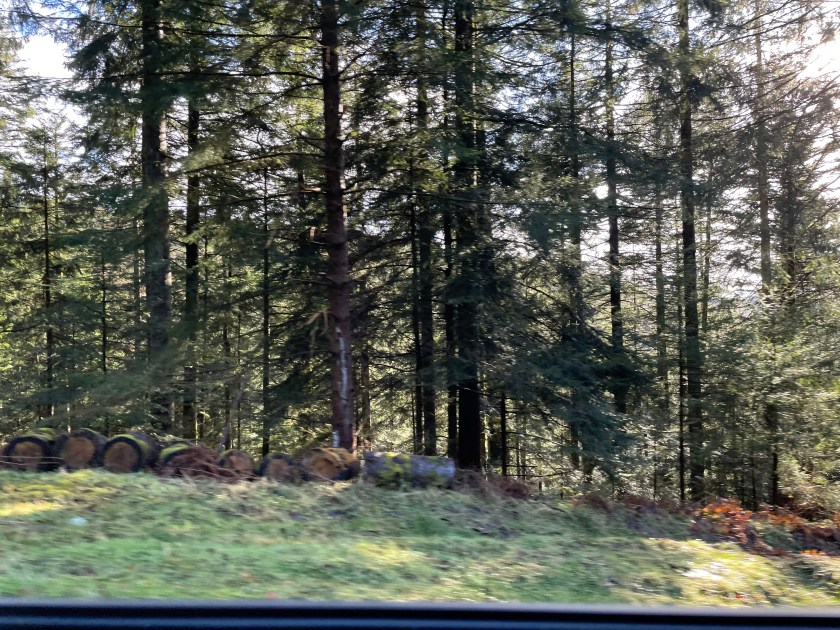
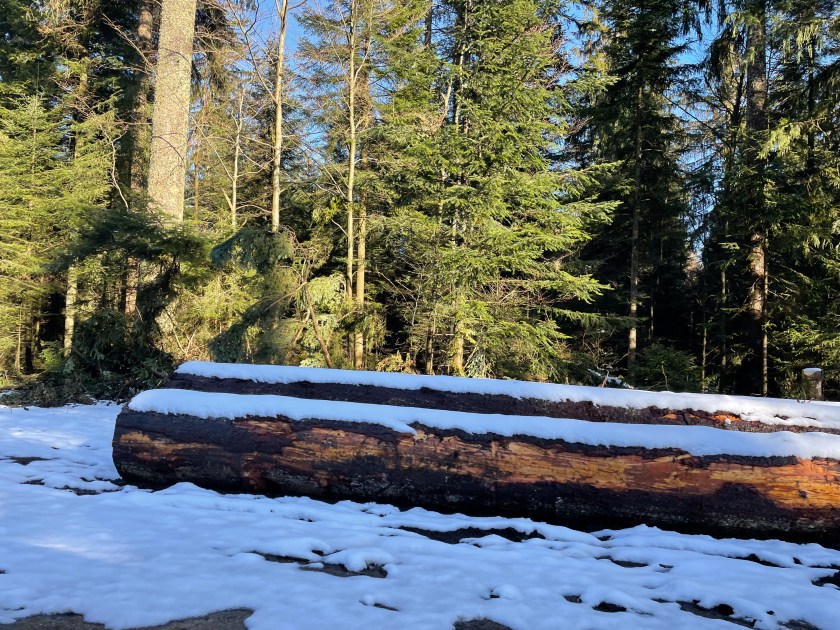
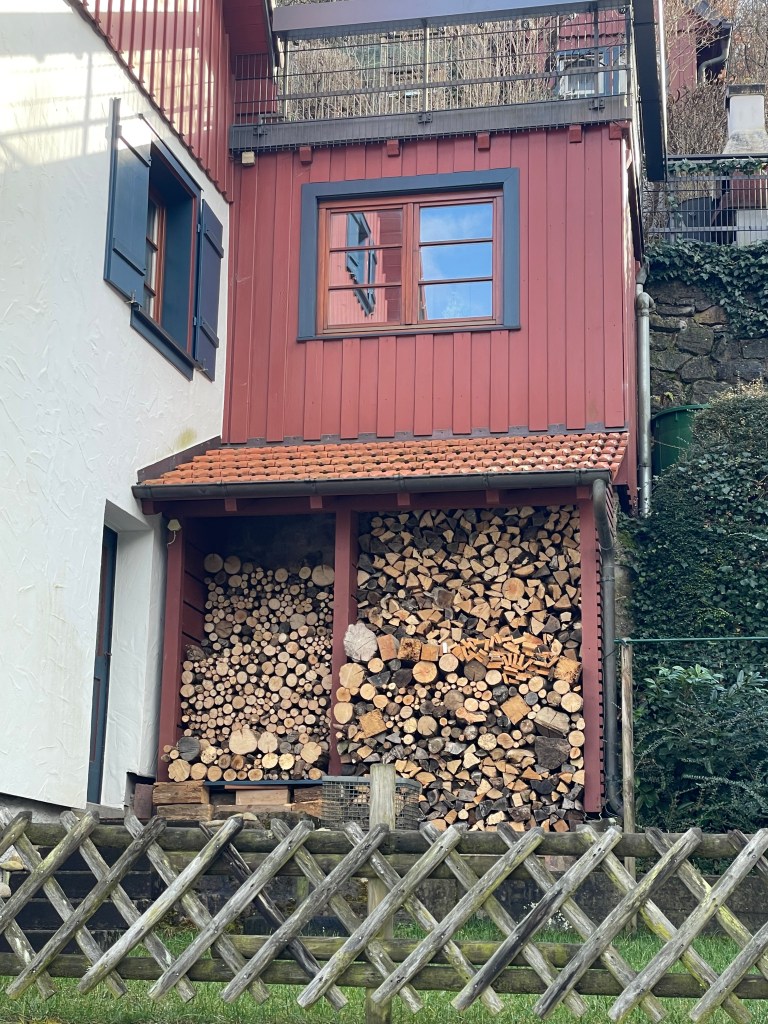
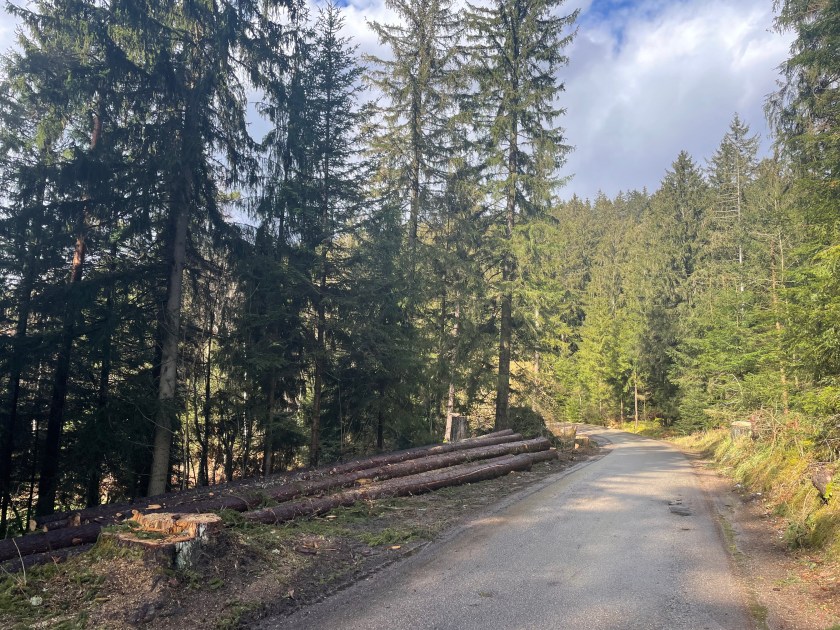
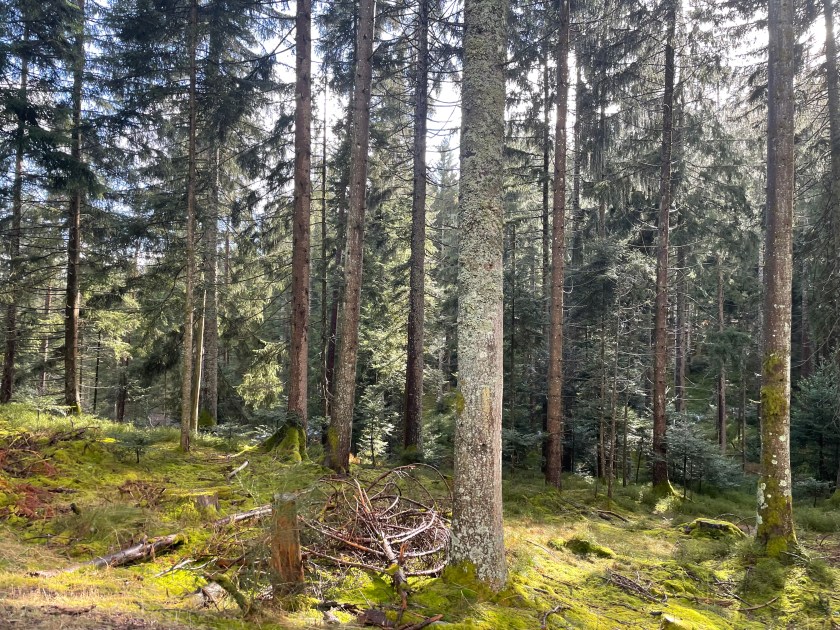
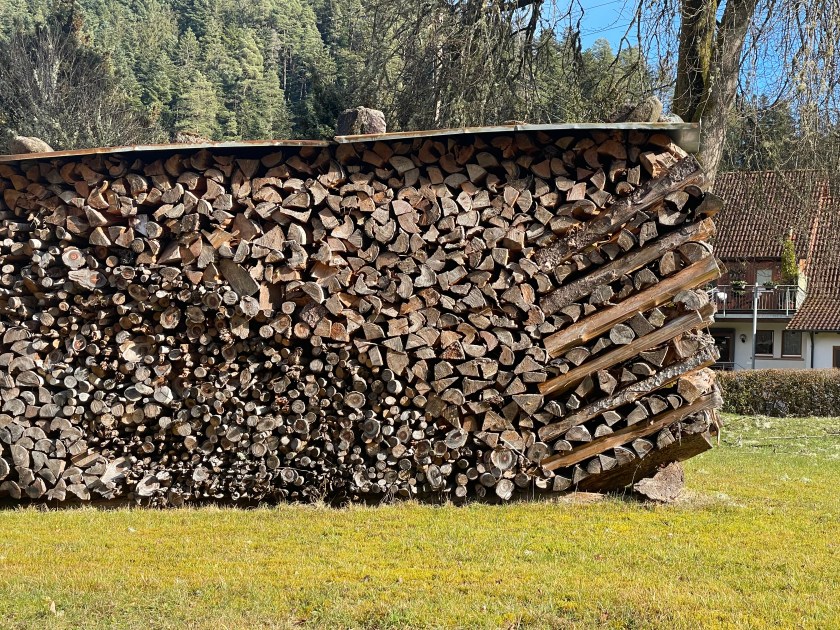
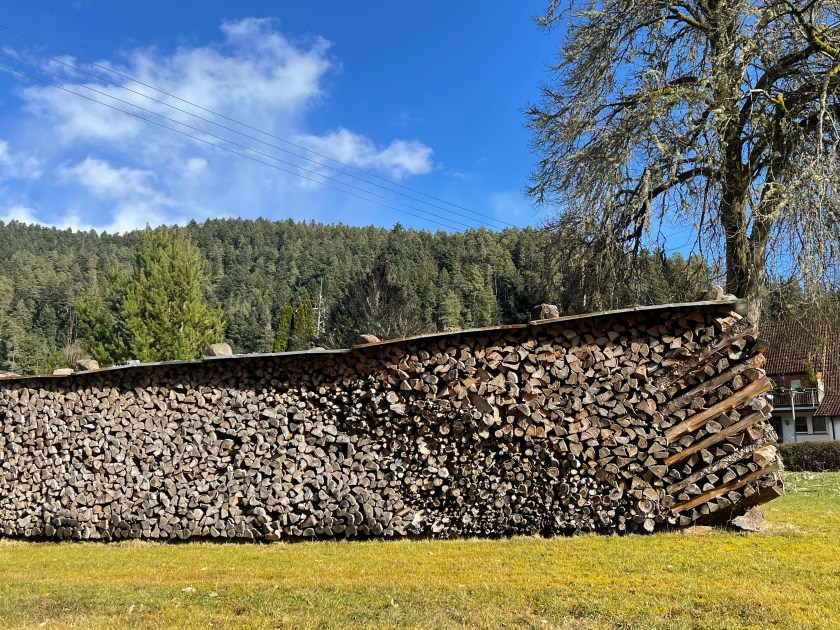
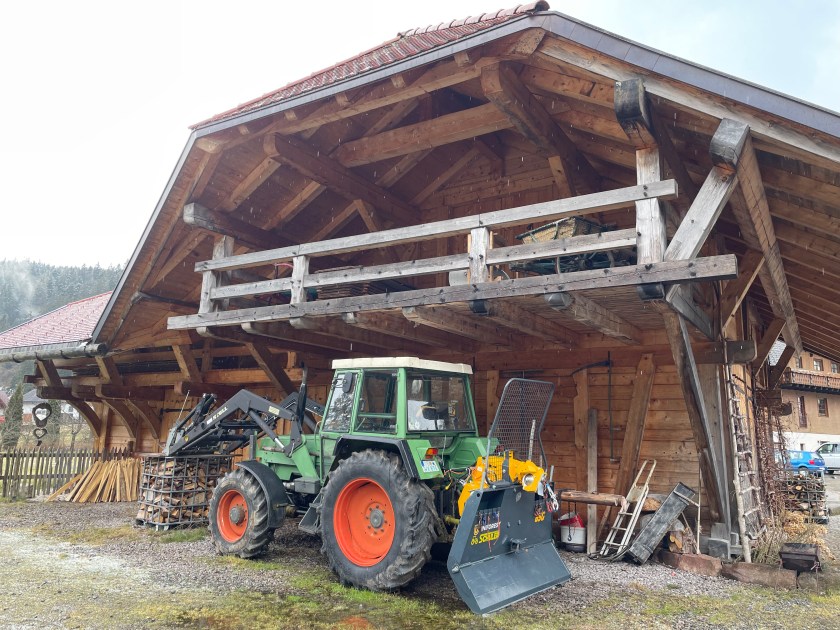
After Triberg, we were back on the road again, driving deeper and deeper into the Schwarzwald. It was breathtaking, surrounded by all the tall tall pines, straight as an arrow. There is a lot of logging done here, with stacks of these beautiful straight logs by the roadsides. Every home has perfectly stacked wood.
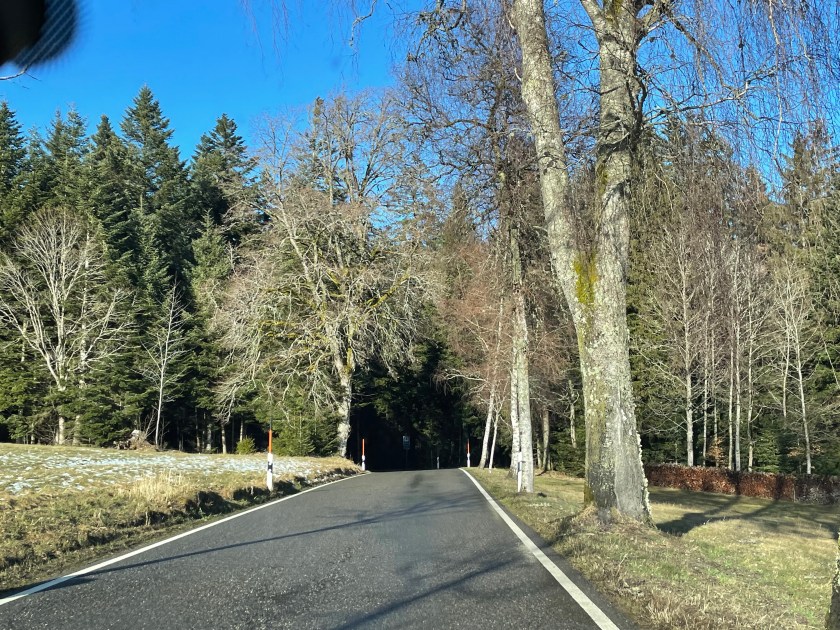
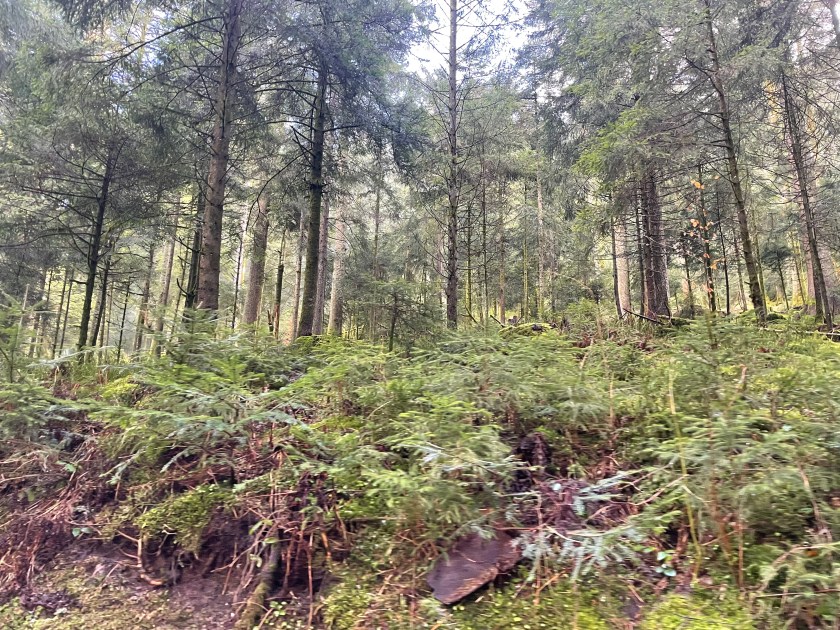
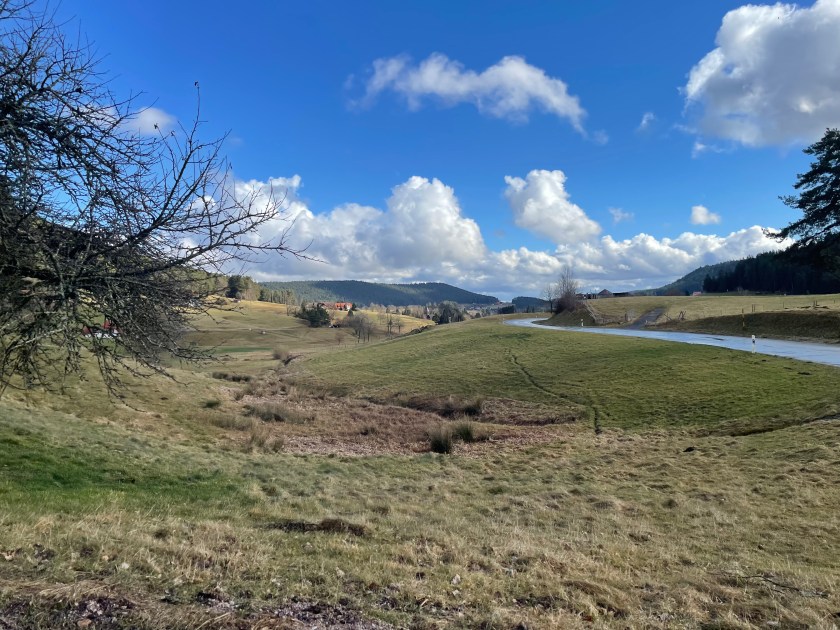
It started snowing on us as we left Triberg (like soft snow/hail). It came and went and the sun broke through, then clouds again. It was a beautiful day filled with variety. We followed our GPS and took a road that wound us up through the back ways of the mountains, it seemed like a single lane road much of the way, with barely enough room to pass any oncoming cars. Everything was green and lush. It seemed impossible to capture the majesty of the forest in a photo, but I tried, from the car window and when I asked John to pull over from time to time.
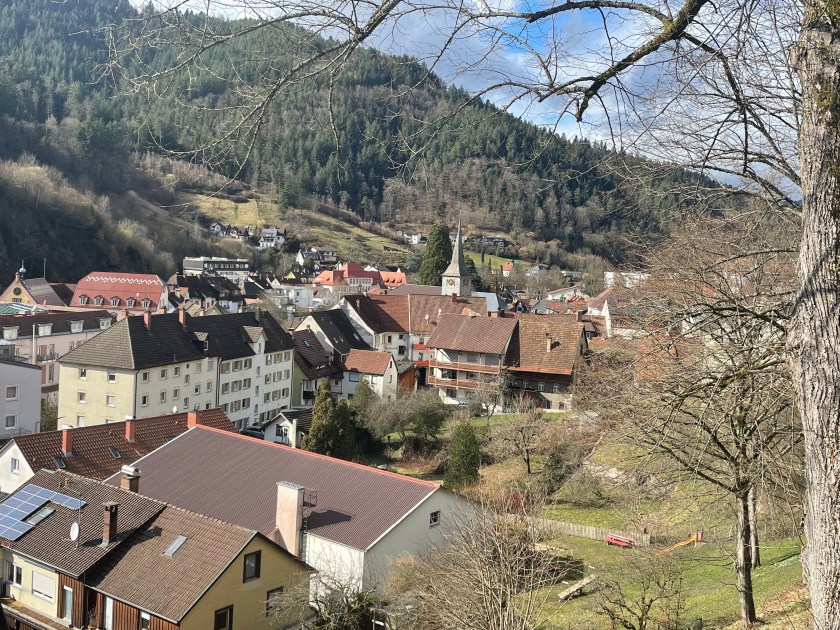
I love seeing the steeples of churches poking up from each town and village we pass by.
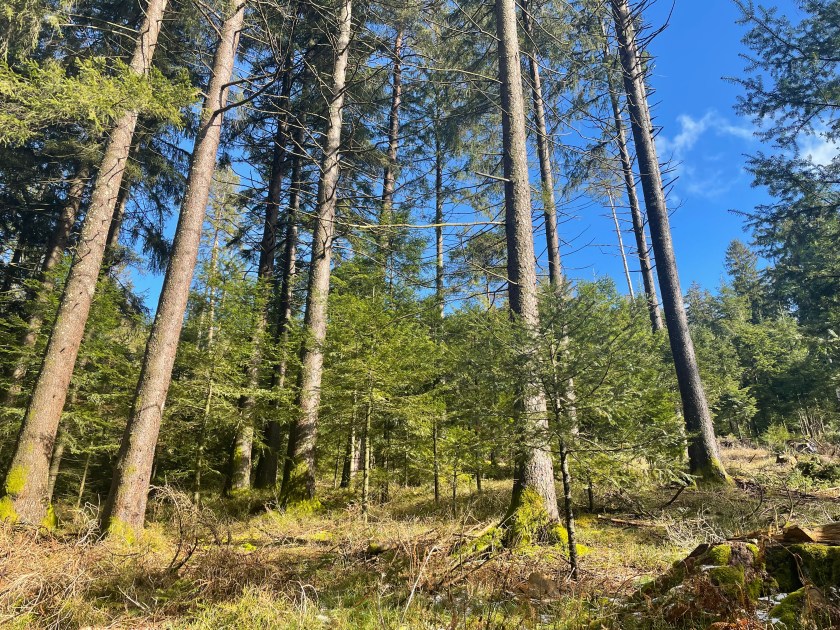
The undergrowth is so dense. I don’t know that you could walk through the forest in most places.
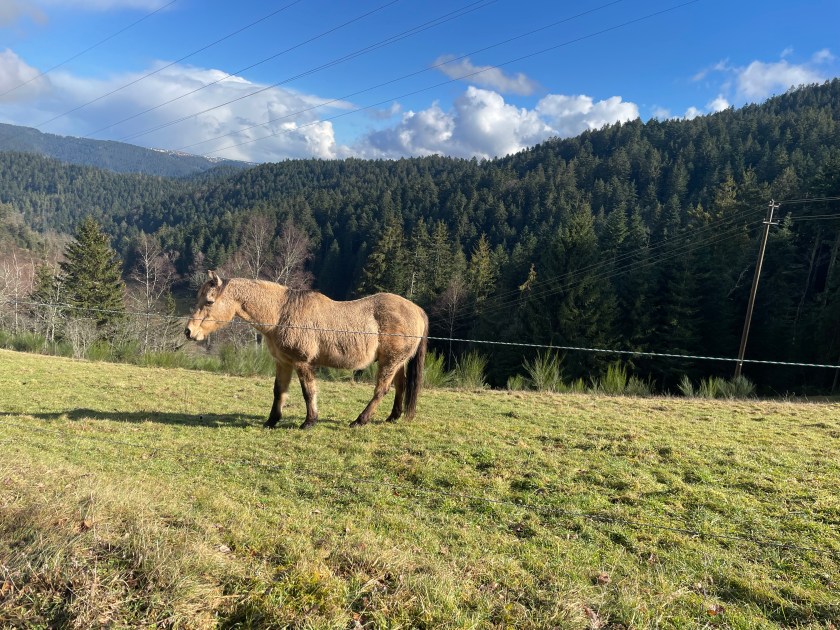
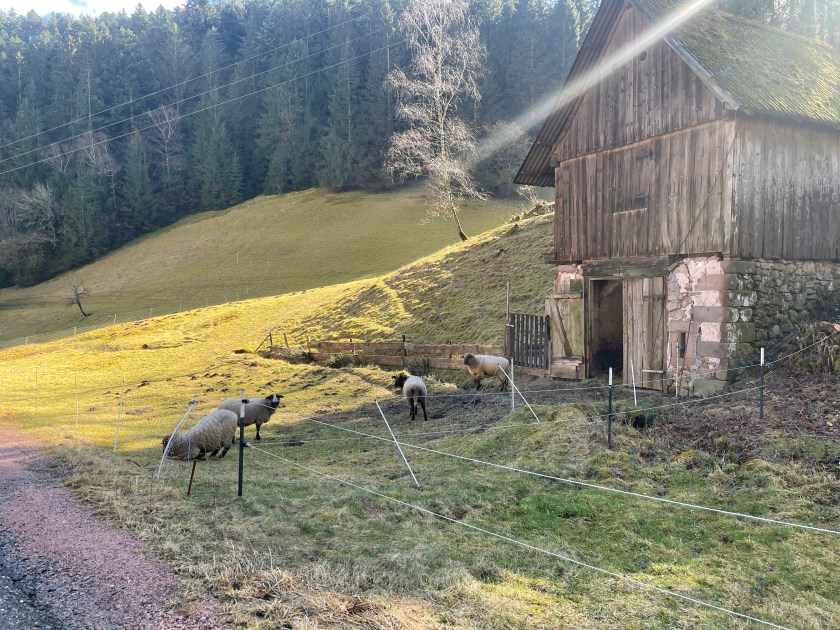
There are small towns and scattered farm homes in these mountains, each with a small or large clearing. At one point we drove by a beautiful field with a furry horse (winter coat) grazing, a bit further on there were some sheep. As we paused to take a photo of them, a car came by and stopped by John’s window. “Schöne Schafe, gel?” said a handsome bearded young man. (Beautiful sheep, right?) We said, “Oh, so schöne!!” He told us they were his and his farm was just up the hillside. “Take all the photos you want” he said as he drove on.
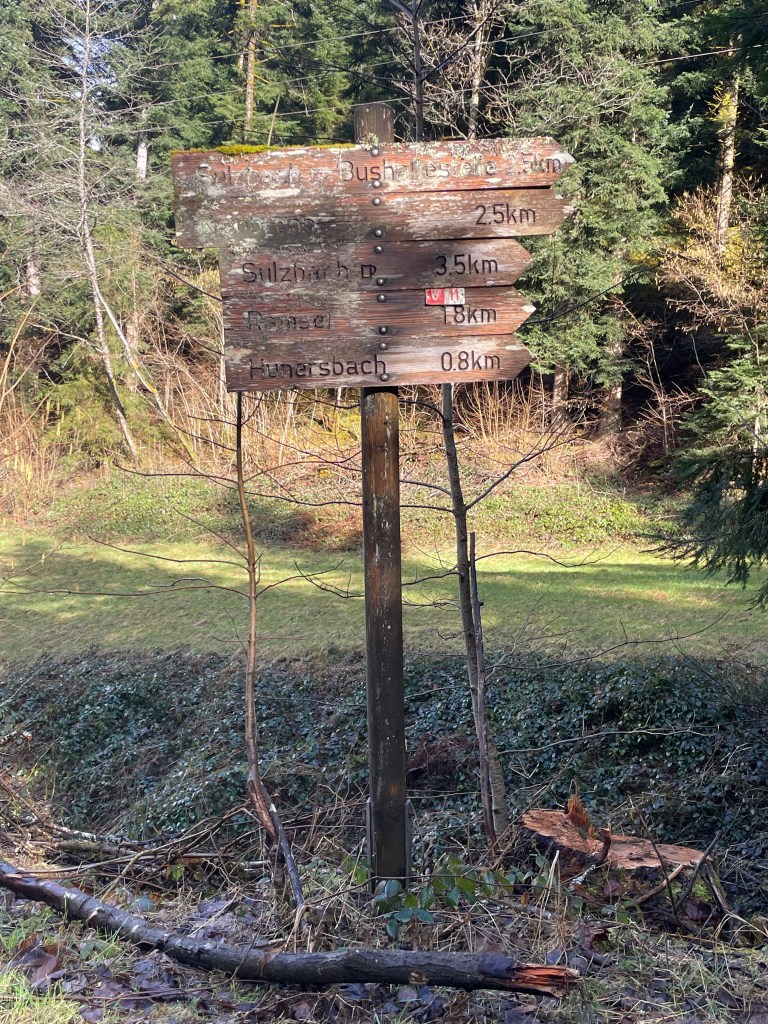
A Wegweiser, or signpost:
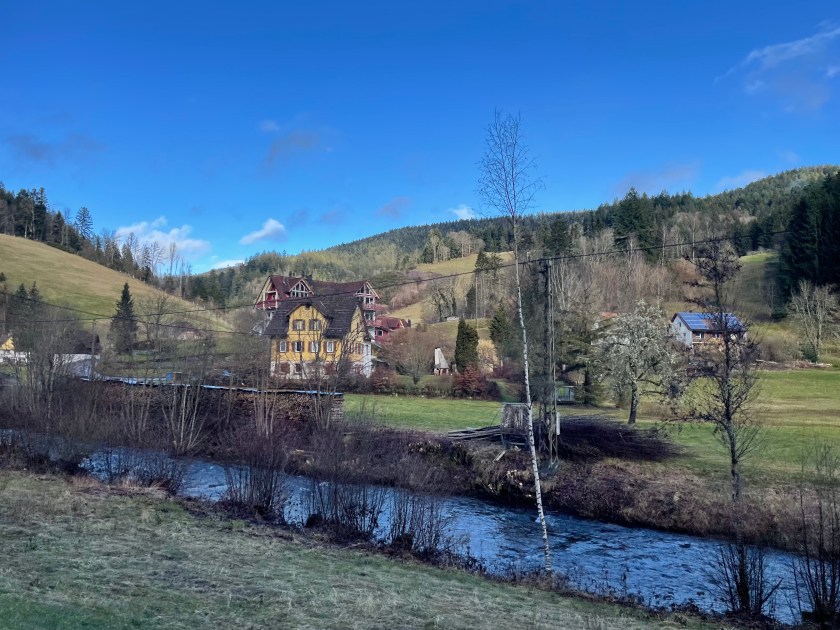
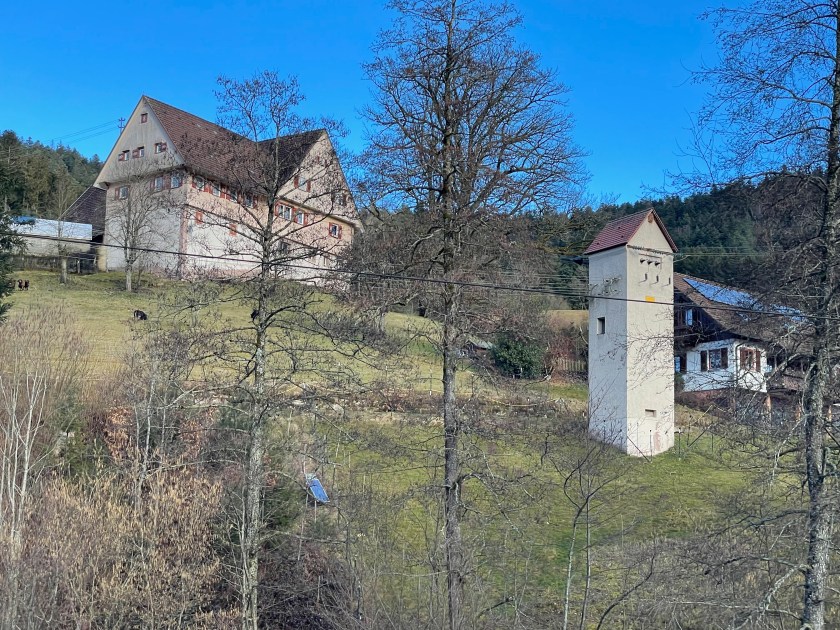
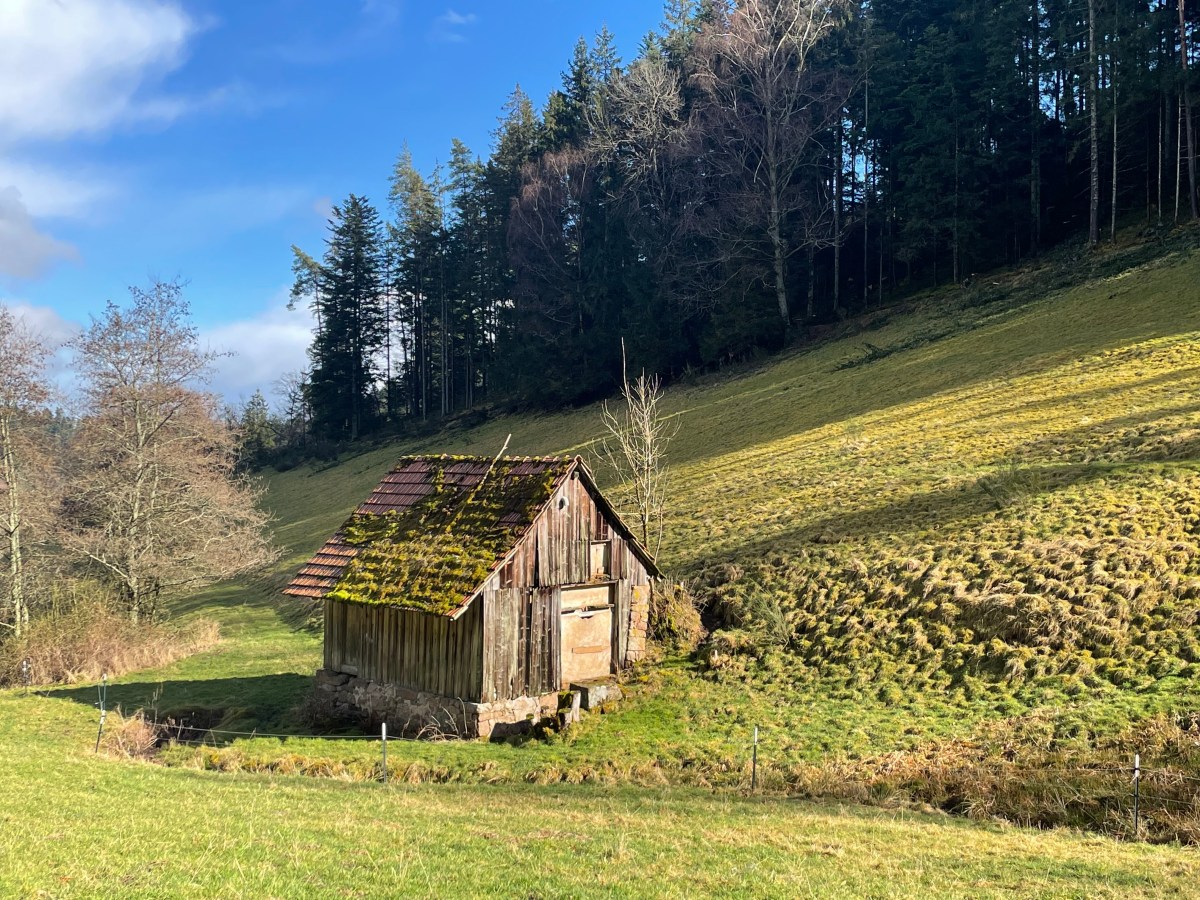
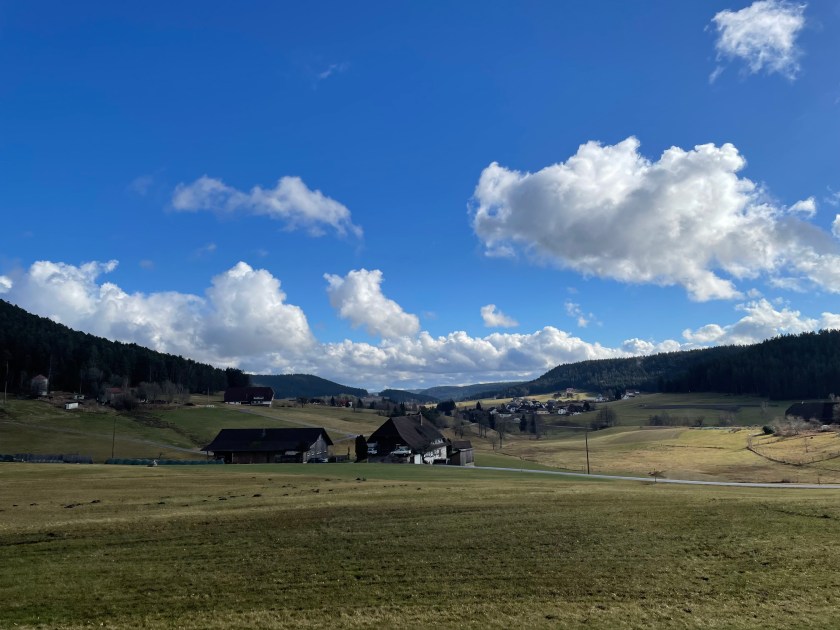
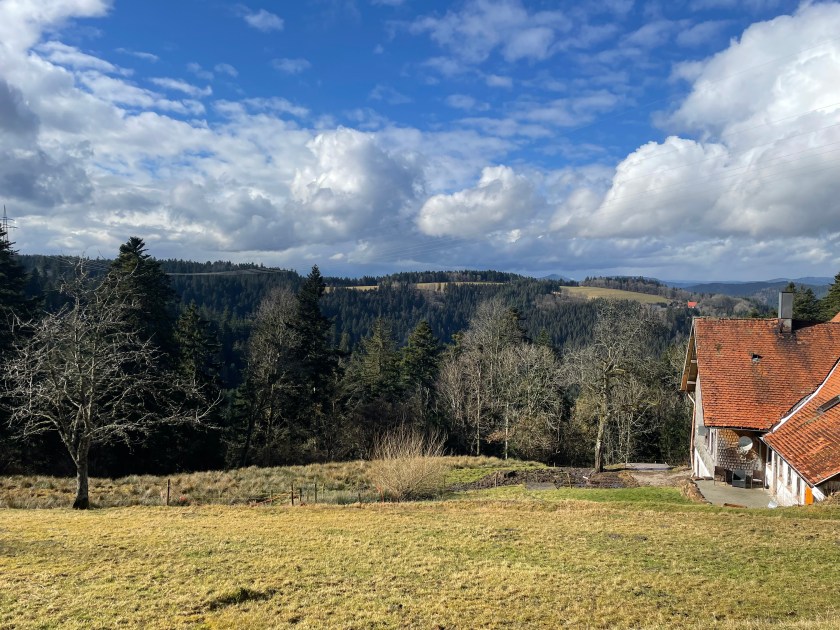
Homes and farms are nestled in clearings in the forest.
I was quite fascinated by the wood piles at every home or farm. All stacked perfectly, with pieces exactly the same length and split for the fire. Do they all have wood-burning stoves? And must each home cut enough wood each year to get them through the winter? The days are short here in the forest, with high mountains on every side. Everything is so tidy here. And beautiful. I could live here. I would even try to stack my wood perfectly straight.
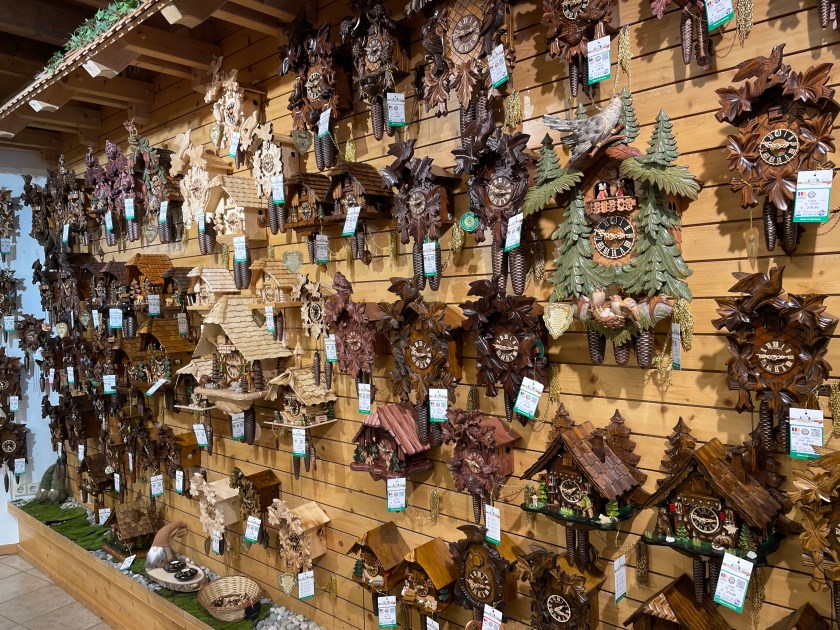
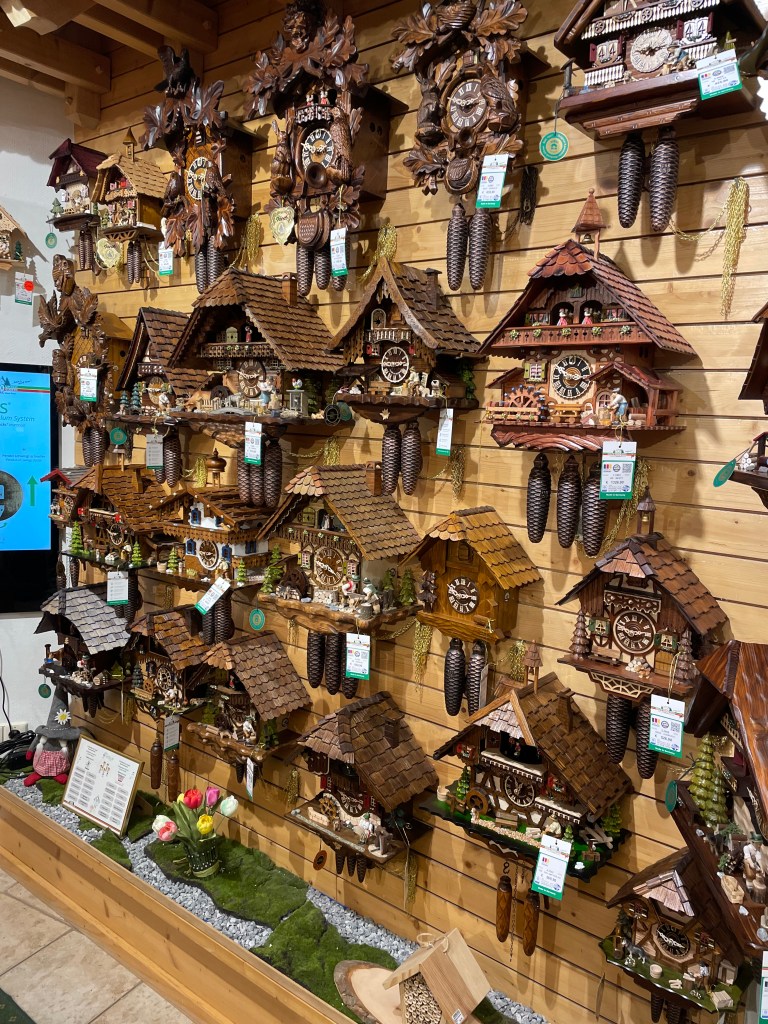
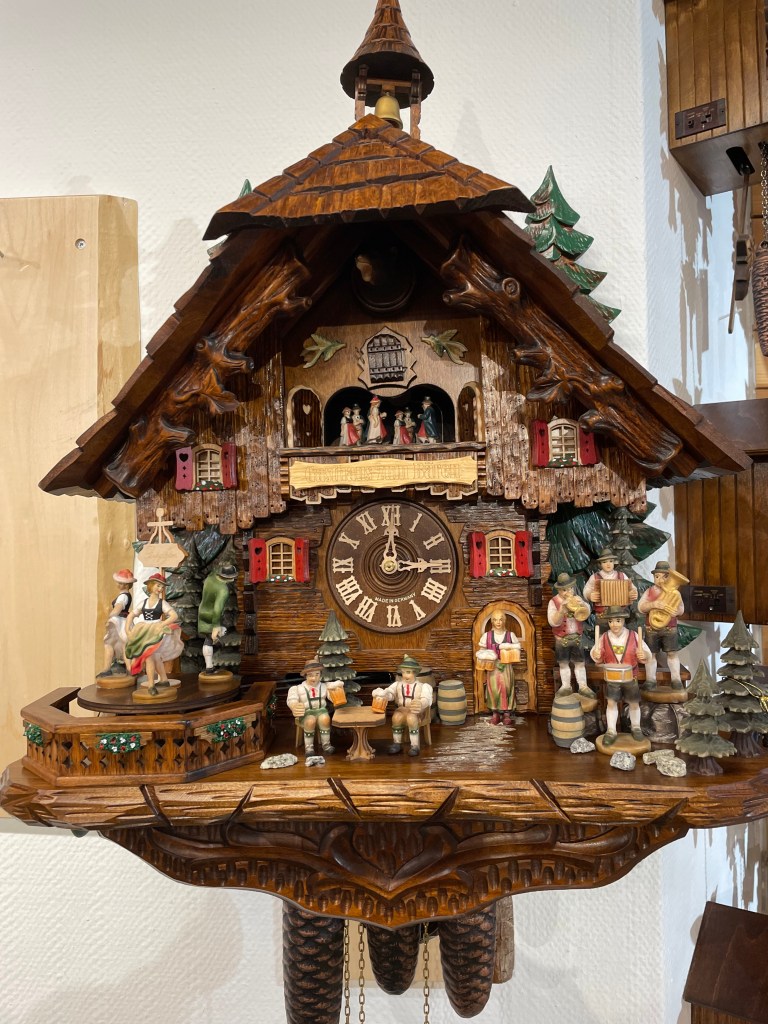
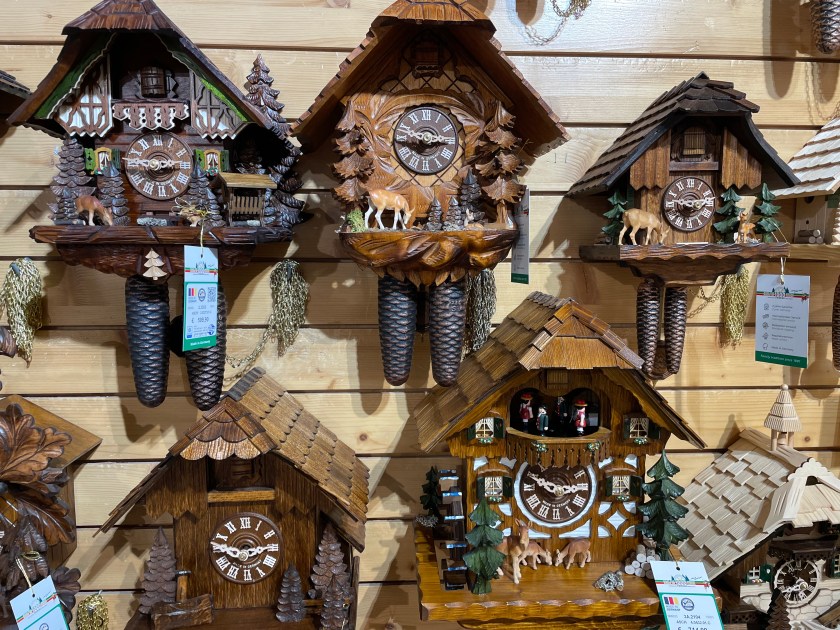
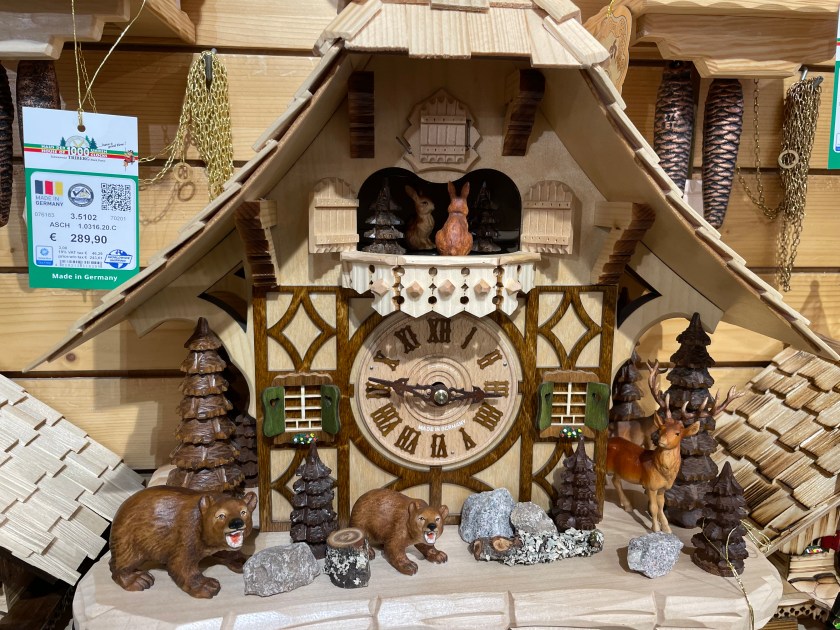
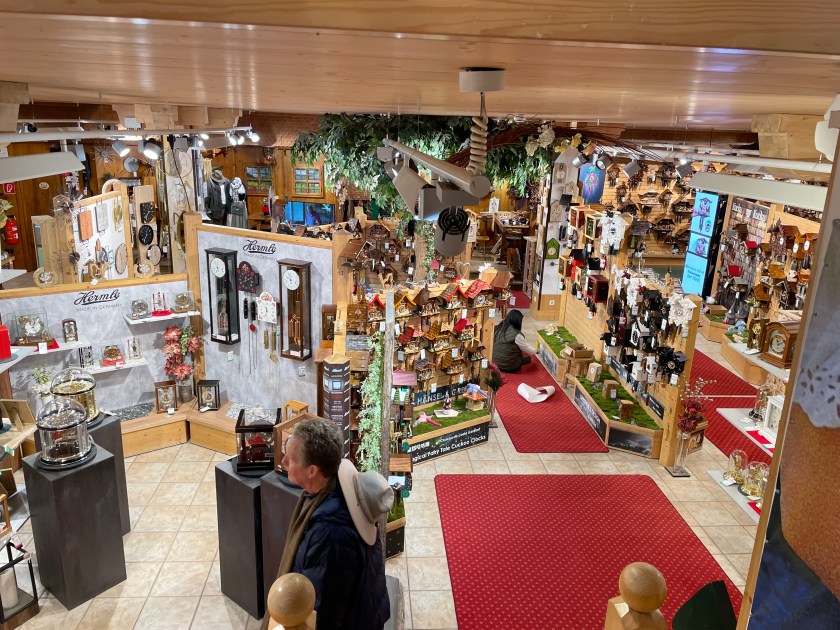
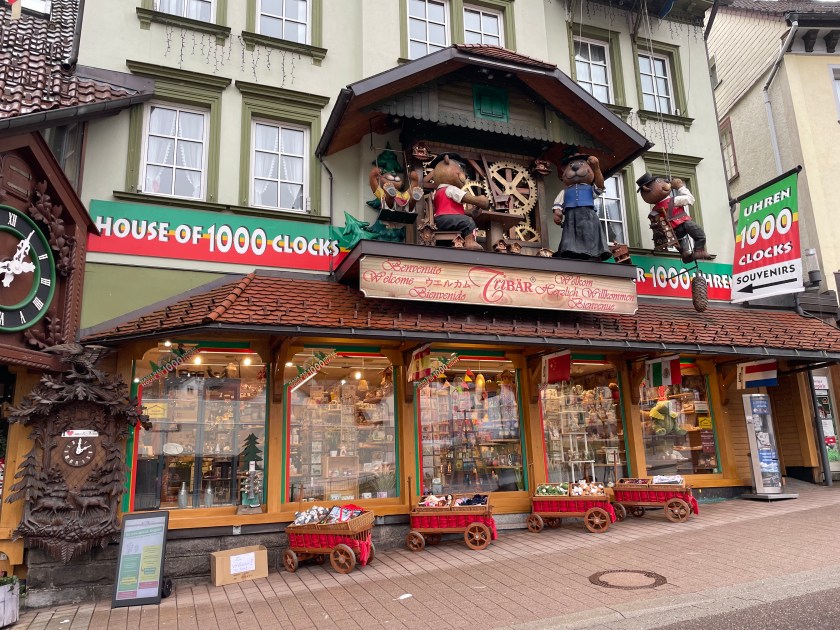
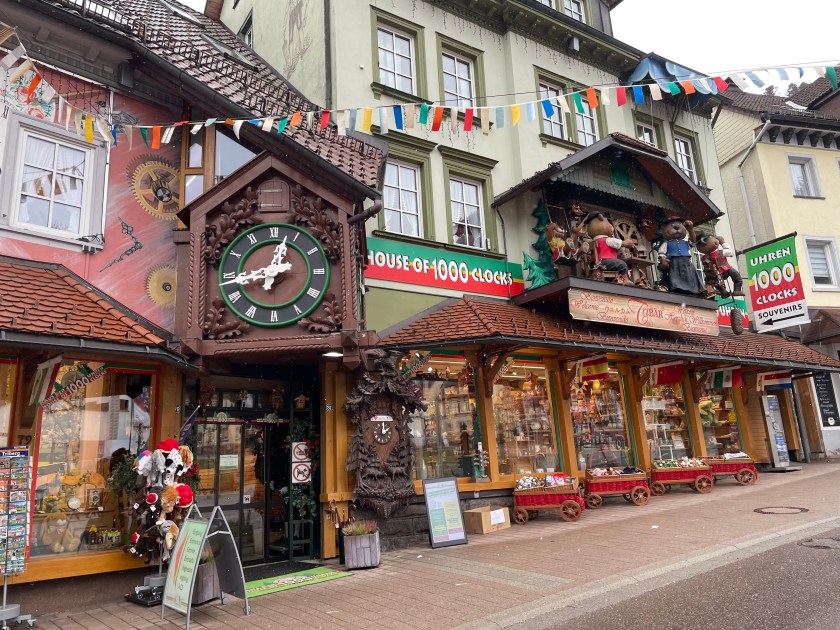
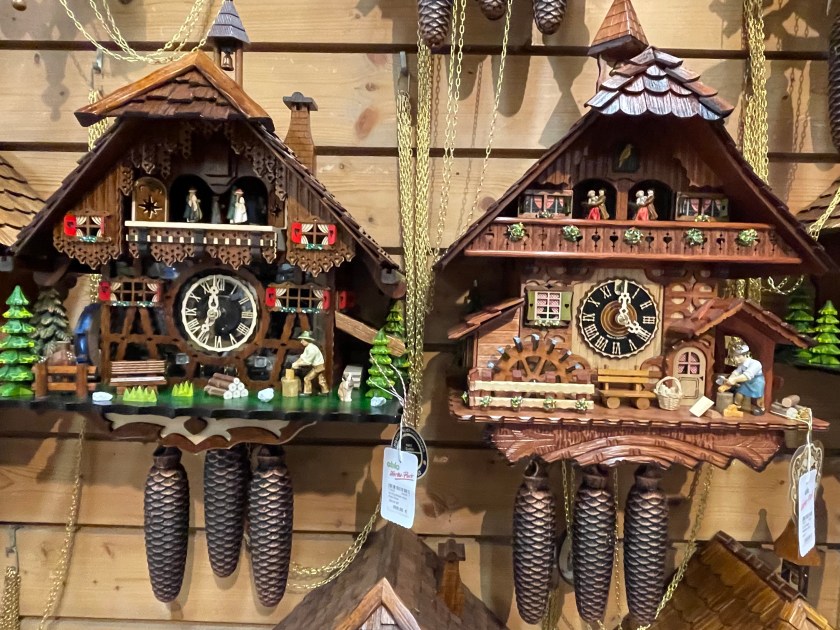
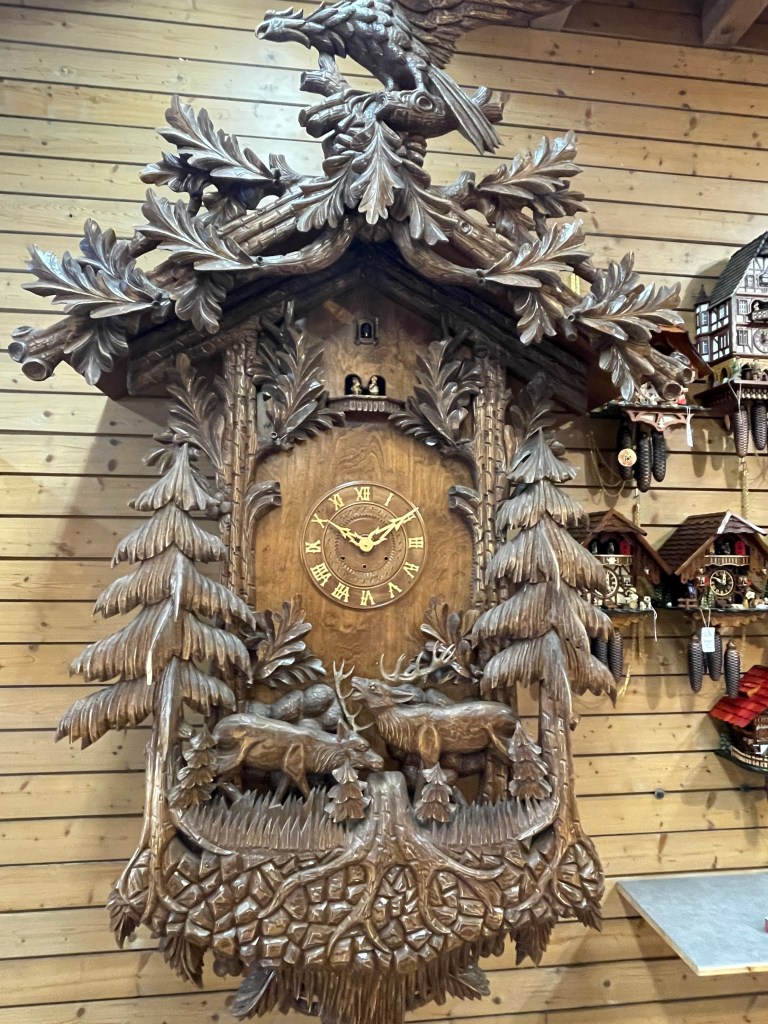
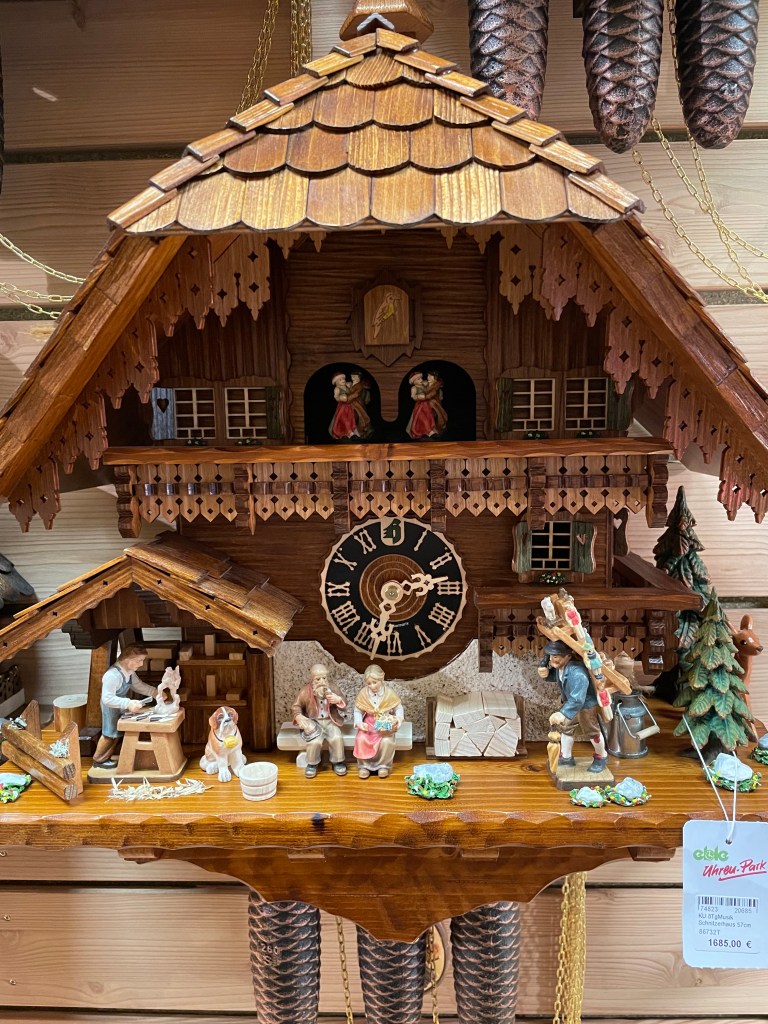
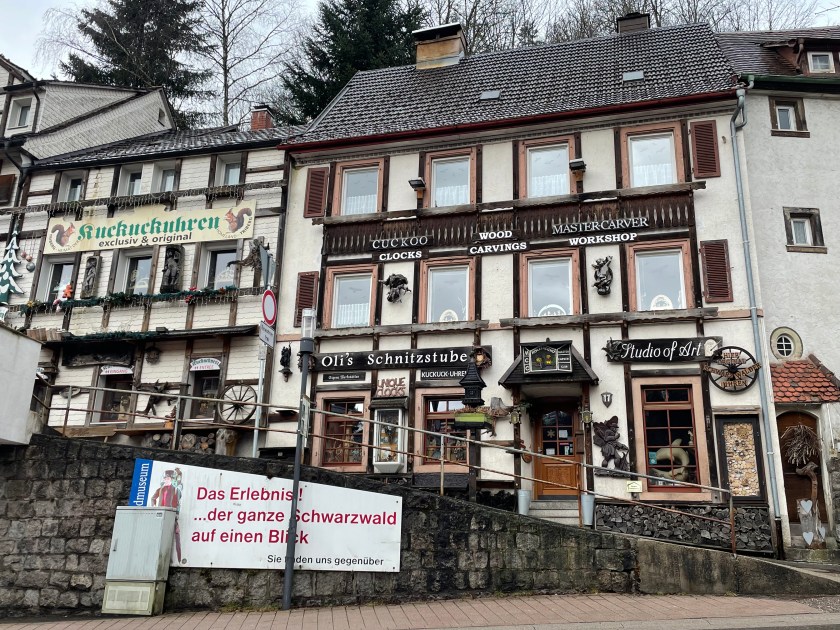
We wandered along the main street of Triberg, and found a couple of shops open today during Karnival. One is a large Cuckoo Clock shop boasting a salesroom with more than 1000 clocks!
It was fun to take a look inside where we enjoyed not only seeing, but also hearing the ticking of the clocks all around us.
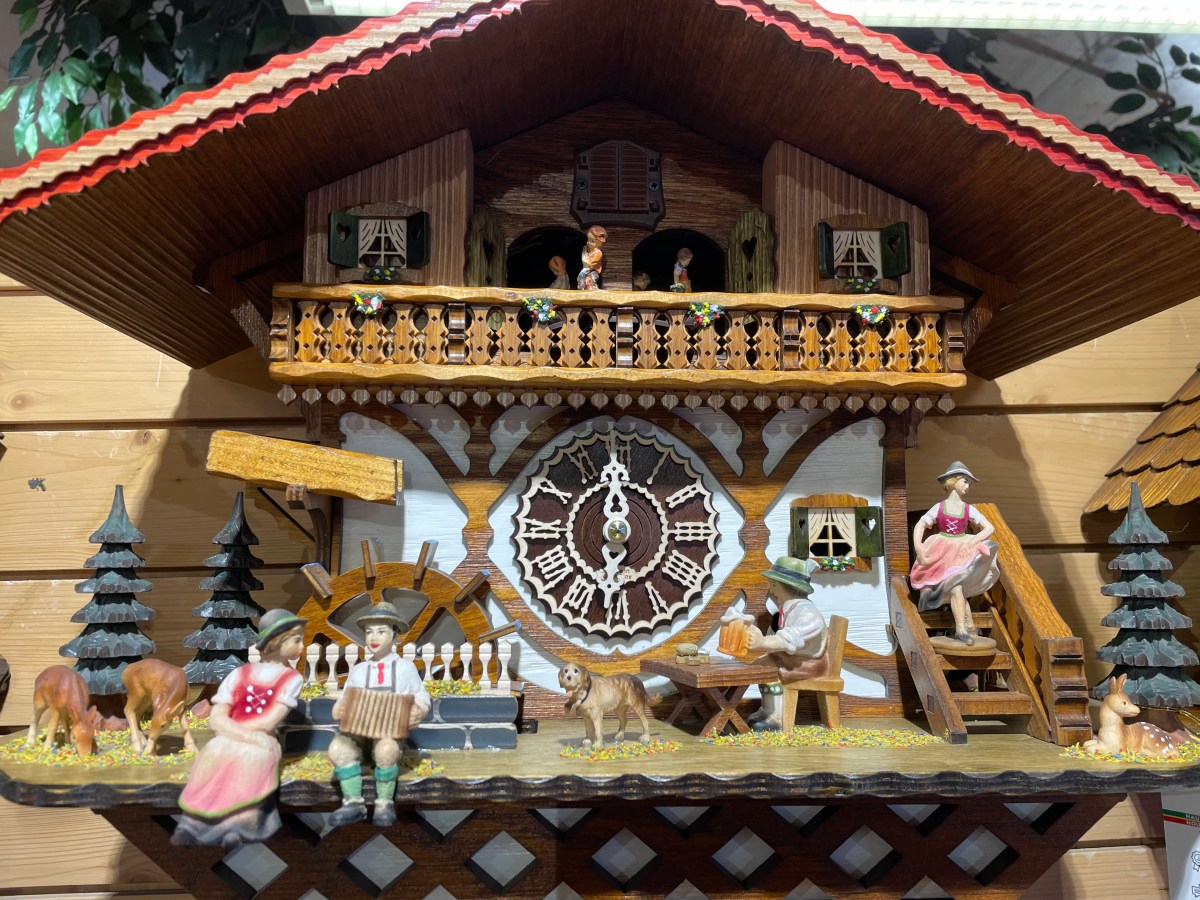
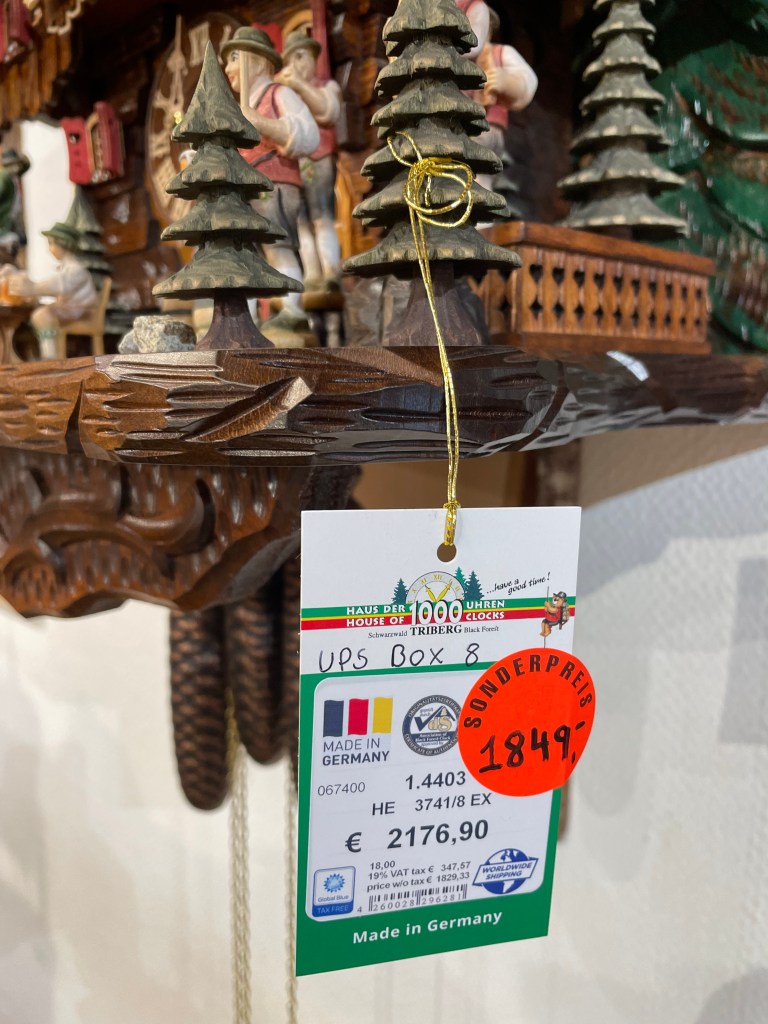
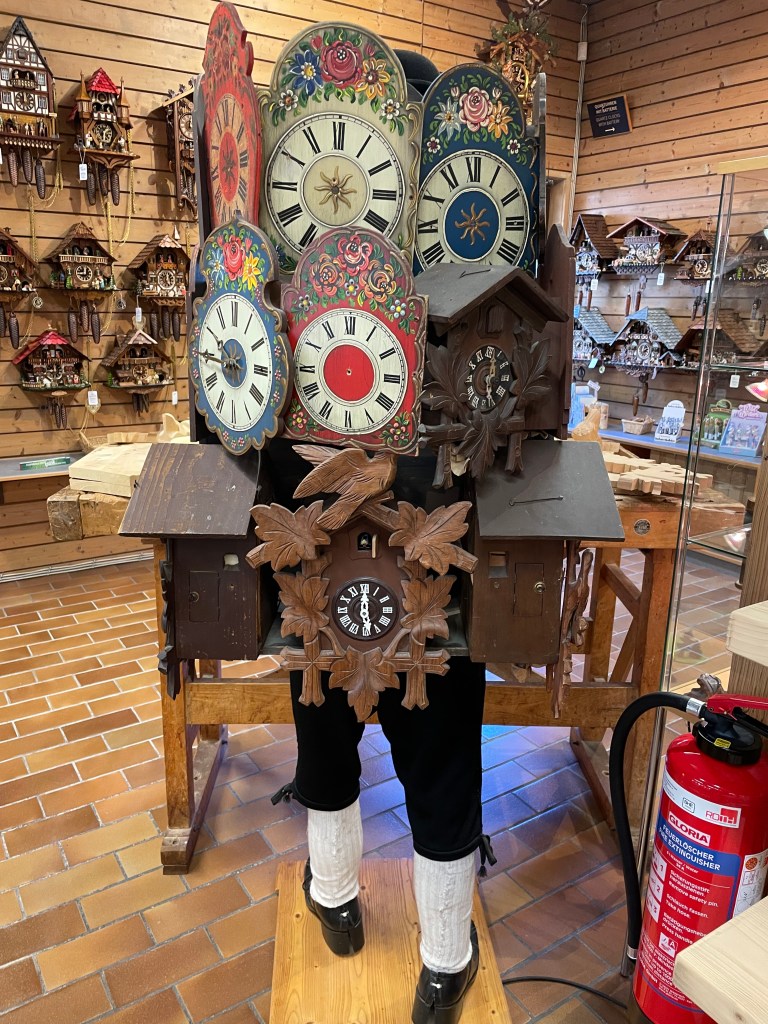
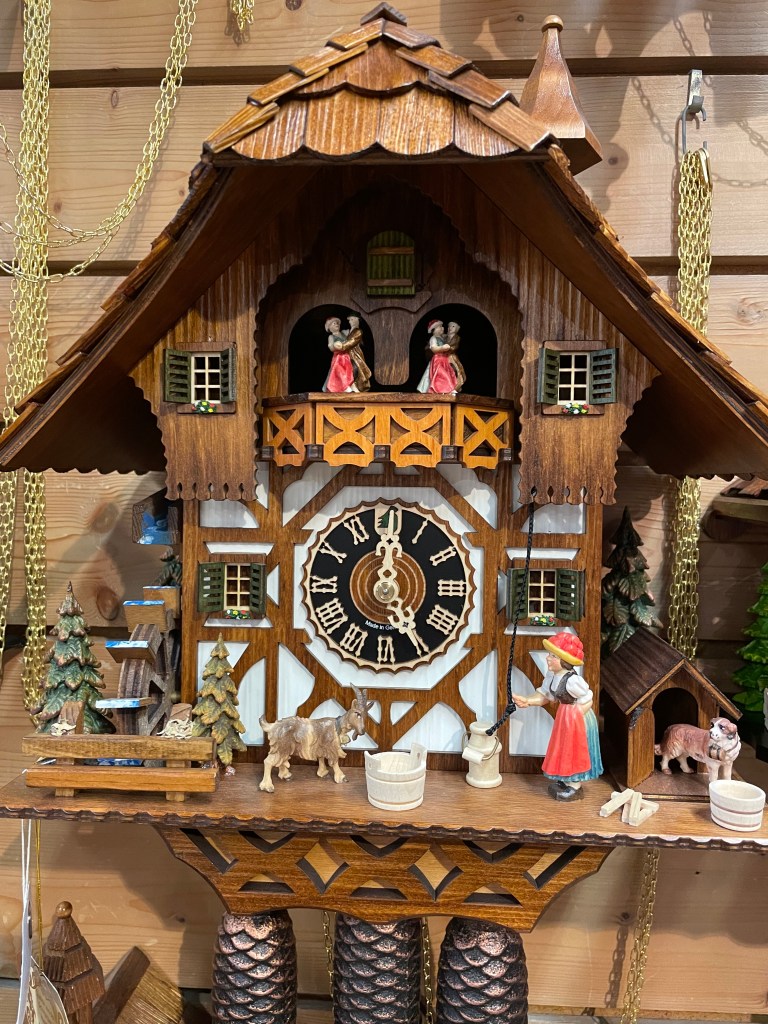
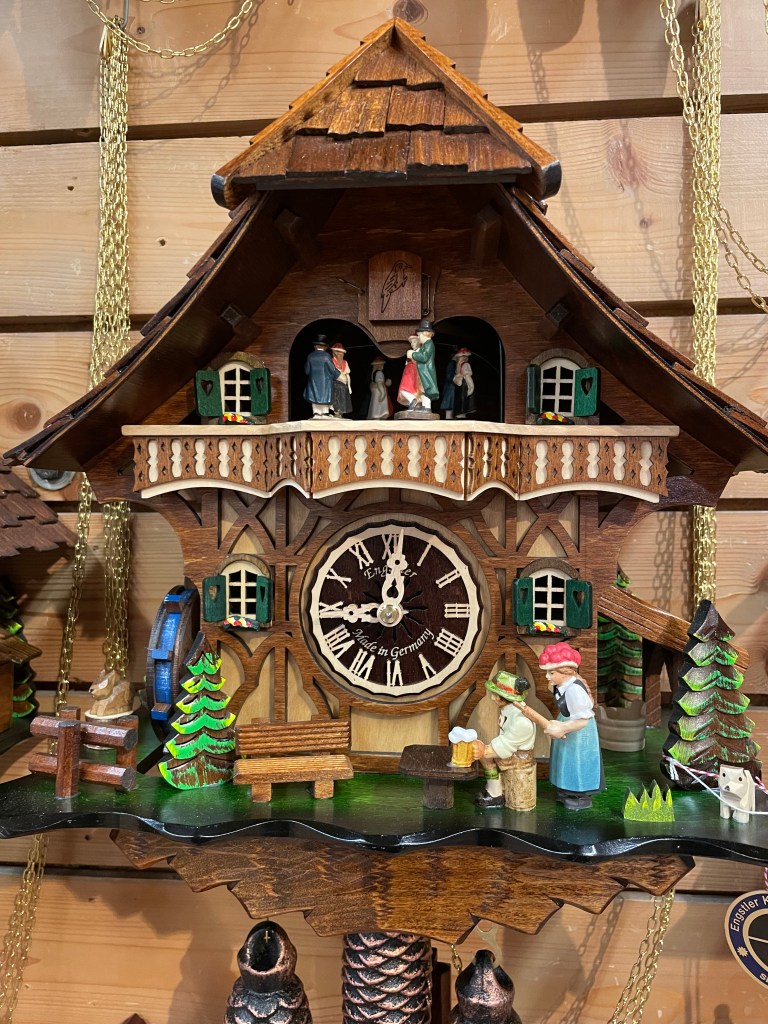
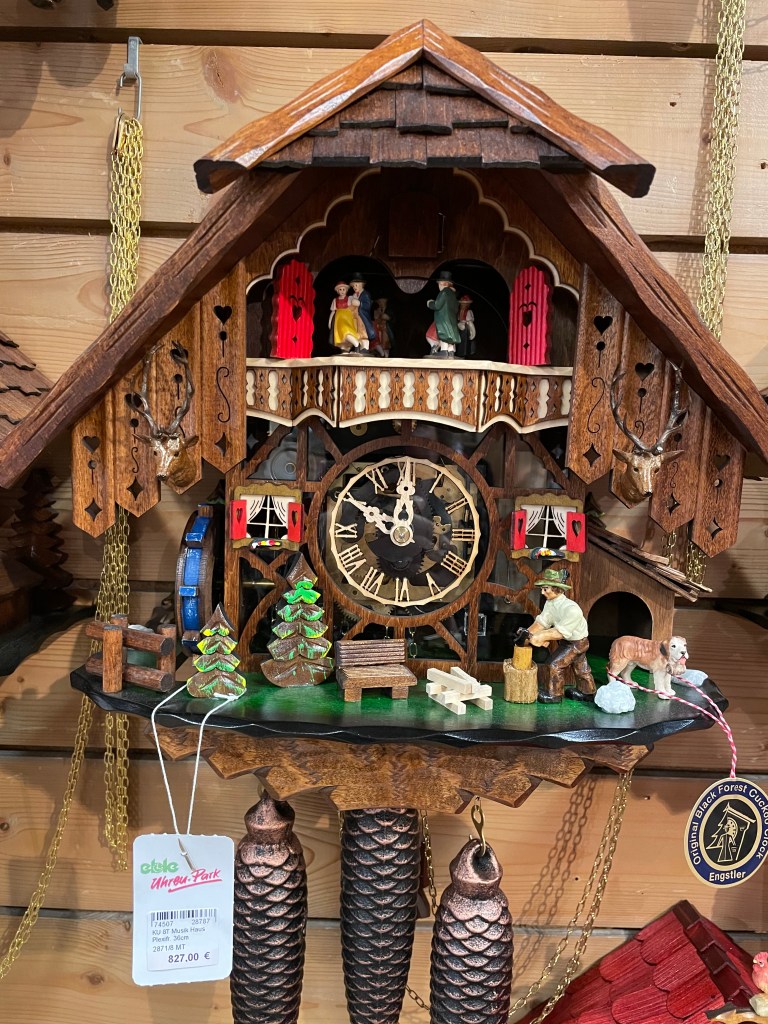
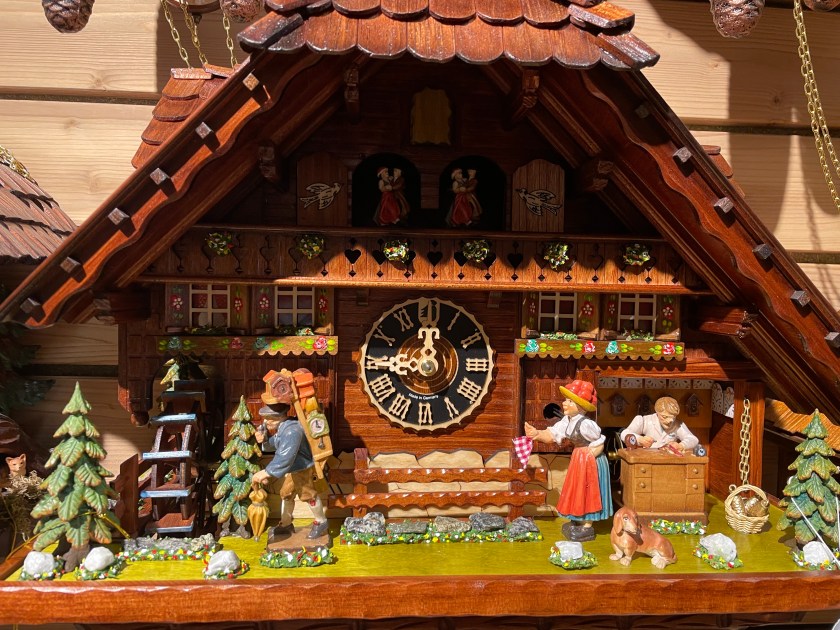
Each cuckoo clock is unique and hand crafted. There were clocks in every price range, but the nice ones are quite expensive–$500-$2500 and more.
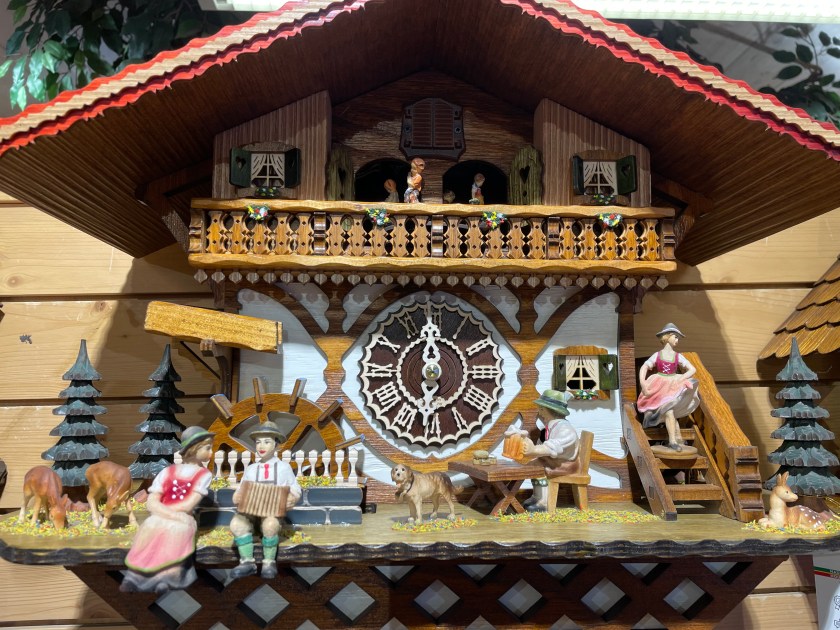
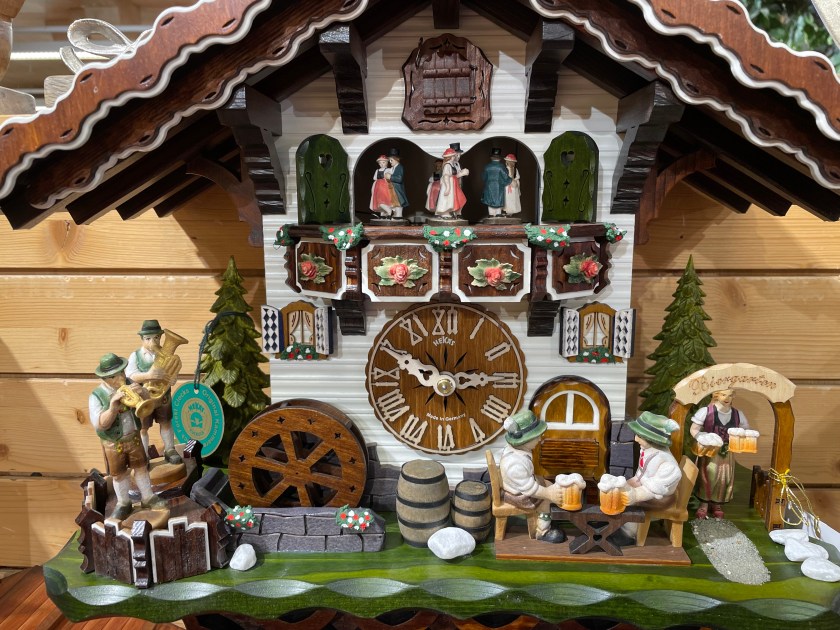
These clocks tell the stories of life in the Black Forest. We have a beautiful cuckoo clock hanging in our Sundance cabin at home.
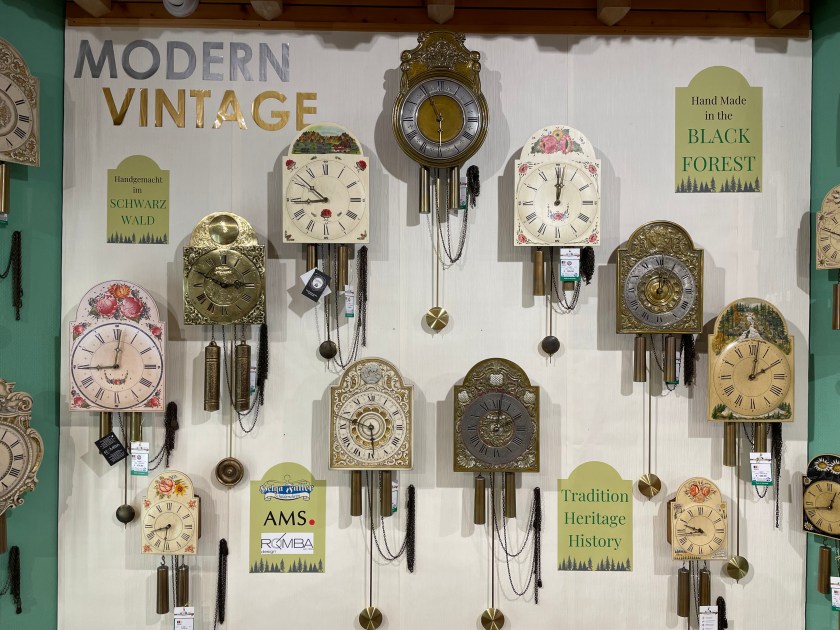
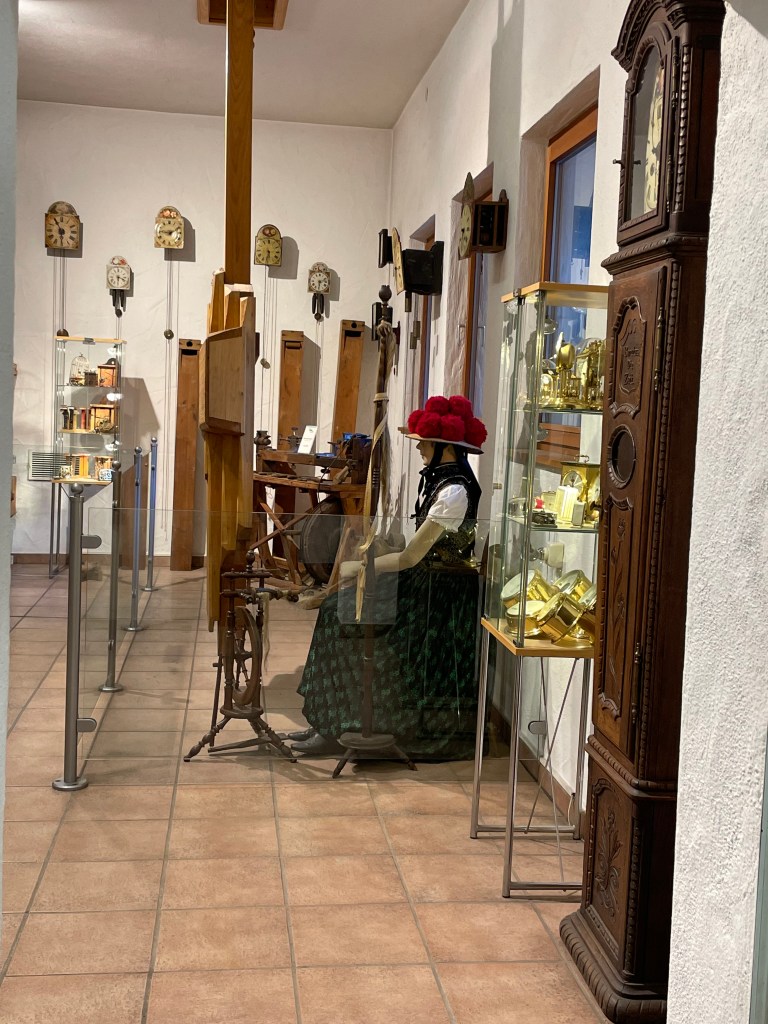
We loved looking at the enamel faced clocks in the museum. Here are some reproductions, “modern vintage.” They were also quite expensive. The small one we liked best (in the lower left) was over $800.
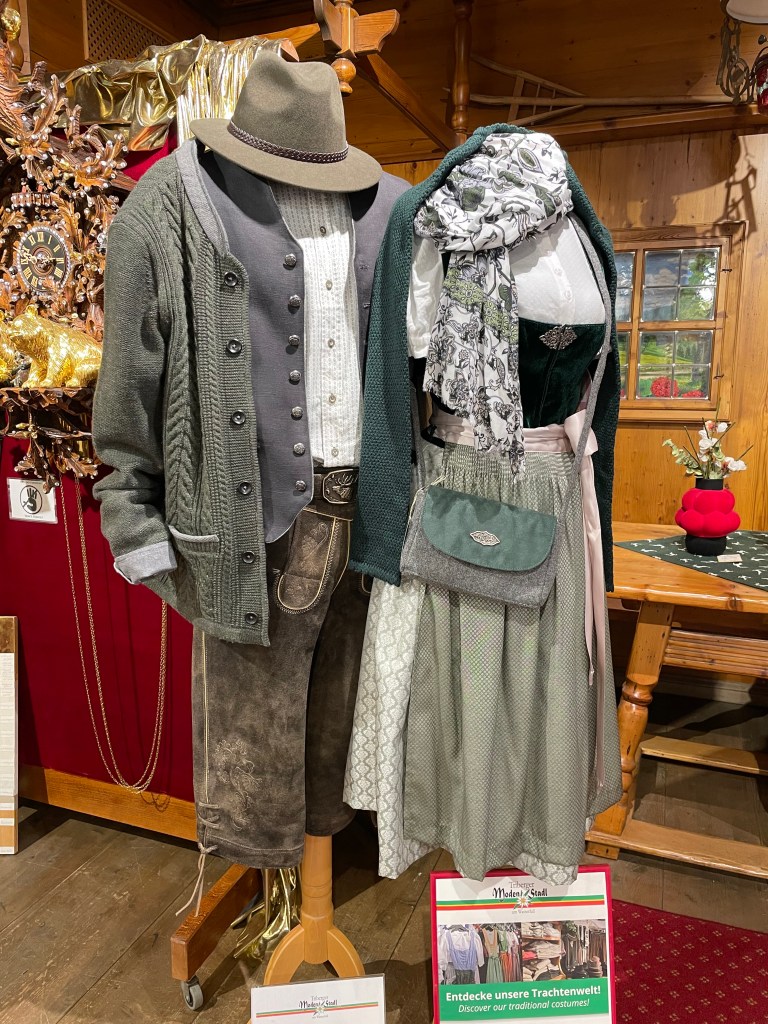
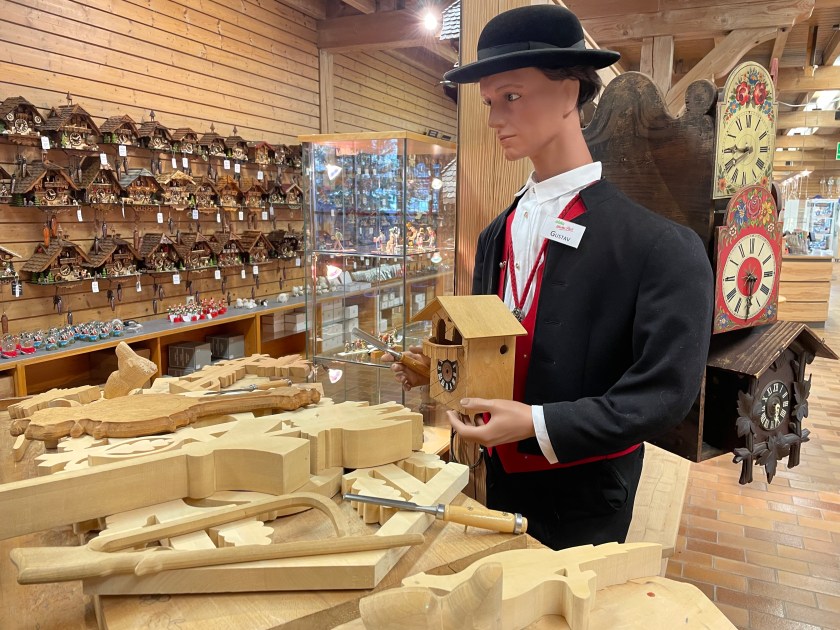
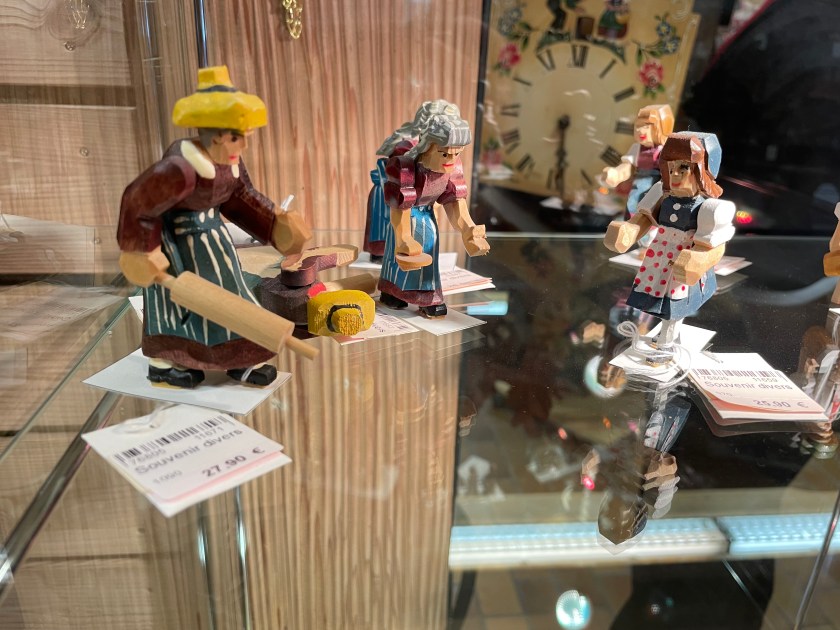
I LOVE the traditional German clothing.
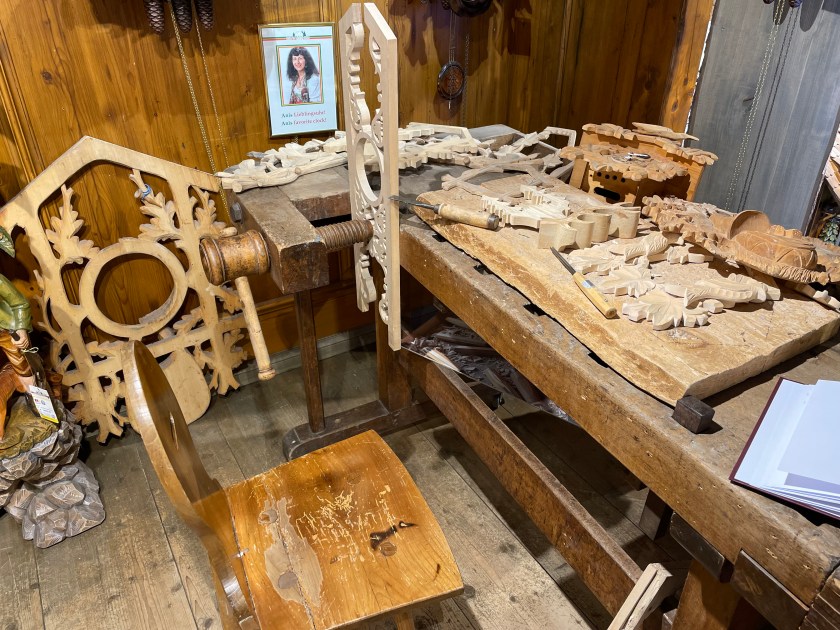
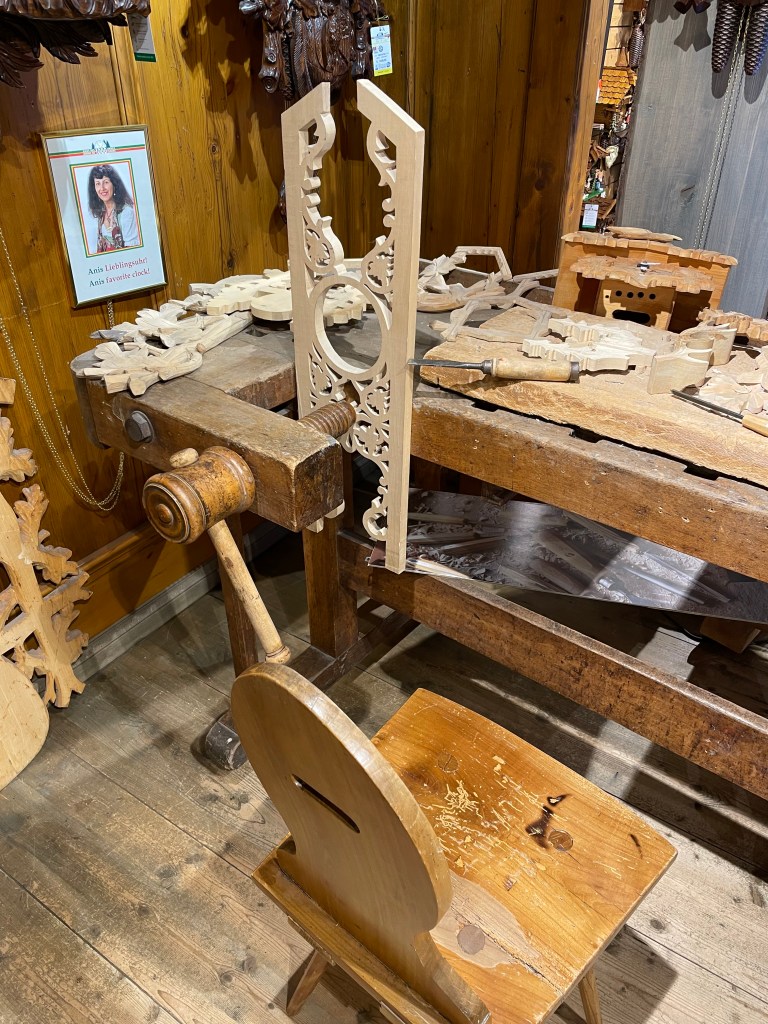
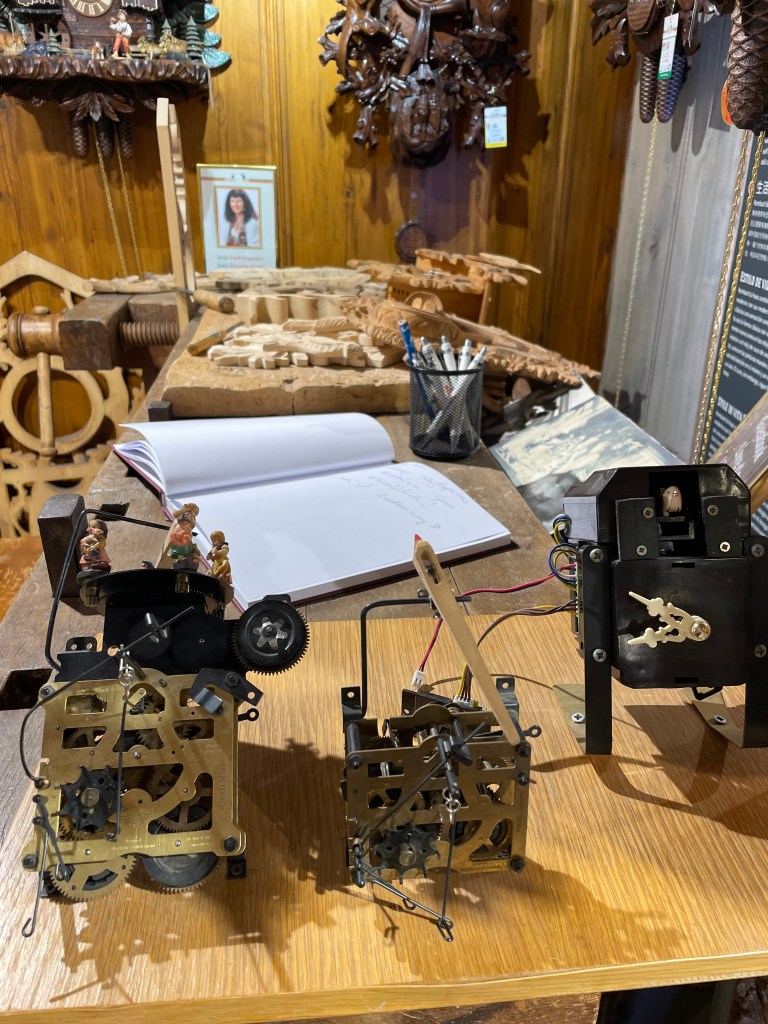
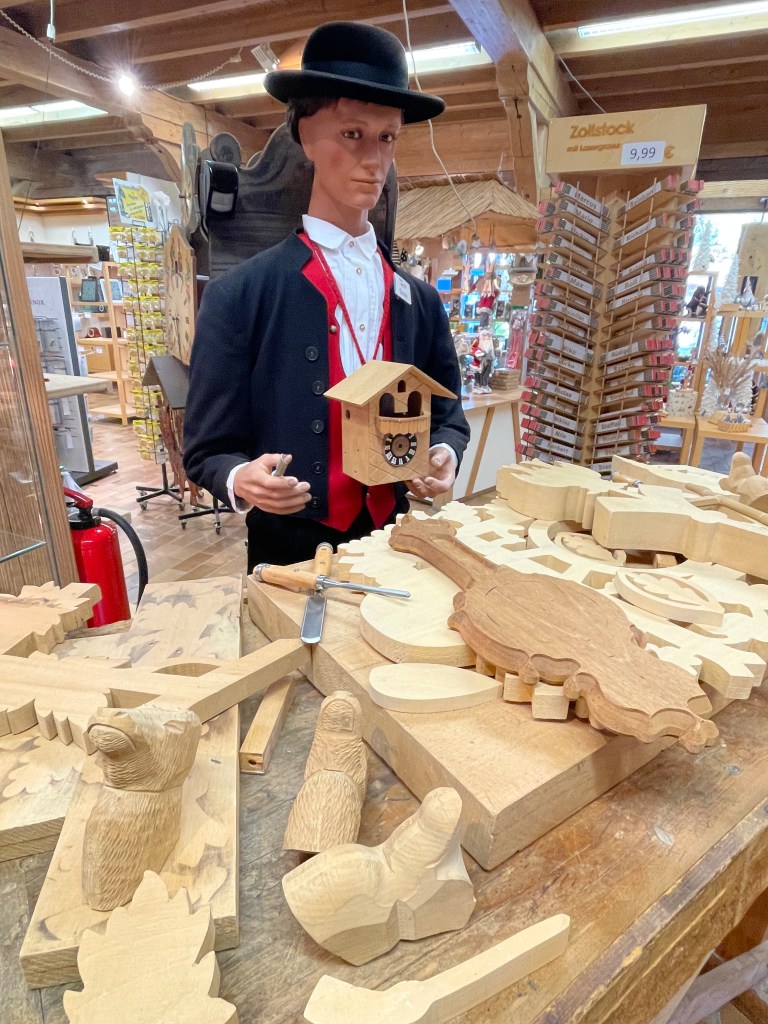
Here’s a display showing how the clocks are made:
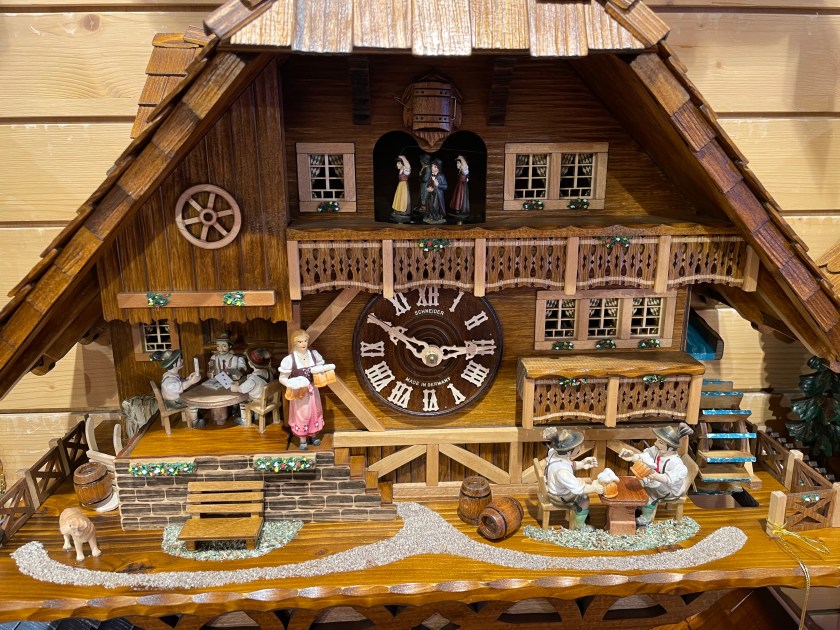
These clocks feel a bit like doll houses, each with a story to tell.
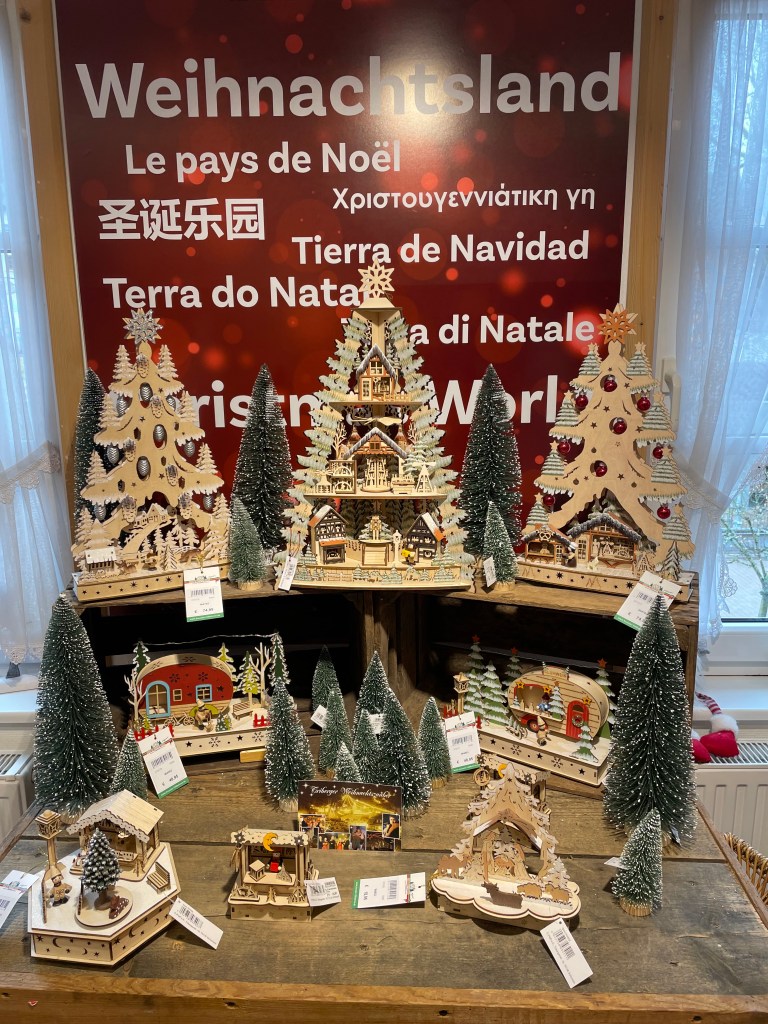
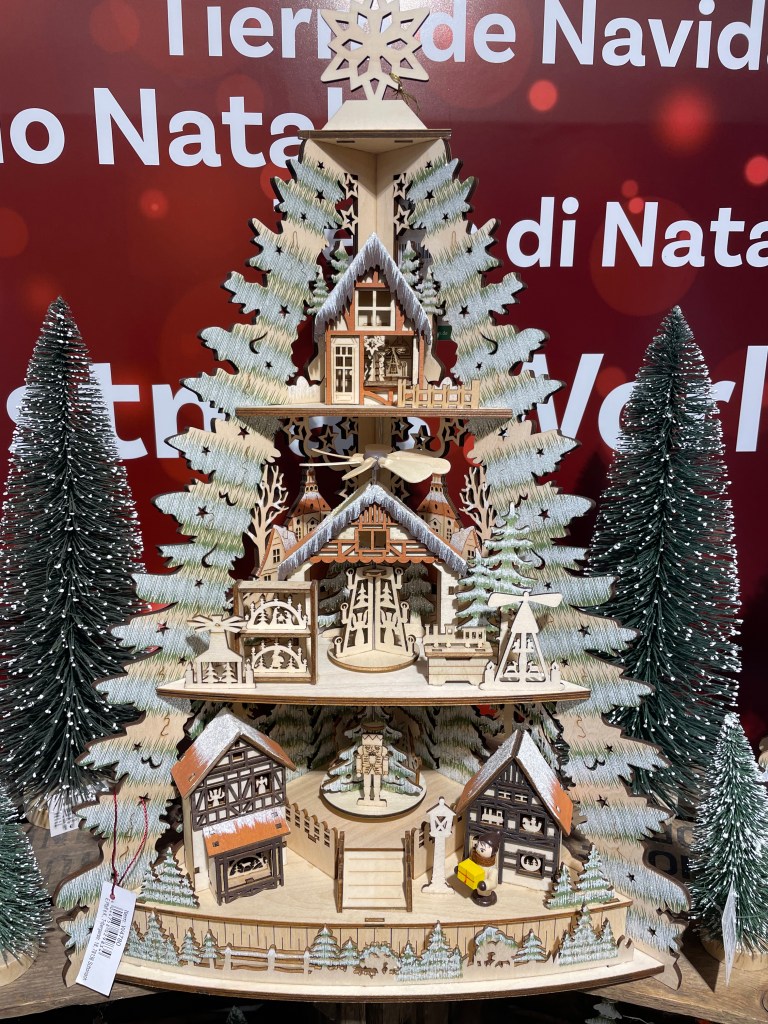
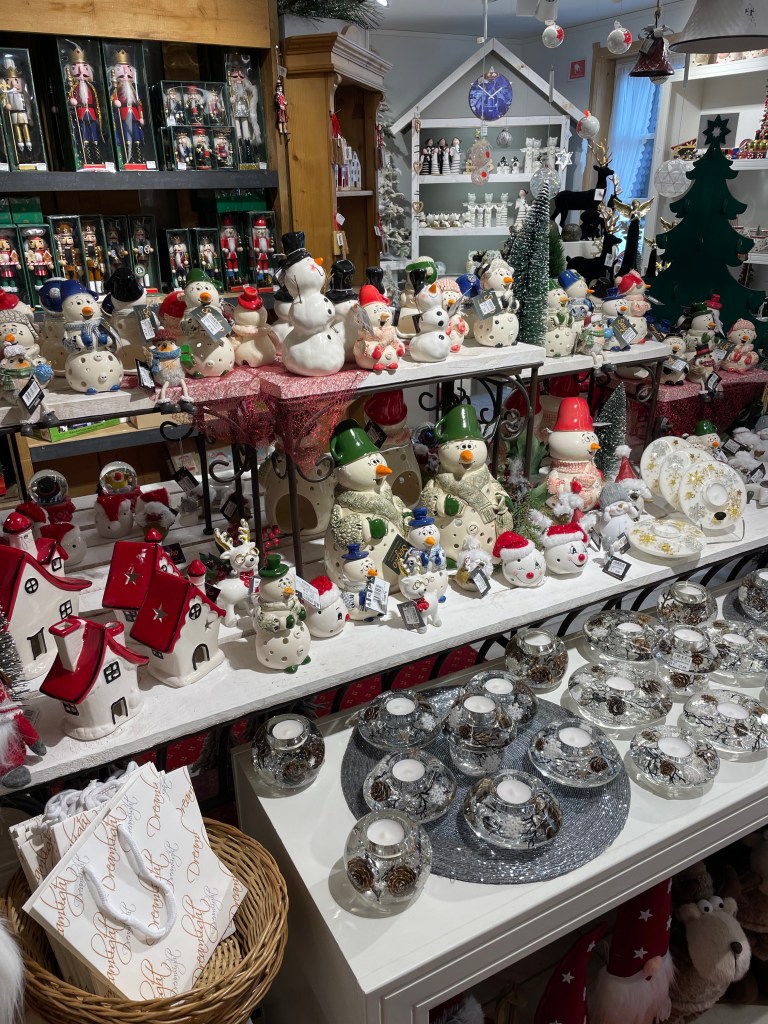
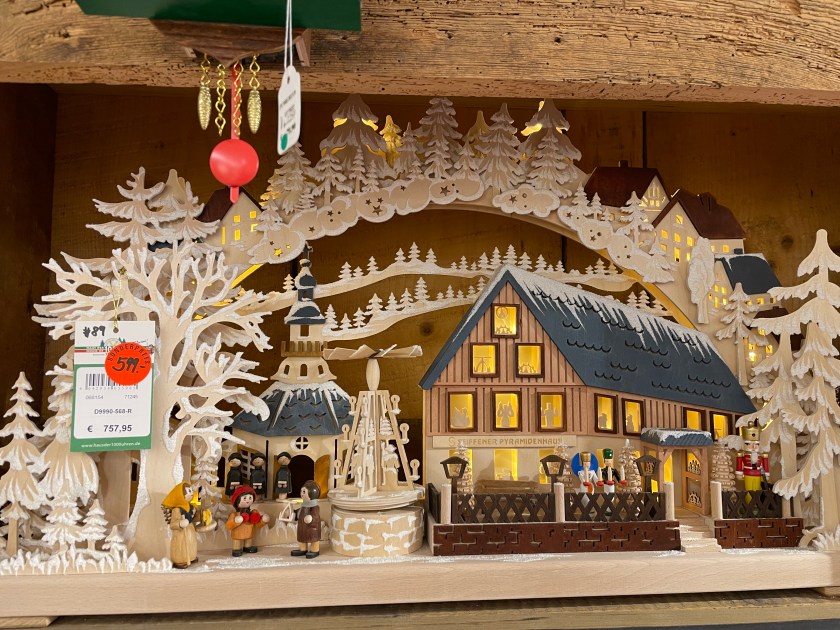
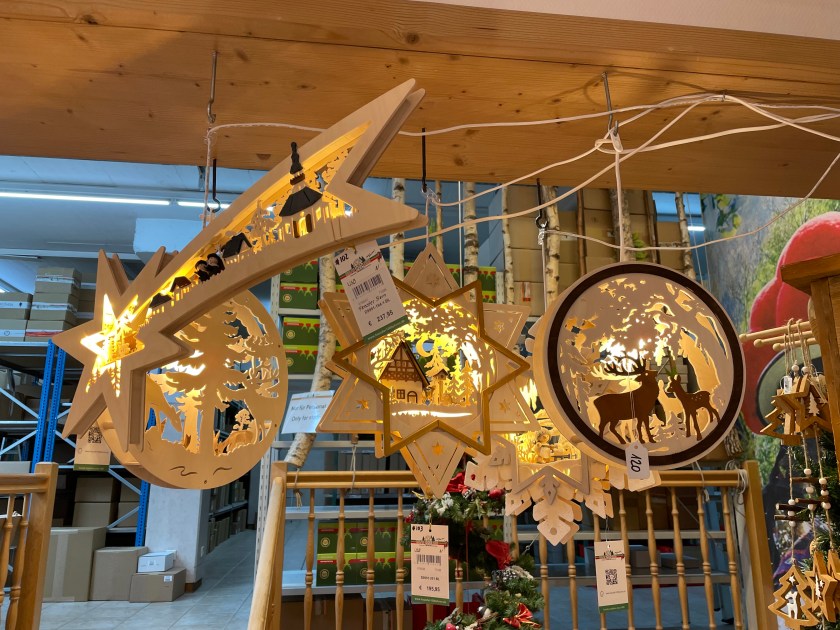
Upstairs was a Christmas shop, with many of items from the Erzgebirge Mountains by Seifen (in northern Germany).
These pieces are also beautiful, but instead of handcrafted work, they are laser cut by machines.
We continued down the street. The largest woodcarving shop wasn’t open.
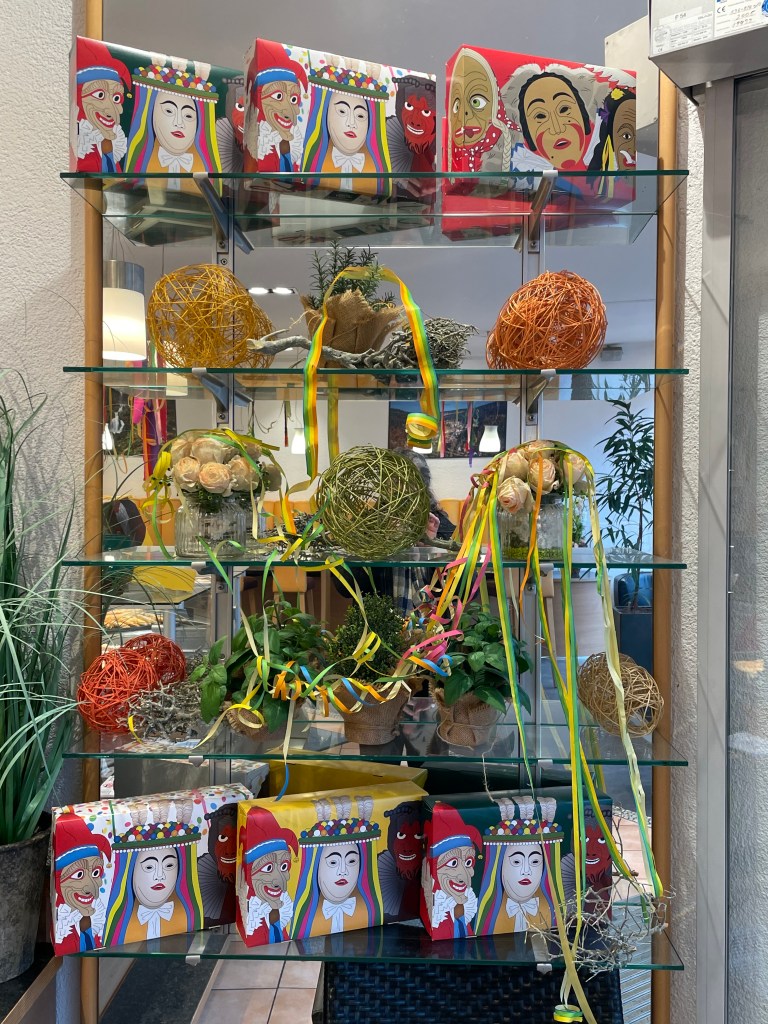
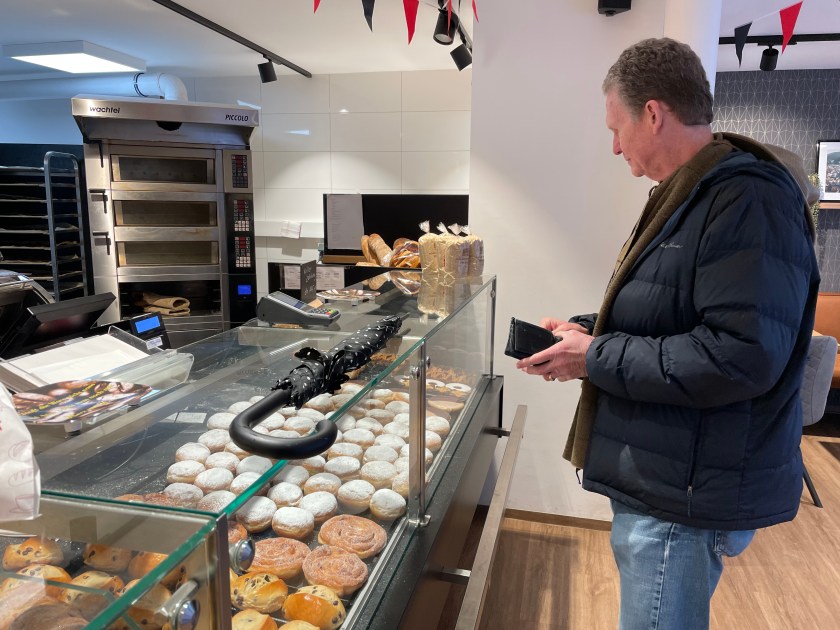
Karnival decorations in the bakery window:
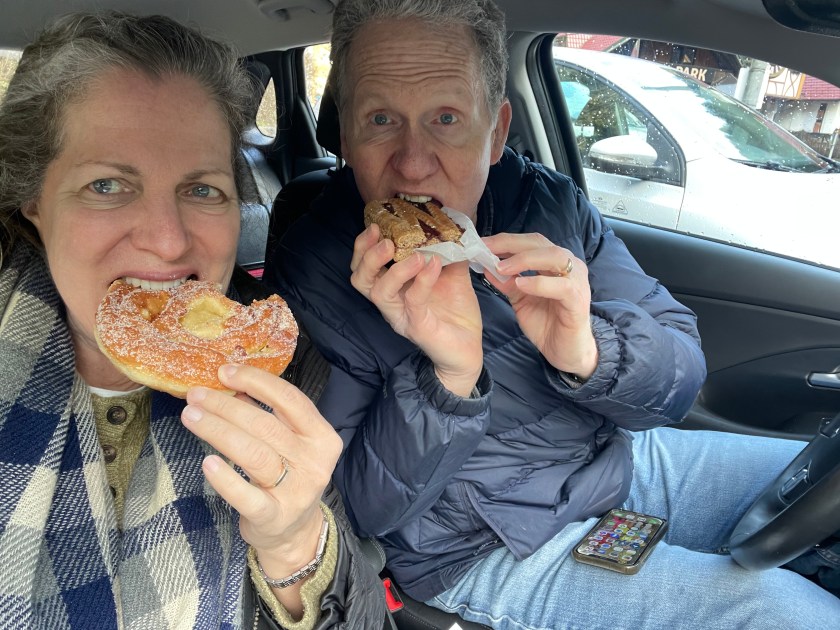
We bought sandwiches and a pastry for lunch.
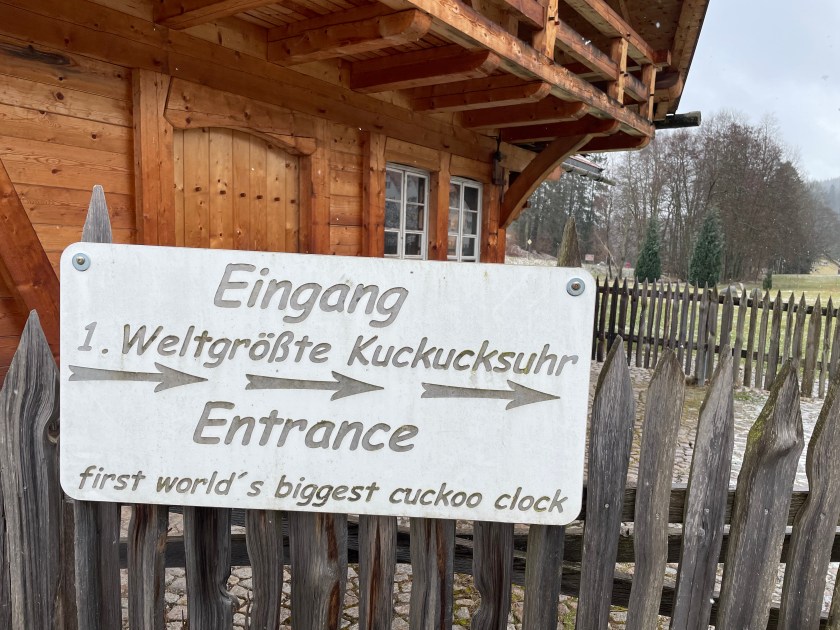
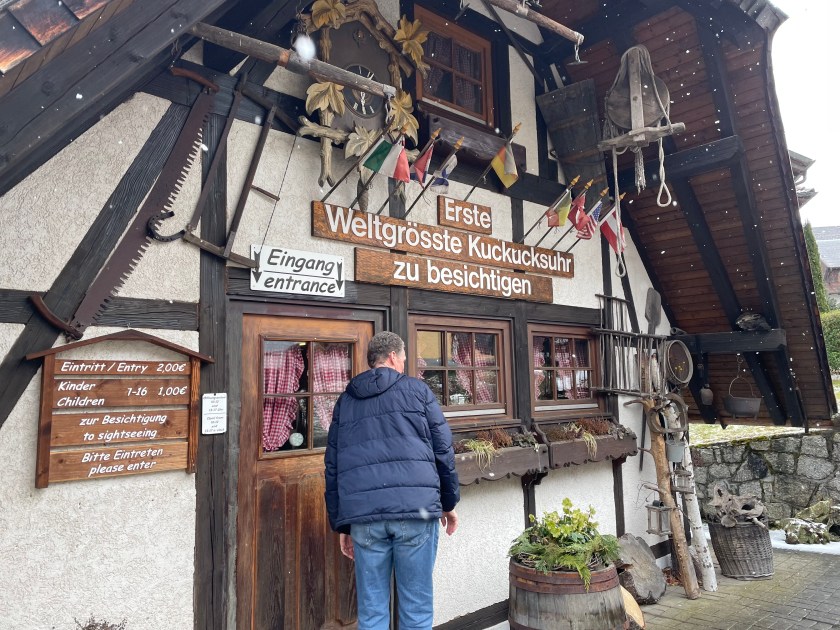
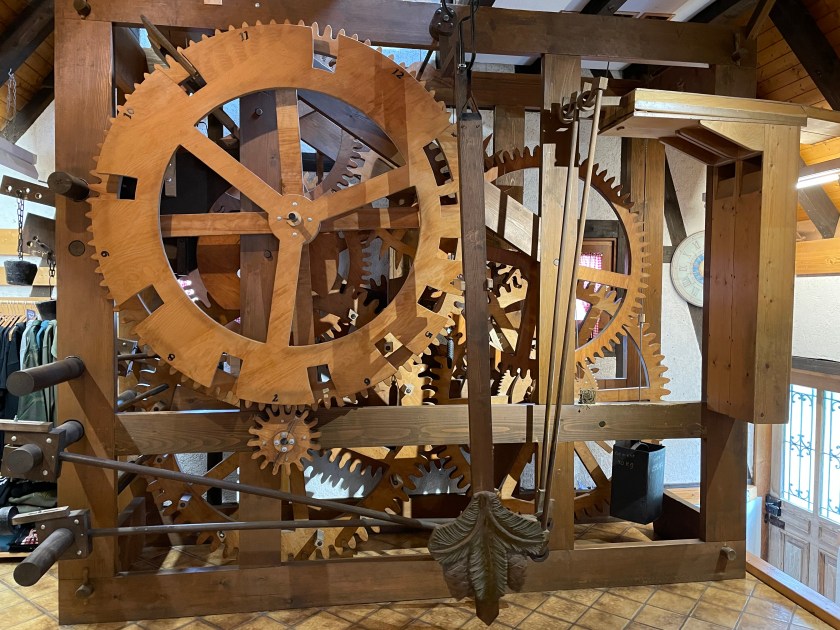
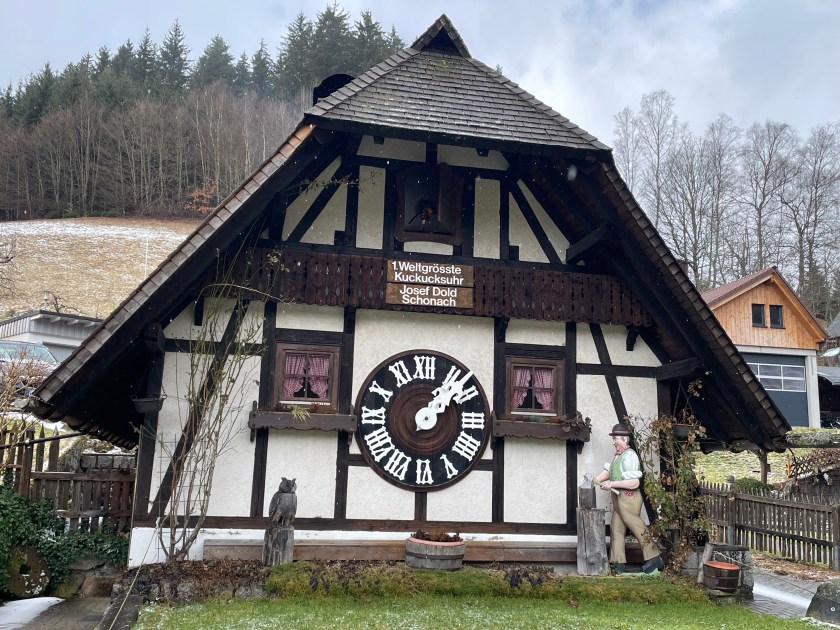
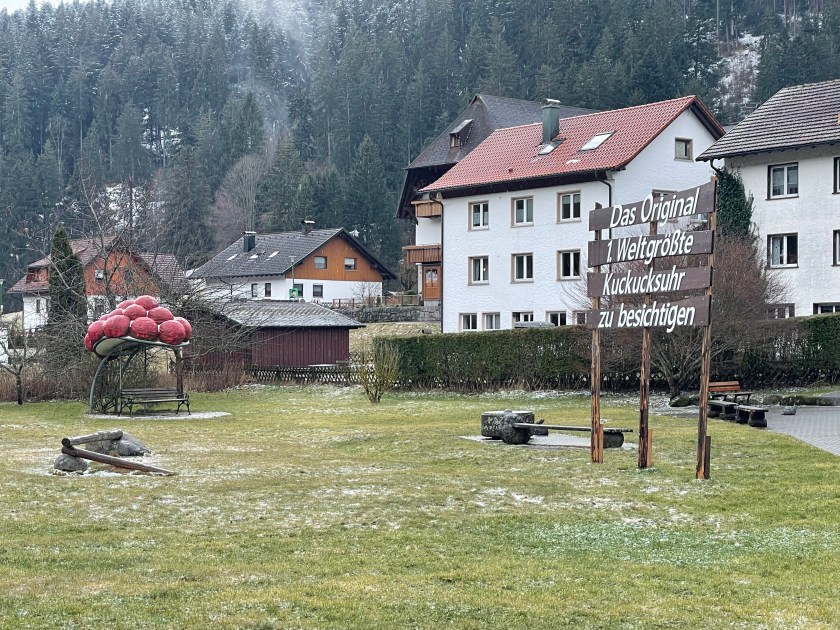
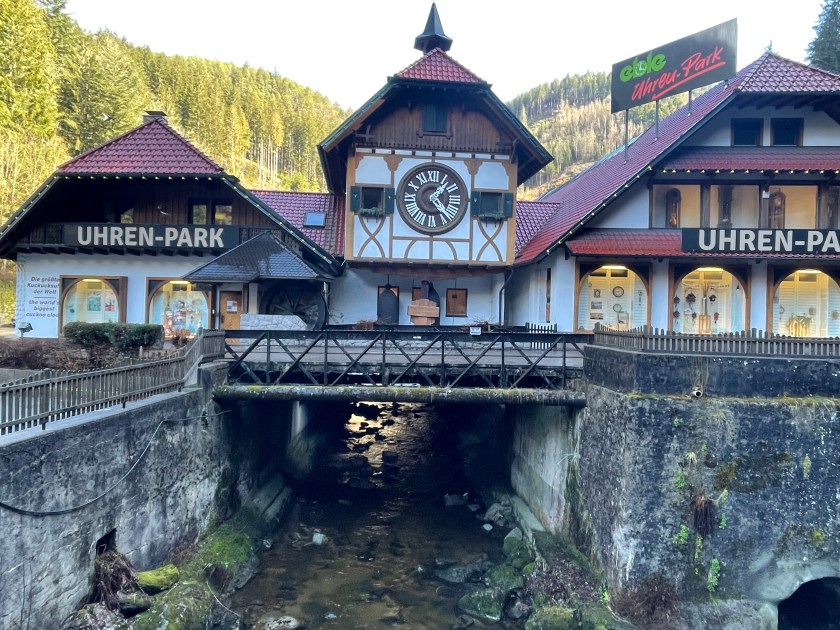
Next we drove a few kilometers out of town to visit what is called “the FIRST largest cuckoo clock in the world.”
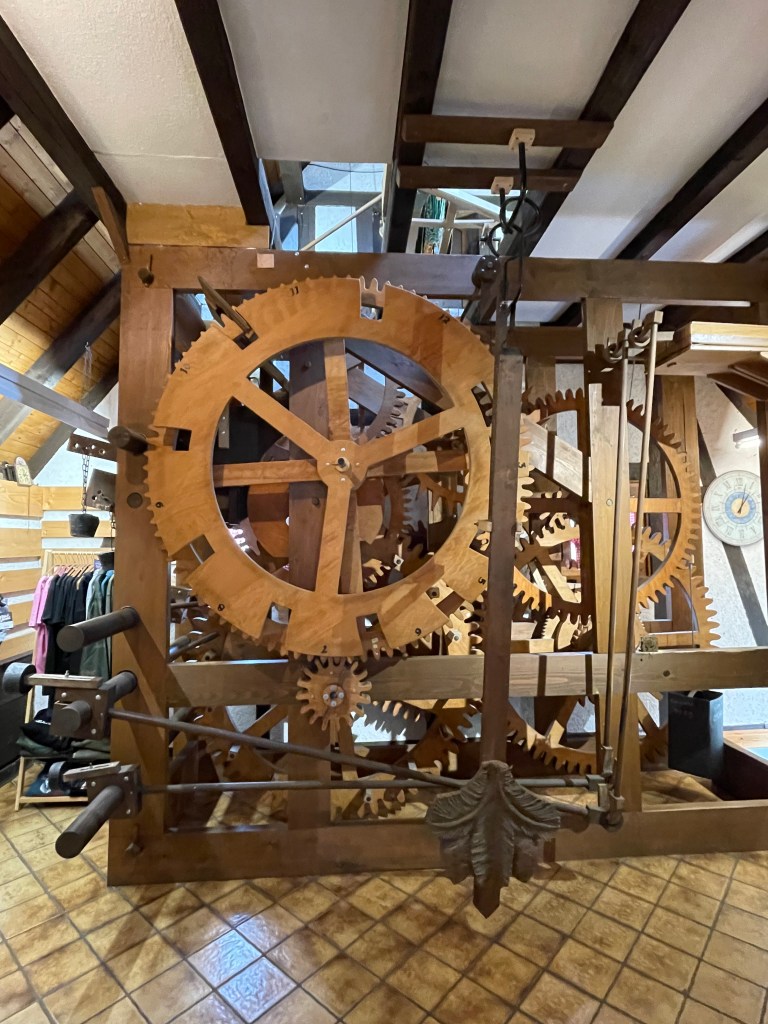
A lady poked her head out of the neighboring home (we were in a residential neighborhood) and said she’d be right down to let us in. We paid her 2 Euro each to see the workings of the clock inside.
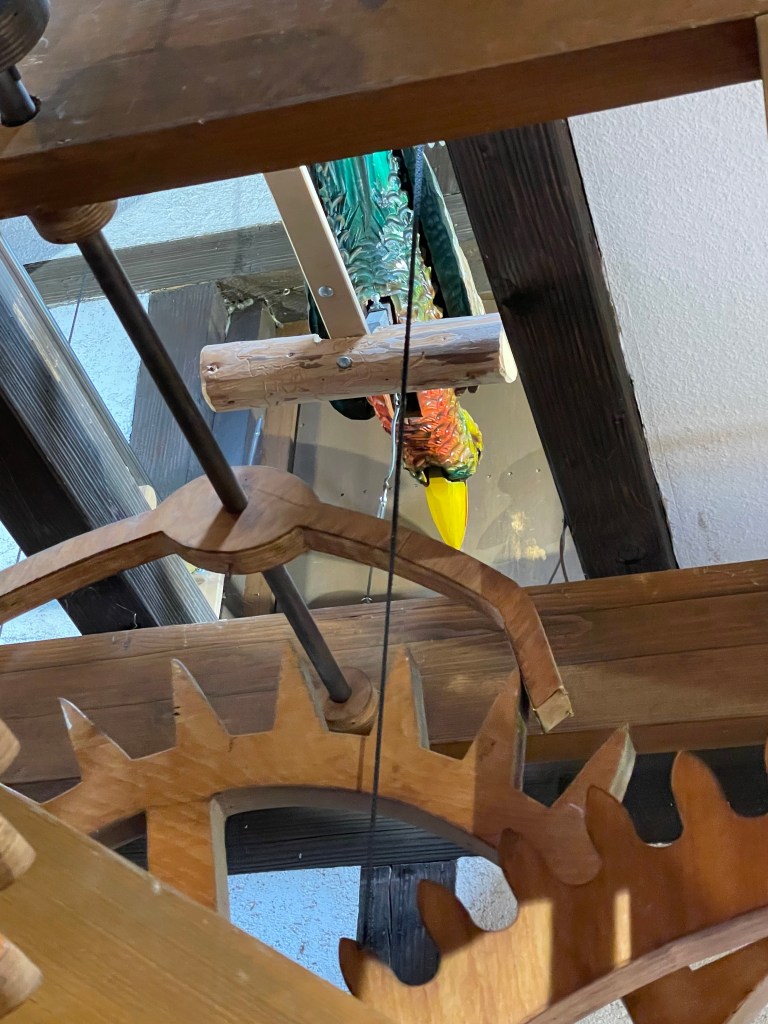
The lady explained that her father-in-law had made this clock. The workings inside were fashioned in wood made 50 times larger than a small clock he used as a model. It took him 3 years to build the clock, 1977 to 1980. There was a little gift shop and a nearby playground. A fun family enterprise and tourist attraction.
After she explained the inside workings, she invited us to go outside and she activated the cuckoo (see the video below). It was fun.
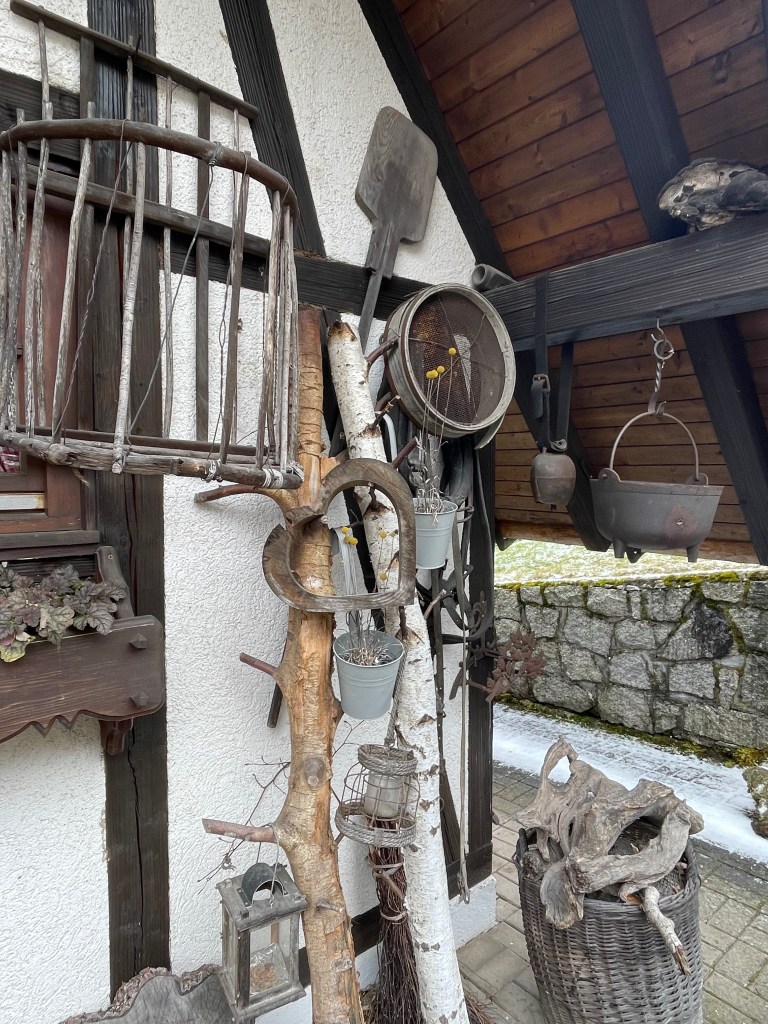
This new farm home/barn was next to this first world’s largest cuckoo clock. It looked like it was also being prepared for the tourist season.
The playground area.
The next stop at the now largest clock was up the mountain a ways. It was similar. There’s a little competition going on here! We didn’t pay to see the inner workings, but stopped at the gift shop to look around and use the bathroom. It’s fun to see all the variety in the cuckoo clocks.
I’m guessing these attractions cater to busloads of tourists passing through.
We enjoyed wandering through the shop. We were the only ones there. Below is another representation of a traveling clock salesman/peddler.
Then back to the car, our sandwiches, pastries, and we were on the road again, to drive deeper into the Black Forest.
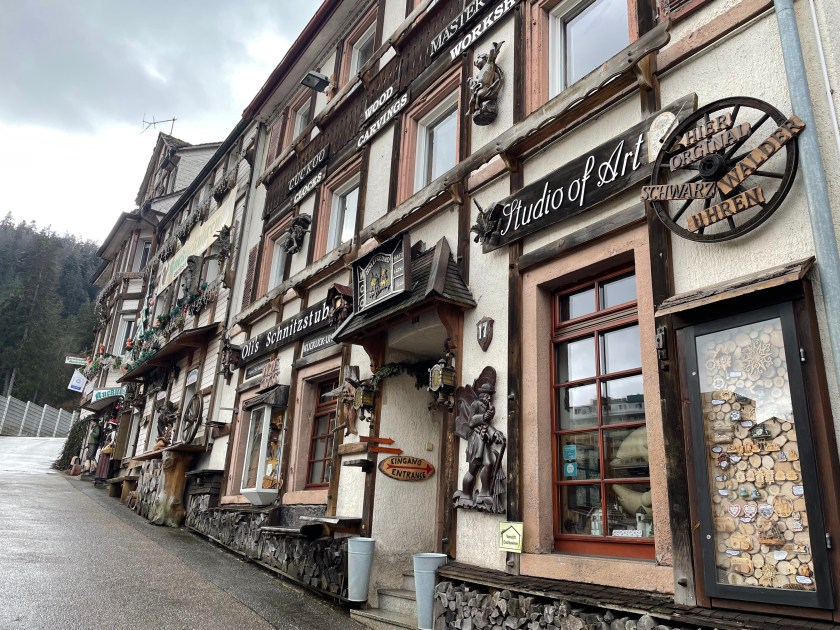
After visiting the wonderful museum, we wandered around this charming town a bit. The shops stayed closed today, partly because of Karnival, partly because of the winter season and so few tourists.
These are some of the woodcarving shops that are probably very busy during the summer months.
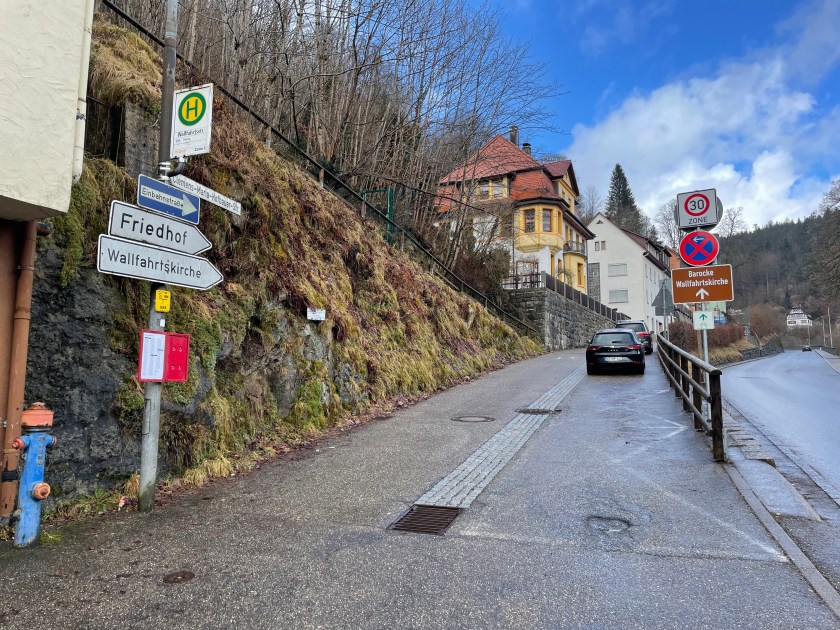
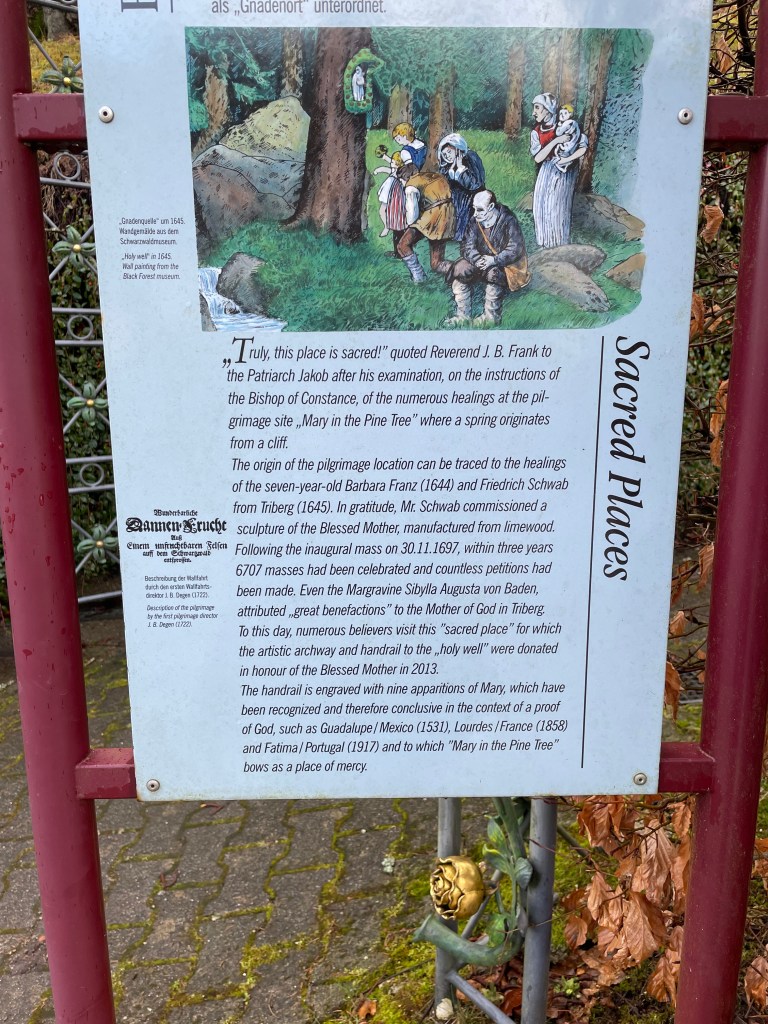
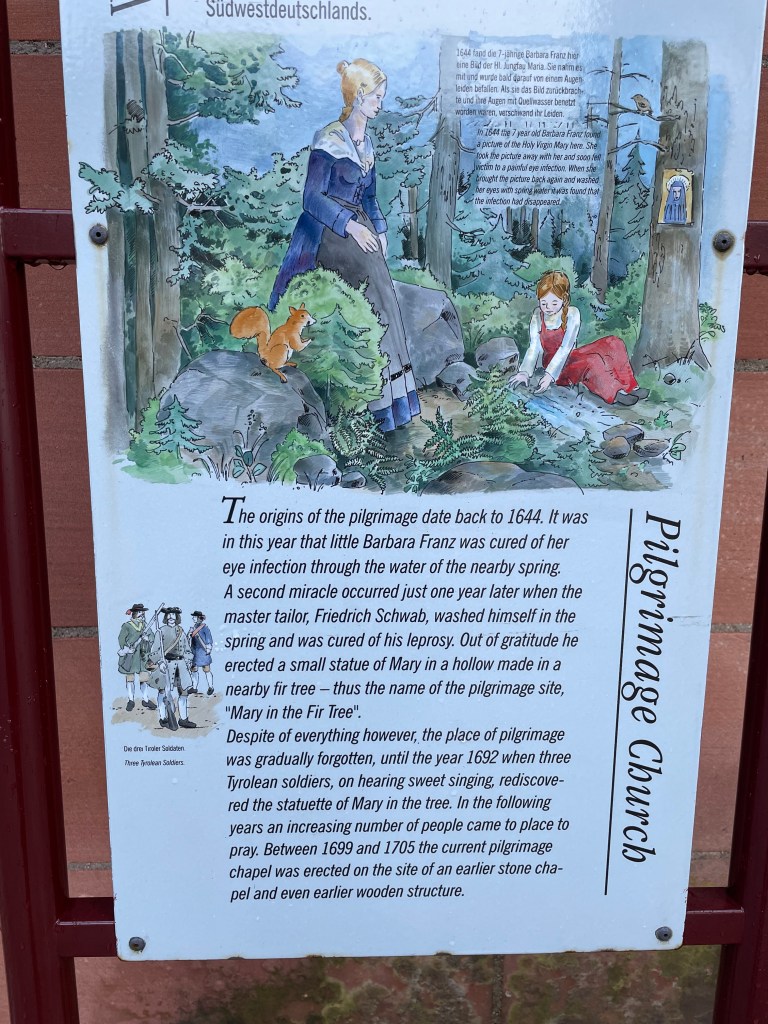
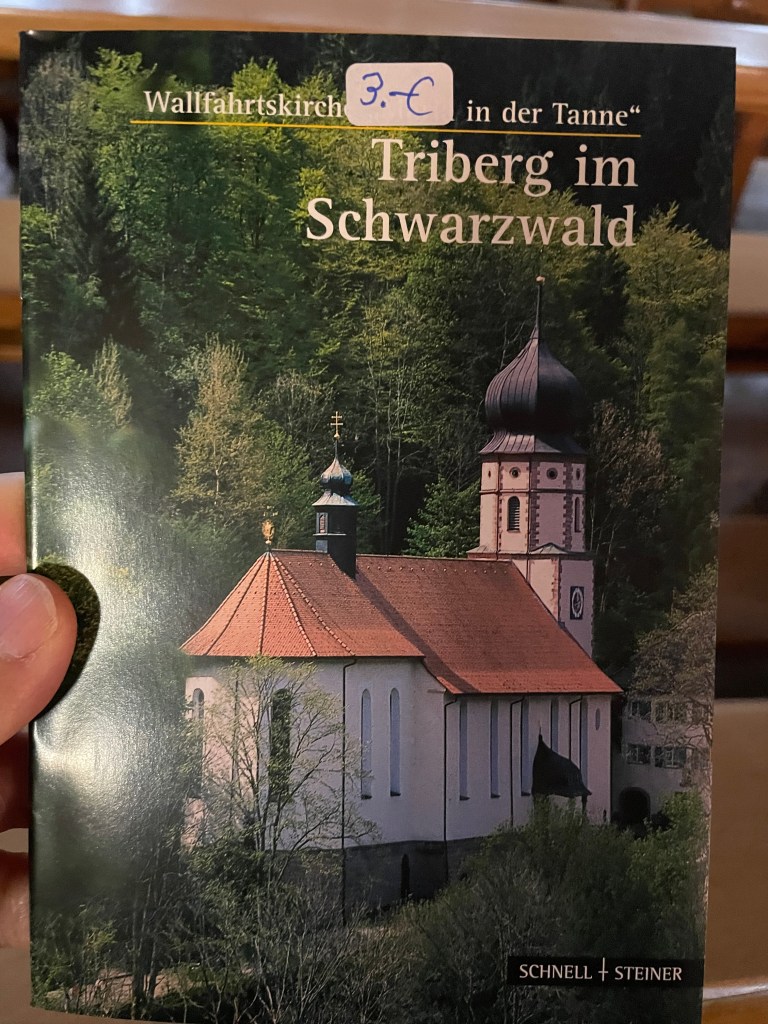
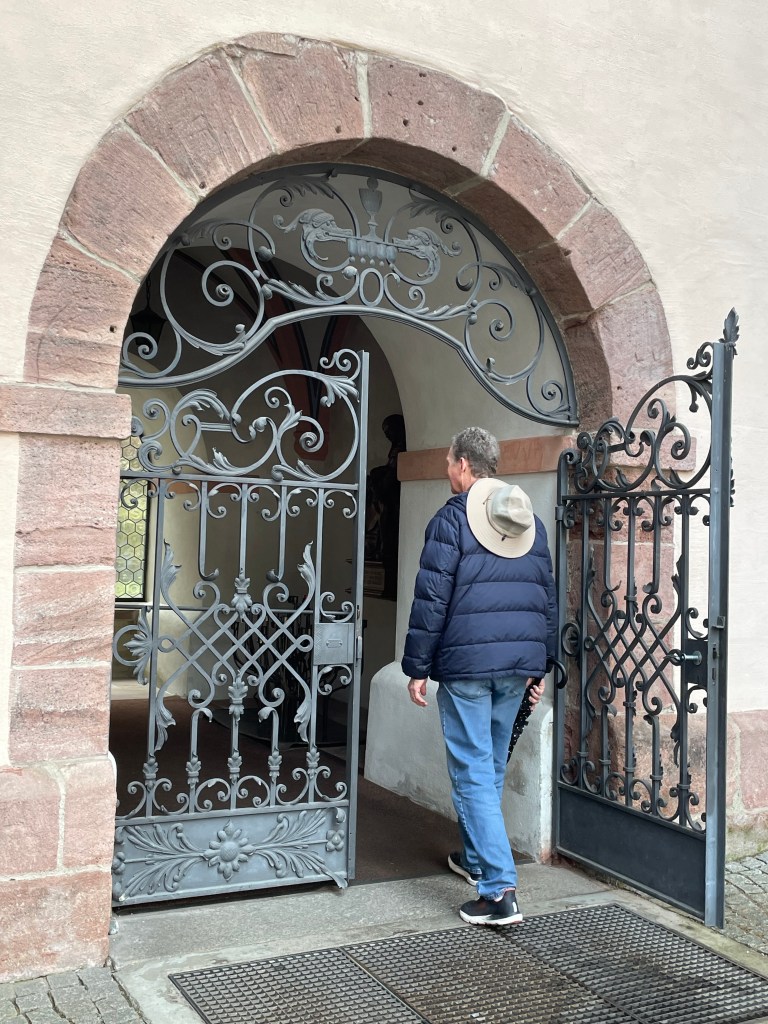
Next we walked UP a hill to see the old Triberg Maria in den Tannen Church (Catholic, 1700s). It was worth the hike. (But we learned later you can drive up to the church from the other side.) This is a pilgrimage church where some miracles happened at a spring outside (someone with leprosy was healed there).
The walk up to the church.
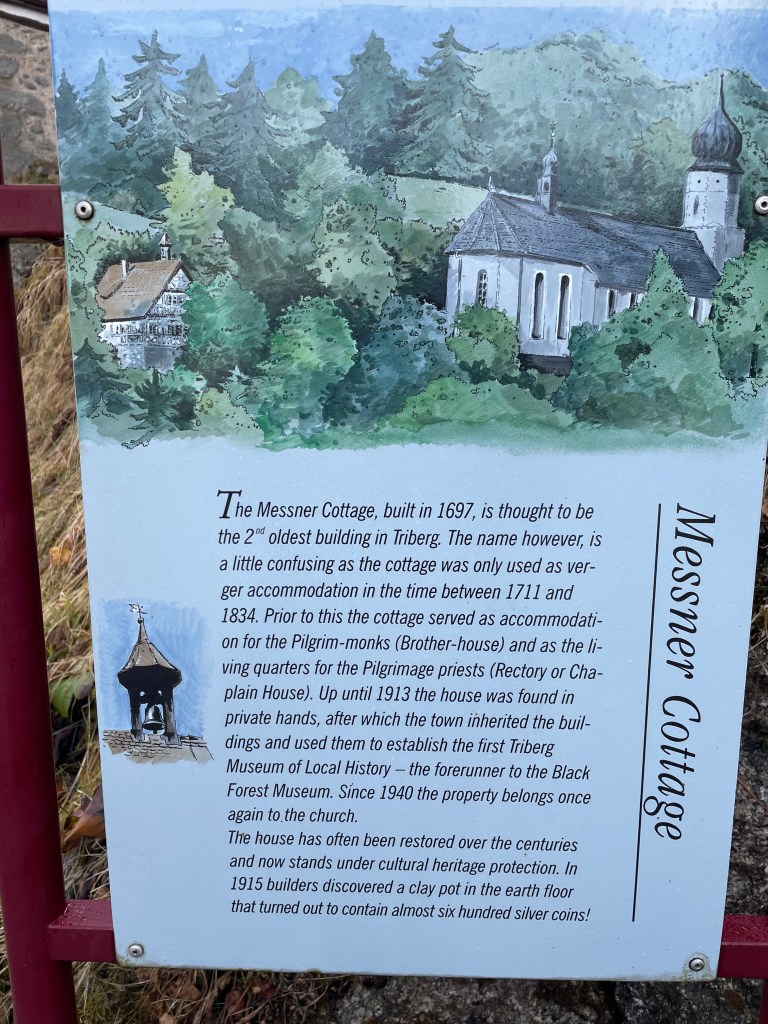
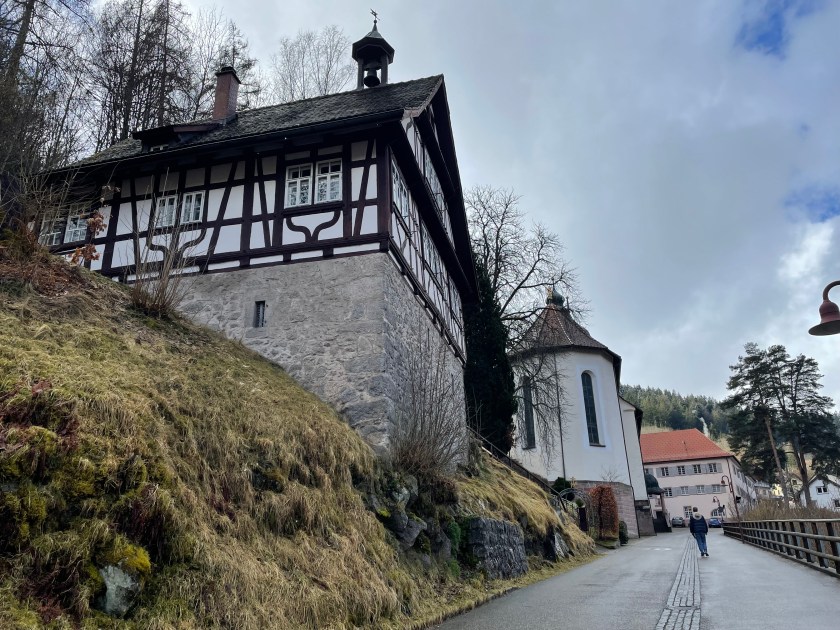
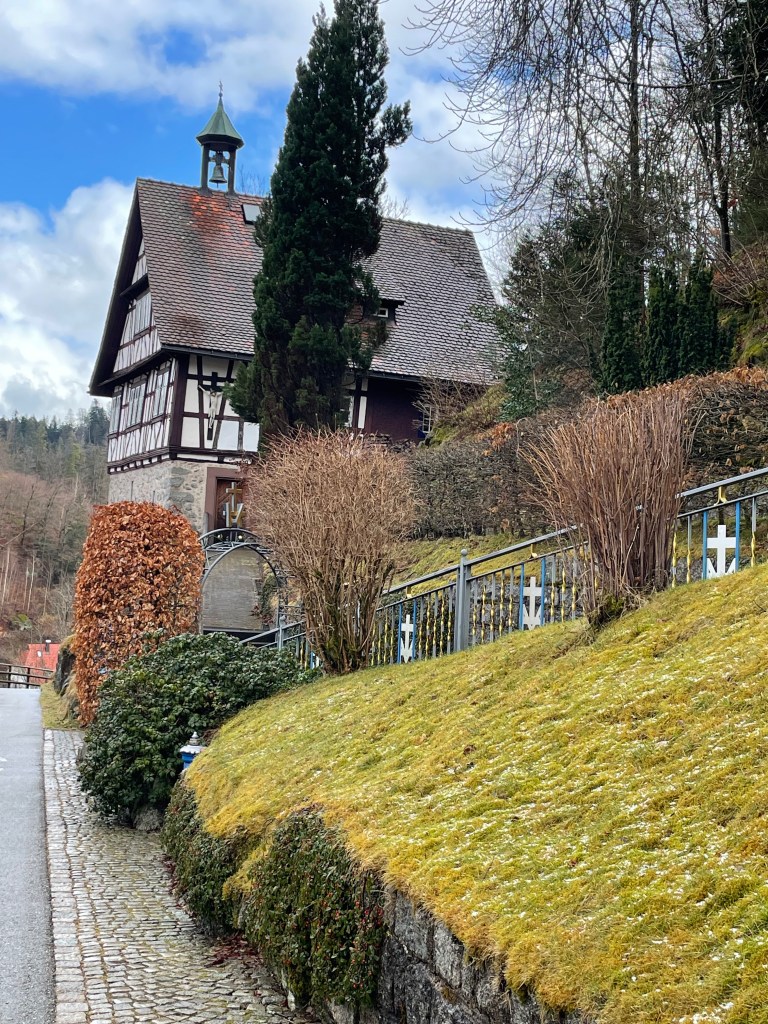
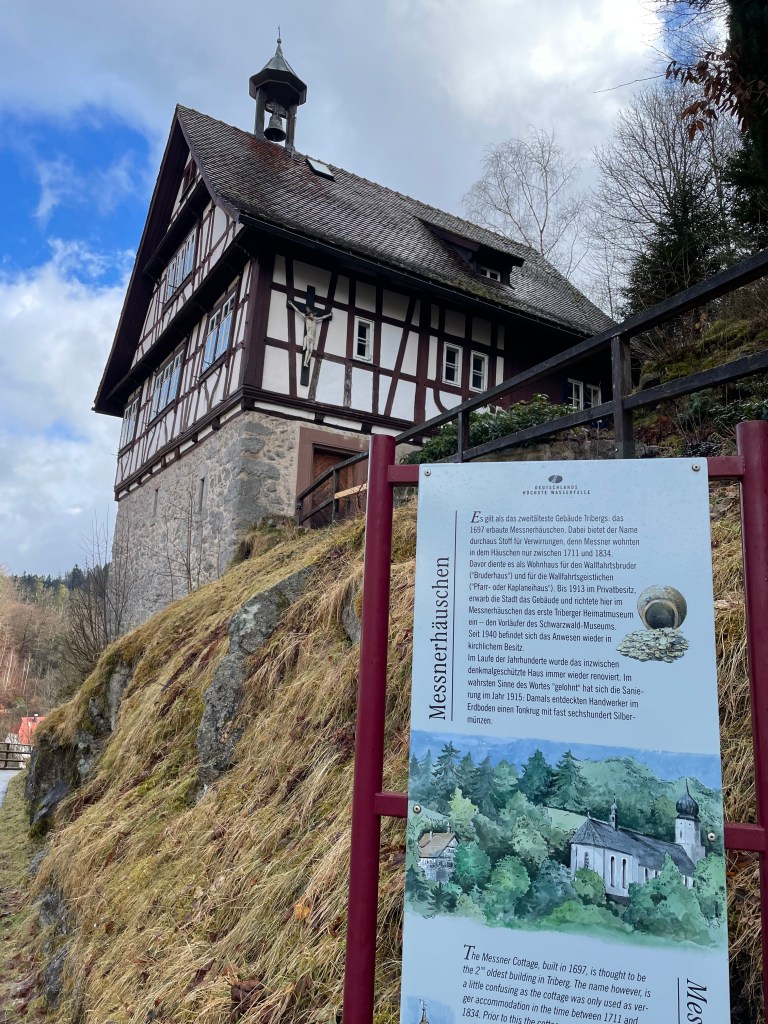
Along the way to the church we walked past the Messner Cottage (1697), the second oldest building in Triberg. It’s now owned by the church.
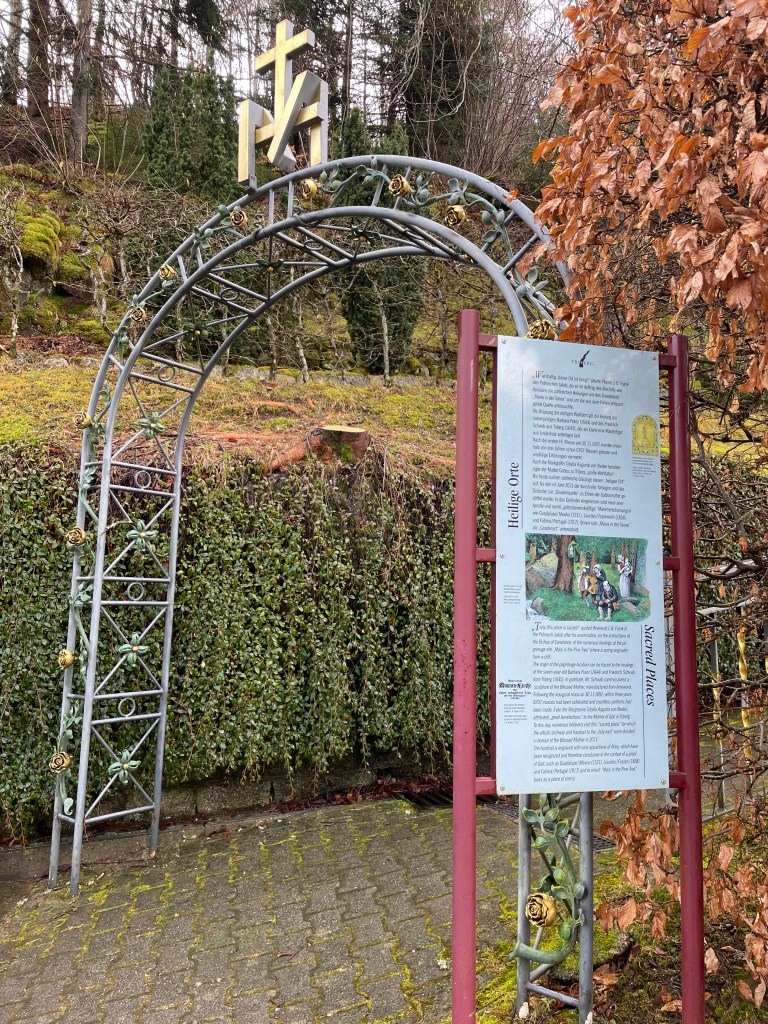
This is the path to the spring where the miracles happened.
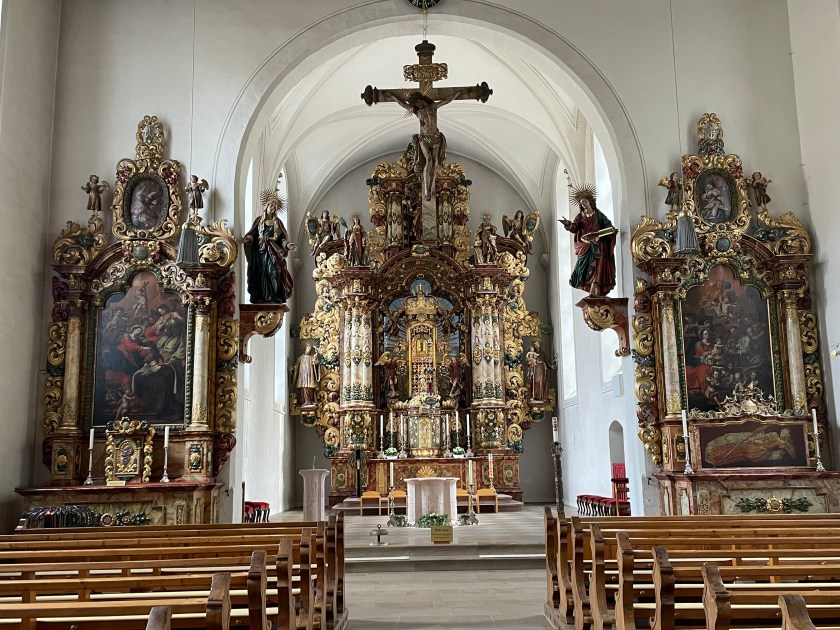
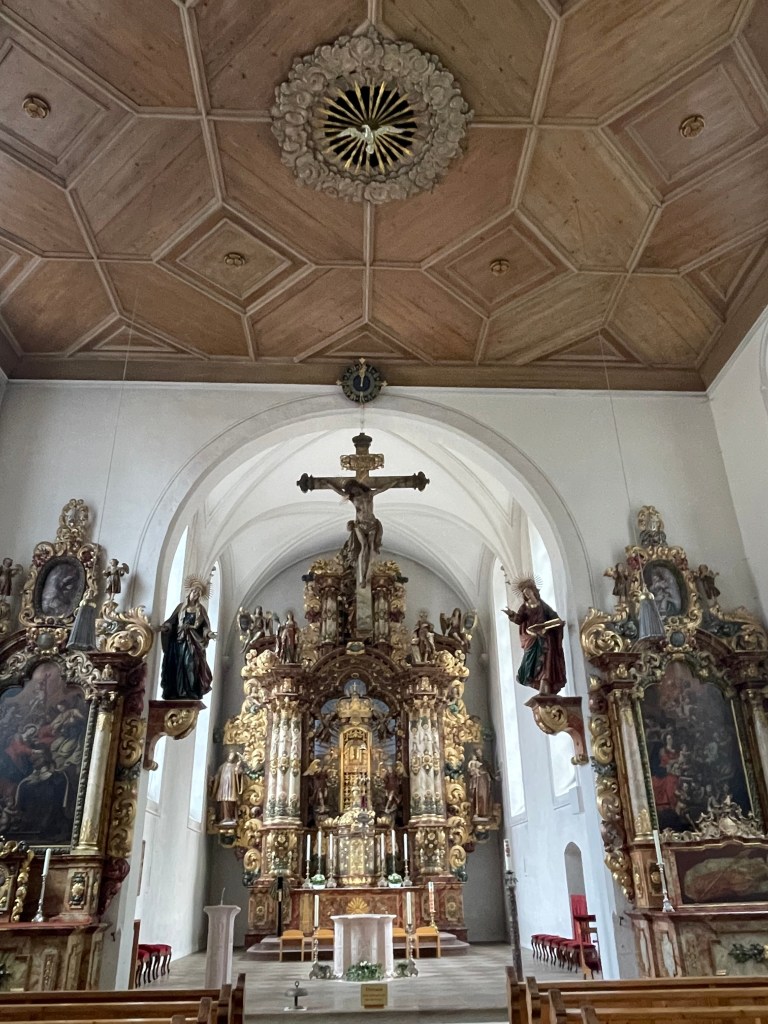
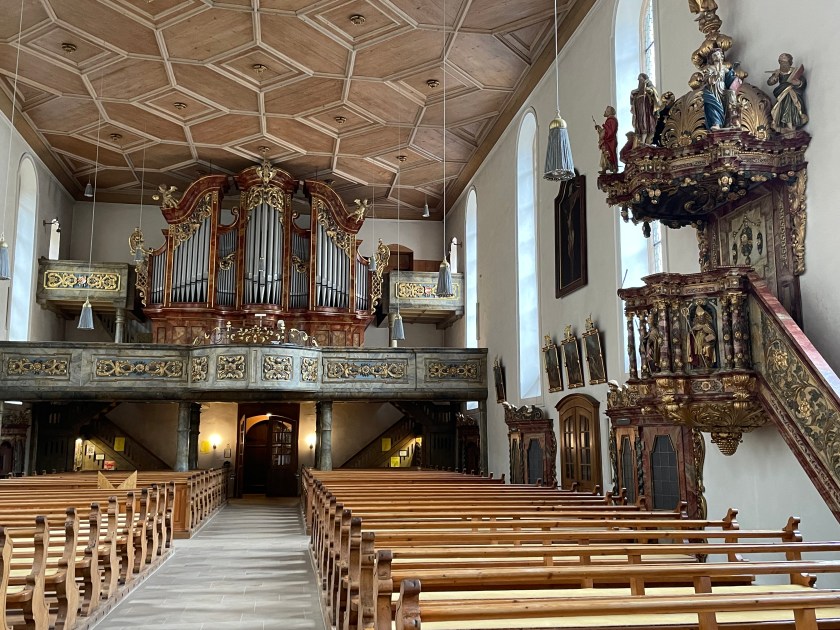
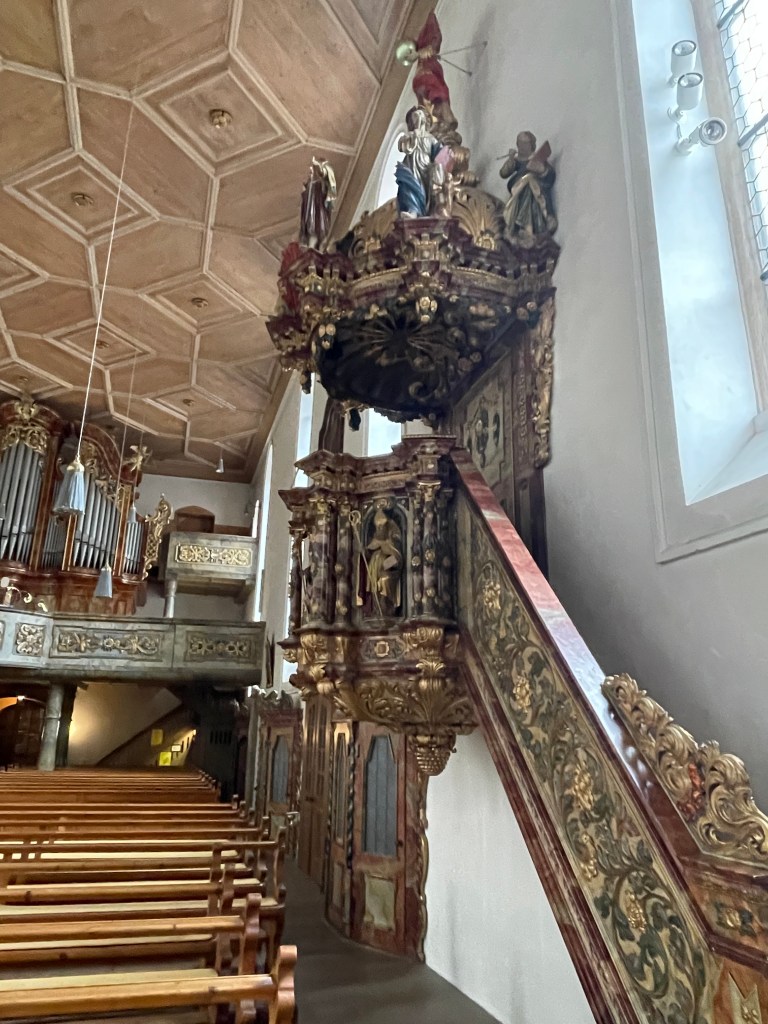
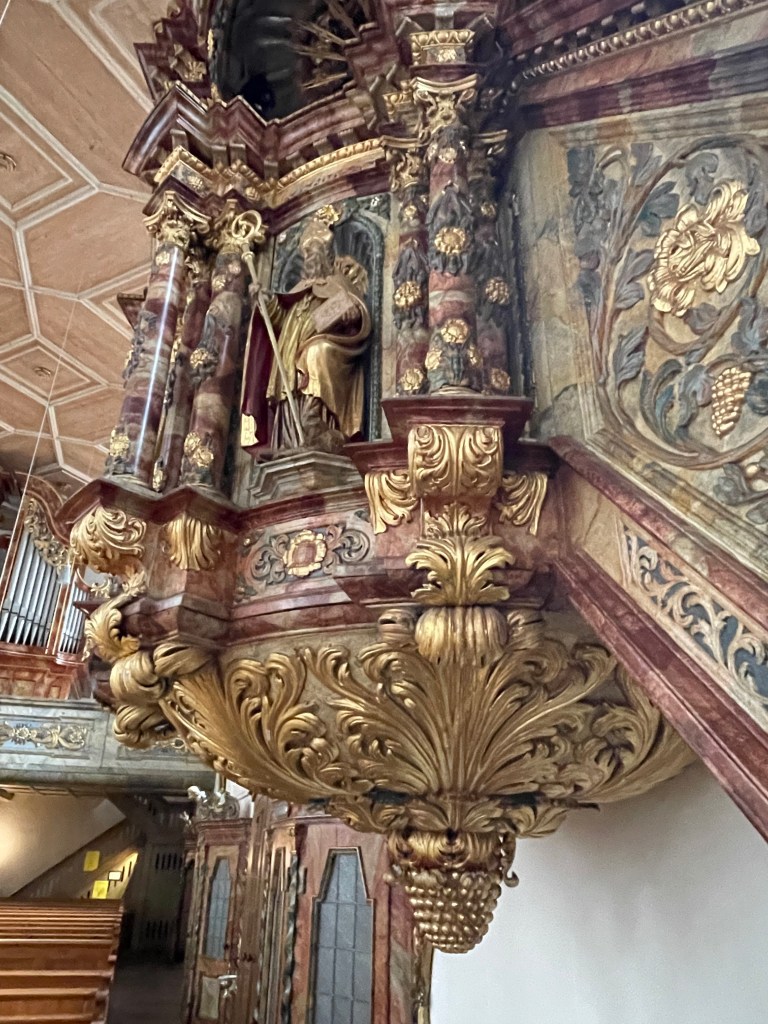
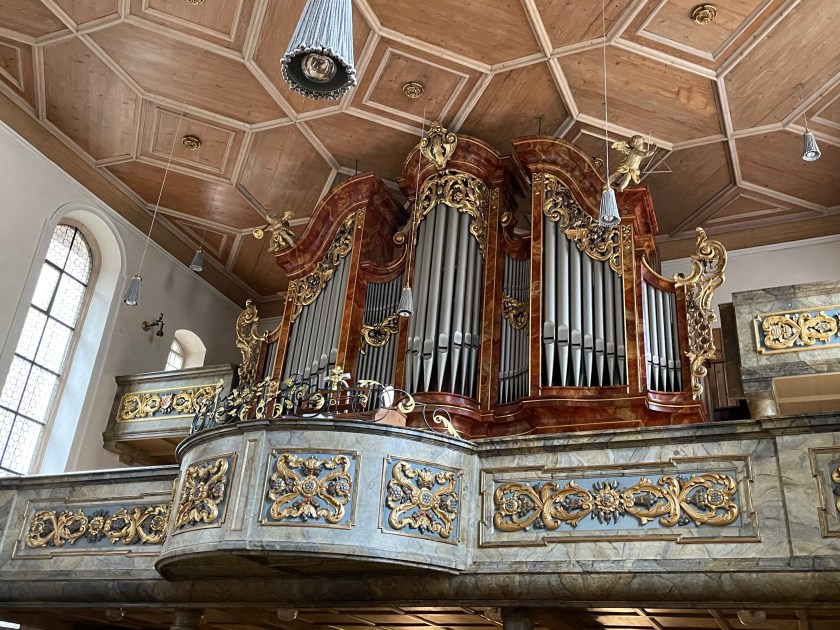
And here it the beautiful old church, built from 1700 to 1705.
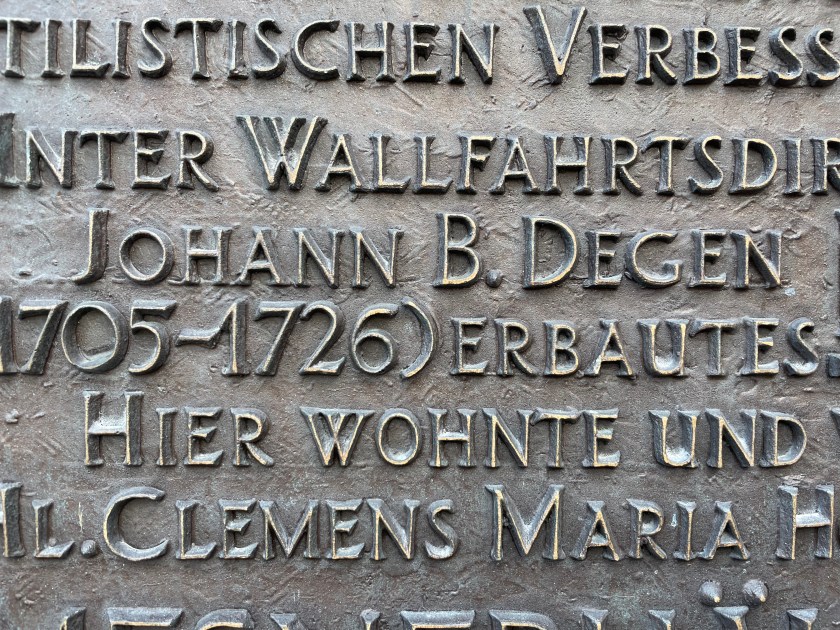
I was interested to see my DEGEN ancestral name here on the plaque.
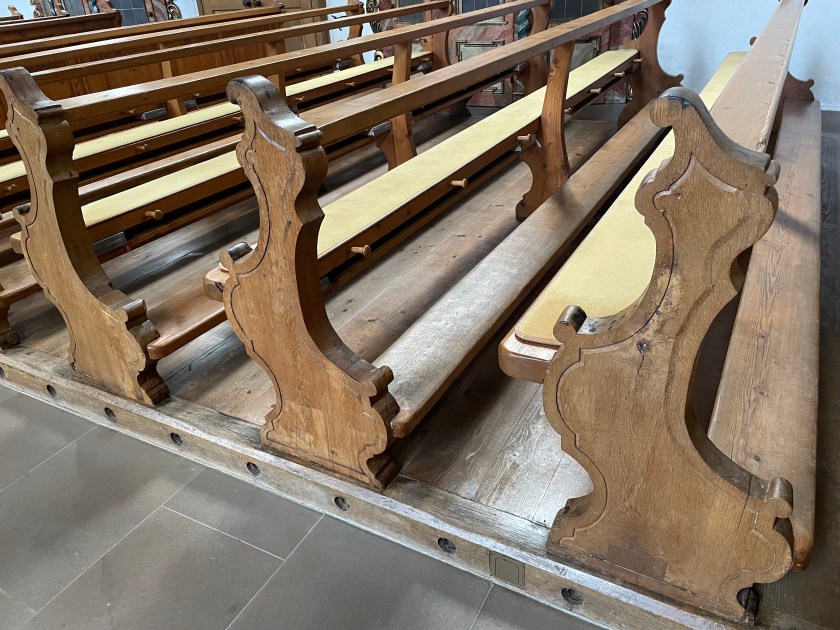
These old churches feel like gems, tucked away in quiet corners of our world. I like to think about who came here to worship Jesus Christ through the centuries.
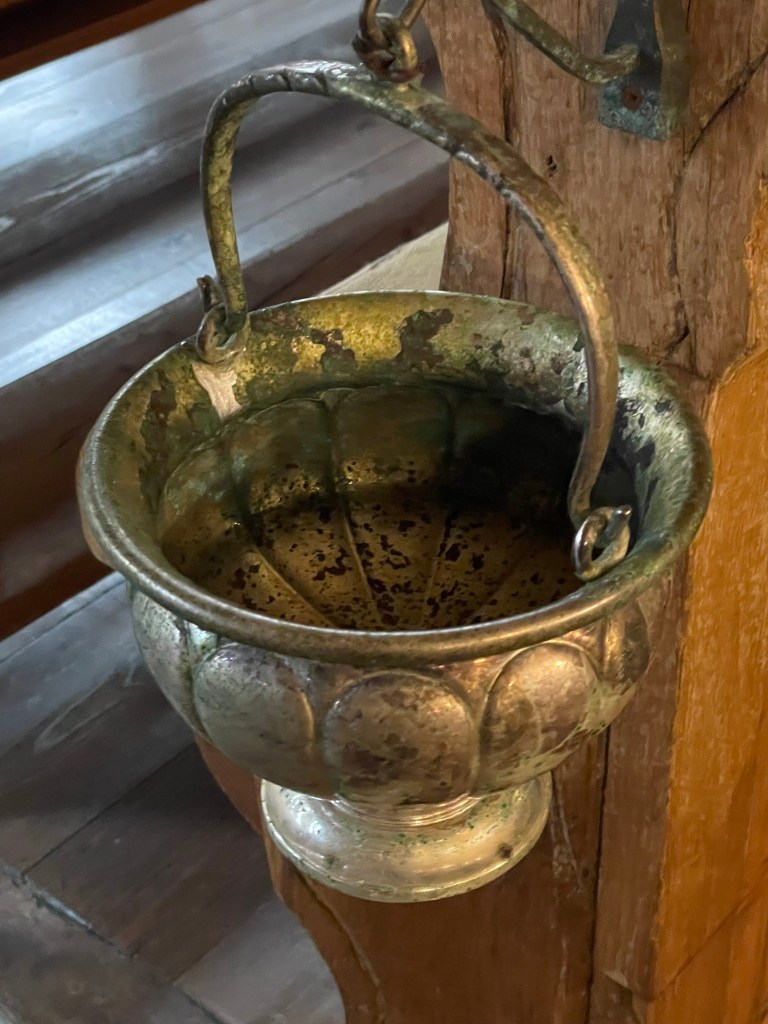
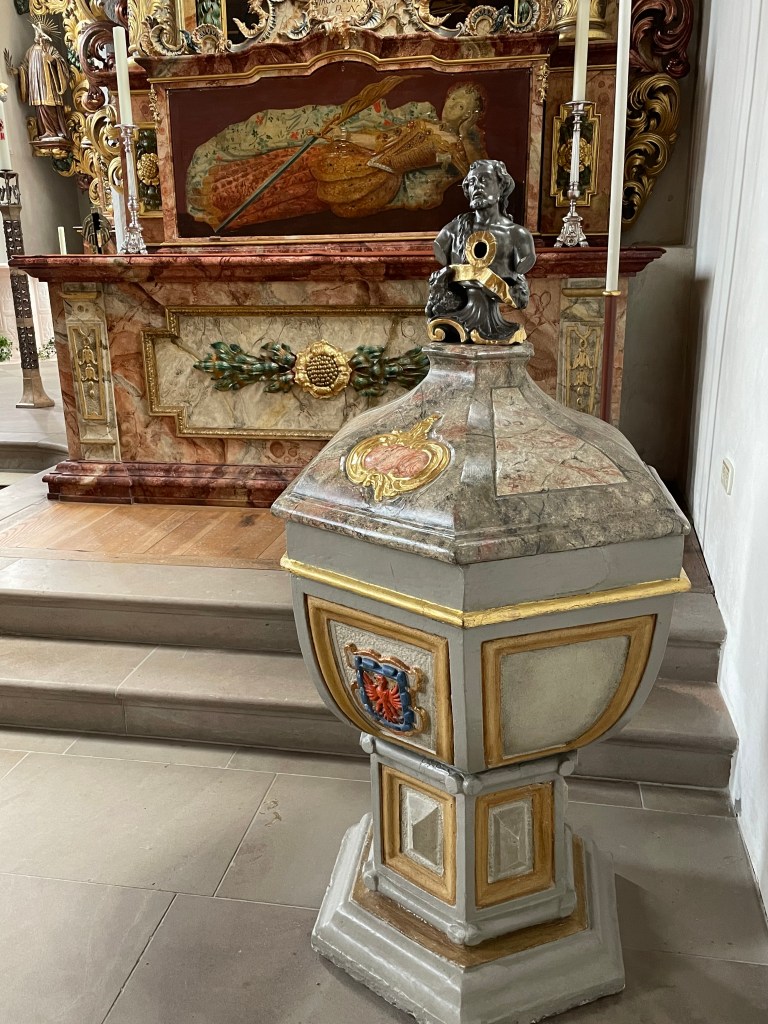
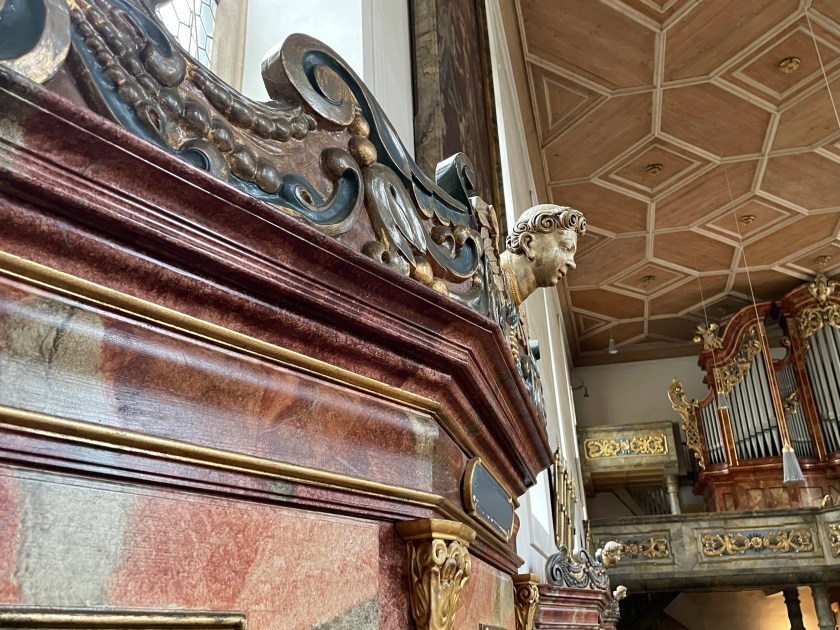
The details and craftsmanship are beautiful and created with love. I feel the Spirit of our Heavenly Father in places like this.
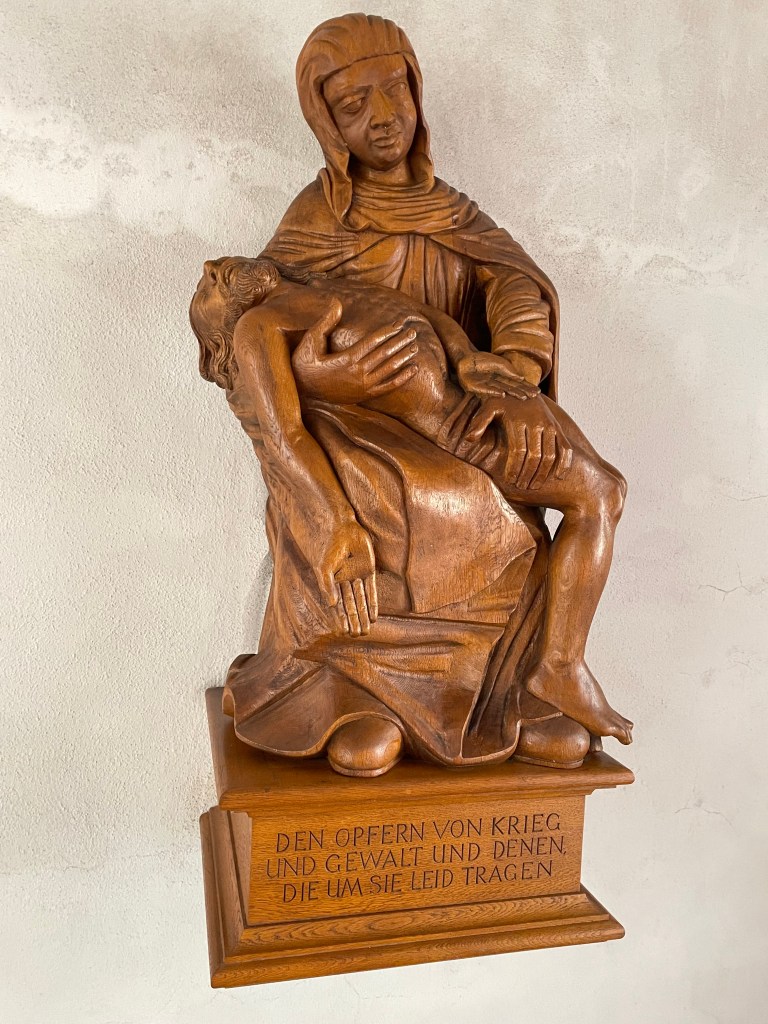
“To the victims of war and violence and those who suffer for them.”




























































 Our Frankfurt Germany Mission