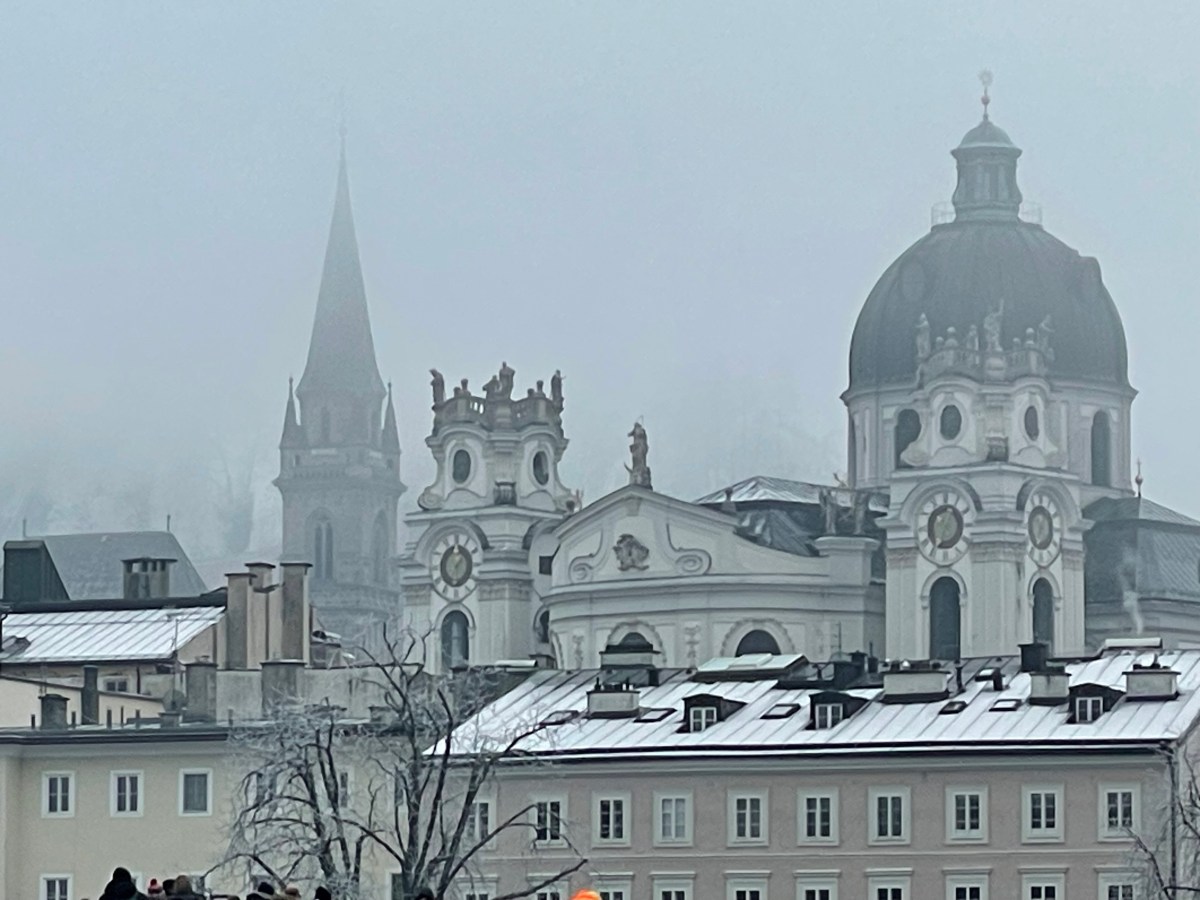
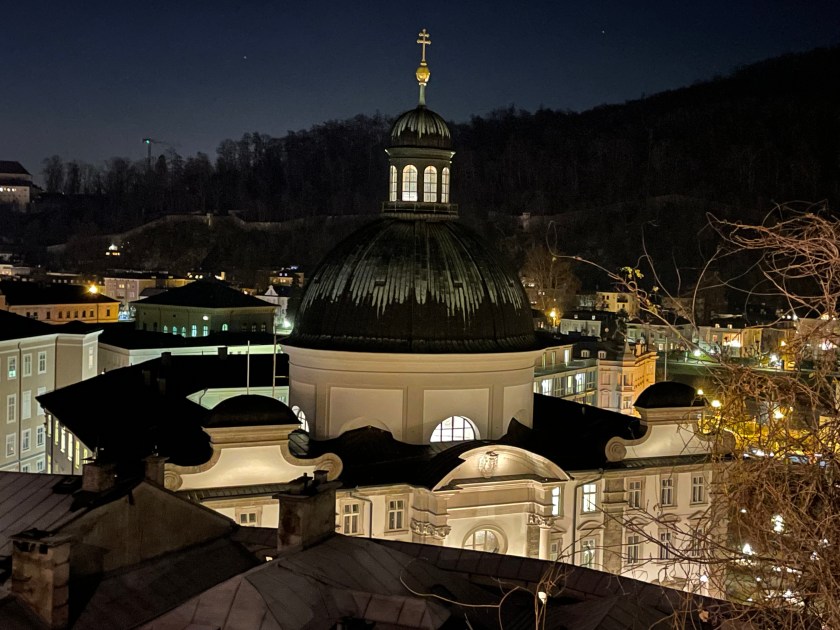
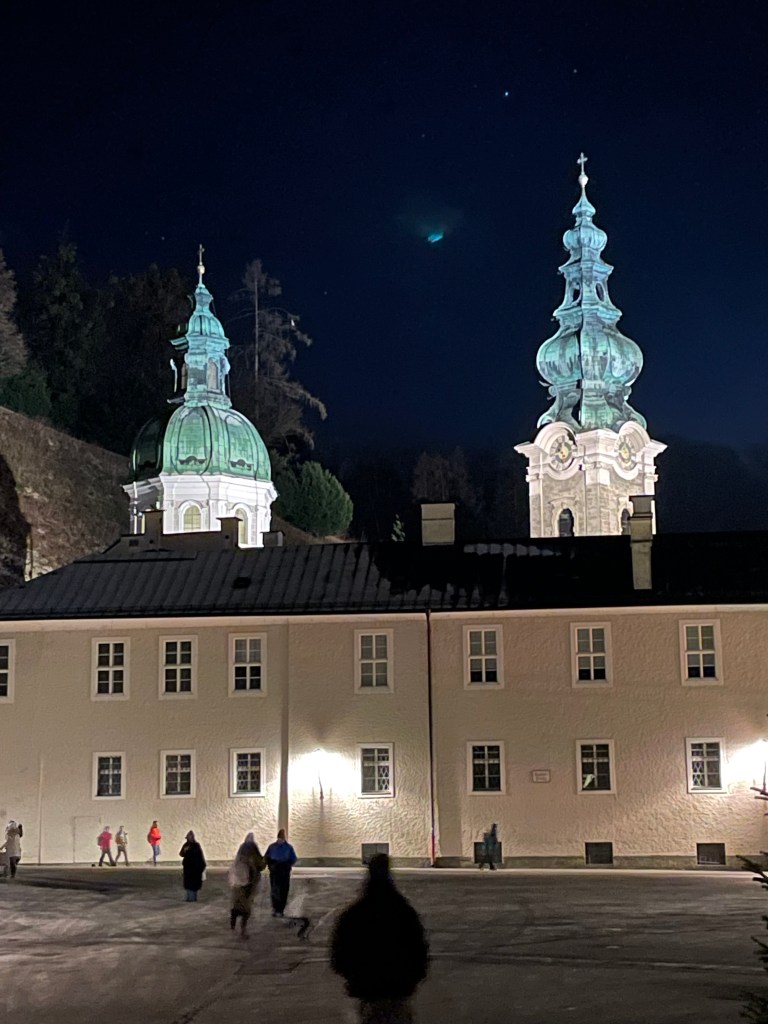
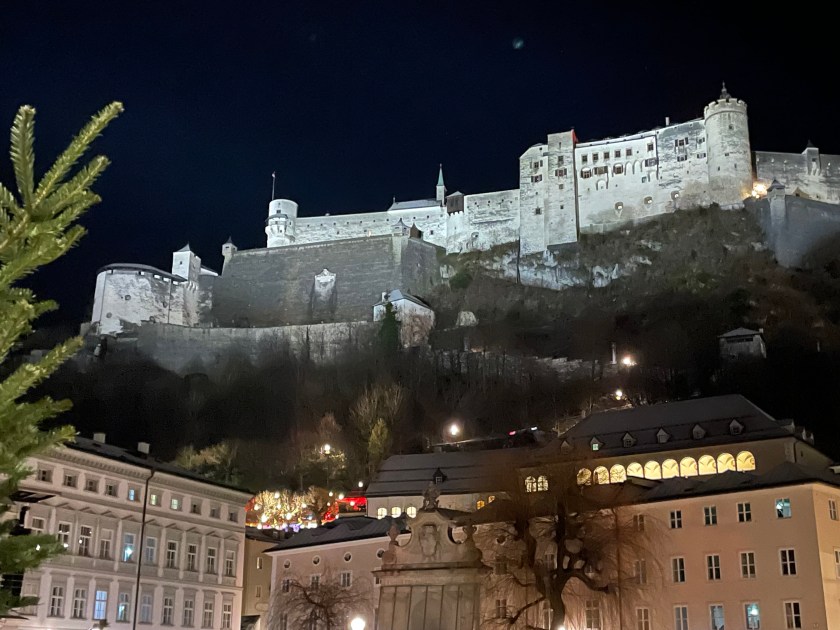
Salzburg — a frosty morning and more Stolpersteine — Day 11

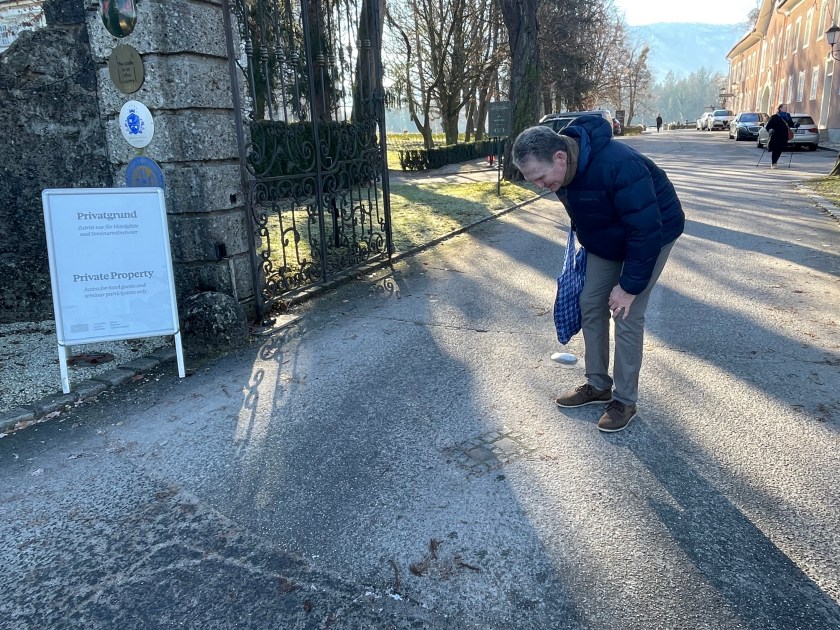
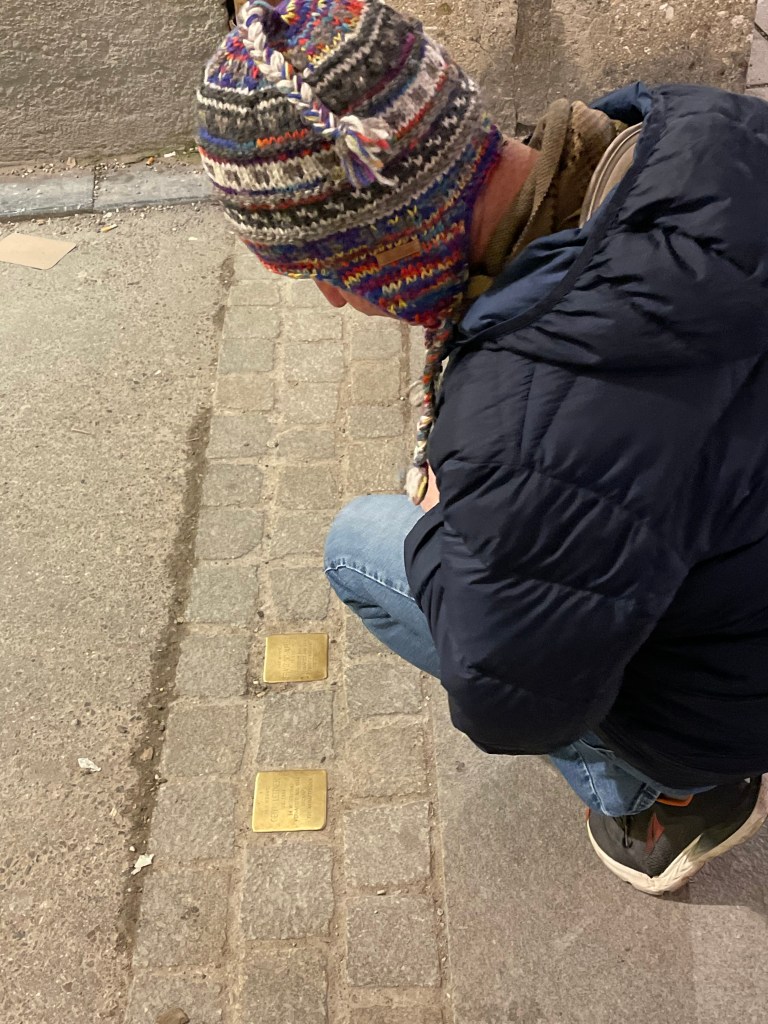
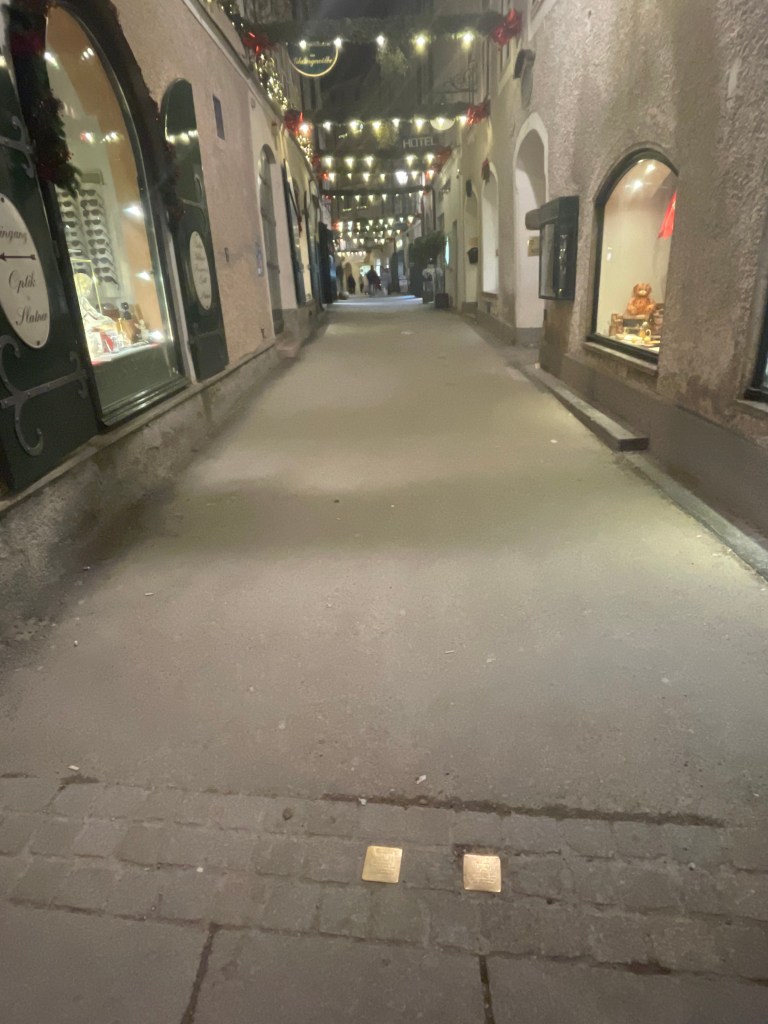
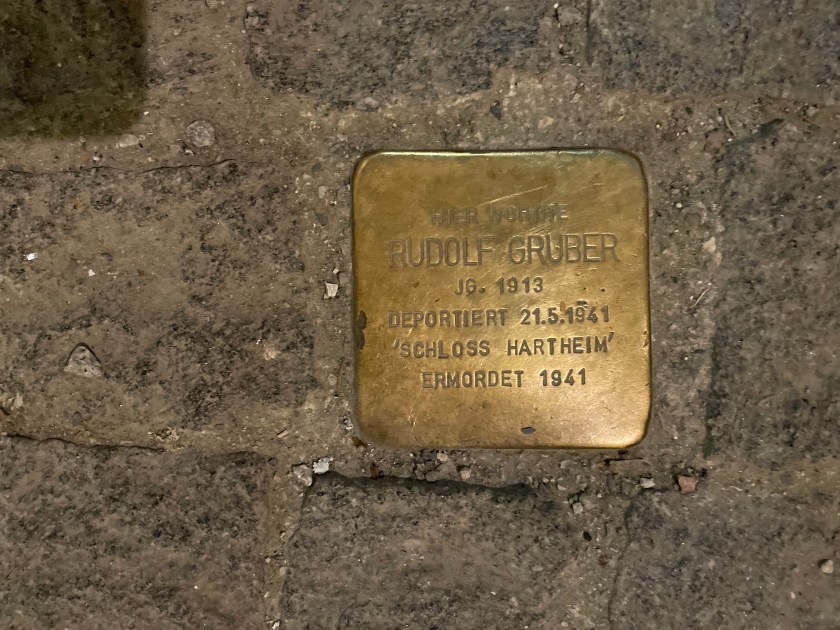
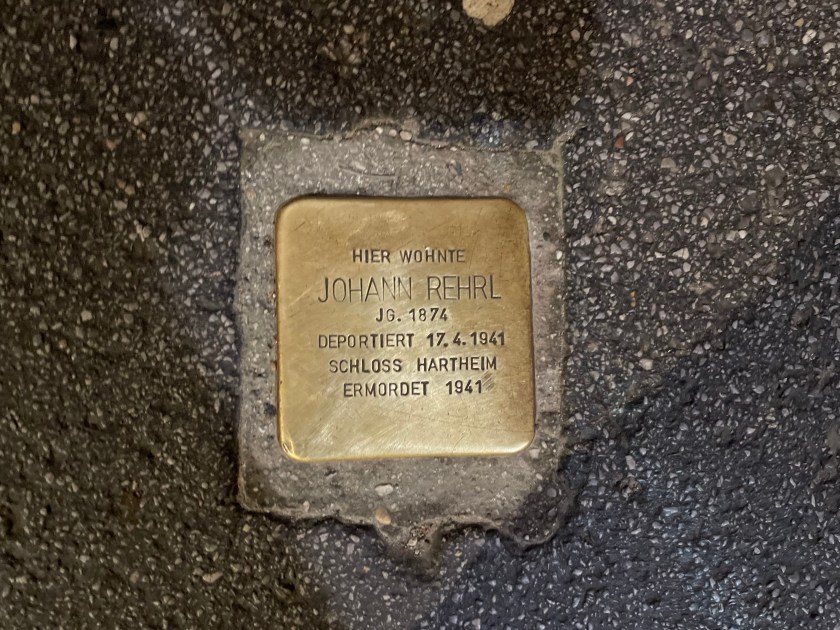
We seem to be stumbling over Stolperstein everywhere we go in Salzburg.  We saw more on our way into town this cold frosty morning.

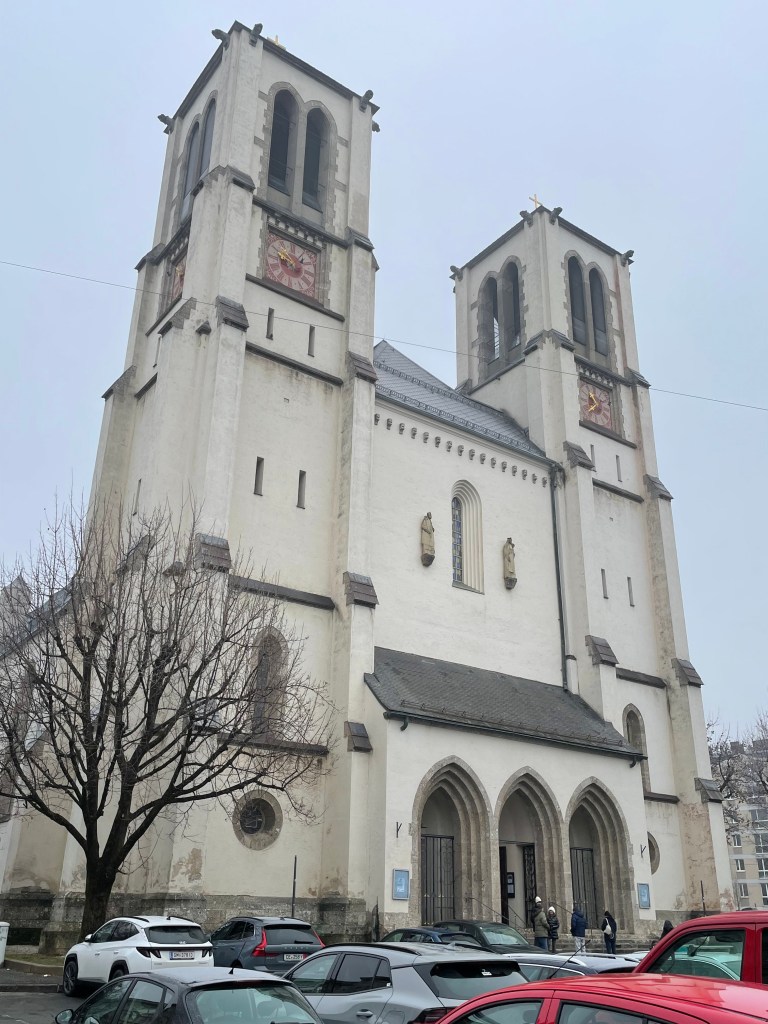
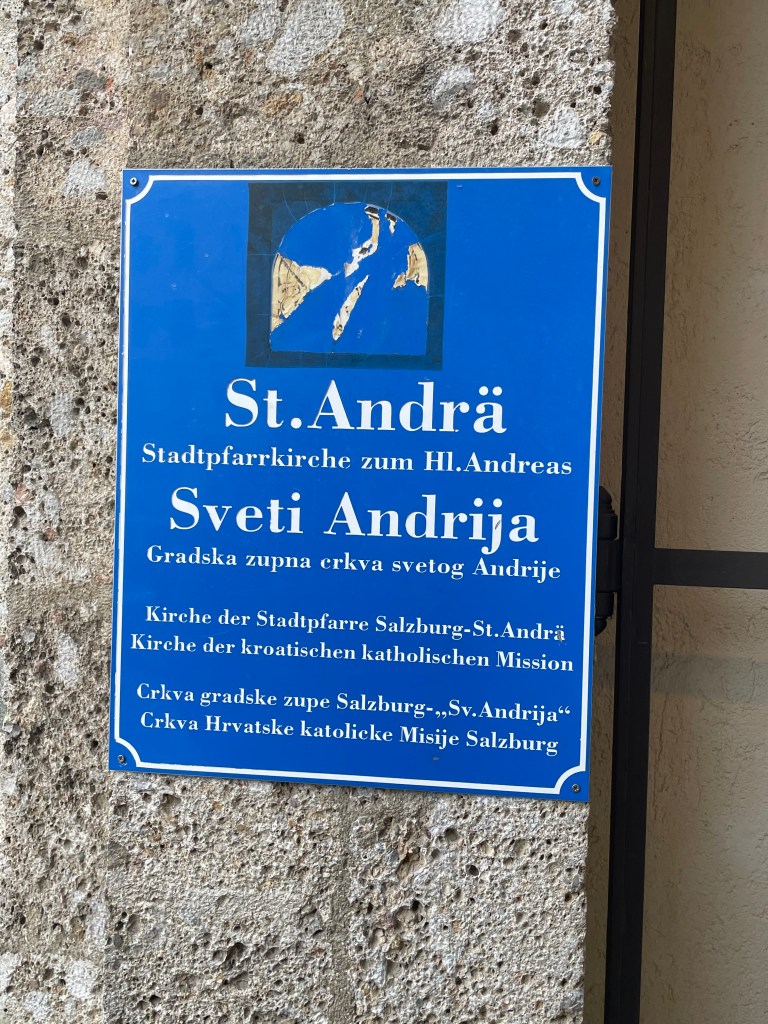
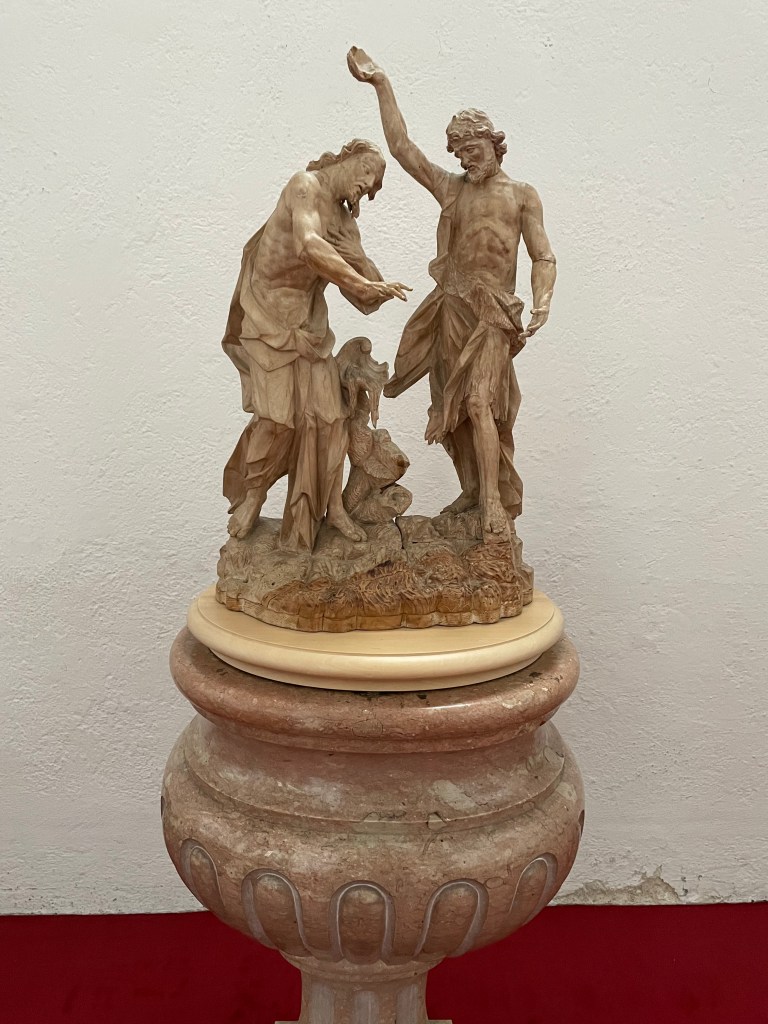
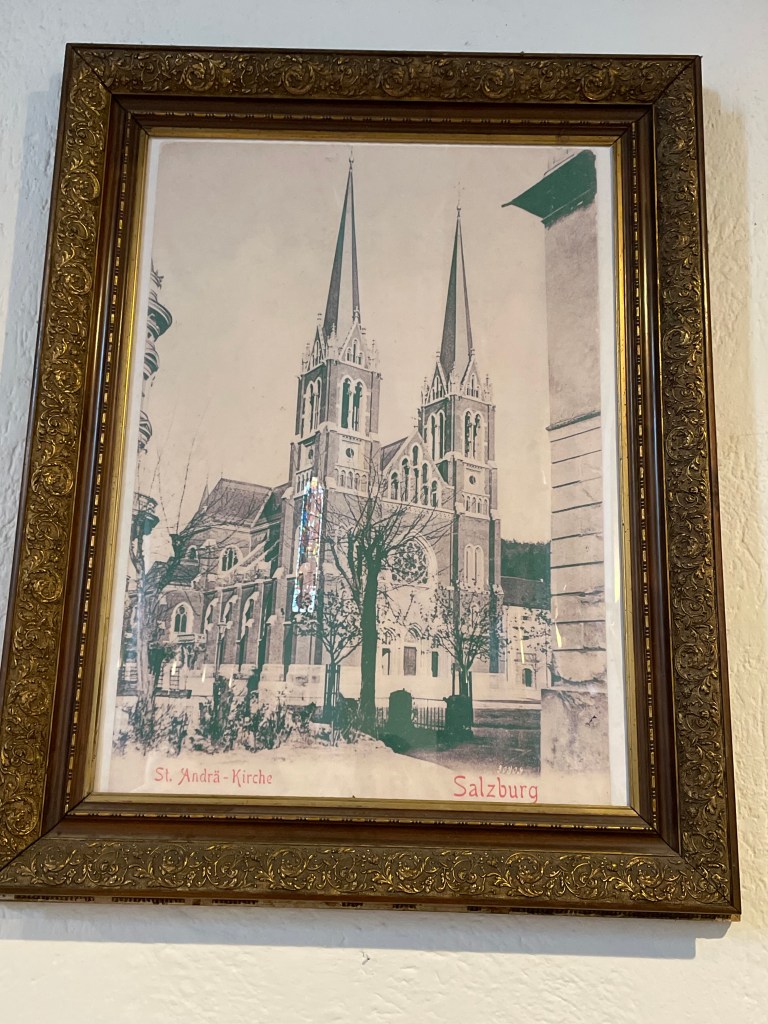
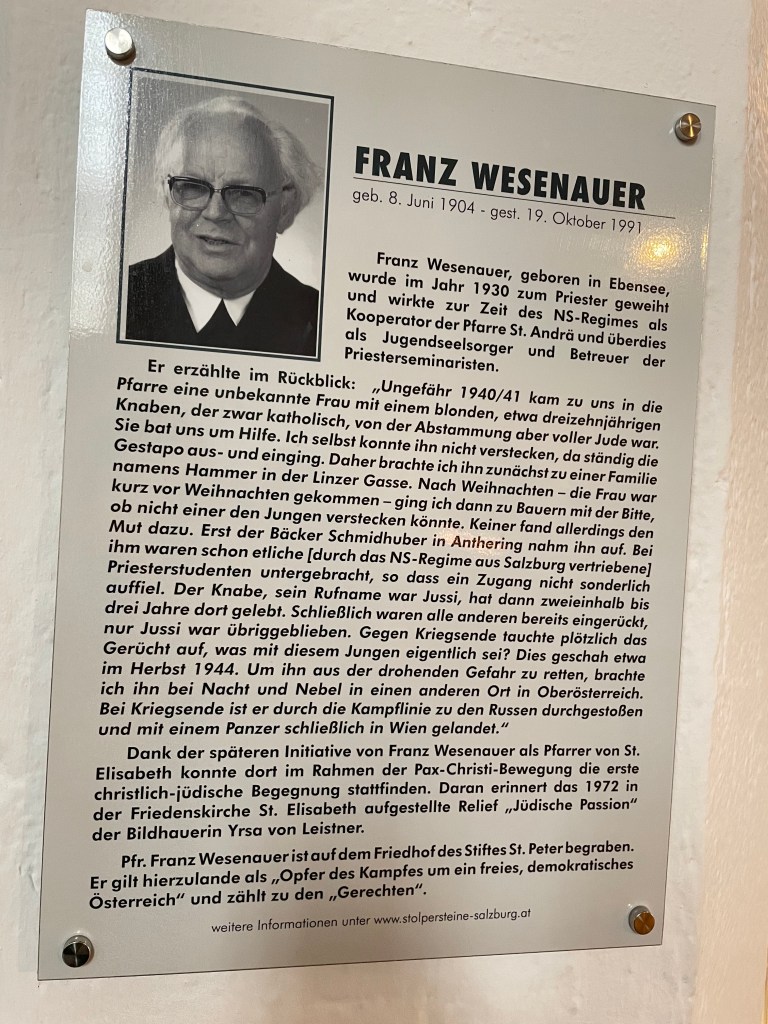
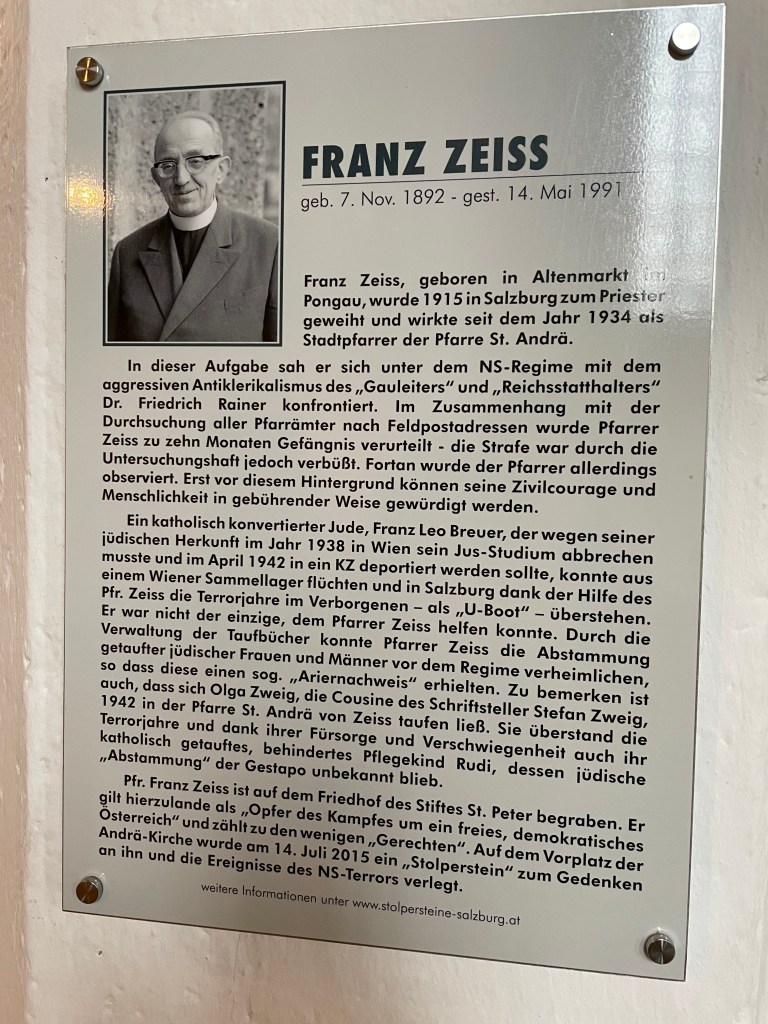
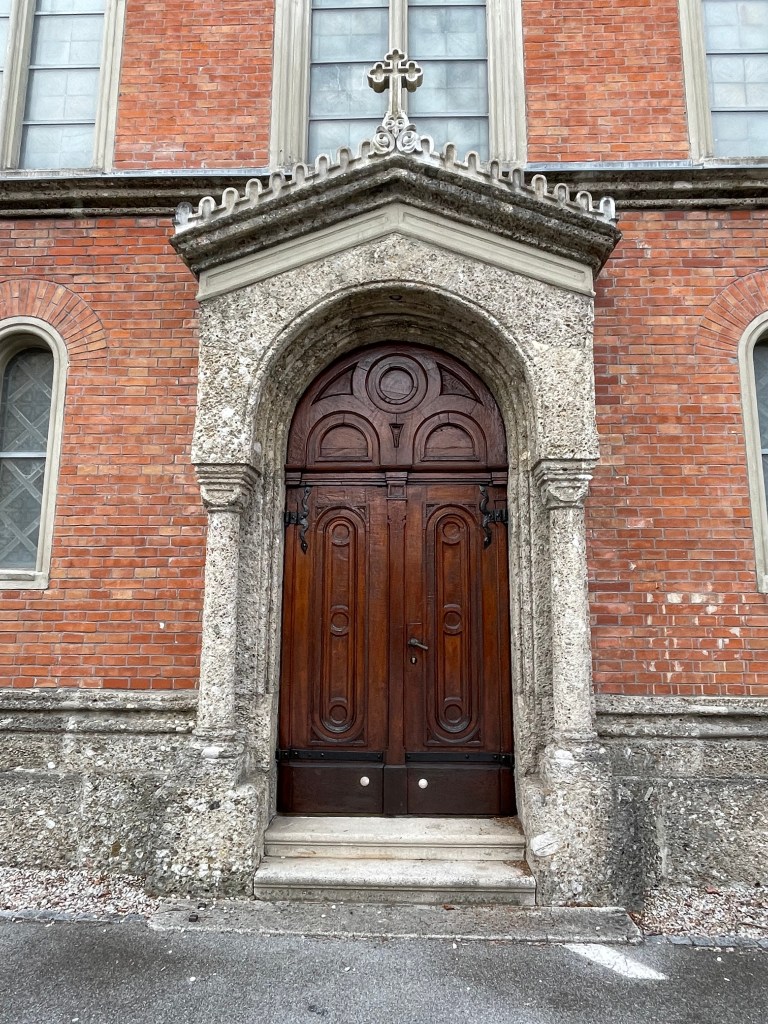
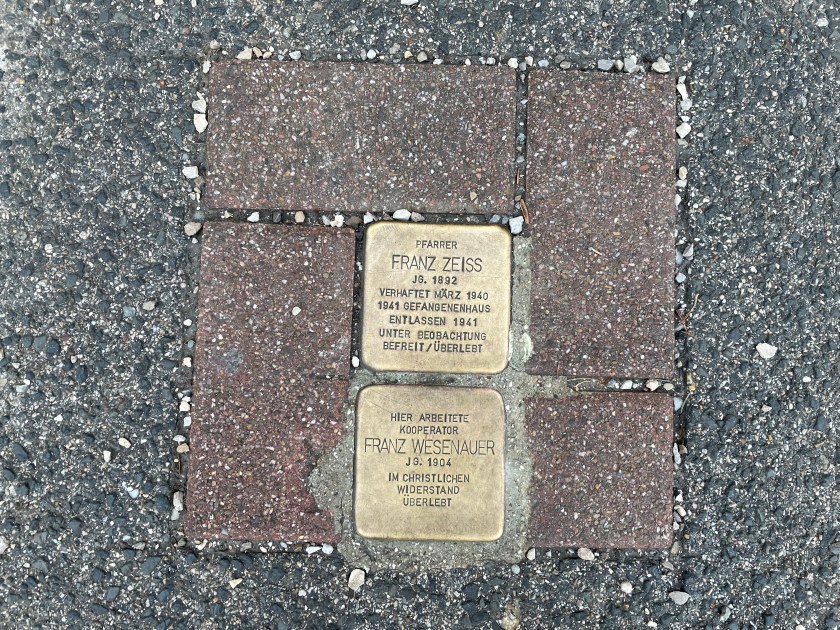
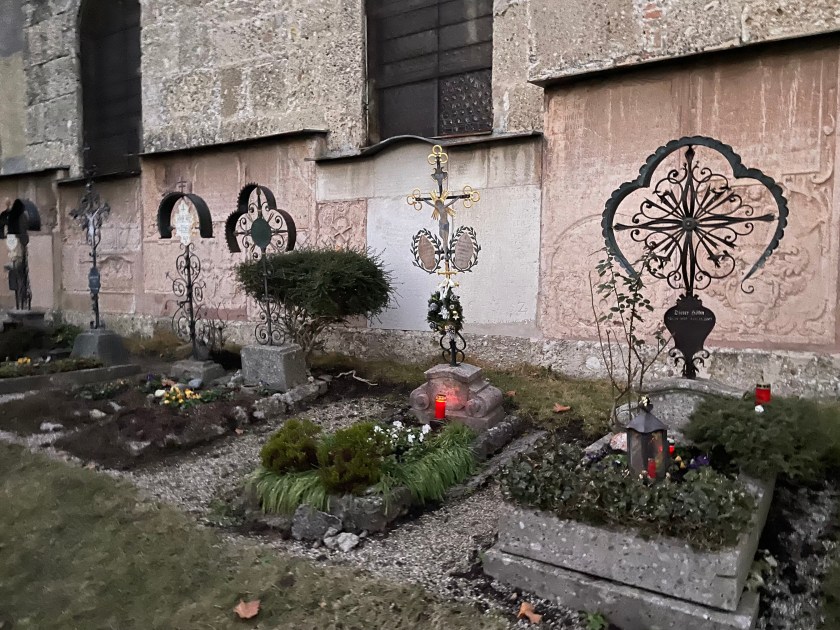
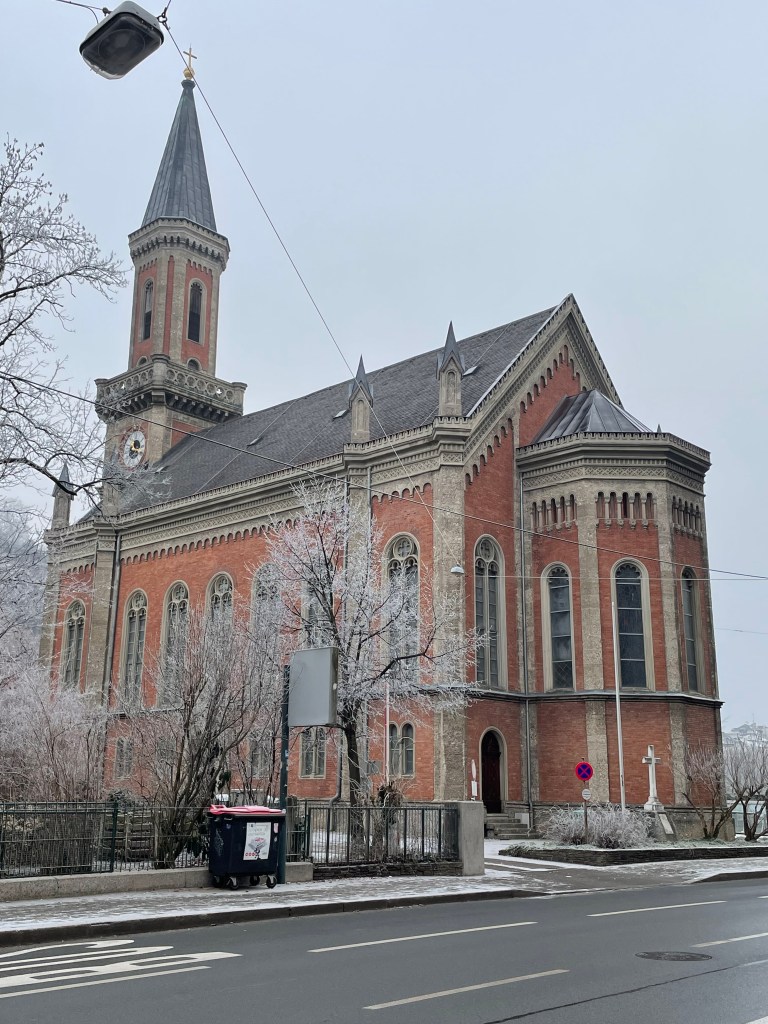
This morning we stopped at the St Andra Church not far from our hotel.  Outside the entrance were 2 Stolpersteine for 2 of the church leaders who helped the Jews.  Pfarrer Franz Zeiss and Franz Wesenauer.  Zeiss was a Jew who became a Catholic.  He was abducted in 1940, imprisoned in 1941, Let out under watch, then freed.  He survived.  Wesenauer was in the Christian resistance.  He survived too.  Both are buried in St Peter’s Abbey.  Brave good men.  Their pictures and stories were in the church, which now houses a Slovic congregation.
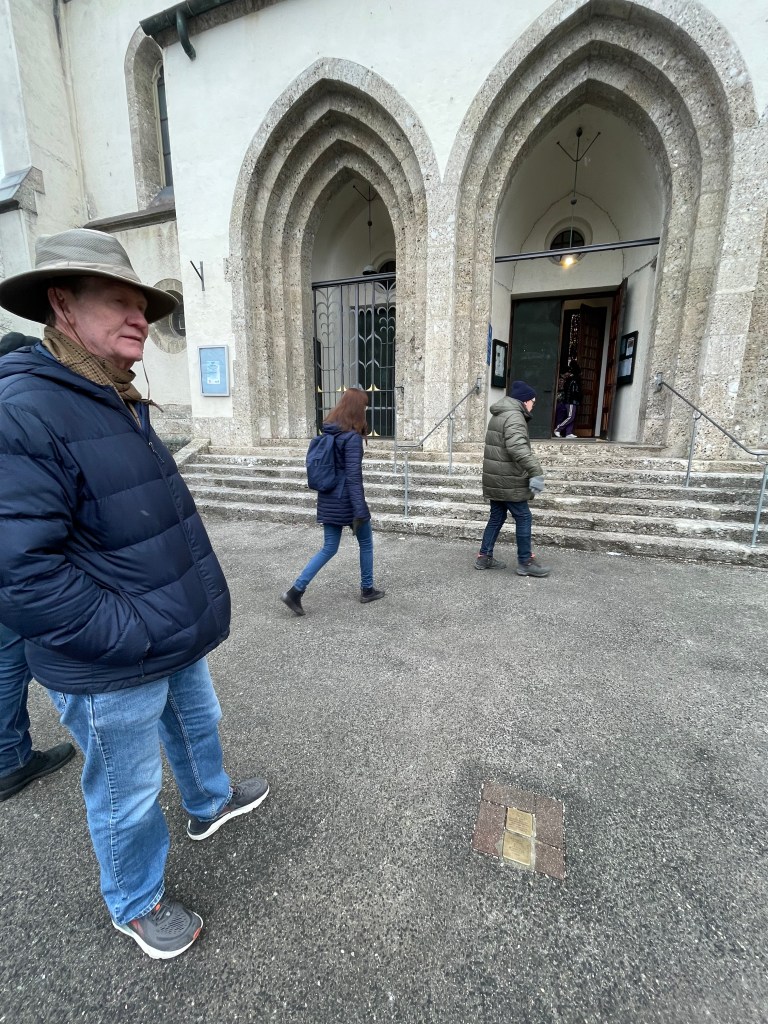
More Stumbling Blocks:

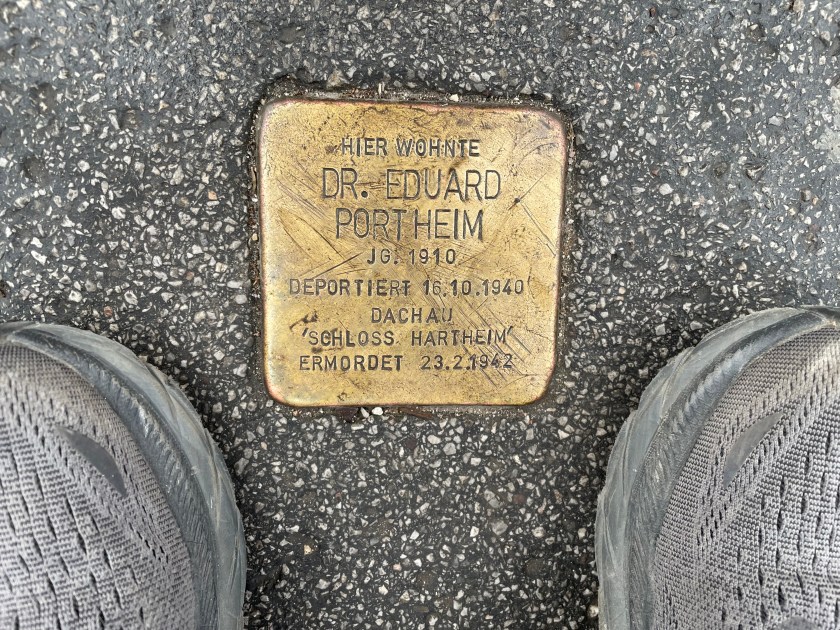
The Stolpersteine above honors Dr. Eduard Portheim, b. 1910, who was murdered at Schloss Hartheim (see the next post),
after being taken to Dachau.  Each stone we see has a story, for example, here is Eduard’s:
Eduard Portheim
Dr. Eduard PORTHEIM, born on October 15, 1910 in Vienna, was the first child of the Jewish couple Elisabeth and Leopold PORTHEIM. His father, from the prominent Prague family Eduard Ritter von PORTHEIM, was a botanist and co-founder of the Vivarium Botanical Research Institute in Vienna.
In 1938, Eduard PORTHEIM’s parents and his sister Susanne managed to escape to England. His uncle Viktor and his aunt Leontine 1 committed suicide before they were deported. His two uncles Friedrich and Emil were murdered in concentration camps.
The motive of the Viennese lawyer Dr. Eduard PORTHEIM for staying in Salzburg under the Nazi regime is still unclear.
It is plausible that he was an acquaintance of the liberal Junger family, who lived at Makartplatz 6 2 . Josefine Junger was a sociable woman and a close friend of Stefan Zweig’s wife Friderike.
Mathilde, Mrs. Junger’s older daughter, was the first wife of the diplomat Egon Ranshofen-Wertheimer, whose daughter Luciana lived in Salzburg under the Nazi regime.
Roswitha, Mrs. Junger’s younger daughter, was the wife of the art critic Ignaz George Pollak, a son of the Jewish Albert Pollak family from Salzburg. Roswitha’s twin sister Ida Karoline Junger, who studied singing in Vienna, returned to her parents’ house in 1938 and went to Italy, is said to have been friends with Dr. Eduard PORTHEIM. In any case, Makartplatz 6 was his last known residential address according to the Shoah databases.
On October 16, 1940, Dr. Eduard PORTHEIM was registered in the Dachau concentration camp as a Jew and “protective custody prisoner” number 20544.
Further details are known: his arrival on January 23, 1941 in the Neuengamme concentration camp and his transfer back to Dachau on September 14, 1941 with the number 27520.
The 31-year-old Dr. Eduard PORTHEIM was one of those Dachau prisoners who were deported to Hartheim on February 23, 1942 under the code name “Invalid Transport” or “Special Treatment 14f13” 3 and gassed there.
His academic degree of Dr. jur., which he had acquired in 1936 at the Faculty of Law of the University of Vienna, was revoked in 1941 for racist reasons.
It took 67 years until his revoked doctorate was posthumously awarded back to him by the University of Vienna.
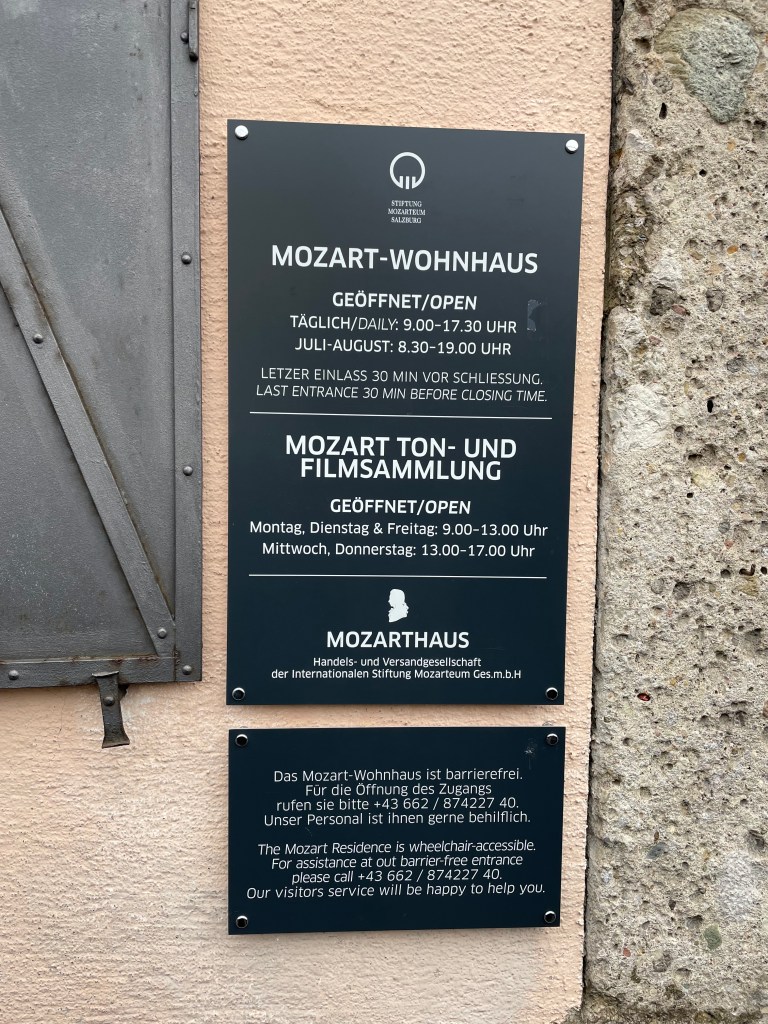
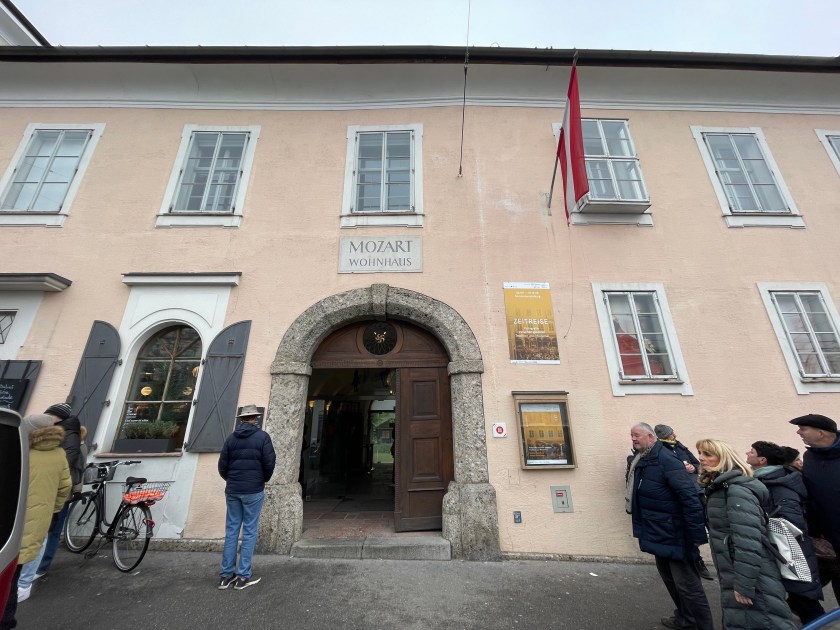
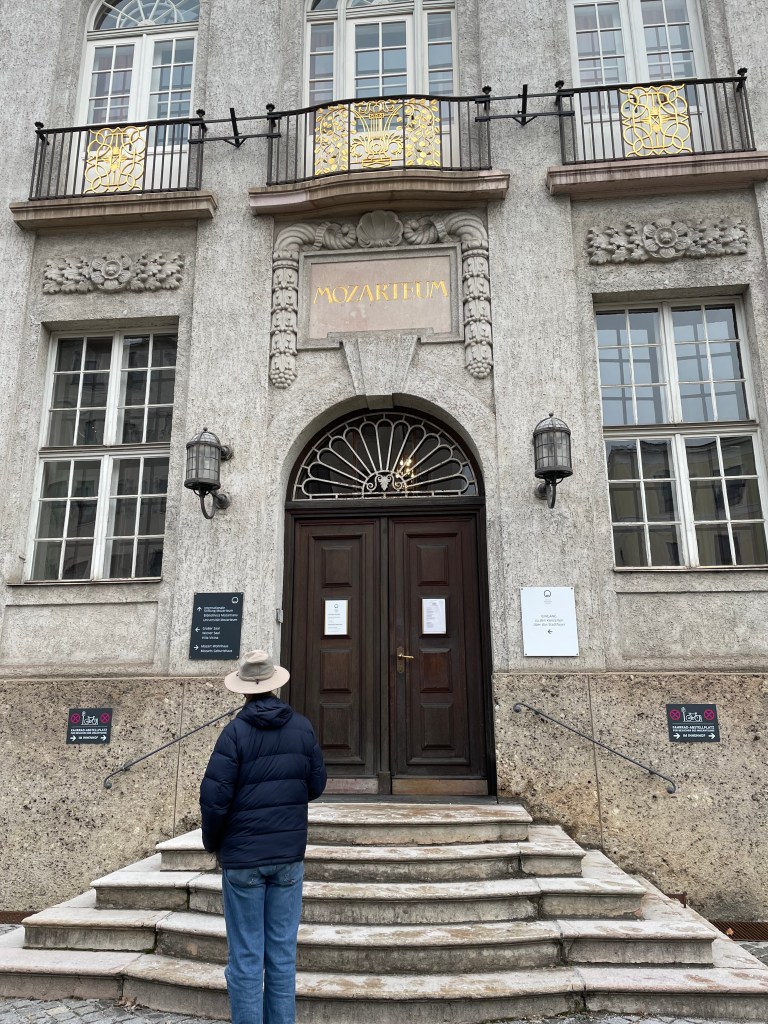
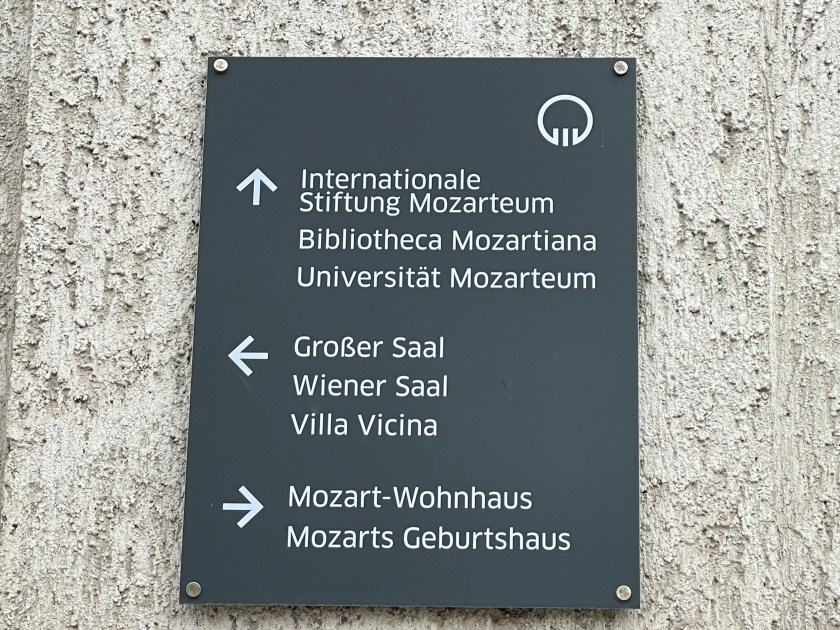
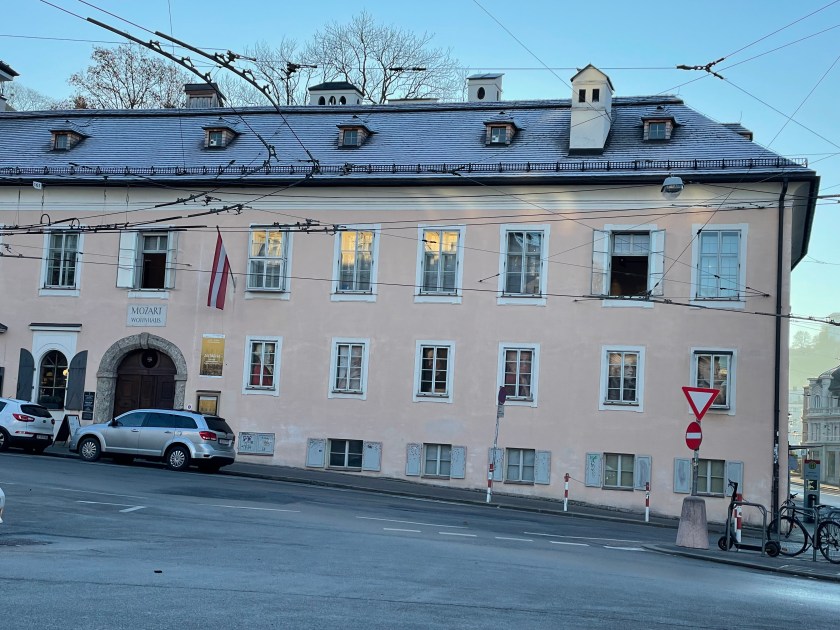
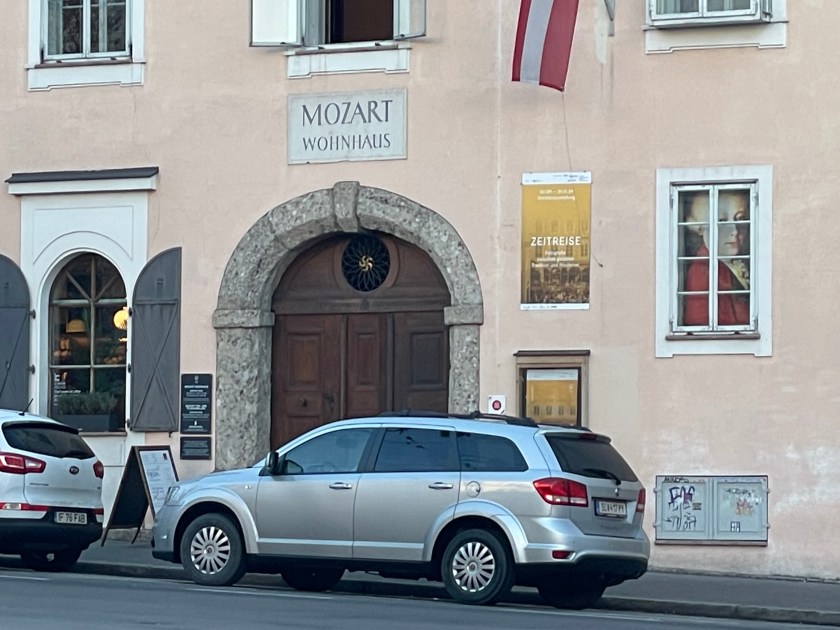
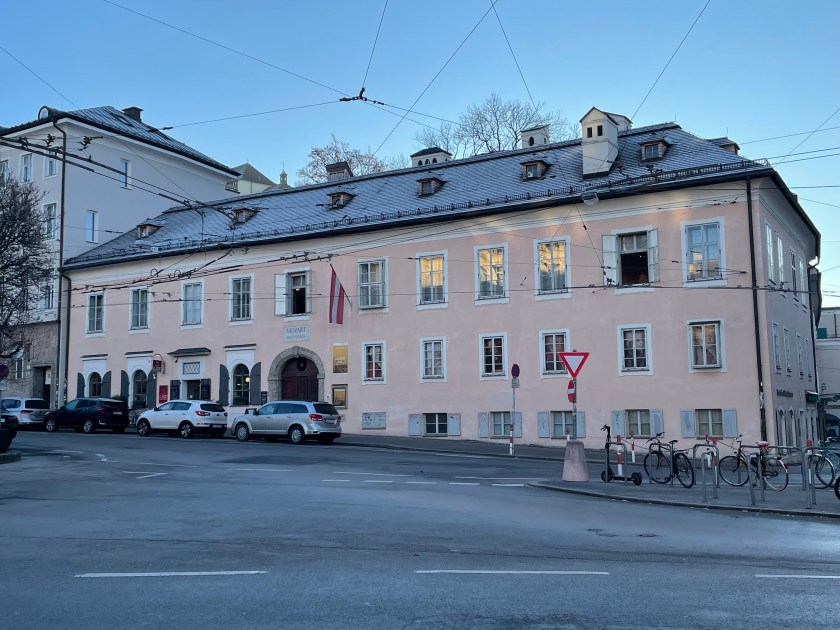
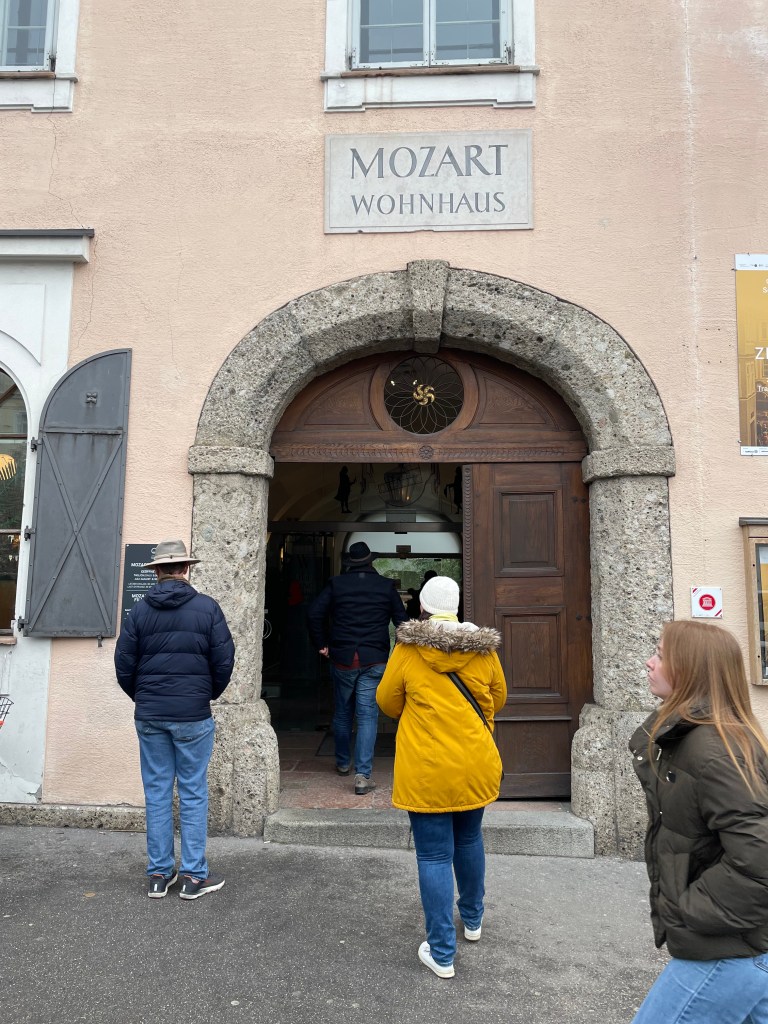
On our way, we stopped by the Mozart Haus again, and peeked inside.  He lived here after he was 17 years old. We didn’t pay to go in, instead we walked across the bridge, into the old town’s main street where his big yellow birth home is.  We decided we’d spend our time there.
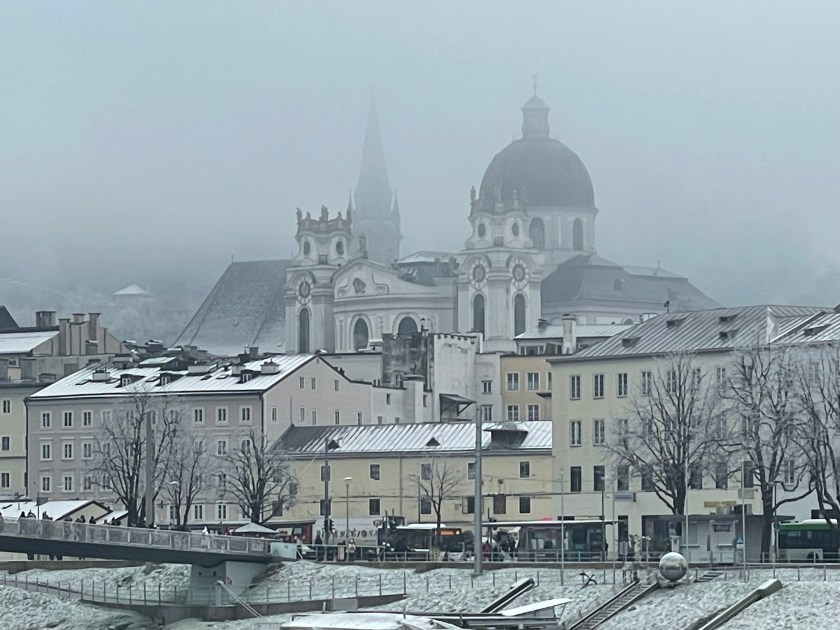
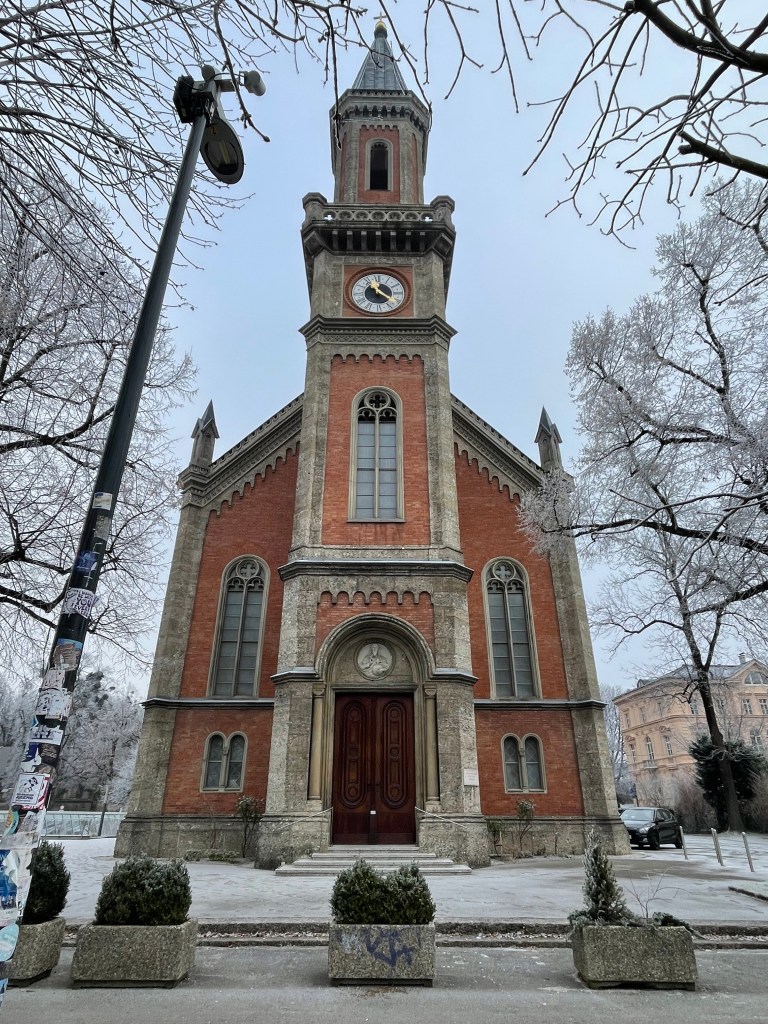
On the way to Mozart’s birth house, we passed by the Evagelische Christuskirche, another beautiful gem of a church by the river.  Sadly, it was locked.
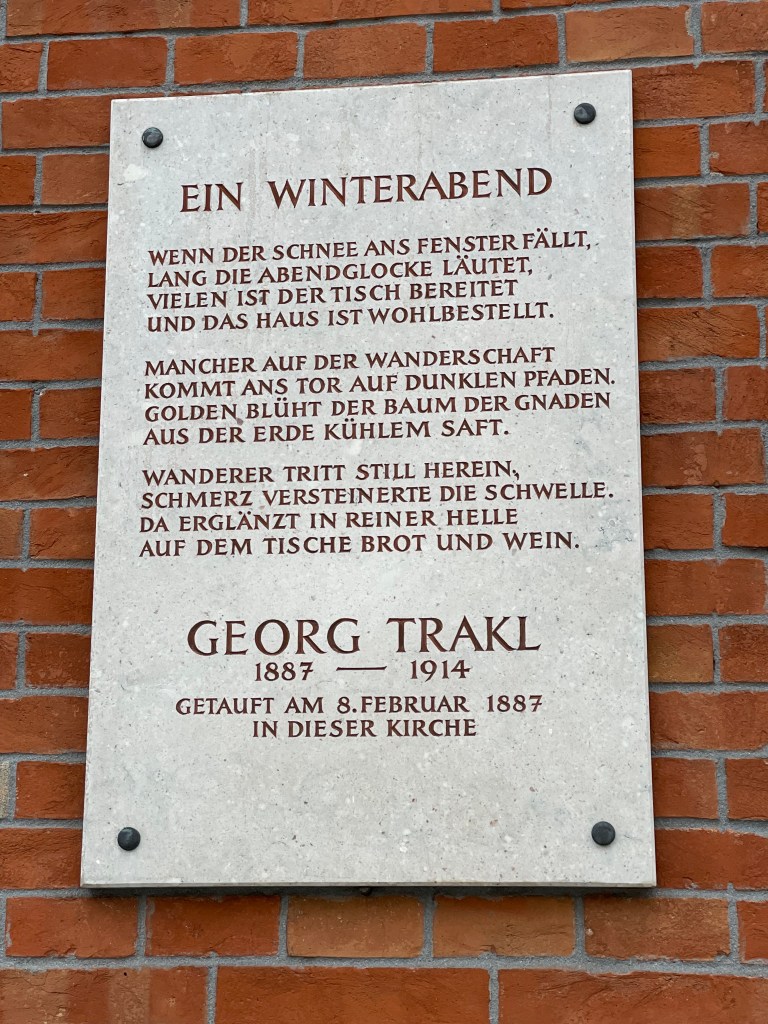
A poem about winter written by Georg Trakl who died in 1914.  (It’s much more poetic in German).

Winter Evening
When snow falls against the window,
Long sounds the evening bell…
For so many has the table
Been prepared, the house set in order.
From their wandering, many
Come on dark paths to this gateway.
The tree of grace is flowering in gold
Out of the cool sap of the earth.
In stillness, wanderer, step in:
Grief has worn the threshold into stone.
But see: in pure light, glowing
There on the table: bread and wine.
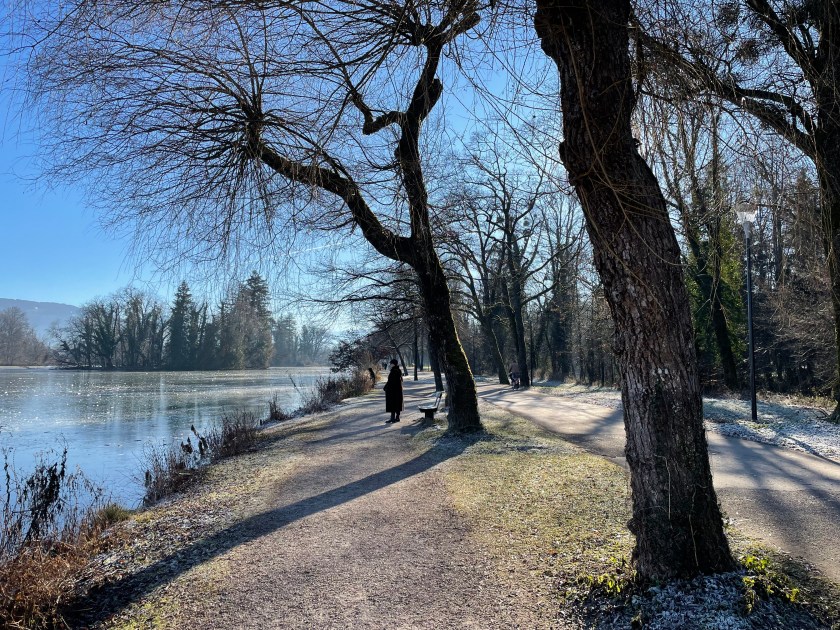
It was so very cold this morning, but the cold and frost covering everything was magical.

Salzburg — Mirabel Gardens and an evening walk

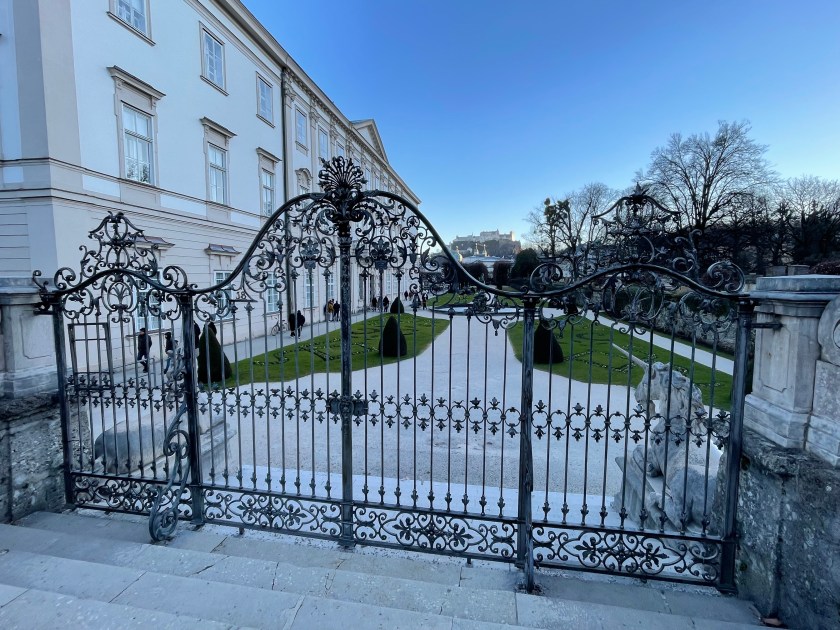
As evening fell, we walked back into town to the Mirabel Gardens (too many tour groups there the other day).  This is another of The Sound of Music sites, where the children sang on the steps.

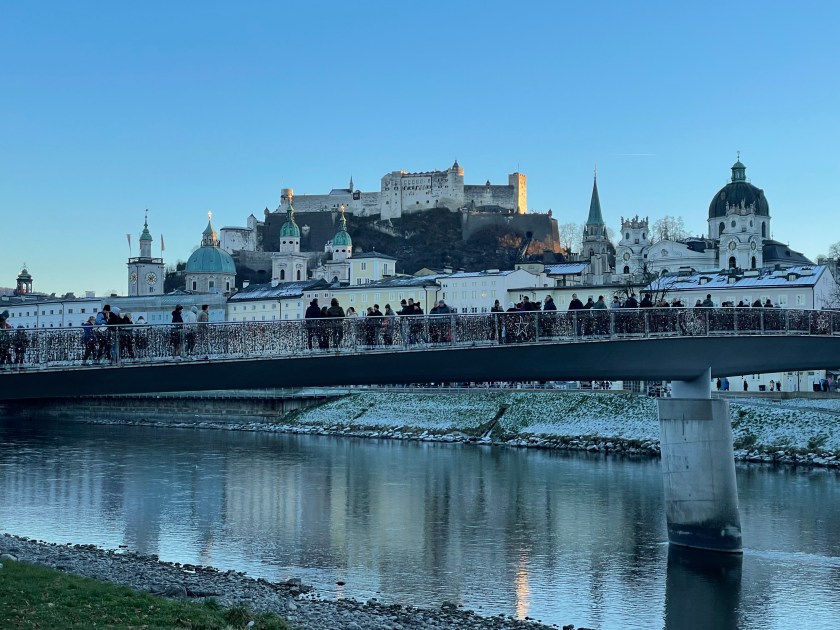
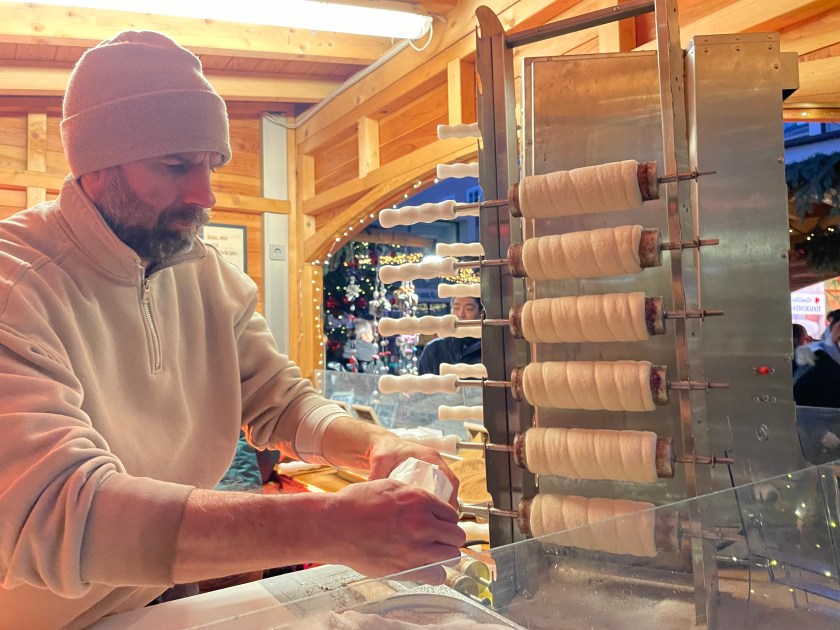
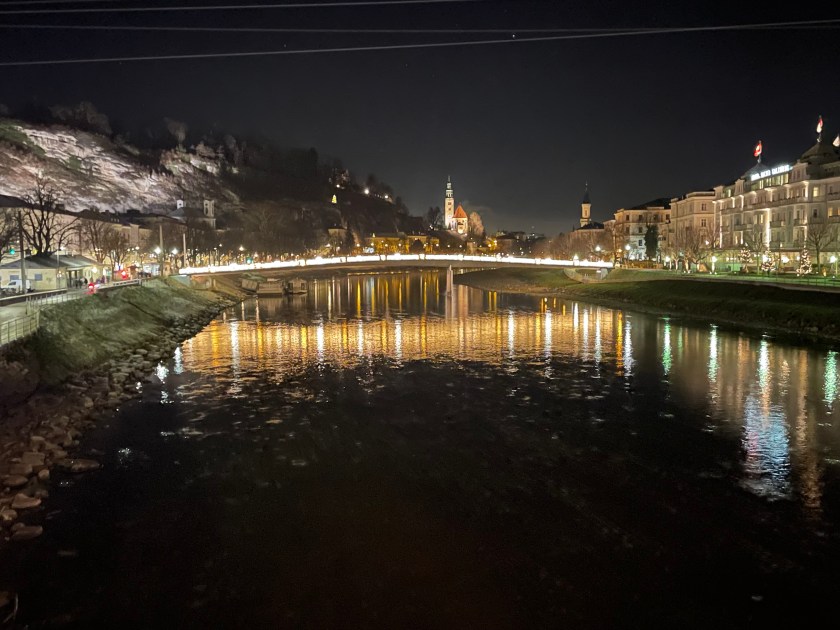
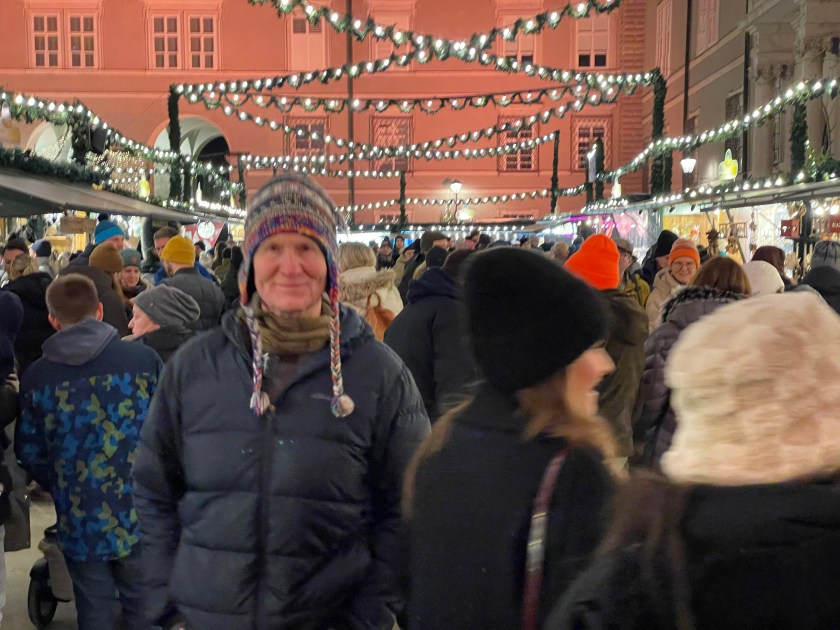
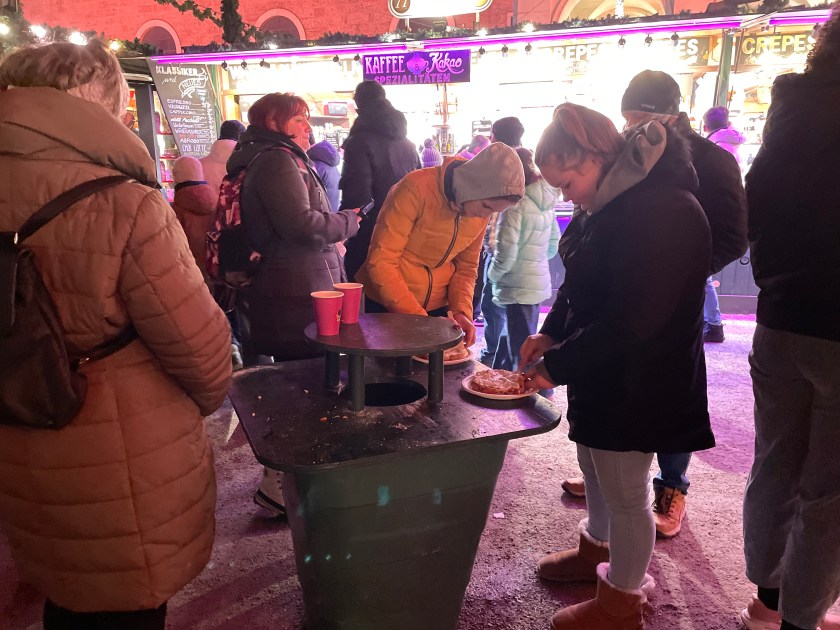
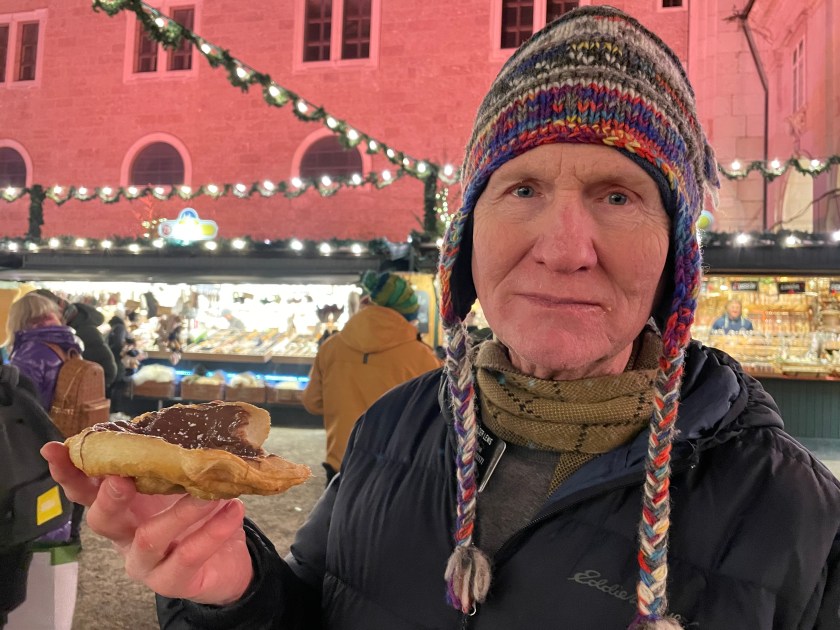
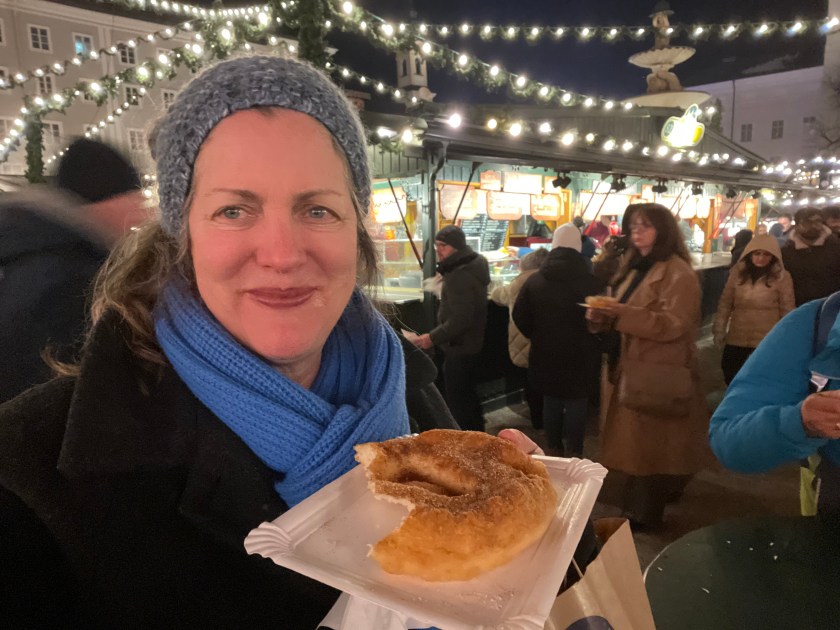
Then we walked over the bridge and into the old town to have some dinner.  Afterwards we strolled through part of the Christmas Market.  We watched a vendor making chimney cakes, then enjoyed eating one as we left the market area and headed home, walking along the river and the sun went down. Still frosty and cold out. We are tired.  We covered a lot of ground today, about 18,000 steps worth!

The famous steps:

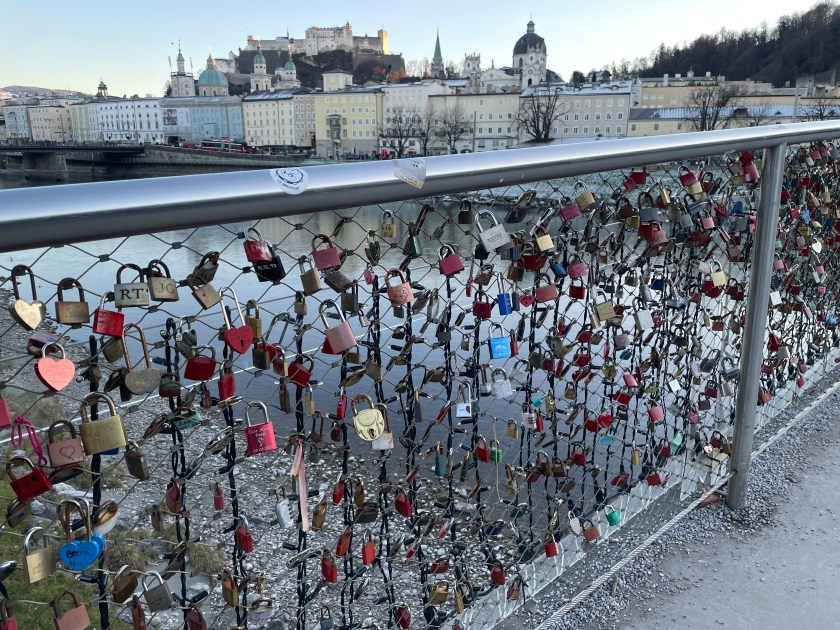
The bridges are covered with love locks.

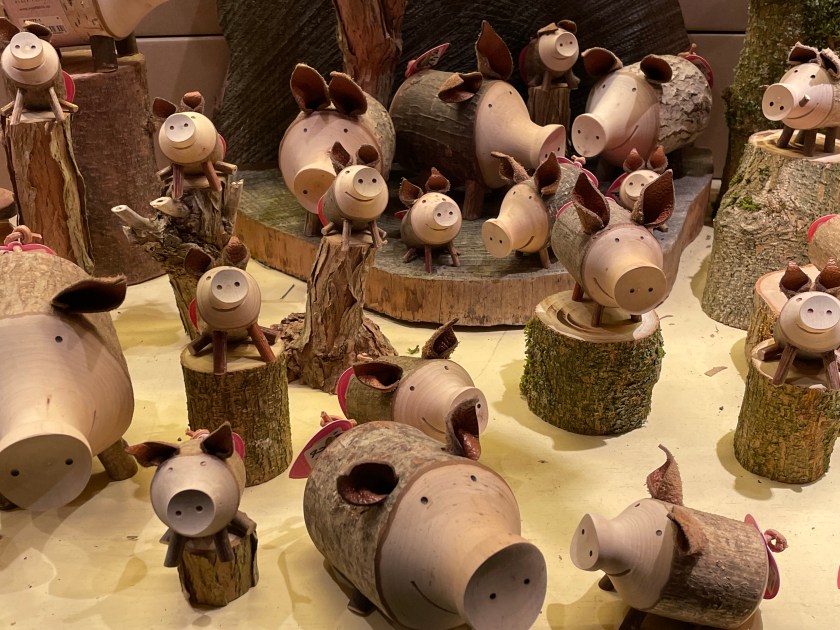
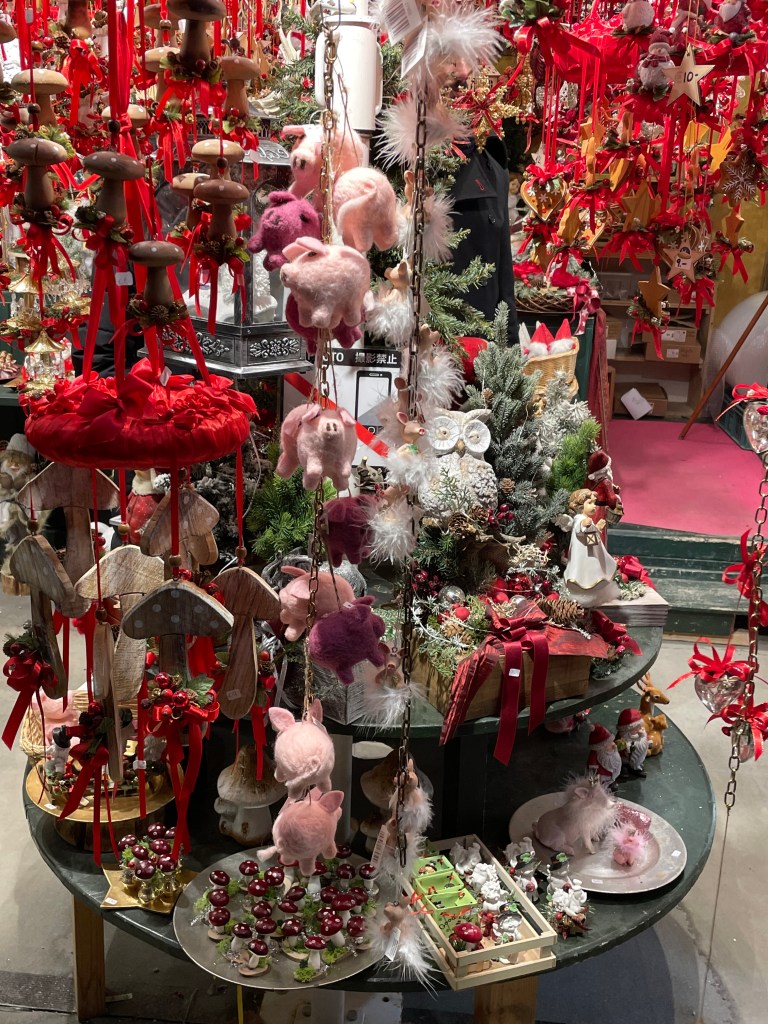
More and more good luck pigs are popping up in the markets!

The chimney cake makers:

Oberndorf and the Silent Night Chapel

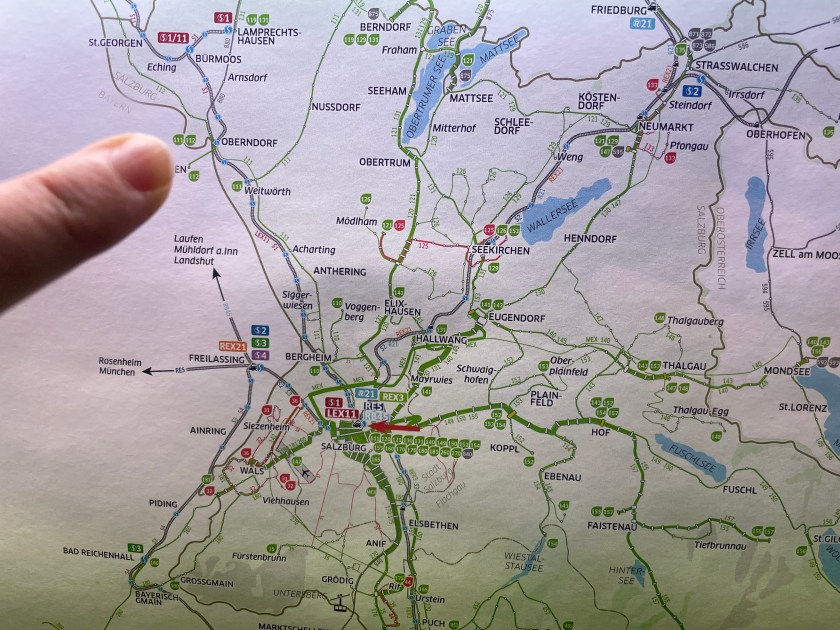
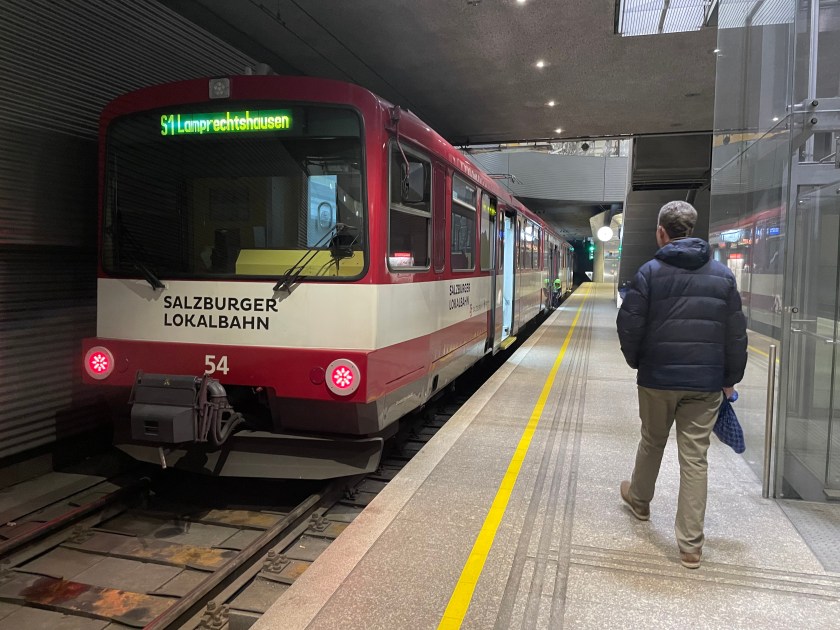
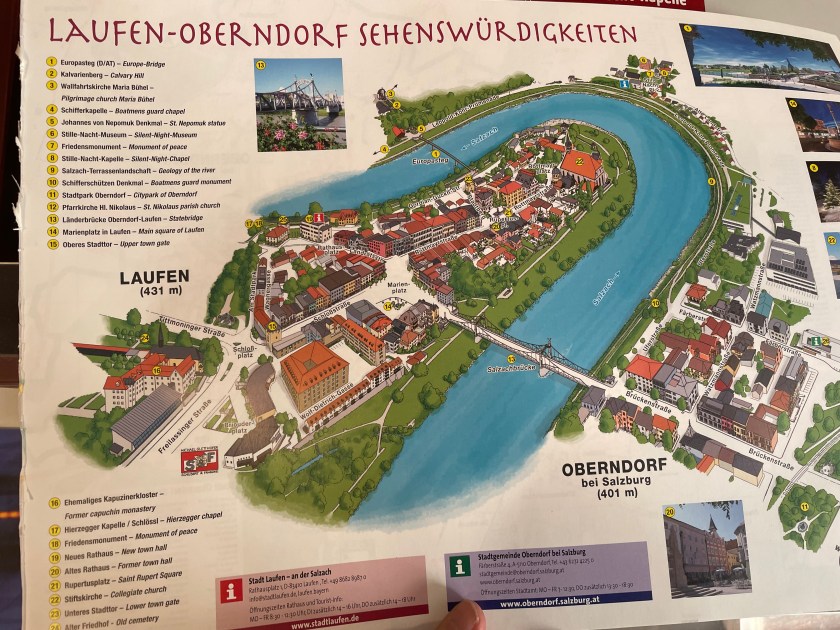
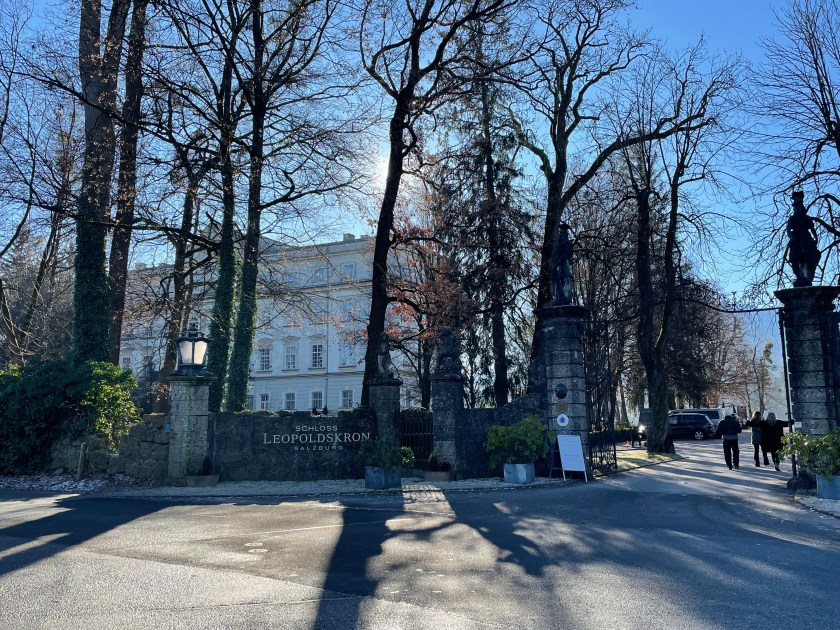
On the road by the Leopoldskron Hotel was a bus stop where we waited for a bus to take us to the train station in Salzburg to catch a city train to Oberndorf, about 26 km away.  The ride was about 30 min through the Austrian countryside.  Oberndorf is right below the German border.

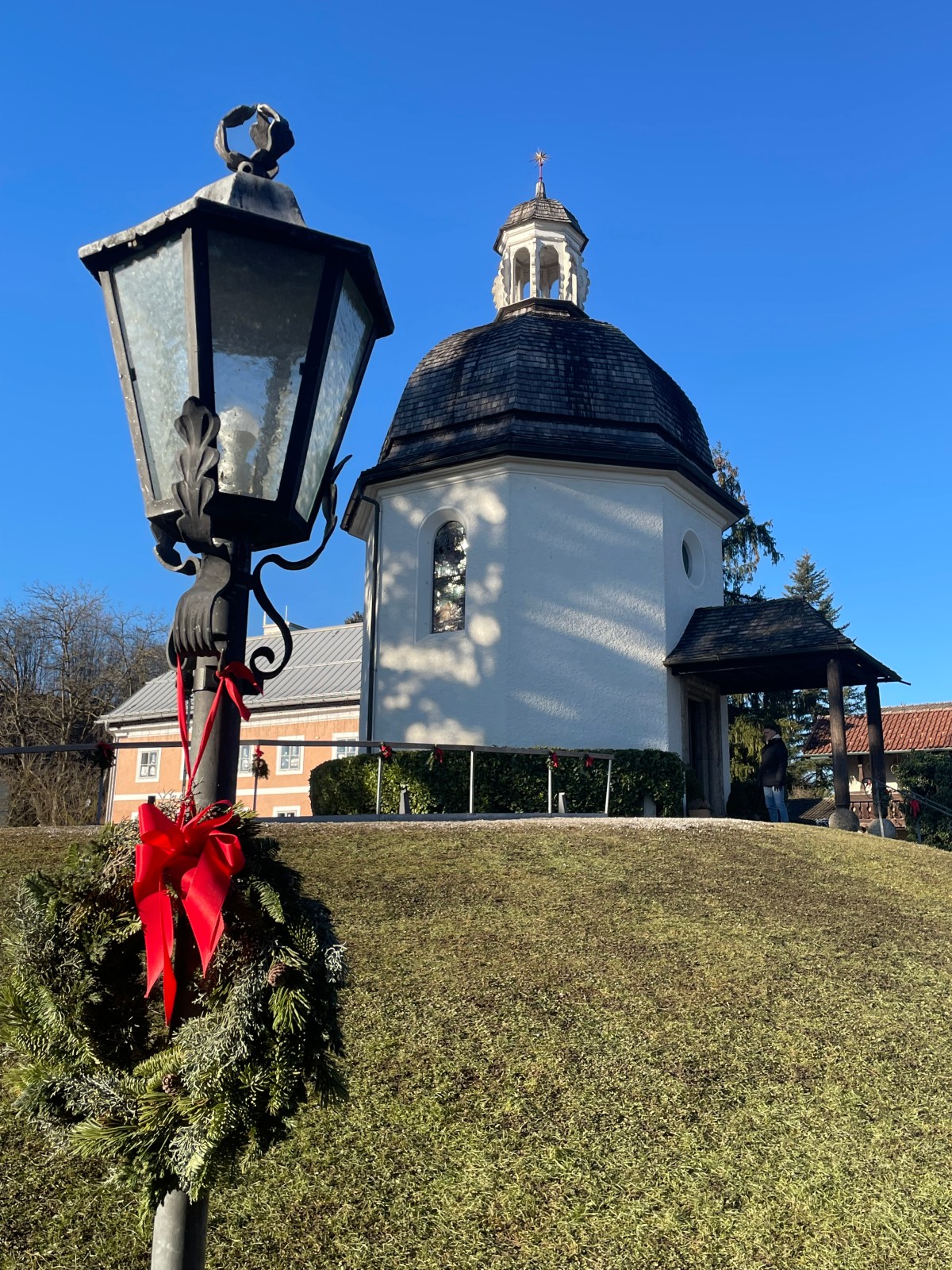
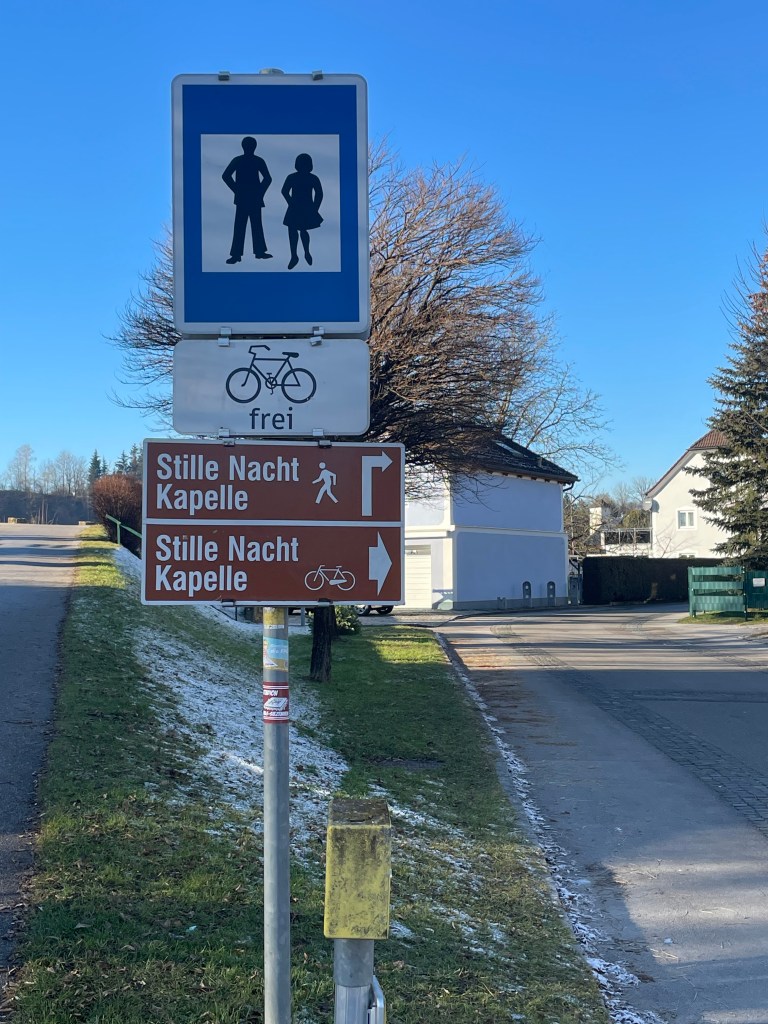
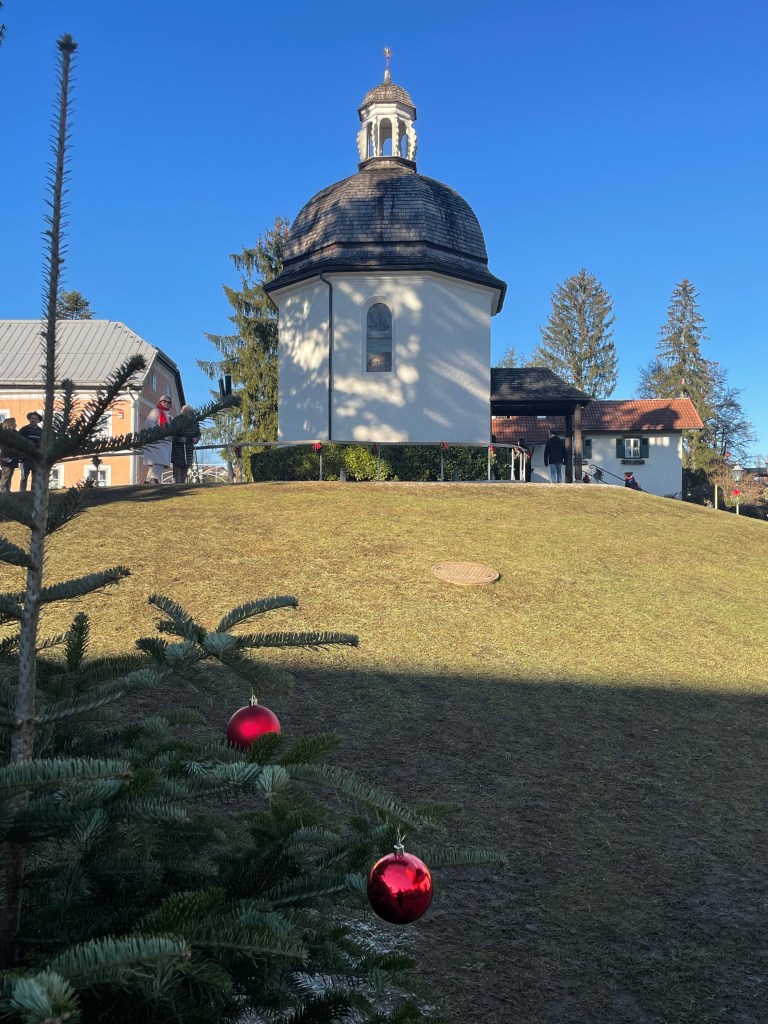
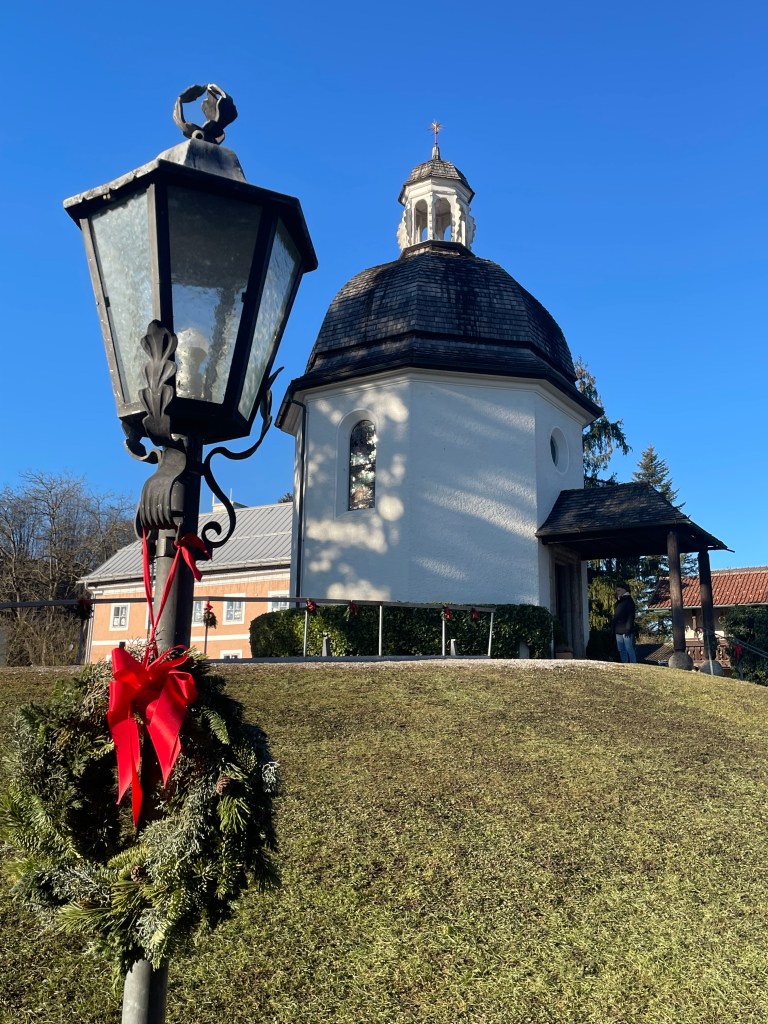
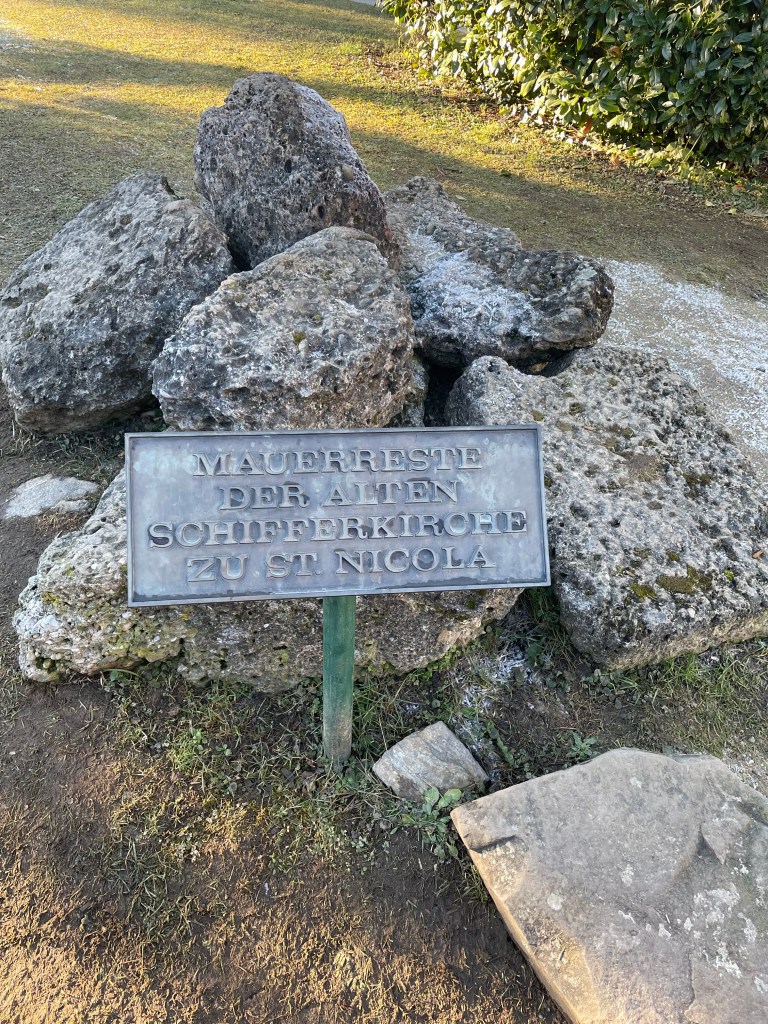
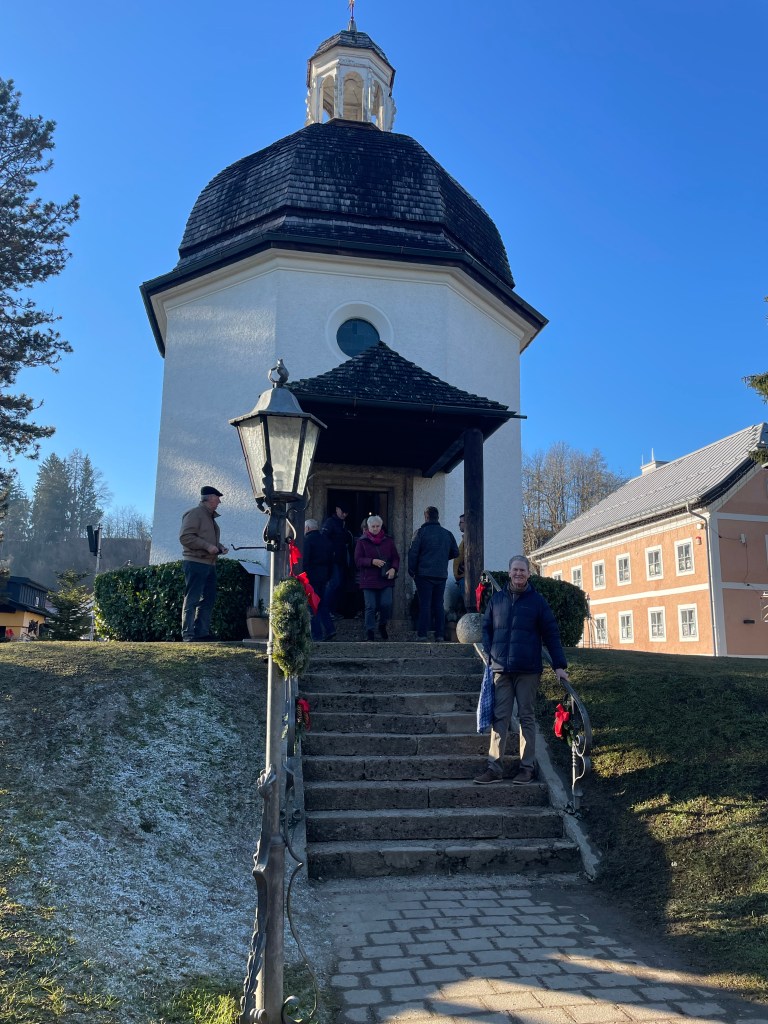
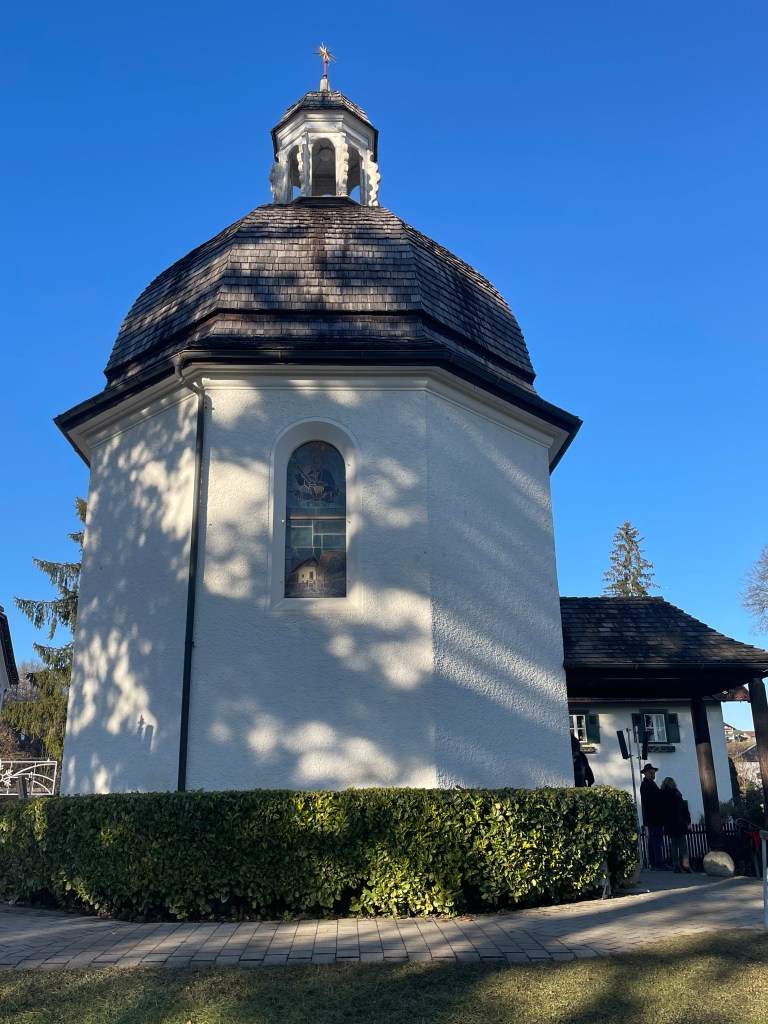
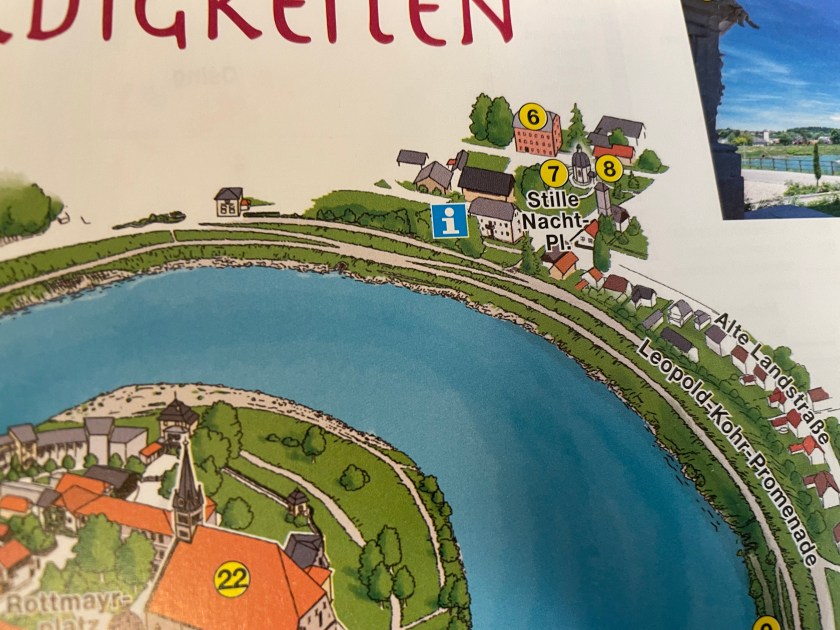
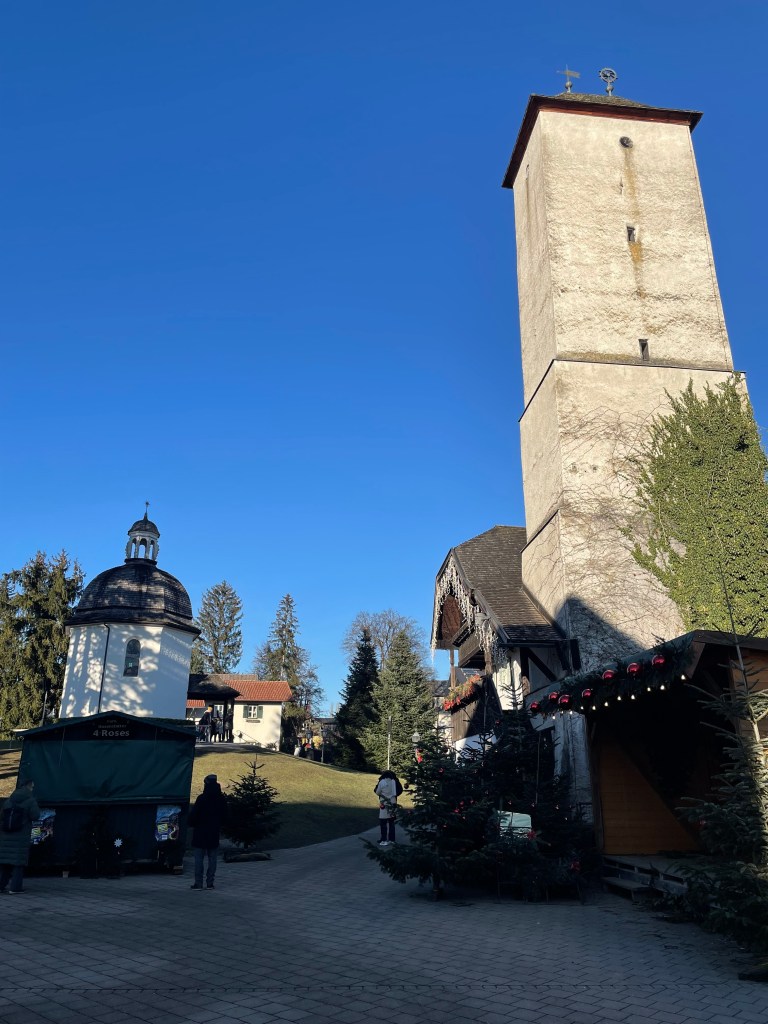
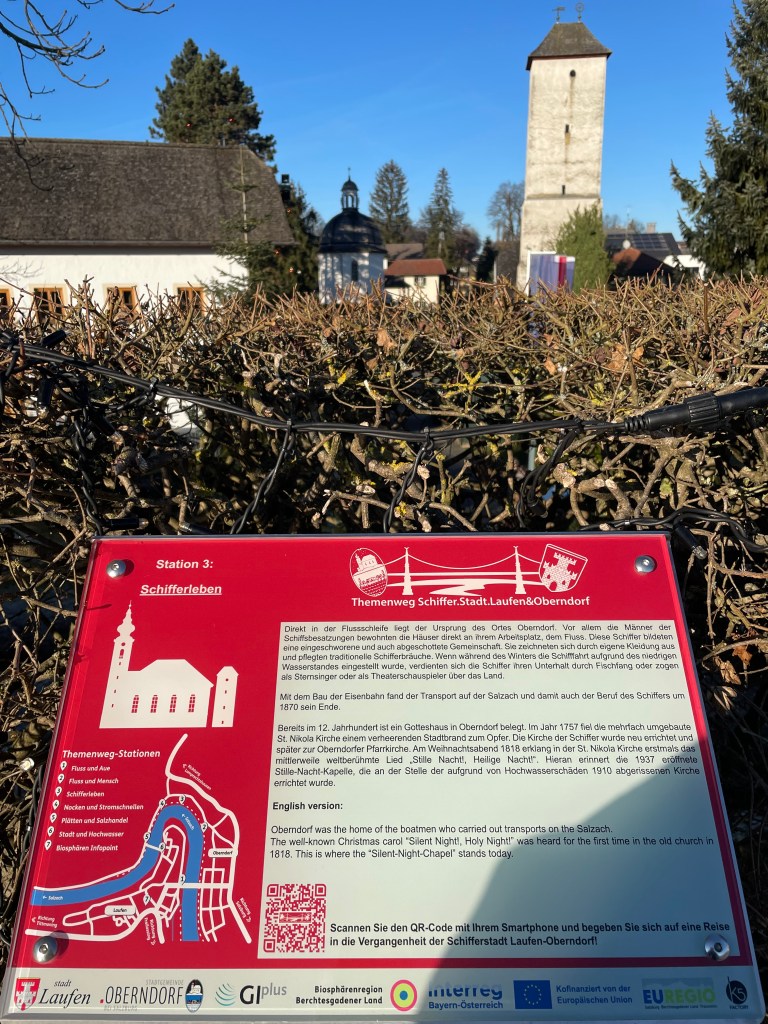
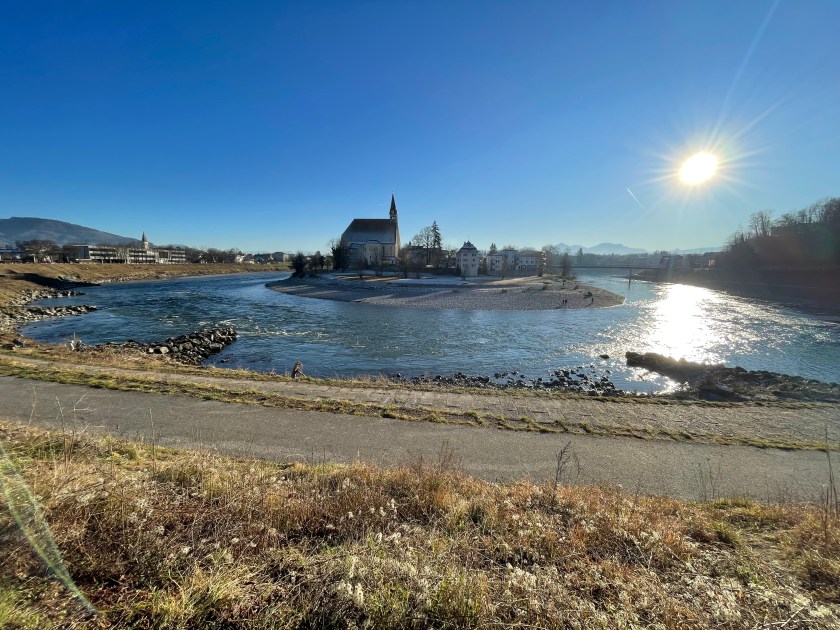
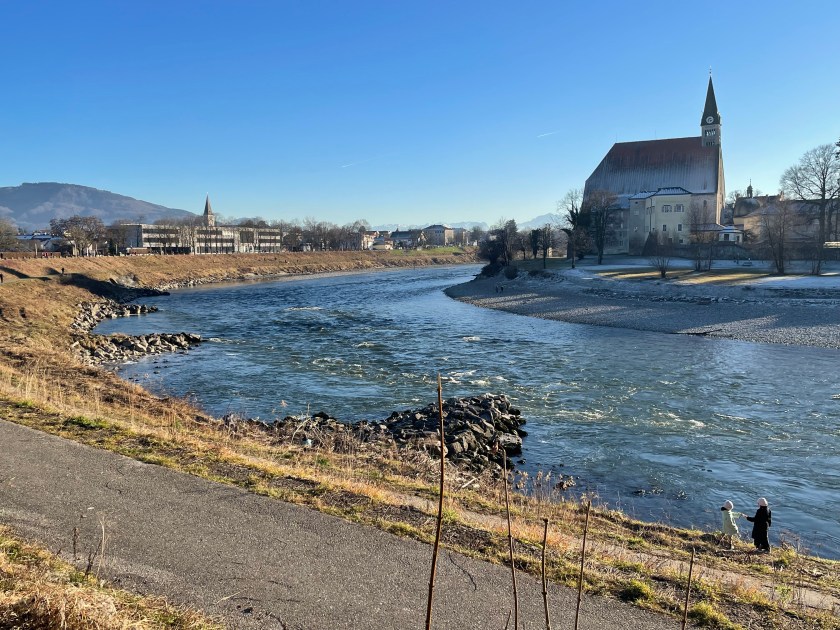
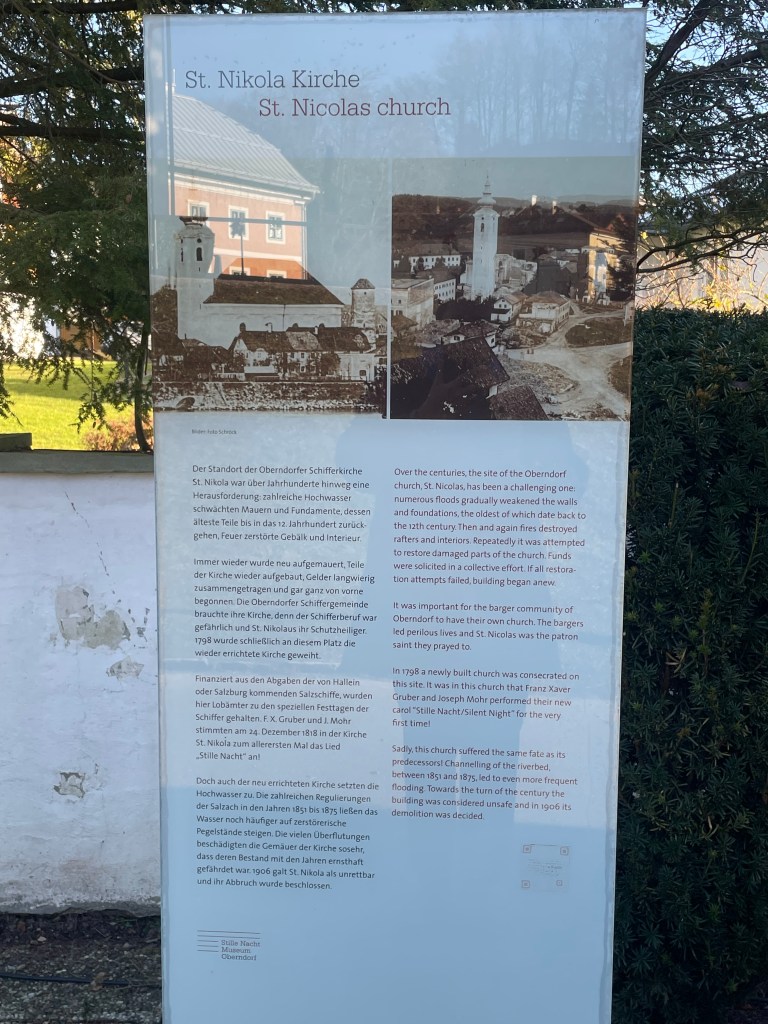
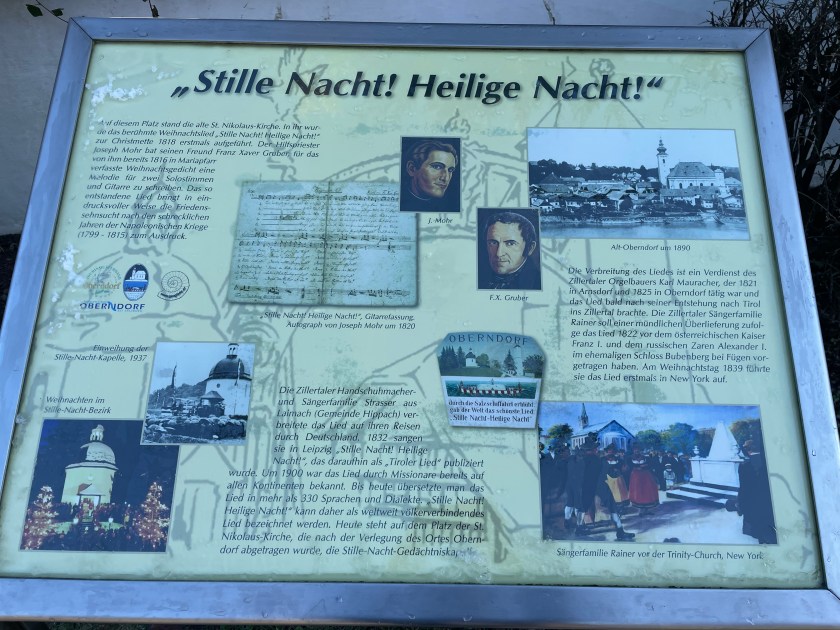
We walked from the city train stop into town, following signs to the Stille Nacht Church, which is really a small memorial building that stands where the original church once stood. That church was flooded so many times, they had to tear it down. The little town sits right by a river and flooded all the time.

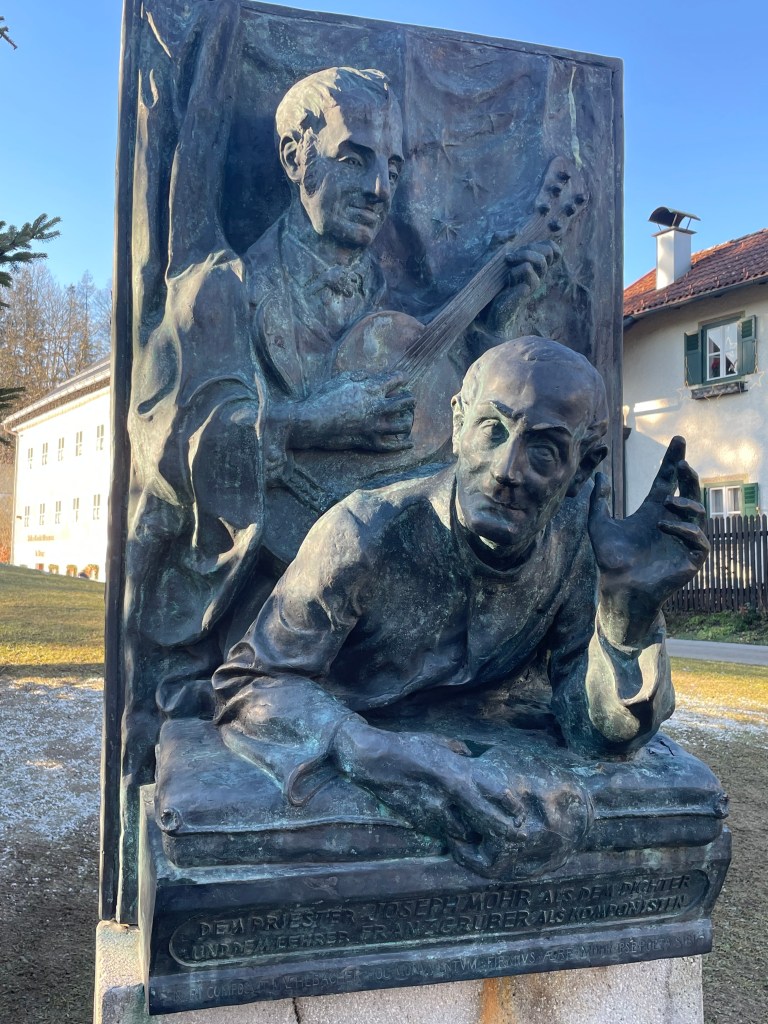
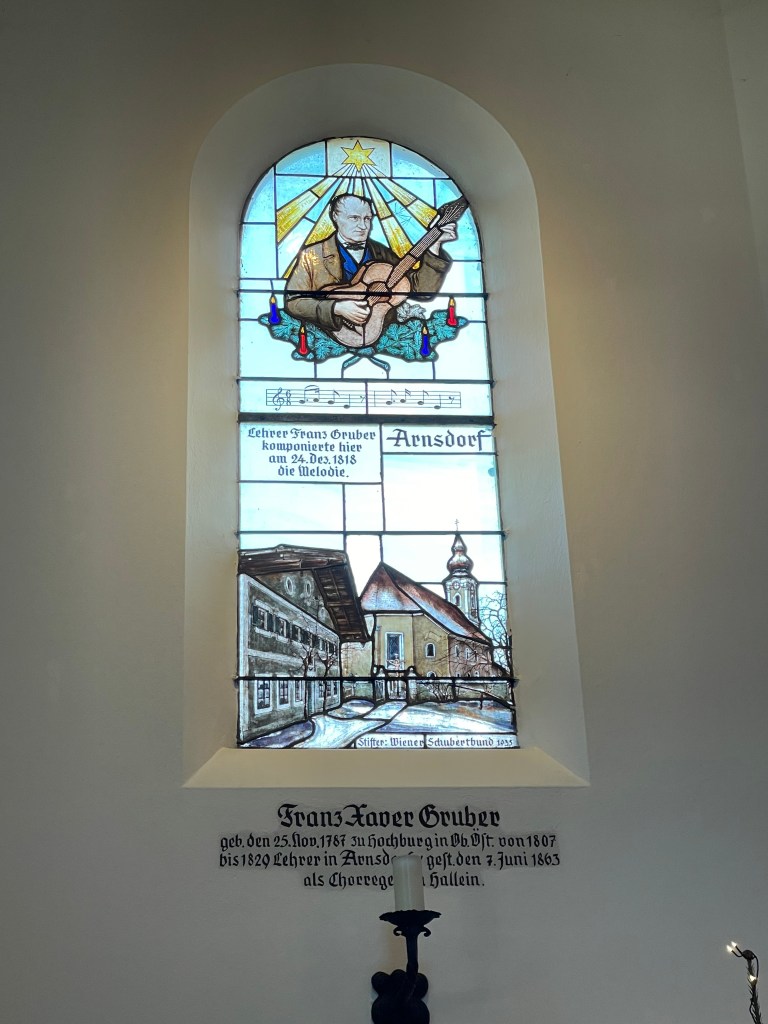
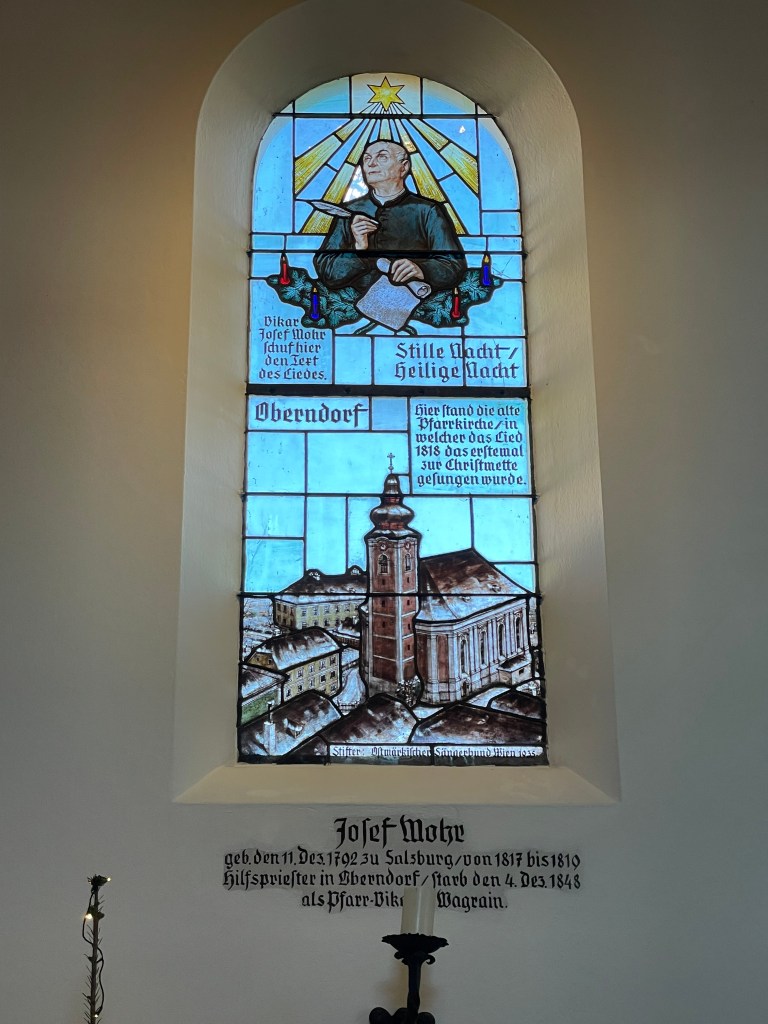
The Austrian priest Joseph Mohr was in desperate need of music for the midnight mass because his church’s organ was broken. So, he penned these lyrics and brought them to the organist Franz Gruber, who composed a simple melody for a guitar accompaniment.
Silent Night is sung by around two billion people every year for Christmas in over 300 different languages and dialects. Silent Night was created after the end of the Napoleonic Wars, 1792-1815. The wars had caused great suffering across a lot of Europe.

Here is a very nice telling of the Silent Night story:

These stones are from the old church that was torn down.

Salzburg — Attending Church and Schloss Leopoldskron — Day 10

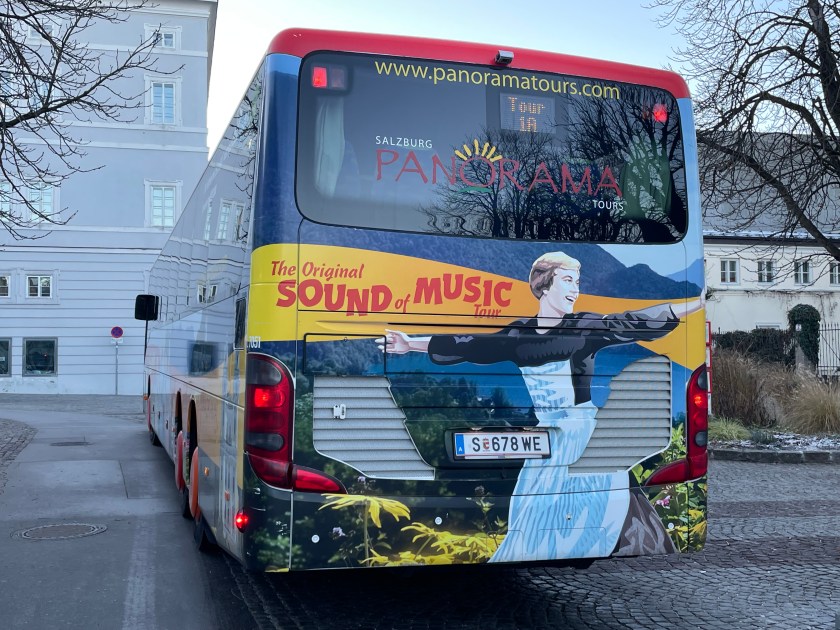
We had a full day, leaving for breakfast at 8:00 before taking a city bus out to the area where the Salzburg Ward meets.  On the way we passed by a Sound of Music tour bus.  (We opted to visit the sites on our own.)

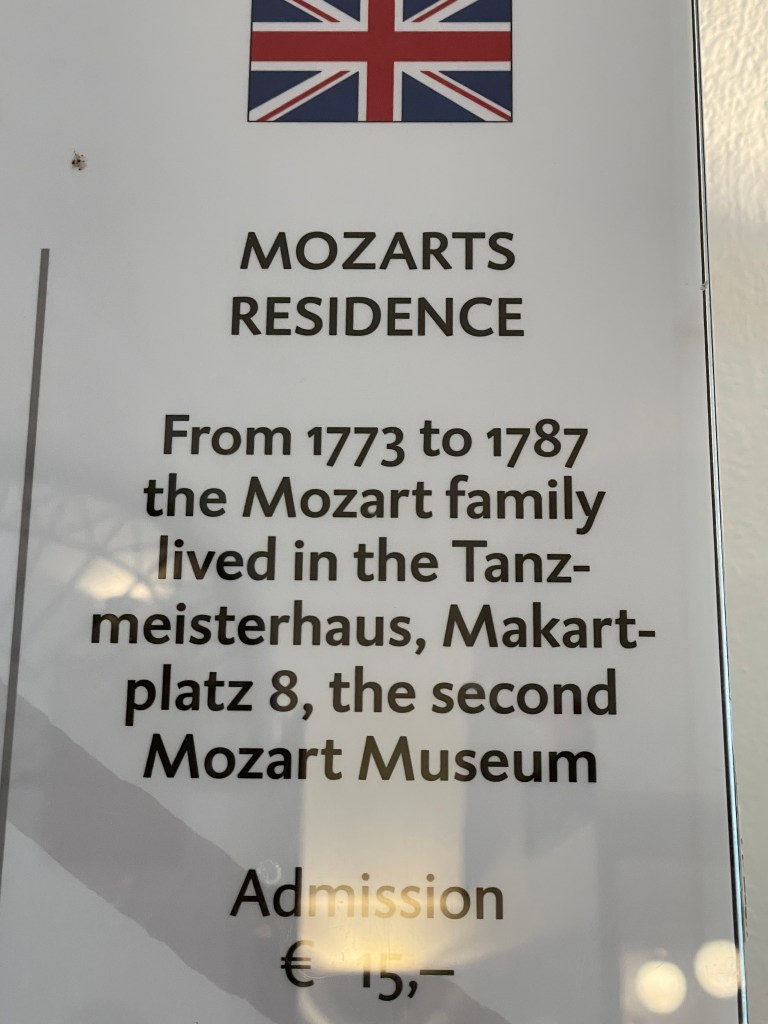
We also walked by Mozart’s residence home.  From 1773 to 1787, the Mozarts lived at the so-called “Dance Master’s House,” today’s Mozart Residence on Makartplatz.  The spacious eight-room apartment on the first floor now houses a museum.

At the bus stop closest to our hotel, we noticed 3 YSA aged kids, dressed for church, and the boy was holding a bag of sliced white bread. We guessed we might be going to the same place. We were.  We followed them.

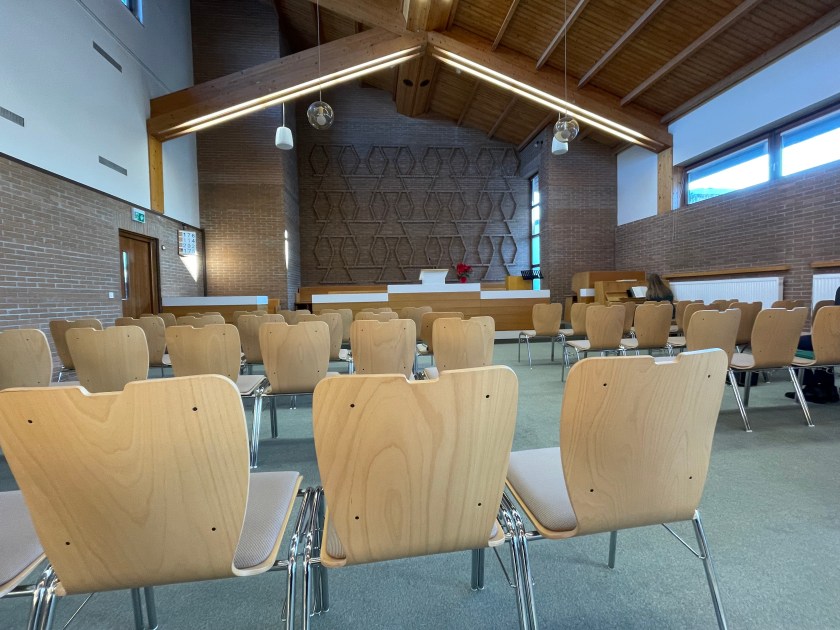
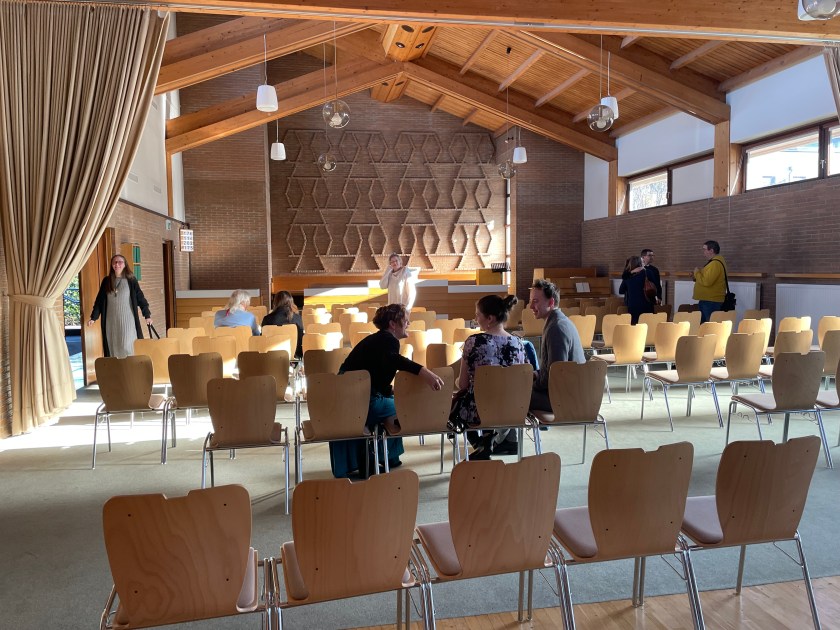
We got there a bit early.  Here’s a look at this stake center:

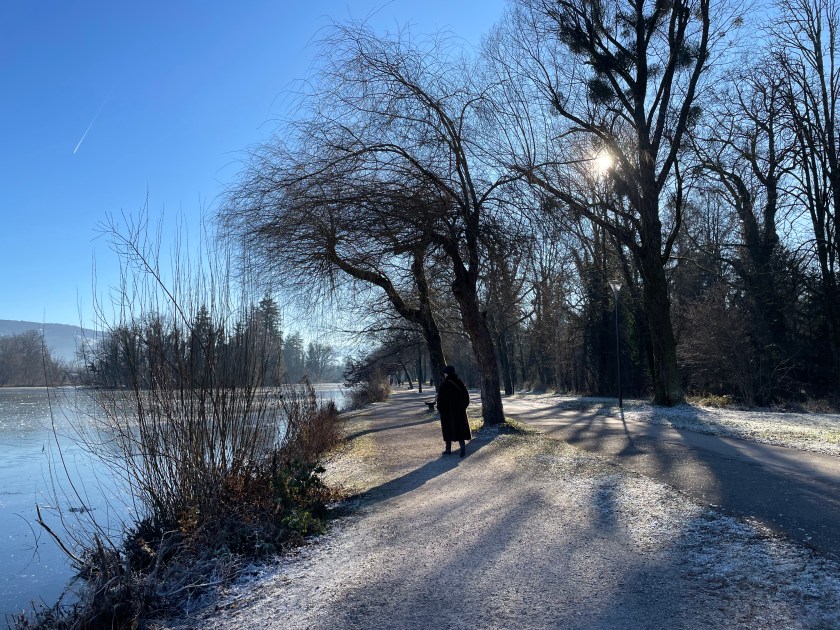
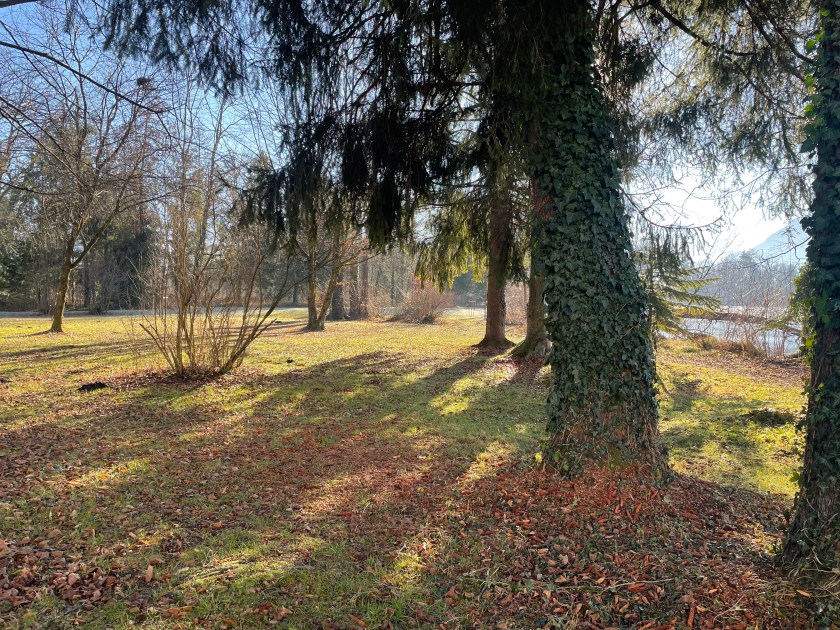
The walk to Schloss Leopold took about 15 minutes. It was another beautiful day–cold but sunny. The frost on the ground is still frozen, each blade of grass was white.

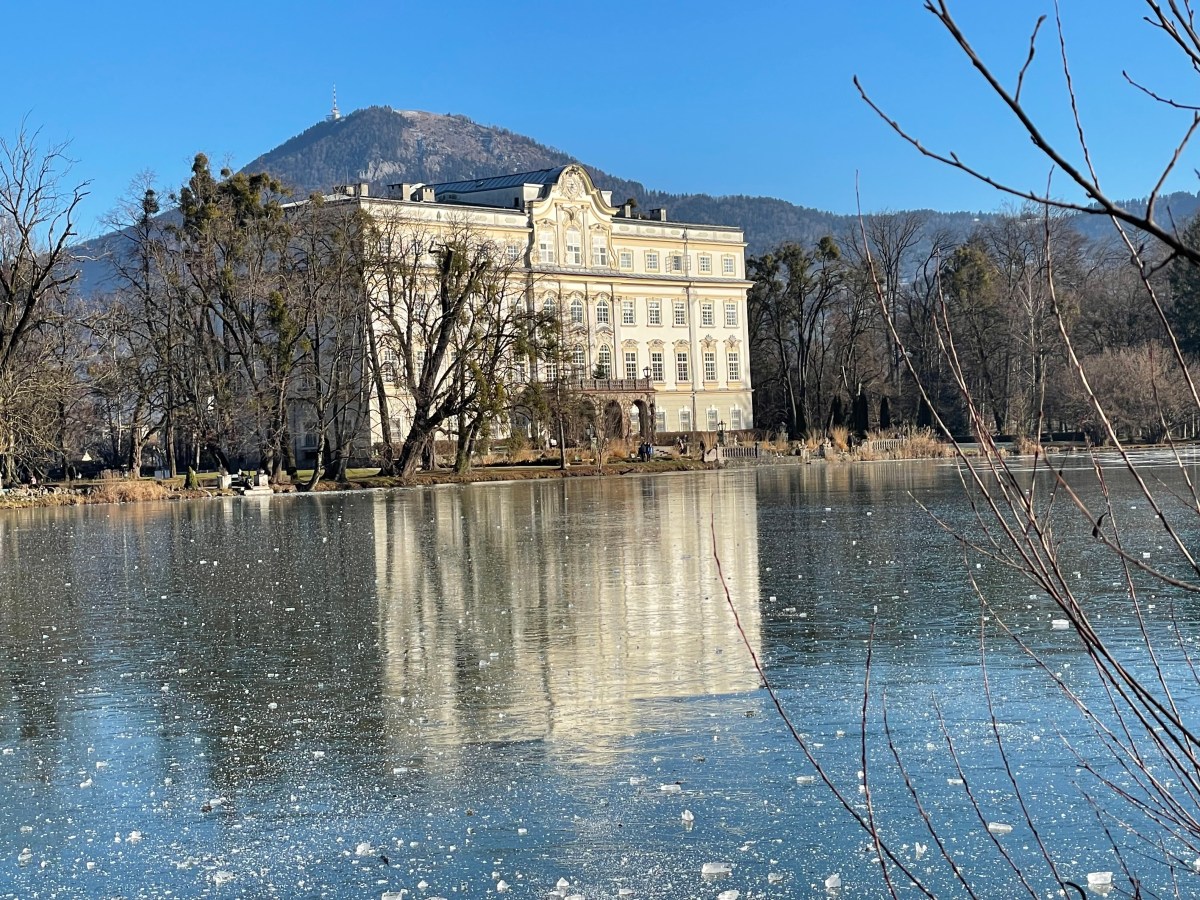
The original Trapp family home was an estate known as Villa Trapp in Aigen to the southeast of Salzburg.  In the movie, two shooting locations were used for different parts of the villa – Leopoldskron Palace and Frohburg Palace.

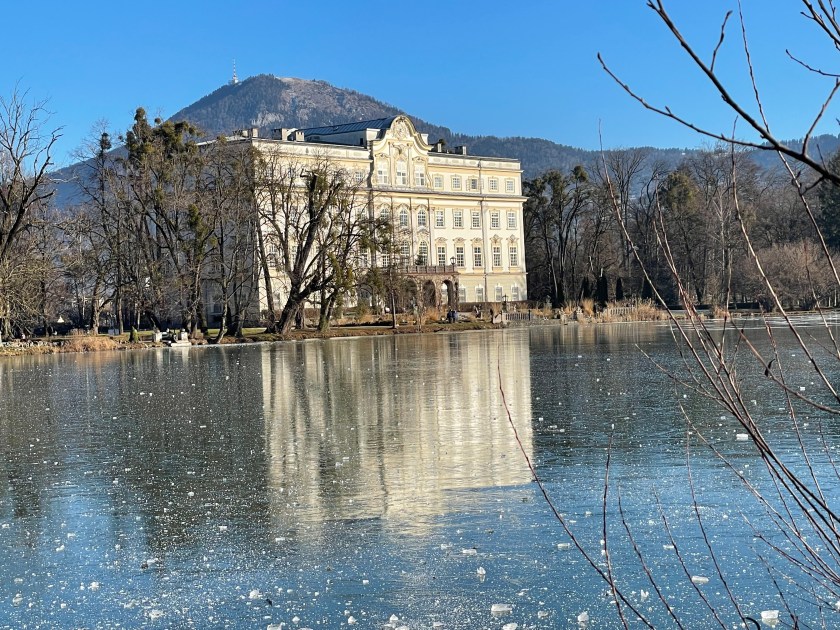
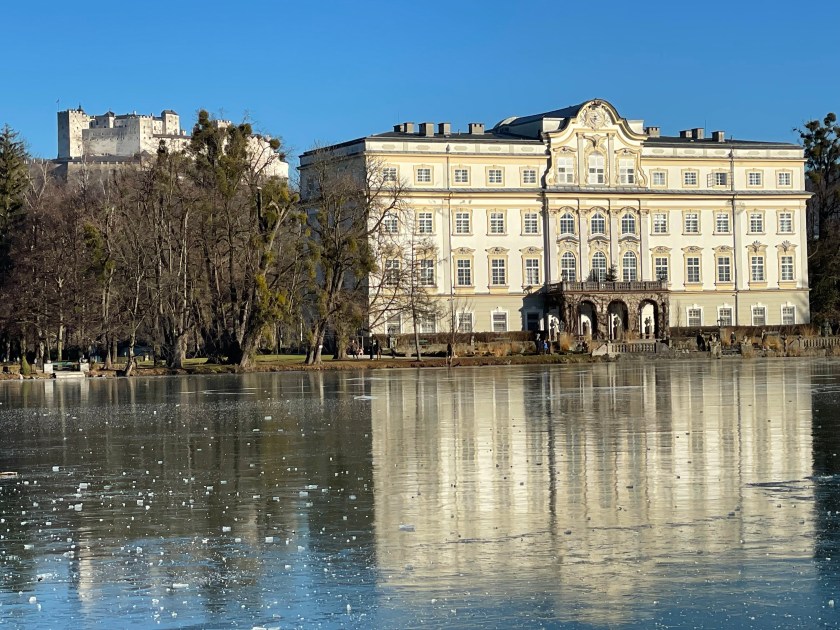
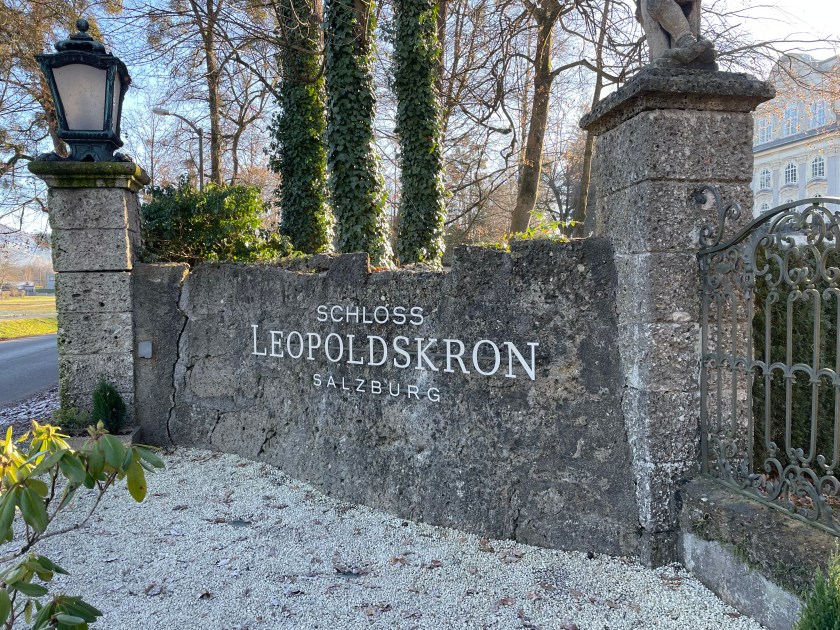
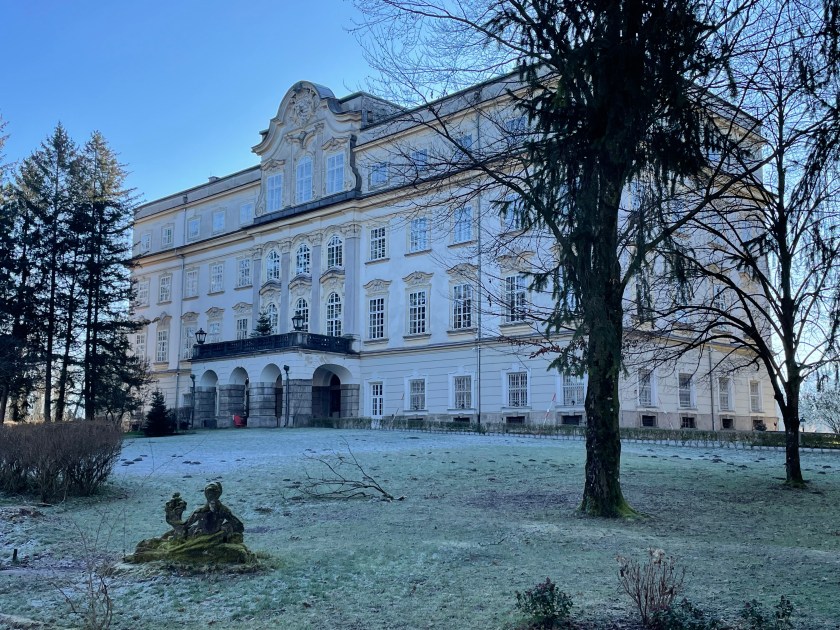
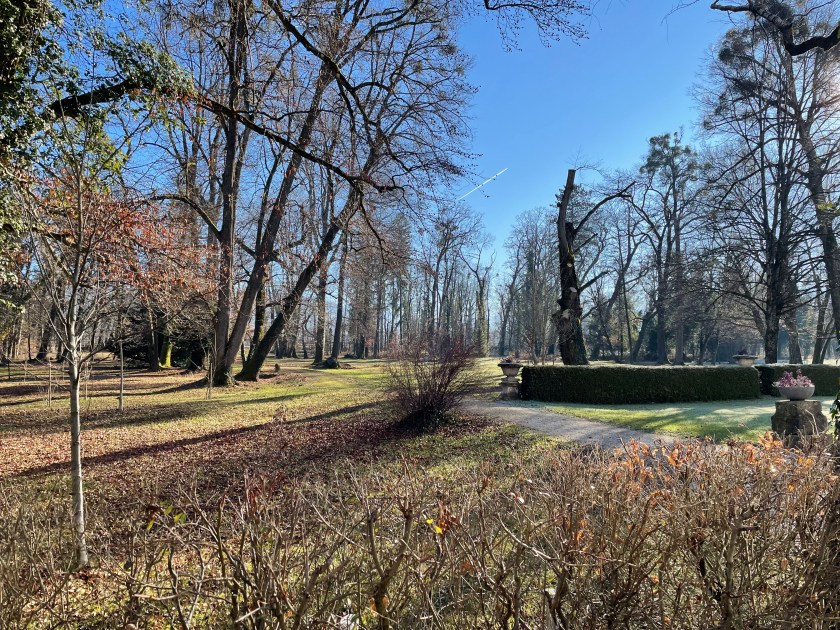
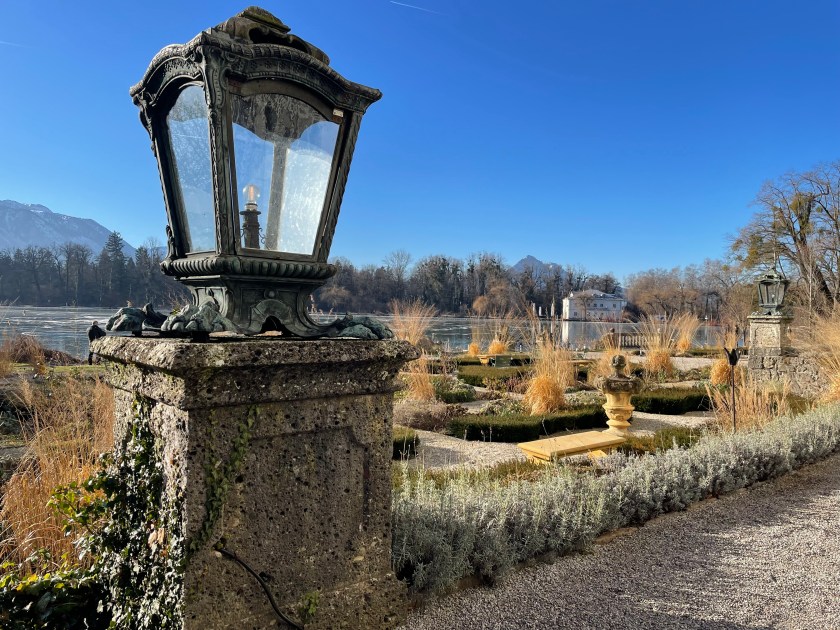
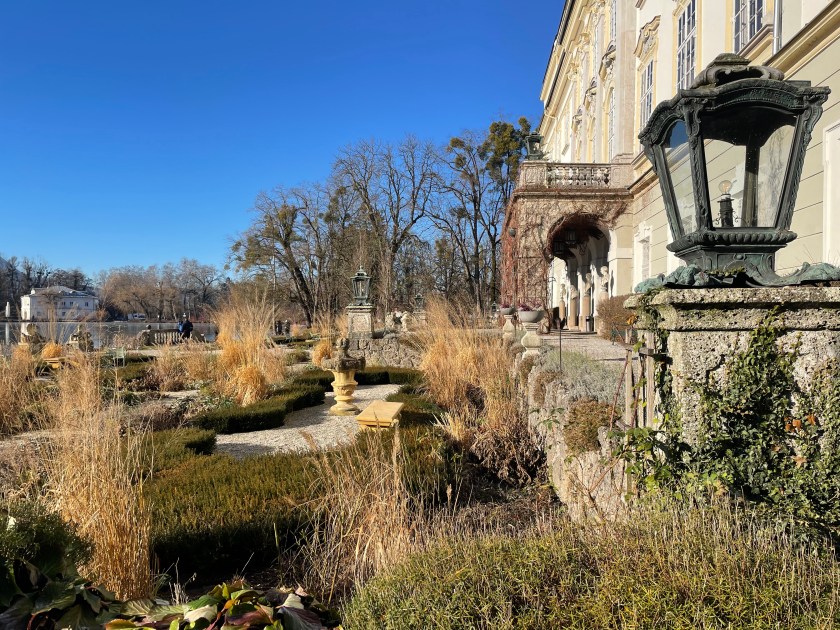
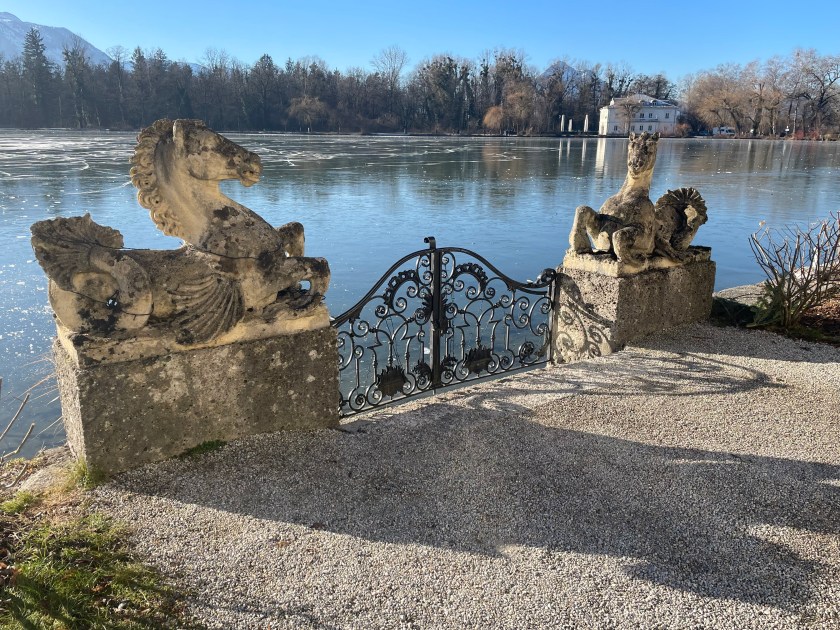
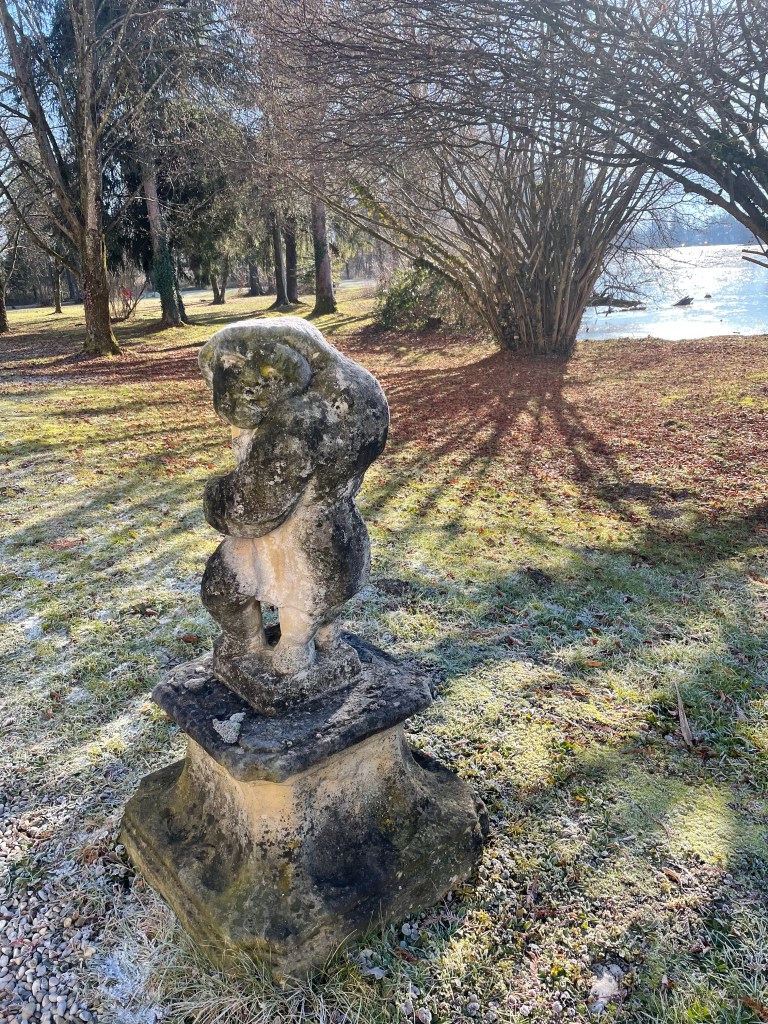
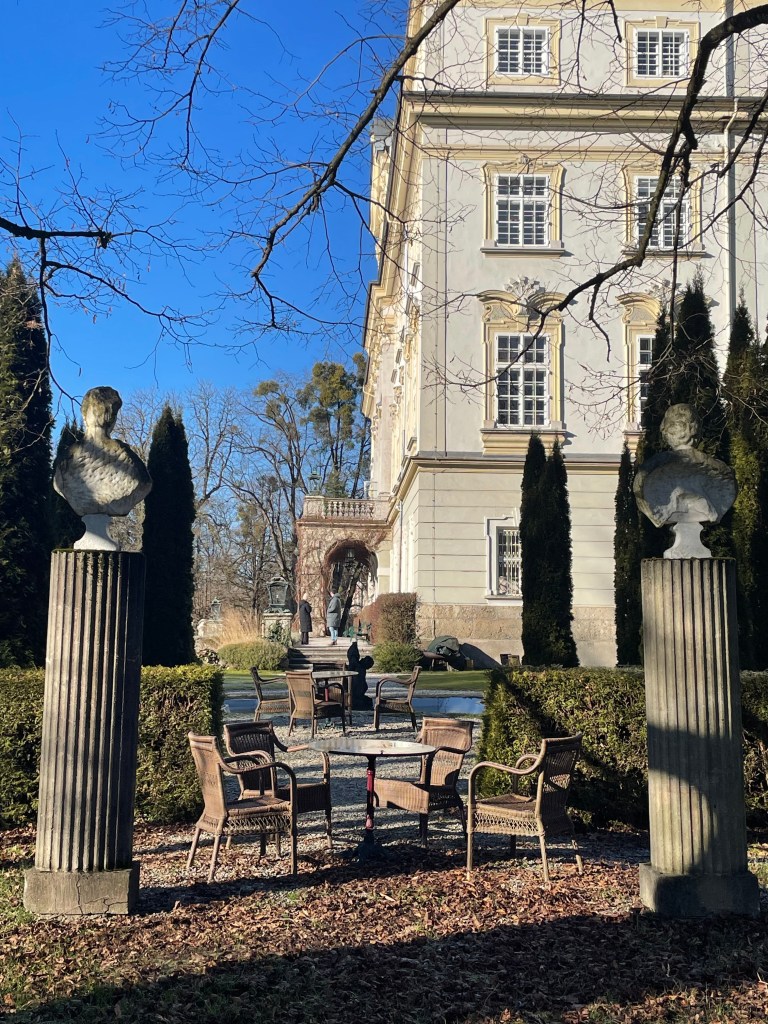
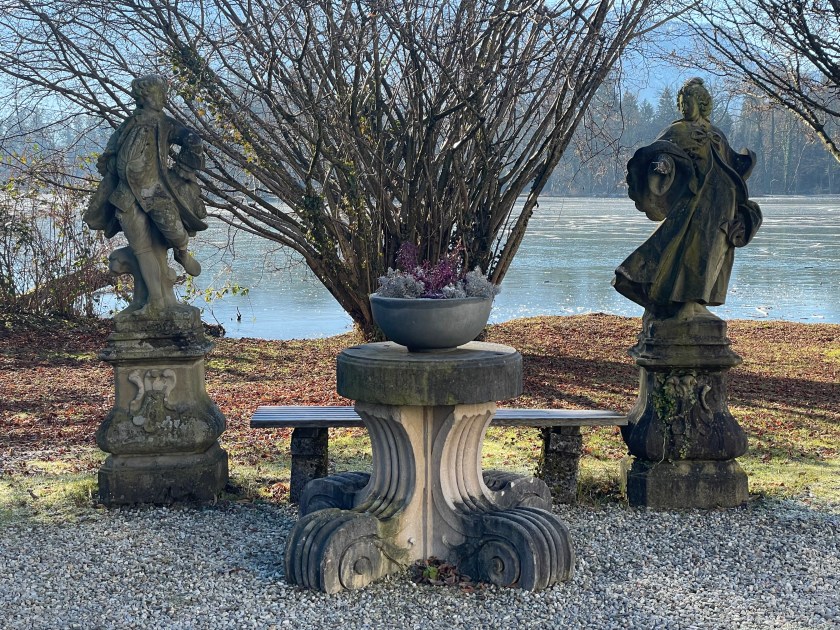
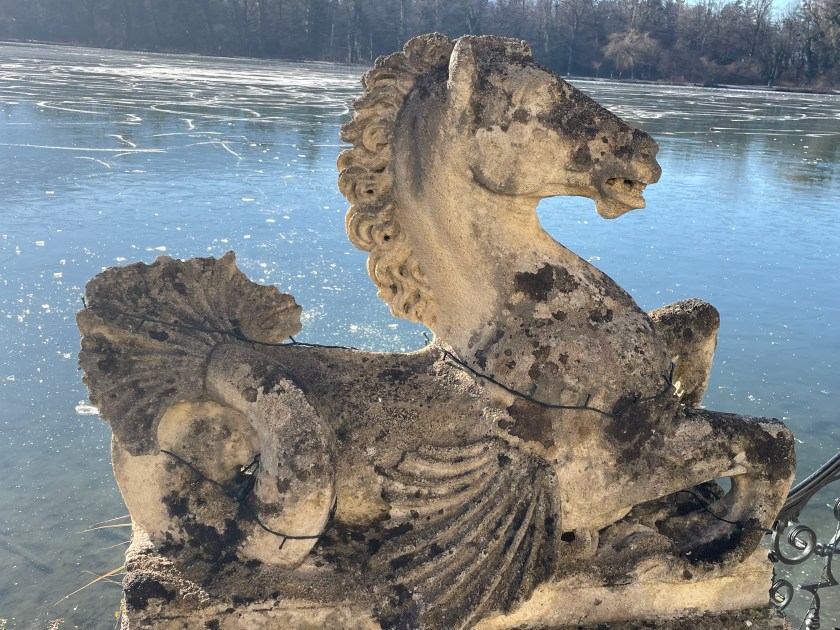
Today Leopoldskron Palace is an event Hotel. It backs up to a lake that was frozen over. There were beautiful grounds around the hotel (the gazebo has been moved to another location in town to accommodate the tourists). We spent about 30-40 minutes there walking by the lake, walking around the hotel, enjoying the quiet beautiful setting.
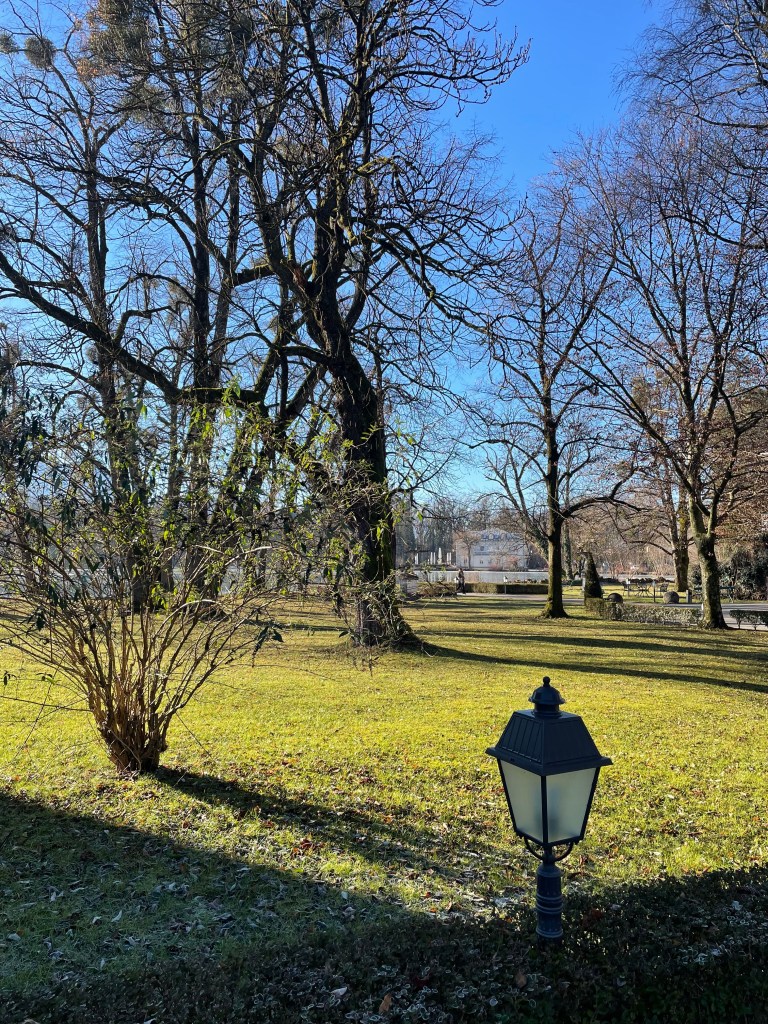
On one side of the hotel was a grass/wooded area. The lake was beautiful, icy, cold. There was someone ice skating on the far side of the lake. It was really nice to see this place (not as a pack of tourists in a tour bus). Tonight we’re going to watch The Sound of Music just to see the sights of Salzburg while we’re here.

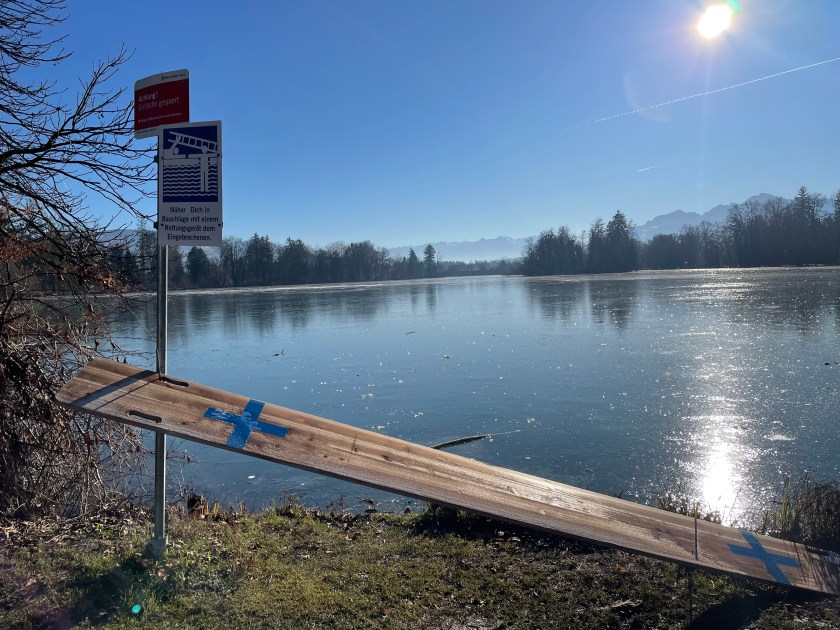
Below is a rescue plank to use if someone falls through the ice.

This is the front side of the hotel.
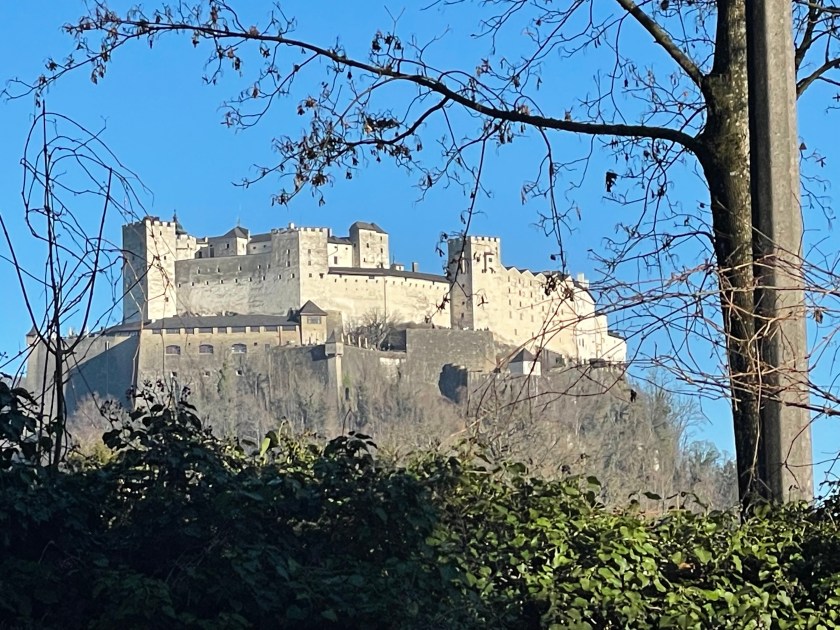
Here’s the view of the castle from Leopardskron.
It was fun to imagine the filming that took place here with Julie Andrews and Christopher Plummer.


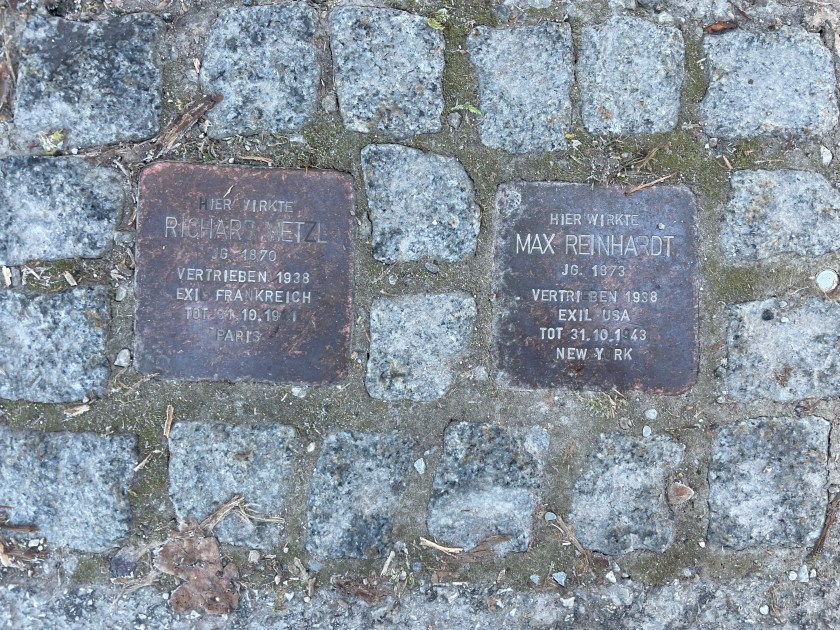
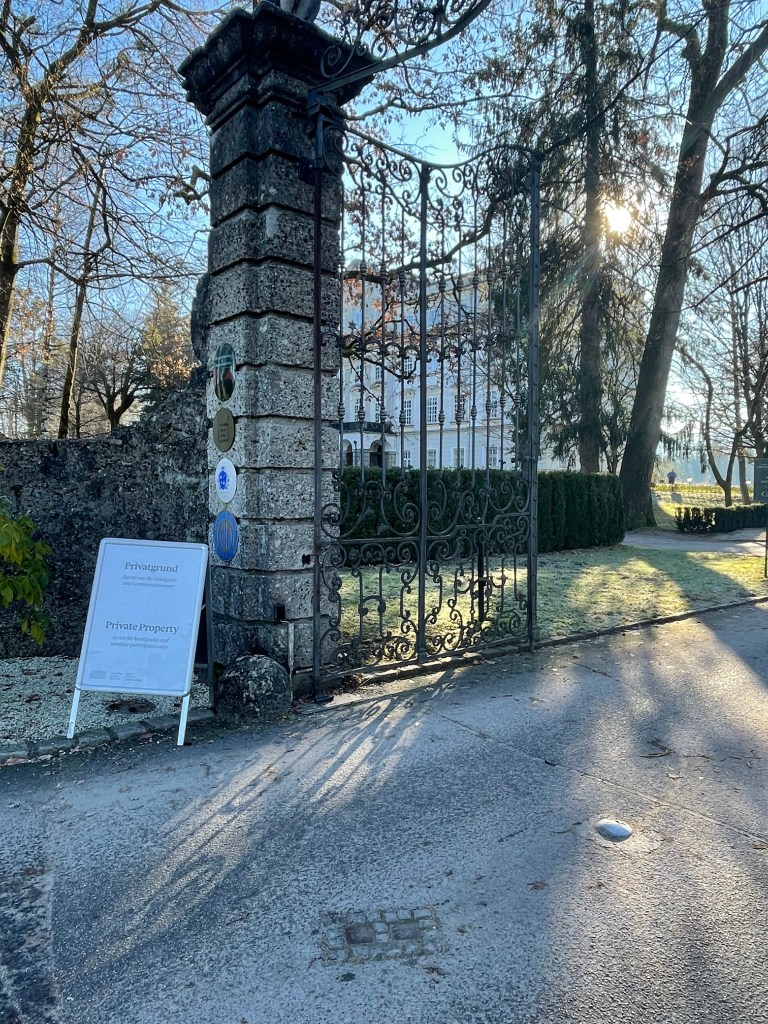
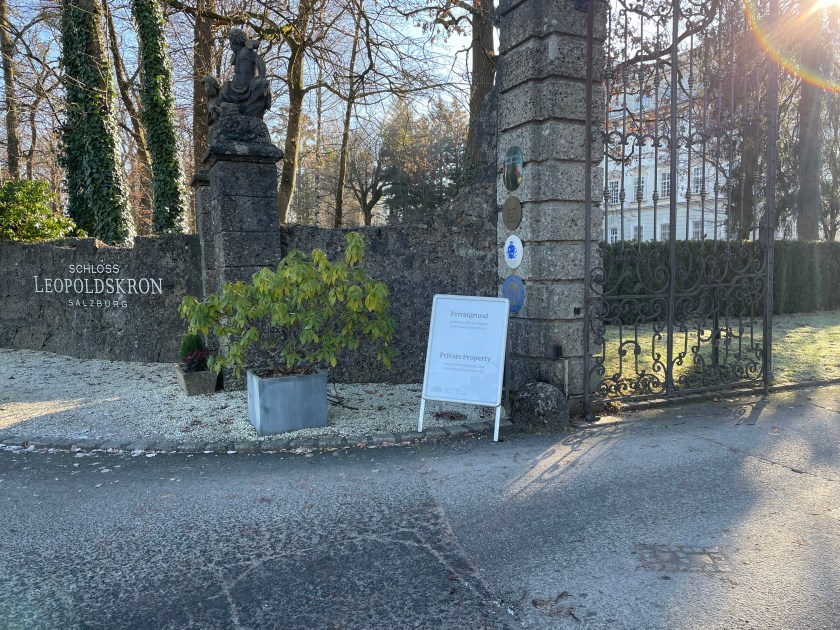
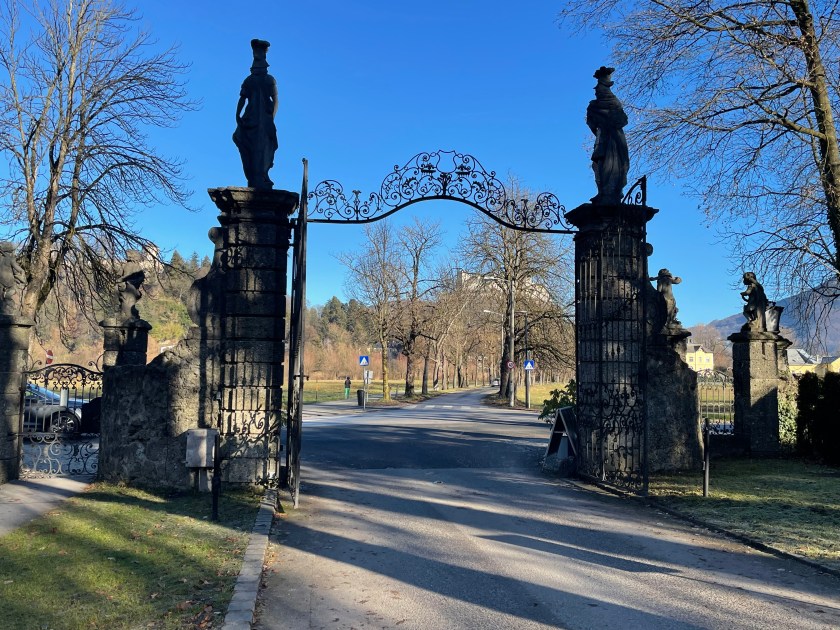
On the way out, I noticed these 2 Stolpersteine by the gate.  Both men were workers here, and both fled, one to Paris (he died in 1841) and one to the USA, where he died in NYC in 1943. Everywhere we go here, we feel Hitler’s reach.

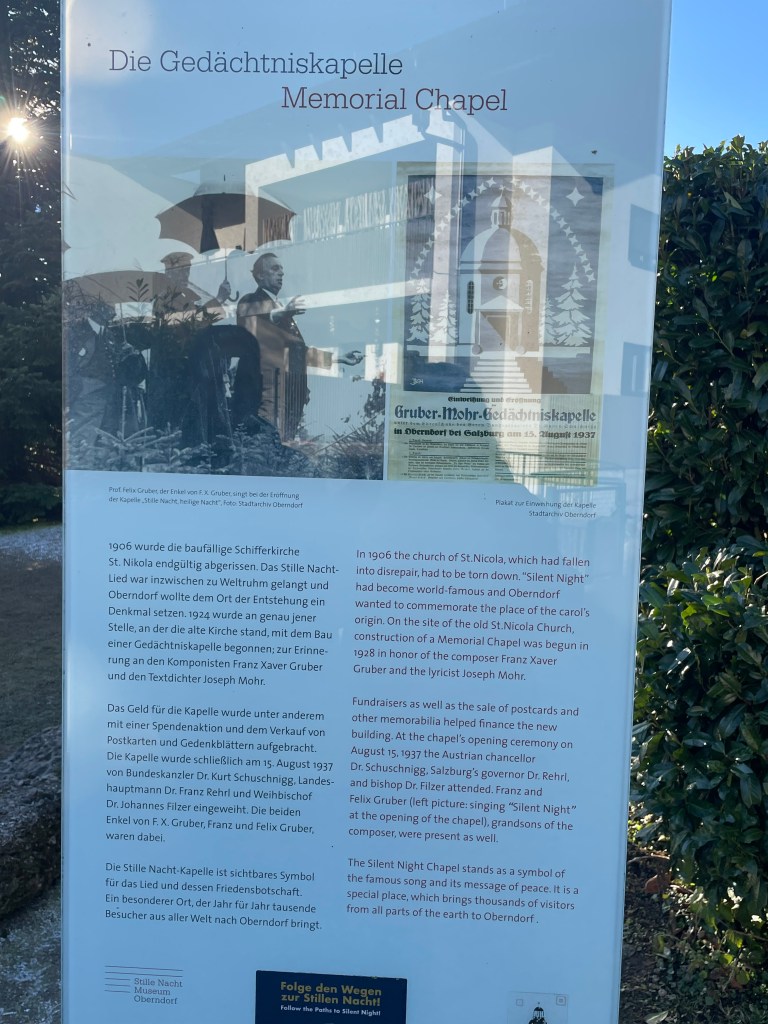
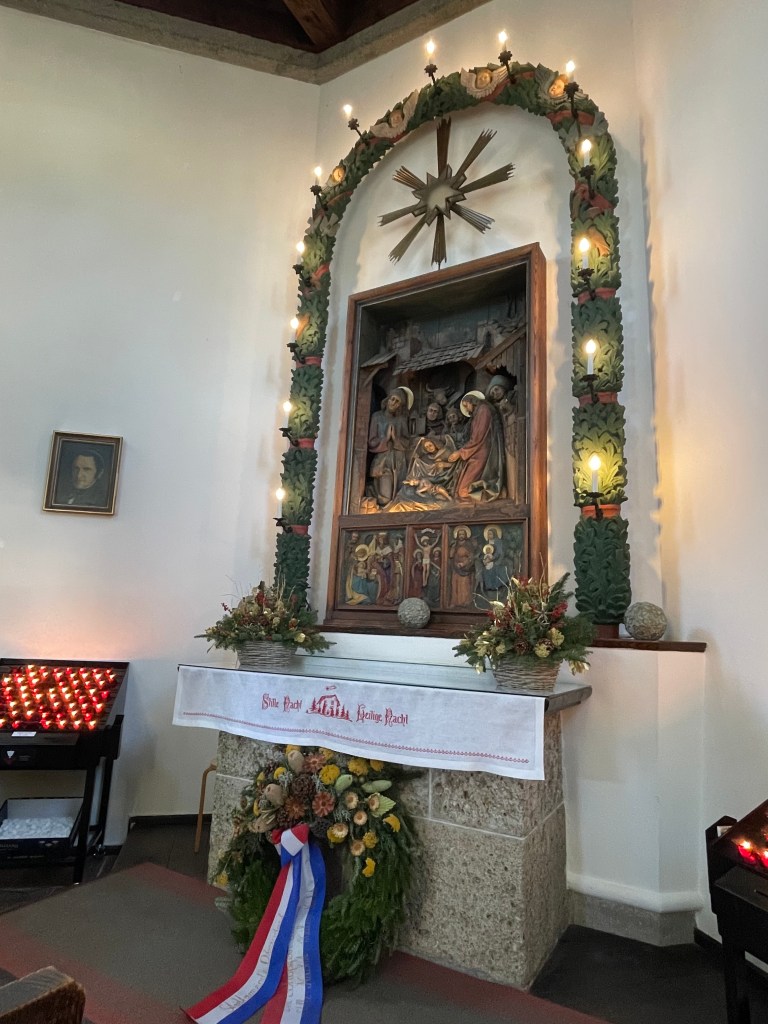
Our next destination was the memorial chapel in Oberndorfwhere “Stille Nacht” was performed for the first time.

Salzburg –the Christkind Market, Dom Market and the Residenz Market

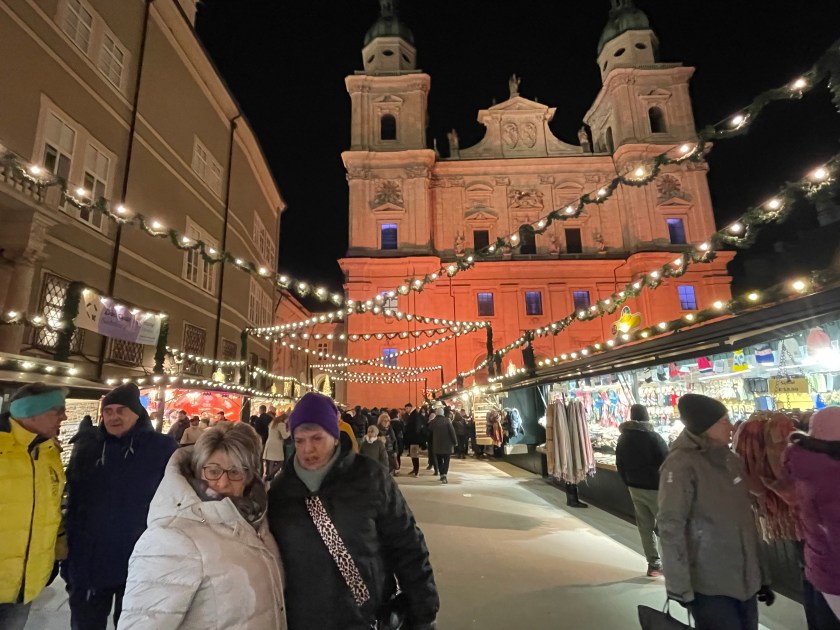
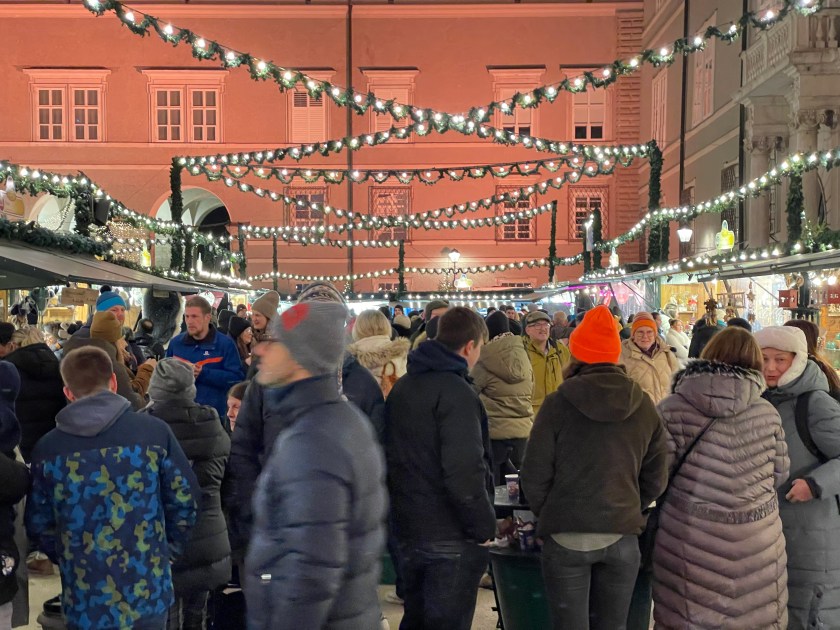
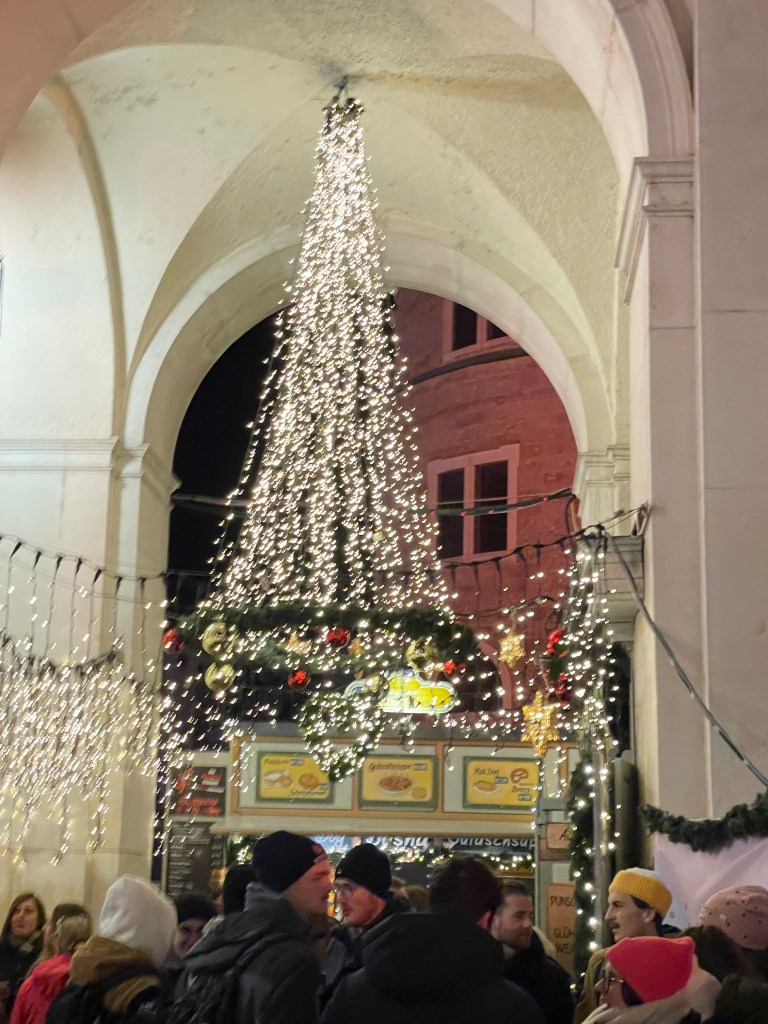
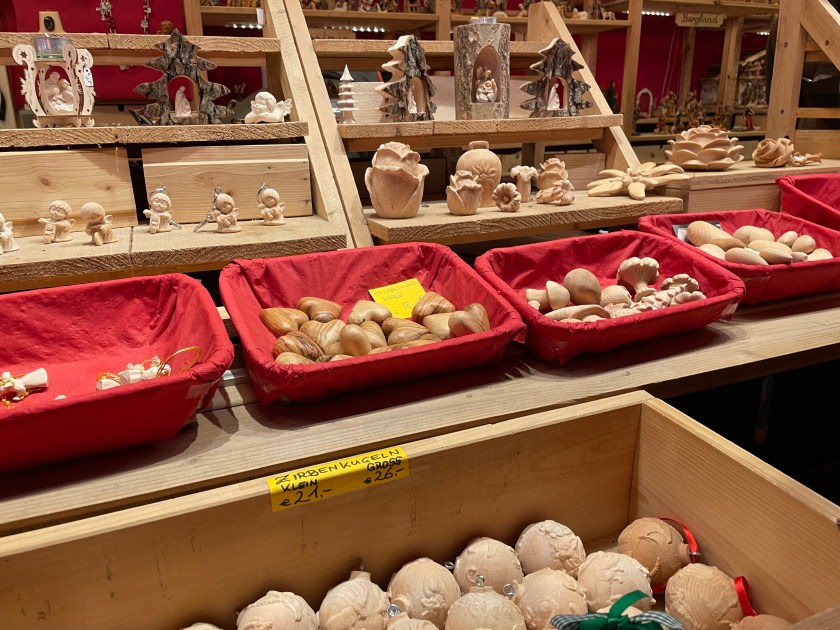
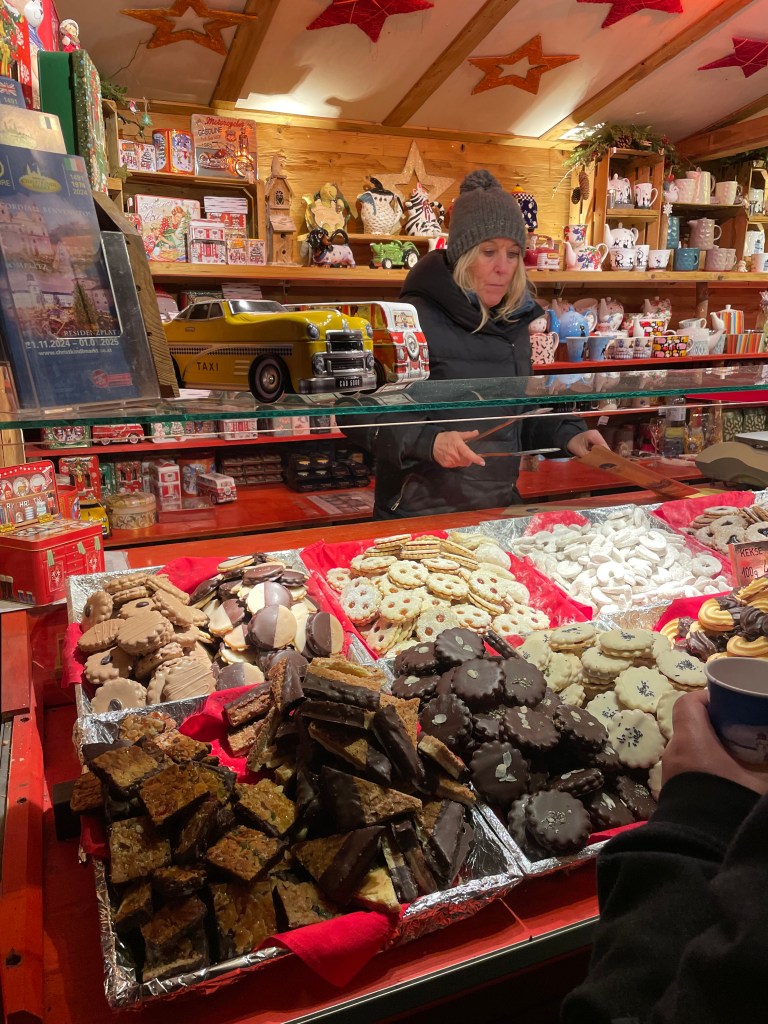
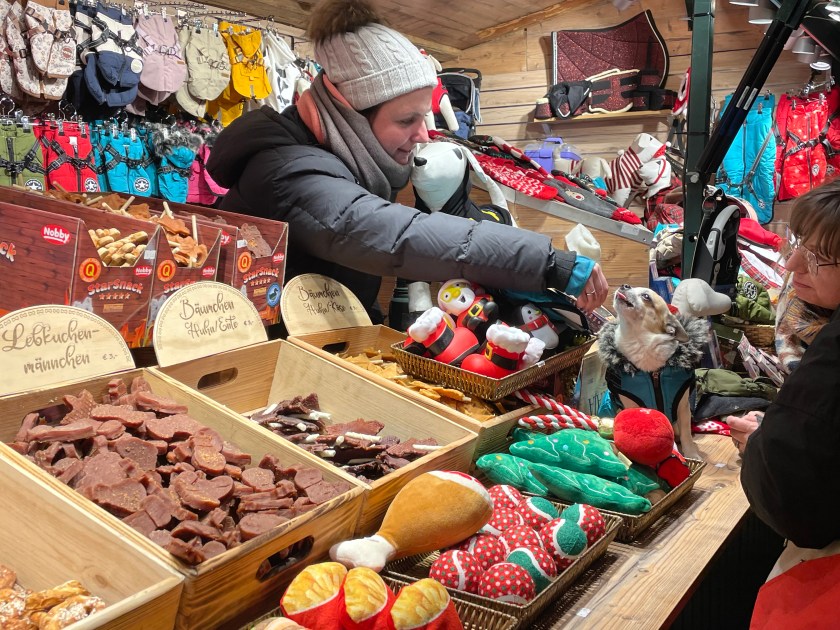
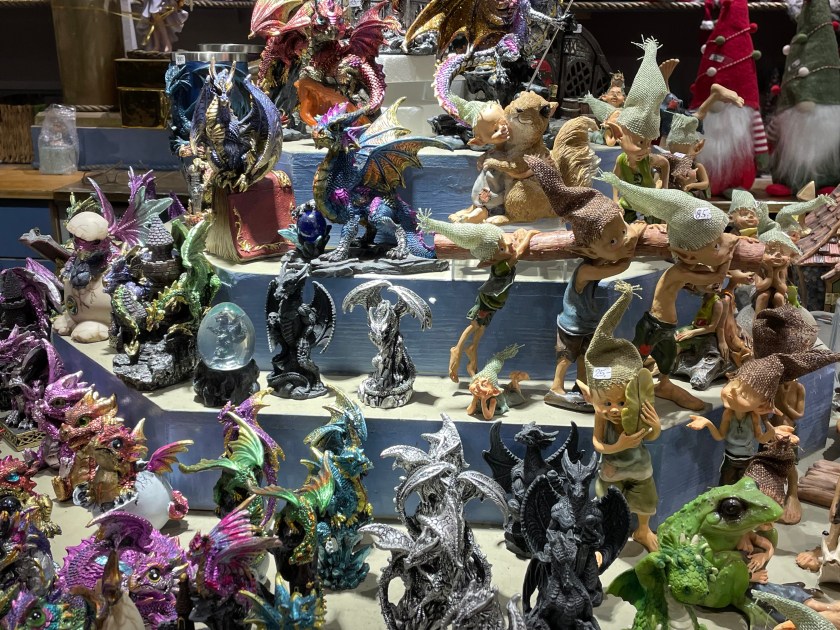
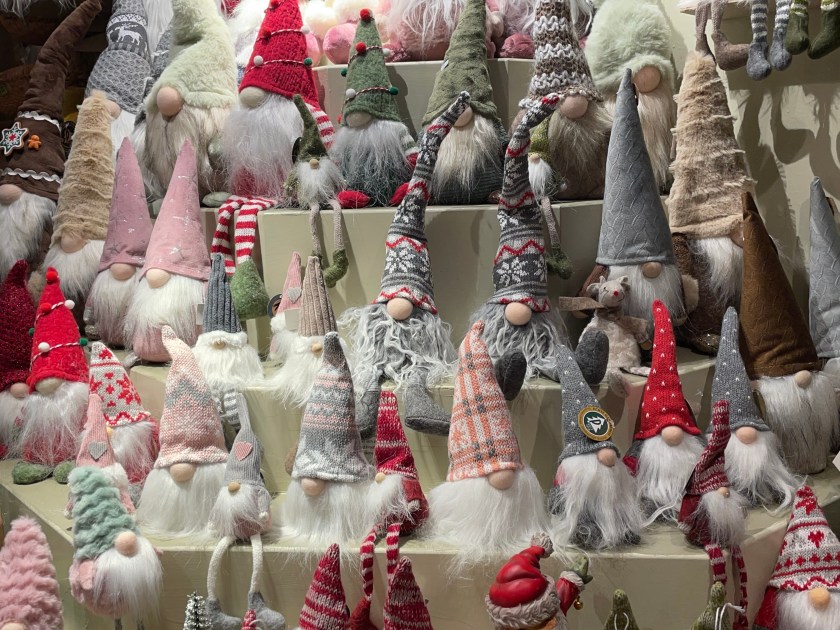
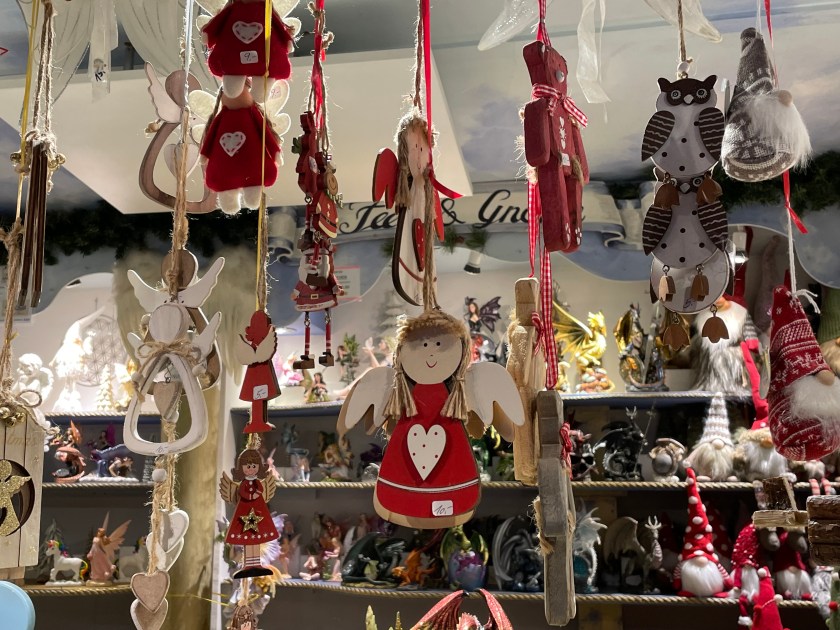
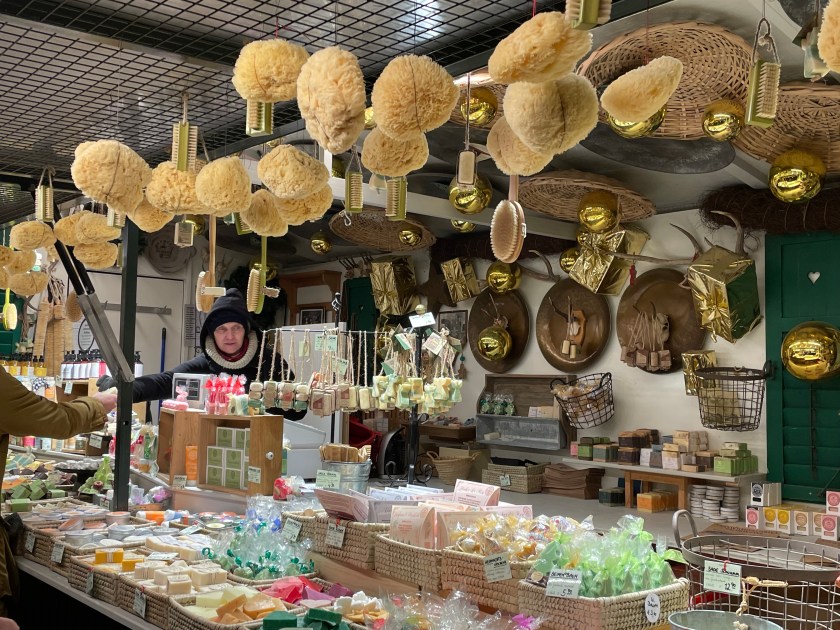
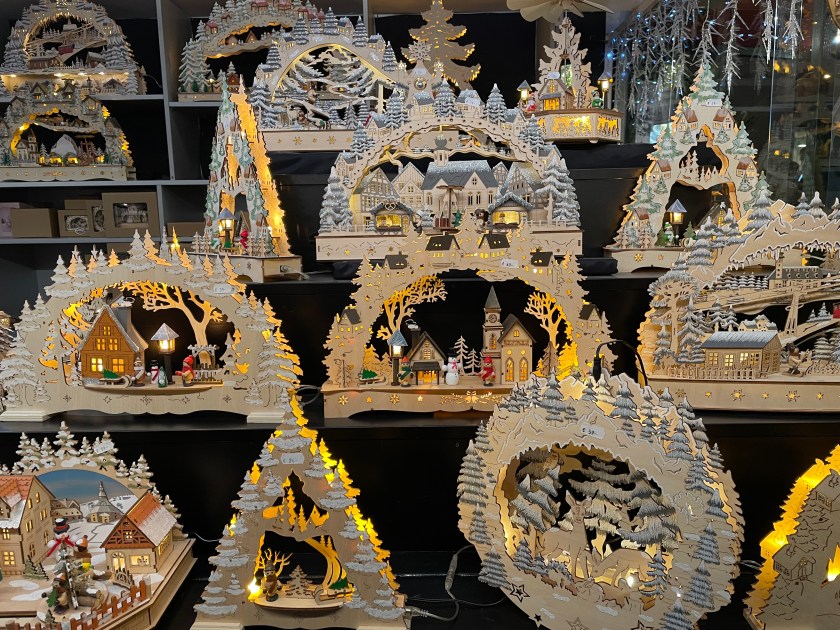
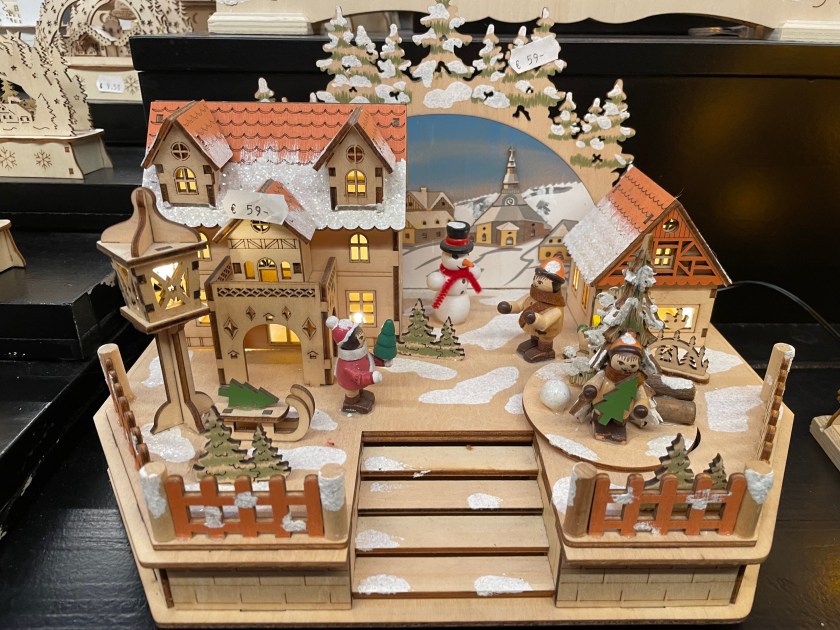
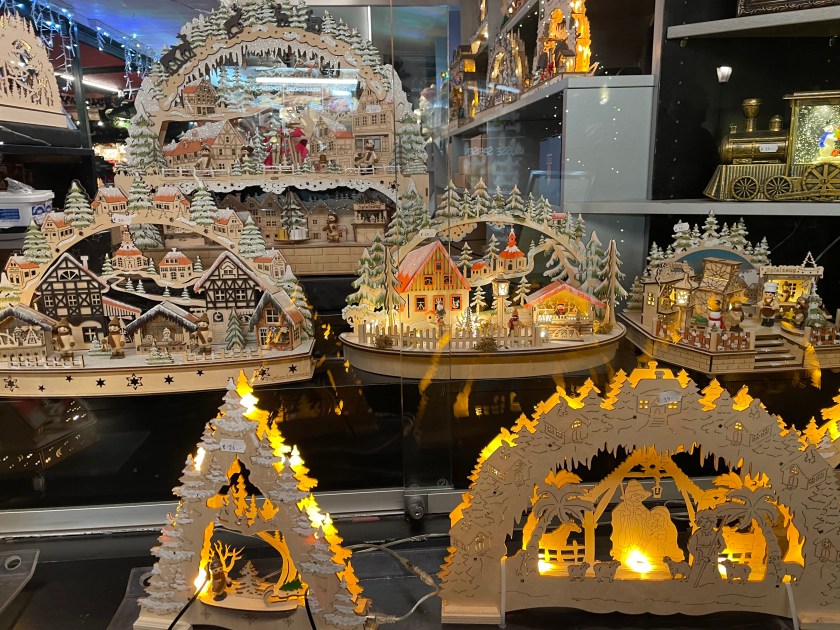
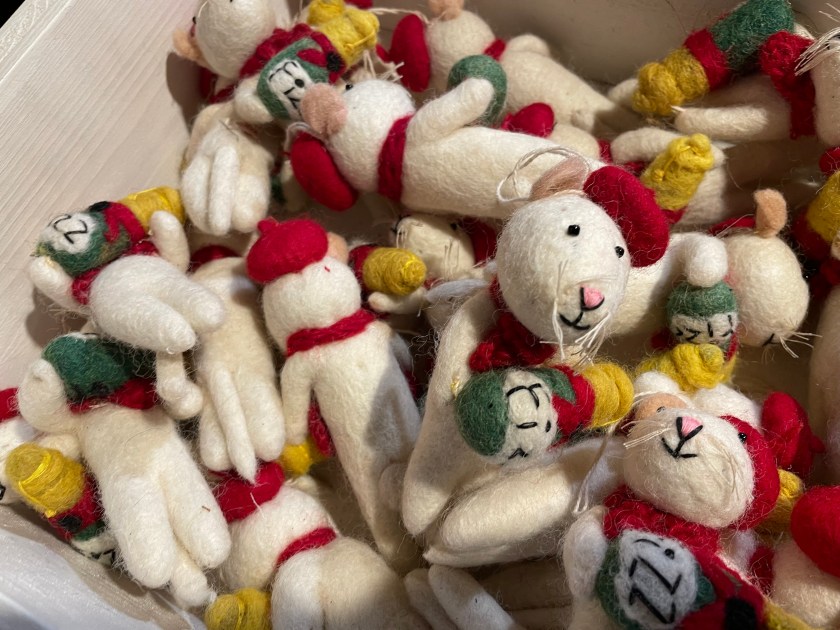
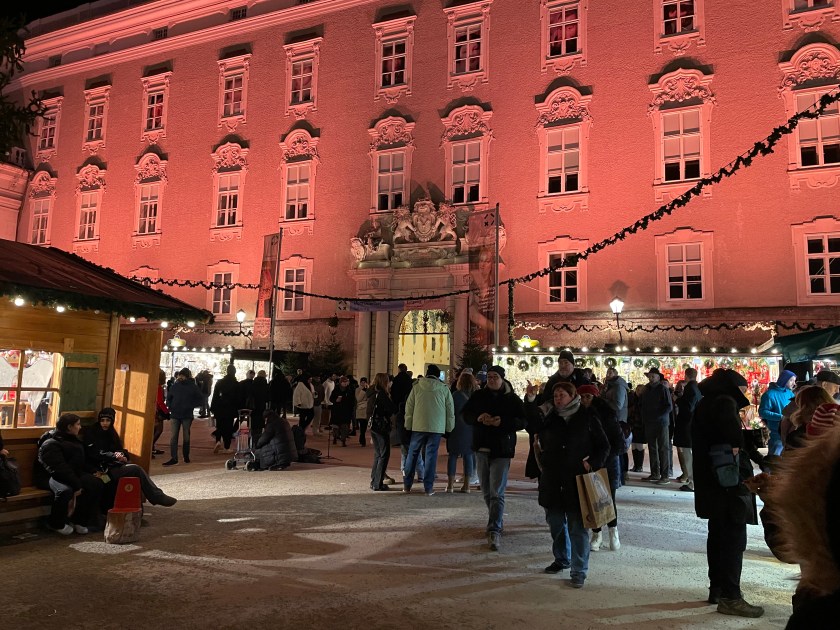
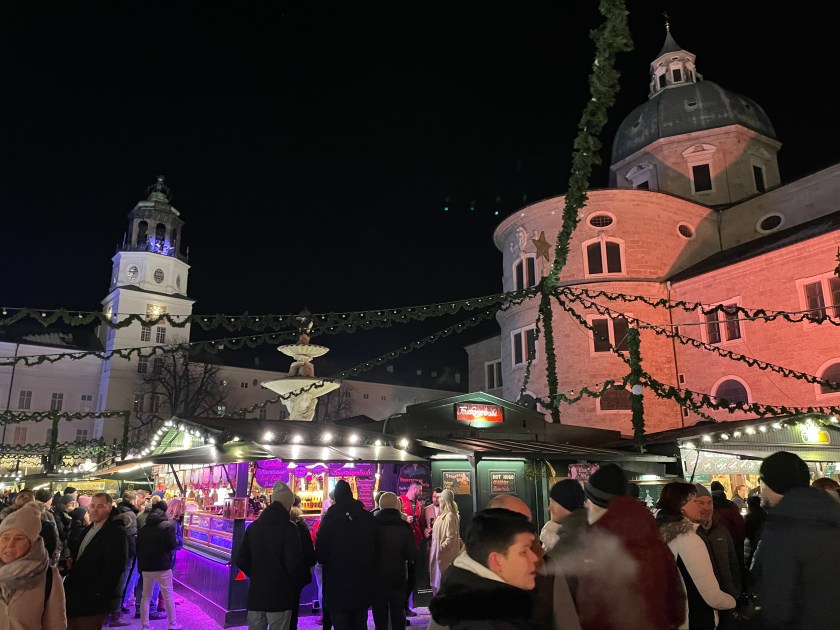
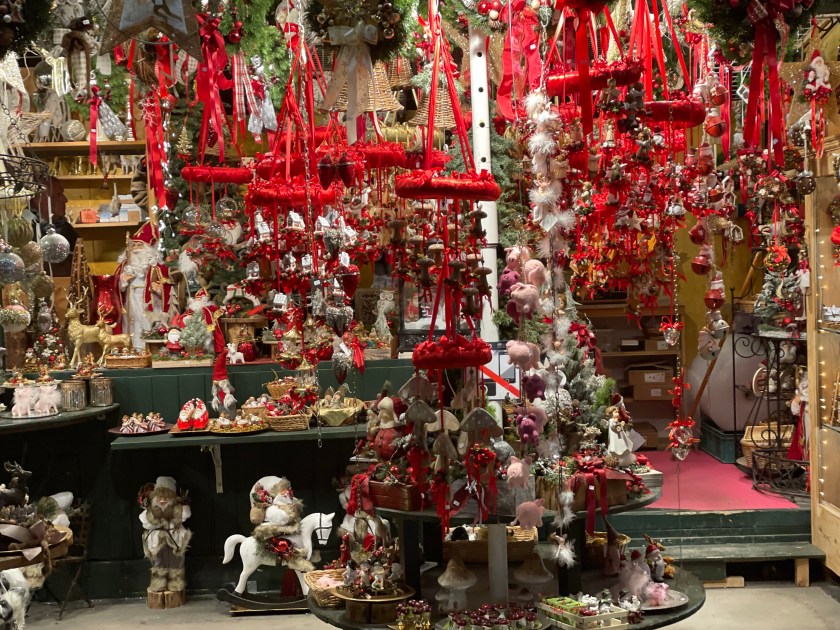
After a full day of sightseeing, it was fun and relaxing (although we were tired and hungry) to wander through three more Christmas Markets and decide on something good to eat.  We are LOVING Salzburg!

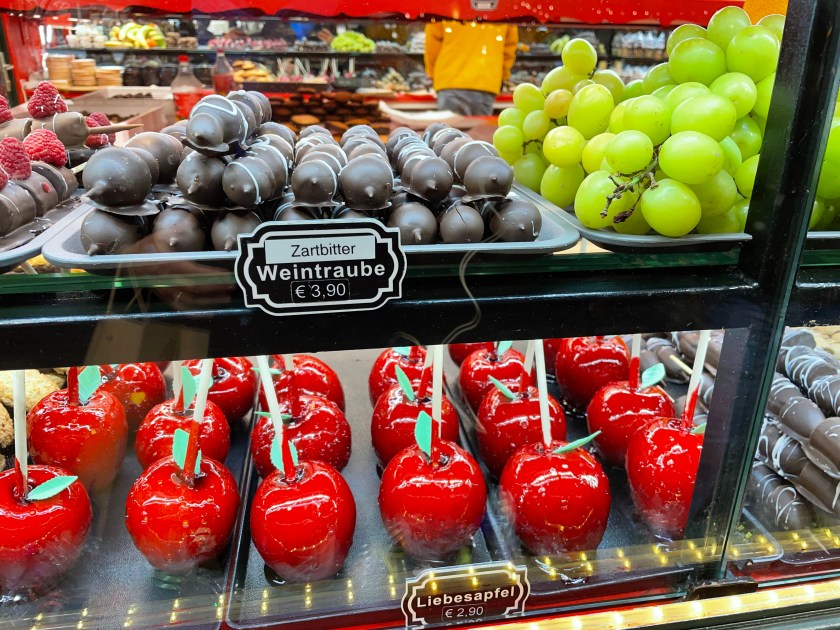
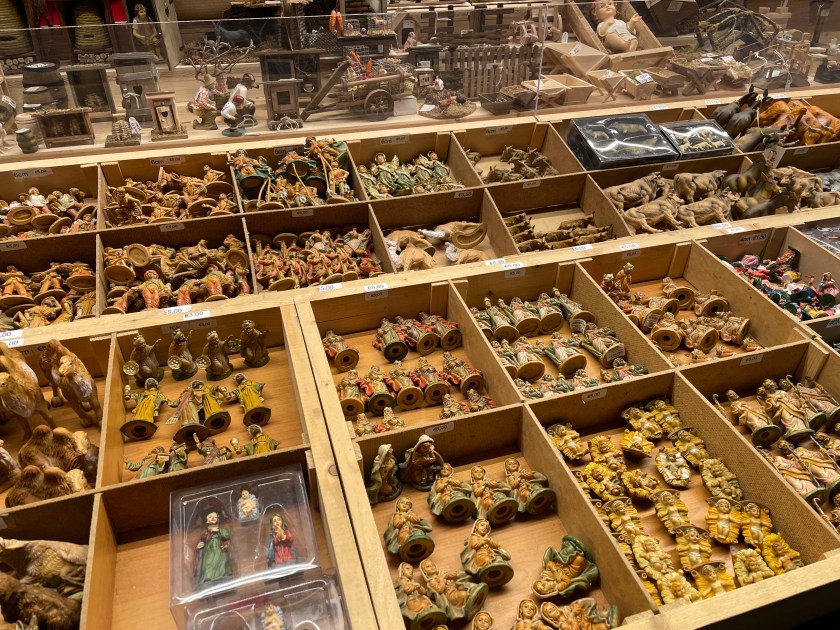
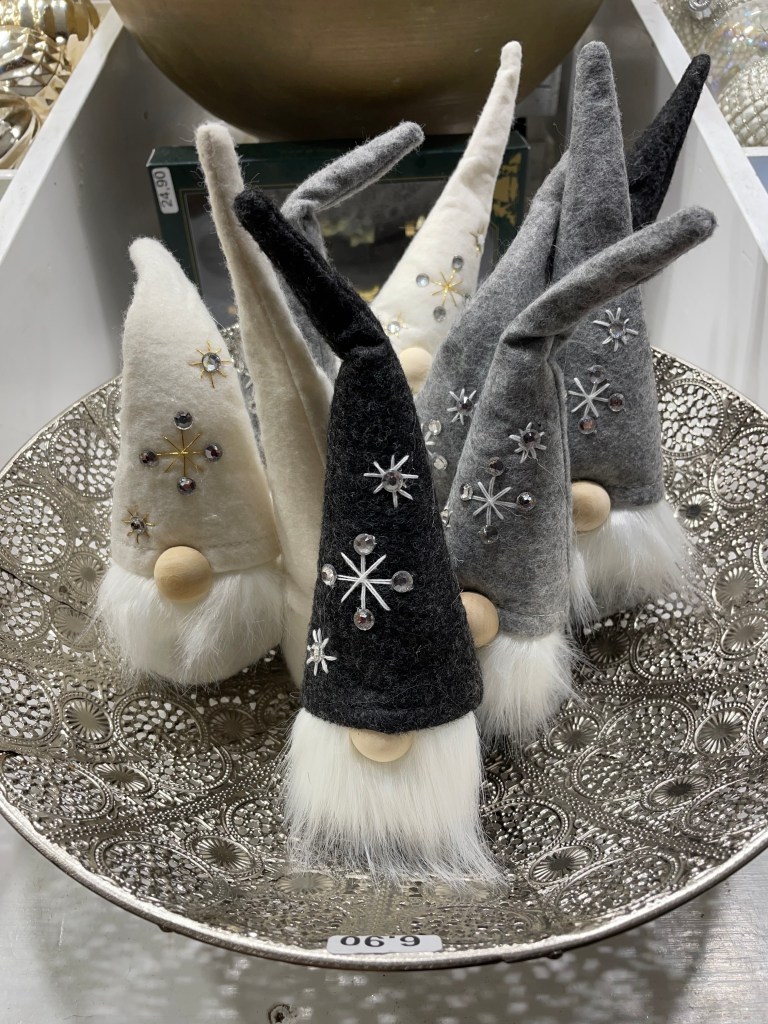
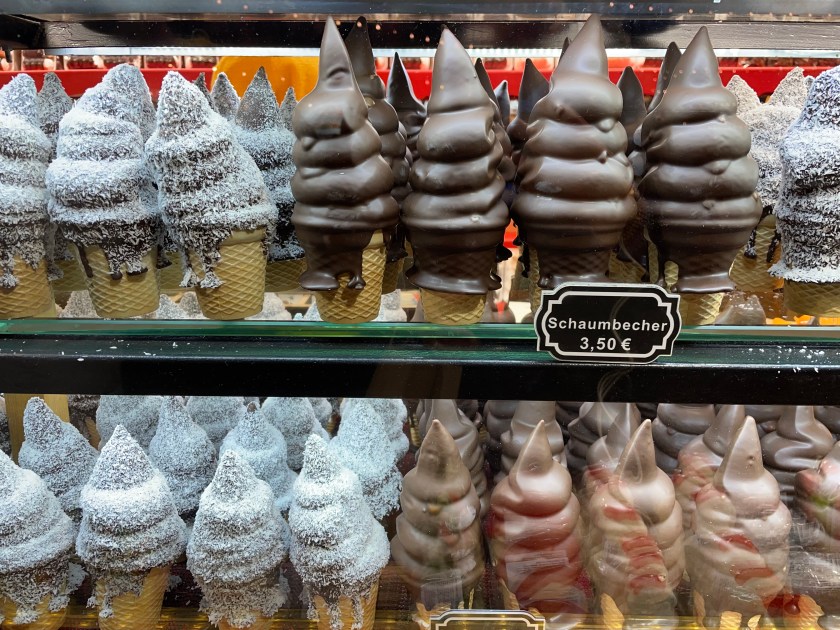
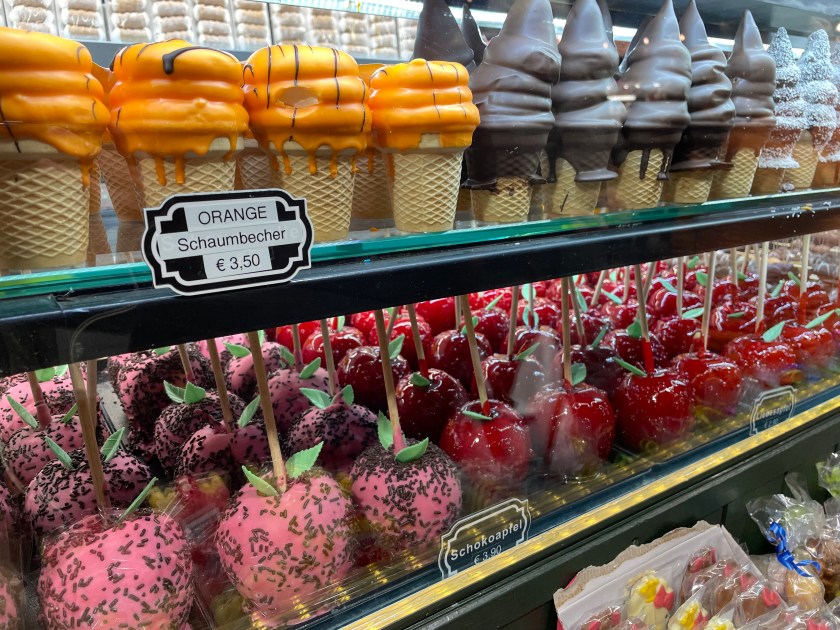
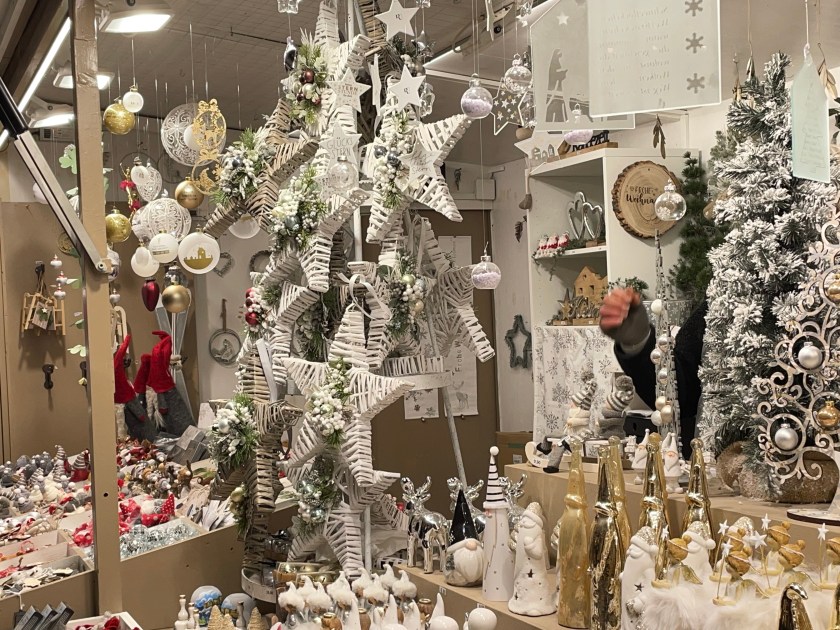
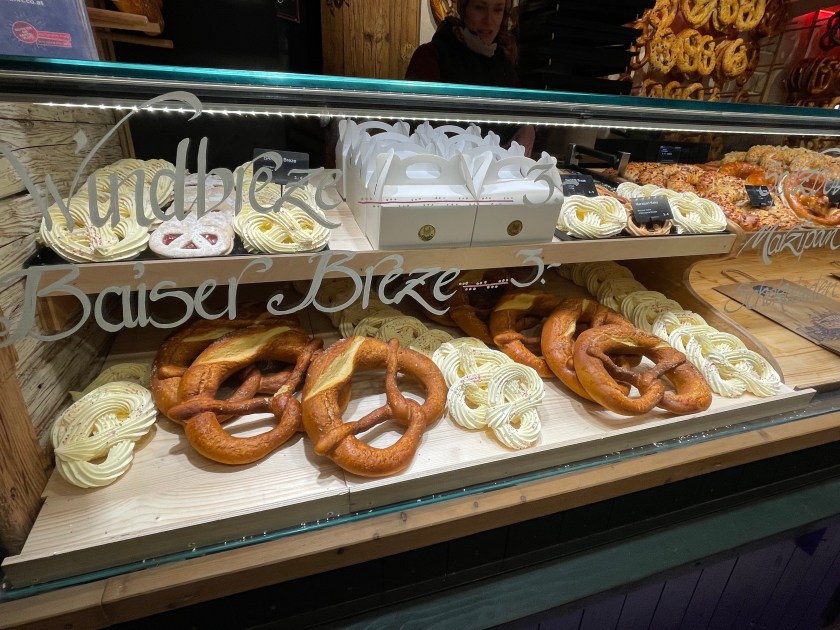
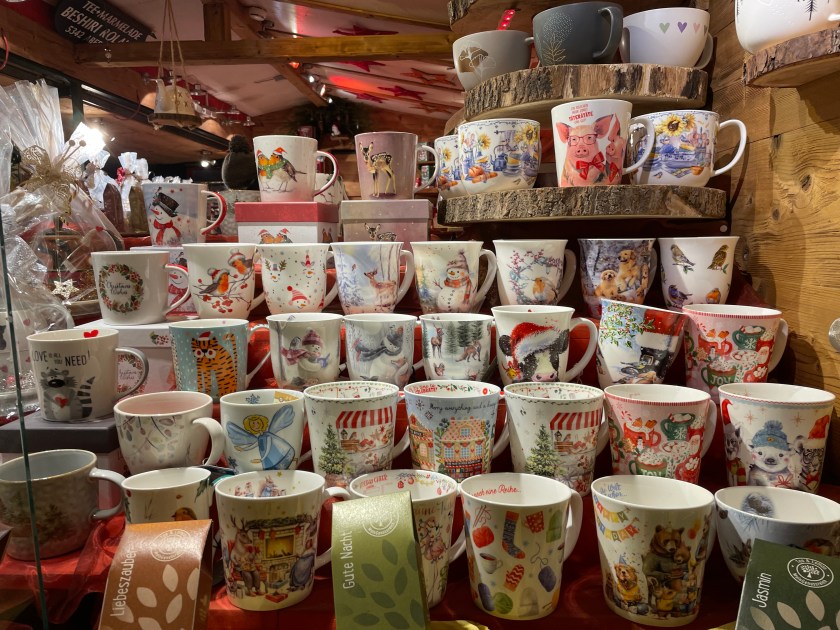
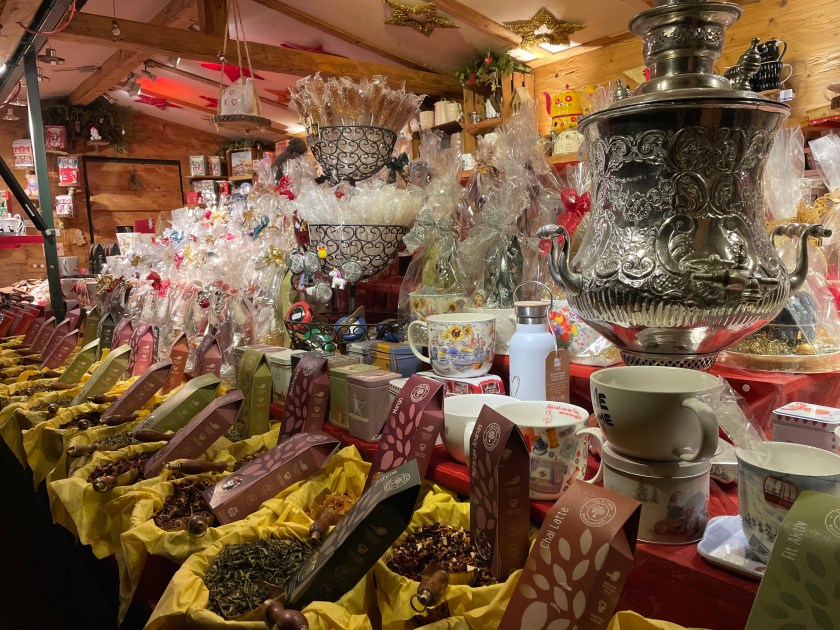
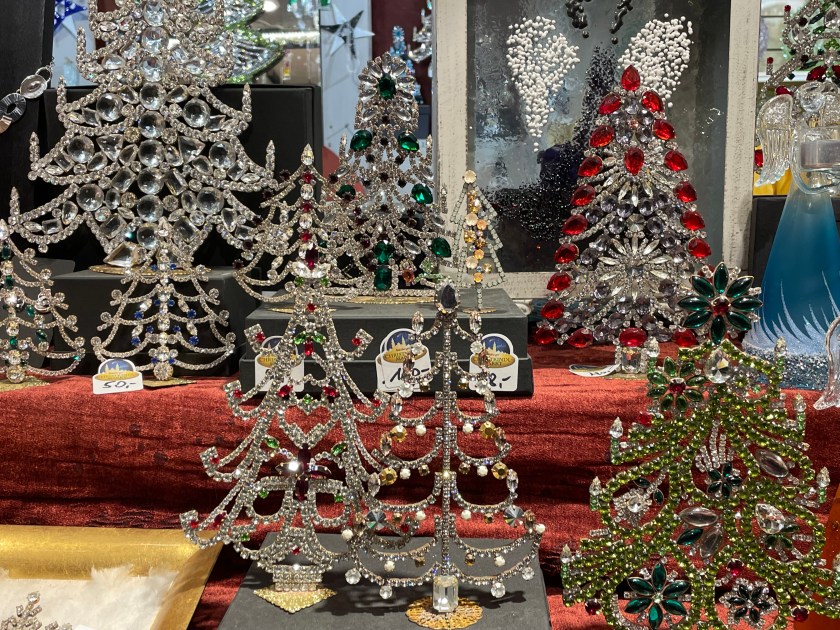
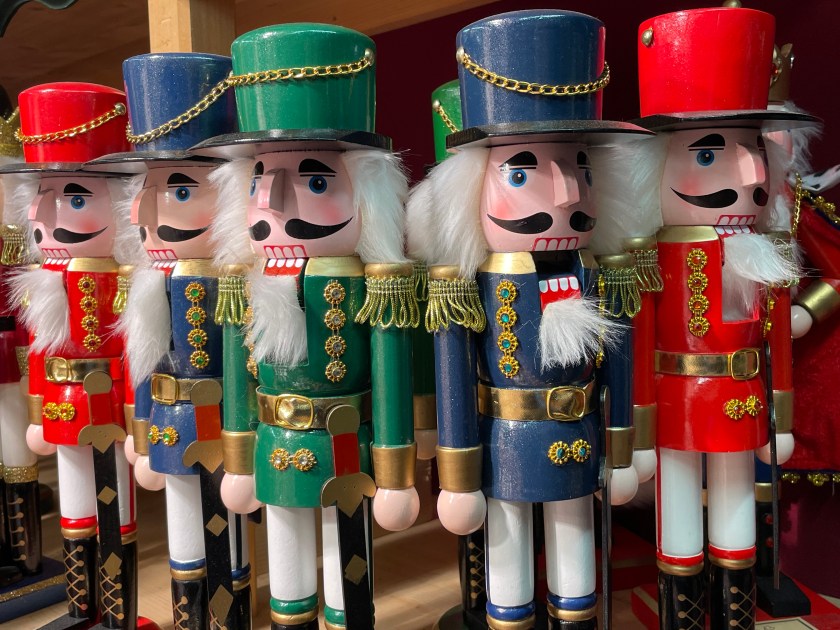
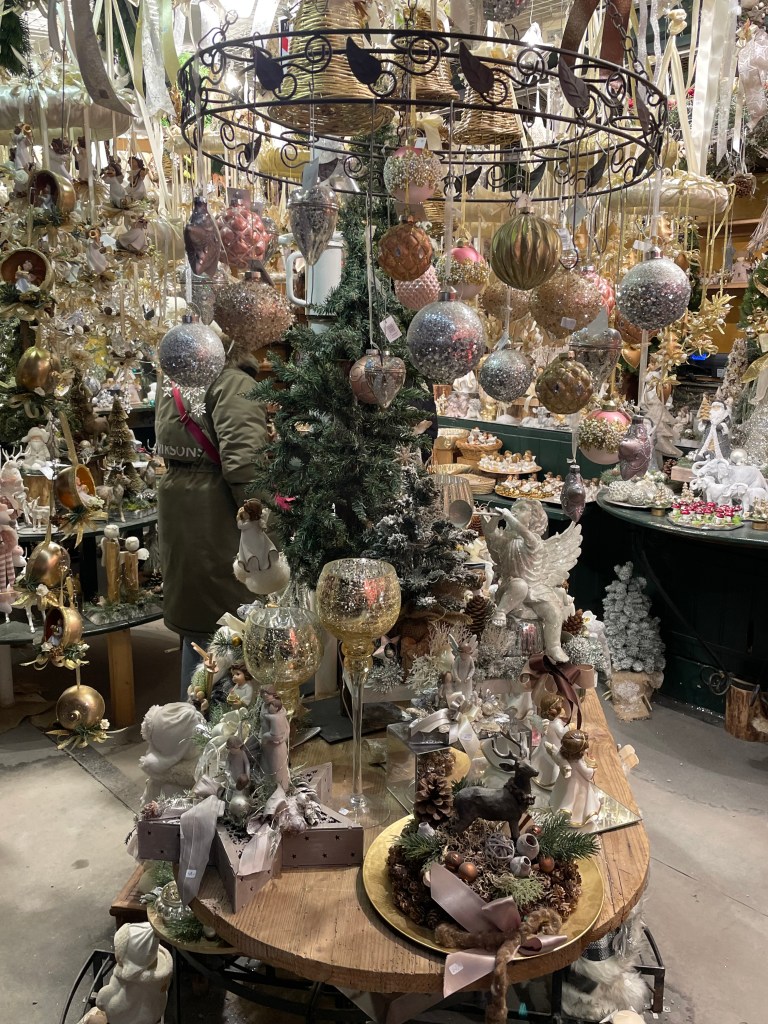
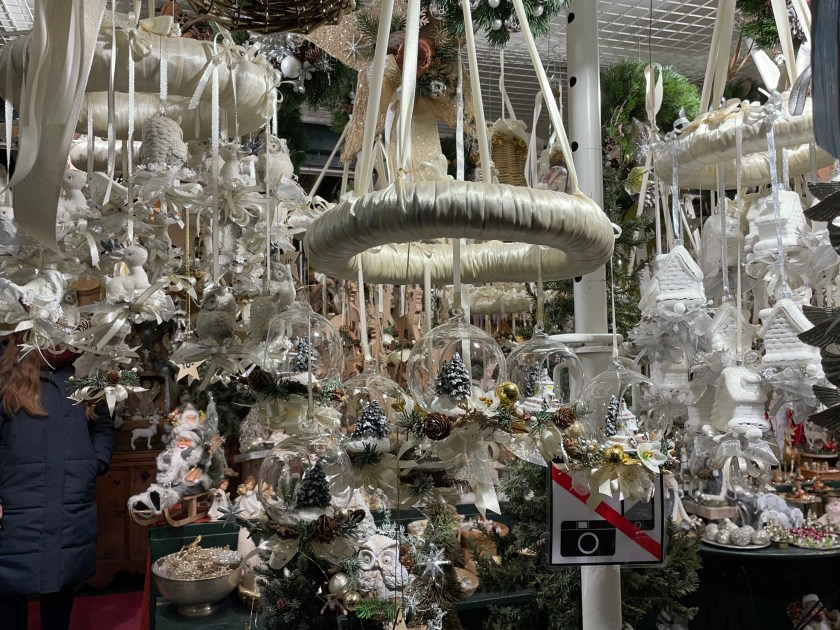
Here’s what we found:

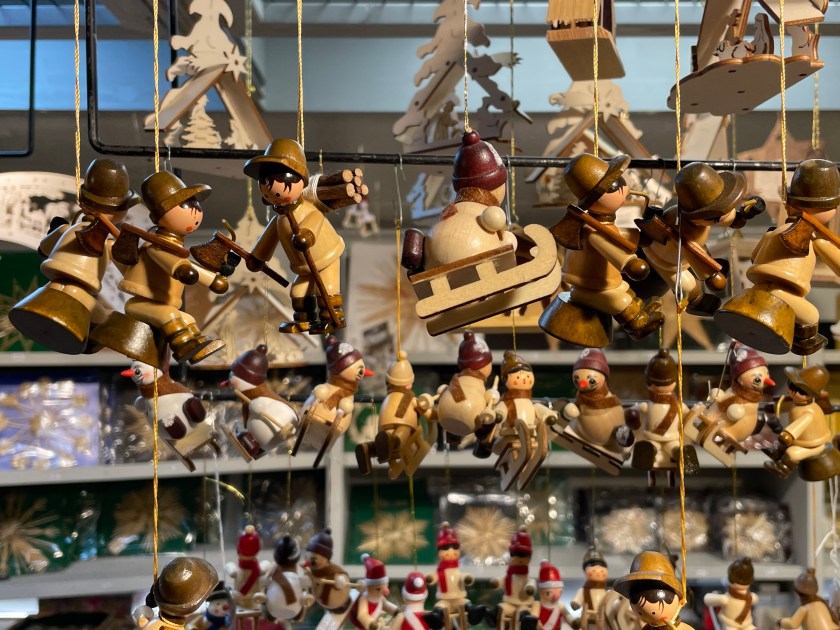
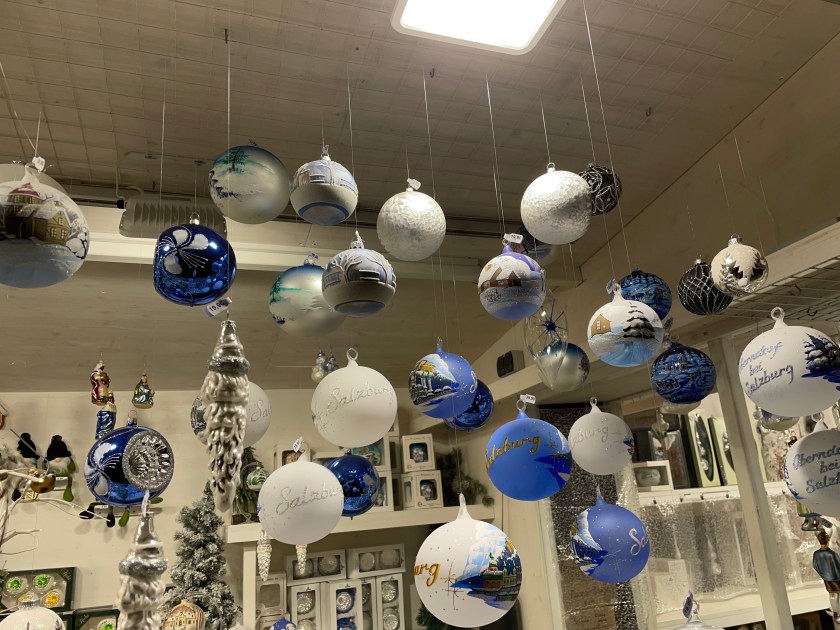
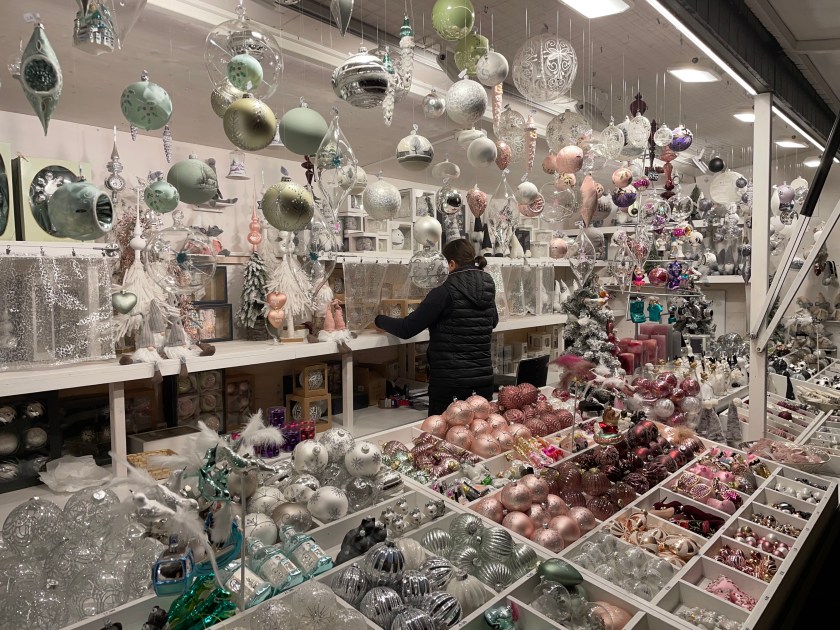
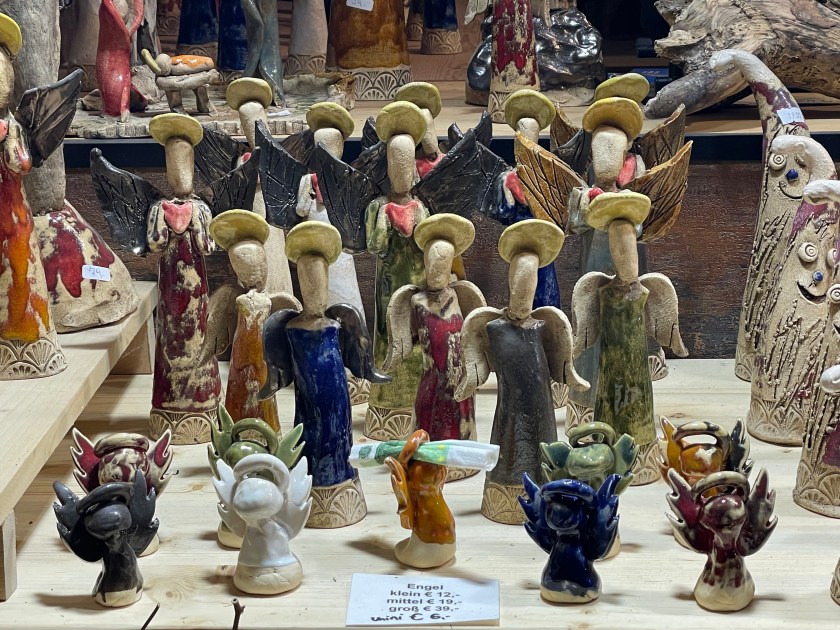
A few of these little ornaments are going home with us!


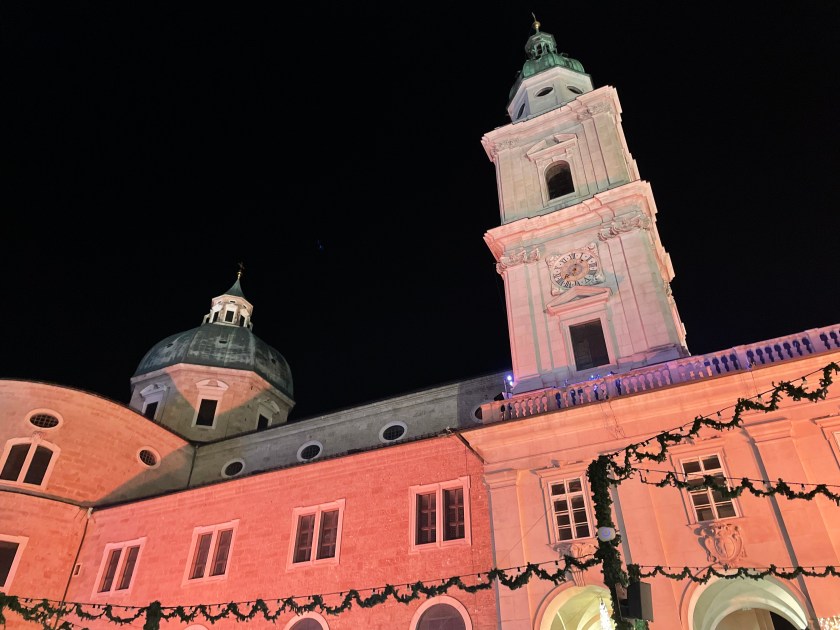
Next to the Dom Market.

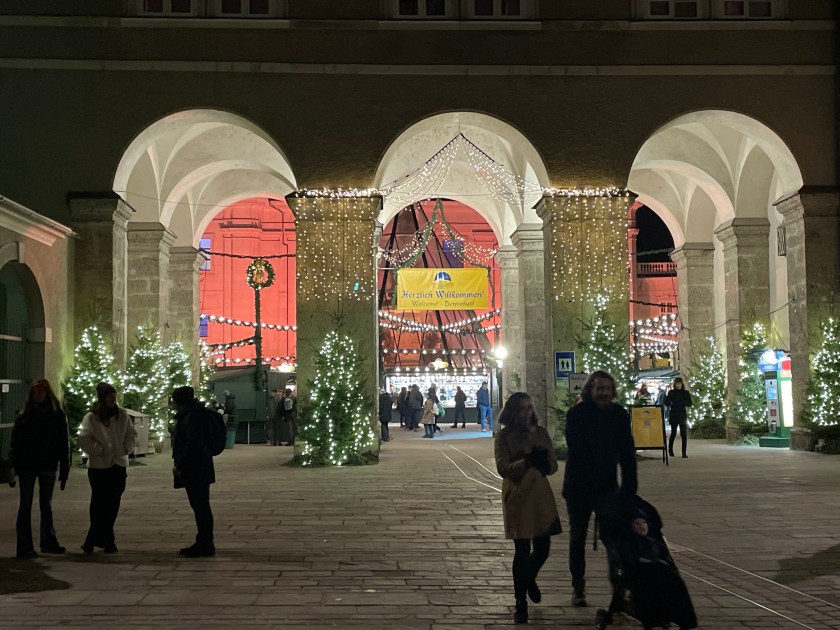
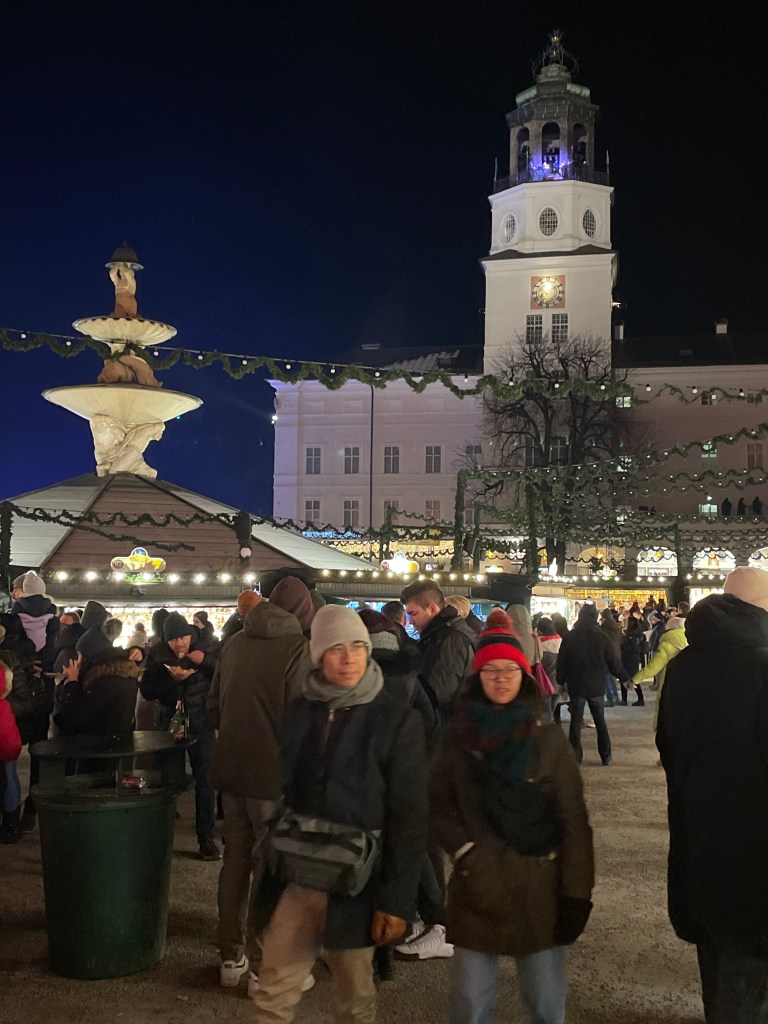
Next to the Residenz Market.  Something magical happened while we were in this market–music started floating over us from three different church bell towers.  There were brass musicians playing Christmas carols, one after the next, from the church towers.  We learned it’s called “Trumblasen” (tower blowing).

The musicians up in the towers of the churches took turns playing.  One group would play for awhile, then another group in another tower played. We all stood below watching and listening and enjoying the music. It really was enchanting. There were lights on the musicians so you could see them.  It was like listening to the hosts of heaven!

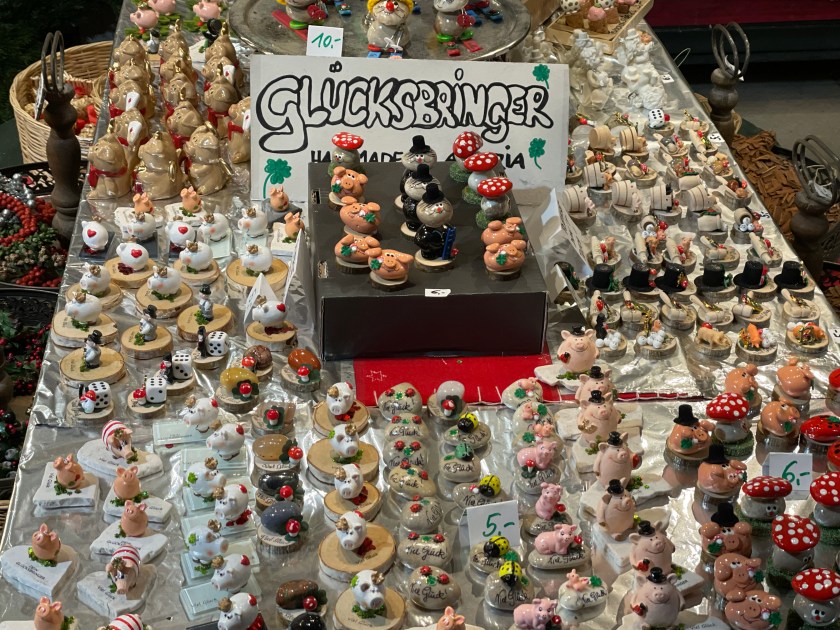
As we approach the New Year, Glücksbringer (luck bringers, or good luck charms) are out for sale.  Pigs are a symbols of good luck here.

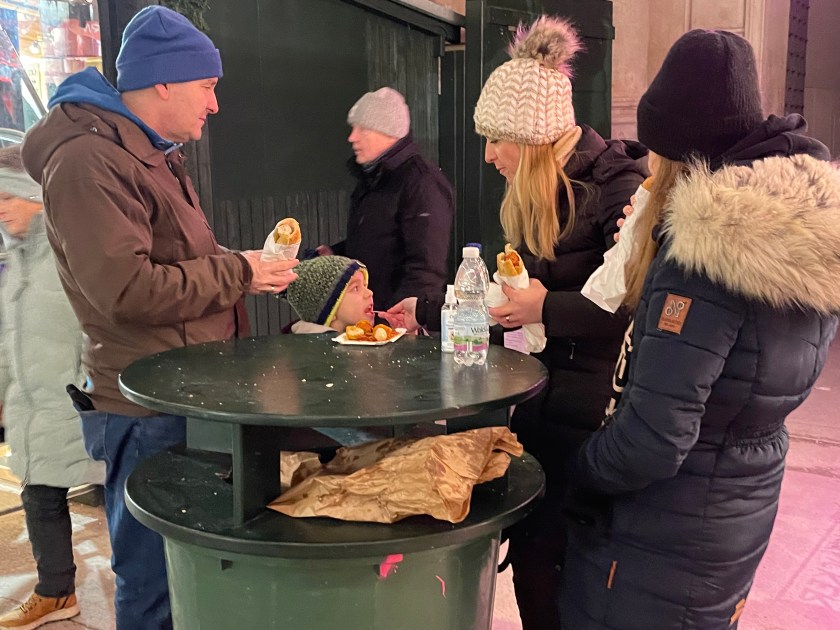
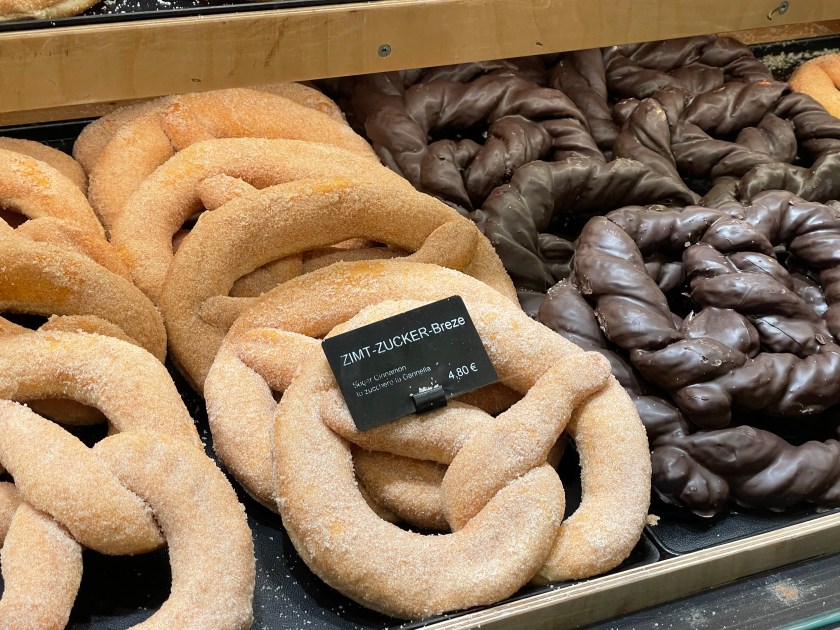
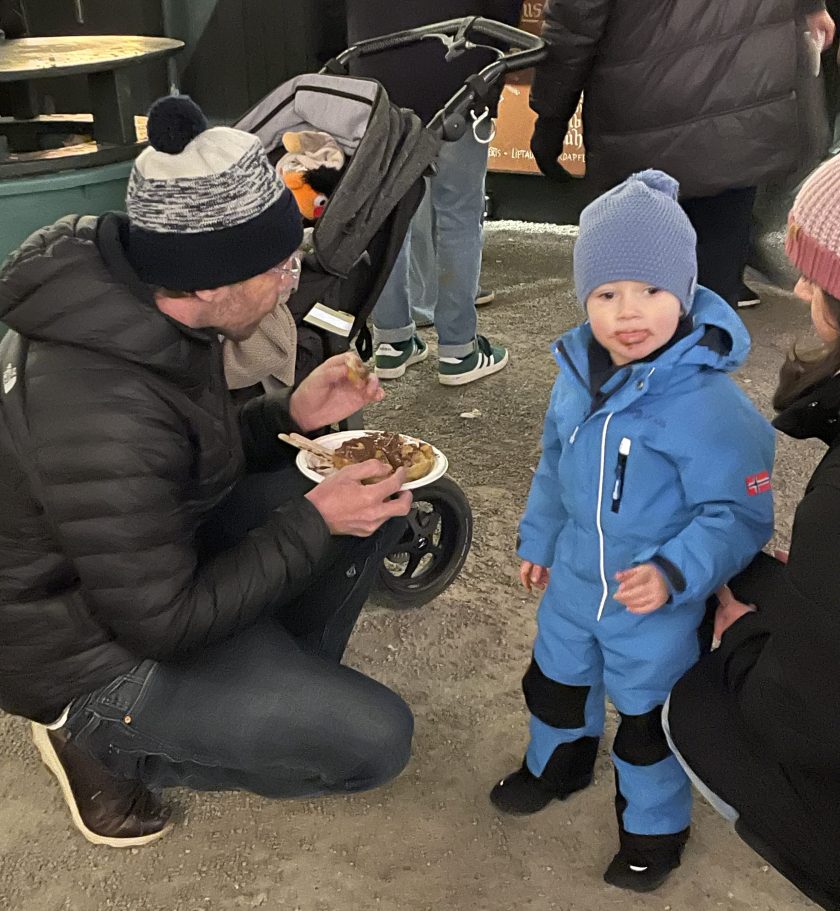
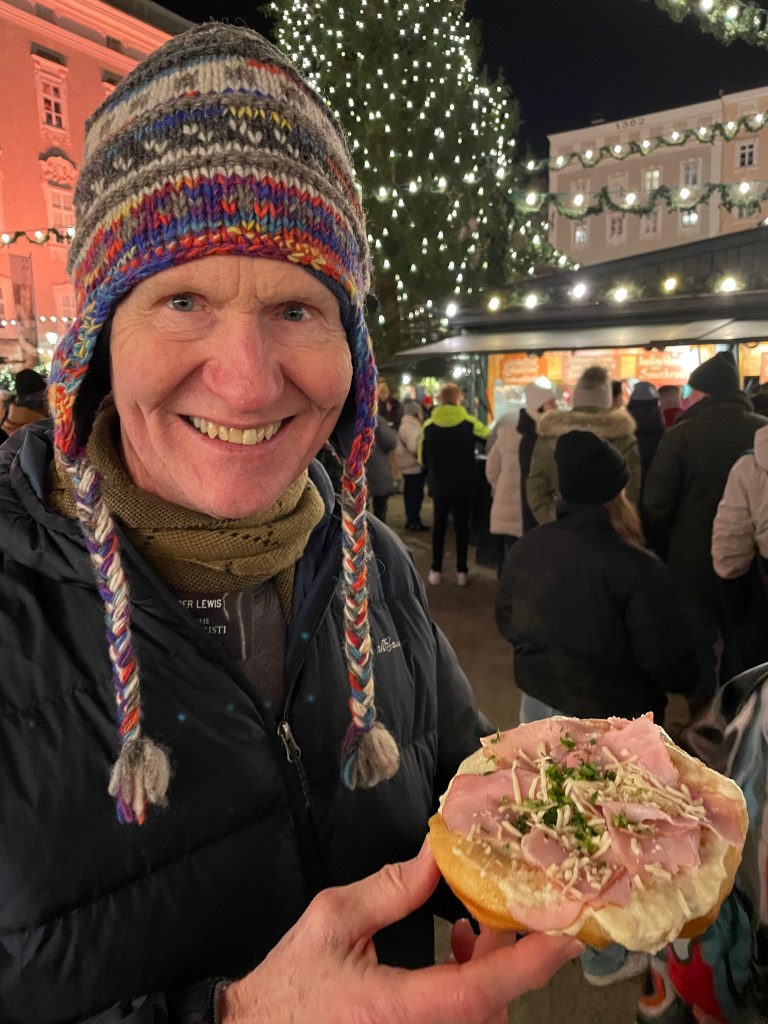
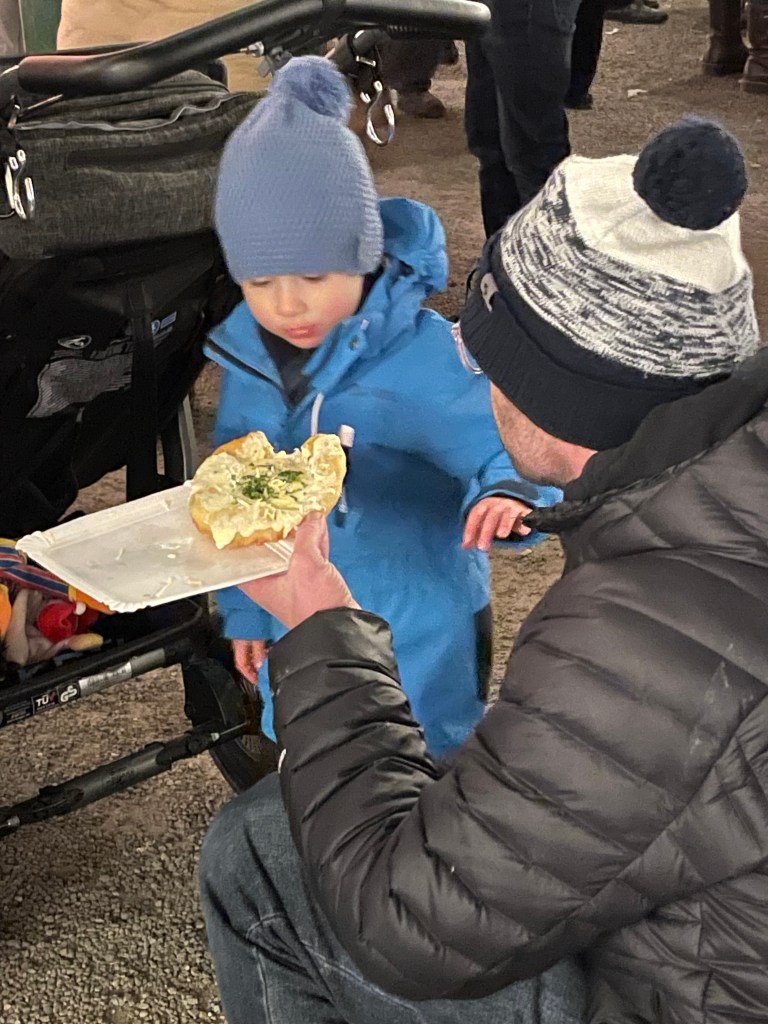
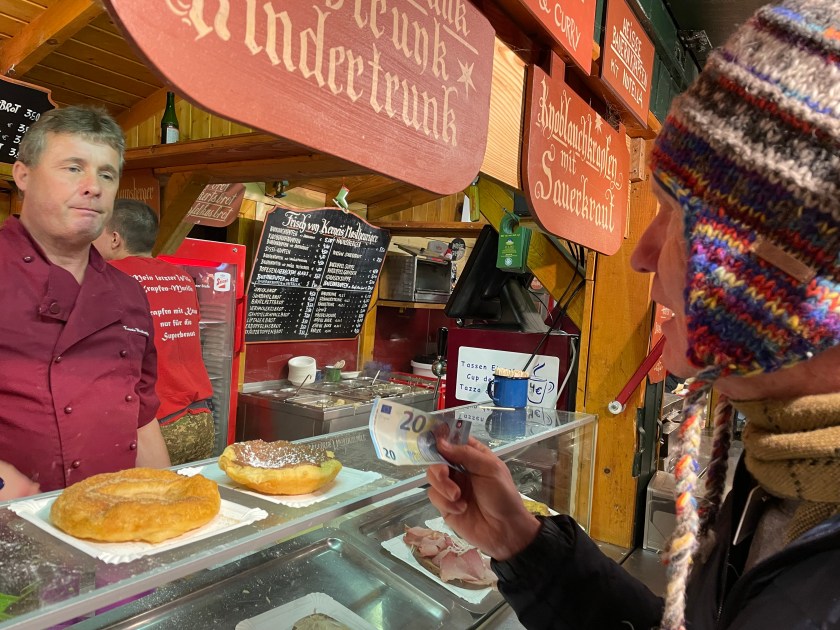
For dinner we chose Bauernkrapfen–first with ham & cheese, and Potato Soup, then sweet ones with Zimt (cinnamon) & Nutella.  These were like the Langos scones in Germany–a big warm scone topped with goodness.
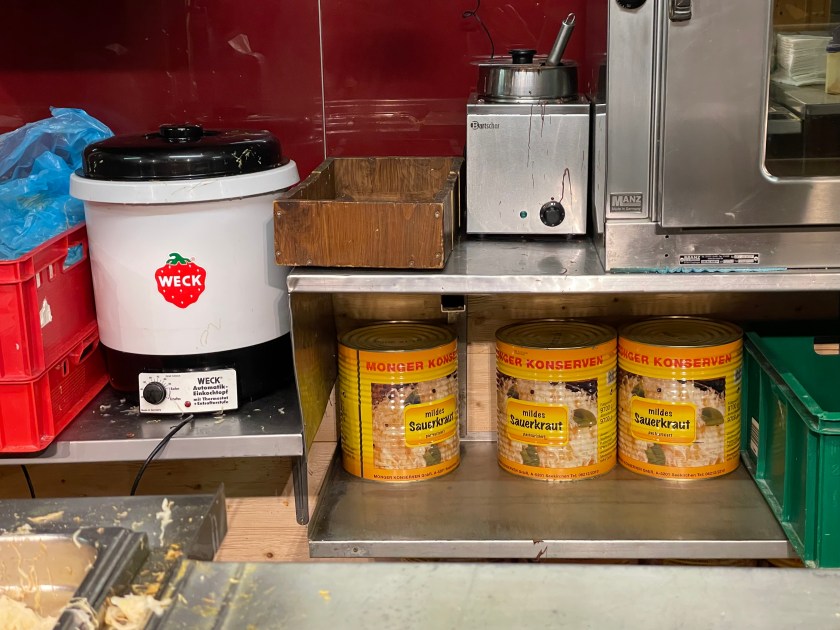
Seemed that one of the more popular versions was a scone topped with Sauerkraut.  In the pic above you can see huge tins of sauerkraut.


The Christkind welcoming people to the market.

And in the middle of all this festivity, the sight of Stolpersteine immediately jerked us back to harsher times, tragedy and sadness.

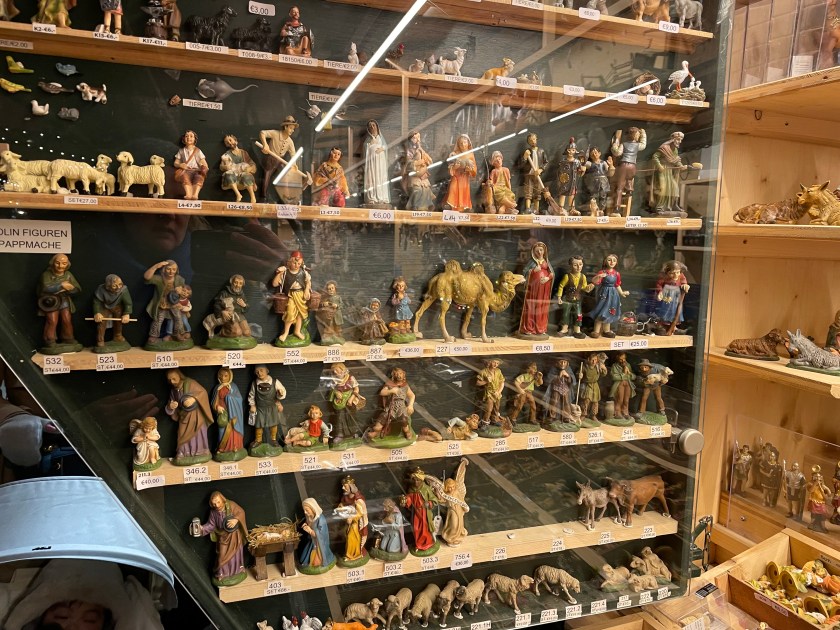
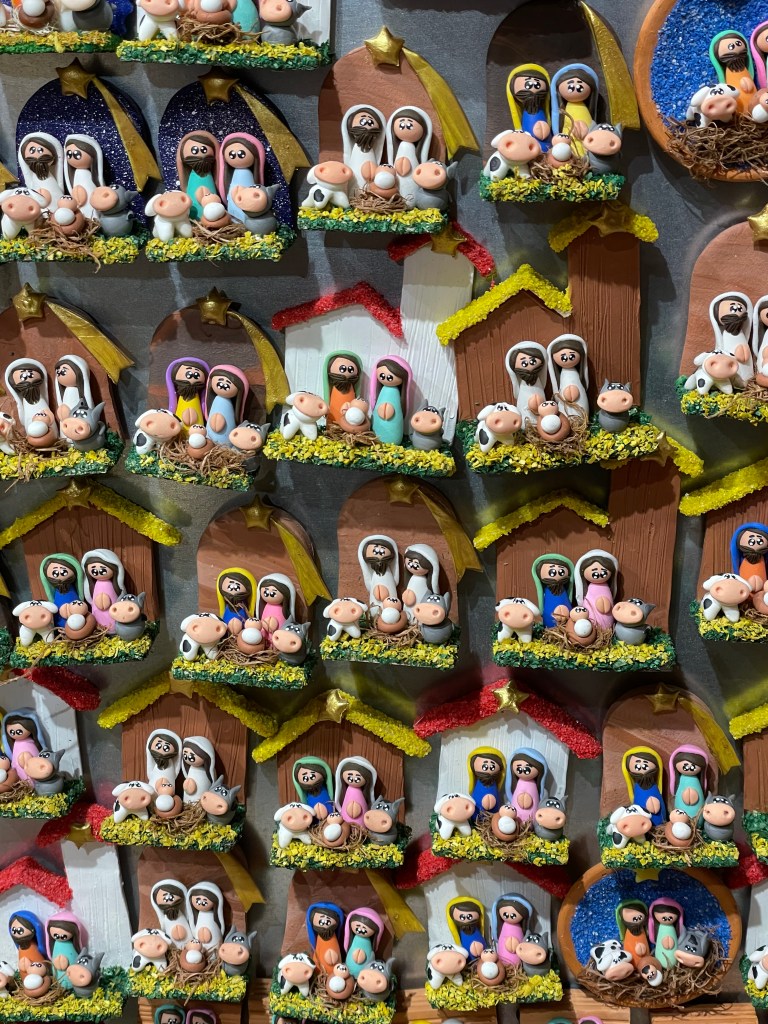
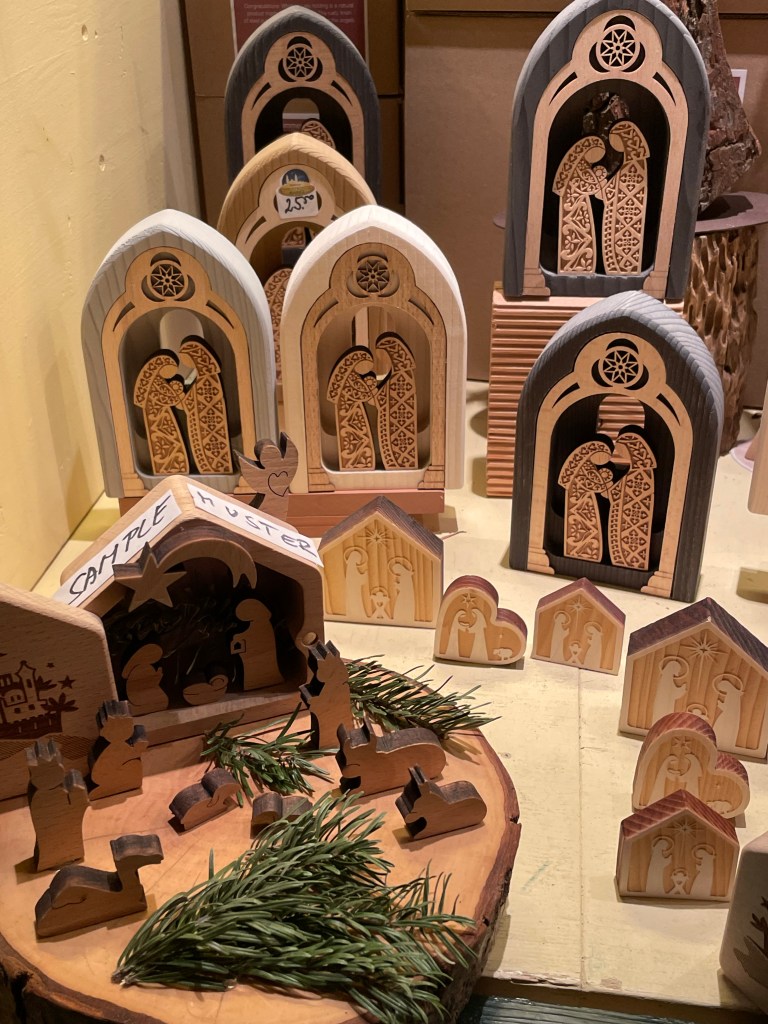
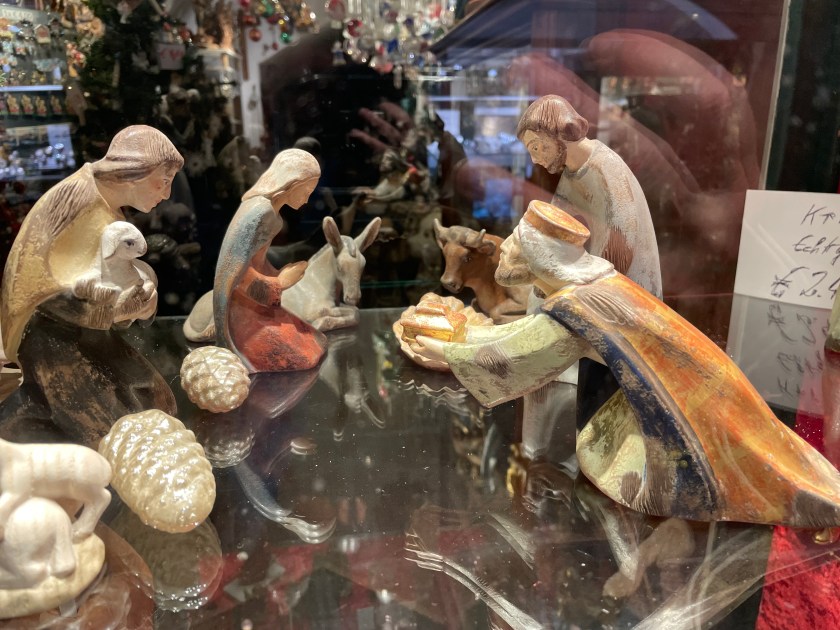
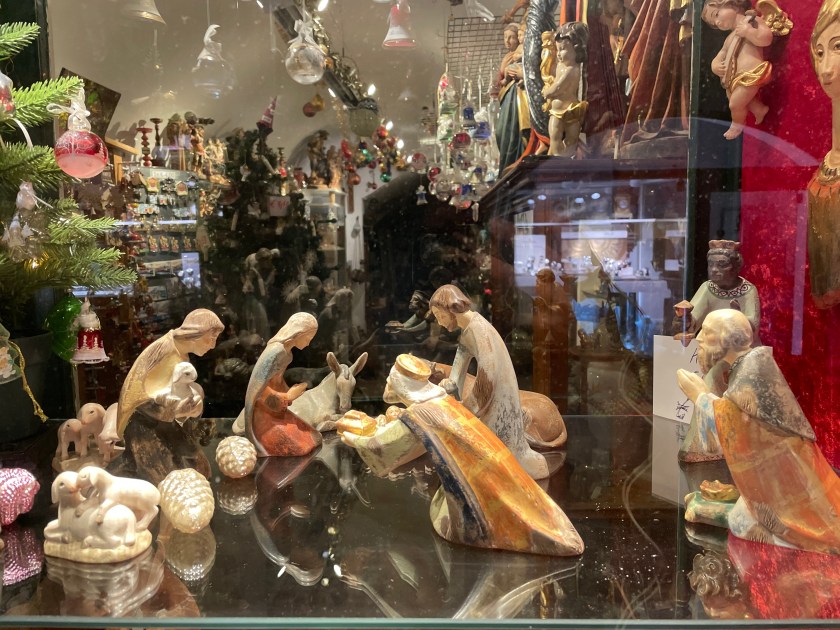
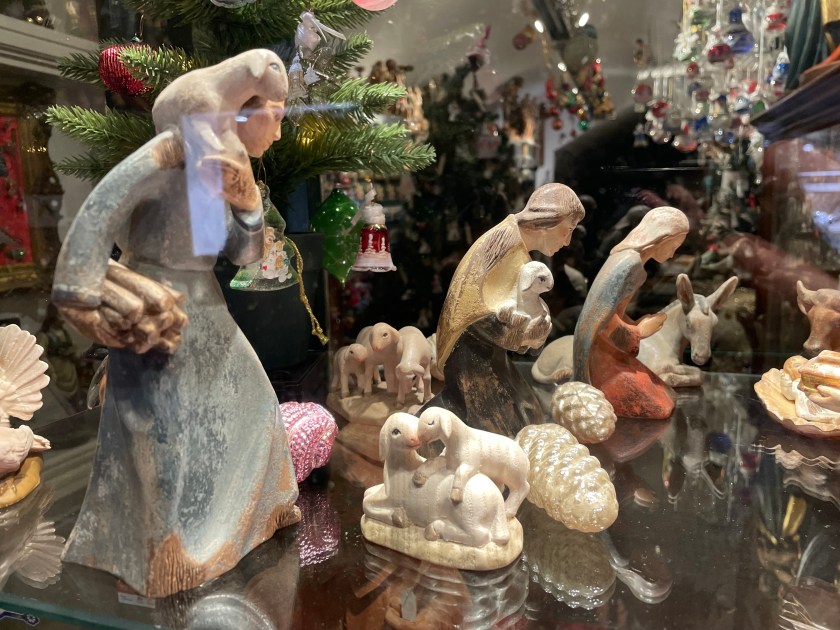
But displays in the shops around us of the Holy Family remind us that all will be made right.  Jesus died for each of us and He LIVES now!  What was lost will be made whole again.

Salzburg — Vespers at the Benedictine Nonnberg Abbey

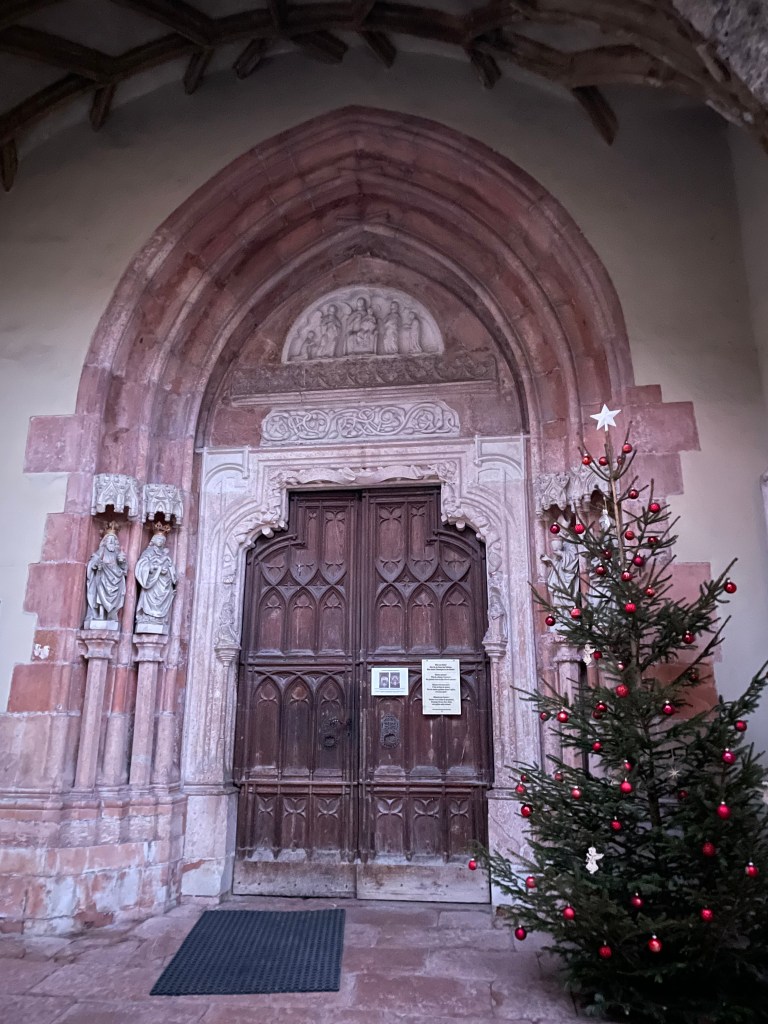
As the sun set, we came down the steep path from the fortress to the Stift Nonnberg (Nunnery).  This is the oldest abbey in the German-speaking world.  It has been operational without interruption since it was built in about 712.

Nonnberg Abbey gained international fame through The Sound of Music. Every day at 6.45 am or at 5:00 p.m. the nuns’ choir sings Gregorian chorales.

The Benedictine Nonnberg Abbey lies a little above the city at the foot of the Festungsberg and is famous for its Gothic architectural elements and its murals and smaller works of art. It is also here that the story told in the Hollywood production of “The Sound of Music” begins. Widely unknown is the fact that the nuns sing Gregorian Chorals every morning.

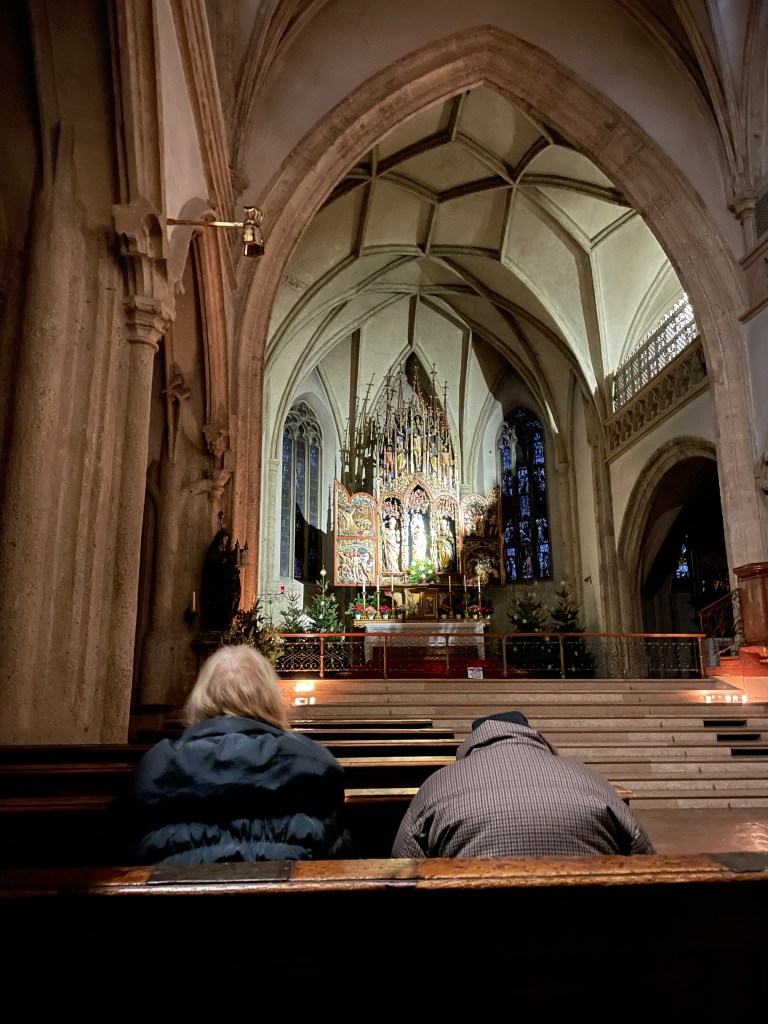
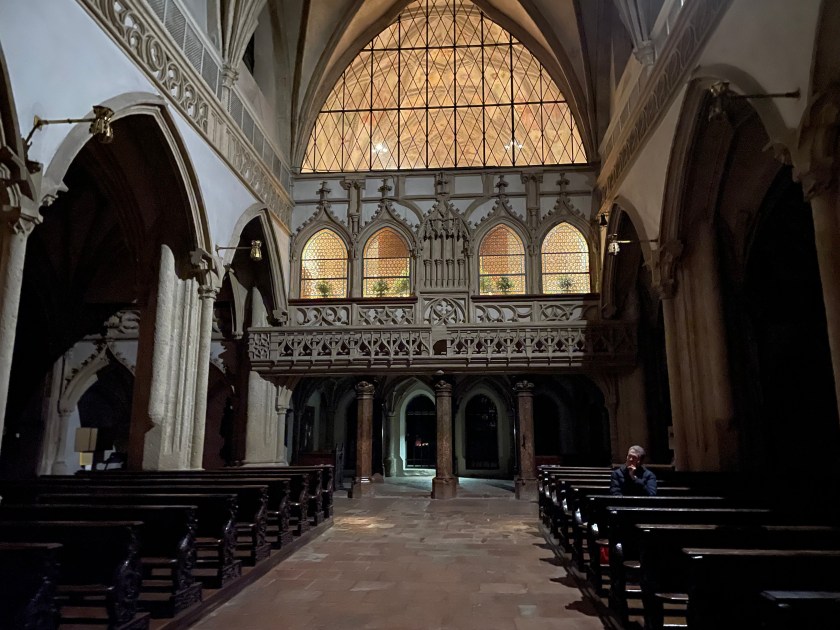
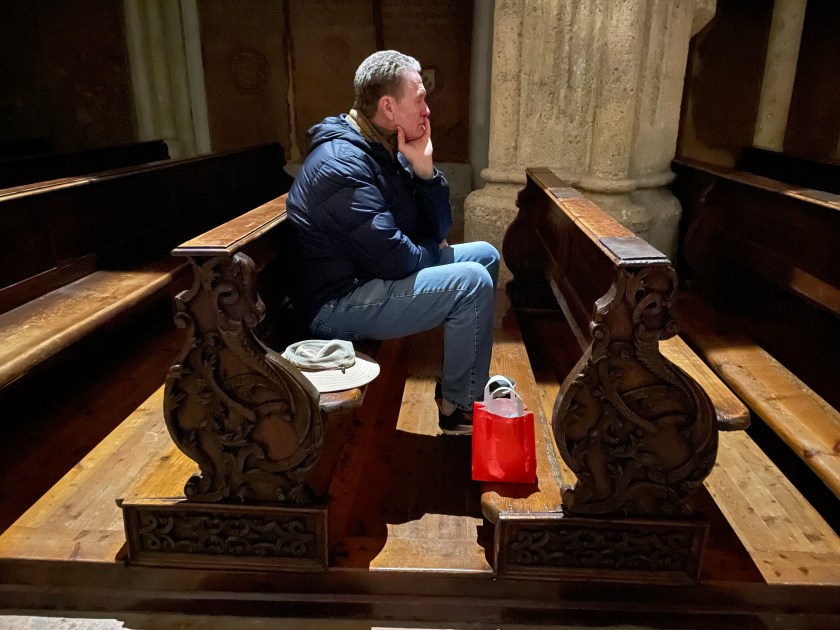
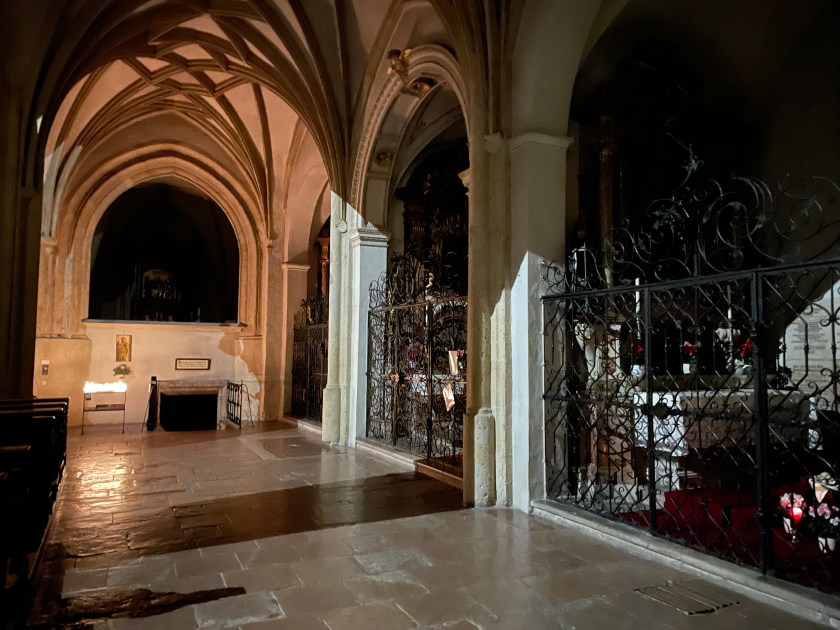
This visit was a highlight of our day. We were there at about 4:45 and went in to wait for the Vespers. There were about 15 other people there waiting quietly in the candle-lit chapel. It was beautiful, old, cozy and decorated for Christmas.

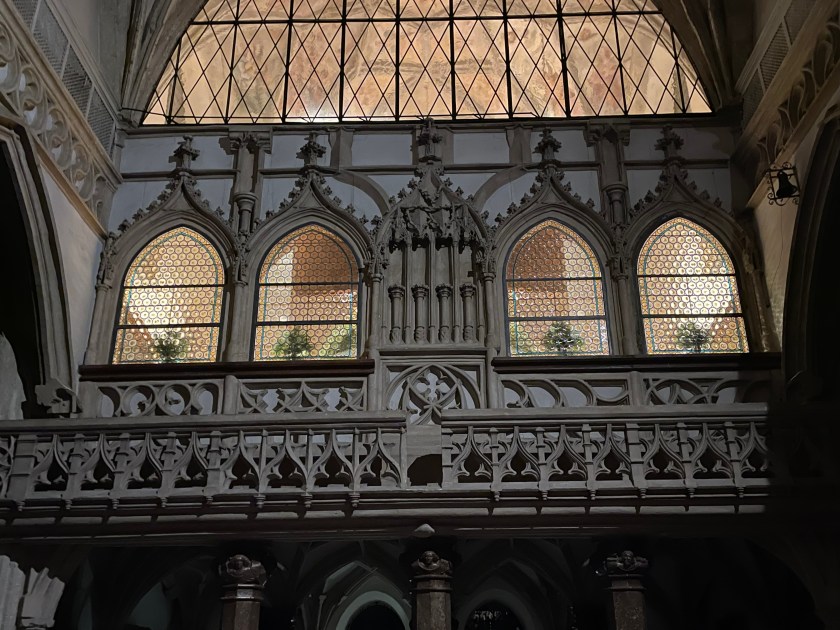
The music began at 5:00, floating softly into the chapel. We never saw the nuns. They were in a room somewhere above us.  We listened for 30 minutes.  The music was gentle and angelic, sung a cappella.  After the first 15-20 minutes, most of the other people left.  By the end, we were the only ones left in the chapel.  It was ethereal, heavenly.  Beautiful Latin Gregorian Chants. Old world. We loved being there.  I tried to capture the feeling in a memory. It really was moving.

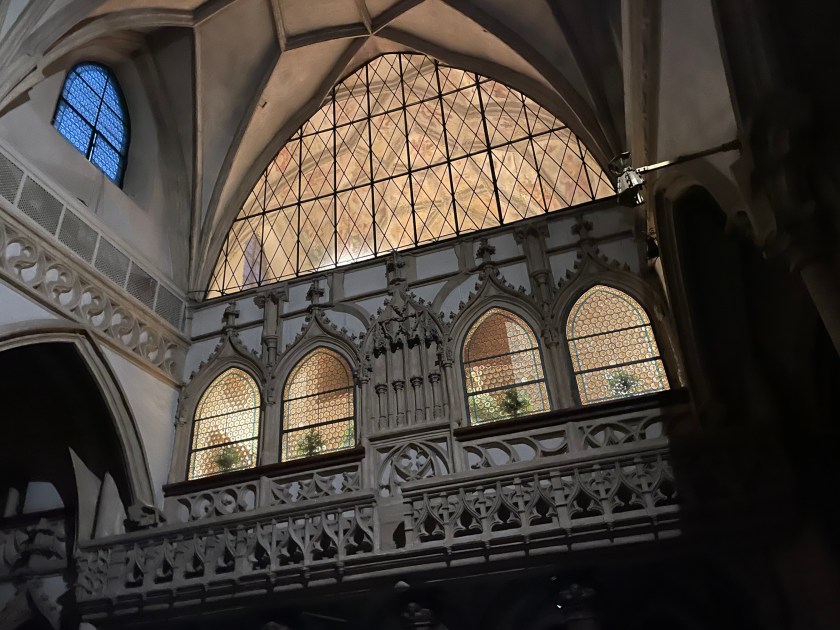
The nuns were singing from the loft above.

Looking back at the fortress from the Abbey.  I am imagining the real life Maria von Trapp here in this very place where her story began.

This sign says that this Abbey was built around 663-718 and it’s the oldest women’s monastery north of the Alps.  Erentrudis is the most important Saint of Salzburg, born in the 7th century.

Our hearts really felt filled as we continued down the mountain this evening.  Before long we were back in Salzburg’s festive Christmas Markets, a fun way to end our day.