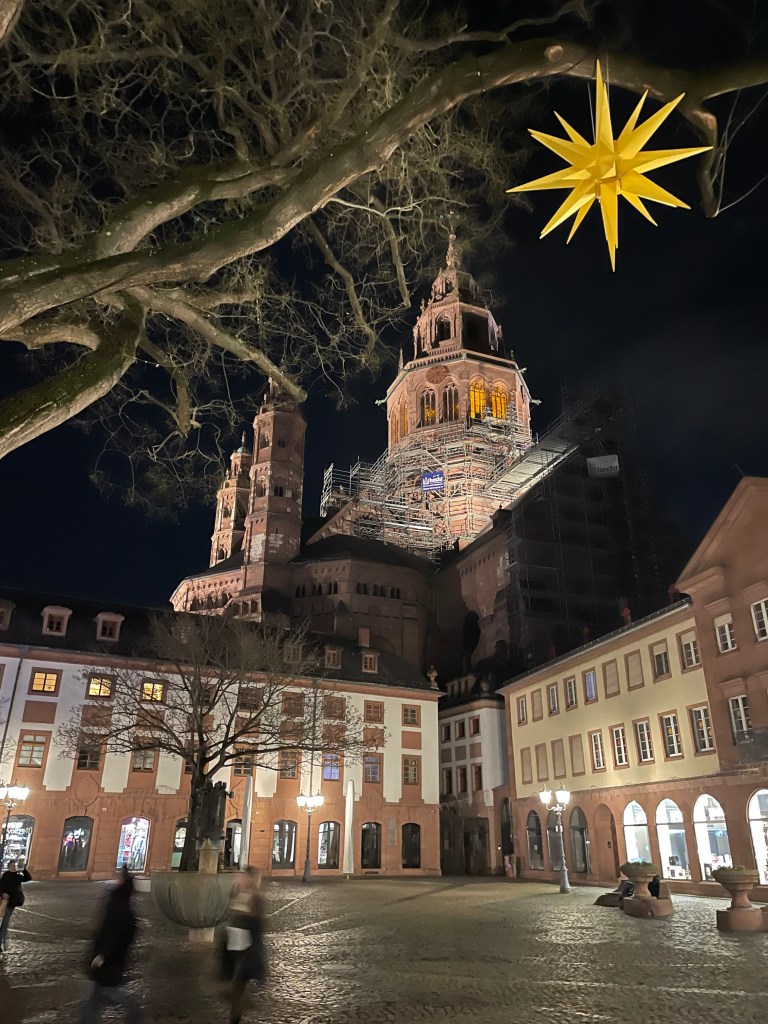
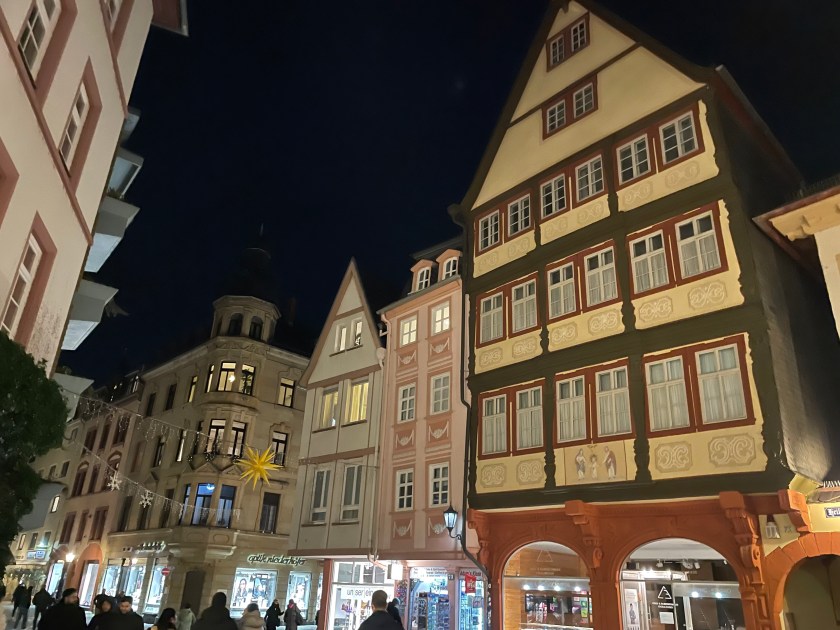
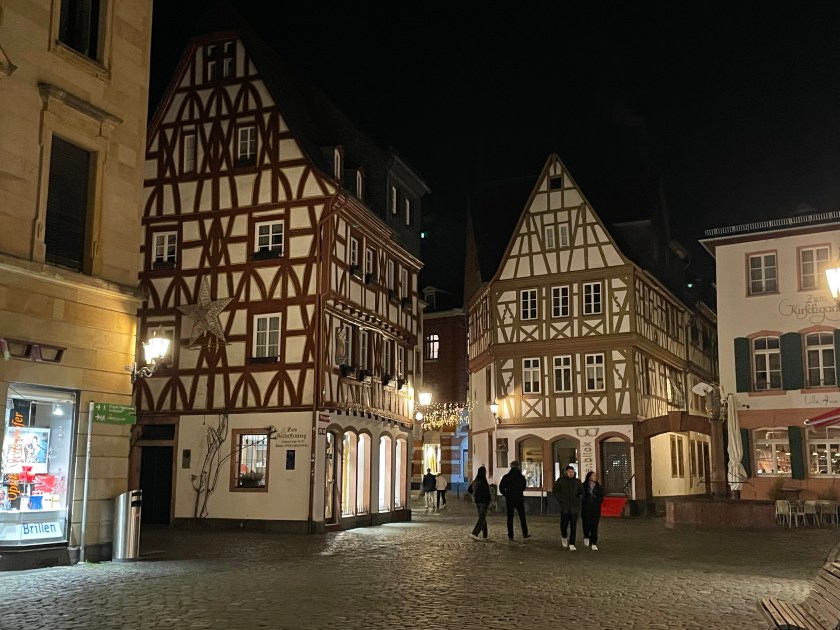
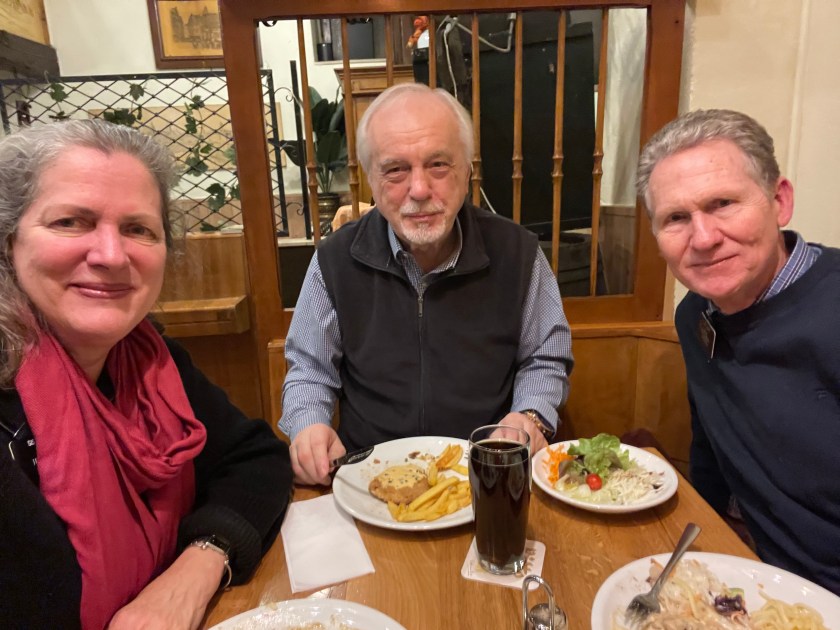
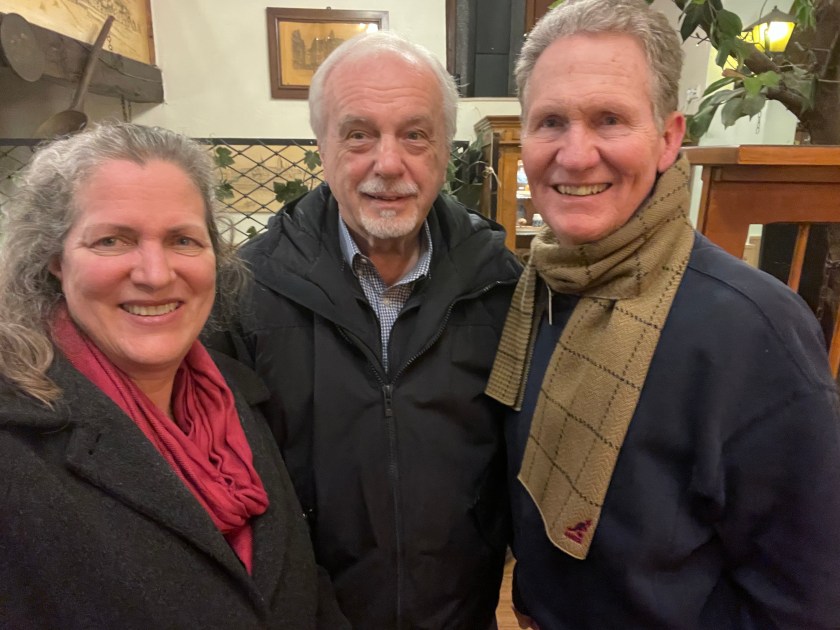
We went to Mainz this evening to have dinner with John’s mission companion, Werner Vilvock. He was visiting family in the area, so we made time to enjoy an evening together.
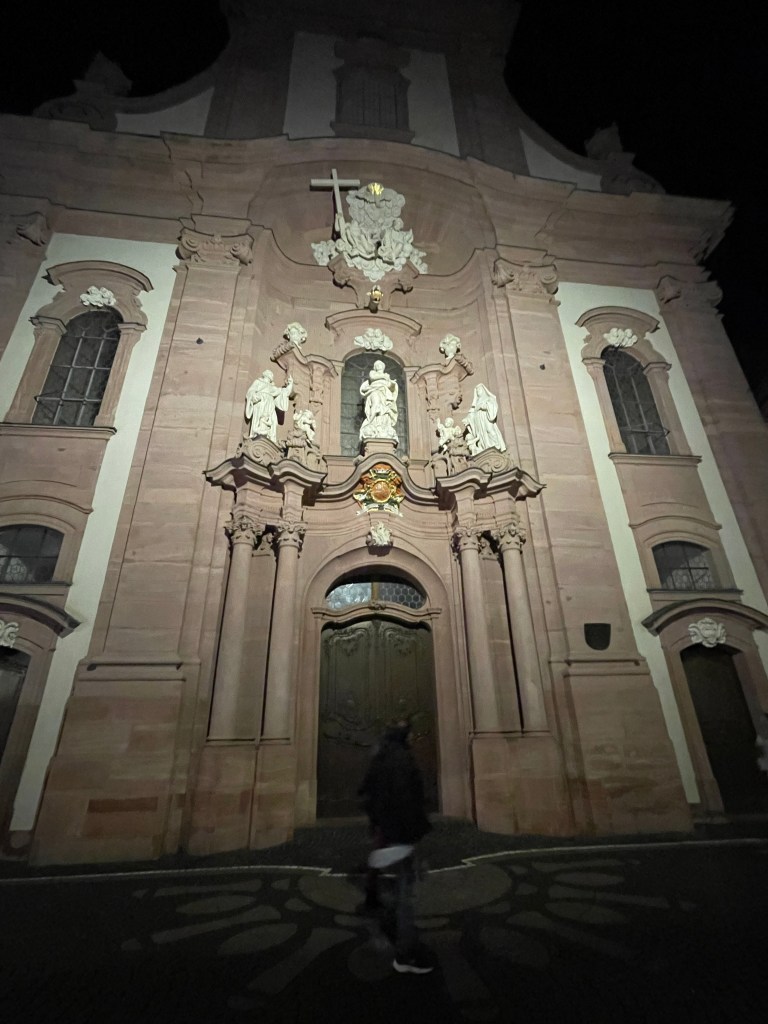
Here’s a quick look at what we saw between our hotel and the restaurant. Tomorrow is our Zone Activity here in Mainz, and we’ll be joined by the rest of the missionaries.
I had a great meal: Roulade, red cabbage and mashed potatoes. YUM.
What a blessing missions are. This friendship has lasted 50 years.
The Labrums and Irwins are back from Uzbekistan for 2 weeks.
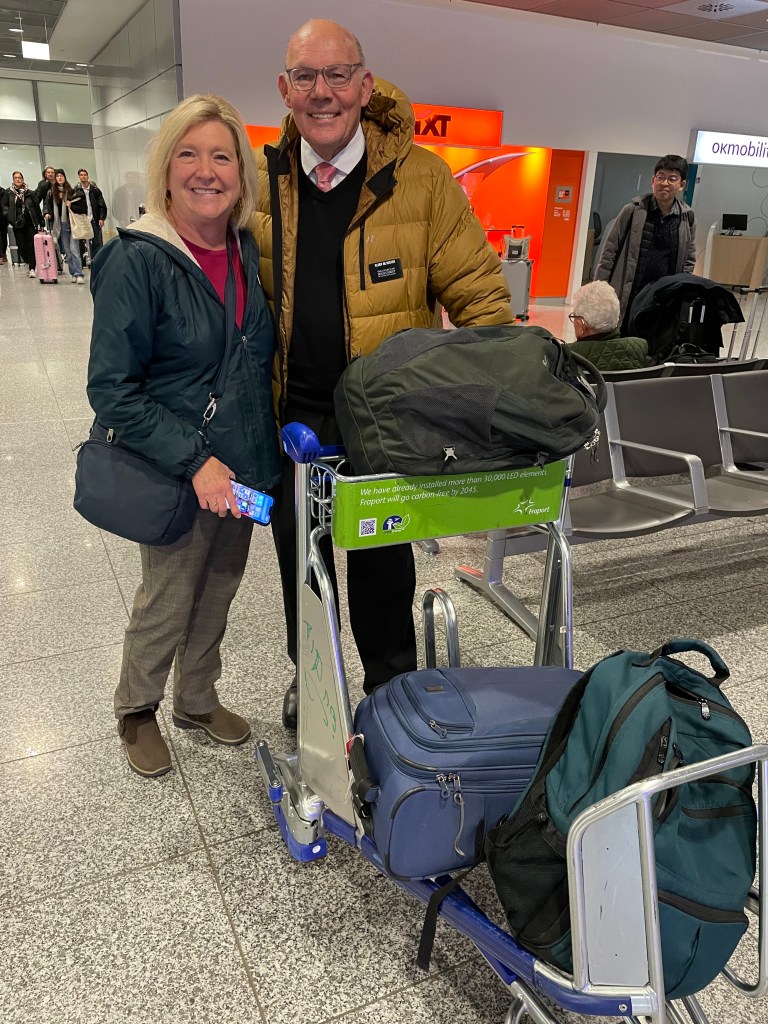
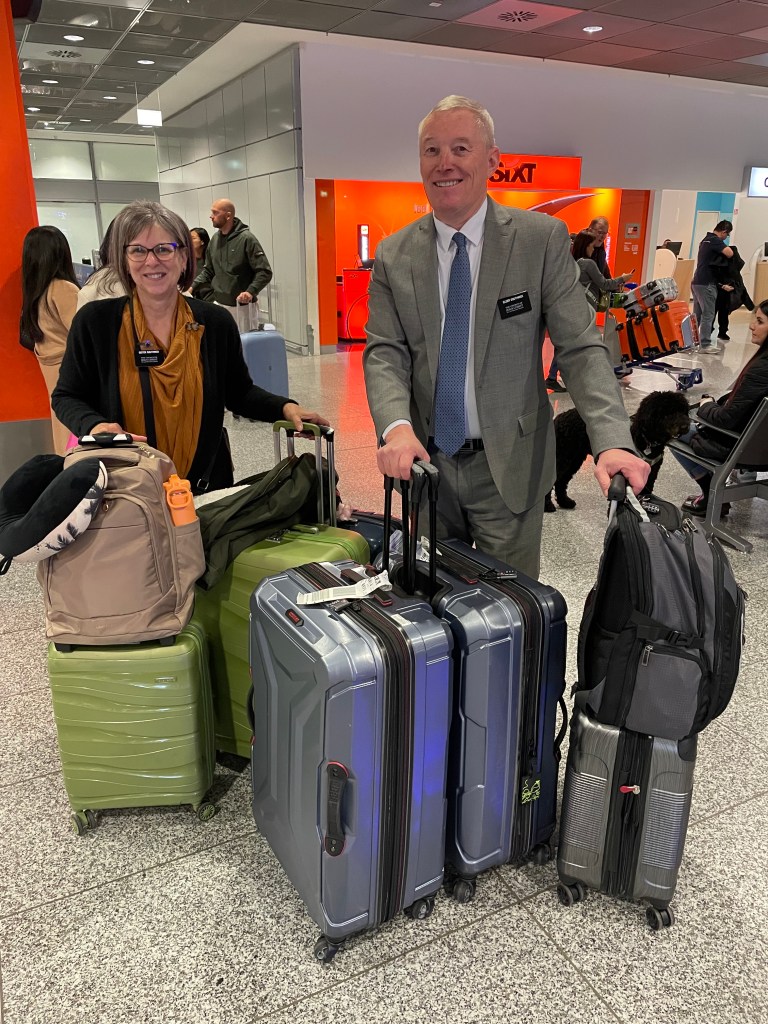
Oh, what a month of arrivals! We’ve welcomed 7 new couples in January! That’s a lot of airport trips. We’ve also helped those coming and going from Uzbekistan and Turkiye.
Our job as Zone Leaders includes helping with the new apartments, cars, immigration, registration, starting the process of getting driver’s licenses, and helping everyone feel at home here. We have 34 apartments in Bad Homburg, and they are almost all filled now. We have 31 cars. All are being used. It’s quite a job to keep all the plates spinning.
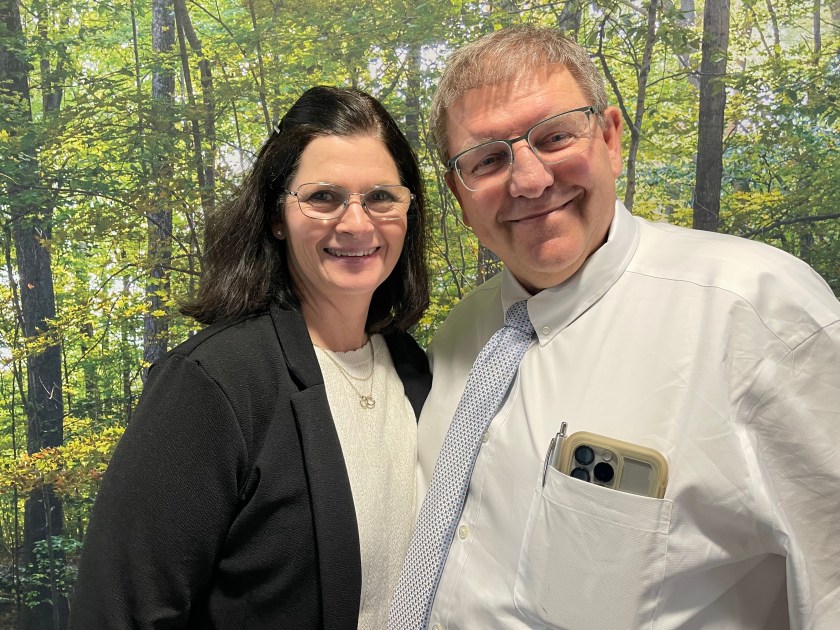
The Labrums
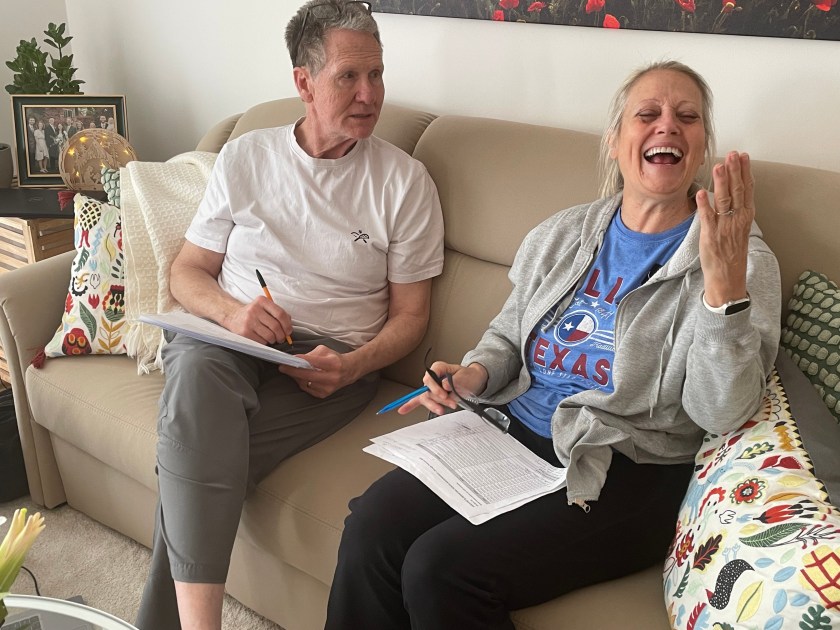
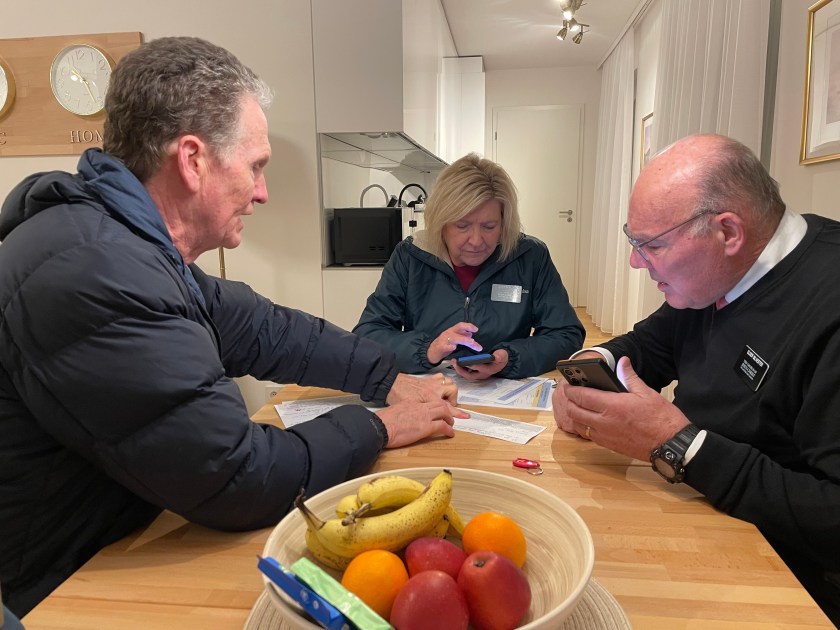
John and Ella Romney figuring out who to put where in the apartments.
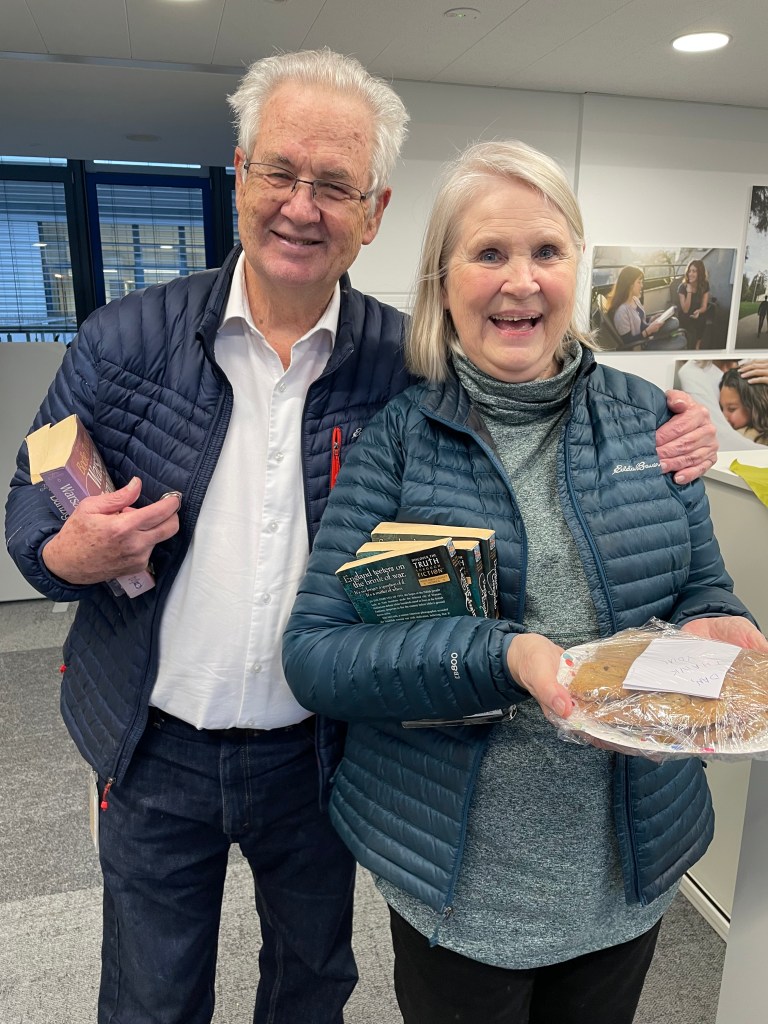
The Binghams stopping by with cookies.
The Schiesses will be serving in Uzbekistan, helping with water and sanitation projects.
The Giffords have arrived!
The Silvesters have arrived!
The Southwicks have arrived!
We work late into the evenings after full days at the office. We are tired.
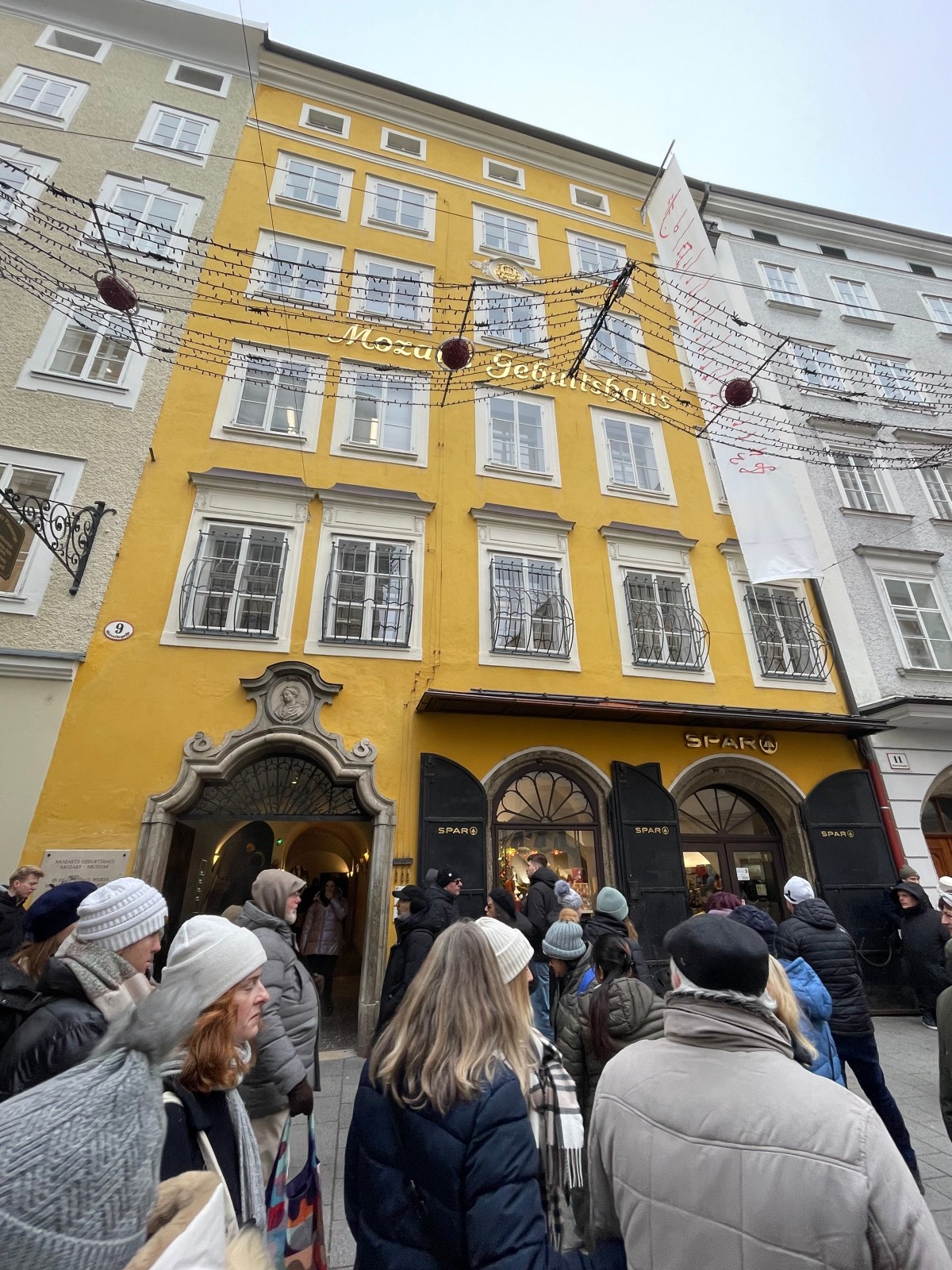
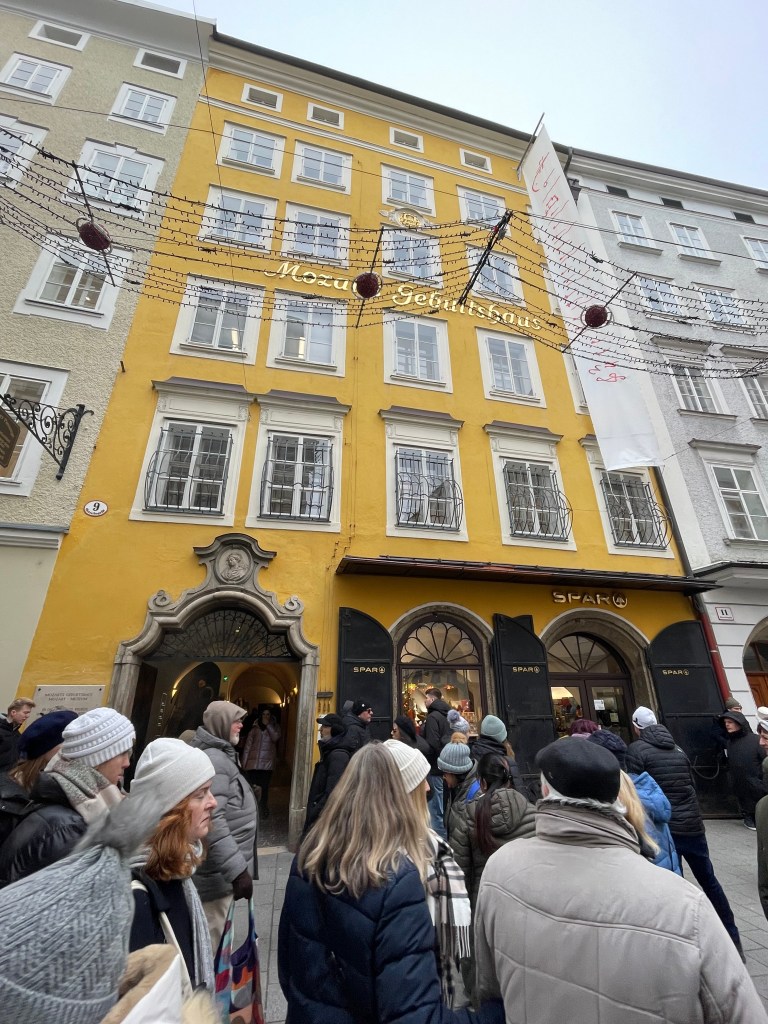
After our Mozart morning, we wandered a bit downtown. John bought some bags of Mozart Kugeln chocolate balls (he’s been looking for the best price since we arrived here and found it today in a SPAR grocery store wedged into a slot of shops to the right of the Mozart Haus.
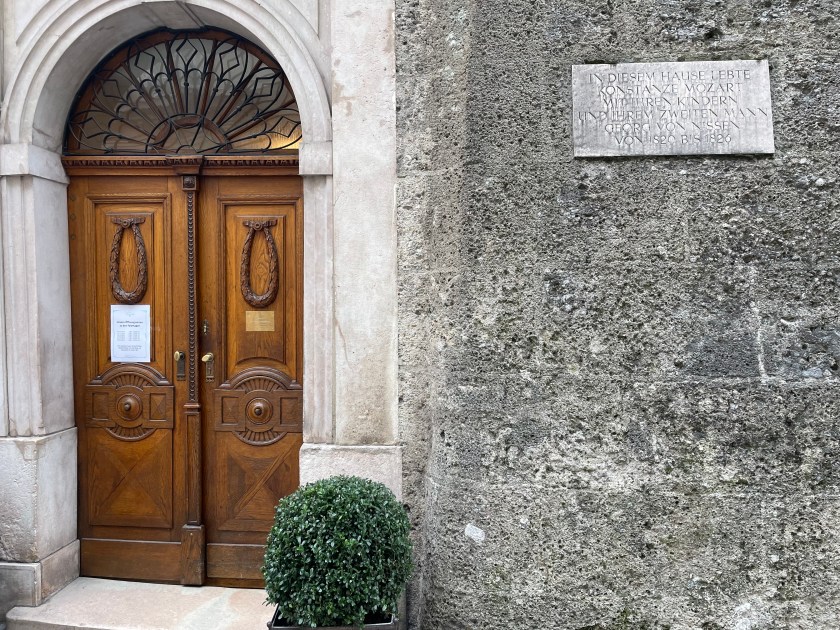
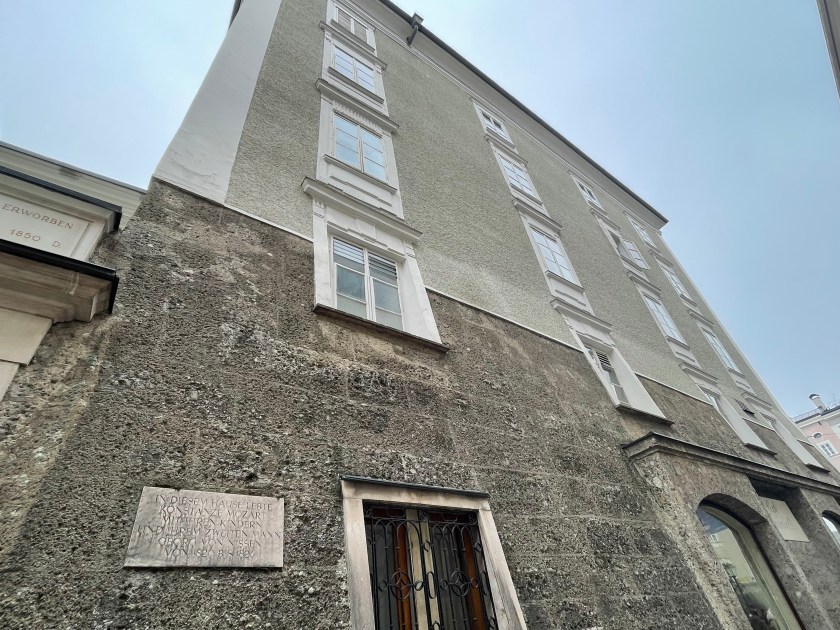
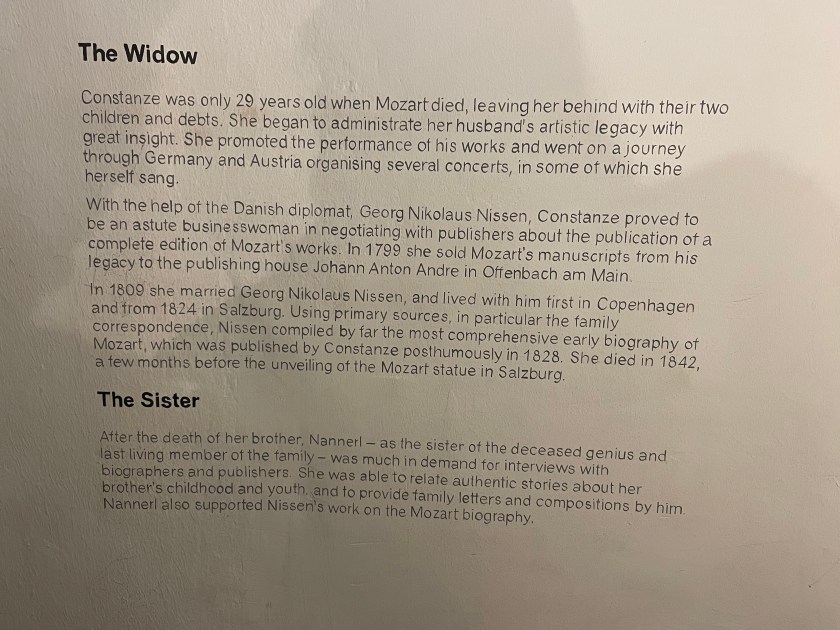
Below is the home Mozart’s wife, Konstanze lived in with her children and second husband after Mozart’s death. His name was Georg von Nissen.
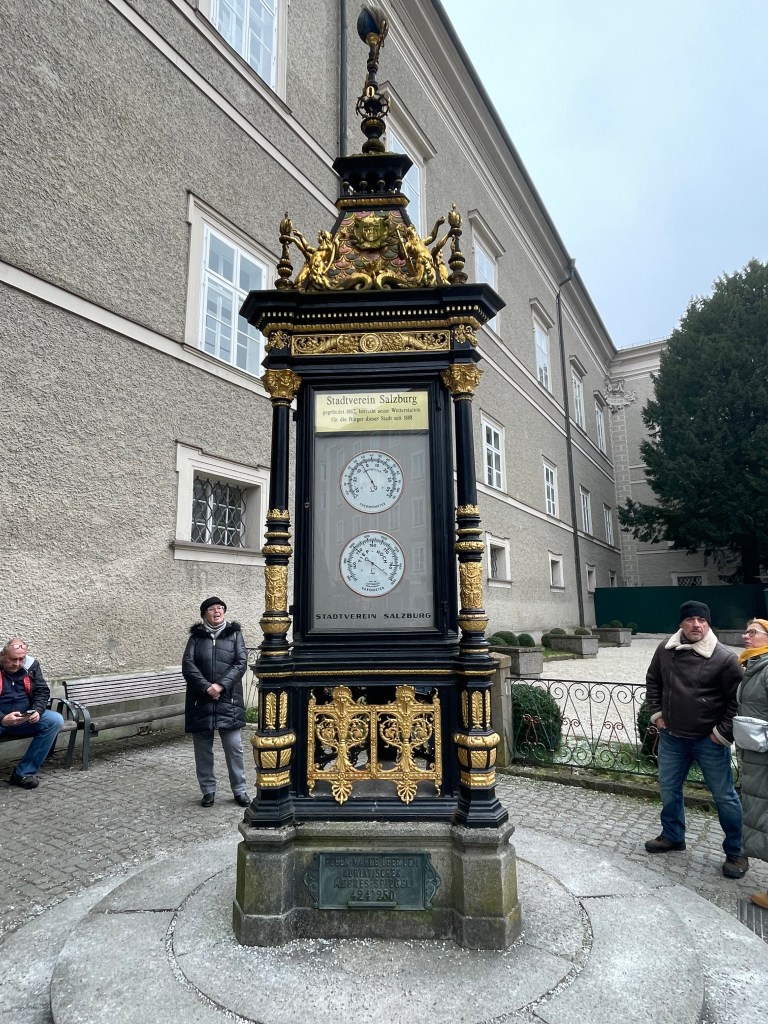
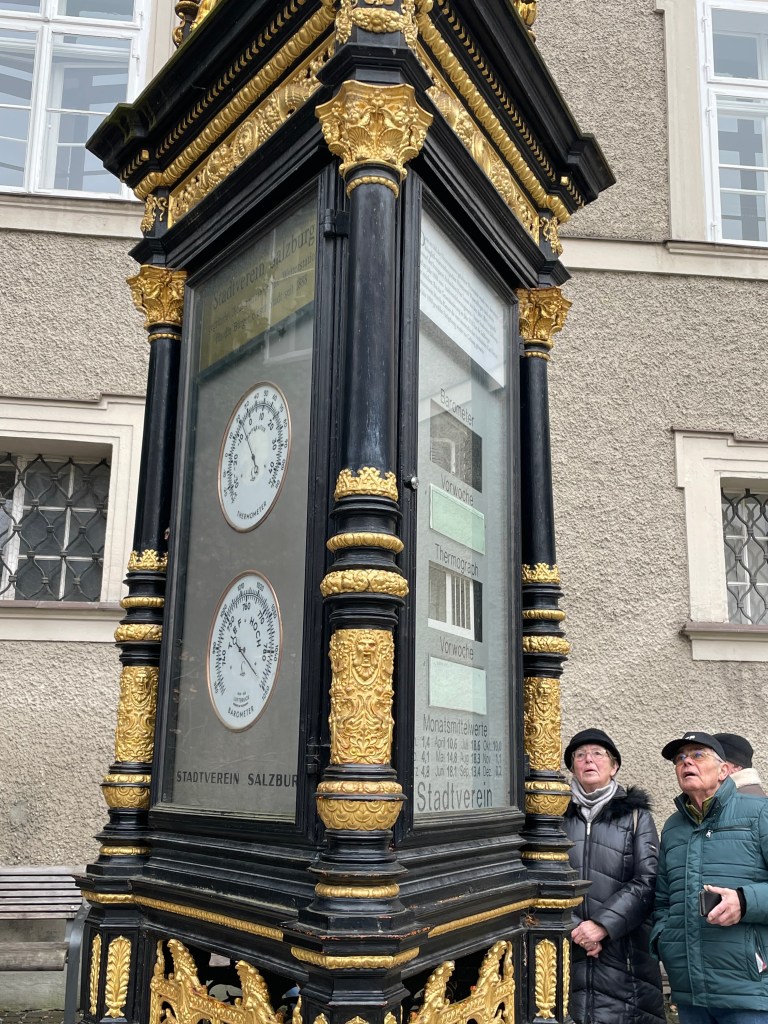
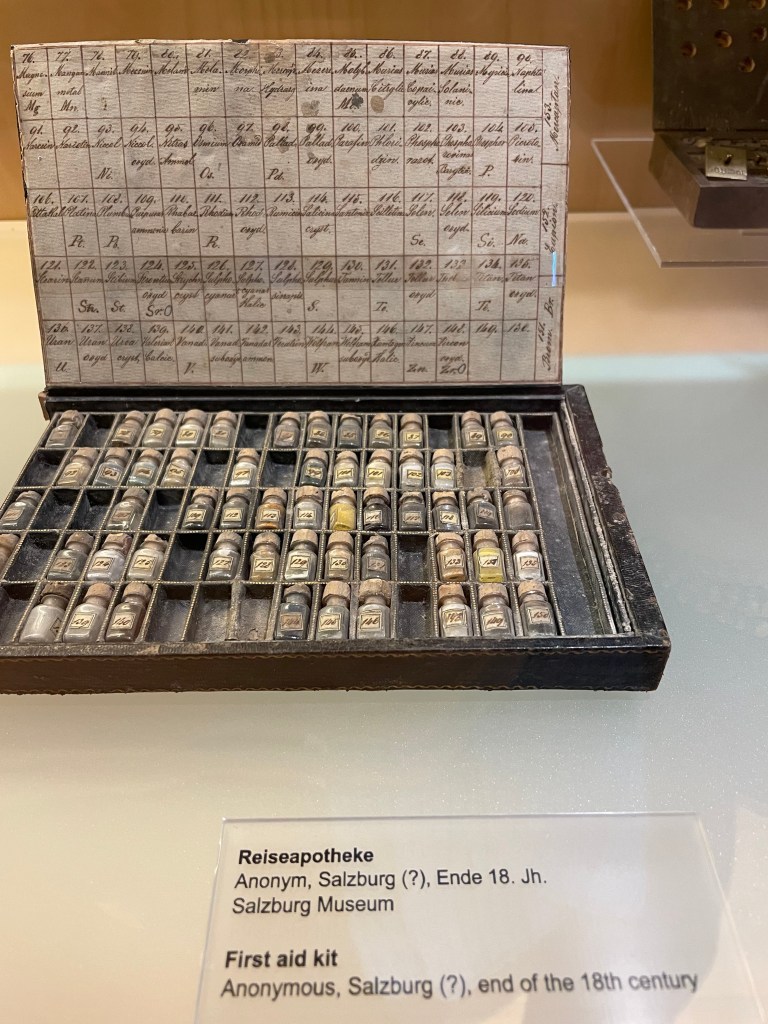
Interesting old clock had all sorts of barometric devices.
Good luck pigs for the New Year.
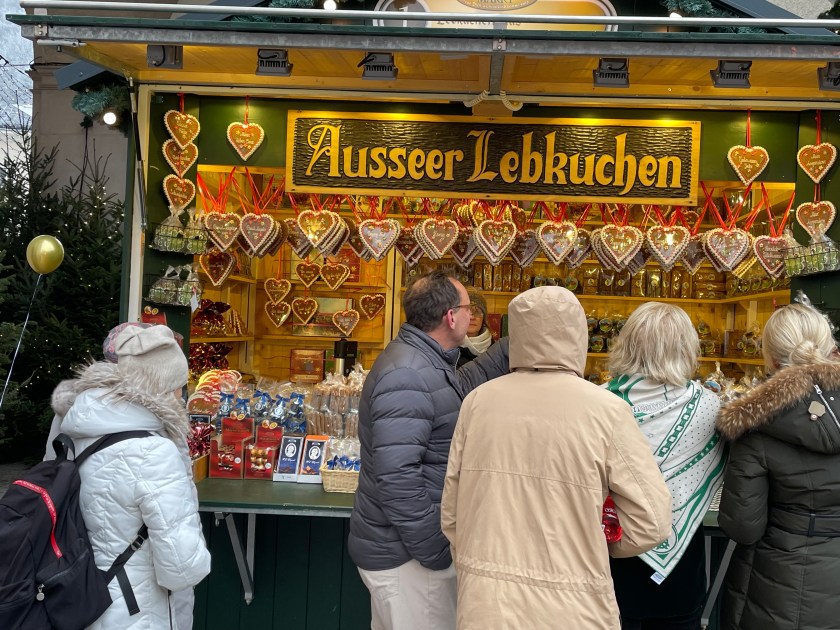
More Christmas Markets.
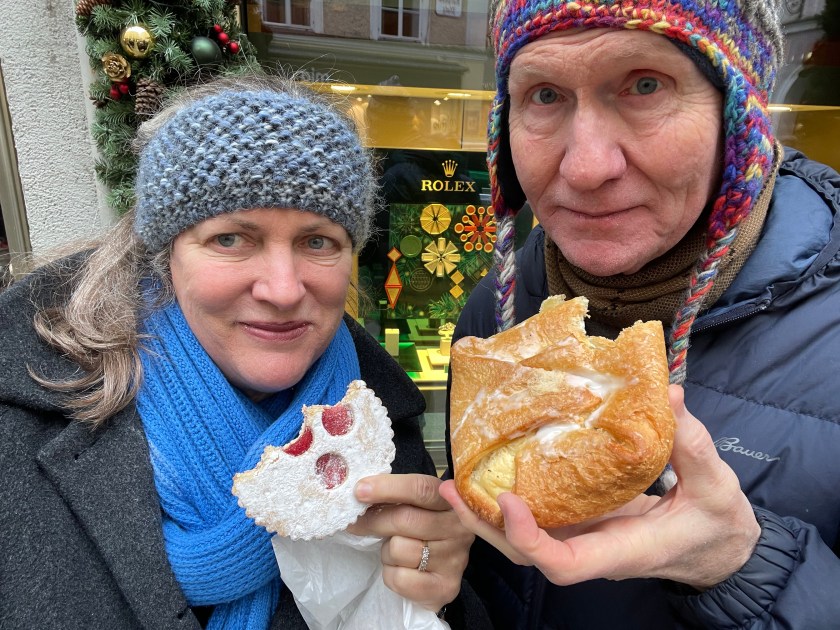
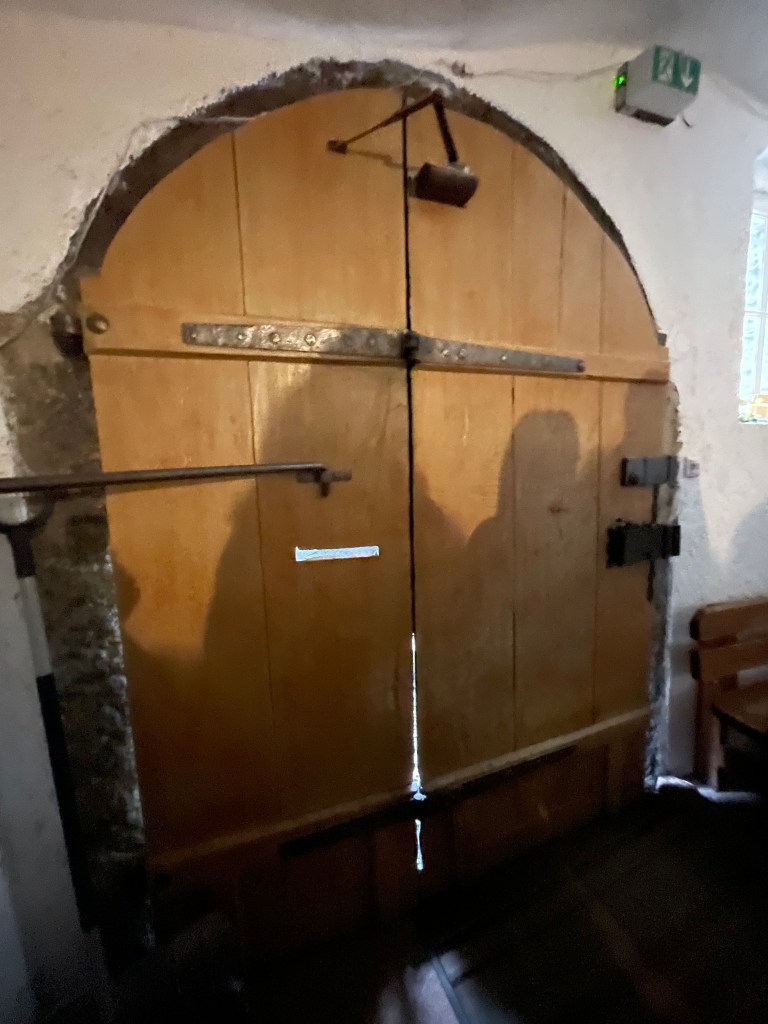
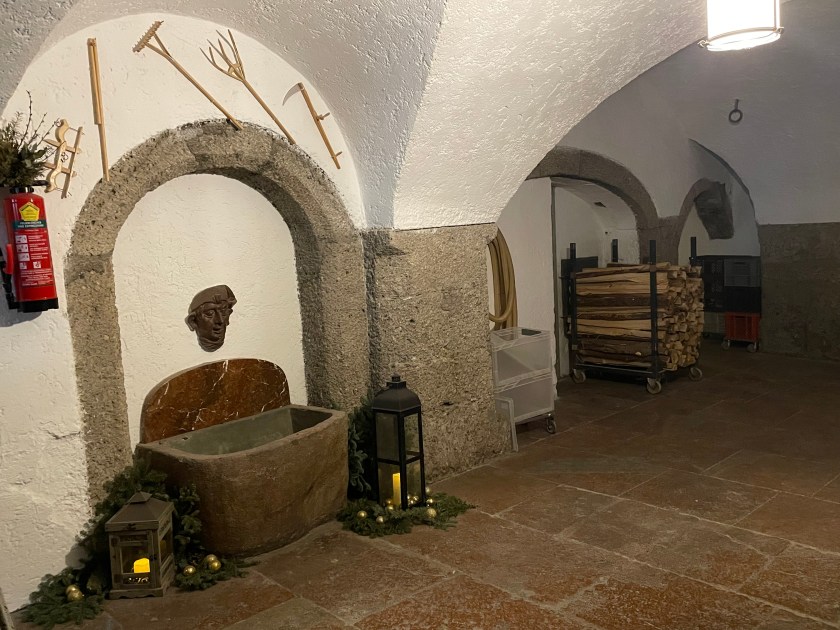
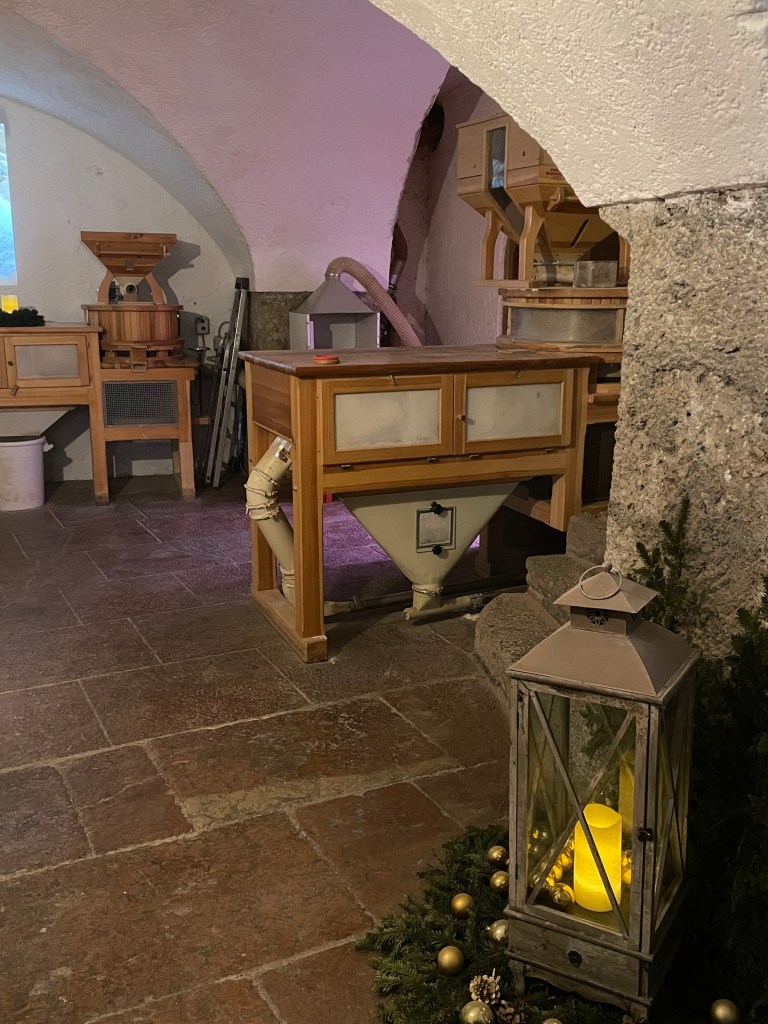
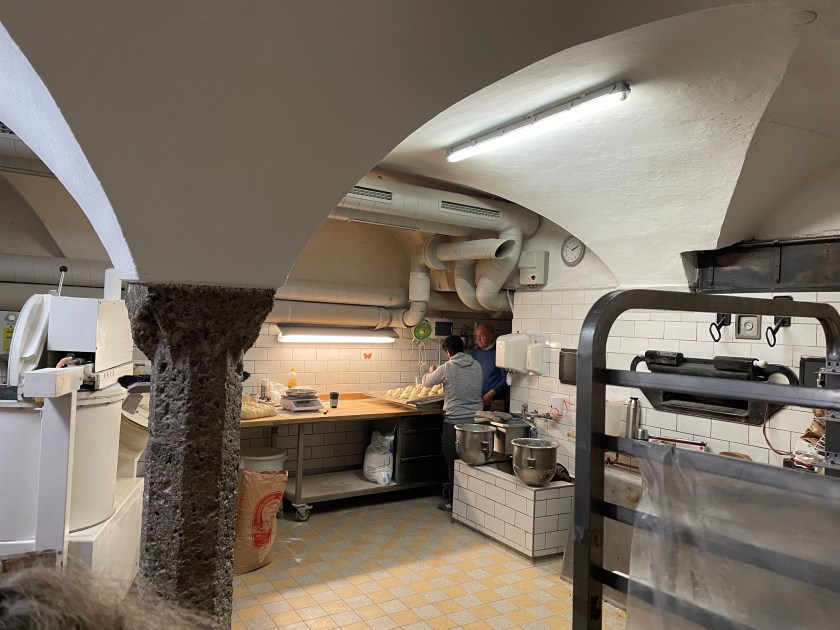
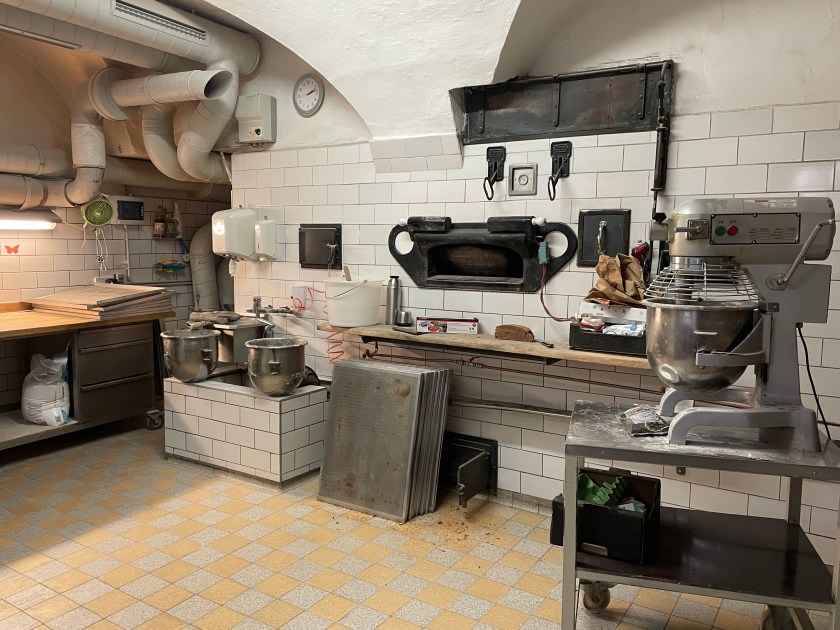
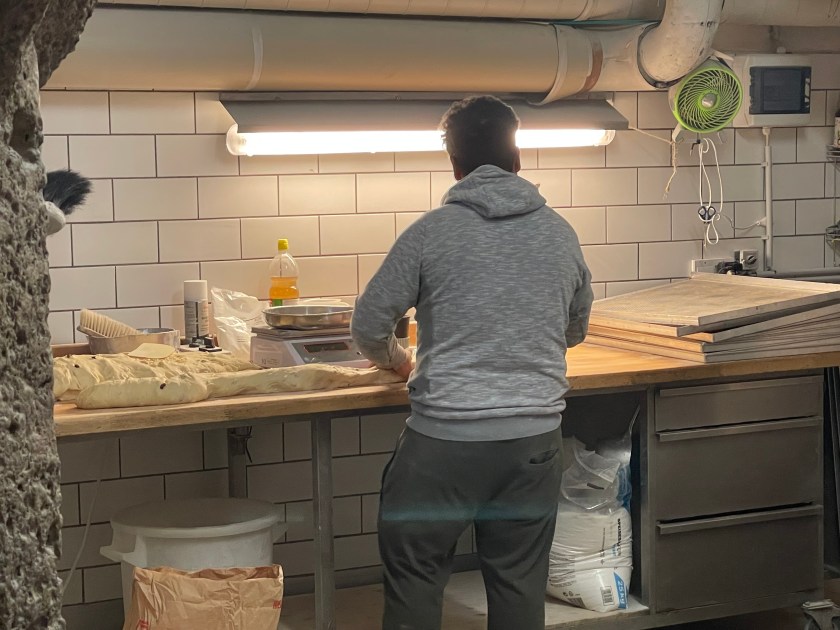
We had 2 bakeries on our list today. This is Salzburg’s Oldest Bakery–more than 800 years old! It was by the watermill. You could smell the bread baking from outside. We got in the line to go down into the old bakery. They showed a video of the bread making on a wall as we stood in line. They still make the old style dark bread made with a sourdough starter, and rye. Just three ingredients. When we got to the counter, they’d just brought a big pan of white bread rolls out of the oven. They were piping hot. We bought 2 for 3,40. Oh, so good. Warmed us.
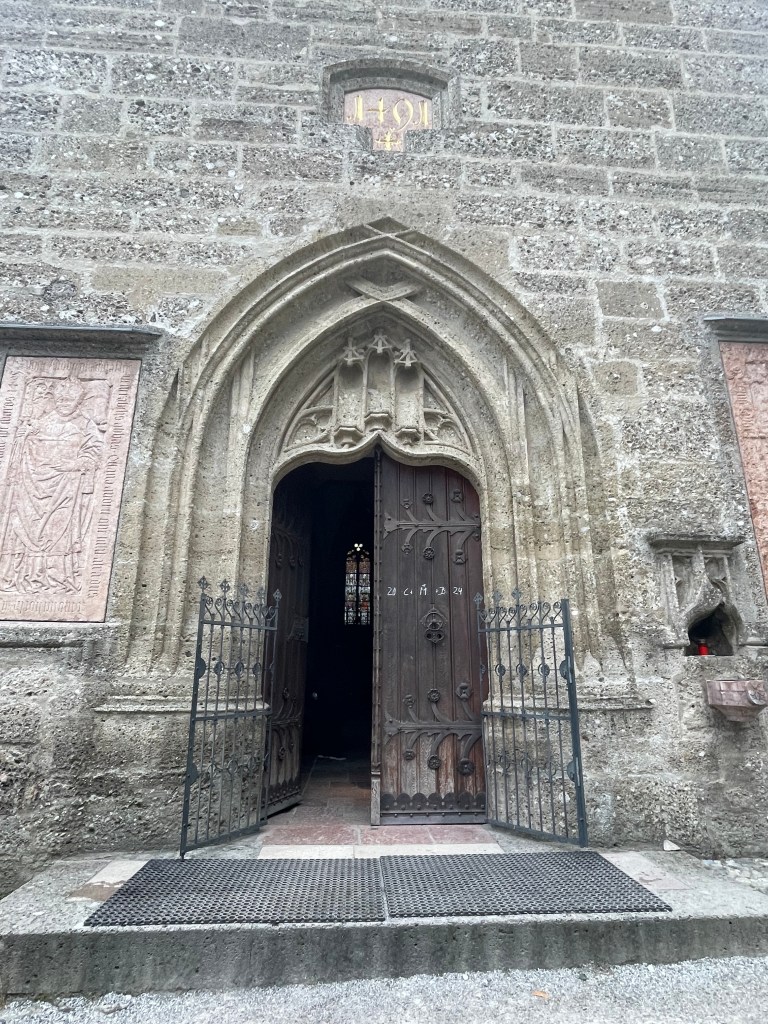
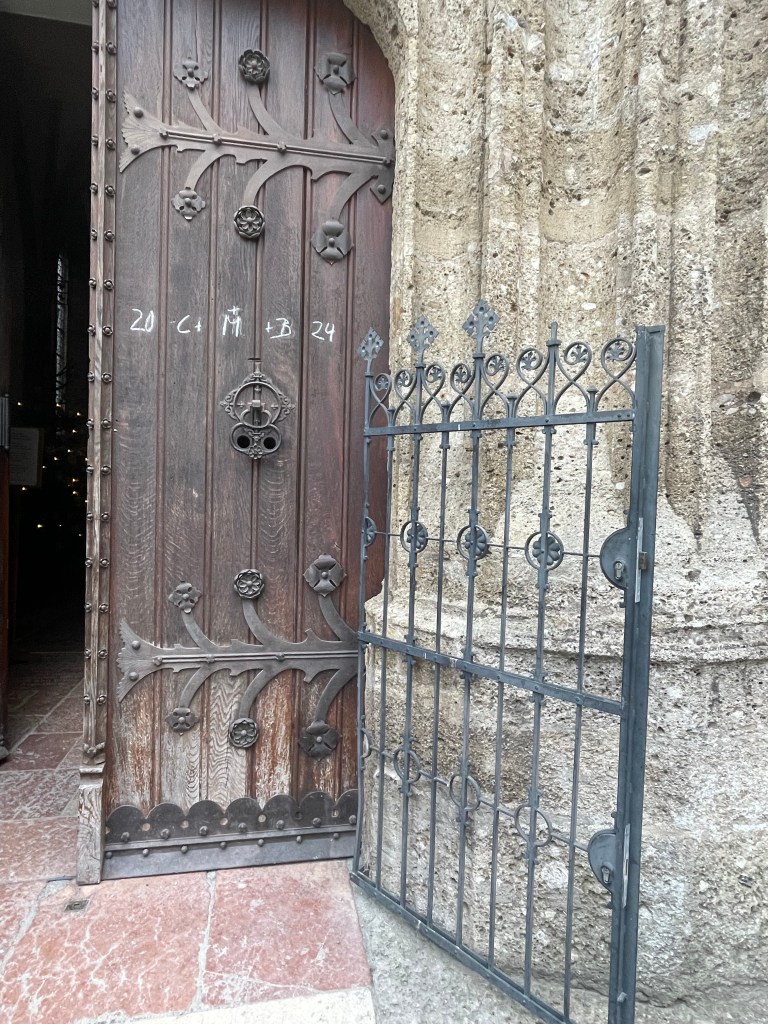
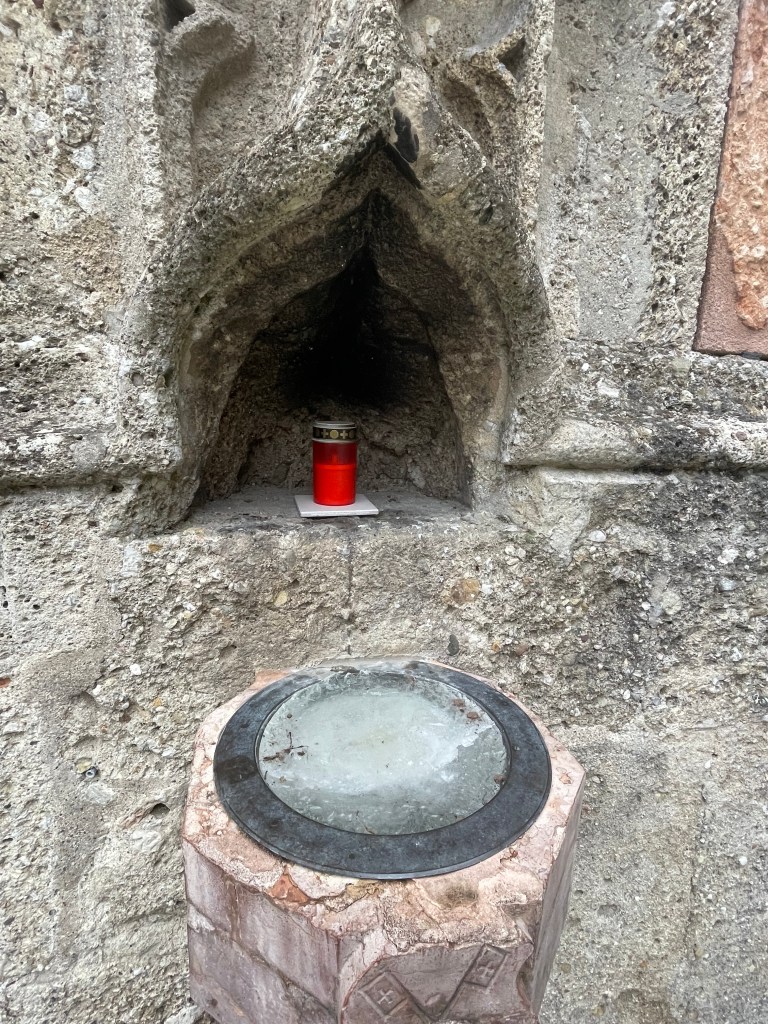
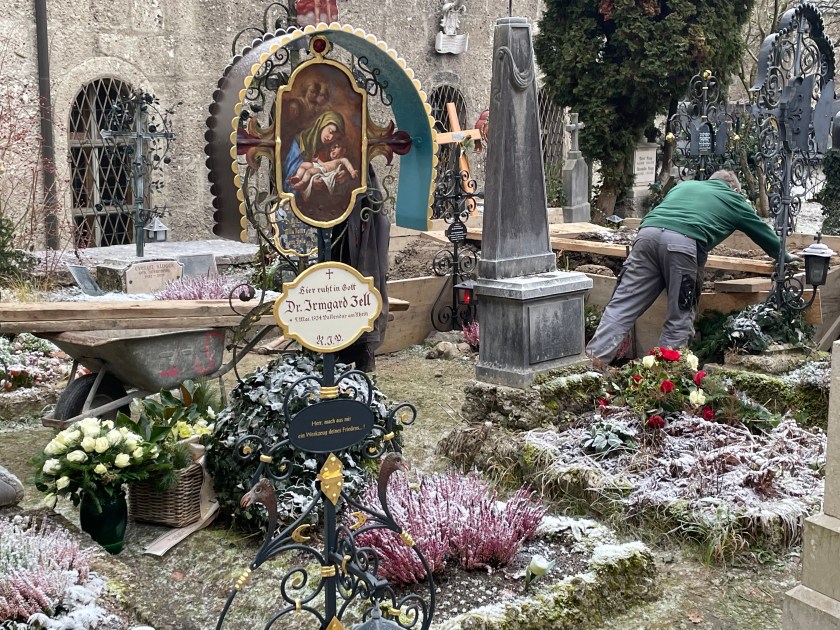
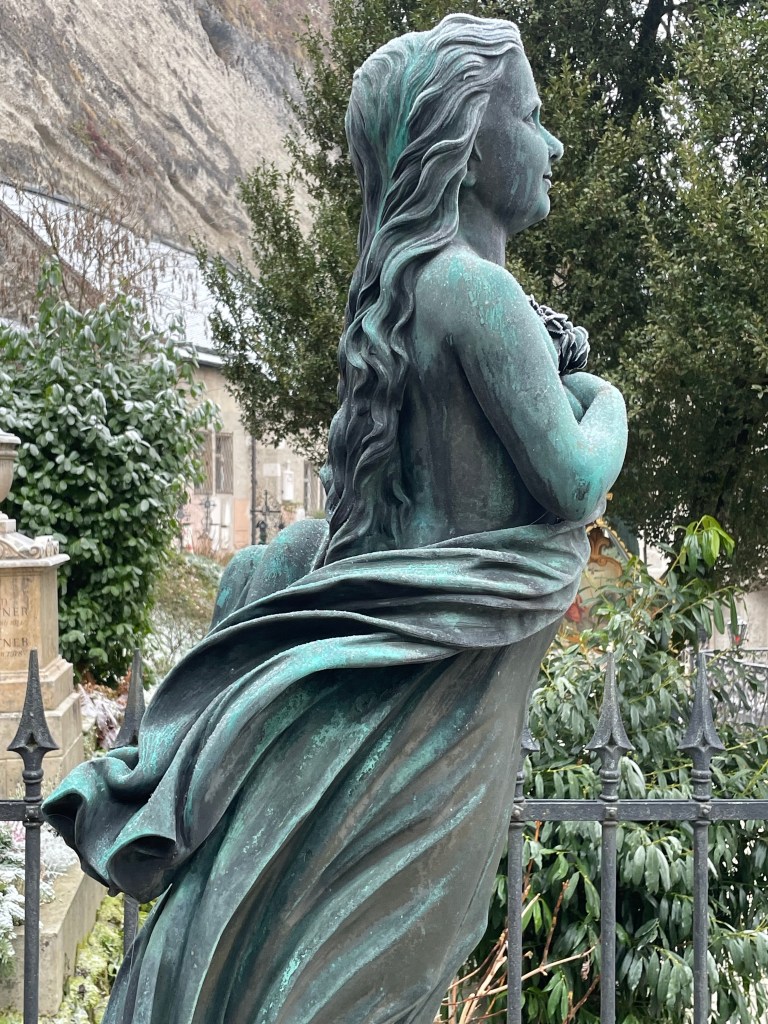
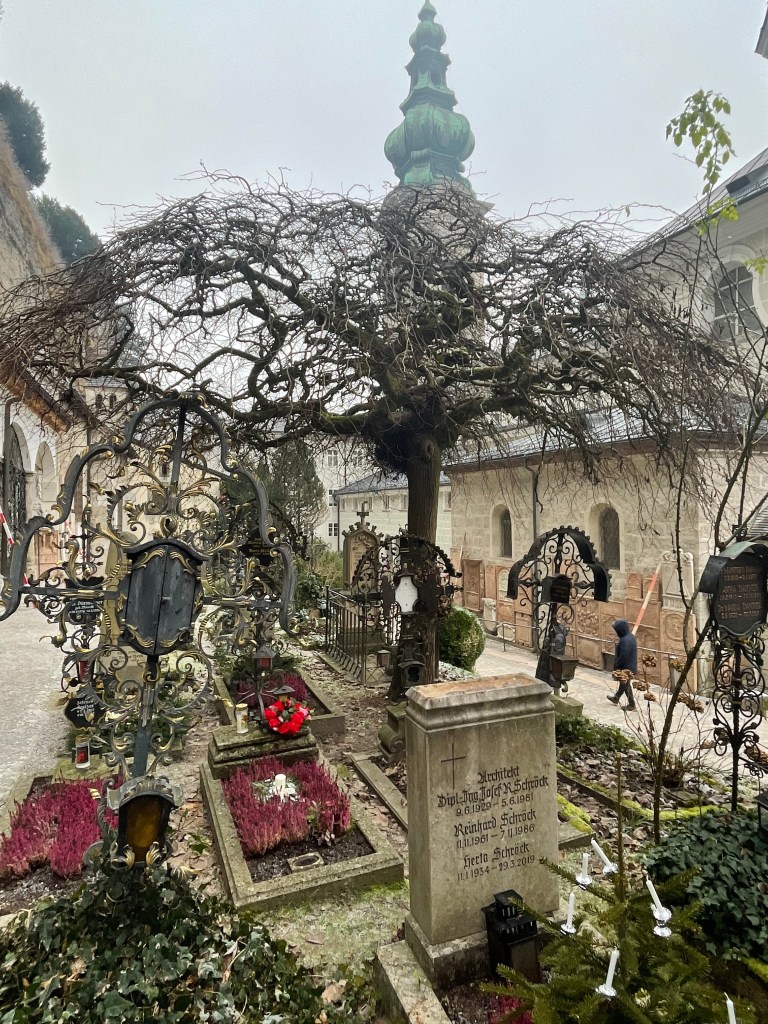
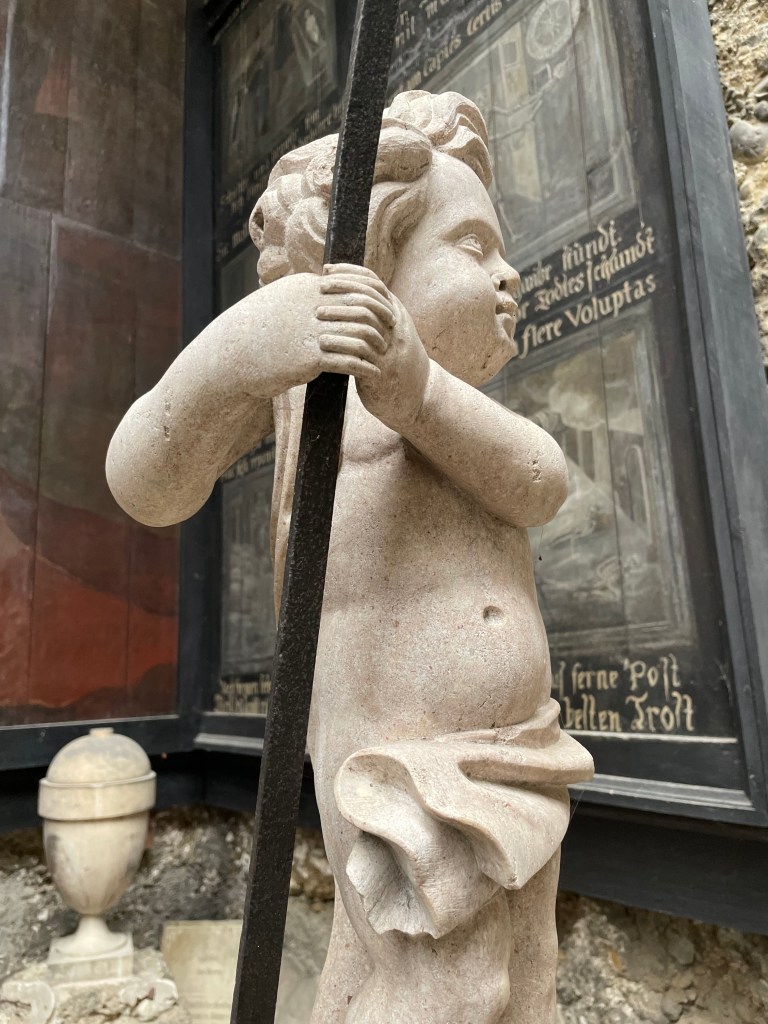
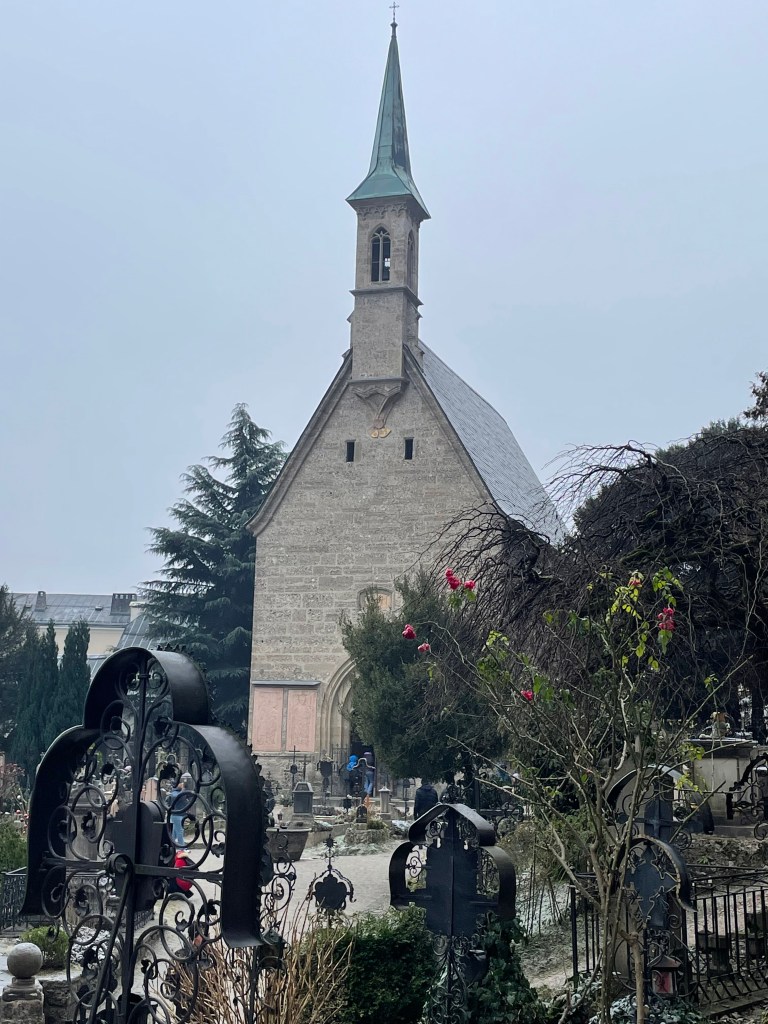
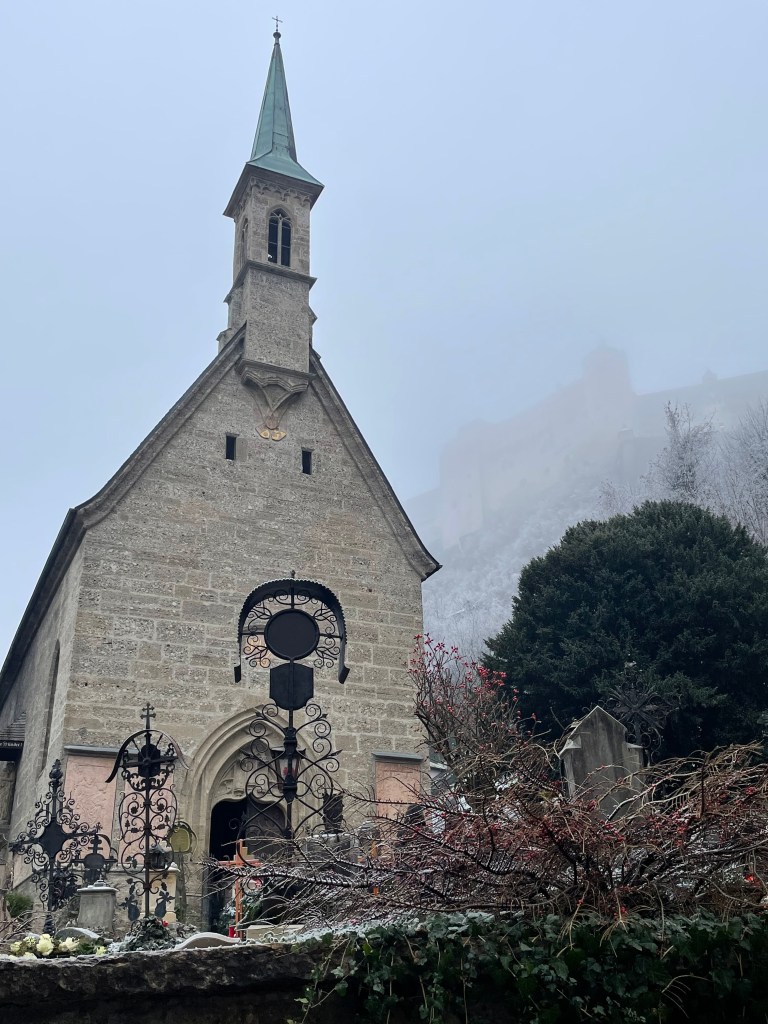
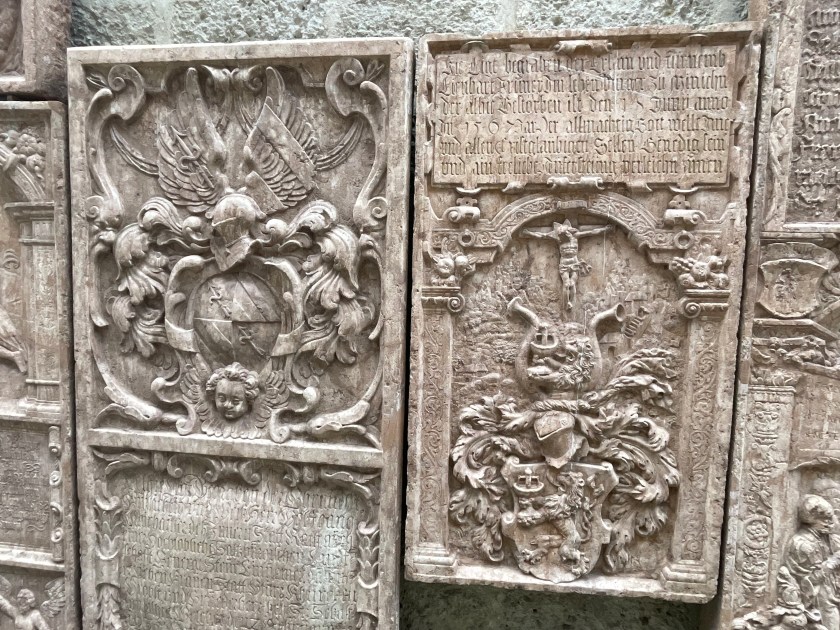
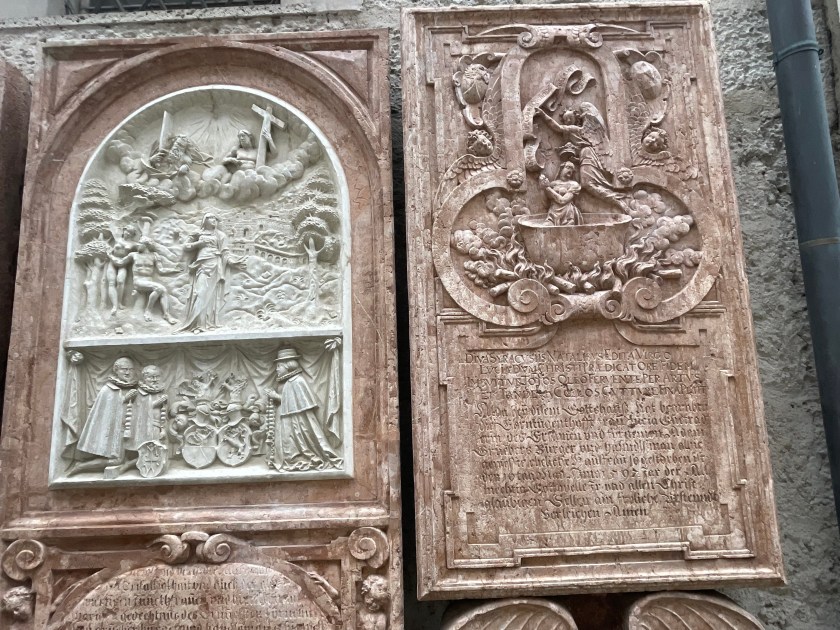
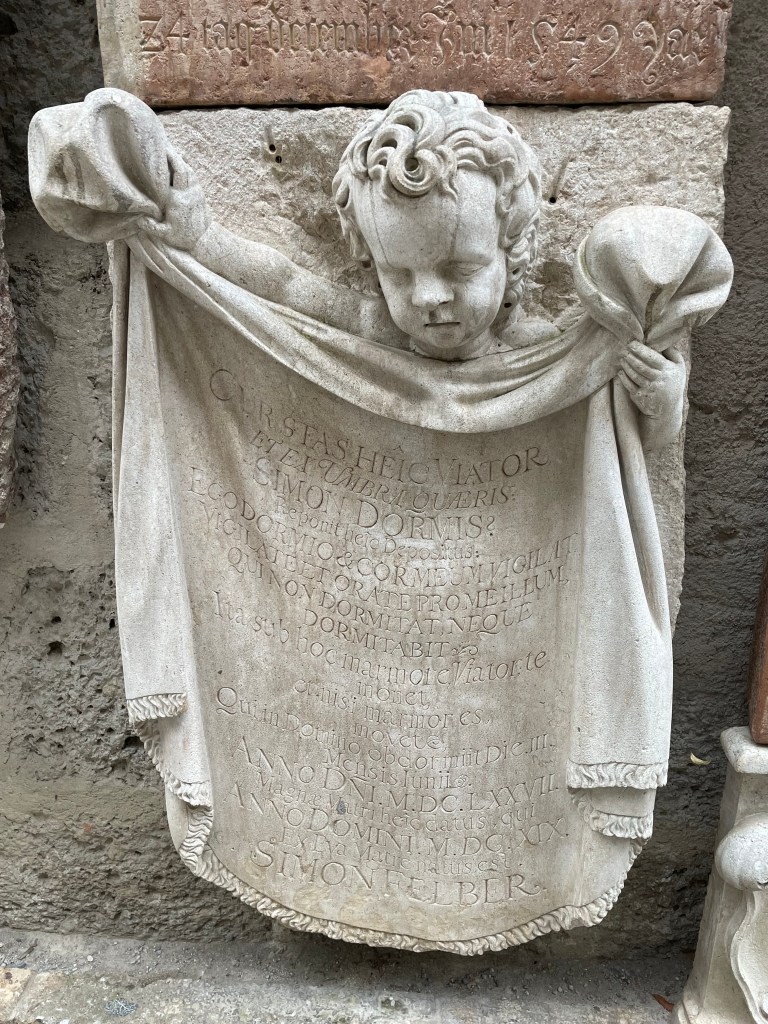
We were right by our favorite cemetery and the old 1491 Church/Chapel where they’d had the funeral Saturday when we were there. Got to go inside today. I love the interesting headstones of iron there. Everything was covered in frost.
I LOVED returning to this small interesting cemetery.
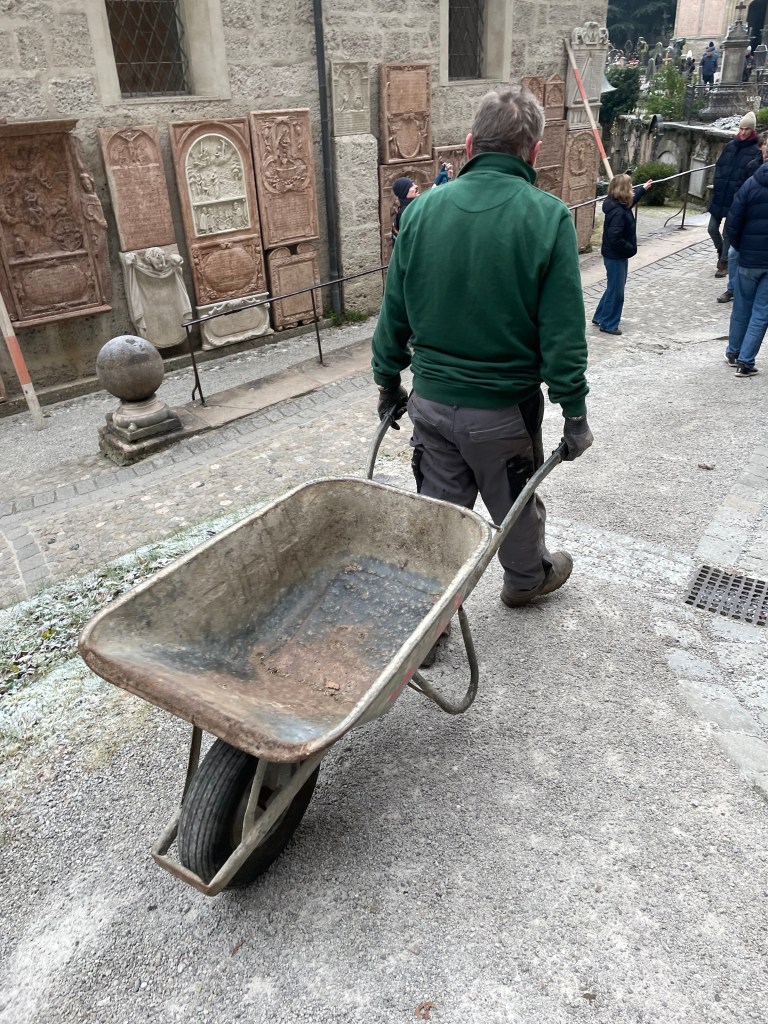
The sexton is closing a new grave.
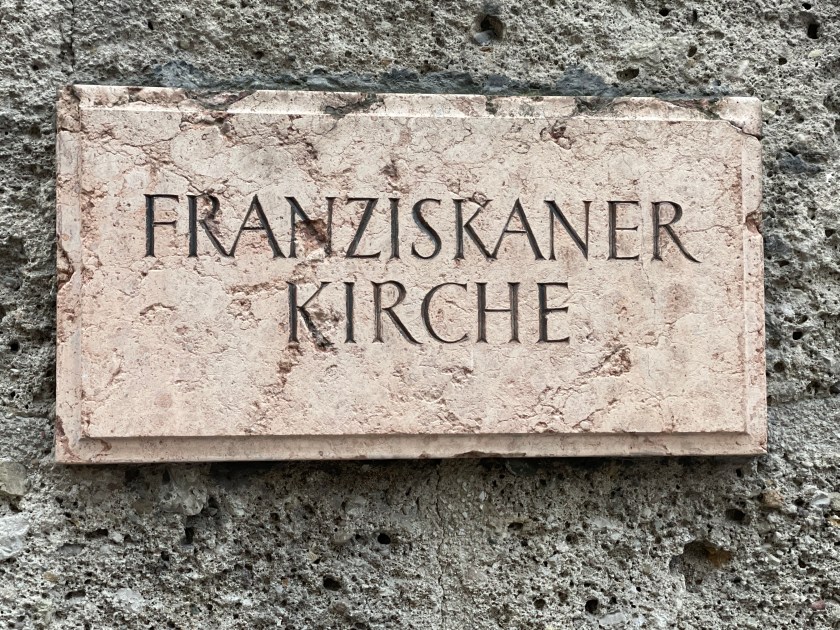
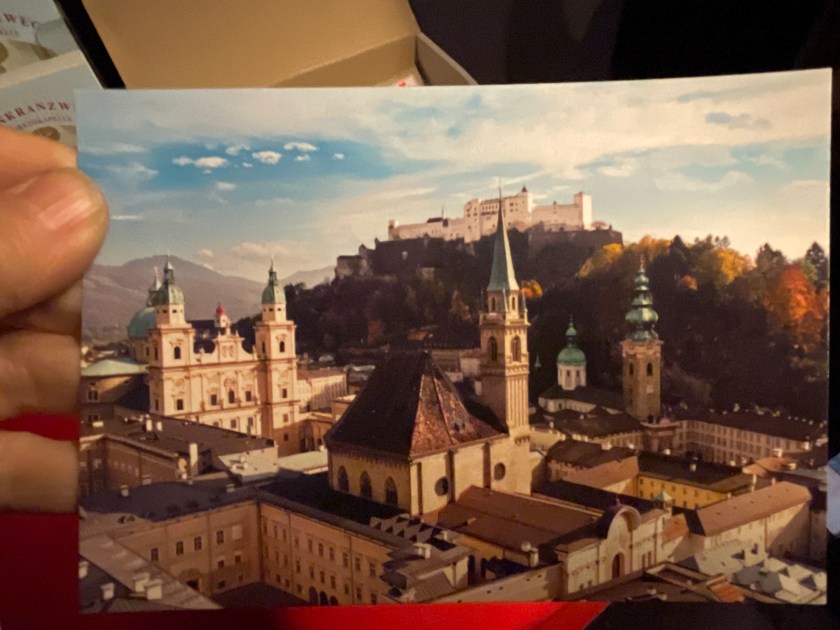
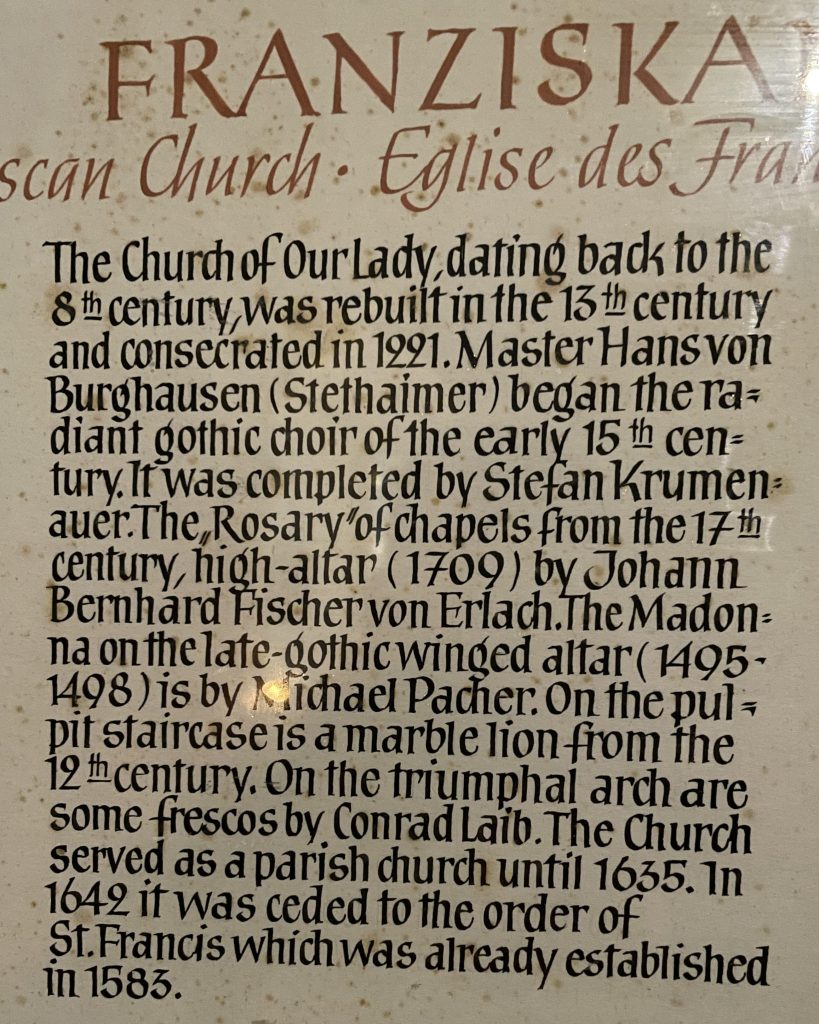
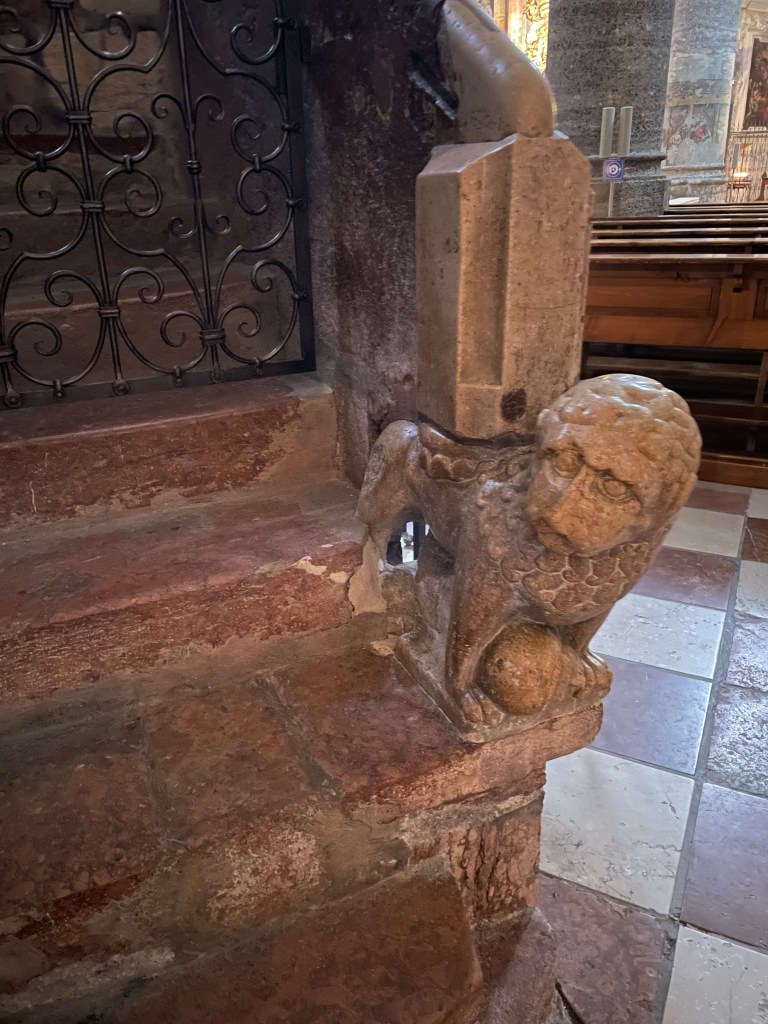
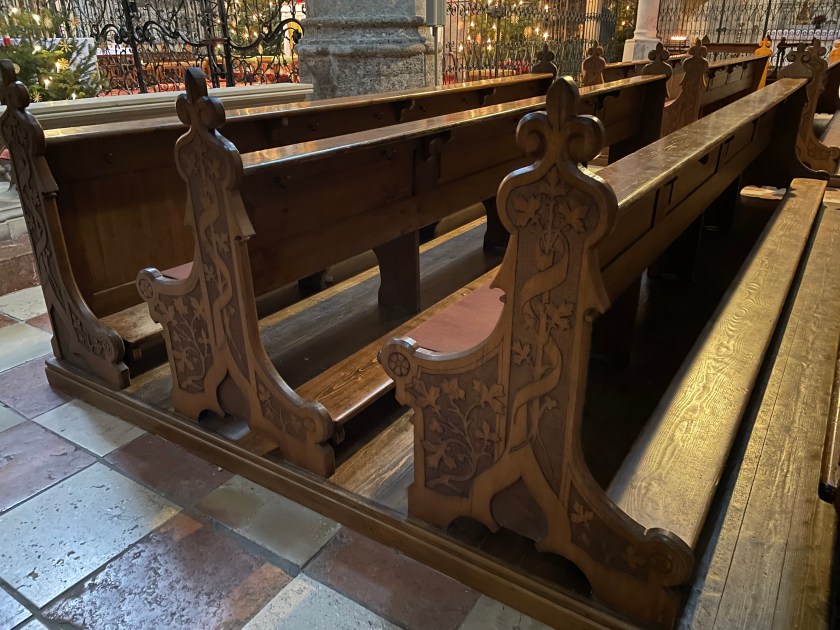
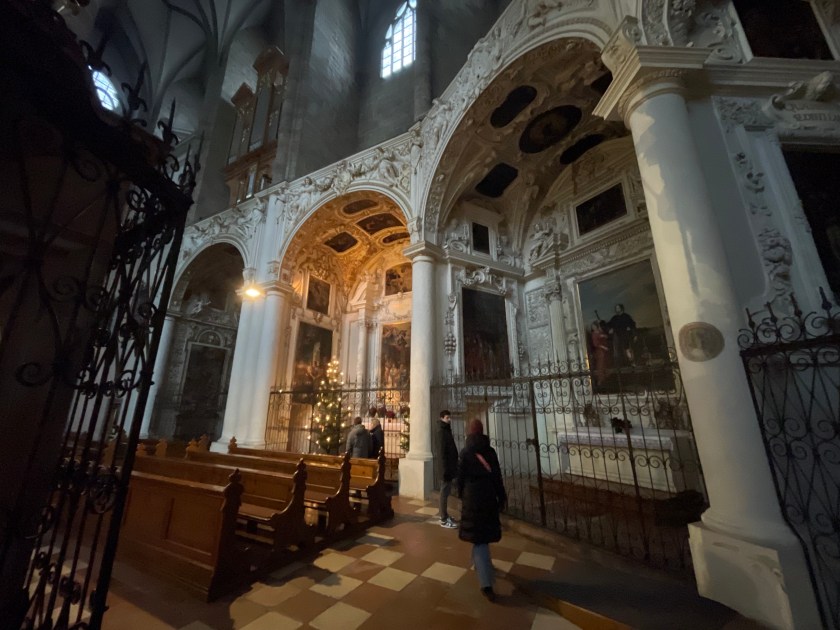
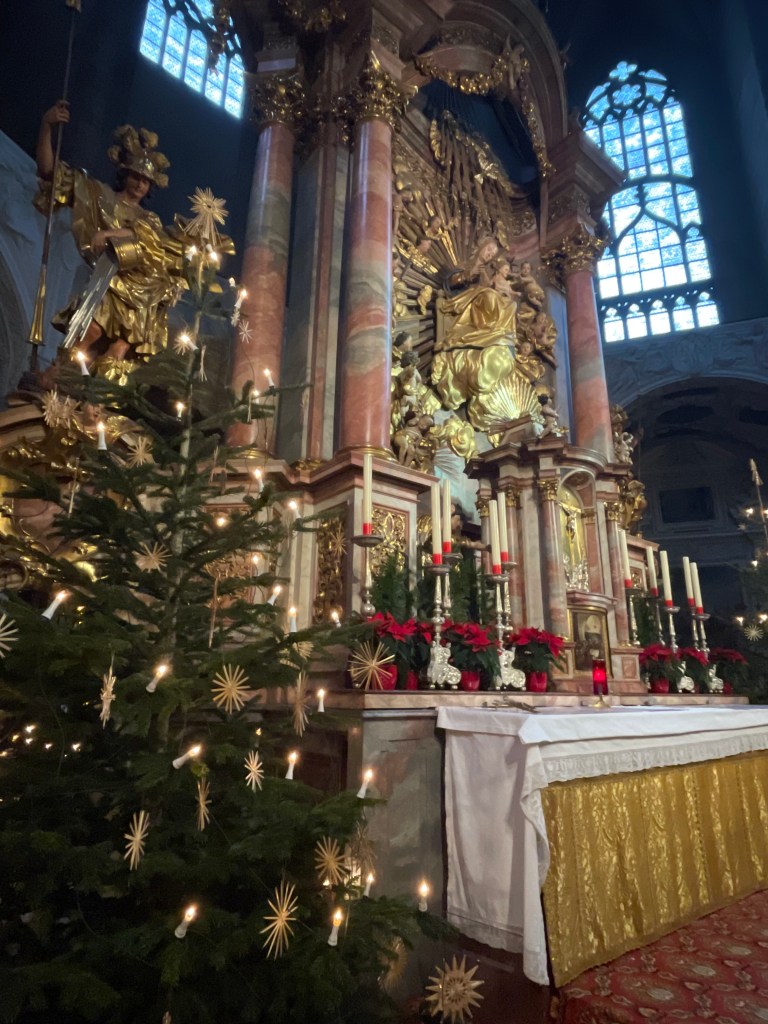
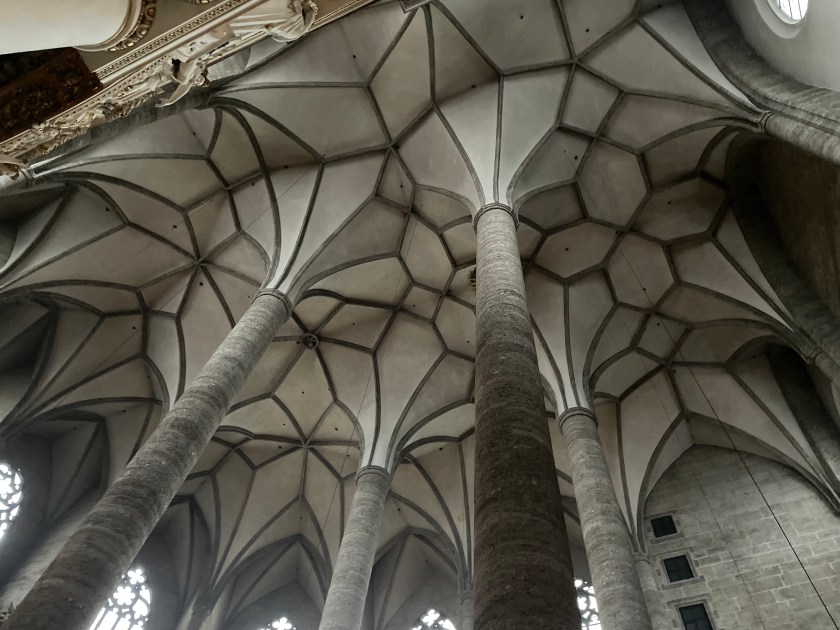
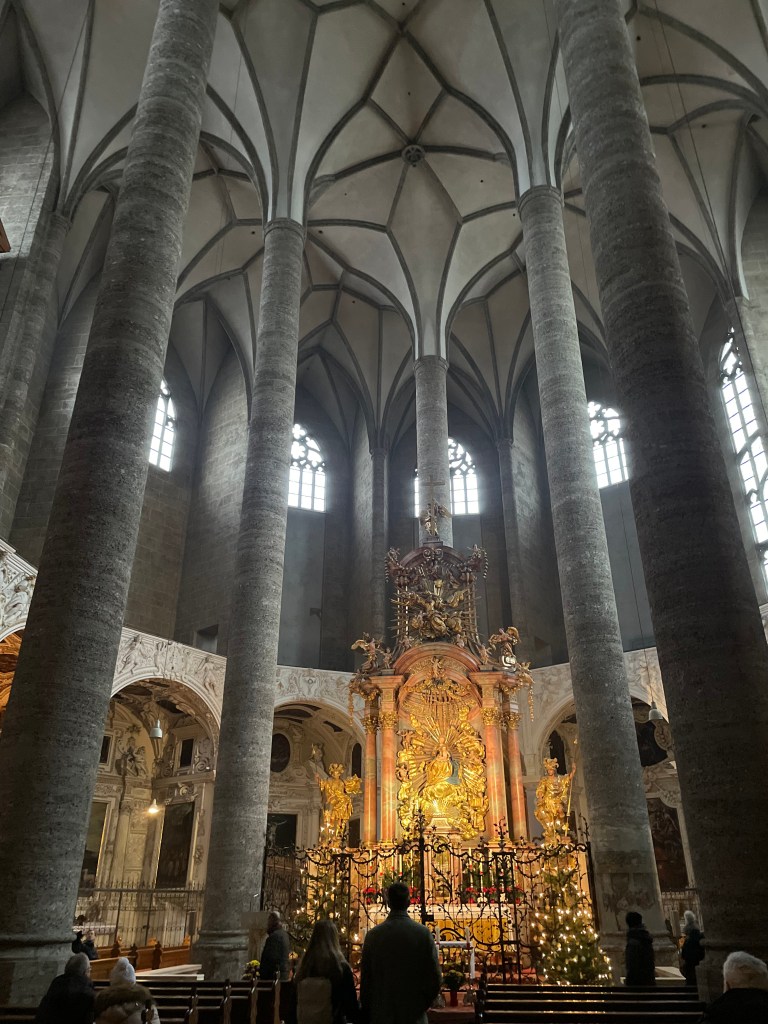
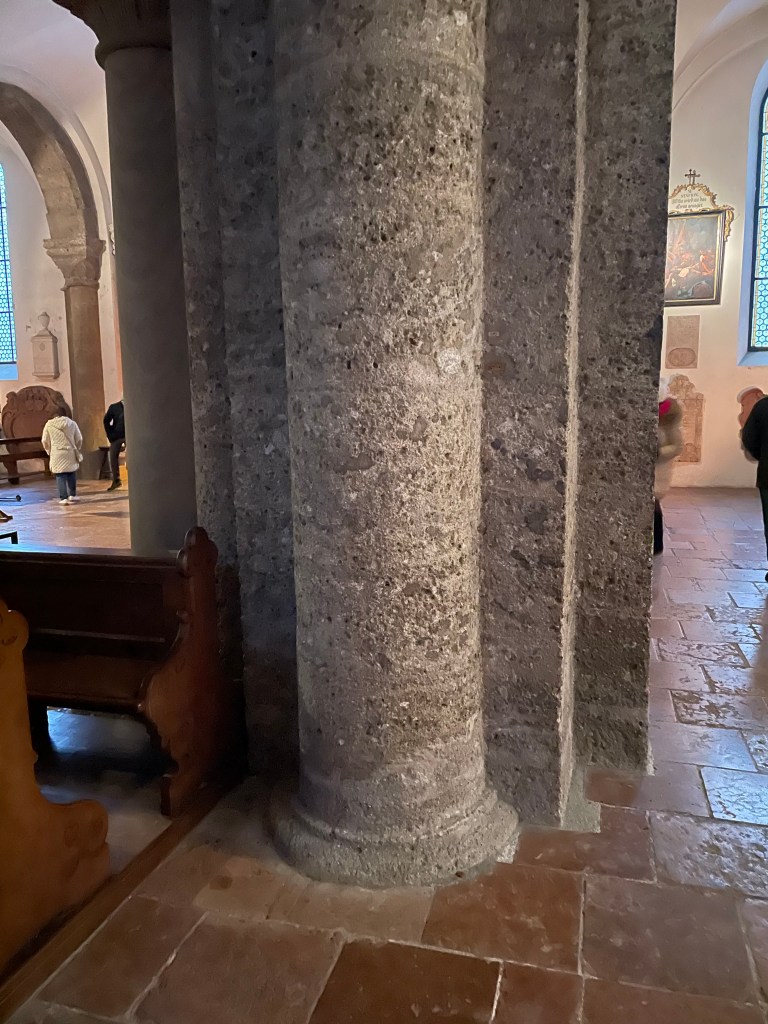
Then we went to the Franziskaner Kirche, another one not far away that we’d not gone into yet. It was first built in the 8th century, then rebuilt and dedicated in 1221. Spectacular old Gothic, then Baroque added later. The ceiling–Wow!
Spectacular ceiling!
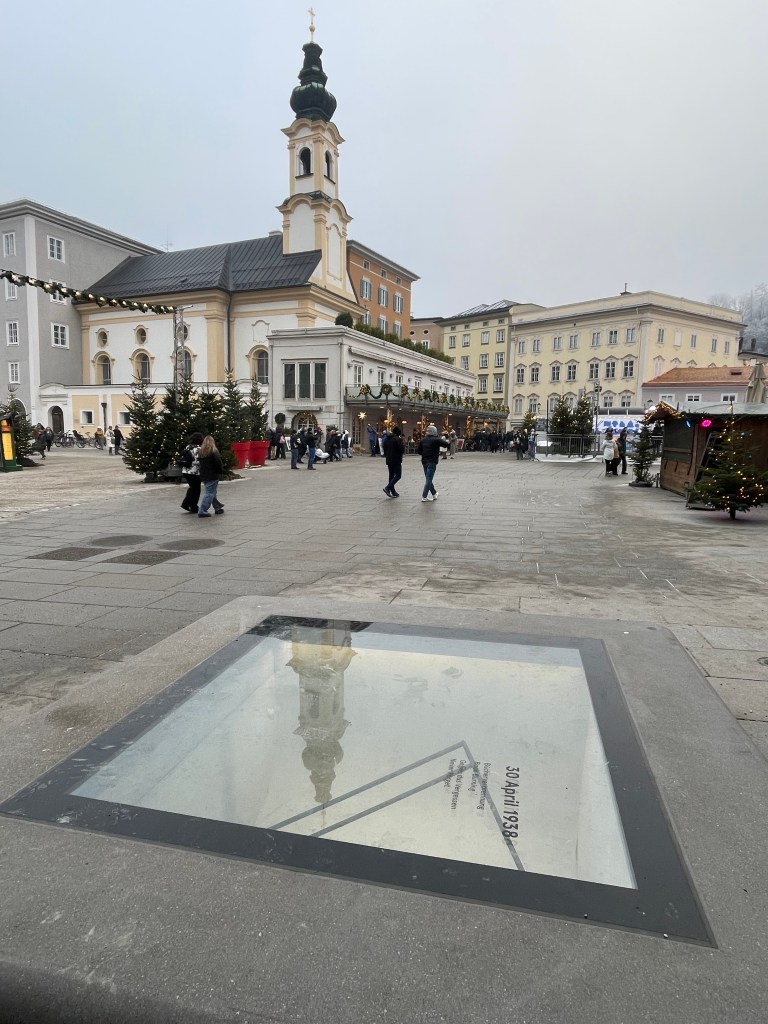
Here is the memorial for the 30 April 1938 Book Burning in the plaza.
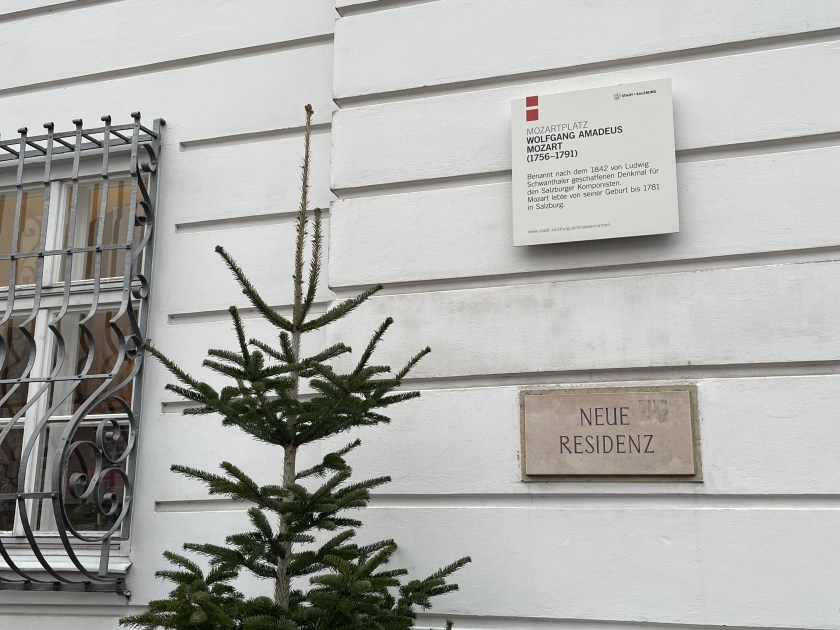
The plaza or square here is called the Mozartplatz.
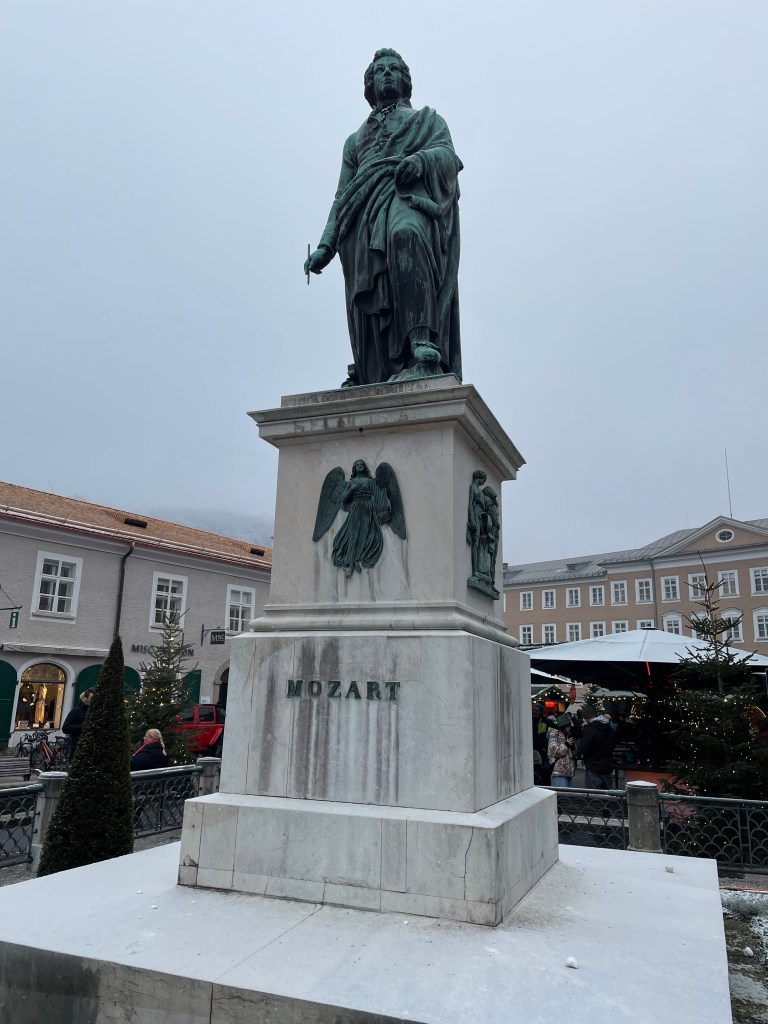
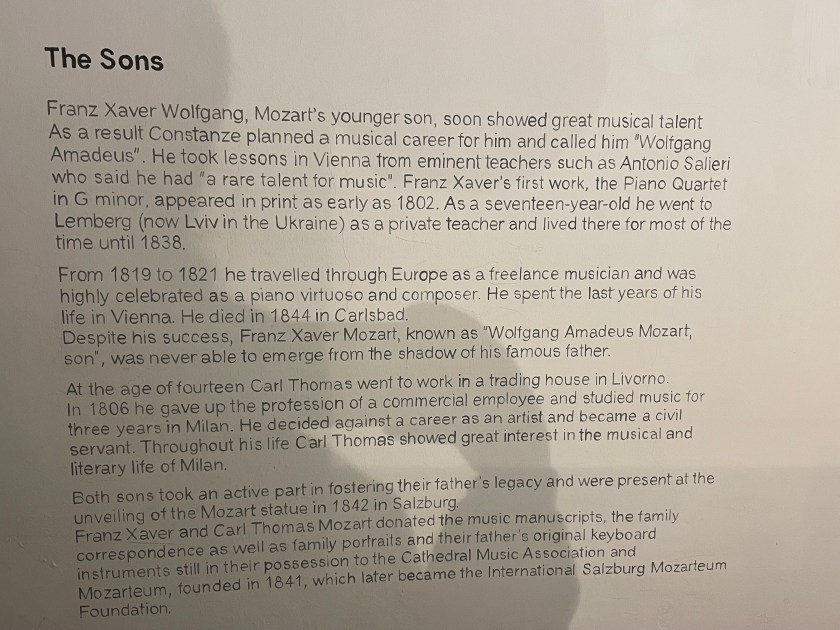
Mozart’s sons were still living when they put up this statue of him here.
We walked along the river for a bit (it was so cold), just to see some of the mansion homes along the way. Wondered who has lived there though the years and who lives there now.
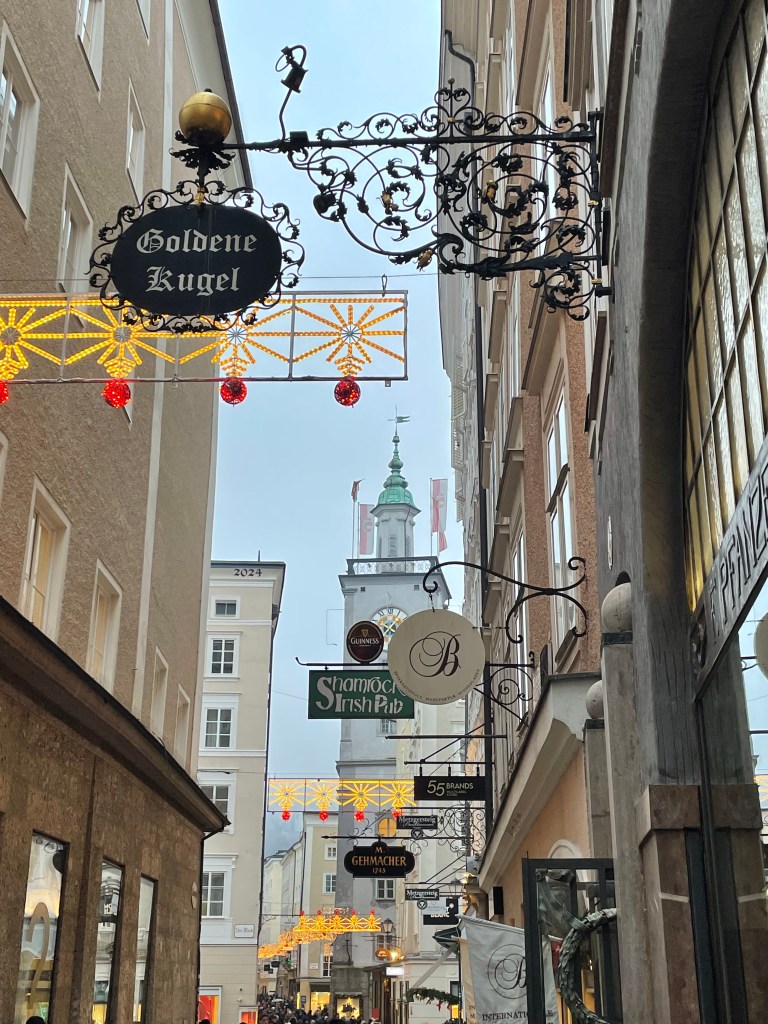
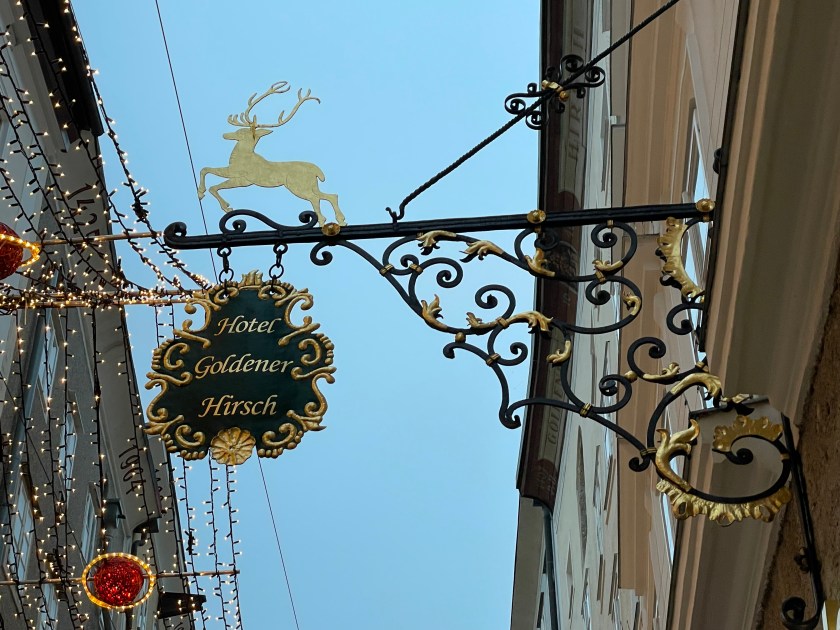
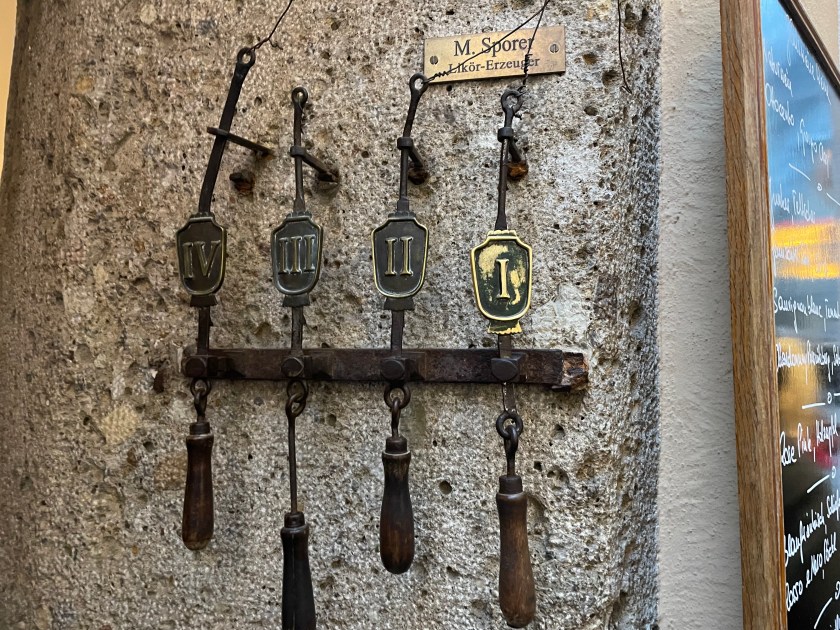
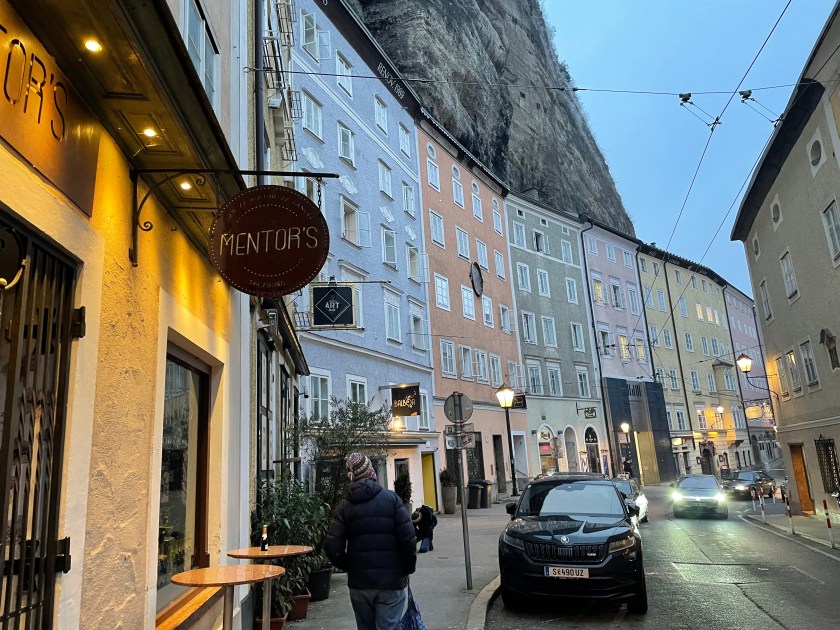
Then we went back to the main street through the old town. We enjoyed the Christmas lights and the interesting signage hanging above us.
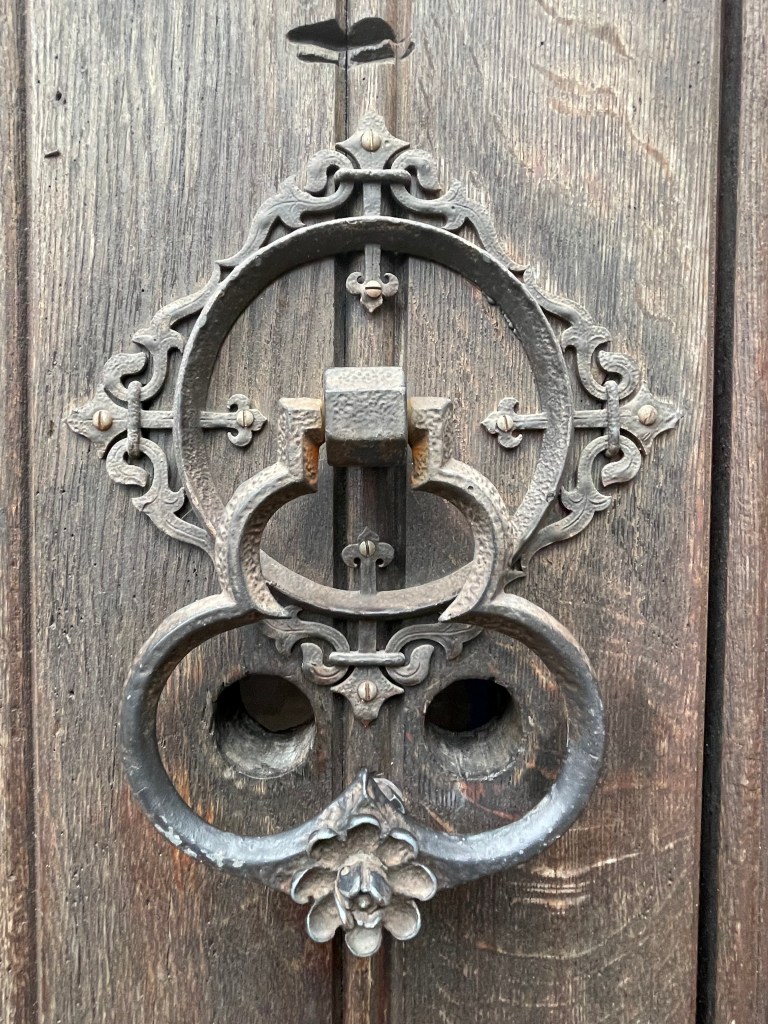
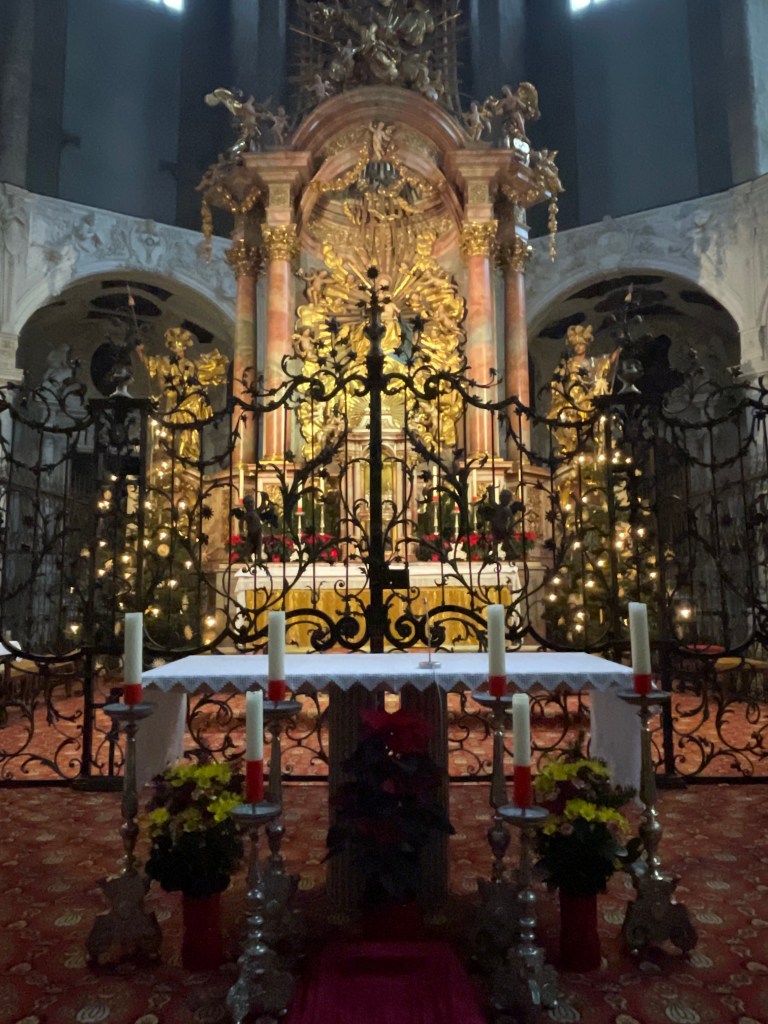
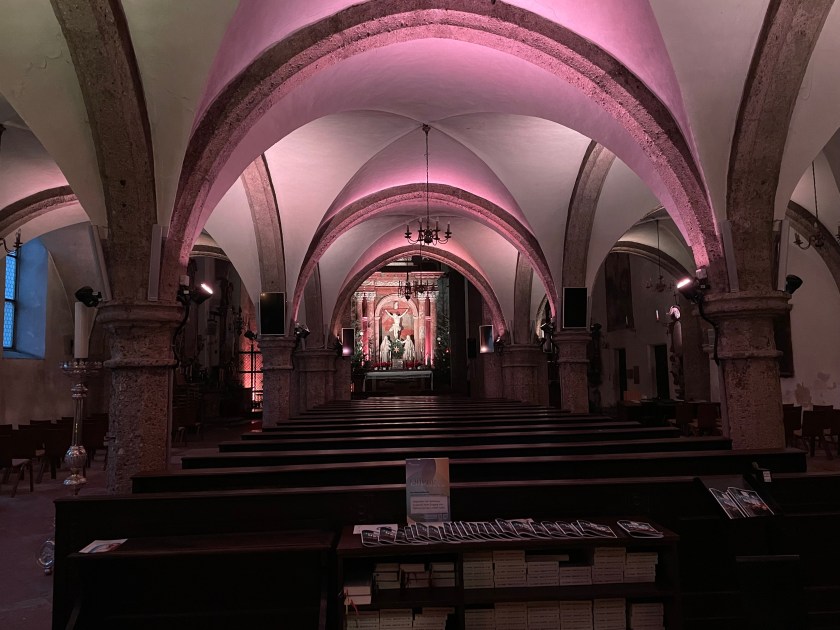
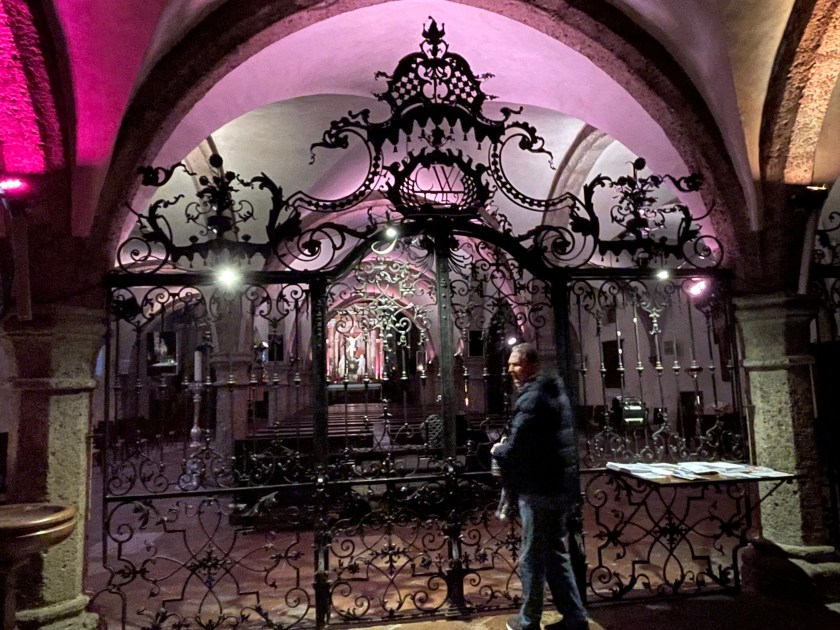
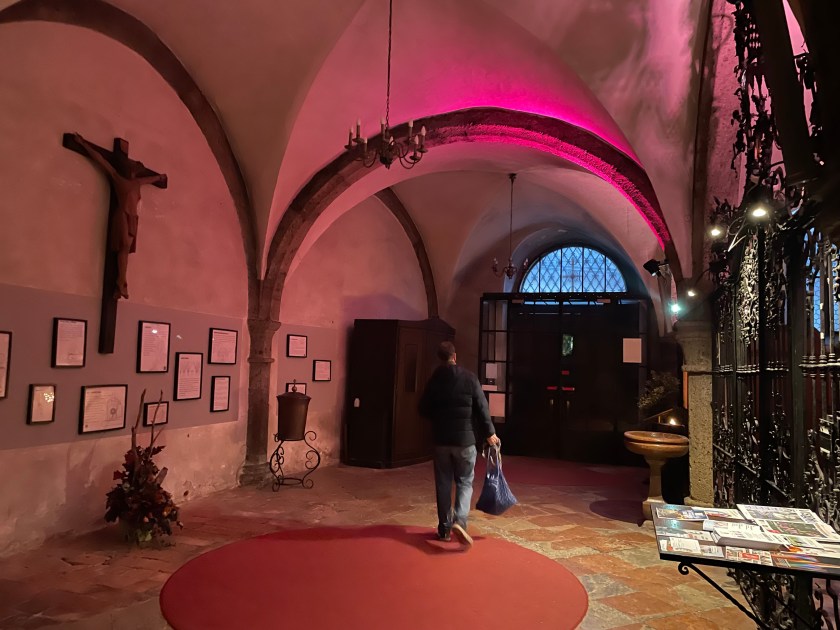
At the end of the street we went into the very old Stadtpfarrkirche. It was gated inside, so you could only look in on the chapel. The gate was intricate and beautiful. We do not tire of seeing inside all these churches.
By then it was 4:30. We saw everything on our list and our dinner reservation at the famous Schnitzel Love restaurant wasn’t until 7:00. We decided to go by to see if we could get in earlier (rather than going home and coming back). They were willing, so we had our Schnitzel dinner. This restaurant is also in Vienna and it’s famous for the best Schnitzel. They pound it really thin and you can choose what kind of oil/butter/lard you want it cooked in. It’s served with sides of potato salad, boiled potatoes with parsley, cucumber salad or cranberry sauce. I got a half portion (the regular has 2 huge pieces that overlap and fill the entire plate). It was good. Schnitzel is a favorite here.
Our last evening in Salzburg. We’ve loved our time here. There are so many interesting things to see and do. And being here at Christmastime has been magical. Tomorrow we’ll leave mid-day to take the train back to Frankfurt to welcome in the new year.
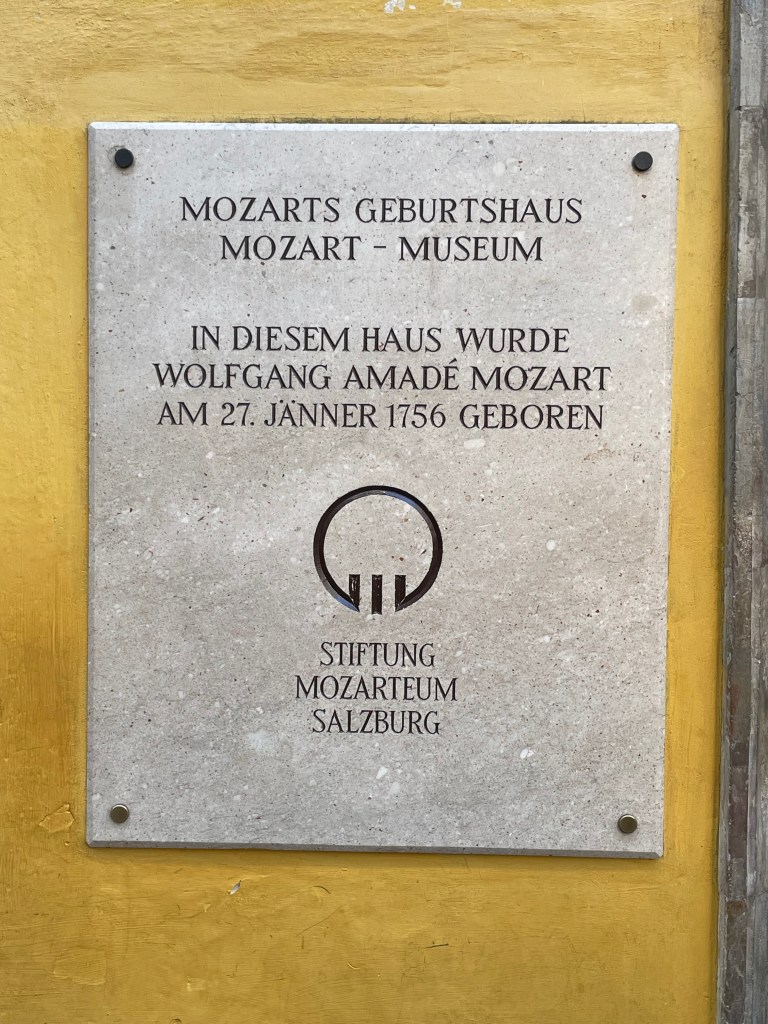
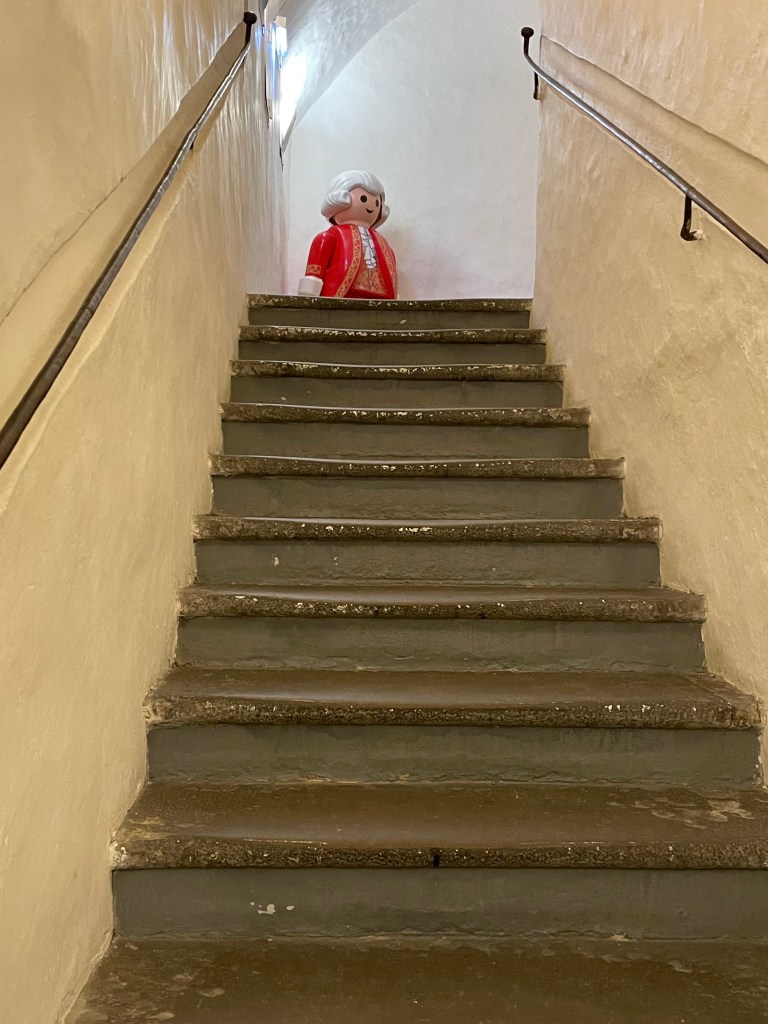
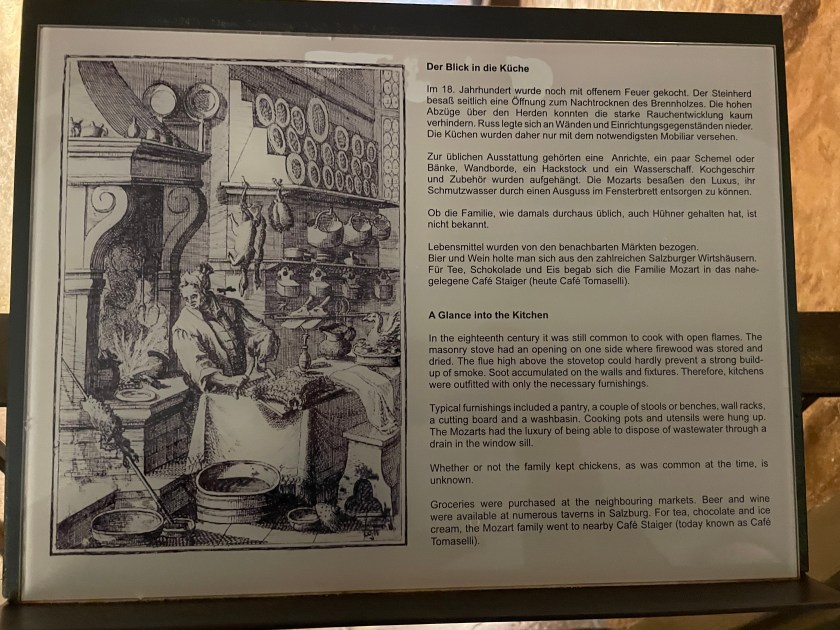
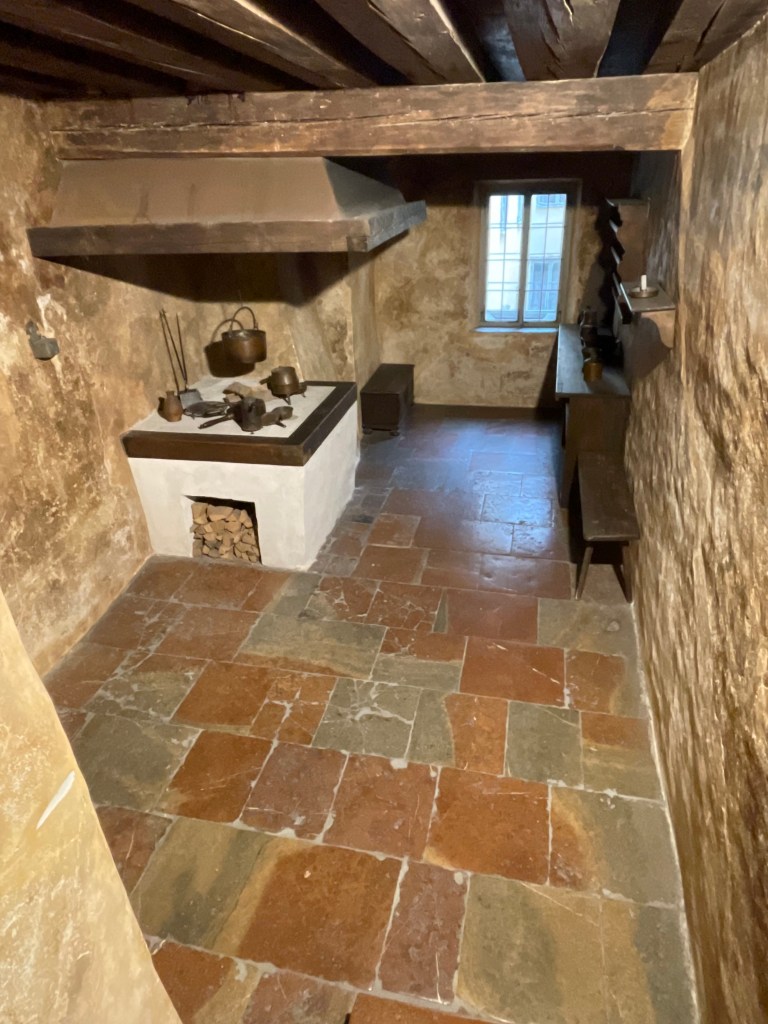
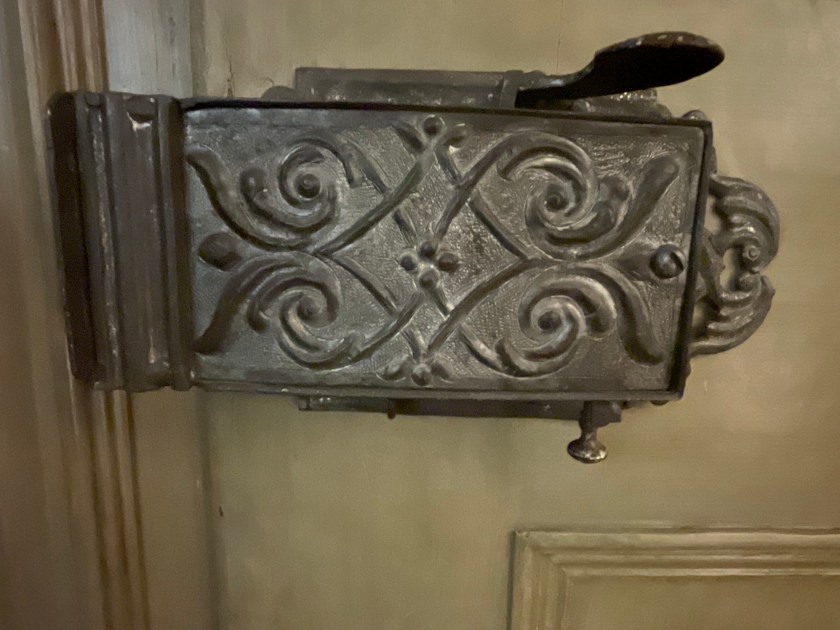
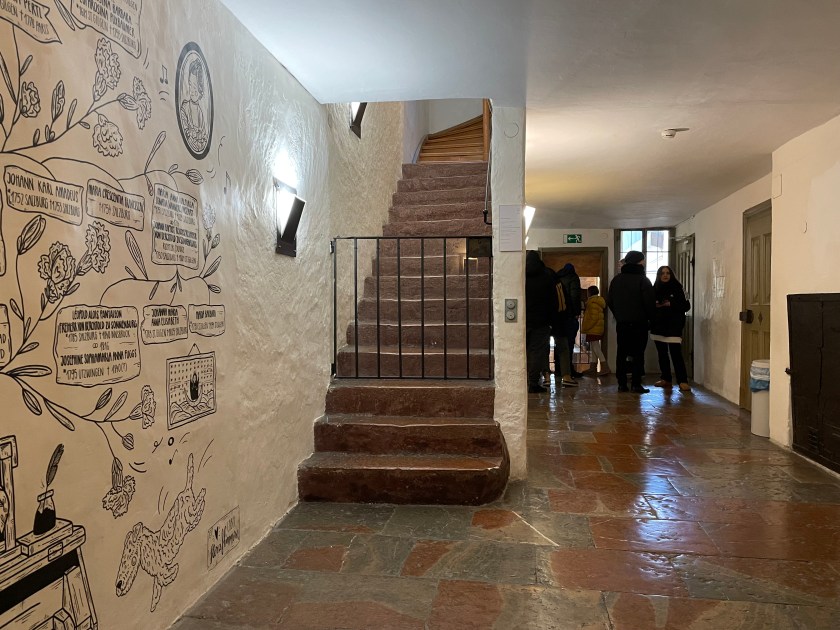
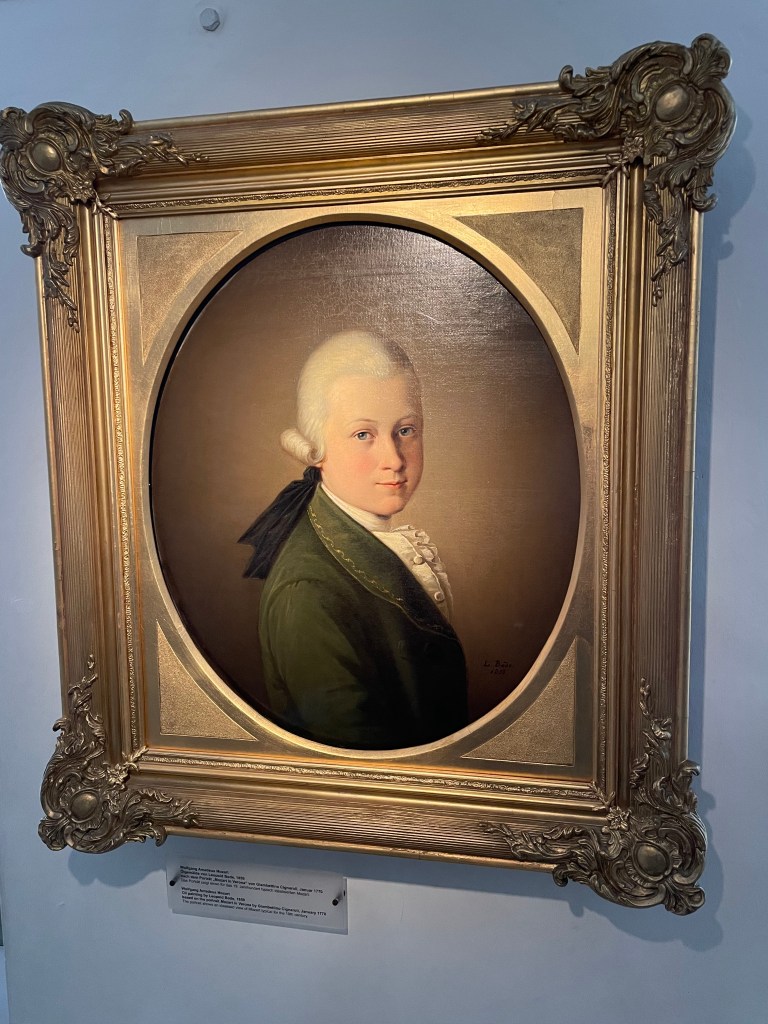
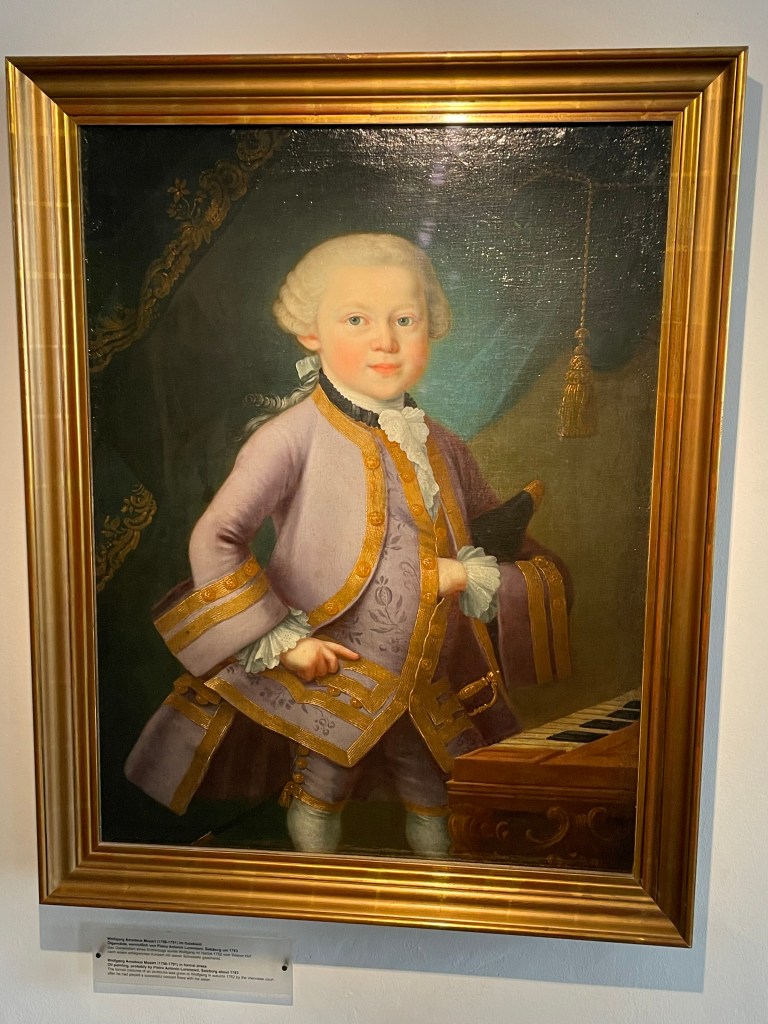
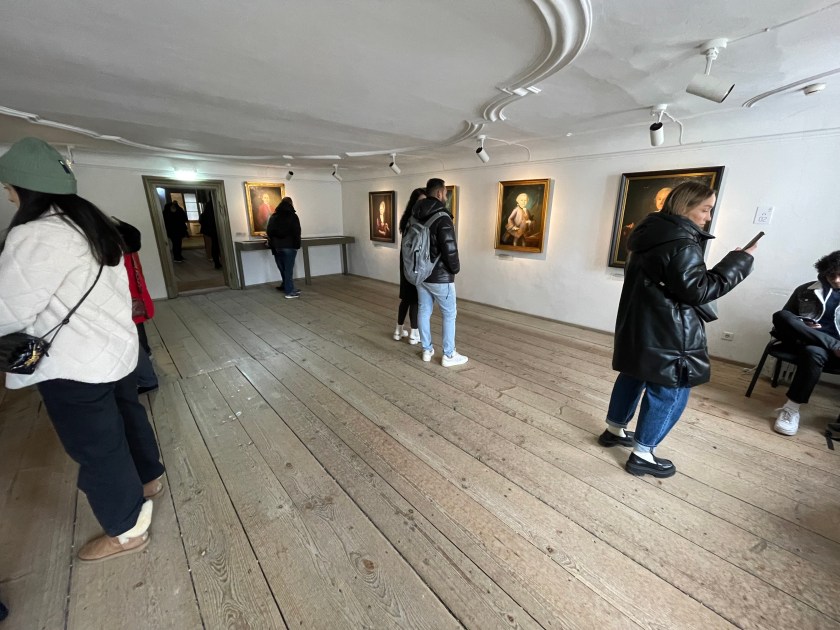
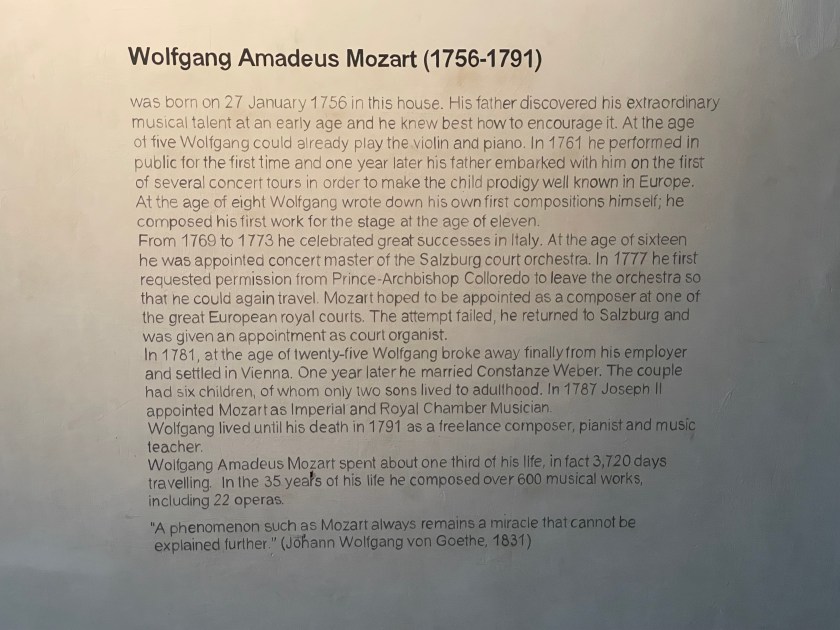
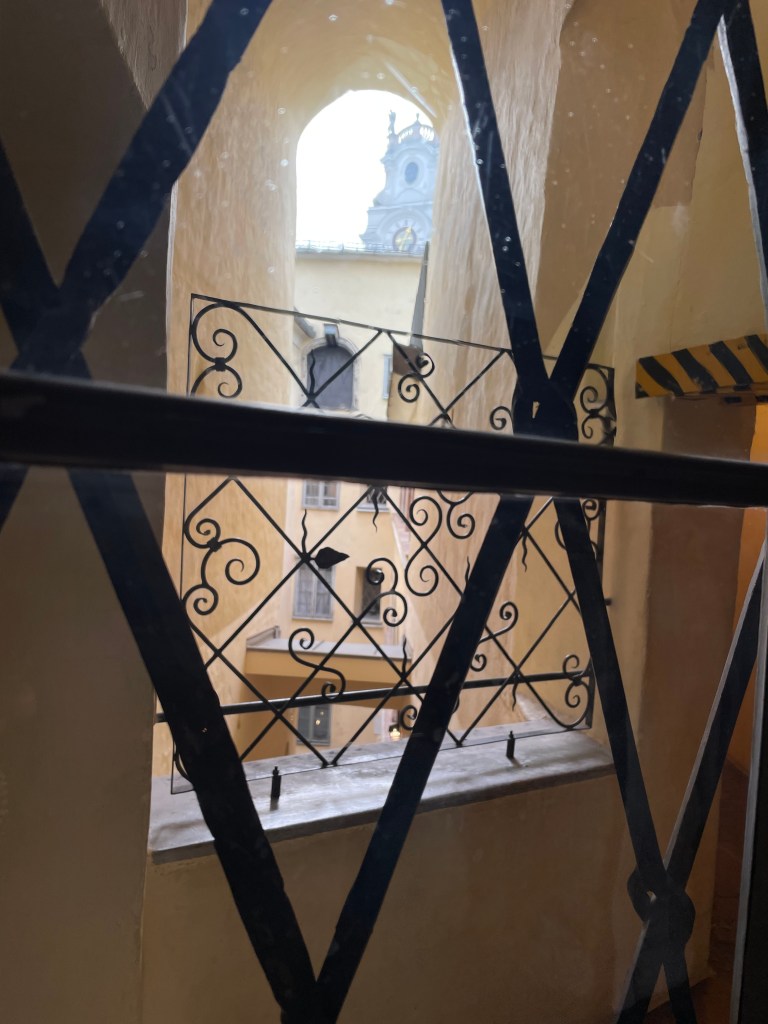
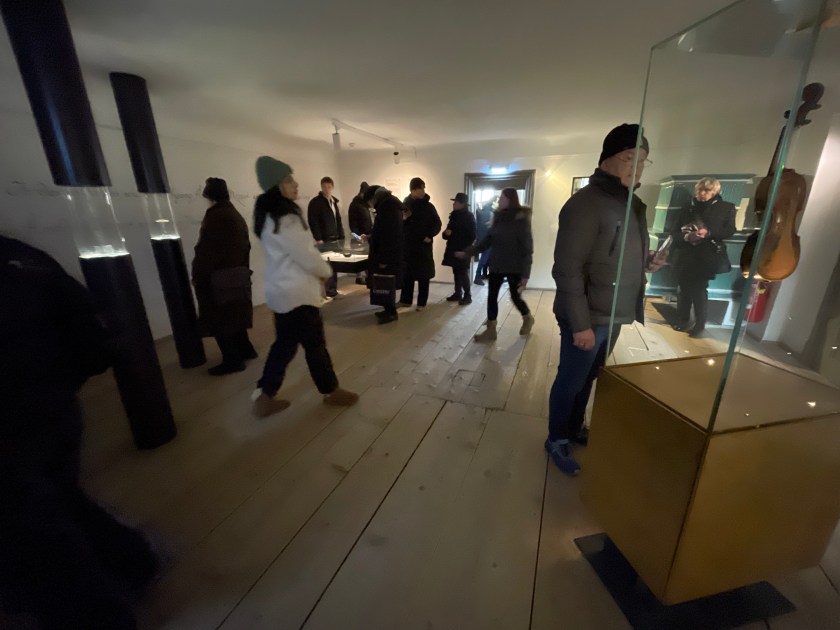
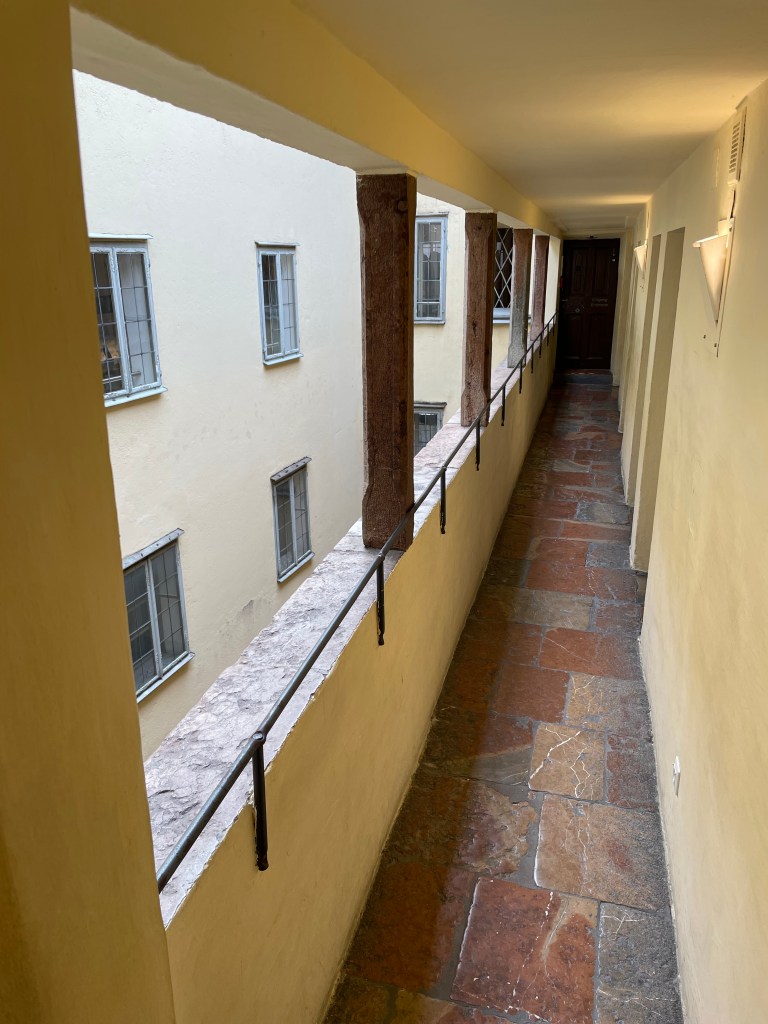
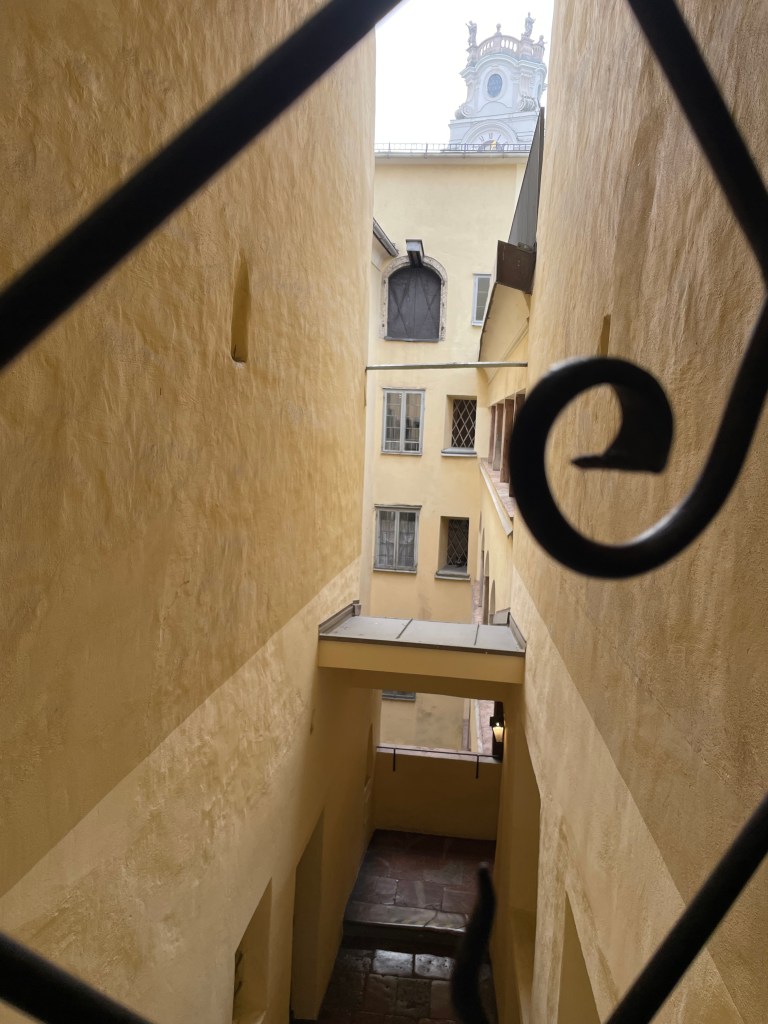
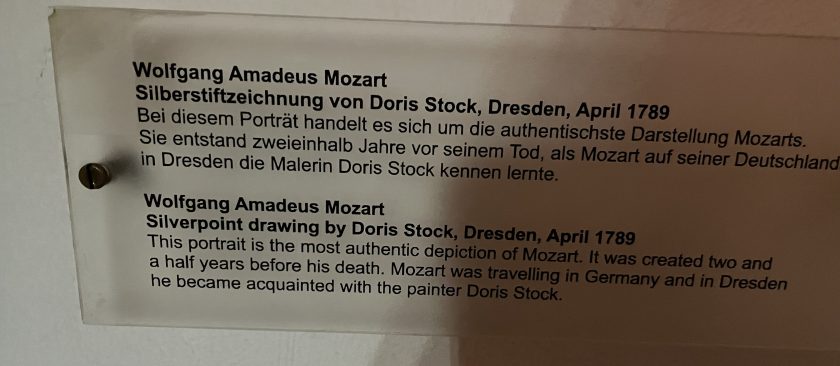
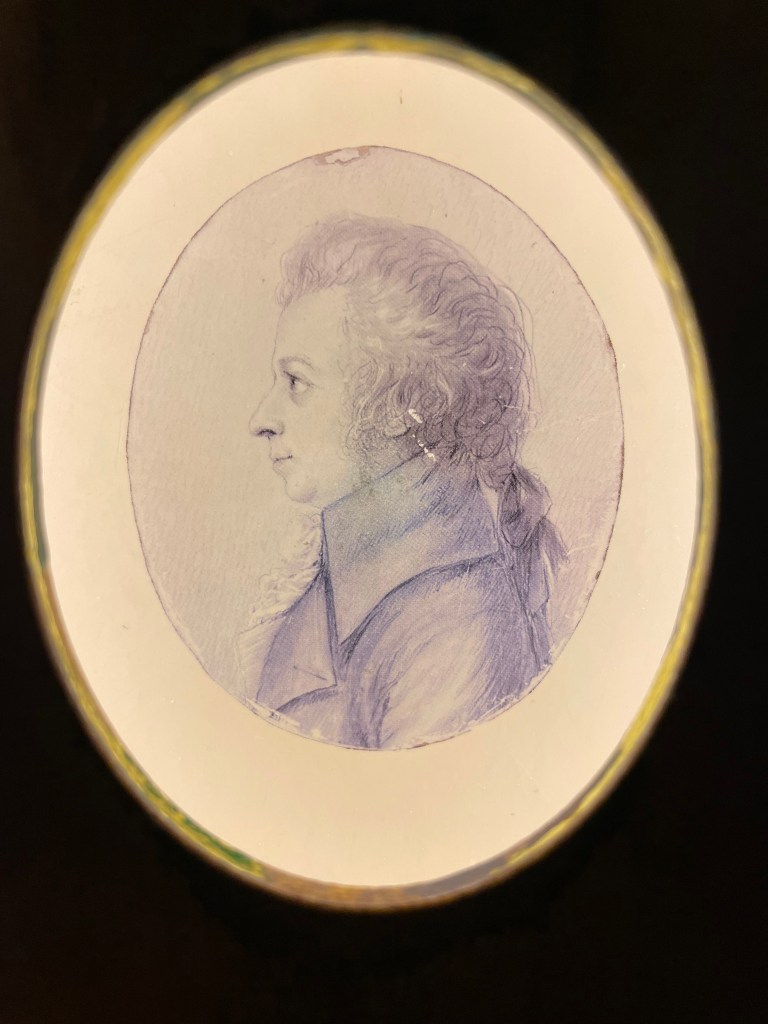
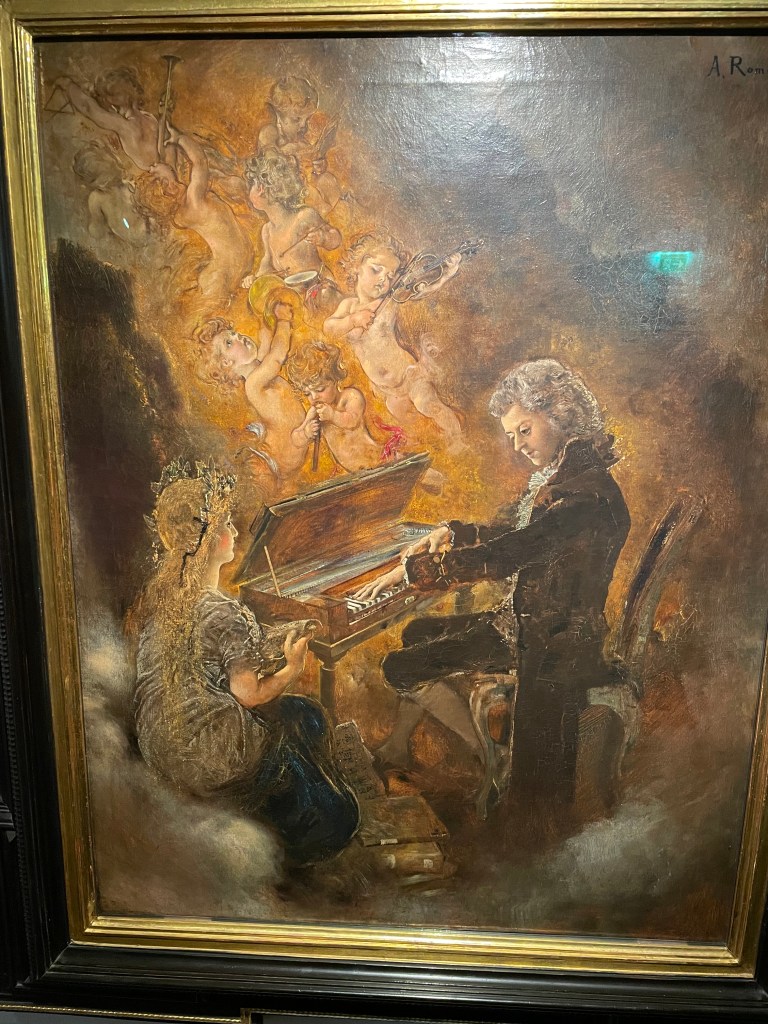
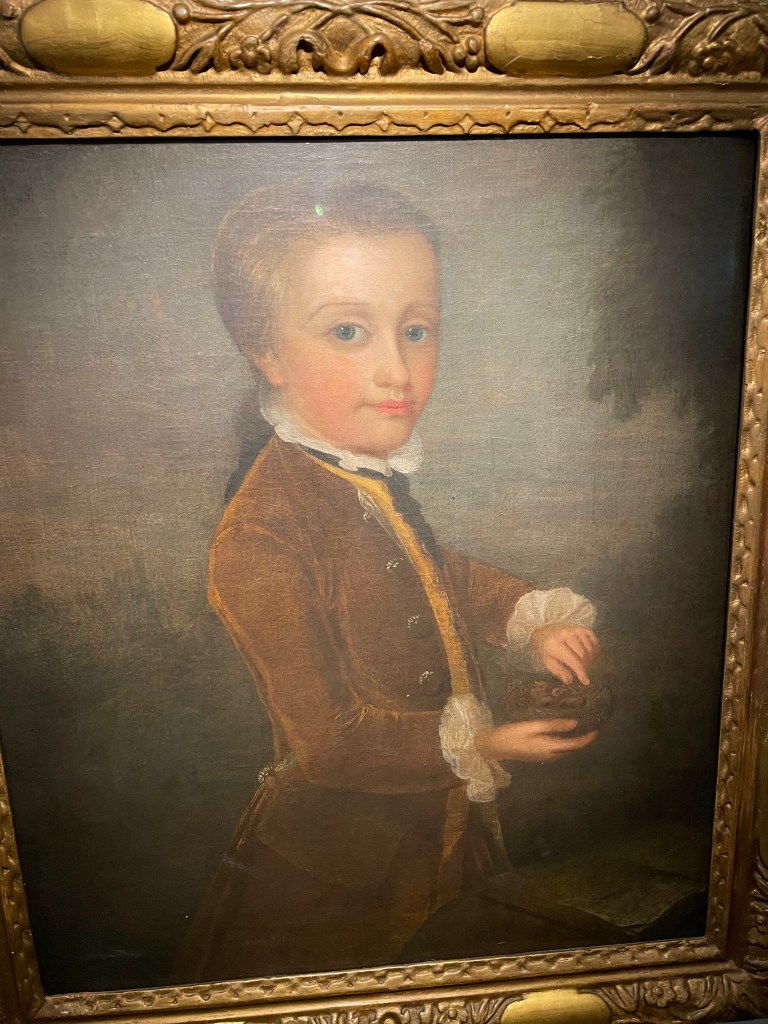
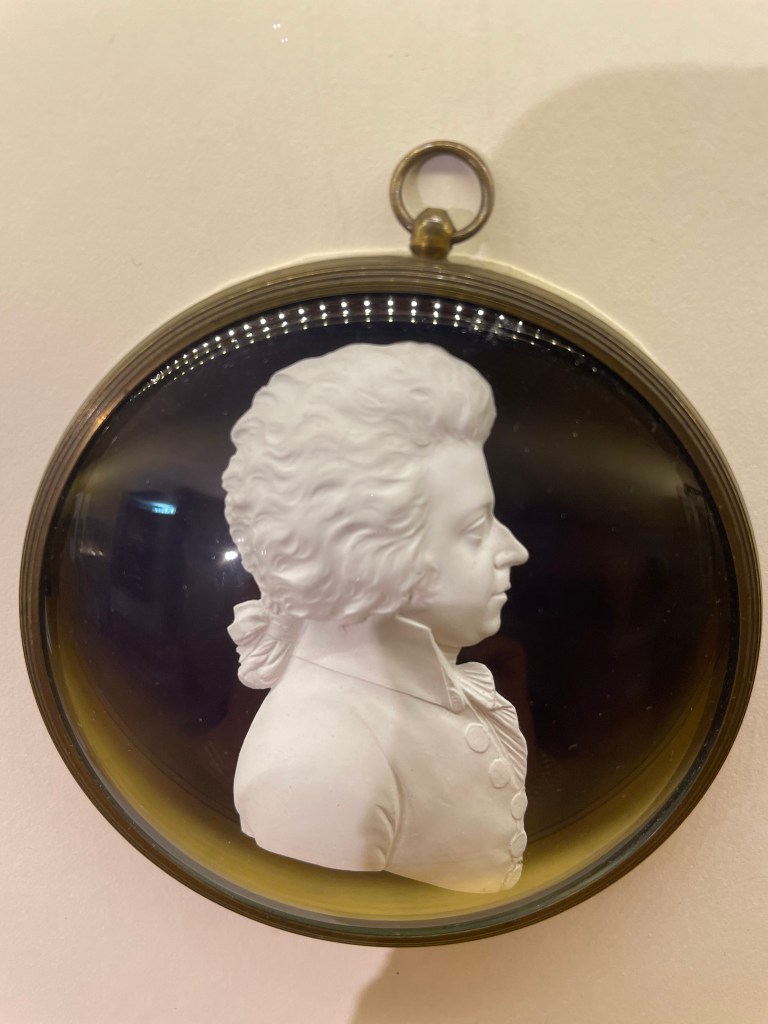
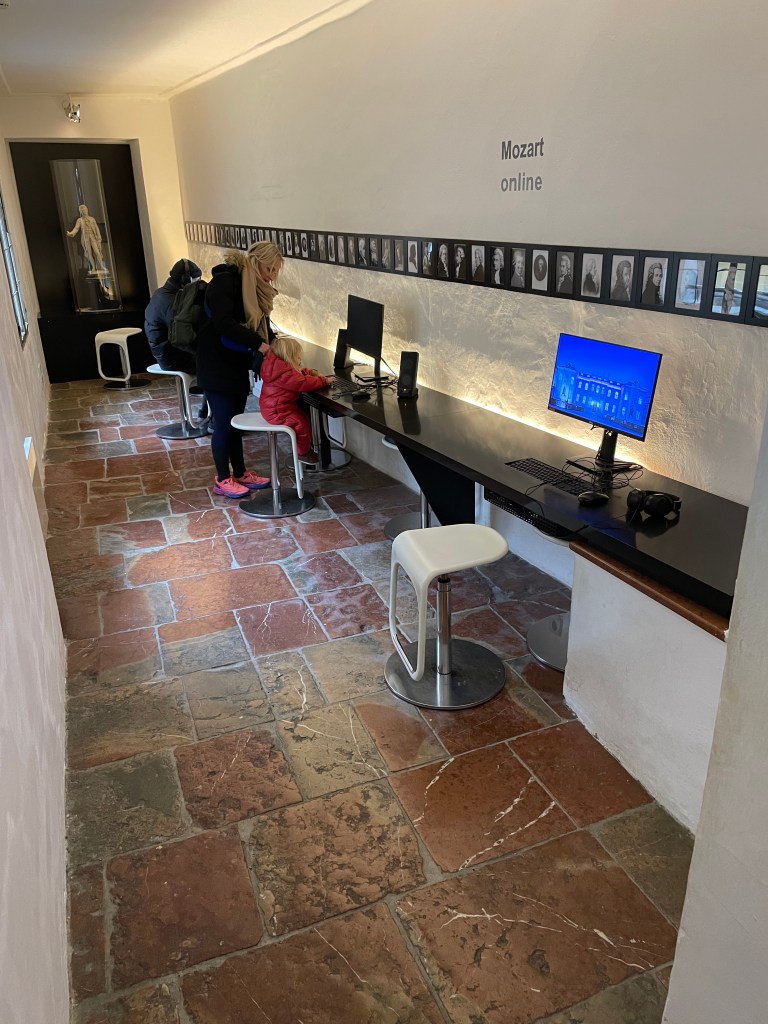
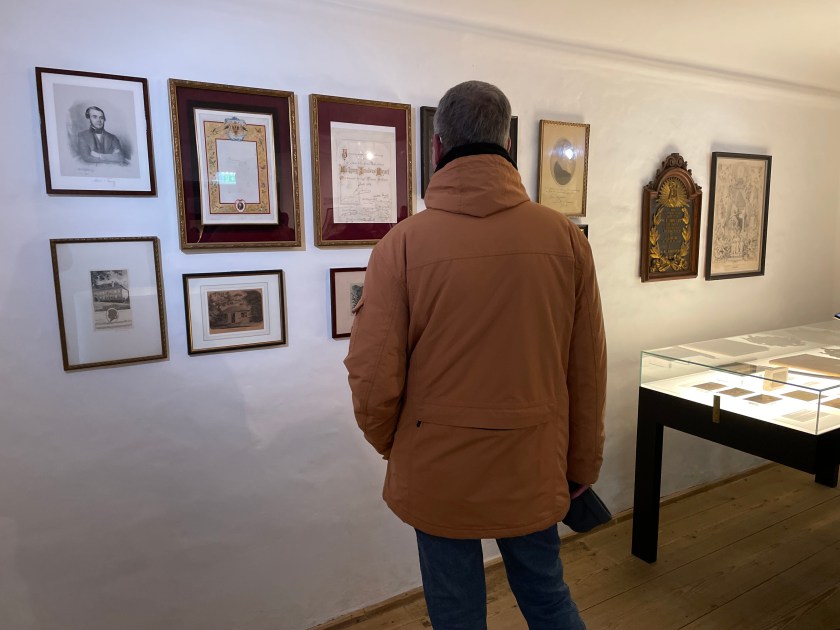
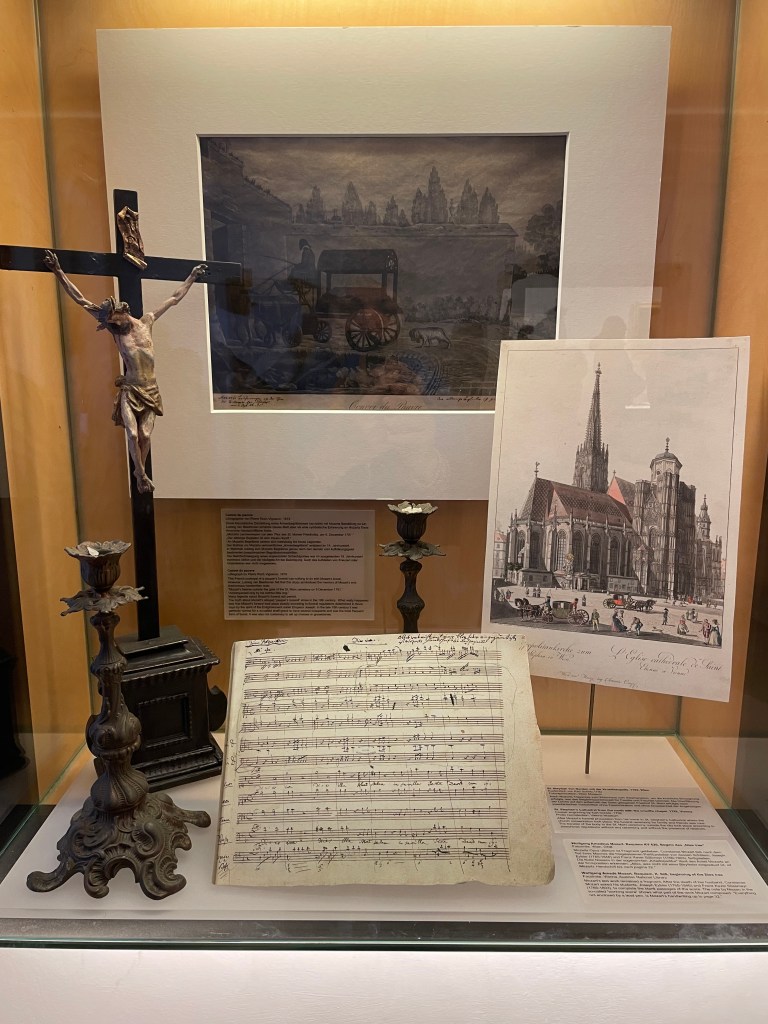
We enjoyed spending a couple of hours here, in the place where Mozart grew up, learning about the Mozart family. It was interesting. The tour took us through the home/museum. Really only the kitchen looked like it might have looked back then. Still, there is something quite moving about being “in the place where it happened.”
From Wikipedia:
Birthplace of Wolfgang Amadeus Mozart
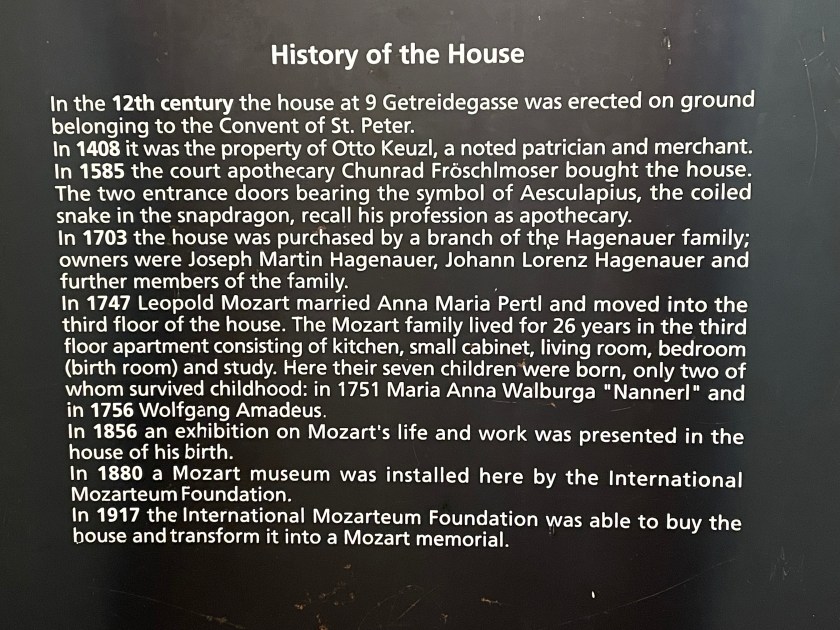
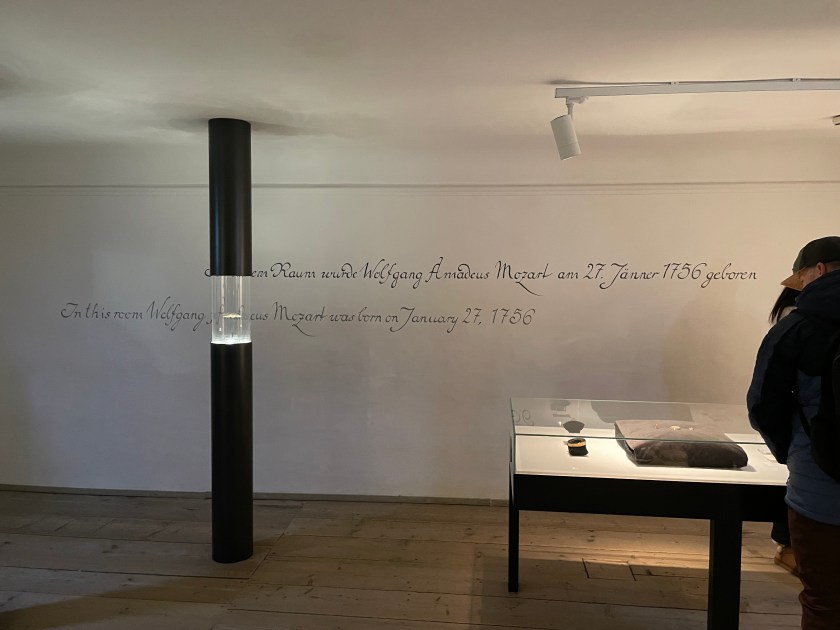
Mozart’s birthplace (German: Mozarts Geburtshaus or Hagenauerhaus) is the birthplace of Wolfgang Amadeus Mozart at No. 9 Getreidegasse in Salzburg, Austria. The Mozart family resided on the third floor from 1747 to 1773. Mozart himself was born here on 27 January 1756. He was the seventh child of Leopold Mozart, who was a musician of the Salzburg Royal Chamber.
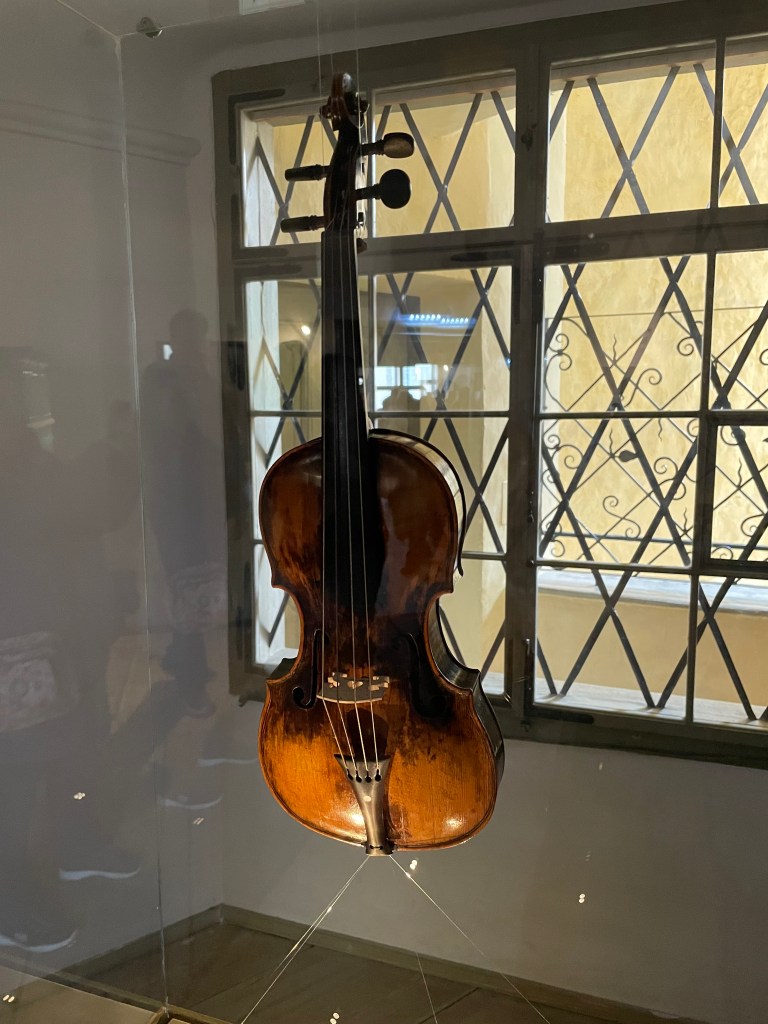
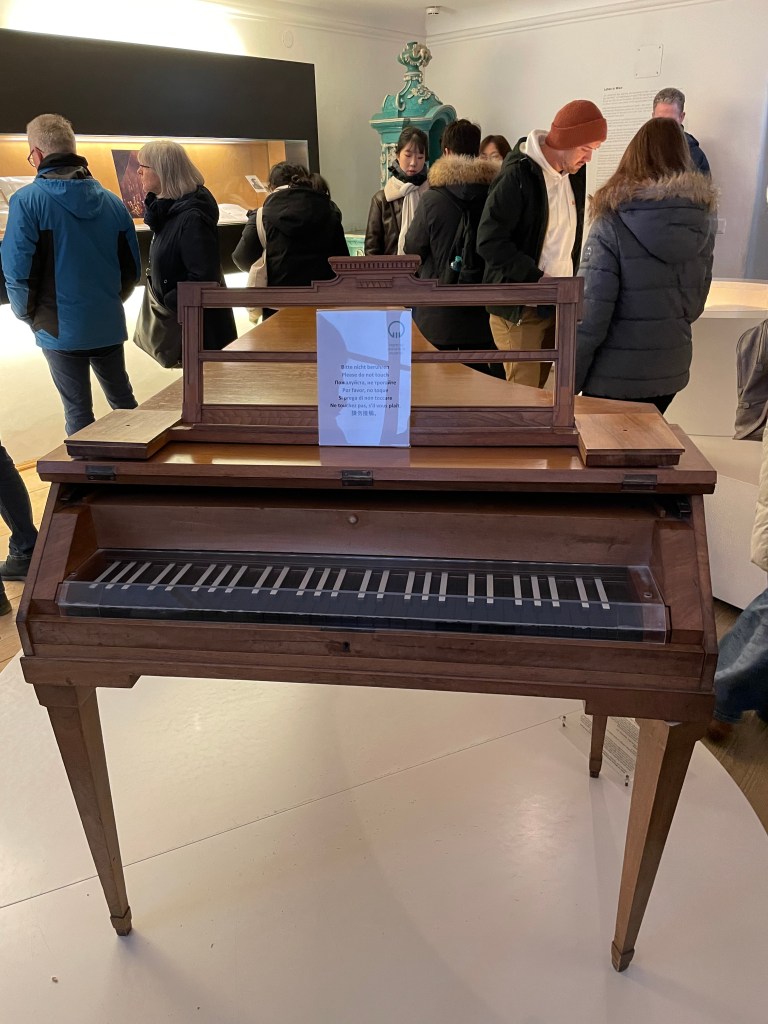
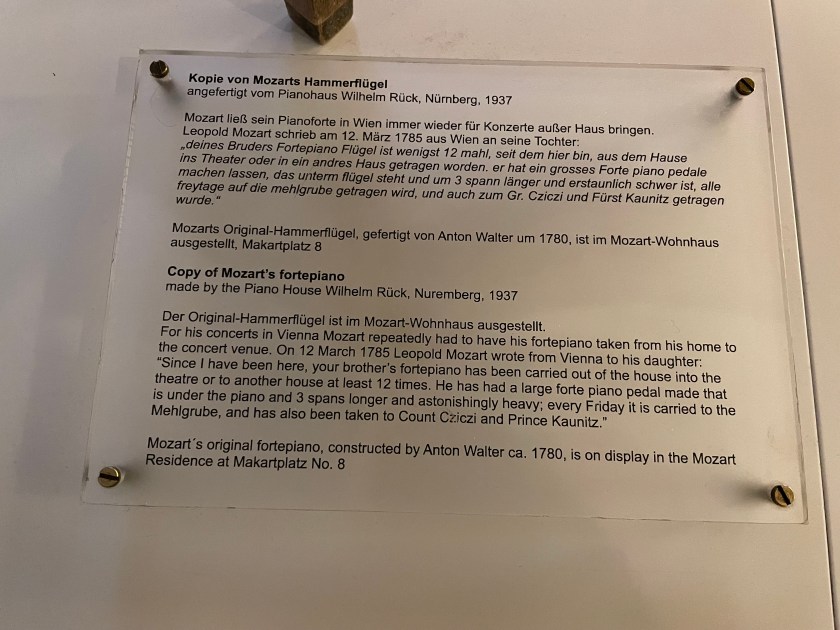
Since 1880 the building has housed a museum that depicts the early life of Wolfgang Amadeus Mozart, his first musical instruments, his friends, and his passionate interest in opera. The third floor exhibits Mozart’s childhood violin as well as portraits, documents, and early editions of his music, and the second floor is devoted to Mozart’s interest in opera and includes the clavichord on which he composed The Magic Flute. The structure is owned by the Mozart Foundation.
This is the kitchen of the home:
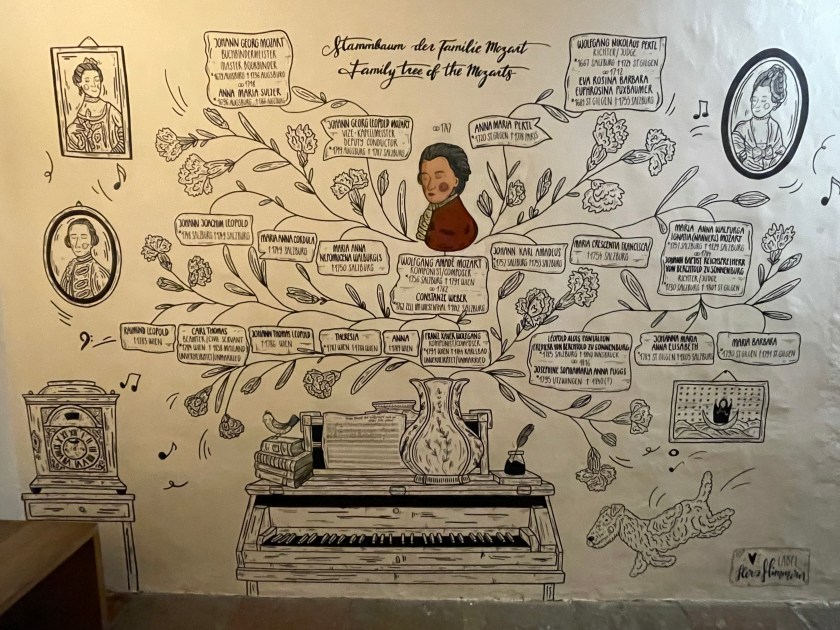
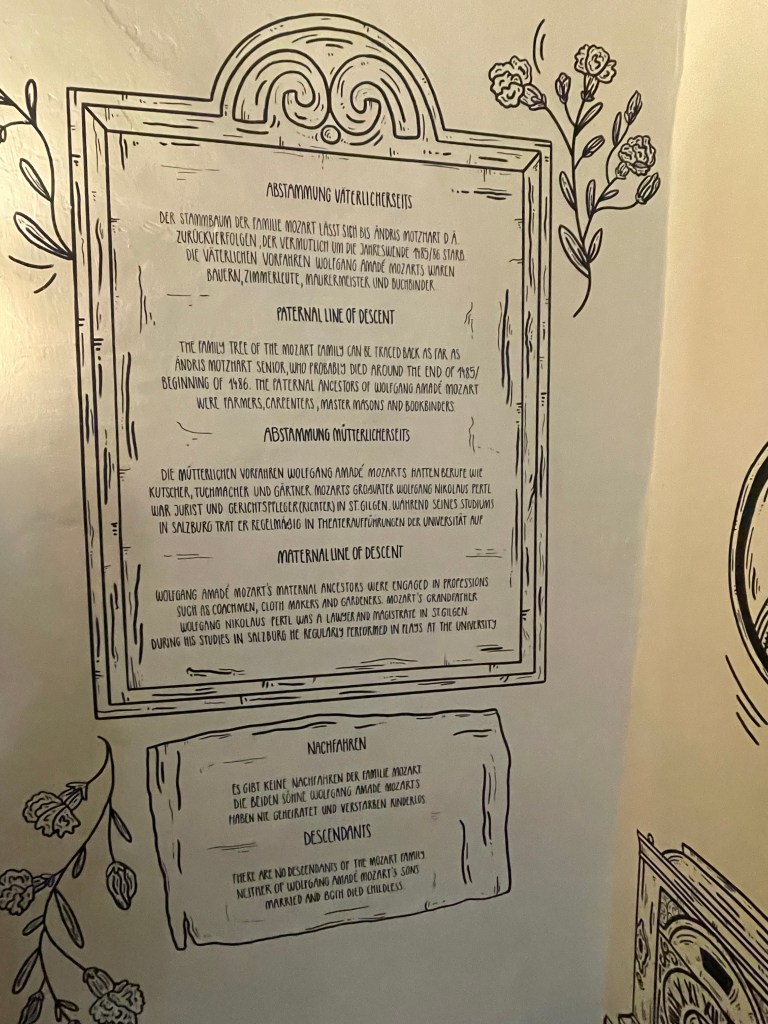
The family tree:
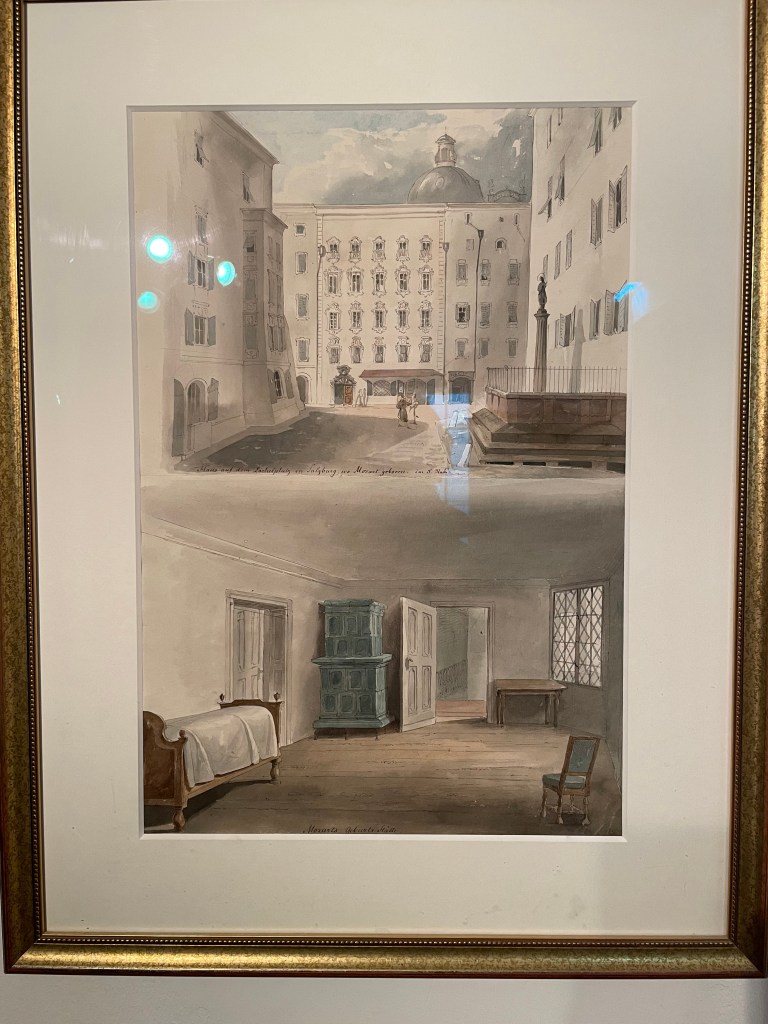
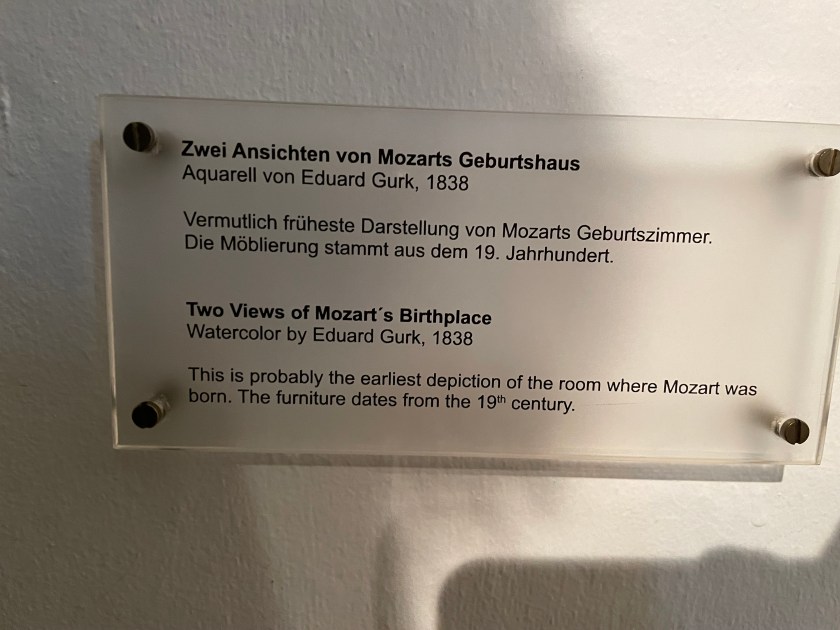
The room where he was born:
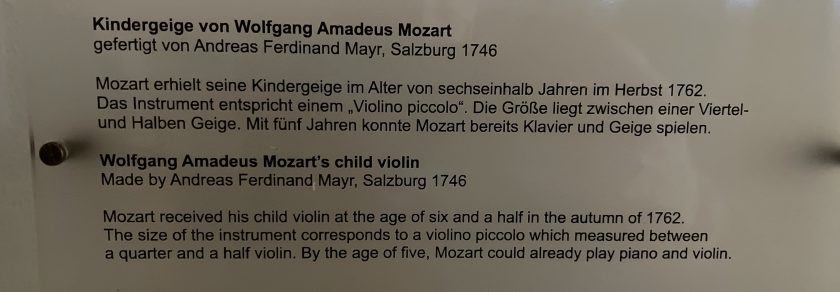
The small violin especially made for Mozart as a child:
I got the feeling that there are several places in Salzburg competing for the treasures from Mozart’s life. This museum/home focused on his younger years and family life. I’m glad we visited.
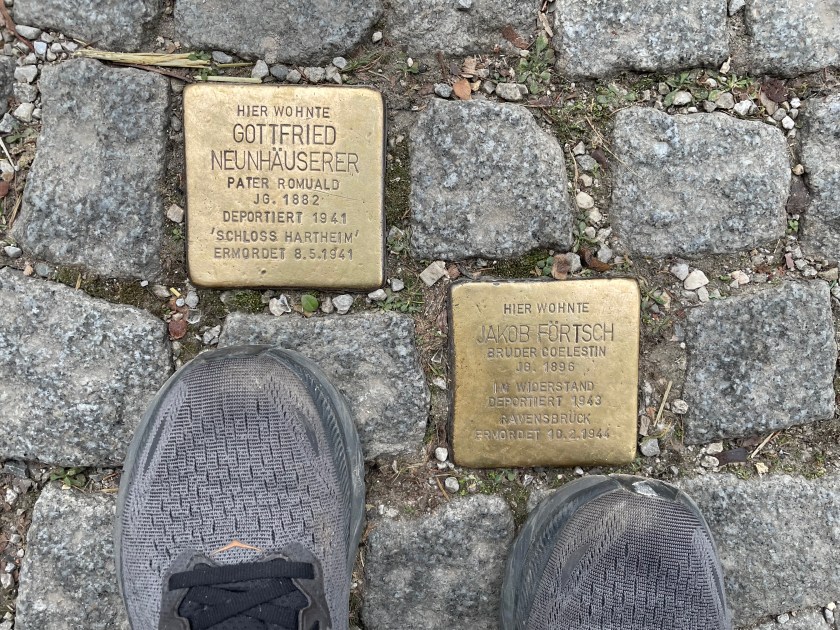
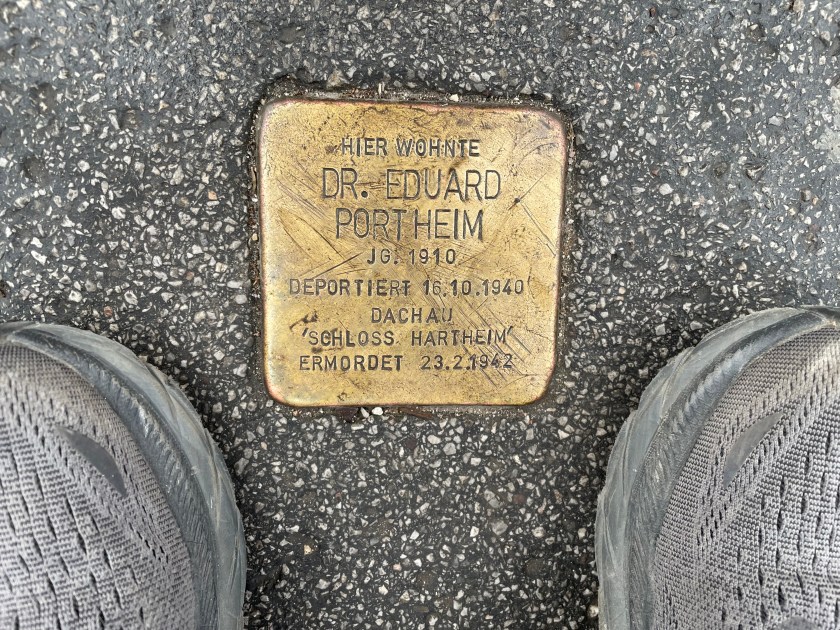
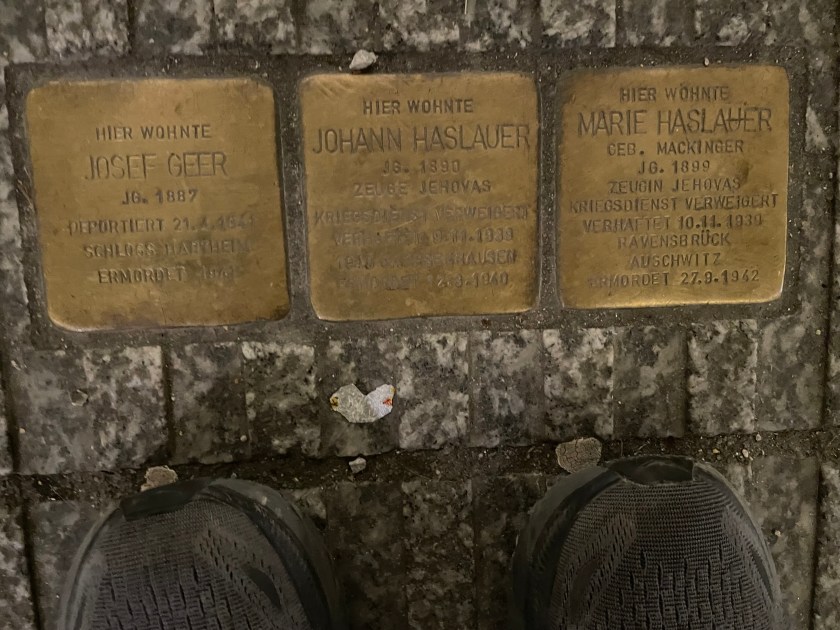
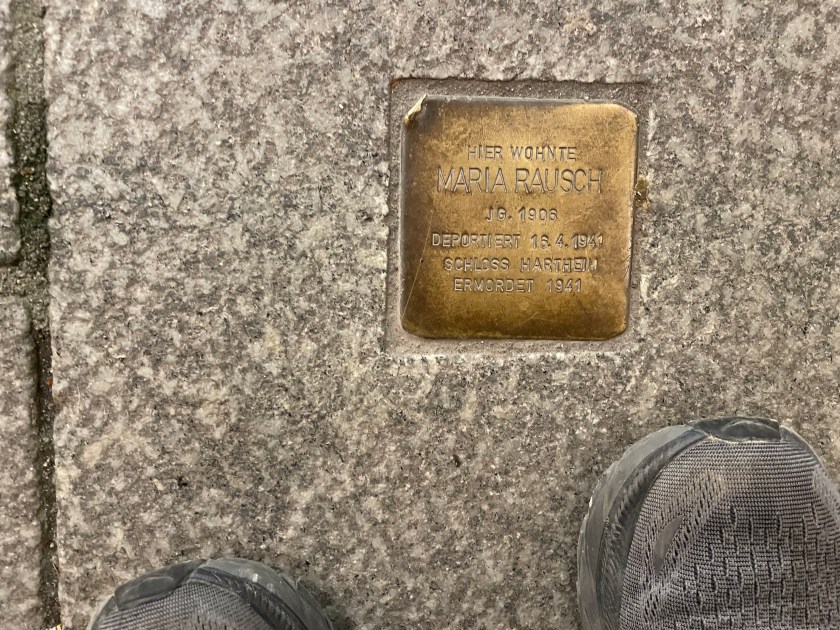
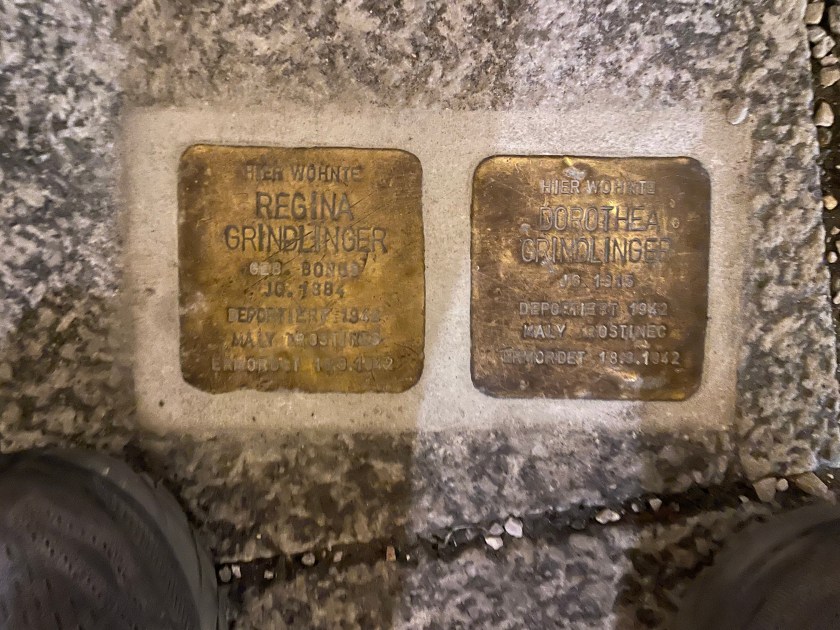
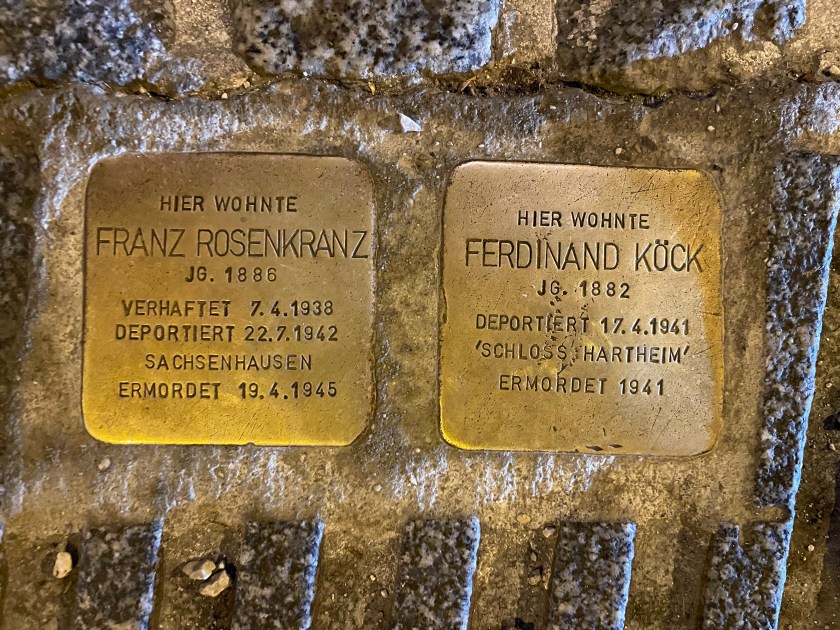
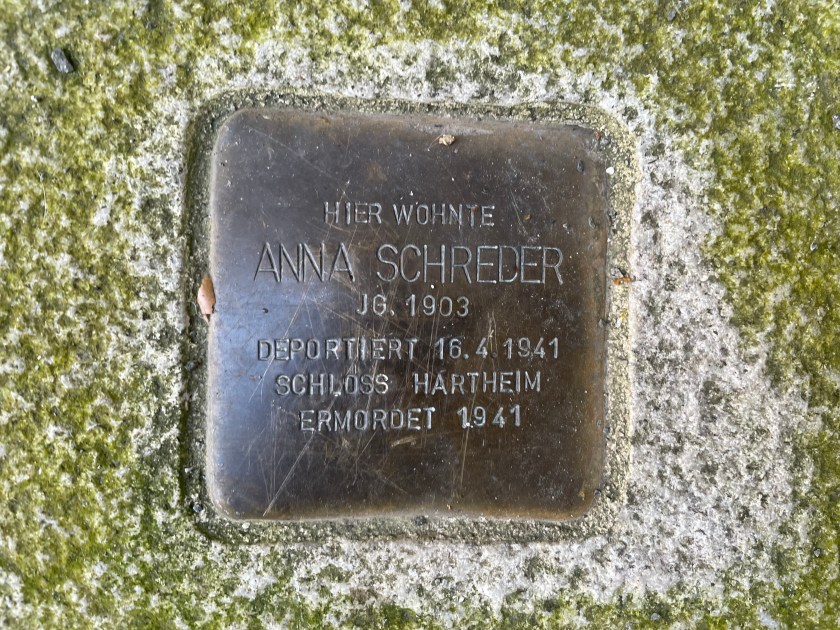
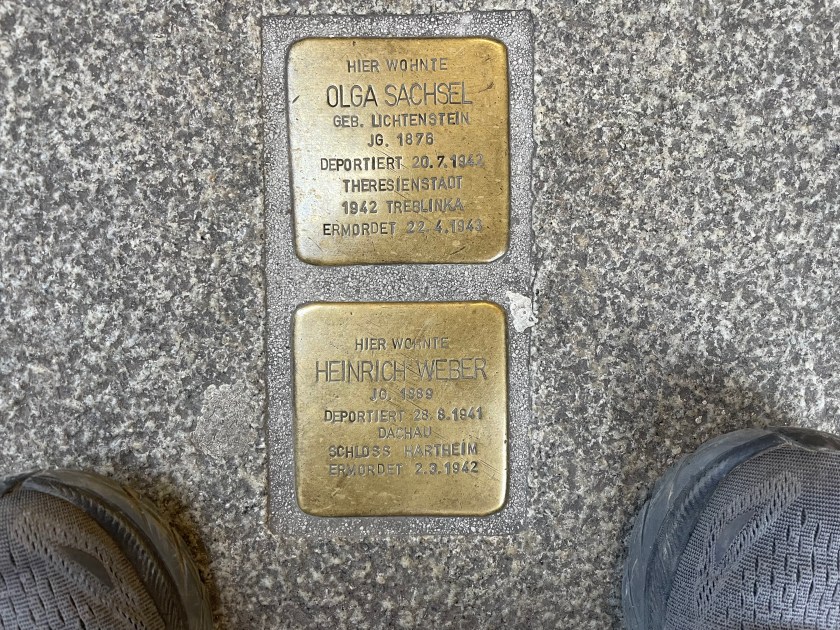
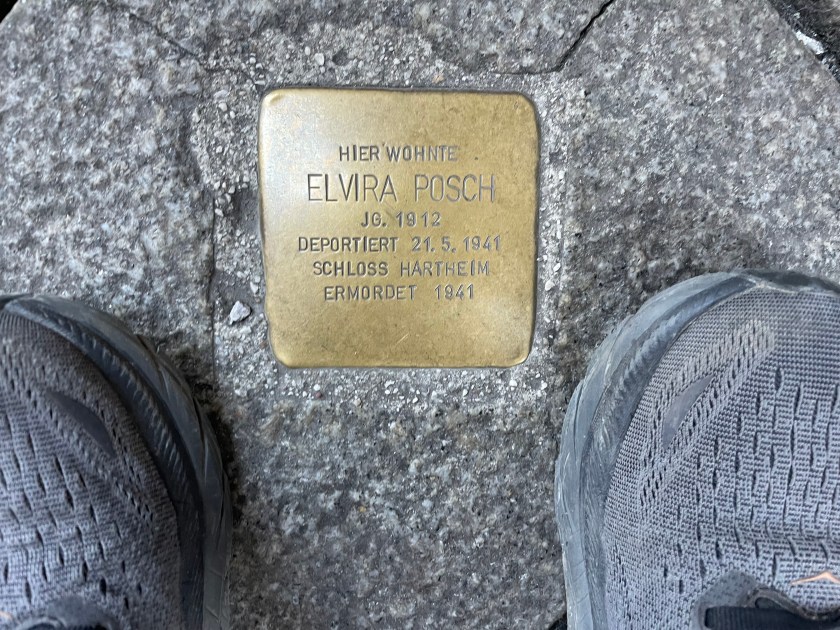
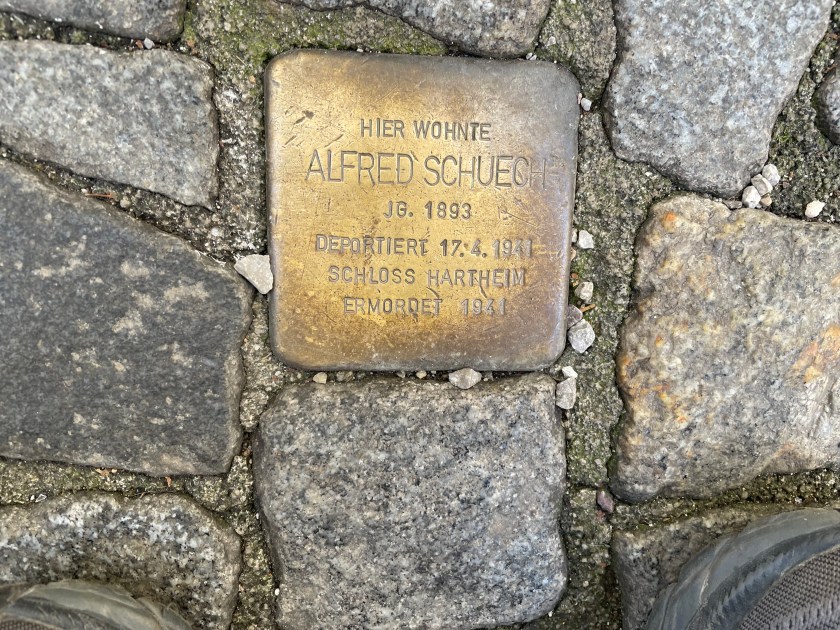
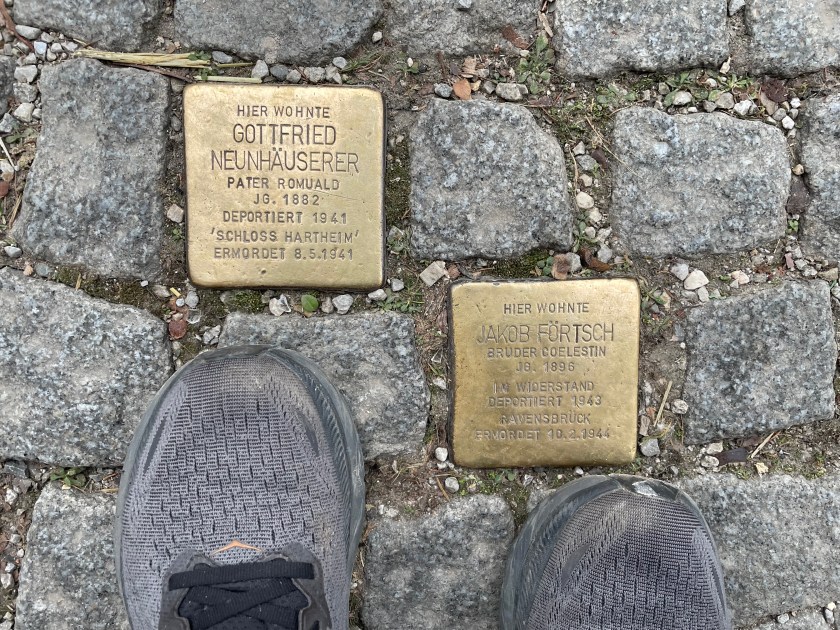
While in Salzburg, we saw so many Stolpersteine listing Schloss Hartheim as the place of death. I learned that this was one of the 6 euthanasia centers (in Germany and this one in Austria) where thousands of people who “weren’t perfect” were killed during WWII.
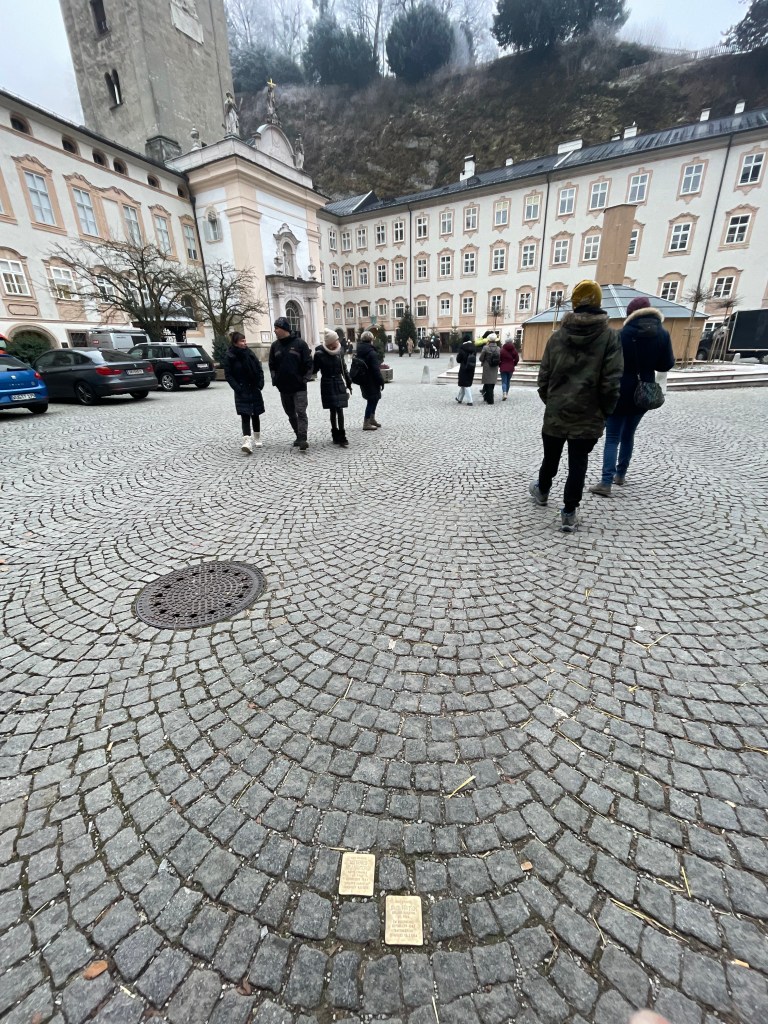
Everything about this piece of history is heartbreaking. At the end of this post are all the Stolpersteine we noticed that memorialize people from Salzburg who died in Schloss Hartheim. These are just a few.
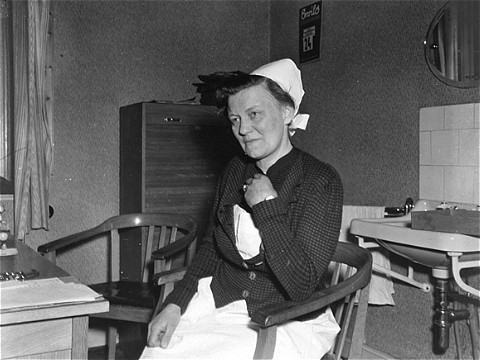
Portrait of Irmgard Huber, head nurse at the Hadamar euthanasia killing center , in her office. The photo was taken by an American military photographer on April 7, 1945.
The euthanasia program envisaged the systematic killing of people with disabilities housed in German institutions. It was enforced starting in 1939, about two years before the Nazis began the systematic murder of European Jews as part of their “Final Solution to the Jewish Question.” The program was one of many radical eugenic measures aimed at restoring the country’s “racial integrity.” Its goal was to eliminate what eugenicists and their followers considered “life unworthy of life”: people who, in their view, posed both a genetic and financial burden on German society and the state due to severe psychiatric, neurological or physical disabilities.
child euthanasia program
During the spring and summer months of 1939, a group of planners began organizing a secret operation to kill disabled children. The group was led by Philipp Bouhler, the director of Hitler’s private office, and Karl Brandt, Hitler’s personal physician.
On August 18, 1939, the Reich Ministry of the Interior issued a decree requiring all doctors, nurses and midwives to report newborns and children under the age of three who showed signs of severe mental or physical disability.
From October 1939, the health authorities began to encourage parents of children with disabilities to entrust their young children to one of the specially designed children’s clinics in Germany and Austria. In reality, the clinics were killing centers for children. Specially recruited medical personnel administered lethal overdoses of medication to the children or left them to starve.
Initially, doctors and hospital officials only included infants and small children in the program. However, as the measure was expanded, young people up to 17 years of age were also included. According to conservative estimates, at least 10,000 physically and mentally disabled German children died as a result of the child “euthanasia program” during the war years.
Action T4: Expansion of the “Euthanasia Program”
Officials quickly moved to extend the killing program to include disabled adults housed in institutions. In the fall of 1939, Adolf Hitler signed a secret authorization to protect participating doctors, medical personnel, and administration from prosecution. This authorization was backdated to September 1, 1939, to give the program the appearance of a wartime measure.
The Führer’s Chancellery was a compact unit, separate from the state, government or party apparatus. For these reasons, Hitler chose the Chancellery as the headquarters for the “euthanasia program.” The code name for it was “Action T4.” It refers to the address of the program’s coordination office in Berlin: Tiergartenstrasse 4.
According to Hitler’s instructions, the head of the Führer’s office, Phillip Bouhler, and the doctor Karl Brandt were responsible for the killing operations. Under their leadership, the T4 employees set up six gassing sites for adults as part of the “euthanasia measures”. These were located in:
Brandenburg an der Havel, west of Berlin
Grafeneck in southwest Germany
Bernburg in Saxony
Sonnenstein in Saxony
Hartheim near Linz on the Danube (Austria)
Hadamar in Hesse
Using a procedure originally developed for the child “euthanasia program,” in the fall of 1939 T4 planners began distributing meticulously worded questionnaires to all health authorities, public and private hospitals, psychiatric institutions, and nursing homes for the chronically ill and elderly. The limited space and wording on the forms, as well as the instructions in the accompanying cover letter, gave the impression that this was merely a survey designed to collect statistical data.
The sinister purpose of the form could only be suspected based on the emphasis on the patient’s ability to work and the patient categories that had to be specified by the health authorities. The following patient categories were available:
Patients suffering from schizophrenia, epilepsy, dementia, encephalitis and other chronic psychiatric or neurological disorders
Patients who were not of German or “related blood”
mentally disturbed criminals or criminally convicted persons
Patients who had been admitted to the facility for more than five years
Secretly recruited “medical experts” and doctors, many of them with excellent reputations, worked in teams of three to evaluate the forms. Based on their decisions, the T4 officials began removing the patients selected for the euthanasia program from their original facilities in January 1940. The patients were transported by bus or train to one of the central gassing sites to be murdered there.
Within hours of arriving at the centers, the victims died in the gas chambers. Pure carbon monoxide gas, bottled in bottles, was introduced into the gas chambers, disguised as shower rooms. T4 officials burned the bodies in crematoria adjacent to the gassing sites. Workers randomly removed ashes from the cremated victims and sent them in urns to relatives. The victims’ families or guardians received the urn along with a death certificate and other documents stating a fictitious cause and date of death.
Because the program was classified, the T4 planners and officials went to great lengths to conceal the program’s murderous goal. Although doctors and administrators meticulously falsified official records to make it appear that the victims had died of natural causes, the true background of the “euthanasia program” quickly became an open secret. The measures were widely known to the public. The killings met with private and public protest, particularly from members of the German clergy. Among these clergy was the Bishop of Münster, Clemens August Graf von Galen. He protested against the T4 murders in a sermon on August 3, 1941. In light of the public’s knowledge and protests, Hitler ordered a halt to the “euthanasia program” in late August 1941.
According to the internal records of the T4 officials, between January 1940 and August 1941, 70,273 mentally and physically disabled people were murdered in the six gassing sites as part of the “euthanasia program.”
Second Phase
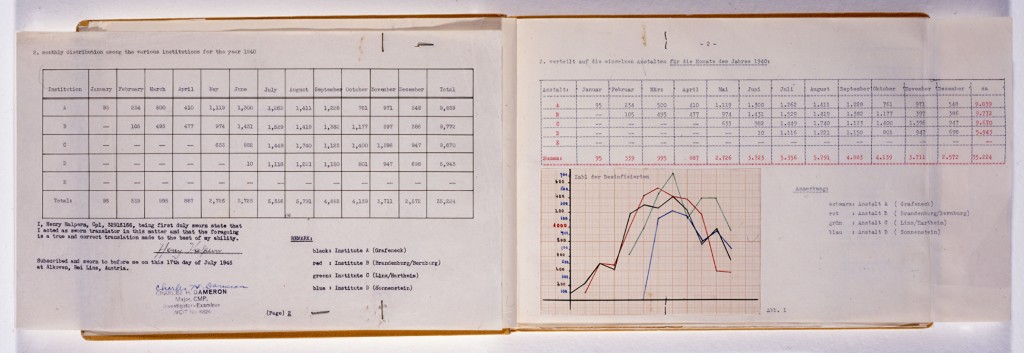
One of the most important documents for determining the number of deaths attributable to the Nazi euthanasia program is the Hartheim Statistics. It was discovered by US troops in 1945 in a locked filing cabinet at the Nazi killing center in Hartheim, Austria. On the right-hand side, the number of patients who were “disinfected” in each month of 1940 is given. The last column indicates that 35,224 people were killed in that year.
Hitler’s order to stop the T4 operation did not, however, mean the end of the “euthanasia killings.” For children, the “euthanasia program” continued as before. German doctors and medical personnel continued the killings in August 1942, but with more discretion than before. More decentralized than in the first phase of the gassings, the new measures were now closely tied to regional requirements, with local authorities determining the pace of the killings.
In the second phase, which was widespread throughout the Reich, the killings were carried out less obviously. Overdoses of medication and lethal injections were usually administered, as was already common practice in the child “euthanasia program.” In many institutions, adults and children were also systematically starved to death.
The “euthanasia program” continued until the last days of World War II and was expanded to include ever broader target groups, including geriatric patients, bomb victims and foreign forced laborers. Historians estimate that a total of 250,000 people fell victim to the “euthanasia program.”
———————
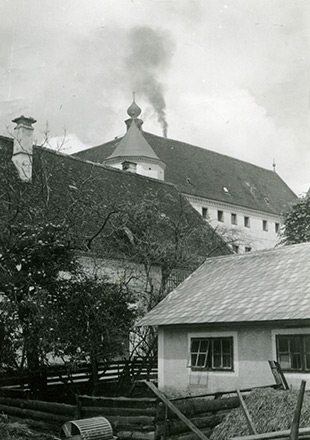
The death facility at Hartheim Castle with smoke billowing out of the crematorium chimney (Wolfgang Schuhmann)
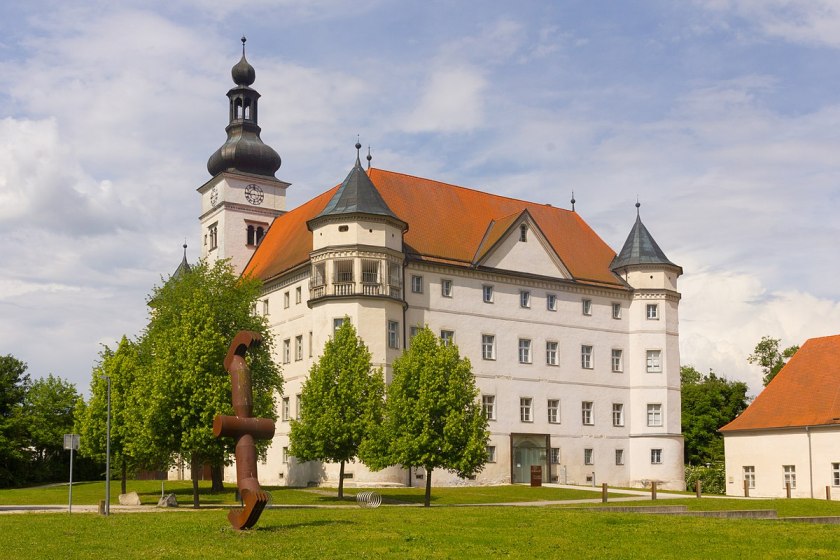
Between May 1940 and December 1944, it is estimated that around 30,000 people were murdered in Hartheim. Among those murdered were the (mentally) ill, physically and mentally handicapped people, as well as concentration camp prisoners from various concentration camps and foreign forced laborers.
In June 1945, the American investigating officer Charles Dameron found a brochure with the so-called “Hartheim Statistics” in the castle. It contained monthly statistical information on the killings of handicapped or mentally ill people with carbon monoxide in the six T4 killing centers in the then Reich. This was also used to calculate the alleged savings in food, rent, personnel costs, etc.
Photo from Wikipedia
Hartheim killing center: Nazi era and aftermath (Wikipedia)
Beginning in 1939, the Nazis used Hartheim and five other sites as killing facilities for Aktion T4, which performed mass sterilizations and mass murder of “undesirable” members of German society, specifically those with physical and mental disabilities. In total, an estimated 200,000 people were murdered across all these facilities, including thousands of children. These actions were in keeping with Nazi ideas about eugenics. While officially ended in 1941, Aktion T4 lasted until the German surrender in 1945.
During the first phase of Aktion T4 at Schloss Hartheim, about 18,000 people with physical and mental disabilities were murdered gassing with carbon monoxide. The facility was also used to murder about twelve thousand prisoners from the Dachau and Mauthausen concentration camps who were sent here to be gassed, as were hundreds of women sent from Ravensbrück concentration camp in 1944, predominantly sufferers of TB and those deemed mentally infirm. The castle was regularly visited by the psychiatrists Karl Brandt, Professor of Psychiatry at Würzburg University, and Werner Heyde. In December 1944 Schloss Hartheim was closed as an extermination center and restored as a sanatorium after being cleared of evidence of the crimes committed therein.
In 1946, Alice Ricciardi-von Platen, a psychiatrist and psychoanalyst who practiced near Linz, Austria, was invited to join the German team observing the so-called Doctors’ trial in Nuremberg. The trial was presided over by American judges, who indicted Karl Brandt and 22 others. The 16 who were convicted included Josef Mengele; seven were sentenced to death. Her 1948 book, Die Tötung Geisteskranker in Deutschland, (“The killing of the mentally ill in Germany”), was judged a scandal by German medical professionals.
After World War II, the building was converted into apartments. 1969, the first memorial rooms were opened in the former gas chamber and admission room. Since 2003, Hartheim Castle has been a memorial site dedicated to the ten thousands of physically and mentally handicapped persons, concentration camp prisoners and forced laborers who were murdered there by the Nazis. Also in 2003 the exhibition “Value of Life” was opened.
Below are stones we noticed remembering people who died at Schloss Hartheim.



































































 Our Frankfurt Germany Mission