Stumbling Stones: Remembering Individuals

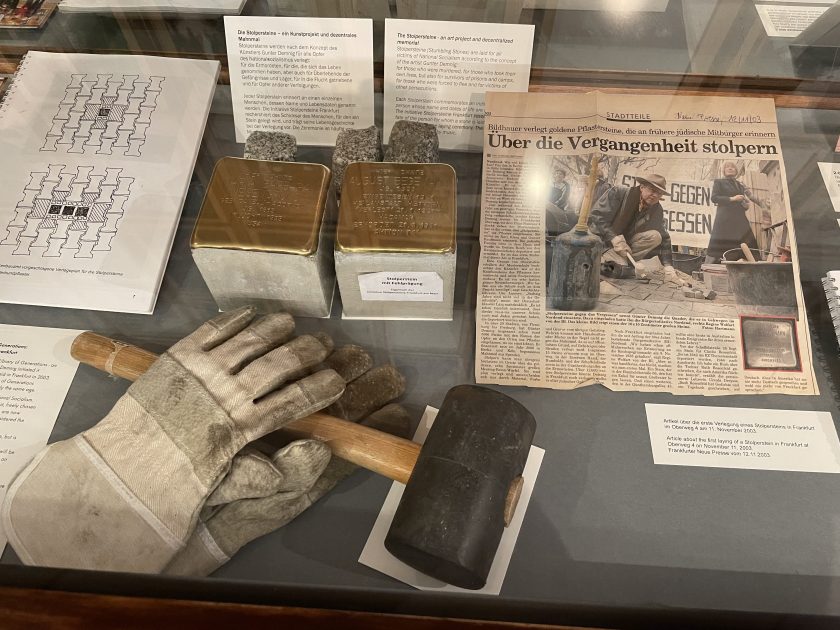
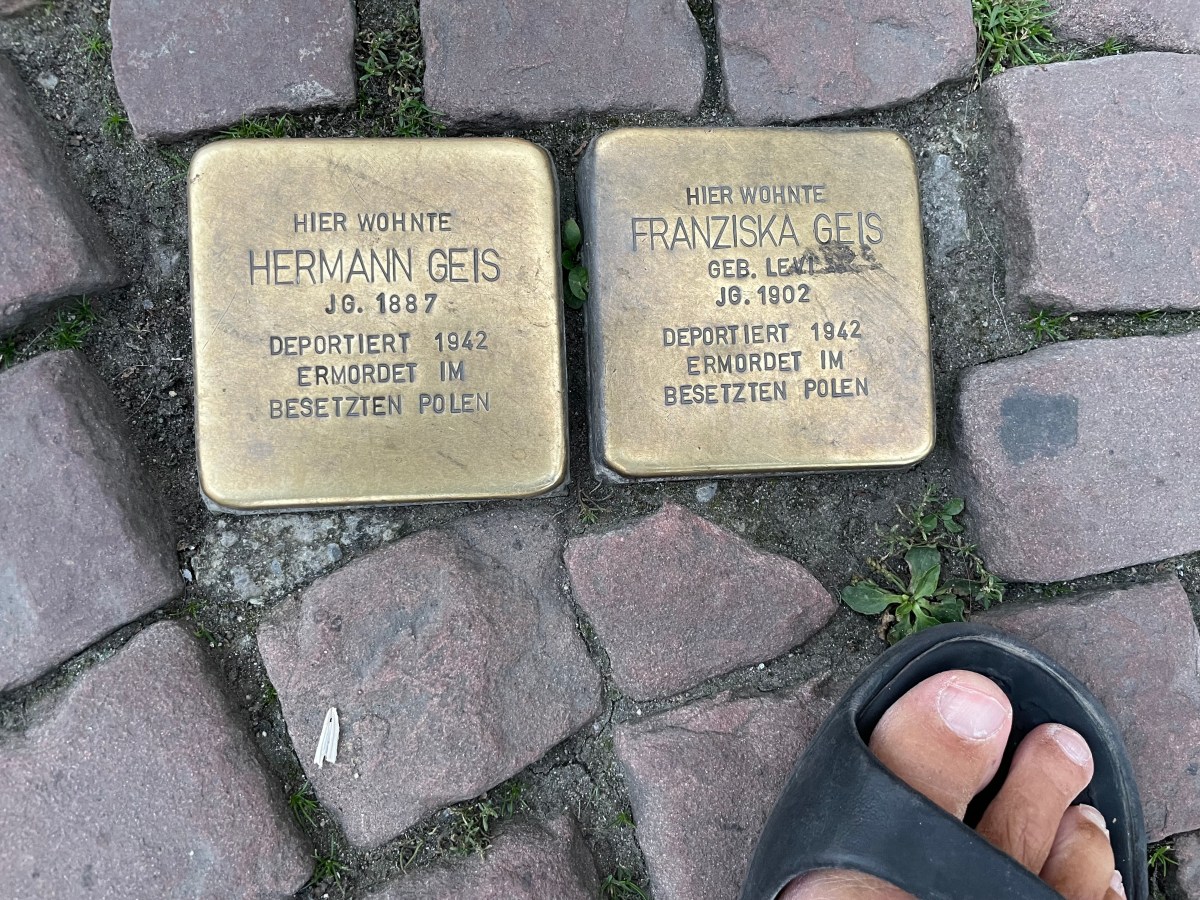
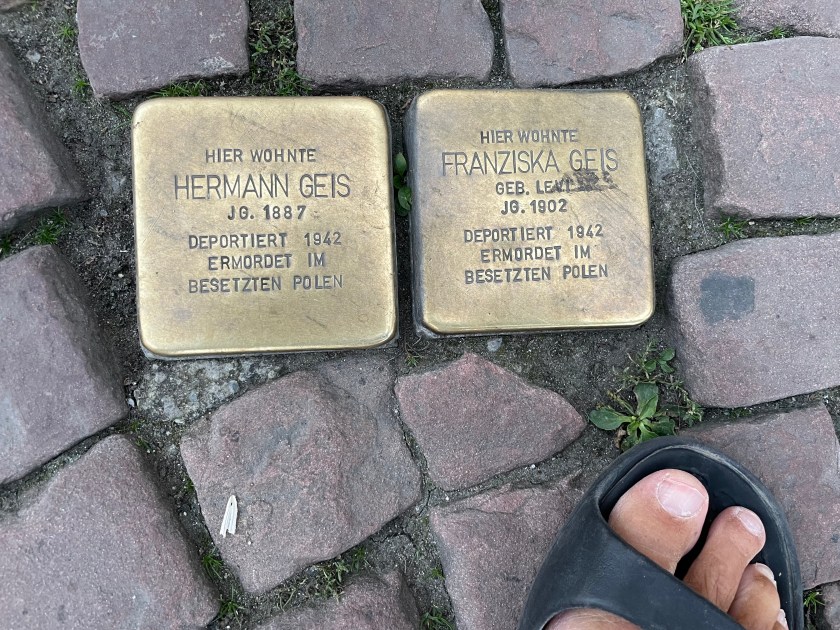
This evening as we walked the streets of Frankfurt, I noticed these 2 brass cobblestones.  I knelt down to read the stones:

HERE LIVED

HERMANN GEIS/FRANZISKA GEIS GEB LEVI

BORN 1887/1902.

DEPORTED IN 1842

MURDERED IN OCCUPIED POLAND

They were placed in front of a shop with an apartment over it.  It suddenly became very real for me.  This husband and wife lived right here and I was standing in front of the place of their home.   They were taken away and they never came back.  

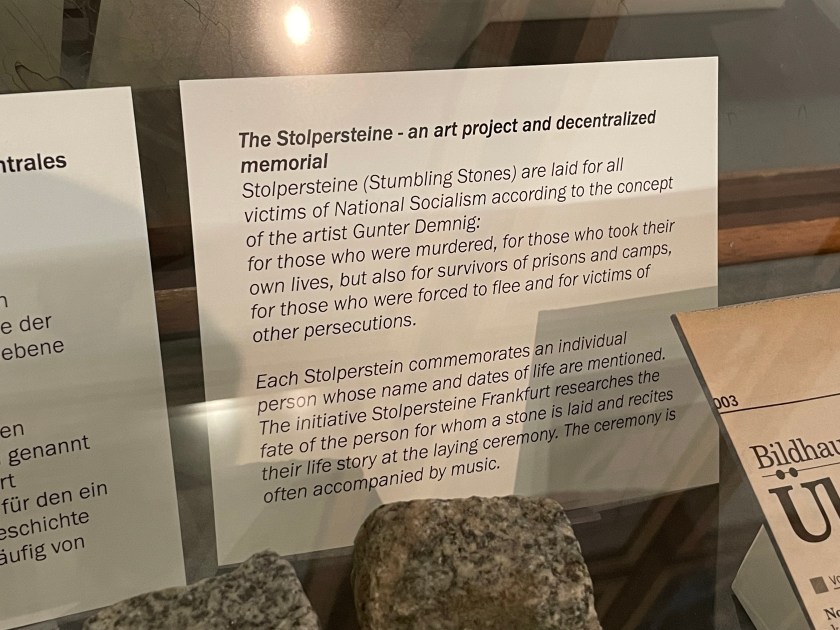
I learned these markers are called “Stolpersteine” or “stumbling stones.”  My colleague said, “It’s not intended that your feet stumble over them, but your mind and heart.”  Each stone represents a person who was killed during the Holocaust.  These Stolpersteine are placed in front of the last place of residency, or sometimes, work, which was freely chosen by that person before they became victims of Nazi terror.

The idea for these memorials was first conceived by artist Gunter Demnig in Cologne in 1992 as part of an initiative commemorating victims of the Holocaust. Four years later he installed the first Berlin Stolperstein.  He now works with Michael Friedrichs-Friedländer, the craftsman who makes each markerFriedrichs-Friedländer has inscribed every single Stolperstein since 2005, when the project grew too large for Demnig to both make and install the stones.“I can’t think of a better form of remembrance,” he says. “If you want to read the stone, you must bow before the victim.”

Joseph Pearson, a Cambridge historian, said that “It is not what is written [on the Stolpersteine] which intrigues, because the inscription is insufficient to conjure a person. It is the emptiness, void, lack of information, the maw of the forgotten, which gives the monuments their power and lifts them from the banality of a statistic.”

On 26 May 2023, the 100,000th Stolperstein was installed in Nuremberg for Johann Wild, a firefighter.   The Stolpersteine project is the world’s largest decentralized memorial.

You can read more about these historical remembrances here:

https://en.wikipedia.org/wiki/Stolperstein

https://www.theguardian.com/cities/2019/feb/18/stumbling-stones-a-different-vision-of-holocaust-remembrance

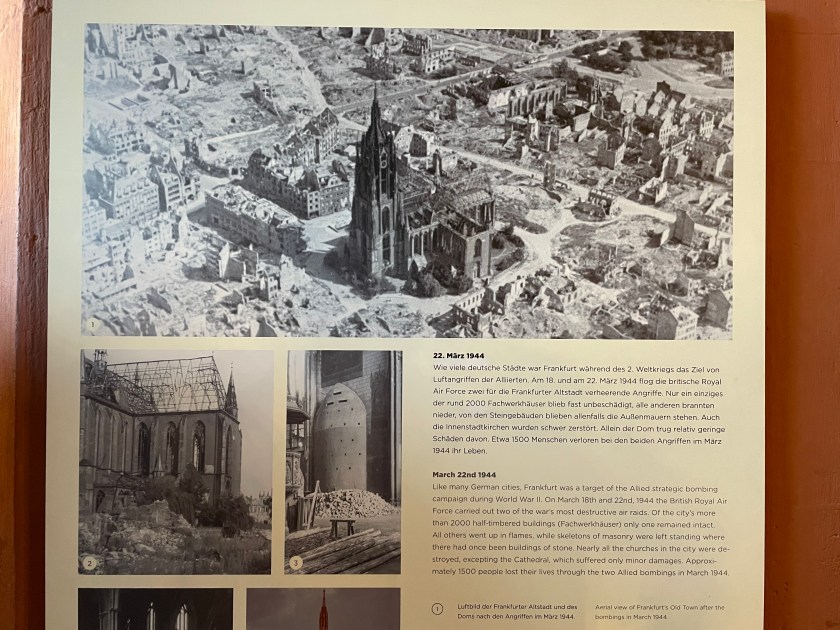
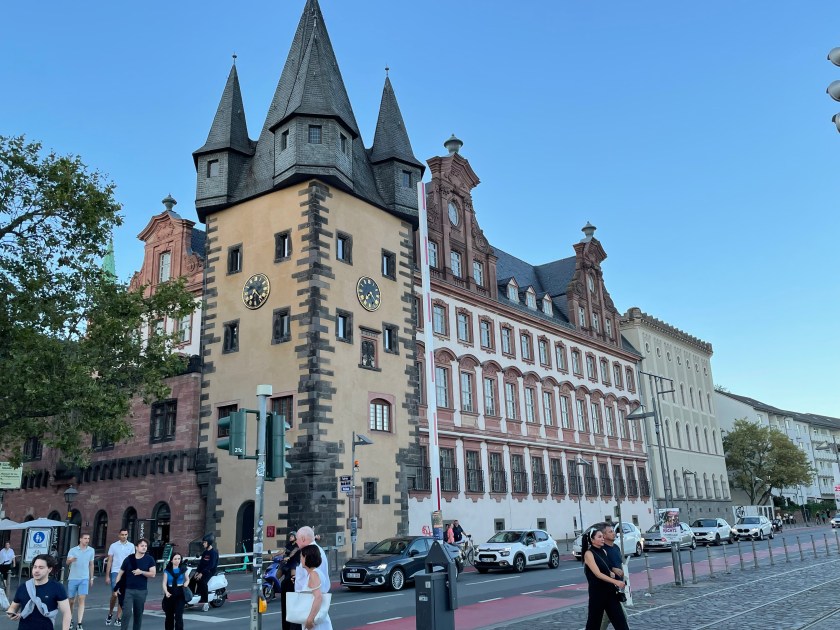
From the Frankfurt Historischer Museum:
Taking the U-Bahn into Frankfurt

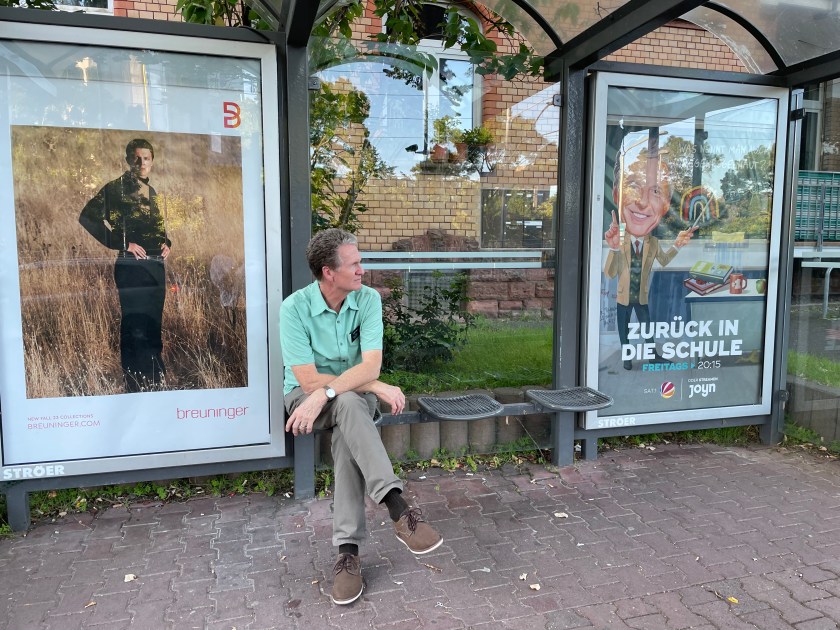
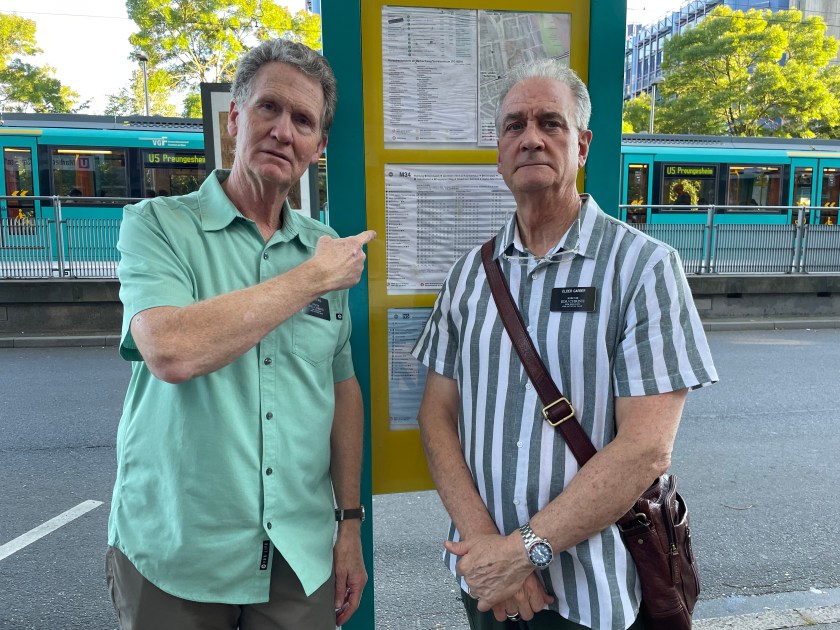
After a full day at the office, we had our next culture lesson from the Garbers–a trip on the U-Bahn into the heart of Frankfurt.  The U-Bahn is a train that can run above or below ground.

There’s a train platform quite close to our apartment and today’s lesson was on how to use it.

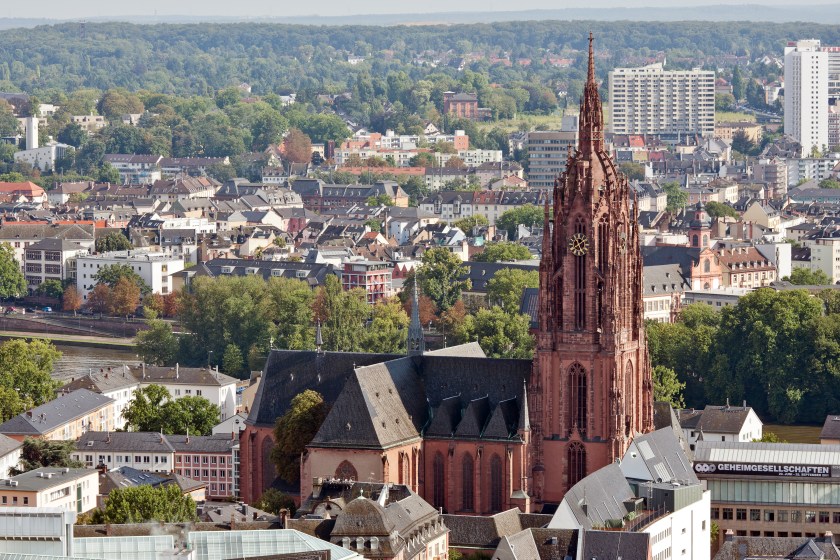
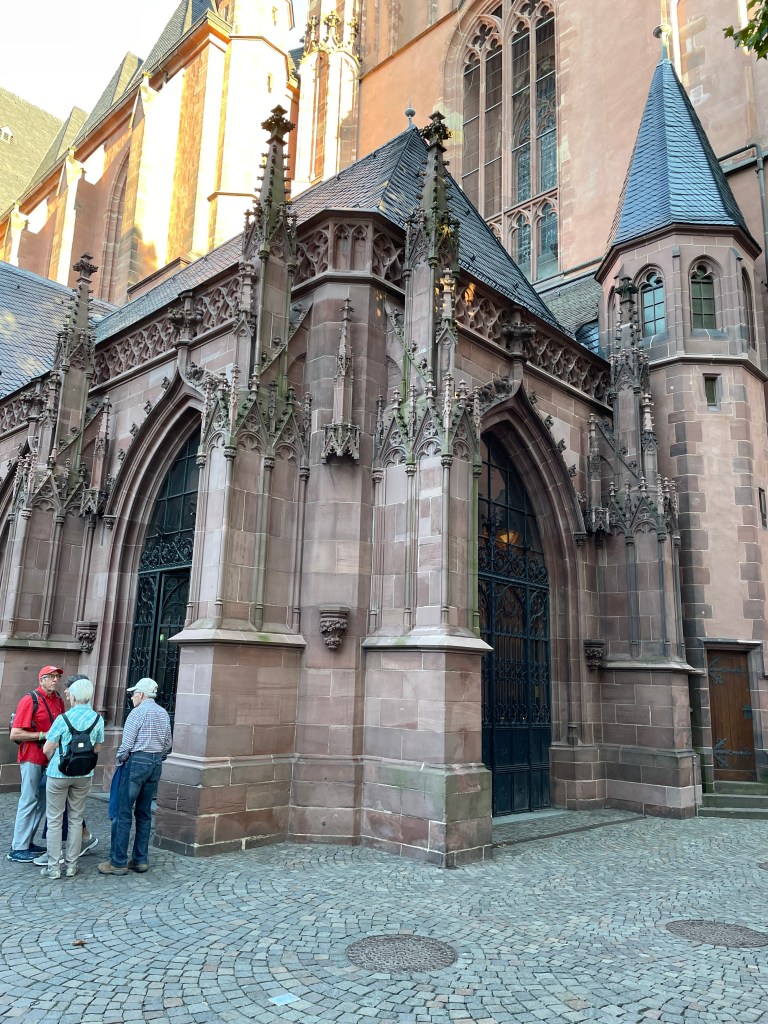
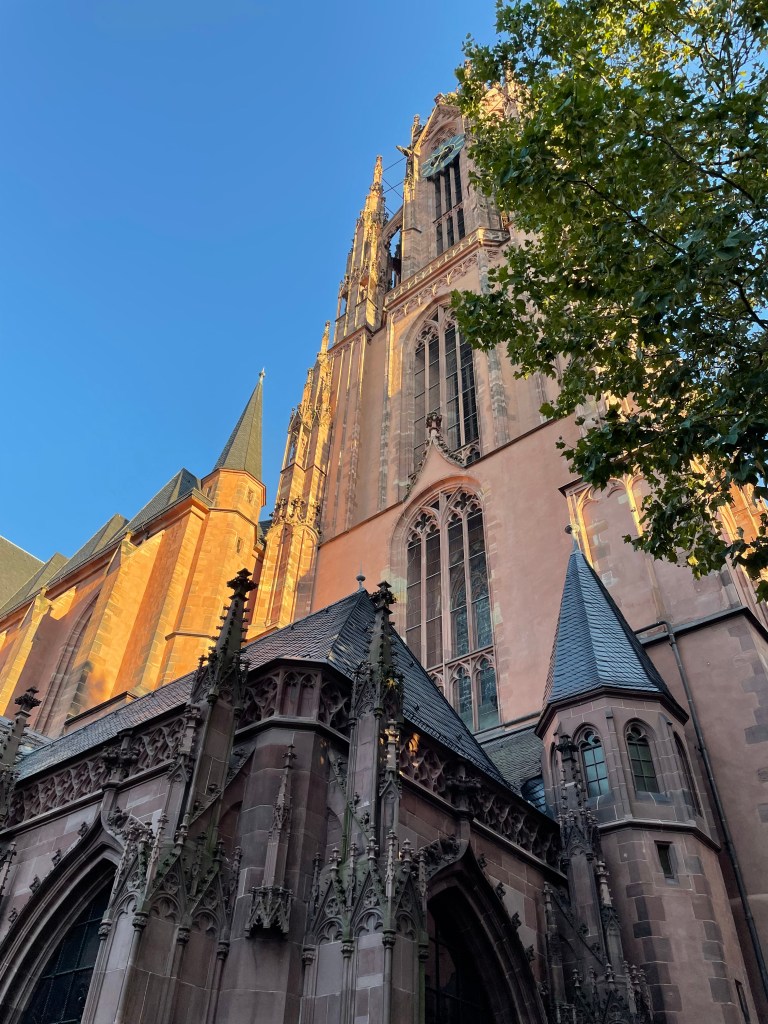
We were above ground for part of the way, then we went down under.  When we came to our destination downtown, we came up about 3 long flights on the escalator before seeing the sky!  A lot goes on under our feet!  We surfaced near the old cathedral or “Dom.”  It was once was surrounded by Frankfurt’s Old Town.  Here is how it looks now:
Der Frankfurter Kaiserdom St. Bartholomäus, von Norden vom Nextower beim Palais Quartier aus gesehen, August 2011 –Wikipedia

From Wikipedia:

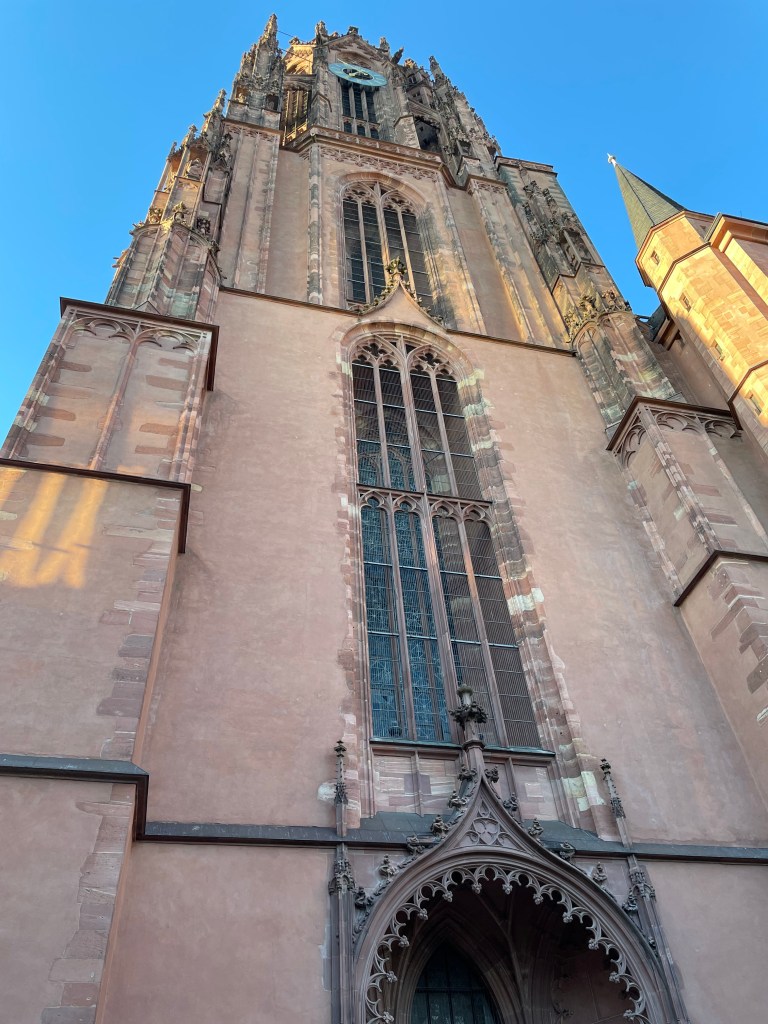
The Imperial Cathedral of St. Bartholomew in Frankfurt am Main , the largest sacred building in the city, is the former election and coronation church of the Roman-German emperors and as such an important monument of imperial history. In the 19th century in particular, it was considered a symbol of national unity. The cathedral was a collegiate church from 852 to 1803 , but never a cathedral in the canonical sense of a bishop’s church.

Today’s cathedral is the fourth church on the same site. Previous buildings excavated since the late 19th century can be traced back to the 7th century. The early Carolingian chapel of the Royal Palace of Frankfurt was the site of the Synod of Frankfurt in 794 and was closely linked to the history of Frankfurt and Frankfurt’s old town . The first royal election in Frankfurt took place in 855 in the Salvator Church , consecrated in 852.

In 1239 the church was placed under the patronage of the Apostle Bartholomew and construction of today’s Gothic cathedral began. It was mainly built between 1250 and 1514, when the construction of the west tower, which had begun in 1415, had to be completed without the planned lantern due to lack of funds. The solution, unique in Central Europe, was to shape the cityscape for centuries. Only after the cathedral fire in 1867 was the tower – which is still unique from an architectural point of view – completed by 1878 according to the preserved plans of the Middle Ages .

March 22, 1944 

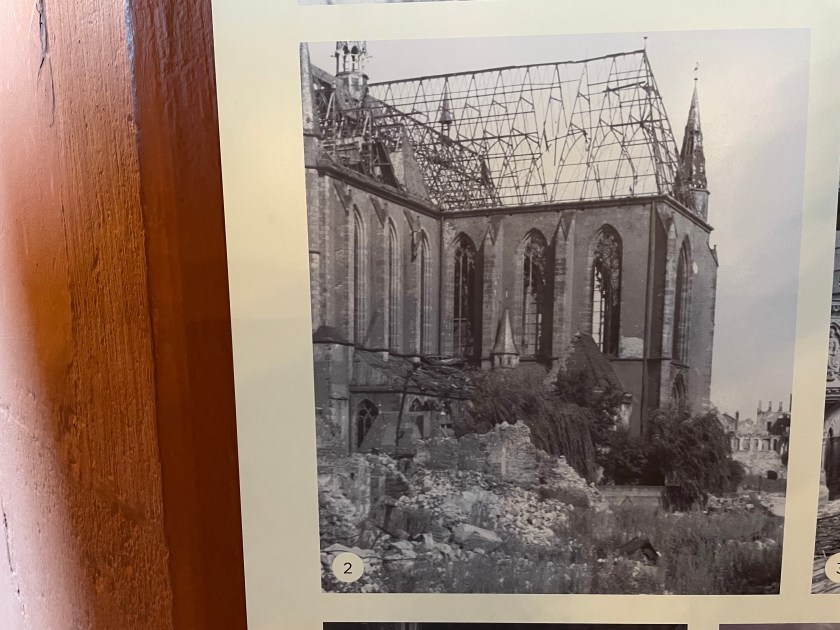
The burned-out cathedral in the middle of the destroyed old town, aerial photo from 1945.  In six heavy Allied air raids on Frankfurt am Main between October 1943 and March 1944, Central Europe’s largest Gothic old town was largely destroyed. The physical annihilation of the old imperial city was intended to break the population’s will to war. The most serious damage was caused by the attack on March 22, 1944, in which over 1,000 buildings in the old town, mostly half-timbered houses , burned almost completely. The cathedral also suffered major damage when the old Frankfurt collapsed. explosive and incendiary bombs penetrated the roof of the southern transept, all roofs and windows as well as the vaults in the southern transept, the election chapel and the Scheidskapelle were destroyed, and as in 1867, the interior of the cathedral burned out completely. This time, however, the valuable interior furnishings had been brought to safety beforehand. Eight of the nine bells, including the Gloriosa, had already been requisitioned in 1942 and transported to the bell cemetery  in Hamburg in order to later be melted down as a “long-term reserve of raw materials.”  Fortunately, the tower with the bell remaining in it survived the bombing raids largely unscathed.
The Second Reconstruction 

In July 1947, after the rubble had been cleared, the bells were brought back from the bell camp, where they had survived the war, and ceremonially reopened. It wasn’t until 1948 that the actual restoration of the cathedral began.

This drawing shows what happened in 1944 at the end of the war.

How remarkable that so many old buildings were rebuilt and restored.  It’s hard to imagine that most of Frankfurt once lay in rubble.  We’re told that there was considerable debate about rebuilding.  Do you make things look old, or do you move forward with new architecture?  The Dom, of course, was restored to its former glory, and it is glorious.  But many of the buildings in the surrounding area that look old are not.

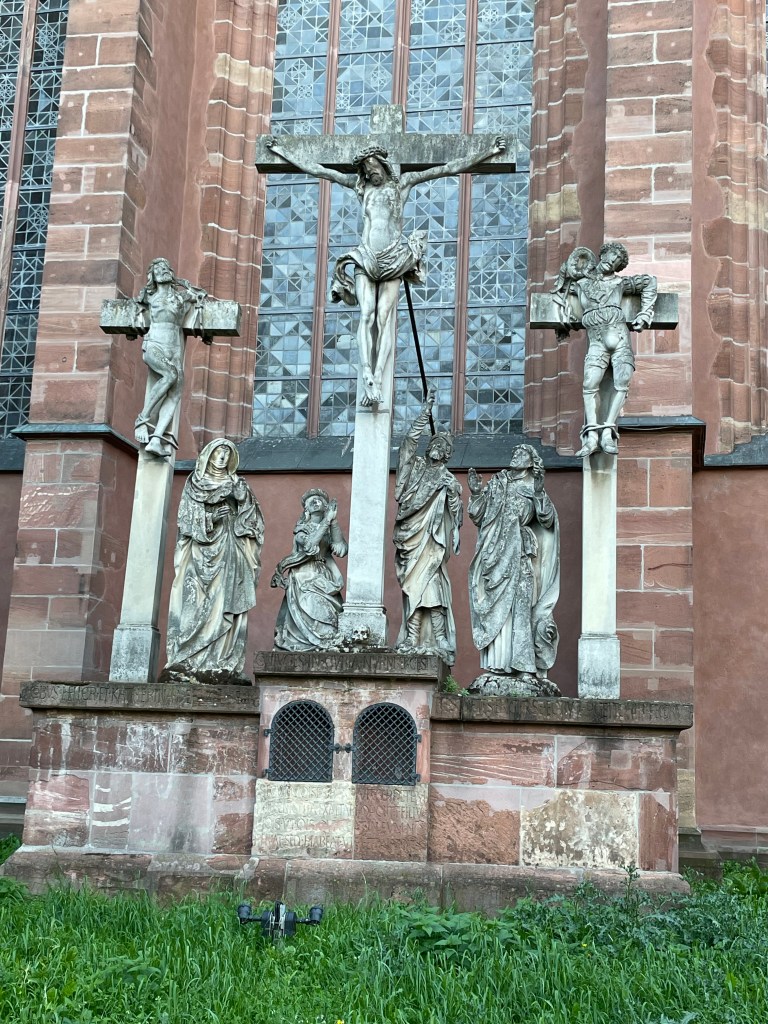
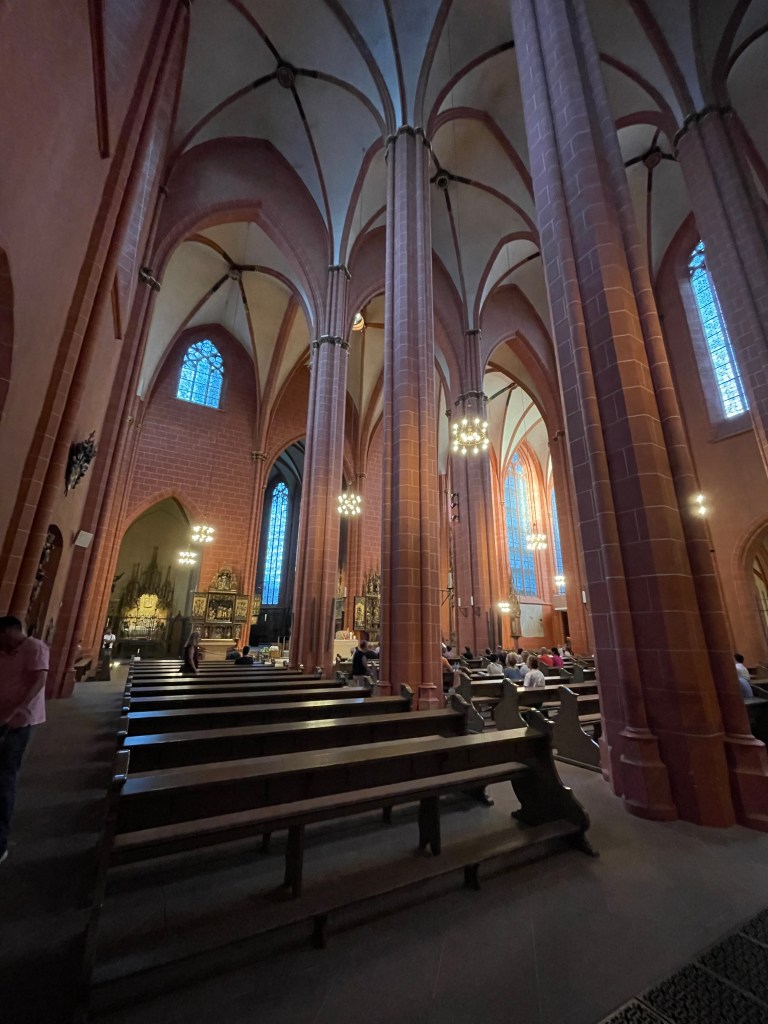
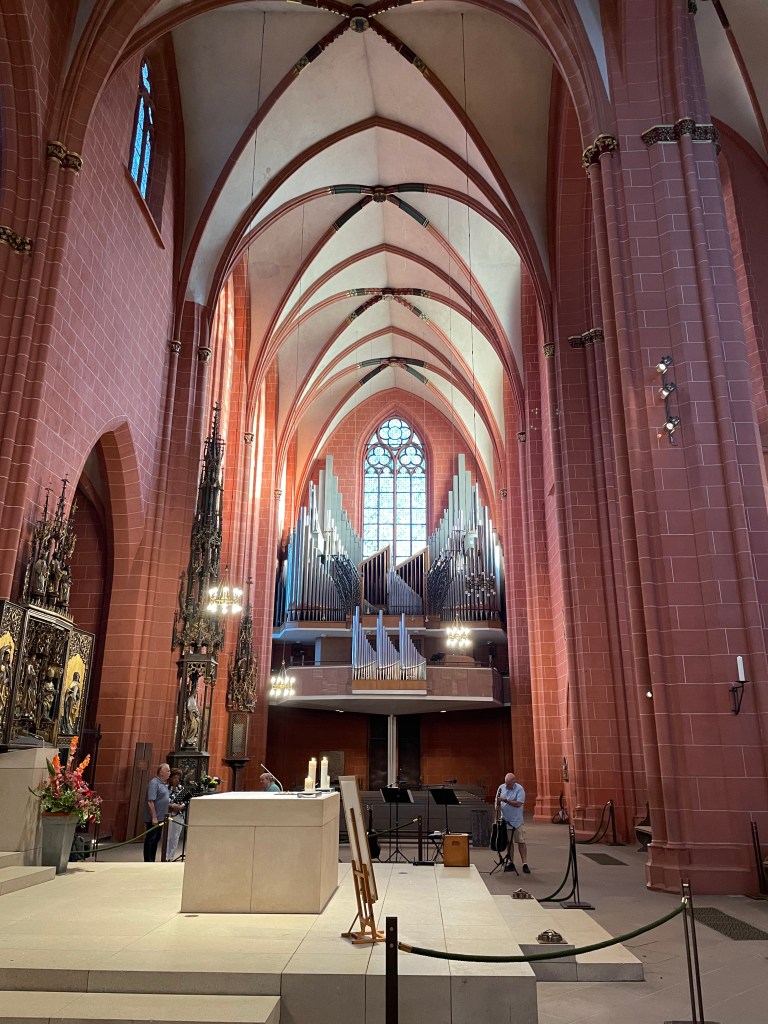
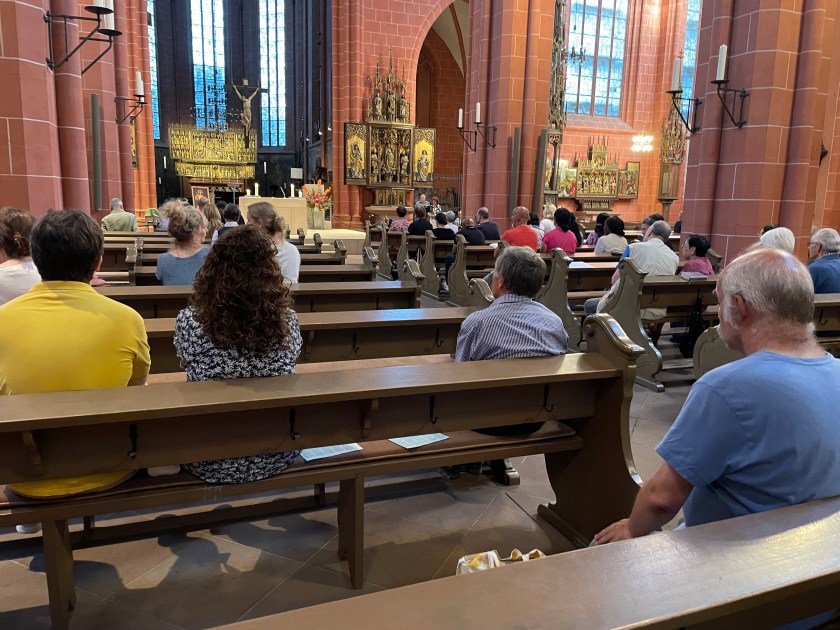
The inside was spectacular!

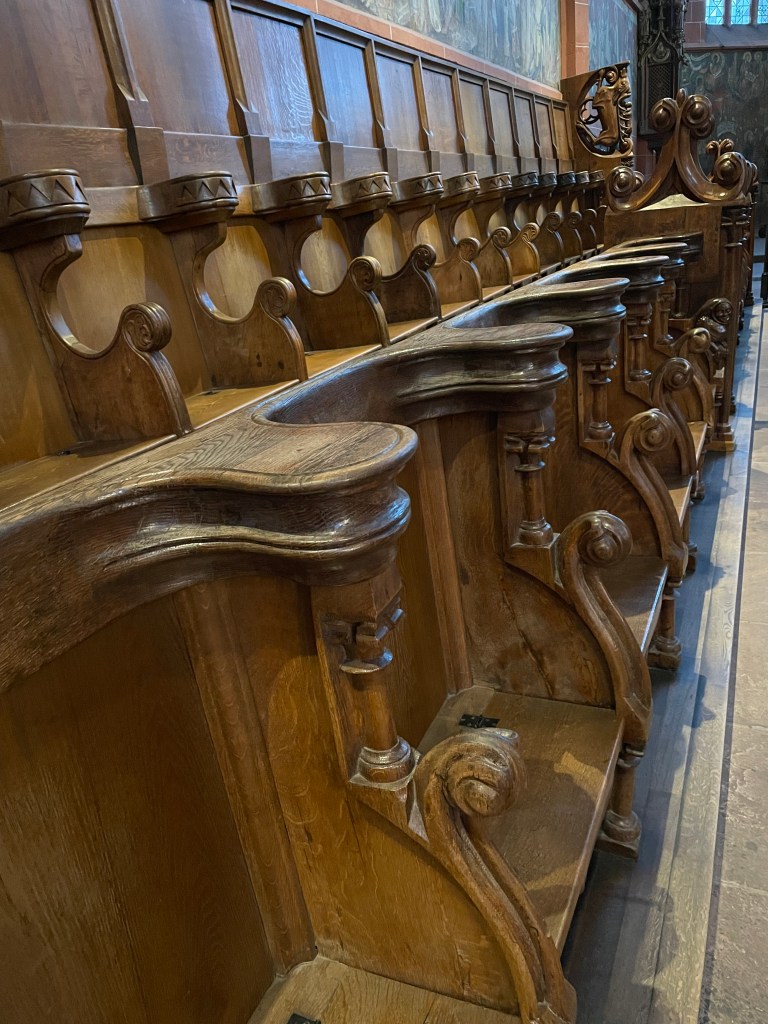
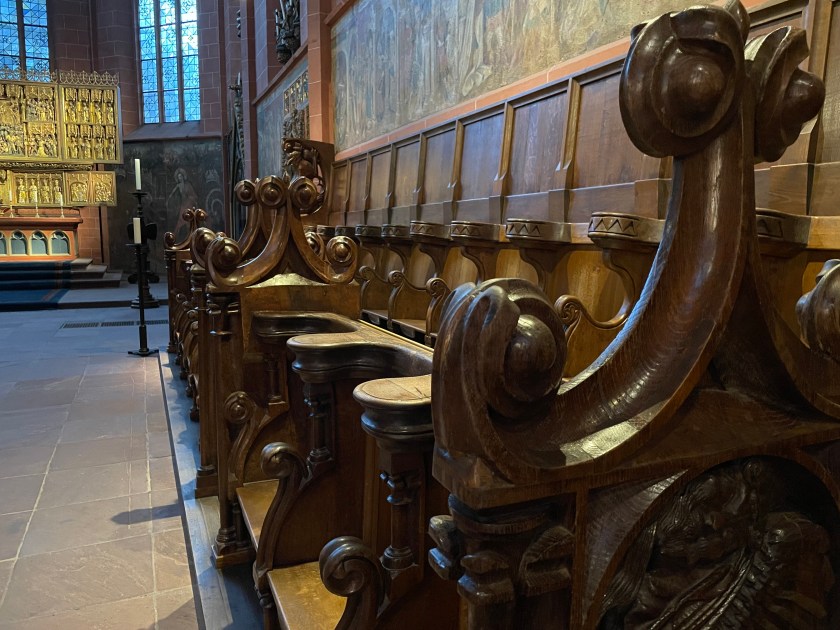
The choir seats:

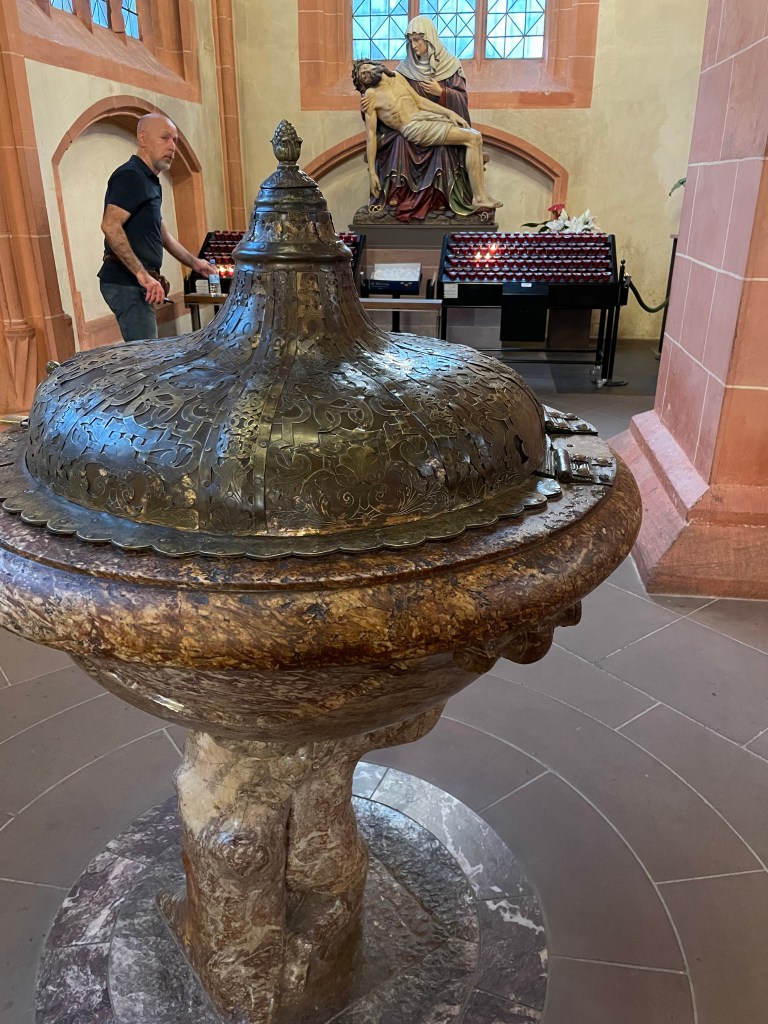
The baptismal font:

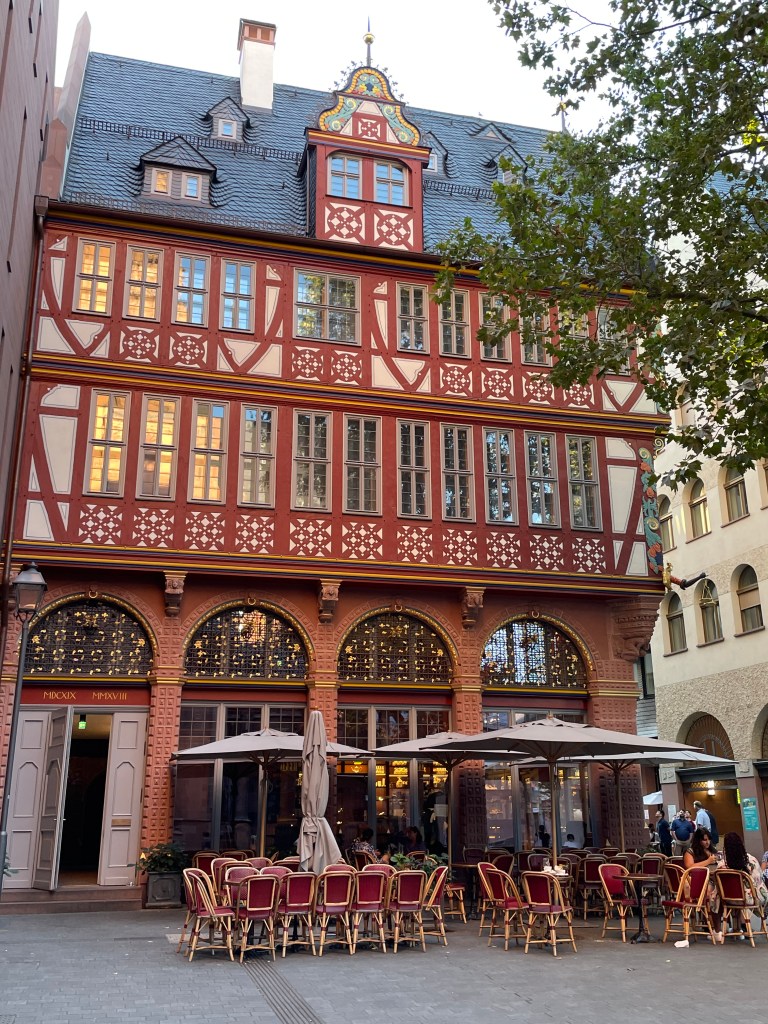
One of the new buildings by the Dom, made to look old.

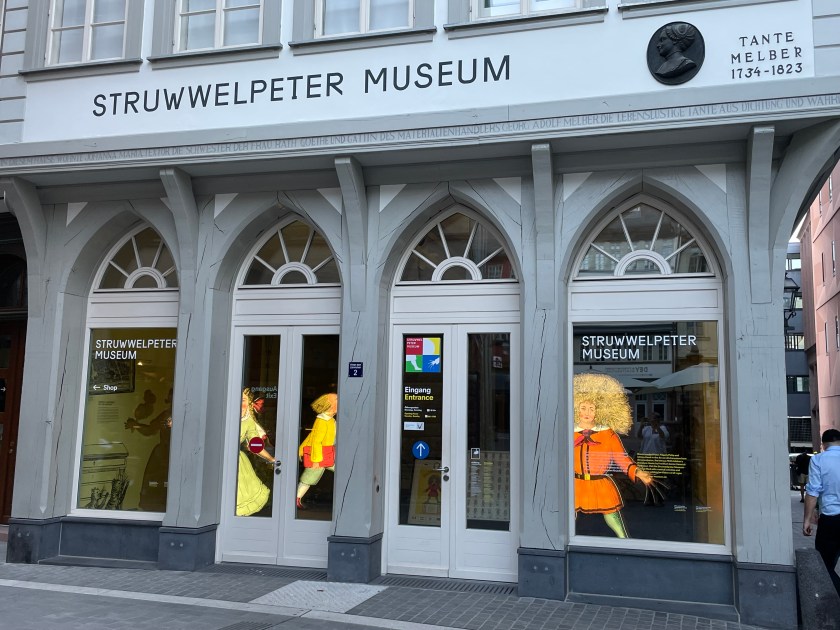
Black Peter, or Struwelpeter is a character in a famous children’s book.

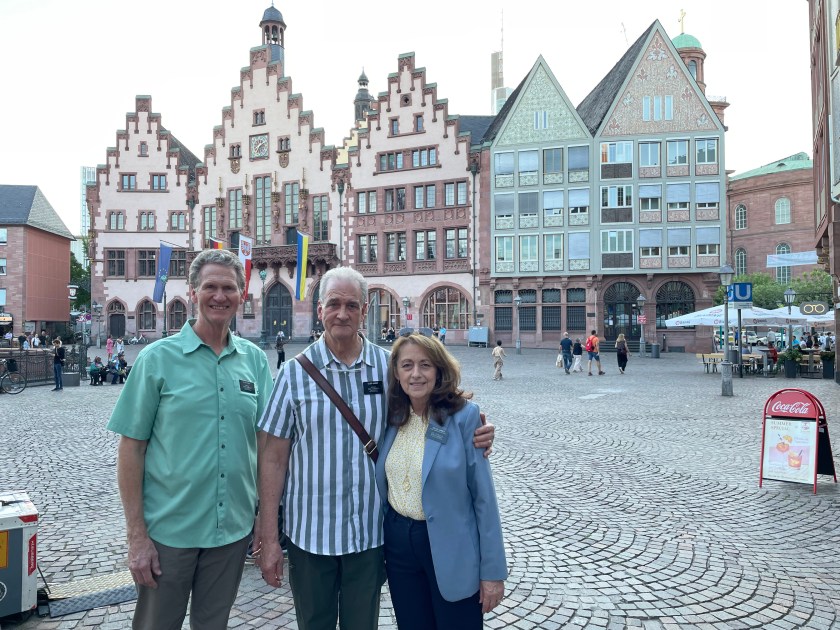
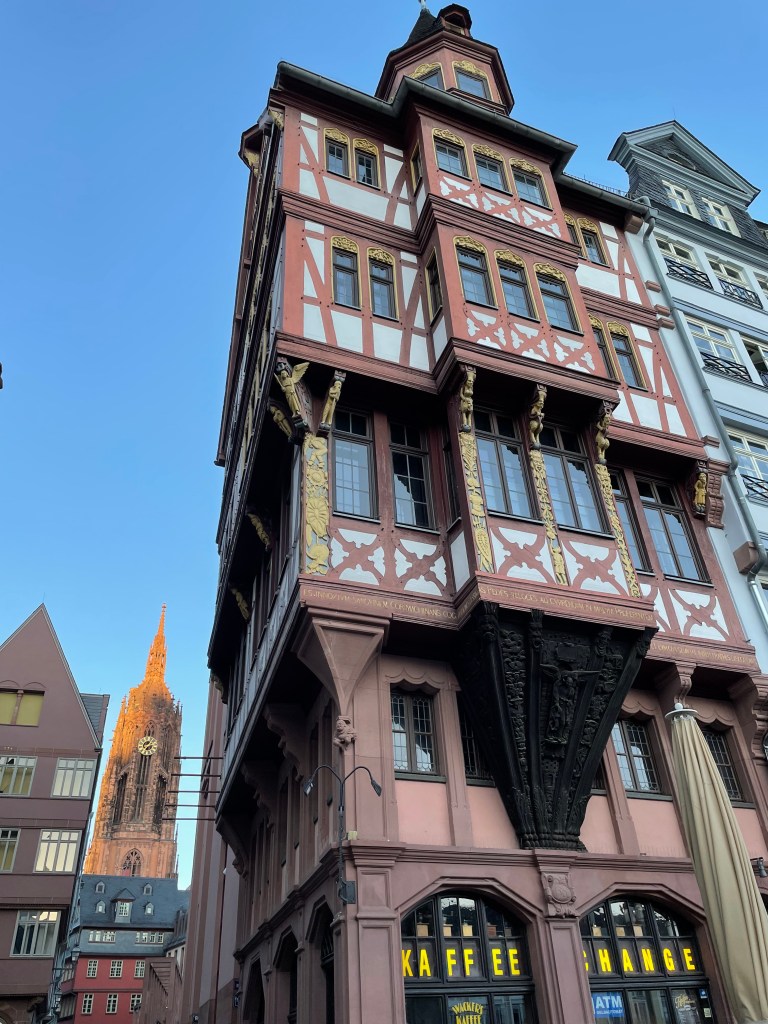
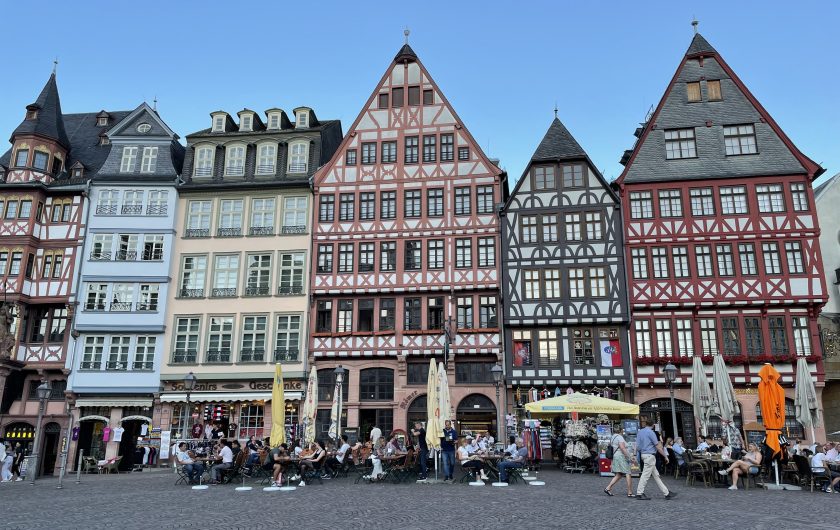
Here is the famous city center town square.  Many of these buildings were built in the 1980s.  At Christmas time, this entire area is filled with Christmas markets.

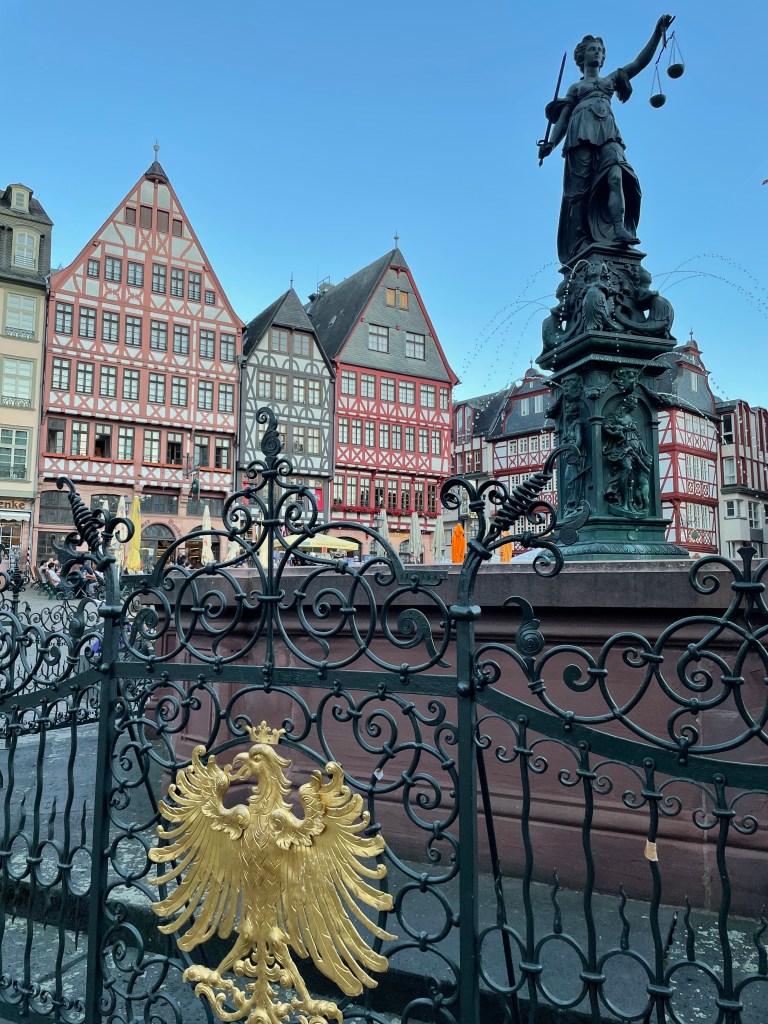
This is the famous face of Frankfurt:  Römerberg Square

Römerberg Square is just a block or so away from the Main River.

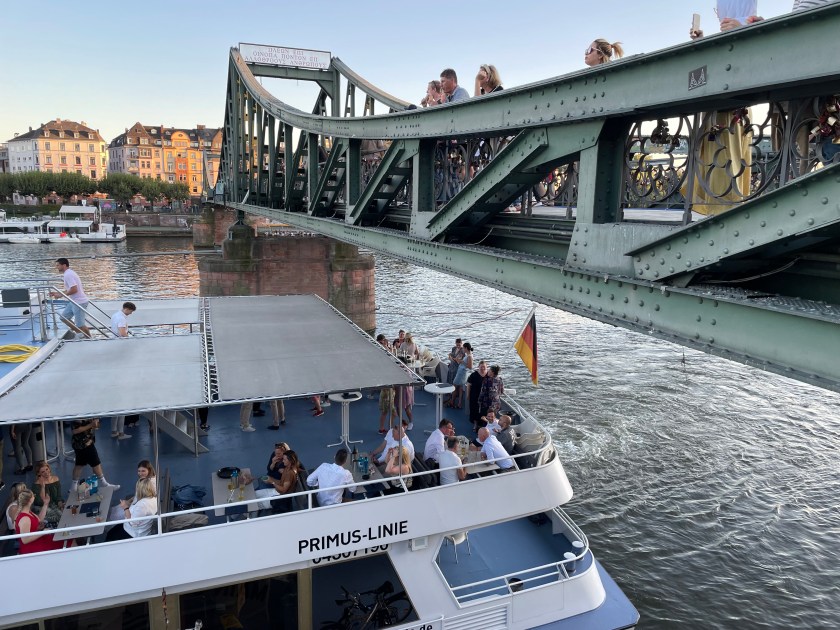
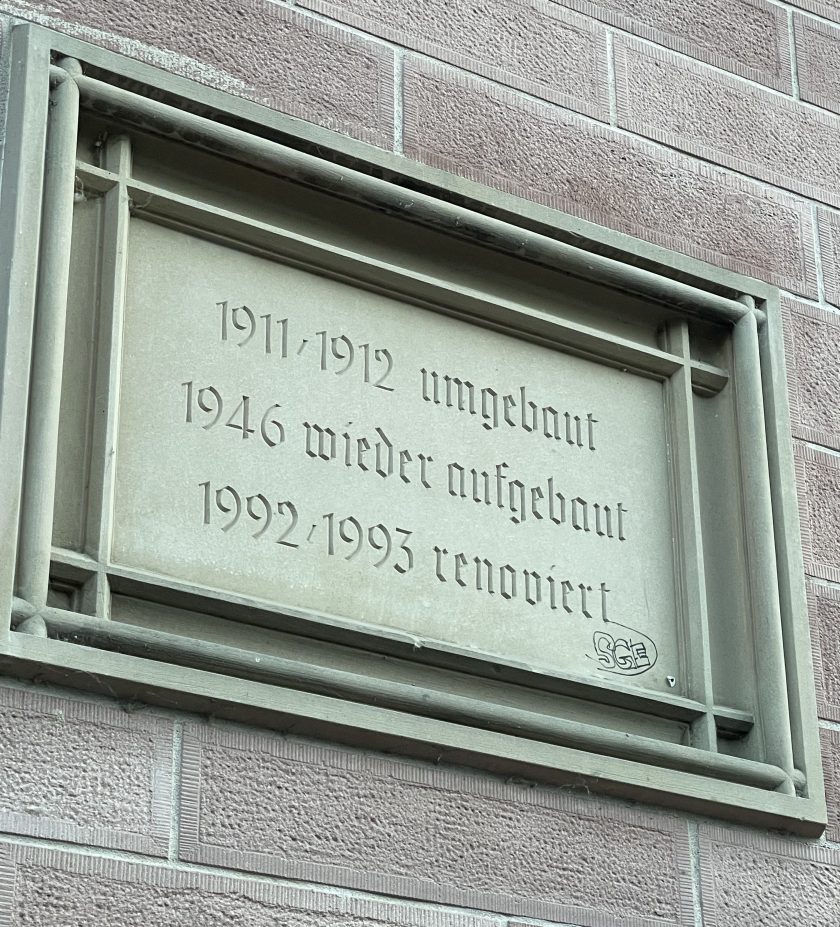
This bridge’s history was simply stated here:  built in 1911-1912, built again in 1946, renovated in 1992-1993.

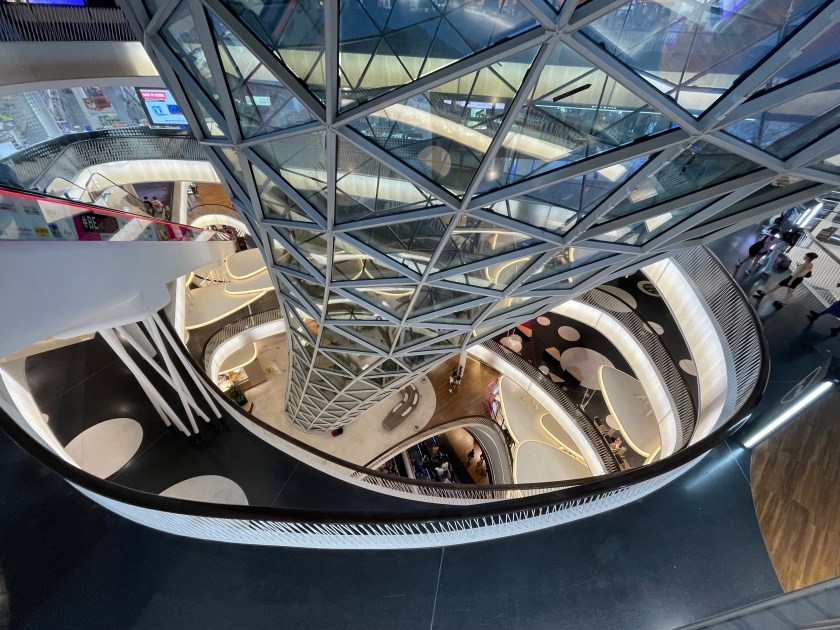
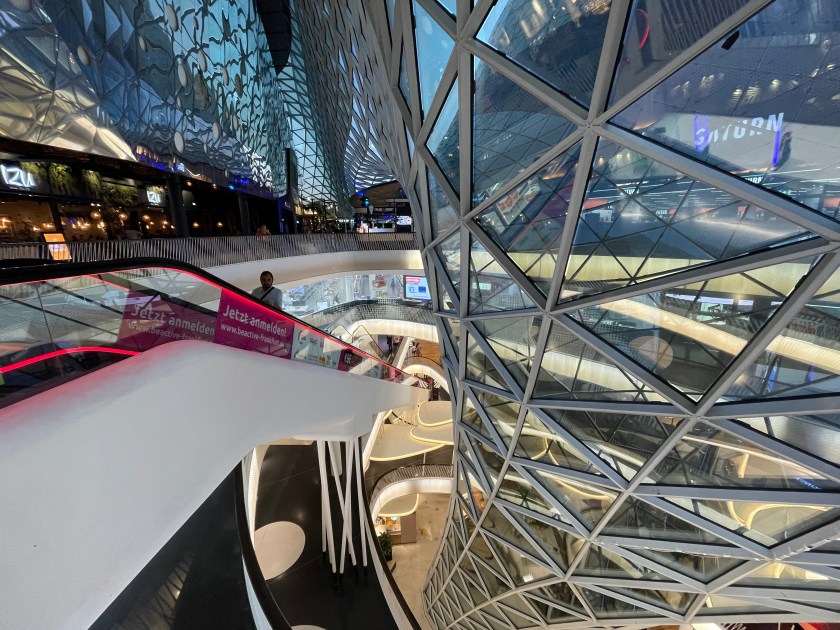
Right beside the “old” part of town is a very modern shopping area with malls and upper end shops and stores.  People were out and about, enjoying the beautiful weather this evening.

I enjoyed a Frankfurter wurst, which is surprising like our American frankfurter hotdogs.  John had some Flammkuchen.  We are so happy to be here!

Visiting a Quiet Cemetery with Frau Enger

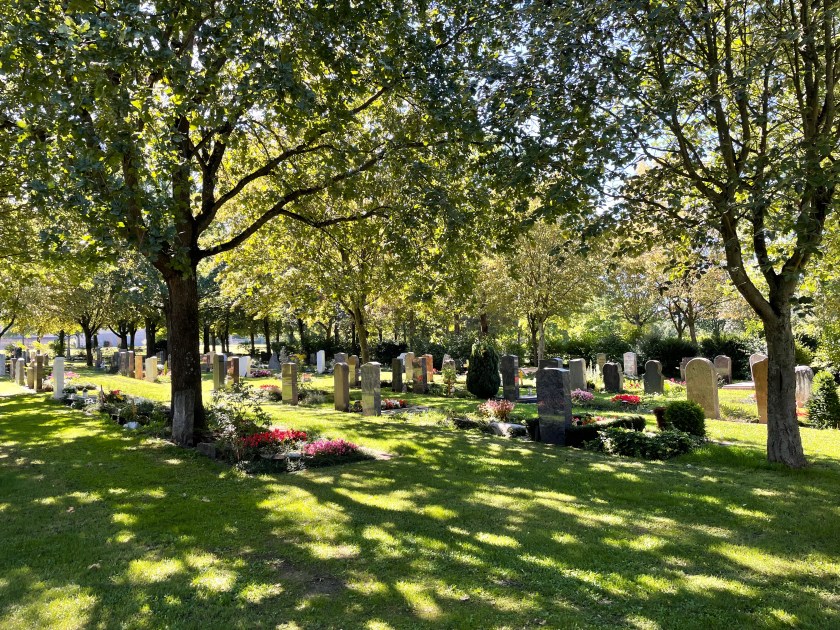
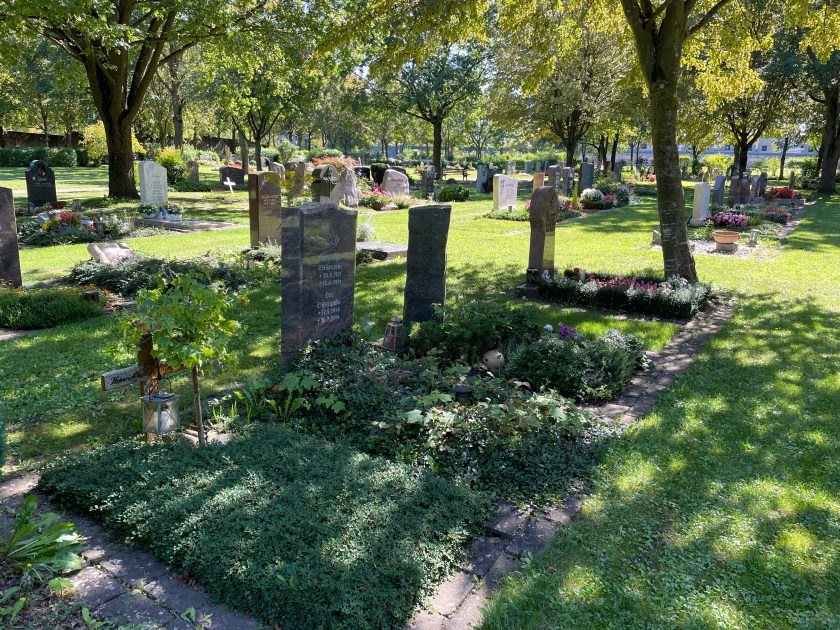
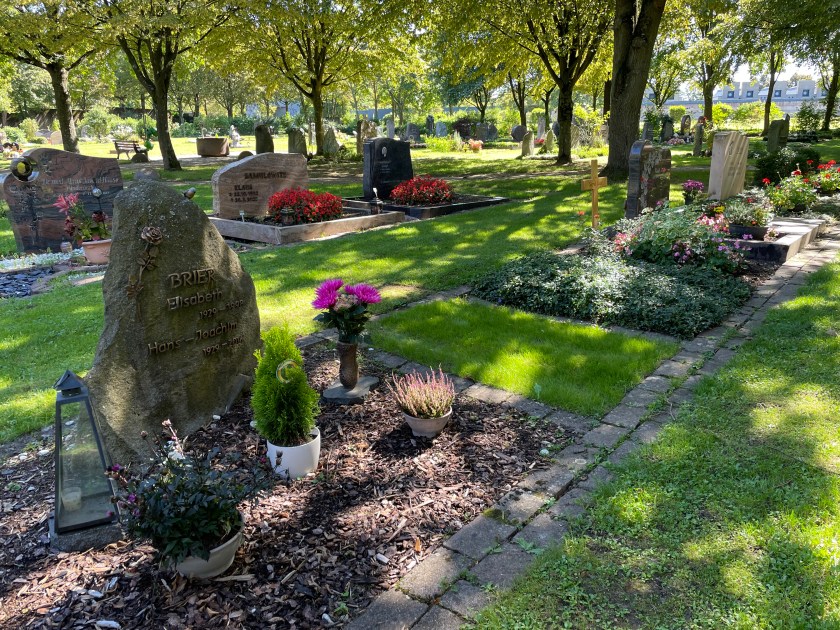
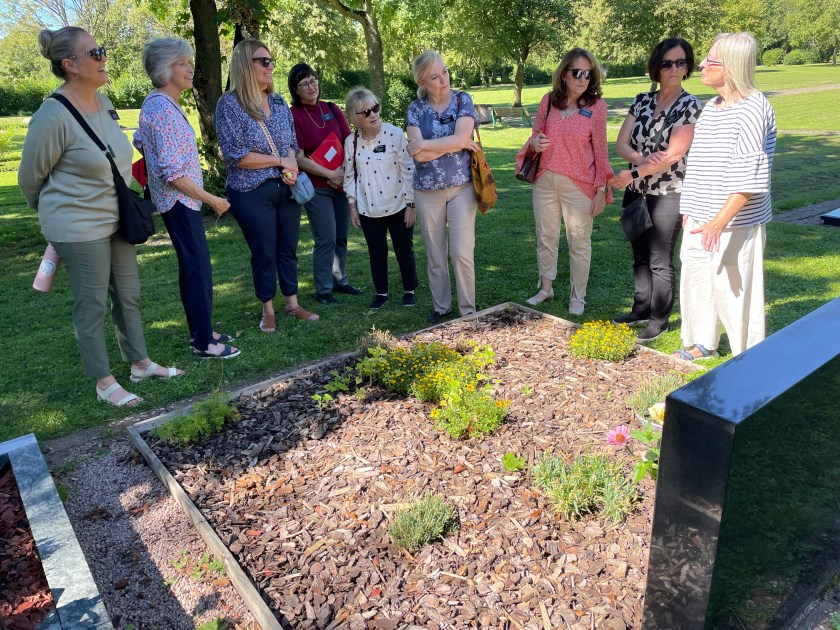
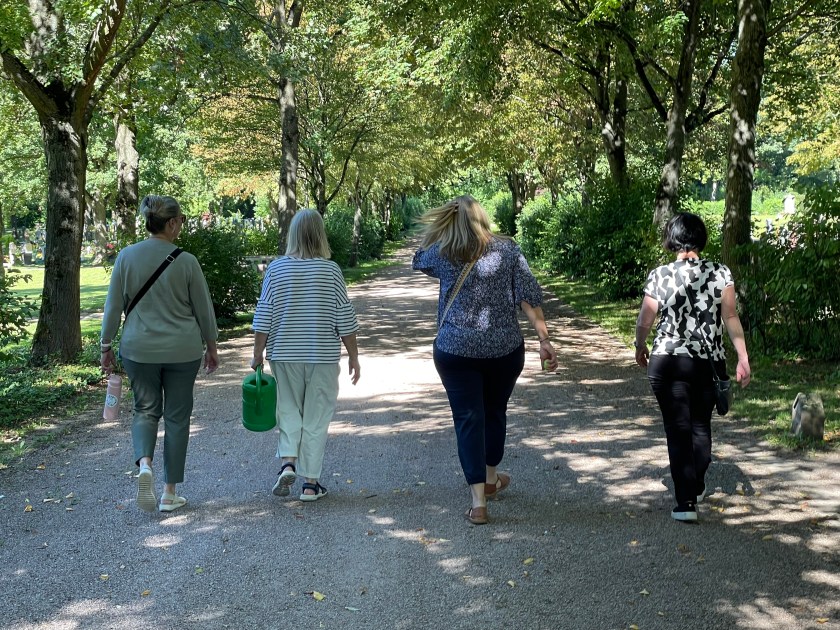
Cemeteries are one of my favorite places and German cemeteries top the list.  Such care is taken by the families for each resting spot.  Today after our German lesson we visited this peaceful cemetery called Parkfriedhof near Frau Enger’s home.  She wanted to take us to the place where her husband, Joachim is buried.  He died in 2015.

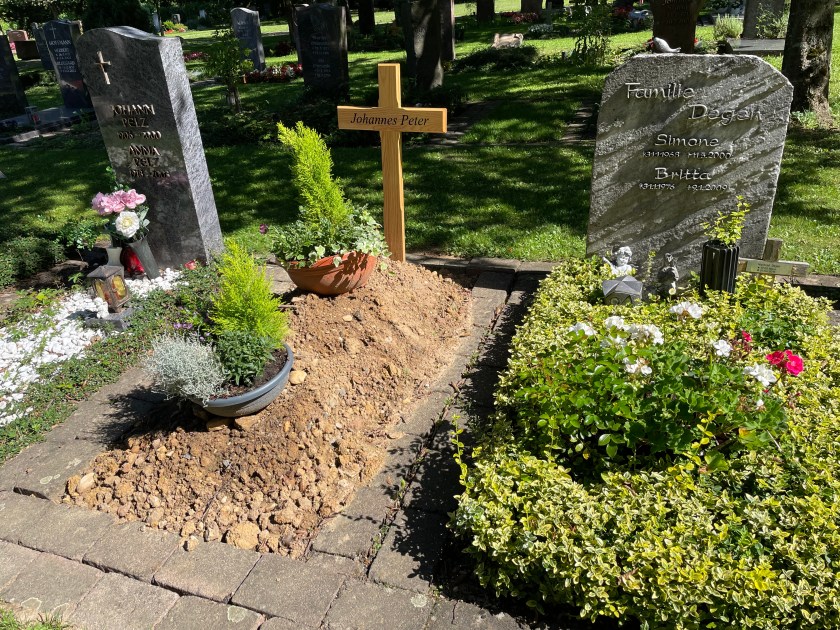
I loved learning more about the cemeteries here.  A walk in a cemetery is like a walk in a garden created by hundreds of gardeners.  In Germany, a burial plot is purchased for 20-25 years, depending on the density of the soil.  Most are 20 year contracts which are renewable.  Usually if a family moves away or doesn’t care of the plot, they aren’t renewed.

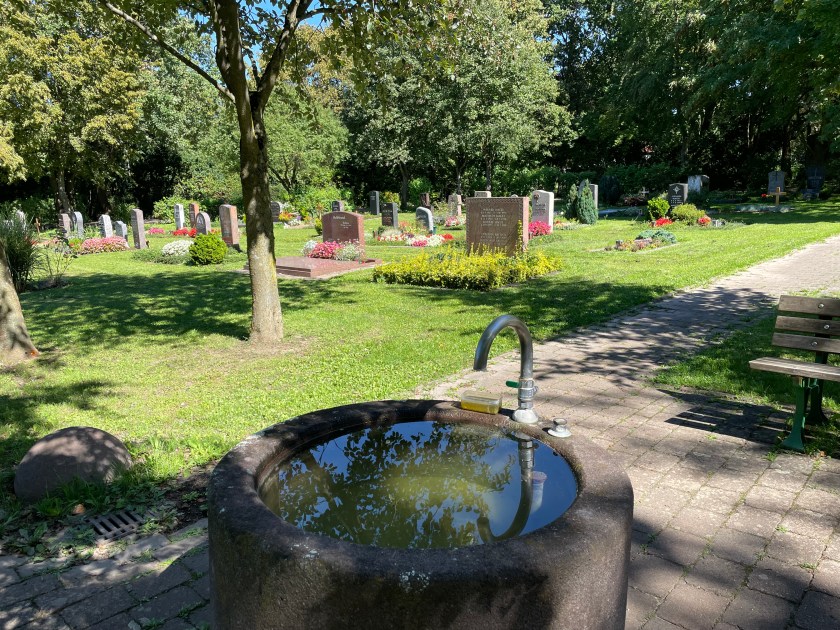
Cemeteries have watering taps with watering cans throughout the cemetery for your use.  The walkways and paths are well-kept.

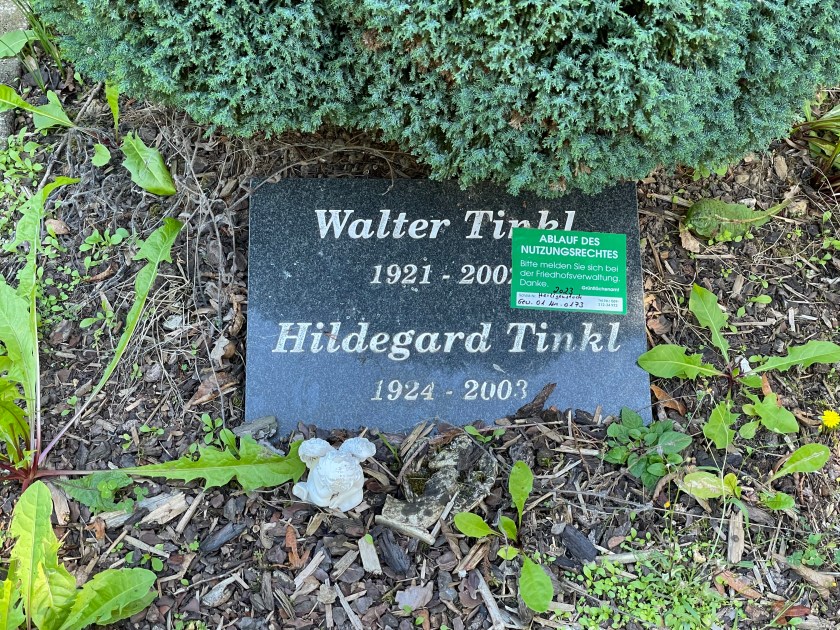
When it’s time to renew the 20-year contract, the family gets a notice like the green slip below, attached to the headstone.

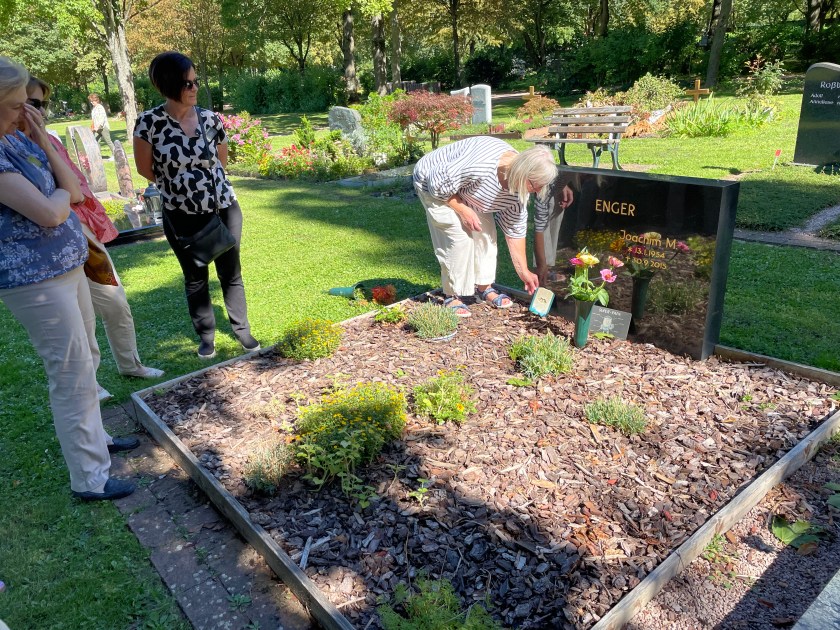
Here we are at Joachim’s grave.

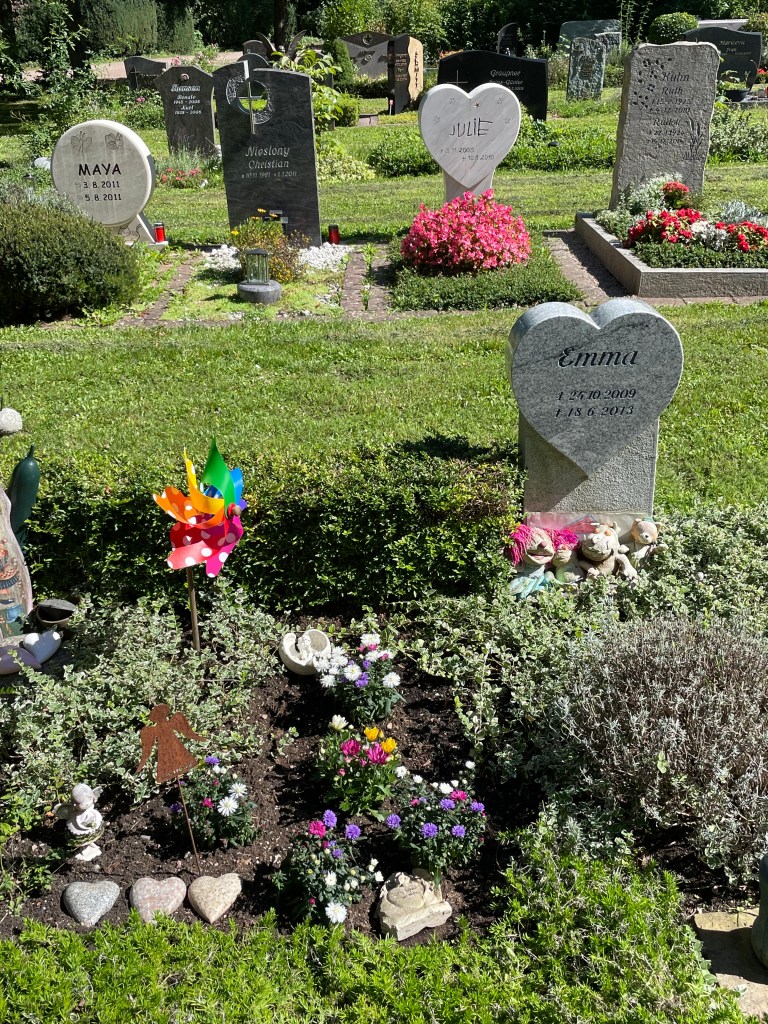
Here are a couple of memorials for children.  Frau Enger knew and loved little Emma.  She was a church member.

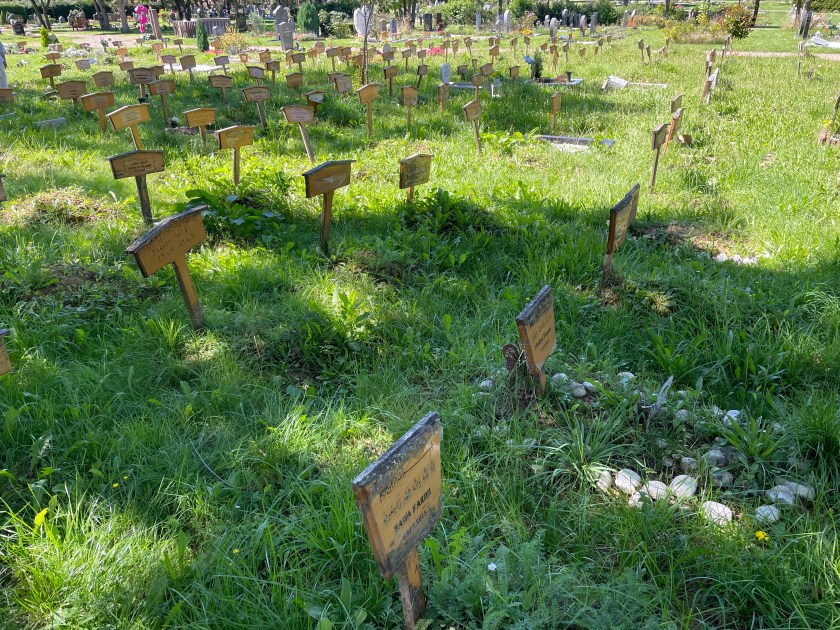
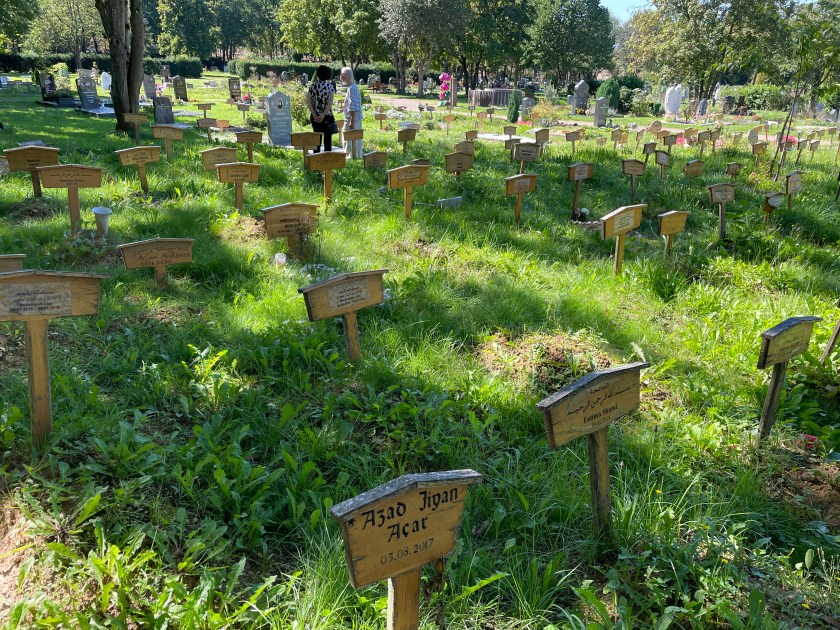
There was a section of the cemetery for Muslims with wooden markers, not stones .  Frau Enger explained that they are not allowed to be buried in most cemeteries here because they only wrap the bodies in a cloth.  I don’t think embalming is practiced here for anyone.  Burials are held quickly after deaths.

Here is a heartbreaking story about a poor young girl who was murdered here almost 20 years ago. Frau Enger told us about her when we were at the cemetery. Her grave was given up 2 years ago after 20 years. For 20 years, Sis Enger watched over her grave and cared for it, honoring the girl no one knew.  Frau Enger has a tender heart.

Unresolved Mysteries

The Girl from the Main: tortured for years, murdered and dumped into a river in 2001, identity still unknown
Listed here before. I only noticed after I finished the article, it’s been 5 years, and I think the case still deserves attention.

In the early afternoon of July 31st 2001, passers-by in Frankfurt, Germany found a bundle drifting in the river Main. It contained the unclothed body of a teenaged girl. To this day, her identity is unknown.

What is known is that her life must have been horrifying for a long time before her death. While the cause of death was blunt trauma that caused the ribs to puncture the lung and spleen, that was far from the only injury discovered in the autopsy. Both arms had been fractured and healed without proper medical care. There were multiple large scars on the victim’s legs and torso, as well as small burn scars (most likely caused by cigarettes) all over her body. The time of death was about 3 days before the body was found, and it had been drifting in the water for 12 to 14 hours.

The girl’s age was estimated to be 15 or 16, although she was very slim and may have looked younger. DNA and hair mineral analysis revealed that she was born and grew up in Pakistan, Afghanistan, or northern India, but had lived in Germany for about 2 years before her death. An origin from Pakistan or Afghanistan seems more likely since the bedsheets the body was wrapped in were bound with two cloth belts typical for that region, known as “nalas”.

This has led to speculation (so far not substantiated by anything) that the girl may have been brought to Germany either for an arranged marriage, or as a servant.

Police investigation in the case was quite intense and long, involving the Pakistani, Afghani, and Indian communities in Germany, investigating all known female immigrants of matching age from these countries to the Frankfurt region, and even putting up search posters in these countries. Additionally, over 100 ships that had passed that river section during the time the body was in the water were searched. Nothing came of it.

The Girl from the Main found her last resting place in a cemetary in northern Frankfurt, under a gravestone paid for by police officers involved in the investigation.

German Lessons with Frau Erika Enger

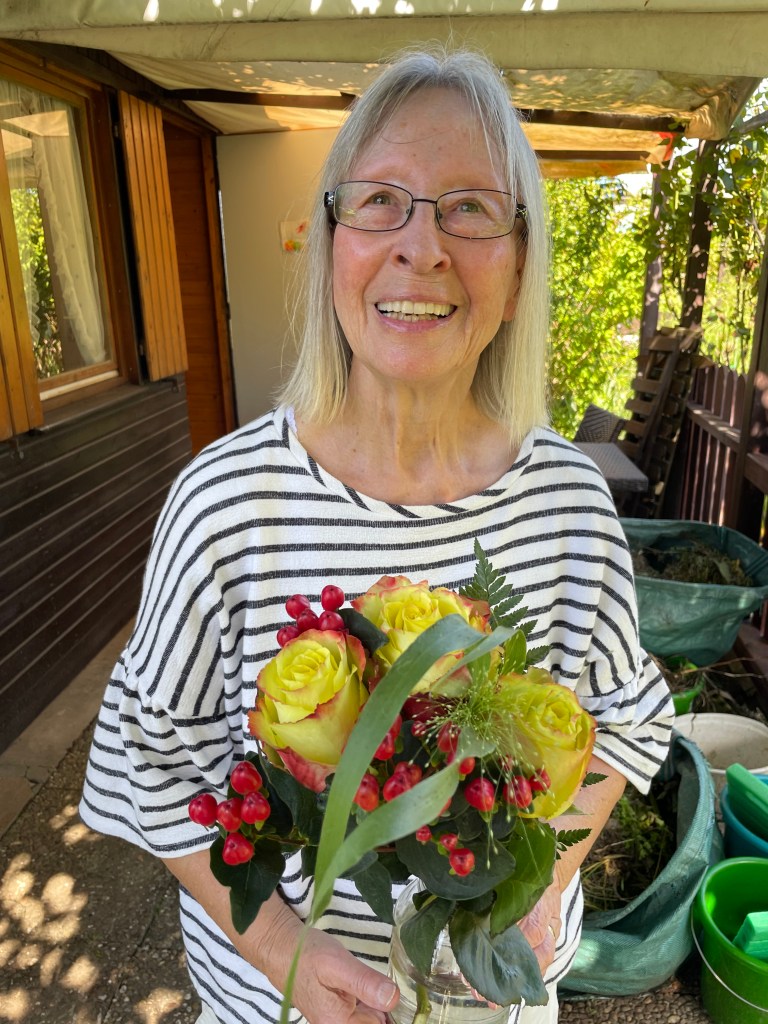
Meet Frau Enger, our dear friend and now my German teacher.  Fifty years ago our husbands were missionary companions in Switzerland.   When I was an editor for the International Magazines (now the Liahona), her husband, Joachim was our German translator, so I also associated with him.  Sadly, Joaquim died in 2015 after a few month’s battle with cancer.

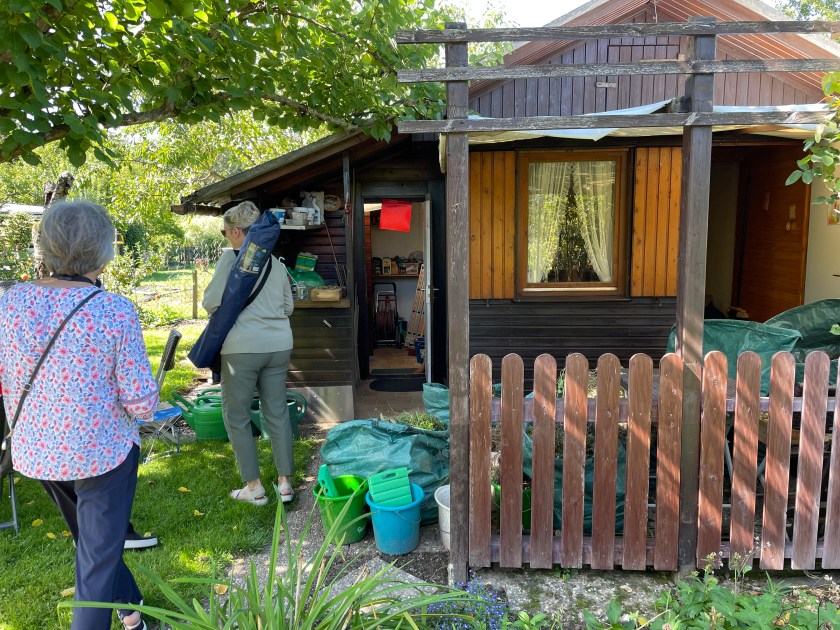
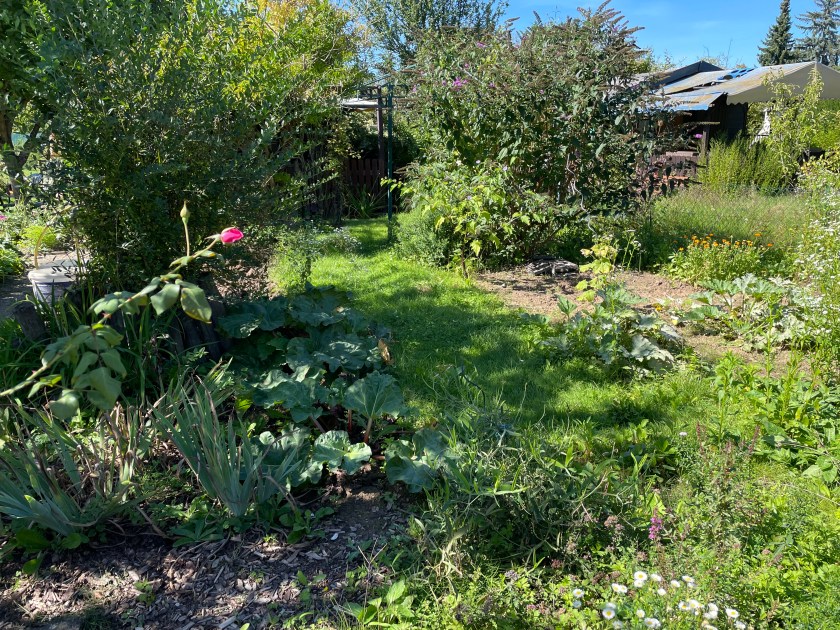
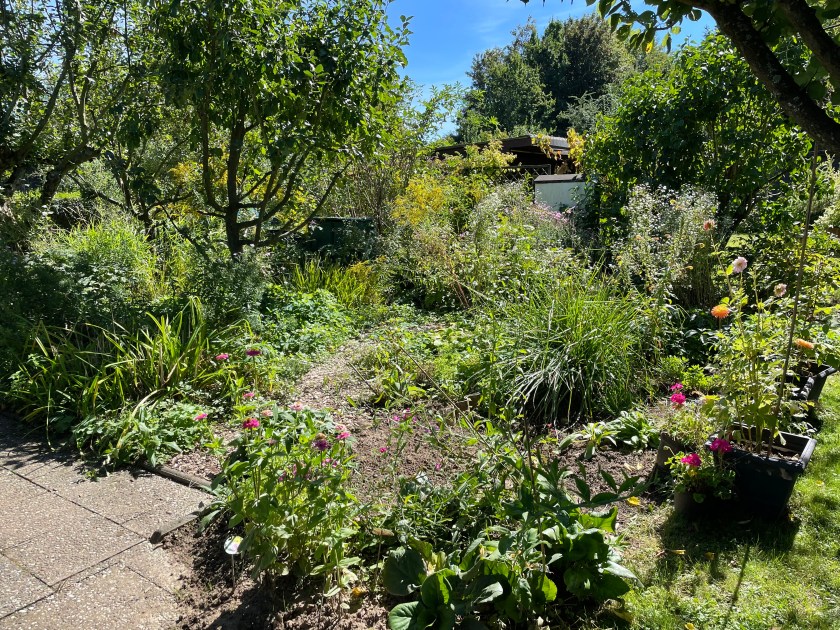
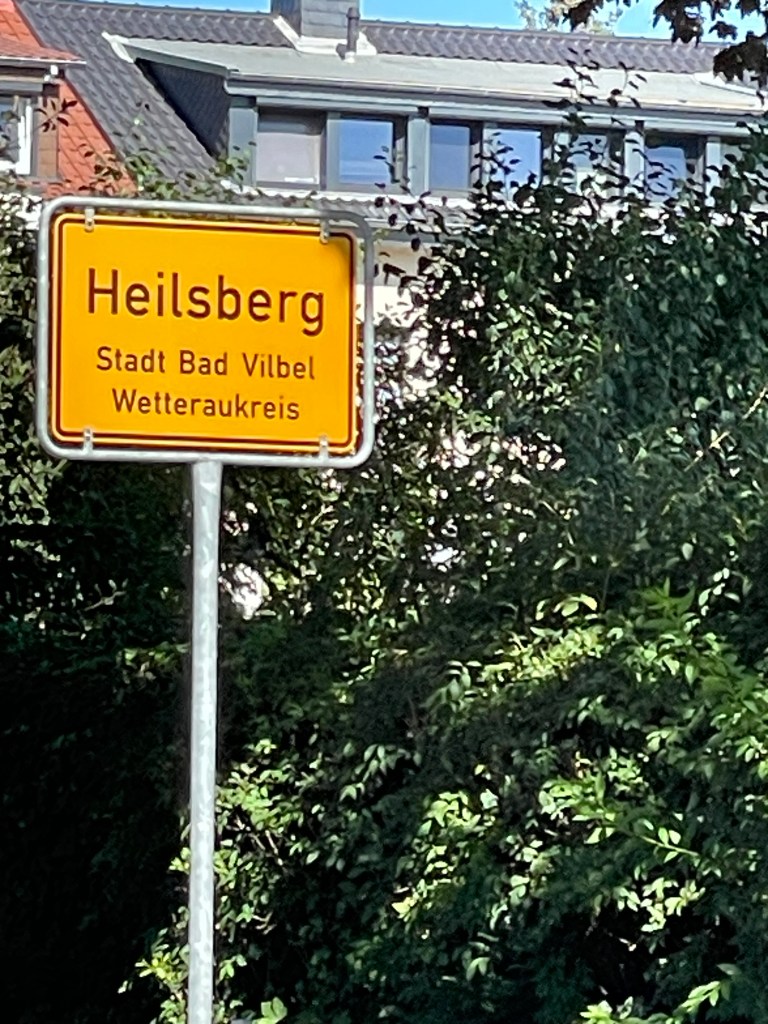
Erika and Joachim found joy solace in their small garden plot not far from their home near Heilsberg.  Erika continues to go to her garden every day to tend, water and harvest.  It’s peaceful and quiet here.  It’s heavenly.

These garden plots are a part of  a century-old urban culture in Germany.  Here is some really good information about these city gardens:

While “urban gardening” recently turned into every hipster’s pastime, Germany has a long-established culture of city gardens, dating back to the period of strong industrialization and urbanization in the 19th century. 

Today’s gardeners are rediscovering the joys of digging the earth, making their statement against consumerism by growing their own vegetables. But when the allotment gardens were initially created, they aimed to combat urban families’ extreme poverty and malnutrition.

First called “gardens of the poor,” they are now known as “Schrebergärten,” inspired by the “Schreber movement” launched in 1864, which drew on the ideas of German physician Moritz Schreber.

During World Wars I and II, the food produced in those gardens became essential for many families’ survival. 

Today, for many foreigners, the fenced up garden colonies, with their tiny cottages lined up along railways or occupying former no-man’s land, seem a little mysterious.

Click through the gallery above or watch the video below to learn more about these very German gardens, which become particularly busy this time of year. 

https://www.dw.com/en/a-brief-guide-to-german-garden-colonies/a-39133787

This fun 3 minute video in the link above does a great job explaining how these gardens work.  The cost for renting a garden plot is about 200-250 Euro per year.

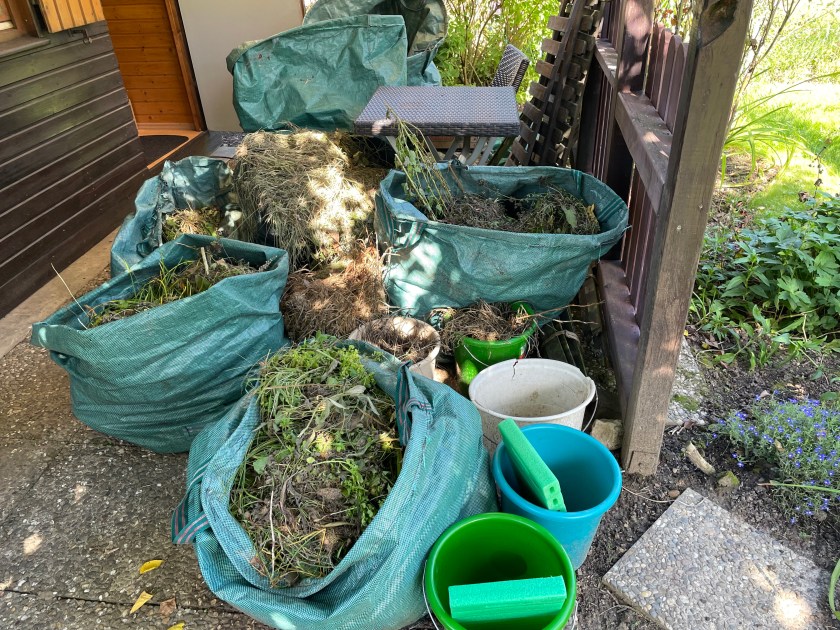
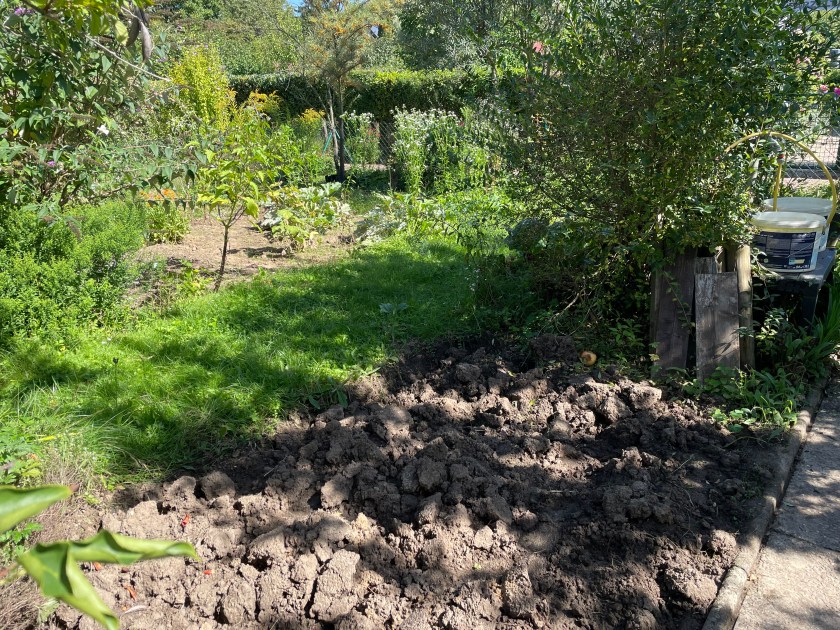
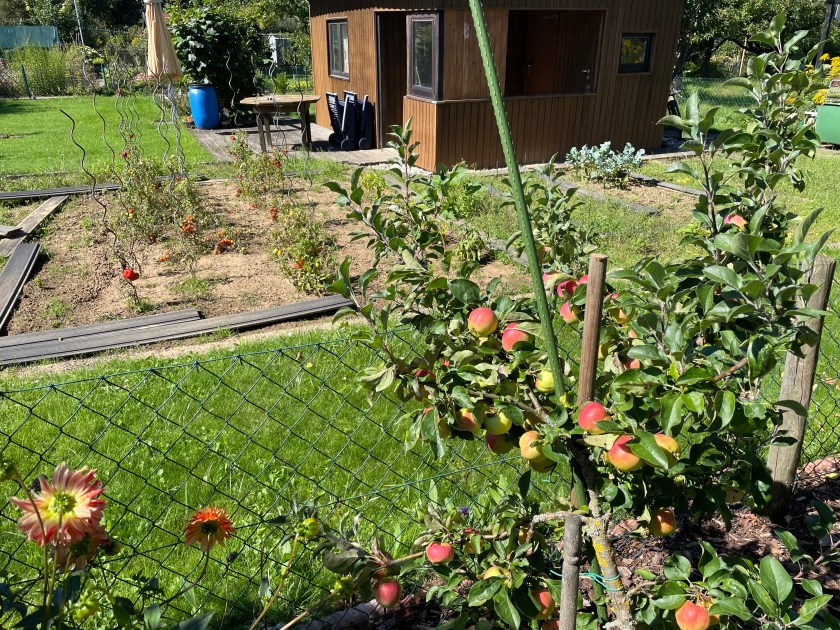
In this home away from home, Erika has a potting shed with her tools and pots and mulch.  She built a small greenhouse structure from boards and tarp for her tomatoes.  This garden plot has been Erika’s haven of peace.  It was so quiet and peaceful and beautiful in an earthy way–not precise and tidy. She had flowers–Sweet Peas, Zinnias and Dahlias, a small apple tree and a kiwi tree, some rhubarb, a melon plant and some squash.  There is a little bit of this and a little bit of that filling her allotted space. It felt like we were in Peter Rabbit’s garden, water cans and all, from days gone by. The weather was perfect. It really was heavenly. I loved being there.

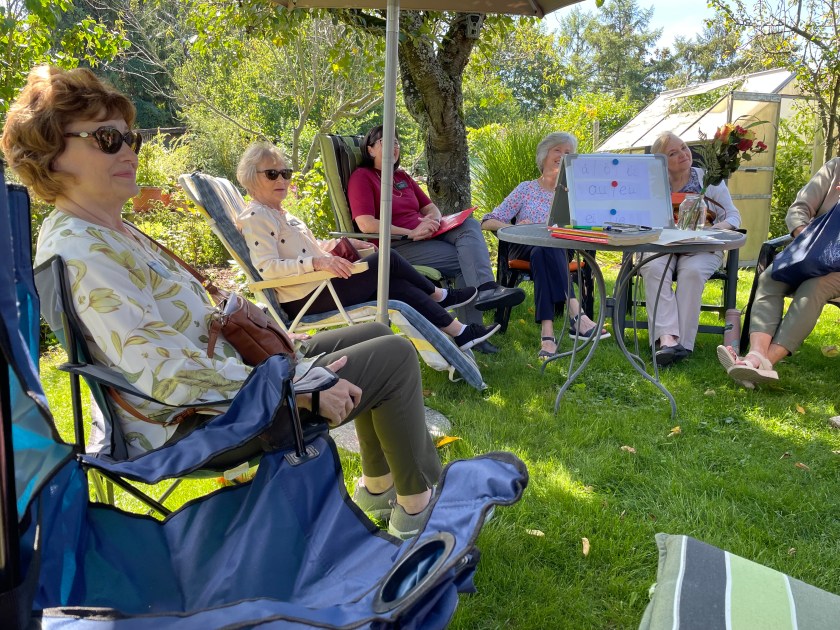
Today for our German lesson, we sat in the shade of a large apricot tree surrounded by these flowers and vegetables and trees.   No one else was in sight.  The bees hummed and the butterflies dipped around us.  The weather was perfect.  I would come here everyday too, if I could.

“Frau Enger” has been teaching English lessons to the wives serving in the Area Offices for about 11 years.  Every week she prepares a lesson and something cultural to teach the ladies who adore her. Before Covid she came to the church to teach, after Covid she started doing the classes at her apartment or in the garden.

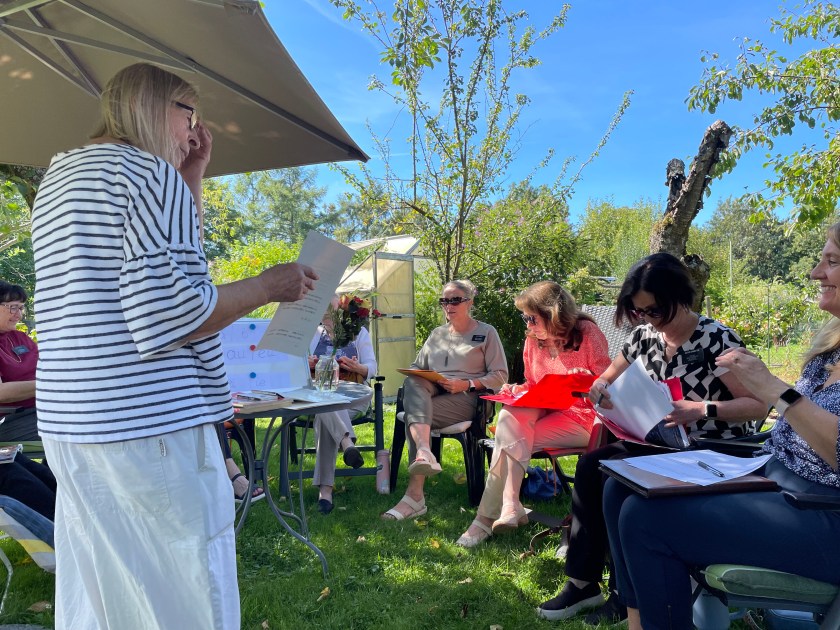
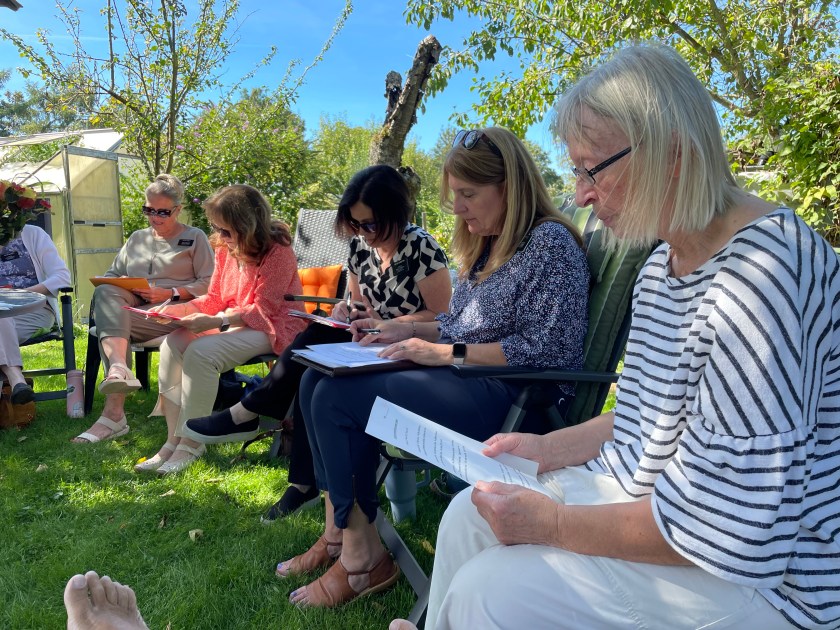
Today we learned about the sounds made in words with umlauts.  She prepared a handout for each of us and we listened to her enunciate the words before we repeated them.  Everyone was relaxed and at ease and absorbed what they could.  We laughed a lot and enjoyed being together.

After the lesson we each picked an apple from her little apple tree.

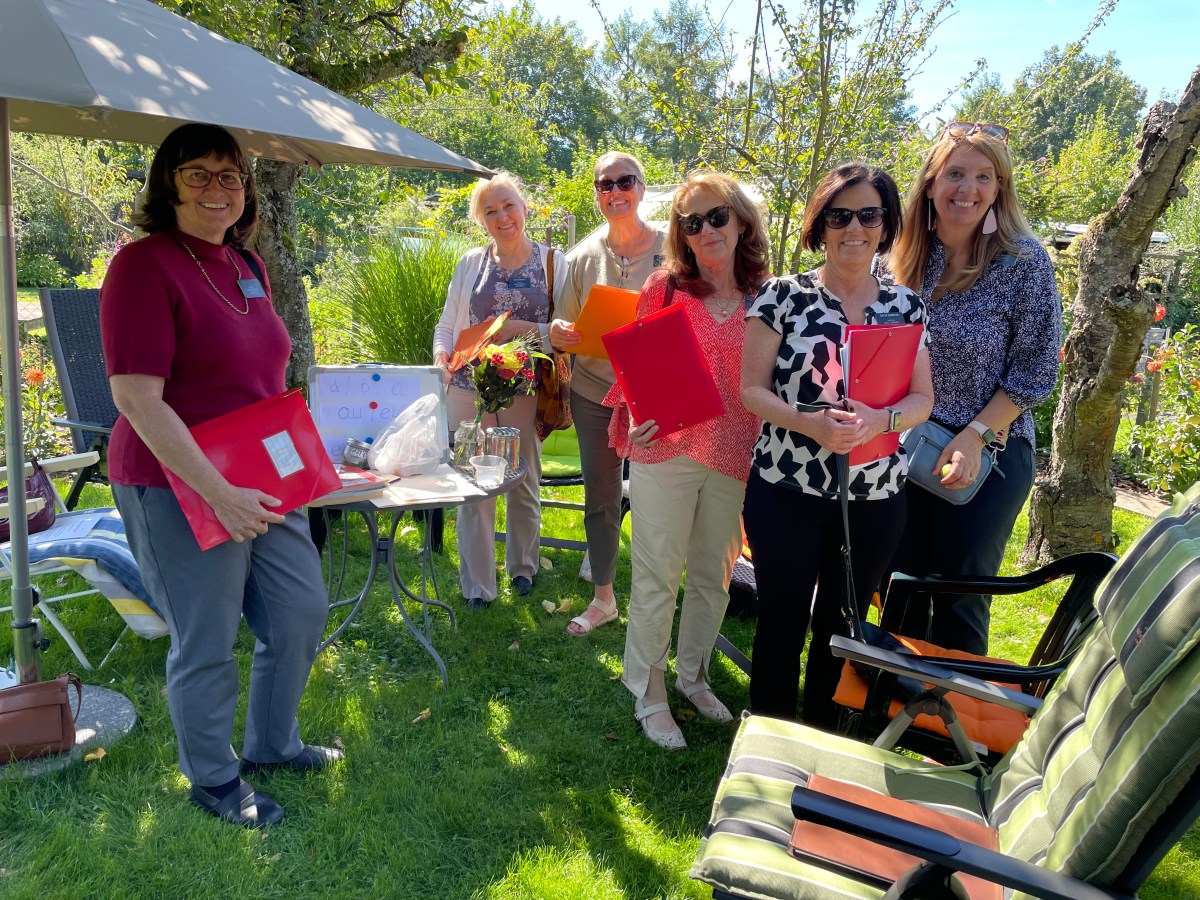
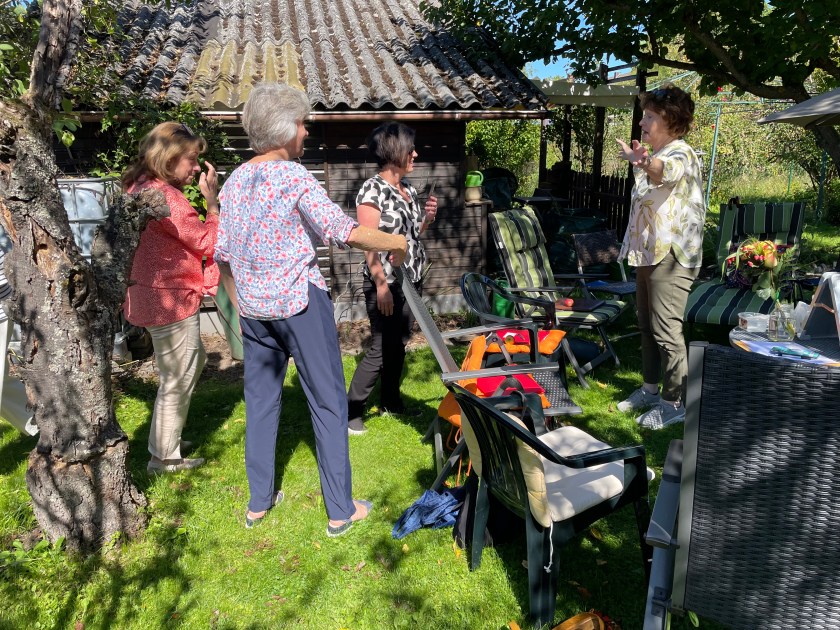
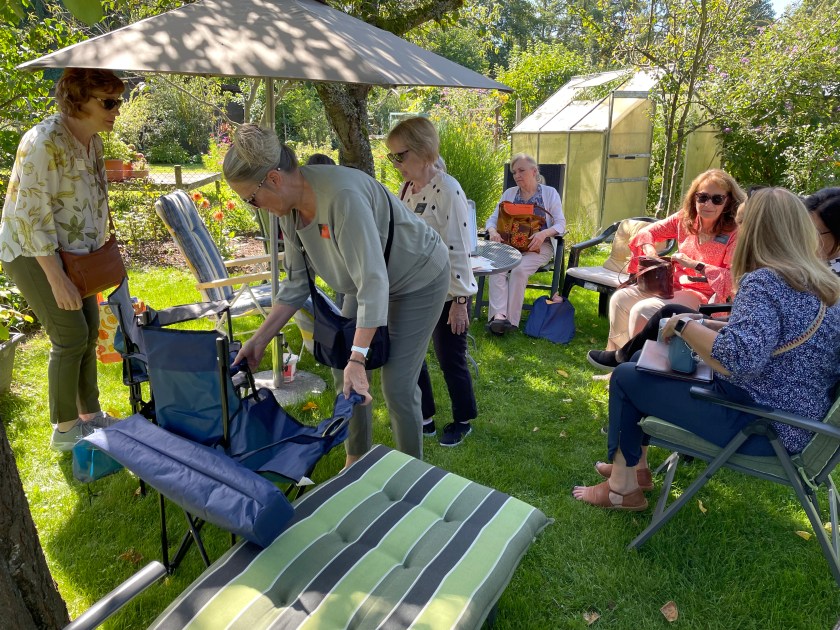
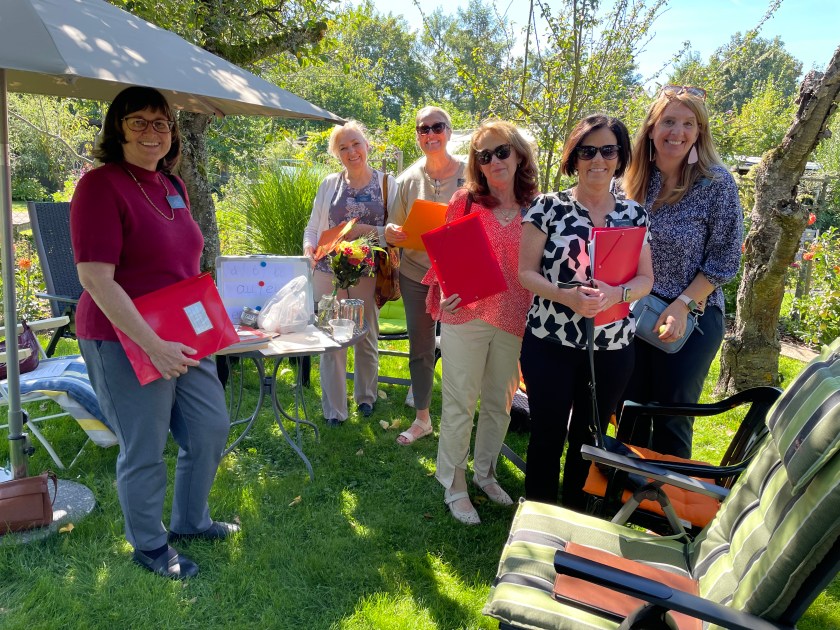
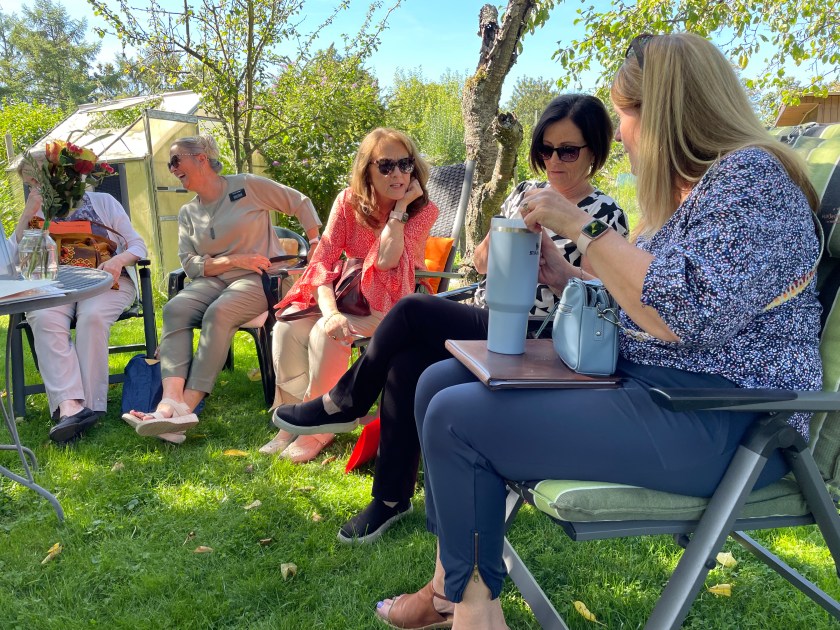
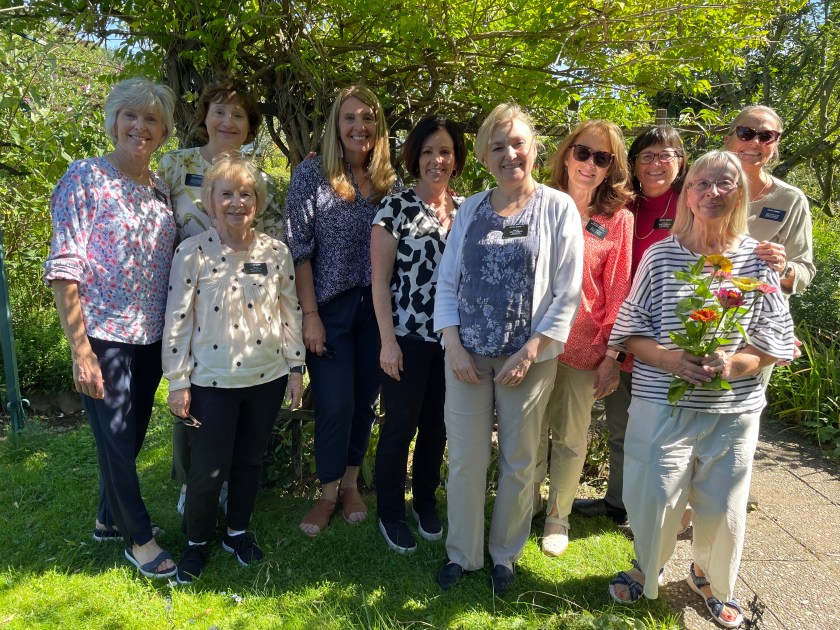
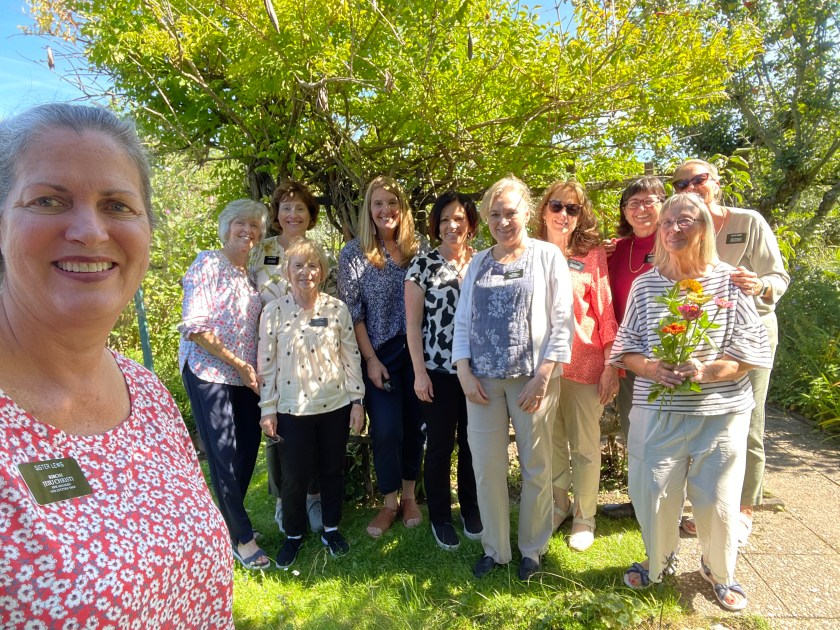
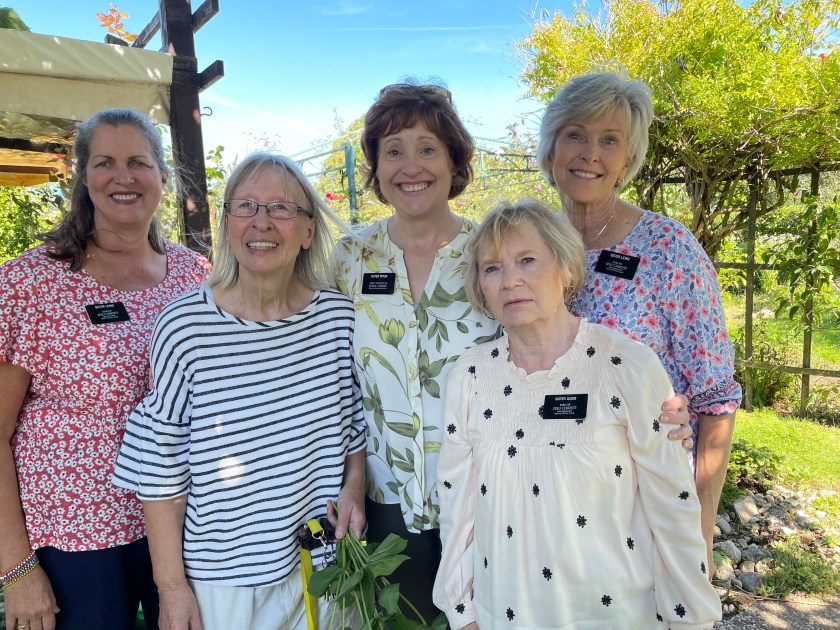
Here are my German-learning friends:

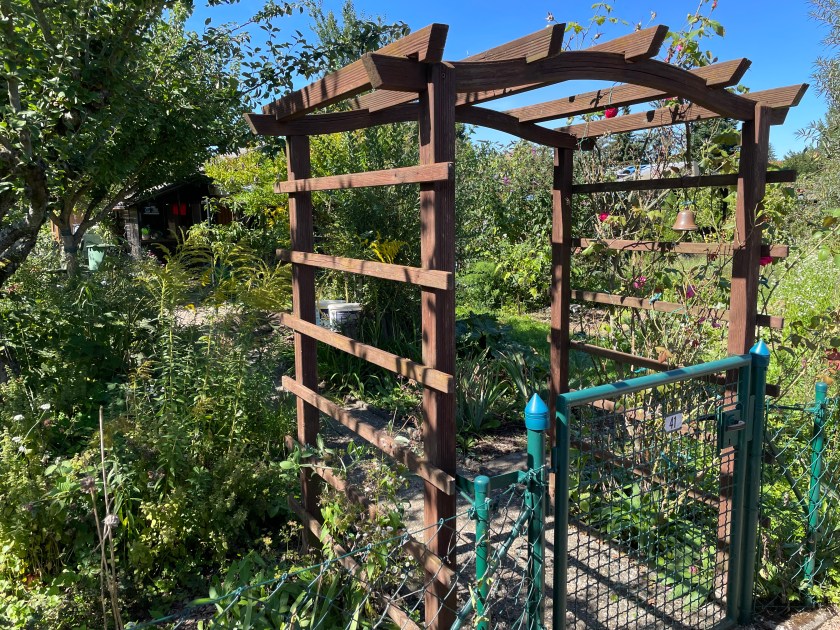
This is the entrance to Erika’s garden, with its gate and lock.

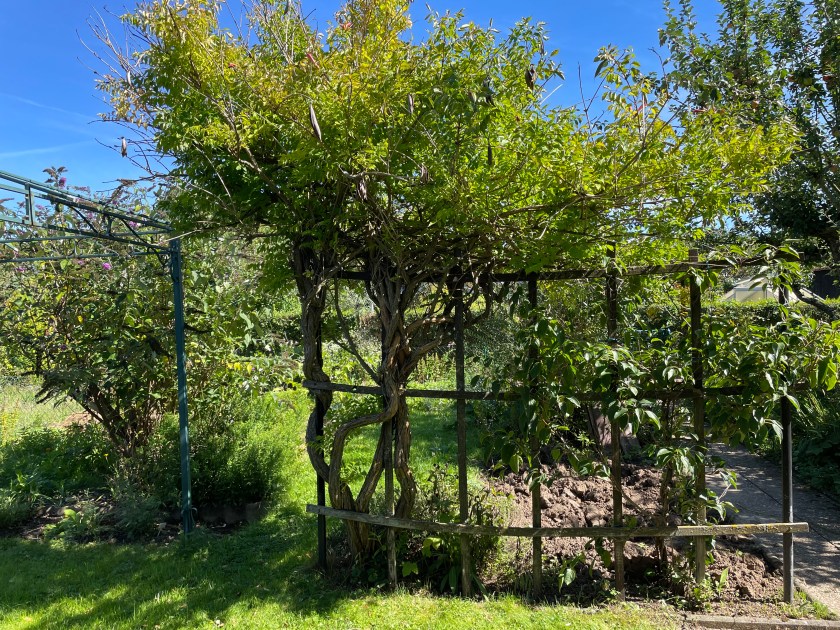
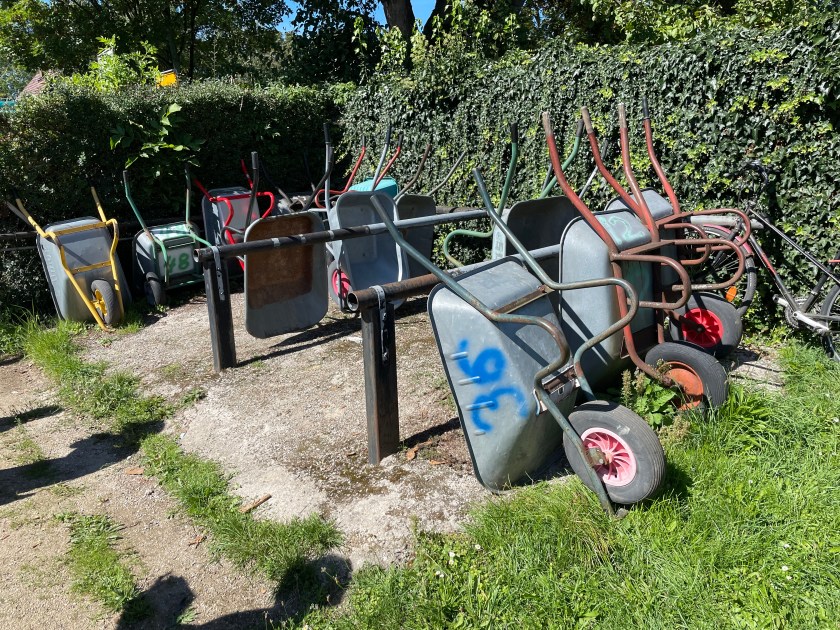
Paths lead through the gardens.  Each has its own personality.  Some are well-kept, others need help.  But each one is an escape from the busy world around us, a refuge, a place of peace.

The LDS Distribution Center in Frankfurt Closes

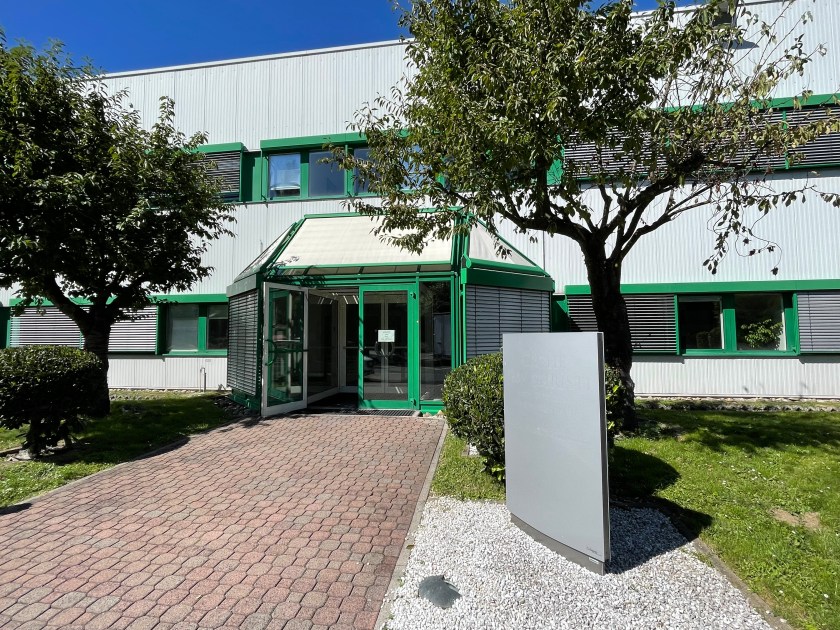
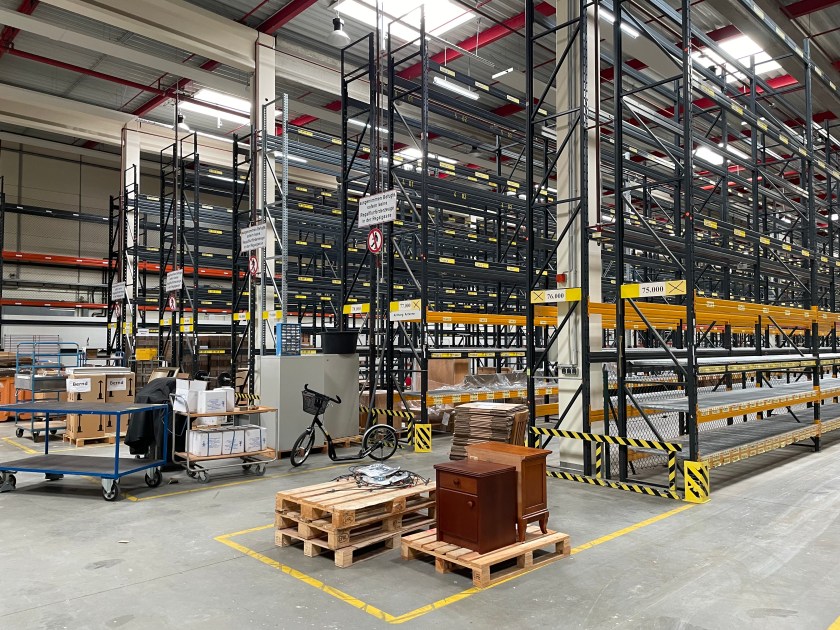
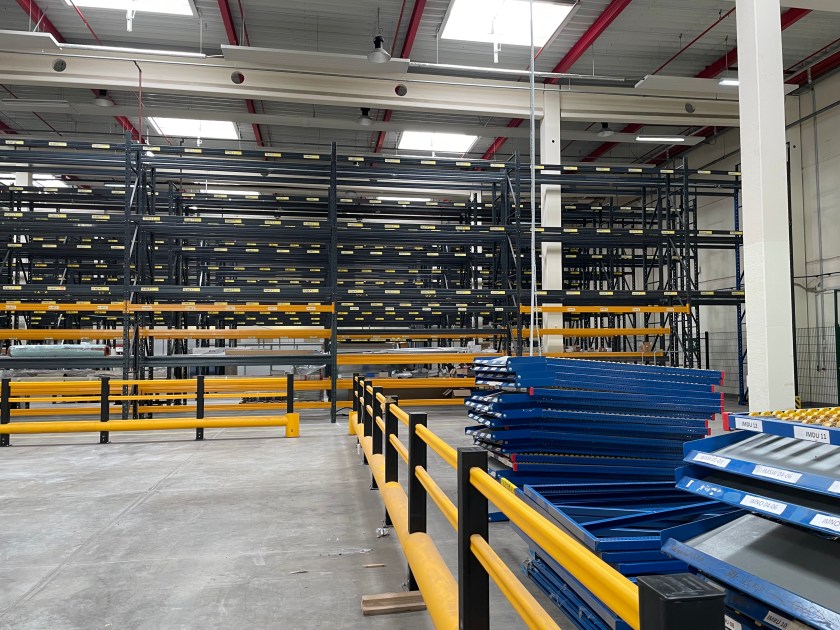
For many years the Church Distribution site for Europe has been in the Bad Homburg area of Frankfurt.  Today the building is almost empty, and by the end of the September it will be completely vacated.  The new home for church distribution is in the Netherlands.

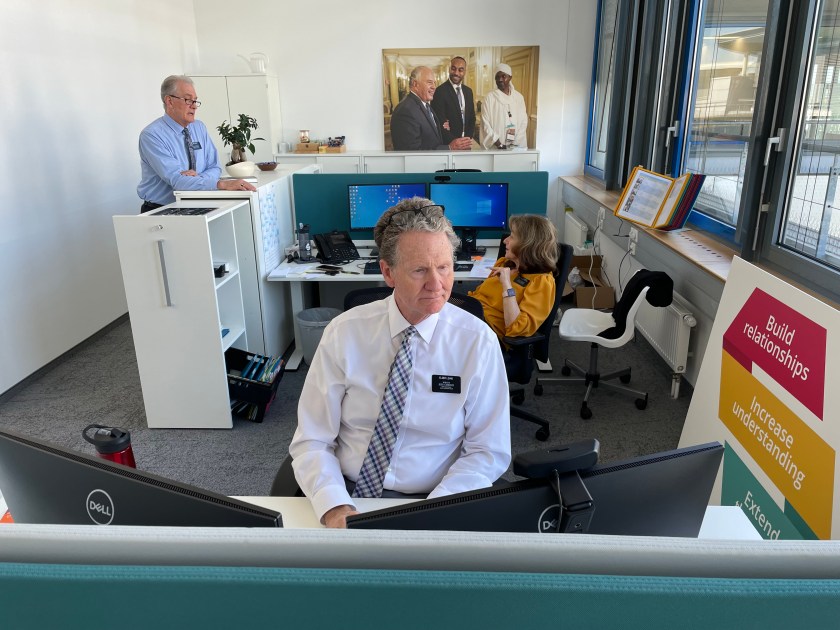
Until recently, this facility has also housed the Church History Department and missionaries, FamilySearch, Church Finance and some auditors.  All of those folks have now moved into the Phoenix Haus.

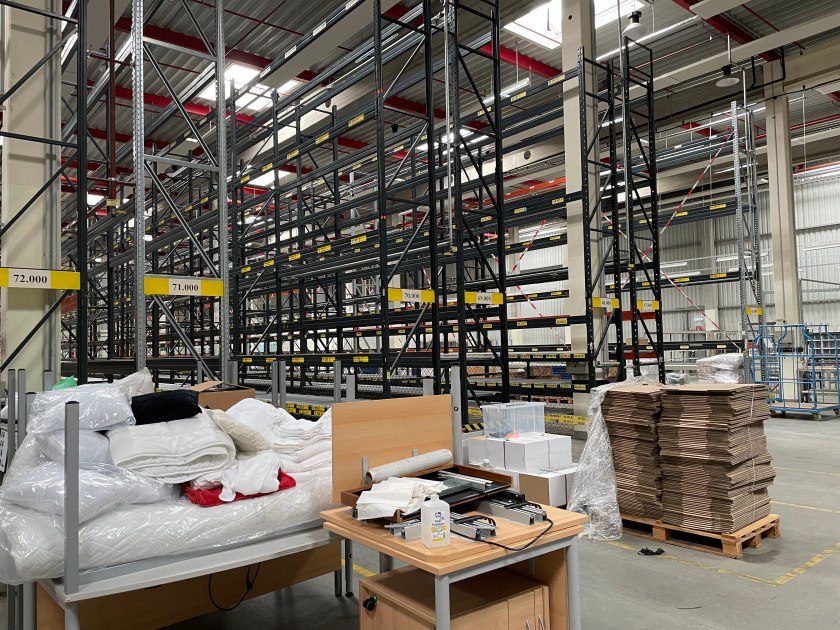
All that remains in this huge warehouse is the tall metal shelving that used to hold all of the church materials–books manuals, supplies, and more. Now it’s empty. Like a room full of skeletons.  The end of an era in this place.

Historic Organs from former LDS Chapel in Poland come to Frankfurt

In 2009 John and I traveled with Roger Minert and his wife, Jeanne to Germany and Poland to visit some church historical sites he was researching.  One of the places we visited was a small village in Poland called Selbongen, where we had to track down someone in the village who could unlock the church for us so we could photograph it.  We also visited an abandoned cemetery not far away on a grassy overgrown hill where several of the early church members here were buried.  (I have photos from that trip at home in my files.)

Roger later prepared a comprehensive history of the Church in Selbongen.  He wrote an article now published here:

https://rsc.byu.edu/harms-way/selbongen-branch-konigsberg-district

This is a bit from that article:

Selbongen Branch, Königsberg District

A unique branch in many ways, the Selbongen Branch was situated in a very isolated part of East Prussia from its inception in the 1920s until its demise in the 1970s. The branch was founded in great part thanks to the gospel dedication and missionary spirit of one member, Friedrich Fischer. He was converted in Berlin in the 1920s and went home to Selbongen to share the gospel with his relatives and his friends. The branch grew so steadily that the Church decided that the Selbongen Branch needed its own meetinghouse. One was constructed there in just two months during the year 1929. As of the outbreak of World War II in 1939, this was the only meetinghouse owned by the Church in Germany or Austria.

Selbongen Branch[1] 1939
Elders

6

Priests

3

Teachers

8

Deacons

6

Other Adult Males

40

Adult Females

62

Male Children

17

Female Children

14

Total

156

The Selbongen branch was, in many aspects of the word, a family. From its beginnings among the extended Fischer family, it came to include members of the Krisch, Kruska, Mordas, Pilchoswki, Skrotzki, and Stank families. The branch had existed barely two decades when World War II ended, but by then many marriages had occurred among these families. The rate of activity among the members of the branch was also exceptionally high.

Emma Stank Krisch (born 1915) was one of the first members of the LDS Church in Selbongen. Later she described the meeting rooms inside their unique structure:

Inside was just a chapel, and we had one room and one classroom. When you came in, on the left side was the classroom and straight [ahead] was the chapel. And there was a stage, a platform at the back. There was no electricity in the building.[2]

Regarding the décor in the meetinghouse, Günther Skrotzki (born 1930) recalled the following: “On the right wall was a picture of Heber J. Grant, and on the left wall one could see the quotation ‘Who will go up to the mountain of the Lord? . . . He who hath clean hands and a pure heart,’ embroidered on a large banner. On the right side there was a pump organ below the picture of the prophet [Heber J. Grant].”[3]

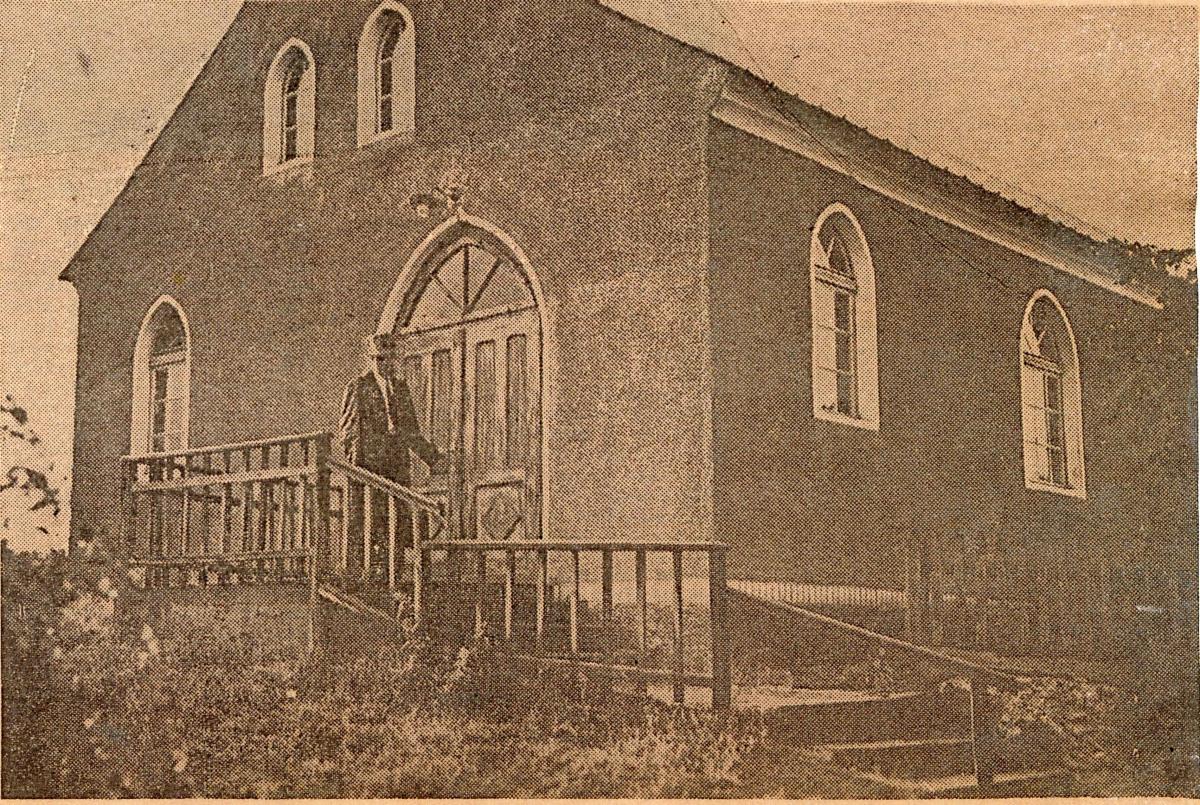
Man in front of meeting houseThe East German Mission constructed this meeting house for the Selbongen Branch in 1929. This photograph was taken for the Deseret News in 1938. The building still stands.
Emma’s daughter, Renate Krisch (born 1941), added these details: “There was no running water in the building and no restrooms, so we had to go next door to the Kruska home.”

Emma Stank Krisch recalled that many of the members of the Selbongen Branch did not live in the town of about six hundred inhabitants, but came from various small towns and farms in the vicinity. For this reason, the Sunday meetings were held consecutively in the morning.

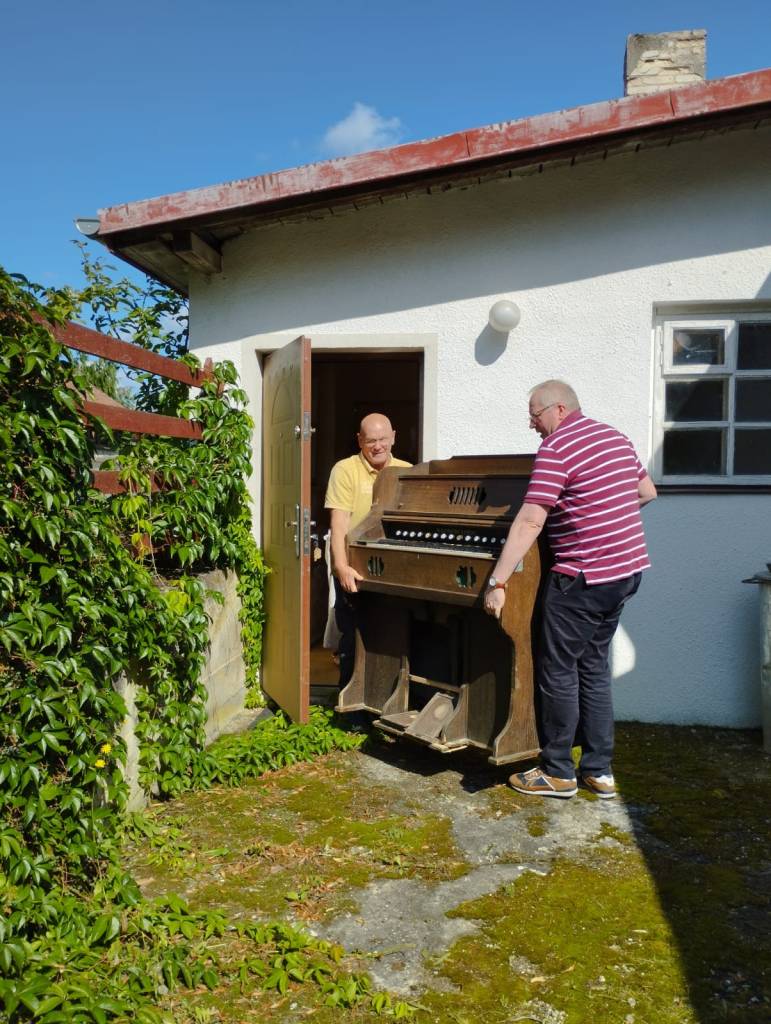
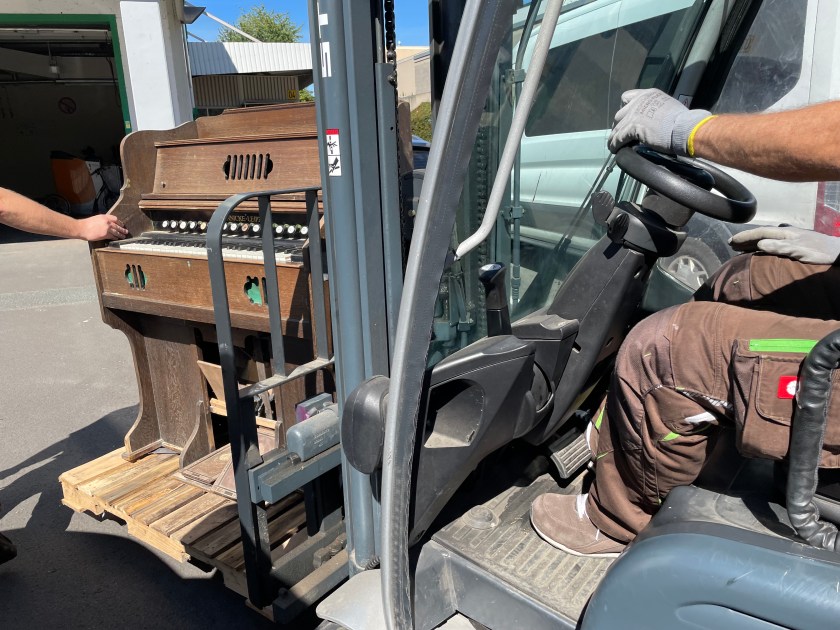
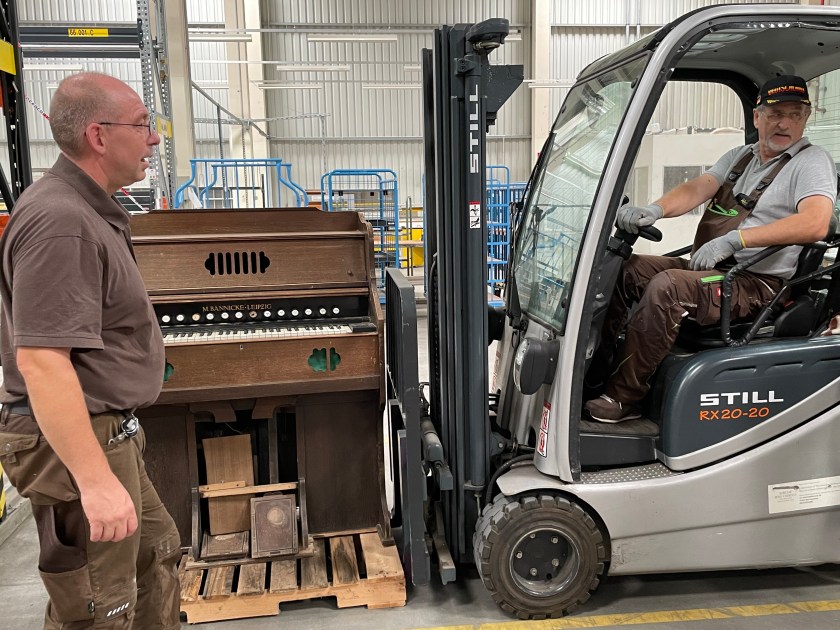
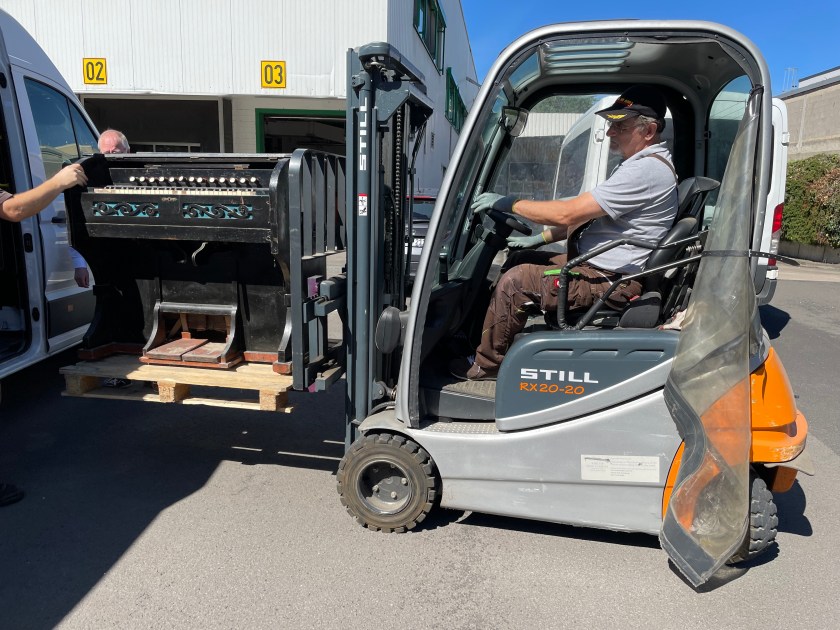
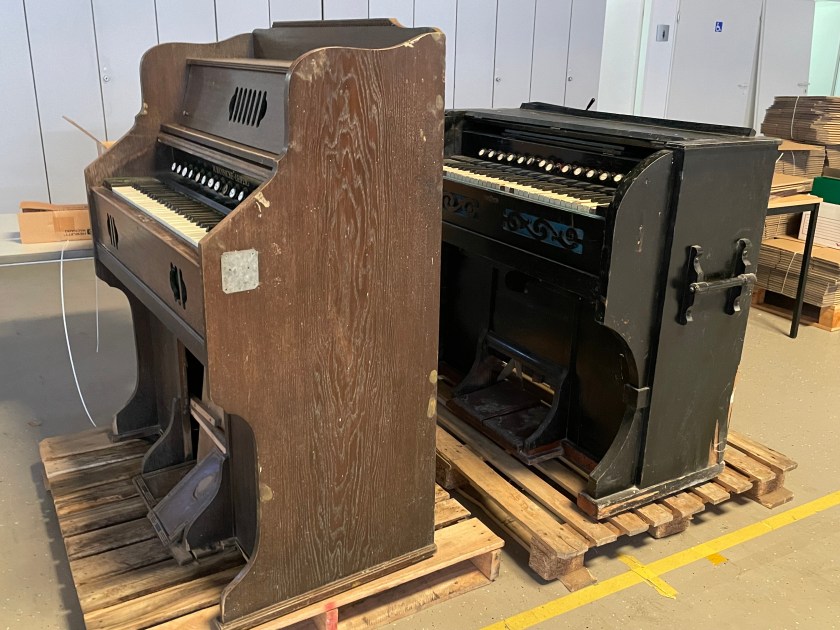
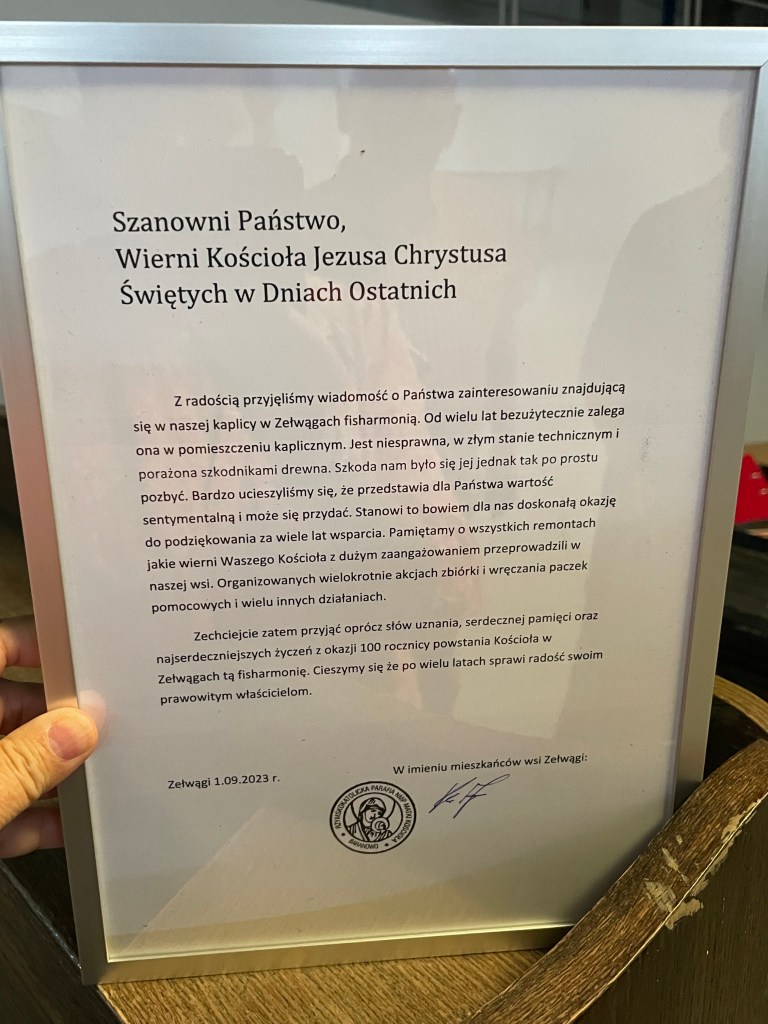
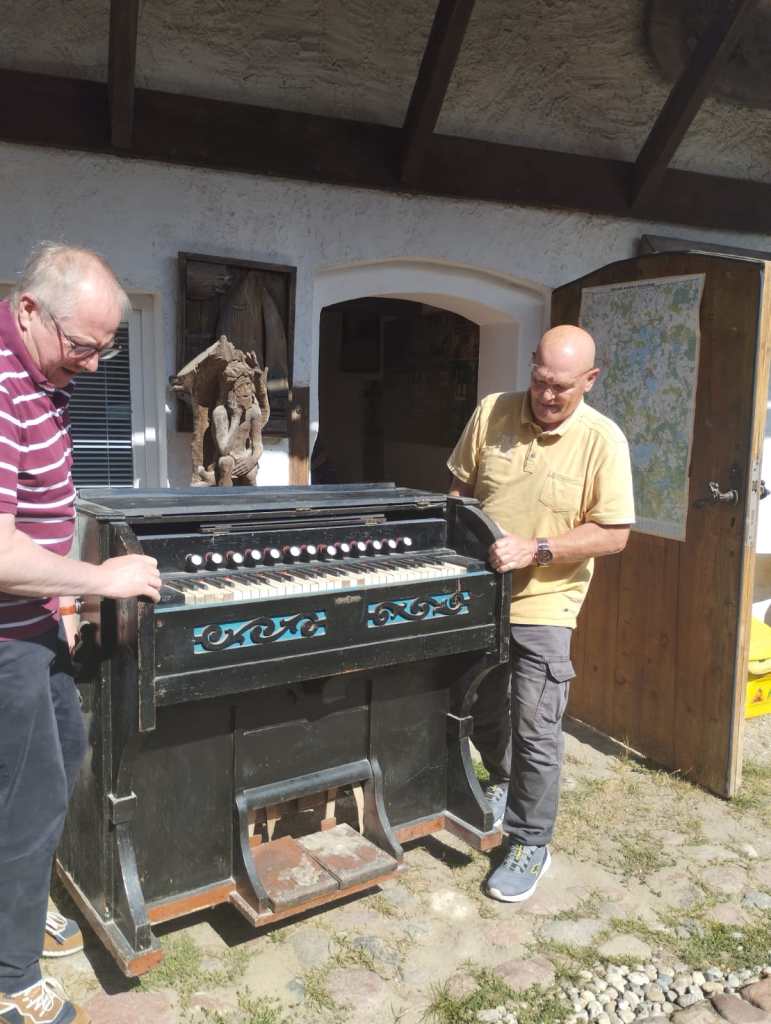
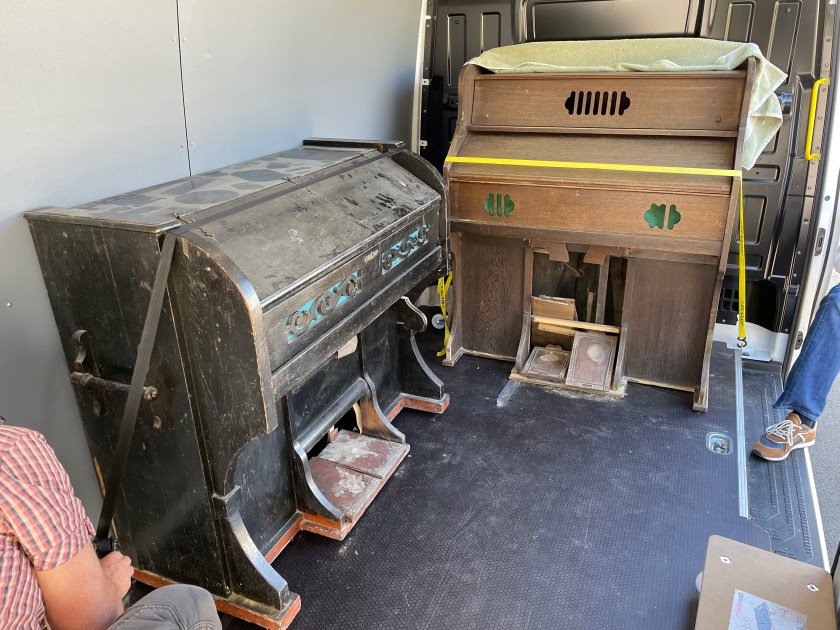
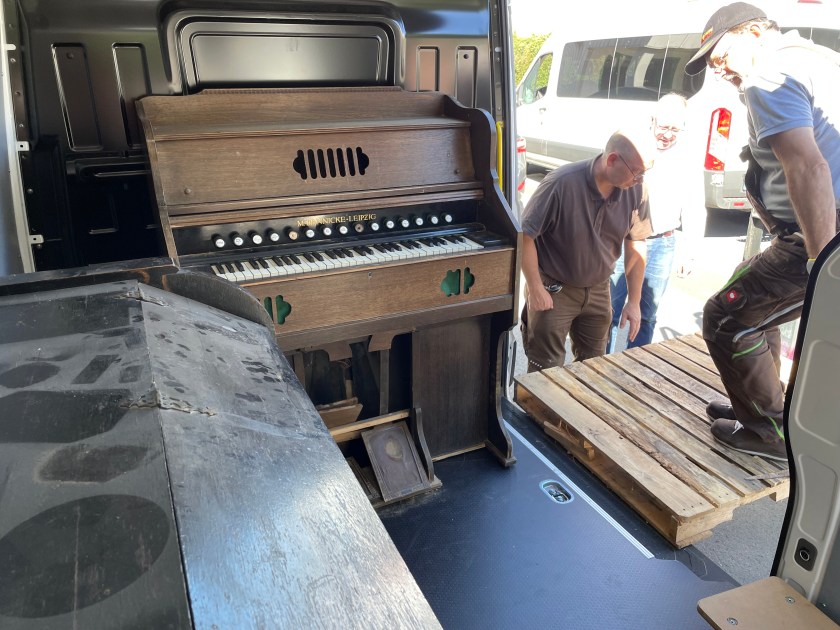
This week Rainer Miller and Folkhard Konietz received 2 organs that were used by the Saints in Selbongen, kindly donated to the Church by the community.  The church is now used by the Catholics.  The organs are no longer working.  The black organ above was the first organ purchased for the Selbongen Branch and when it wore out, they purchased the brown organ from Leipzig.  Both are pump organs with foot pedals and bellows.  This type of organ is called a harmonium.

Today I went with Sister Kathi Irving, a Church History missionary, to receive these instruments for safe keeping.  They will be stored temporarily at the old Church Distribution Center until a home is made for them at the Phoenix Haus.

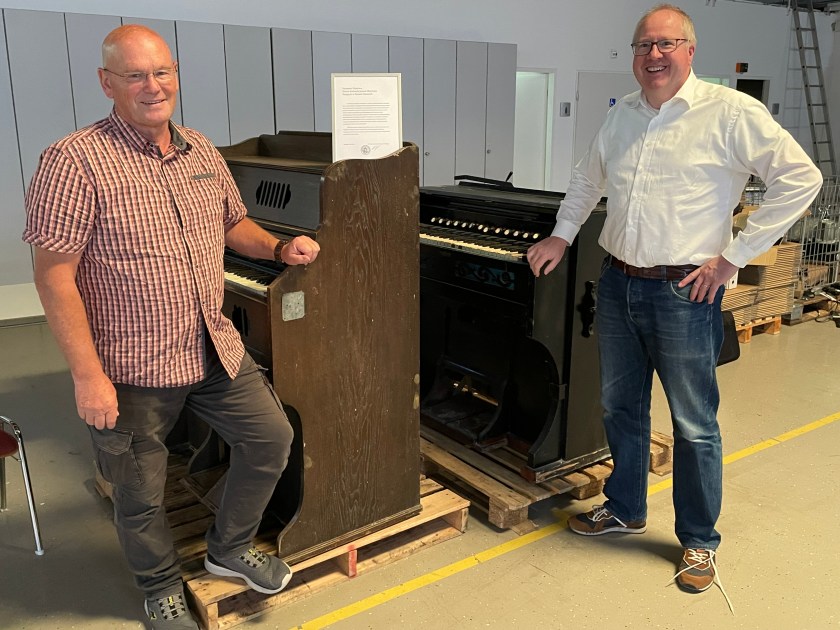
Folkhard Konietz and Reiner Millar, Church Historian

This is the donation agreement that came with the organs:

I felt it was a piece of good luck to happen to be here to see these historic organs being kept and preserved.  They are an interesting part of the history of the Church here in Europe.