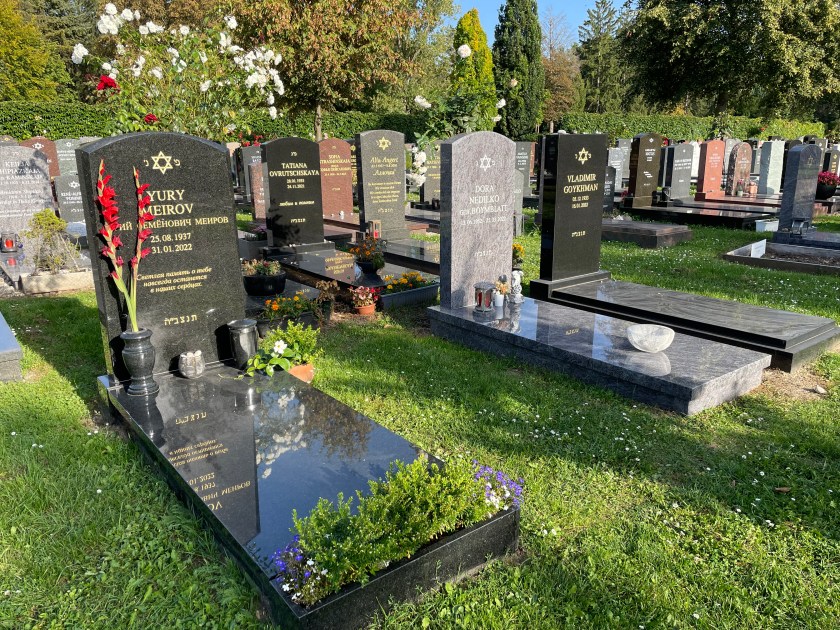
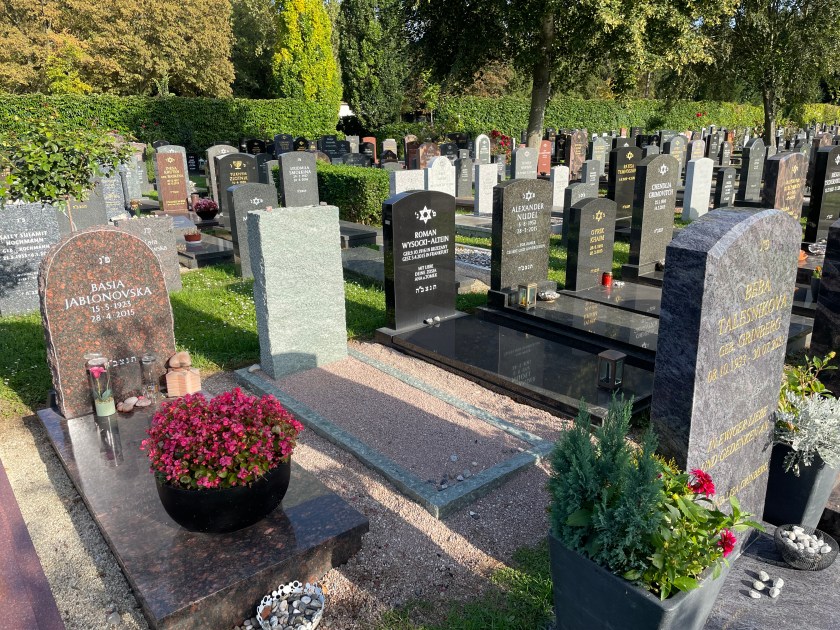
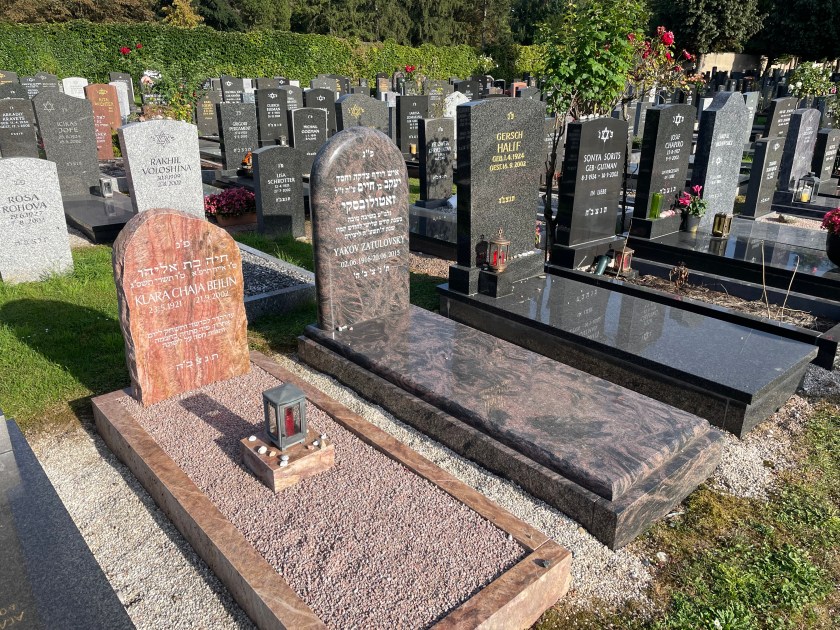
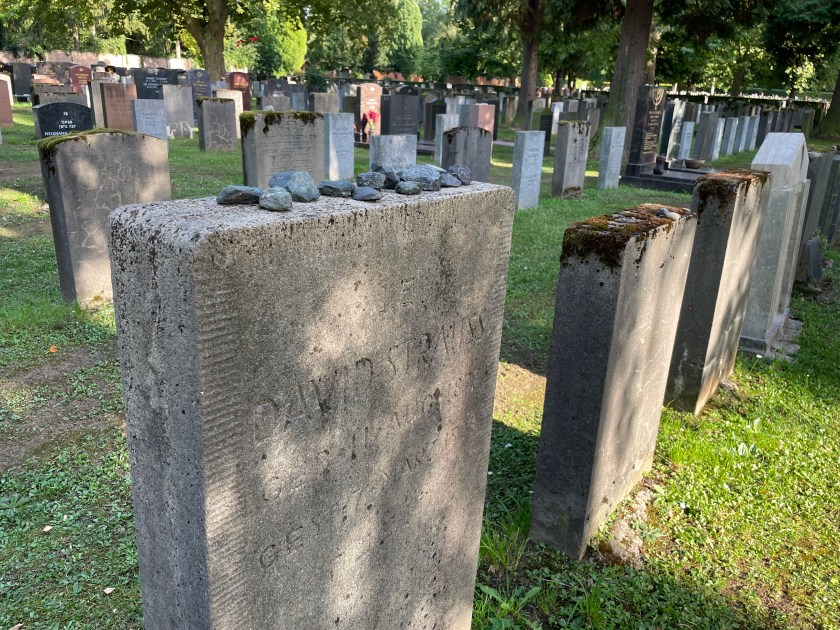
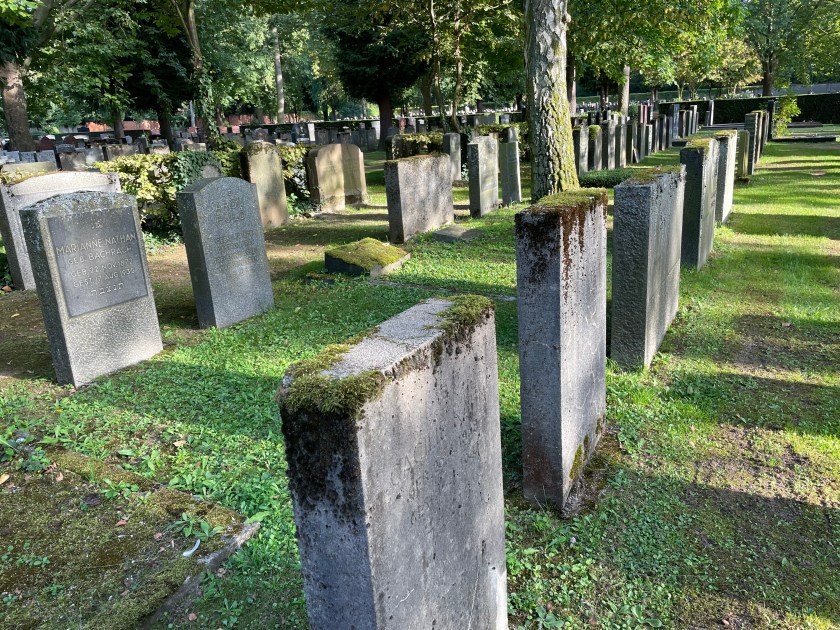
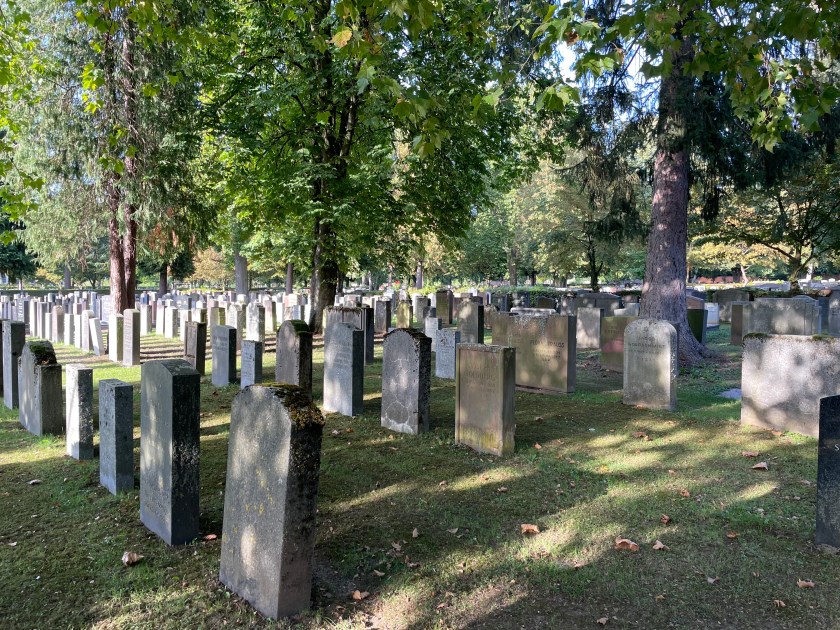
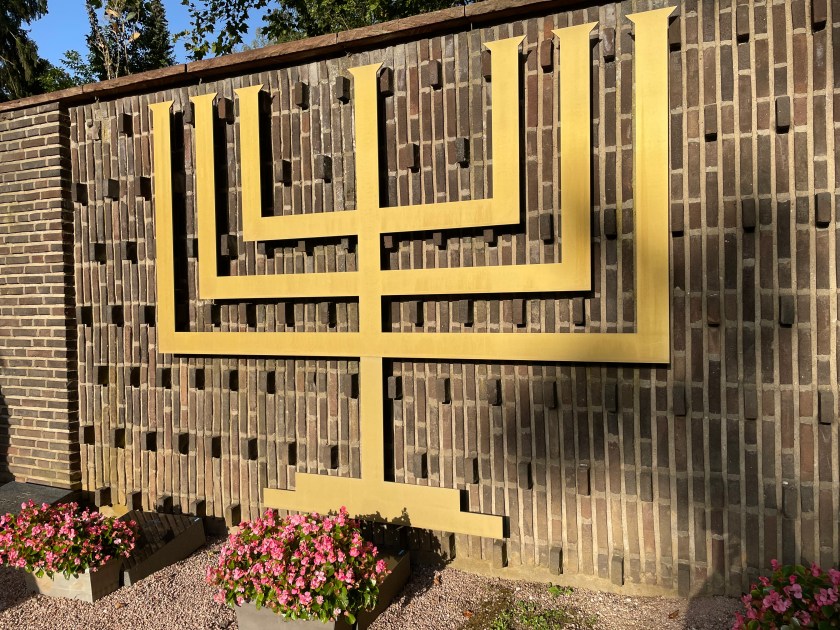
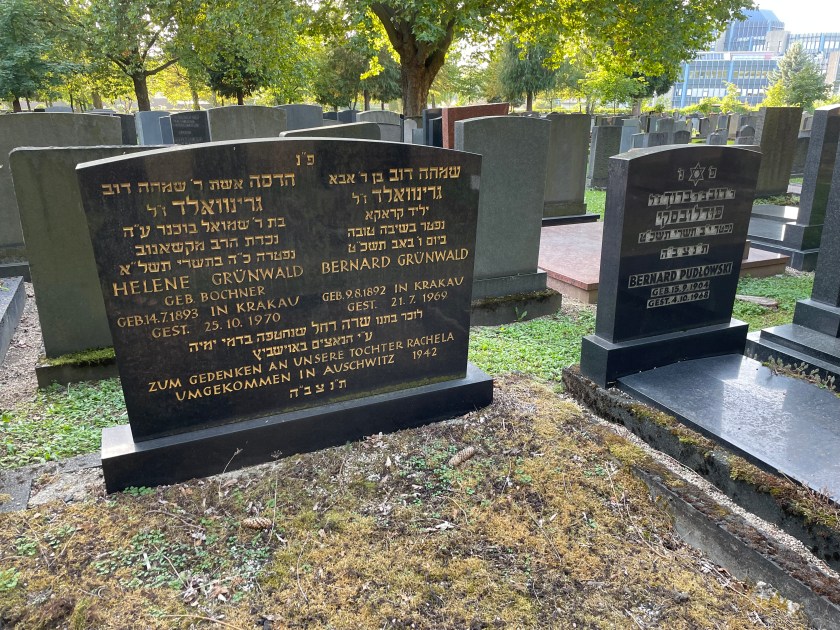
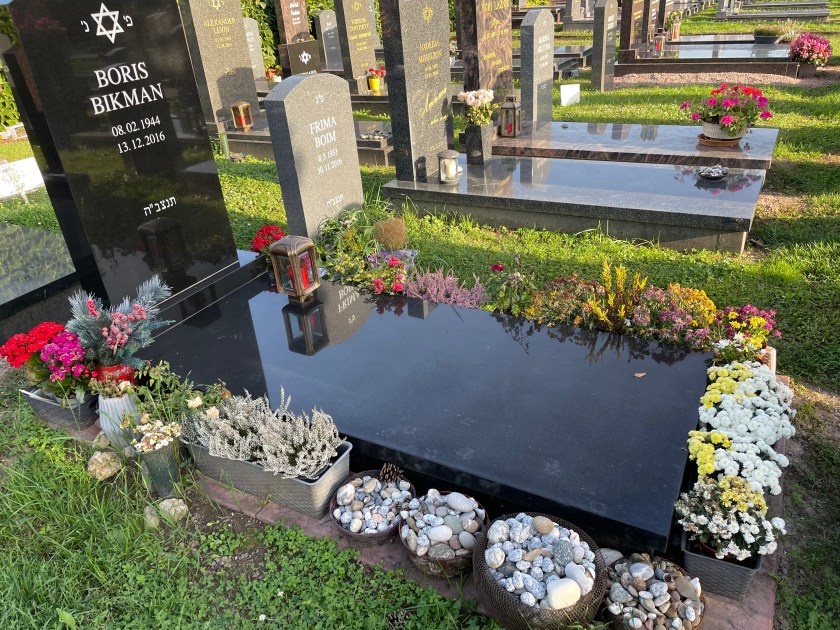
We went for a walk this afternoon in the Jewish Cemetery near our home. It was a peaceful and sobering place, quite different from the rest of the huge cemetery filled with small garden plots by each headstone. Most of the stones here were configured the same way, with a polished headstone and a flat stone in front of it the size of a coffin. The flat stone was raised a few inches off the ground covering a stone vault. All of the information was engraved on the upright headstones.
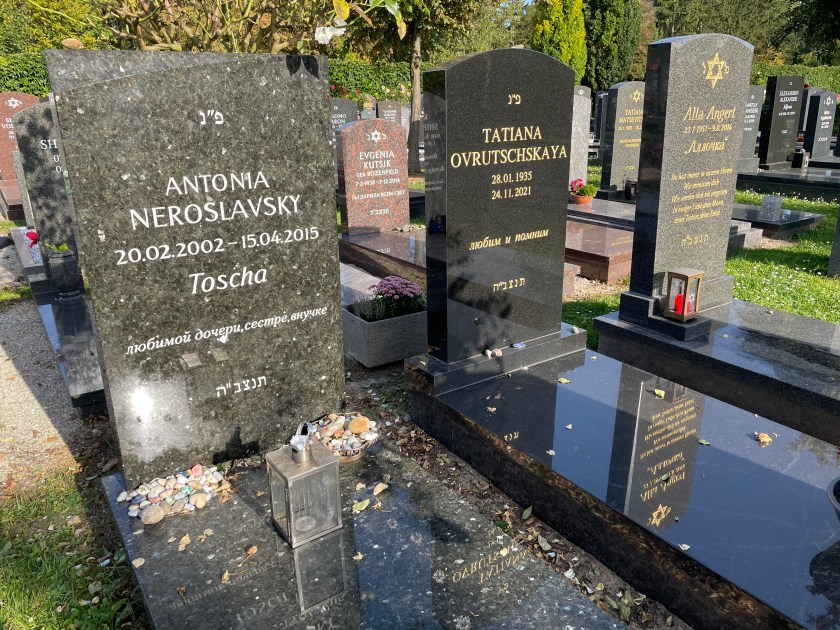
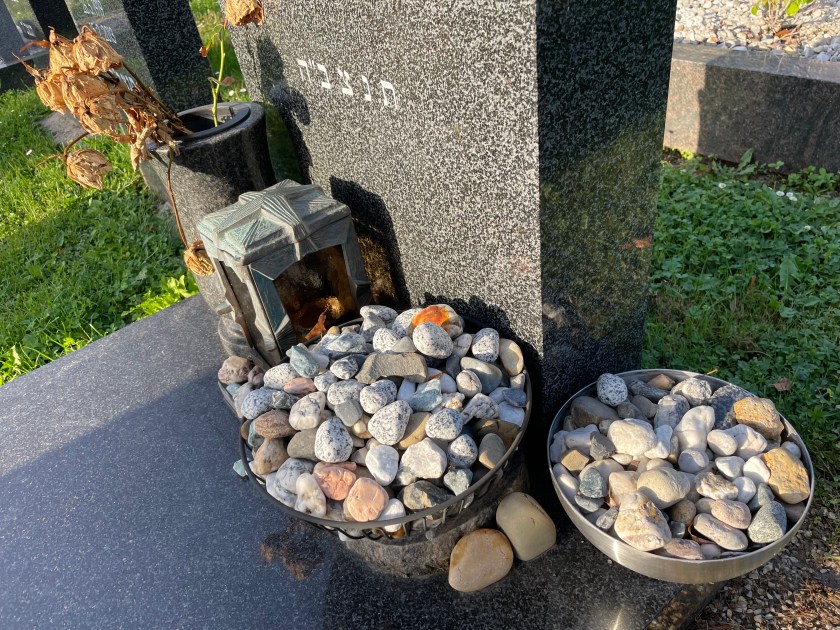
In the Jewish tradition, visitors in cemeteries often leave a rock on the stone when they come.
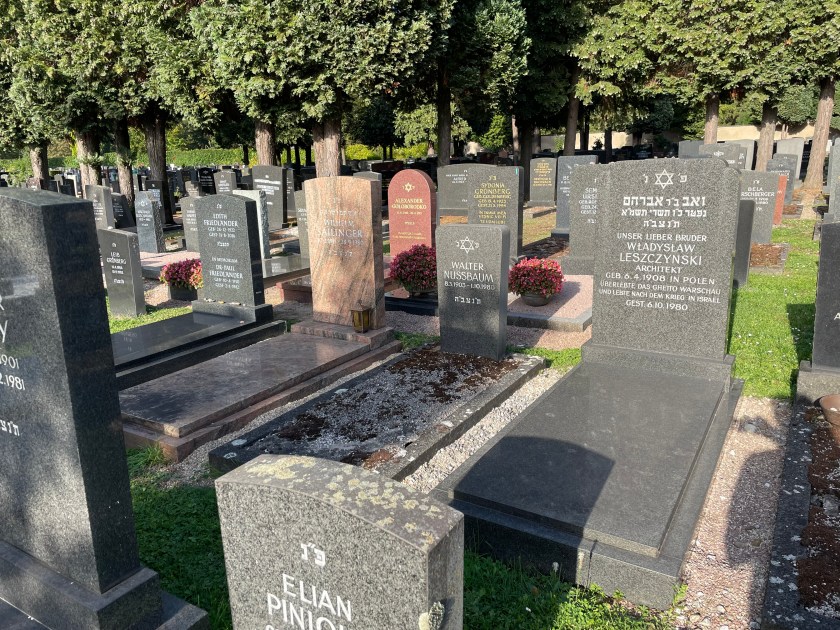
Some memorials, like those below, told of deportations to the Warsaw Ghetto, then exile to Israel.
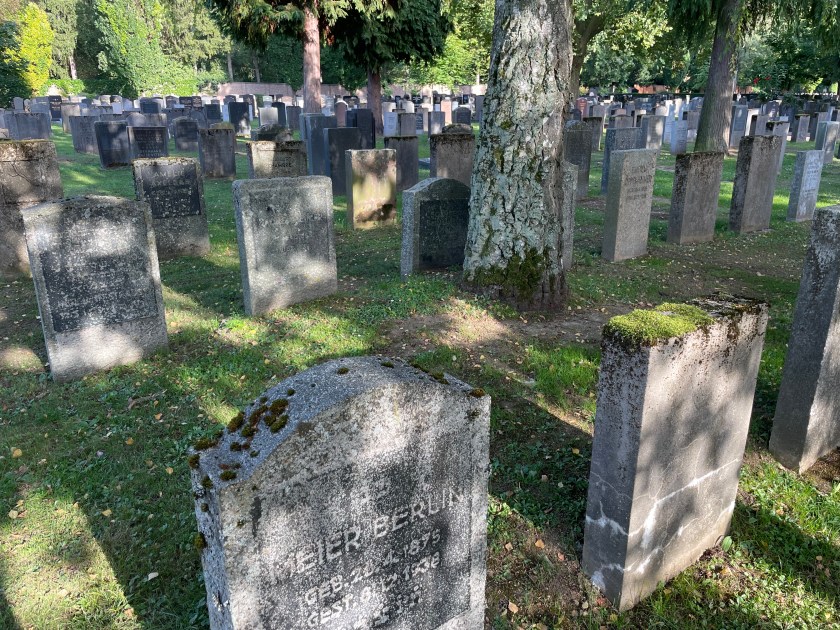
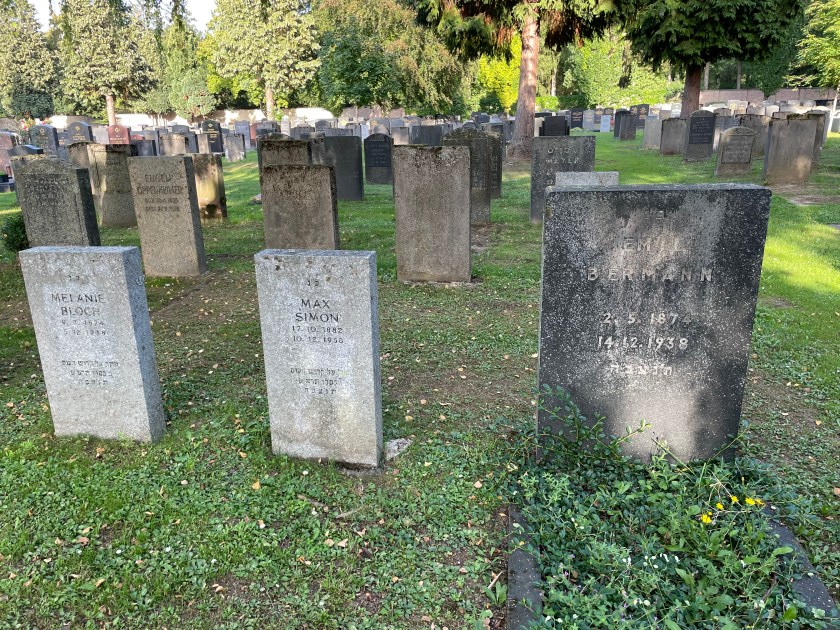
Huge sections of the cemetery were filled with those killed during WWII. Row after row, young and old. We walked in silence through these sections, feeling heartache.
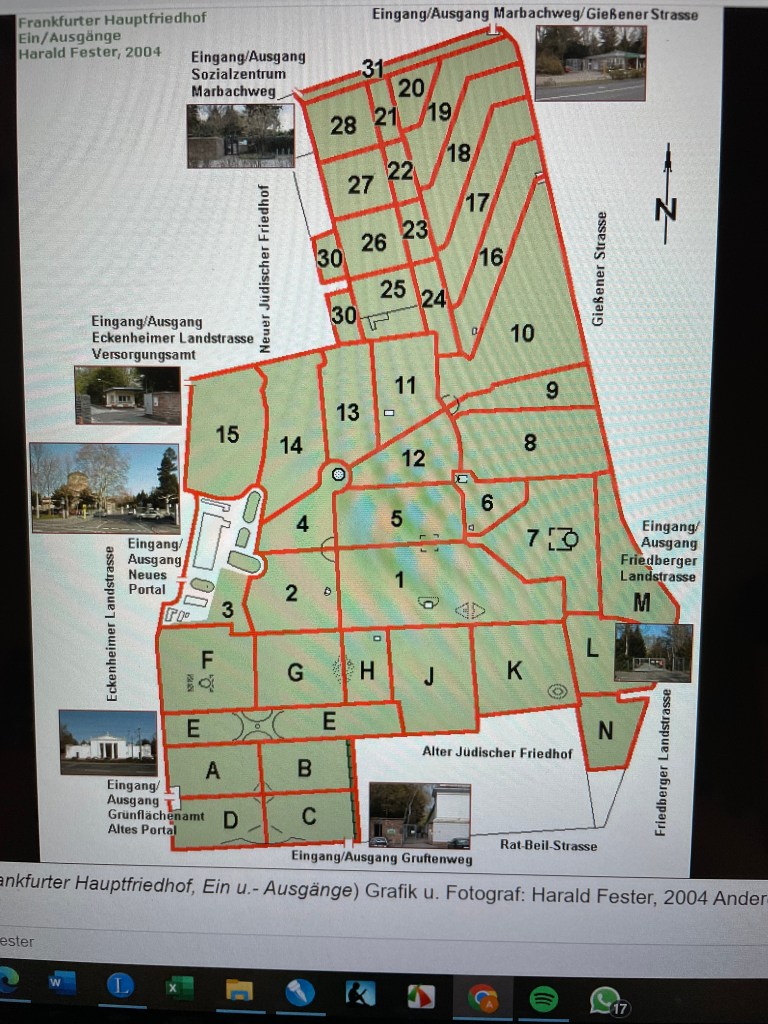
Here’s a map of the cemetery. The Jewish section is in the lower right corner.
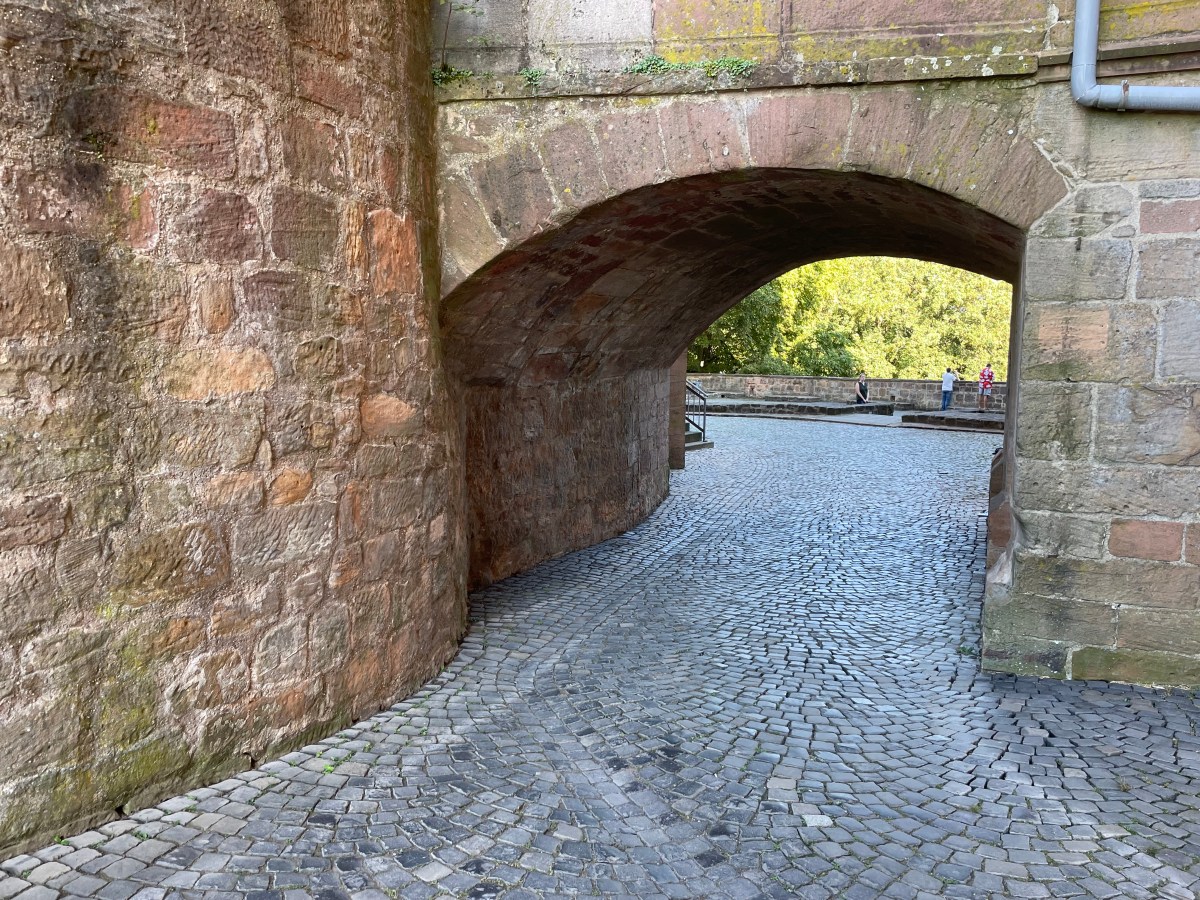
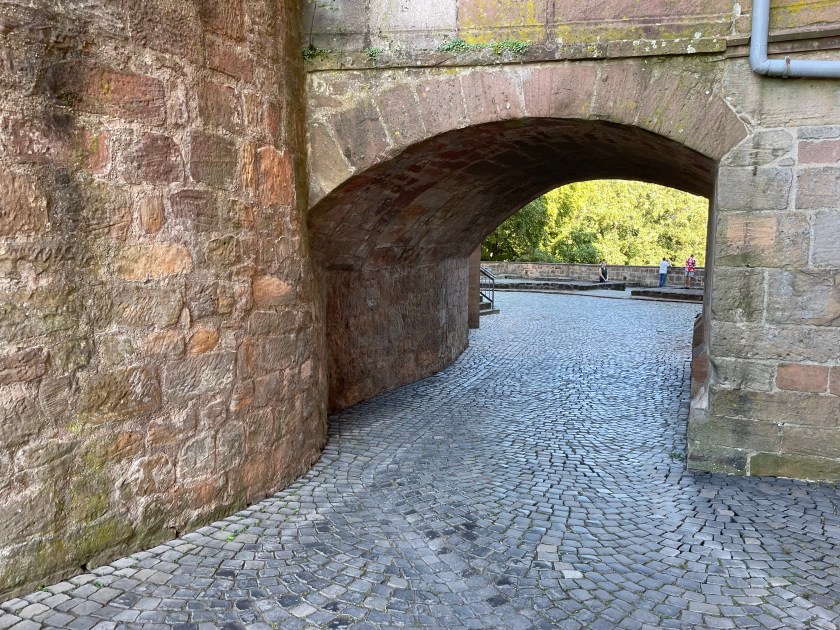
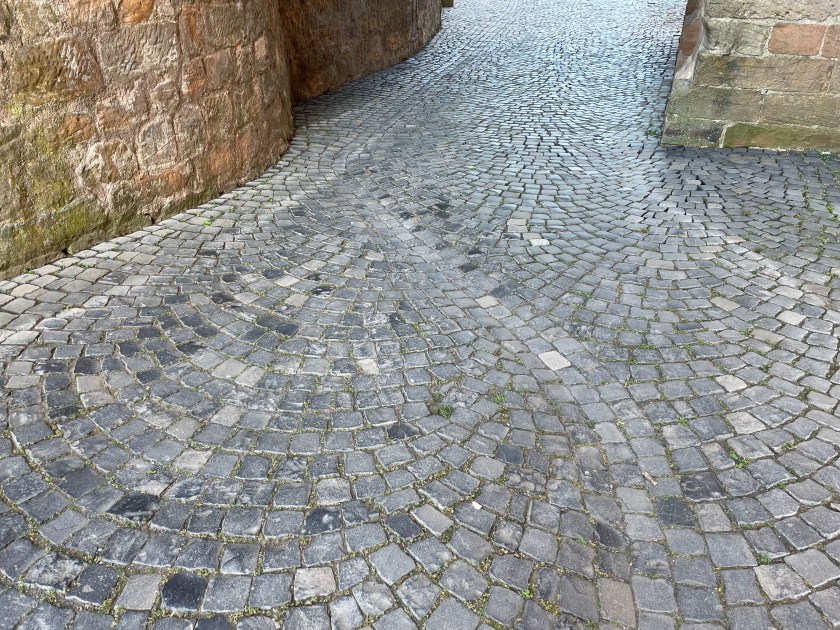
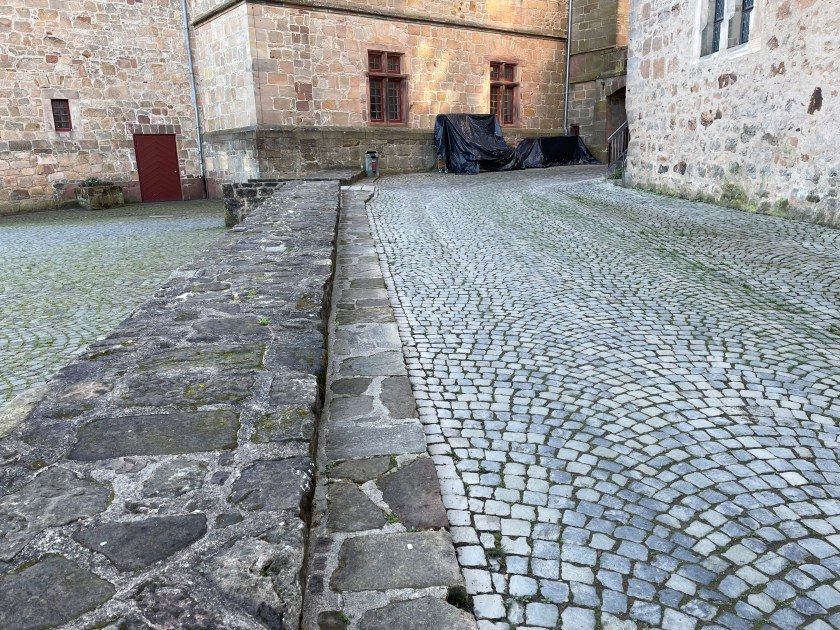
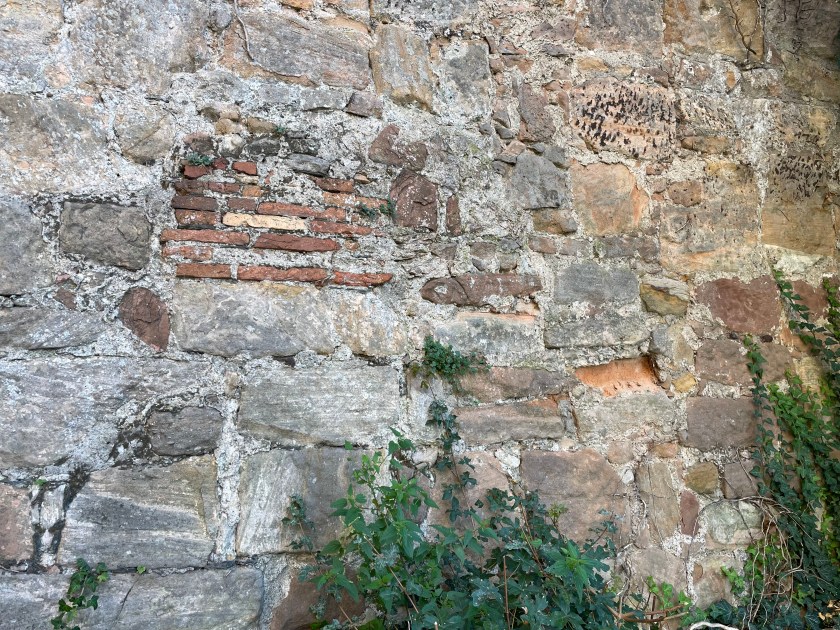
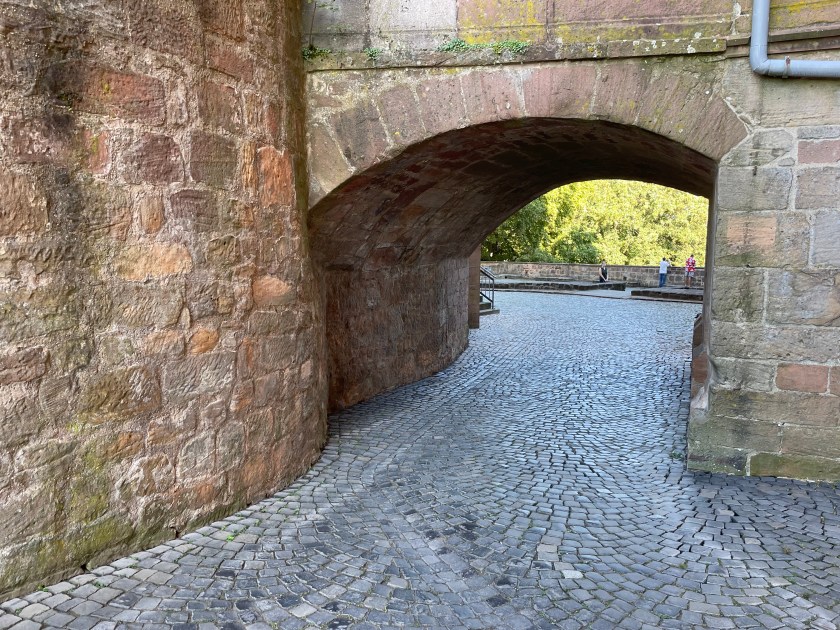
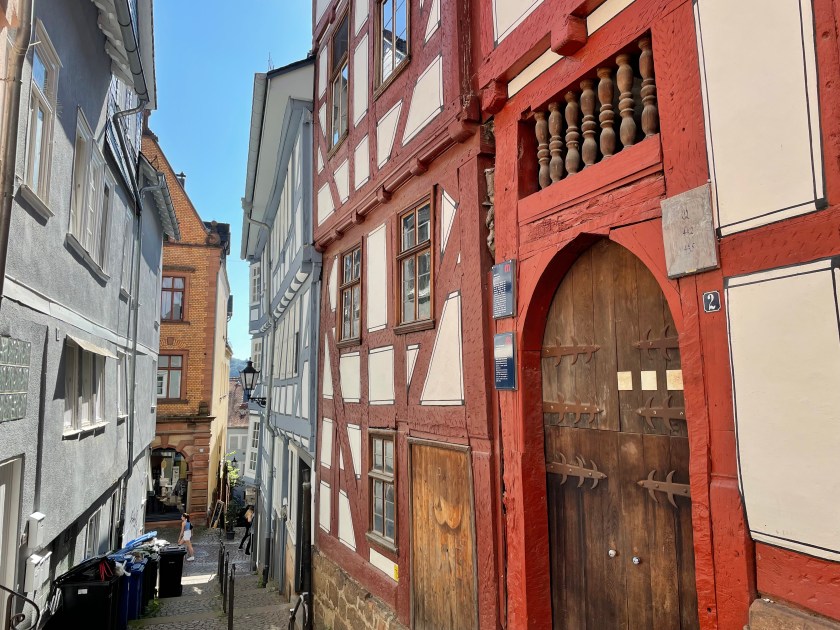
Today, in a place called Marburg, I walked on stones that have been walked for more than a thousand years. These stones are worn and old. If they could speak, oh the stories they’d tell! I wondered about those stories and the people in them. I tried to imagine the shoes on the feet of the people that walked here–the women and children, the soldiers and guards, the shopkeepers and buyers. Years and years of them living lives we know little about today.
And then I thought about words, and how something as simple as a word can also last for centuries. But unlike stones, words communicate. They tell the stories. They explain. They describe. They detail. They evoke emotion. They enlighten.
Words are more powerful than stones.
I’ve shared this before and will share it again because all day today, these words went through my mind: ““You know, there are poems, there are stories, whole books, about people who lived hundreds, even thousands of years ago. Those people still live because of words. Words! Words are the most wonderful things in the world. As long as there are words, nobody need ever die.” – Betsy Byars, Keeper of the Doves
Stones preserve structures, but words preserve people and thoughts. We are more important and words are more powerful and more enduring, but only if we preserve them.
Another reason for writing my fingers to the bone.
On my nightstand at home is a small book by Nicole Johnson that I’ve read and re-read many times as a wife and mother. And now that I’m living in a land of cathedrals, I’m thinking about it again as a grandmother. The Invisible Woman. We are many and we are not alone in this feeling. There have been plenty of times when my tears have wet my pillow at night because I was invisible on any given day. This message has helped me get through those days and years. Maybe they will help you too.
It started to happen gradually…
I would walk into a room and say something and no one would notice. I would say , Turn the TV down, please.” And nothing would happen. So I would get louder. “Turn the TV down please!” Finally I would have to go over and turn the TV down myself.
And then I started to notice it elsewhere. My husband and I had been at a party for about three hours and I was ready to go. I looked over and he was talking to a friend from work, and I walked over and he kept right on talking. He didn’t even turn toward me.
That’s when I started to put it together. He can’t see me. I’m invisible. I’m invisible. Then I started to notice it more and more.
I would walk my son to school and his teacher would say, “Jake, who’s that with you?” And my son would say, “Nobody.” Granted he’s just five, but nobody?
One night, a group of us gathered and we were celebrating the return of a friend from England. Janice had just taken this fabulous trip, and she was going on and on about the hotel she stayed in.
And I was sitting there, looking around at the other women at the table. I’d put my makeup on in the car on the way there. I had an old dress because it was the only thing clean. And I had my unwashed hair pulled up in a banana clip and I was feeling pretty darn pathetic.
Then Janice turned to me and said, “I brought you this.” It was a book on the great cathedrals of Europe. I did not understand. And then I read her inscription.
She wrote “With admiration for the greatness of what you are building when no one sees.”
You can’t name the names of the people who built the great cathedrals. Over and over again looking at these mammoth works you scan down to find the names and it says, “Builder unknown, unknown, unknown.” They completed things not knowing that anyone would notice.
There’s a story about one of the builders who was carving a tiny bird on the inside a beam that would be covered over by a roof. And someone came up to him and said,
“Why are you spending so much time on something no one will ever see? And it’s reported that the builder replied, “Because God sees.”
They trusted that God saw everything. They gave their whole lives for a work, a mammoth work they would never see finished. They showed up day after day.
Some of these cathedrals took over 100 years to build. That was more than one working man’s lifetime. Day after day. And they made personal sacrifices for no credit.
Showing up at a job they would never see finished for a building their name would never be on. One writer even goes so far as to say no great cathedrals will ever be built again because so few people are willing to sacrifice to that degree.
I closed the book, and it was if I heard God say, I see you. You are not invisible to me. No sacrifice is too small for me to notice.
I see every cupcake baked, every sequin sewn on and I smile over every one. I see every tear of disappointment when things don’t go the way you want them to go.
But remember, you are building a great cathedral. It will not be finished in your life time. And sadly, you will never get to live there. But if you build it well, I will.”
At times my invisibility has felt like an affliction to me. But it is not a disease that is erasing my life. It is the cure for the disease of self-centeredness. It is the antidote to my own pride. It’s okay that they don’t see. It’s okay that they don’t know.
I don’t want my son to tell the friend he’s bringing home from college, “You’re not gonna believe what my mom does. She gets up at 4:00 in the morning and she bakes pies and hand bastes a turkey and she presses all the linens.”
Even if I do all those things, I don’t want him to say that. I want him to want to come home. And secondly, I want him to say to his friend, “You’re gonna love it there.”
It’s okay they don’t see. We don’t work for them. We work for Him. We sacrifice for Him. They will never see, not if we do it right, not if we do it well.
Let’s pray that our work will stand as a monument to an even greater God.
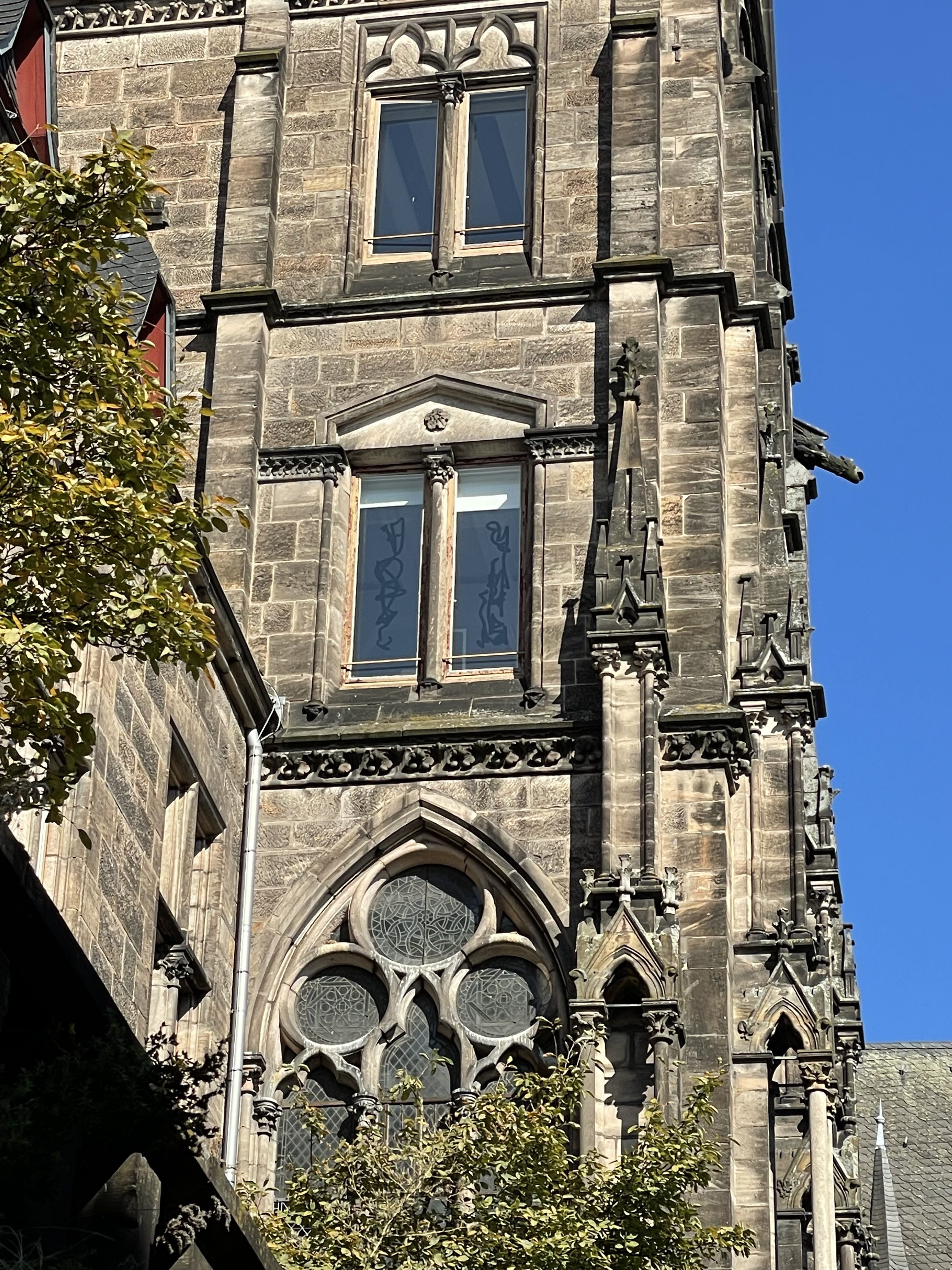
We stopped in Wetzlar on our way home from Marburg. This old church was begun in 897, but not finished until well into the 15th century. The doors were locked, so we wandered around the outside of this beautiful building.
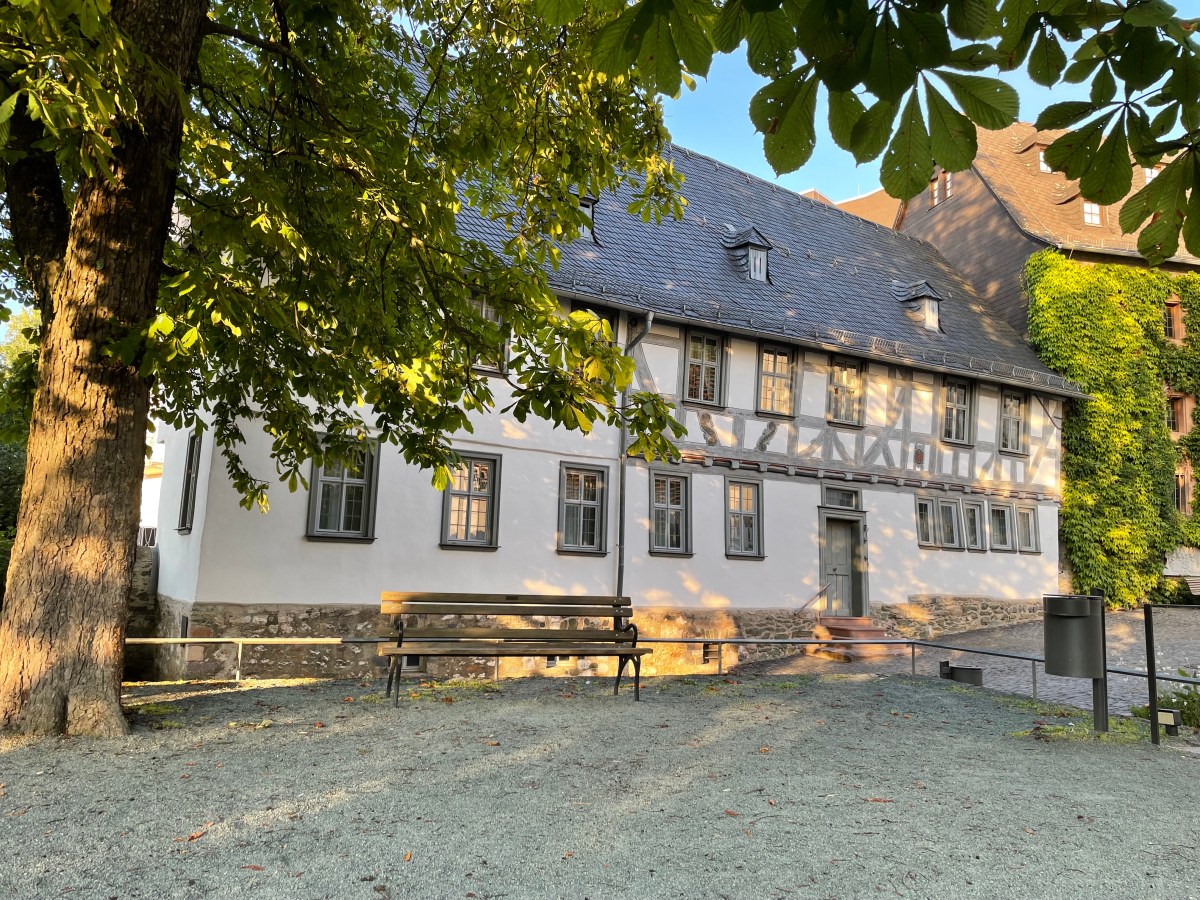
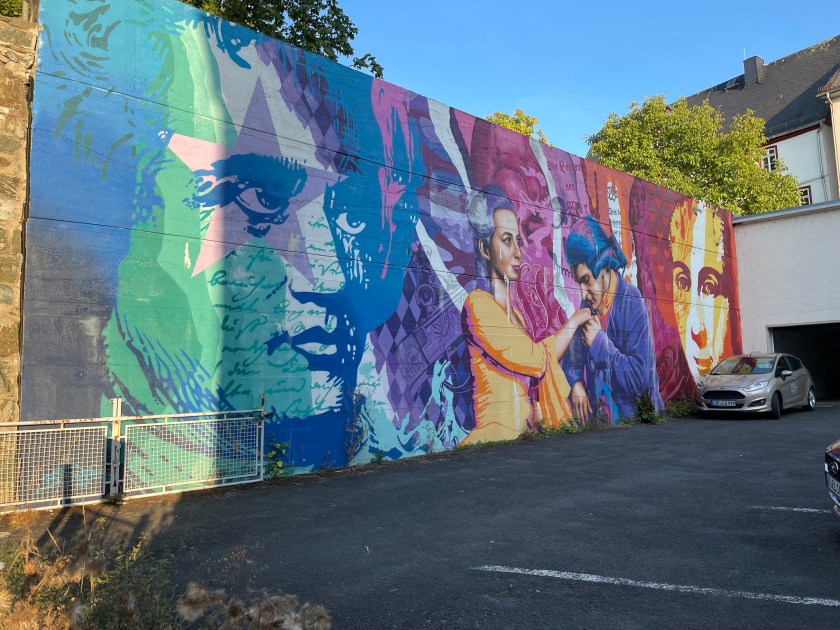
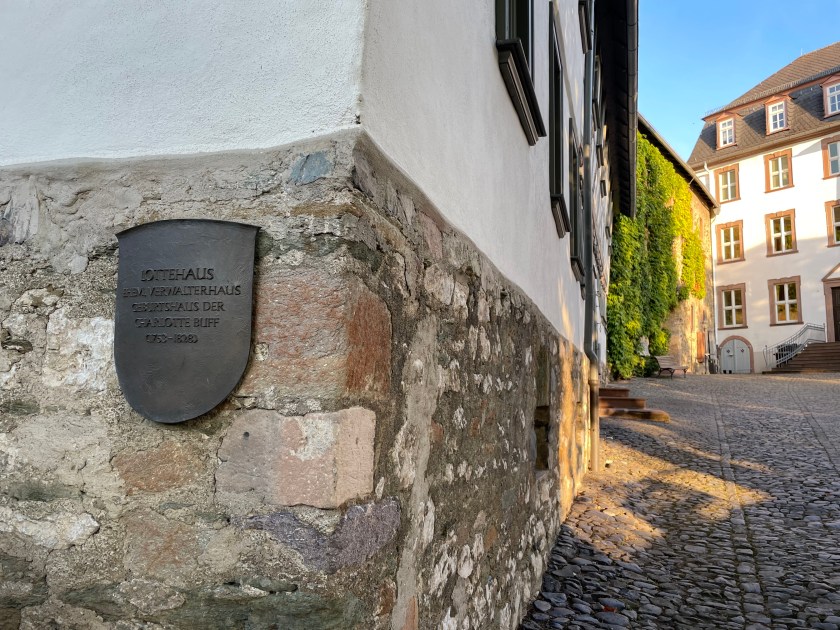
Then we wandered in search of the home of Charlotte Buff (Lotte). In 1772, Johann Wolfgang Goethe was an apprentice in Wetzlar. During his time her he fell in love with Lotte, but she was engaged to one of his friends.
Goethe, Lotte and her intended:
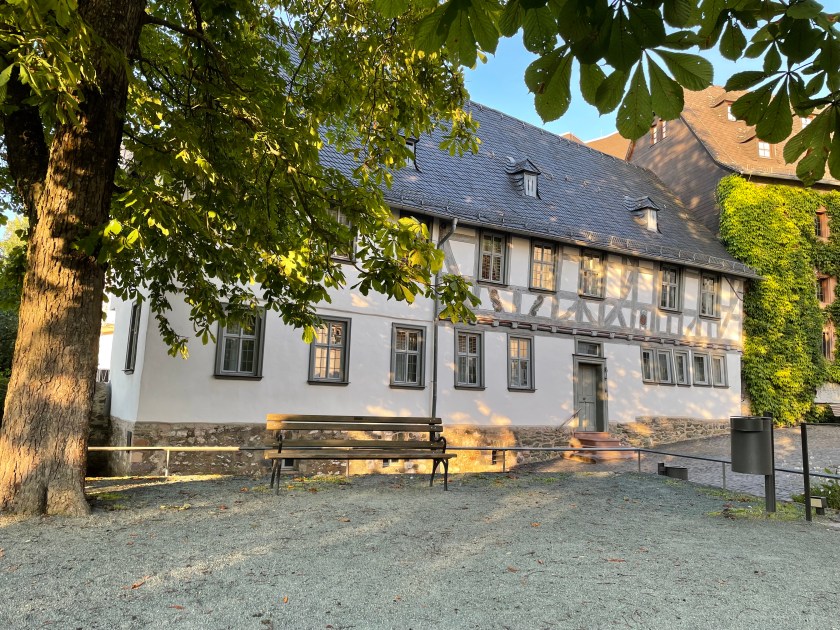
Here is here home:
Inside is a collection of items relating to Goethe and Lotte. Goethe later wrote a tragic novel called “The Sorrows of Young Werther” (1774) about a fellow who suffered unrequited love, just like he had. This novel made Goethe famous in Europe (but also led to many young men committing suicide).
On Saturdays we get to take trips. We can drive anywhere within a 500 km radius of Frankfurt, which includes most of central Europe. Most of the missionaries scatter to go see and do things on the weekends, returning for church on Sundays. It’s a lot of fun to be in a place like this!
Today John and I and our intern traveled about an hour north to the town of Marburg to visit an old castle there and a wonderful old town. The weather here is perfect right now, in the low 80s, sunny and warm. We are so happy to be here.
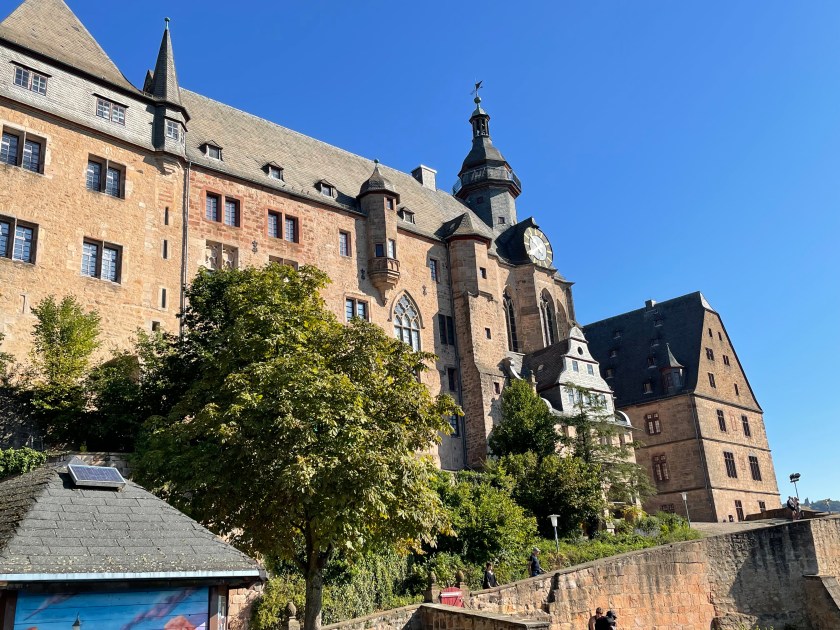
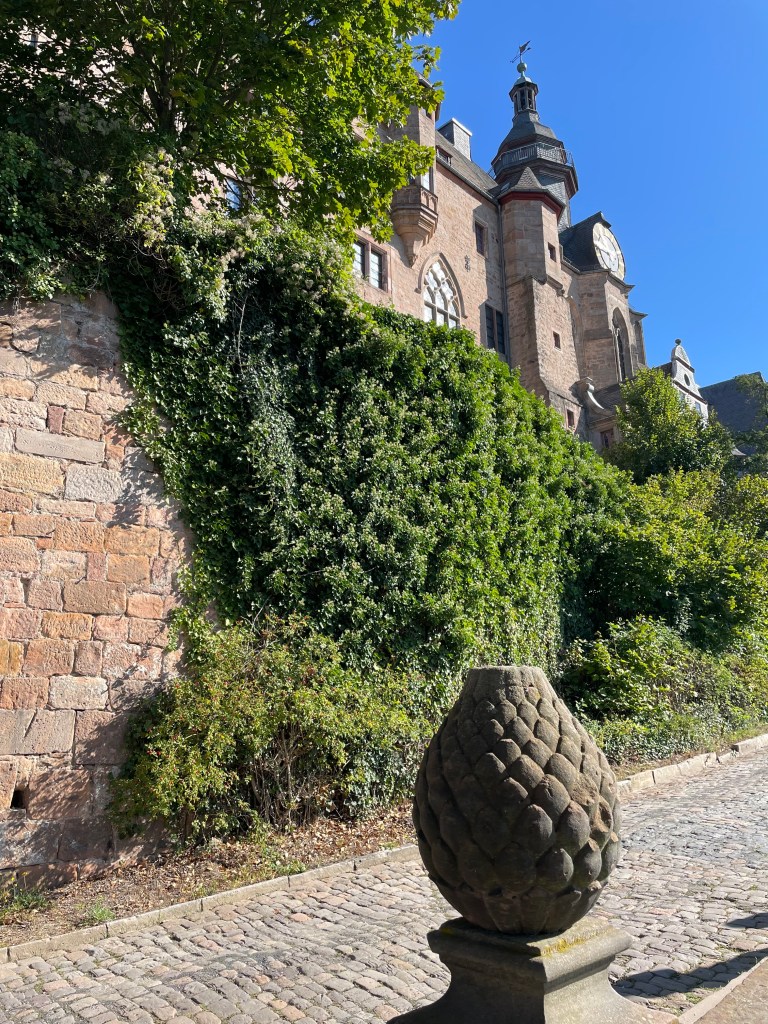
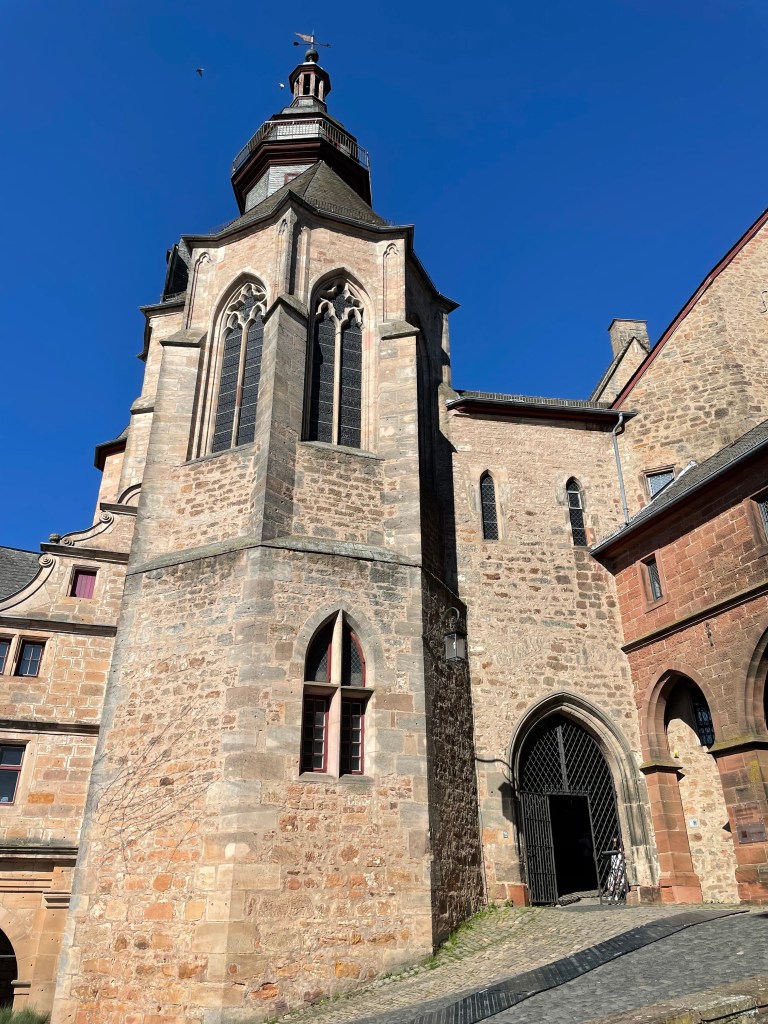
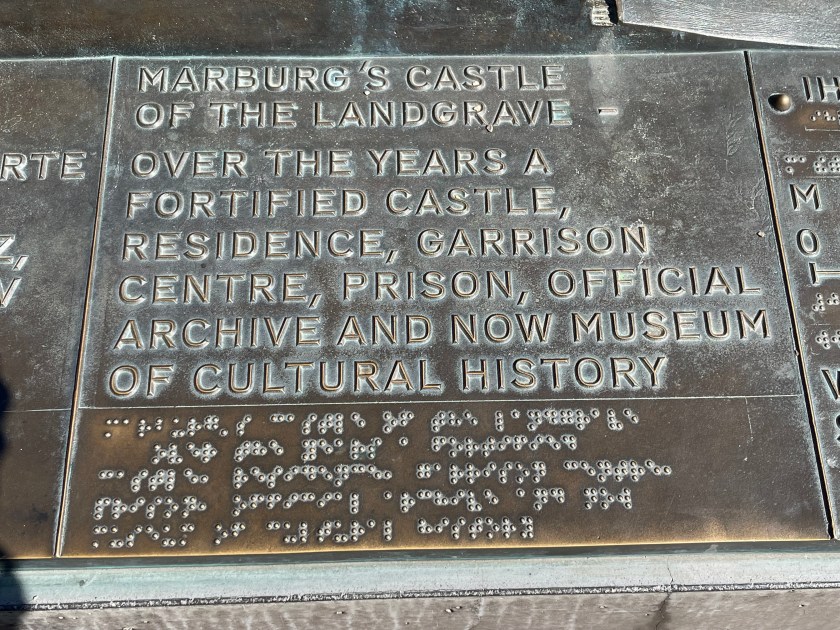
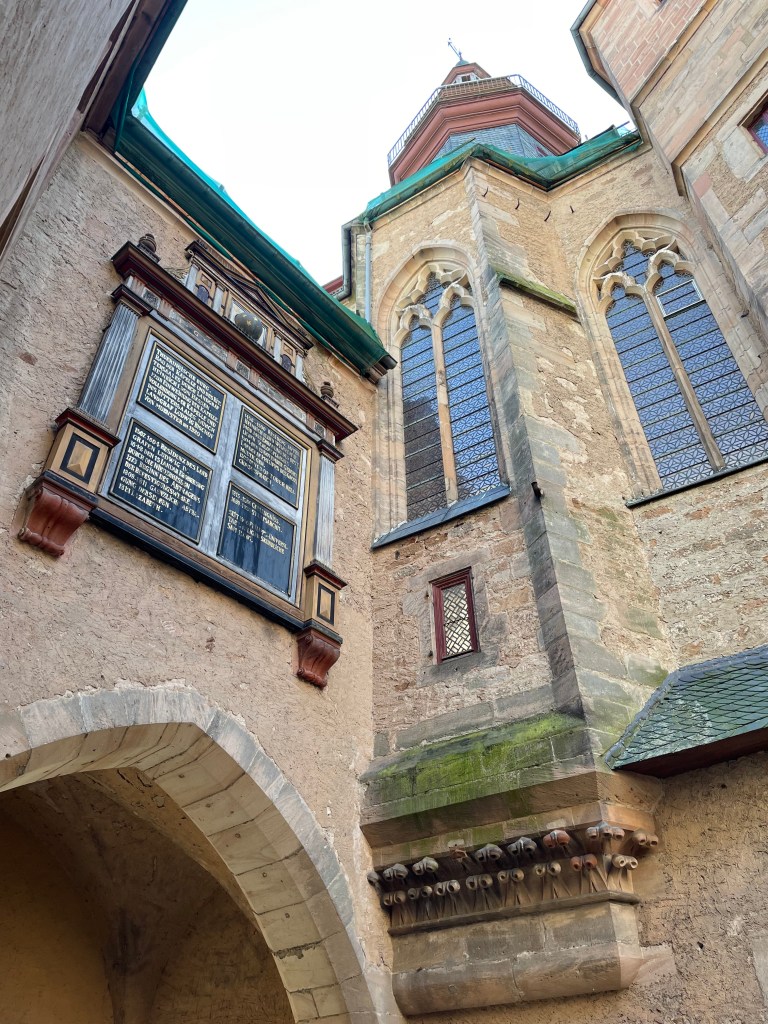
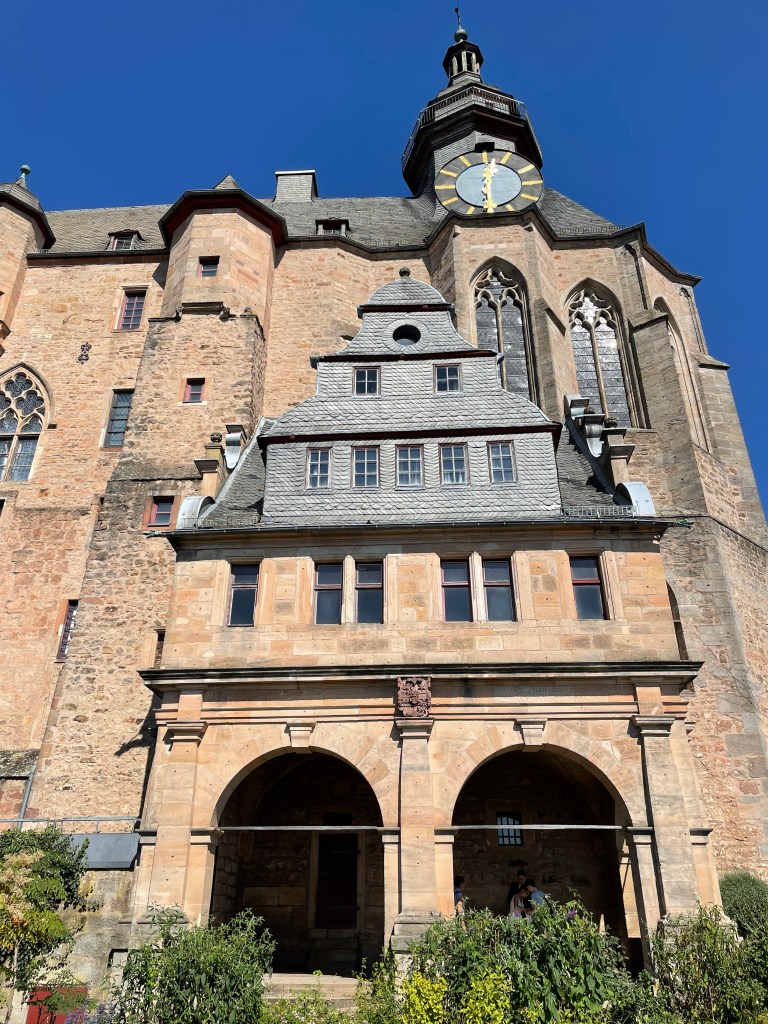
Here’s what this castle looks like. The first tower was built in about 900. Additions were made throughout the centuries. In the 1200s, the county of Hesse broke away from Thuringia, and Marburg became a really important seat of government for the landgraves.
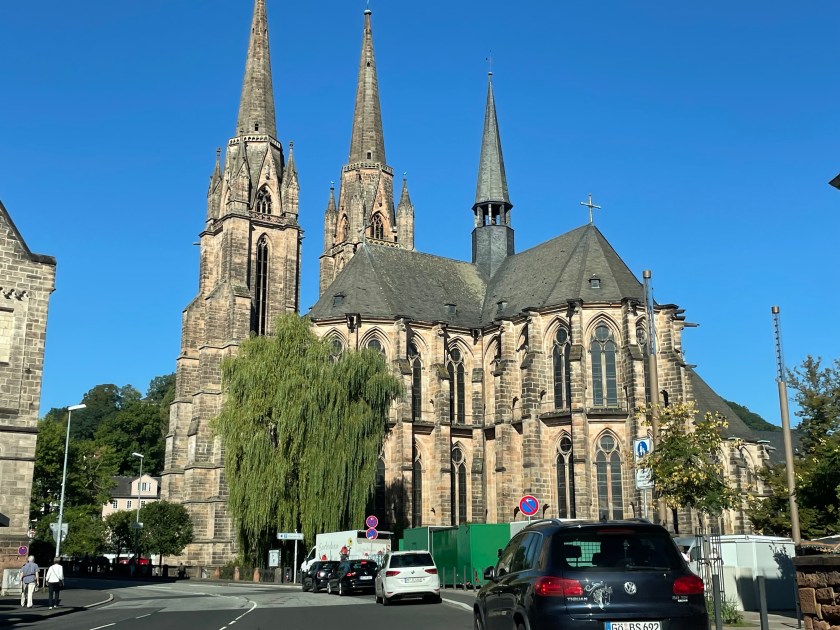
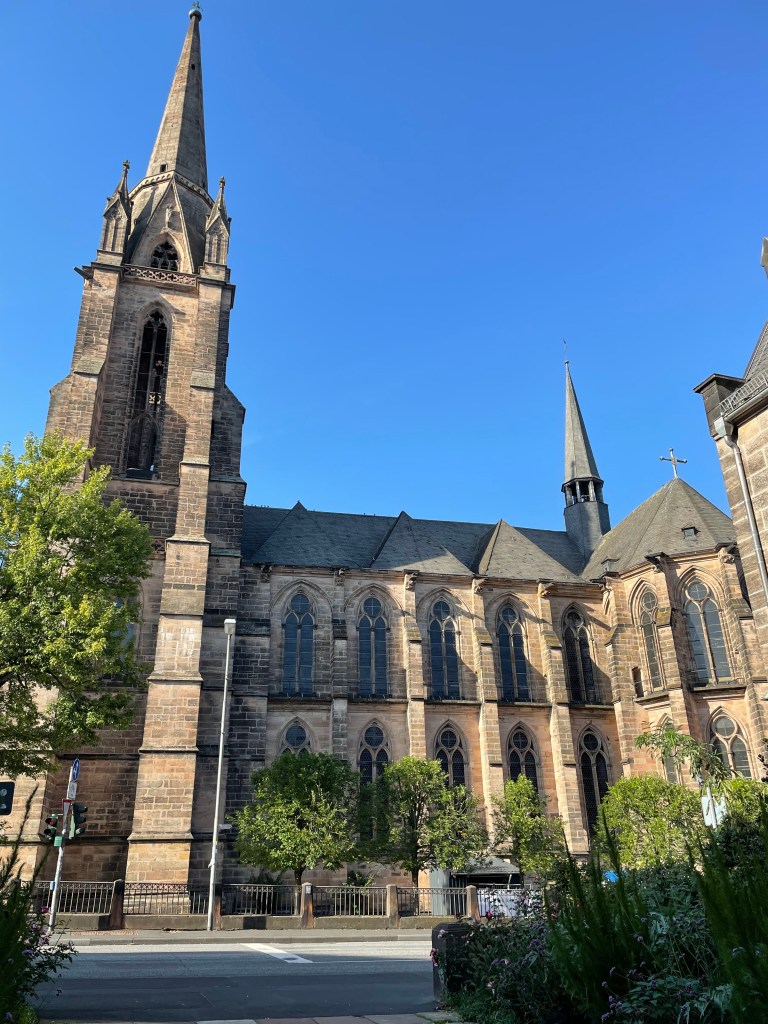
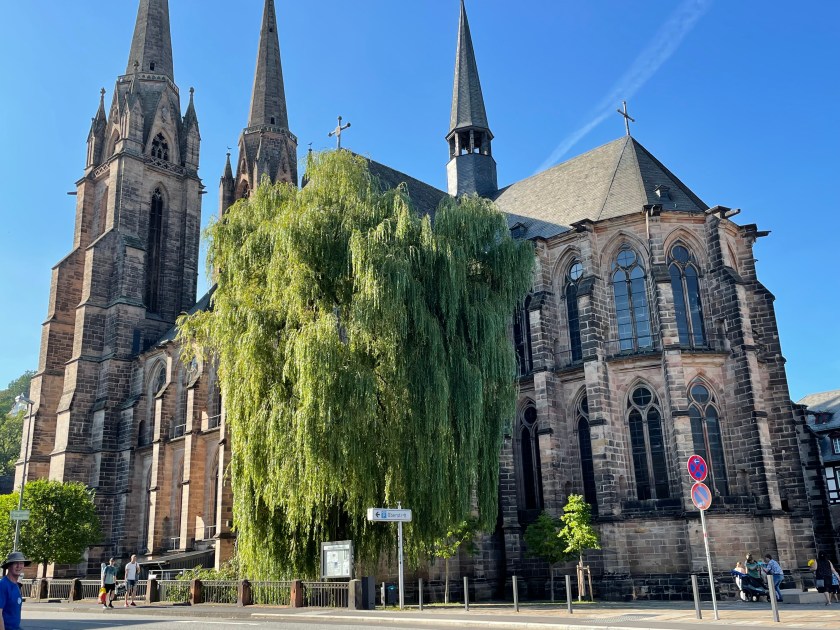
Last week in Wartburg, we learned about Elisabeth of Thuringia who devoted her life to the poor and was later given Sainthood. She lived in the castle there from 1211-1228. Then she came to Marburg and died here at age 24. The Elizabethkirche in the town below the castle was built from 1235-83. It’s Germany’s second Gothic church and Elizabeth’s tomb is here.
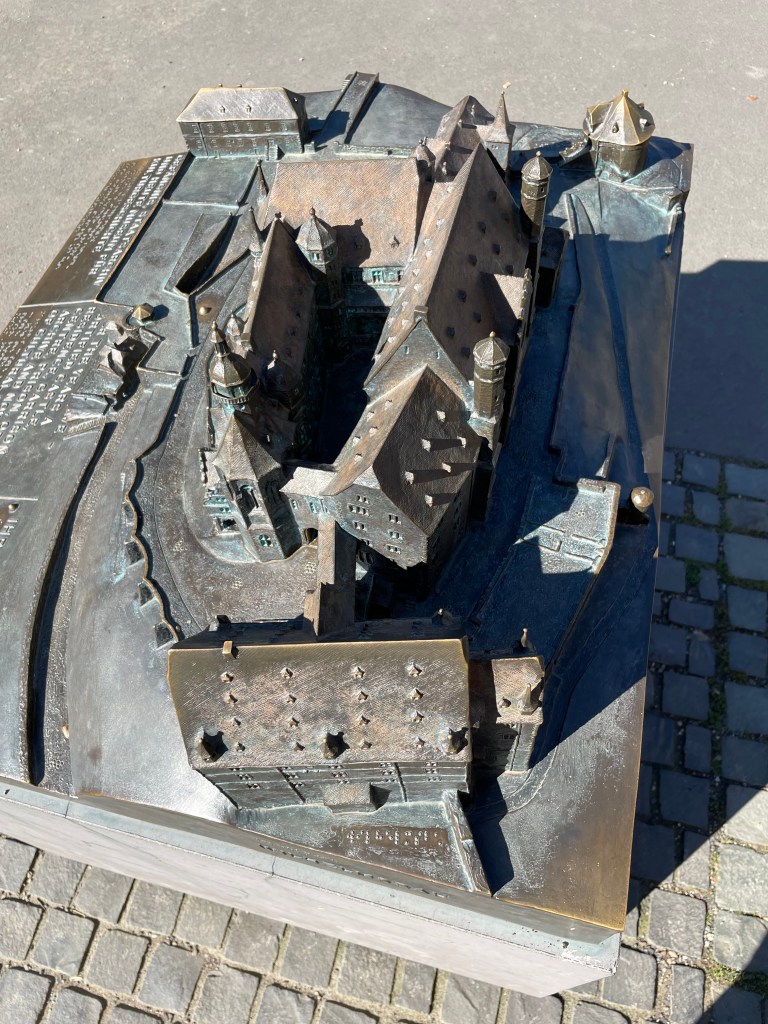
This is what the castle complex looks like:
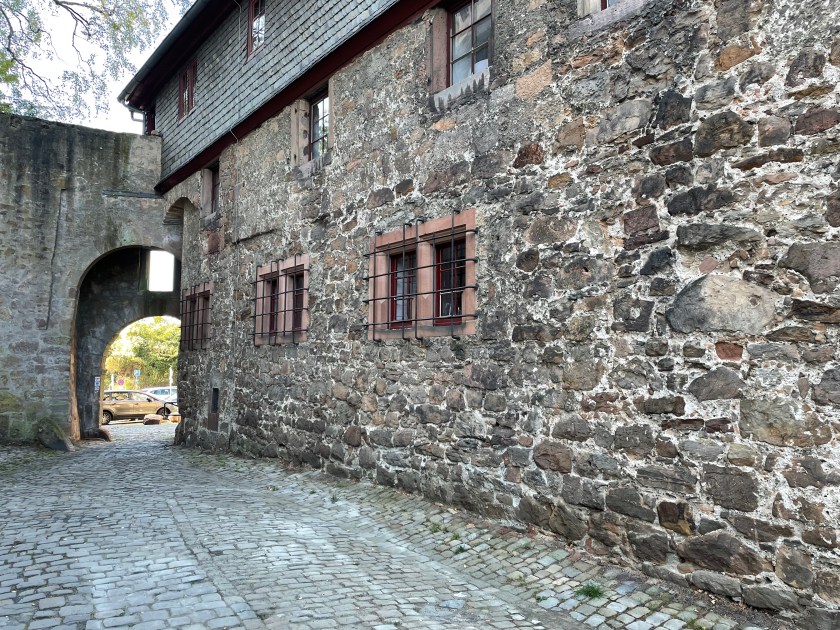
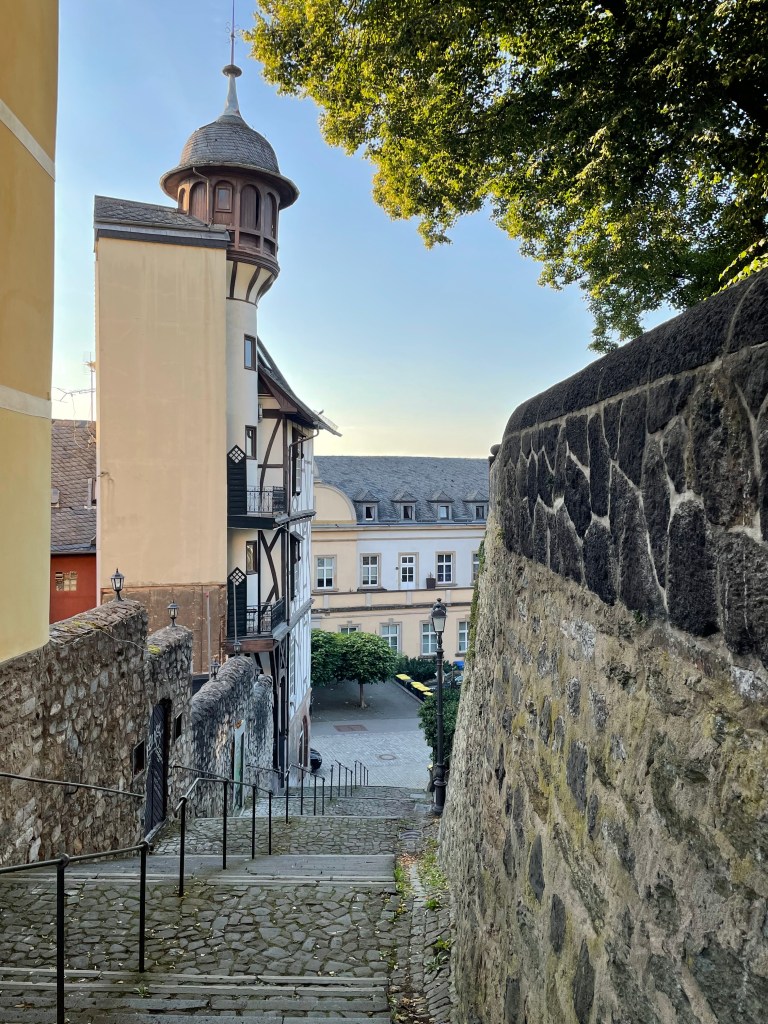
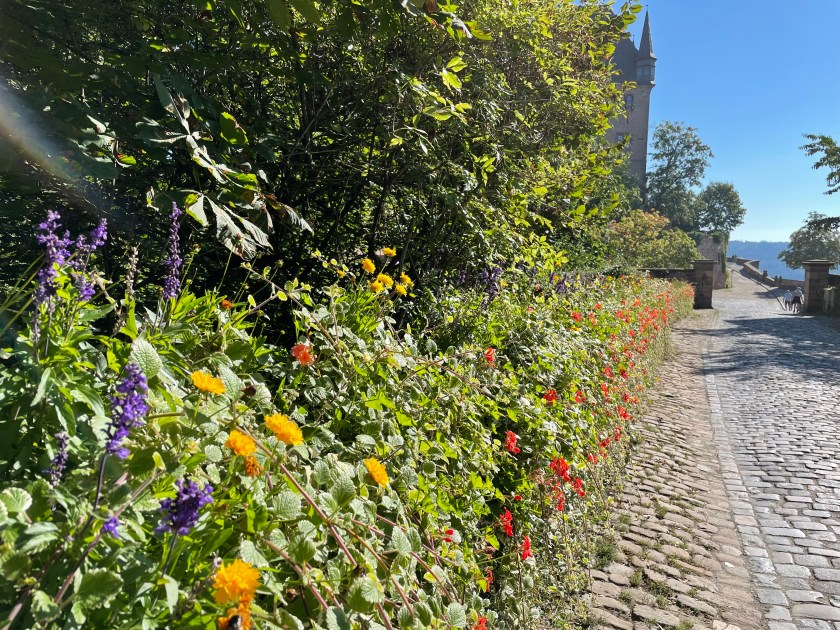
Here is the walk up to the castle:
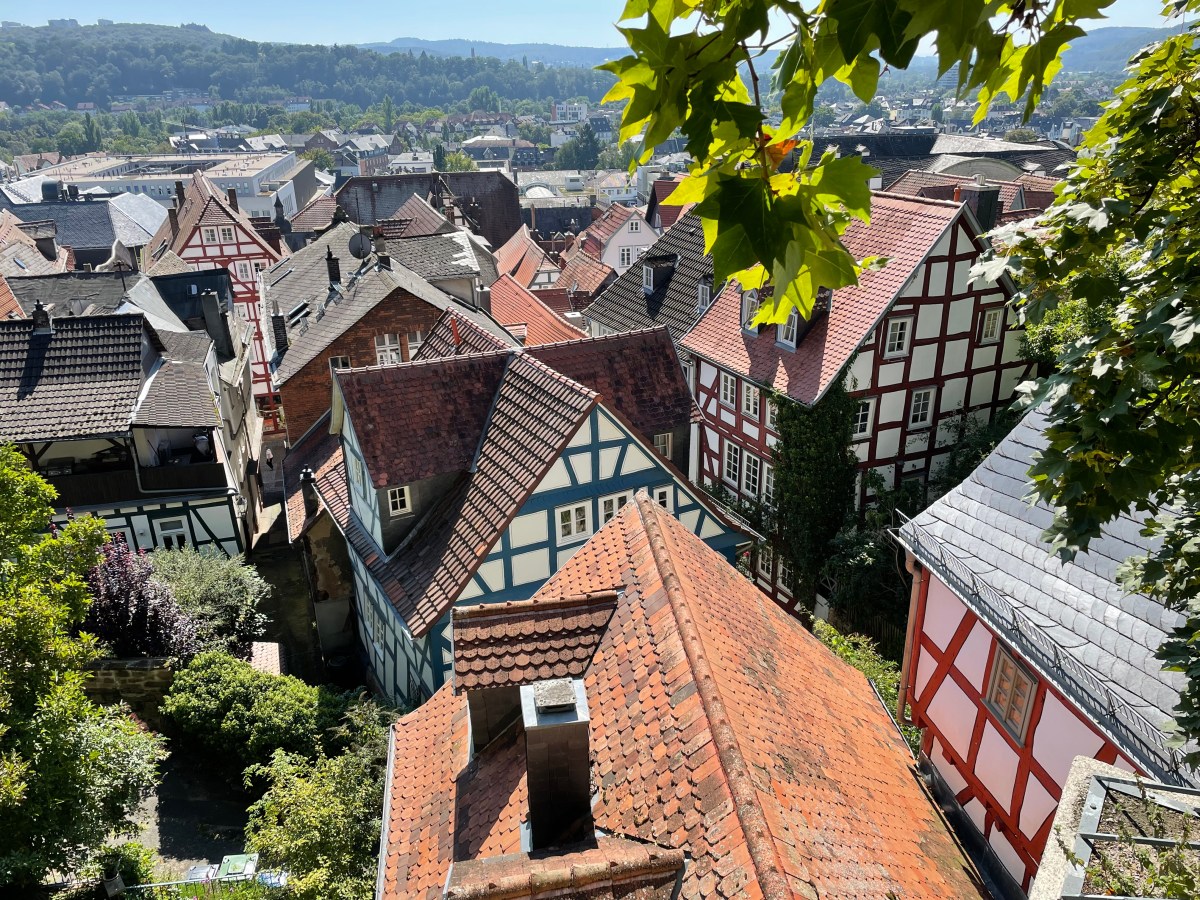
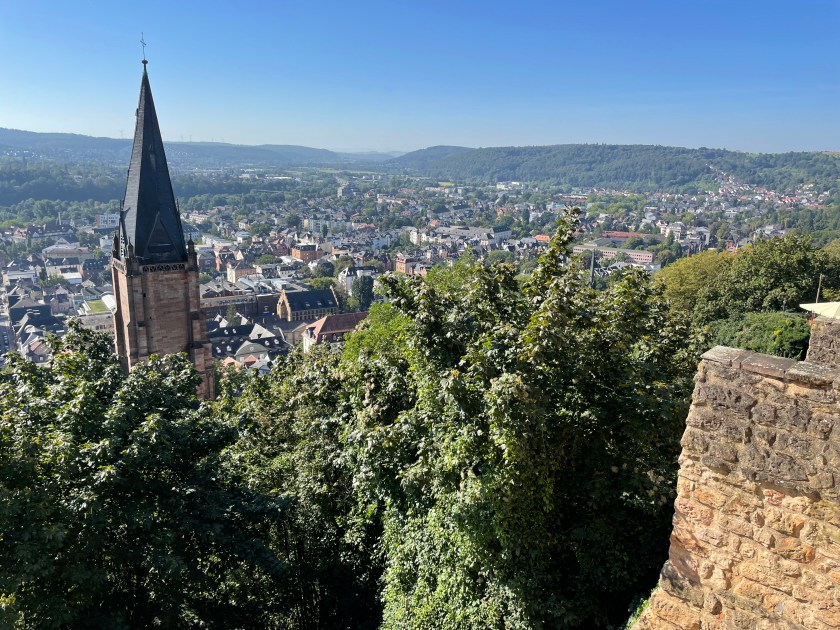
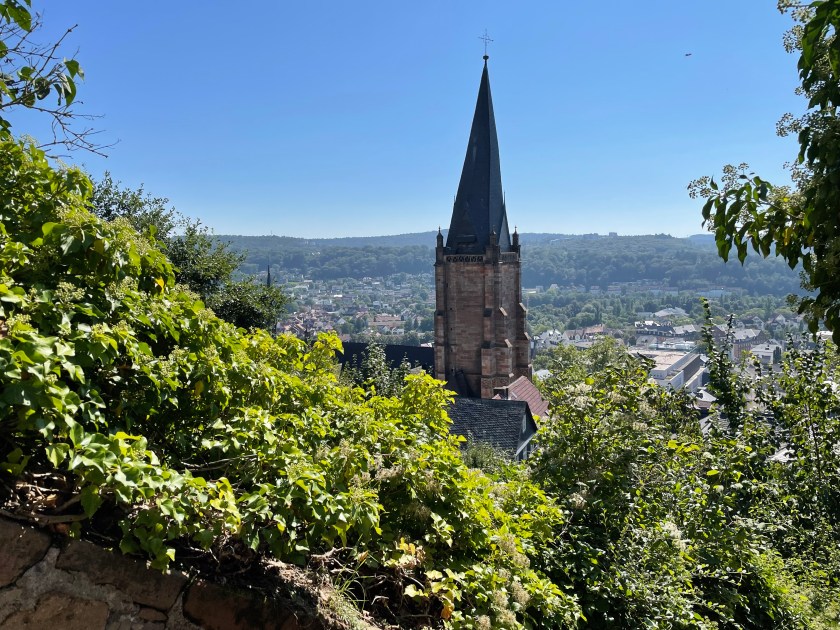
And the view from above down to the town:
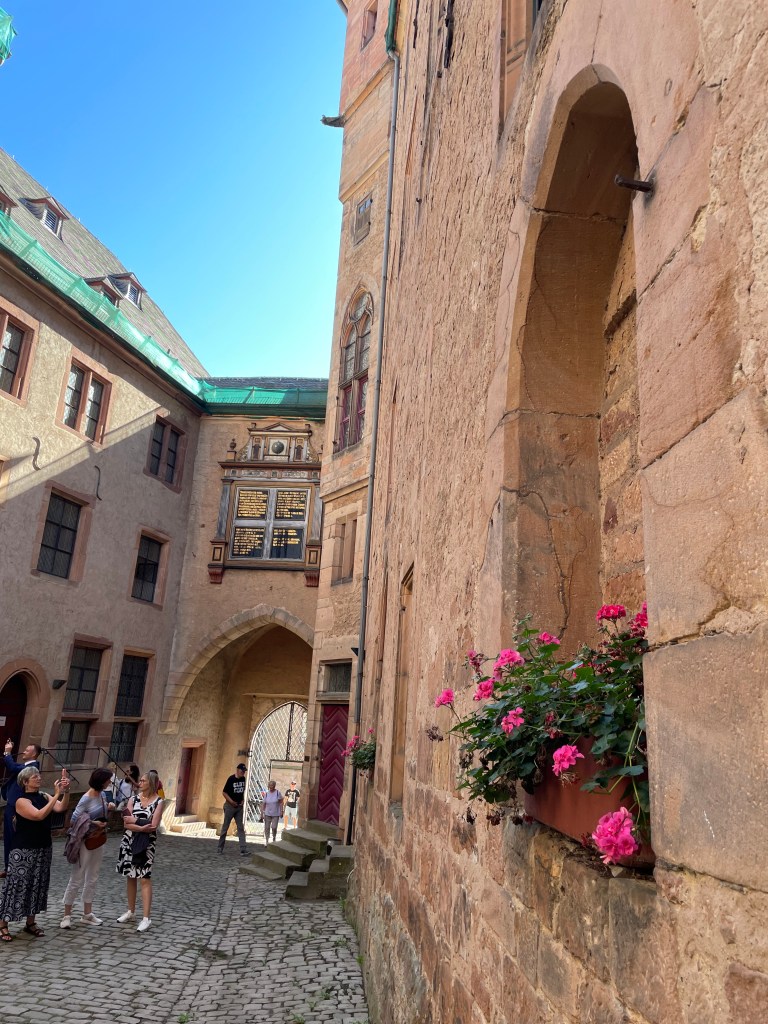
There were several wedding parties here at the castle today. This is the inner courtyard:
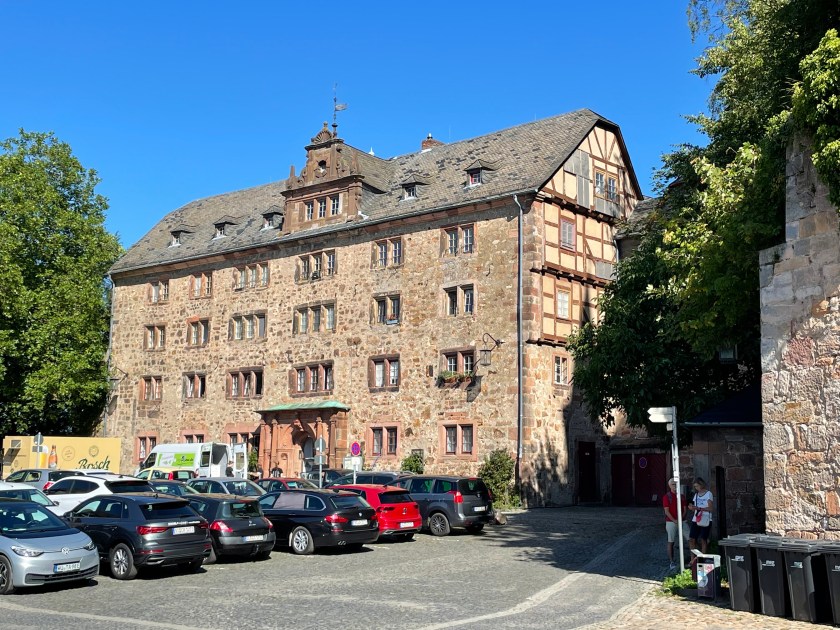
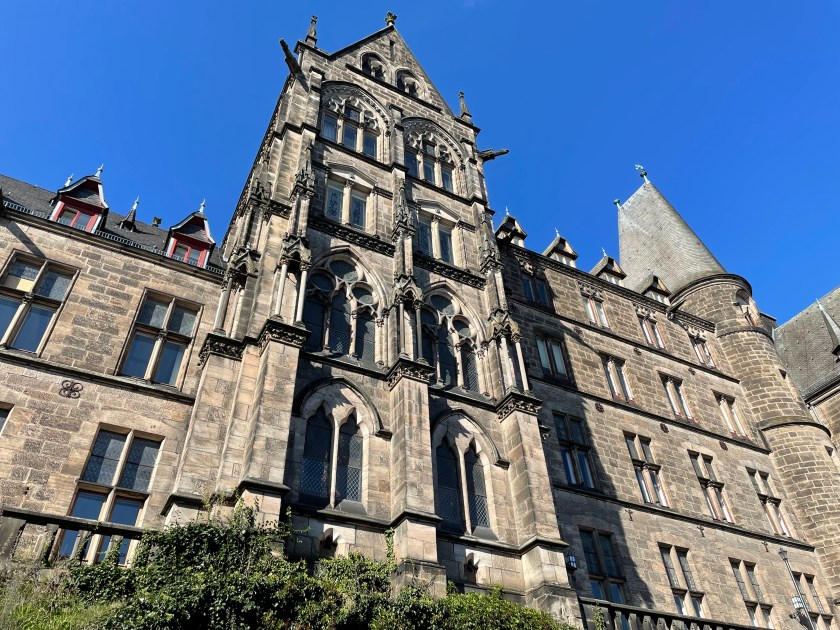
Marburg also is the home of one of the oldest universities in Germany. This part of the old castle is now student housing:
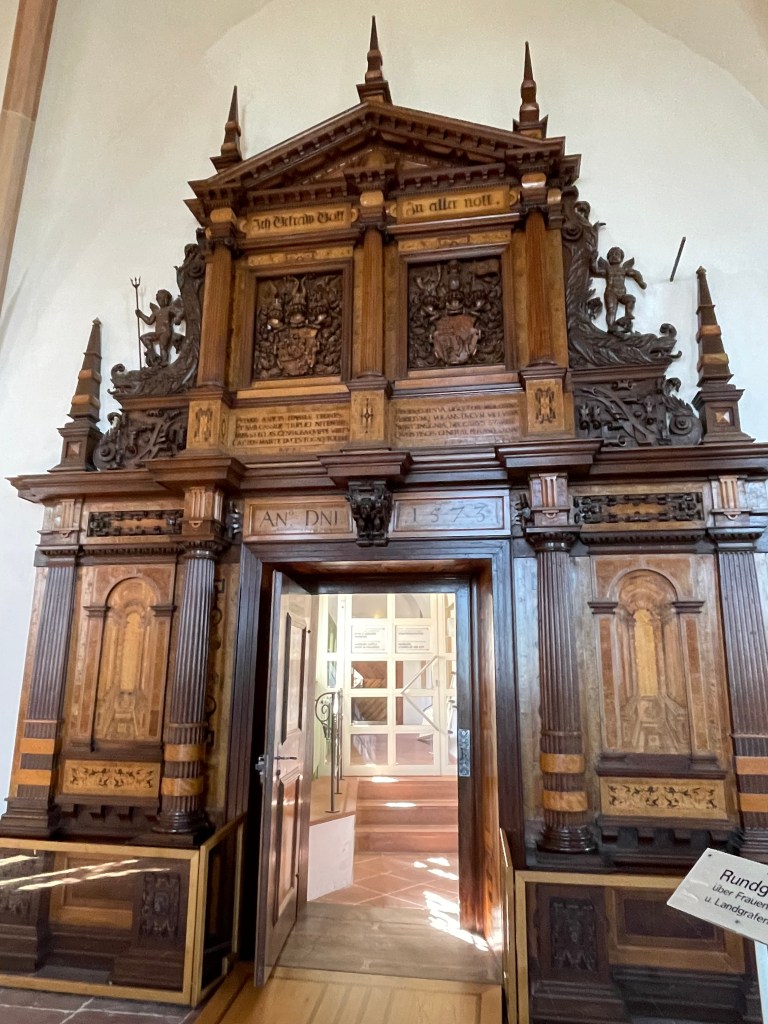
We walked through the areas that are now like a museum, showcasing artifacts from the history of Marburg.
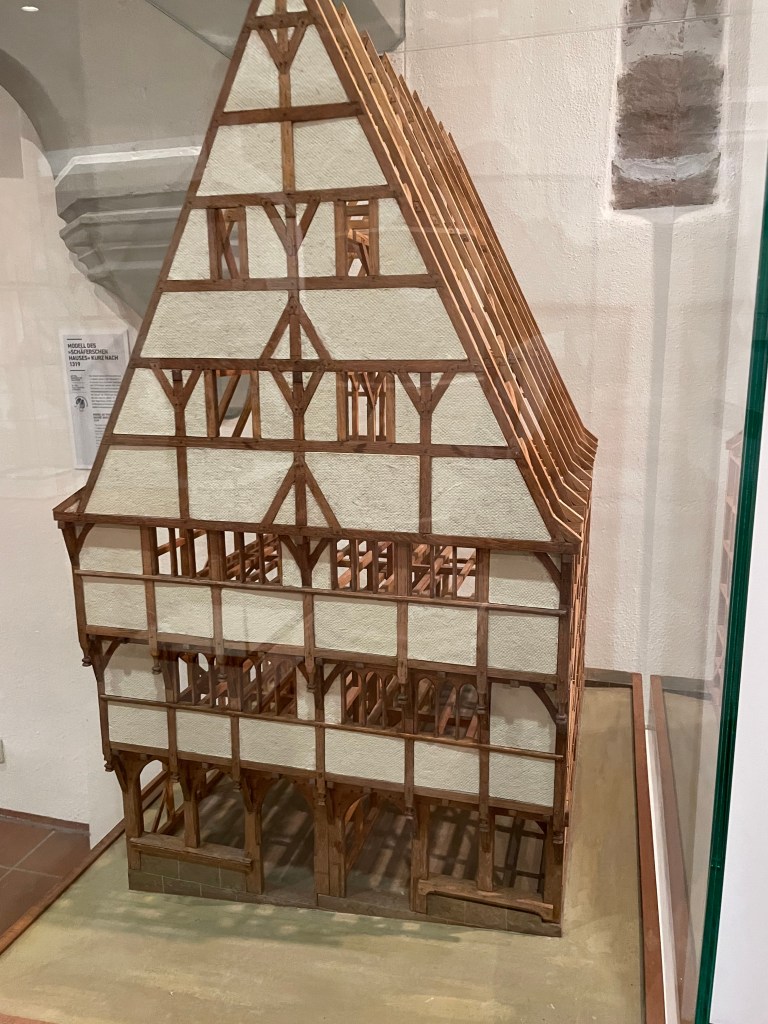
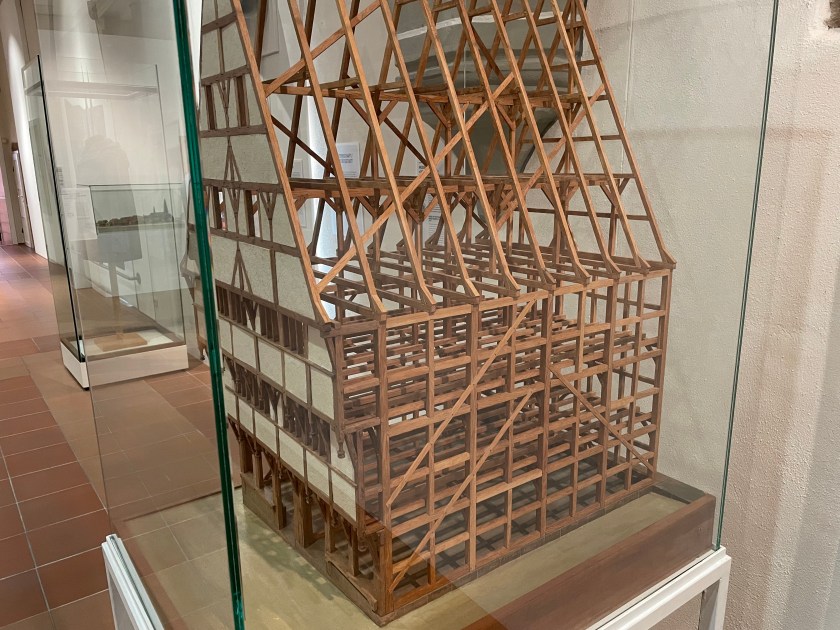
How a half-timber home is built.
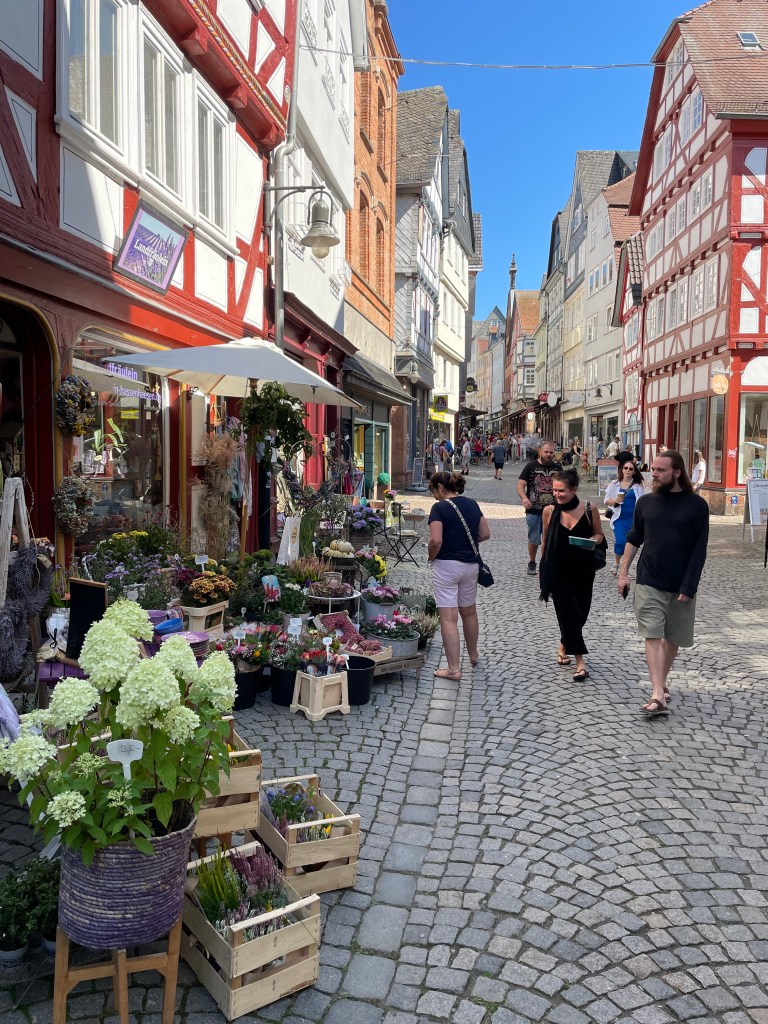
Then we walked down some stairways to the town below to the Lutheran church, the old town square, and the fun the shopping streets where we found the most delicious lunch.
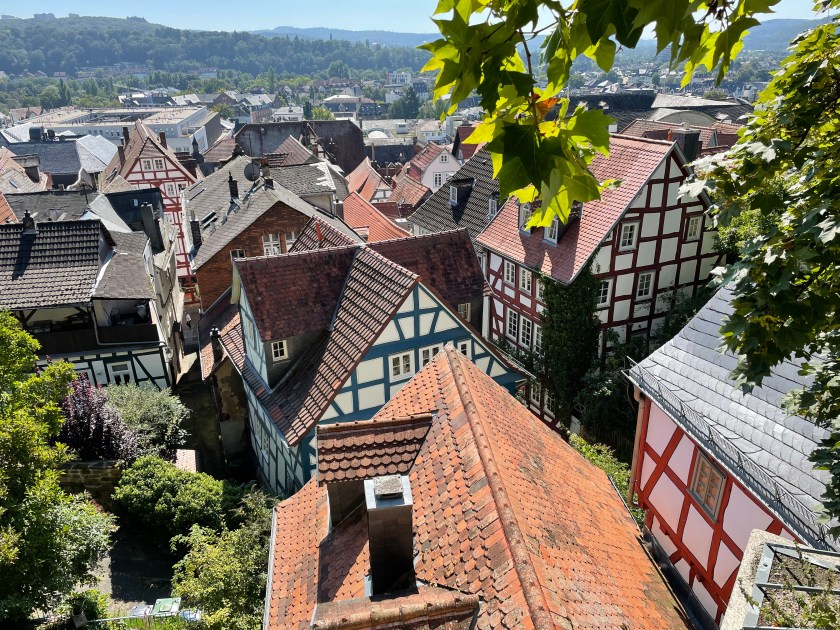
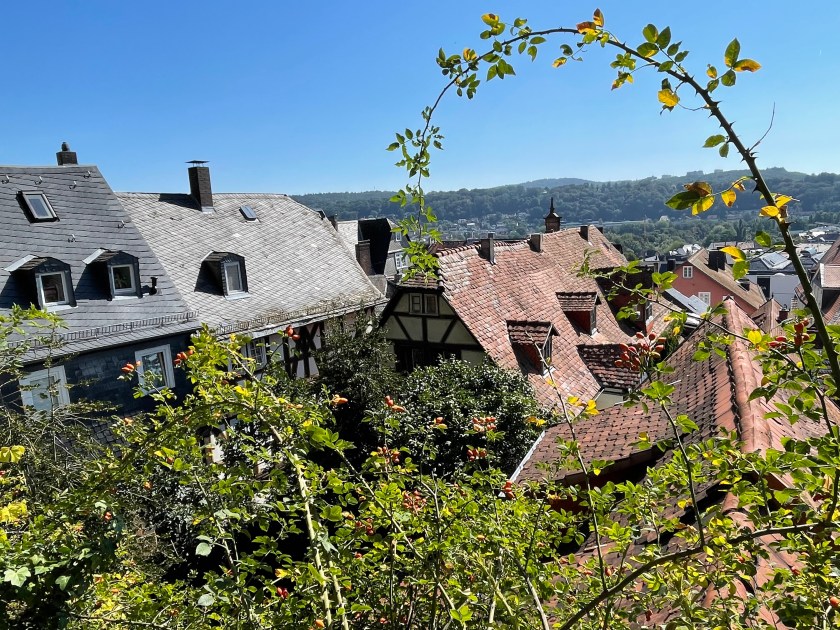
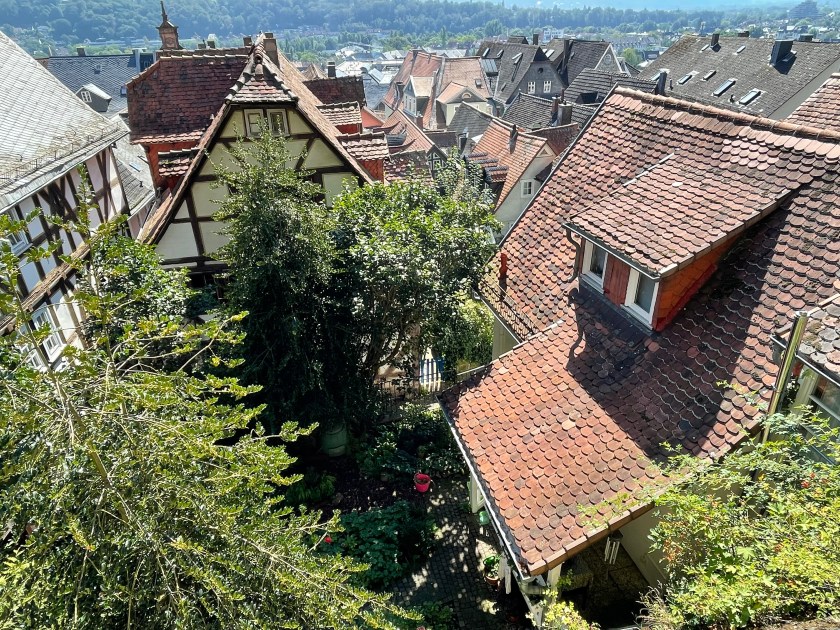
I love the old tile roofs.
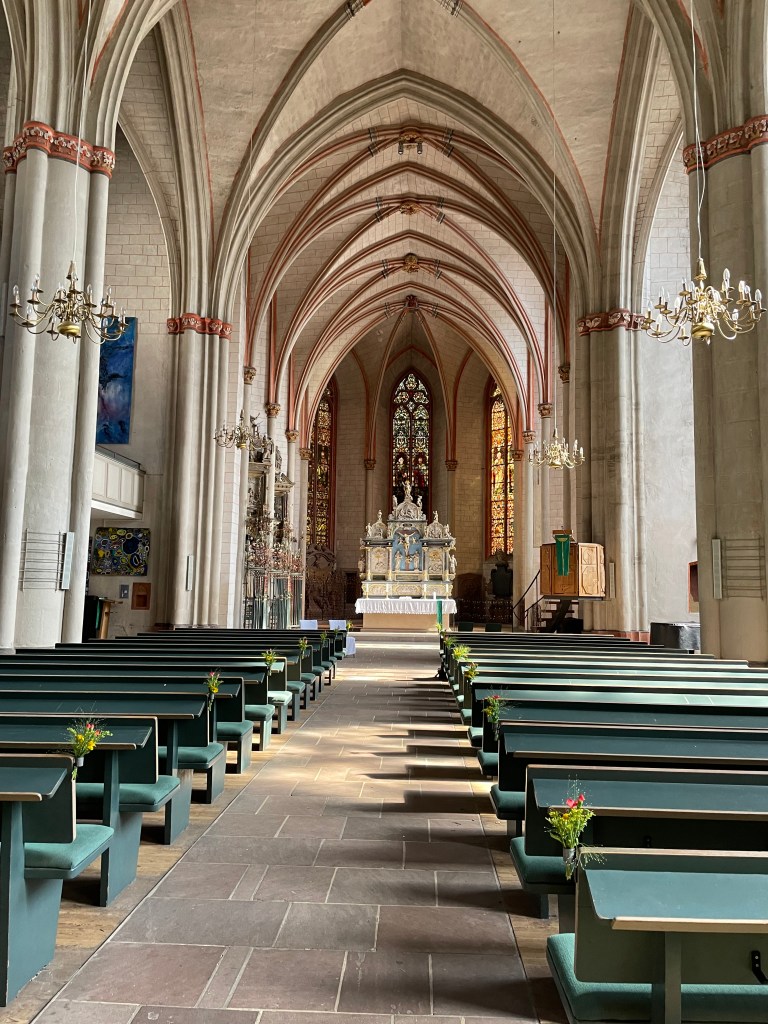
The Lutheran church:
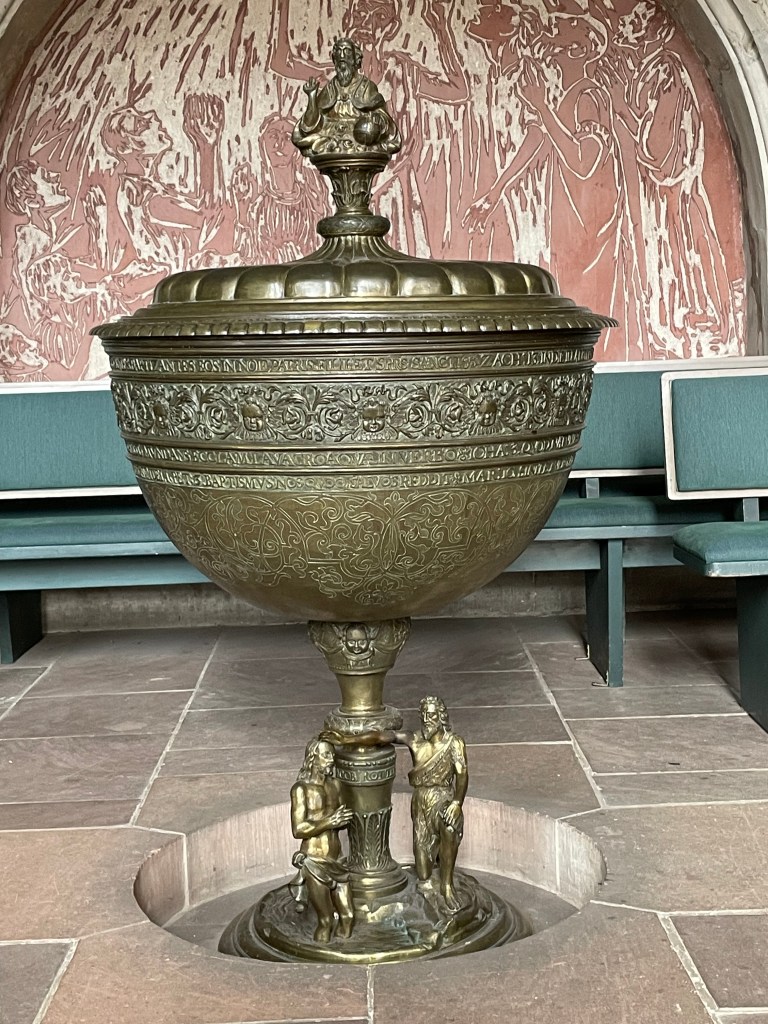
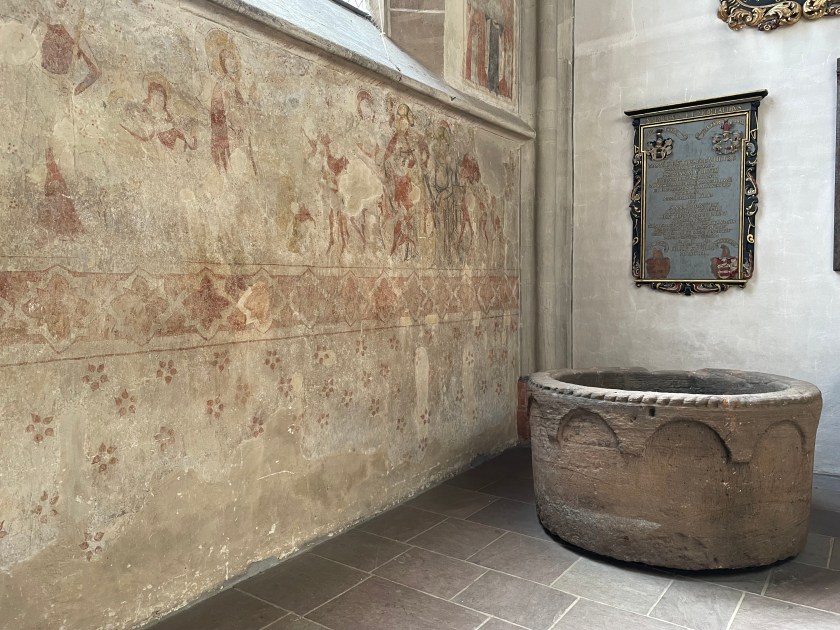
Baptismal fonts, old and older:
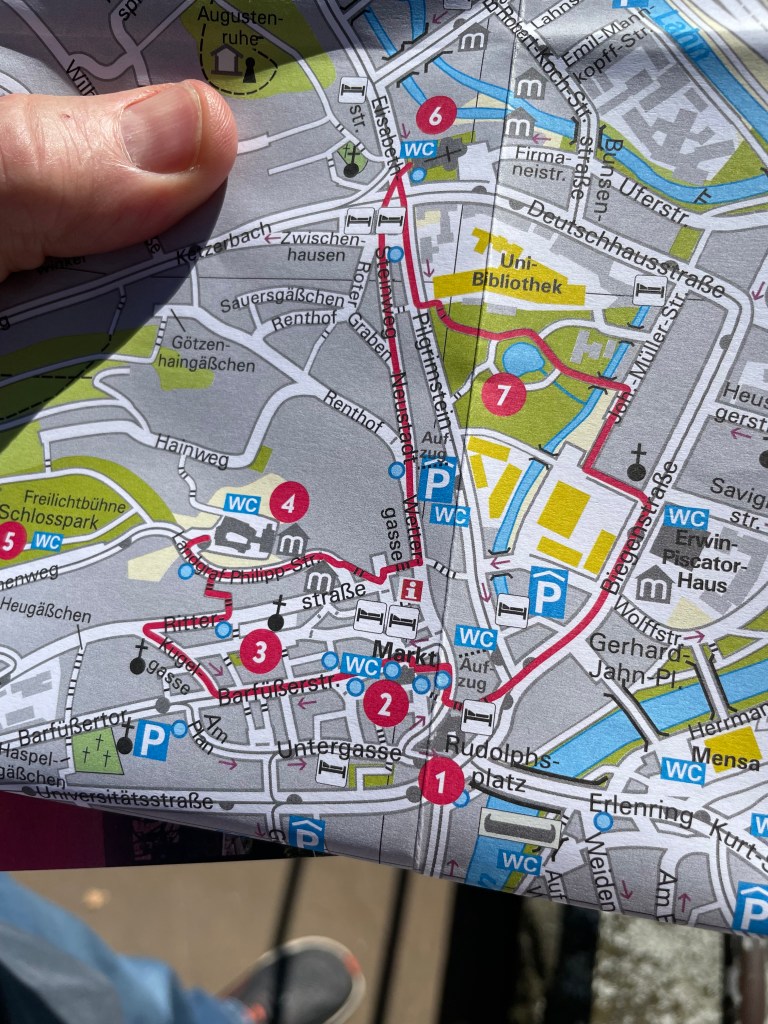
Here are the places we wandered. You can see the university buildings are mixed into the town.
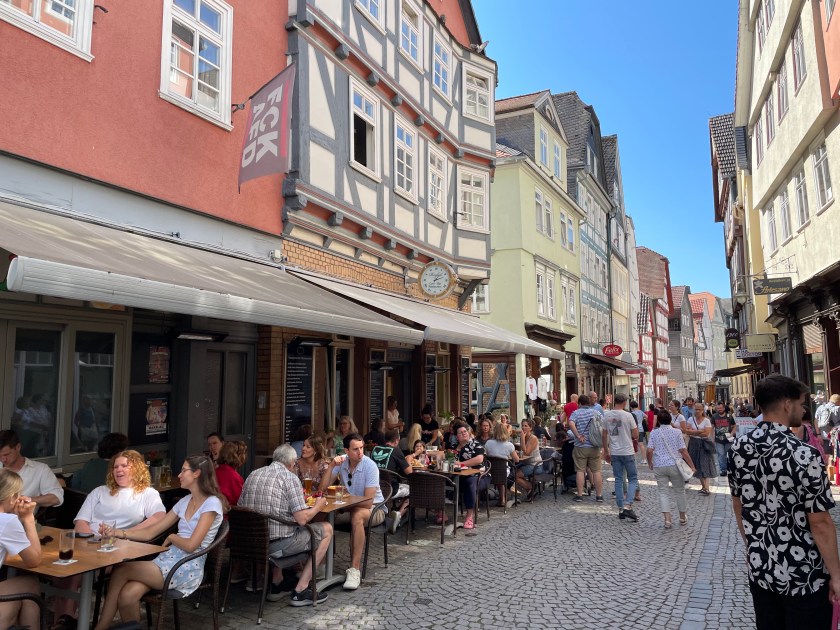
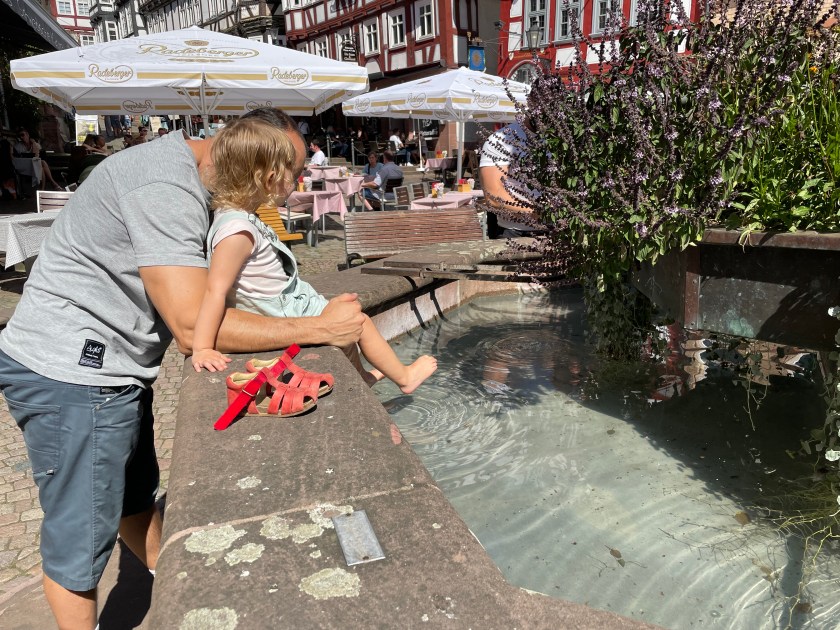
This is Barfuss Strasse (barefoot street), full of good smells and lots of outdoor cafes.
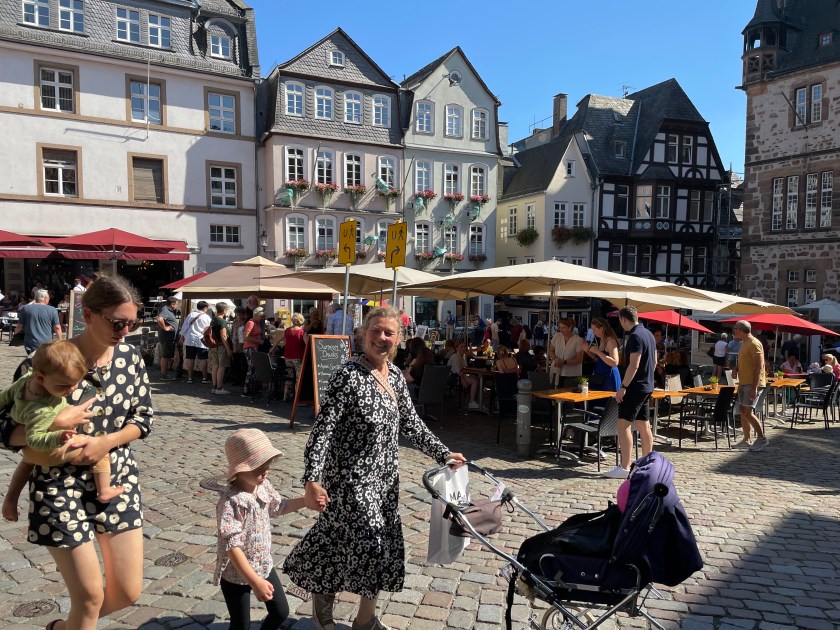
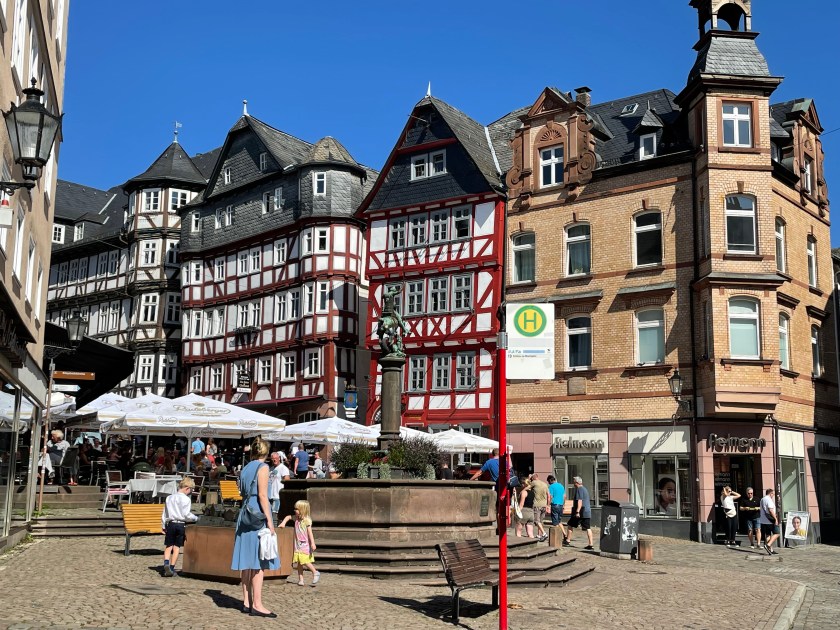
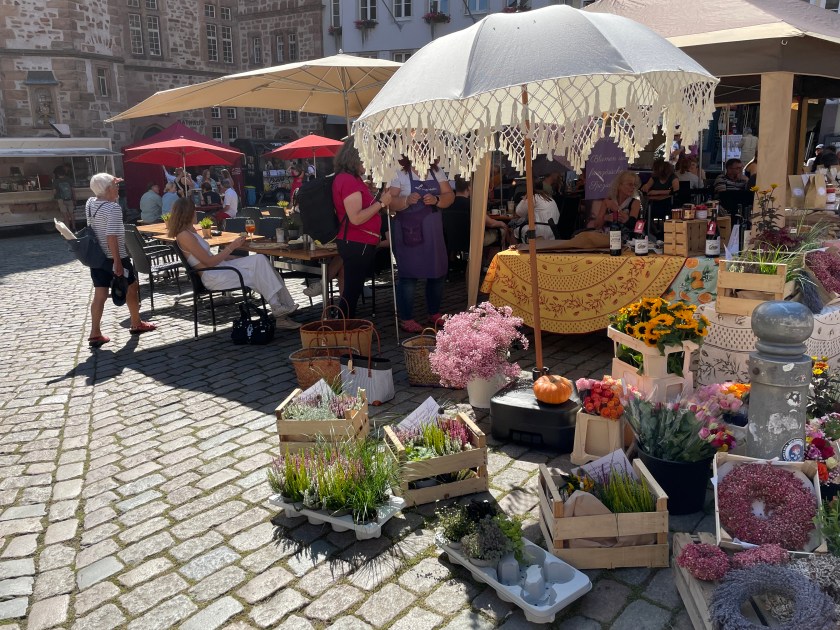
This is the town square.
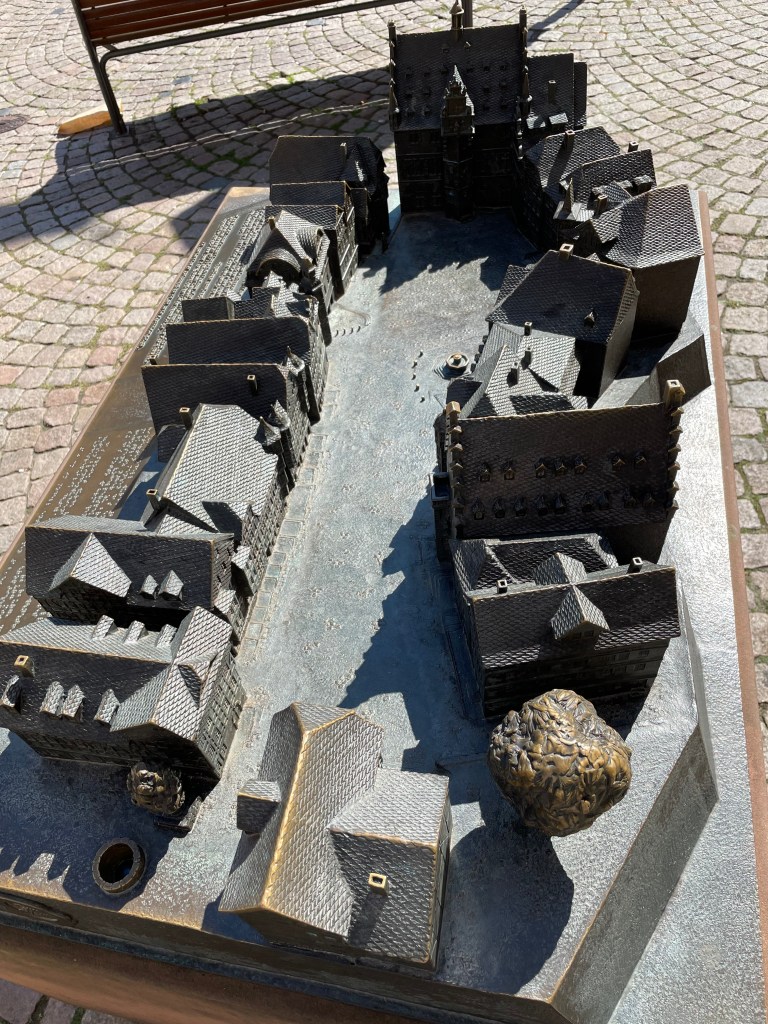
The old city hall building is at the top of this model of the town square.
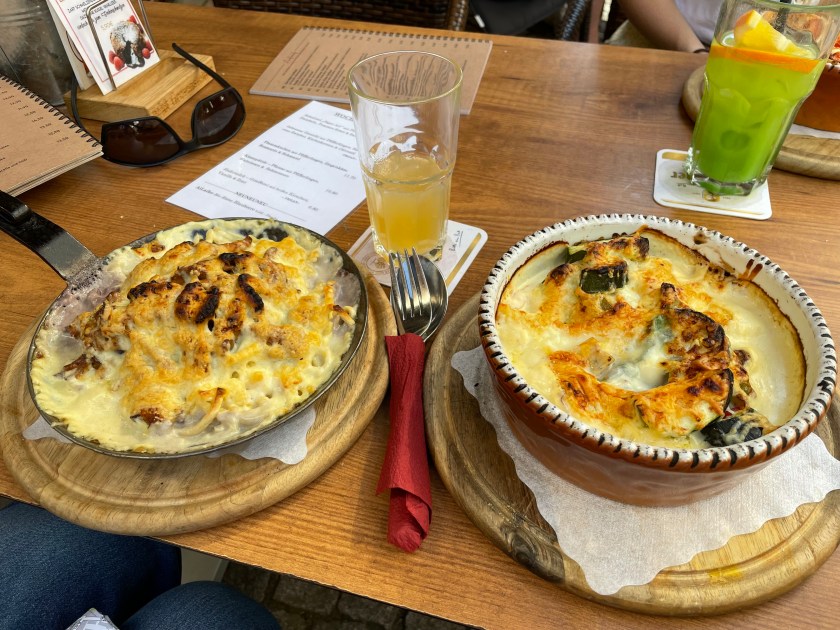
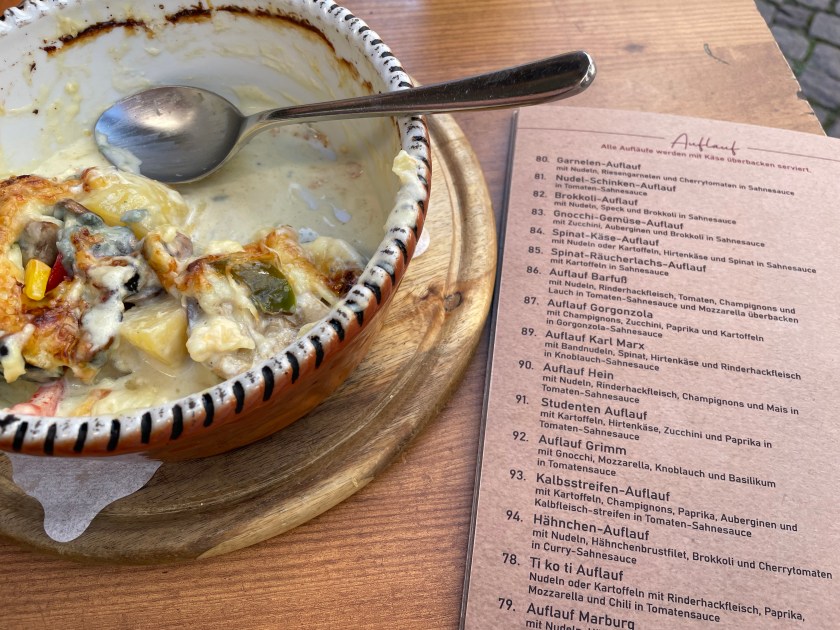
After walking past all the cafes, we picked the one that looked the most delicious. I think we picked well! I’ve never had such good food here. Marburg is famous for these deep dish baked meal called Auslauf. There are as many to choose from as there are pizzas in a pizza shop.
John had Käse Spätzle (German noodles and cheese)and I had #87 Auflauf with potatoes, vegetables cheese and the most delicious cream sauce. They were piping hot and oh, so so delicious!
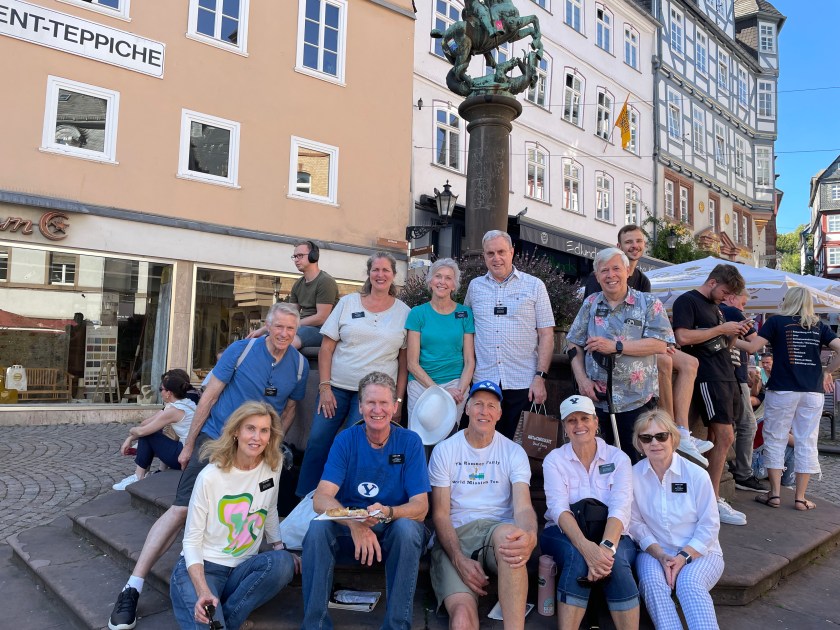
Look who we bumped into in the Marktplatz!! This is a group of OCG friends (Office of General Counsel, or lawyers). They chose the same outing today. It was great to see them.
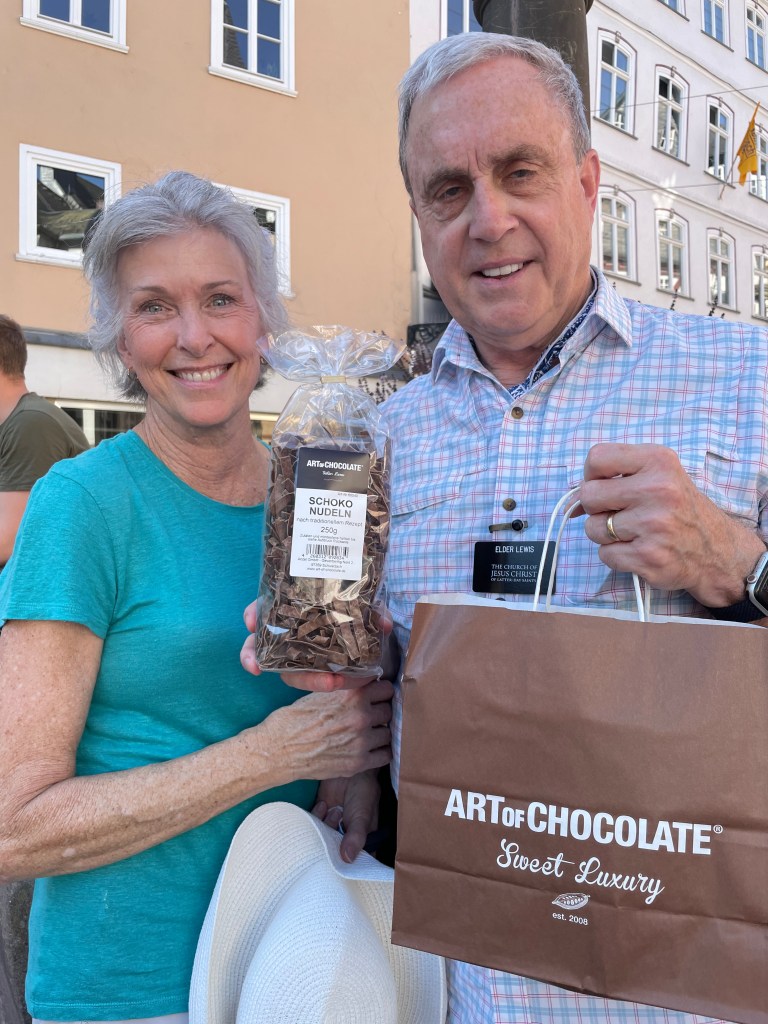
Have you ever seen chocolate NOODLES???
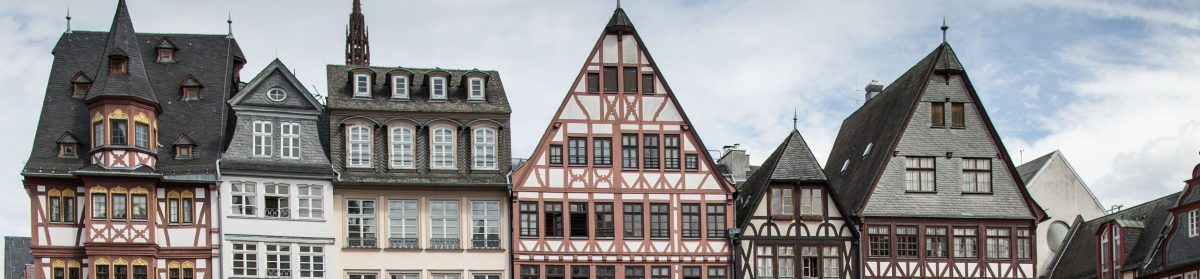
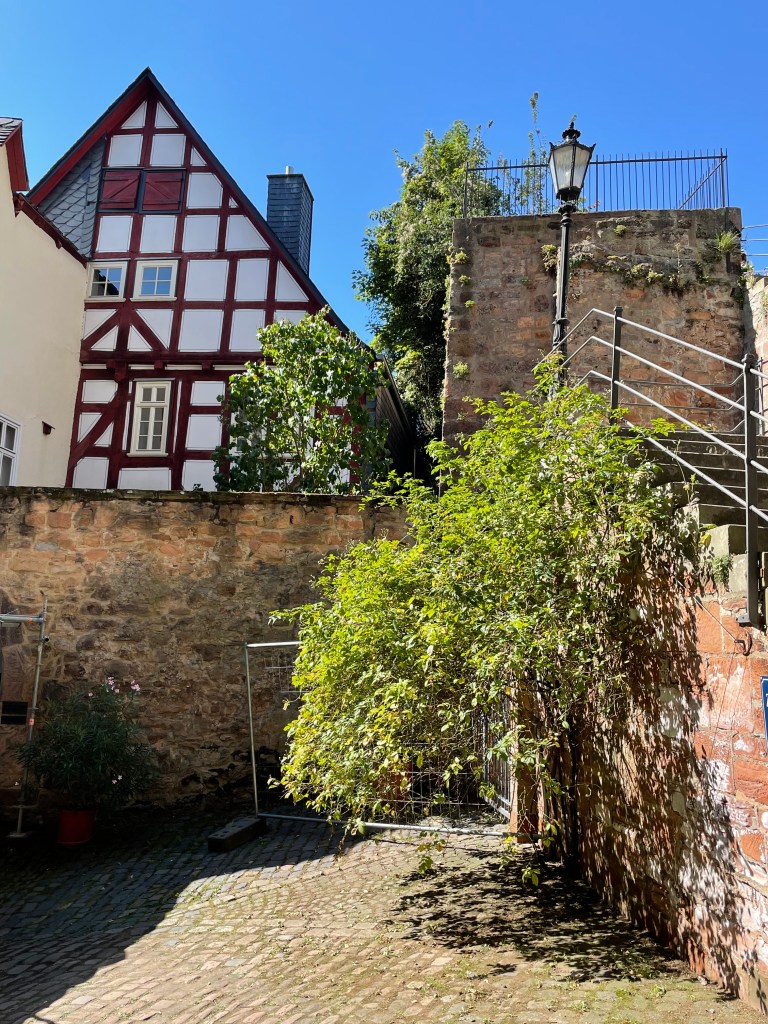
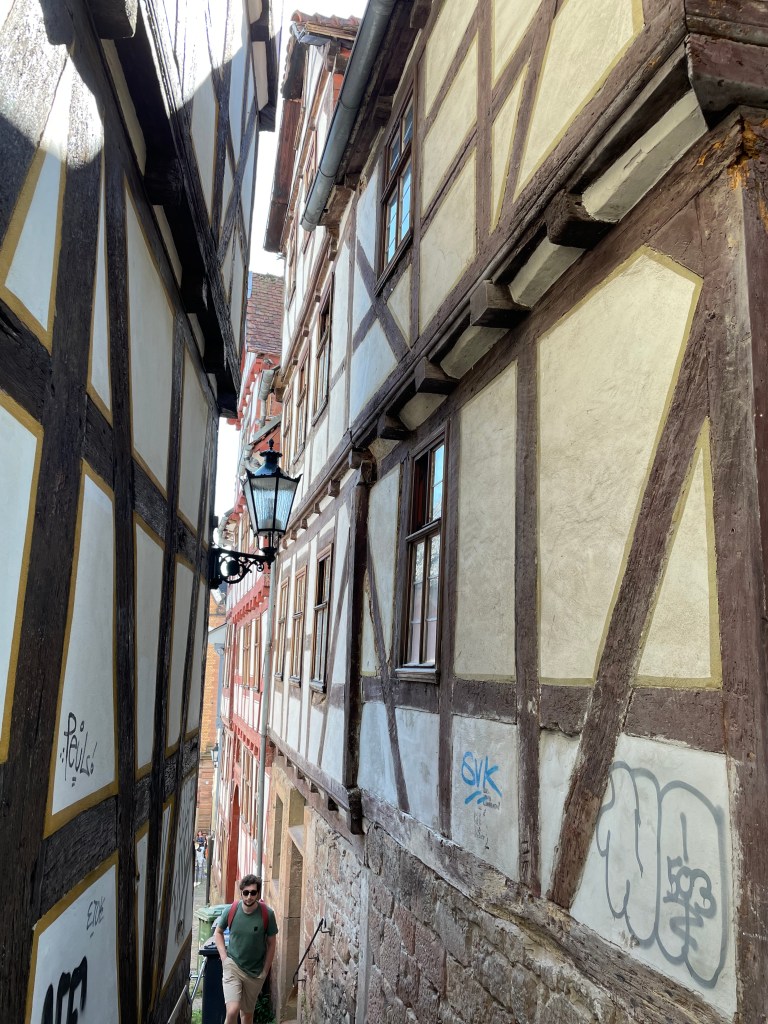
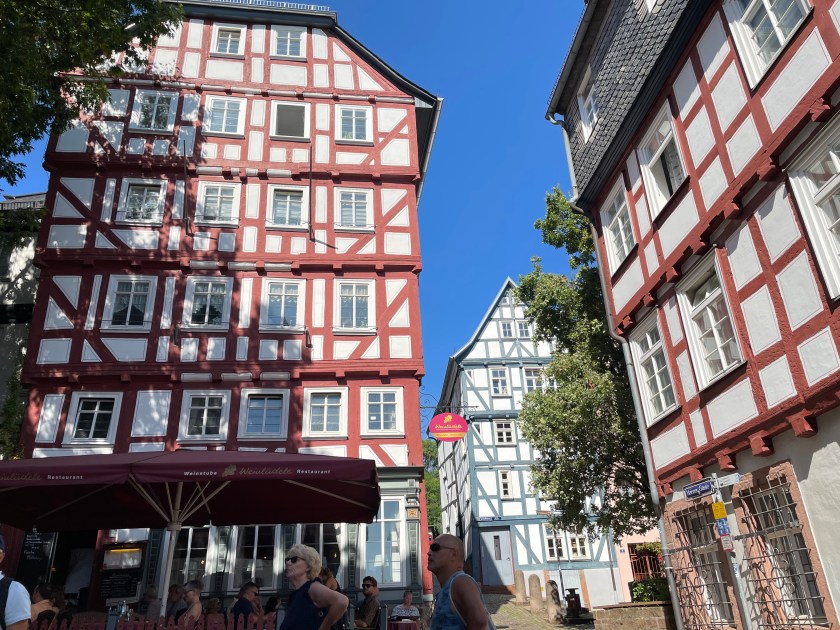
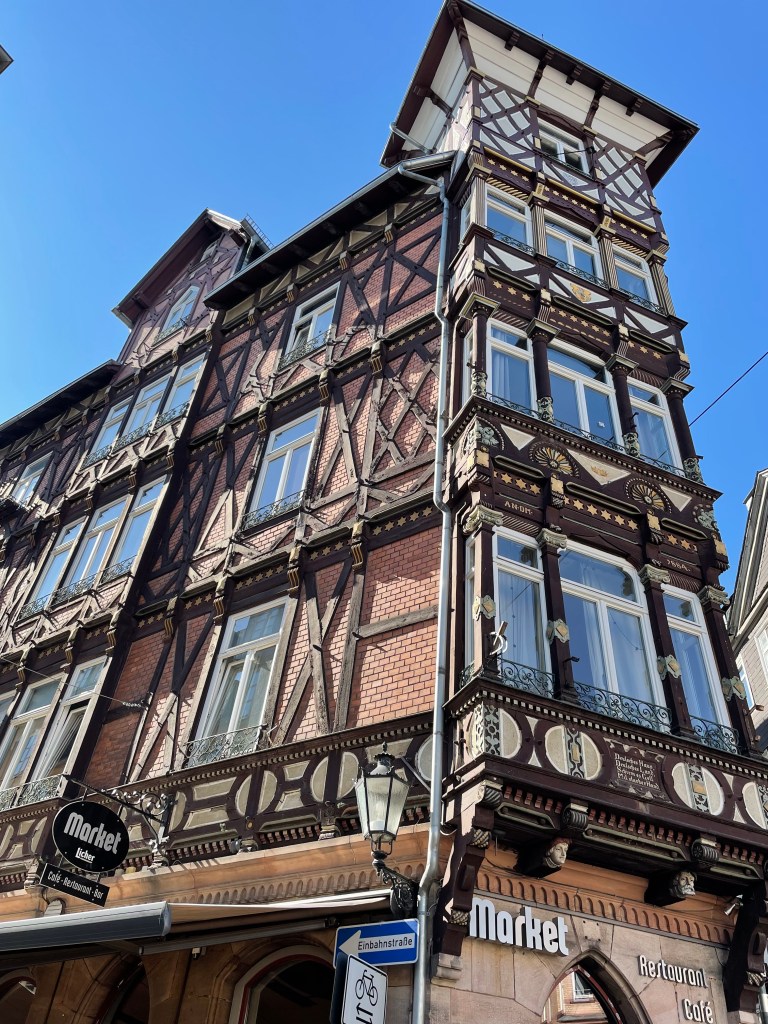
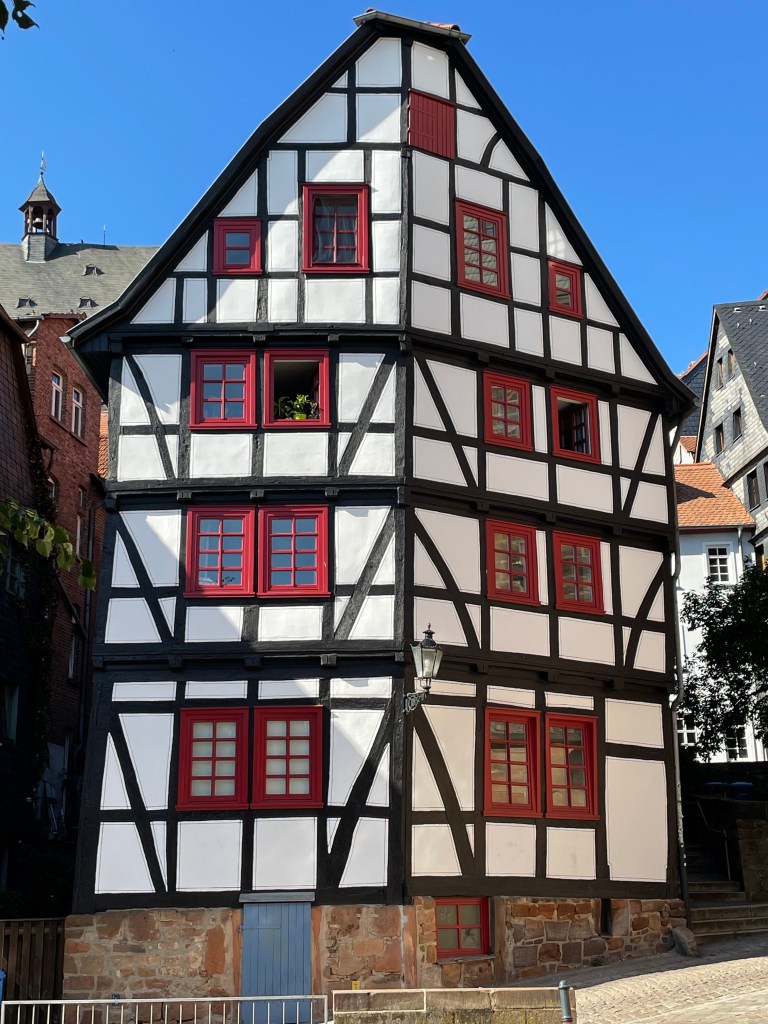
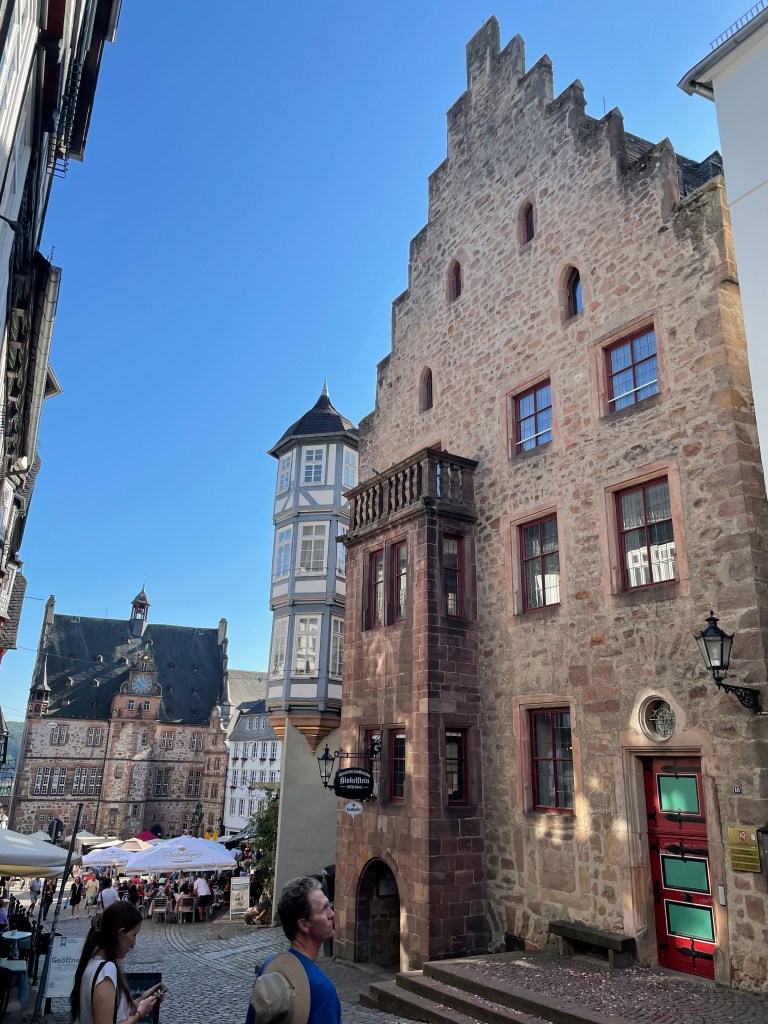
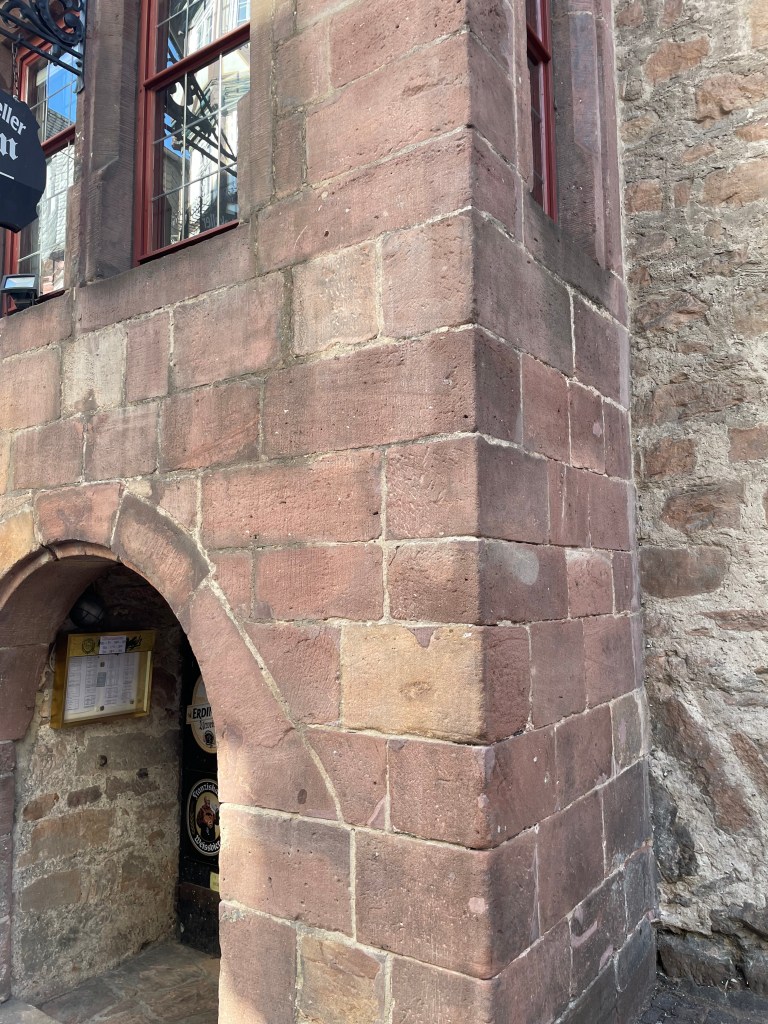
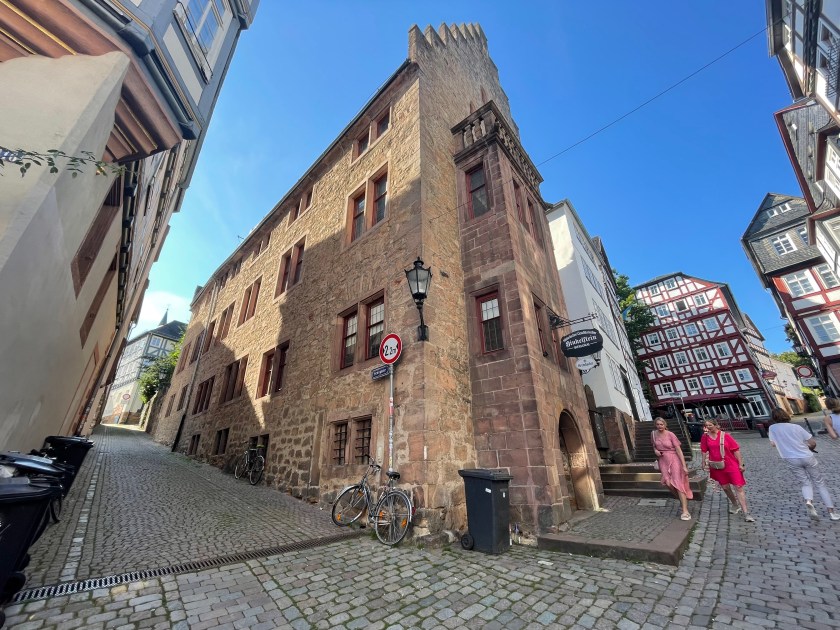
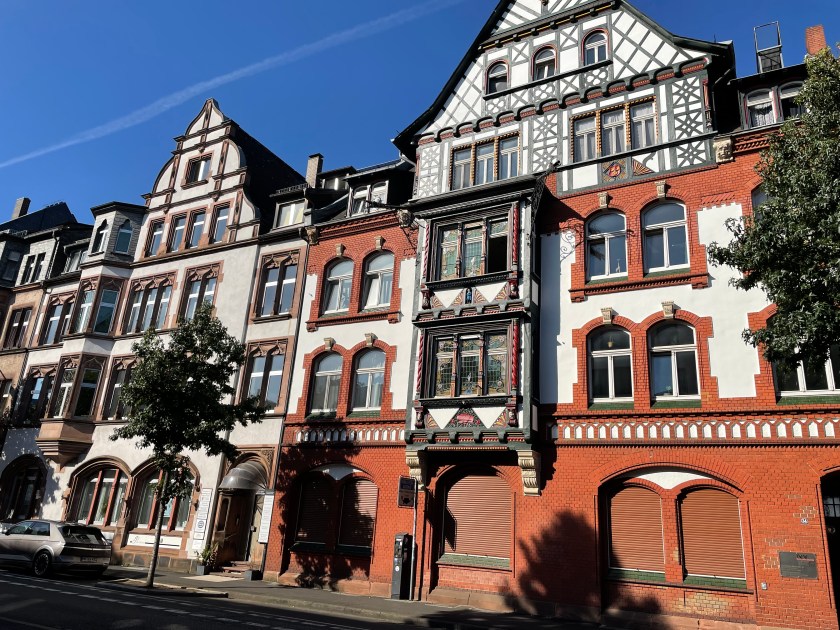
The homes in the square are historic half-timbered houses dating back to the 1300-1700s. The stone home below is the oldest of them all, built in 1318! This town was spared destruction during the war, thank goodness!
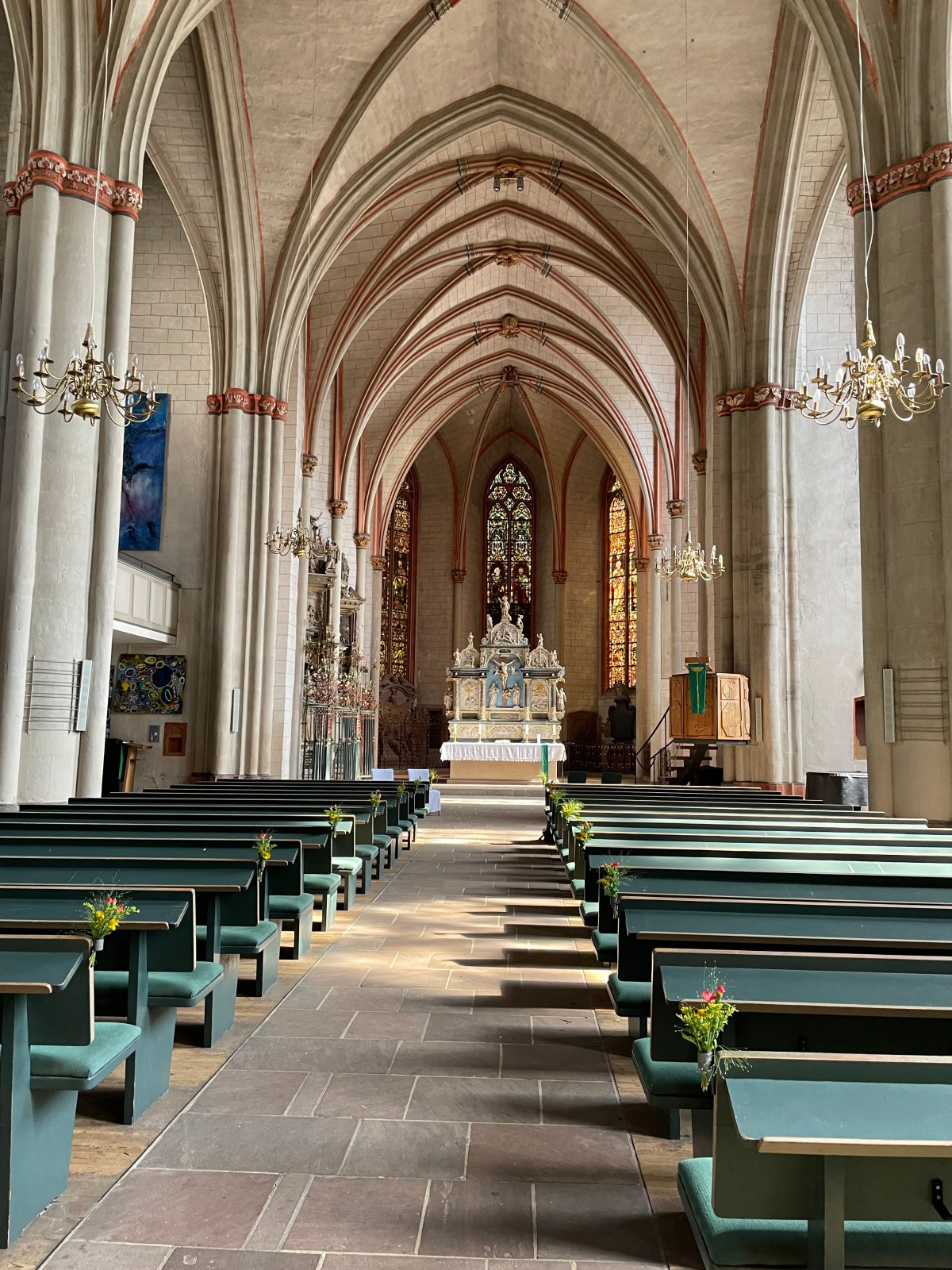
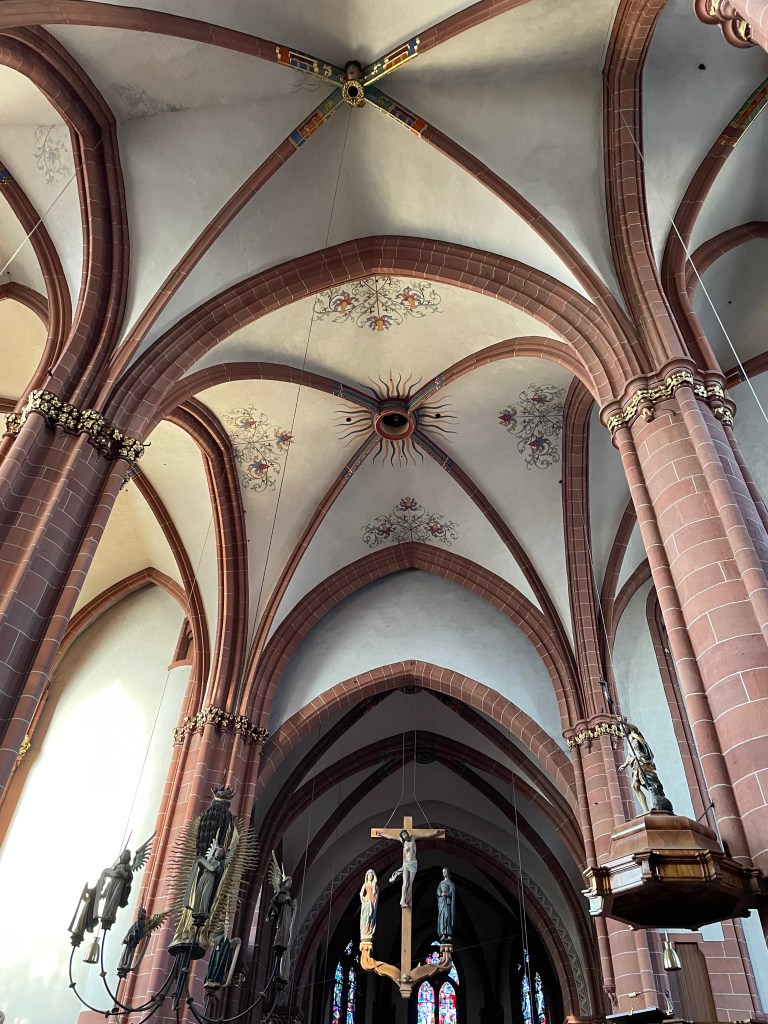
The church below the castle goes by several names. It is the Lutheran’s Parrish Church of St. Marien’s Church, St. Mary’s Church and The Church Between The Castle and the Market.
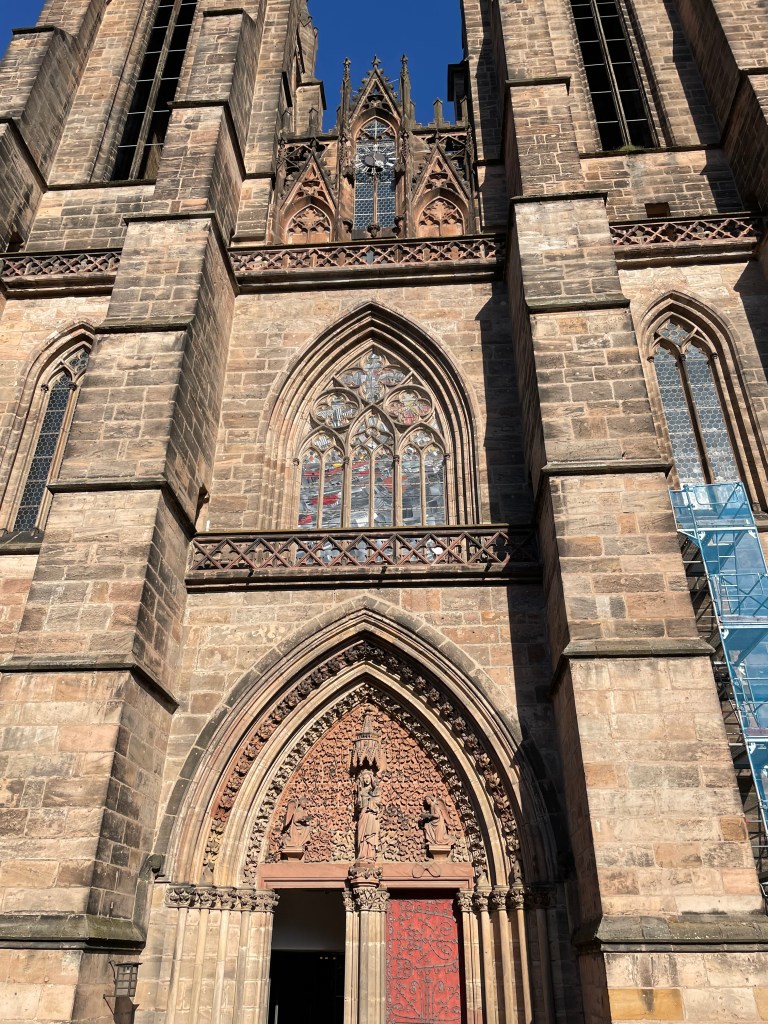
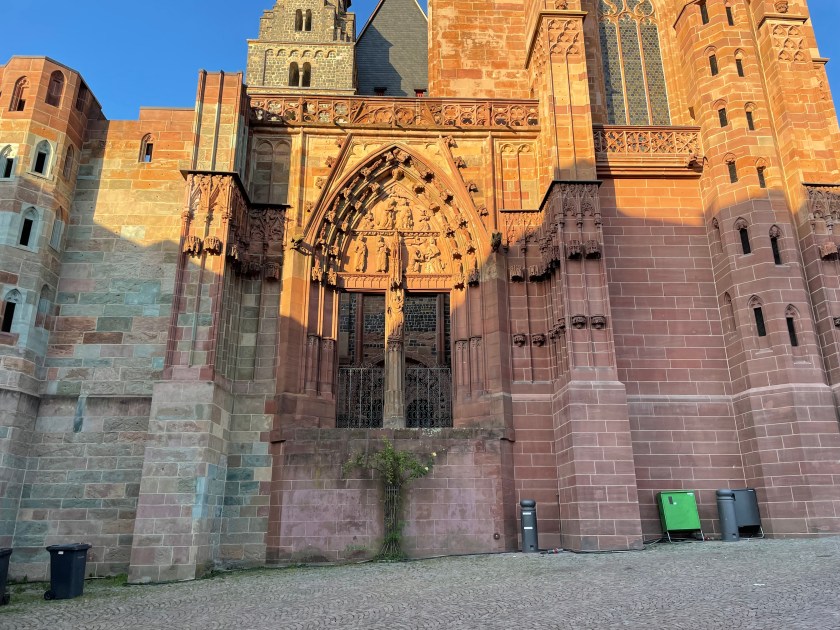
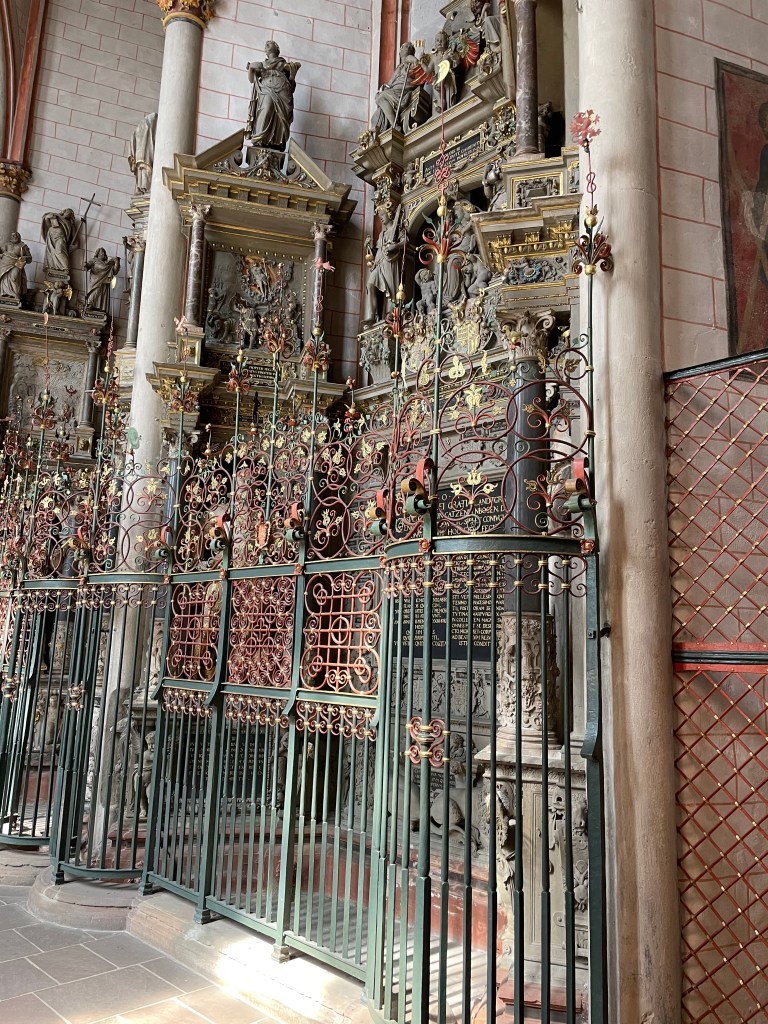
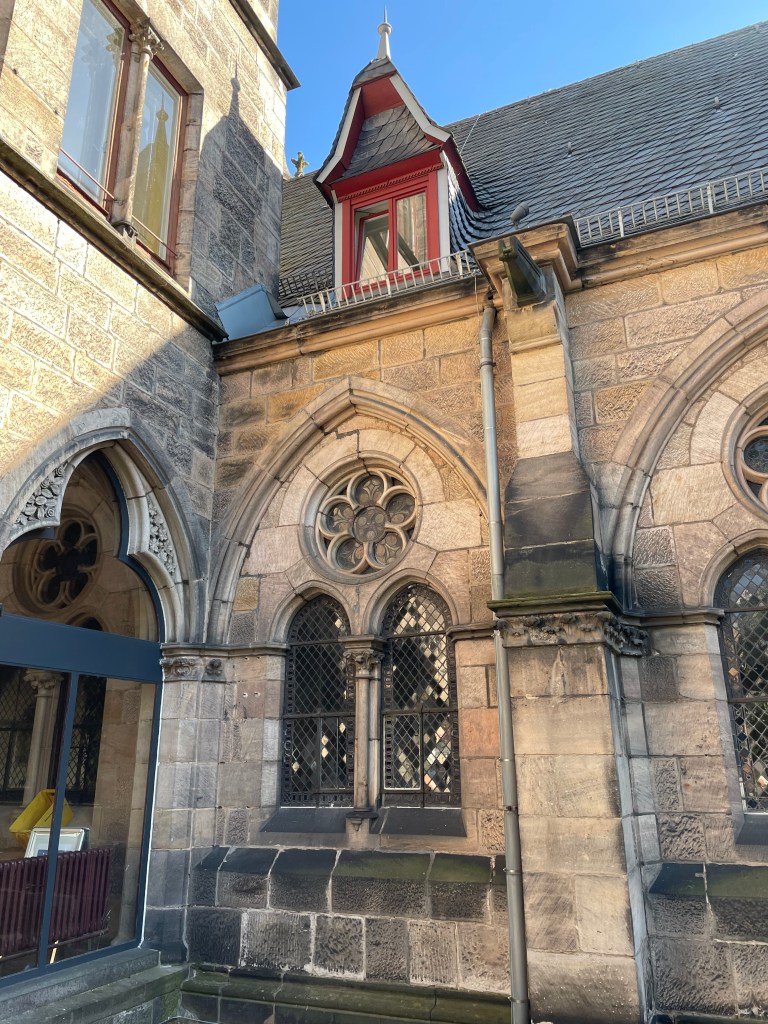
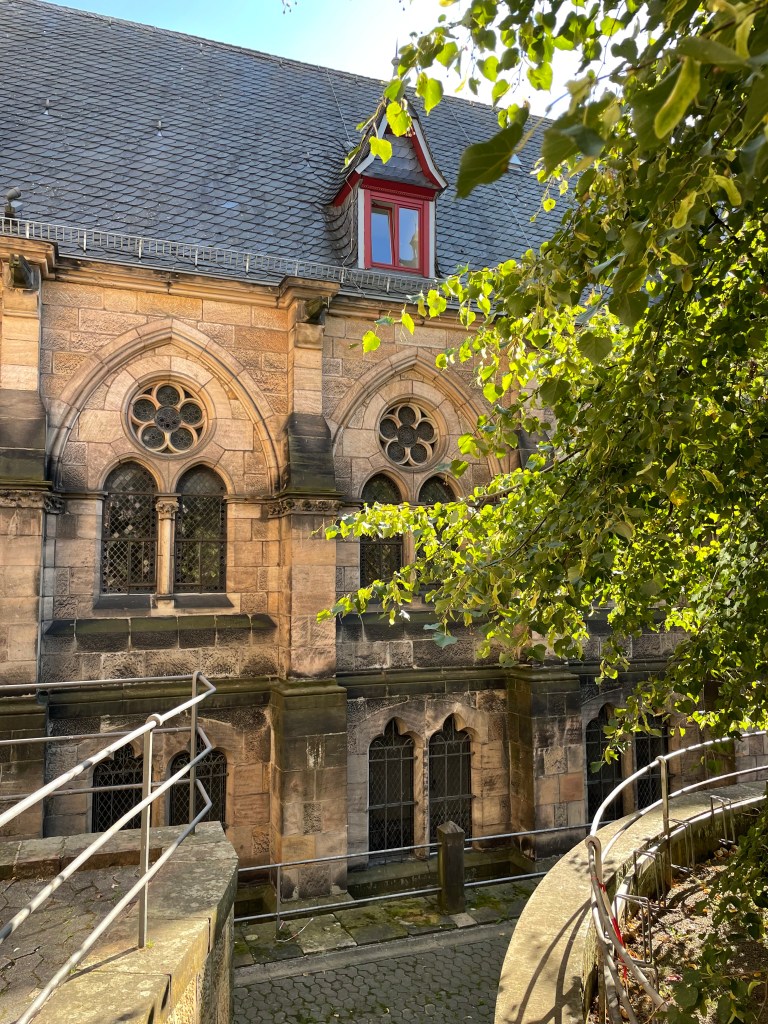
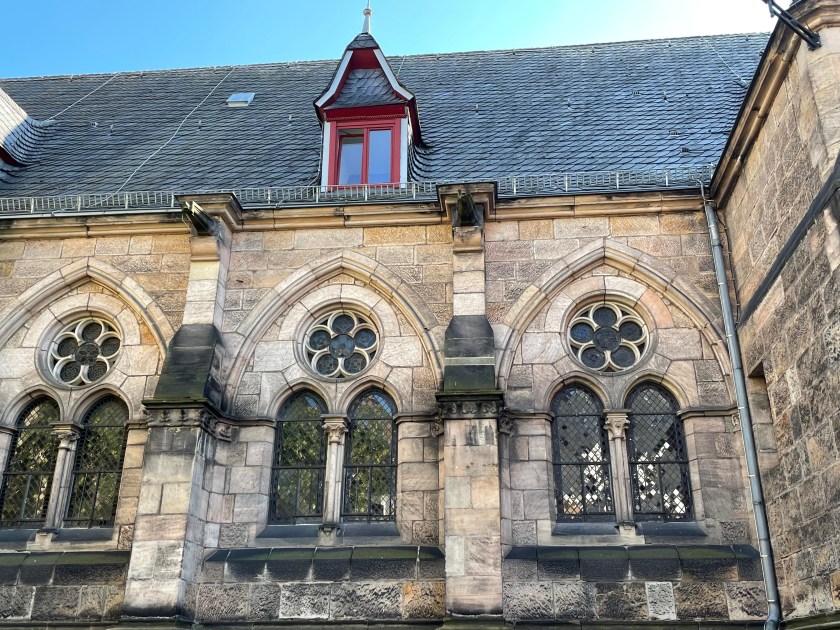
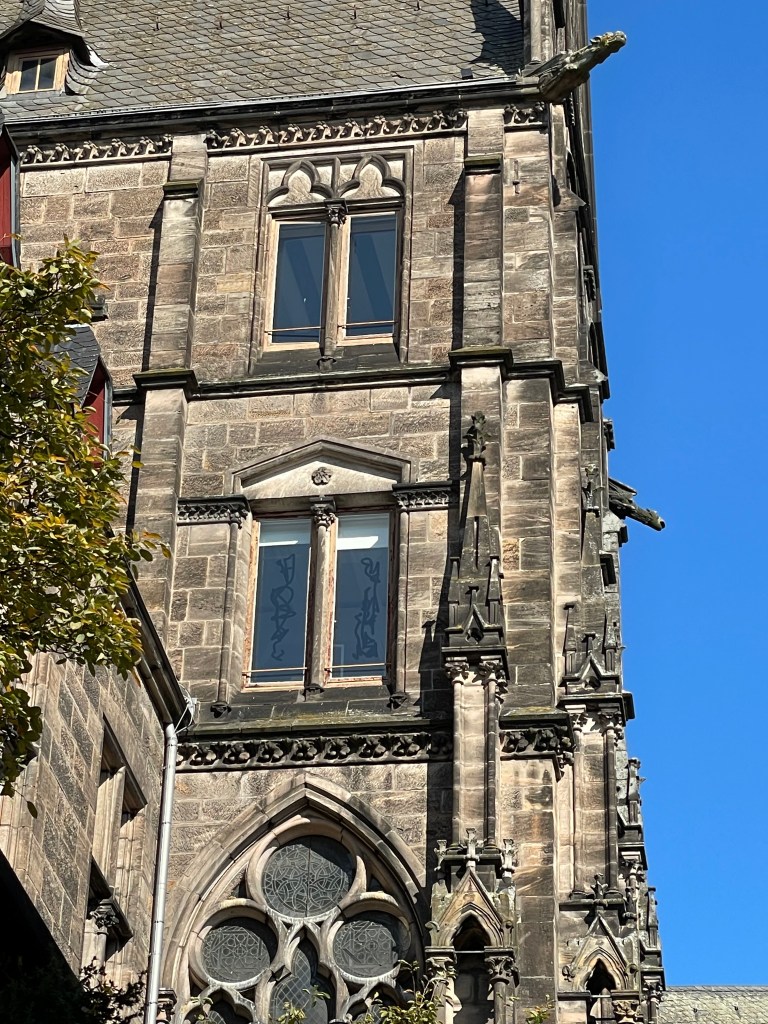
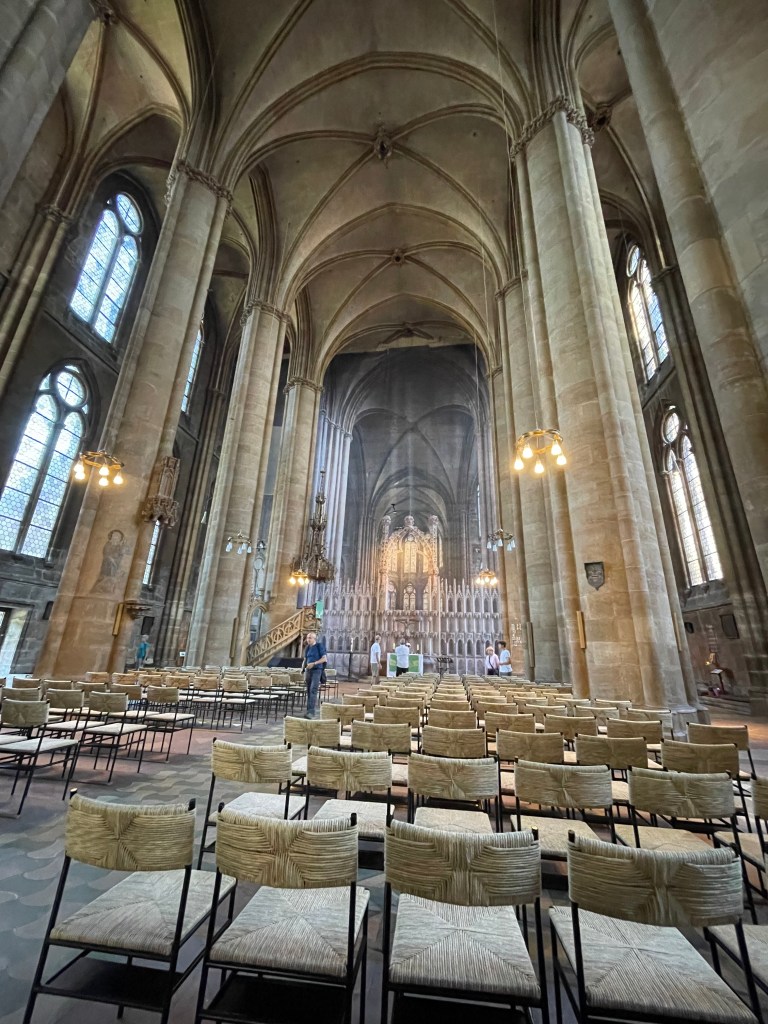
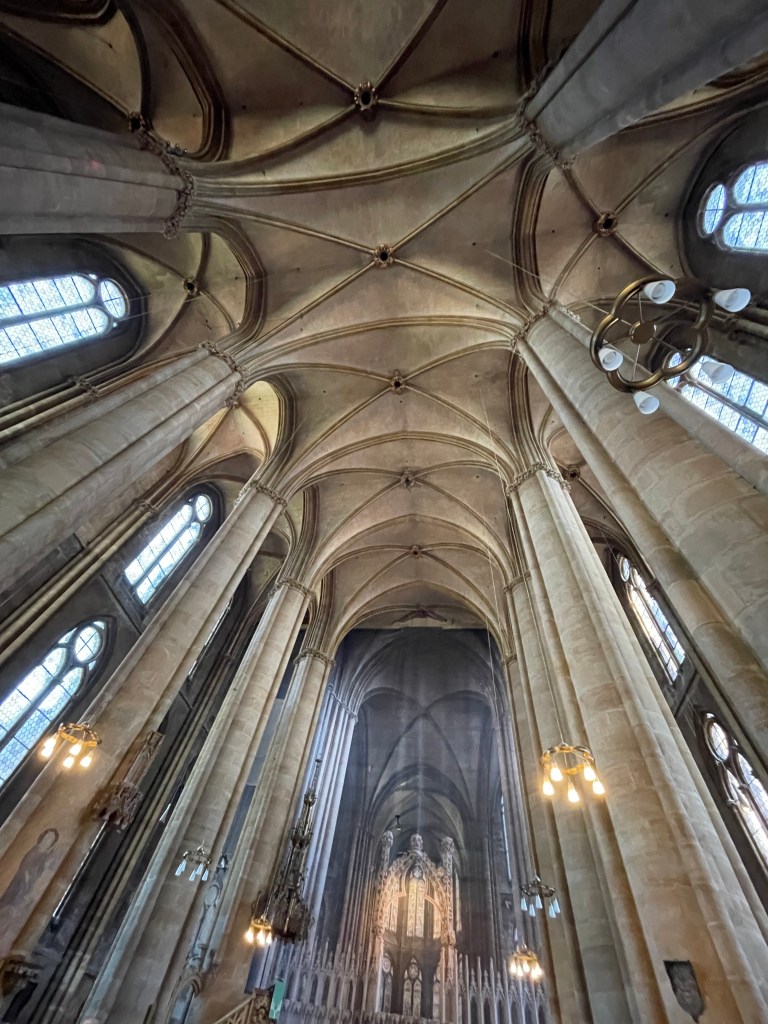
Then we walked to the Elisabethkirche built to honor Saint Elizabeth who is buried here.
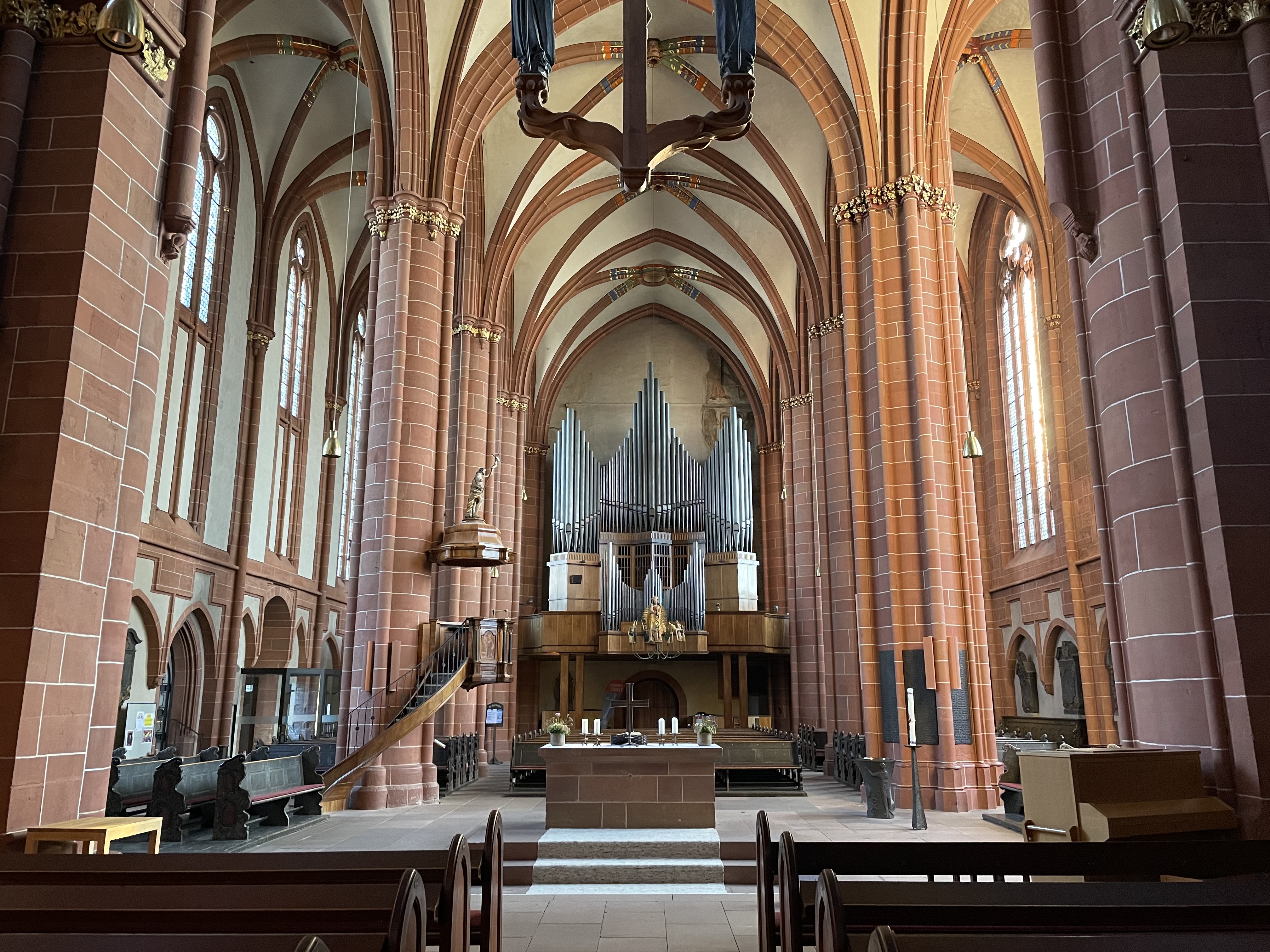
Construction on the Elisabethkirche started in 1235, the year Saint Elizabeth was canonized. The church was consecrated in 1283. The towers weren’t finished until 1340. The church was the property of the Order of the Teutonic Knights.
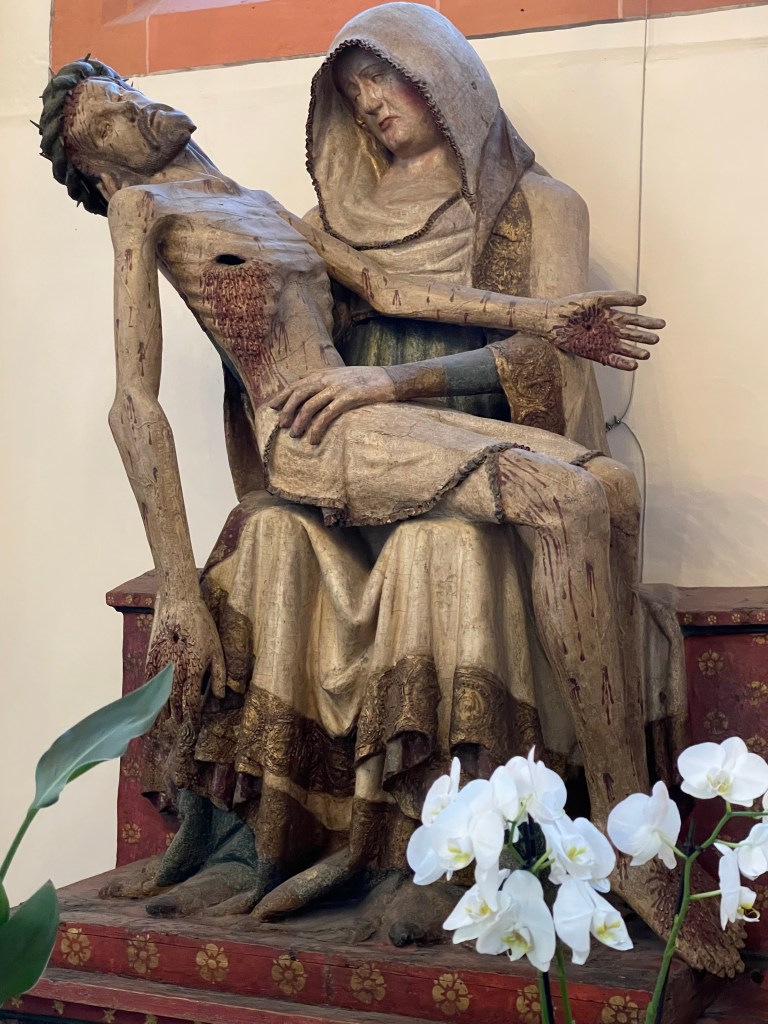
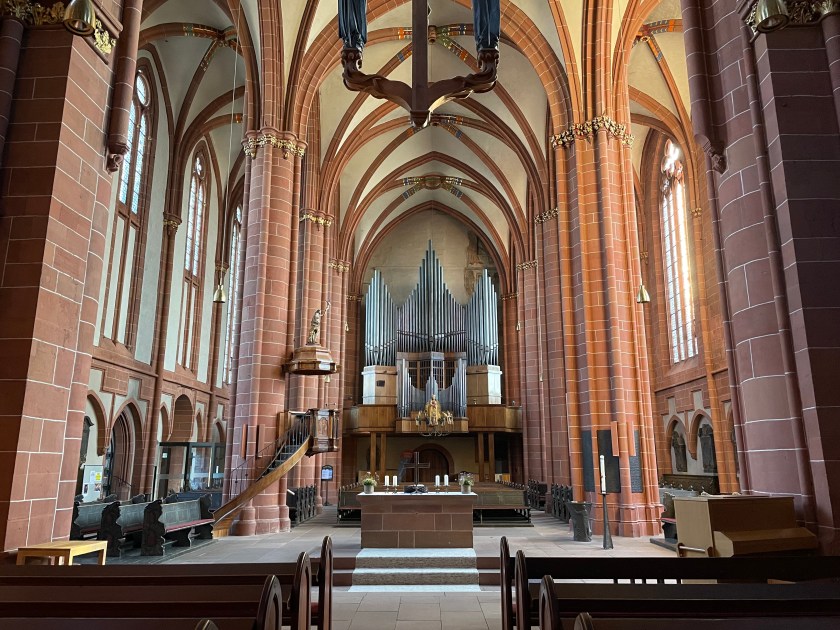
These beautiful churches are magnificent and most are empty. I think about the people who sacrificed to create these masterpiece structures built to honor God. Where are the worshippers today?? Are we just visiting tourists? I feel God’s presence here, in these beautiful old churches. I hope others come here to feel that too.
You won’t find many options of cold cereal here in Germany. And what you find isn’t all that tasty. Stick with other breakfast options like bread and cheese or yogurt. I eat muesli with nuts and dried fruit in it.
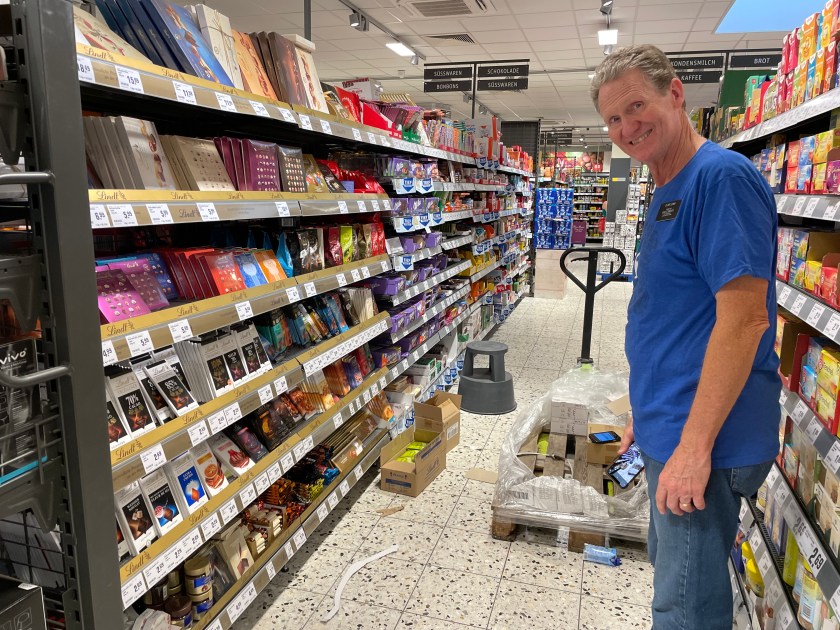
Chocolate, on the other hand, fills at least an entire aisle. Every time. For John, you win some, you lose some.








 Our Frankfurt Germany Mission