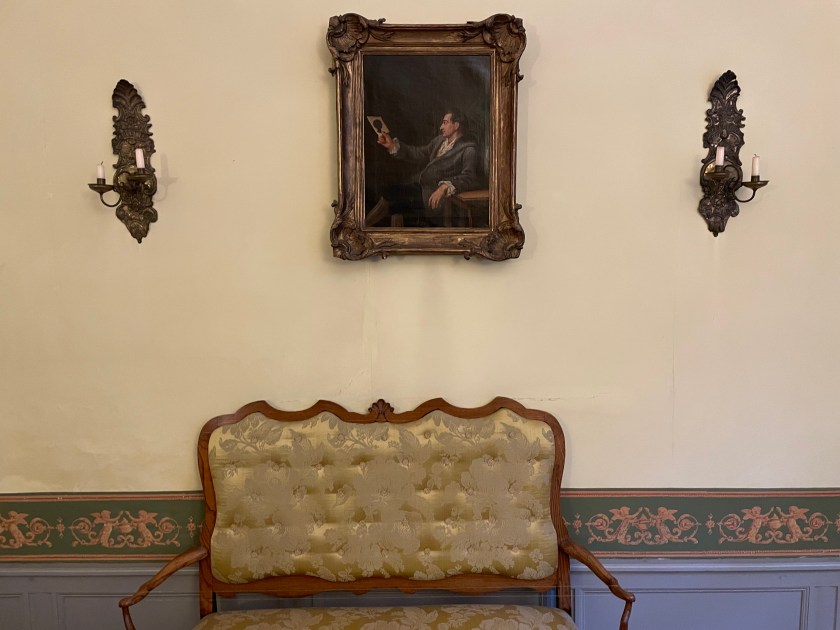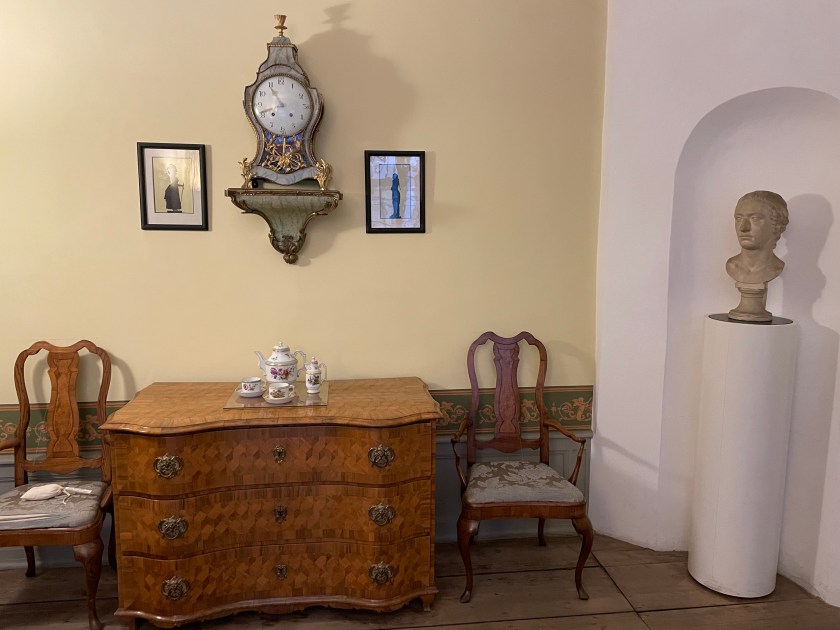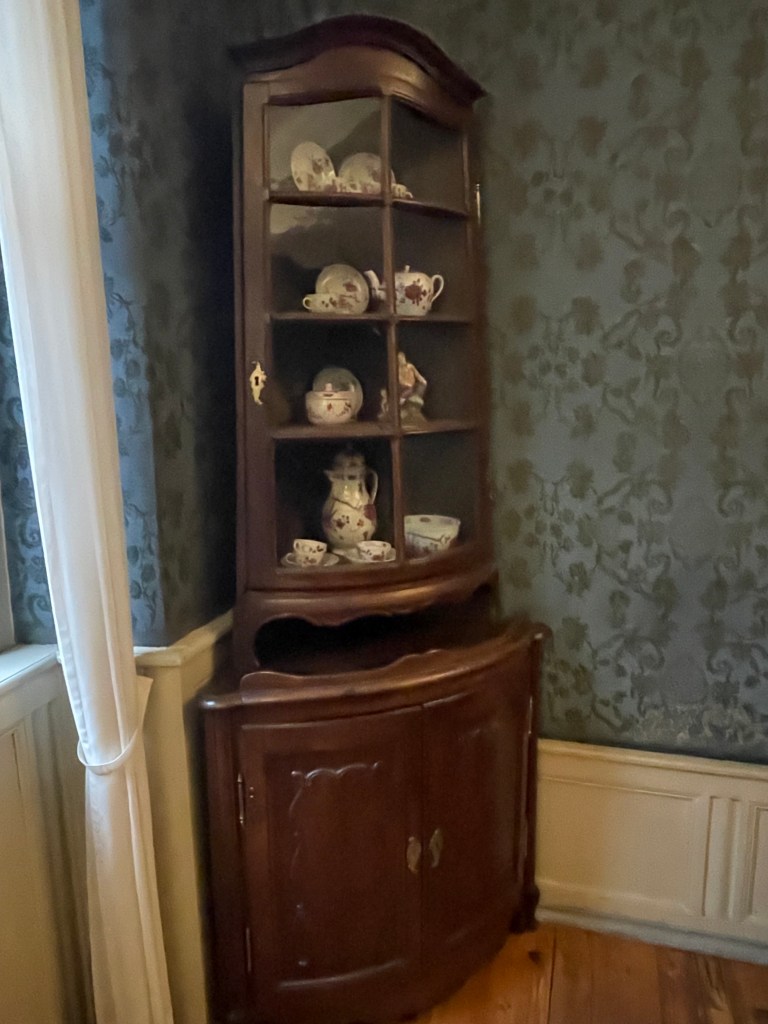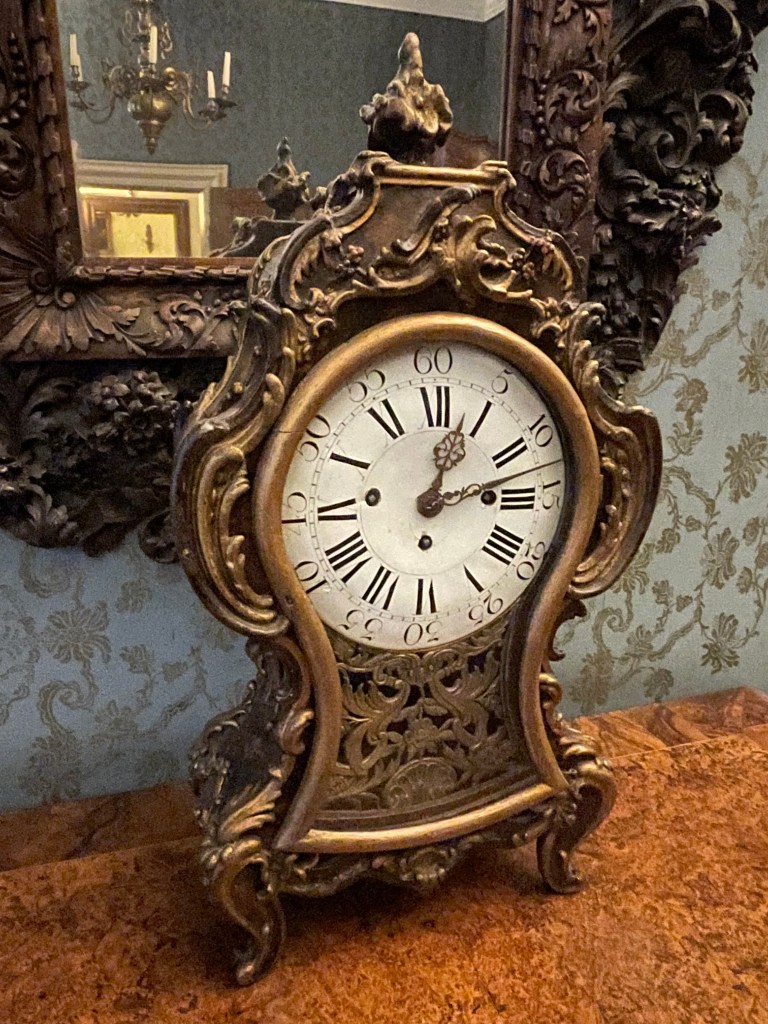
The day old Frankfurt fell

This fascinating article was published on the Frankfurter Neue Press website, found here.  I feel it’s so important to understand this part of history–not just the horrible destruction that happened during Hitler’s reign, but the rebuilding of that history and the resilience of the people who lived through it.

It’s also a reminder to me that nothing is permanent and things can change from one day to the next.  There are no guarantees.  We must live as if we will be here forever, but also live as if it might all be taken from us tomorrow.
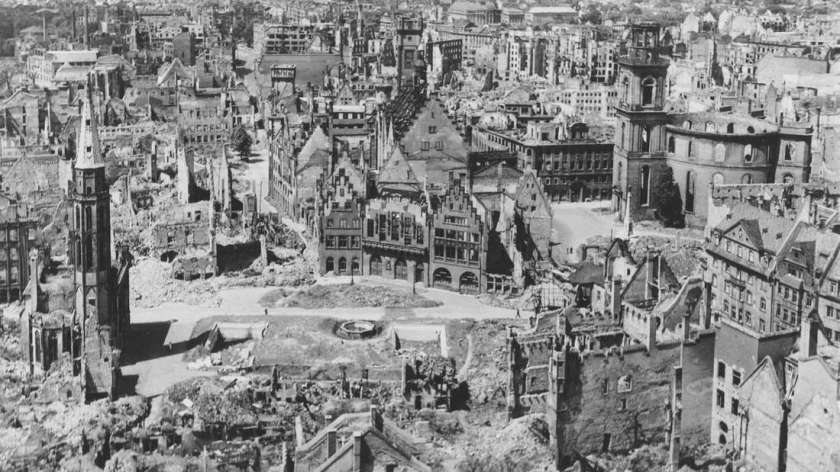
 

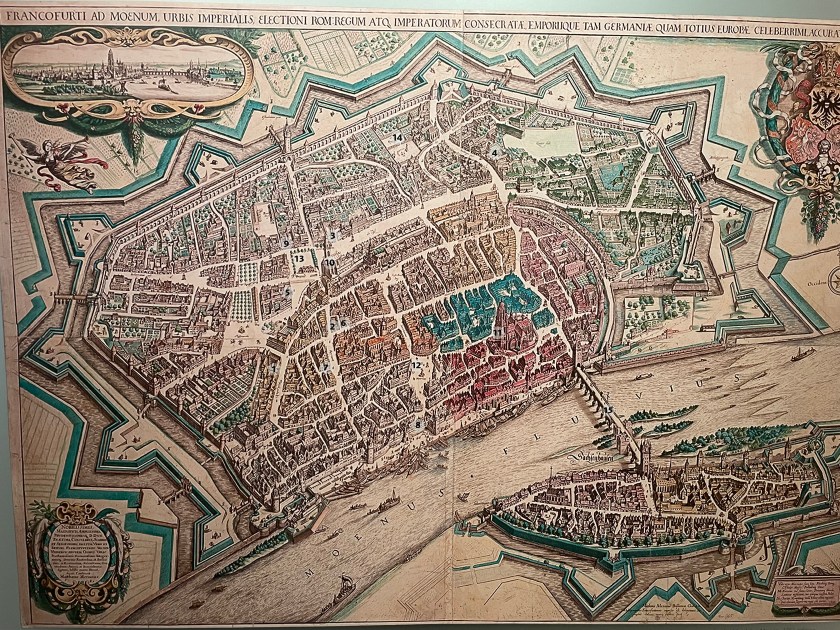
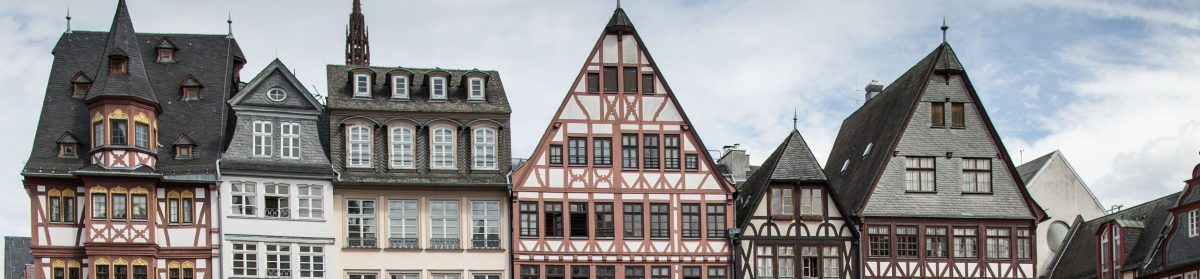
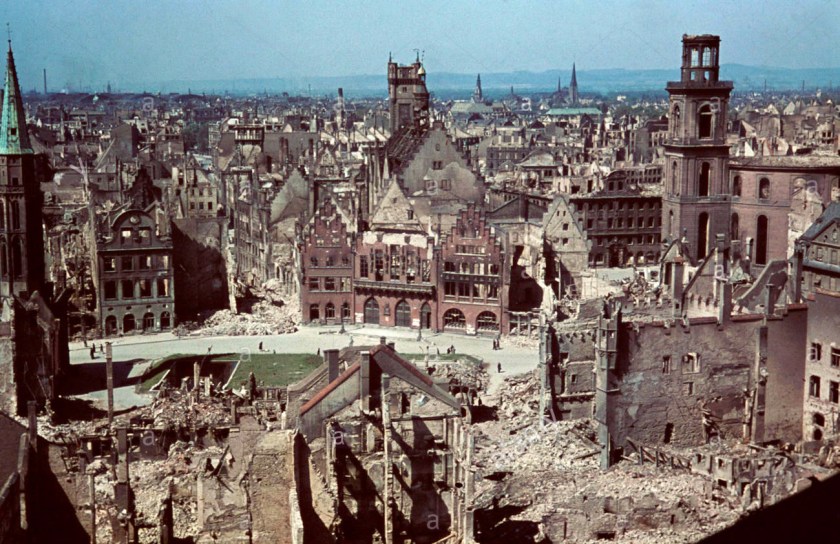
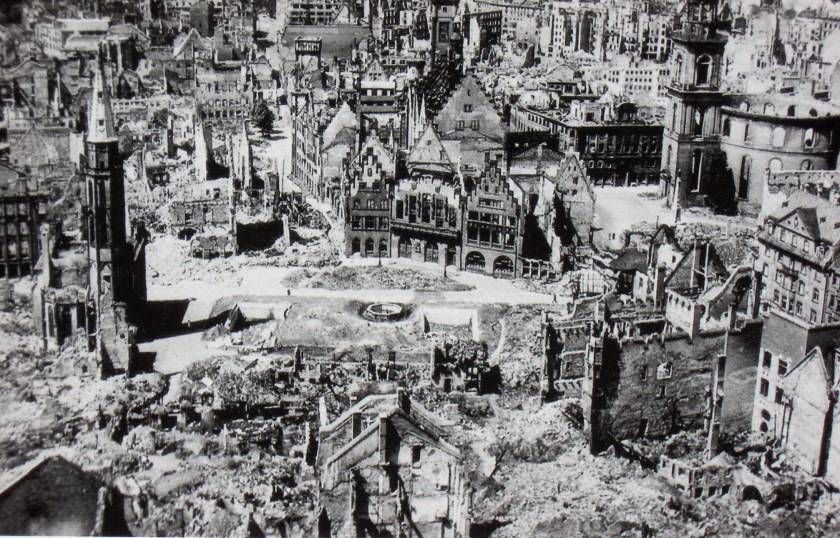
1001 dead, 180,000 homeless and severe destruction after Allied bombing raids 80 years ago today, the historic old town of Frankfurt, one of the largest and most beautiful in Germany, was razed to the ground in Allied bombing raids. Around 1200 late medieval half-timbered houses fell victim to the firestorm, and 1001 people died.

After the attacks on March 18 and 22, 180,000 people were left homeless and 90 percent of the apartments in the city center were destroyed.

Frankfurt, like many of Germany’s cities, was scarred by Allied bombing by war’s end in 1945. Image: picture-alliance/akg-images

Frankfurt – Wednesday, March 22nd, 1944. At around 10:15 p.m., the art historian and “old town father” Fried Lübbecke (60) and his wife Emma are on the stairs to the air raid shelter of their house at Schöne Aussicht 16 on the north bank of the Main when the next bombs whistle from the sky. Lübbecke: “A terrible explosion knocks us down, knocks windows and doors down on us, buries us under rubble, mortar and dust, as thick as a sandstorm. Bomb after bomb comes rushing down.” They only stay in the unsafe cellar for a short time and flee together with neighbors to the nearby Old Bridge. At Brickegickel they watch in horror as their classicist house, built in 1805 by city architect Johann Georg Christian Hess, burns like a huge torch. Lübbecke: “A sky-high cloud of fire drifts over the roofs to the Main, driven by the firestorm. Now the cathedral stands high and free above the Main, above the old bridge. No one has ever seen it like this before.”

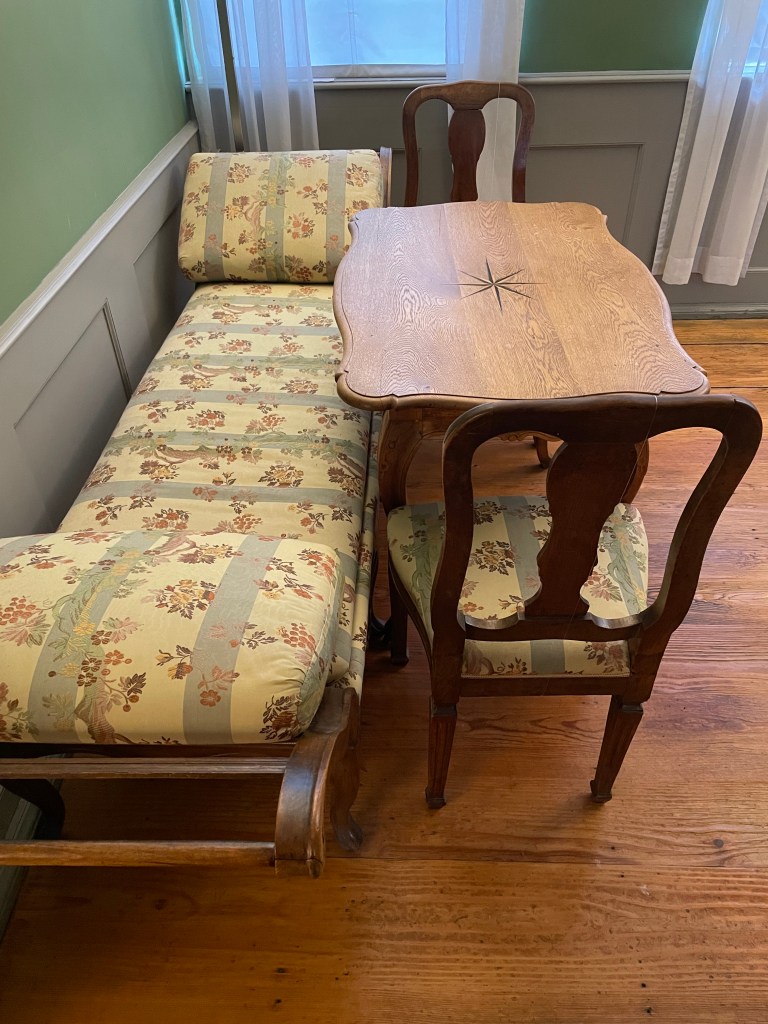
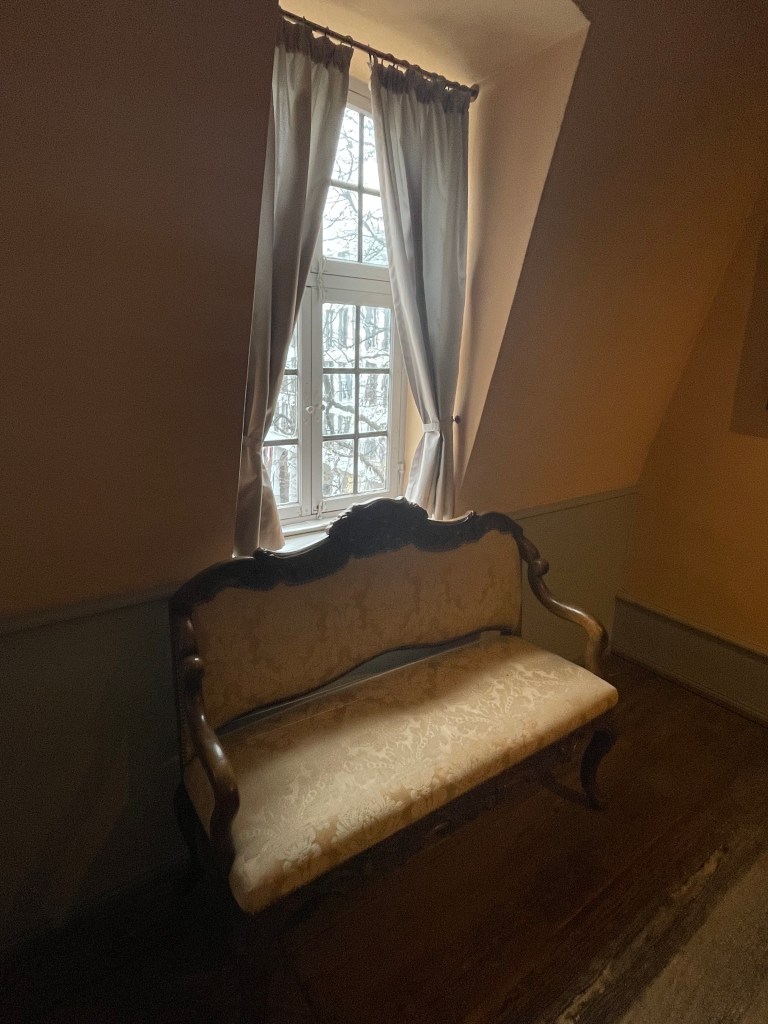
The scene seemed unreal, ghostly – and bizarre: Lübbecke’s companions had dragged an old sofa from the philosopher Arthur Schopenhauer’s former apartment on the ground floor of Schöne Aussicht 16 onto the bridge – Schopenhauer’s death sofa. The eccentric, choleric man had died on this piece of furniture on September 21, 1860. Fried Lübbecke gave the building the name Schopenhauerhaus, which has been in use ever since.
 

When the few sirens that were still working sounded at 9:45 p.m. that evening, more than 800 British long-range bombers – which had taken off from the English Channel coast – were already over Frankfurt. The air defenses had been fooled by a mock attack by the Royal Air Force on Kassel. Just two minutes before the alarm went off, the first bomb hit the Protestant St. Catherine’s Church at the Hauptwache – the tower clock stopped at 9:43 p.m. For ten years – until reconstruction was completed in 1954 – the hands remained in this position, commemorating the minute in which the Goethe family’s church burned down completely and the precious baroque interior was destroyed.

Precise and devastating strategy

During the attack on March 22, the British Air Force used a tried-and-tested concept, a precise, devastating strategy. In addition to around 500 conventional explosive bombs, the planes initially dropped almost as many so-called aerial mines (weighing between 1.8 and 3.6 tons). On August 29, 2017, one such 1.8-ton monster bomb of the HC 4000 type was found during construction work on the Westend campus of Goethe University. Five days later, the largest evacuation measure to date in Germany was carried out to defuse the unexploded bomb: around 70,000 people had to leave their homes.

During their devastating detonations on March 22, 1944, the aerial mines triggered such powerful pressure waves that roofs within a radius of several hundred meters were blown off. The attackers threw over 700,000 stick incendiary bombs into the now exposed roof trusses – after a short time, the entire western old town was in flames. The British Air Force called the aerial mines “blockbusters” because of their destructive power. A firestorm of apocalyptic proportions spread rapidly from house to house through the winding streets and rolled down the historic heart of Frankfurt. Historic buildings such as the Römer, the Paulskirche, the Carmelite monastery, the Hauptwache and the Alte Oper were destroyed. It was the 112th anniversary of Goethe’s death when his birthplace in the Grosser Hirschgraben burned down to the ground.
underground rescue system

Preserving the historic city center was the heart of Fried Lübbecke, who founded the “Association of Active Old Town Friends” in 1922. By 1942, a major renovation program by the city of Frankfurt under the direction of the art historian with a doctorate had restored more than half of the old town buildings. Two years later, his life’s work went up in flames, and magnificent half-timbered houses became smoking piles of rubble and burnt-out skeletons – a gigantic wasteland of rubble. Lübbecke’s bitter conclusion: “In two hours, the English destroyed what had taken a millennium to build.”

From 1940 onwards, the Gothic vaulted cellars under the old town houses were connected by openings in the walls on the orders of the Luftwaffe, which were then only temporarily closed again with thin brick walls. The city linked these cellars with underground escape routes. The tunnel network under the old town had a central emergency exit on the Römerberg next to the Justizbrunnen. From here, people could flee to the nearby Main. To protect against flames and heat, the fire brigade used numerous hoses to create a wall of water at the Fahrtor, the bottleneck on the escape route. Many people had the underground rescue system and the fire brigade to thank for escaping the fiery hell. The total number of Frankfurt fatalities in the air war, 5,559, is low compared to other German cities: Hamburg lost 55,000 lives, Dresden 25,000, and Cologne 20,000.

The protective veil of water from the fire department at the Fahrtor also had a side effect: it meant that of the approximately 1,200 half-timbered houses in the old town, only one, the Wertheim House, was preserved in its original state. It was first mentioned in 1383, and the current building was built around 1600. The historian Thomas Bauer puts the total number of victims of the Nazi dictatorship in Frankfurt at around 36,000. In addition to the 5,559 victims of the air war, there were around 18,000 fallen soldiers and 12,555 murdered Jews. In 1933, the Frankfurt Jewish community, with almost 30,000 members, was the second largest in Germany after the community in Berlin.

Rolf Schmitz and Gustav “Gus” Lerch, friends who grew up in the narrow streets of the old town and were both born in 1929, had to watch on March 22, 1944, as the world of their childhood was wiped out forever. Lerch turned 15 on March 20, two days before the inferno, and Schmitz three months later. The friends survived the war largely unscathed physically, but the horror of the nights of bombing left deep wounds in their young souls, scars that remained for life.

Both saw it as their life’s work to describe the horror of the war as contemporary witnesses and to talk about everyday life in the old town. Lerch spent decades meticulously working on the twelve-part documentary “Frankfurt am Main in the Air War” and bequeathed it, including numerous collection items, to the Institute for Urban History in Frankfurt in 2007. He died in 2013 at the age of 84.

Rolf Schmitz, known throughout the city as “Klaa Rölfche” since his appearances at the popular Römerberg Festival in 1935, was committed to the reconstruction of “his” old town. At the topping-out ceremony for the new, attractive center of Frankfurt on October 15, 2016 – a few weeks before his death – the 87-year-old Schmitz was the guest of honor. With tears of joy in his eyes.

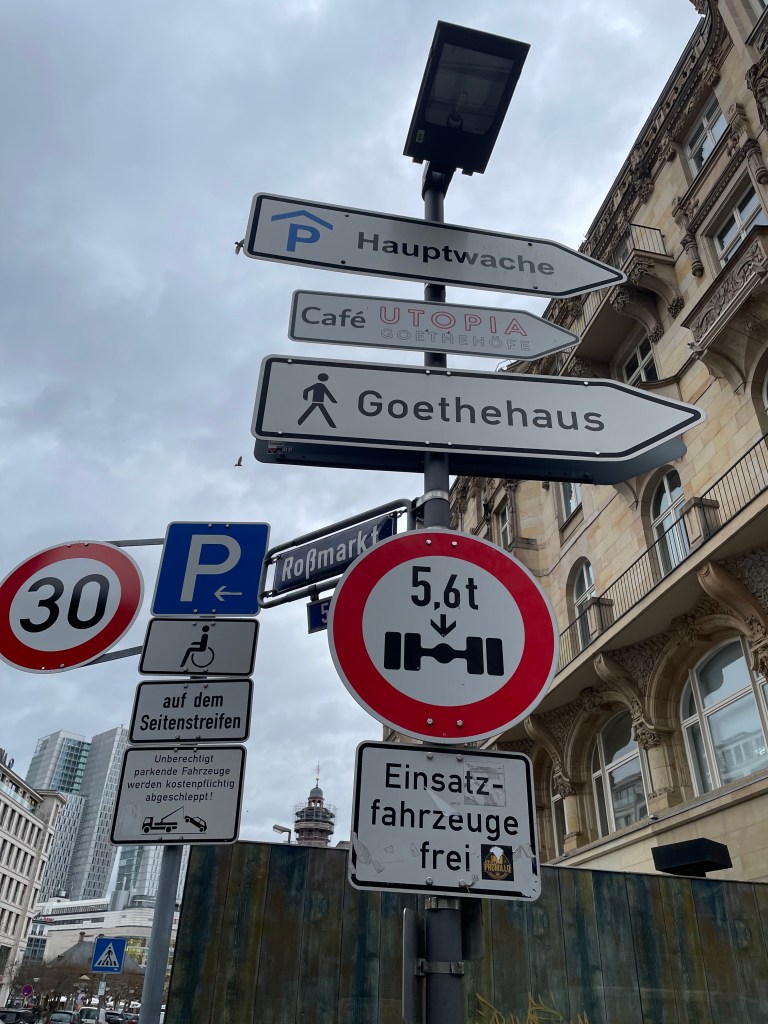
The Goethehaus in Frankfurt

Alan Keele (our old back fence neighbor from our first Orem neighborhood and my BYU German professor 1977 and 2009ish) is in town and we got to “take care” of him today. He’s on a 5 week speaking trip, visiting Stakes and venues in Germany to speak about Helmuth Huebener, who’s 100th birthday was Jan 8. e Alan spoke at the Friedrichsdorf Stake Sunday evening and will speak here in the Phoenix Haus tomorrow at noon.

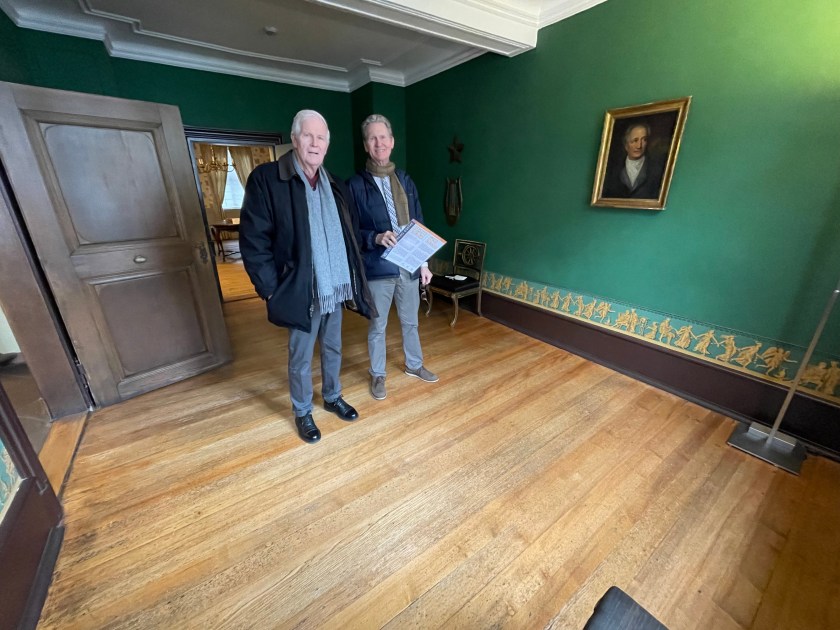
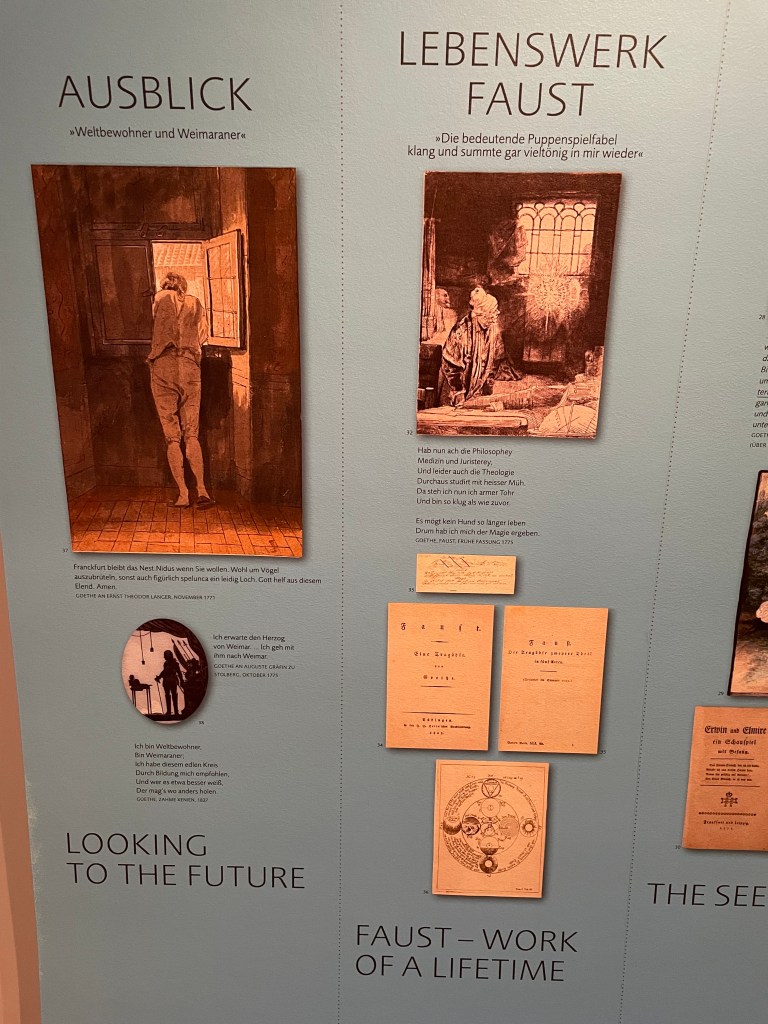
We decided to take Alan to the Goethe Haus in downtown Frankfurt and that turned out to be the best thing ever for him–he got his PhD in German Literature and having him with us was like having our own personal Goethe scholar along as we walked through the 4 stories of the house where Goethe was born and grew up. Alan was thrilled to be there and really enjoyed it. We spent 2-3 hours there, inspecting everything, room by room as Alan quoted Goethe to us in both English and German.

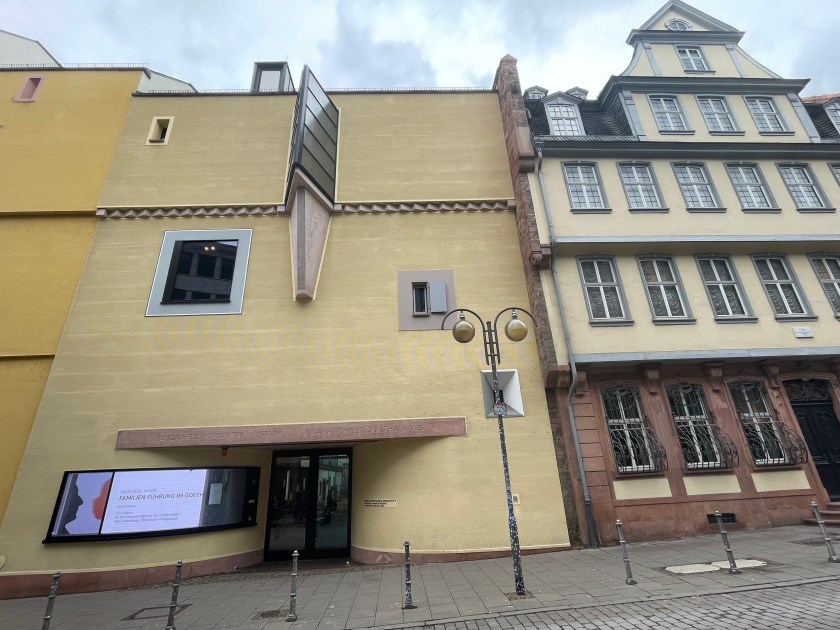
The Goethe home is the on the right (below).  Next to it is the entrance to the home/museum and The German Romanticism Museum (on the left).

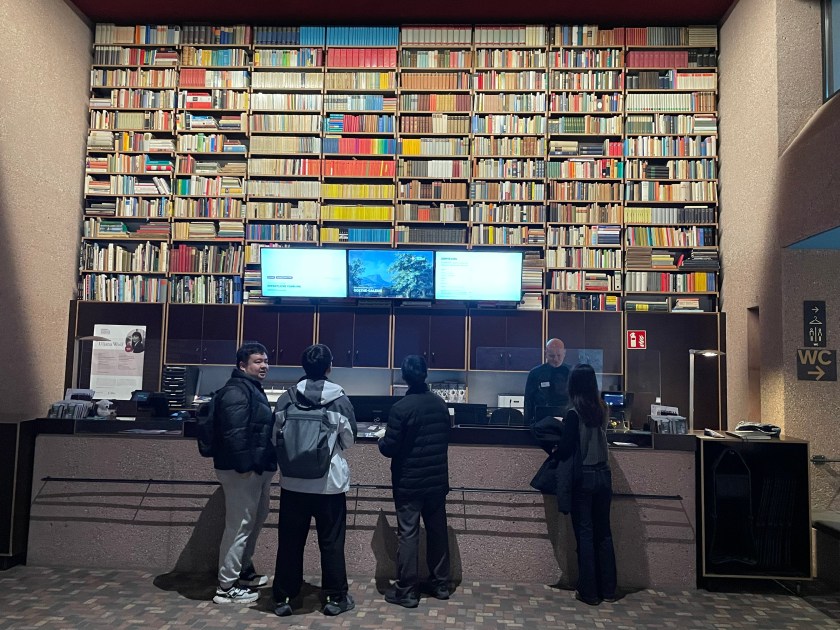
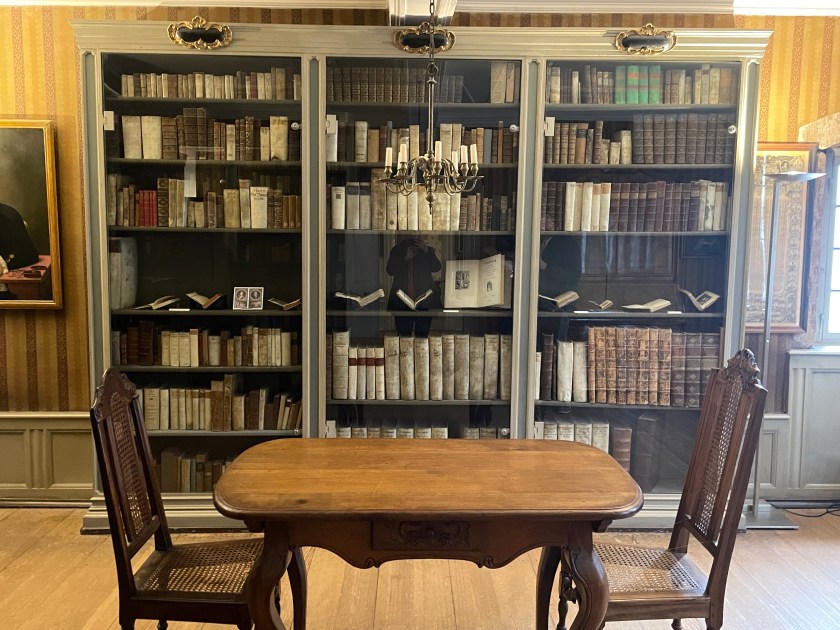
The museum desk was in front of these bookshelves filled with copies of Goethe’s words.

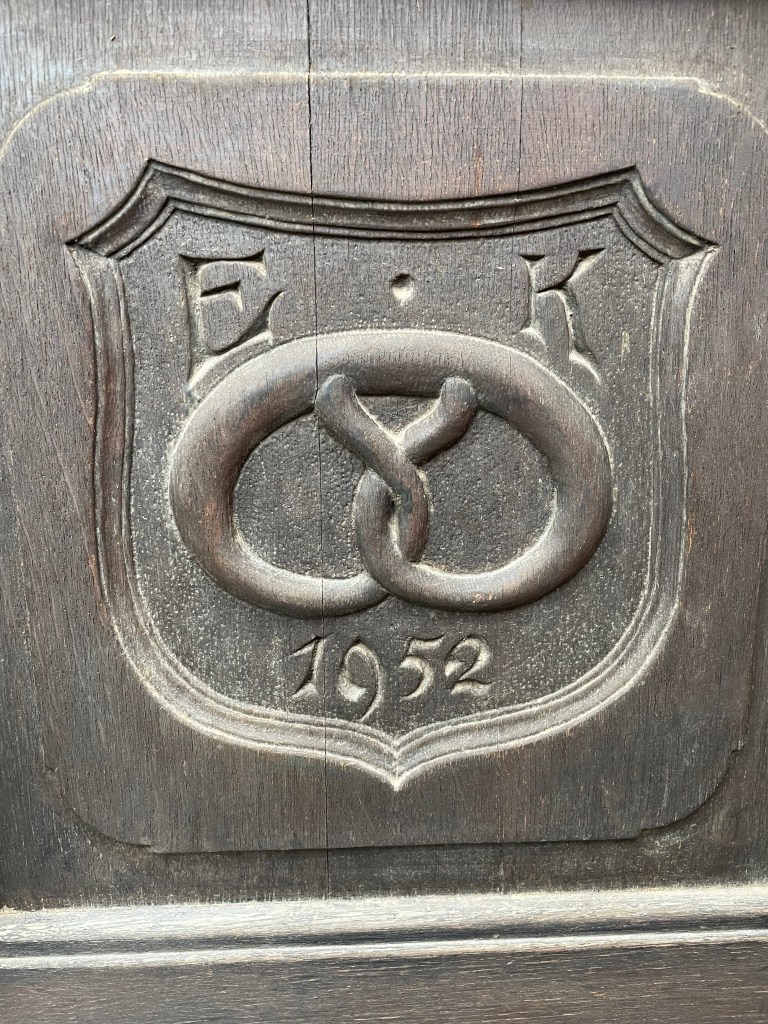
The family initials on the front door:

I found this information from Wikipedia interesting about the reconstruction of this home after it was bombed in the war:

Wikipedia:
War destruction and reconstruction
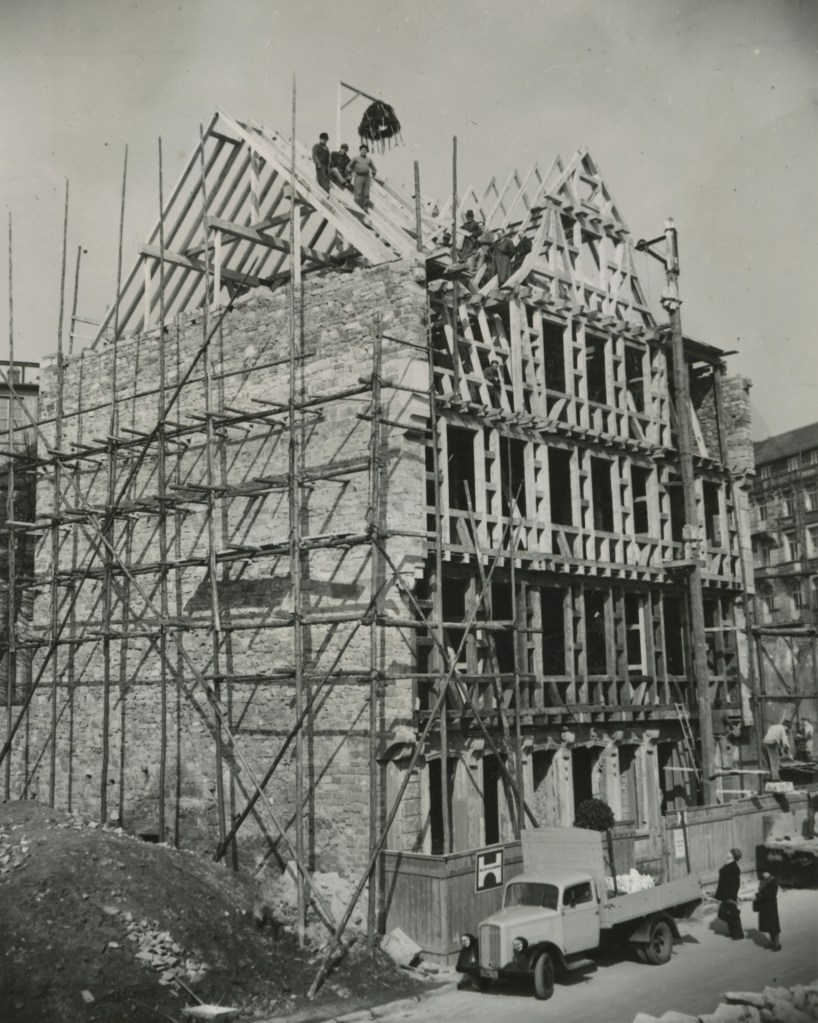
During the air raid on Frankfurt on March 22, 1944, the 112th anniversary of Goethe’s death, the Grosser Hirschgraben street was badly damaged and the Goethe House was destroyed by aerial bombs, of which there are film footage, as well as of the destroyed Goethe Museum. The inventory of the house had already been moved out of storage, so that it was preserved except for a few pieces. The architect Theo Kellner began reconstruction faithful to the original in 1947; the ceremonial opening took place in 1951. The treasures of furniture, art and everyday objects, books, pictures and manuscripts that had been moved out of storage during the war were able to return to Goethe’s parents’ house.
After 1945, there was a major debate about the usefulness of reconstruction. City planning director and head of the planning office Werner Hebebrand and city building inspector Eugen Blanck rejected the reconstruction of the Goethe House, as did the Catholic publicist Walter Dirks . A survey conducted by the German Werkbund Hessen among architects and art historians in the spring of 1947 produced the same result, and the first issue of the magazine ” baukunst und werkform ” published the following basic requirement for reconstruction: “The destroyed heritage must not be historically reconstructed; it can only be created in a new form for new tasks.”
The “reconstructionists” included the Nobel Prize winner Hermann Hesse , the philosopher Karl Jaspers and the industrialist Richard Merton, who had returned from exile . They argued that not only parts of the building but also the historical furnishings of the house had been preserved, and that these, presented neutrally in a modern museum, would never have the same effect as in the original setting. In addition, the very good documentation prepared before the destruction made it possible to rebuild the building as faithfully as possible, using authentic materials and original craftsmanship wherever possible. Ultimately, the supporters of reconstruction prevailed.  Reconstruction was completed in 1951.
Here are a few pictures of the destruction and reconstruction:

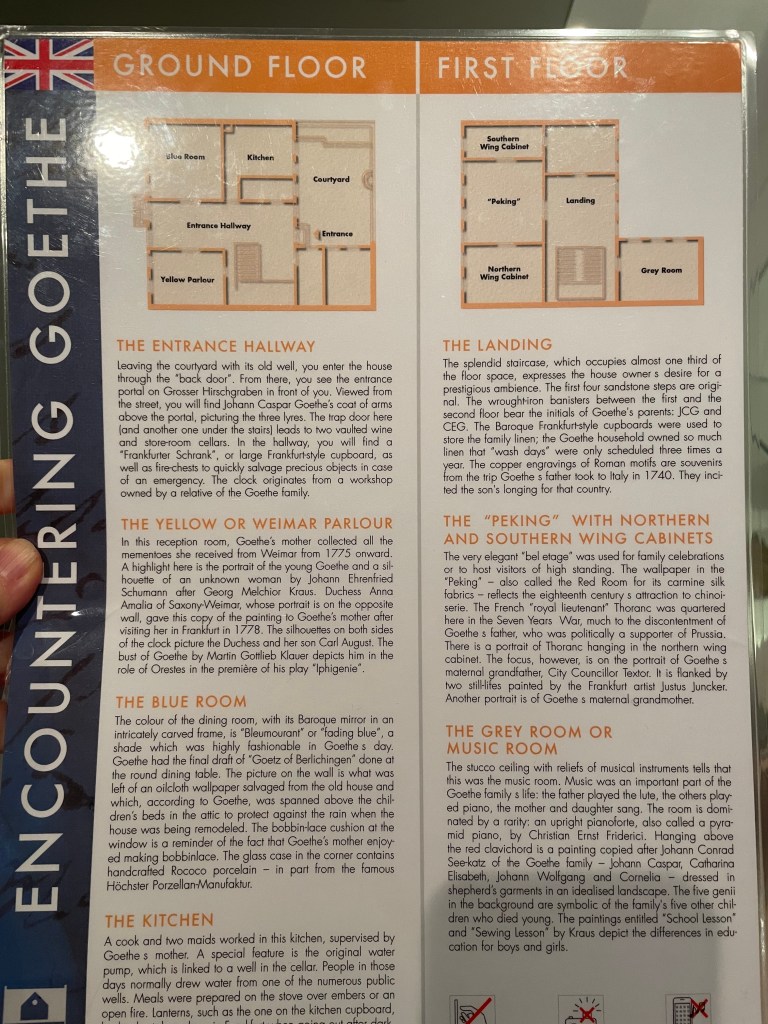
Here is the English guide we followed as we went through the home:

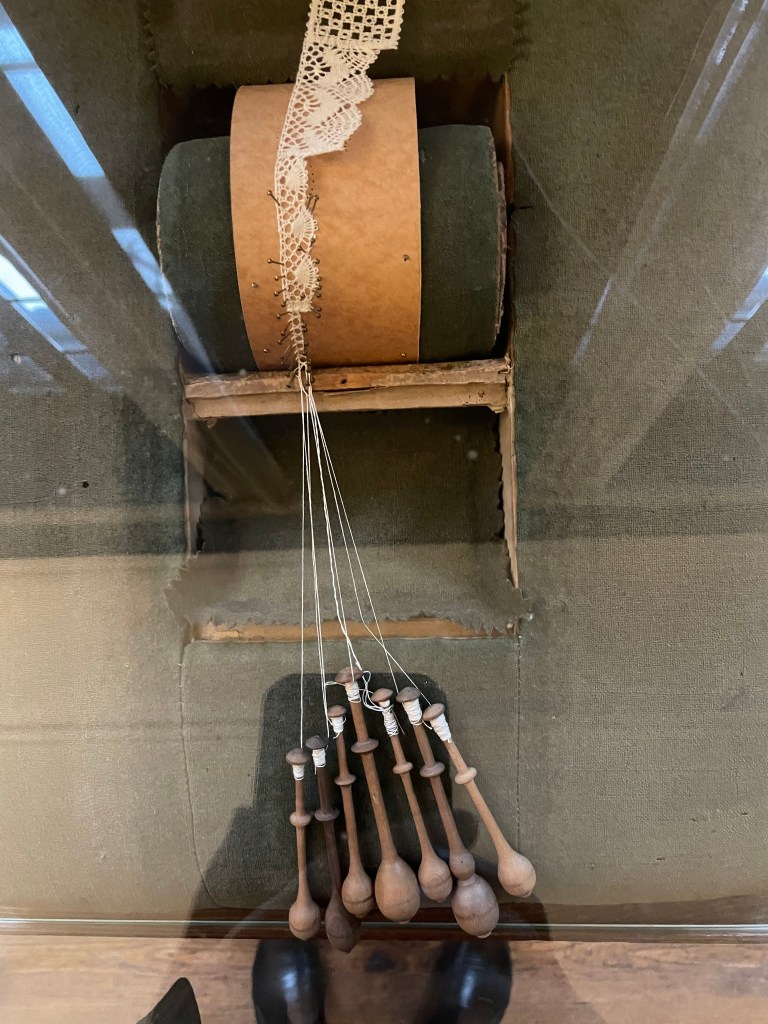
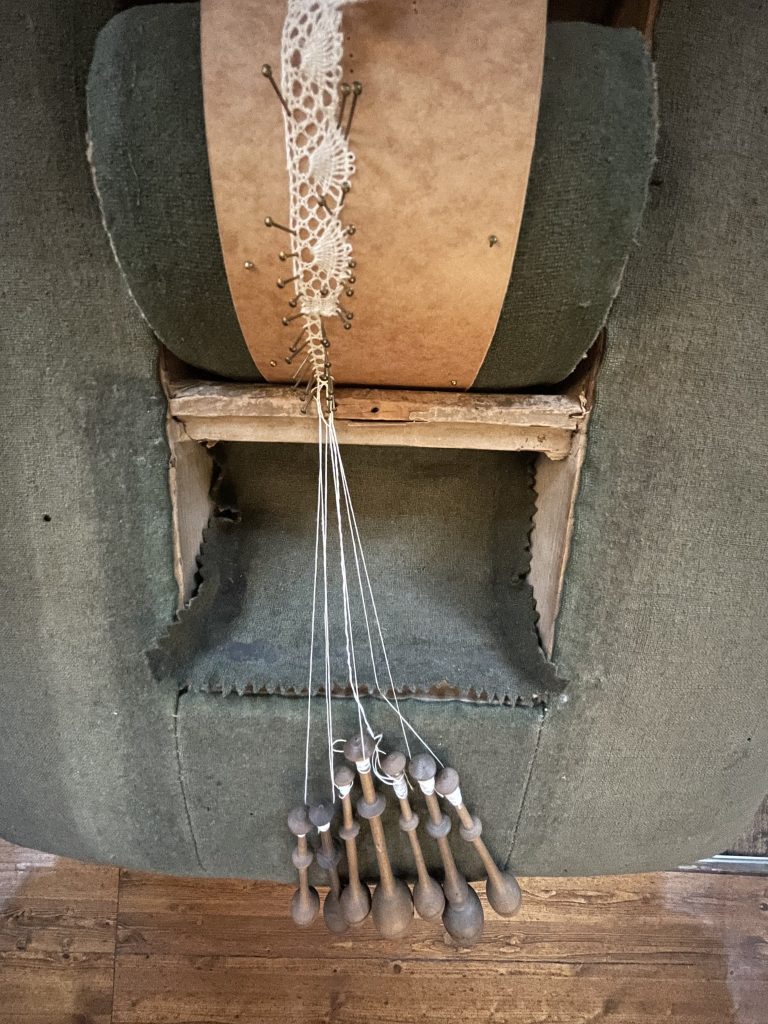
Goethe’s mother made lace like this:

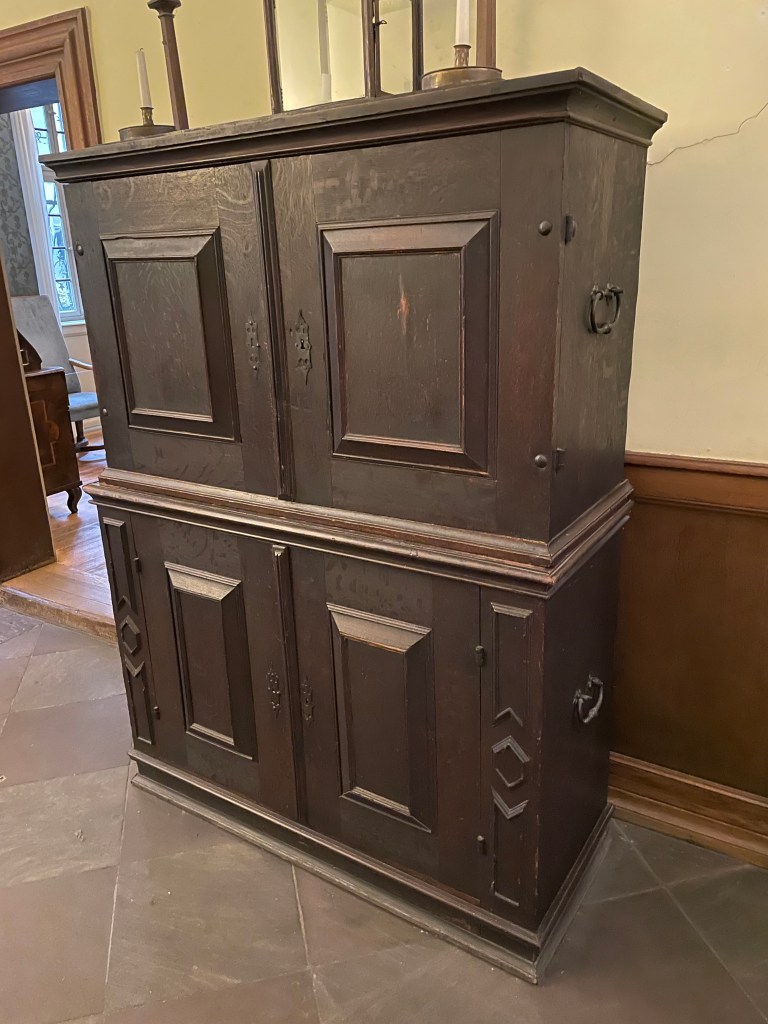
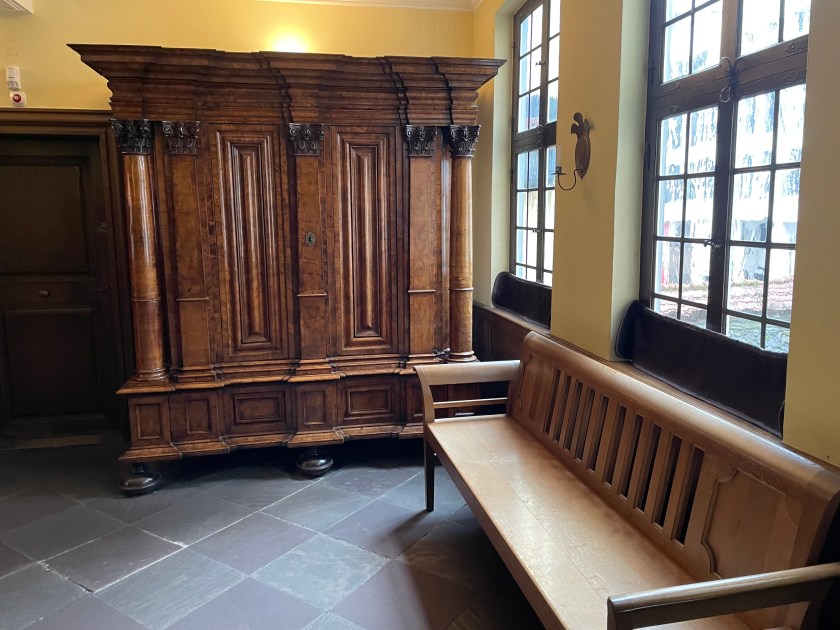
This was interesting. These are “fire chests” kept in the entry of a home to store important objects or documents in case of an emergency. If a fire broke out, they were near the front door and equipped with handles for strong men to carry them out of danger’s way. Not exactly “grab and go,” but the same idea!

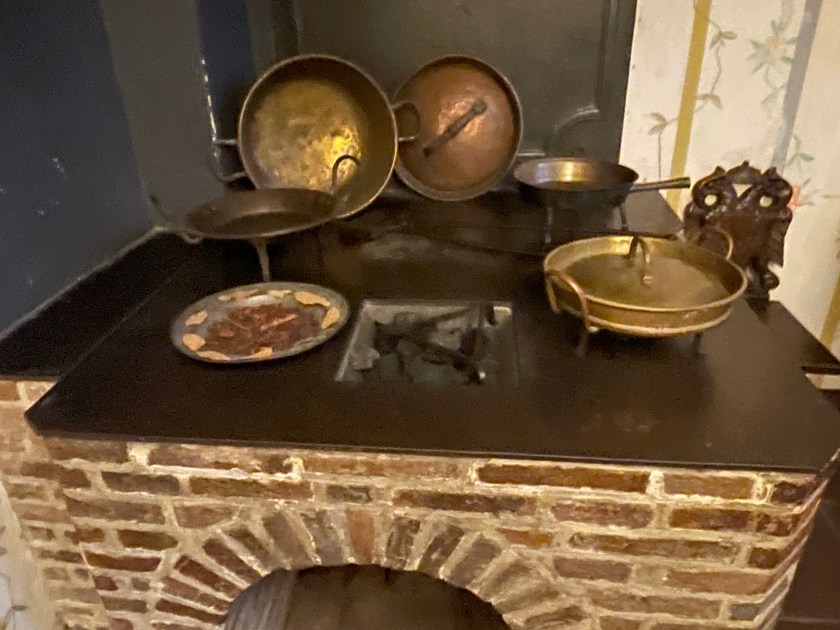
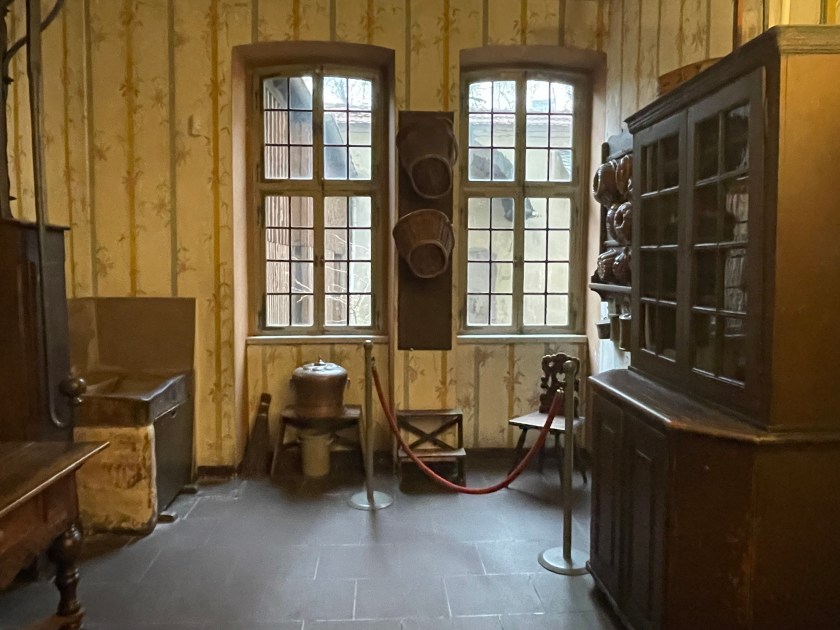
The kitchen on the main floor:

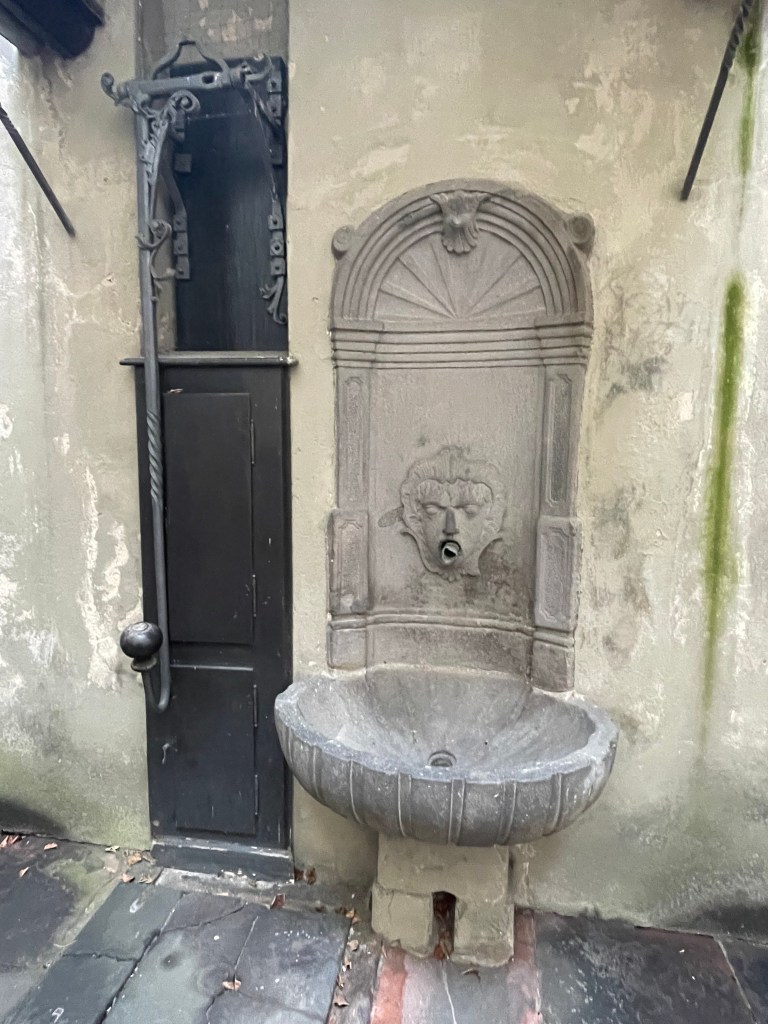
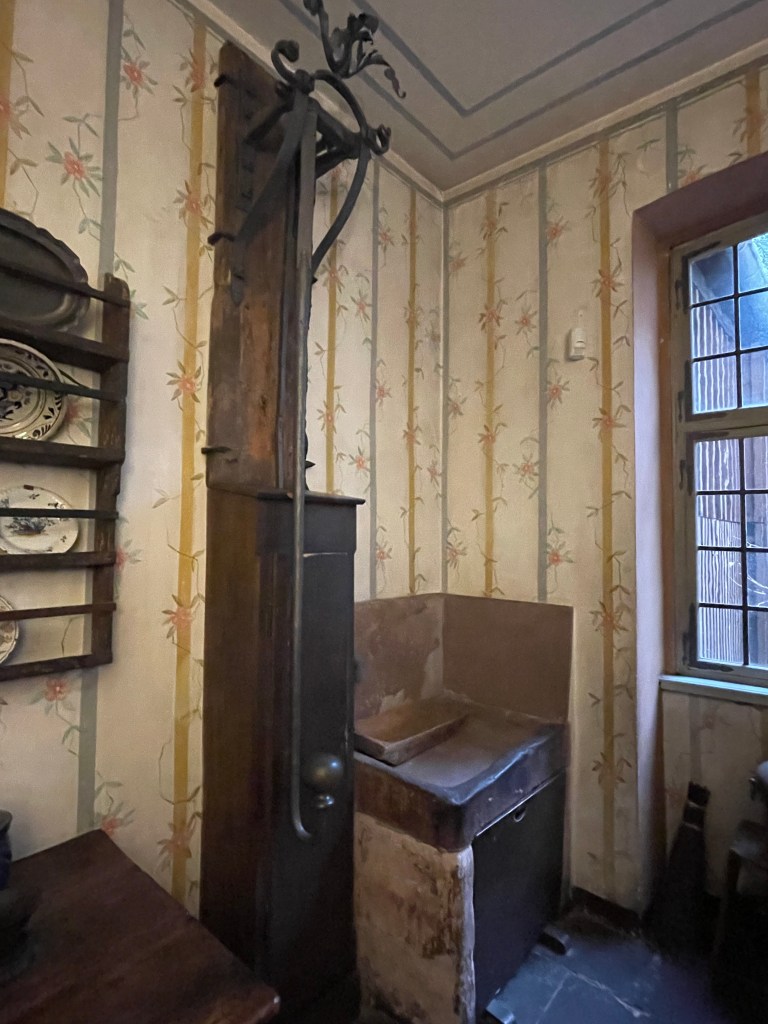
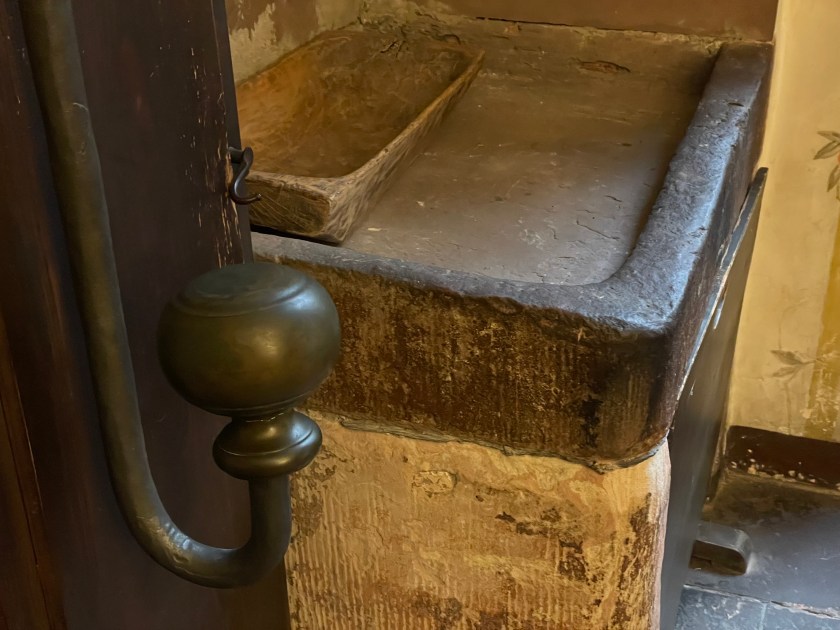
Through the window you can see the family well/water source.

A long handle on the water pump:

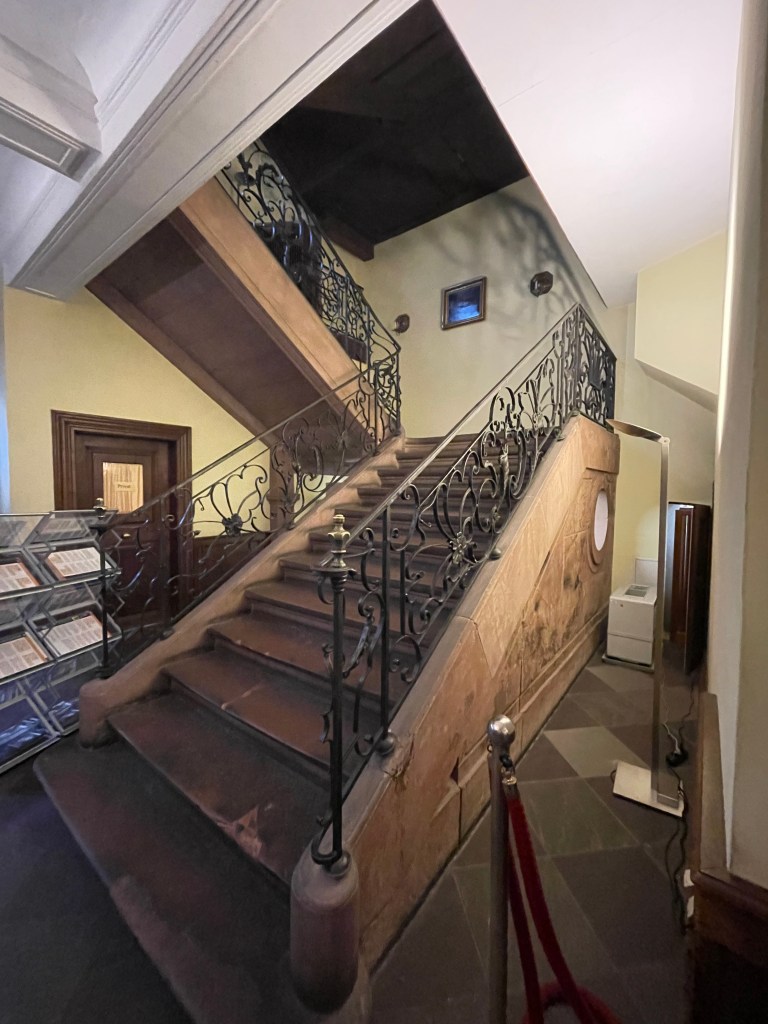
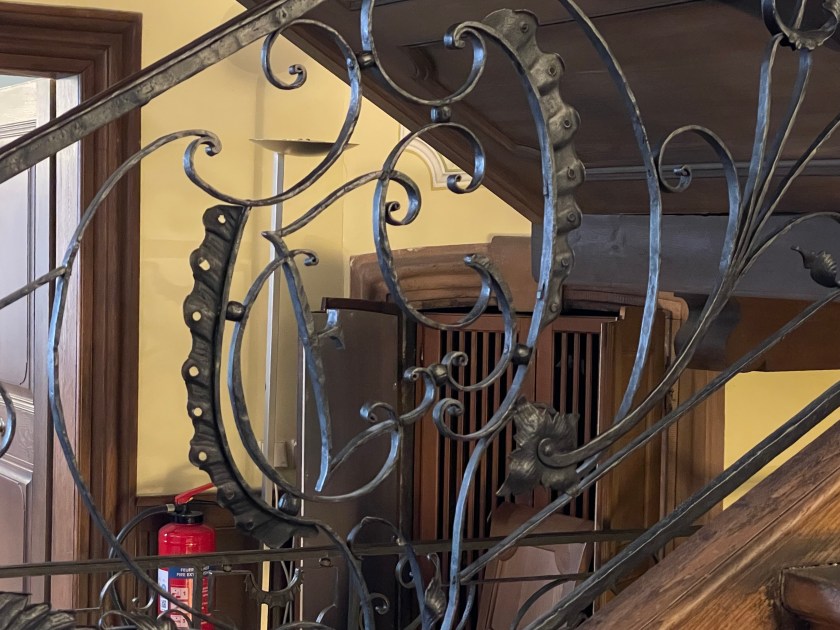
The family initials are in the ironwork.

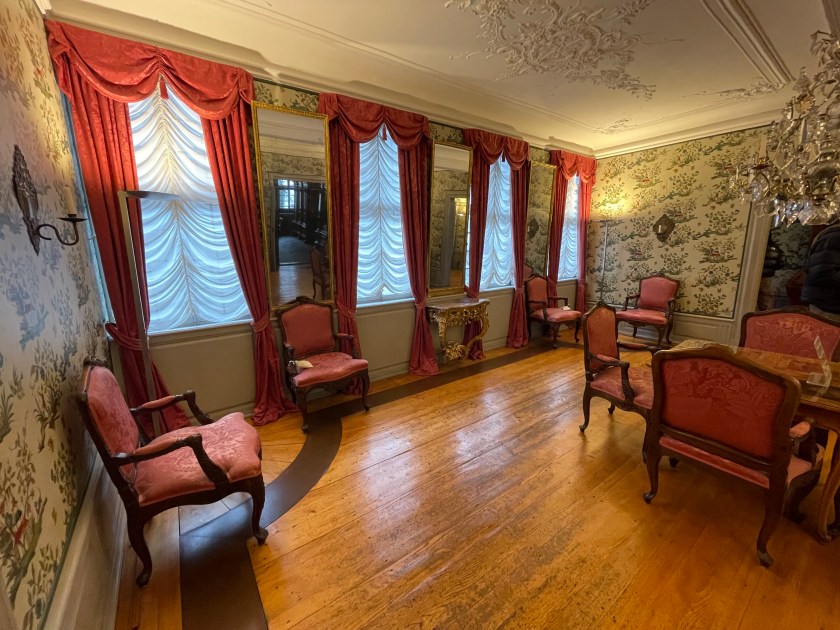
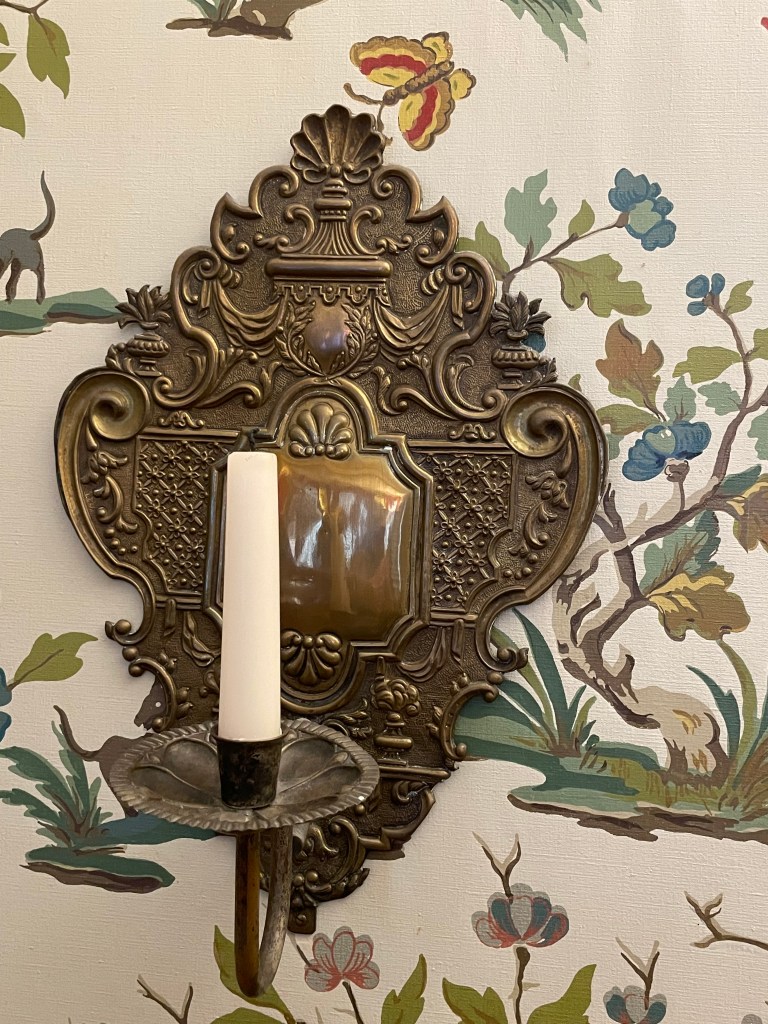
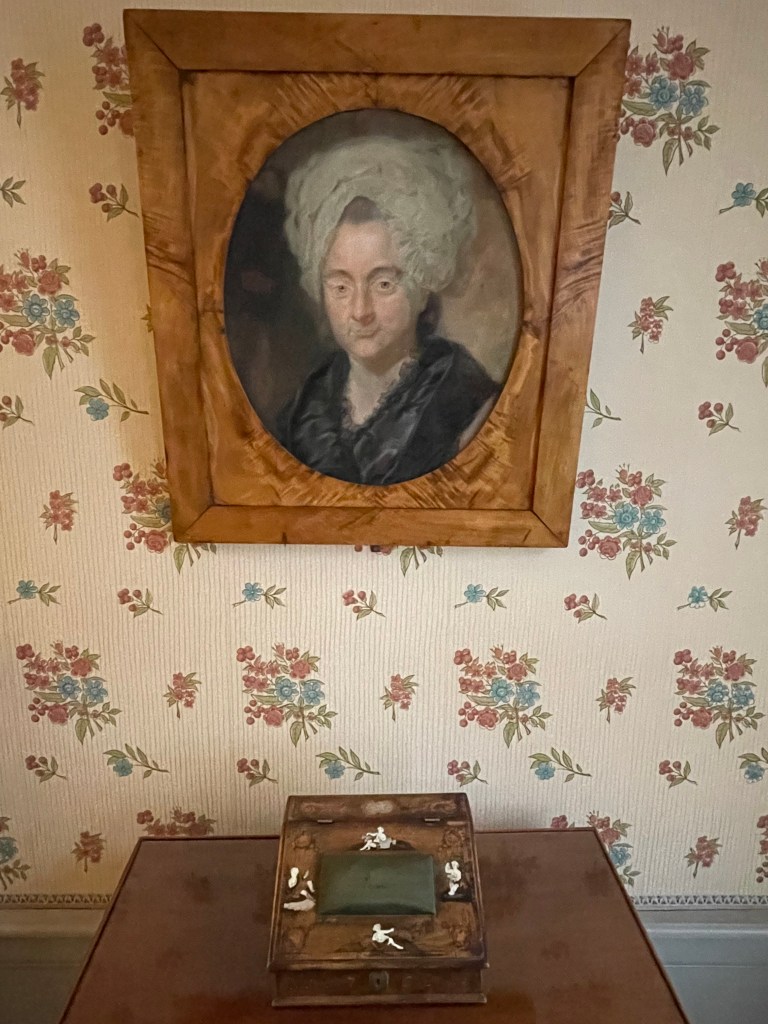
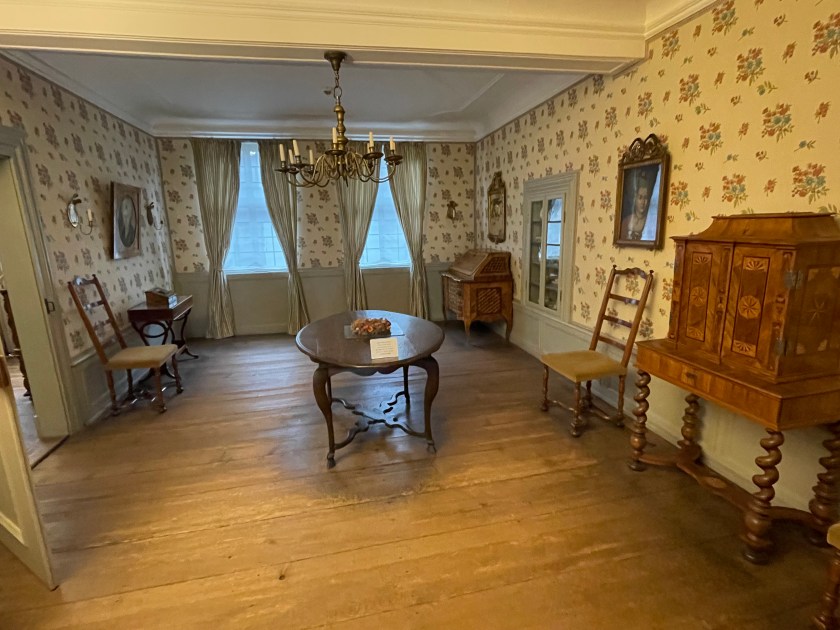
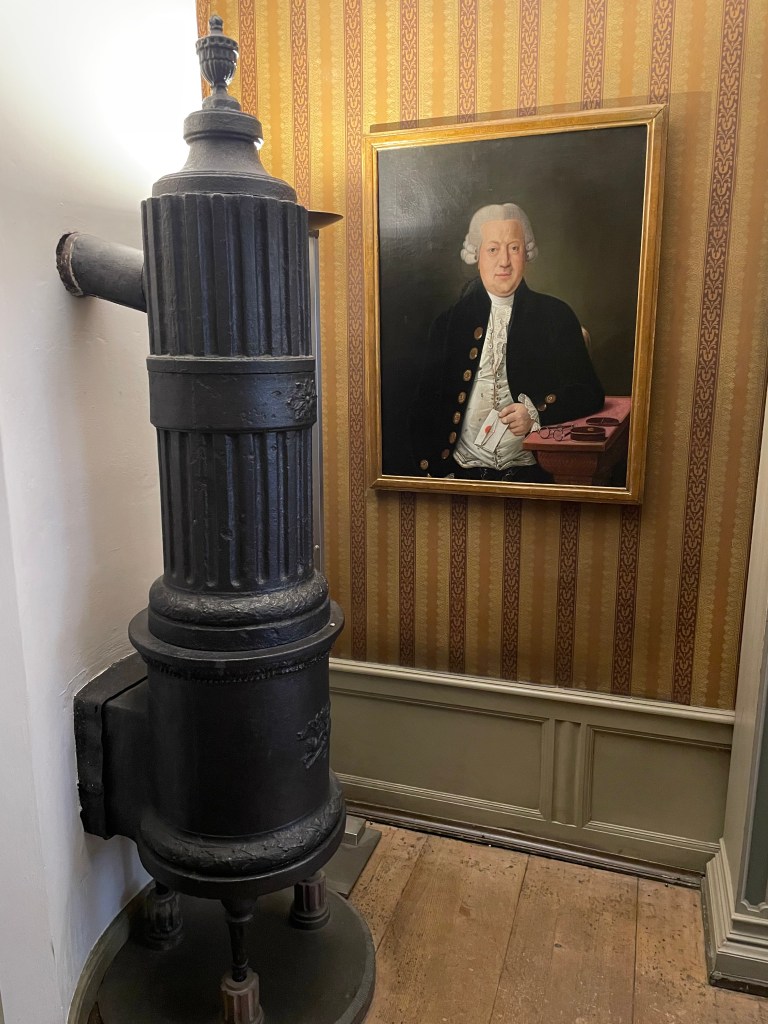
I’m loving the wallpaper throughout the home.

This is an upright piano in the music room:

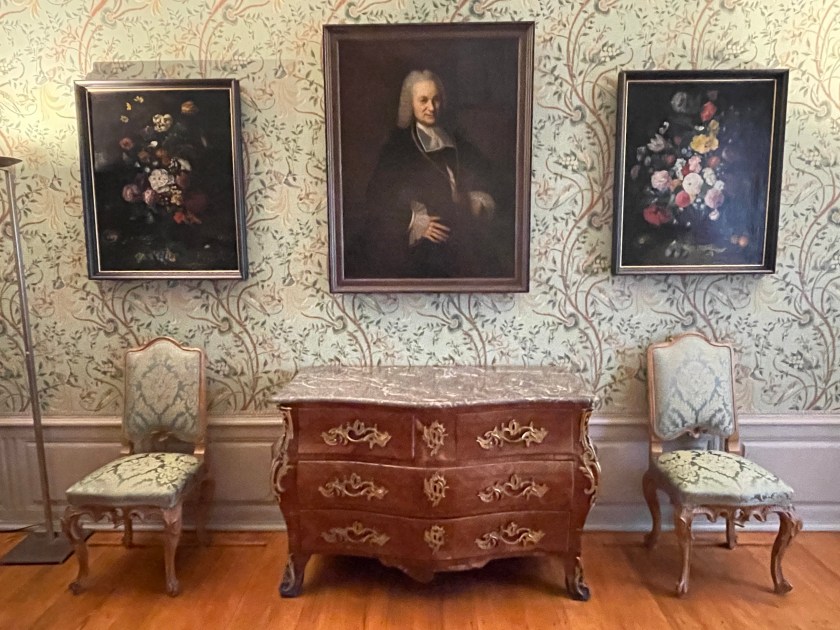
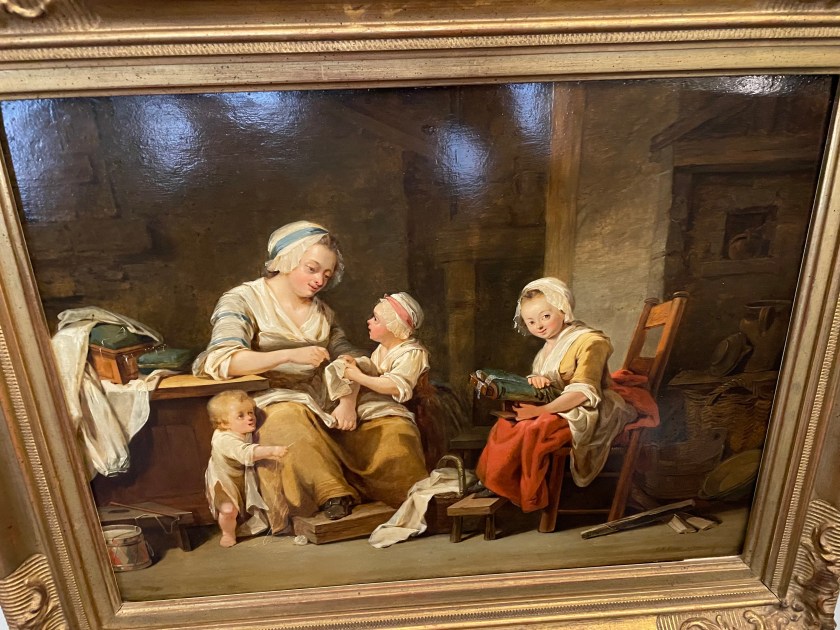
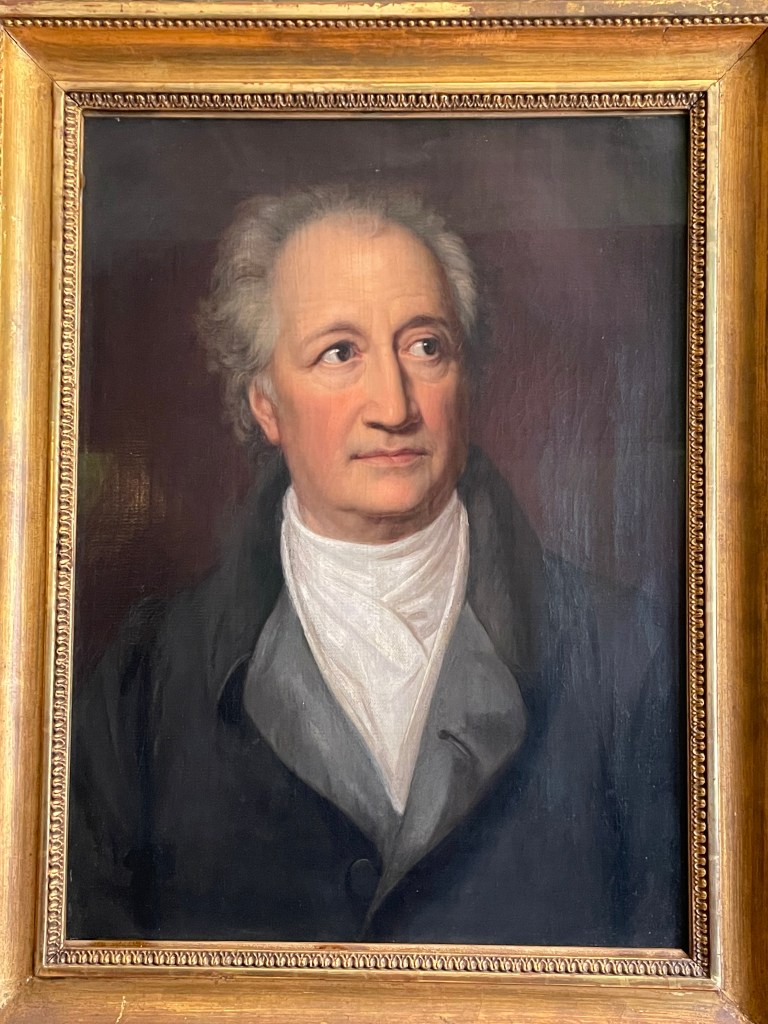
Paintings of the Goethe family:

I think this was the birthing room:


Here’s another interesting feature. Look at the strip of wood nailed to the floor around the edges of the room. Instead of a wainscot to keep chairs from damaging the wallpaper, these strips stopped the chairs from being pushed too close to the walls.
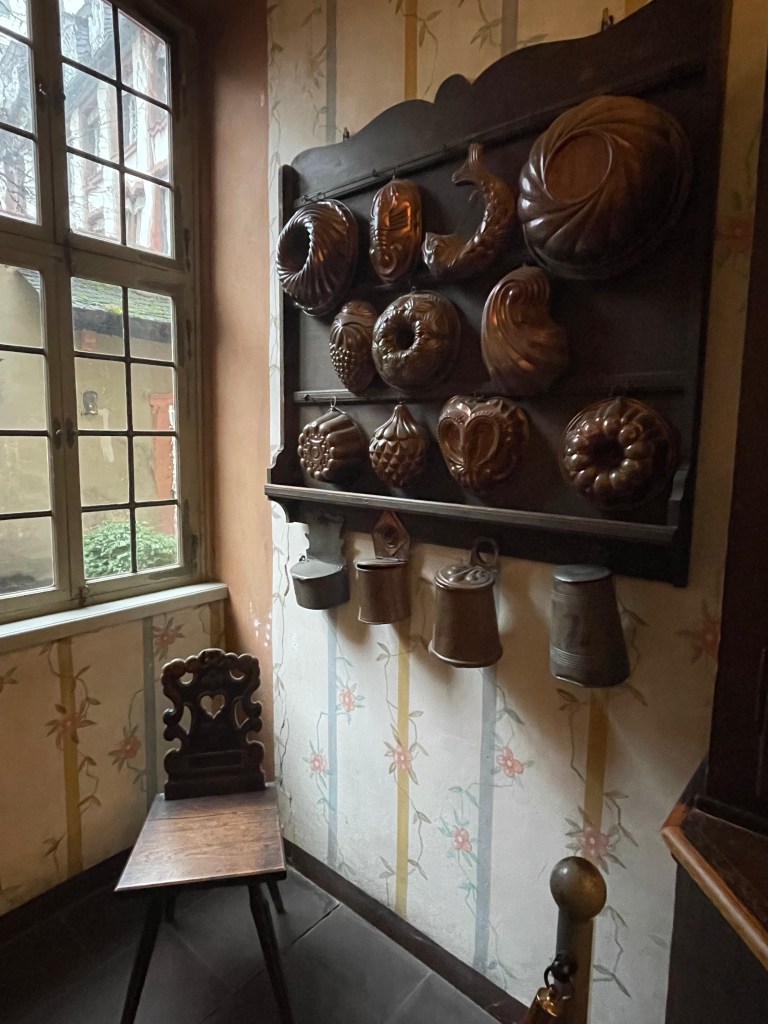
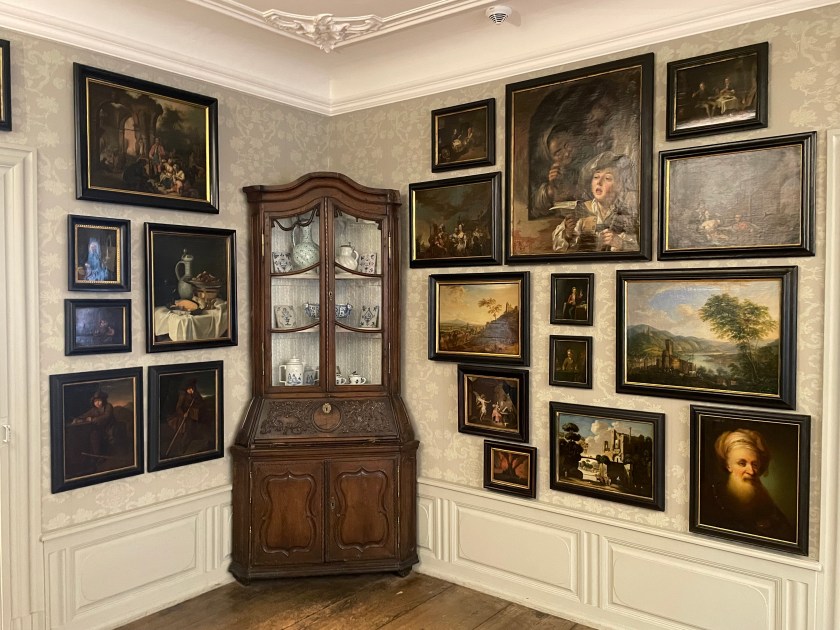
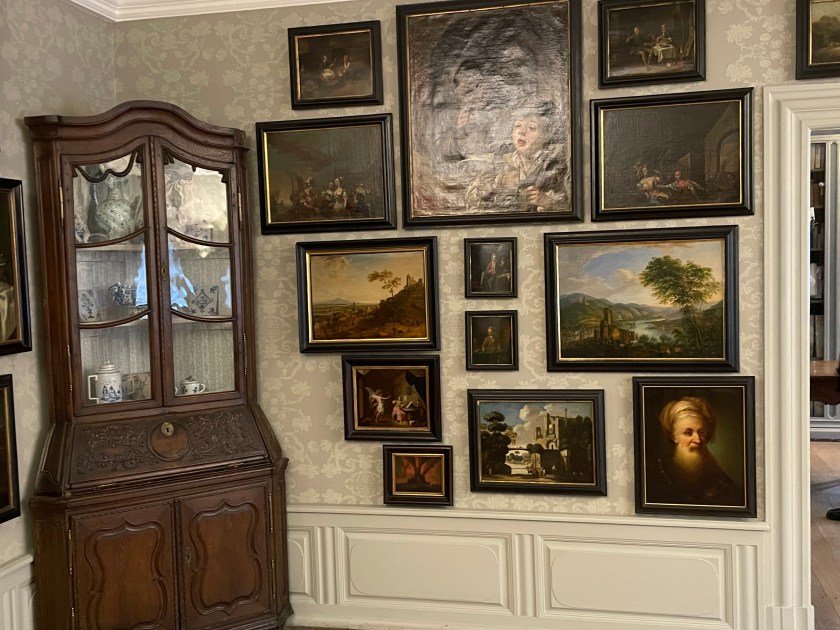
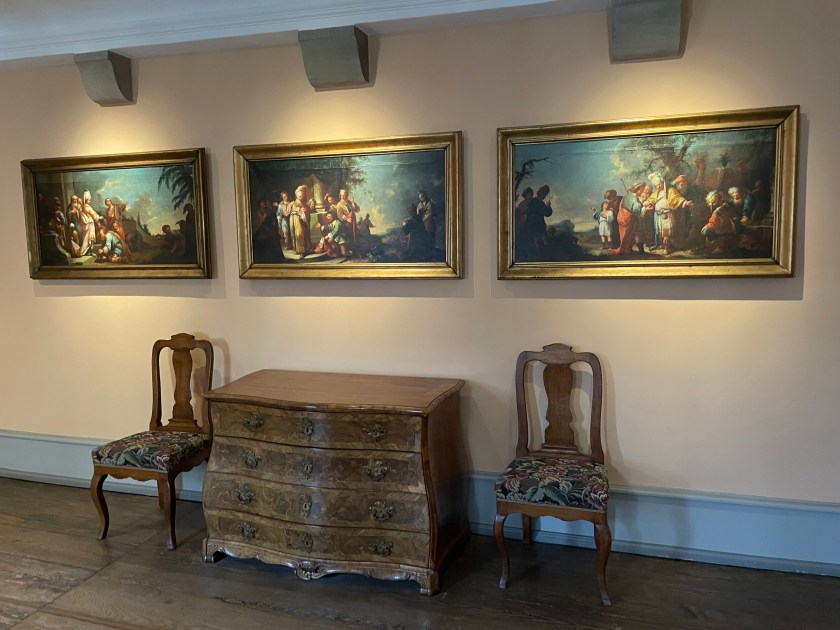
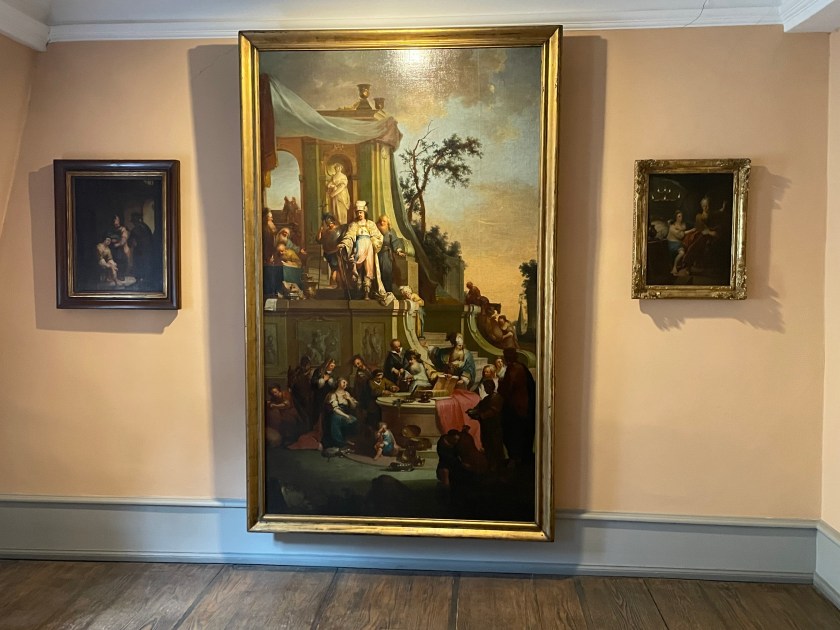
Goethe’s father had quite a collection of nice art.

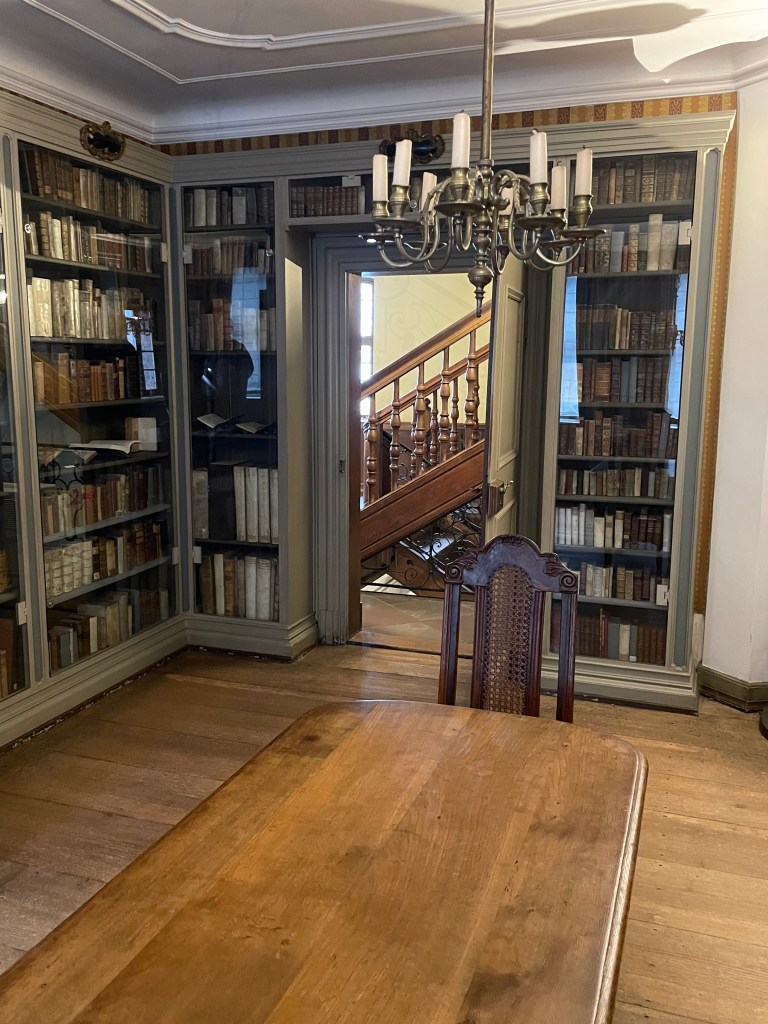
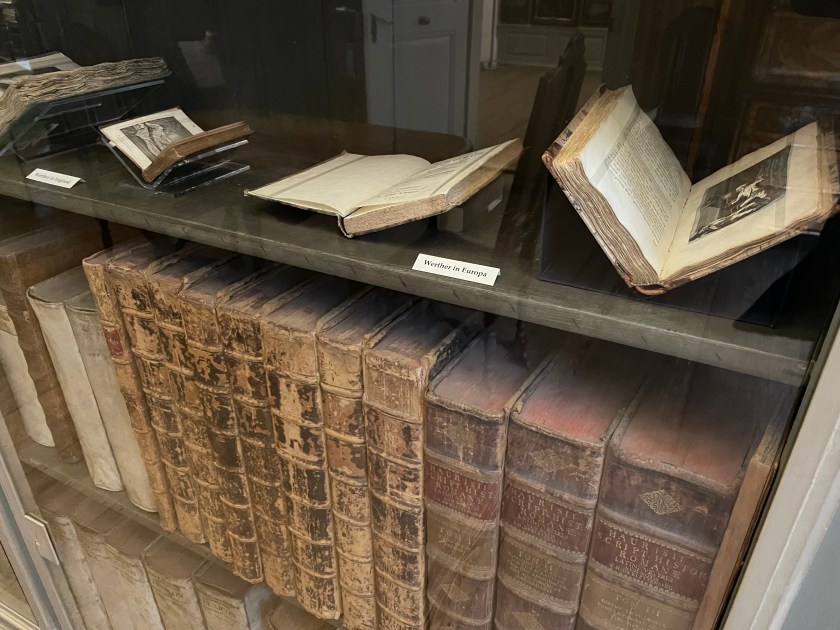
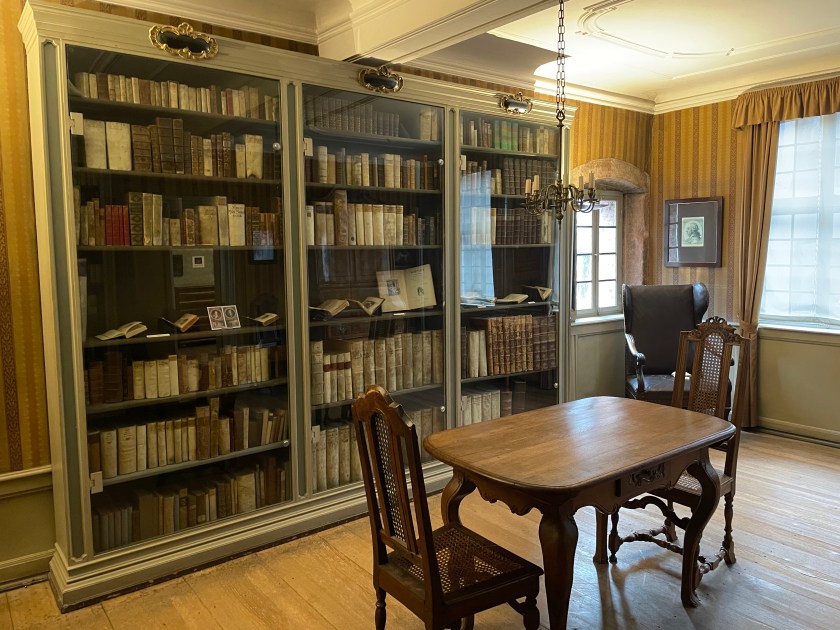
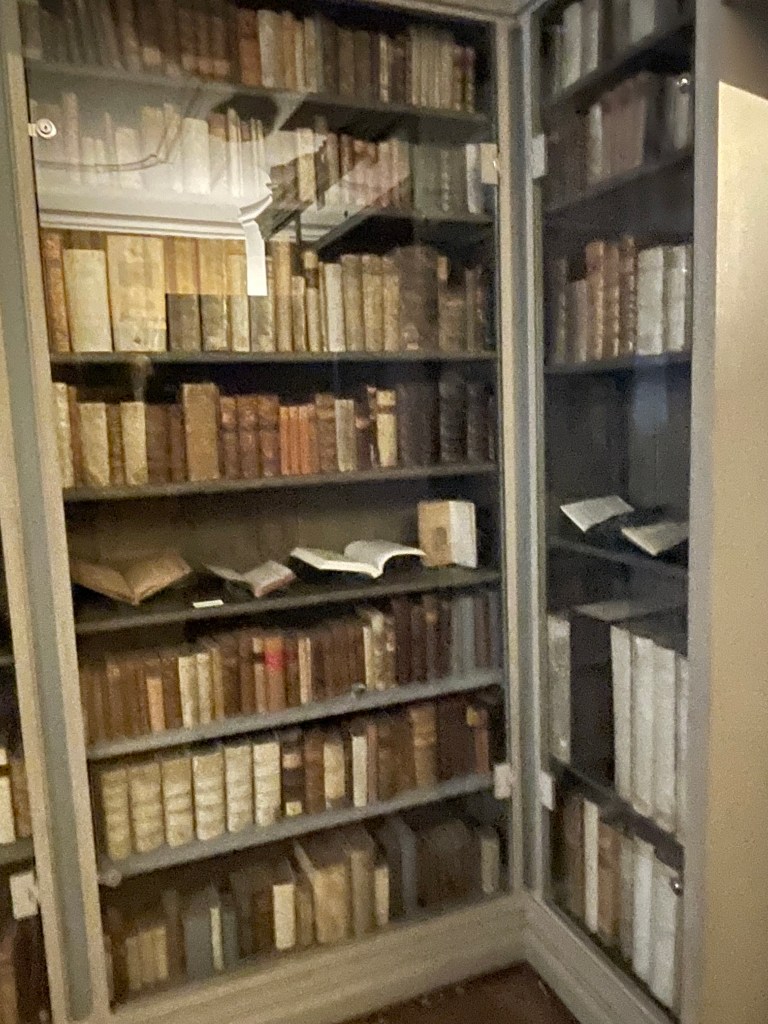
Wow, the library!

First editions:

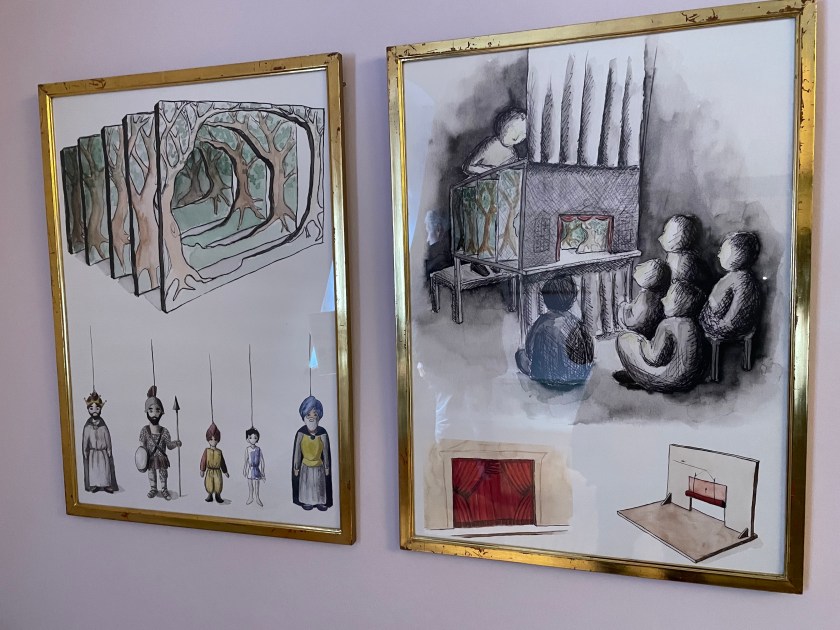
A puppet theater for the children:

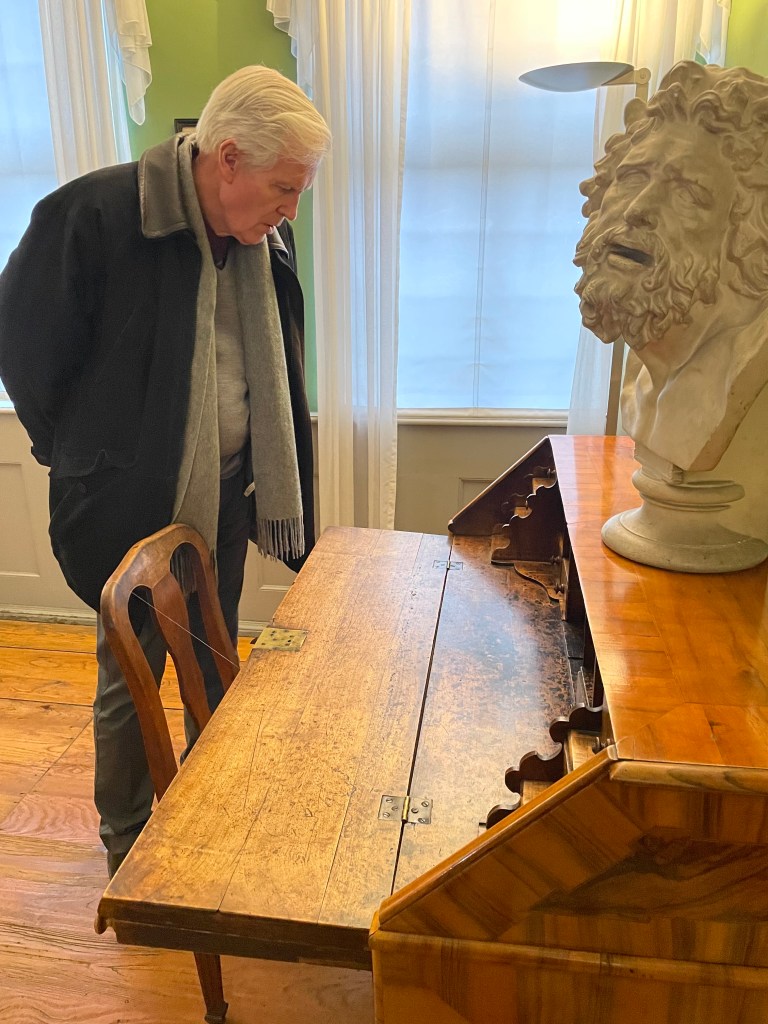
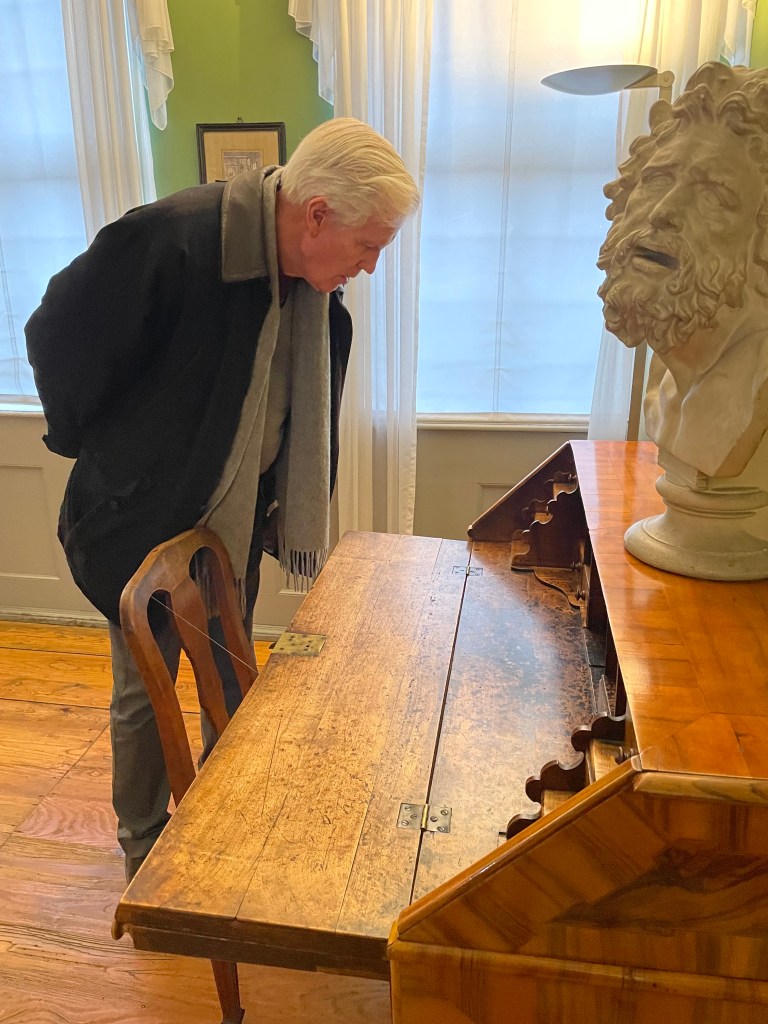
Goethe’s writing desk:

The ink:

What a treat to be in this place with our dear friend, Alan Keele.  Wow, it was wonderful!

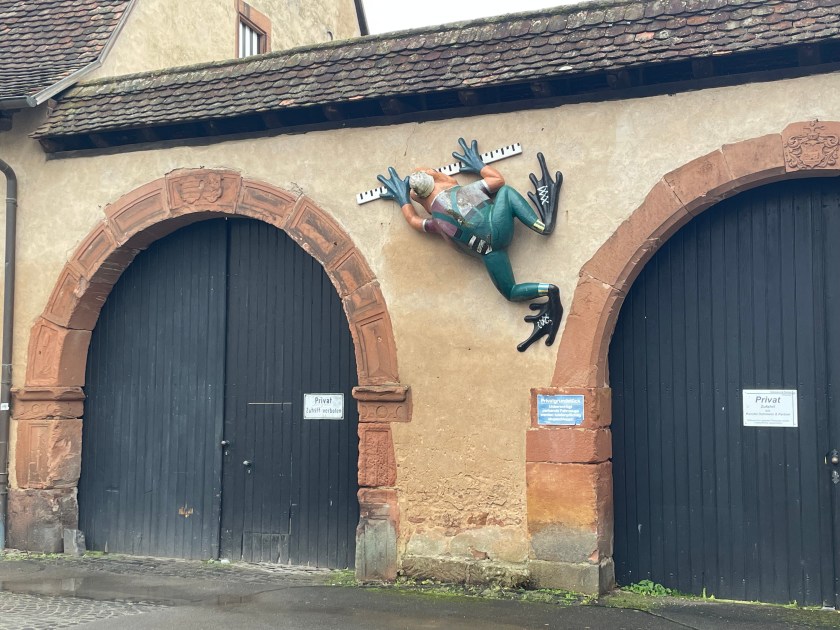
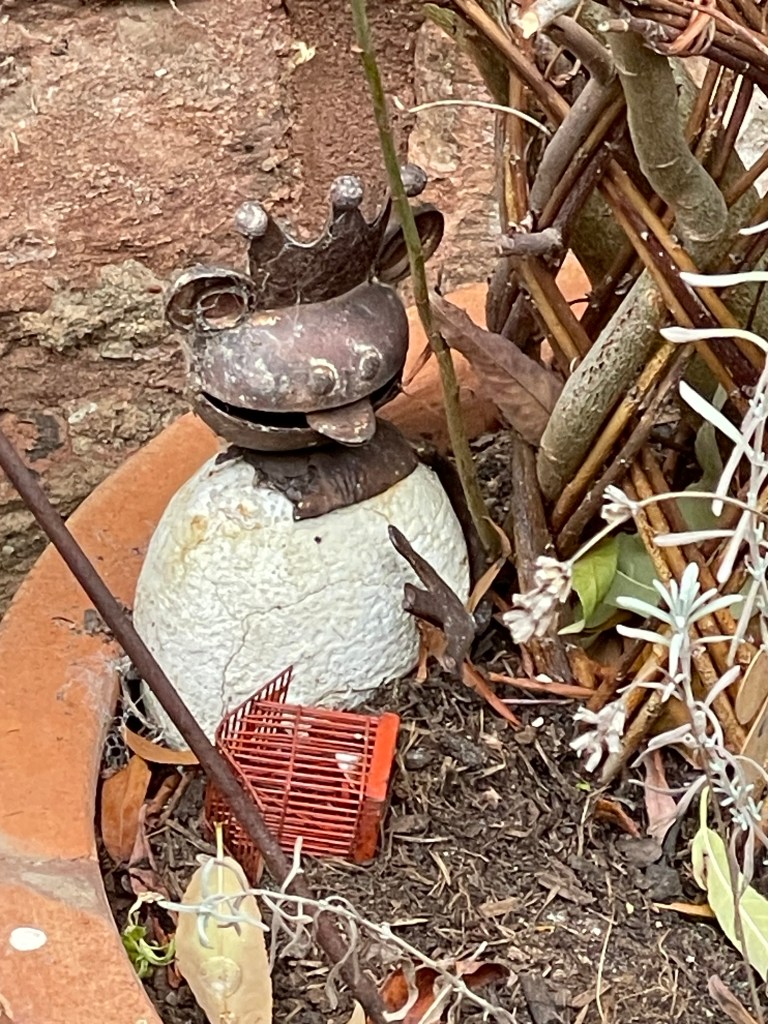
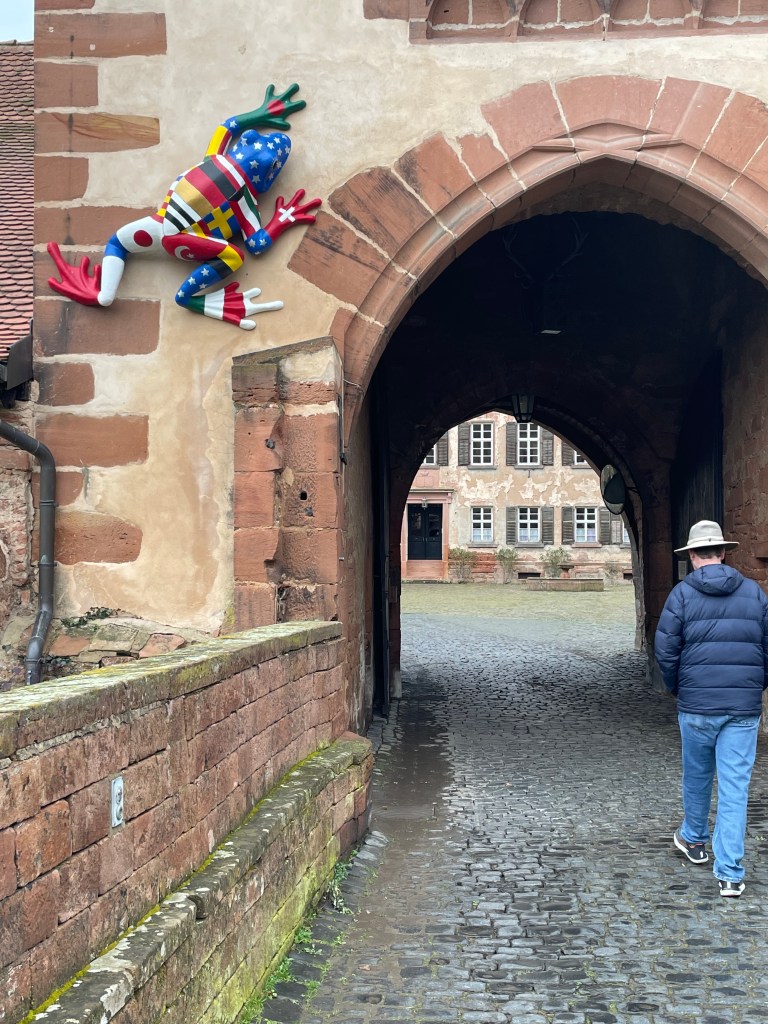
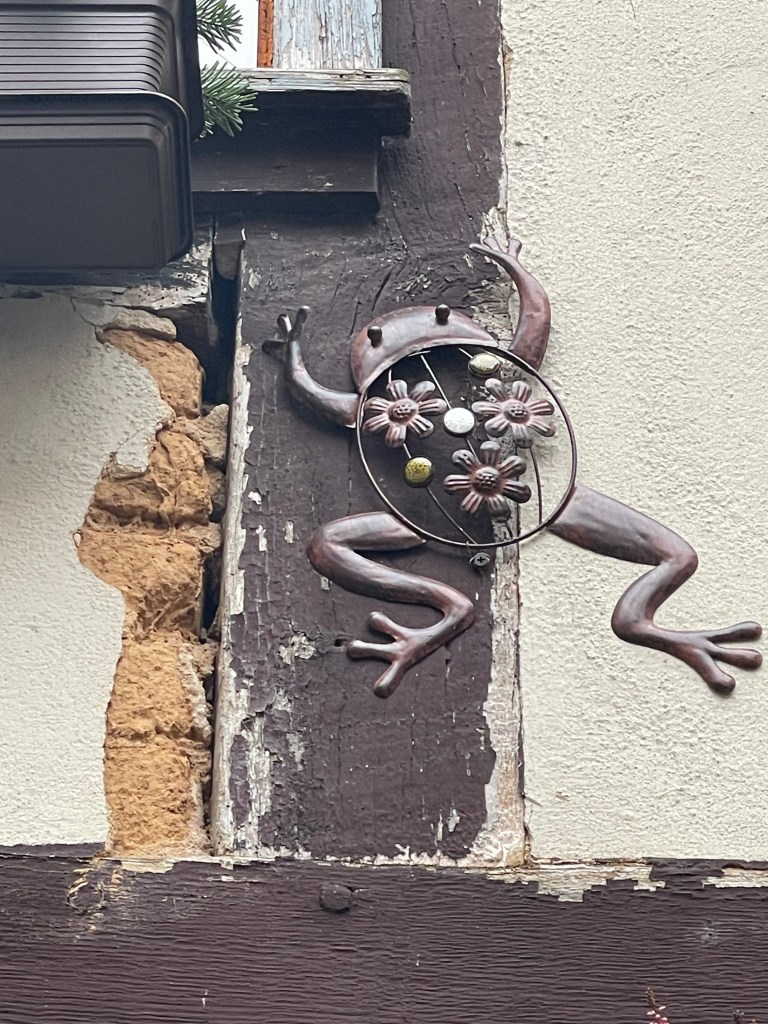
The Frogs of Büdingen

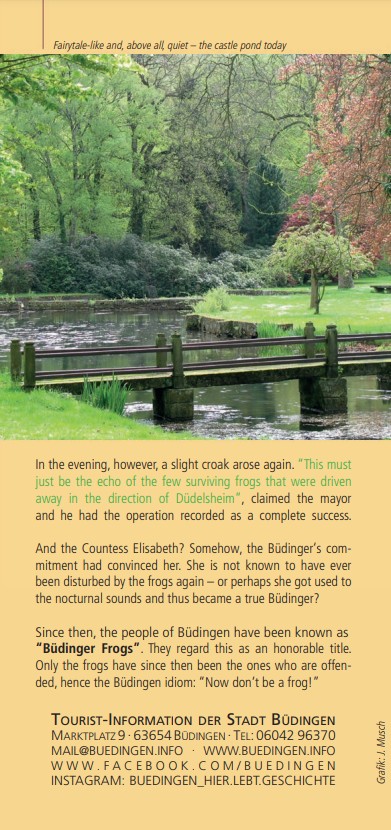
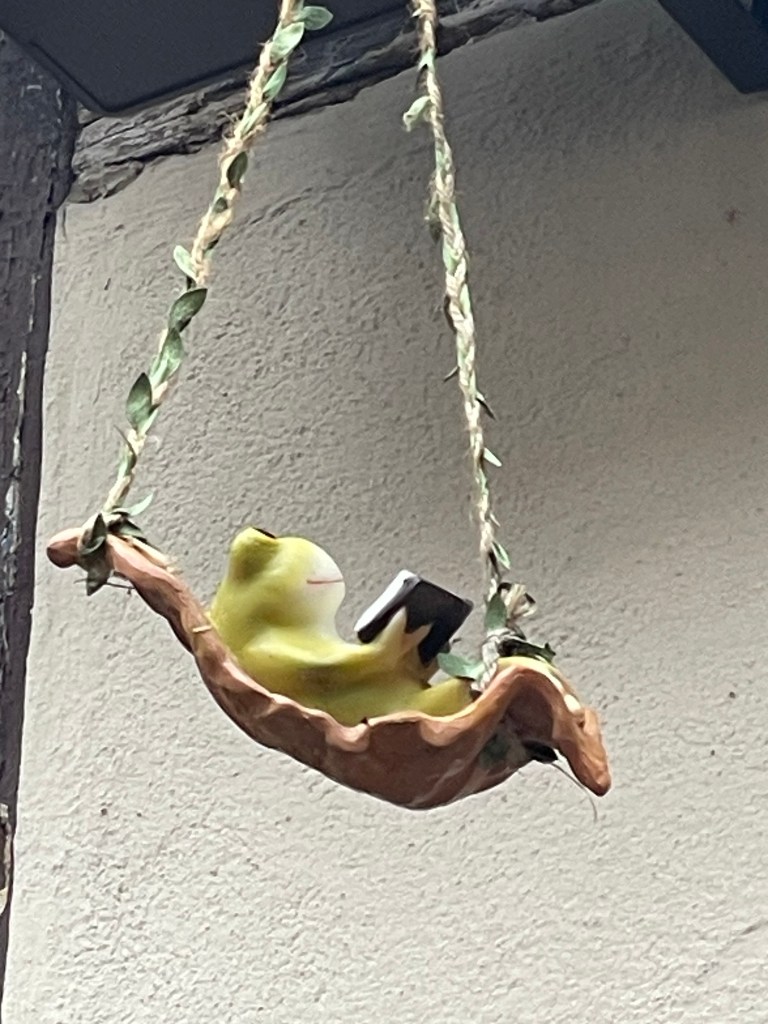
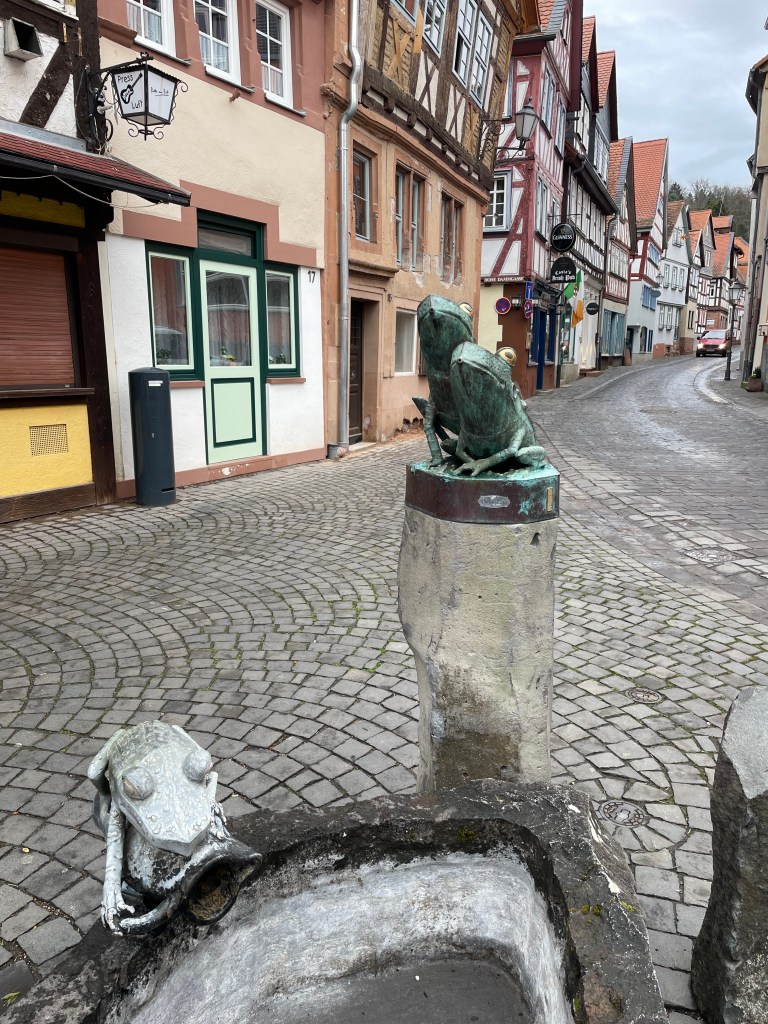
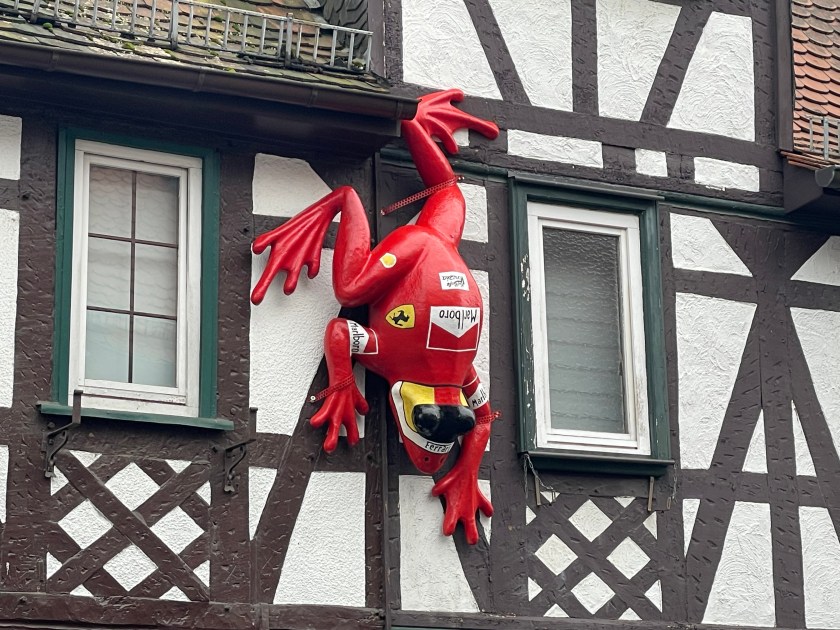
Büdingen is known as the City of Frogs. A popular folktale says that days into the marriage of the Count of Büdingen and Elizabeth of Wied, the new Countess could not sleep because of the deafening sounds of croaking frogs. In the 1500s, Büdingen was not only fortified, but had a moat (which was later filled). The Count rallied the citizens to rid the town of the frogs and save his marriage. Some versions record a successful expulsion of the frogs, while others claim they came back louder than ever. The city has kept the frog as a mascot-like symbol for hundreds of years.

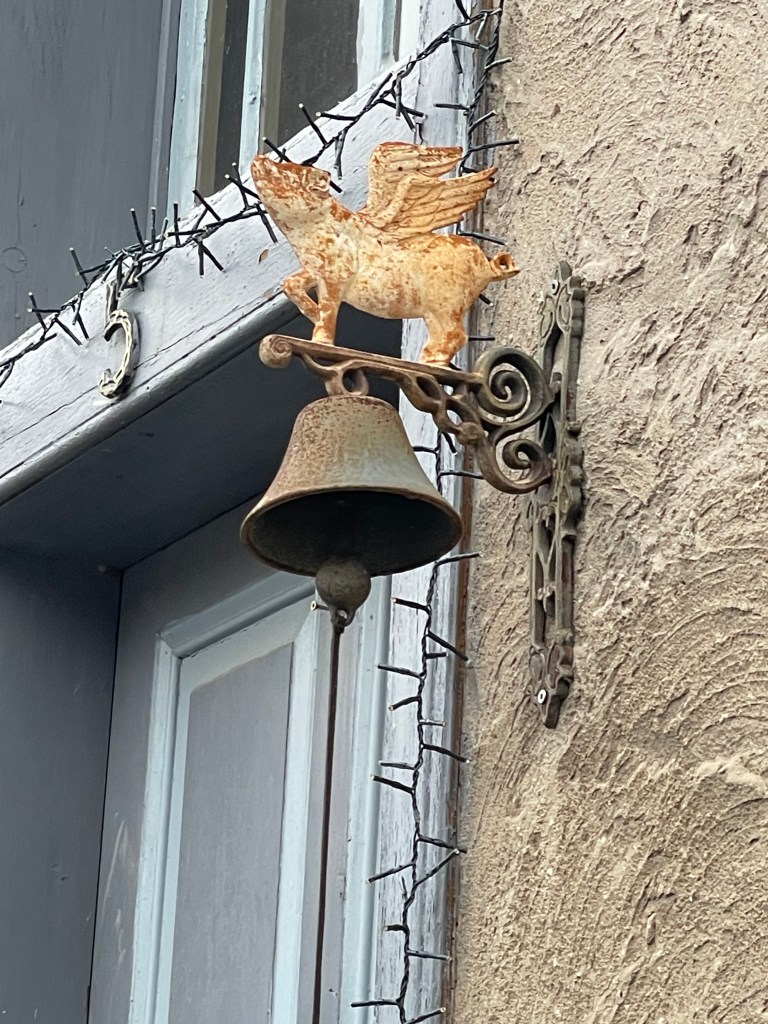
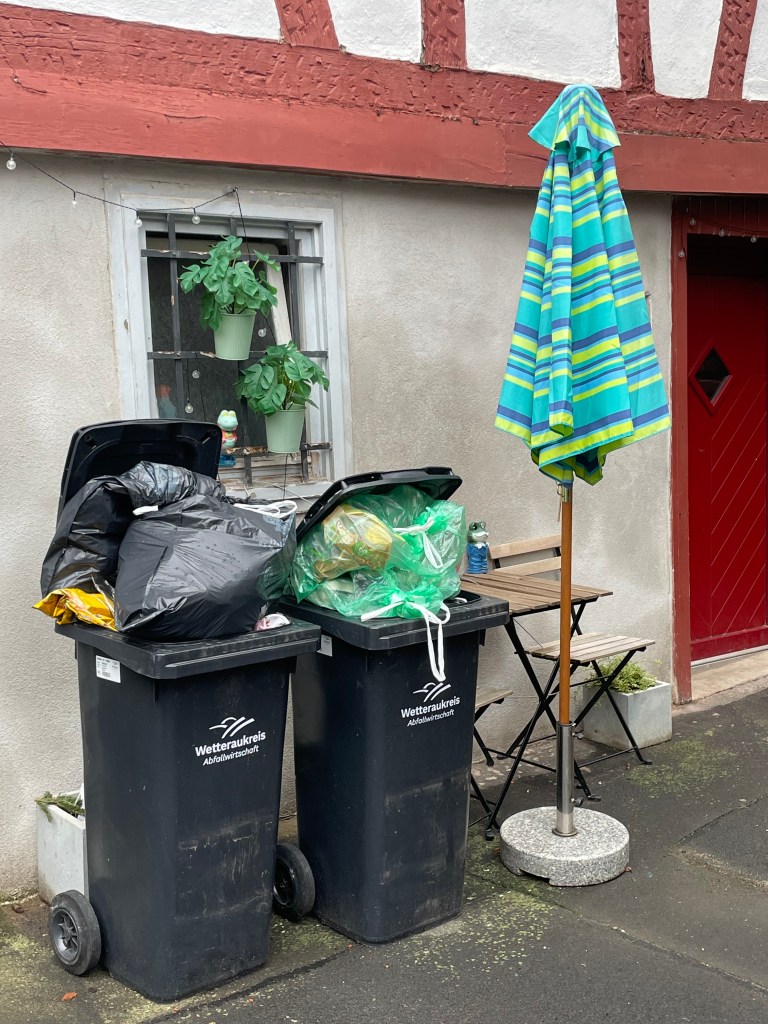
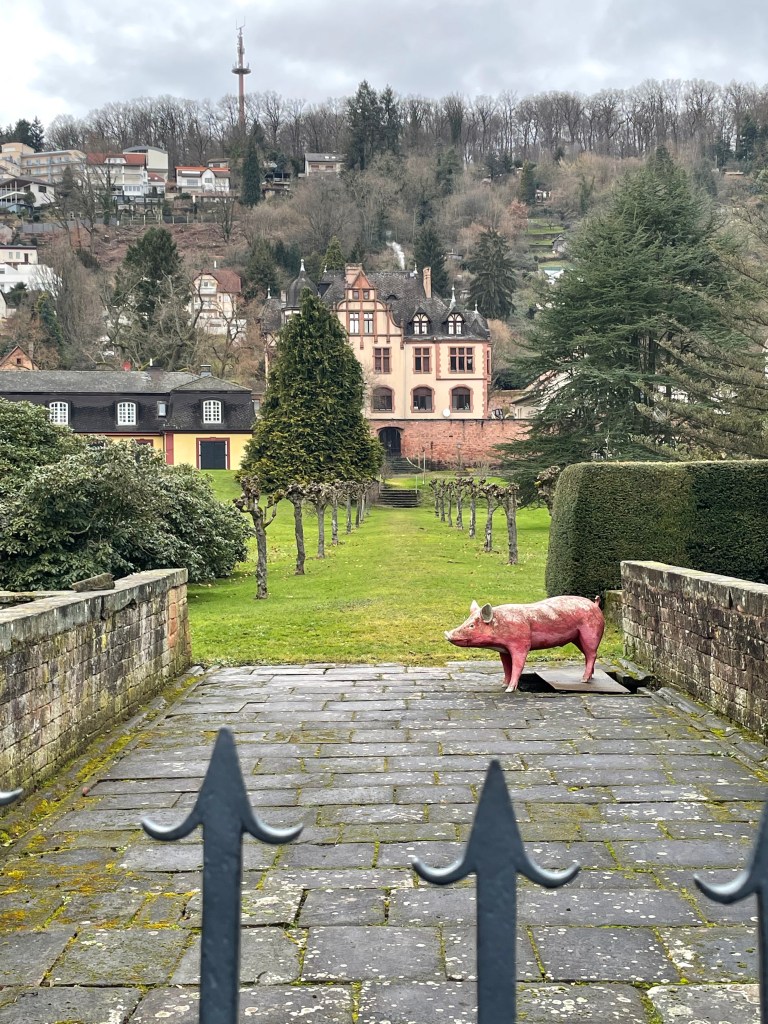
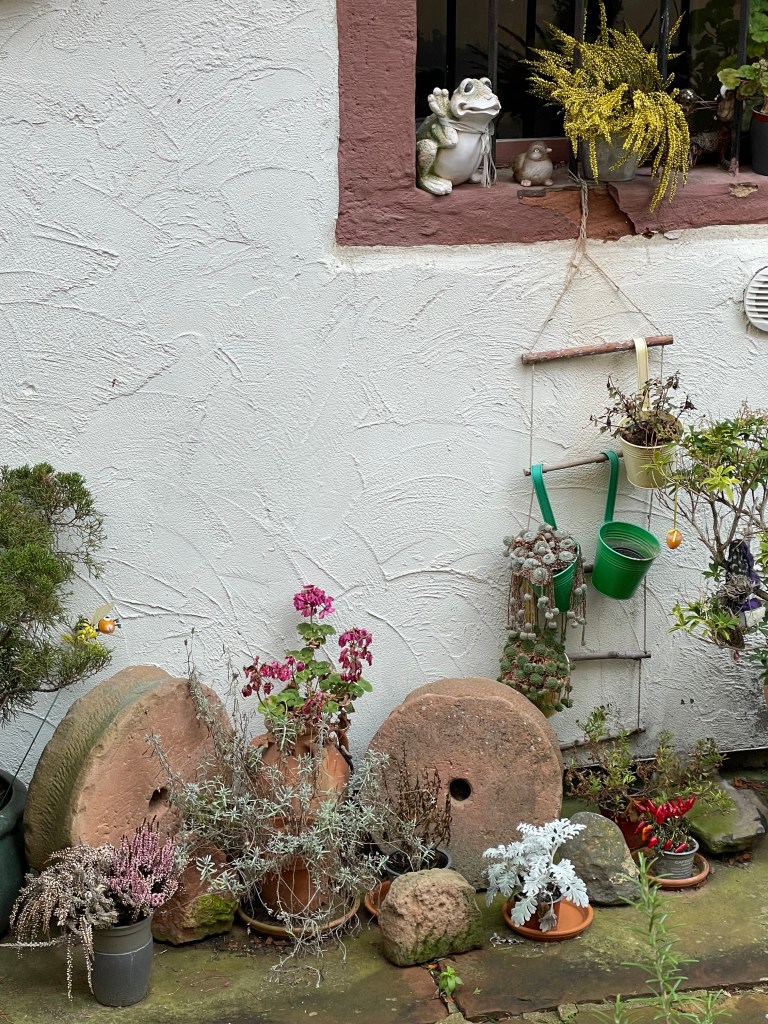
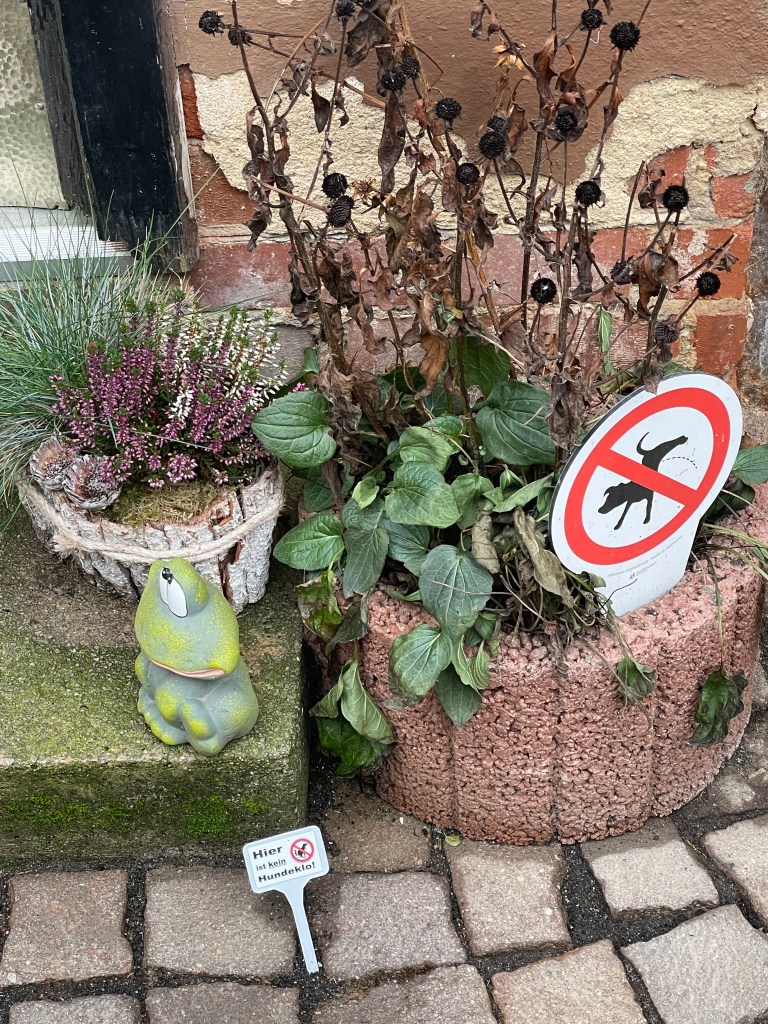
Here are some of the frogs I saw in different shops and homes today.

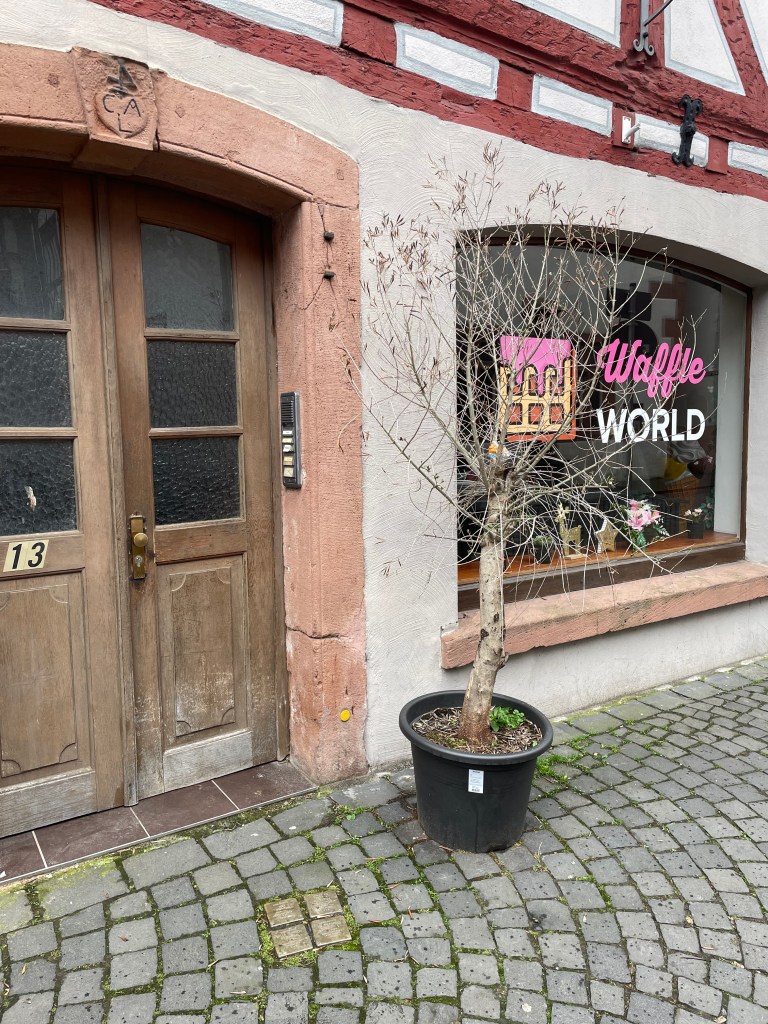
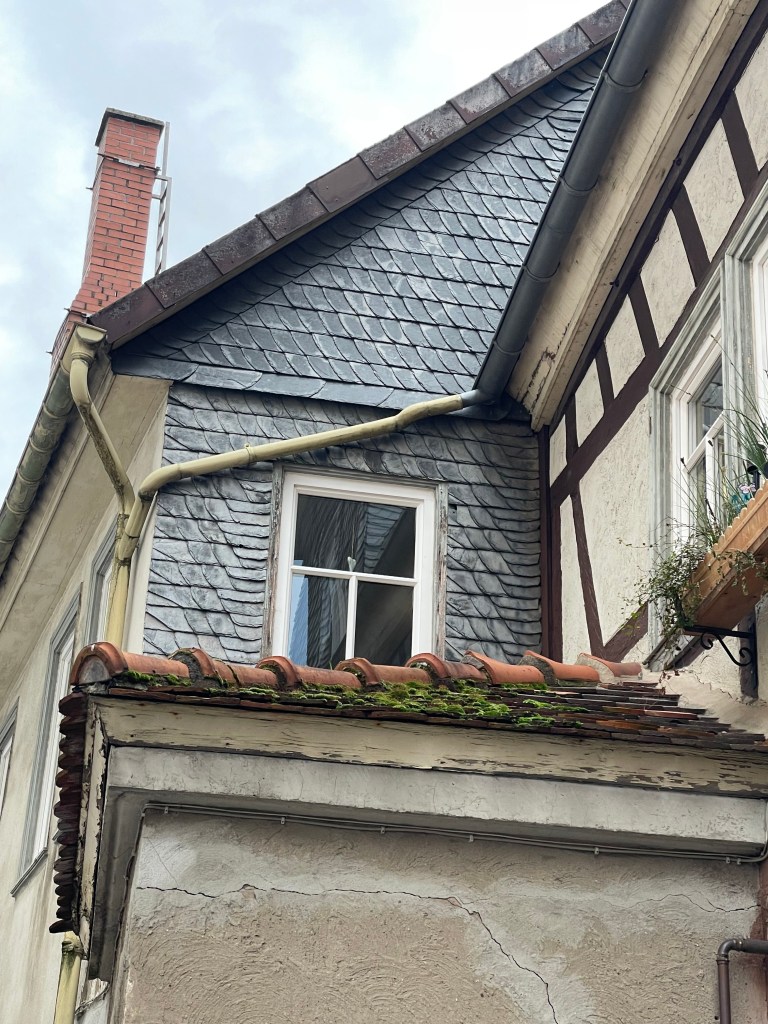
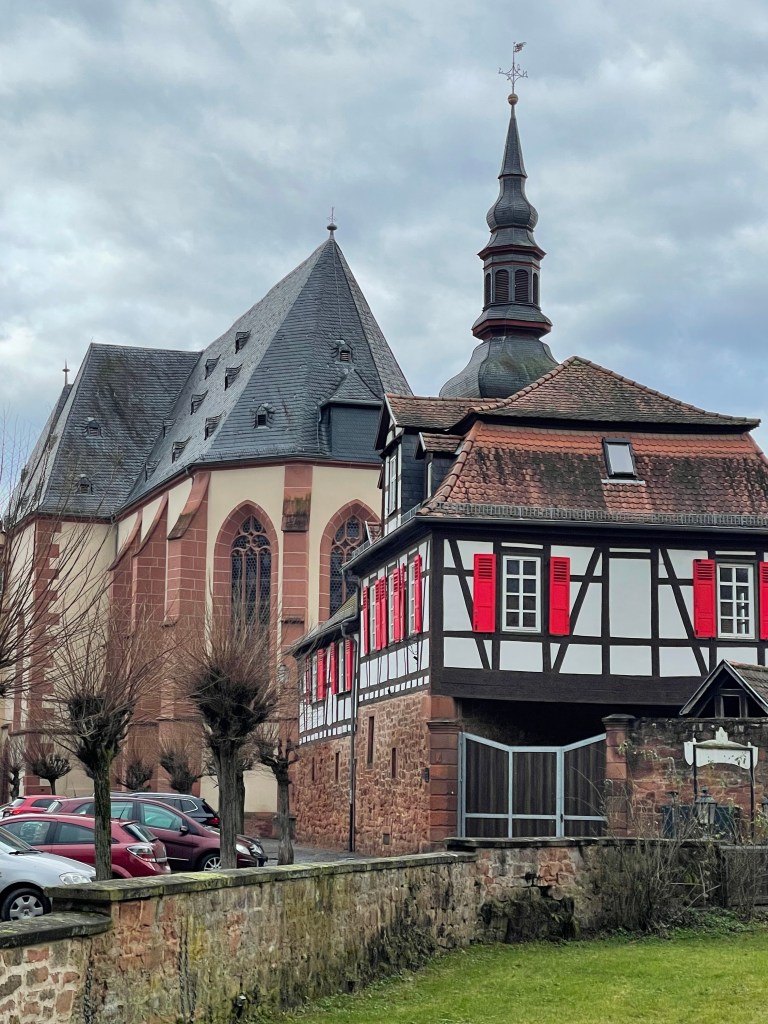
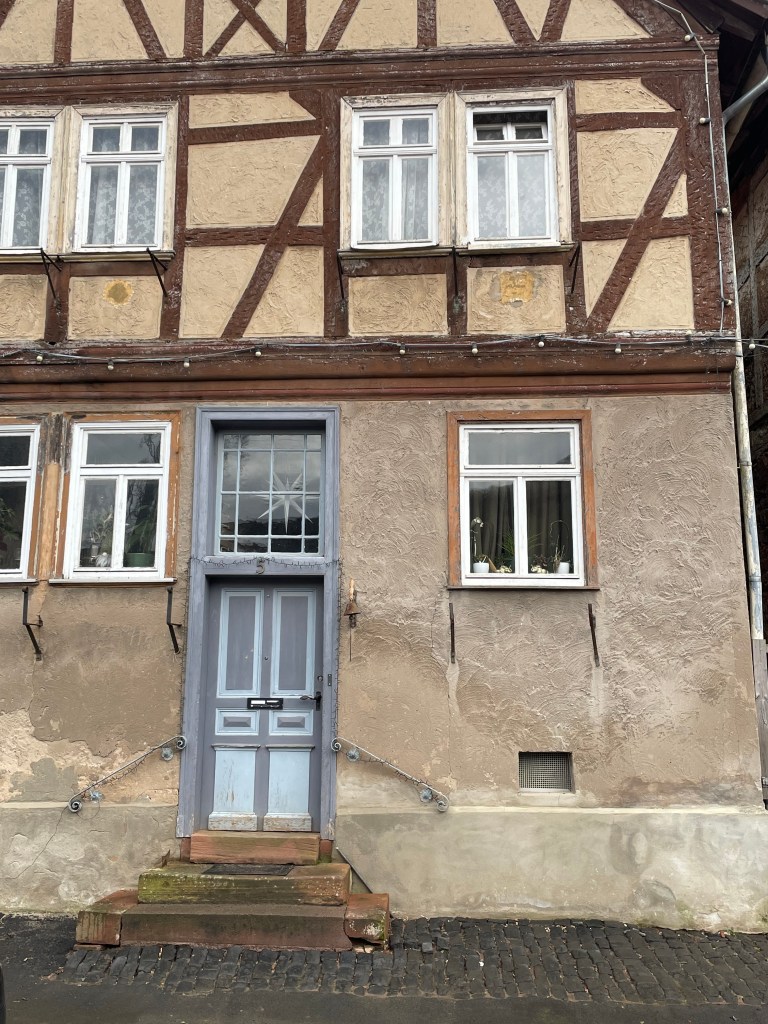
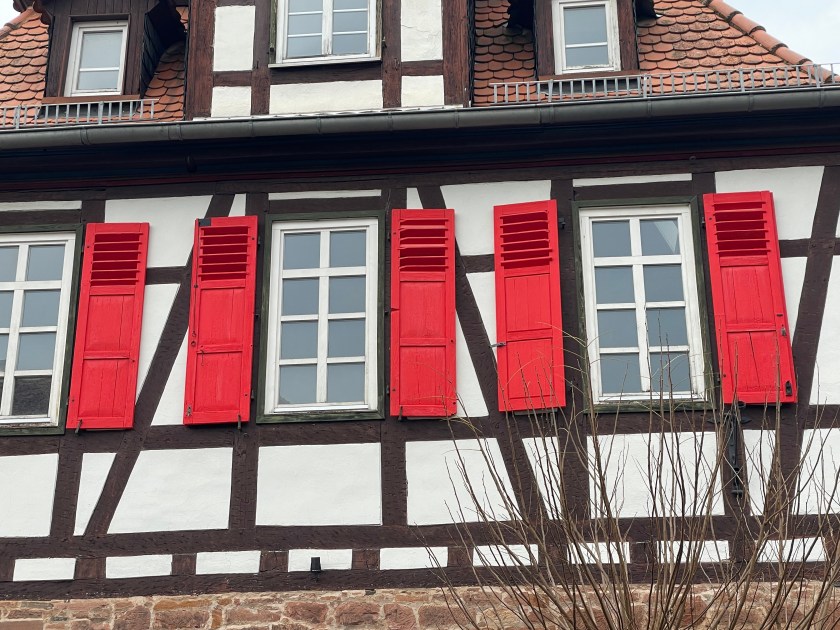
Büdingen’s Beautiful Details part 2

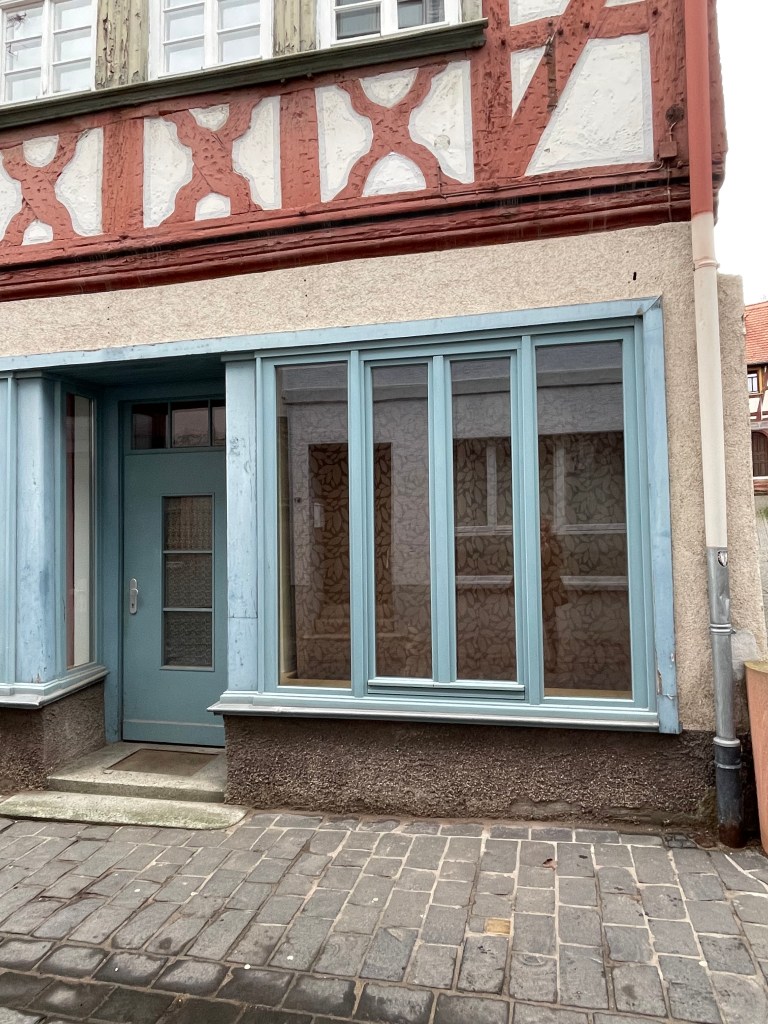
We spent about 4 hours wandering in Büdingen.  It would be nice to be here in the summertime to visit the little local museums and see a bit of life, but we really enjoyed feeling like we were the only ones in town today.

Here are a few bits from Wikipedia:
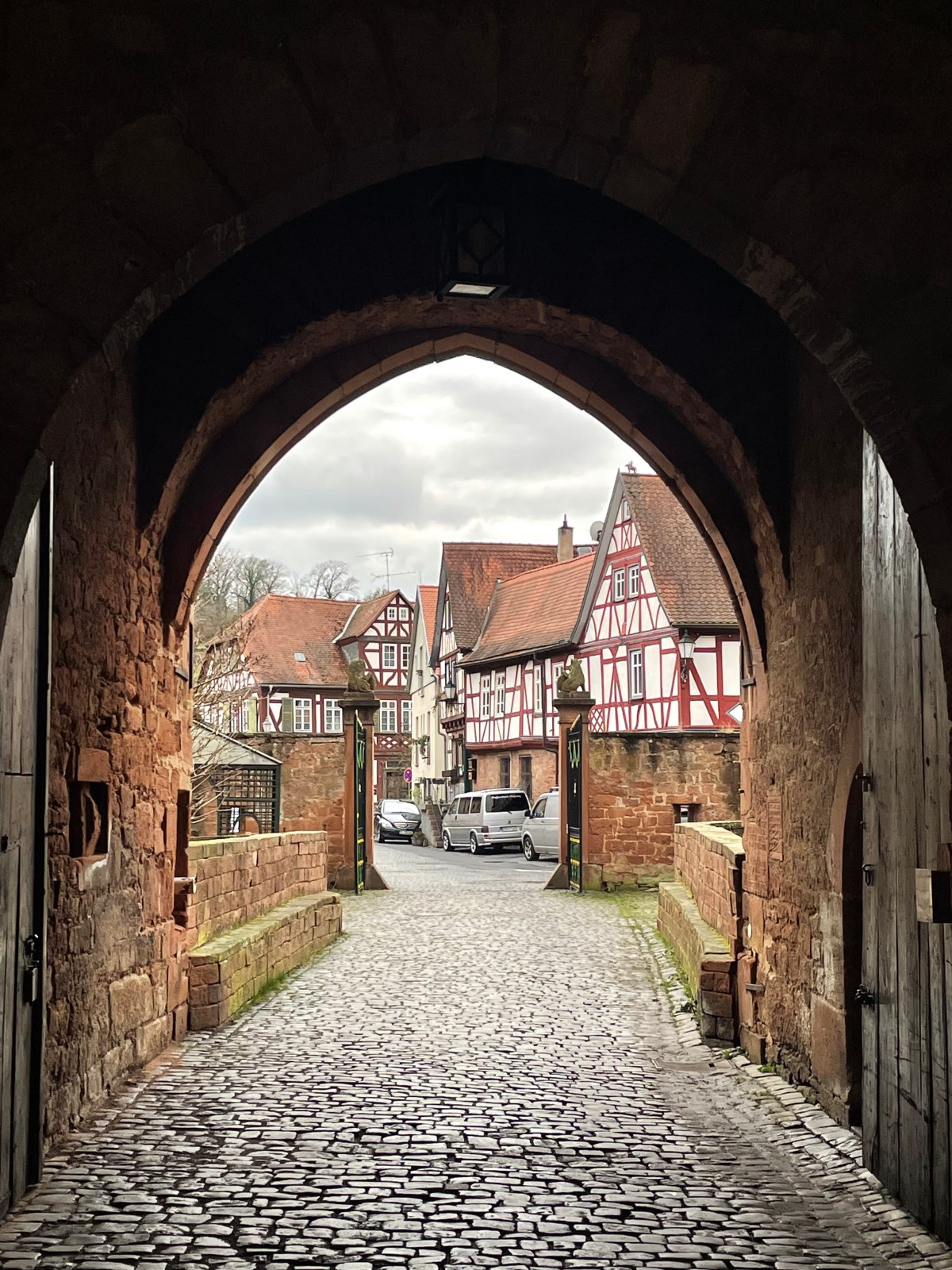
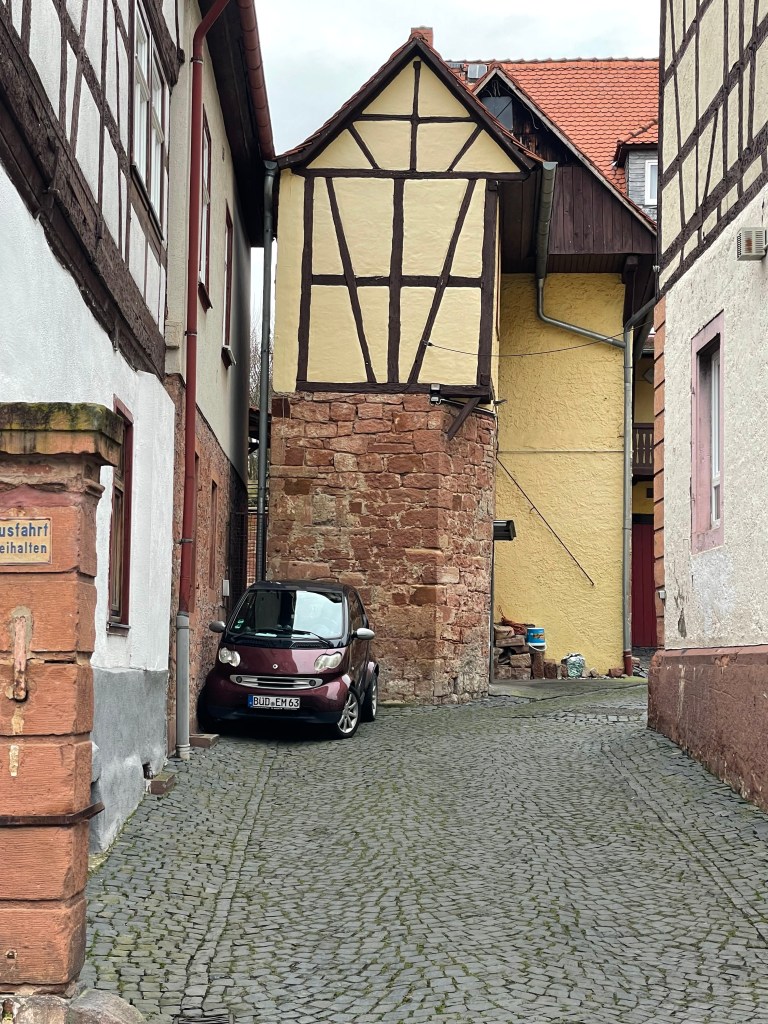
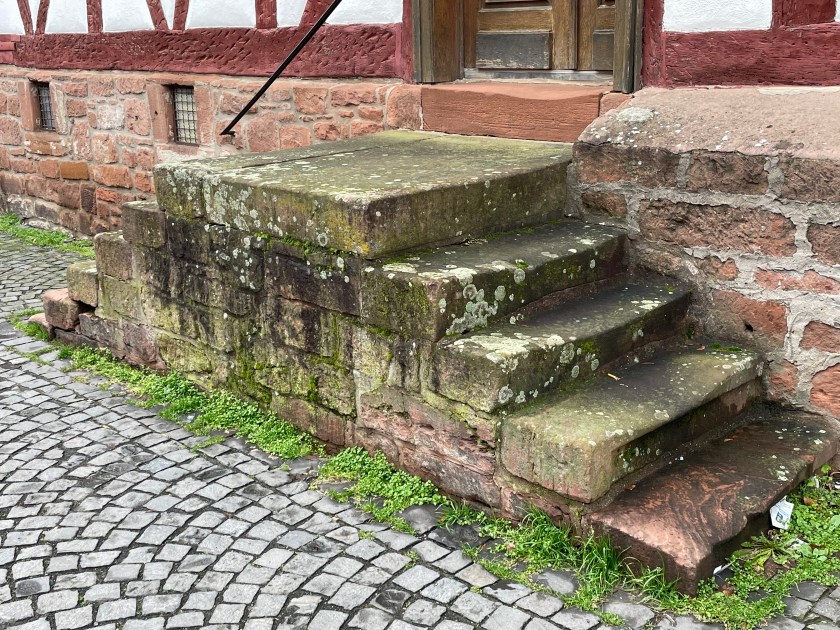
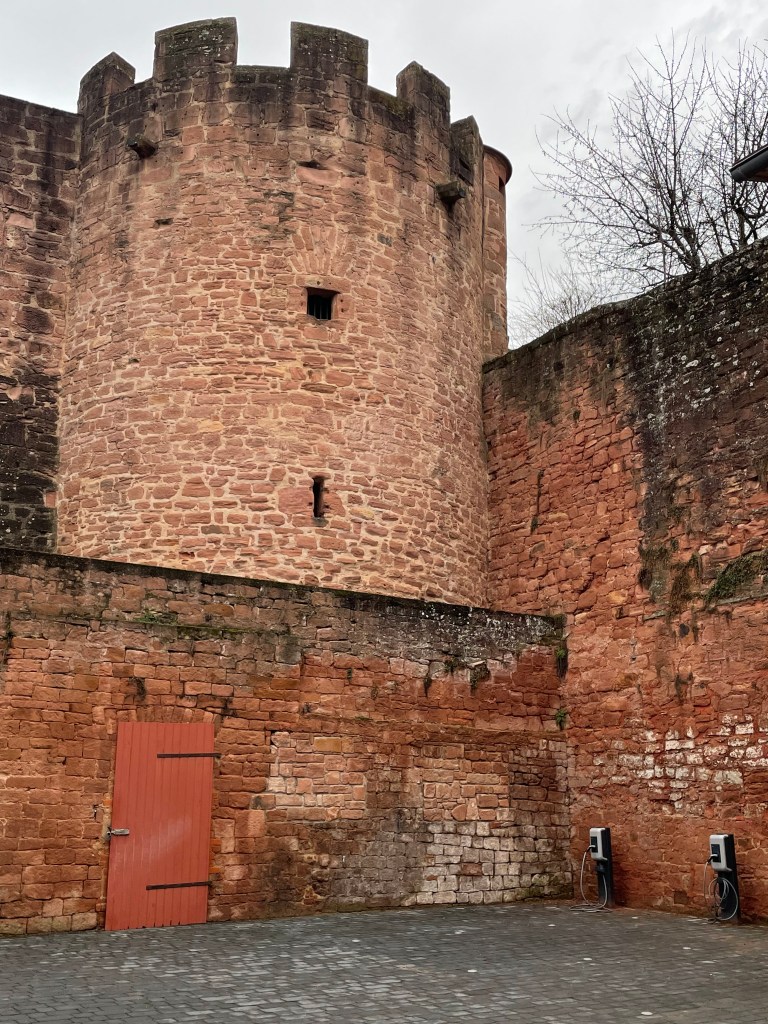
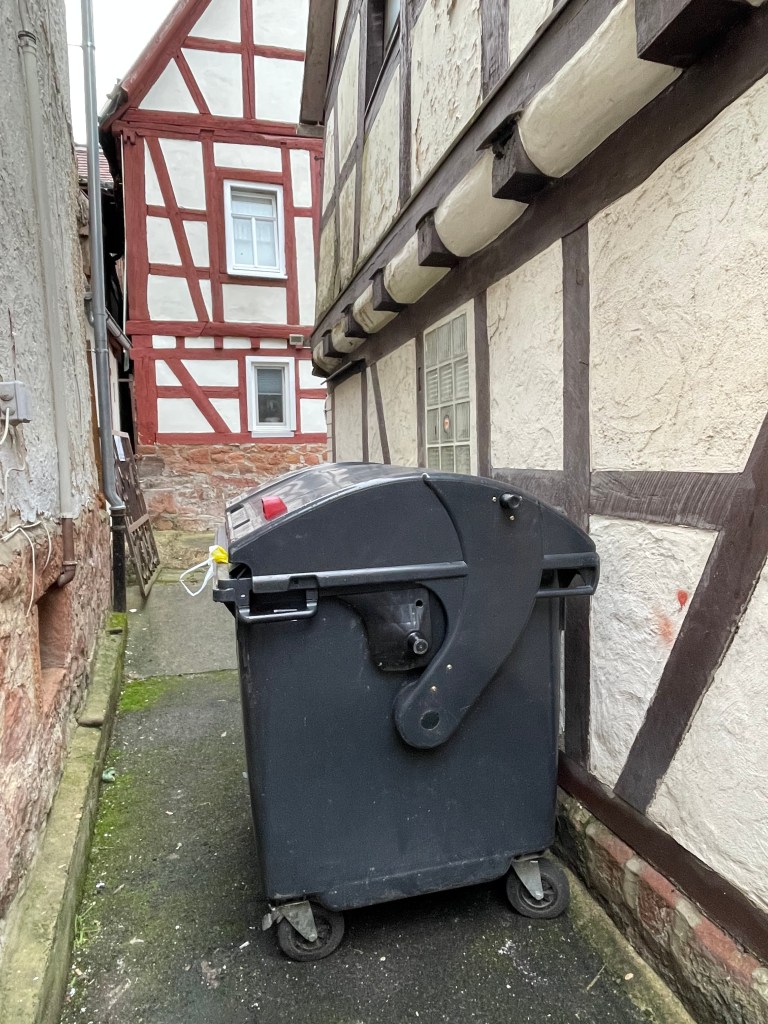
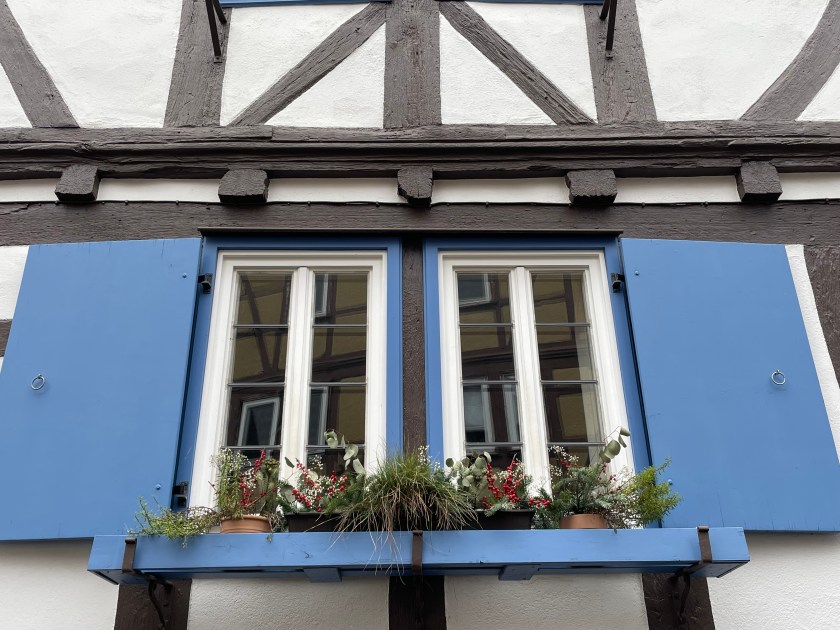
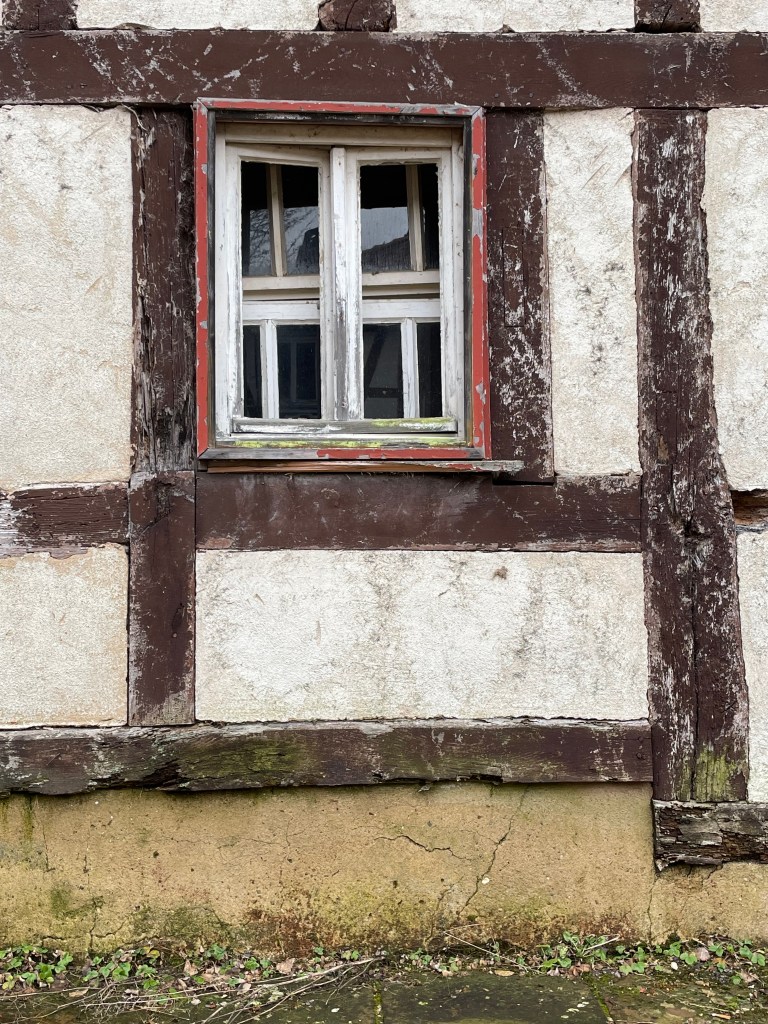
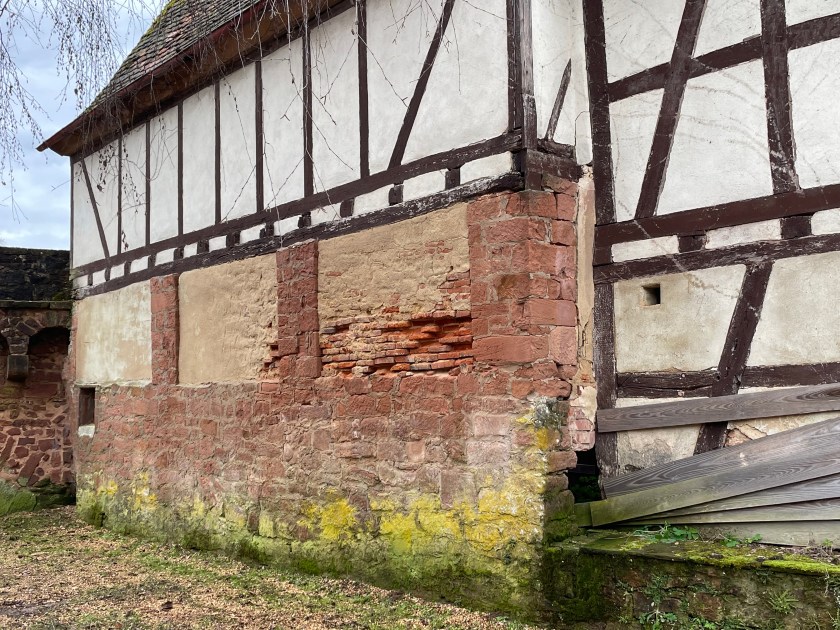
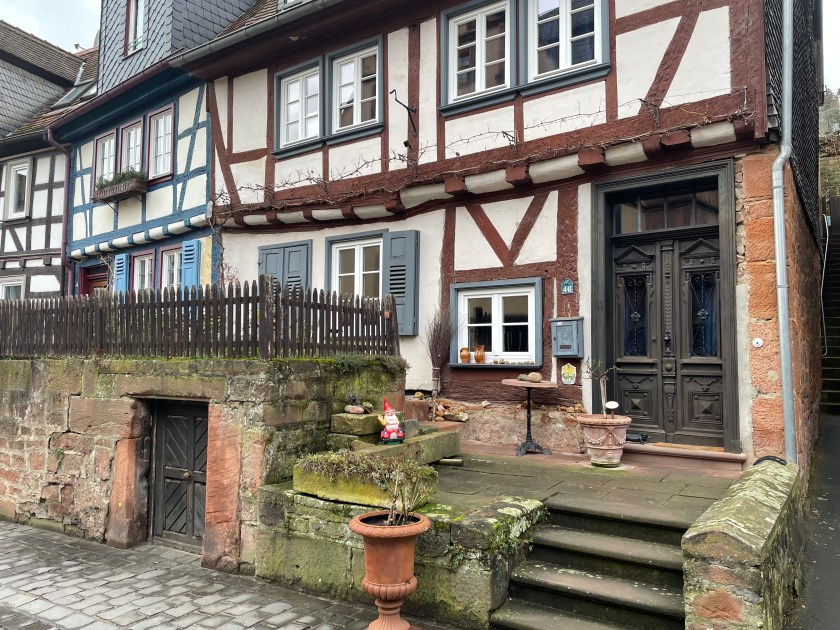
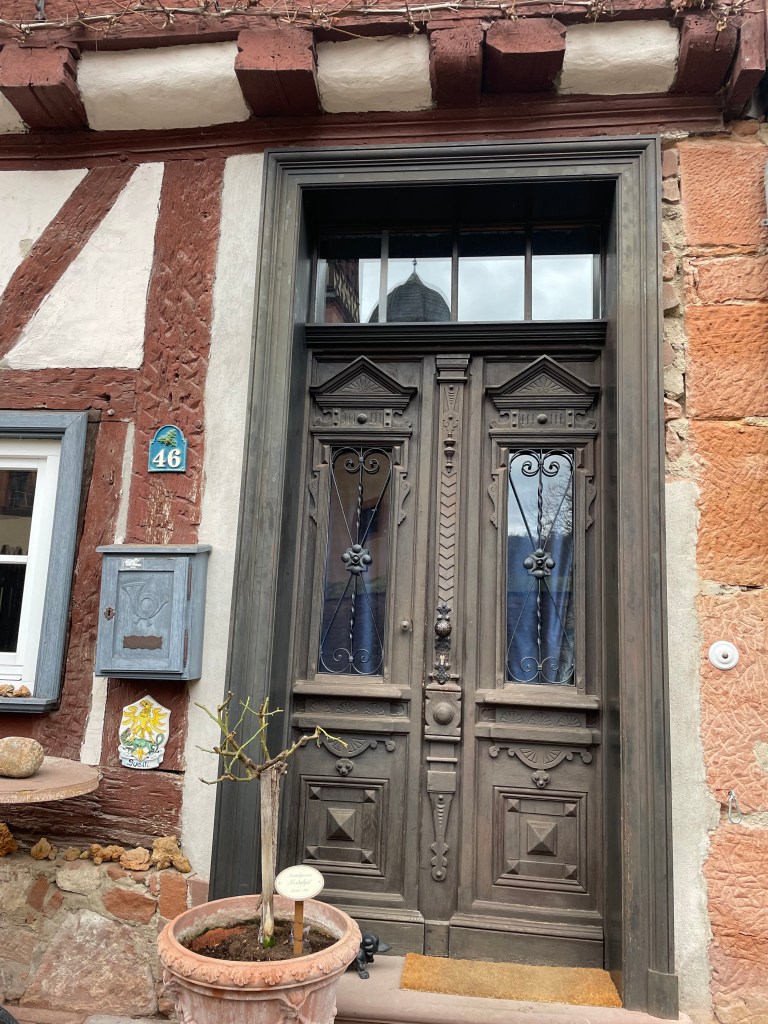
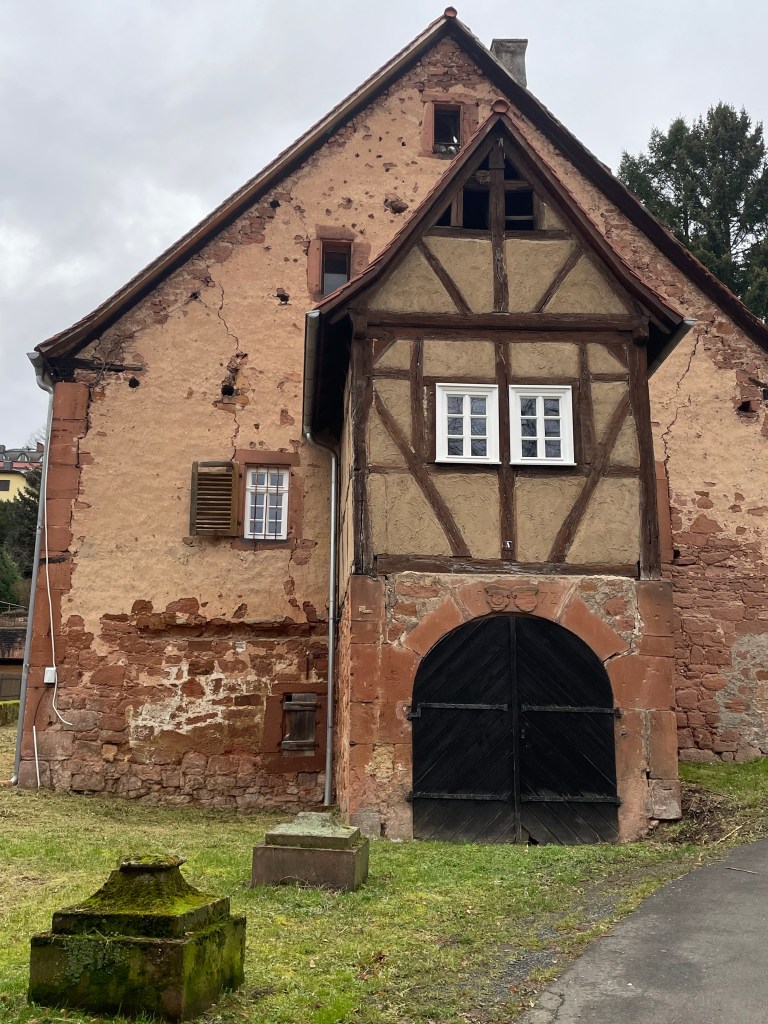
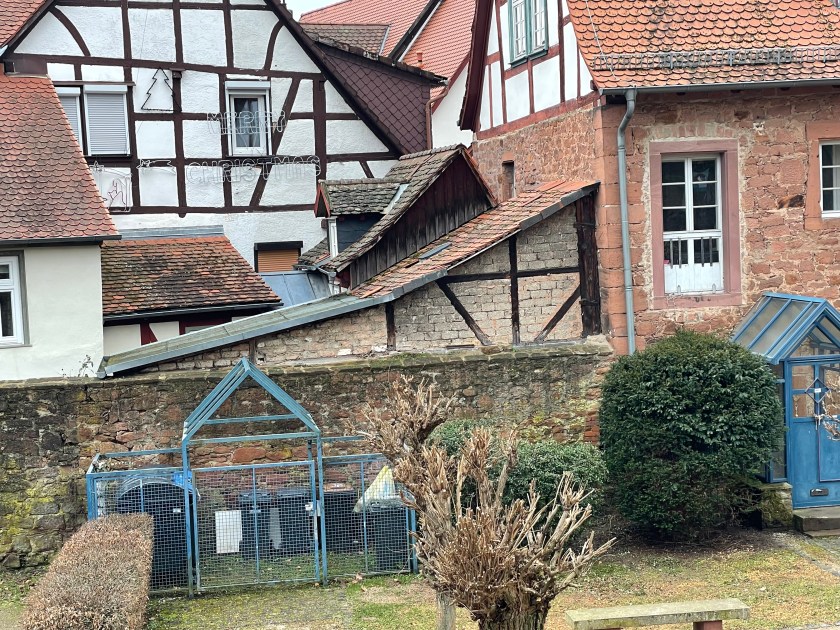
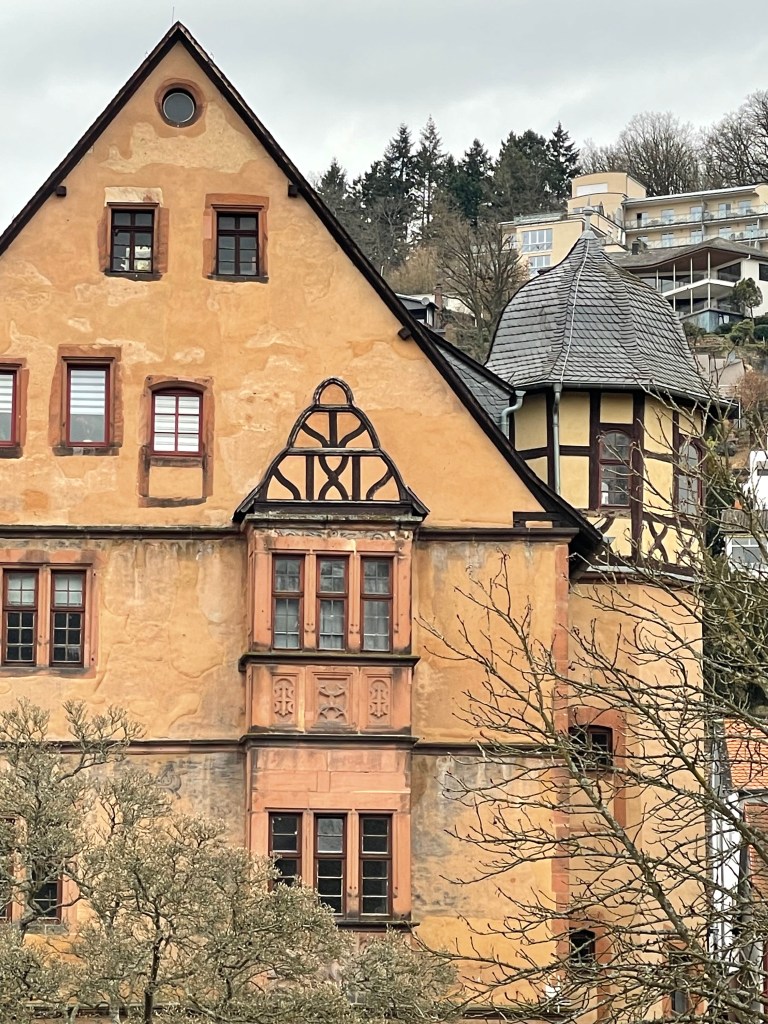
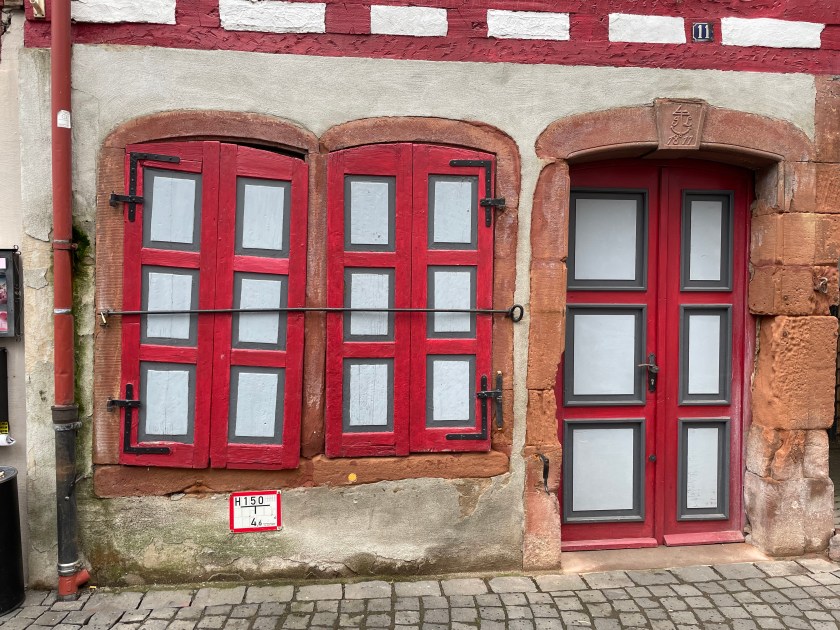
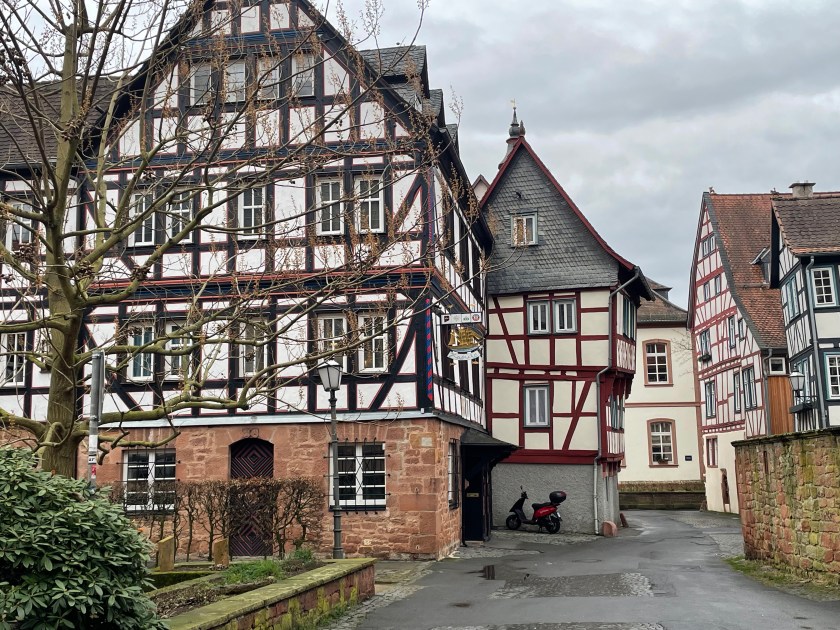
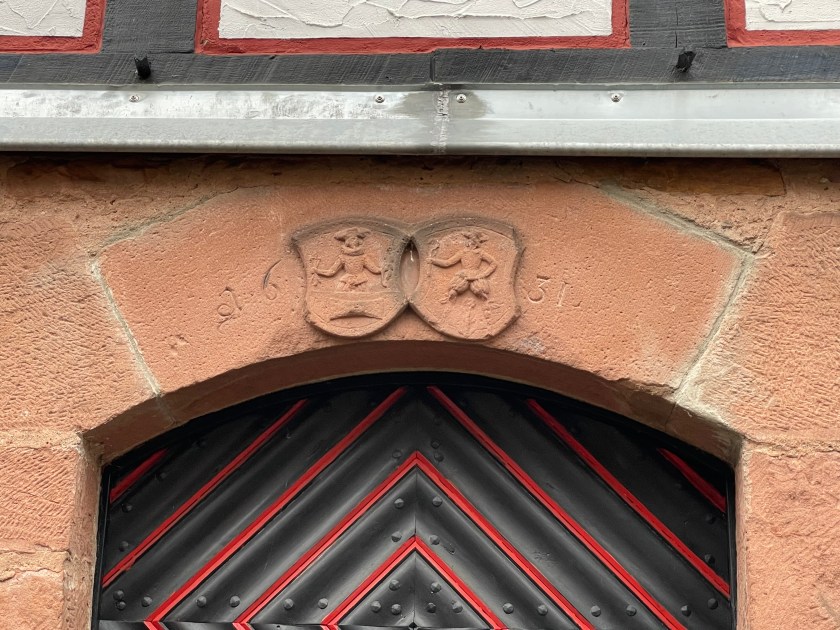
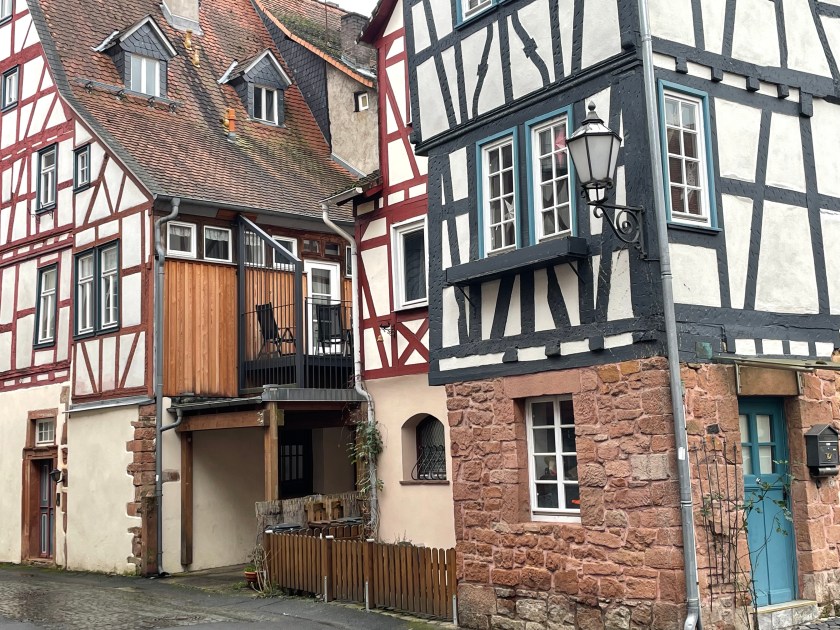
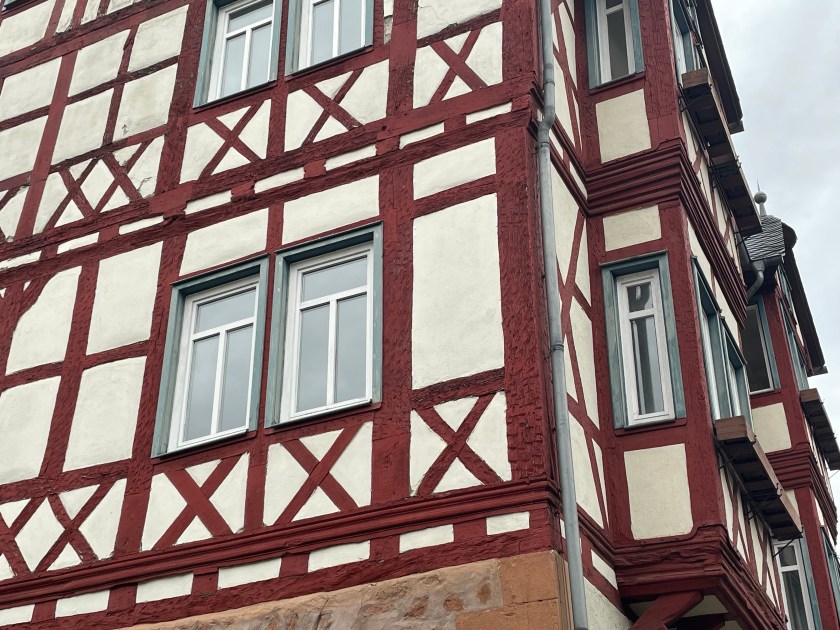
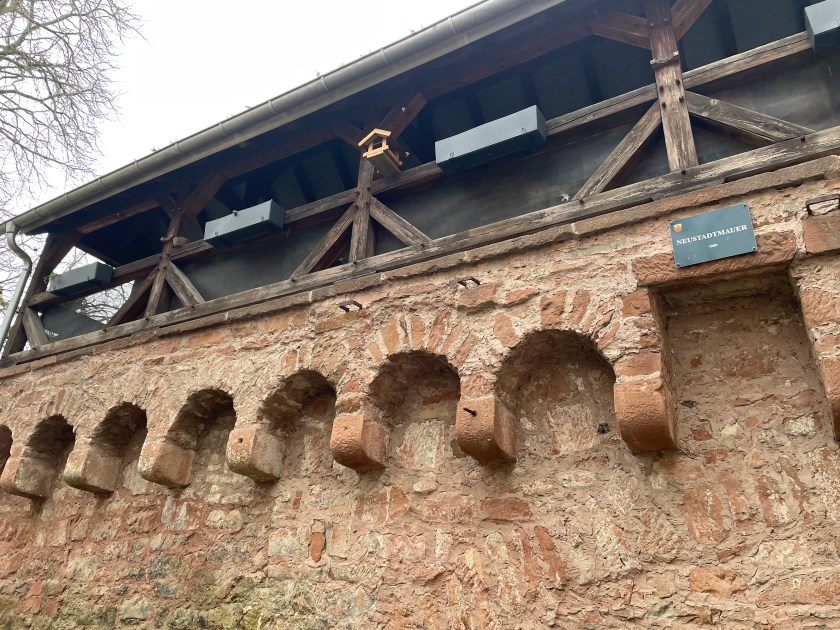
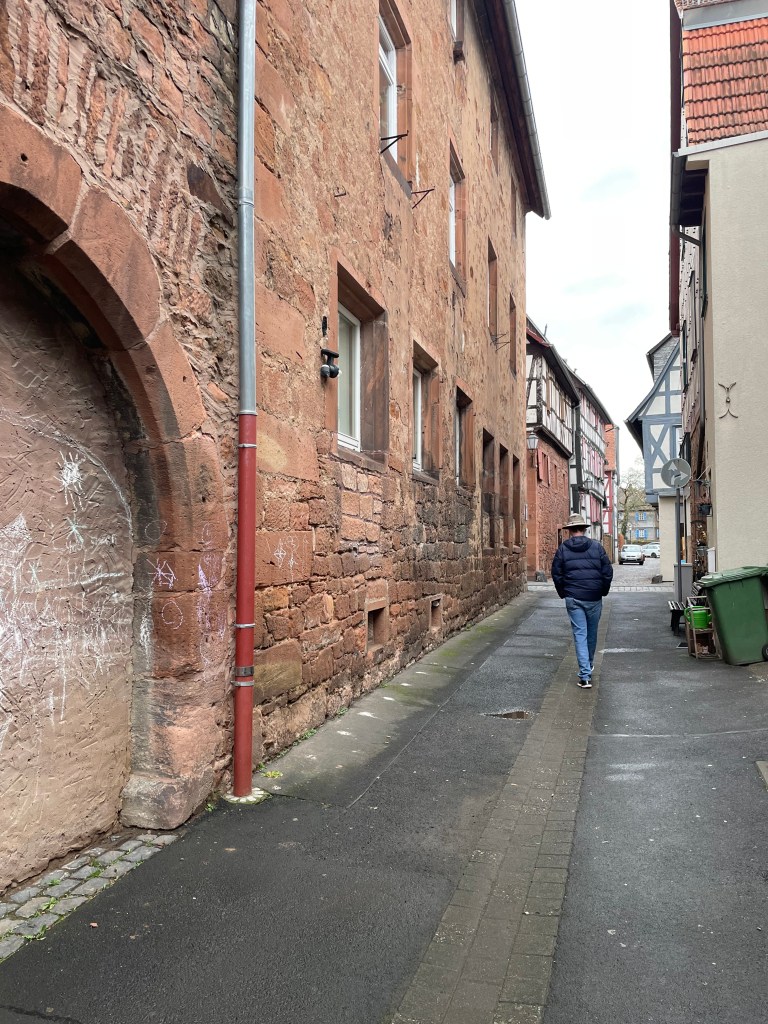
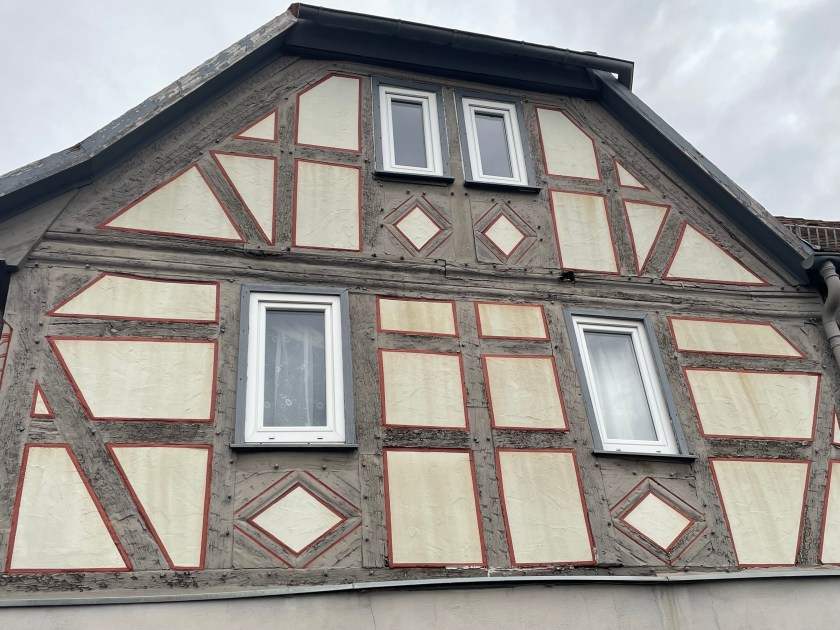
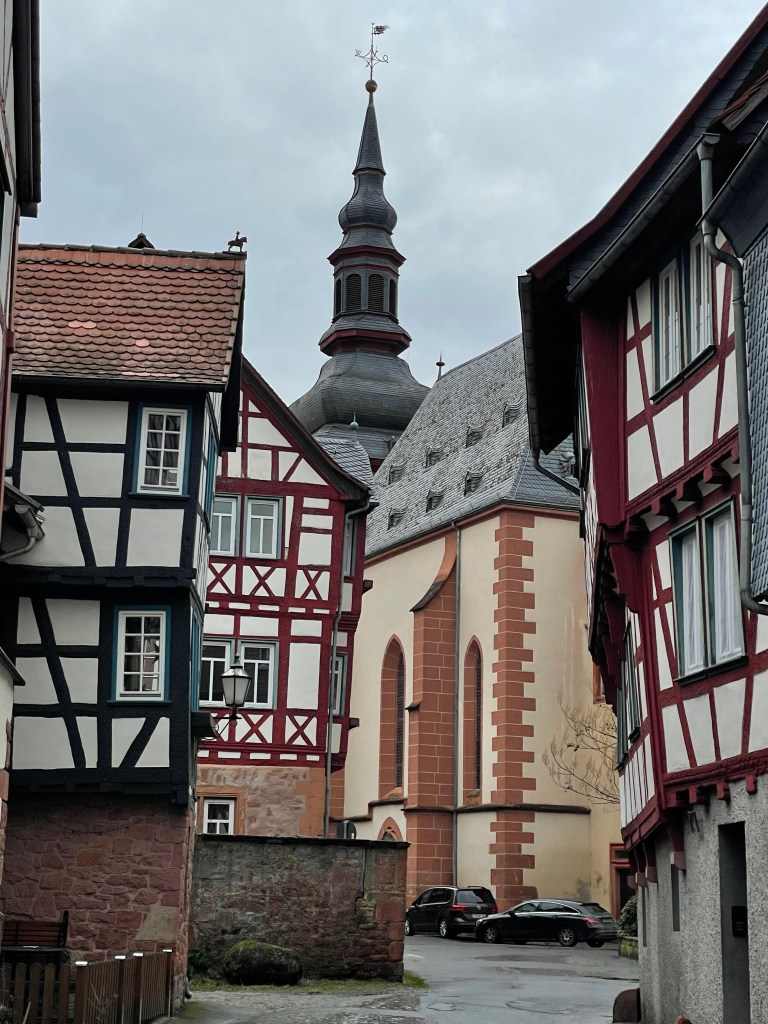
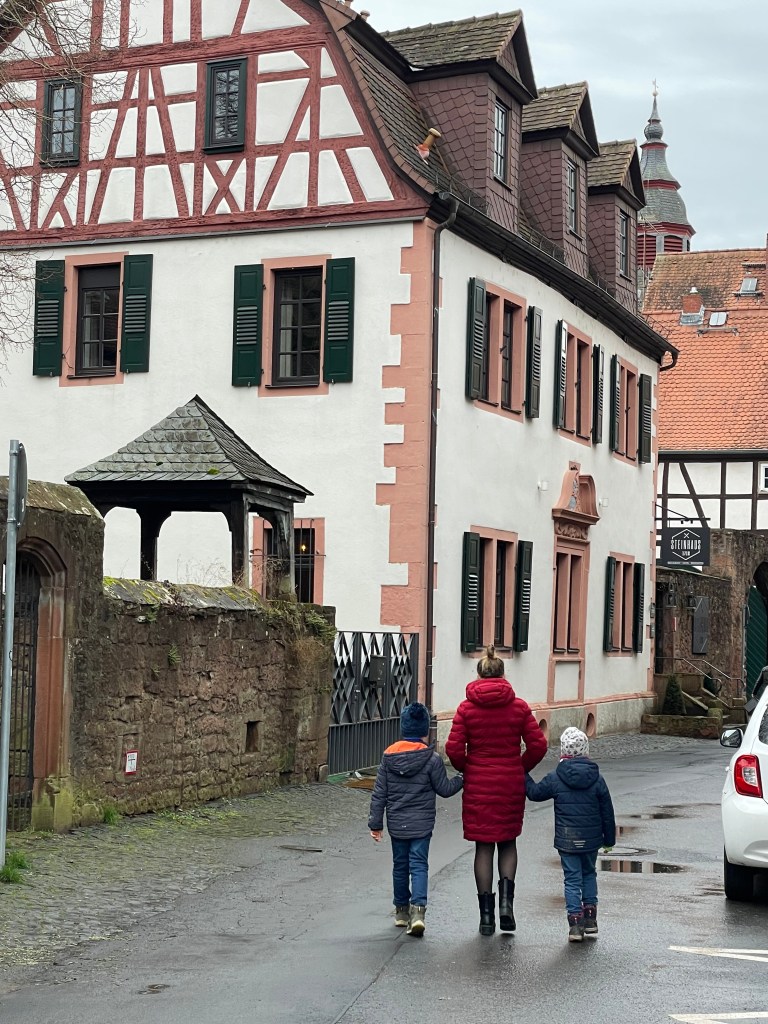
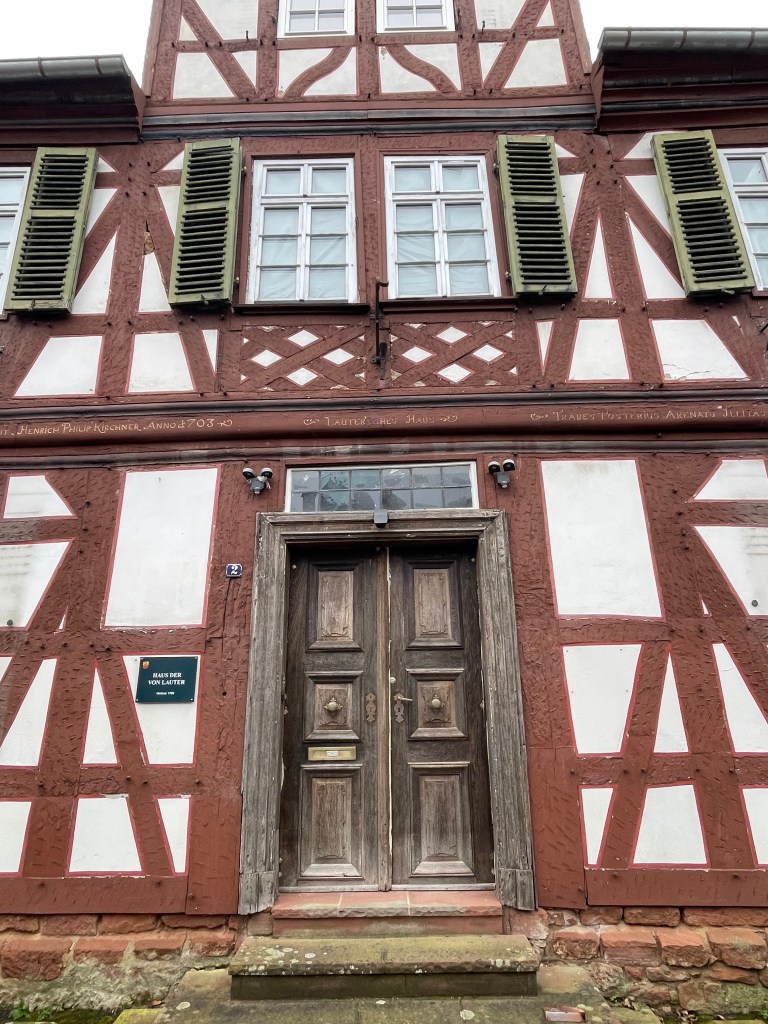
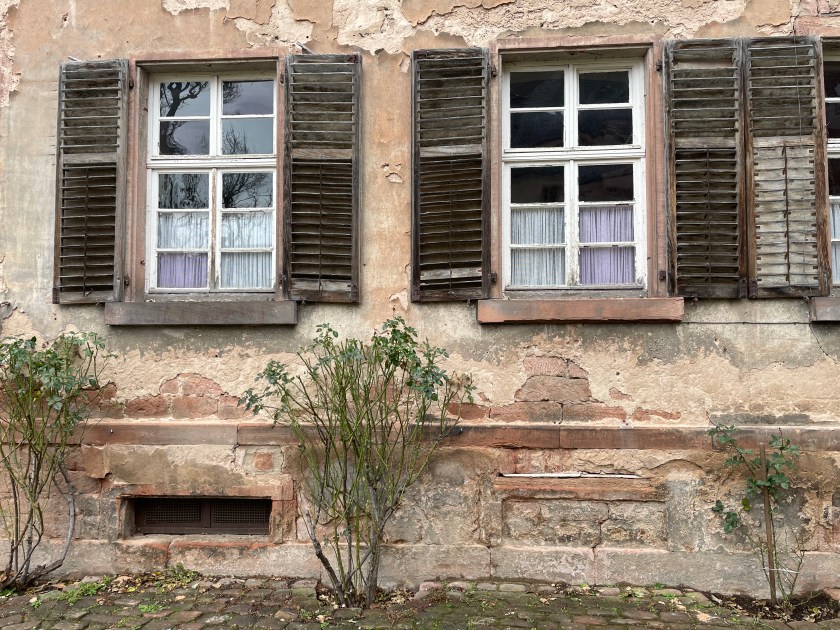
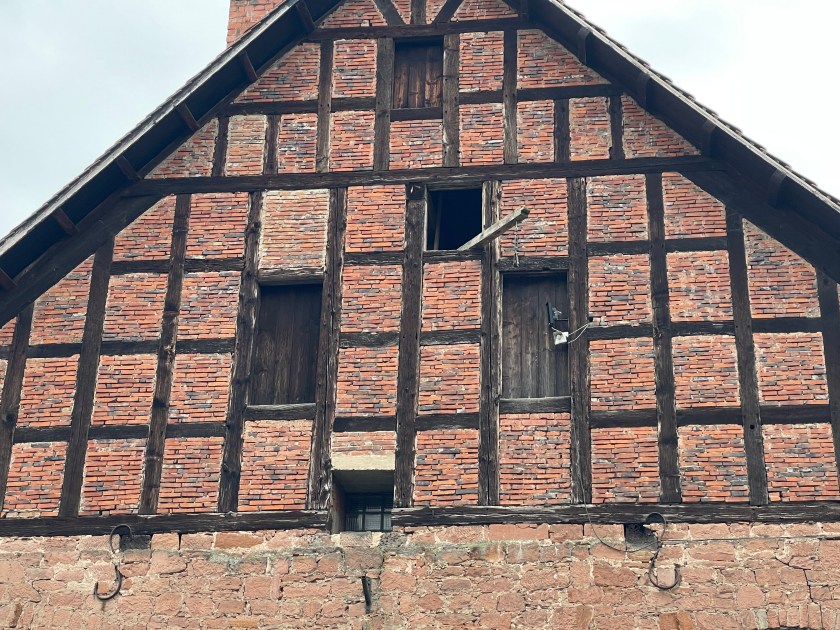
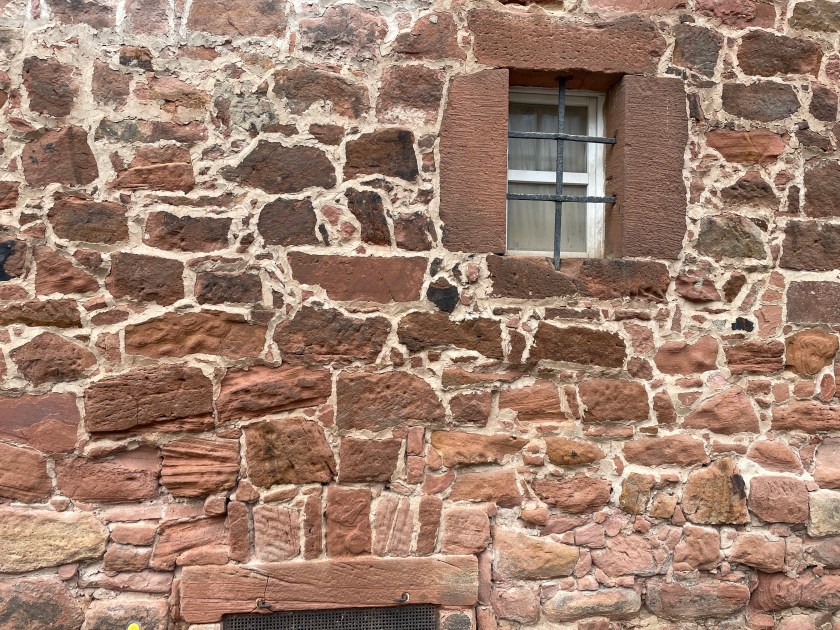
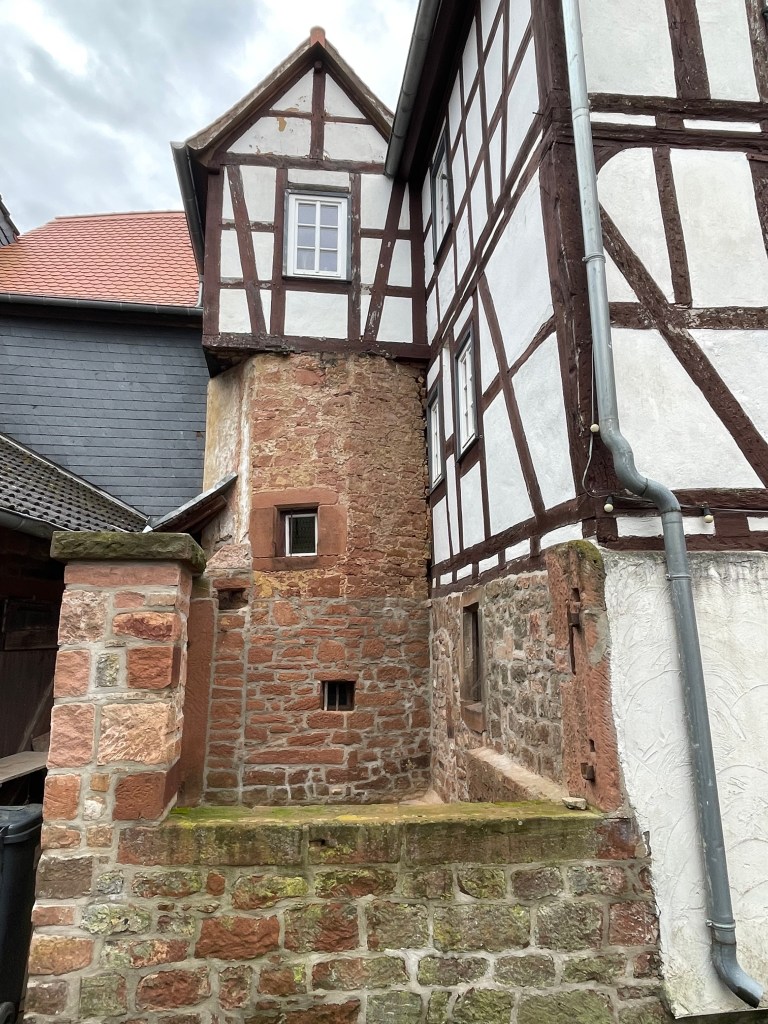
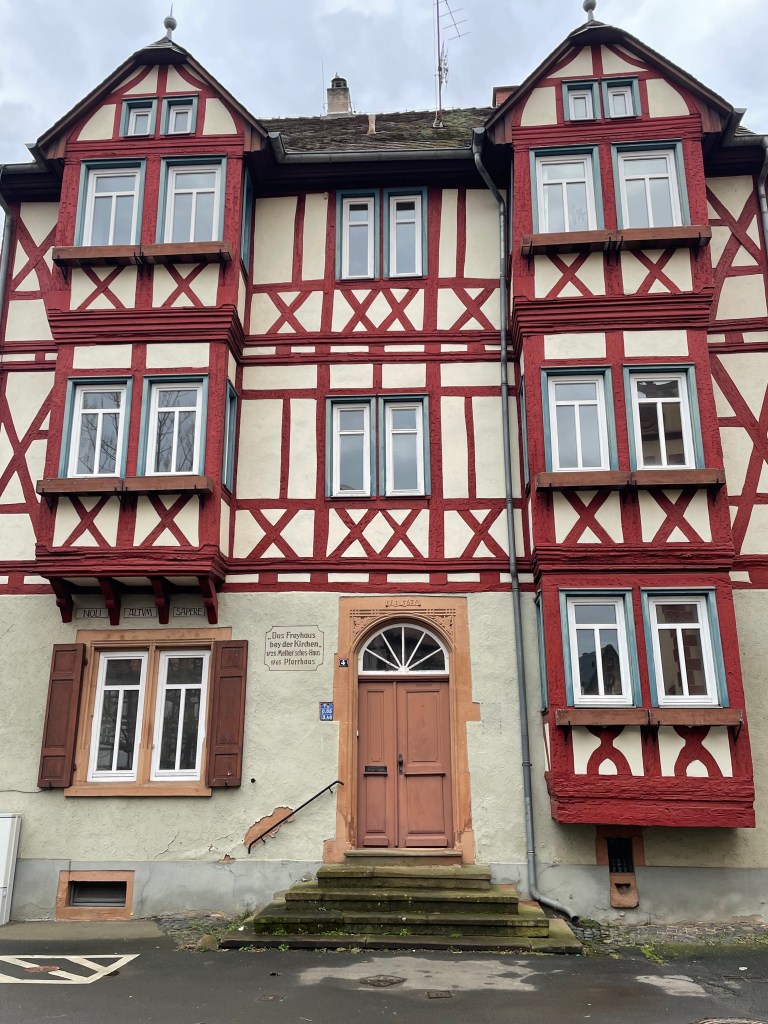
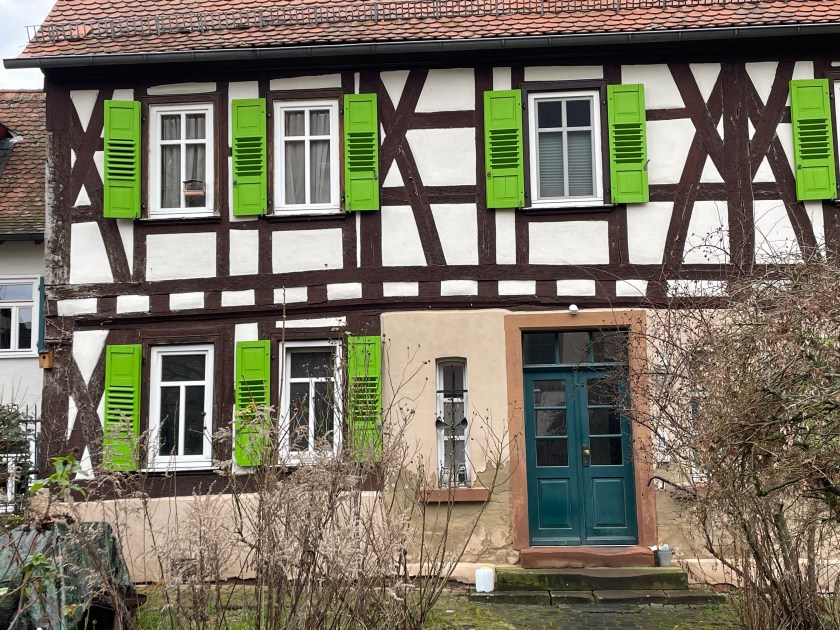
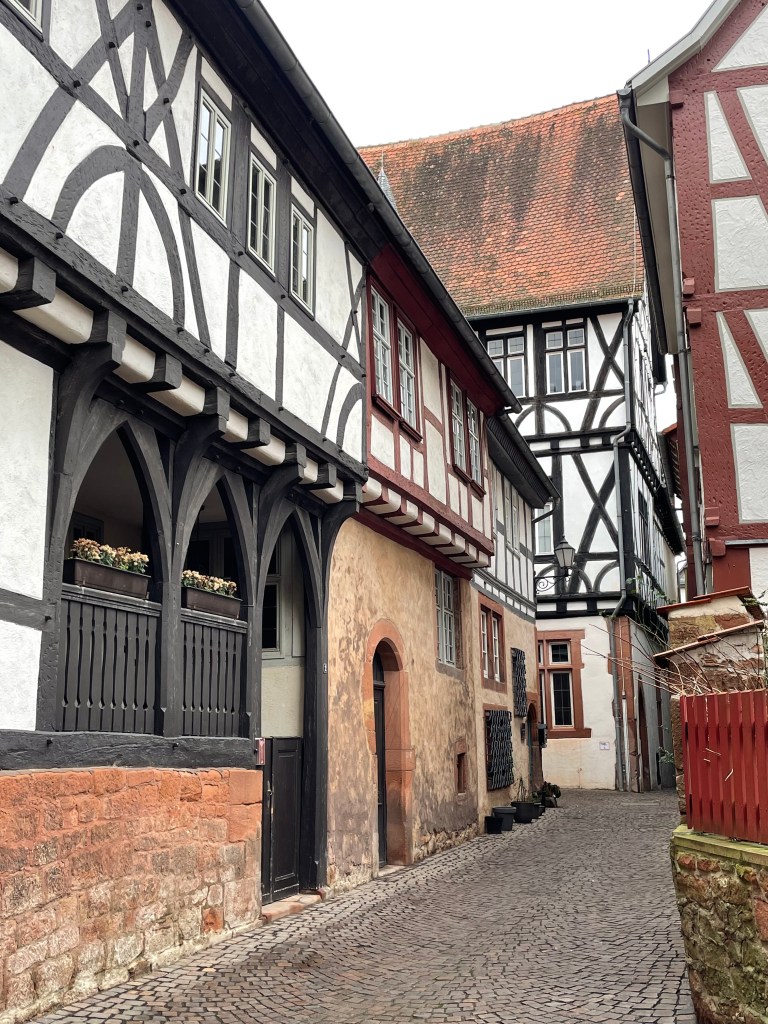
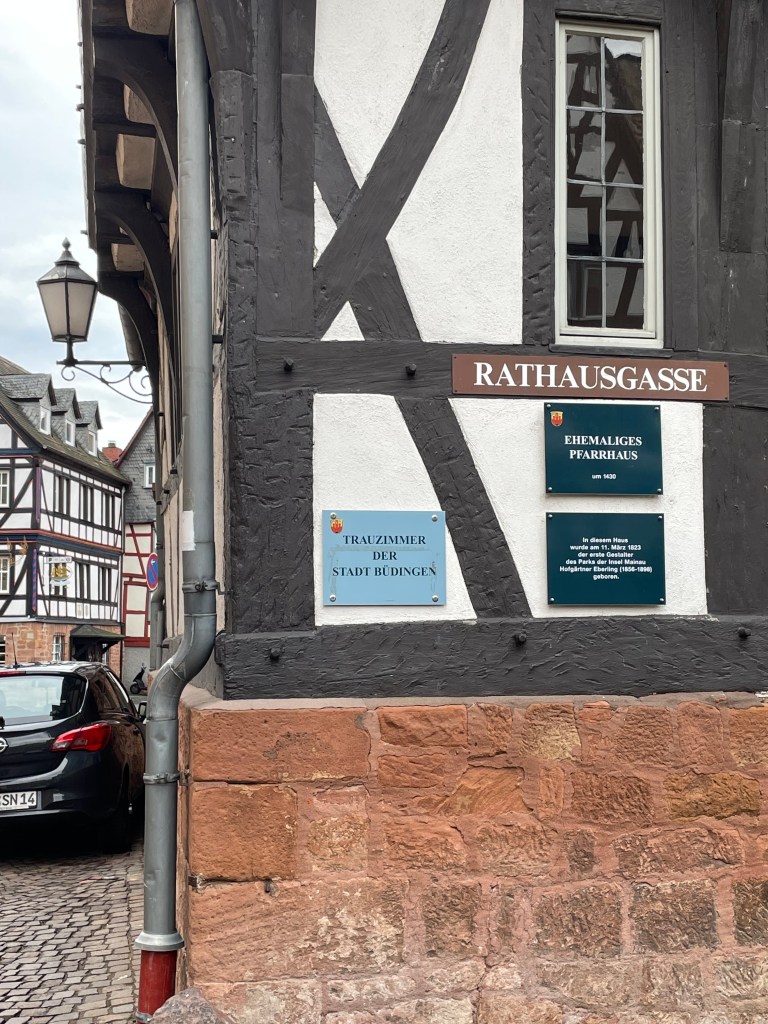
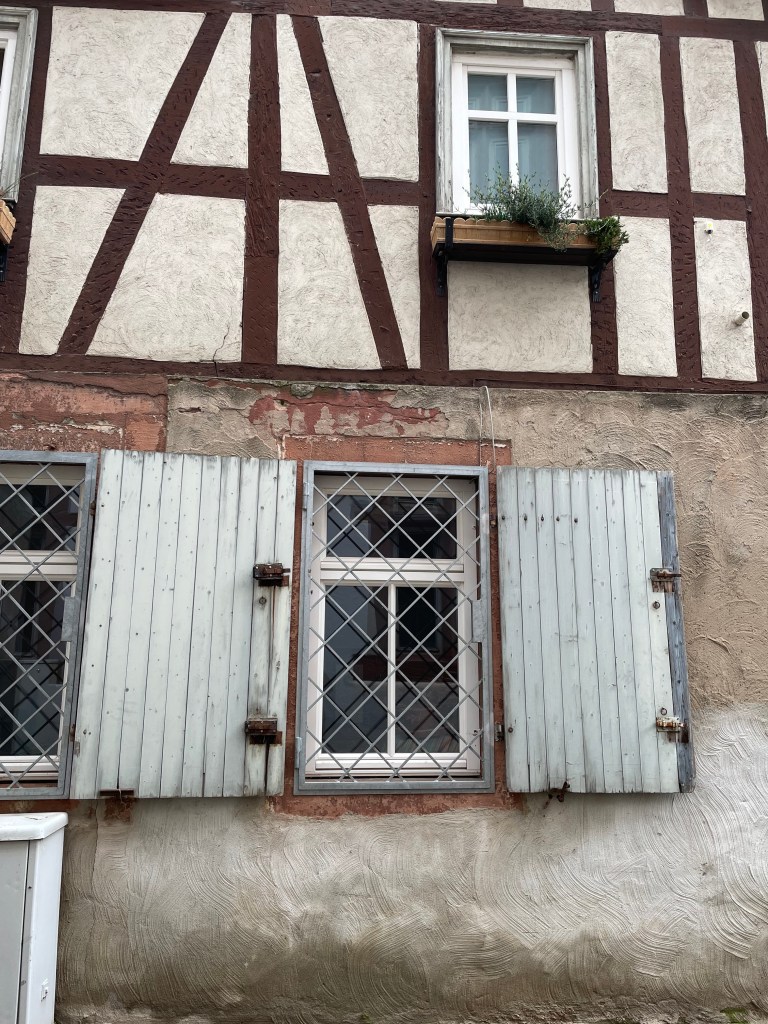
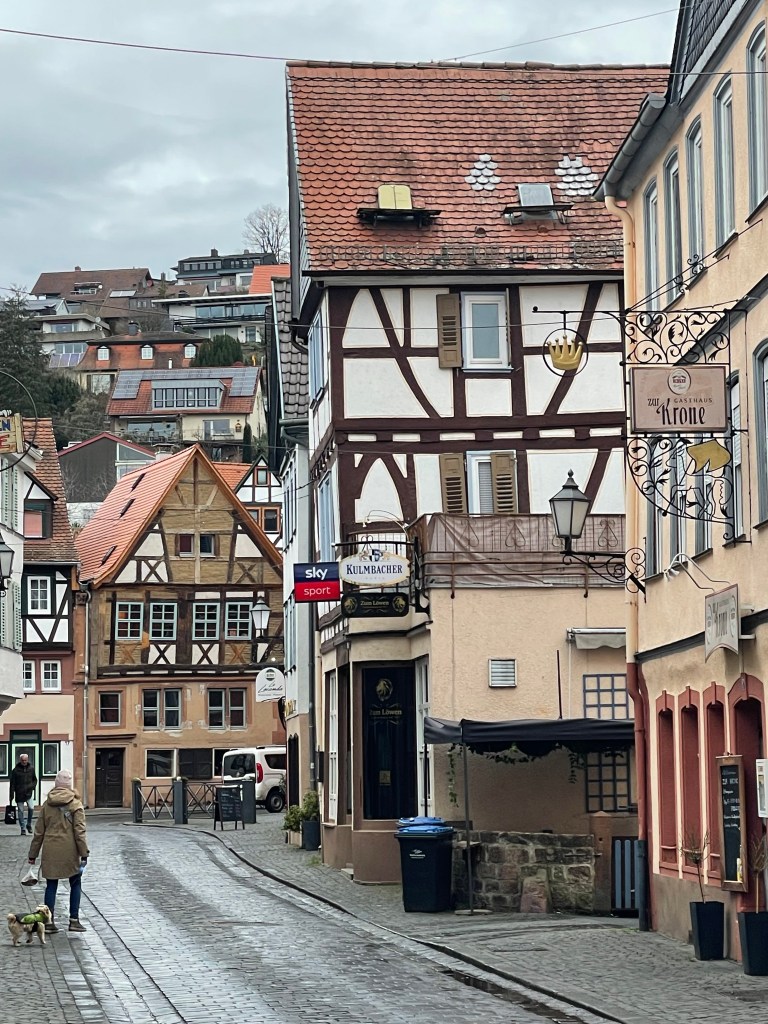
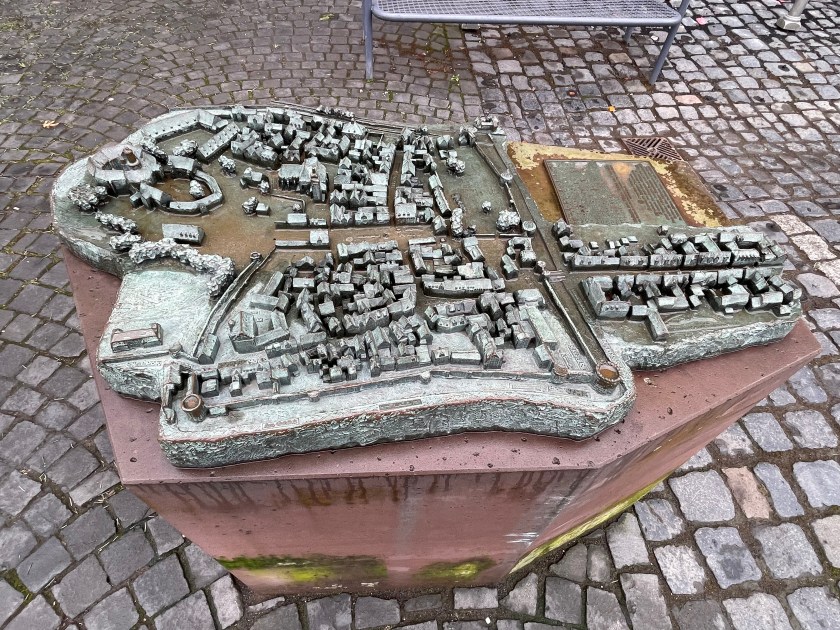
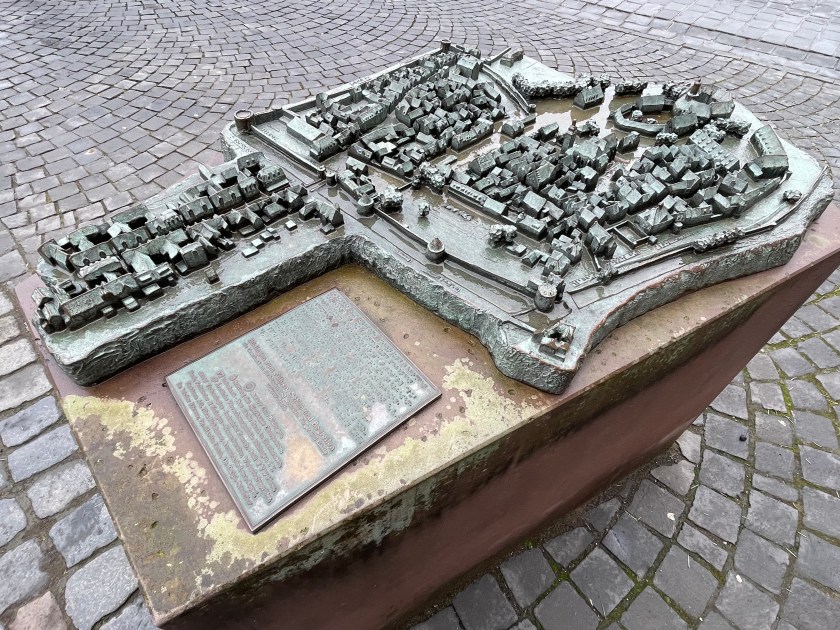
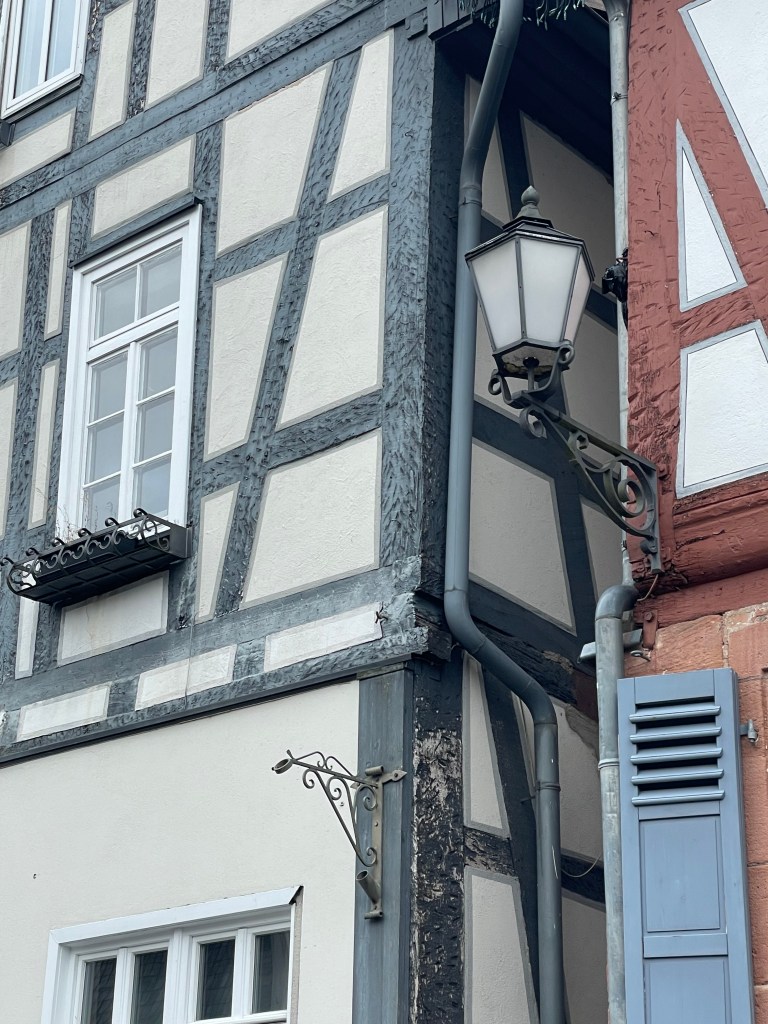
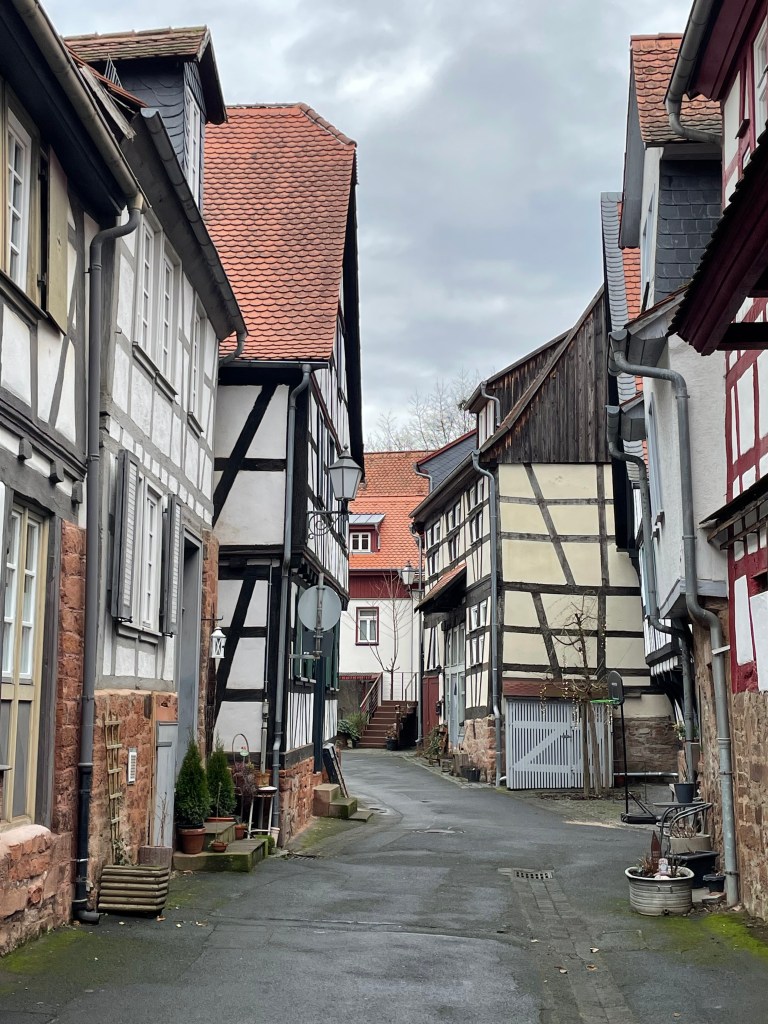
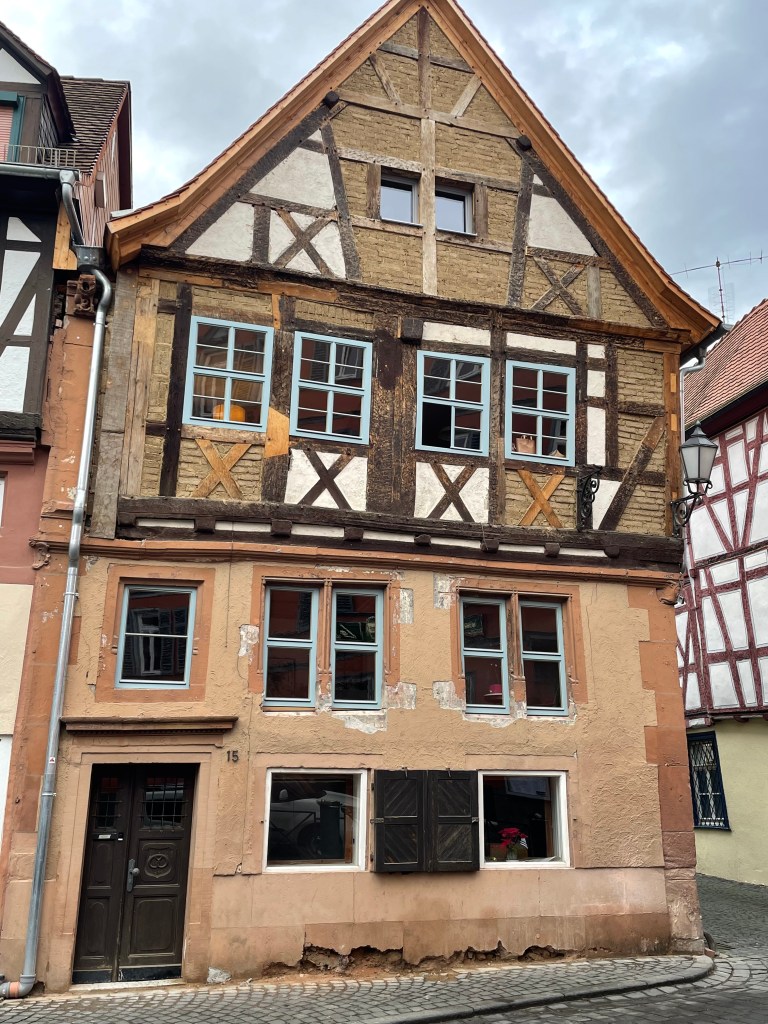
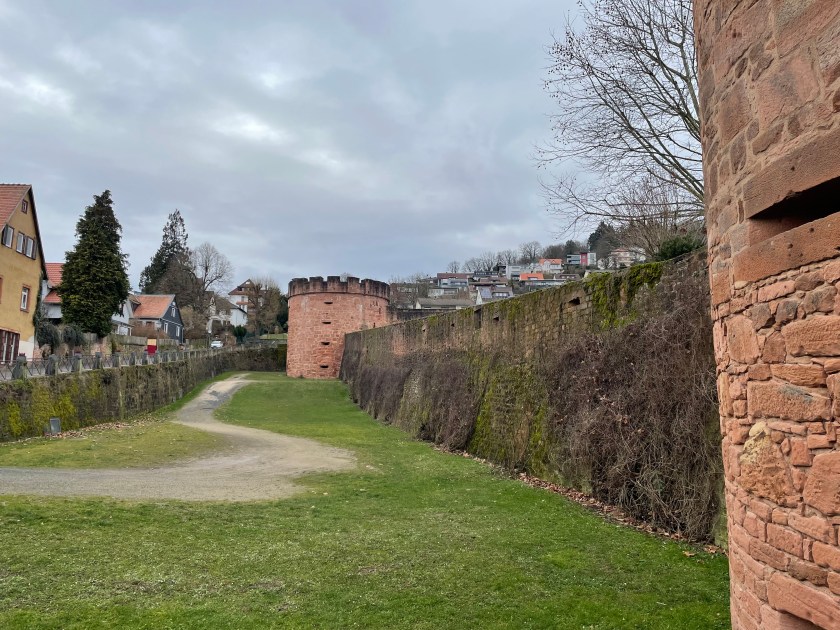
Büdingen is often referred to as the Rothenburg of Hesse. In the historic town center there are half-timbered houses, some of which are several hundred years old. However, the ground floor is mostly made of solid sandstone, which was used for fire protection at the time. The town ‘s well-preserved medieval fortifications are worth seeing: large parts of the town wall, the defense towers and the town gates have been preserved and are partly accessible. Büdingen is located on the German Half-Timbered House Route .
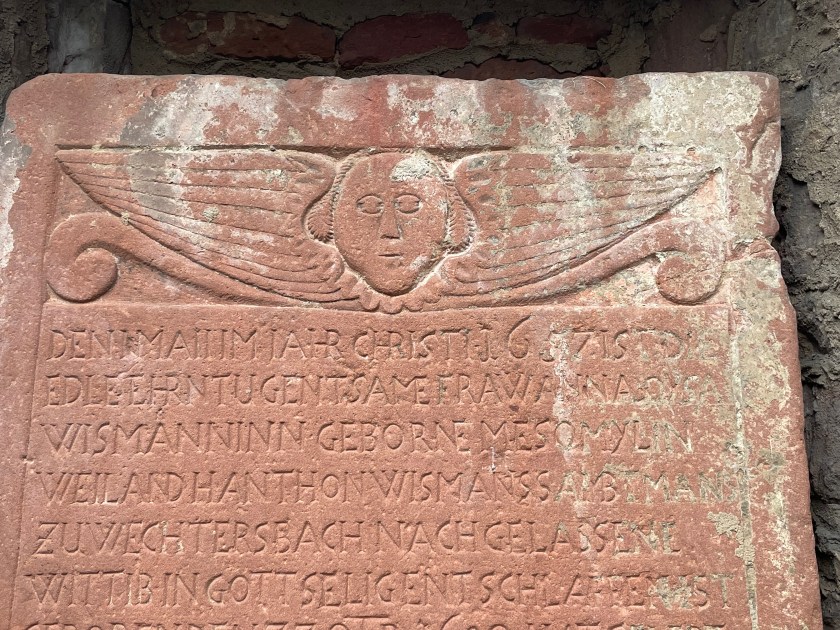
Between 1532 and 1699 (peak 1633–1653) there were many witch trials and 485 people were accused of alleged witchcraft. With over 400 executions, the small county of Büdingen was part of the core zone of witch persecution.

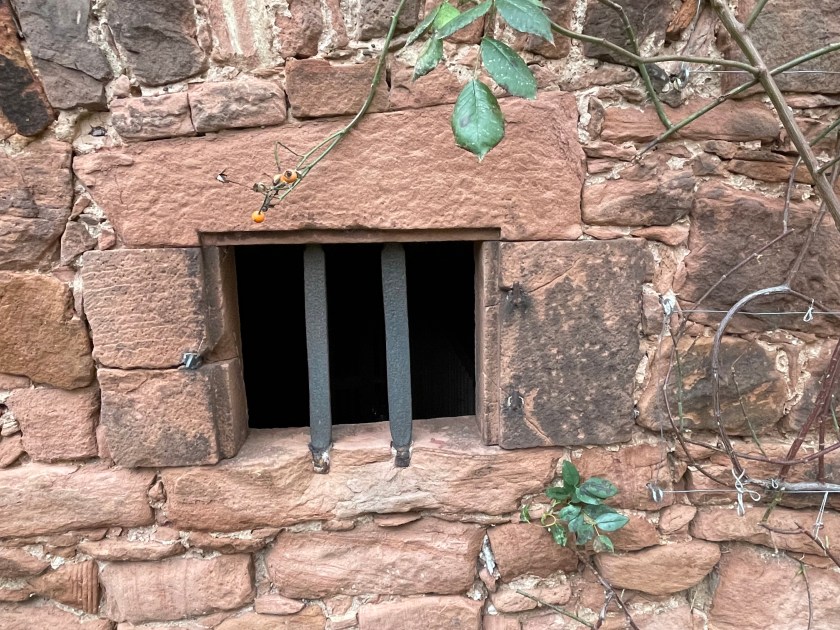
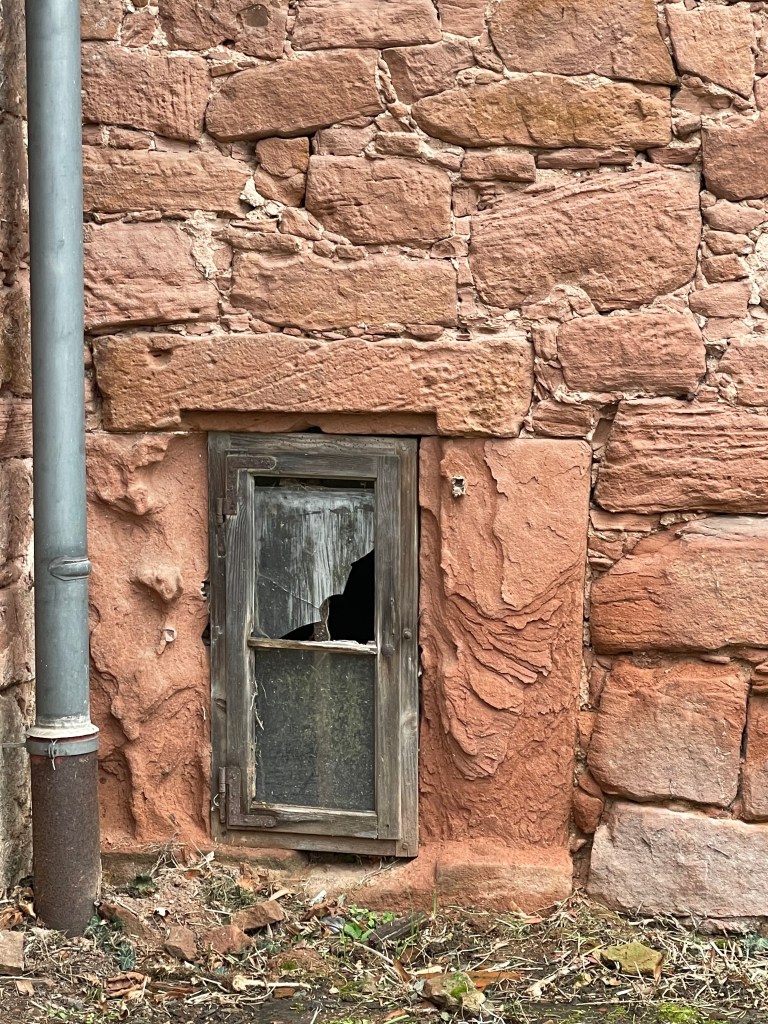
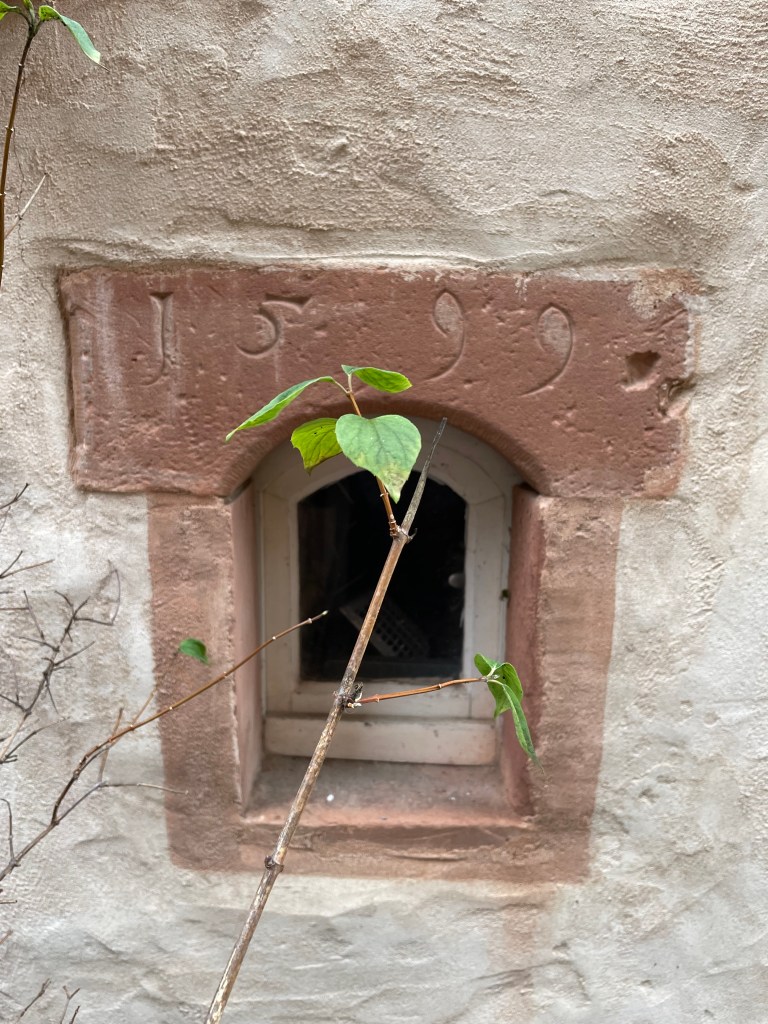
I stuck my camera in this cellar window to see what was down there.

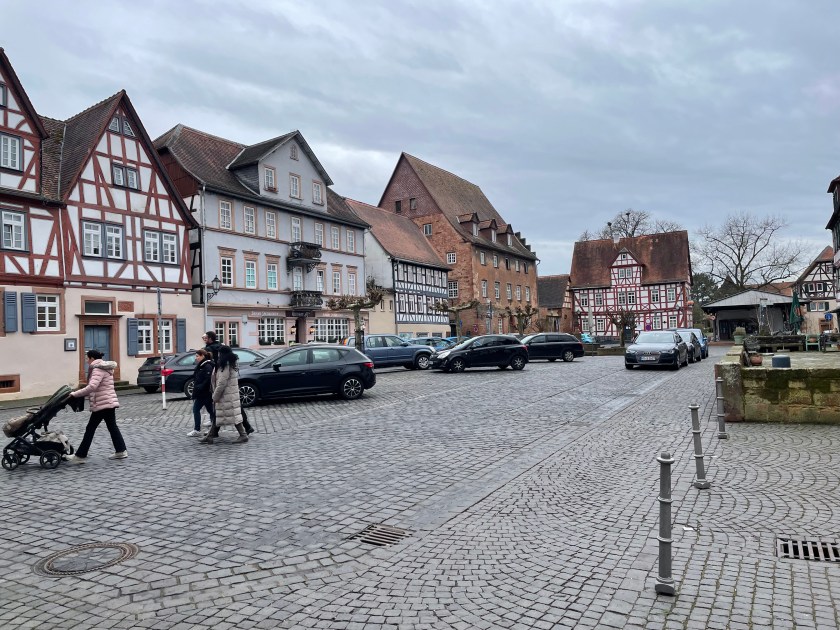
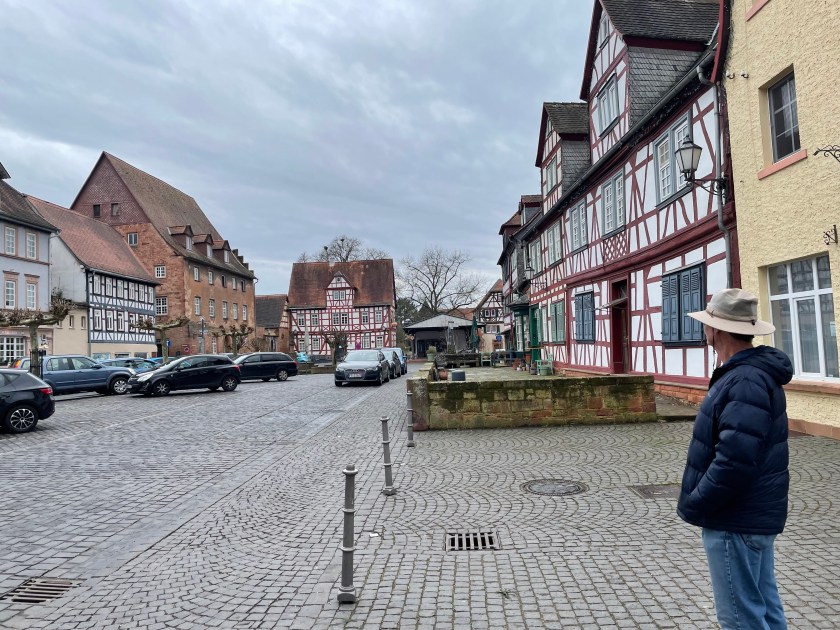
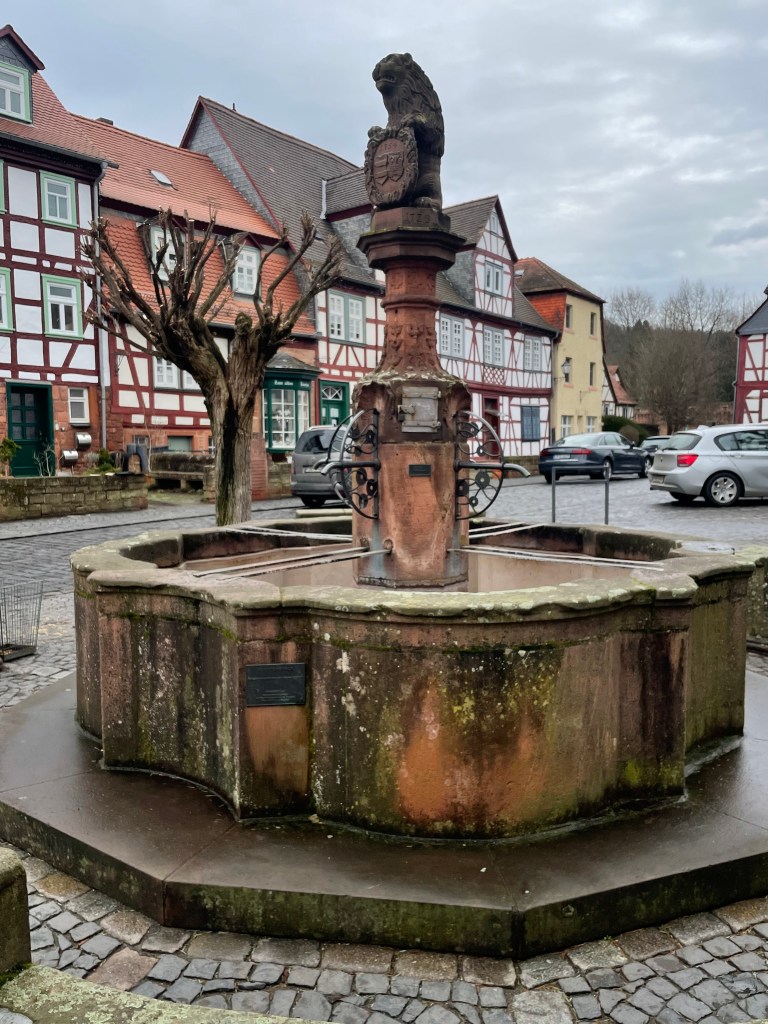
The town square.

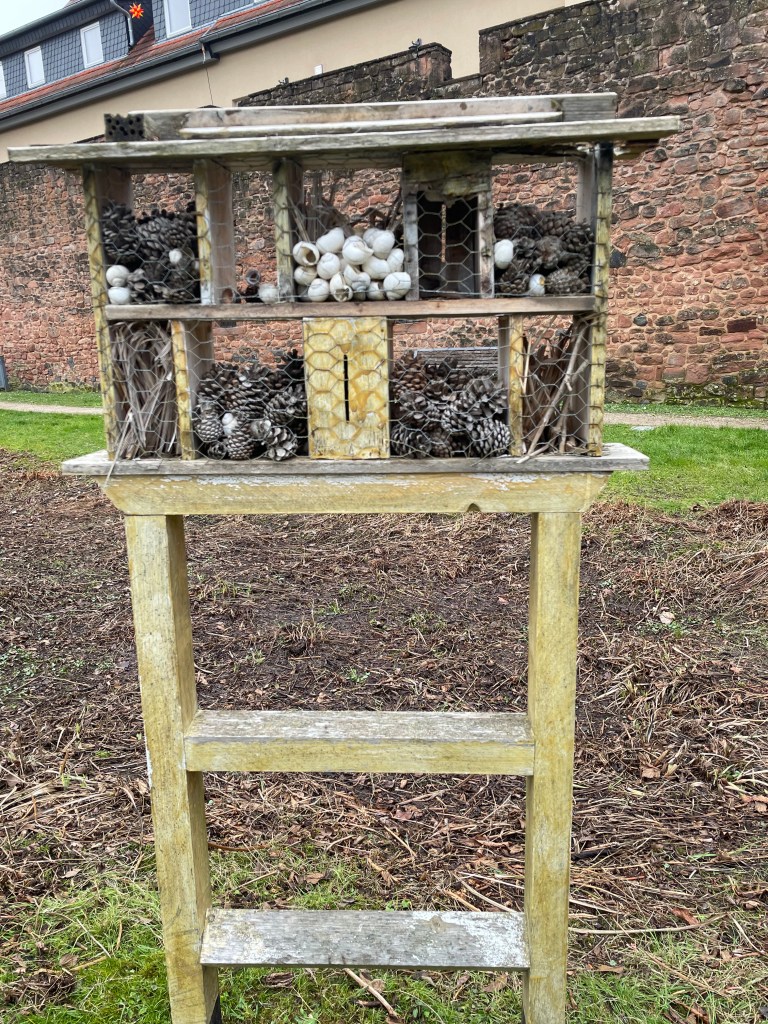
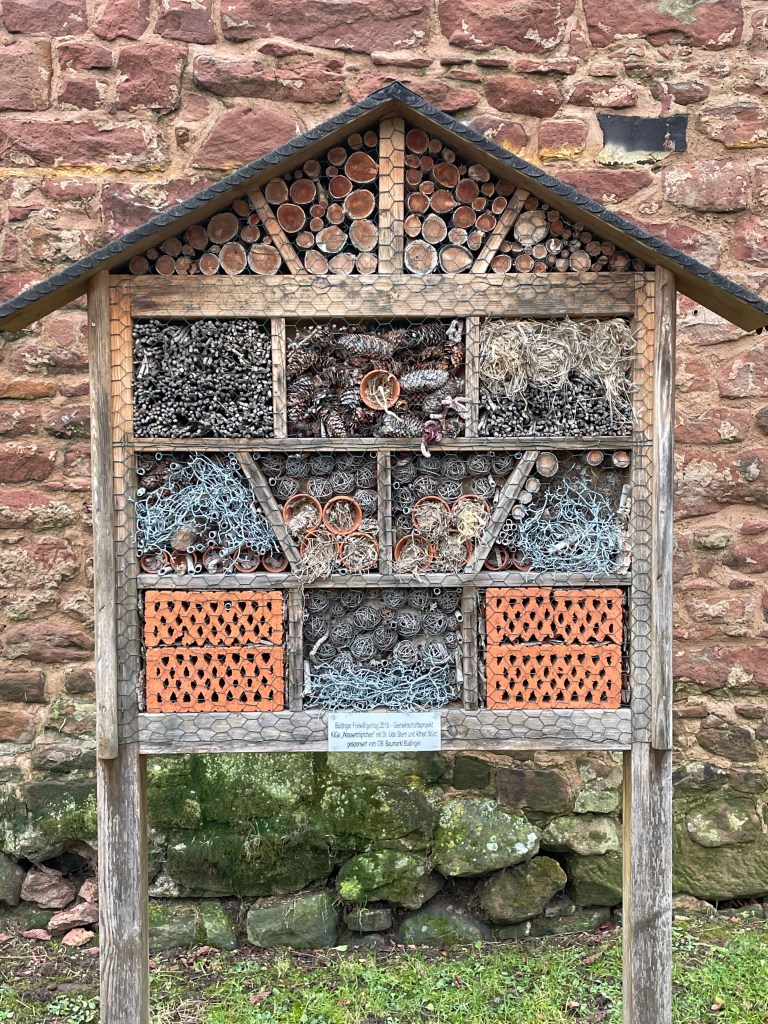
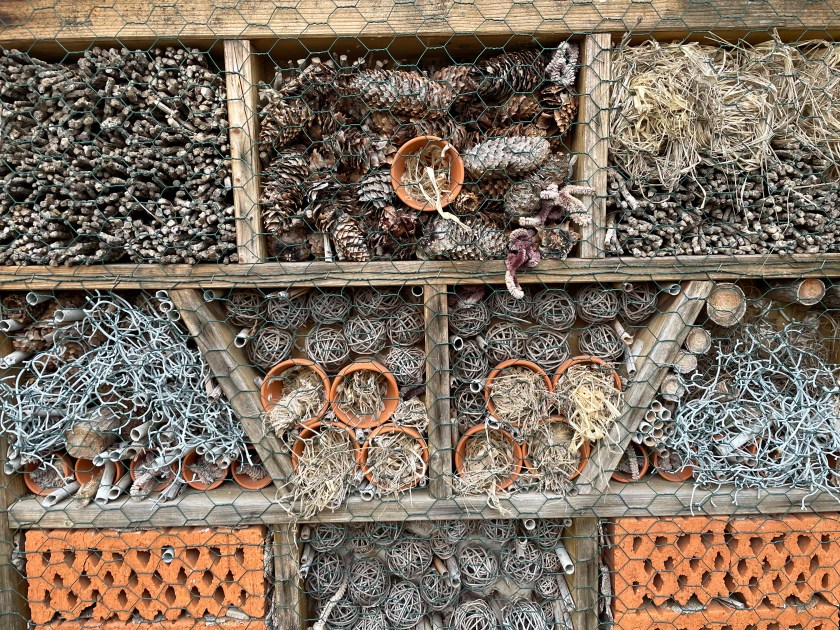
There were park areas around the outside of the city walls.  This is a house for insects and critters.

And this is a house filled with things birds can use to build their nests.  What a kindnes!

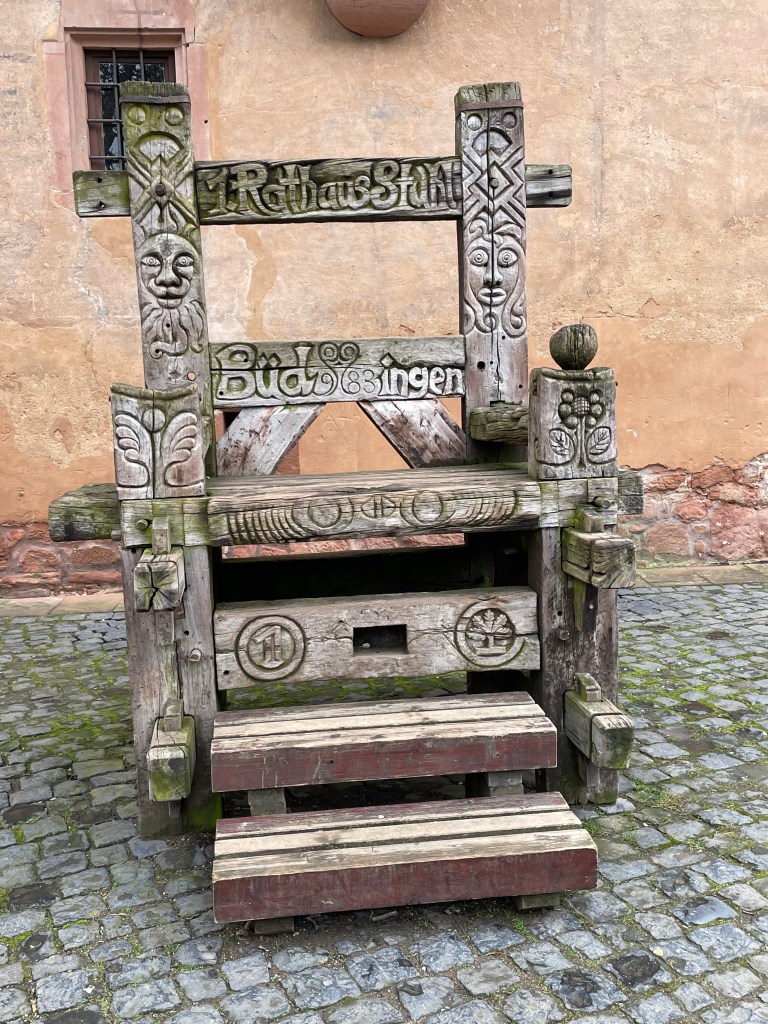
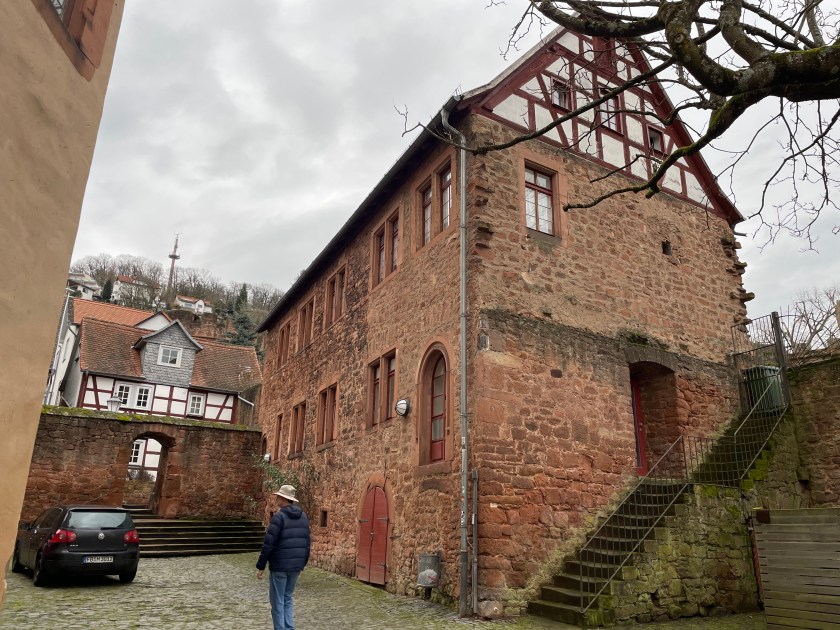
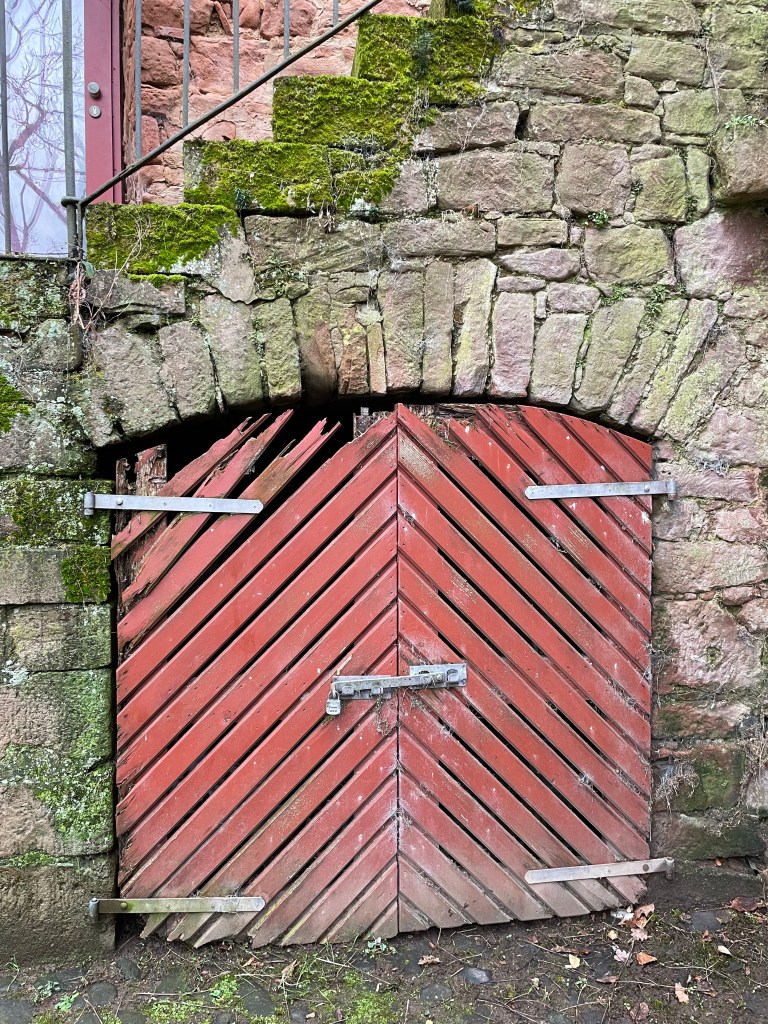
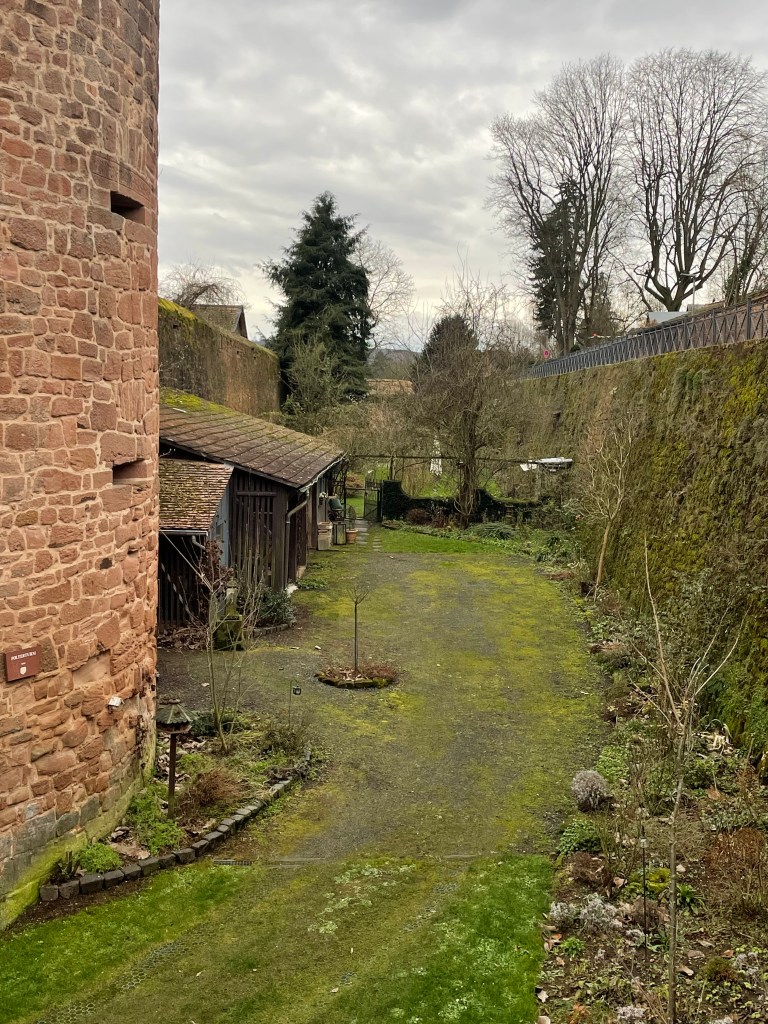
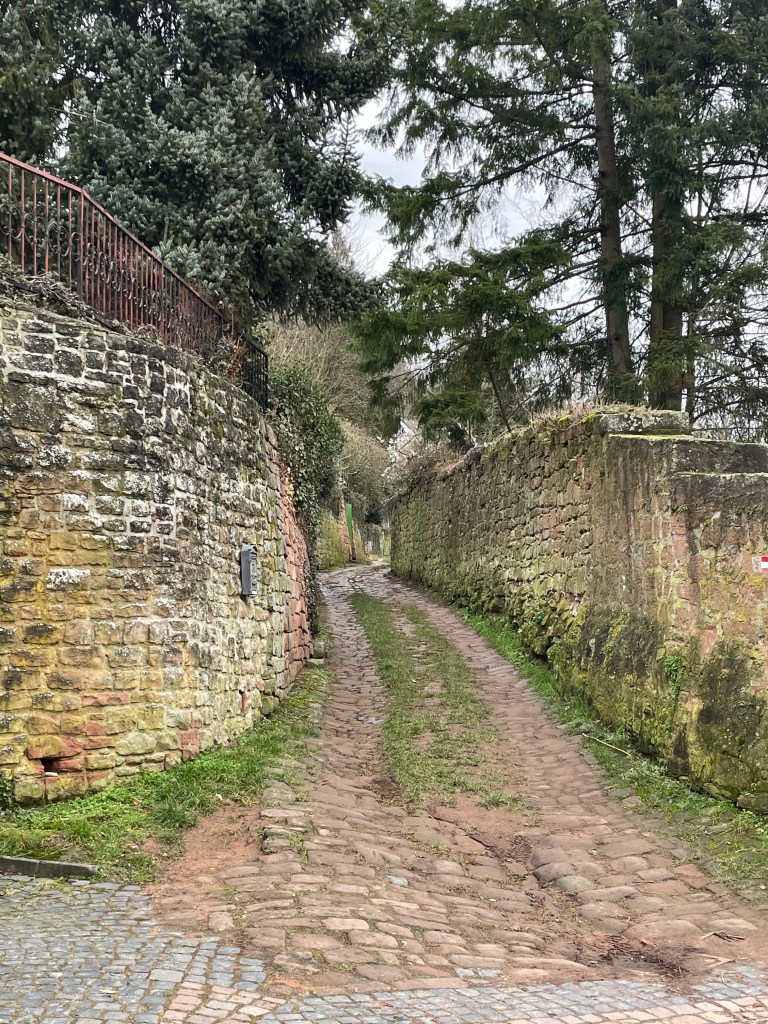
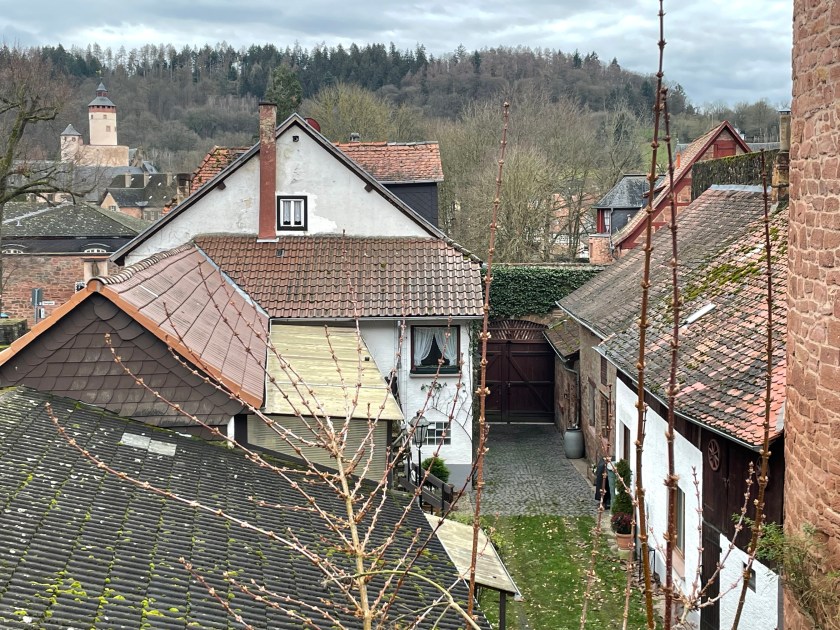
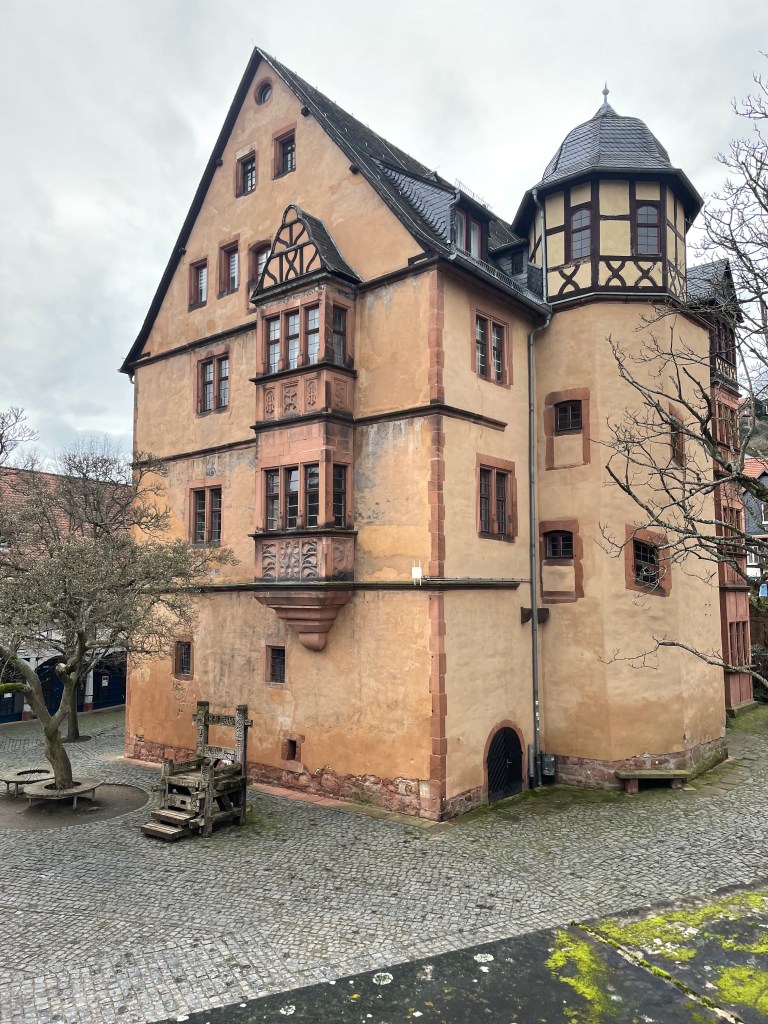
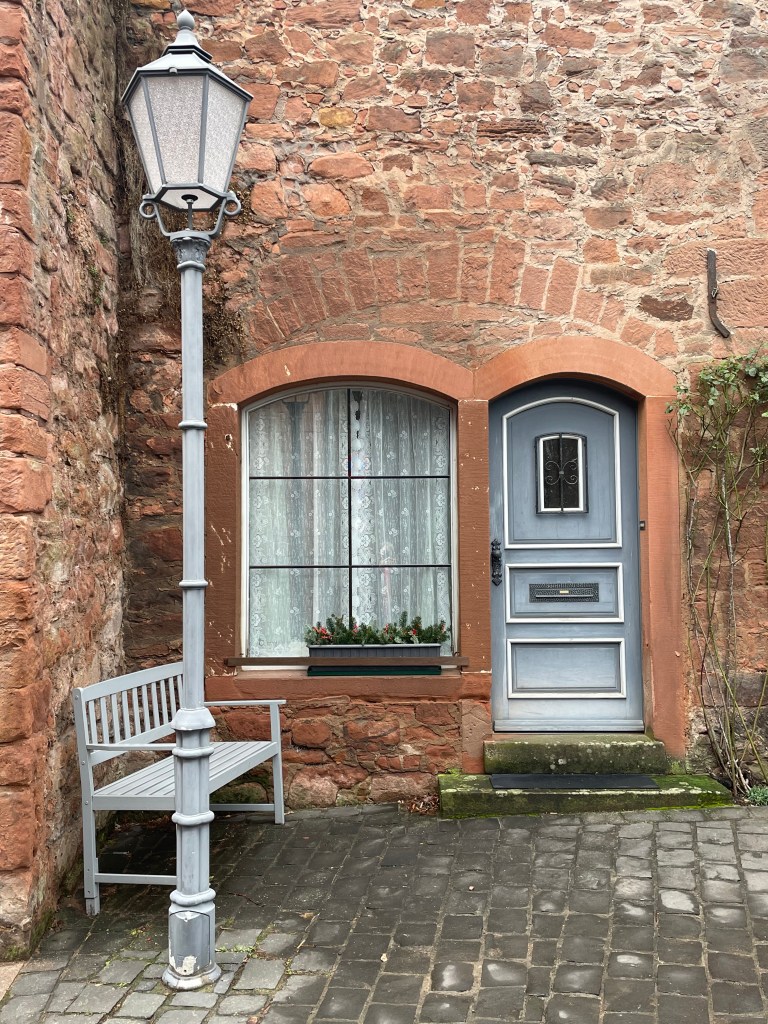
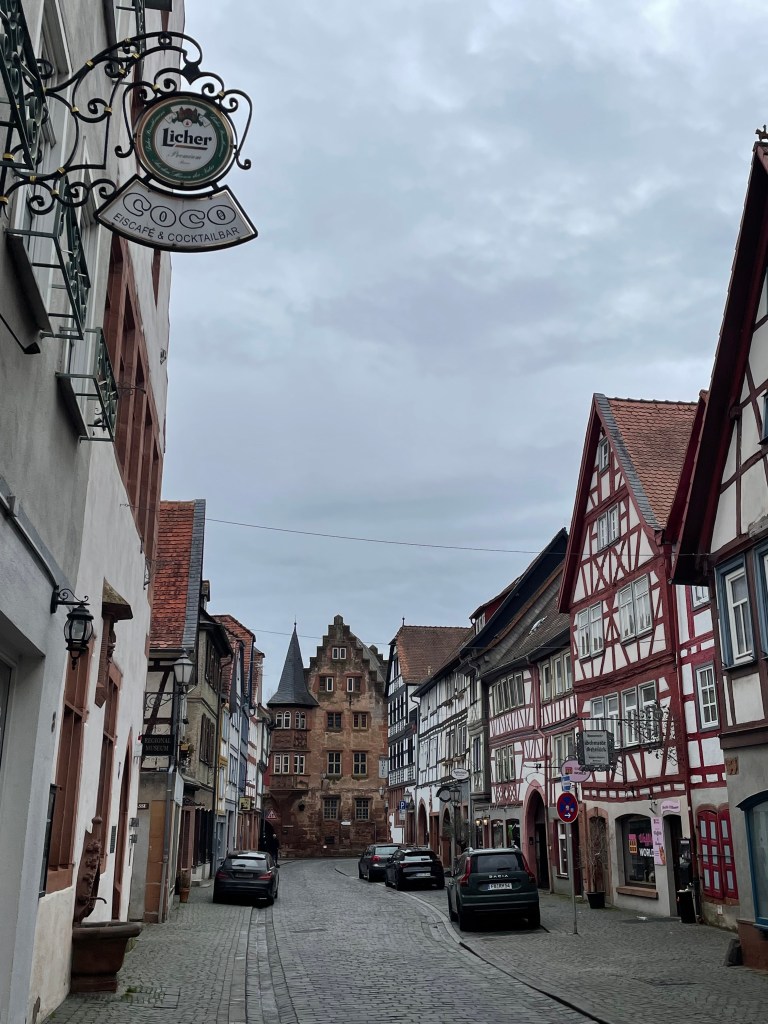
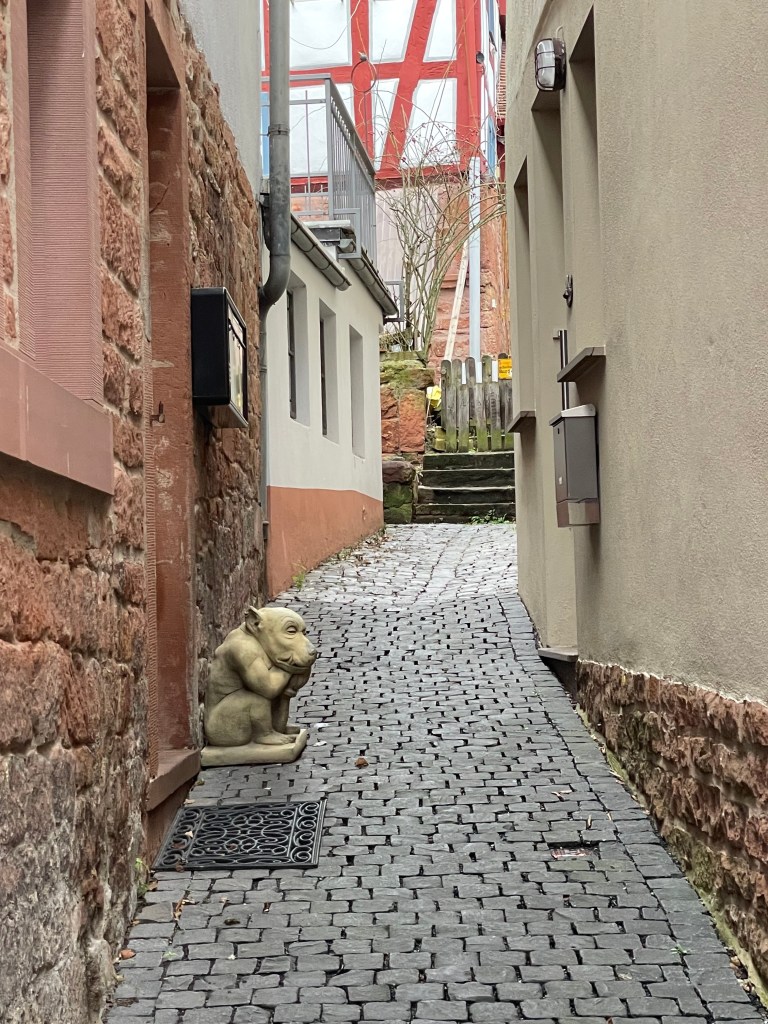
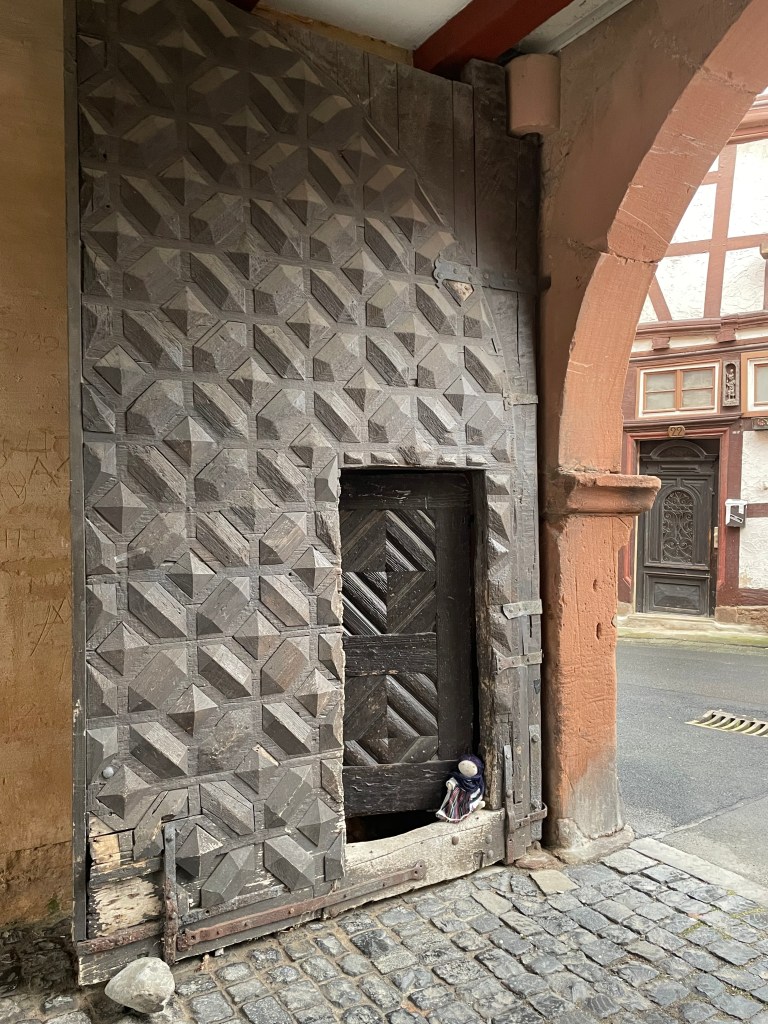
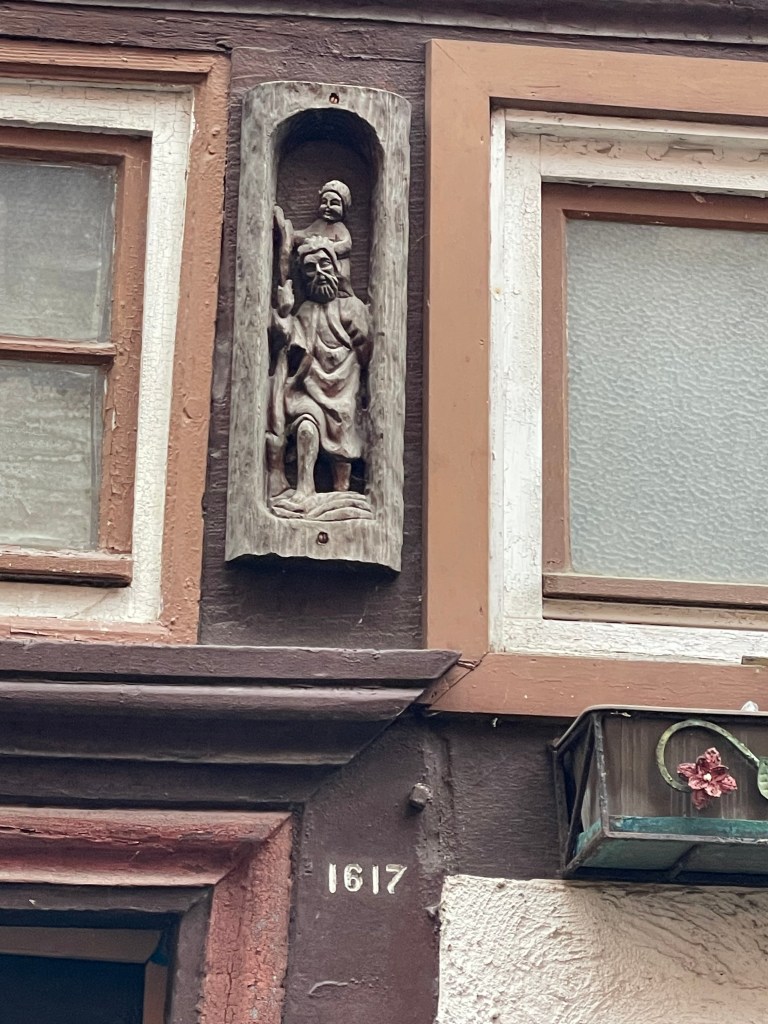
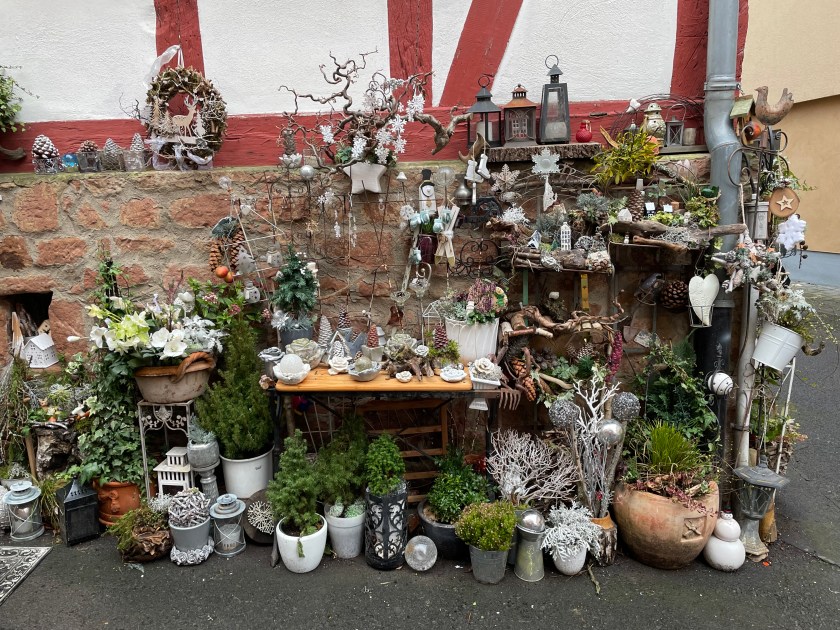
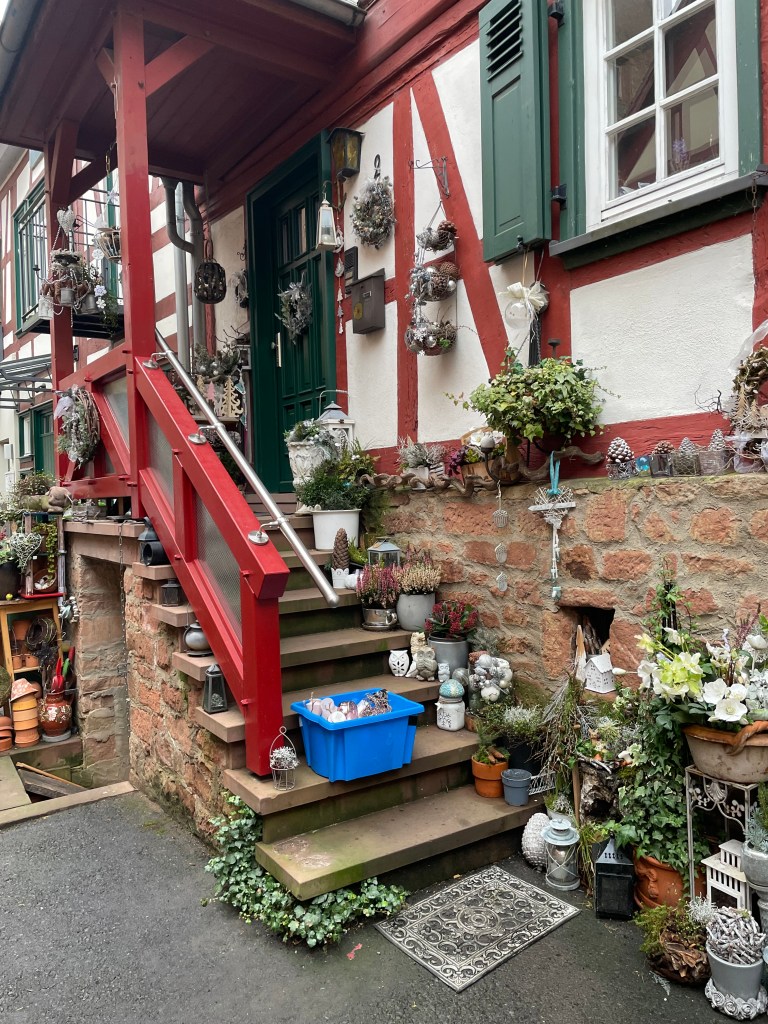
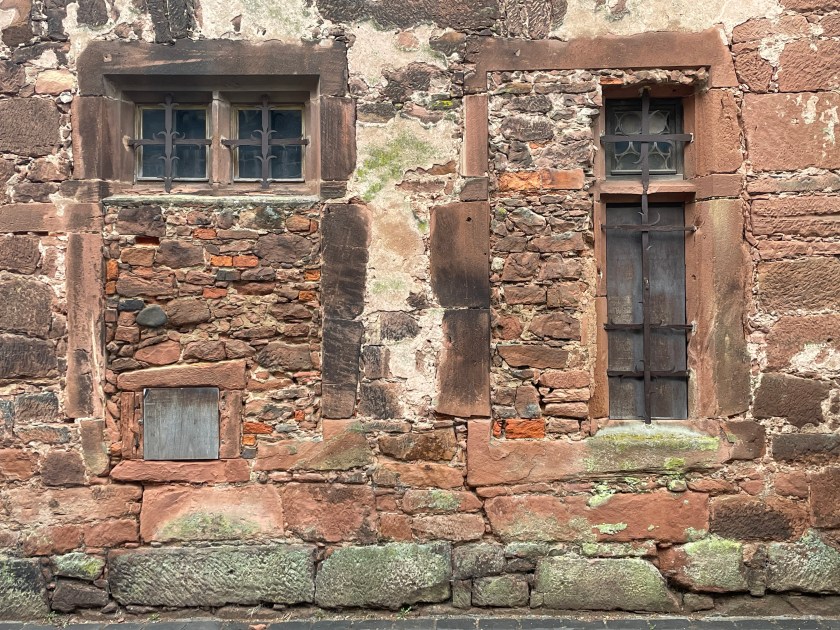
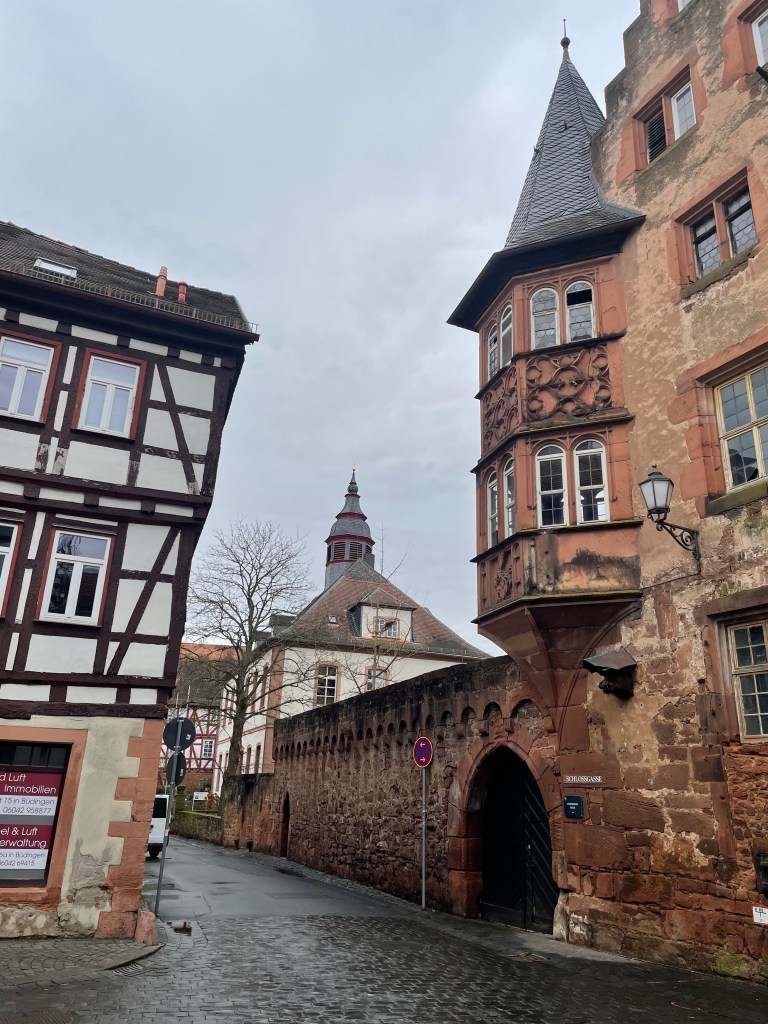
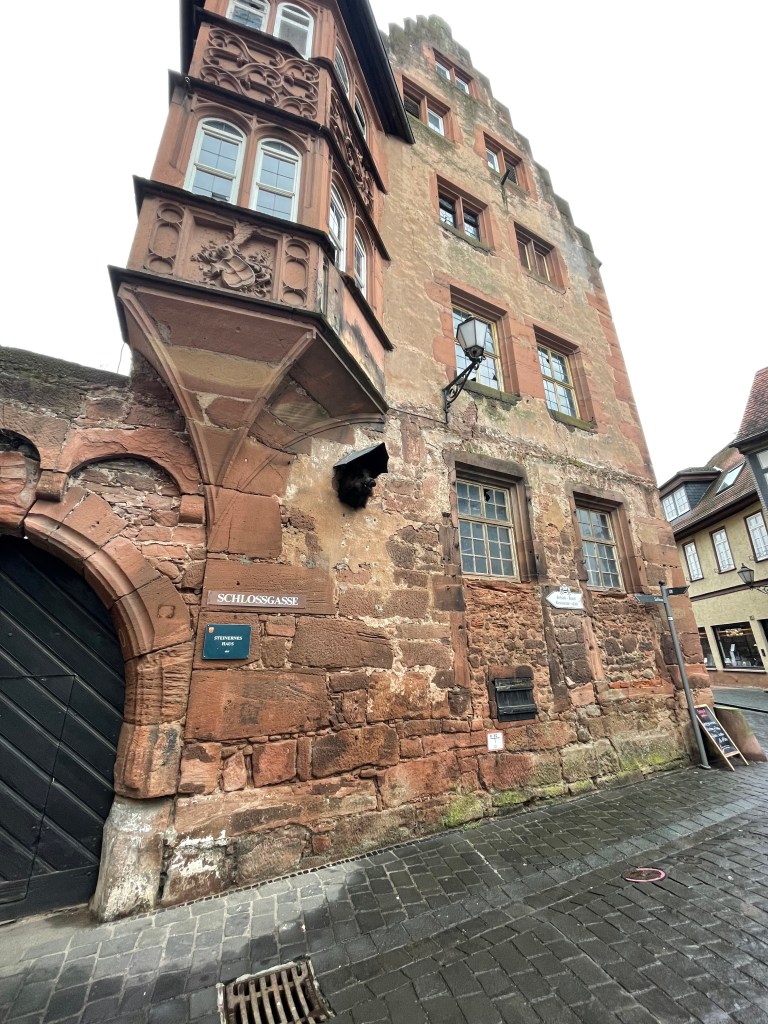
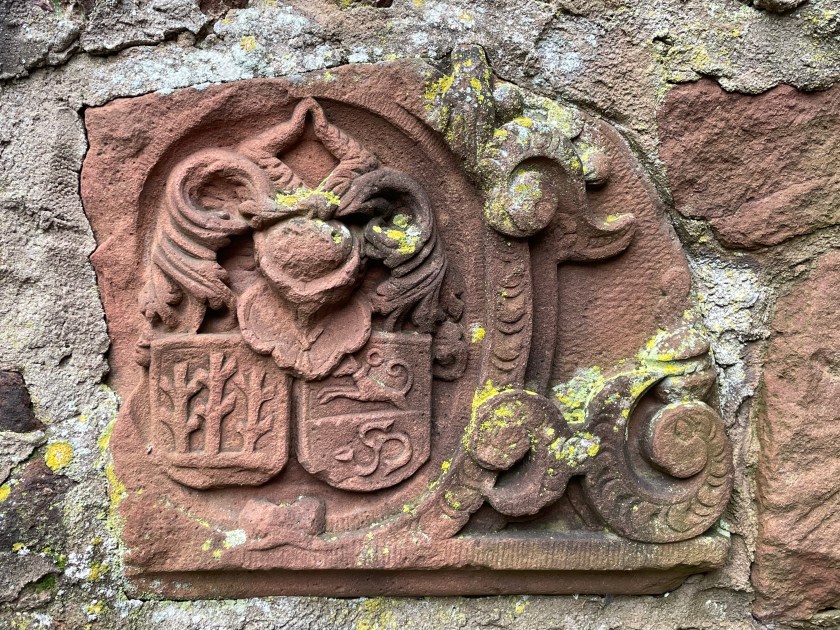
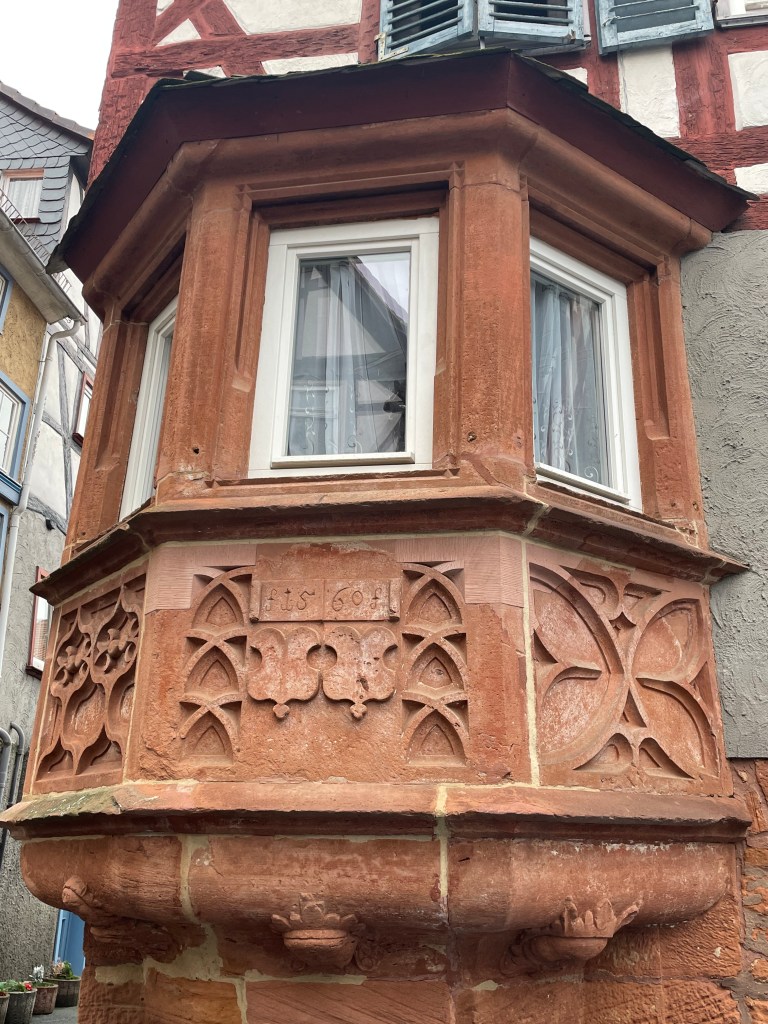
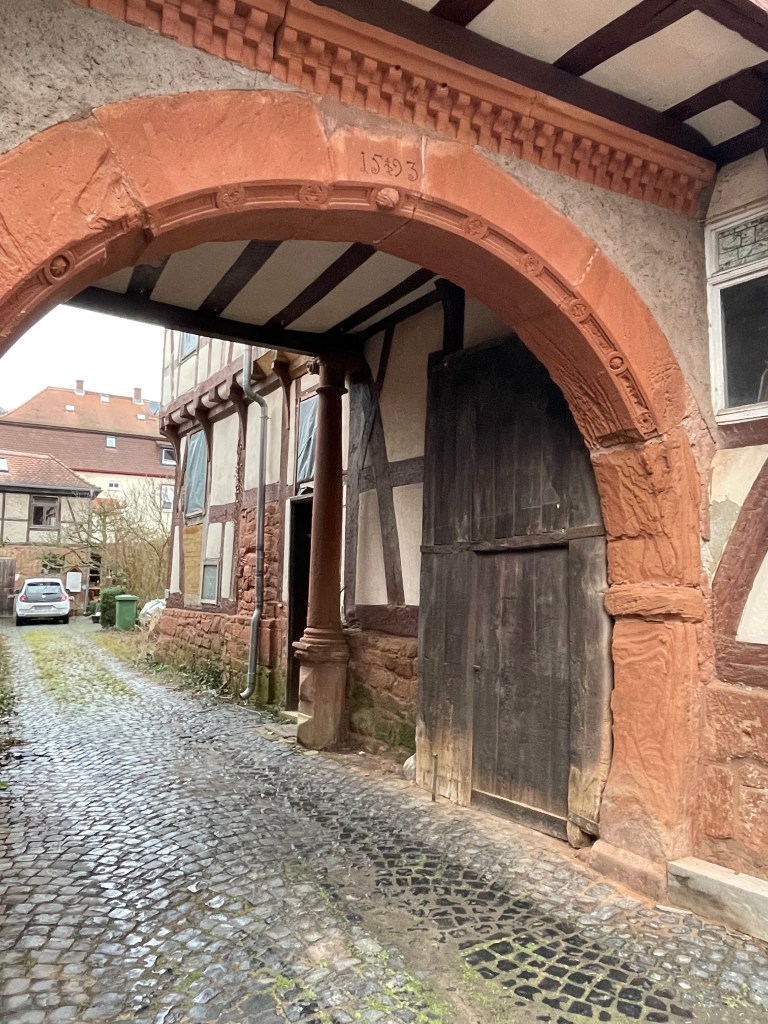
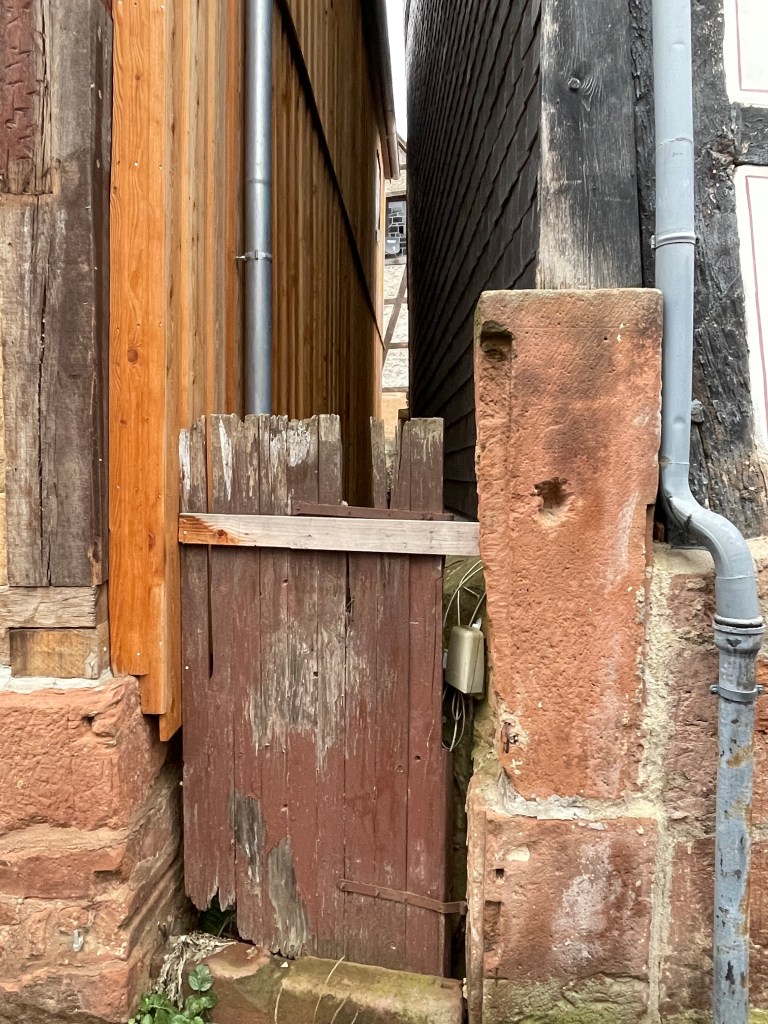
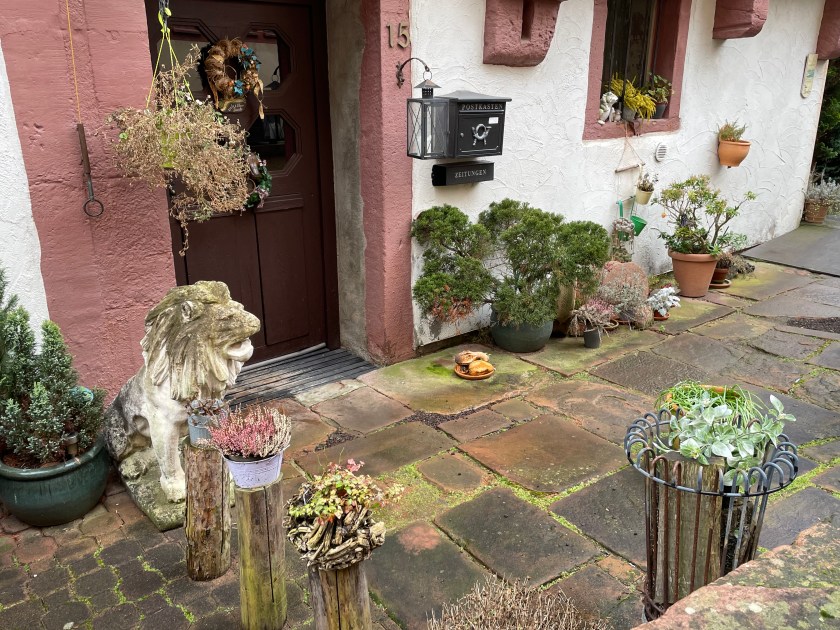
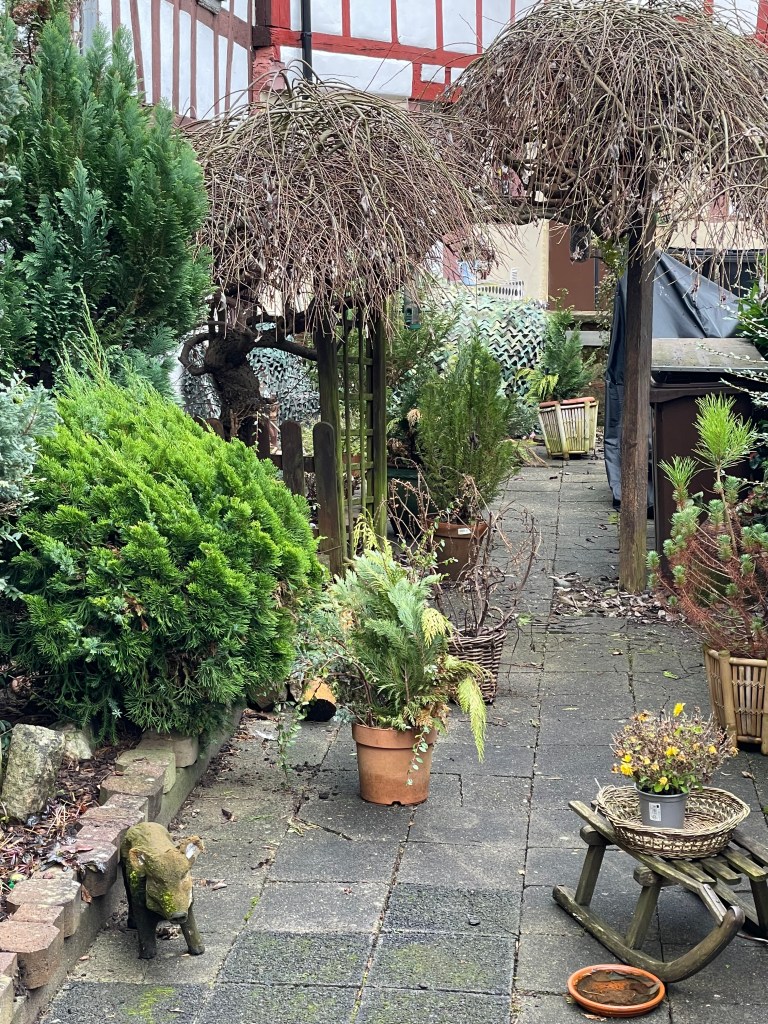
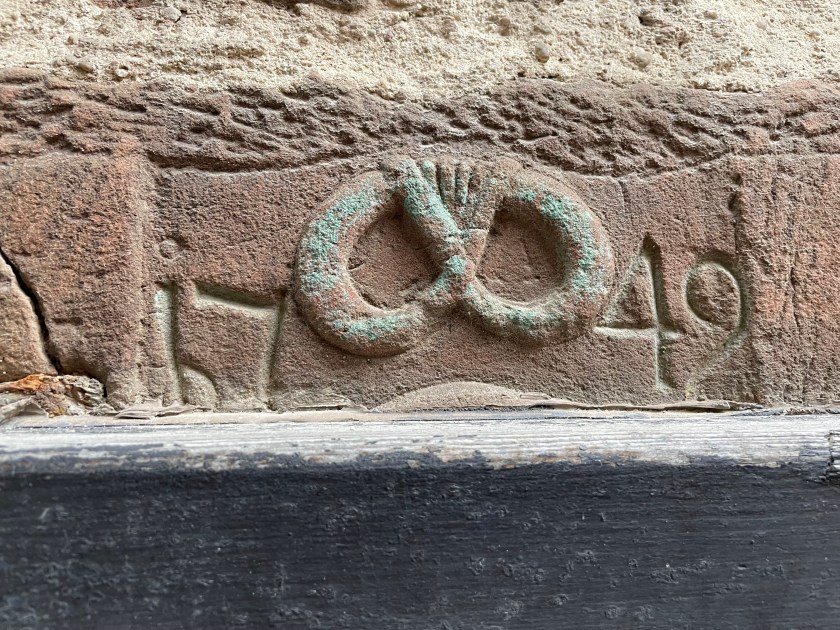
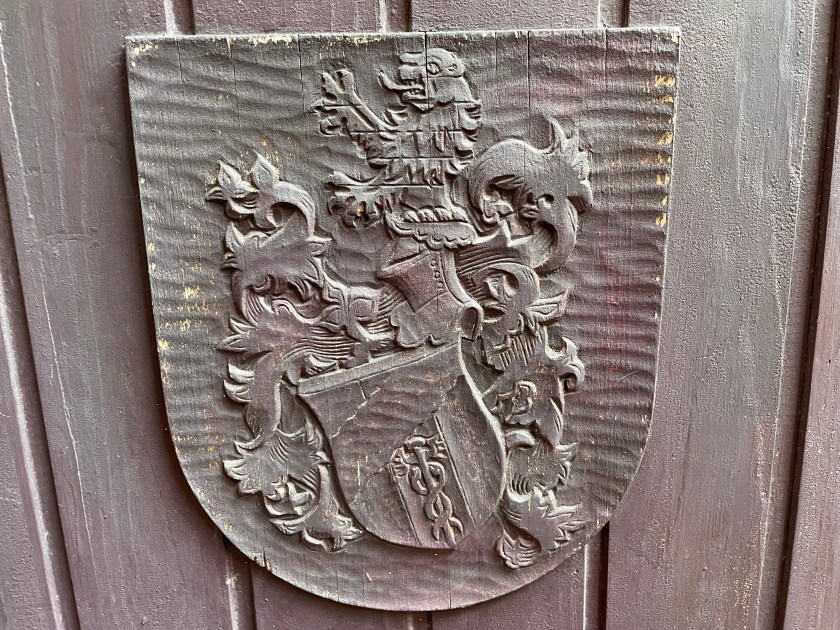
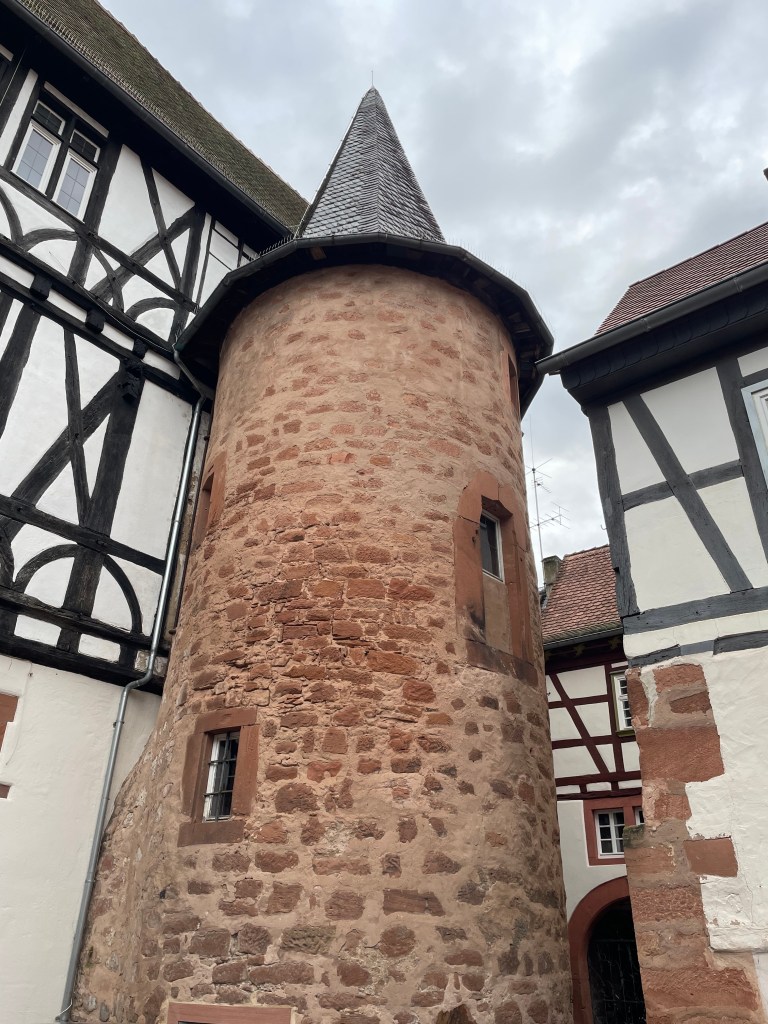
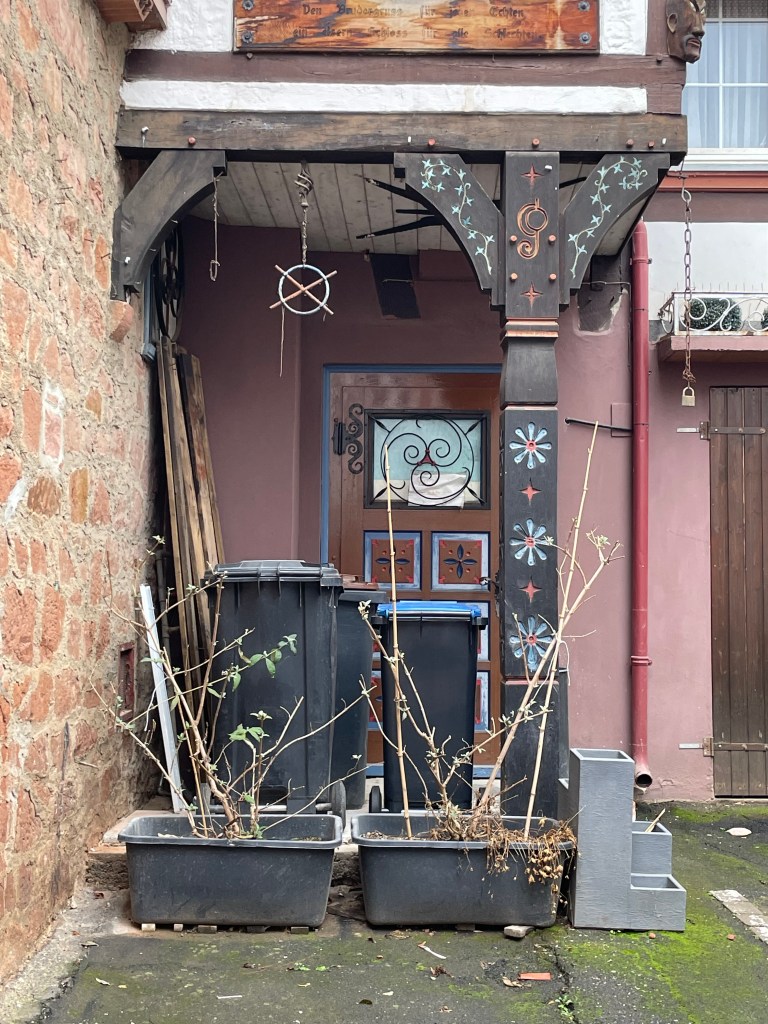
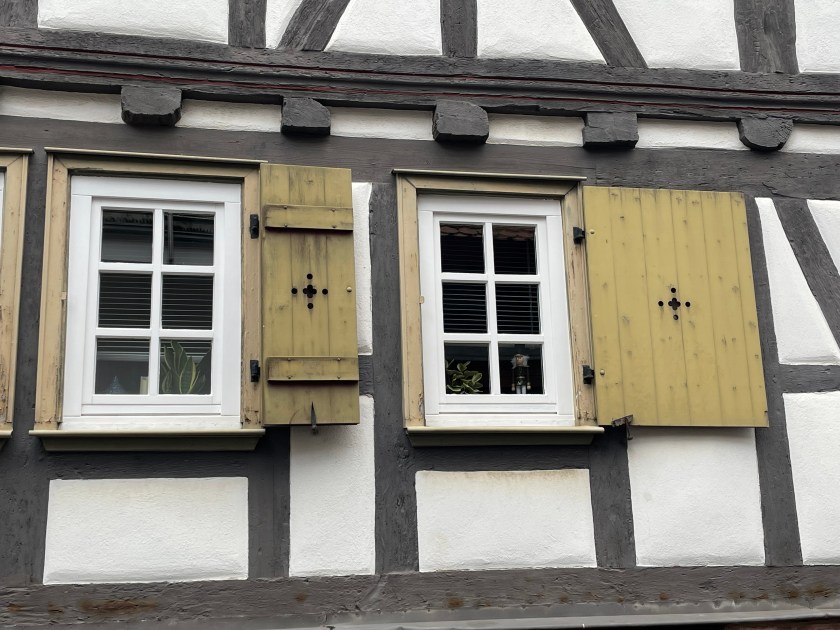
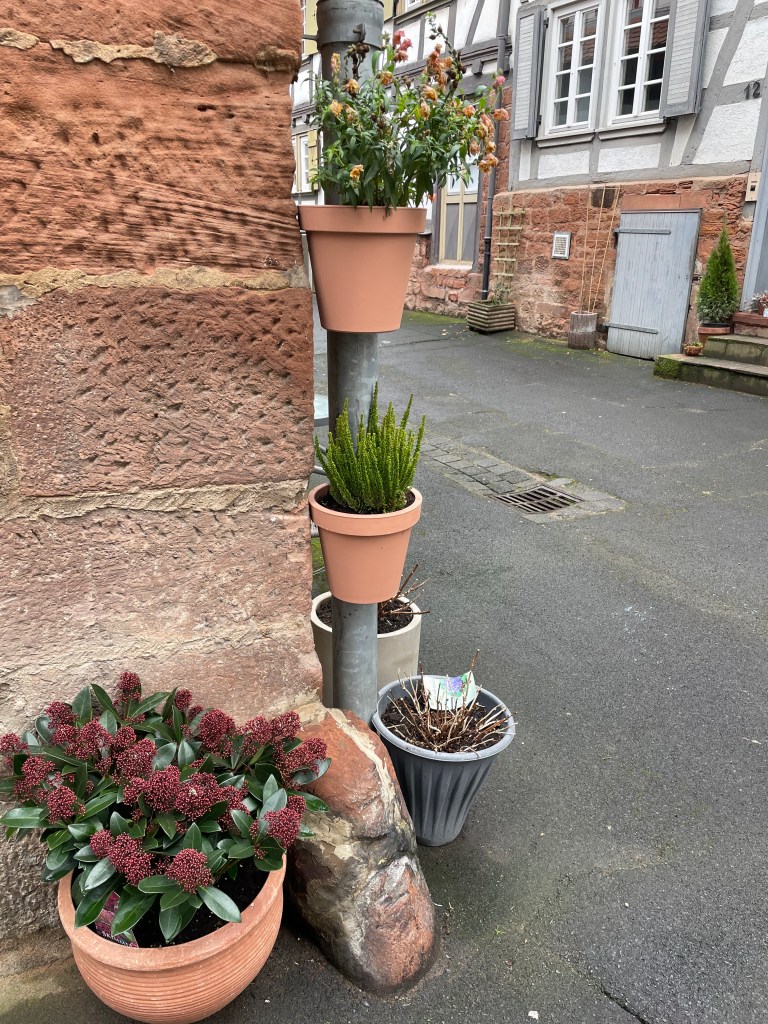
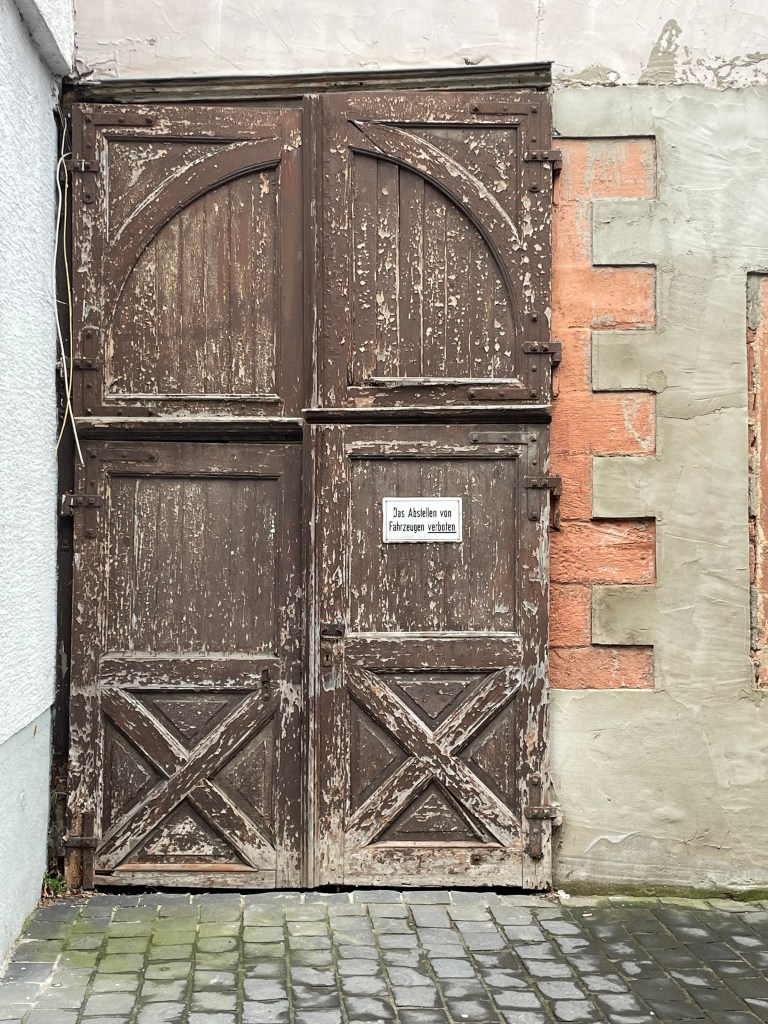
Can you see why we loved this place so much?  The details, oh the details!  I will wander through these photos again and again.

In the next post you can hear the frog story!

Büdingen’s Beautiful Details part 1

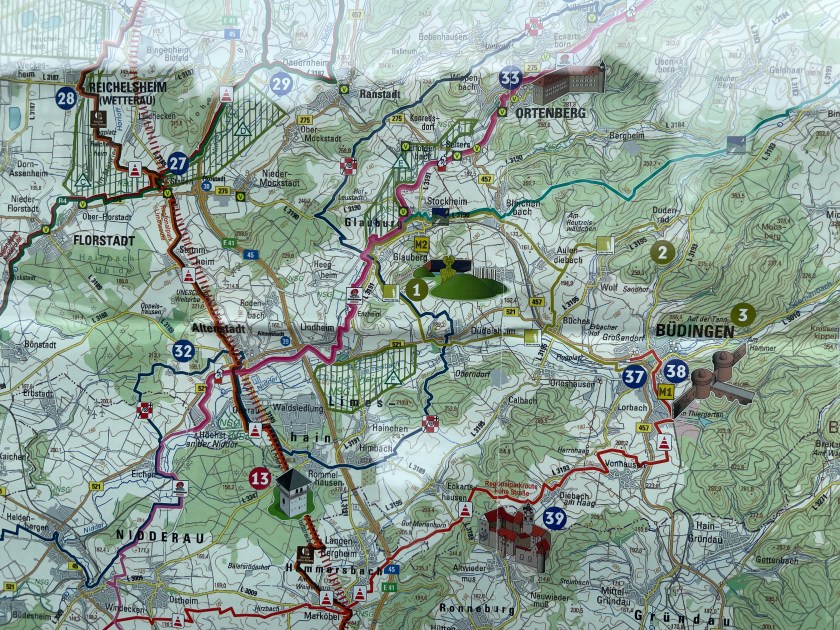
We had a really fun day in Büdingen (population is about 23,00). It was about 41 km away–a 45 min drive through farm country. I always look for tractors, but never see any. Fields are plowed and wet. Some early spring crops are coming up. Saw some white cranes and egrets. Rolling hills, wooded areas, old farming towns scattered. Such a peaceful country now. It’s hard to imagine tanks and soldiers moving across this land.

This week is the 80th Anniversary of the liberation of Auschwitz.
Some 6 million European Jews were killed by the Nazis during the Holocaust — the mass murder of Jews and other groups before and during World War II. Soviet Red Army troops liberated Auschwitz-Birkenau on Jan. 27, 1945, and the day has become known as International Holocaust Remembrance Day. An estimated 1.1 million people, mostly Jews, were killed in Auschwitz-Birkenau.
Just 220,000 Holocaust survivors are still alive, according to the Conference on Jewish Material Claims Against Germany, and more than 20 percent are over 90.

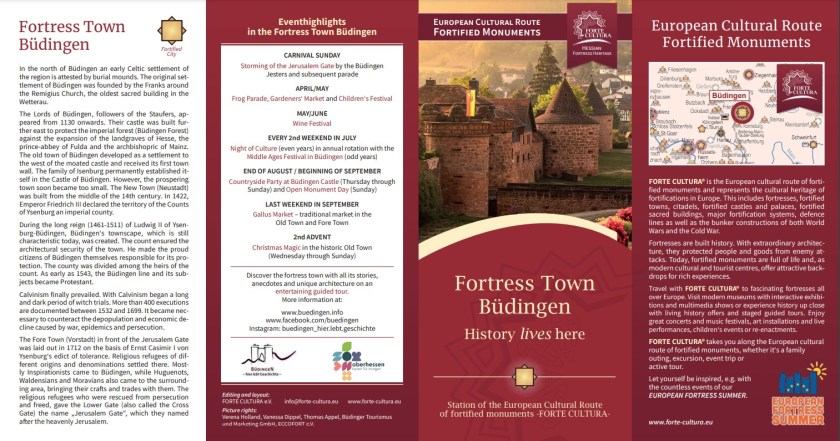
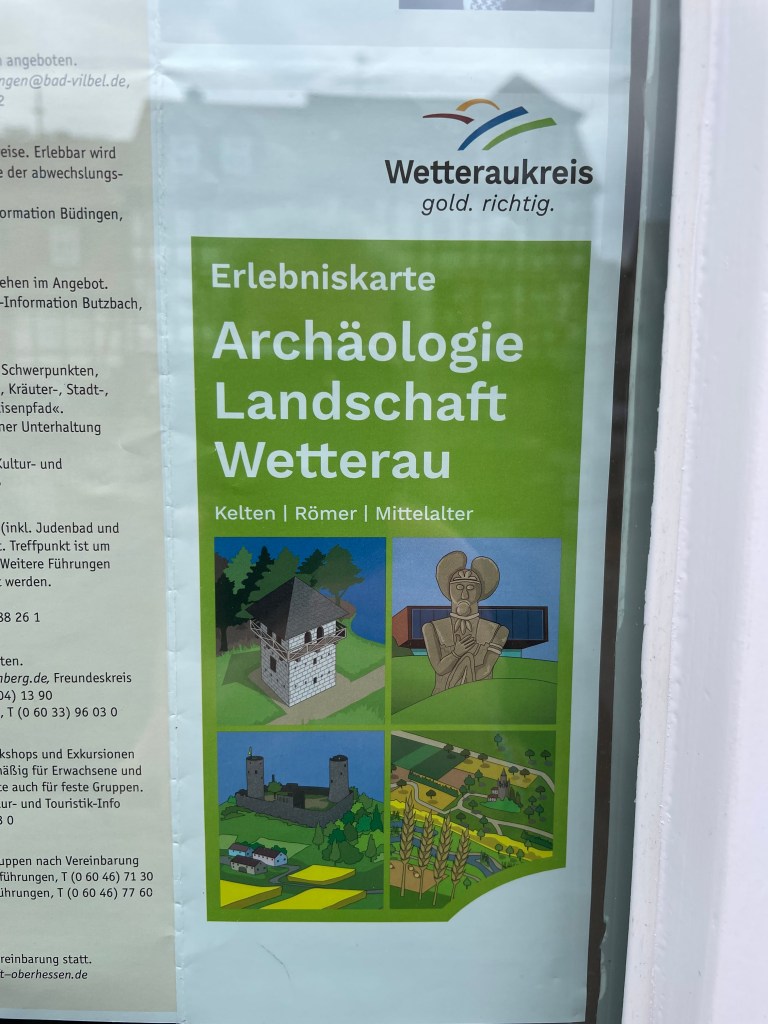
From Büdingen’s tourist info:
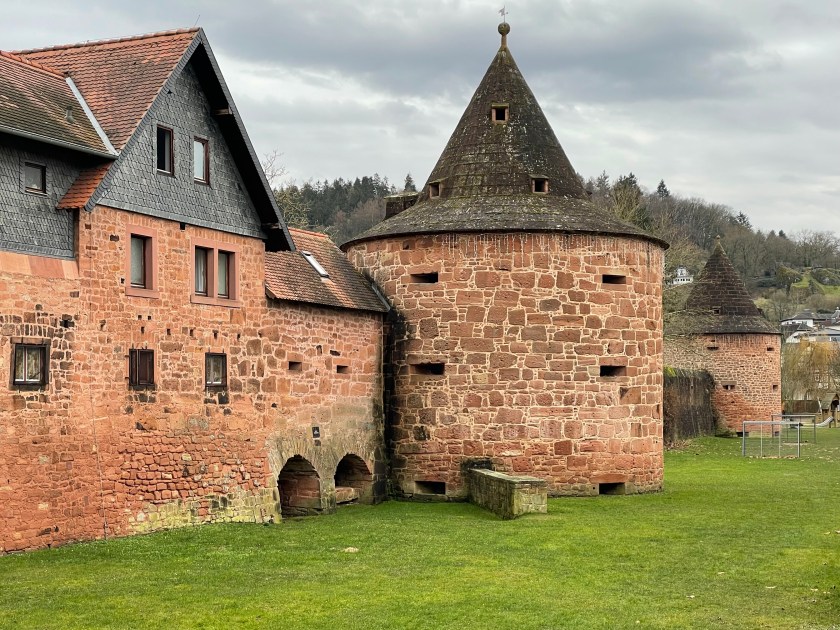
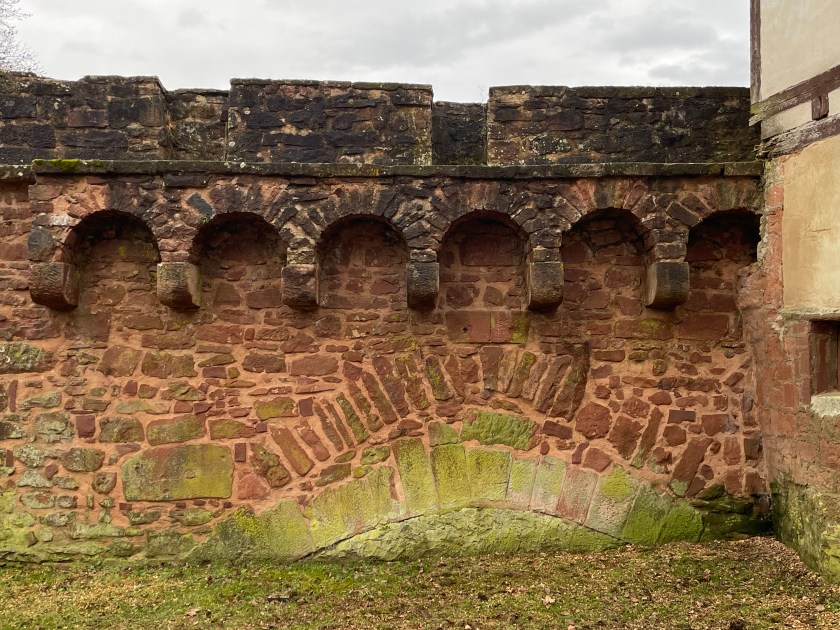
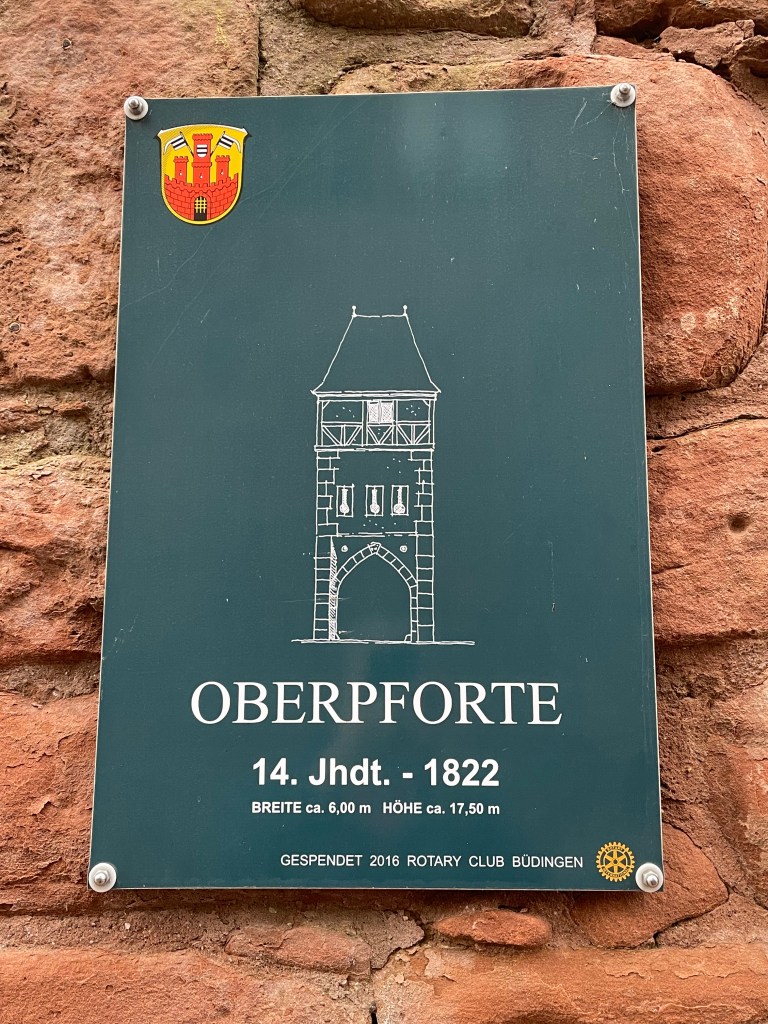
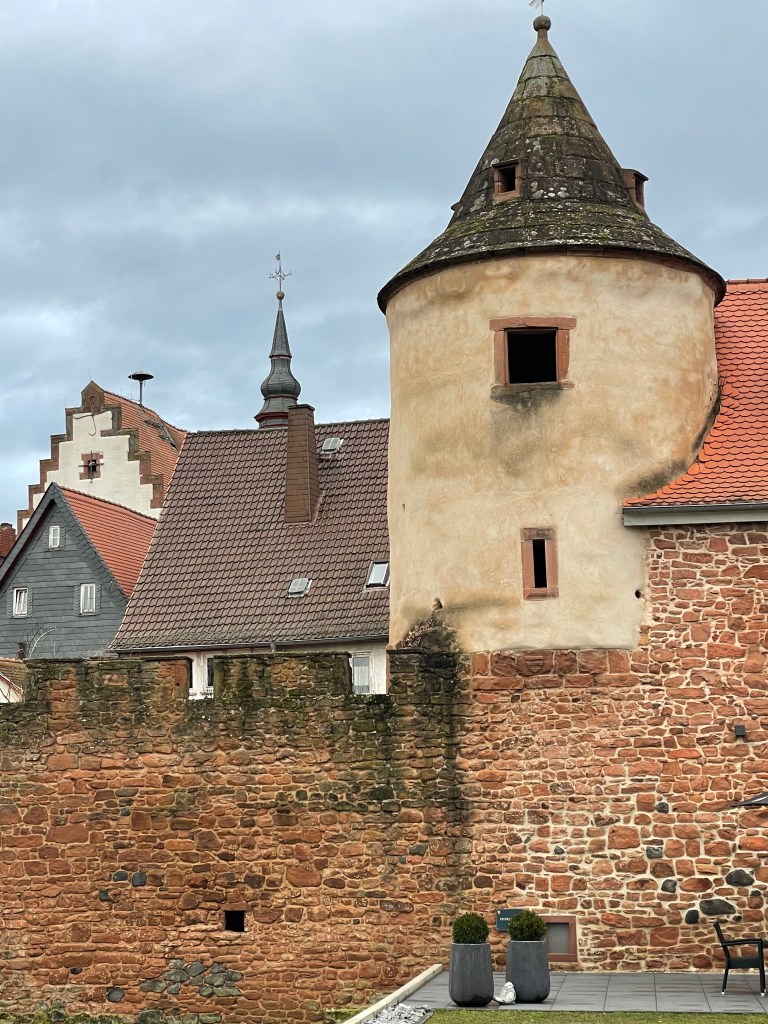
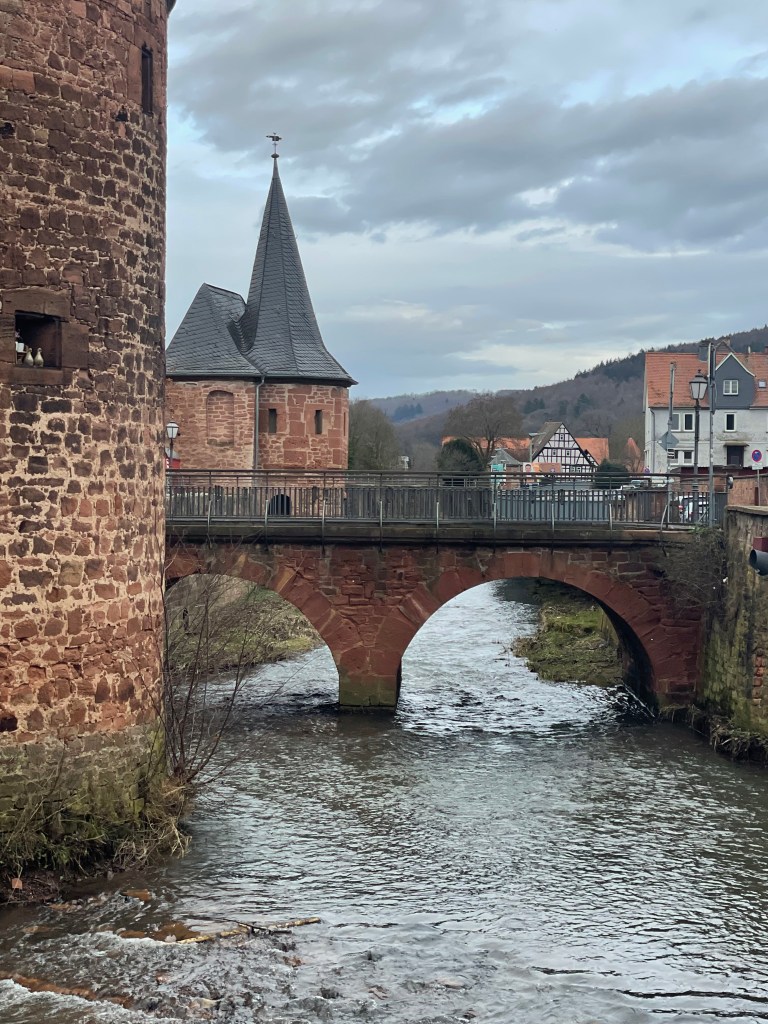
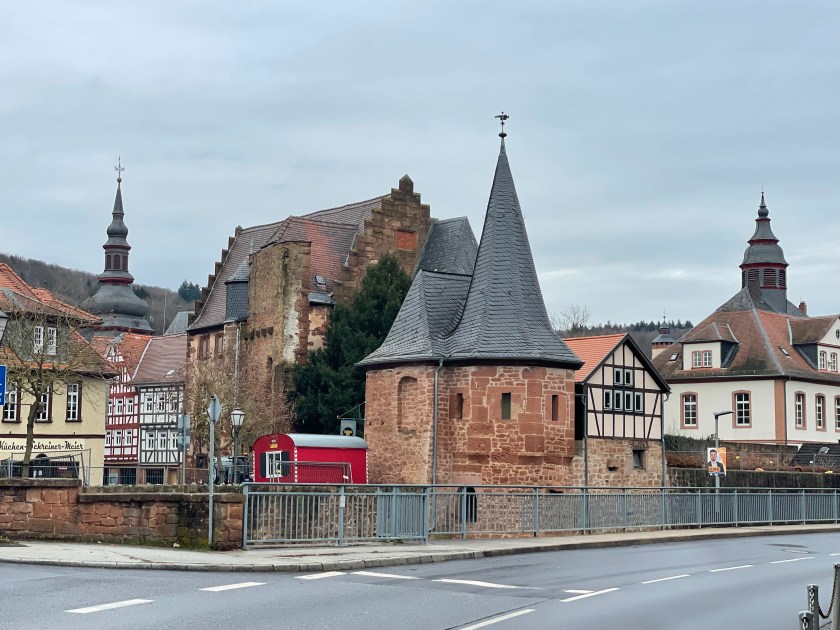
Büdingen is one of the rare towns in existence which has managed to survive the troubles of earlier times relatively unscathed. Today the safely preserved half-timbered buildings and stone buildings, the gables and dormers, the defiant walls and towers, all allow you to experience the living spirit of the past. Visitors can learn how an aspiring civic society emerged under the protection of the moated castle of the House of Ysenburg. The town developed out of housing for courtiers and servants outside the castle and was protected by statutes and privileges. This was a civic society affluent enough to afford a grand town hall, the beautifully decorated Church of Our Lady, as well as prestigious half-timbered houses. In the late middle ages, at the high point of Büdingens period of growth, the early 14th century wall around the town was replaced by a mighty new fortification. This bastion is more than two kilometres long, has 22 towers and half towers, and is regarded nowadays as one of the best examples of the way defense architecture changed as a result of the invention of firearms.
The oldest part of town dates to the mid-14th century, when the first defensive walls were built. The historic town hall, built in 1458, is the center of the Altstadt, or old town.
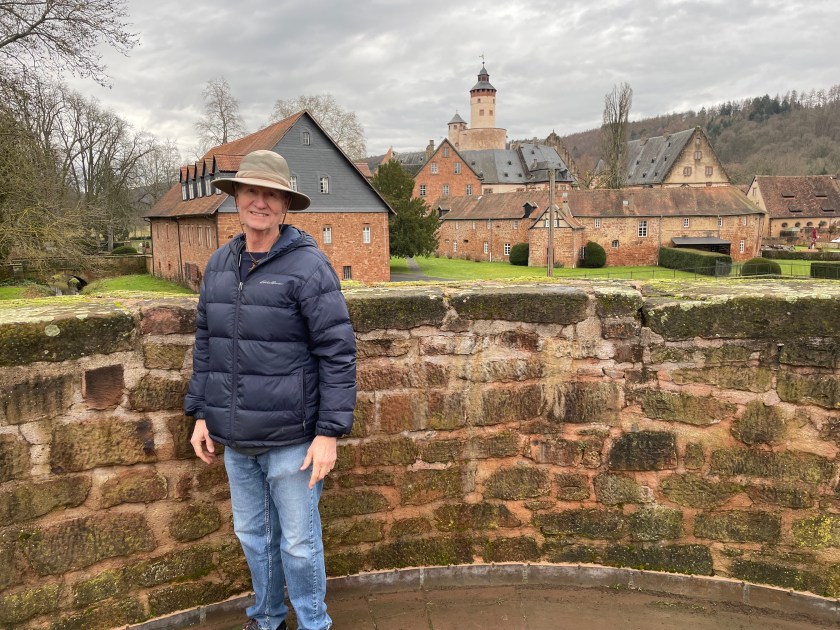
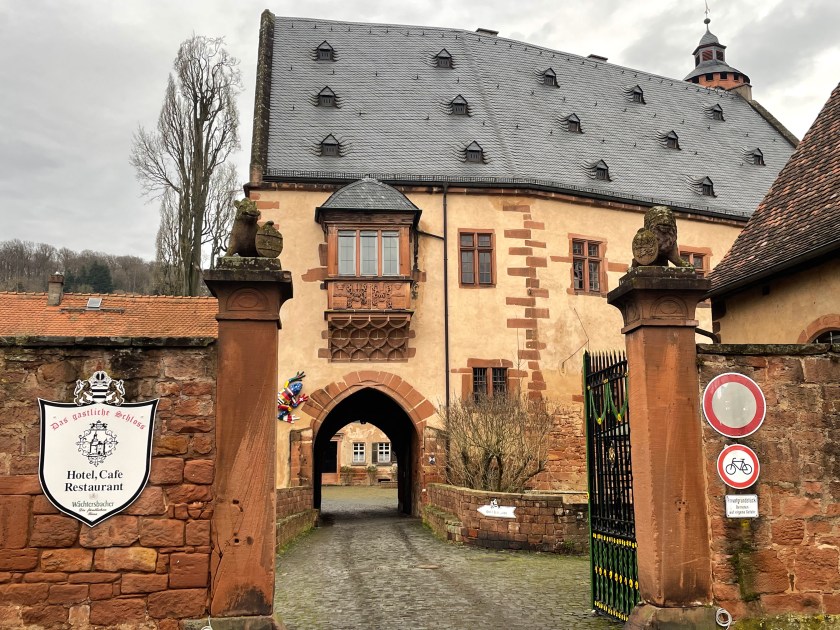
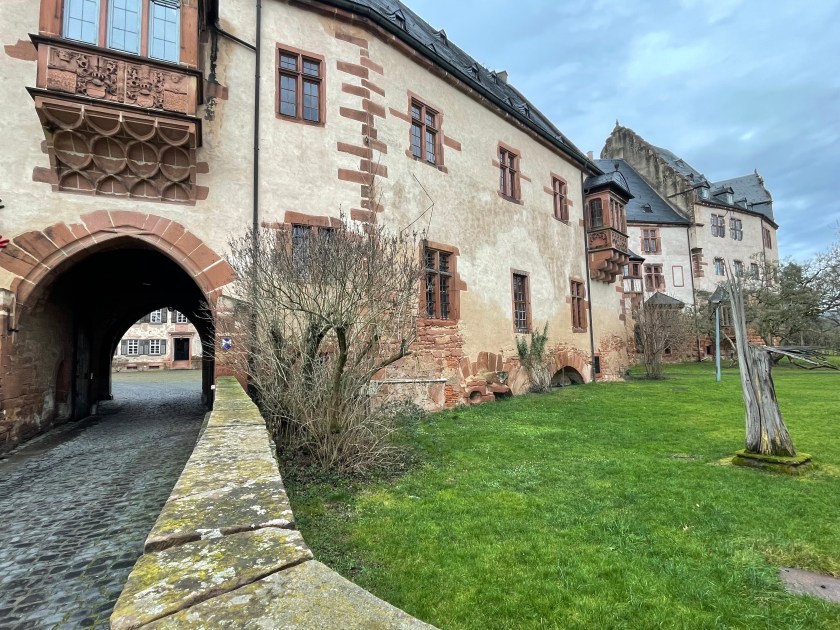
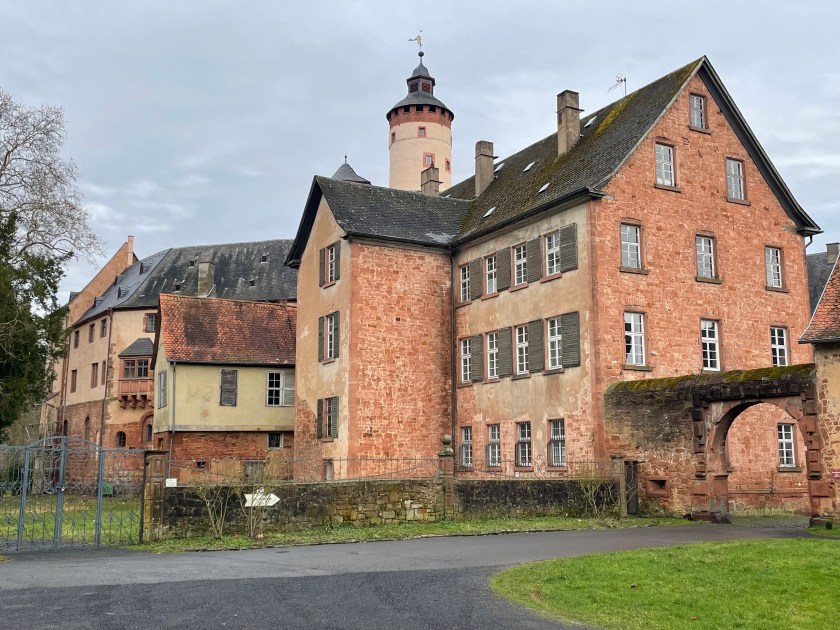
Walking through town you will soon see the Schloss, a beautiful and unusual, 13 sided palace. Still occupied by the noble family for 15 generations, they have turned part of the palace into a hotel. Their chapel is a popular wedding venue.

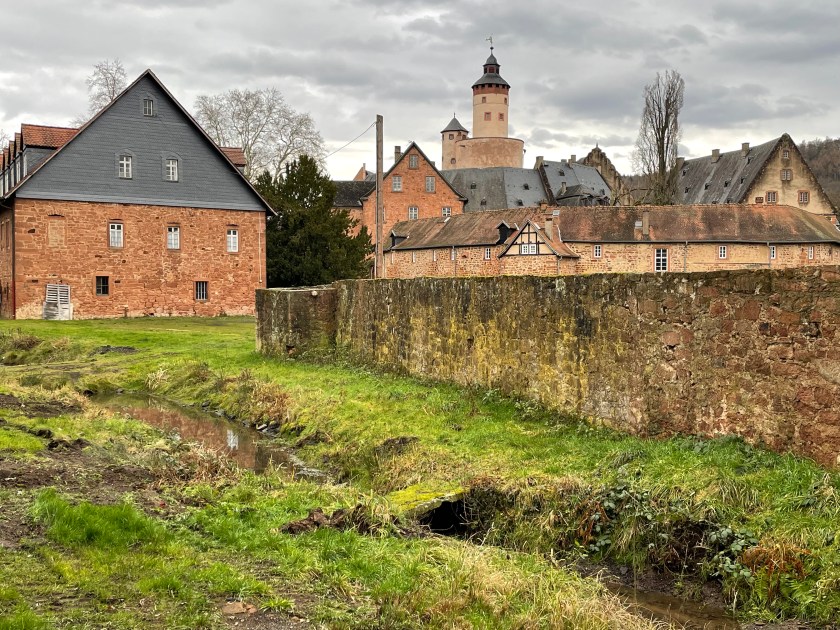
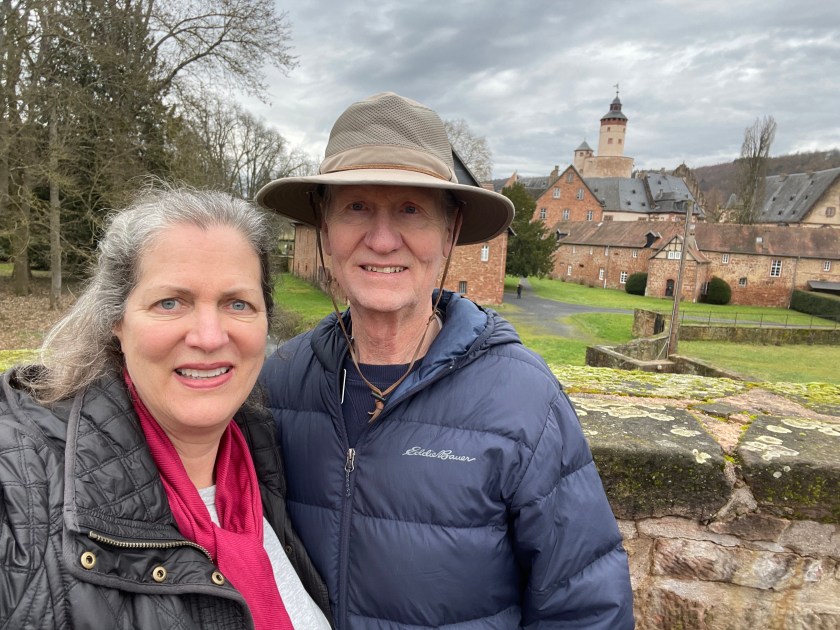
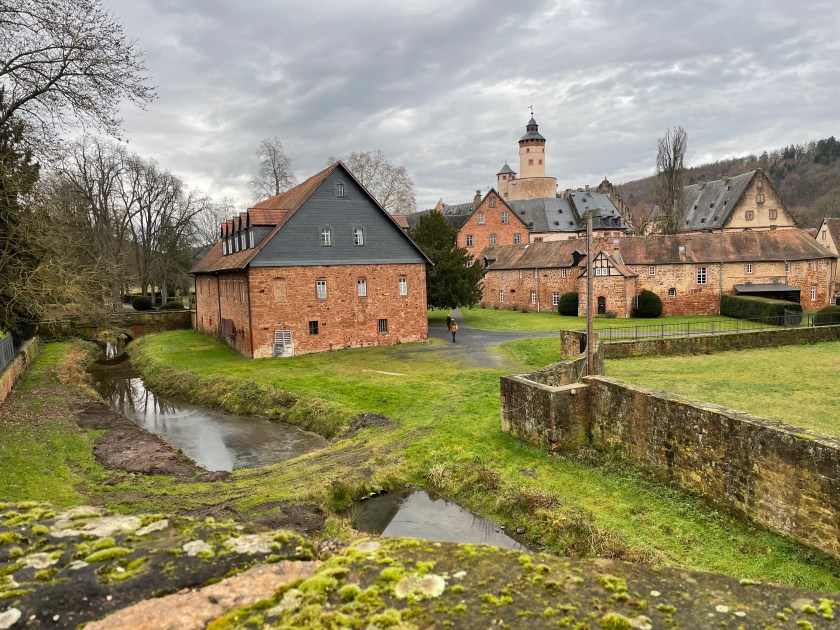
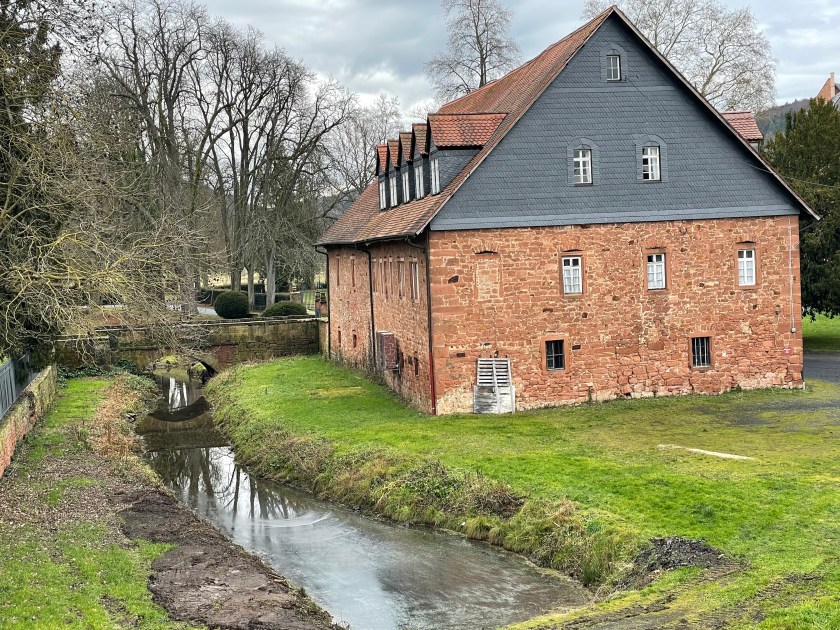
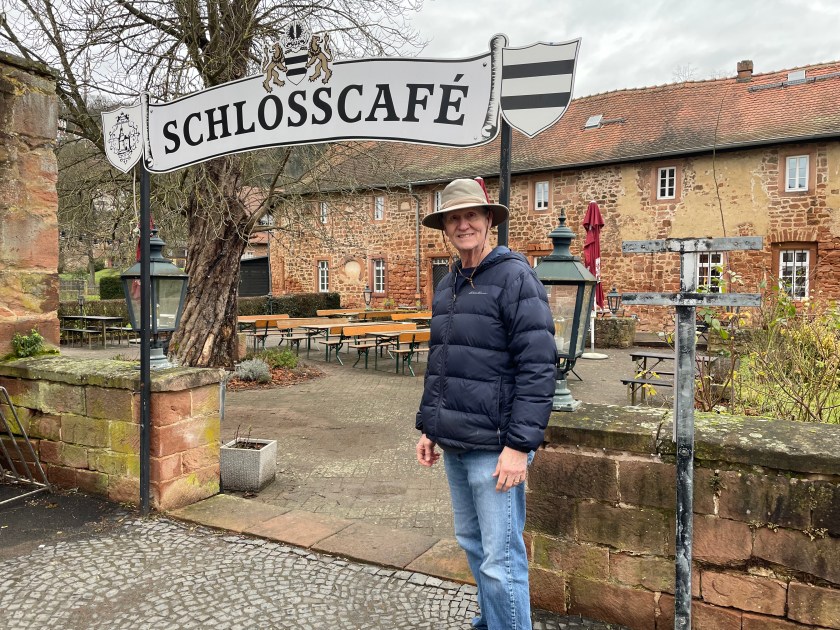
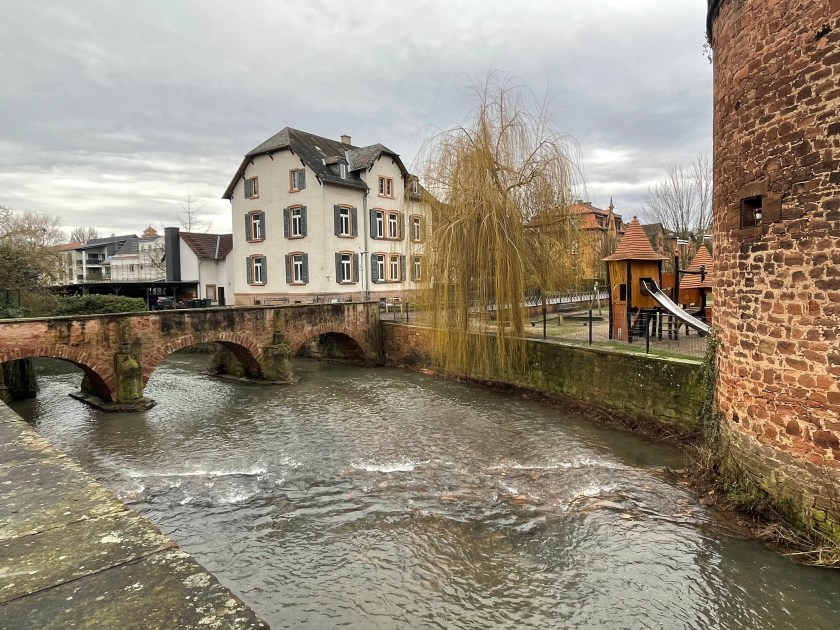
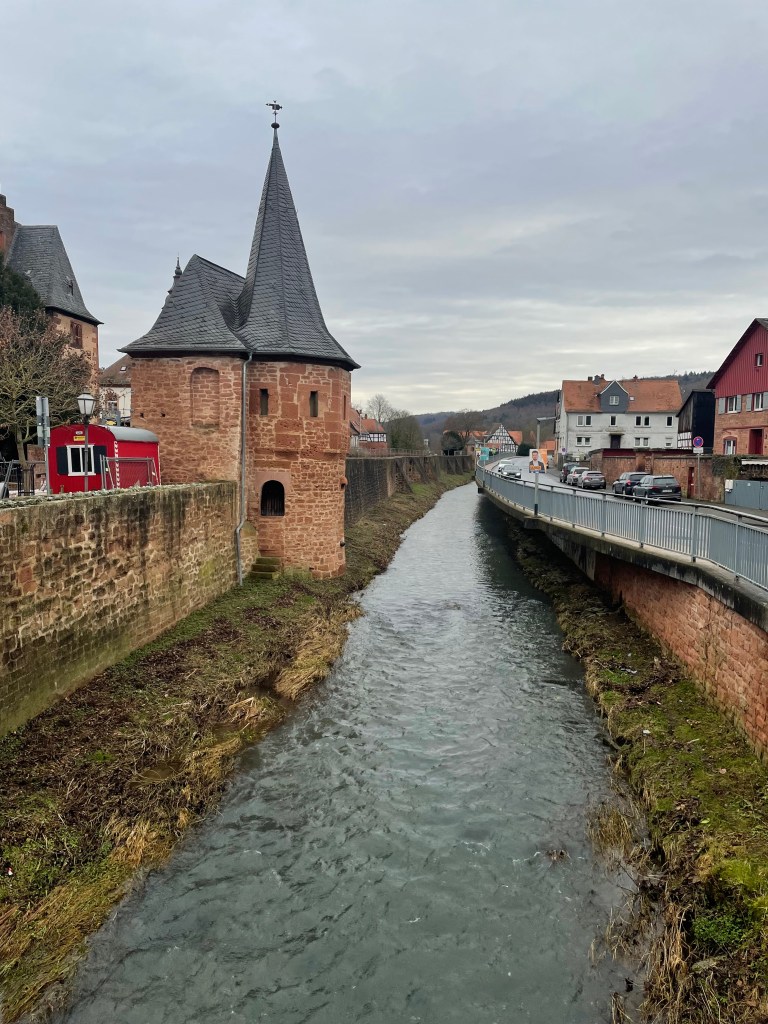
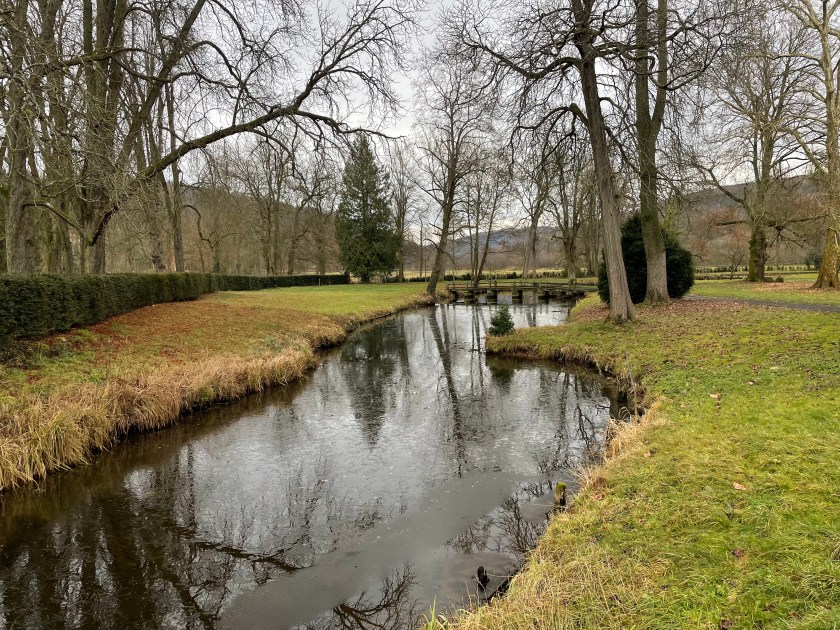
We wandered through all of the Altstadt–in and out and around. We went to the castle (original family still lives there) and wandered the grounds with old walls, towers, rivers and bridges. It felt like we were the only people in town until about noon. Then a few more came outside. It was so quiet and peaceful. We just soaked it all in, looking at the old details and old beauty. At 2:00 the Schloss café opened and John wanted cake. That’s all we ate all day. We spent 4 hours there, enjoying every minute of it.

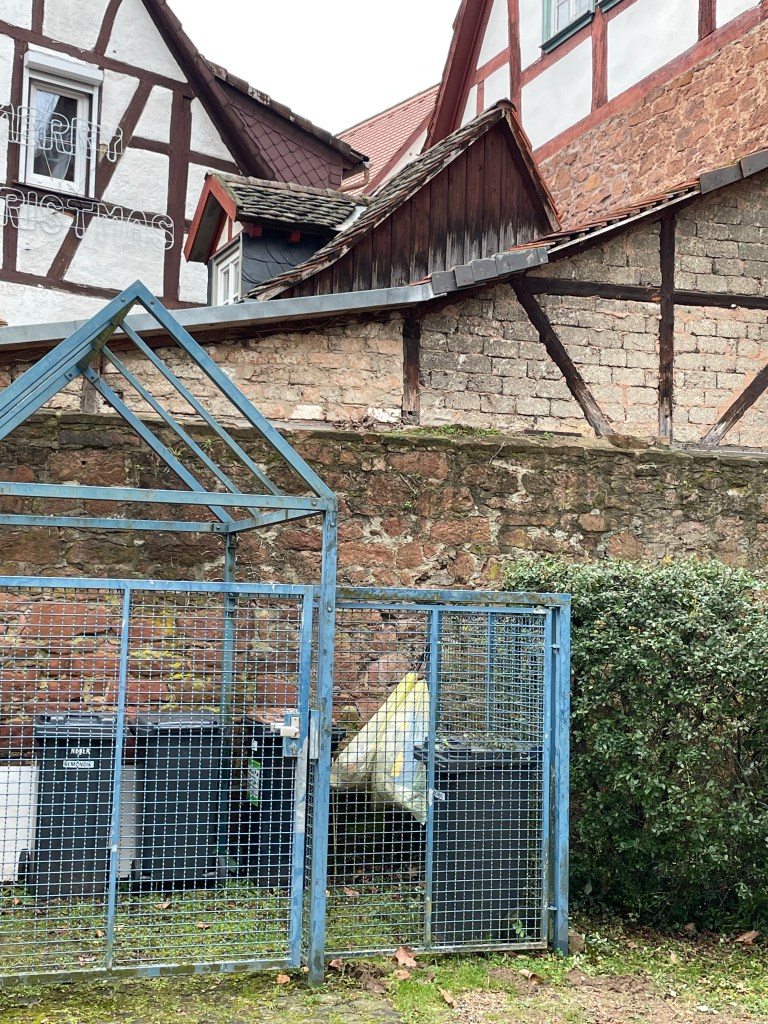
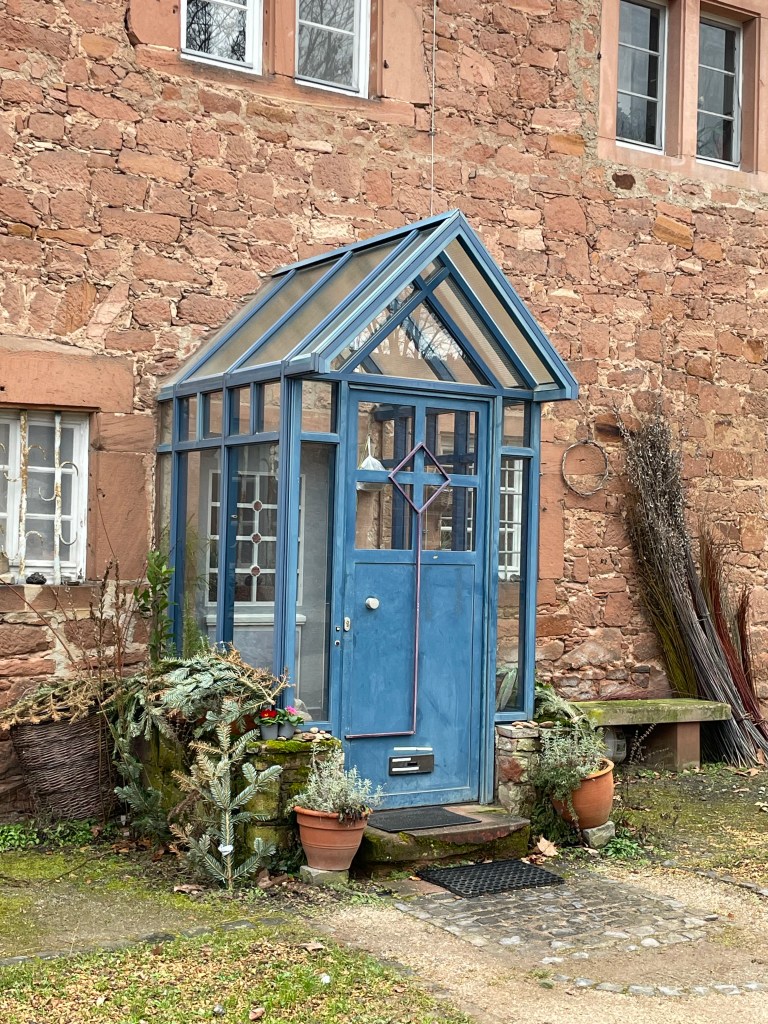
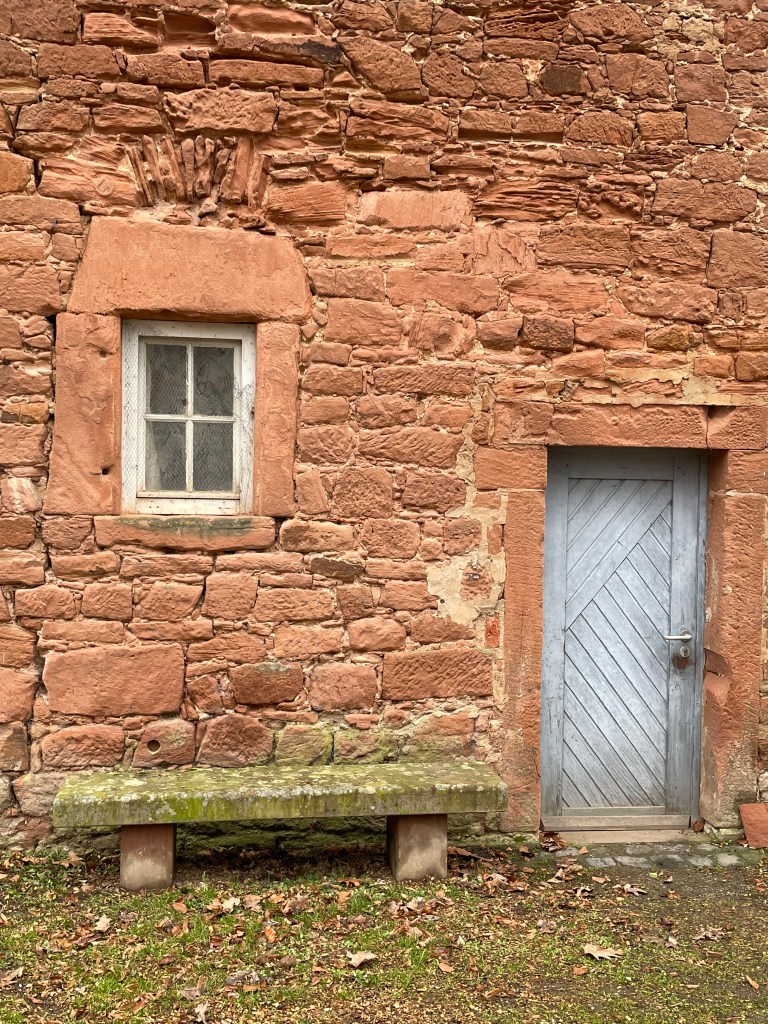
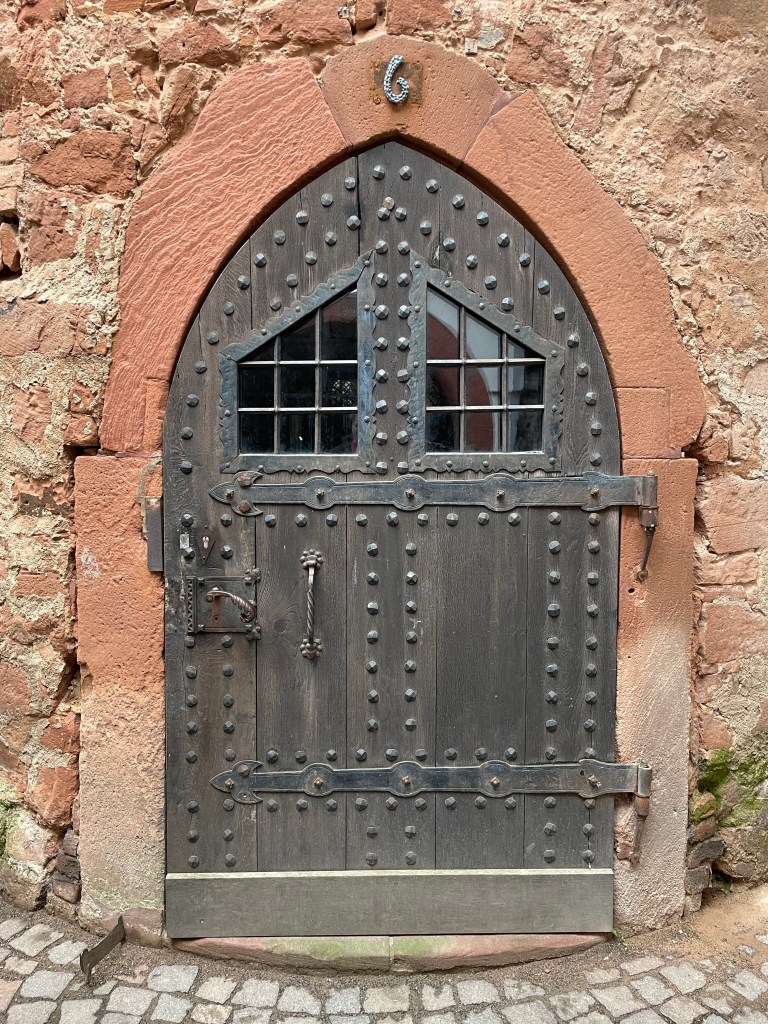
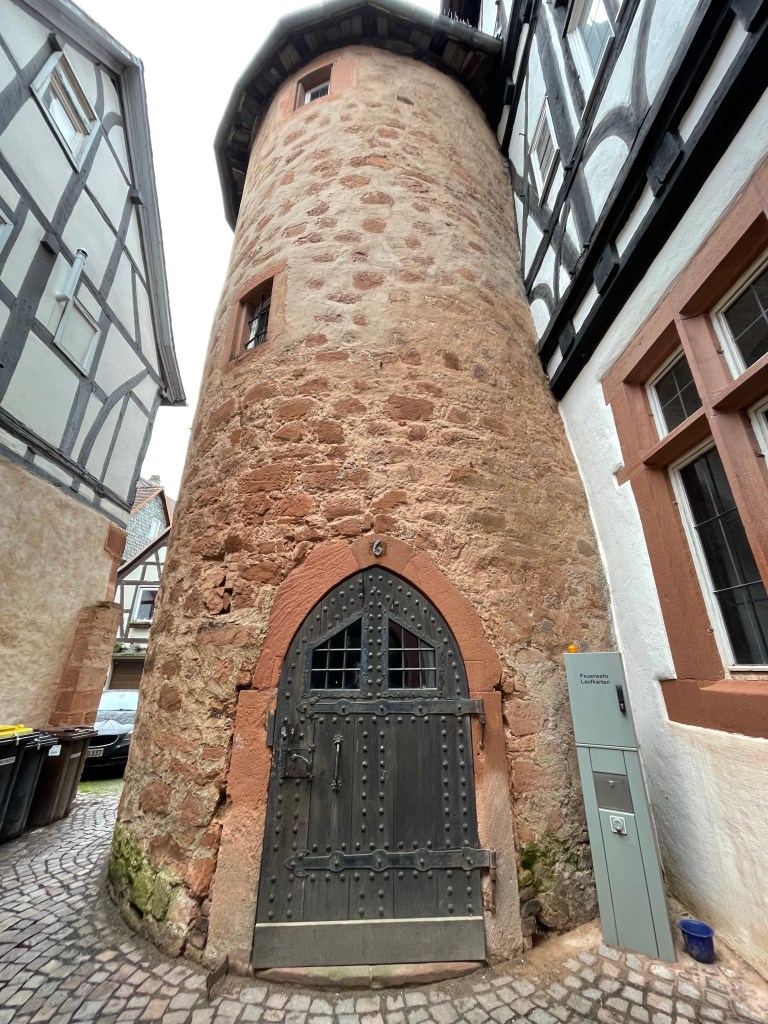
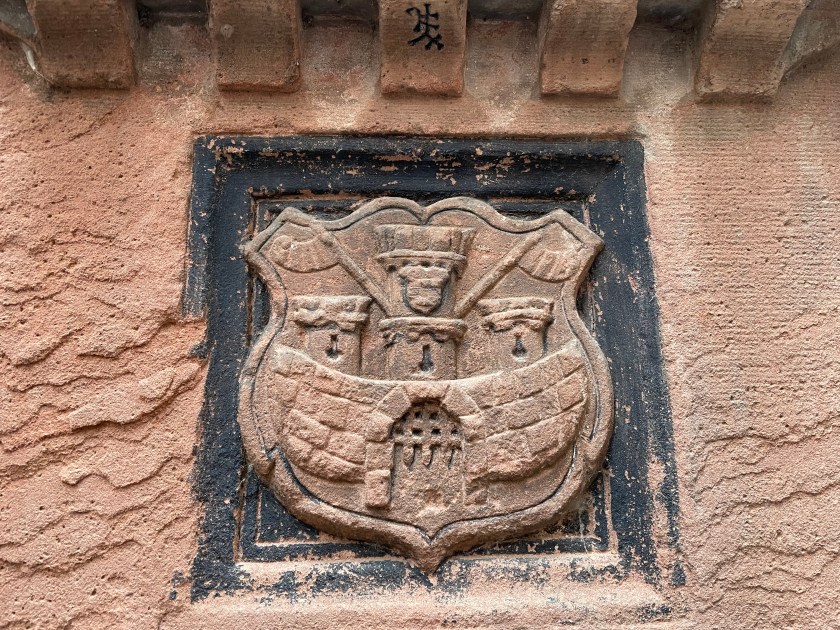
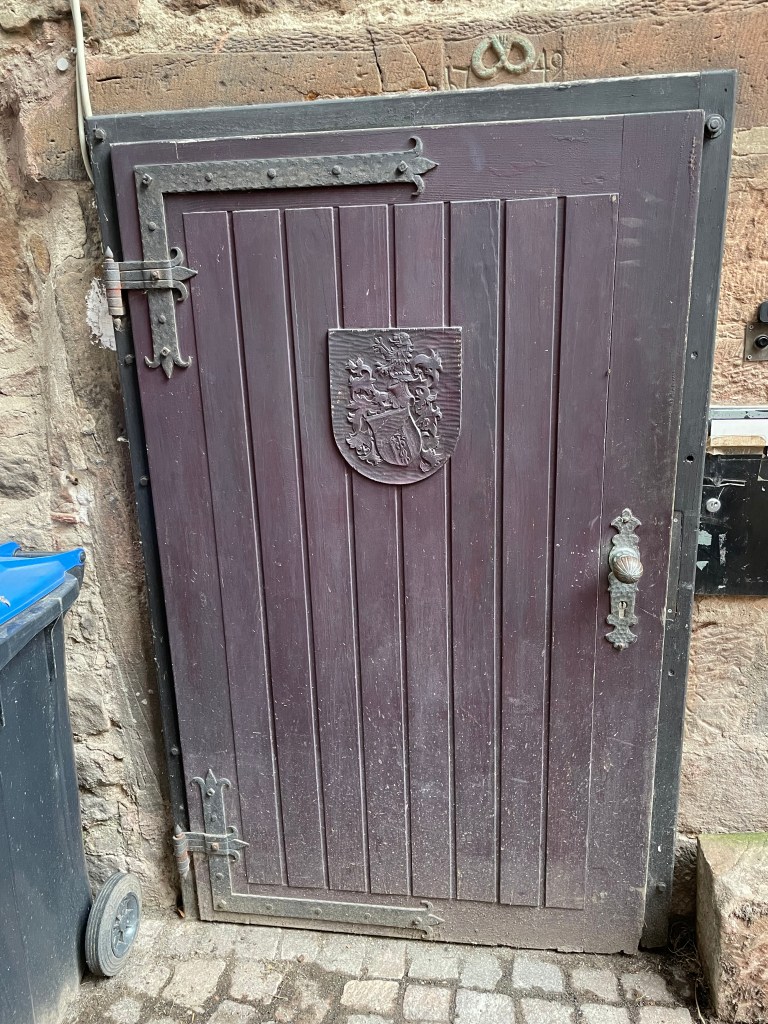
For two reasons, I took a lot of photos here:  #1  Everything was interesting.  #2 Our Saturday outings are coming to an end and I’m feeling a little panicky about capturing memories of these incredible places.  I do not want to forget these old parts of Germany where my heart feels at home.

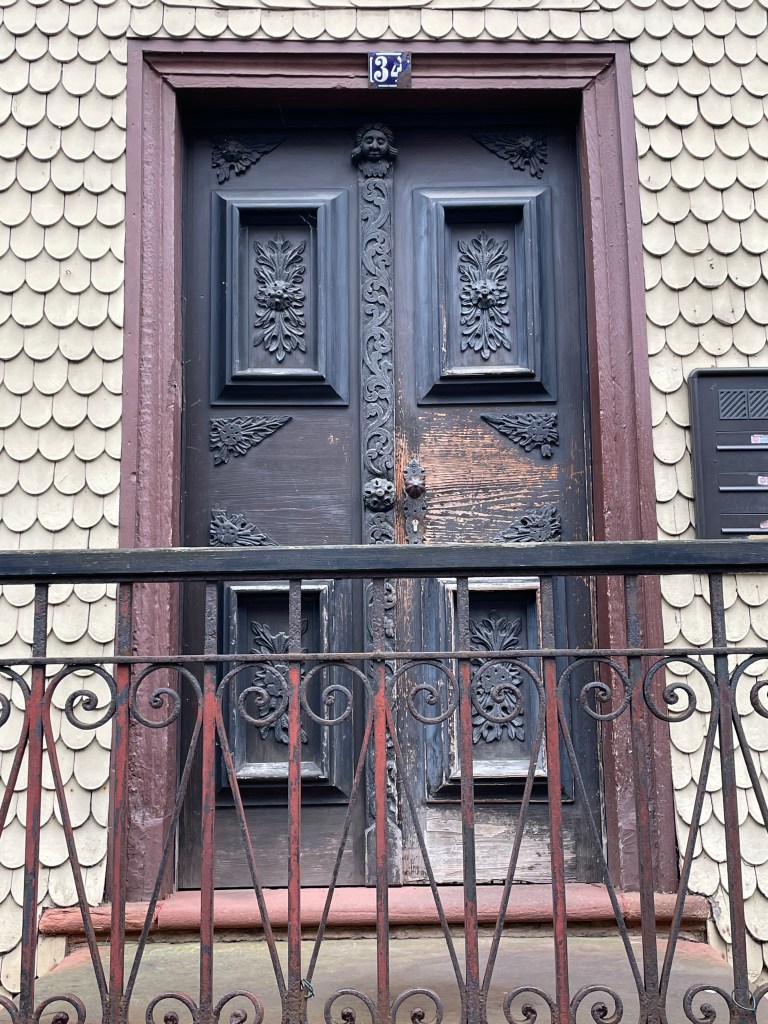
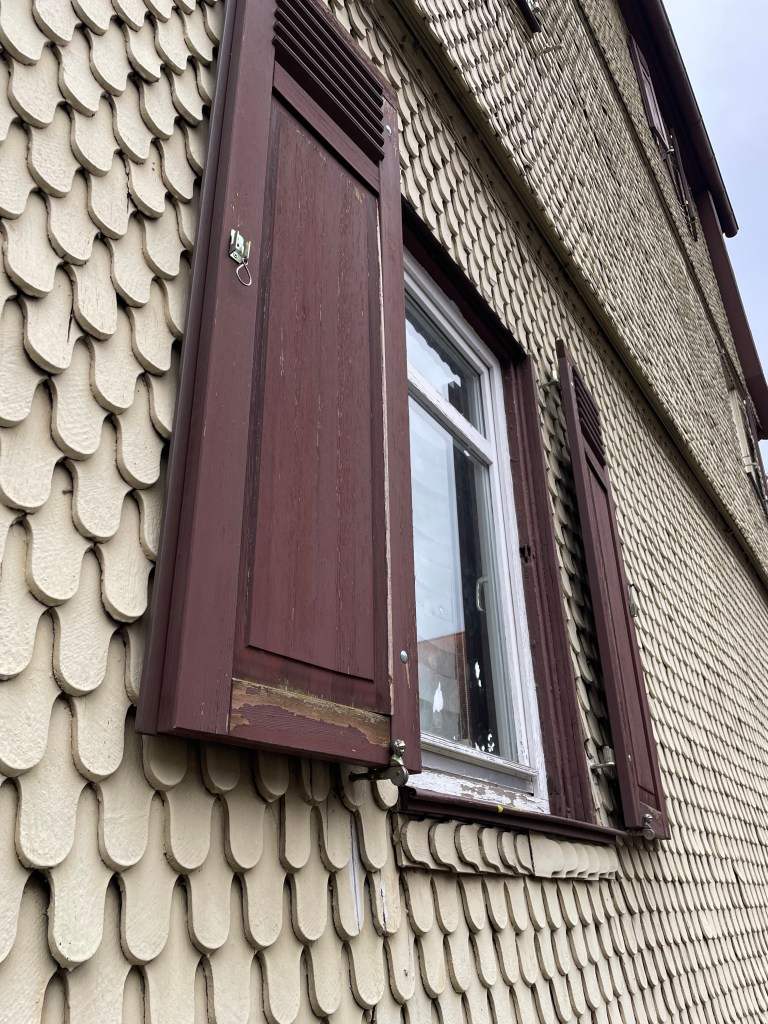
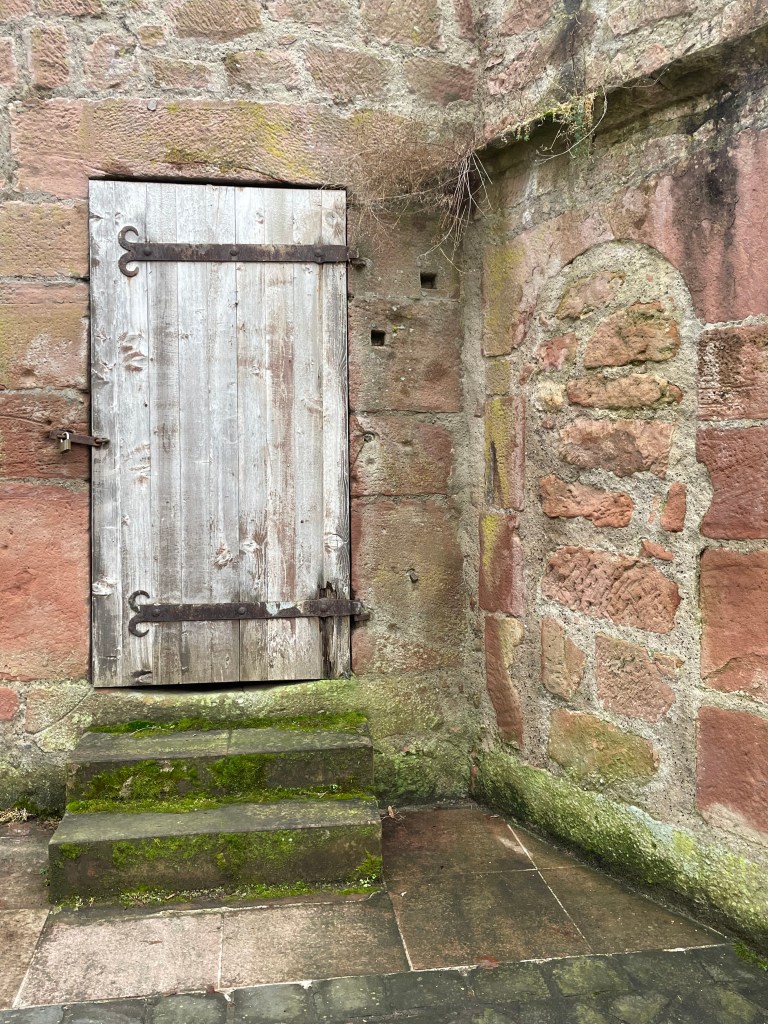
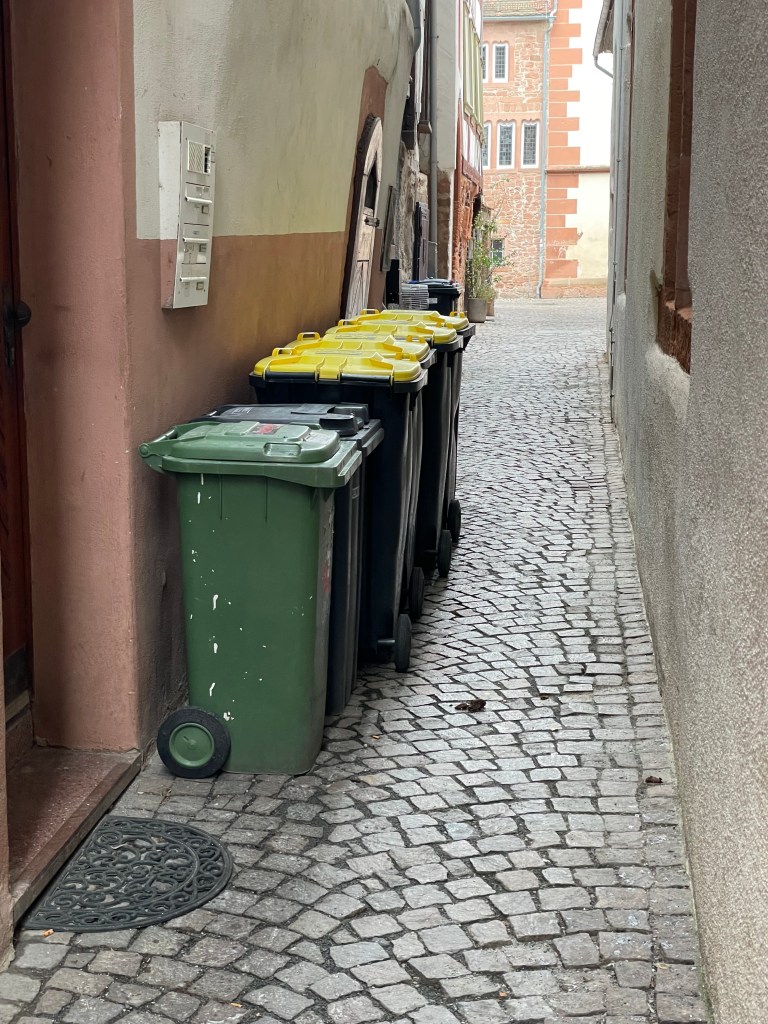
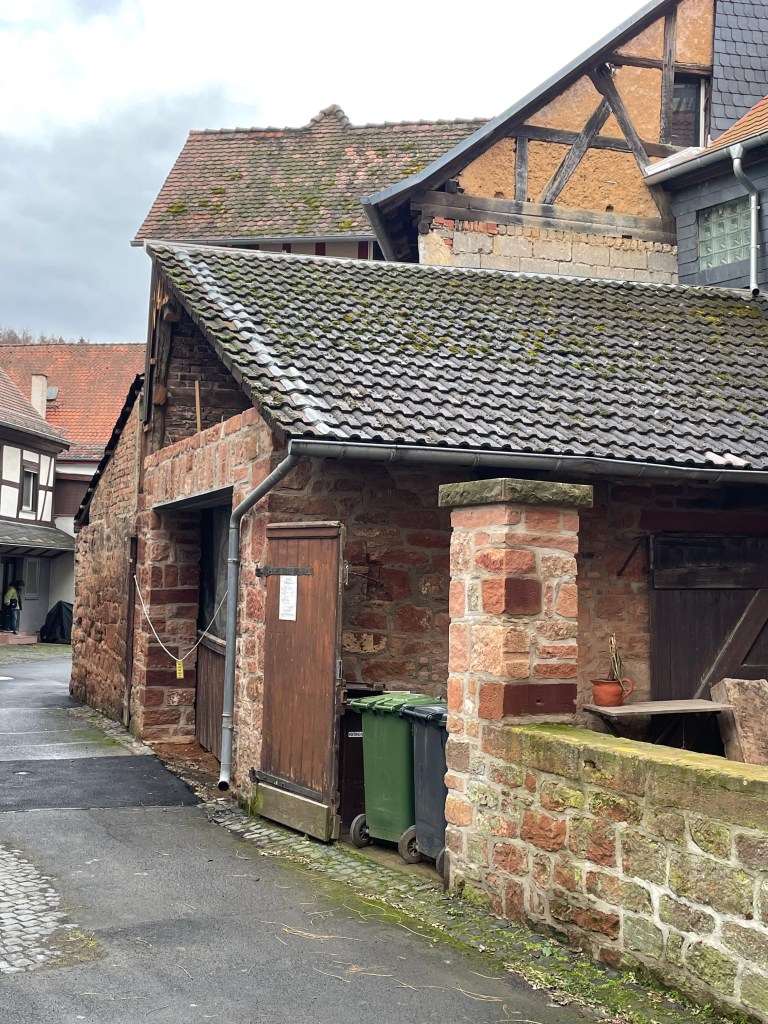
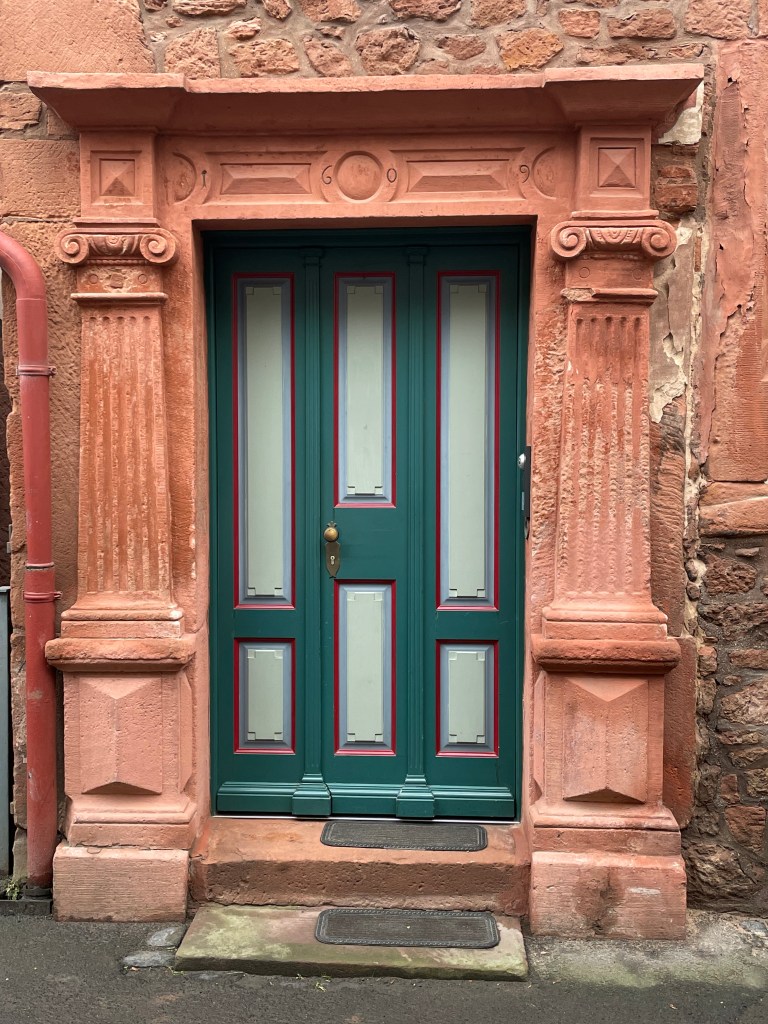
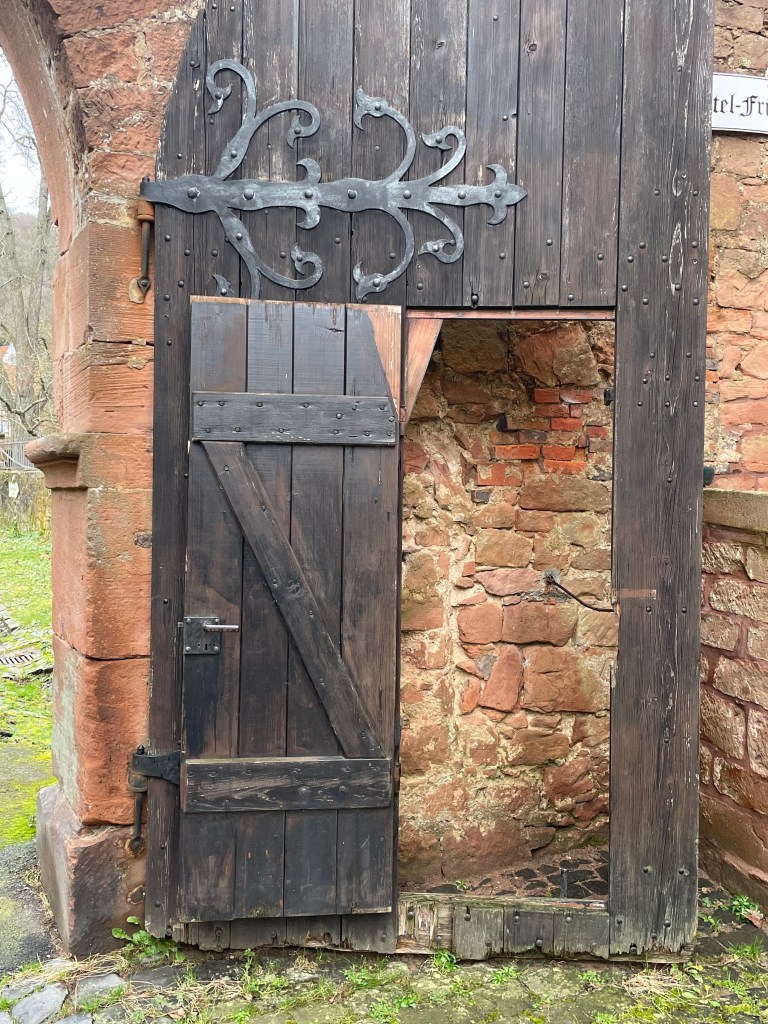
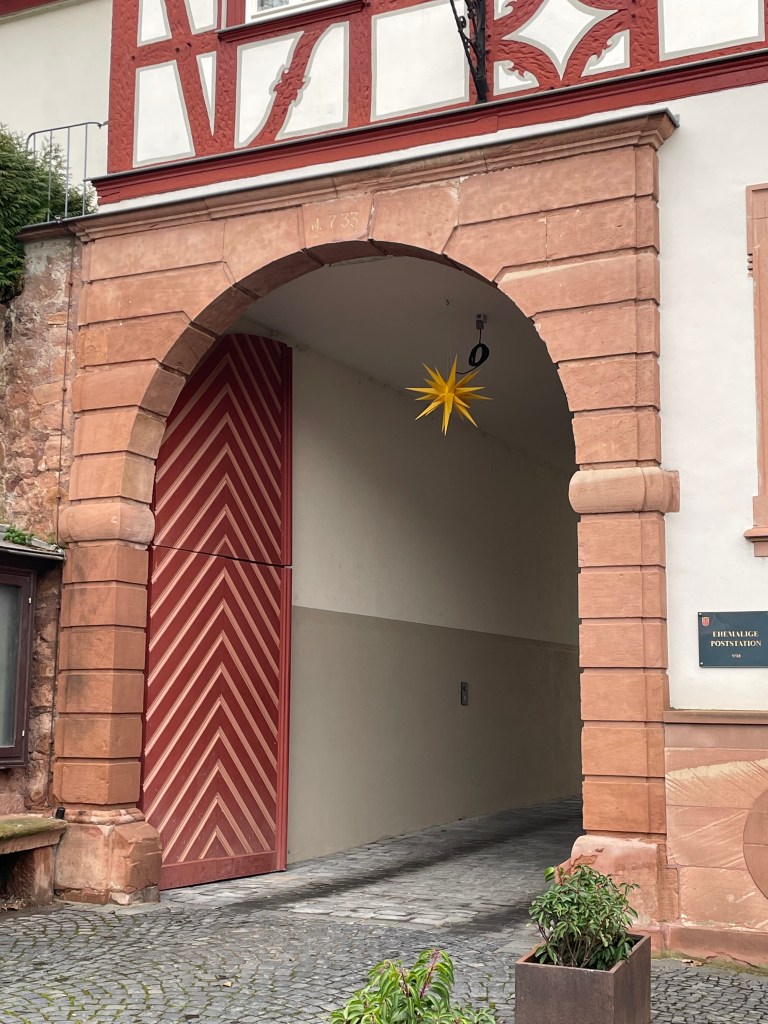
Please pay attention to the details as we walk these streets together.

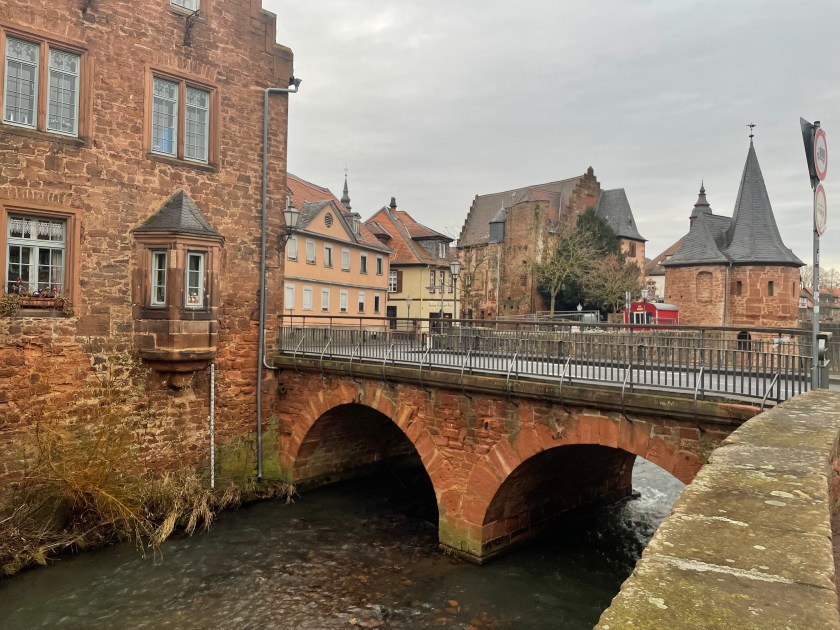
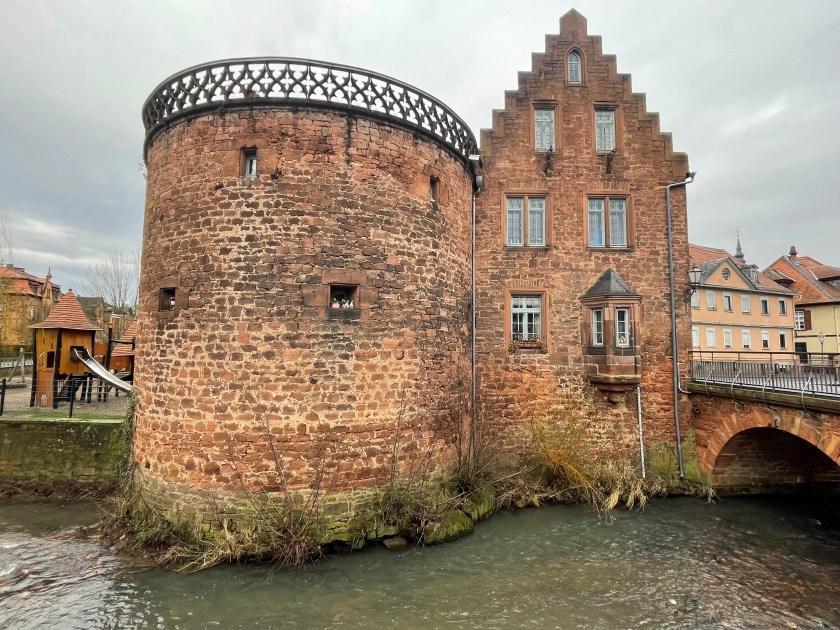
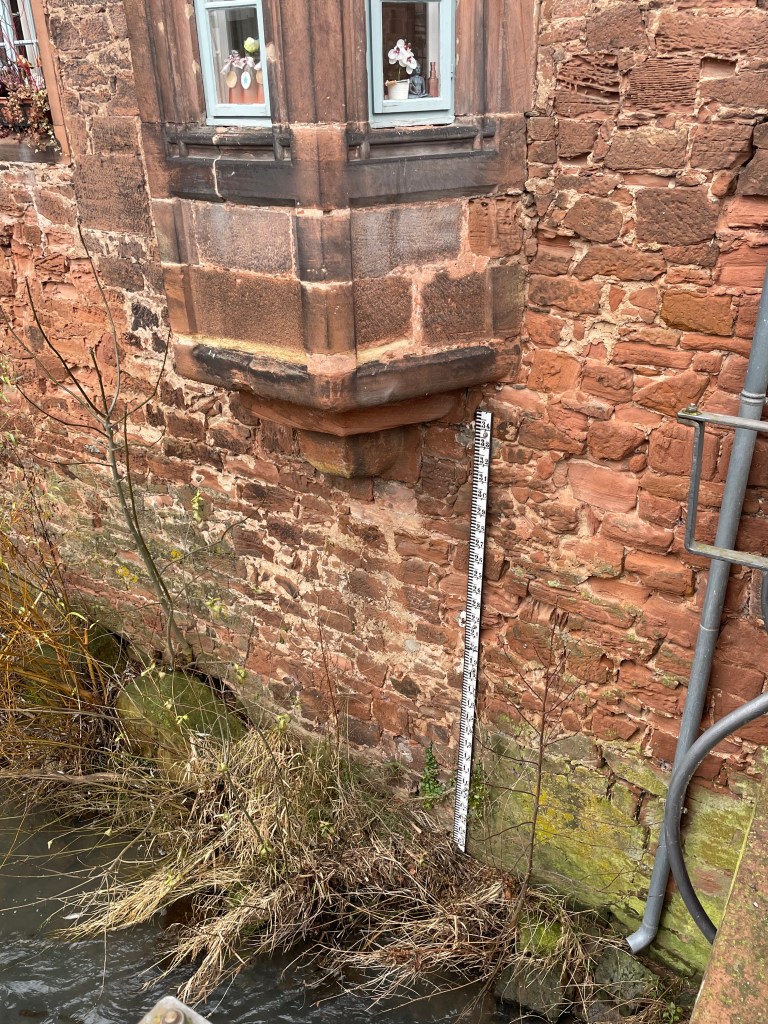
In the moat, under this window is a high water measuring marker.

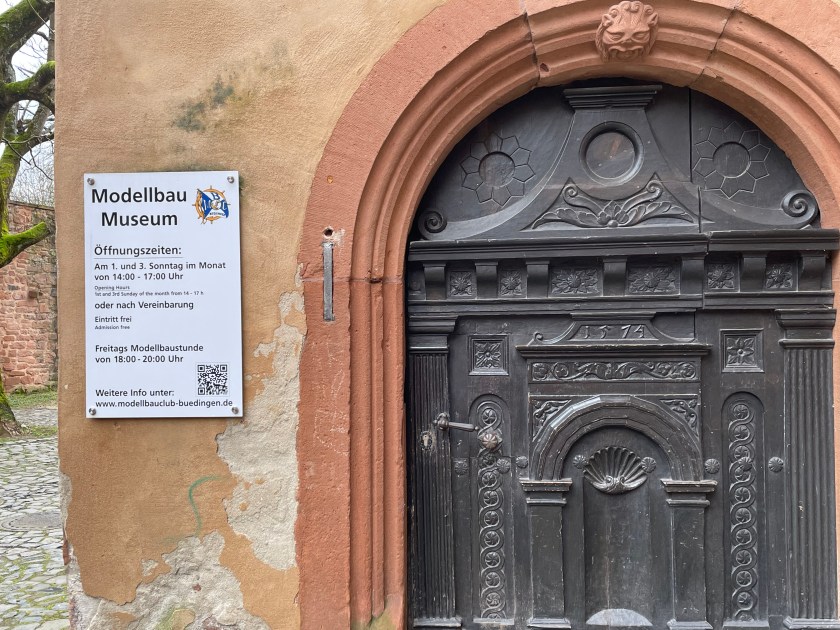
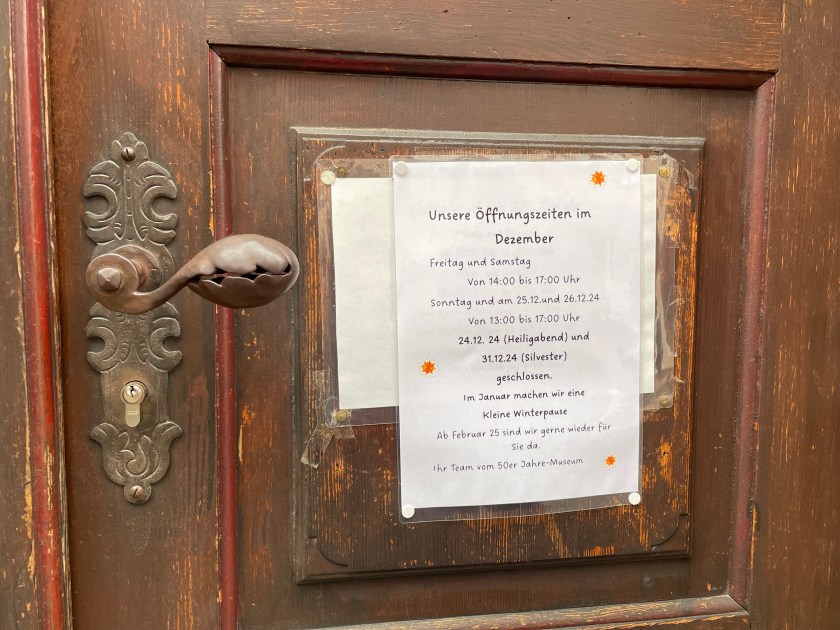
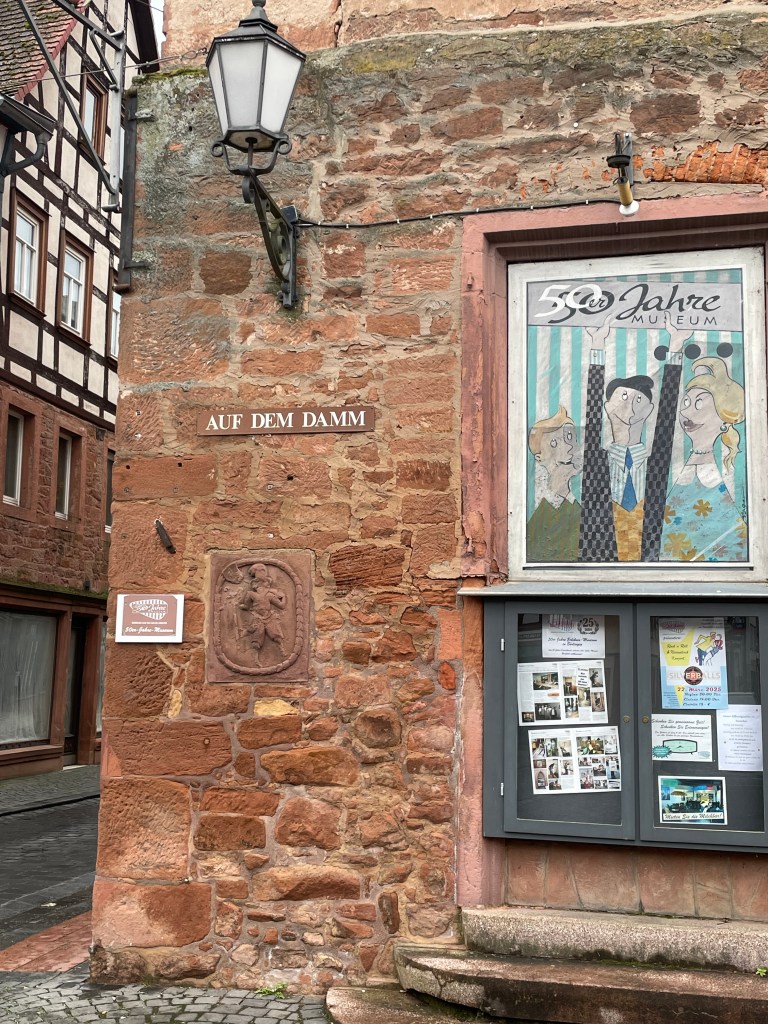
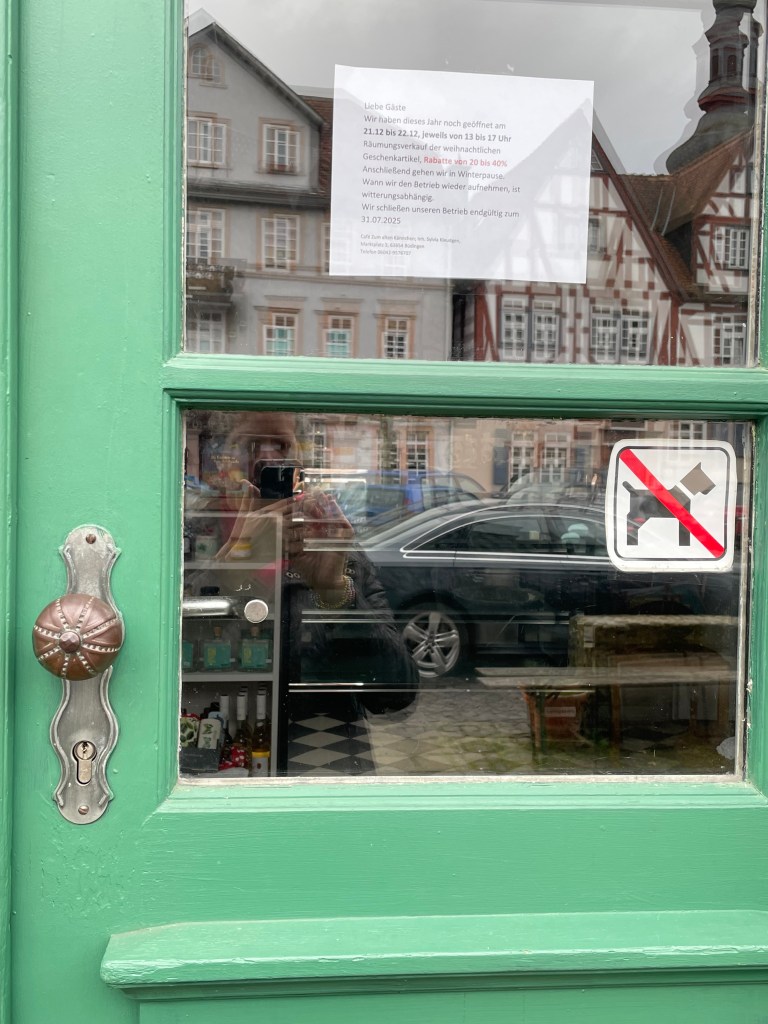
There are several small museums in town–a butcher’s museum, a 1950s museum, a town museum and more. All were closed. Almost every shop in the Altstadt was closed too. It seems the town is on “Winter Pause” after the busy Christmas market times.   It sounds like many towns’ shops  close down during Jan and Feb, opening back up the 2nd week in March.  Today Büdingen felt really deserted.

The Wurst (sausage) Museum, closed for winter break.

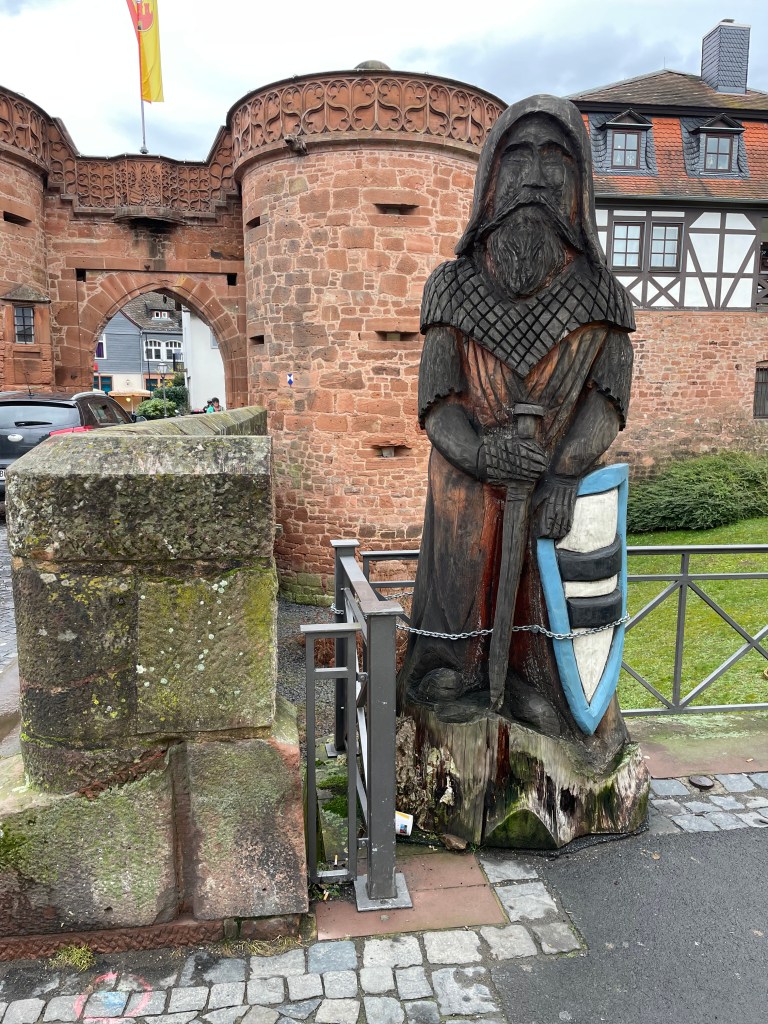
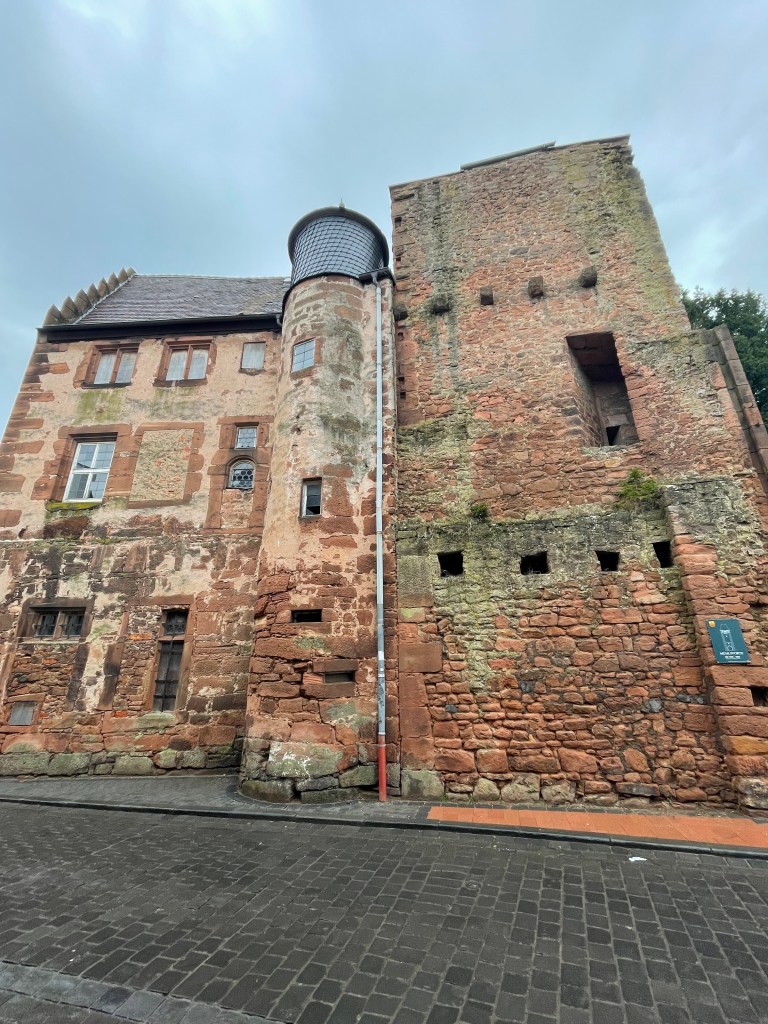
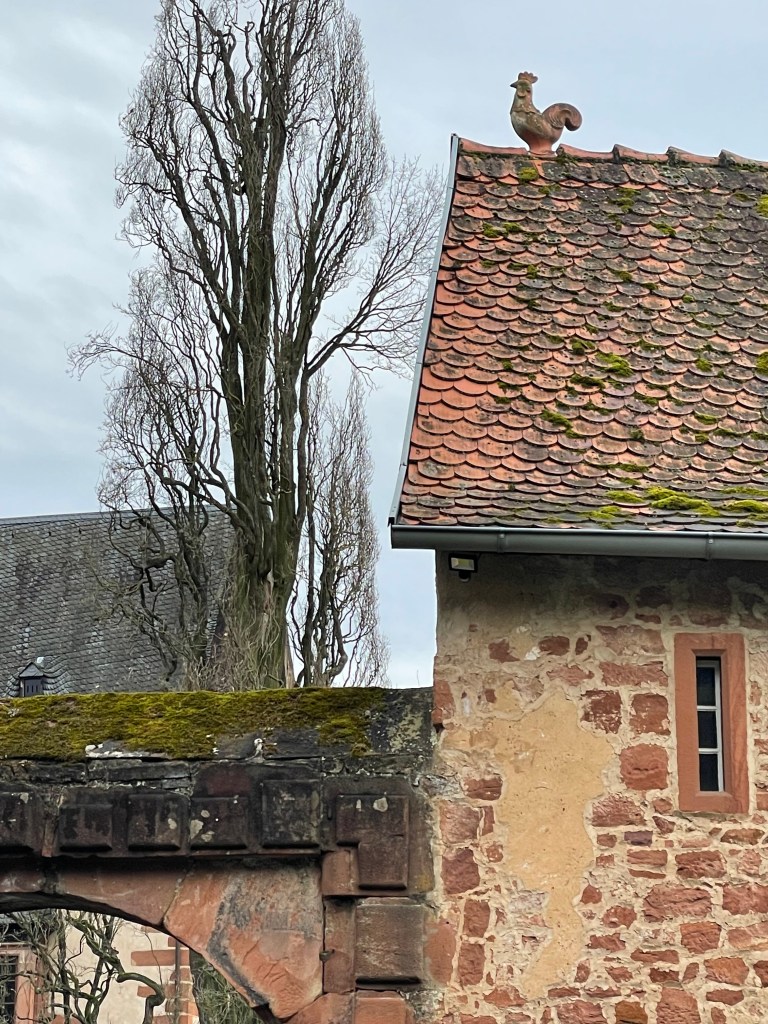
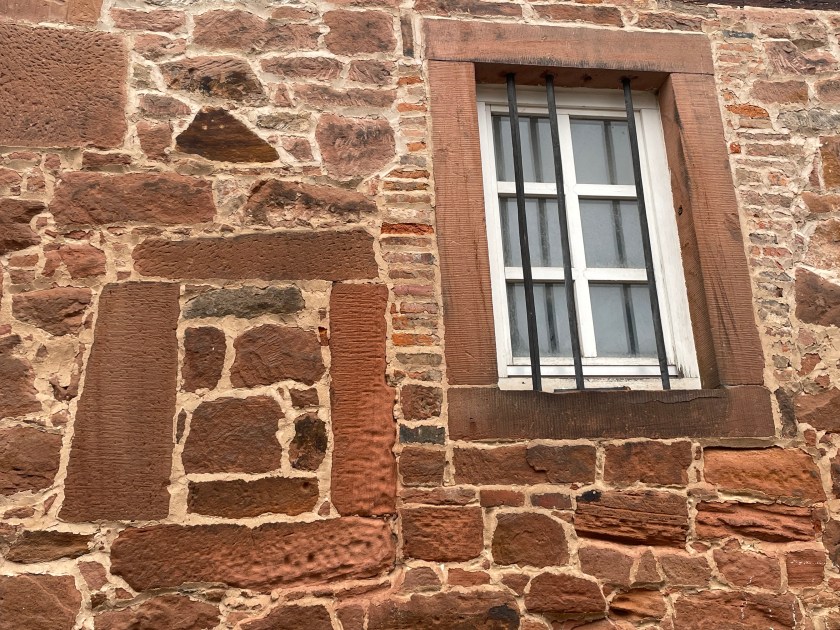
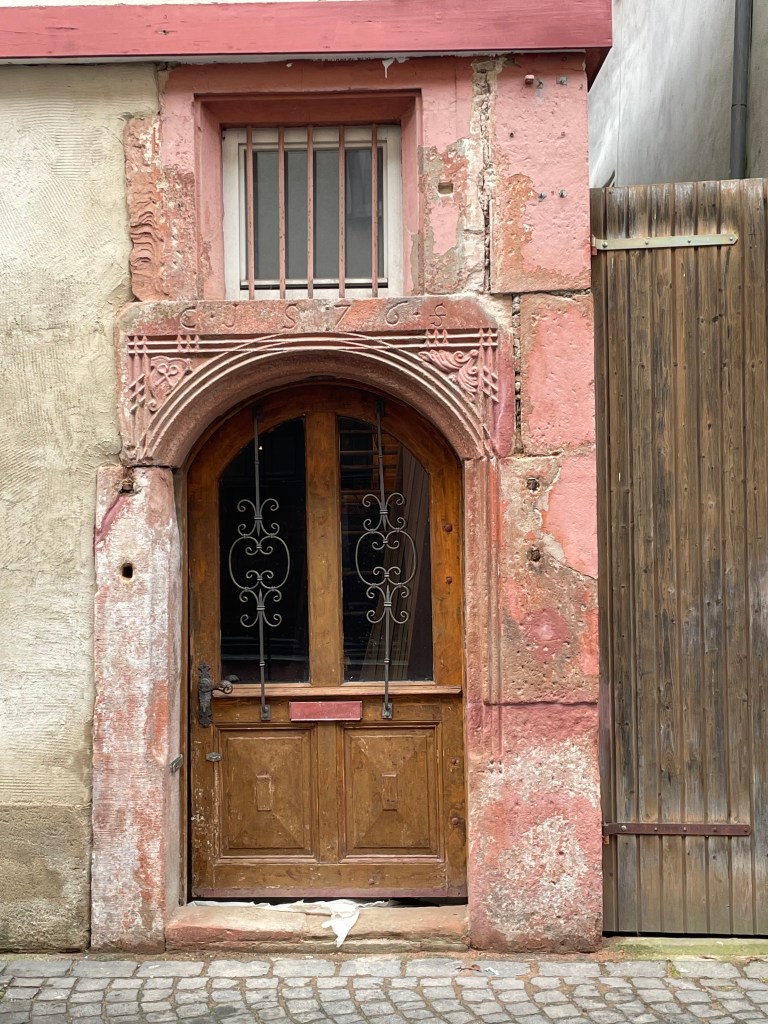
Incredible stonework.

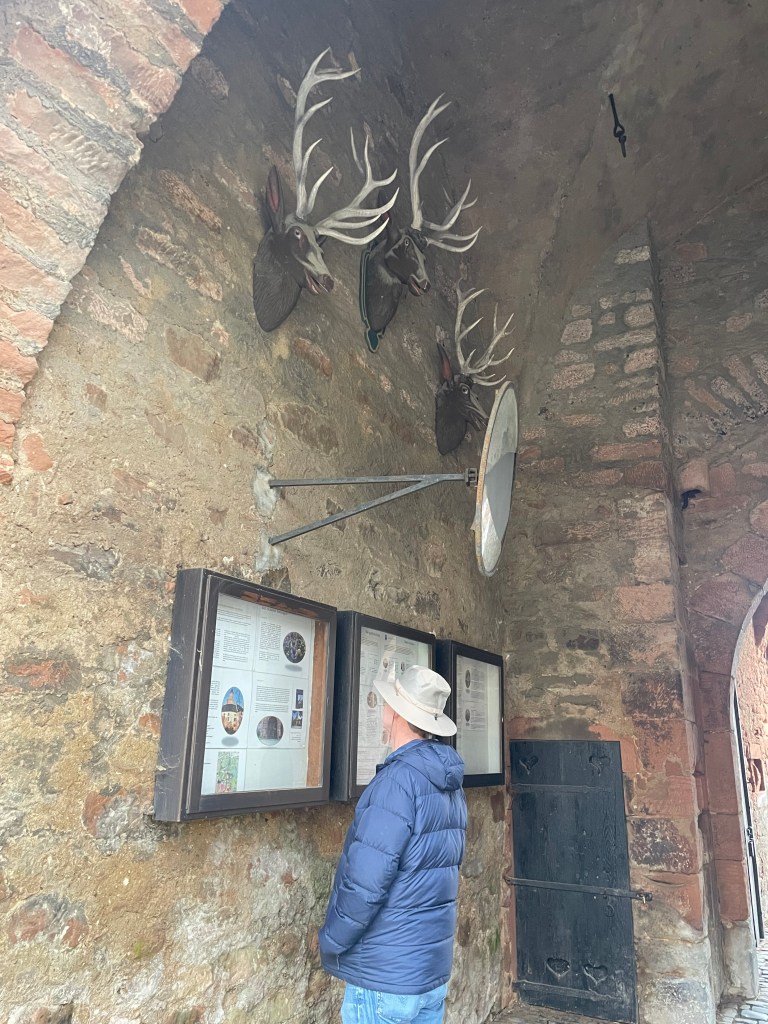
A boar head over the castle gate.

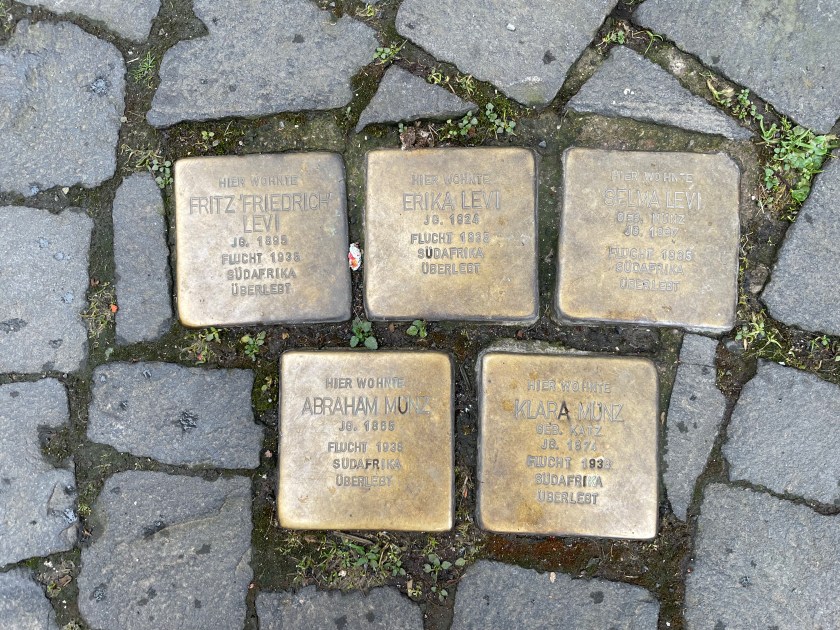
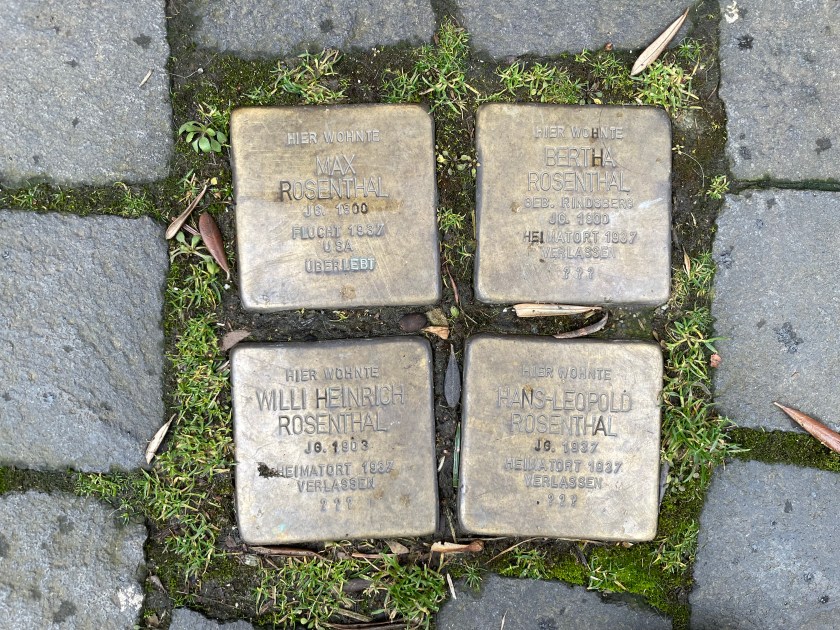
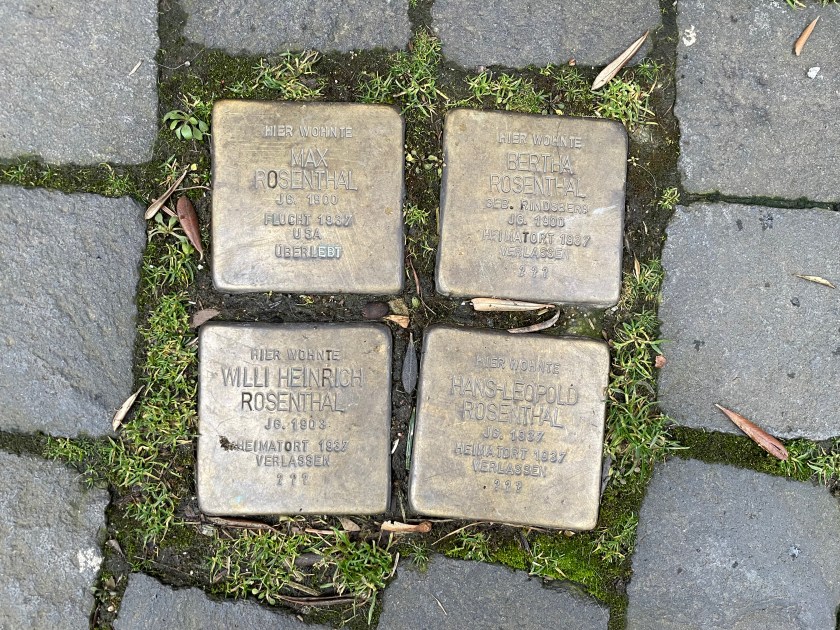
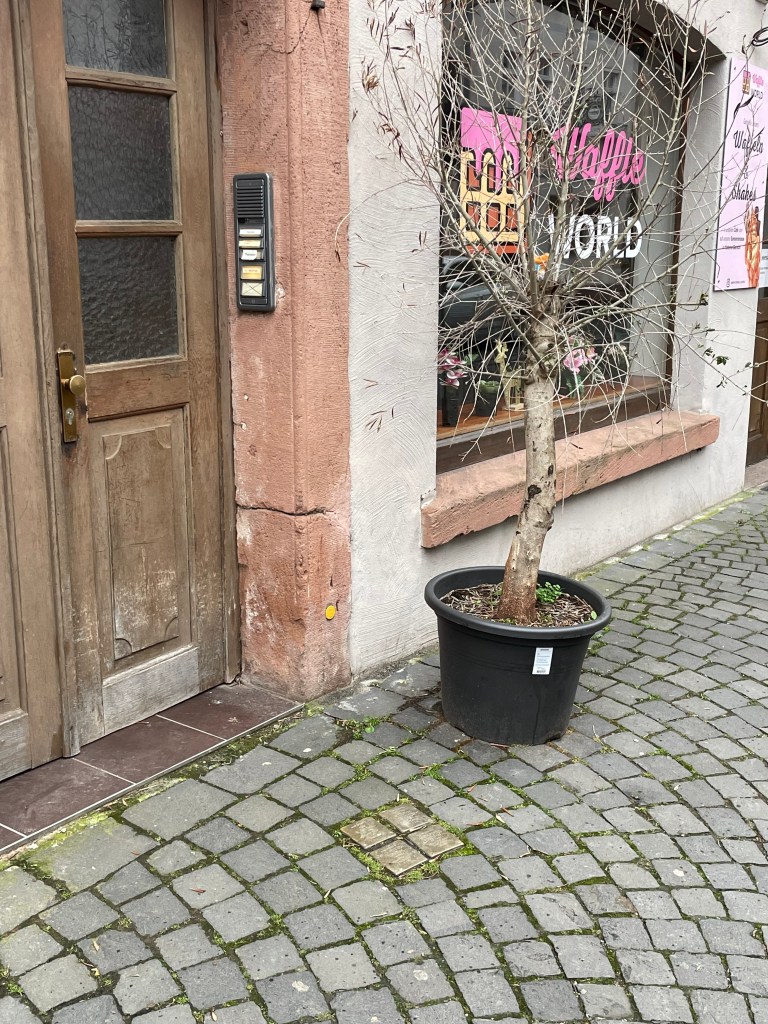
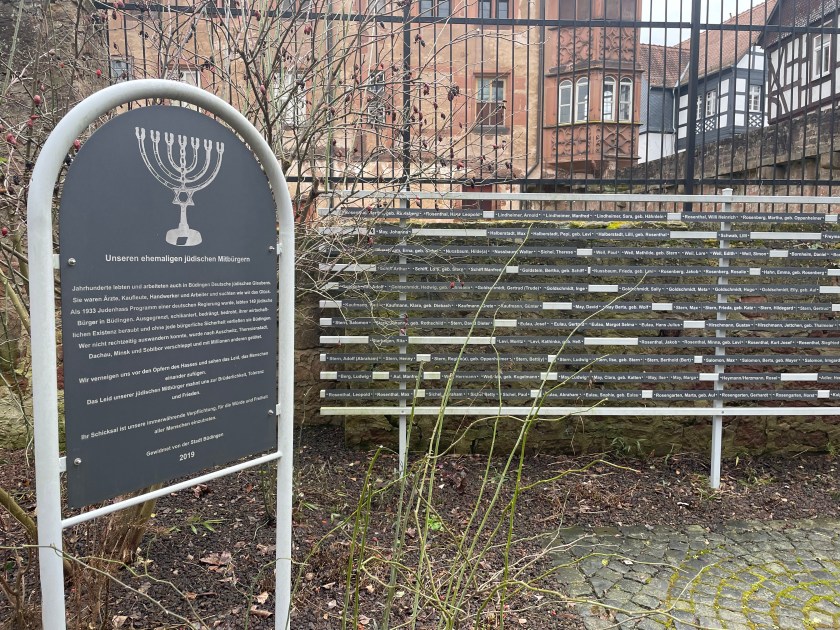
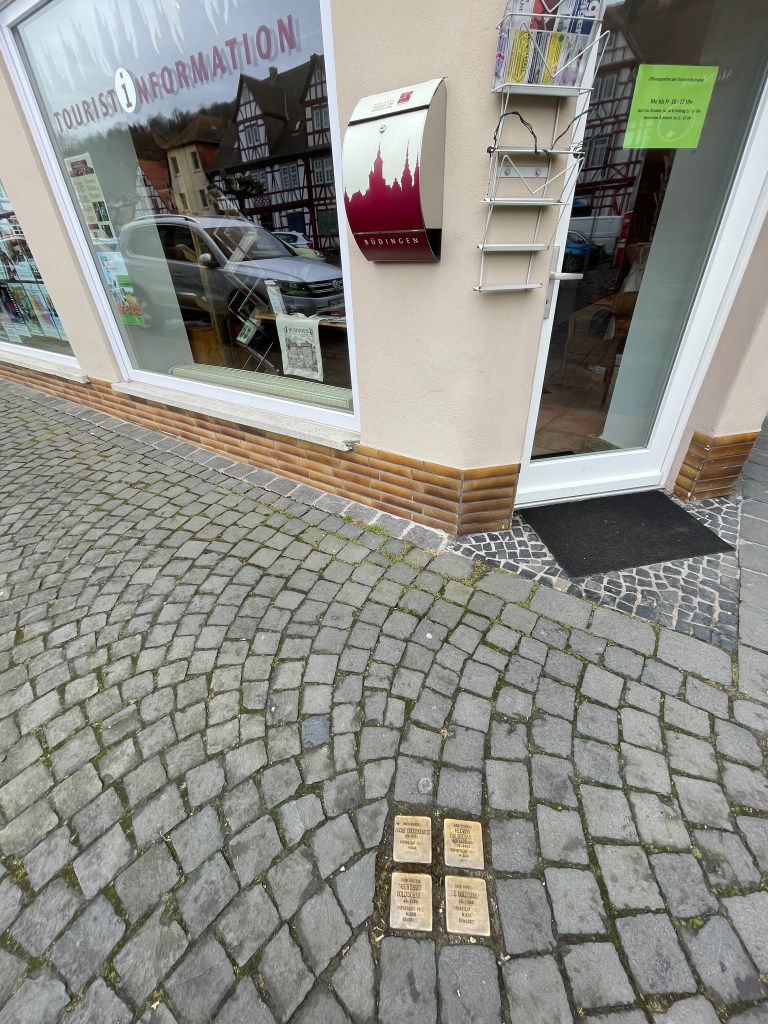
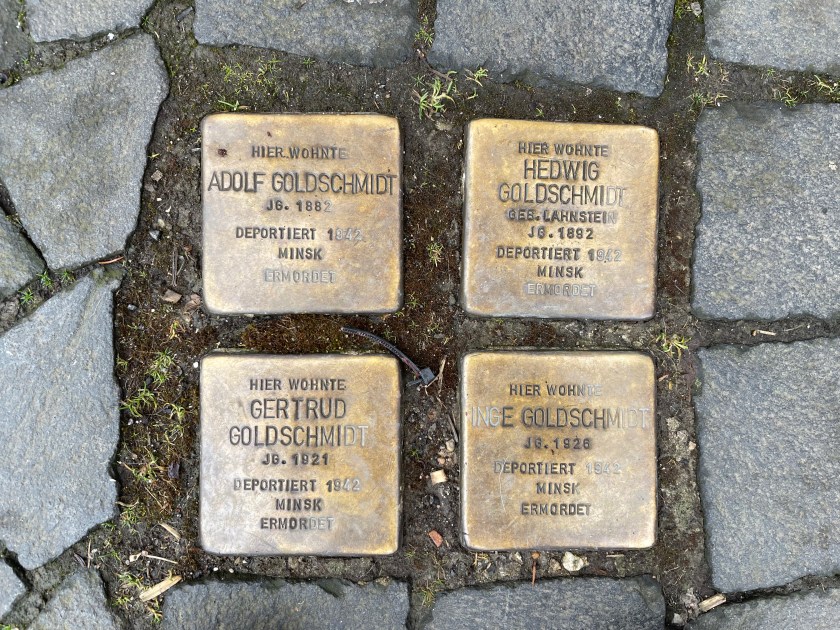
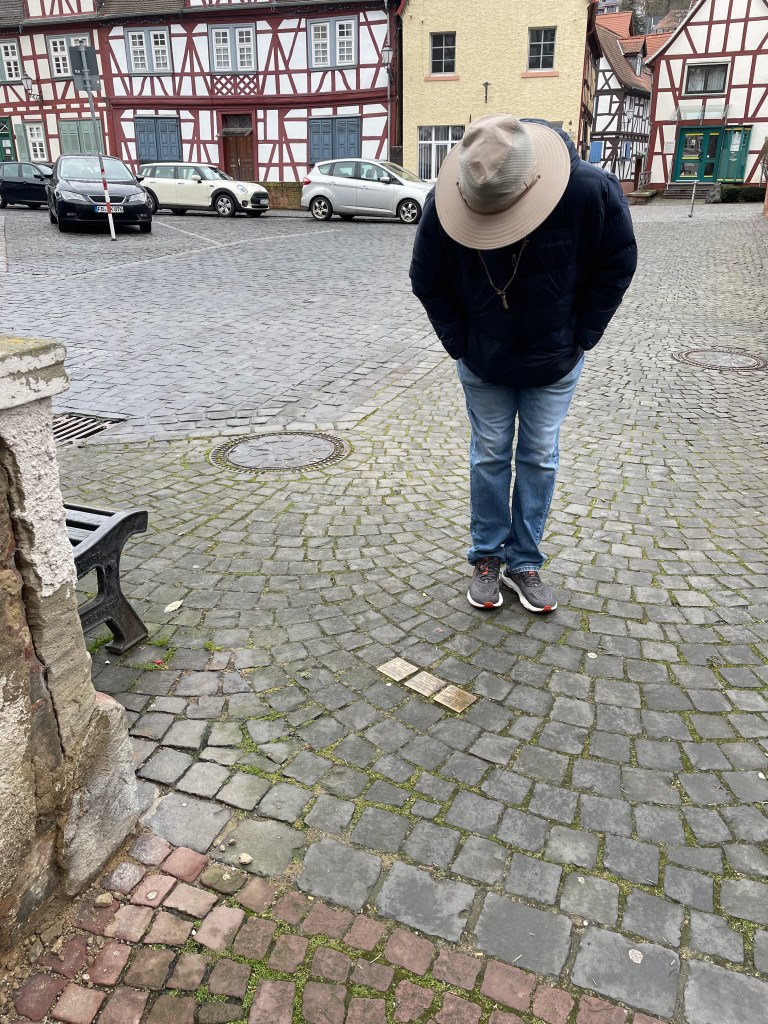
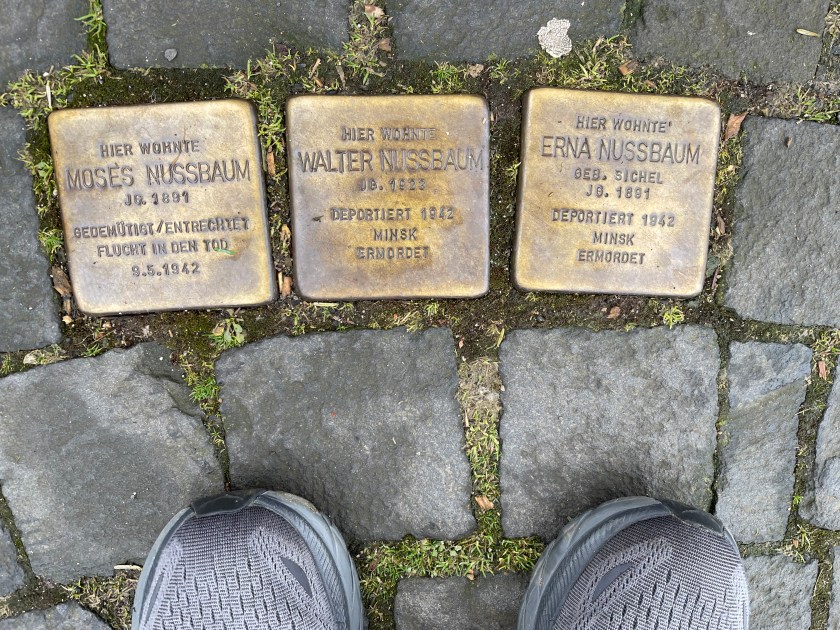
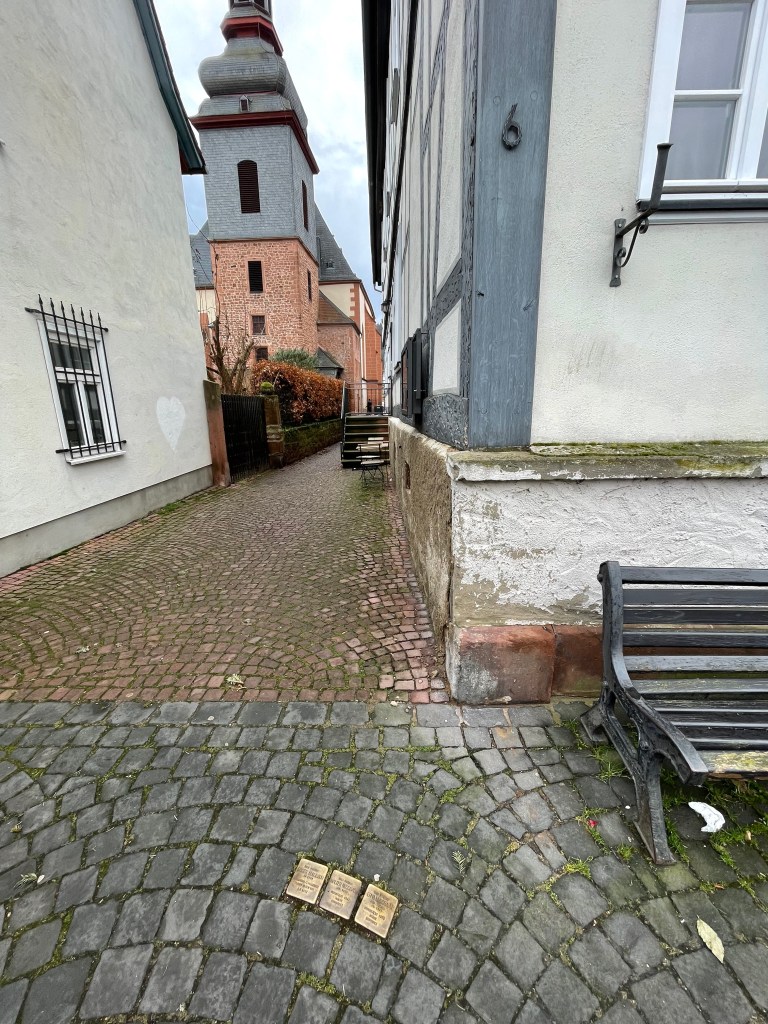
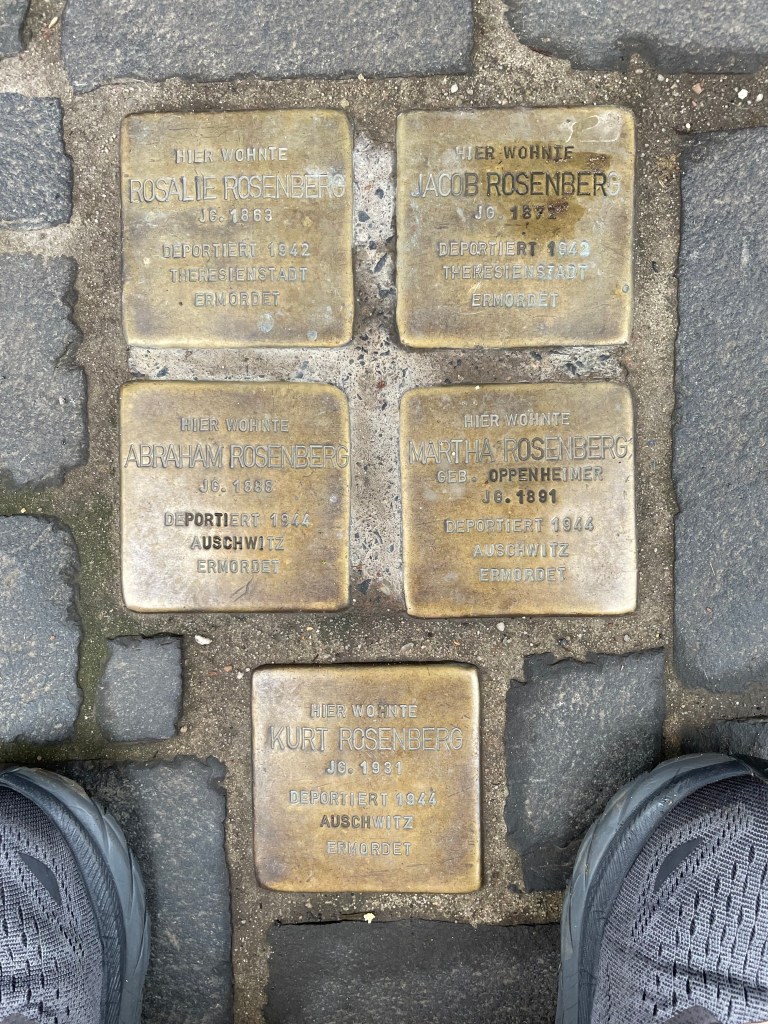
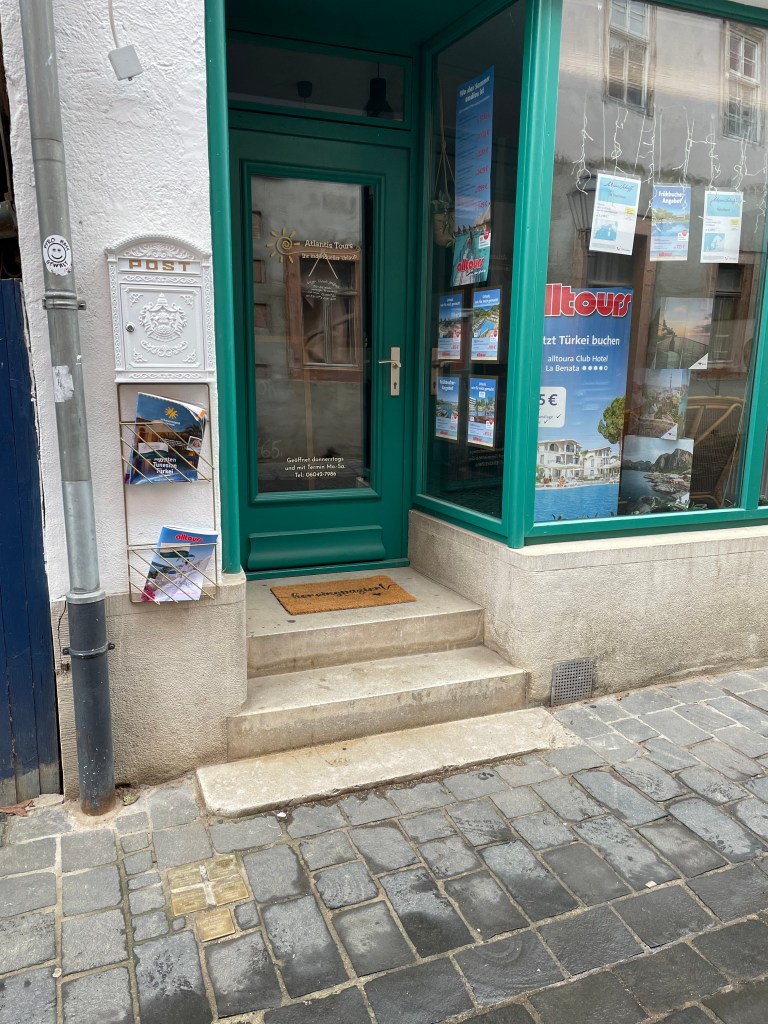
A Jewish Memorial, listing Büdingen Jews killed in the wars.  A brass plaque on the historic town hall commemorates the fate of the Büdingen Jews: In memory of the dead, as a warning to the living – “In memory and remembrance of our persecuted and murdered fellow citizens of the Jewish community in Büdingen who were deprived of their livelihood by the National Socialist dictatorship – We mourn the suffering of all Büdingen Jews.”

From Wikipedia:
From 1933 to 1938, there were attacks on Jews and Jewish institutions in Büdingen. In 1938, the last Jew is said to have left Büdingen and emigrated. In Düdelsheim, on Kristallnacht, a “rolling commando “of the SA from Büdingen appeared, joined by followers from Düdelsheim. As part of the staged pogrom, the mob of Nazis from Büdingen and Düdelsheim (especially the SA) broke into the synagogue, smashed the windows and set fire to the curtains. The inventory, consisting of tables, benches, desks and other items, was vandalized, loaded onto carts, taken to the market square and burned there to the cheers of a large crowd. The homes of the Jewish citizens still living in Düdelsheim were broken into, vandalized and in some cases looted. A 55-year-old woman was dragged from the toilet, sprayed with manure, beaten up and kicked along with her 52-year-old brother, and driven to the town hall. There, a sack was put over their heads and they were forced to “dance” with a broom in their hand. A 51-year-old was led through Düdelsheim by two people while another “rode” him on his neck. The Jews were then rounded up in the town hall, insulted and mocked. Some had ropes put around their necks and flour sacks put over their heads, which were then “exhibited” at the window for spectators.

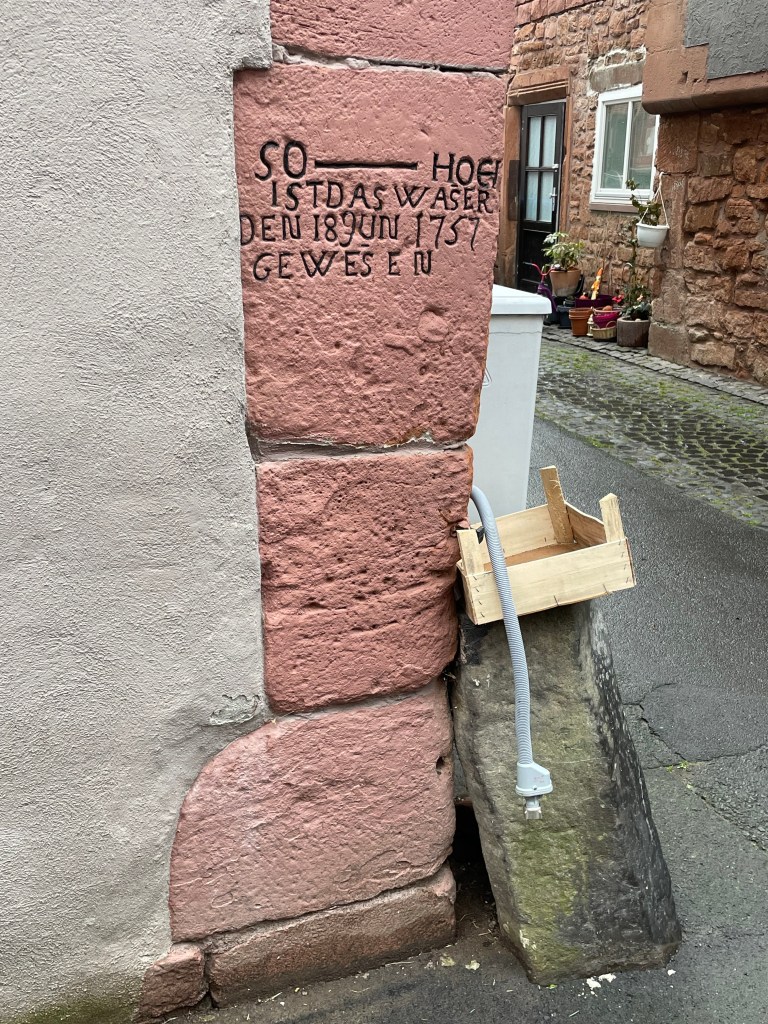
So high was the water level on 18 June 1757:

I will explain the frogs in a later post.

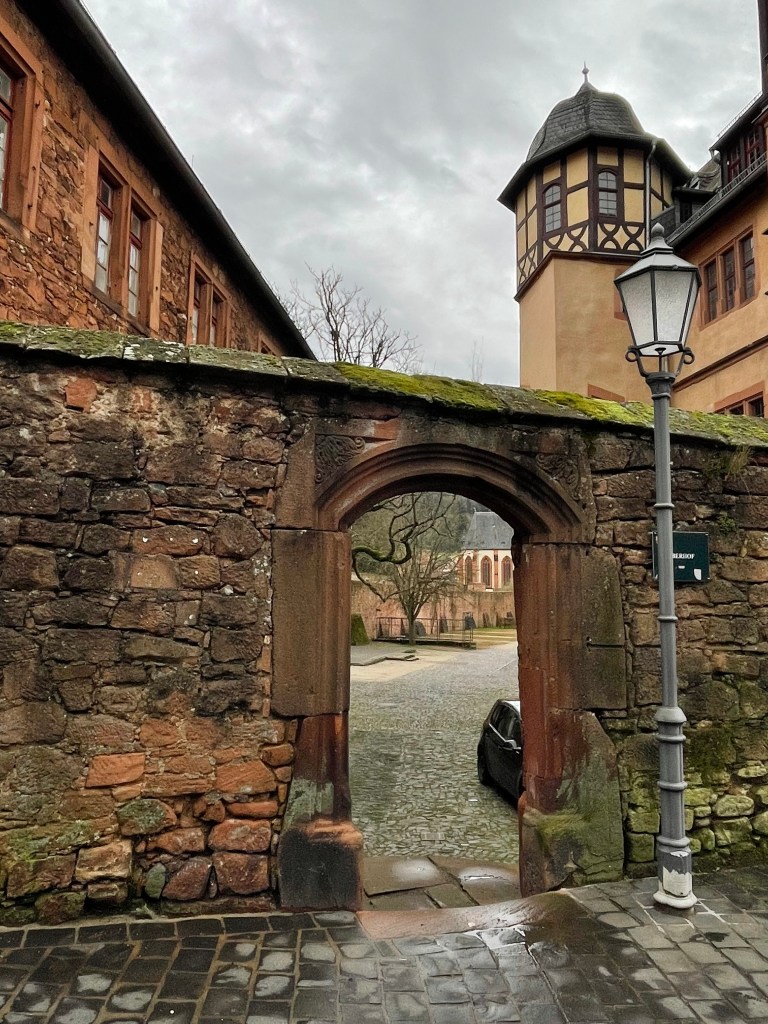
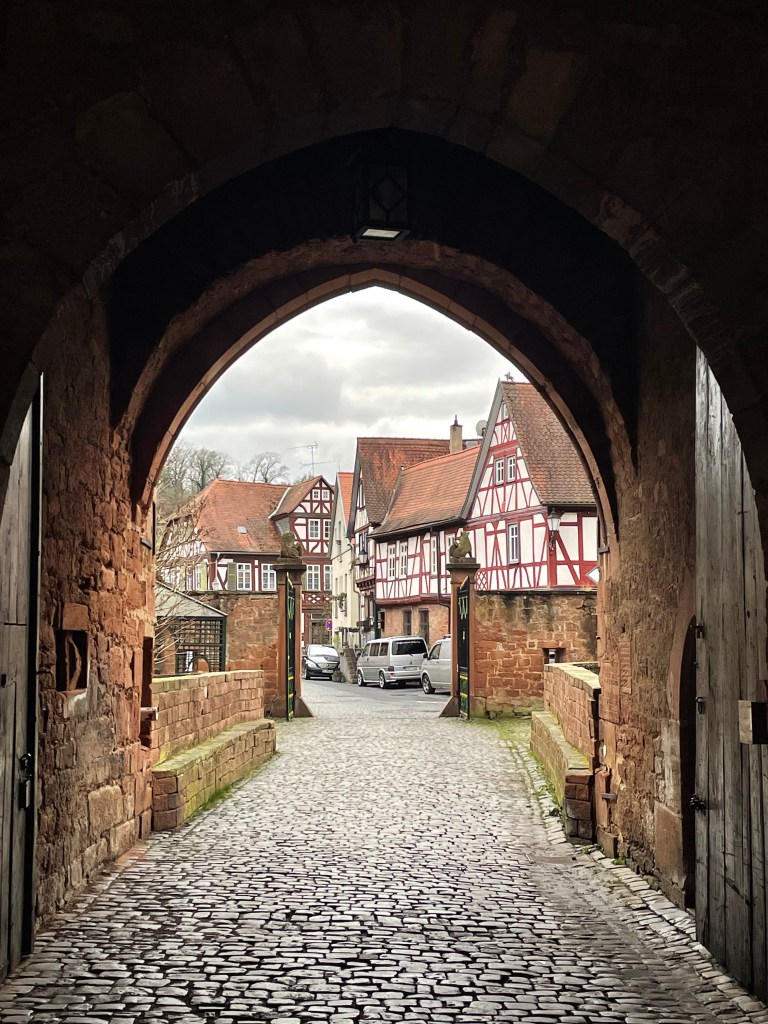
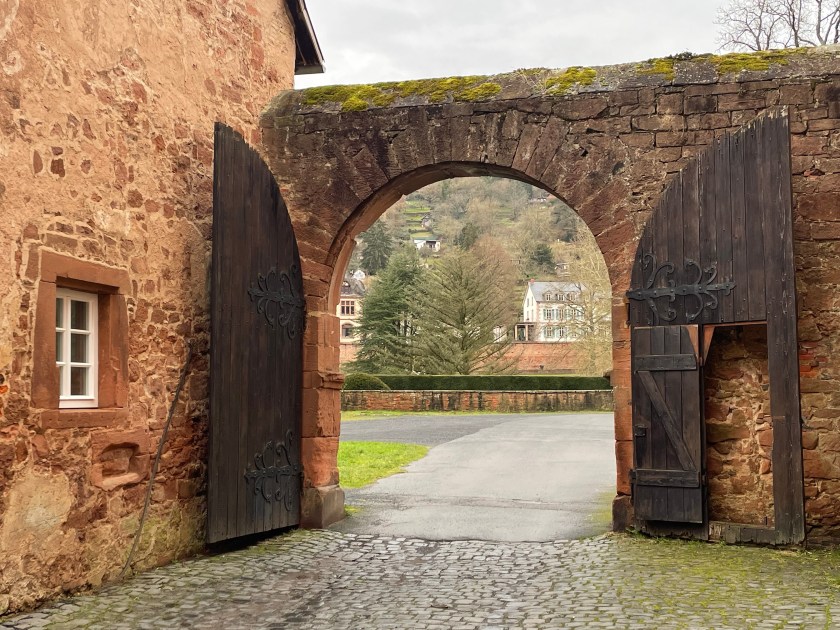
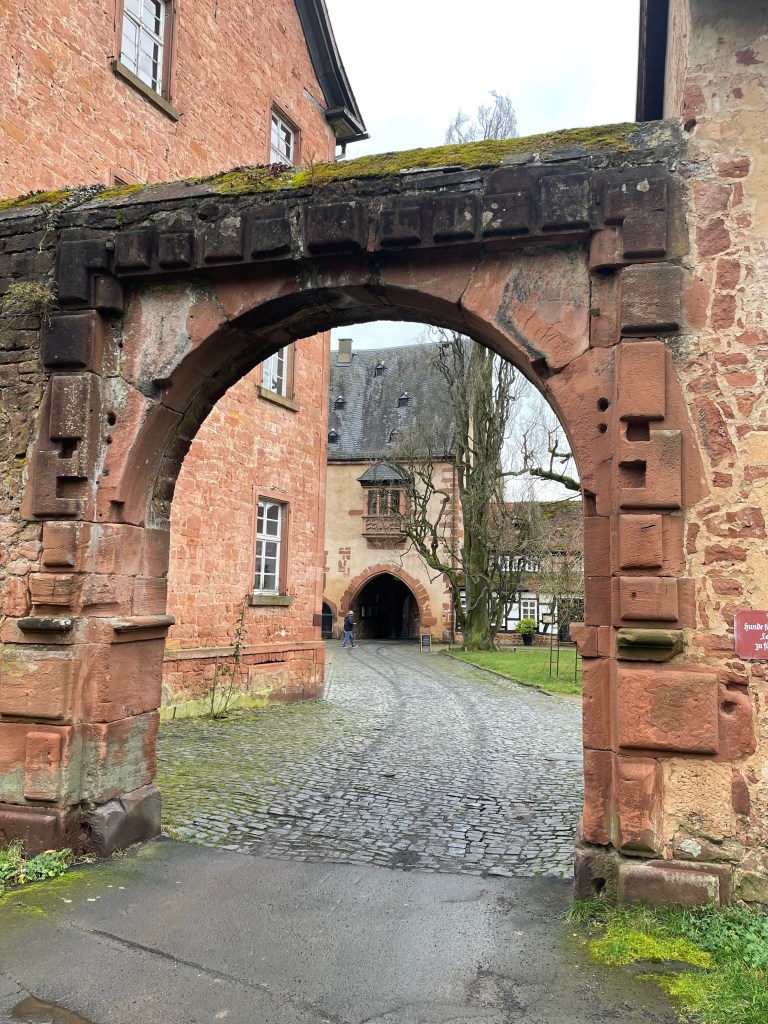
Going into the castle area:

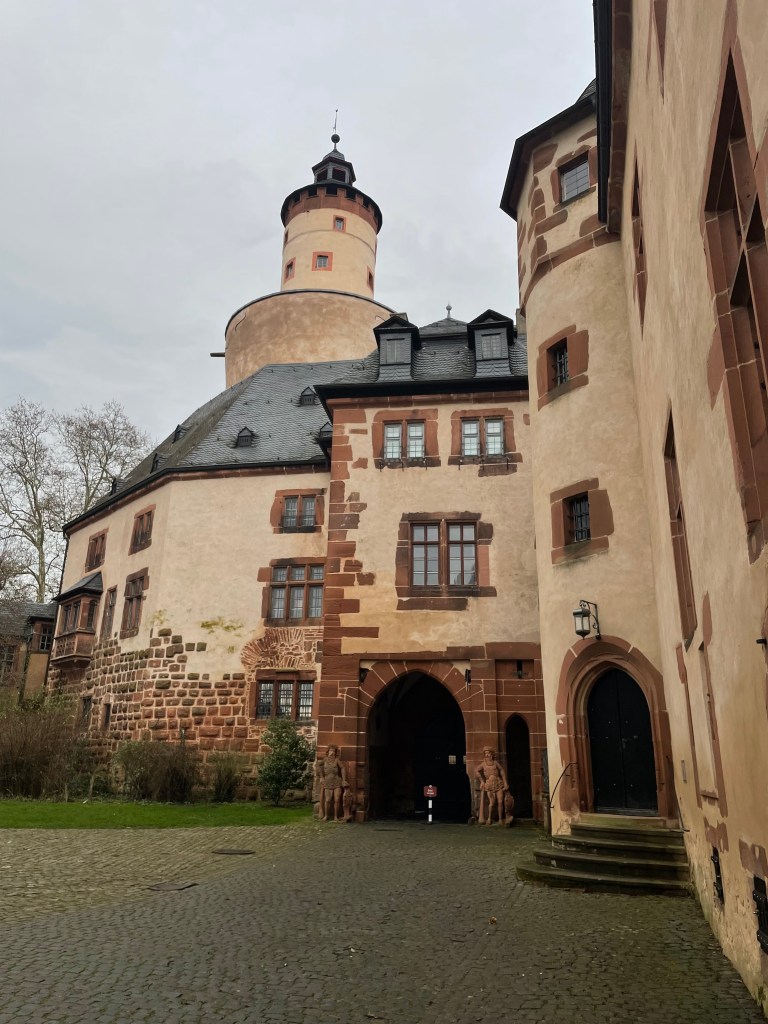
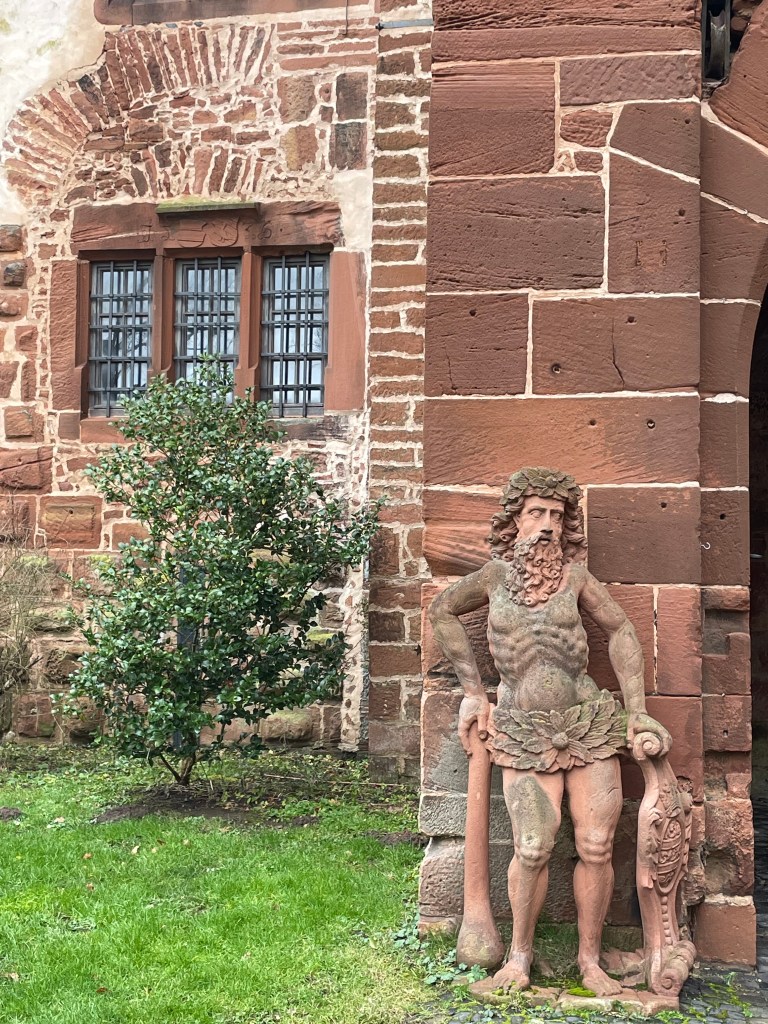
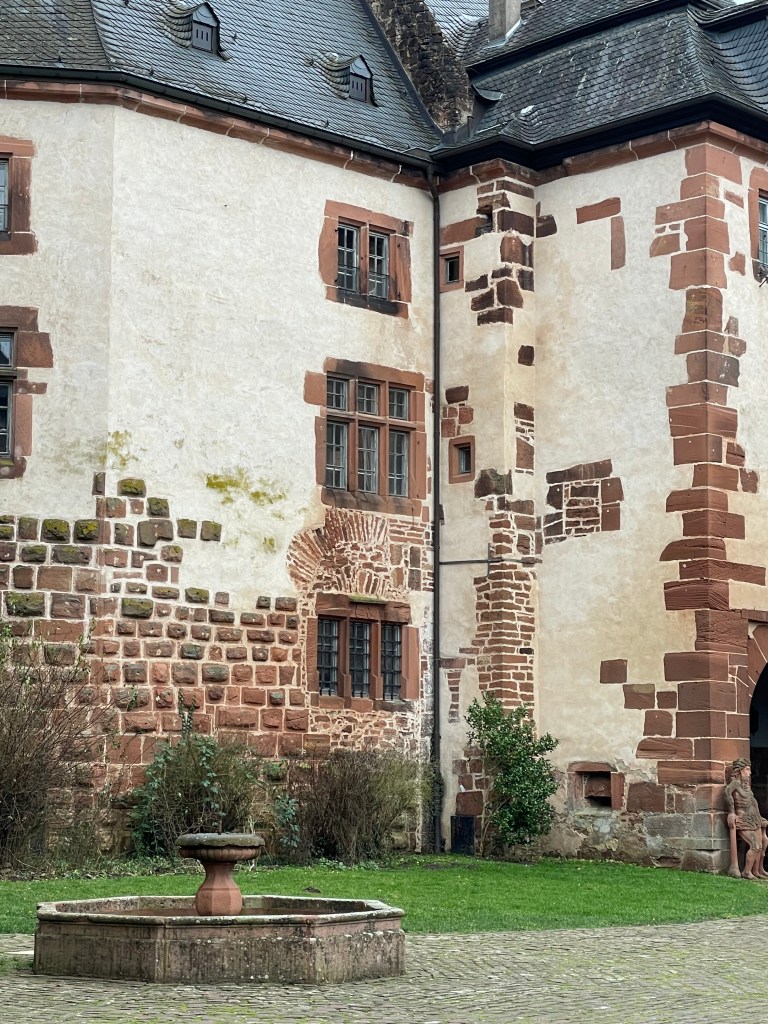
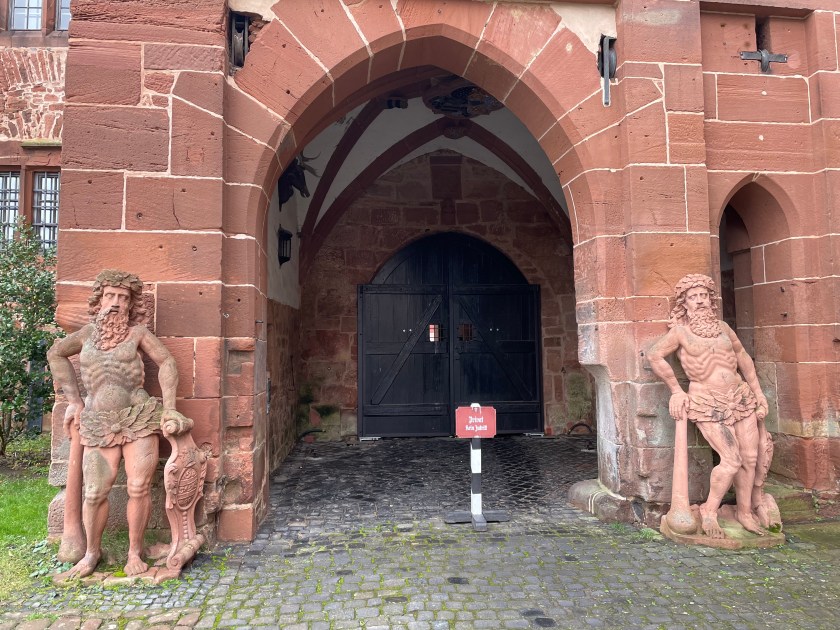
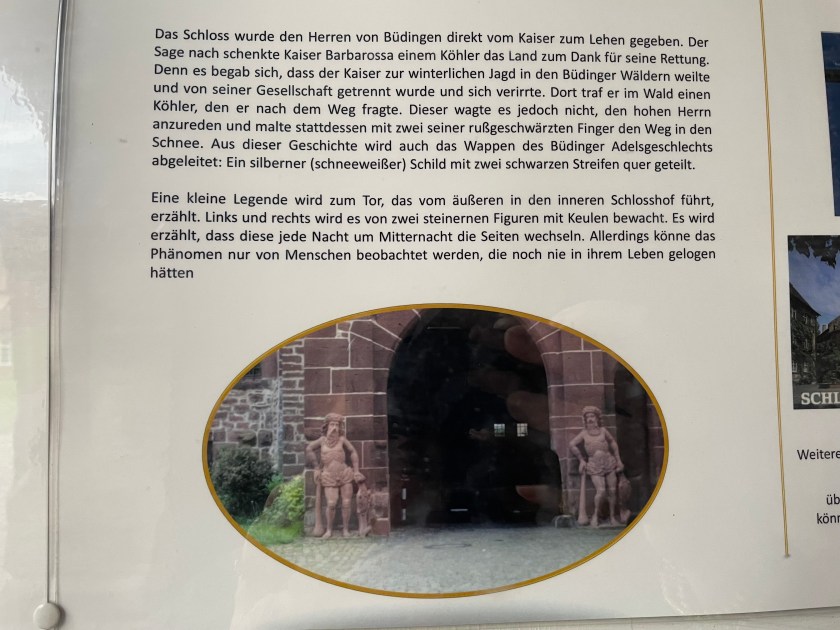
The castle here has been occupied since 1258. At the entrance to the living quarters of the castle/residence stand two sandstone guards with clubs. They say that every night at midnight, these two guards trade places. You can go watch them, but only someone who has never told a lie will see them move.

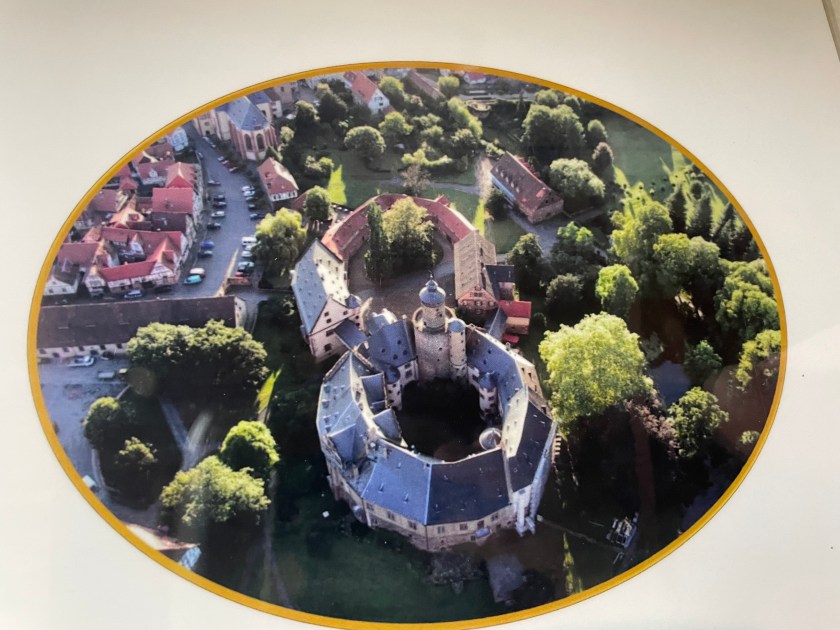
Here you can see the 13-sided castle/palace complex from above:

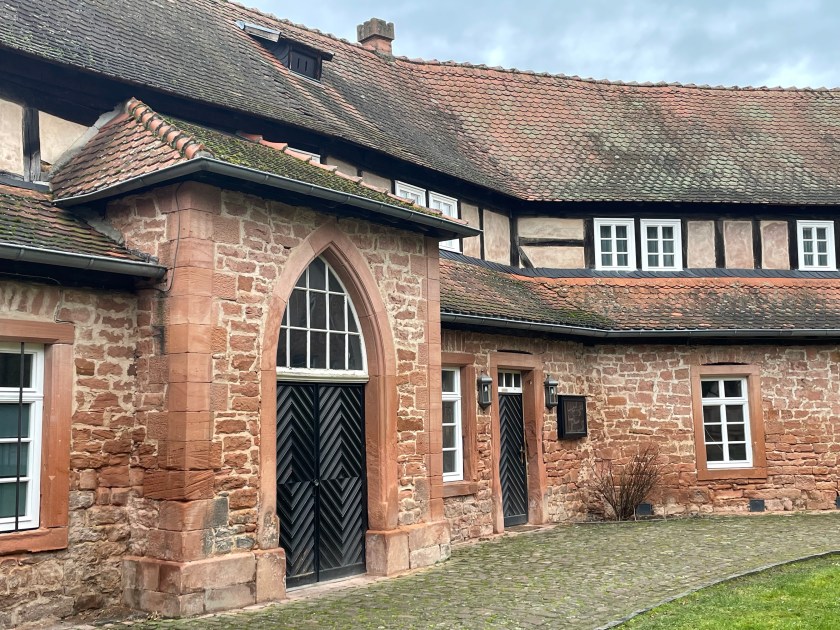
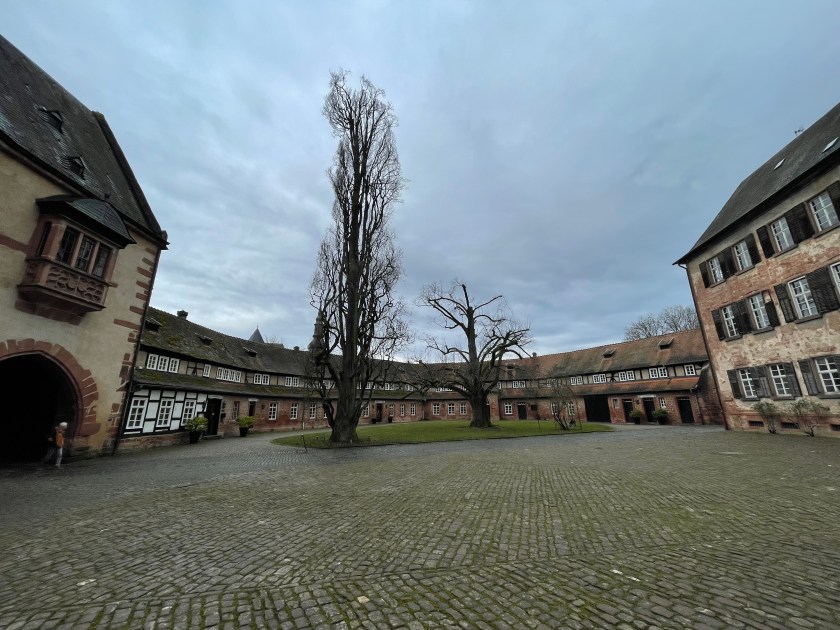
The castle courtyard:

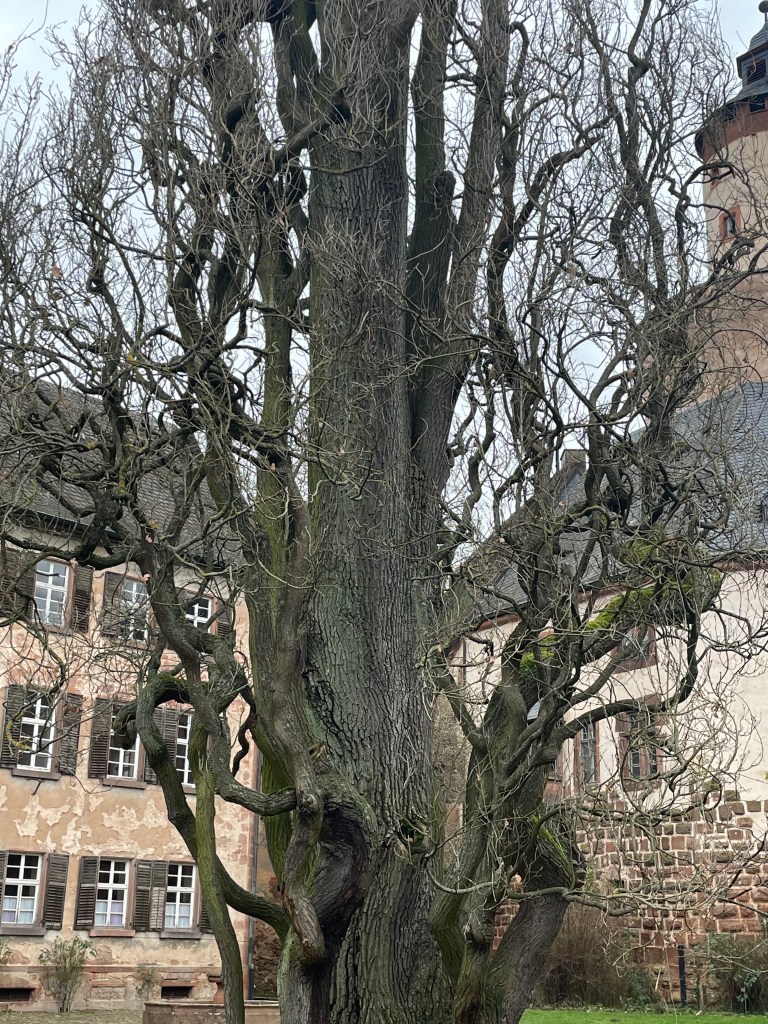
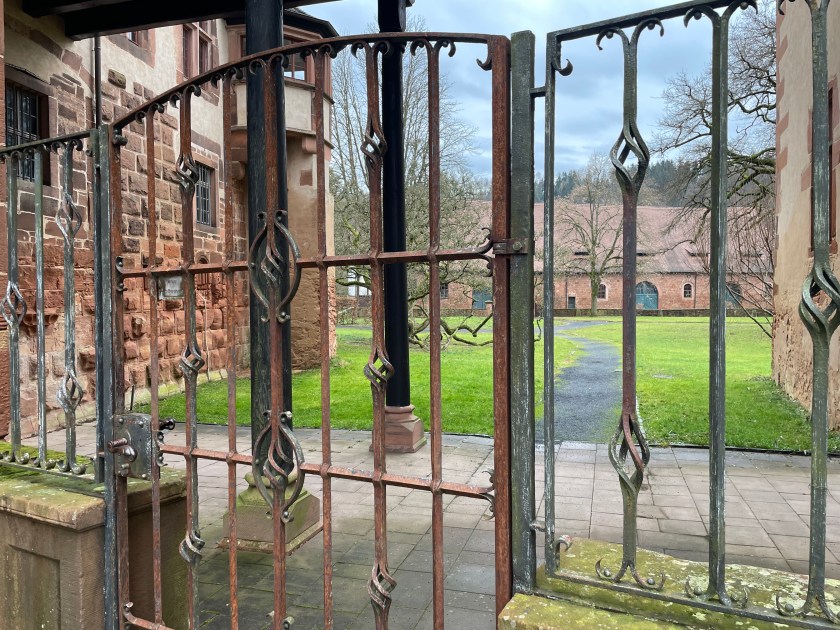
The castle backyard and garden areas:

Now back into the old town:

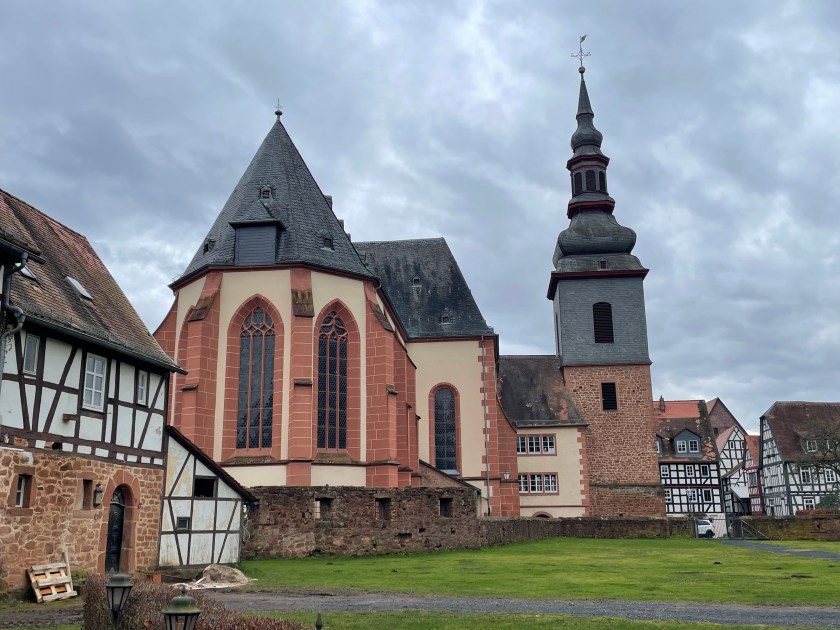
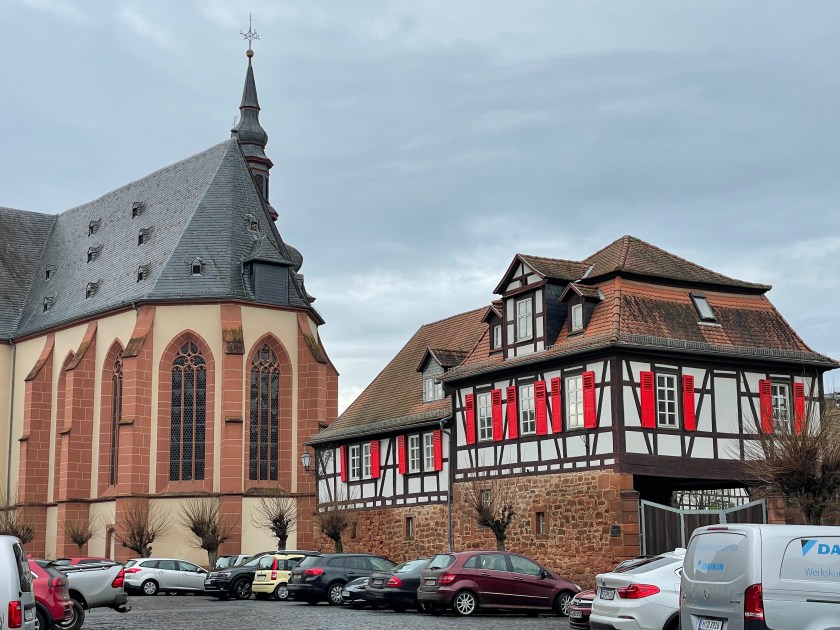
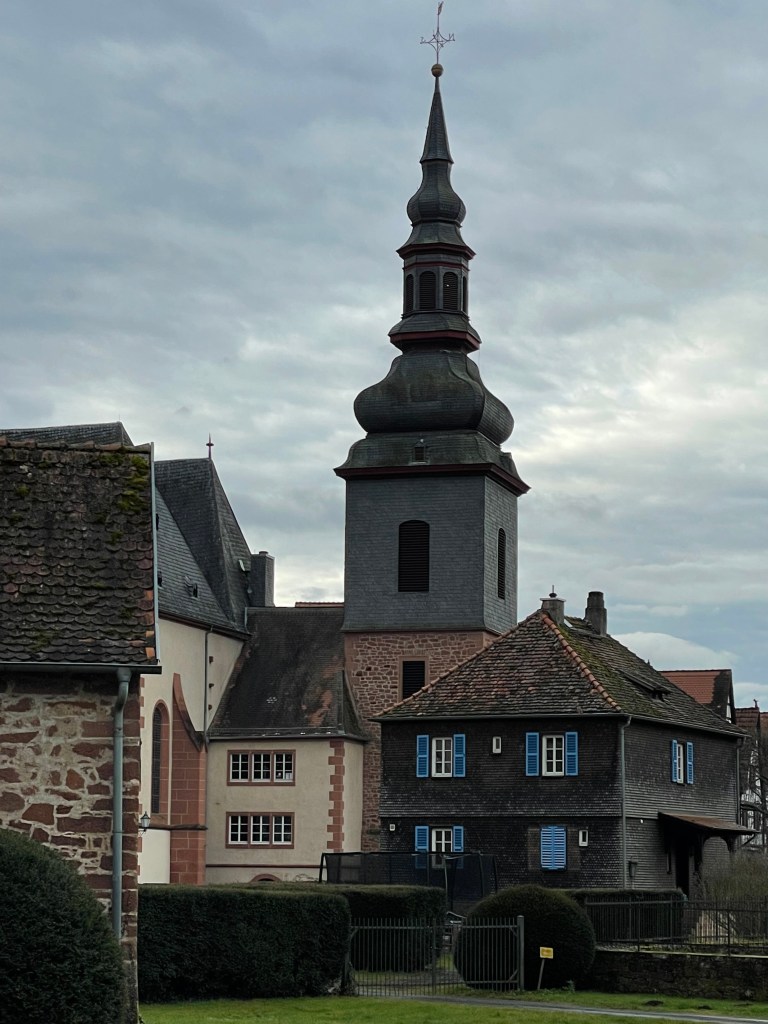
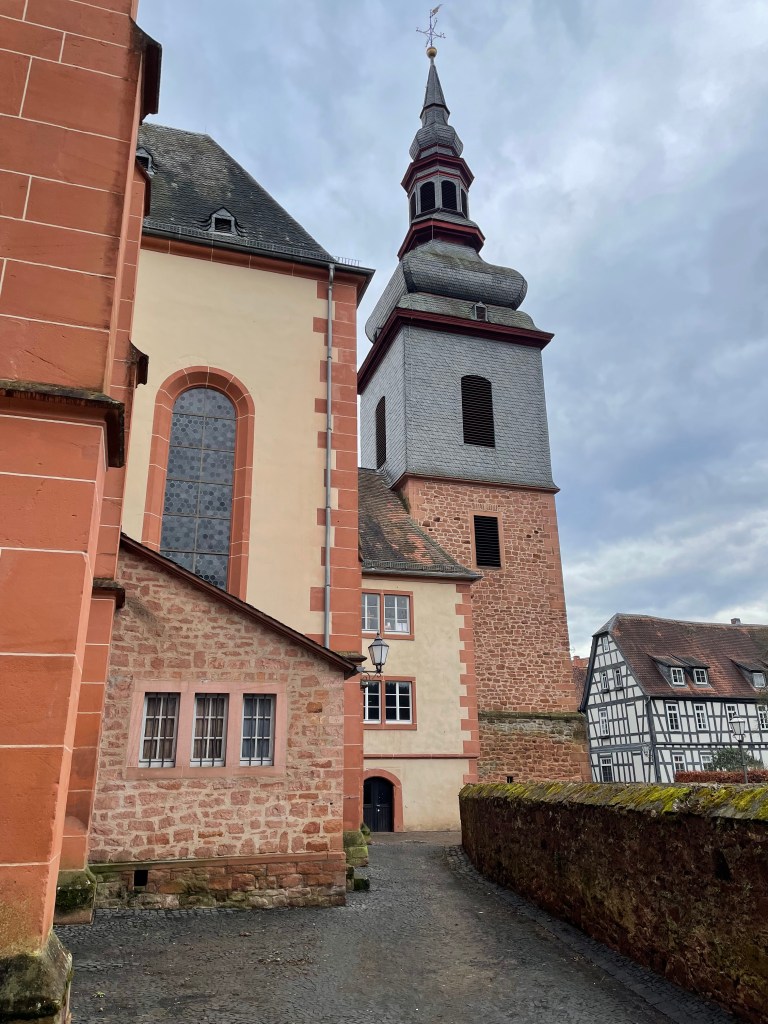
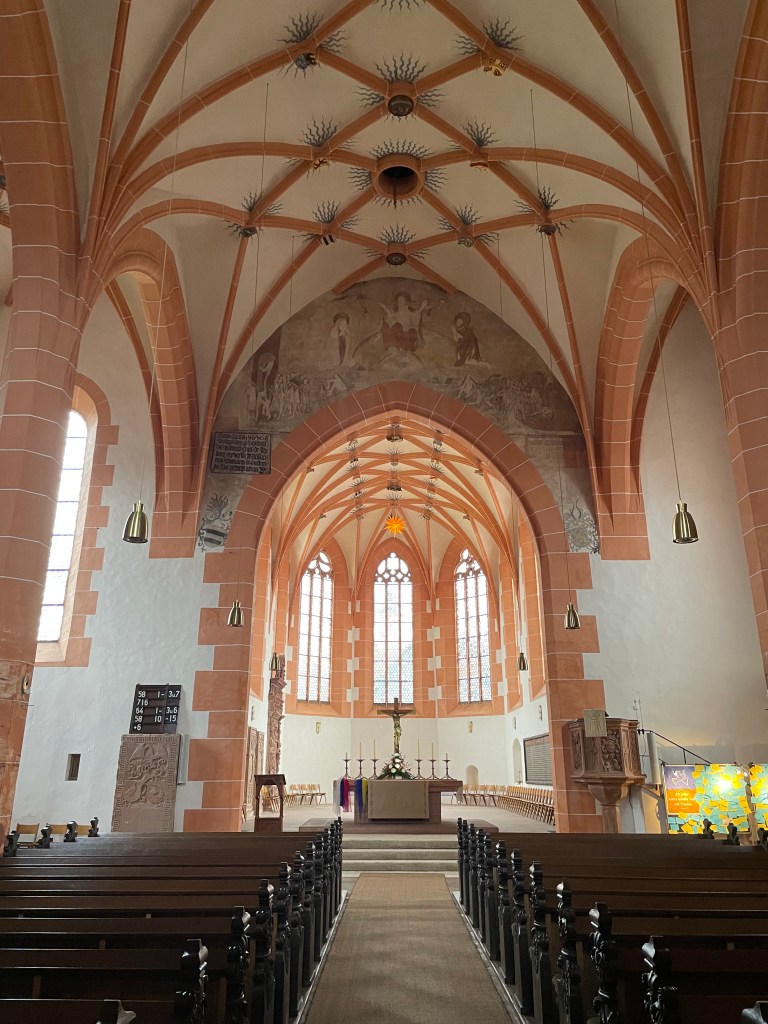
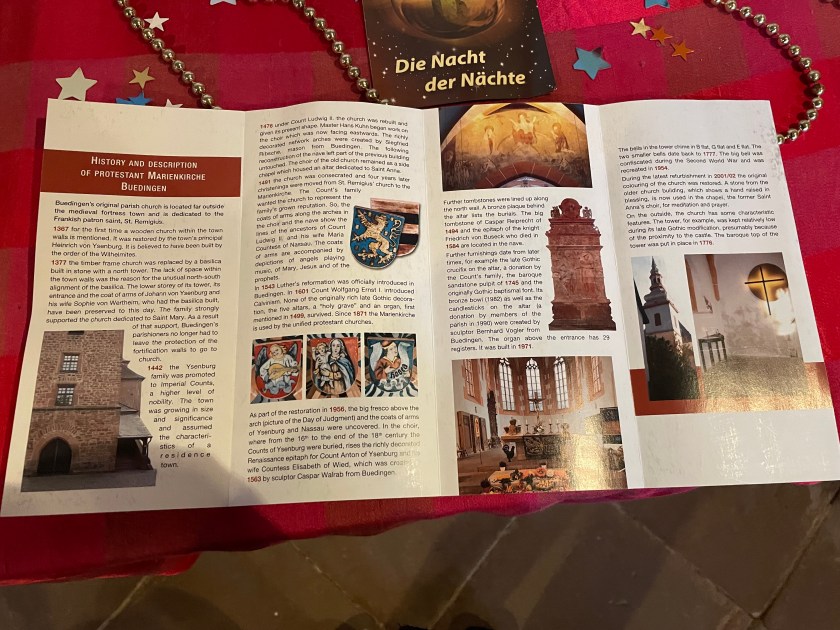
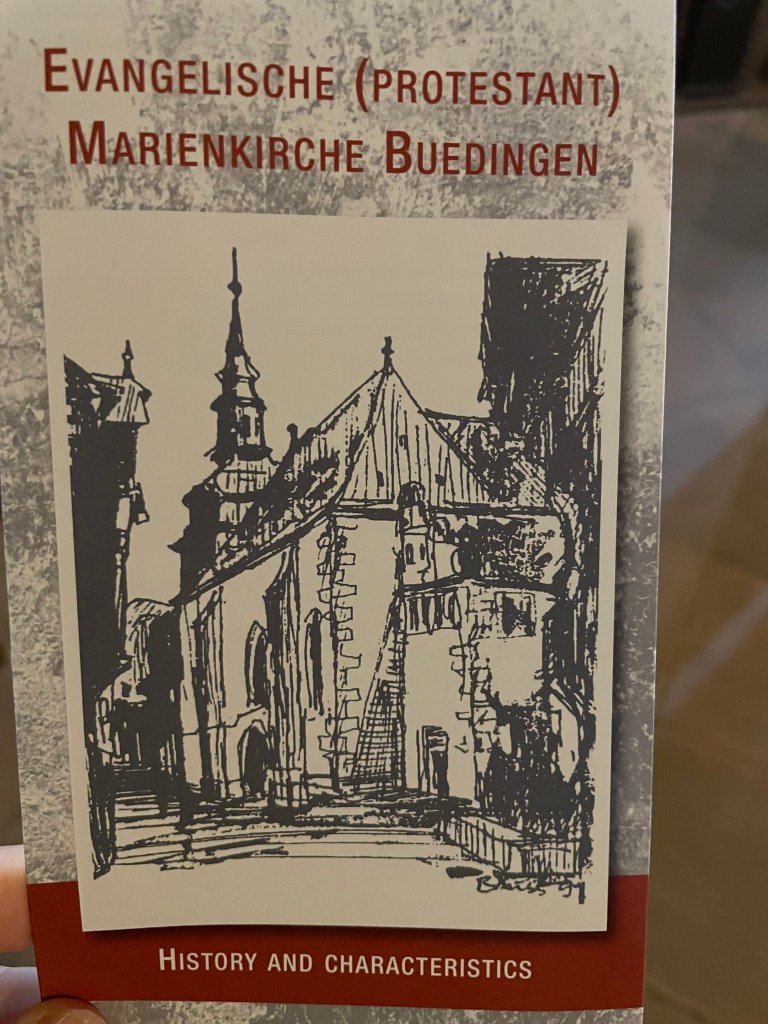
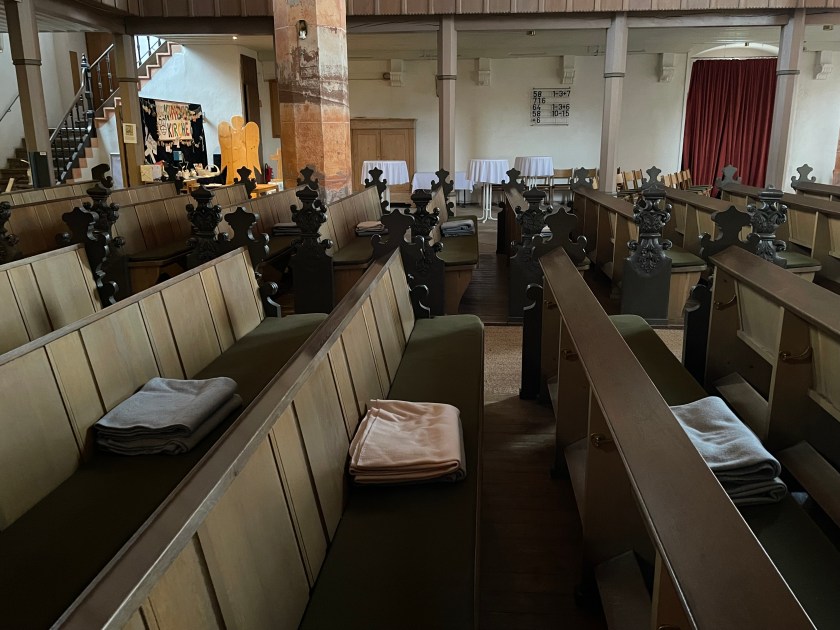
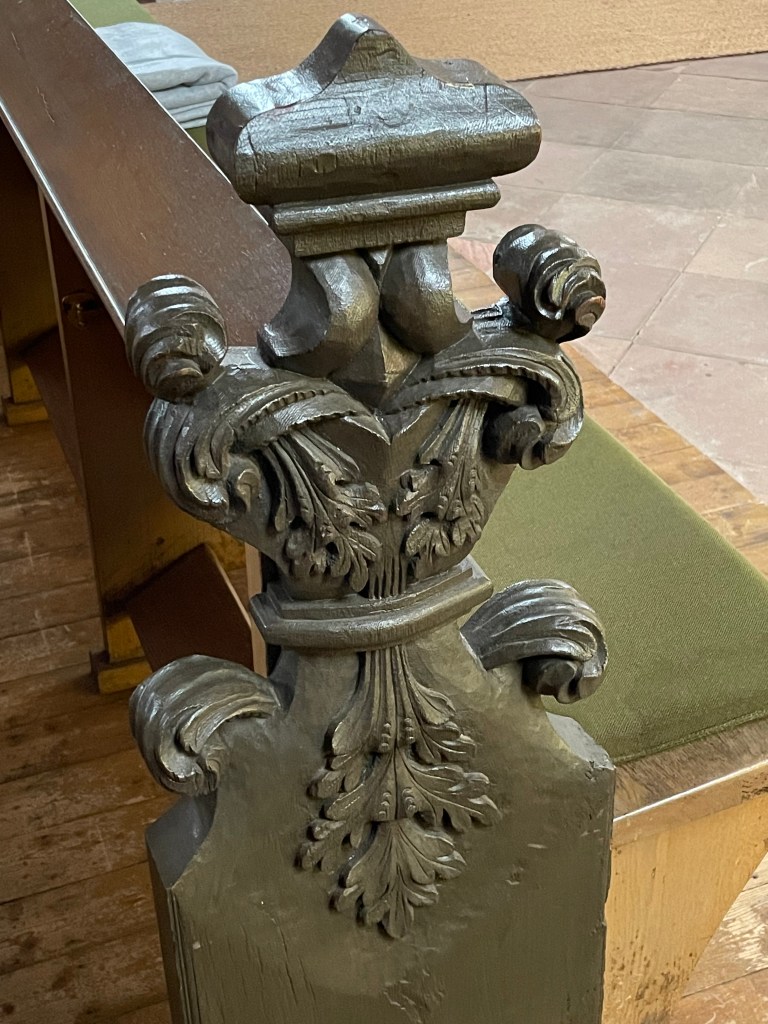
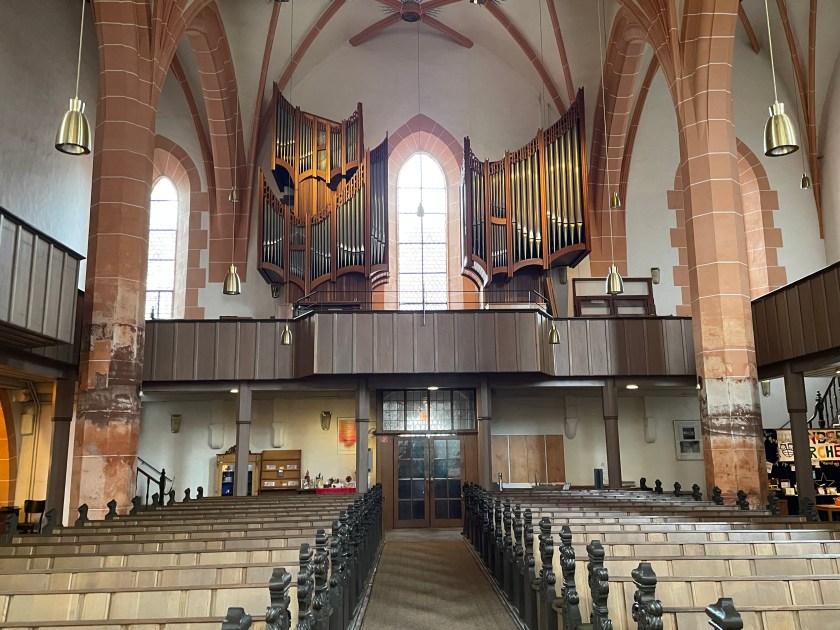
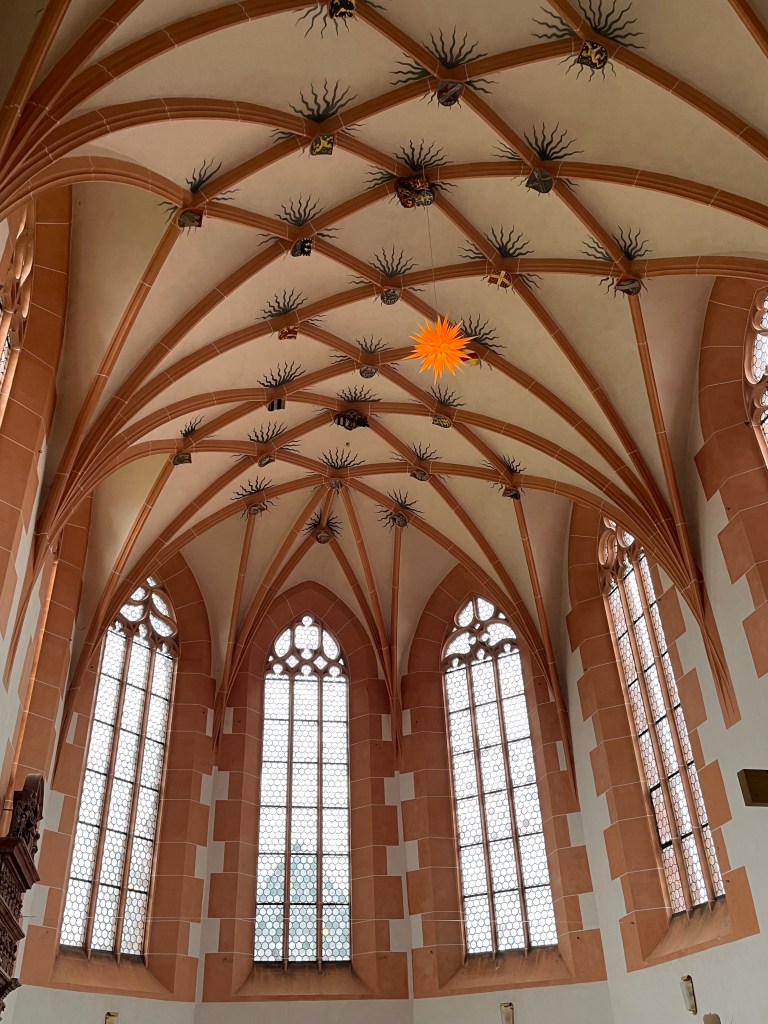
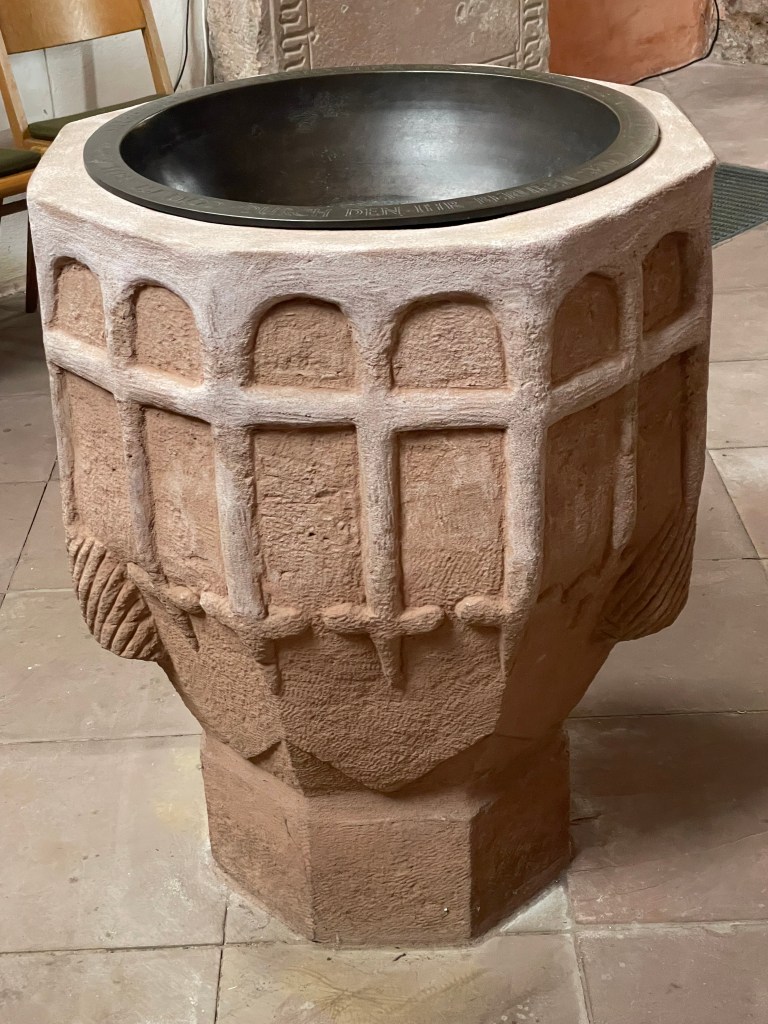
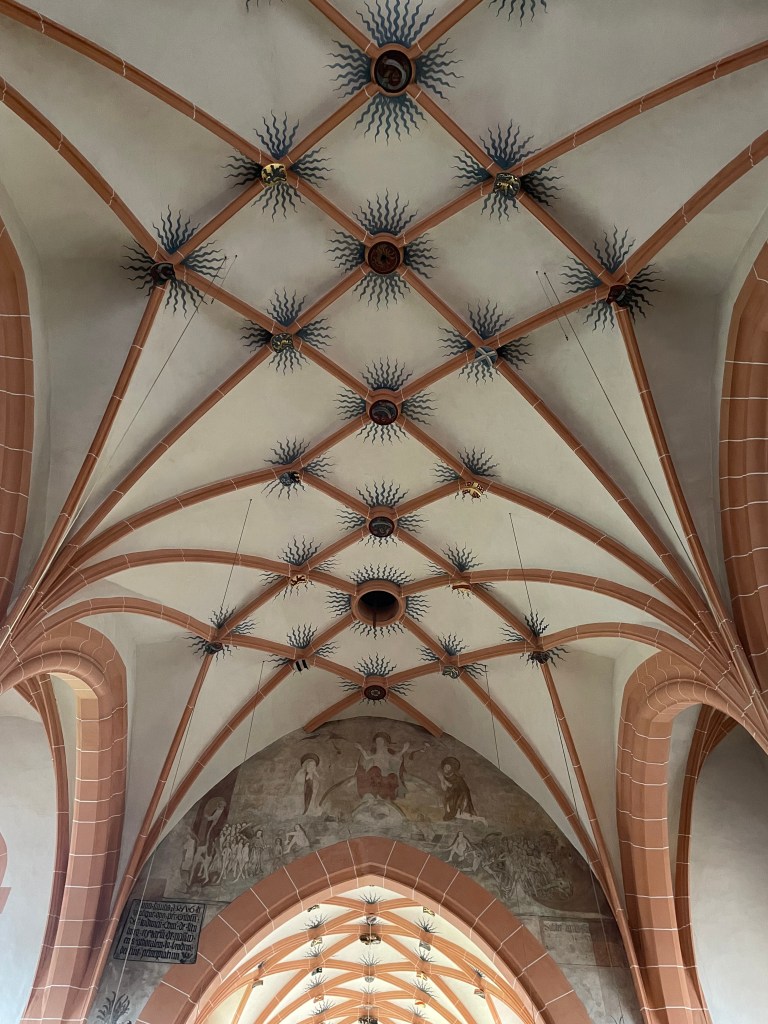
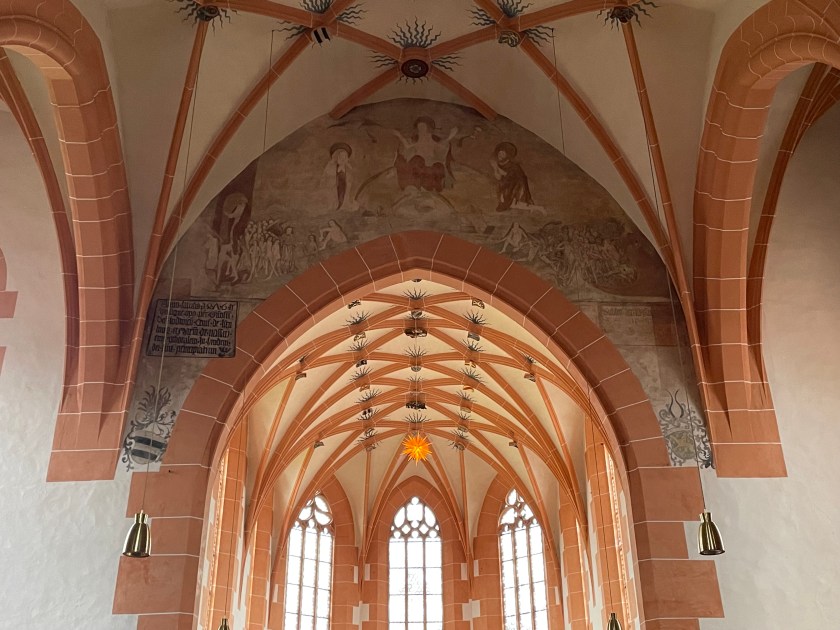
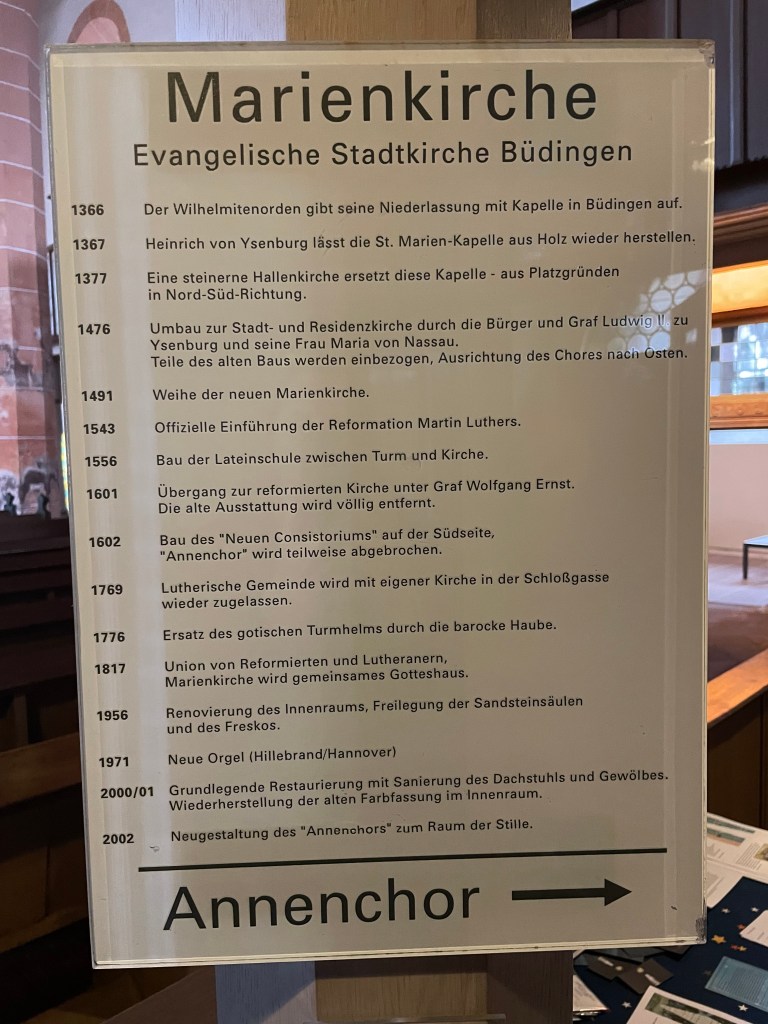
The beautiful Marienkirche:

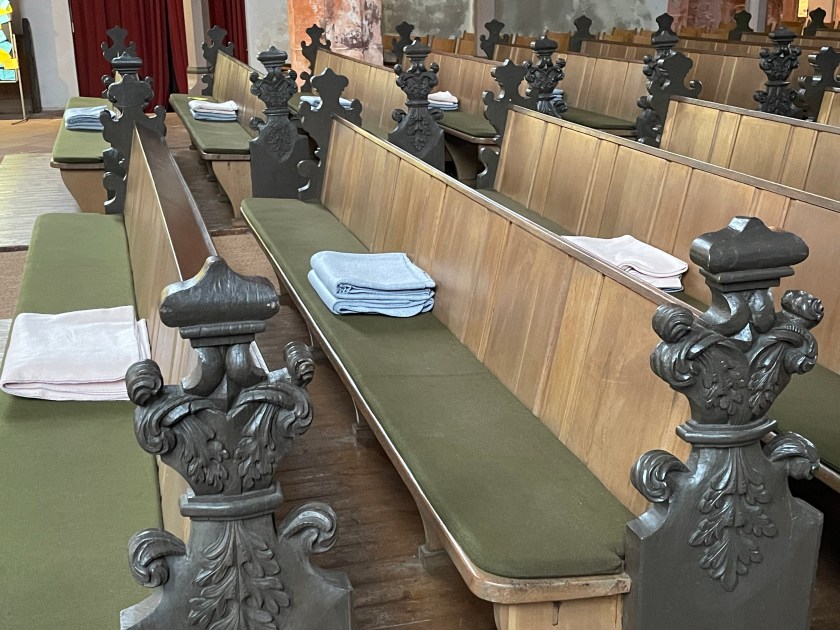
Blankets are set out on the pews to keep visitors warm during the services.

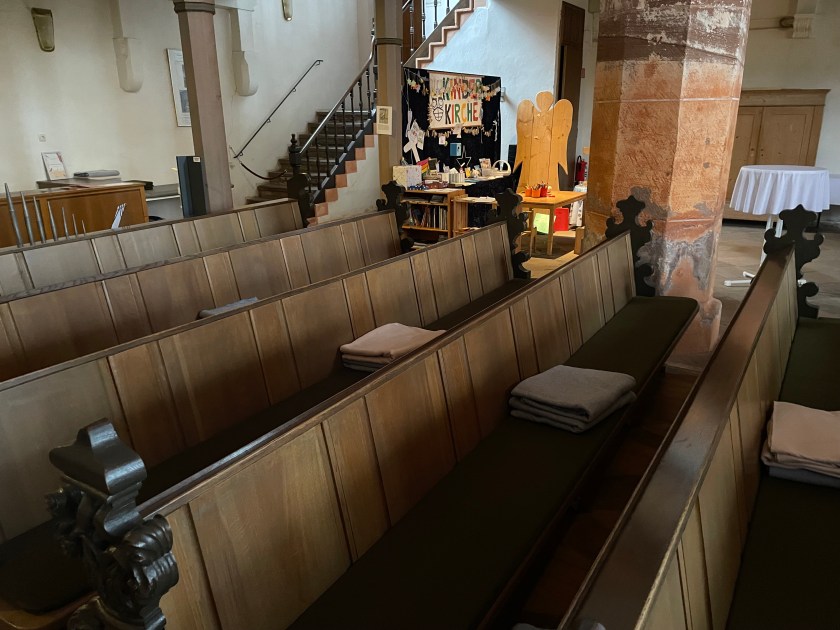
The children’s corner:

Almost every shop and restaurant was closed for winter break.

Continued in the next post . . .