Funeral for Rudi Villwock in Darmstadt

Today we traveled with the Ortons to Darmstadt (2.5 hours) to attend the funeral of Rudolf Villwock.  We recently learned that Elder Orton was his missionary companion in Austria and John was his brother, Werner’s companion in Switzerland.  We visited Werner when we were here in Germany last year.

We talked with the Ortons about going together to visit the brothers and their families in Darmstadt.  Then we received word this week that Rudi died suddenly, while out jogging in the very cemetery where he was buried today.  We went to pay our respects.

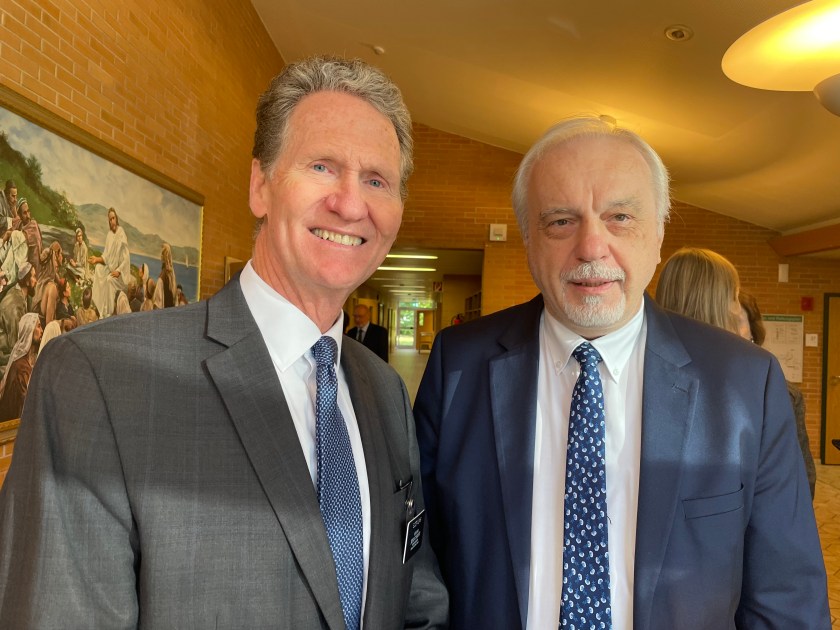
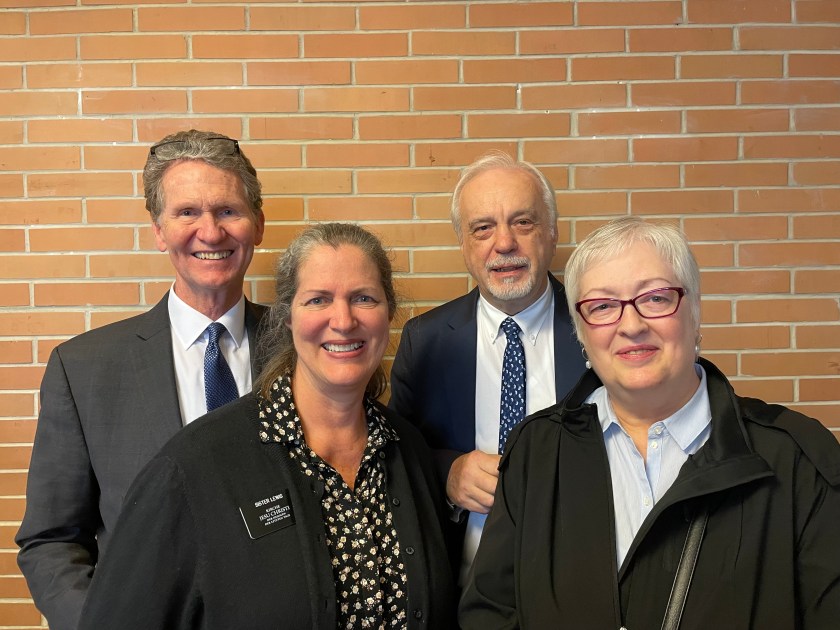
John and Werner Villwock, missionary companions 50 years ago.
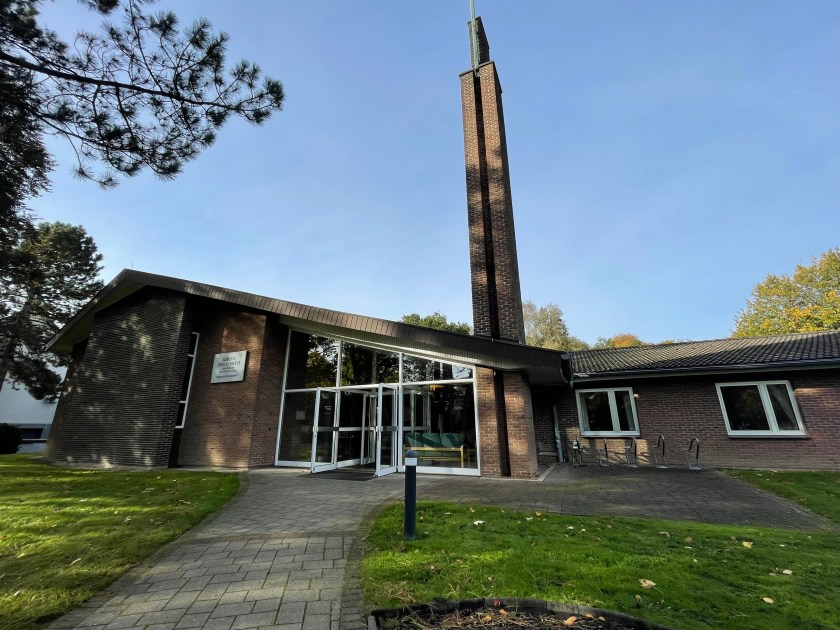
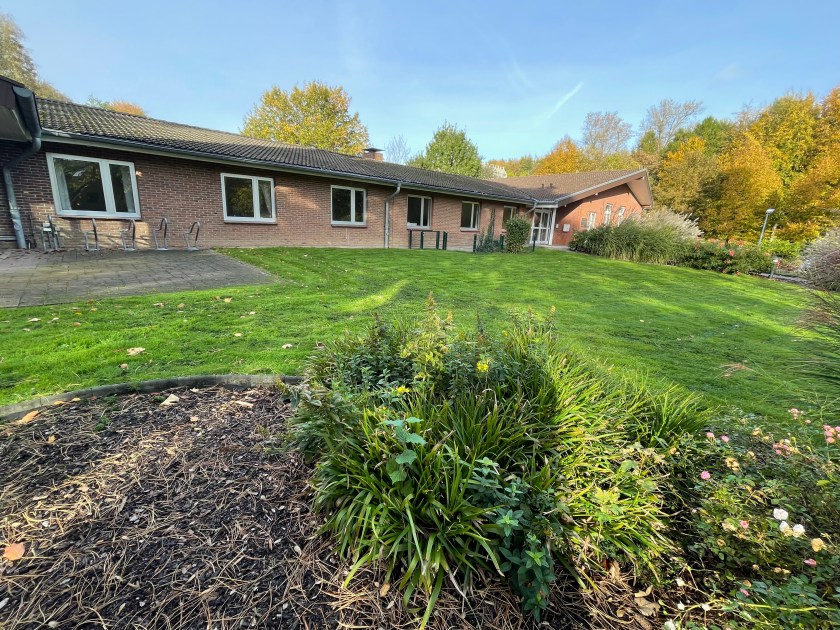
The Darmstadt Stake Center

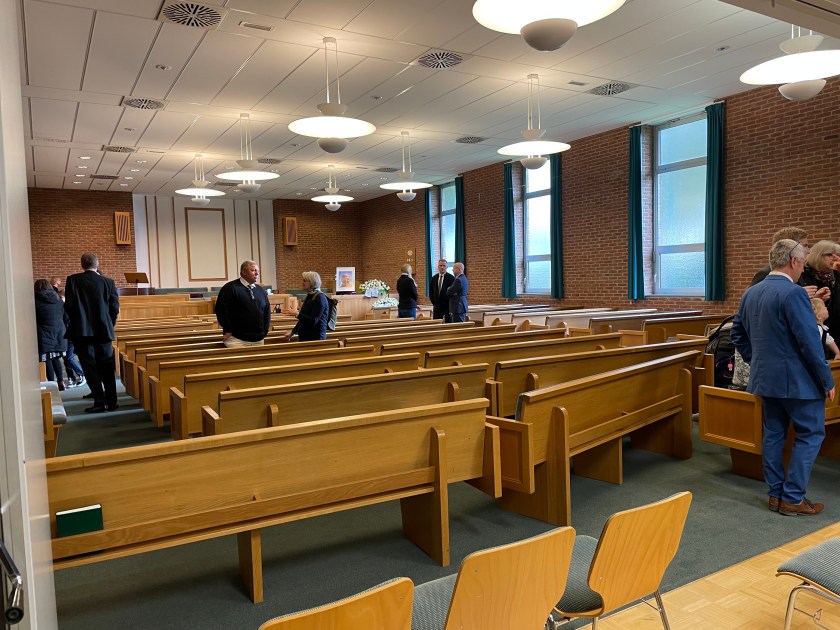
Both Rudi and Werner have been faithful church leaders in this area.  There were about 300 people who came to the funeral here in the Darmstadt Stake Center.

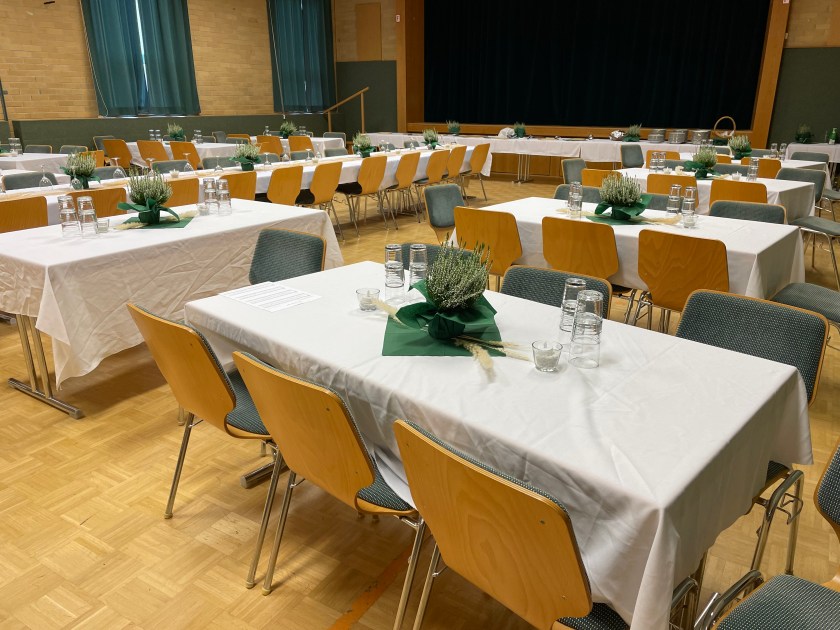
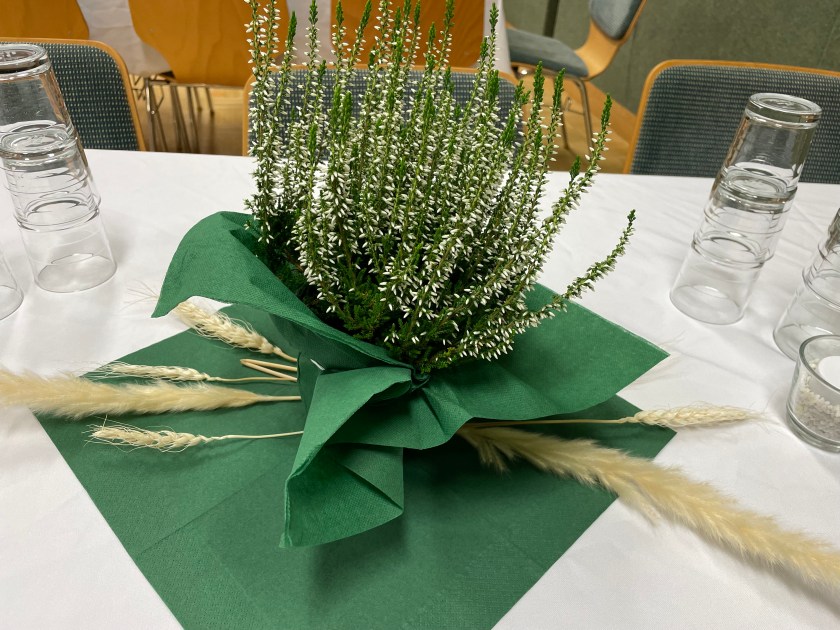
The family returned after the burial for a delicious meal provided by the Relief Society sisters.

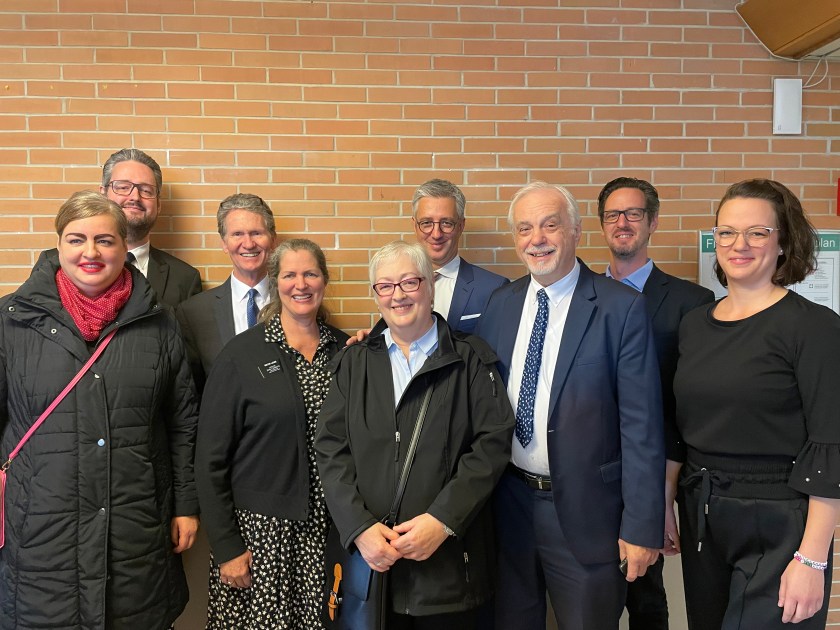
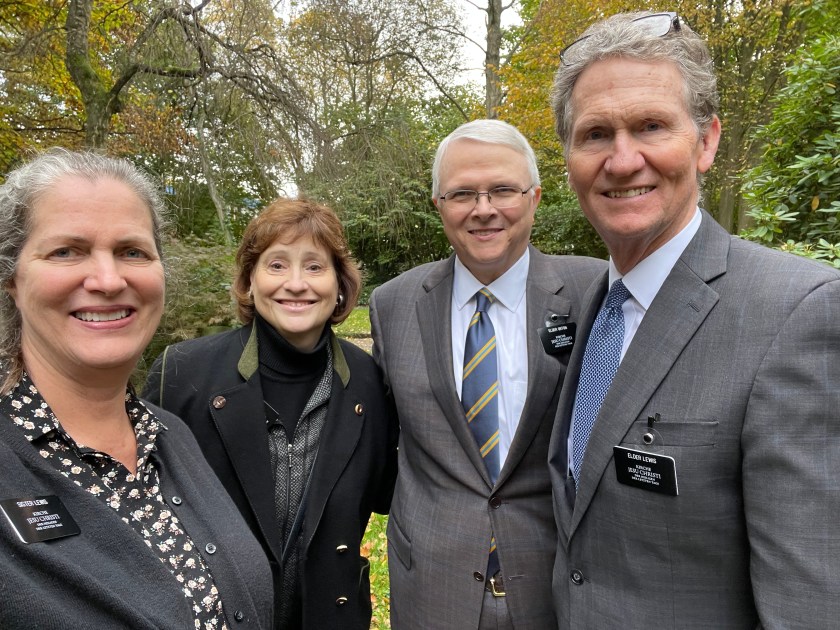
Here we are with Werner’s family:

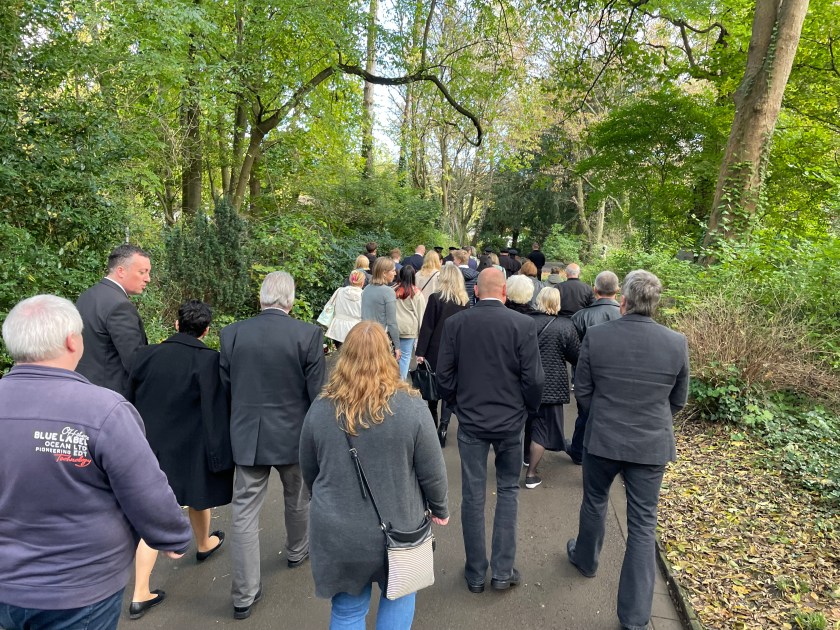
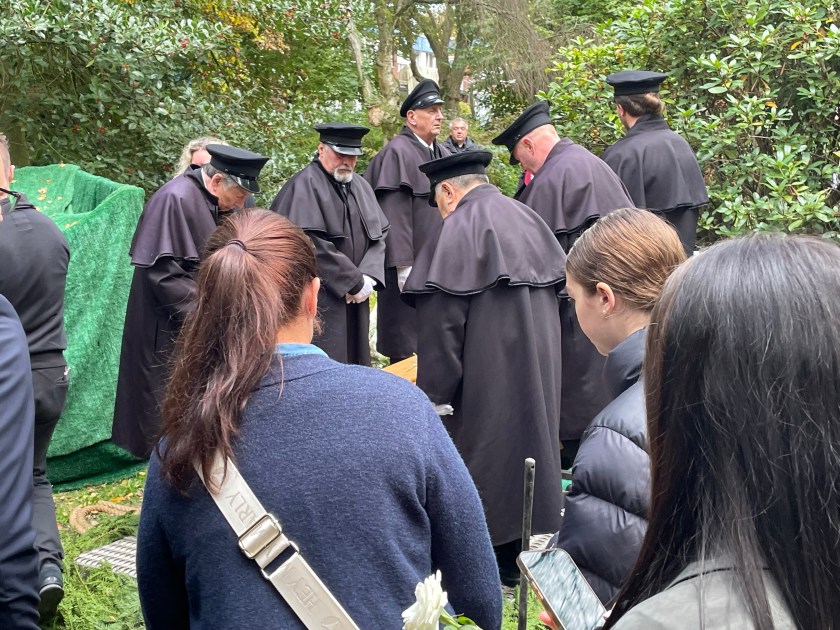
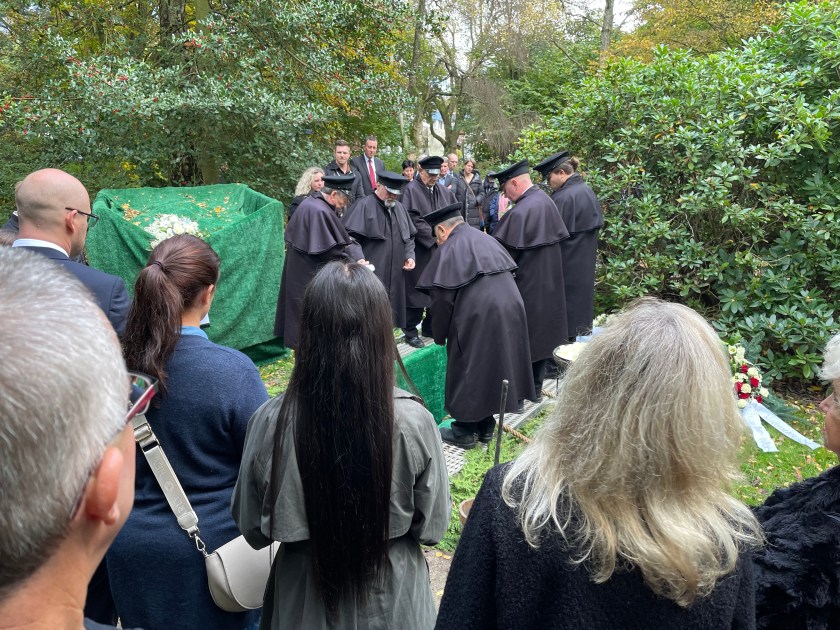
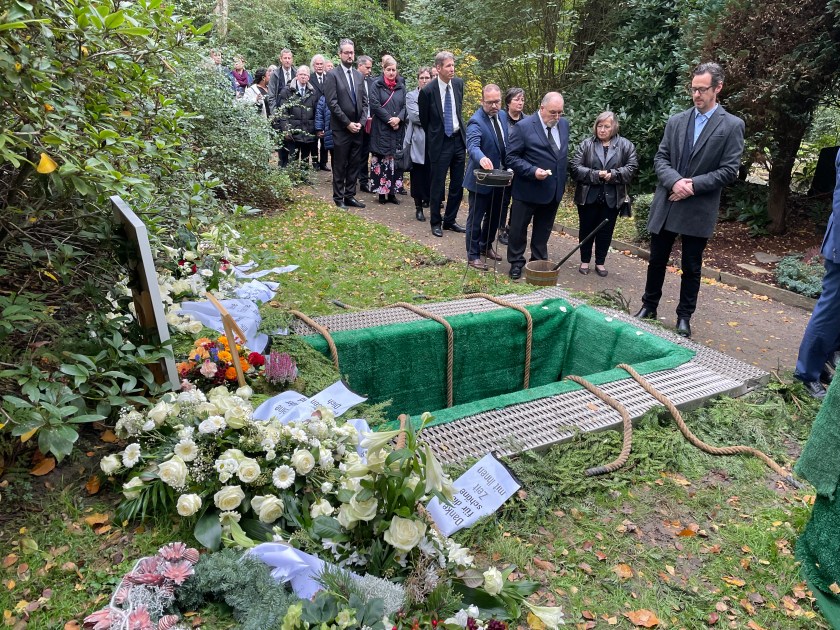
After a really beautiful service, we all drove to the Darmstadt Cemetery, about 15 minutes away.  We met at the entrance.  A group of men dressed in black robes and caps were there with the coffin.  We followed them in a procession through the cemetery to Rudi’s final resting place.

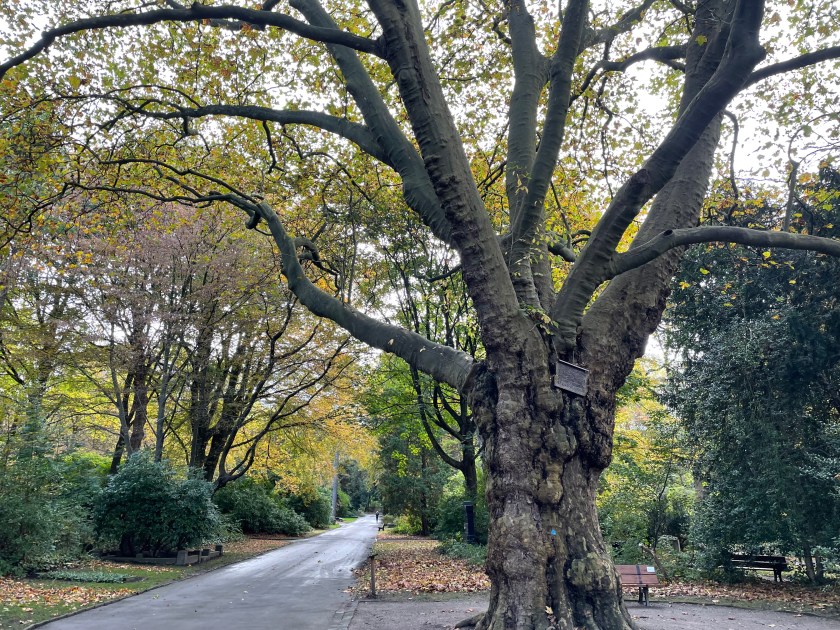
The cemetery was beautiful, like a park, filled with old stately trees and beautifully kept gravesites.

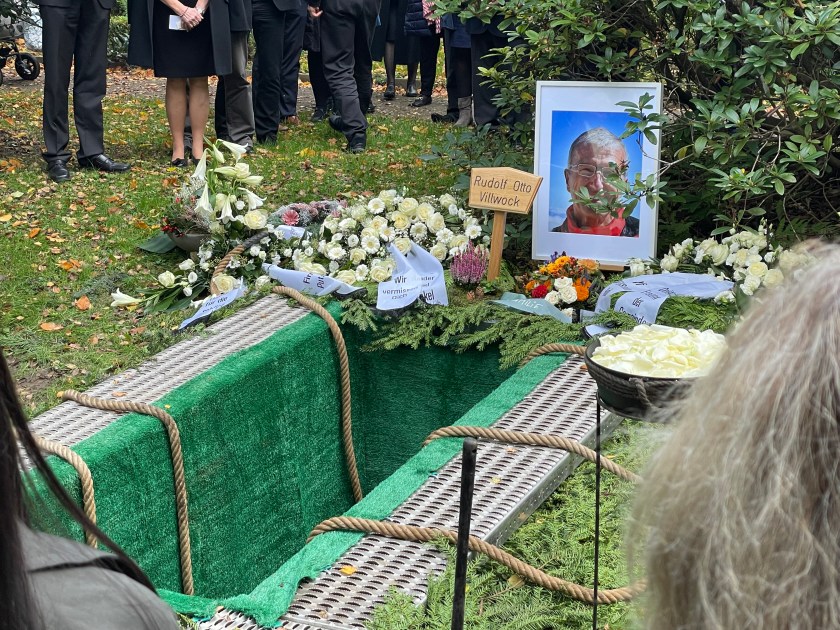
When we reached the grave, the men reverently lowered the casket into the ground with precision and grace.

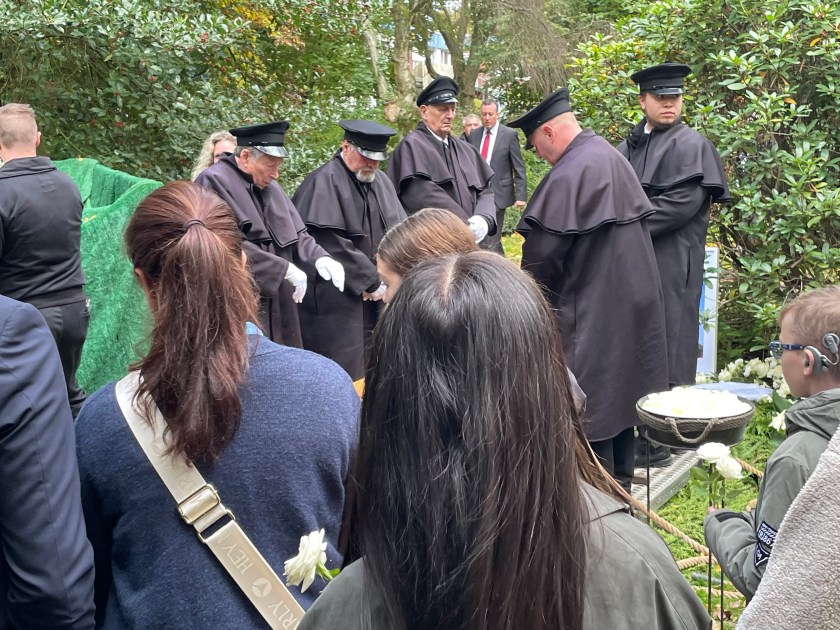
Then they, in unison, removed their white gloves and their black caps, and they quietly marched away.  Everyone was reverent and quiet.  It was so respectful.

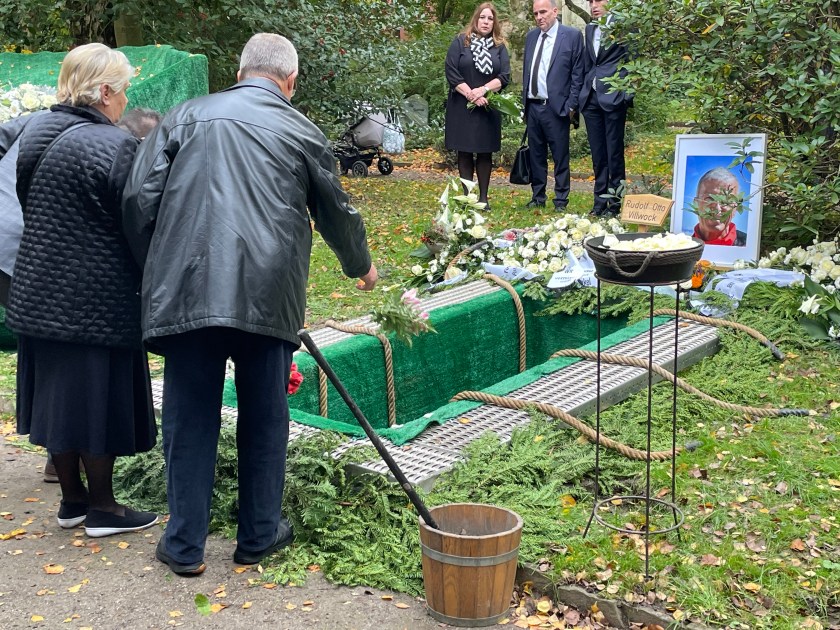
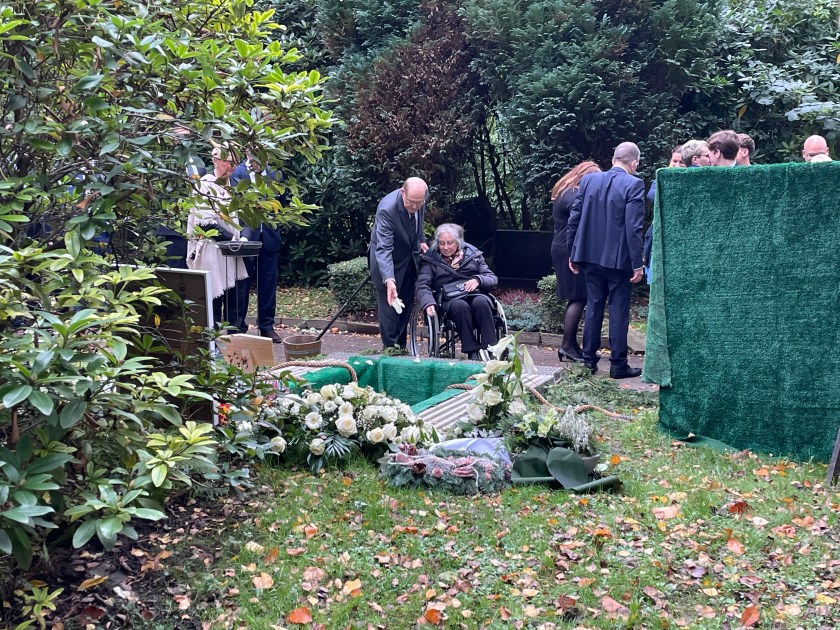
Next the guests filed by the grave, family first, then friends.  Each added flowers to the site or tossed some petals into the grave.  There was also a wooden bucket and a small shovel for those who wanted to put some dirt in the grave.

The Ortons are delightful.  We were happy to be here together today.

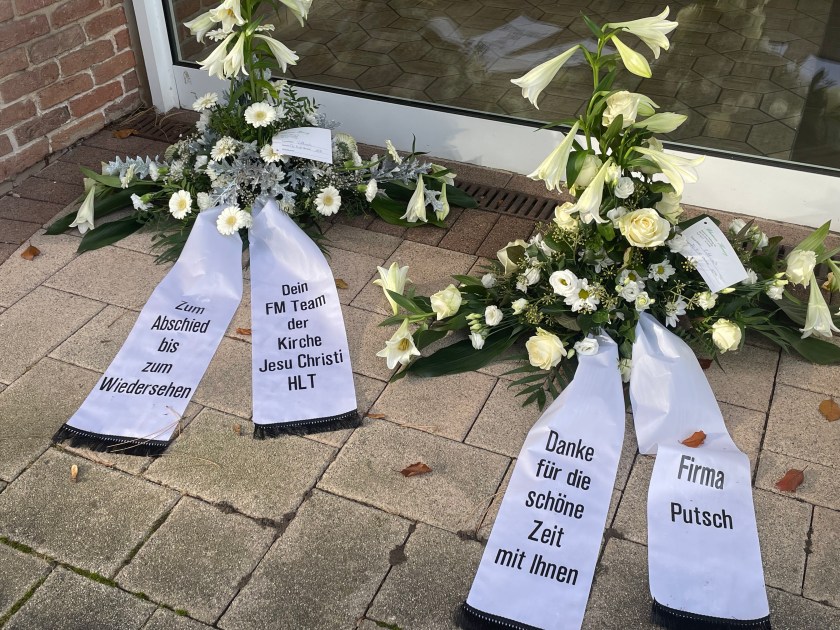
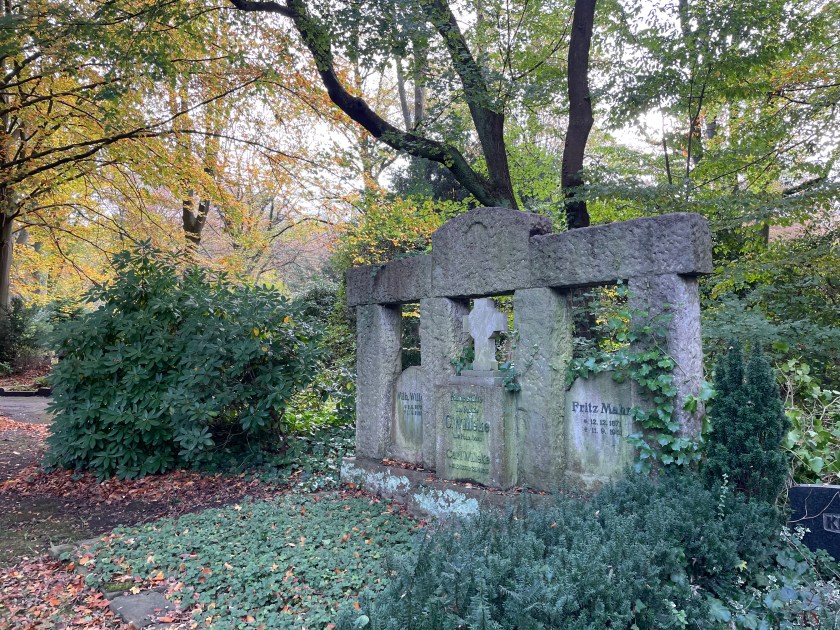
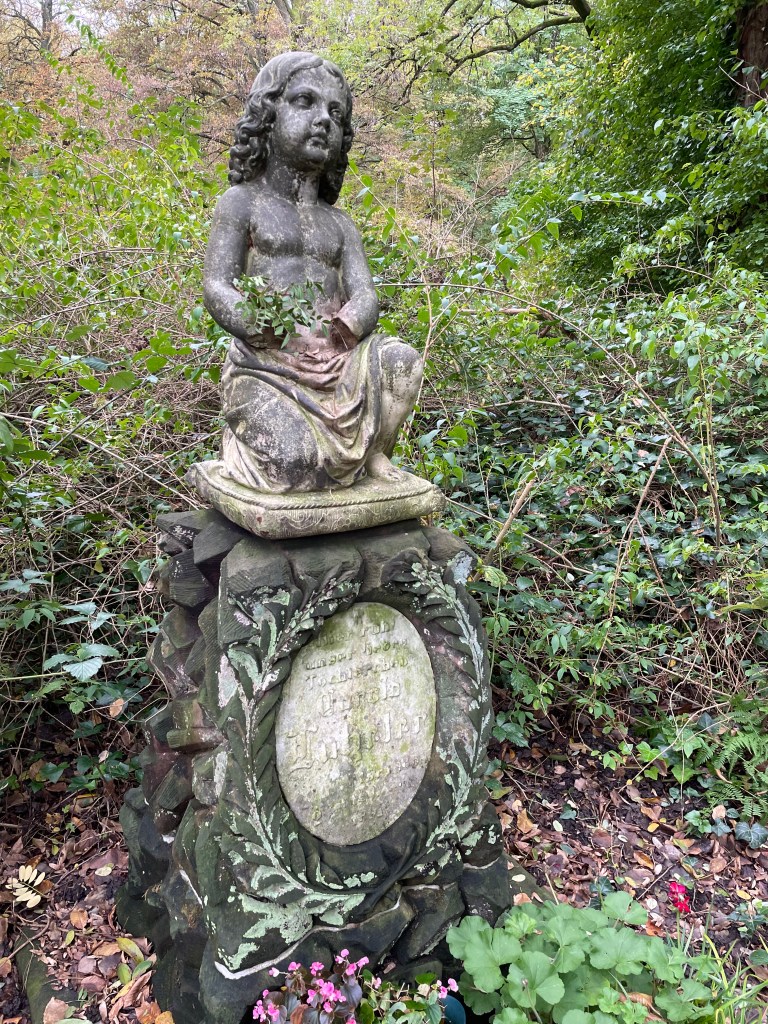
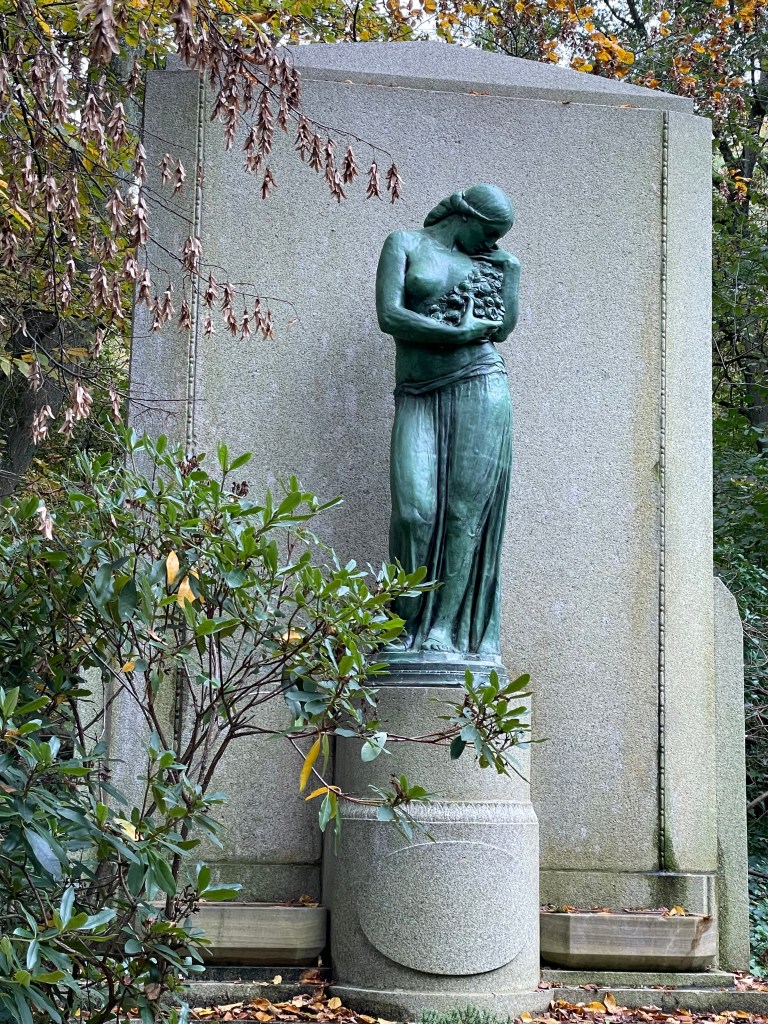
I LOVE cemeteries and the peace and beauty in these sacred end places.  Here are a few of the beautiful grave sites we passed as we left the cemetery.

Schloss Königstein Ruins

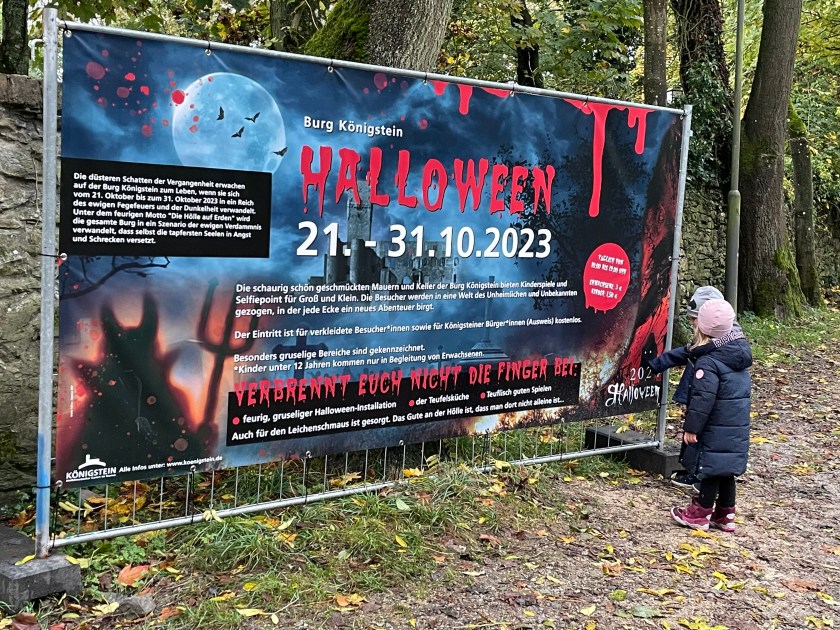
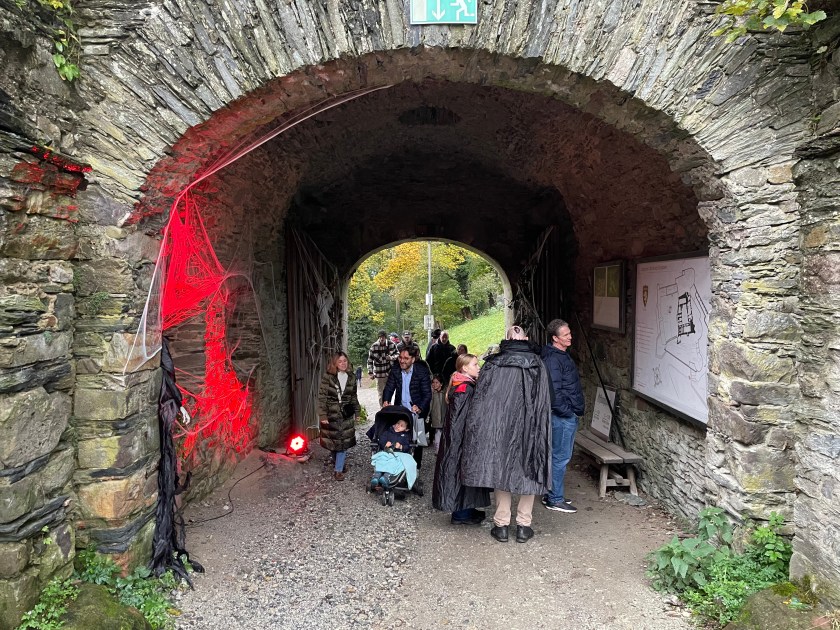
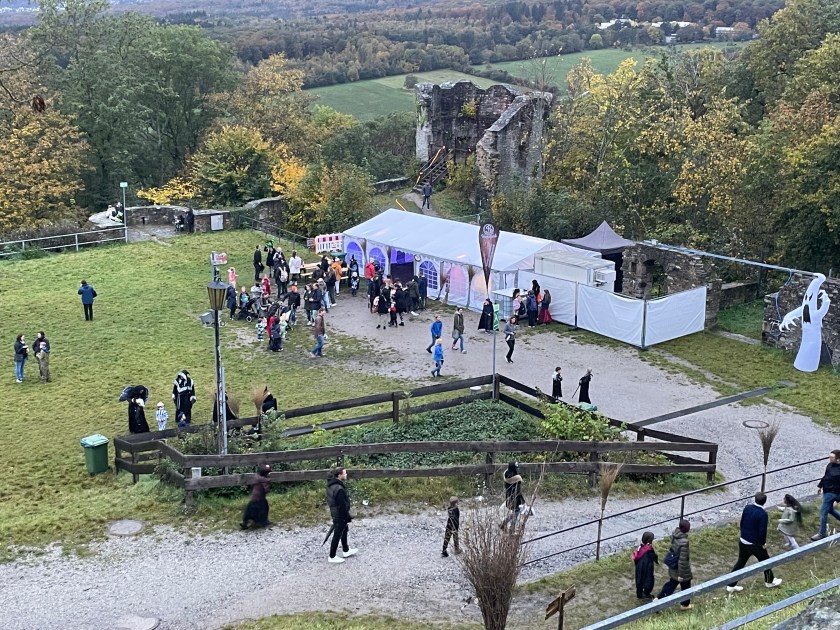
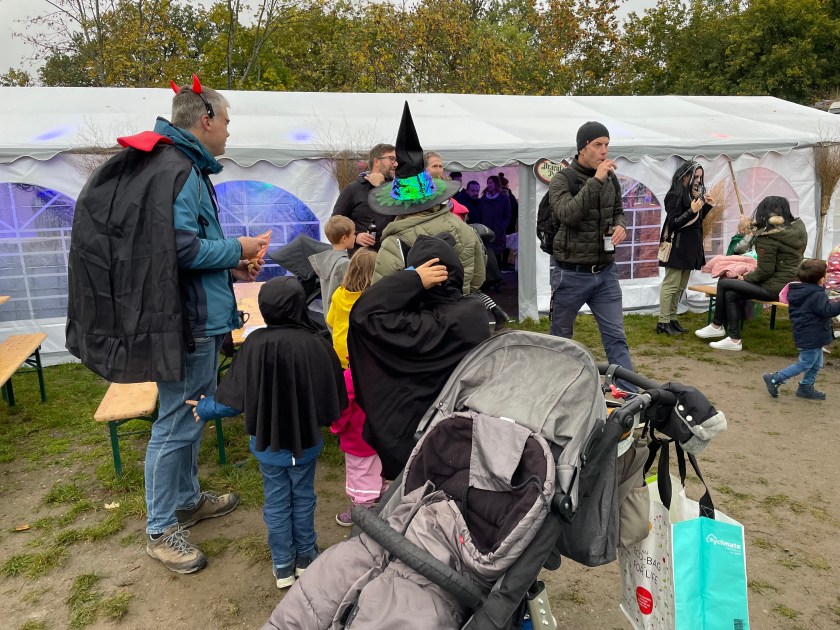
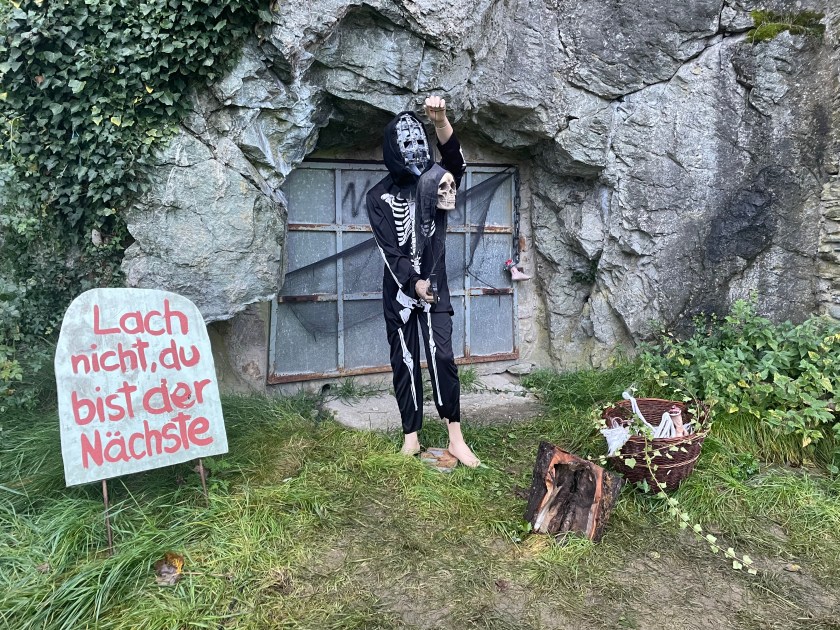
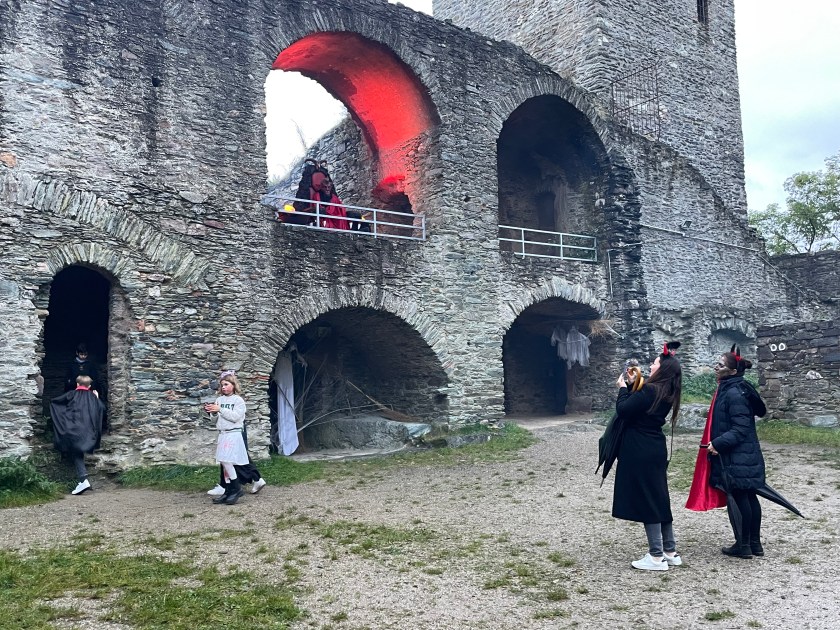
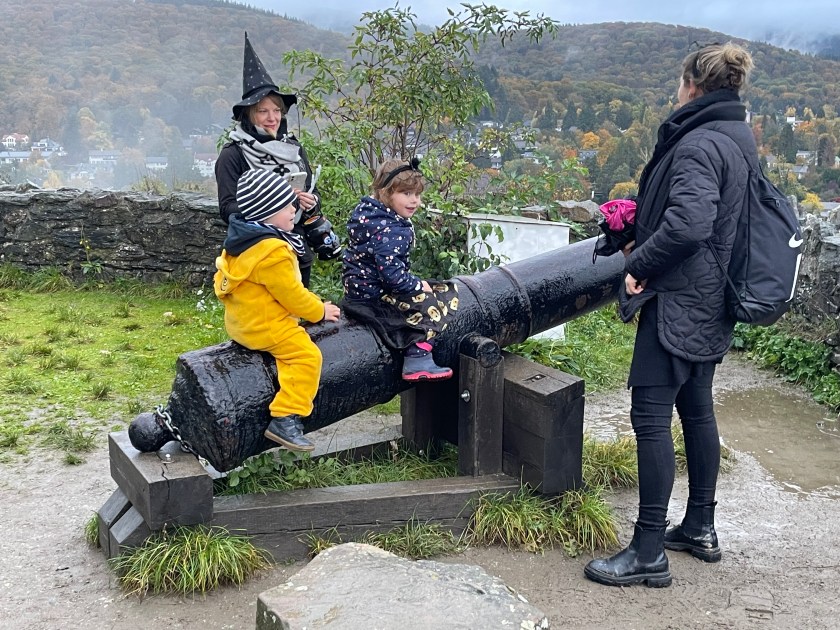
After visiting the the Falkenstein Berg ruins, we drove about 10 minutes to the last of our 3 destinations today:  the Schloss Konigstein ruins.  As we parked we noticed lots of families with kids dressed in Halloween costumes in the streets all going somewhere.  There were ghosts and spooks and skeletons and little masked boys with scary faces.  Moms had witch hats on and some had painted faces.  It looked like they were all going to a party.  We wanted to follow them, but soon realized they were going up the hill to the same place we were going.

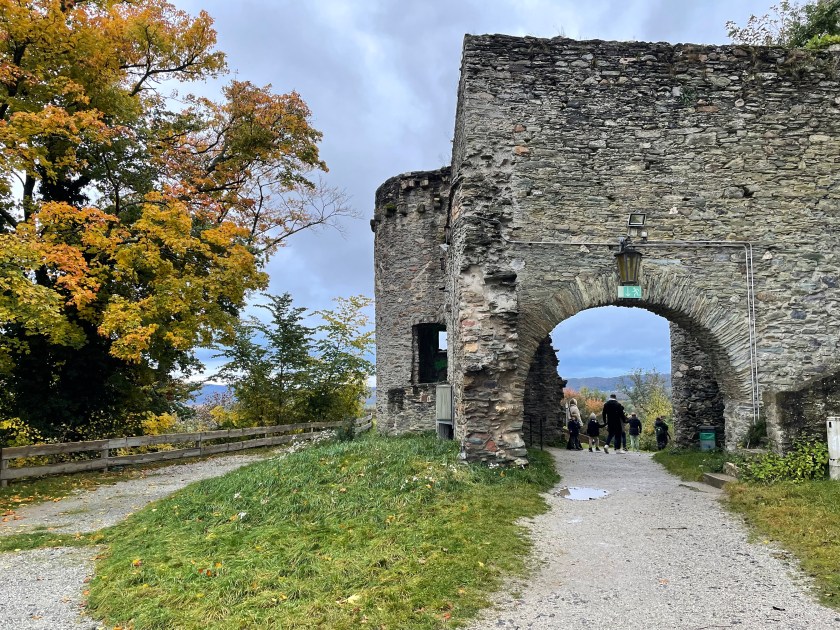
These old castle ruins are turned into a Halloween destination every October (starting 2024, this will be held in a different location).  We paid 3 Euro to enter into the castle grounds with the other little goblins.

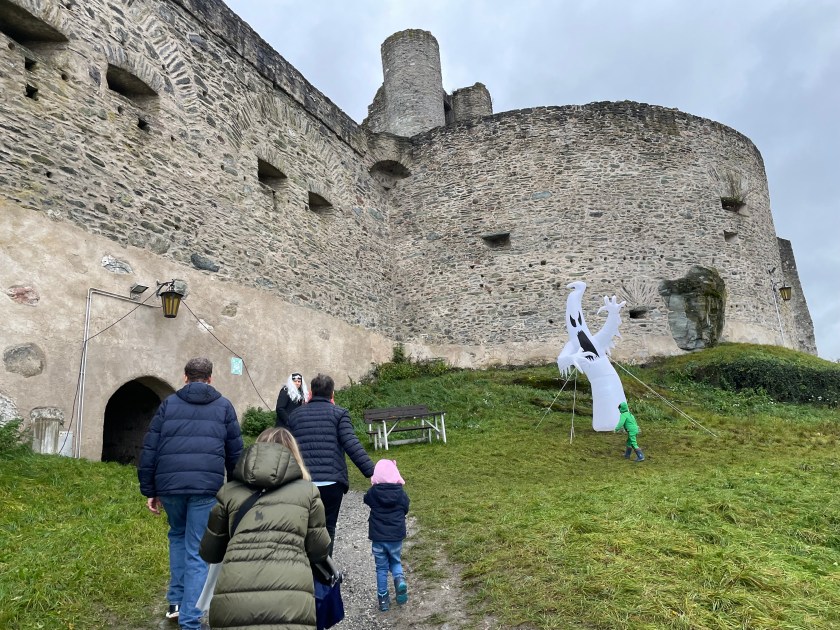
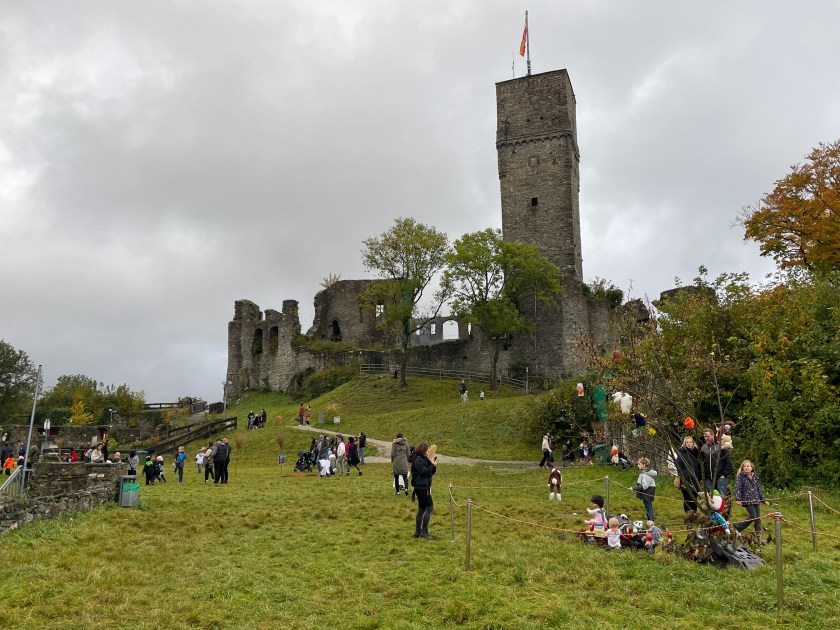
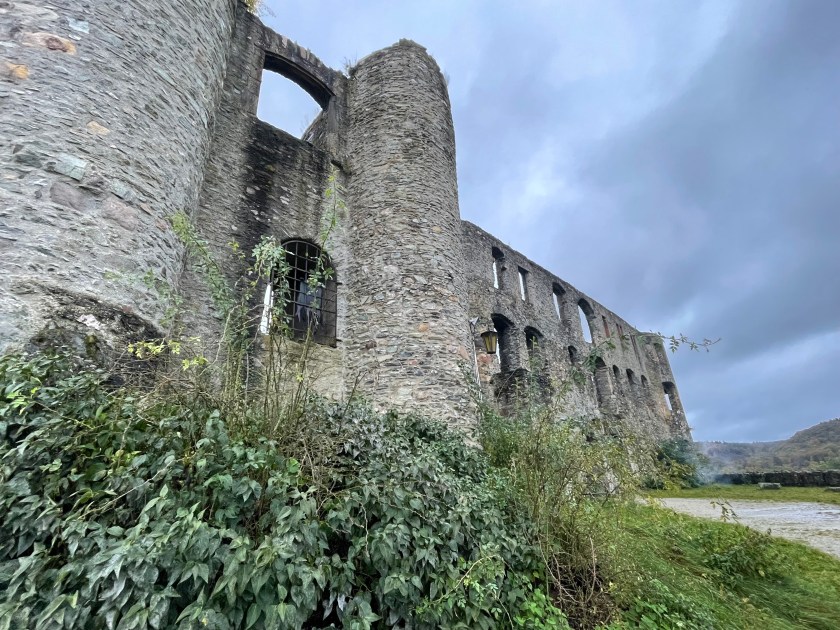
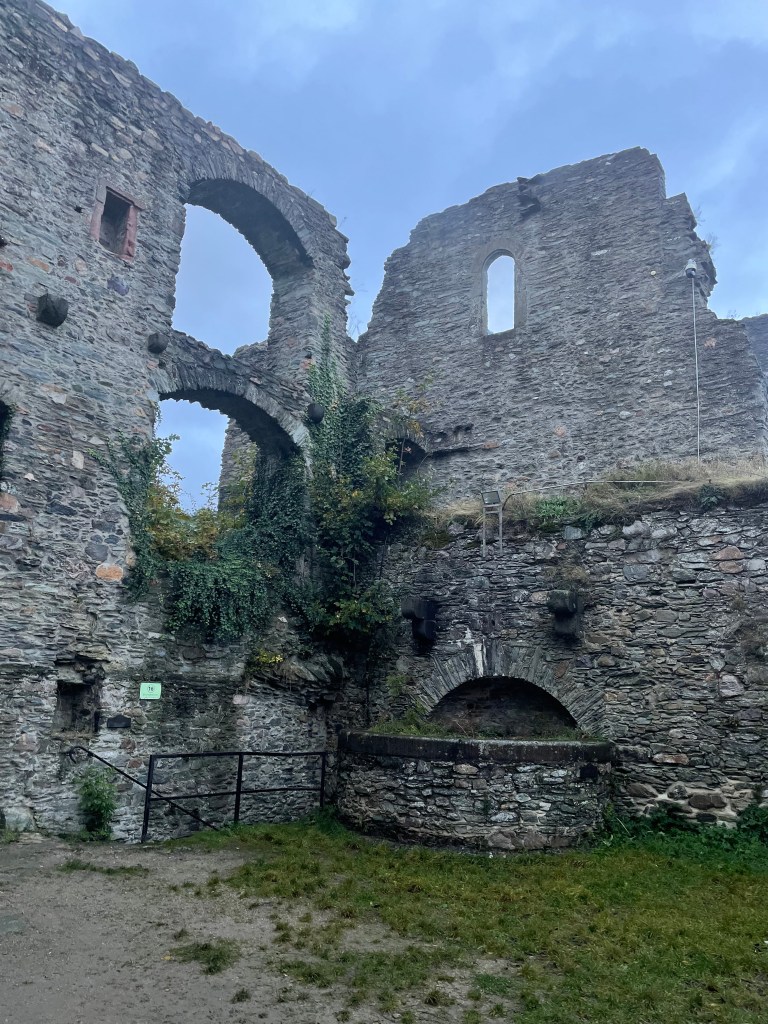
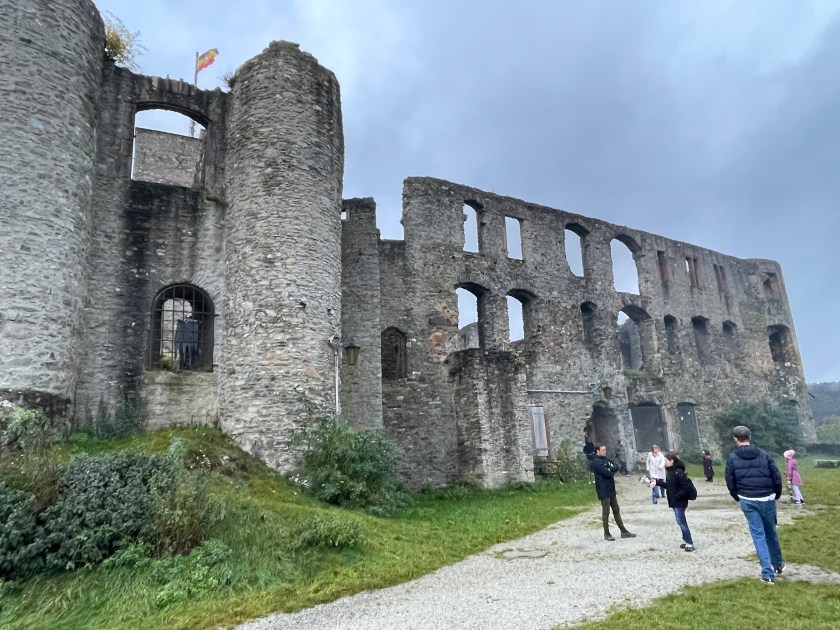
This castle was built around 1200 and is one of the largest and most interesting castle ruins in the country.  Many of the large cisterns and cellars and tunnels were filled with spookhouse-like decorations.

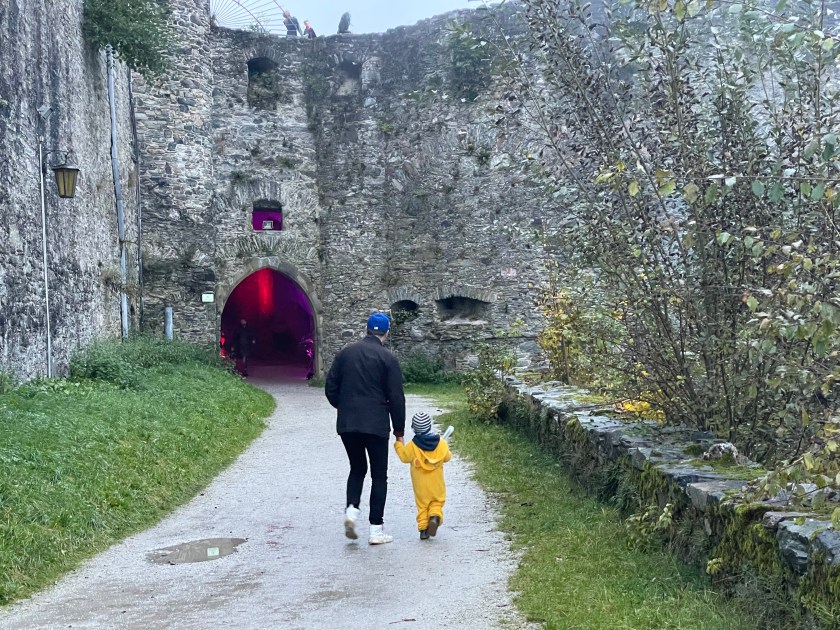
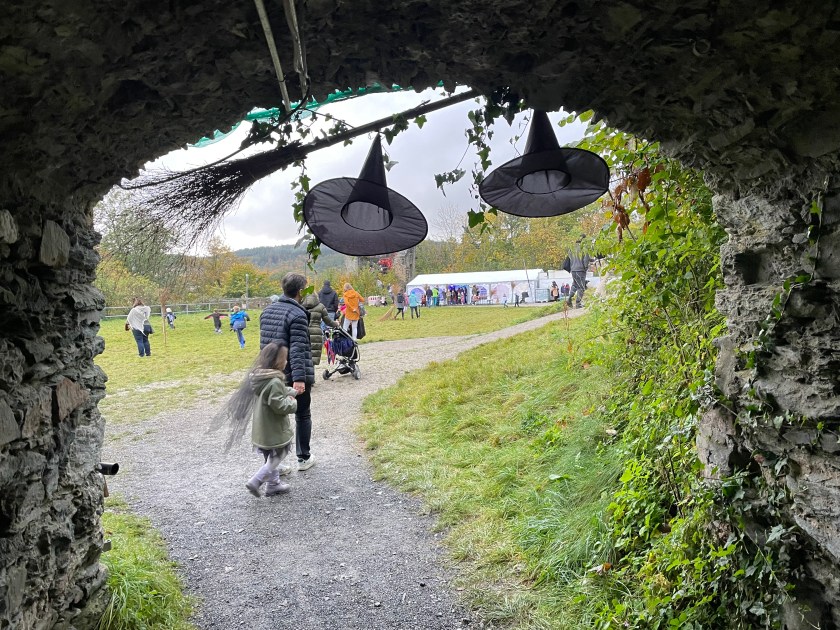
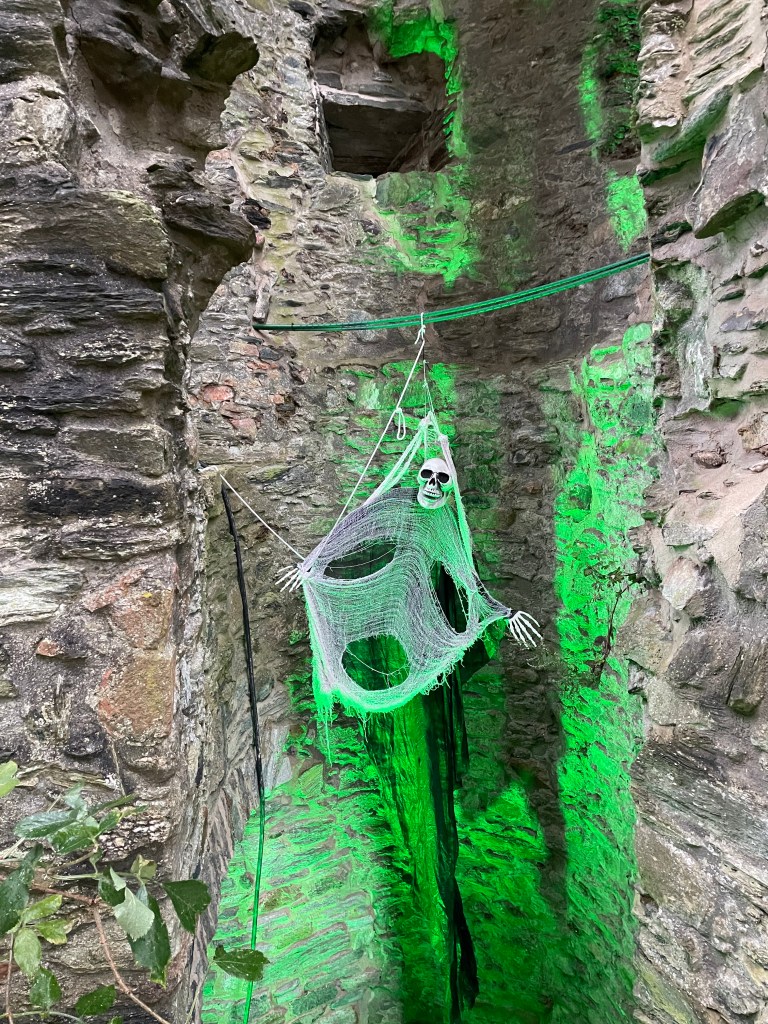
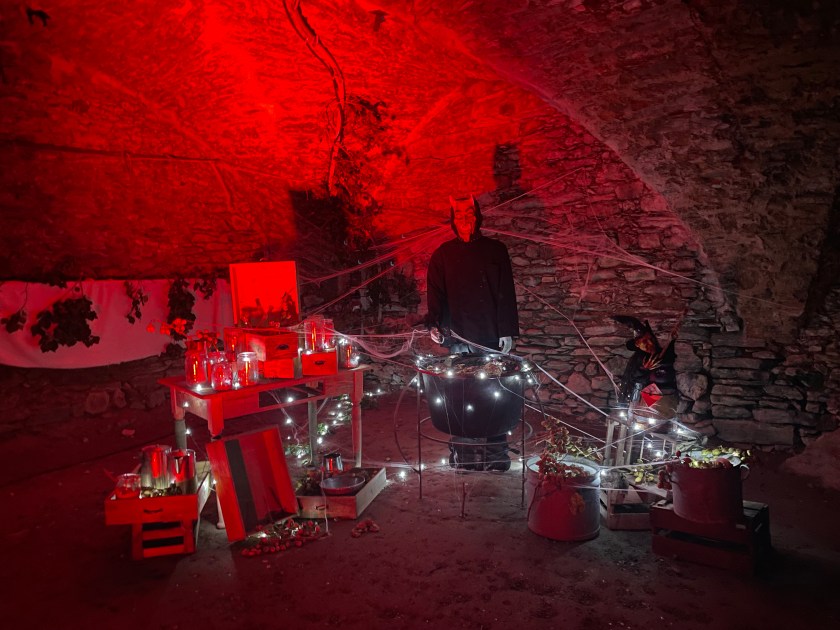
There were gruesome decorations all around the massive castle ruins and we spent the next hour or two enjoying the ruins and the Halloween celebration going on around us. There were dark tunnels and nooks and crannies filled with lights and cobwebs and hanging skeletons and goblins, sort of like a spook alley in places.

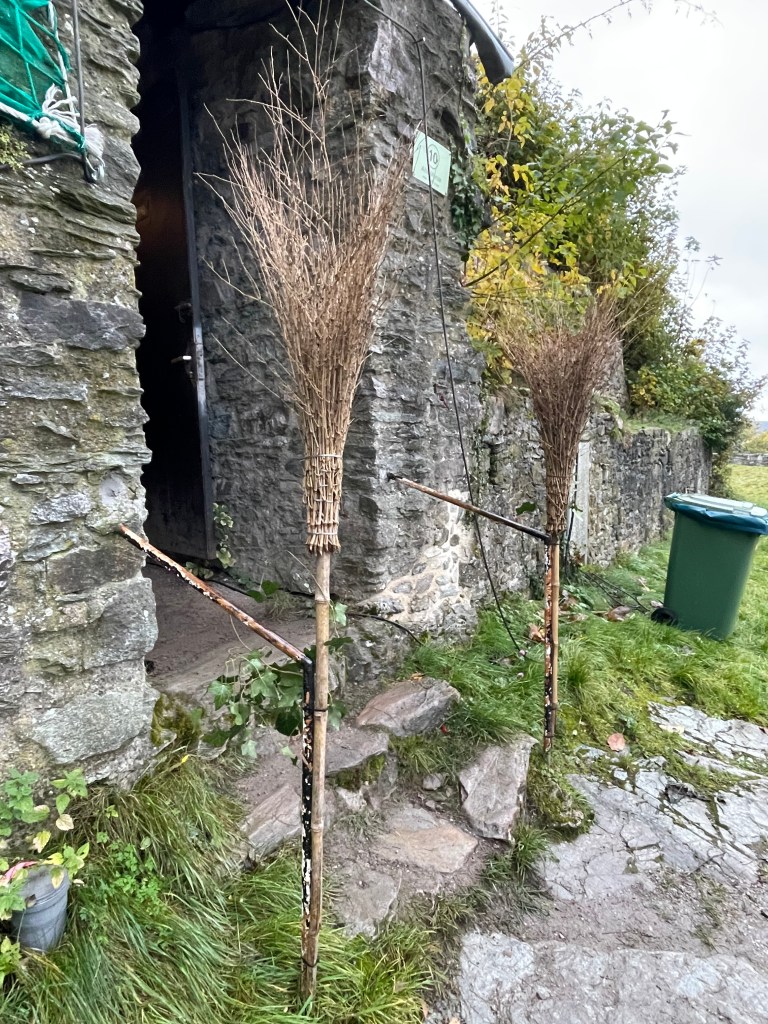
The grassy courtyard of the castle felt like a Quidditch field from Harry Potter. There were stick brooms and kids were playing with them. There was also place to buy brats and beer.

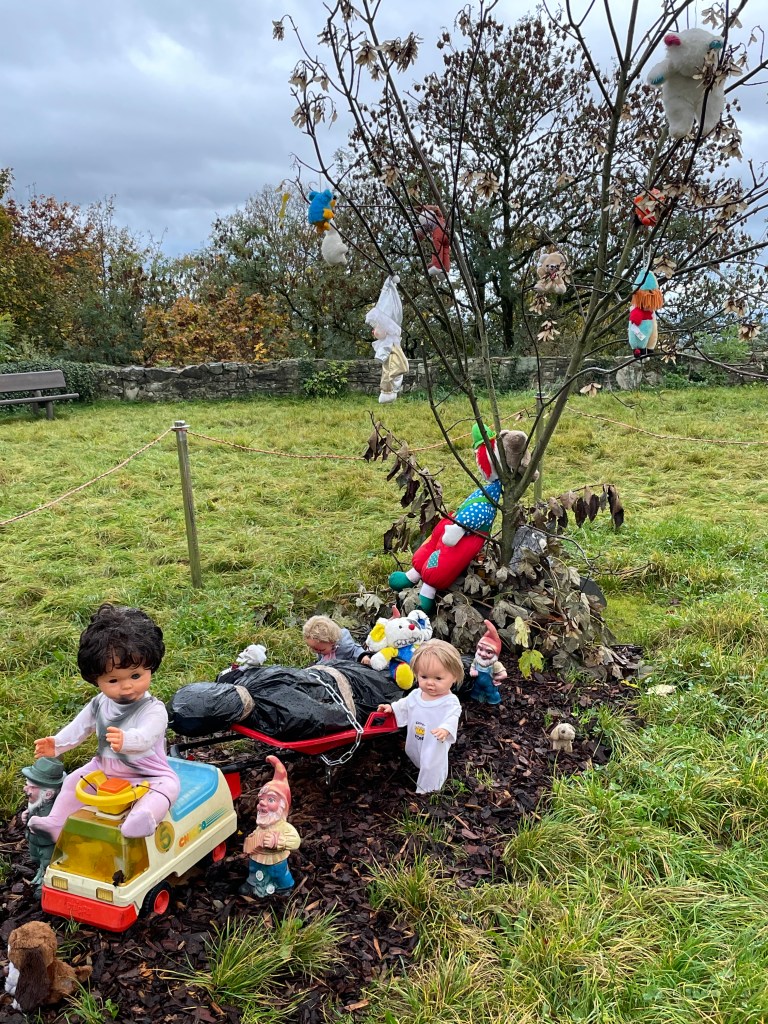
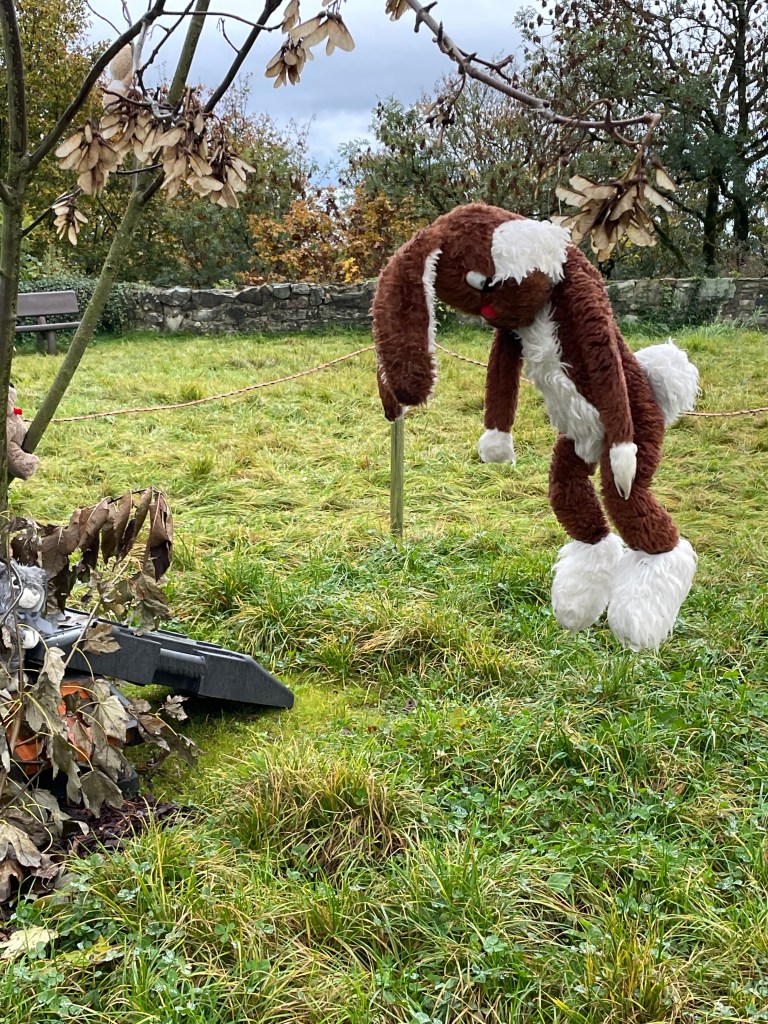
This particular Halloween display made me laugh–these little children weren’t quite sure what to think about these macabre dolls–creative in an unsettling way.

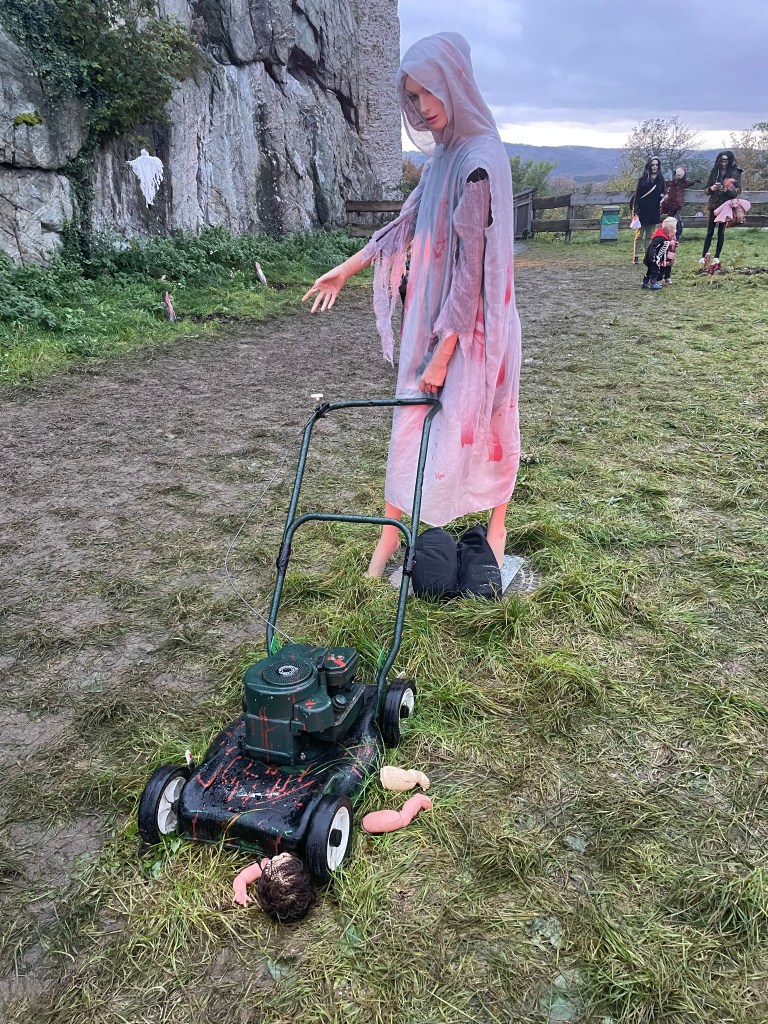
The decor included a Friedhof (cemetery) with some gruesome decor–one was a manikin of a woman in a blood-smeared dress pushing a lawnmower. Look what was under the lawnmower:

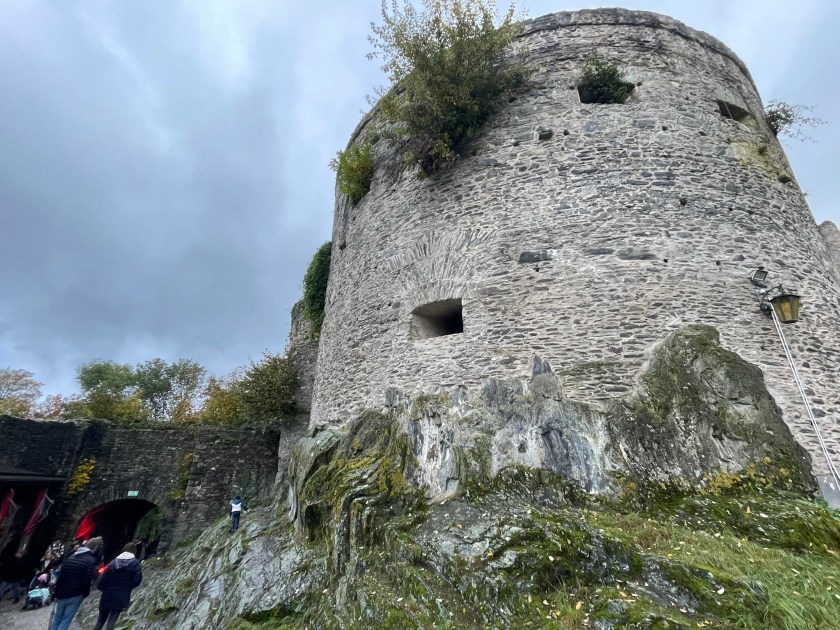
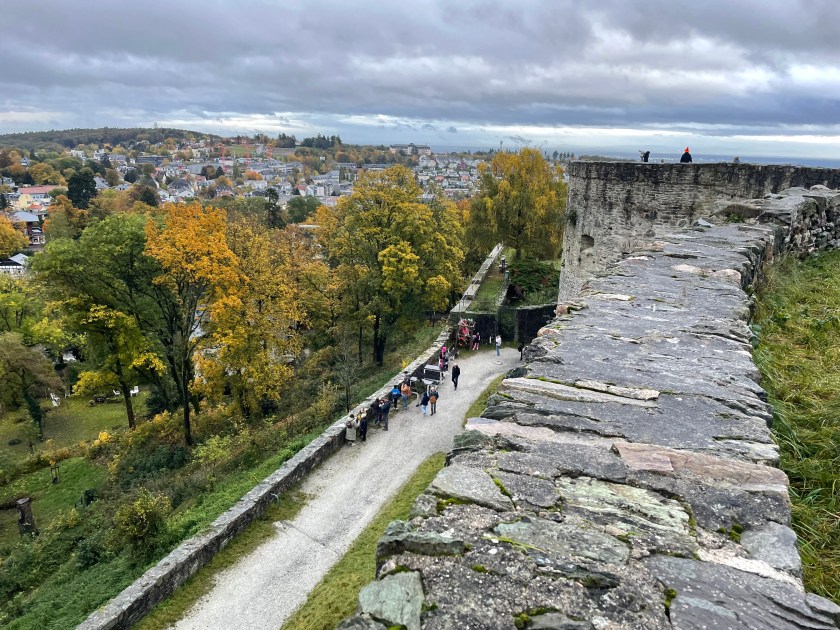
Here you can see how the castle was originally built on a large outcropping of stone:

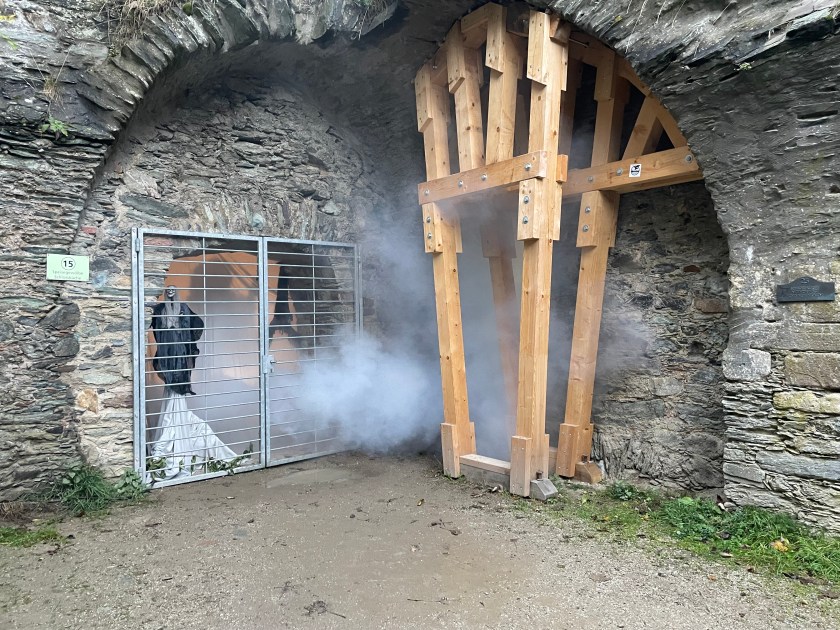
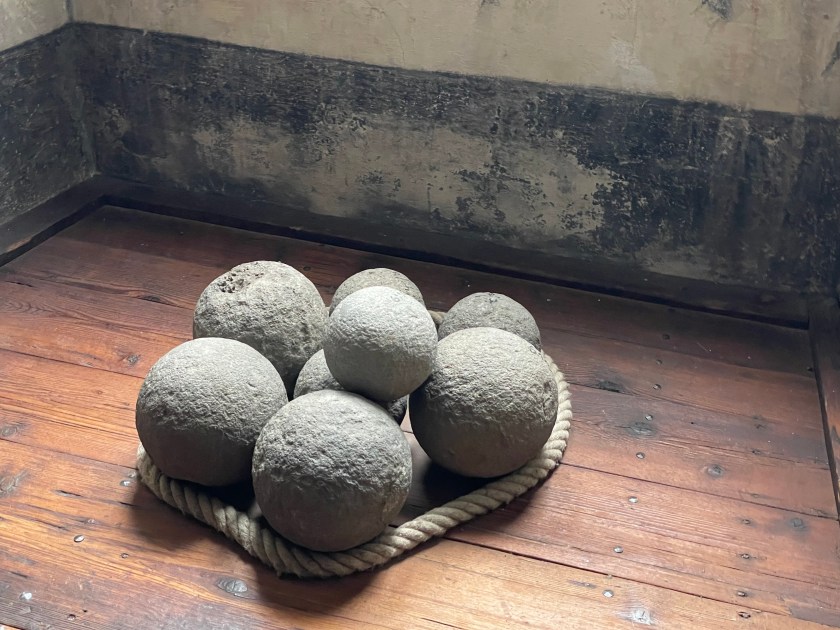
Many of the old cisterns, cellars and tunnels were put to good use by the decoration committee.

This was a really fun way to end our day and celebrate some Halloween fun.  The little kids in their costumes were adorable and the parents were having fun too.  I wonder where they’ll move the party to next year.

The Falkenstein Berg Ruins

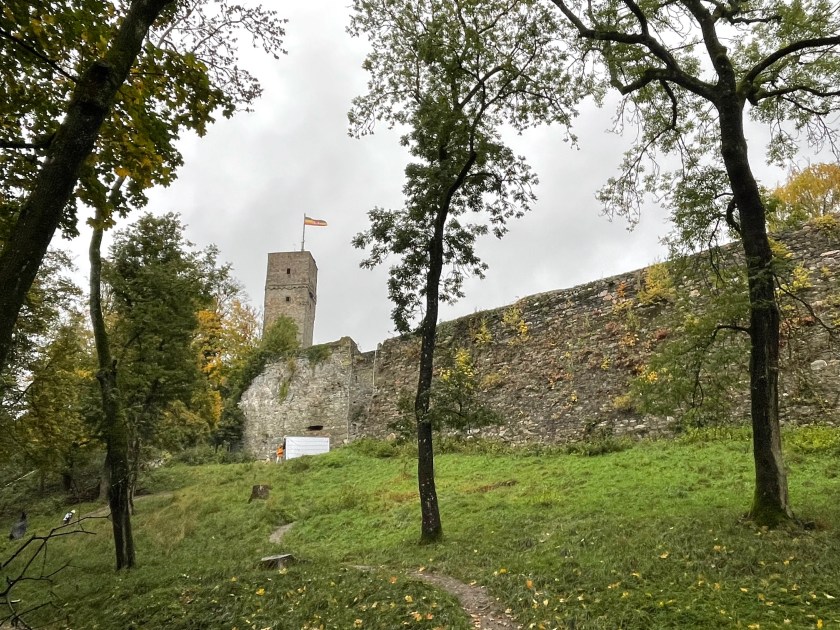
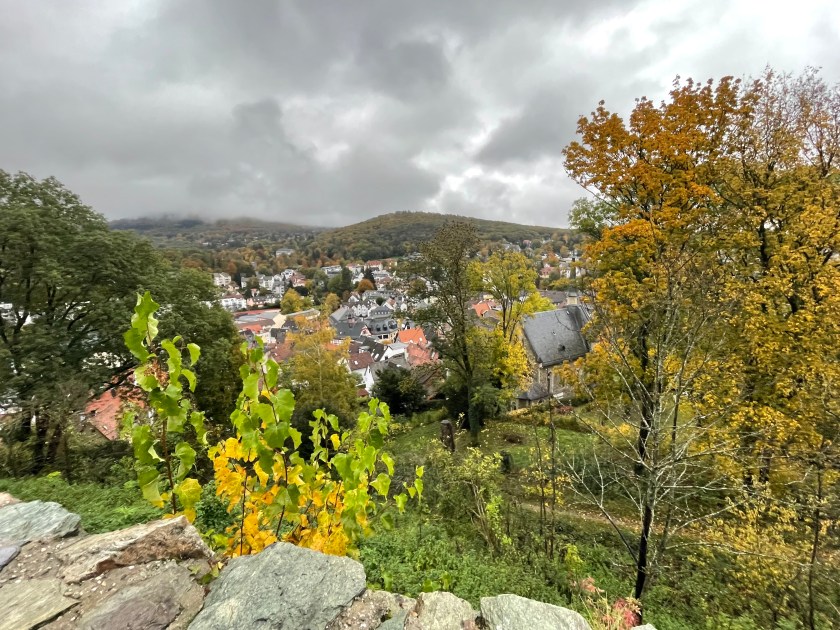
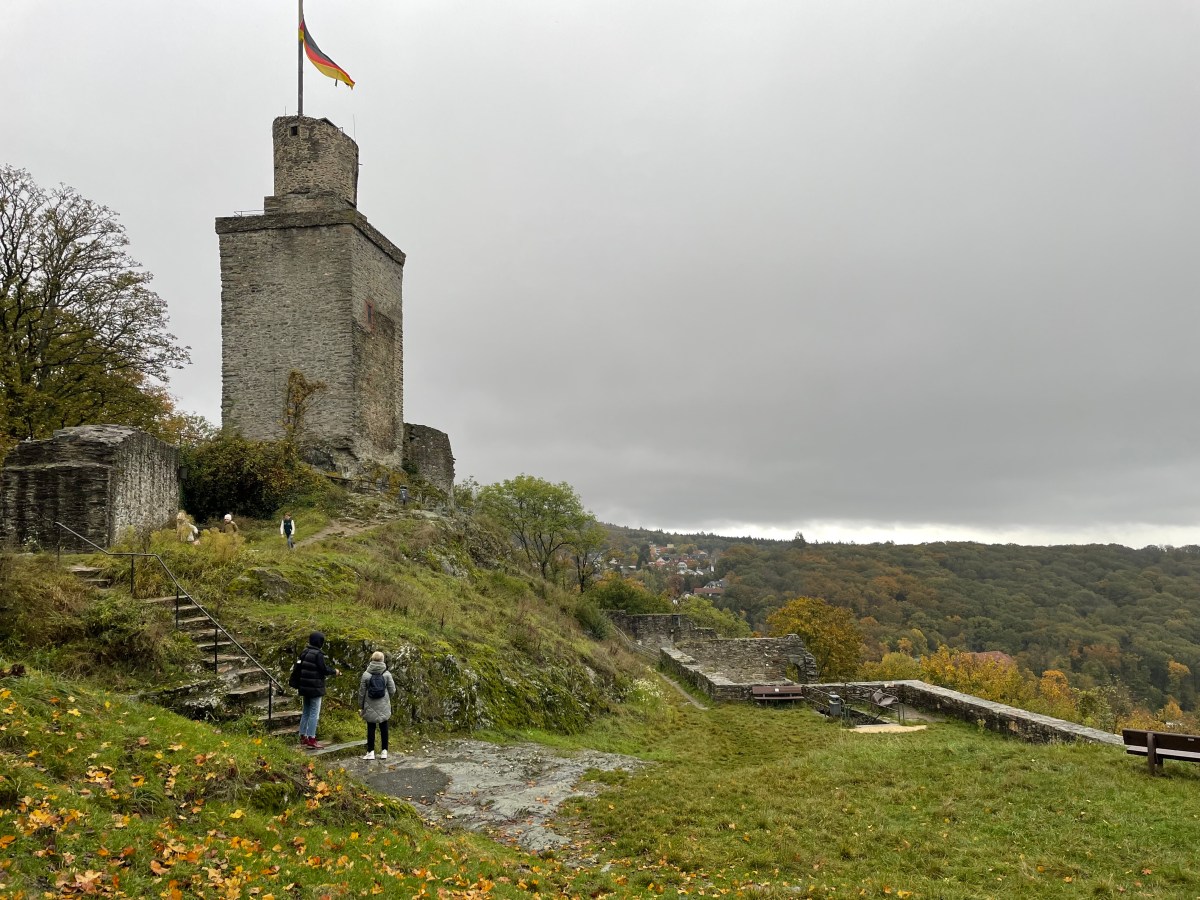
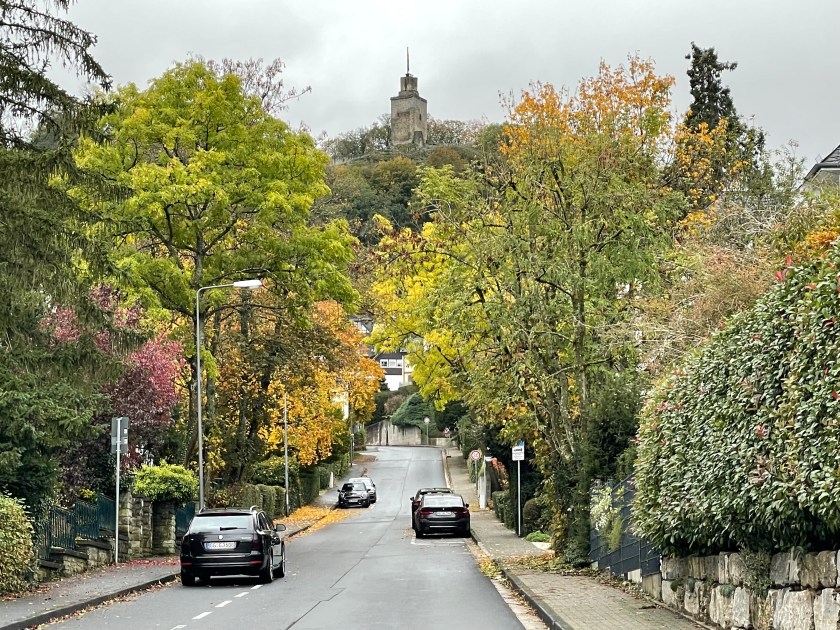
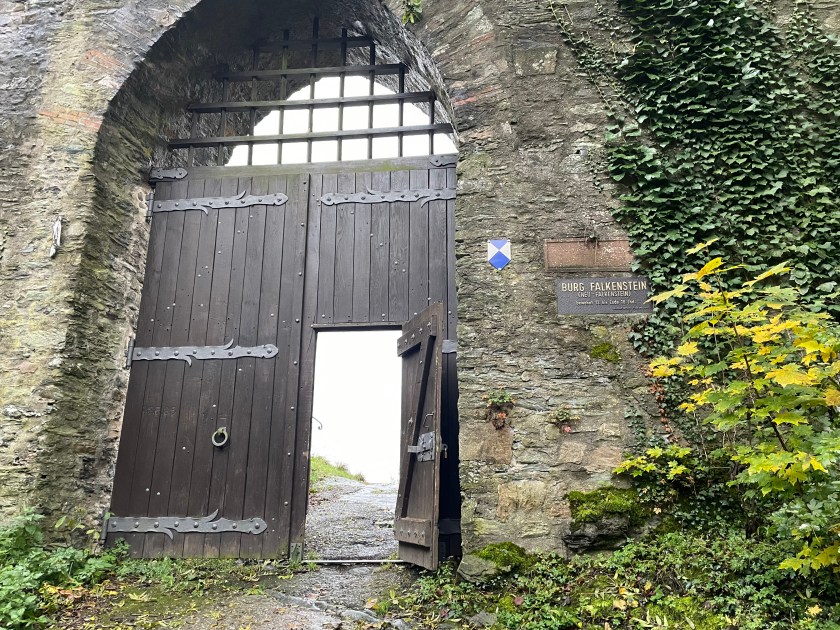
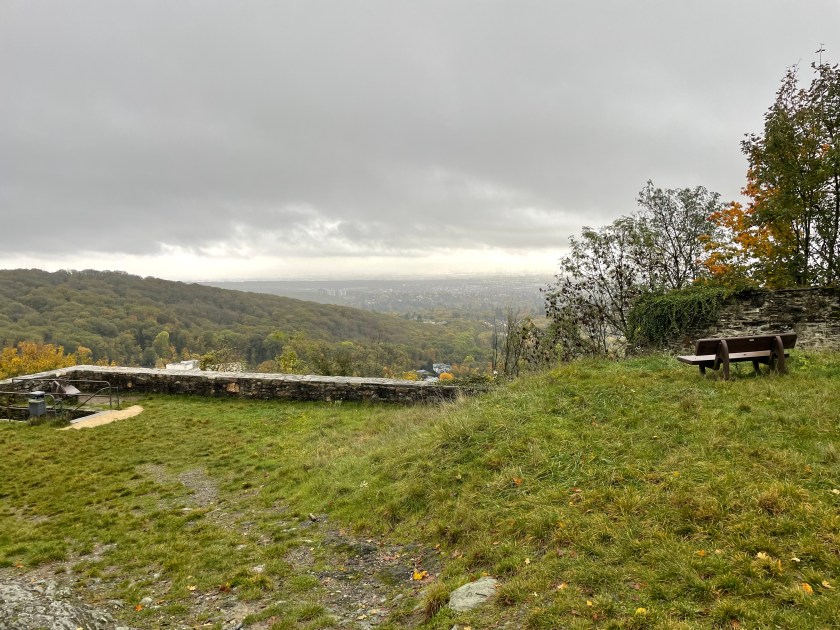
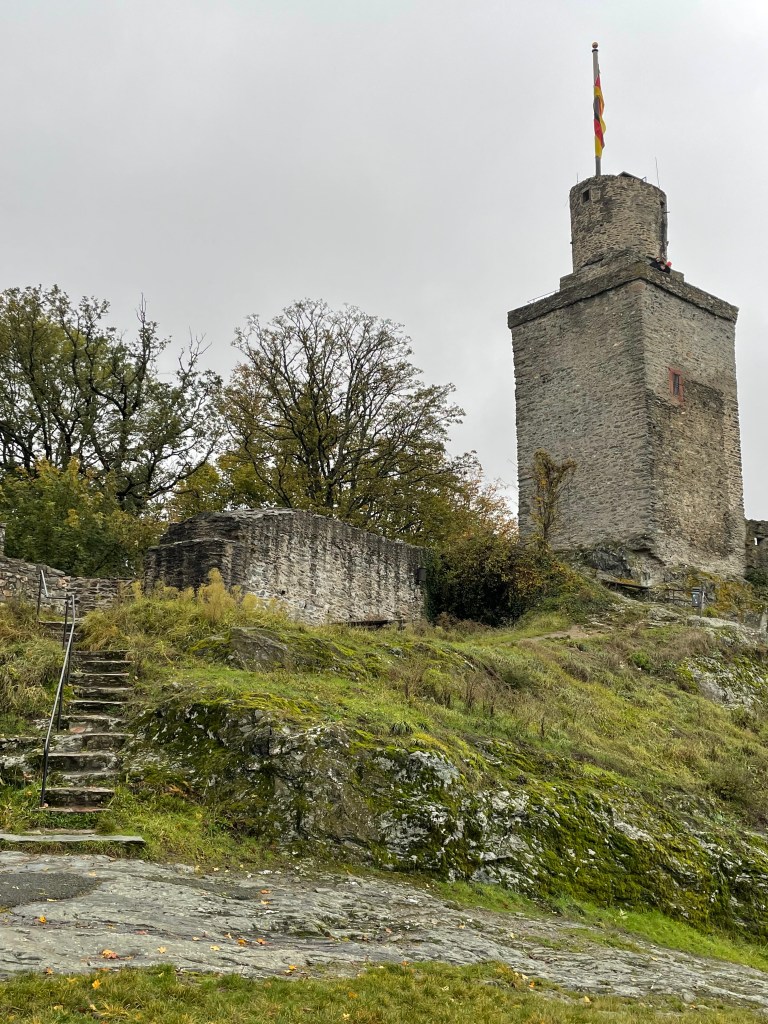
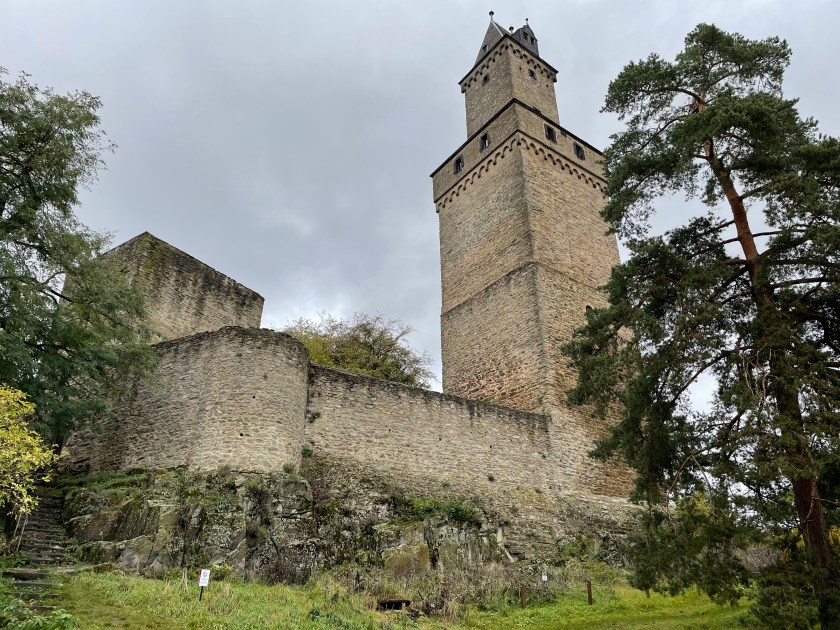
Next we visited the Falkenstein Berg ruins a few miles from Kronberg and up on another hill. This was once a lookout tower.  From this hilltop, you could see all the way to Frankfurt.

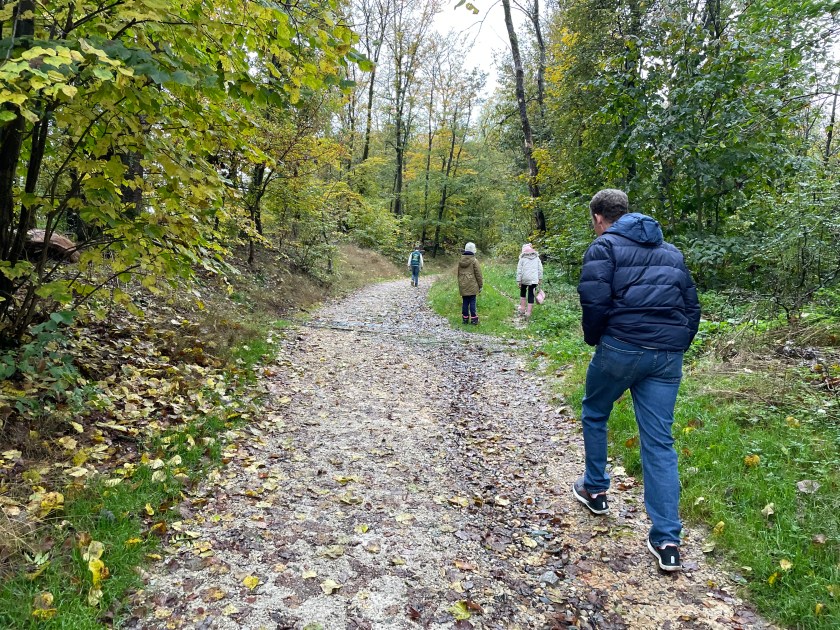
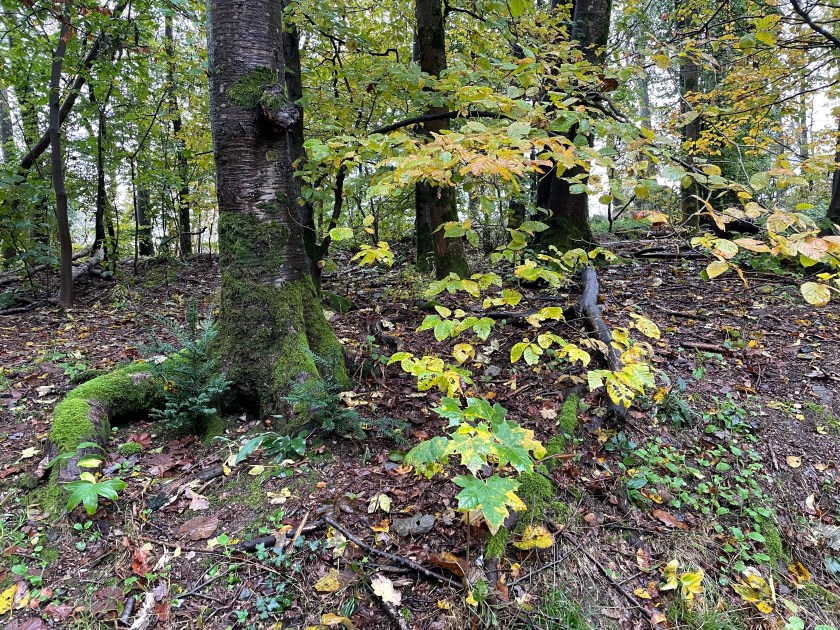
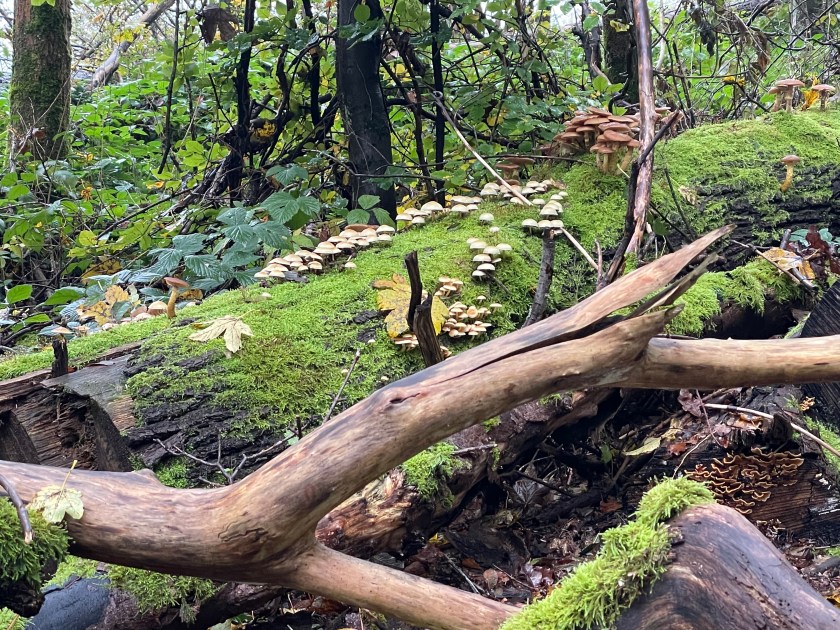
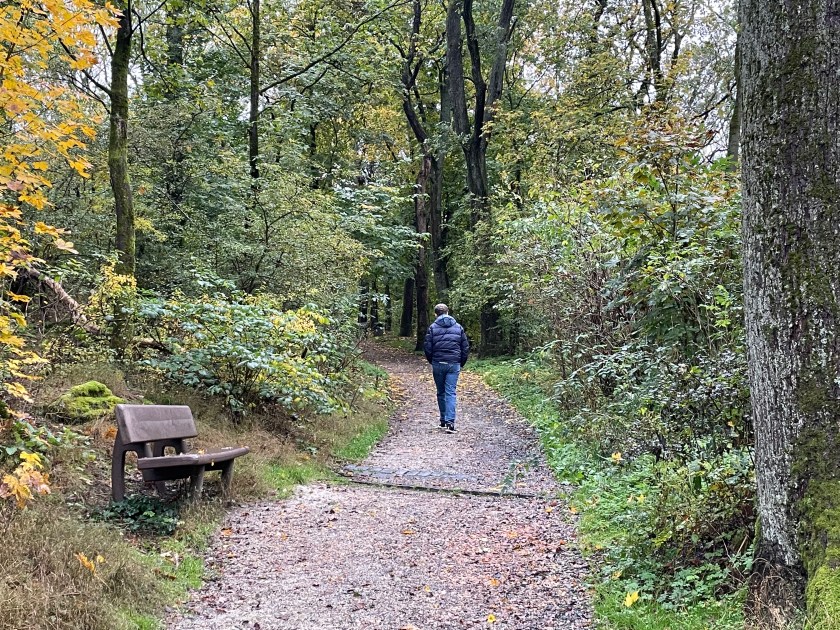
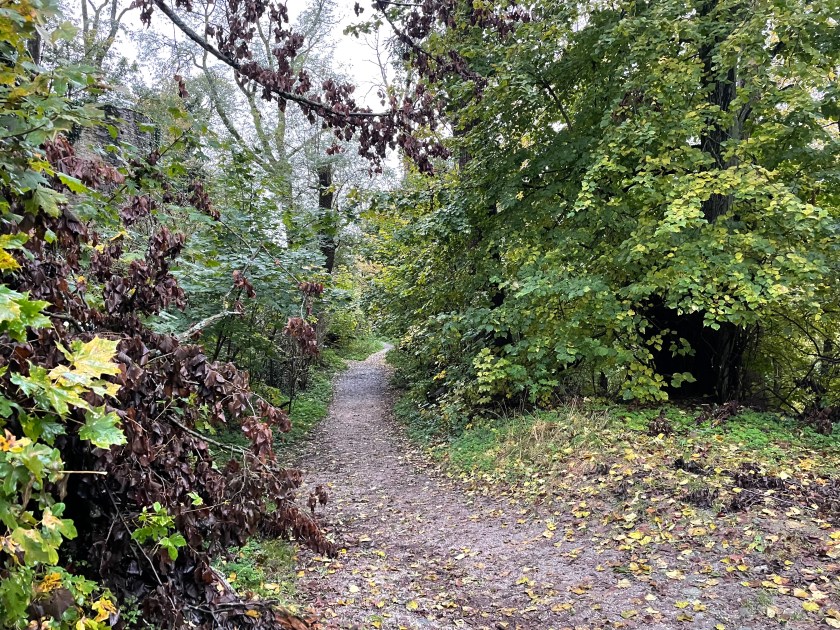
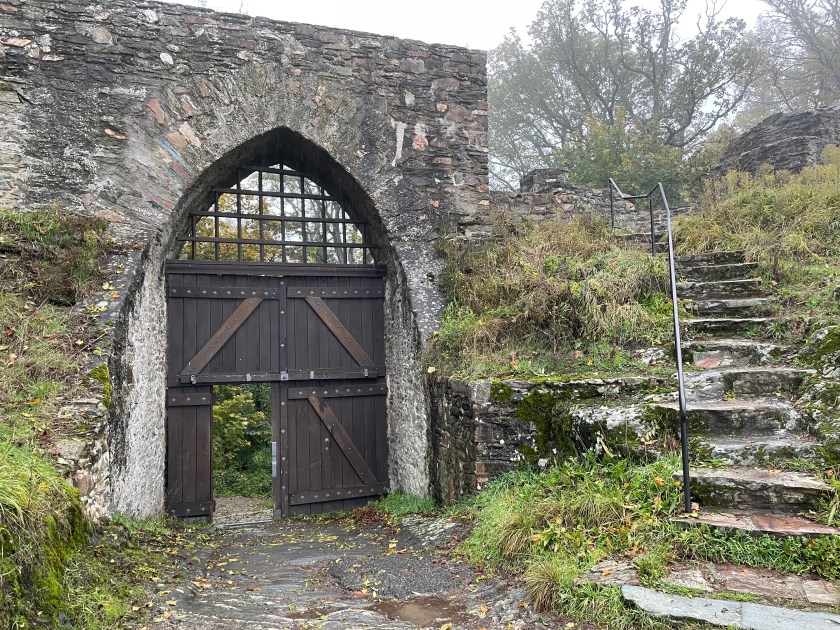
We walked up the hill in a light rain, along a dirt path through the woods. It was so beautiful and smelled so earthy with moss, mushrooms, ferns and wet leaves underfoot.

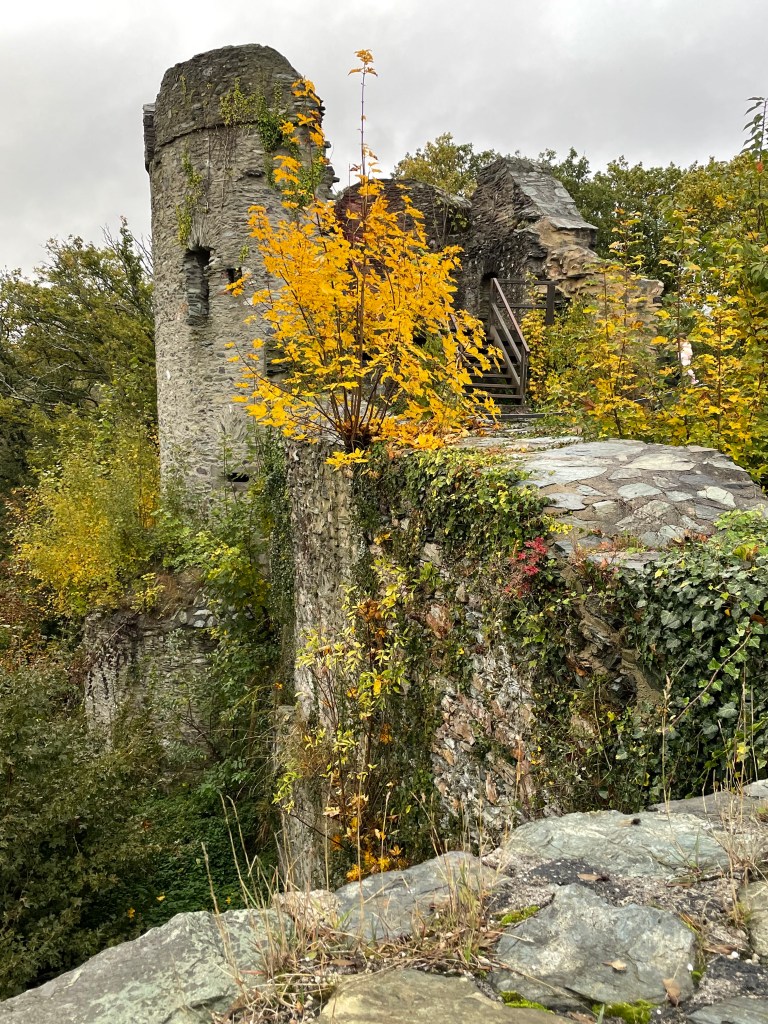
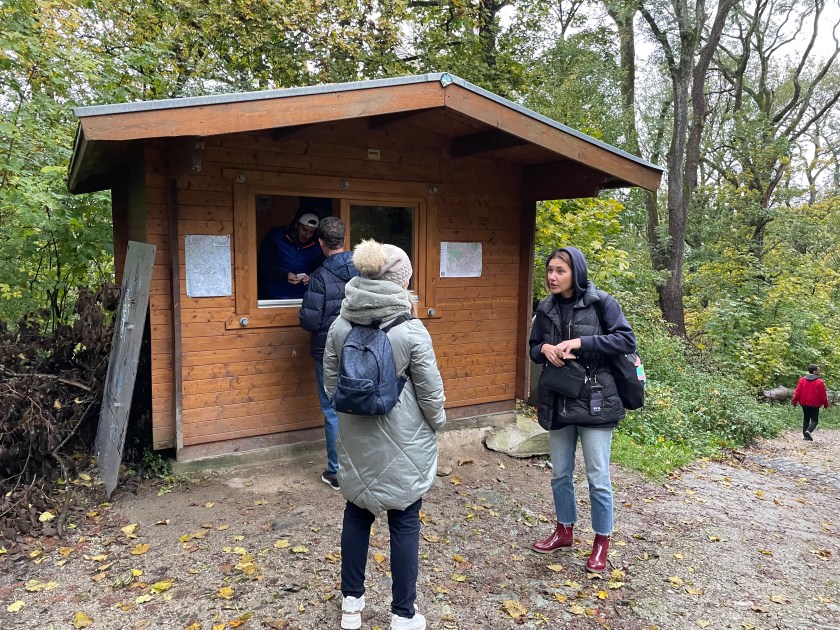
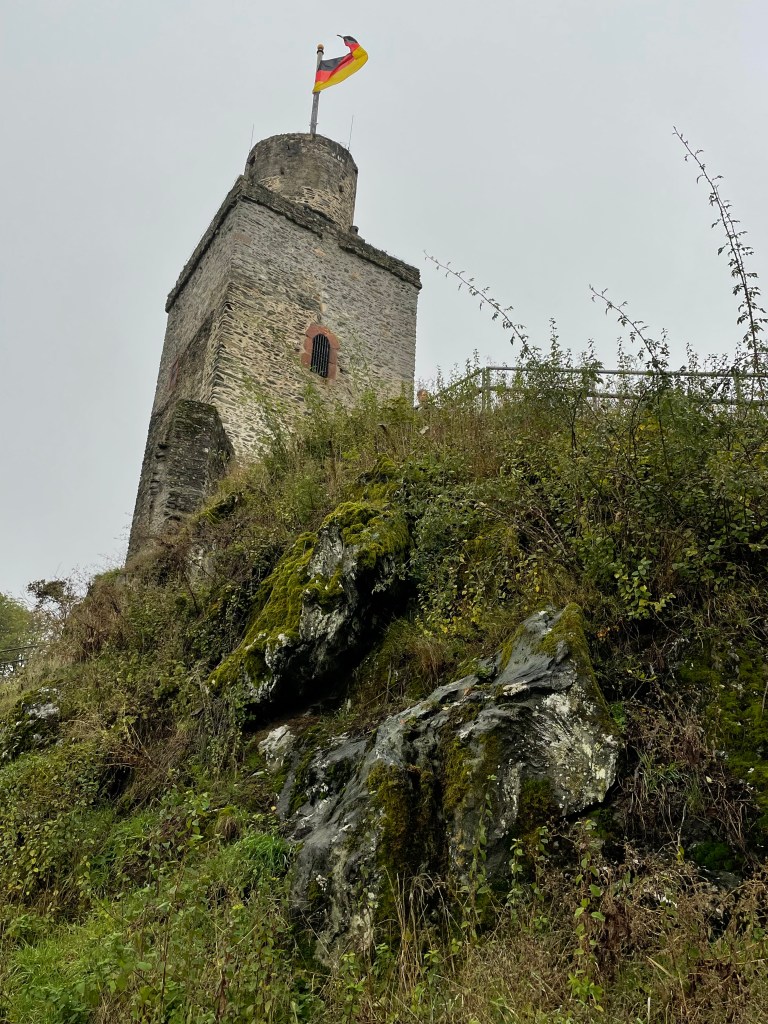
We paid 2 Euro to enter and see the ruins, which was mostly the tower and some rock walls below it.  

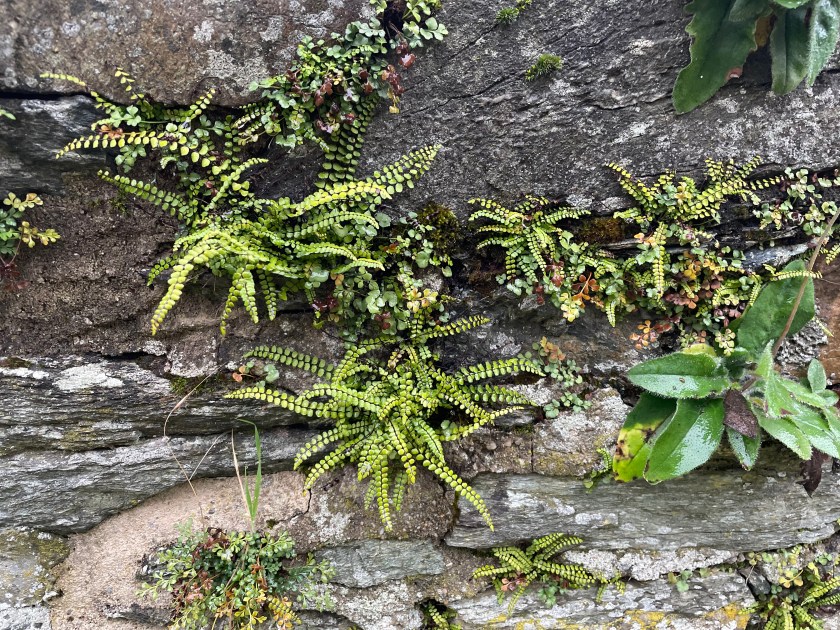
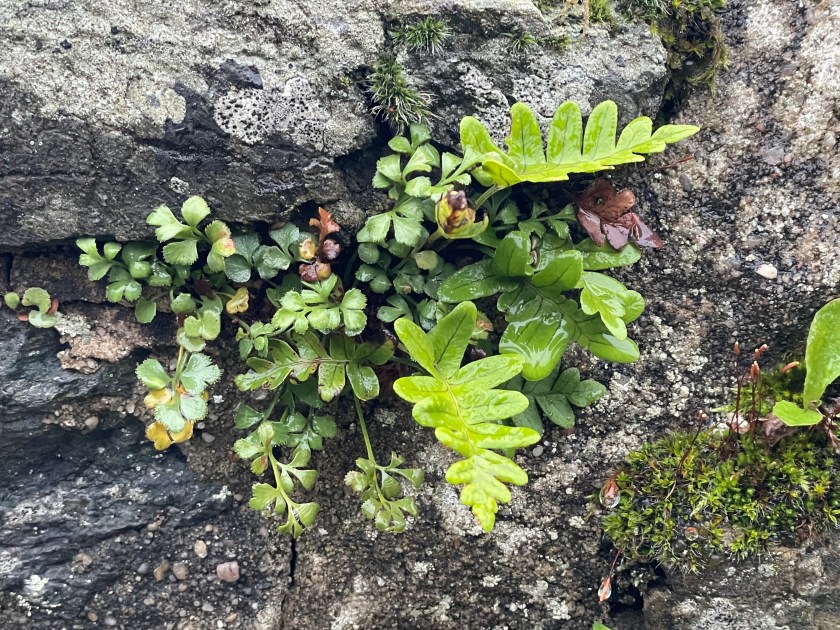
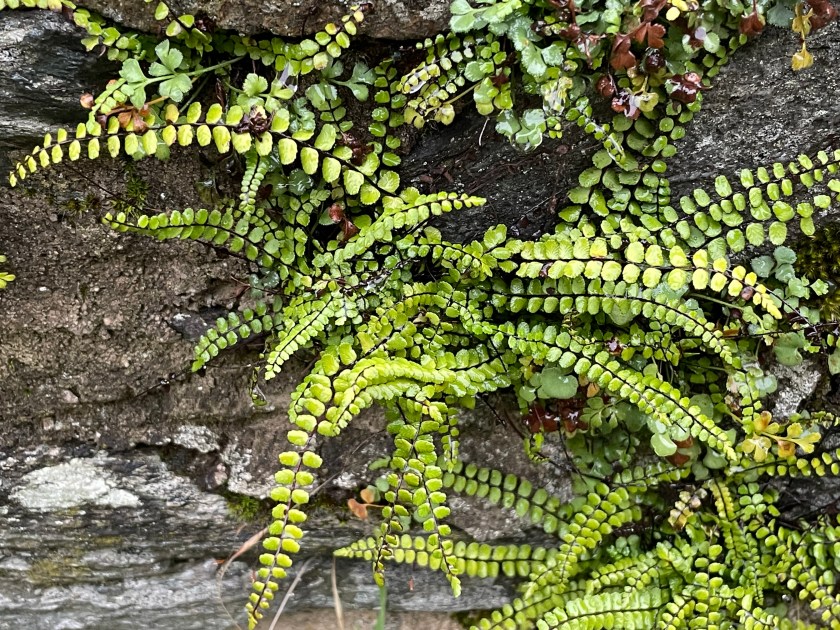
These teeny tiny ferns were growing in the cracks of the rock walls.  They were perfectly beautiful!

I wish you could see the leaves fluttering down around us and smell the wet earth under our feet.  I love these kinds of places.

Kronberg Castle

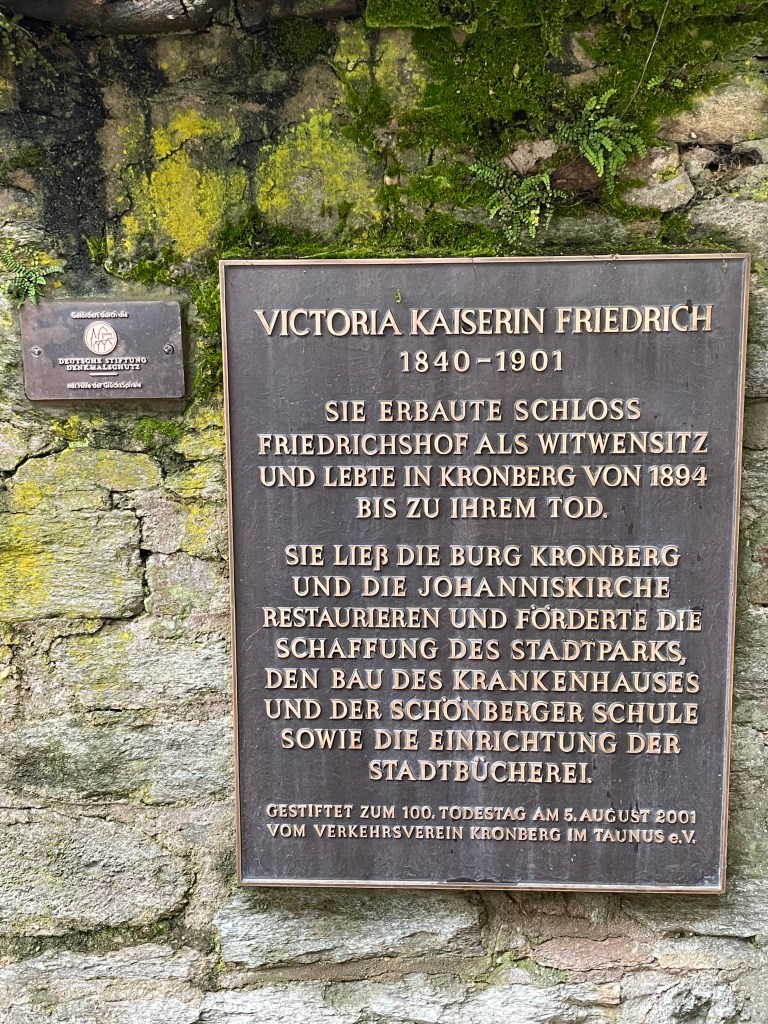
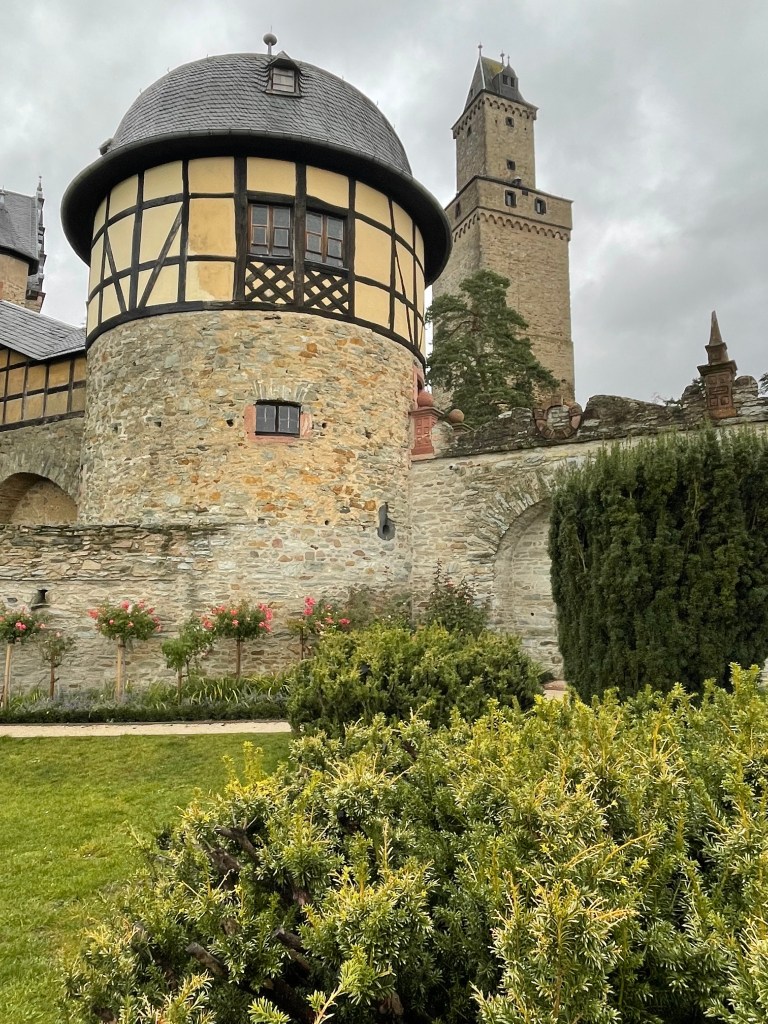
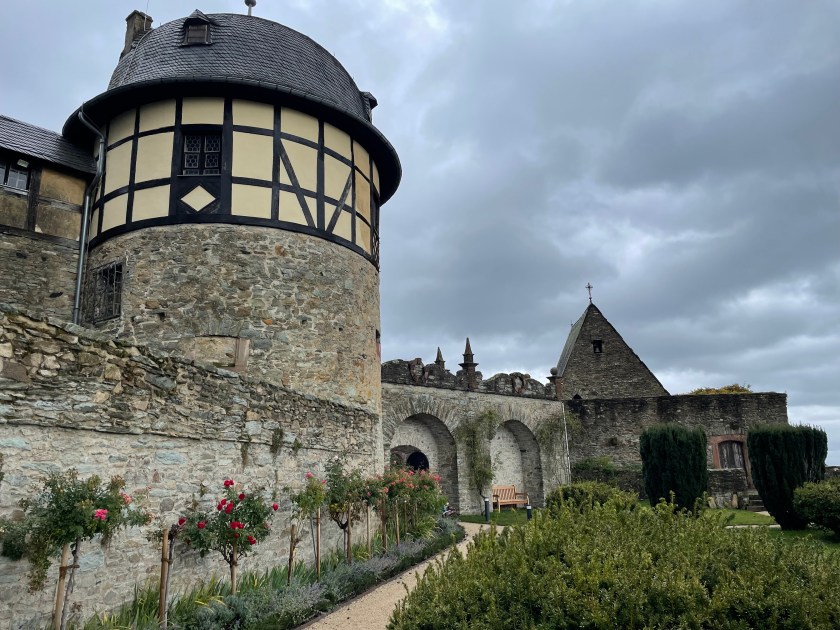
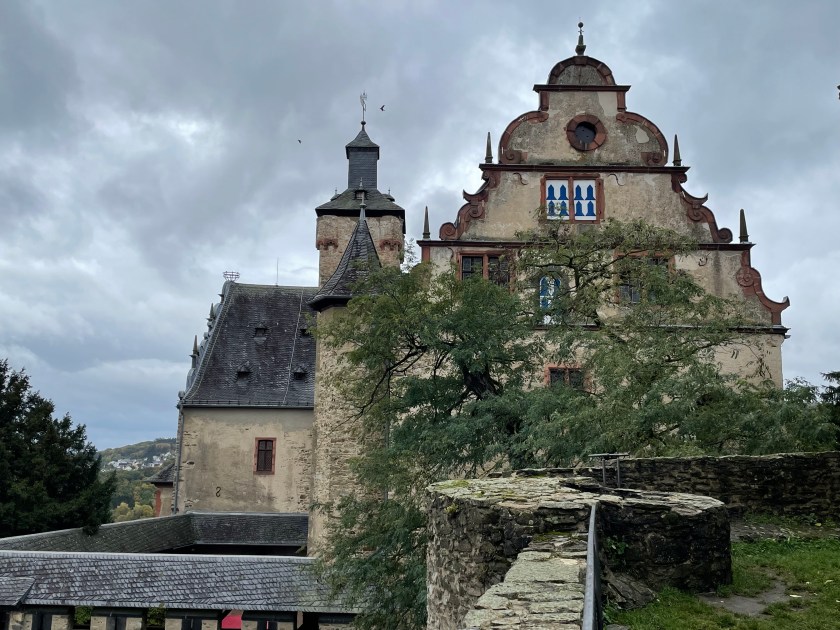
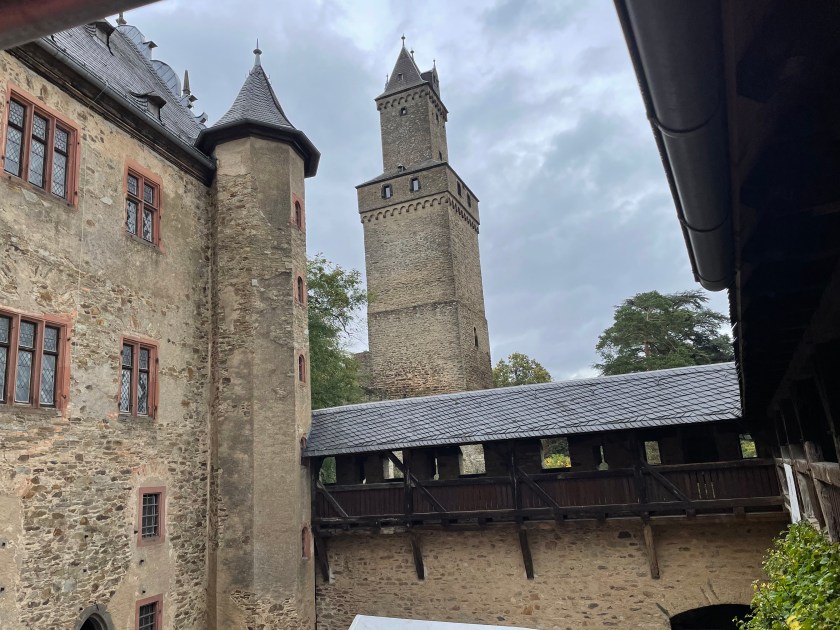
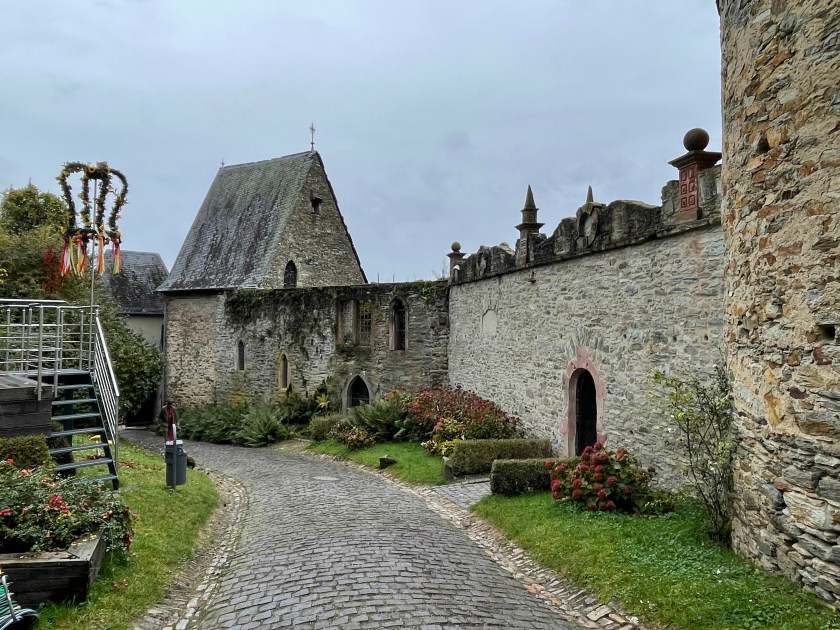
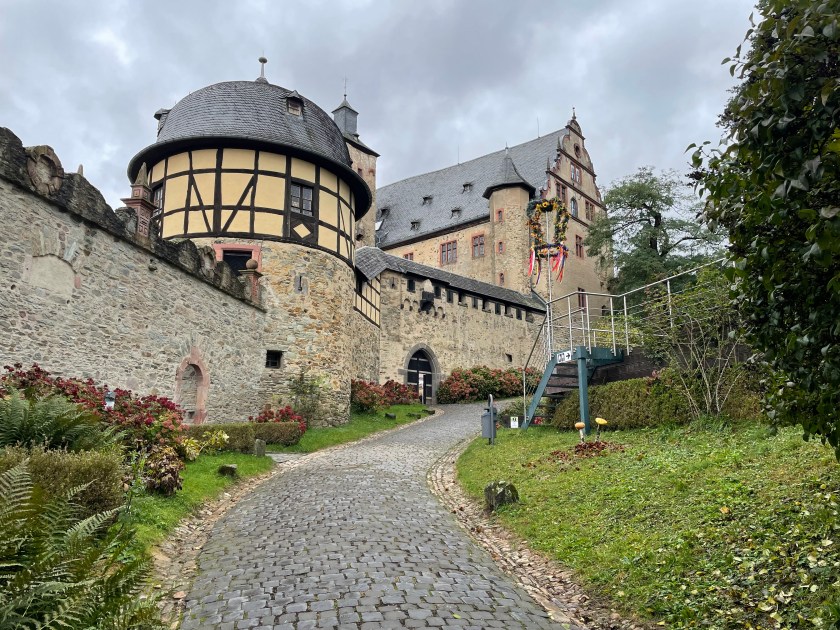
We returned to the Kronberg Castle after it opened at 1:00.  We had a little time before the tour to explore the grounds and enjoy the beauty here.  Empress/Kaiserin Victoria did a nice job bringing life back to this old castle when she completely renovated it after she moved to Kronberg.  She lived here from 1894 until she died in 1901.

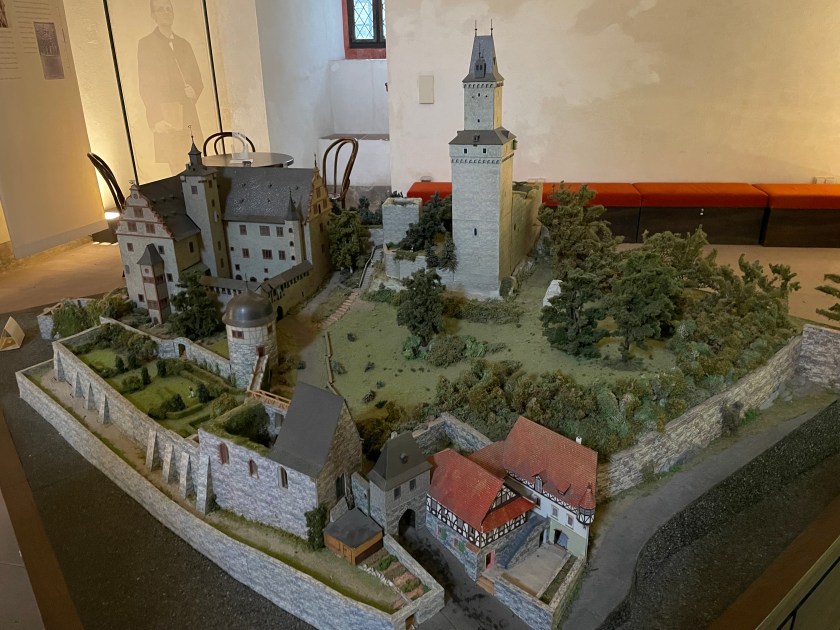
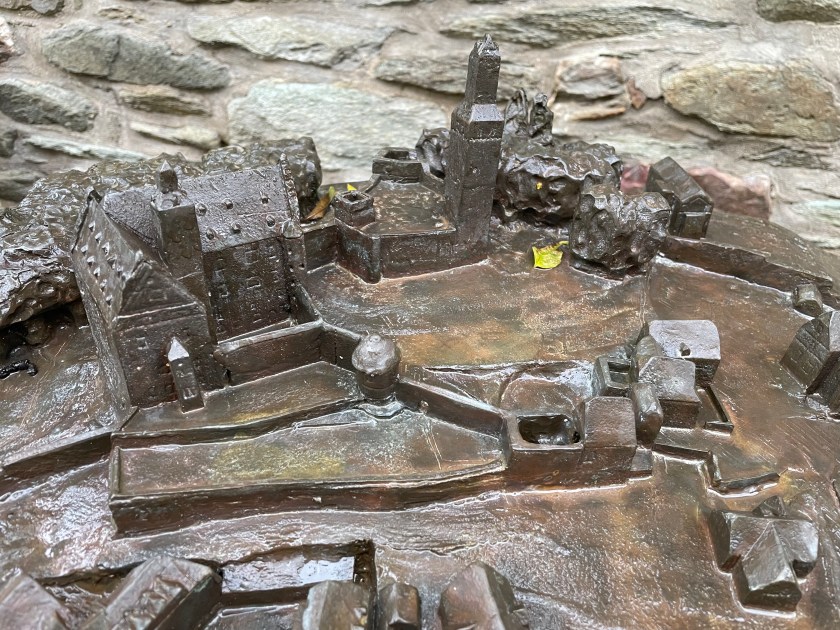
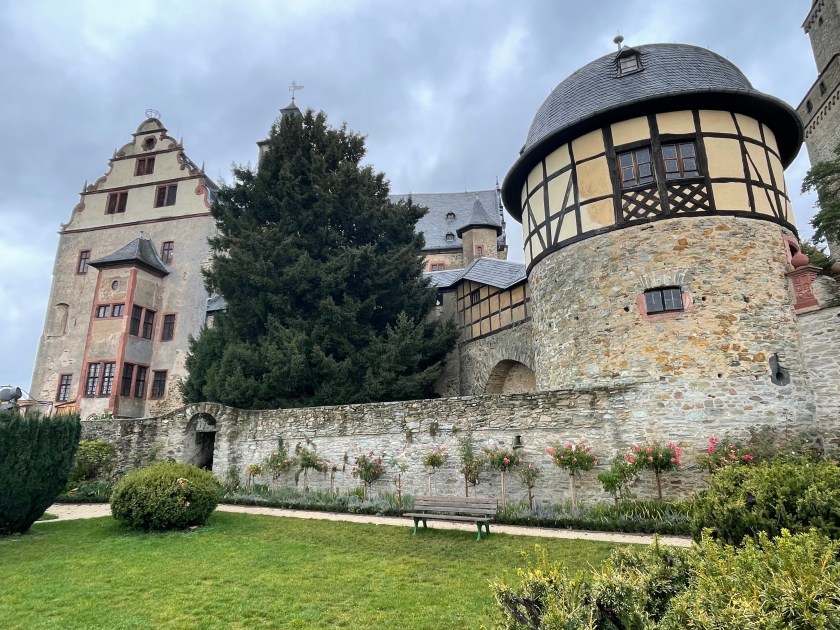
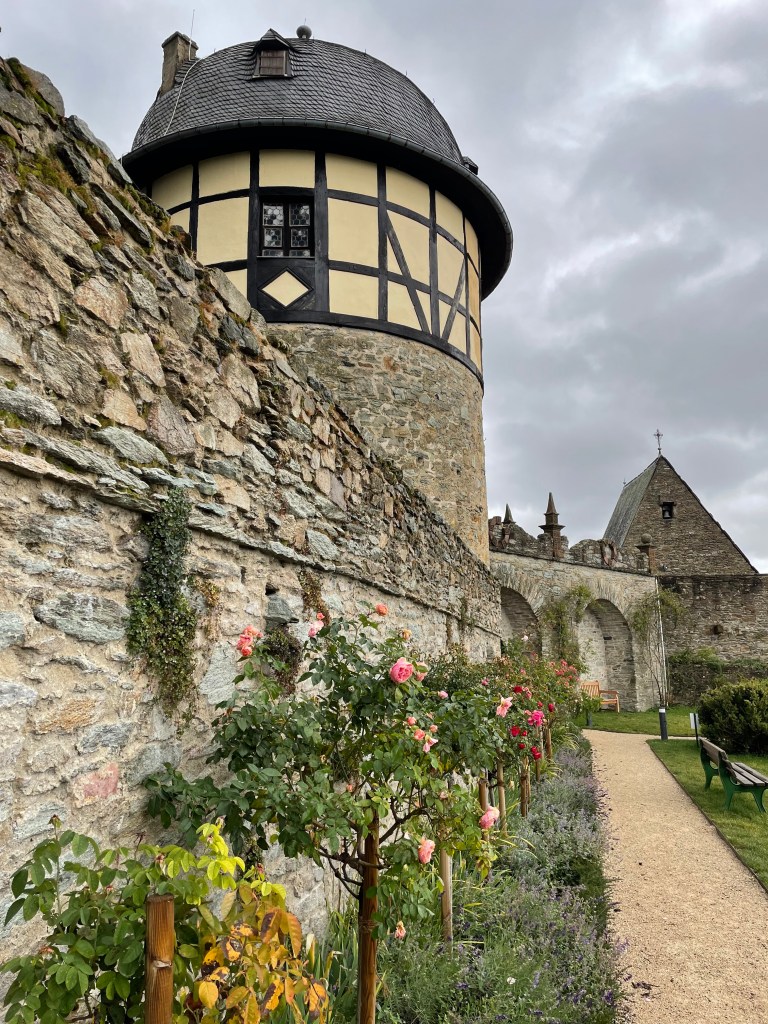
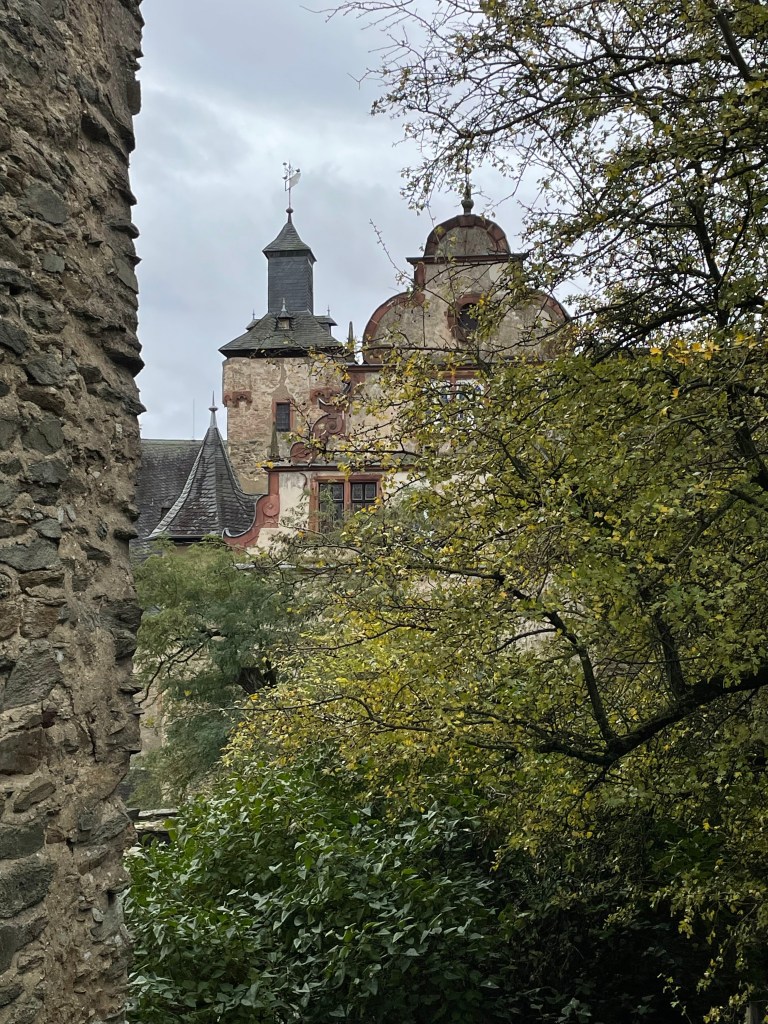
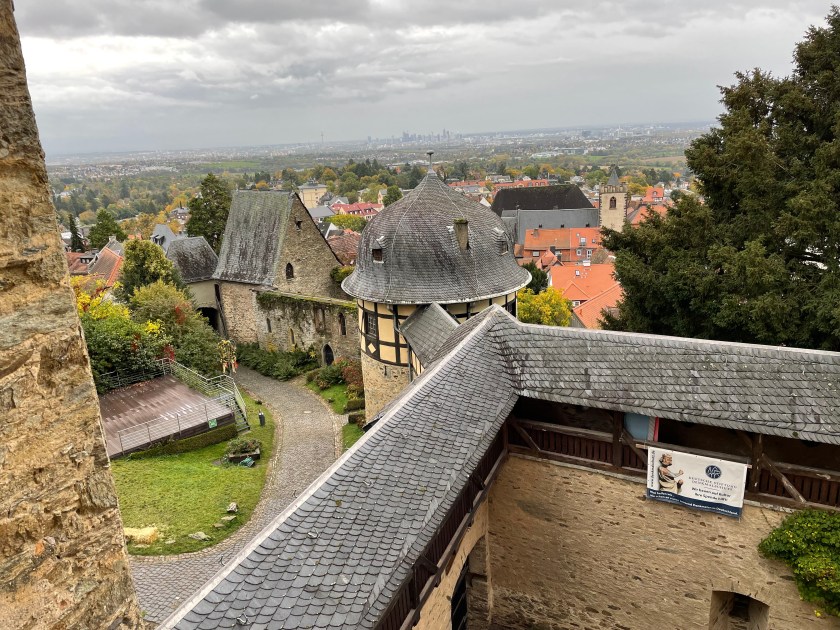
Here’s how this castle is situated on the hill at the top of the town:

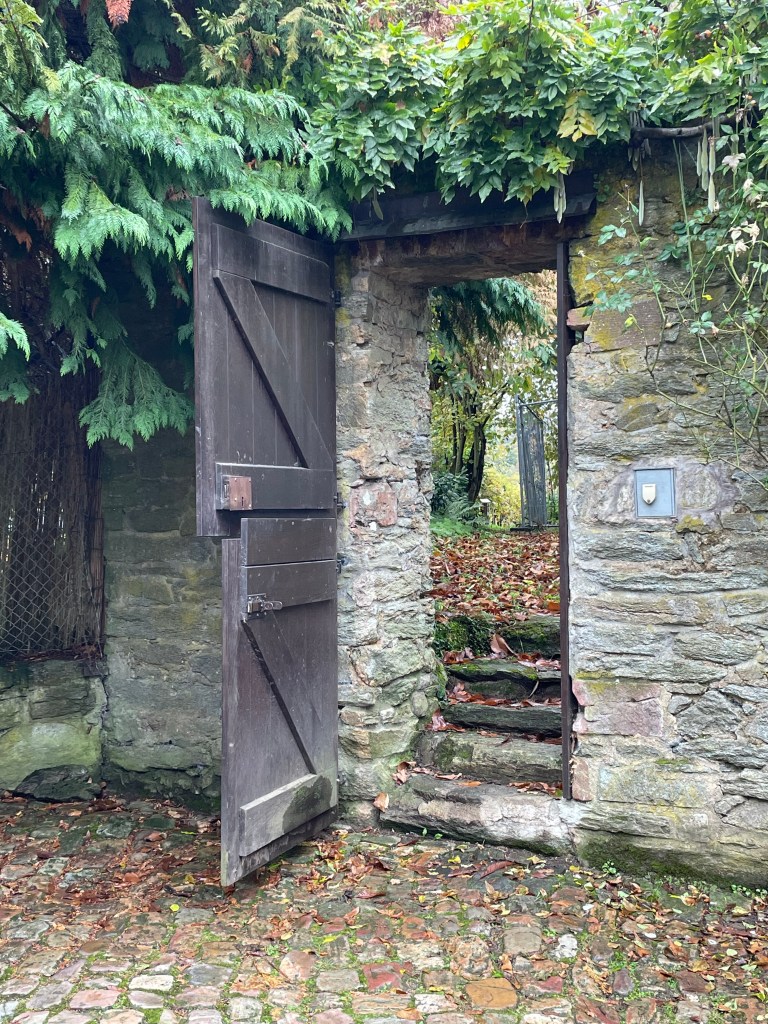
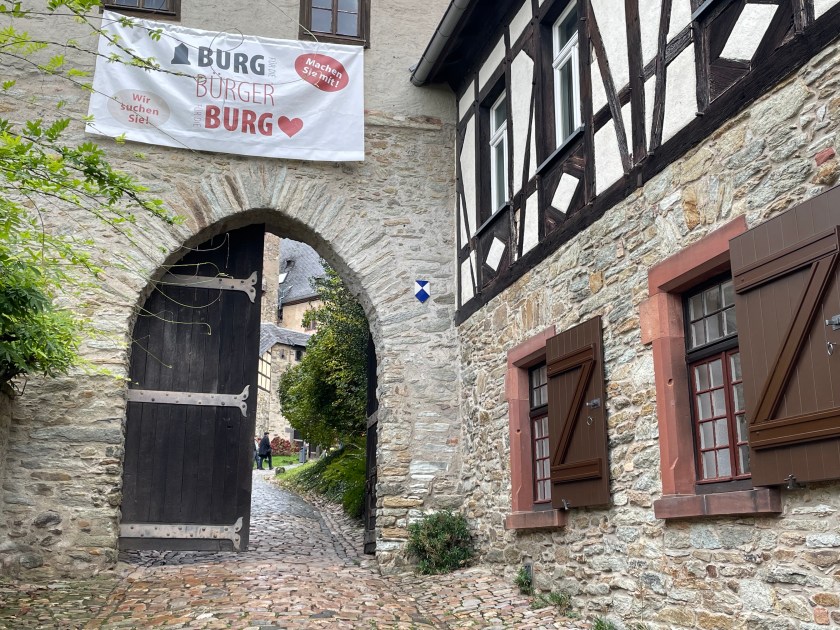
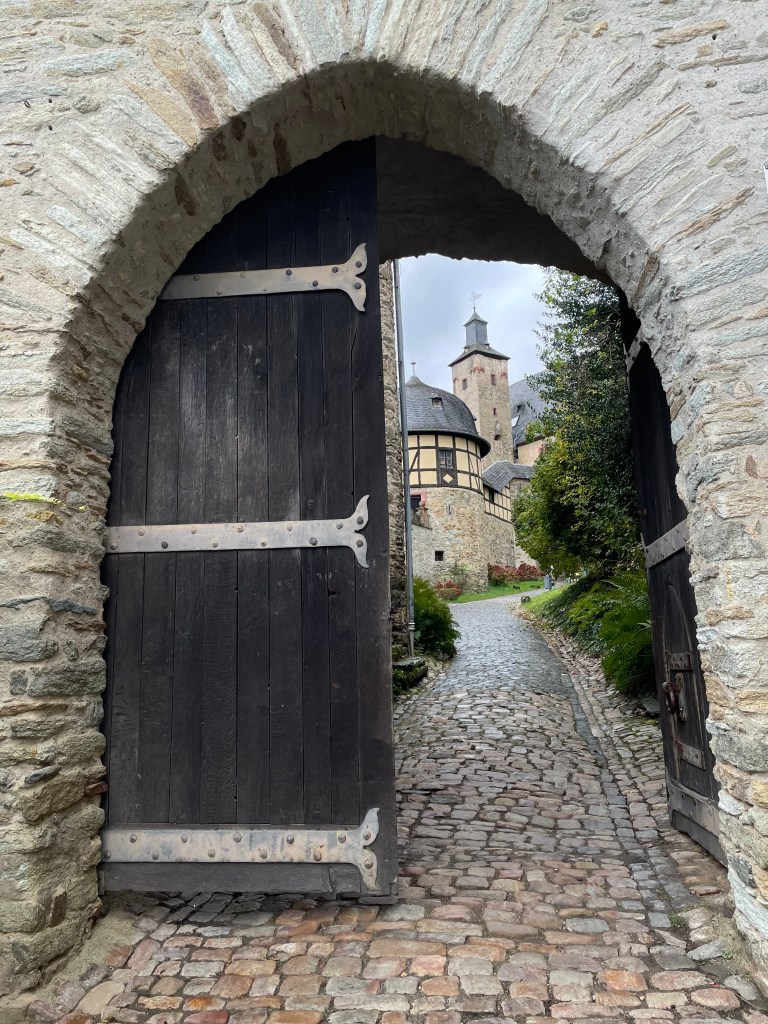
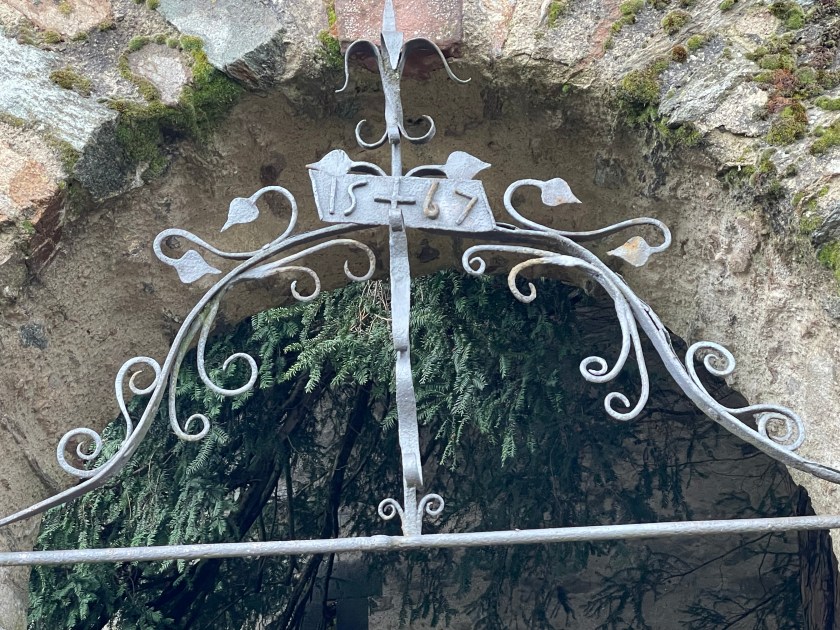
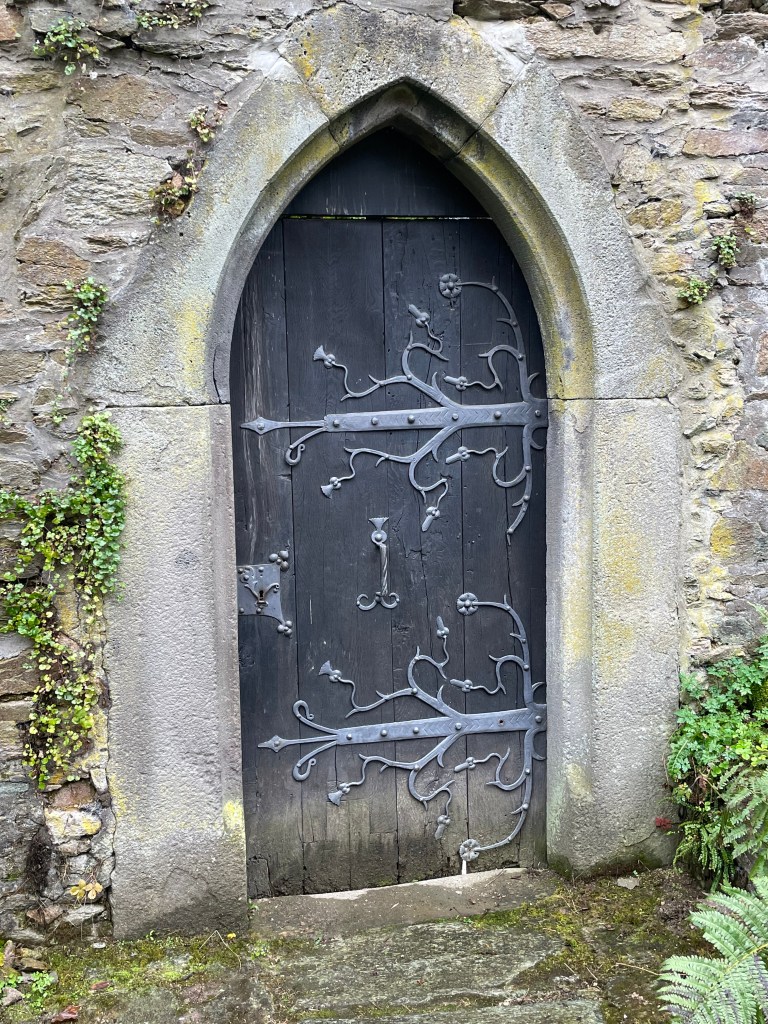
The door to the castle grounds:

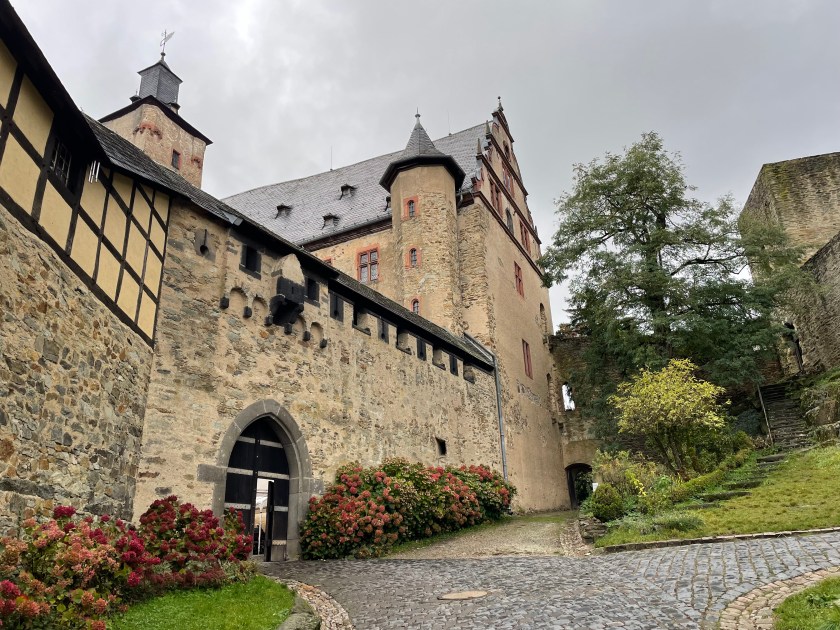
And here’s where you enter the castle:

It’s still hard for me to wrap my head around how old these buildings are.

Here’s a little history of this place:

The history of Kronberg castle and its grounds begins at the end of the 12th century, when the Holy Roman Emperor ordered the knights of Eschborn to build a castle on a rocky outcrop on the southern slopes of the Taunus. The first documentary reference to the knights as the Lords of Kronberg was in 1230.
A visitor to this castle complex, which with its 18,000m is one of the most extensive in Germany, will get a clear idea of what life used to be like at the castle. It was an economic entity with lords and their underlings and cattle, and stables, barns, a blacksmith and a bakery and a manure heap. The harvest was stored in the attic of the middle castle. At the beginning of the 19th century the economic conditions changed. Castles were now something to admire and visit. They were no longer lived in by the families who had built them.
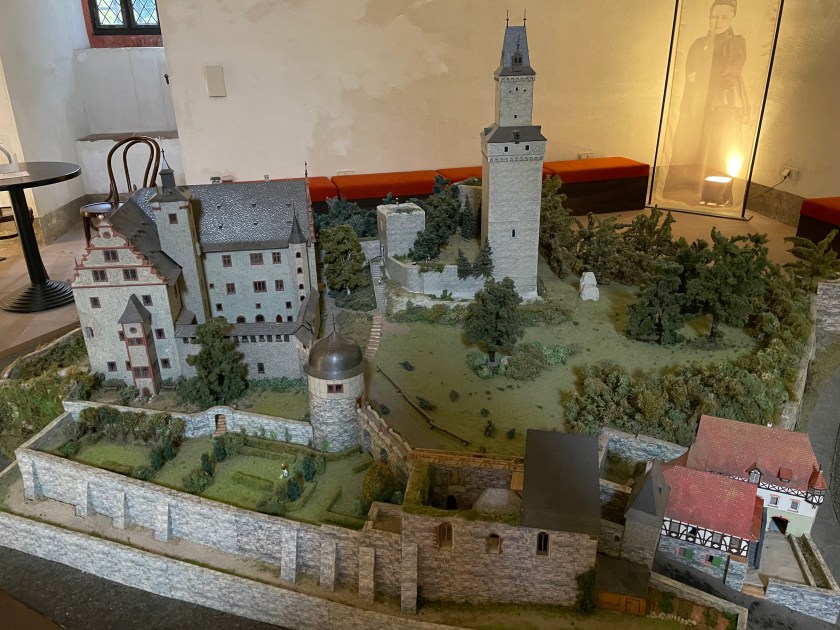
Kronberg castle comprises three castles from three eras: The Romanesque upper castle with its keep is the oldest part of the castle (circa 1170-1200). The lower castle, which has now almost disappeared from view, was built at the start of the 14th century. The middle castle has two buildings at right angles to each other and was built in the 14th and 15th century and marks the transition from a defensive to a residential castle.
There have been many alterations, renovations and extensions to the castle over the centuries.  However, the ground plan of the castle has remained largely unchanged since the Middle Ages. This fortunate circumstance is explained by the fact that, after the last Lord of Kronberg died in 1704, the castle continued to be used. Among other things it was used as living accommodation and workshops, for storage, as council offices, as a prison and above all as a school and even as a painter’s studio.
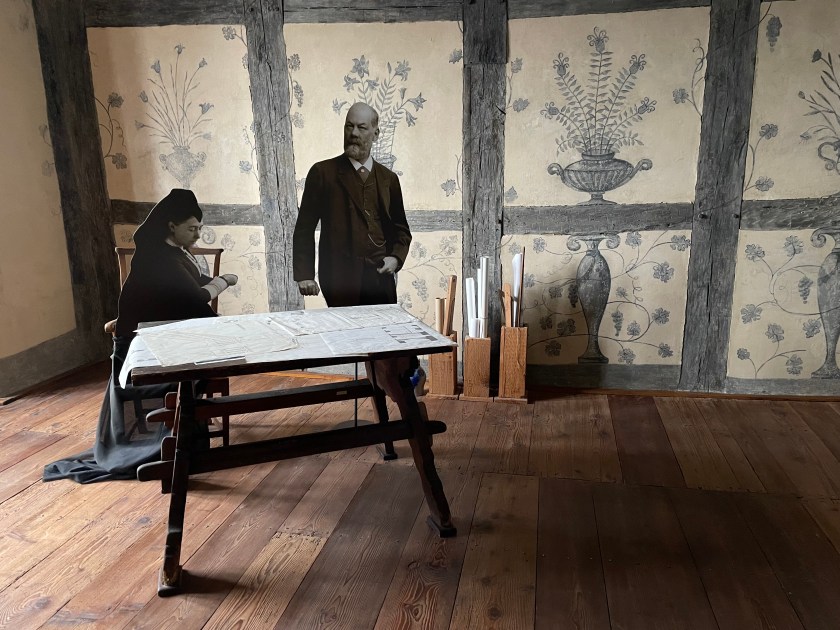
In 1891 Kaiser Wilhelm II gave the castle as a Christmas present to his mother, the Empress Victoria of Germany, “Kaiserin Friedrich” (the oldest daughter of Queen Victoria of Great Britain). She had the castle restored under the management of the architect Louis Jacobi and planned to open a museum. Her plan was to restore the castle to the way it would have looked when the last of the Lords of Kronberg lived here.
Unfortunately, Empress Victoria died in 1901. Her youngest daughter Margarethe, together with her husband Landgraf Friedrich Karl von Hessen, completed the work, and the first museum was opened to the public in 1912. The Kronberg Castle Foundation (Stiftung Burg Kronberg im Taunus) owns the castle since 1994. 

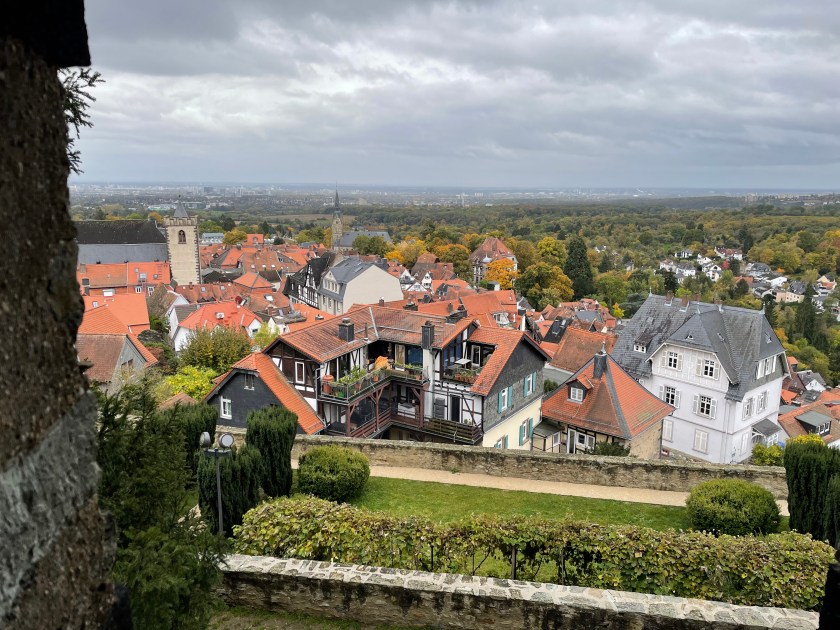
From here you can see the old church (left) we visited earlier.

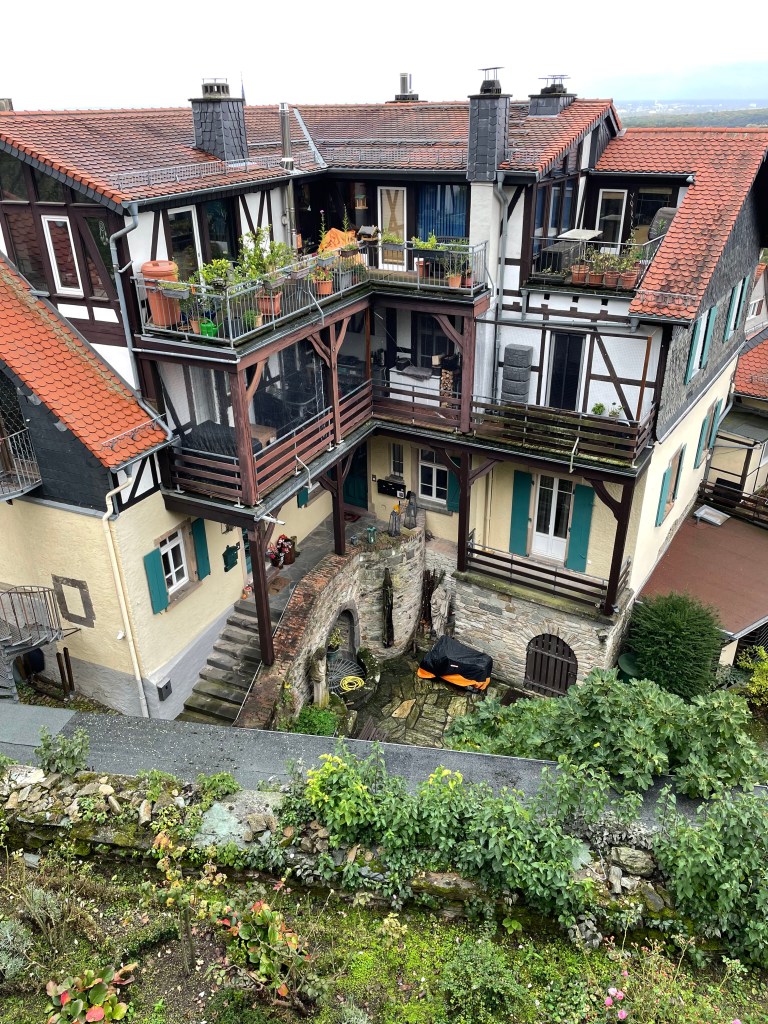
Neighbors behind the back walls:

Our tour began here with a historical overview of the castle.

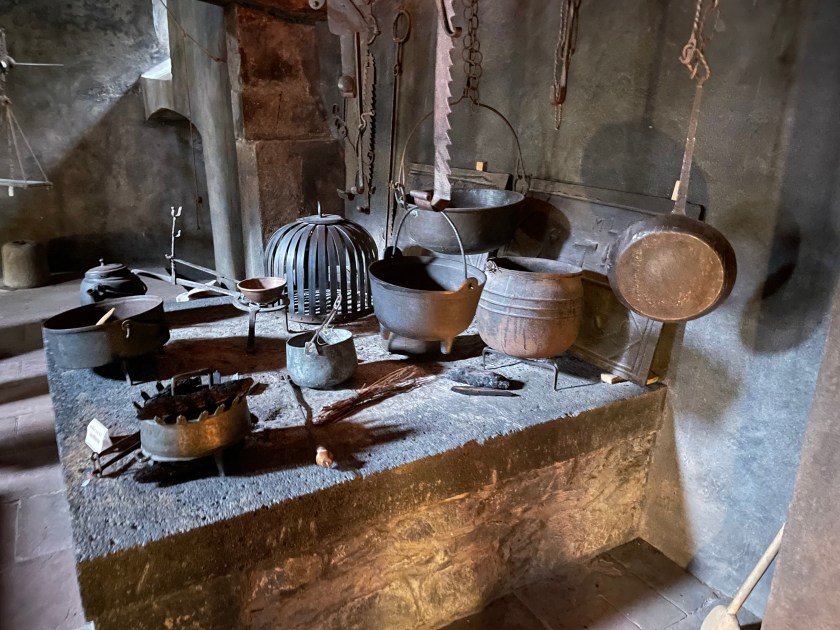
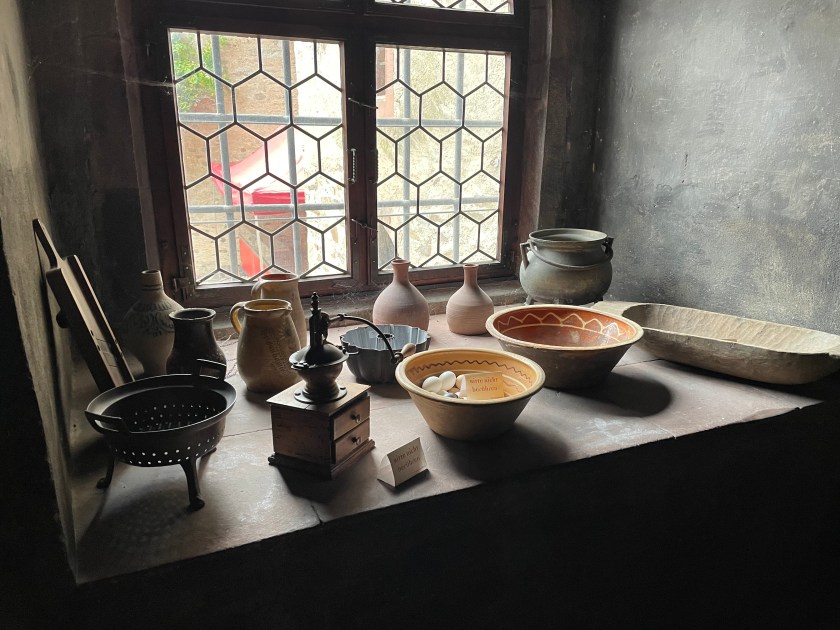
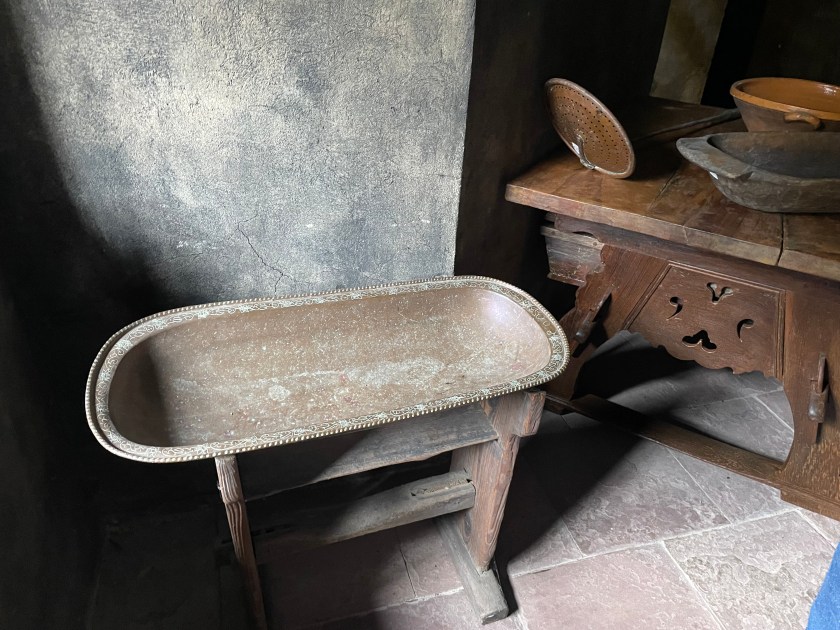
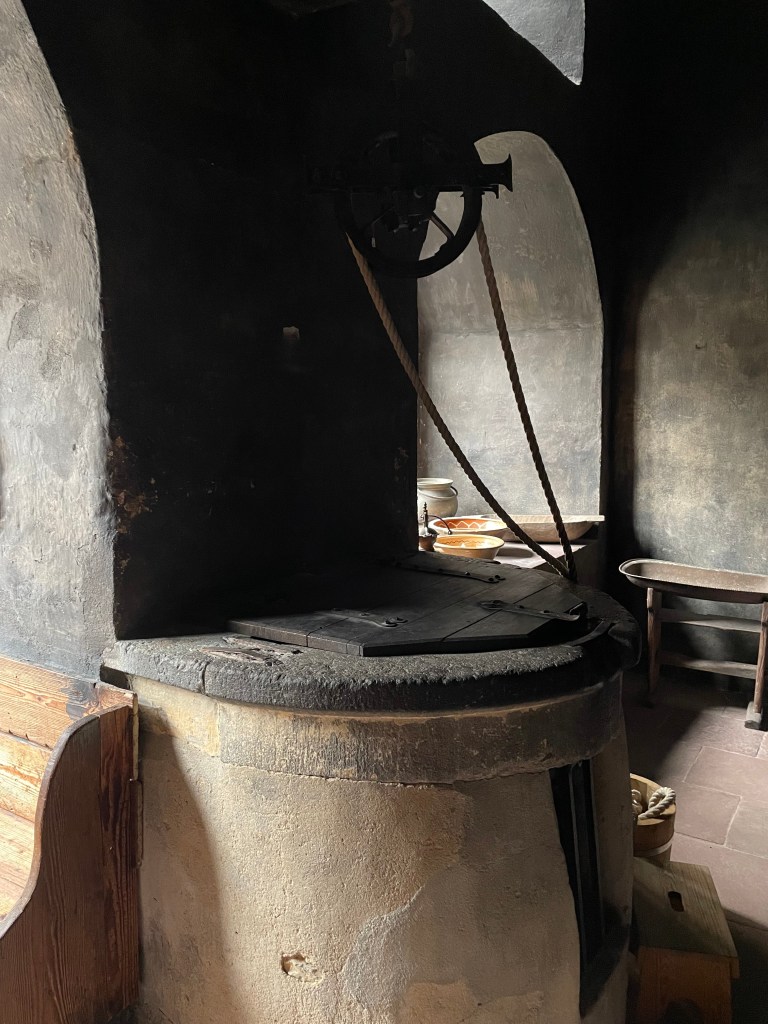
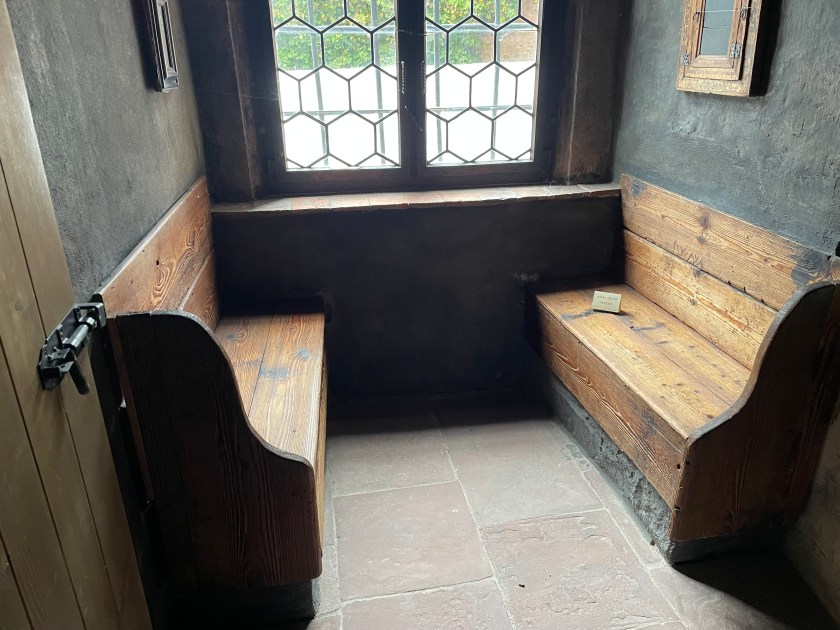
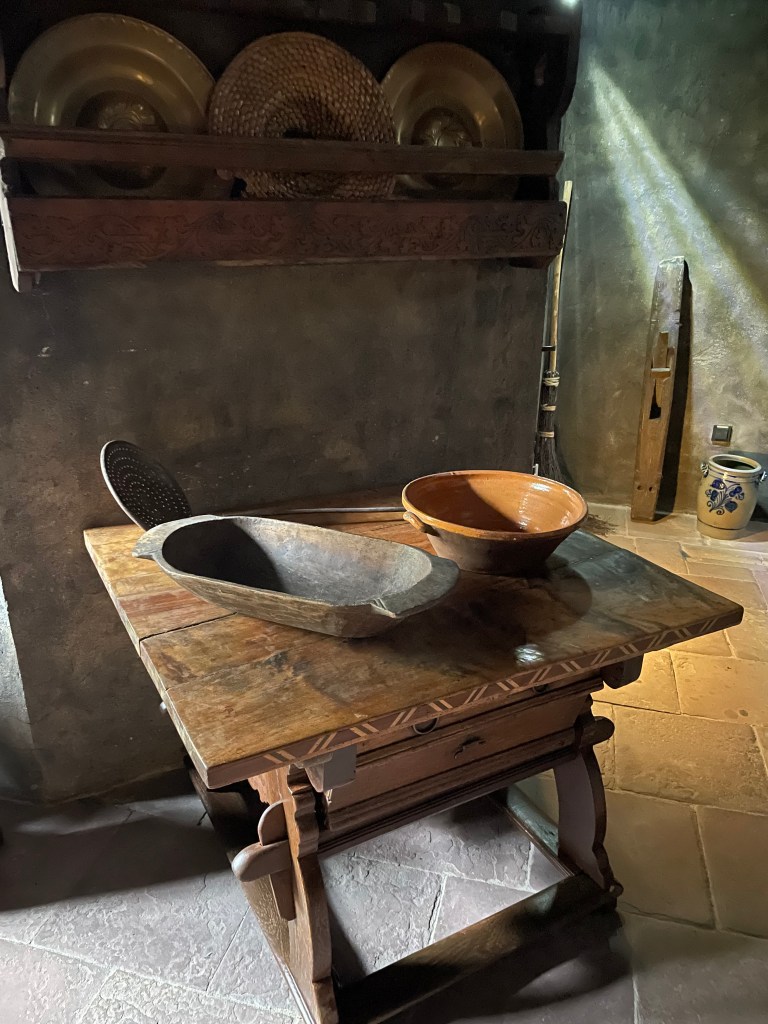
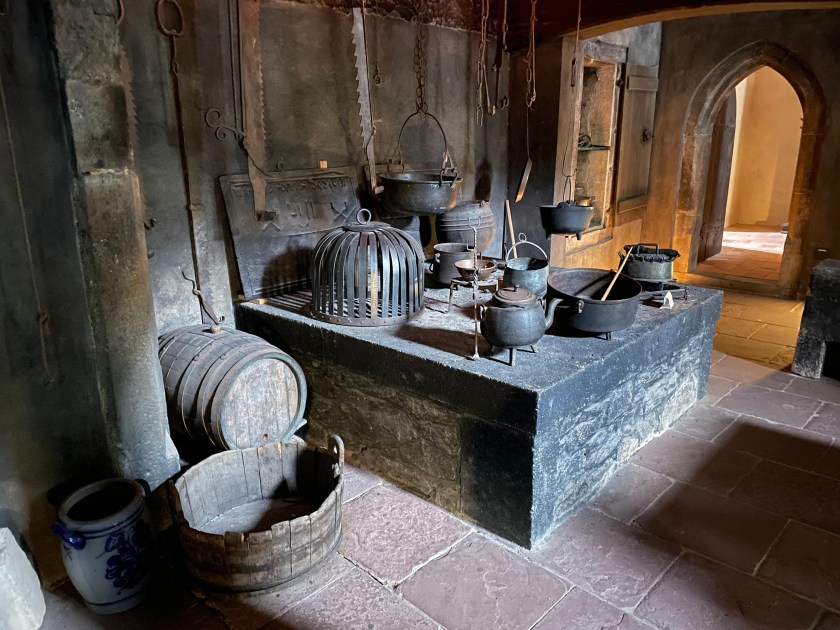
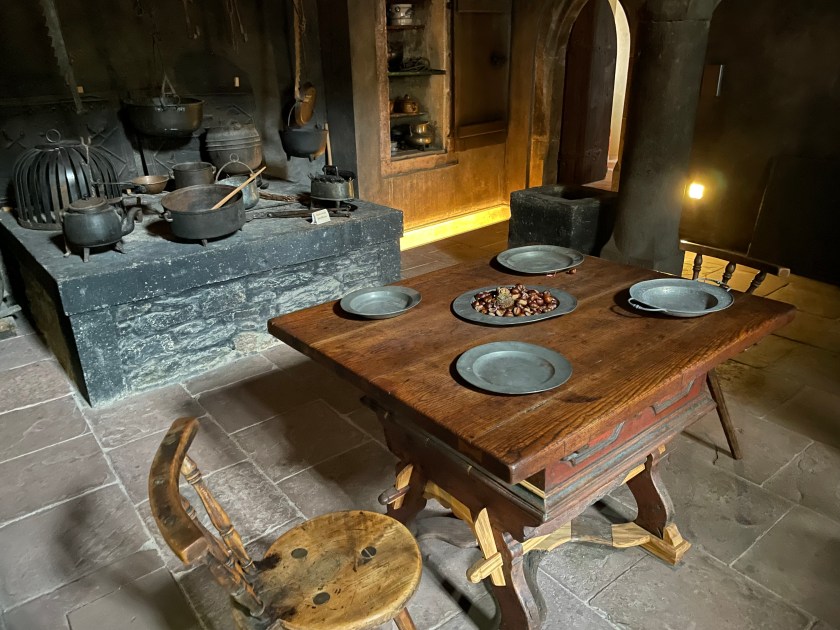
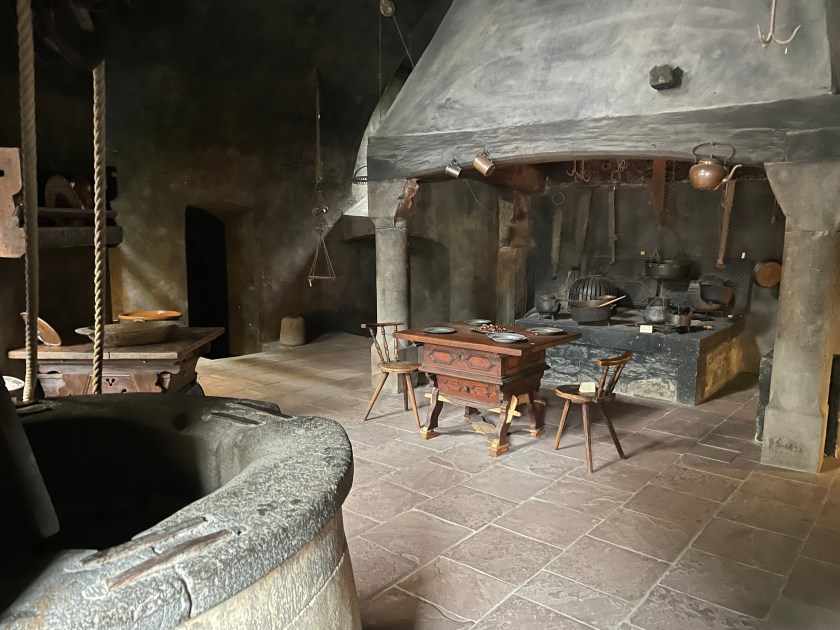
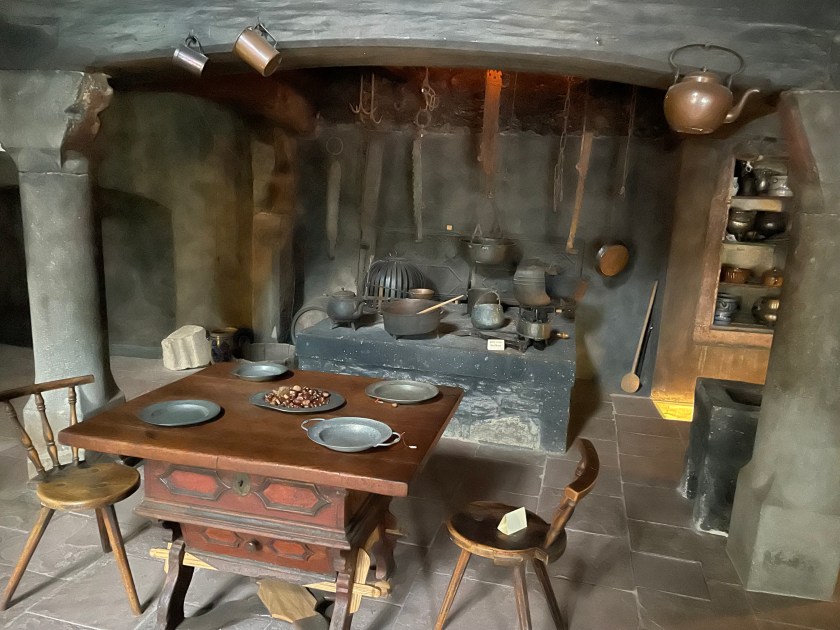
Here is a Medieval kitchen with a large hearth and fire and a well inside the room.  Fascinating.  Imagine being a servant working here.

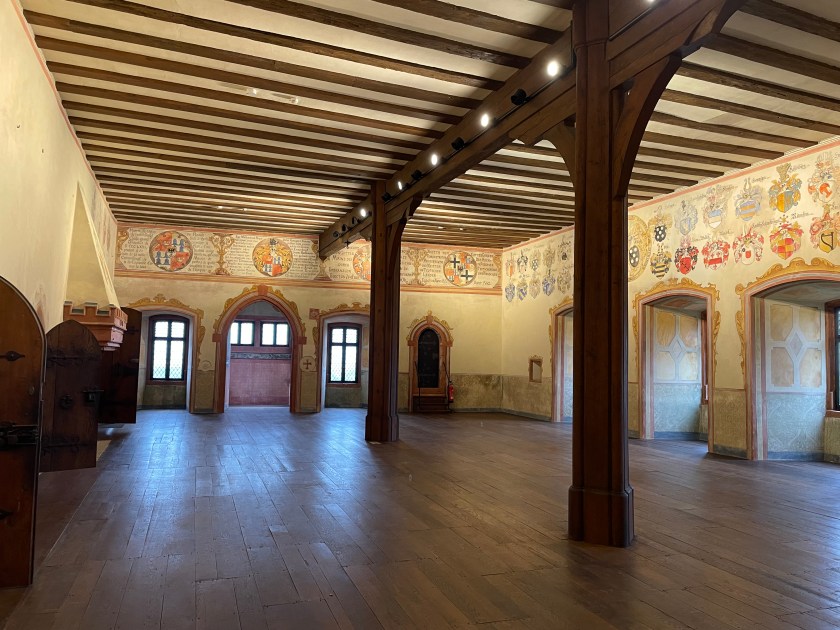
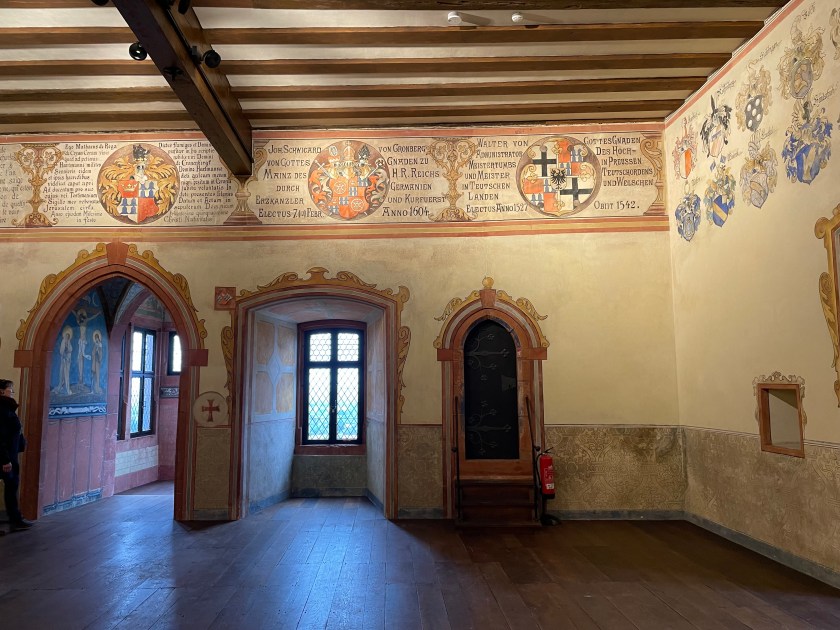
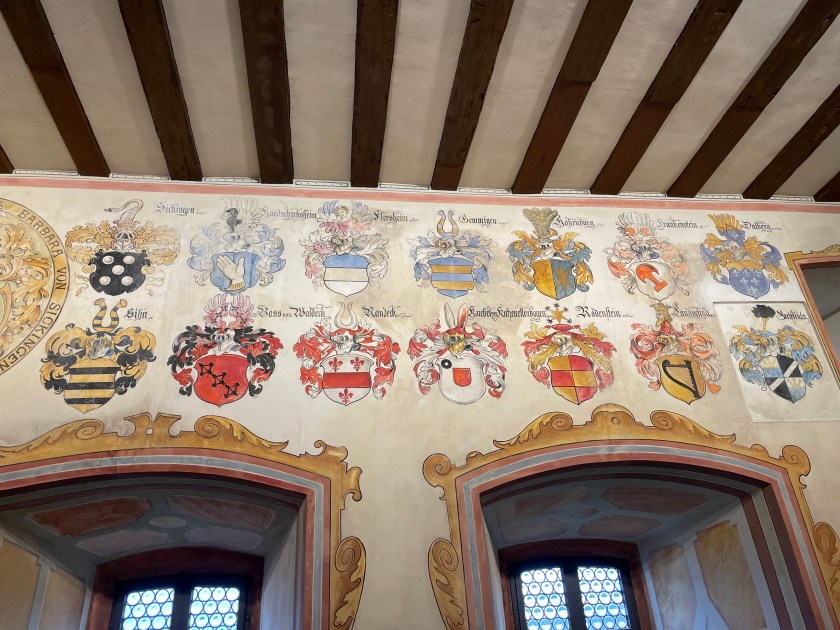
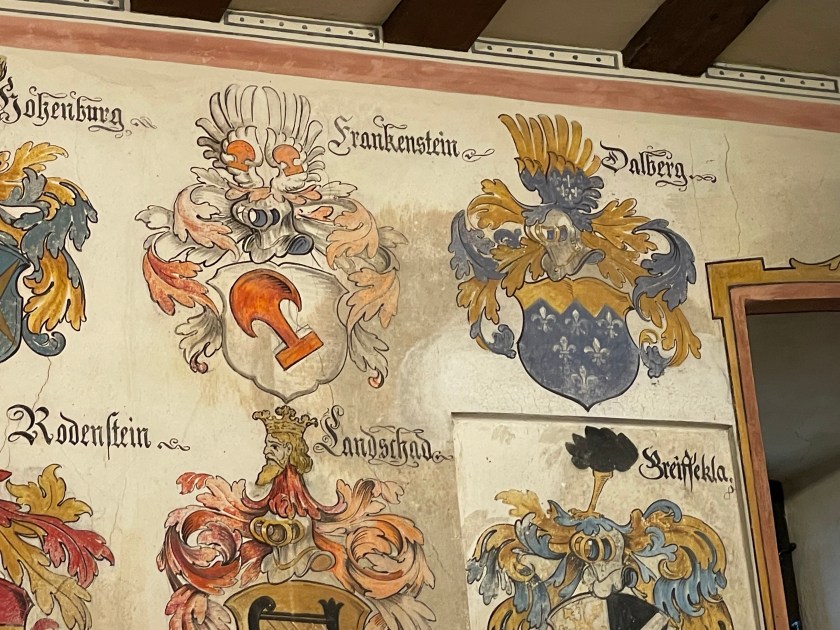
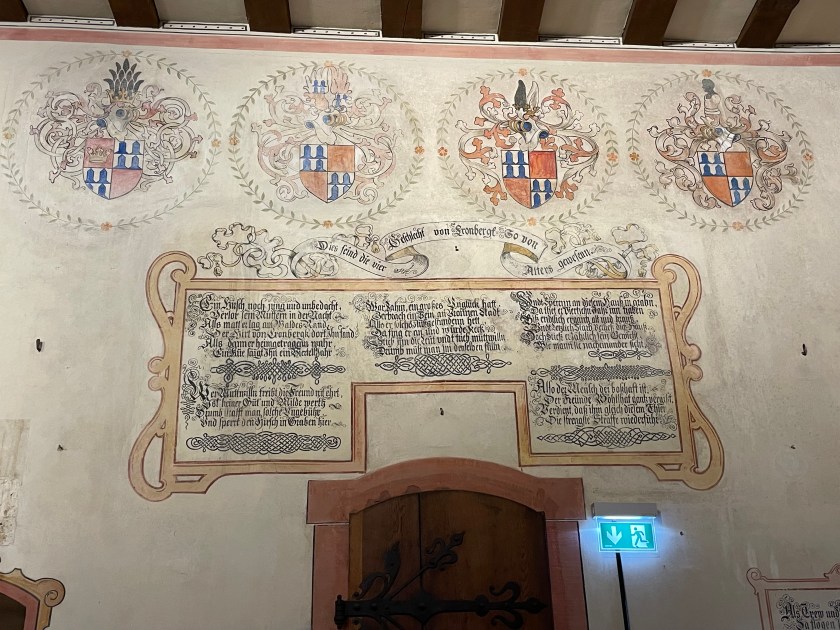
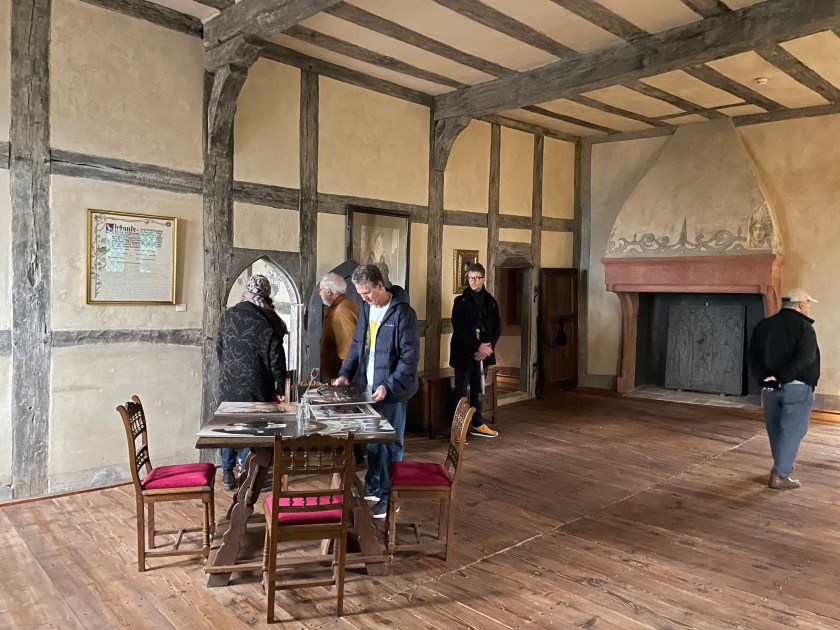
Next to the kitchen was this grand hall with family crests painted on the walls.  This was a reception place for guests and special functions.

These 4 crests belonged to the 4 branches of the family who owned the castle:

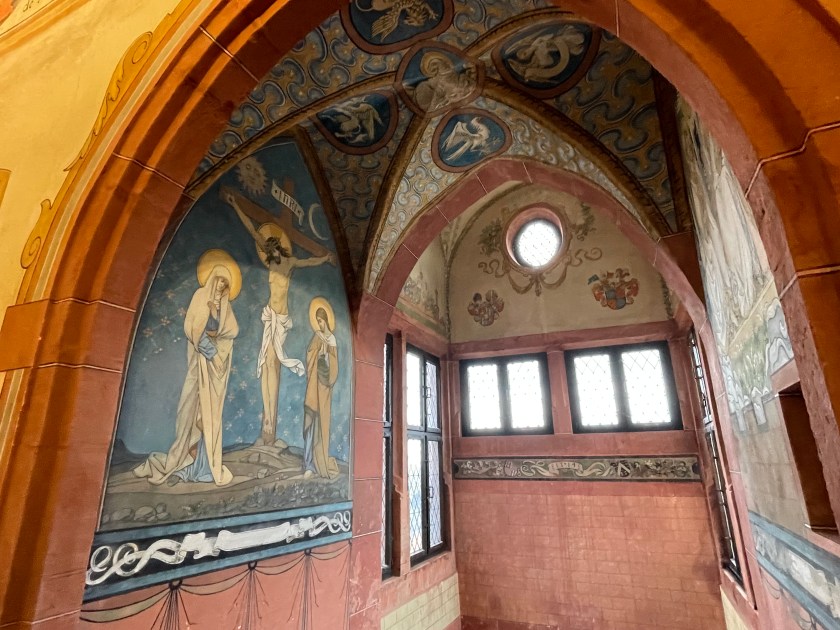
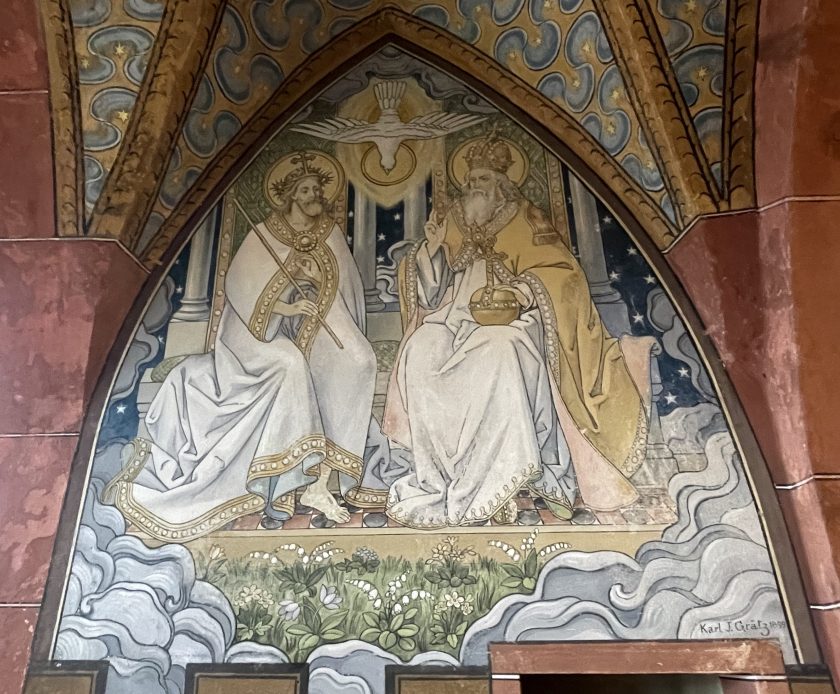
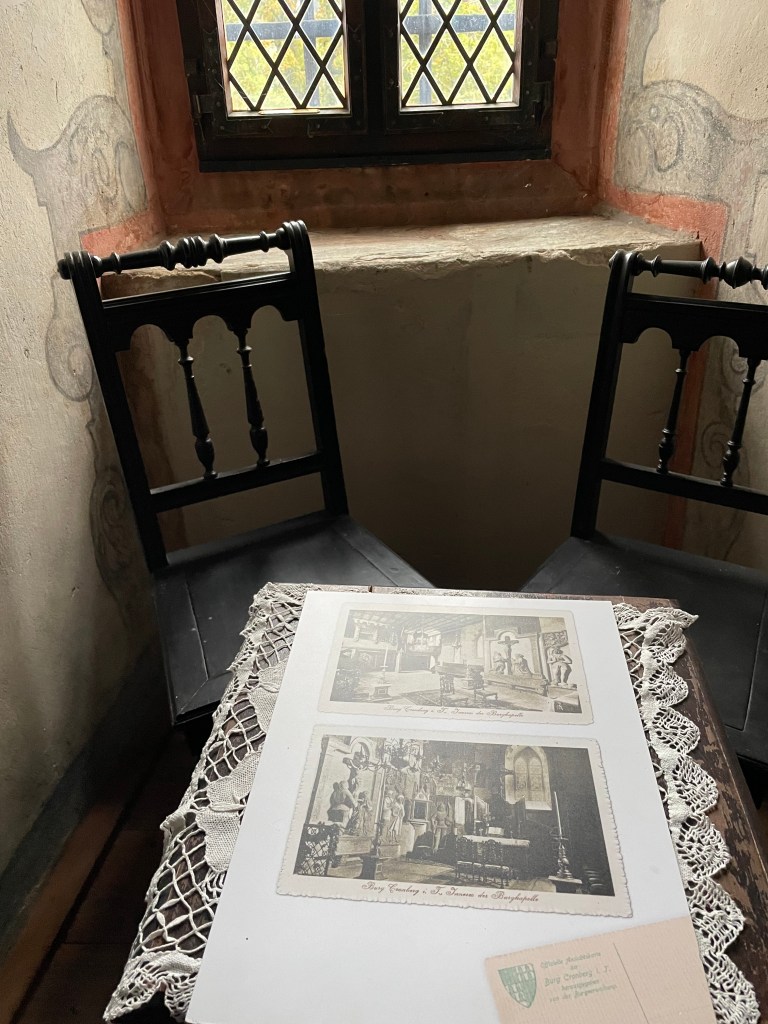
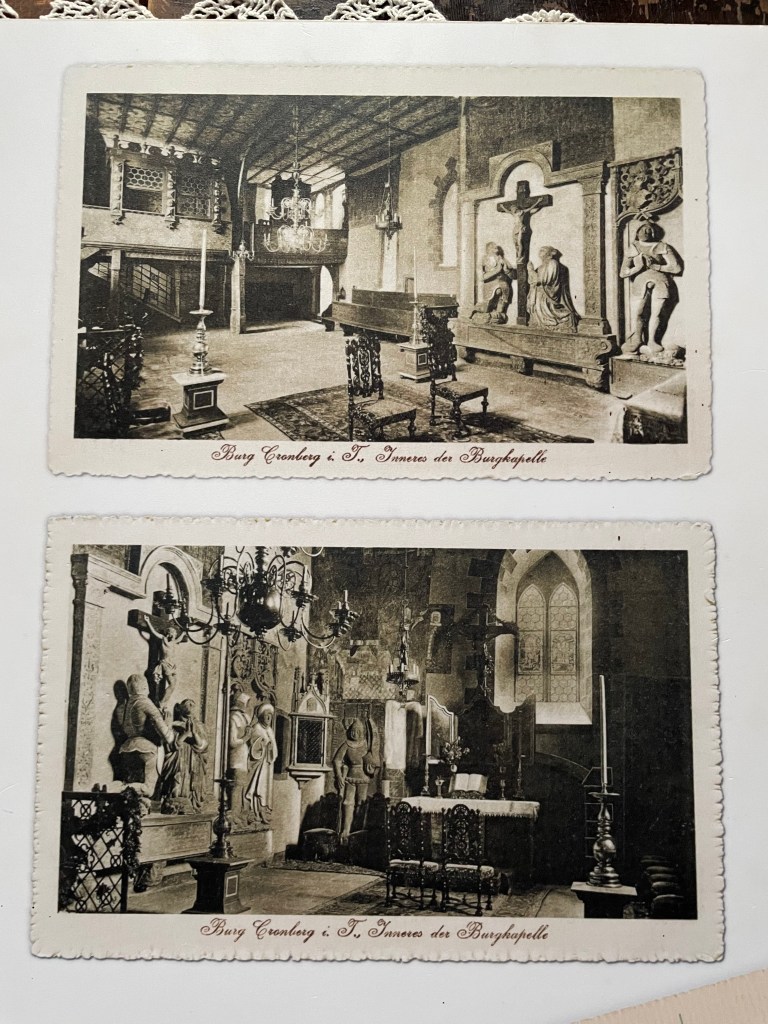
Empress Victoria remodeled this small capelle on one end of the grand hall, a place for worship.  It was exquisite.

This art painted on the wall in 1899 by Karl J. Gätz took my breath away:  God the Father, Jesus Christ and the Holy Ghost represented by the dove.  Zoom in and take a good look.

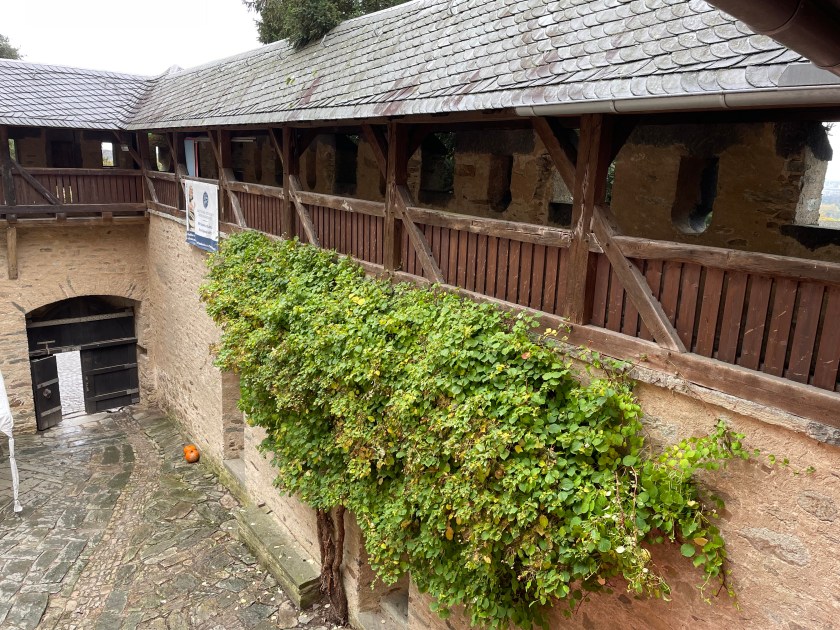
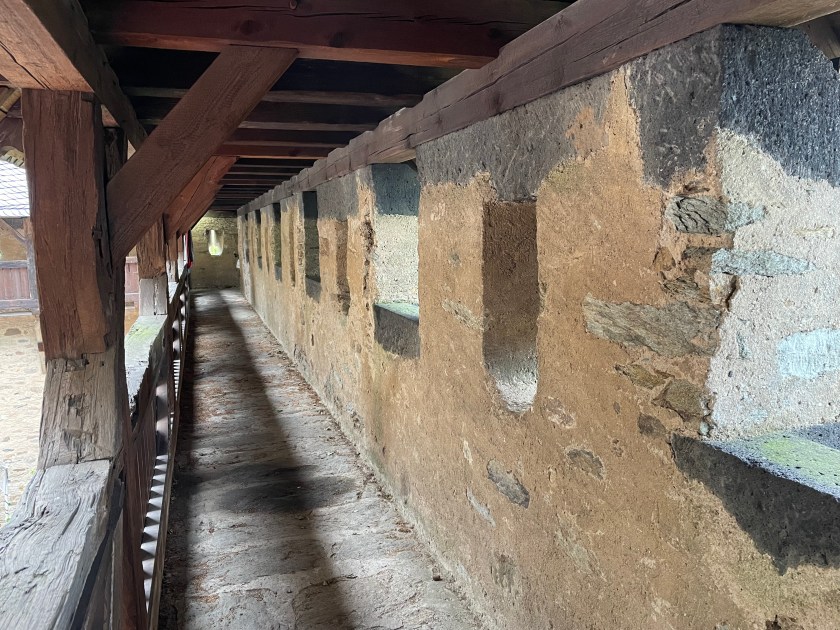
The ramparts:

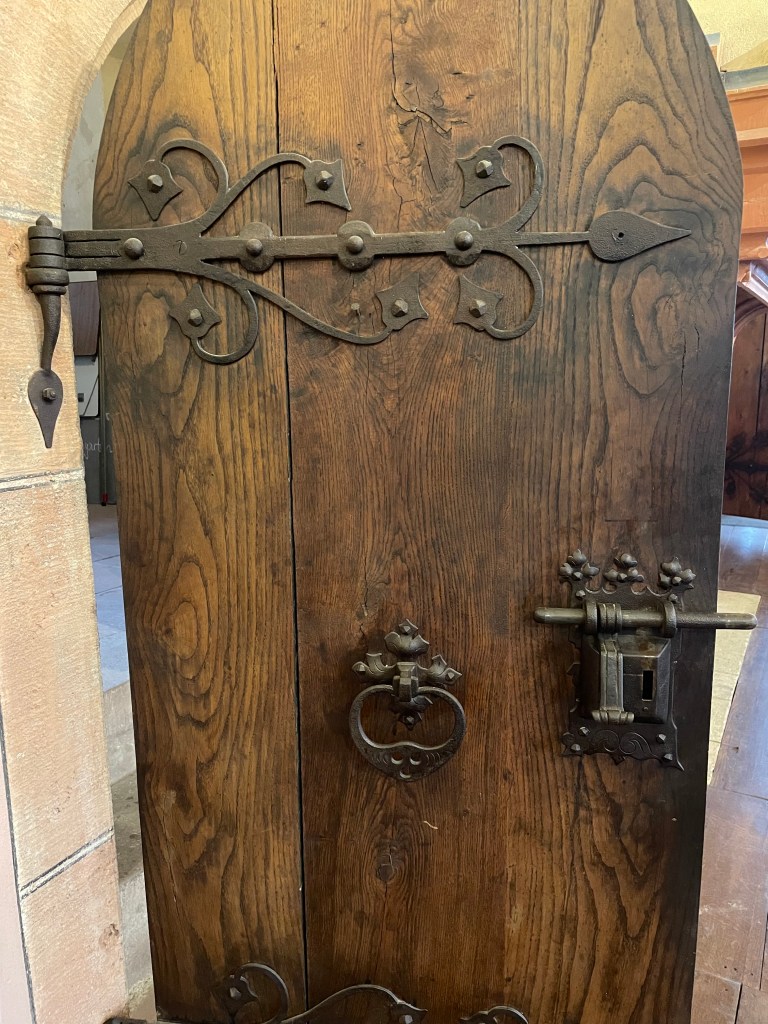
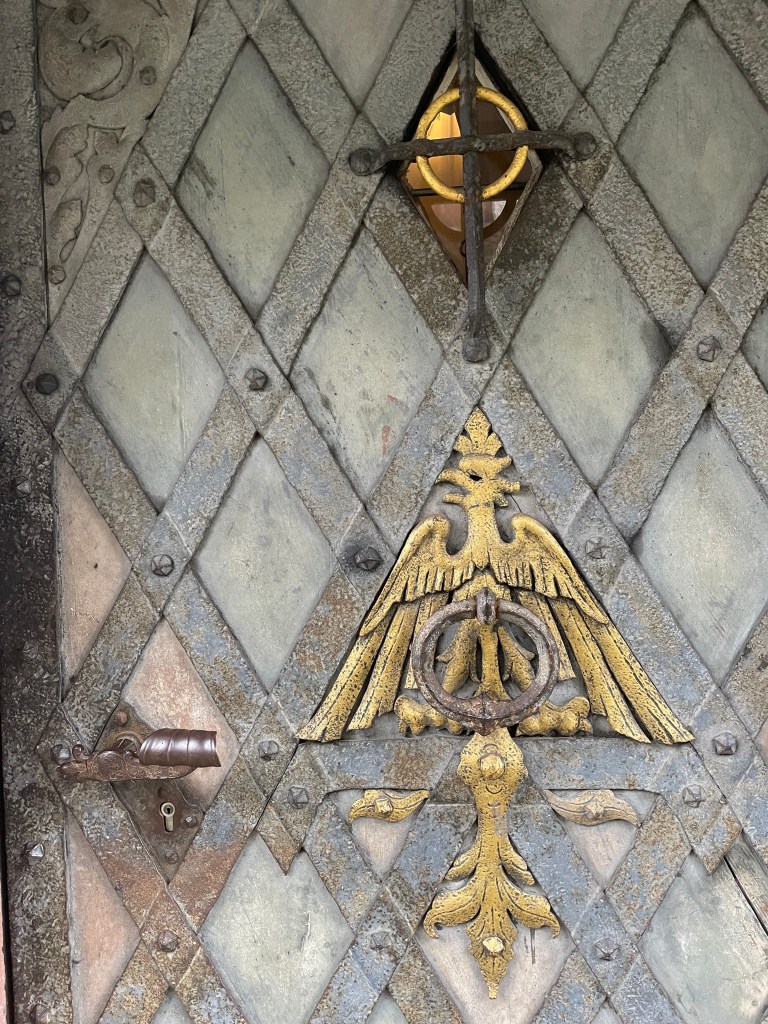
Then back inside through this beautiful door:

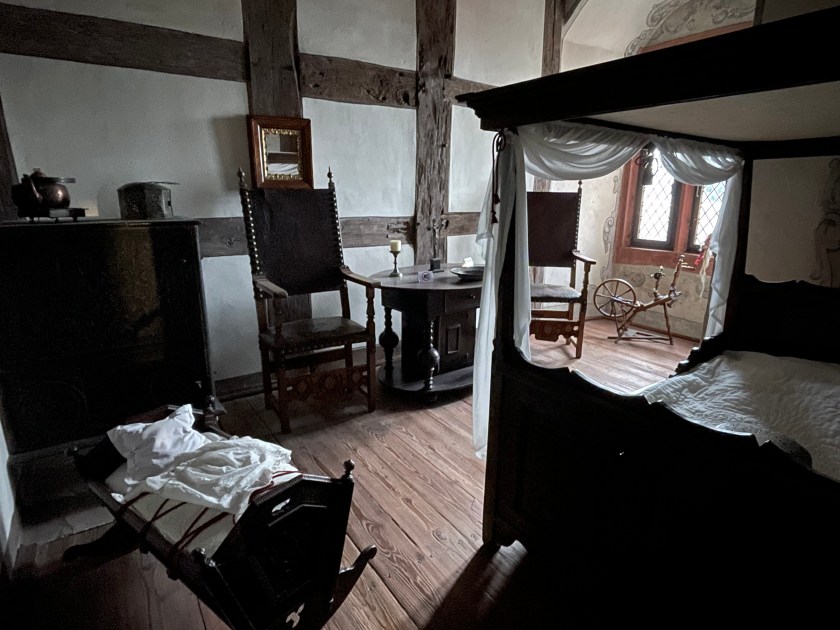
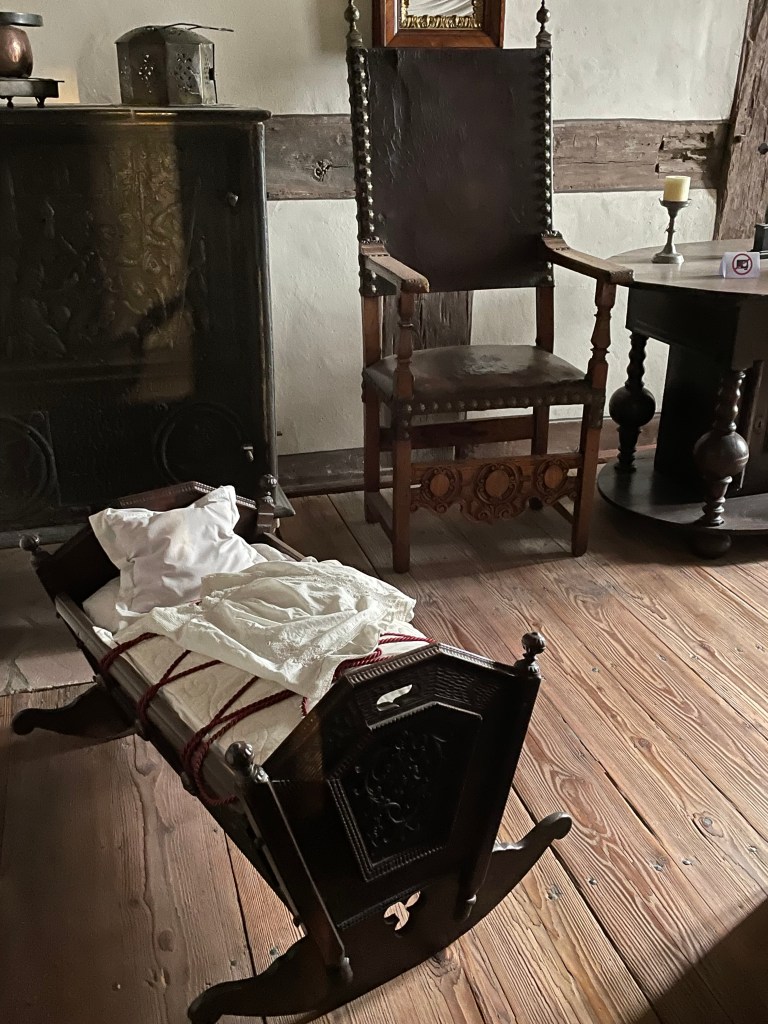
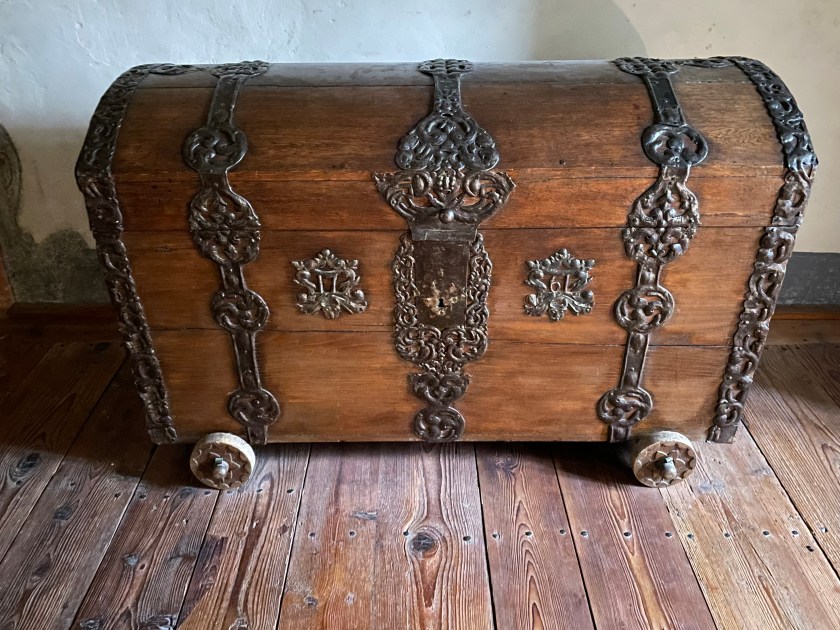
Then we looked in on some of the bedrooms.

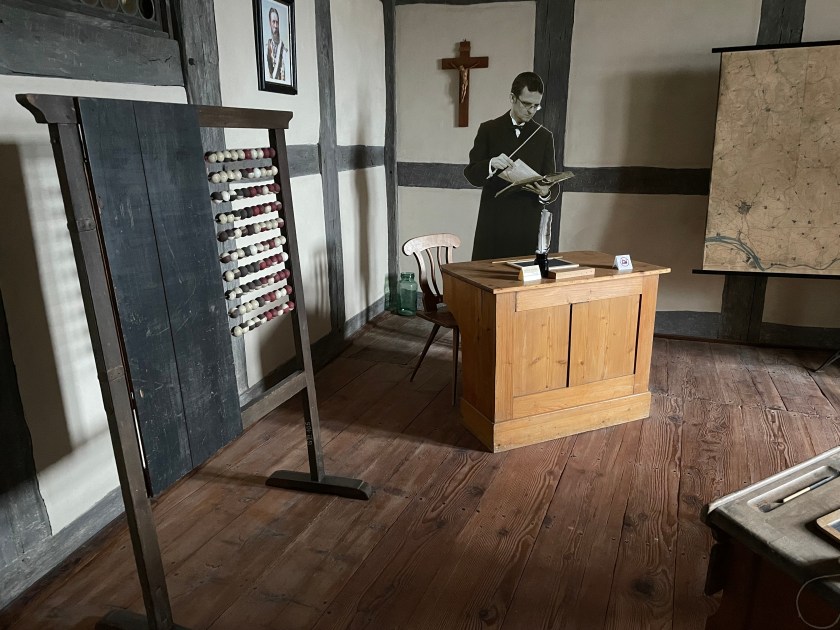
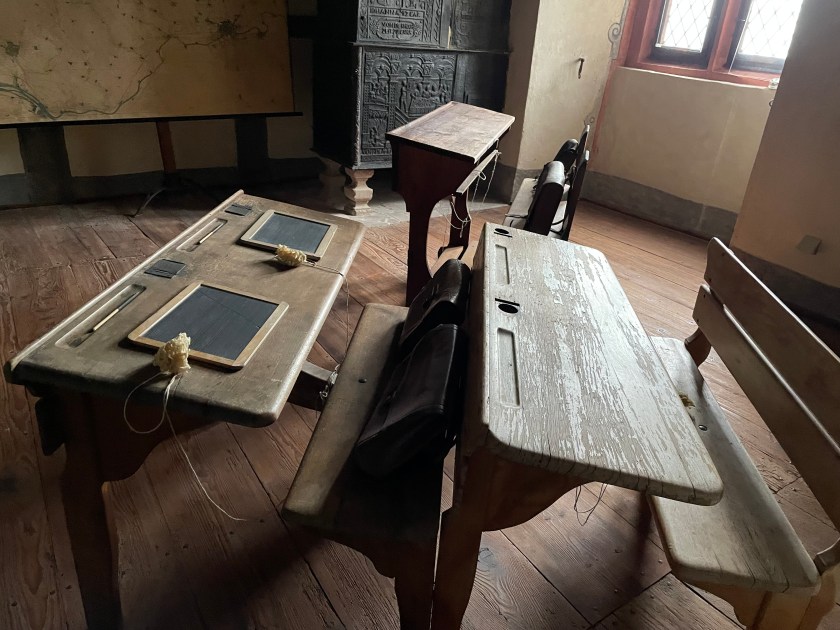
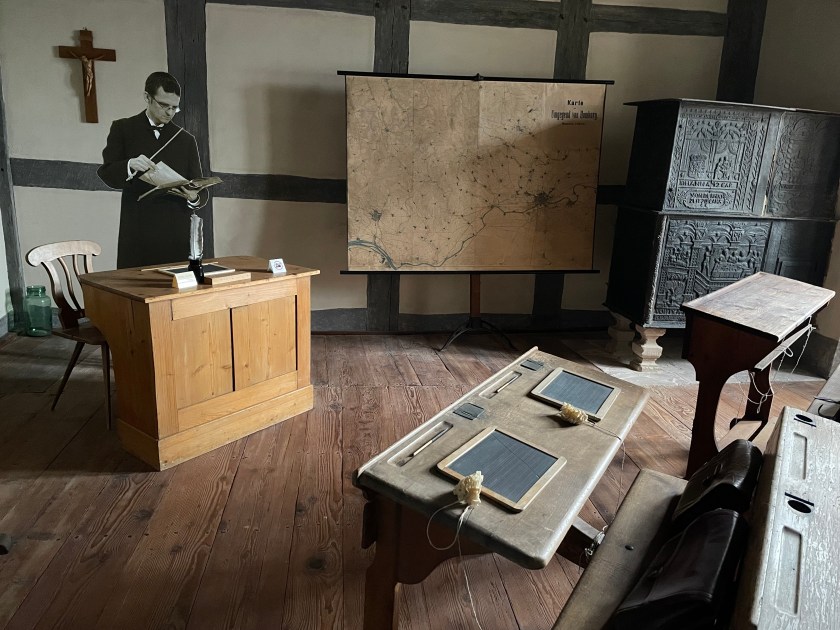
For a time a school was held here for children in the village.

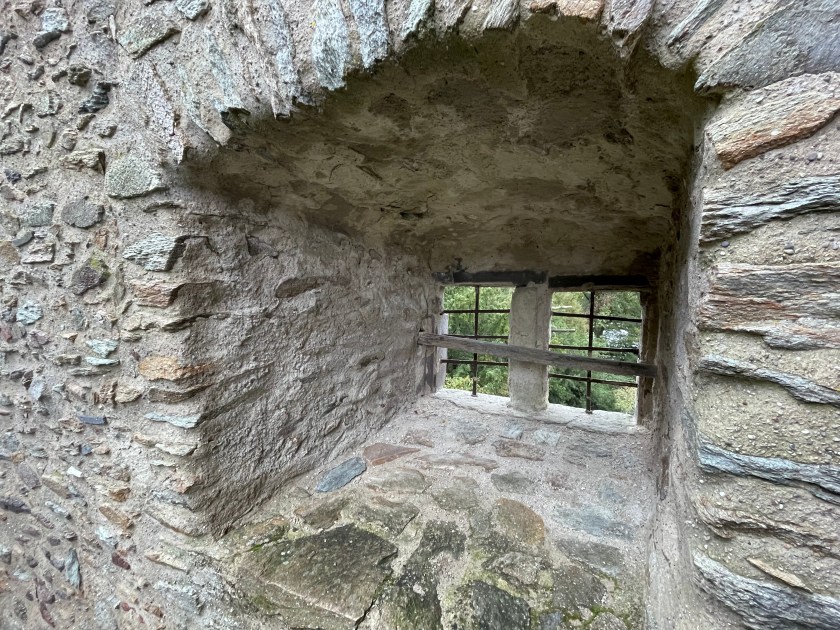
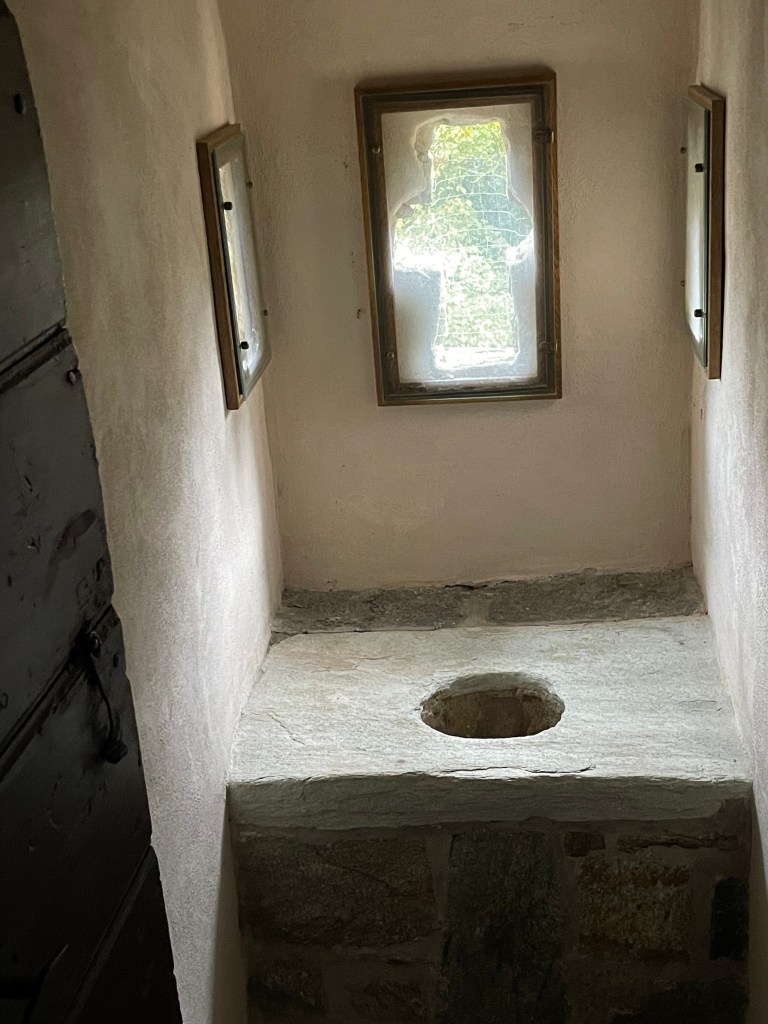
There a couple of toilets like this.  They empty outside the castle wall into the yard below.

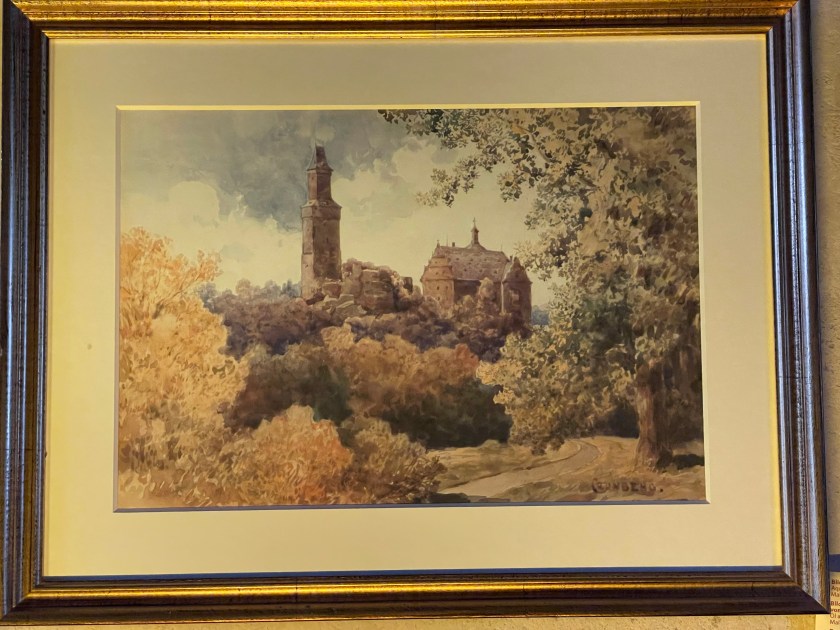
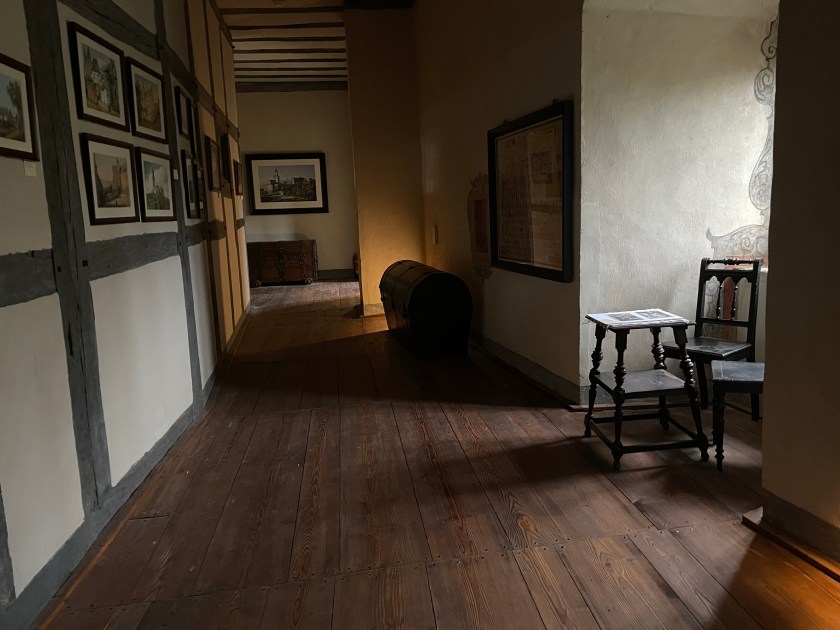
Some old drawings of how things looked:

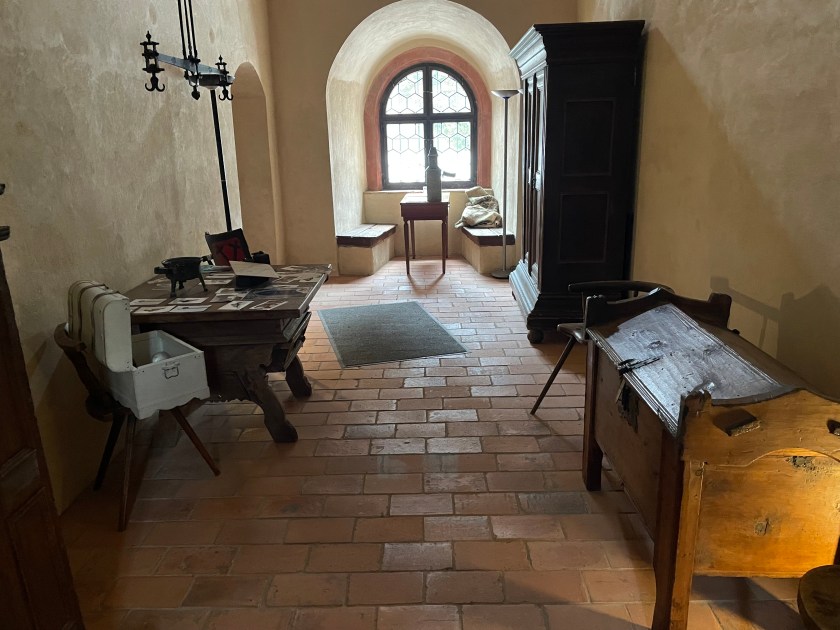
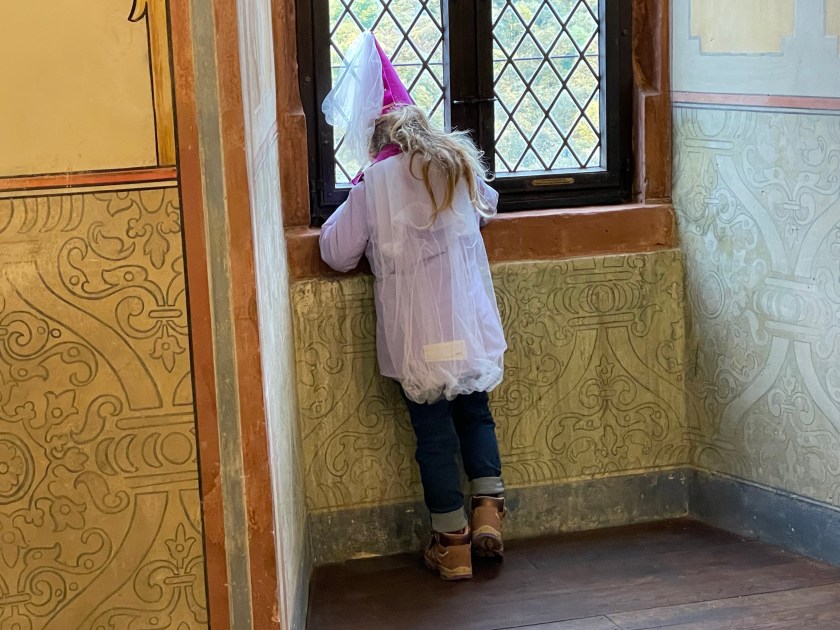
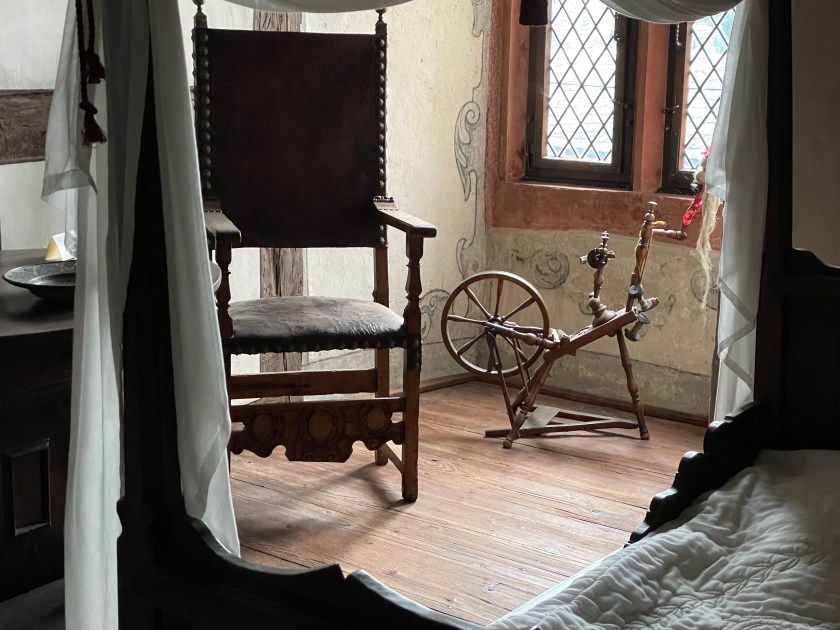
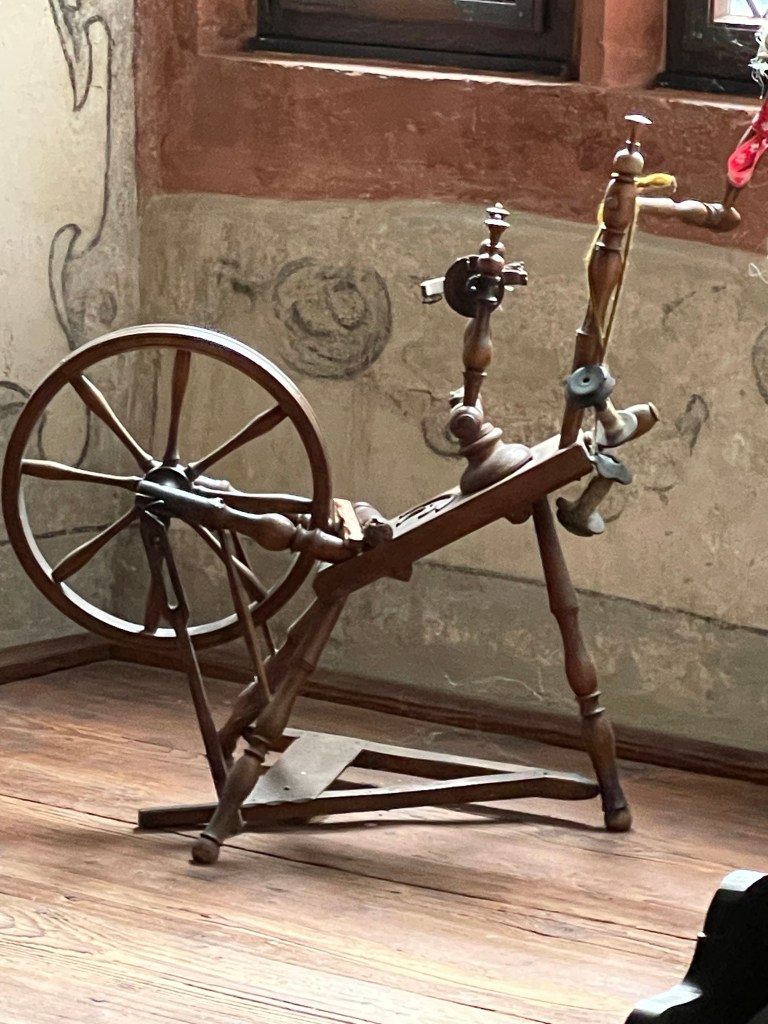
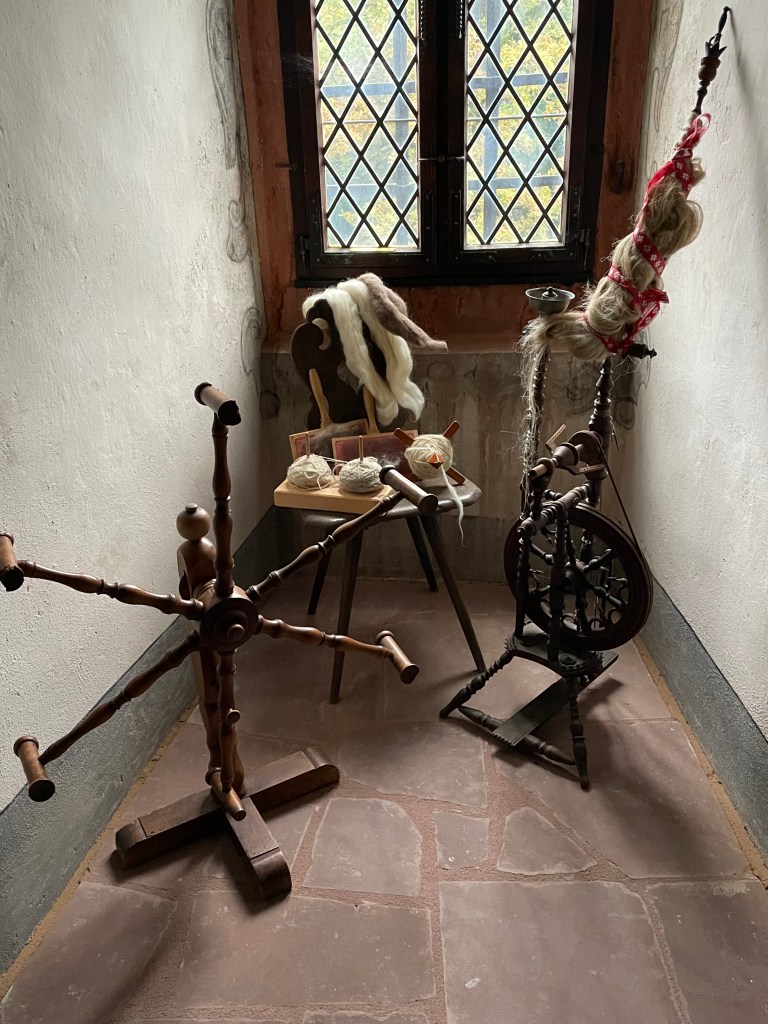
A sunny window alcove for spinning:

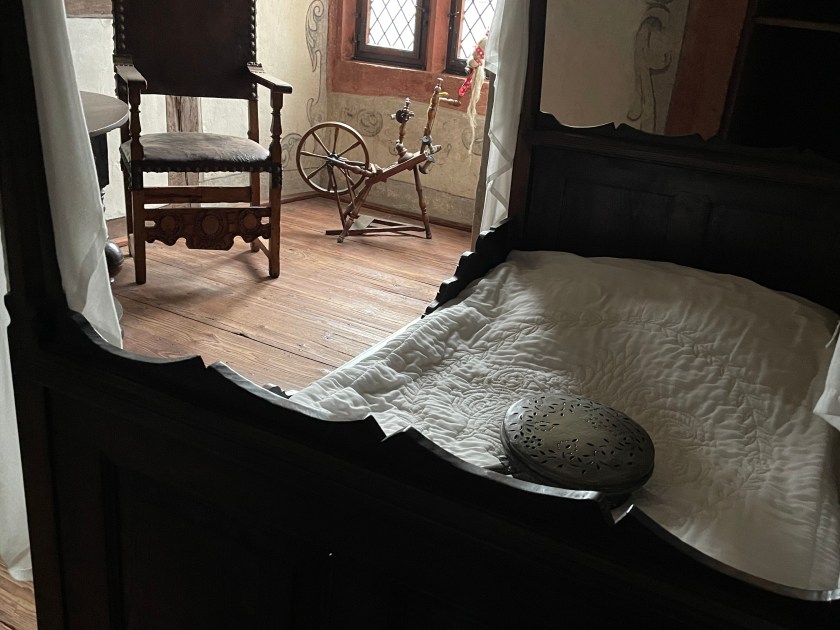
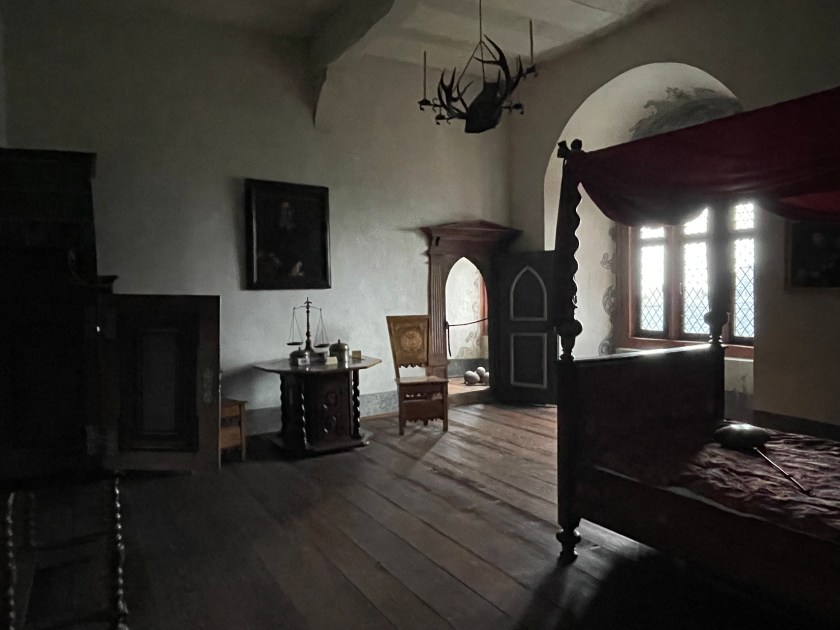
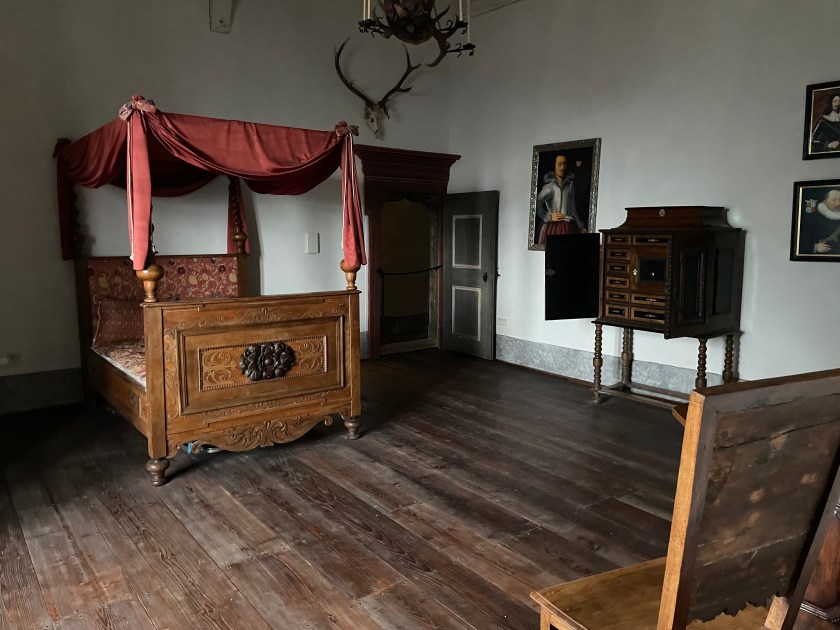
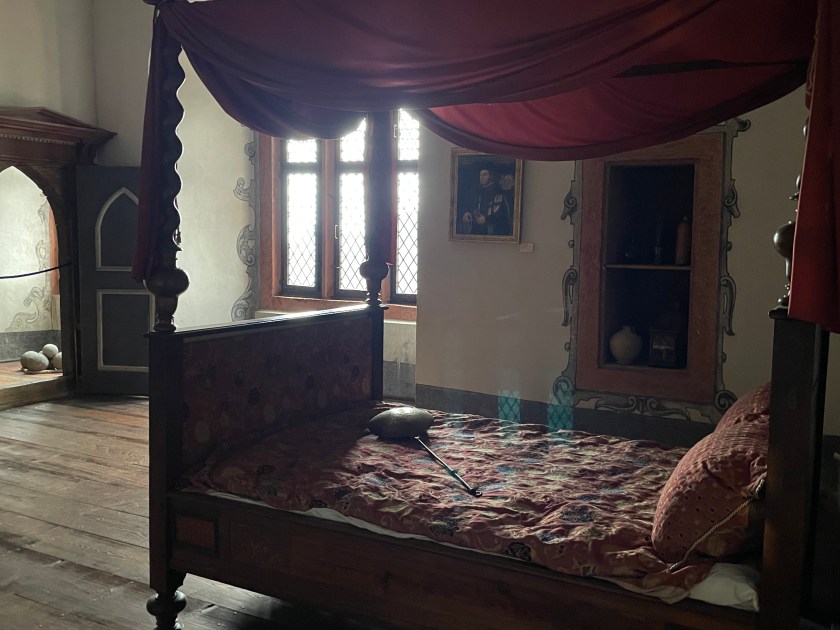
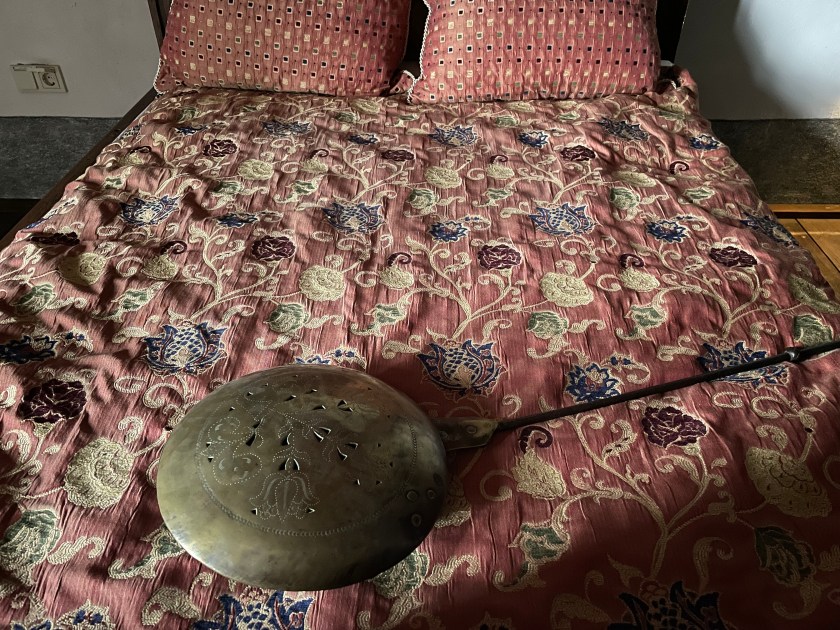
Here’s an adult’s bedroom:

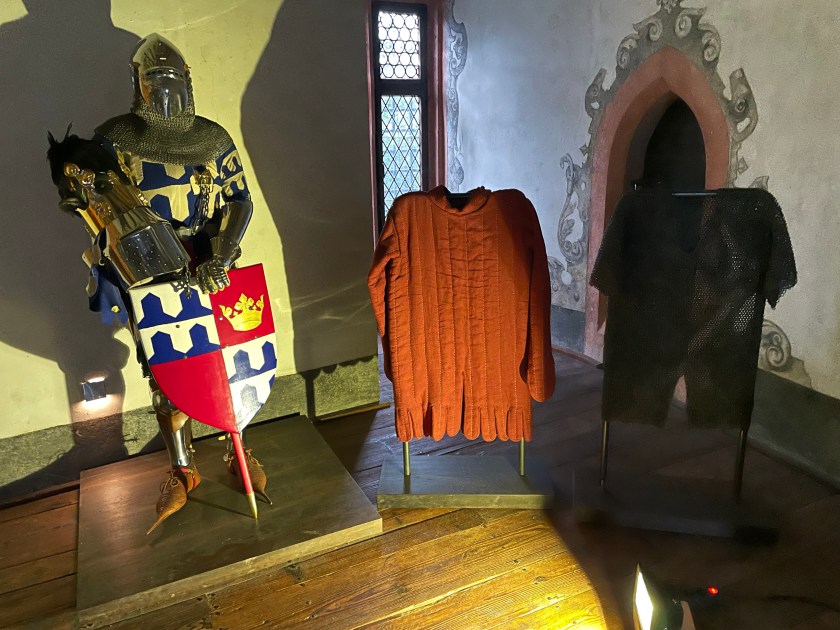
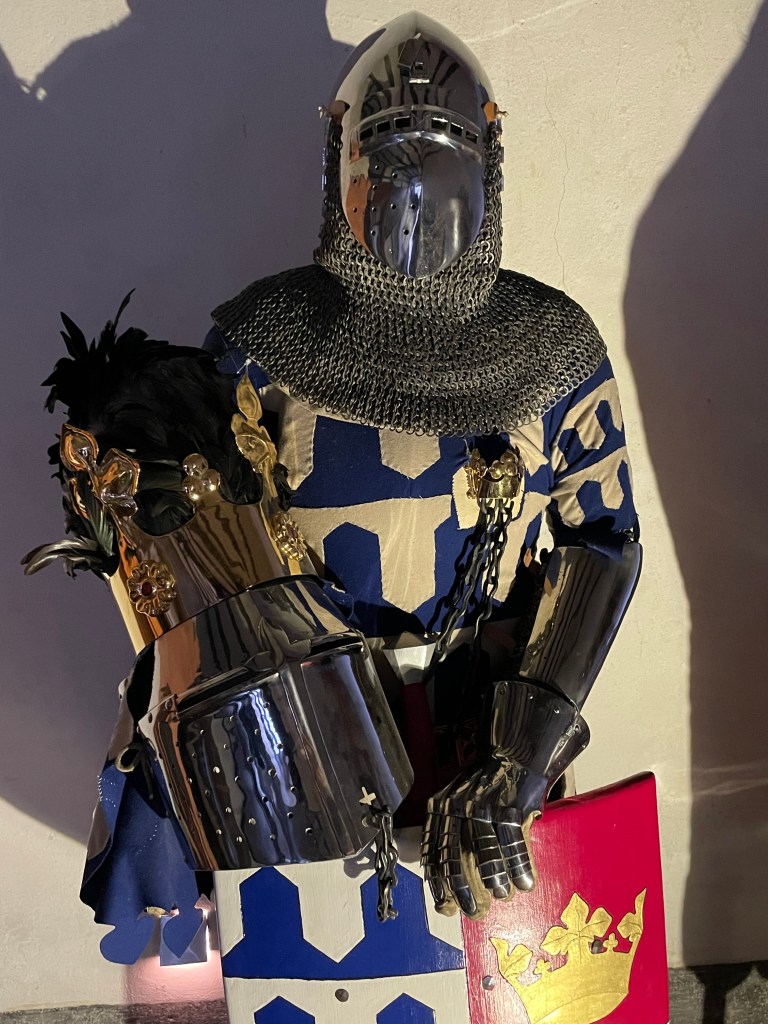
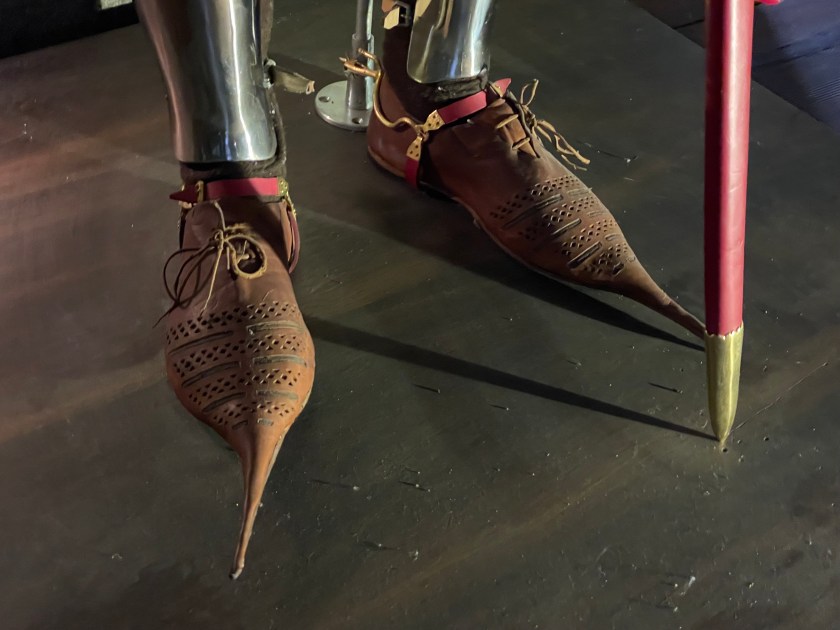
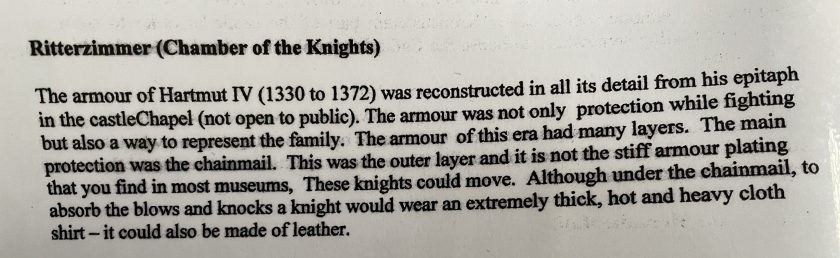
The bed chamber was next to a room for the Knights and their armory.

The guide told us that the longer and pointier the shoes, the richer the Knight!


Every place we visit expands my world a bit more.  I’m happy we are here and able to walk in places like this.

There are more details here, if you like:  https://www.burgkronberg.de/wp-content/uploads/2019/05/Fotoflyer-englischV2a_20150720.pdf

Schloss Friedrichshof, Home of the Dowager Empress Victoria

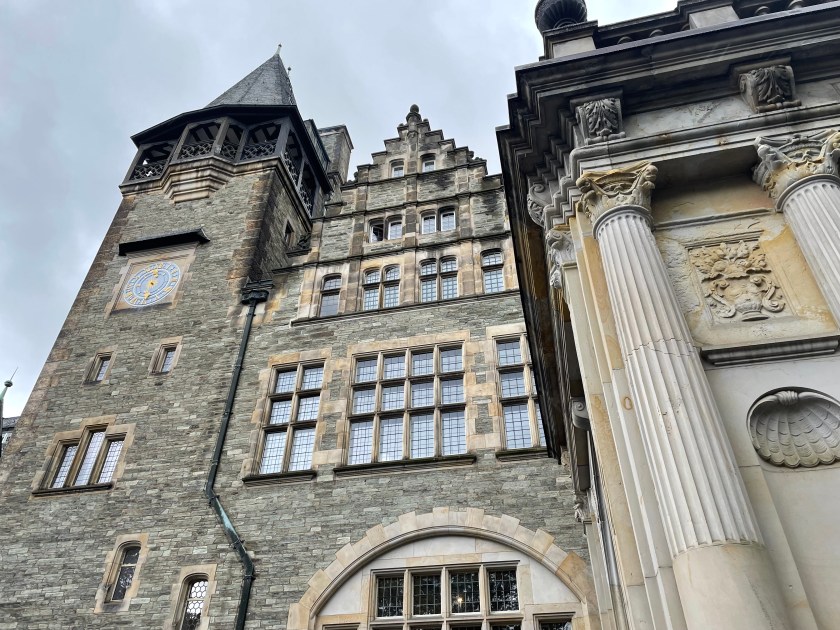
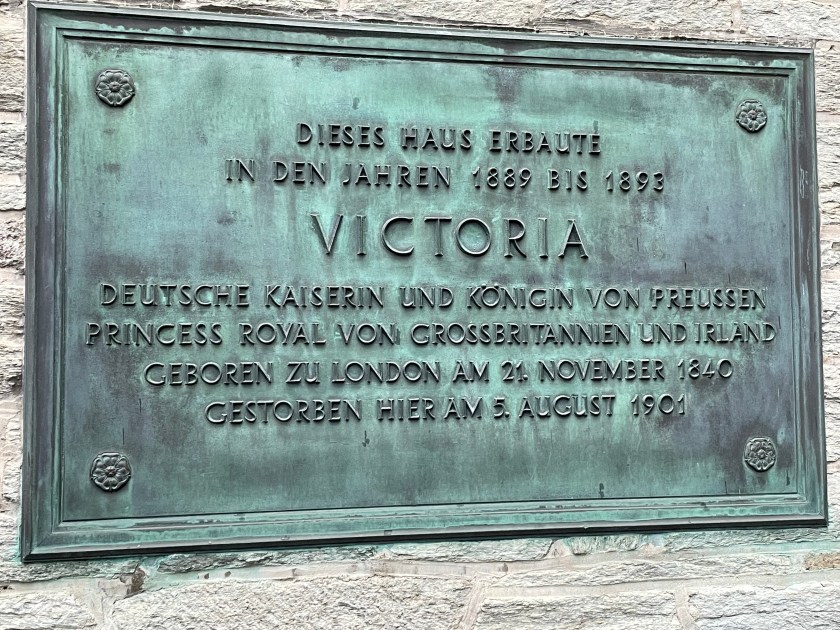
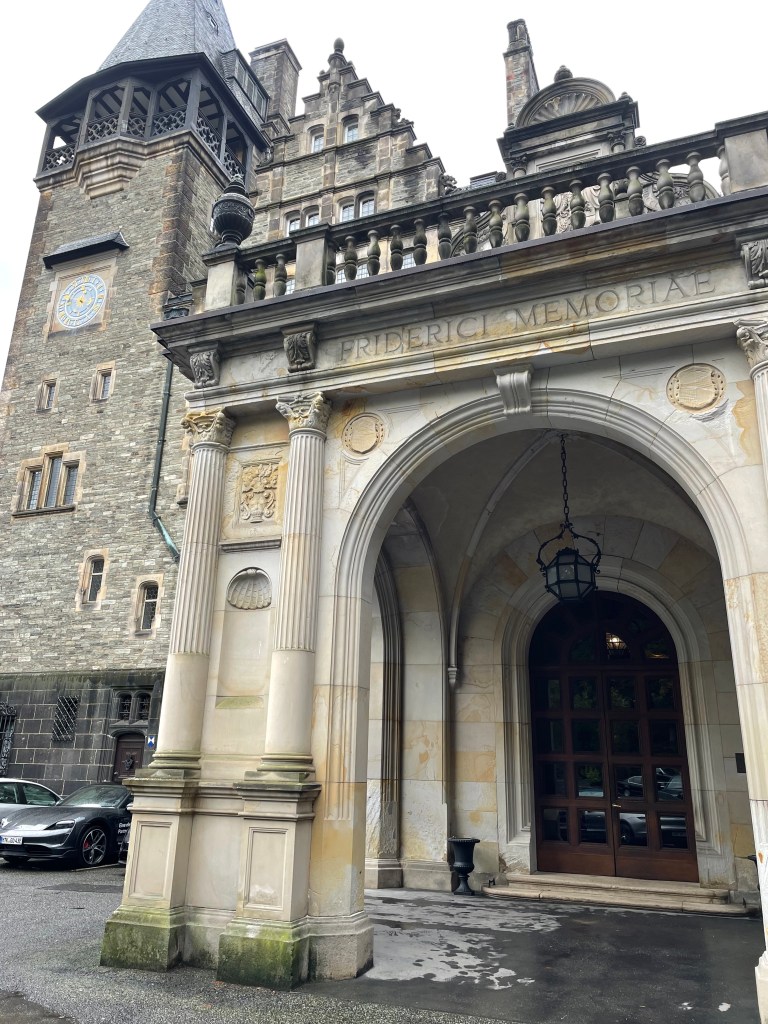
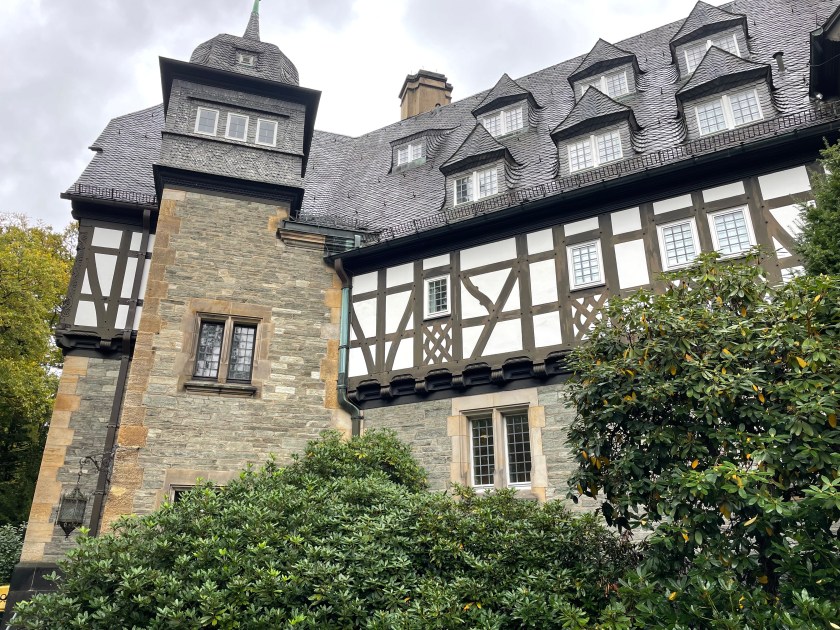
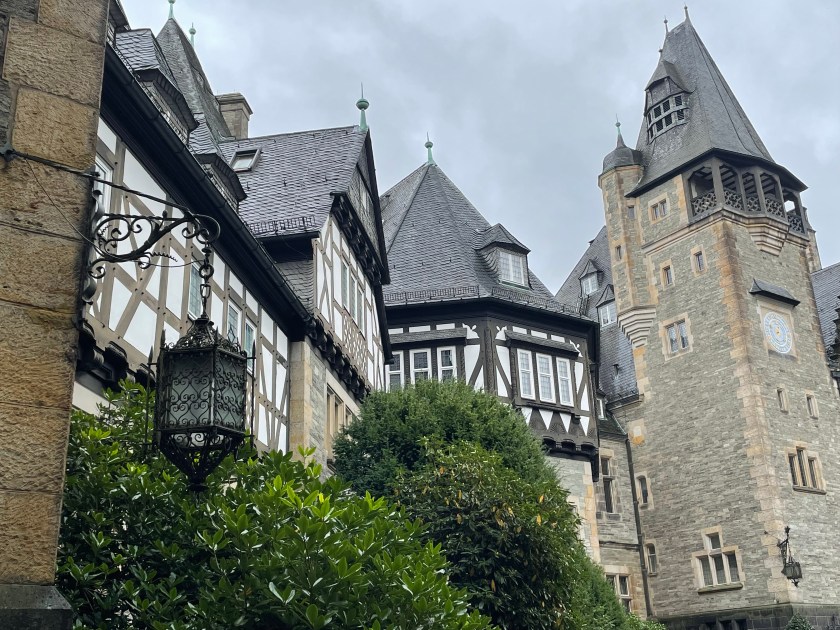
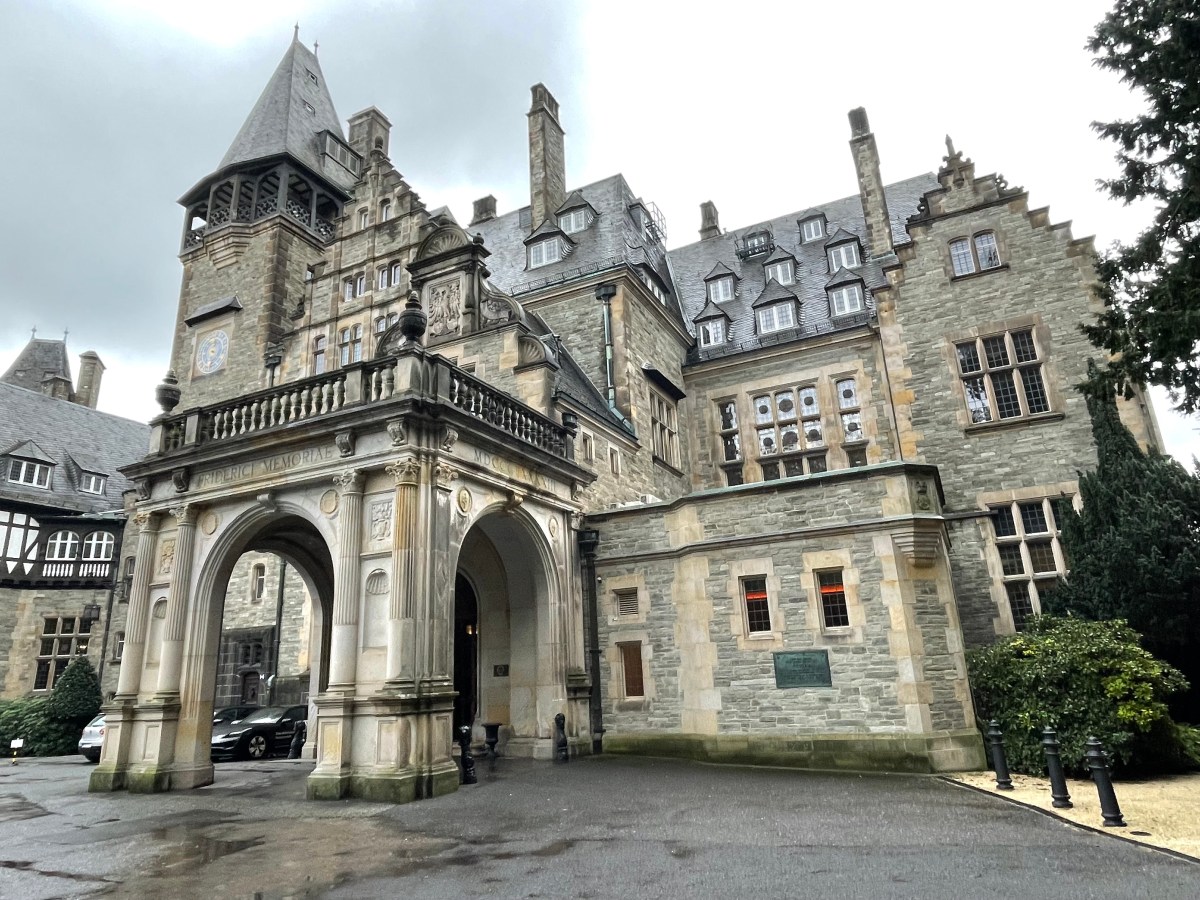
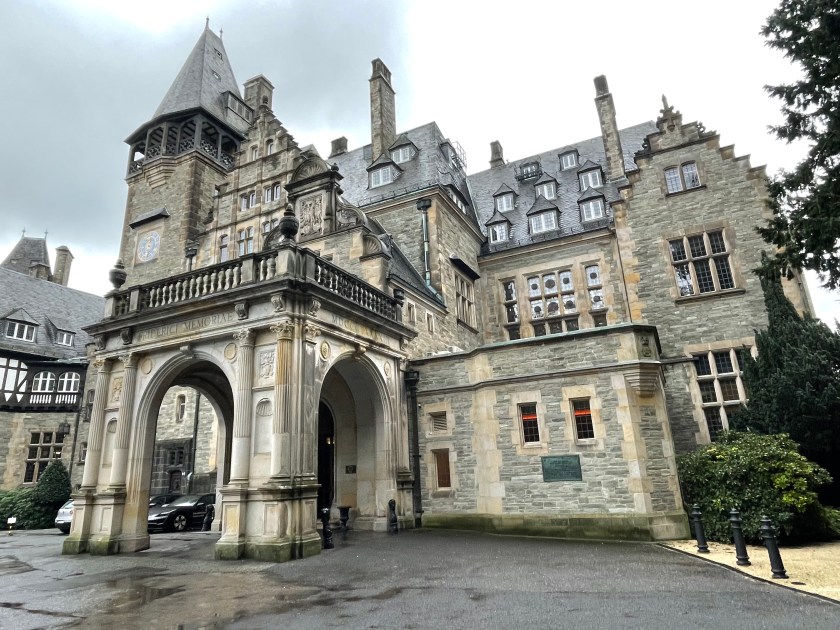
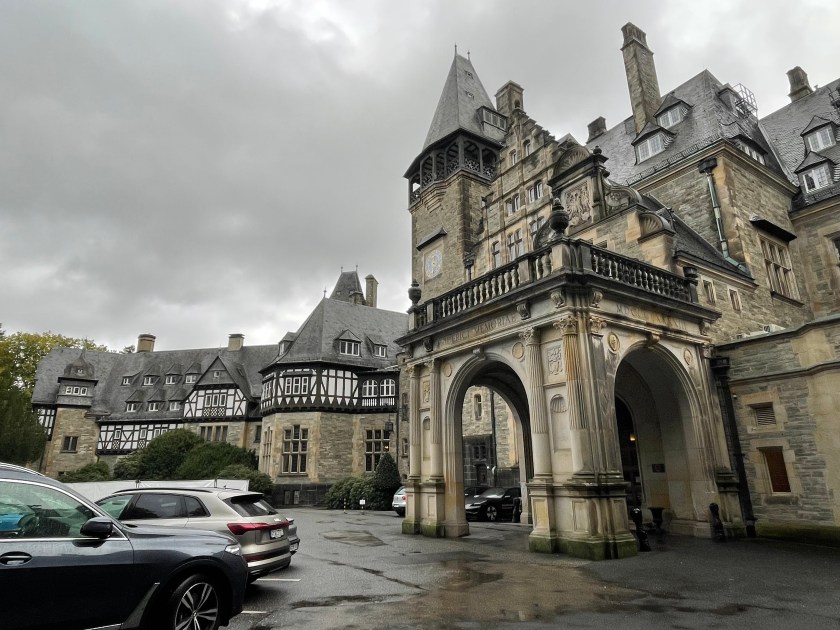
Here is the magnificent Schloss Friedrichshof, a castle estate named after Victoria’s husband.  She had this built after he died.  She lived out most of the rest of her life here.
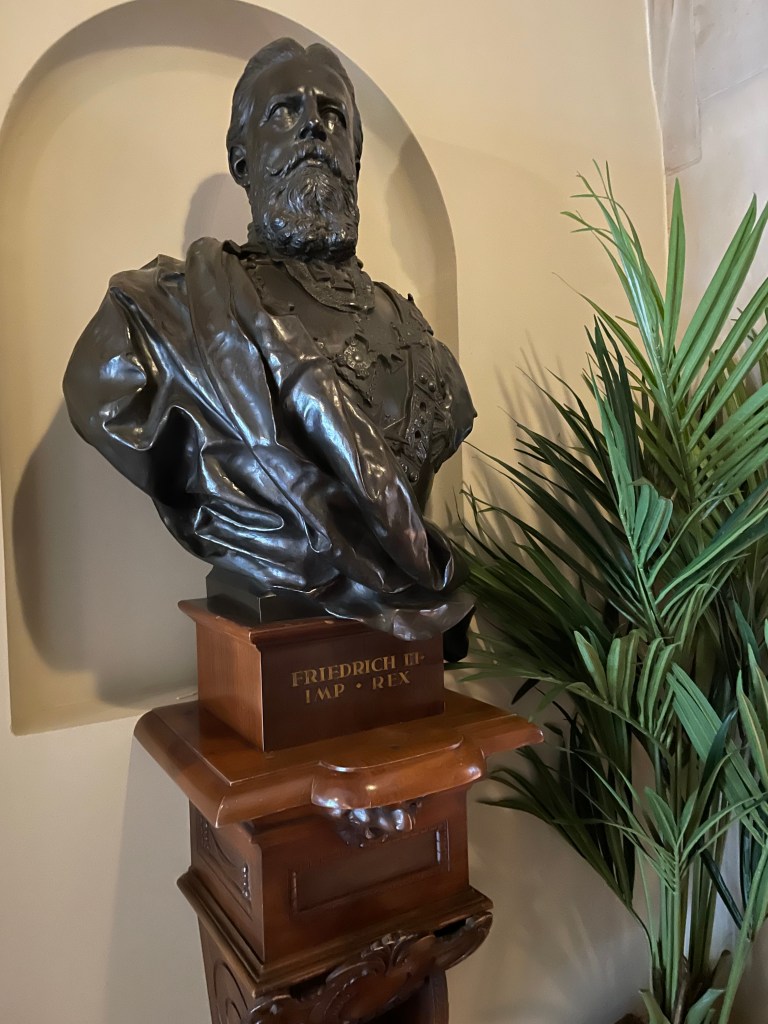
Here are Victoria, the Dowager Empress and her husband:
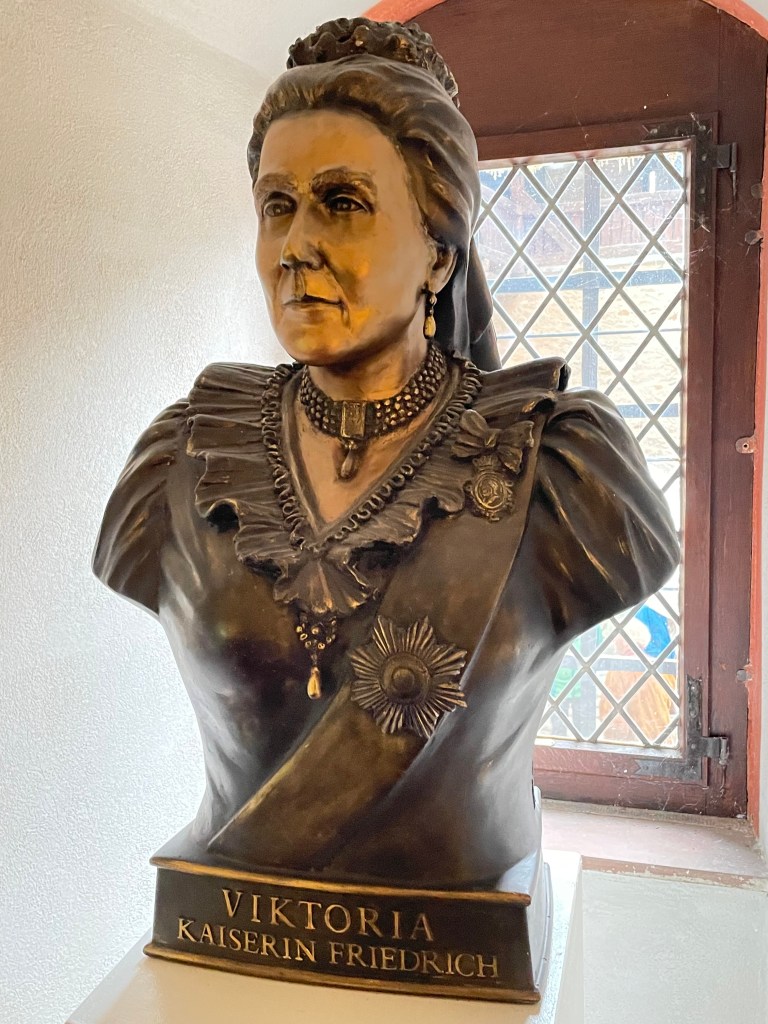
Here’s a bit about Schlosshotel Kronberg:

Schlosshotel Kronberg (Castle Hotel Kronberg) in Kronberg im Taunus, Hesse, near Frankfurt am Main, was built between 1889 and 1893 for the dowager German Empress Victoria and originally named Schloss Friedrichshof (Friedrichshof Castle) in honour of her late husband, Emperor Frederick III (Friedrich III). The principal architect was Ernst von Ihne, who was also the royal architect to Frederick III and Kaiser Wilhelm II; von Ihne designed many royal residences for nobility in and around Germany and Austria.

President Dwight D. Eisenhower stayed and golfed here while visiting during WWII.

Today the castle is a five-star hotel which belongs, together with the accompanying park, to the House of Hesse. Parts of the original furnishings as well as pieces of art from the collection of the empress are still present in the hotel, along with her extensive library. The grounds contain an 18-hole golf course, and a public town park.

History
The Empress, a daughter of Queen Victoria of the United Kingdom and Prince Albert of Saxe-Coburg and Gotha, spent most of her time at the castle until her death in 1901 when the castle, with its entire contents, art collection and the Empress’s correspondence, were inherited by the Empress’s youngest daughter, Princess Margaret of Prussia, Landgravine of Hesse.

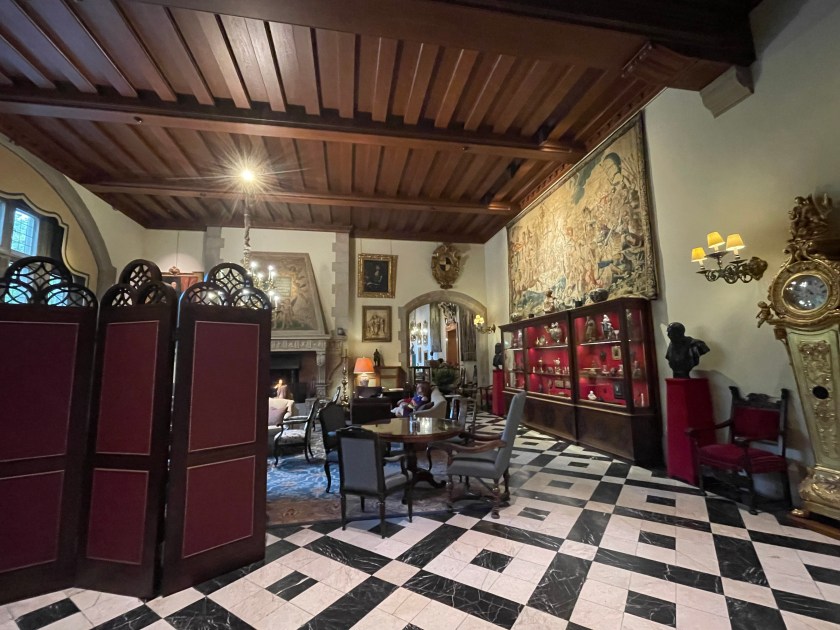
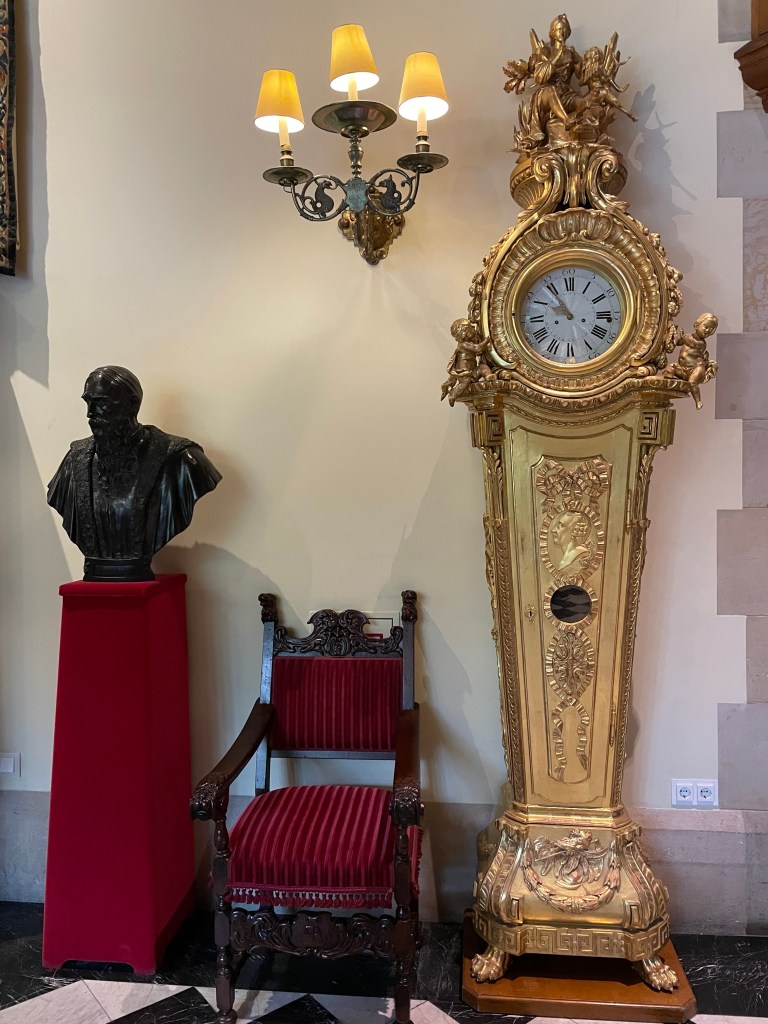
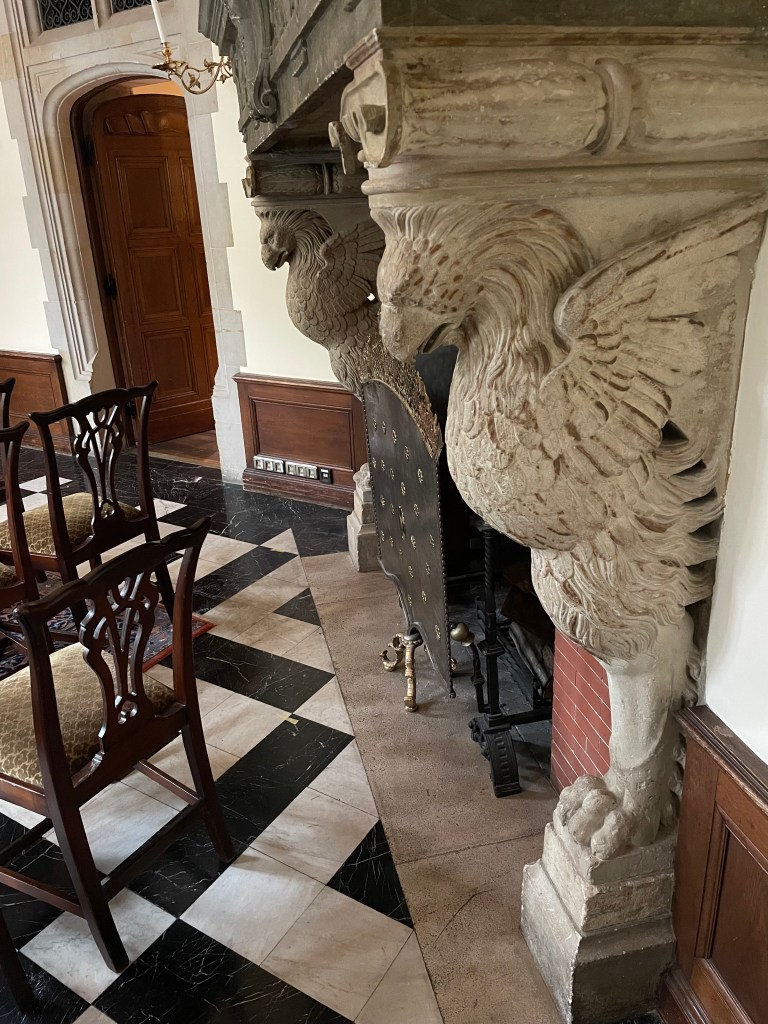
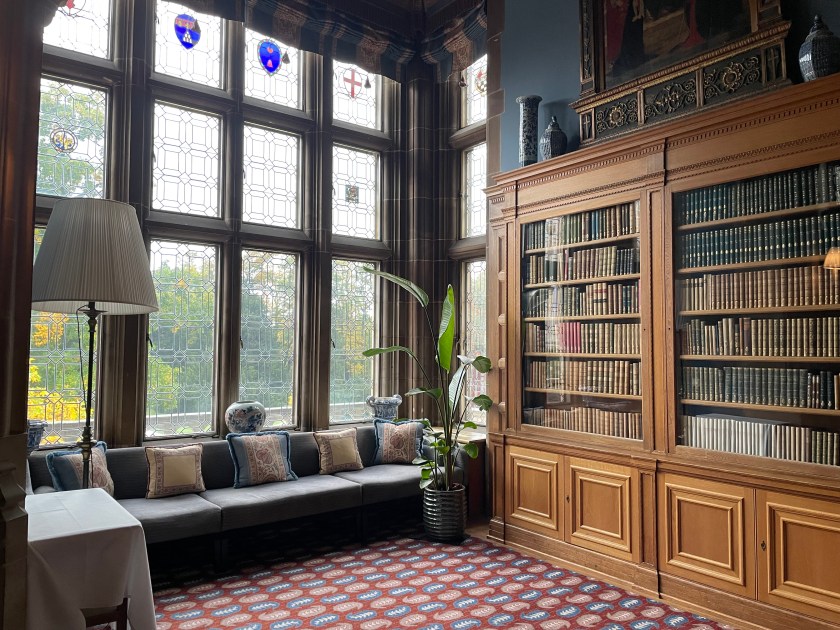
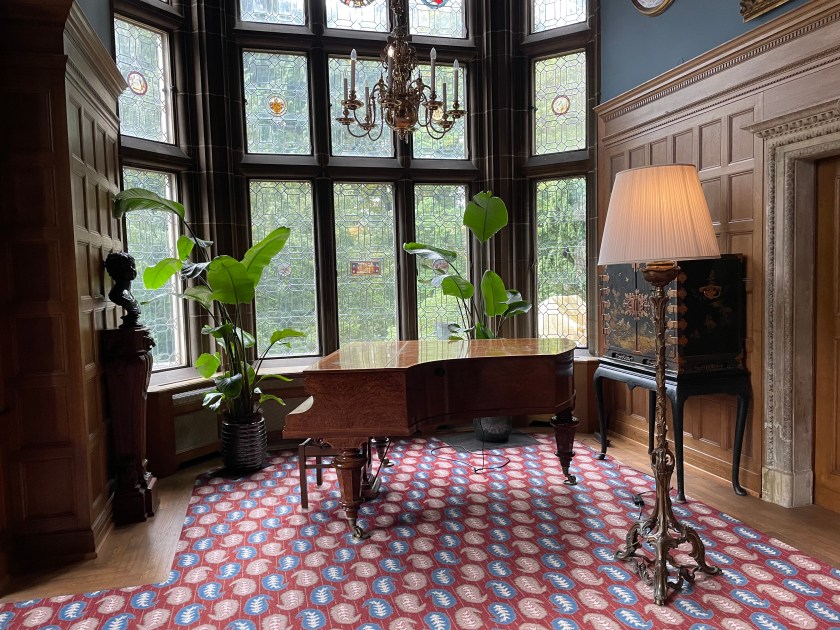
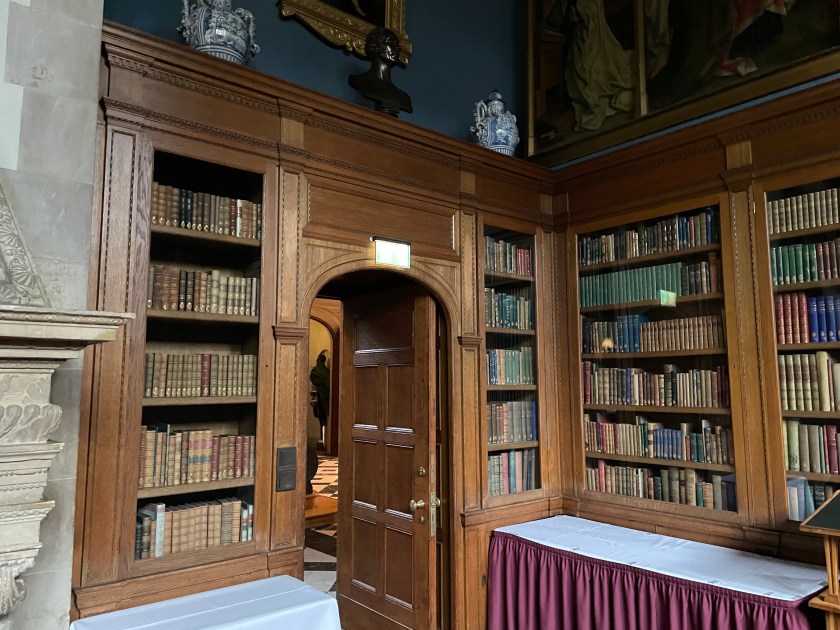
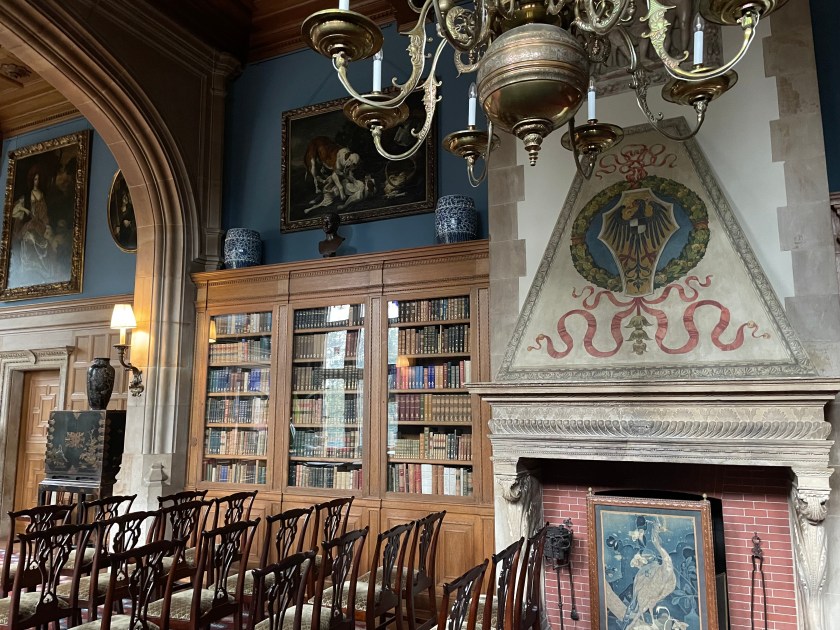
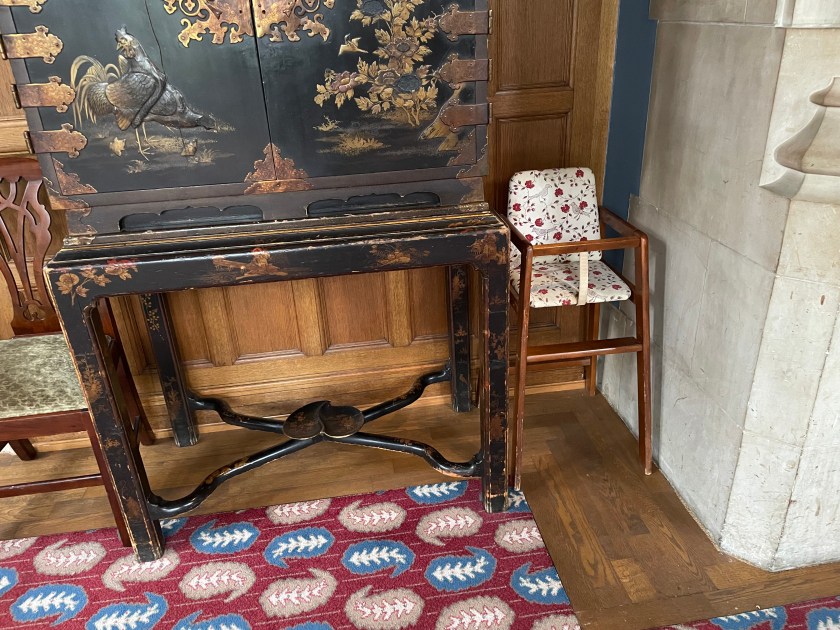
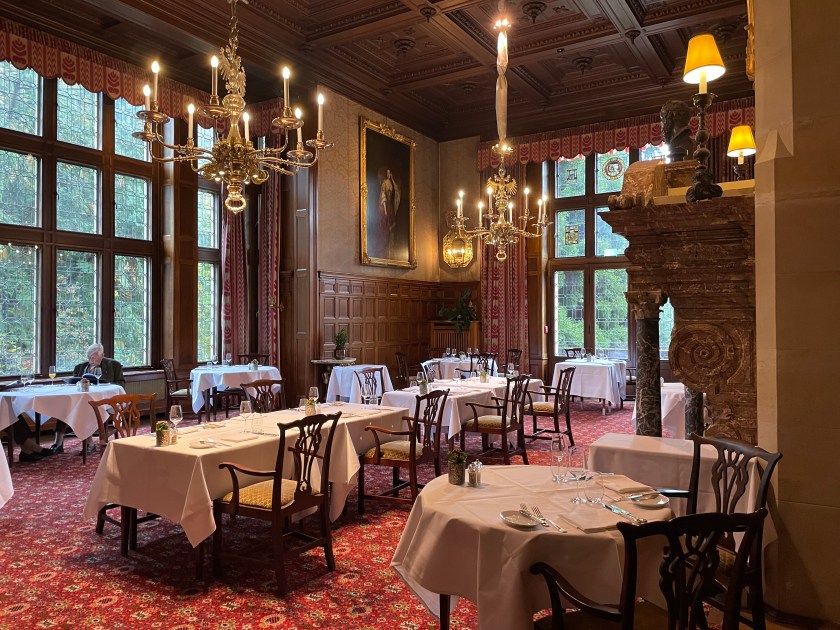
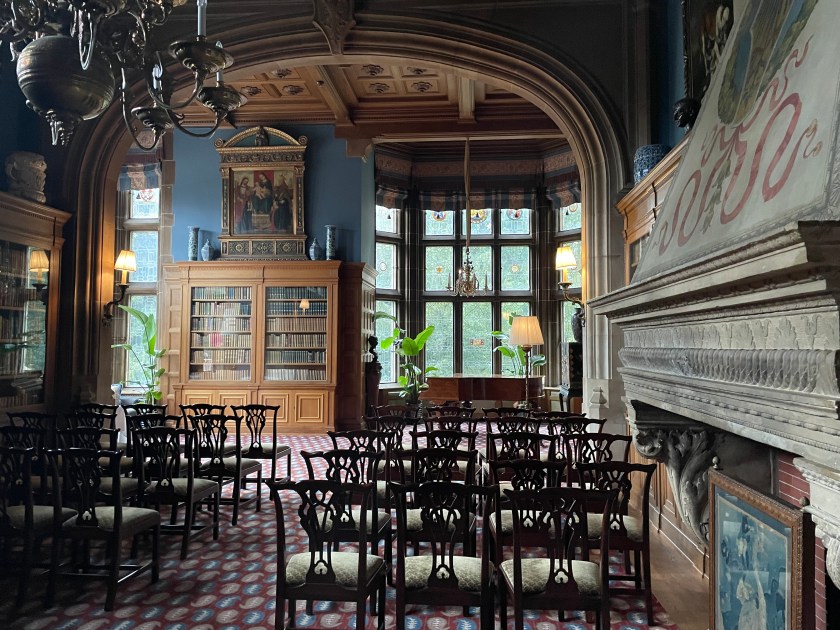
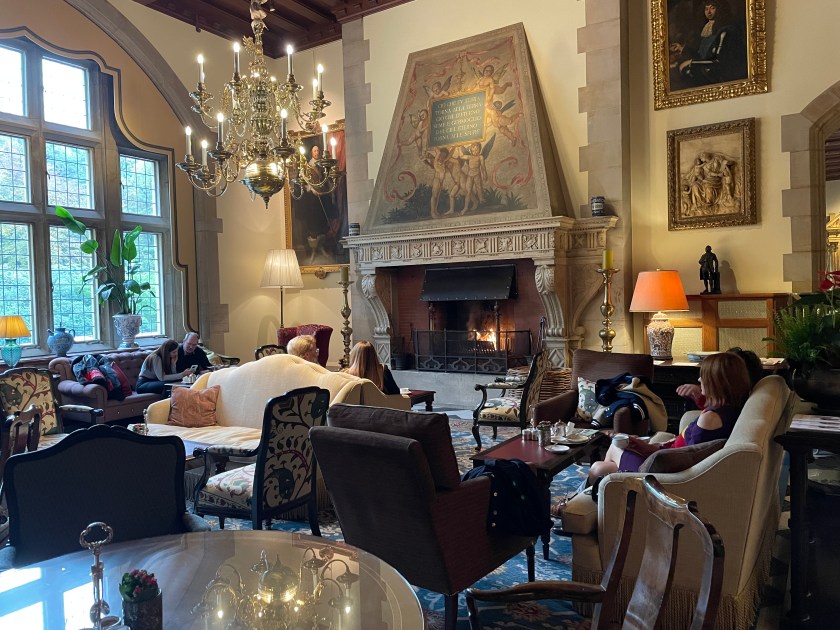
This castle today is a very fine five star hotel.  We were allowed to wander through the main floor with included a perfect library overlooking the grounds and golf course, a tea room/restaurant, and a few other meeting rooms.  These places had many original furnishings, art and treasures. It was tasteful and welcoming. It felt grand, but just right, artistic and beautiful.

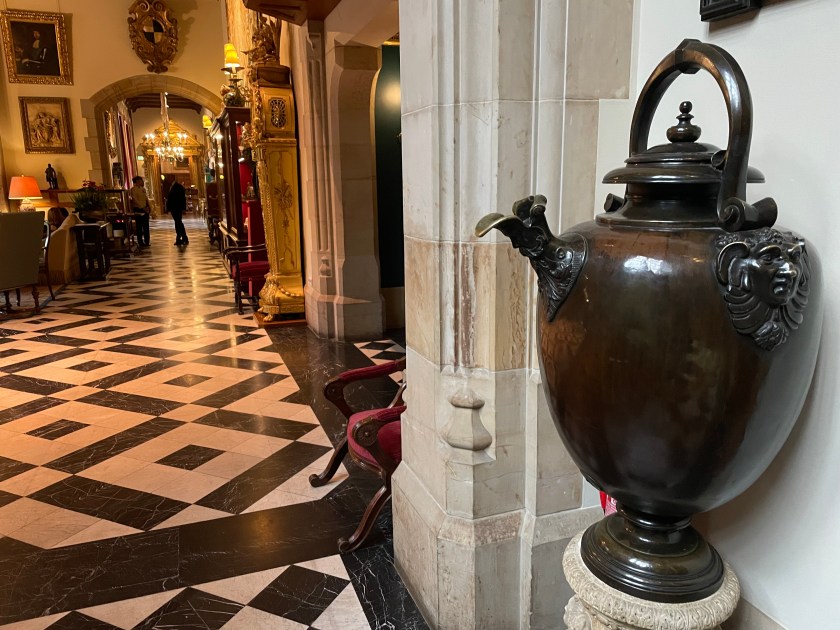
This was the main hall, with rooms to the right and left.
Today events are held here in this library (I’m thinking I should invite my book club)!
A place to have a cup of tea by the grand fire:
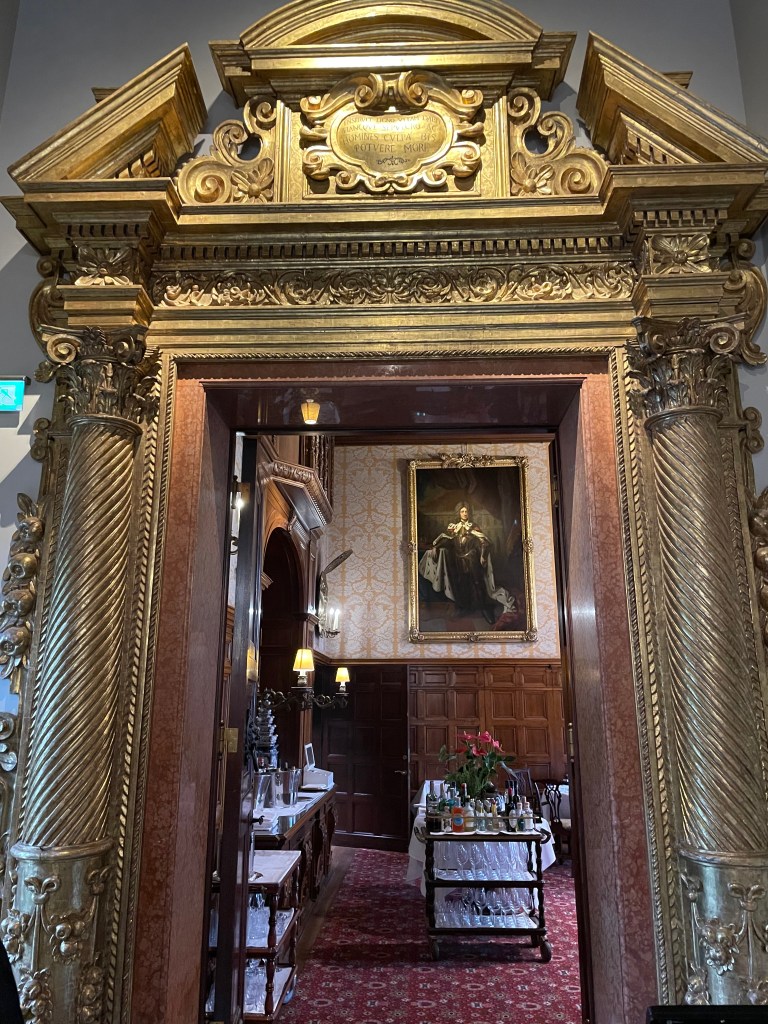
Entrance to a dining hall:
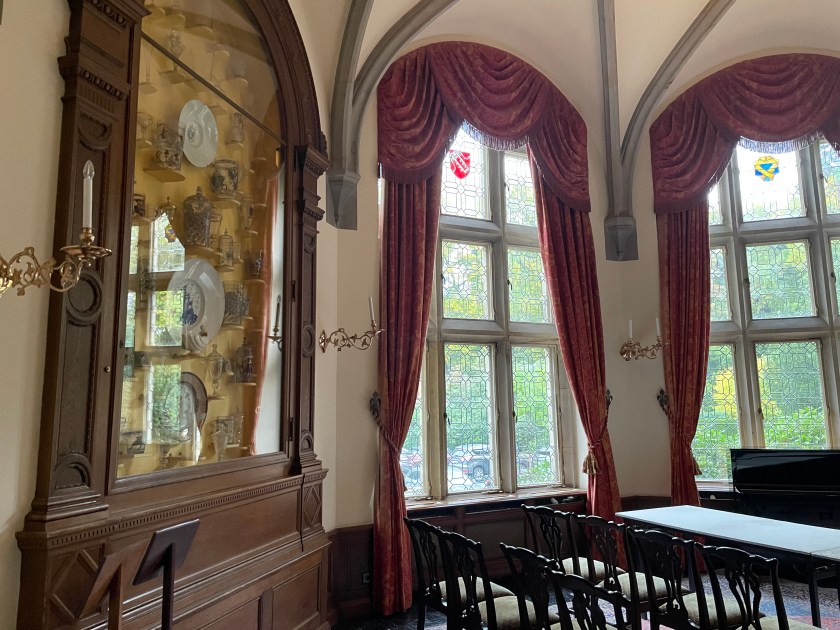
A meeting room:
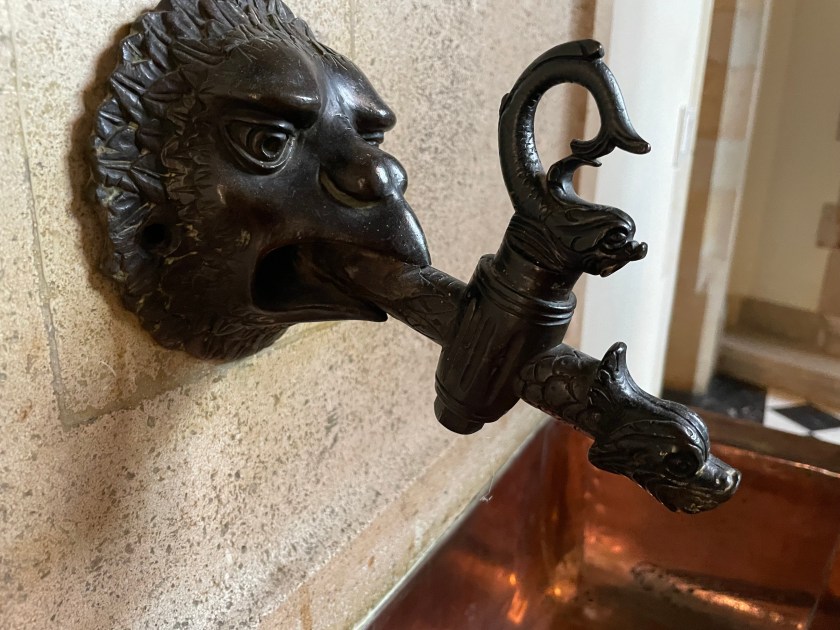
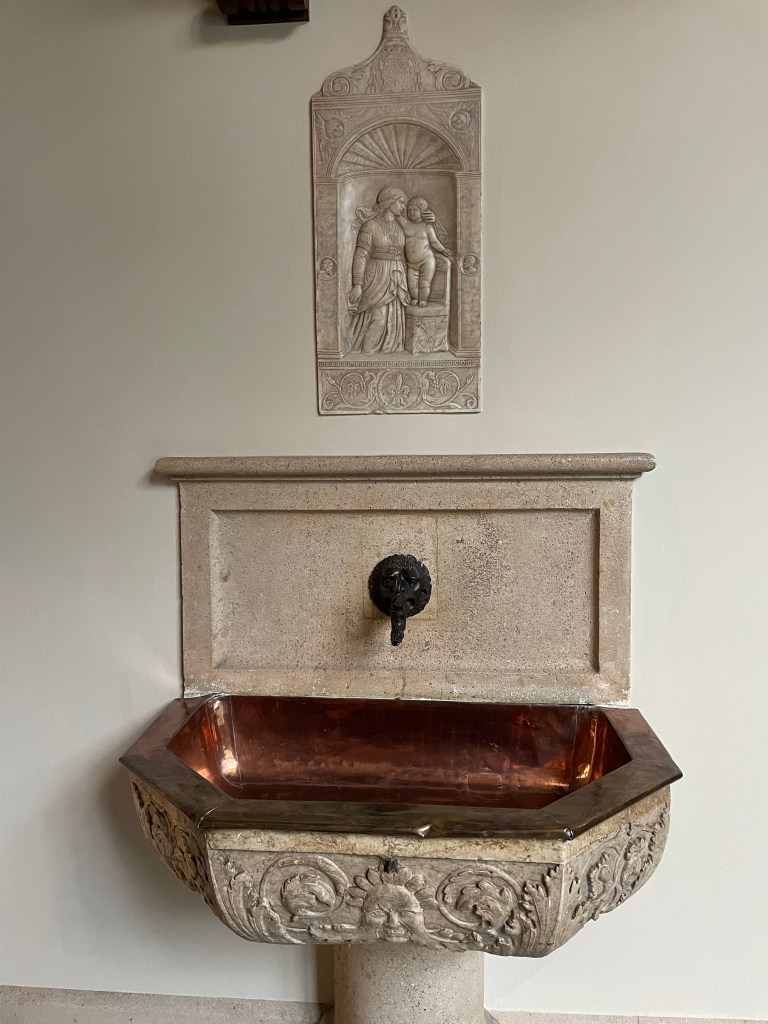
A place to wash your hands when you arrive:
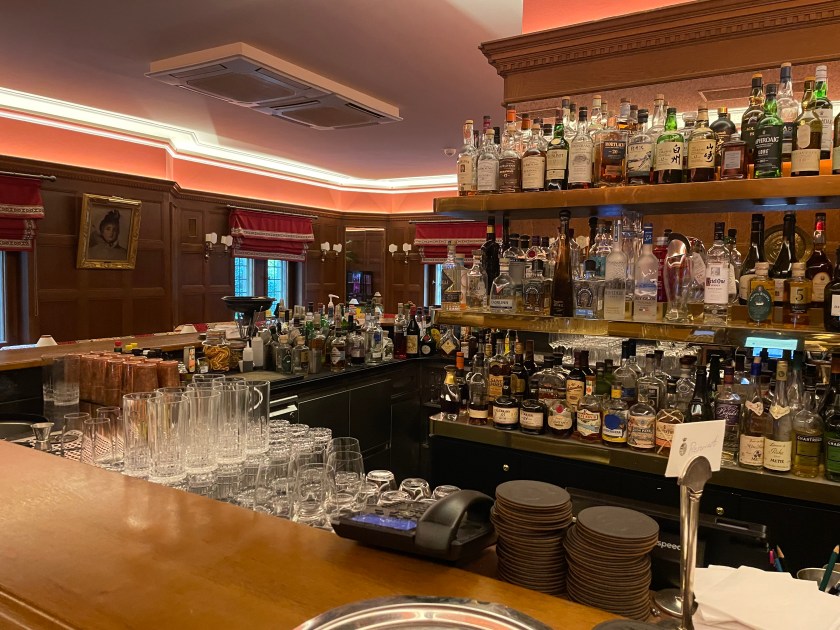
Today this room is a pub/bar:
Then we walked around the grounds and to the Rose Garden.
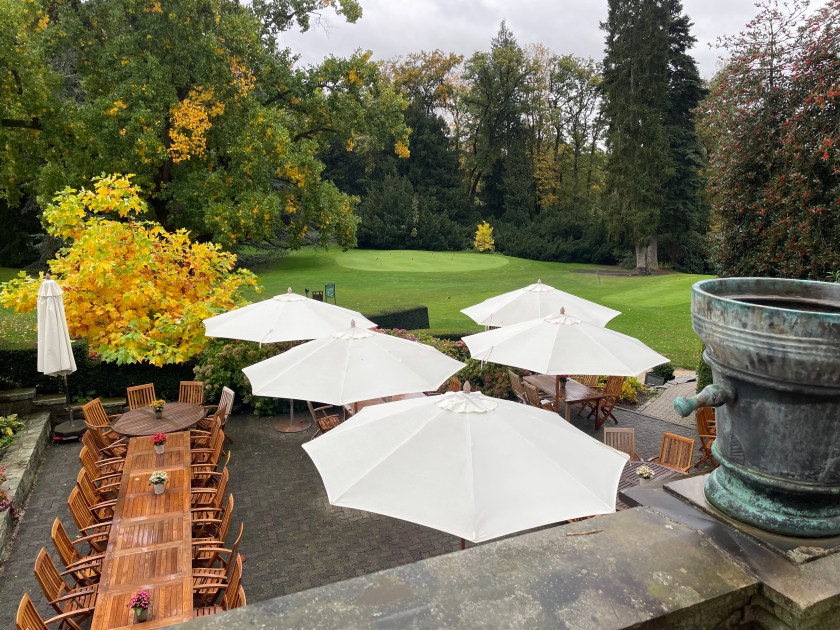
 

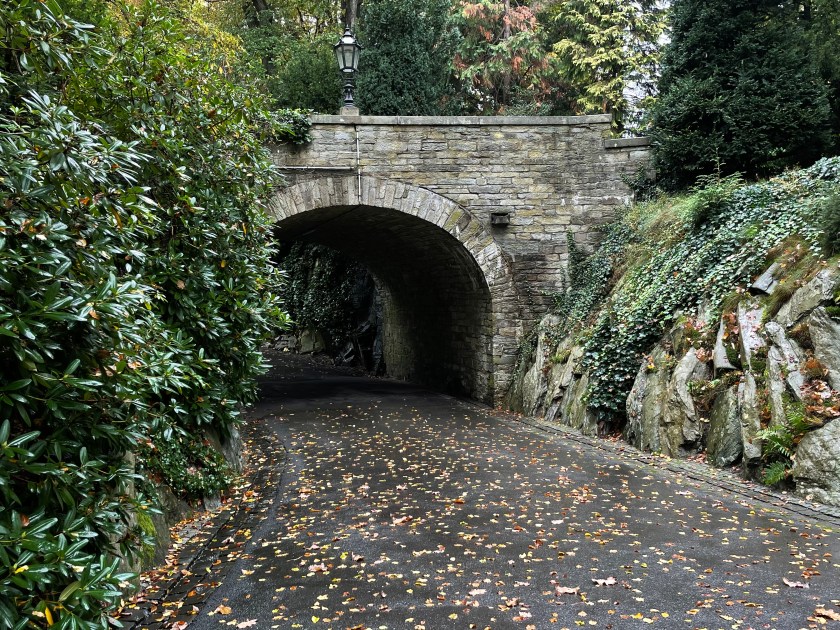
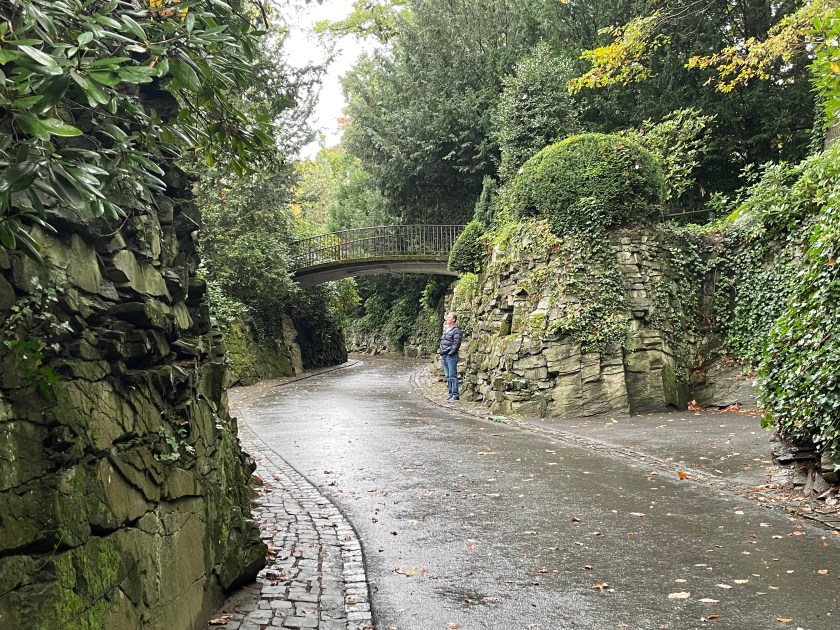
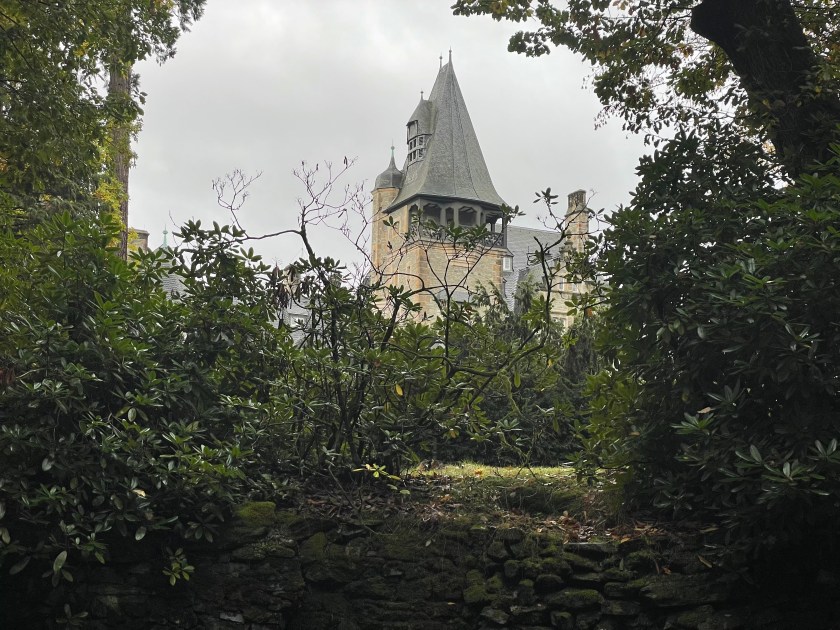
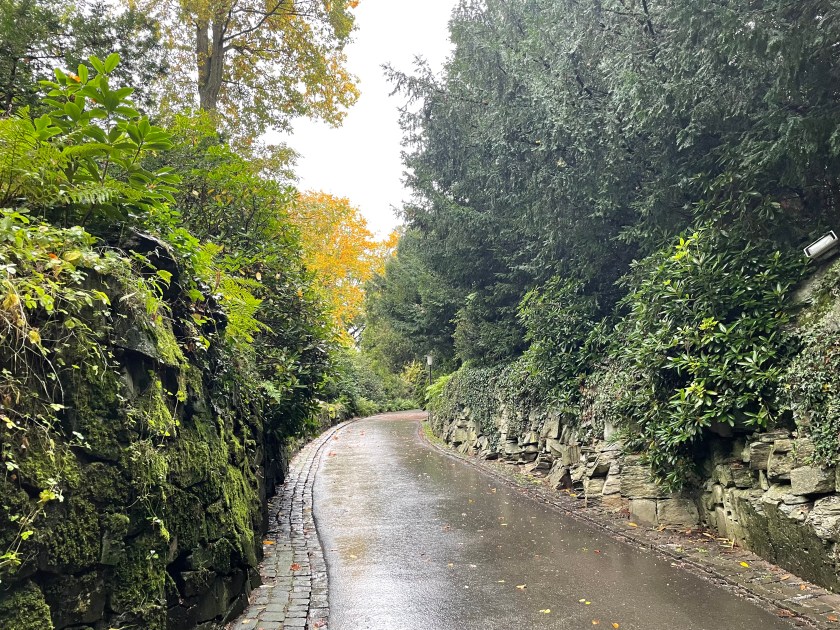
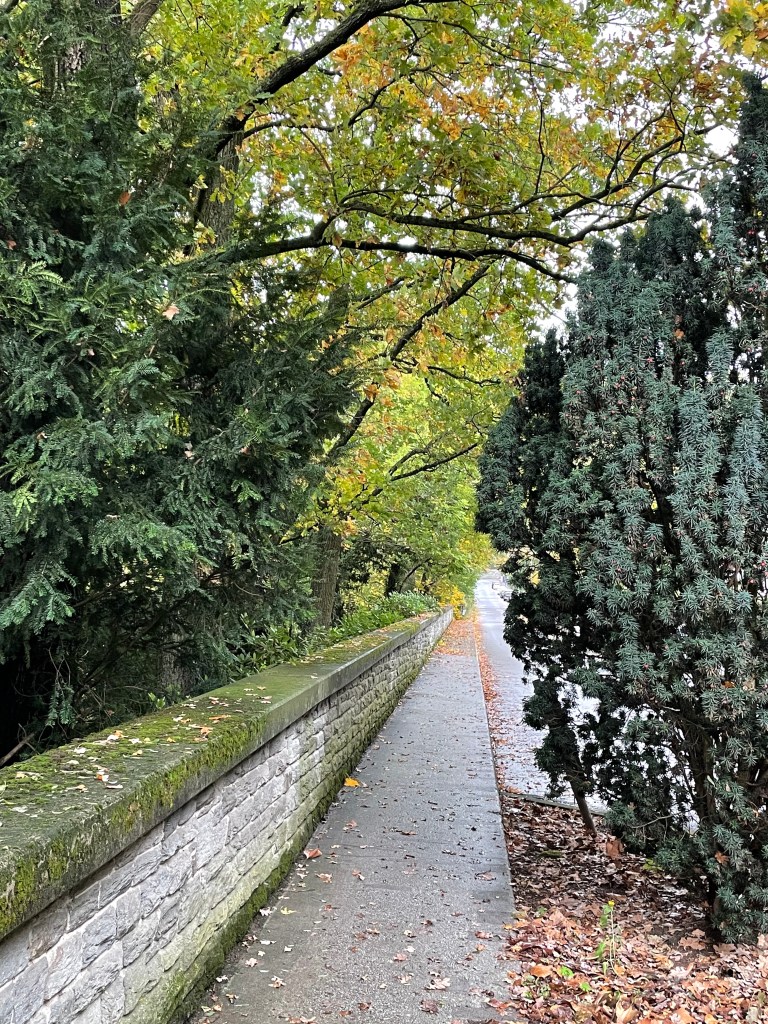
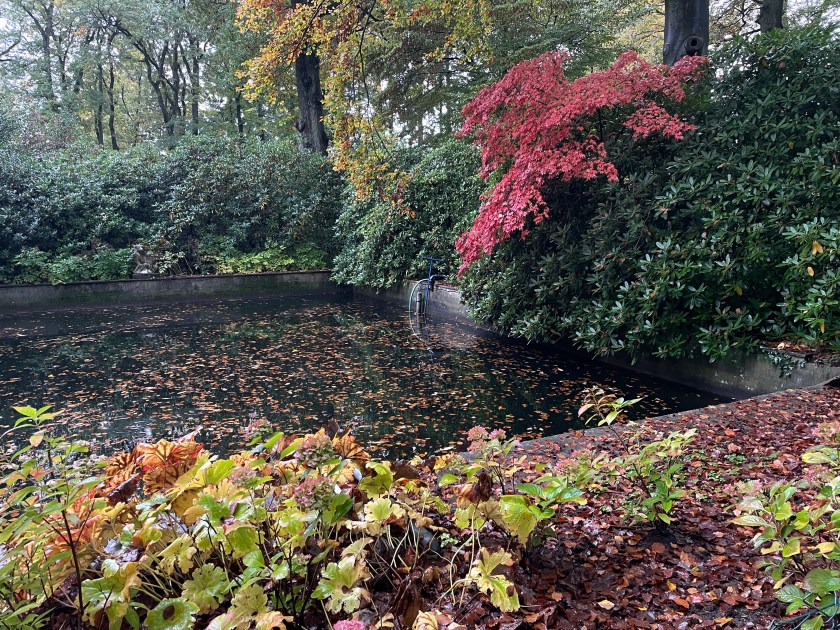
From my journal:  We walked around the grounds then took a walk to the Rose Garden. The walking paths are old, with rock walls, and ferns and moss growing on them. The trees above us were wet and leaves were falling.

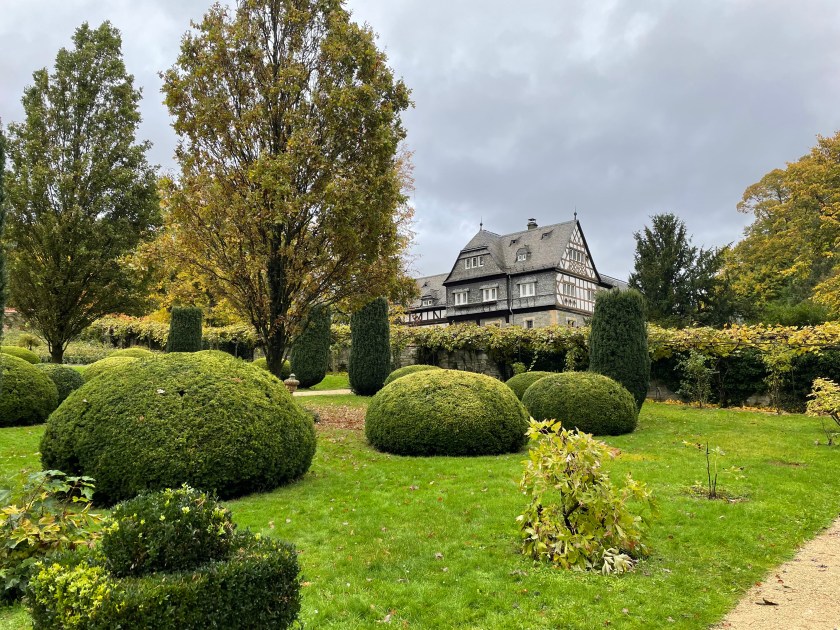
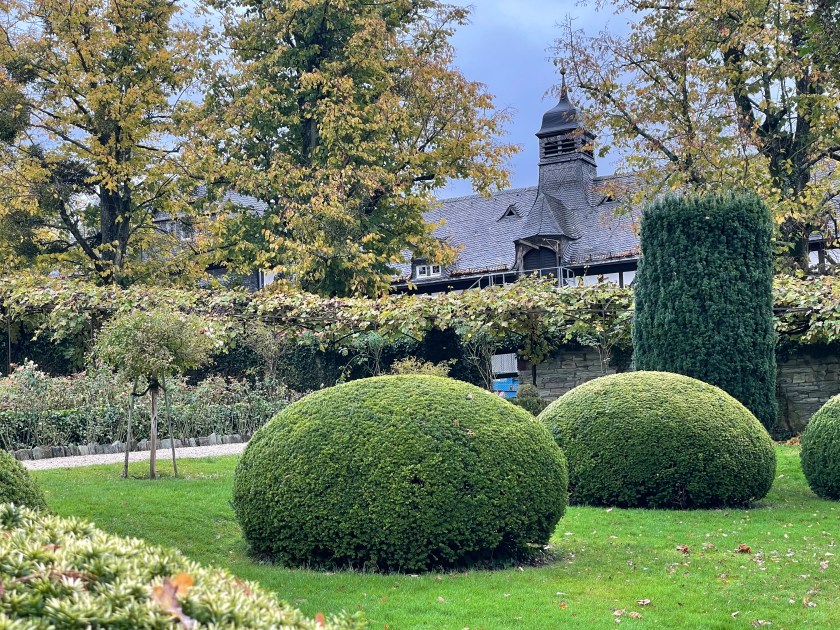
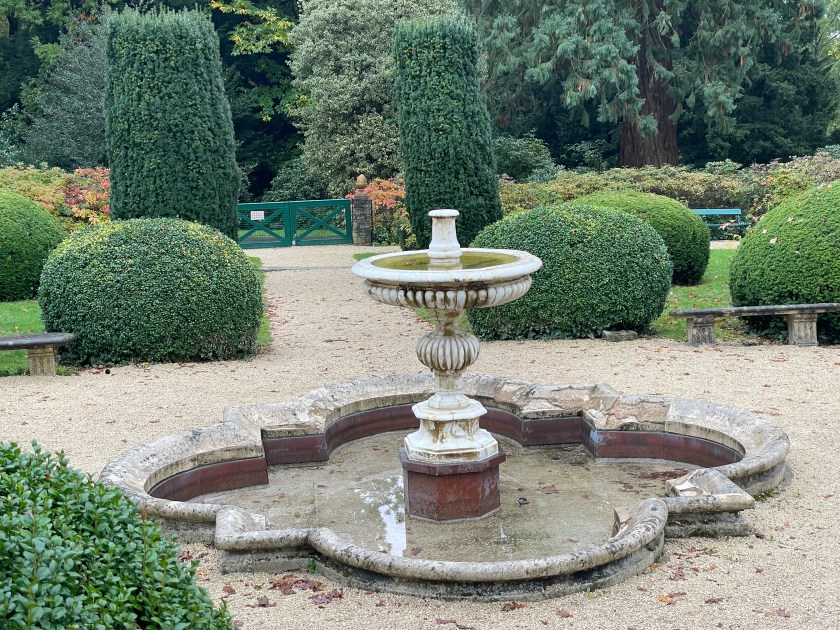
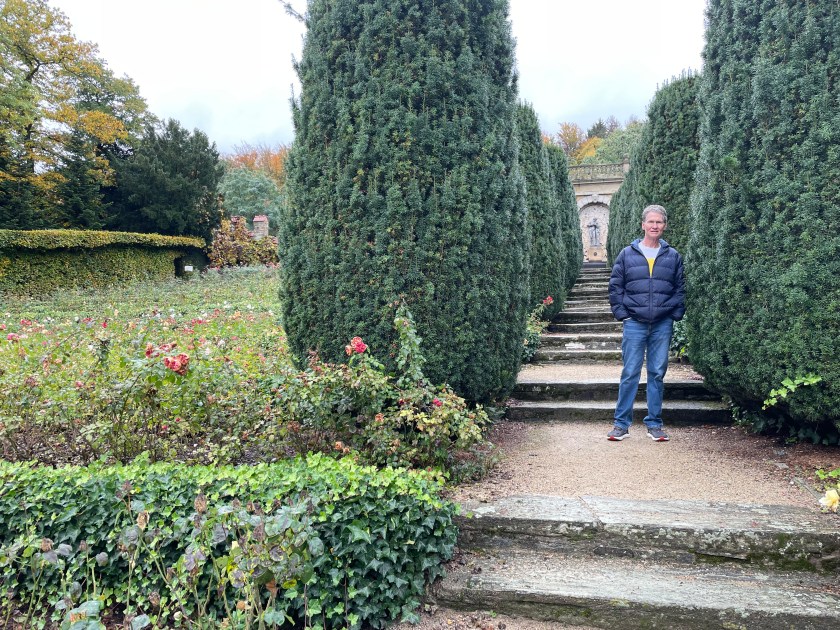
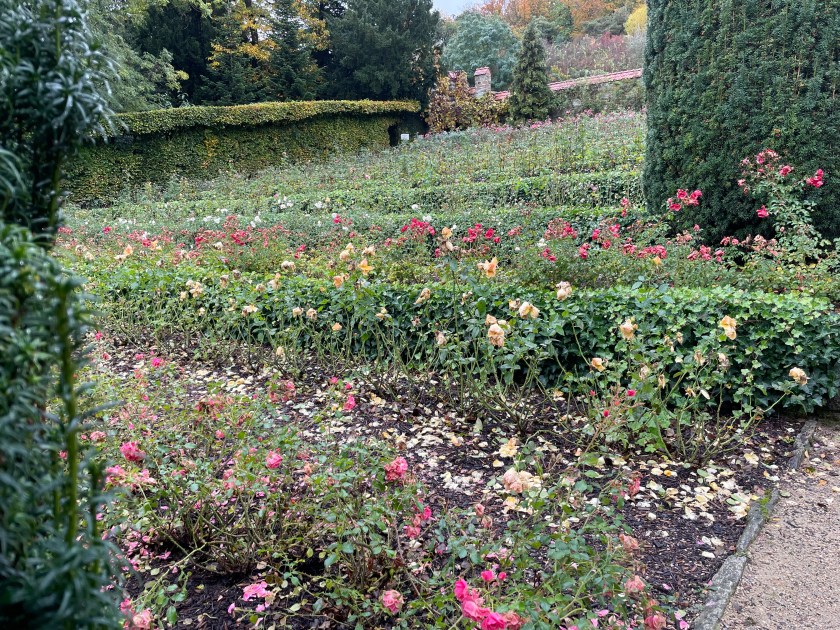
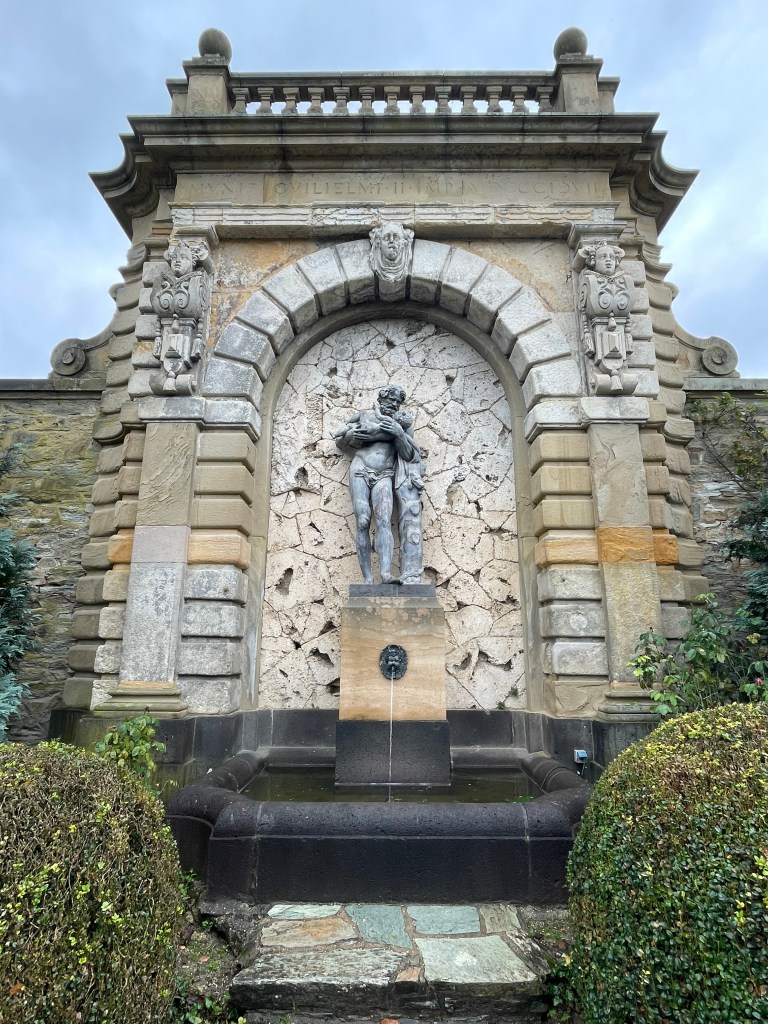
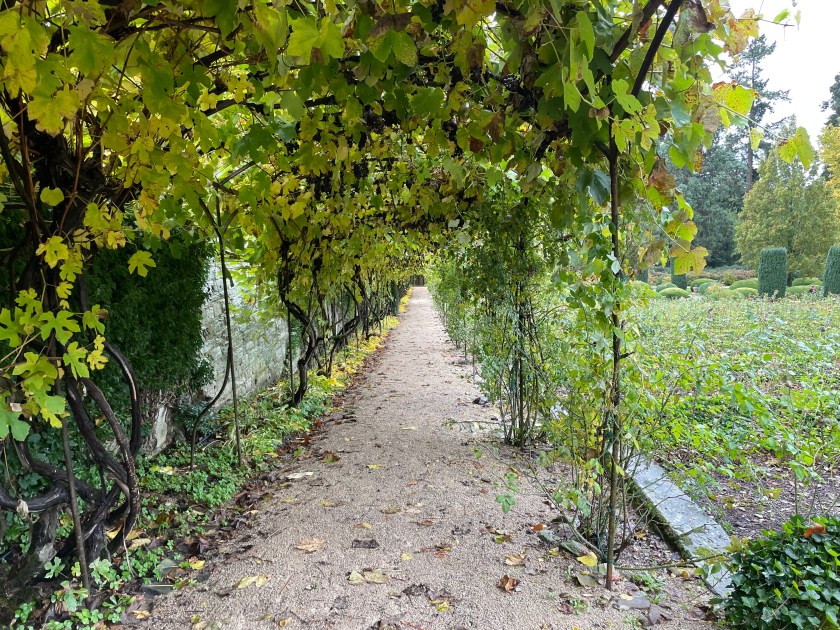
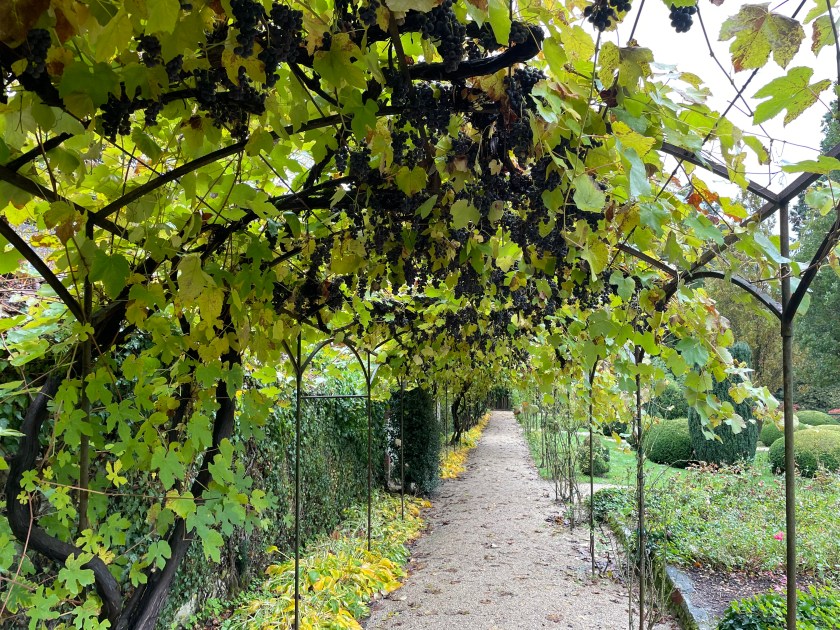
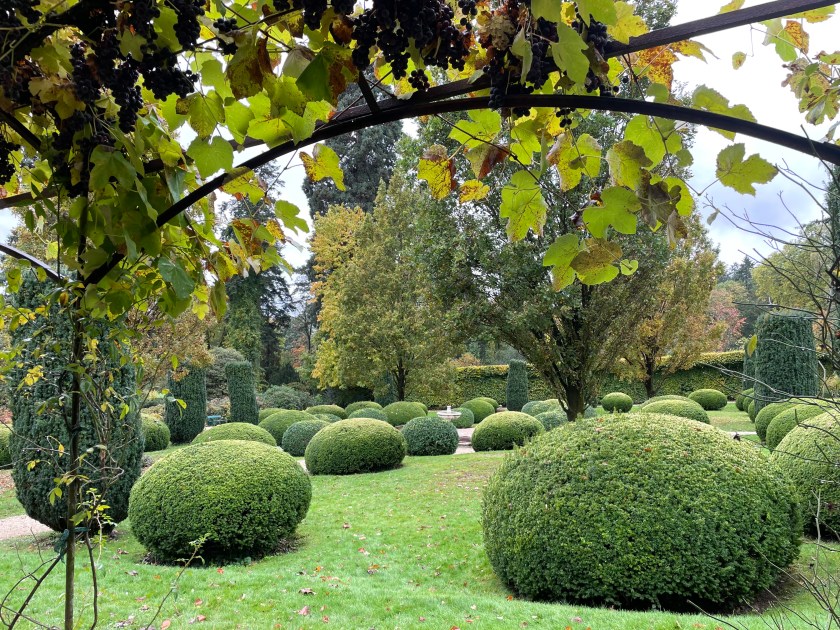
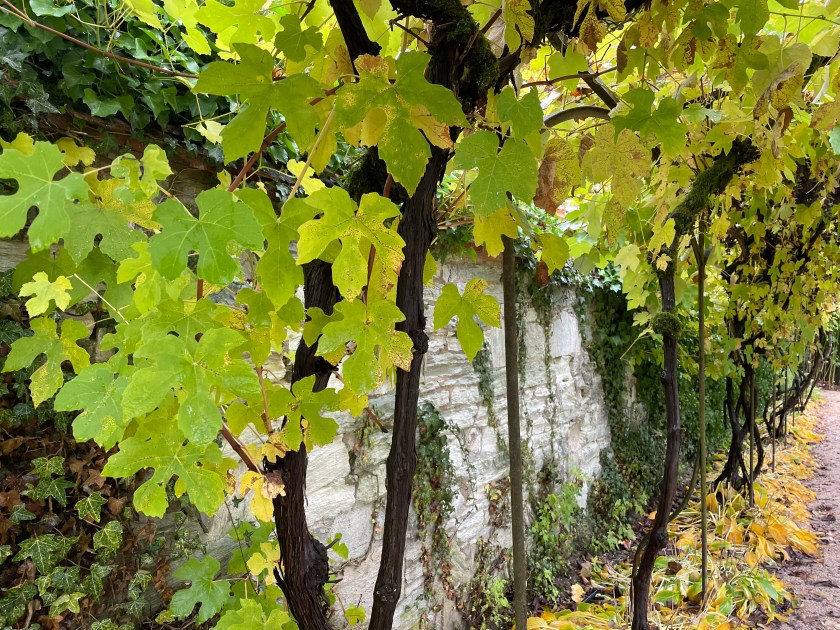
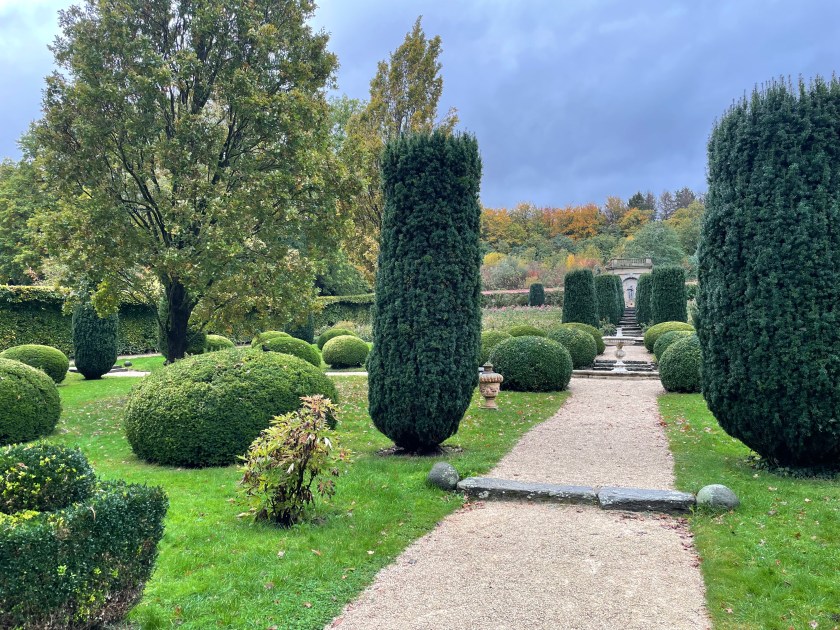
The rose garden was a formal garden with pruned shrubs and a center path that went up to a memorial. There were rows and rows of ivy and roses, with a few blooms remaining. A grape arbor covered the pathway on one side, heavy with concord grapes just out of reach. We were the only ones there. I think one of the nice things about this wet Fall day was that the tourists are gone. In fact, we hardly saw anyone in the Old Town either. It felt like we had the place to ourselves.

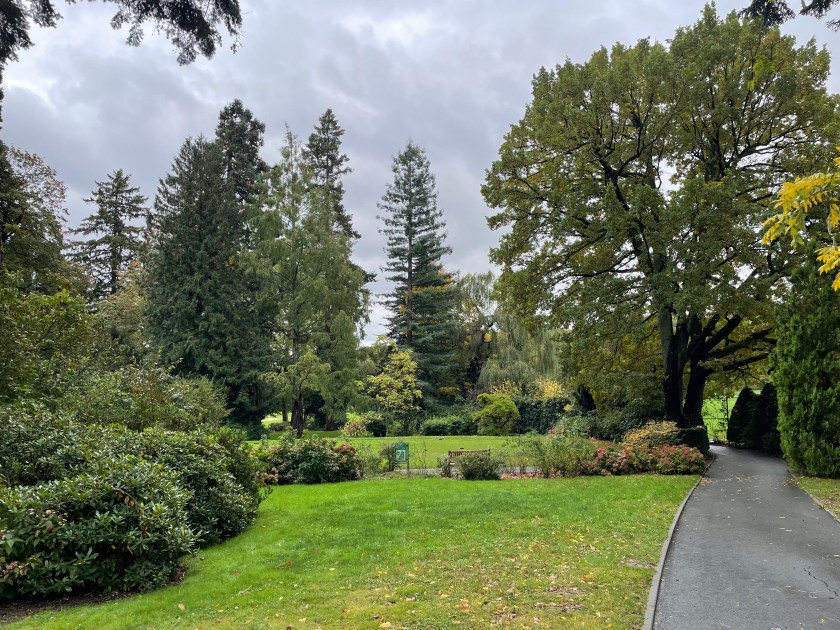
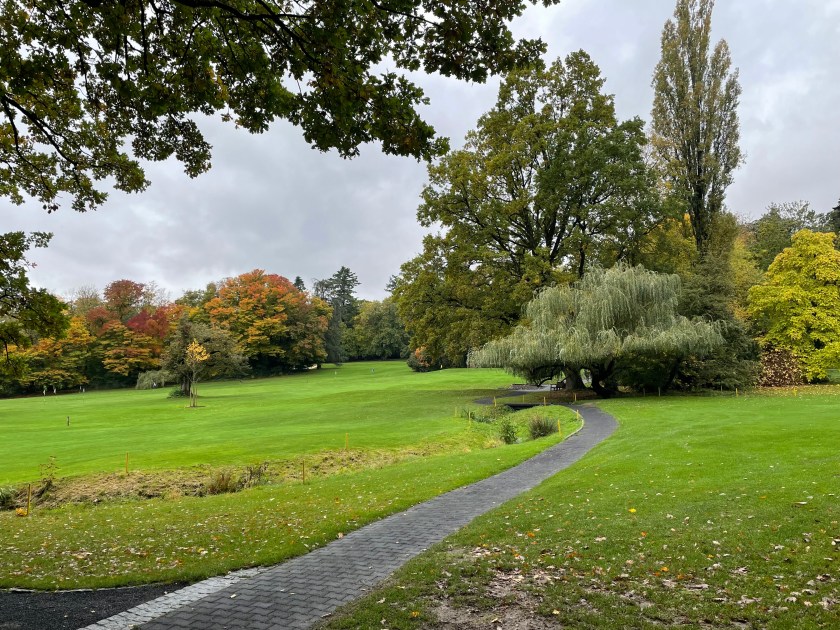
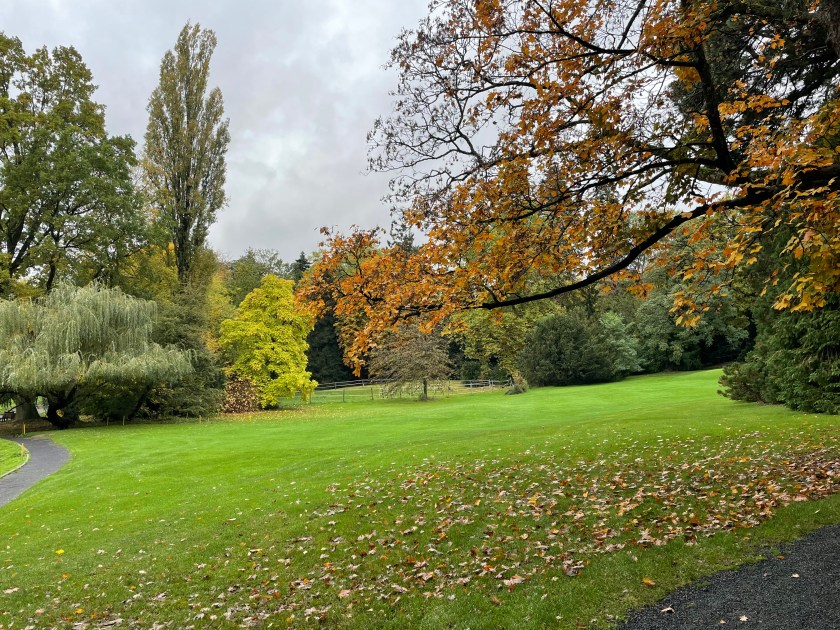
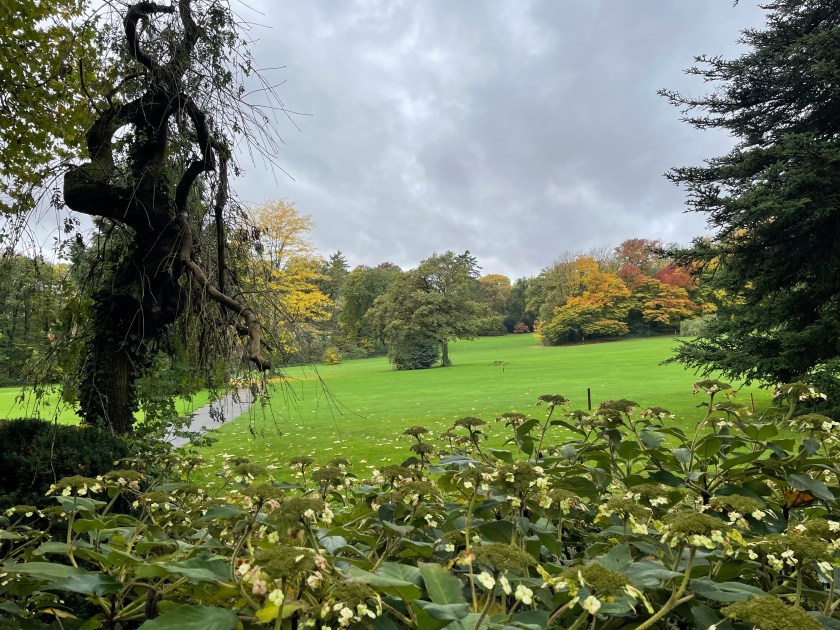
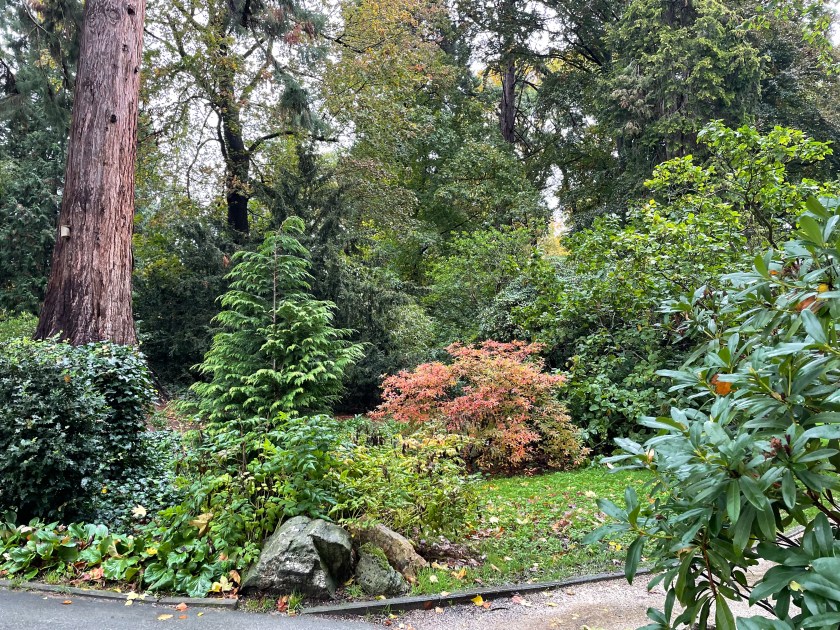
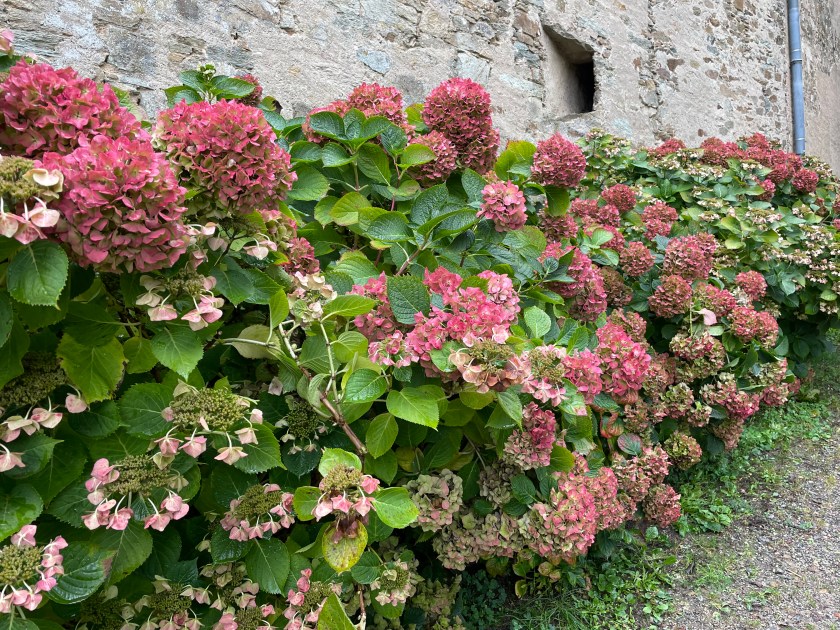
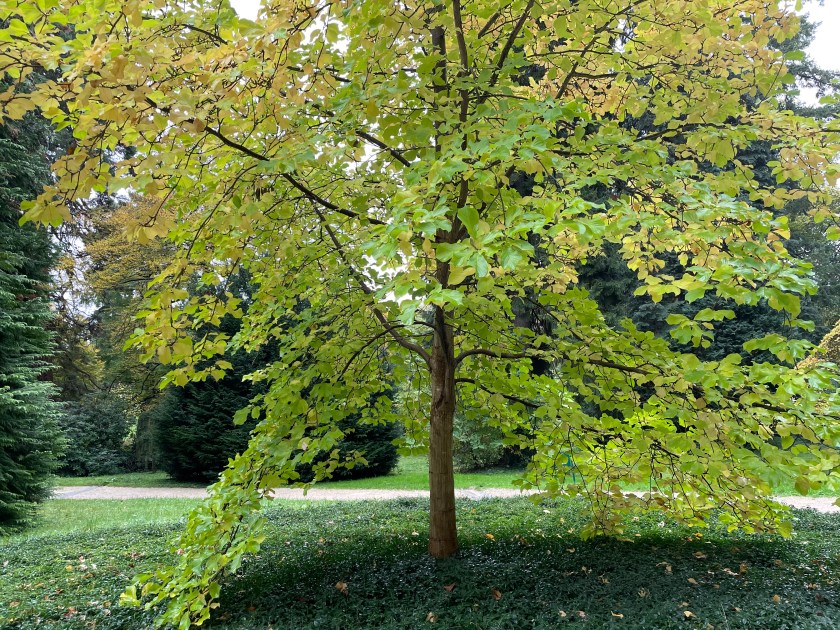
We walked back through the grounds and gardens. It was like a botanical garden. There were 300 year old Redwood trees, lots of ferns and hydrangeas and views out onto the golf course. Oh, so beautiful and peaceful. I hope Victoria felt peace in this place after losing her husband.
From Wikipedia:

The correspondence between Victoria and her parents has been preserved almost completely: 3,777 letters from Queen Victoria to her eldest daughter, and about 4,000 letters from the empress to her mother are preserved and catalogued.  These give a detailed insight into life at the Prussian court between 1858 and 1900.

About her mother:
According to one of her biographers, Giles St Aubyn, Victoria wrote an average of 2,500 words a day during her adult life.  From July 1832 until just before her death, she kept a detailed journal, which eventually encompassed 122 volumes.  After Victoria’s death, her youngest daughter, Princess Beatrice, was appointed her literary executor.  Beatrice transcribed and edited the diaries covering Victoria’s accession onwards, and burned the originals in the process.  Despite this destruction, much of the diaries still exist.  In addition to Beatrice’s edited copy, Lord Esher transcribed the volumes from 1832 to 1861 before Beatrice destroyed them.

Empress Victoria devoted part of her final years to painting and to visit the artists’ colony of Kronberg, where she regularly met with the painter Norbert Schrödl. In her last days, she used to walk in the morning and spent long hours writing letters or reading in the library of her castle.

In late 1898, physicians diagnosed the empress dowager with inoperable breast cancer, forcing her to stay in bed for long periods. Cancer had spread to her spine by the autumn of 1900, and as she worried about her personal letters (in which she detailed her concern over Germany’s future under her son) falling into the hands of the emperor, she requested that the letters be brought back to Great Britain in a cloak-and-dagger operation by her godson Frederick Ponsonby, the private secretary of her brother, Edward VII, who was making his final visit to his terminally ill sister in Kronberg on 23 February 1901. These letters were later edited by Ponsonby and put into context by his background commentary to form the book that was published in 1928.

The empress dowager died in Friedrichshof on 5 August 1901, less than seven months after the death of her mother.
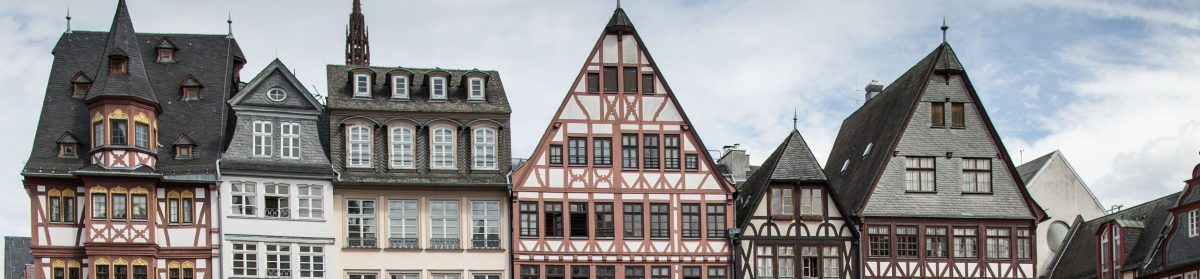
Kronberg’s Old City

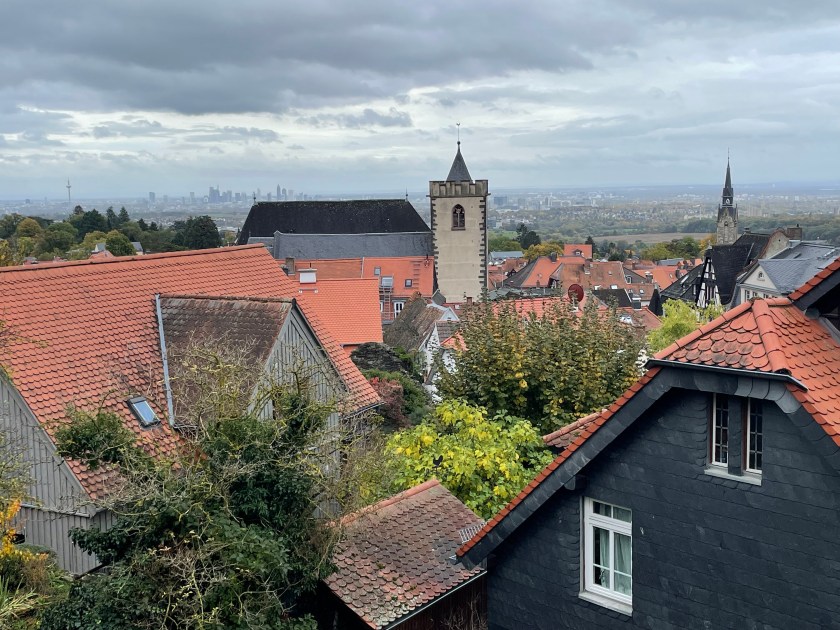
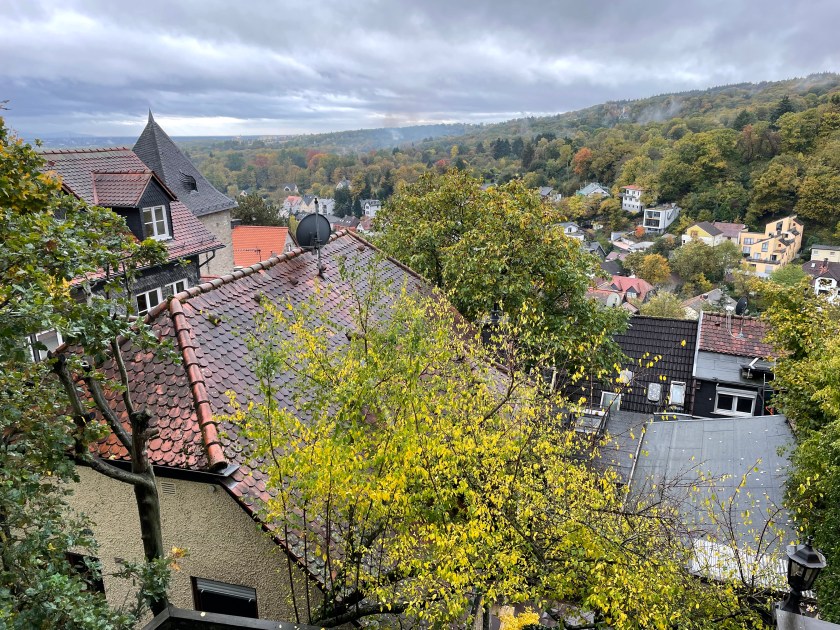
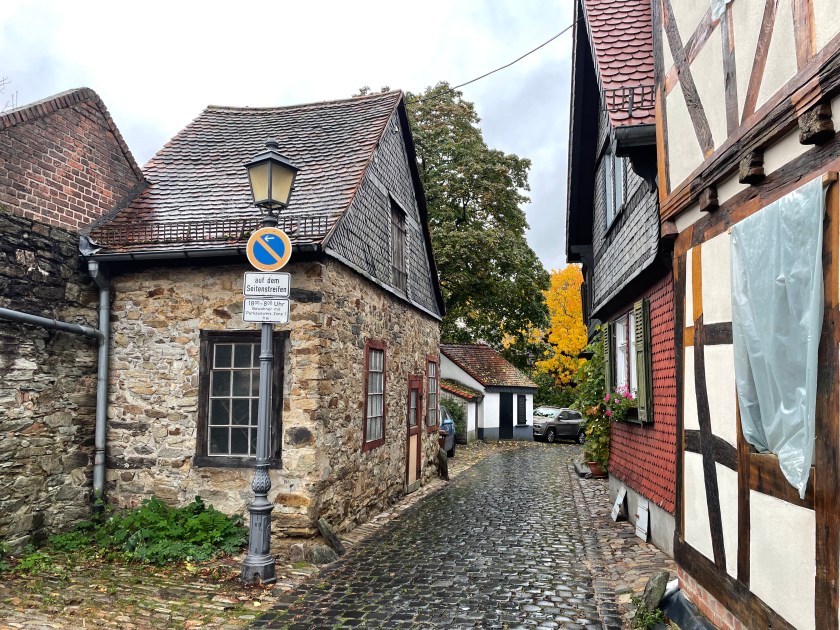
Today was an overcast beautiful Fall day. The sky was dark, it rained off and on, mostly just sprinkling or mist. It was magical. Kronberg is less than 30 minutes from Frankfurt.  The town hugs the Tanum Forest and it felt like we were in a dreamy wooded area with yellow leaves fluttering down around us.

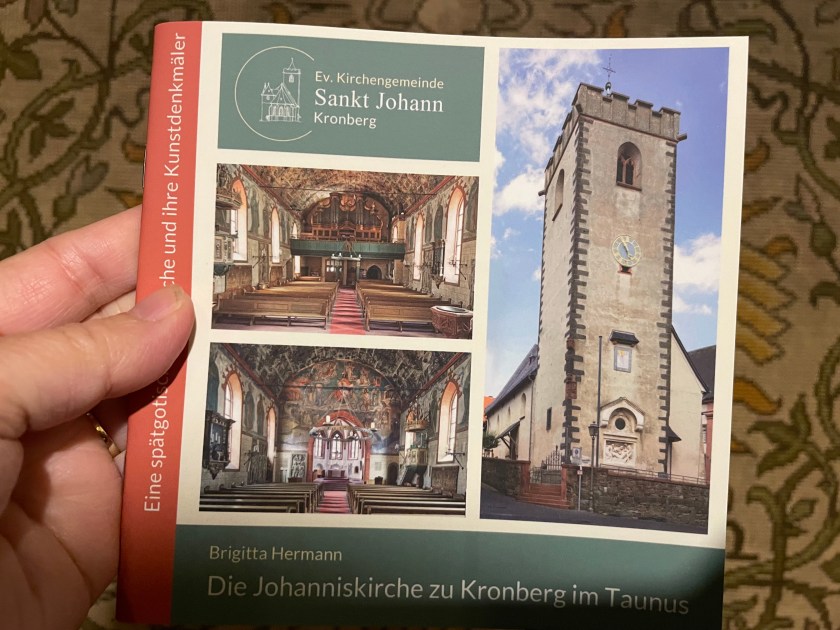
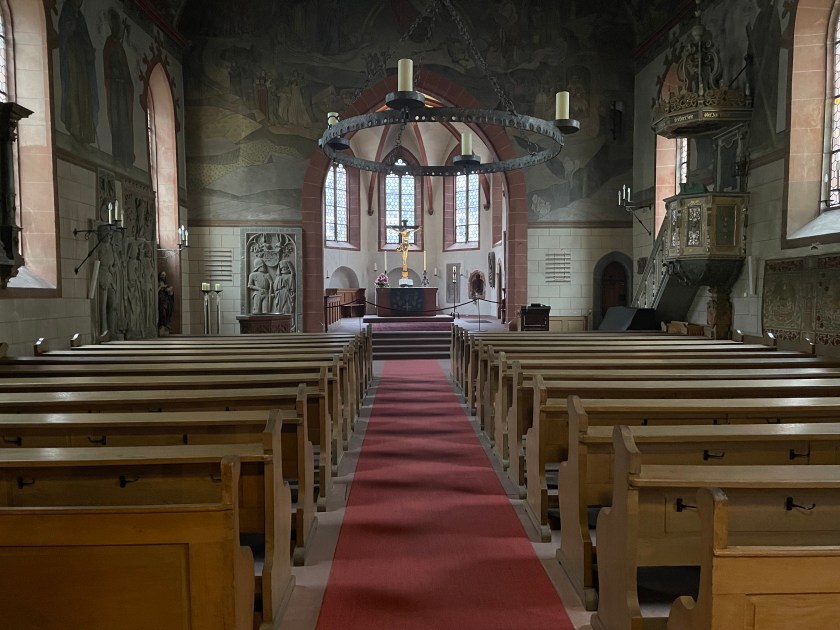
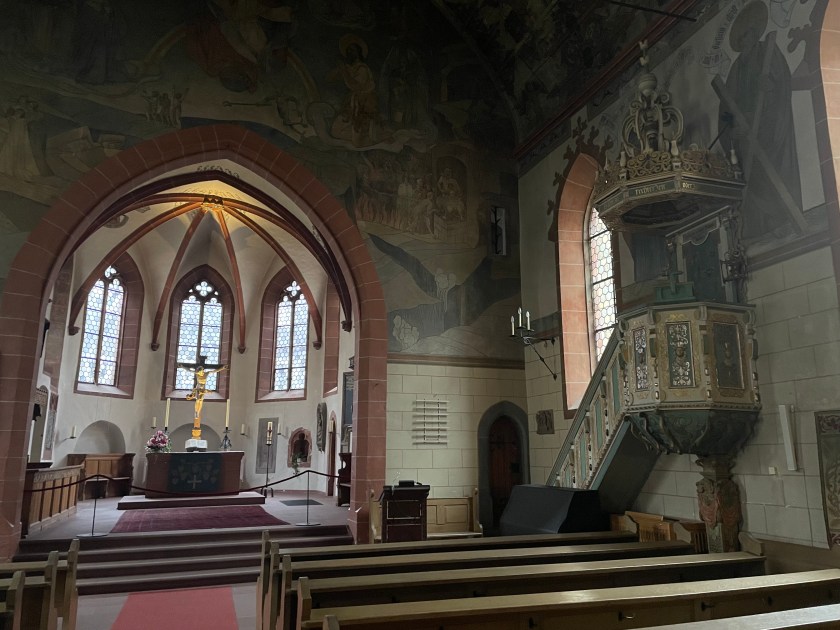
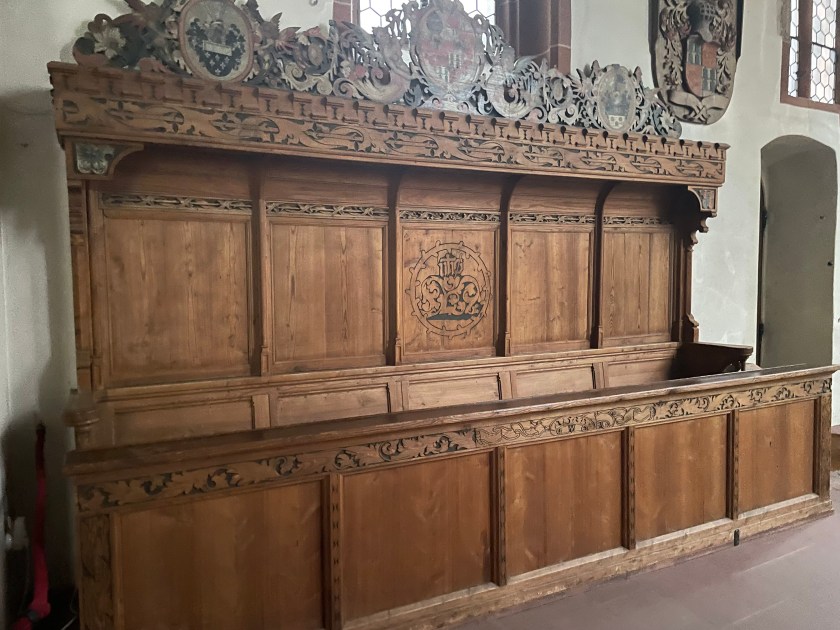
The town of Kronberg is up on a mountain, overlooking the woods around us with a castle up on the hill and a really magical Old Town below. We parked and walked through the town, visiting the Sankt Johann Kirche, which was old and beautiful and cozy. There were lots of flyers about musical concerts here–Oh we’d love to come back for some of the holiday ones!

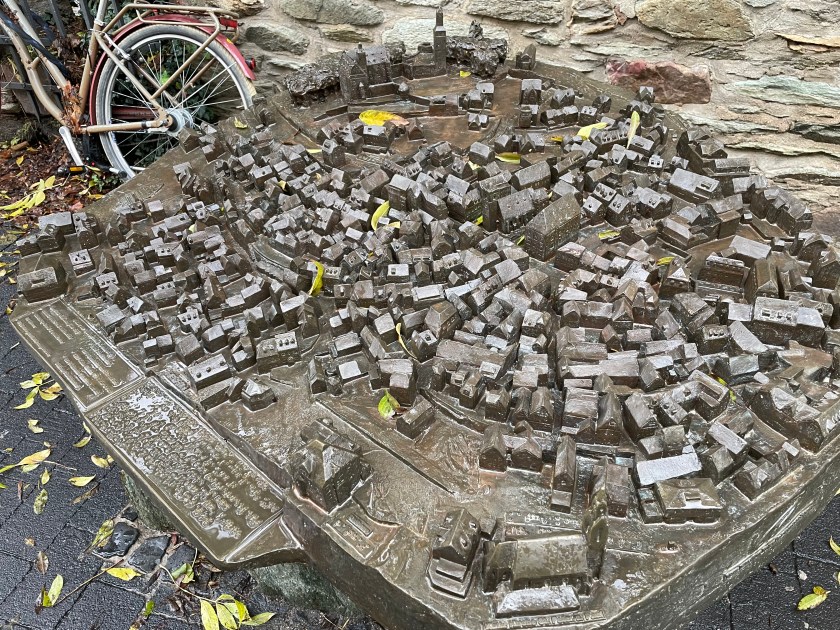
Here’s how the old part of town is layed out–with the castle up at the top and center.
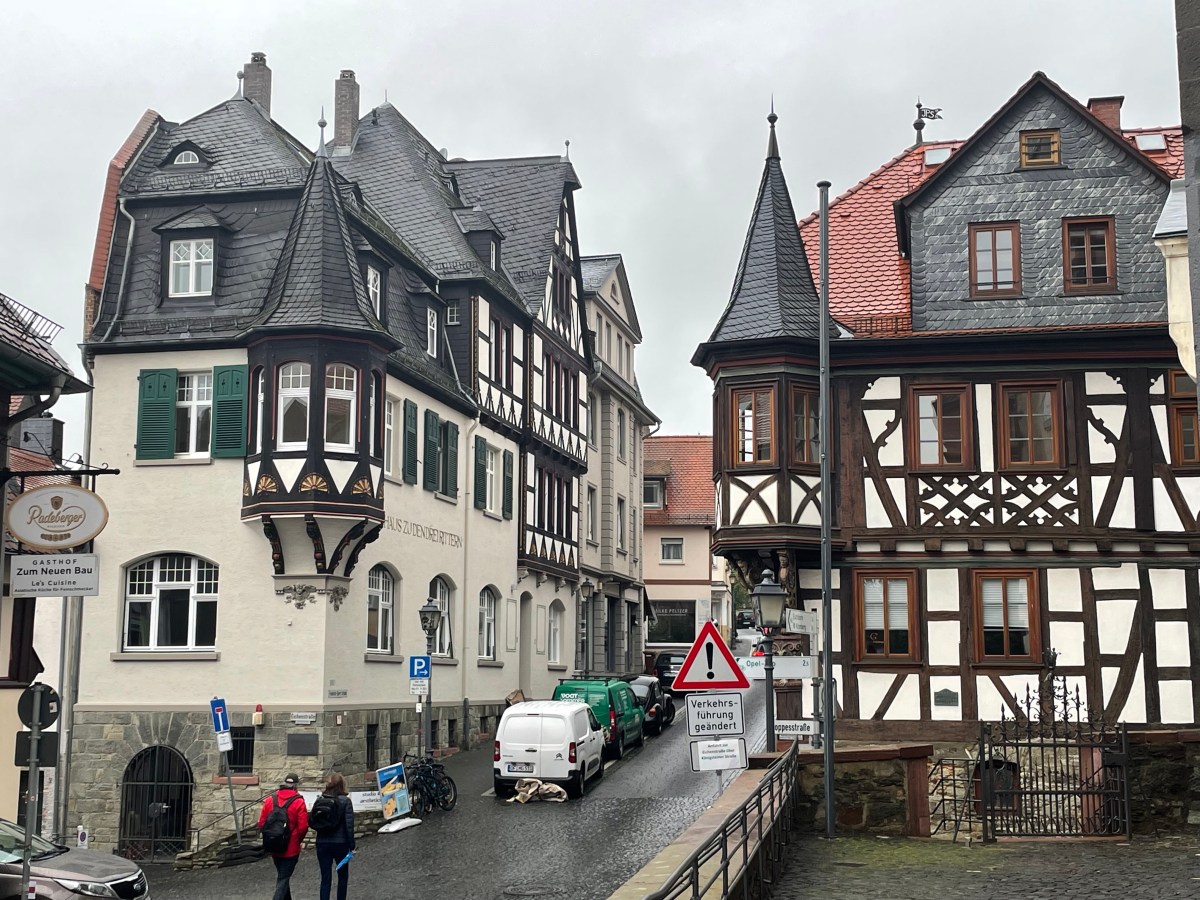
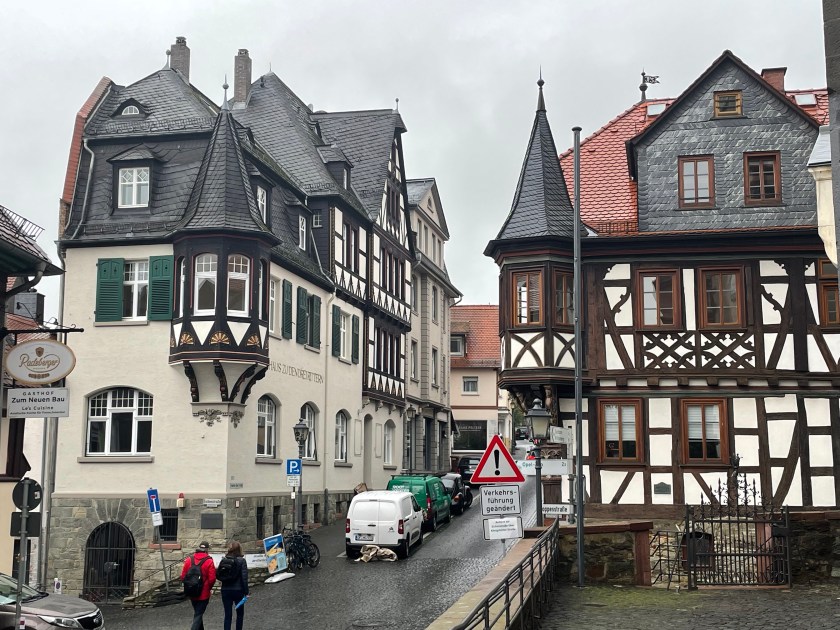
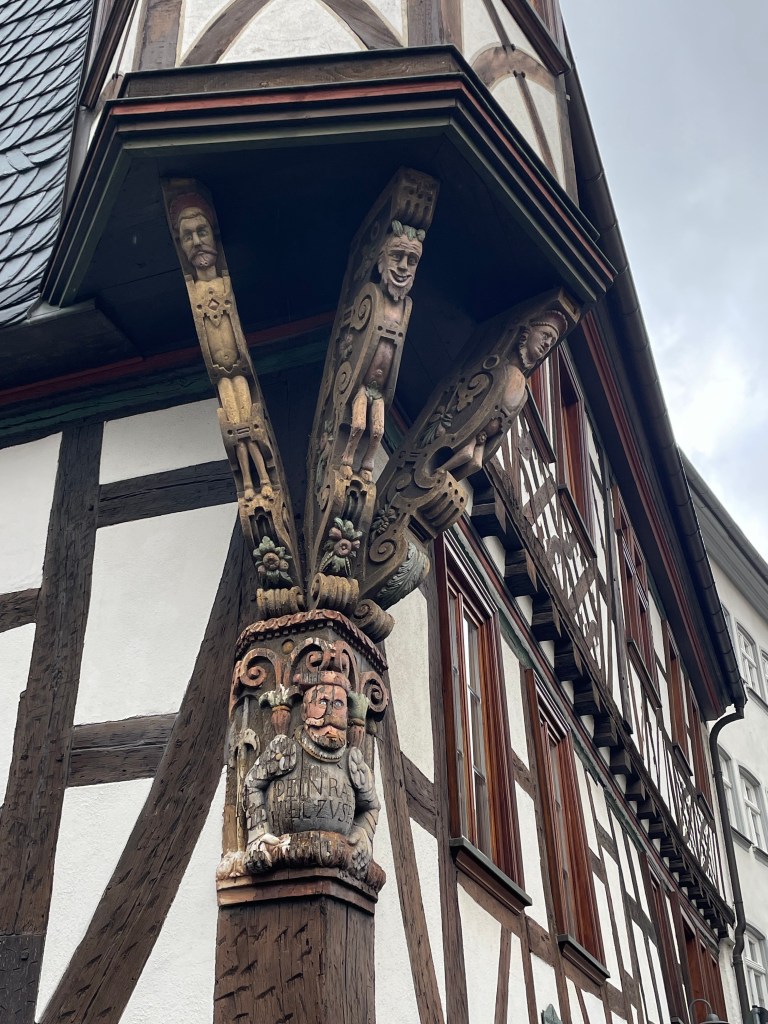
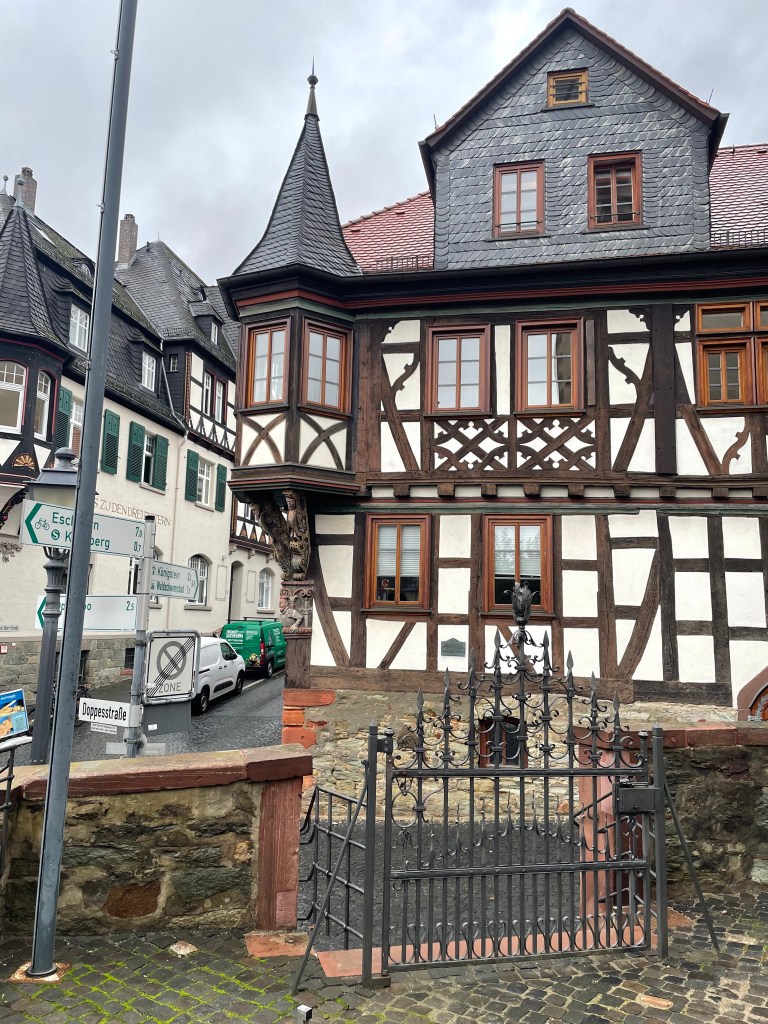
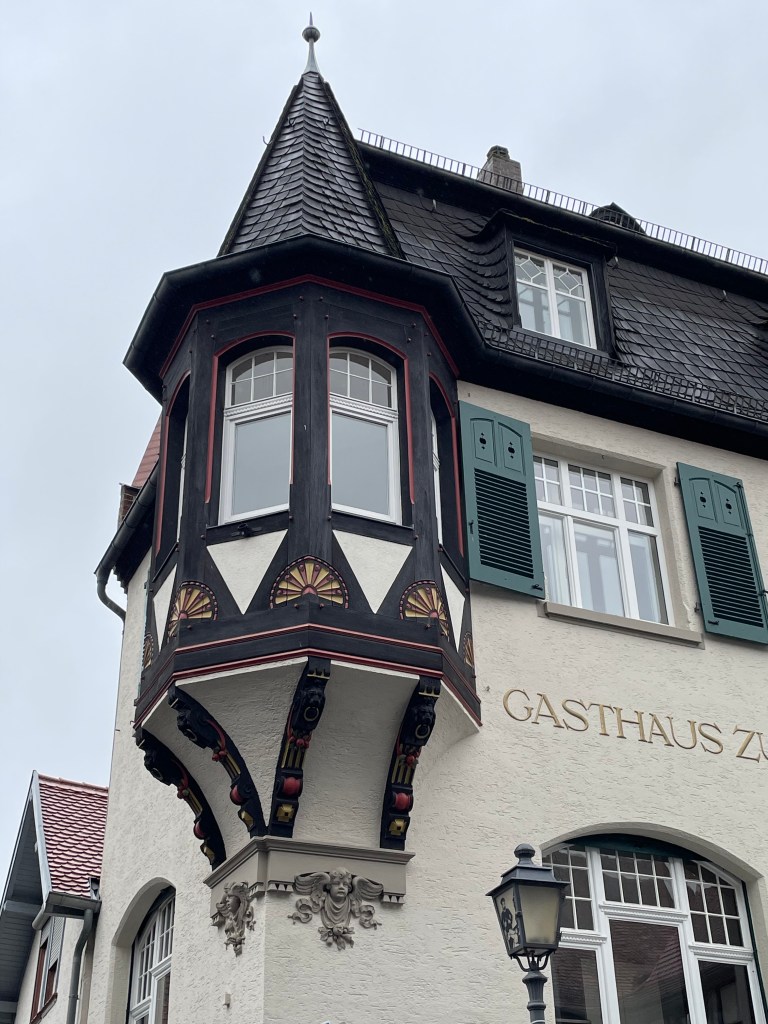
These very old homes are in the heart of town, the former Rathaus or Town Hall and a Gasthaus.  This photo is taken from the old church yard.
The former Rathaus (advice house) was built in 1581.

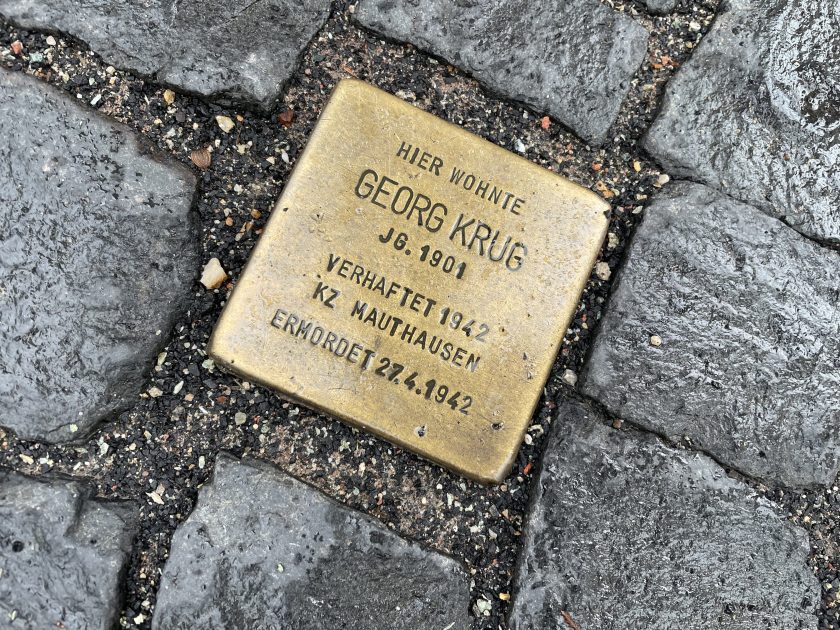
Below the Rathaus we found a “stumbling block,” indicating that Georg Krug lived here.  He was taken in 1842 and murdered in the Holocaust.

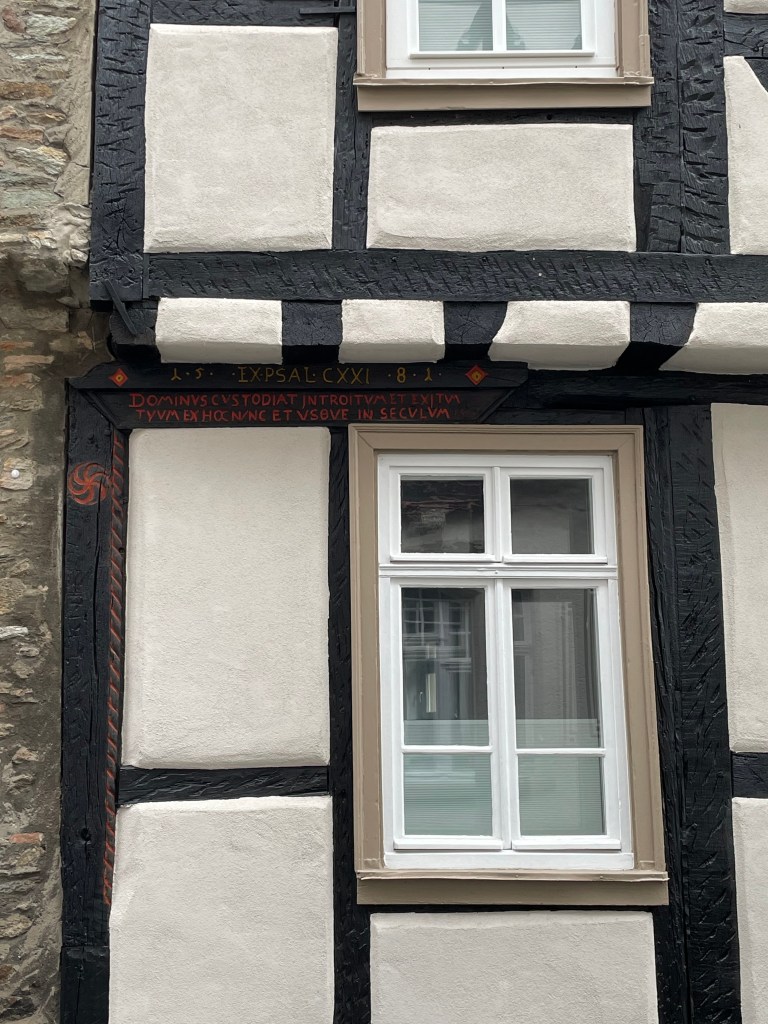
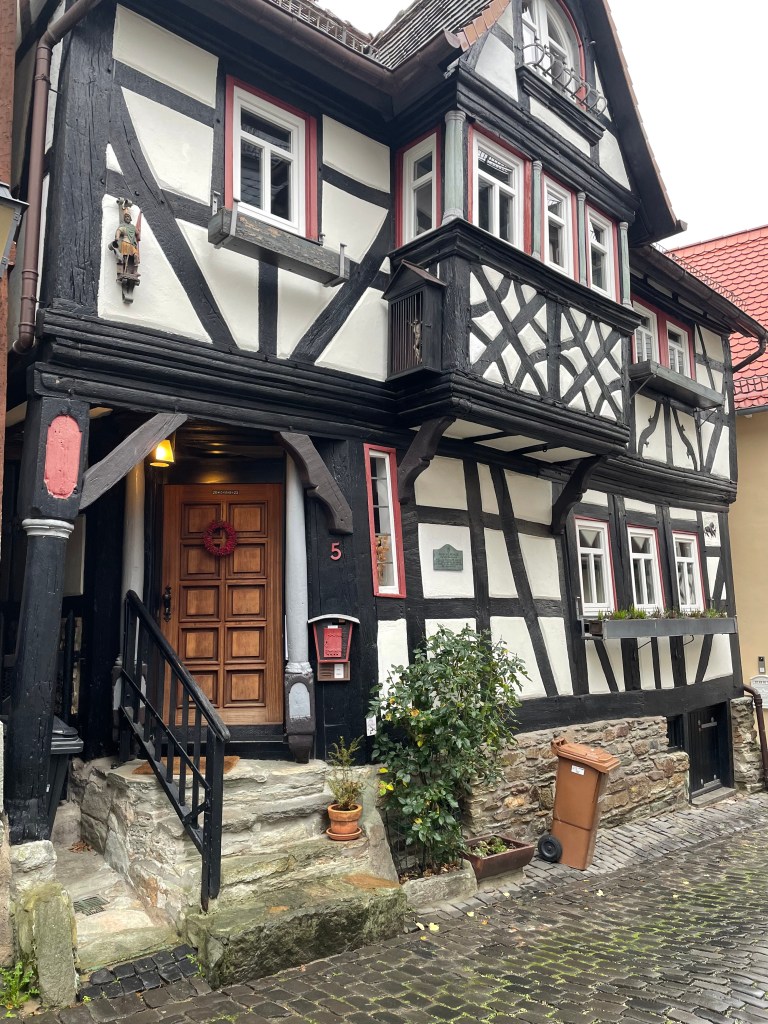
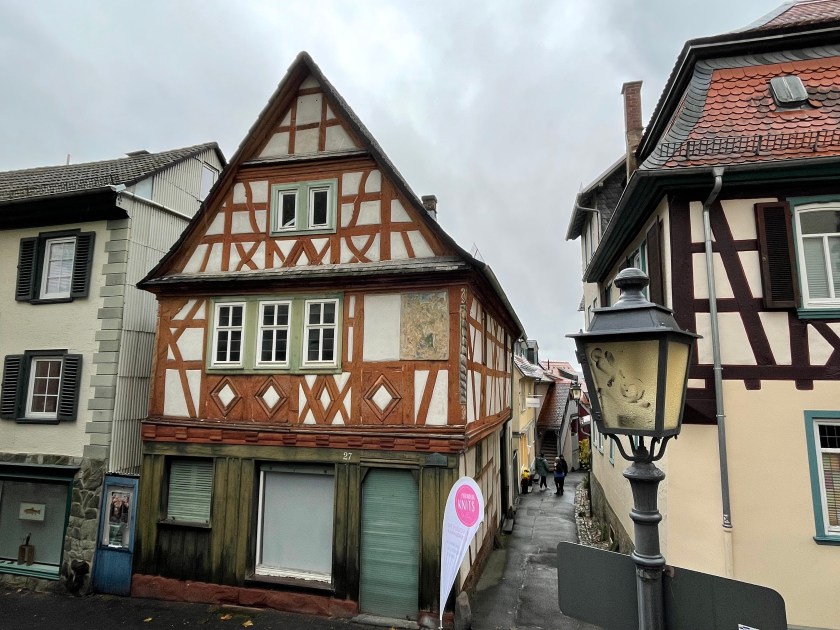
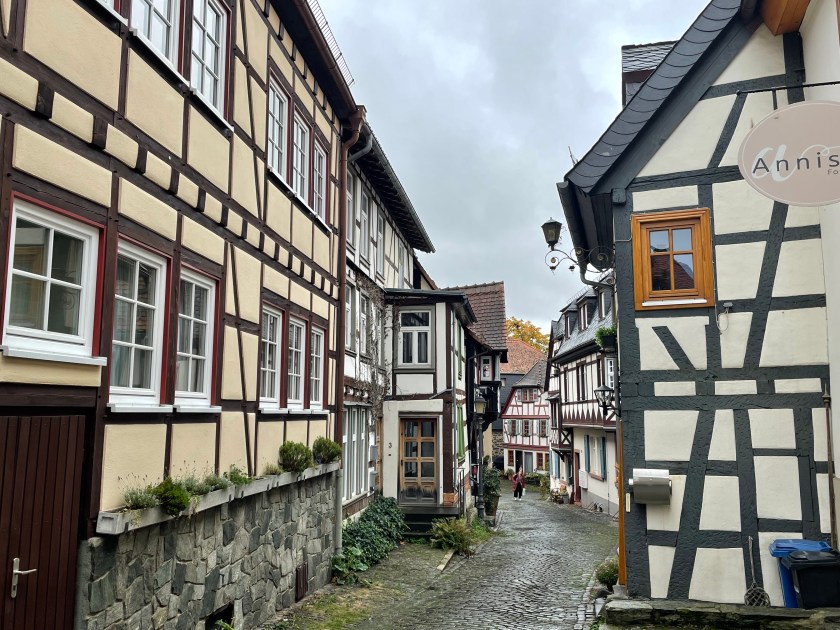
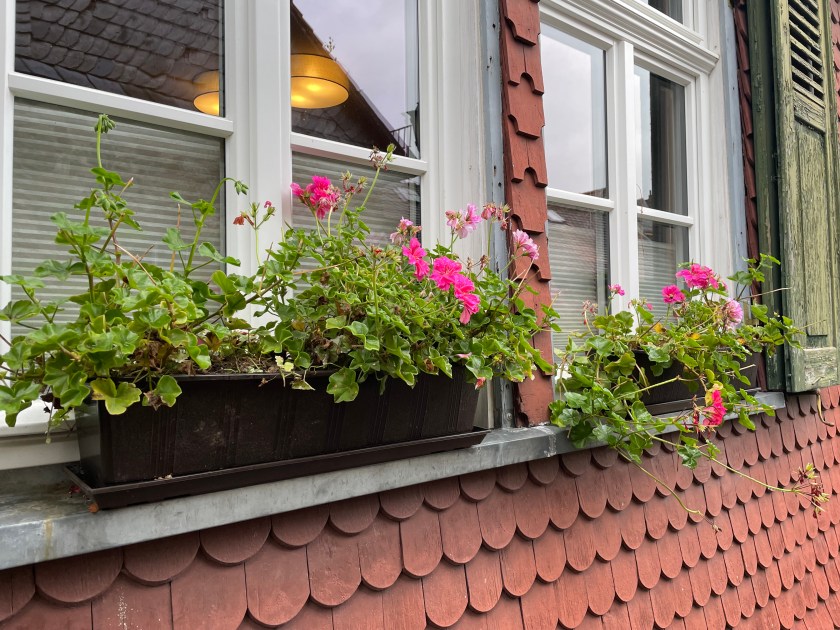
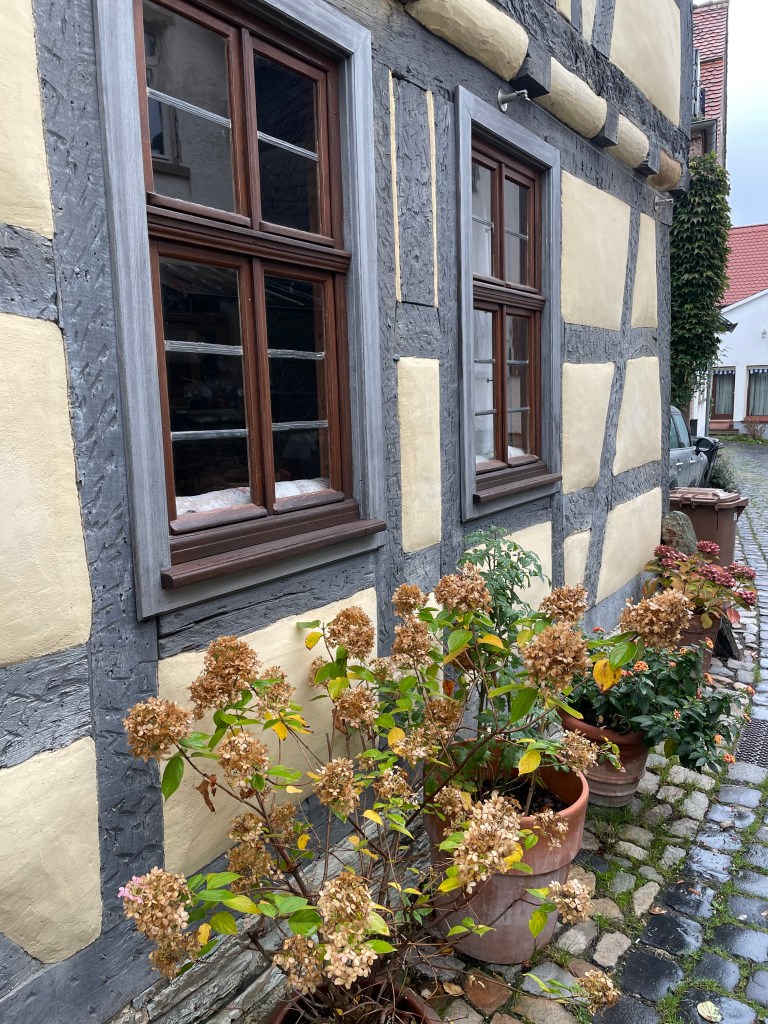
I can’t get enough of these old towns and the beautifully restored VERY OLD half-timber homes. Old Gasthauses and city halls and counsel buildings, now homes and stores. There is such beautiful detail. Every tile of the roof, placed just right. The window boxes, with flowers still blooming. The cobblestone streets. The doorknobs and shutter latches. The pots of plants and flowers on doorsteps and climbing vines covering entryways.

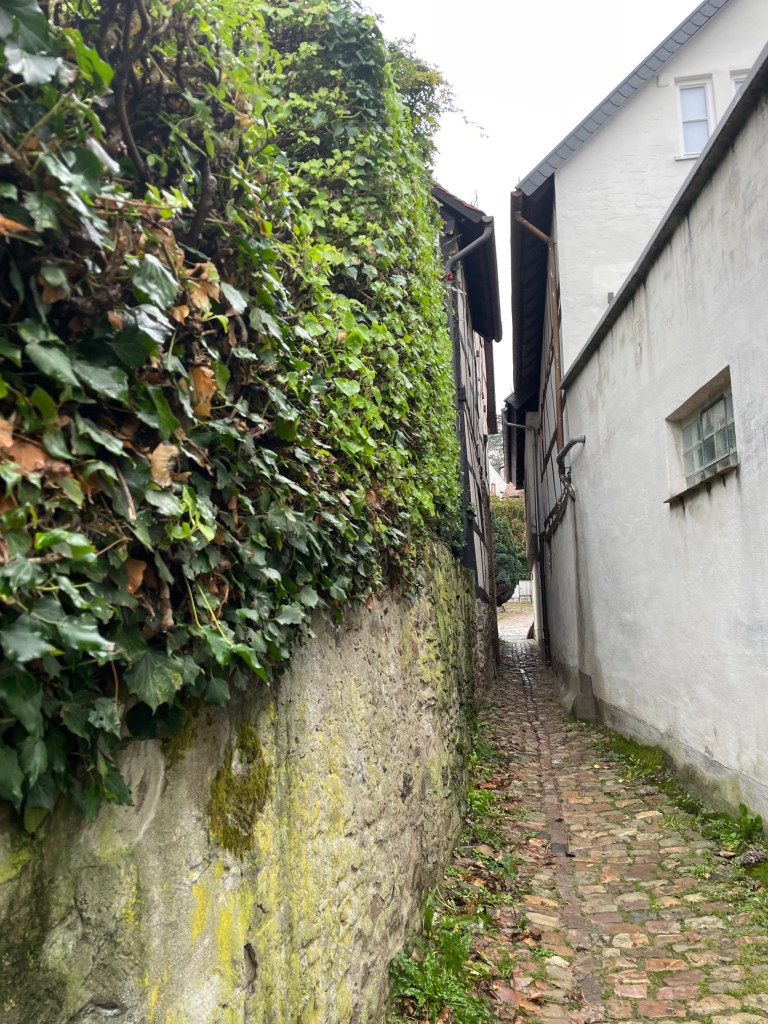
It was really magical, all day long. We took our time and just wandered through the narrow streets, taking it all in. I could live here so easily. The history is incredible. These buildings are 100s of years old.

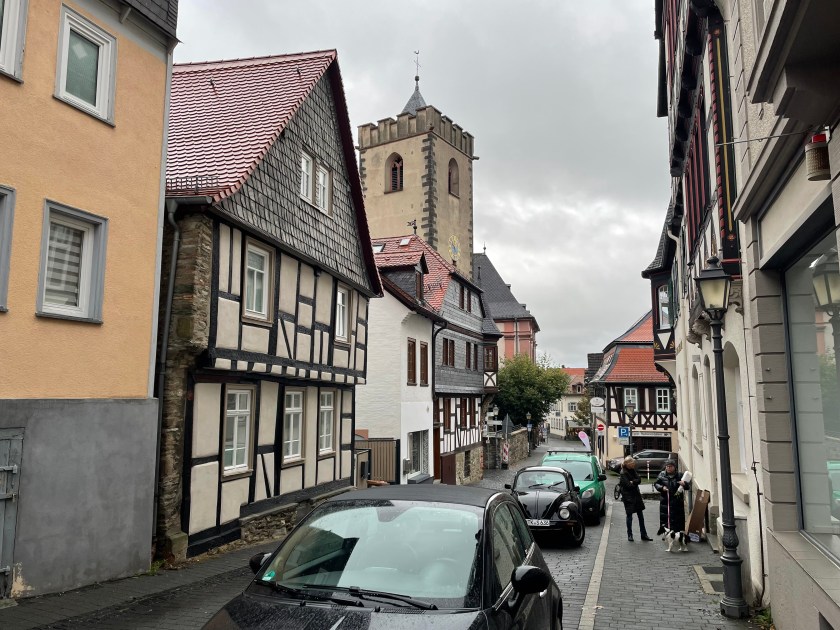
Looking down the street towards the old church.

We learned a lot about Queen Victoria, German Empress and Queen of Prussia who was the wife of German Emperor Frederick III. They married in 1858.  She was the eldest child of Queen Victoria of the United Kingdom and Prince Albert.

Frederick III became the Emperor of Prussia when William I died.  He ruled only 99 days before dying of cancer in his throat.  Queen Victoria, his wife, became the Empress dowager, known from then on as Empress Frederick, named for her husband.

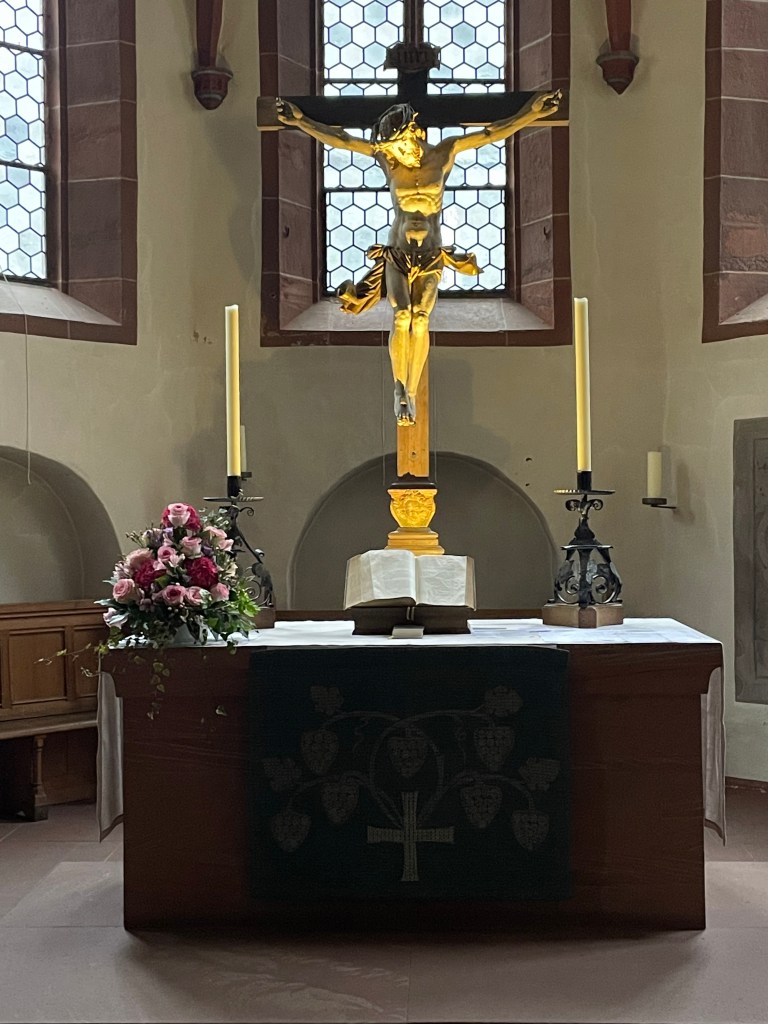
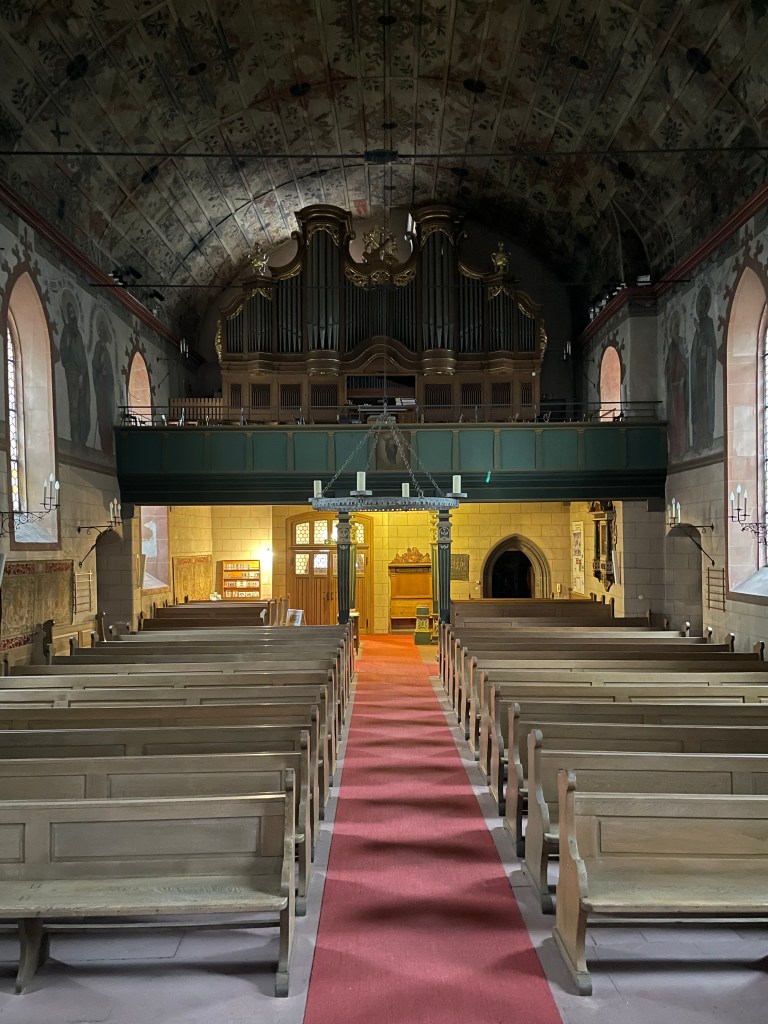
After 1894, she lived out her life in Kronberg, doing many wonderful things here.  With her inheritance, she built a castle that was named Friedrichshof in honour of her husband, which we visited next.  Here in Kronberg in 1898, she completely restored this old church from the 1300s.  It was beautiful, we loved it the moment we stepped into it.

We were very interested to learn that there are regular musical events here, almost weekly.  Kronberg is a community of artists and musicians and you can feel it.  They value these fine things.

Then we walked up the hill to the castle.  We learned that the castle didn’t open until 1:00.  We walked around the grounds, then decided to come back after visiting the Schlosshotel (a 5 minute drive away) where Victoria lived.  That splendid place will be featured in my next post.

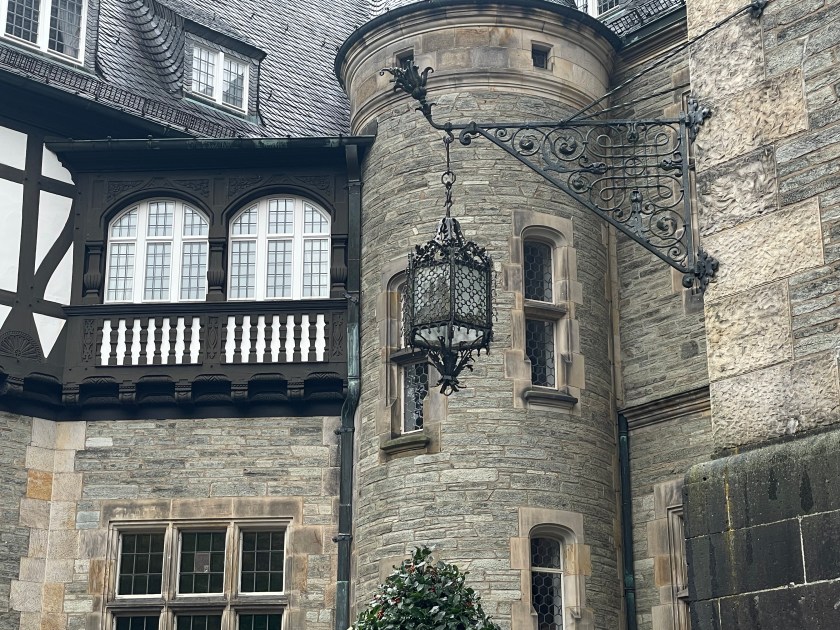
Here are a few more pretty things from our walk back through town and to the car: