
We drove from Dettingen through more small towns and more (now German) countryside to Donaueschingen. This was another town John selected to visit today. It known as being the source of the Donaubach in (historically considered the source of the Danube).
Wikipedia: Donaueschingen is a German town in the Black Forest in the southwest of the federal state of Baden-Württemberg in the Schwarzwald-Baar Kreis. It stands near the confluence of the two sources of the river Danube. Donaueschingen stands in a basin within low mountainous terrain.

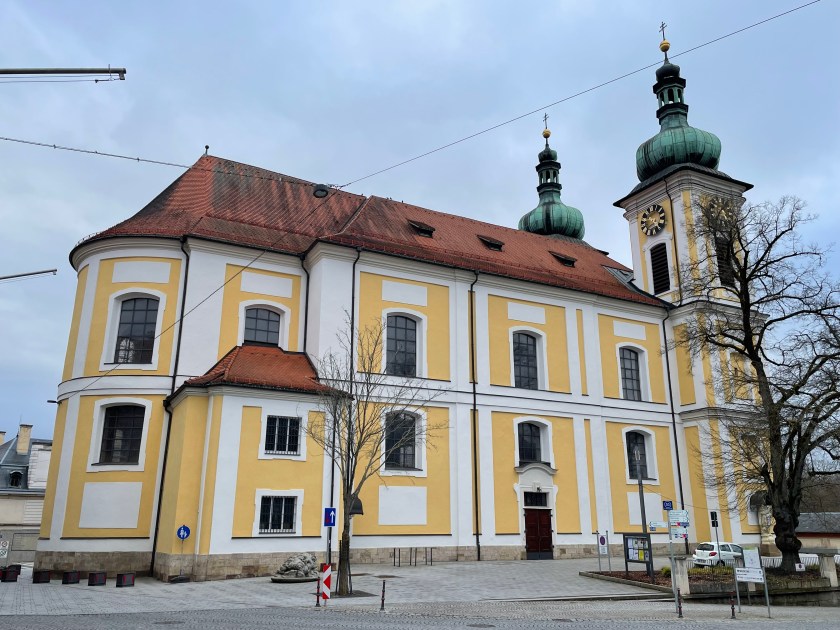
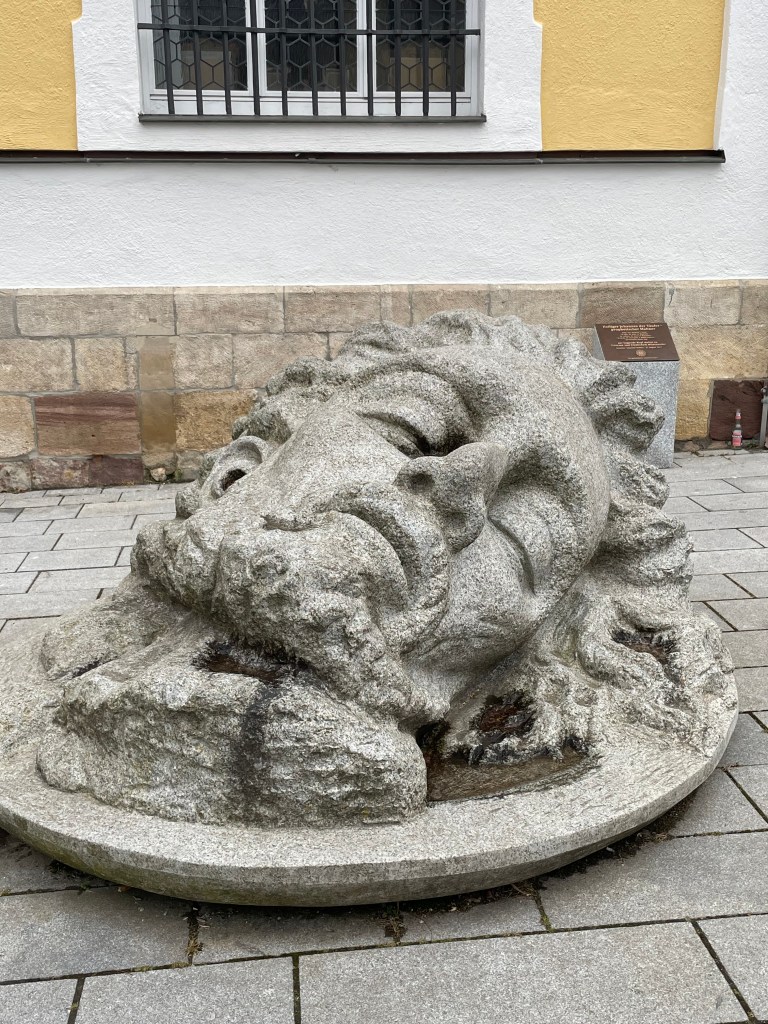
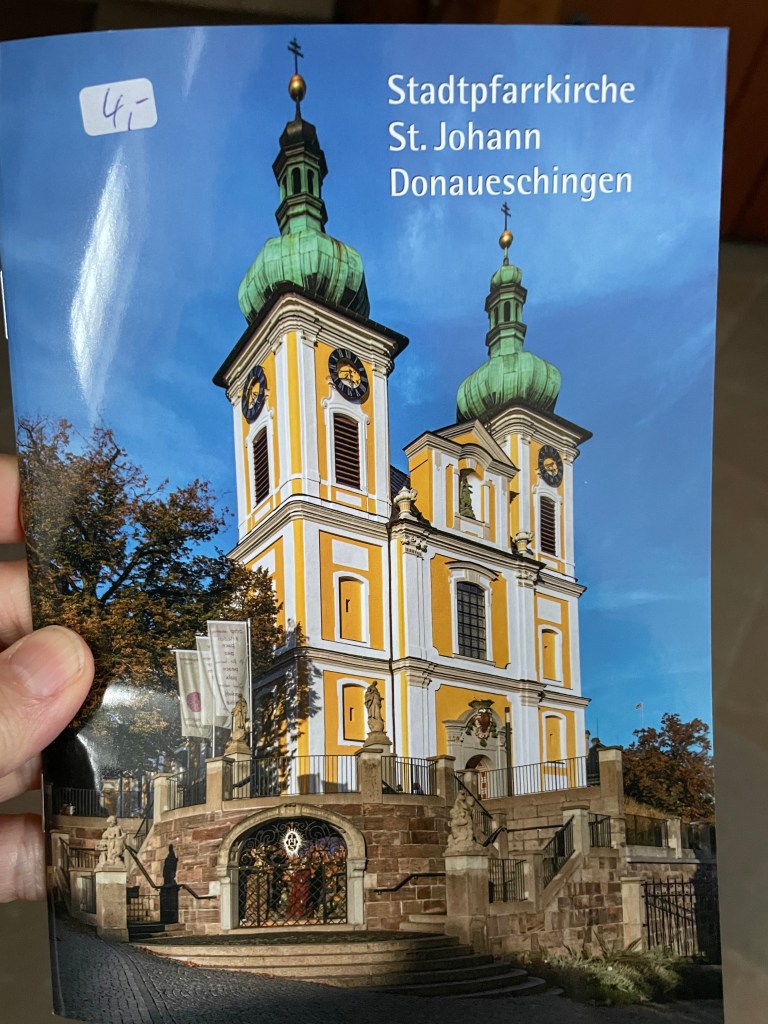
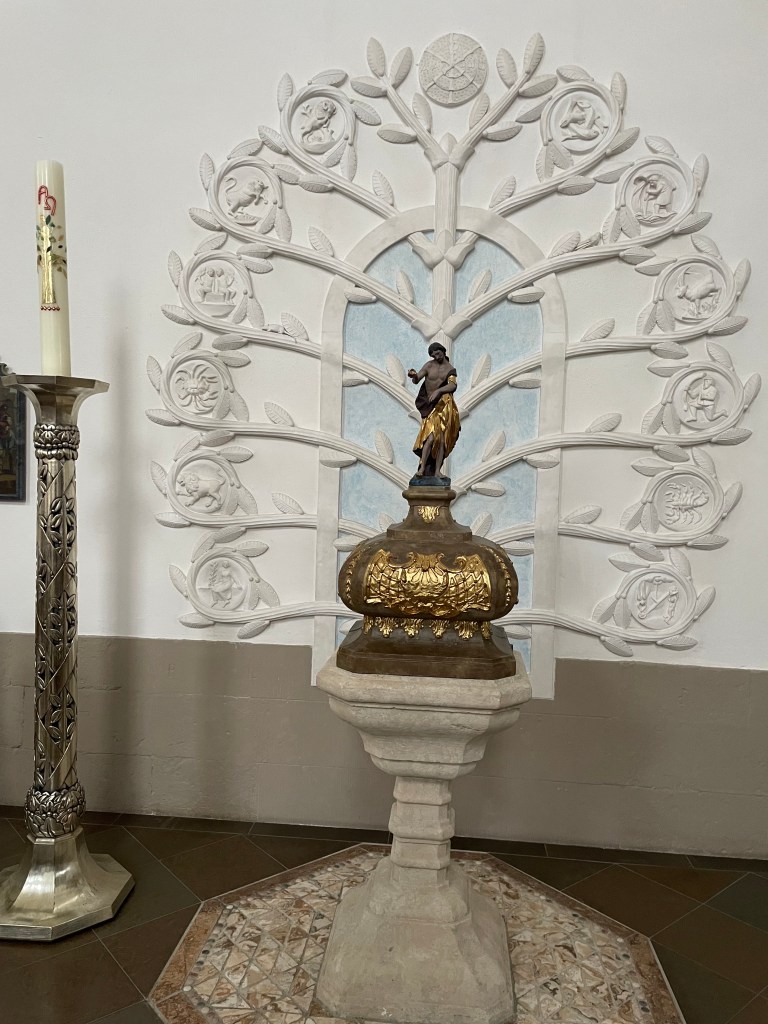
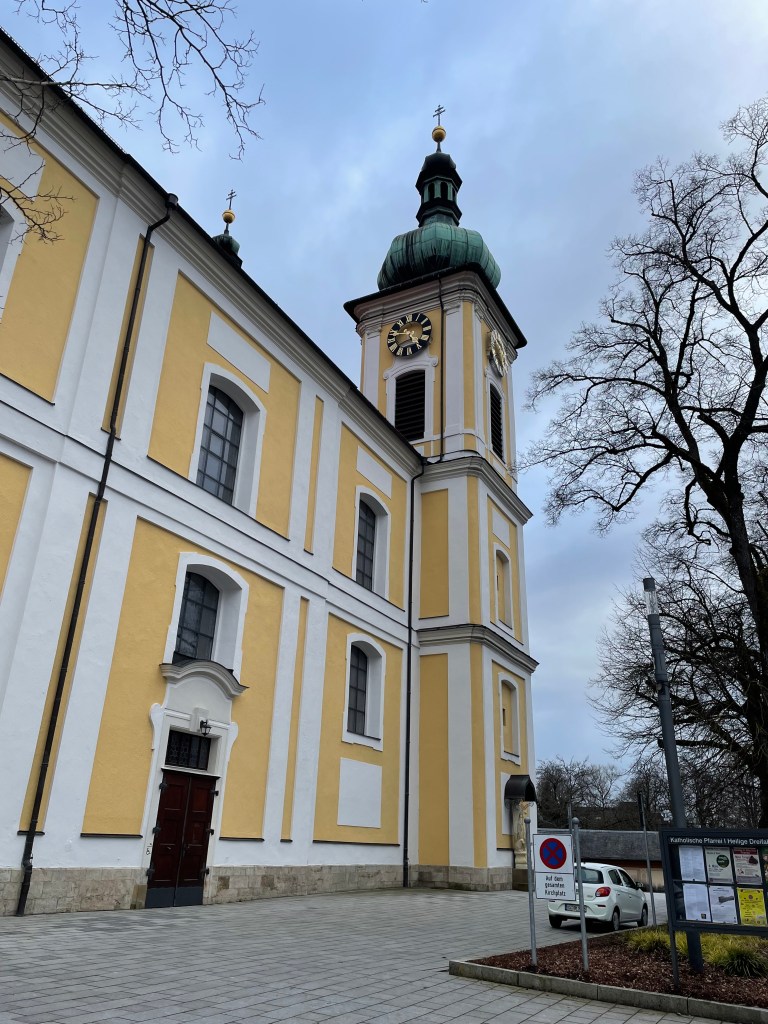
There was a big yellow onion-spired church (St. Johann) named after John the Baptist, near the Quelle (source) of the river. There was a sculpture of the Baptist’s head out front.

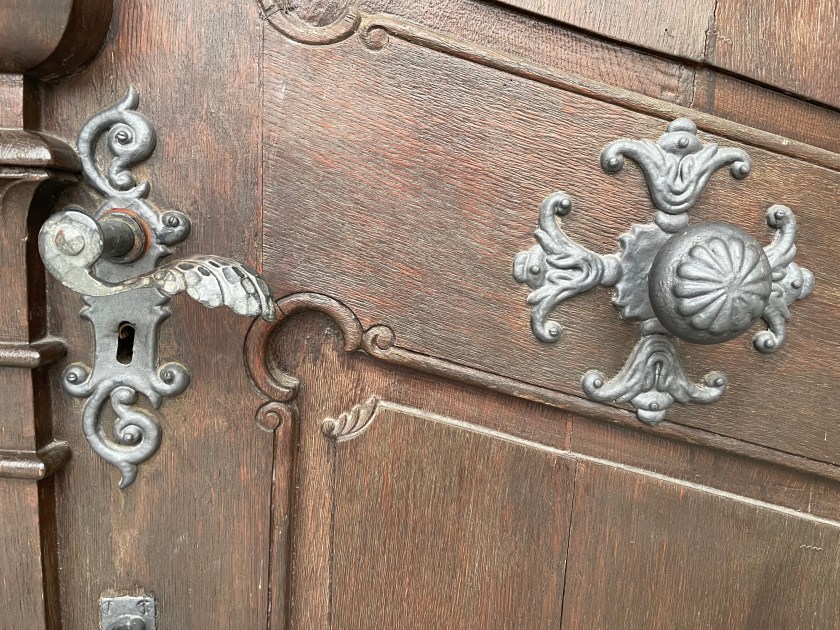

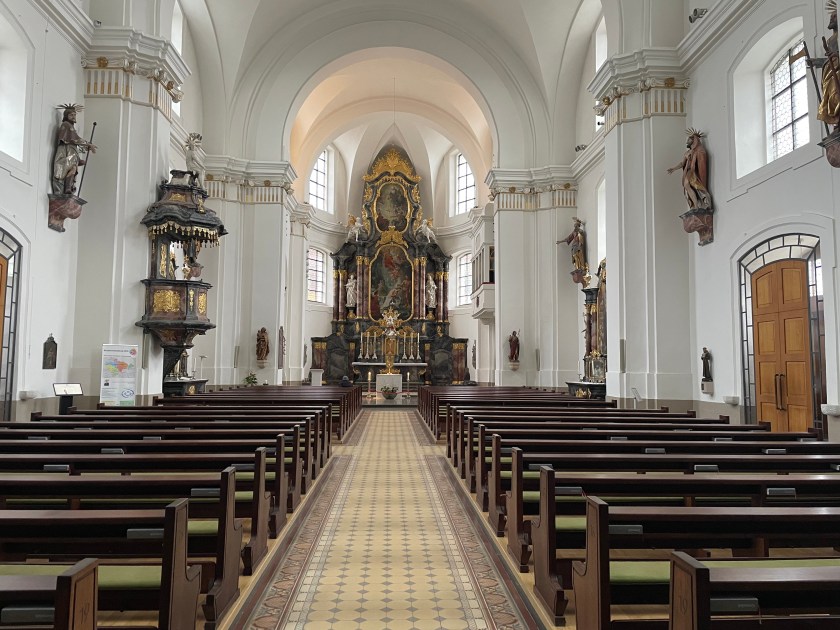
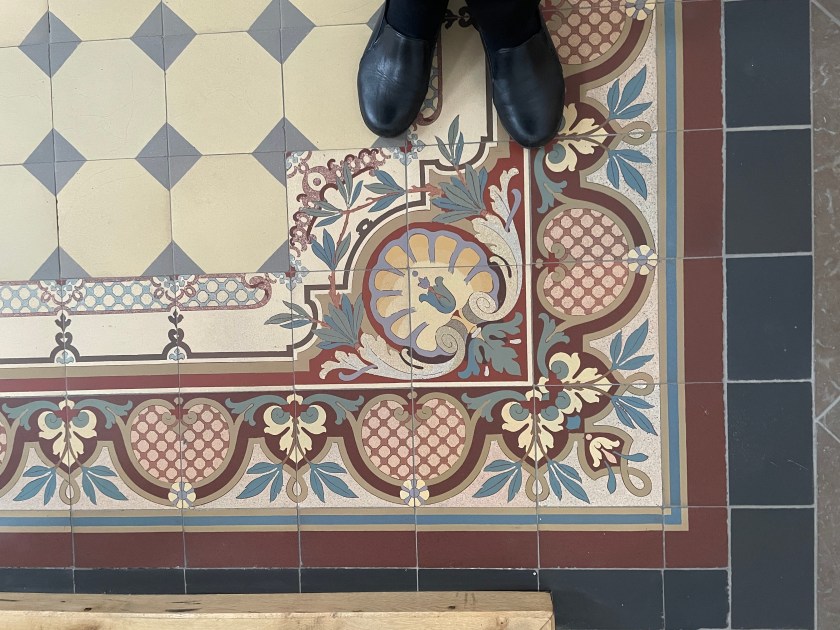
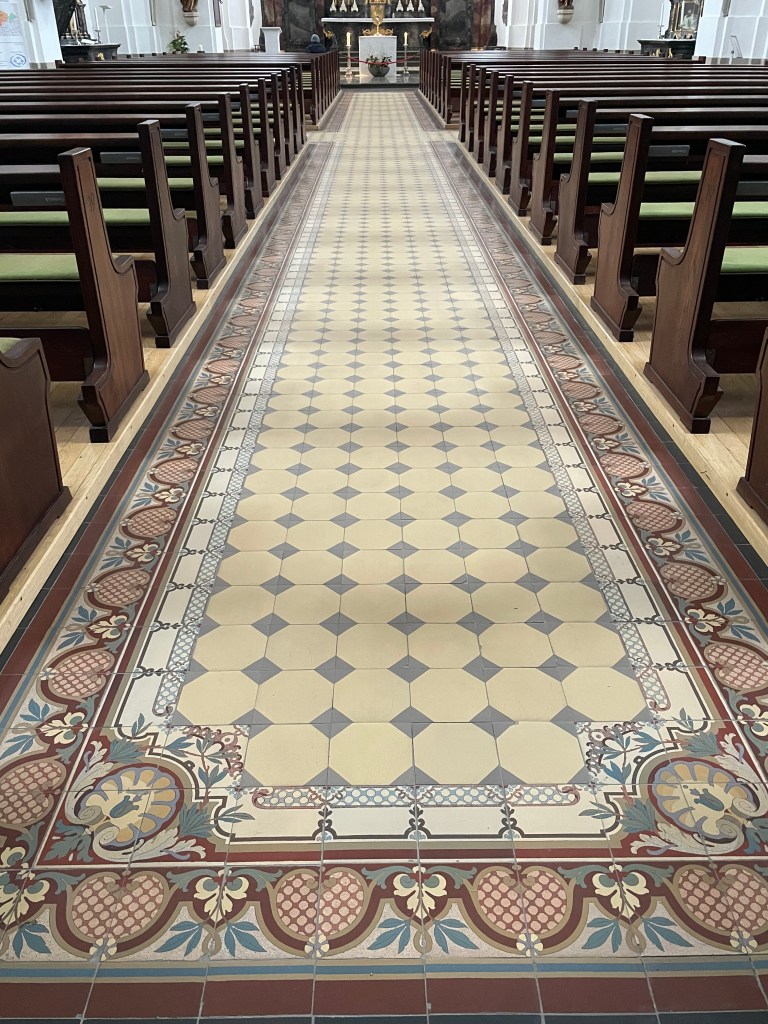
The floor is beautiful.

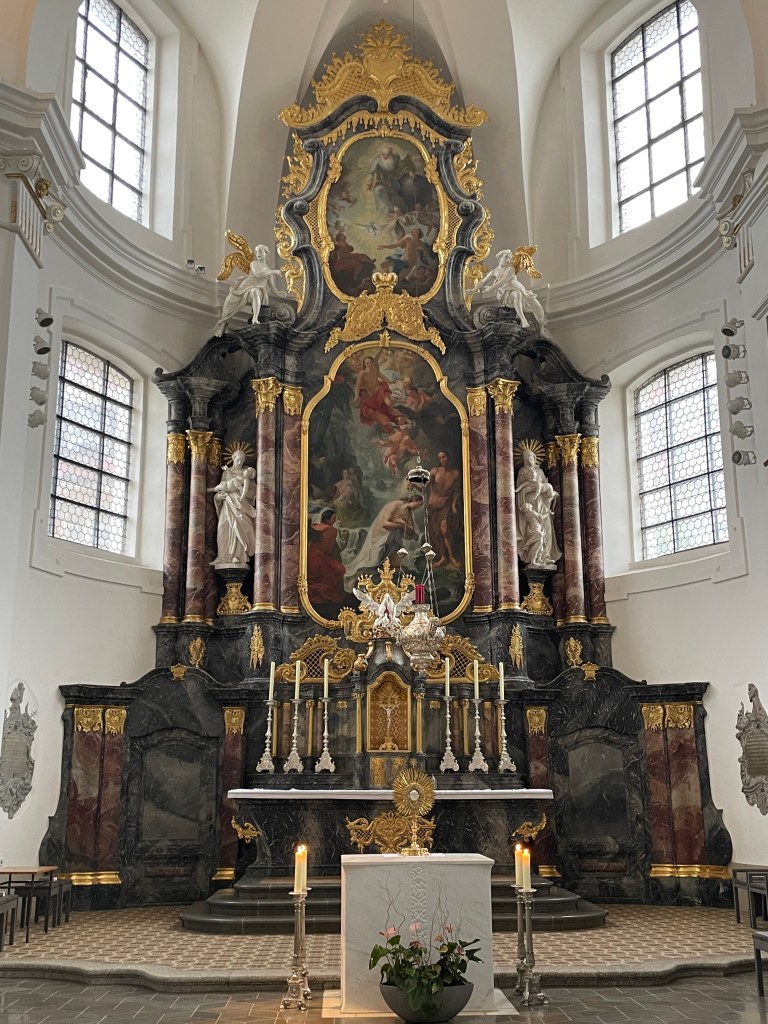

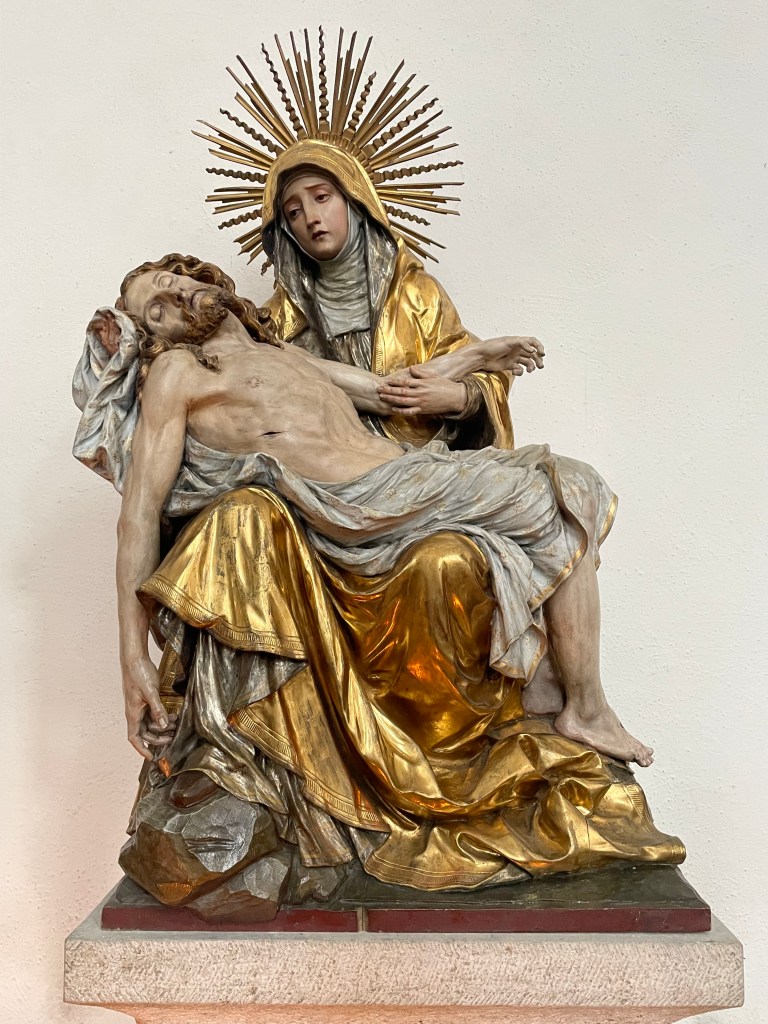
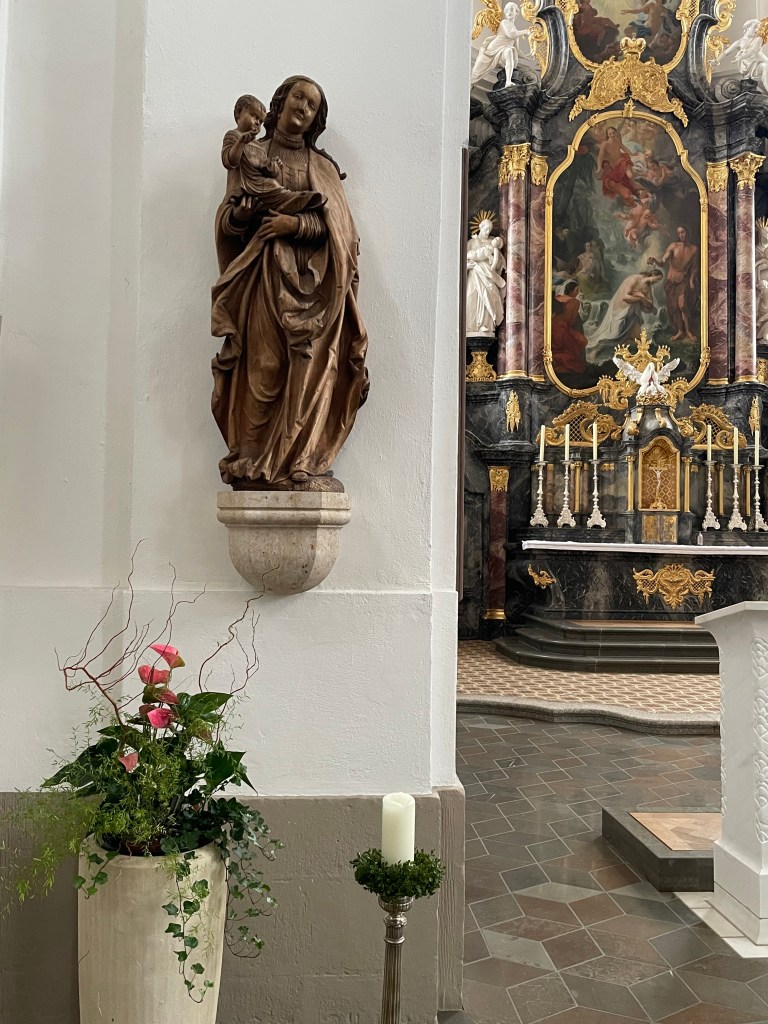
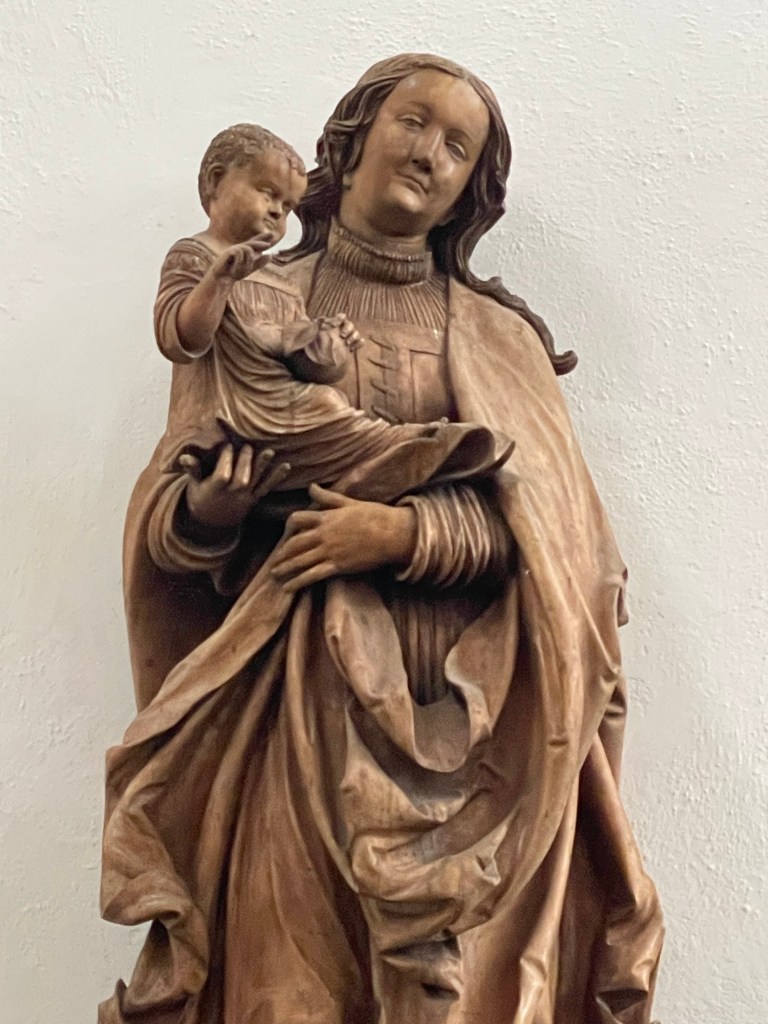
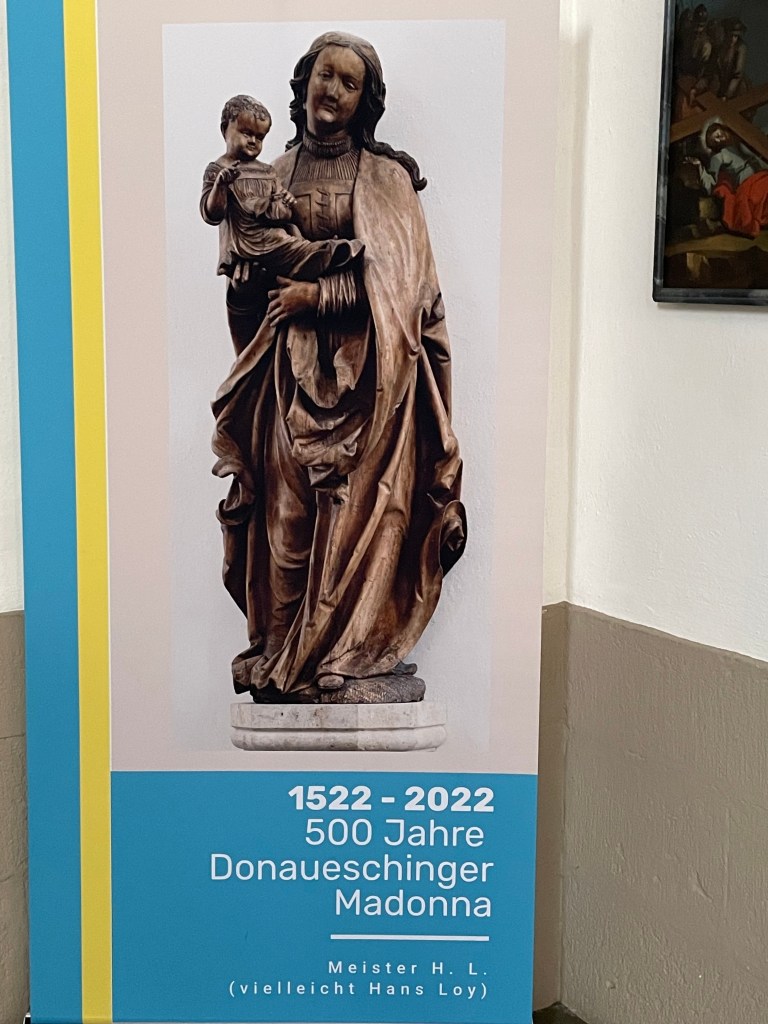
Inside the church is a beautiful life-sized 500 year-old wood carved Madonna and Child sculpture.

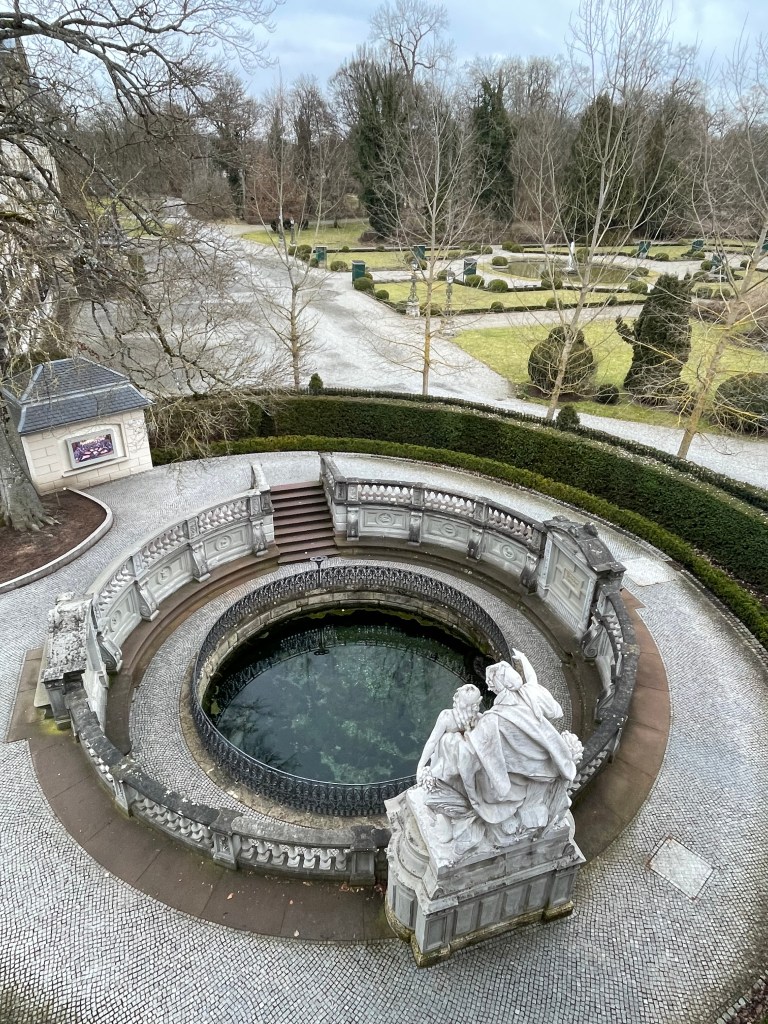
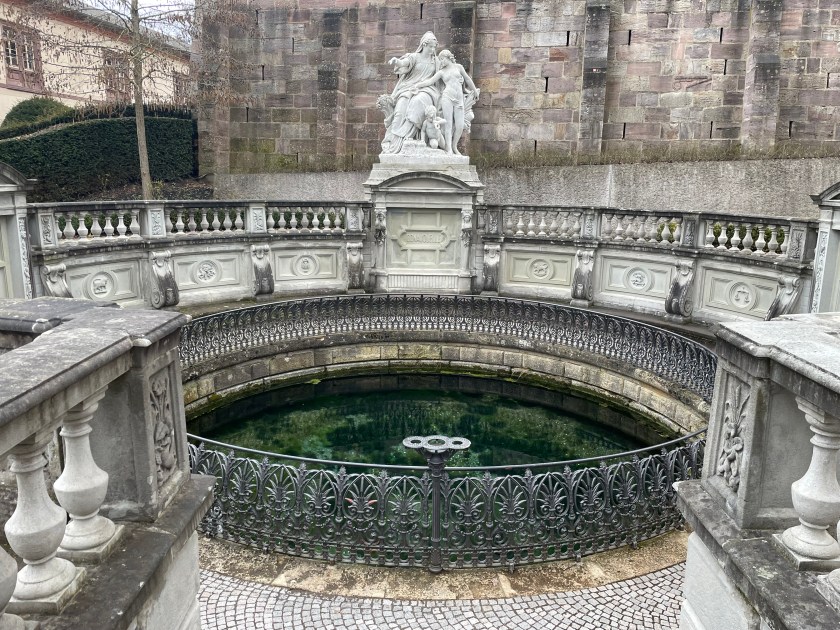
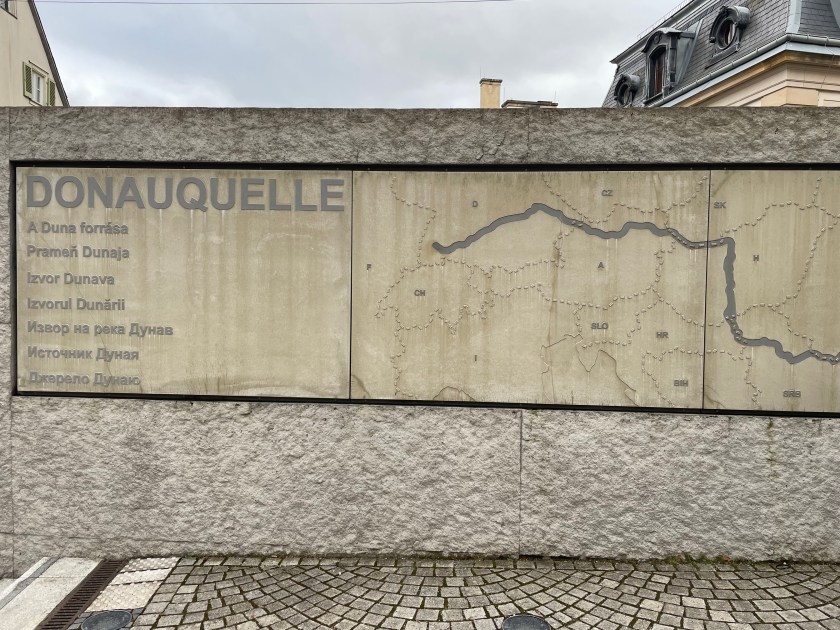
Outside, we went down several flights of stairs to the Quelle where the water was bubbling up from the ground. There are several underground springs that come up and they consider these the origin of the Danube River.
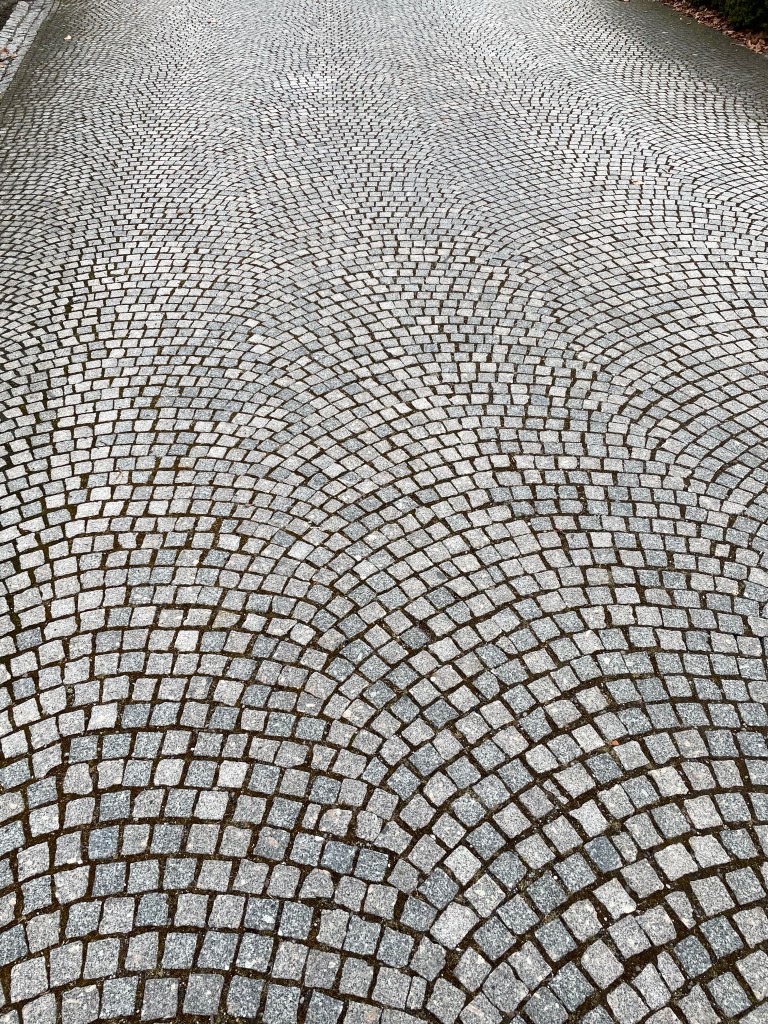
Beautiful cobble stones:

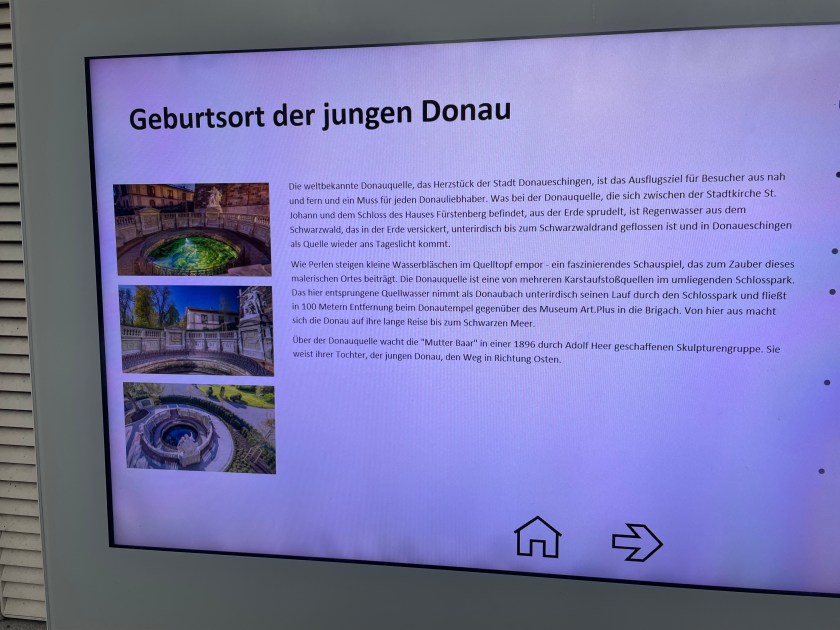


Here’s how the town is situated:

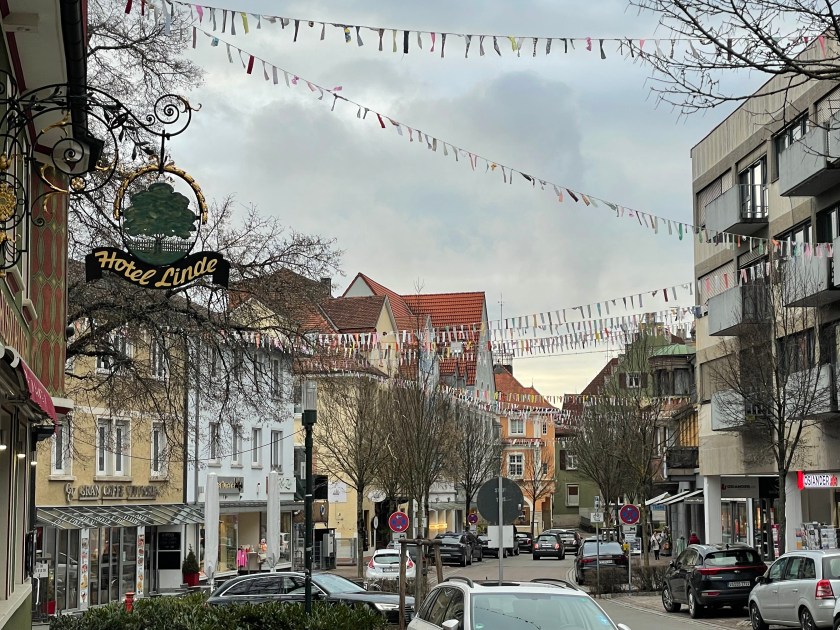
Then we walked into the town center, which was quite festive as Karnival approaches.
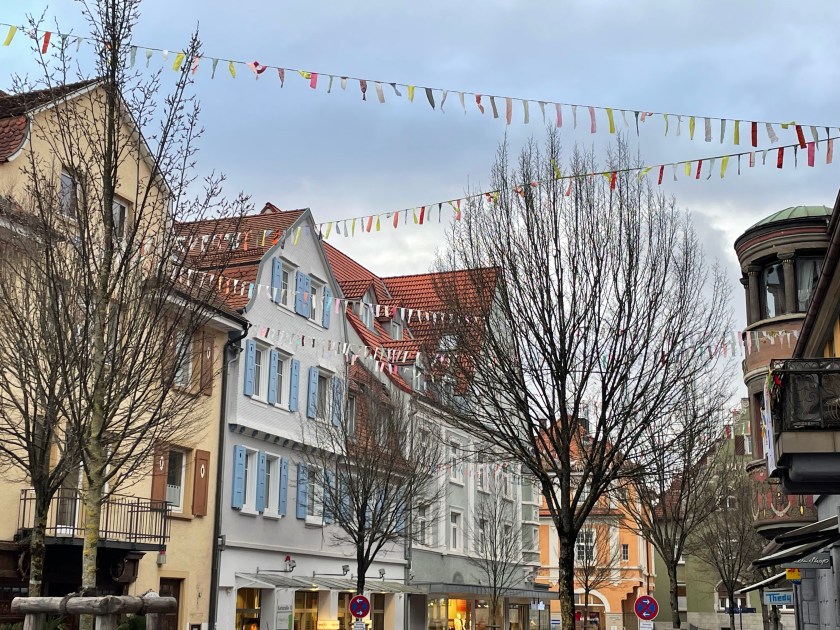
We stopped at the Tourist Info office and got a walking map and took a walk around town. Everyone here in these towns is setting up for Karnival or Fasnacht/Fasnet. There are banners hanging in all the towns, draped back and forth across the streets. Fabric strips about 3-4″ wide by about 12″ long hang from the banners/ropes and decorate streets everywhere. Town squares are also criss-crossed with these hanging banners of fabrics.
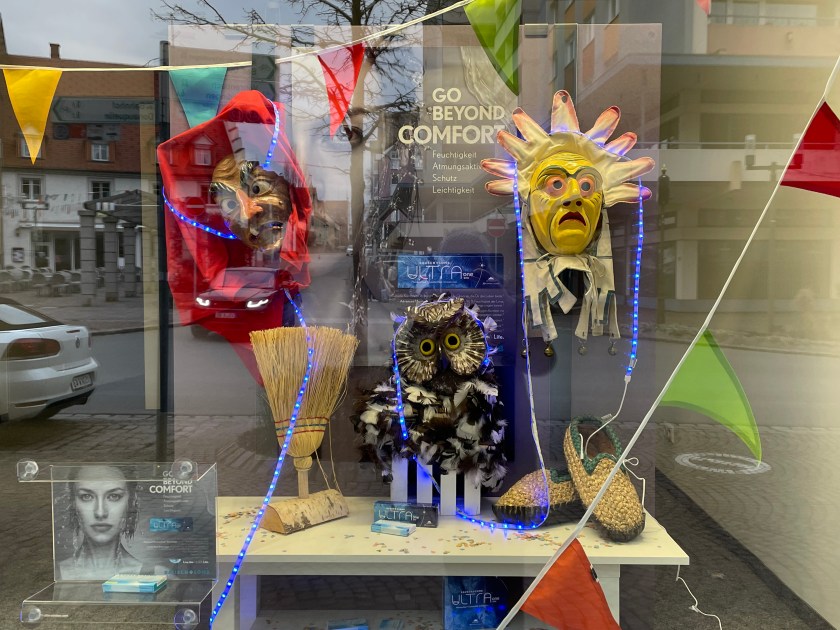
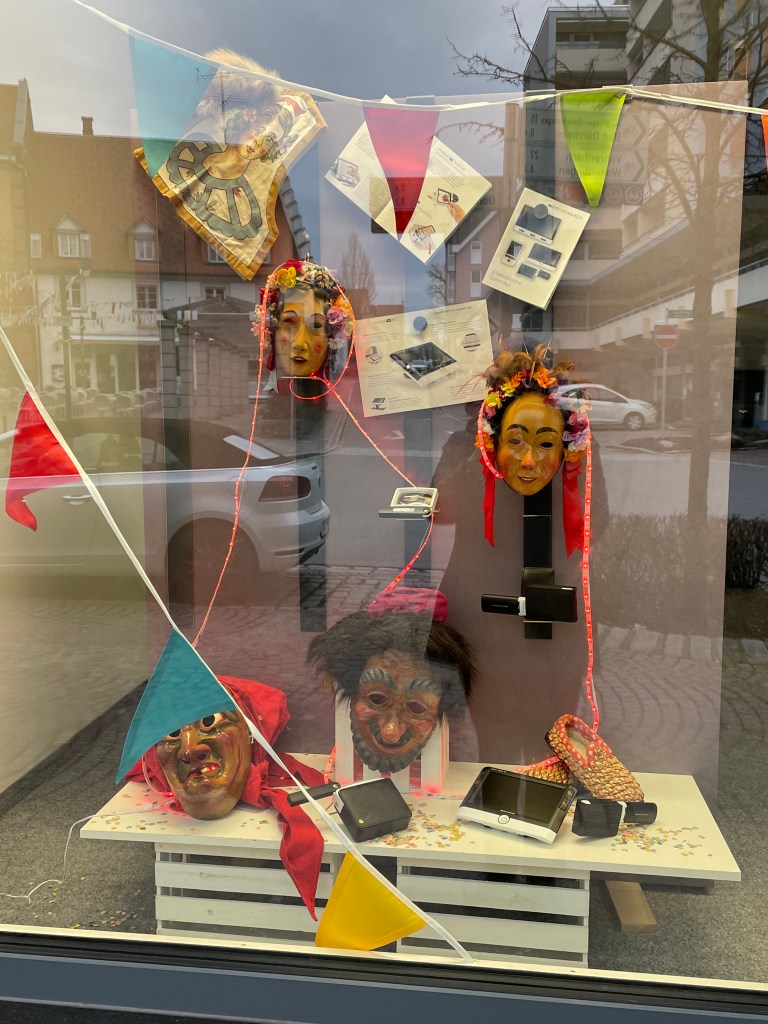
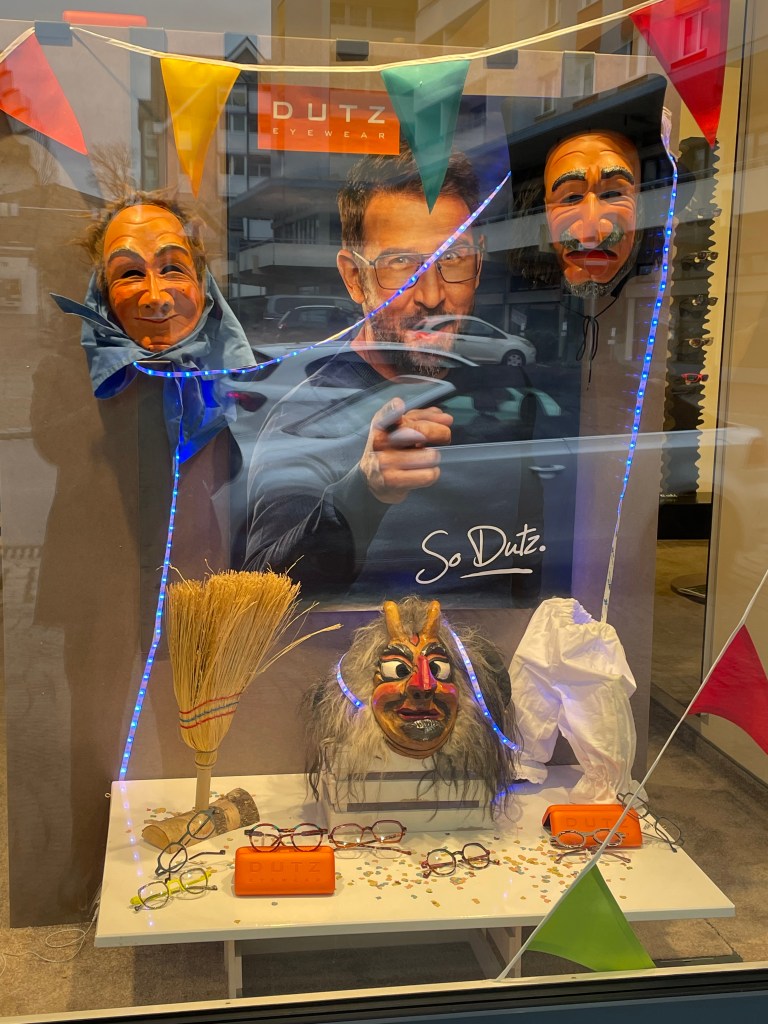
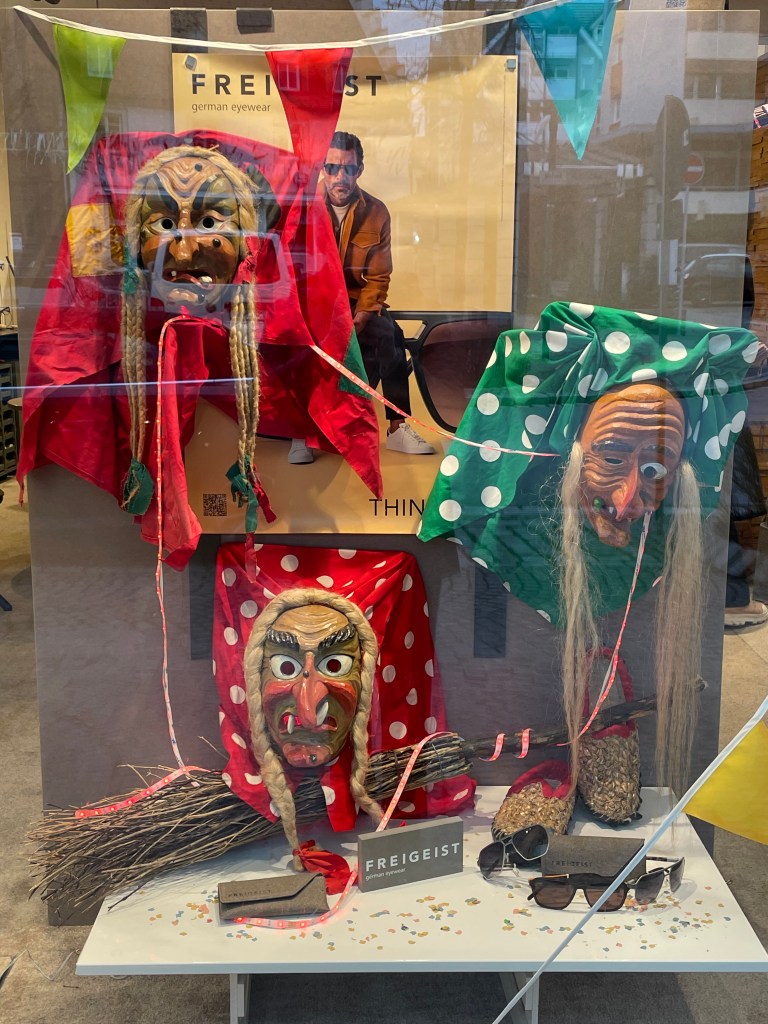
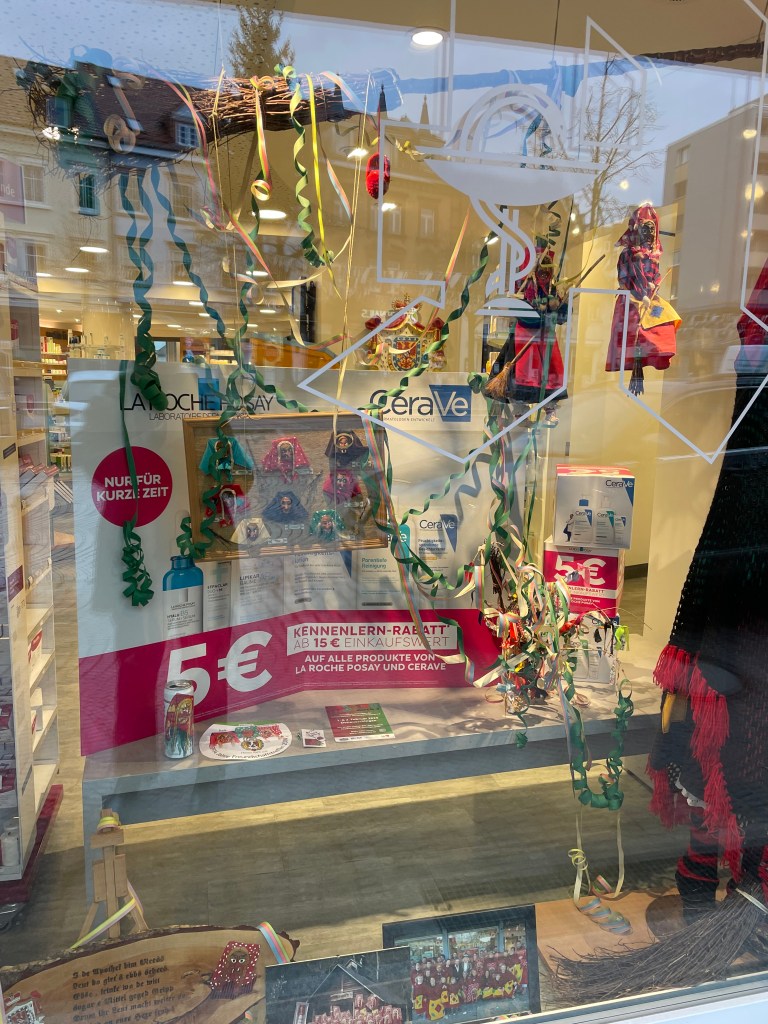
The Fastnacht theme here seems to be “the Fool, or “Narro.” The German word for fool is Narr. Shop windows are filled with scary masks and costume faces and witches and fools. The celebrations begin this week. It’s as big as Halloween at home with lots of masks and costumes and fun.

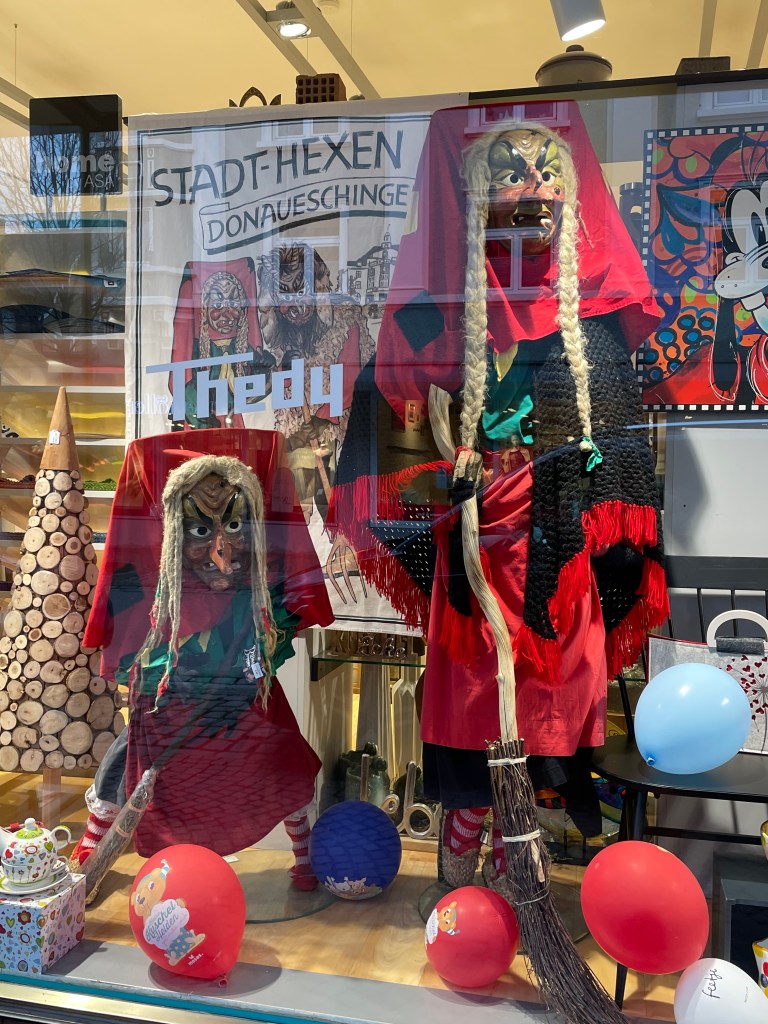
These photos of the shop windows aren’t great, but they give you an idea of the Karnival decor.





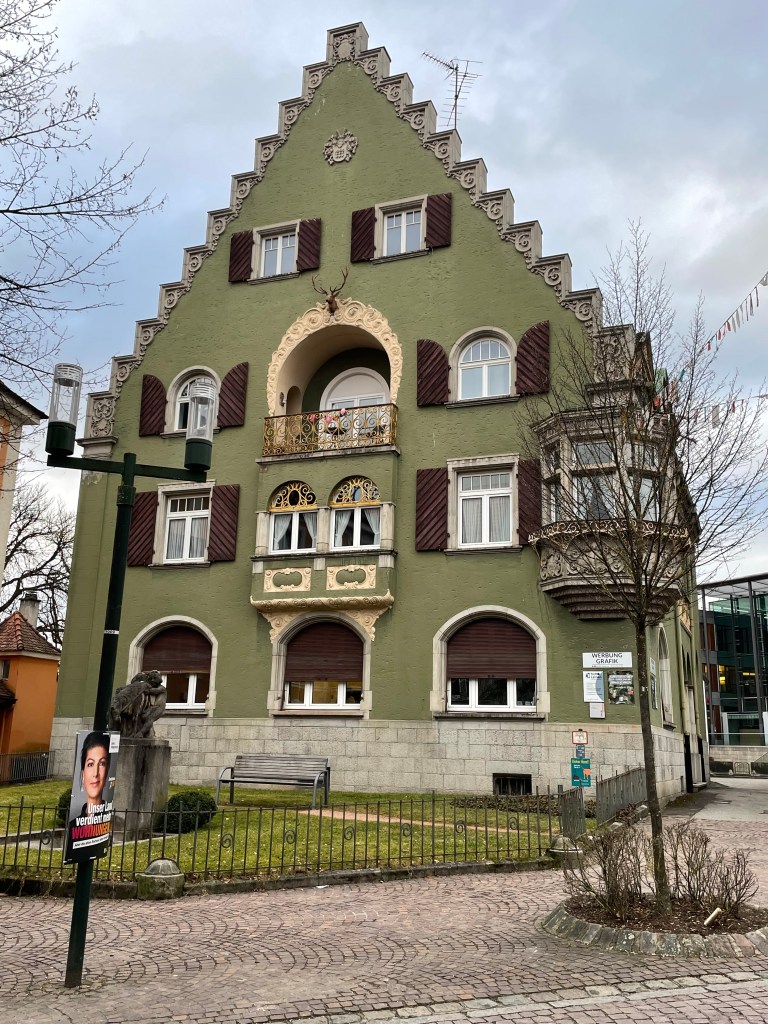
This is the old Town Hall.
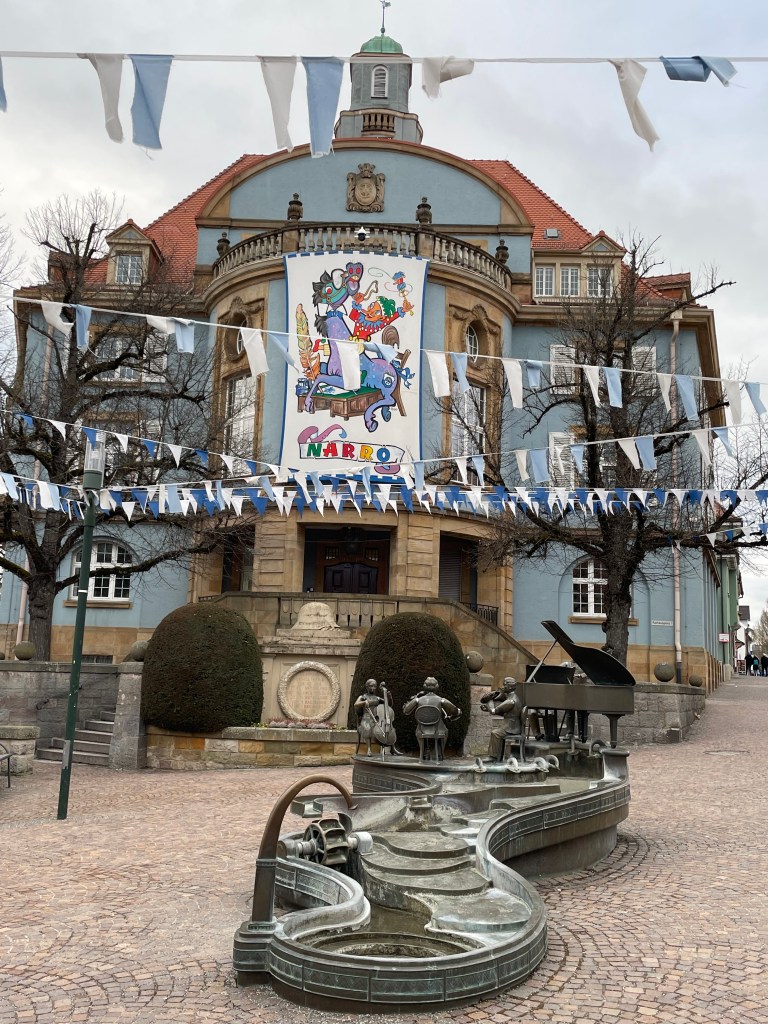
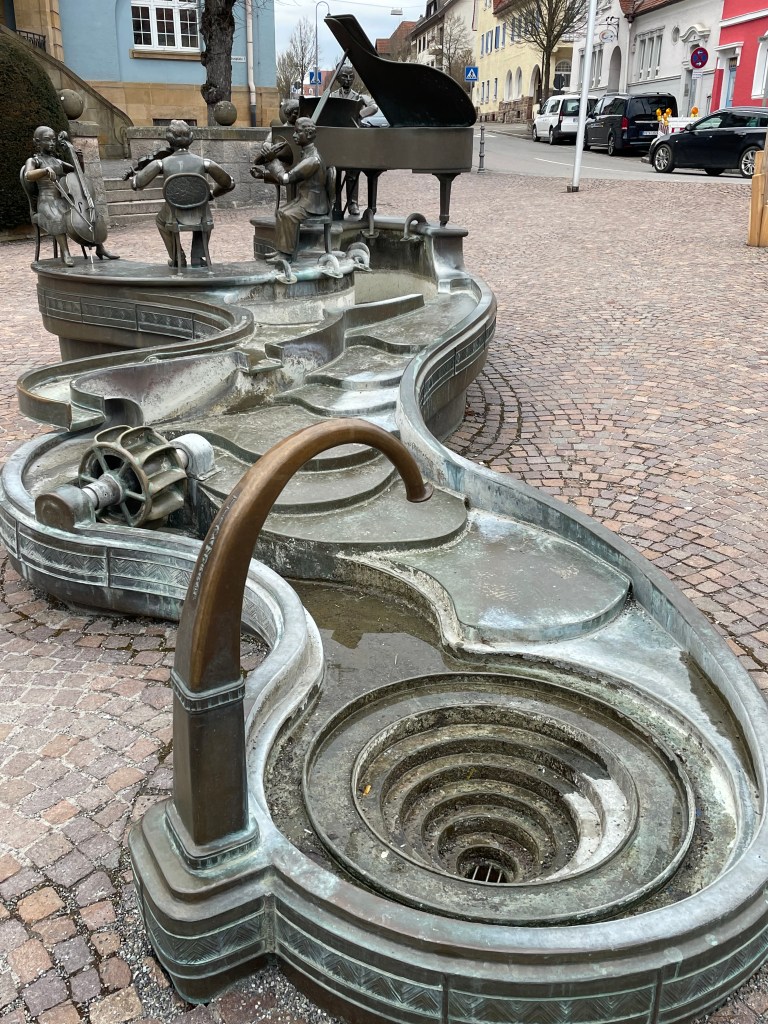
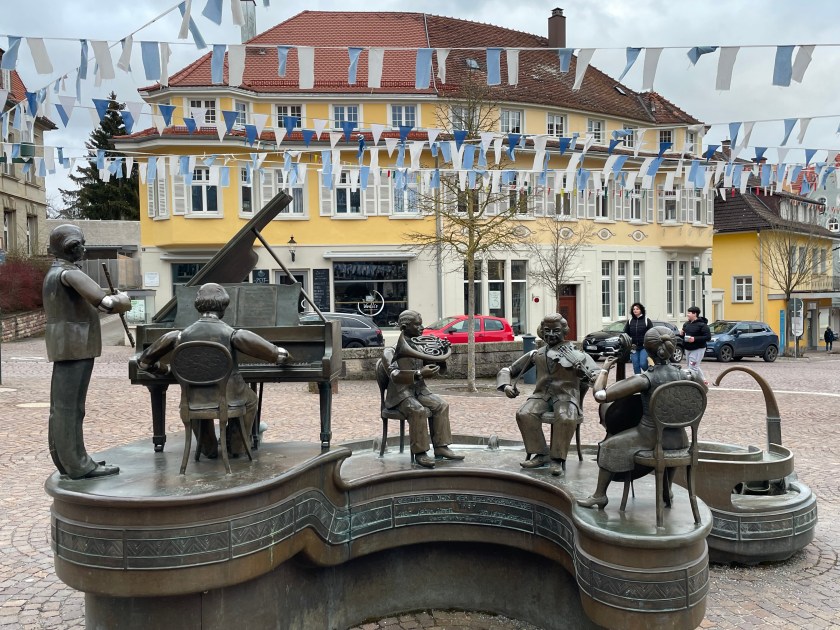
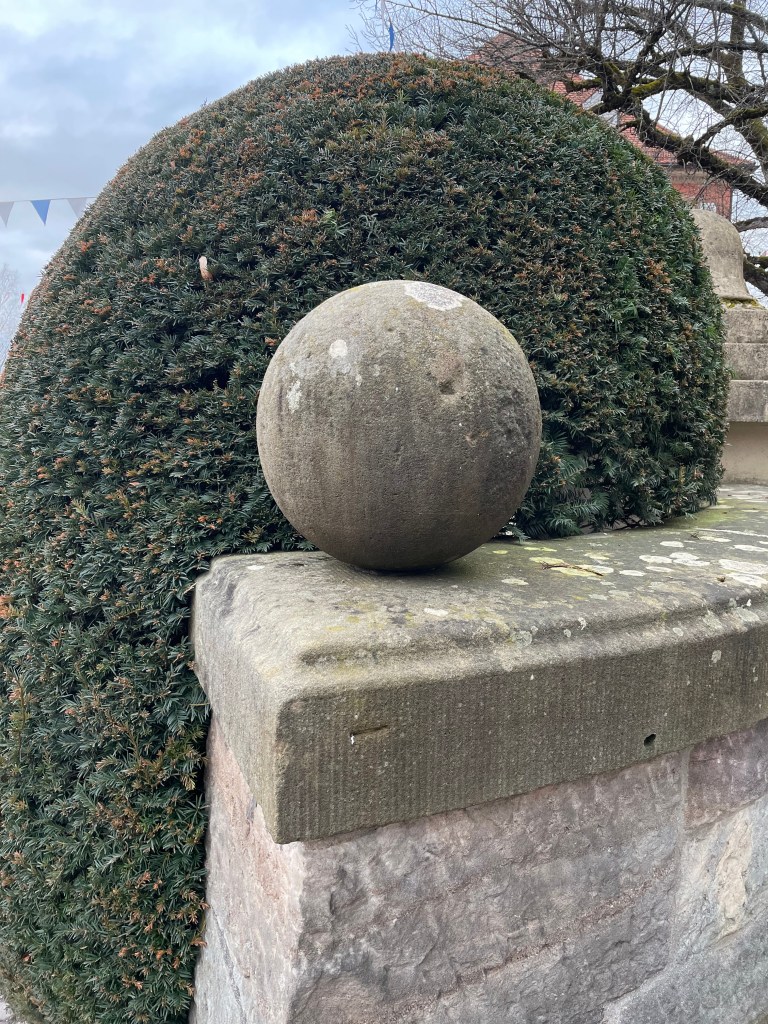
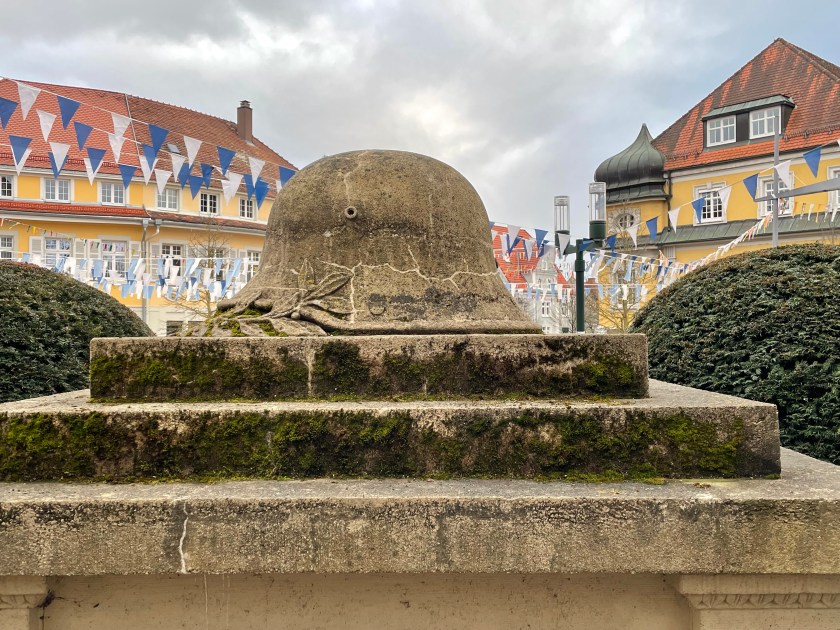
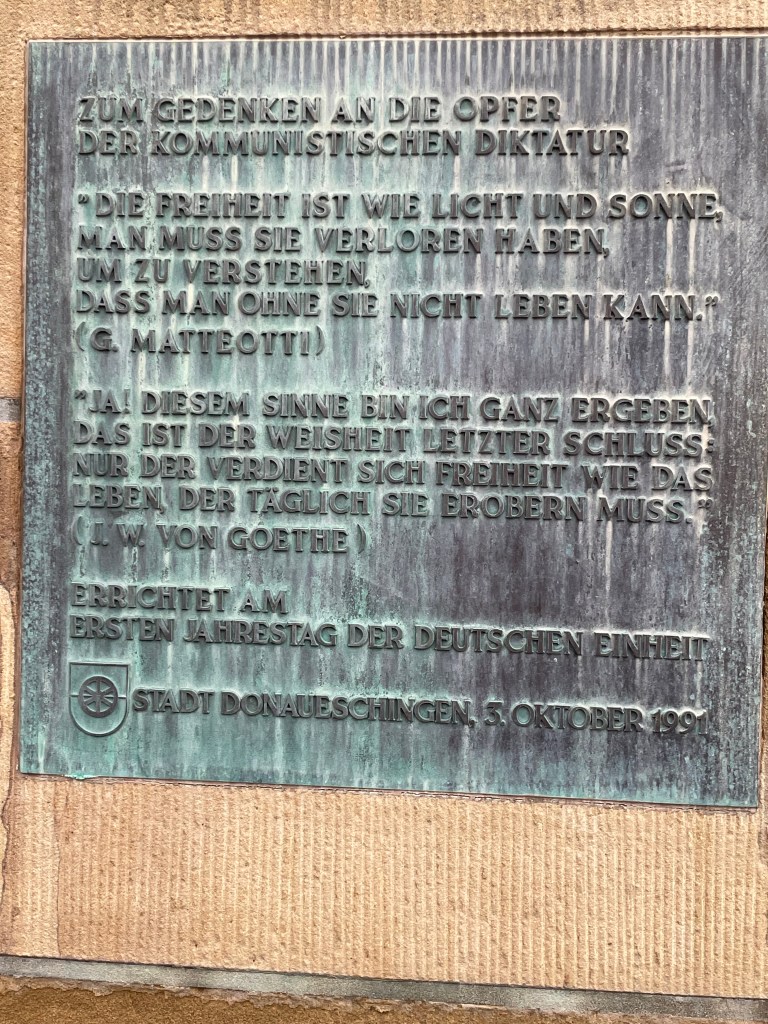
A memorial for those who died in the war.

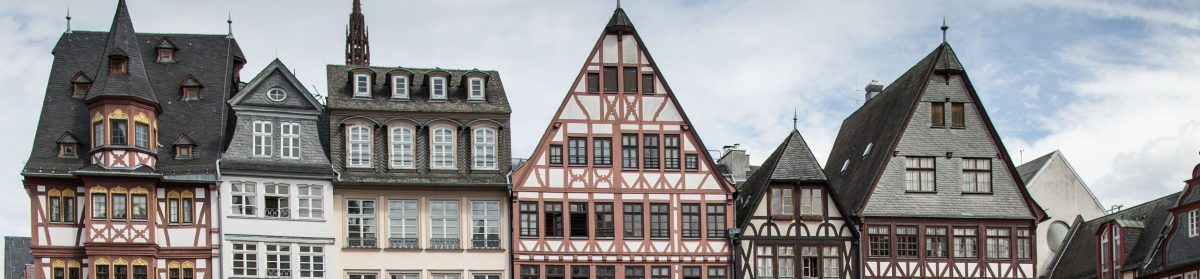
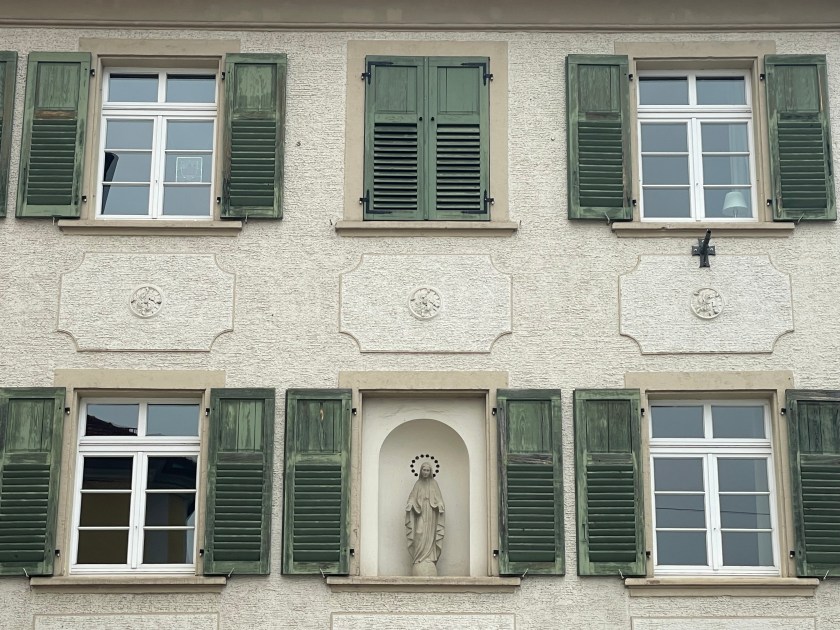
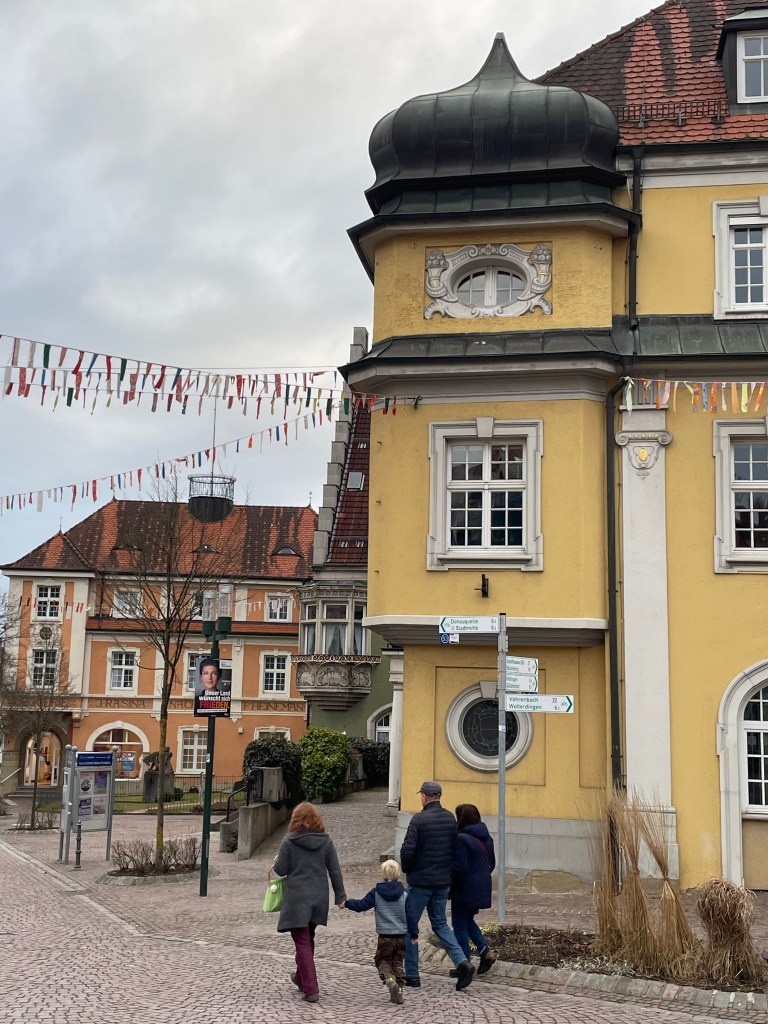
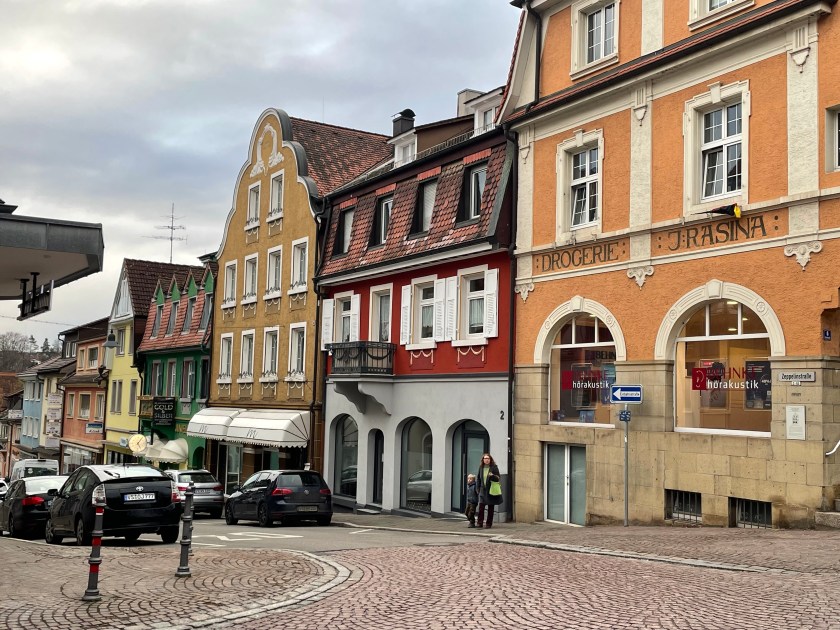
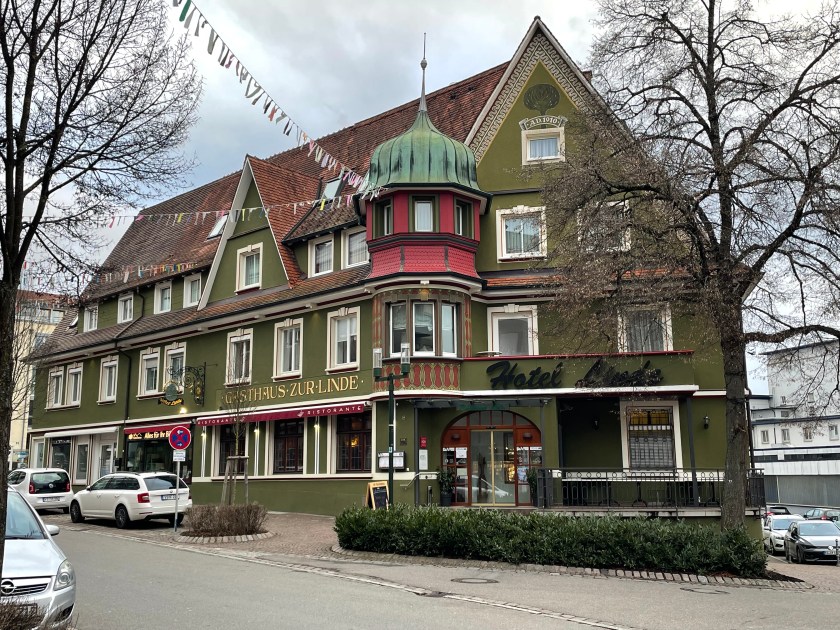
I’m loving the colors of the buildings here.

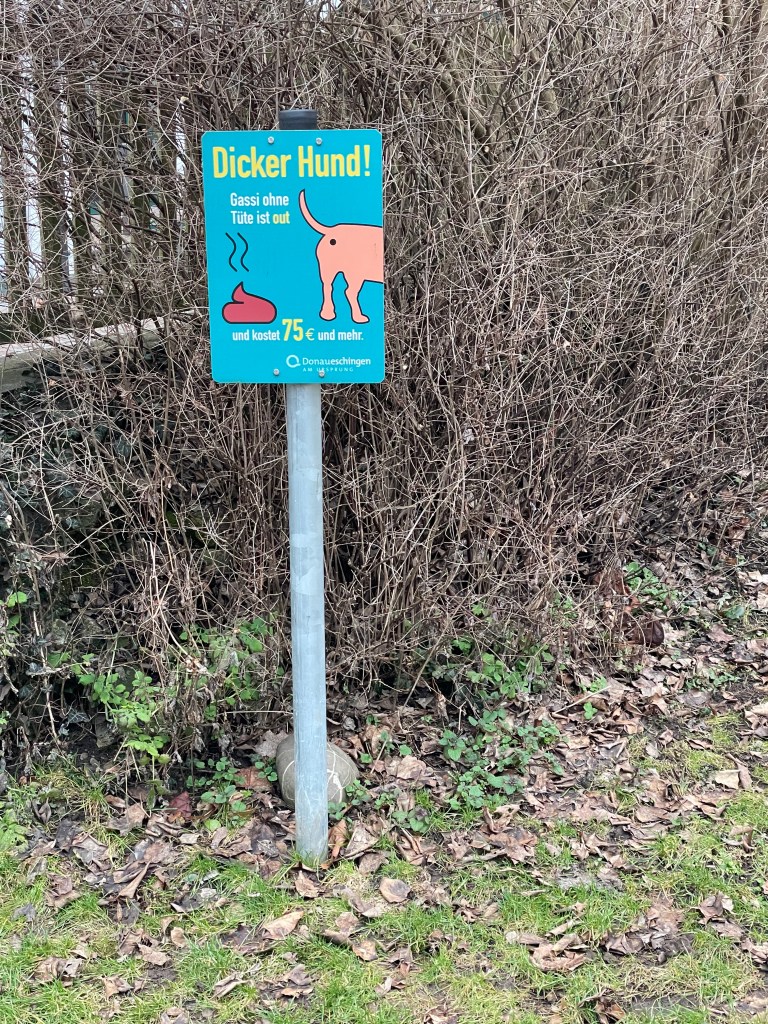
If you don’t put your dog poop in a bag, there is a 75 Euro fee!

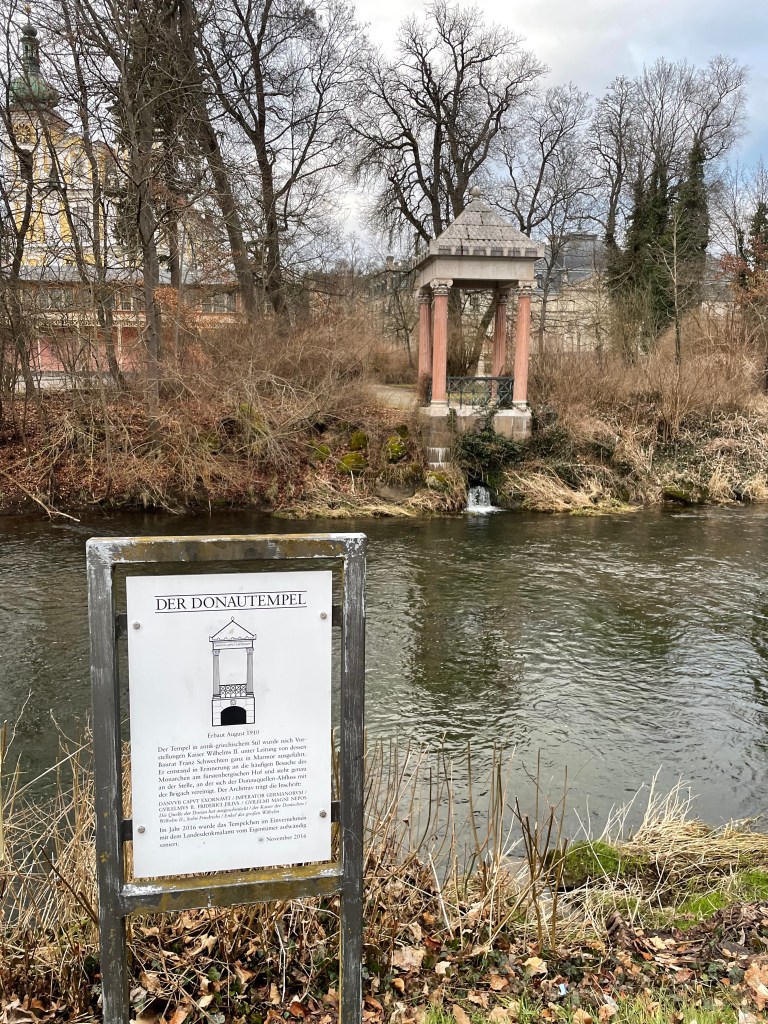
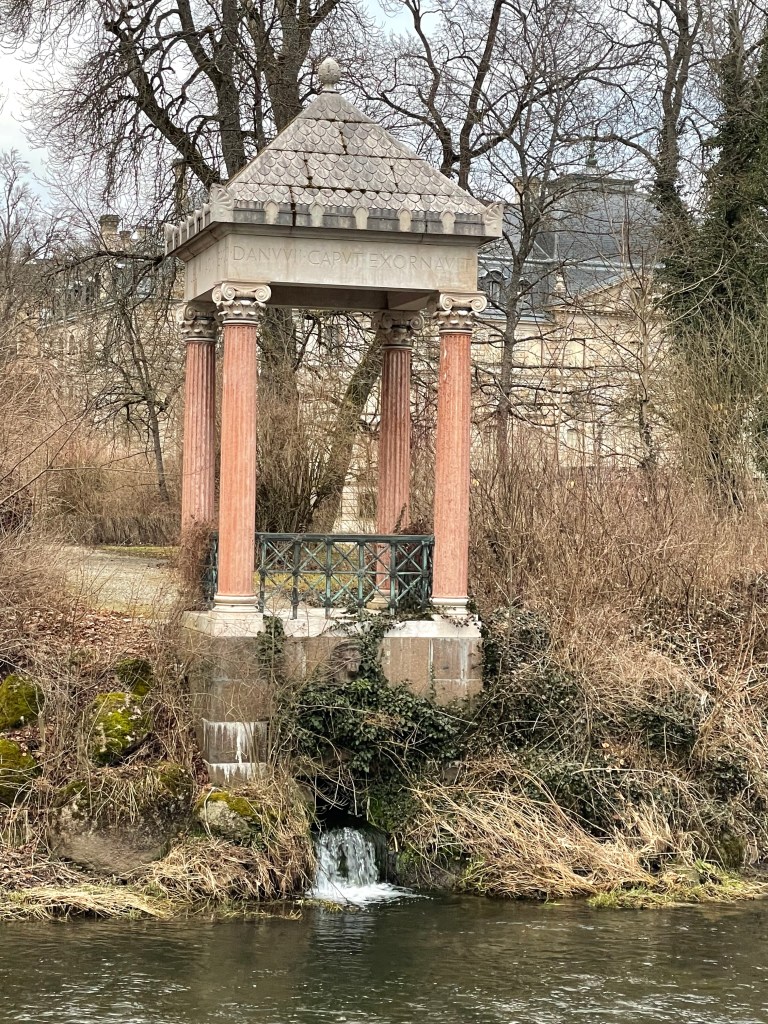
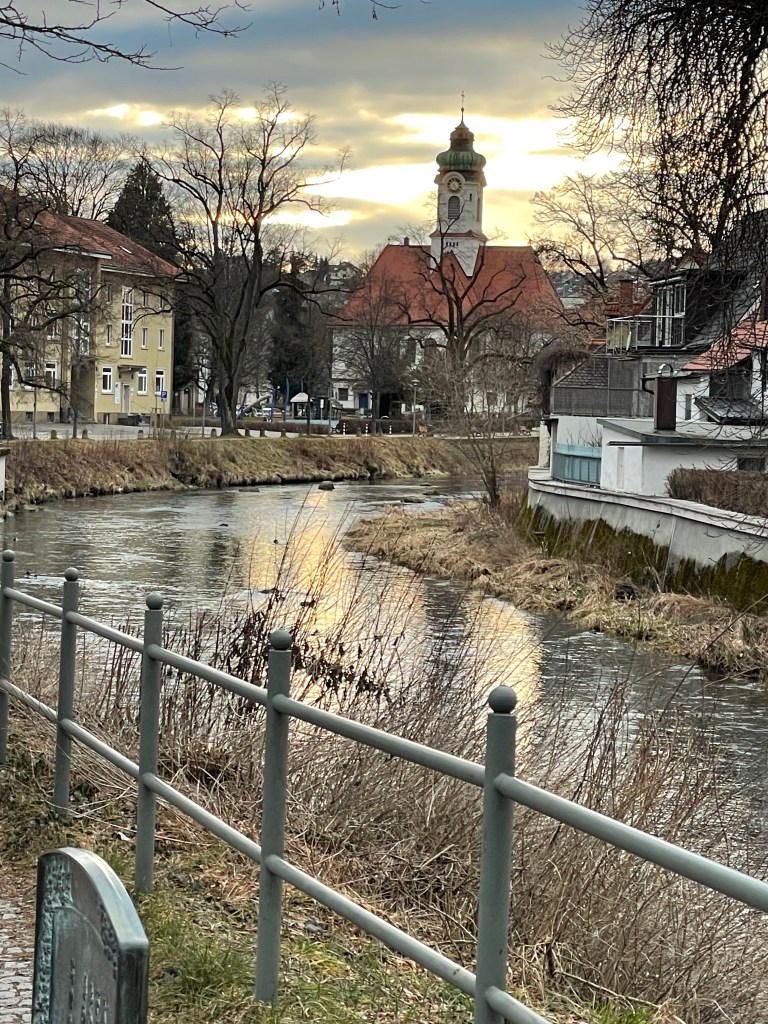
Down by the river.

 Our Frankfurt Germany Mission