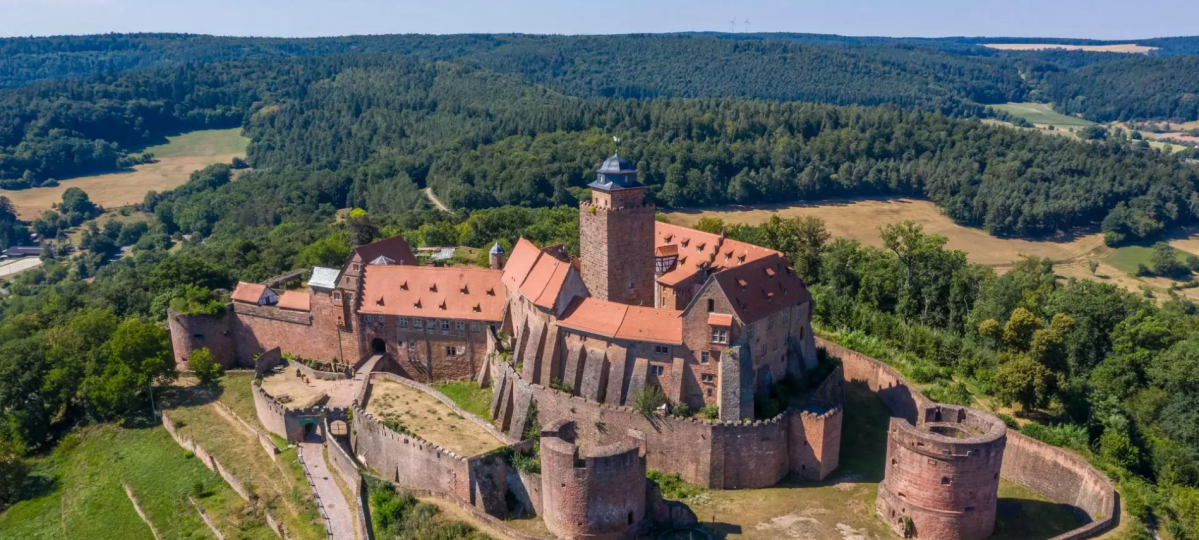
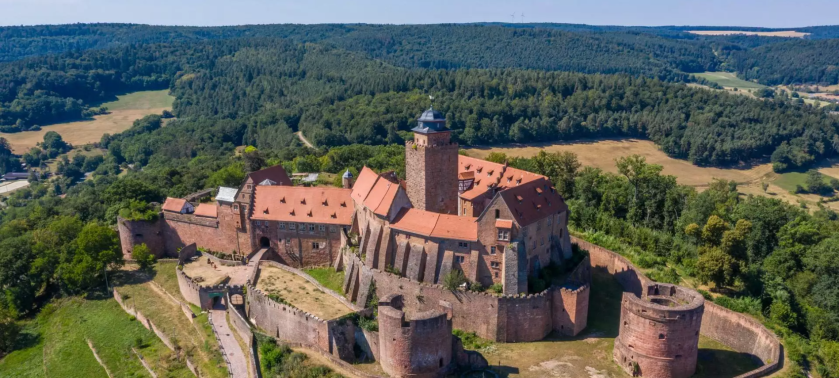
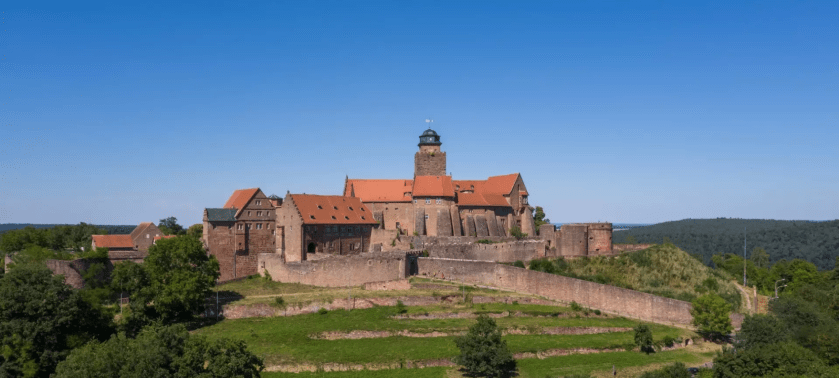
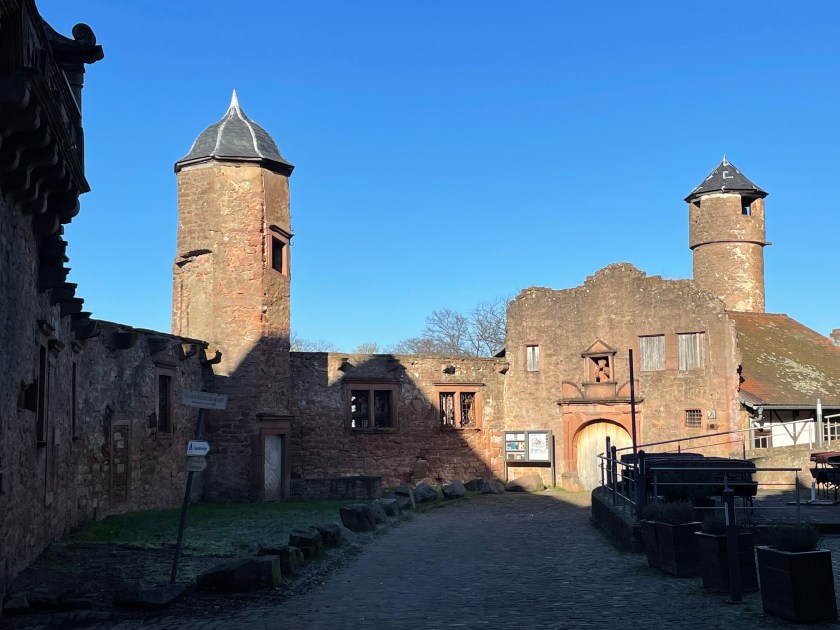
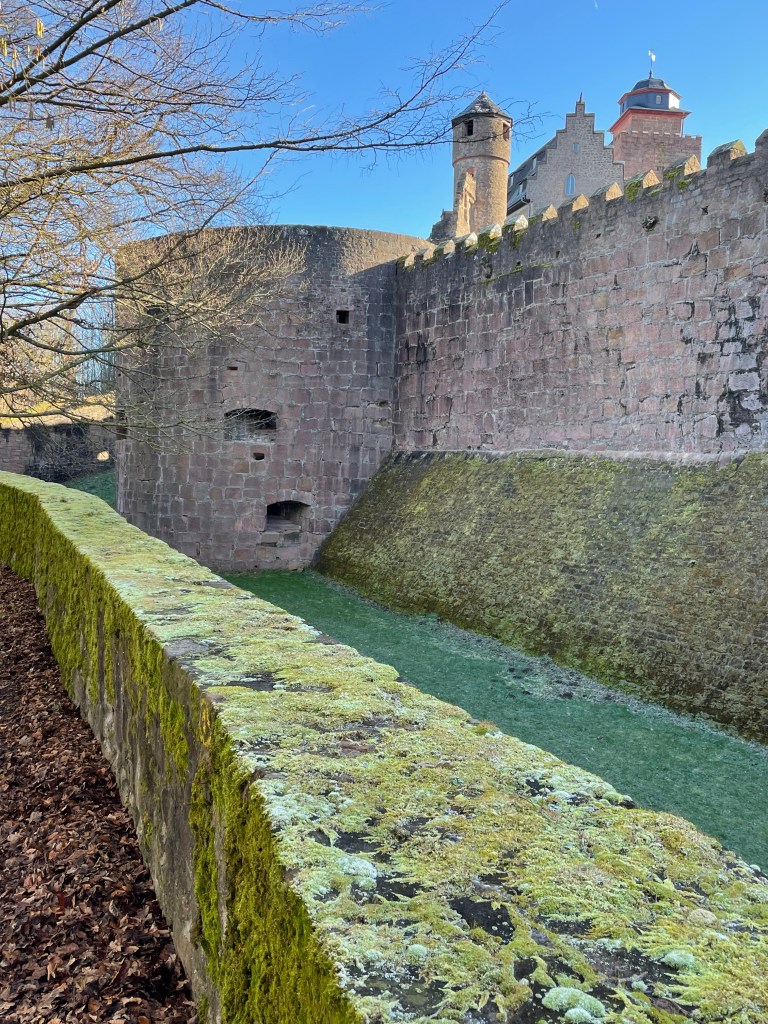
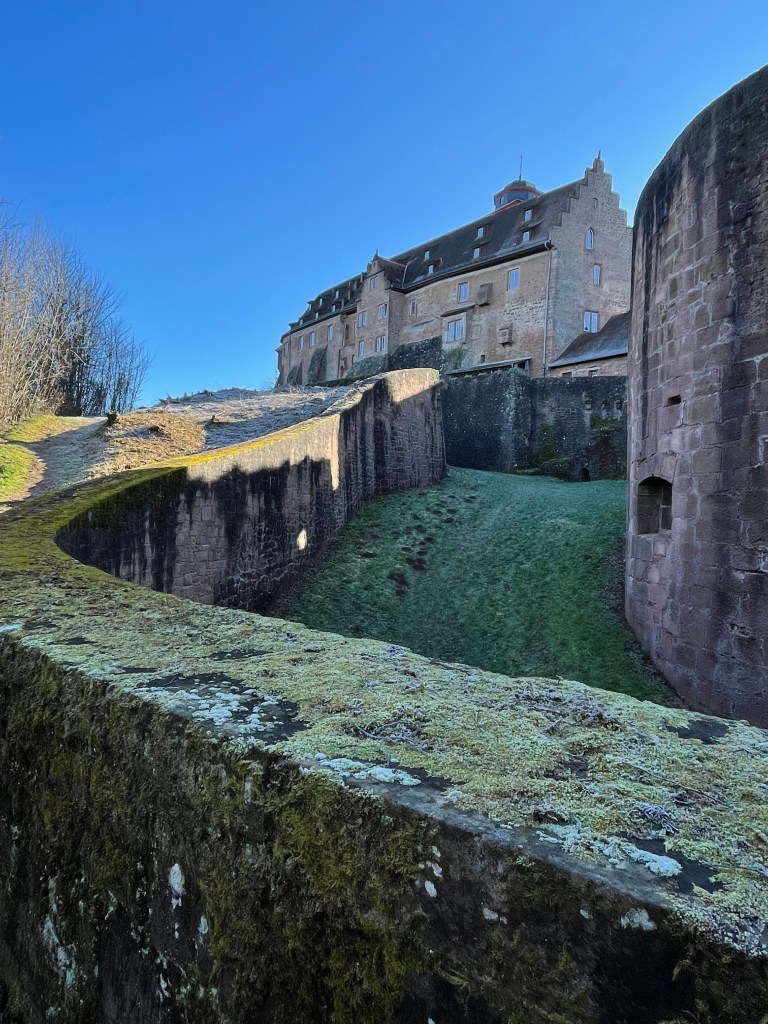
We loved visiting this fortress castle, high on a mountain top. Built about 850 years ago, it’s one of the best-preserved castles in southern Germany. Today’s visitors pass through the same defenses as a 17th-century attacker: up a long stairway, past the wall and embrasures, over the rampart and moat, through the front gate and over the bridge, through the lower castle gate and finally through the Romanesque portal into the inner courtyards.
This path is like walking through the history of castle building between the 12th and 17th centuries. This castle was never destroyed and was inhabited almost continuously. It’s preservation is pretty authentic. Tours inside the castle are only open in the summertime.
Photo from Wikipedia
Here are a few bits from the Breuberg Castle website:
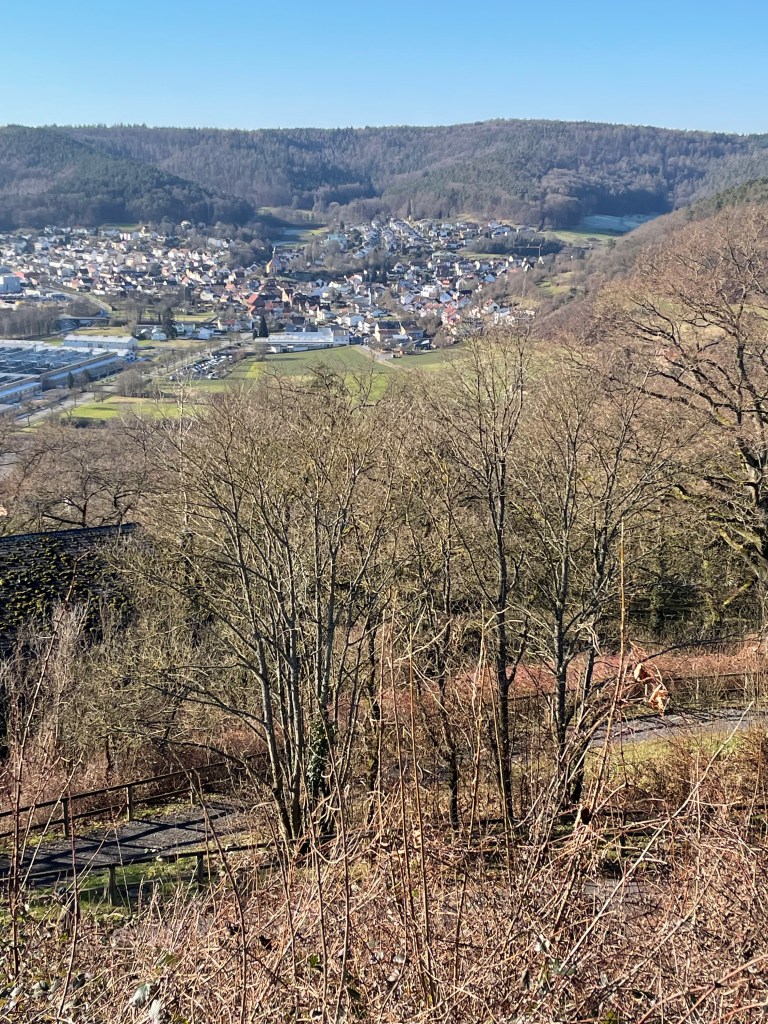
Breuberg Castle rises mightily above the valley of the Mümling in the Crystalline Odenwald. It has defied all the feuds and wars of its 800-year history. Today it is one of the best-preserved castles in southern Germany. A youth hostel brings young life to the old walls.
——————-
History
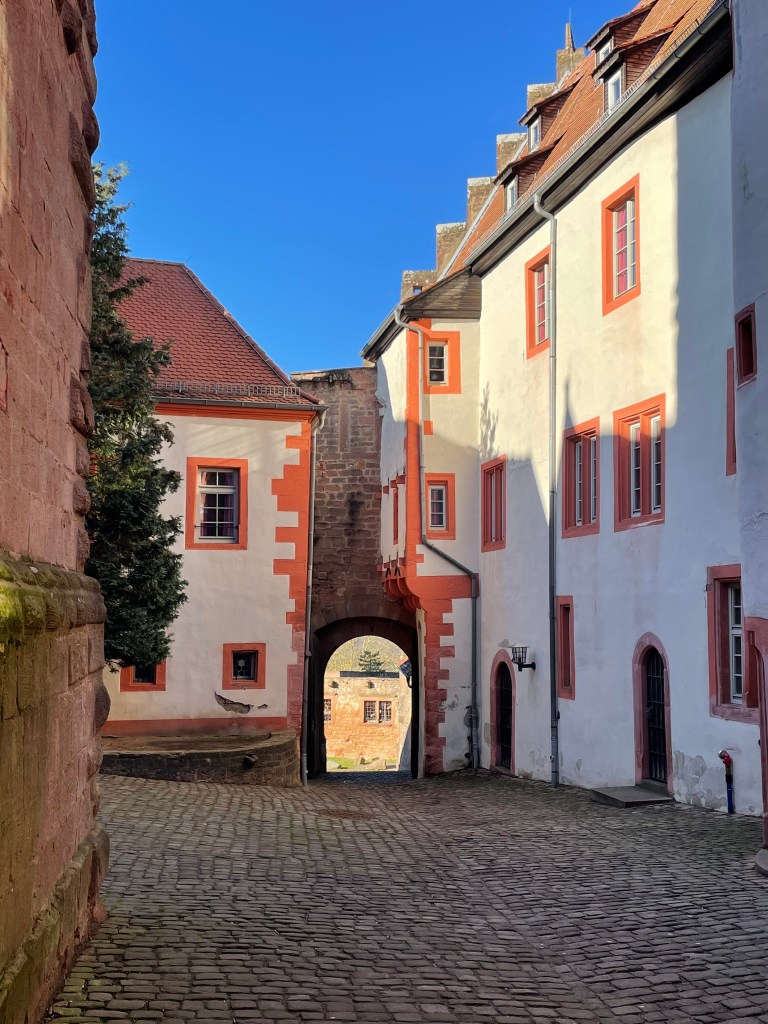
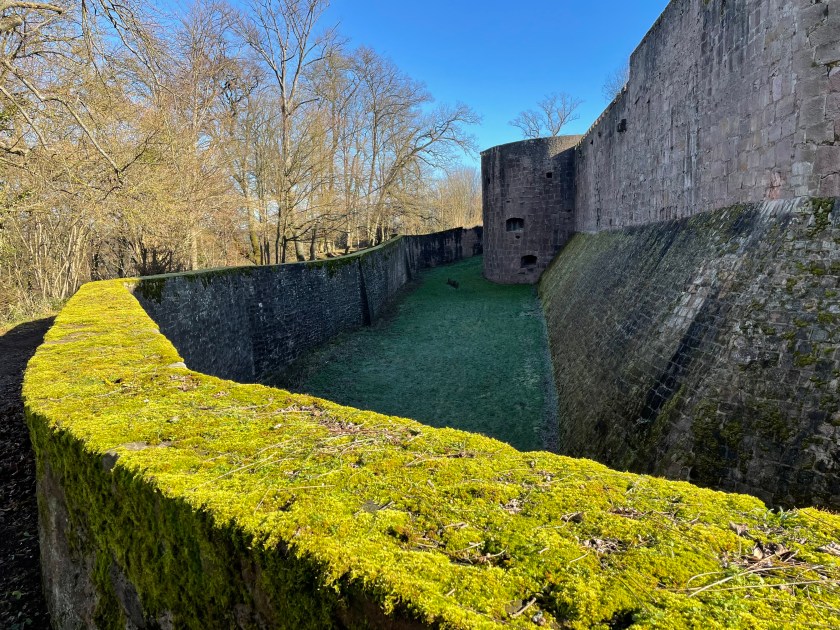
Anyone who peacefully “conquers” Breuberg Castle today on a day trip or as a guest of the youth hostel has to overcome the same defences as a 17th-century attacker: up a long stairway, past the wall and embrasures, over the rampart and moat, through the front gate and over the bridge, through the lower castle gate and finally through the Romanesque portal into the inner bailey.
This path into the castle’s interior is at the same time a walk through the history of castle building between the 12th and 17th centuries. Since the castle in the Crystalline Odenwald above the valley of the Mümling was never destroyed and was inhabited almost continuously, it is authentically preserved today in all its historical layers.
The mighty keep made of ashlars and the Romanesque gate of the inner bailey still bear witness to the beginnings. Together with the ring wall, they form a typical castle of the Staufen period, i.e. the years between 1138 and 1250, when the noble Staufen family provided the Roman-German kings and emperors. When the family of the builders, the Lords of Breuberg, died out in 1323, four noble families inherited the castle and administered it as a manorial community – Breuberg thus became a so-called “Ganerbenburg” (“joint-inheritance castle”).
A Well, 85 Metres Deep
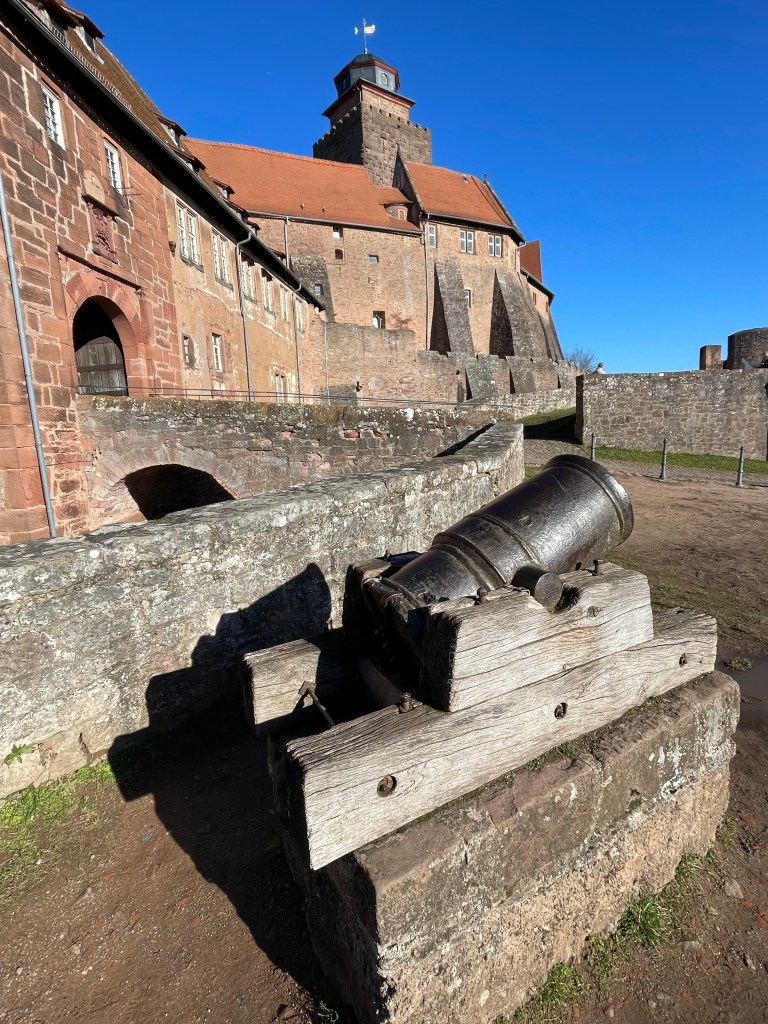
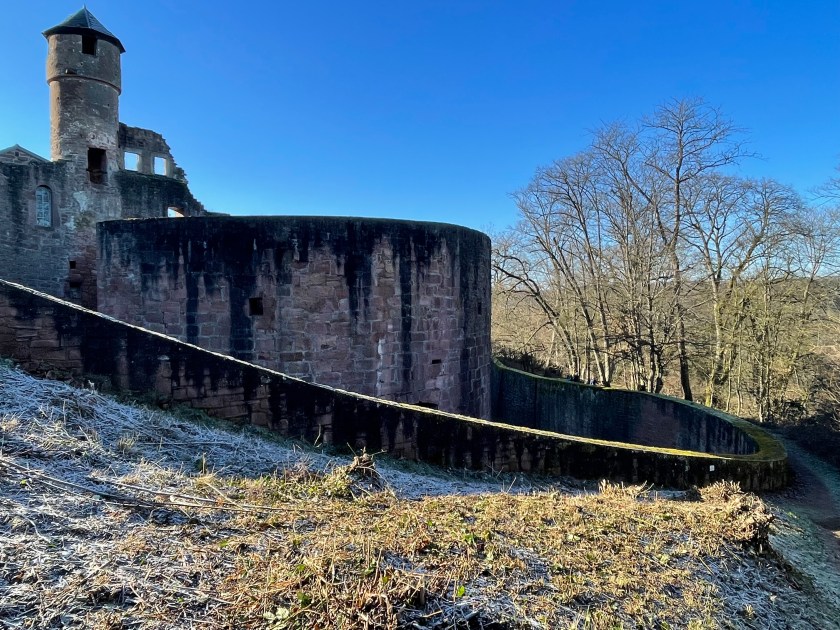
Ownership and the common life were regulated by contract. Each family had to maintain an area of the castle, and the maintenance of the fortifications and the 85-metre-deep well, today a highlight of every tour of the castle, was done jointly. One of the four families, the Counts of Wertheim, took full possession of the castle through acquisitions and, from the end of the 15th century, expanded it into a fortress with, among other things, four enormous towers, a gun platform, the “Schütt” and a moat; the new firearms that were emerging demanded appropriate defences.
Johann Casimir Building – a Renaissance gem
Under the subsequent owners, the Counts of Erbach and the Counts of Löwenstein-Wertheim, the main aspects of their building activities were domestic and representative, as well as defensive. The Johann Casimir Building was built entirely in the style of the Renaissance, which is characterised by the ideal of antiquity. The magnificent stucco ceiling of the Knights’ Hall is decorated with a sequence of coats of arms of the Löwenstein-Wertheim ancestors as well as with mythological figures of Greek antiquity and a frieze of Greek and Roman gods – complemented by hidden scenes of everyday needs.
In the 18th century, Breuberg lost importance as a seat of power, but remained in the possession of the two families, who sold it to the German Youth Hostel Association in 1919. In the meantime, the castle is owned by the State of Hesse. At the end of World War II, forced labourers were housed in the castle – Cyrillic graffiti in the battlements of the keep still reminds us of this time and spans the arc from Breuberg’s oldest history to the most recent.
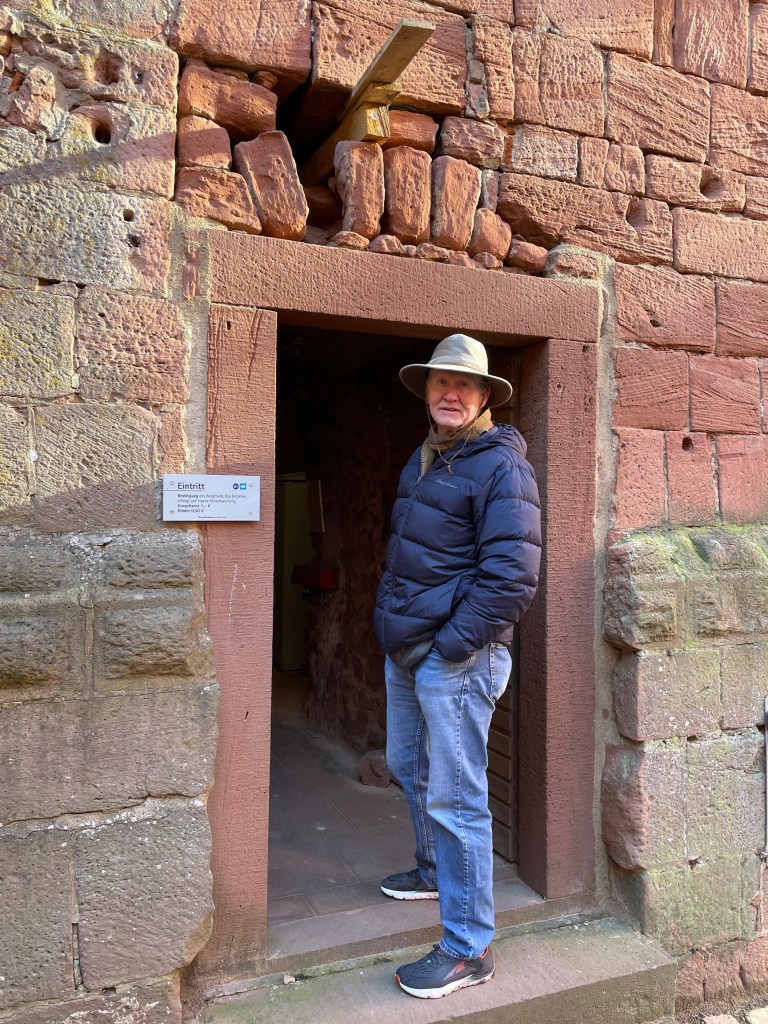
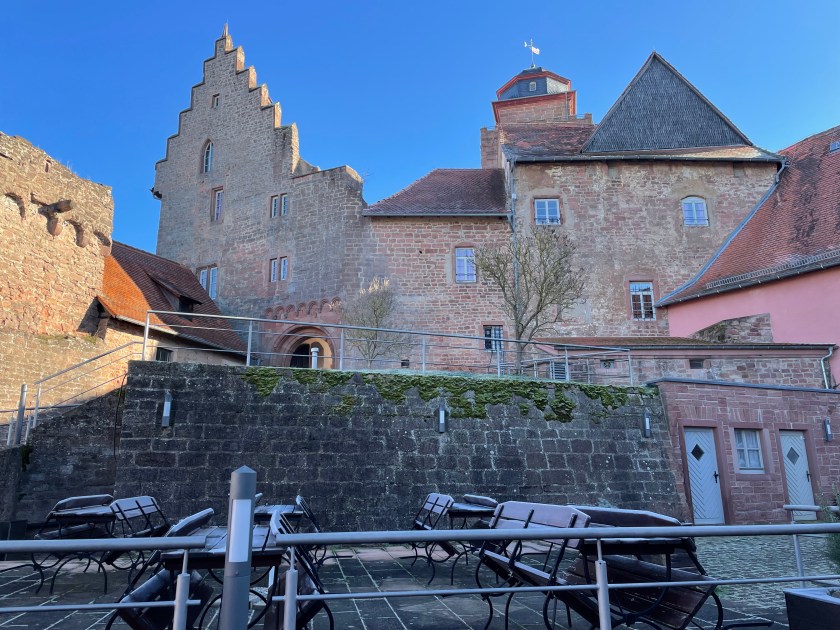
The castle is impressive, big and bold. The tours in the castle aren’t running in the winter, so we didn’t get to go inside, but saw some pics. It looks impressive. We walked all around the walls and in the inner courtyards. There were only a few people there besides us. After a couple of hours (and lunch at the café that opened TODAY) more people were arriving.
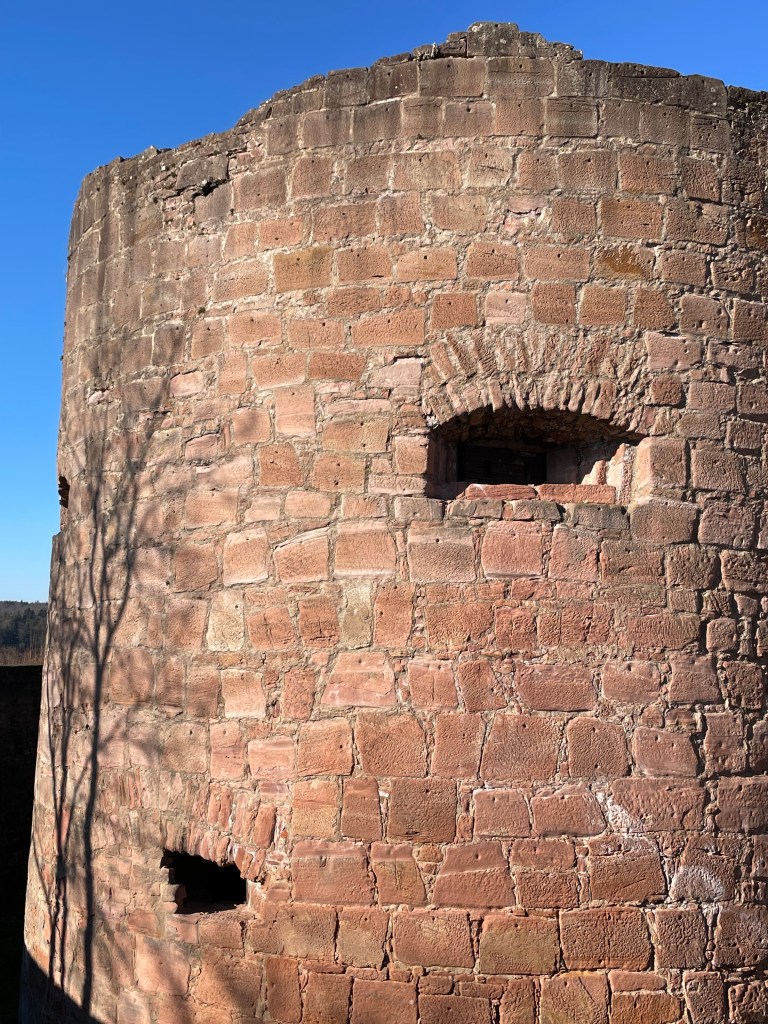
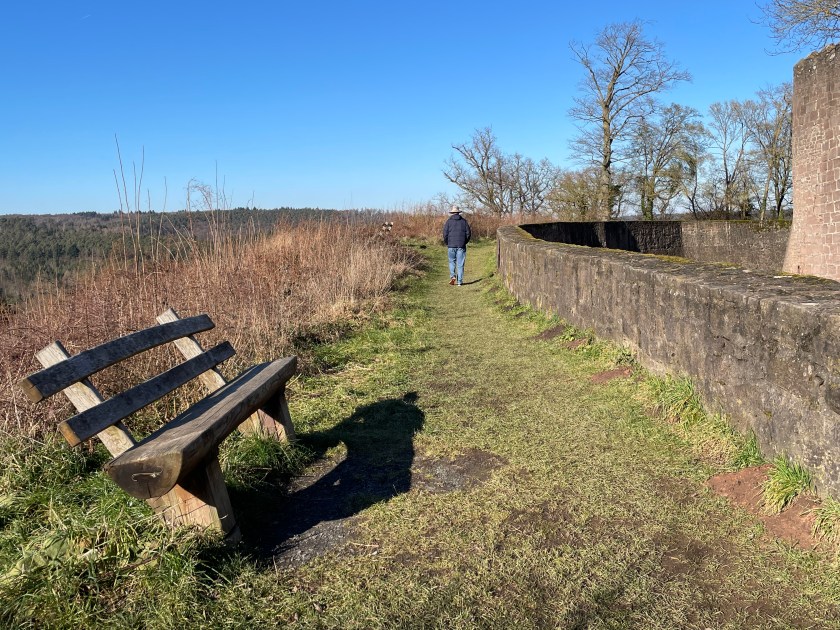
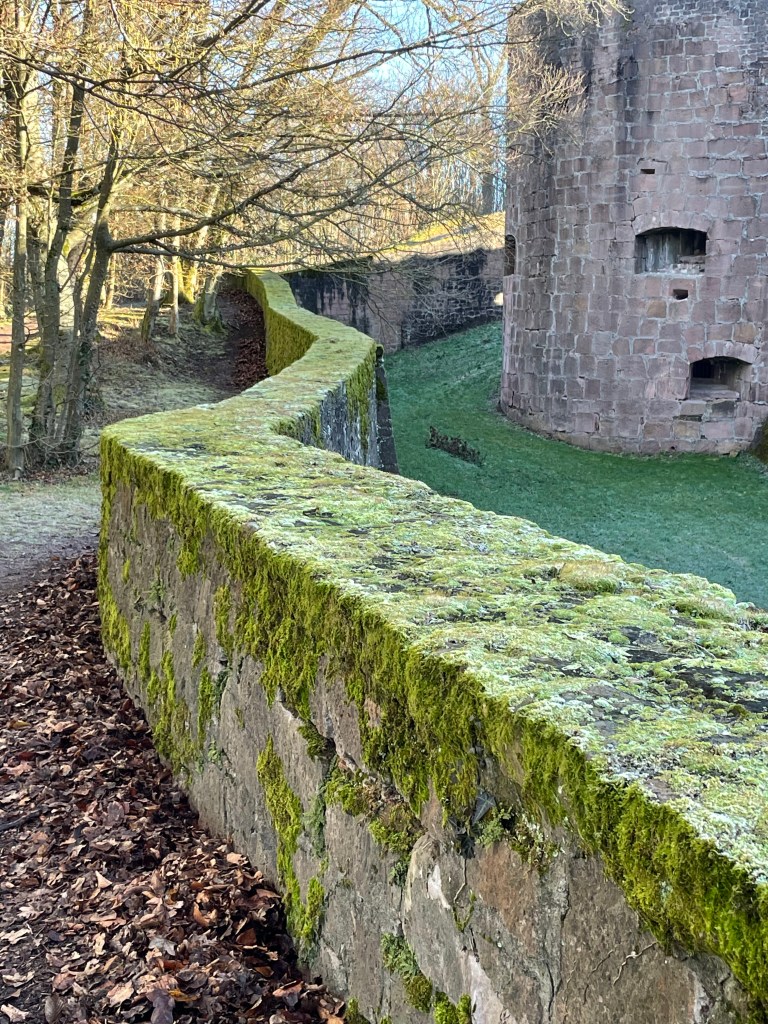
We enjoyed wandering around. There was grass, still frozen in the shade and in the sun the ground was soggy, with a path around the exterior. Inner walls, outer walls, towers, turrets, but mostly just massive thick construction that went high over our heads.
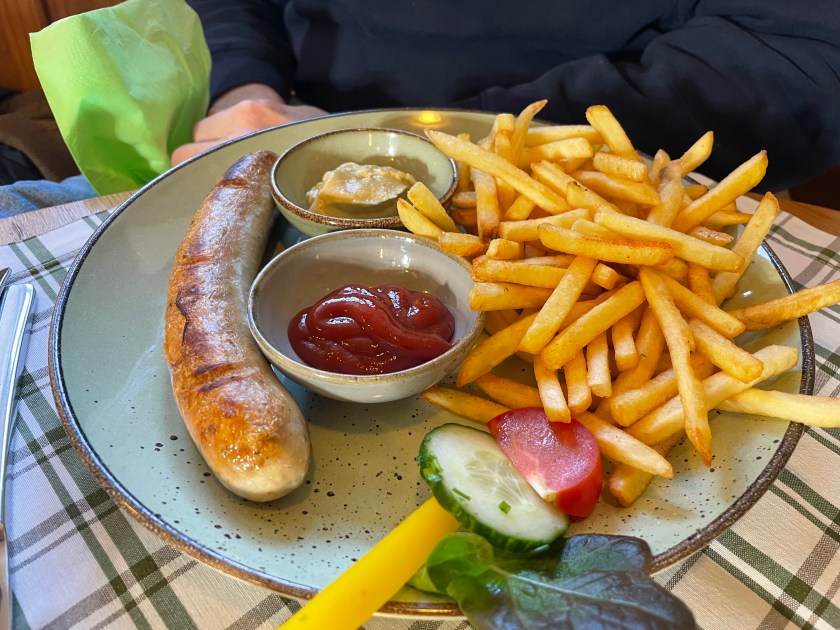
For lunch I had Linsen Suppe (lentil soup) with vegs and a brat. John had a brat and fries. It warmed us and tasted good. Topped off with a piece of Bienenstich that had a layer of cherries in the middle. Yum.
We took a walk around the entire exterior of the castle. We didn’t see many other people here today.
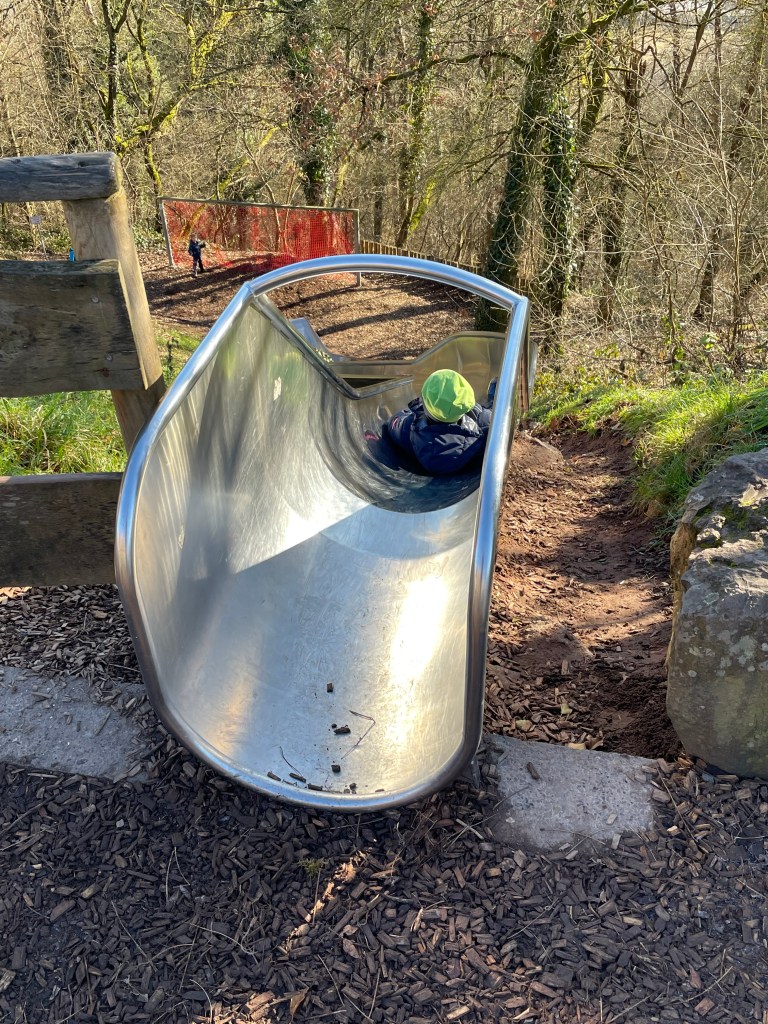
On the way back down, there is a long slide that goes to a playground partway down the mountain side. Fun for these kids!











 Our Frankfurt Germany Mission