


One of our favorite jobs has been working with the new couples who come to Frankfurt to receive training in the Welfare and Self Reliance department (WSR). We’re given the job to help them learn about news writing, which includes photography and RUIs (release to use image permissions).
These missionaries serve in all parts of the Europe Central Area, some from Frankfurt, some out in other countries. They are participating in and observing the work of helping those in need. They have stories to share. We help equip them to do that.
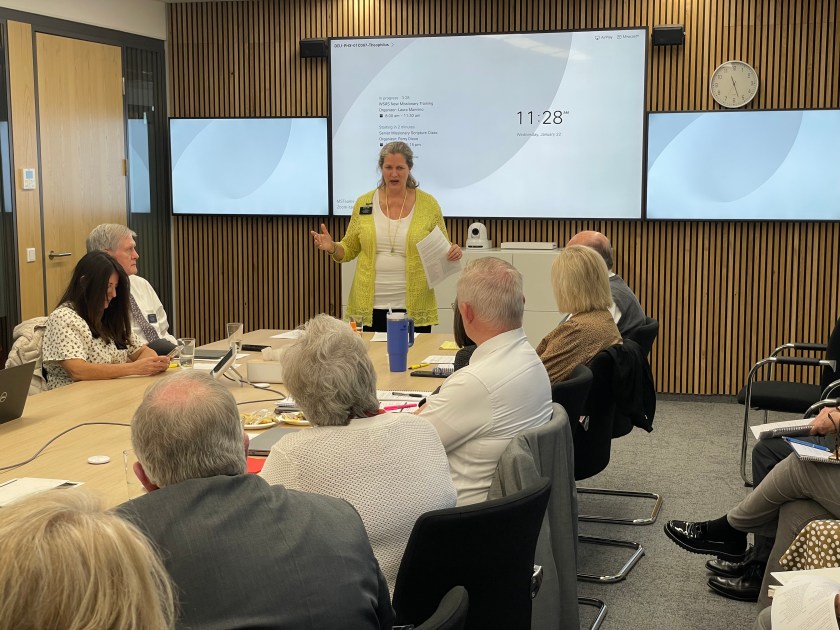
I’ll include here the training notes/handouts I share with these missionaries.
Sister Ann Lewis Missionary Training 12/23
Here is my best writing advice:
In the Church Communication Department, we have 3 responsibilities:
Increase positive awareness of the Church
Build bridges of friendship and understanding
Extend our reach
D&C 84: 60-62
60. Verily, verily, I say unto you who now hear my words, which are my voice, blessed are ye inasmuch as you receive these things;
61. For I will forgive you of your sins with this commandment—that you remain steadfast in your minds in solemnity and the spirit of prayer, in bearing testimony to all the world of those things which are communicated unto you.
62. Therefore, go ye into all the world; and unto whatsoever place ye cannot go ye shall send, that the testimony may go from you into all the world unto every creature.
So what is it we are to send? Our Stories, our Words!
Words are Powerful. We can use our words to fulfill our 3 responsibilities.
Think about things that are interesting to you. They will be interesting to others too.
Think about how you might tell about something in a simple article.
First you want to get their interest with an interesting photo or a title that makes them want to know more. Be creative. You can ask a question or you can use interesting words to get their attention.
After the title, you want to do your very best on the first part of the article, putting all the most important information first. The first paragraph, called “introduction” or “lead,” tells the main point of the story. It is critical and usually will determine whether a story is read. Keep it 30 words or less. You want them to want to know more.
As you write, remember to answer the questions: Who? What? Where? When? Why? Answer those questions as early in the article as you can.
Use friendly sentences, not technical or complicated ones. Make it feel conversational.
Don’t use “church” words they won’t understand. (Example: use congregation instead of ward or meeting place instead of stake center).
Avoid stating an opinion. Just stay objective and open and welcoming.
An article should have one main point, or be about one event.
Be brief. Nobody wants to read a long story. Use photos or a short video clip to tell more of the story if you can. You can put information into the captions. We tend to write too much. Write a draft then shorten it!
Always remember who you are writing for—who is your audience? What would they want to know?
Keep paragraphs short—one or two sentences if you can.
Use the proper name of the Church the first time you use it.
It’s good to use direct quotes rather than what you think someone said.
In the end, you want someone to feel, “I’m glad I read that! I learned something new!”
Try to convey the feeling that “here is a gift for you to read,” given freely. I hope you like it.
A word on writing Drafts–
Always assume your first draft of an article will not be your last. Don’t be discouraged if you don’t like it. Your first draft is almost like a brainstorming session with your words. Just get them out, as best you can– in bullet points, in ideas, or sometimes in complete sentences, After you’ve put thoughts on paper, go back and start organizing them into the structure of an article. Do you have a lead idea? Do you have the Who, What When, Where, and Why, and points? Do you have any quotes from participants? Organize your ideas. Read them out loud to see how the words flow. Let someone else read them. Do they have questions that need to be clarified?
Remember that the more you write, the easier it gets. Practice writing about things in your journal. When I write a blog post, I usually write the story in my journal first, then turn a thought or experience into a blog post that’s written more like an essay, an article, a gift to the reader. That really helps me practice and improve my writing.
You can also practice by posting things on Facebook or social media. Post an interesting picture or photo from an activity and just say a few words about it. Notice who likes or comments on the things you post. See if anyone asks more questions. Pay attention to what’s interesting to others.
Others are interested in stories that are interesting, cultural or out of the ordinary. People like to see good things happening in the world (probably more than they think they want to see something religious). Show the world that we are normal people doing good things. Use your words and photos to show and celebrate the good you see in the world.
——————-
Using the Active or Passive Voice
Active voice is a sentence in which the subject of a sentence is active.
Passive voice is a sentence in which the object of a sentence is active.
Take a sentence like “I want ice cream now.” It’s clear and straightforward—you know immediately that the subject, I, wants an object, ice cream. Now, change this sentence, flipping it so that the object is in the position of the subject: “Ice cream is wanted by me now.” It isn’t just longer, but it’s also more detached, roundabout, and a little awkward, too. Those two sentences are examples of the active voice and the passive voice.
What is active voice, what is passive voice, and what are their different functions?
In the active voice, the subject is performing an action:
The dog chases the ball.
Notice how the subject, dog, is performing the action, chase, on the target of the action, ball. This is a simple, direct example of the active voice.
In the passive voice, the action’s target, ball, is positioned first as the focus of the sentence. The sentence gets flipped, and the subject is now being acted upon by the verb. In other words, the subject is passive:
The ball is being chased by the dog.
The active voice has a direct, clear tone. Use it when you want the reader to focus on the subject of your sentence and the action it is doing rather than on the action’s target.
In the passive voice, the action’s target is the focus, and the verb acts upon the subject. Or, to put it in the passive voice, the subject is acted upon by the verb. Every sentence in the passive voice contains two verbs:
A conjugated form of “to be”
The main verb’s past participle
Notice how the targets of the action—also the direct objects of the sentences—are now the focus. The sentences now contain a conjugated form of “to be” (is) and the main verb’s past participle (liked and loved). Often, sentences in the passive voice are longer than sentences in the active voice simply because they have to include additional words like prepositions.
How to change passive voice to active voice
After you finish your first draft, read it. You might even want to read it aloud and listen to how it sounds. By reading and listening to your own work, you can catch awkward sentences and unclear phrasing and mark them as points to revise in your next draft. You’ll also hear where you used the active and passive voices and how they shift your work’s tone as a whole.
Let’s say you’ve detected a few instances of the passive voice in your article. Sentence-by-sentence, identify who or what is performing the action, and make that the subject when you rewrite it.
If you aren’t sure whether a sentence is active or passive based on how it sounds, identify the two voices in your work. The biggest clue you have a passive voice sentence on your hands will be a form of “to be” followed by a past participle (e.g., was requested or will be missed). Not every passive voice sentence says who is performing the action, but if it does, you’ll see a preposition next to it (e.g., by my brother).
Active and passive voice examples:
Active Passive
We had a good time. A good time was had (by all).
We held an opening ceremony. An opening ceremony was held.
They called off the meeting. The meeting was called off.
His grandmother looked after him. He was looked after by his grandmother.
They will send him away to school. He will be sent away to school.
Joe was playing soccer. Soccer was being played by Joe.
He was writing a letter. A letter was being written by him.
He gives me a car. A car is given to me by him.
She gives me a bar of chocolate. A bar of chocolate is given to me by her.
Julie is eating food. Food is being eaten by Julie.
Respect your old ones. Old ones should be respected.
She sings lovely songs. Lovely songs are sung by her.
She was eating the bread. The bread was being eaten by her.
Will Clark deliver the message? Will the message be delivered by Clark?
Jerry is building a house. A house is being built by Jerry.
He writes an essay. An essay is written by him.
Sheena does the housework. The housework is done by Sheena.
She cares for the rabbit. The rabbit is being cared for by her.
Jacob always plays the guitar. The guitar is always played by Jacob.
The missionaries ate breakfast. Breakfast was eaten by the missionaries.
The guests enjoyed the event. The event was enjoyed by (all) or (the guests).
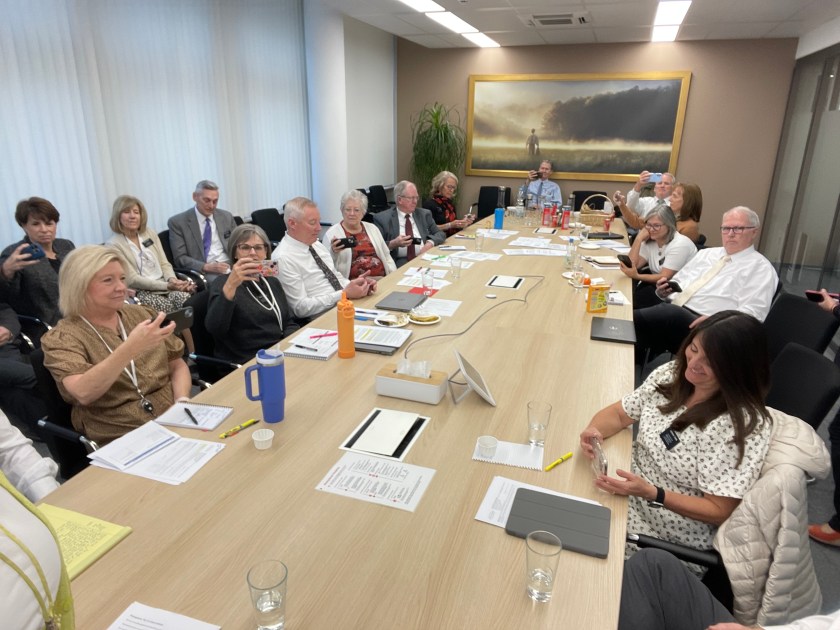
Photography Tips for News Articles
We can use photographs to help tell our stories.
Horizontal photos are usually preferred (go wide, not tall).
Try hard to get photos of people interacting with other people.
Look around at what’s happening and find the interesting interaction points.
Let the background of the photo help tell the story.
(Shoot into the story, not away from it.)
We generally don’t want posed photos, or people lined up in front of a project.
We want to see the project in action whenever possible, rather than missionaries proudly standing in front of a project. It’s not about YOU, it’s about THEM.
Always take SEVERAL photos. ONE PHOTO IS ALWAYS BETTER THAN ANOTHER.
You might have a perfectly framed photo and think you only need to take one shot, then you later discover someone’s eyes were closed, or someone (maybe you) moved. Always take at least 2 photos in every situation, more if you are able. You can always eliminate the poor ones.
MOVE IN CLOSER!!
When you think you’re in the right place to take a photo, take 2 steps closer!
If you can’t move closer, use your zoom features.
You do not need to have lots of sky or space above the people in your photo. You do not need to include their whole bodies, head to toe. Move in closer and focus on their faces, not their entire bodies. Try to avoid posed pictures. Catch them at something they’re doing. Don’t take too long to take the photo–they’ll feel uneasy. Snap the photo quickly and take multiples. Learn to take photos with one hand.
Fill your frame with what is going on in the photo. It’s OK if things go off the edge. Our minds can imagine the rest of the photo.
A few general photos that give an overview of a project or event can help add context.
Practice, practice, practice. Evaluate your photos. Practice cropping photos you’ve already taken to see how you might make the photo better. With some practice, you will learn to crop the photos you take as you are taking them.
In today’s world, photos are FREE. Take them generously! Good luck capturing the perfect interactions and moments!
Photography Tips from Professionals
1. Simplify the scene
De-clutter the background to draw attention to your subject.
2. Rule of thirds
Instead of placing your subject center-frame, split the frame into thirds. Imagine a tic tac toe board of two horizontal lines and two vertical lines. Position your subject on these lines, or where they intersect.
3. Fill the frame
Too much ‘negative’ or unused space might not work for your photo. You could get closer to your subject on these lines, or zoom in to fill the frame.
4. Diagonal lines
Diagonal lines bring dynamism and energy to your composition, providing a sense of depth when they converge, or crossover other lines.
5. High or low
Experiment with a bird’s eye view (getting above the subject) or a worm’s eye view (getting below) to create a compelling perspective.
6. Reflect
Improve your composition by revisiting your work and studying the work of other photographers. Look at photos you like, and note why different elements work well visually.
—————————-
John teaches the part about RUIs and getting permissions.




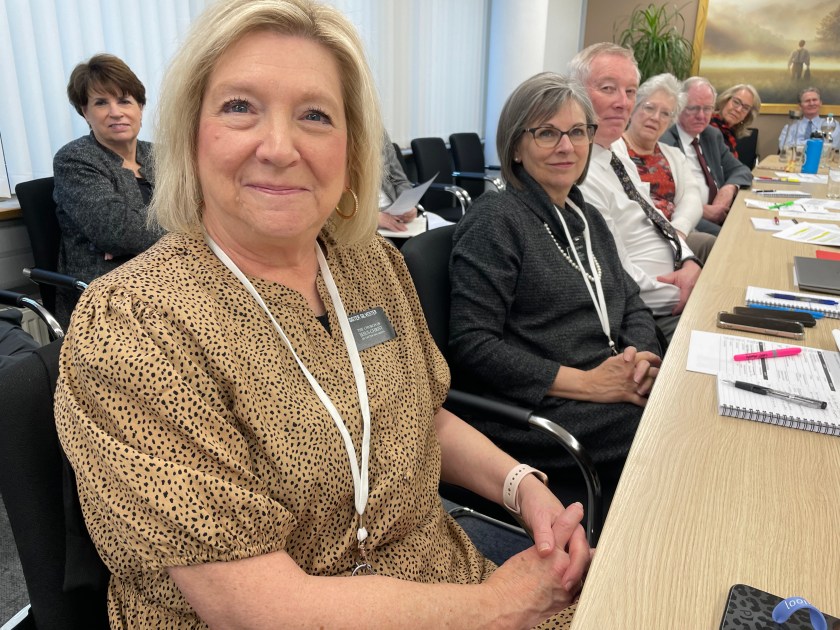

This is one of the many things I’ll miss about our work here. Sigh.

 Our Frankfurt Germany Mission