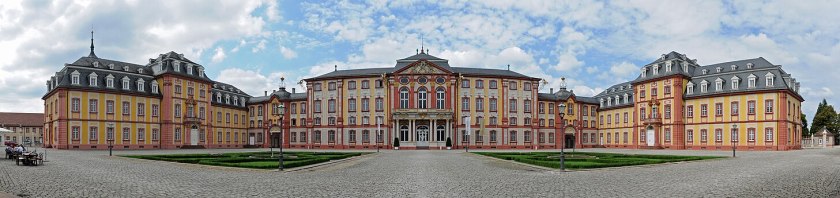

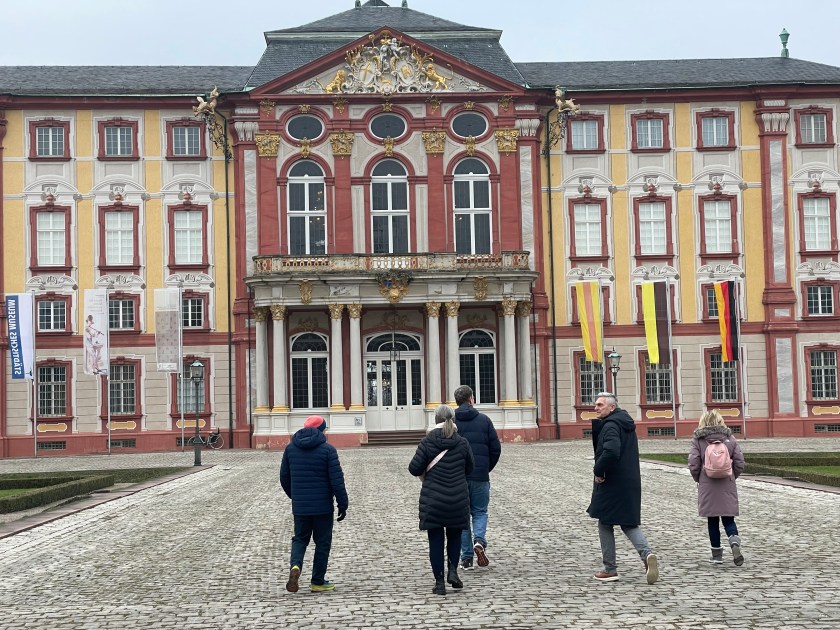
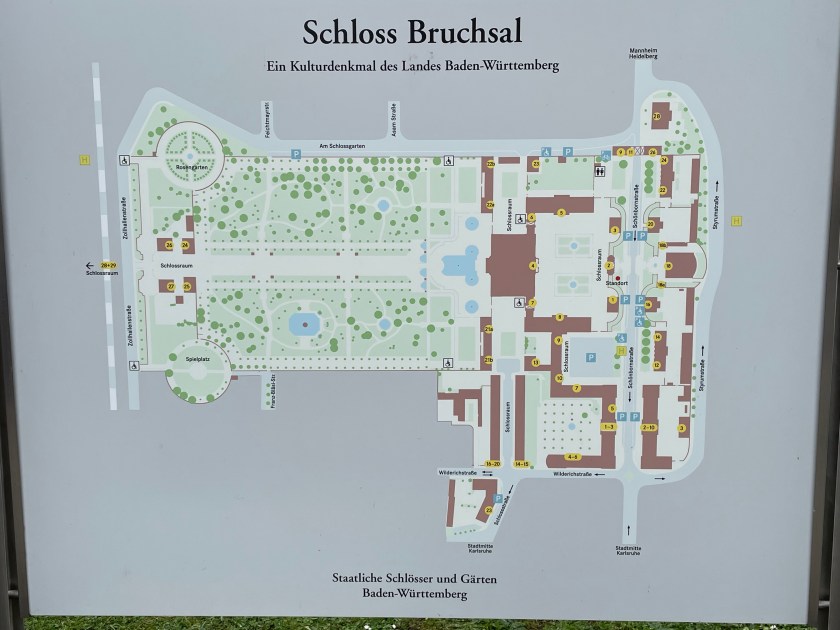
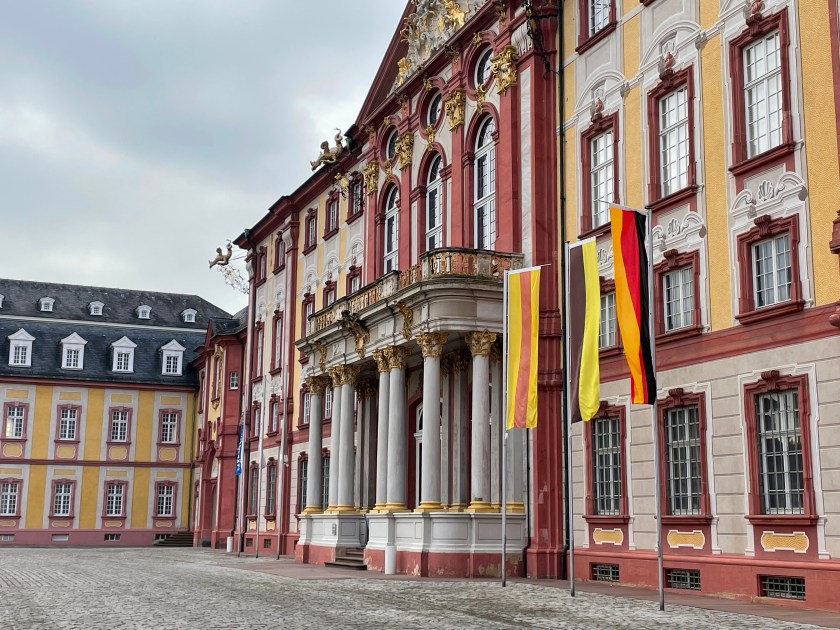
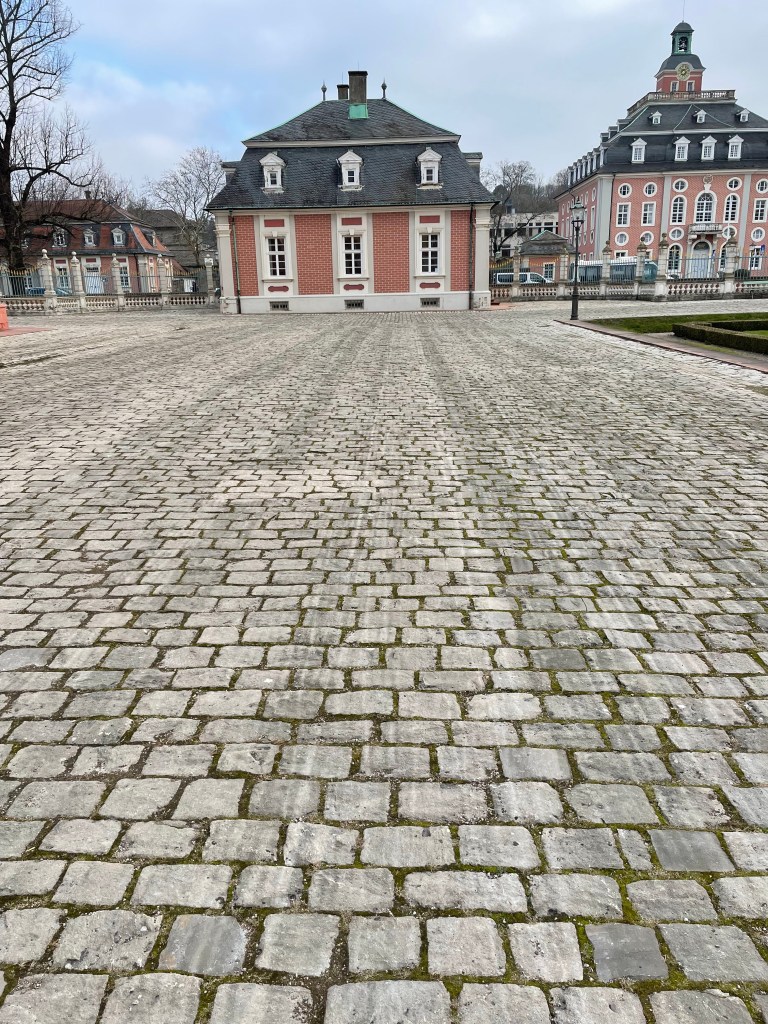
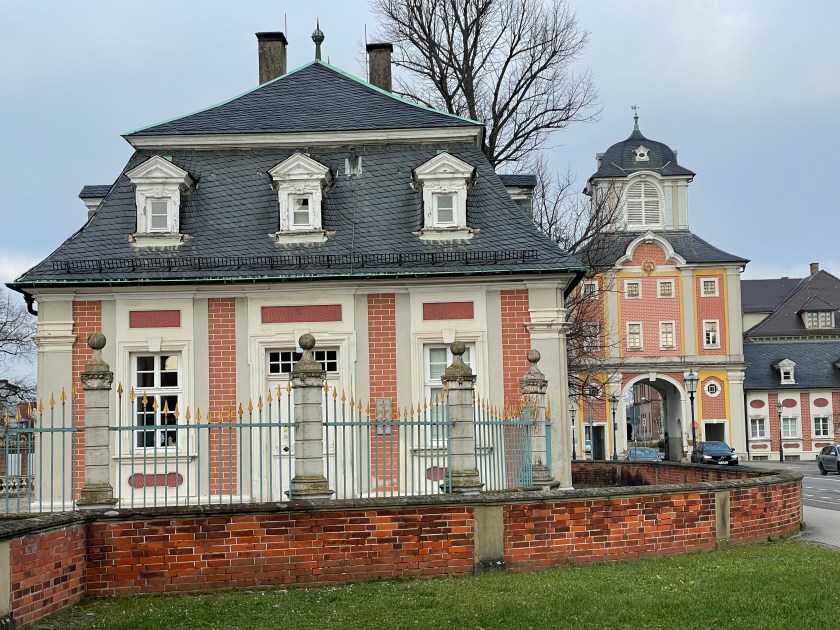
Bruchsal Schloss was our first destination today, about 1.4 hours south of Frankfurt. This is a large castle/palace complex filled with colorful pink and yellow 1700s buildings. Symmetrical, orderly, stately.
Here’s a description from Wikipedia:
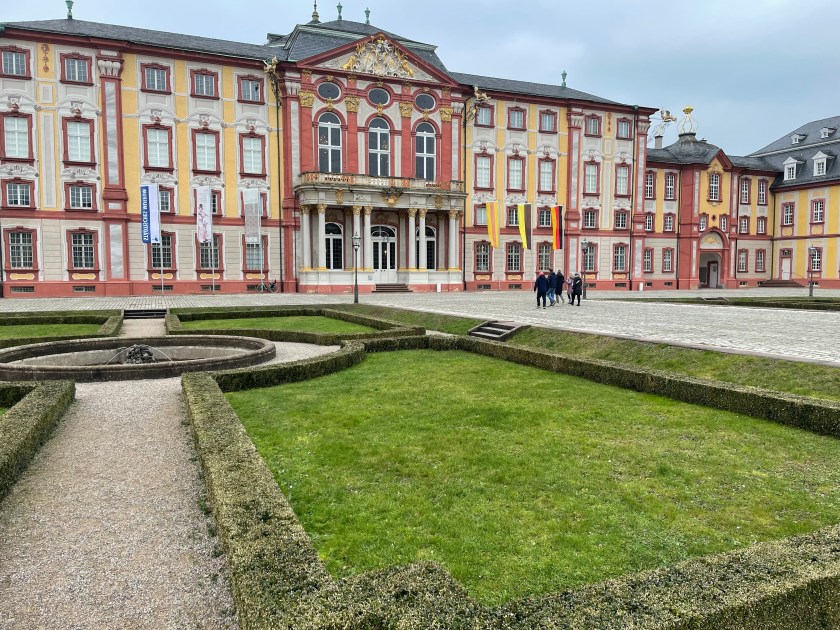
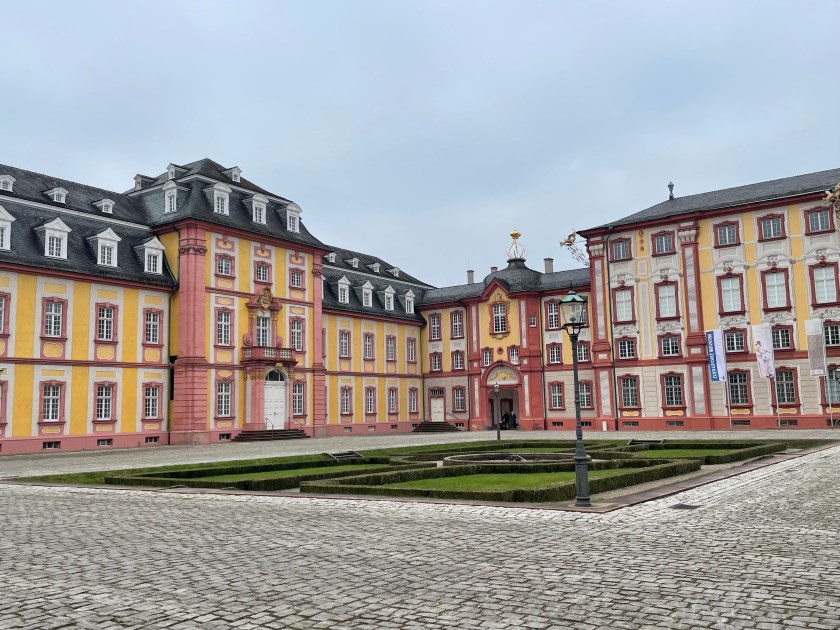

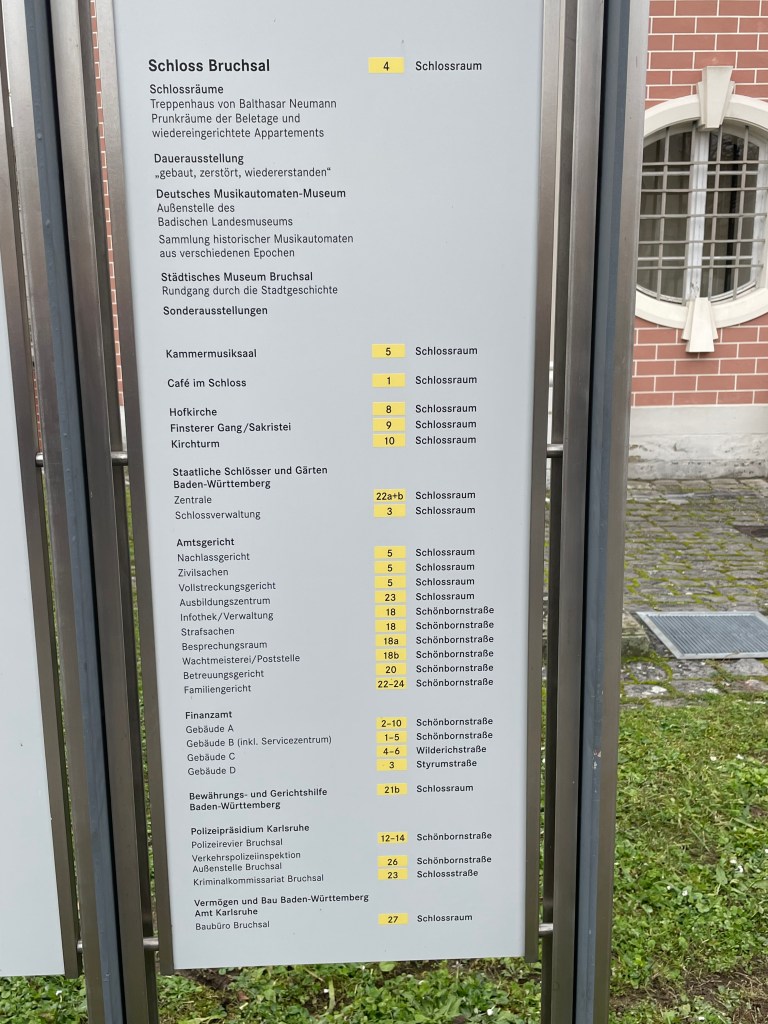

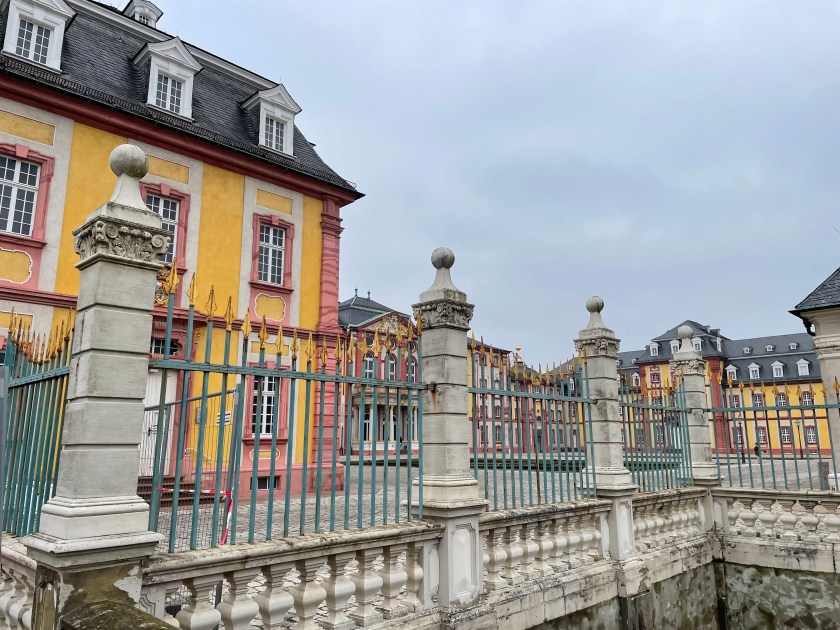
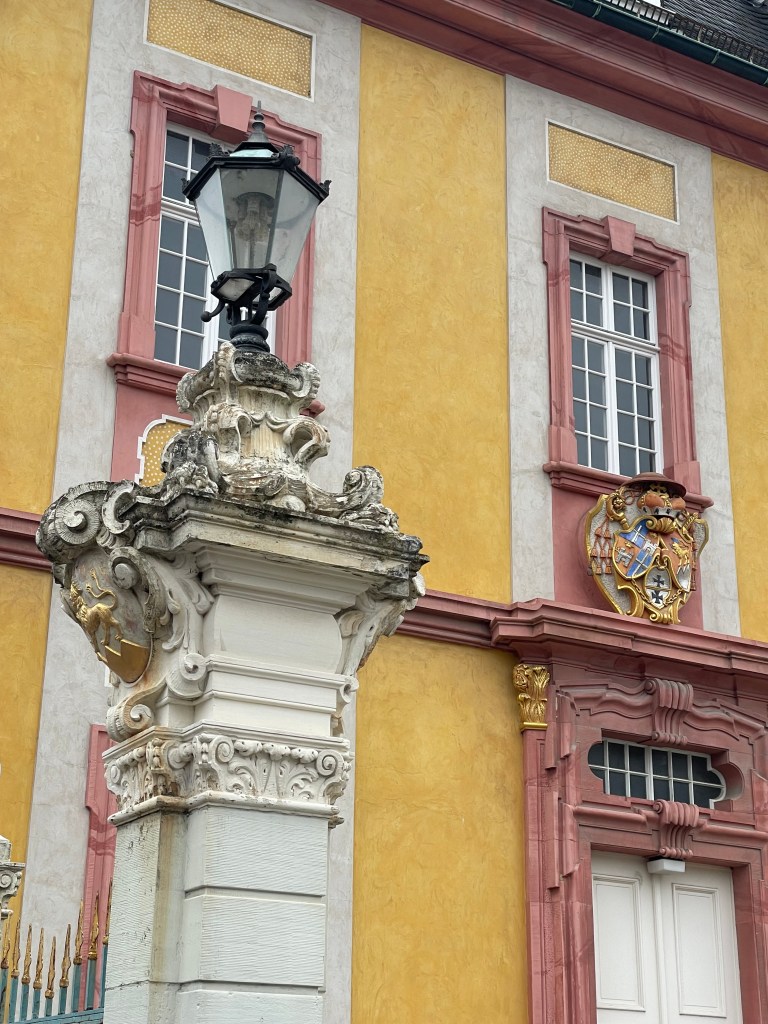

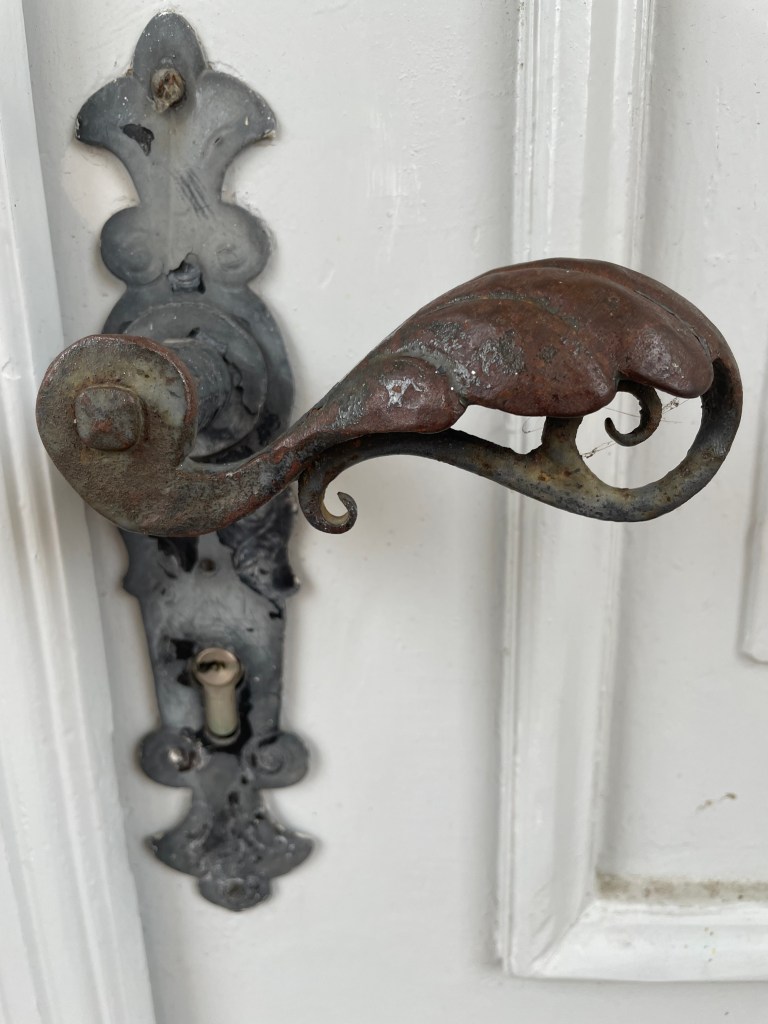
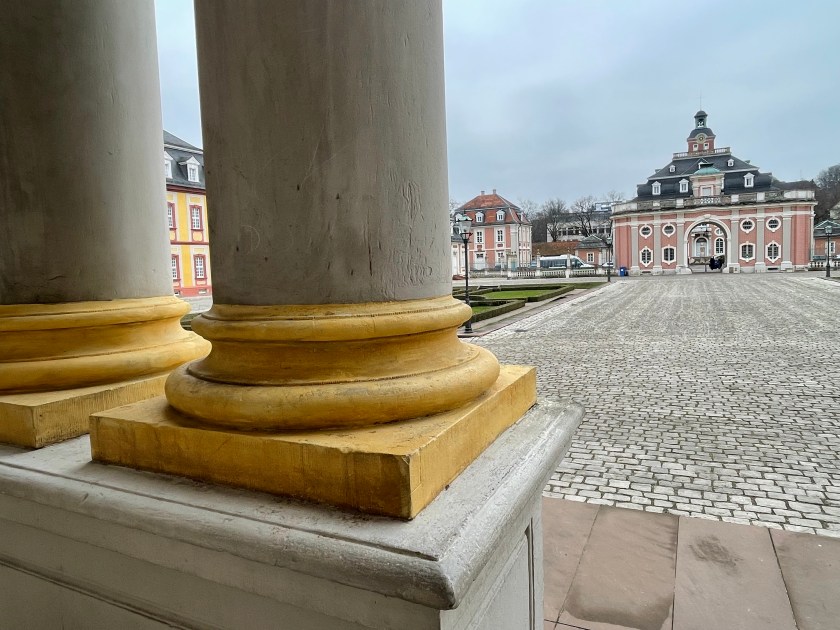
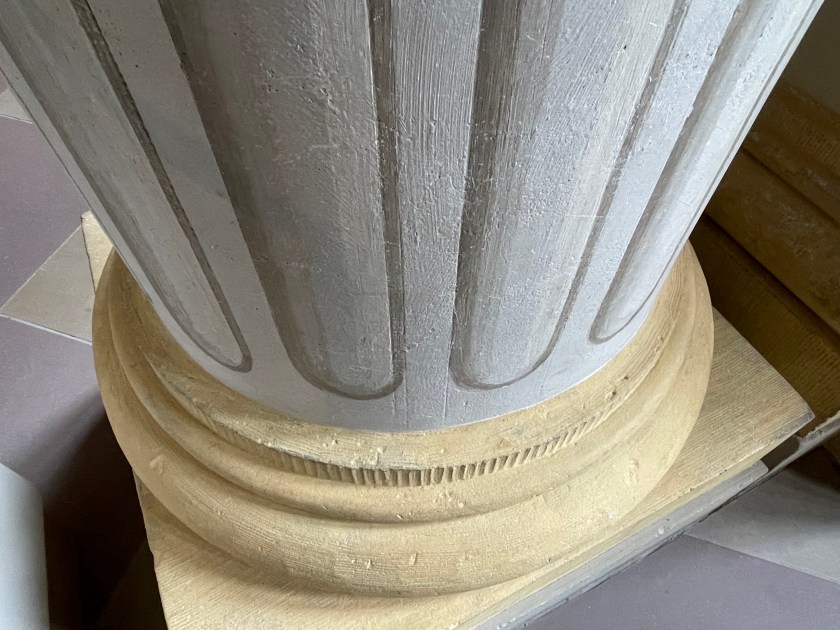
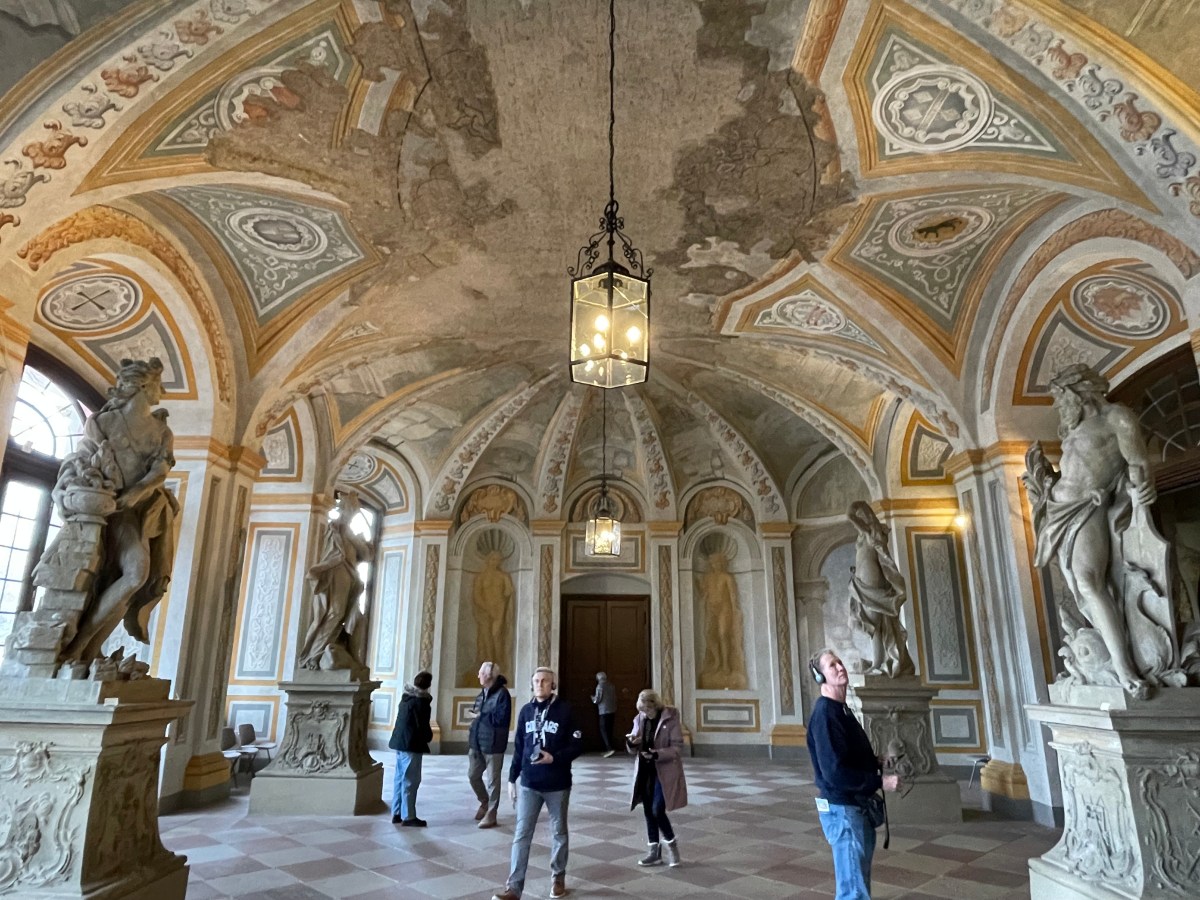
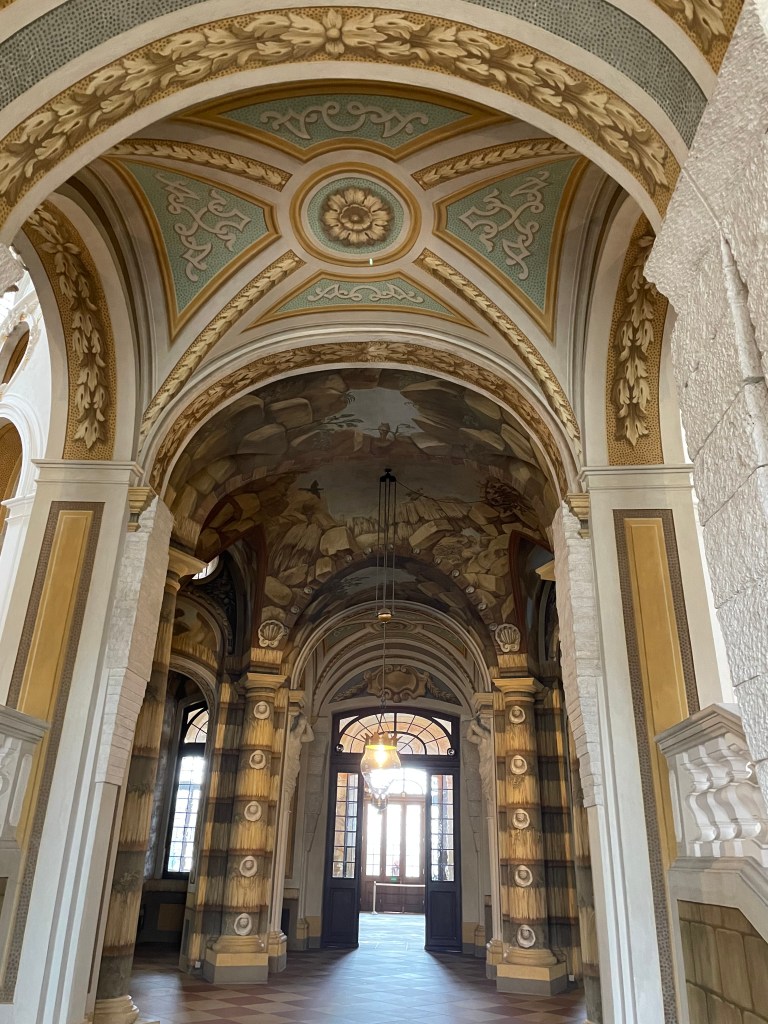
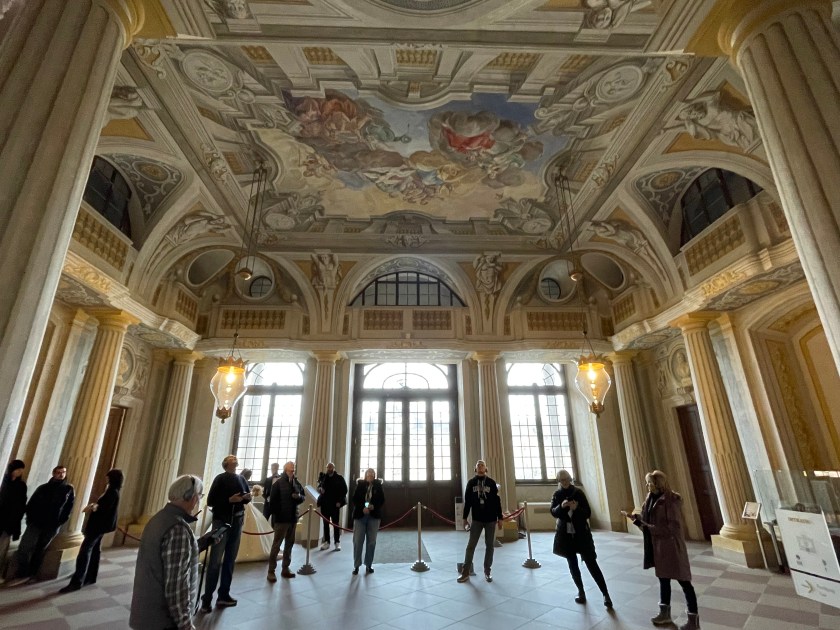
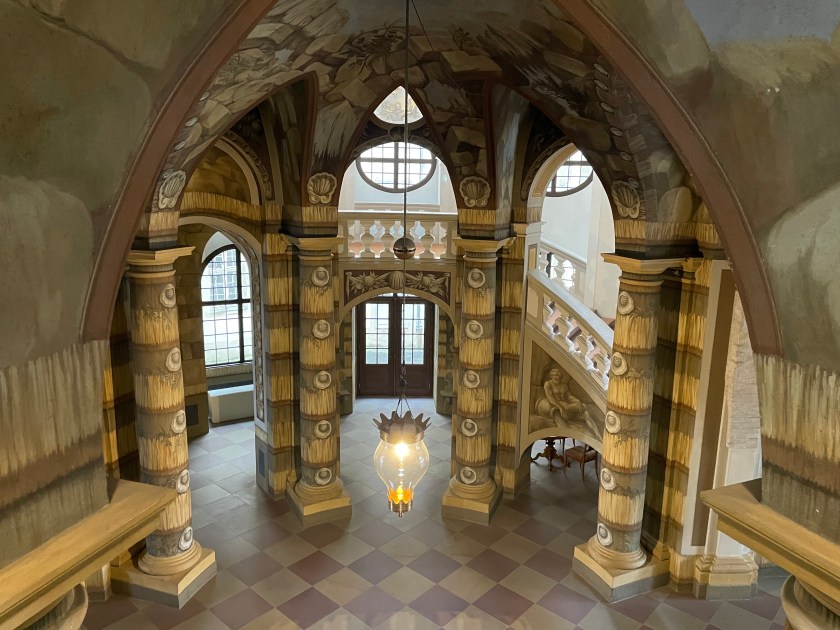
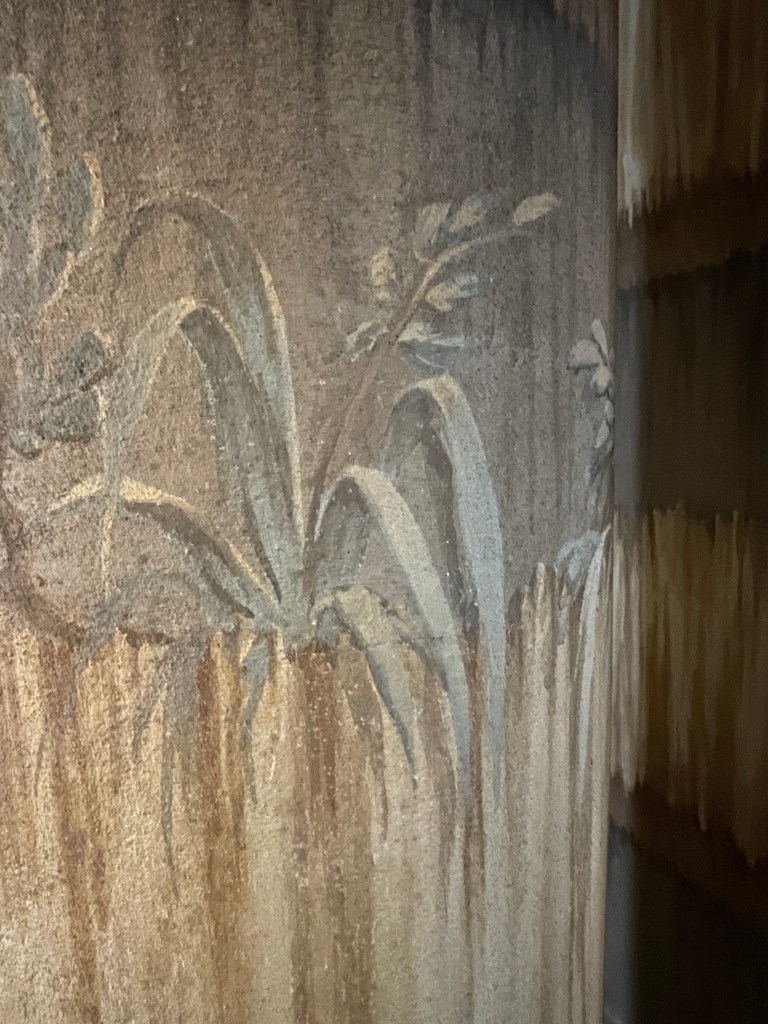
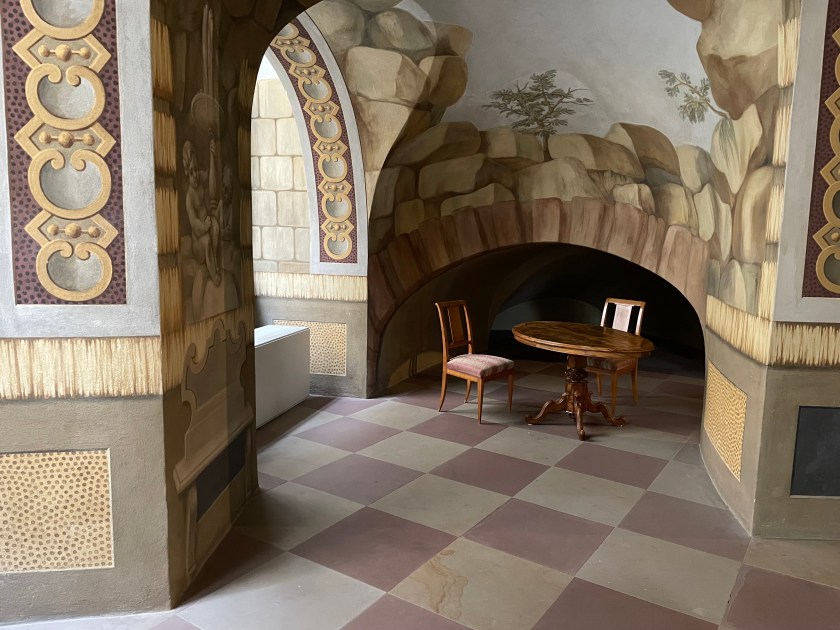
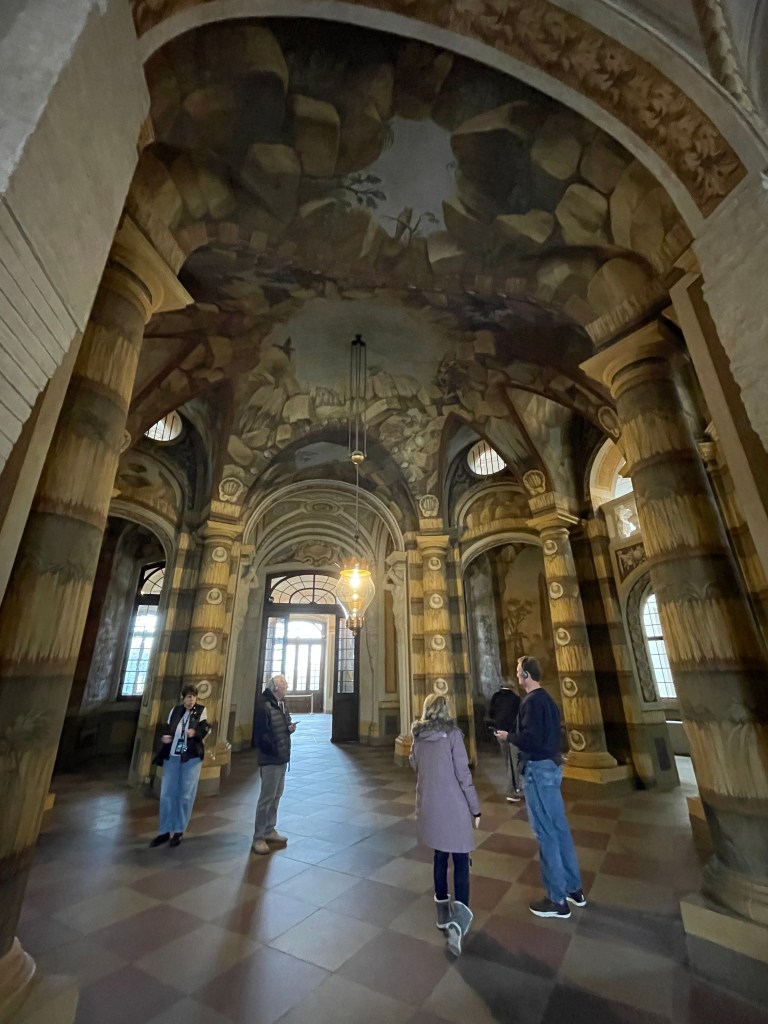
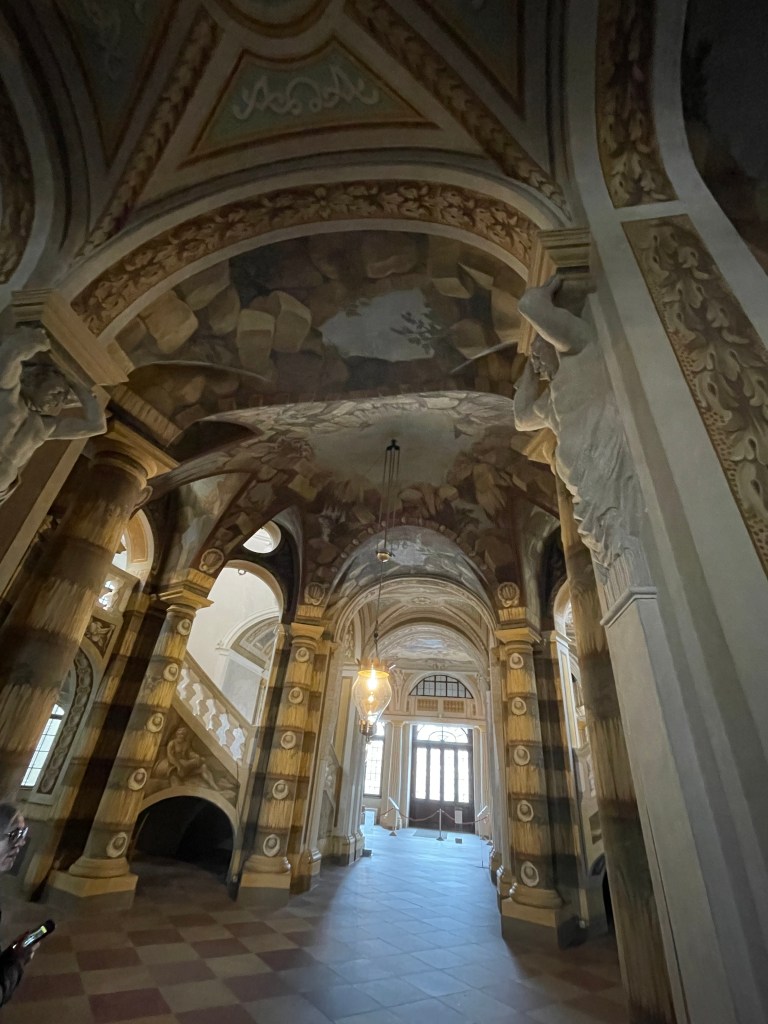
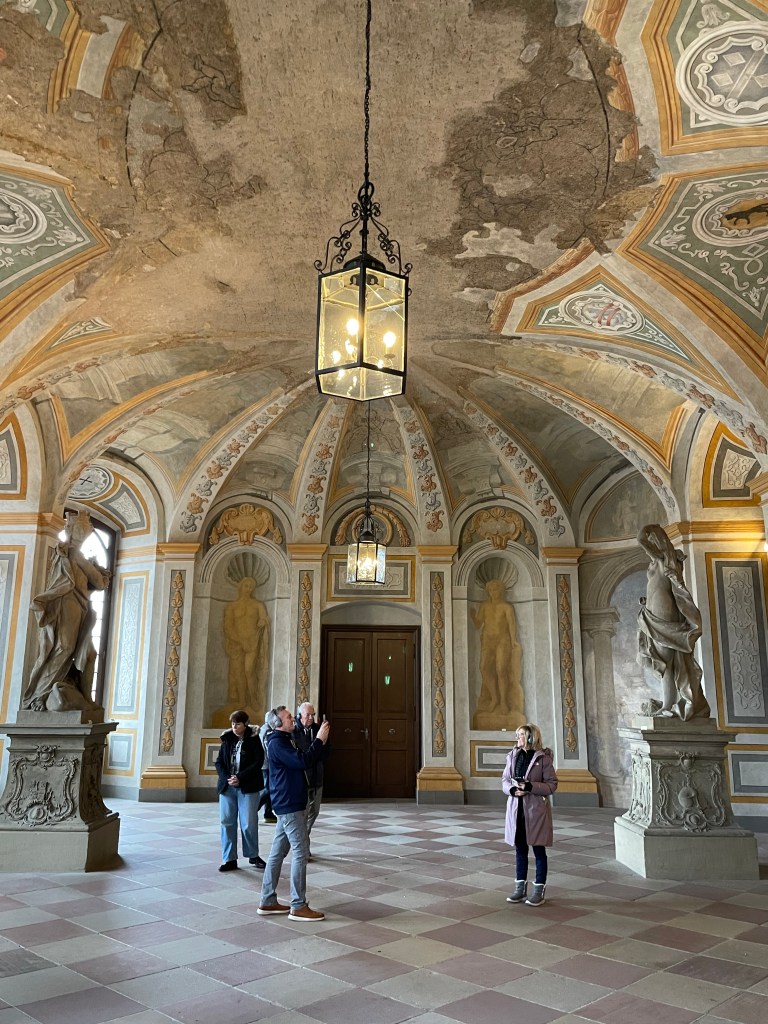
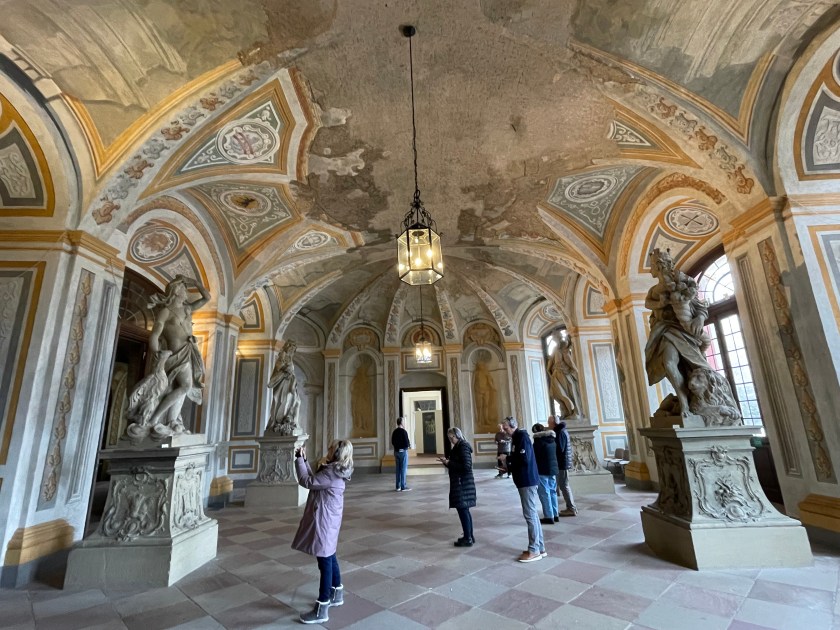
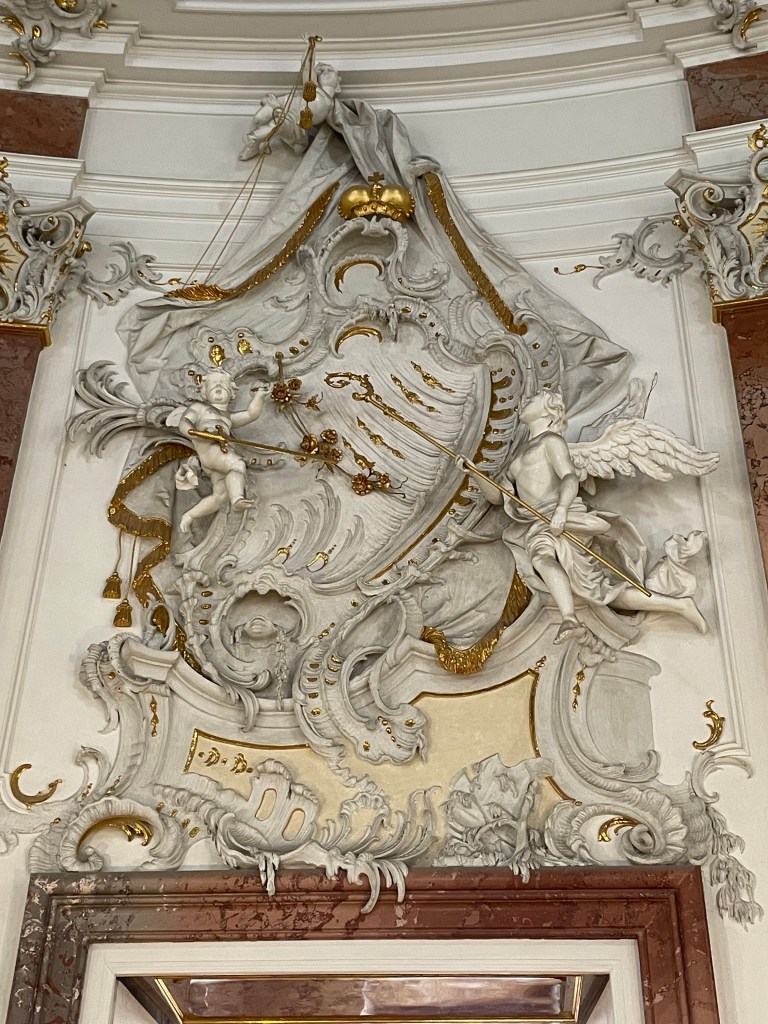
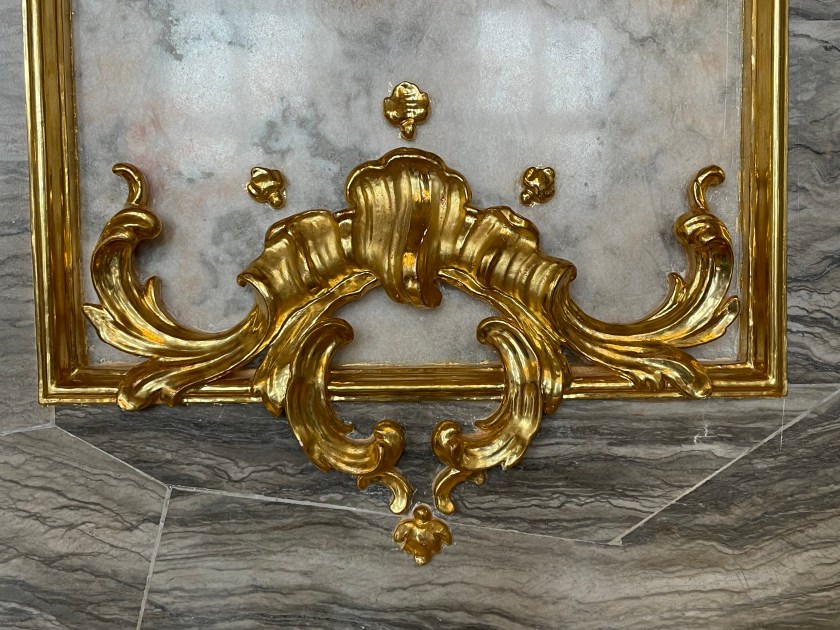
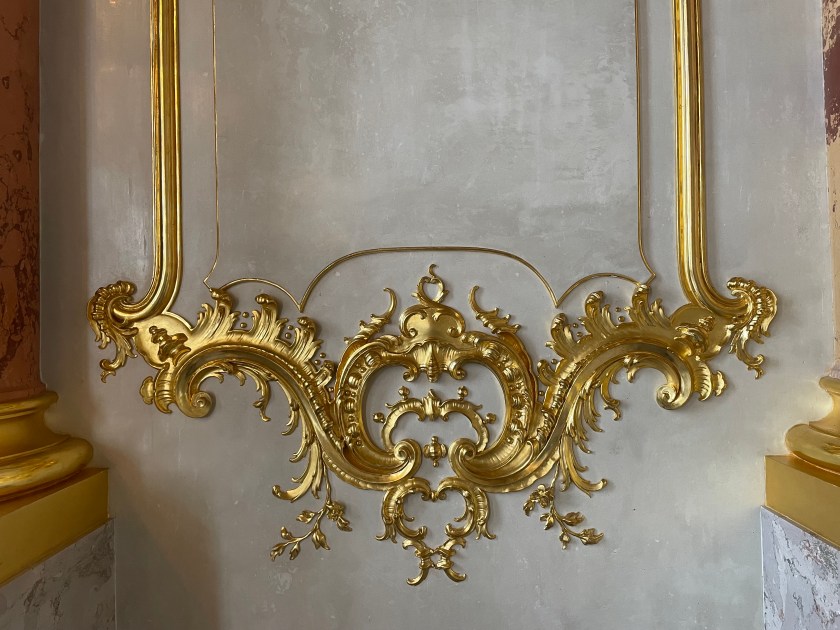
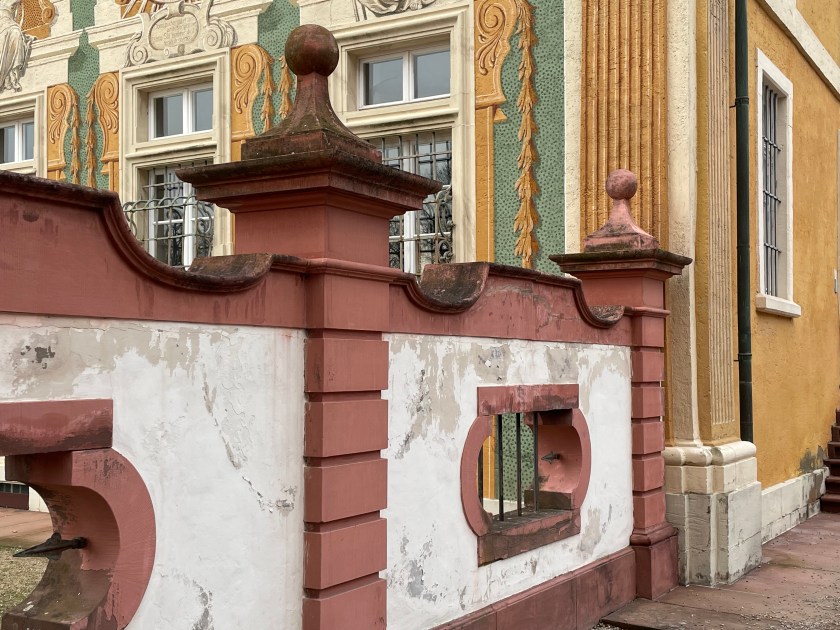
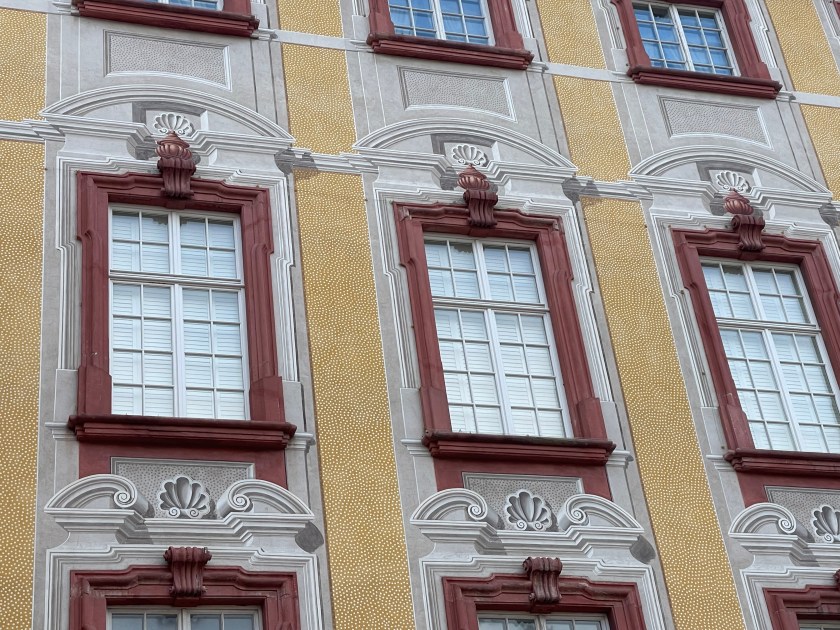
One of the most fascinating things to me was how walls, columns and exteriors were painted to look dimensional. Everything is flat, but doesn’t look like it. It’s really quite amazing.
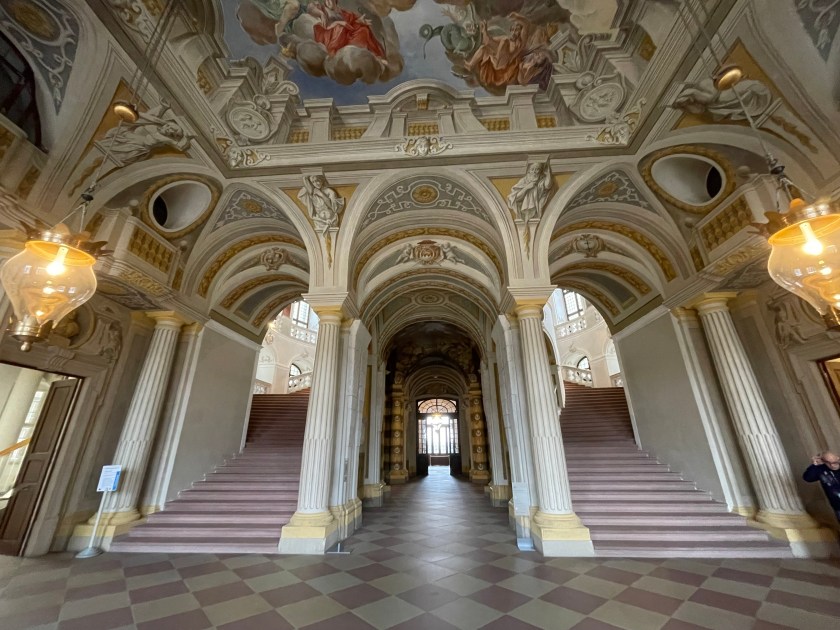

Bridal photos happing here today:


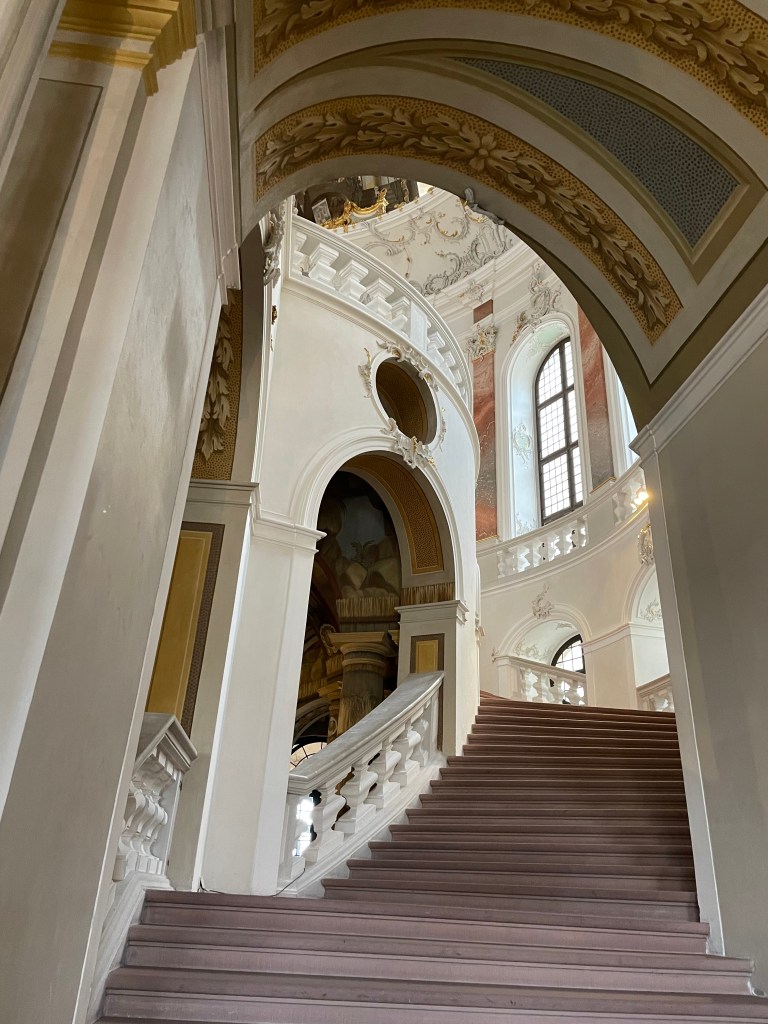
The castle/palace had 3 wings and a world-famous huge central staircase much like the one in Würzburg.
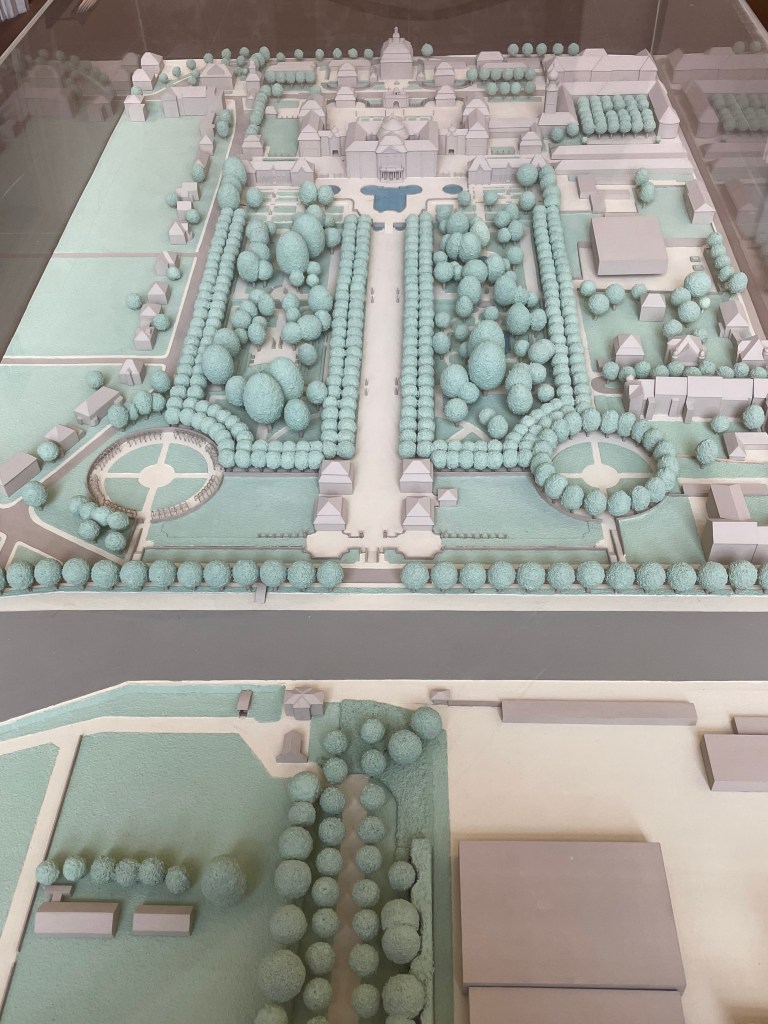
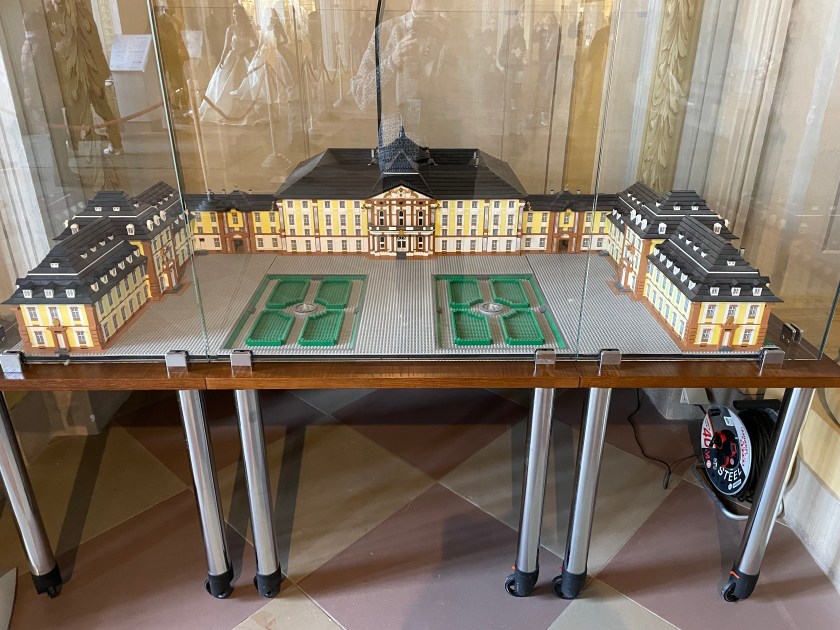
A Lego model:
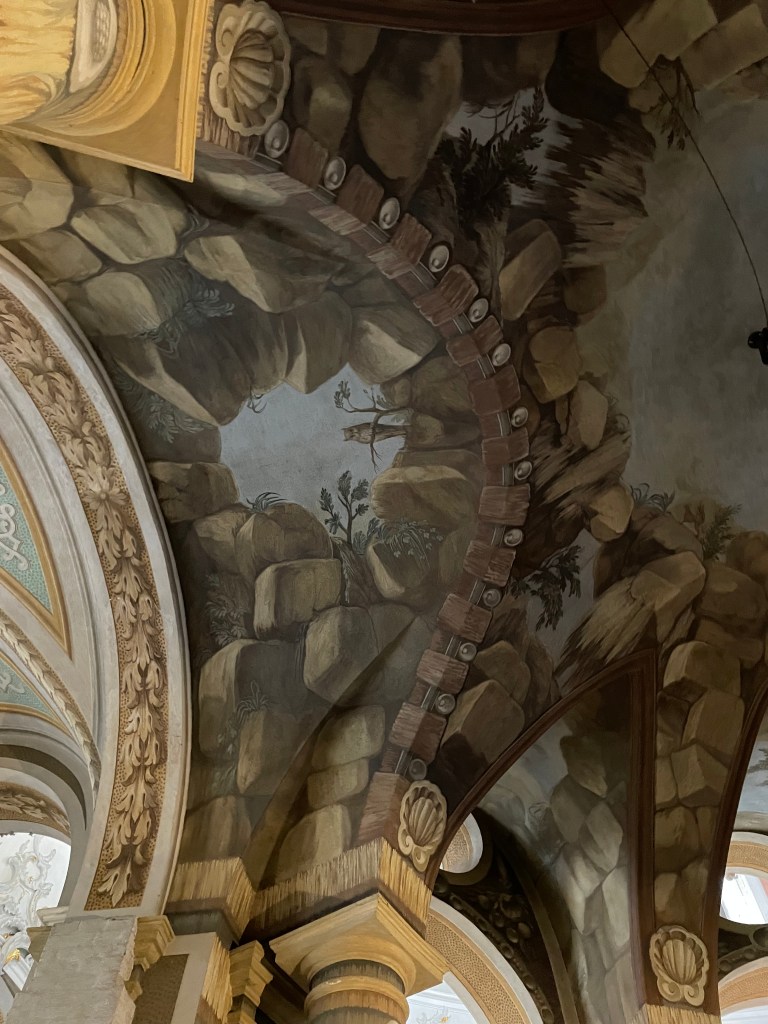
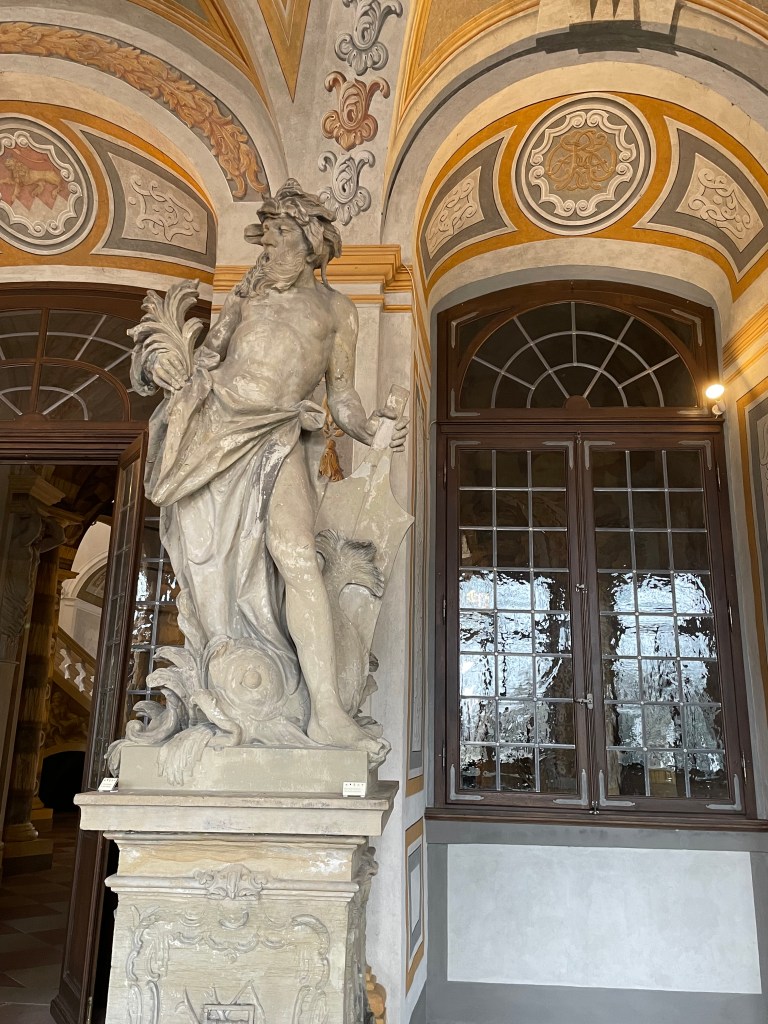
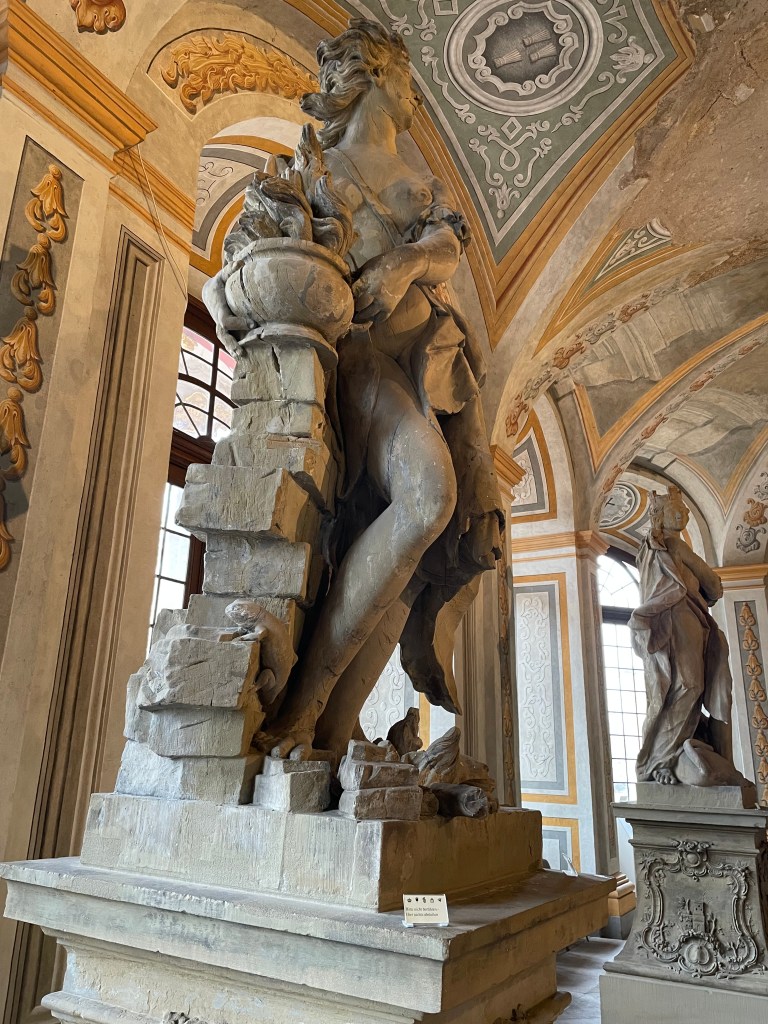
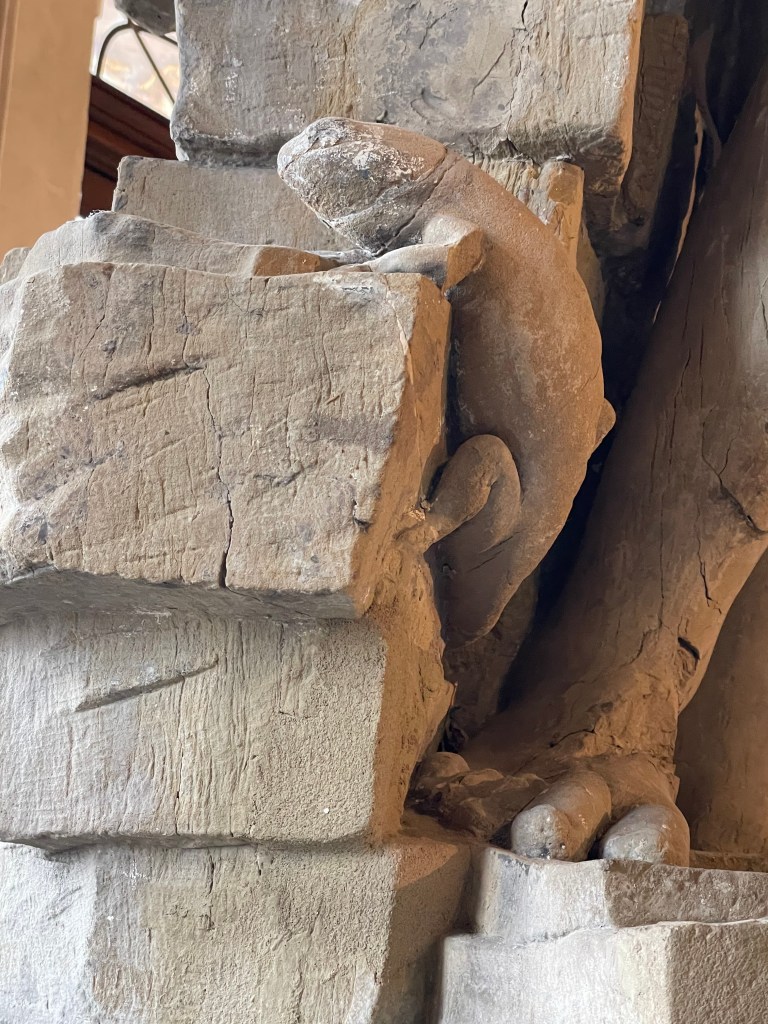
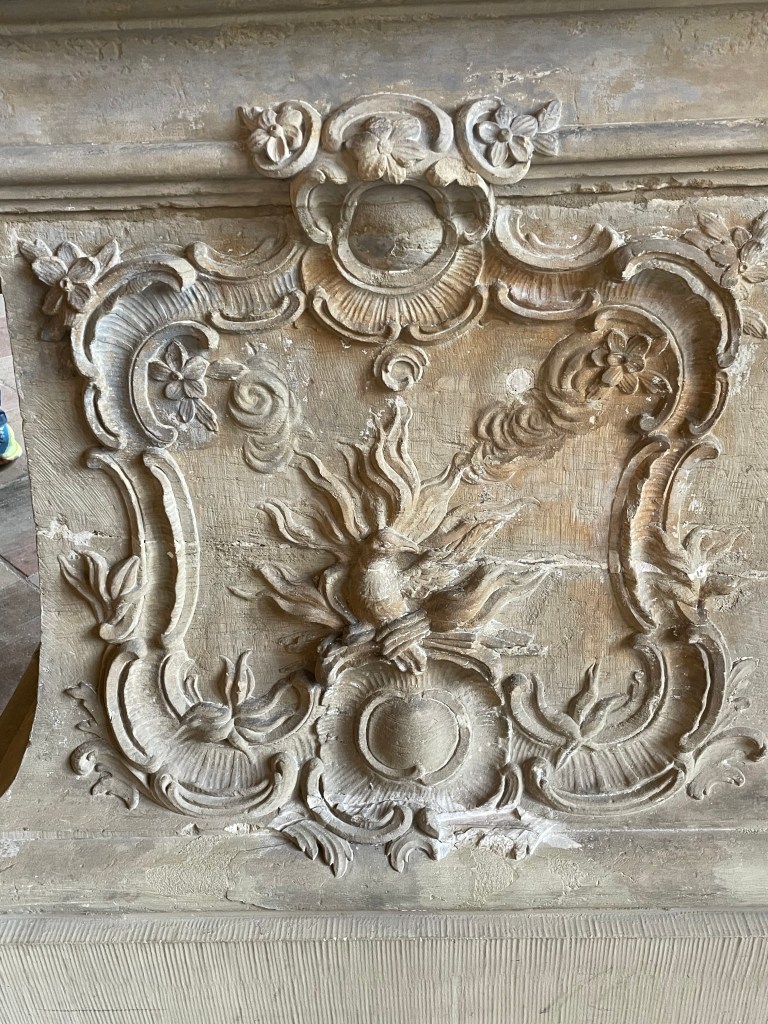
Under the double staircase, winding up to the upper floor is a grotto area representing the netherworld.
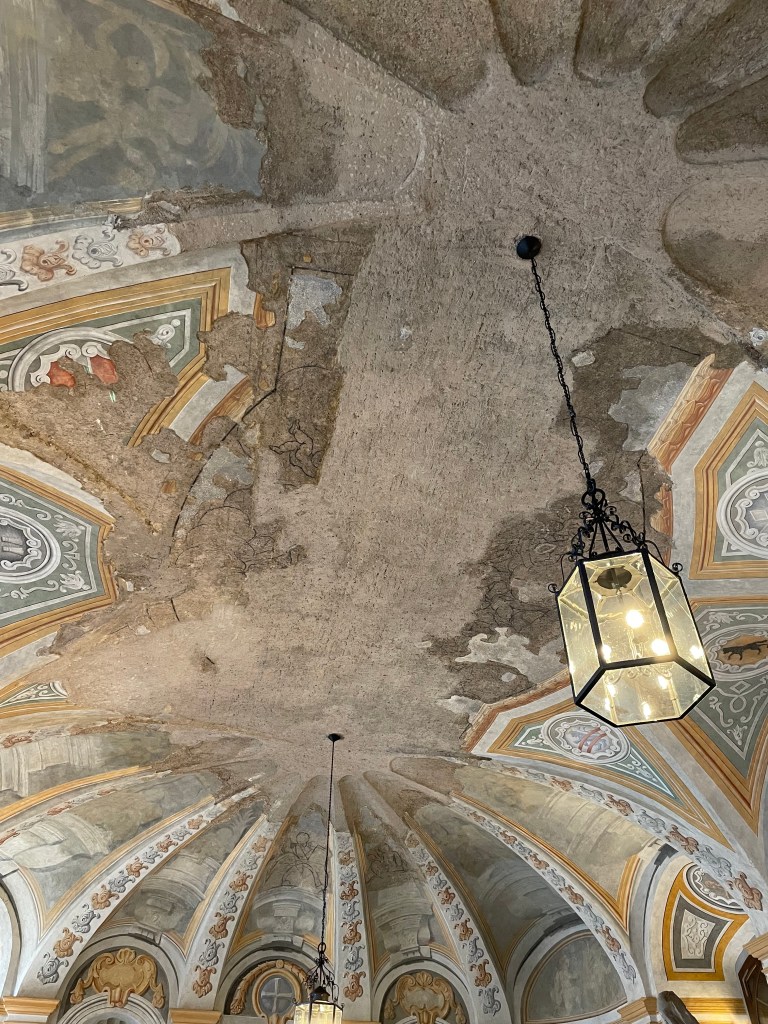
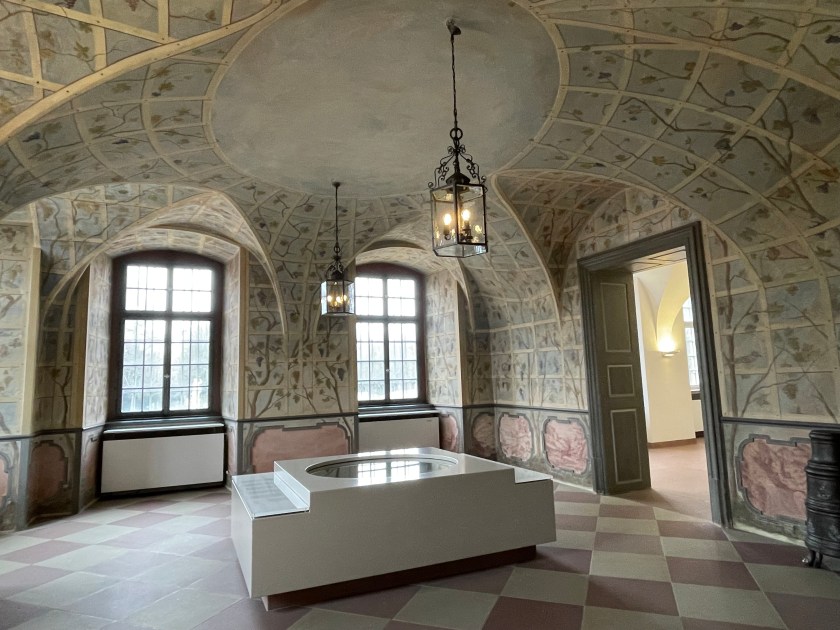
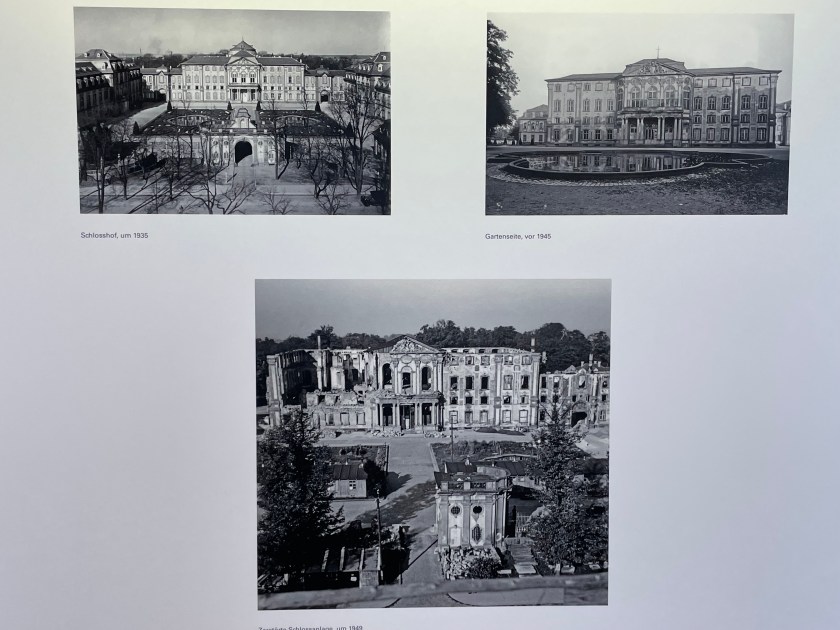
This grotto is dimly lit in imitation of a cave and decorated with murals of plant life, shells, and river deities beneath a ceiling fresco of a bird-filled sky. The Grotto, damaged by fire, was restored after World War II, but not in the neighboring Garden Hall, which survived the war but suffered water and frost damage. The ceiling fresco remains unrestored in a permanent exhibition of the palace’s destruction in 1945.




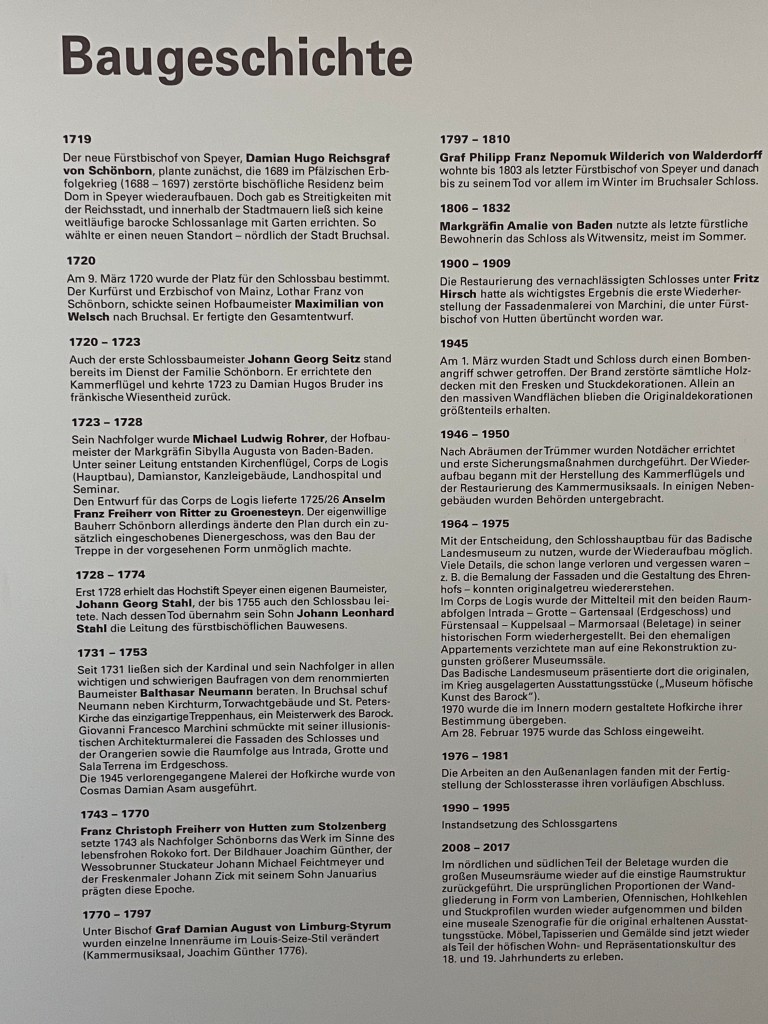
This is the history of this Palace:


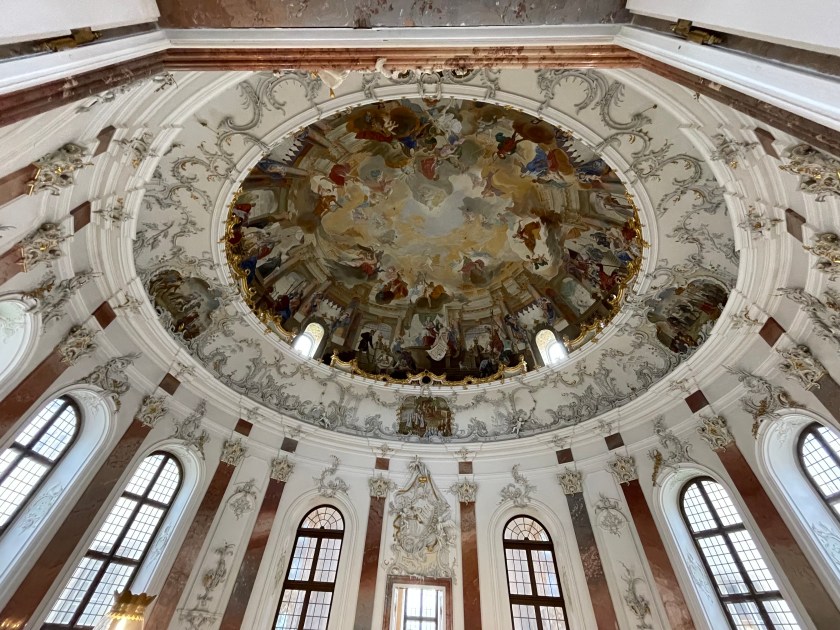
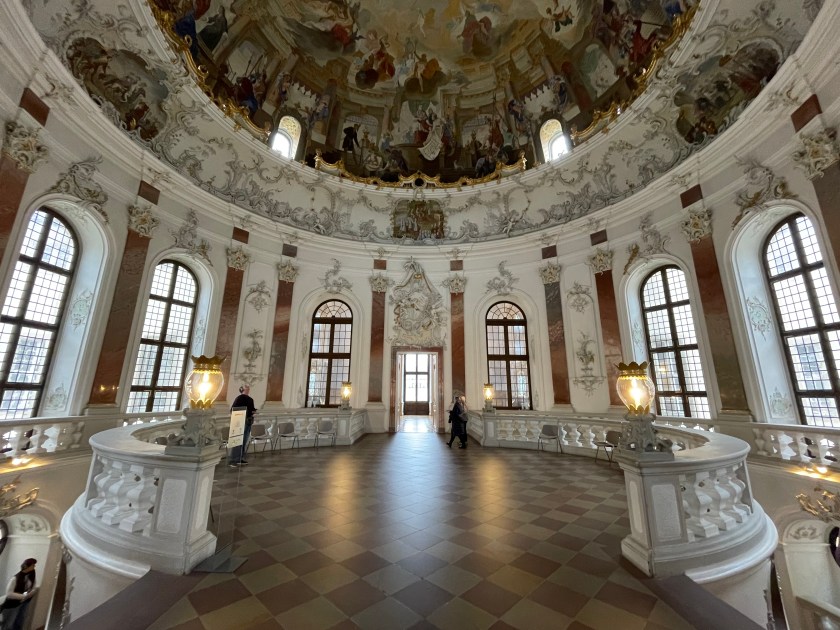

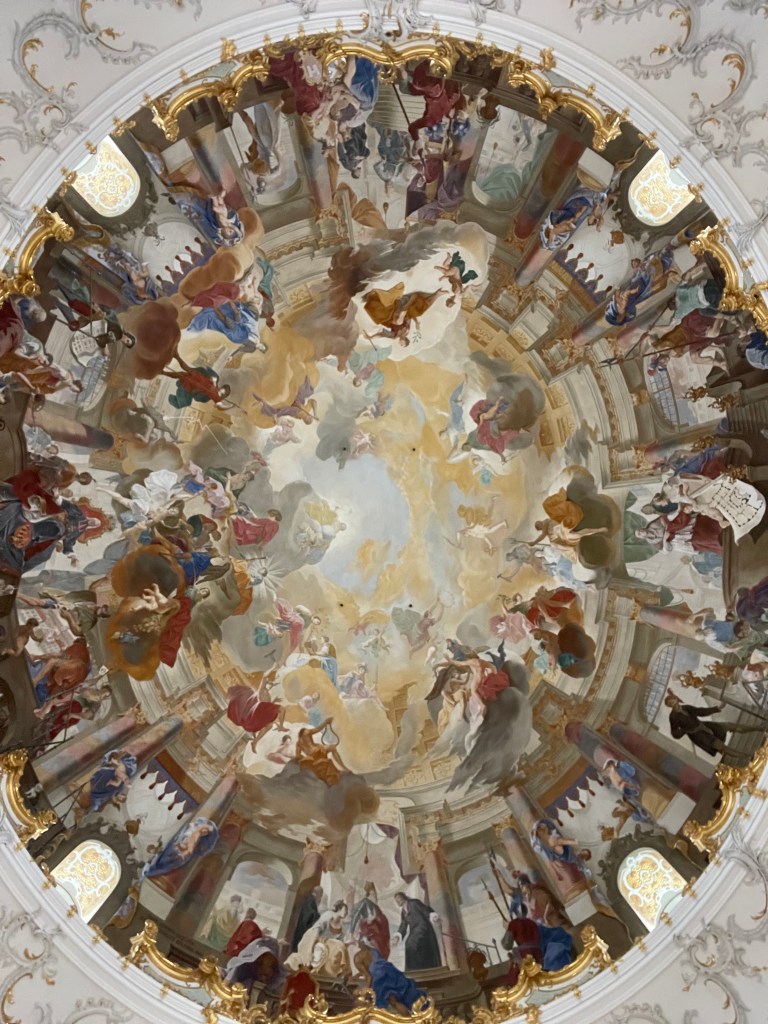
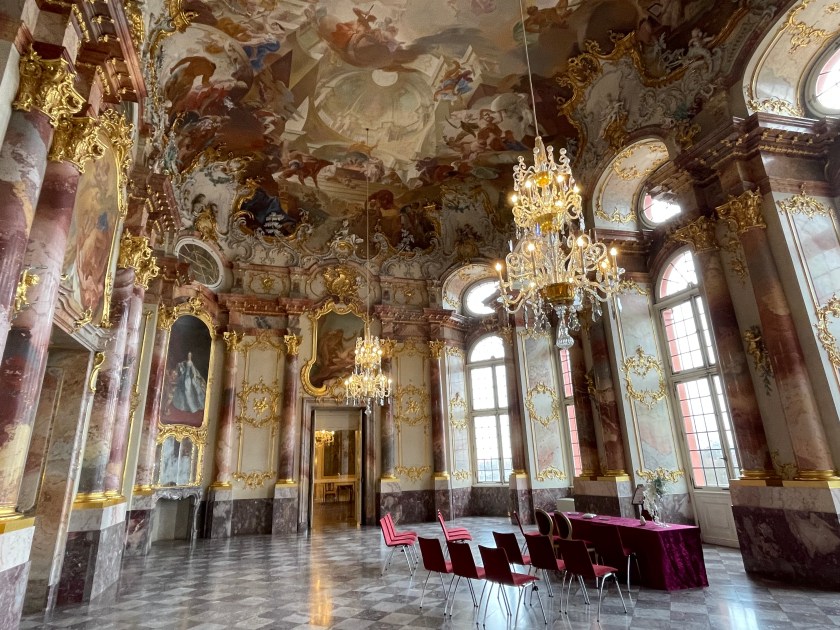
The ceiling:
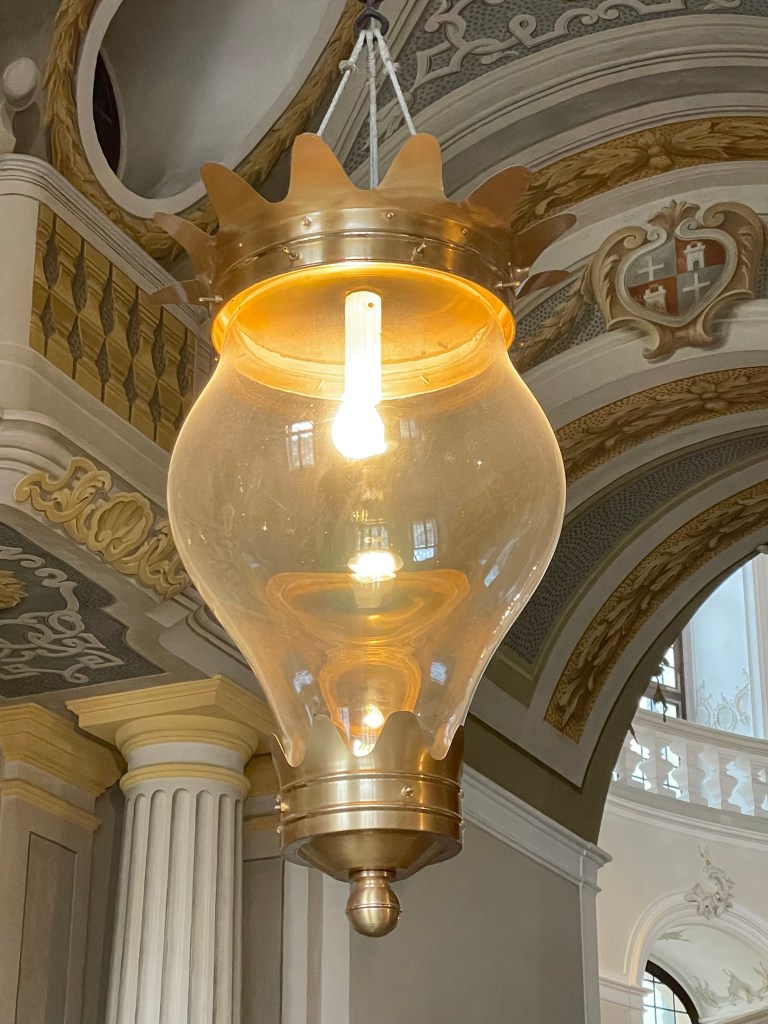
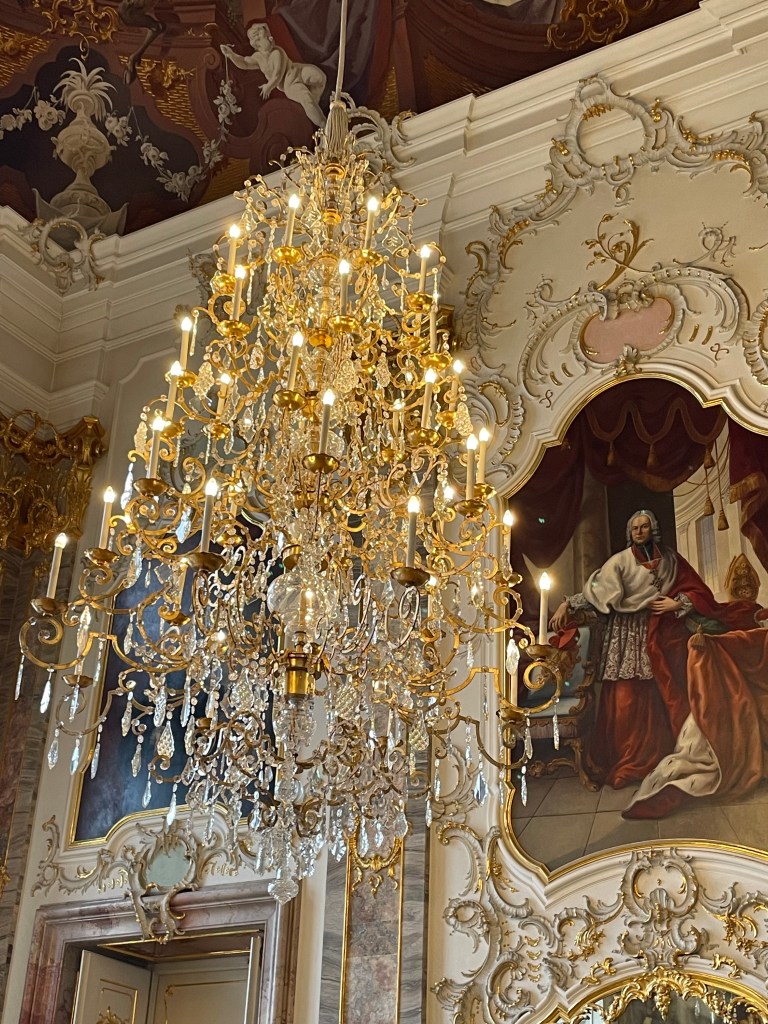
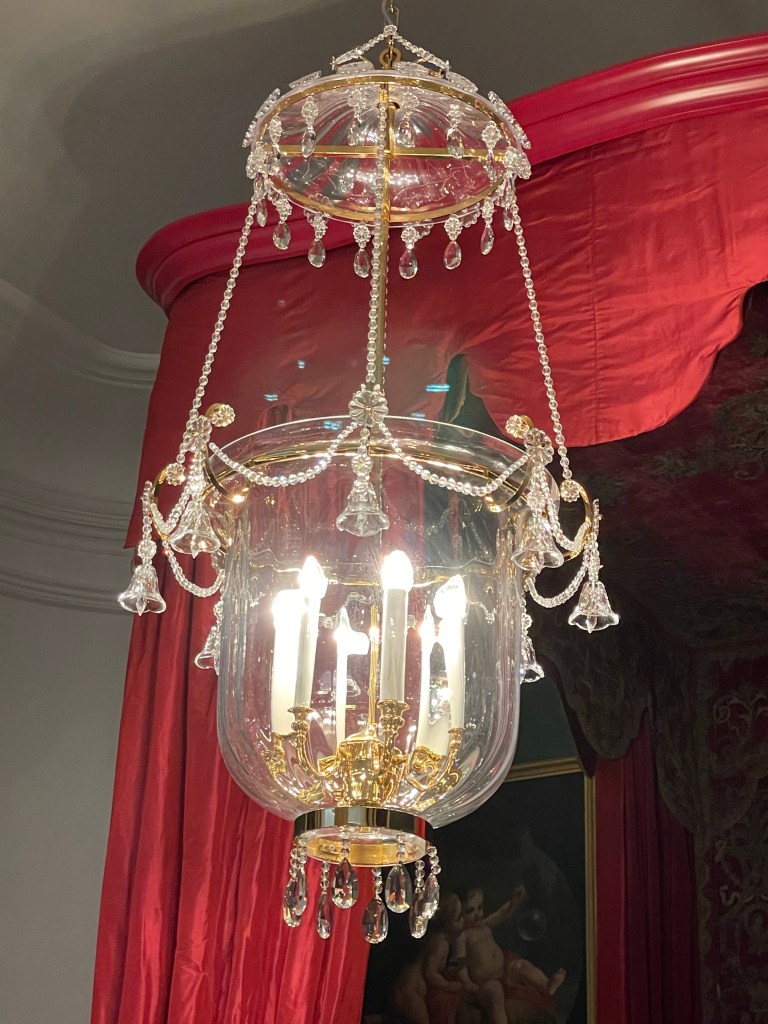
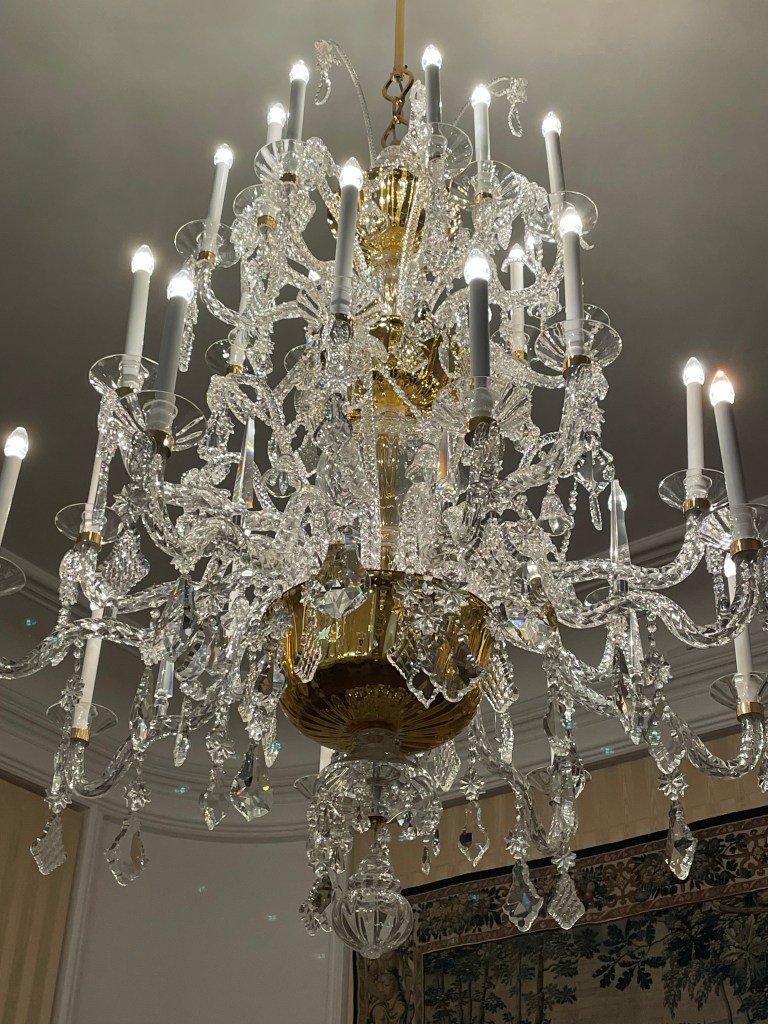
The chandeliers throughout were spectacular!


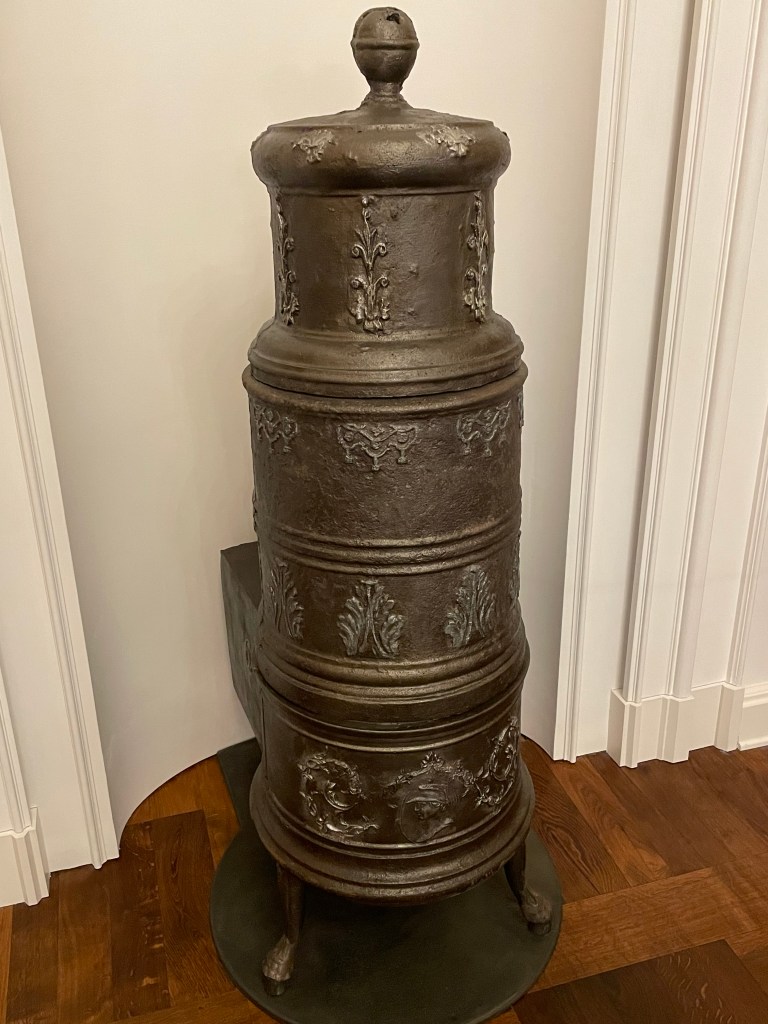
These stoves, for heat, were loaded from passages for the servants behind the walls. The saying, “Her ears were burning,” comes from the idea of trying to listen to gossip through these walls while heating the rooms.

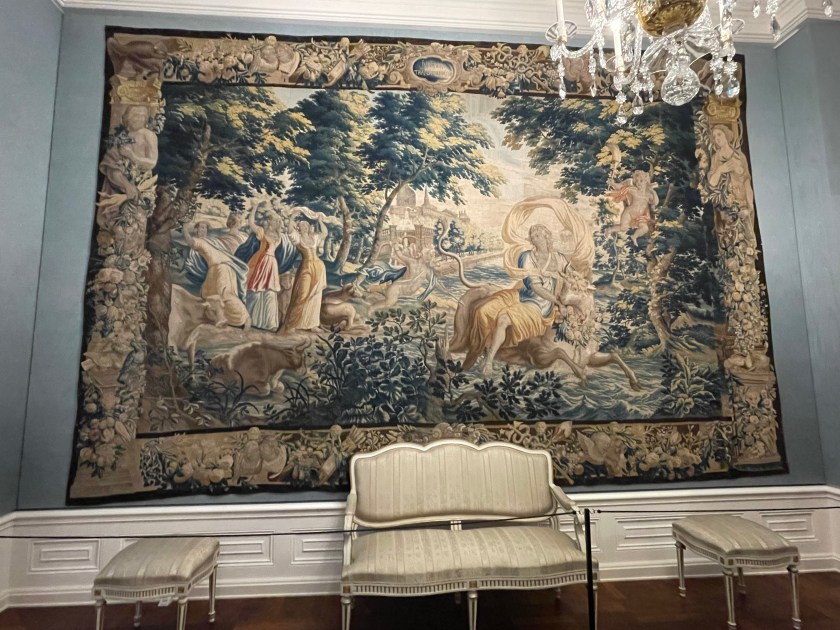
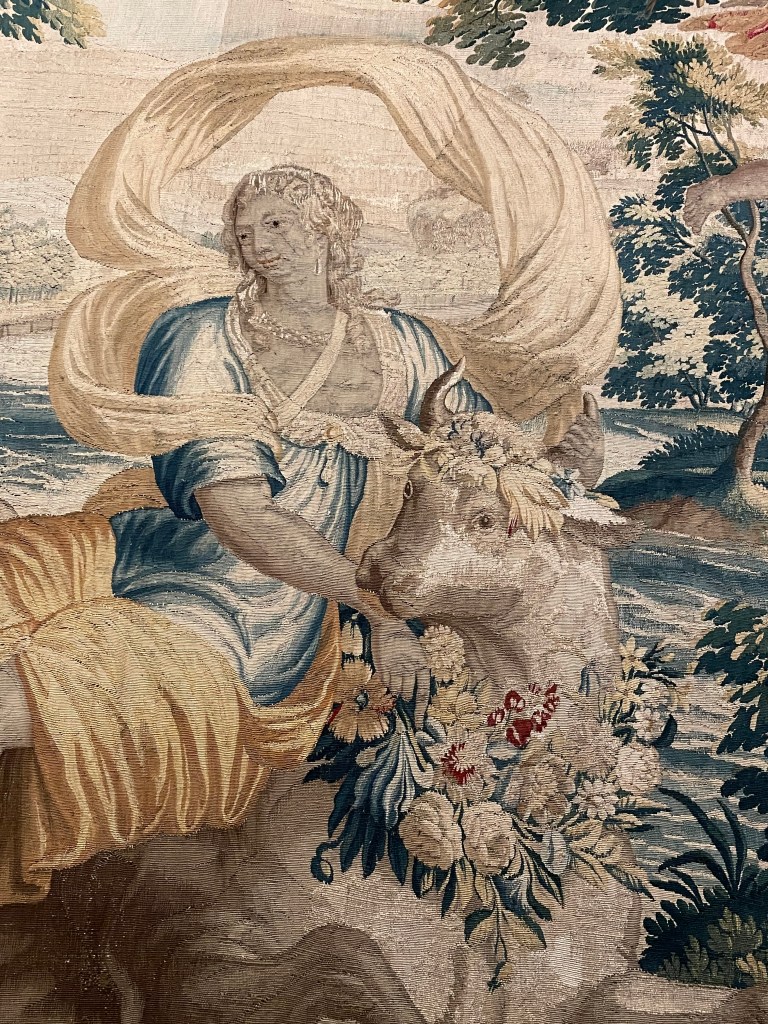
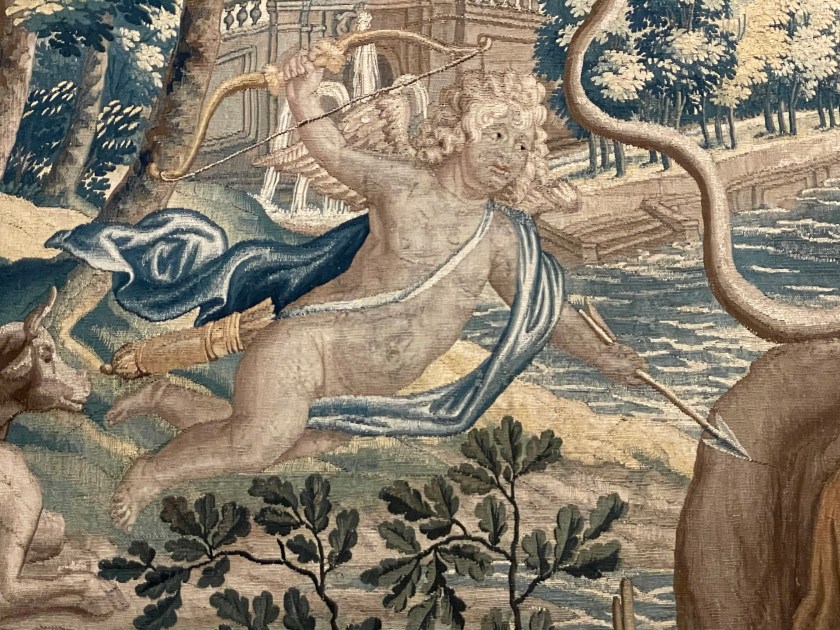
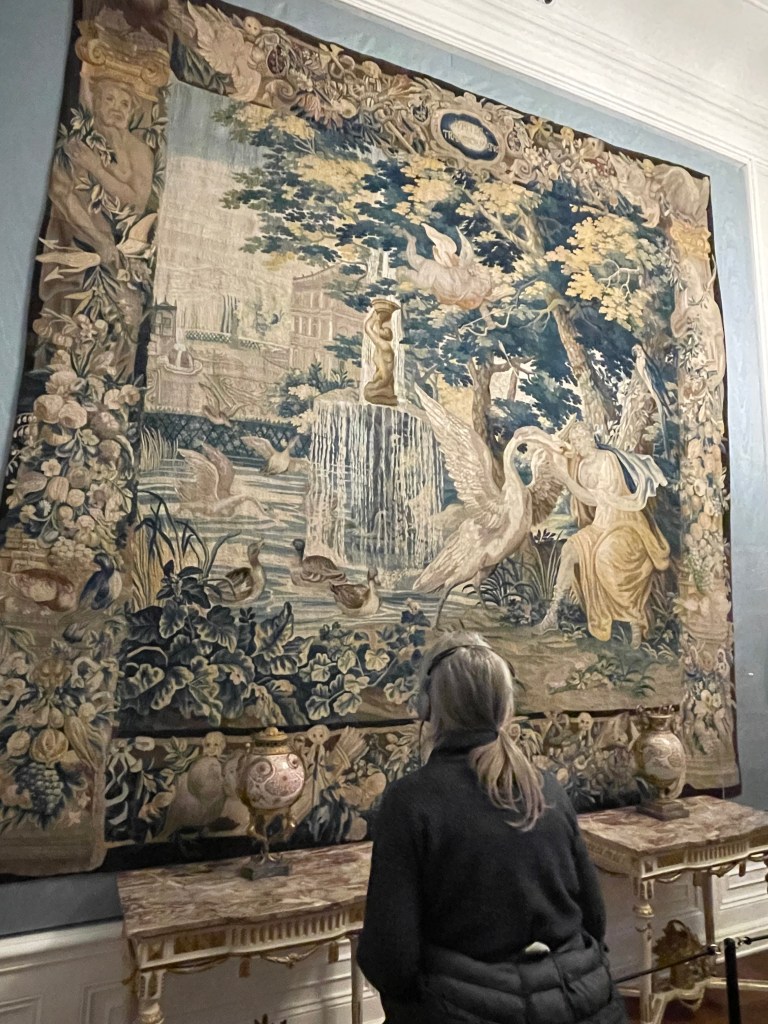
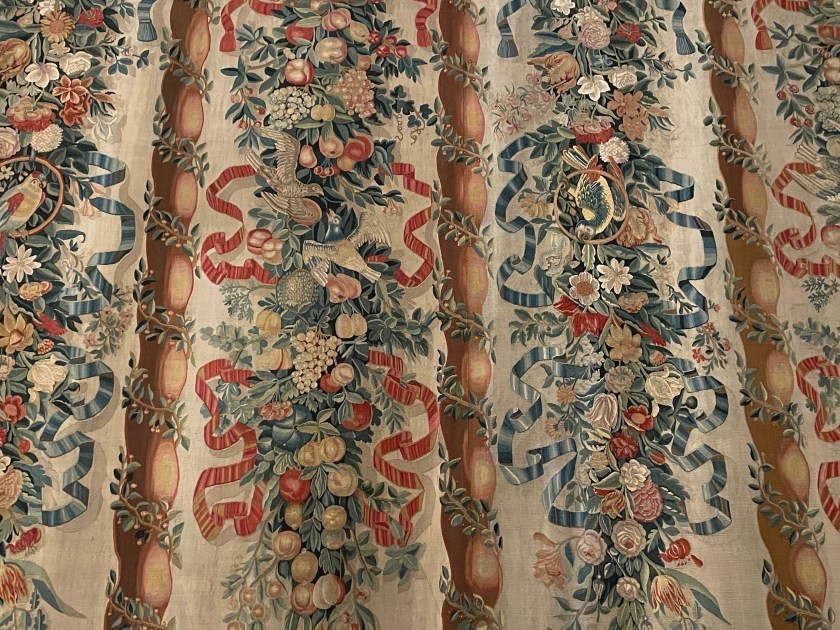
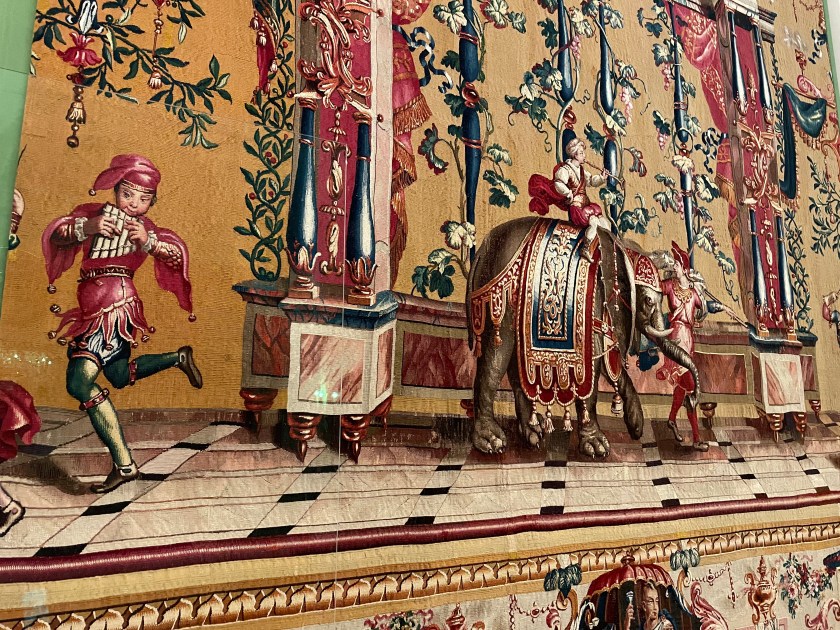
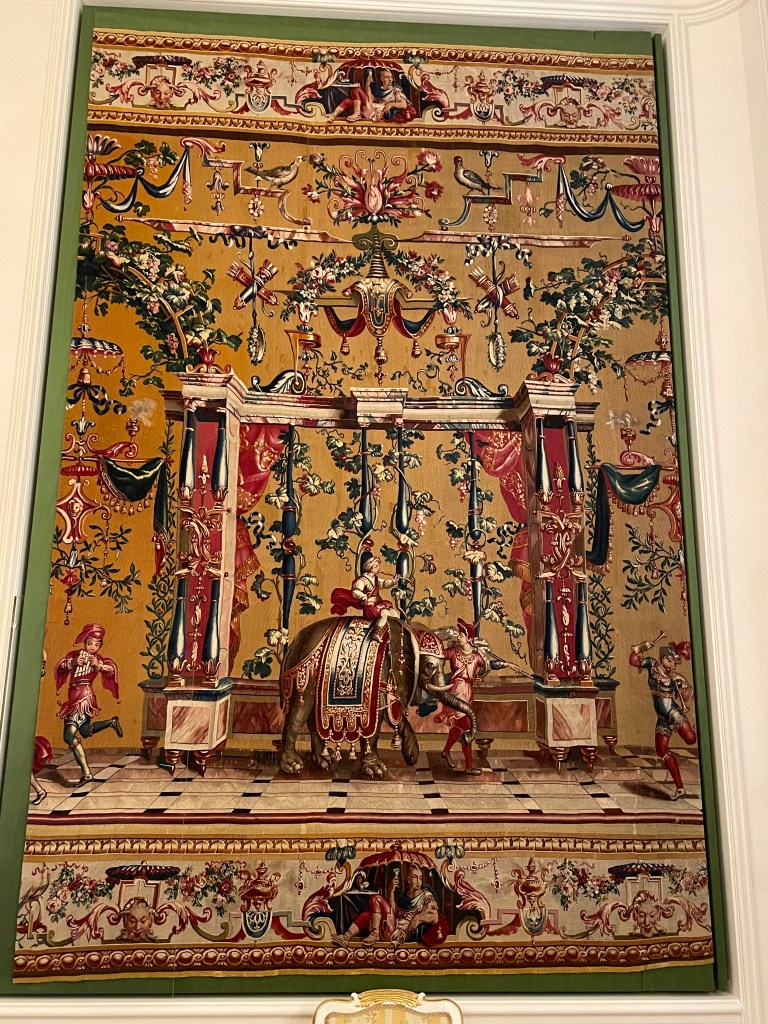
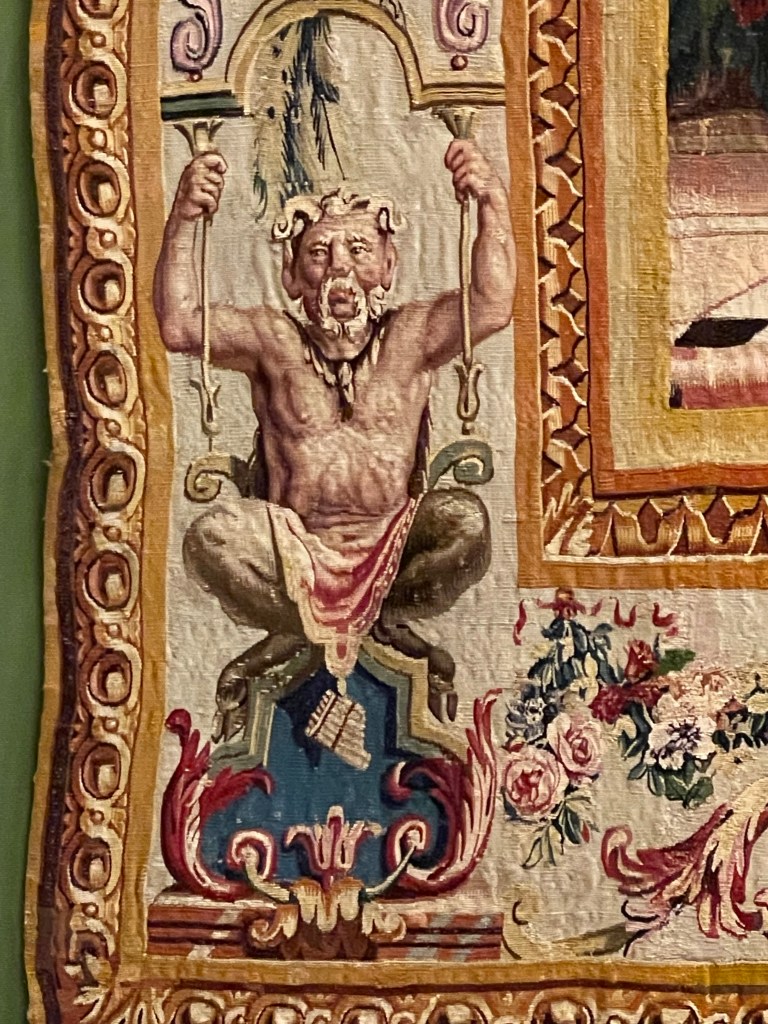
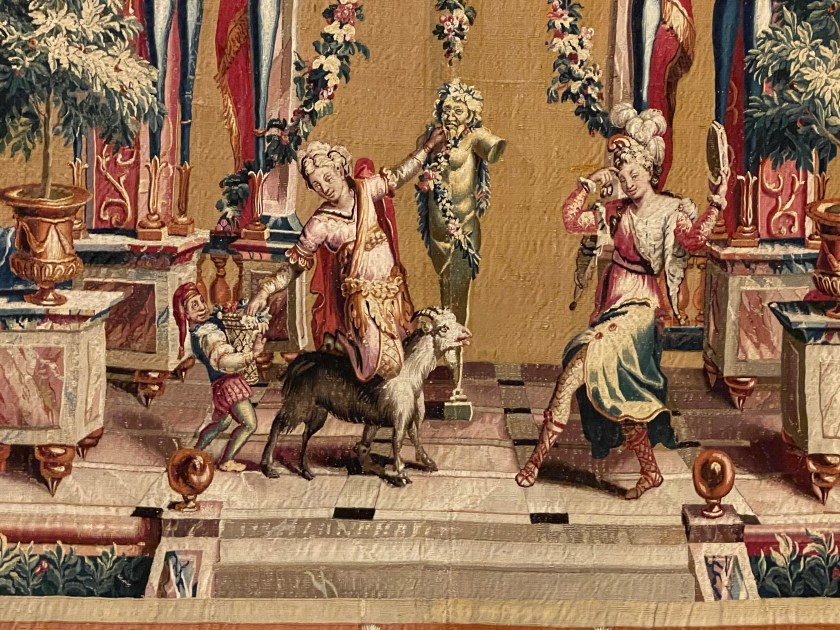
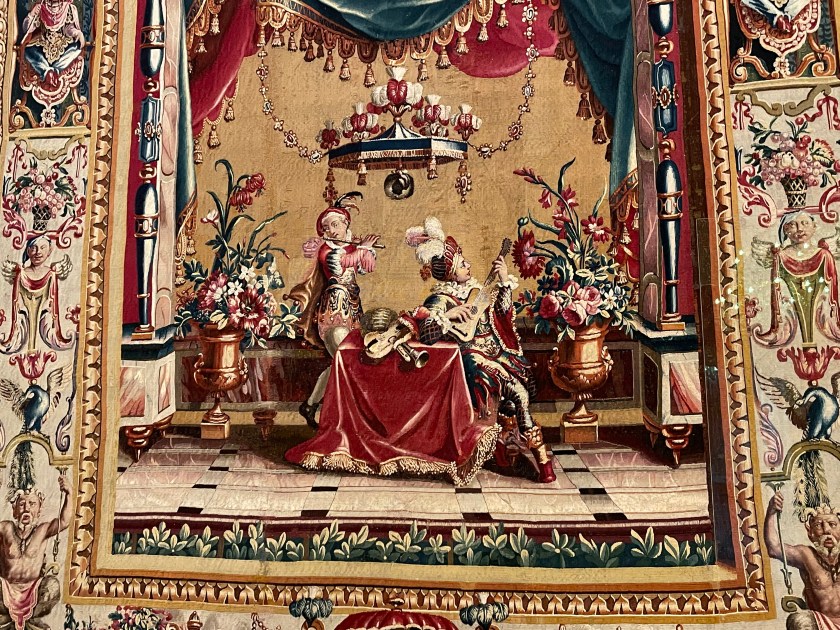
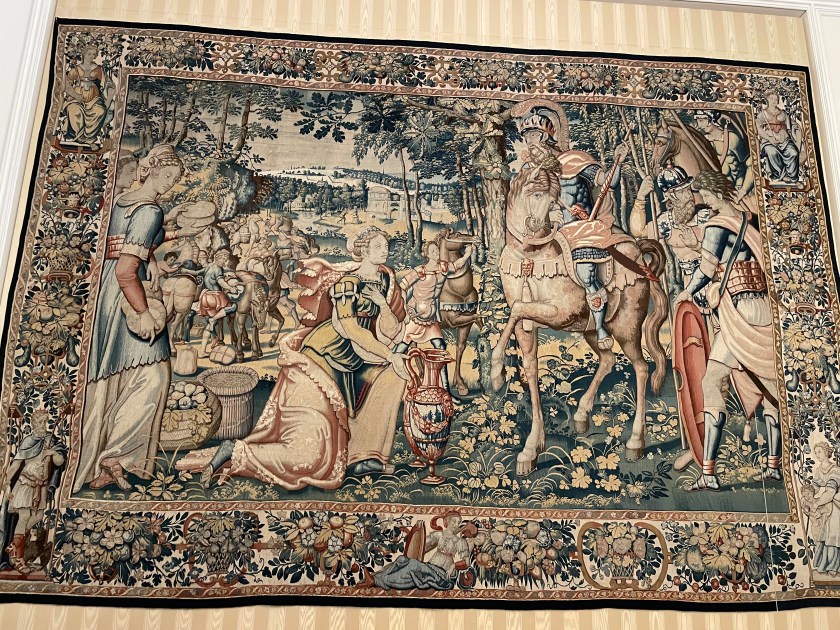
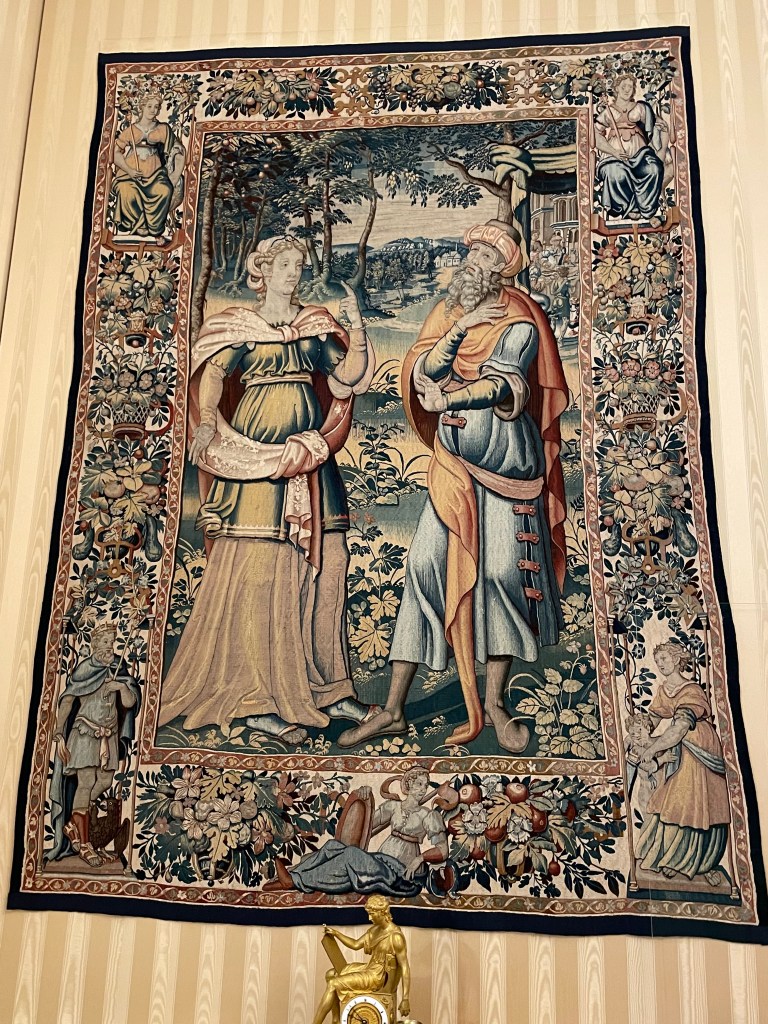
The palace has a famous tapestry collection (collected by the people who once lived here). The tapestries/carpets were large and so beautiful, most made in Flanders, Belgium in the 1600s.
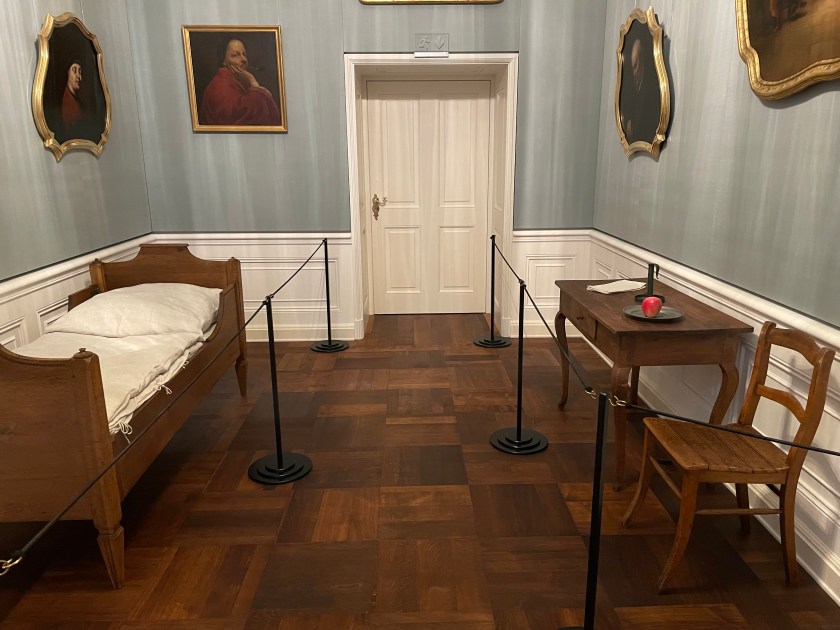
A servant’s room:


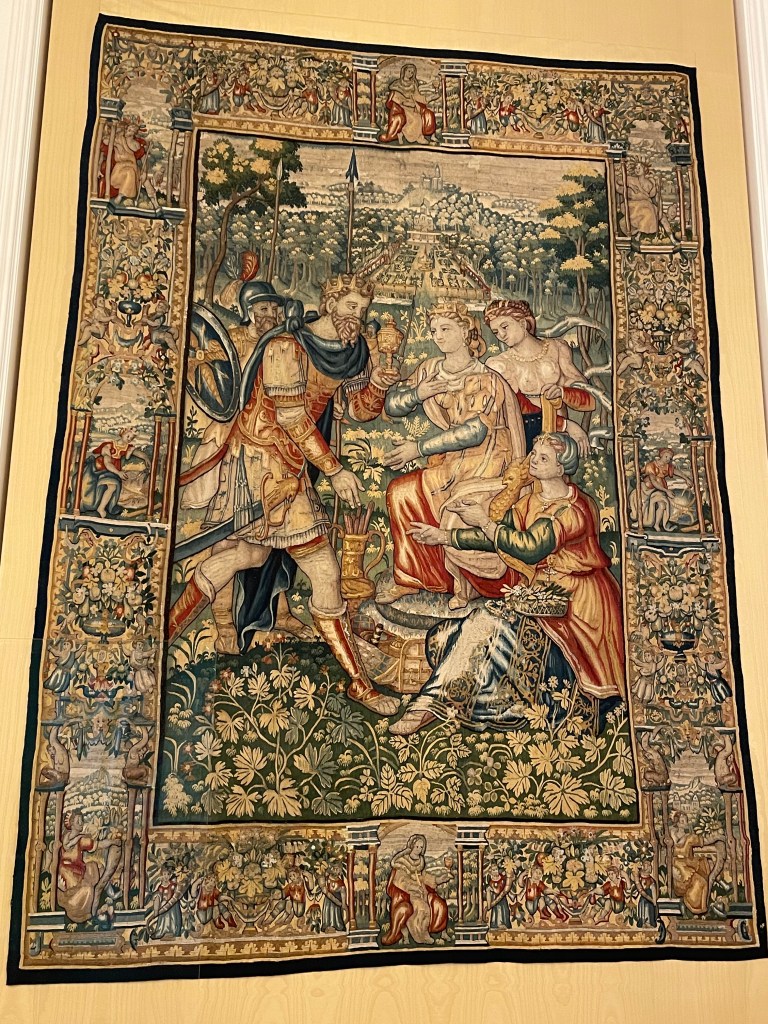

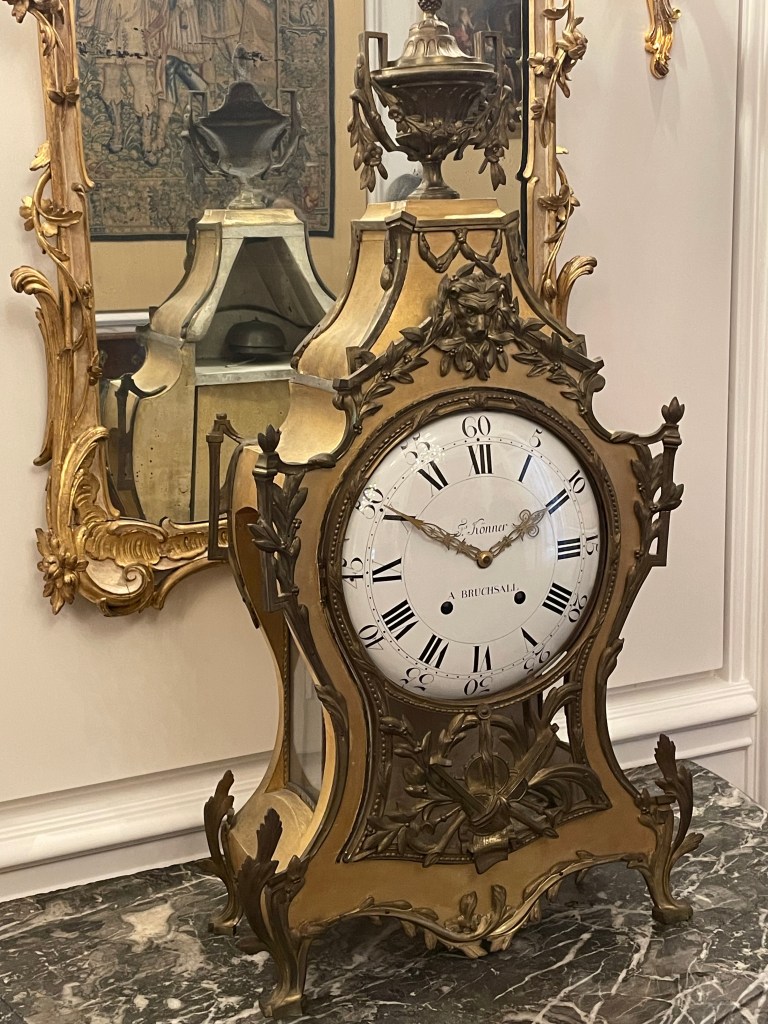
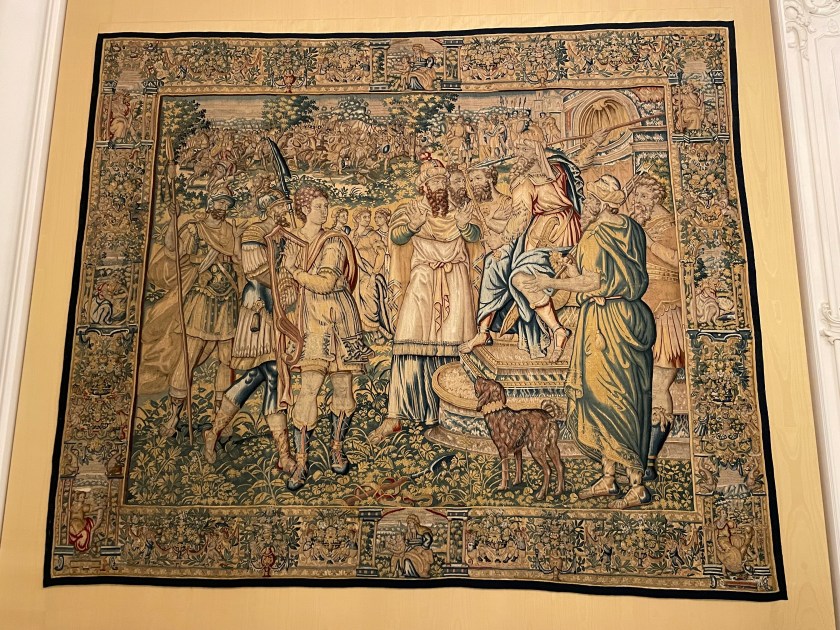
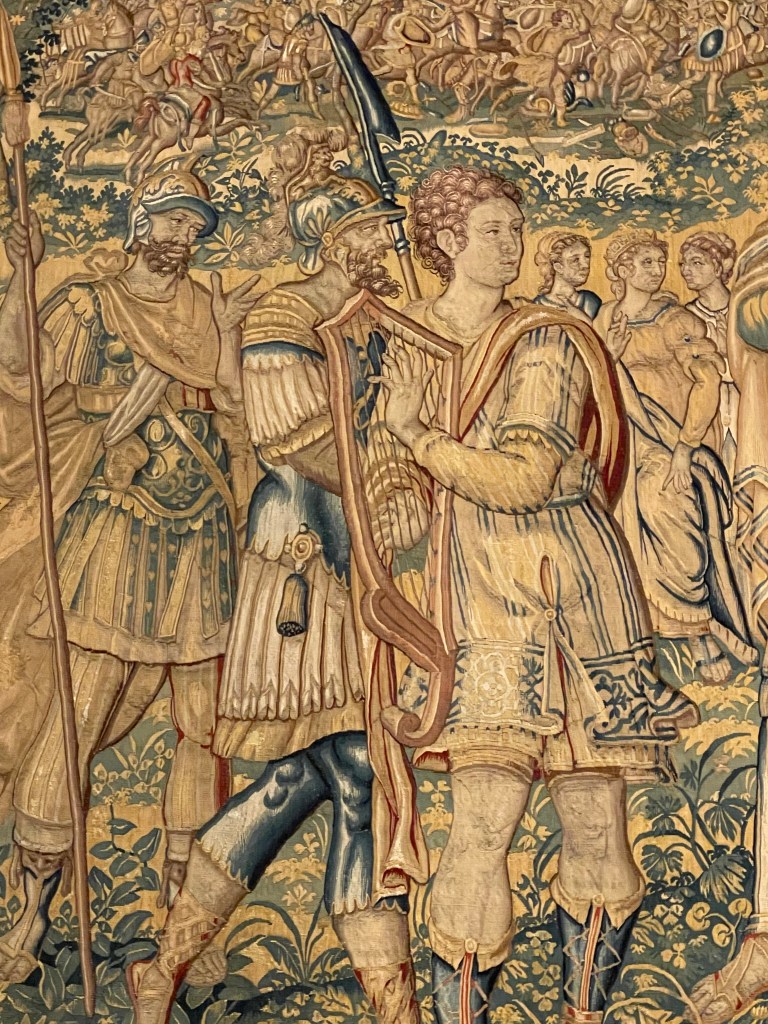
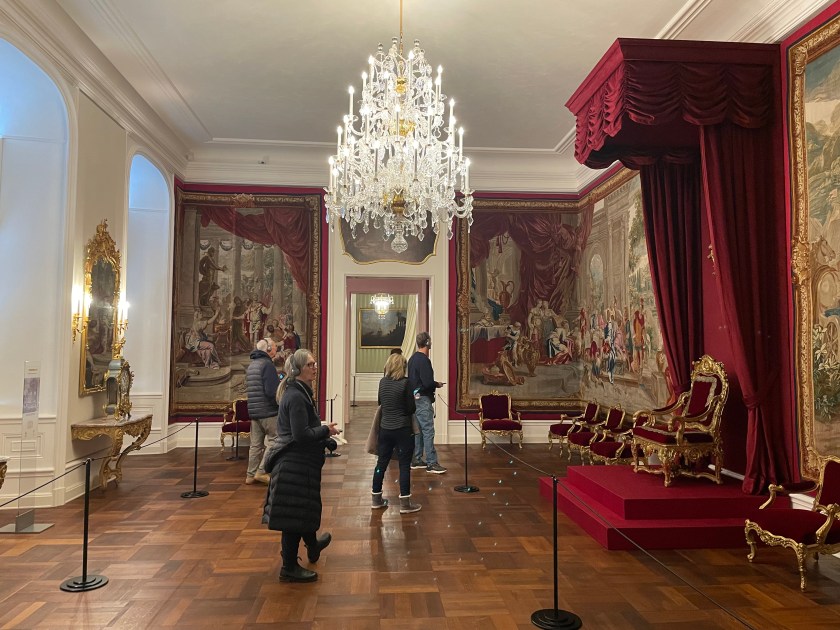
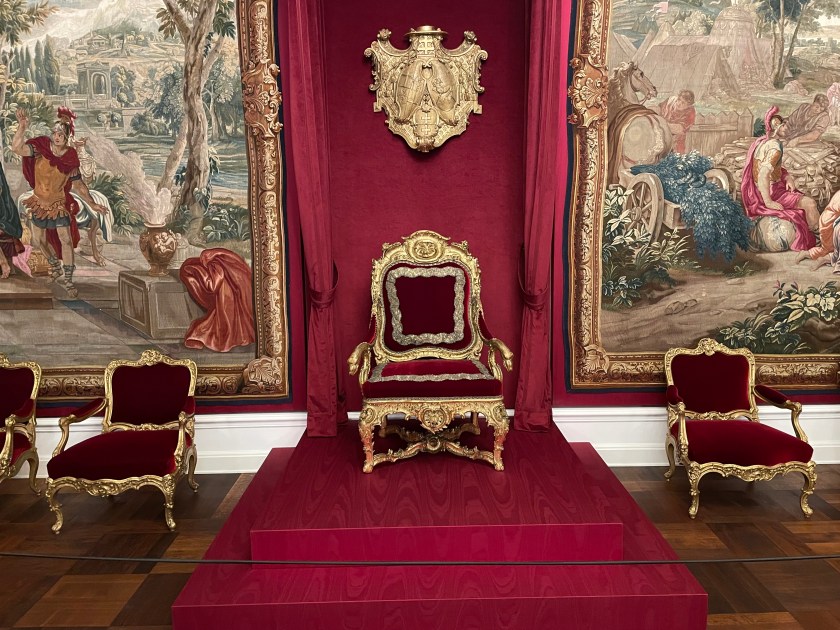
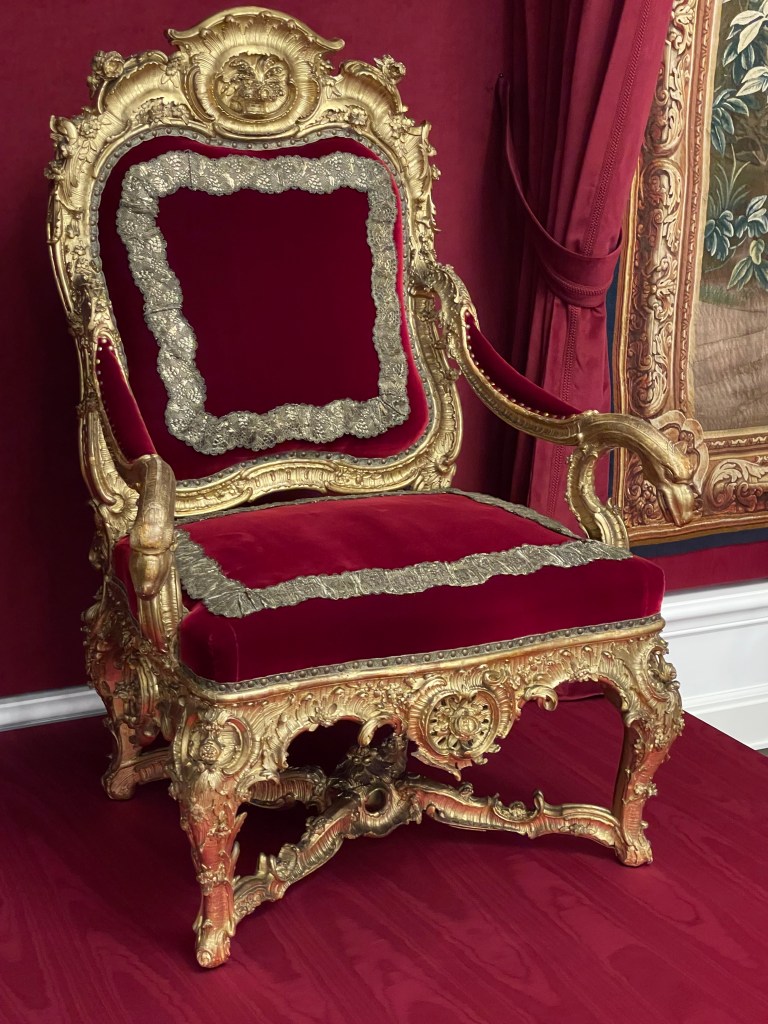
The throne chair:
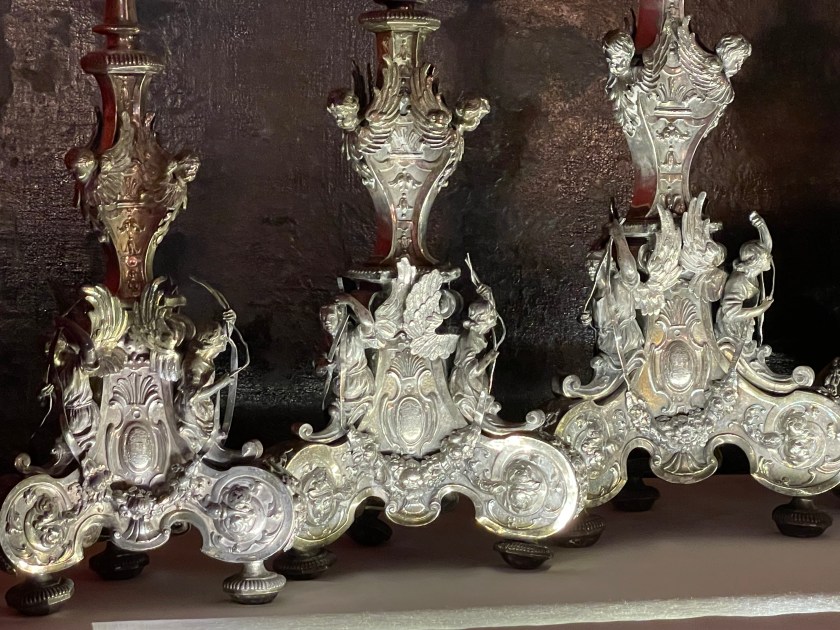

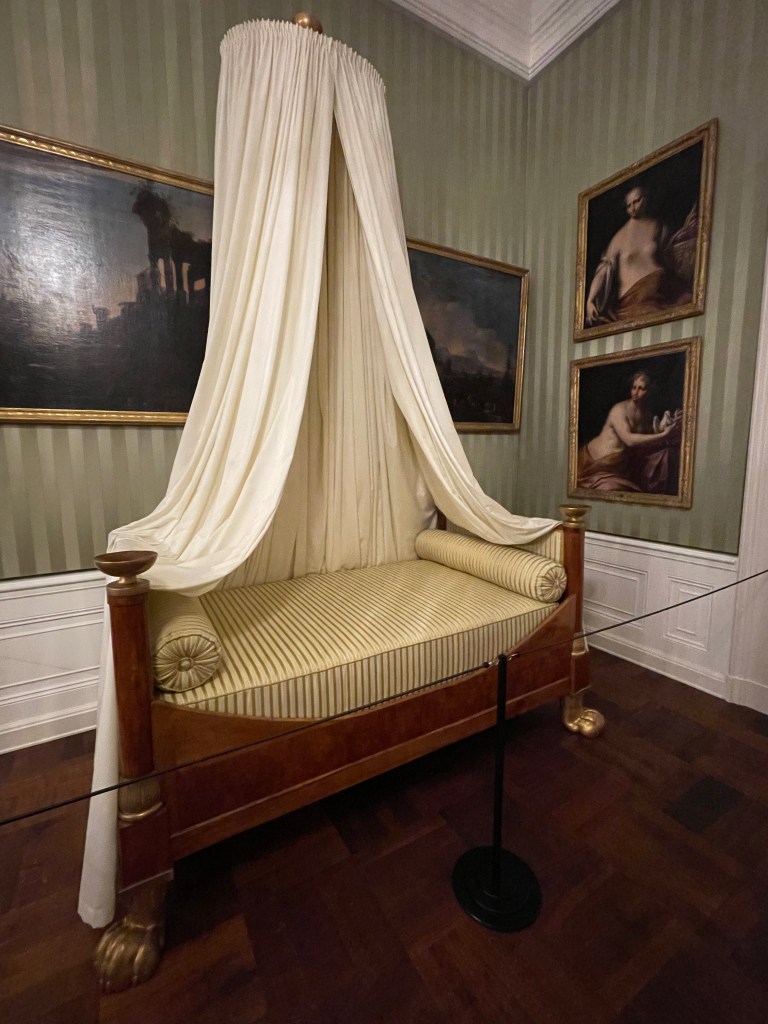
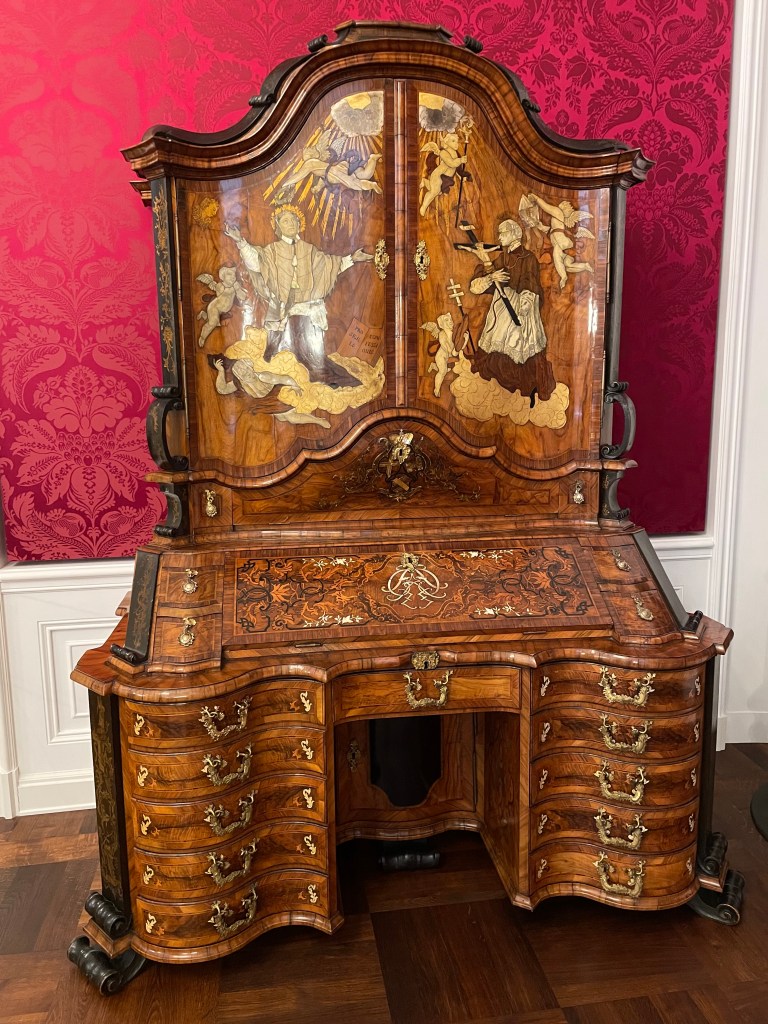
This dresser is really a hiding place for the commode or chamber pot.
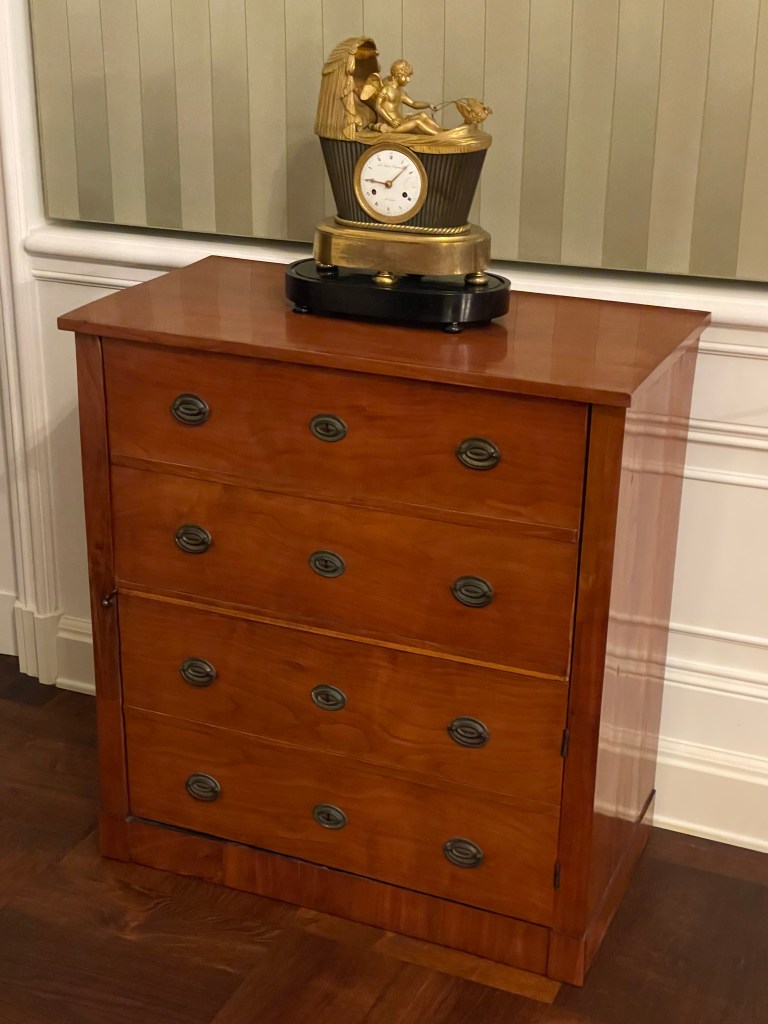
A poor screenshot of from the tour on my phone of what’s inside the dresser:
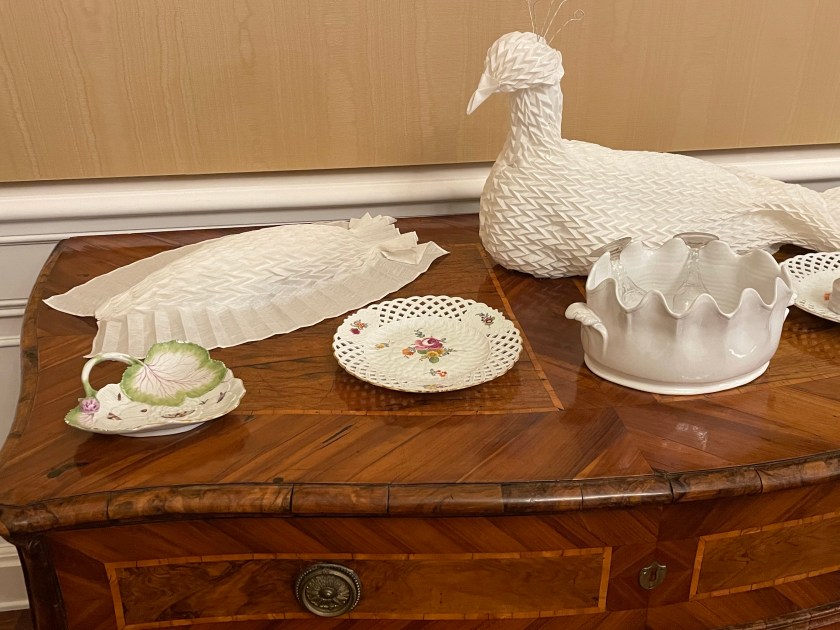
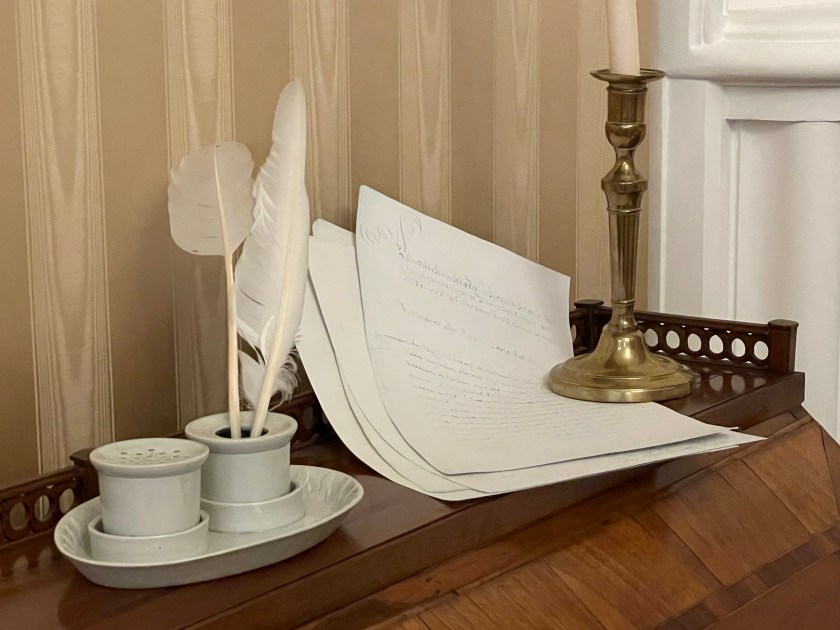
Simple beauty:


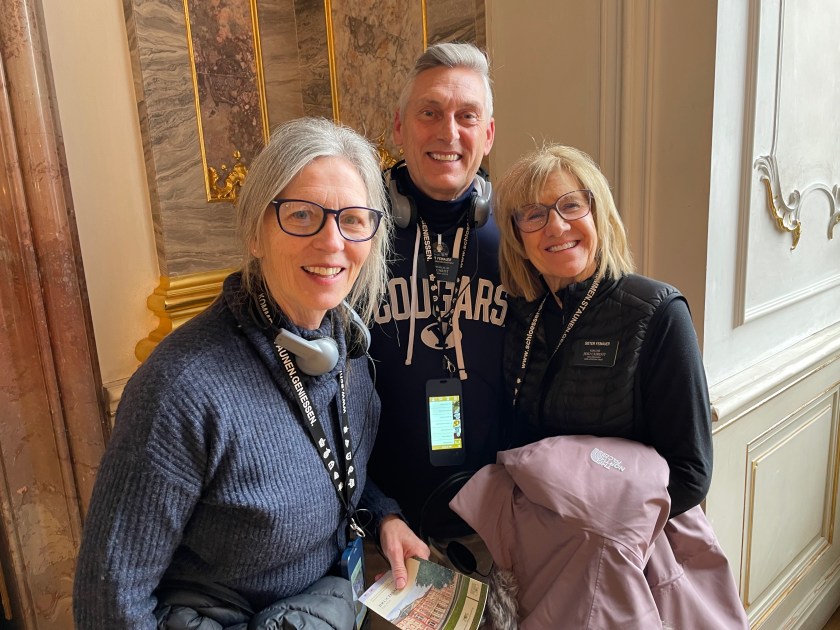
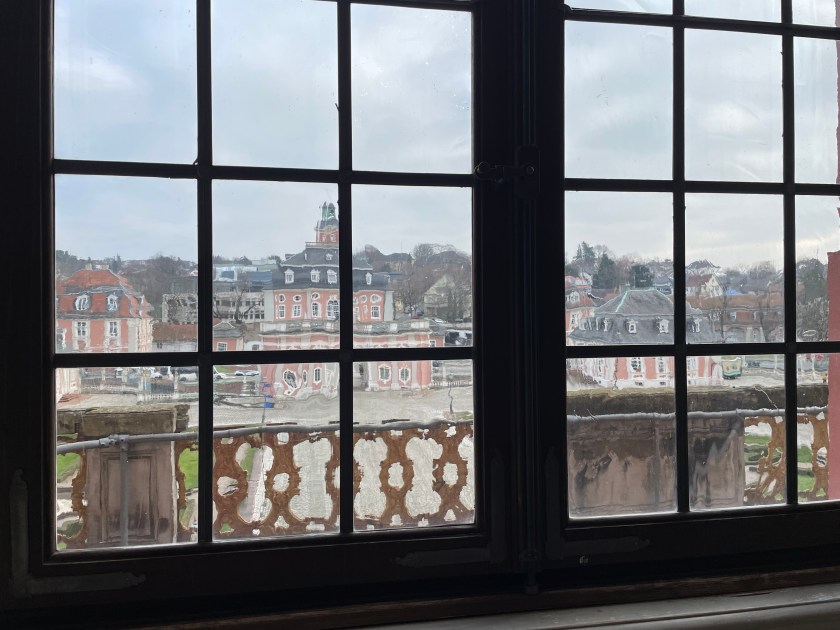
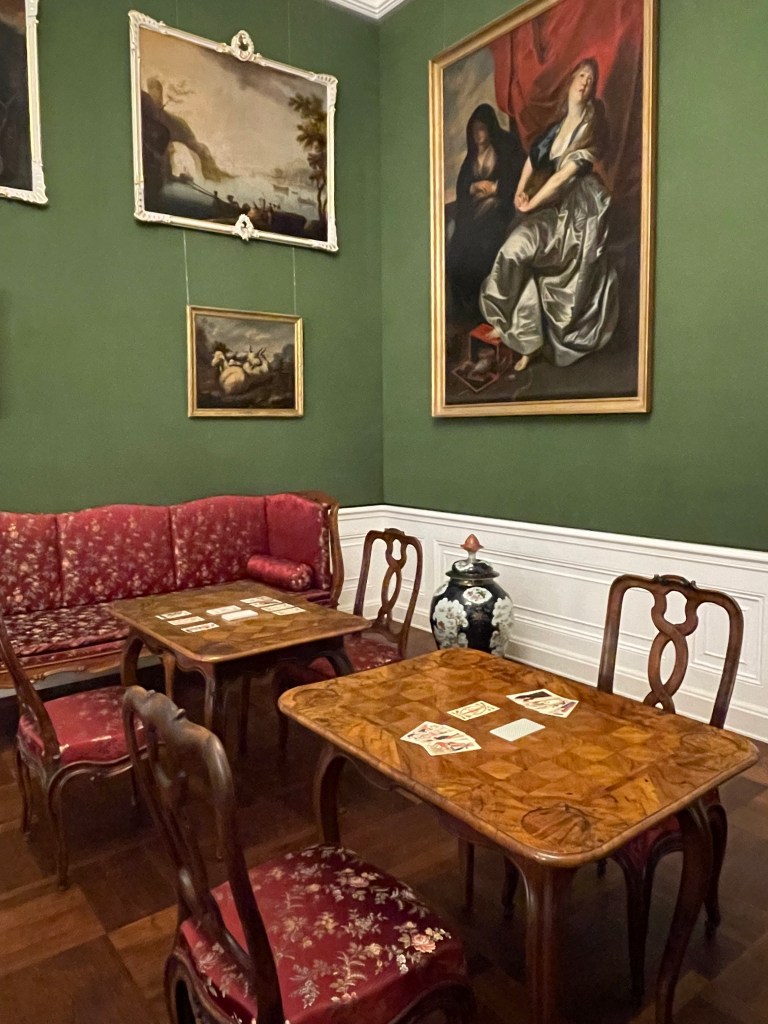
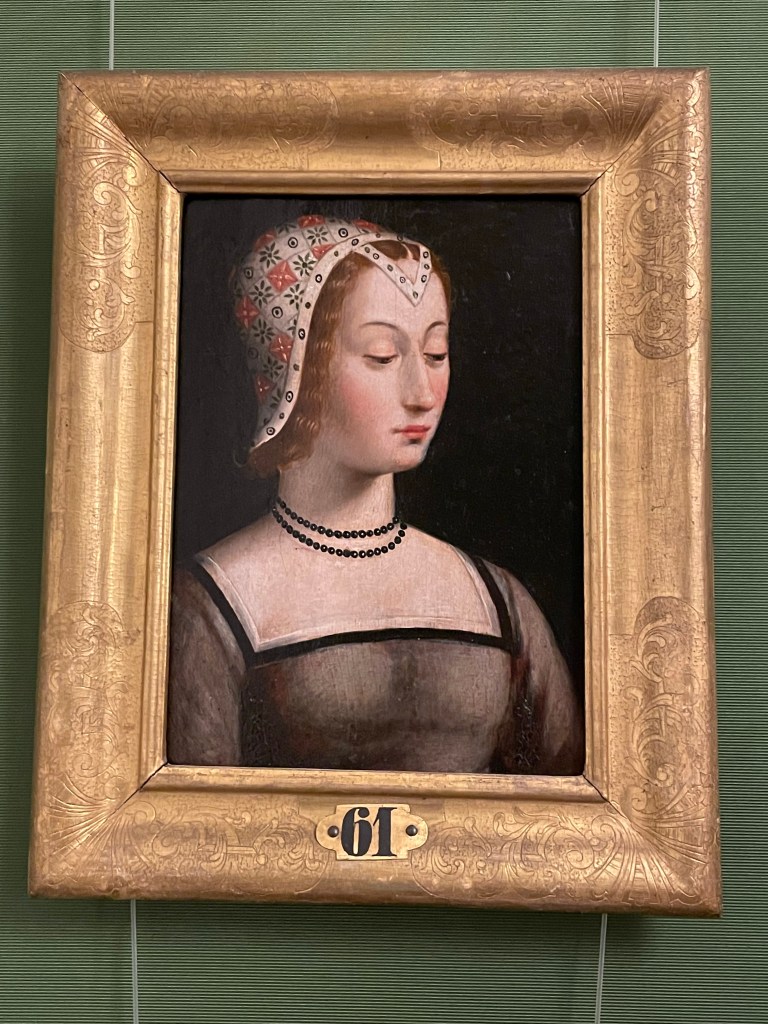
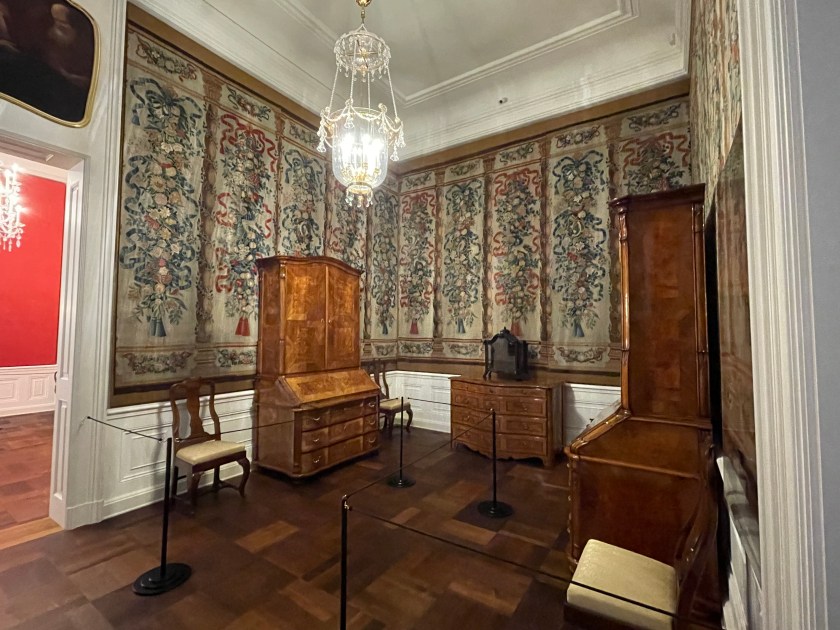
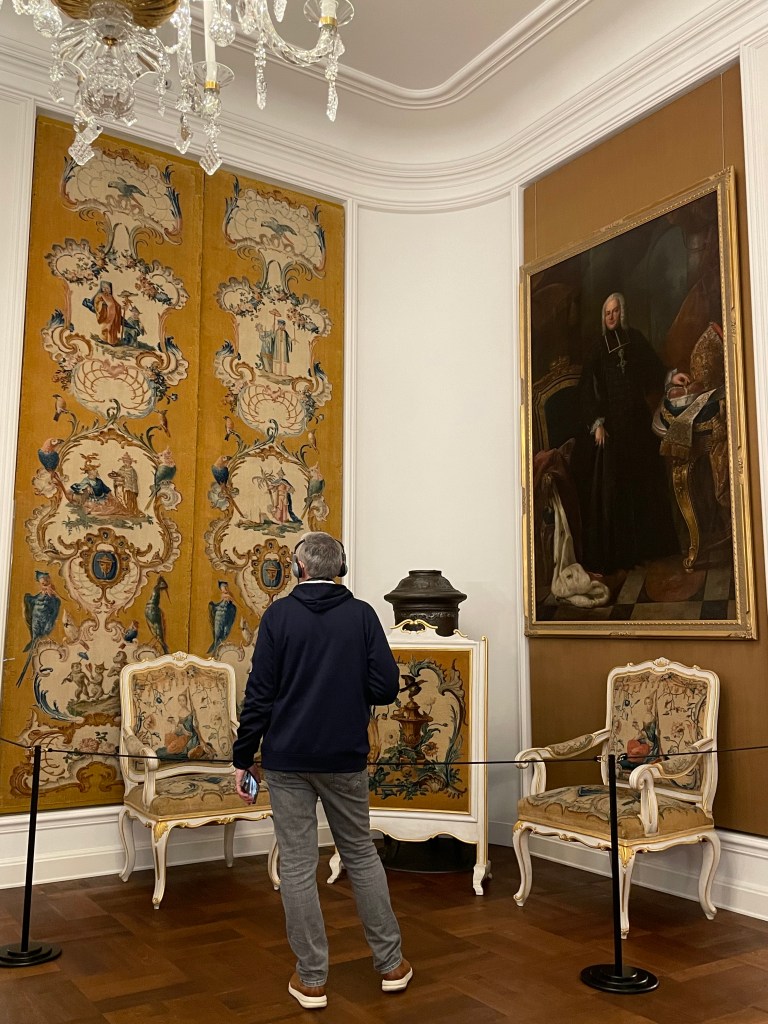
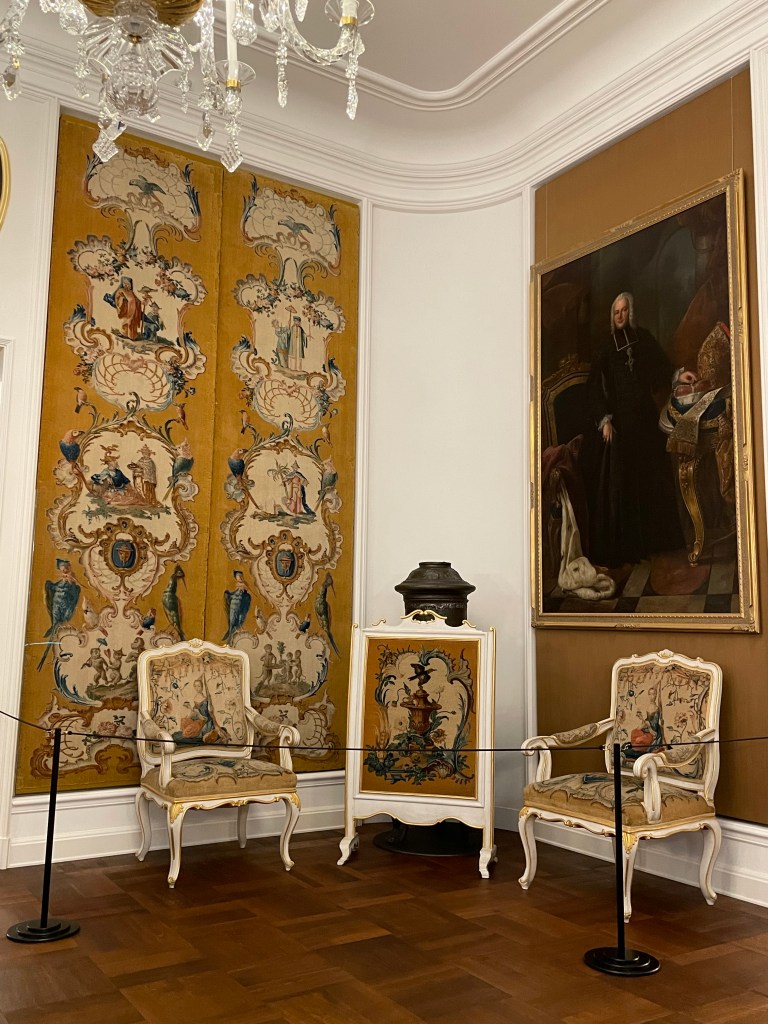
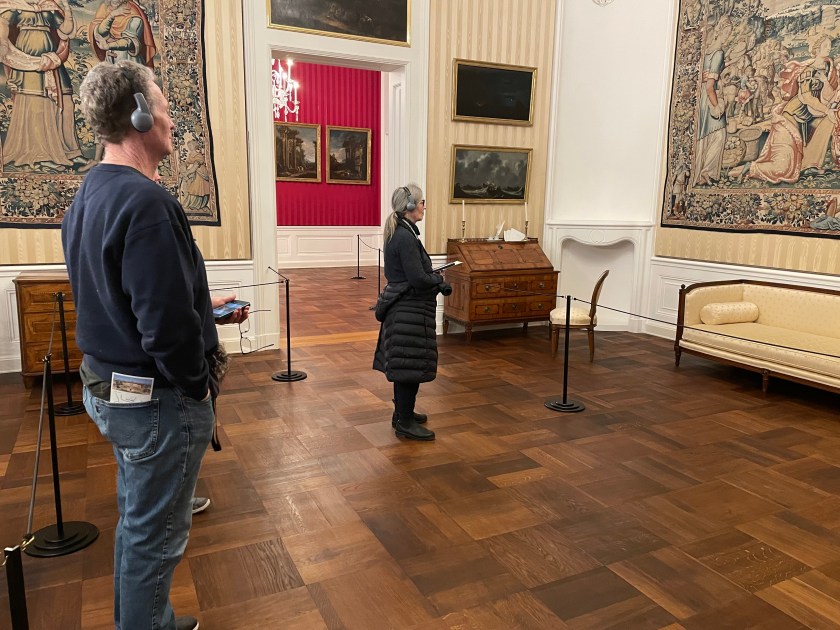
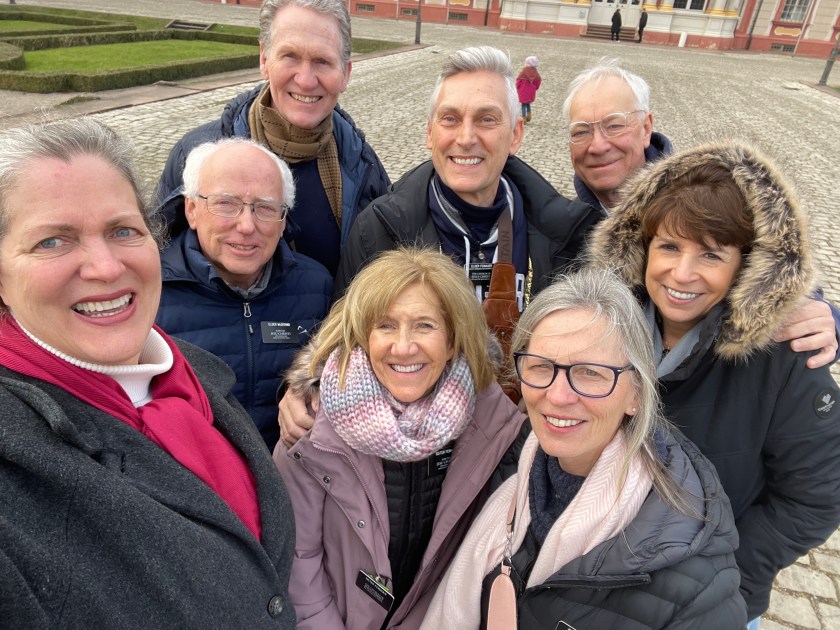
It was nice to be in a group of friends as we moved through the place with our headphones on. The tour included 2 floors of ball rooms, living spaces, receiving rooms, bedrooms, dressing rooms, servants’ rooms, and a music room where Mozart played as a young boy. We never saw a kitchen, but we saw doors they said were back passages for the servants to come and go, stoking the fires in the wood stoves in each room. There was nice artwork and lots of portraits of the people, but mostly the tapestries. Many of the rooms had fabric on the walls.
There was a photographer who documented the palace before the war, so after it was largely destroyed, they were able to reconstruct and recreate the rooms. In many cases, castles and palaces were emptied of their treasures before bombing, just to keep everything safe, so we saw a lot of original furniture and art, and the tapestries. The tour included explanations of how those things were saved and then reconstructed.
When we finished up, there was a nice gift shop. The ladies enjoyed shopping a bit.
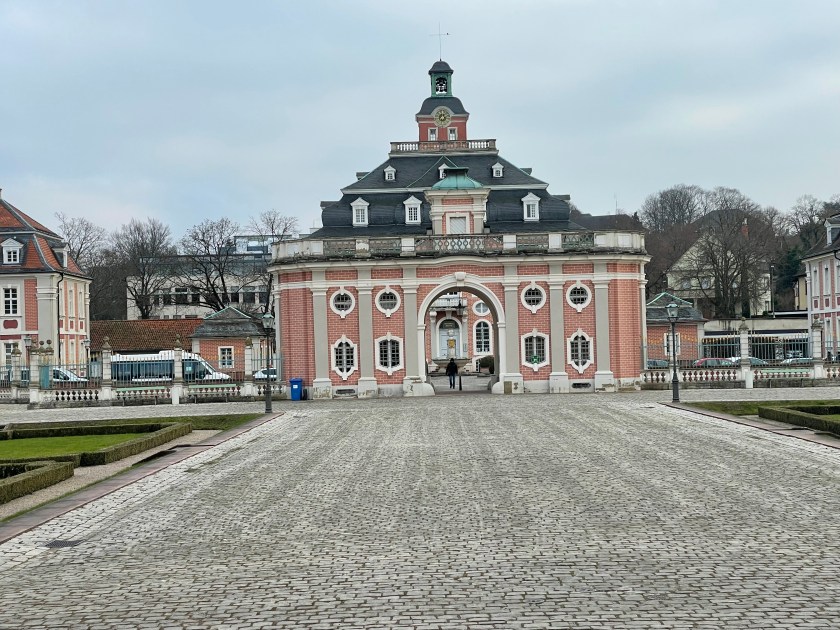
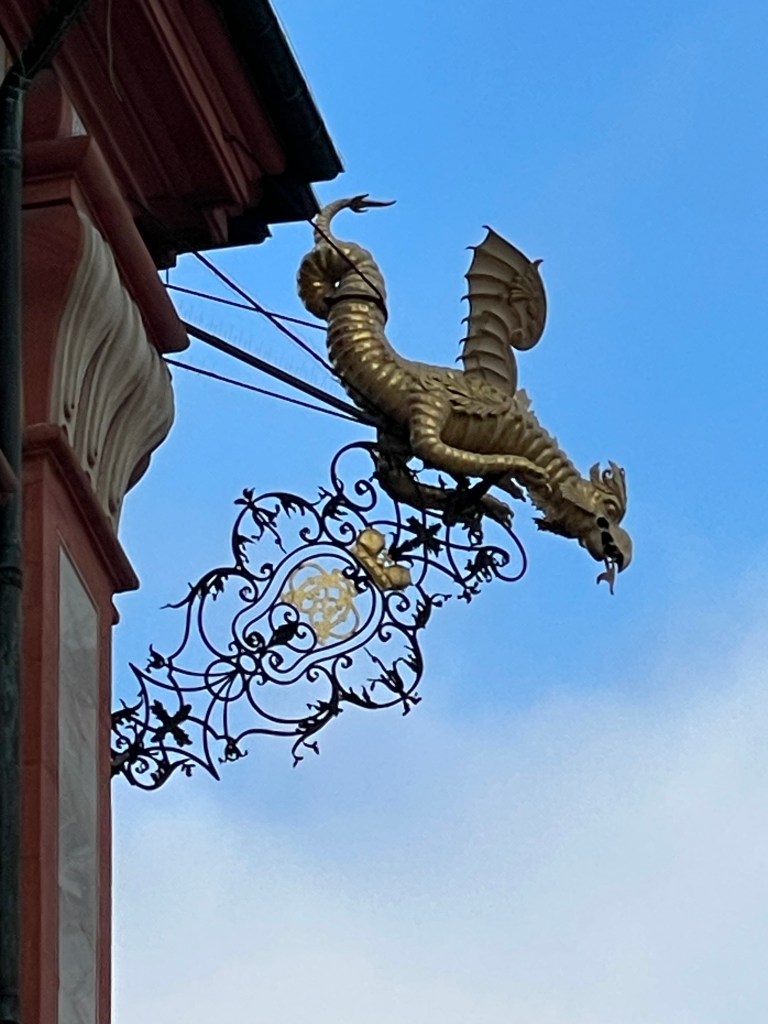
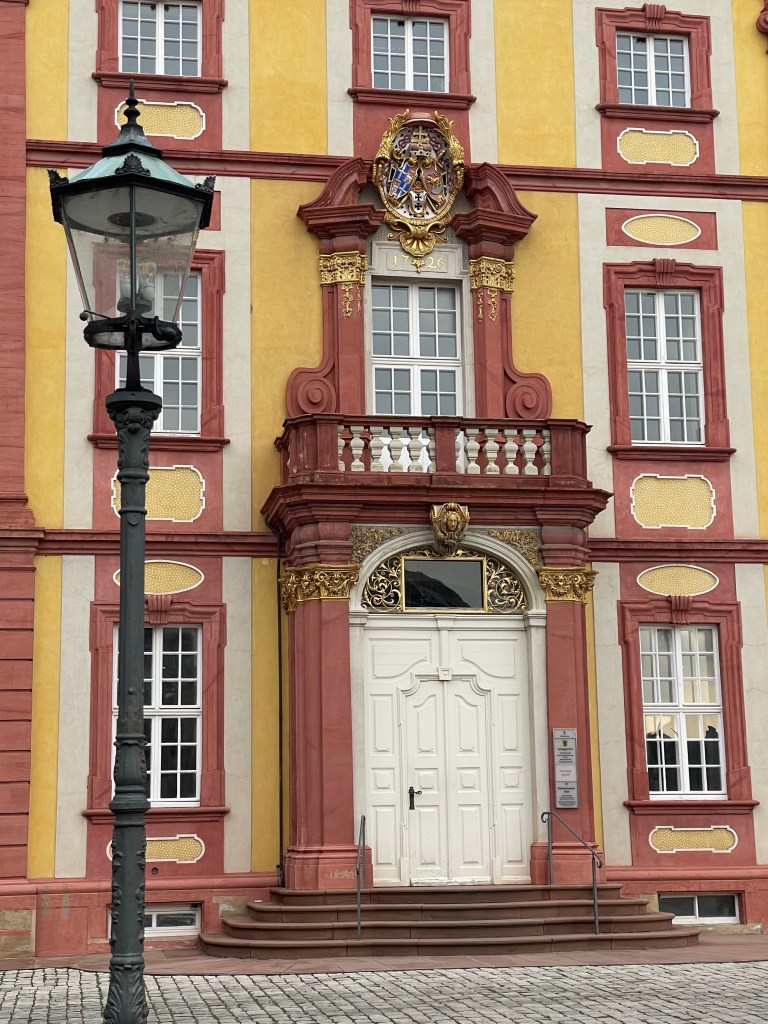
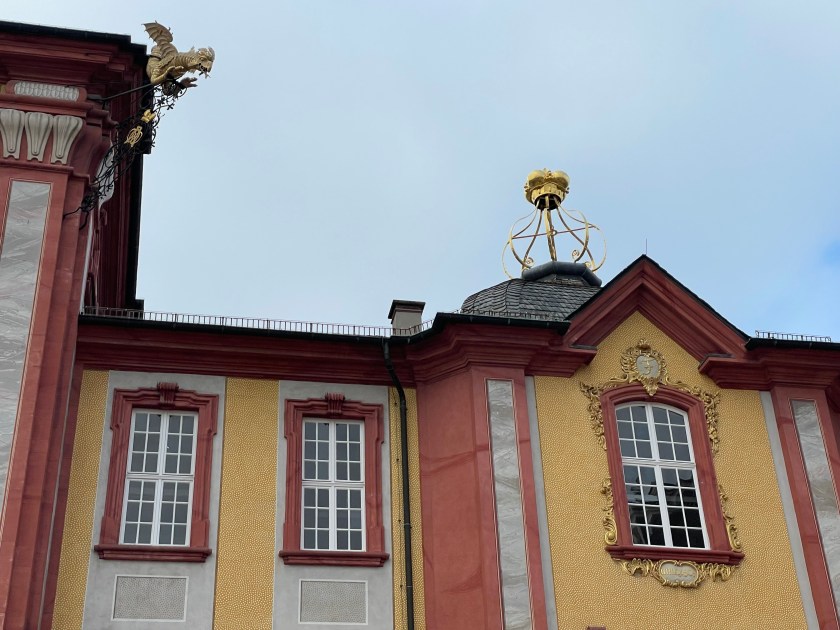
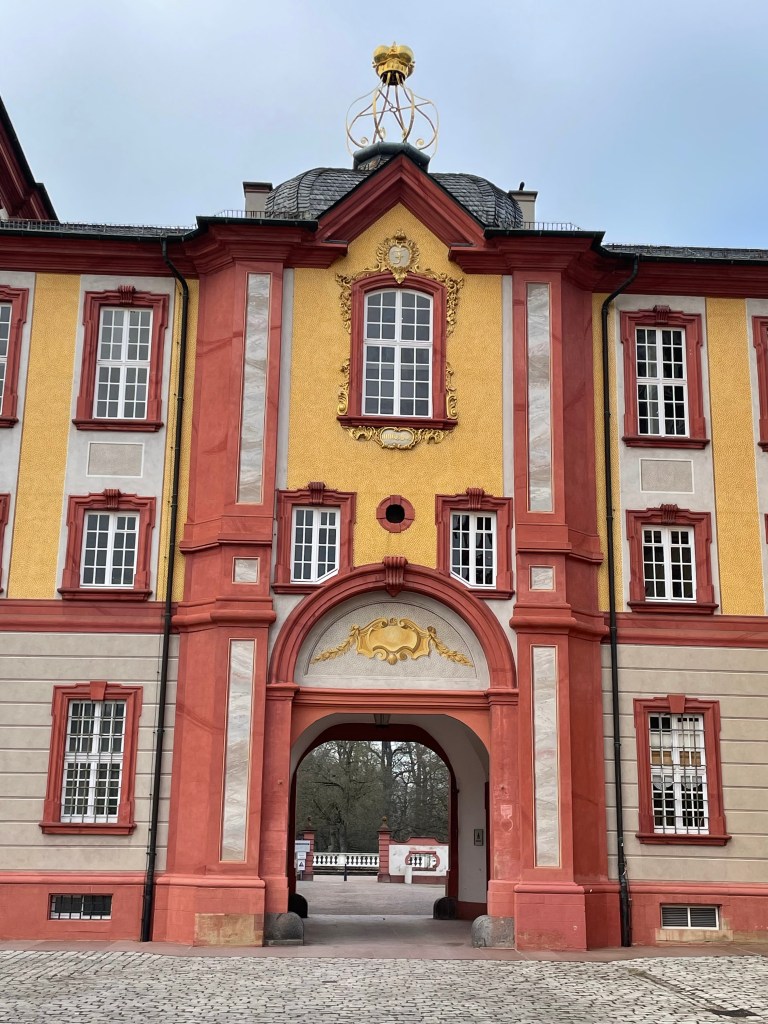

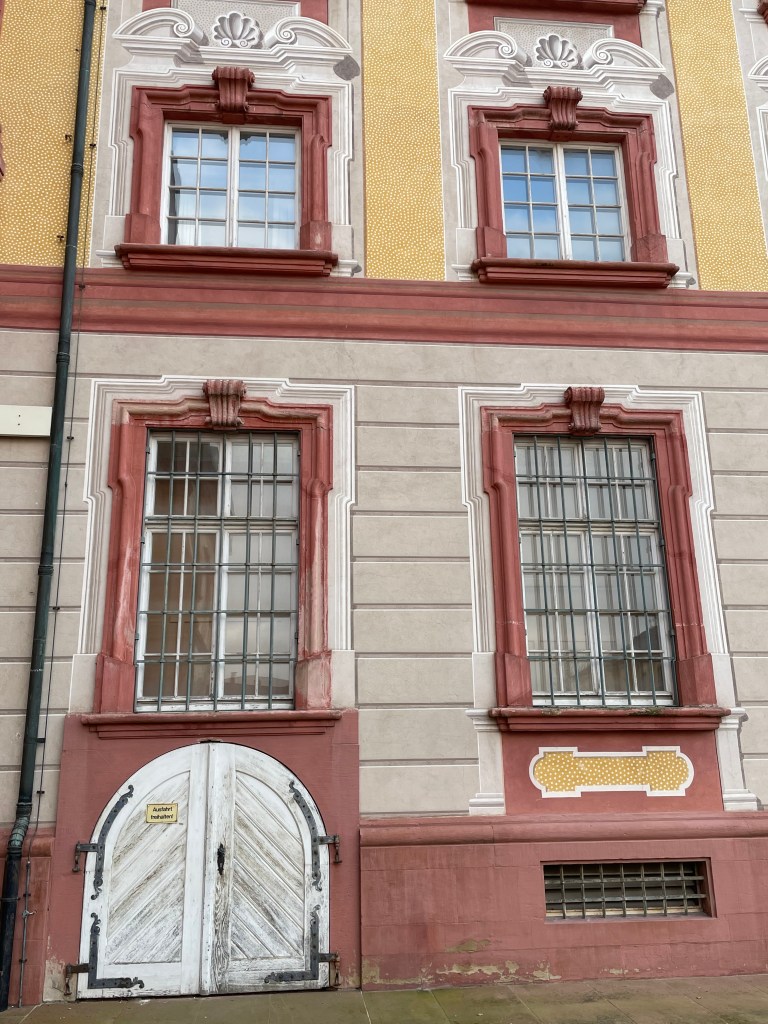
Again, remember that these surfaces are FLAT. Everything that looks dimensional is only painted to look that way.




 Our Frankfurt Germany Mission