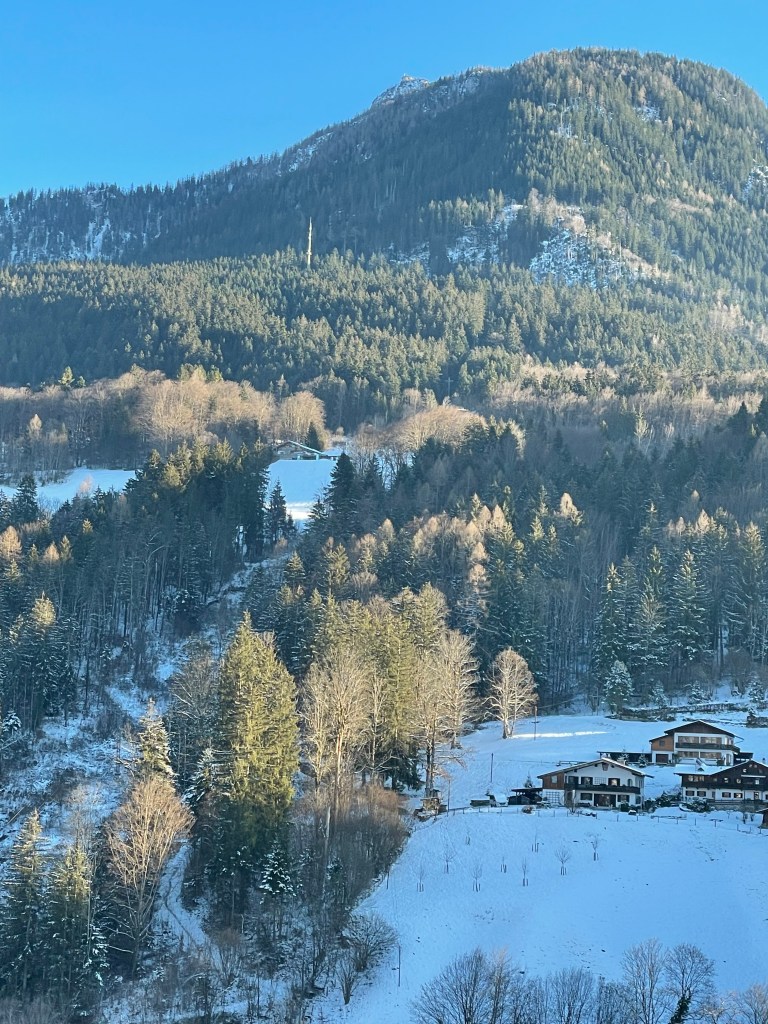
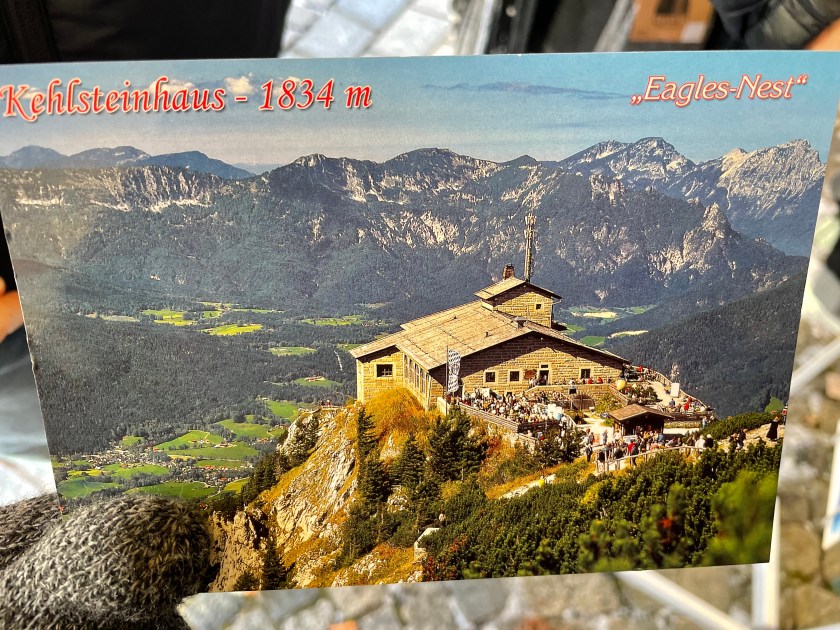
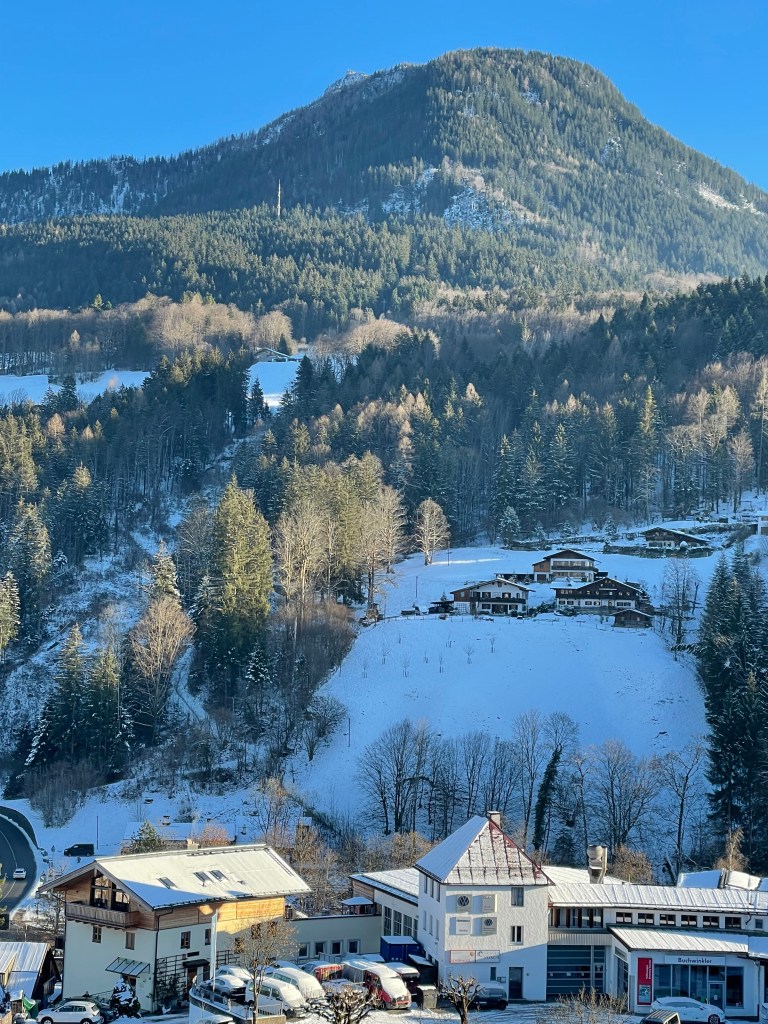
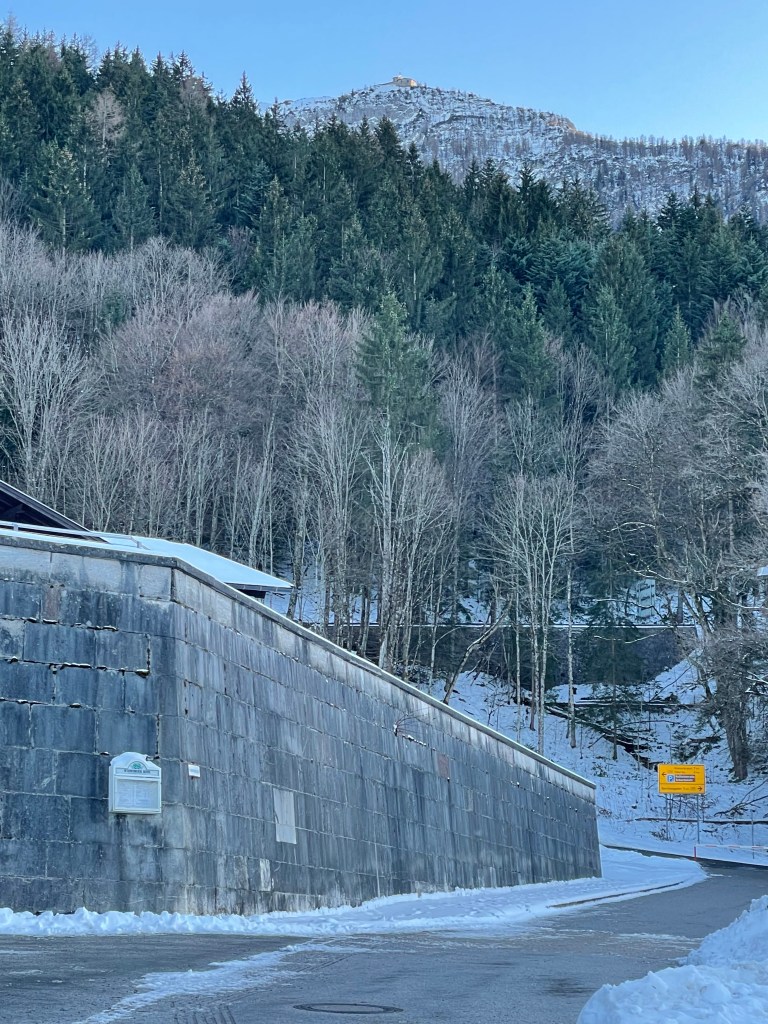
After seeing Berchtesgaden, we found a place from which we could look up the mountain to see the Eagle’s Next perched high on top. There is no way to get to it in the winter. In the photos below, it’s the little bump in the top center of the skyline.
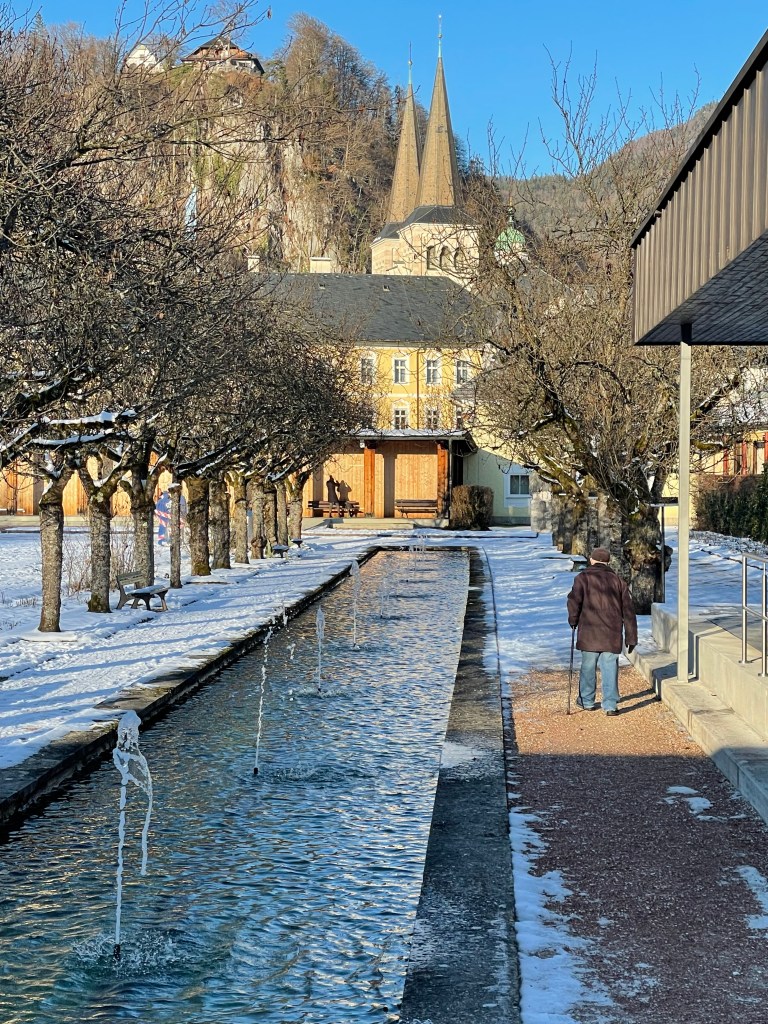
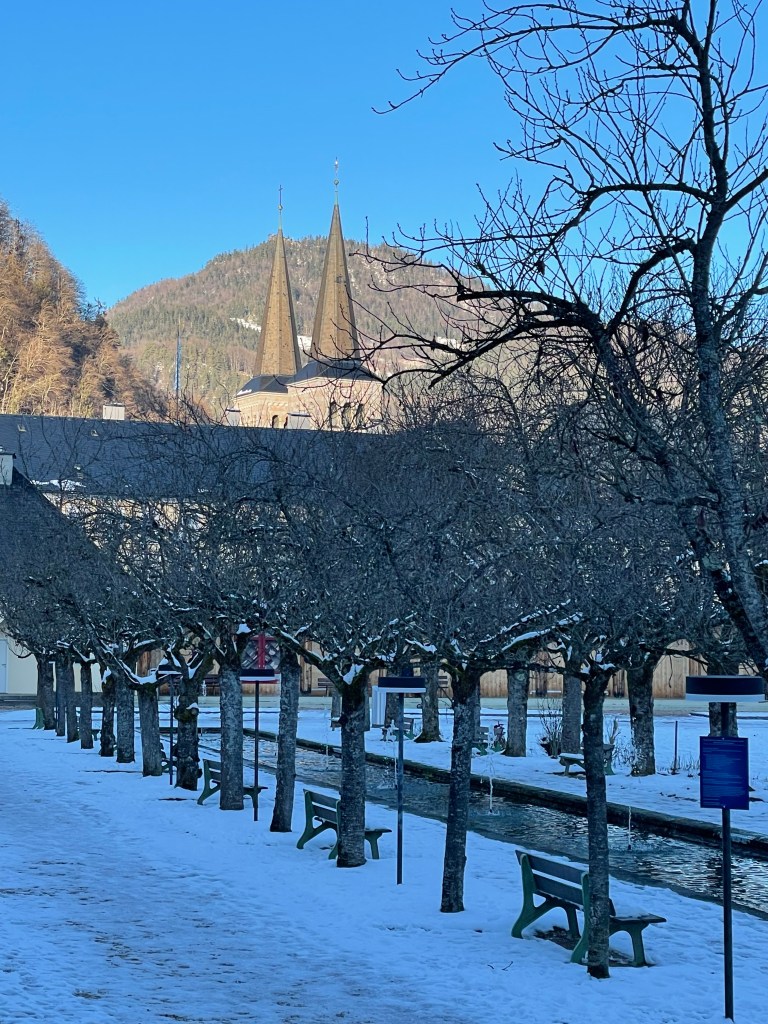
The park by the Visitor’s Center:
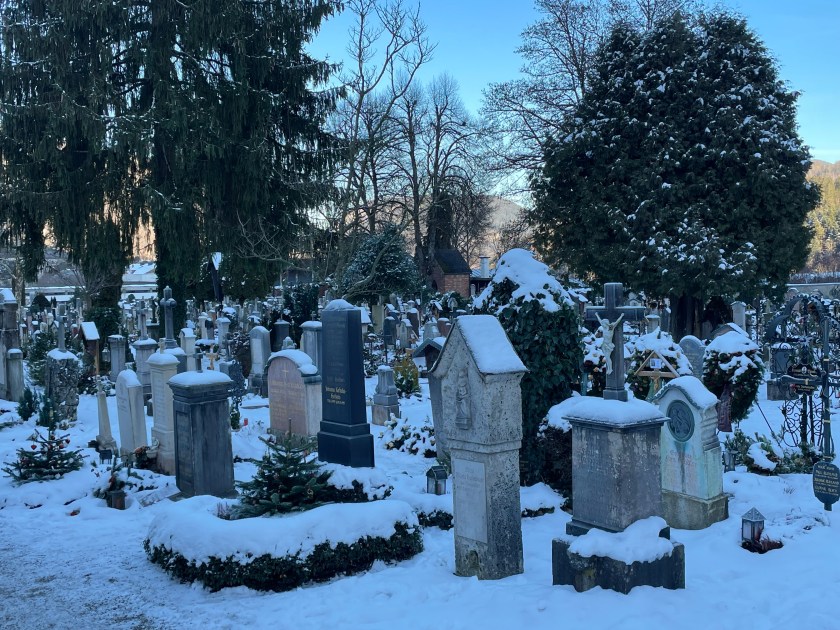
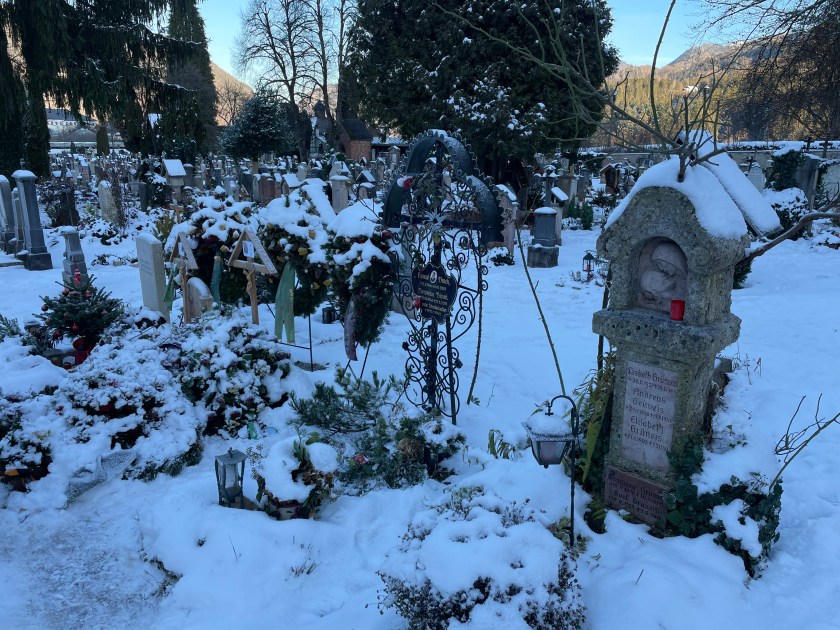
We walked through this cemetery on our way to find the bus station to catch a bus to take us to the Documentation Center by where Hitler’s summer home (Berghof) once stood.


We took the 3:00ish bus to go up toe the Berghof area and the Documentation Center there. Hitler’s home was destroyed by the Allies at the end of the war, then the SS burned it to destroy evidence. All that remains now is the back wall of the house. That was on the mountain side down below the Documentation Center, where we spent the next 1.5 hours, until it closed.
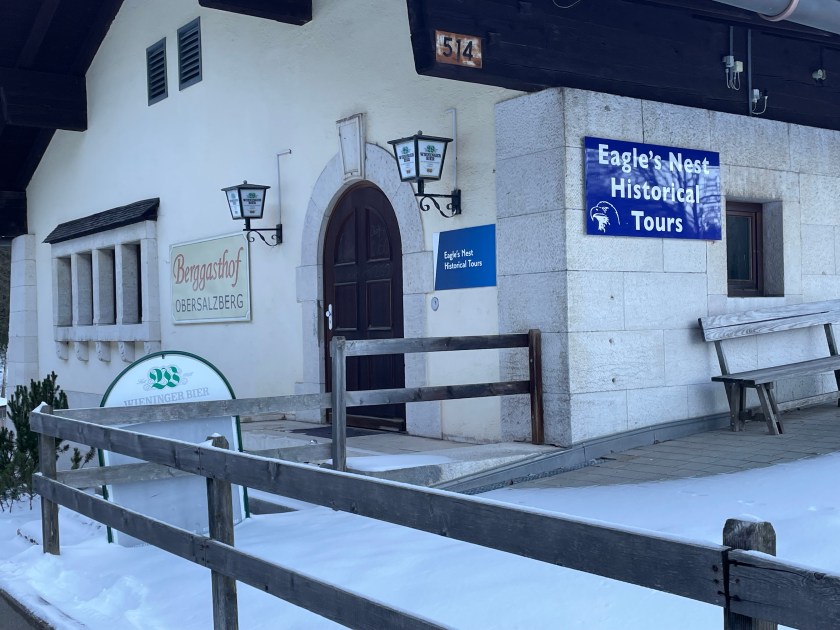

The Documentation Center.
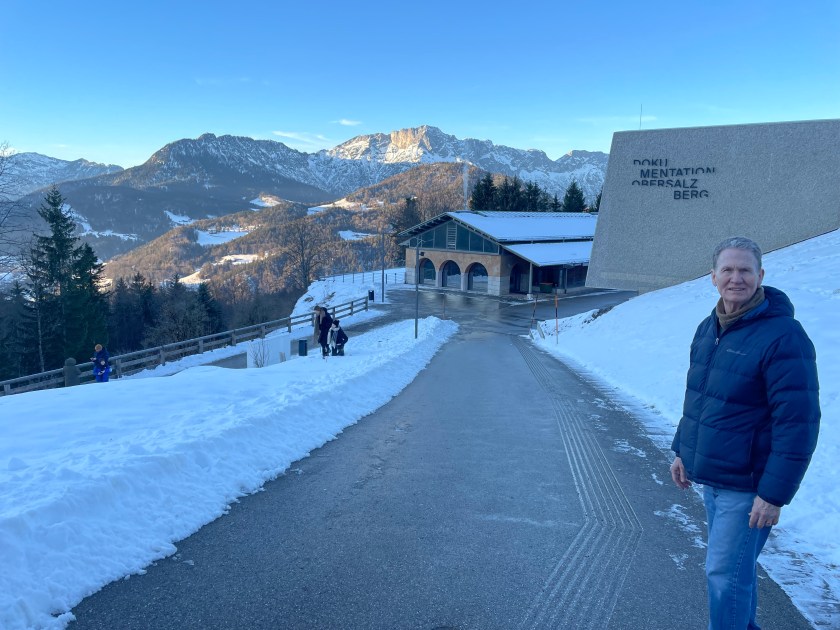
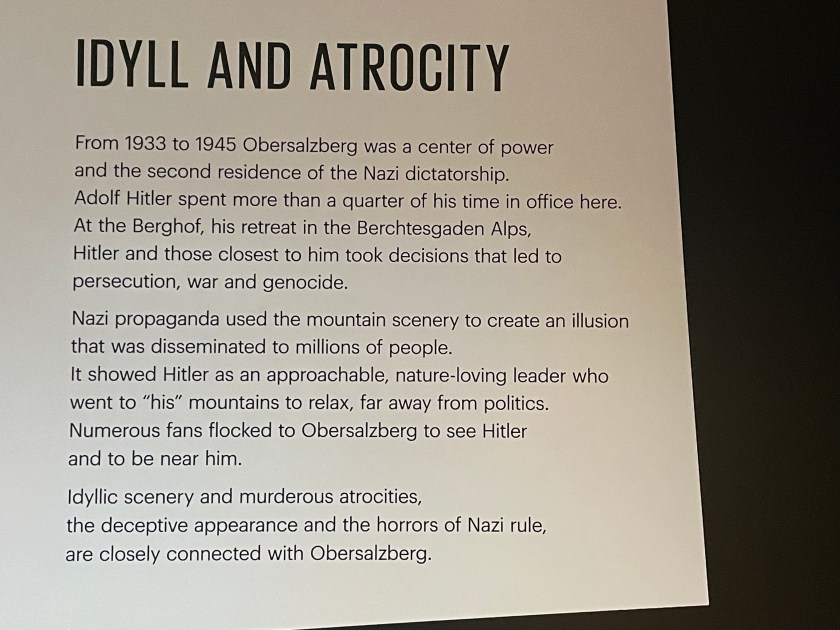
They’ve re-done the Documentation Center (that opened in 1999). The new Center opened in 2023, completely re-done in a new way–showing the contrast between Hitler’s peaceful mountain get-away, and the horror (this is where Hitler wrote most of Mein Kampf and where he planned the genocide and extermination camps. They call it “Idyll and Atrocity.”
One example of the juxtaposition was showing Hitler celebrating his birthday at Berghof (there are lots of propaganda photos of him there) and then 2 weeks later his troops invaded Poland, killing and destroying so many.
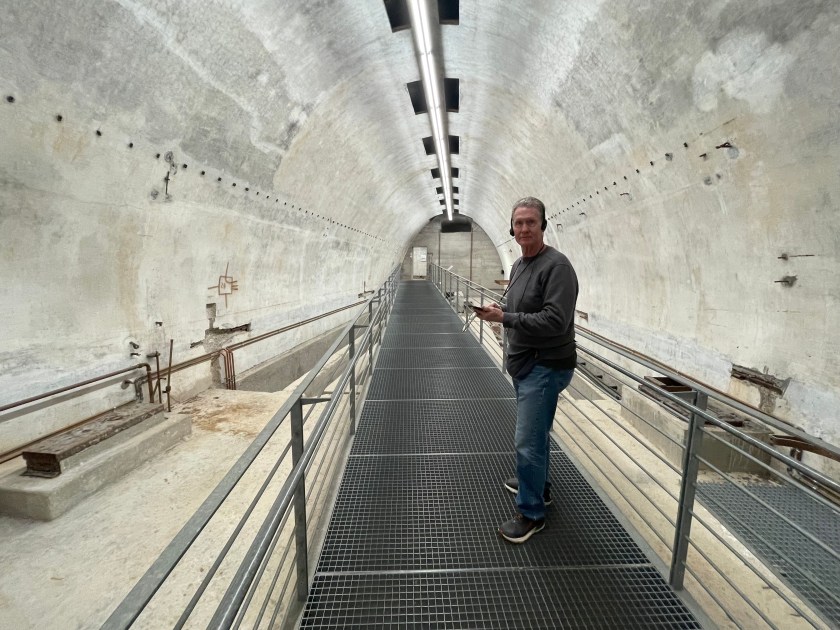
The Center had an audio tour on phones with headsets that lasted 80 minutes. It ended in part of the bunker that Hitler built there towards the end of the war when they started worrying about getting bombed. It was fascinating to go through all the displays and then into that bunker. Wow.
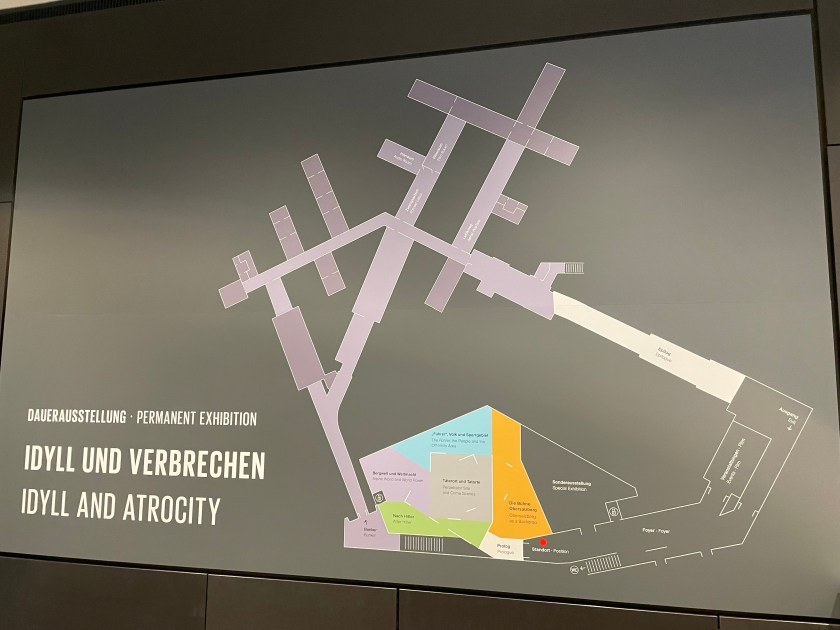
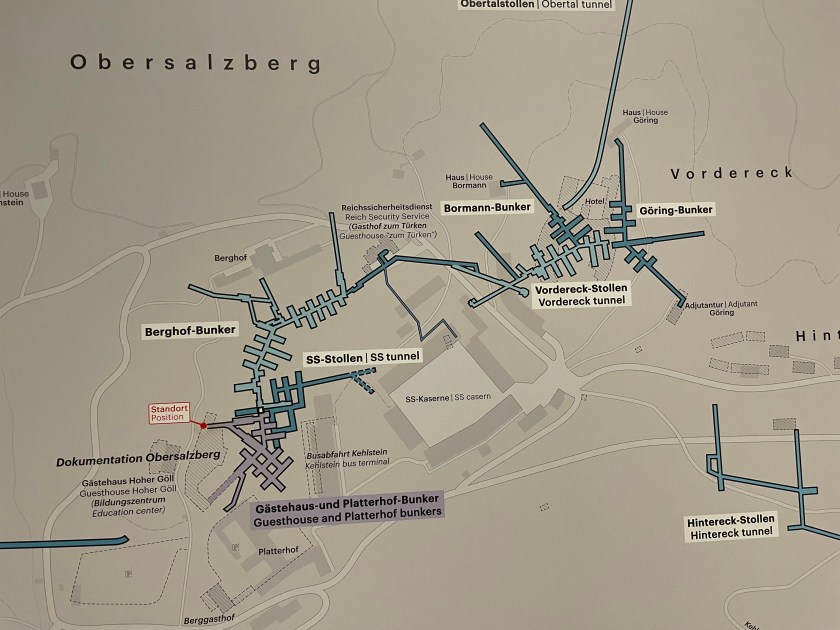
In the map below, the Documentation Center is at the bottom and the tunnels at the top are the underground bunkers created to keep Hitler and his cronies safe should this area be attacked or bombed.
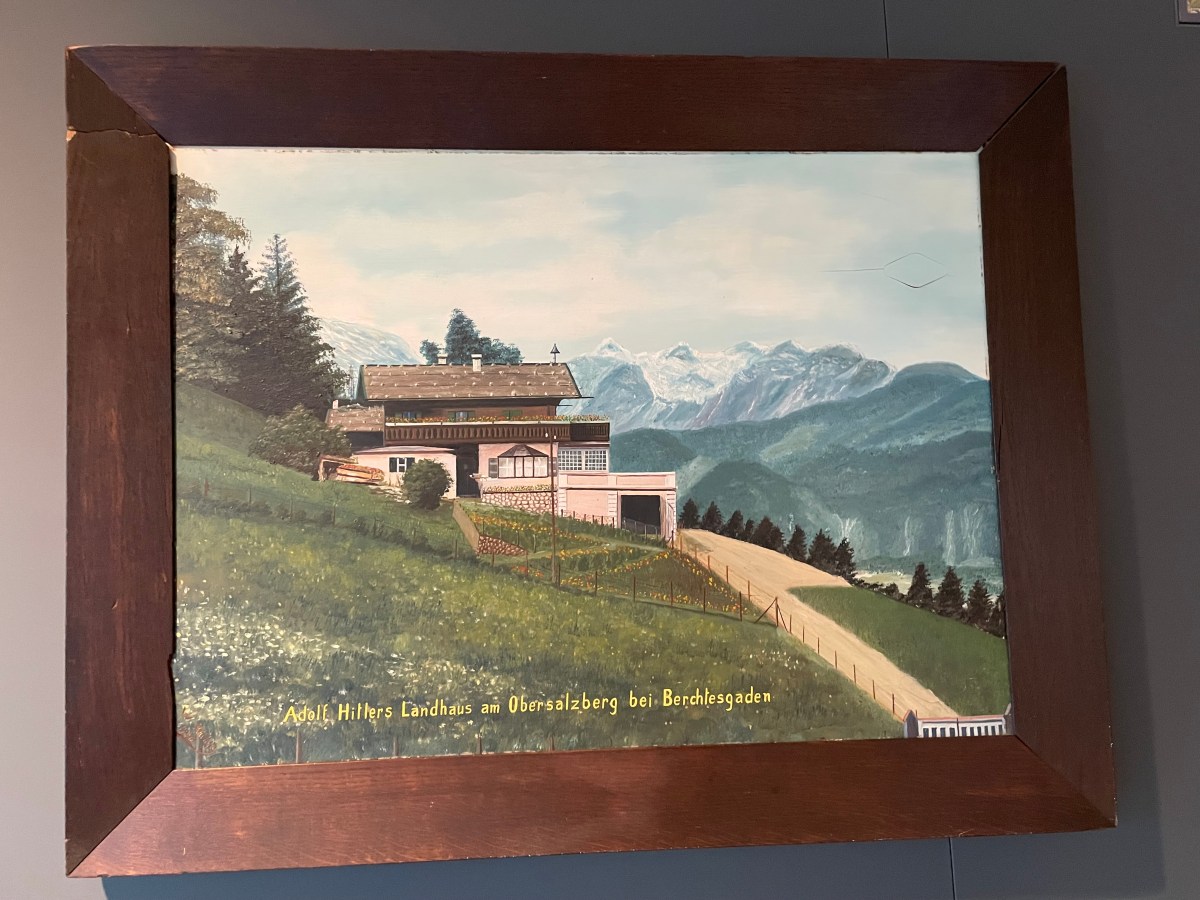
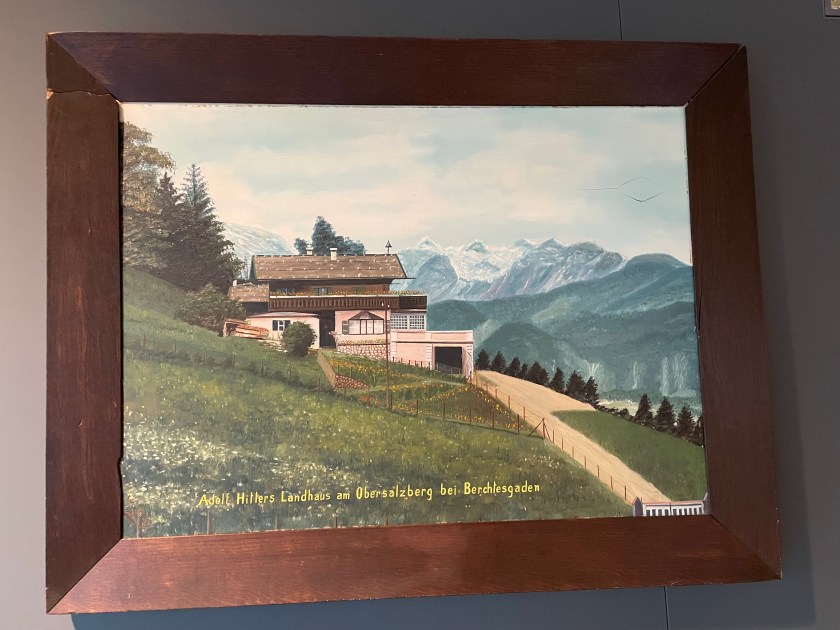
This is what this summer mountain home looked like:
Hitler slowly took control of most of the properties on the mountainside, forcing the inhabitants to leave to make room for his men to live there.

We were a little confused about the difference between The Eagle’s Nest and Berghof. Berghof on the Obersalzberg mountain,was Hitler’s summer home and eventual HQ of the NAZI movement (or one of them), NOT the Eagle’s Nest (Kehlsteinhaus) at the top of the Obersalzberg mountain. The Berghof was lower on the mountain (actually just below the Documentation Center) and originally part of a little town that the NAZI party took over and everyone else deserted.
Hitler enlarged and updated the Berghof home in order to accommodate the many NAZI leadership and strategy meetings held there, as well as other party events. It’s said that he spent 25% of his time there. It makes perfect sense that the Berghof was the gathering place and that some of Hitler’s key leaders also had homes nearby. It was much more accessible and conducive to their work (and play). The guide told us that Hitler himself only went up to the Eagle’s Nest a few times. It is very small and inaccessible.

The Center told the story of the rise of the NAZI party. Many of the plans and policies were made here on this mountatinside.
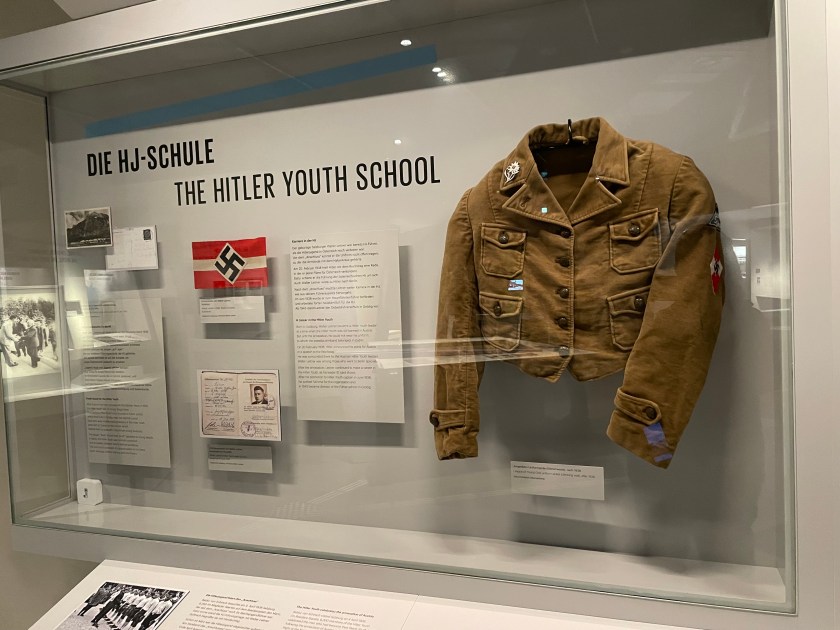
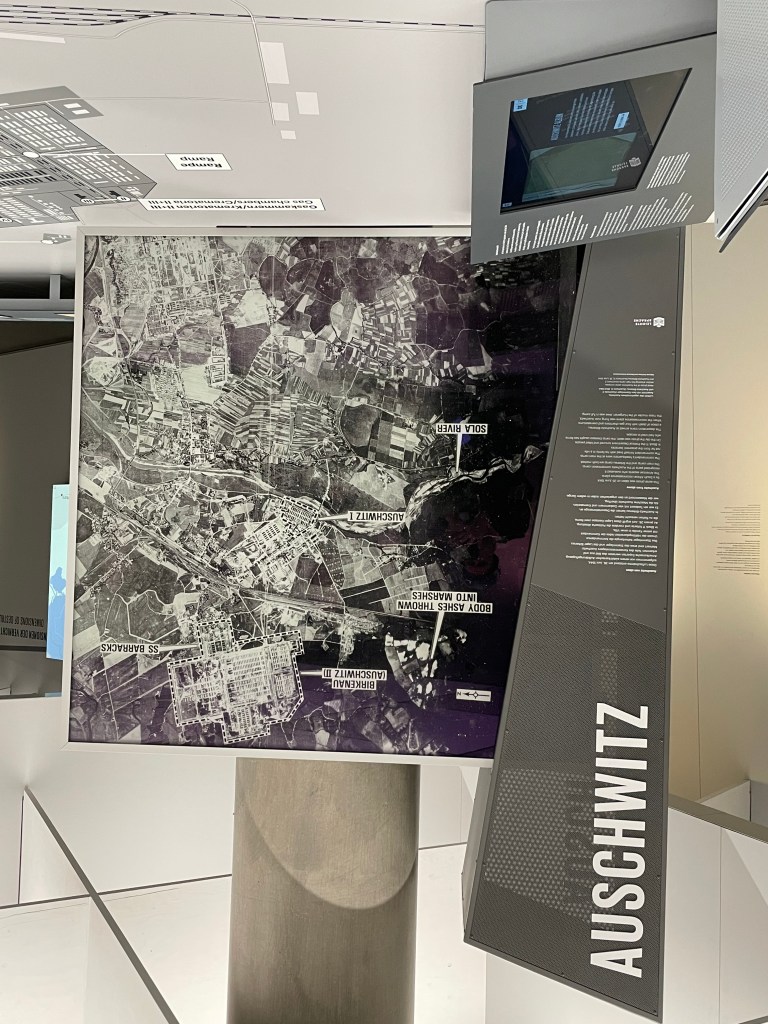
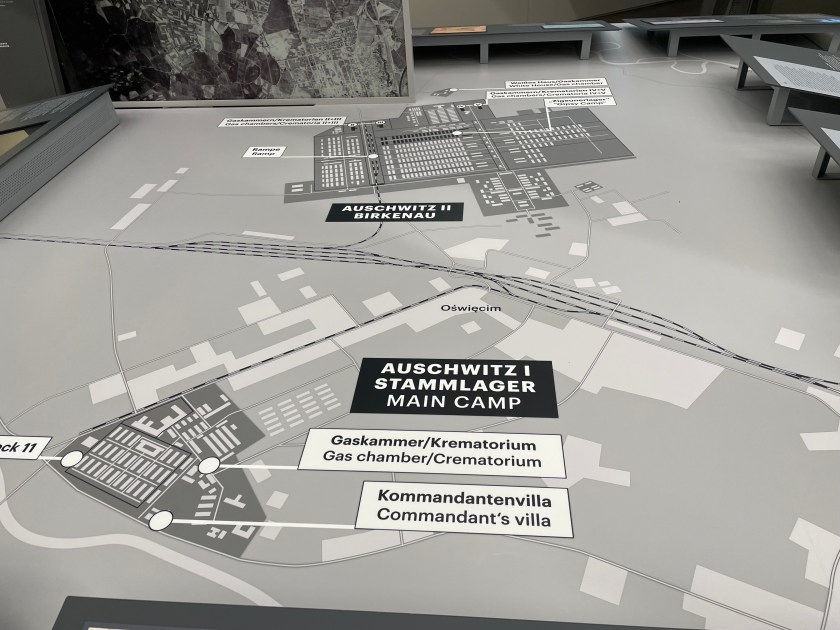

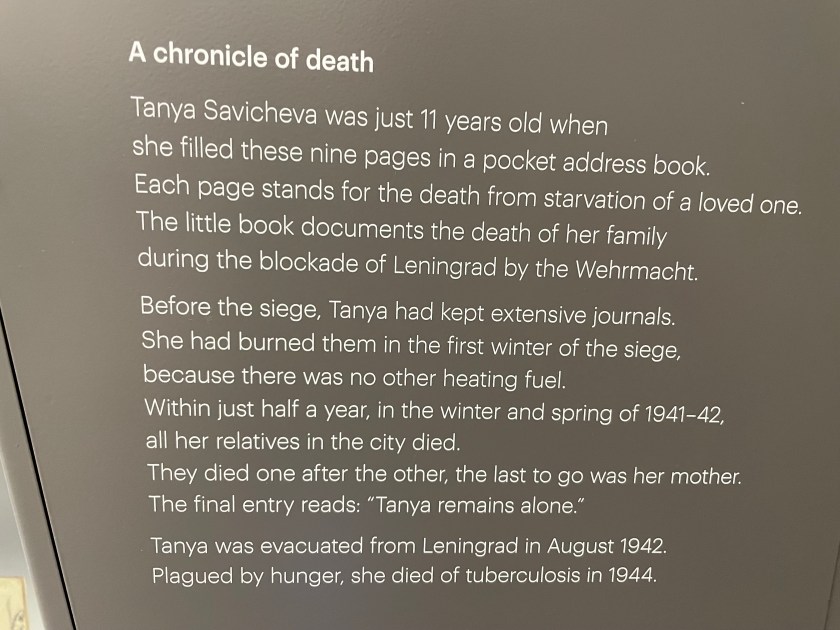
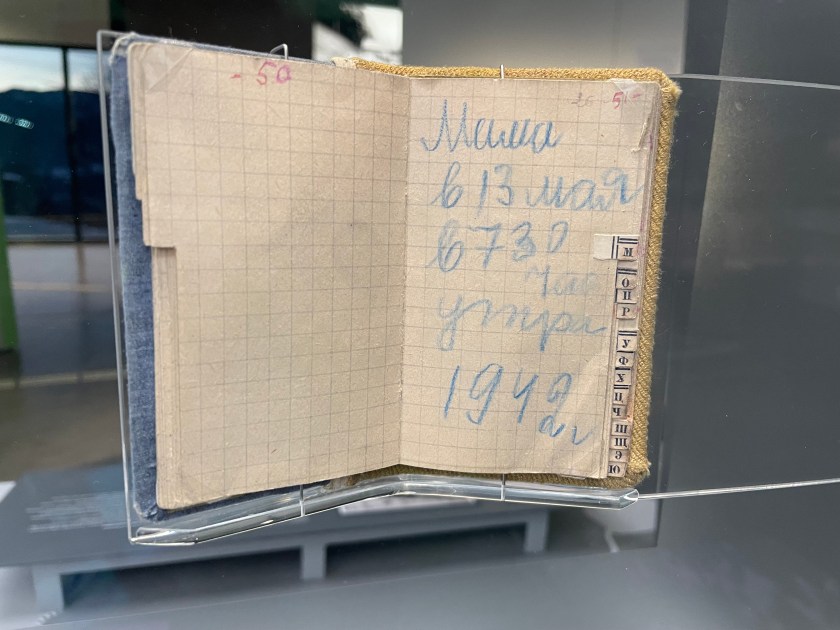
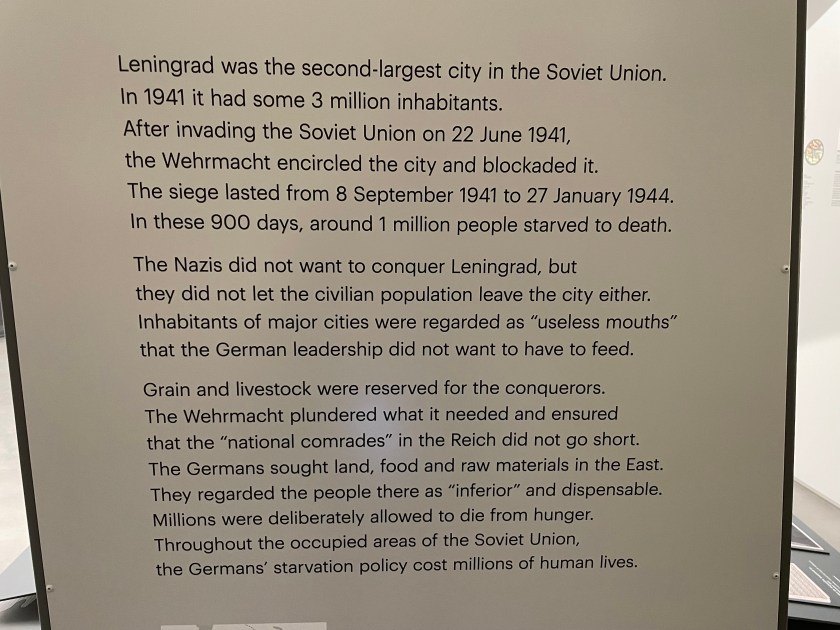
This story was heartbreaking. Meet Tanya Savicheva, age 11. Read the English descriptions in the displays below.

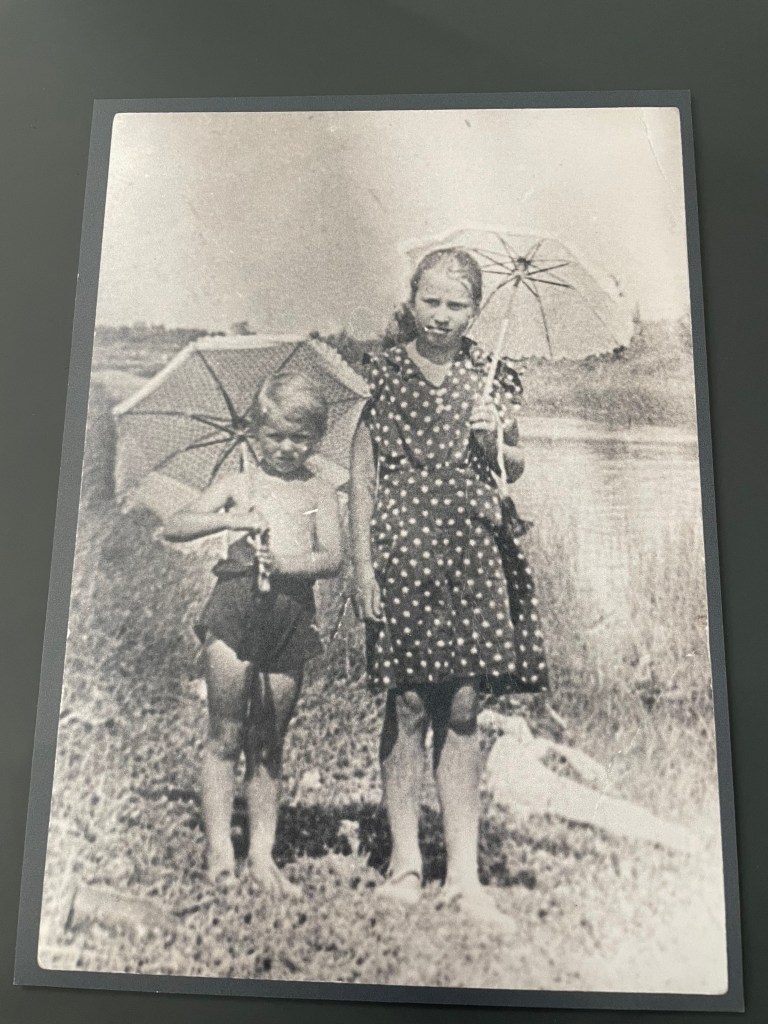
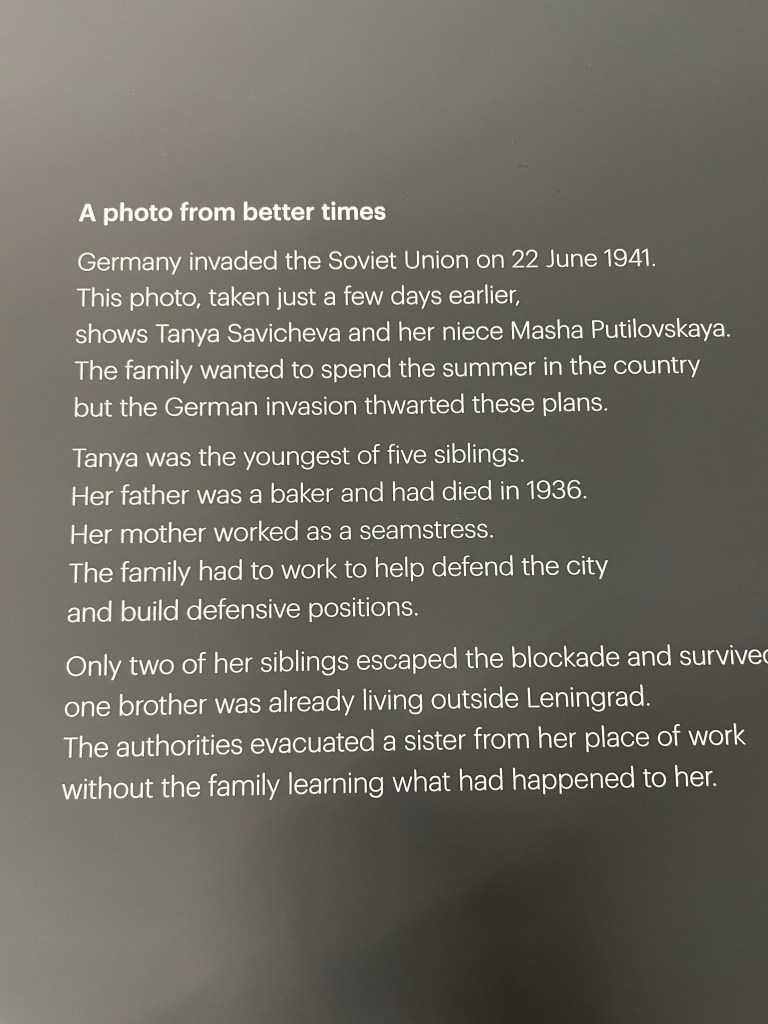

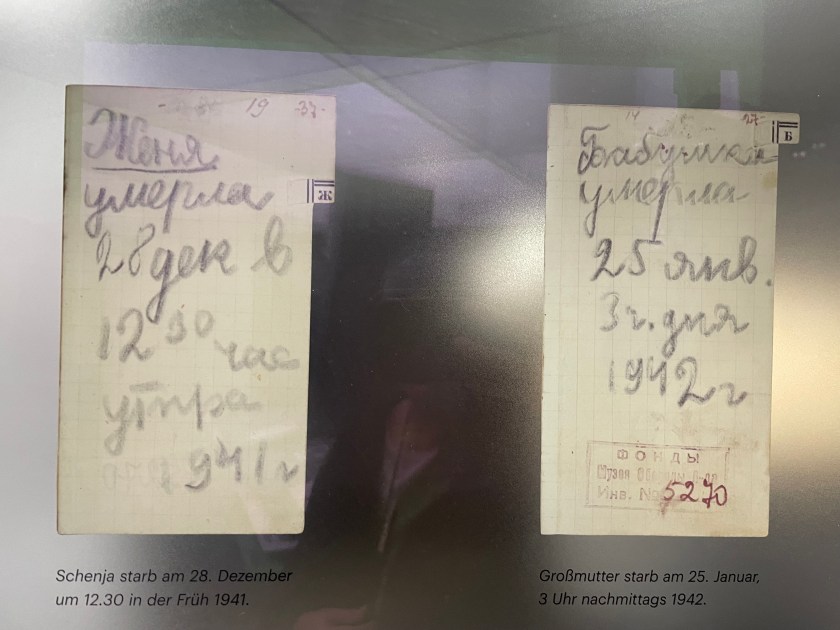
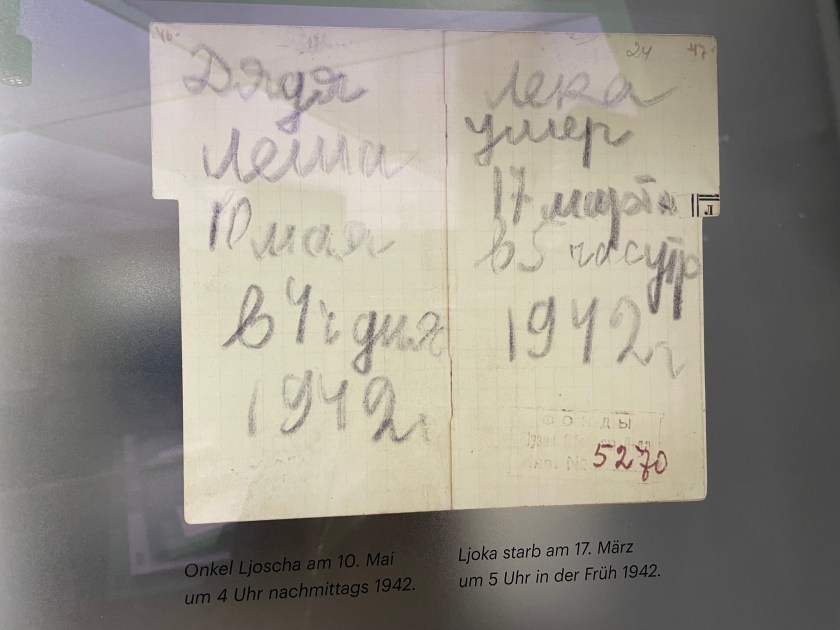
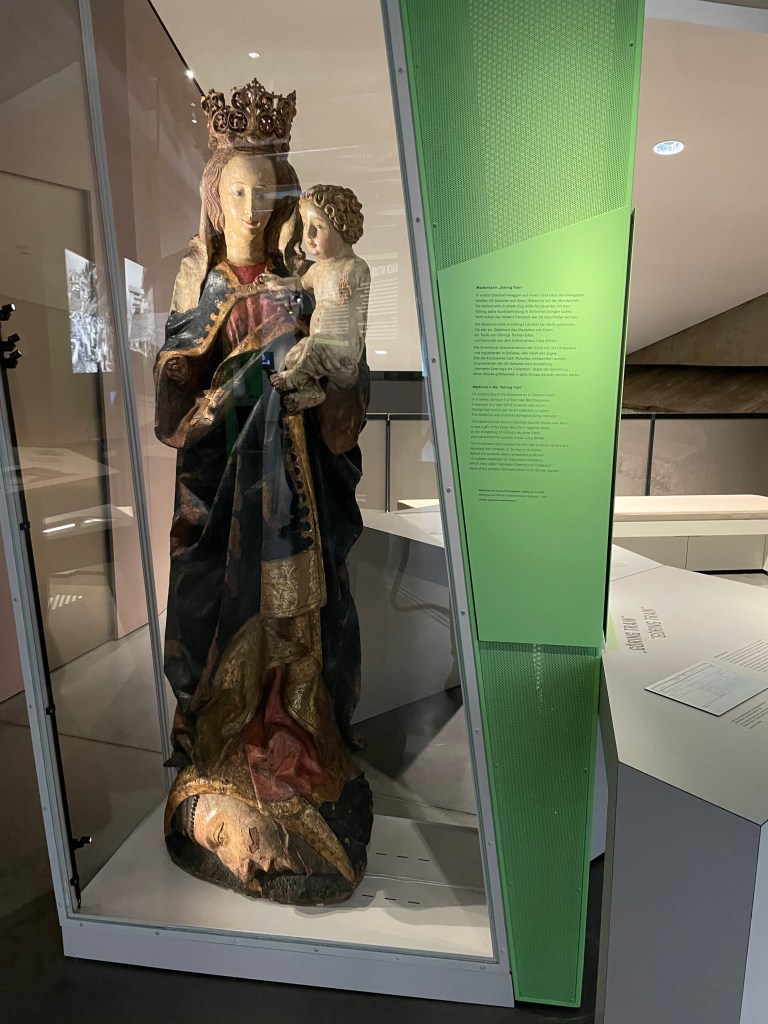
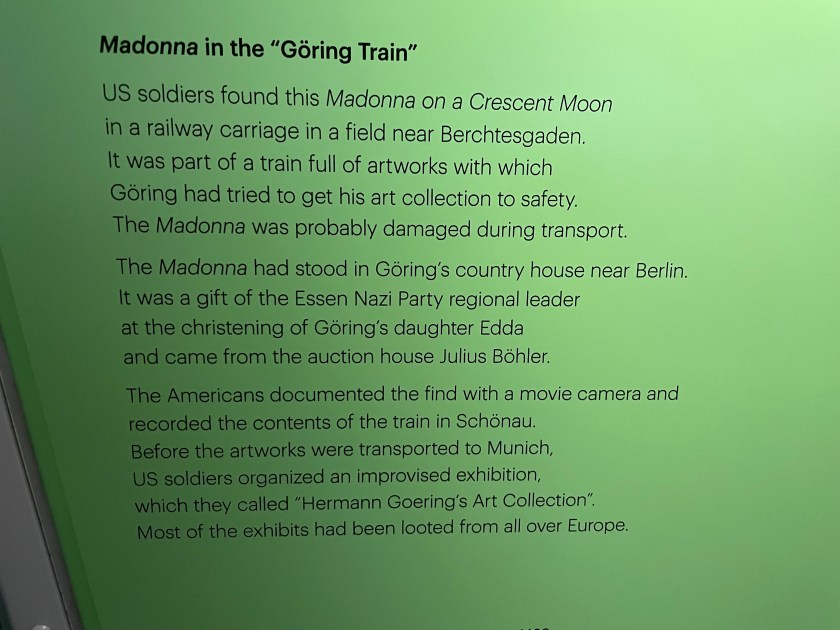
This Madonna also got to me. It was owned by Hermann Göring, one of the most powerful Nazi leaders. What duo lives these men lived.
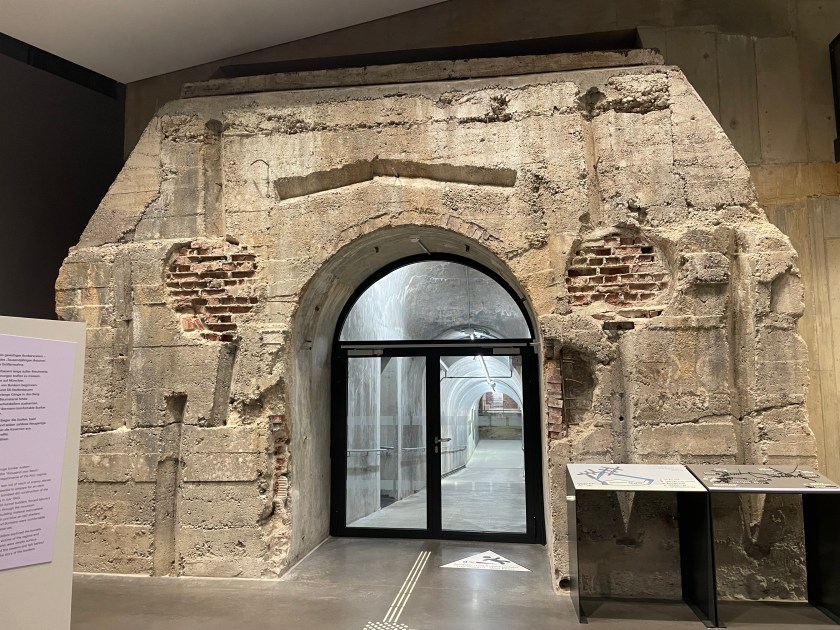
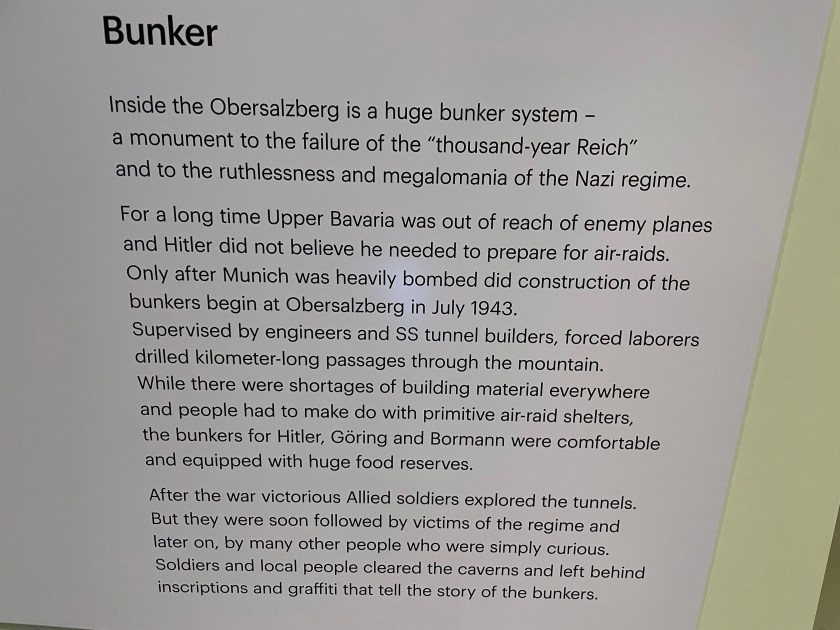
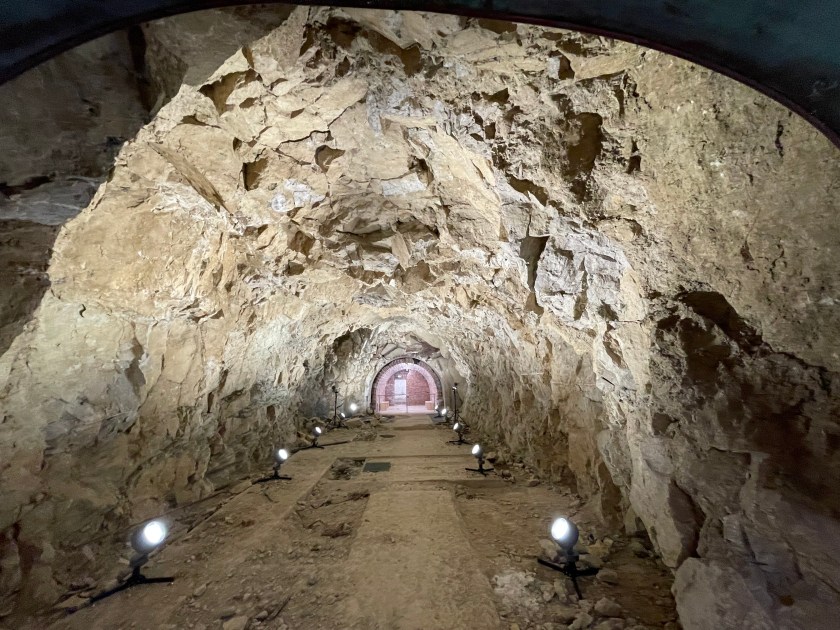
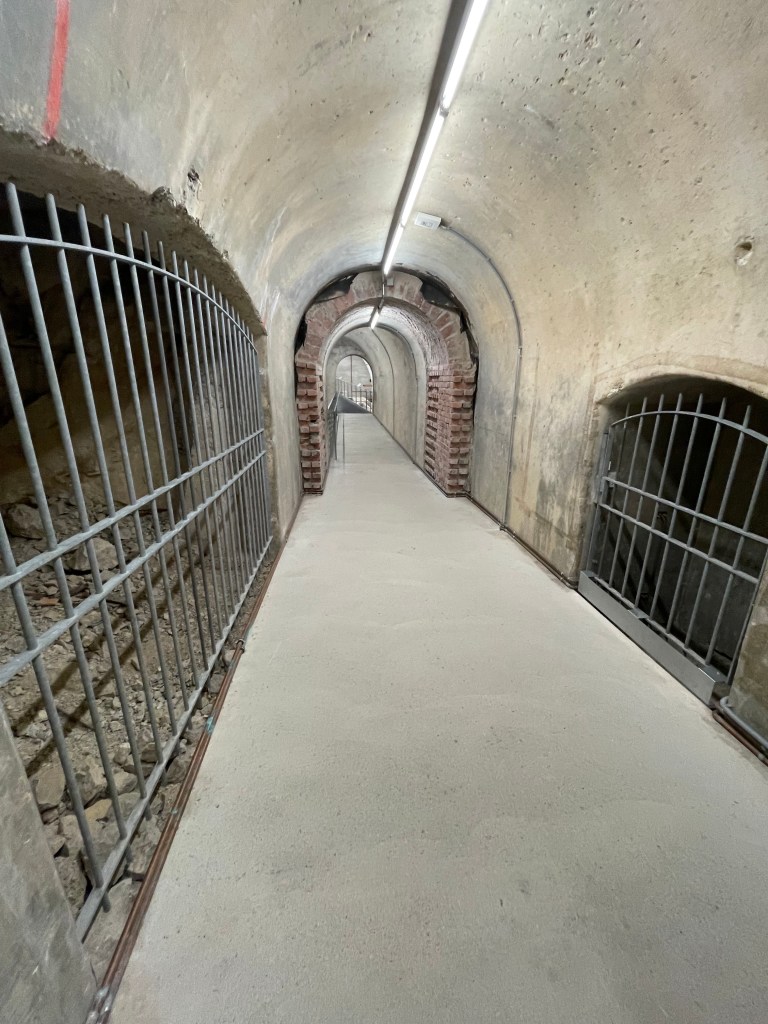
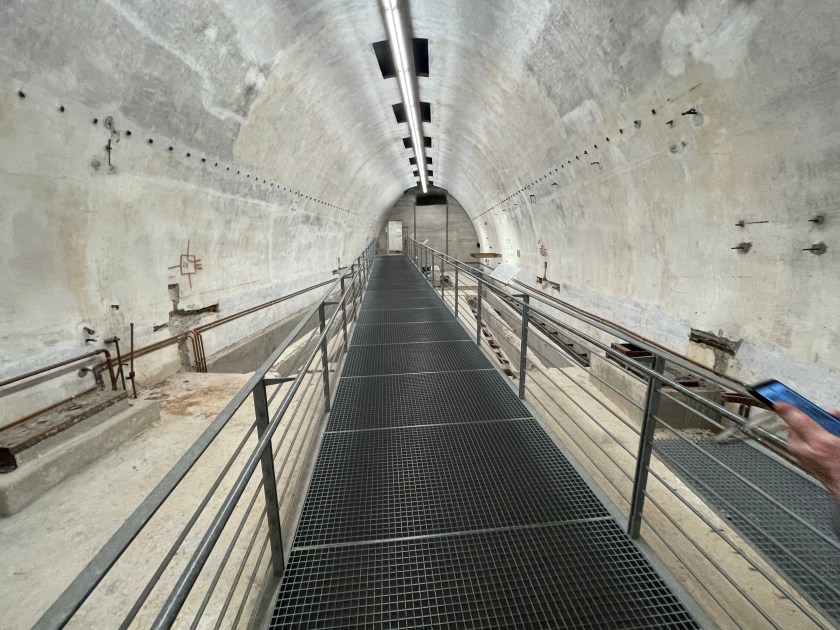
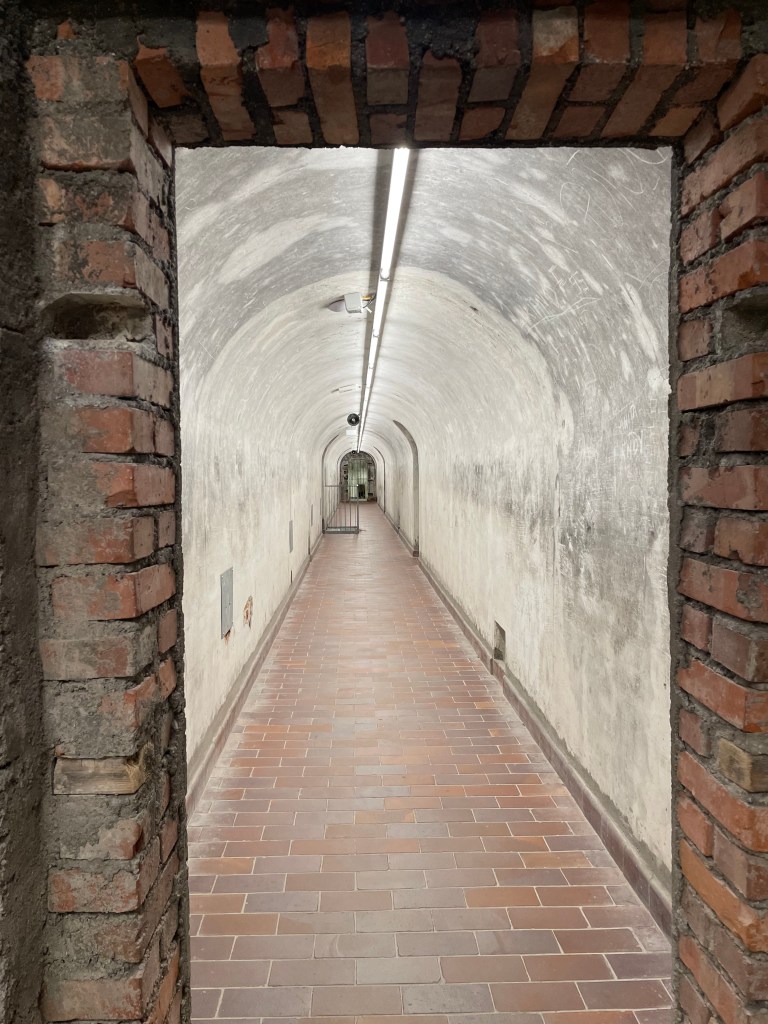
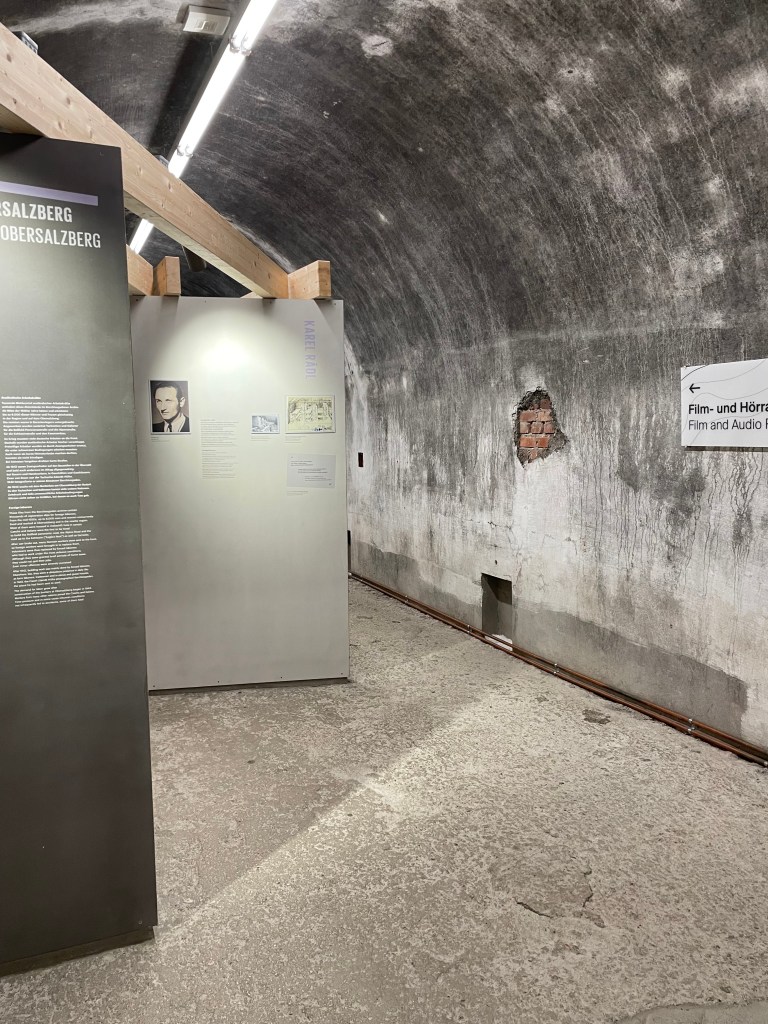
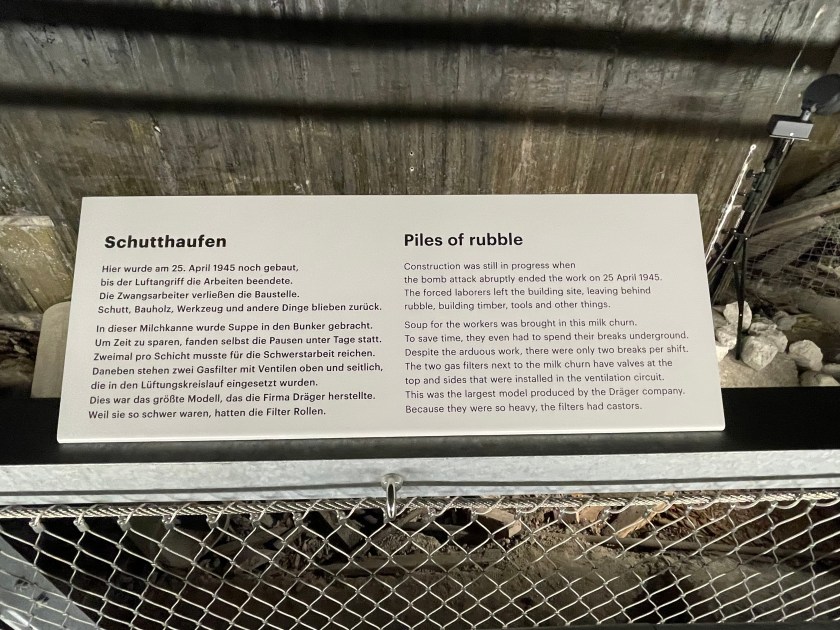
The last part of the tour was to go into the section of underground bunkers that were preserved as part of the exhibit. When things were looking grim with the war for the Germans, a complex network of bunkers was built and furnished comfortably so the war could still be conducted from there. During the last section of the bunker, we heard the voices of Jewish victims of the NAZI genocide. Chilling.
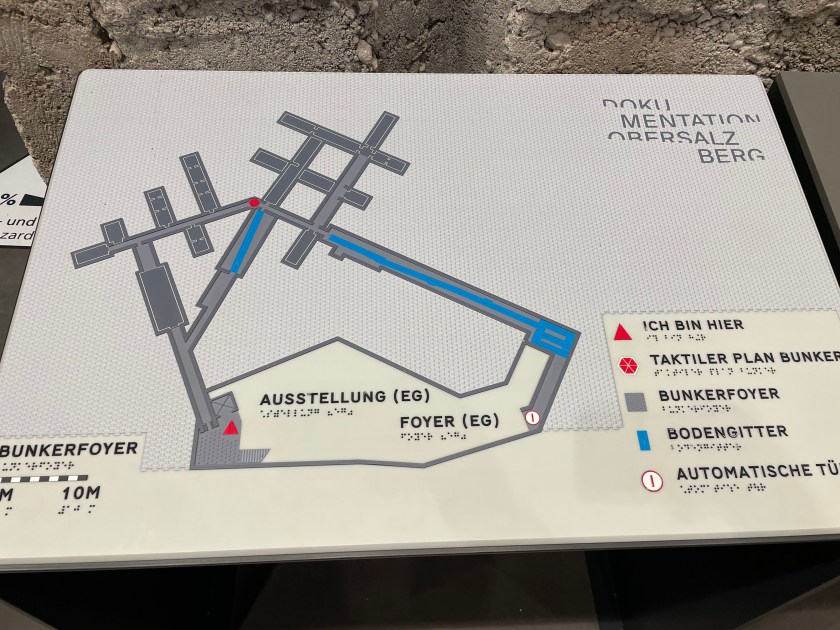
You can see how these bunkers connected the homes of the Nazi officials with Berghof (top left).
Prisoners and forced laborers were forced to dig these tunnels.




We stayed until the Center closed, then waited in the dark for quite some time before a bus came to take us back down the mountain to Berchtesgaden, where we caught another bus to take us back to Salzburg.
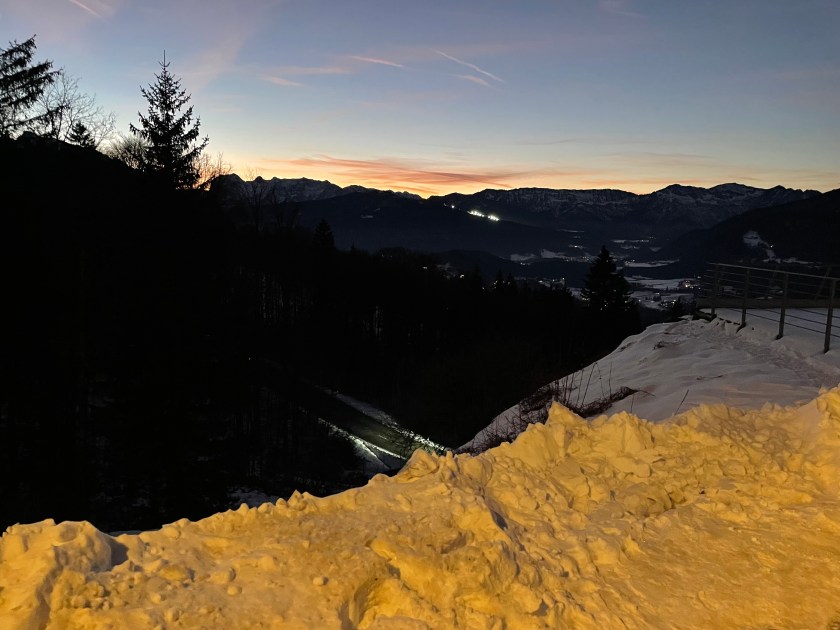
Here’s the view of the valley at night from the mountainside.

 Our Frankfurt Germany Mission