
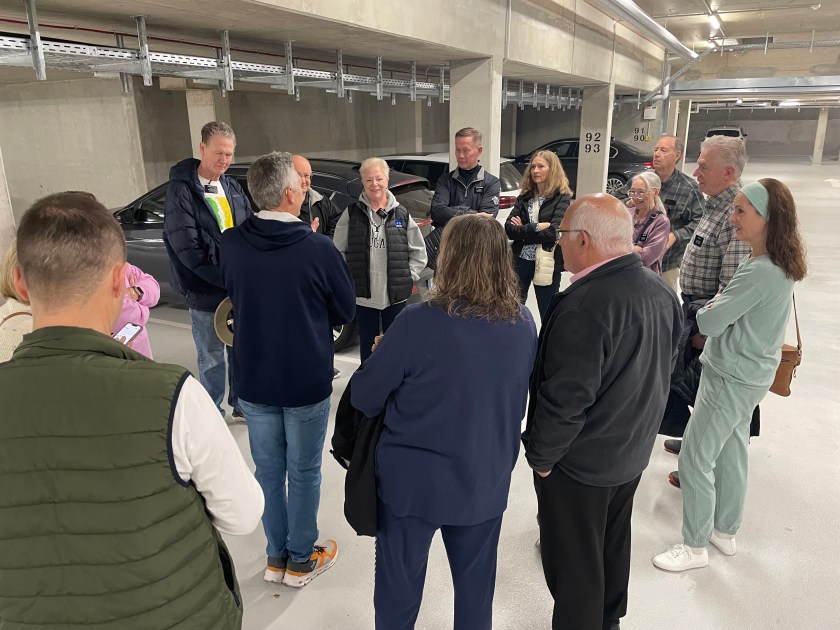
Today we had another small group outing pop up. This time to Eisenach. The drive was beautiful. Germany is beautiful in the Fall. The leaves here have gone from green to gold to burnt orange or rust. We drive through rolling fields and forests. The fields are either green with winter crops or plowed and an earthy brown. The woods are spectacular with the dull oranges and yellow-gold leaves, mixed with the evergreens. Today was overcast, with low-hanging clouds that coved the earth in a fine mist. Sometimes it felt like we were driving through clouds or fog.

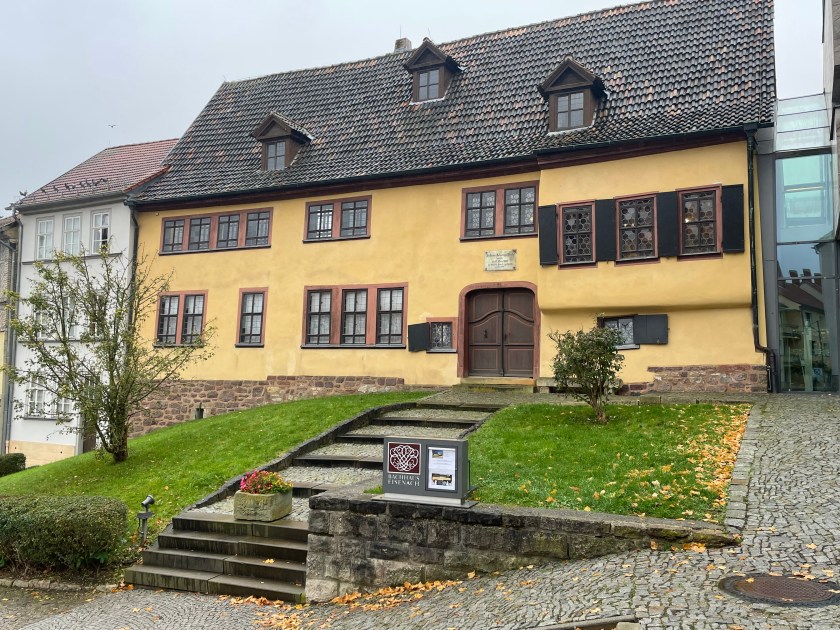
Above is the Bach home. Below is the Bach Museum right next to it.

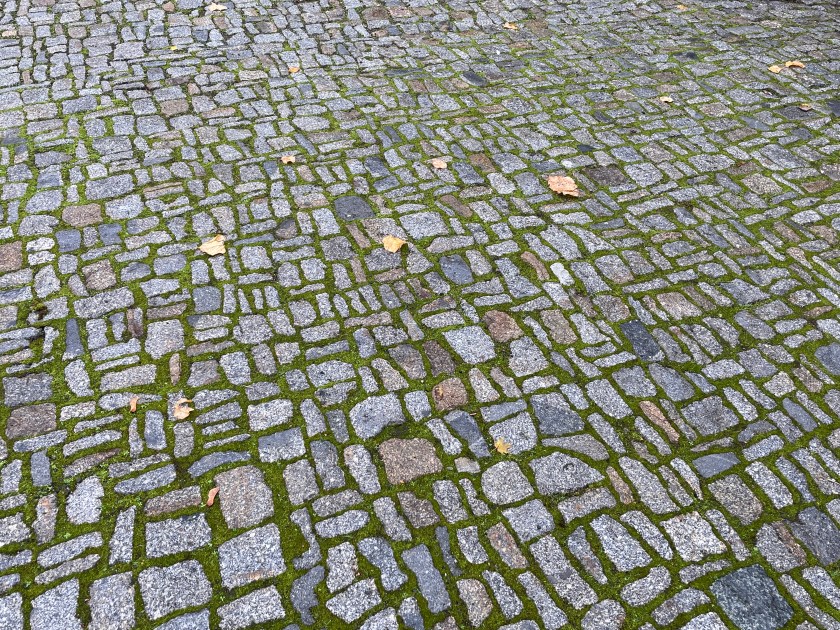
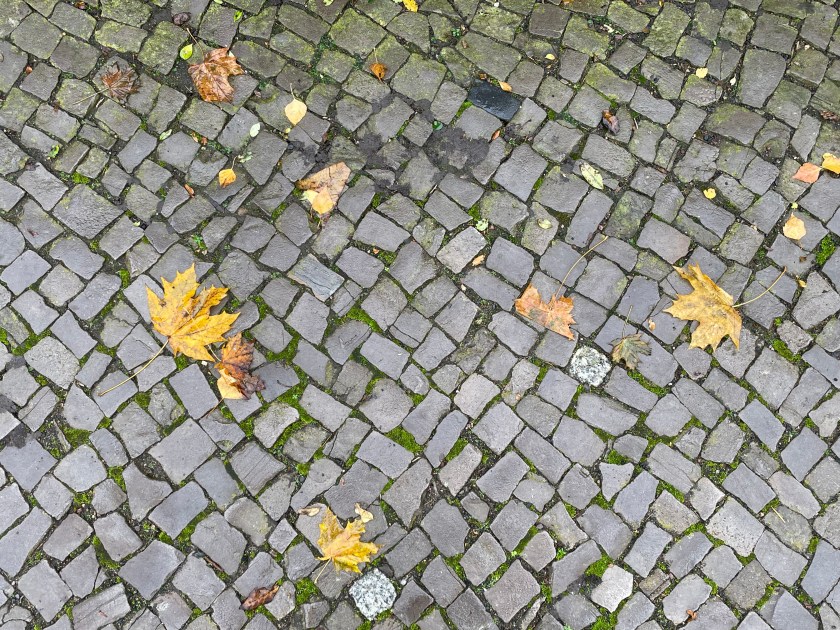
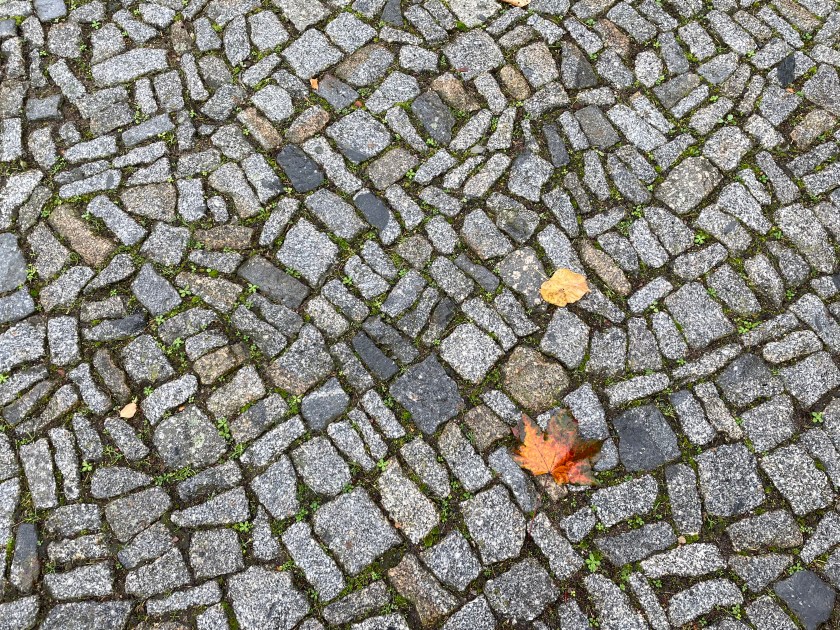
The stone pavers here were exceptional, fit together like a puzzle.

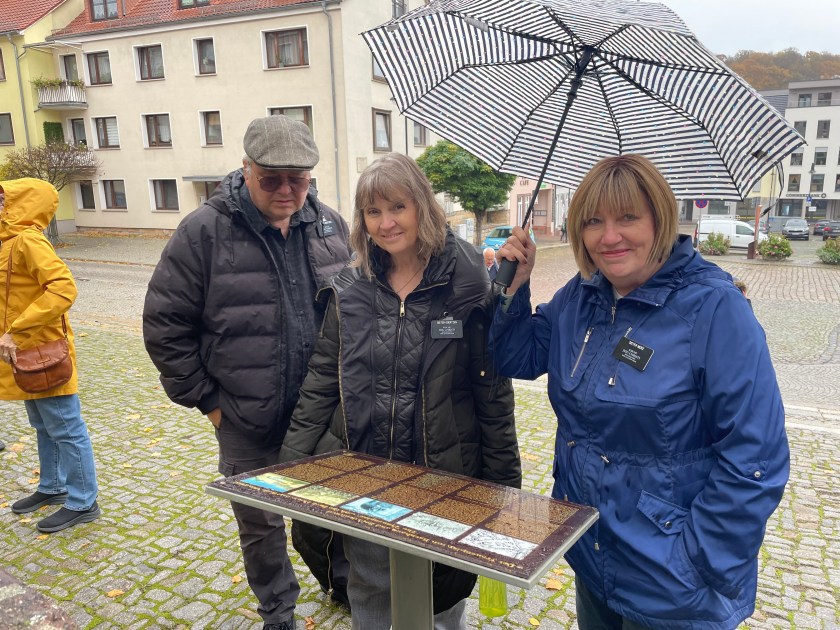


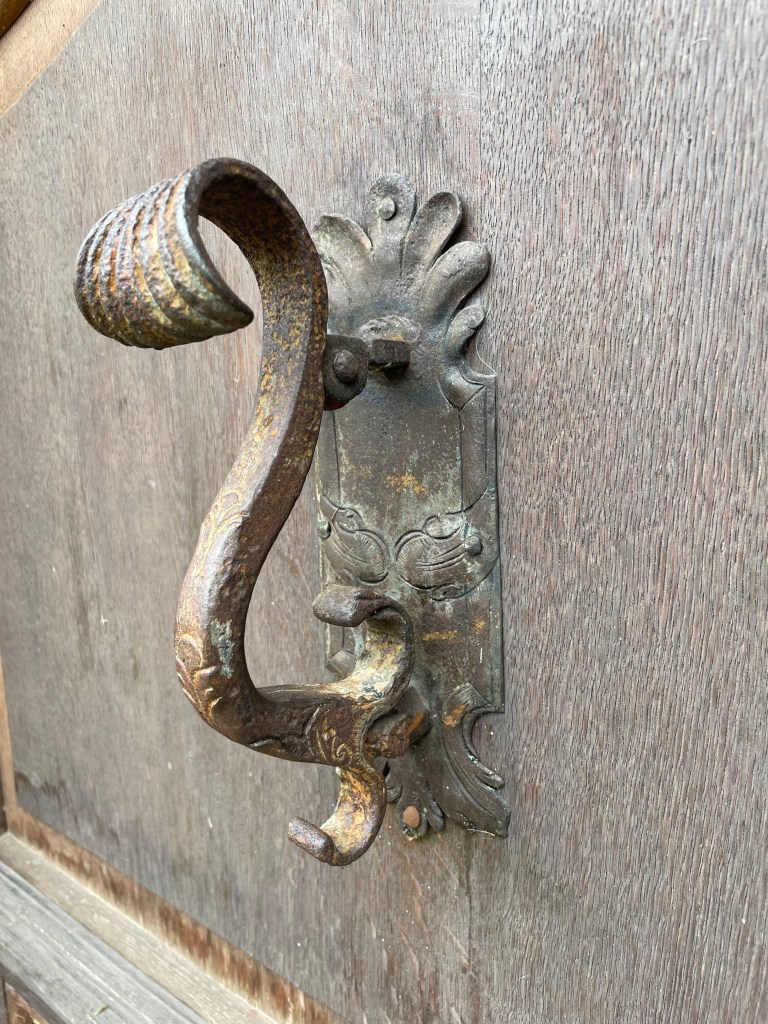

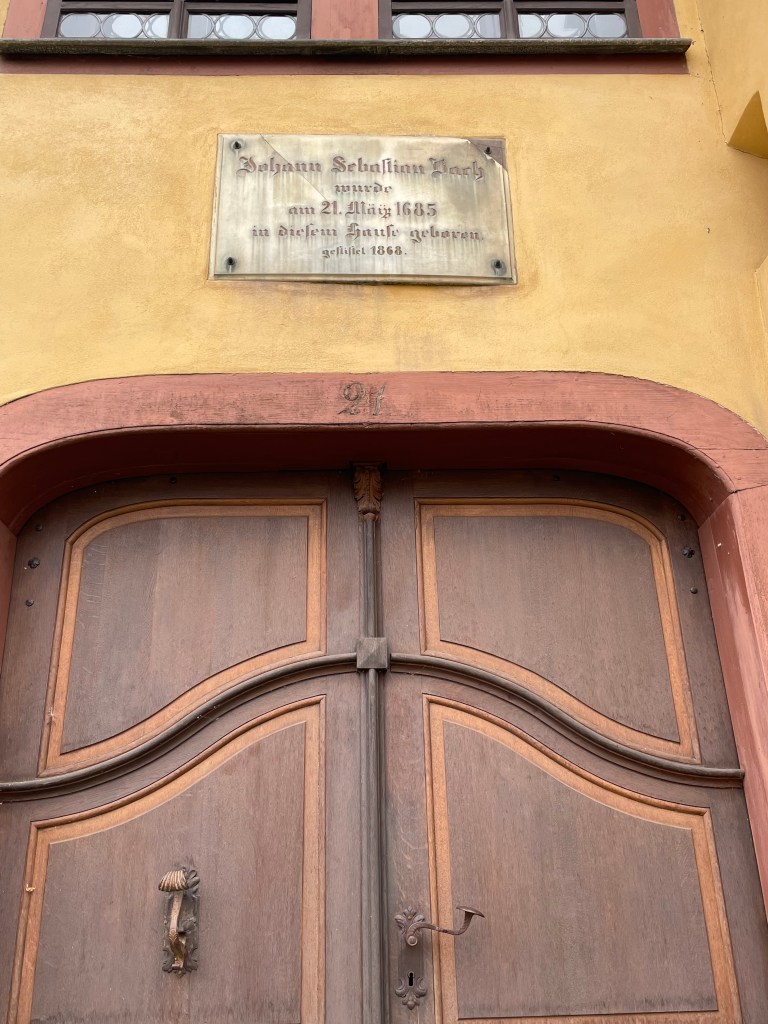

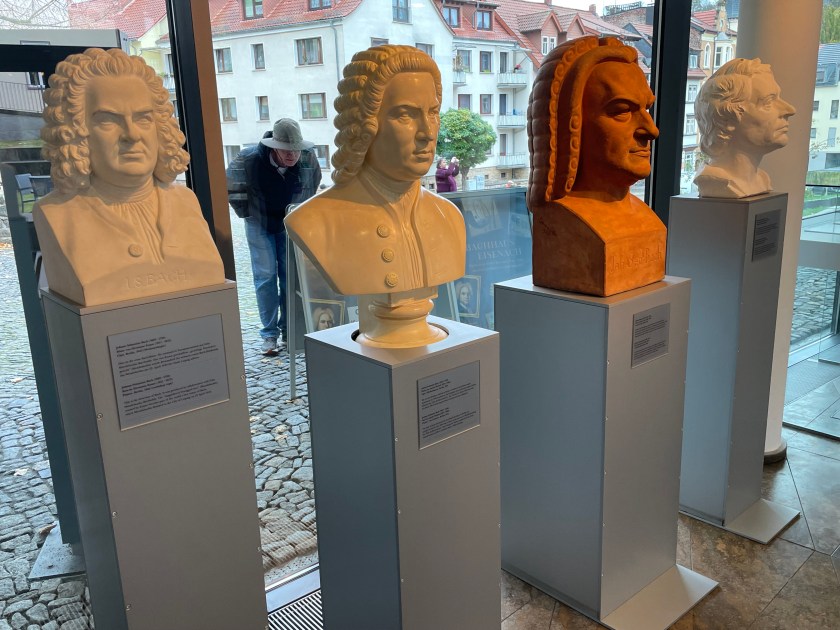
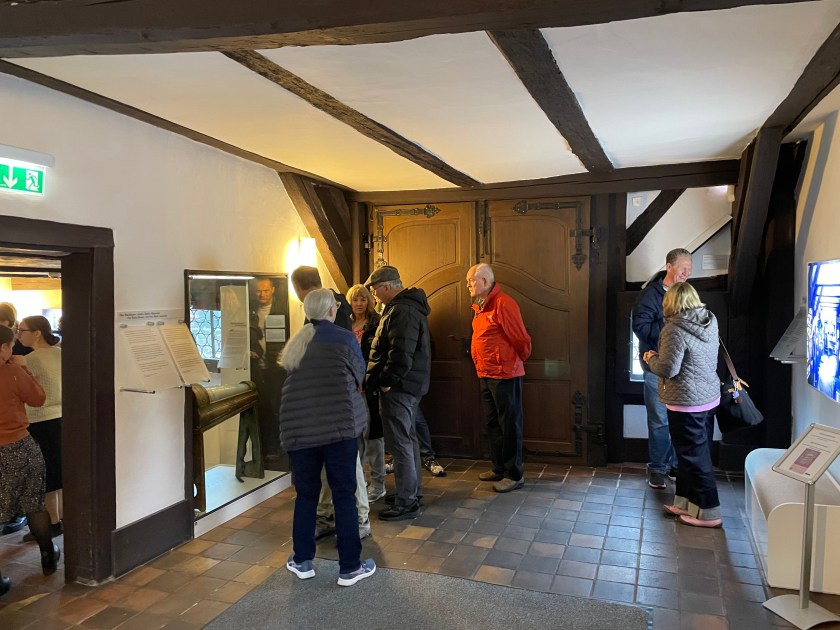
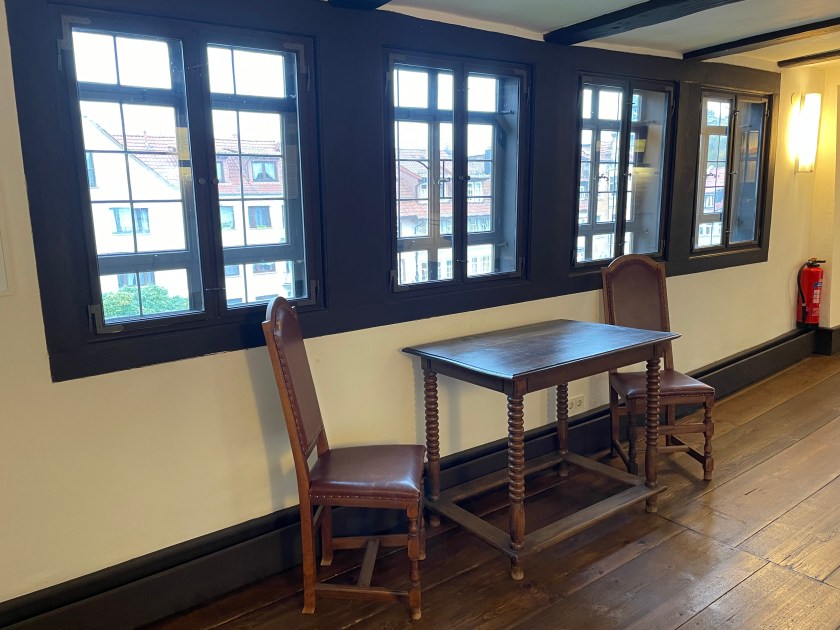
We got to Eisenach by 10:30 and spent the first hour and more at the Bach Haus, the place where Johann Sebastian Bach was born and lived his first 10 years. His family was musical. His parents died when he was still young and he moved from here. The home has been turned into a museum about Bach, with many of the rooms fitted with furniture and musical things from his time period. I love being in these old old homes.
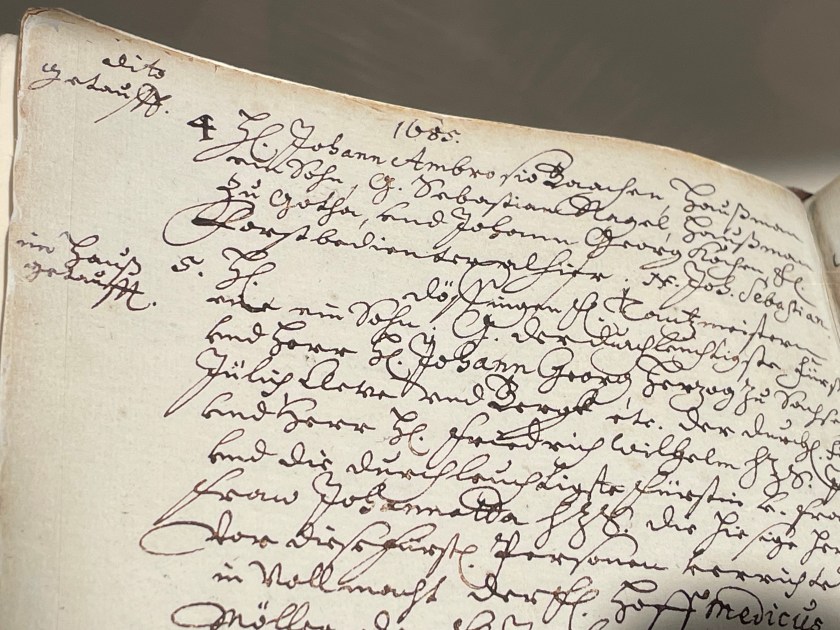
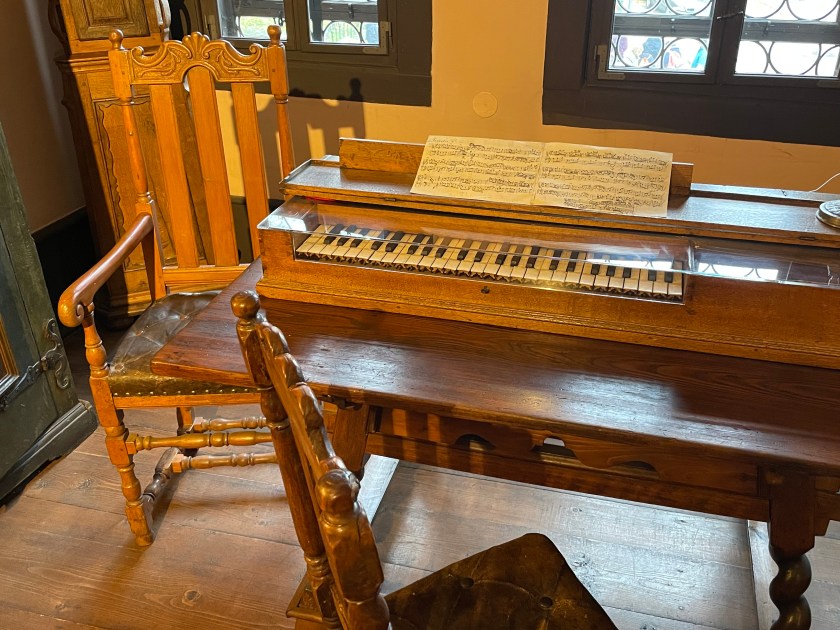
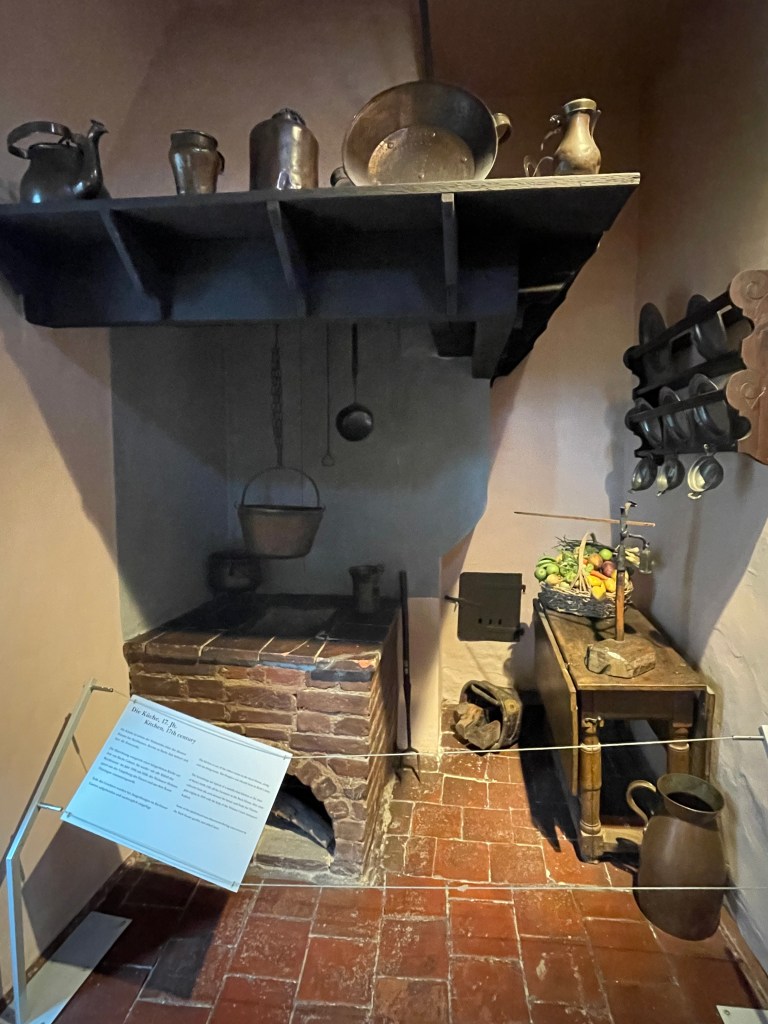
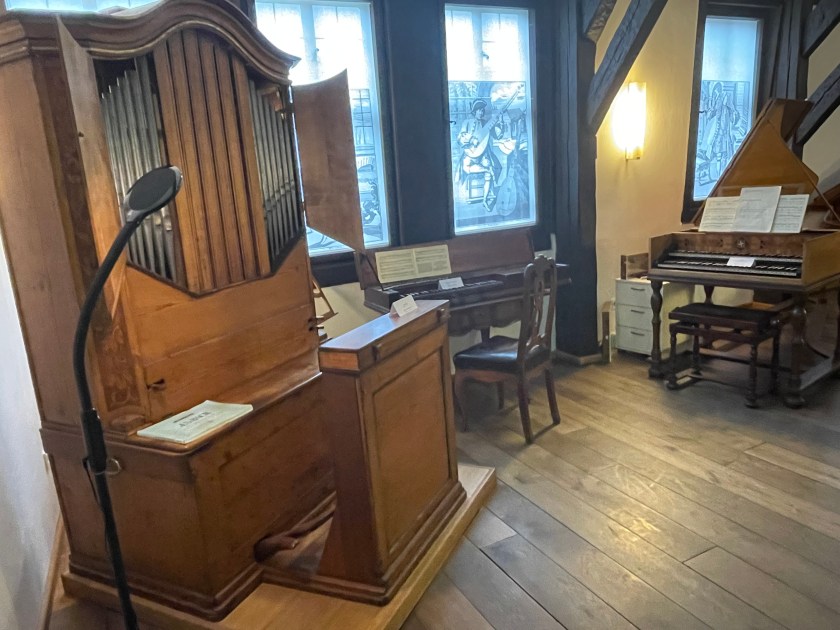
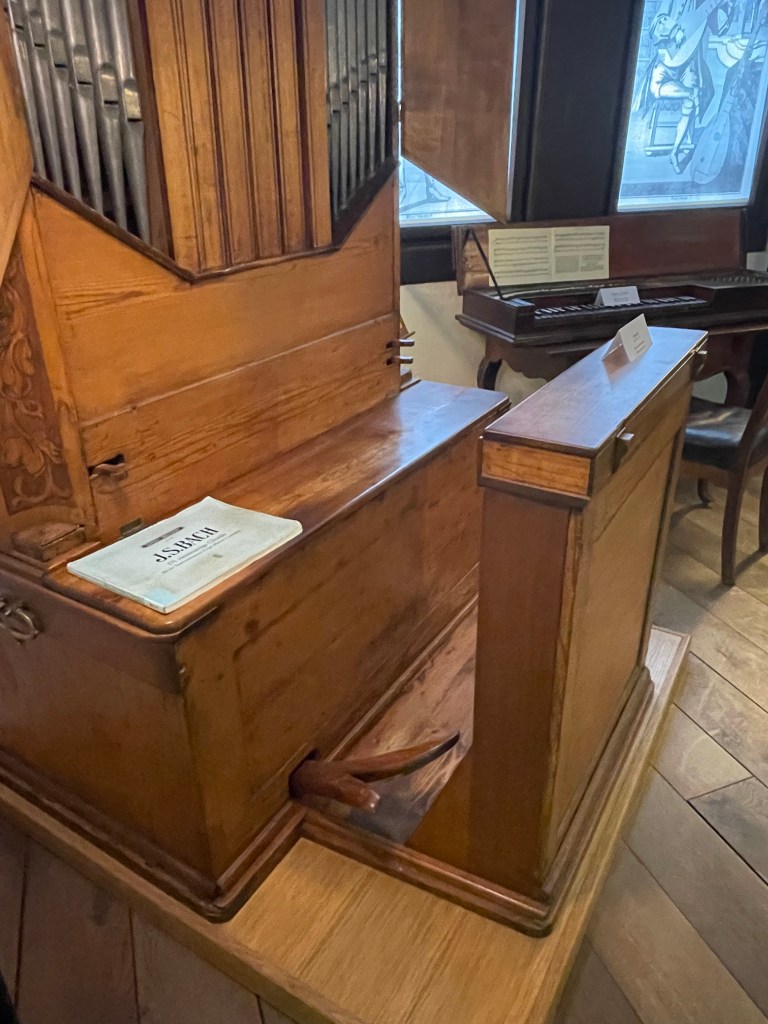
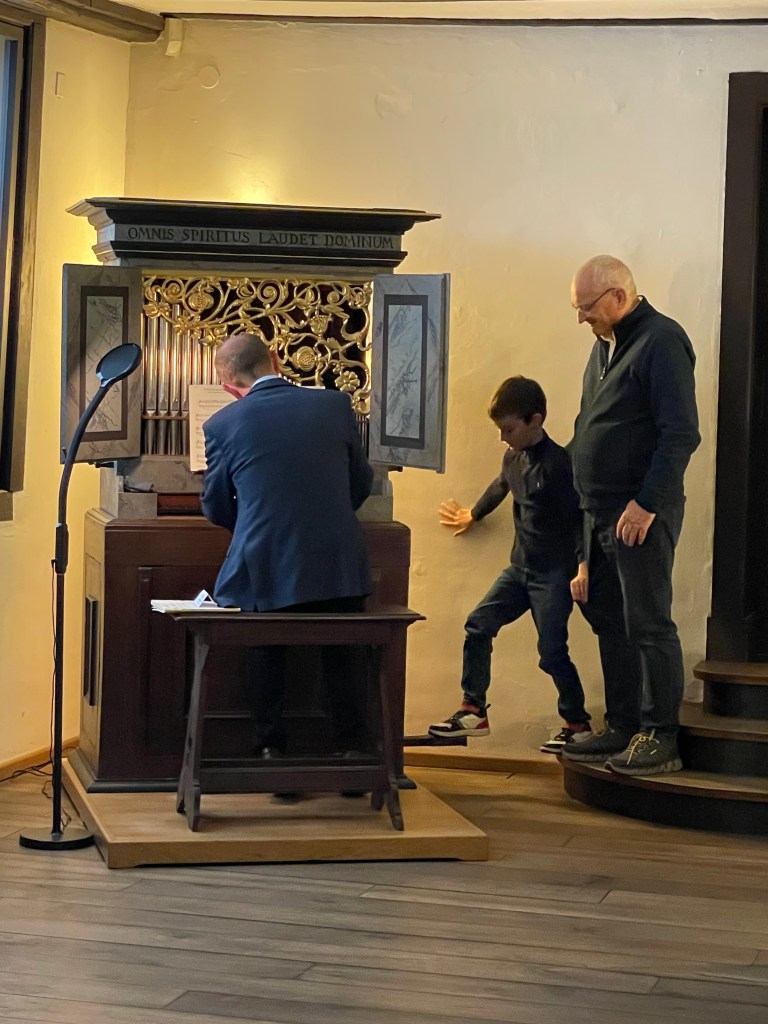
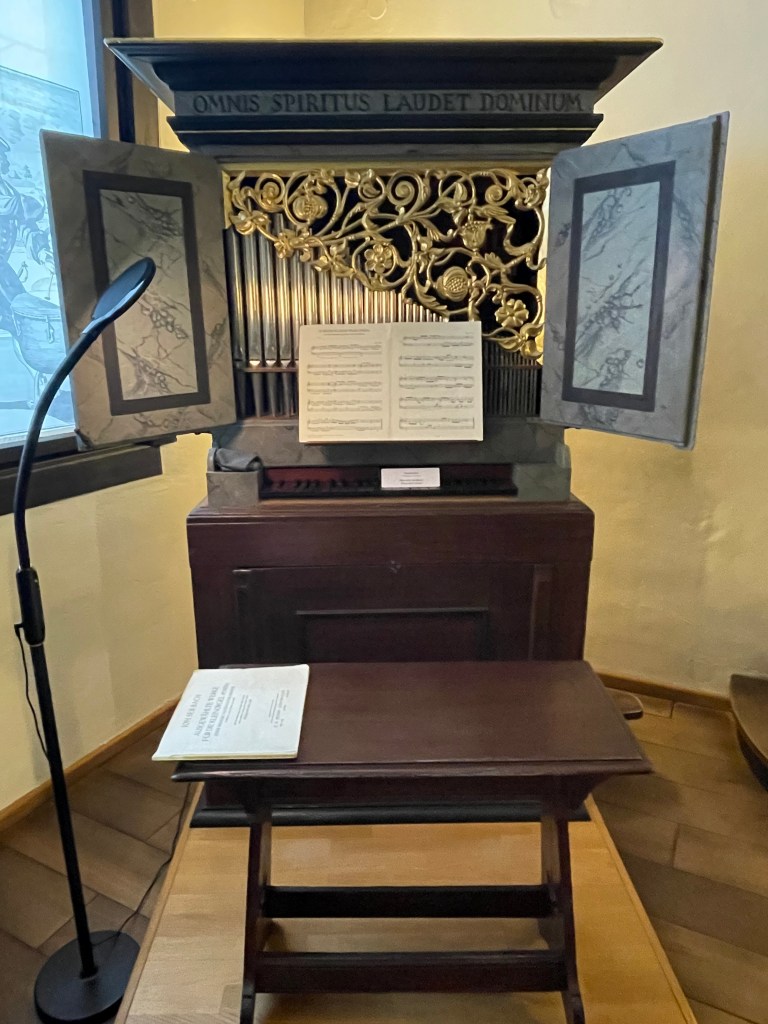
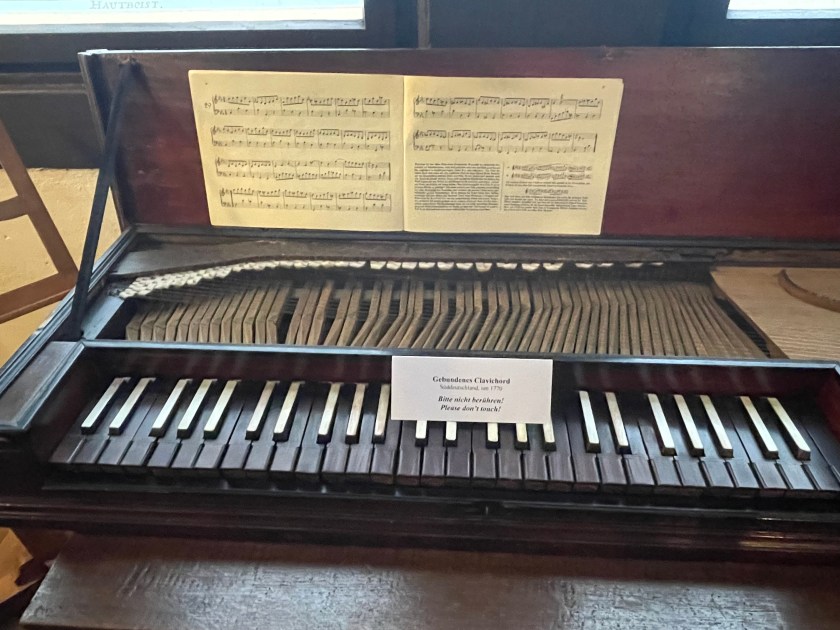
Bach was born in this home in 1685. There was a work room, bedrooms, a simple kitchen, a toilet hanging out over the back yard, and a room made into a little concert hall/music room, where at 11:00 a Bach musician came and played on 5 different old instruments that were 200-300 years old– 2 organs, 2 harpsichords and a table top keyboard.
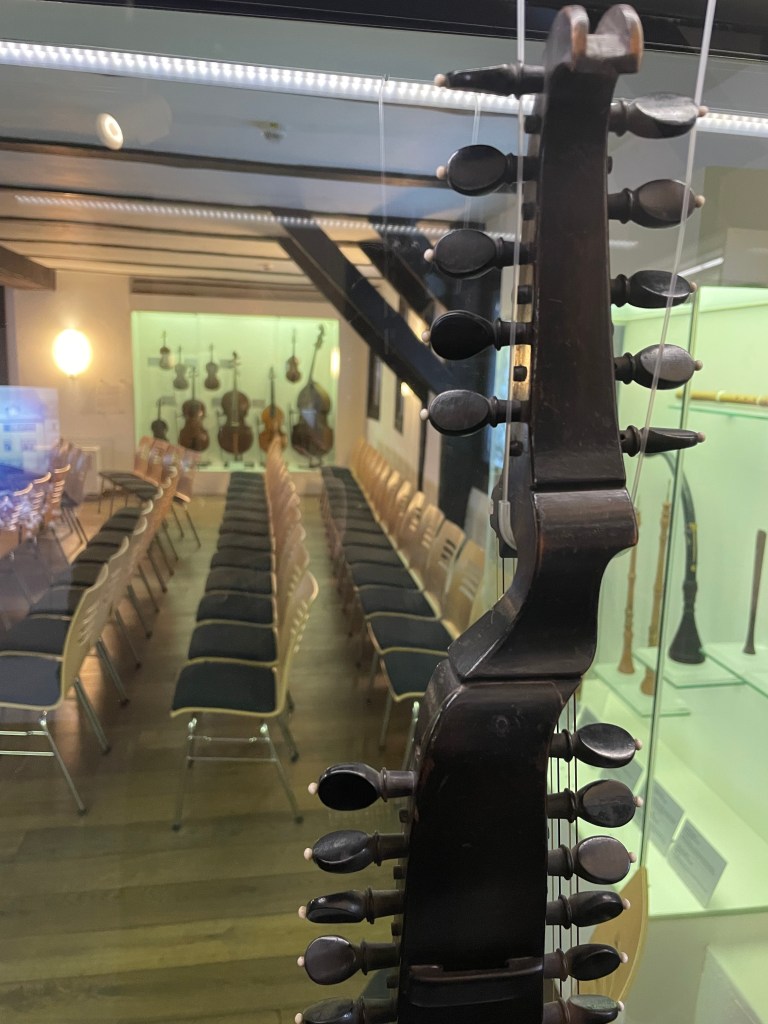
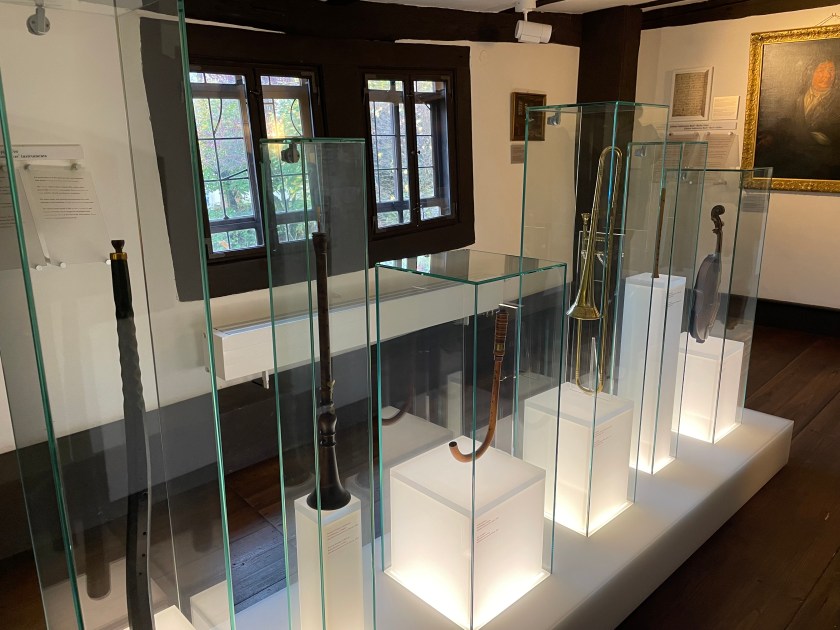
There were other old instruments in the home displayed, along with things that belonged to the Bach family, books and music. It was really interesting.
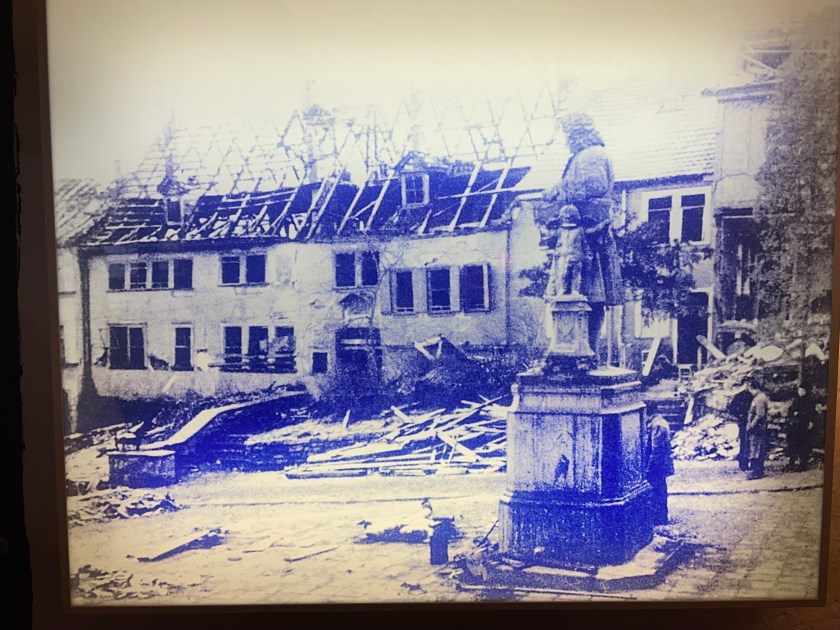
Here’s the destruction to the home during WWII.
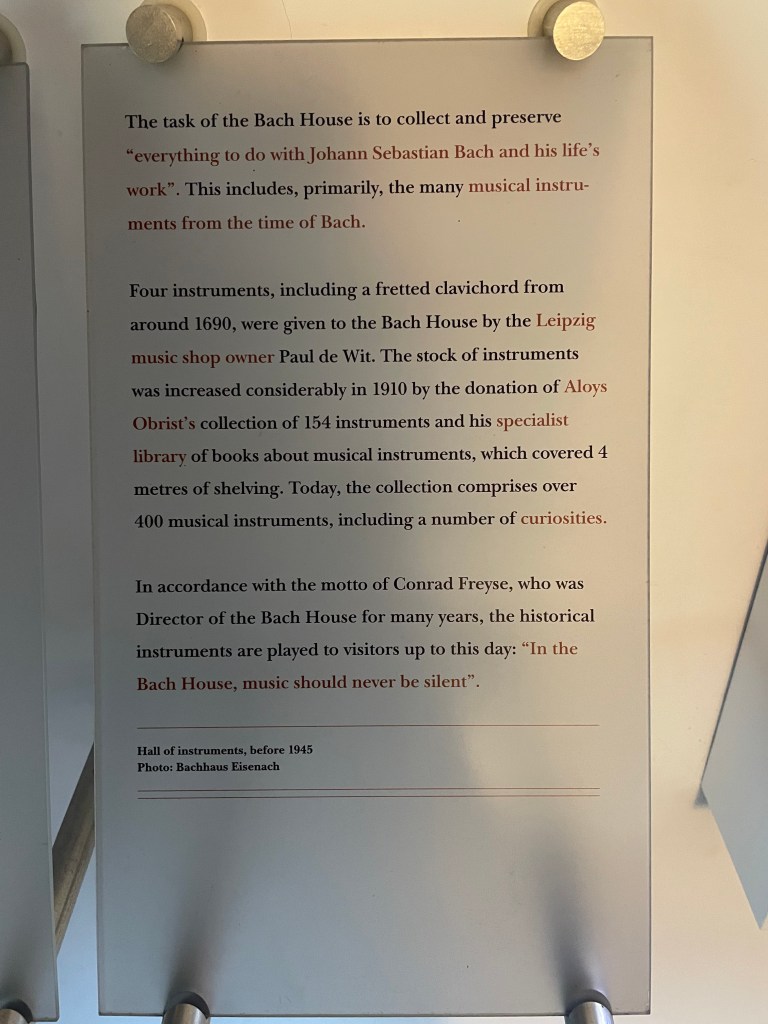

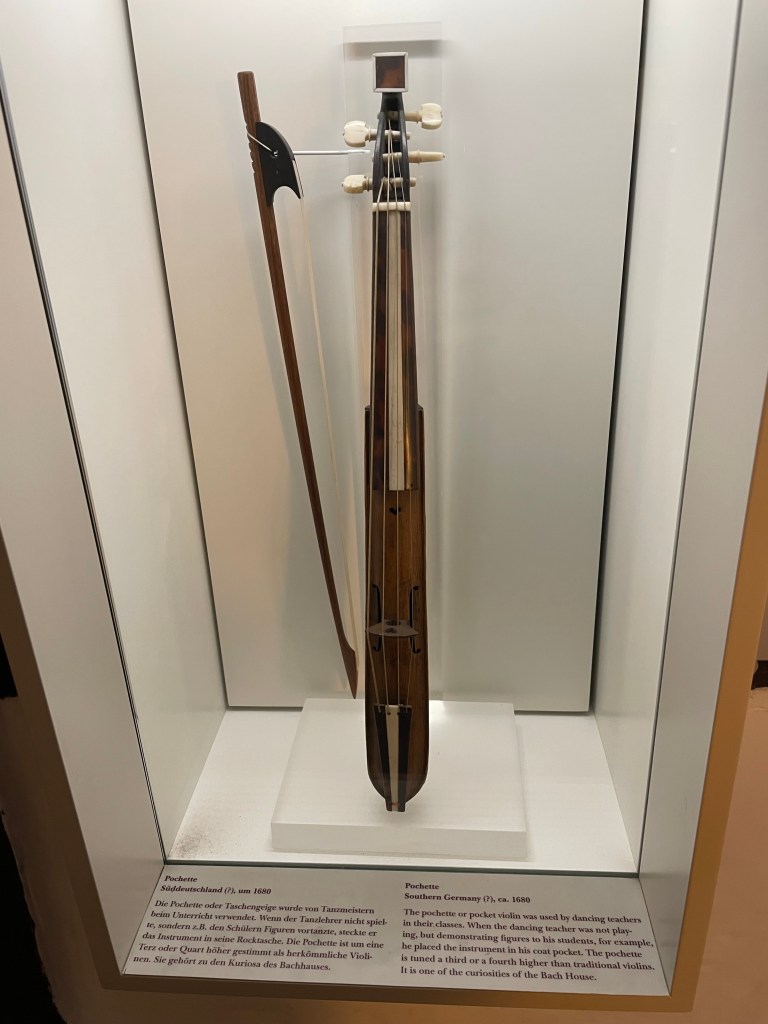
A “pocket violin.”
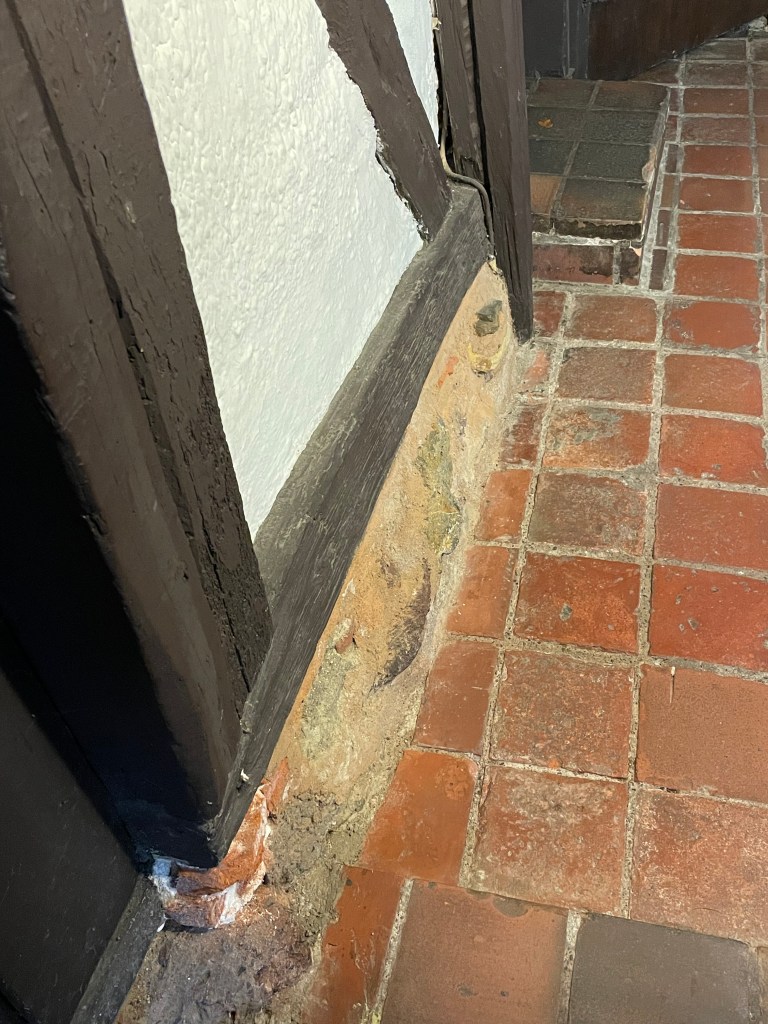
Old construction:
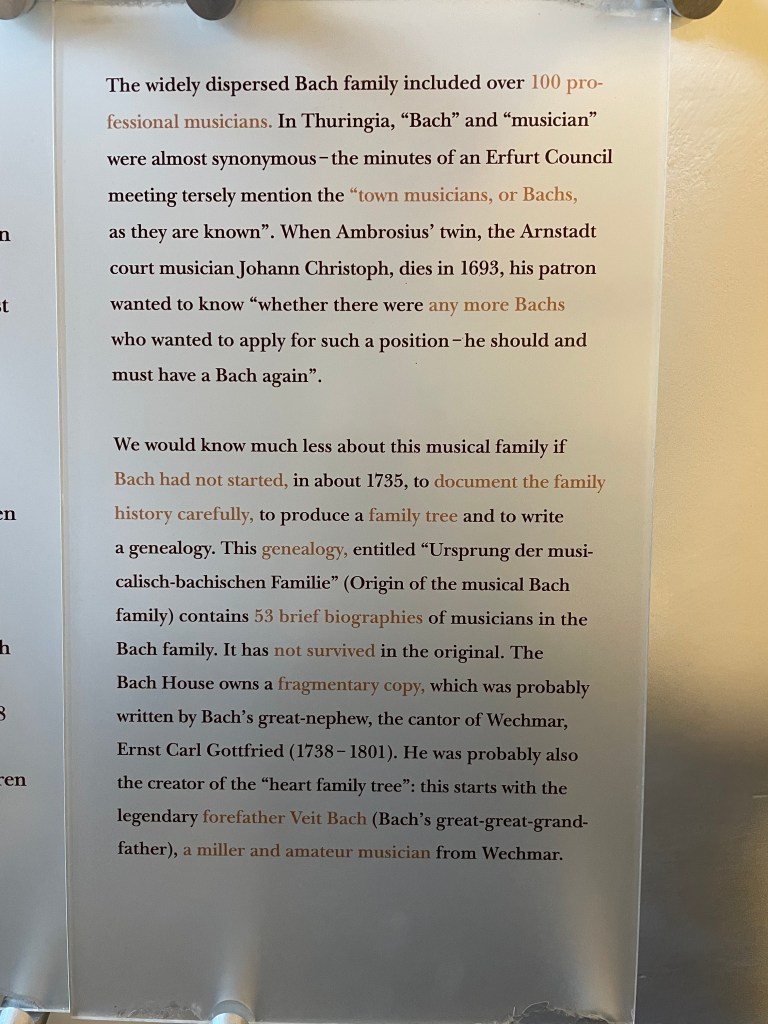
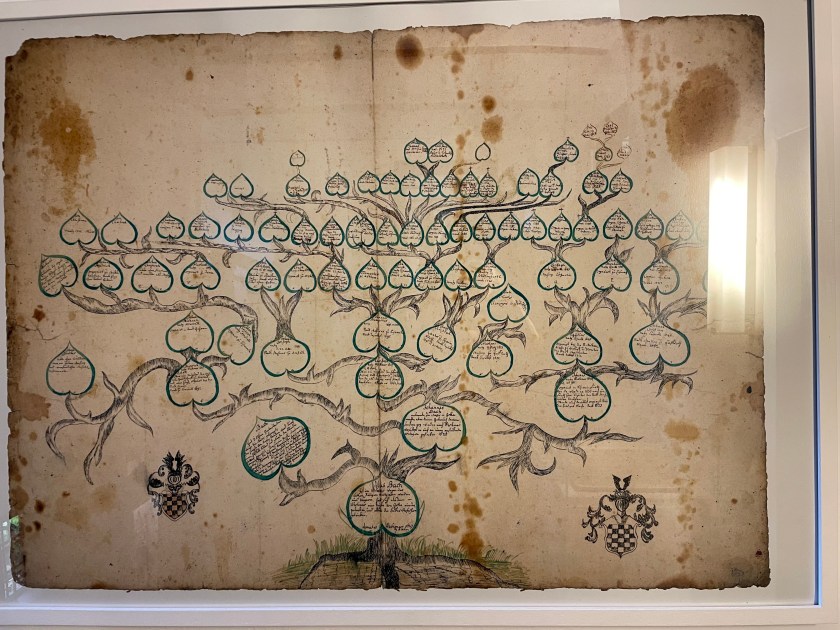
Fascinating family history!
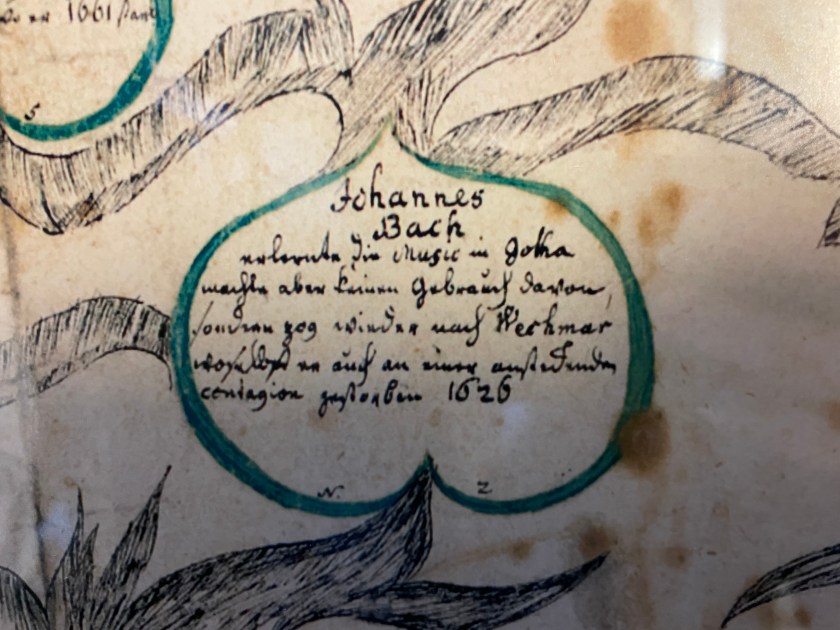
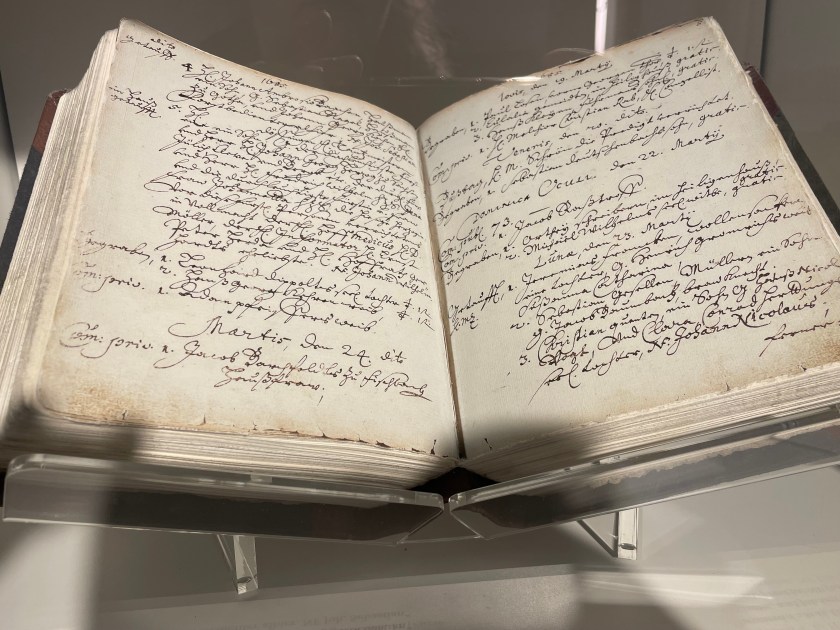
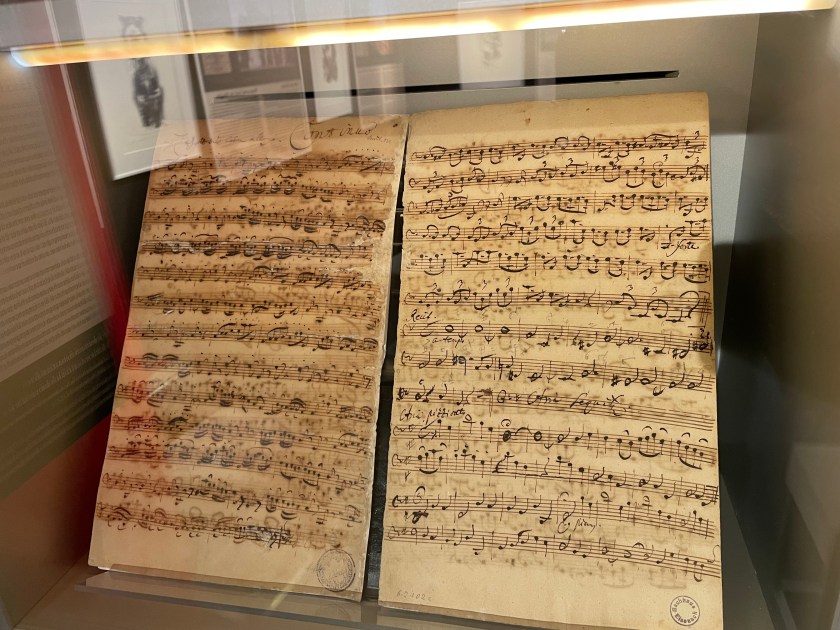
Here is the entry of Bach’s baptism in the church record books:

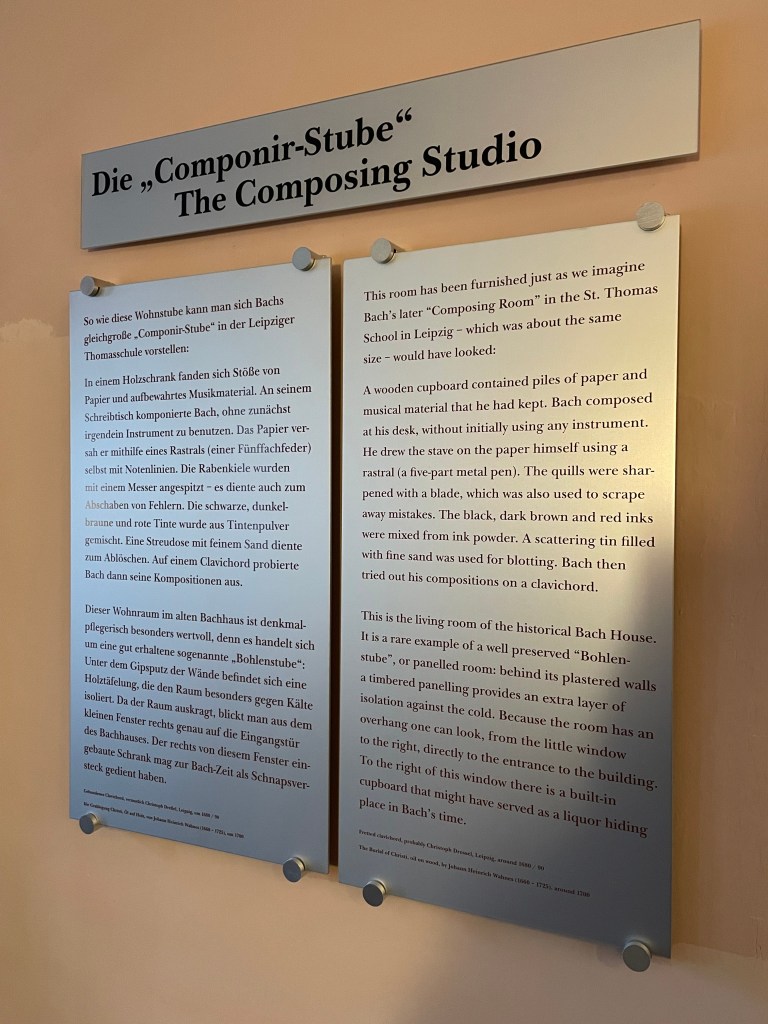
This room was set up as Bach’s composing room might have looked.

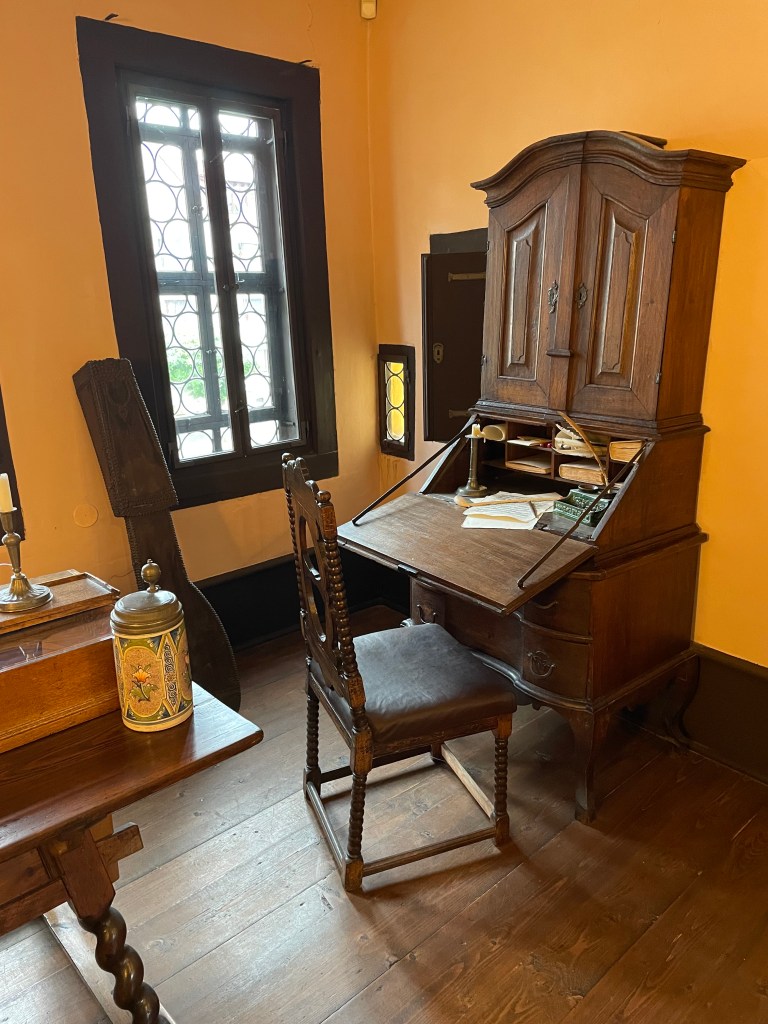
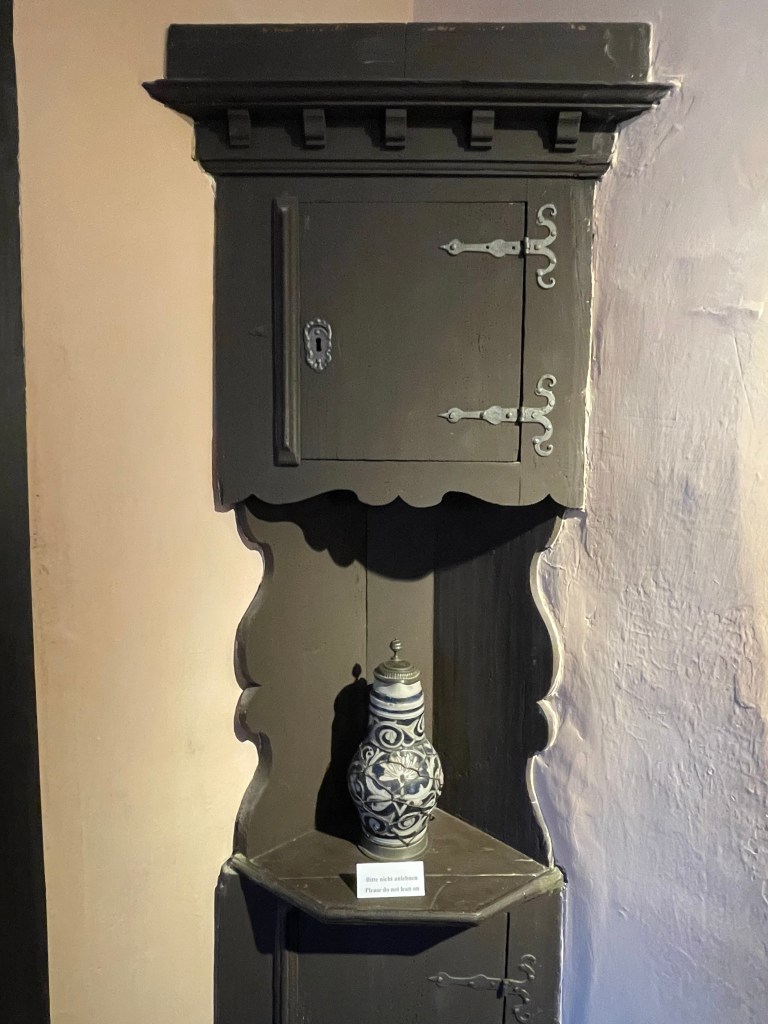
A period bedroom:


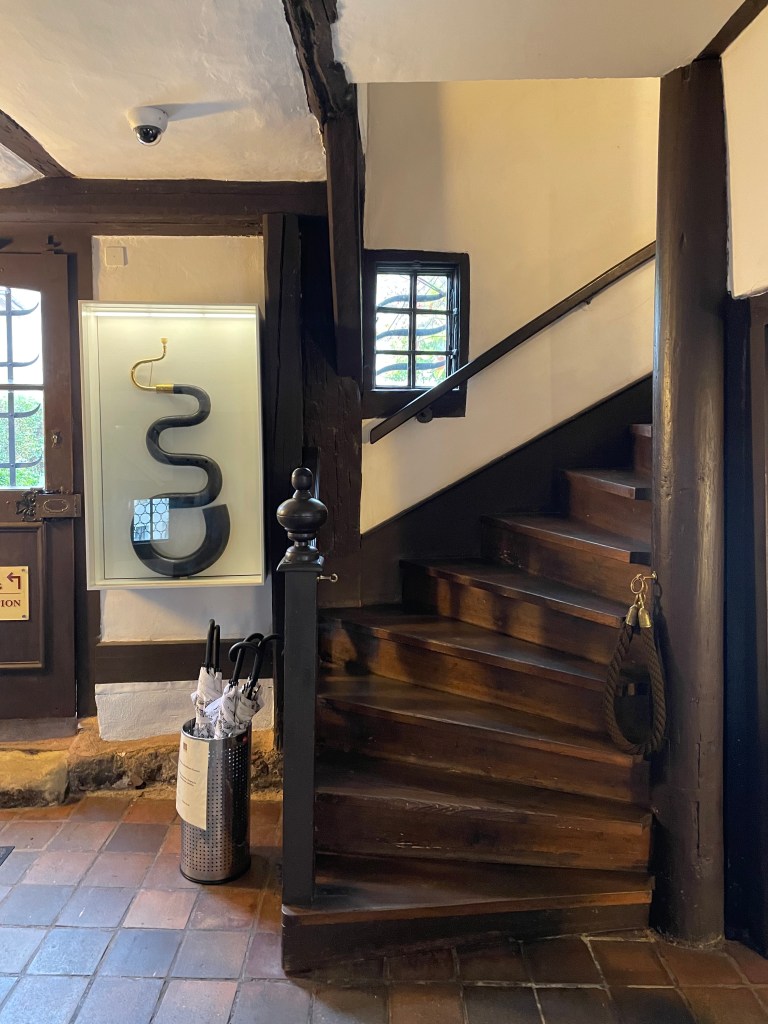
Interesting staircase:


Interesting display for our eye surgeon son, Adam:



Bach played many instruments. Those displayed here are from his time period.
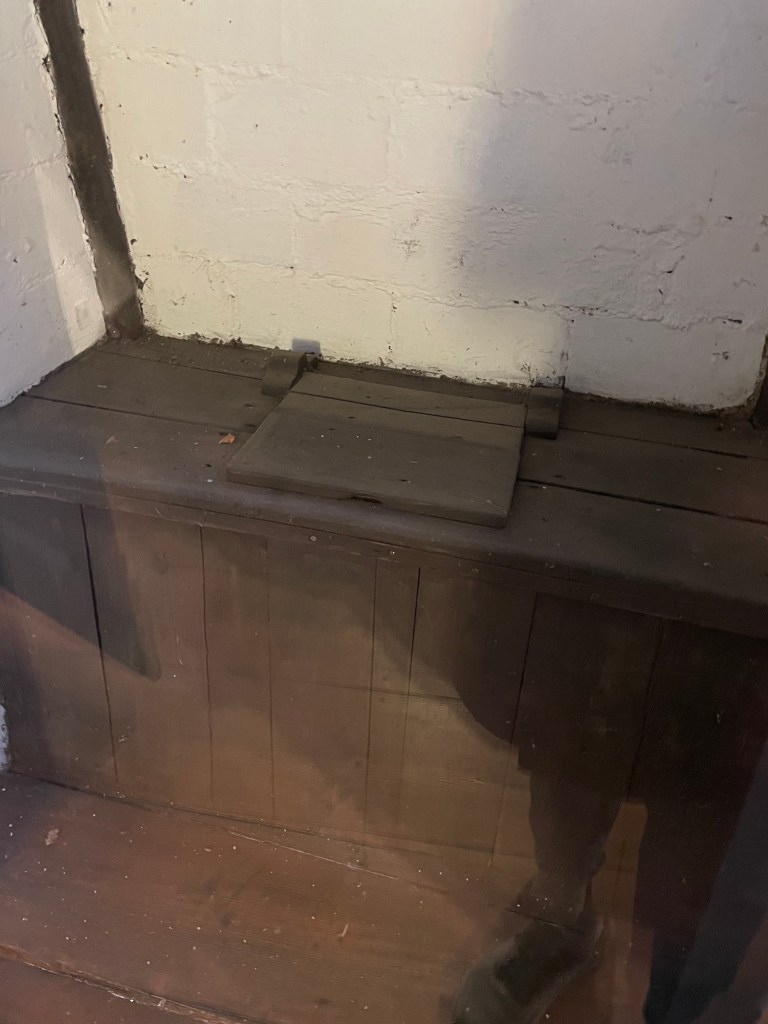
This is the toilet. When we get to the pics in the backyard, you’ll see where it empties.
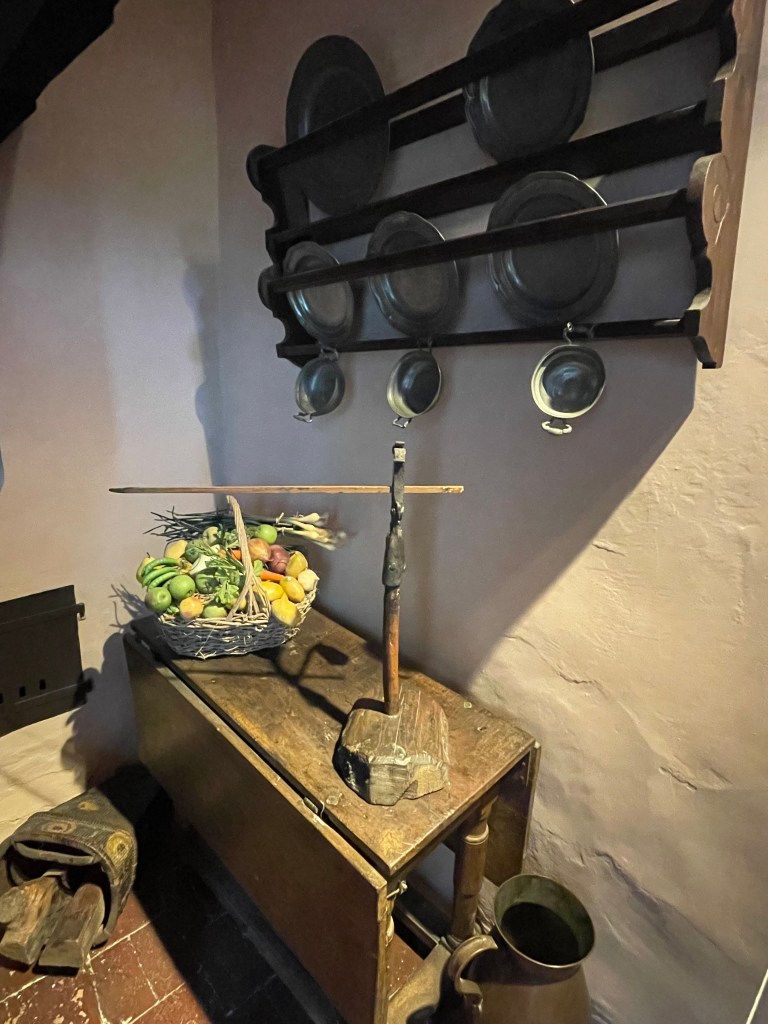
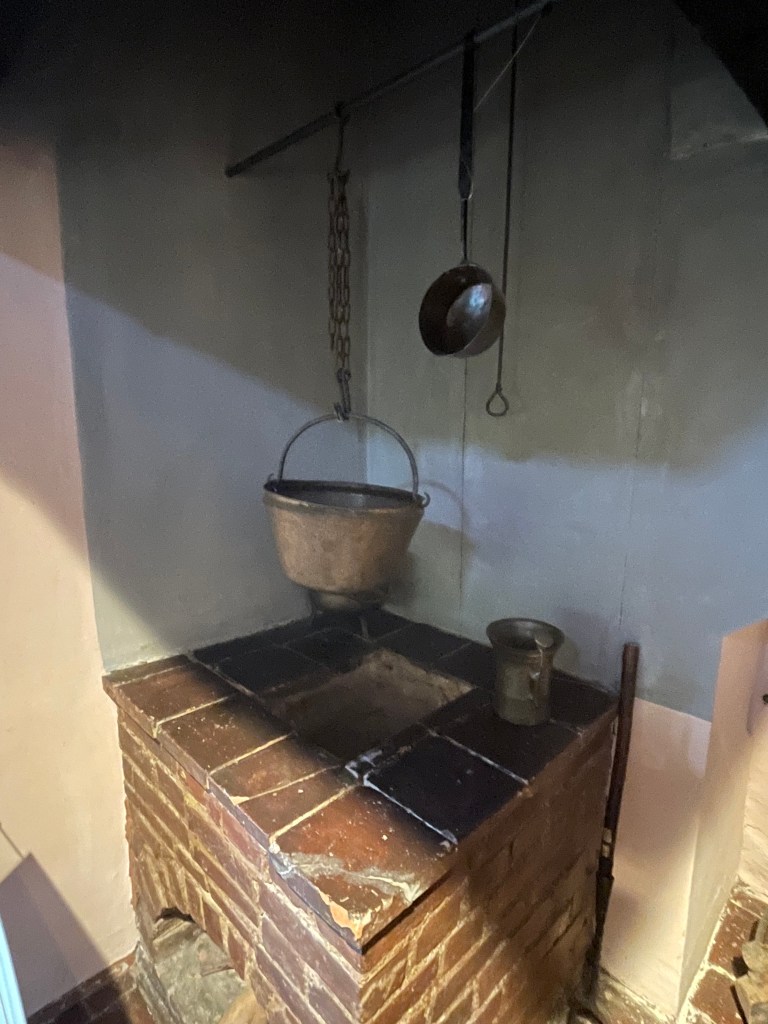
The kitchen, where a woman’s work was never done.
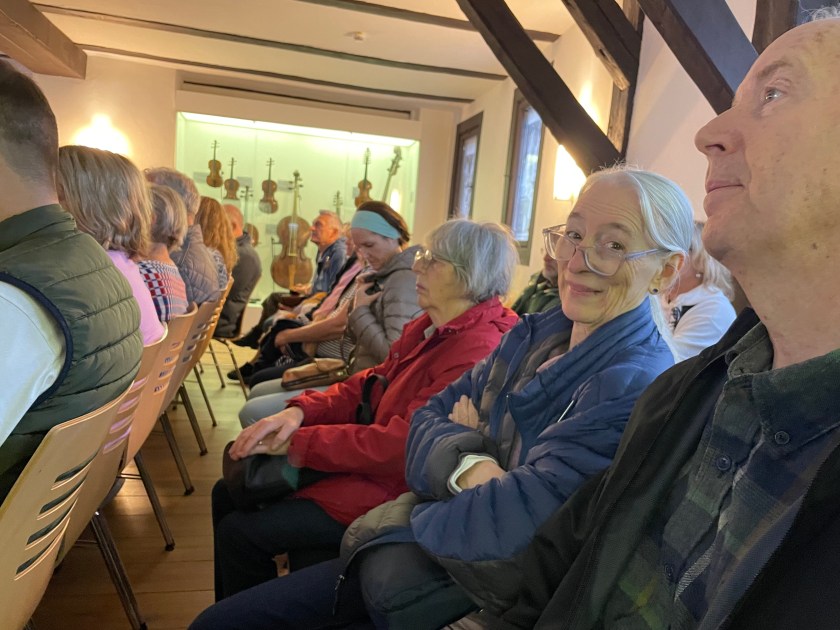
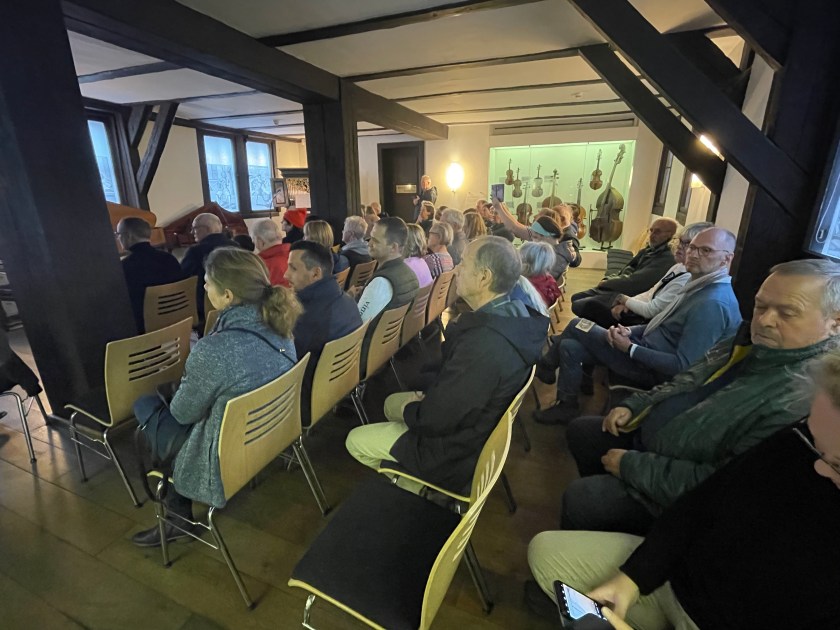
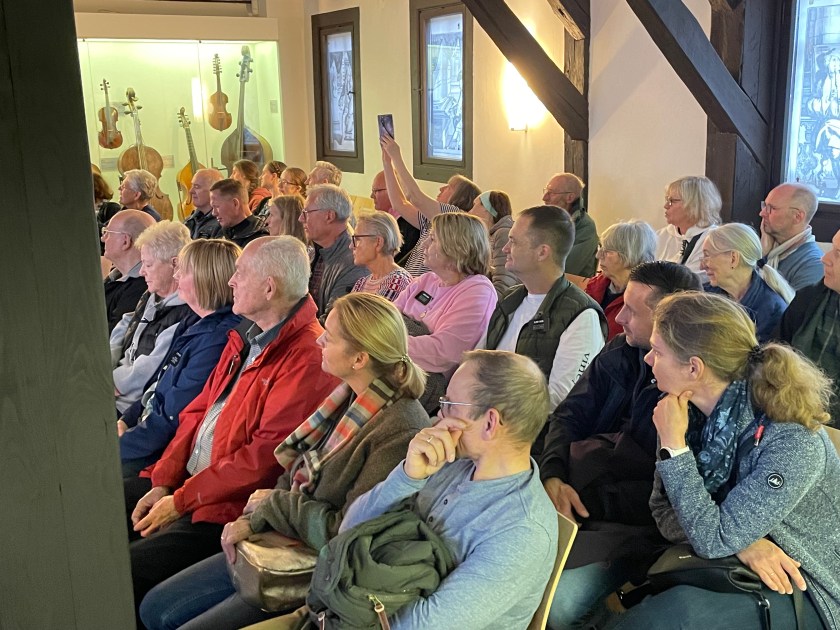
At 11:00 there was a special musical presentation by a Bach expert. He played several pieces, each on a different instrument. All of these instruments are 200-300 years old.




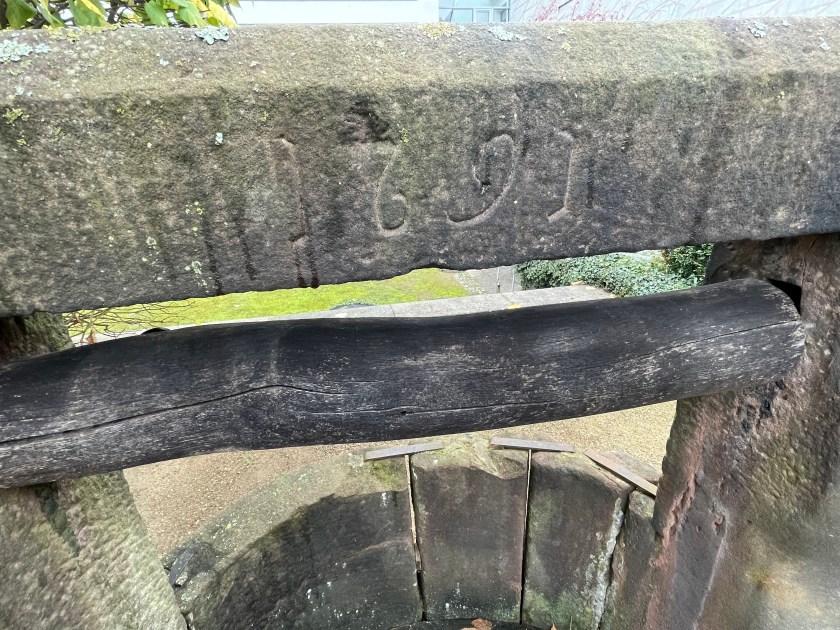
Here’s the back yard:
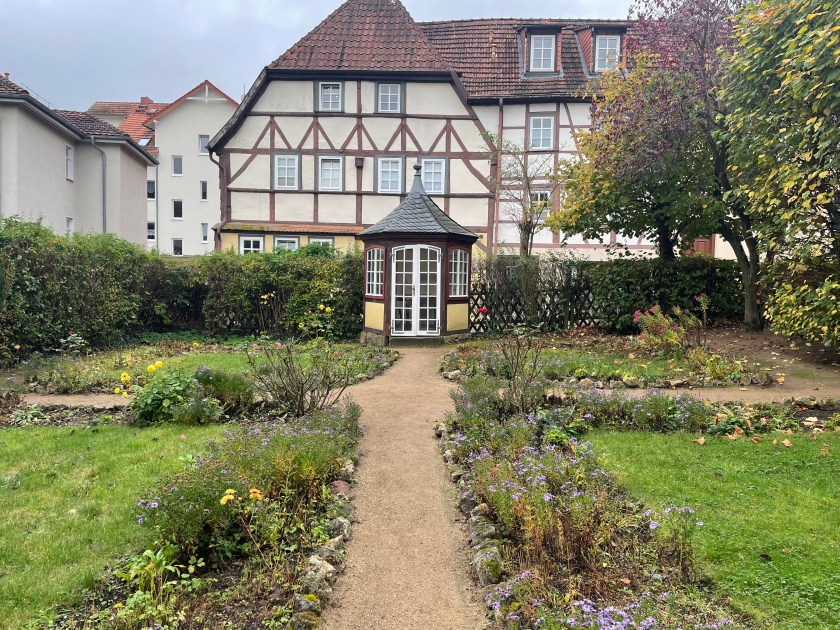
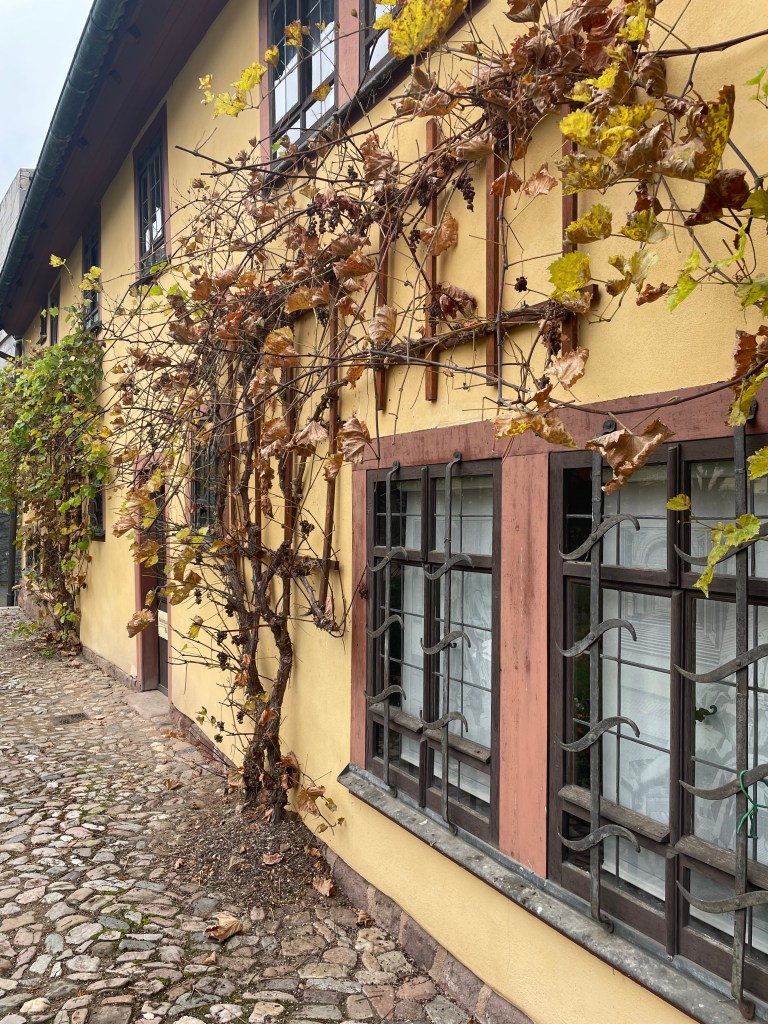
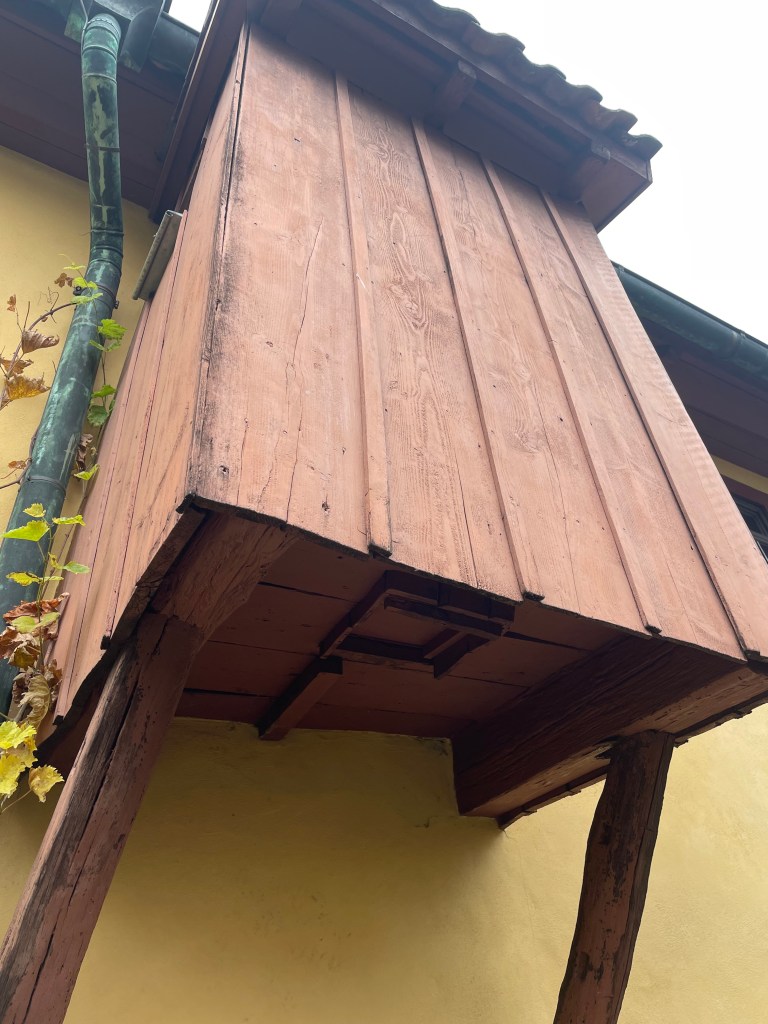
Sticking out from the top floor is the little toilet room with a trapdoor in the floor.
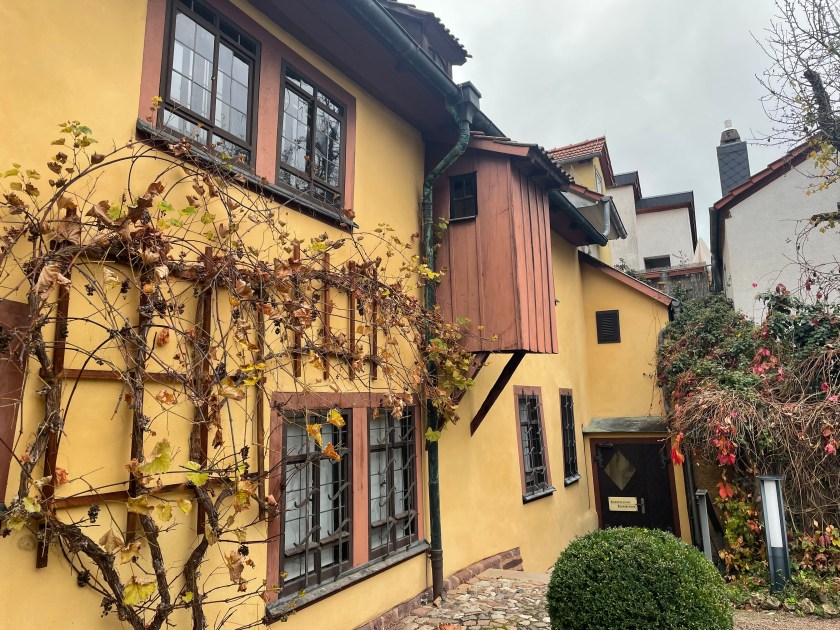


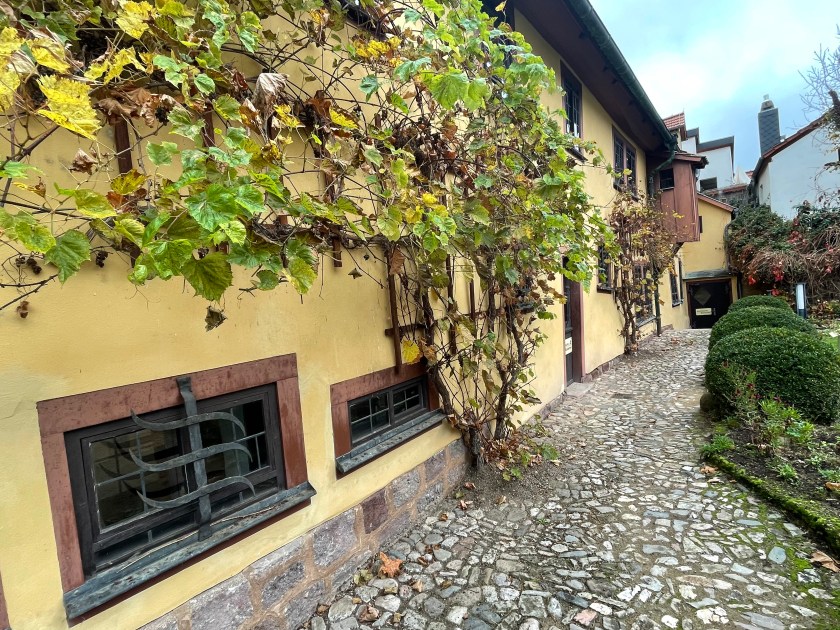
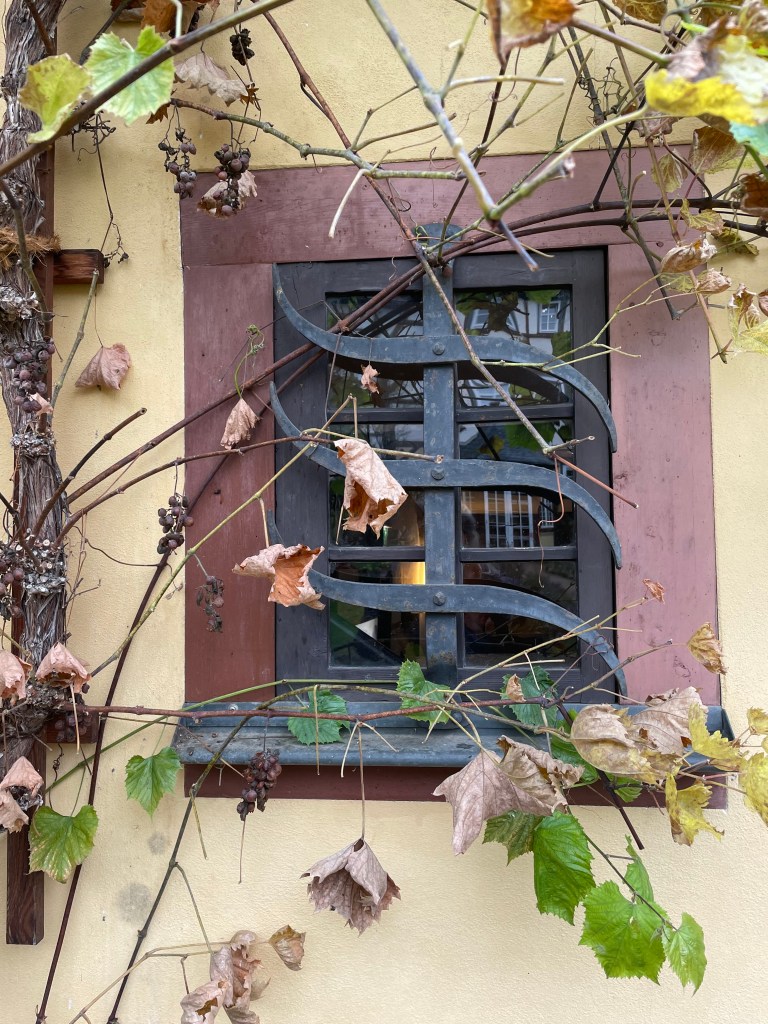
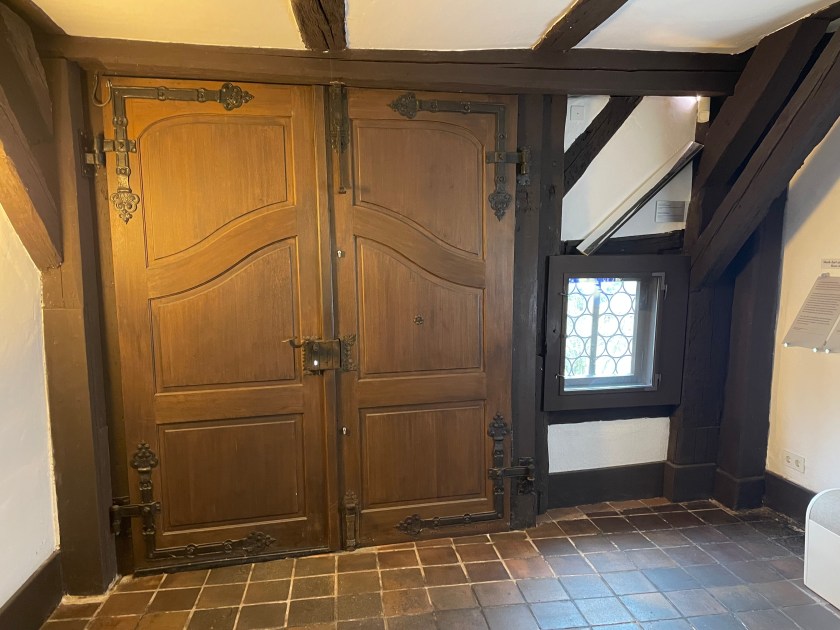
Back inside. The front door.
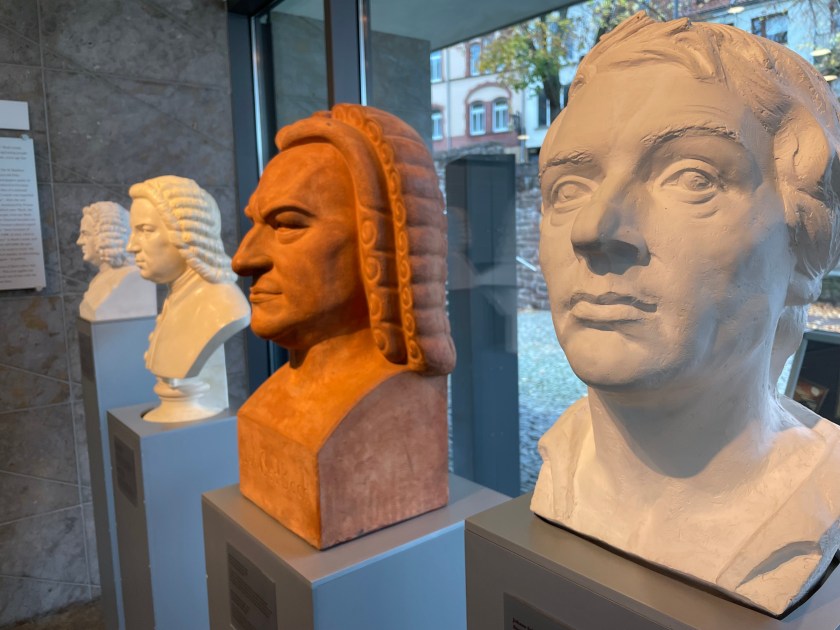
Johann Sebastian Bach has suffered immense personal losses during his life. First he lost his little daughter, later three more children and finally his first wife. After these severe blows of fate, he married again, Anna Magdalena, but the suffering continued with her too: together they had to cope with the death of four more daughters and three sons. Bach lost eleven of his children in total.
These tragedies have moved many researchers and admirers of his music to ask themselves a question: How could Bach continue to live after so many losses? How could his heart keep beating, his soul keep creating? And above all: How was it possible for him to continue composing such sublime music despite these deep wounds – cantatas, cellosuits, fairs, concerts? –some of the most beautiful music the world has ever heard.
The answer lies in Bach’s deep belief. He closed each of his scores with the words “Soli Deo Gloria” (“To God alone be the glory”) and often began with “Lord, help me.” For Bach, composing was not just an artistic act, but an act of dedication and faith. His music was an ongoing prayer, a dialogue between him and God.
When we listen to Bach’s works, we not only experience an unparalleled musical master’s degree, but also participate in a spiritual conversation. His music transcends notes and melodies, becoming the bridge between the mundane and the divine. This merging of art and faith allowed Bach to overcome unbelievable personal tragedies and create works that to this day inspire and move people around the world.

A friend posted this on her FB this week:
I am working on the program for our Utah Baroque Ensemble concerts this month. This verse is the English text for the chorale at the end of Bach’s Cantata 39. The title of the work in English is “Break your bread with the hungry.” In this season of harvest bounty, thanksgiving, and choosing leaders, I think we could all benefit from reminding ourselves of the ideals and promises that all Christians strive for. [translation by M. Marissen and D.R. Melamed]
Blessed are they who out of mercy take on the distress of the stranger, are compassionate with the poor, and faithfully pray to God for them. They who are helpful in word, and when possible, in deed, will in turn receive help and obtain mercy.

 Our Frankfurt Germany Mission