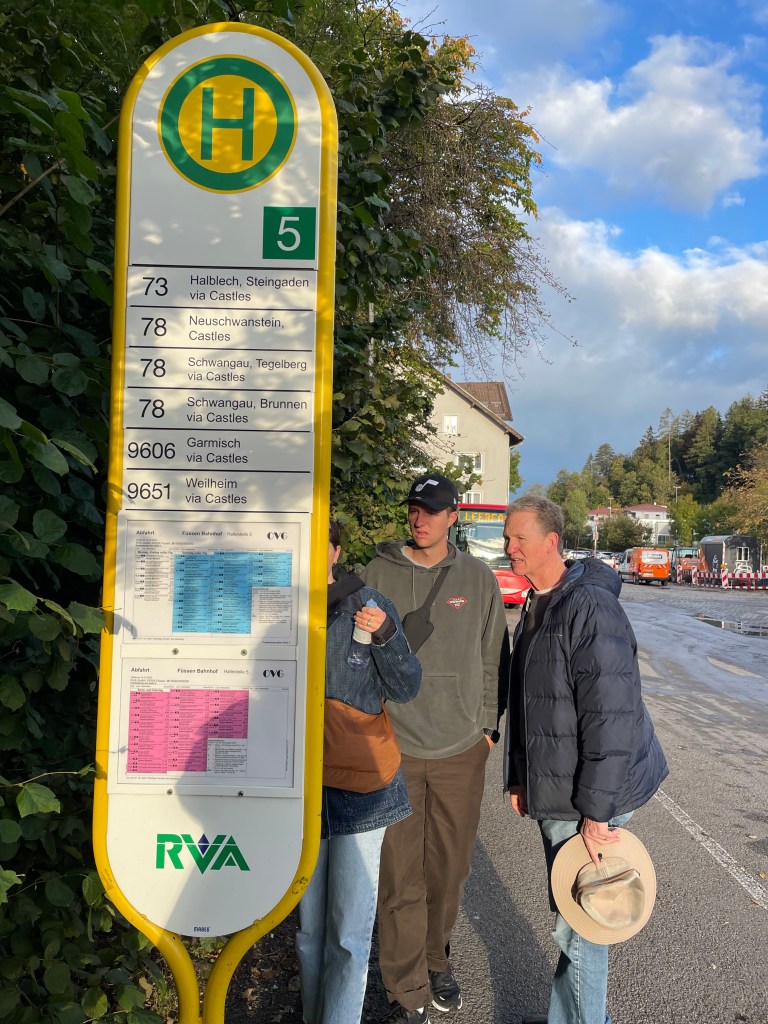
Last night we drove from Ulm to Füssen, where we’ll spend the next 2 nights. Füssen is one of the towns nearest to Neuschwanstein Castle. This morning we were up bright and early to catch a bus to take us to the castle. We bought our tickets several weeks ago and were glad we started early today. If you get an early start, you can see all 3 of King Ludwig’s castles in one day.

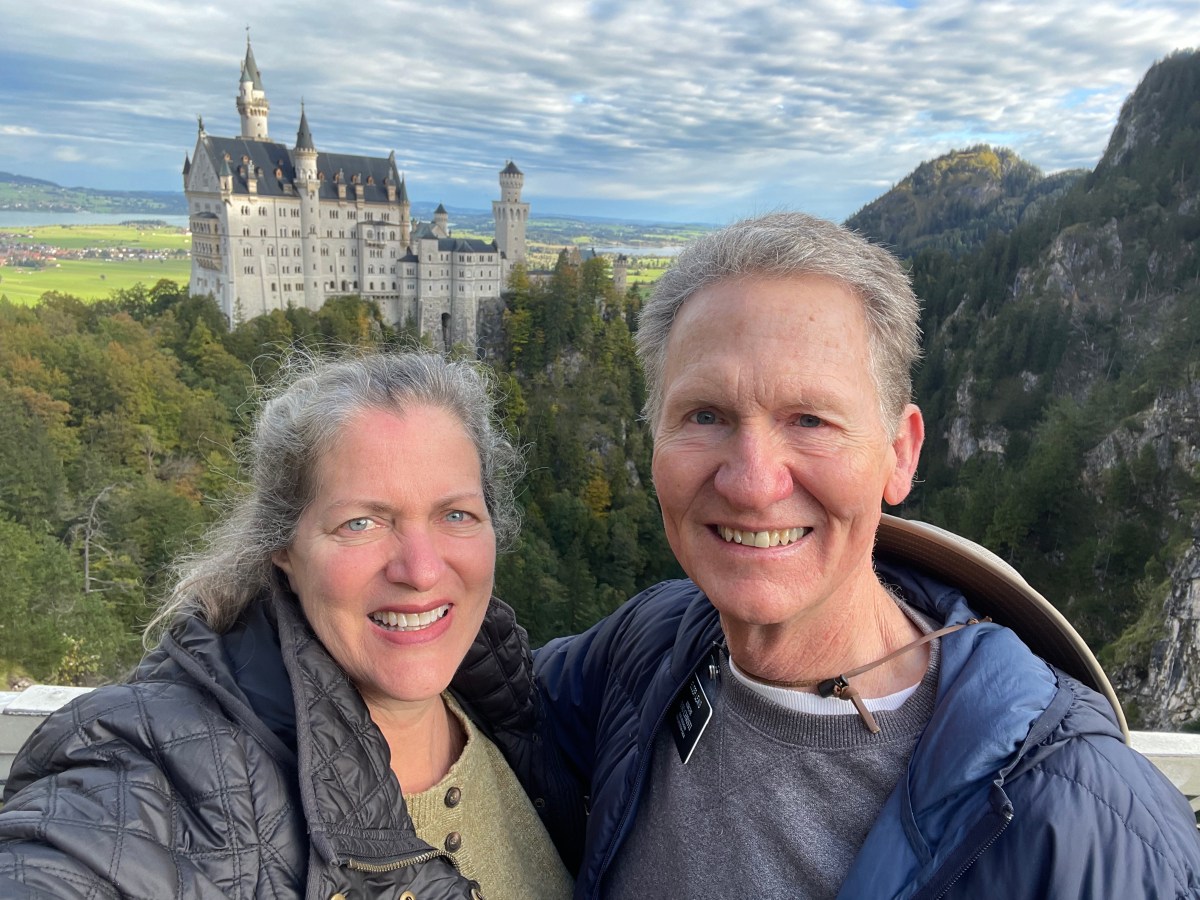
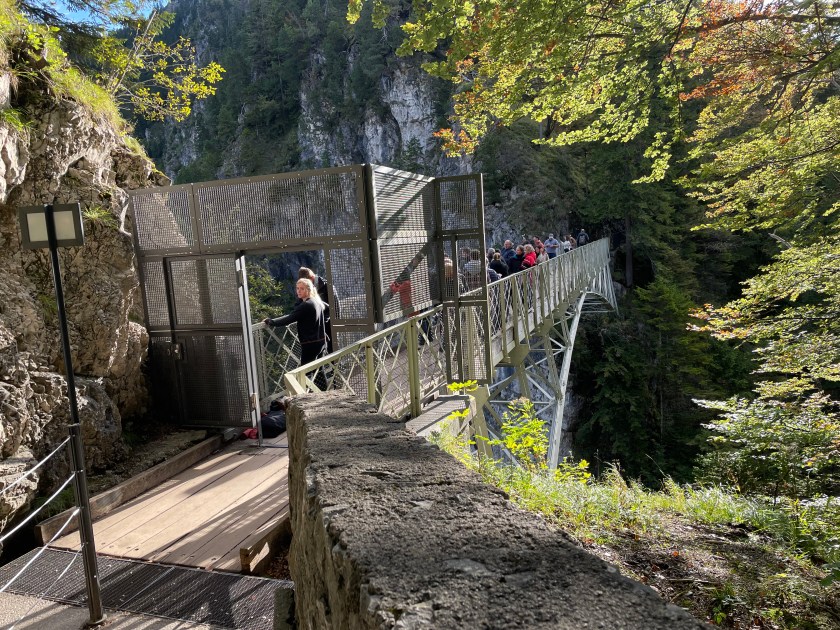
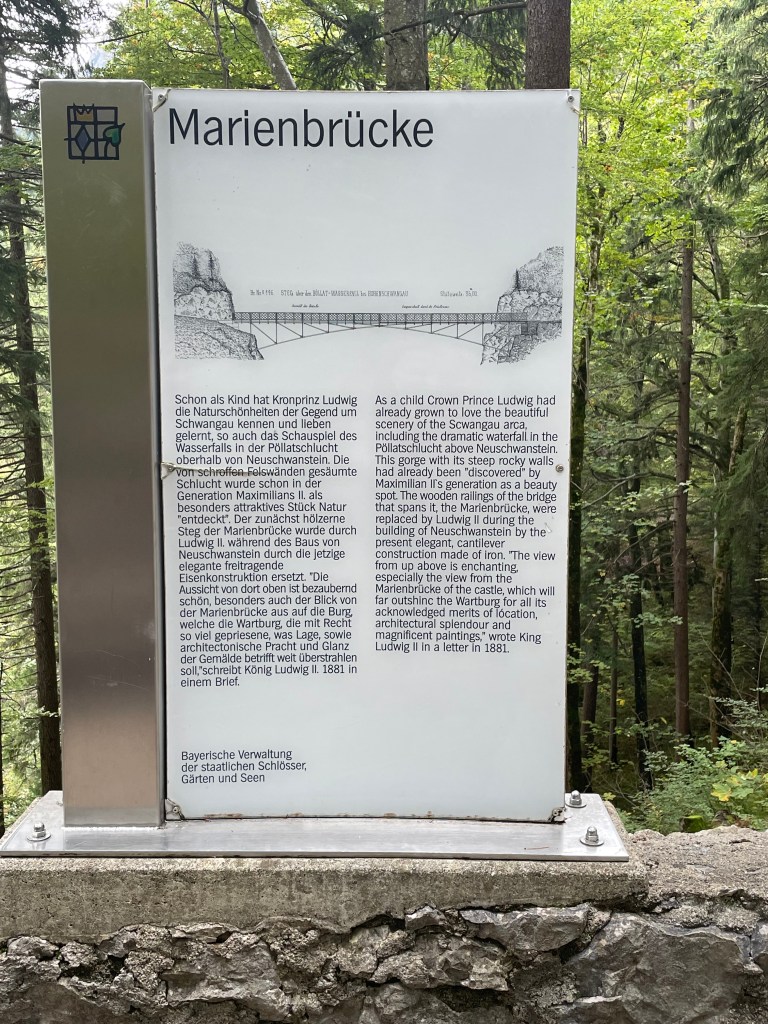
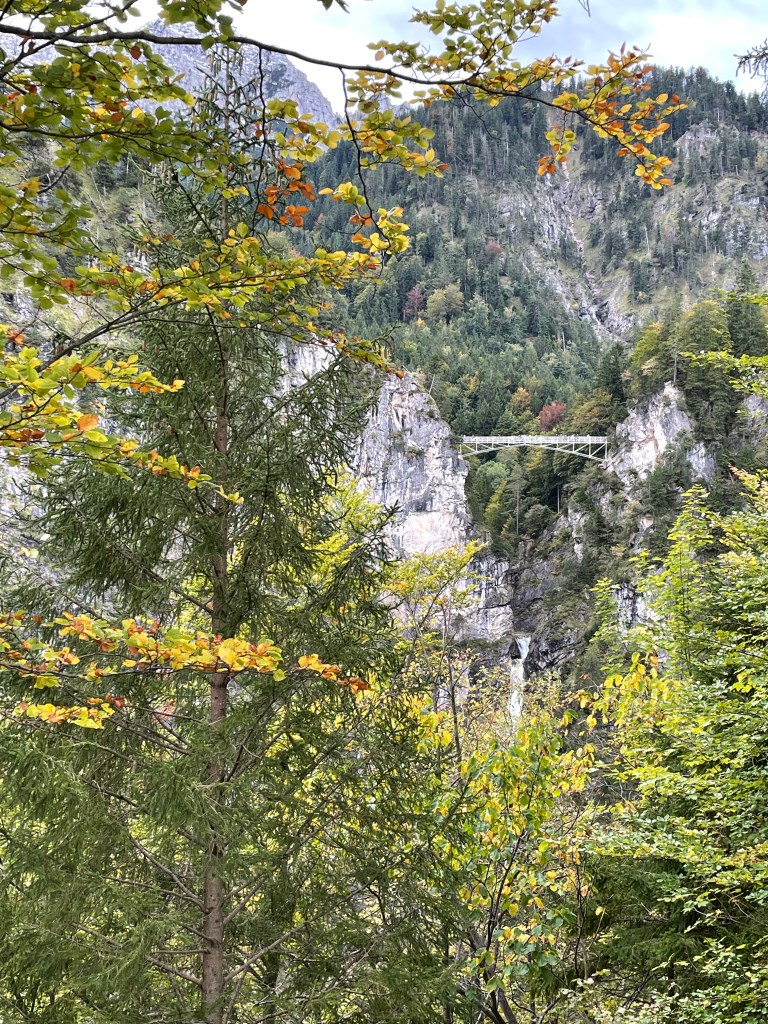
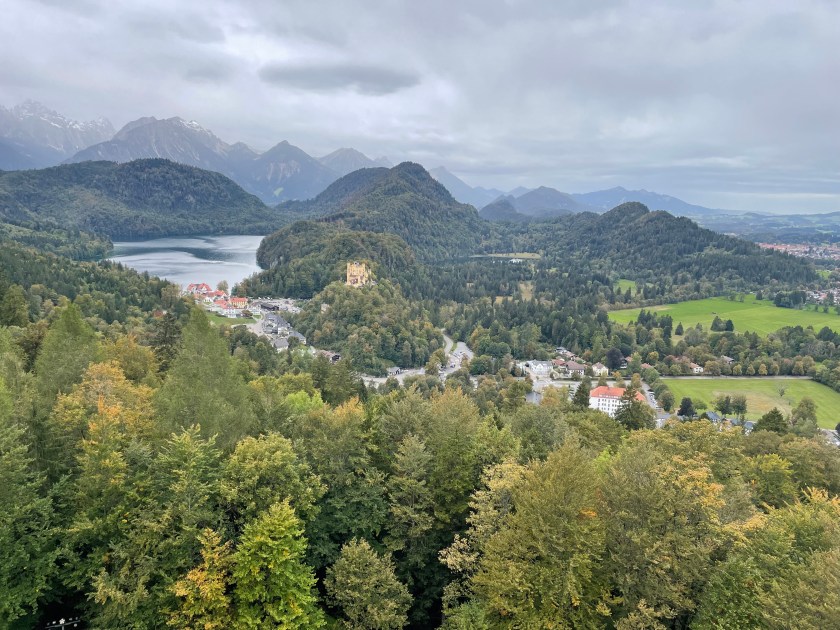
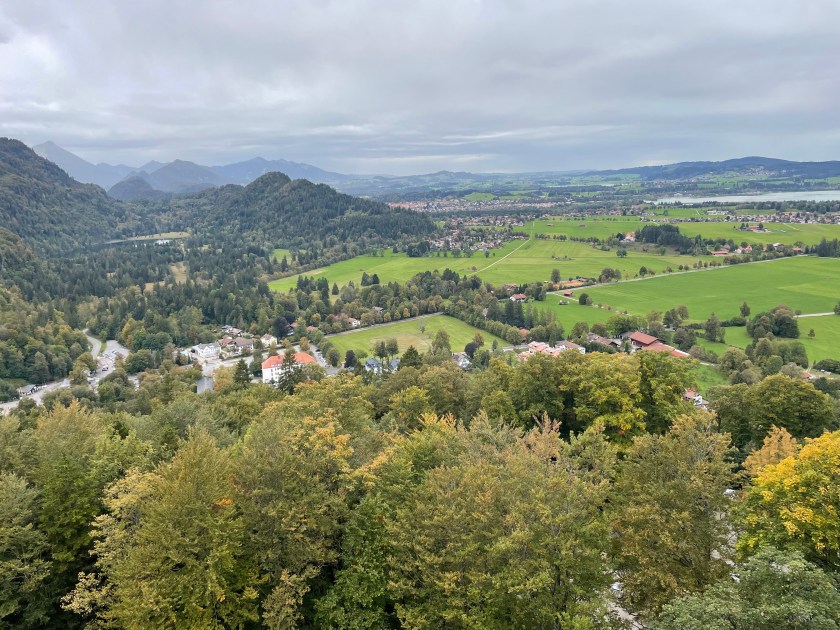
The bus ride takes you up the mountain and lets you out in the woods near the Marien Bridge that spans 2 cliffs with the waterfall below them. Walking on the wooden planks was a little scary. The view of the castle was spectacular. Wow. The view is across the wooded ravine to the castle perched up on a precipice hill with a grand valley below filled with fields and woods and lakes. It was absolutely breathtaking. Heavenly. So much beauty in one view. We just stood there soaking it all in.
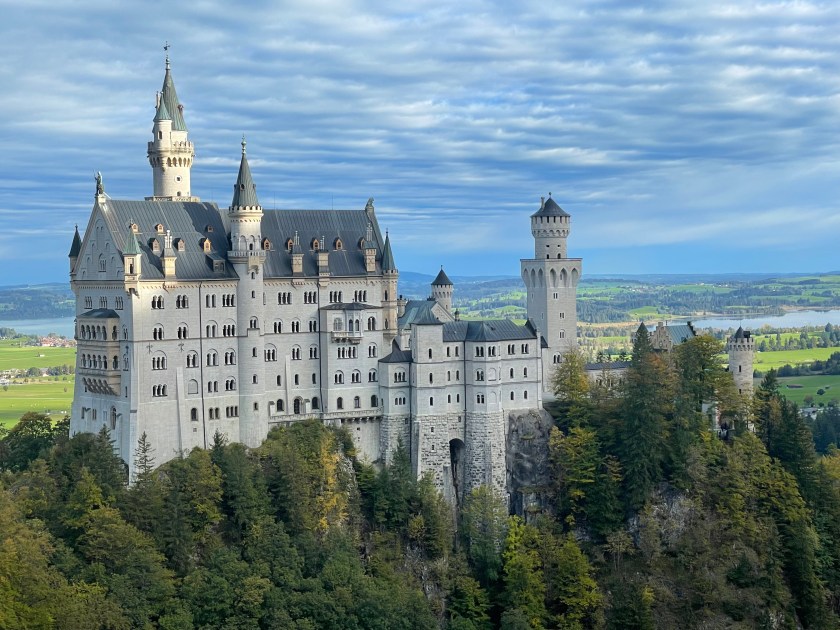
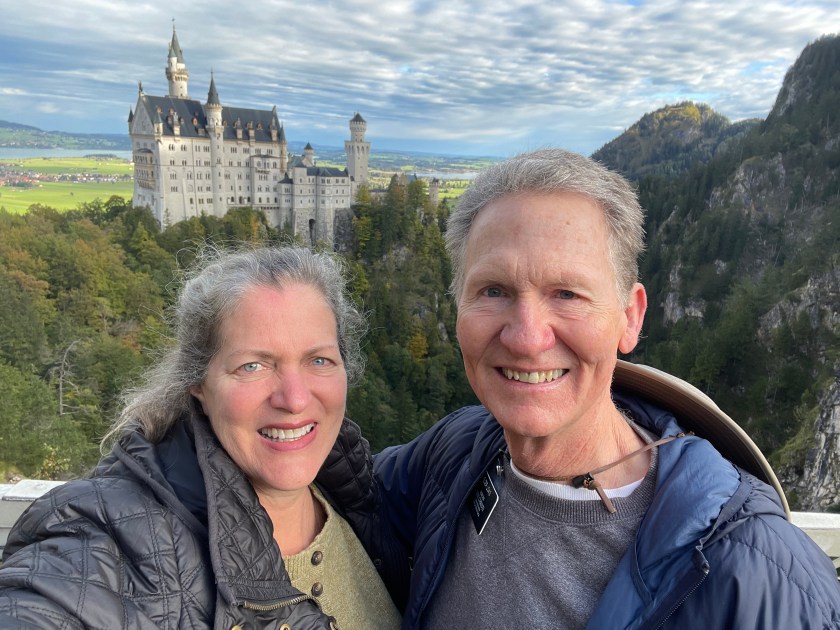
This is the translation of that dialog I memorized 50 years ago: “King Ludwig II had the famous castle built in the 19th century.”
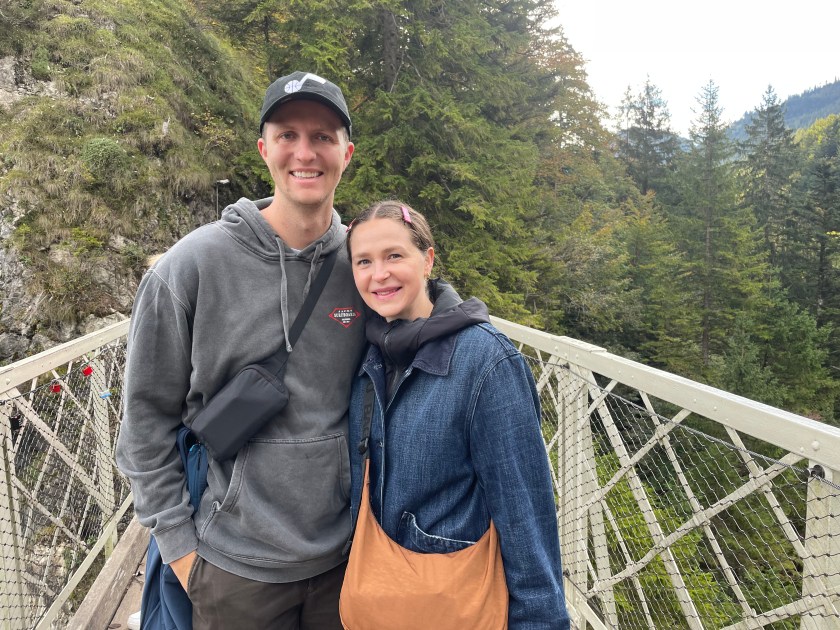
This is the view looking over to the Hohenschwangau Castle owned by King Ludwig’s father.
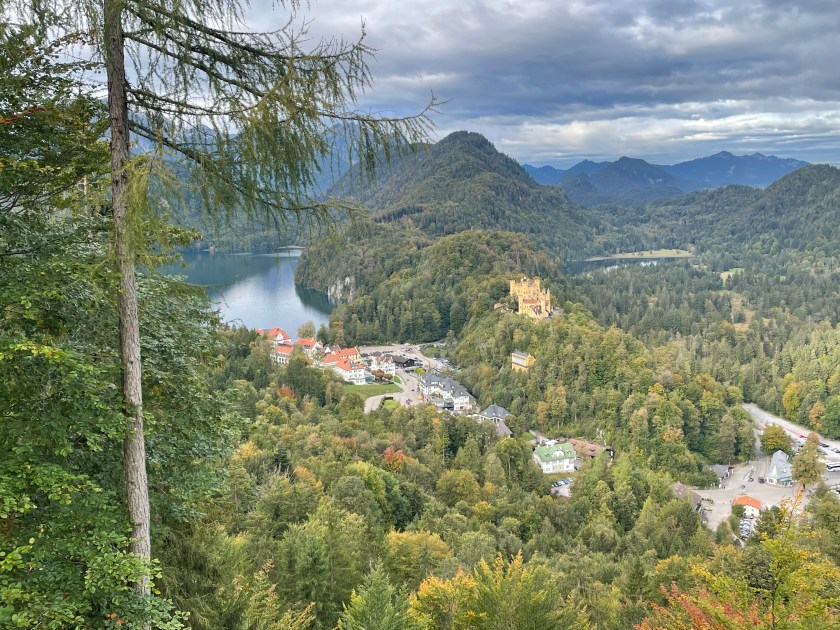
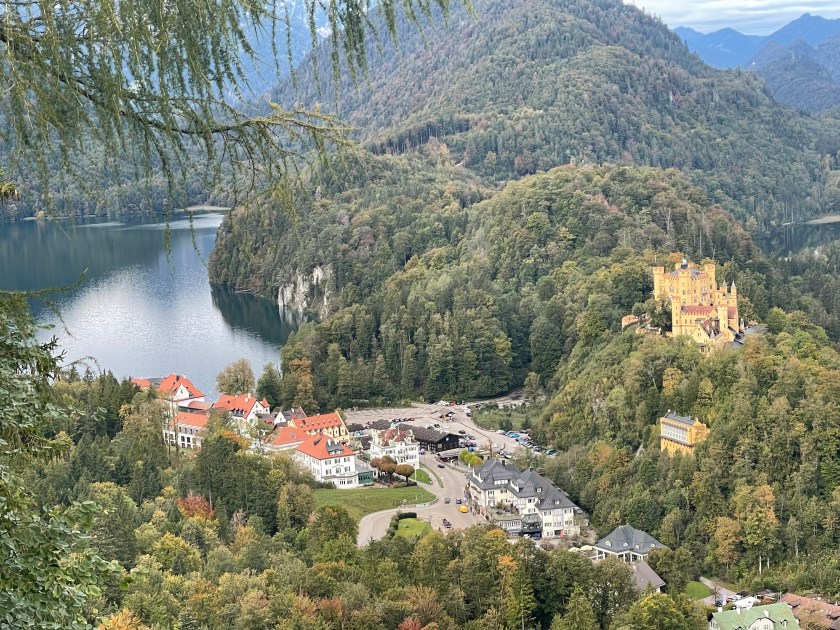
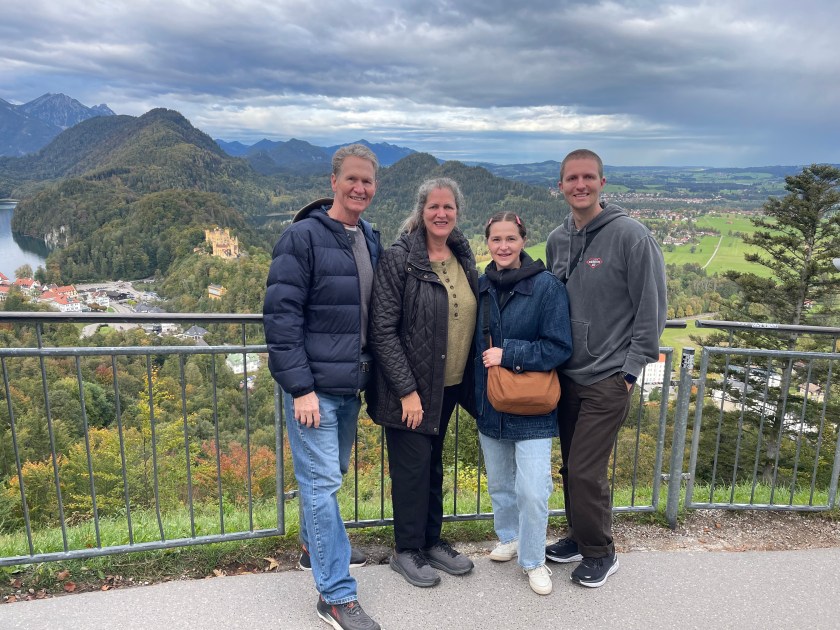
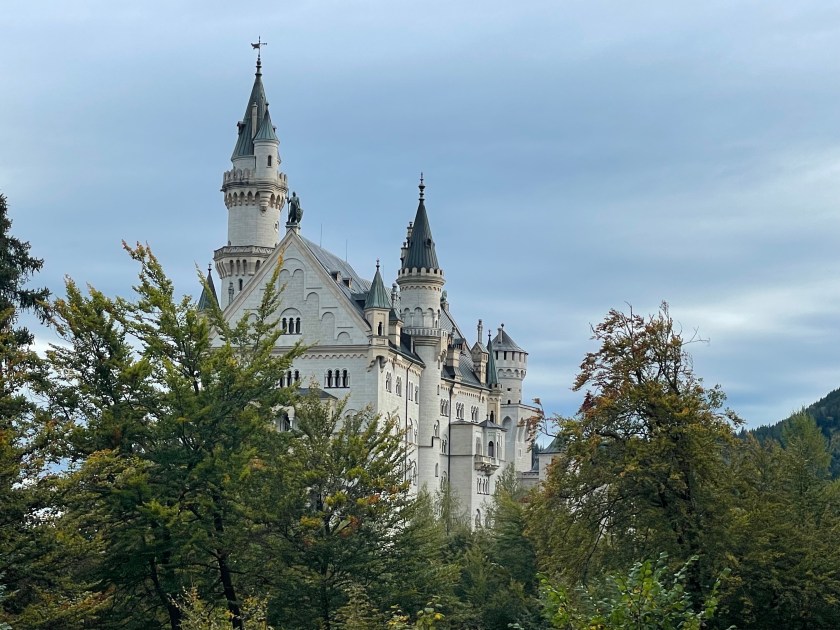
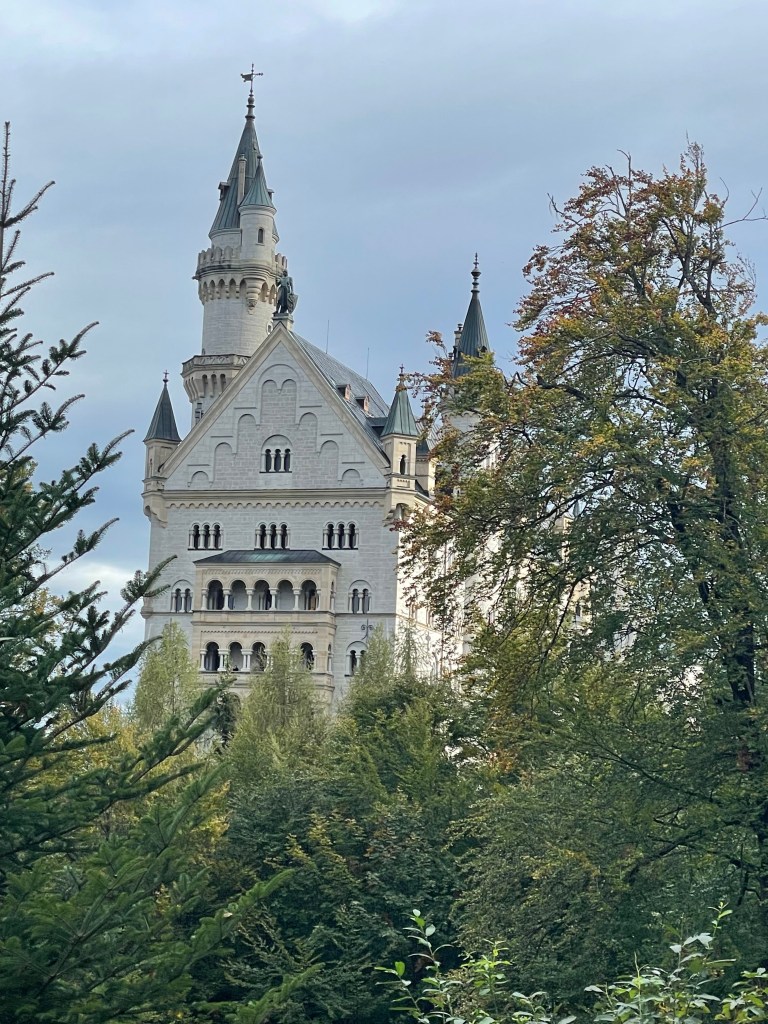
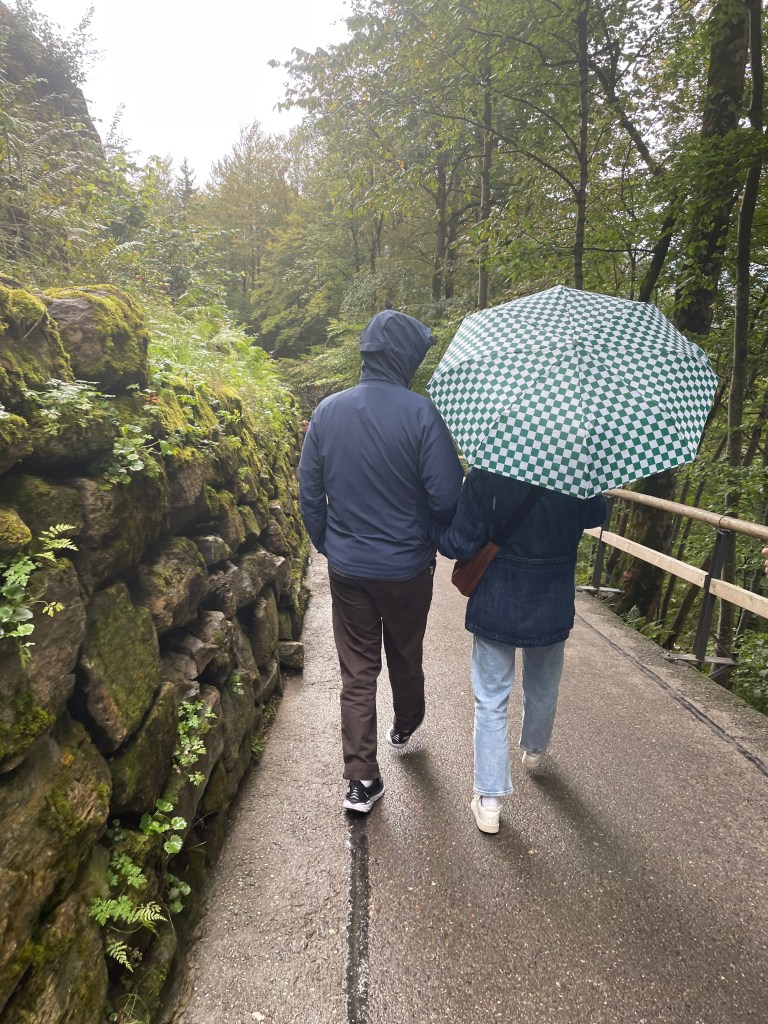
From the bridge, we hiked up to the castle.
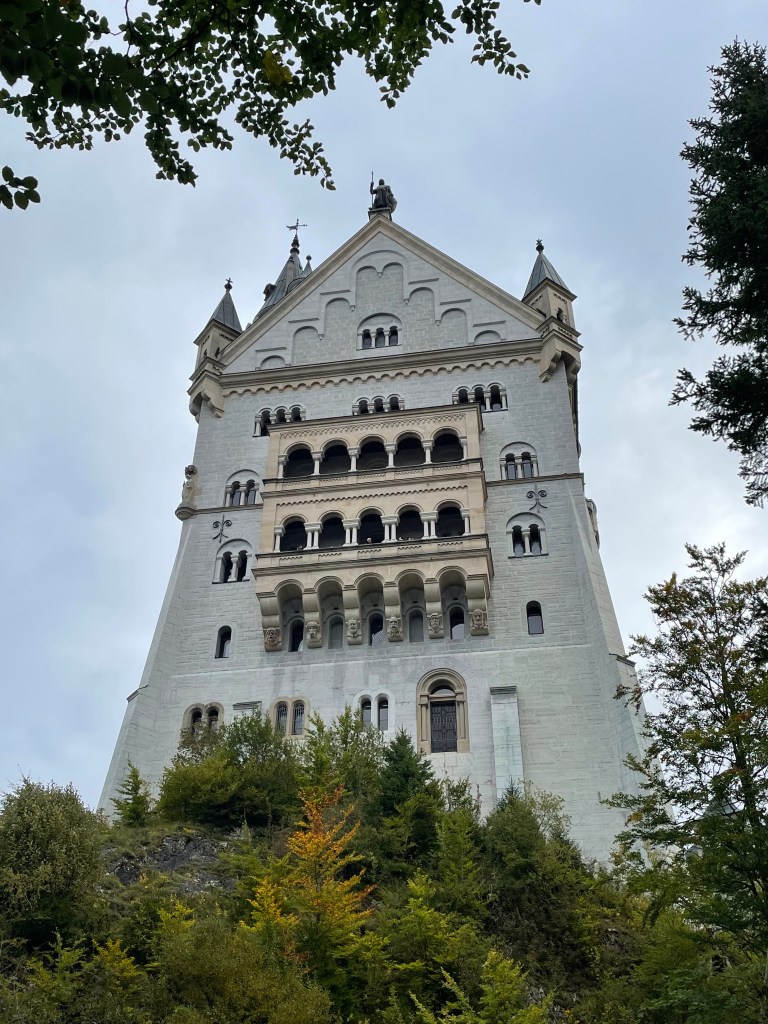
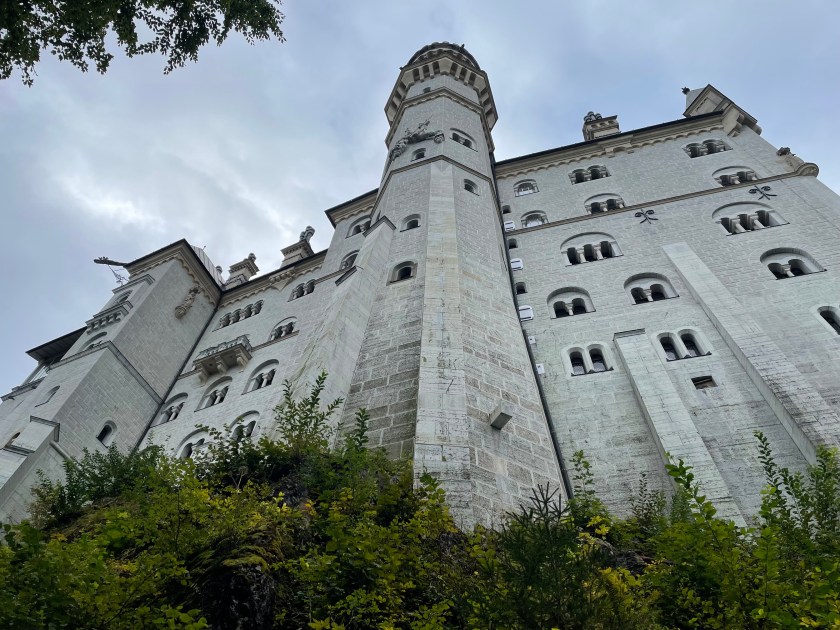
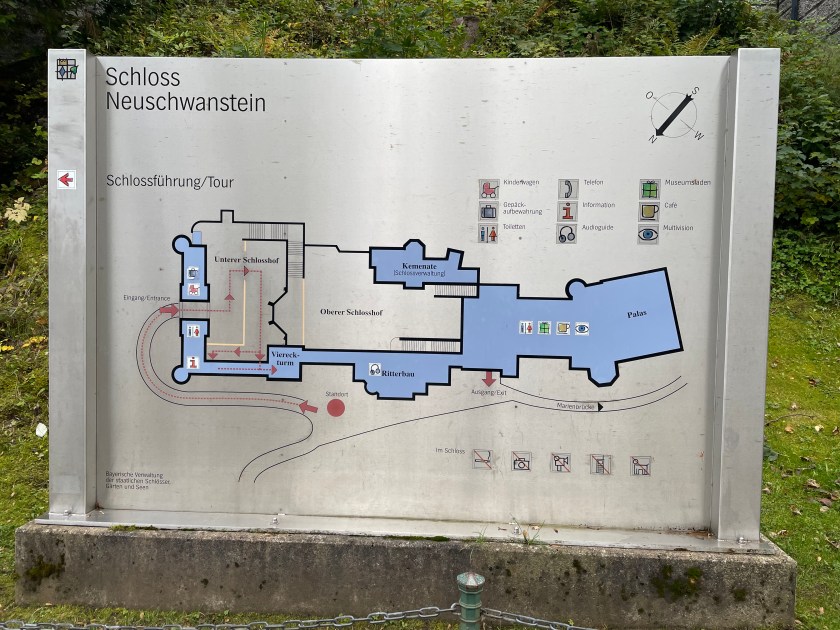
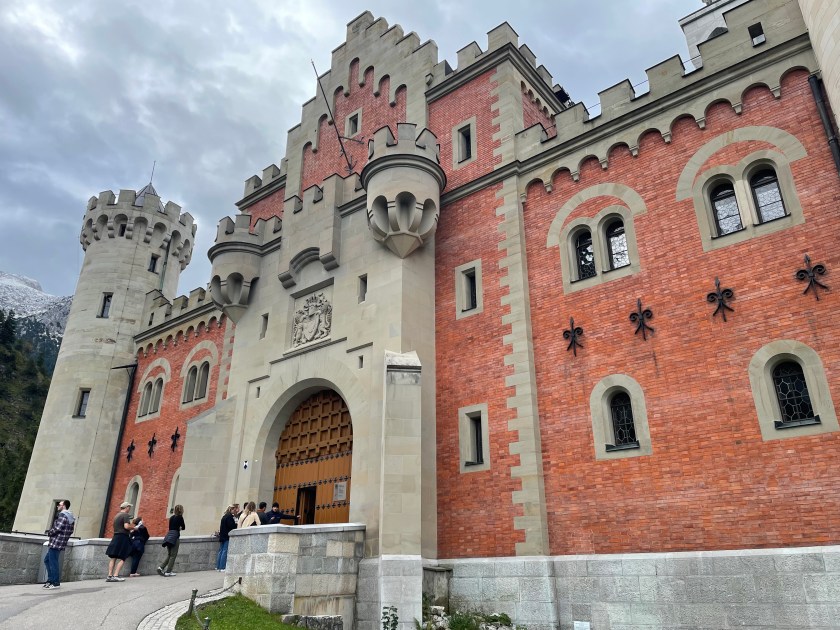
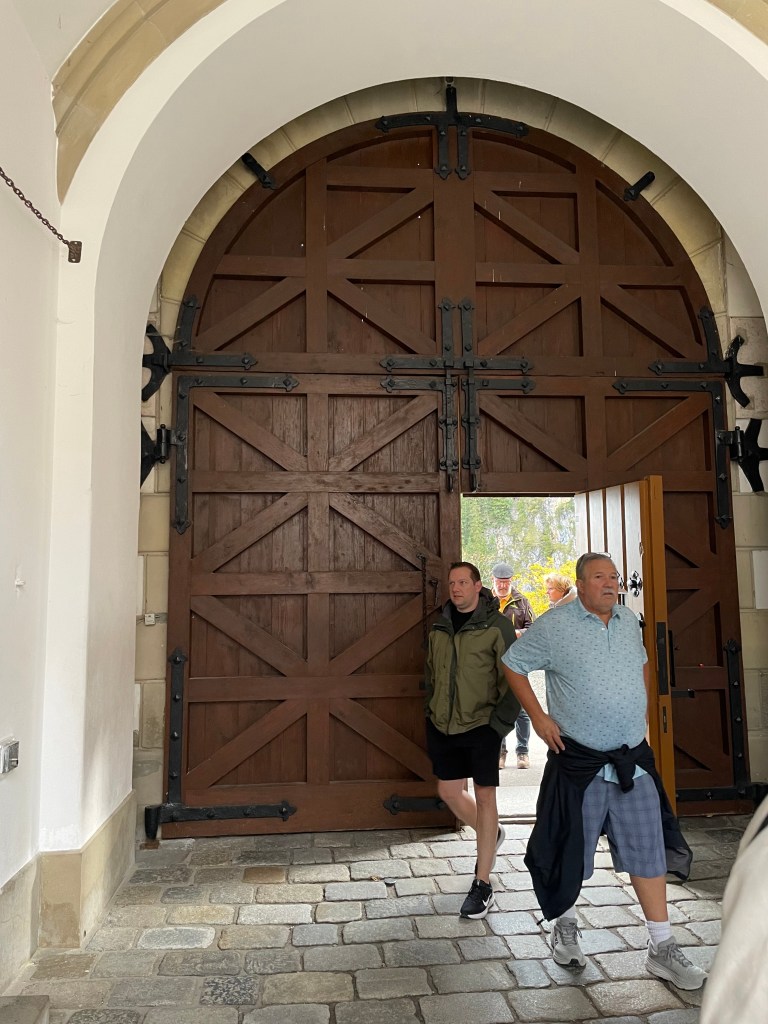
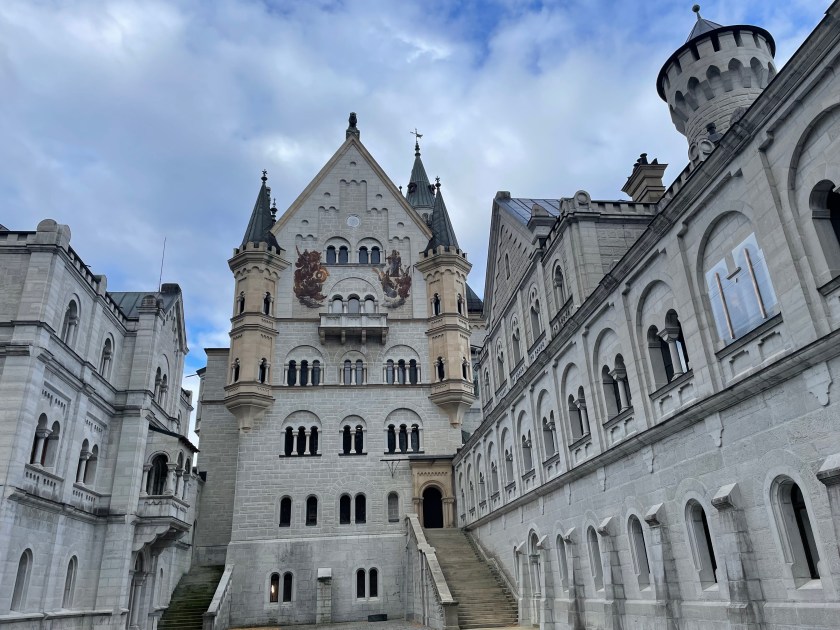
Waiting in the outer courtyard for the tours to begin. Our ticket time was 10:30. We had about a 30 minute wait. They run the tours on a strict schedule. If you miss it, you’re out of luck. The tour is only 30 minutes long. They send hundreds of people through each day.
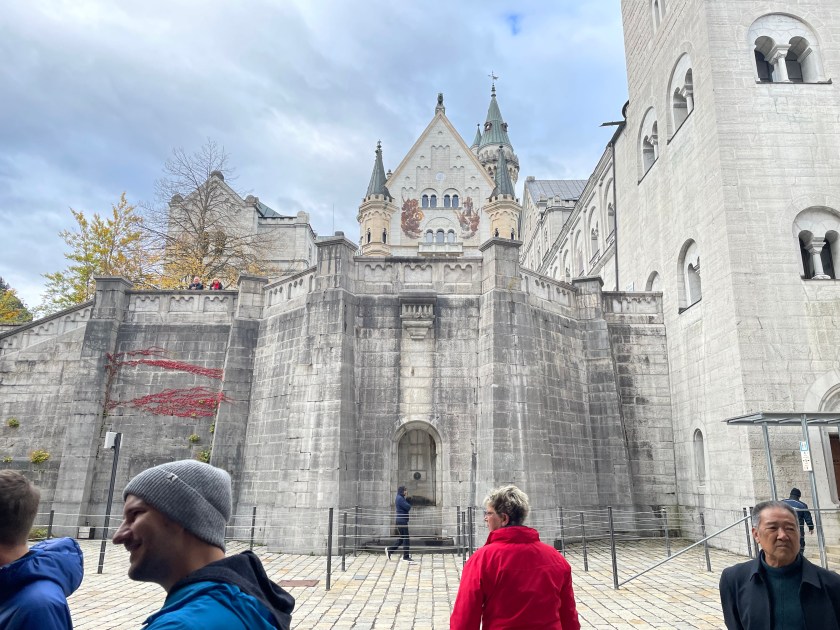
From my journal: At 10:30 we were ushered in and given Headsets with English commentary. The narrator was good and pleasant to understand. No photos were allowed inside the castle (that was a bit hard and a bit of a relief at the same time).
The tour took us through a wing of rooms on one of the upper floors. They were pretty spectacular. I had no idea what to expect. I often don’t read ahead, so I’ll be wowed at first meeting in a new place.

Looking back at the Marion Bridge.

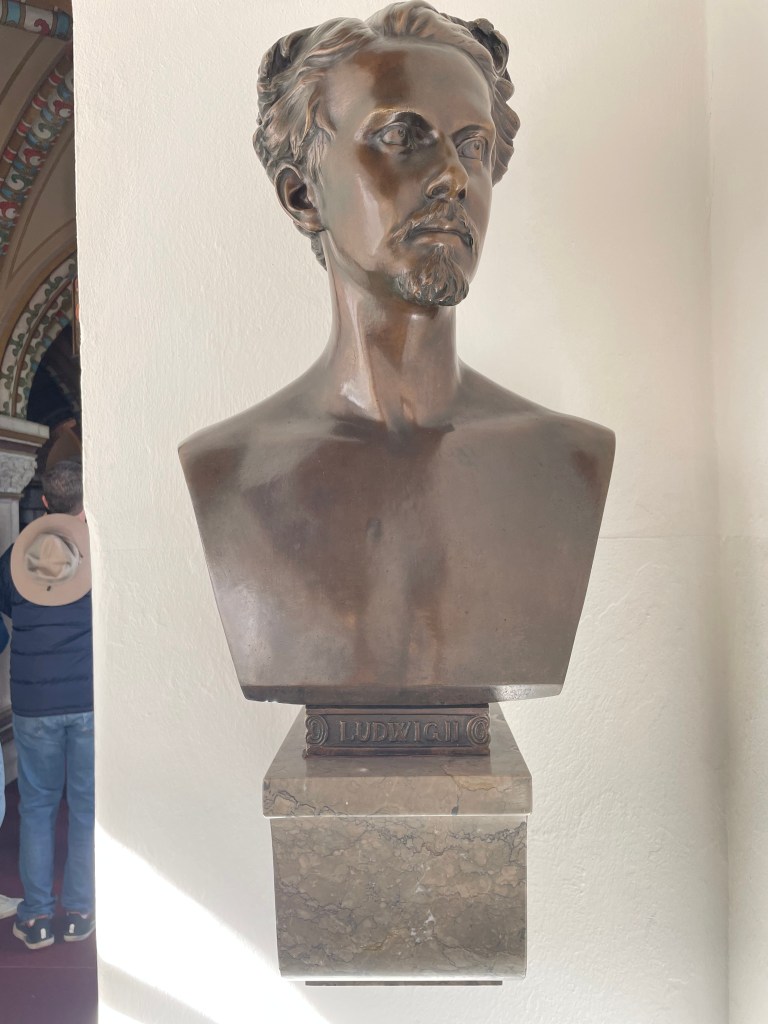
We learned about King Ludwig. He became king at age 18. He was eccentric and loved architecture, French history, Wagner’s operas, Medieval tales with heroes and princesses, he had plenty of money and didn’t enjoy ruling, so he left that to others so he could build castles. He grew up in his father’s castle, Hohenschwangau on the next mountain over. There were murals of the knight’s tales in both castles on most of the walls. He had good taste, but it was all over the top. He wanted to be like the king of all kings. But he didn’t want anyone in his castle he didn’t know. He was a recluse. He never married. He broke off an engagement. He was gay in a day when a king needed to have an heir and homosexuality was a crime with a serious punishment. Ludwig obsessed over French culture and people from 200 years before his time, often eating in private, but talking to his “French friends.”
The murals in all the rooms and the artwork of medieval stories were so beautiful, painted in a way that made them look like tapestry (walls textured like woven fabric).
His death is a mystery. At age 42 he was taken away and locked up because he was “mentally ill.” The next day his doctor was found drowned in a lake and Ludwig was “drowned” too (he was a good enough swimmer to swim across the entire lake). Some say a lady had the coat he was wearing and there were 2 bullet holes in the back. The family then said it was suicide. No one knows. No autopsy. No one talks about it, even in these tours. They just say, “we don’t know.” We’ve been reading a lot of the theories about it. It’s rather tragic. He was a creative genius who made interesting things happen.
Views from up in the castle:

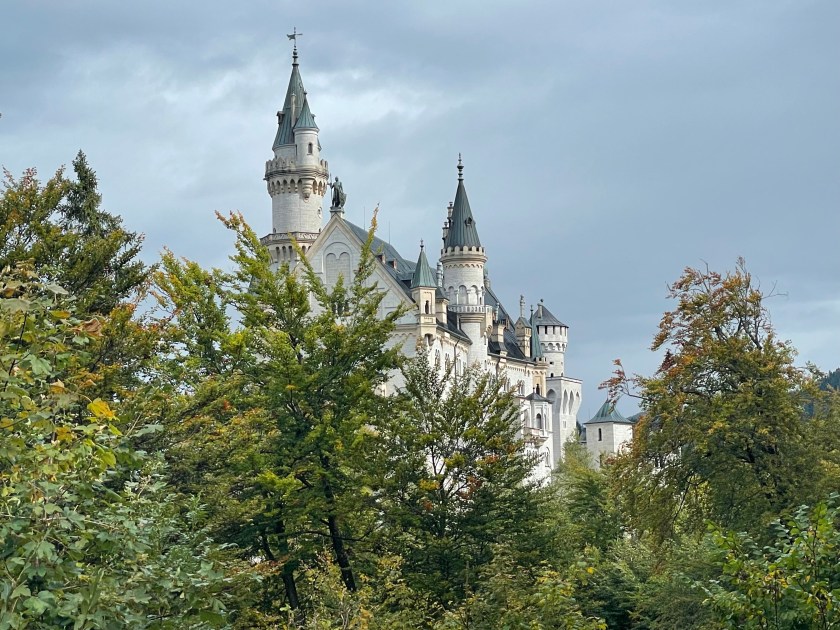
Neuschwanstein Castle
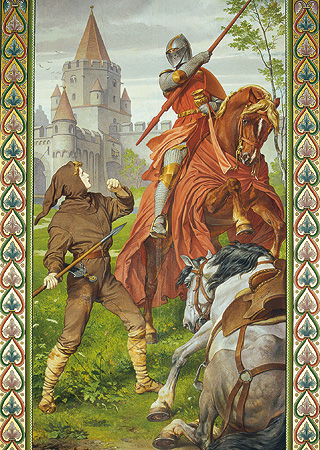
Parzival’s fight with the Red Knight,
August Spiess, 1883/1884
Photo: Riek, Diderot-Verlag, Rottenburg
Interior and modern technology
Neuschwanstein illustrates the ideals and longings of Ludwig II more vividly than any of his other buildings. The castle was not designed for royal representation, but as a place of retreat. Here Ludwig II escaped into a dream world – the poetic world of the Middle Ages.
The picture cycles of Neuschwanstein were inspired by the operas of Richard Wagner, to whom the king dedicated the castle. The pictures were not however directly modelled on Wagner’s works, but on the medieval legends that the composer had also taken as the basis for his works.
The pictures on the walls of the castle deal with love and guilt, repentance and salvation. Kings and knights, poets and lovers people the rooms. There are three main figures: the poet Tannhäuser, the swan knight Lohengrin and his father, the Grail King Parzival (Parsifal). These were Ludwig’s models and kindred spirits.
A further leitmotif of the interiors is the swan. The swan was the heraldic animal of the Counts of Schwangau, whose successor the king considered himself to be. It is also the Christian symbol of the “purity” for which Ludwig strived.
Religious and political ideas were involved in the planning of the castle. This can be seen in particular in the throne hall. The paintings here show how Ludwig saw kingship “by the Grace of God”: as a holy mission, with powers that the Bavarian king had never possessed.
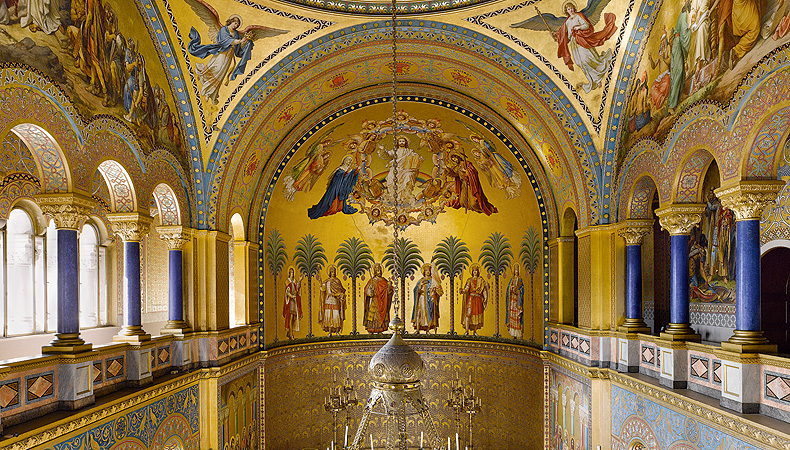
Throne hall, apse
Photo: Bayerische Schlösserverwaltung / Rainer Herrmann
Modern technology in medieval guise
In Neuschwanstein the Middle Ages were only an illusion: behind the medieval appearance of the castle the latest technology was in operation and every comfort was ensured.
The rooms of the Palas, the royal residence, were fitted with hot air central heating. Running water was available on every floor and the kitchen had both hot and cold water. The toilets had an automatic flushing system.
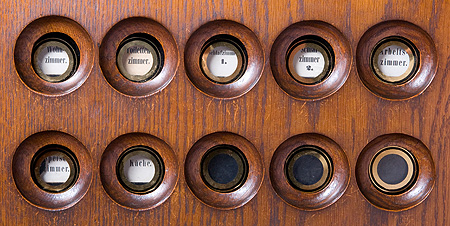
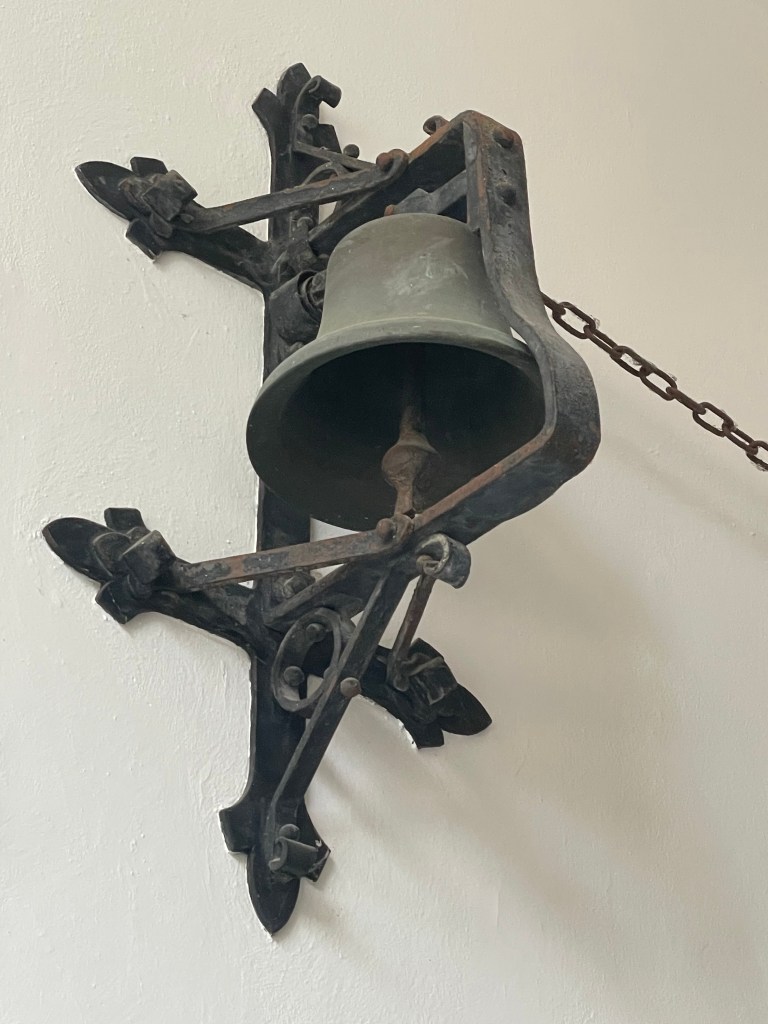
Electric bell system
Photo: Bayerische Schlösserverwaltung / Rainer Herrmann
The king used an electric bell system to summon his servants and adjutants. On the third and fourth floors there were even telephones. Meals did not have to be laboriously carried upstairs: for this purpose there was a lift.
The latest technology was also used for the construction process itself. The cranes were driven by steam engines, and the Throne Room was incorporated by means of a steel construction. One of the special features of Neuschwanstein is the large window panes. Windows of this size were still unusual even in Ludwig II’s day.
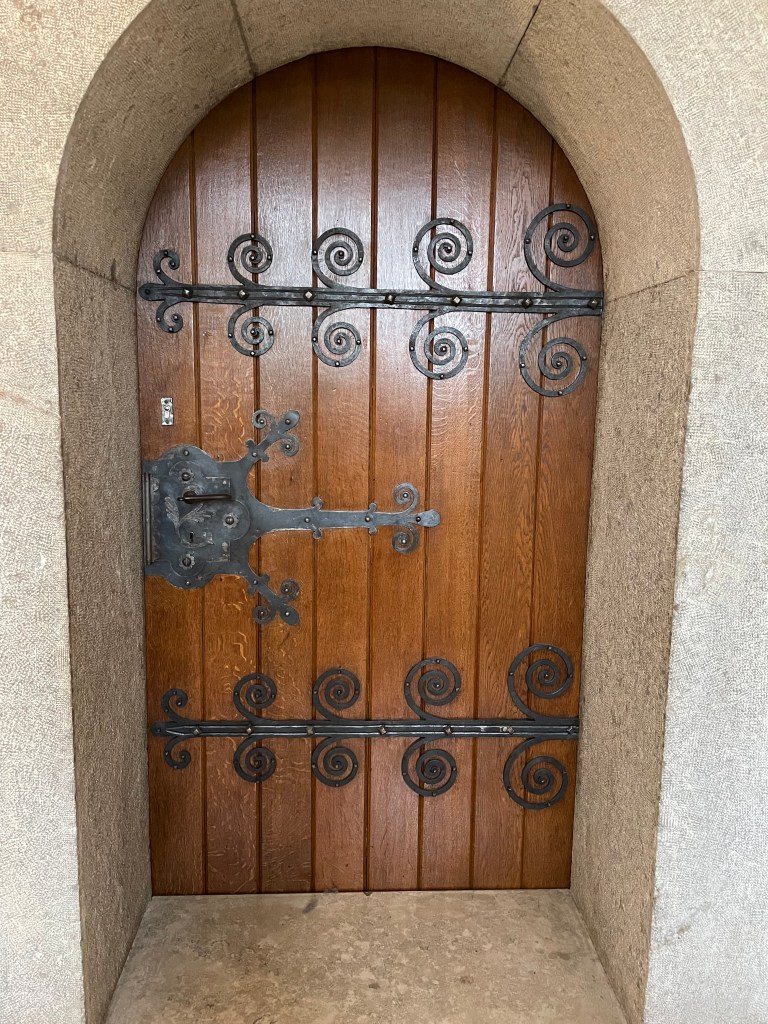
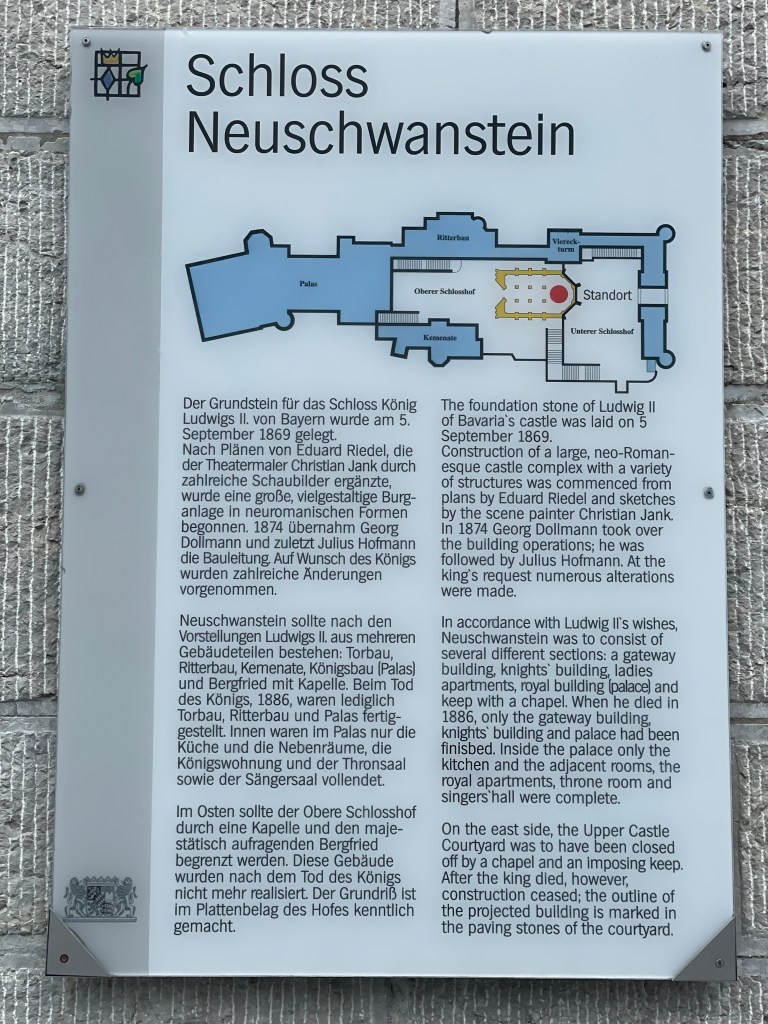
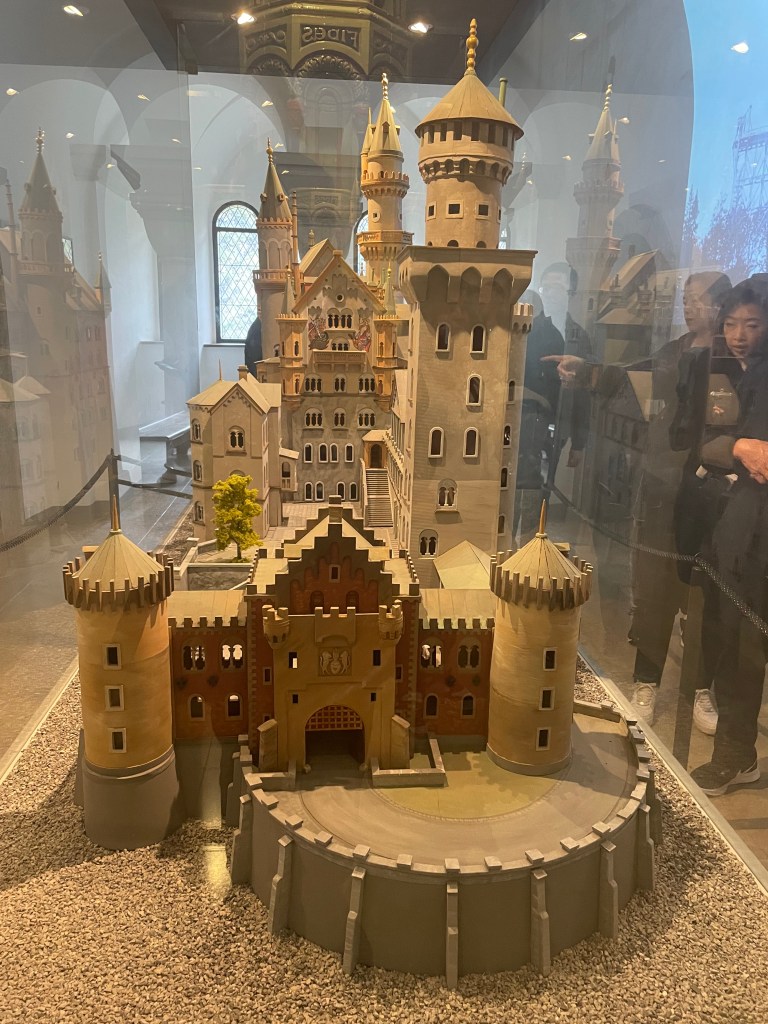
You can see where the unfinished parts of the castle would’ve been built.

Visiting this castle (that I’ve known about for 50 years) did not disappoint. I found it really beautiful (often over-the-top, but beautiful). I felt sad for King Ludwig, who struggled with his own demons. He seemed to live in a world of his own construction, trying to find happiness in making that world beautiful.
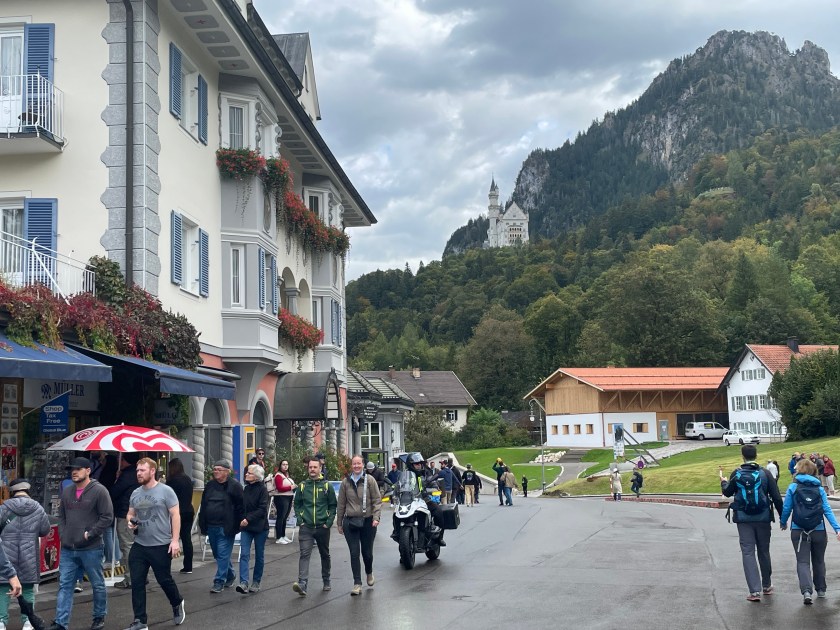
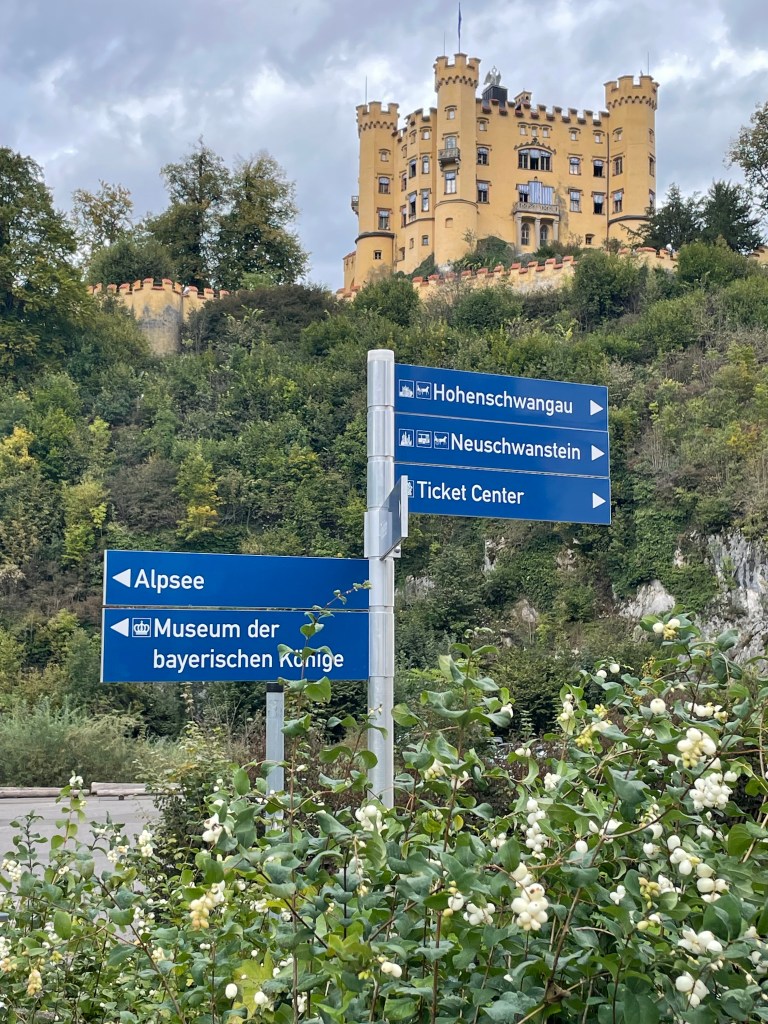
Our next stop would be the castle Ludwig grew up in:



 Our Frankfurt Germany Mission