

Here are the notes from a lesson I taught this week in our Senior Missionary Book of Mormon class.
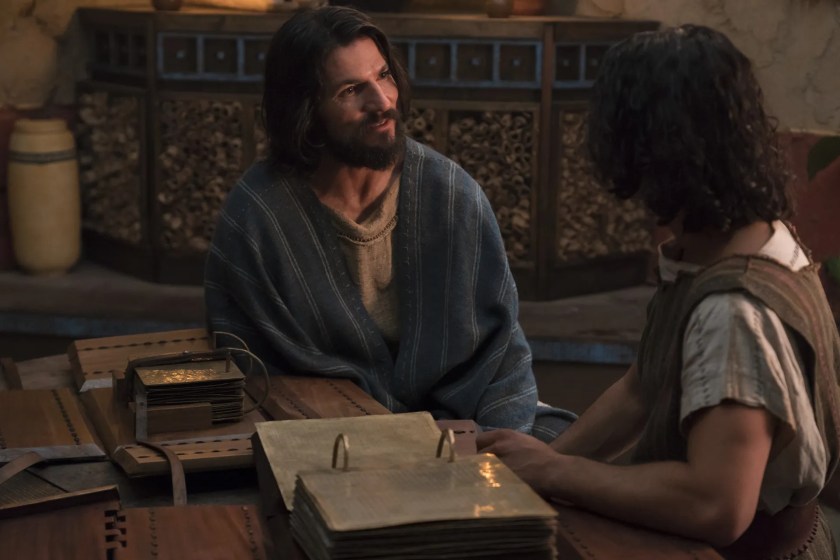
ALMA 36-38
In the 3 chapters we are studying this week, there are 2 very important things going on. One is a Big Picture Big Deal, and the second is a Small Picture Big Deal. The first is a prophet taking care of a record that in time will become a part of the Book of Mormon that will change the world throughout all future generations.
The second is a little gem nestled into the larger picture. We get to read moving letters, words from a father to his sons. They are personal and intimate. They contain words that have been carefully preserved (thanks to Mormon), not just for Alma’s sons, but also for us.
Both of these stories teach us a PATTERN of what to do with our WORDS.
Today I am going to focus my words on the Small Picture Big Deal.
[And because I am a WORD person, I have carefully written the things I feel impressed to share today, because I want to remember them. Most of the questions I’ll ask, you’ll answer individually, in your own heart and mind.]
Alma 36
Vs. 1-2
“I swear unto you,” a solemn oath, father to son–what was the oath?
Keep the commandments = prosper in the land
Do as I have done. Look for the parallel (Big Deal, Small Deal):
Remember the captivity of our fathers (or My captivity)
Who delivered them (Who delivered Me)?
Only God could deliver them (Only God could deliver Me).
Vs. 3 Now Alma goes to work.
Hear my words
Learn of me
Trust God = be supported – in trials, troubles, afflictions
His experience is a first person account to Helaman
How do we know what was said? HE WROTE IT DOWN
(clues: “farewell” at the end of his letter, Mormon had his words)
Pay attention to how he uses a first-person voice. It’s direct, raw.
Includes 3 keys to good writing: description, details, dialogue.
Read vs. 12-16
12 But I was racked with eternal torment, for my soul was harrowed up to the greatest degree and racked with all my sins.
13 Yea, I did remember all my sins and iniquities, for which I was tormented with the pains of hell; yea, I saw that I had rebelled against my God, and that I had not kept his holy commandments.
14 Yea, and I had murdered many of his children, or rather led them away unto destruction; yea, and in fine so great had been my iniquities, that the very thought of coming into the presence of my God did rack my soul with inexpressible horror.
15 Oh, thought I, that I could be banished and become extinct both soul and body, that I might not be brought to stand in the presence of my God, to be judged of my deeds.
16 And now, for three days and for three nights was I racked, even with the pains of a damned soul.
This is not a gratitude journal of just sweet and good experiences.
This is not just his testimony of God’s goodness to him.
This is the hard, the contrast, the struggle, the war inside him, overcoming sin, exposing himself.
Why do we love Alma the Younger so much? Because we know how he changed, what he overcame, what his weaknesses were, what trouble he caused, then how he made it right.
Reading his words, gives us HOPE that perhaps we, too can be delivered from our hard or dark places and how anyone, even WE can become a tool in God’s hands.
Read vs. 17-20
The Before. The After. The change. The plea.
The Turning Point and the beginning of Conversion
The CONTRAST. He gave us the context so we would feel the contrast.
Read vs. 21 “I say unto you, my son”
He made it personal. He wrote to the ONE, his son, his family member (even though he was a church leader, prophet) this is a personal account, perhaps not originally recorded for the masses, but gratefully included by Mormon.
Vs. 22-25 he describes and shows us the contrast
He shows us why he does what he does, why he lives how he lives
Vs. 26-27 Alma teaches us what to write: (A pattern for US)
6 Things:
What I have tasted (been through)
What I have seen
What I do know
How I have been supported
How I trust God
How he has and will deliver me
Vs 29 Alma talks about always RETAINING IN REMEMBRANCE
How did he remember?
What records did he have access to?
Who else talked about retaining in remembrance?
1 Nephi 5:21 Lehi, Nephi (preserved the brass plates for his people)
2 Nephi 25:26 Nephi (to teach our children)
Enos 12, 16 Prayed that a record would be preserved to bring Lamanites to salvation, God covenanted he would
Mosiah 4:11-12 King Benjamin (what we should always remember)
An interesting topic of study can be found in the Topical Guide under
SCRIPTURES, PRESERVATION OF

Be the Means Alma 37
If we are to liken these scriptures unto us and learn from the patterns here, what can we learn from Alma about personal record keeping?
Is keeping a journal optional?
Vs. 2 “I command you that ye keep a record of this people.” (YOUR people)
What types of things should be included in OUR records?
What I have tasted
What I have seen
What I do know
How I have been supported
How I trust God
How he has and will deliver me
Do you have any journals written by your ancestors? Have you read them?
Have they changed you?
Several years ago, I spent 100s of hours in libraries and archives reading personal journals of early Church members, looking for mention of my family members in other people’s journals. During that time, I wrote down these feelings:
There is one thing that has been made very clear to me as I have taken this journey with my ancestors. I cannot expect to find fabulous journals or histories or records of my People, if I am not sacrificing a bit of time here and now to leave the kinds of records I wish they had left for me to find.
100 or 200 years from now, when I am in another place, my children’s children will wonder about an old grandma named Ann who lived in the days before Christ came again, before Satan was bound. They will wonder what it was like to live in a world with opposition and sickness and natural disasters. They will wonder how I felt in 2011 about earthquakes and giant Tsunamis and floods that destroyed crops. They will probably find it curious to read first-hand accounts of moral dilemmas in my world. It will interest them how I prayed that my children would be protected from evil influences. They will wonder how I knew that Jesus was the Christ without having seen him.
I want my descendants to know those things. I want them to know without question that my life was centered in Jesus Christ, that any service or sacrifice I made was because I loved Him. In that day, when they read these things in my journals, I can imagine that I will be watching them, perhaps arm-in-arm with one of my great great great grandmothers from Switzerland named Elizabeth Degen Bushman, whose words were one of my first life-changing discoveries. Elizabeth and her family were taught the gospel by Mormon Missionaries in Lancaster County in the spring of 1840. They joined with the Saints in Nauvoo and were driven from their home in the cold and tragic winter of 1846 with six sick children in one wagon. Two of her little girls died and were buried in shallow graves along the roadside, unprotected from the wolves who came as soon as they moved on. Her son Jacob, who became my great great grandpa later wrote, “we done the best we could” as he describes burying his little sisters and nearly freezing to death on that gruelling exodus trip.
These ancestral records change who I am here and now.
How can I not be faithful and true to the faith of my people??
What good was Elizabeth Degen’s story to me before I read it, before I knew her? I discovered her voice and learned to know her because she left WORDS.
Have you read an account of an ancestor that has changed you?
Vs. 5
What does it mean when he says, “if they are kept they must retain their brightness?”
What happens when brass is handled or polished?
Example: a Brass statue where everyone touches the toe
How would you describe a bright journal or record?
Read vs. 6-7:
Ye may suppose that this is foolishness in me, but behold I say unto you that it is by small and simple things that great things are brought to pass; and small means in many instances doth confound the wise.
And the Lord God doth work by means to bring about his great and eternal purposes; and by very small means the Lord doth confound the wise and bringeth about the salvation of many souls.
Do you think your words are insignificant? Is your life mundane? Maybe if it is, you could do something interesting and write about it!
The fact that you’re on a mission tells me that’s not at all true. There are interesting things going on all around us.
Would you pay money to have more recorded ancestral experiences and stories, even mundane descriptions of their day to day life?
How might YOU “be the means” Alma talks about in your family and to your posterity?
Vs. 8 What 3 reasons does Alma give for writing and preserving our records?
Enlarge the memory of this people
Convince many of the error of their ways
Bring others to the knowledge of their God
What does it mean to “Enlarge your memory?”
Who here could tell me what you were doing
3 weeks ago? 3 years ago? 30 years ago?
What if you had kept a journal? Would that enlarge your memory?
How might having an “enlarged memory” bless your life?
Chinese Proverb: “The palest ink is better than the best memory.”
Or my favorite:
“Once you write something down, you have earned the right to forget about it.”
Vs. 14 Note the repeating phrase “unto future generations.”
How can we “leave ourselves behind?”
How can we be sure our words are found, kept and preserved?
Do you have a plan in place to pass your records to the next generation?
When you die, the first things your kids will look for will be your words.
They will want to hear your voice.
Ronald O. Barney, Church History Department
“If you do not write your story, your name will be obliterated from the human record, and you will not speak from the grave. You will not have any influence on those who come after you. Those who write about the things they have done and learned in life have a huge impact on posterity. Write your story. You have overcome things your children need to know about.”
In the rest of ch. 37, Alma gives Helaman more instructions about keeping the Nephrite record (Big Picture), (don’t share secret works of darkness, the interpreters, and the Liahona (also a small MEANS) .
Read Alma 38:6-9
Beginning in vs. 6, see how Alma does the very thing he has just taught Helaman in ch. 37. As he now addresses Shiblom, notice in vs. 6-9 his own personal testimony, written and recorded.
This is a First Person, Parent to Child, Personal Account, a Story of Something that Happened To Him. Notice in these 3 verses how often he uses “I, me” or “myself” (I see at least 18 times!). He wants us to know that this experience happened to him and this is what he learned from it.
This is what journals and personal records are all about. We are really lucky to get to have a peek at his words to his own son. Not every journal entry you make will have such remarkable experiences, but there will be occasions in your writing life when the Spirit will prompt you to say and write things that will change the lives of your children or grandchildren or great grandchildren long after you are gone. You may not even realize it at the time you are writing it.
There will be ideas you will share in just the right way that those descendants will listen to because they want to hear what you thought about things. They might be a teenager in trouble, or a struggling young father, or a student deciding on what paths in life to take.
Your words will reach out to them years after you wrote them, and those words will be the means that have an influence on the decisions they make.
Please prayerfully re-read these verses in chapters 37 and 38 this week and think about your role and the records that need to be kept and preserved in your family. (And remember your words will become more valuable after you die.)
Record keeping or journal writing is not just a passing hobby or something only “writers” or some people do. Your words can change someone else.
As you ponder and read the scriptures, pay attention to how often the command is given to write or record what is happening.
“Keep a Record” is one of those commandments we tend to skim right over, thinking it does not apply to us–we’re not prophets or “leaders” in charge of that sort of thing. But you are the leaders in your families and what you say and write, and record will change lives. And the lives they change will be the lives of Your Loved Ones. Don’t fail them.
In November of 1999, President Hinckley spoke at a Devotional for College Students – broadcast from Ricks College.
The title of his talk was “Keep the Chain Unbroken”
He told of an interesting experience he had at the dedication of the Columbus, Ohio Temple.
As he was sitting in the Celestial room he thought about his:
1. Great Grandfather: from Canada who was the first in his family to join the church
2. Grandfather: who crossed the plains with the Saints and eventually built Cove Fort
3. Father: who was the President of the largest Stake in the church for many years
All three were good men representing three generations of his forbears who had been faithful in the church
Then President Hinckley noticed he was seated there in the Celestial room next to:
1. His Daughter
2. Her Daughter
3. His Great Granddaughter
He suddenly realized that he stood in the middle of these seven generations –Three before him and three after him
He told us the strong impression he received as he sat there:
“In that sacred and hallowed house there passed through my mind a sense of the tremendous obligation that was mine to pass on all that I had received as an inheritance from my forbears to the generations who have now come after me…. I said to myself, Never permit yourself to become a weak link in the chain of your generations.”
President Hinckley went on to say how important it is “to pass on without a blemish our inheritance of body and brain and our faith and virtue untarnished to the generations who will come after us.”
We are all in different places in our chains, in our generations.
Before we know it, we move into the position our parents once occupied. Grandparents die and our parents will get old, and we find yourselves suddenly being the “old people” in our families.
It becomes our responsibility to pass on the legacy of your ancestors, grandparents, and parents to our children.
I think that when Malachi spoke of what binds families together and the utter waste that might occur if children and fathers did not turn towards each other, perhaps he meant that lives lived and not recorded would be lives wasted. Nothing would be passed on. No good would come of what went before. Chains would be broken. Memories would be forgotten. Pieces would be lost. Mistakes would be repeated. Every death would be like an entire library burning down.
Diane Setterfield, The Thirteenth Tale
“People disappear when they die. Their voice, their laughter, the warmth of their breath. Their flesh. Eventually their bones. All living memory of them ceases. This is both dreadful and natural. Yet for some there is an exception to this annihilation. For in the books they write they continue to exist. We can rediscover them. Their humor, their tone of voice, their moods. Through the written word they can anger you or make you happy. They can comfort you. They can perplex you. They can alter you. All this, even though they are dead. Like flies in amber, like corpses frozen in the ice, that which according to the laws of nature should pass away is, by the miracle of ink on paper, preserved. It is a kind of magic.”


It is my testimony that God has asked us to write and record
What we have tasted
What we have seen
What we know
How we have been supported
How we trust God
And how He has and will deliver us
I hope that you will each prayerfully re-read Alma 36-38 and ask Heavenly Father to show you how He would like you to be the MEANS in your family. You can start small, like Sis. Bowman, who told me last week that she has started by writing down 3 things every day that she did or saw. If you haven’t been writing, just start with a few words.
Remaining time:
Pass out slips of paper what impressions have you received today about something you need to record to enlarge YOUR memory and to bless FUTURE GENERATIONS.
(Maybe something current and something past)
Jot down a few key words to help you remember what you’d like to write about. Now I hope you will go home and record those things.
Testify of the words of Alma.
They were kept and preserved to show us a pattern.
I pray we will all be strong links in preserving the stories our families need to hear, now and in the future.
An additional thought about why it’s important to “leave ourselves behind” is found here.

 Our Frankfurt Germany Mission