
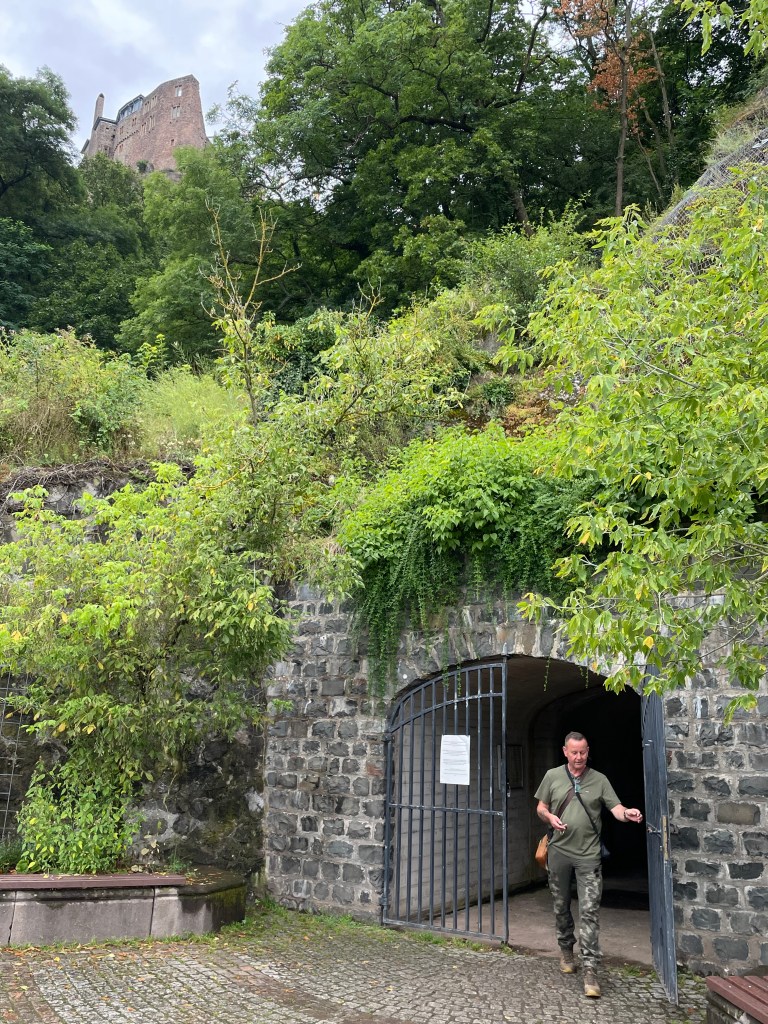
Before we ate, John asked around to find out about climbing up to the famous church built in stone on the side of the mountain (the town is at the base of the mountain). There are castle ruins up on top of the mountain.
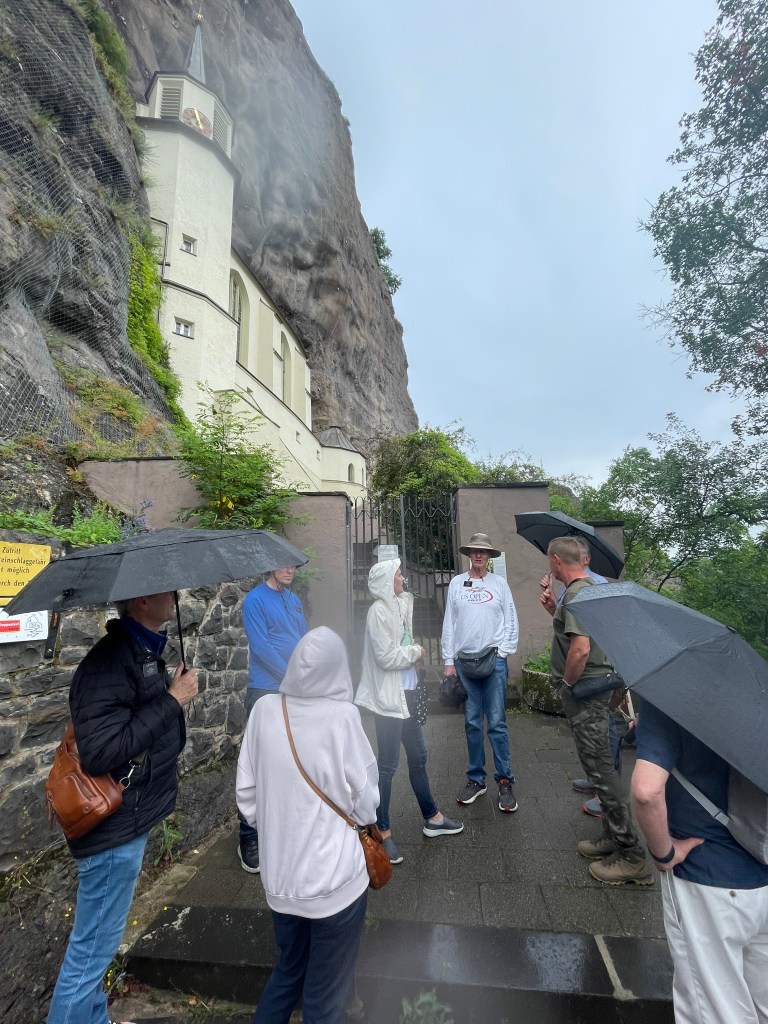
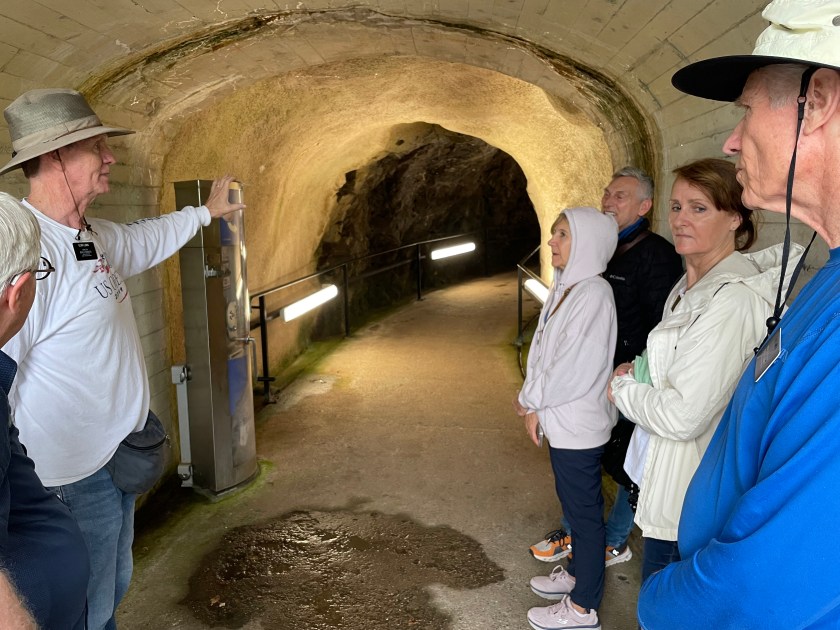
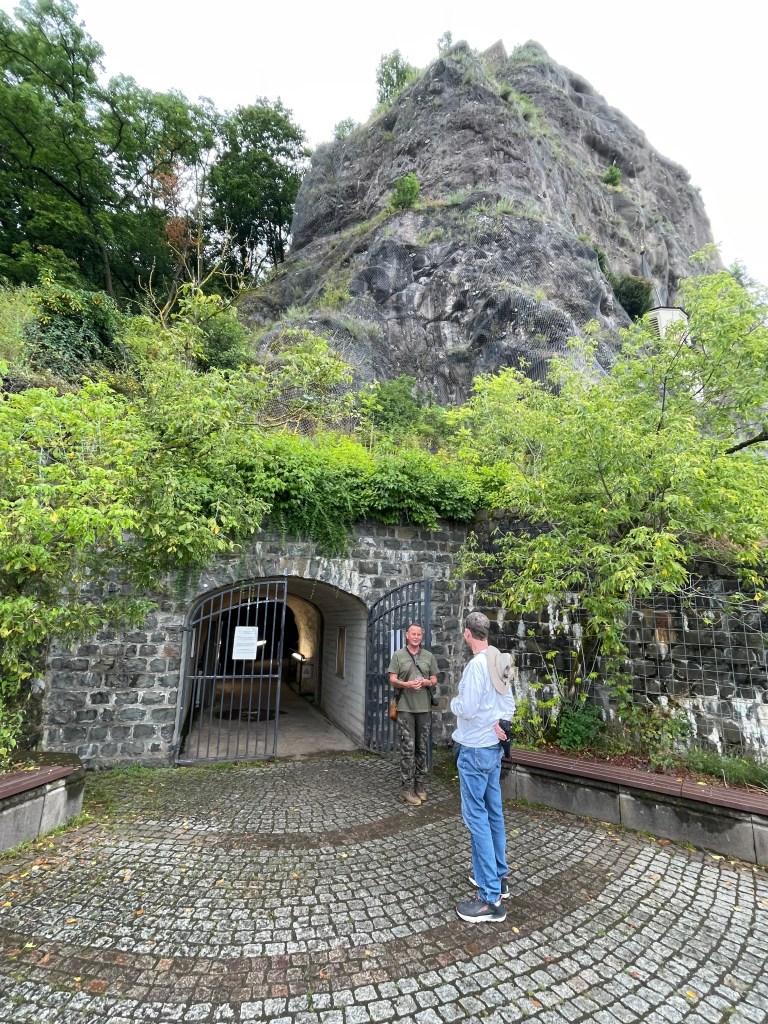
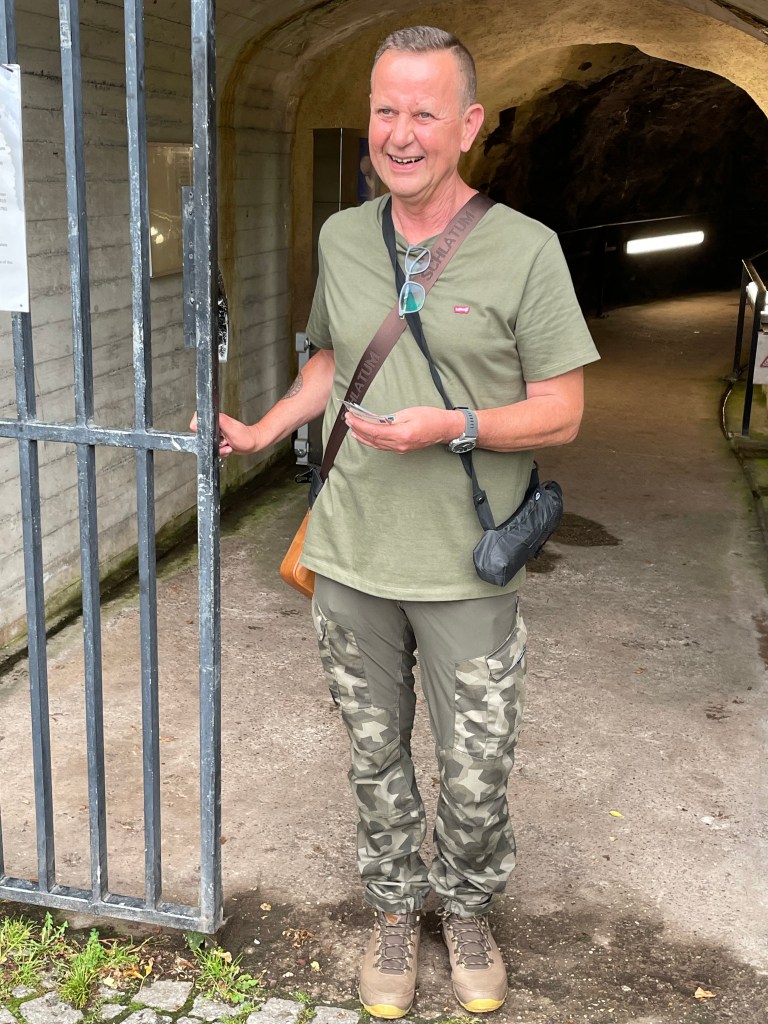
John found the right person to ask and he was directed to the man who gives the tours. He’s friends of church members who live in Idar Oberstein and was very friendly. The church tours were over for the day, but he offered to take us up. 5 Euro each for a tour. So most of us climbed 237 stone steps to the church. We were told there was a natural cave in the stone mountain and the church was built in that cave, hugging the mountain side.
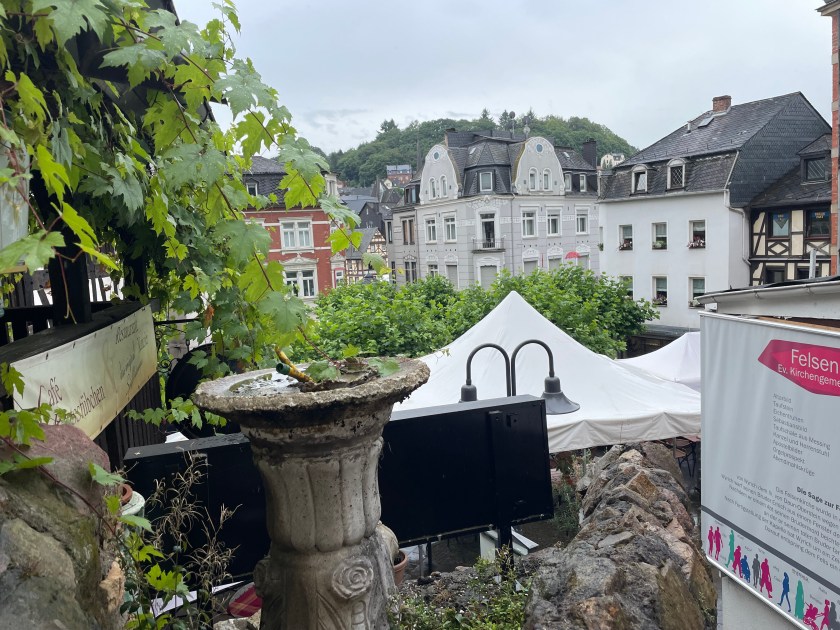
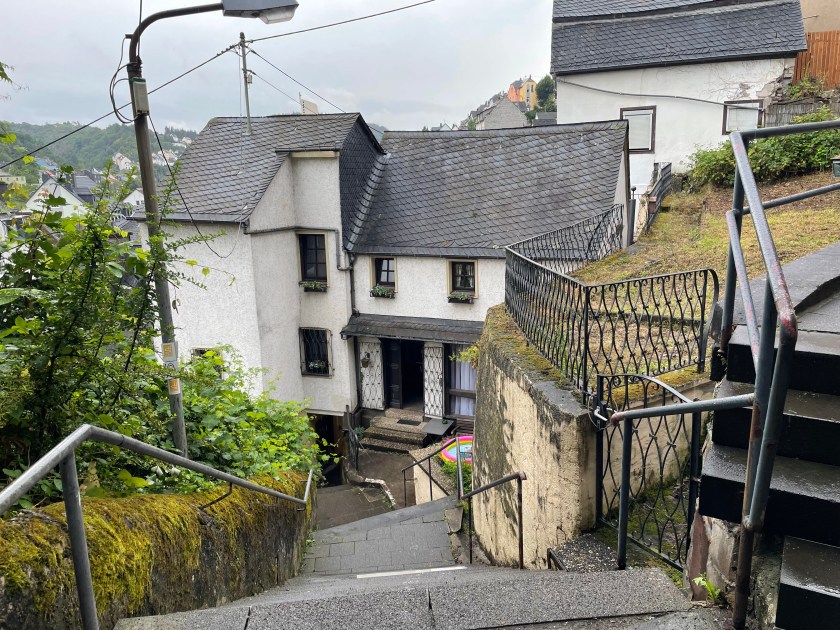
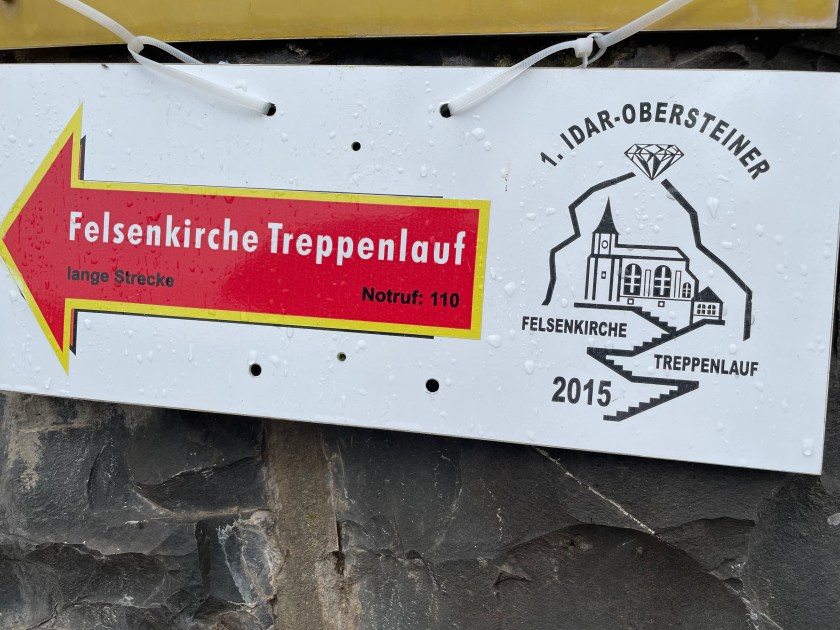
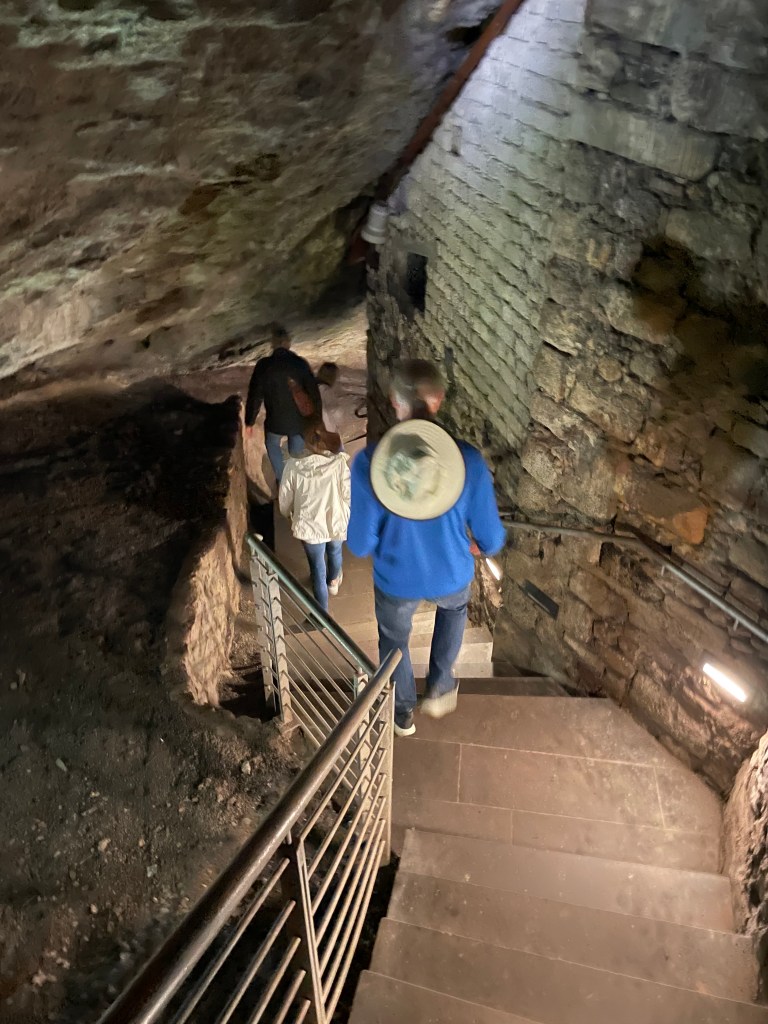
Here’s where the steps started:


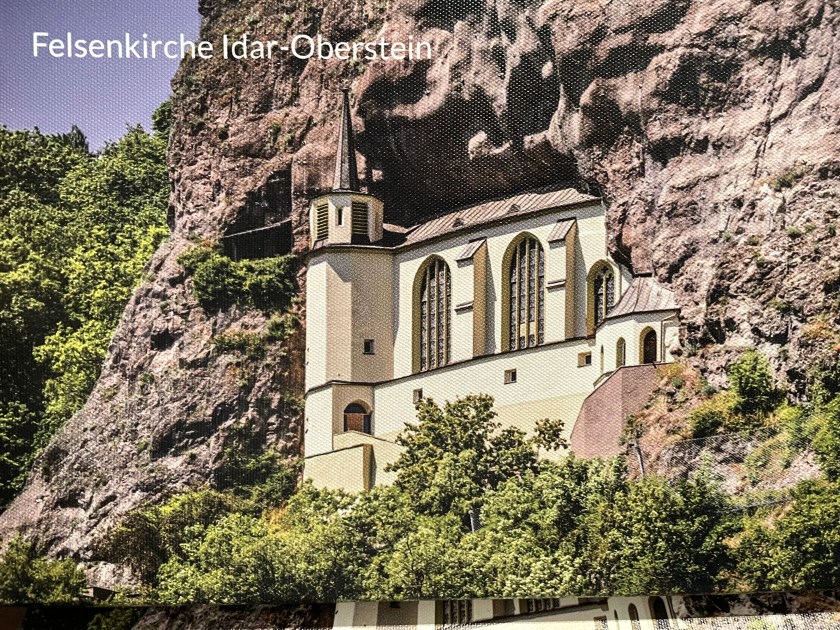
From Wikipedia: Felsenkirche
The famous Felsenkirche (“Crag Church”) is the town’s defining landmark. It came to be through efforts by Wirich IV of Daun-Oberstein (about 1415–1501), who in 1482 built the now Protestant church on the foundations of the Burg im Loch (“Castle in the Hole”).
As far as is now known, this castle was the first defensive position held by the Lords of Stein and a refuge castle for the dwellers of the village down below that was built into the great cave in the crag, the “Upper Stone” (or in German, Oberer Stein) on the river Nahe. This, of course, explains the origin of the name “Oberstein”.
The “Castle in the Hole” was the only cave castle on the Upper Nahe. The Felsenkirche can nowadays be reached by visitors through a tunnel that was built in modern times.
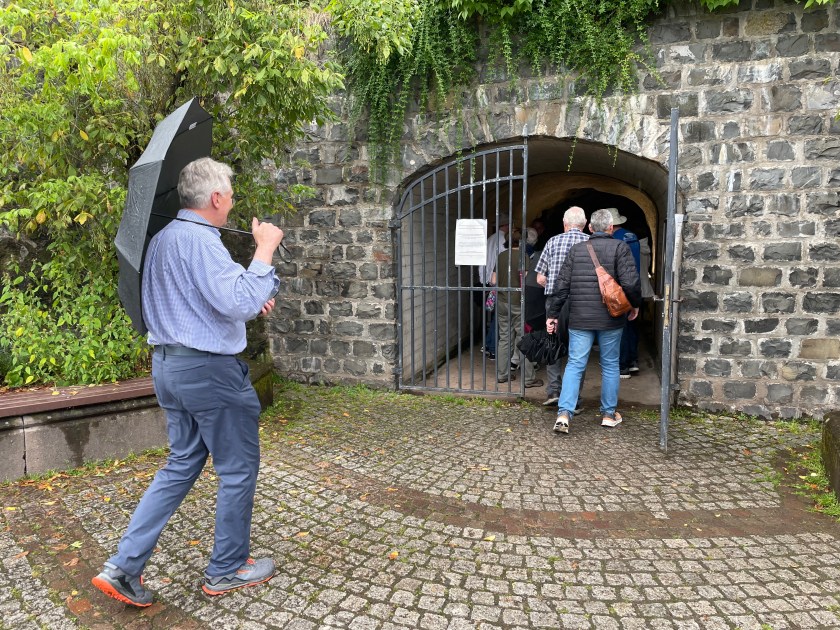
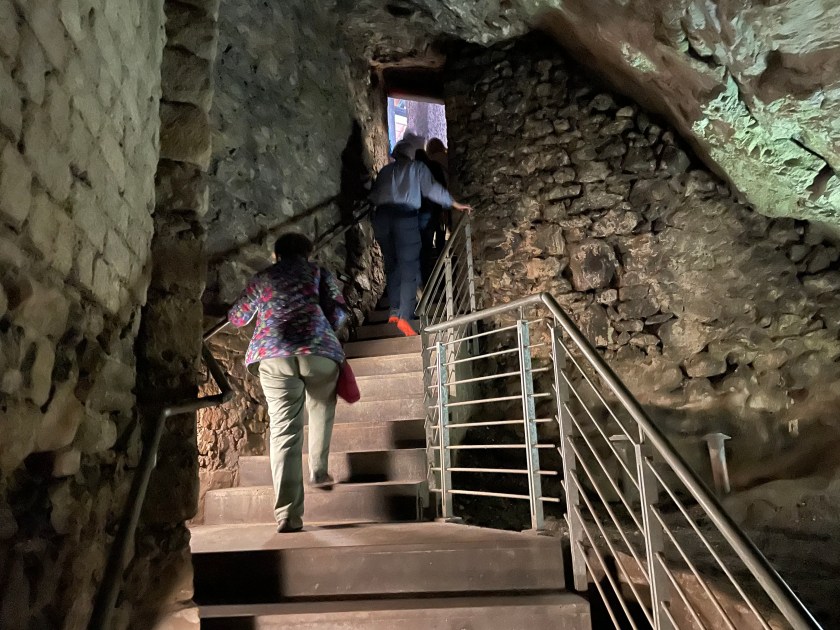
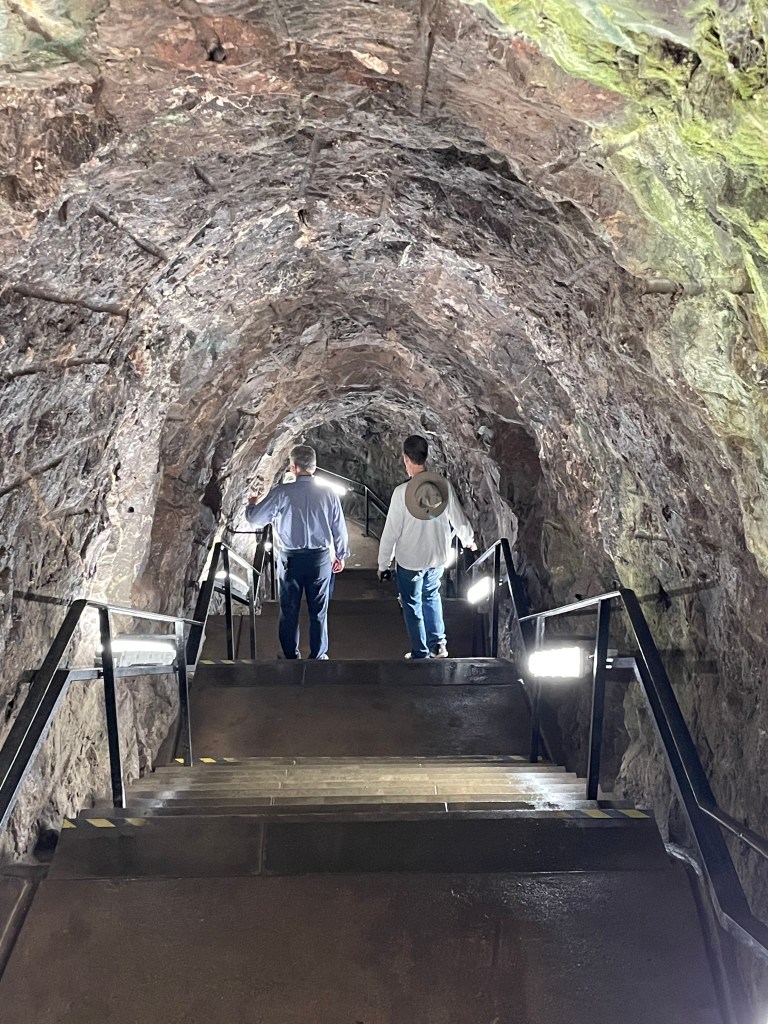
Because an earlier step path became dangerous, a tunnel has been drilled into the side of the mountain to get to the entrance of the church.
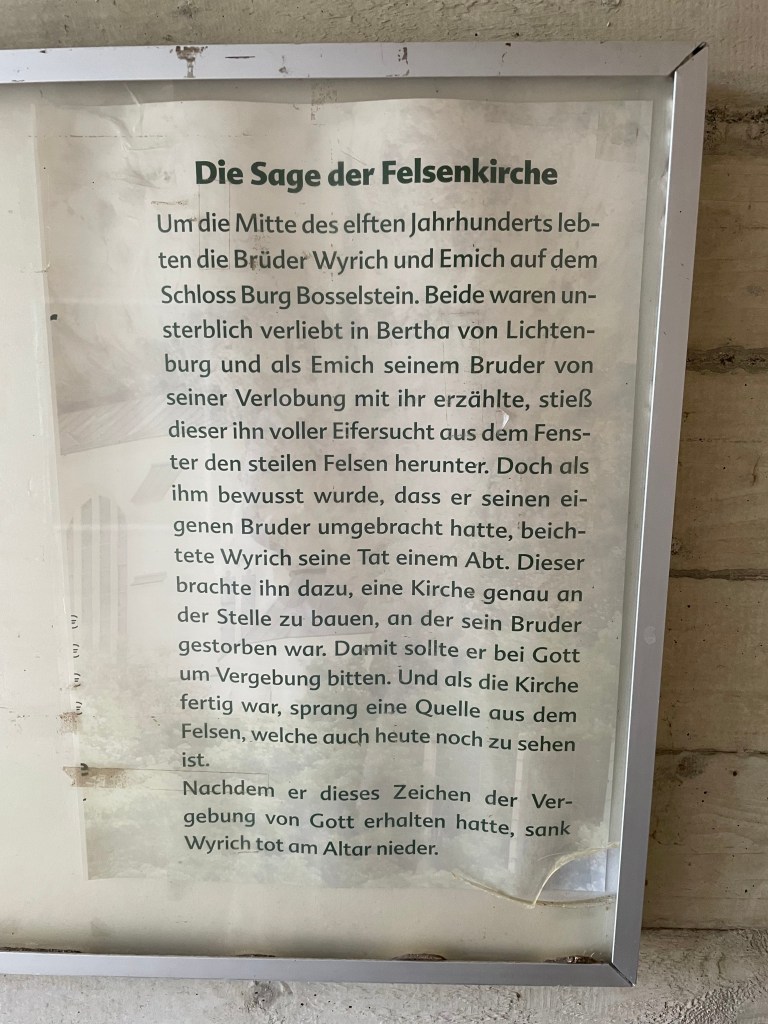
Above is a tragic tale, posted in the tunnel. Here’s the legend:
Felsenkirche (“Crag Church”), a legendary church and symbol of the town
According to legend, there were two noble brothers, Wyrich and Emich, who both fell in love with a beautiful girl named Bertha. The brothers lived at Castle Bosselstein, which stood atop a 135 m-high hill. Bertha was from a noble line that occupied the nearby Lichtenburg Castle.
Neither brother was aware of the other’s feelings for Bertha. When Wyrich, the elder brother, was away on some unknown business, Emich succeeded in securing Bertha’s affections and, subsequently, married her. When Emich announced the news to his brother, Wyrich’s temper got the better of him. In the heat of the moment, he hurled his brother out of a window of the castle and sent him to his death on the rocks below.
Wyrich was almost immediately filled with remorse. With the counsel of a local abbot, he began a long period of penance. At this time, Bertha disappears from the historical record. Many romantics feel that she died of a broken heart.
As Wyrich waited for a heavenly sign showing that he was forgiven, the abbot suggested that he build a church on the exact place where his brother died. Wyrich worked and prayed himself into exhaustion. However, the moment the church was completed, he received his sign: a miraculous spring opened up in the church.
Wyrich died soon after this. When the local bishop came to consecrate the new church, he found the noble lord dead on its steps. Wyrich was later placed in the same tomb with his brother.

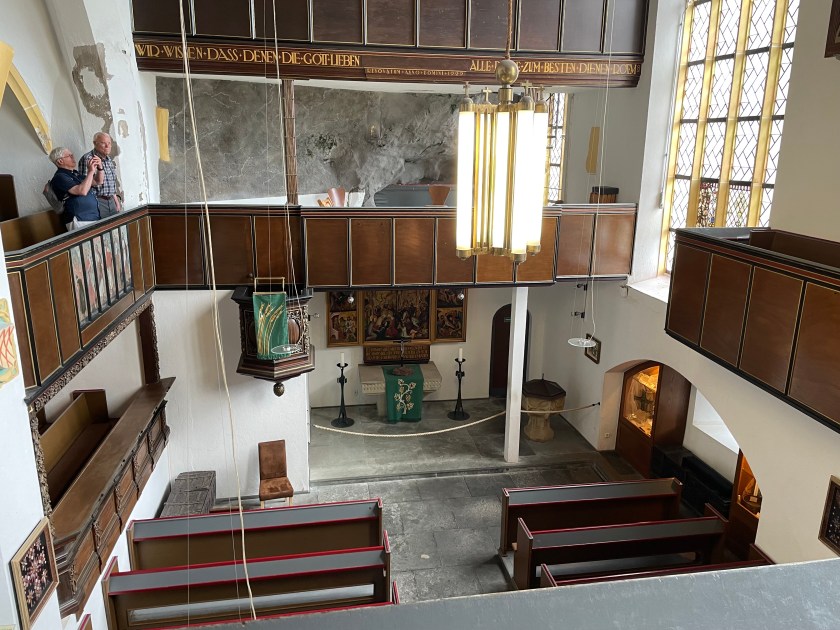
Inside the church, you can see the rock wall above and behind the altar.
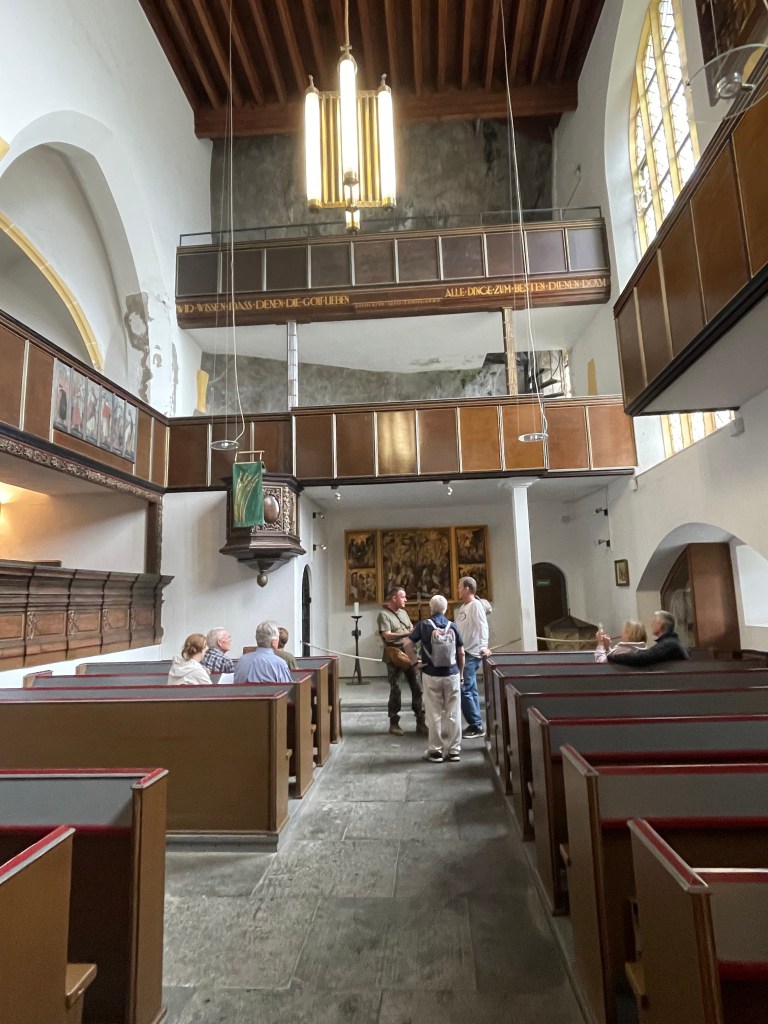
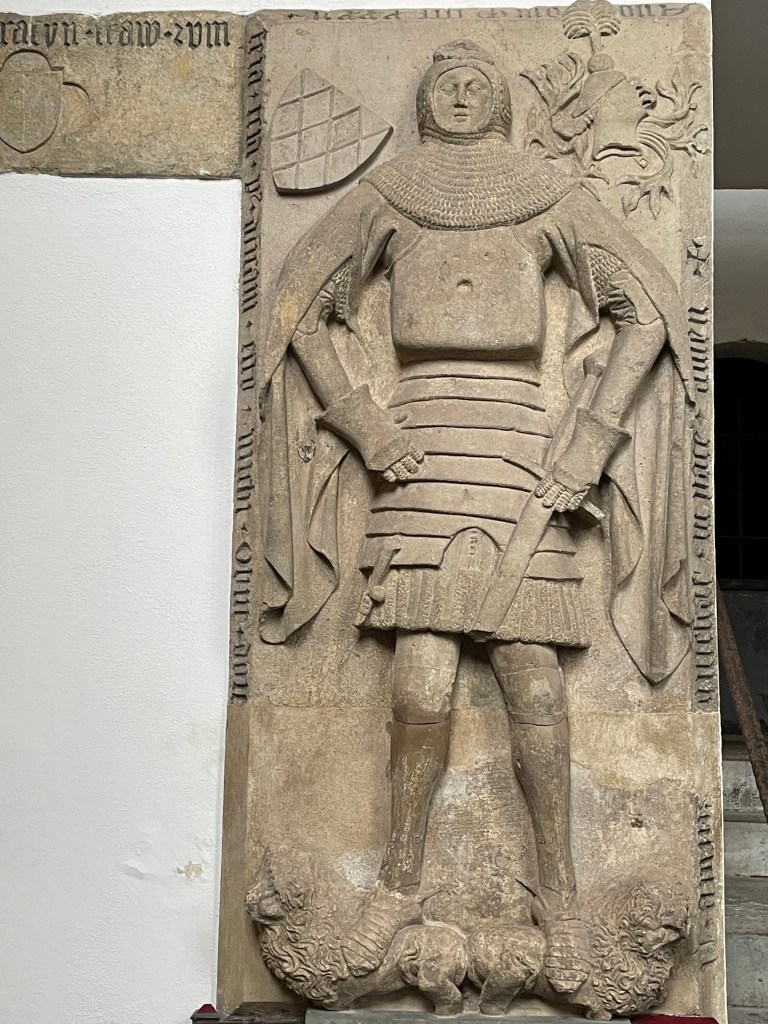
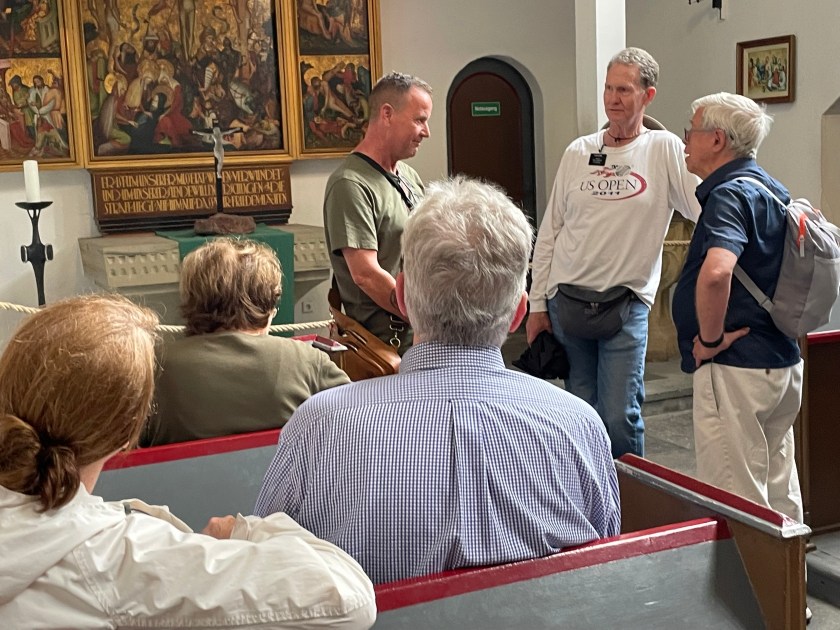
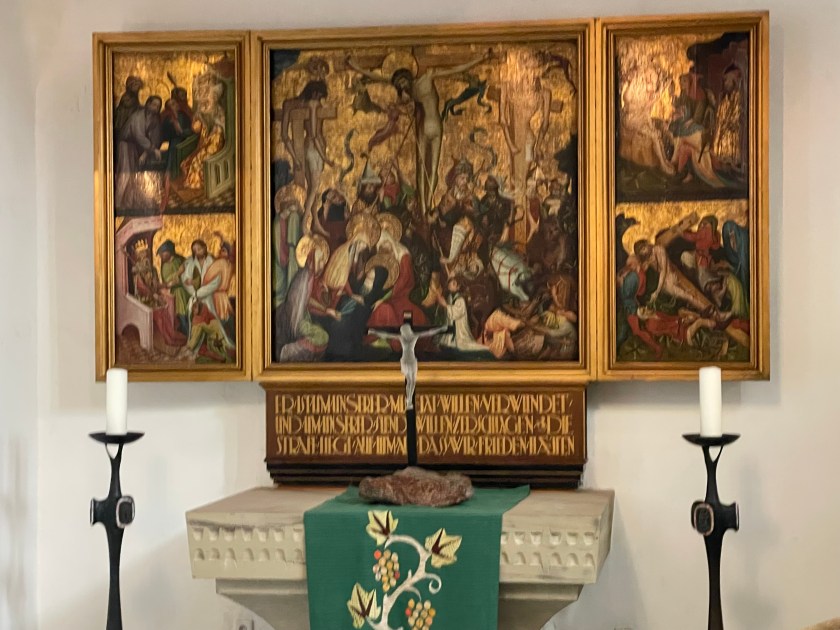
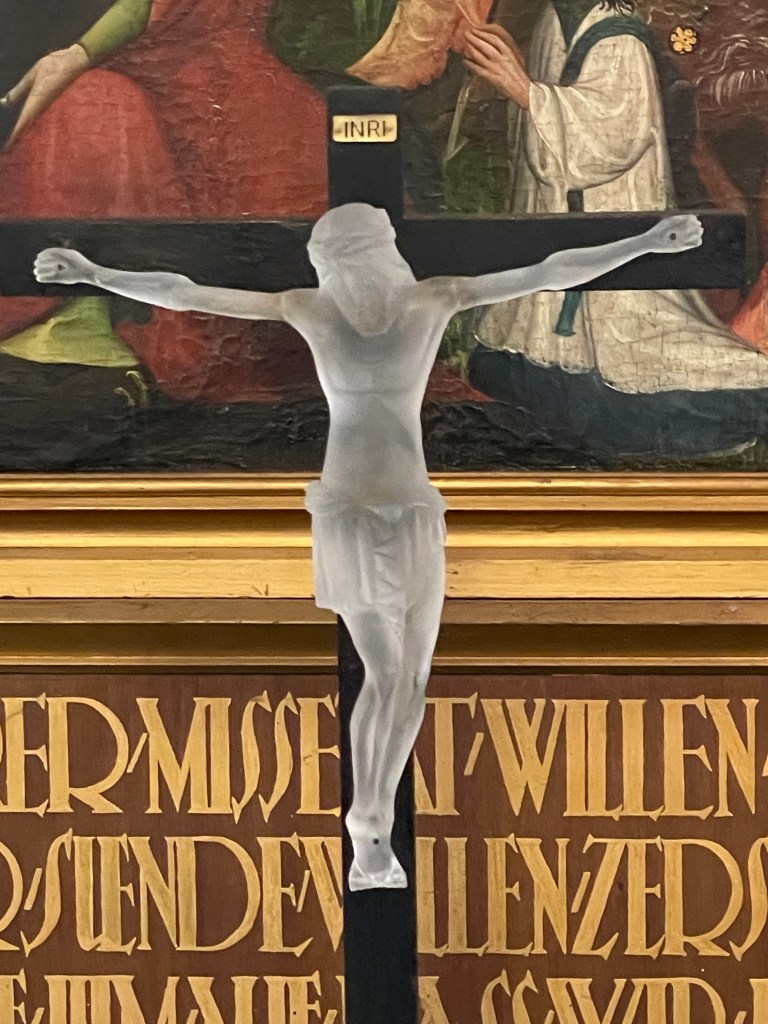
There were interesting things in the church (one fairly large room) to see. There’s a beautiful altar piece from the 1400s that was only recently discovered and restored. It was buried in a storage room in the church. There were old crosses from medieval times. There’s a beautiful crucifix that’s carved from white crystal, about 10″ high. The artist went to Jerusalem and bought a Roman coin from the time of Christ. He used the metal to fashion nails to drive through the hands and feet of his sculpture.
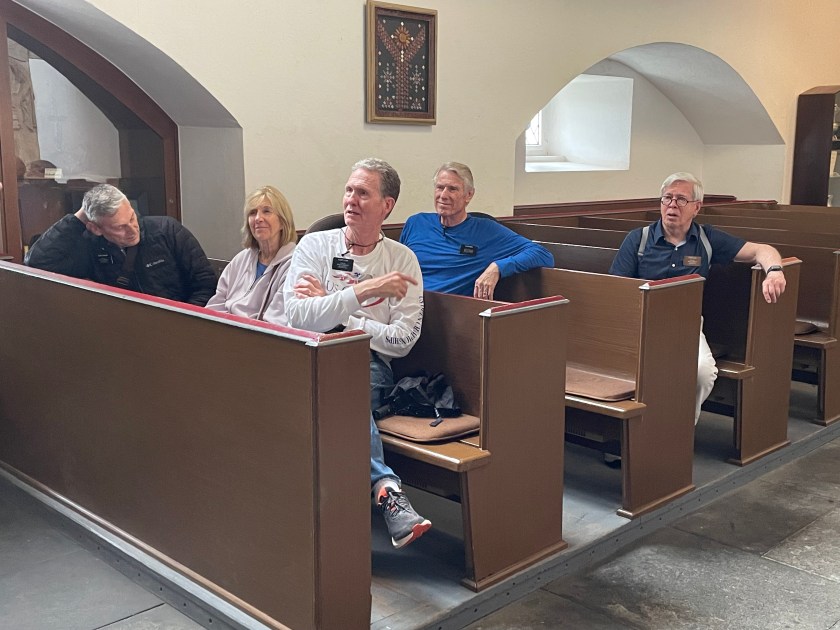
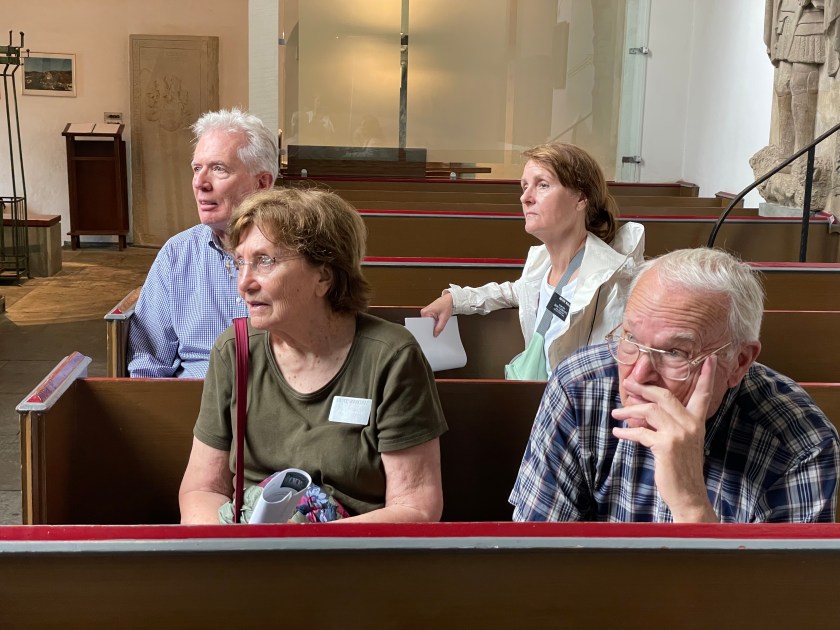
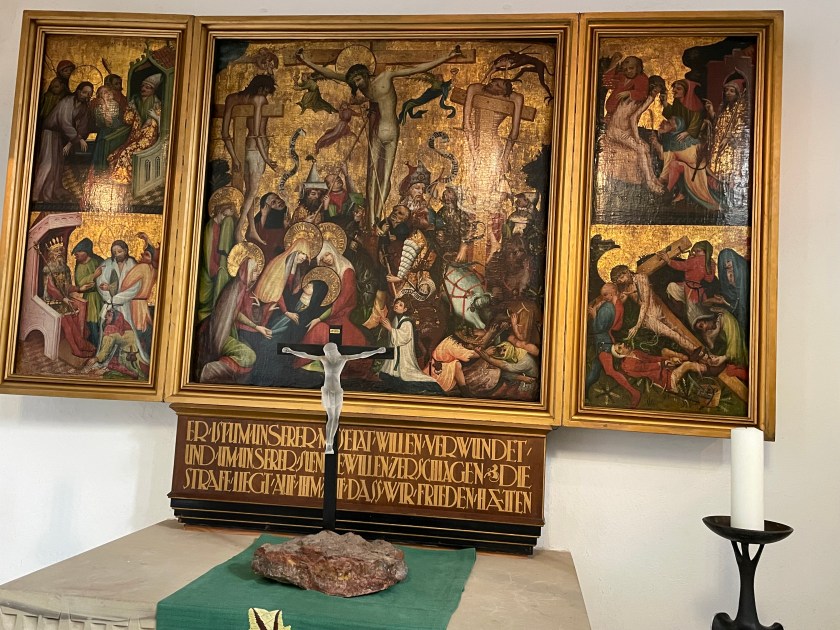
There were interesting things in the church to see. There’s a beautiful altar piece from the 1400s that was only recently discovered and restored. It was buried in a storage room in the church. There were old crosses from medieval times. There’s a beautiful crucifix that’s carved from white crystal, about 10″ high. The artist went to Jerusalem and bought a Roman coin from the time of Christ. He used the metal to fashion nails to drive through the hands and feet of his sculpture.
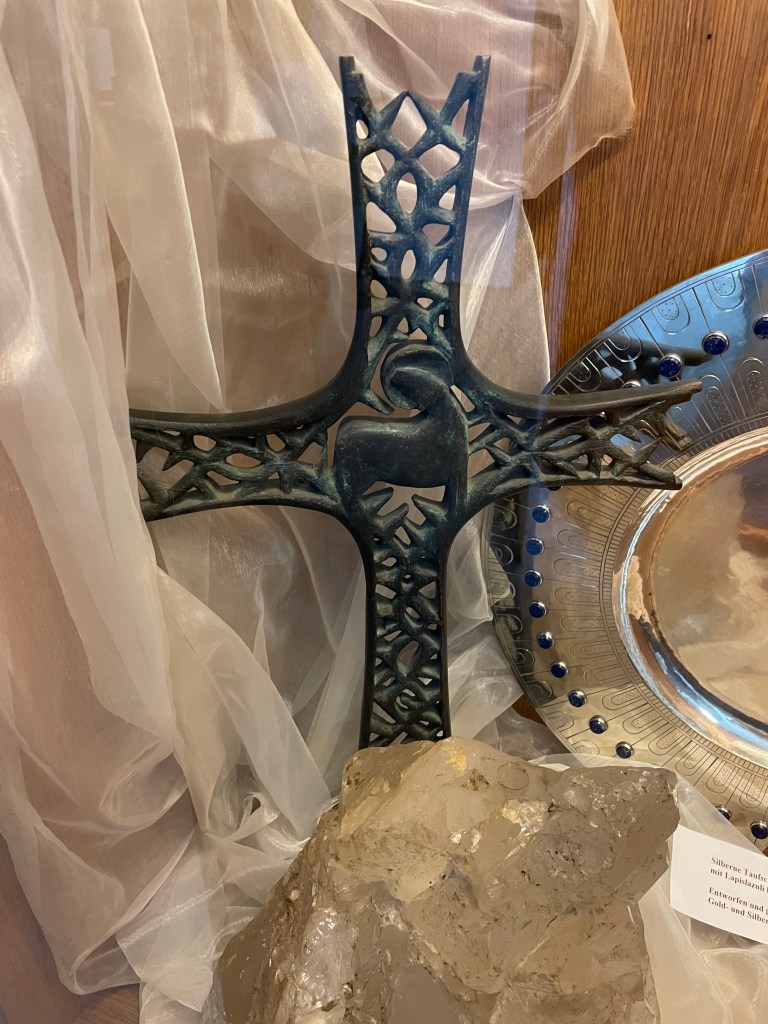
Below is a gemstone cross discovered in the mine.

A very old baptismal font cover from the 1500s:
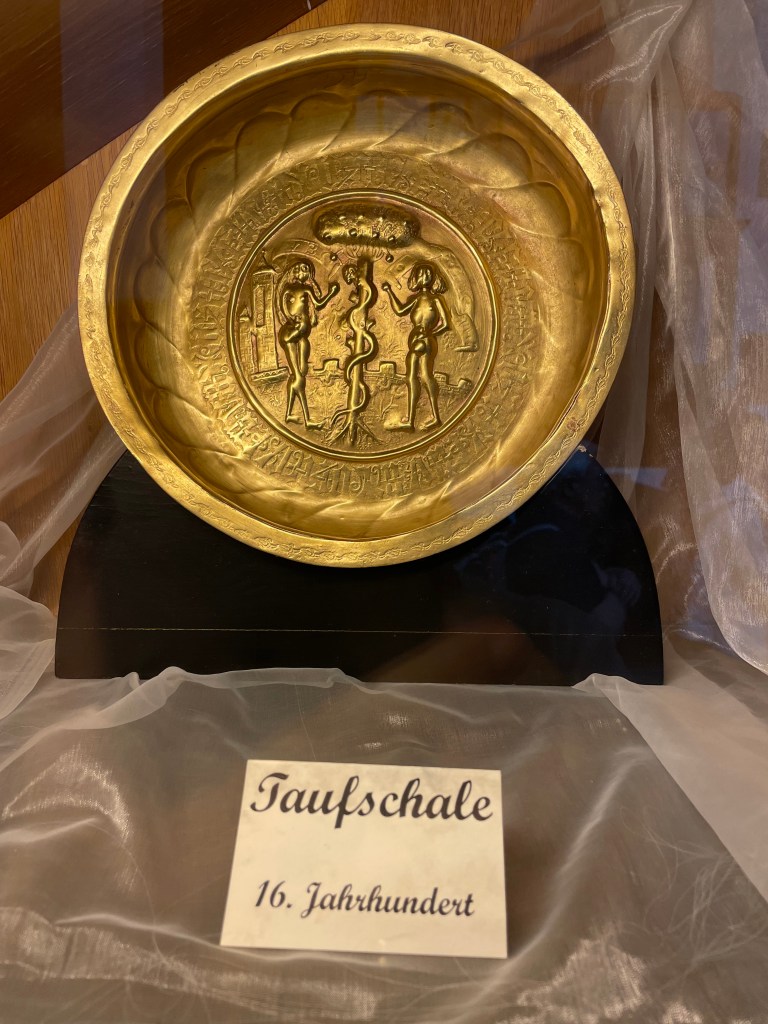
There were different historical artifacts in cases and our fun guide took his time telling us all about them and their stories. Most were related to mining and stonework.
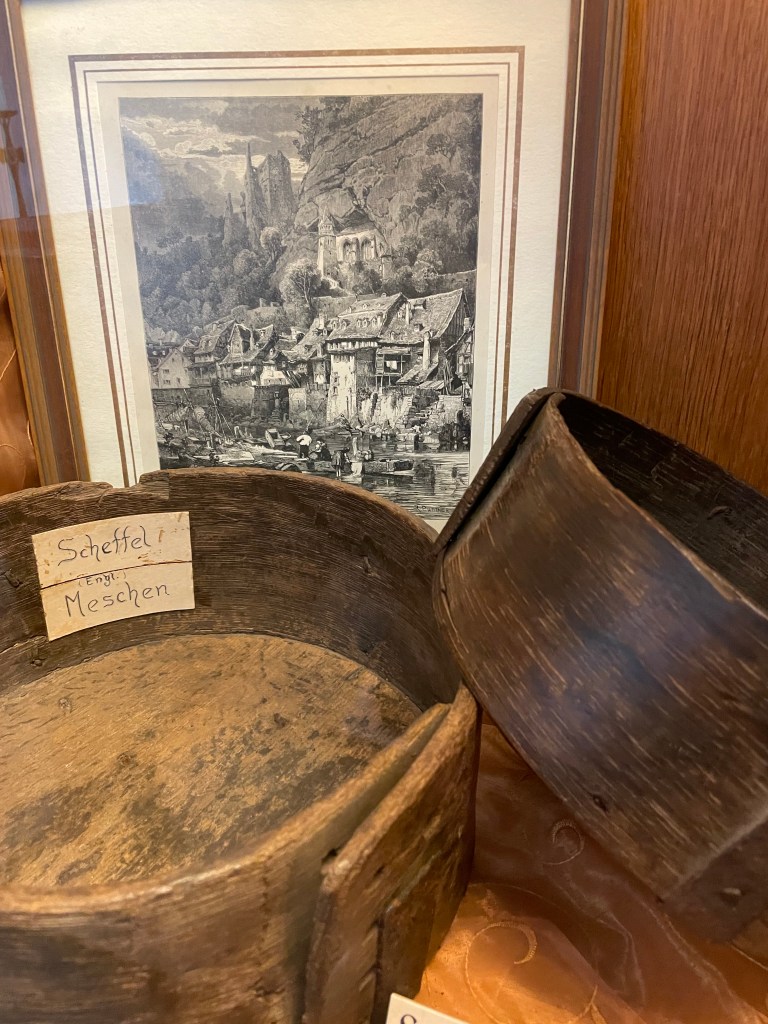
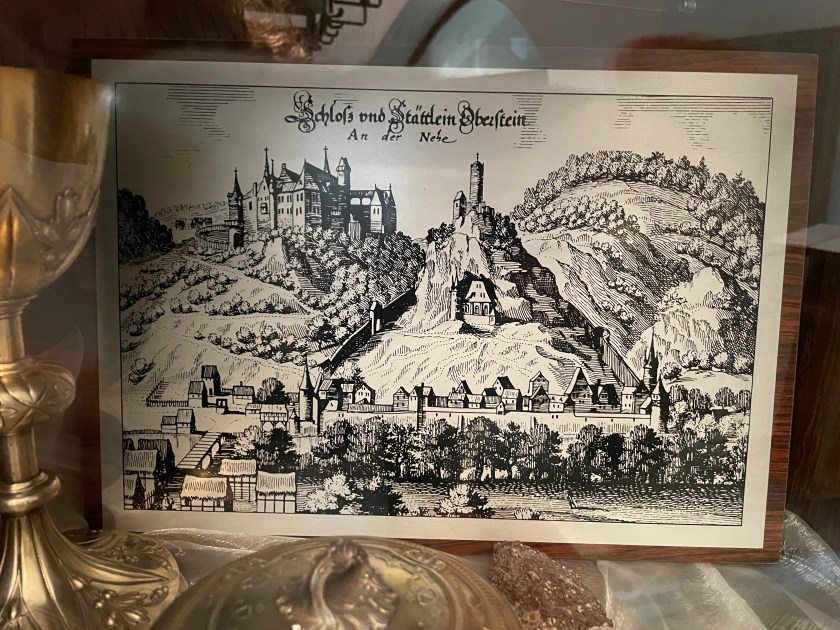
The sketch below shows the church in relation to the castle up above.

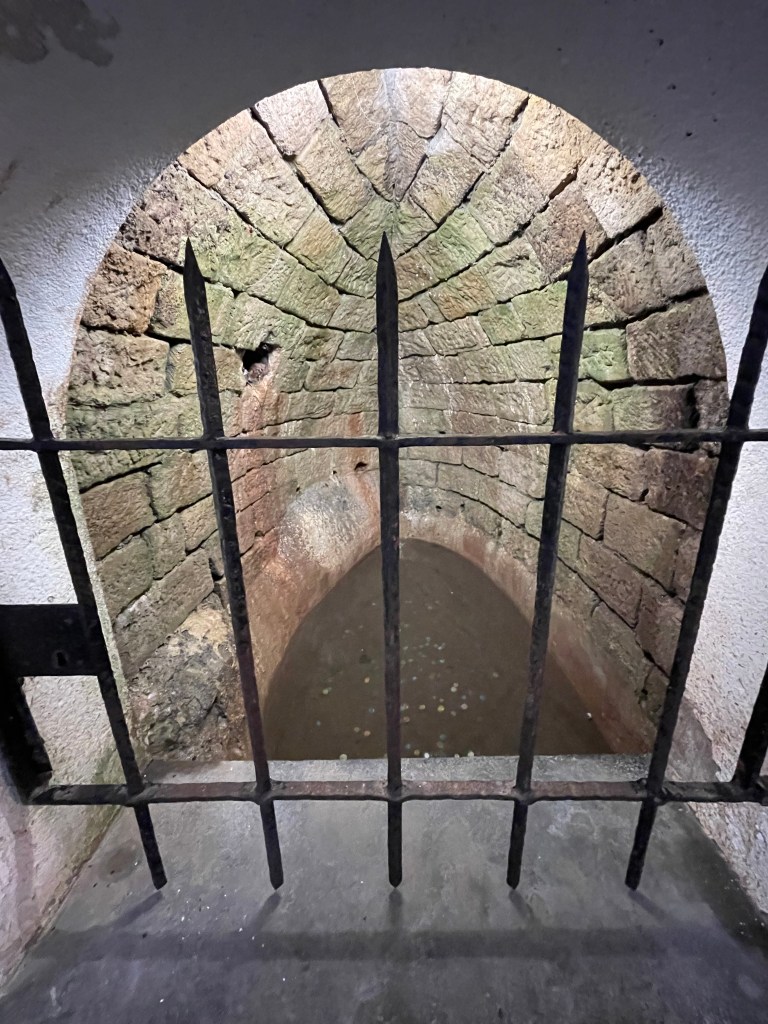
Then we climbed up from the chapel into a side room and saw the natural spring that drips pure water through the mountain stone into a shallow dipping well.

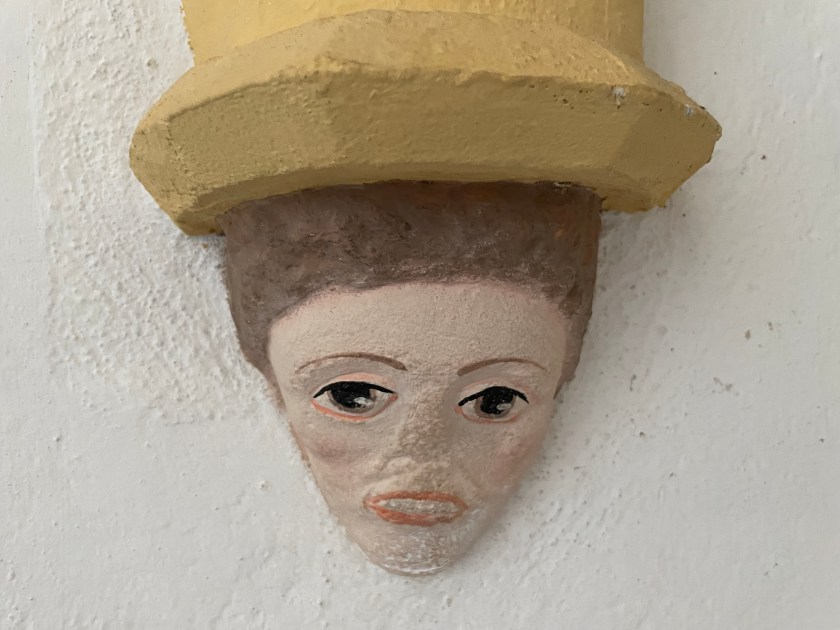
Some think this is the builder’s self portrait:
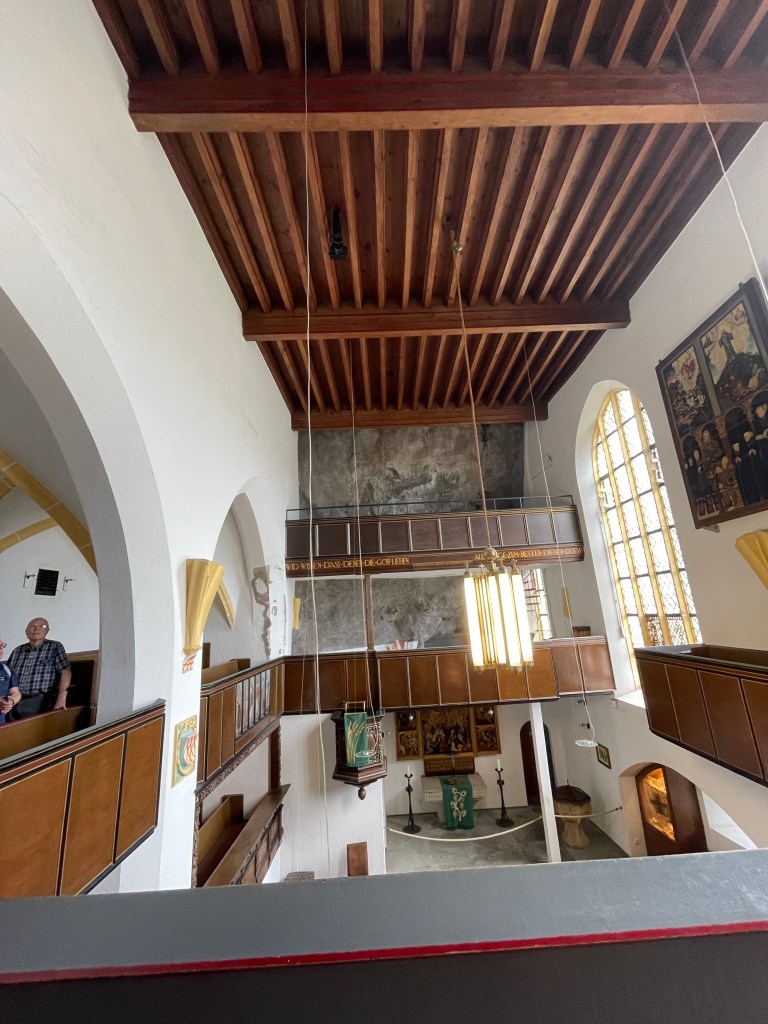
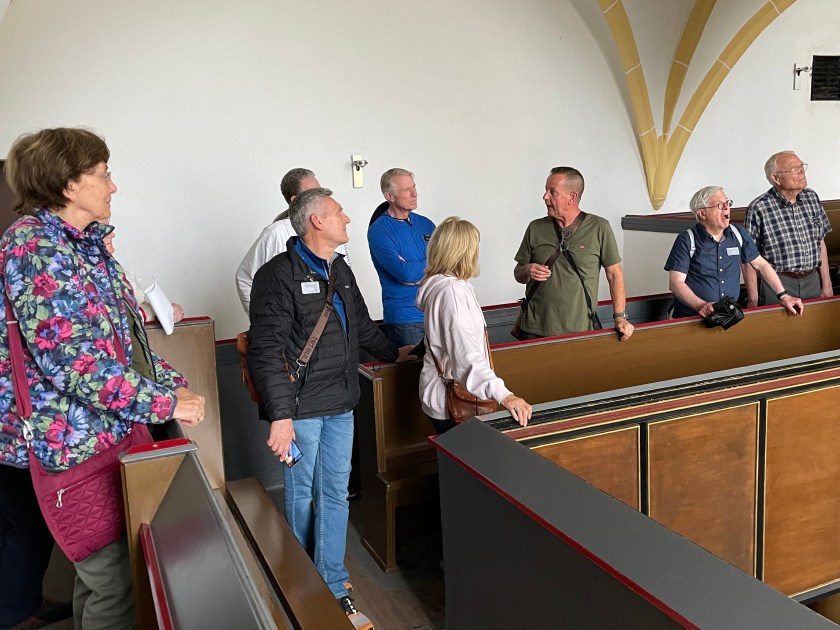
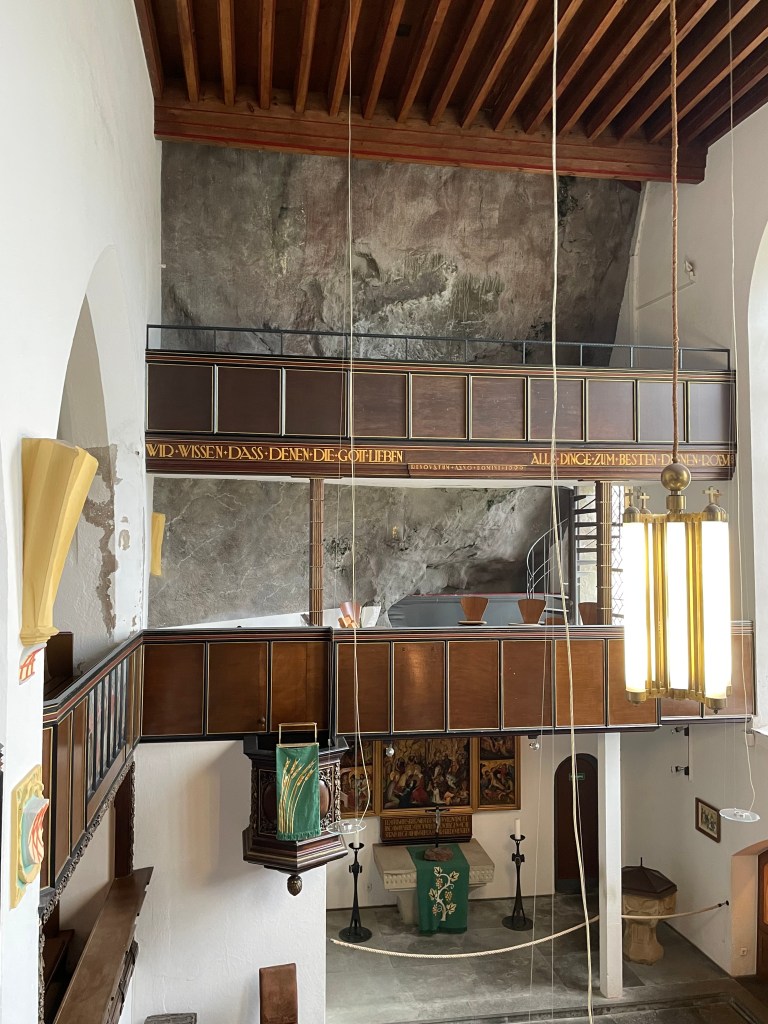
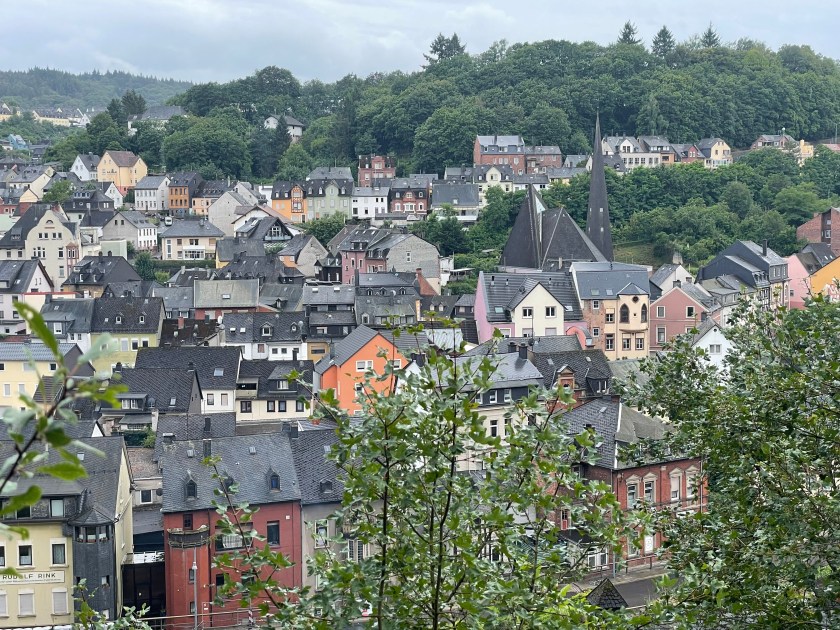
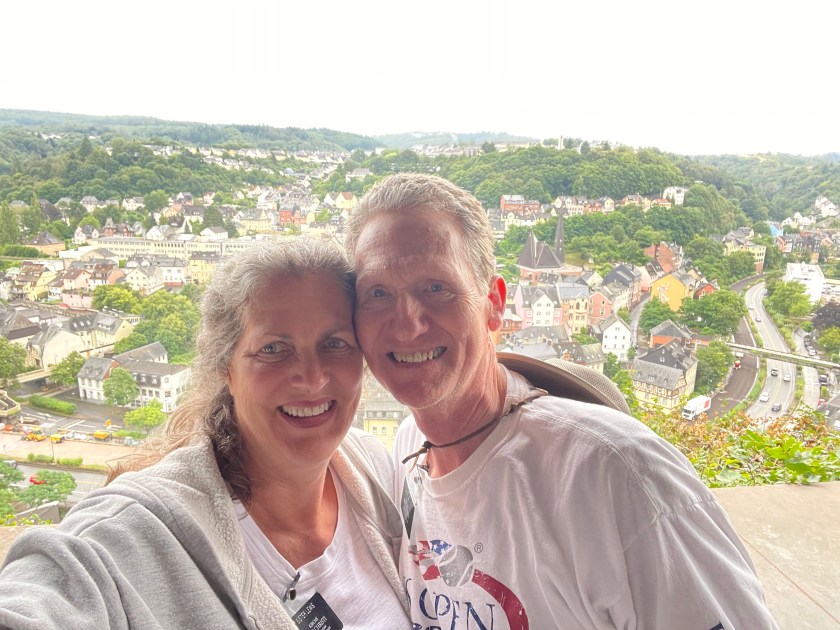
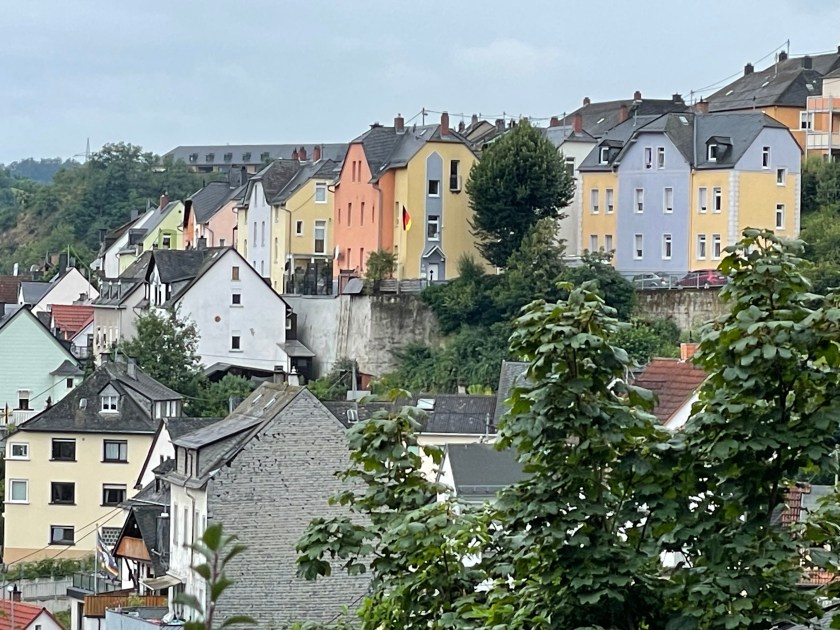
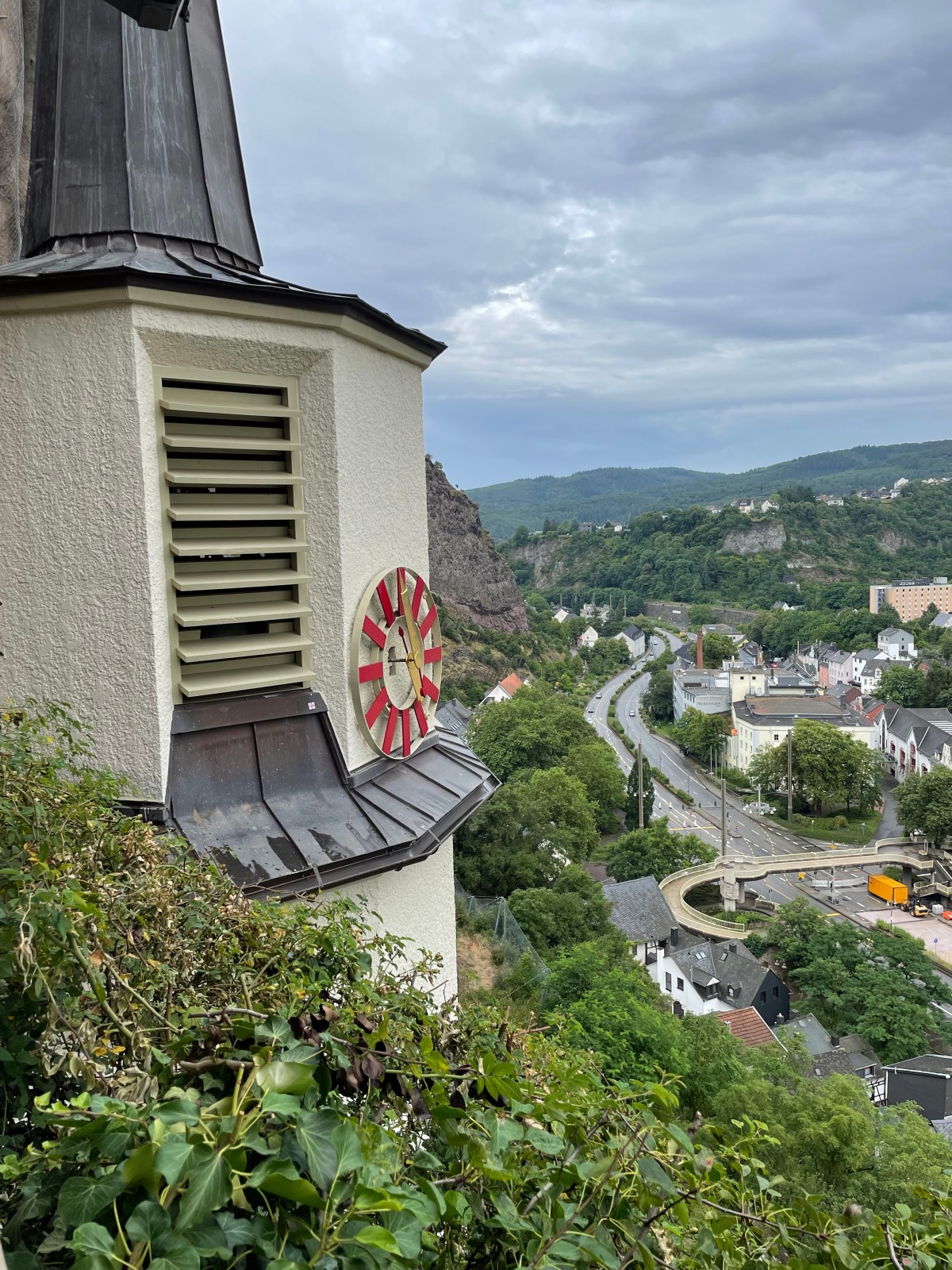
Then we climbed further up and out the back side of the church (through tunnels cut into the stone behind the church) and came out at the top of the church by the bell tower with an impressive view of the town down below us.

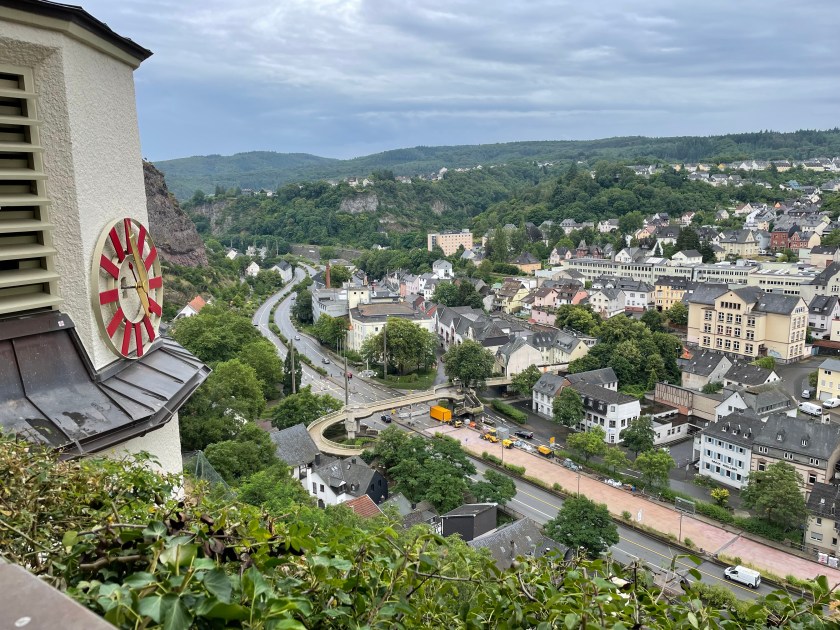
He explained to us about the road right below the church. It’s actually a water tunnel with a river flowing under it. There’s a 2-lane road with a 3rd and 4th lane on either side that curves around the edge of town. Interesting:
Highway over the Nahe in Oberstein
In the 1980s, the river Nahe was covered over with a four-lane highway, Bundesstraße 41, putting the river underground, beneath the town. This is unique in Germany and has greatly changed the town’s appearance in this area. The first plans for this development (officially the Nahehochstraße) lay before planners as early as 1958, but they set off a wave of criticism that was felt far beyond the town’s limits. The project was meant to relieve traffic congestion in the inner town on the B 41, which at the time ran through what is now a narrow pedestrian precinct through the middle of the Old Town. Work on the project began in 1980, and lasted five years, after which the Nahehochstraße was at last completed. The Nahe had thus been channelled into a two-kilometre-long tunnel.
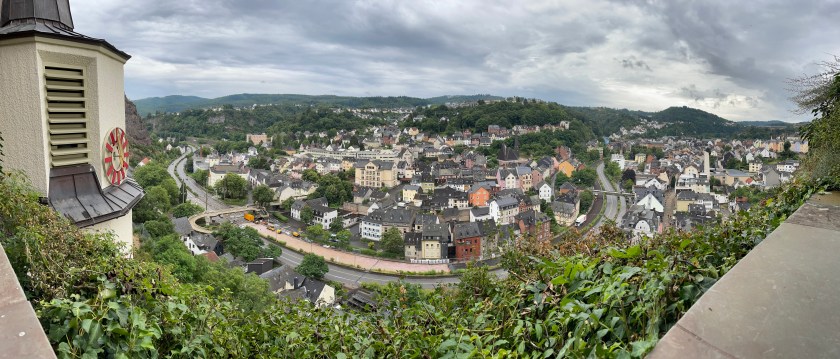
You can see in the panoramic pic how the road follows the curver of the river:
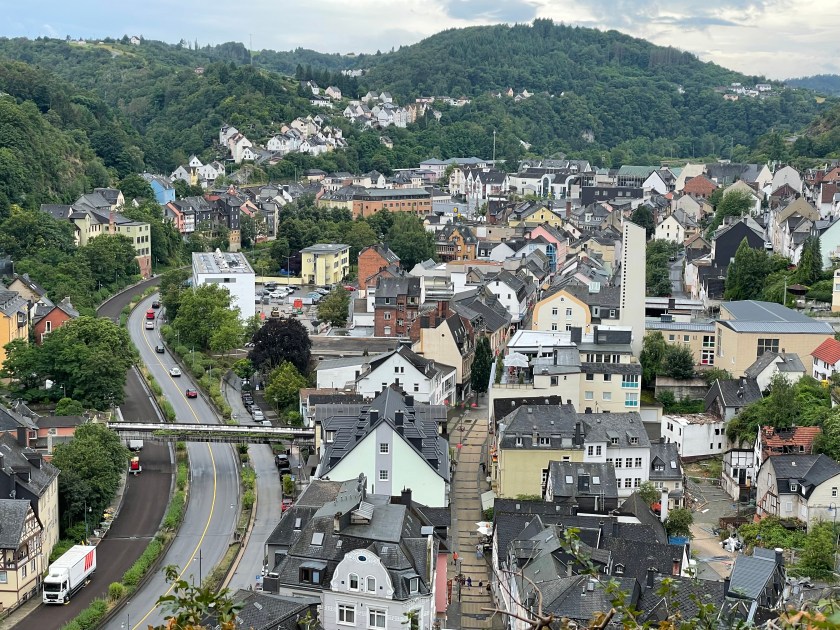
And then the river pops out again from under the road, once it’s out of town.
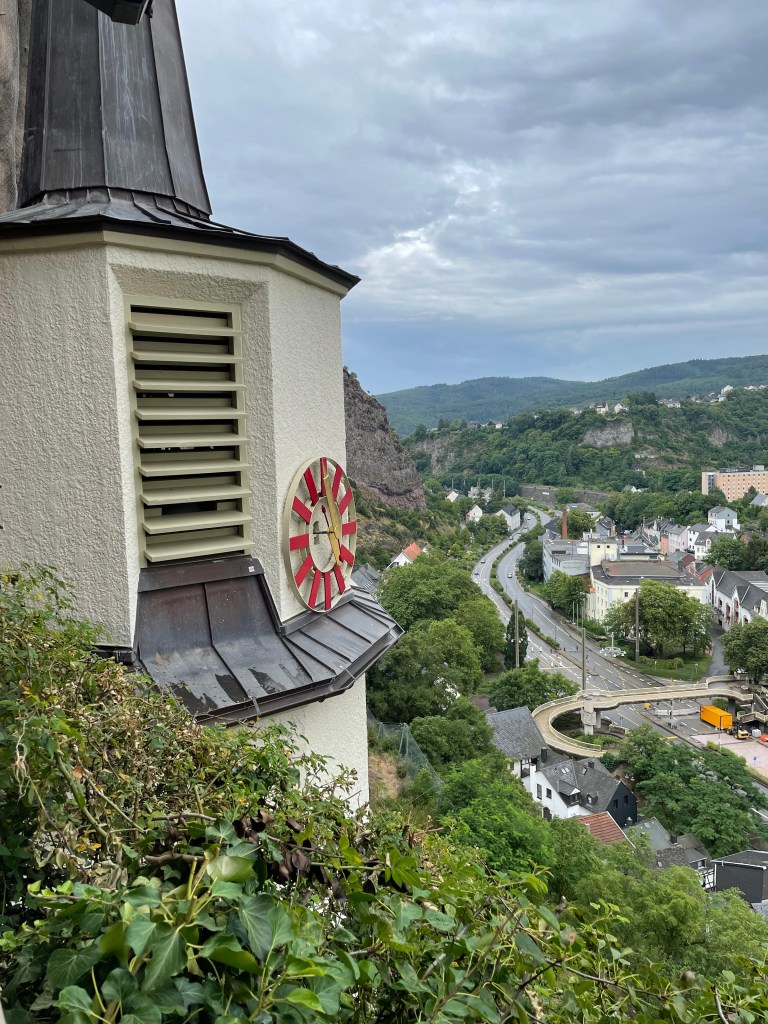
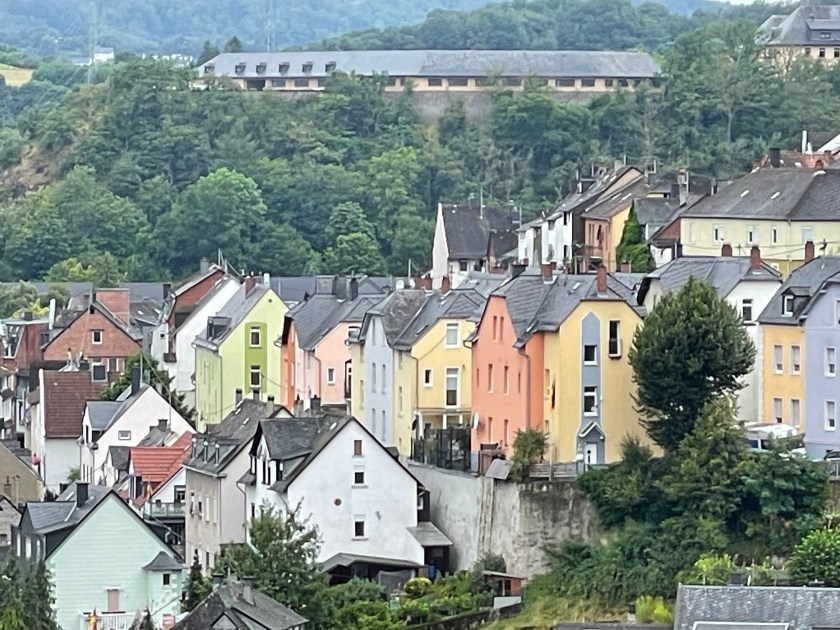
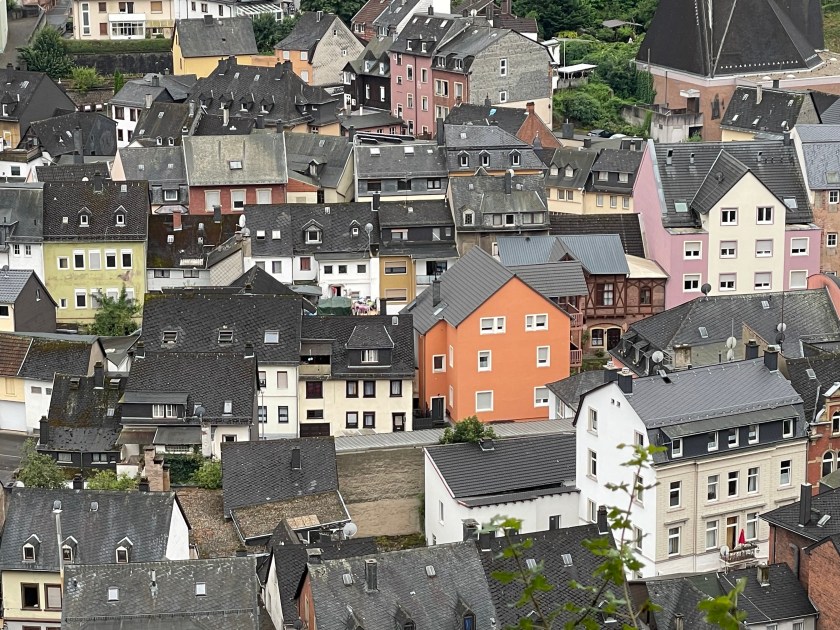
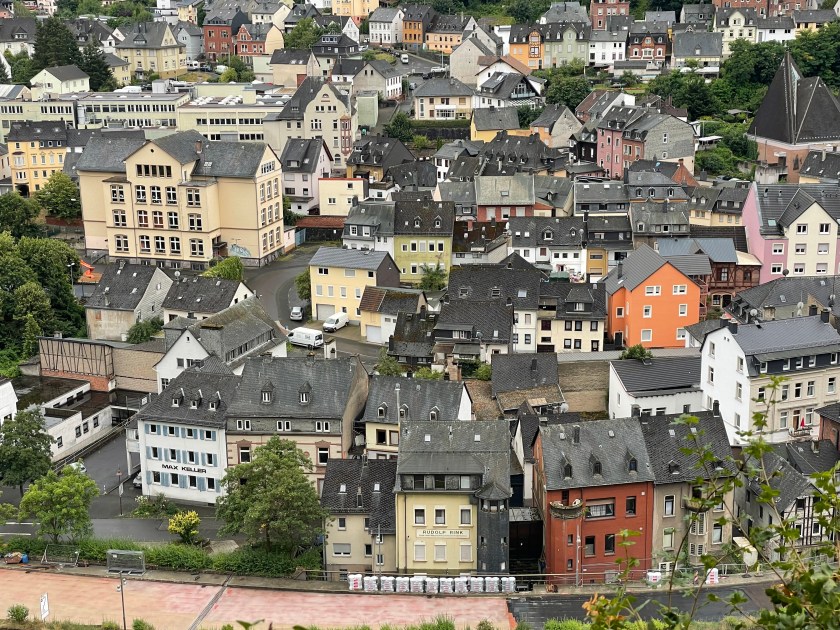
After enjoying the beautiful views of Idar Oberstein from above, we climbed back down, passing by the bell tower.

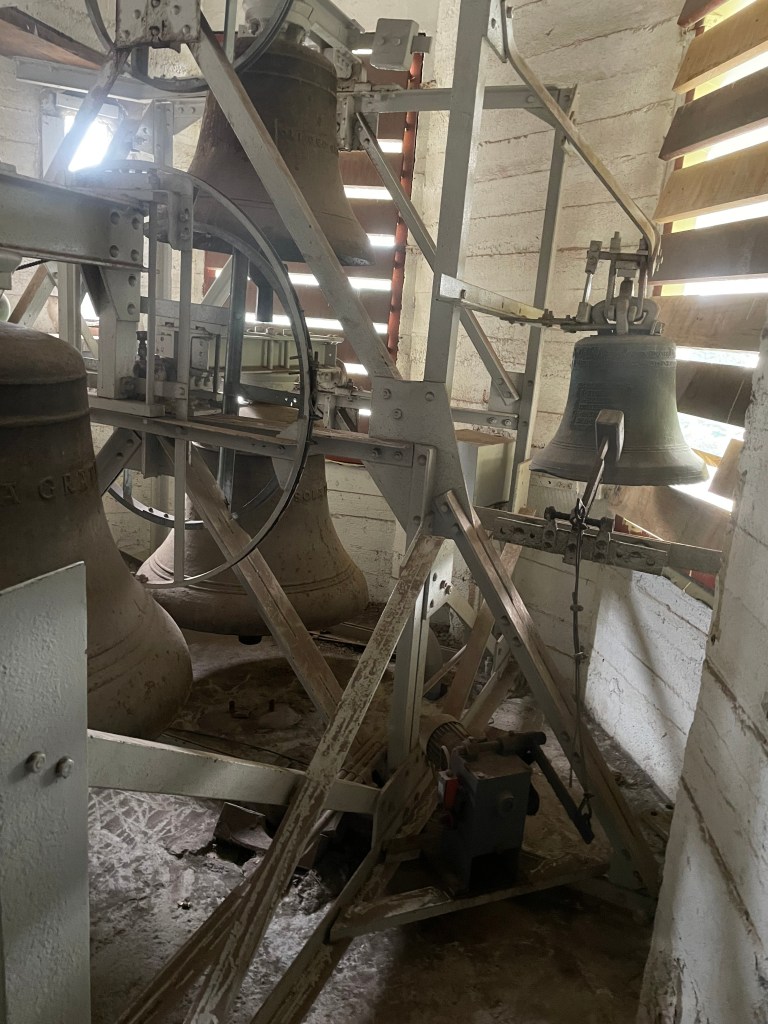

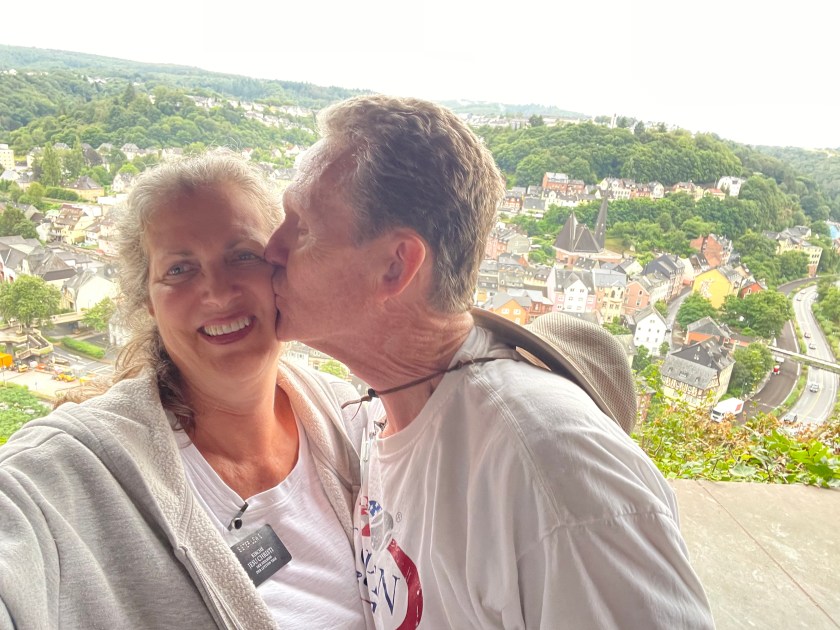
What an amazing bonus, to get to go into the church after hours and have this personalized tour. We loved it, every bit.

You can see the castle remains up above.

 Our Frankfurt Germany Mission