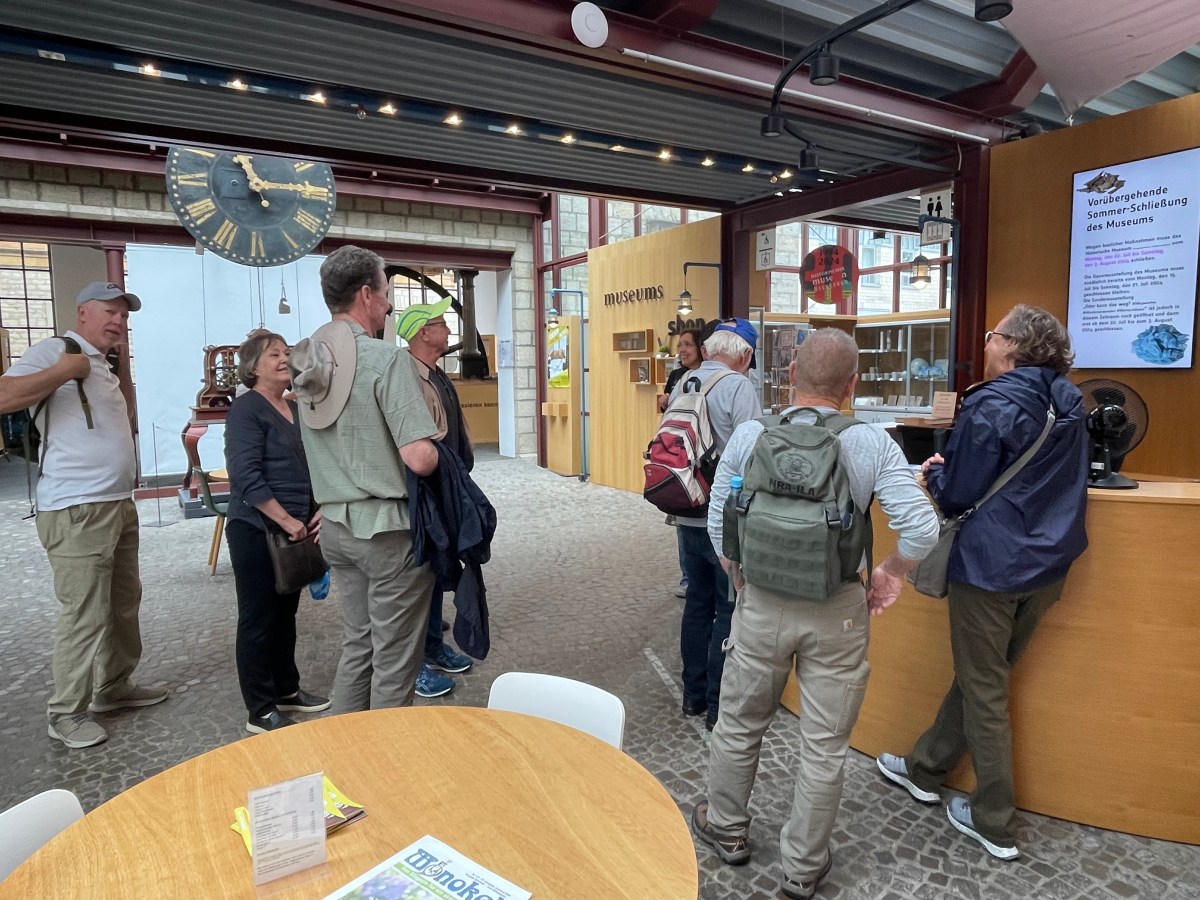
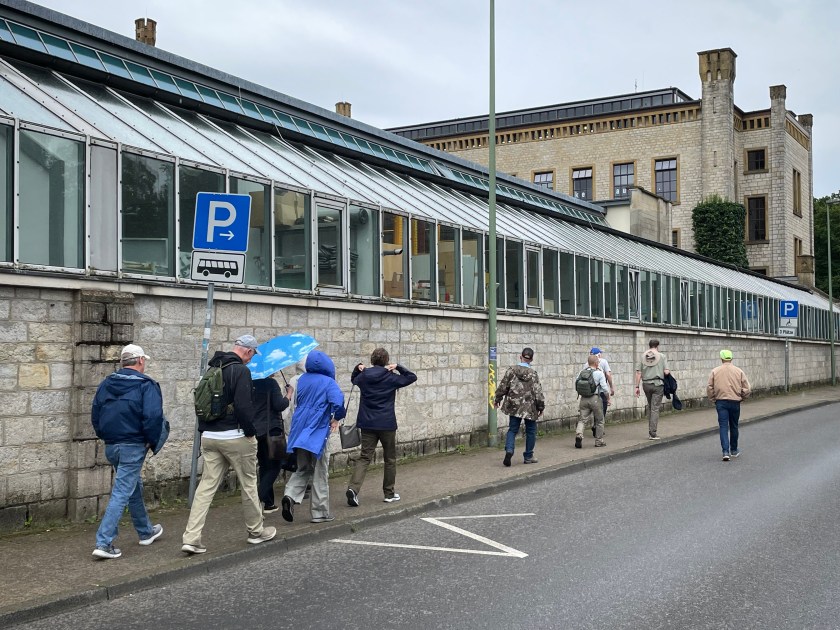
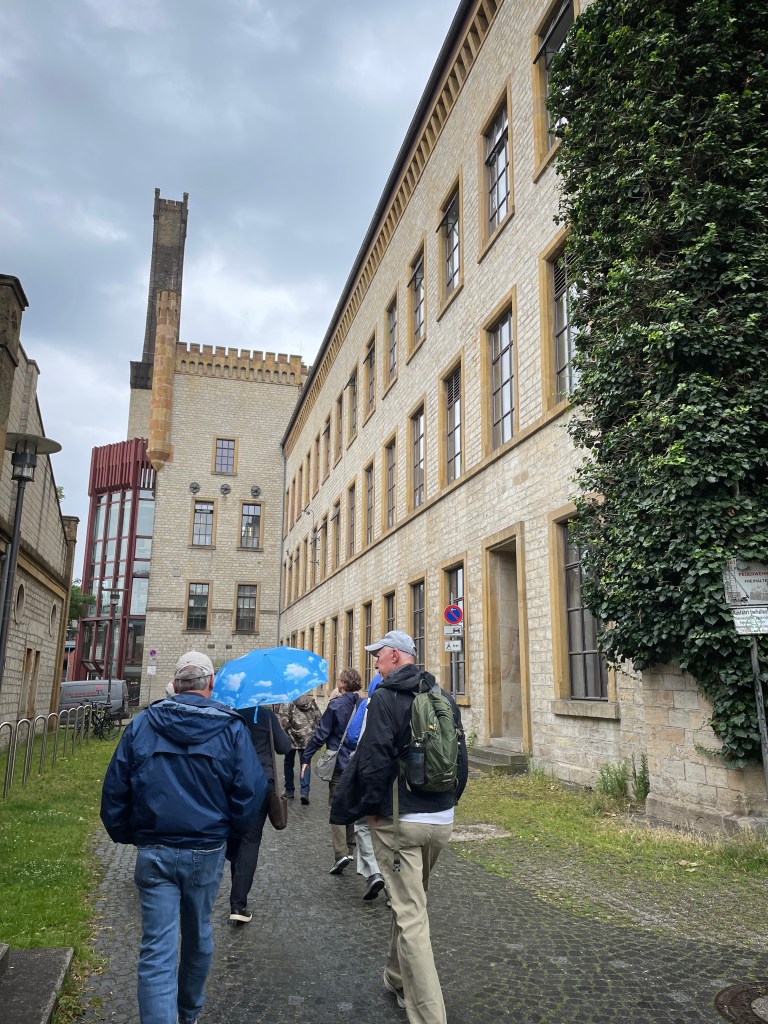
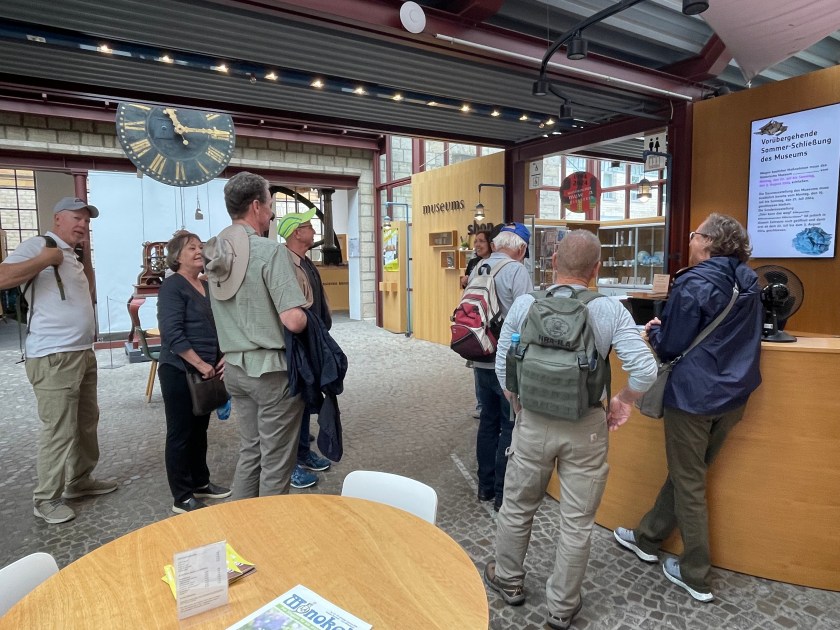
This morning we spent a few hours in the Historical Museum in Bielefeld. The museum is located in part of what was once a textile factory. Now it houses the museum and a Hochschule (a junior trade college).

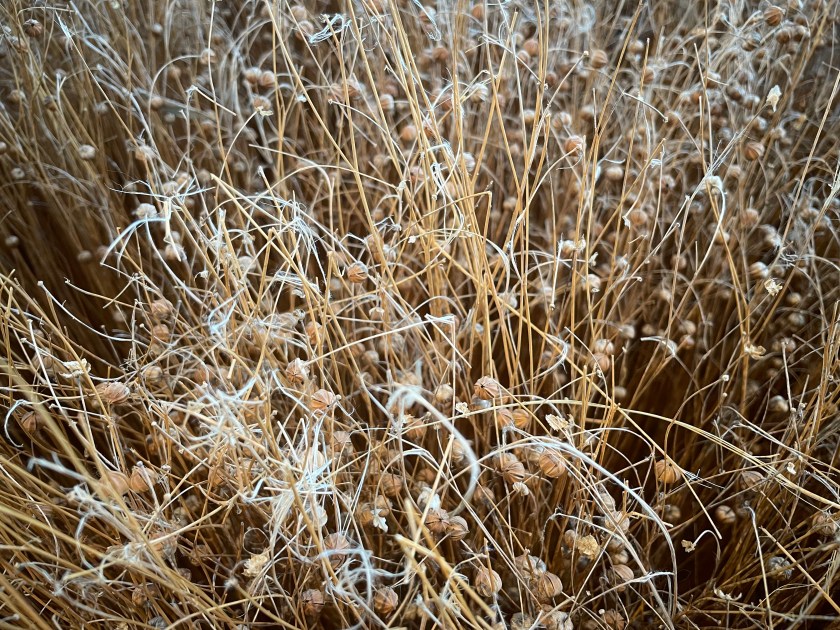
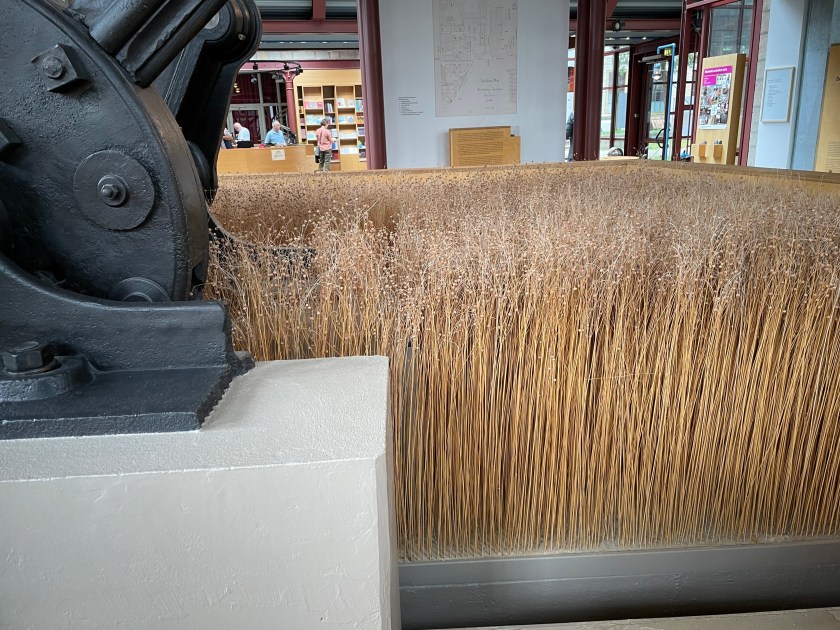
The first exhibit we saw inside the museum showed how flax is grown and harvested to be used for making linen. Here is the flax plant:

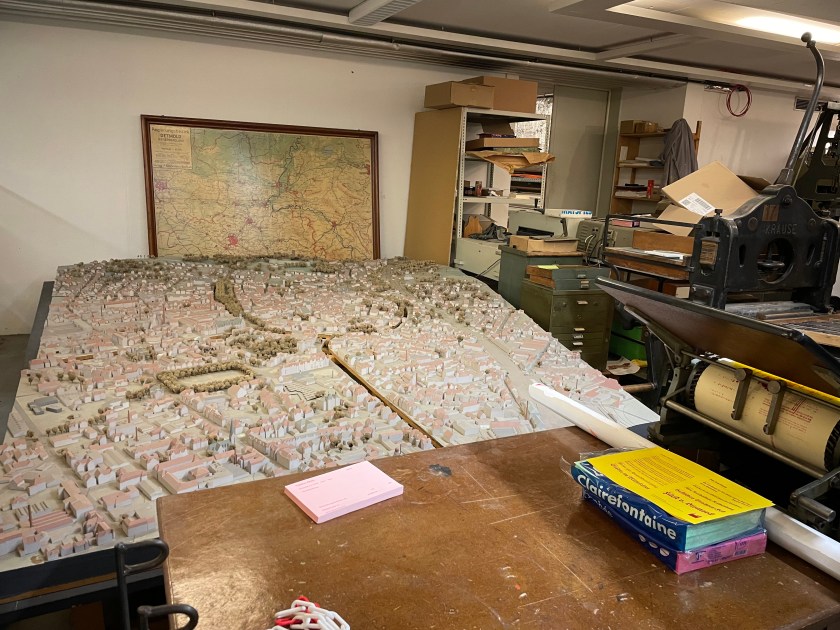
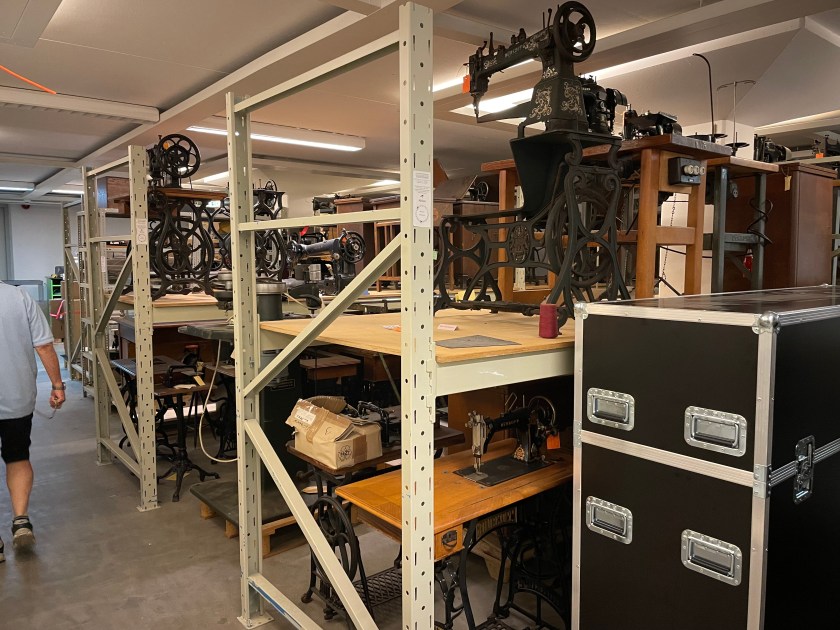
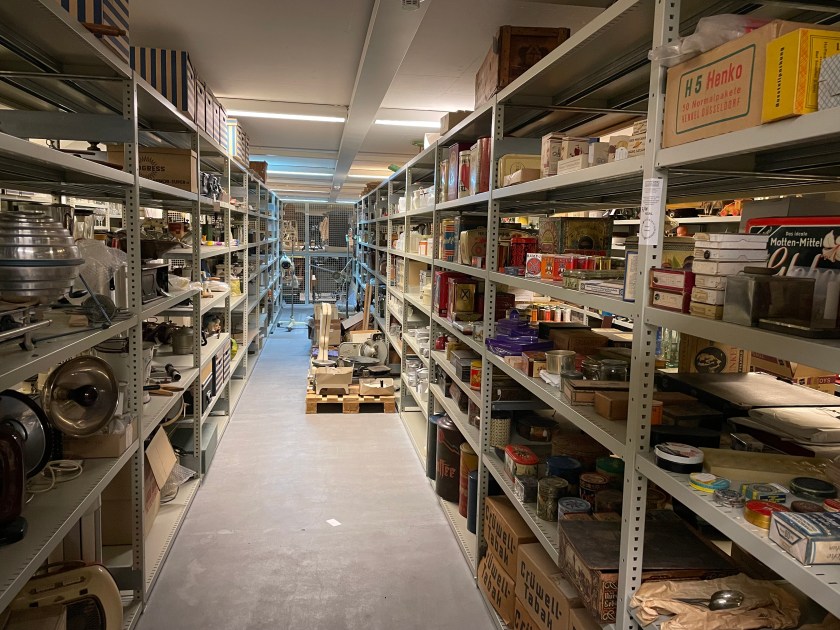
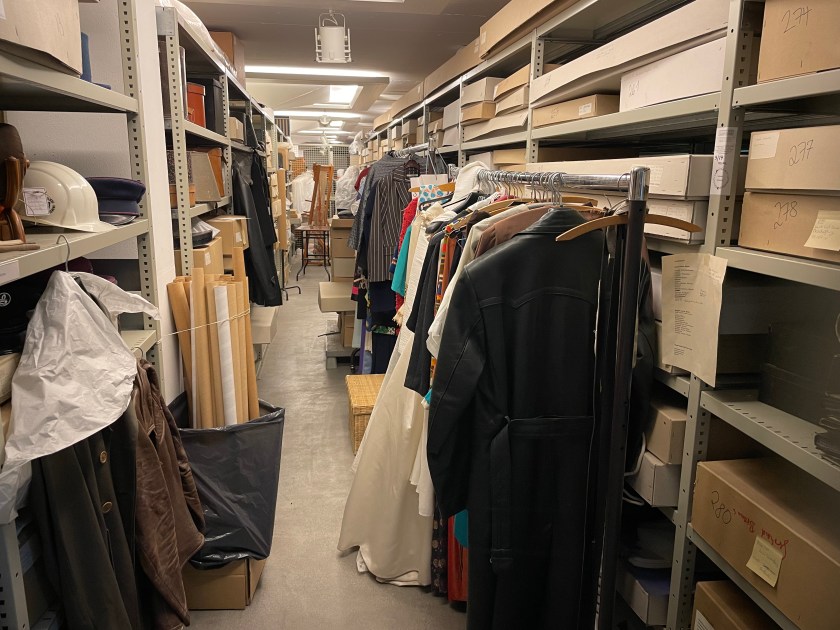
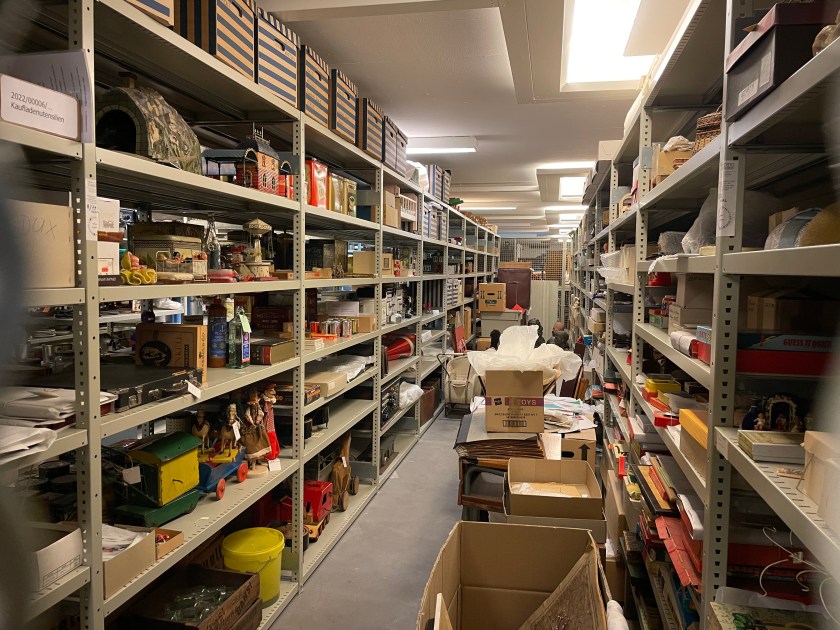
The museum was great–the best part was that they took us down into the underground storage areas of the museum where we saw rows and rows of shelves filled with treasures that may never see the light of day up above in the displays. They are working on a panorama of Bielefeld down here.
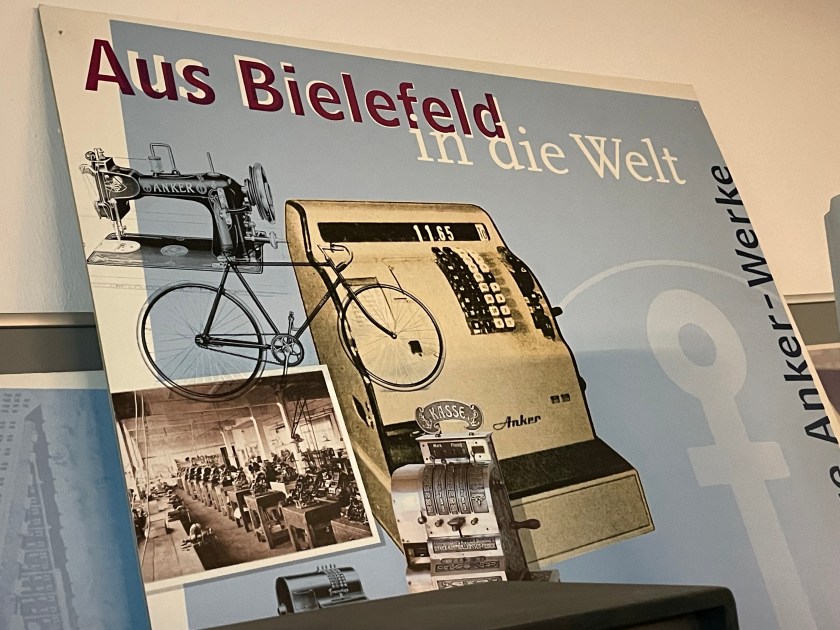
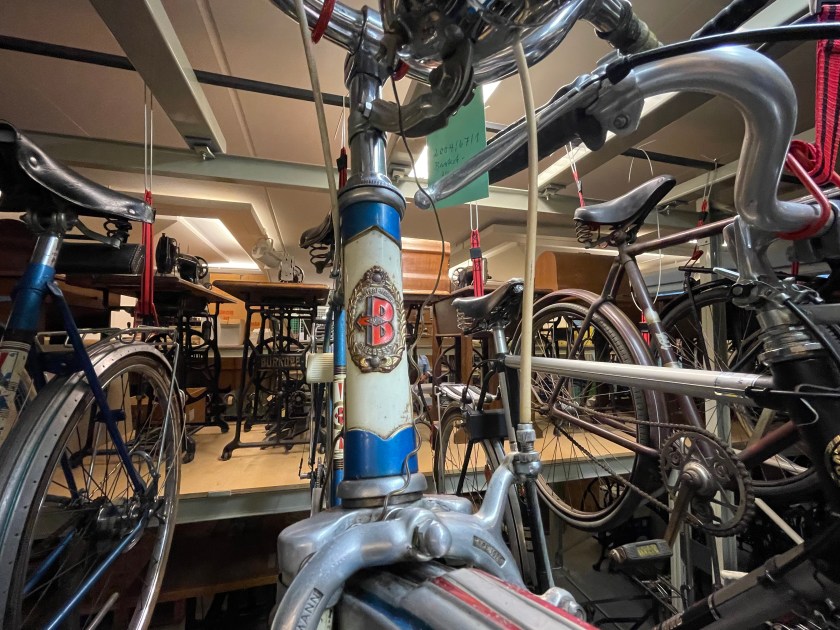
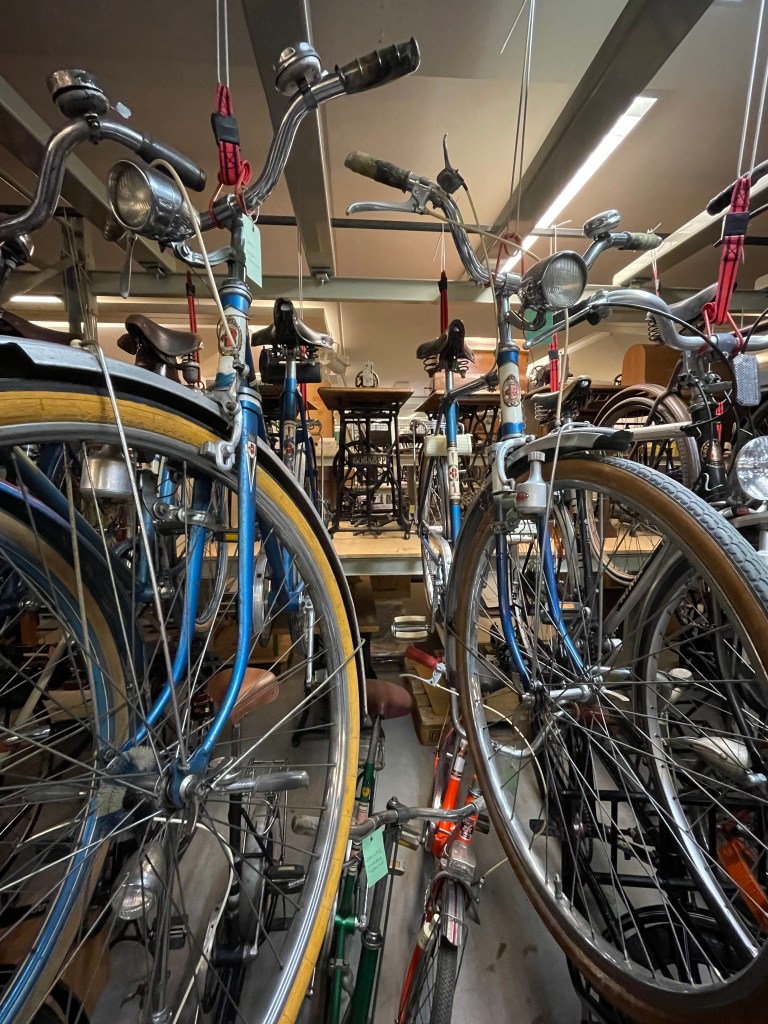
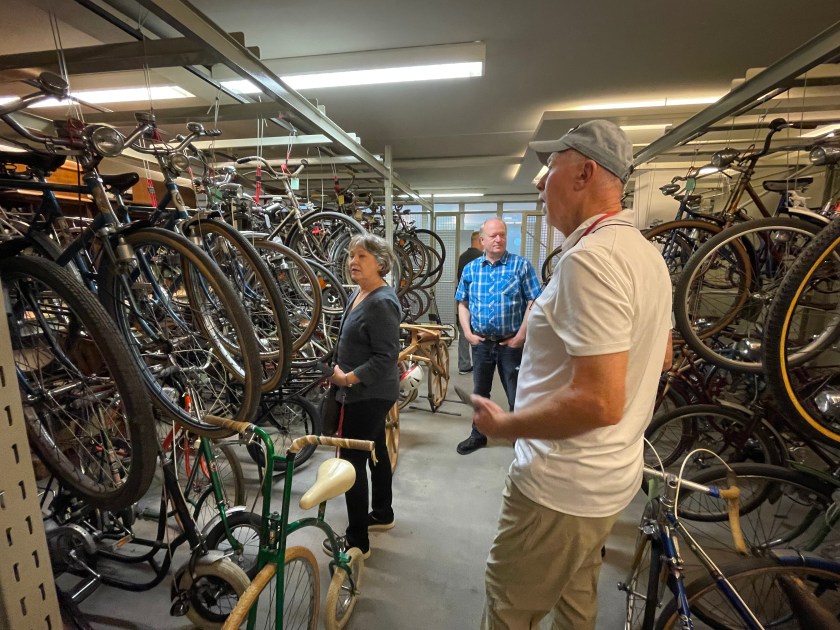
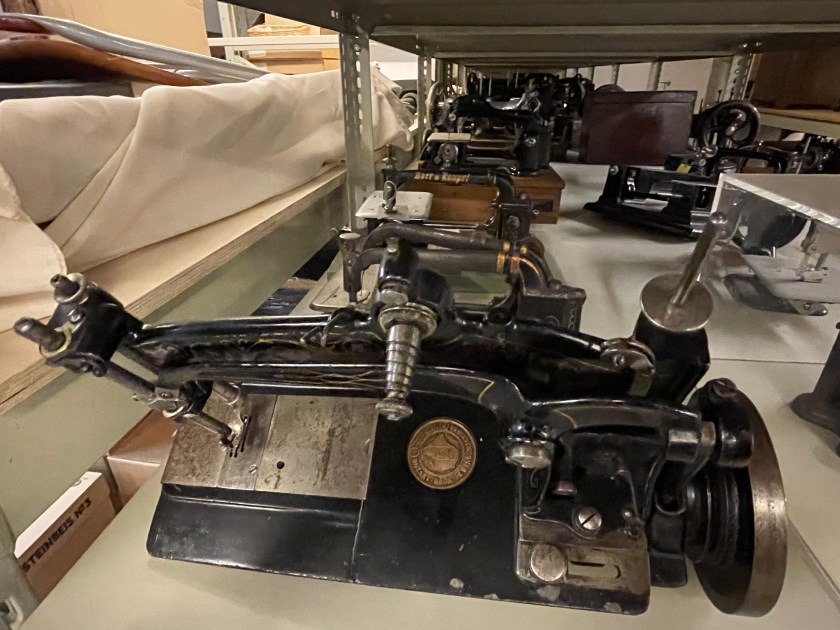
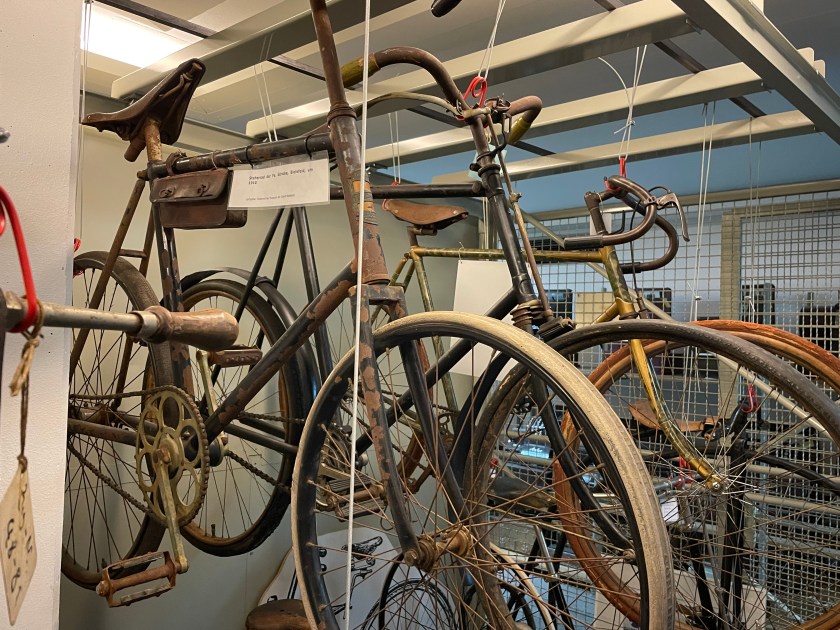
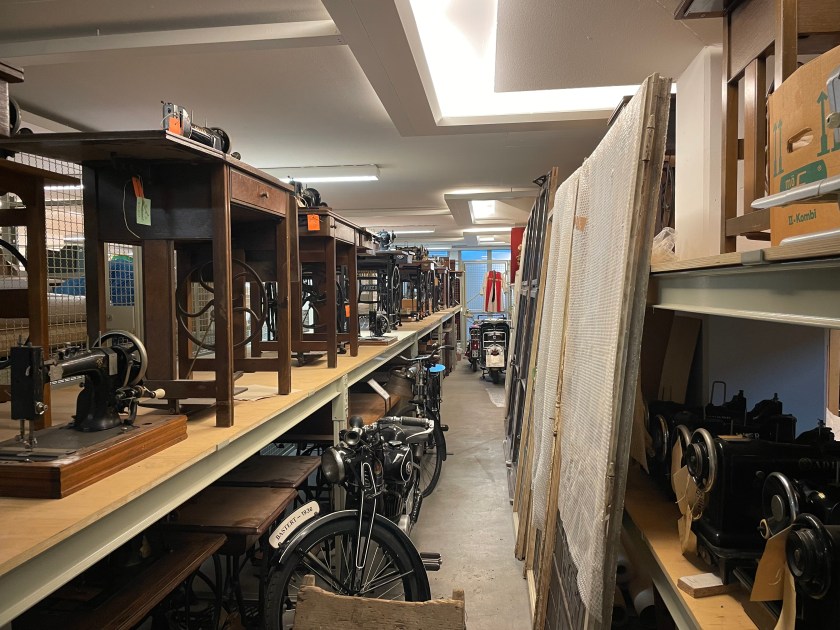
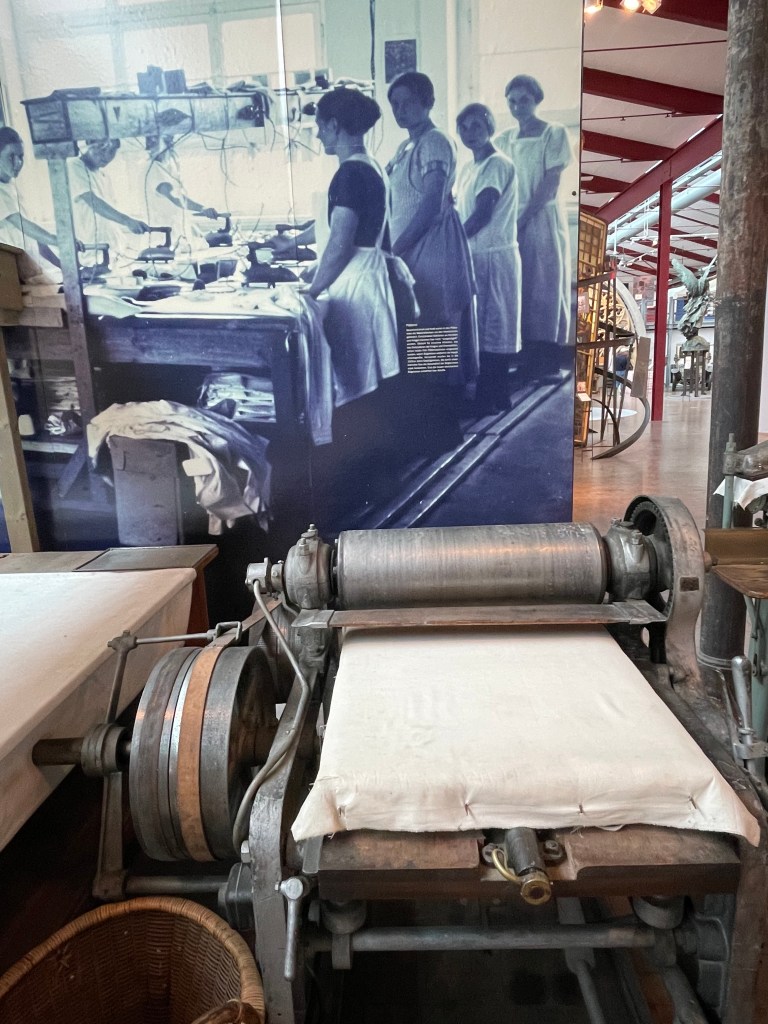
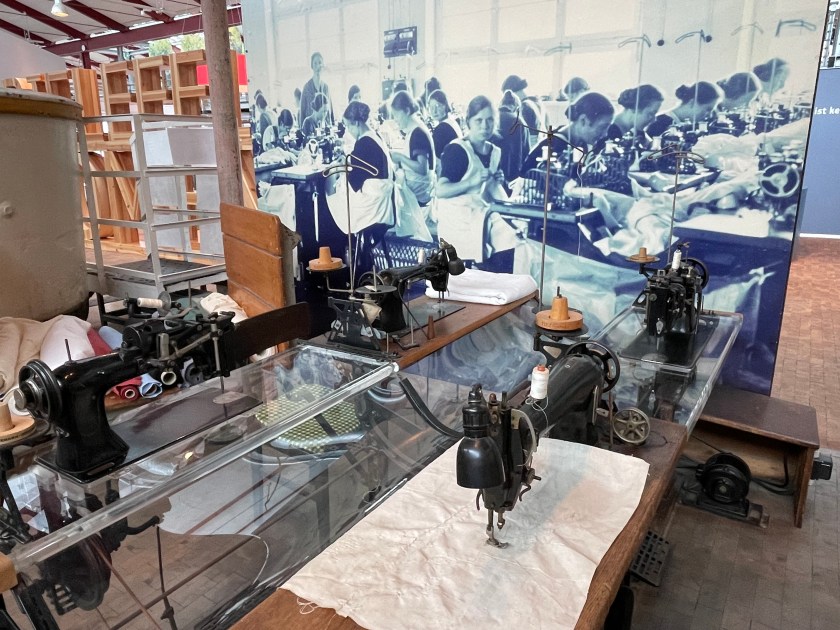
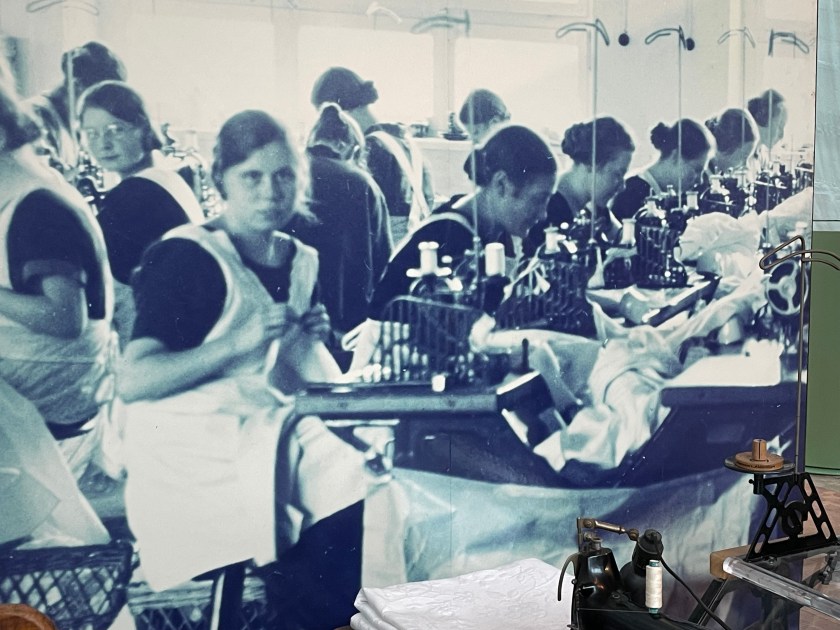
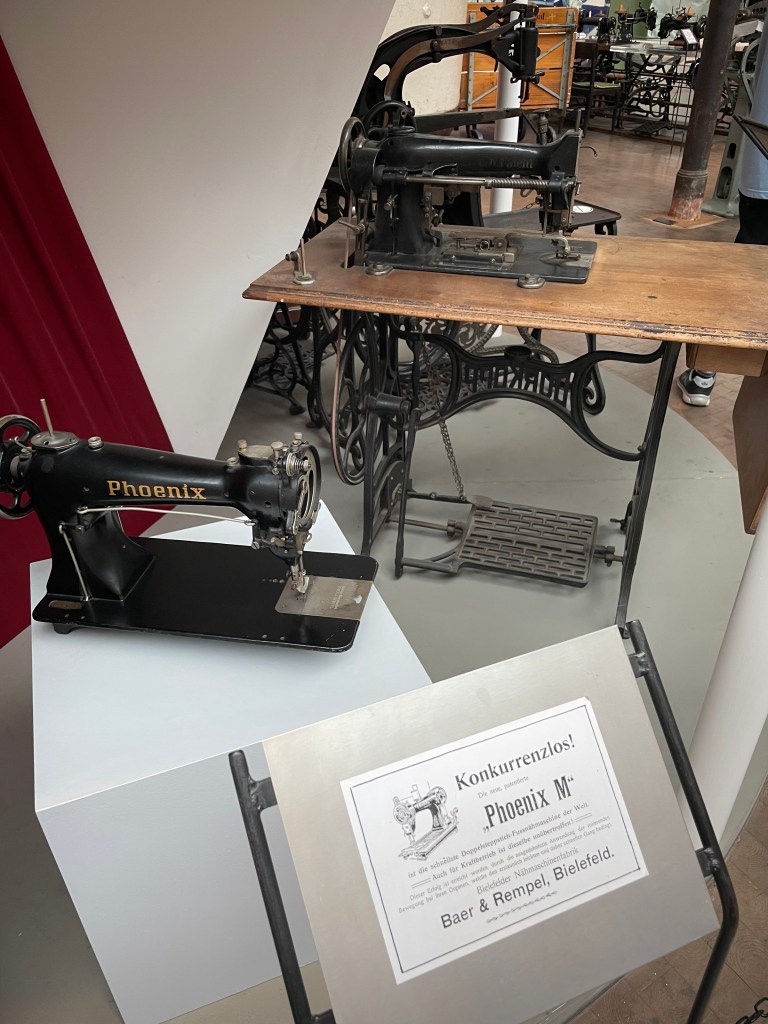
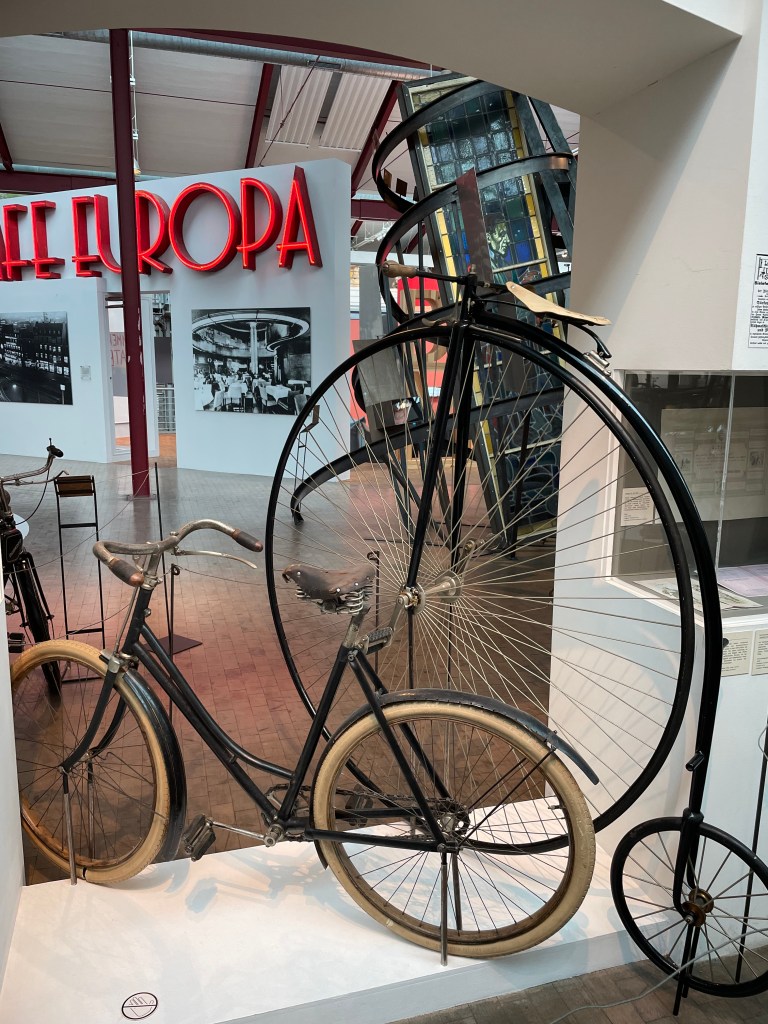
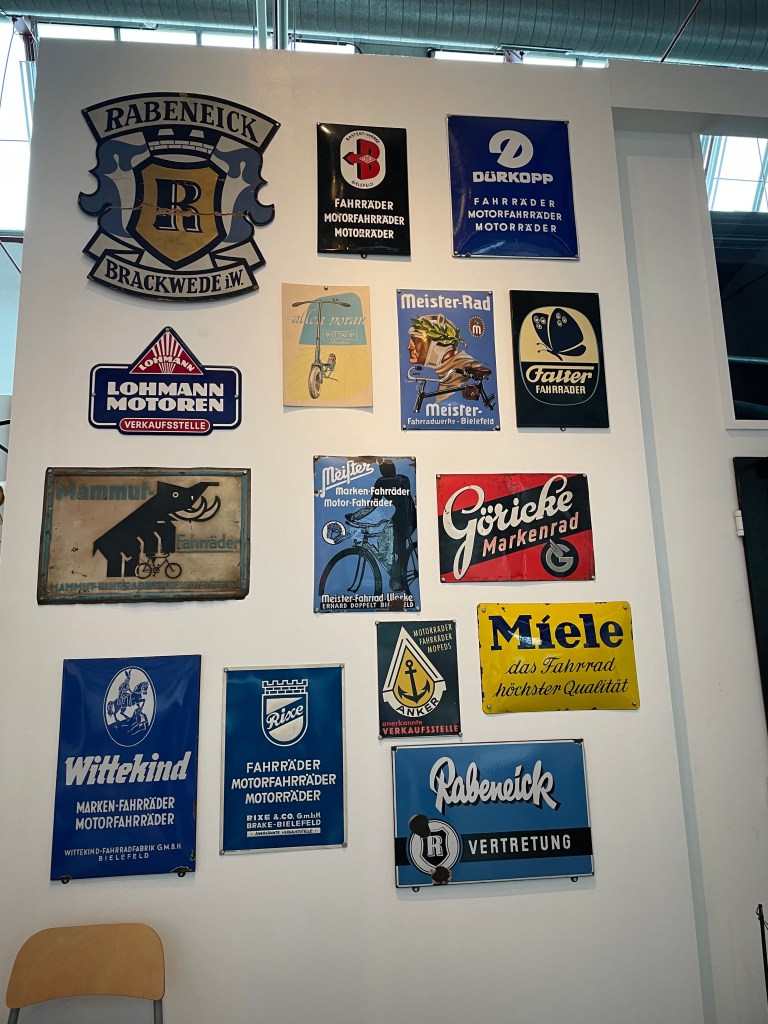
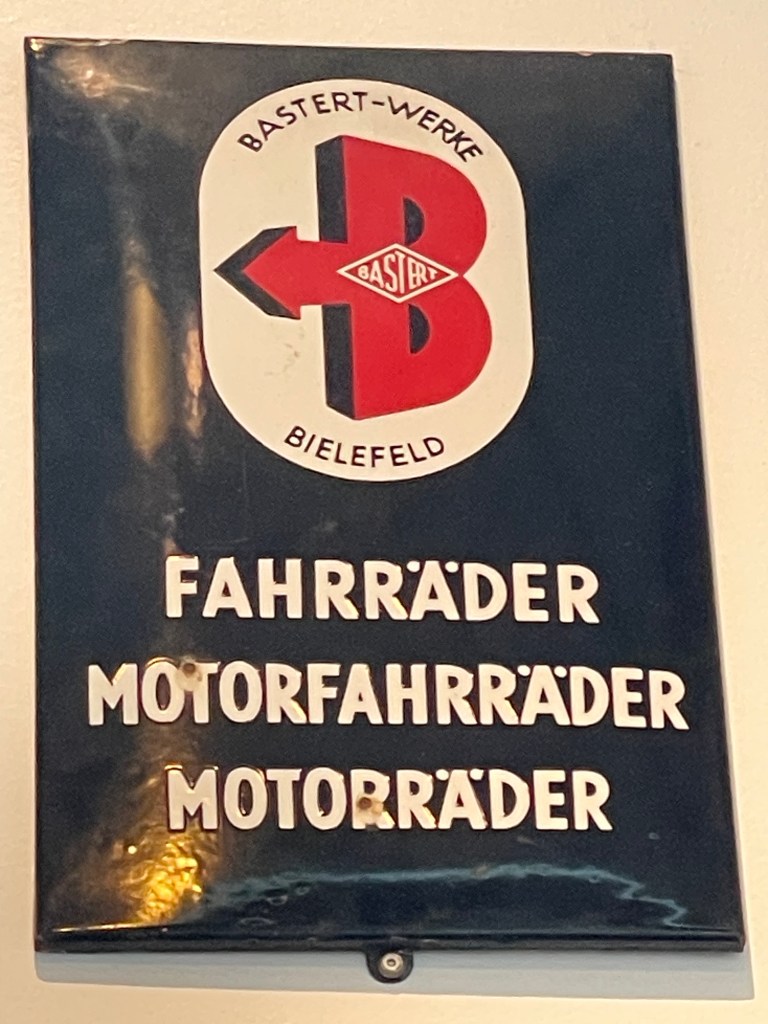
In the basement they showed us Bastert bicycles and motorcycles in their collections. Bielefeld had several factories–there was a big factory that made sewing machines, a factory that made adding machines, linen making factories with weavers, and factories where clothing was sewn. This basement storage area was filled with items from these factories through the years.
I volunteered to be the photographer today and tomorrow, so I’m including ALL of the photos I took for the family here.

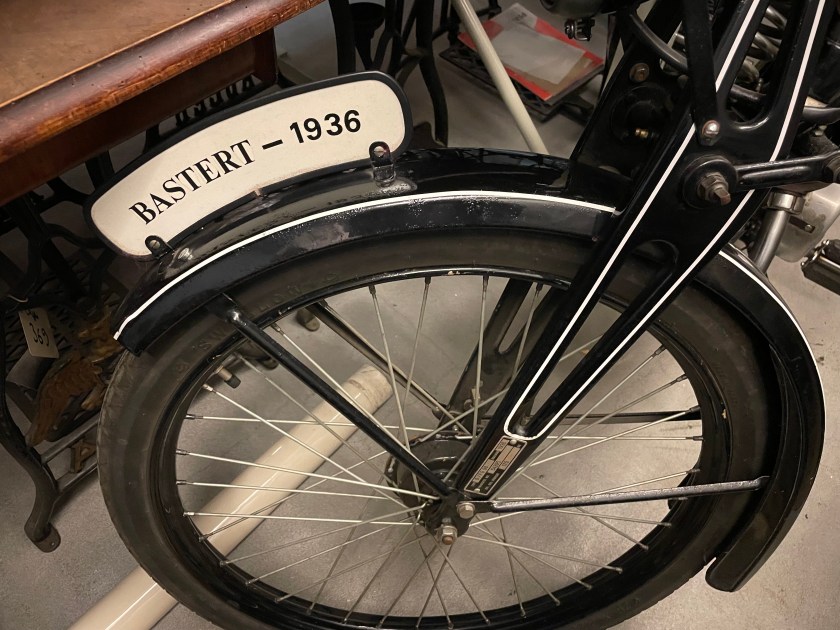
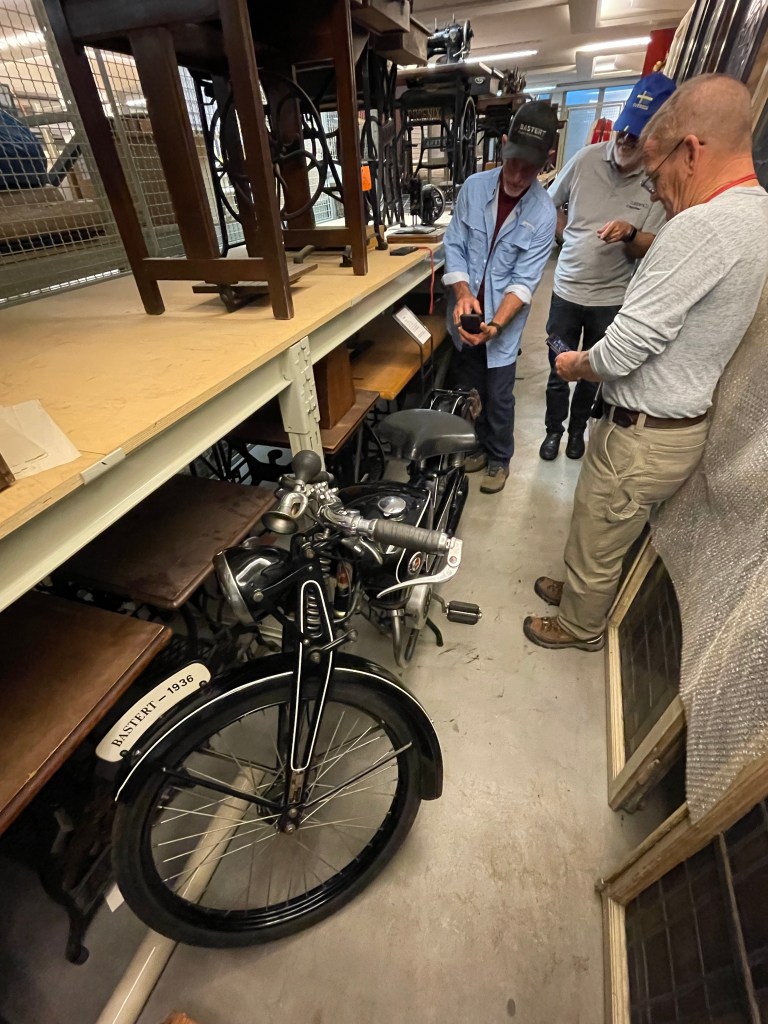


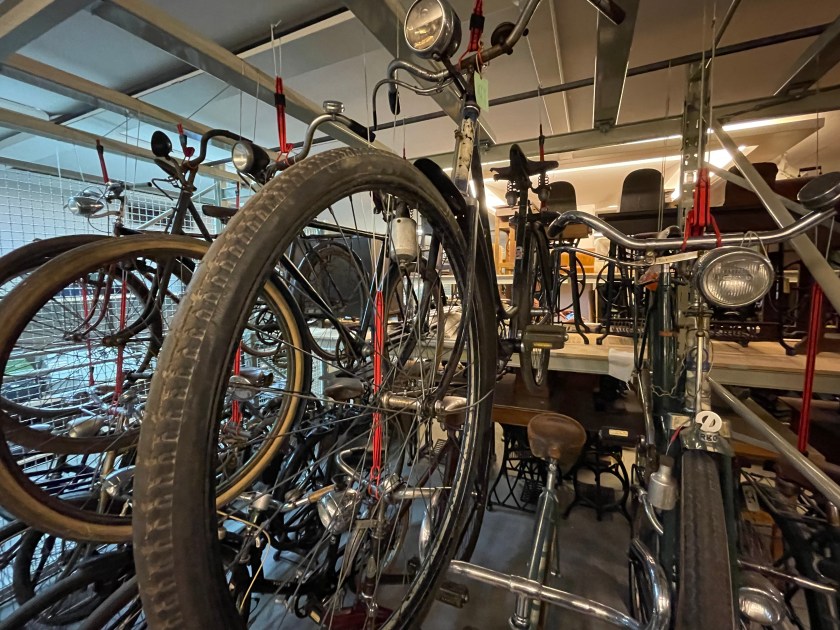
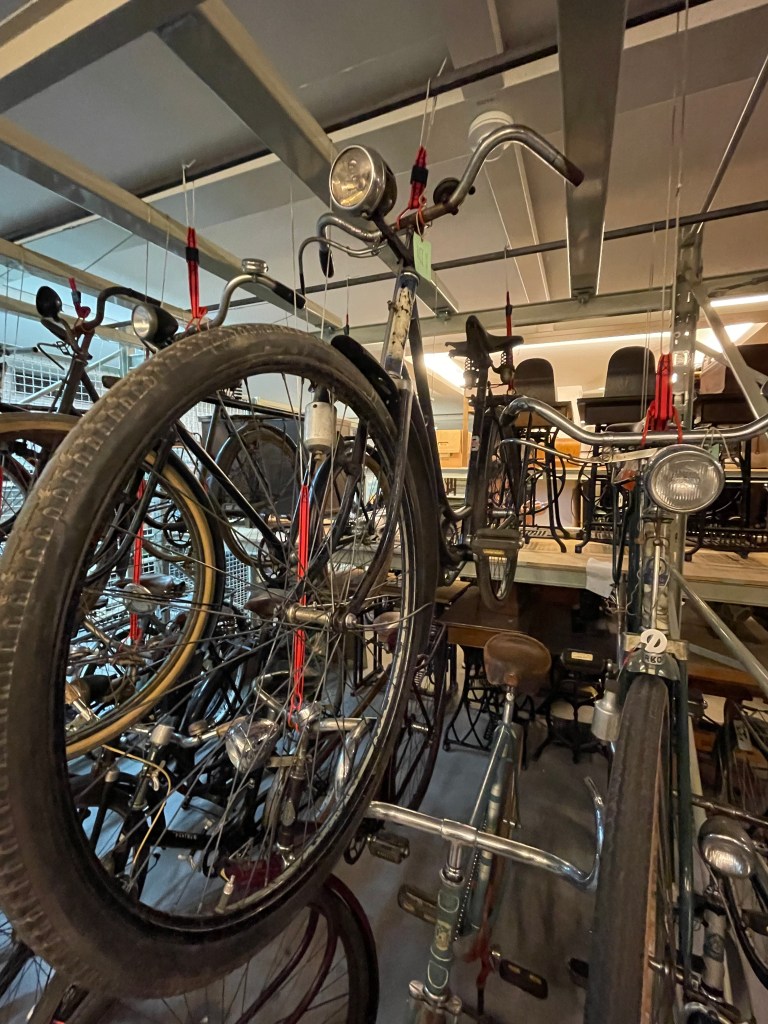

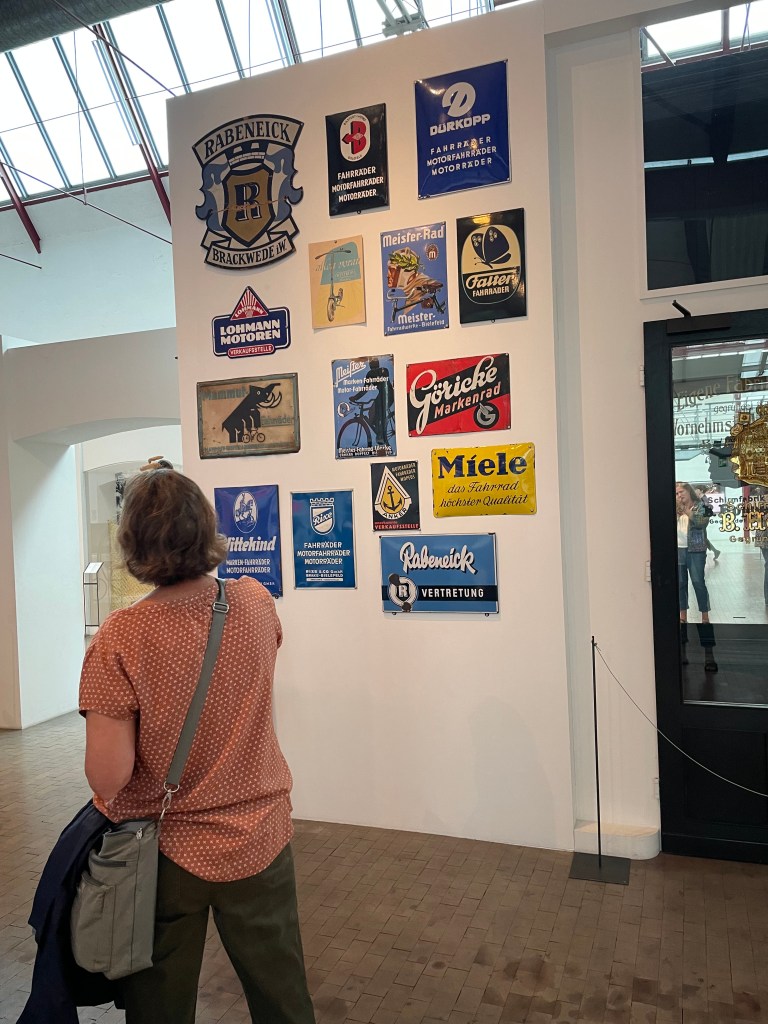
Many of these bikes had the Bastert factory emblem on them.
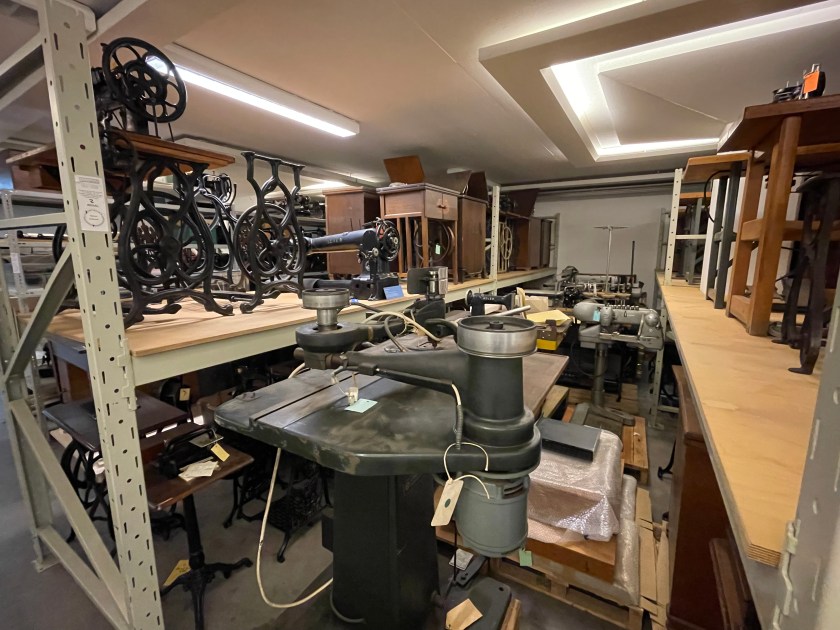
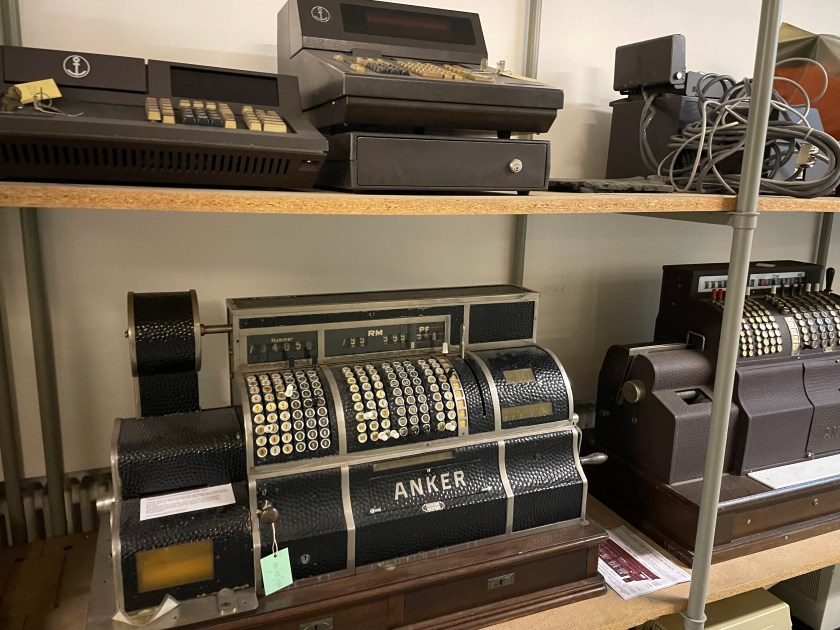
There were also rows and rows of historical household items and clothing.

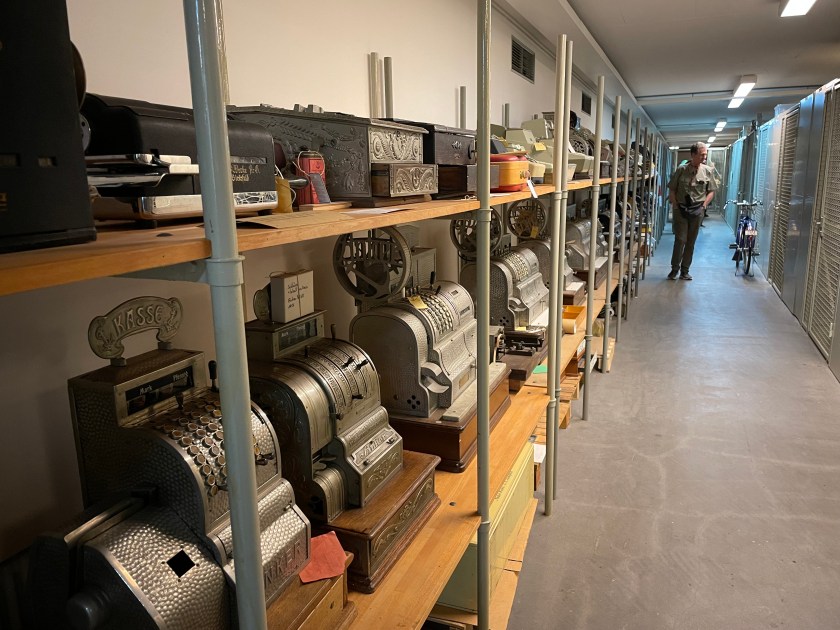


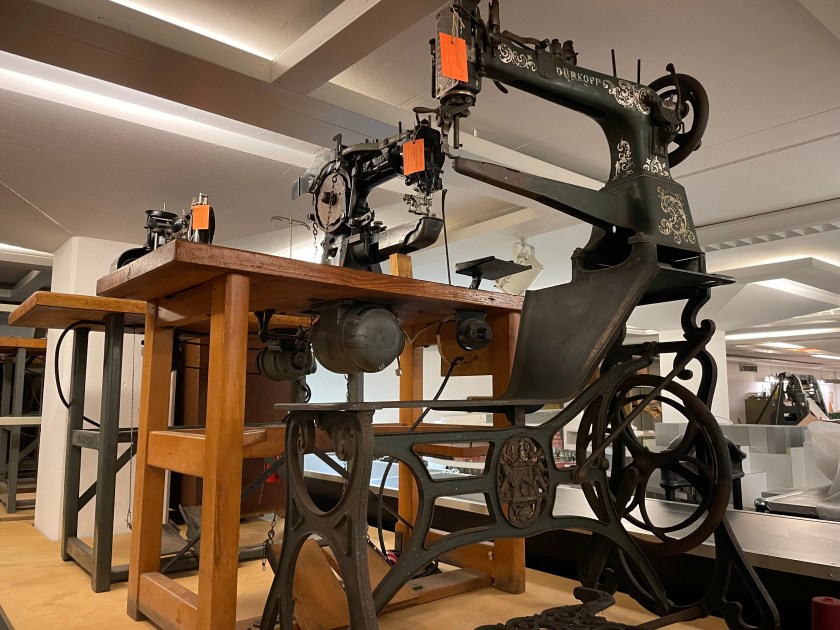
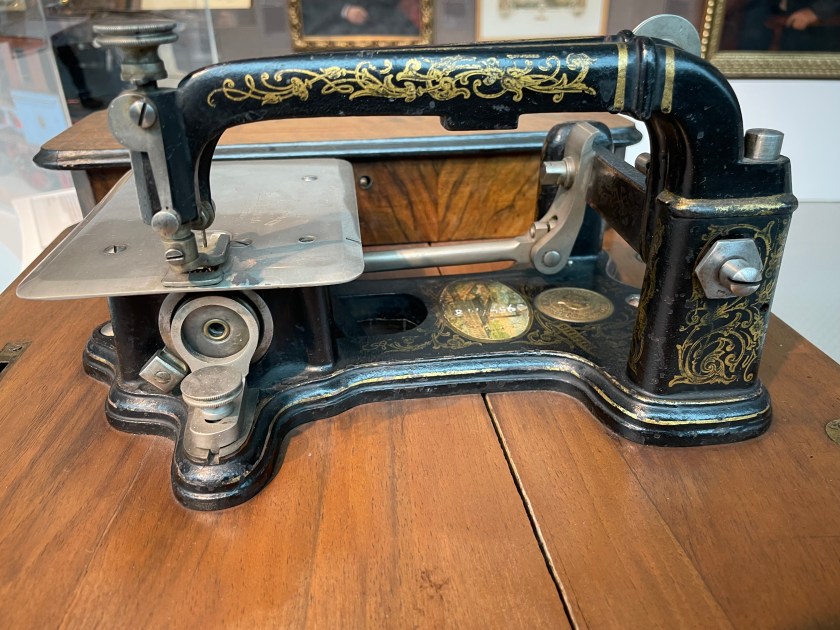
I’ve never seen so many vintage sewing machines in one place.
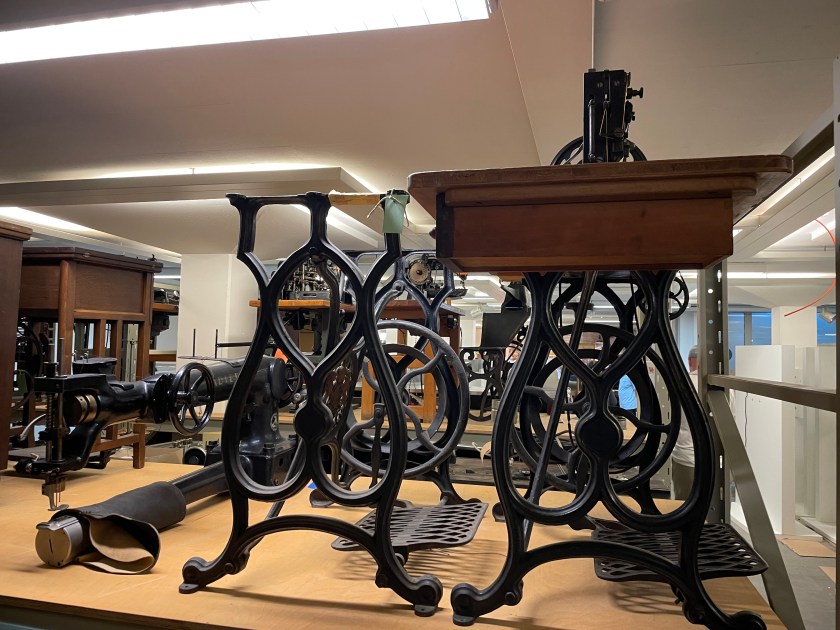
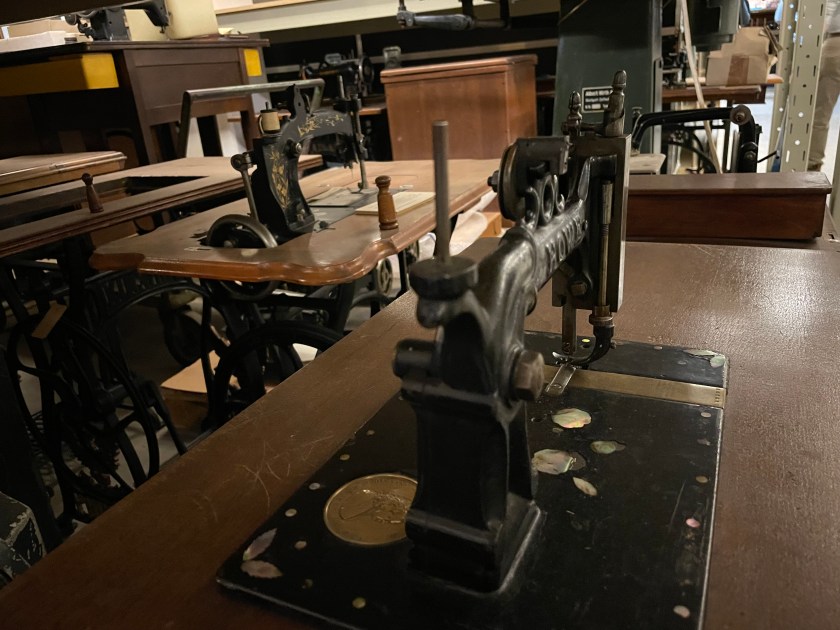
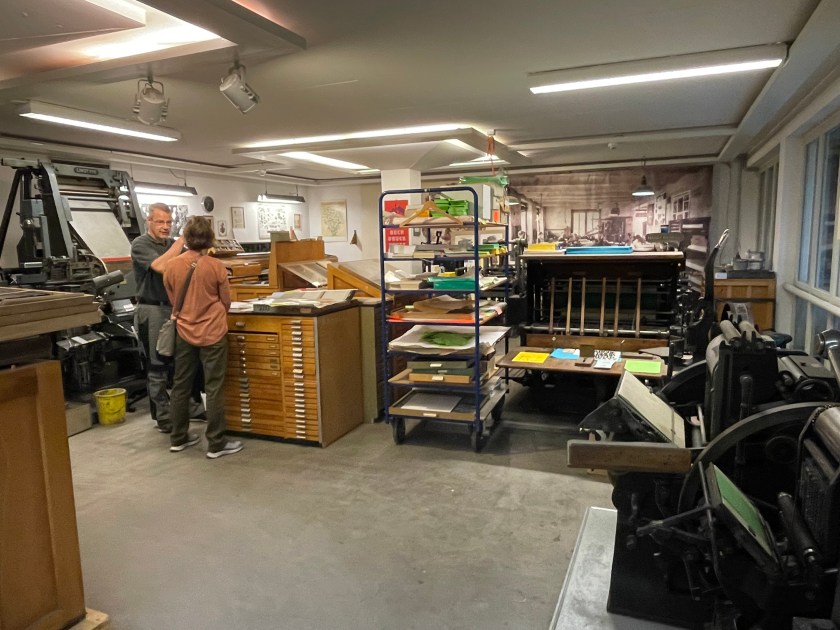
Where the historians work:
Then we went back up above ground. Volker said that last time he was there, they had a Heulering hut display, that would’ve been the type of housing the Bastert family lived in 6 generations ago when they were tennant or sharecropper farmers. That was the generation I researched. The father was Caspar Heinrich Bastert. Three of his sons went to America in the 1850s. My project was about one of those sons, Peter Bastert. I was sorry that display had been taken down.
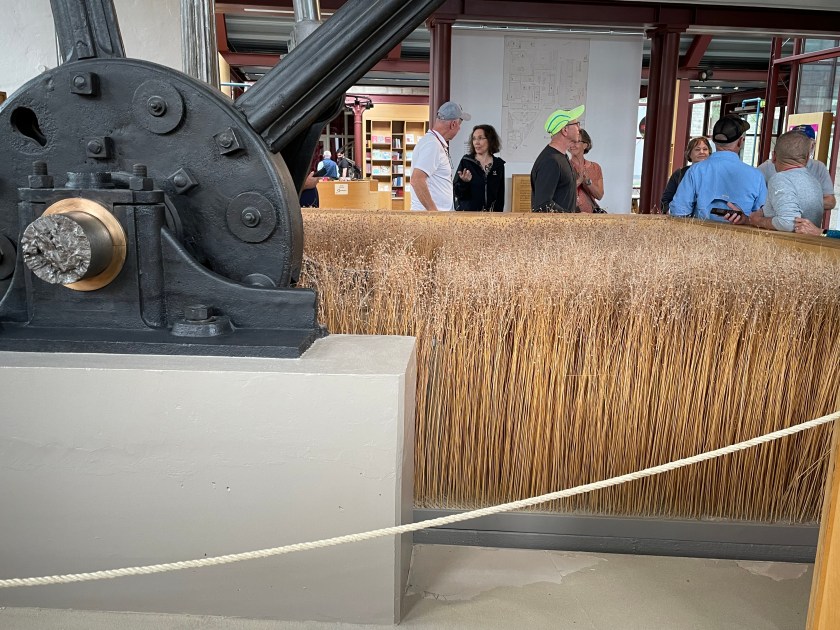
This display shows how the flax is harvested and prepared to make linen.


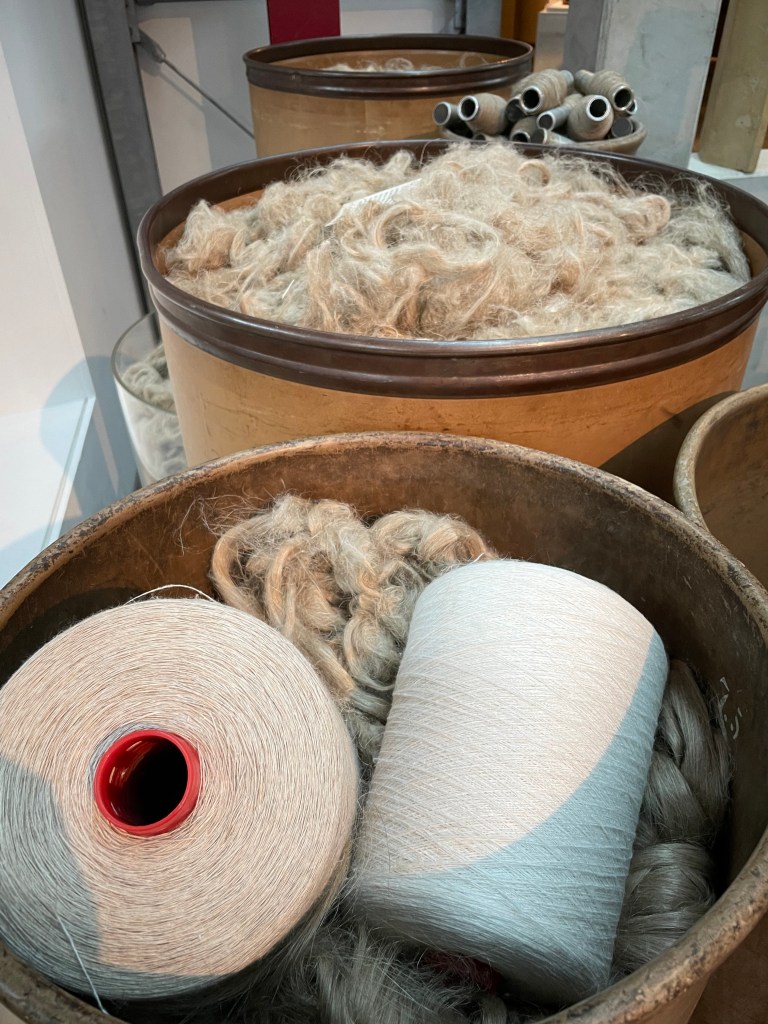
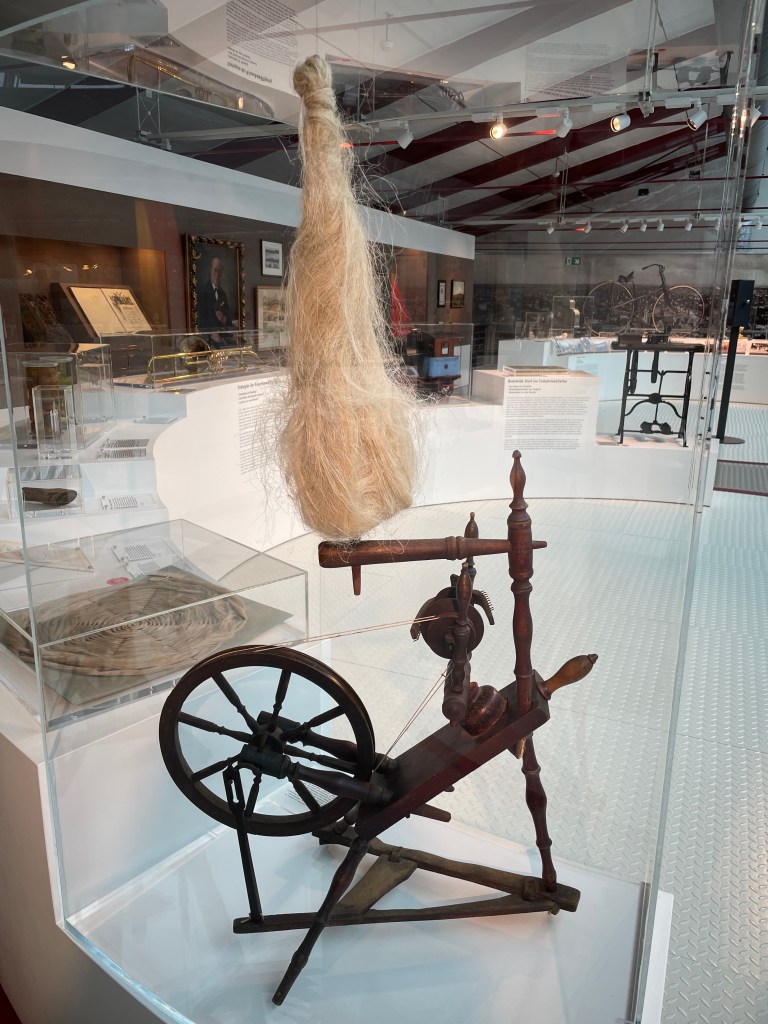
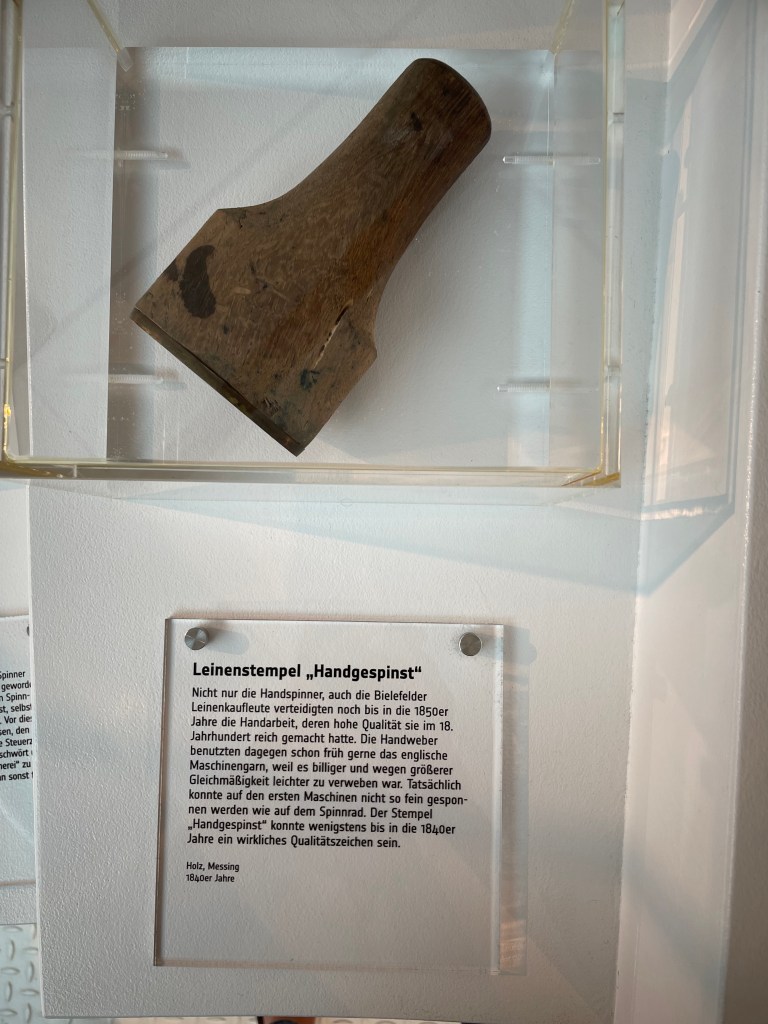
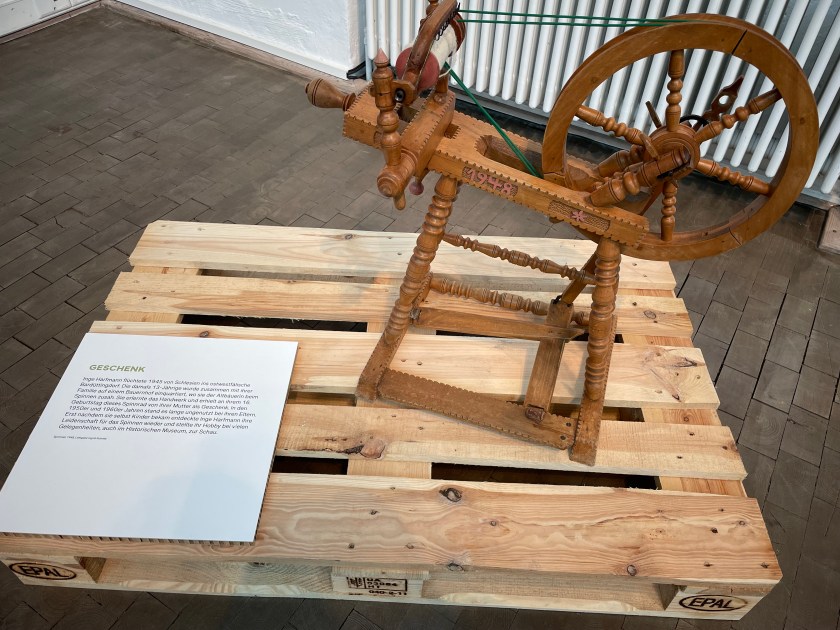
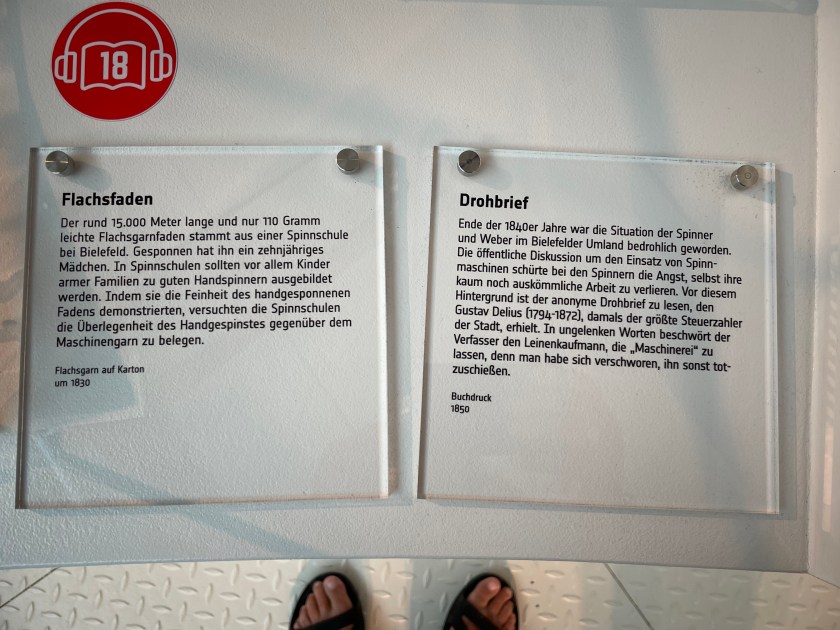
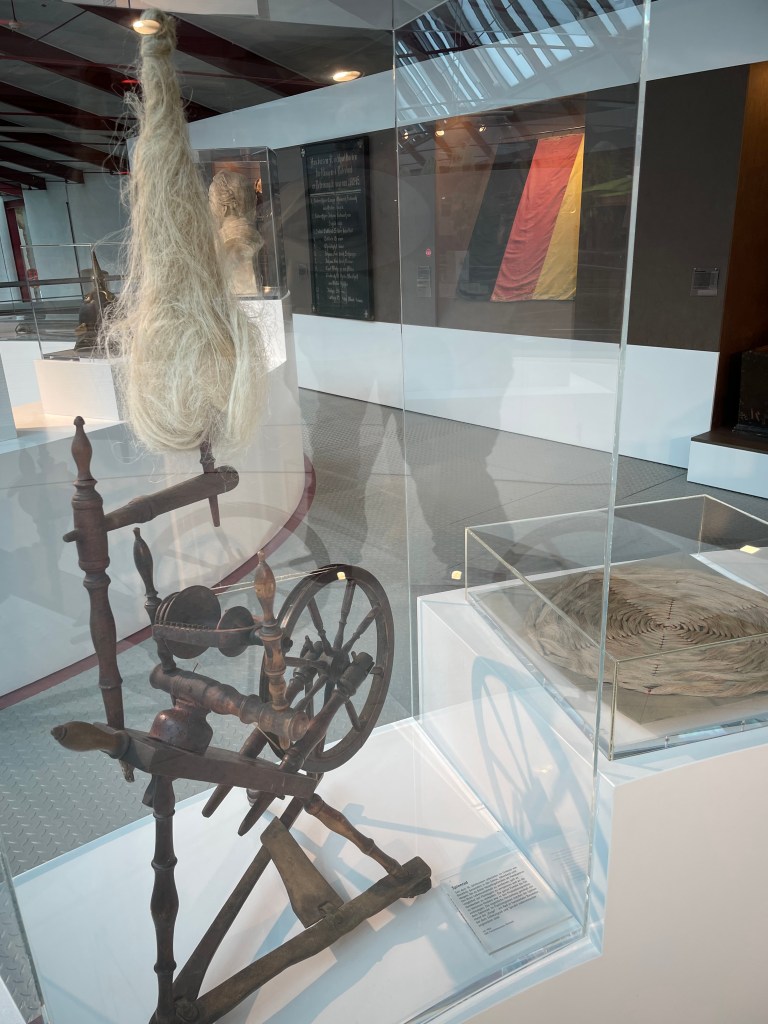

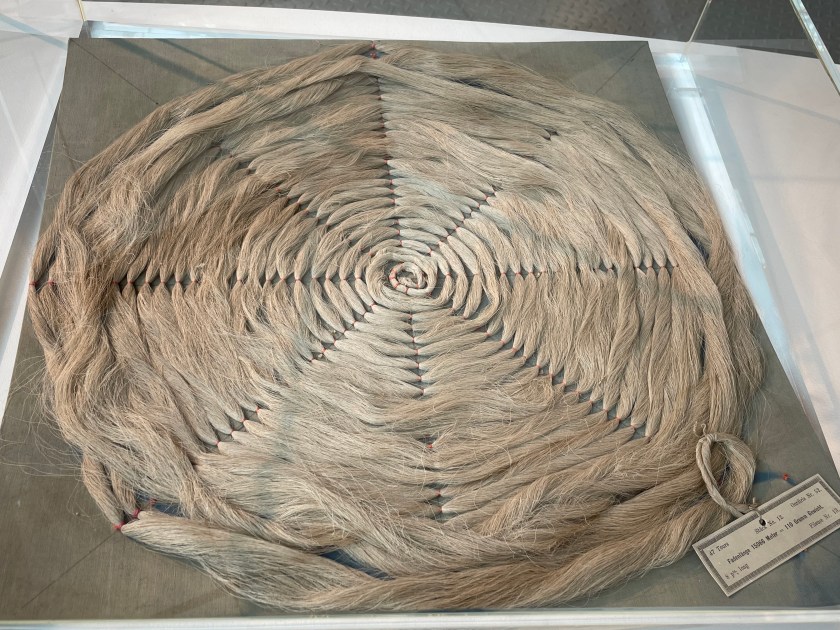
This mat was spun and made by a 12-year-old girl.
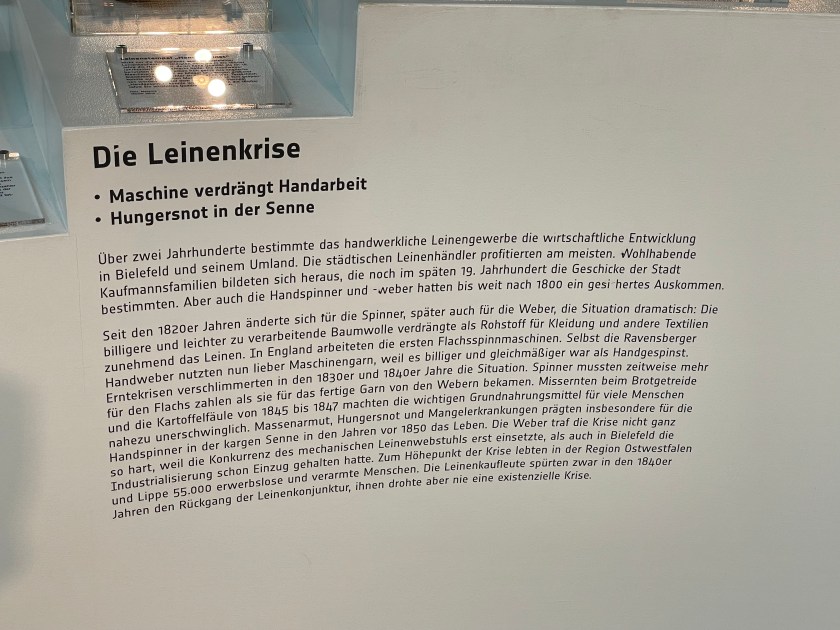
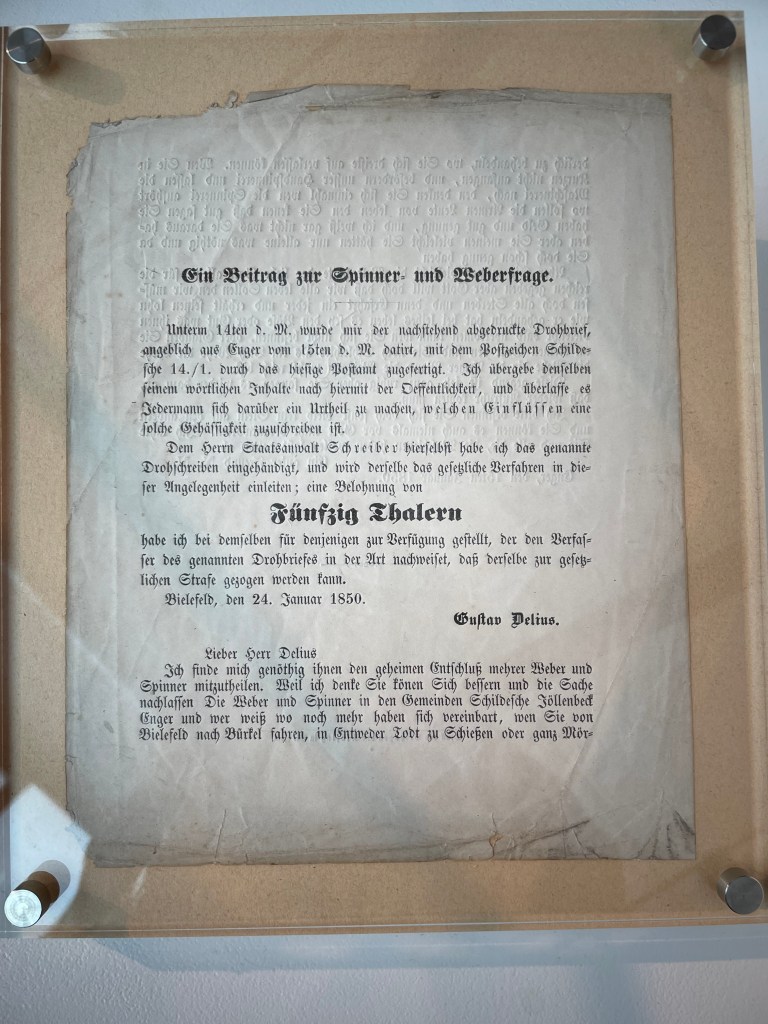
The contributions of spinners and weavers:
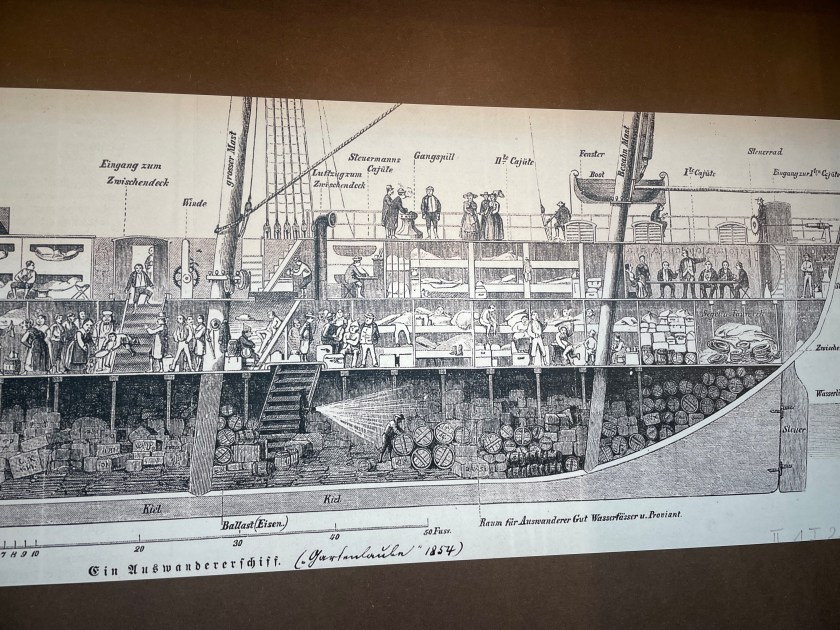
This display shows what life was like on a passenger ship in 1854, the very year Peter Bastert immigrated to America.


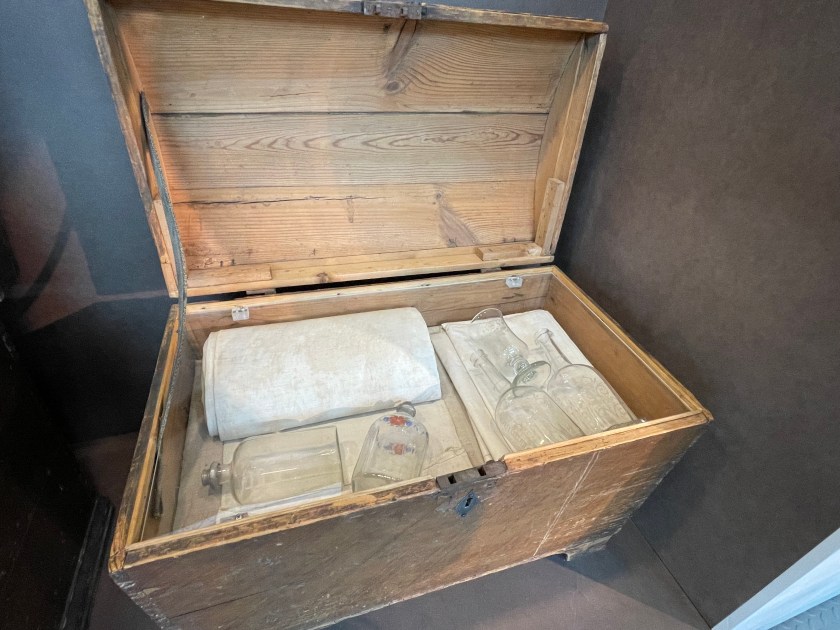
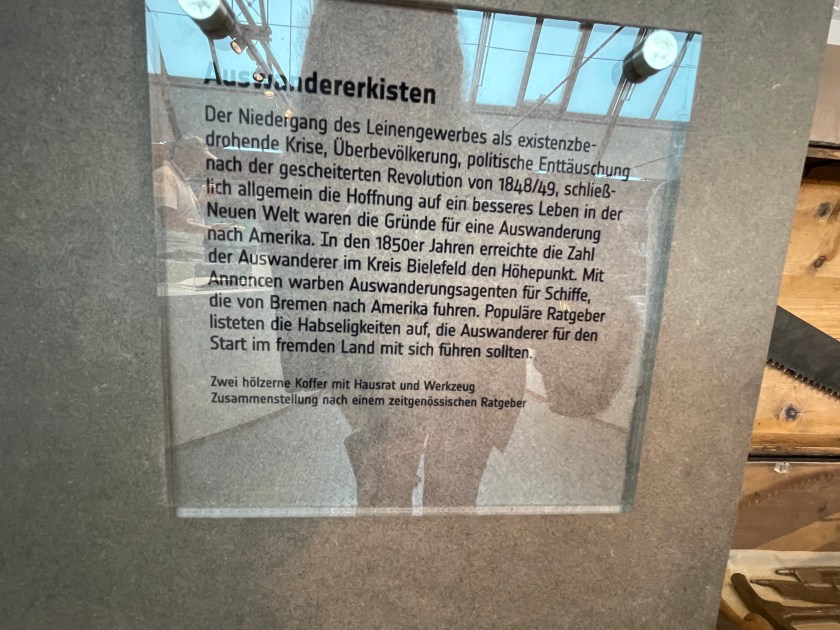
These are passenger trunks, packed for travel.
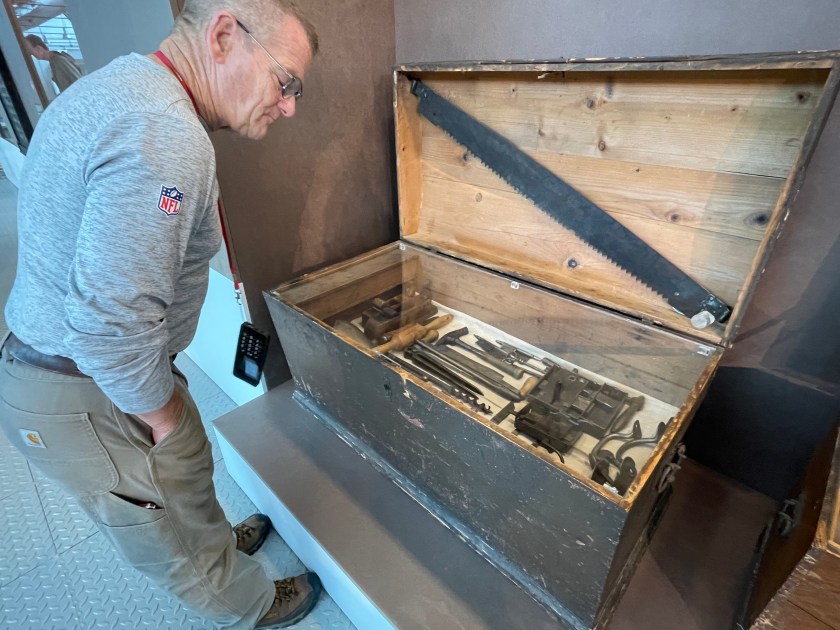
A tradesman’s tools.
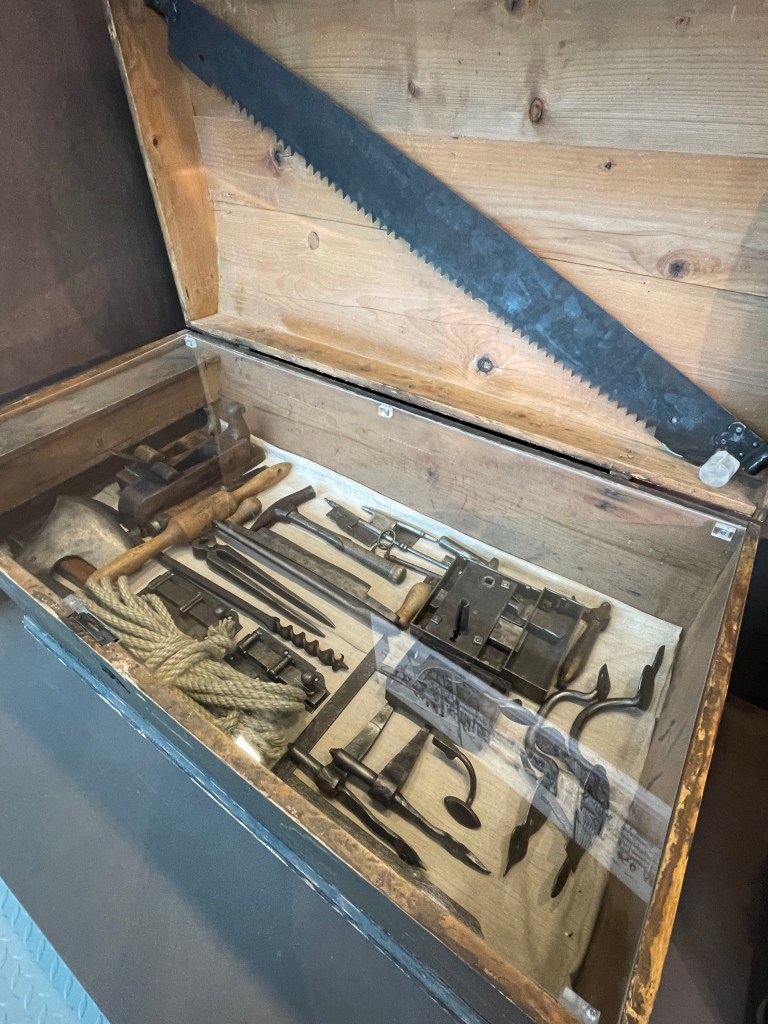
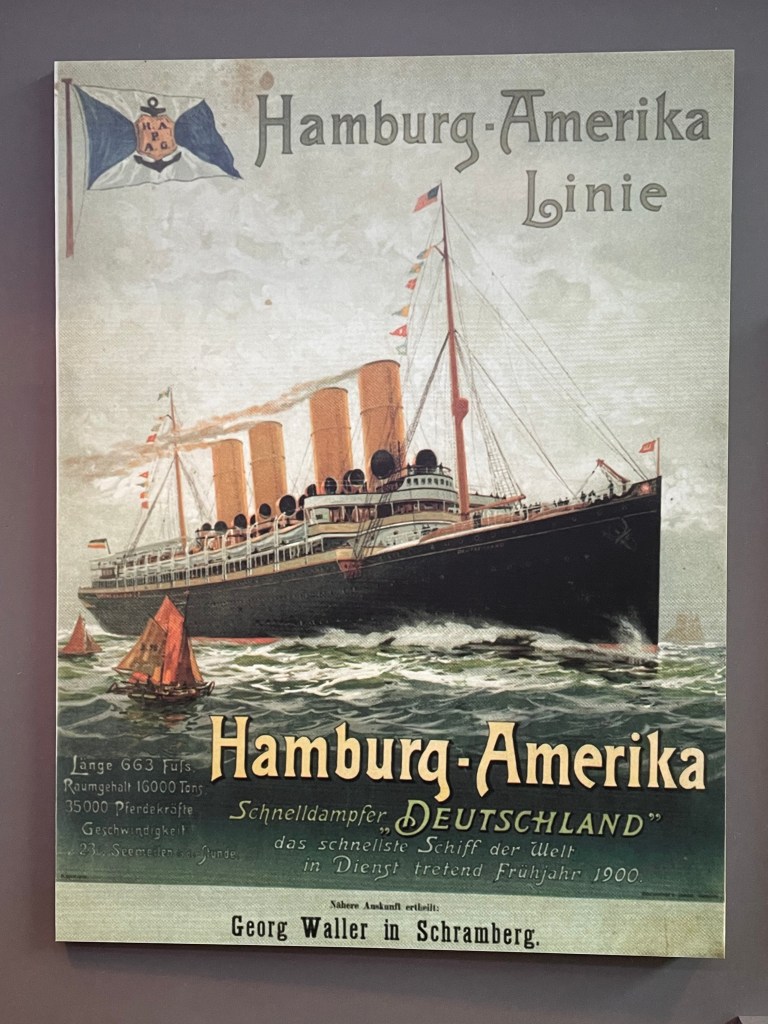
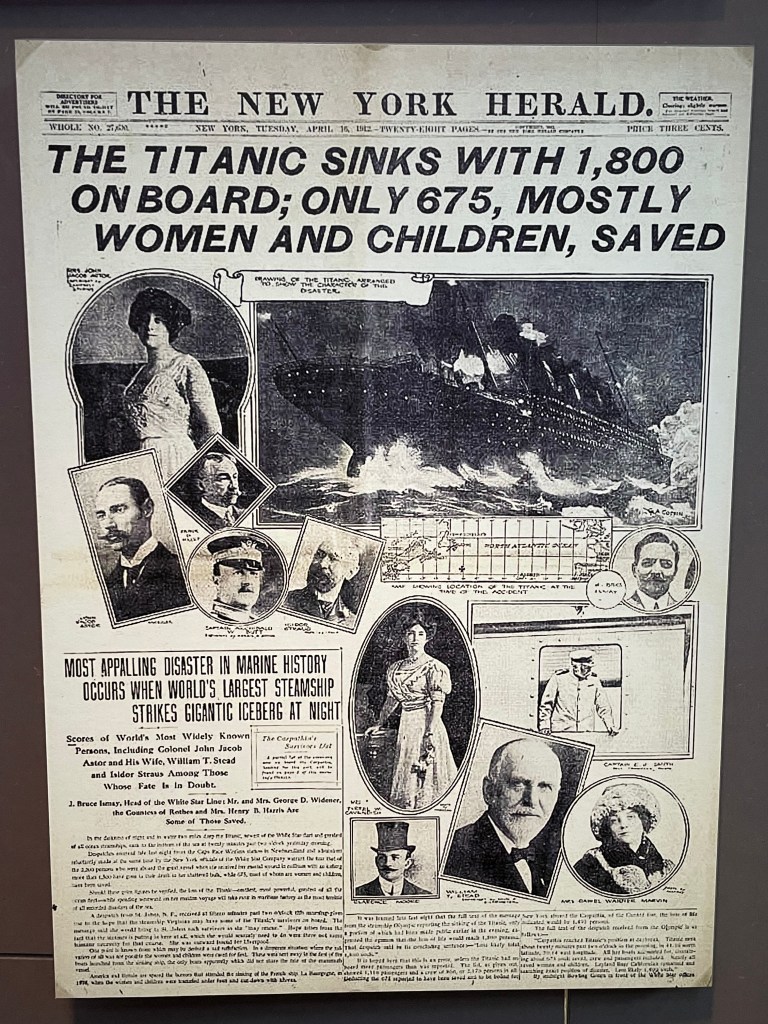
Many people left Bielefeld in the 1850s to immigrate to America. The Titanic sailed in 1912.
People hoped for a better life in the New World.
These are preserved potatoes that show the disease that caused crop failures during that time, leaving so many families hungry and without hope.

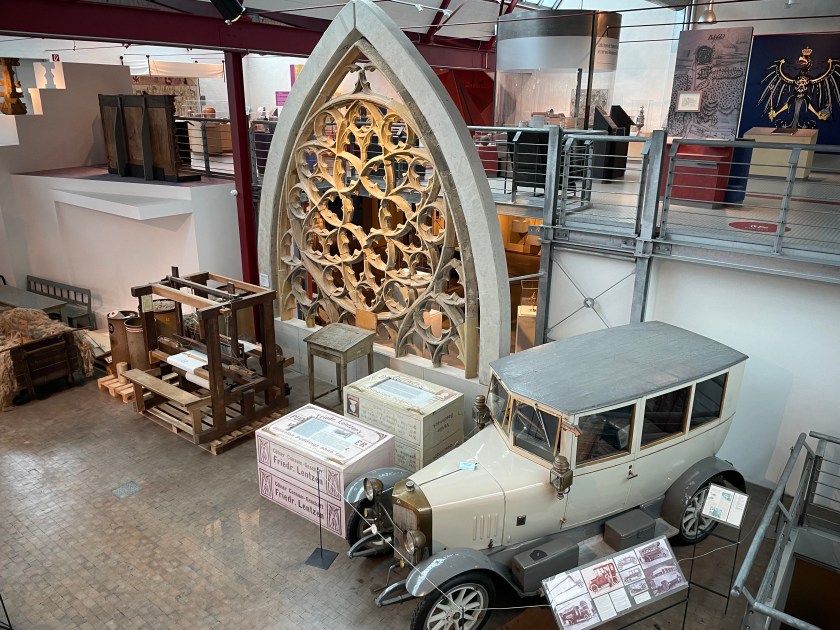
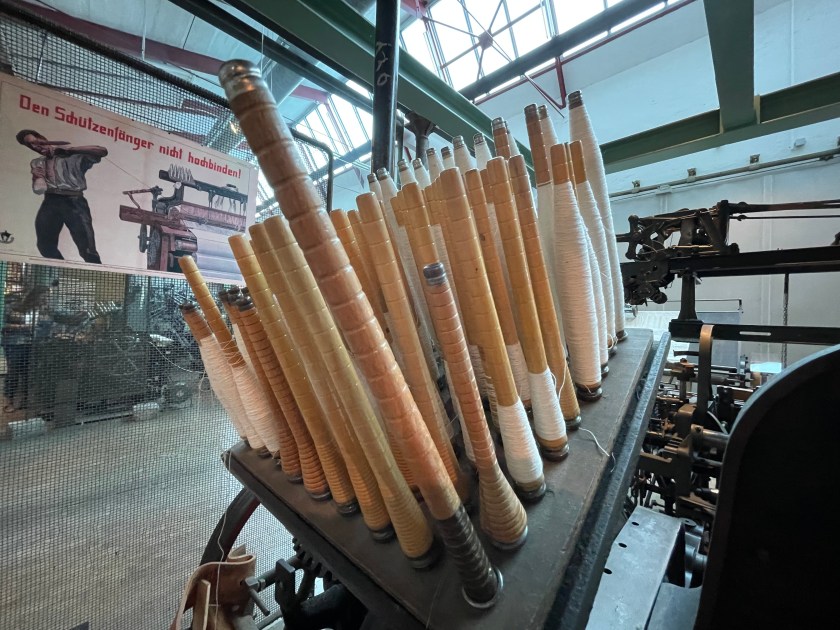
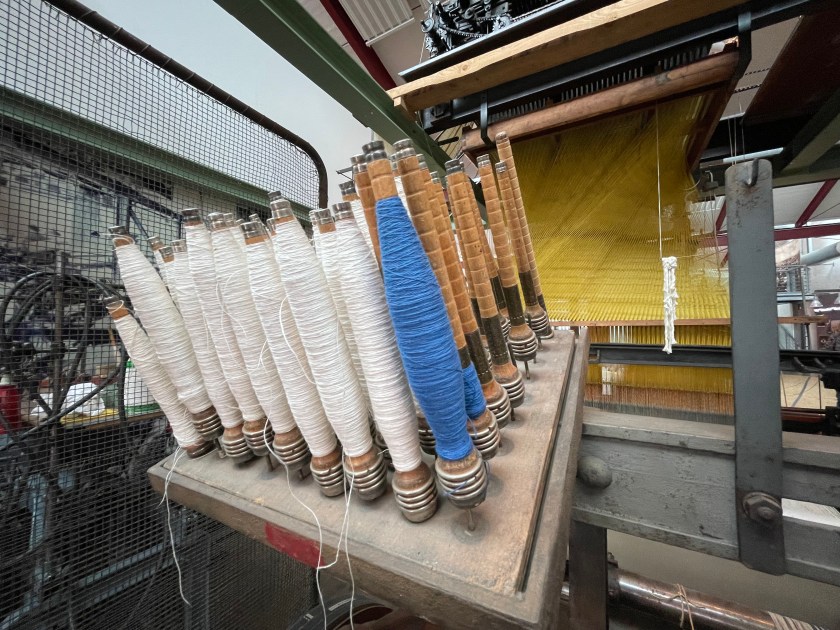
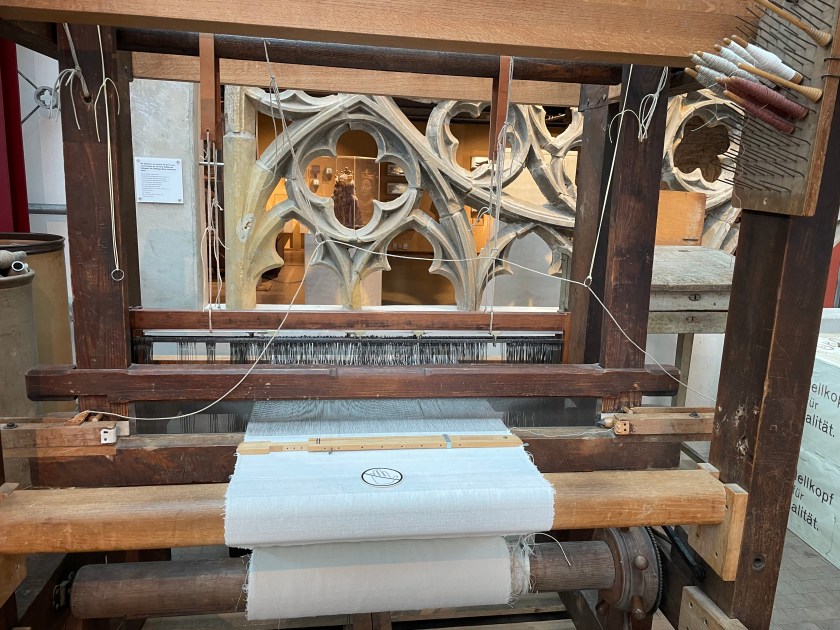
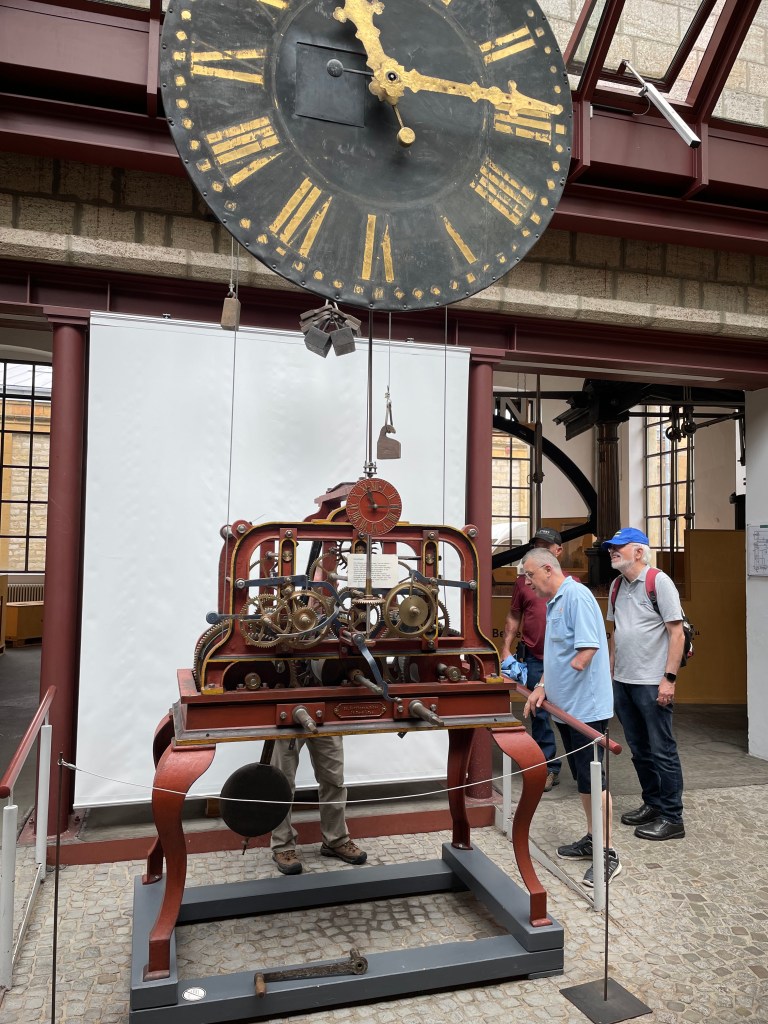
There were many generations of weaving looms and machines in the museum.


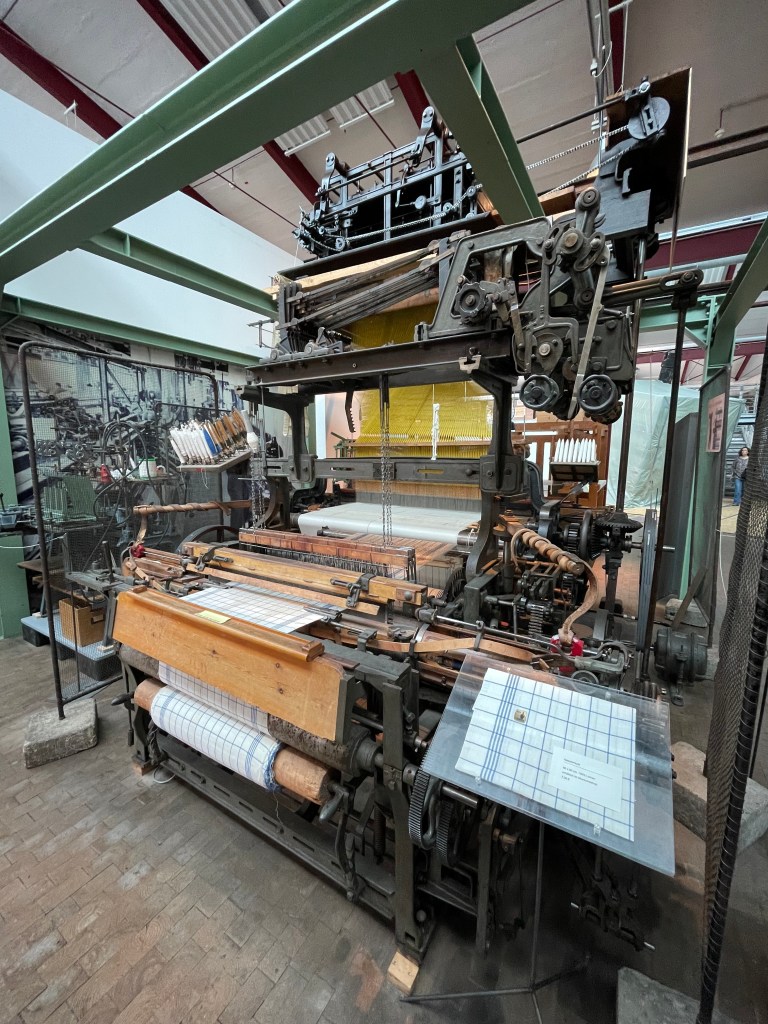
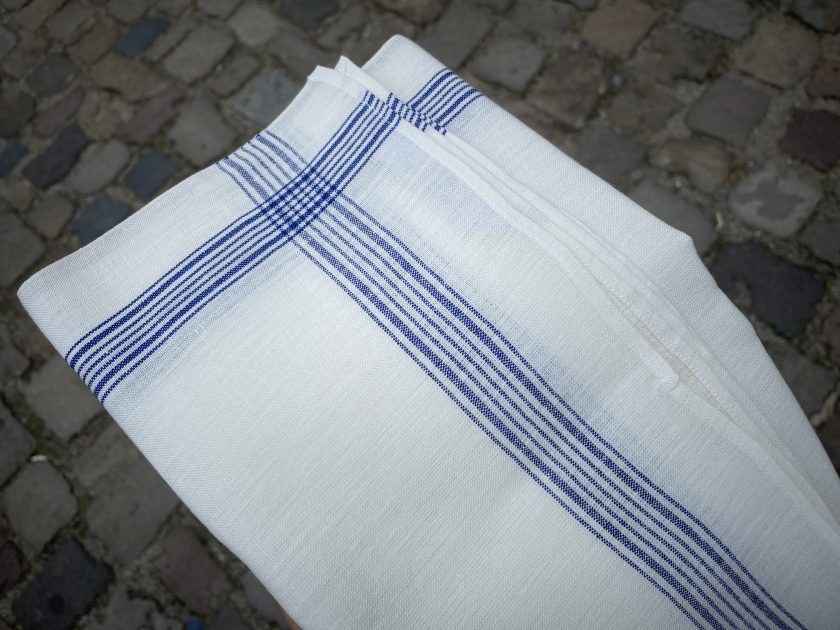
This is a traditional linen hand towel, still sold today, in fact, I bought one to remember this place.


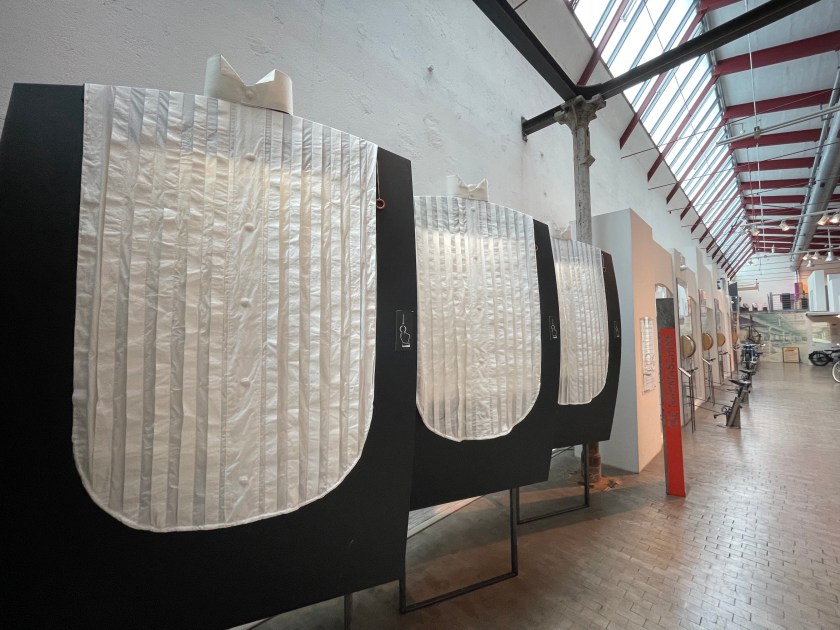
Here are samples of some of the clothing made in the factories.
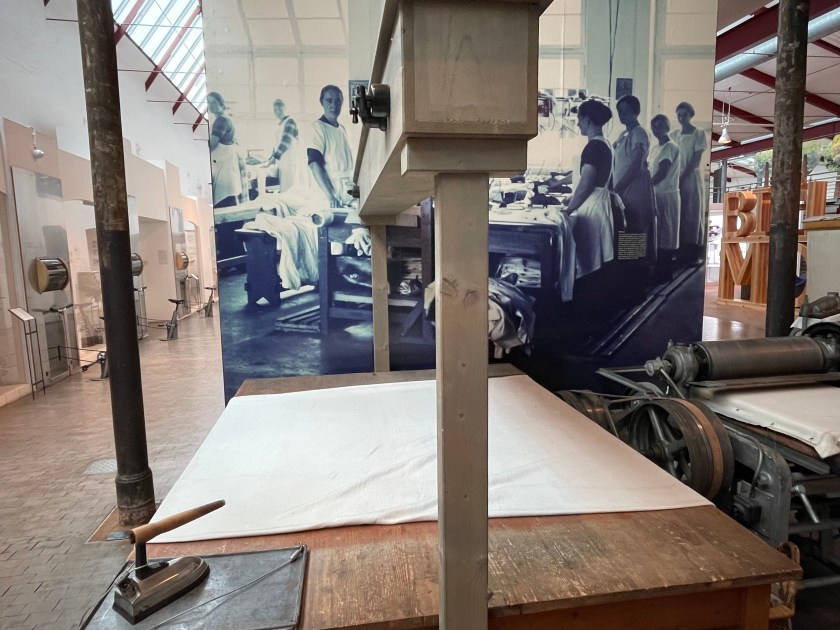





Men with their tools.

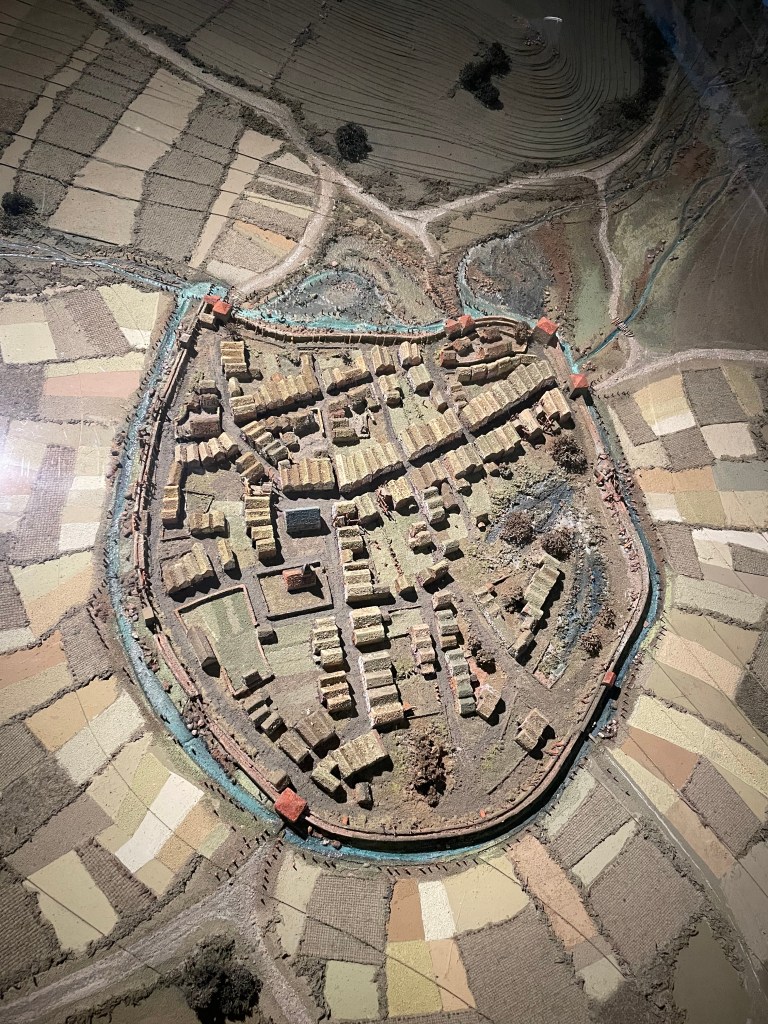
Bielefeld long long ago:
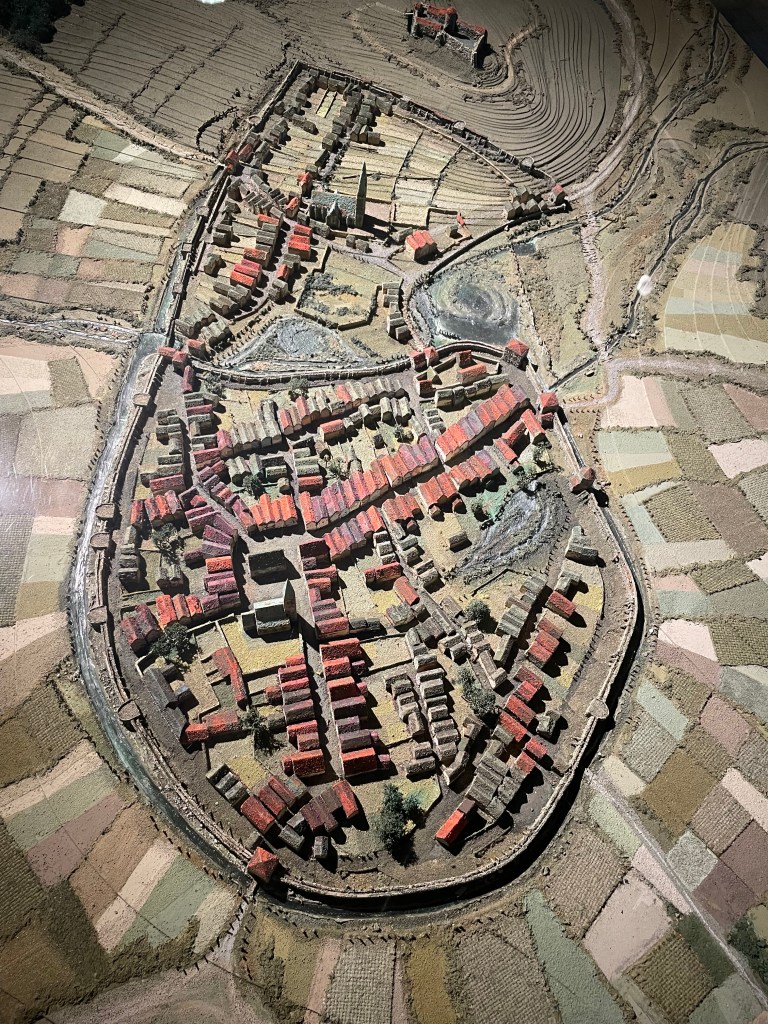

Below is Bielefeld in the 1200s when it was founded.
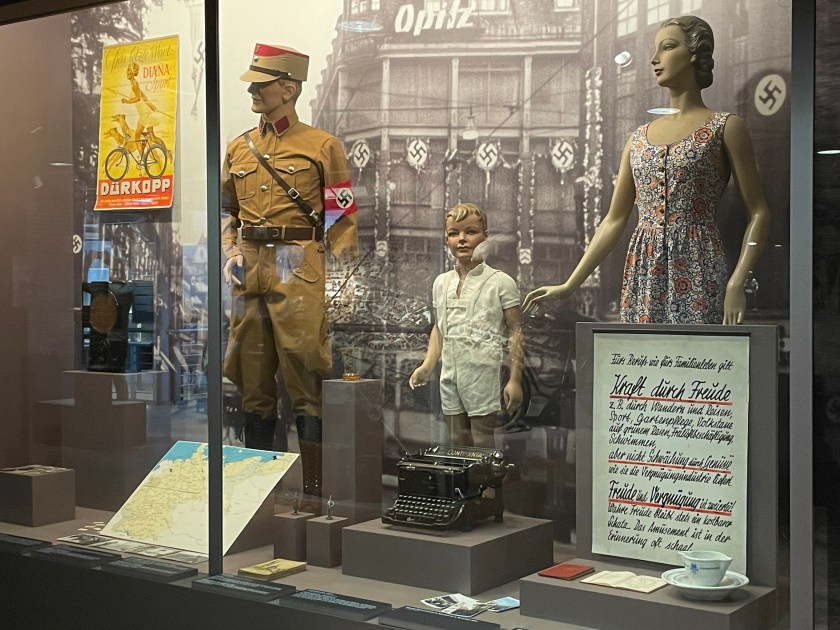
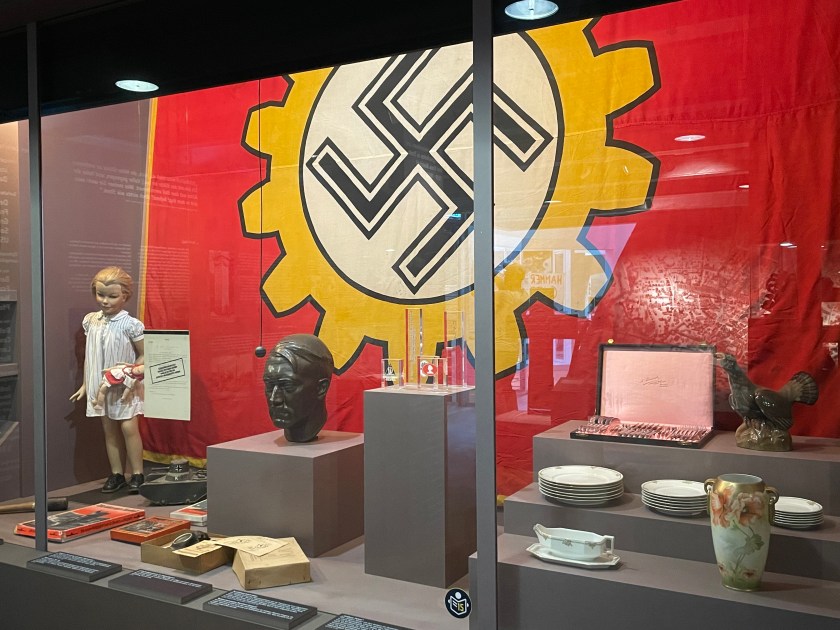
Next we saw some displays from more recent times (WWII).
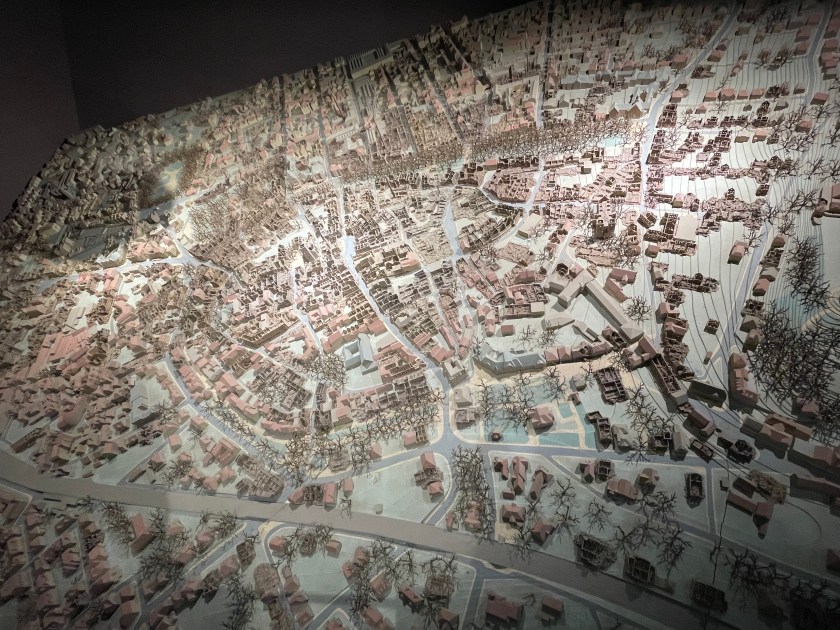
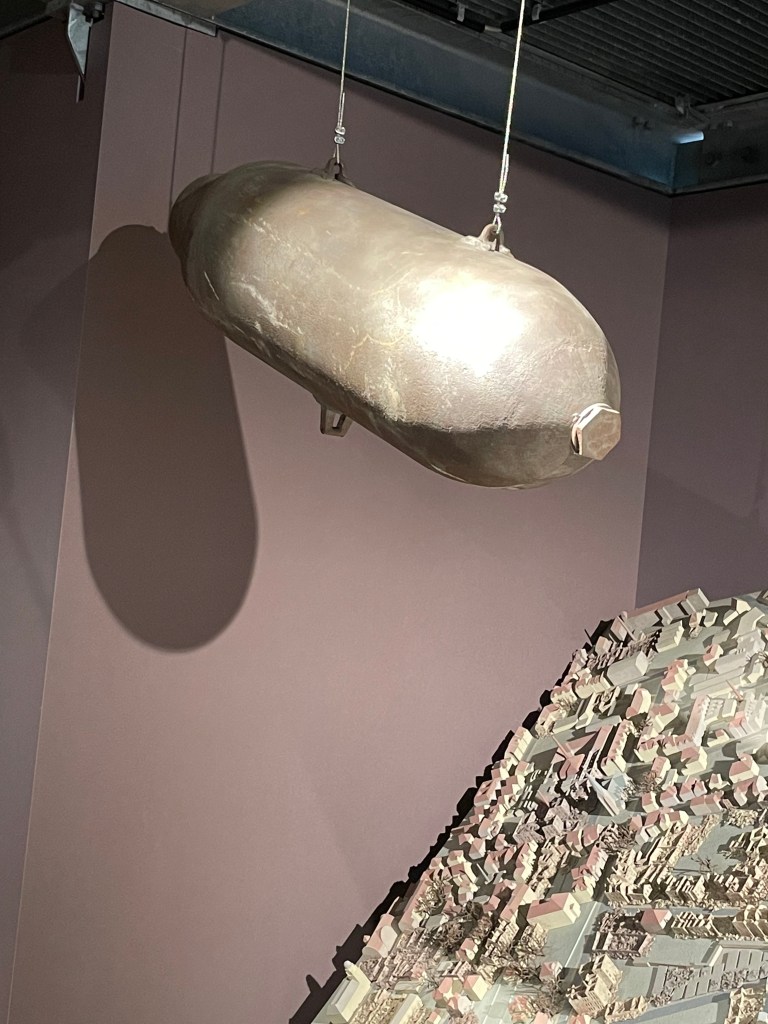
Bielefeld was heavily bombed during the war.
The first bombs fell on Bielefeld in May 1940. More bombs fell on August 12th, September 3/4th and October 1st. The first major raid was on 13 June 1941 when the town centre and the Dürkopp works were badly damaged. This was followed by Wellington raids on the 5/6th & 8/9th July.
For the next three years Bielefeld was free of major air-raids but this was soon to change. From June 1944 onwards hardly a day or night went by without the sound of an air-raid siren and the population was in a state of constant readiness to take to the shelters.
On September 30th 1944, the centre of Bielefeld was completely destroyed by 257 B-17s dropping 596 tons of bombs. Over 700 years of history was obliterated in less than 30 minutes and over 600 inhabitants were killed.
On November 29th 1944 the Americans attacked again with 152 B-24s and 512 tons of bombs. When the alarm came two trains were nearing the viaduct. The trains stopped and the passengers jumped off and looked for shelter in nearby buildings and old bomb craters.

This is a great museum. There was, of course, a lot more that I didn’t photograph. But these pics seemed interesting to the family.

 Our Frankfurt Germany Mission