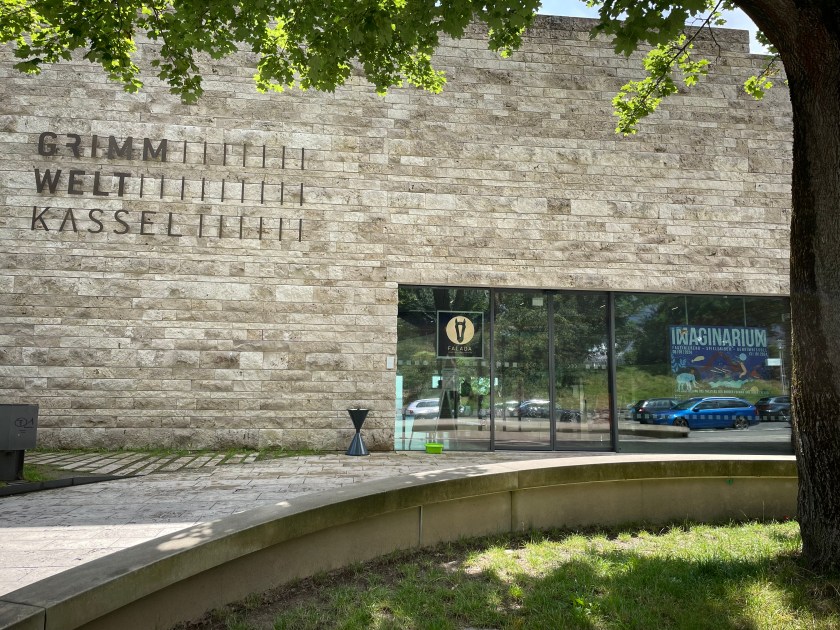
After thoroughly enjoying the IMAGINARIUM exhibit in the museum,
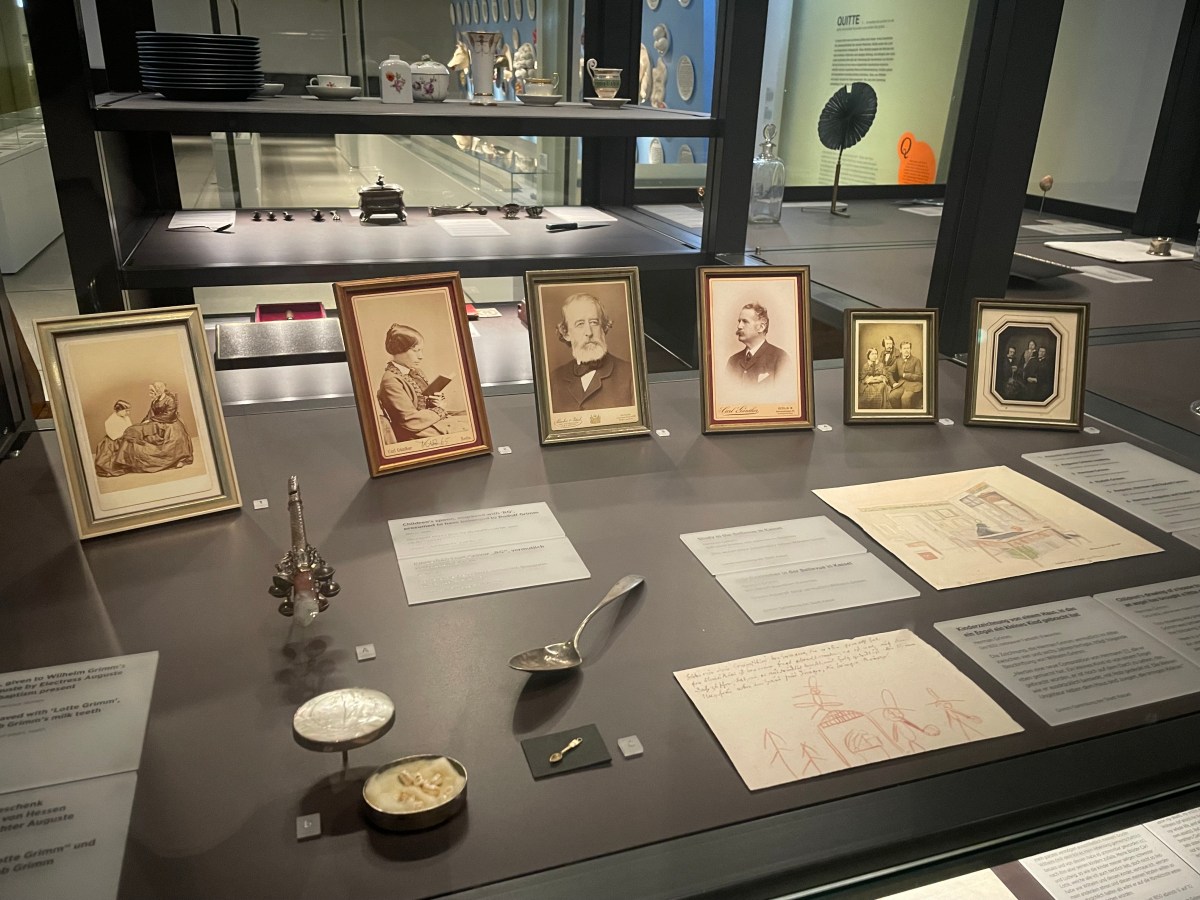
we went into the Grimm Brother’s part. It was set up with letters of the alphabet in random order telling the story of the Grimms, with focus on words and their dictionary, but plenty of other interesting things too. The whole experience was CREATIVE and fun–a very innovative experience.
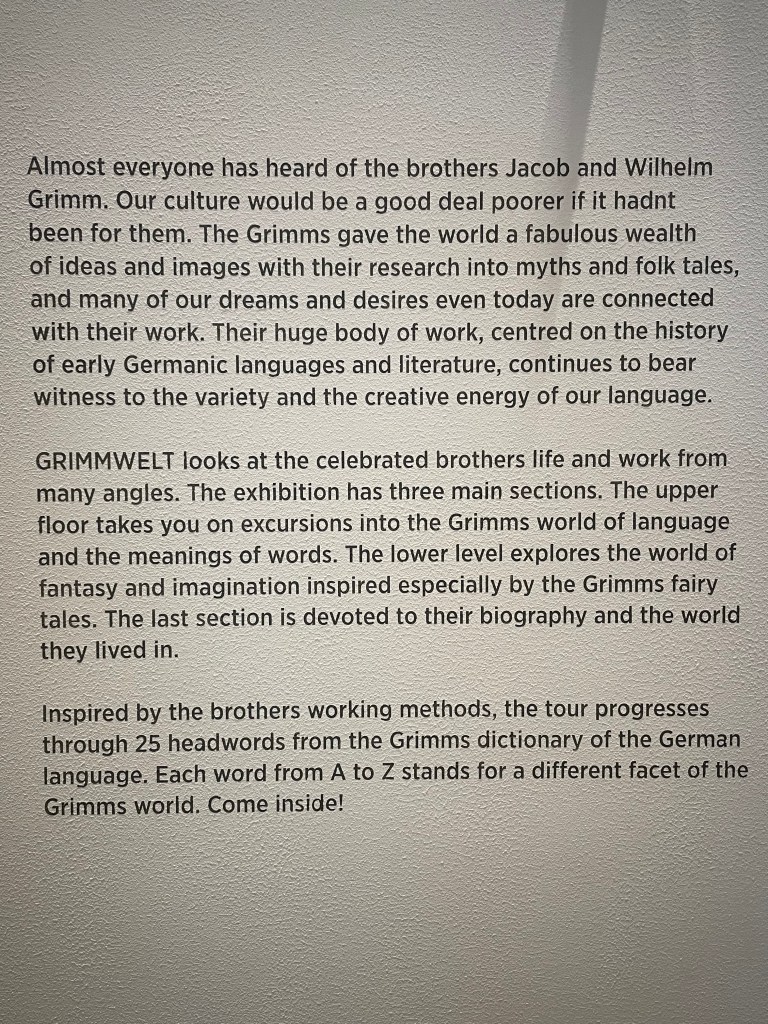
A good part of this part of the museum dealt with the creation of the Grimm’s dictionary. The history was told in diorama shadow boxes that were fascinating. So fascinating I forgot to take a picture of some of them.
Look what I found: The Grimmwelt Exhibit. Here’s a look at these displays:
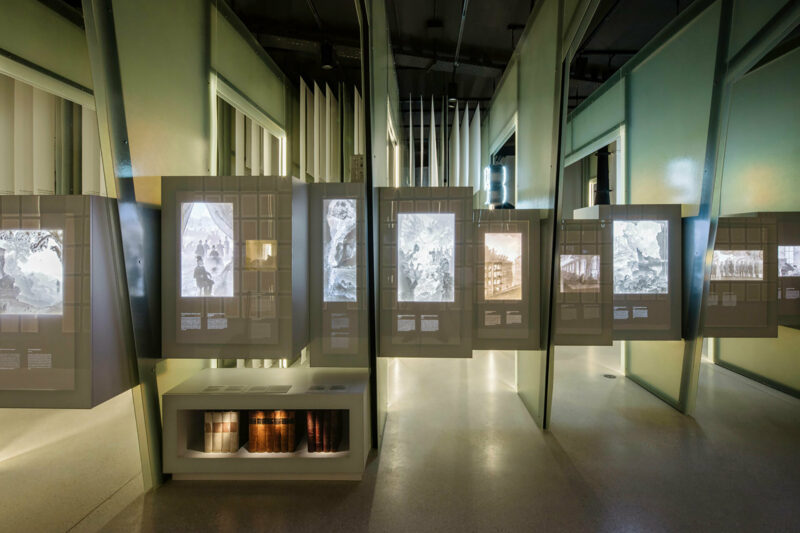
The “German Dictionary”, which the Grimms began in 1838, is probably their greatest and most extensive work.
The brothers initially thought they could complete this project within seven to ten years, but it was not to be. The dictionary took more than 120 years and the involvement of generations of researchers and compilers to finish.
The reason: Jacob and Wilhelm Grimm wanted to record every single word of New High German – the language established with Luther’s translation of the Bible – and document the origin and use of these words.
Today’s “German Dictionary” contains more than 320,000 individual word entries, but the Brothers only got as far as the letter “F” in their lifetime. This is why the incredible story of the “Grimm”, as the dictionary is commonly known, is told in the FROTEUFEL (“DEMON”) section of the permanent GRIMMWELT exhibition. This entry was the last that Jacob completed before his death.
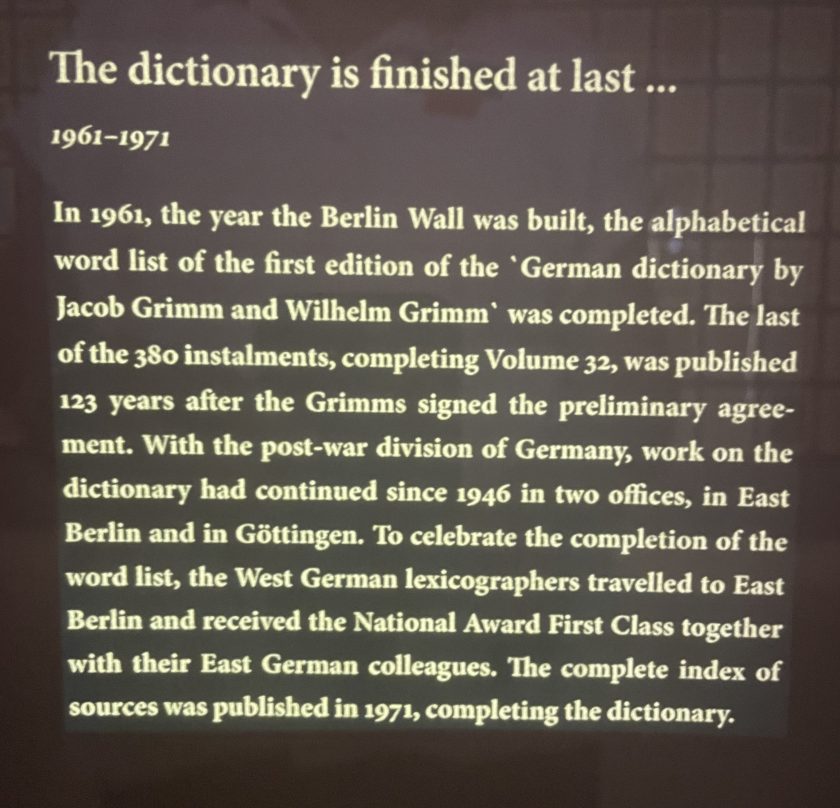
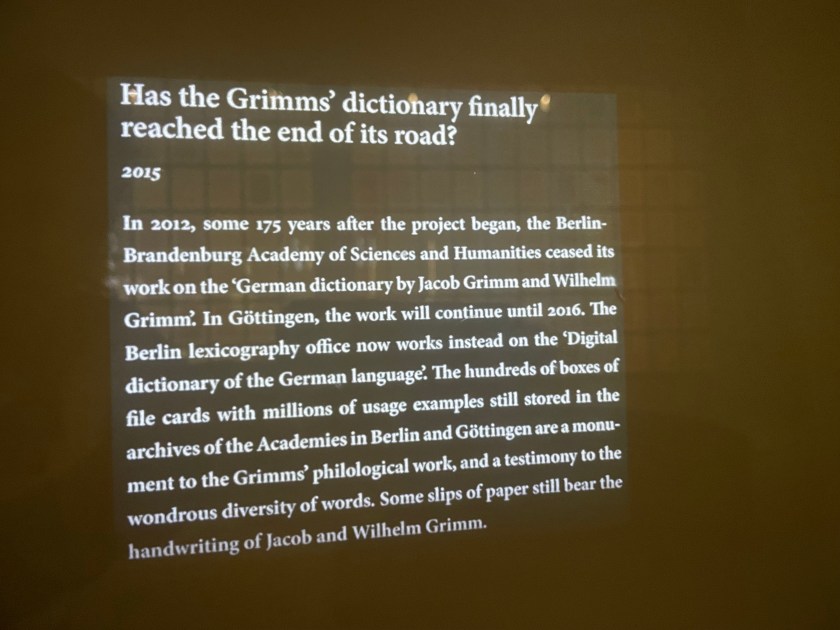
The work on the Grimms’ dictionary finally came to an end in 2016 as the world of digitization took over. Their original file cards are stored in the archives of the Academies in Berlin and Goettingen.
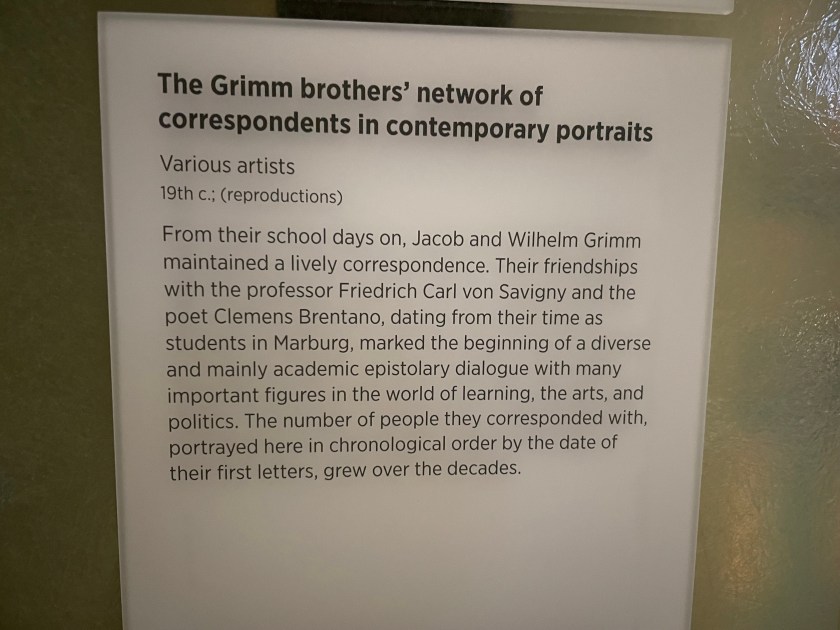
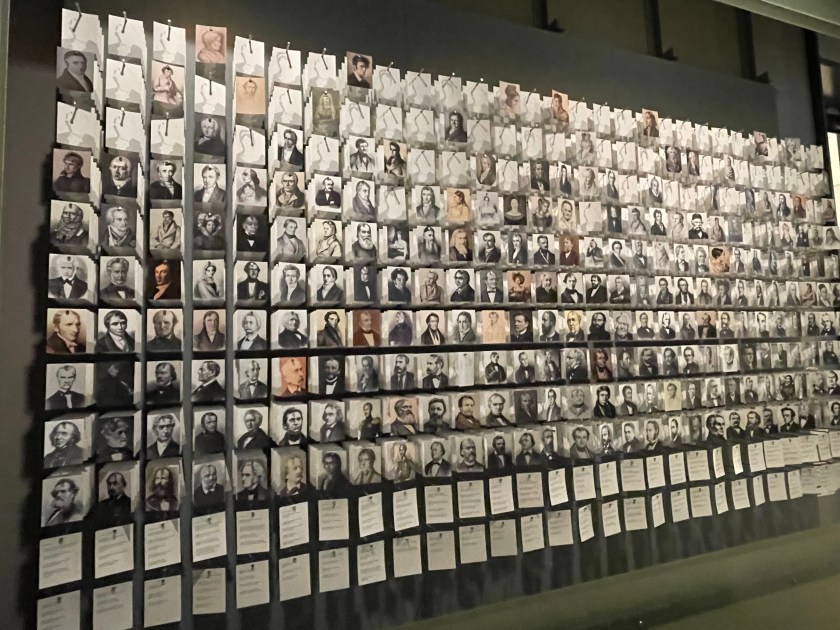
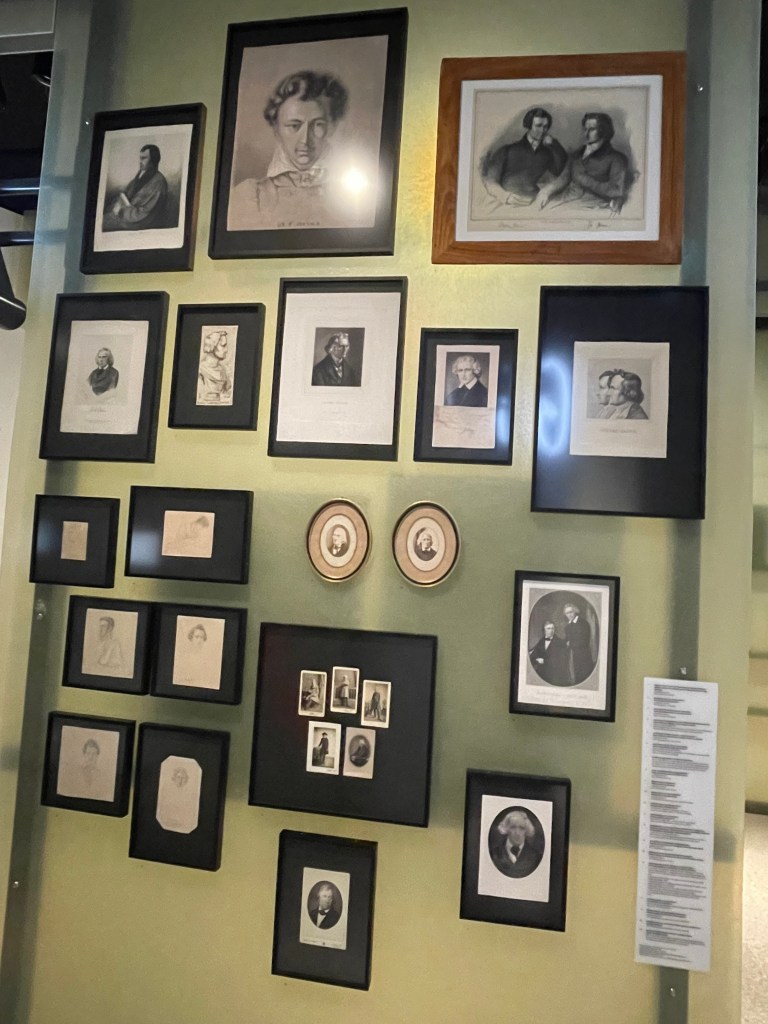
I found this fascinating–in their day, the Grimm Brothers communicated mostly by writing and receiving letters. This exhibit shows the number of people they corresponded with, shown in chronological order by the date of their first letters. It grew with the decades.
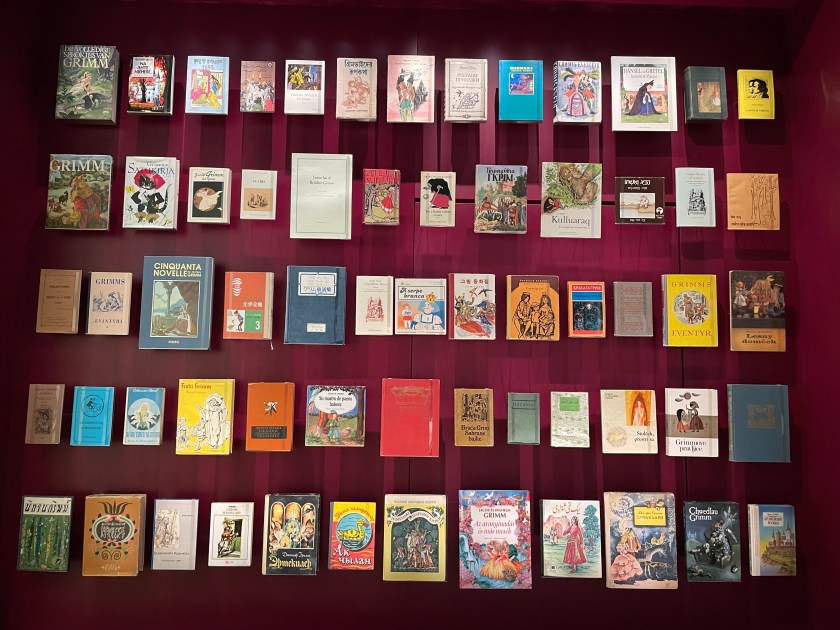
Here are translations of the Grimm’s Fairy Tales:
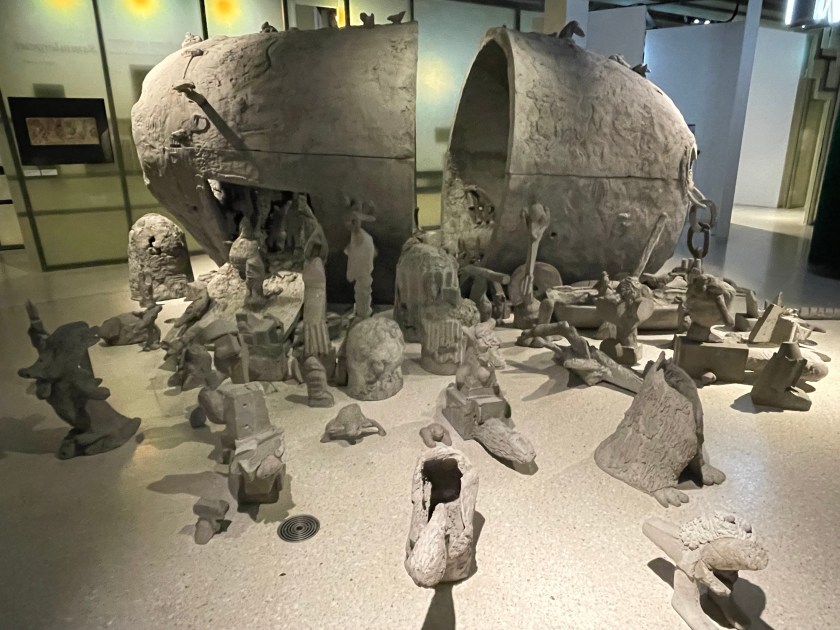
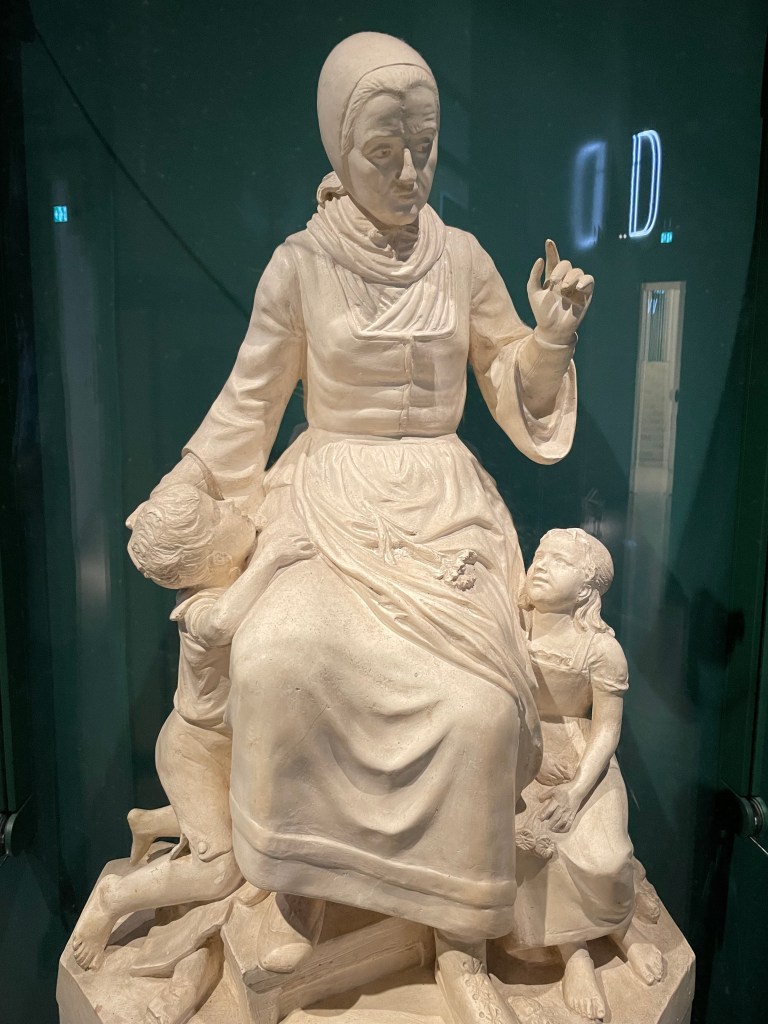
Grimm’s Storyteller Woman:
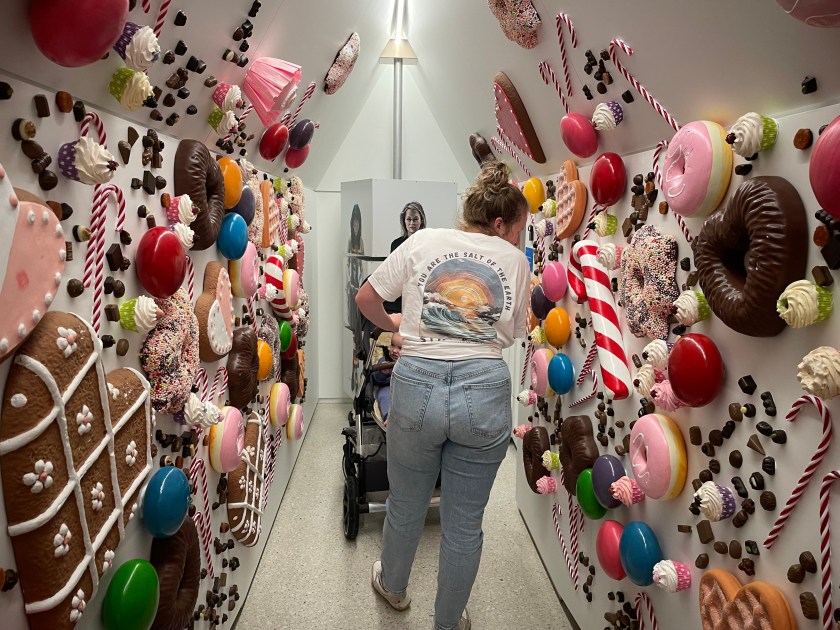
A Hansel and Gretel hut:
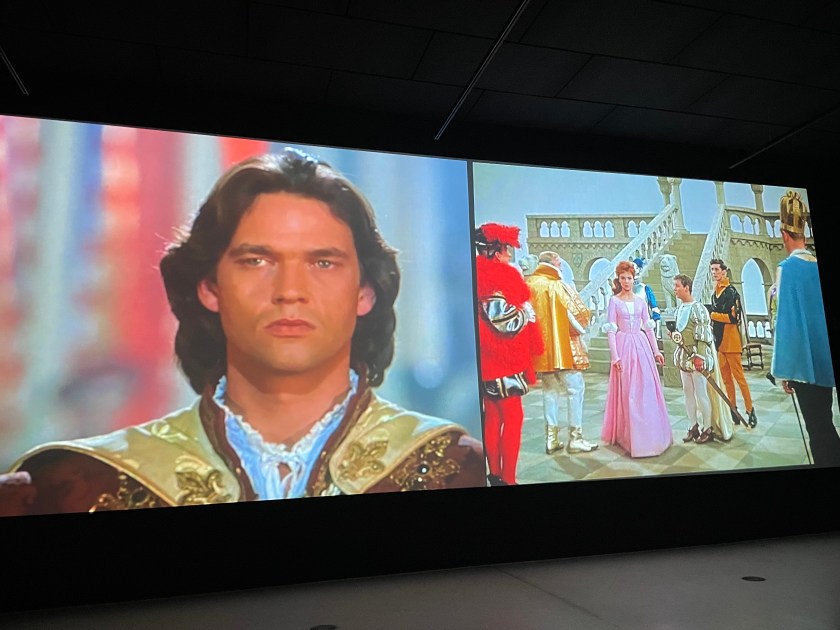
In a theater, they showed a film with scenes from fairy tale movies old and new. It was really fun to watch!
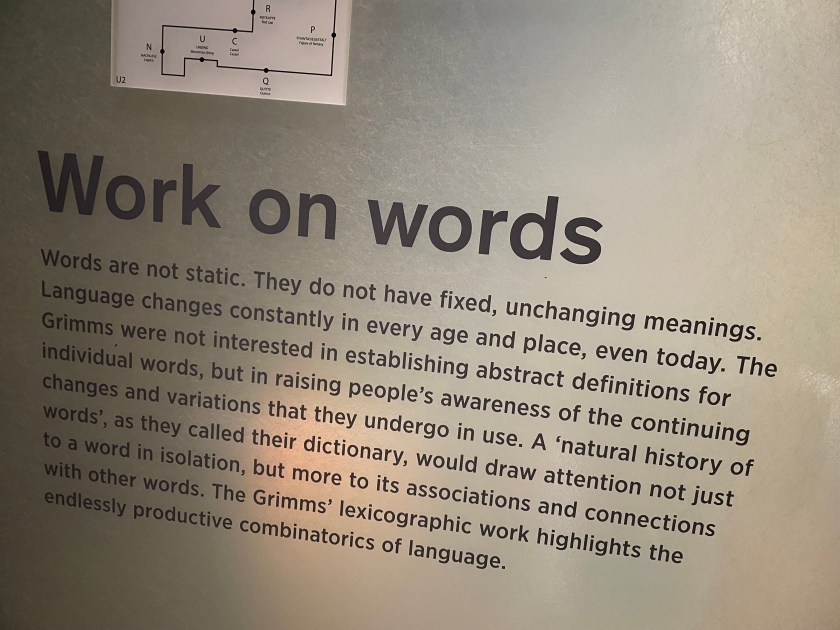
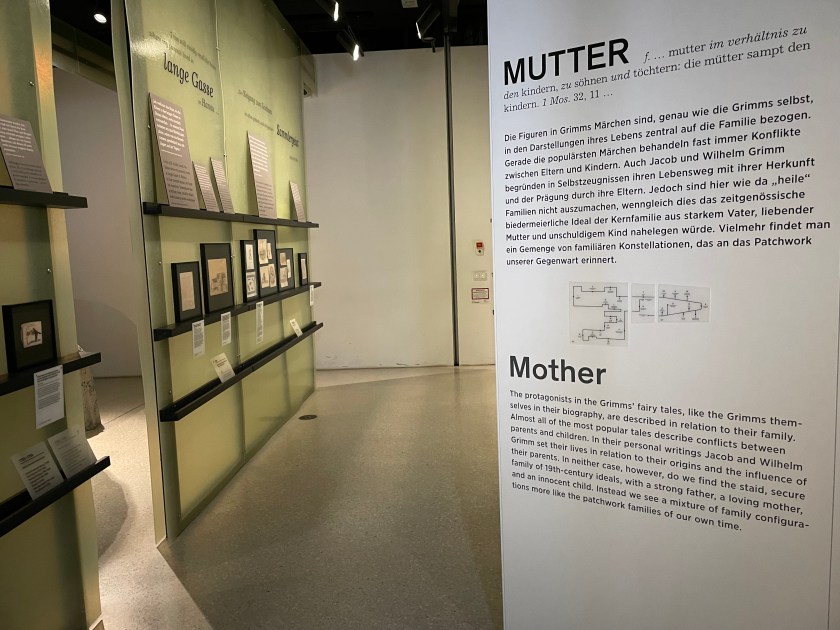
An example of word displays, featuring the word “Mother.”
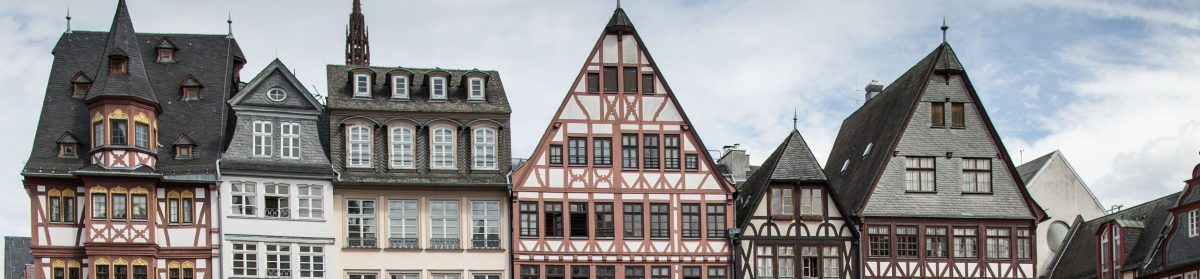
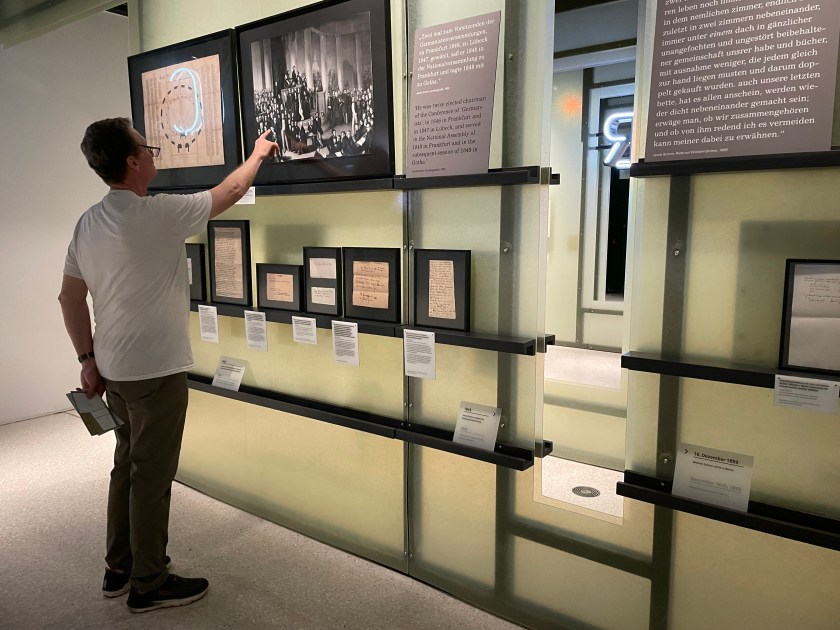
The Grimms in the church of democracy in the Frankfurt Romerplatz:
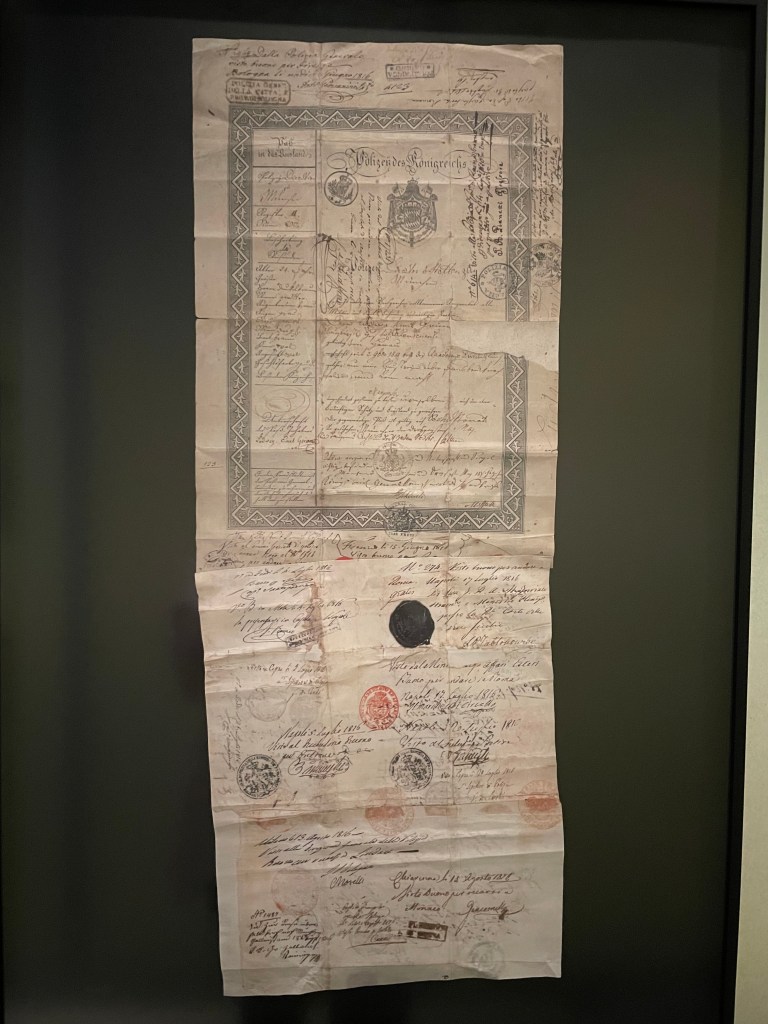
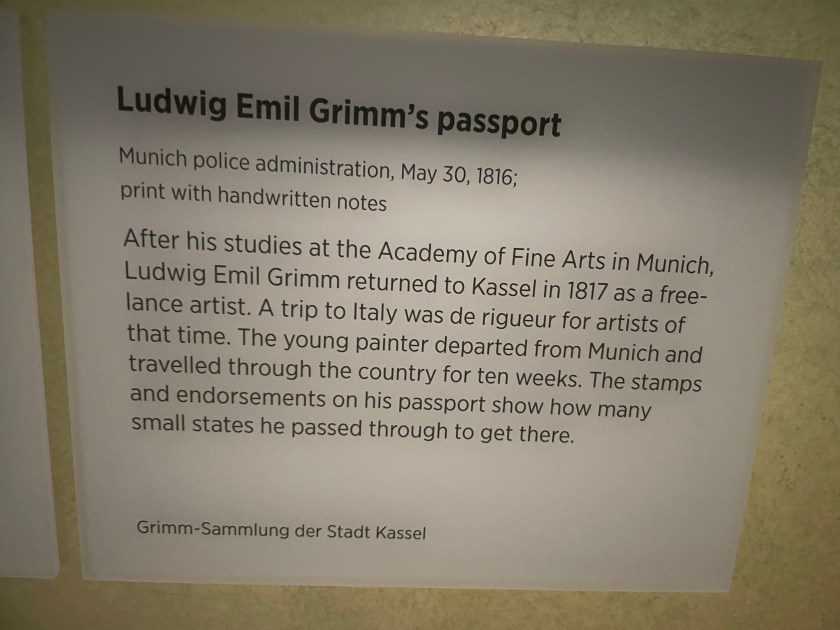
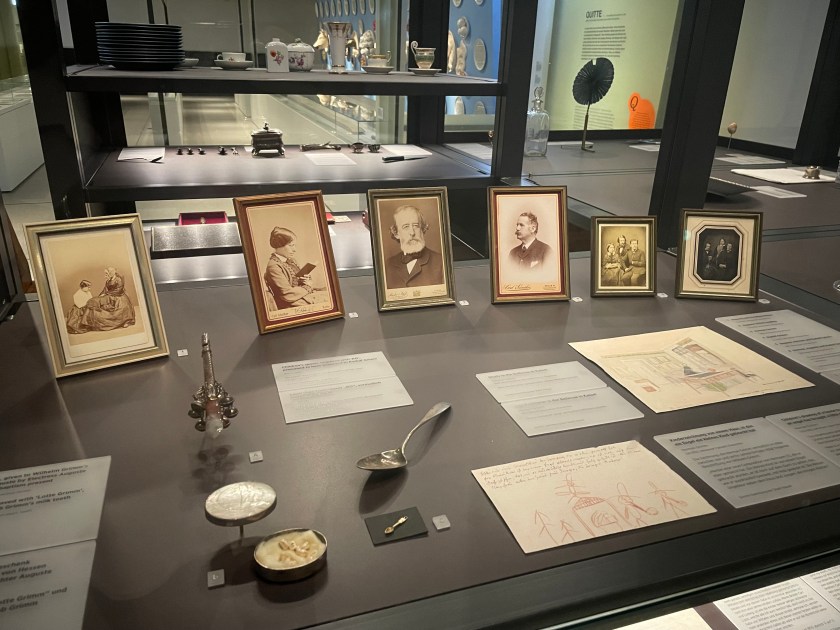
Ludwig Grimm did a lot of the illustrations for the fairy tales. Here’s his passport:
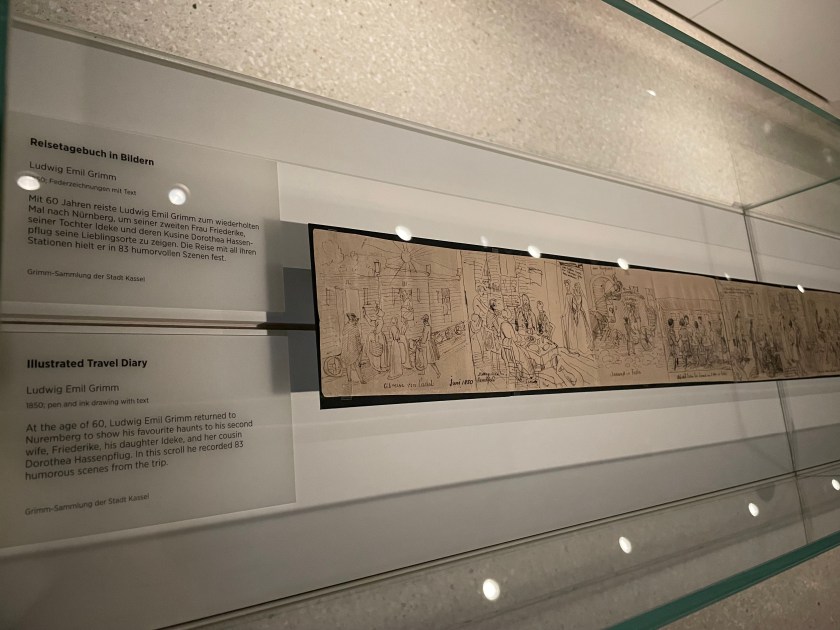
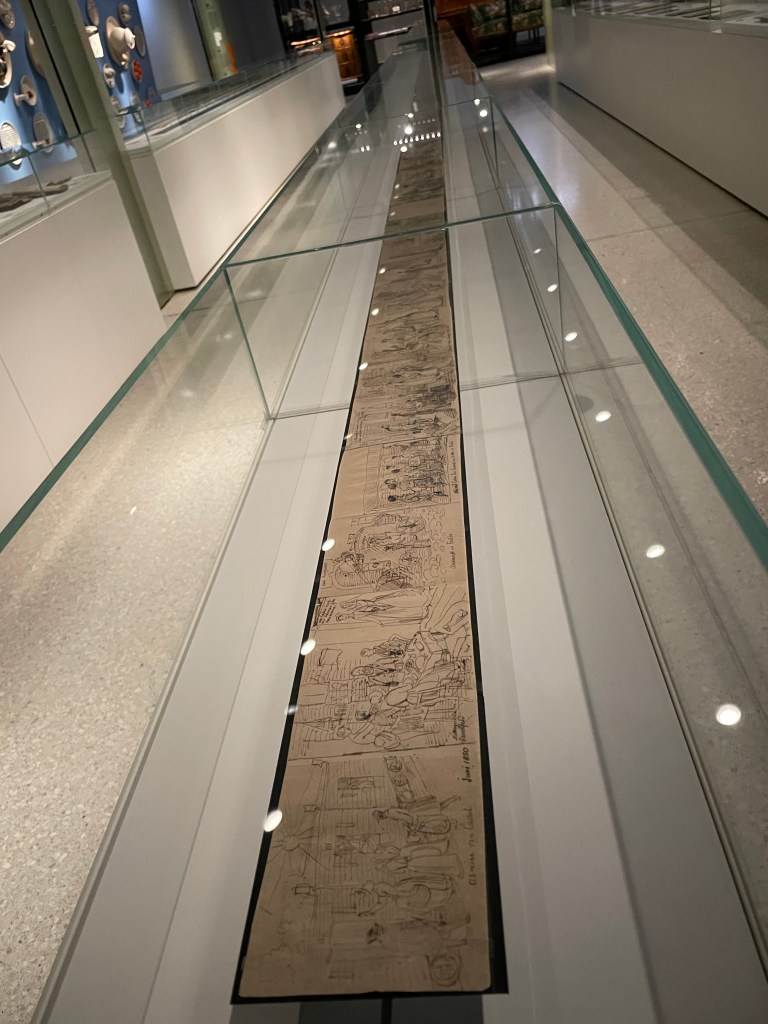
Here’s an interesting travel diary Ludwig Grimm kept of one of his travels:
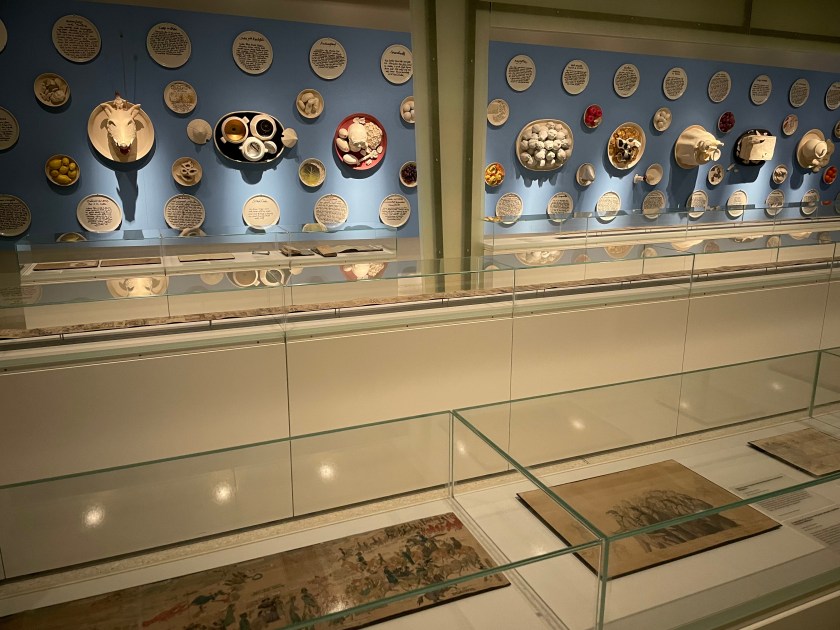
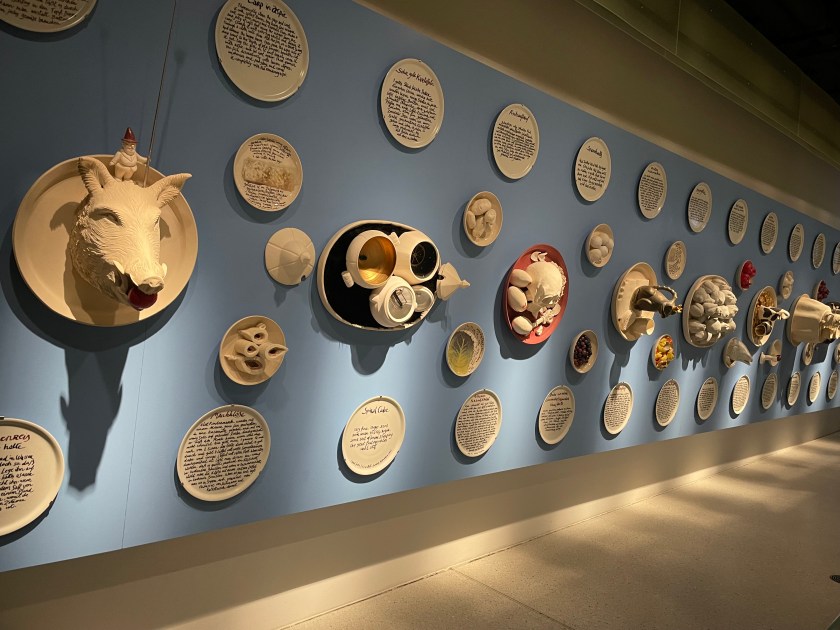
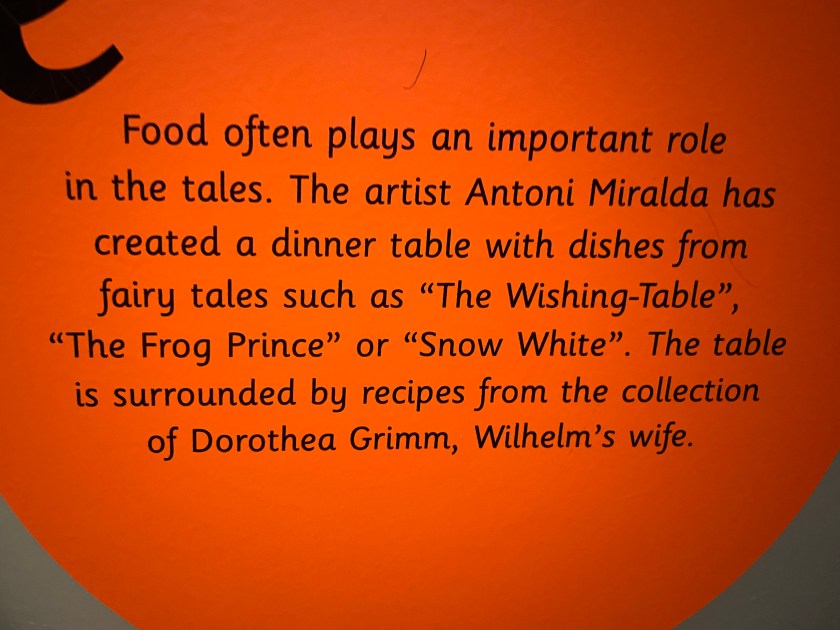
This is a food display of many of the different foods or meals or dishes mentioned in the fairy tales, many with recipes from Wilhelm Grimm’s wife, Dorothea.
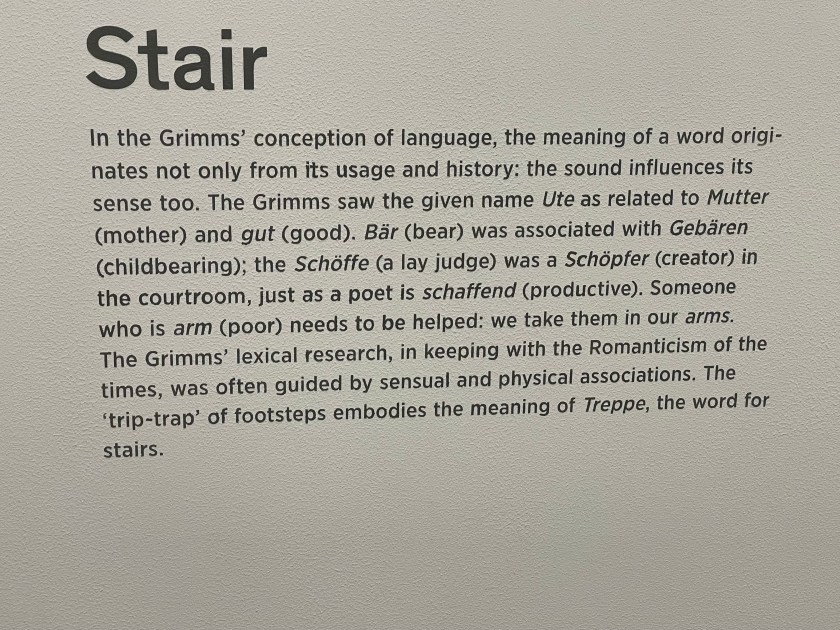
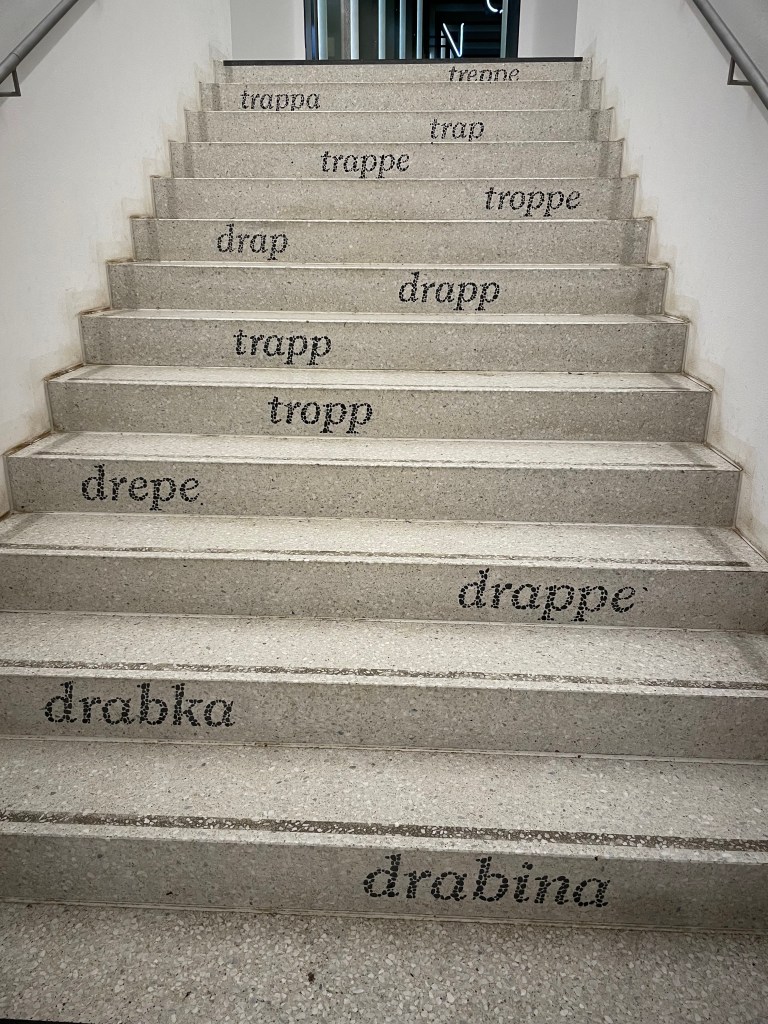
What a fun and interesting visit! What a great day!
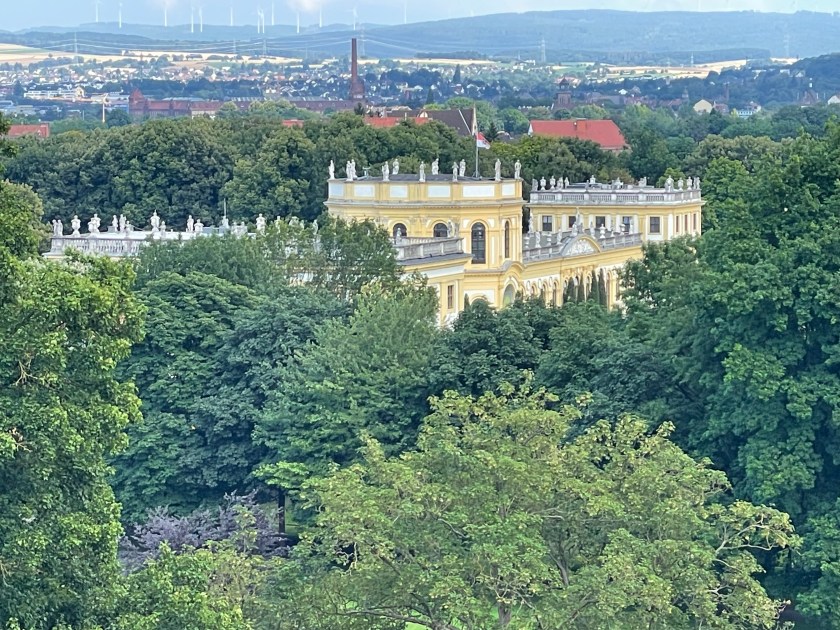
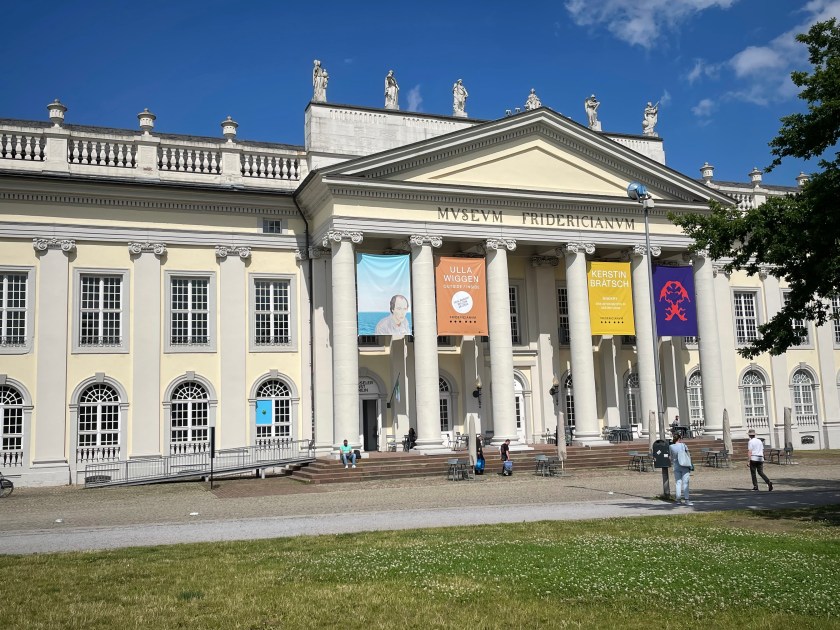
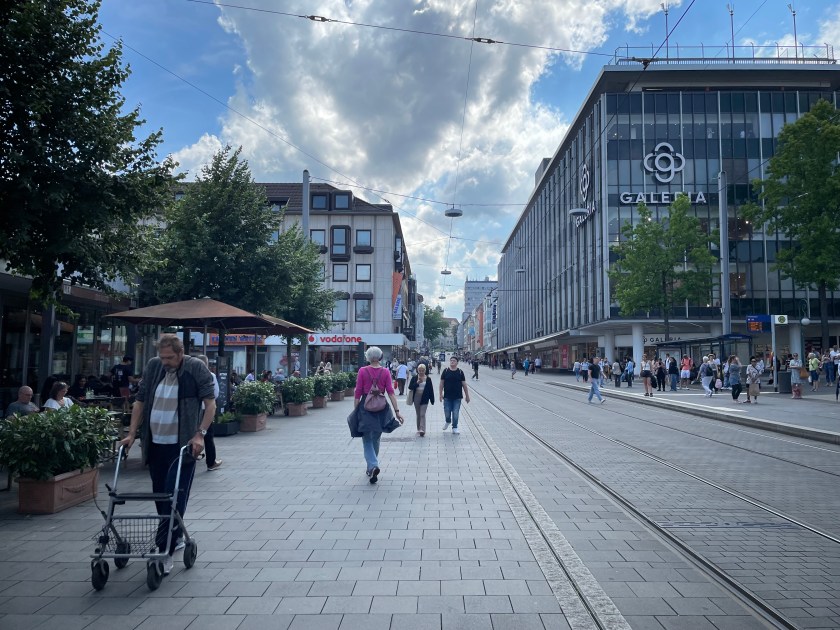
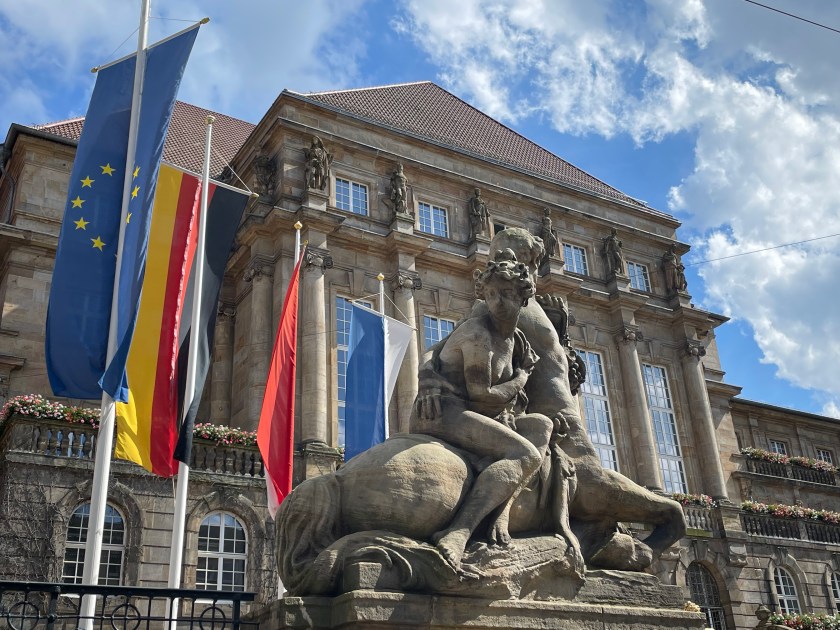
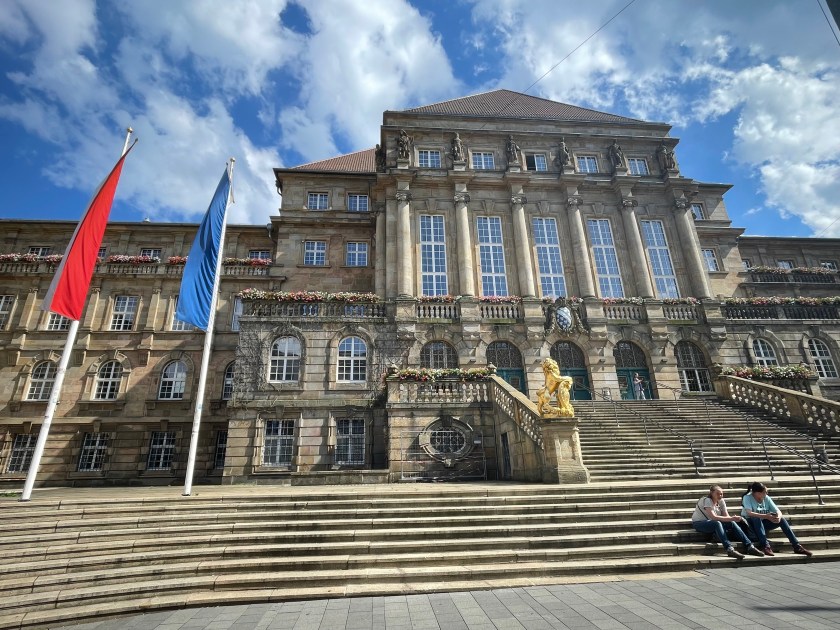
We topped it off with a walk through the downtown part of Kassel and a pastry.
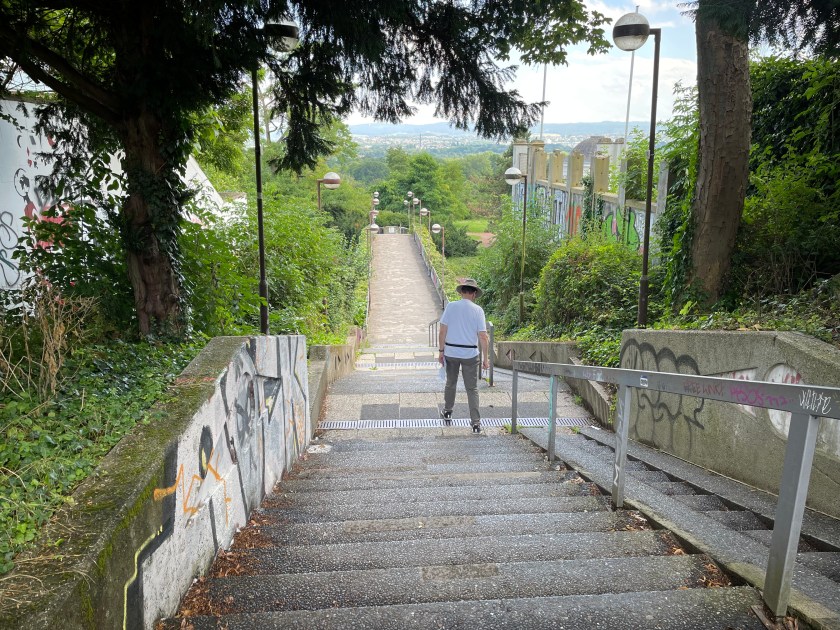
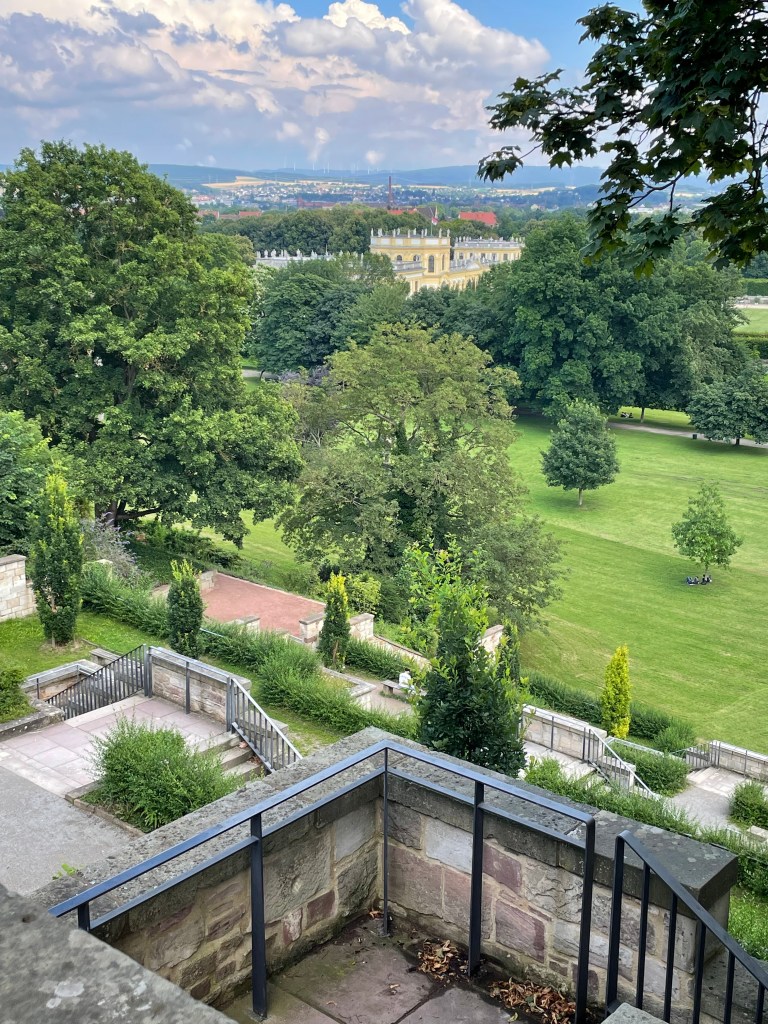


 Our Frankfurt Germany Mission