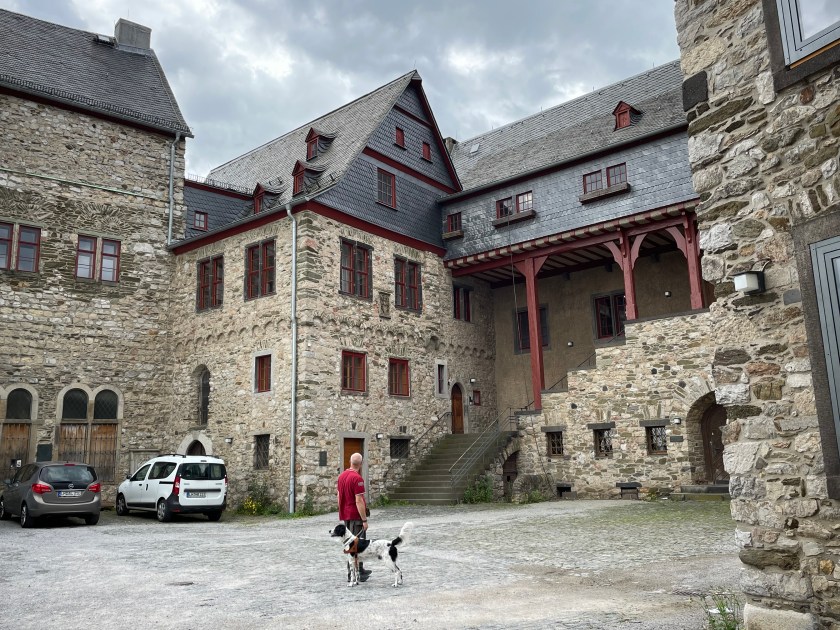
In about 800 A.D., the first castle buildings arose on the Limburg crags overlooking the river Lahn, probably built for protection. In the decades that followed, the town developed under the castle’s protection. Limburg is first mentioned in documents in 910.
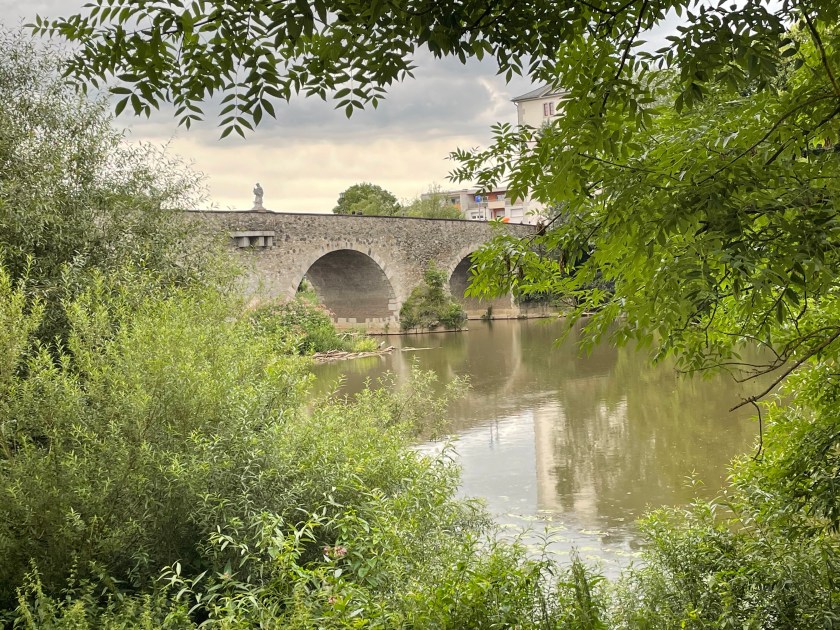
In 1150, a wooden bridge was built across the Lahn. The long-distance road from Cologne to Frankfurt am Main then ran through Limburg. In the early 13th century, Limburg Castle was built in its current form. Remains of the fortification wall from the years 1130, 1230 and 1340 with a maximum length of about 1000 meters give an idea of the size of what was here during the Middle Ages.
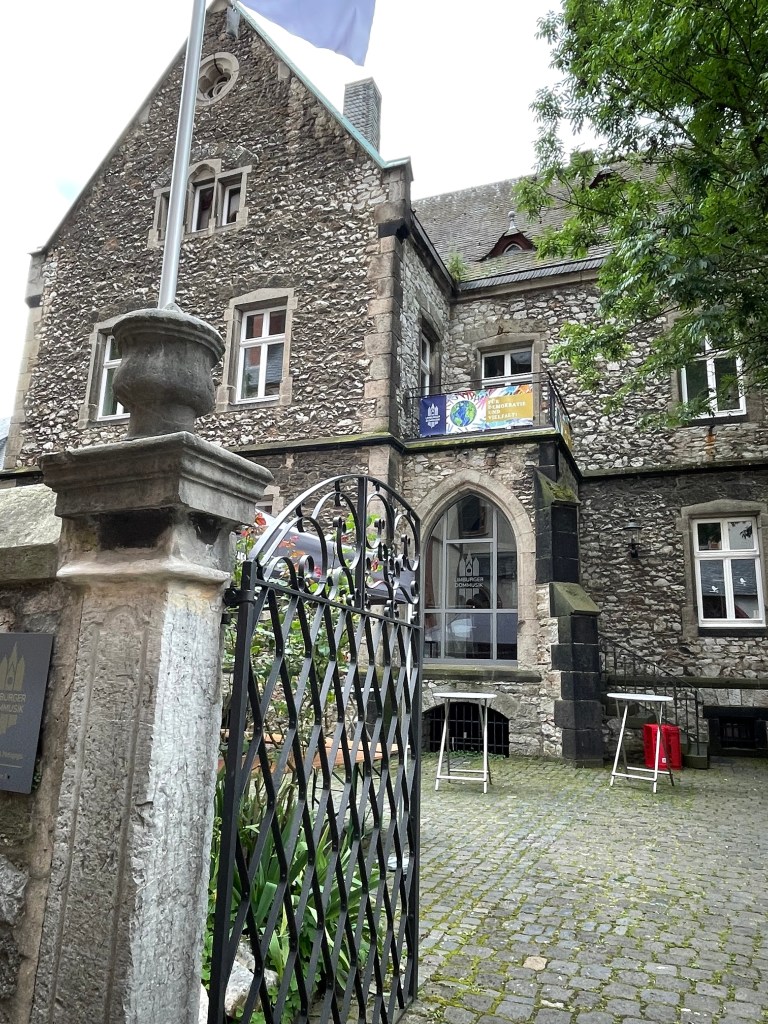
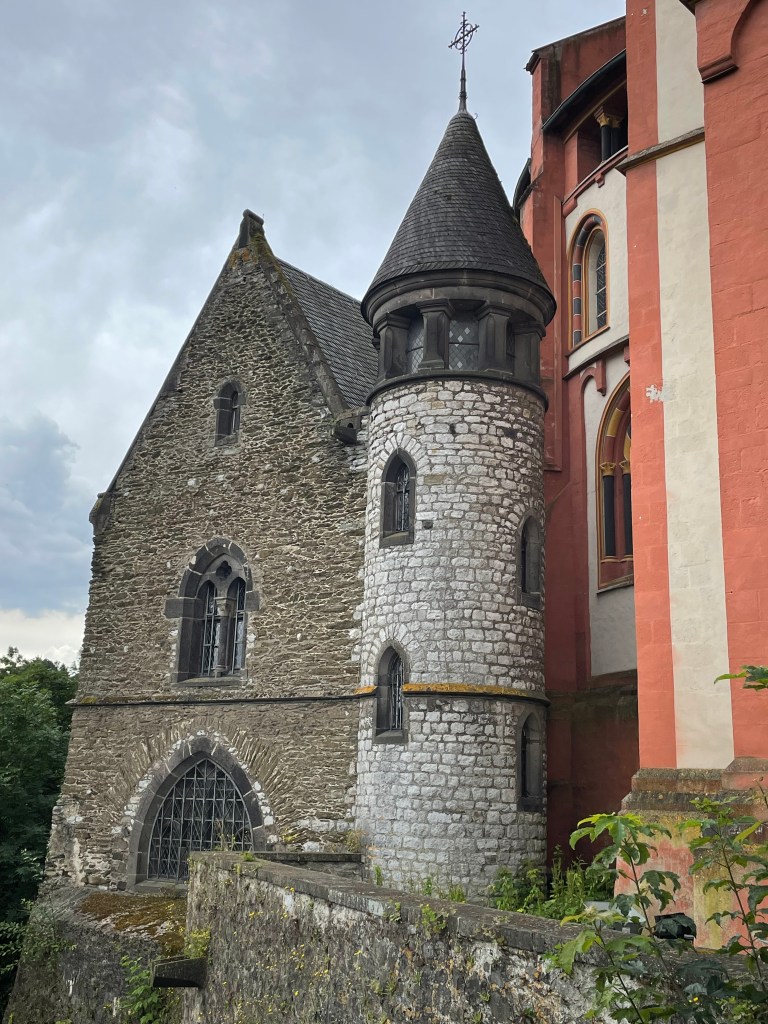
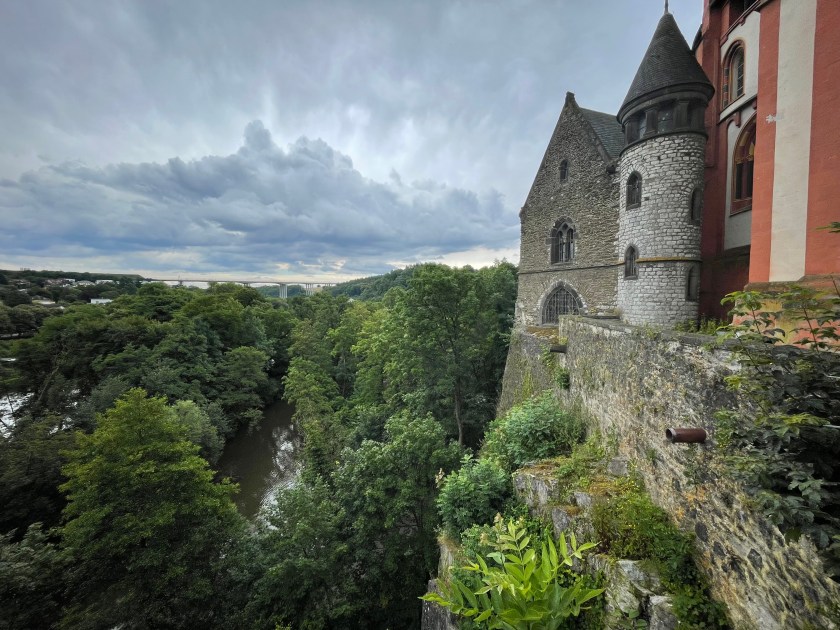
This castle is up on the hill behind the cathedral.

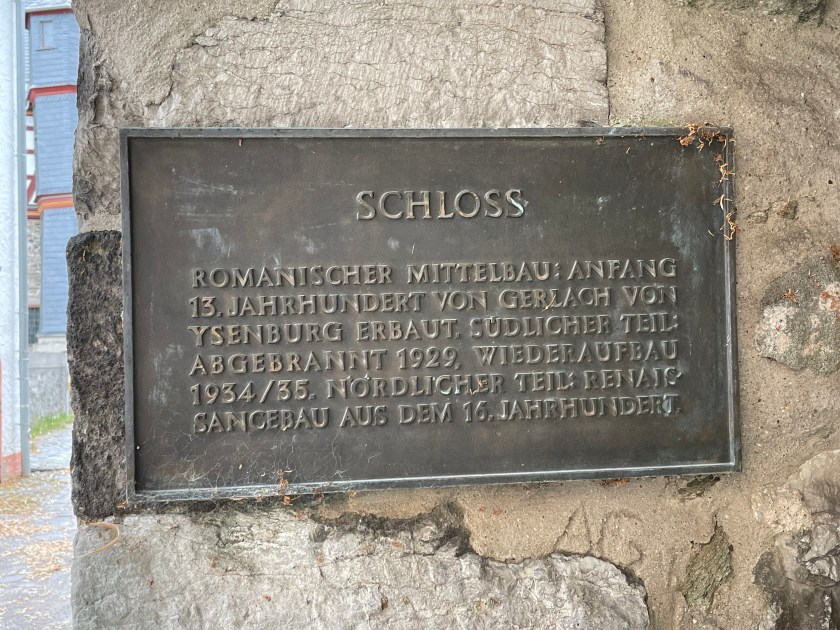
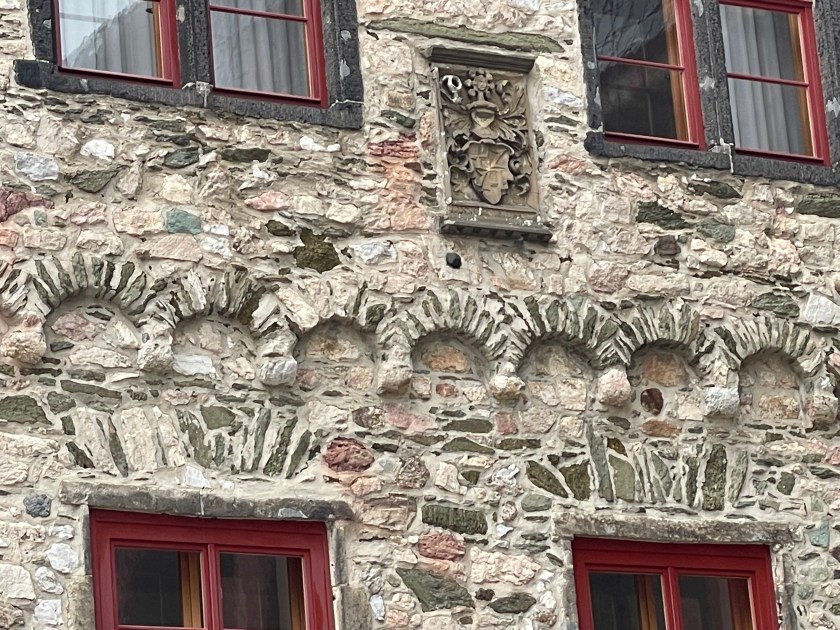
Today you can walk around the castle courtyard, but you can’t go into the buildings. They are working on preserving the site. Maybe someday you’ll be able to go inside.

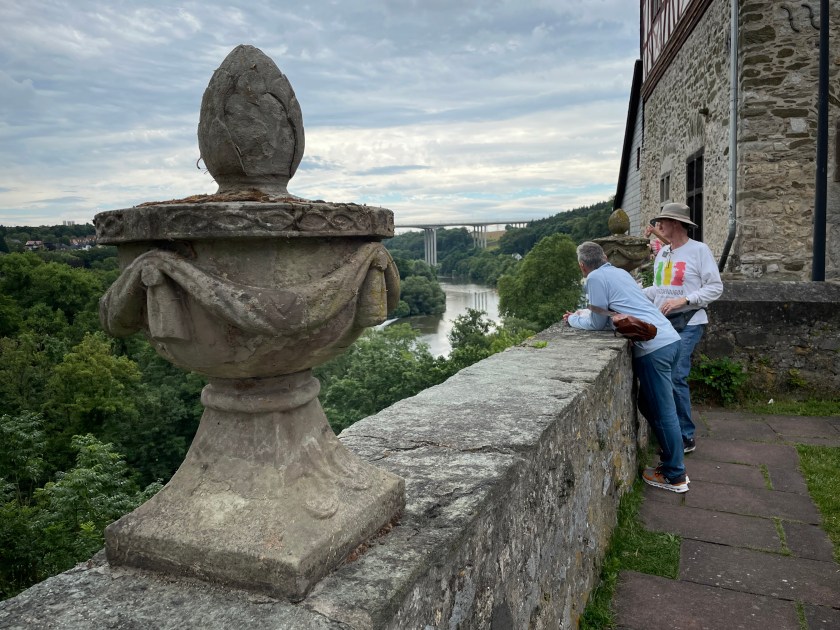
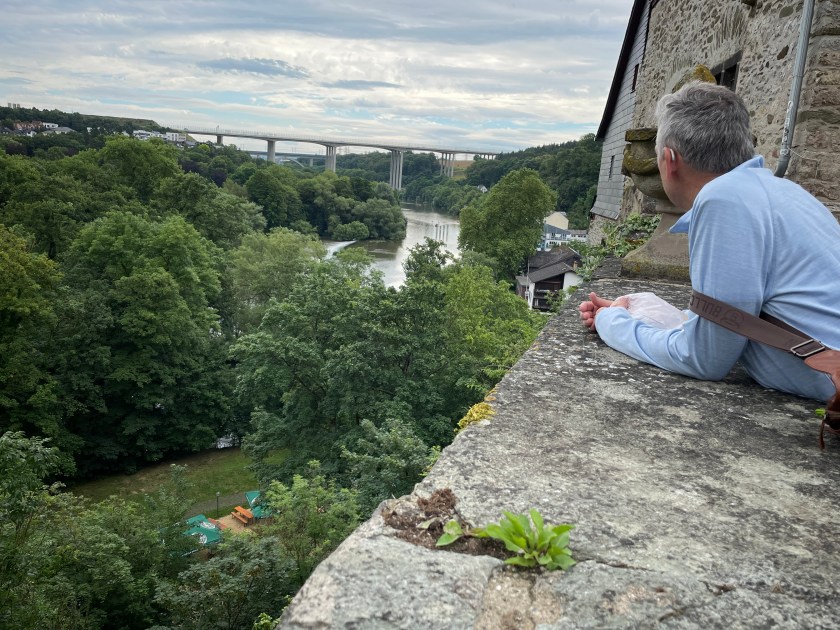
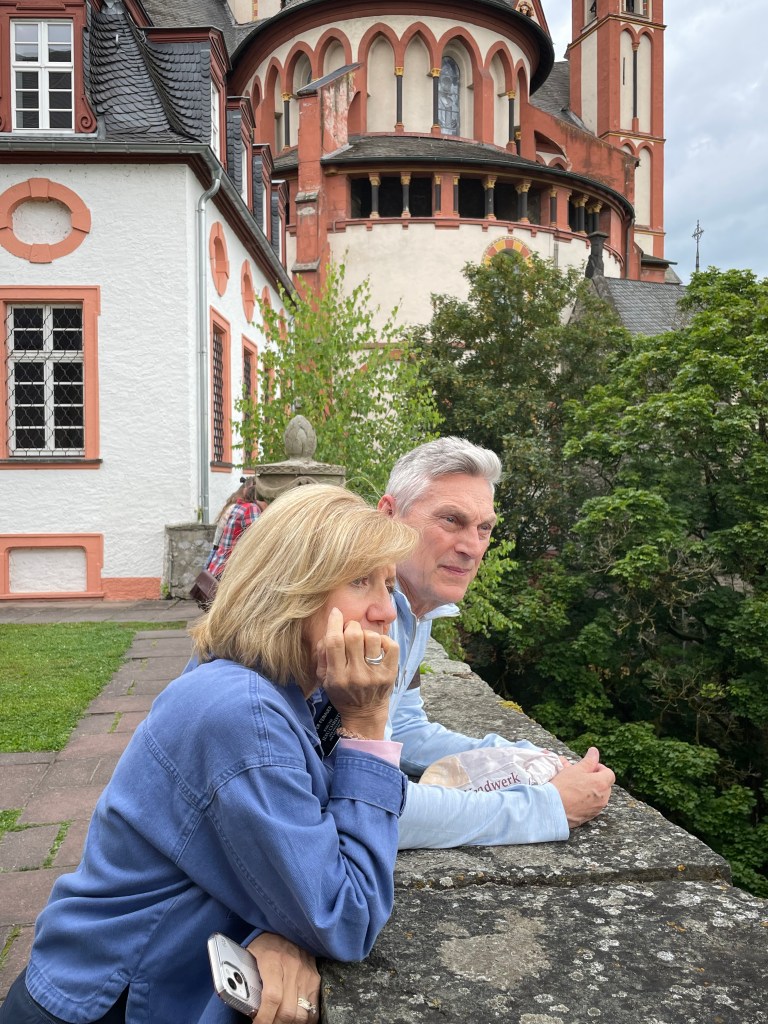
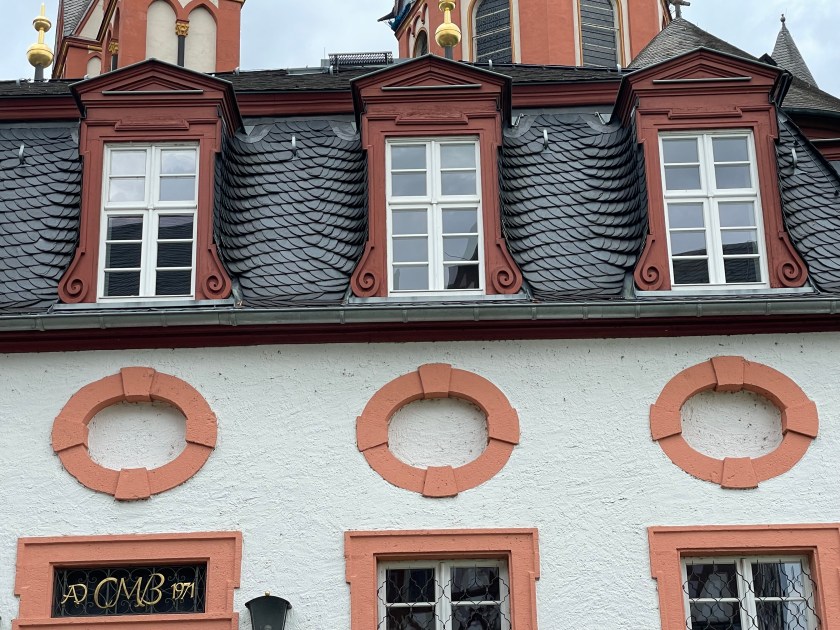
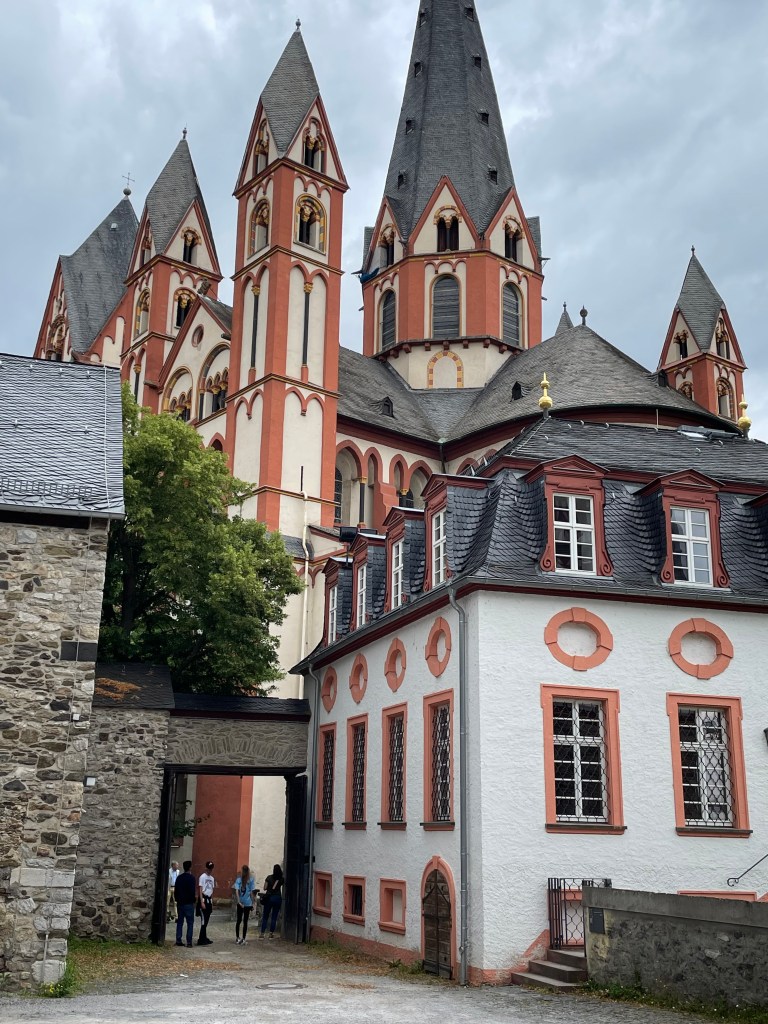
The view of the cathedral from the castle:
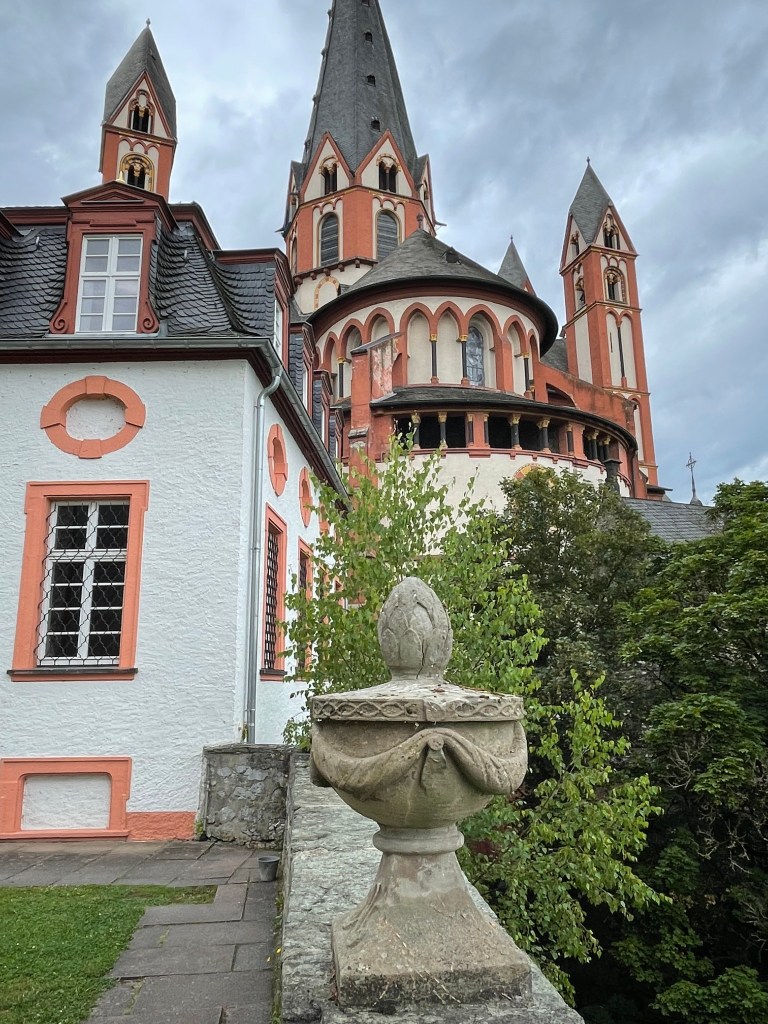


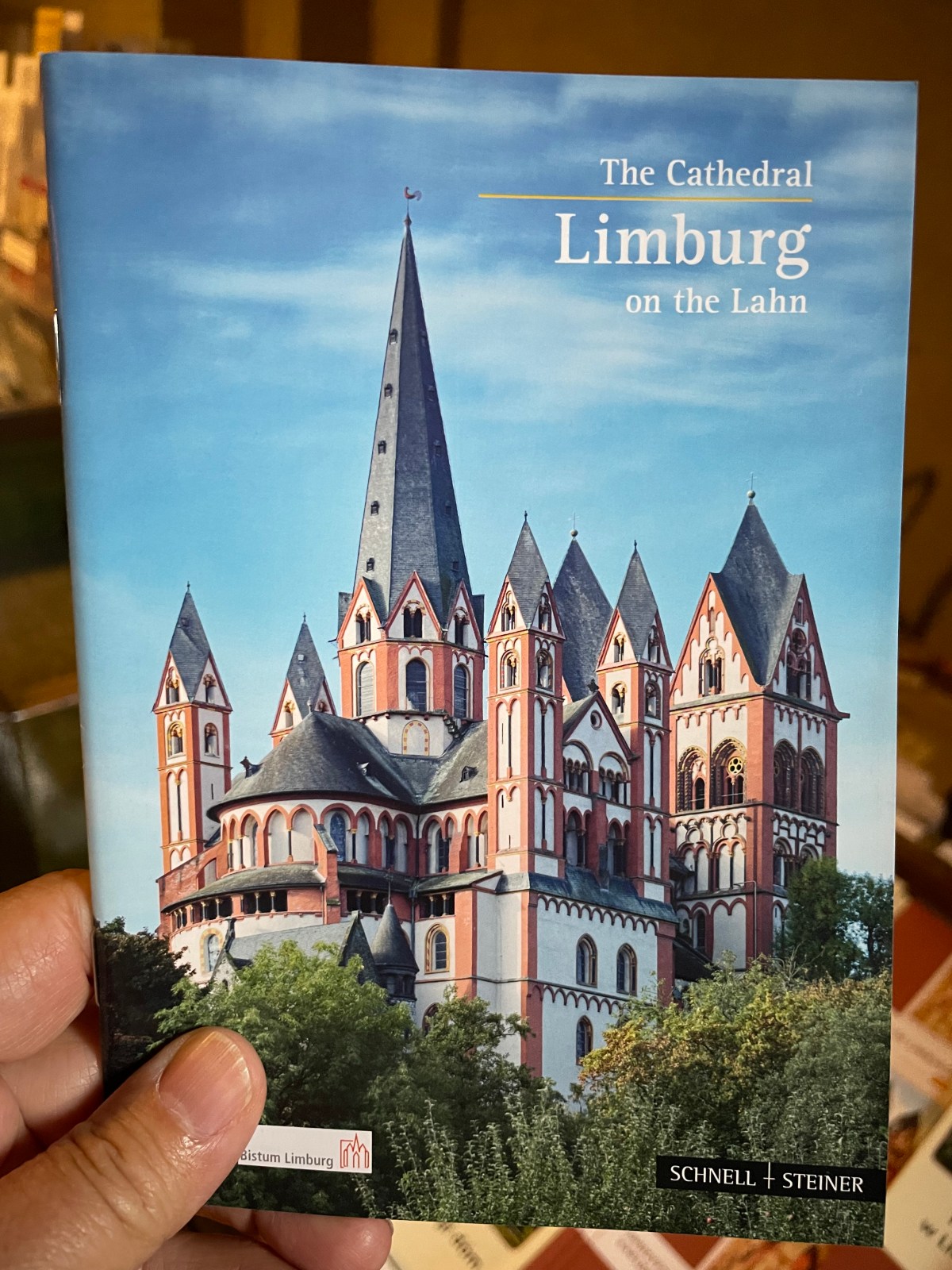
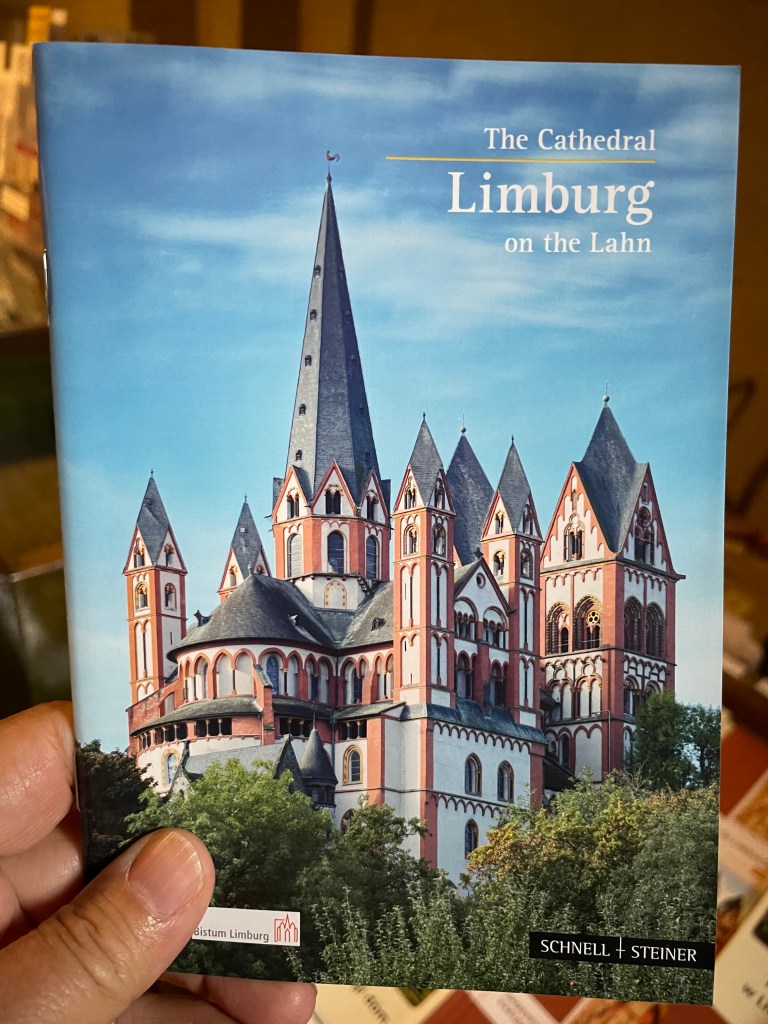
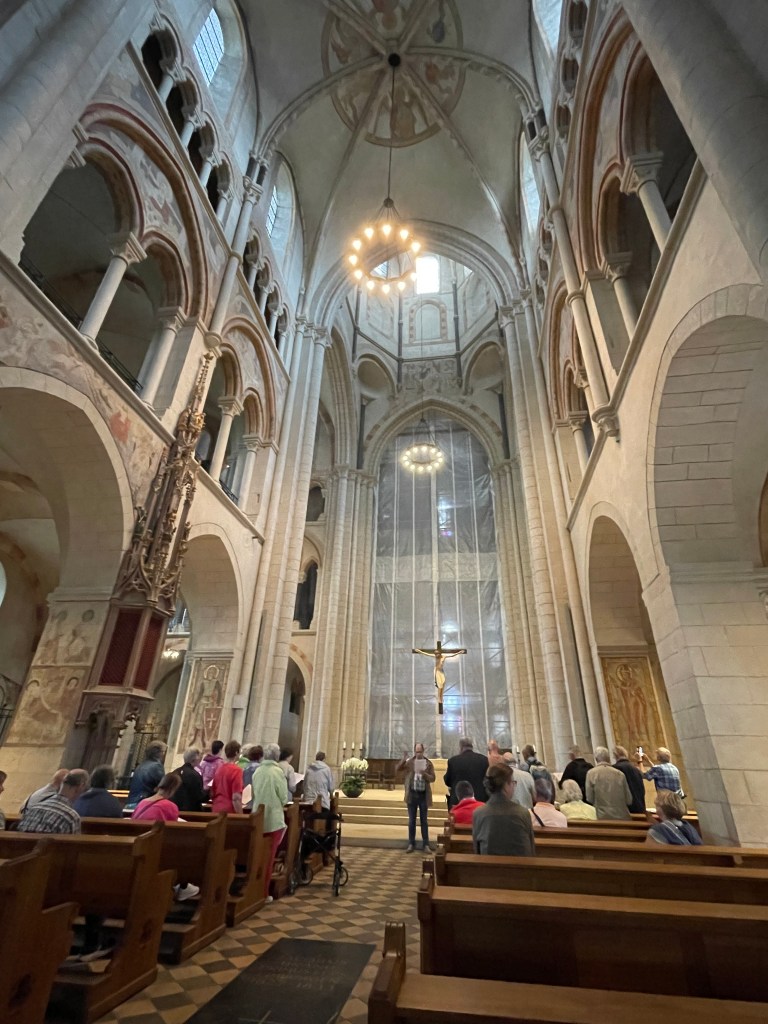
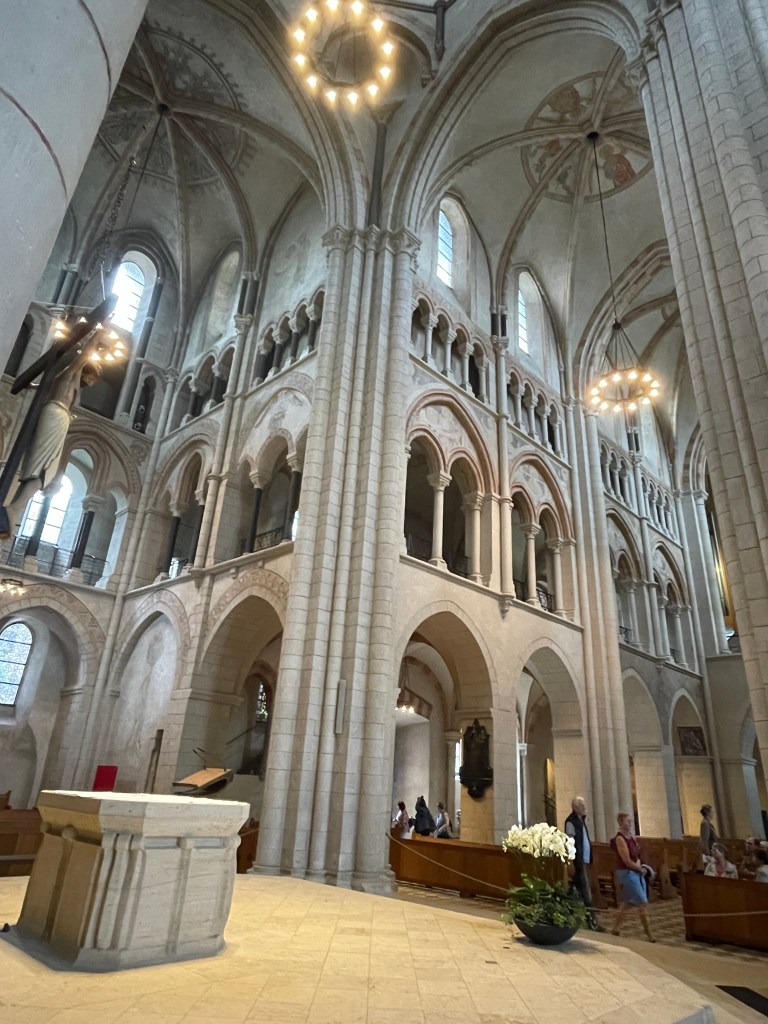
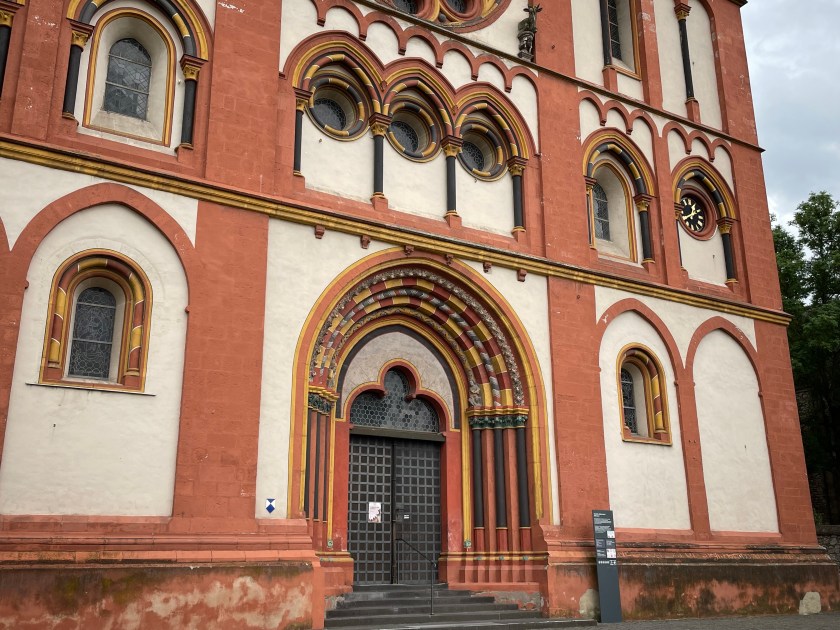
Next we went into the cathedral, “The High Cathedral of Limburg.”
The town of Linburg started in the 7th century surrounding the castle up on the hill in the center of the town and different versions of this church were built here after that. Excavations under the present church date back to the 800s and 900s, with changes made in the 1100s.
In about 1180 an extensive remodelling was started that gave the church its present-day shape. It’s a huge cathedral today, with all kinds of interesting history.
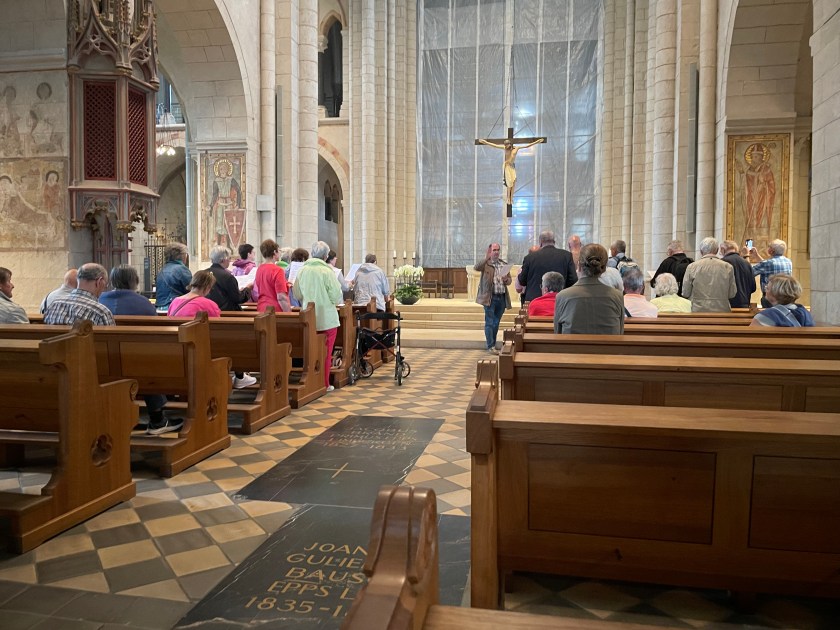
When I went in, there was a tour group singing some beautiful Latin music. The sound was heavenly.
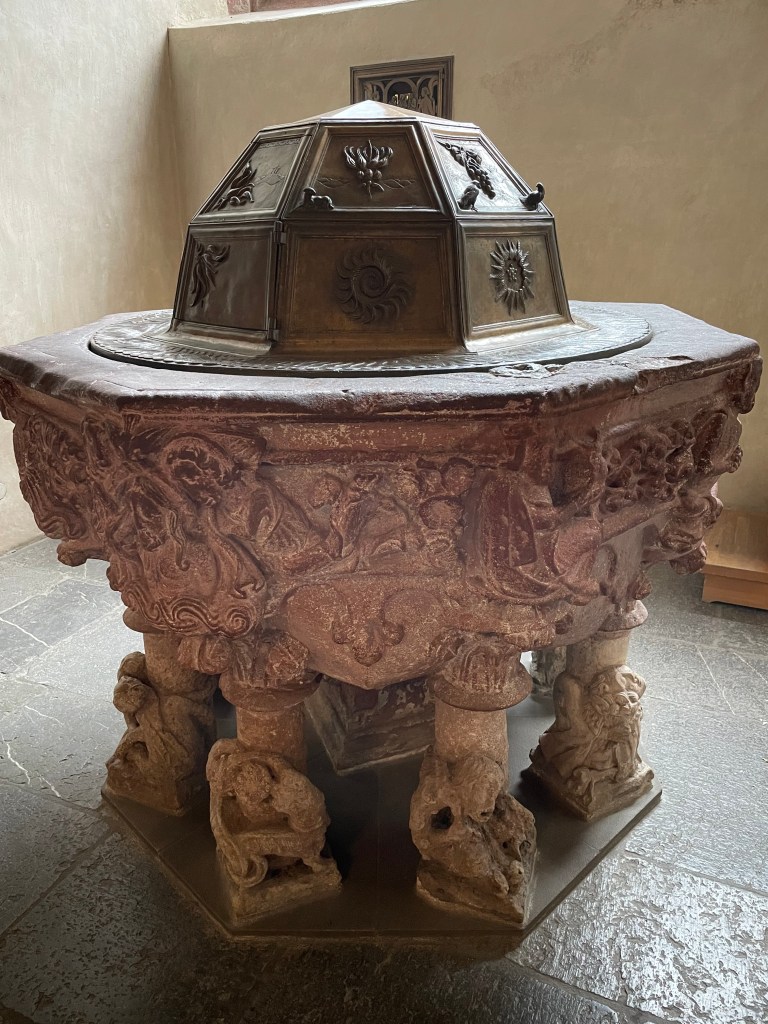
This baptismal font is from the 1200s.
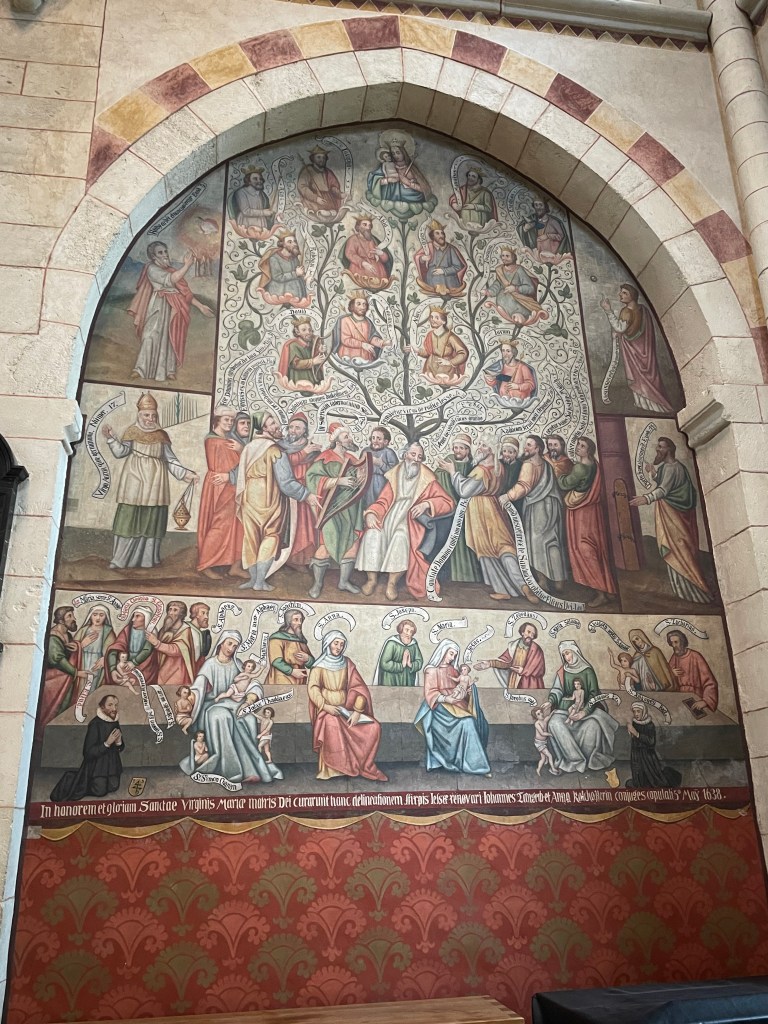
Interesting histories on the walls.

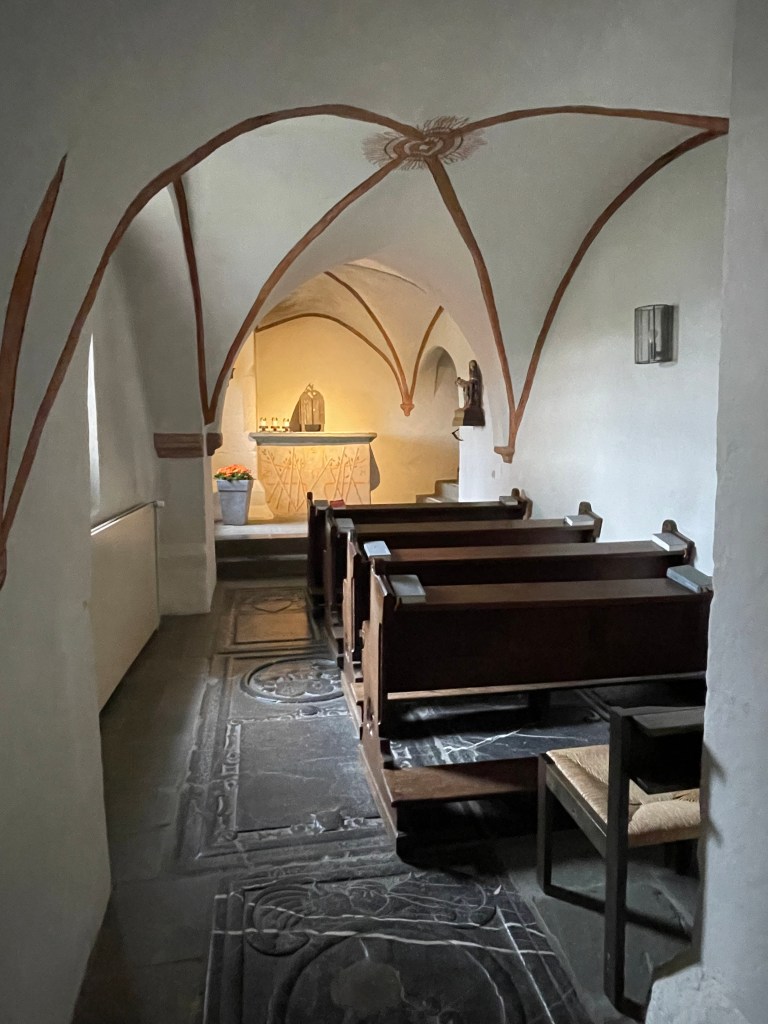
Look at the floors covered in memorial stones.
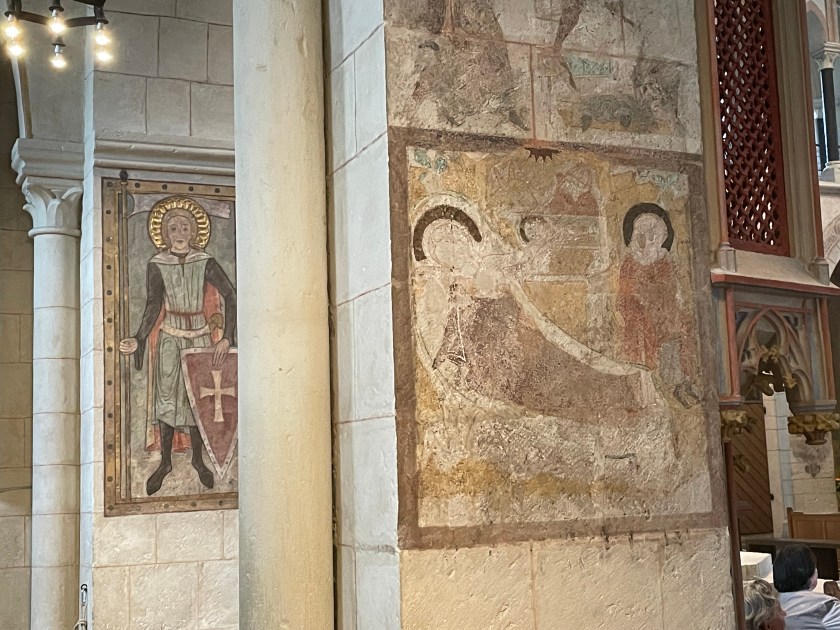

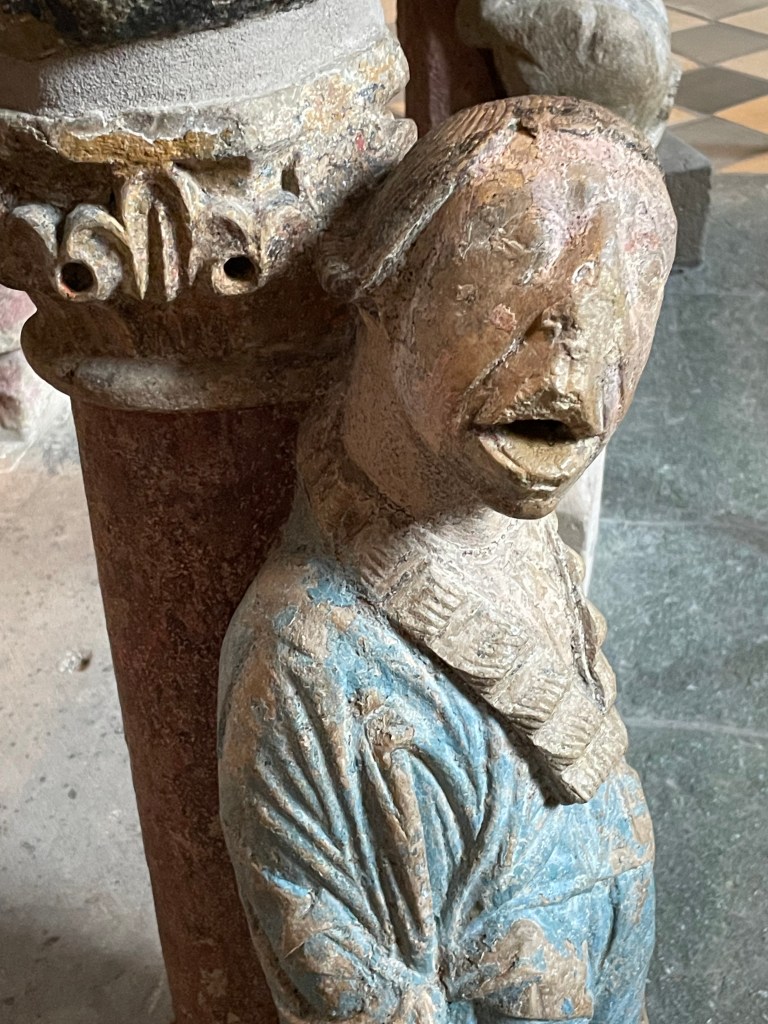
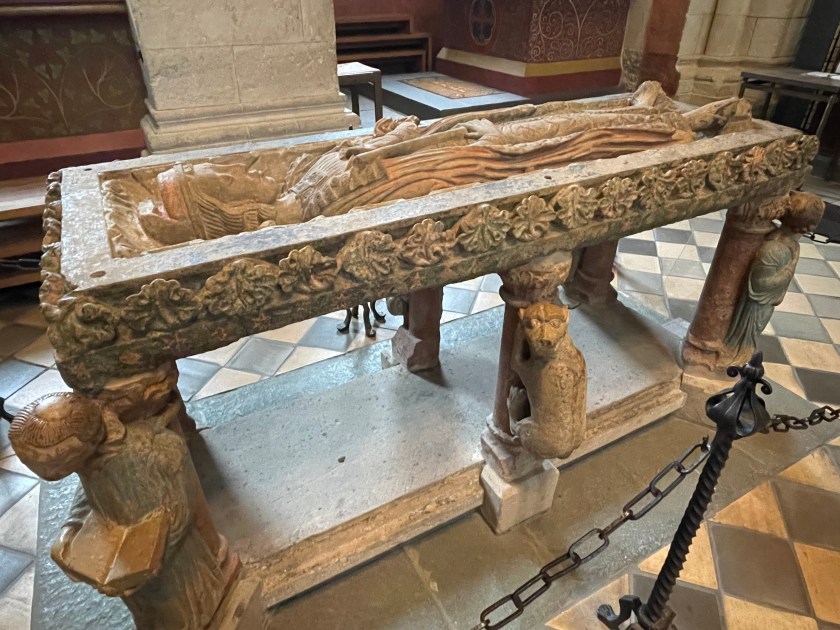
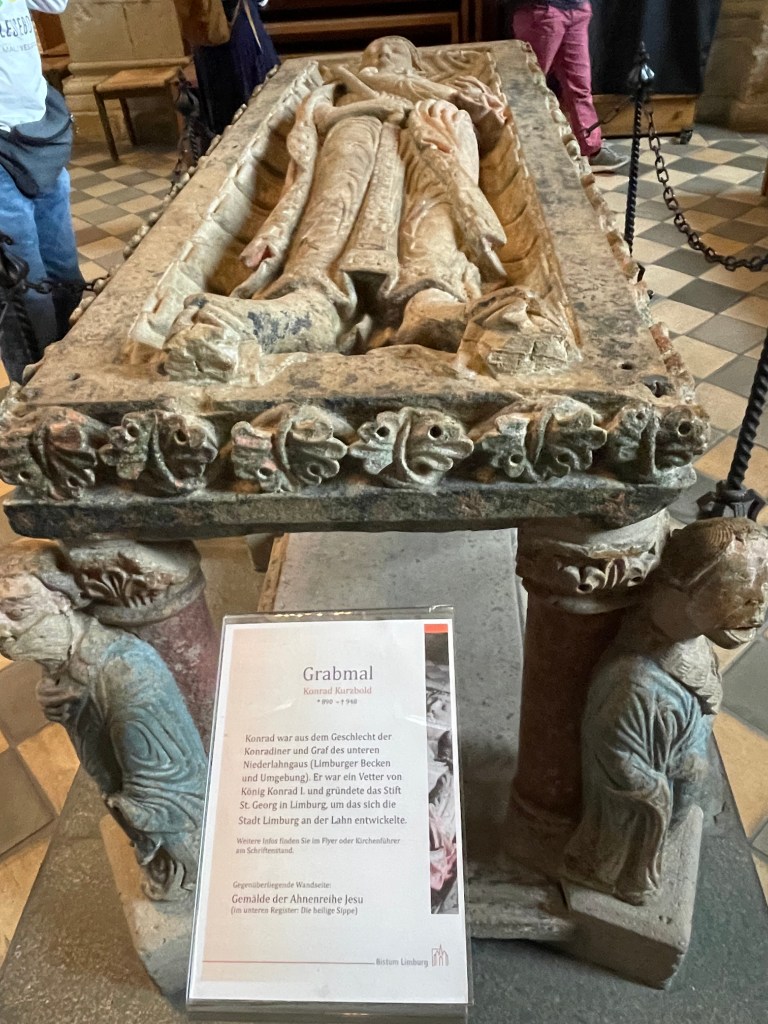
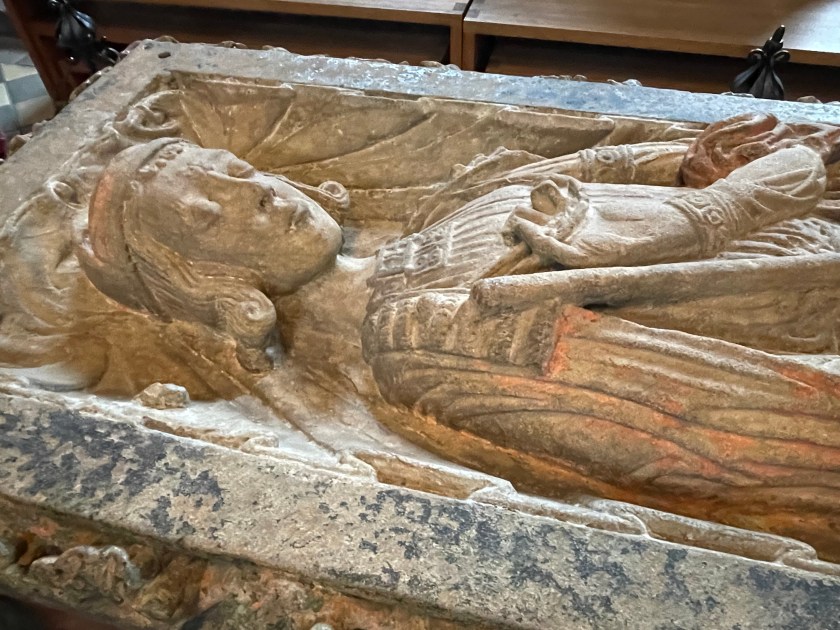
A grave memorial from the 900s.


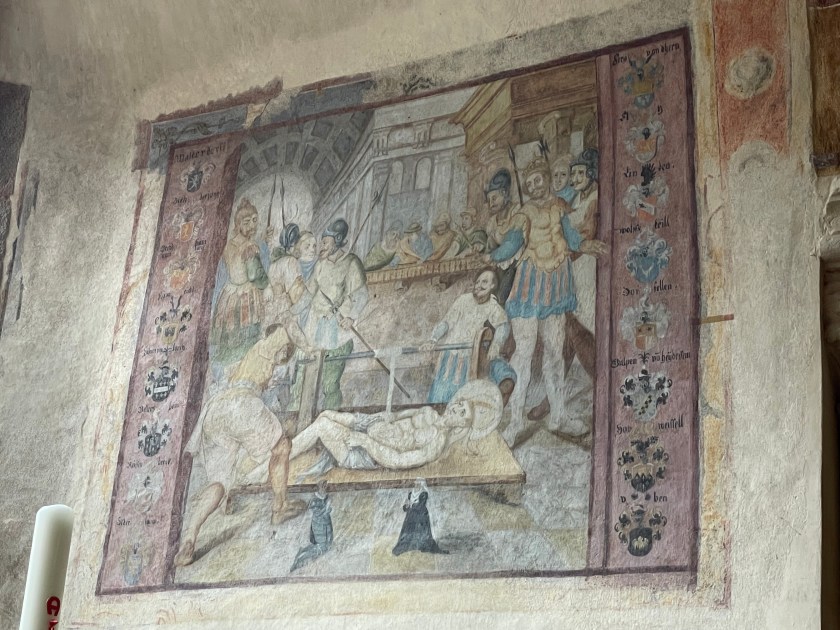
The evisceration of one of the apostles:
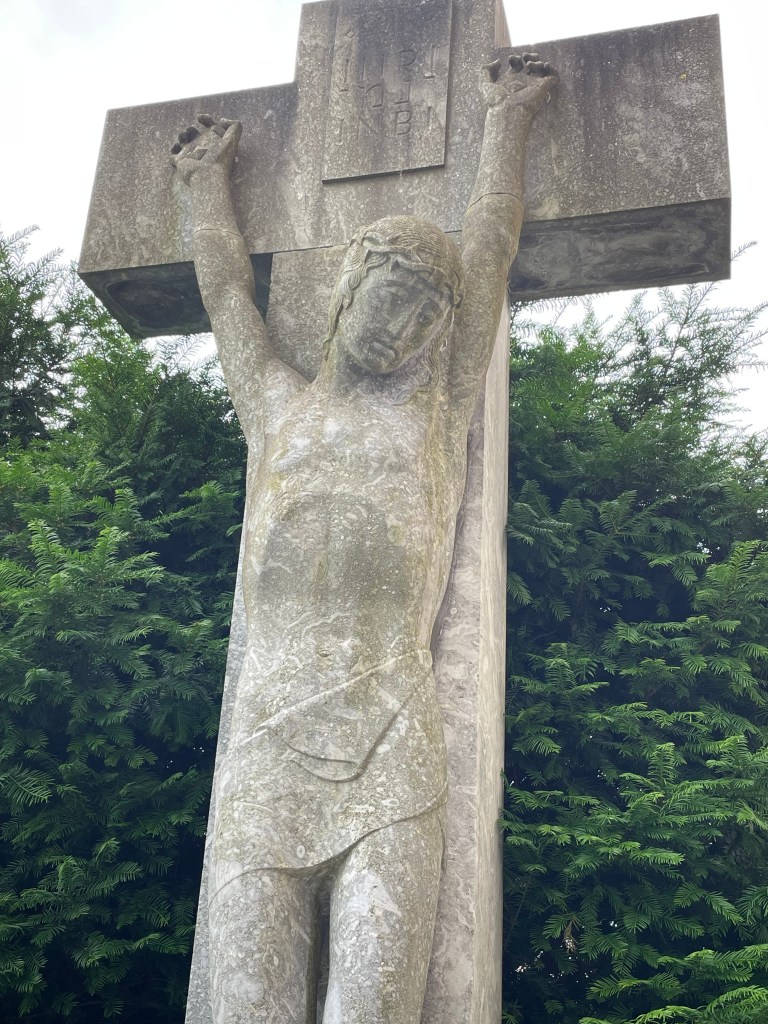
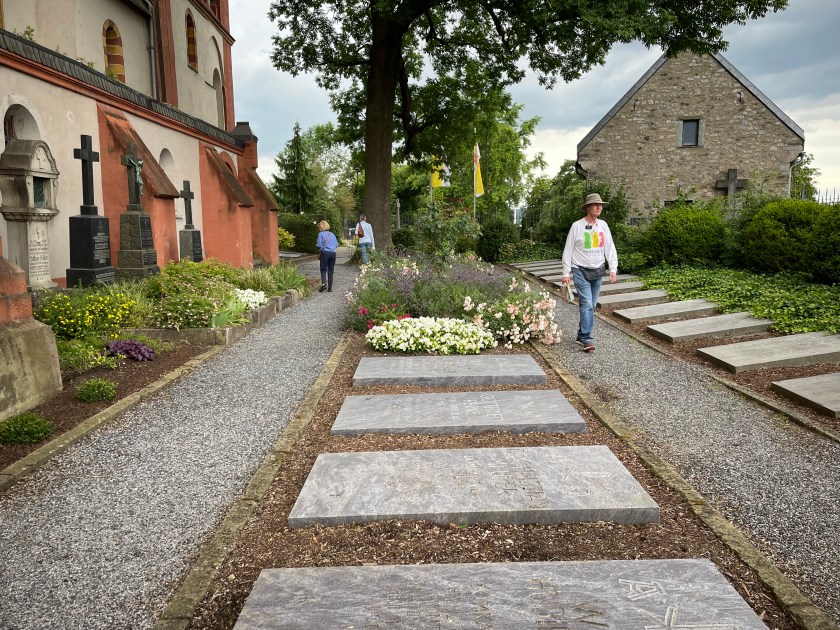
There is a cemetery outside of the cathedral where church leaders were buried.


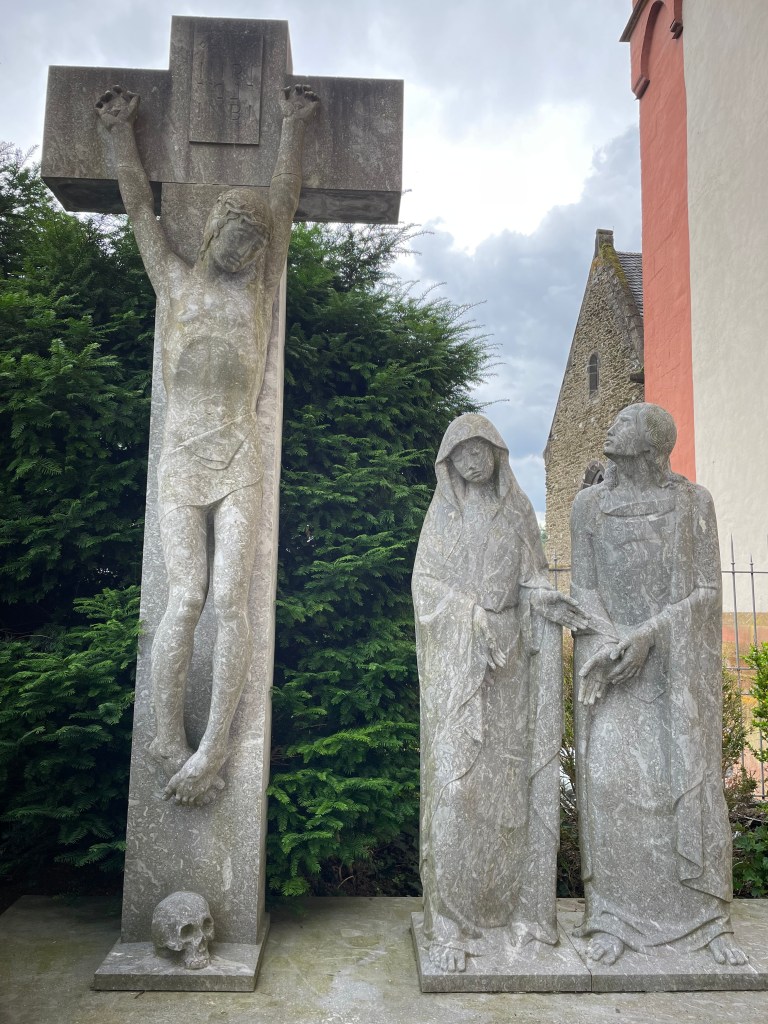
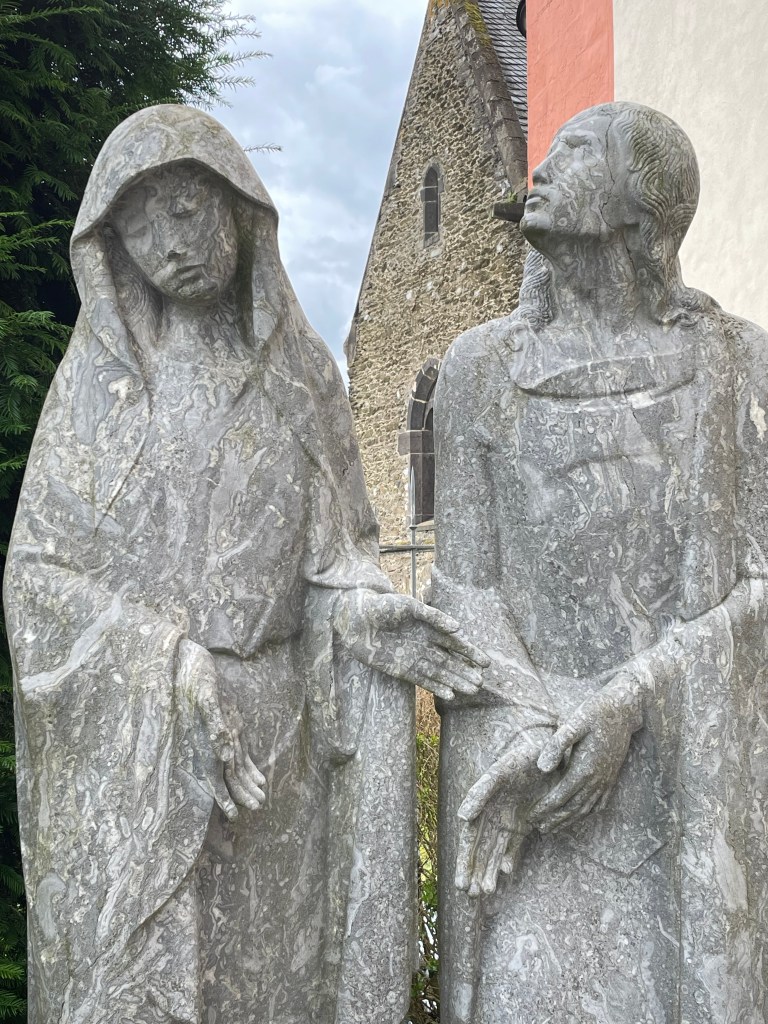

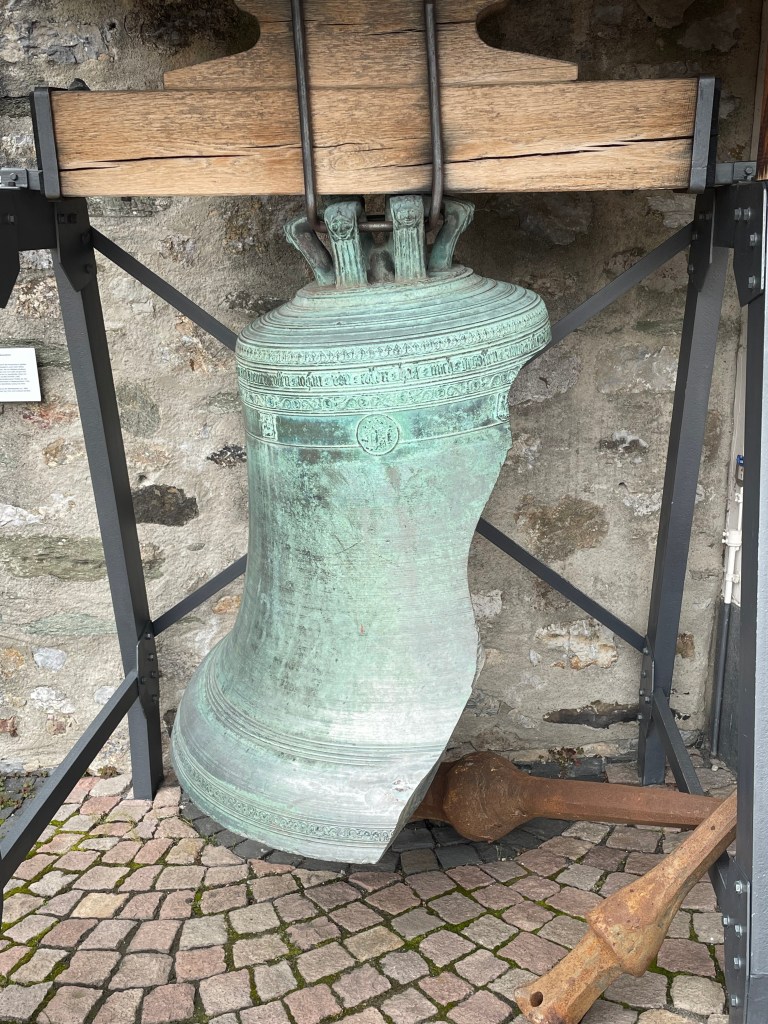


We walked back down into the old town.

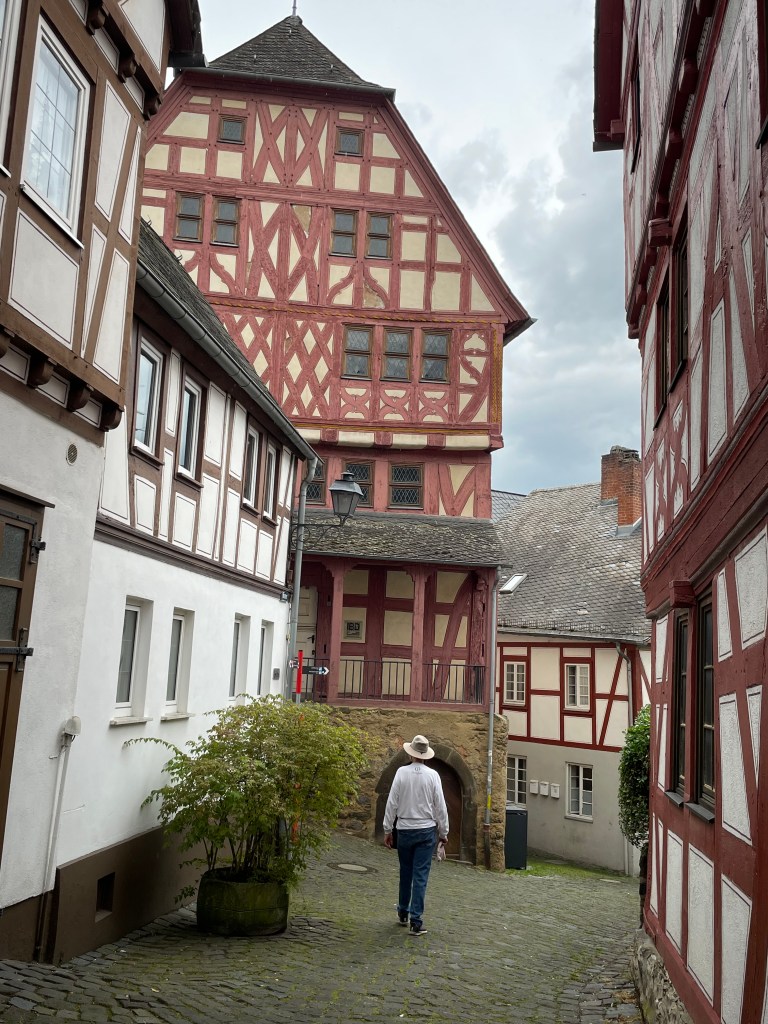
Passing by an open cellar door:

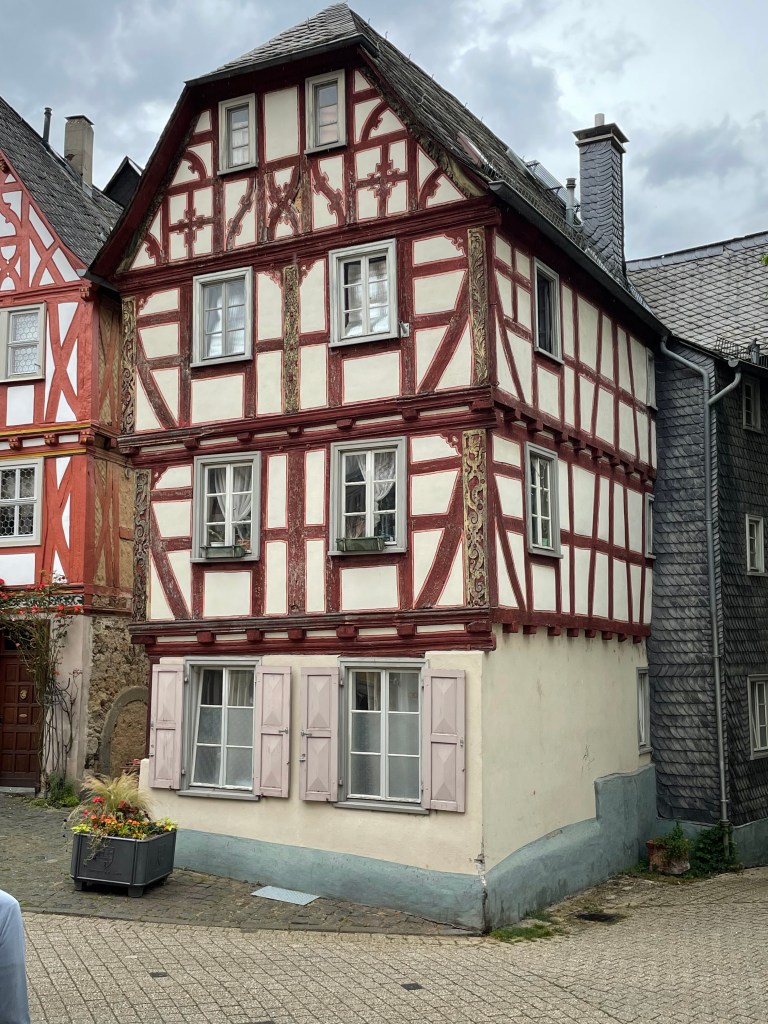
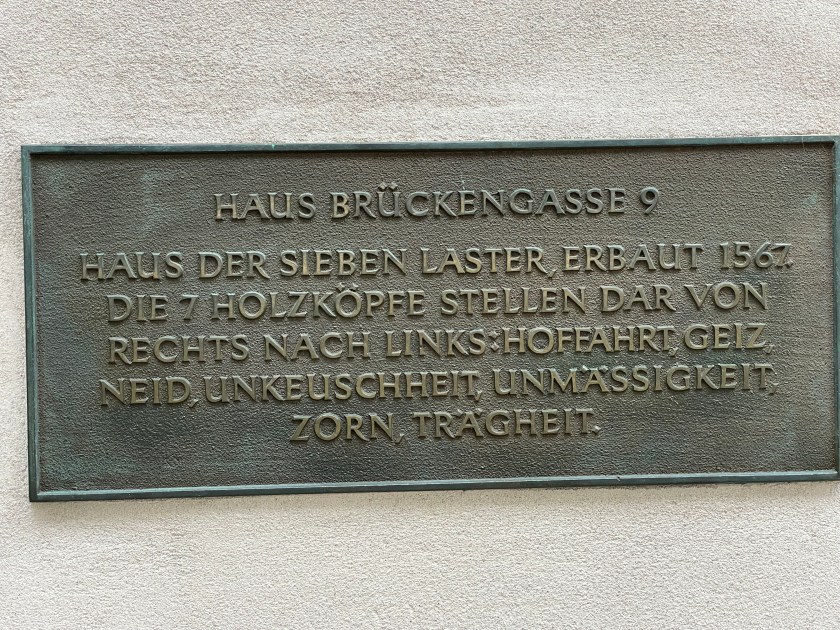
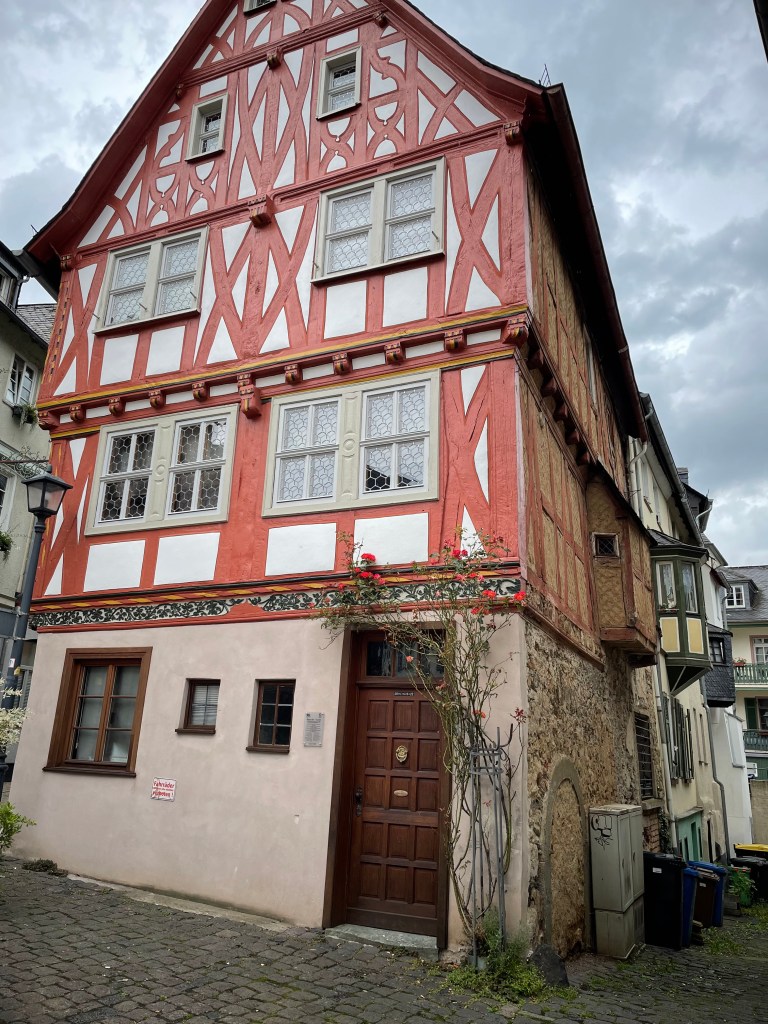
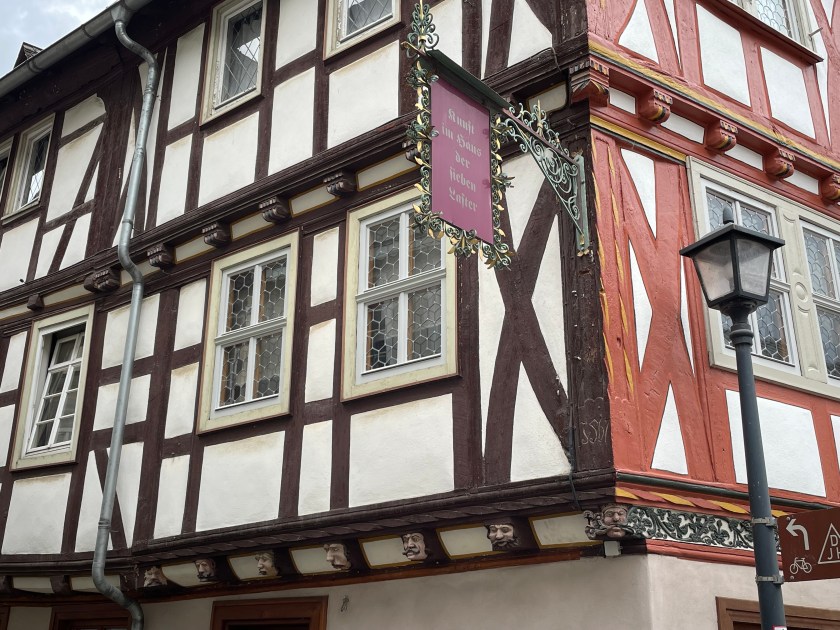
This is the House of the Seven Sins or Vices, built in 1567.
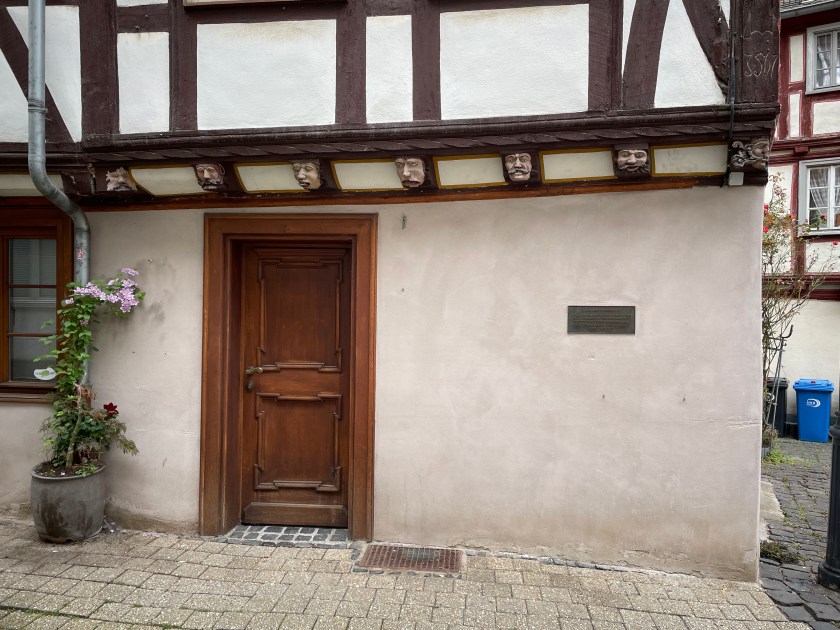
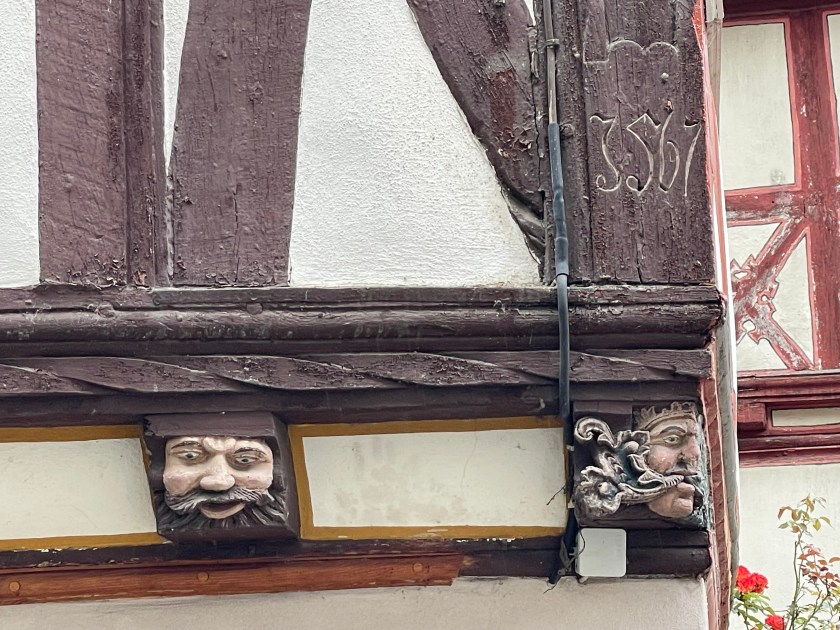
There are 7 carved heads on the ground floor roof beam representing these vices: pride, envy, intemperance, avarice, lust, anger and indolence.
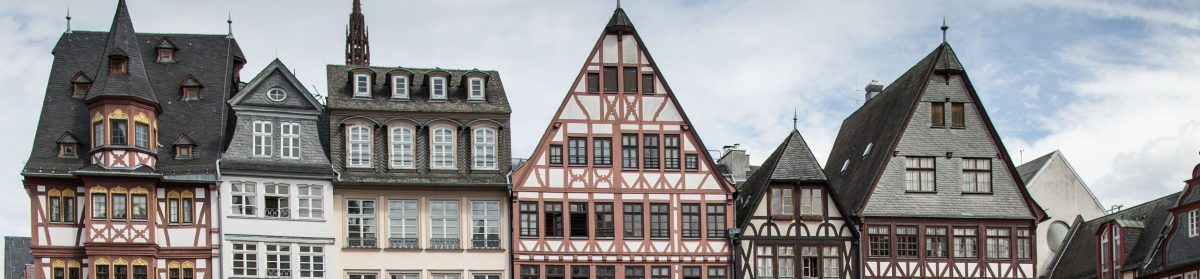
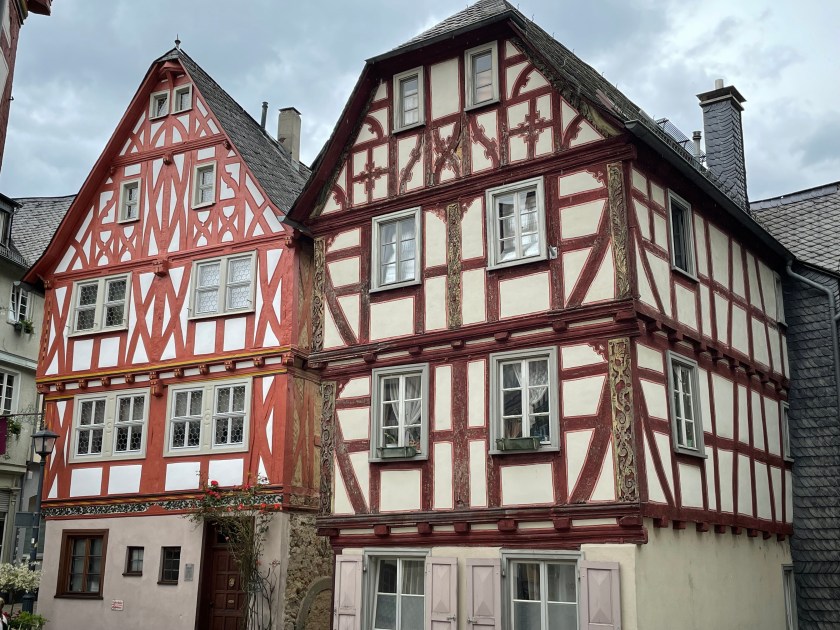
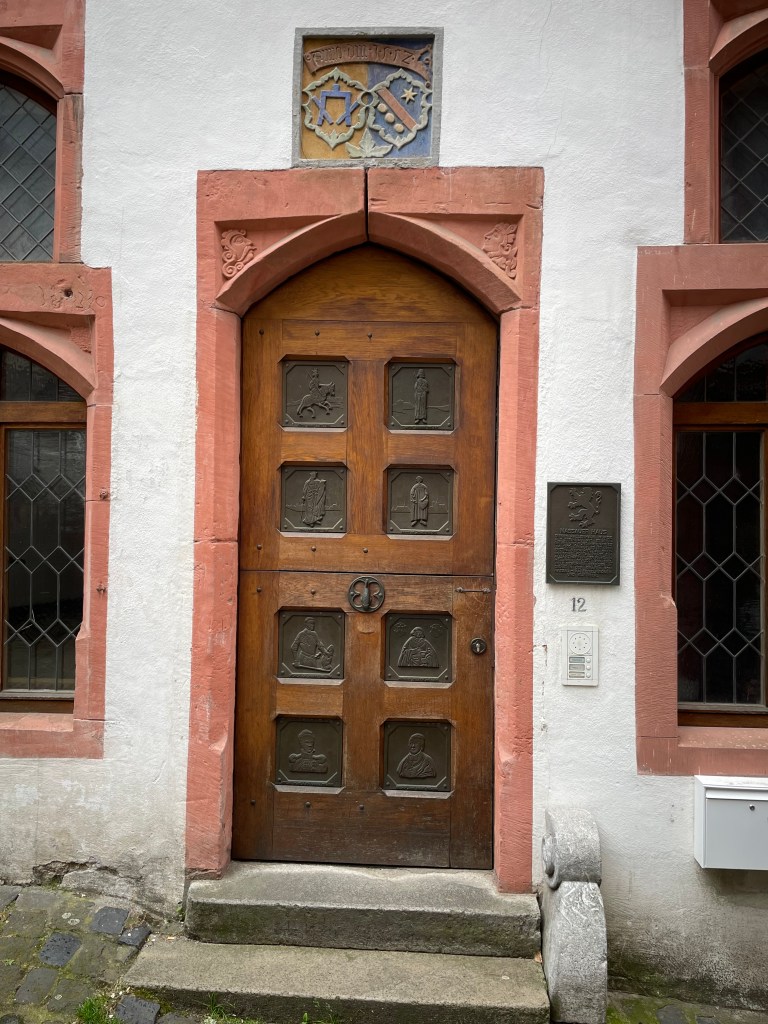
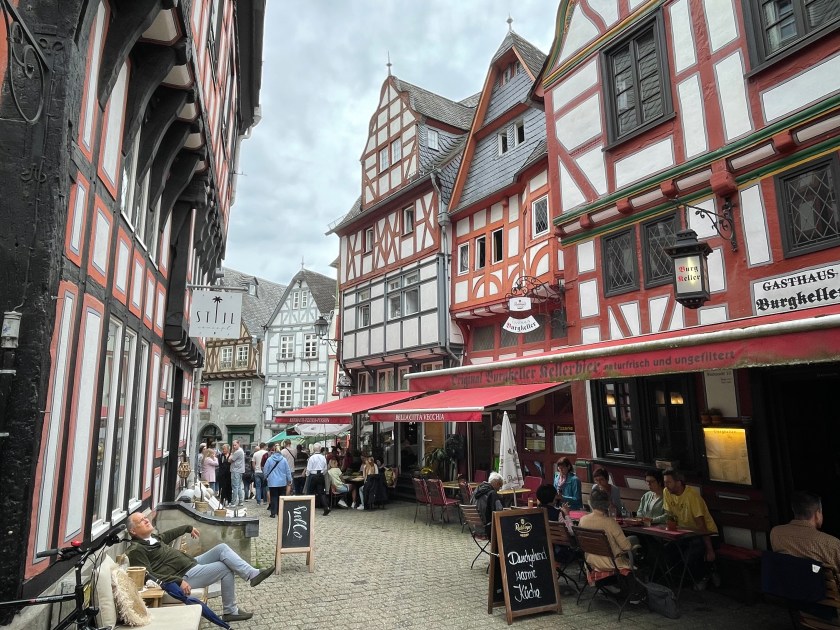
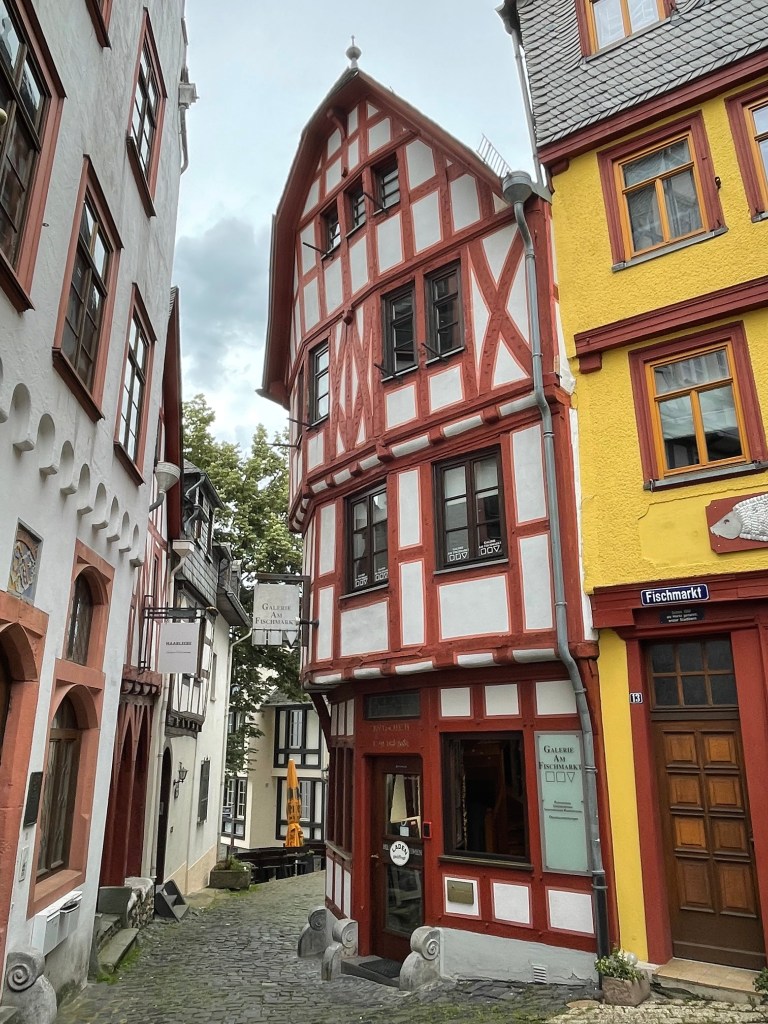
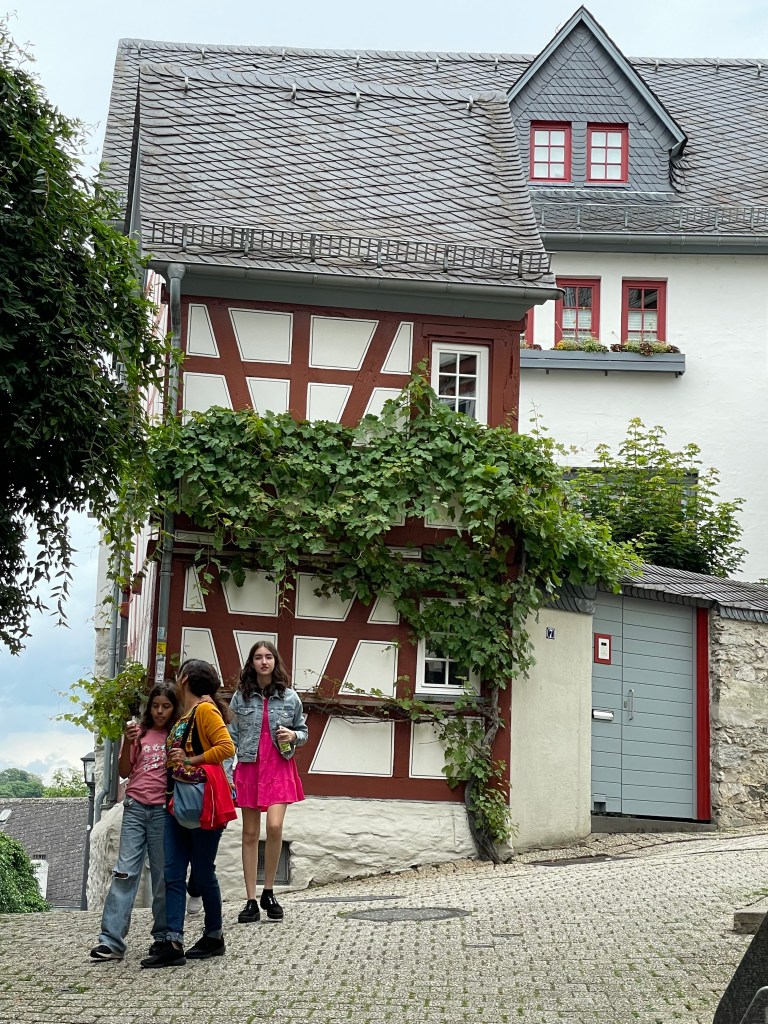
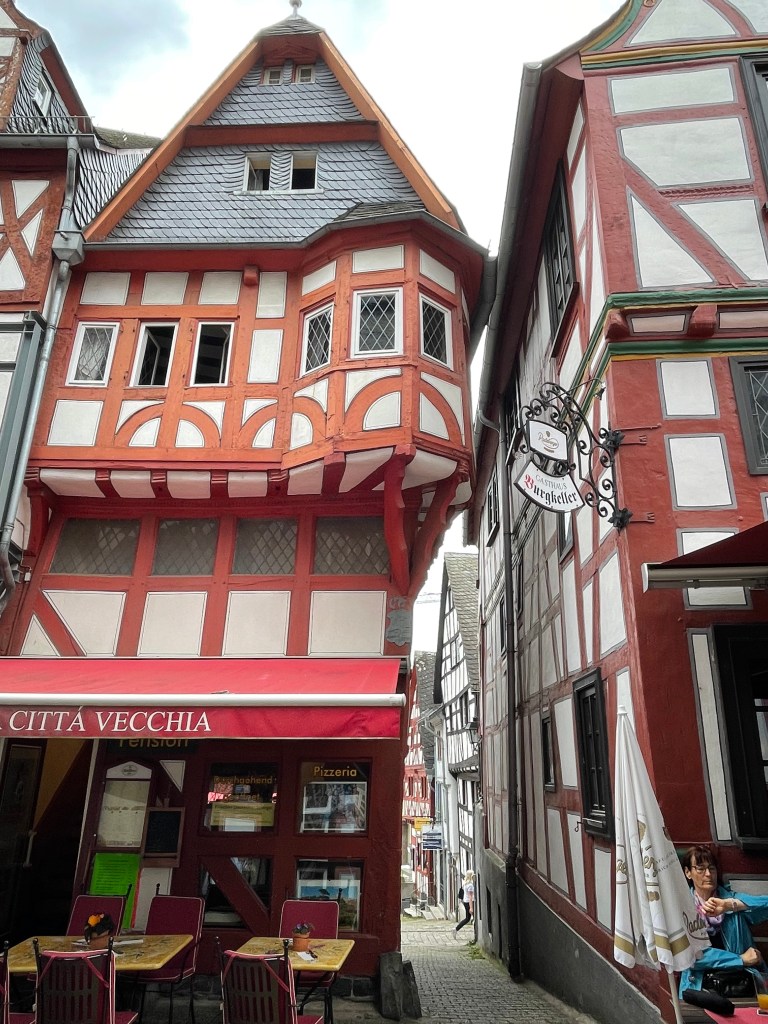
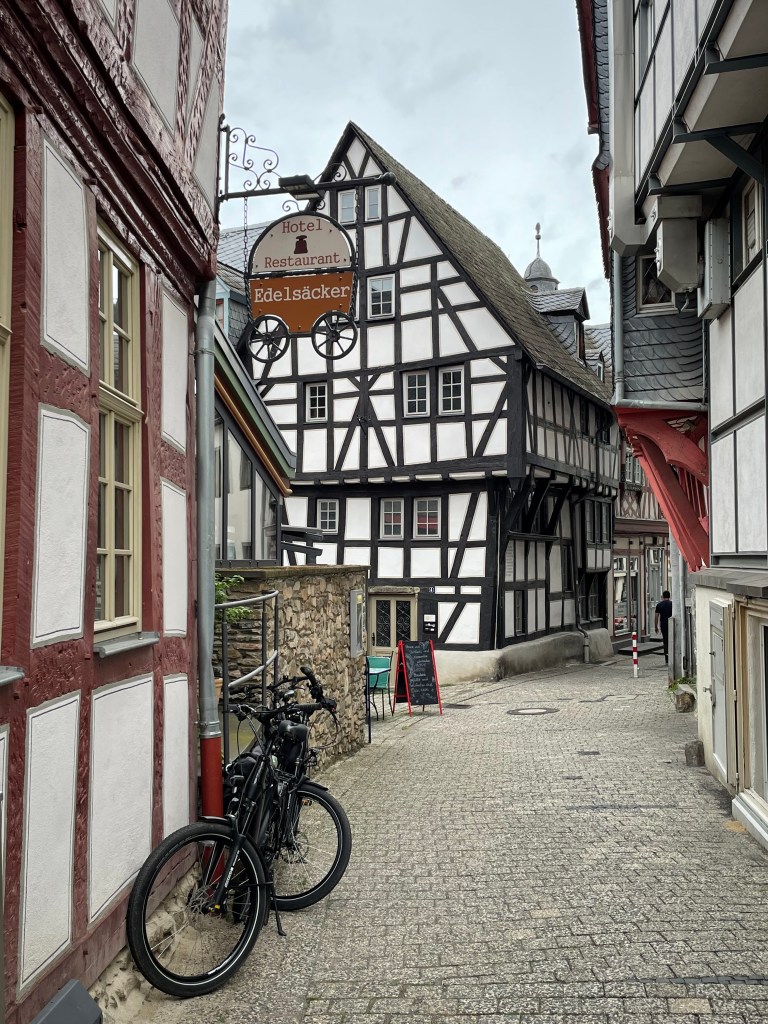
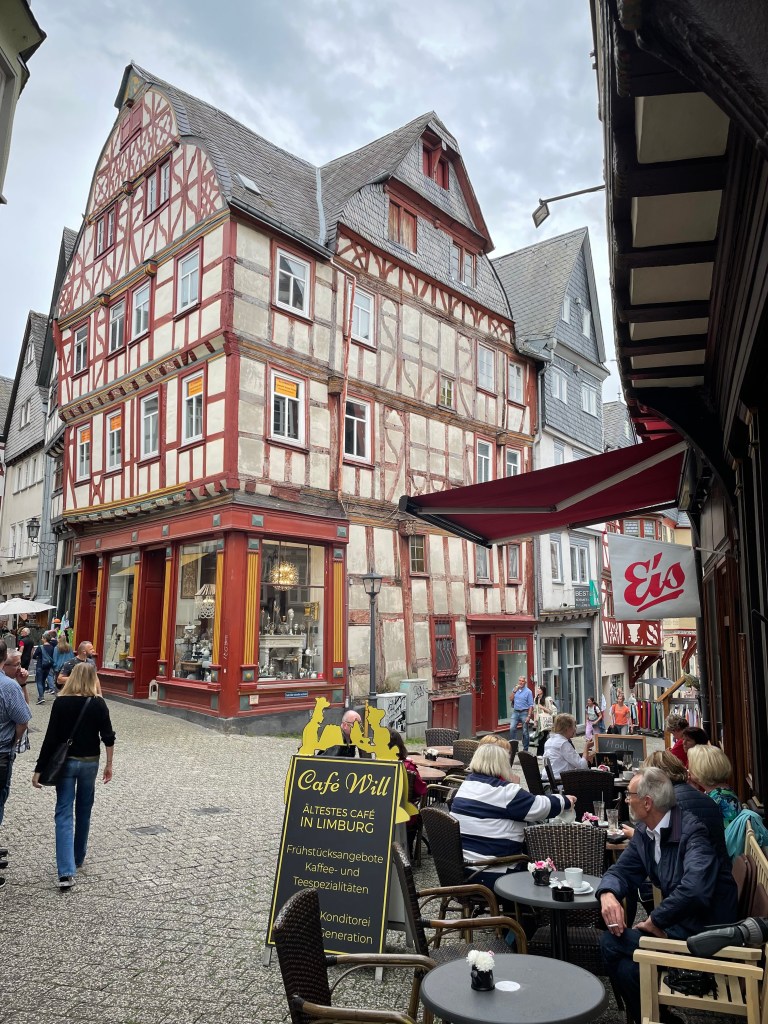
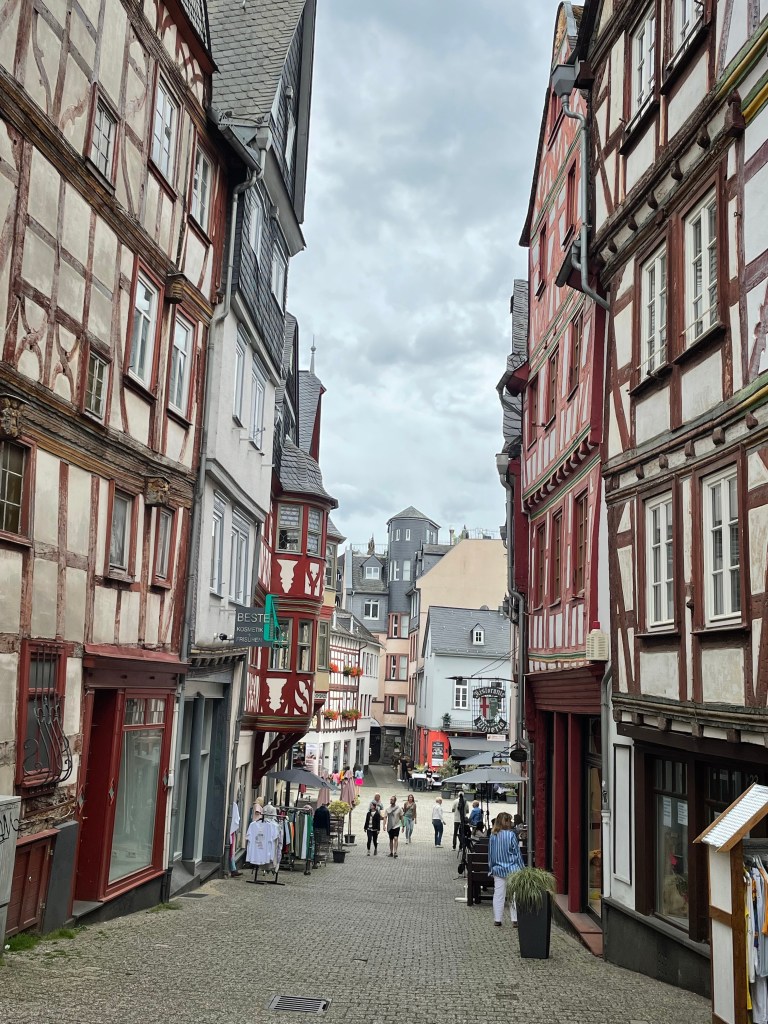
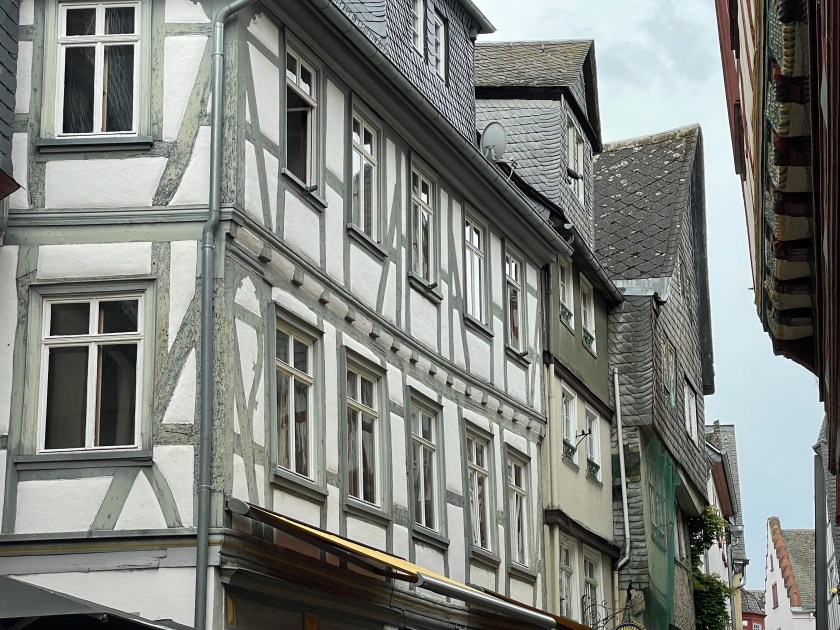
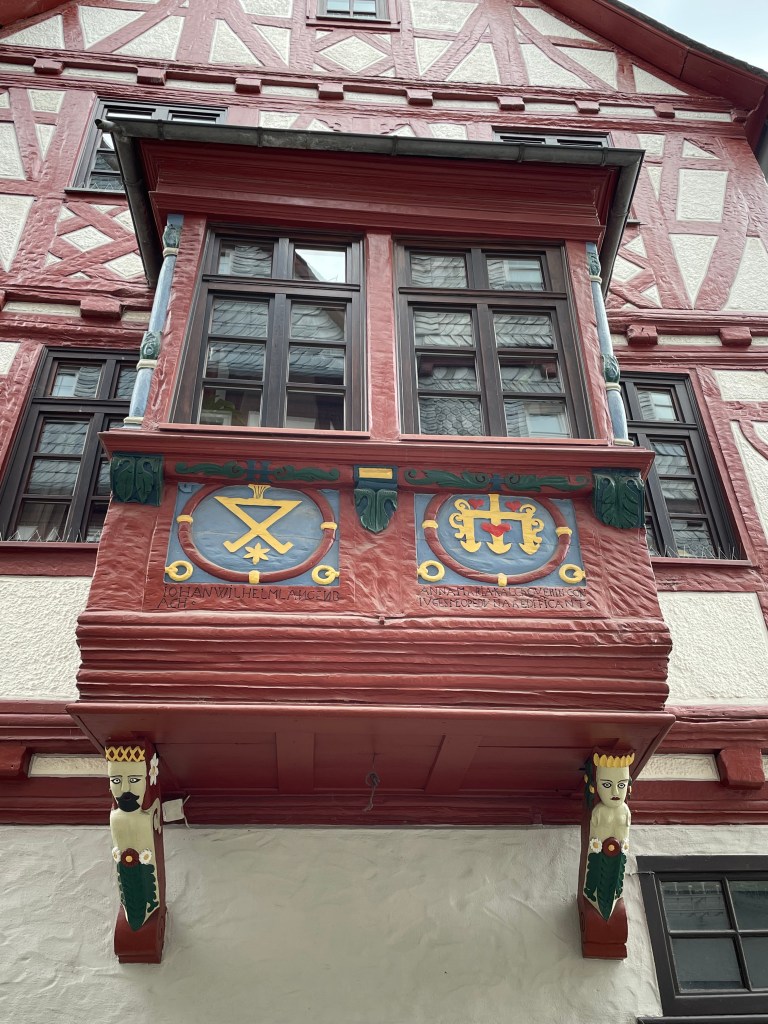
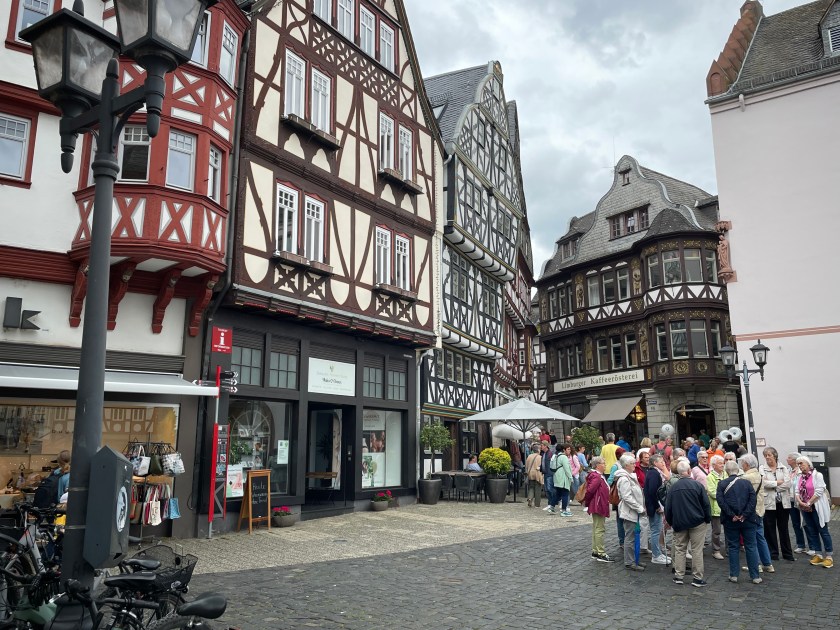
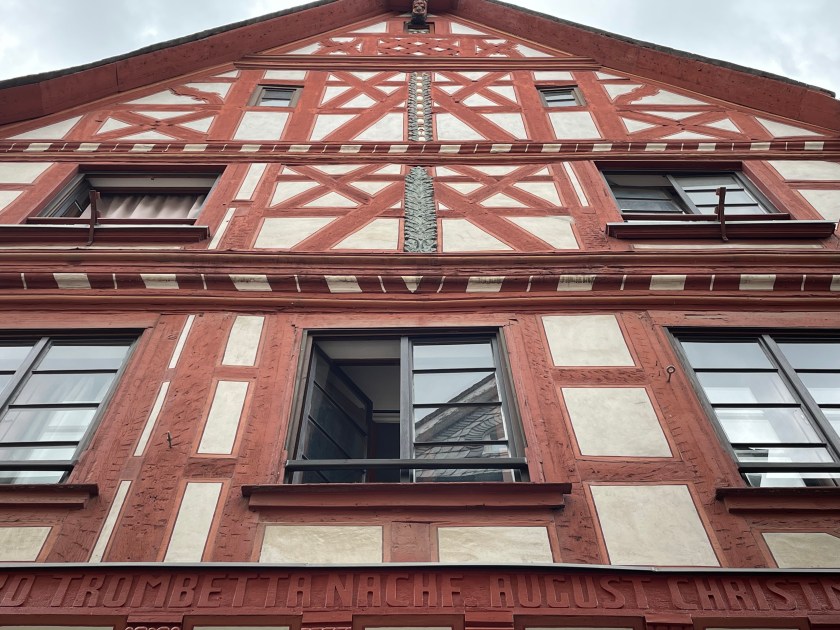
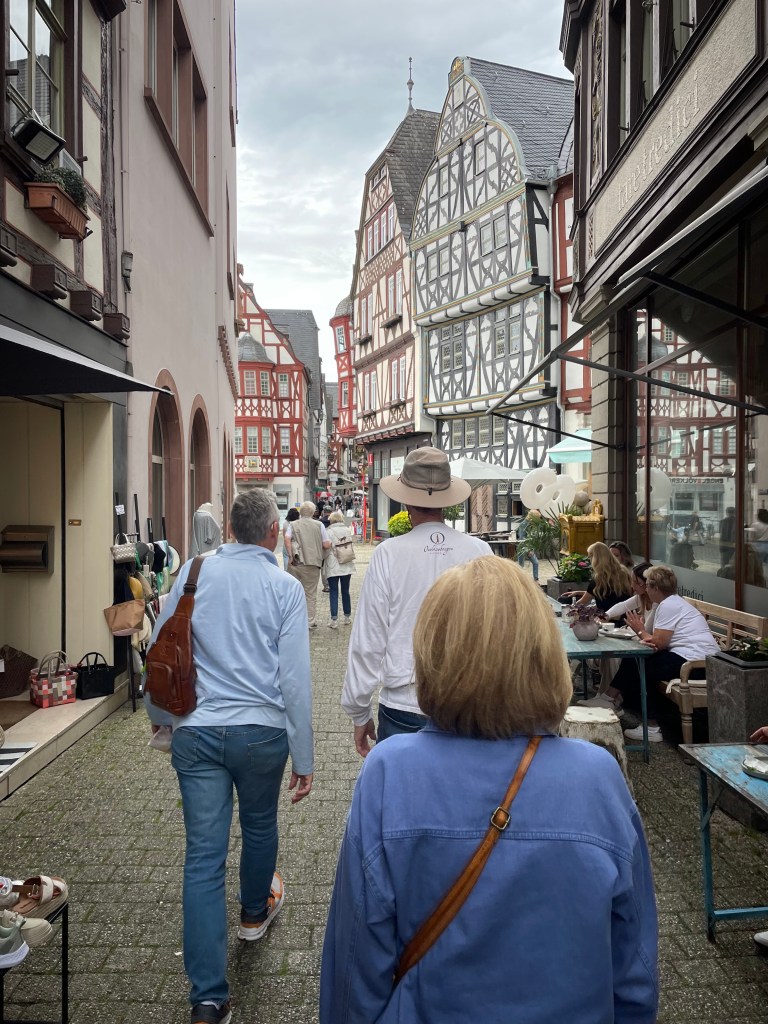
More beautiful old homes:
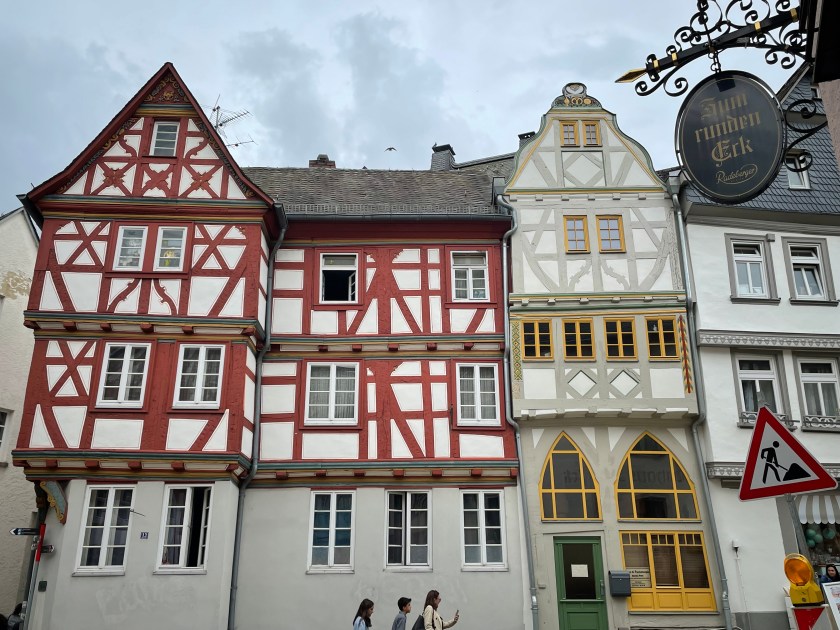
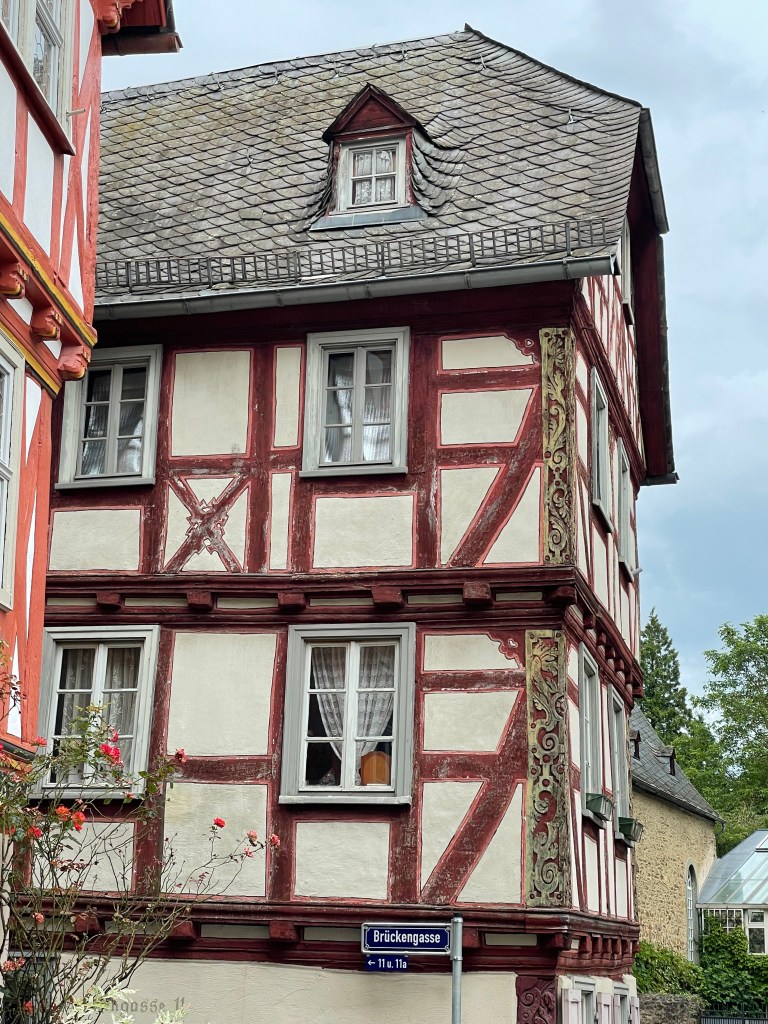
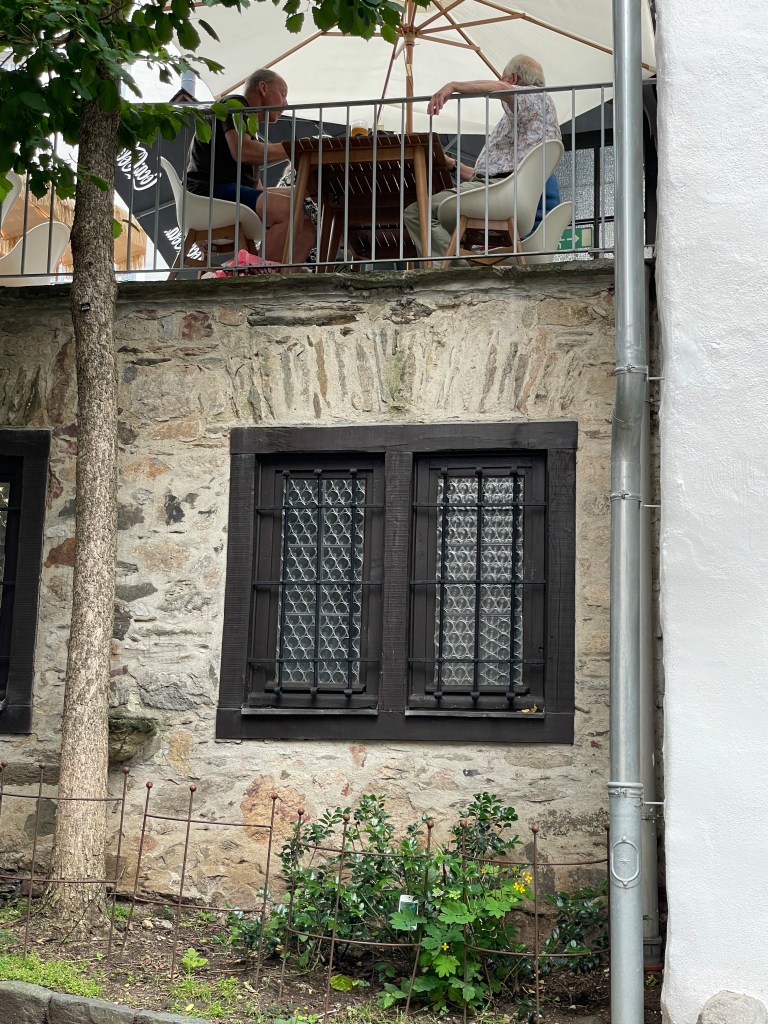
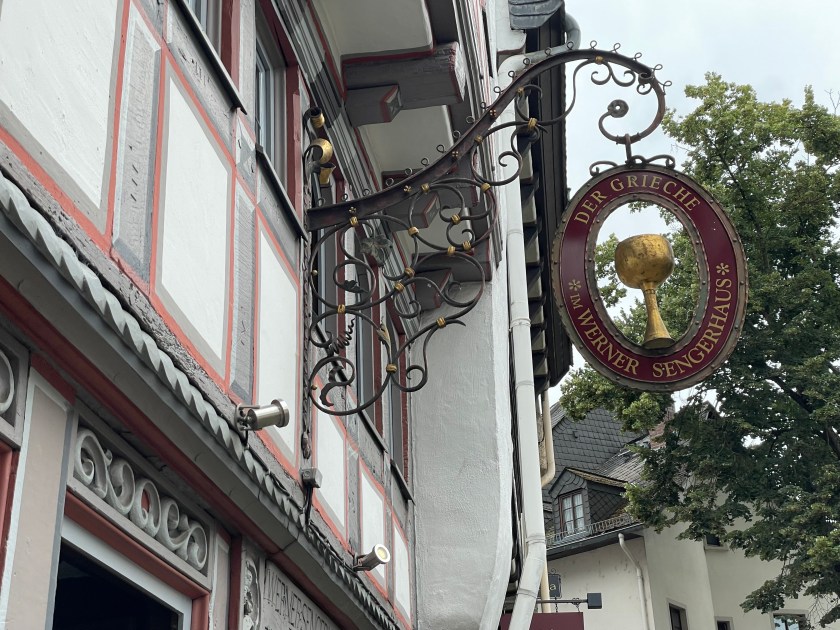
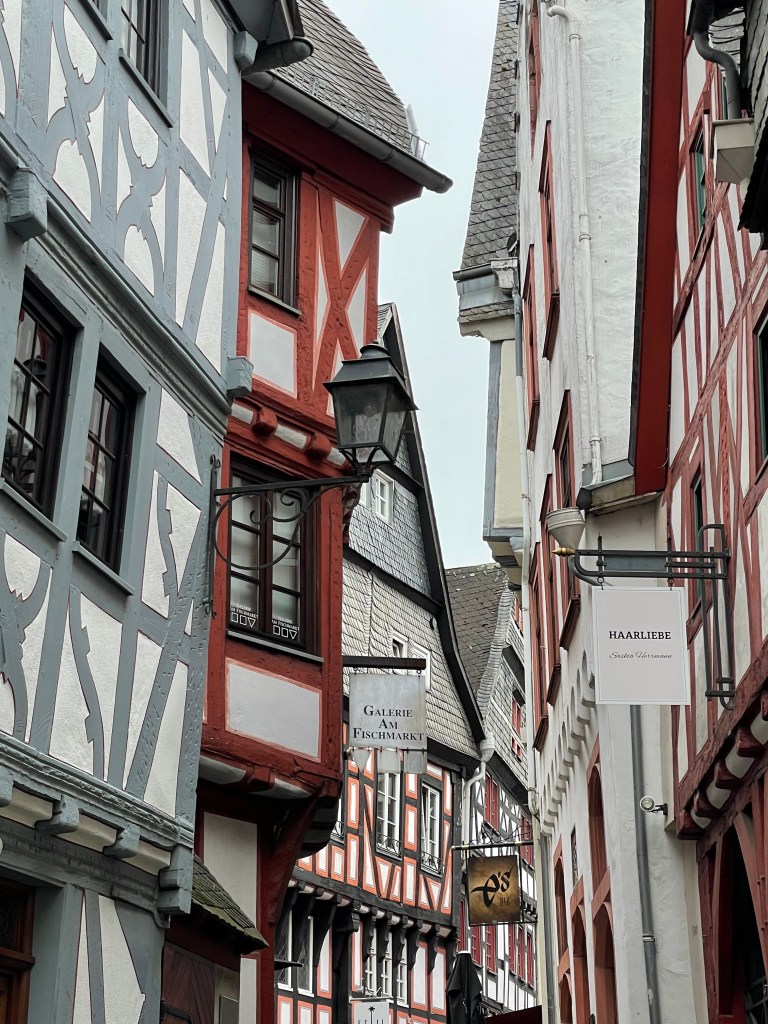
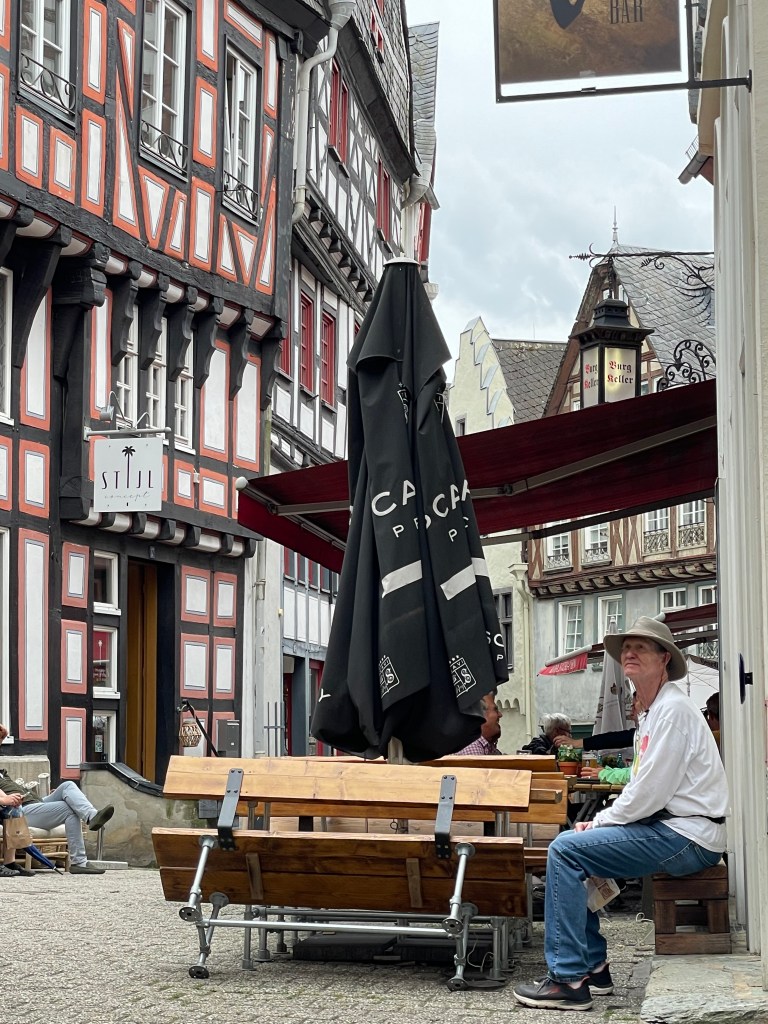
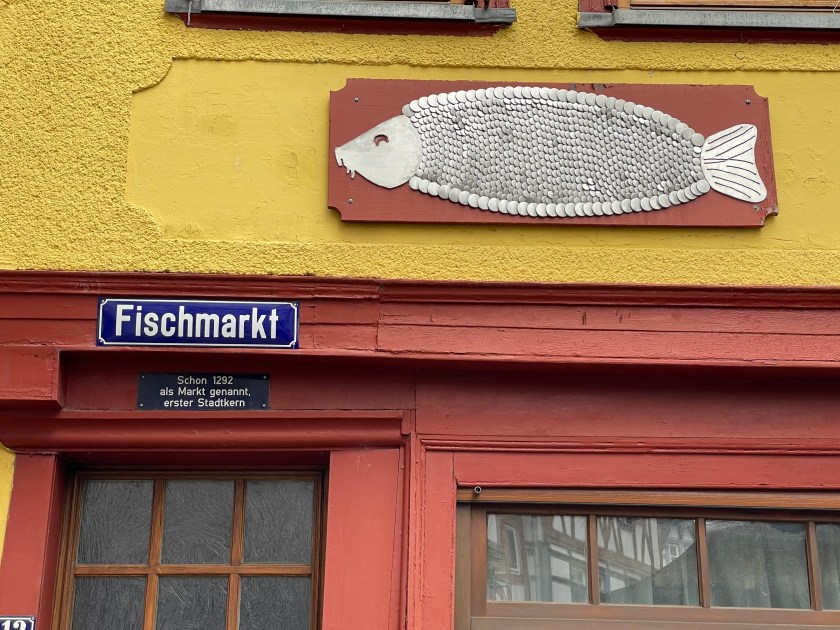
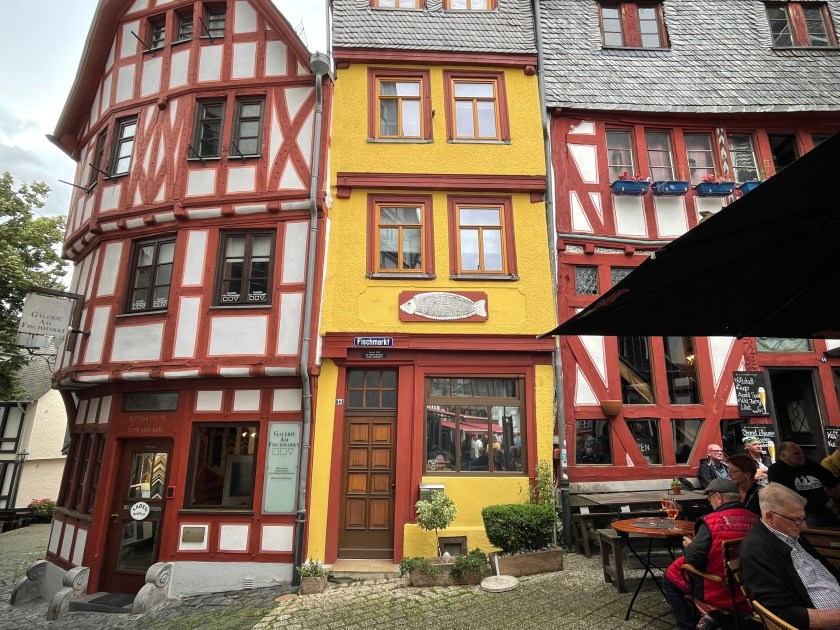
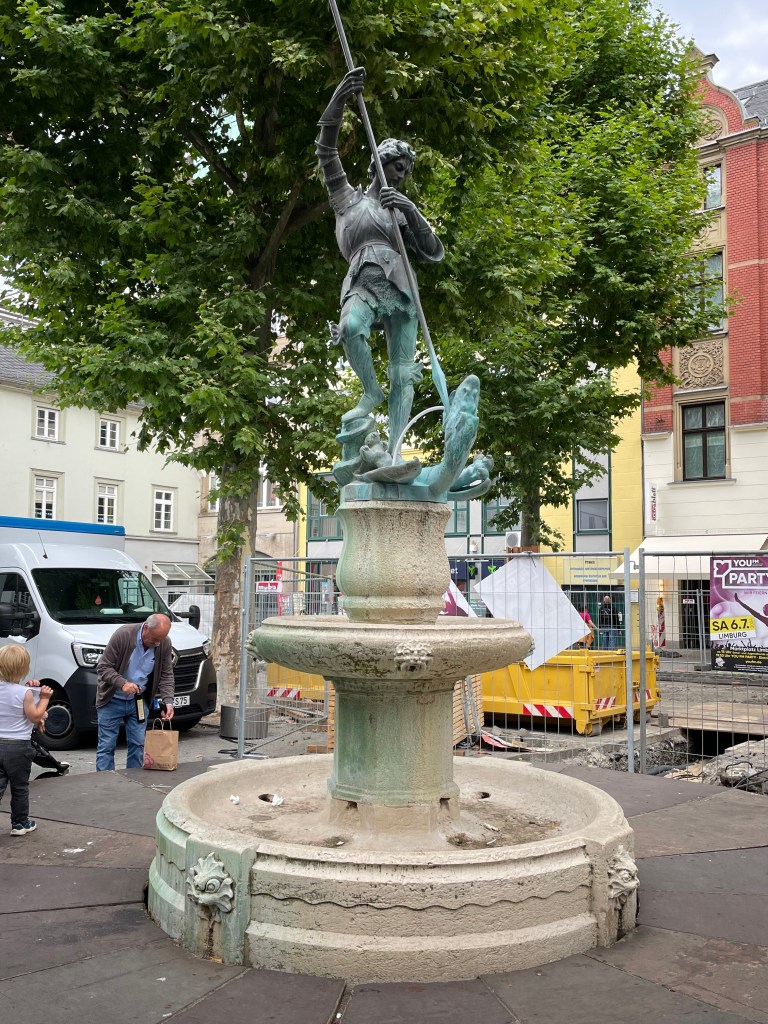
The old fish market plaza.





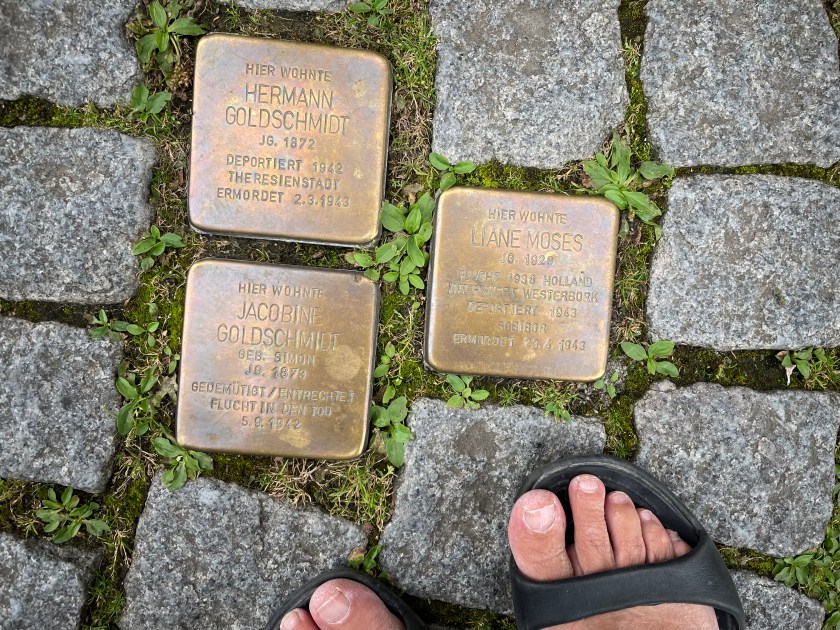
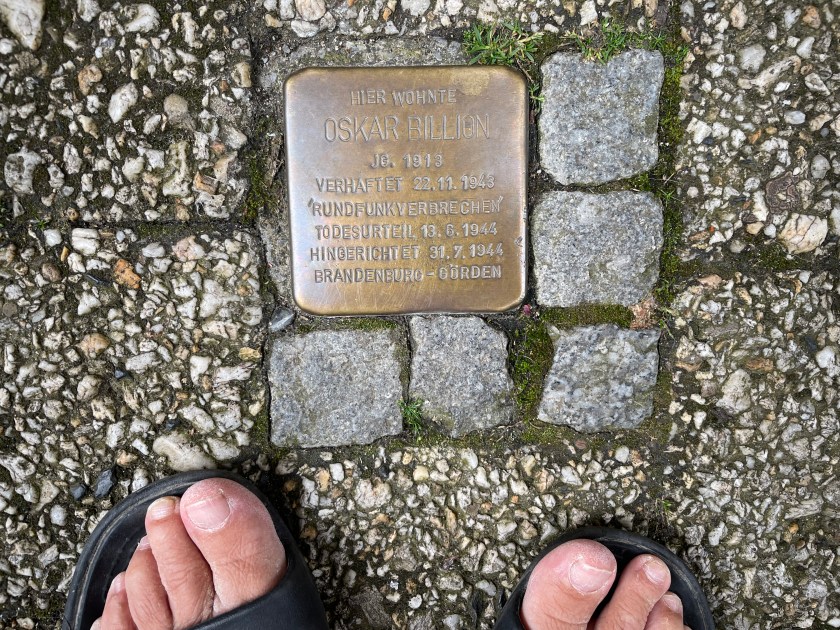
As we made our way out of town, we passed more Stolpersteine. They never fail to move my heart.

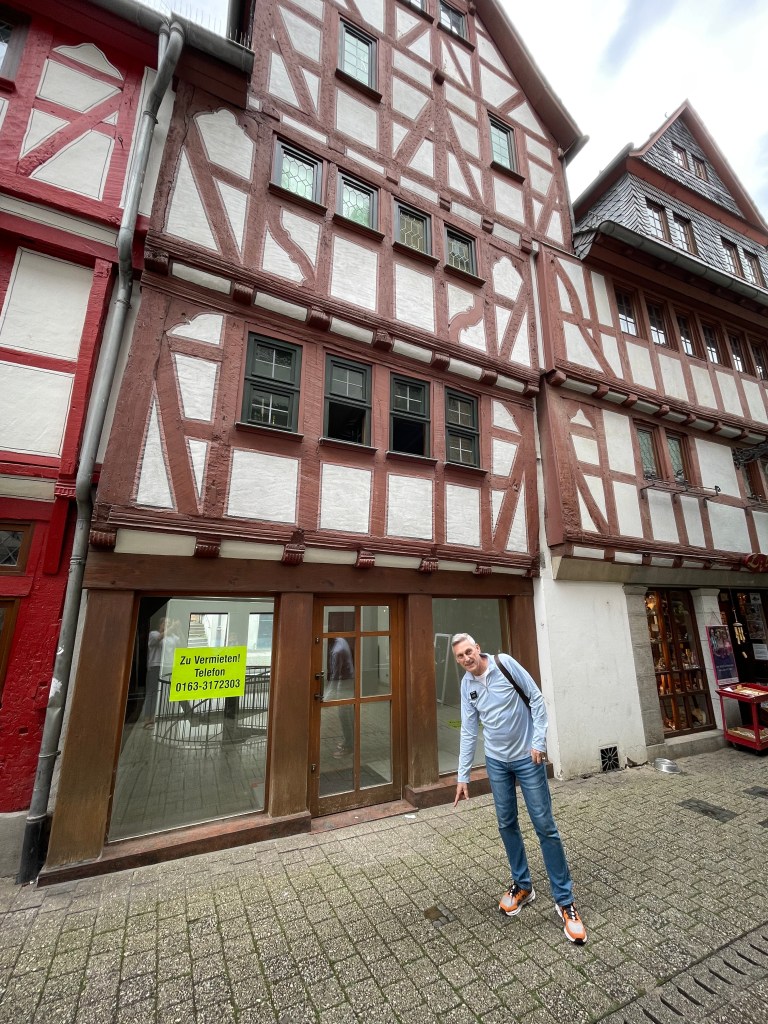
There was one more reason we came to Limburg–there is a particular shop here the missionaries love. Read about it in my next post.

 Our Frankfurt Germany Mission