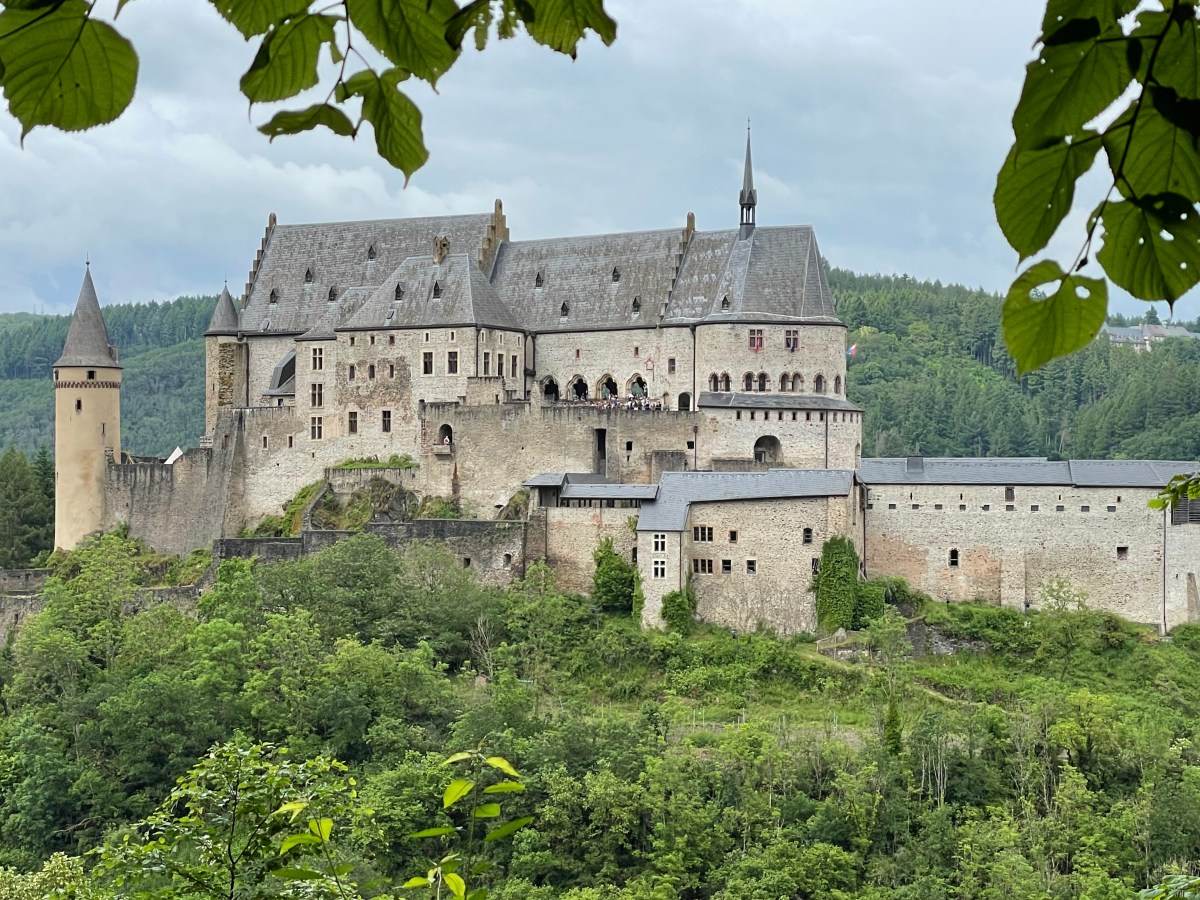
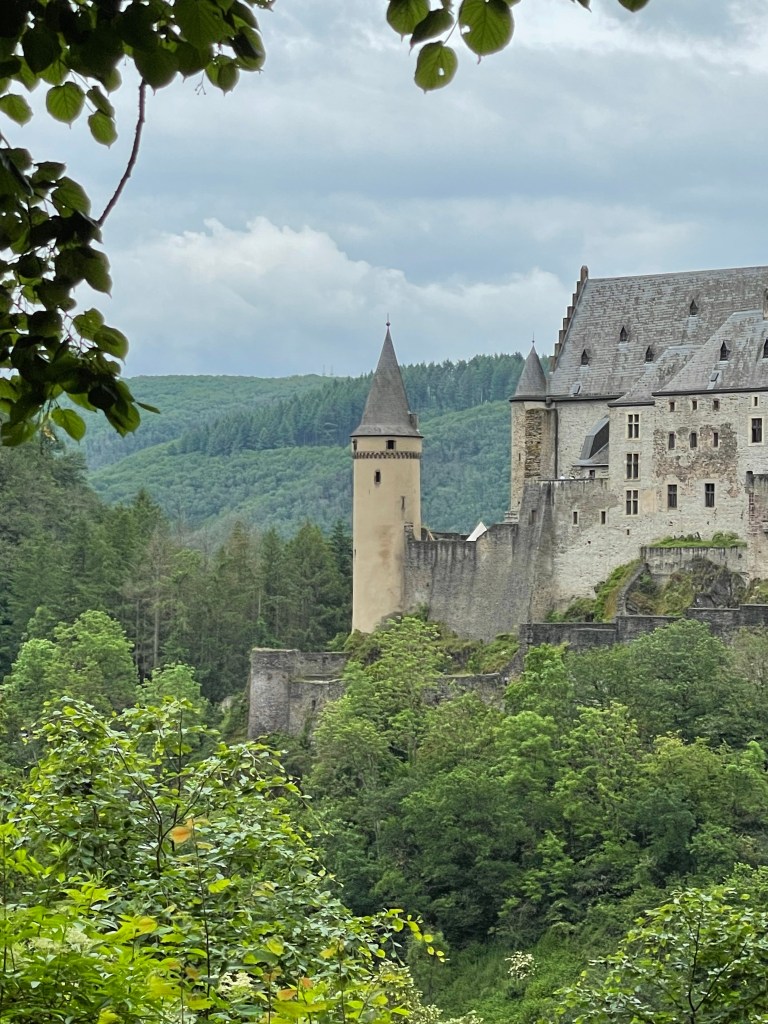
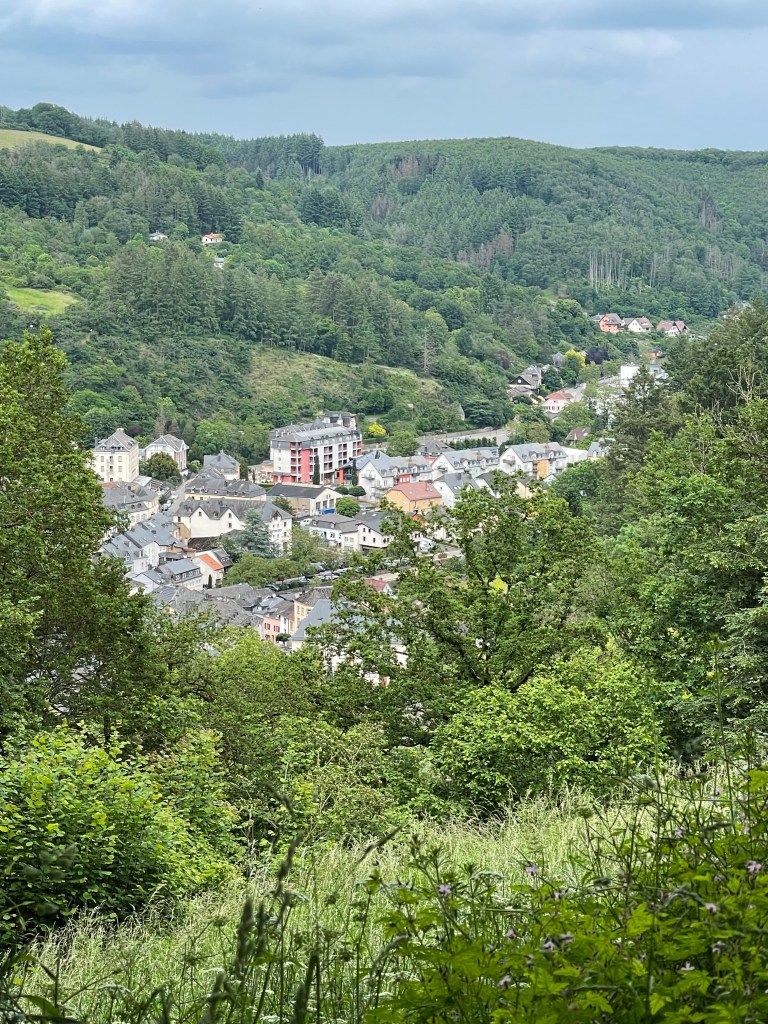
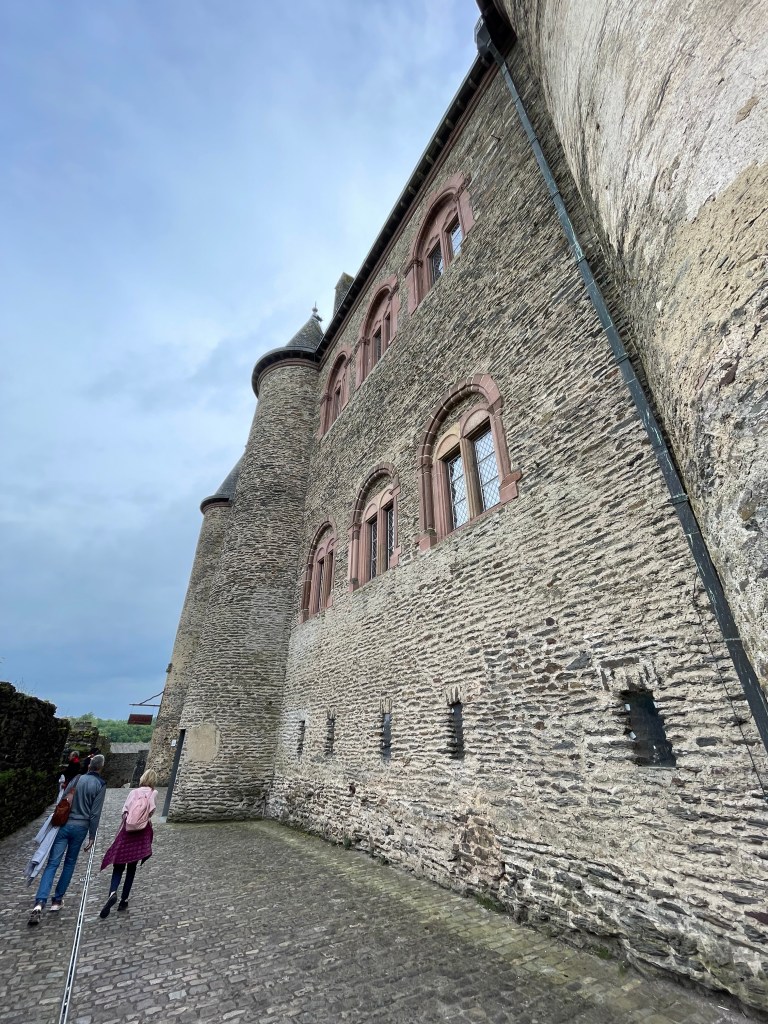
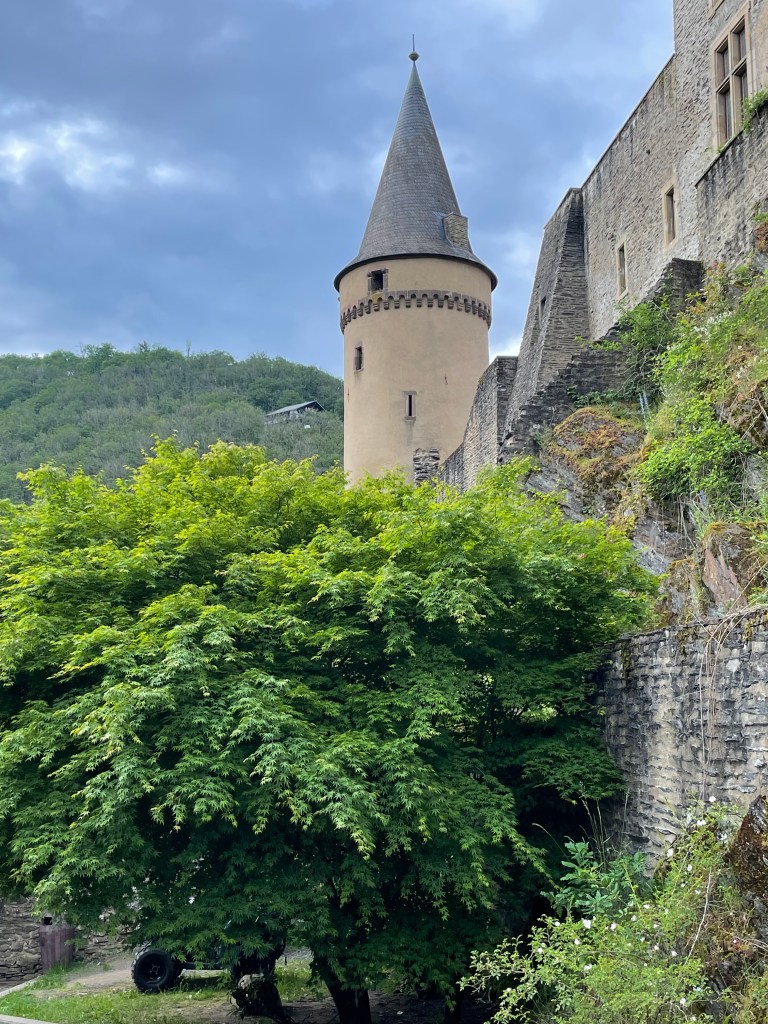
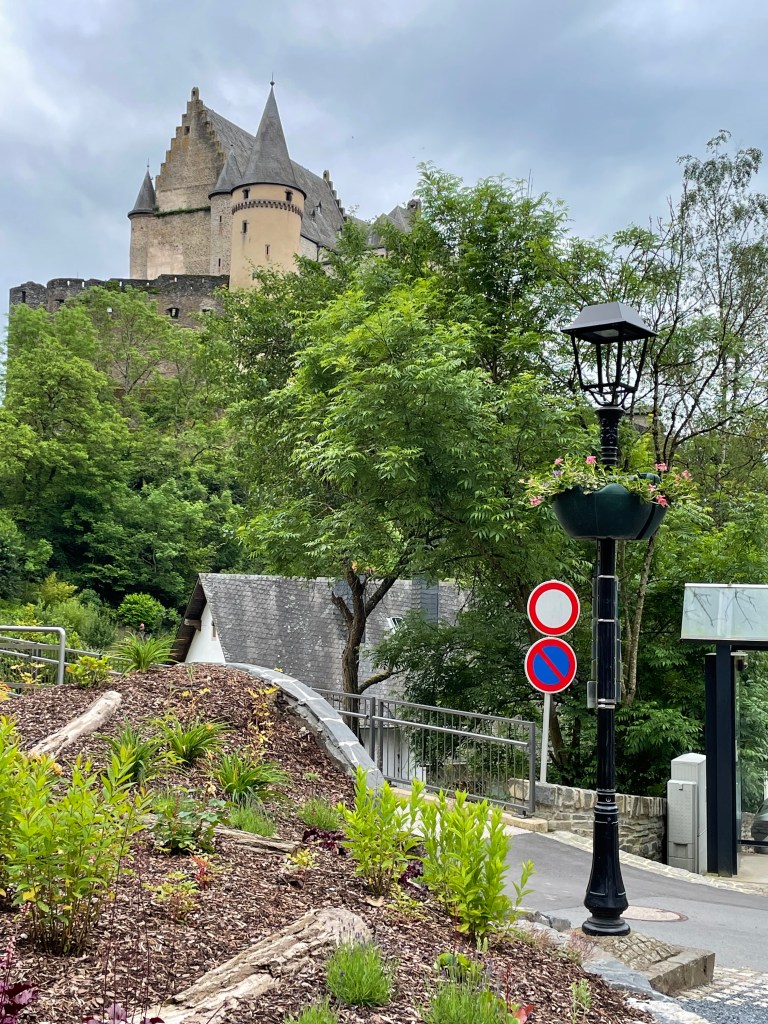
After a lovely drive through the Luxembourg countryside (so many wildflowers are blooming right now), we found the Vianden Castle (about 45 minutes away). A small village is nestled in the valley below.
This is a castle worth visiting. It was fantastic. We seemed to be there at a time when many of the volunteers (in period dress) were there for some special event.
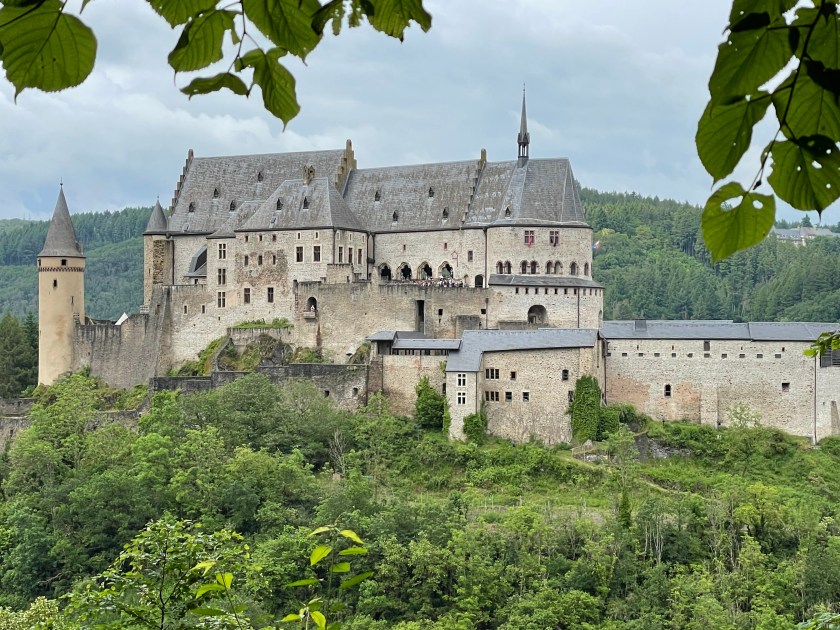
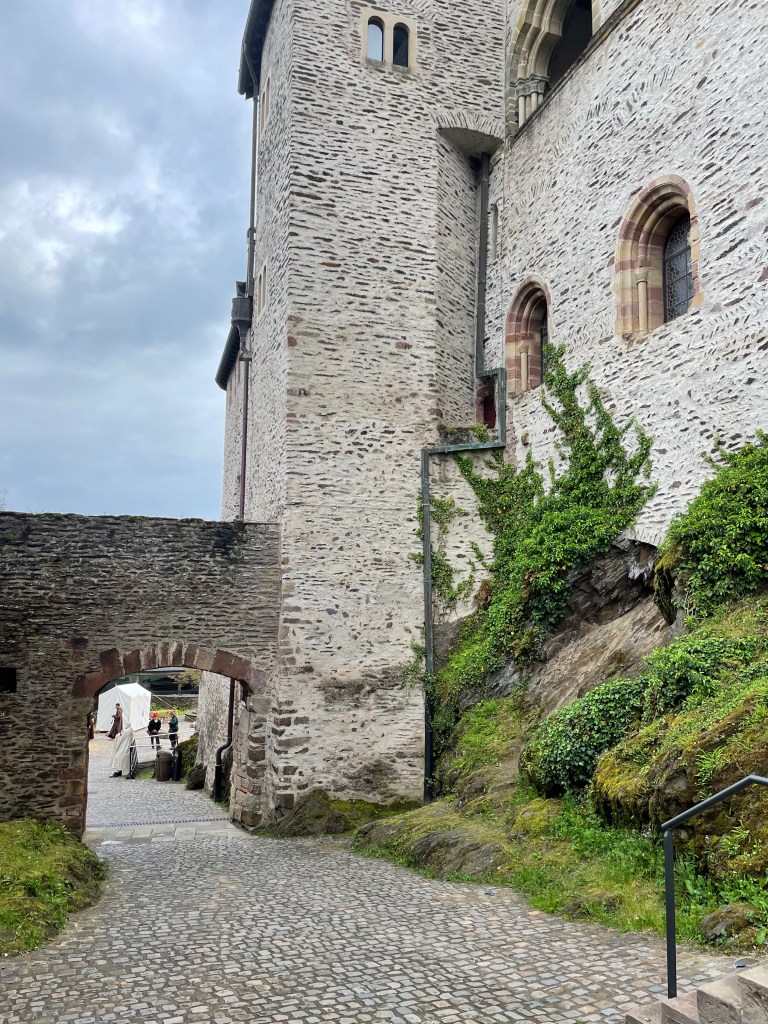
Vianden Castle, located in Vianden in the north of Luxembourg, is one of the largest fortified castles west of the Rhine. With origins dating from the fourth century as a Roman outpost and the 10th century. The more familiar castle form was built in the Romanesque style from the 11th to 14th centuries.
We walked down the hill to the valley, then back up the hill to the castle.
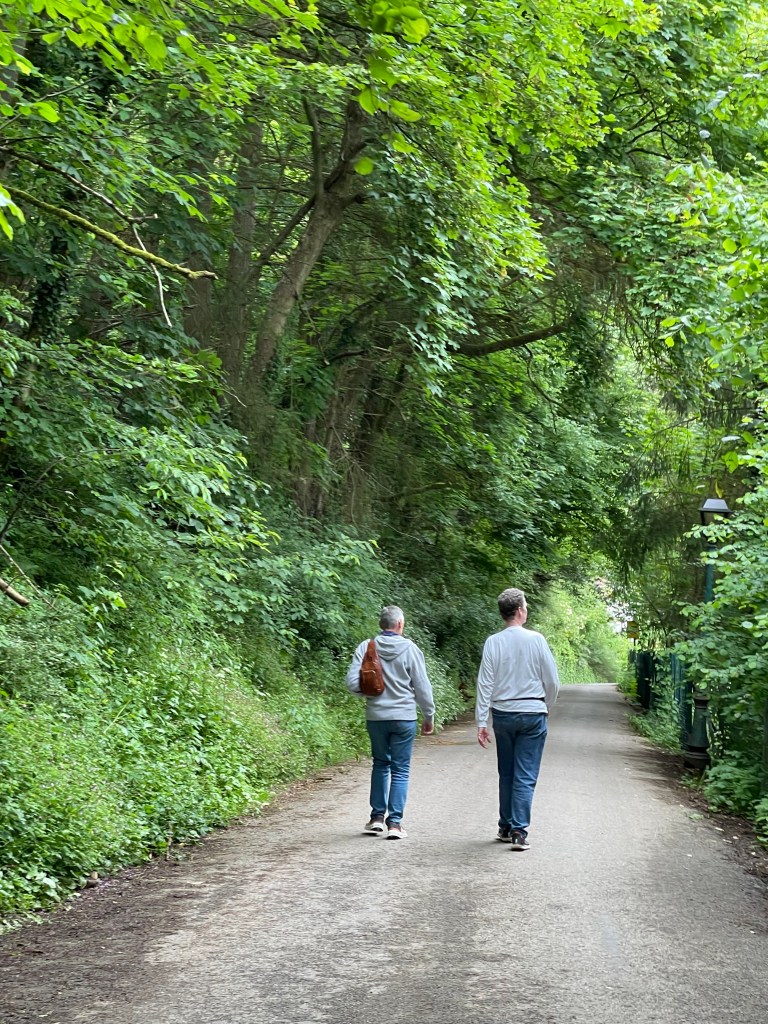

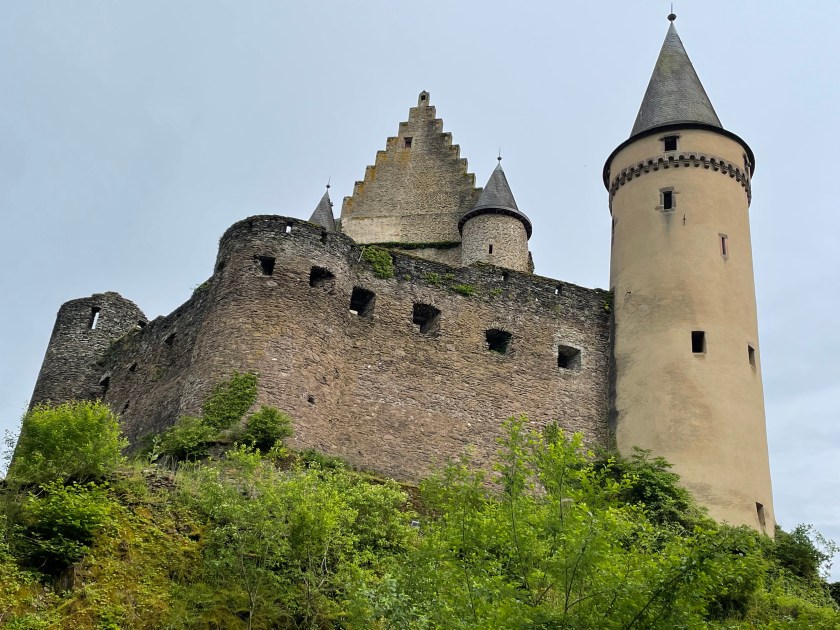
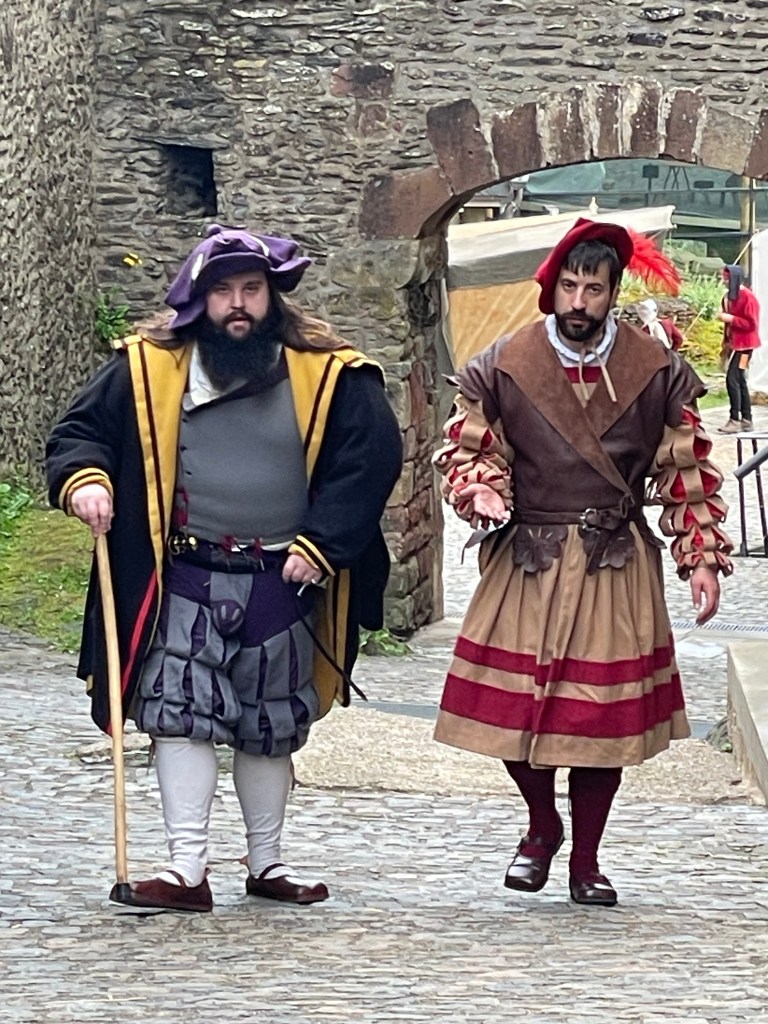
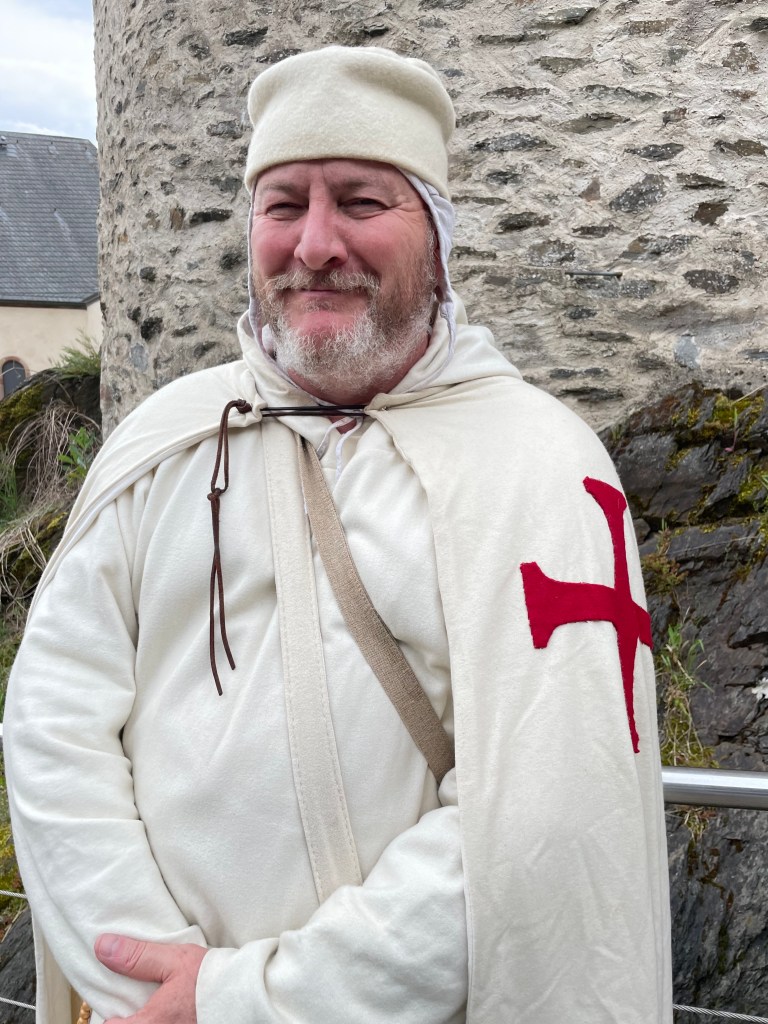
As we went in, several “castle people” rotated out. We learned that there are about 30 volunteers here to show and explain what went on in the Olden Days.
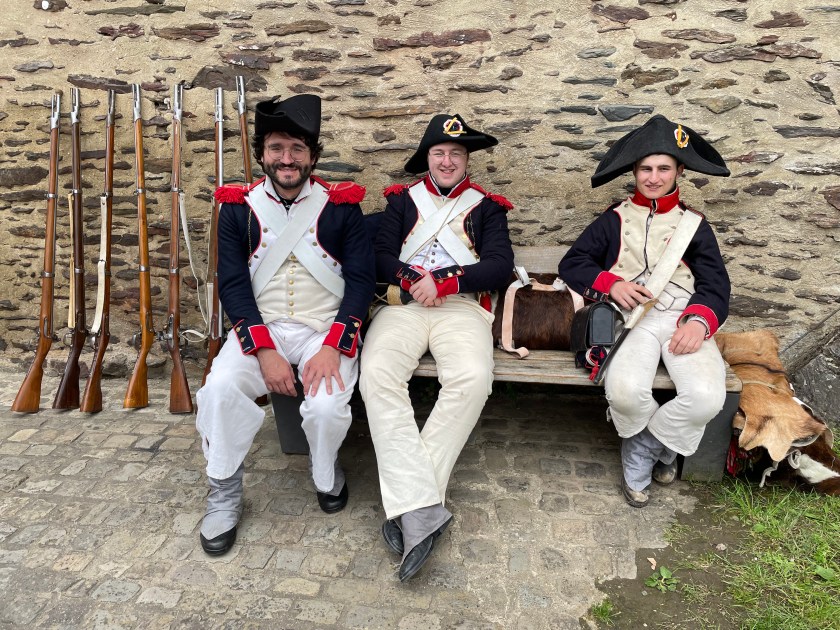
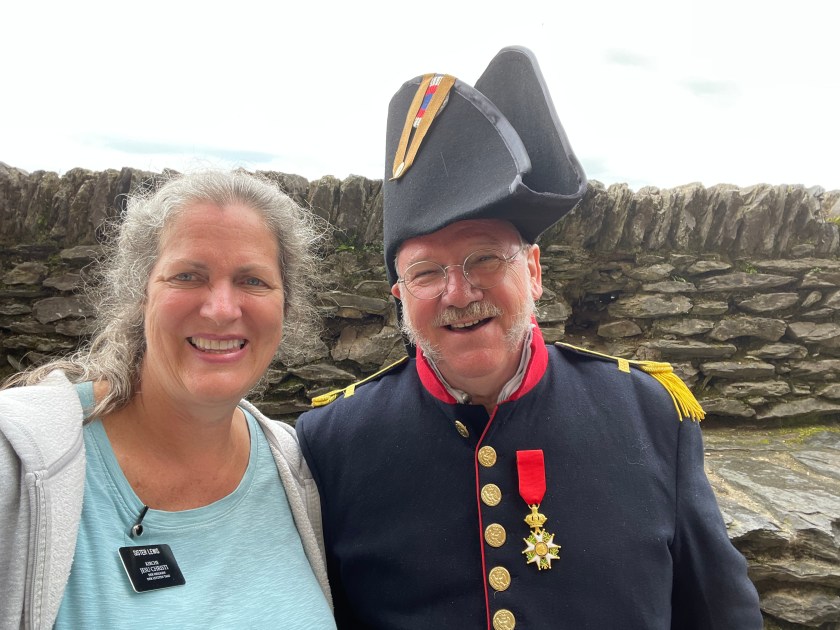
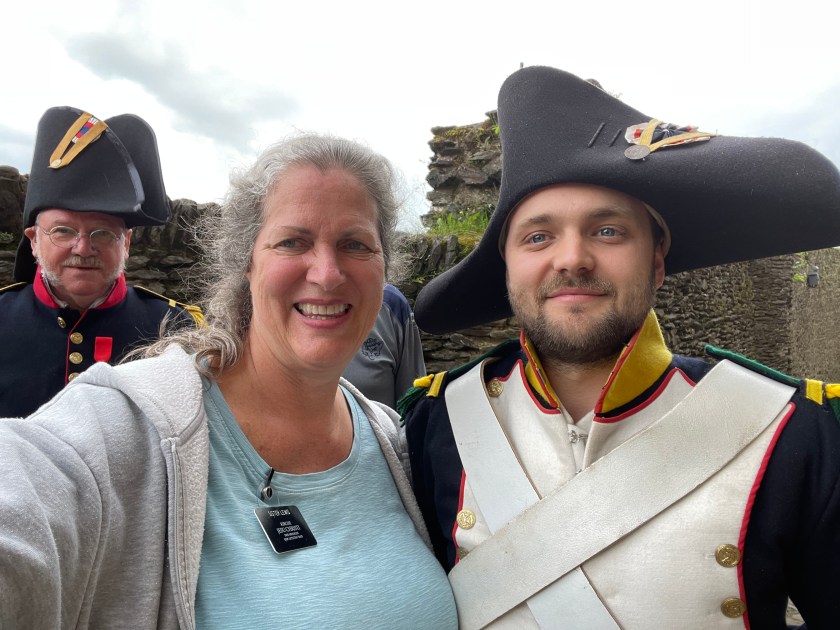
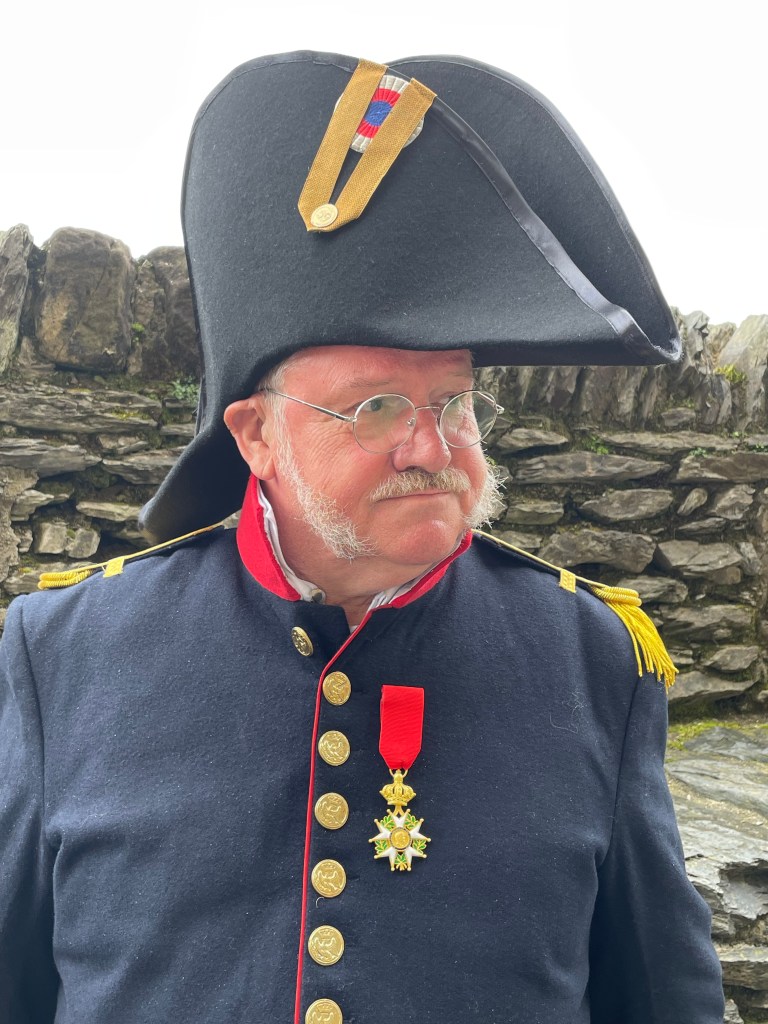
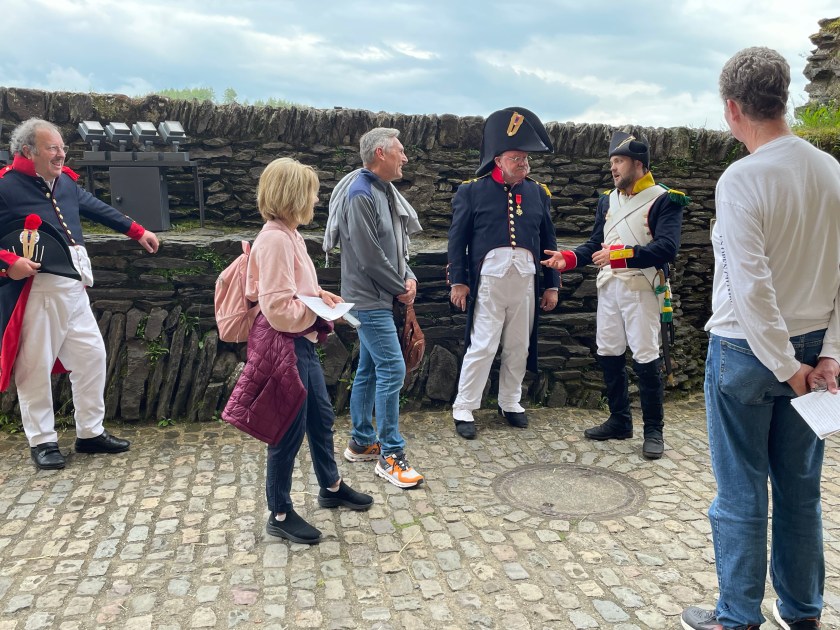
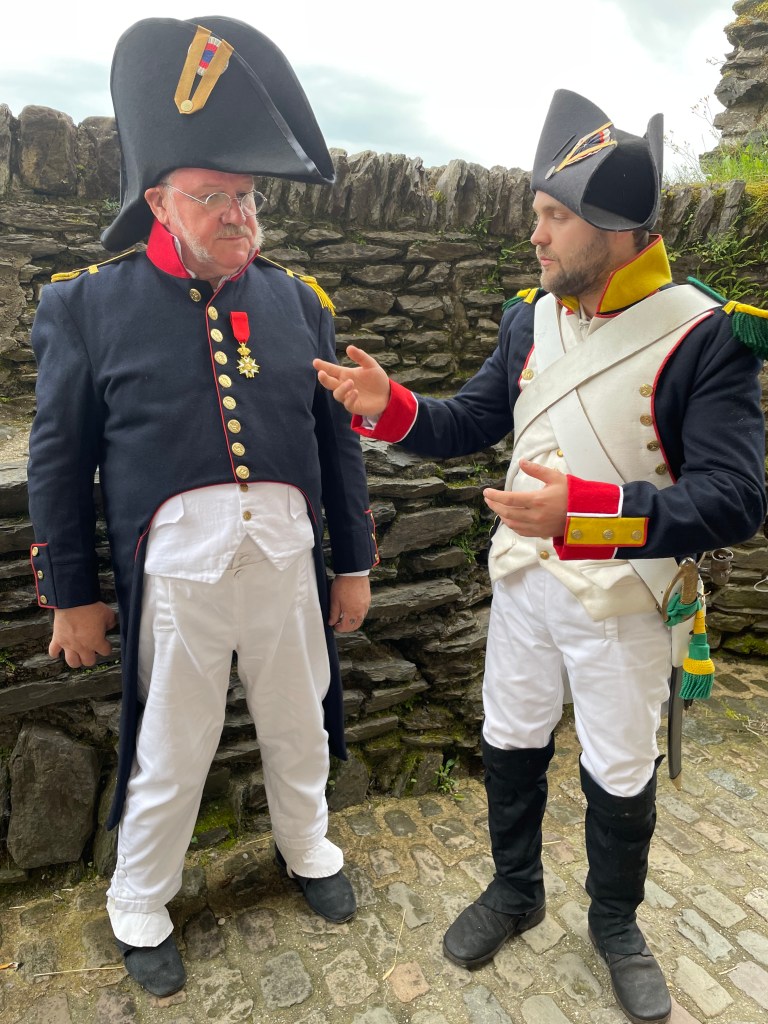
These volunteers represented different time periods through the centuries, for example, here are some of Napoleon’s soldiers.
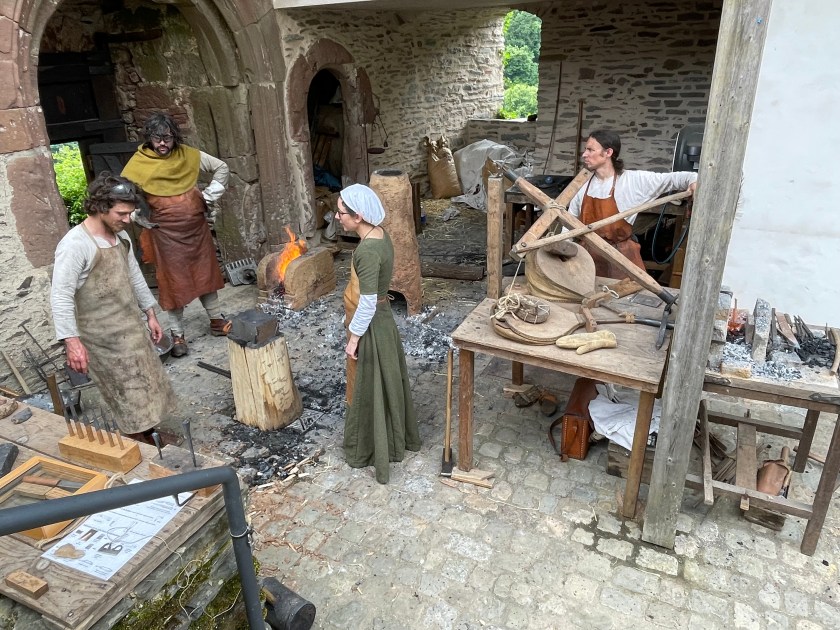
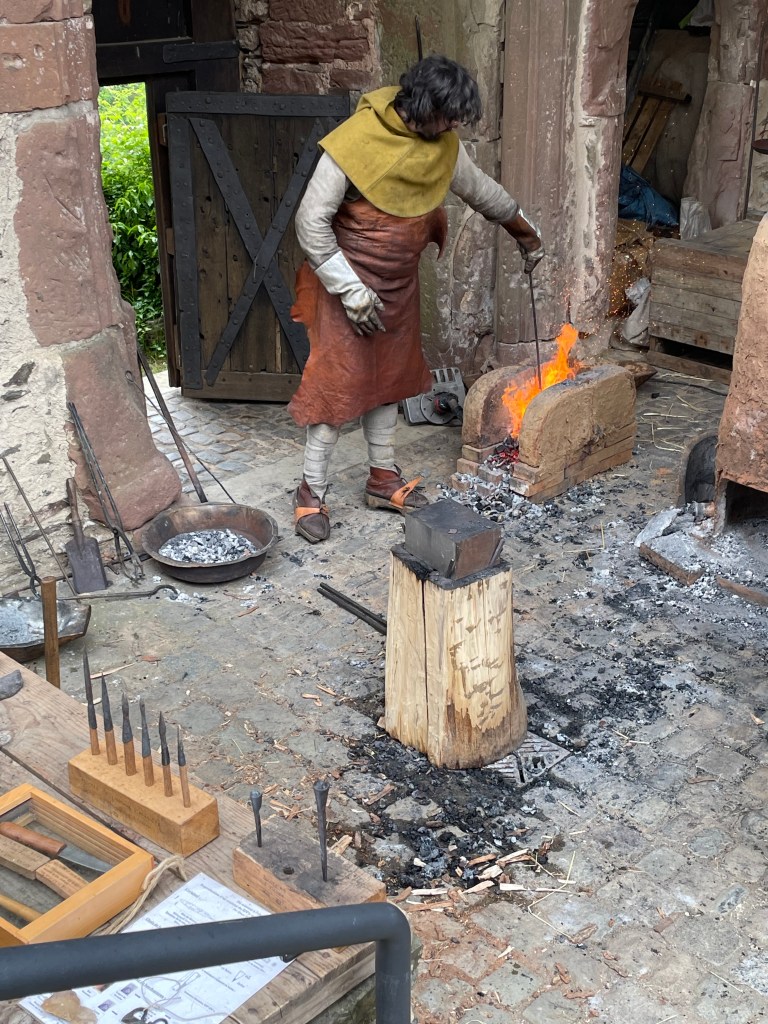
Smithies working the fire and bellows to make metal tools and things:

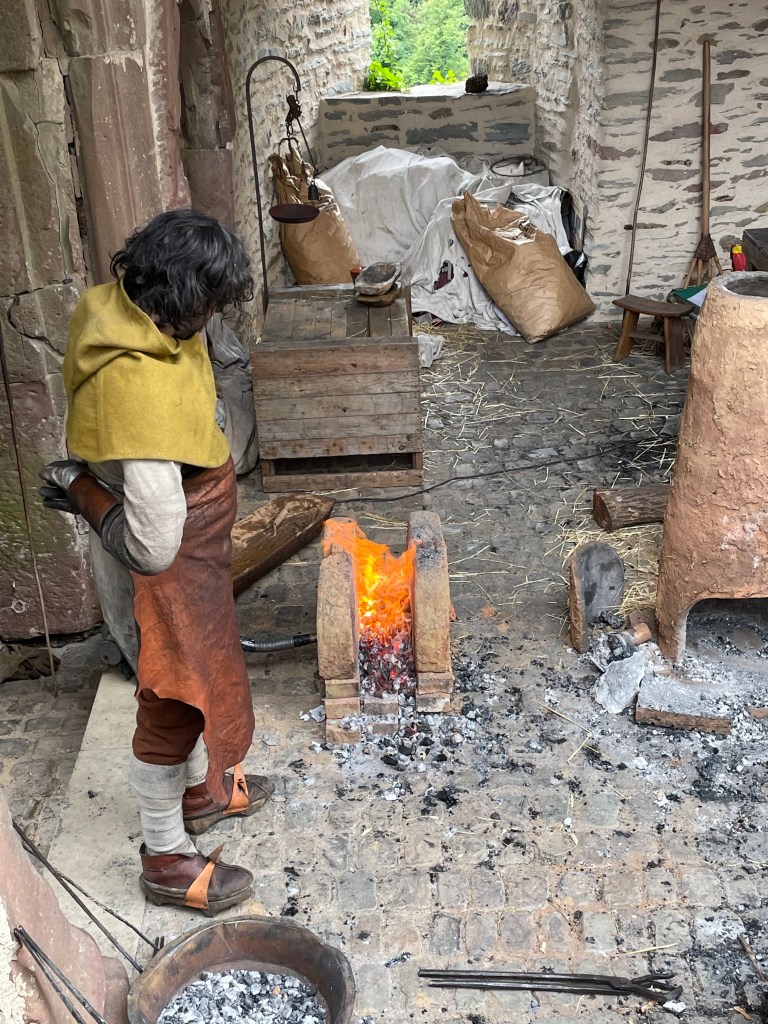
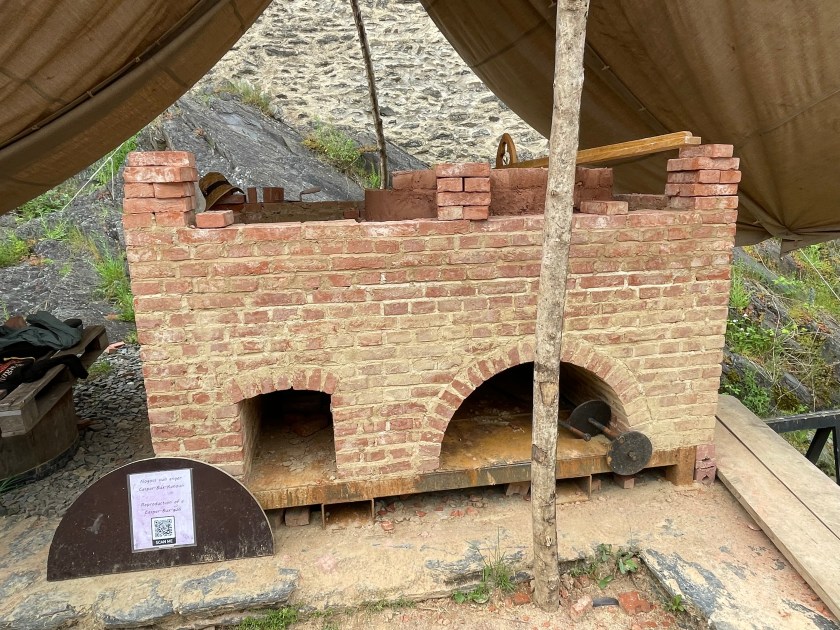
Here’s an oven for brick making.

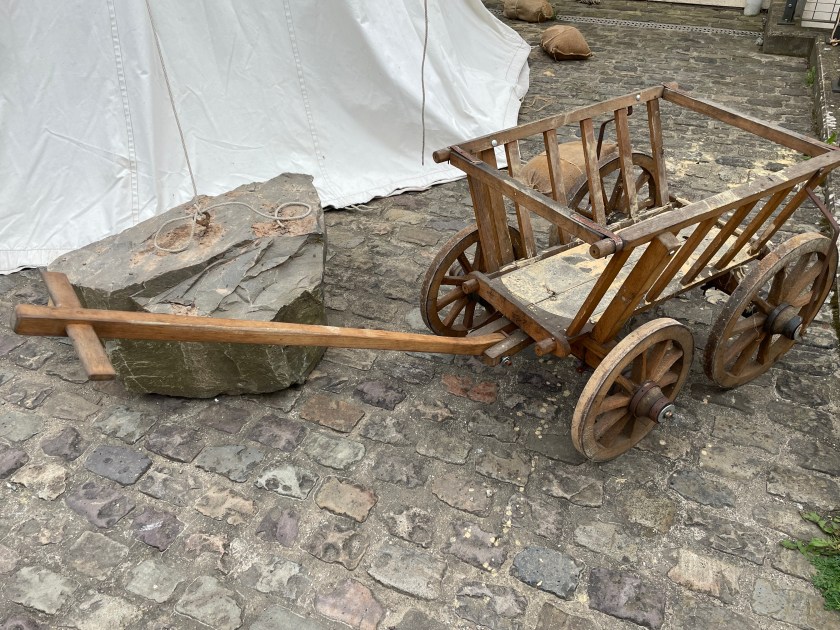
These are the traditional wagons used by generations of Europeans who moved from place to place and carted their wares and belongings. During war times, when people were displaced, they traveled pulling these wagons, not unlike pioneer handcarts.
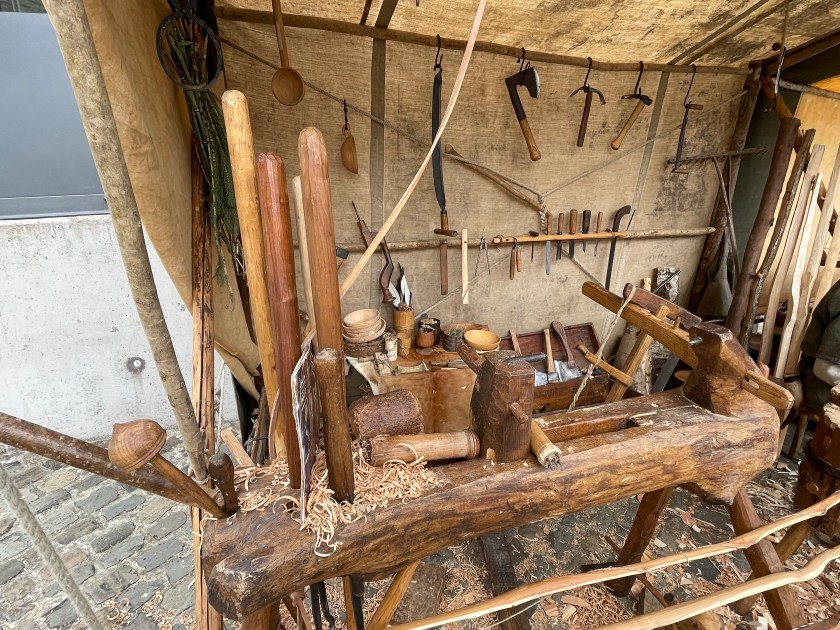
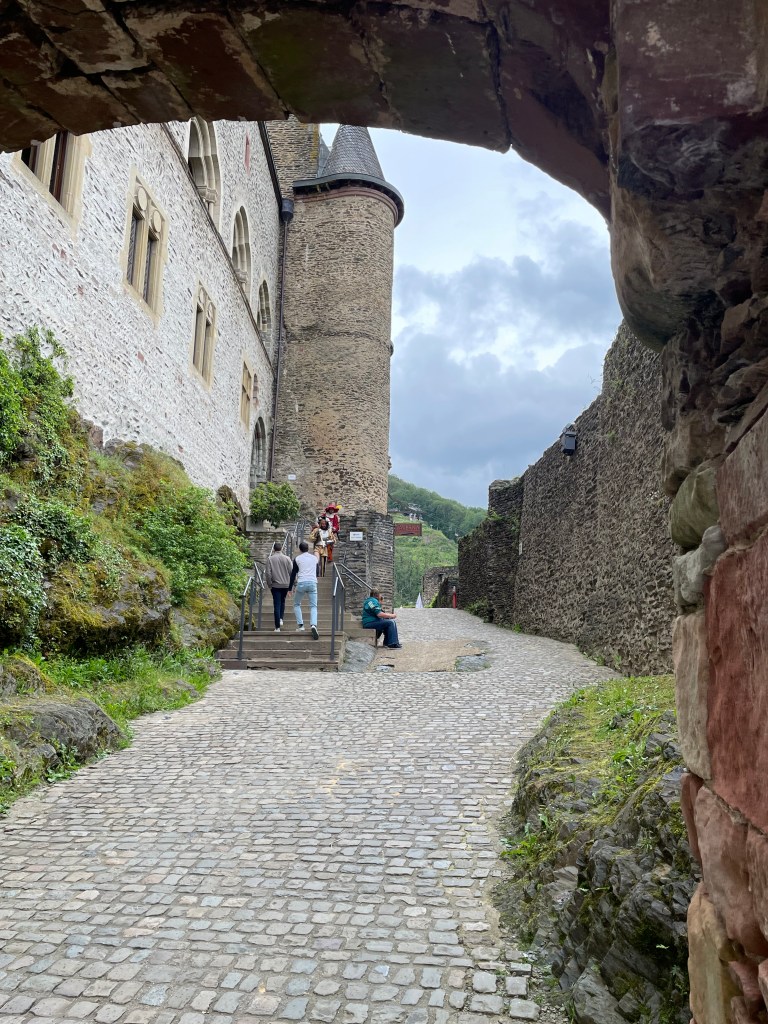
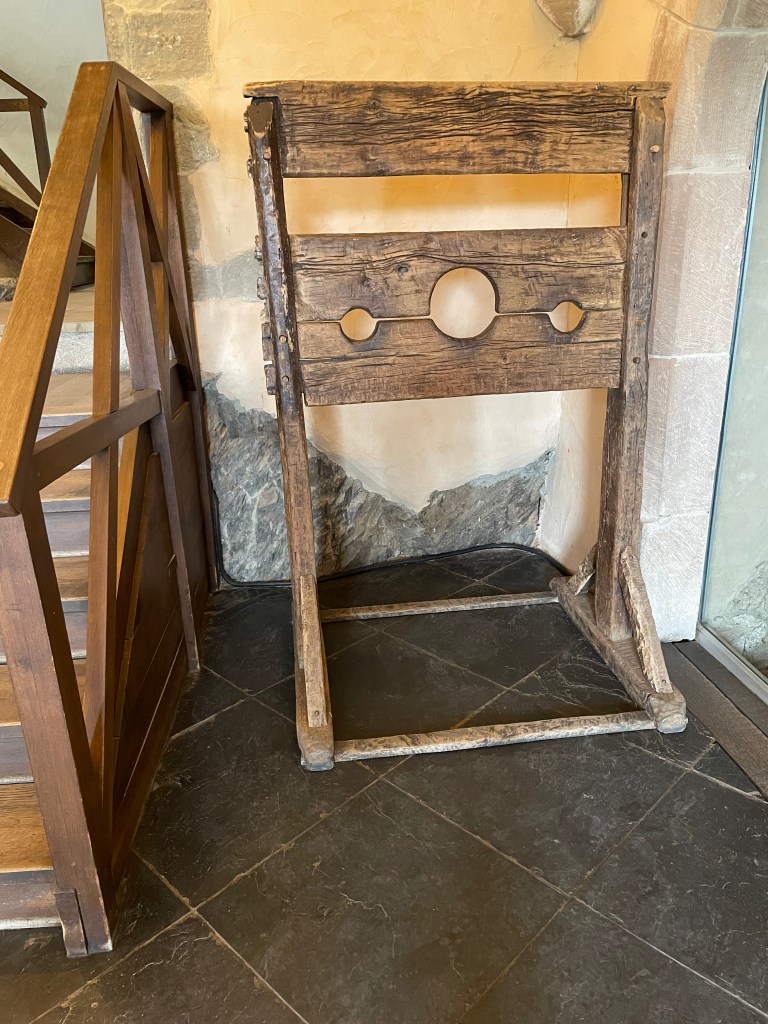
The rooms in the castle had wonderful displays and people working, showing various kinds of castle life. There was a marked path to follow so we didn’t get lost. It’s a BIG castle!

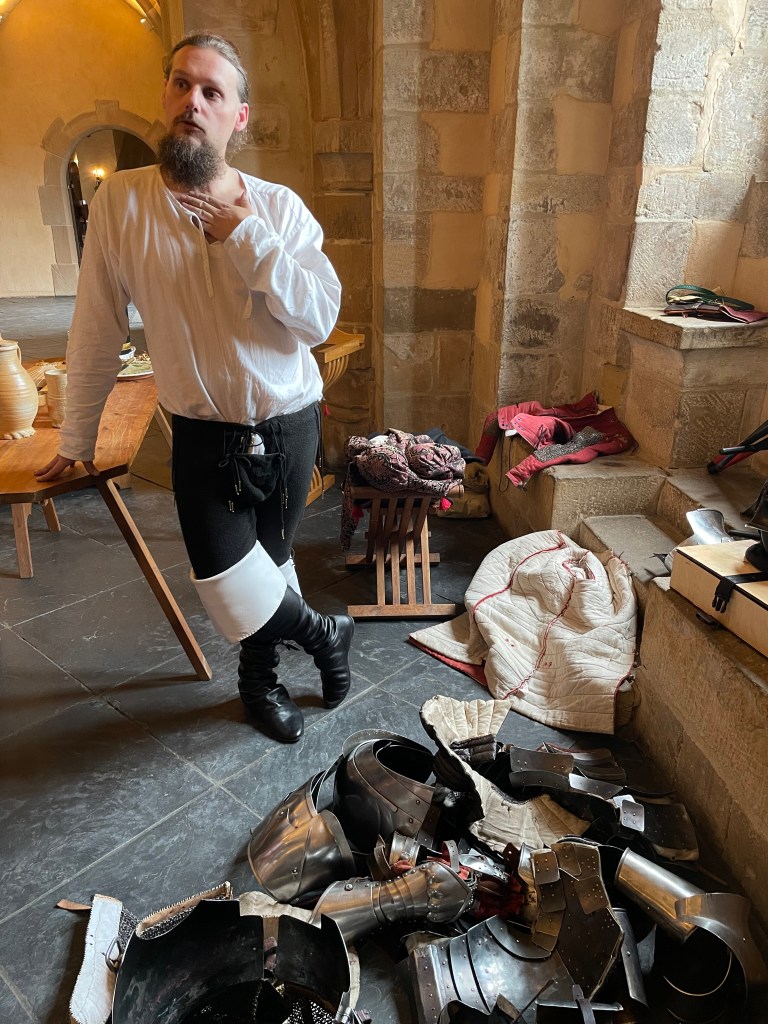
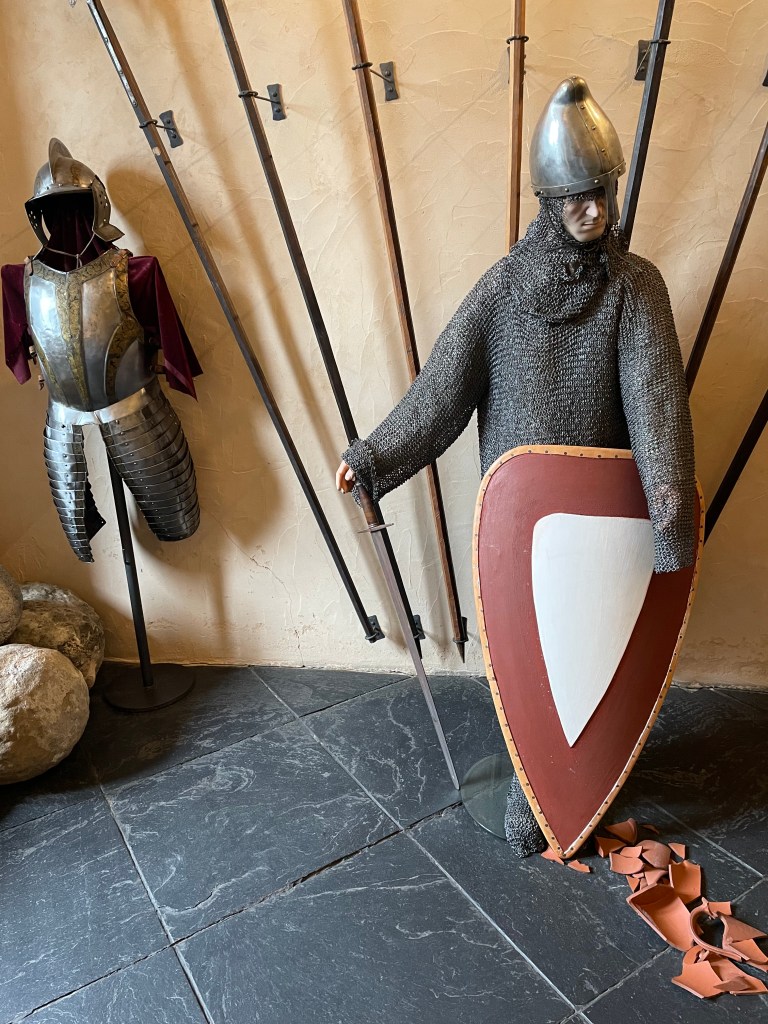
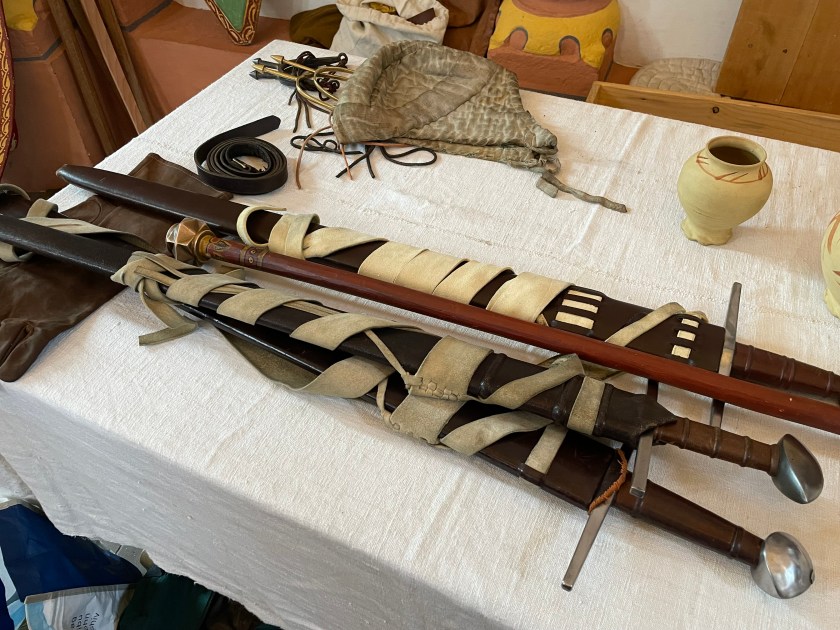
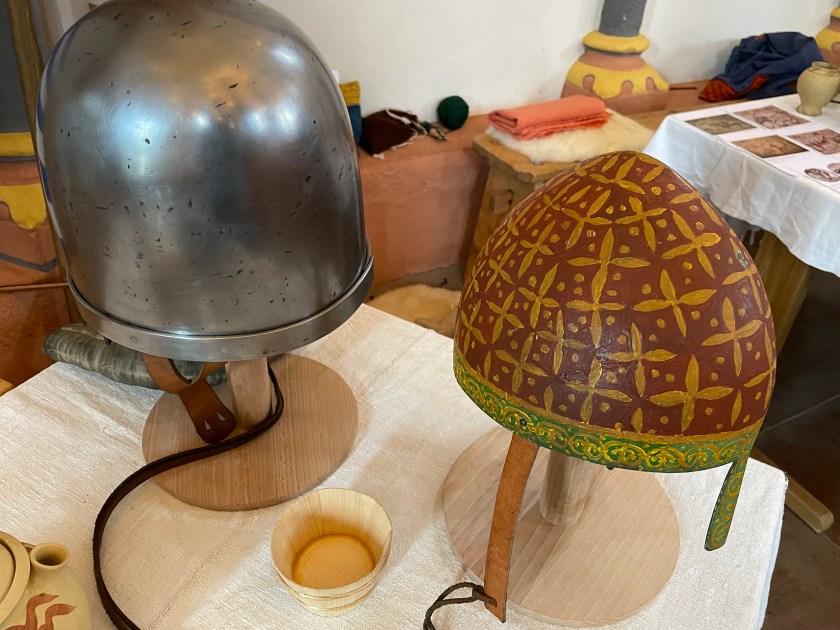
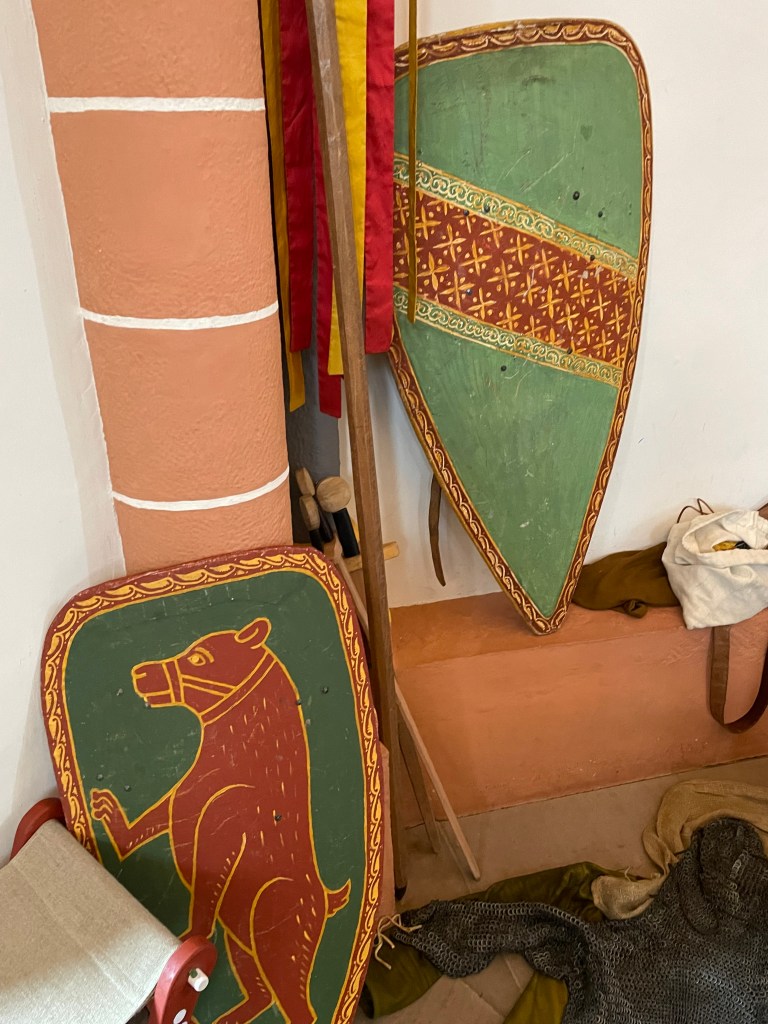
The armour makers.
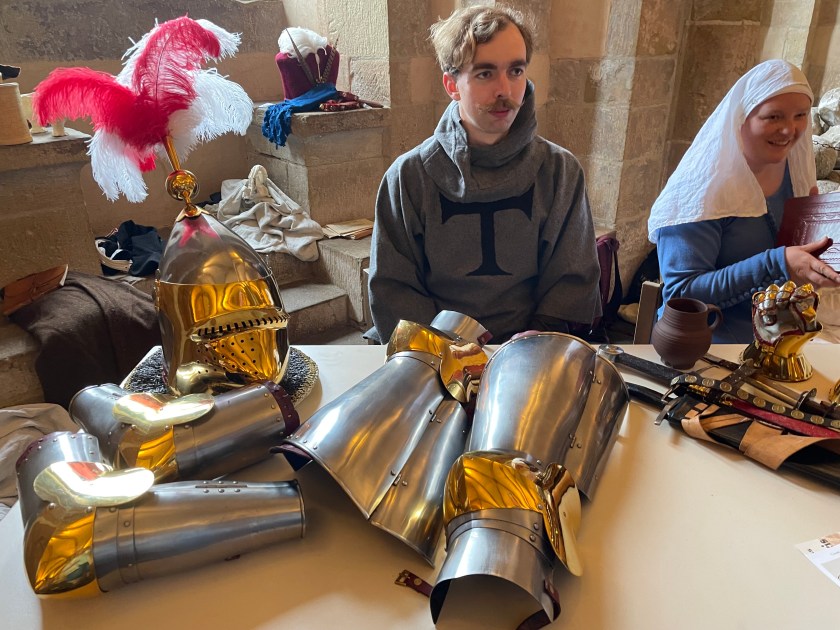

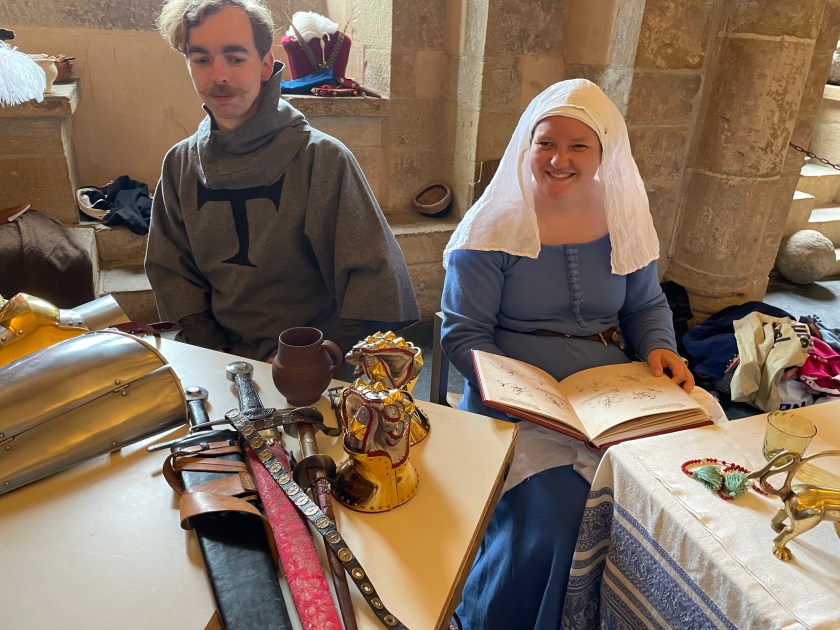

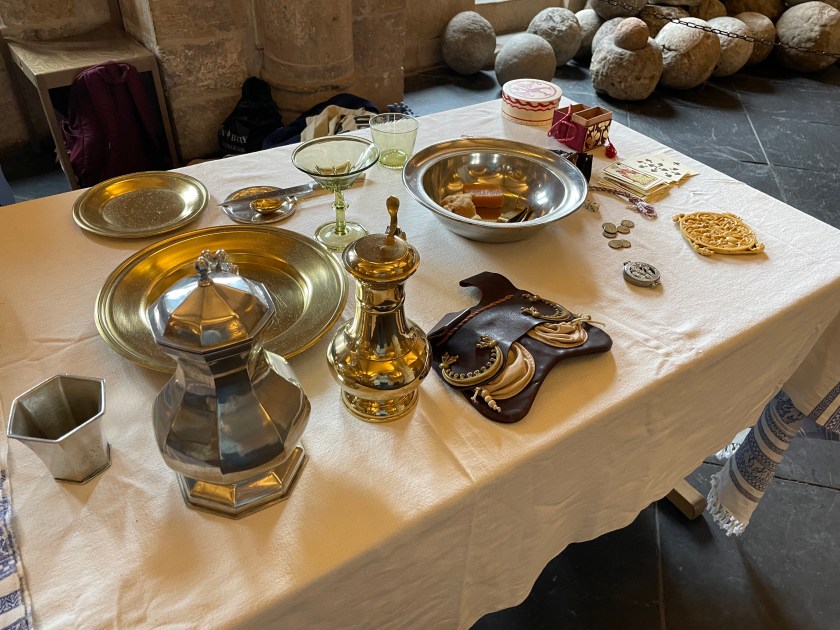


One room showed the evolution of the castle through the centuries with models and history of each renovation.

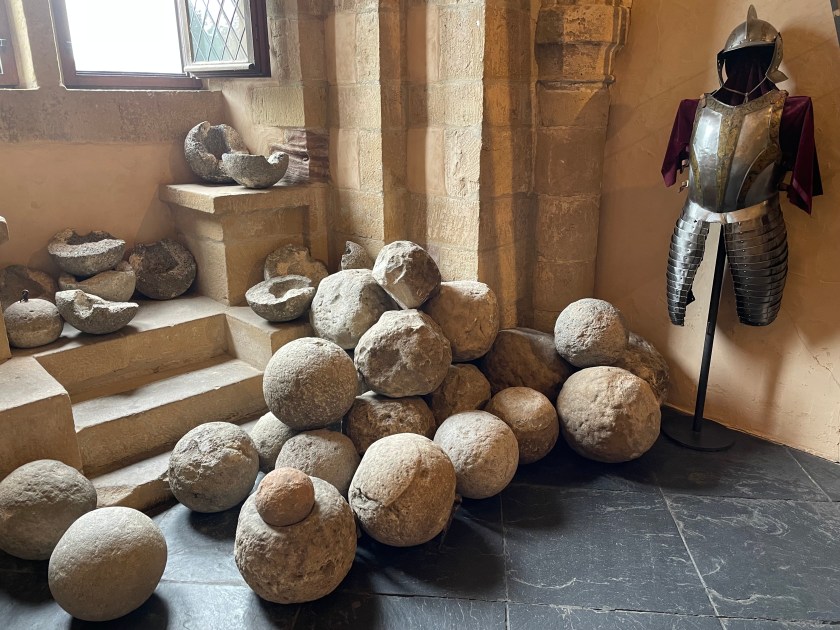
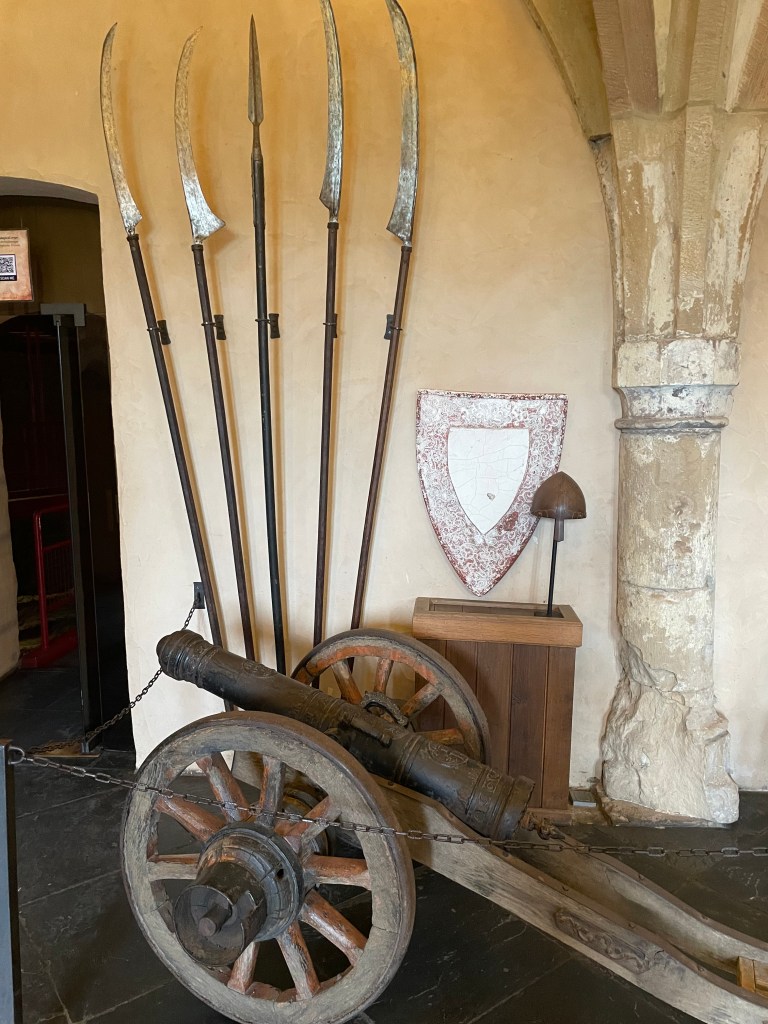
There were also collections of things found here in this castle as they excavated and restored it.
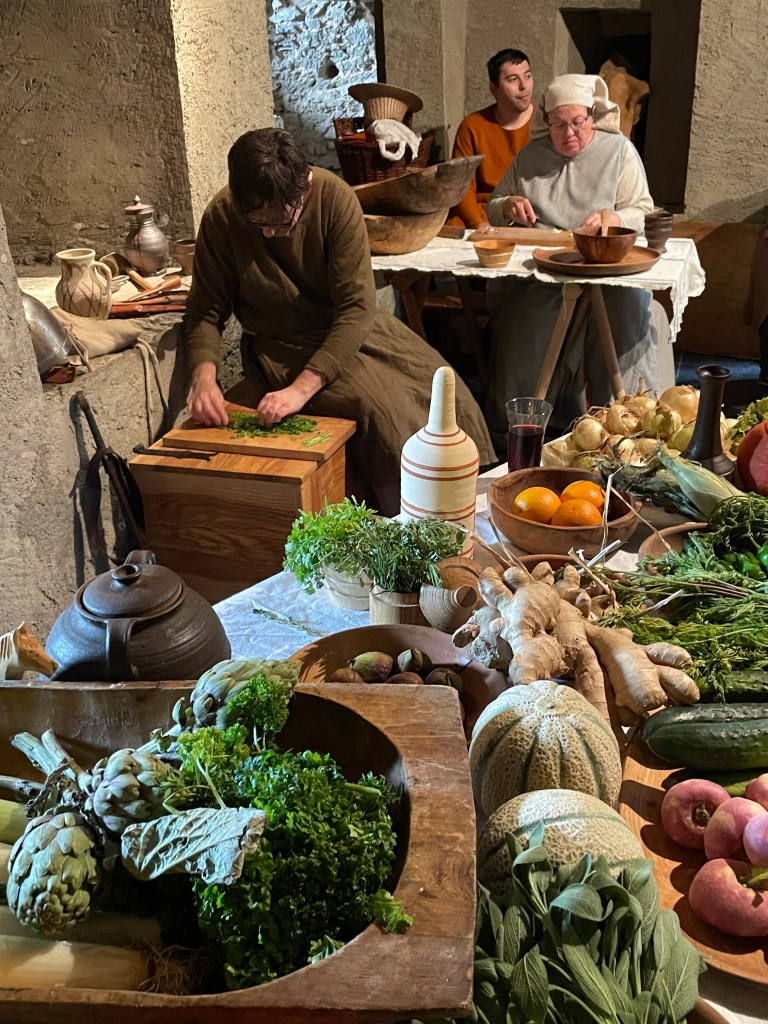
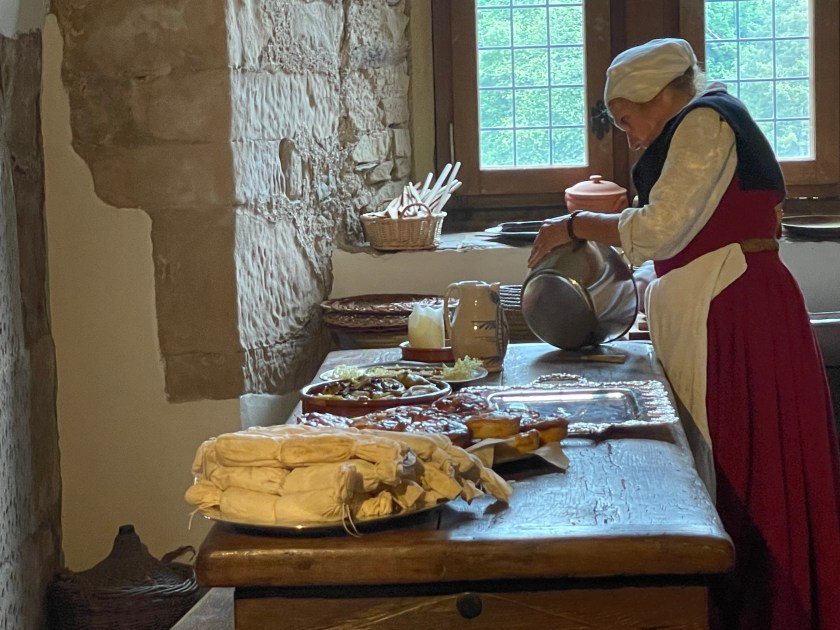
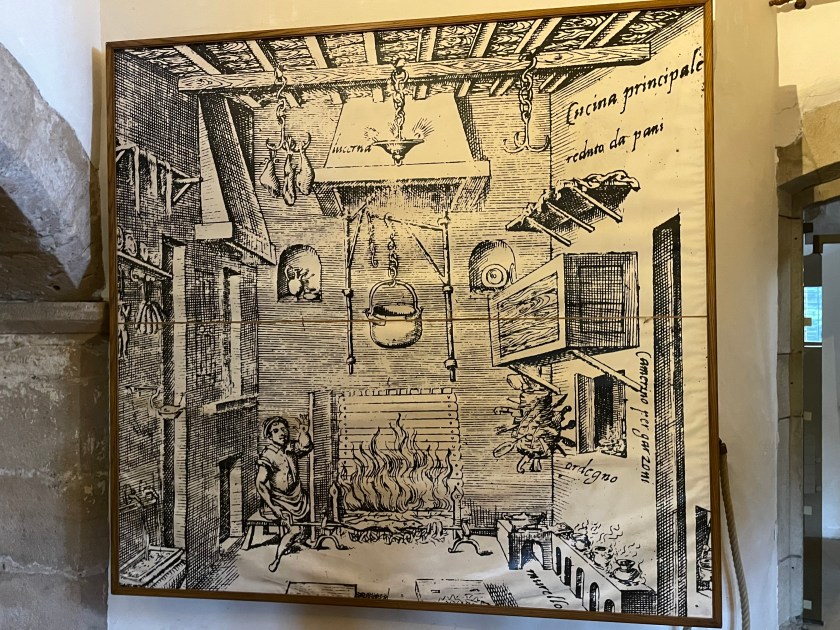
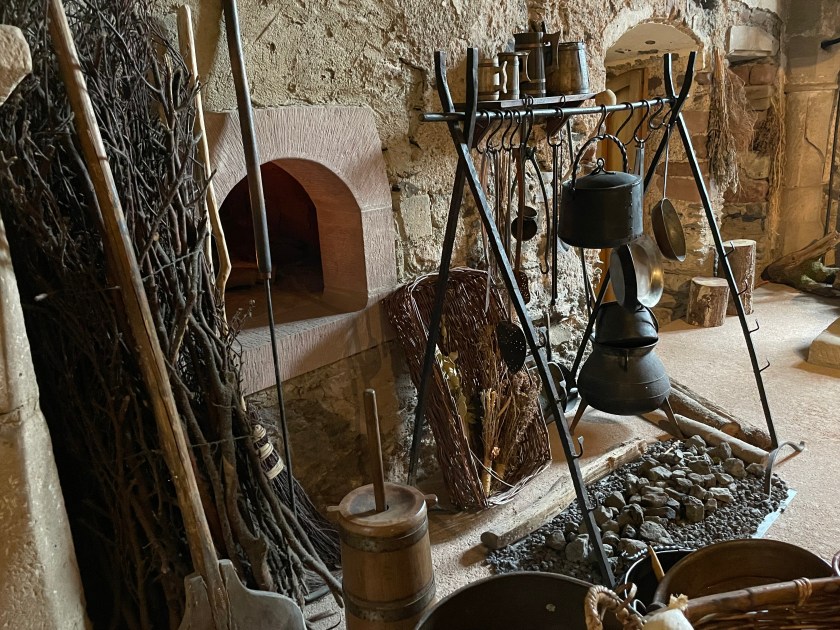
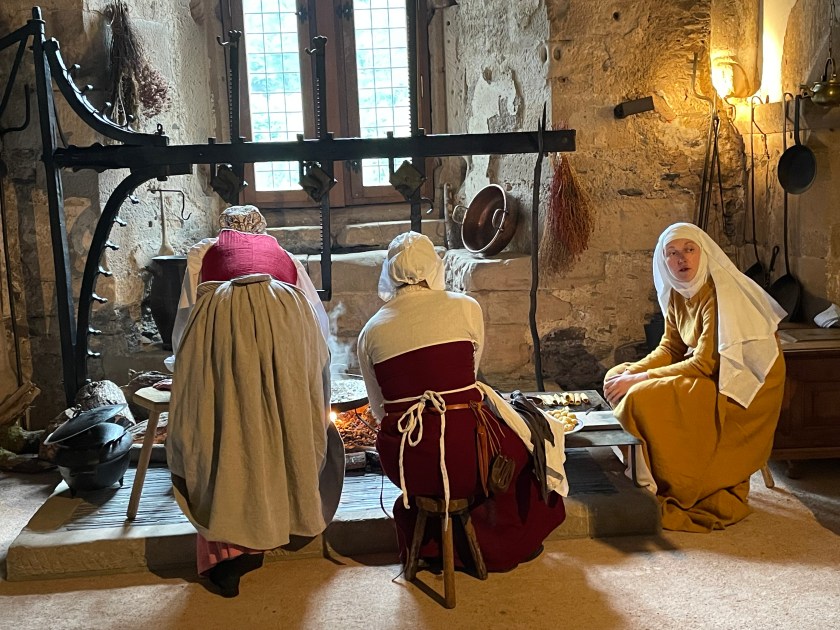
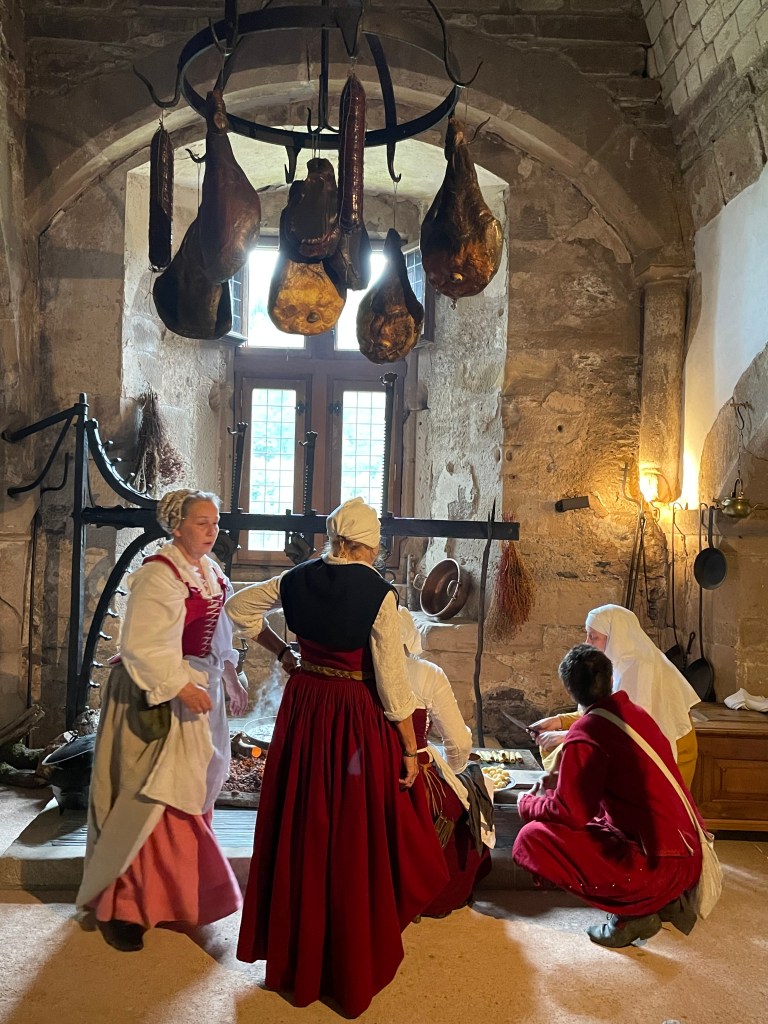
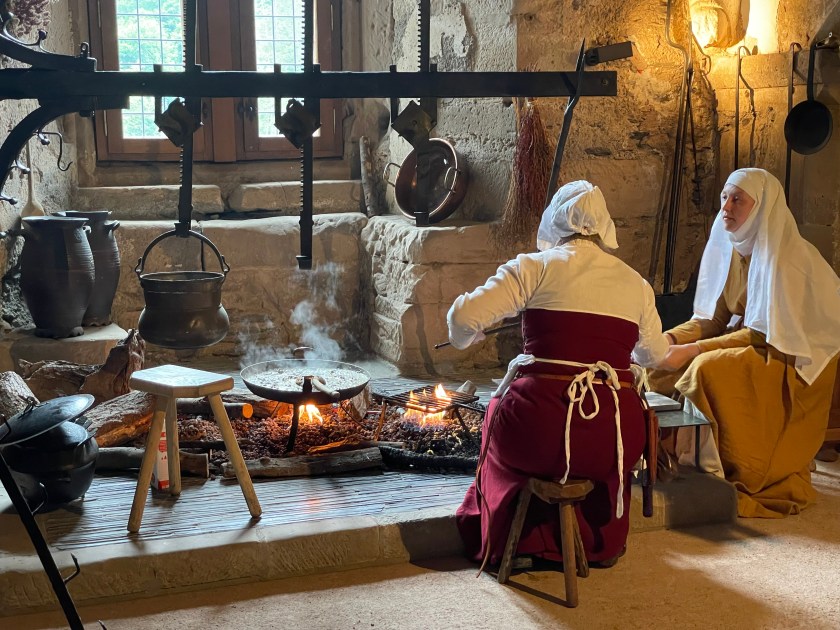
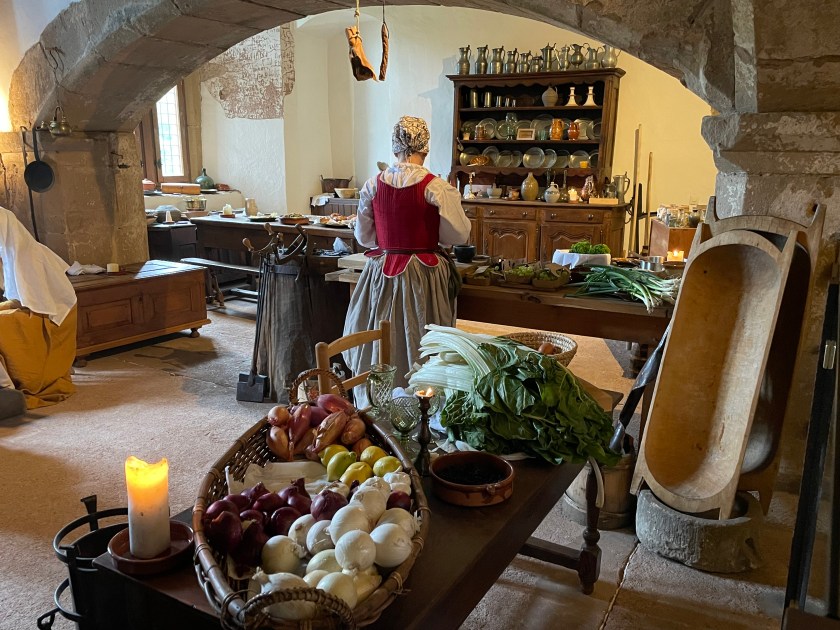
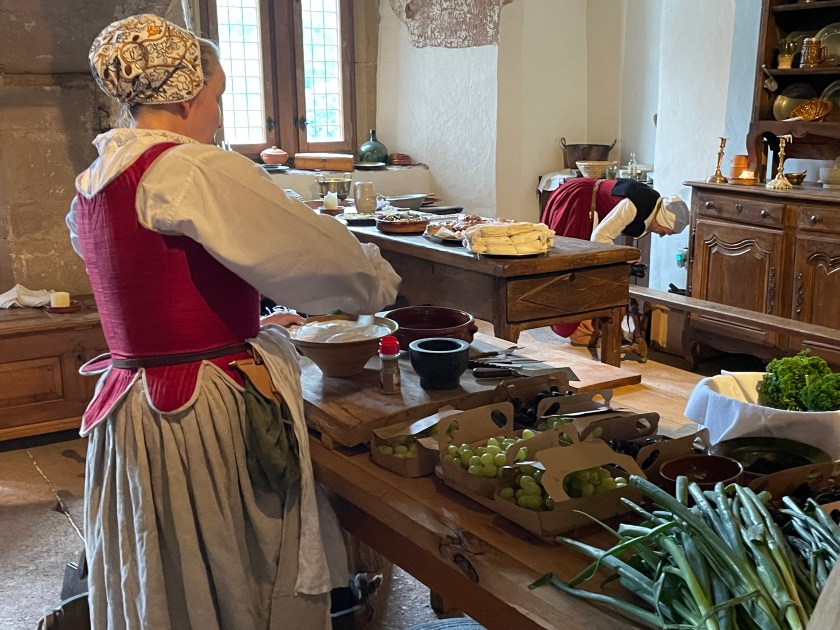
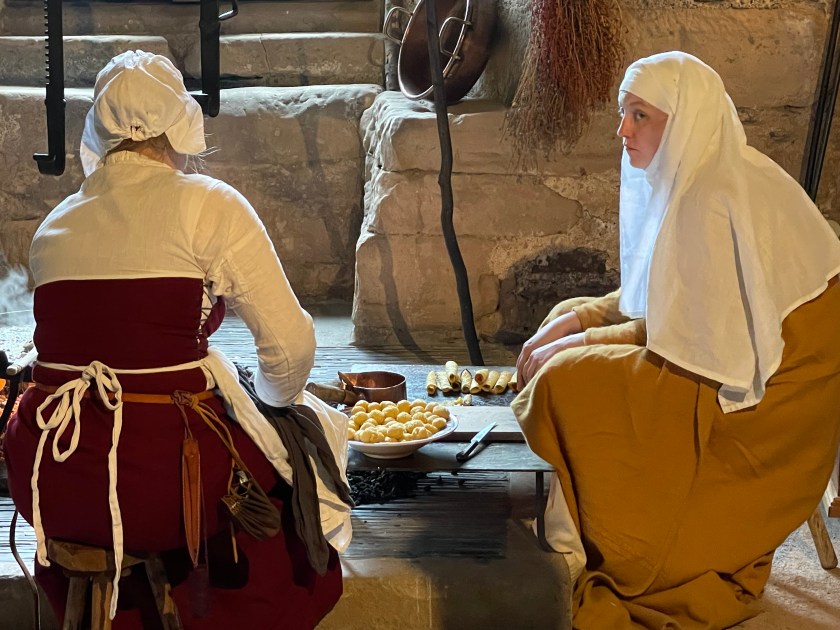
The Kitchen. Perhaps my favorite part of any castle tour. I love seeing how things were done, what they ate, how they prepared and stored food, and what items were used. This was a fantastic kitchen based on actual illustrations from kitchens long ago.
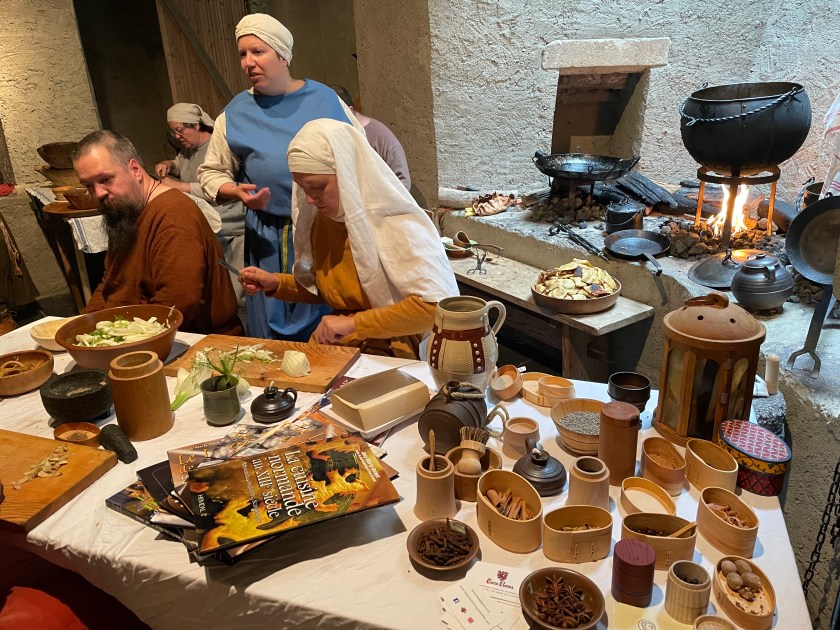
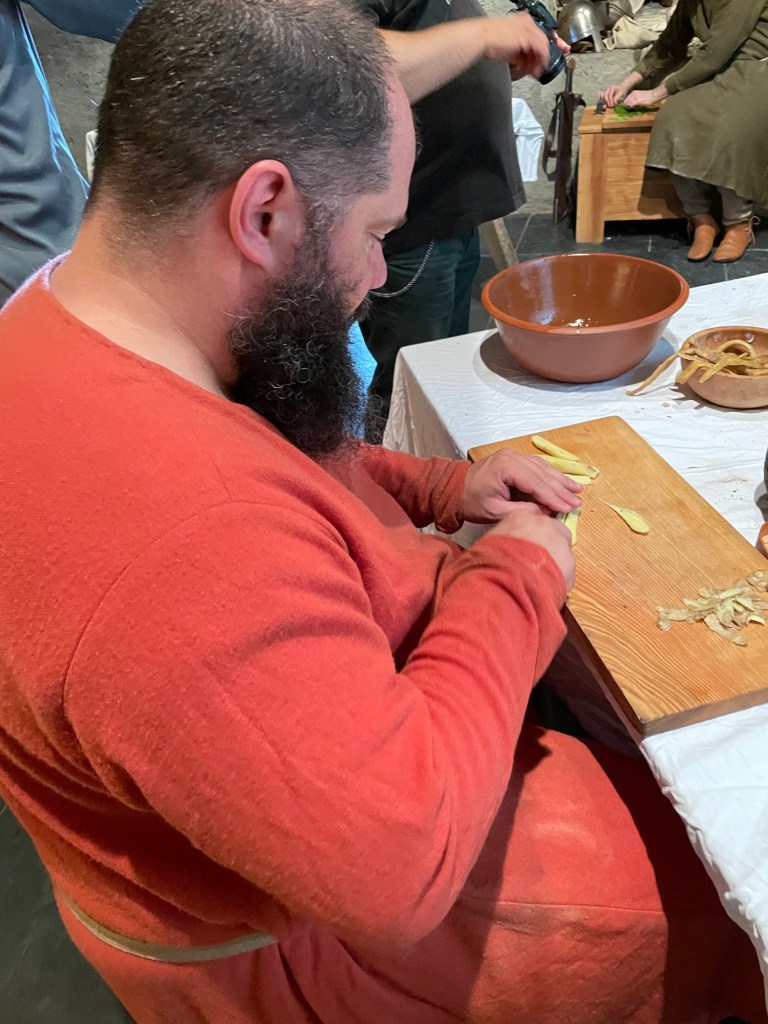
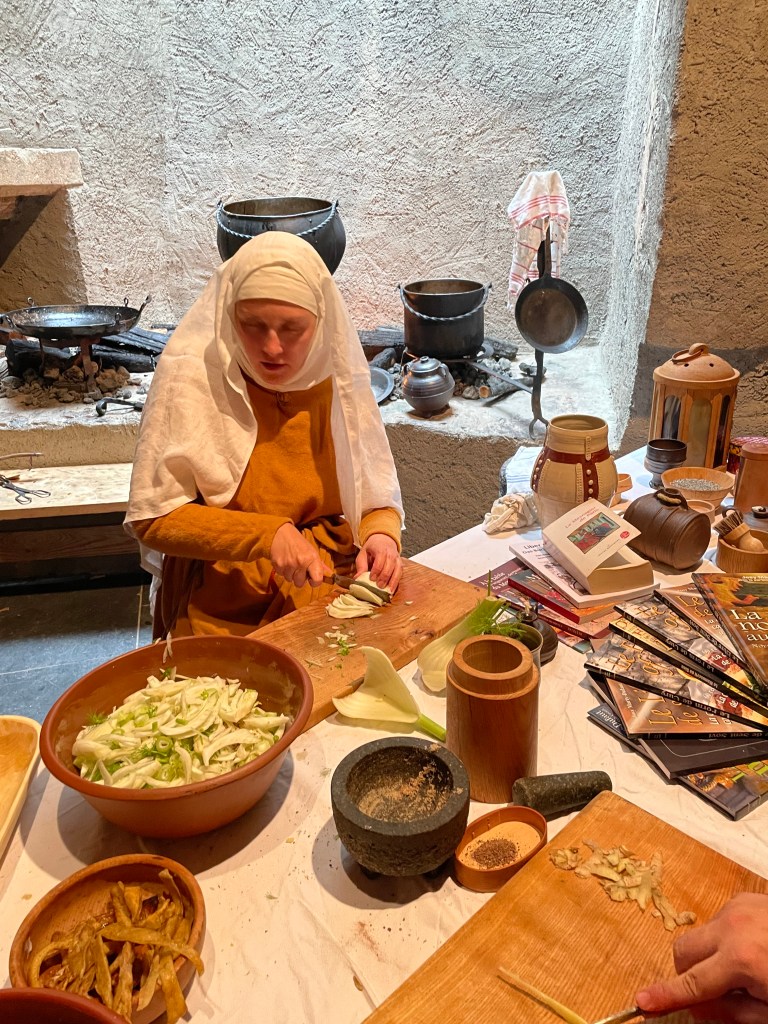

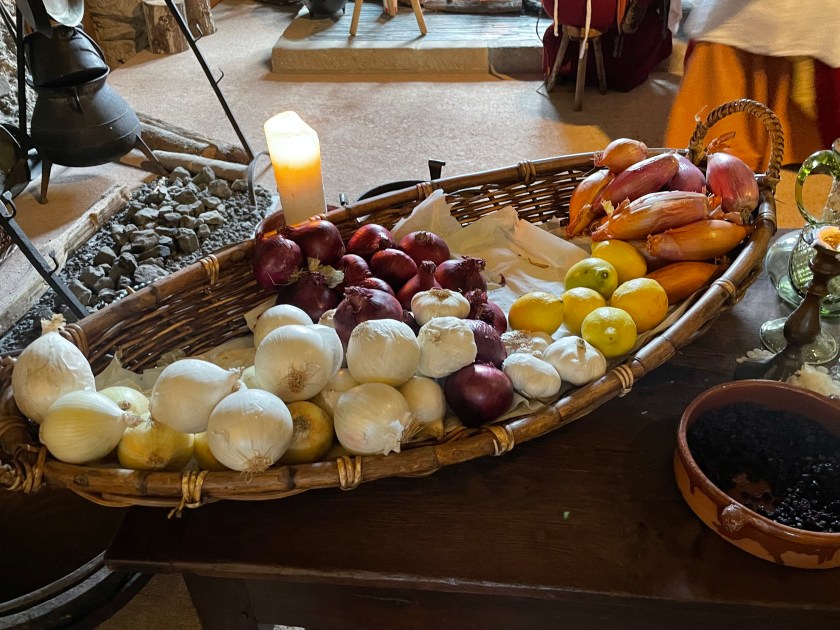
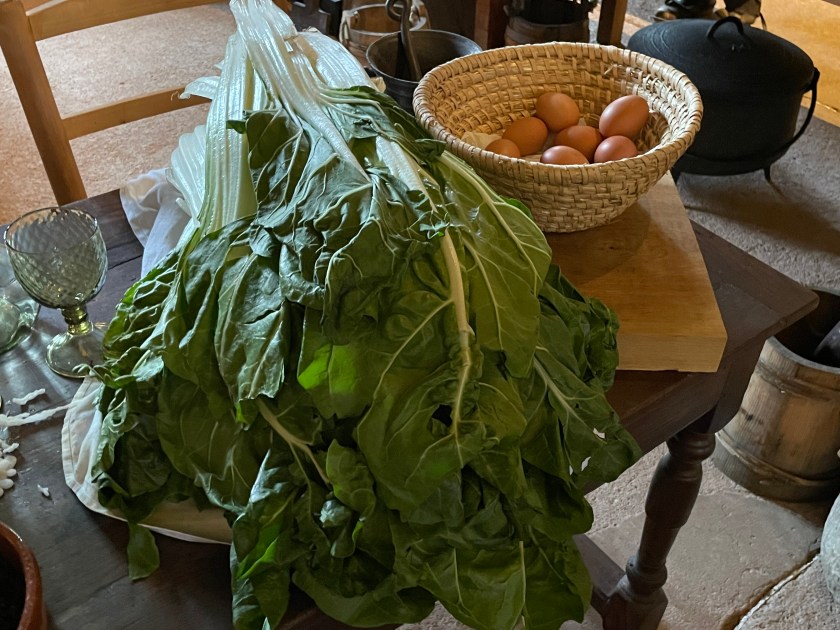
Here are the foods grown and used in those days.

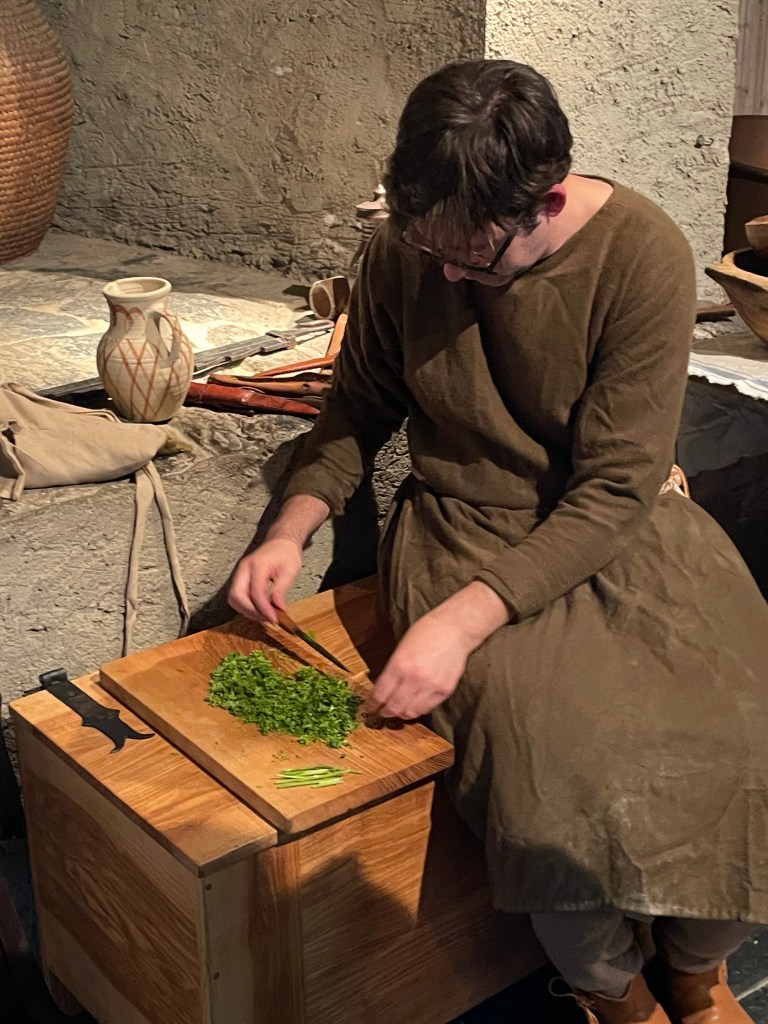
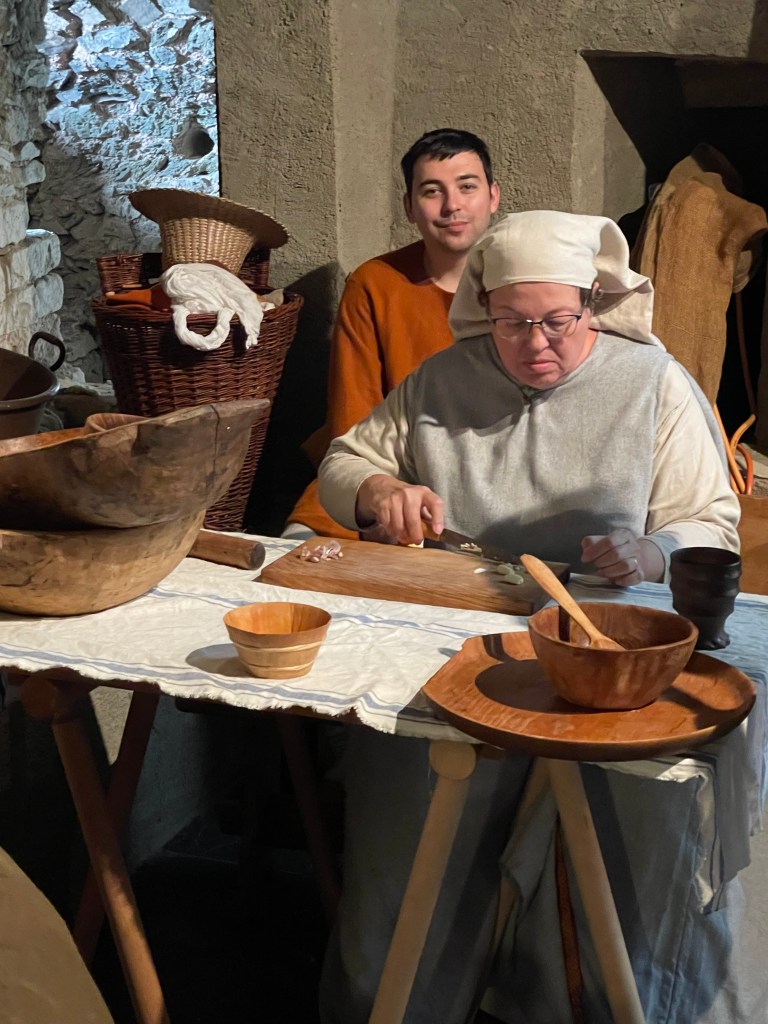


I felt like I was looking at old paintings of people doing things, but these people were moving! And the food they were preparing smelled So Good, with onions and garlic simmering.


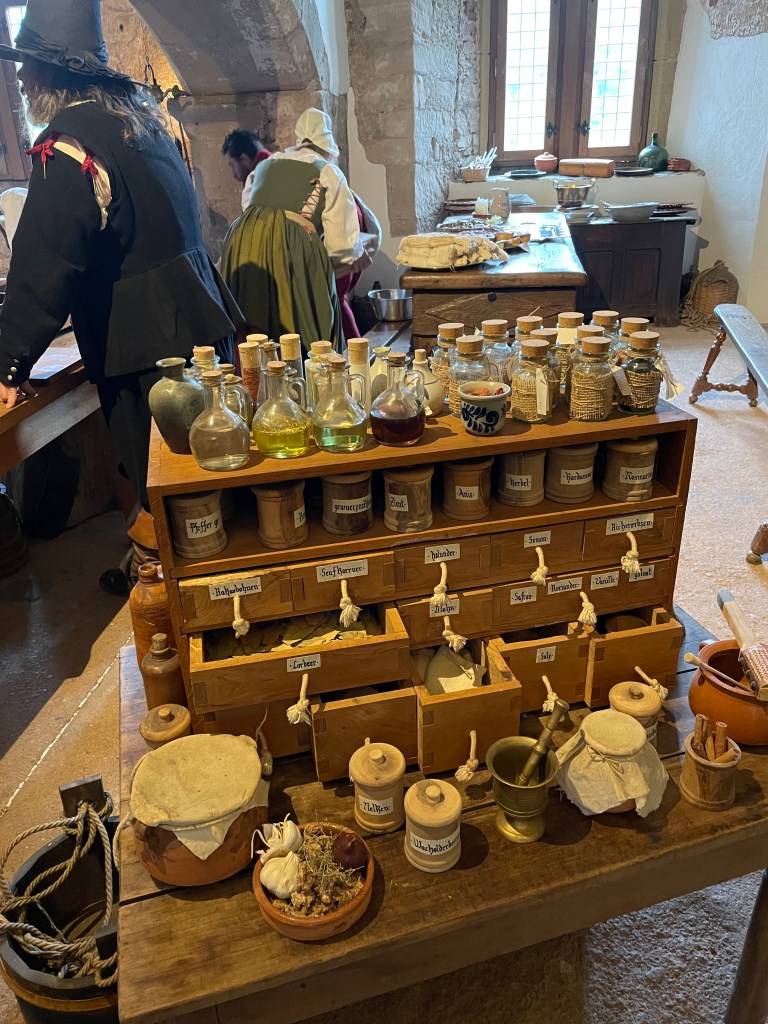
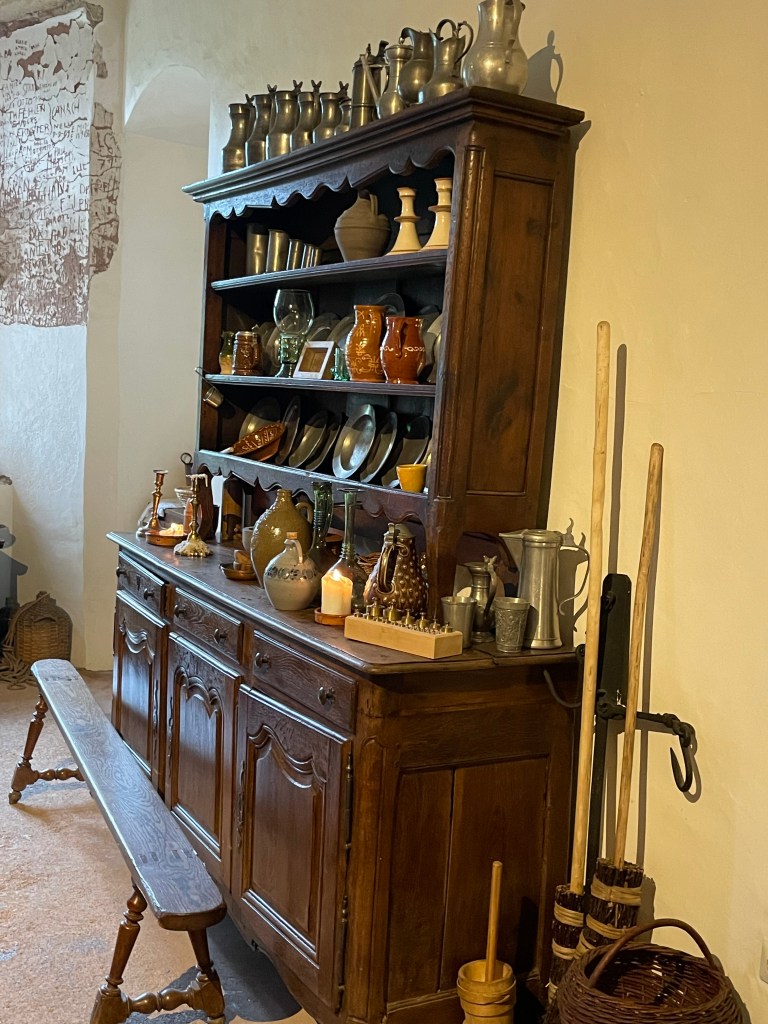
Here’s an old illustration showing what it was like back then.


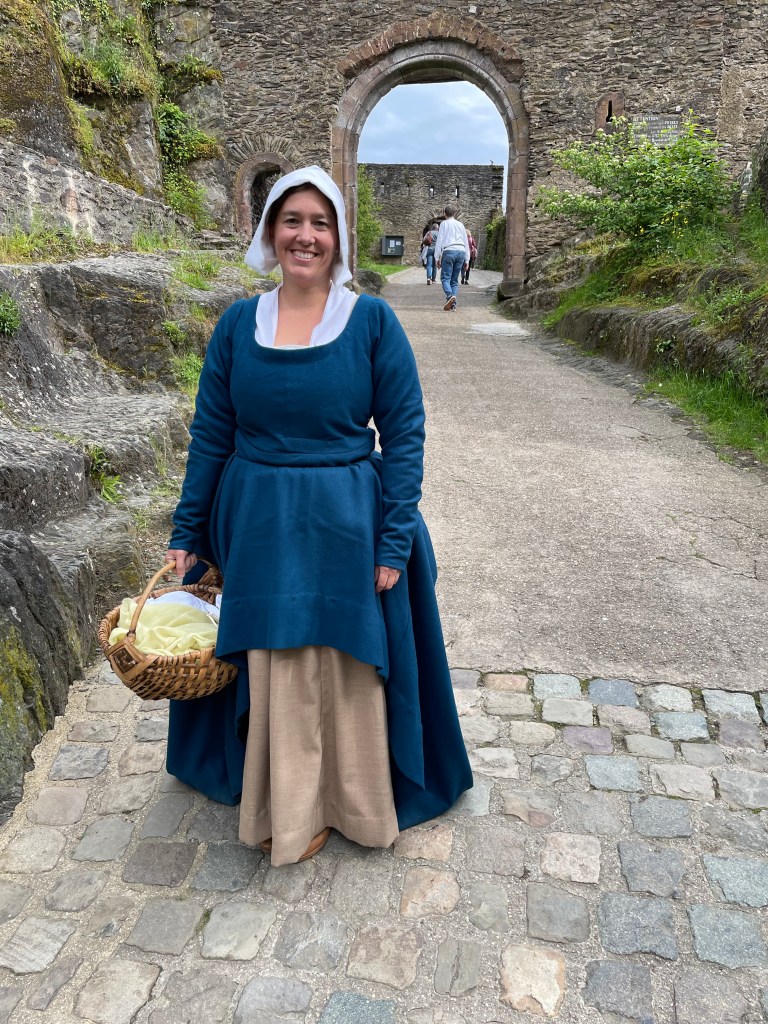
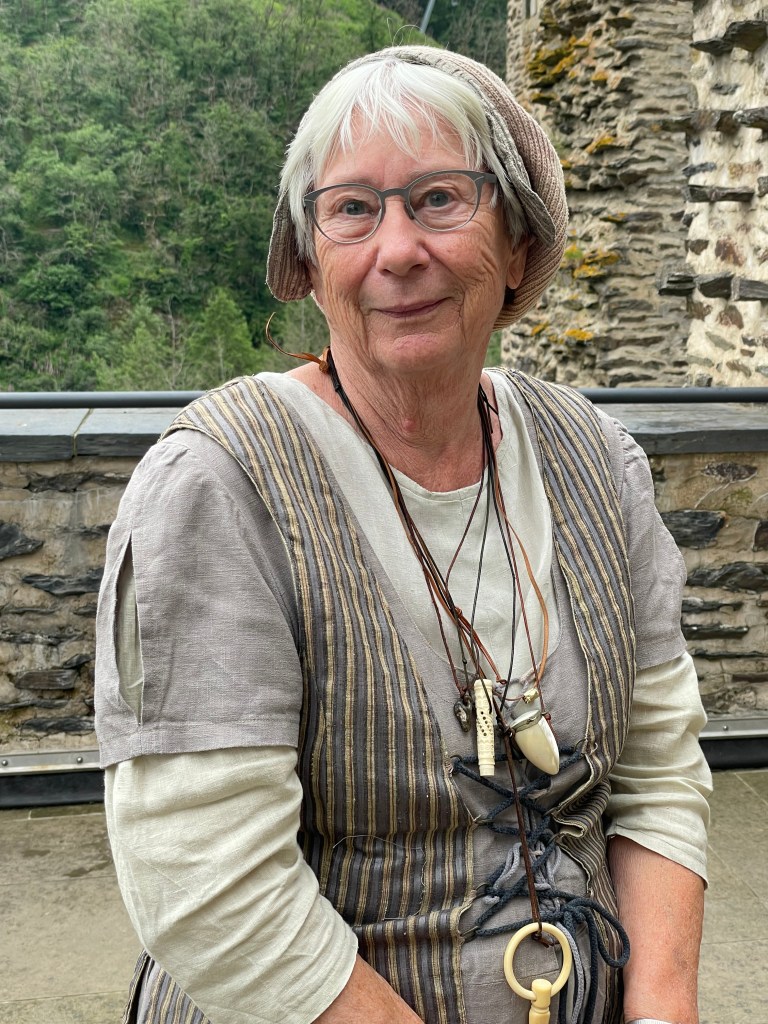
I met this woman outside the castle on one of the upper levels and asked if I could take her photo. She spoke no English but she started explaining to me what she did in the castle as an older woman. I followed her into her castle room where I learned all about women’s work in the olden days.
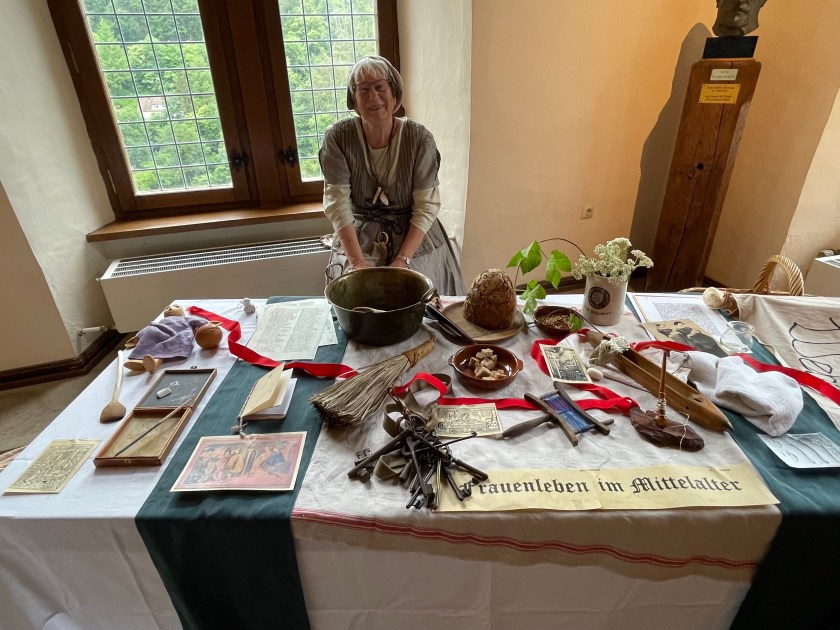
The sign says “women’s life in the Middle Ages.” Below are things used to teach the children.

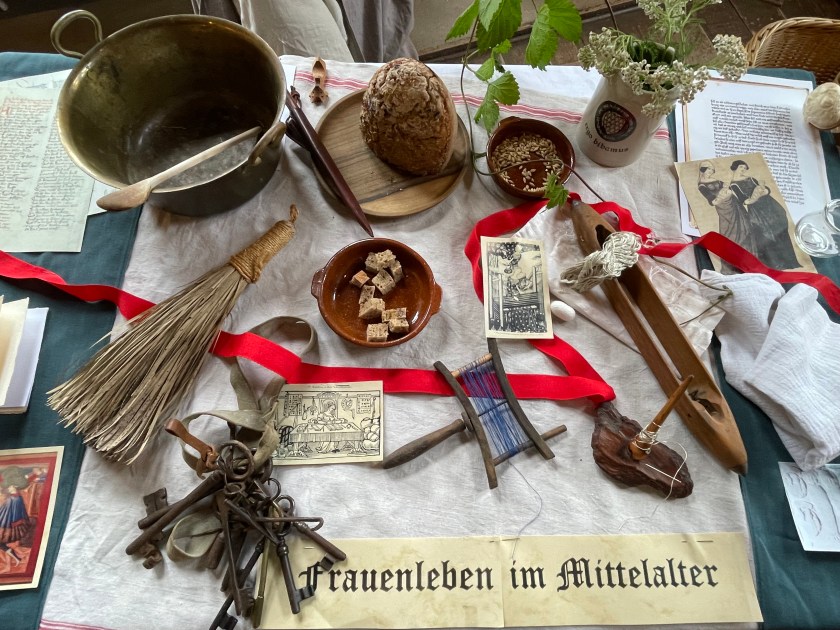
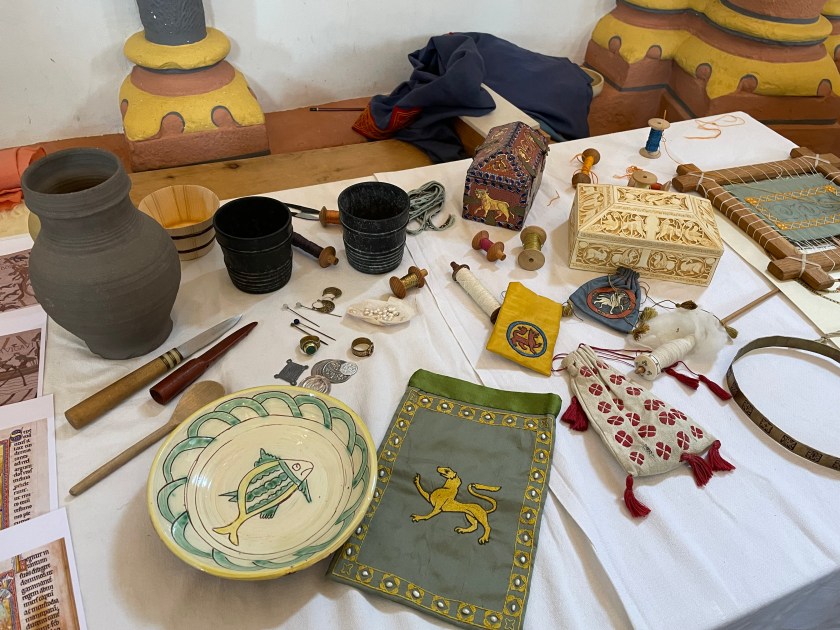
Tools used in handwork and weaving:

The glass is a nursing cup for collecting milk.
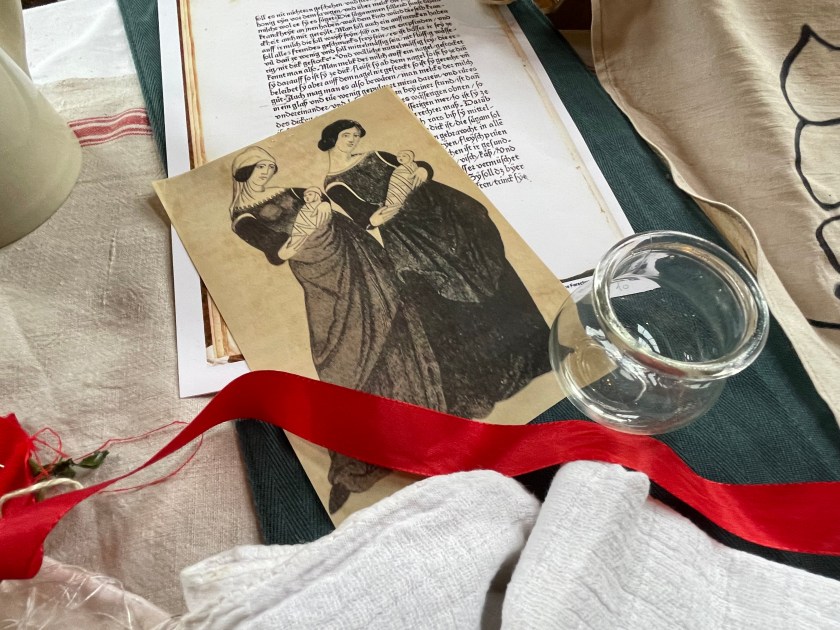
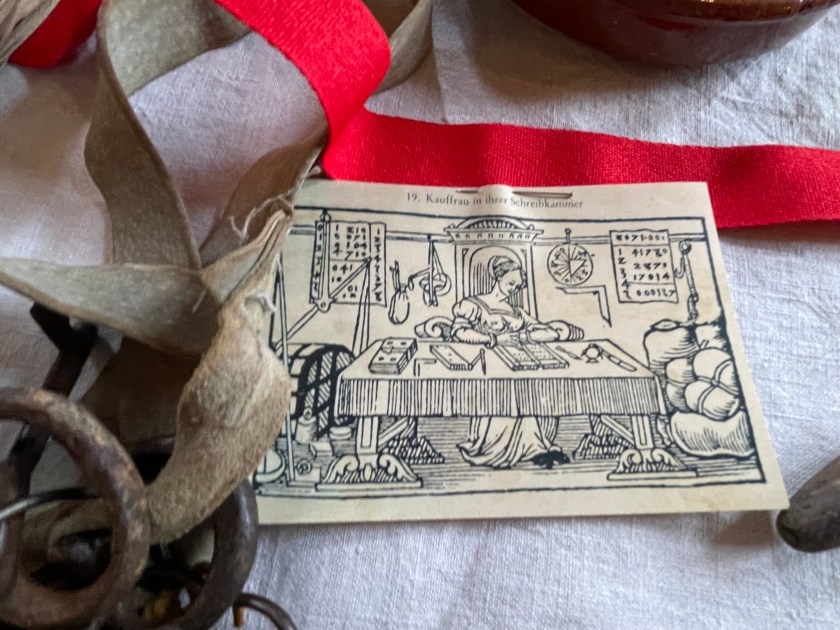
Women also collected medicinal herbs.
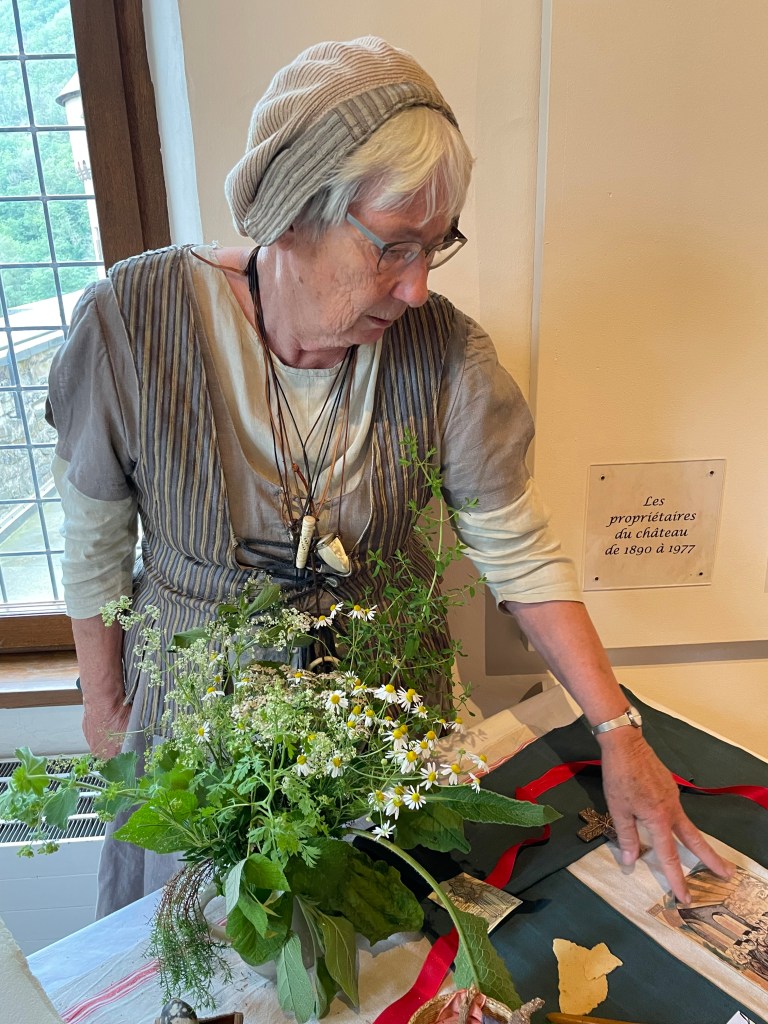
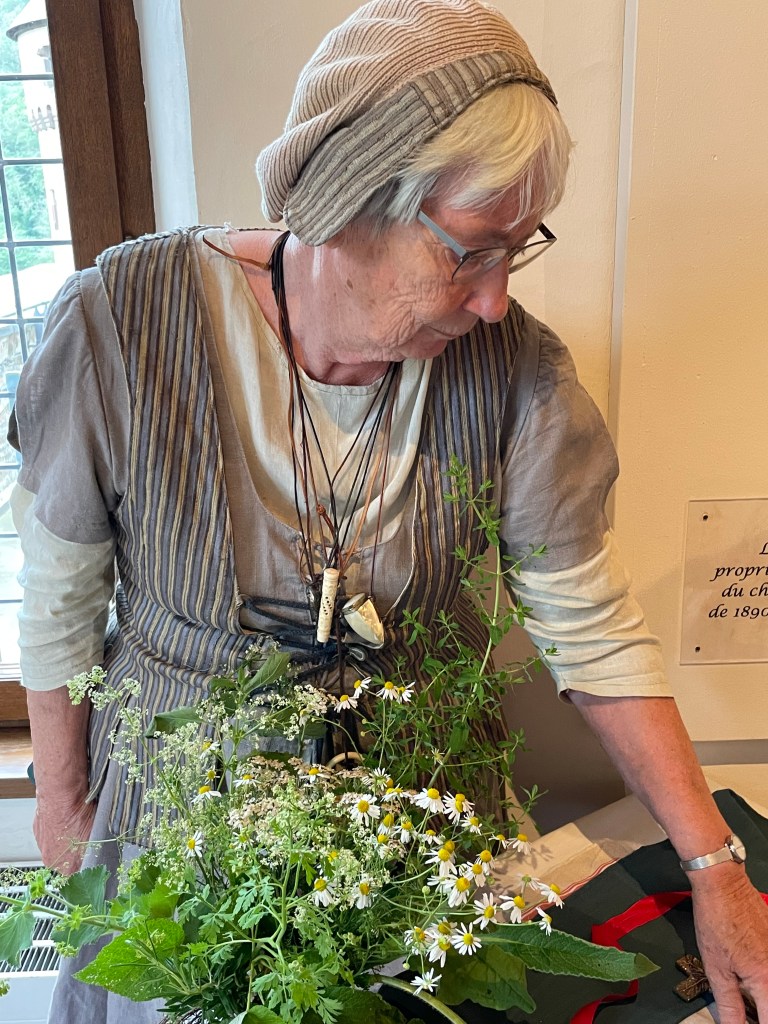
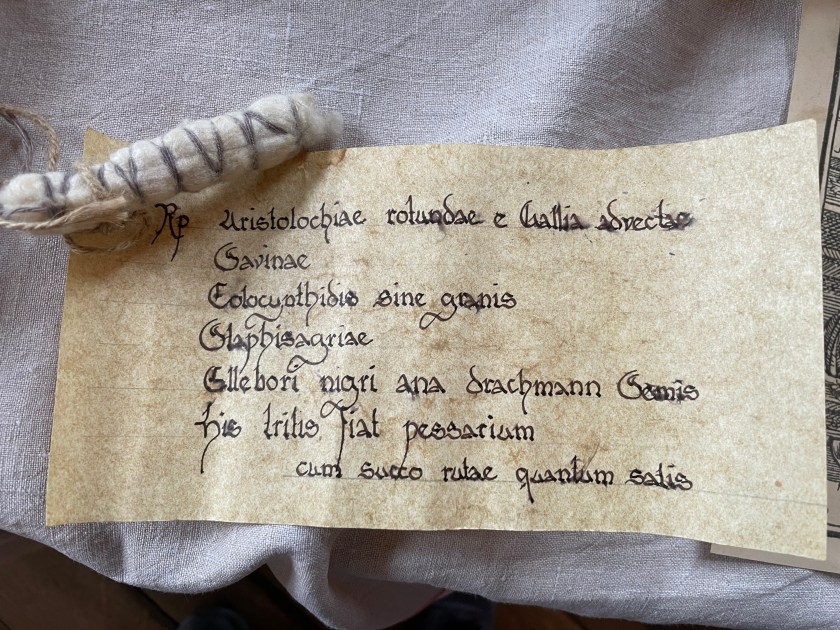
This is a tampon, not used for menses, but used to pull infection out.
Here is an illustration of birthing a baby with some forceps.
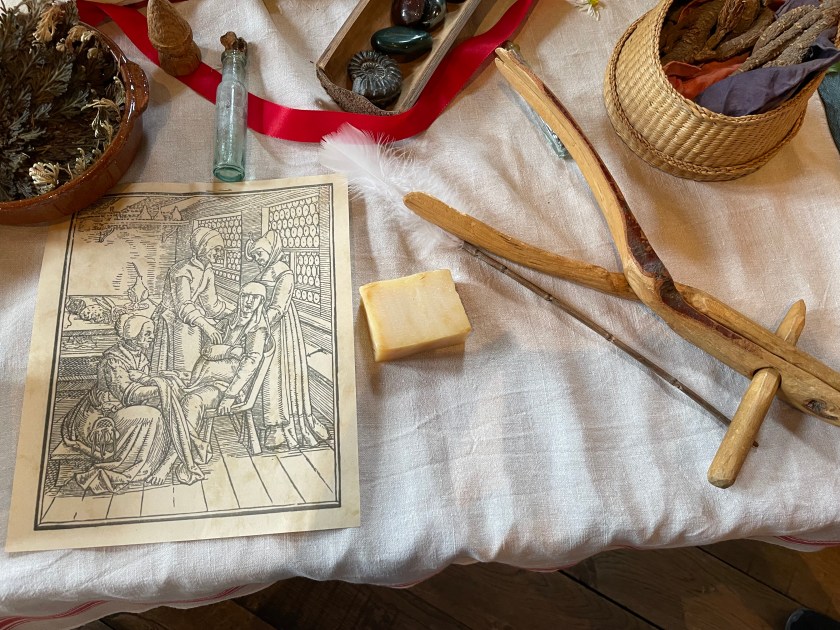

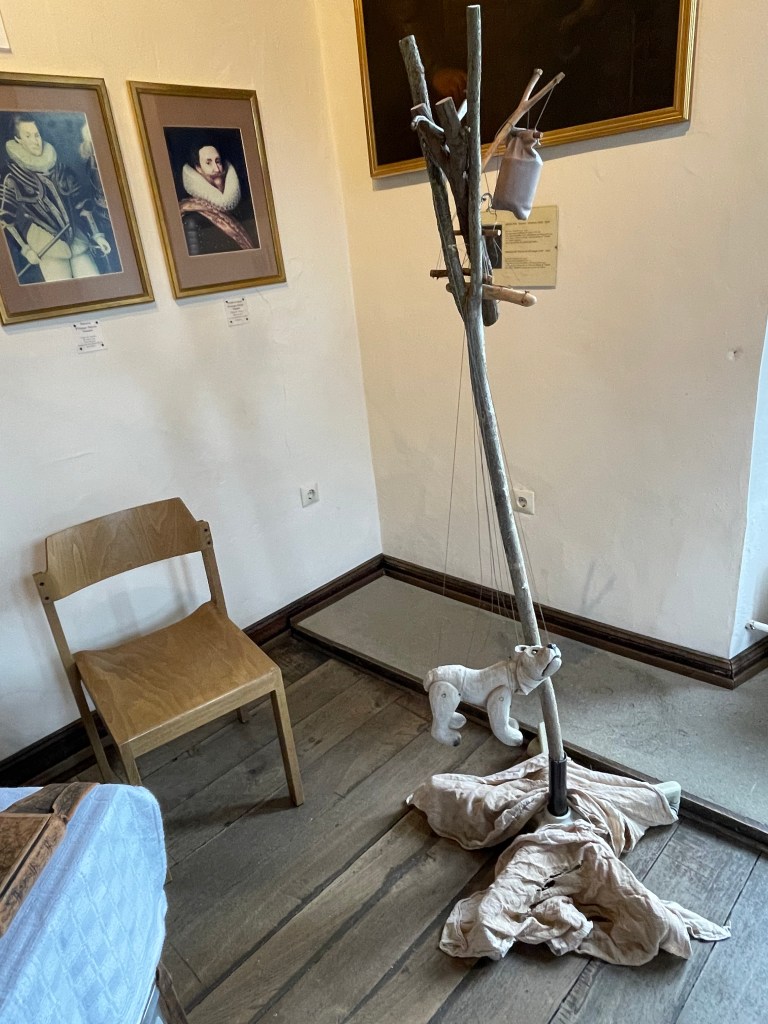
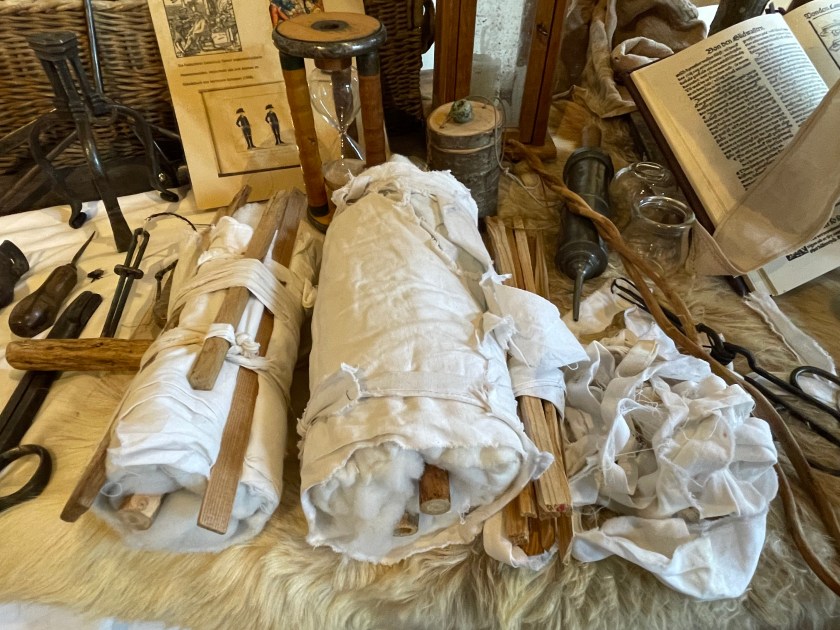
Also in this room was a medical doctor with his tools and wares.
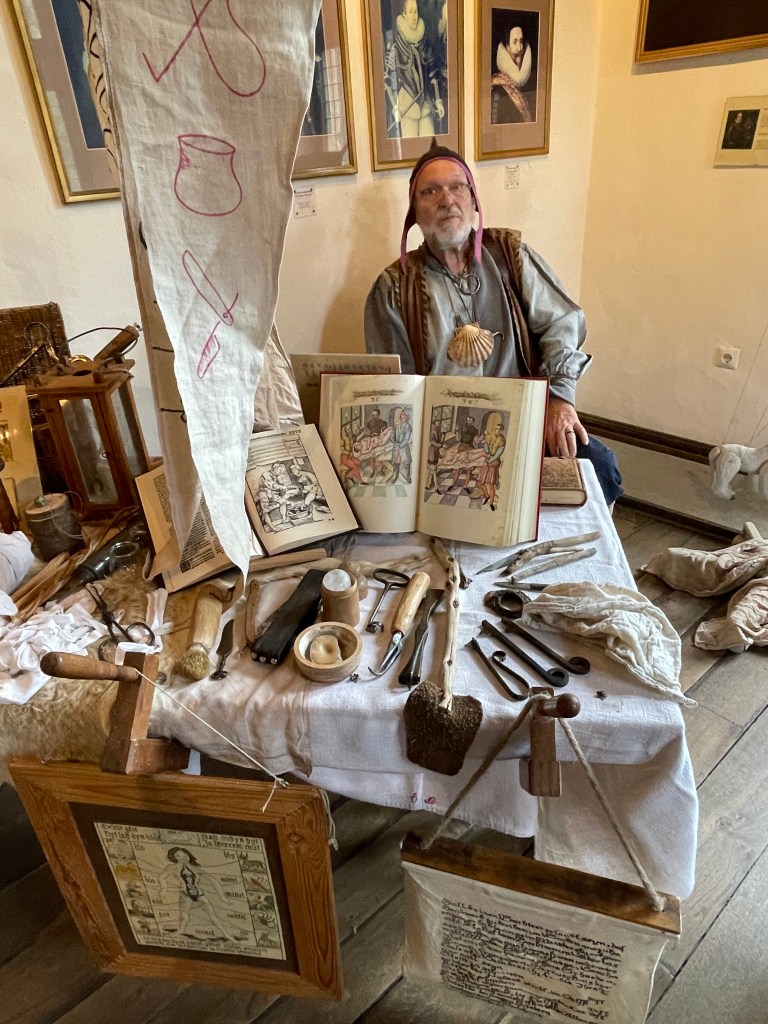
Again, from the illustrations showing medieval practices, they’ve gathered tools used to do surgeries and other medical procedures.
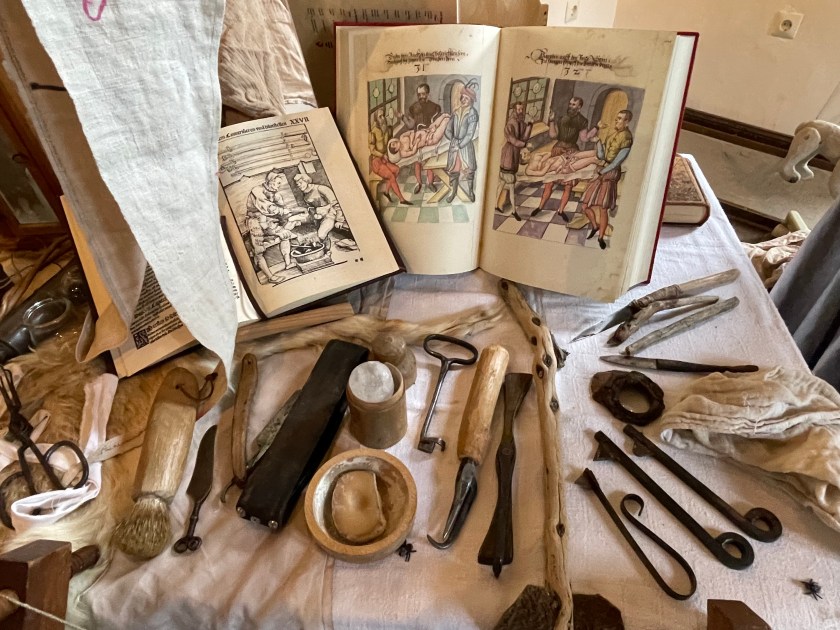

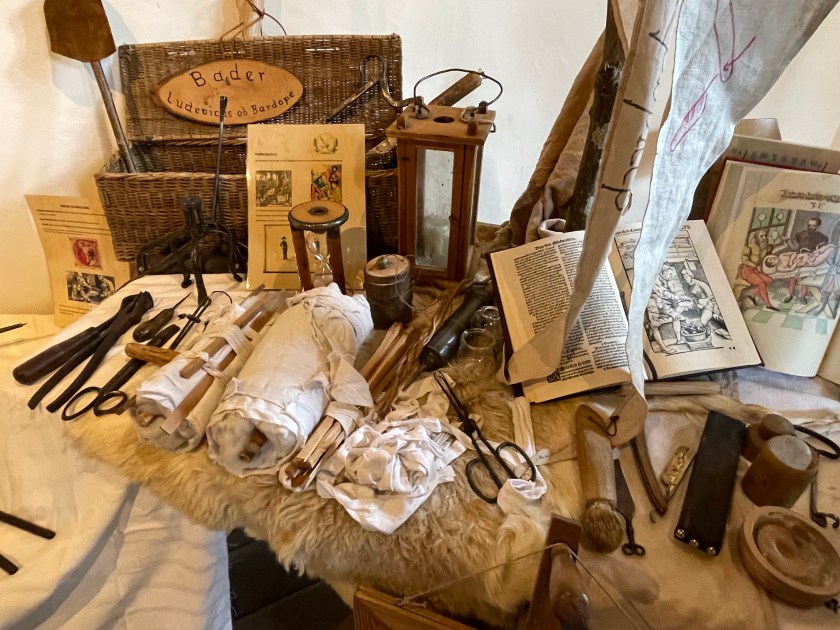
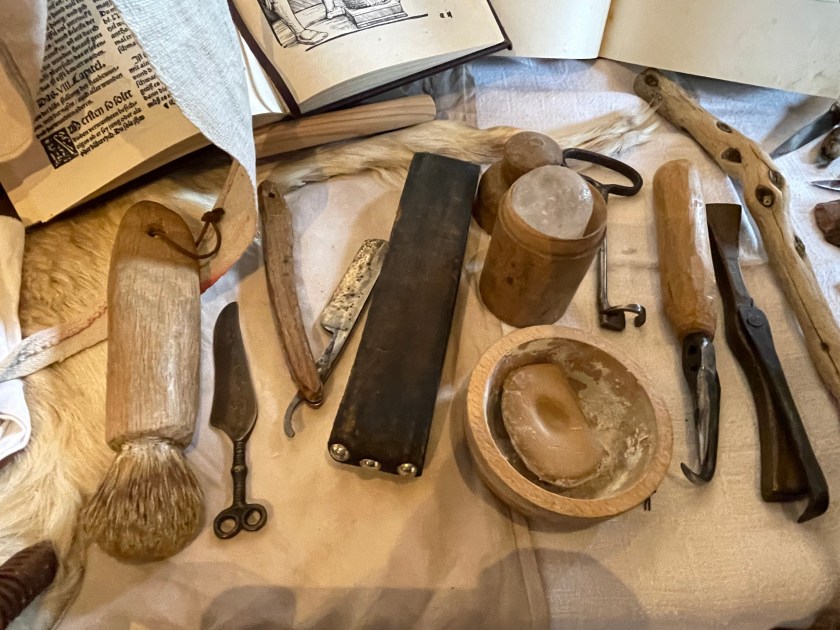

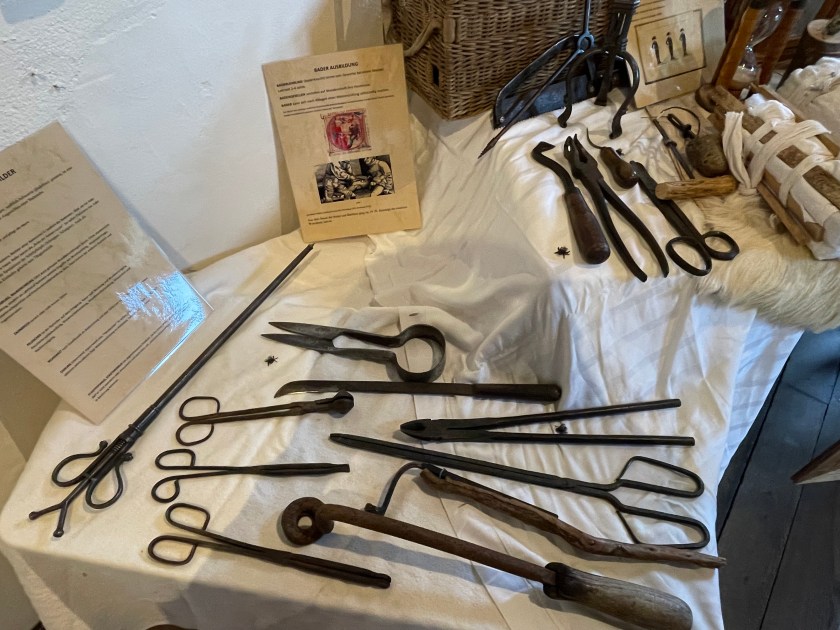
I find this fascinating.
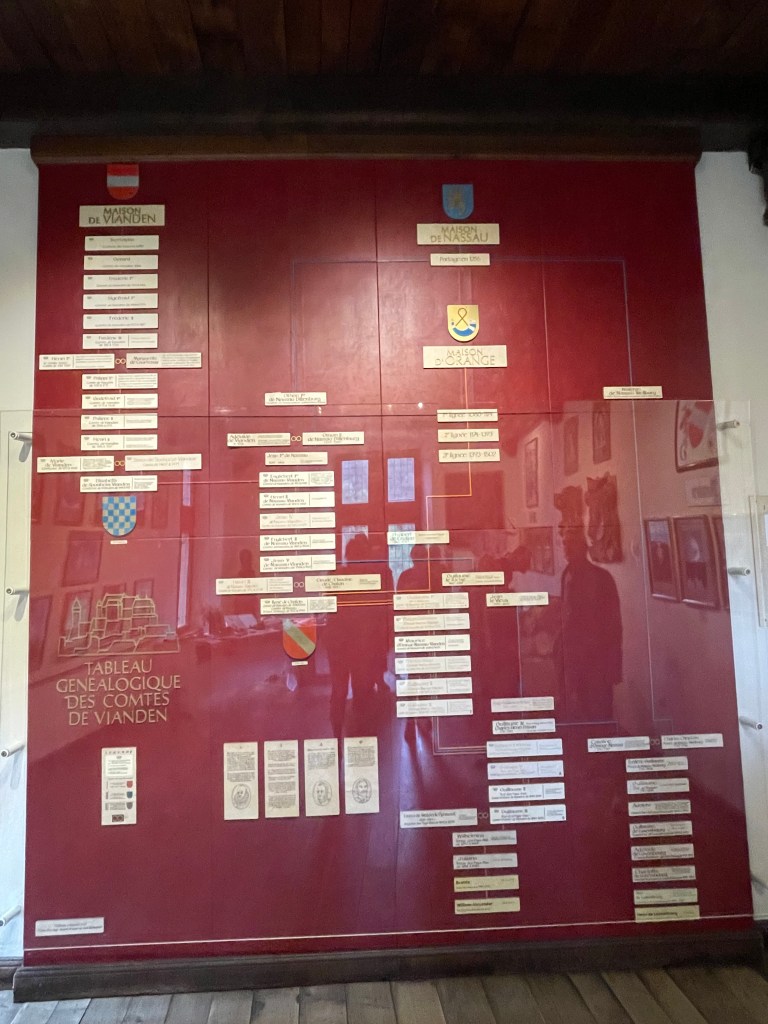
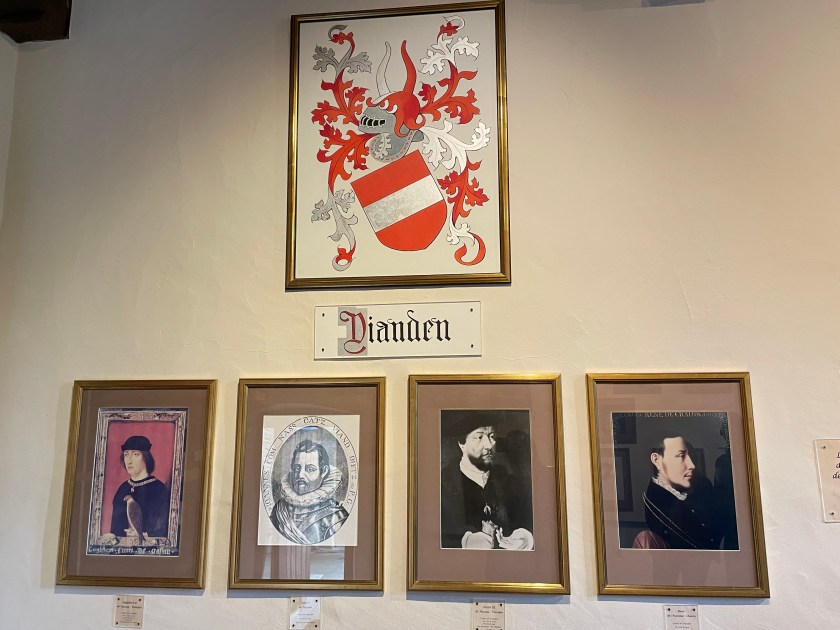
Here is a family tree, painted on the wall, of the people who lived here in this castle.

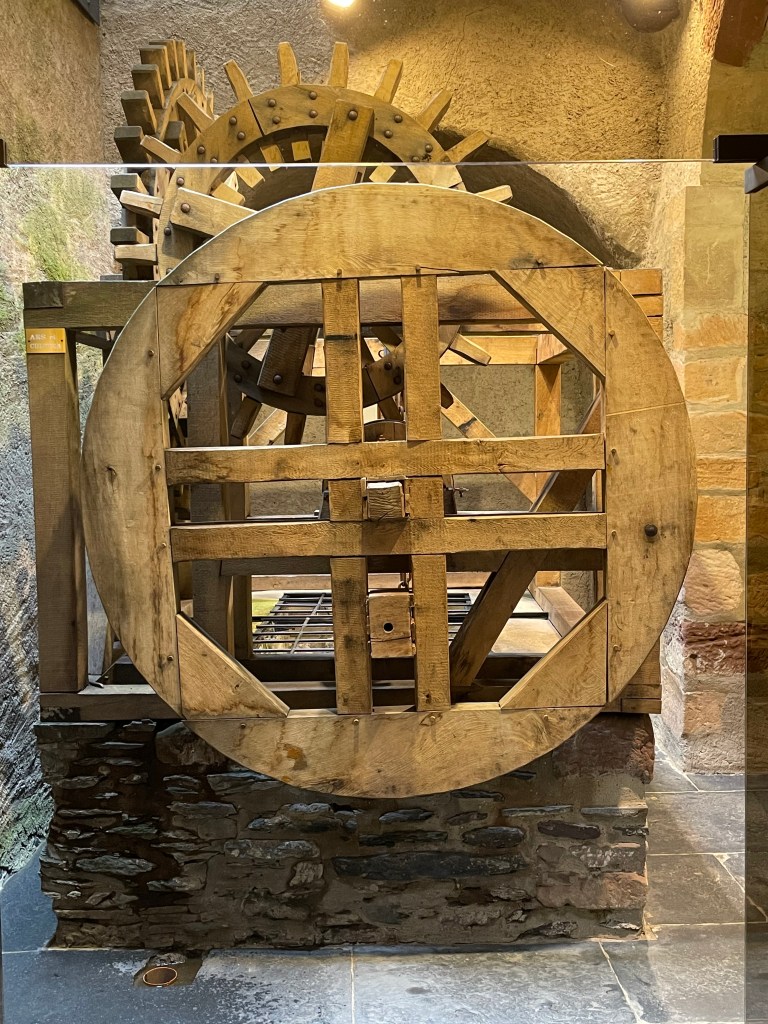
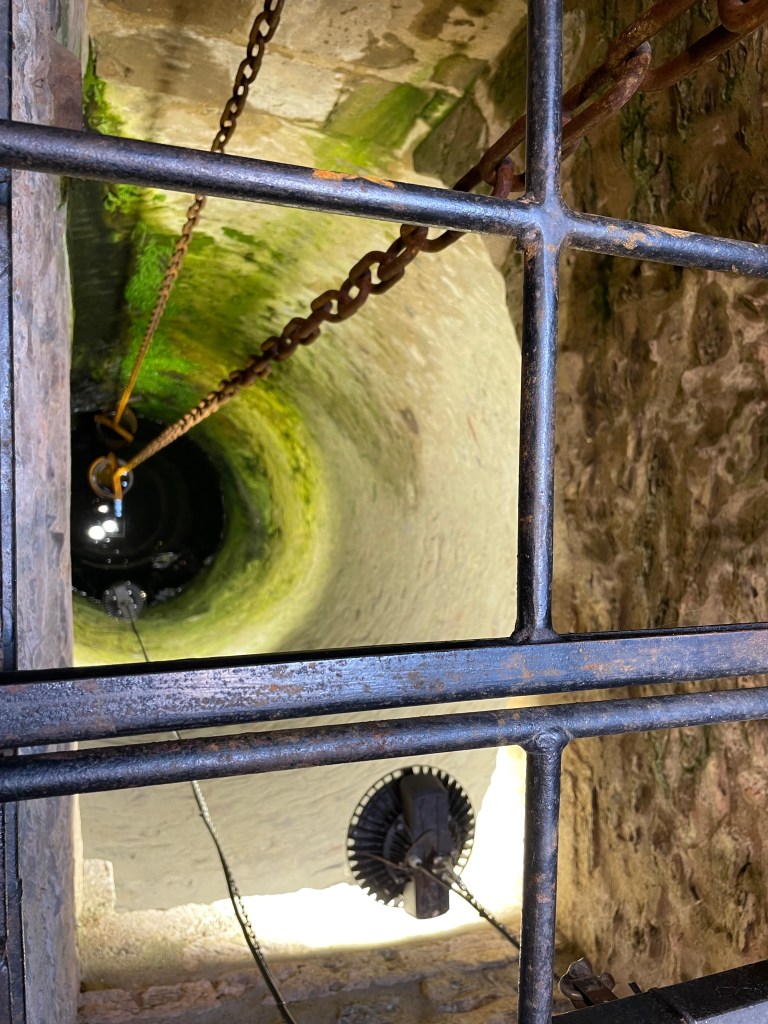
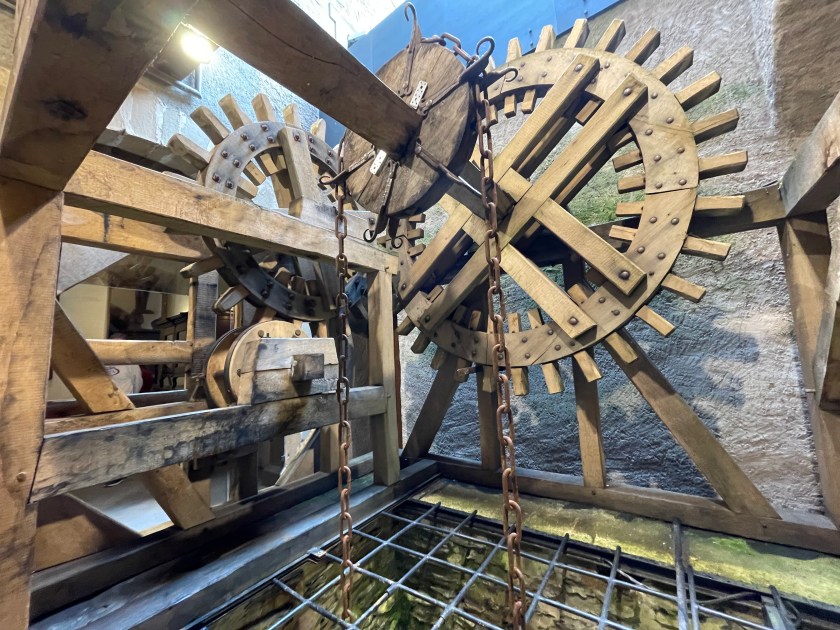
There was a deep well inside the castle to provide water.
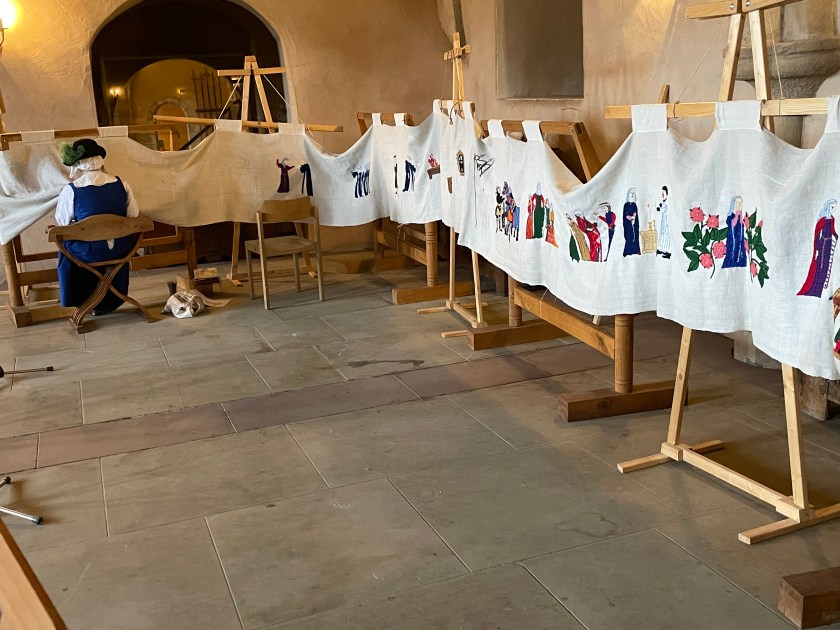
Woman doing handwork.
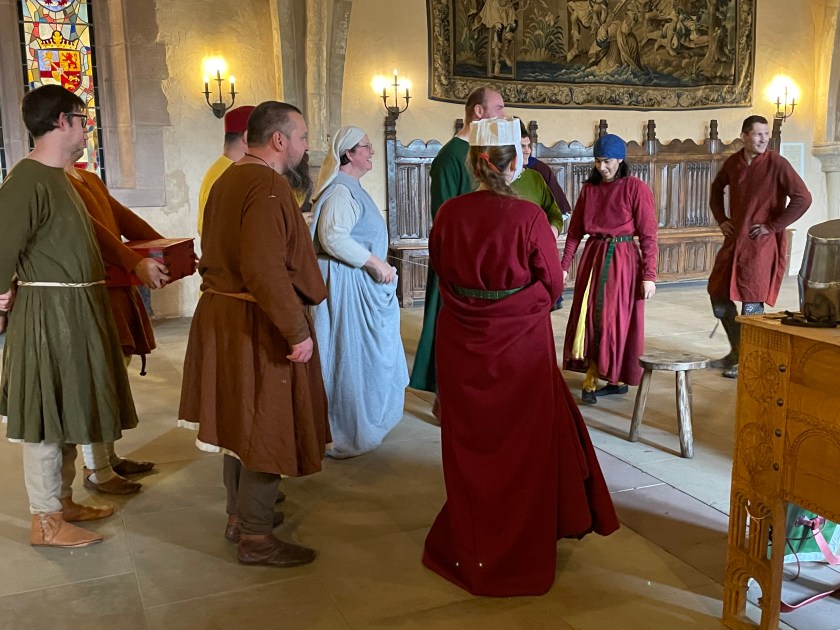
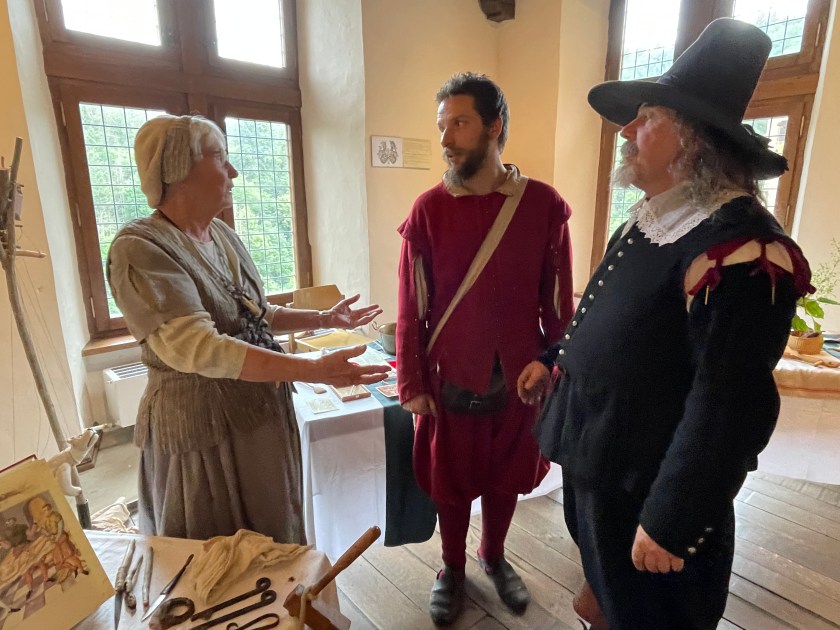
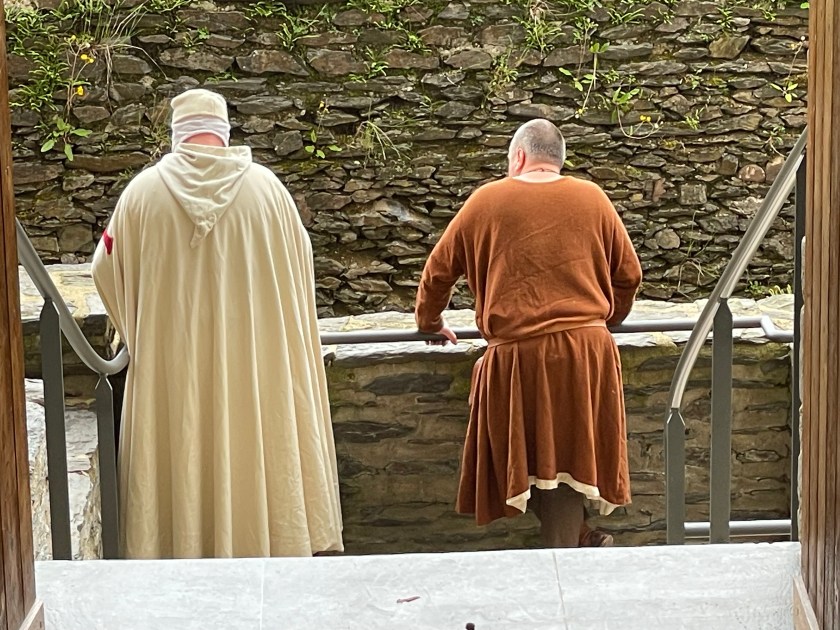
I think this was a short meeting with some of the volunteers.
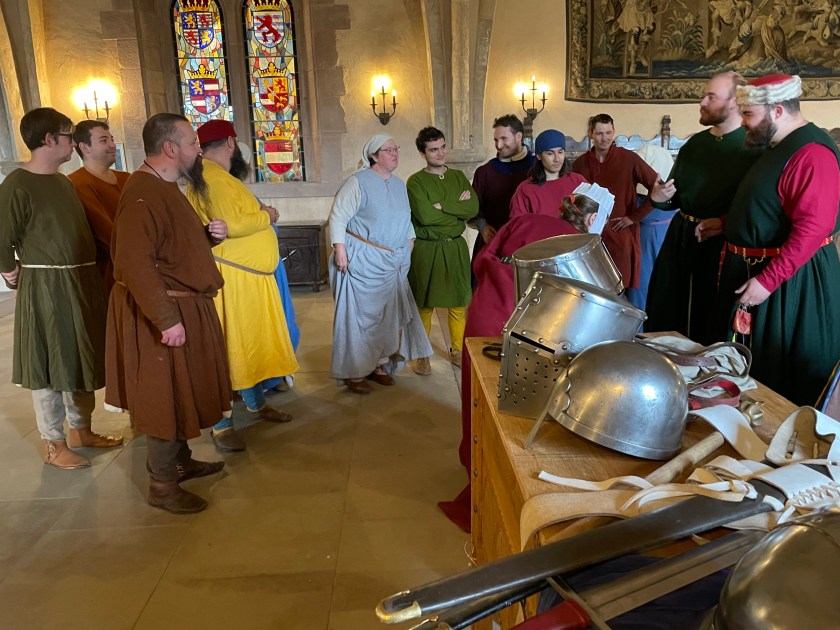
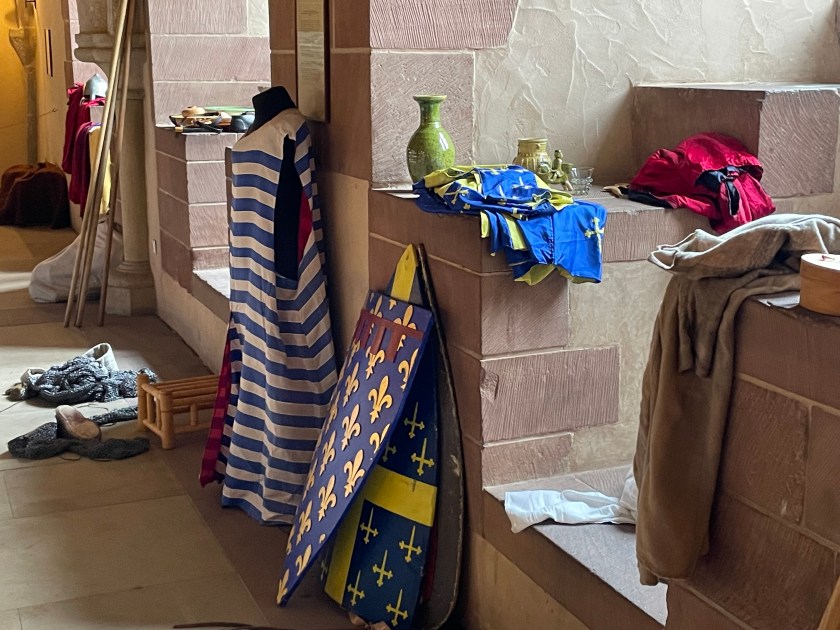
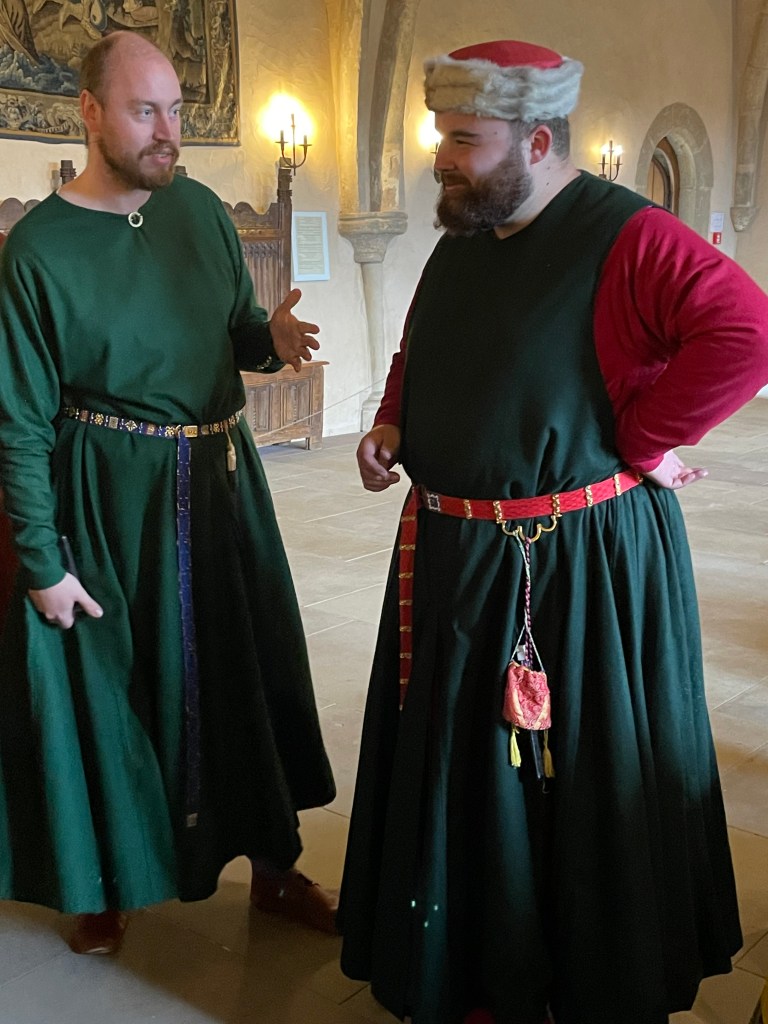
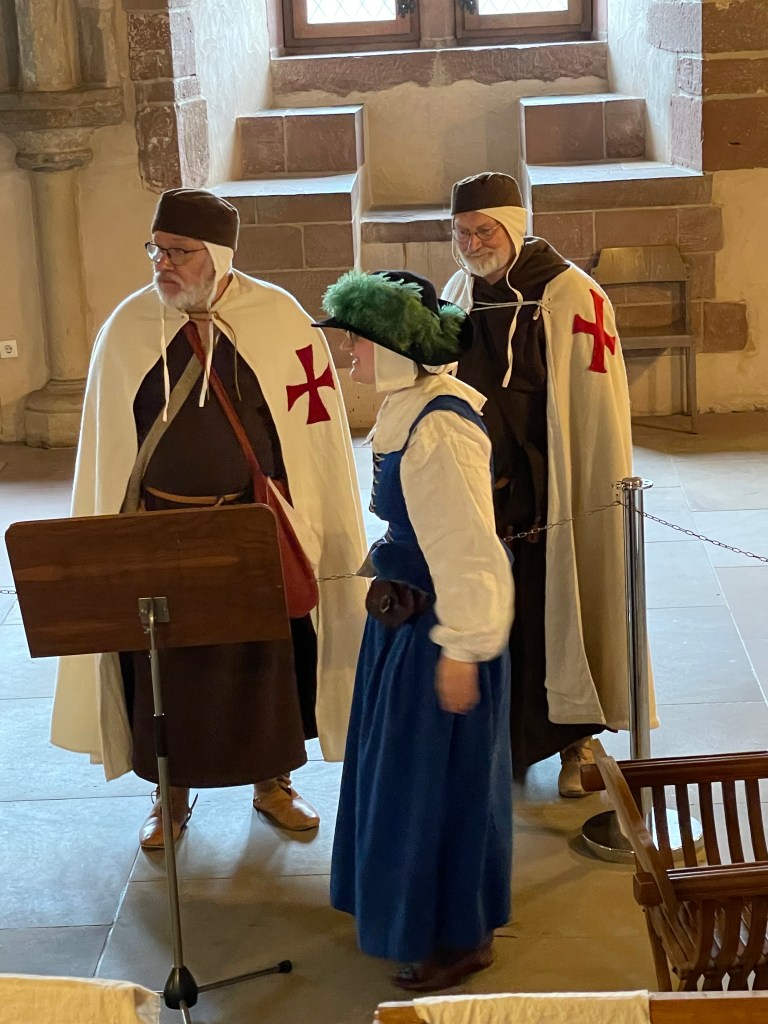
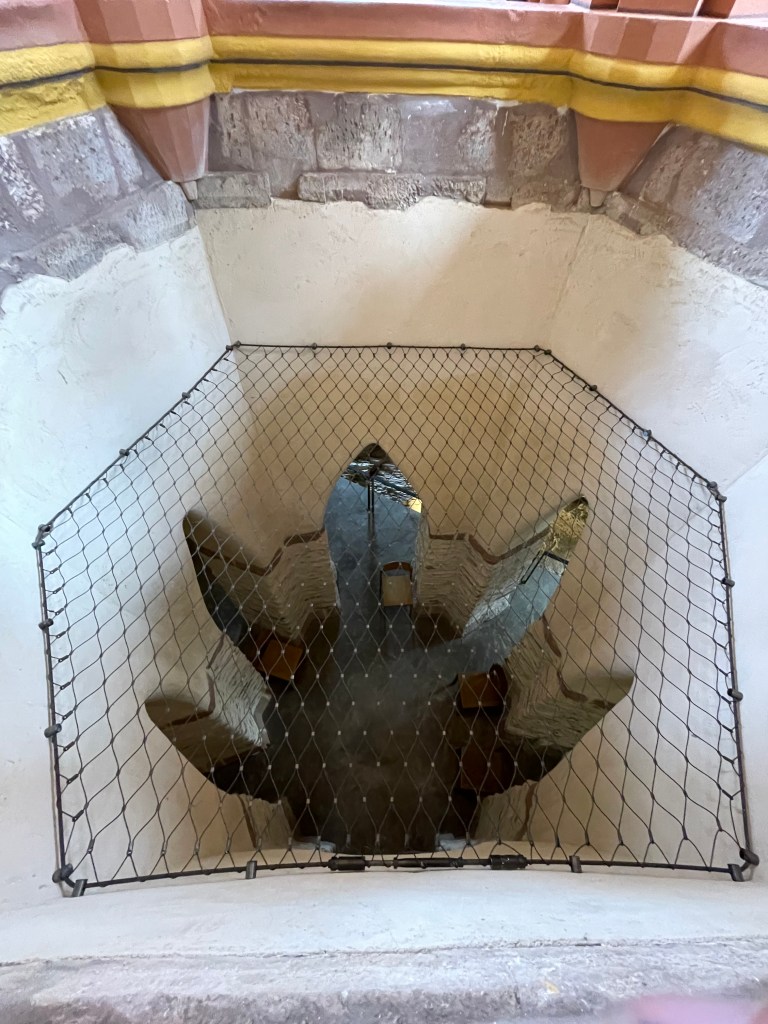
Looking down from inside the chapel:
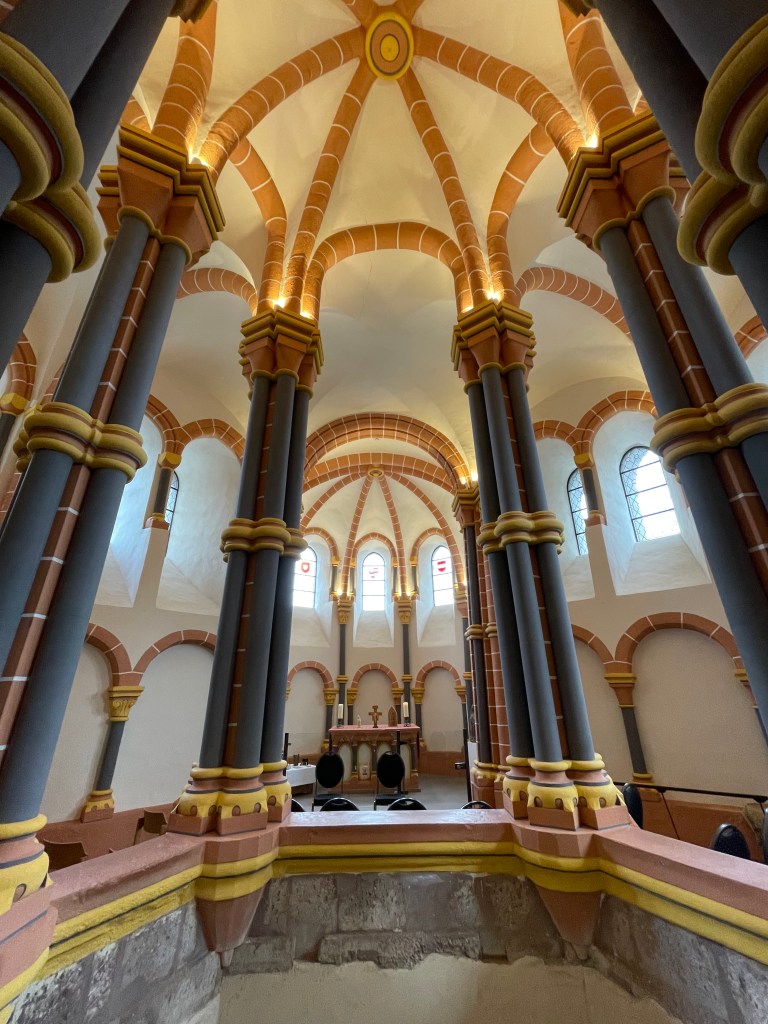
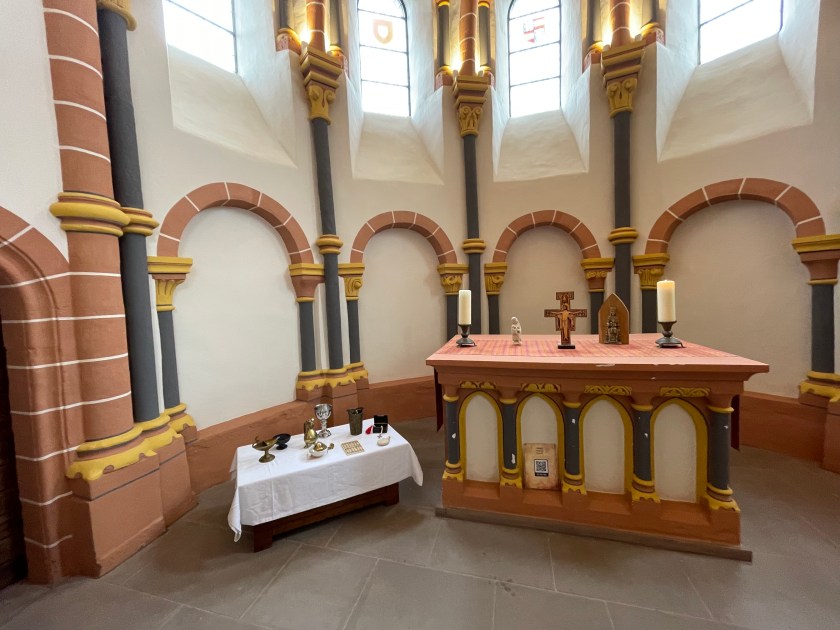
The chapel:
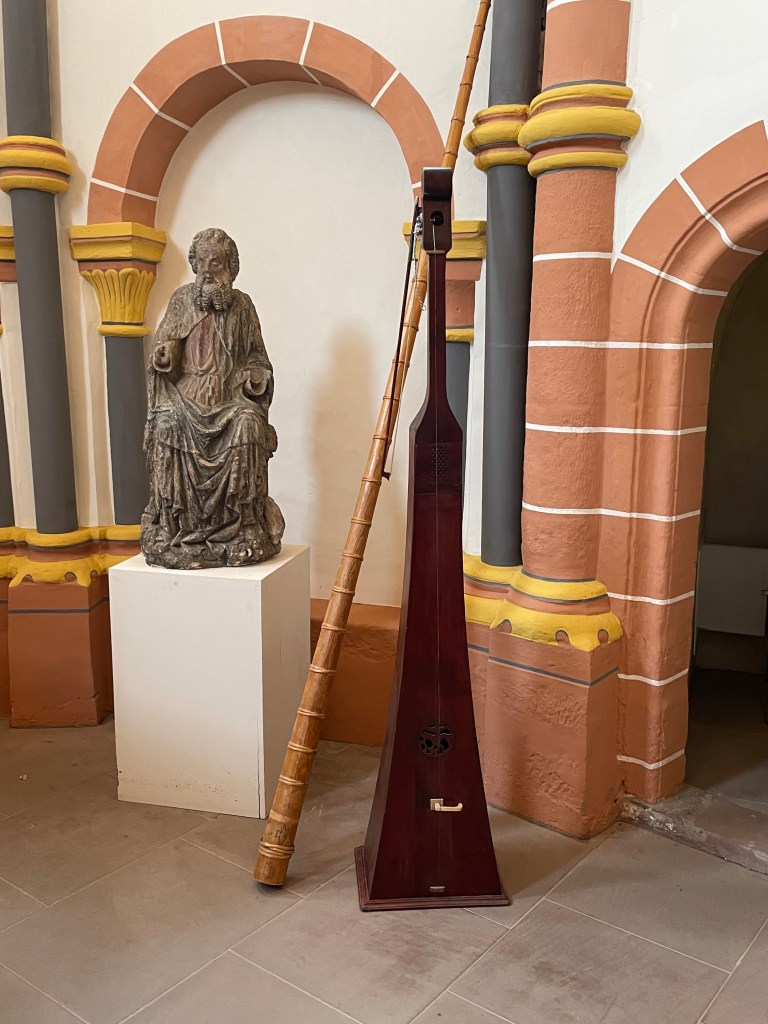
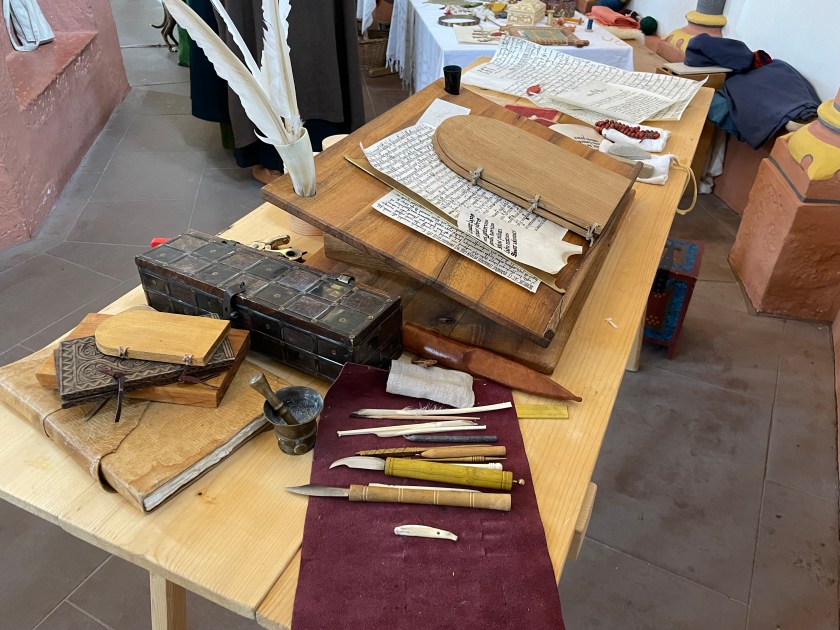
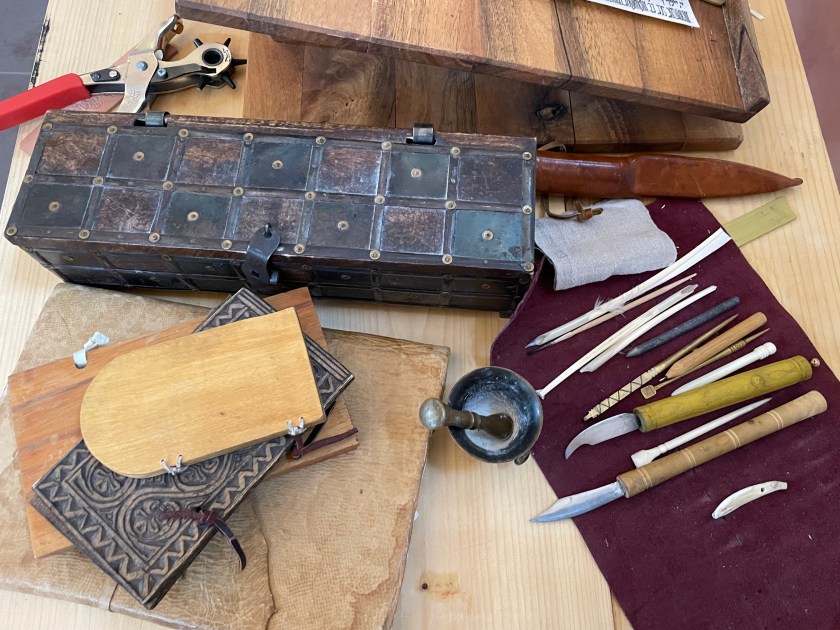
More craftsmen’s tool for book making and other things:
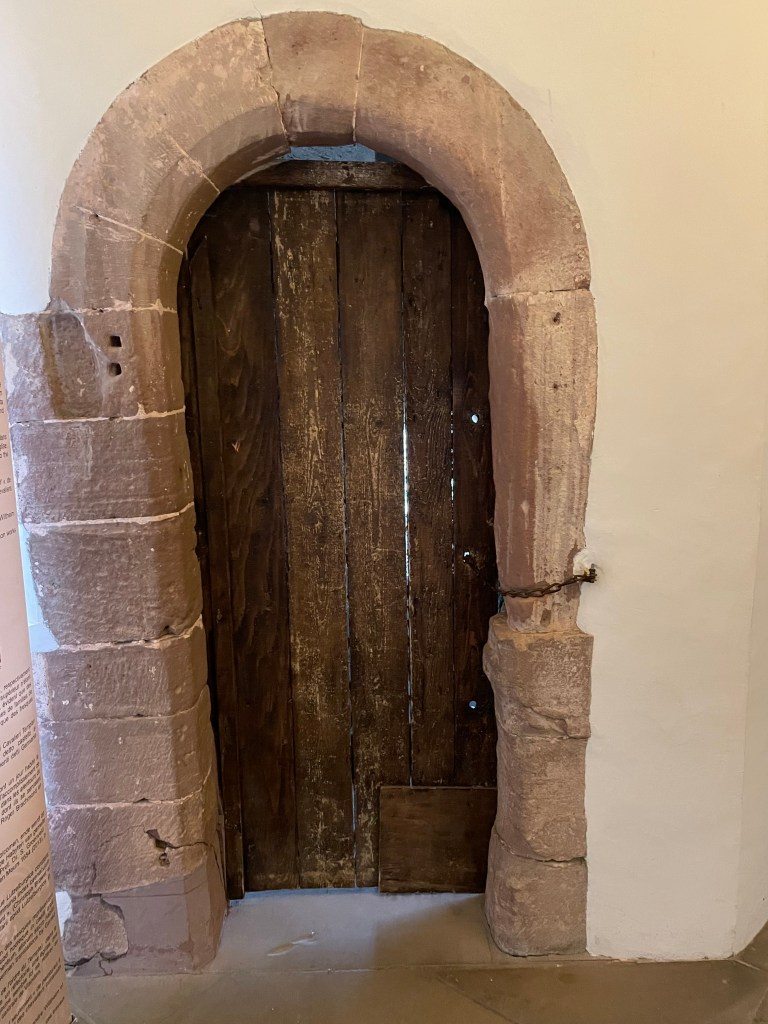
It’s remarkable that places like this have endured through time.
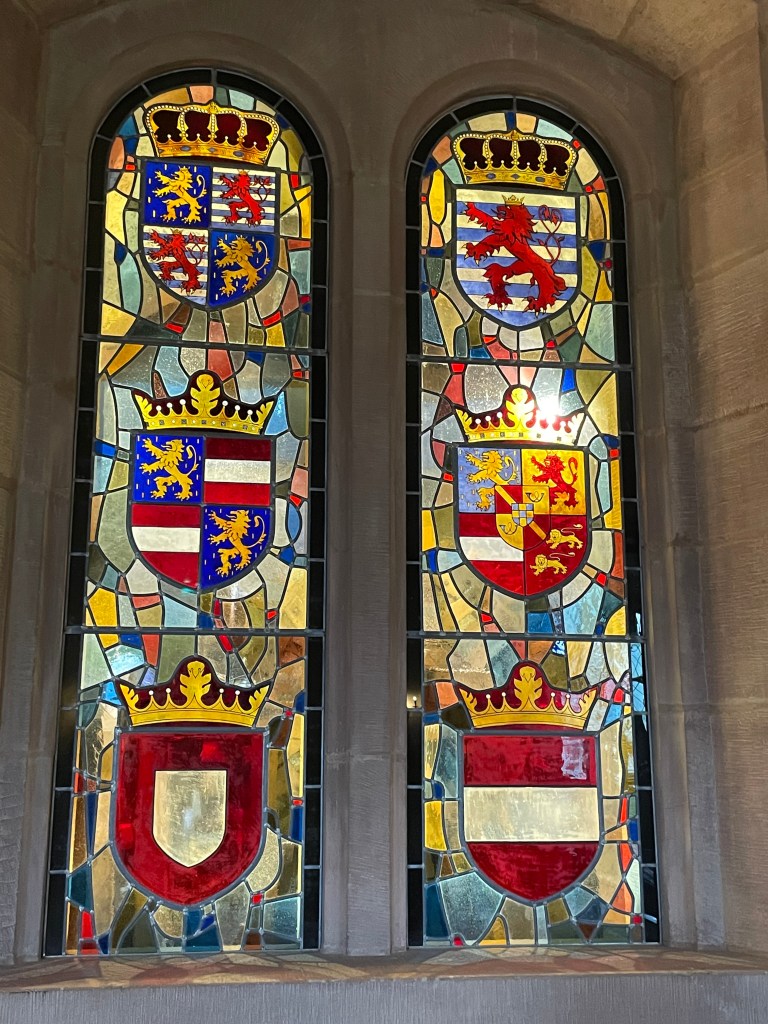
The great hall:
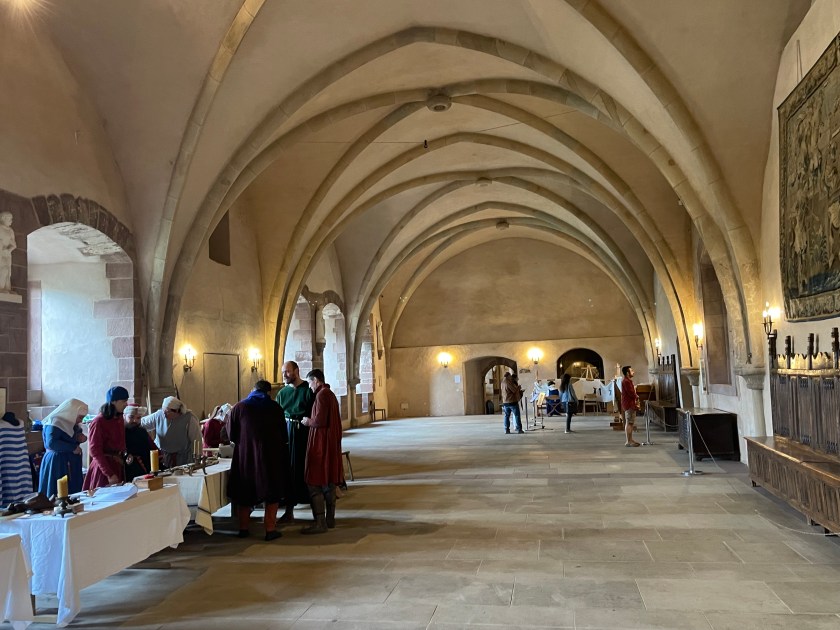
Looking down into some other rooms:


Now, outside the castle:
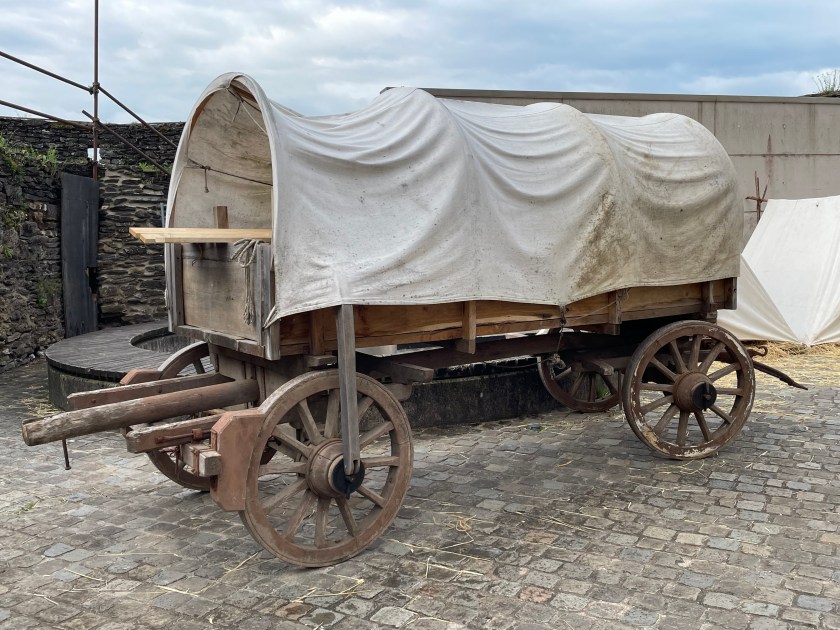
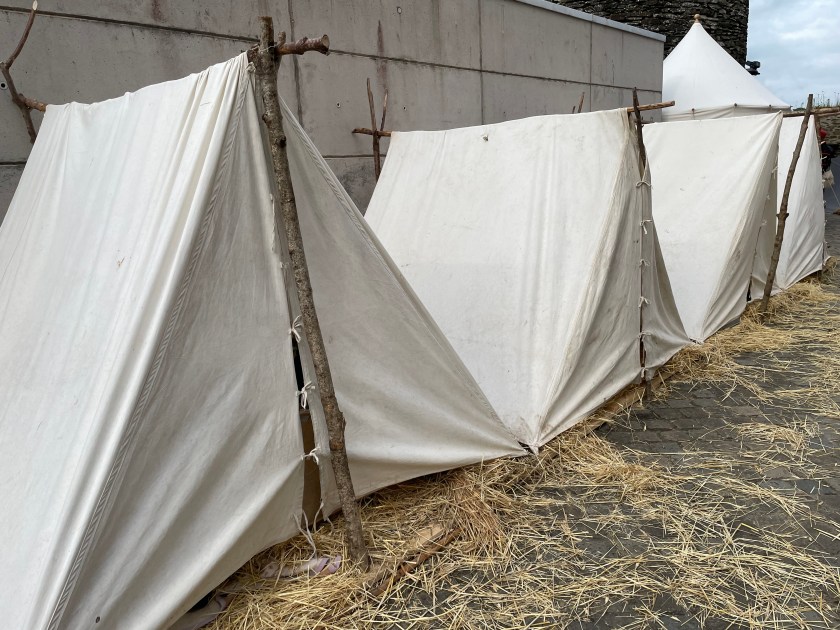

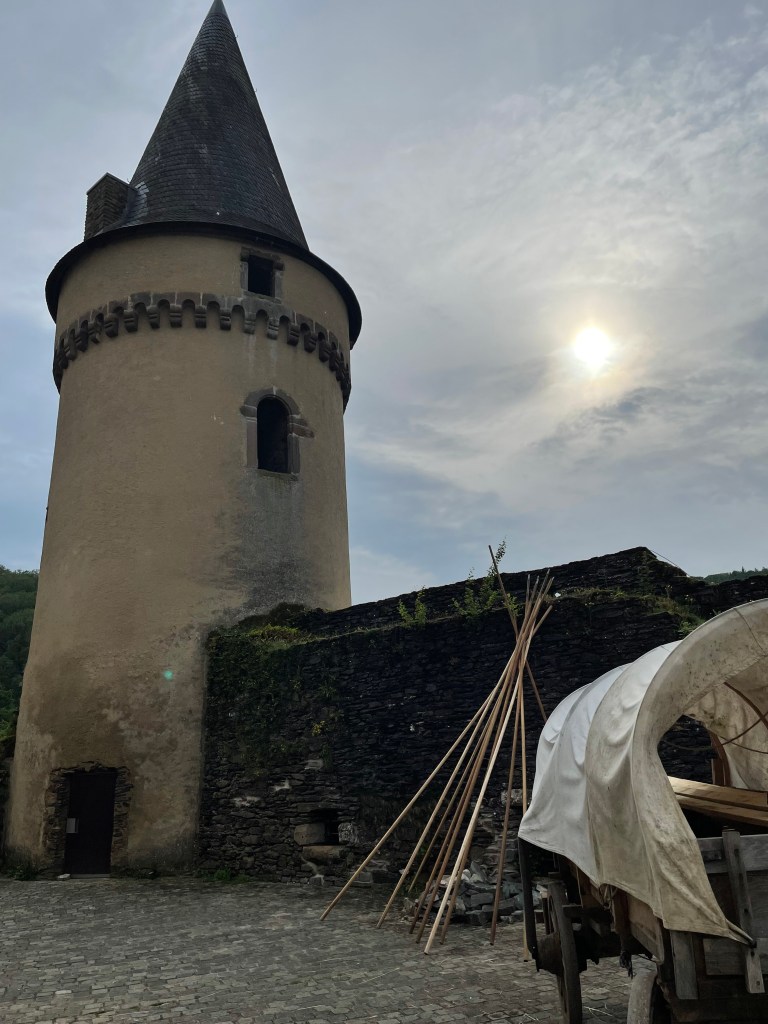

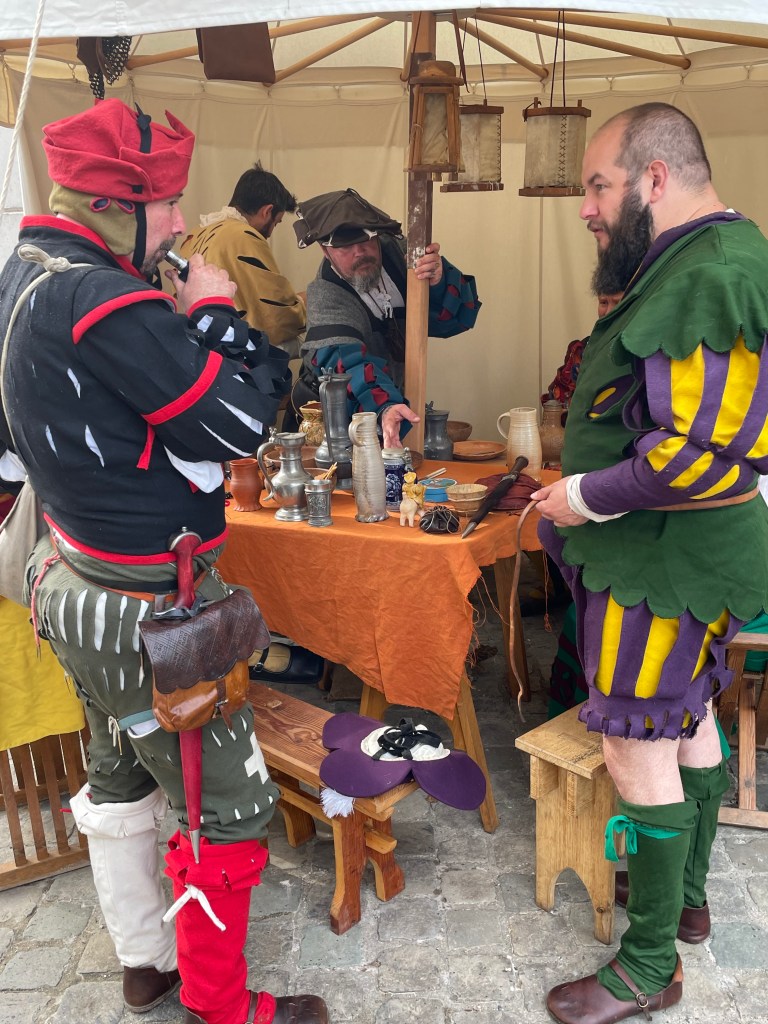
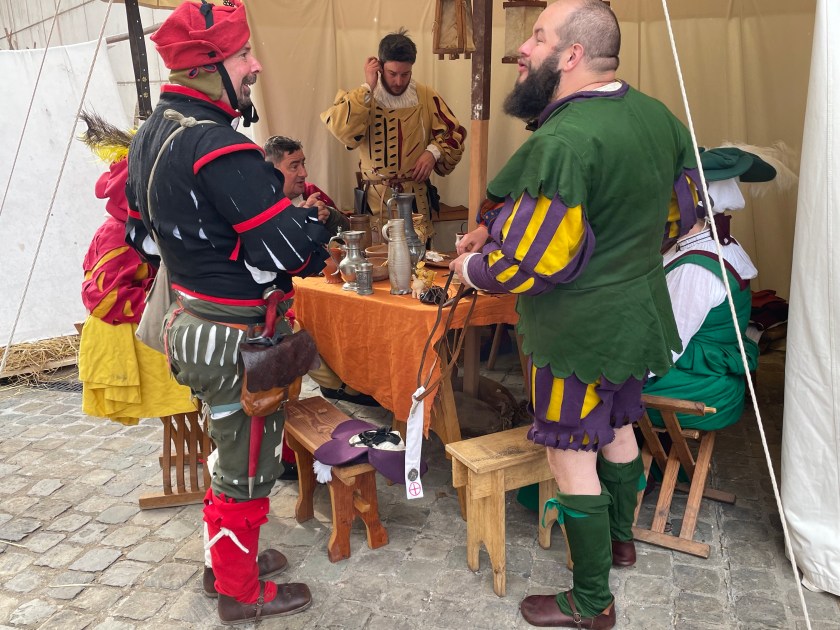
We met a few of Napoleon’s buddies. One of them was very interested in his family history research. We told him about FamilySearch and he got very excited to go home and create an account.
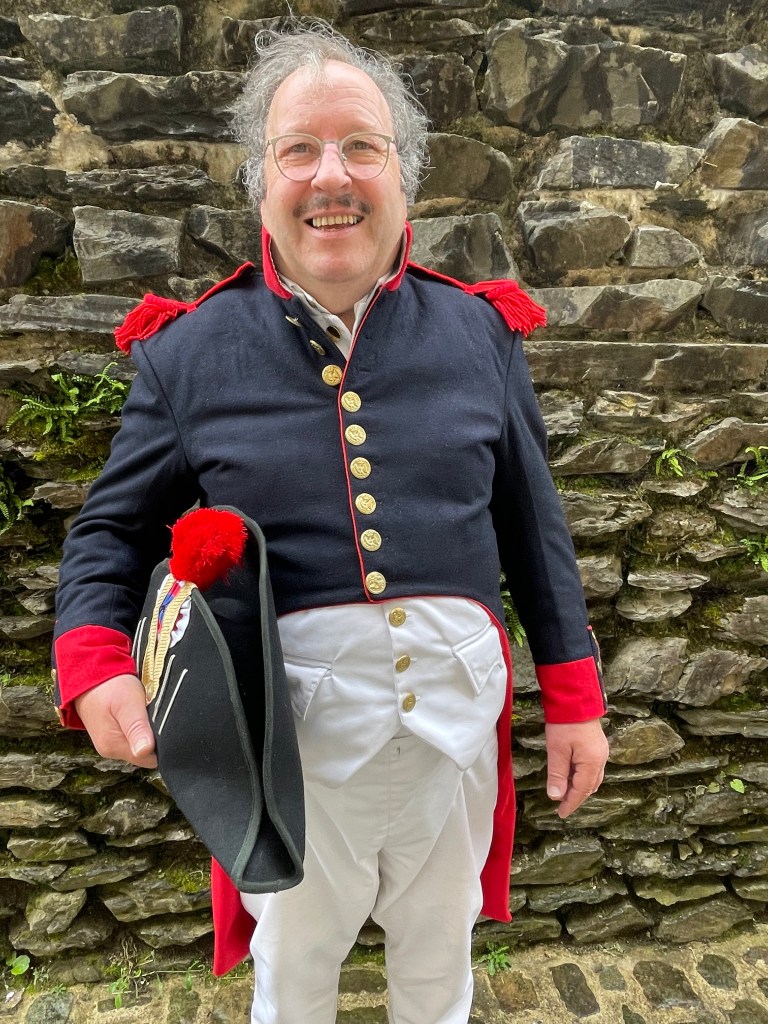



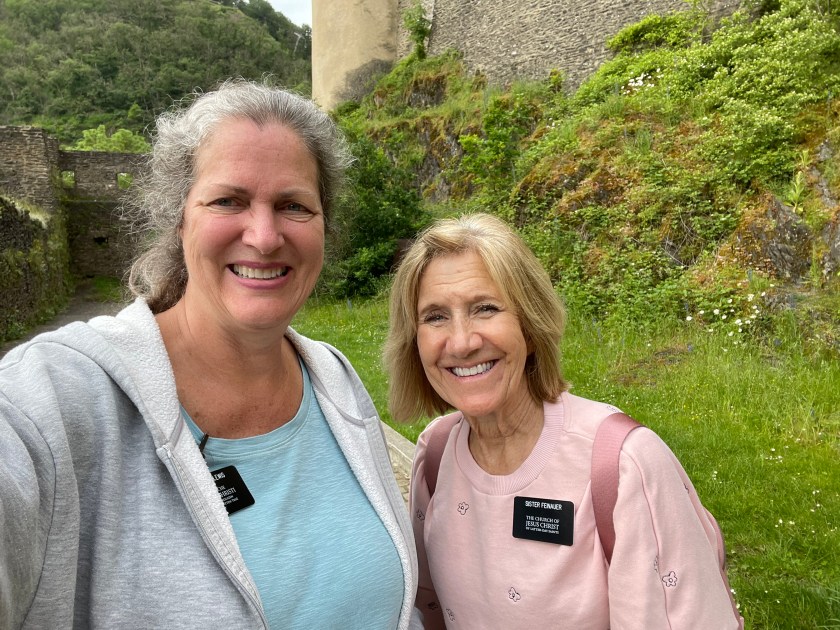
It was a really great visit. I loved every minute. I’m so happy we are here and so happy we get to see so many interesting places.

 Our Frankfurt Germany Mission