From Wikipedia:
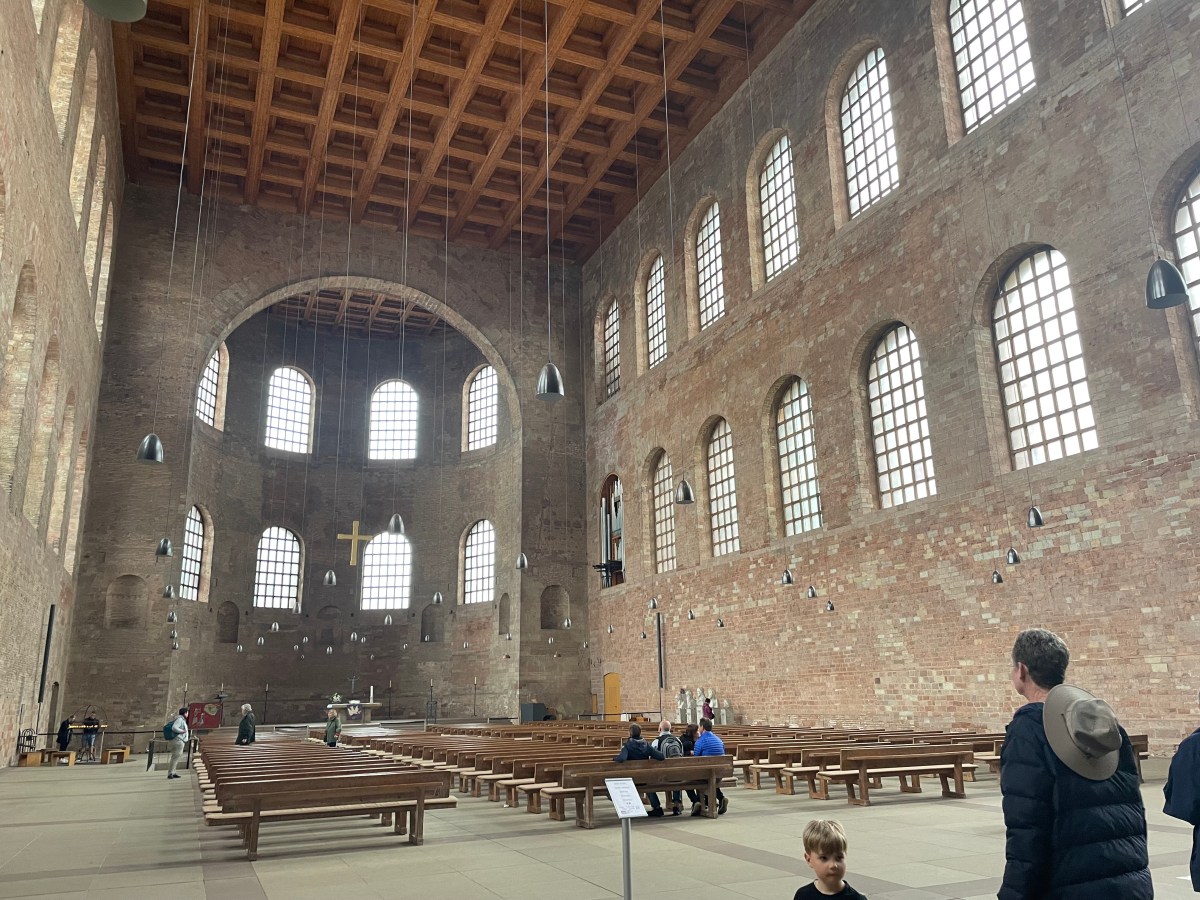
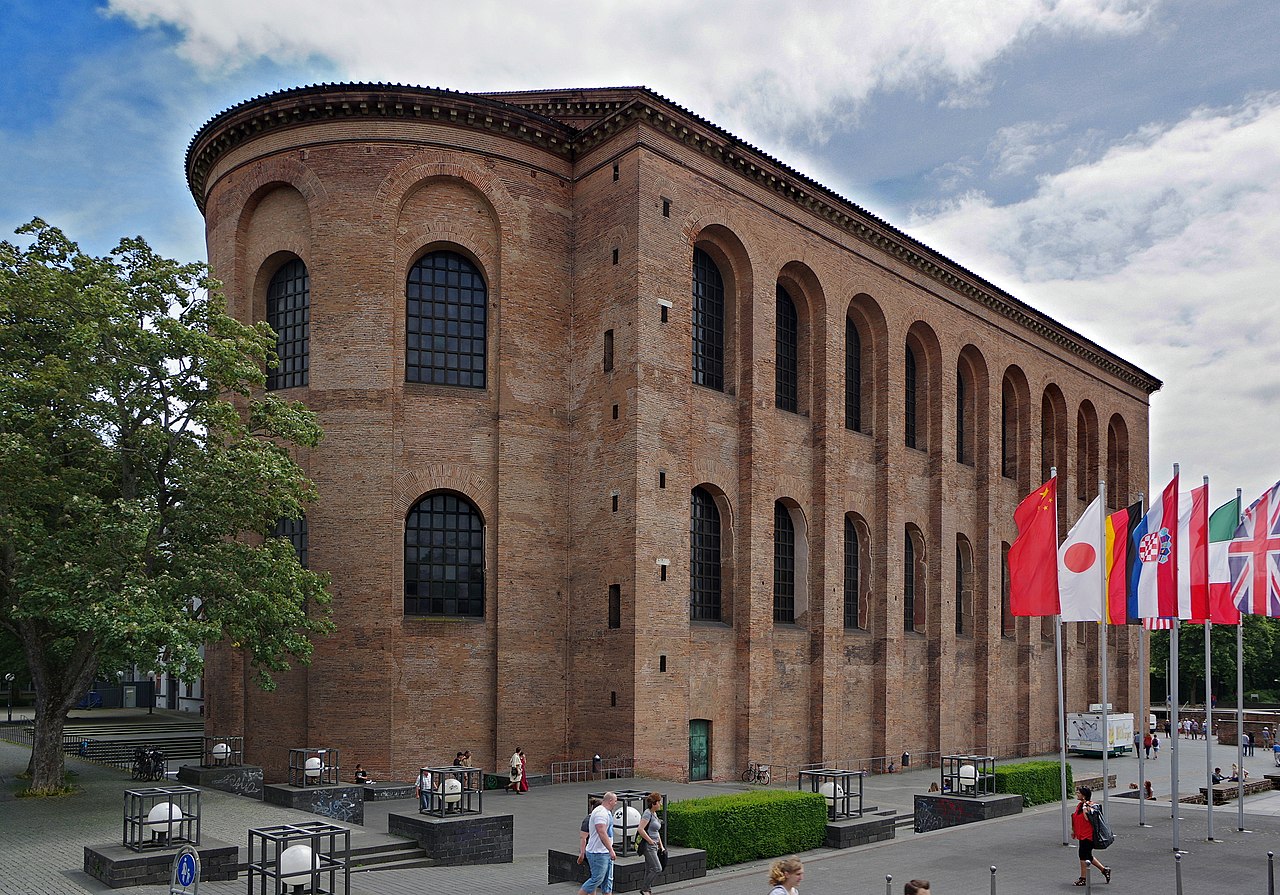
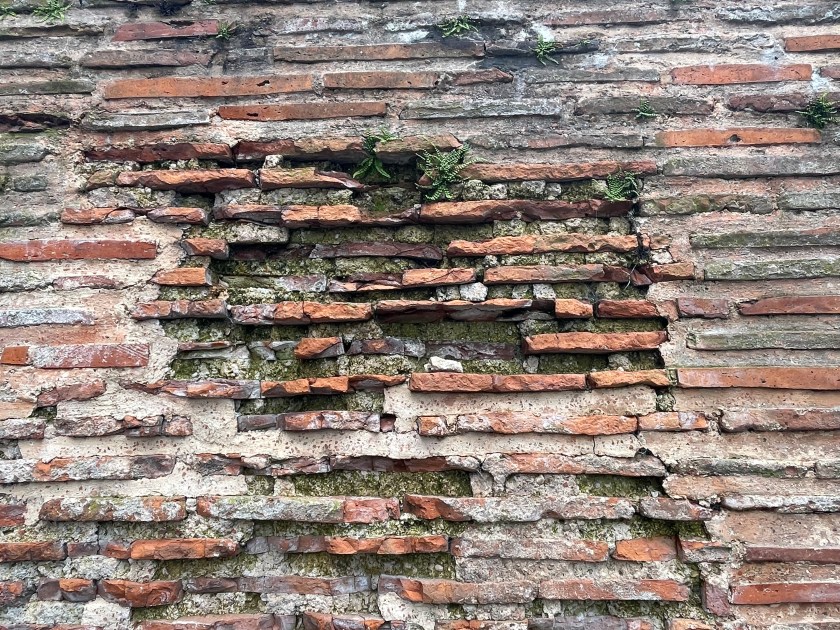
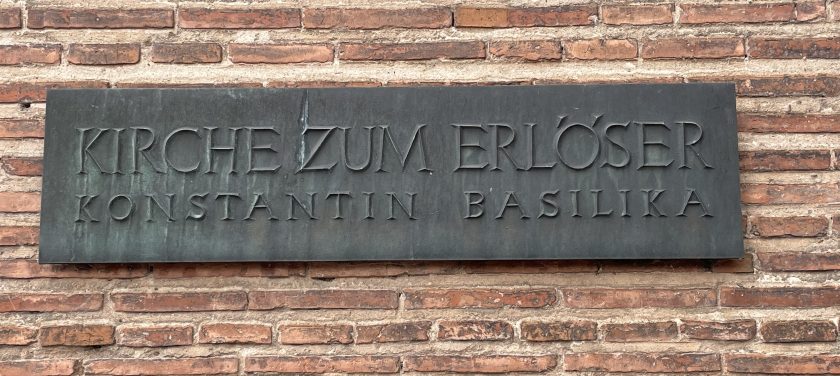
The Basilica of Constantine ( Evangelical Church of the Redeemer ) in the Rhineland-Palatinate city of Trier , the former Roman Augusta Treverorum , was originally a Roman palace hall . It was built as an audience hall for the Roman emperors who resided in the city in the 4th century. The name of the building after Constantine the Great as the Basilica of Constantine is a reminder of this time and purpose . The name of the building as a basilica was given by local historian Johannes Steiner in the 19th century, who took it from a late antique eulogy for the Emperor Constantine. From today’s perspective, it is inappropriate, as it does not correspond to the building type of a basilica , but rather to that of a hall church . The Catholic honorary title of basilica is also inappropriate, as the building was never a Catholic church.
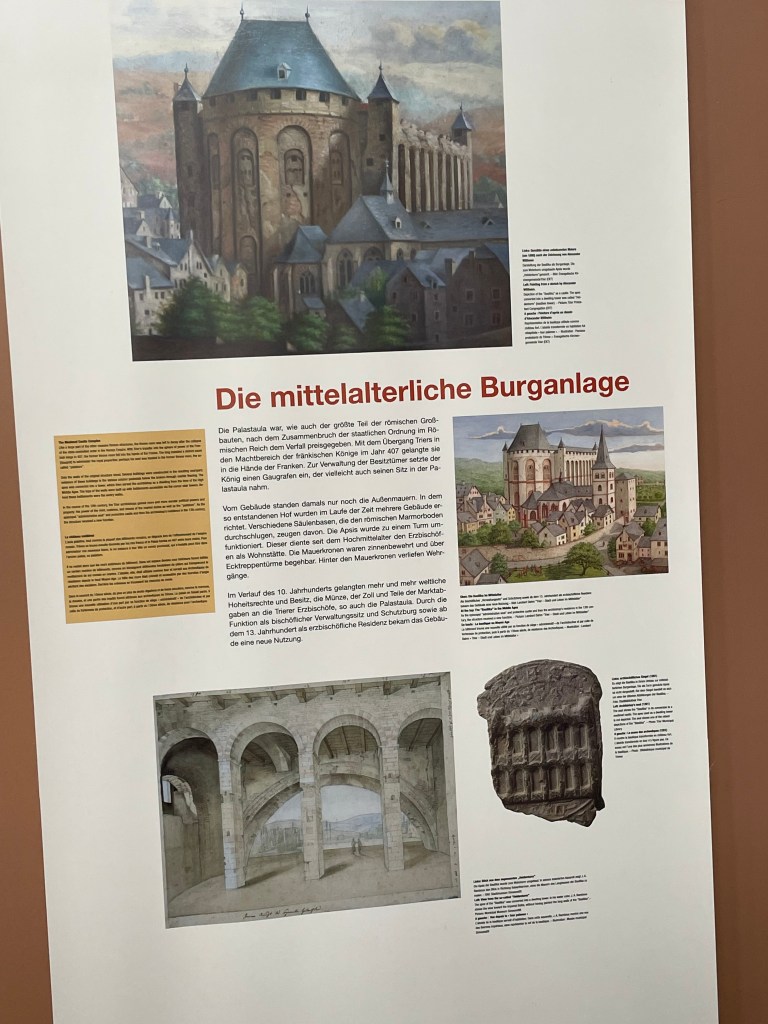
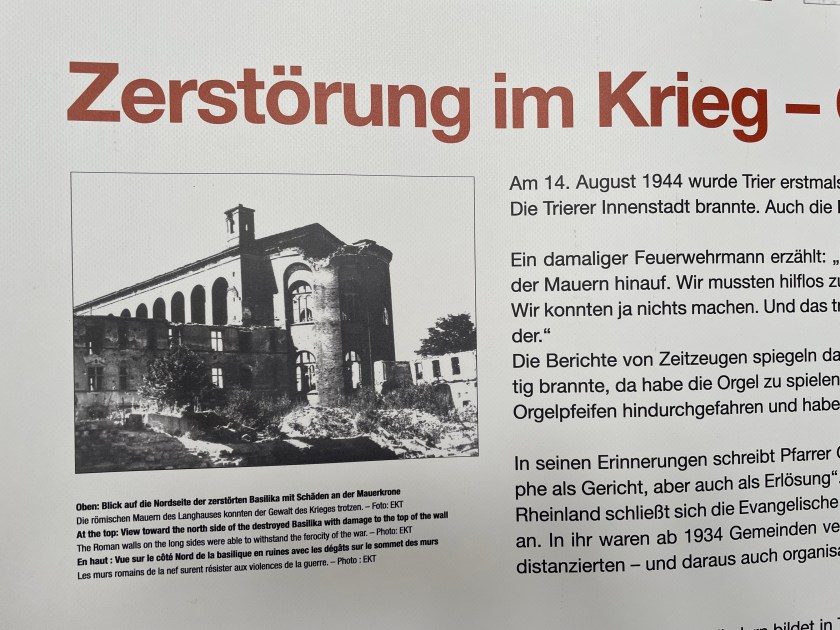
In the early Middle Ages, the burnt-out ruins came into the possession of the bishops of Trier . They converted them into a castle-like property. In 1614, the south and east walls were demolished and the rest was integrated into the new bishop’s residence, the Electoral Palace . Between 1844 and 1856, the church-like building was restored, consecrated on September 28, 1856 [2] and handed over “for all eternity” to the Protestant parish, which has used it as a church ever since. On August 14, 1944, the basilica was badly damaged by an American air raid and burned down completely. It was rebuilt in the 1950s. The interior design was reduced to exposed stone exterior walls and a wooden coffered ceiling.

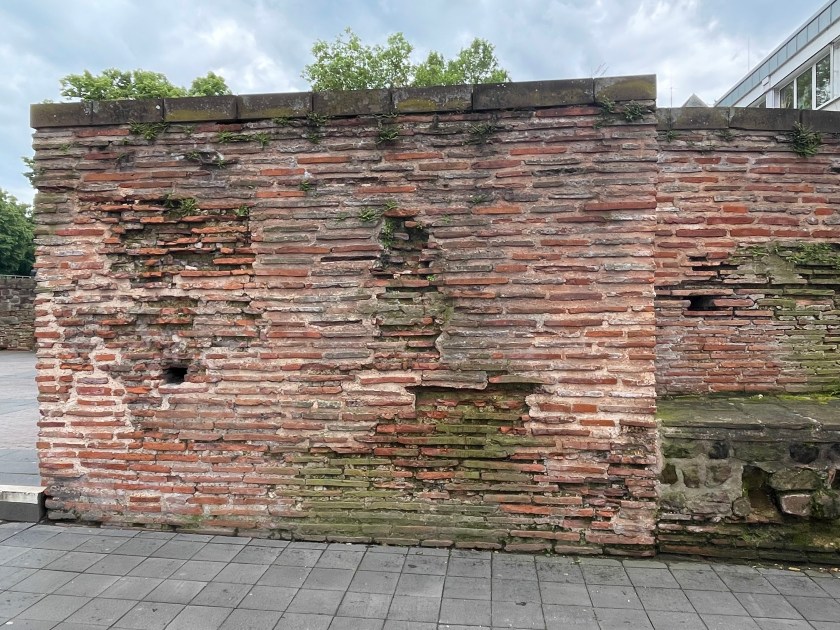

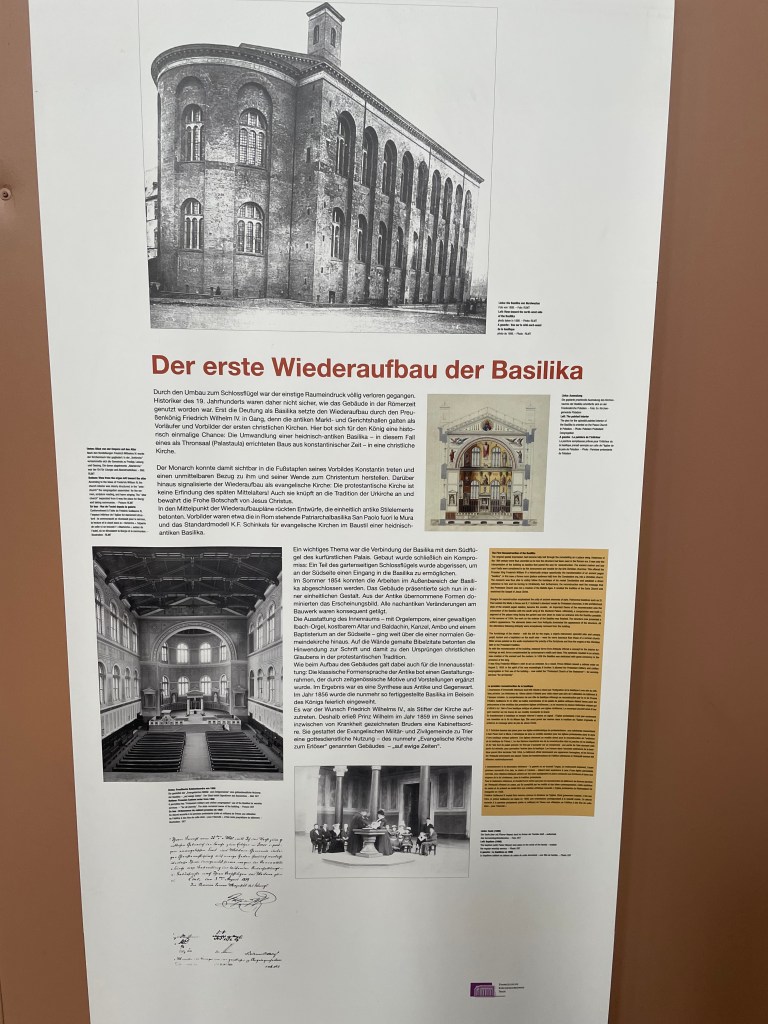


Destruction in WWII:


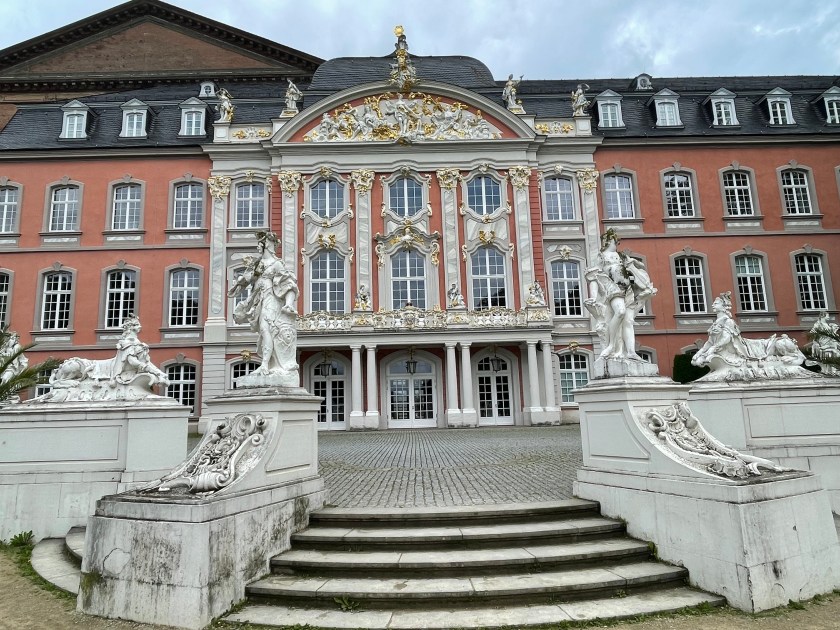
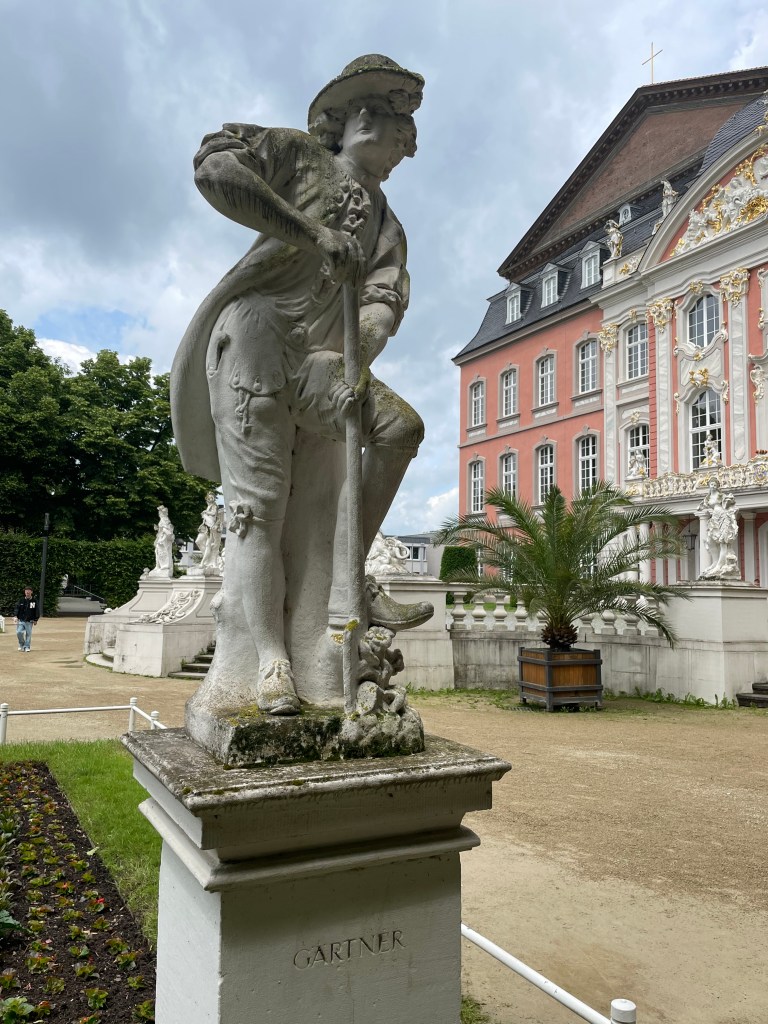
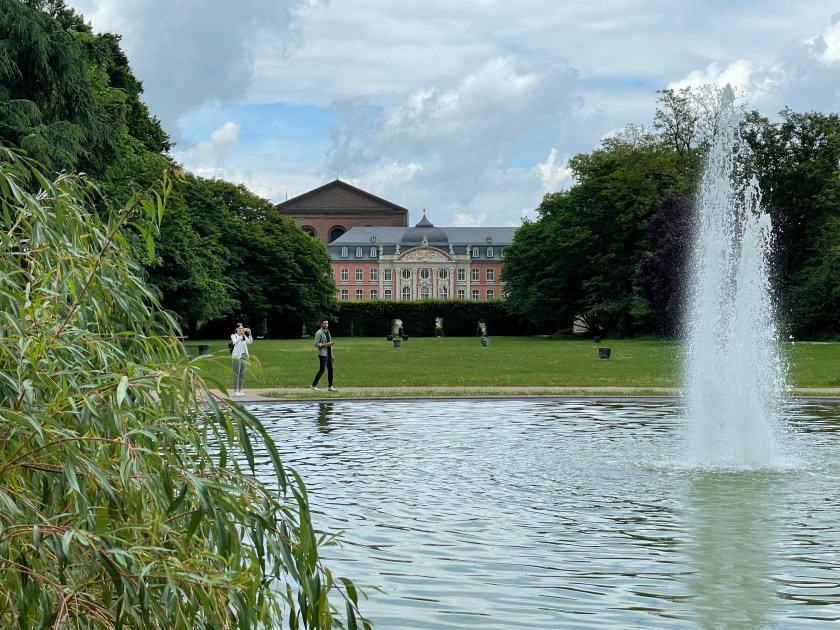
Here is the Electoral Palace next to the great hall Basilica and more from Wikipedia:
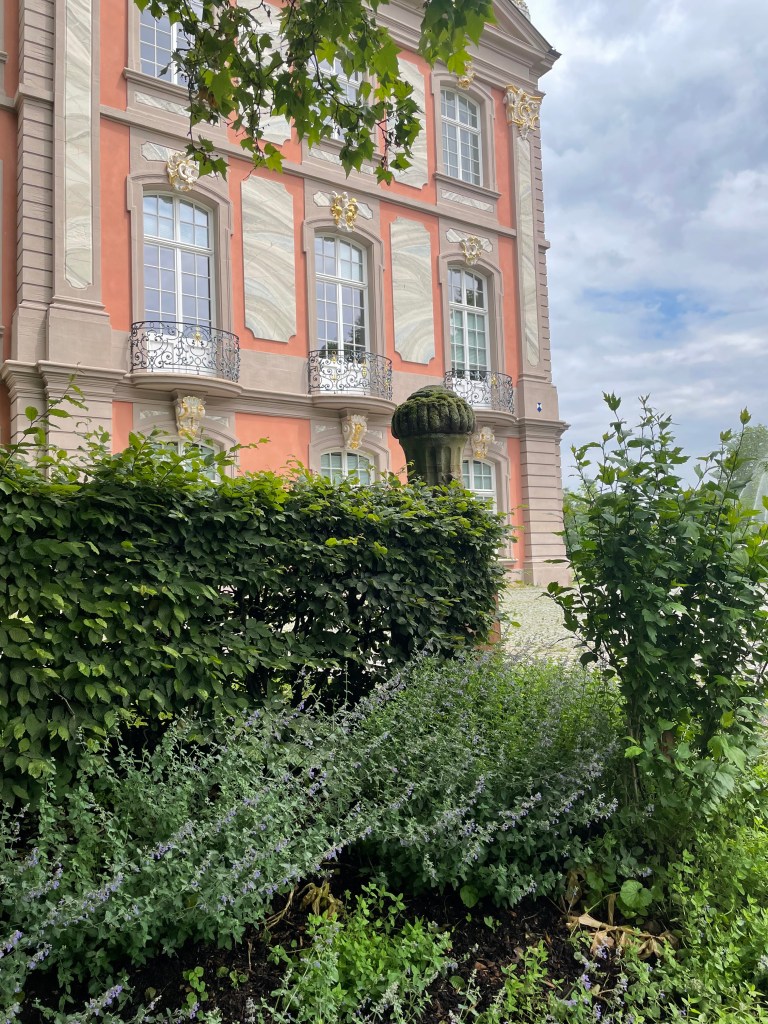
In the 17th and 18th centuries, the Electoral Palace of the city of Trier was the residence of the Prince-Bishops of Trier (until 1794). They ruled the Electorate of Trier as electors and, in personal union (until 1797), headed the Archbishopric of Trier as archbishops .
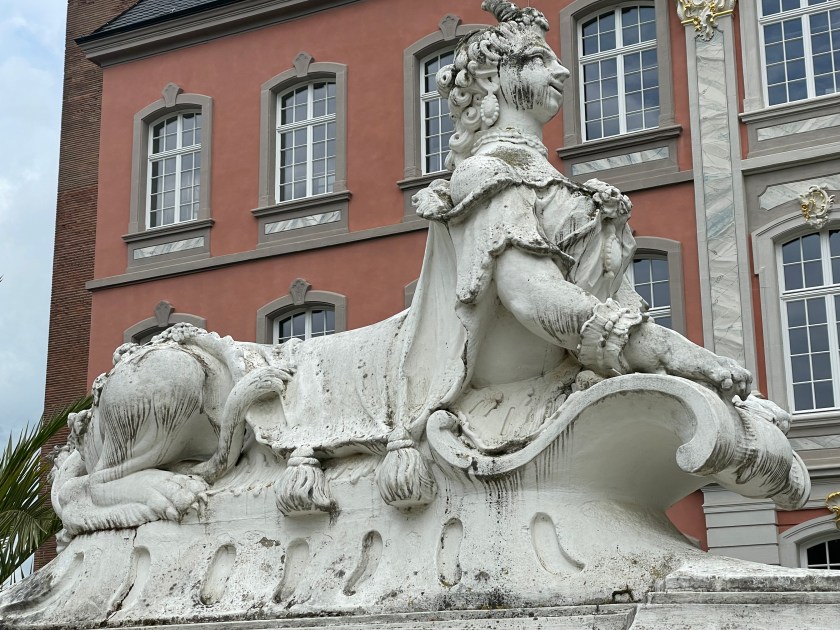
The Renaissance and Rococo building was partly built on the site of the Roman Basilica of Constantine . In the 19th century, the west wing of the palace was demolished so that the basilica could be rebuilt on its site.
After the expropriation of the electors under Napoleon , the Electoral Palace was used as a barracks by French and Prussian troops in the 19th and early 20th centuries. The building was badly damaged in the Second World War . The outbuildings, the so-called Lower Castle, were then completely demolished, with the exception of the Red Tower and a portal. Today, the building houses various authorities. Parts of the north wing are used by the Protestant community, parts of the south wing serve representative purposes.
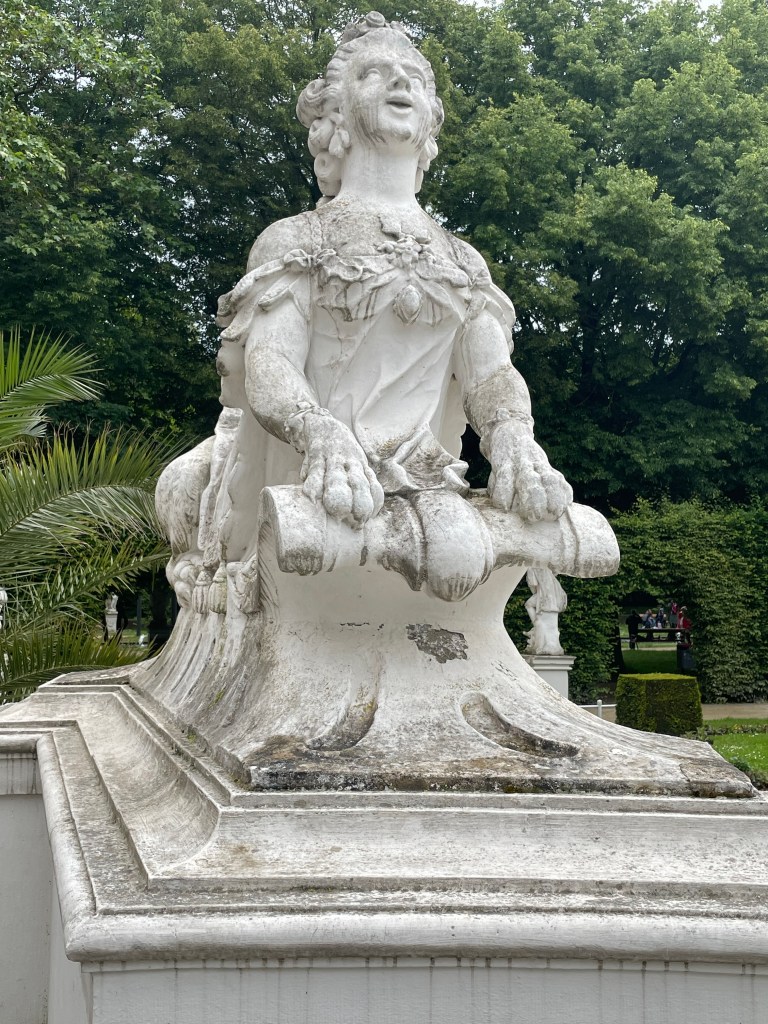
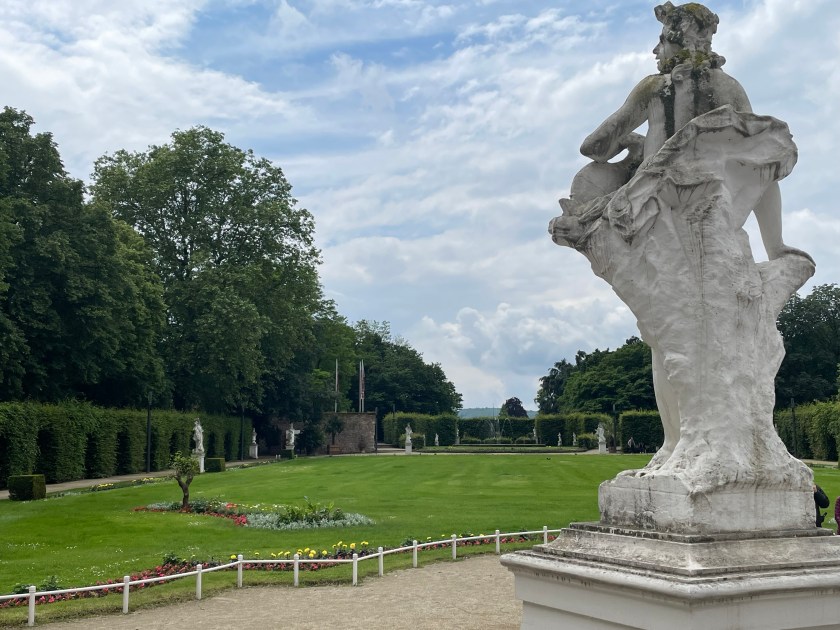
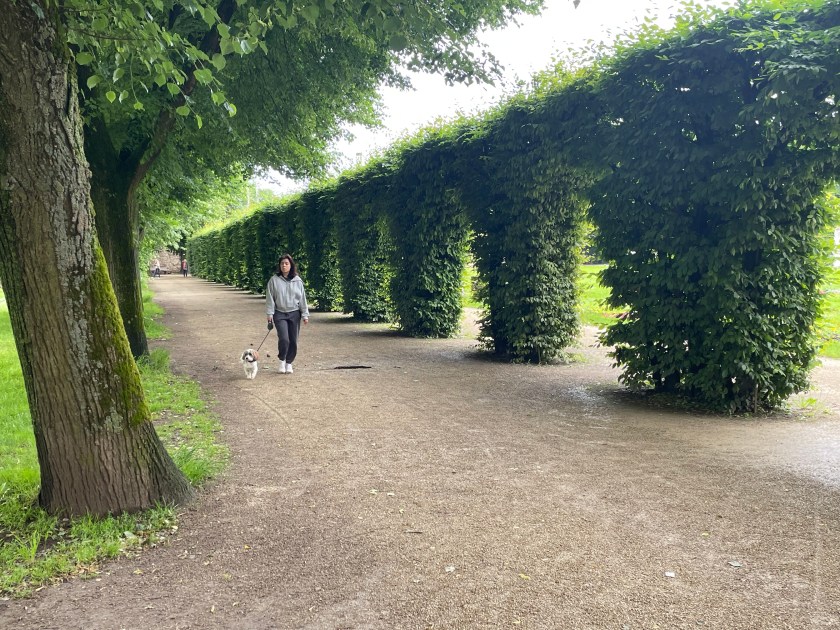
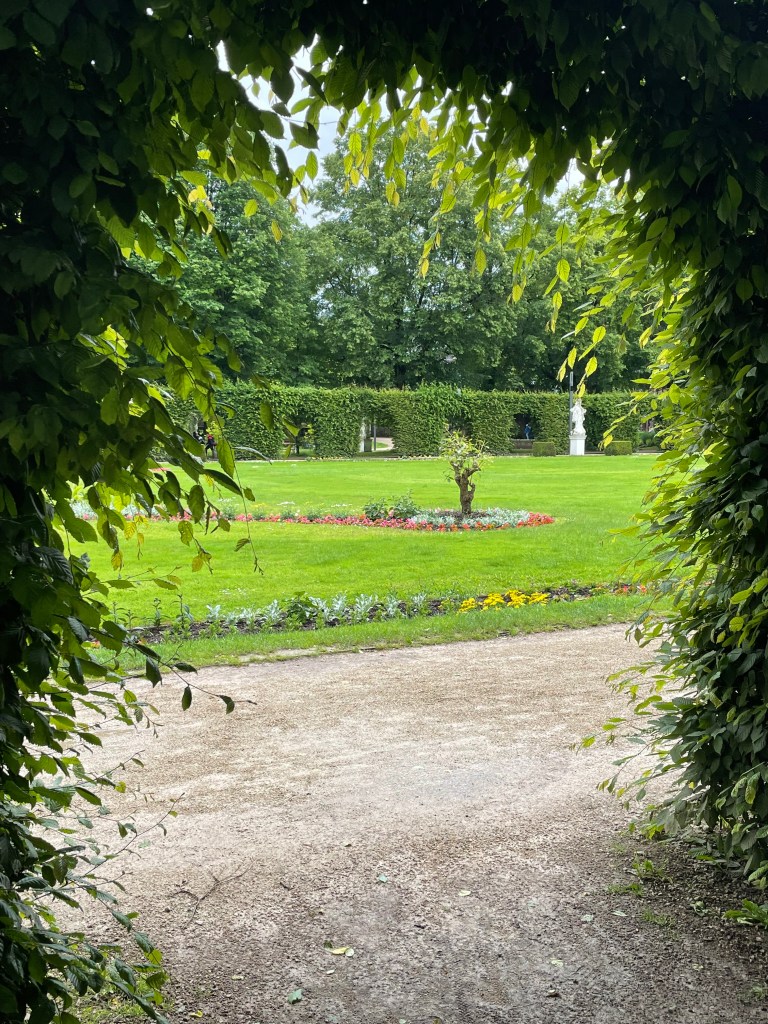
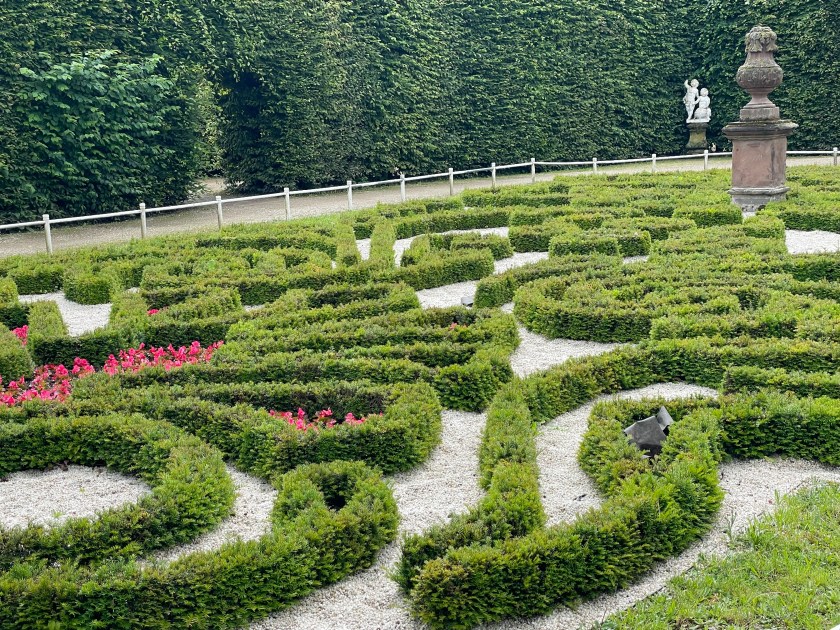
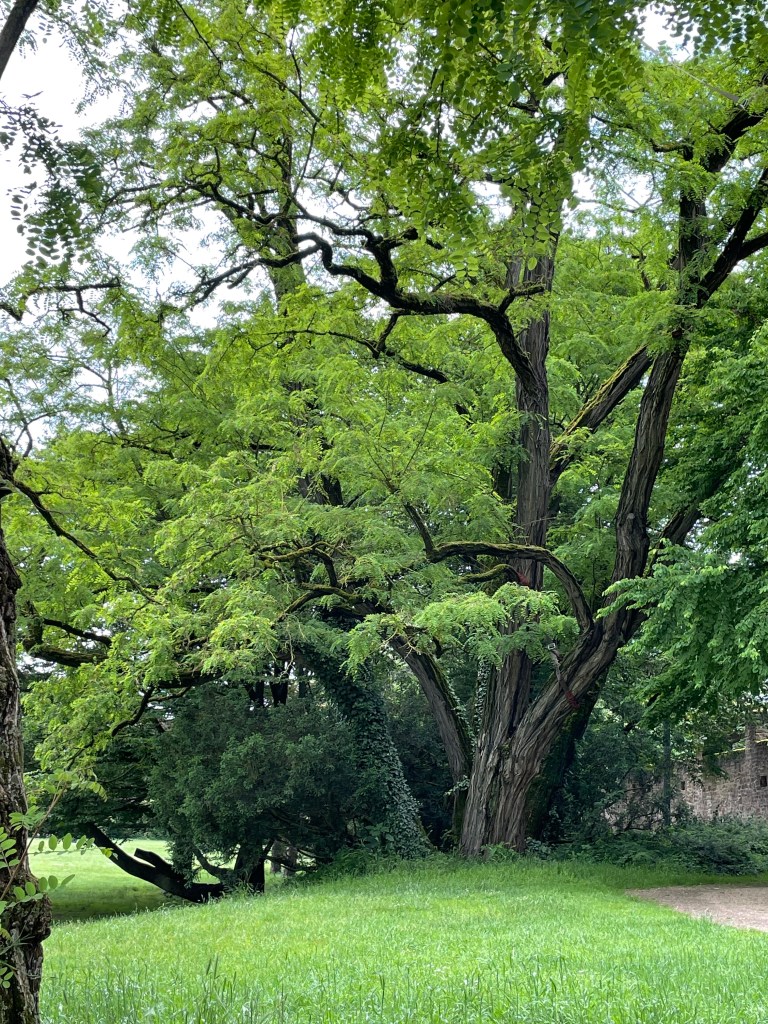
The palace garden in the south of the palace has been open to the public as a park since the beginning of the 20th century .





 Our Frankfurt Germany Mission