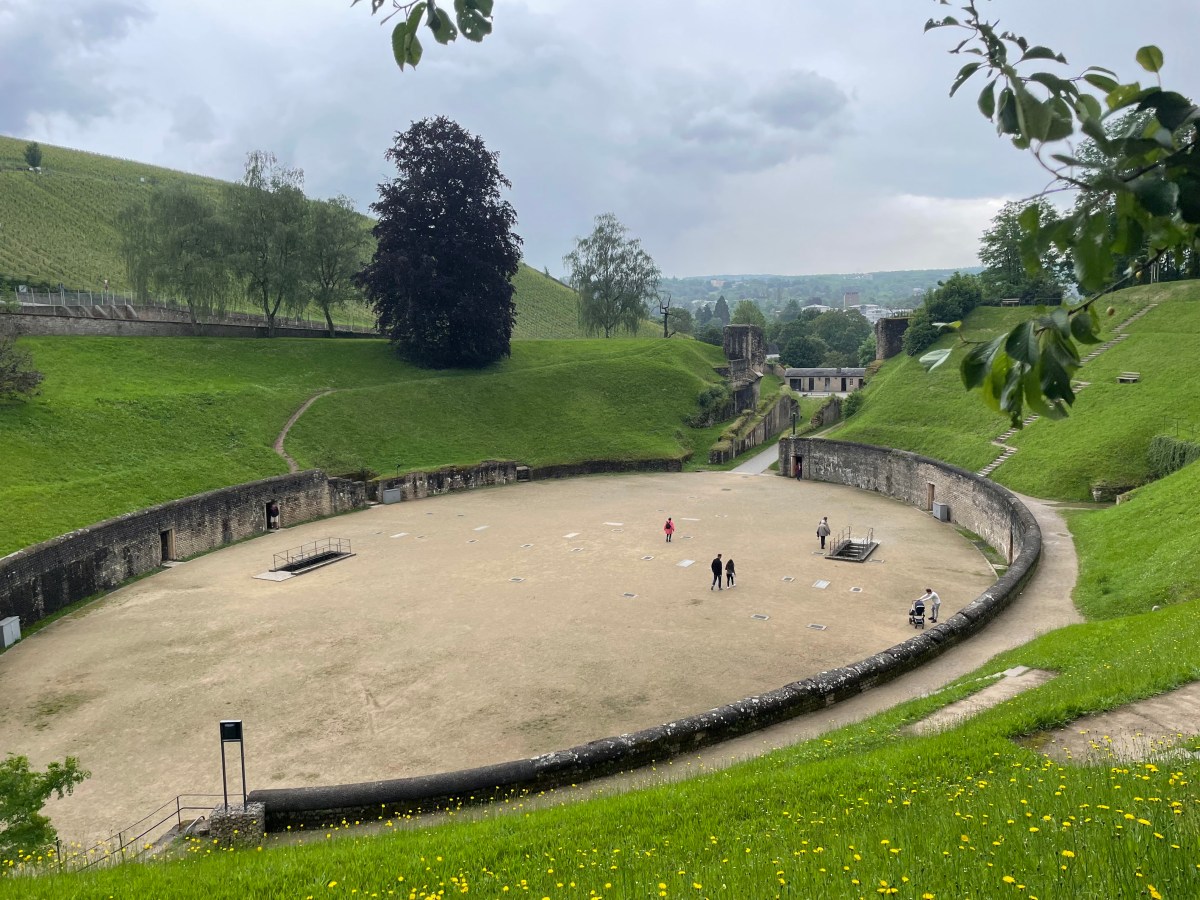
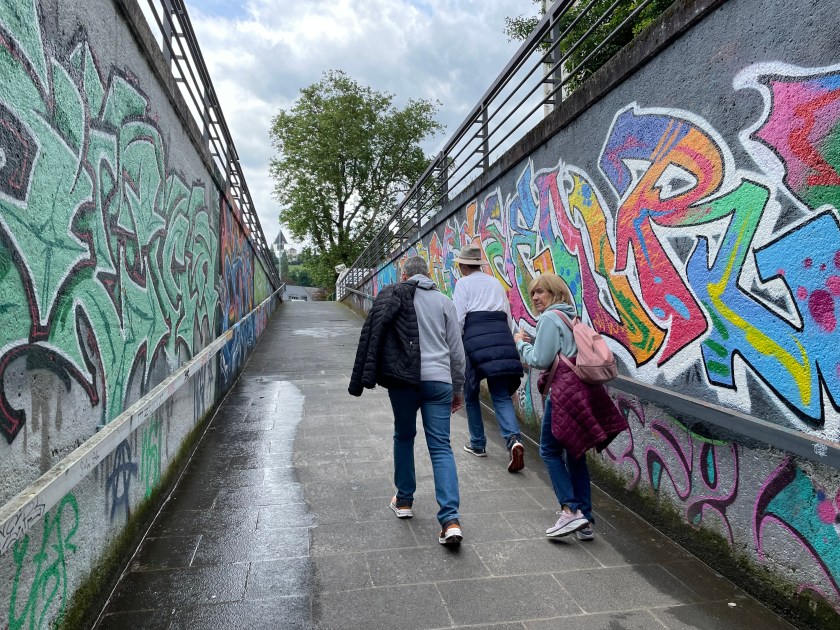
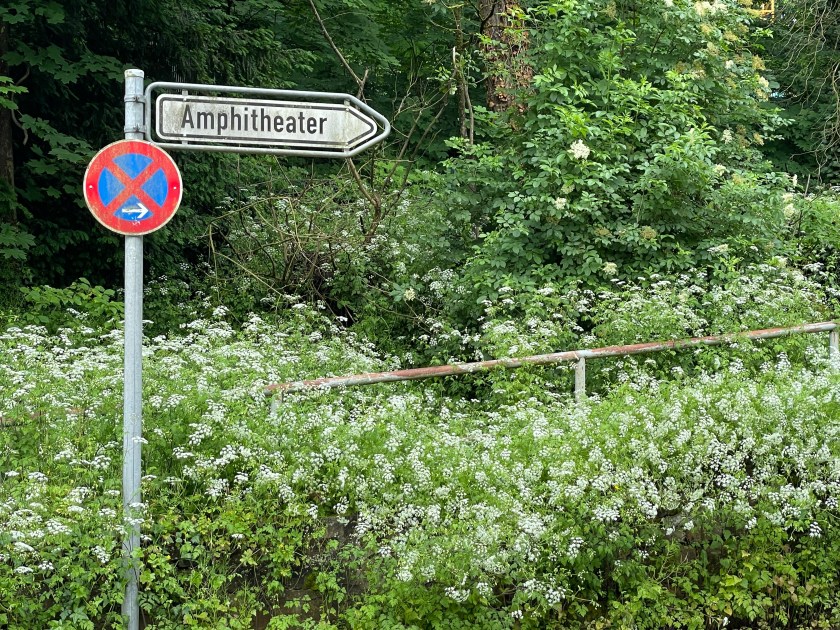
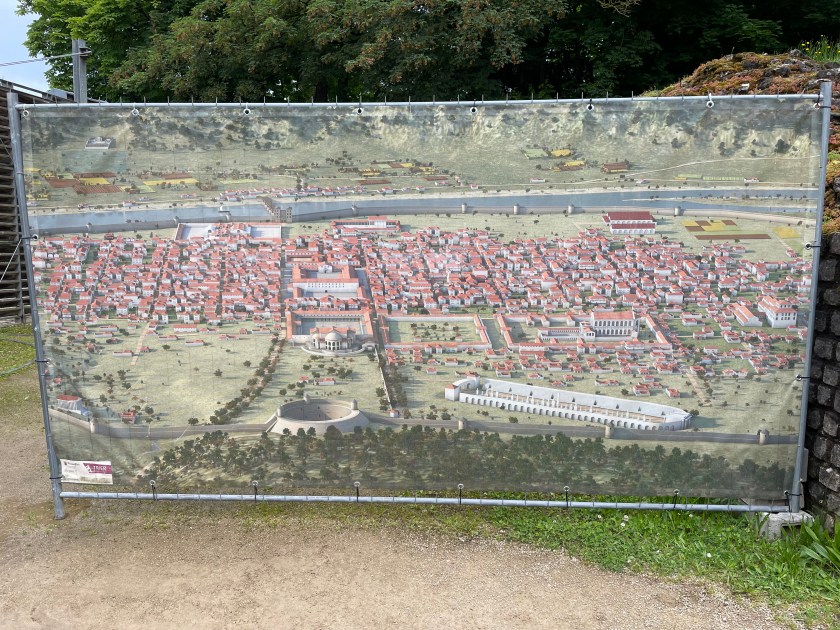
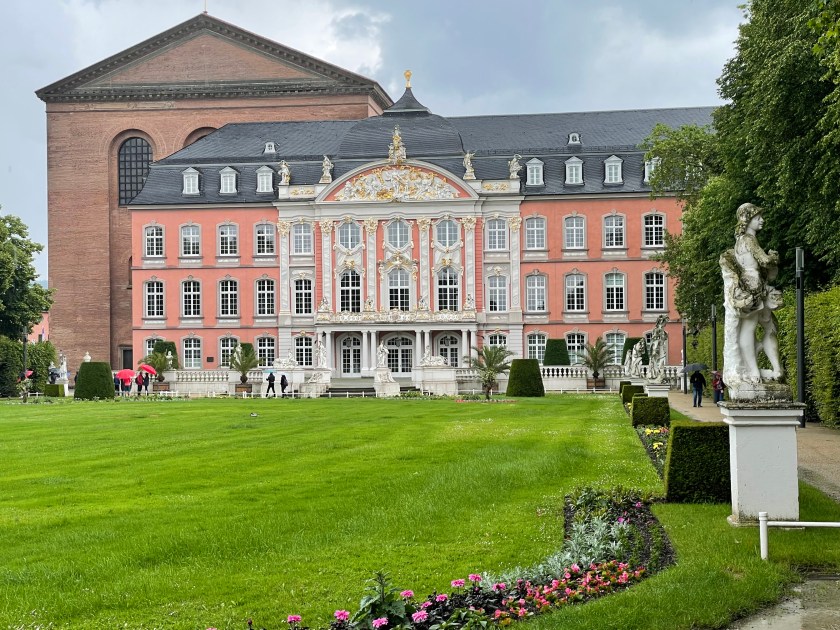
From the Imperial Palace gardens, we walked down under the road to the far side of the old Roman town to the amphitheater.
We passed by this stumbling stone along the way.

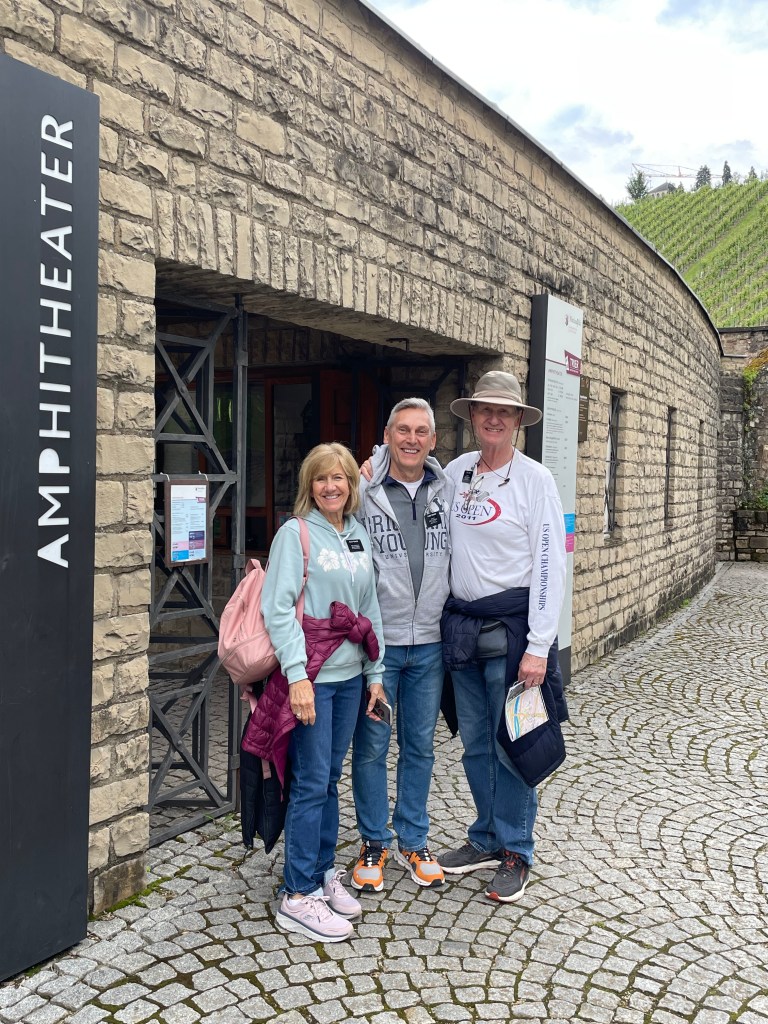
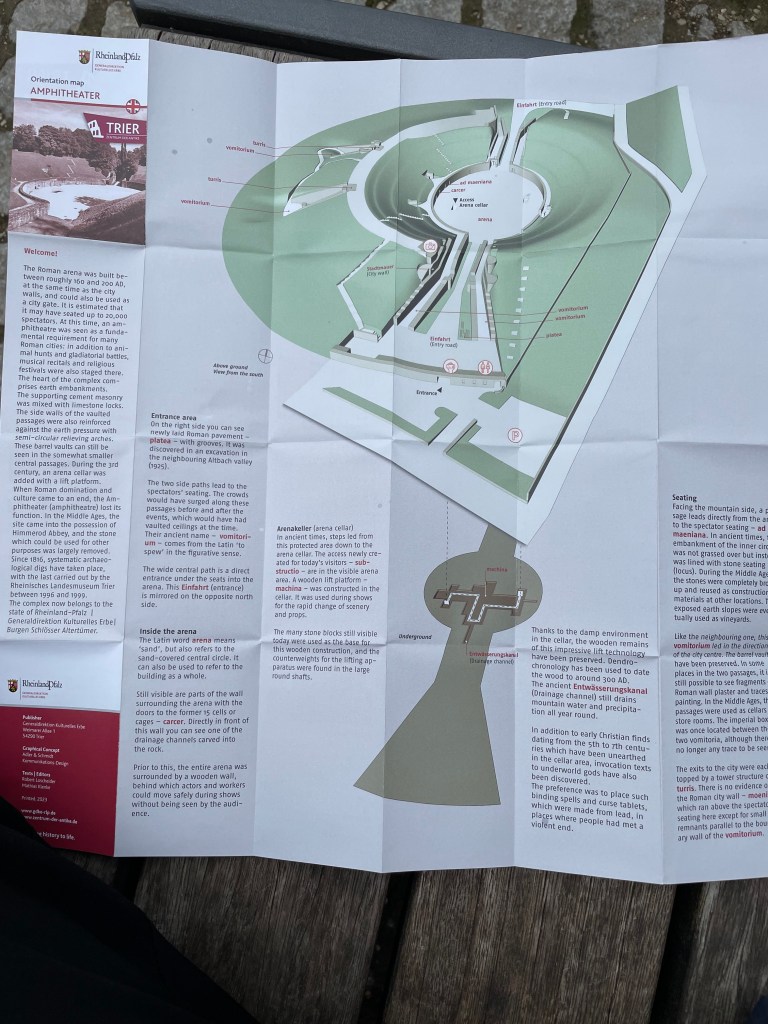
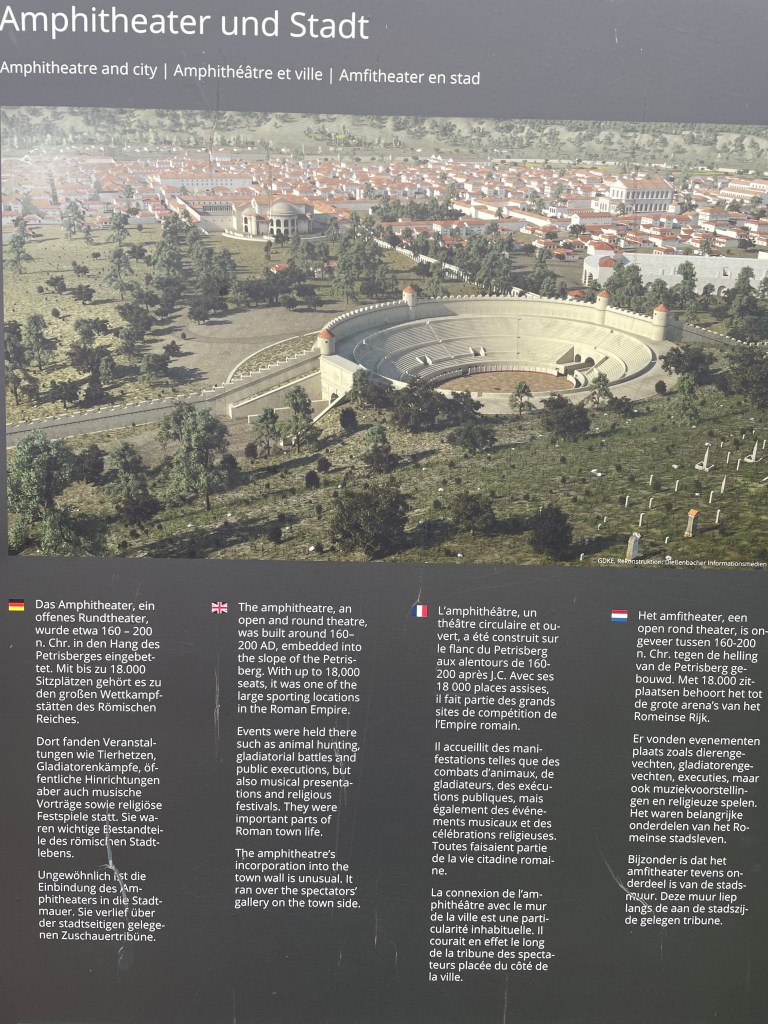
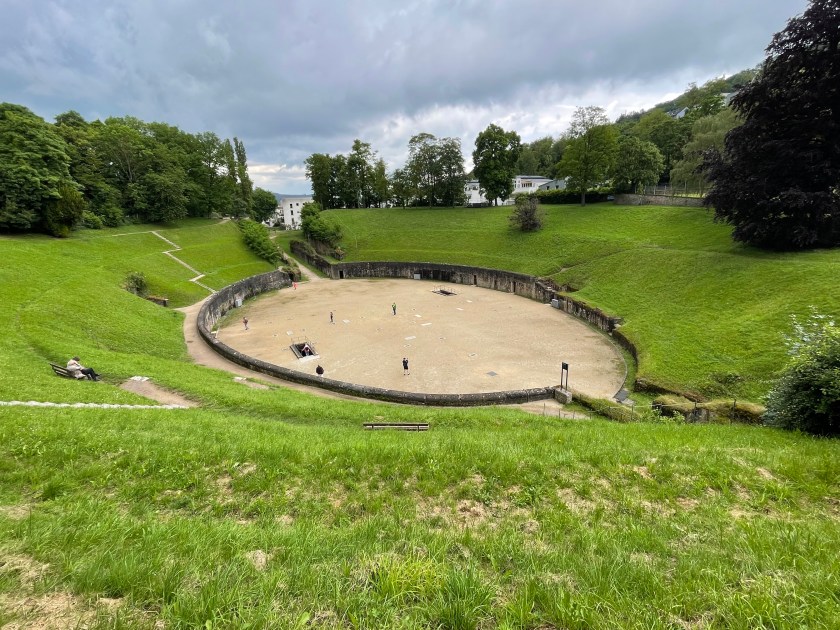
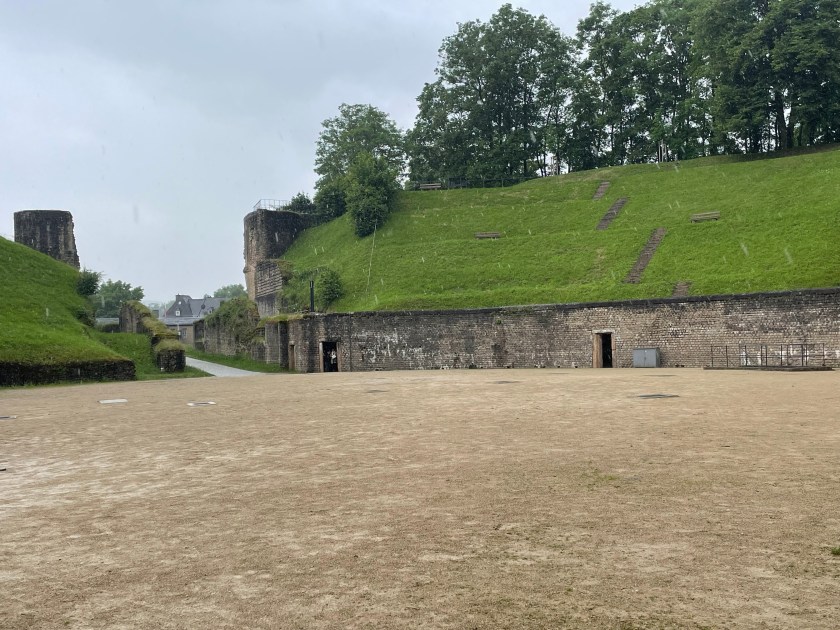
This Roman arena was built between 160 and 200 A. D. at the same time as the city walls. In fact, the amphitheater became part of the city wall and could be used as a city gate. They think this stadium held as many as 20,000 spectators.
Stadiums like this were used for animal hunts, gladiatorial battles, musical events and religious festivals. During the Middle Ages, this arena was used for other things and many of the stones were repurposed.
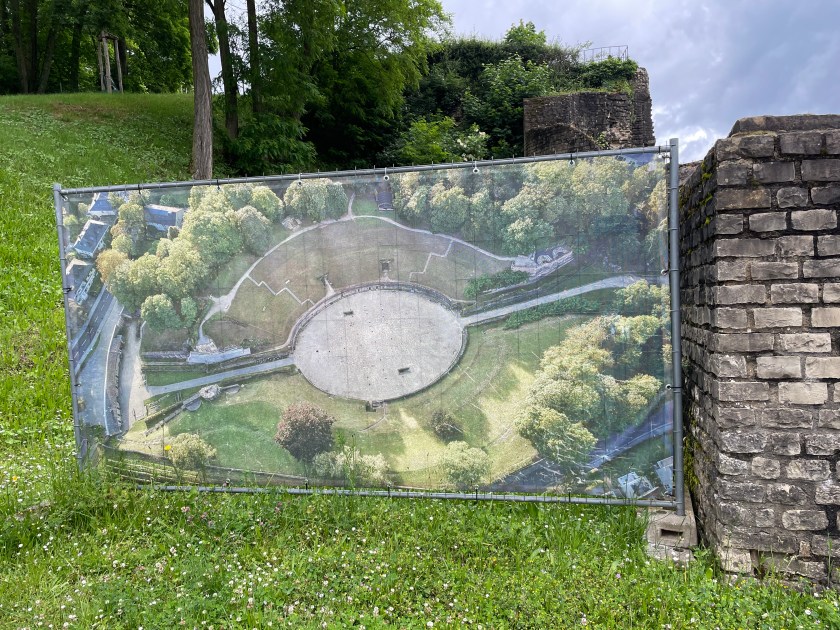
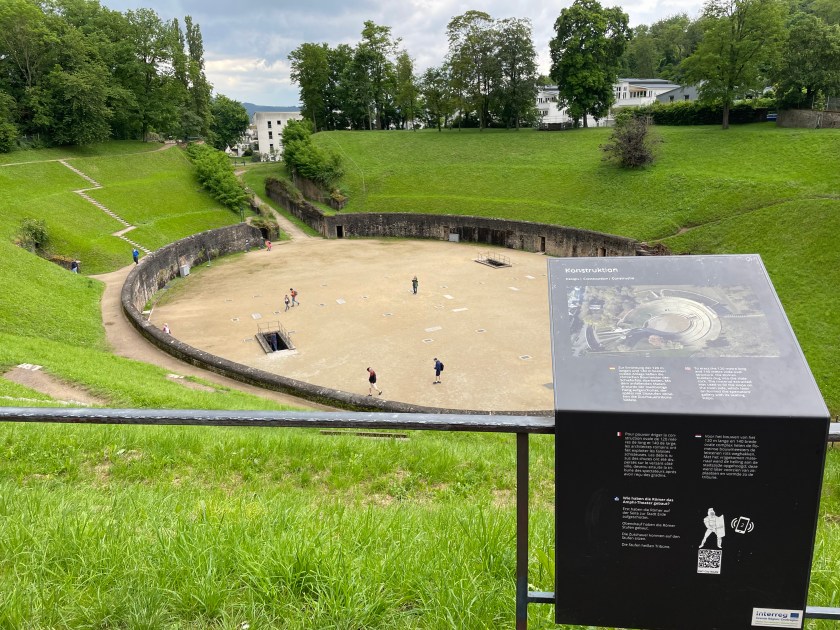

The hills around the arena are now covered in vineyards.
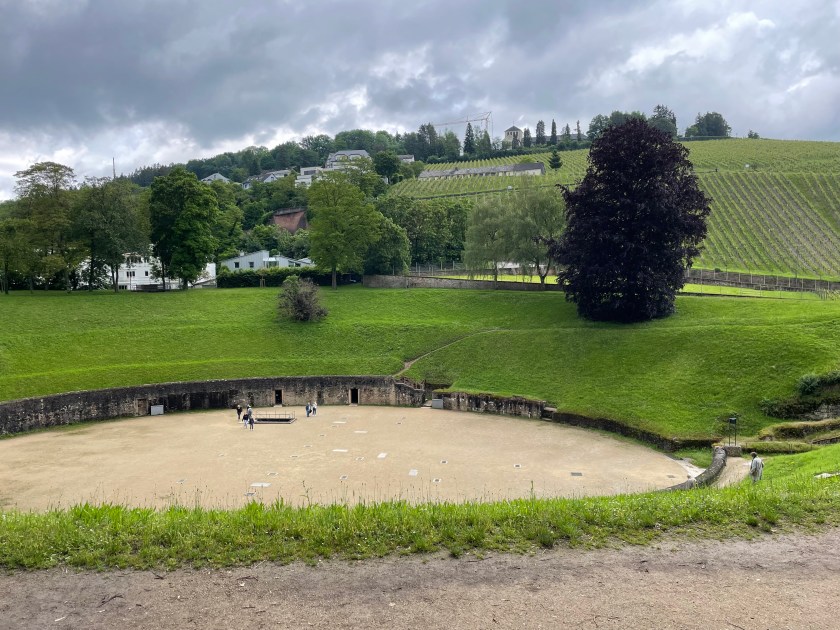

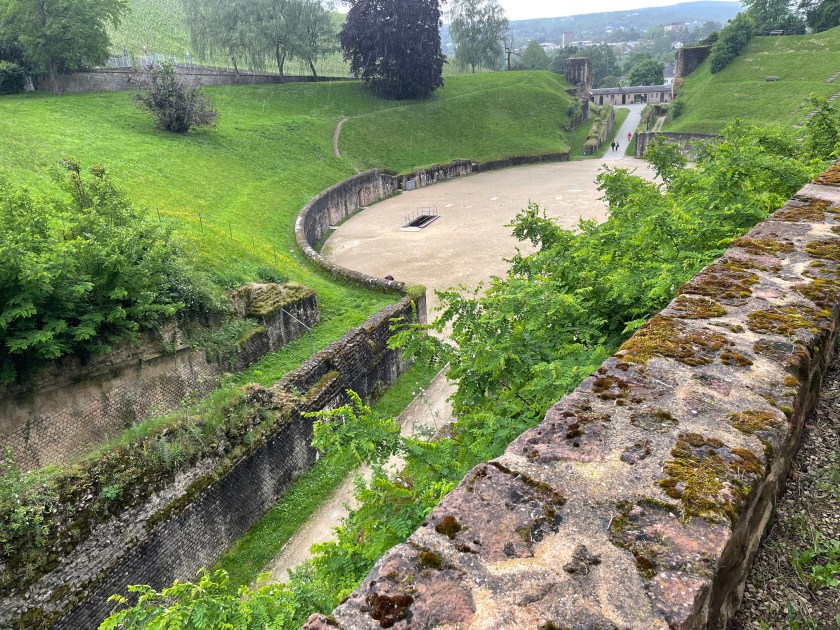
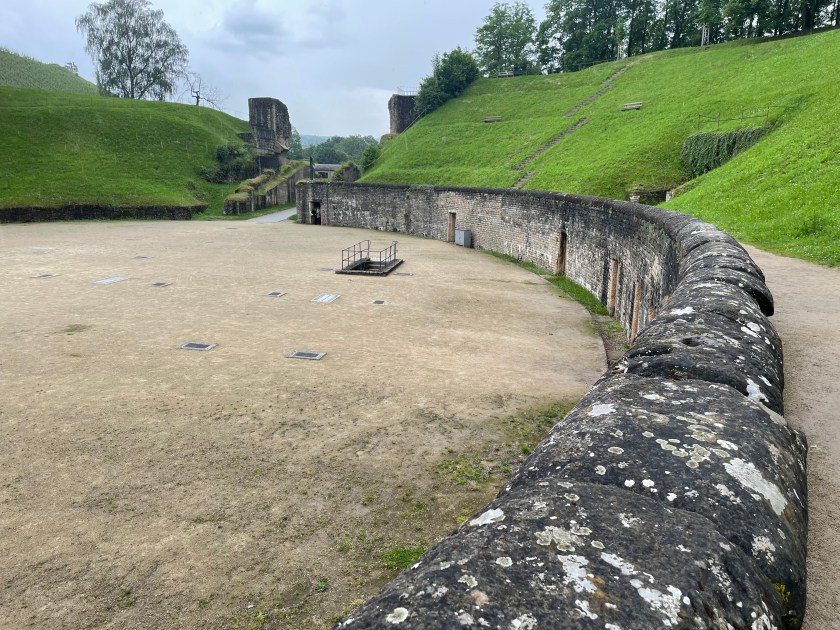
There are 15 cells or cages around the arena walls where animals or participants were kept.
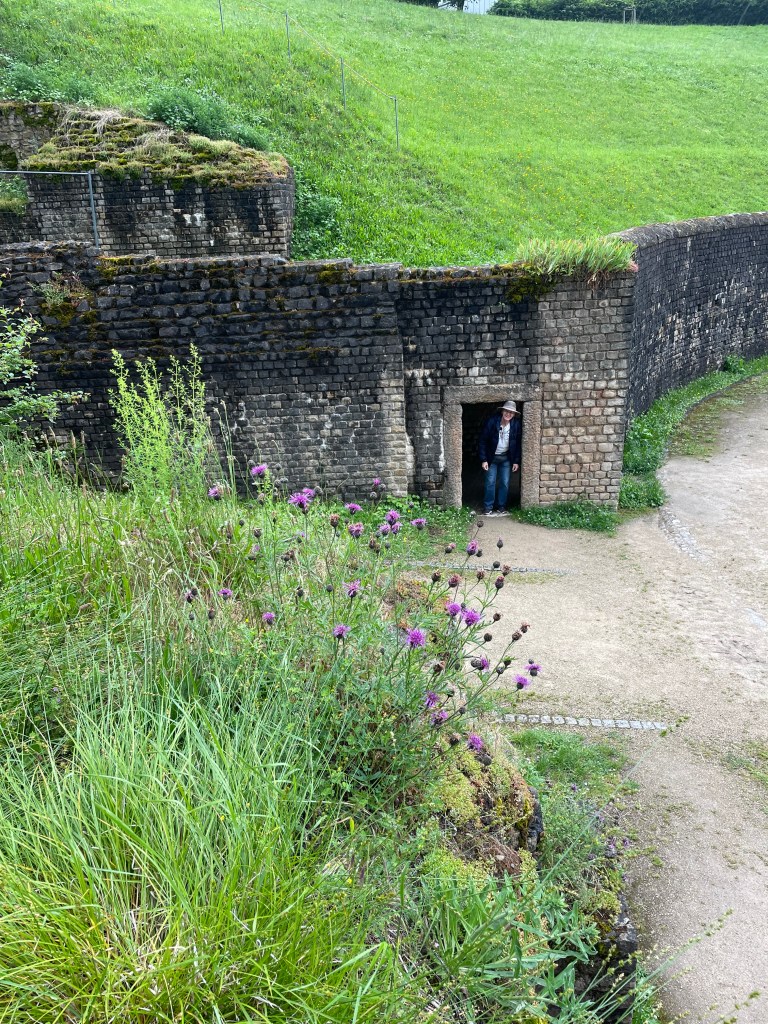

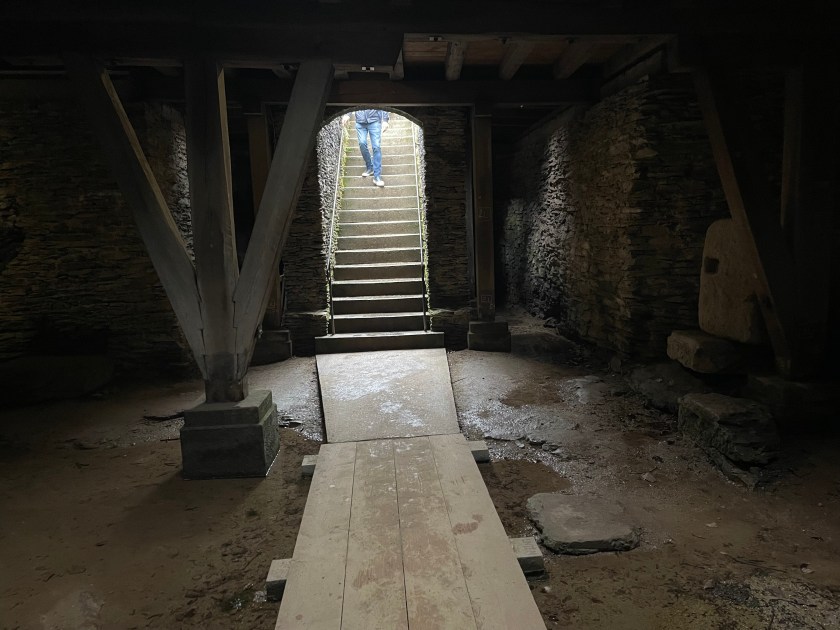
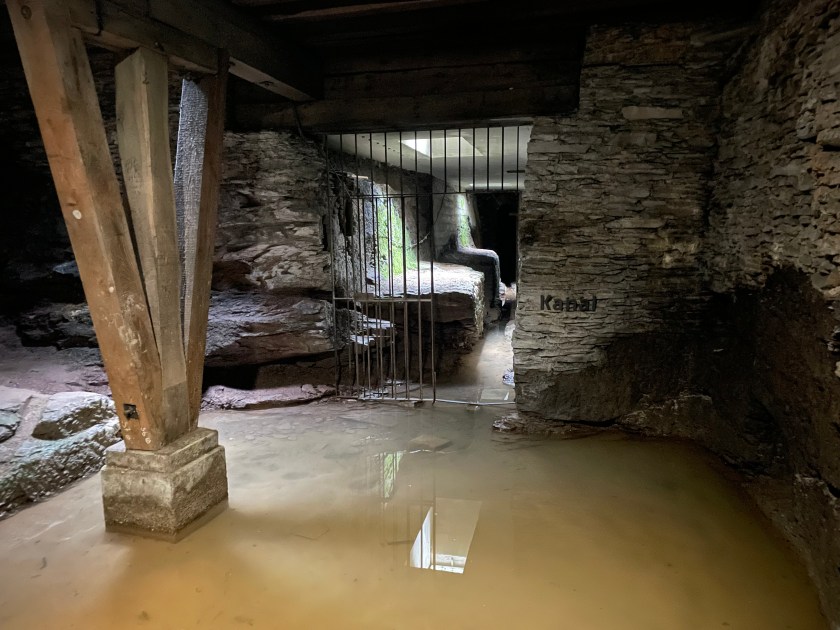
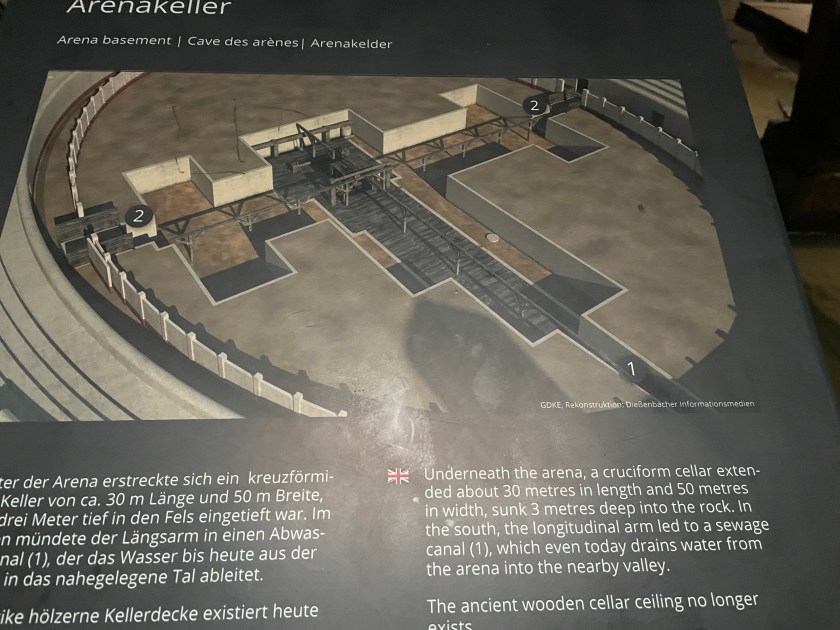
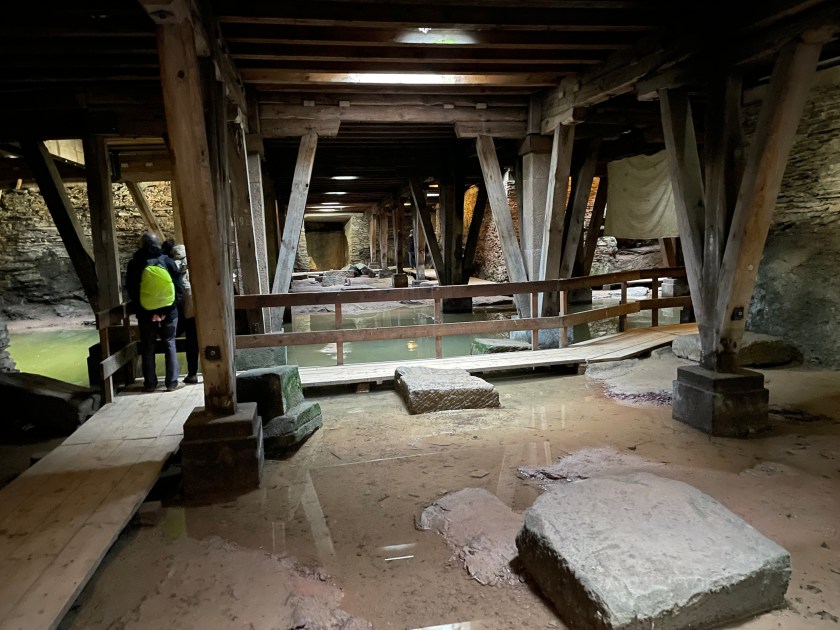
There are 2 places where steps lead down into the arena cellar (updated for tourists today). There’s a wooden lift platform down here that was used during shows for changing scenery or sending animals up. Because of the damp environment, the wooden remains have been preserved. The wood dates back to 300 A. D.

There were also some early Christian finds down here dating from the 5th to the 7th centuries, including some prayer texts to gods of the underworld. The practice was to put binding spells and curse tablets made from lead in places where people had met a violent end.


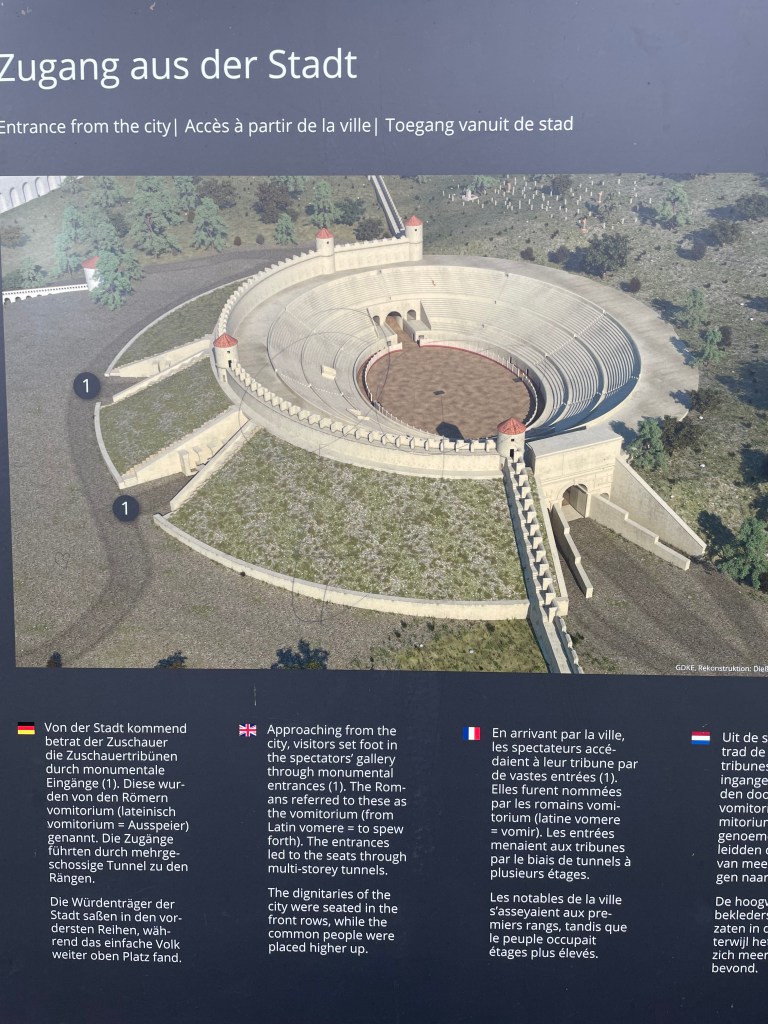
The entrances or exits were called “vomitoriums” because they spewed people in and out of the arena, the main entrance leading back to the city center.
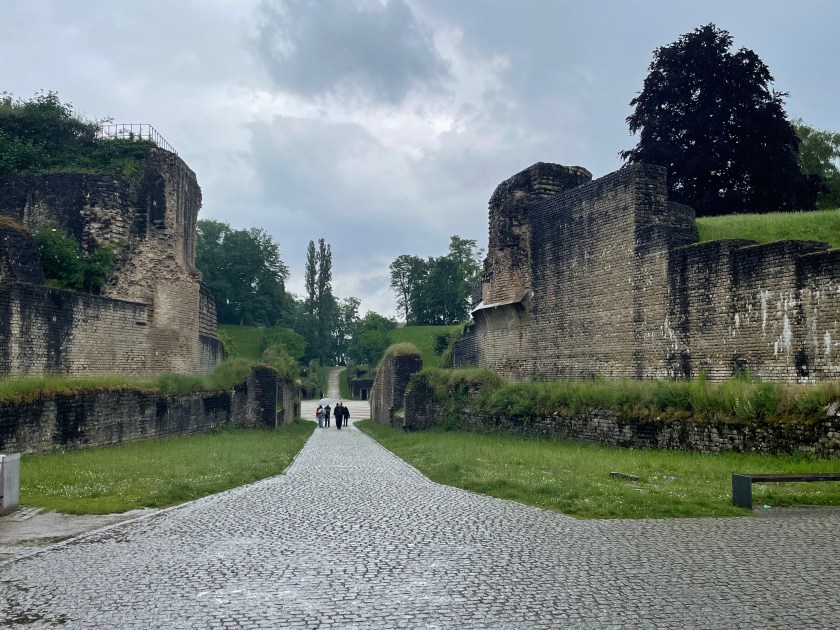
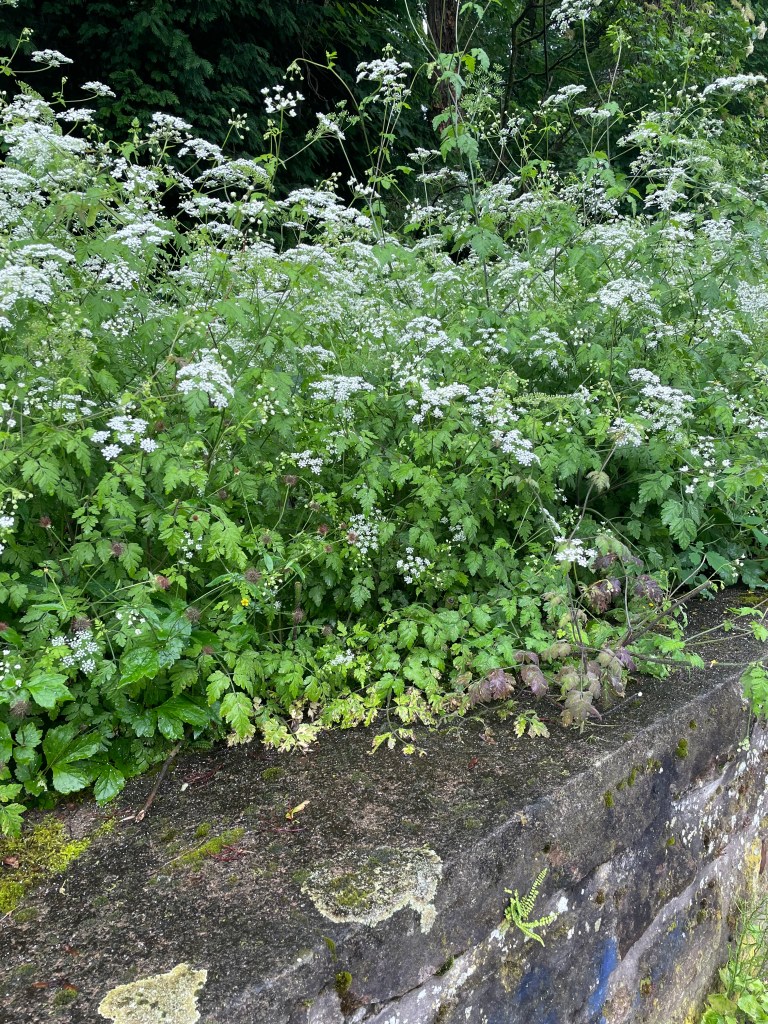
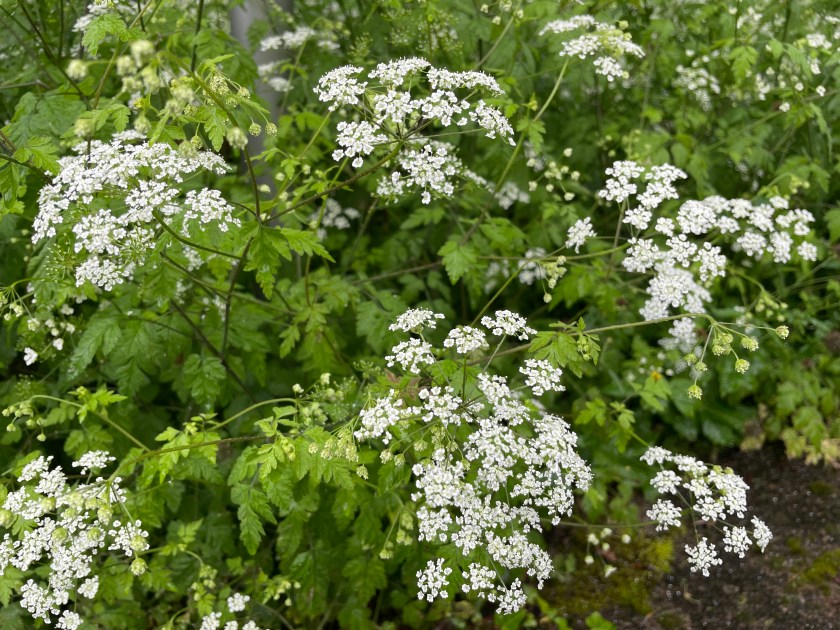
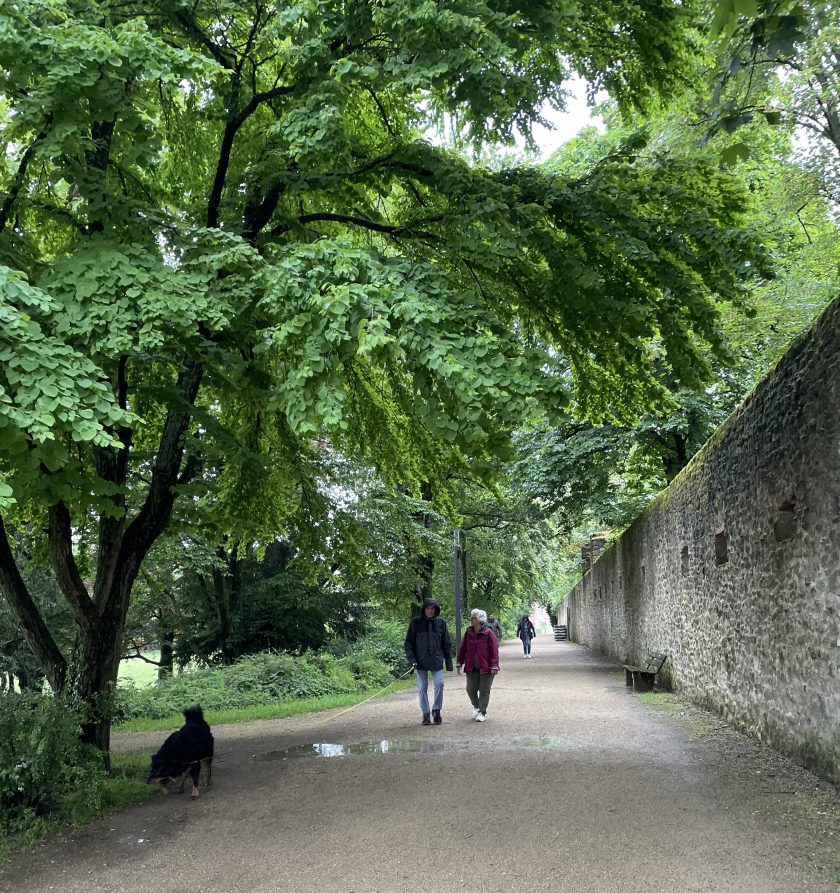
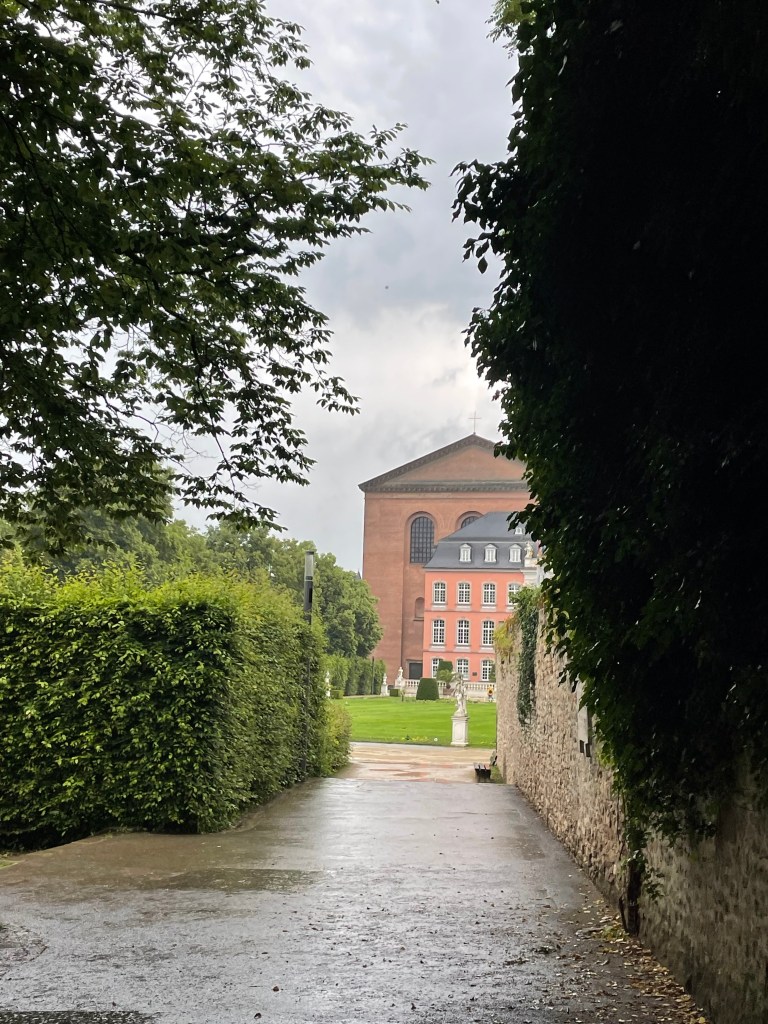
We headed back into the city on this drizzly day.




 Our Frankfurt Germany Mission