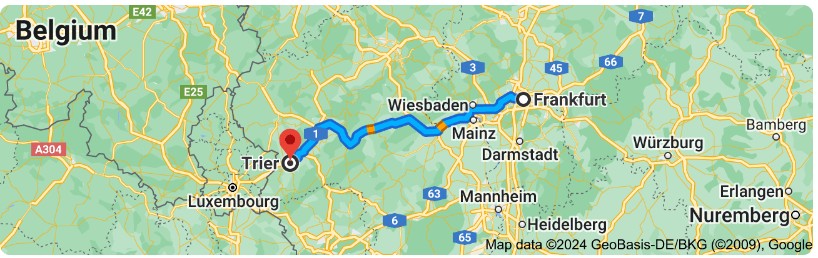
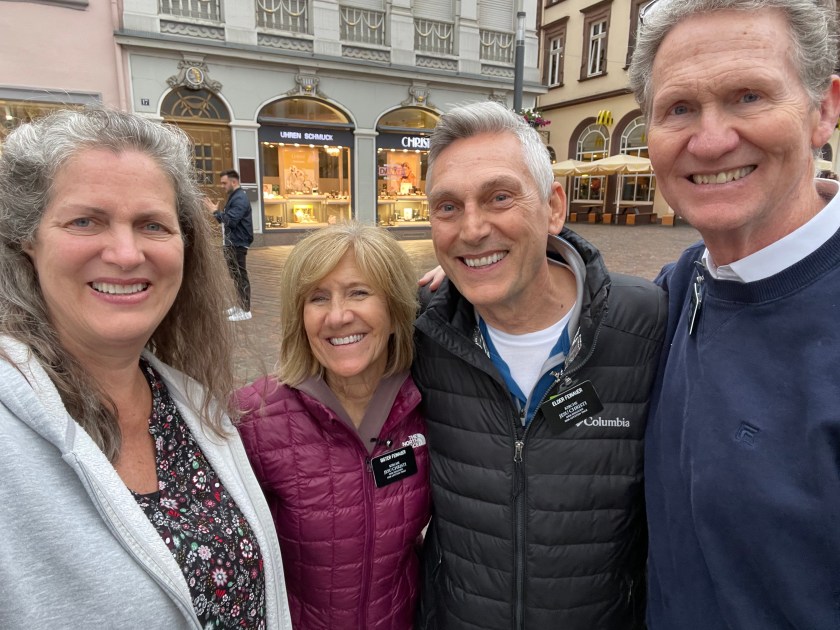
This evening, after our seminar at work ended, we traveled with the Feinauers to Trier, about 2.5 hours from Frankfurt. We had a long weekend because of Ascension Day, a public holiday here in Germany. We also planned to visit Luxembourg. We were really excited for a new adventure!
Here’s a nice overview of Trier’s history from GPSmyCity:
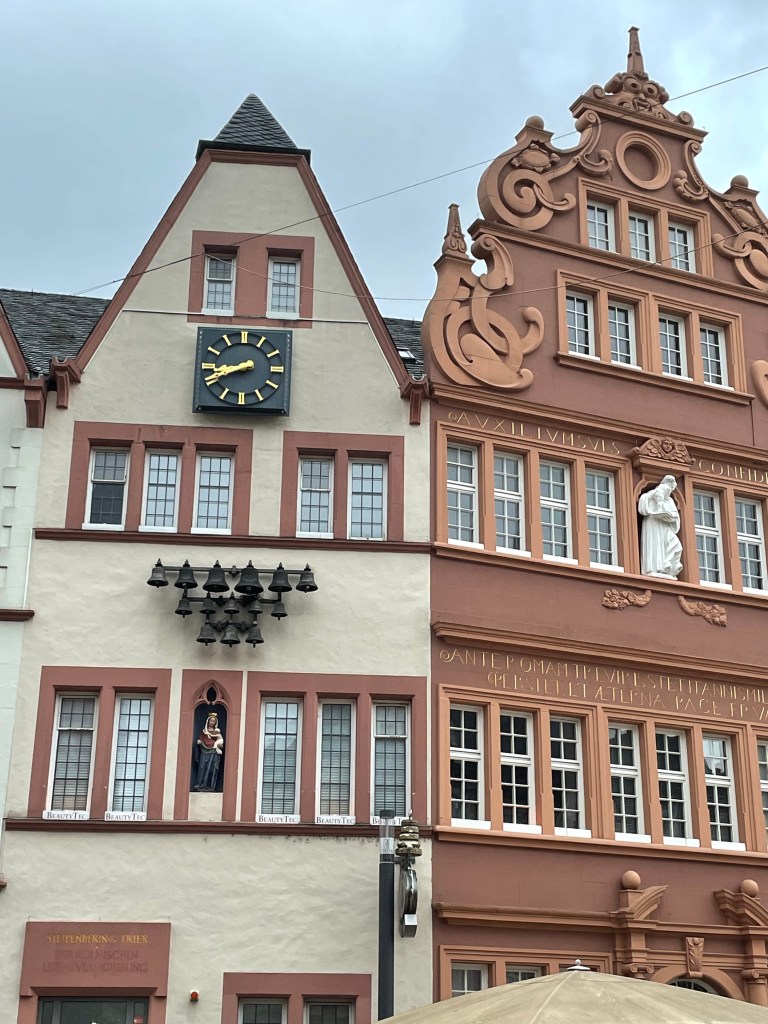
While an inscription on the famous Red House states that the city was founded 1300 years before the Romans arrived, this has never been proven. The Celtics originally founded Trier during the fourth century BC. The Romans arrived in the first century BC and built Trier into a bustling Roman city that became one of the Roman Empire’s four capitals. During the fourth century, up to 100,000 Romans lived in Trier.
Roman history is prominently displayed in Trier. Visitors can admire the massive Roman Black Gate and walk through the Imperial Roman Baths. The Basilica of Constantine is well-preserved and is the largest Roman structure outside of Rome.
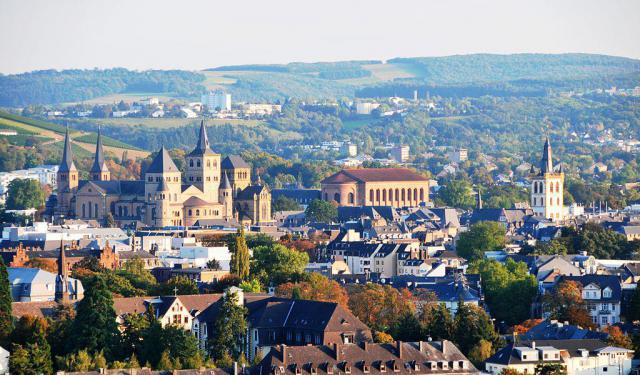
During the Middle Ages, Trier’s archbishop-elector was one of the Holy Roman Empire’s seven electors and held tremendous power. Trier became an important center of early Christianity and is home to several historic churches, including St. Peter’s Cathedral and the Church of Our Lady. Both churches were built on the site of a Roman palace, and St. Peter’s is Germany’s oldest church.
Epiphany House is a fabulous example of early Gothic architecture and dates to the 13th century. The Steipe House in Main Square is another beautifully restored building that dates to the 15th century.
Trier continued to prosper as an economic and cultural center until French invasions led to its decline during the 17th and 18th centuries. Napoleon Bonaparte conquered and occupied the city, which was ceded to France in 1801.
Prussia took control from 1805 to 1815. The city was heavily damaged during World War II but has been rebuilt as a cultural and commercial center.
Simeon Street is Trier’s main shopping street, where visitors can enjoy Trier’s history, culture, and cuisine. Main Market Square features a cross dating to 958 and is surrounded by flowers, vibrant facades, and market stalls.
Visitors can explore the city’s history at the Rhineland Museum, which displays artifacts from Celtic times to modern times. Trier is also the birthplace and home town of Karl Marx, founder of communism. The Karl Marx House Museum is dedicated to the life and work of the arguably the most influential and controversial philosopher of the 19th century.
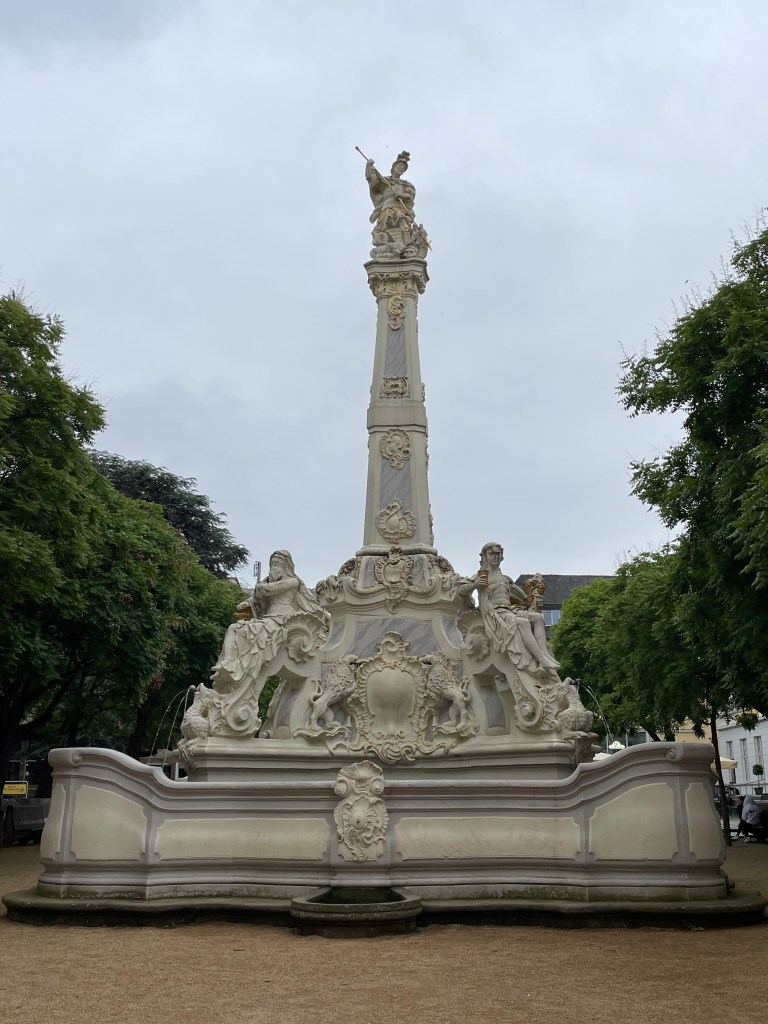
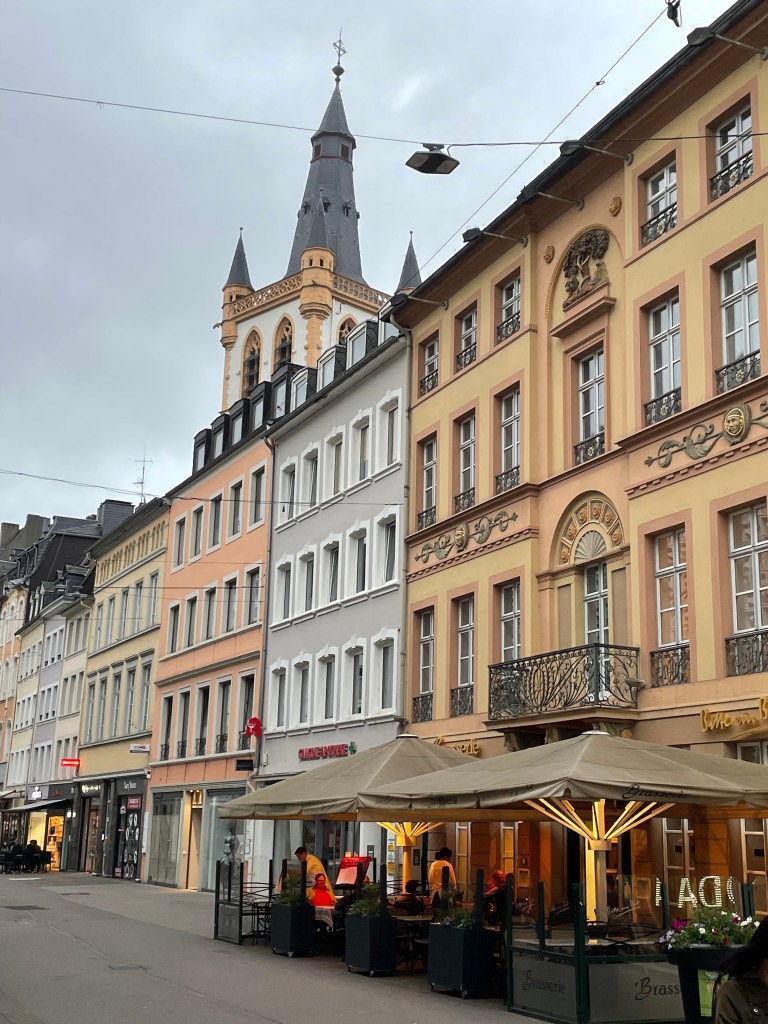
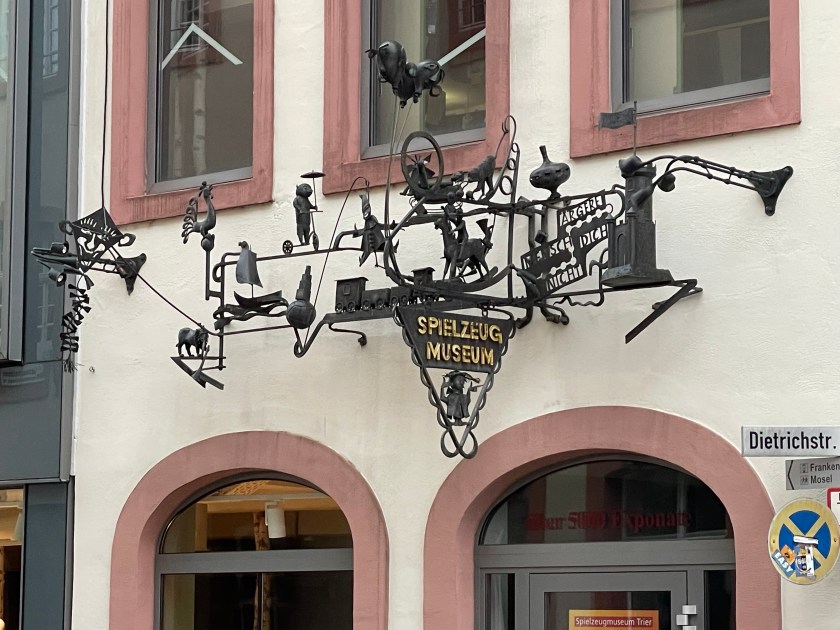
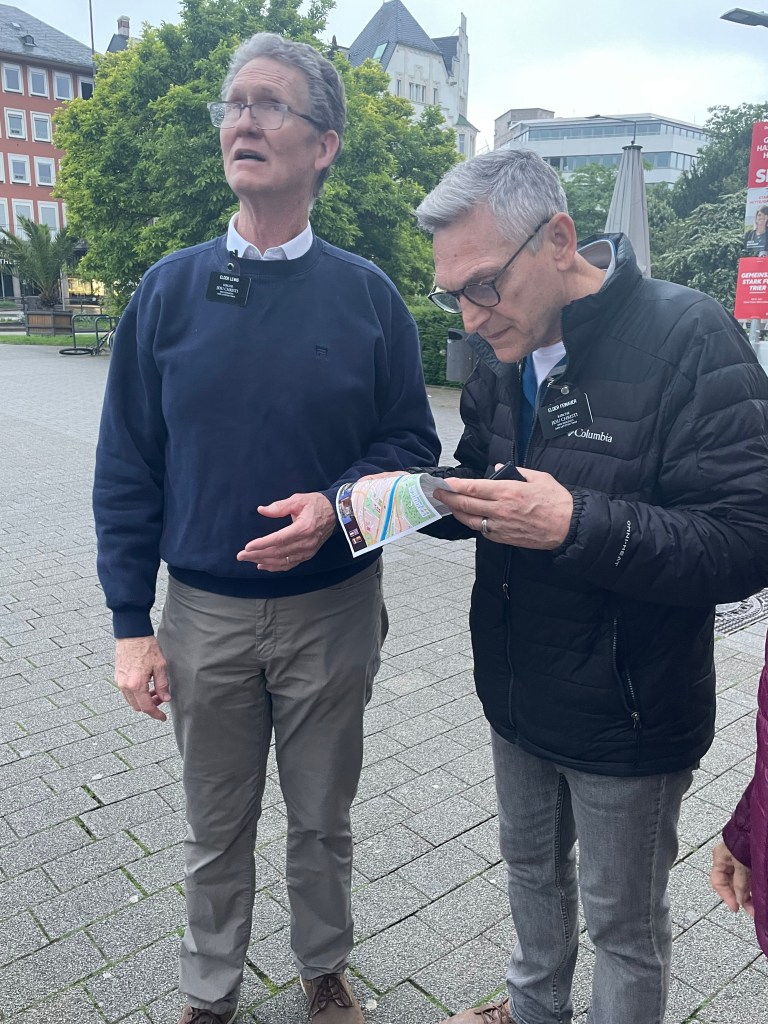
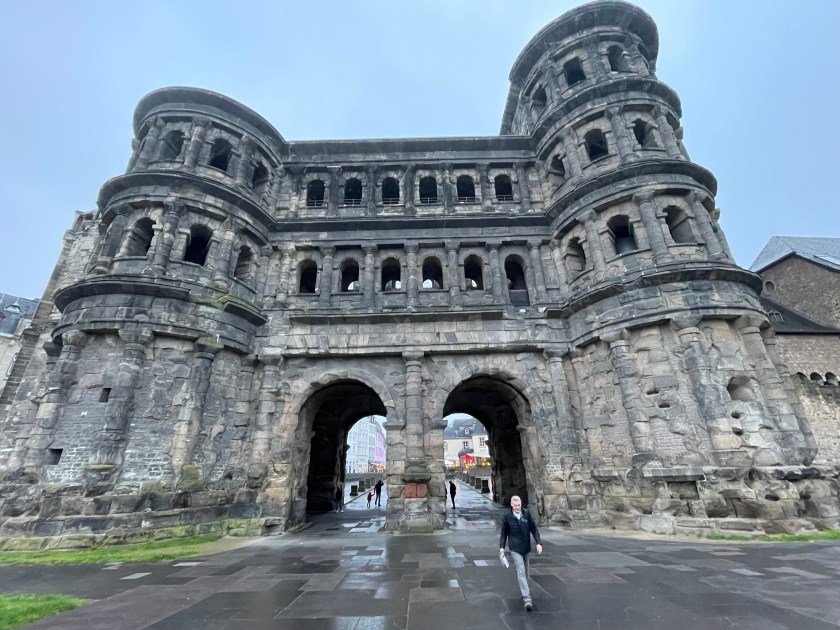
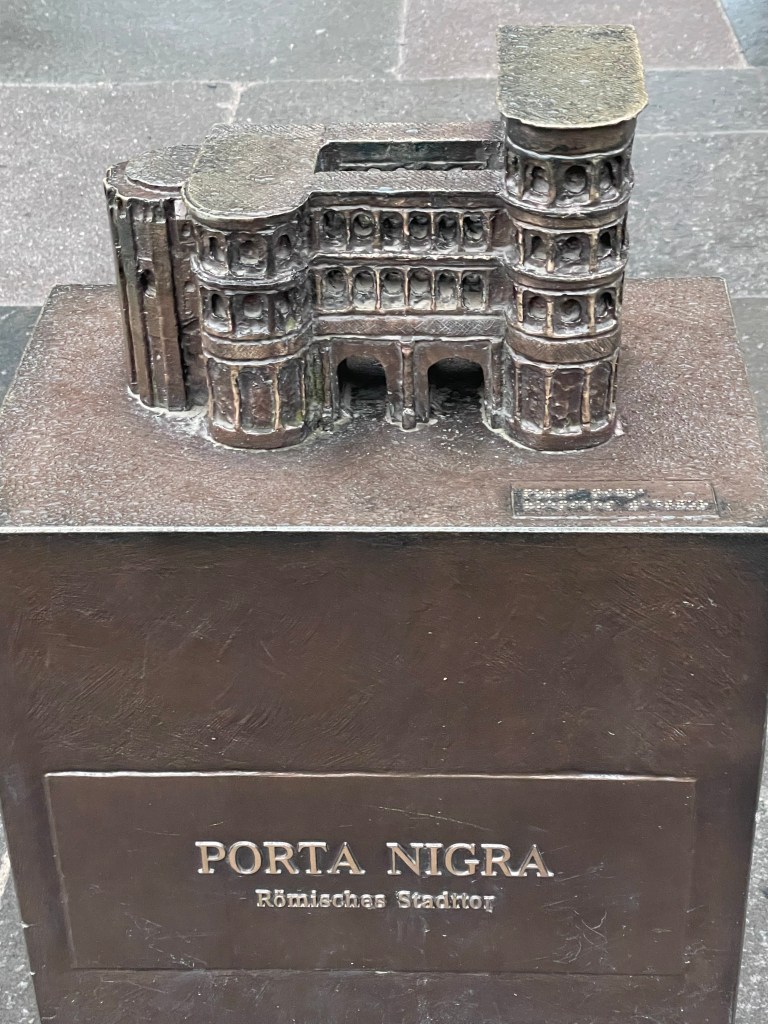
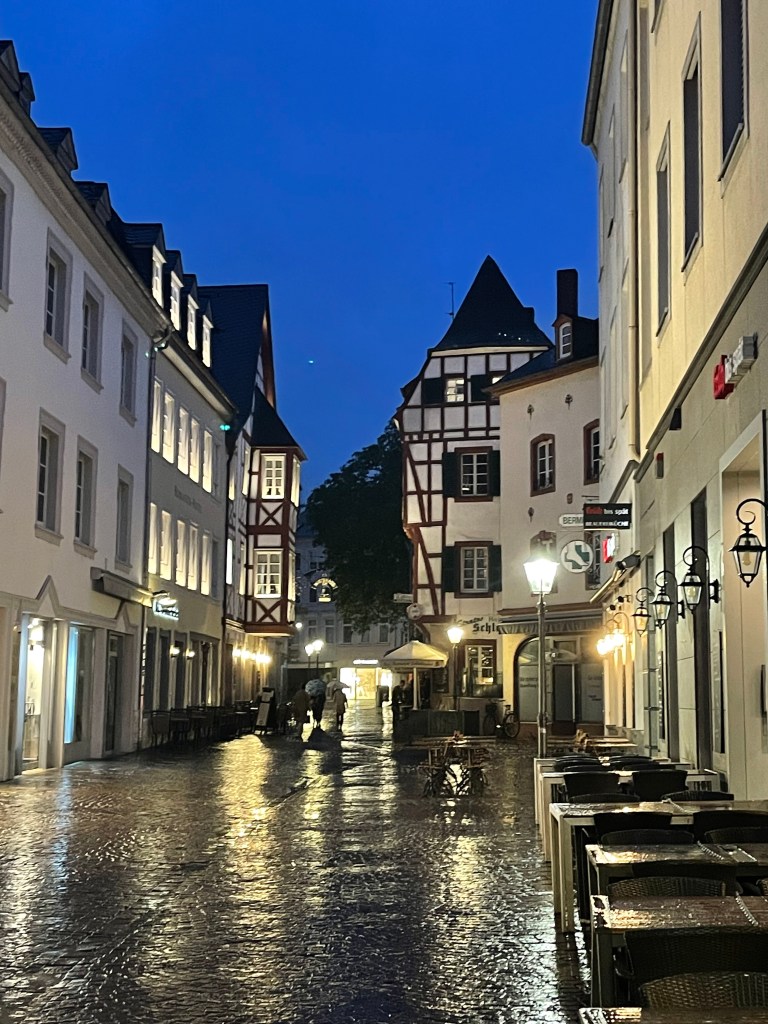
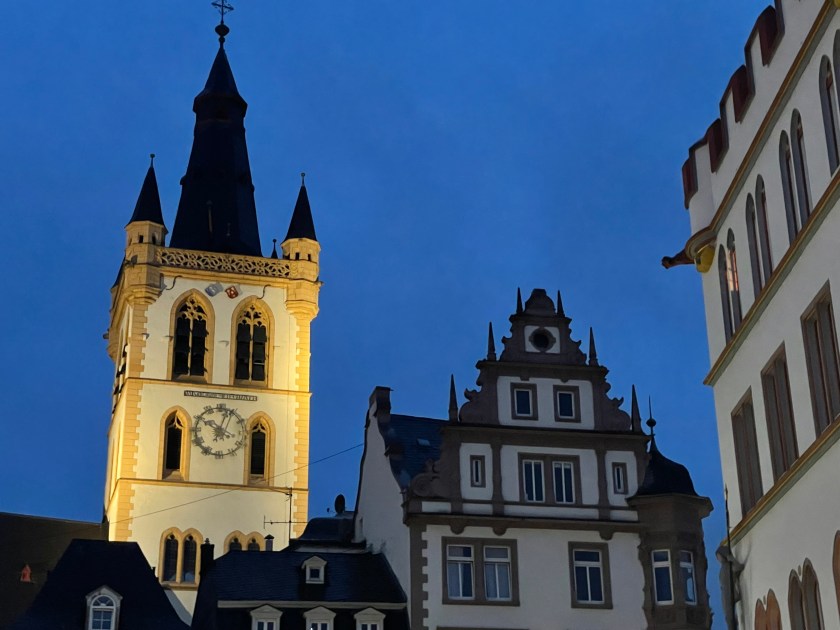
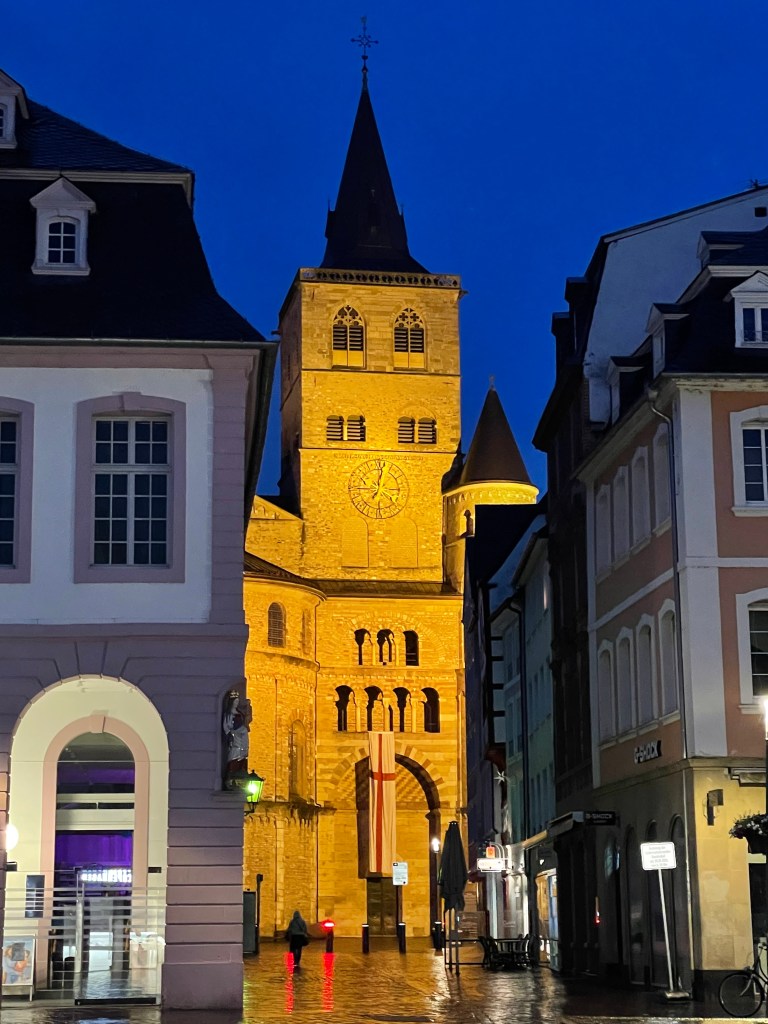
The summer days here stay light until after 9:30 p.m., so we had time this evening to walk the old streets and take a look around the old plazas. We walked to the famous Porta Nigra (The Black Gate), that dates back to 170 A. D. Here’s what we saw along the way.
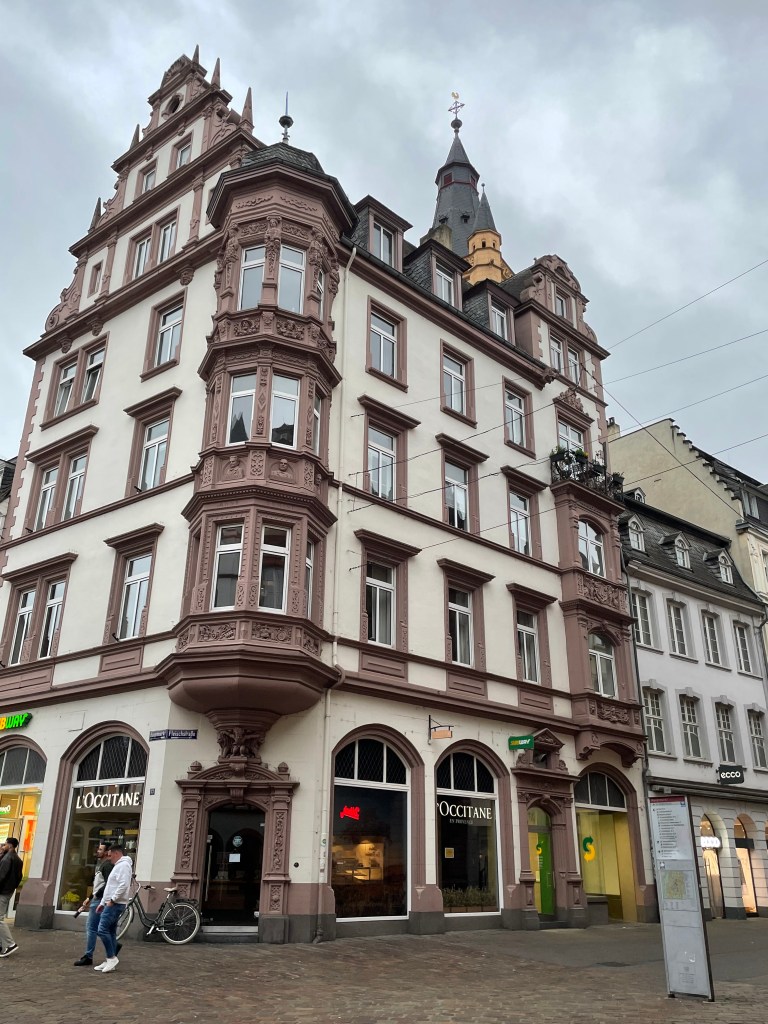
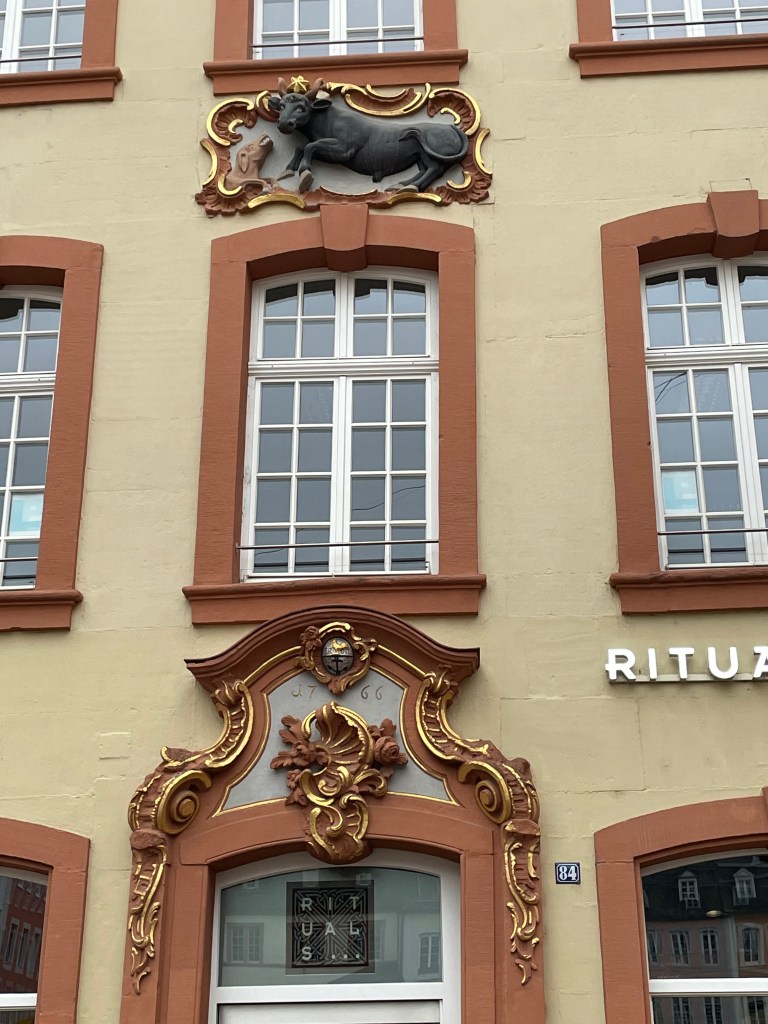
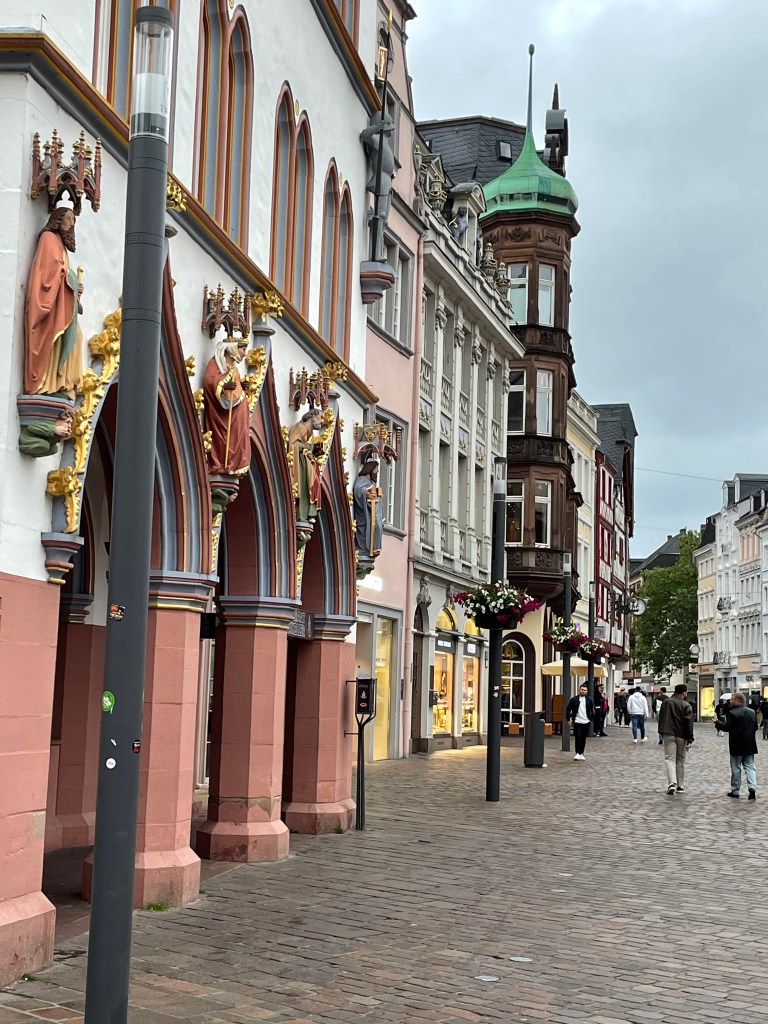
The fancy gate below on the left is the entrance to the church behind.
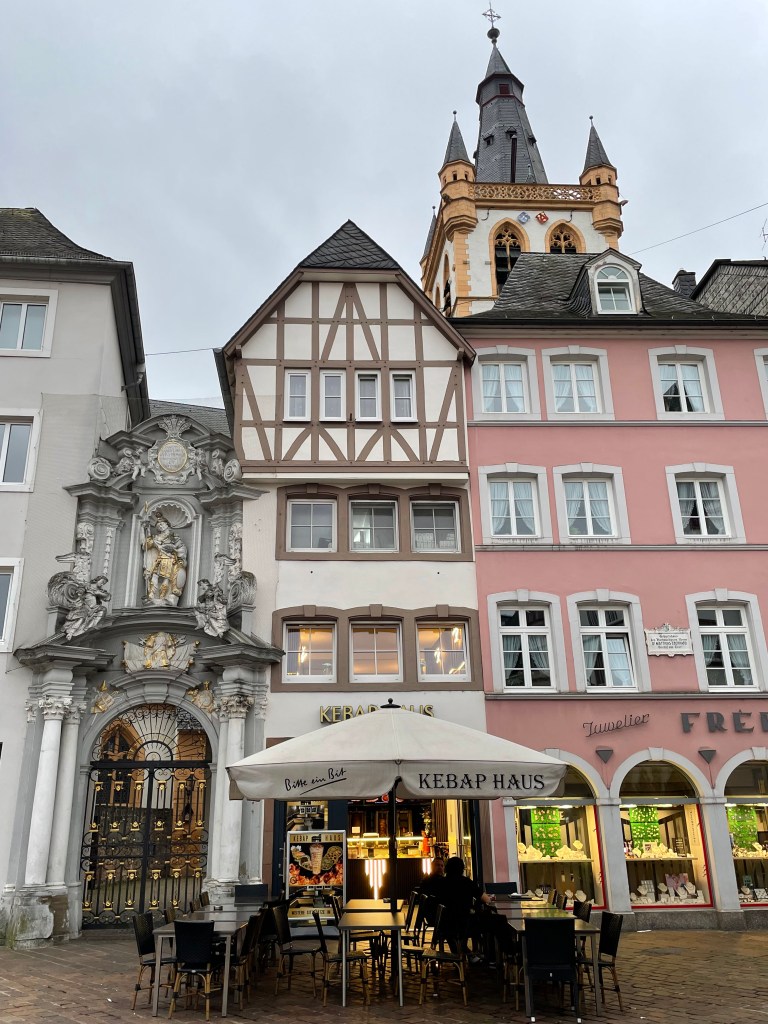
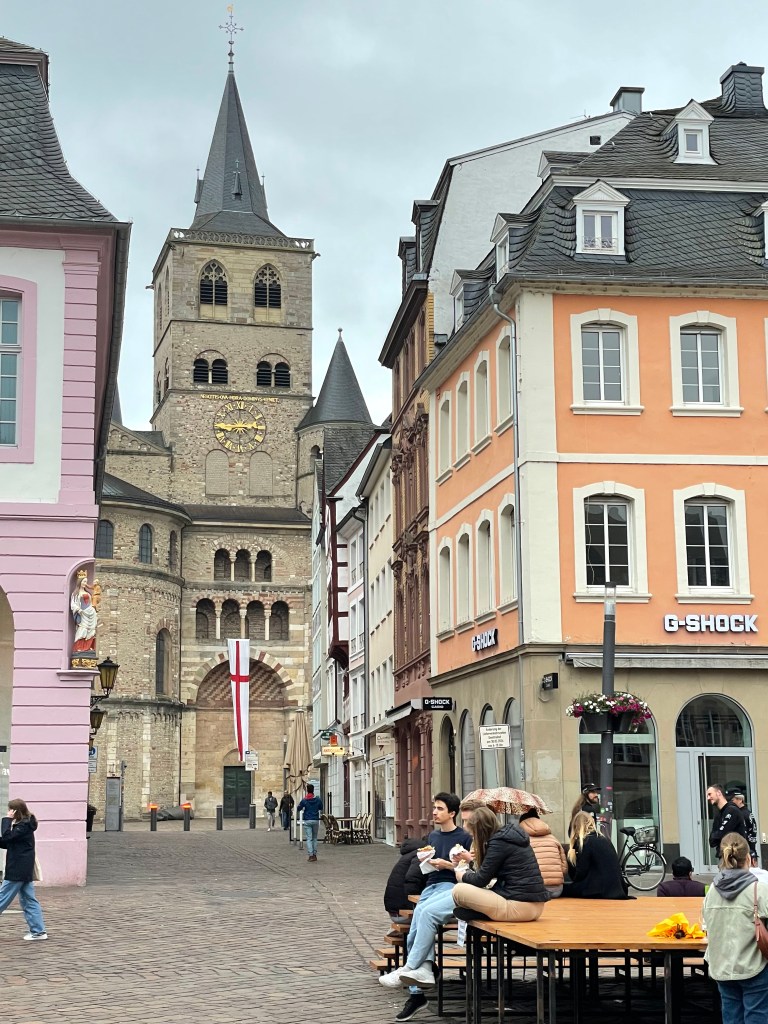
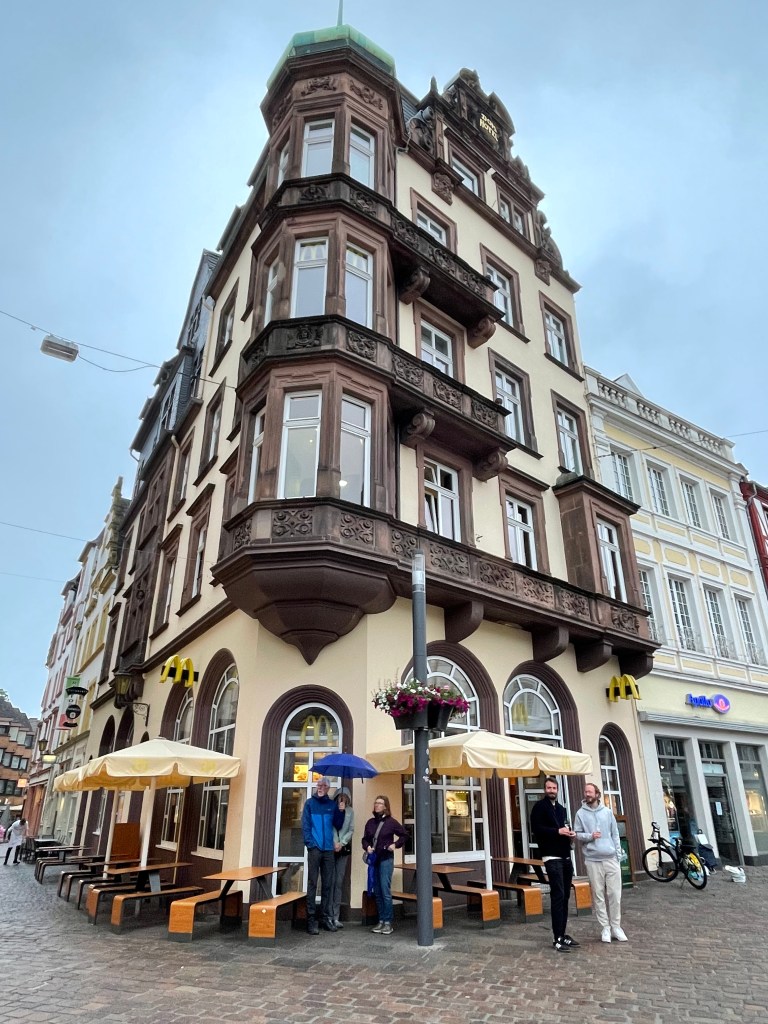
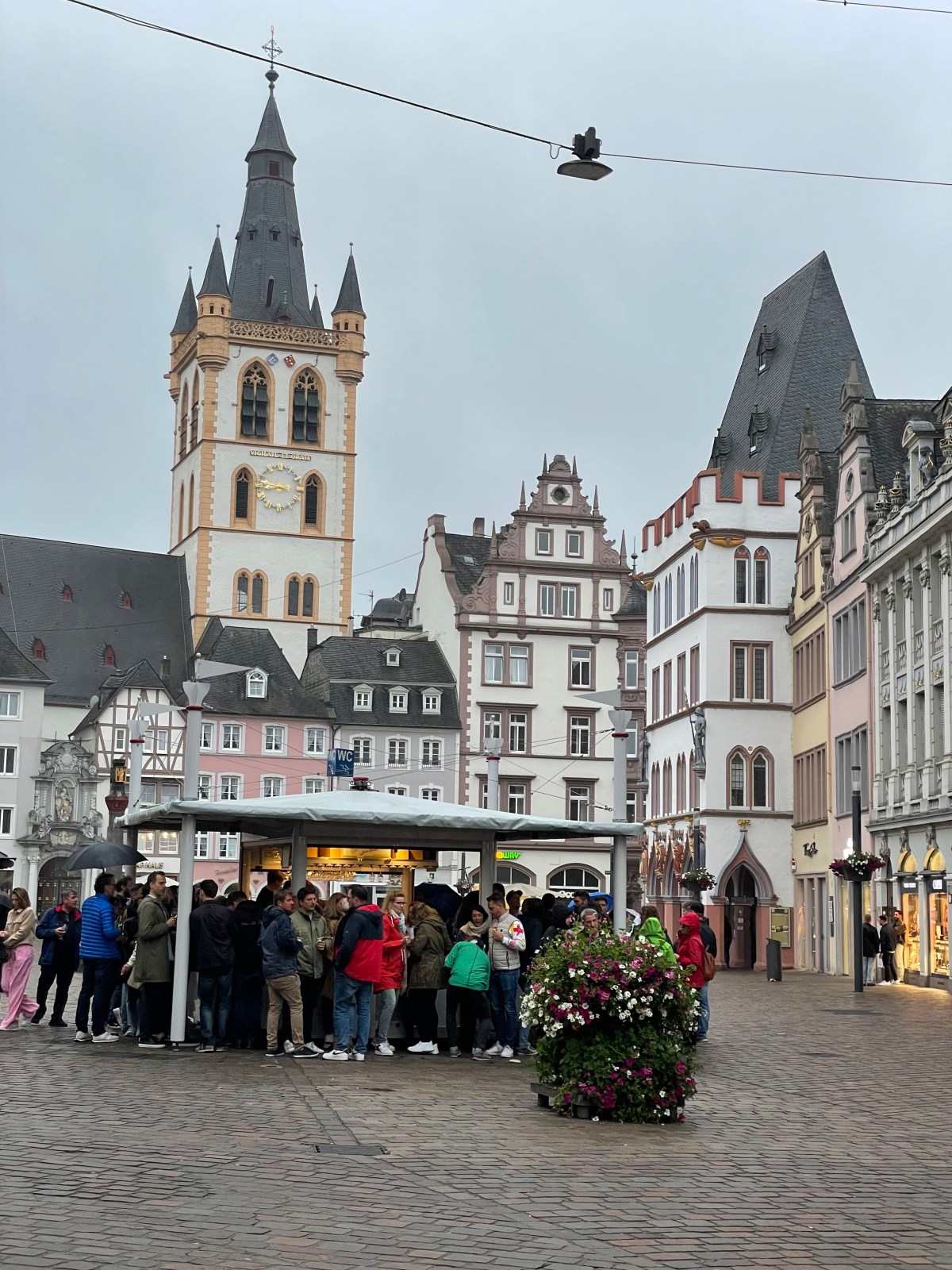
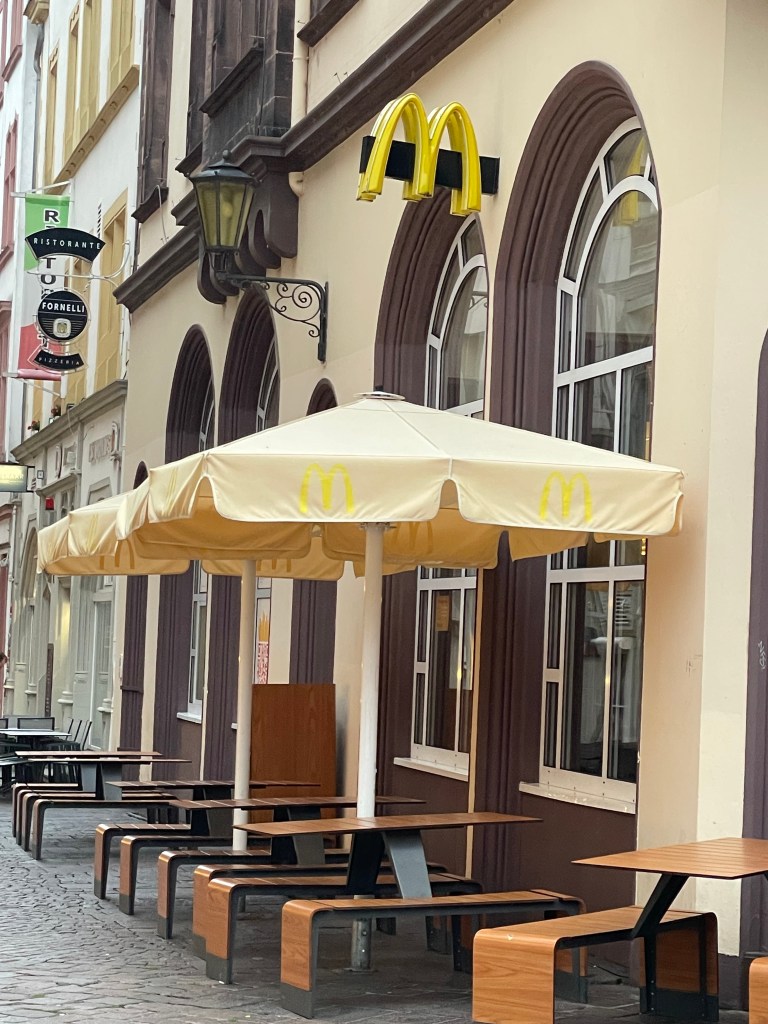
Lots of people were still out and about. Look how modern shops (like McDonalds) live in old old buildings on the ground floor.
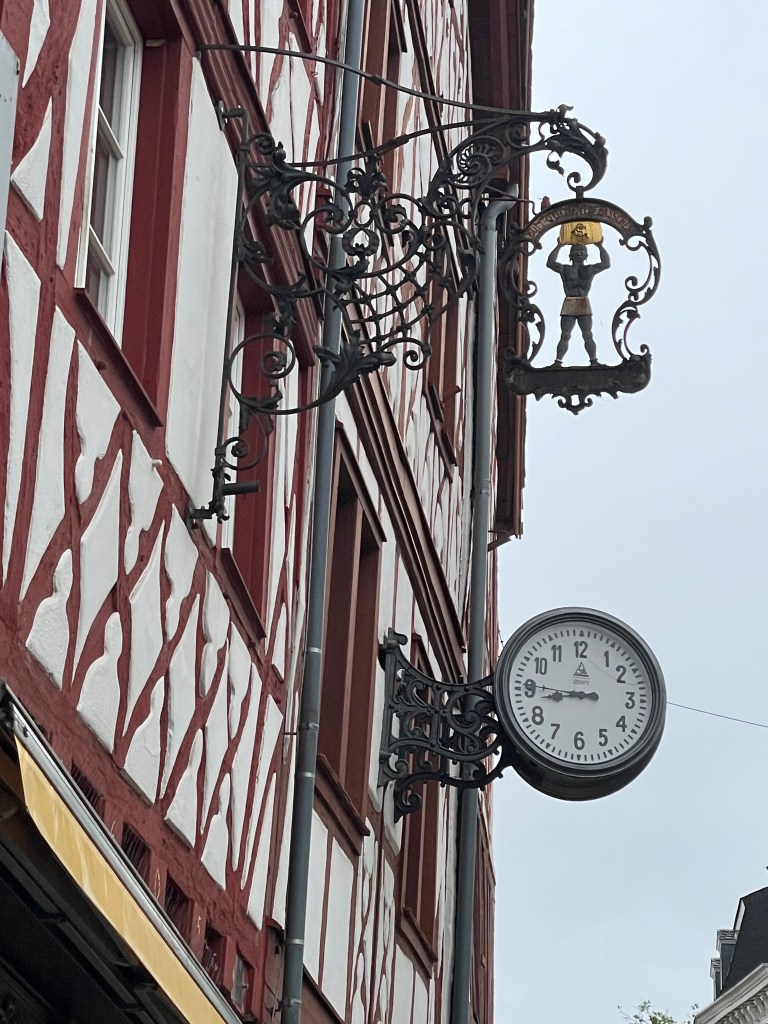
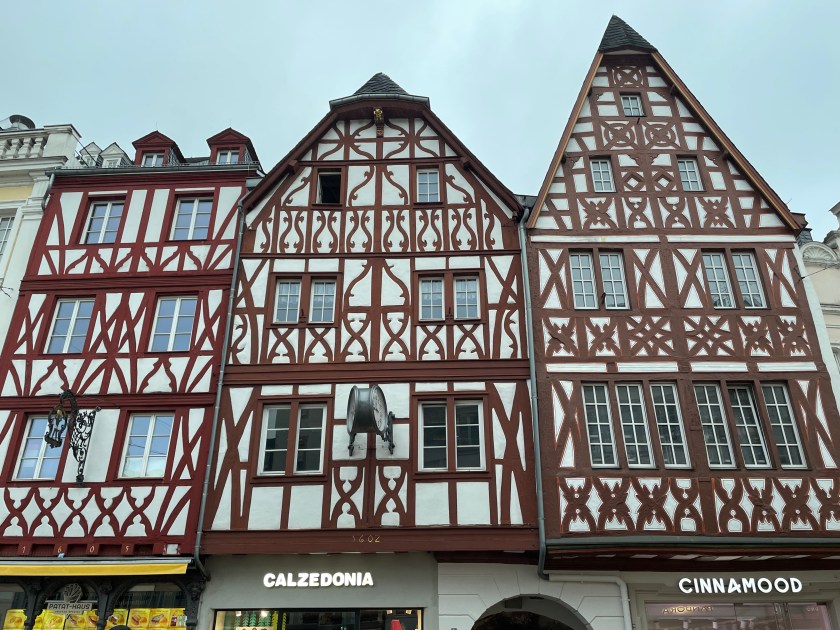
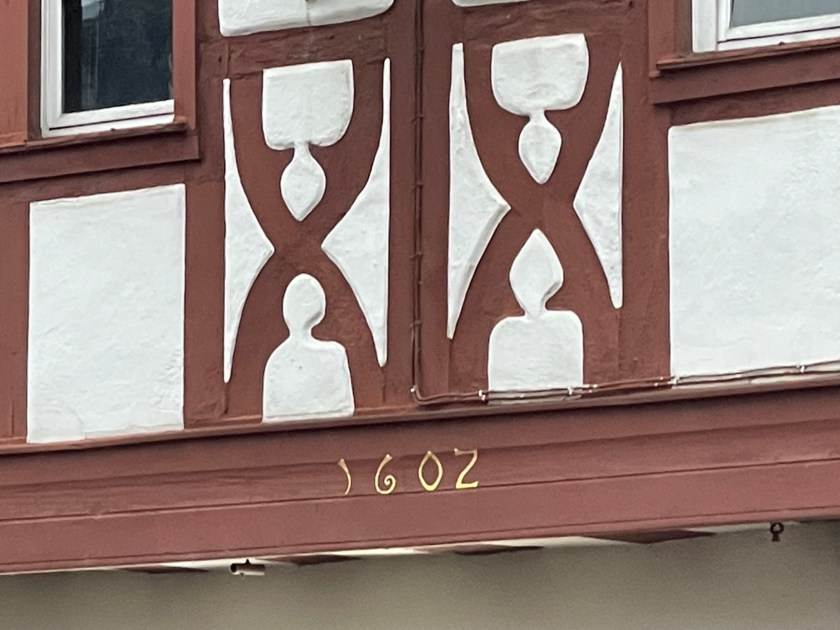
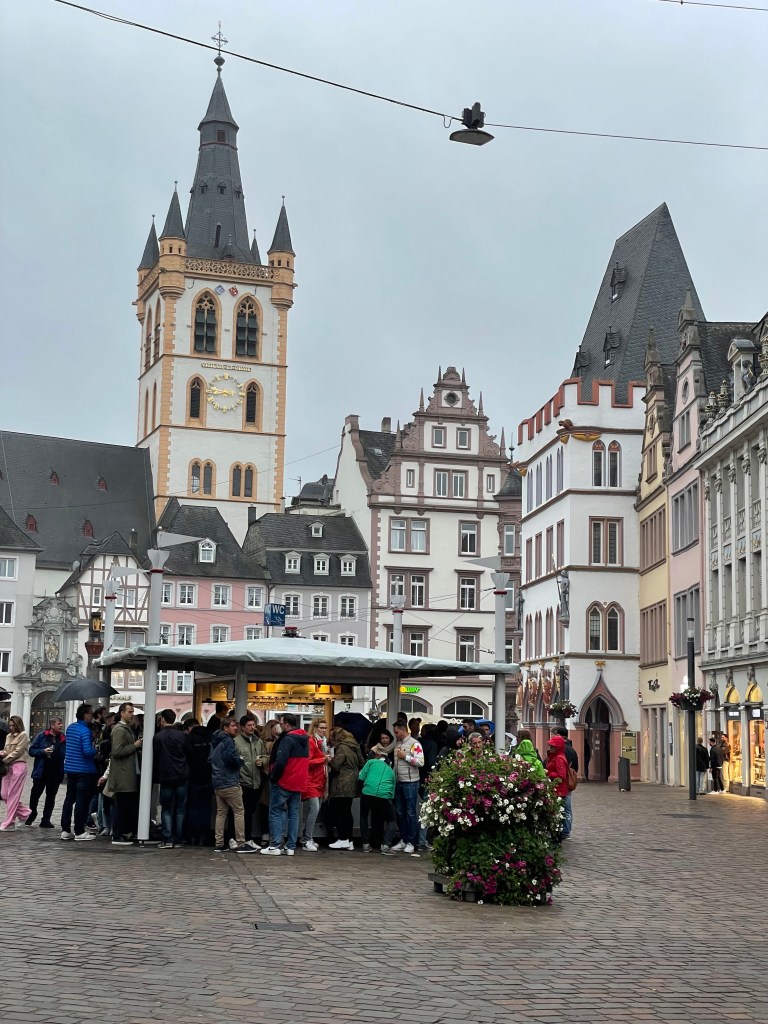
The busiest place in the plaza was this tent where beer and wine were being sold.
Here is a very old house, dating back to 1230, the Three Kings House:
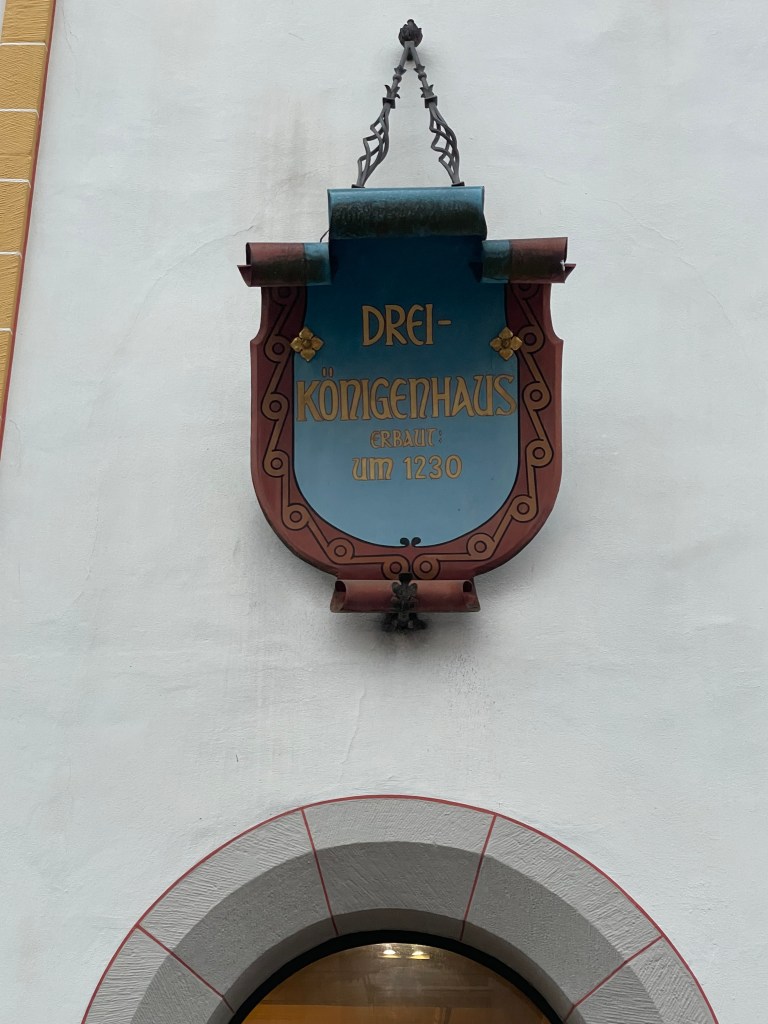
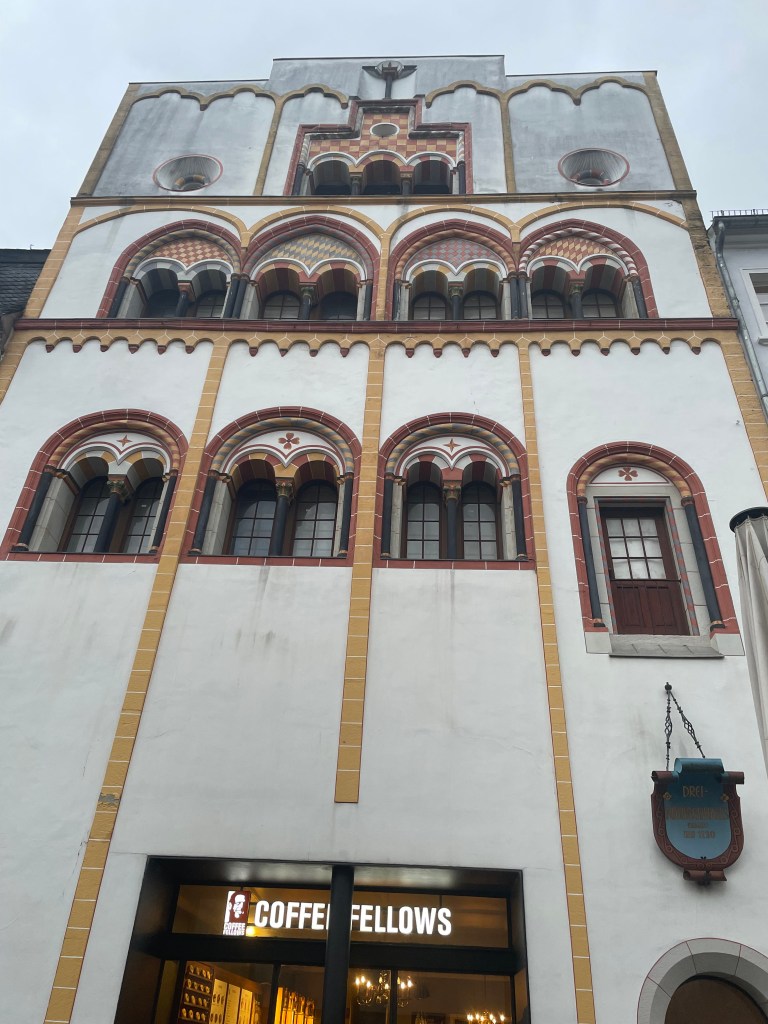
And here is the famous Porta Nigra:
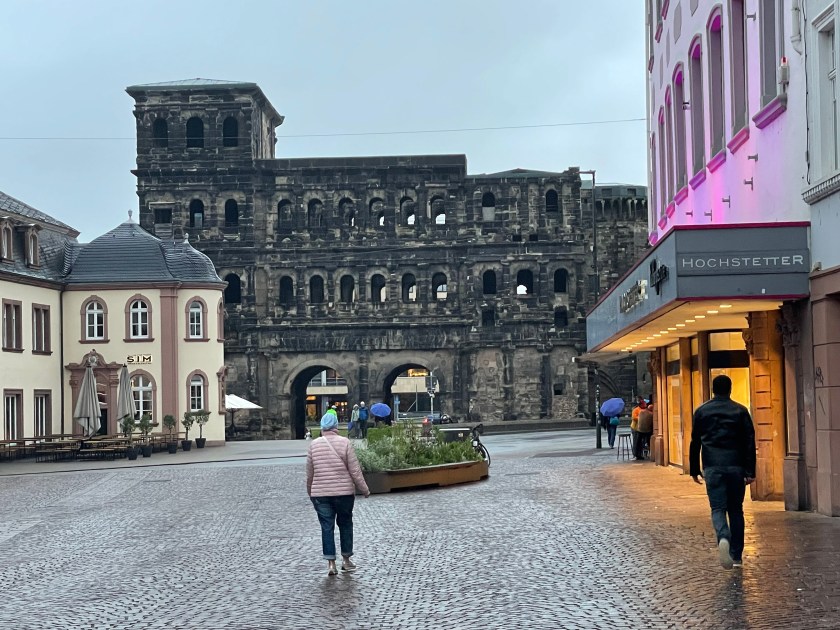
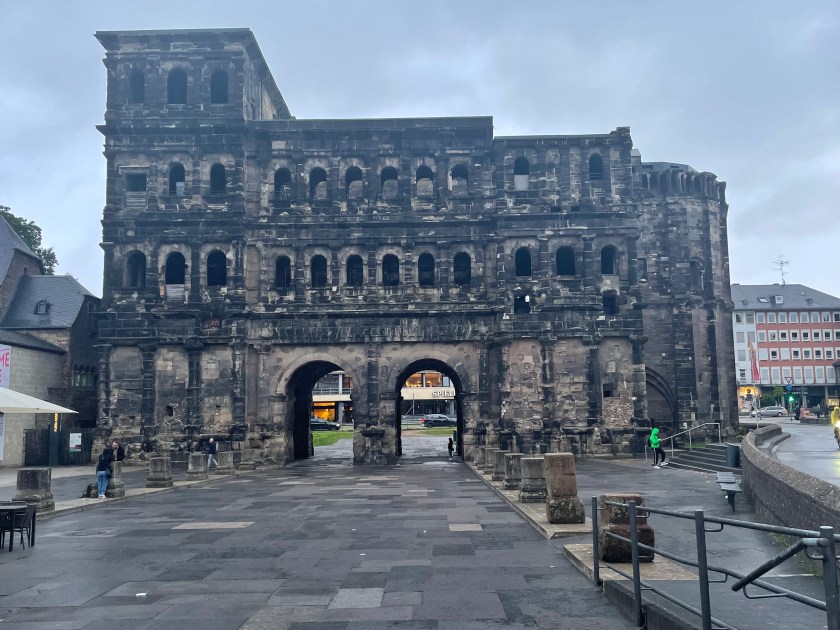
We walked around it this evening before going to find some dinner. Impressive. Old.
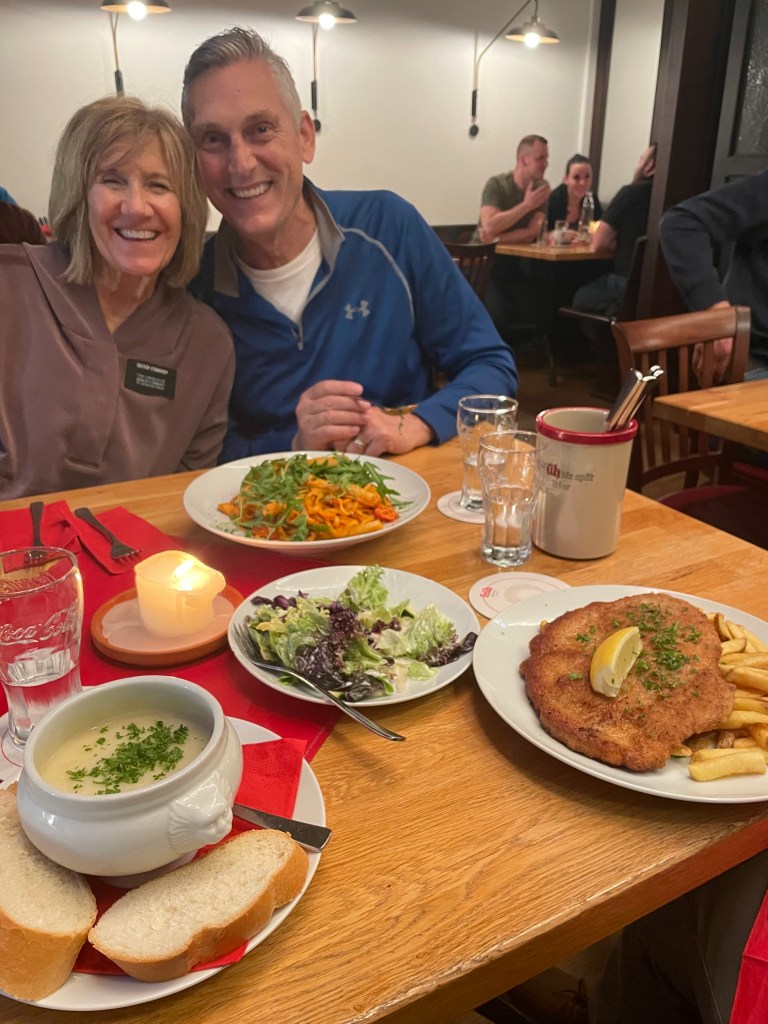
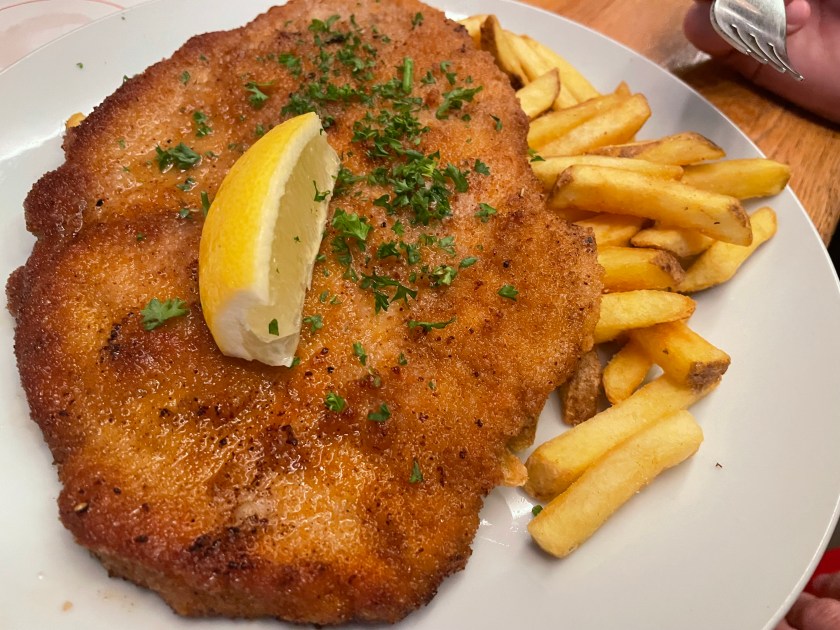
Here’s our delicious dinner–pasta with Spargel for the Feinauers, Spargen soup for me and Schnitzel for John.

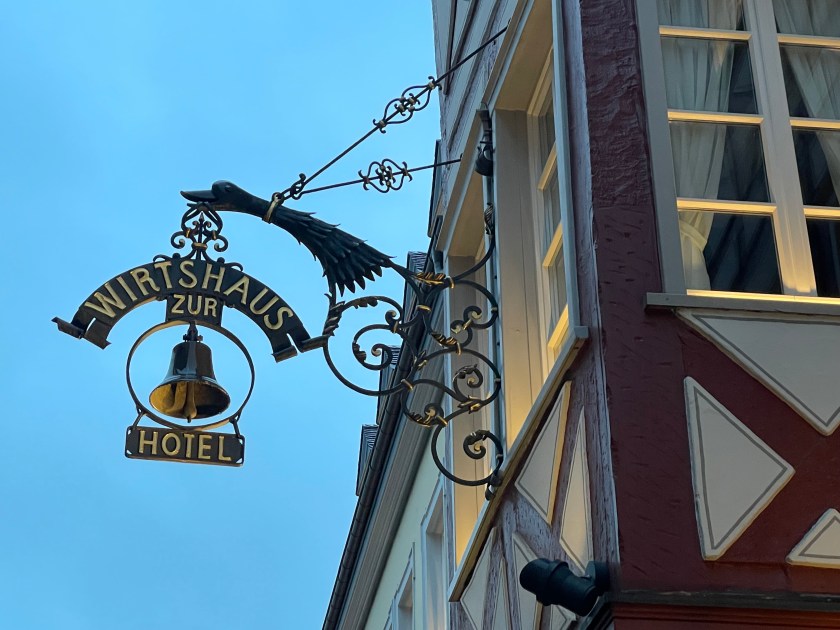
It was drizzling rain as we walked back to our hotel, Ibis Styles Trier City.

 Our Frankfurt Germany Mission