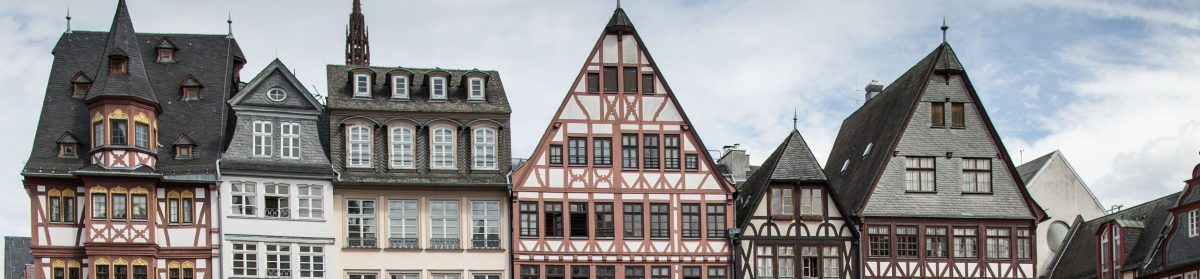
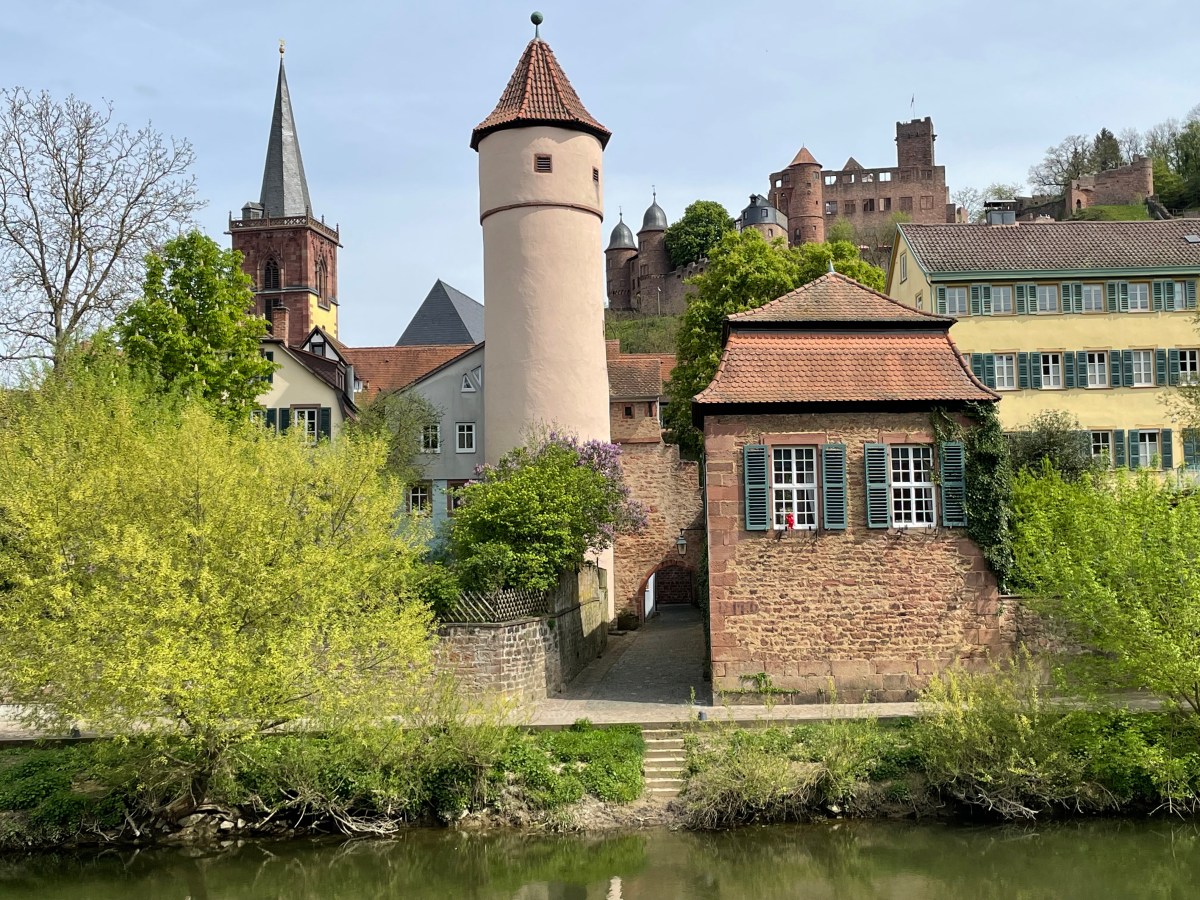
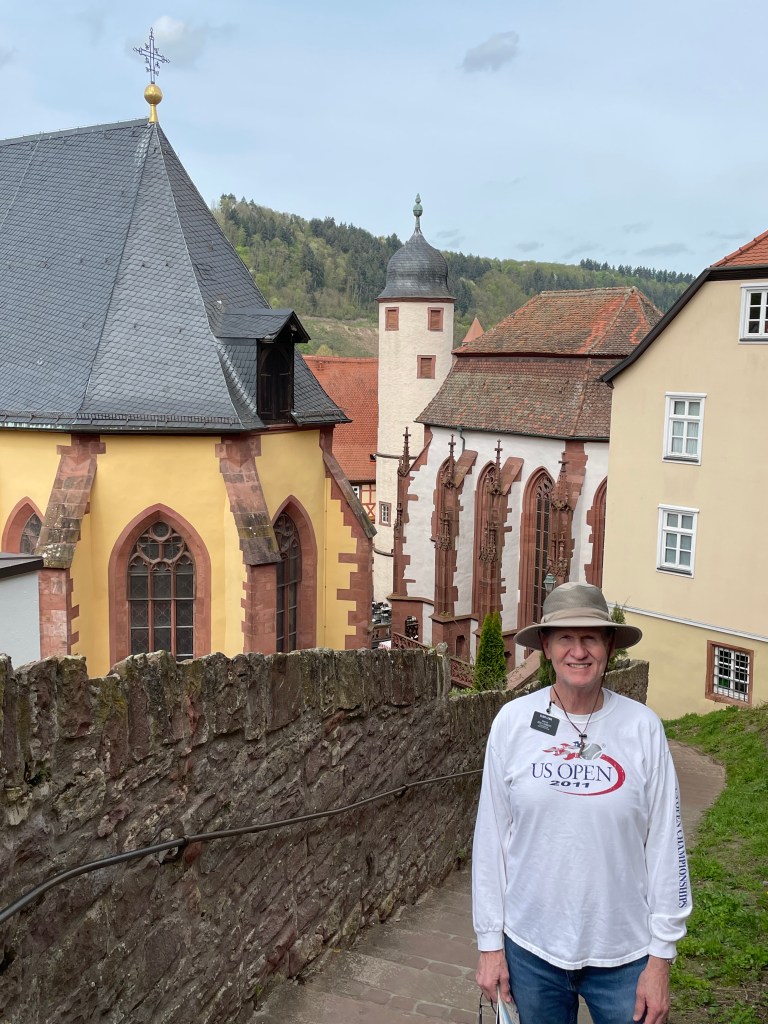
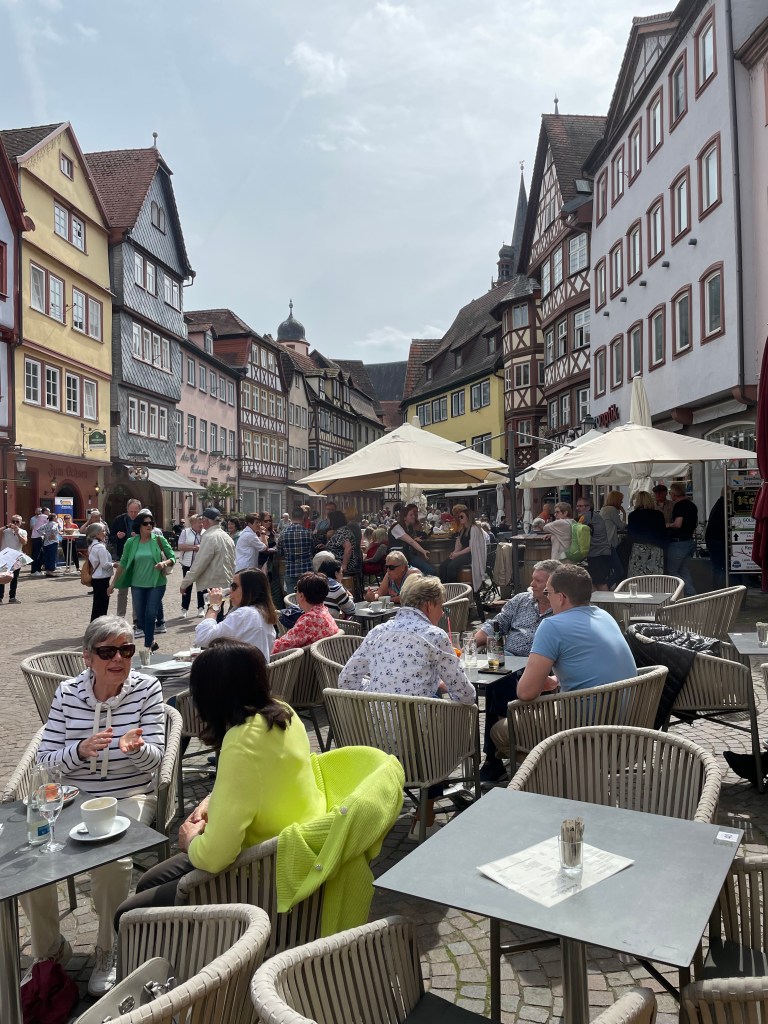
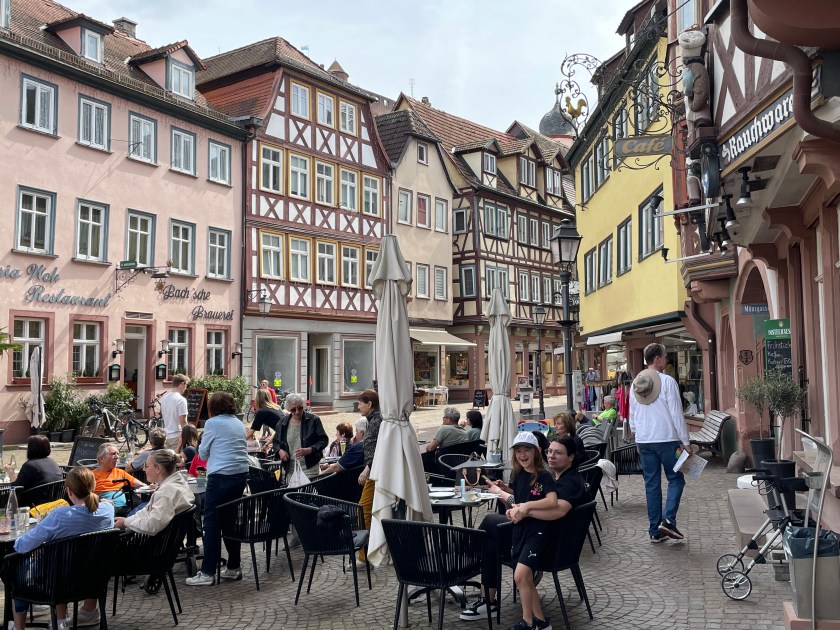
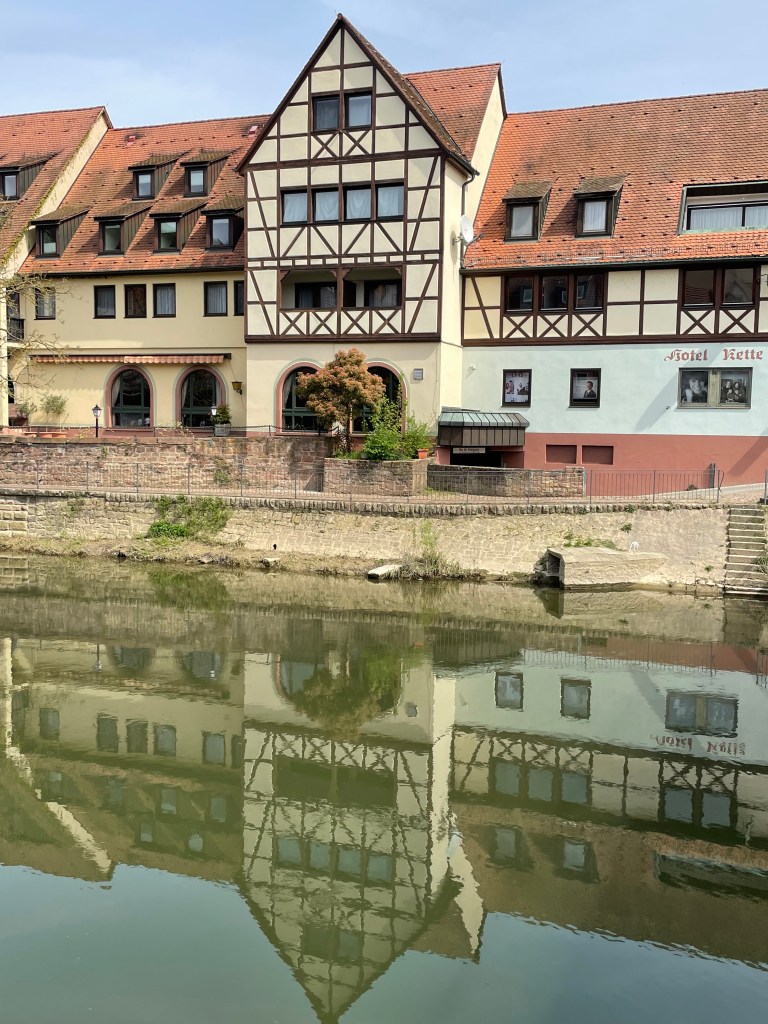
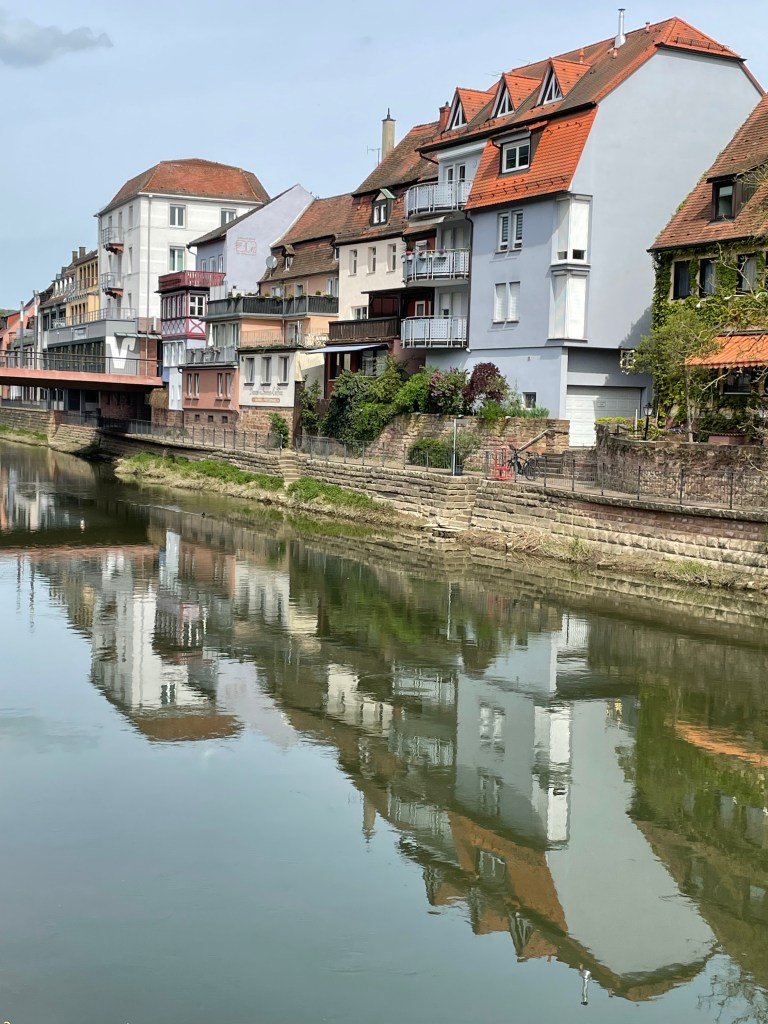
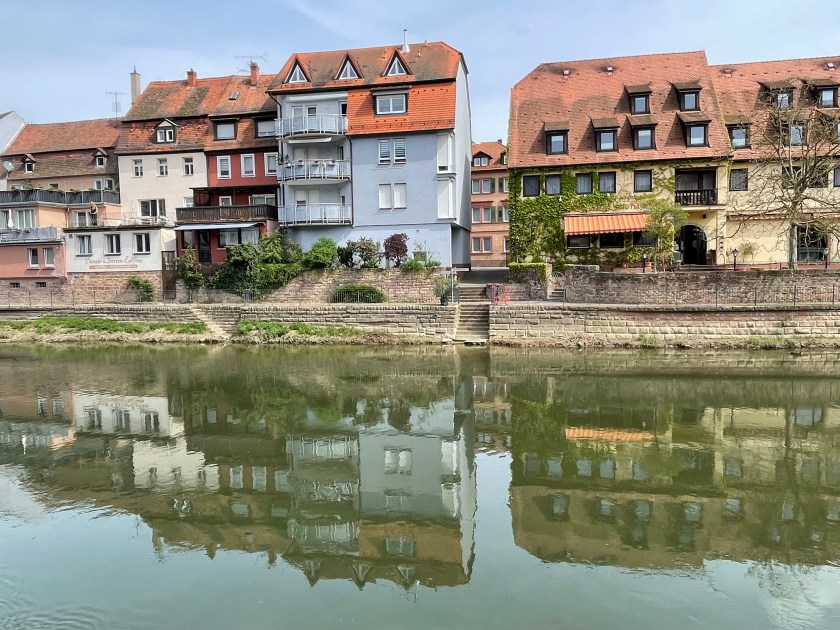
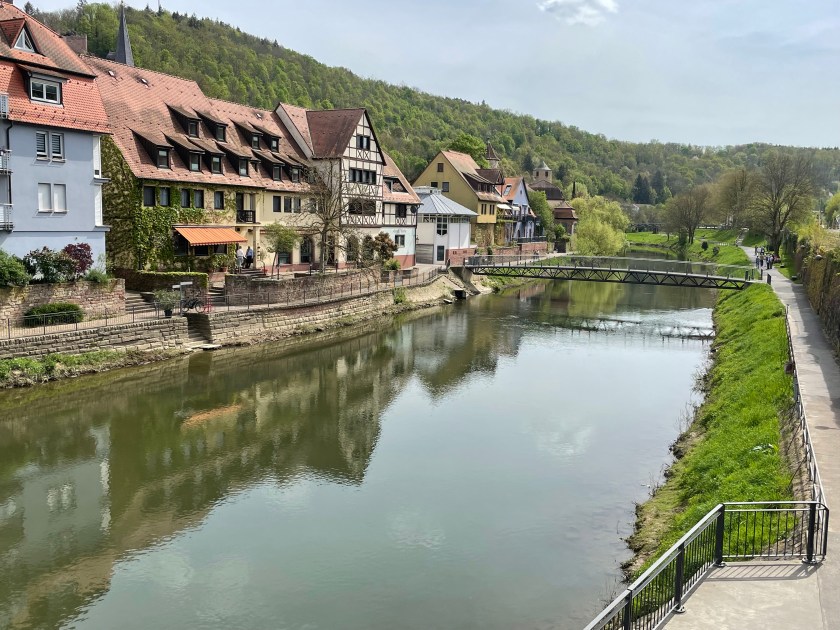
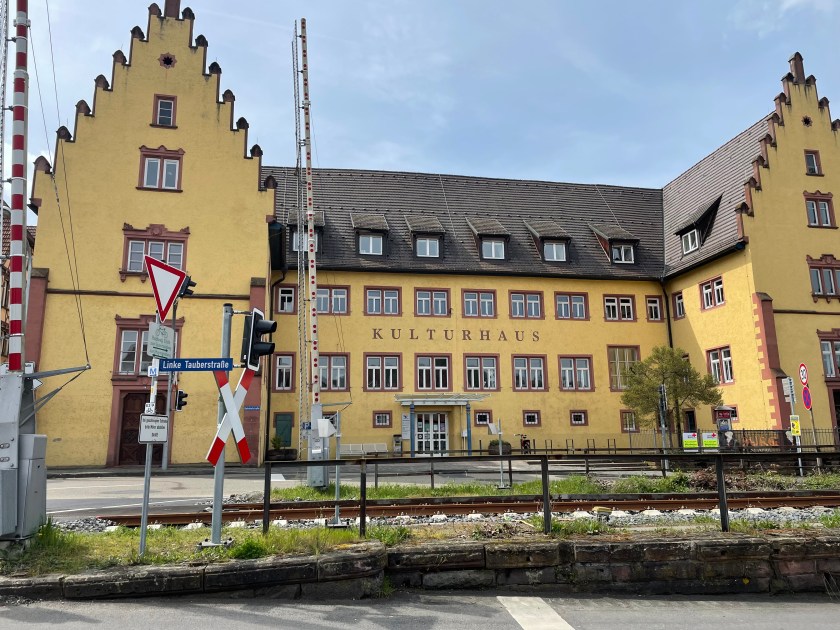
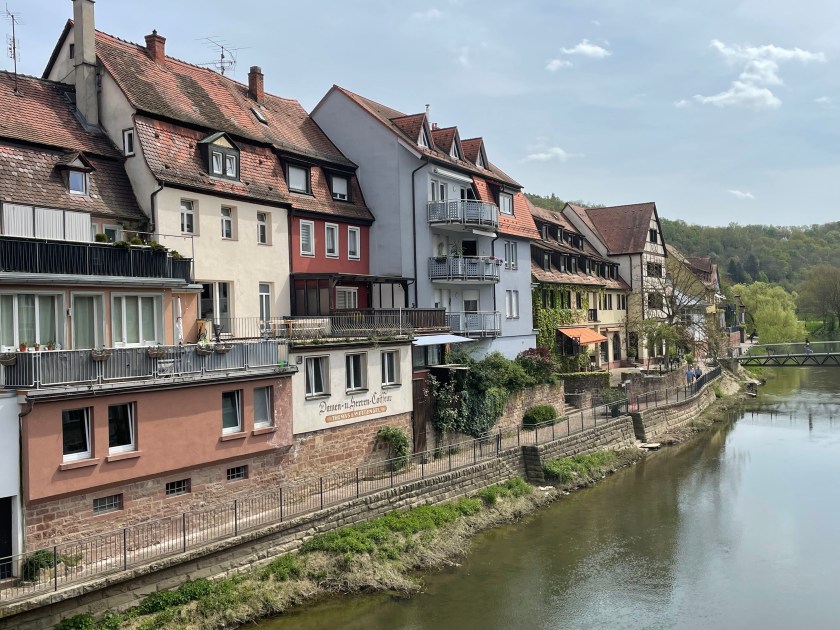
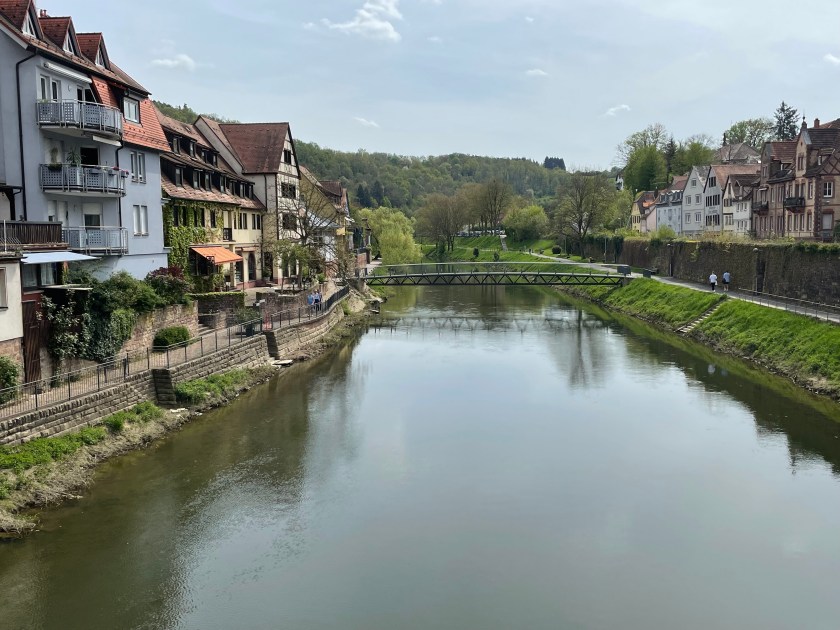
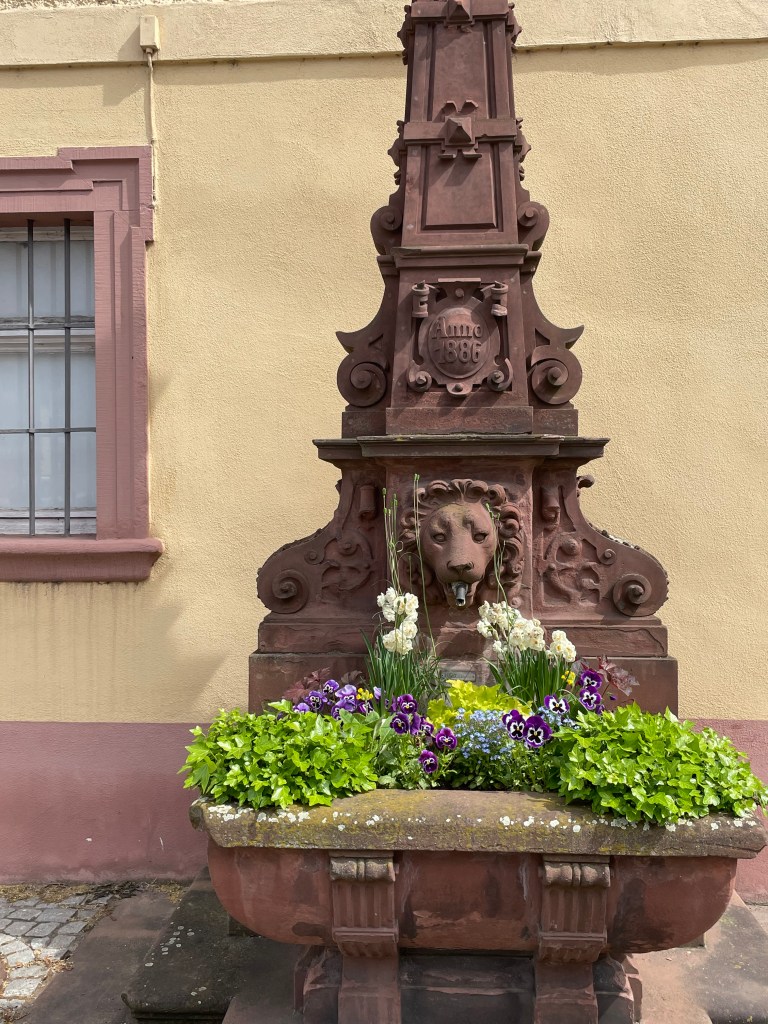
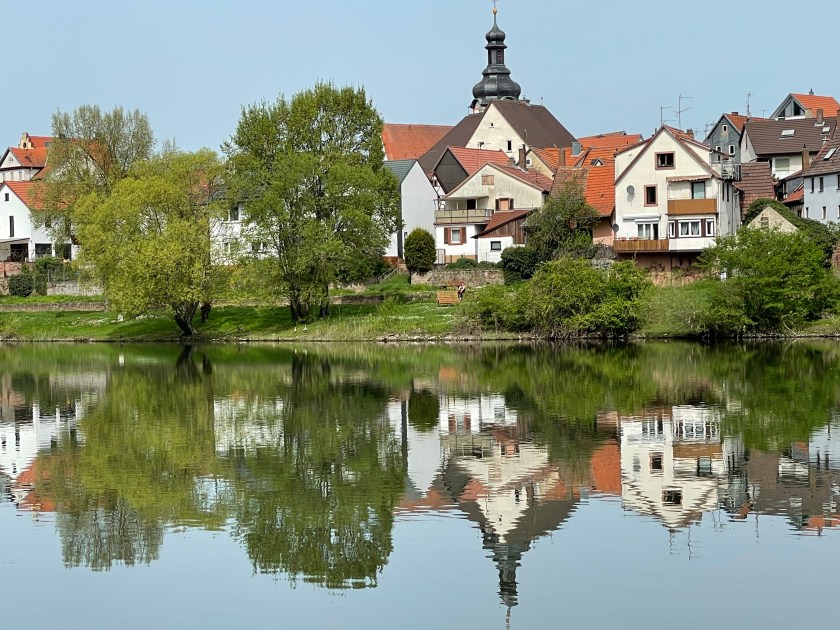
First of all, we LOVED Wertheim. It has a little bit of everything–the castle, the churches, the old half-timber homes, the rivers, the flower boxes, the people-filled plaza, narrow streets and lots of good history. This is our kind of place.
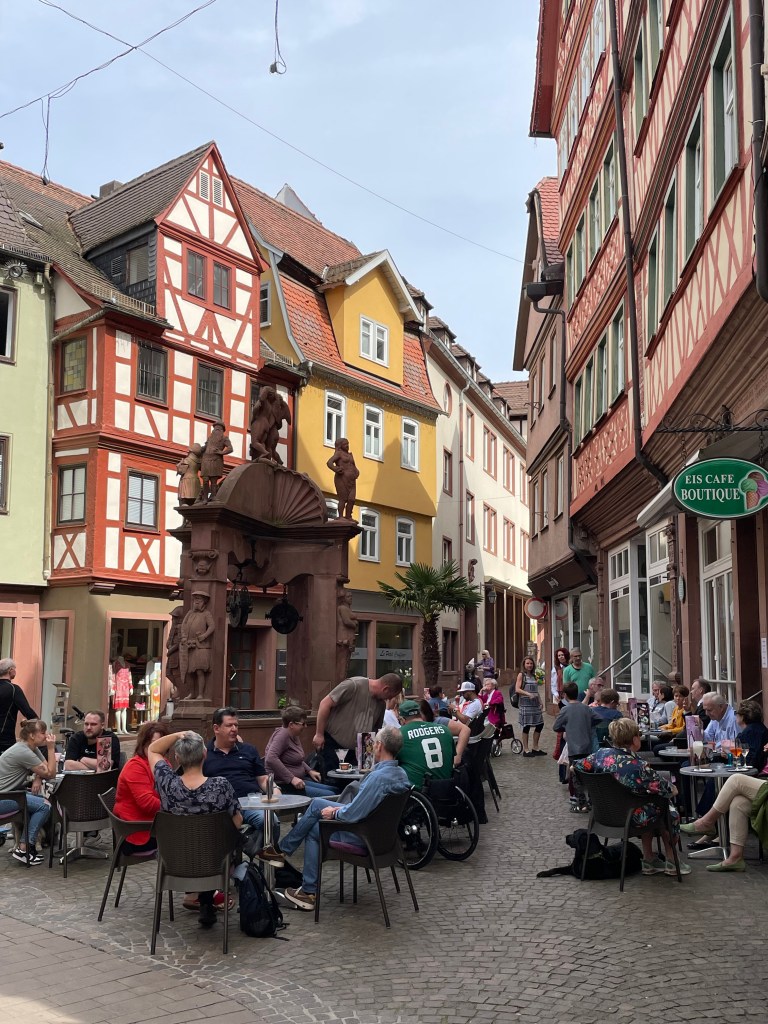
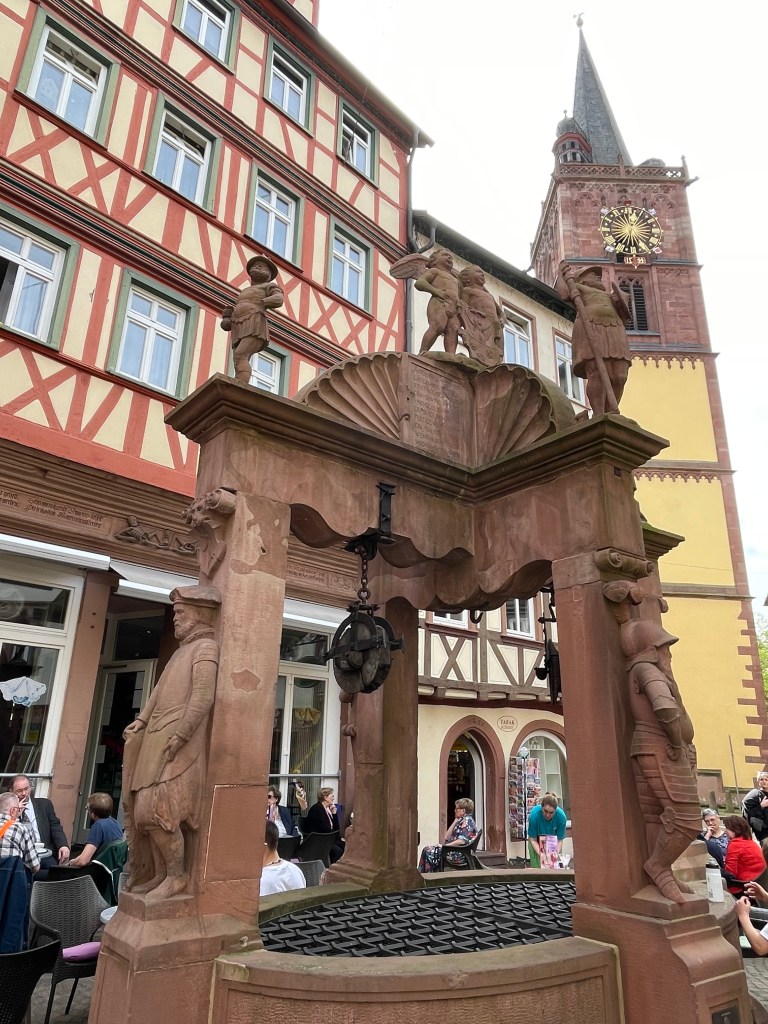
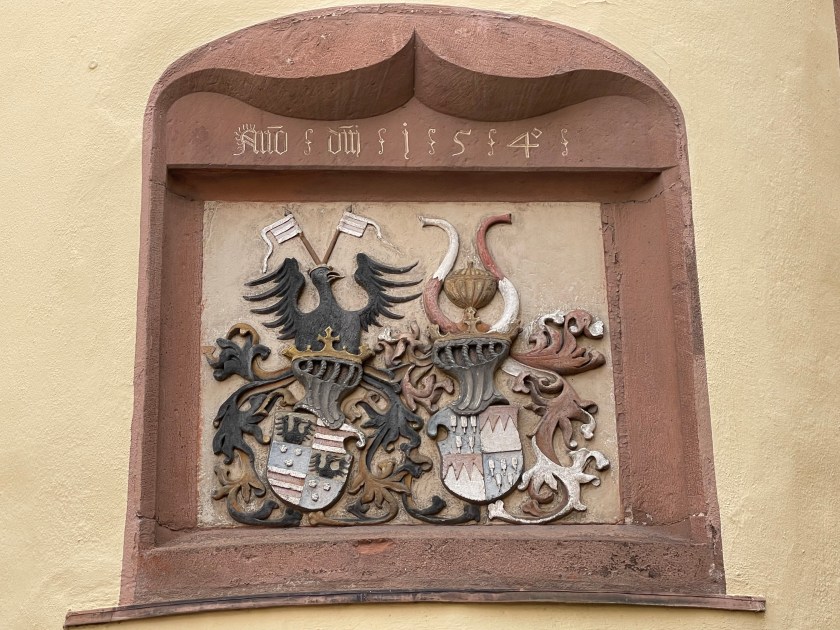
This is the Engelsbrunnen (angel well), created in 1574. The two angels on top are holding the coat of arms of the shire.
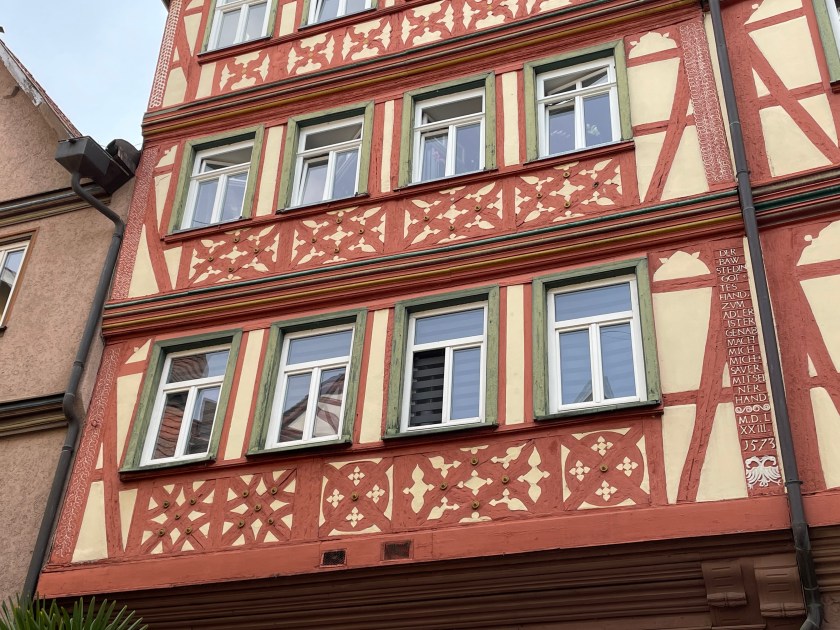
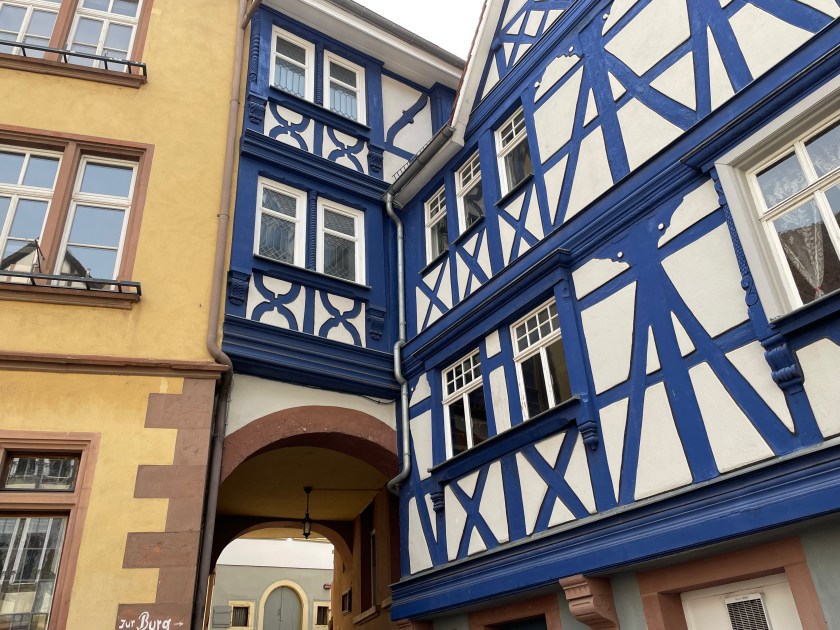
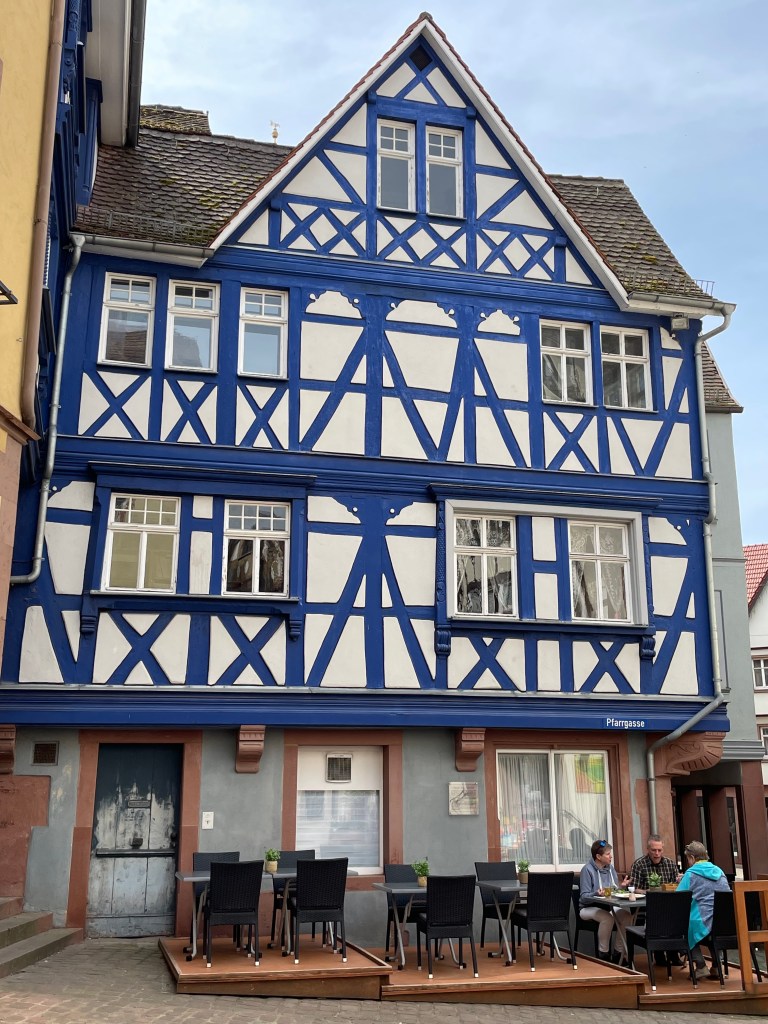
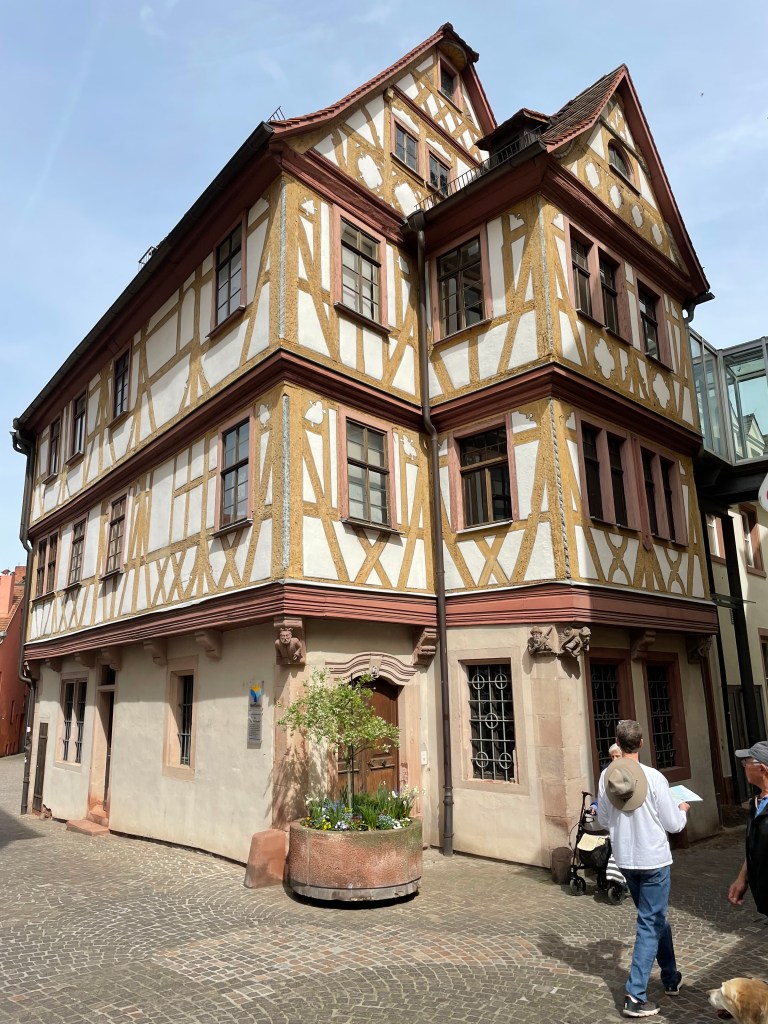
The “Blue House” built in 1593 is one of the half-timbered houses in Wertheim’s old town. “Smalt” was used for the blue color in the framework. Smalt is a glass with cobalt in it. When finely grated, makes a pigment. It’s a very expensive process that would have showcased a landlord’s wealth. It was beautiful!
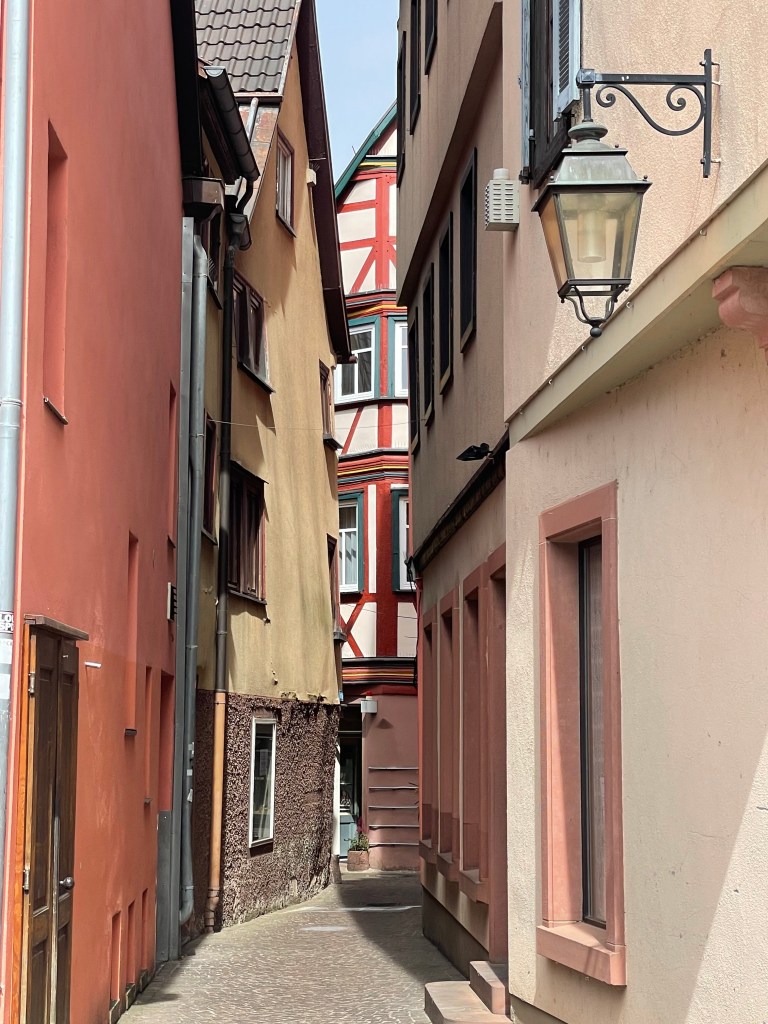
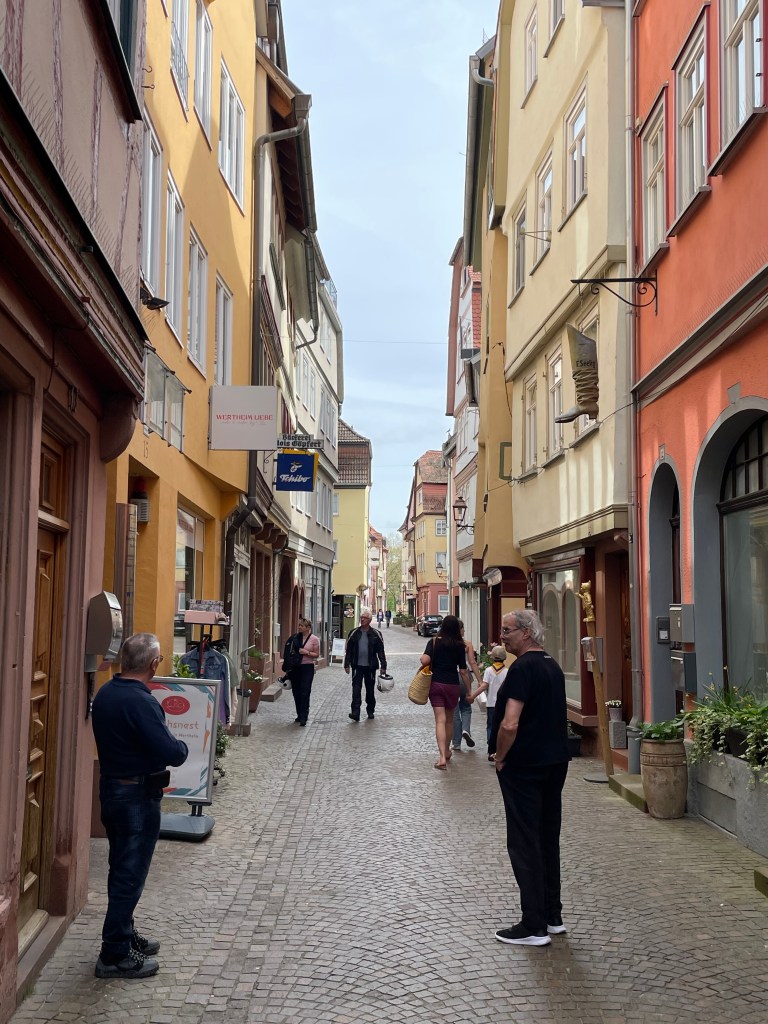
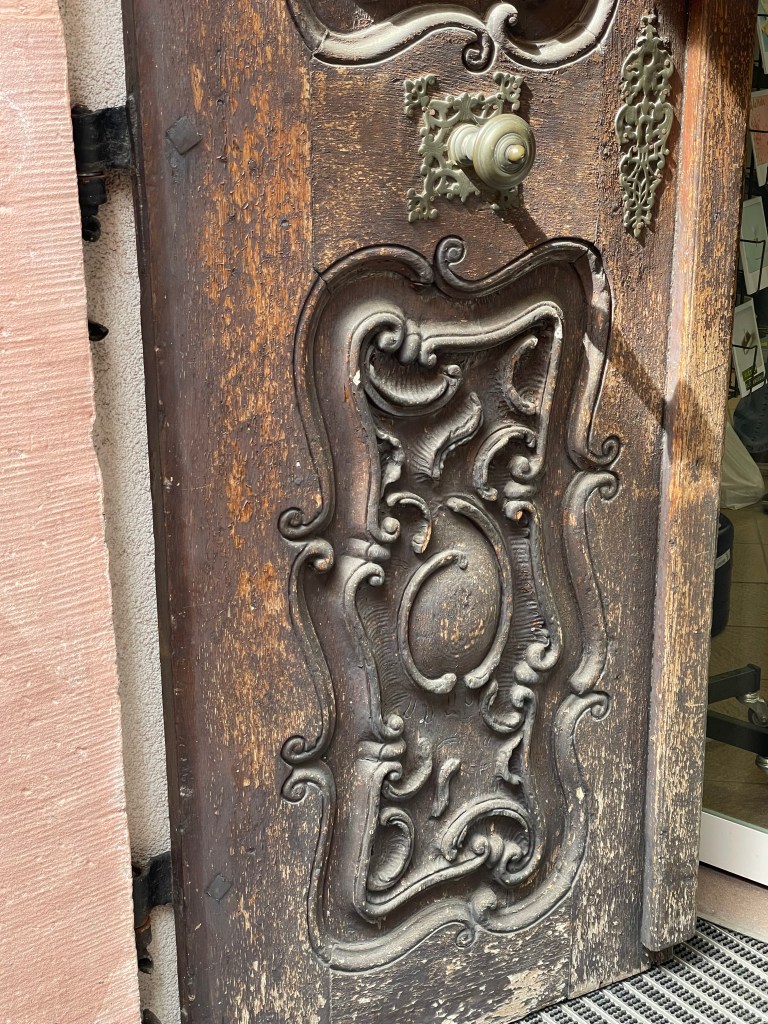
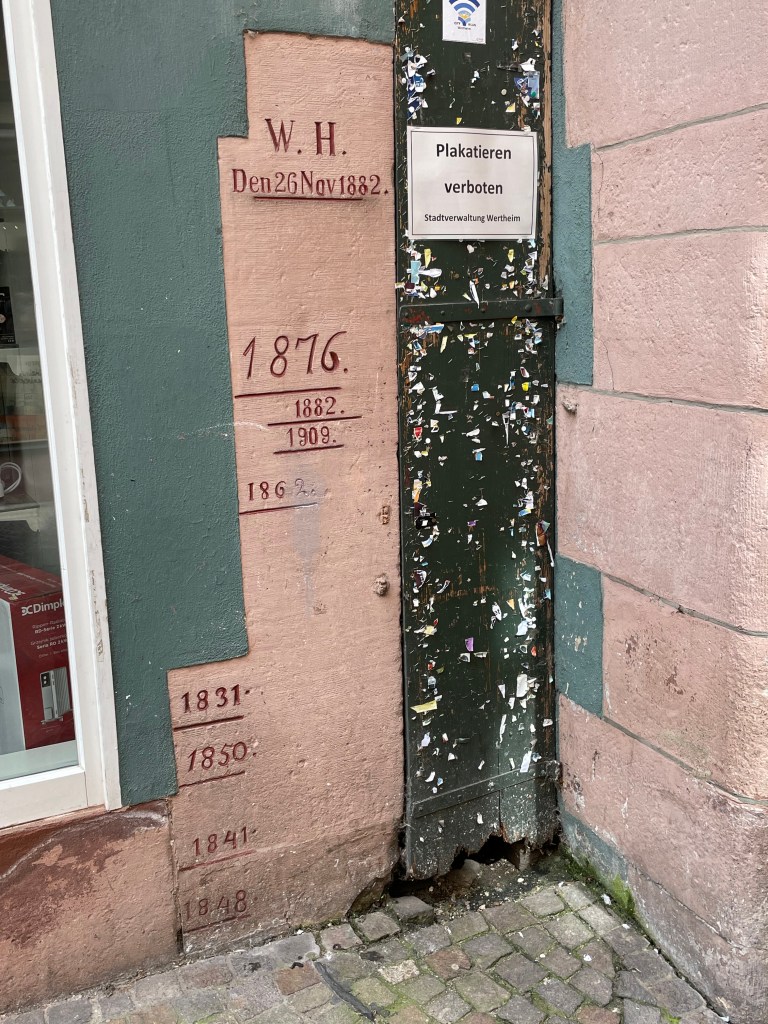
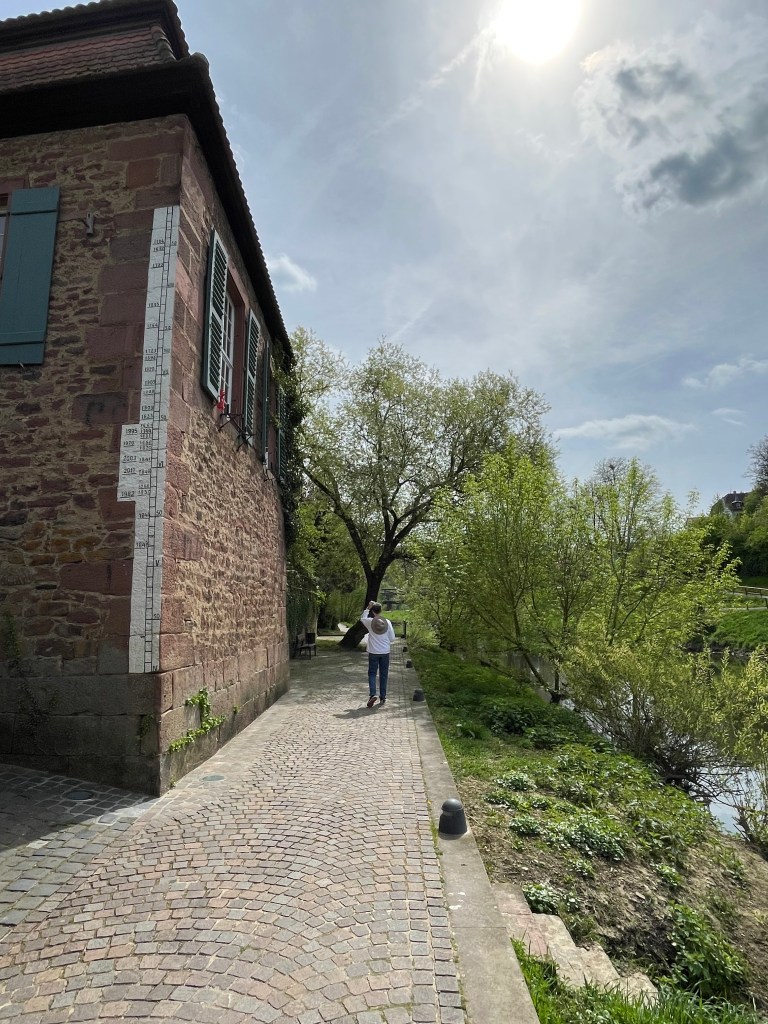
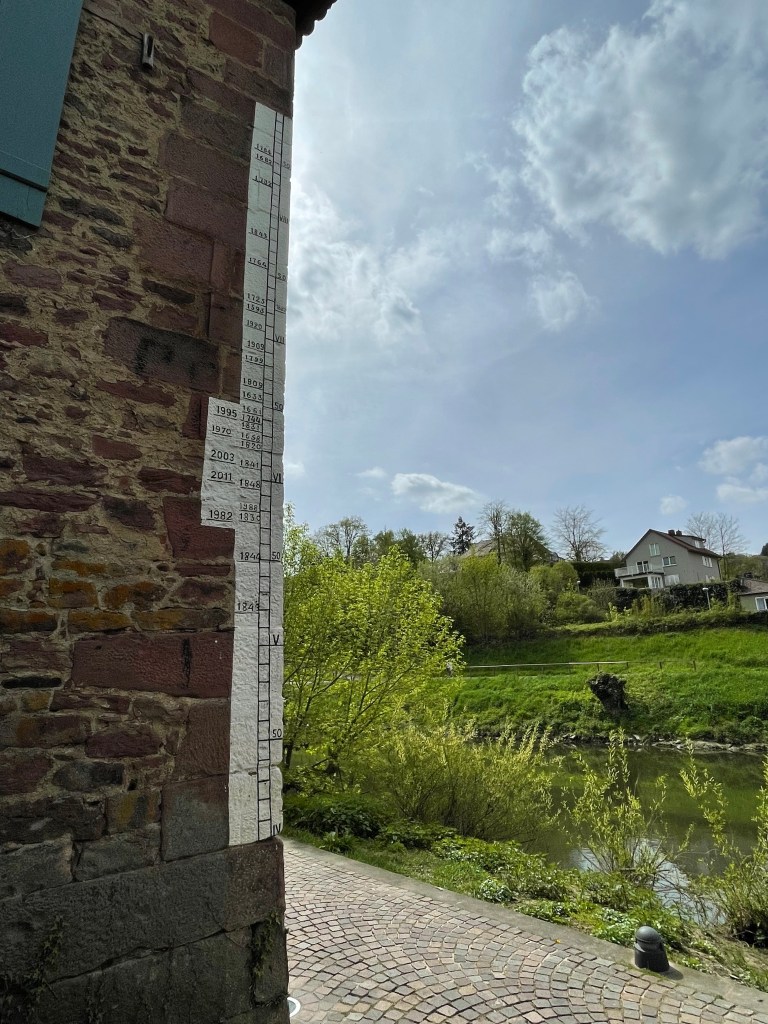
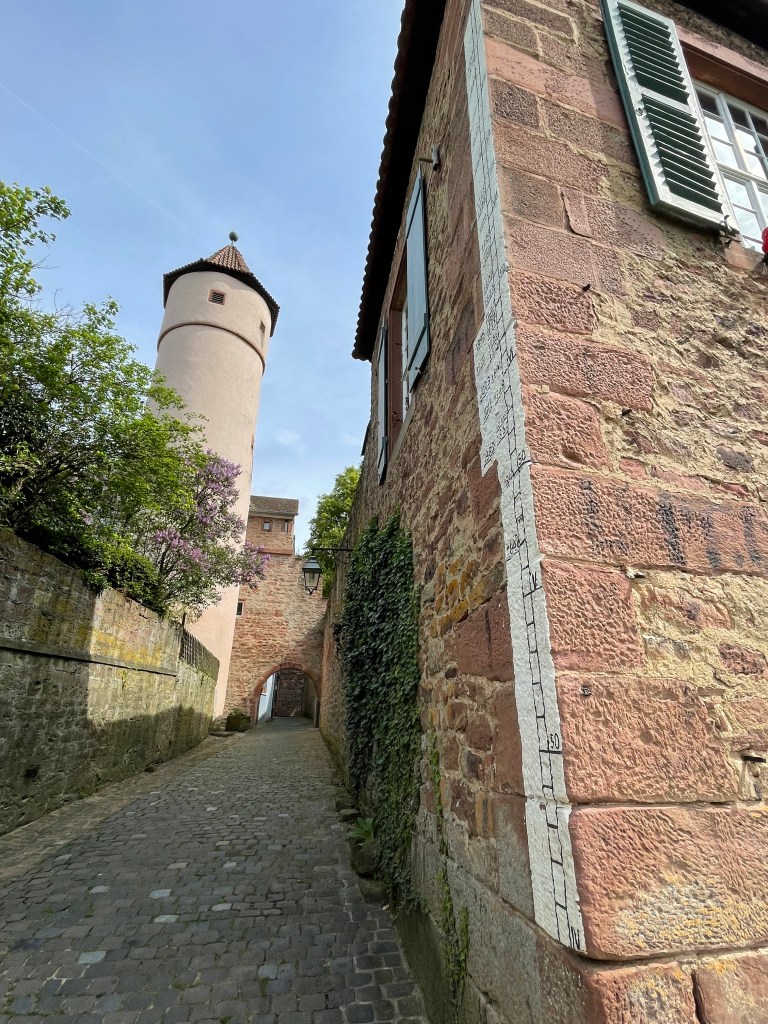
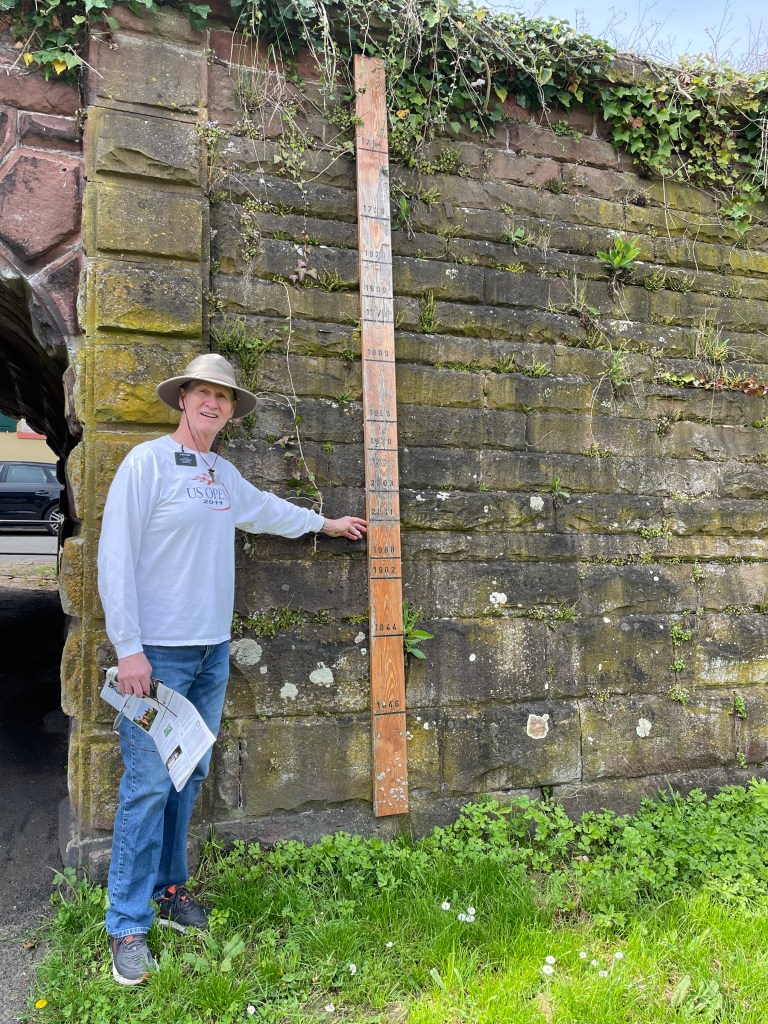
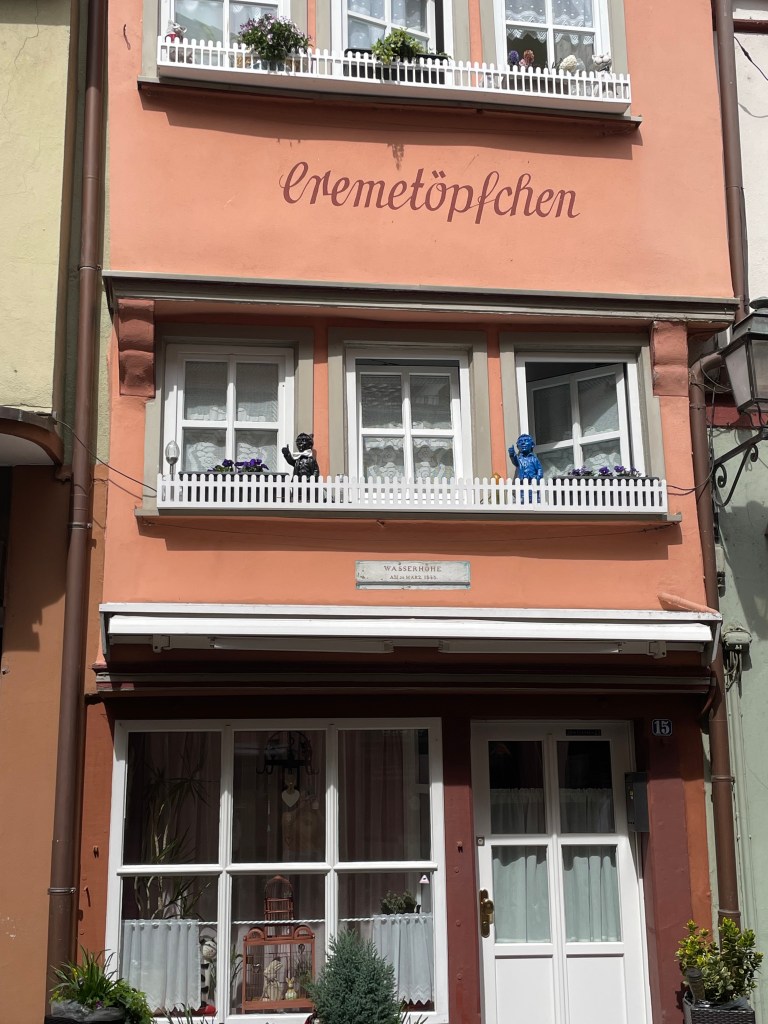
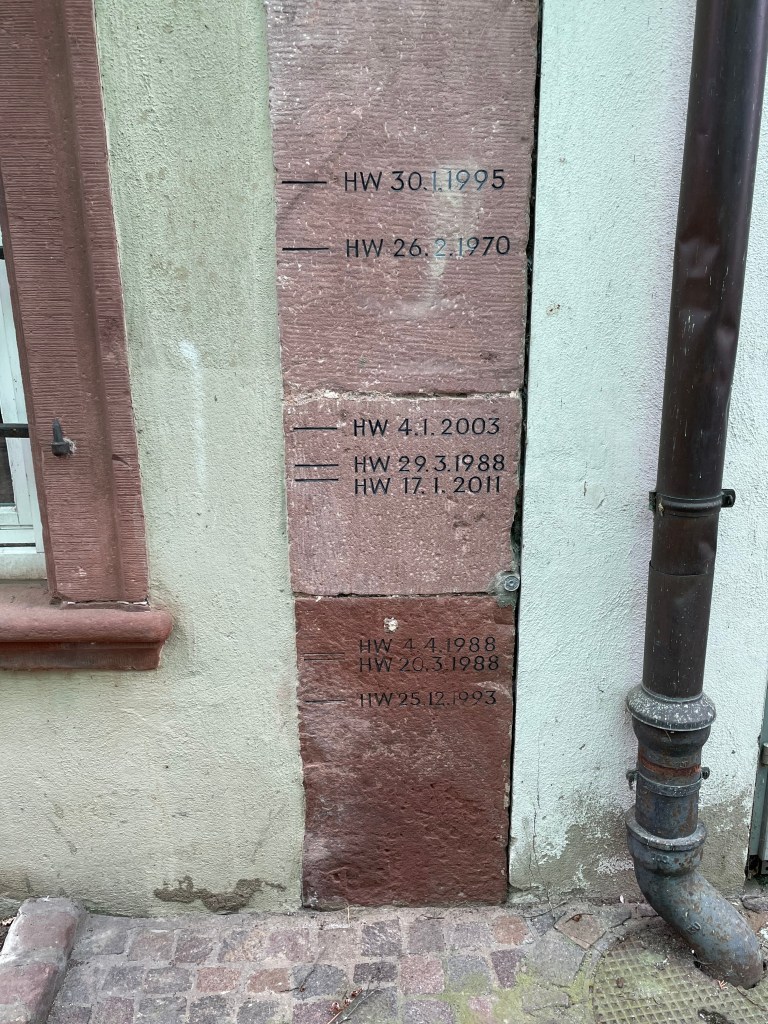
These are the flood marks on buildings in Wertheim. The years are marked and how high the water flowed. Amazing! You will notice several pics of water marks as you wander with me through the town. There were many buildings with the markings from floods through the centuries.
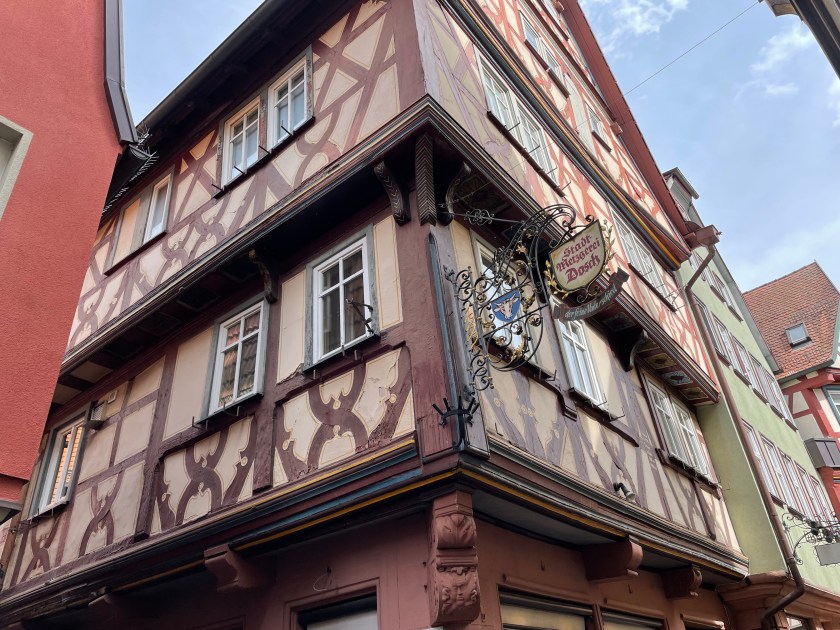
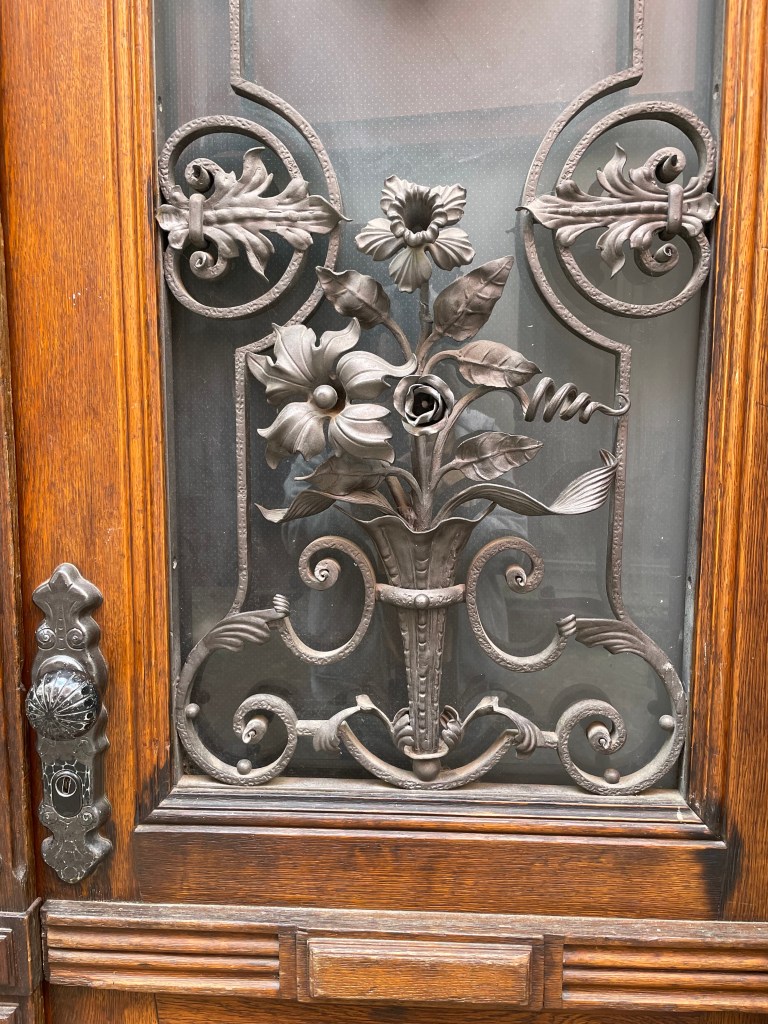
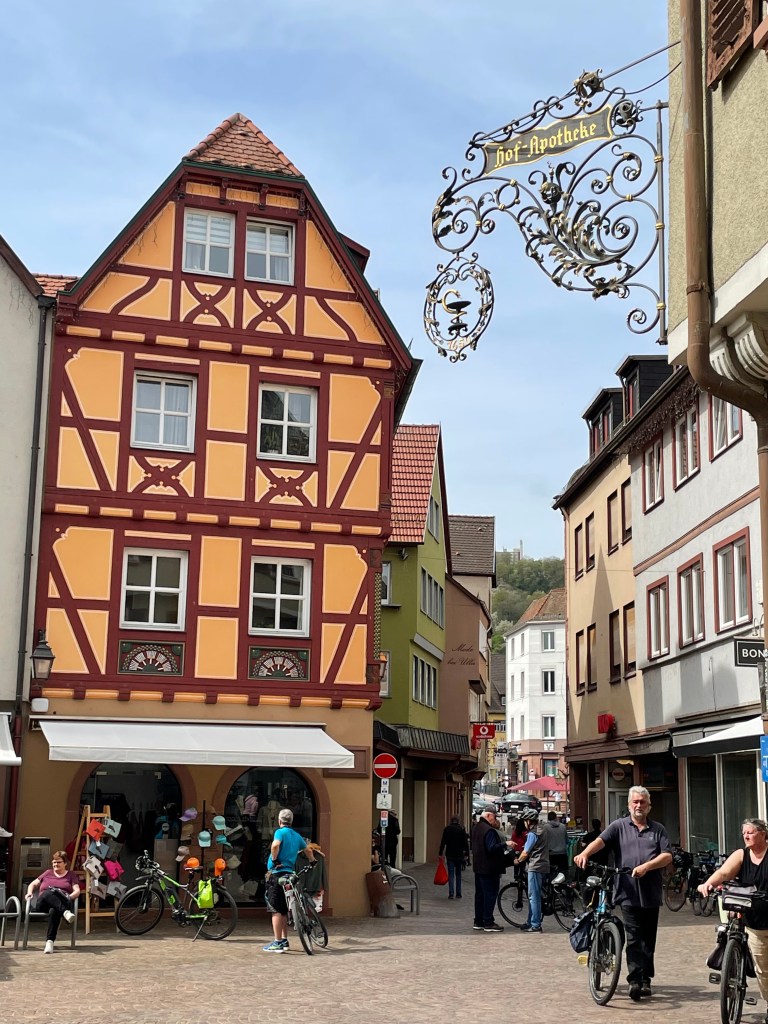
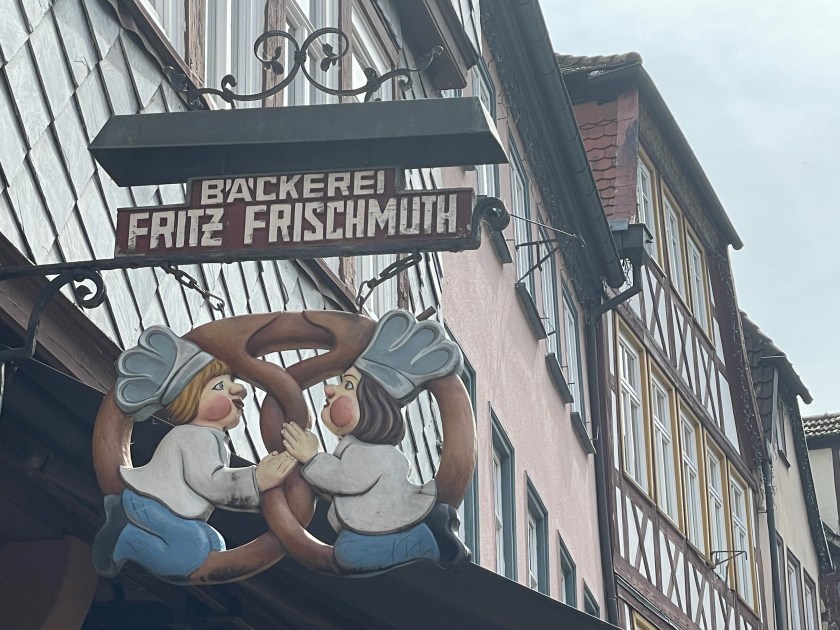
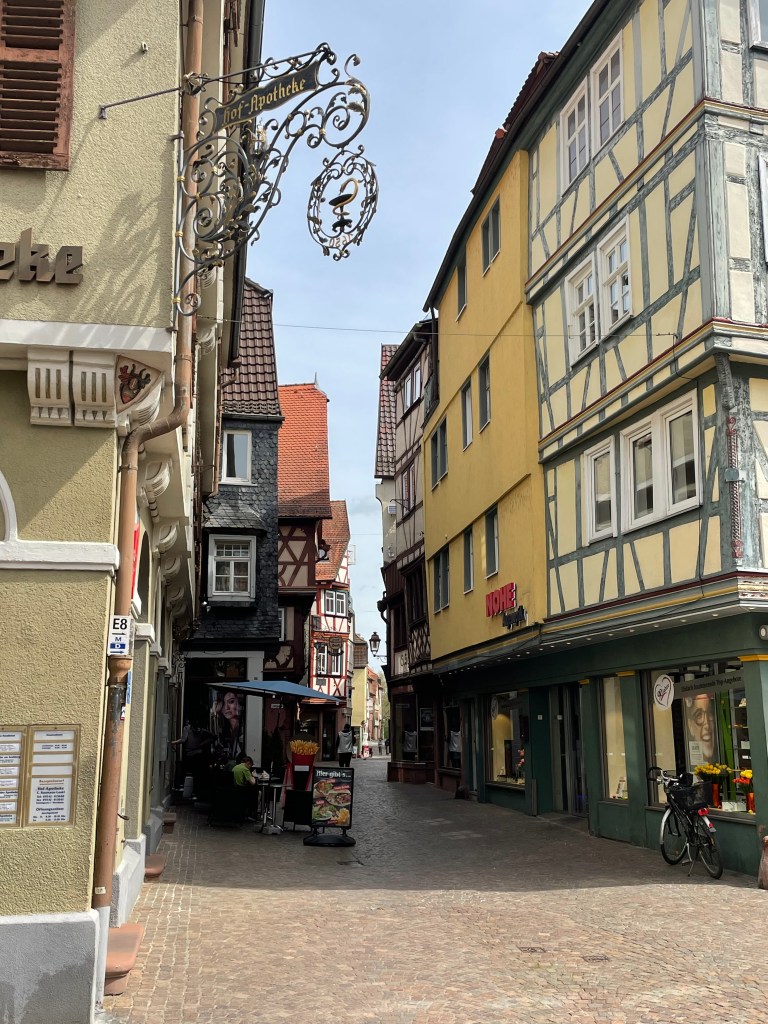
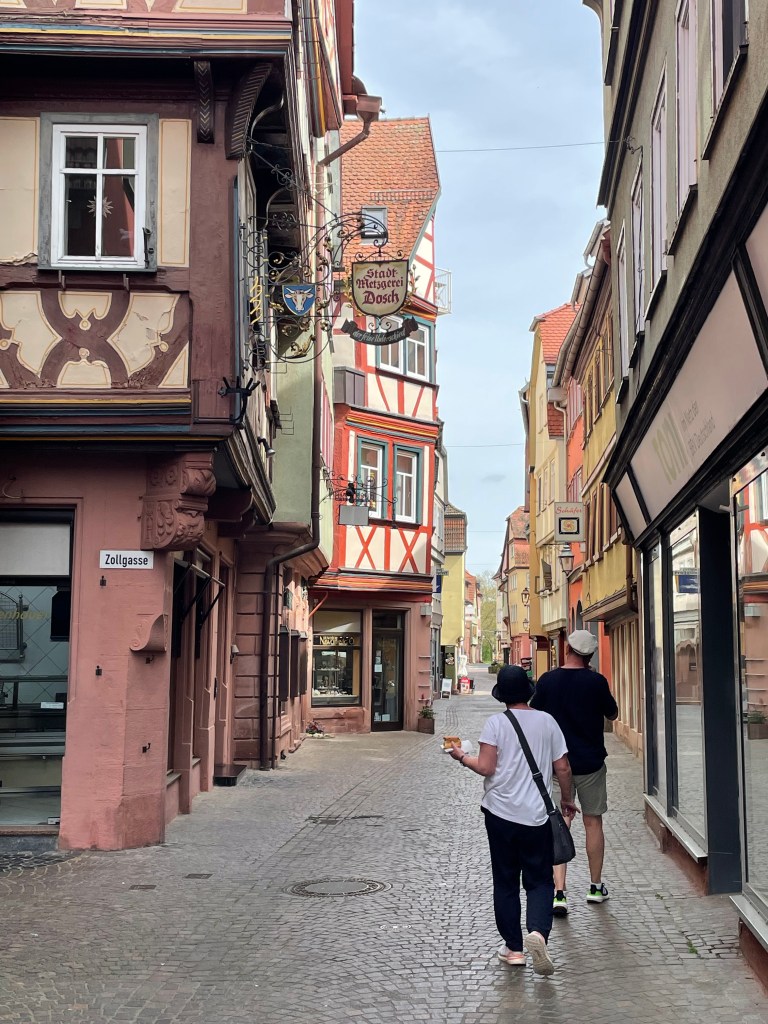
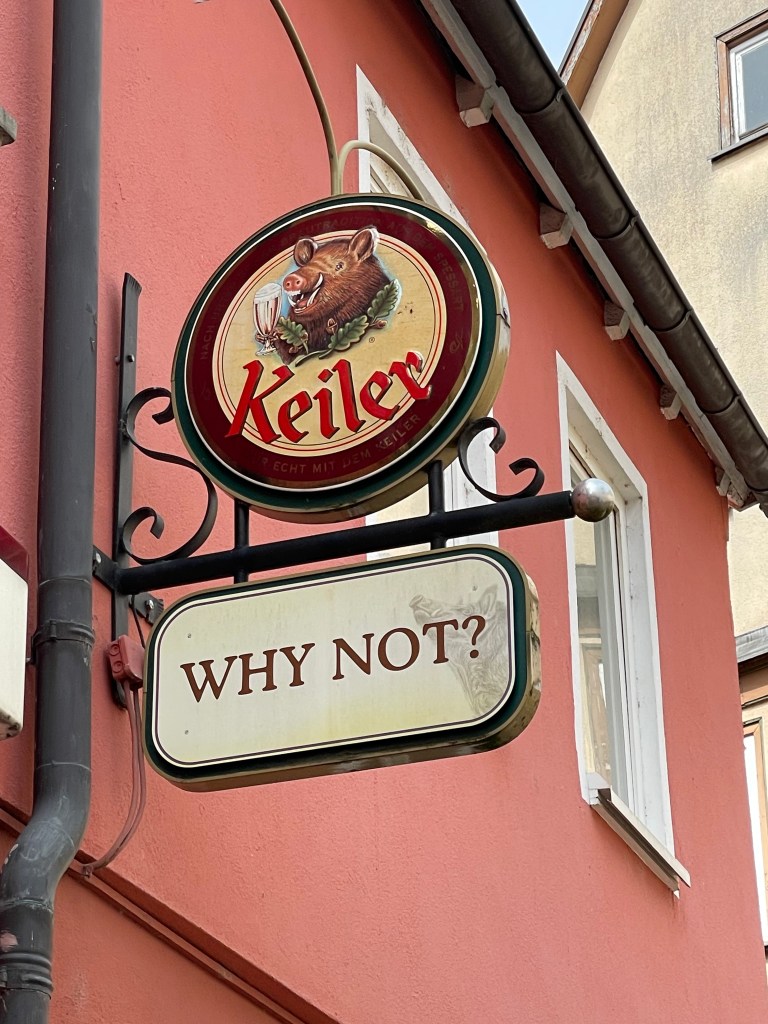
I love the fancy signs.
The big yellow Stiftskirche, or Collegiate Church is the anchor to the town.
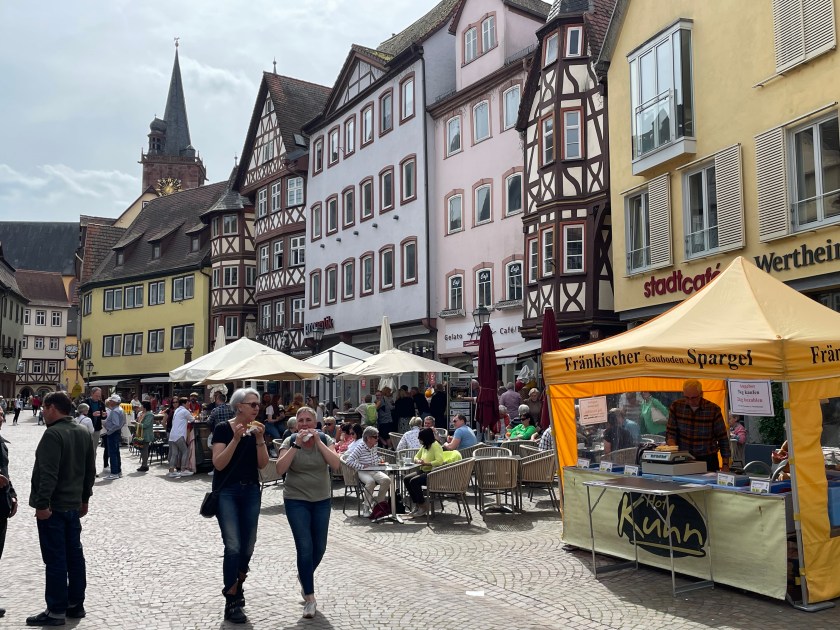
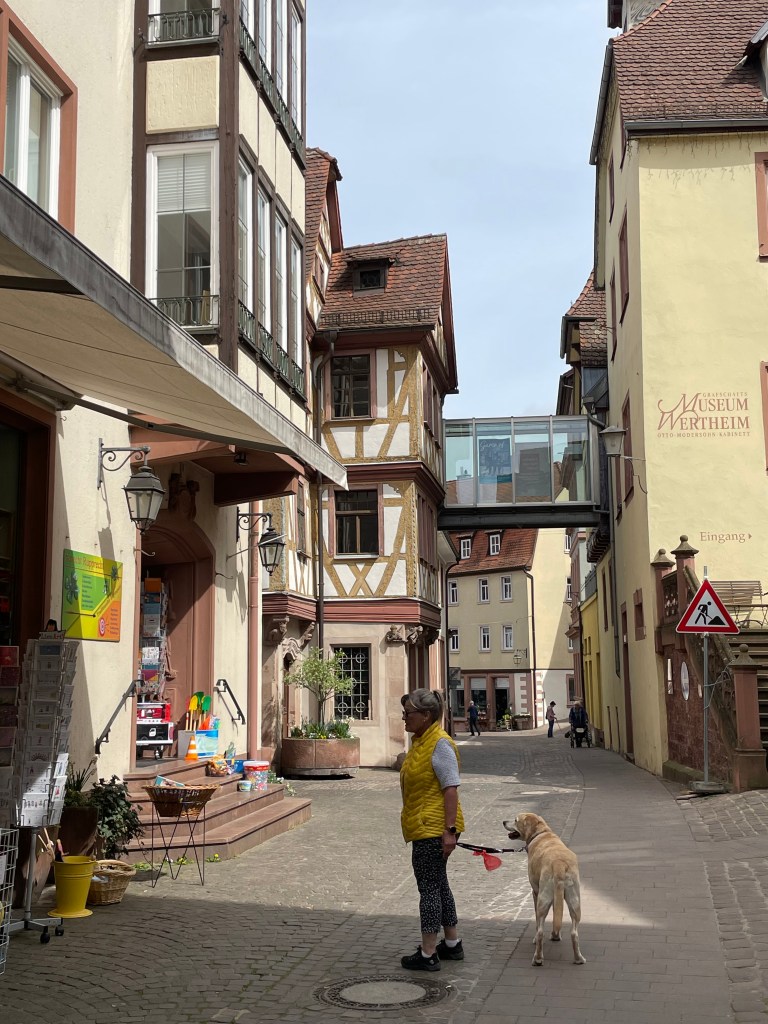
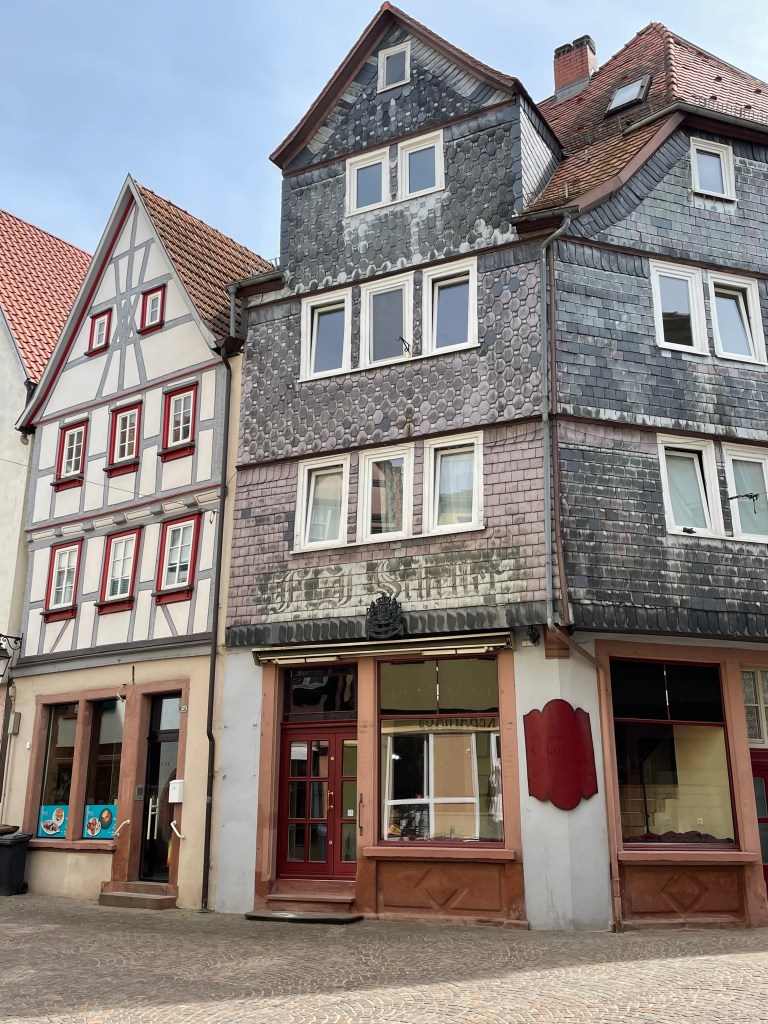
In the early 1500’s when the house on the left below and most of the others surrounding the square were built, taxes were levied based on the square footage of the ground floor. The owner of this building tried to beat the system by making his street level entrance as narrow as possible, and then increasing each subsequent floor by another foot or so.
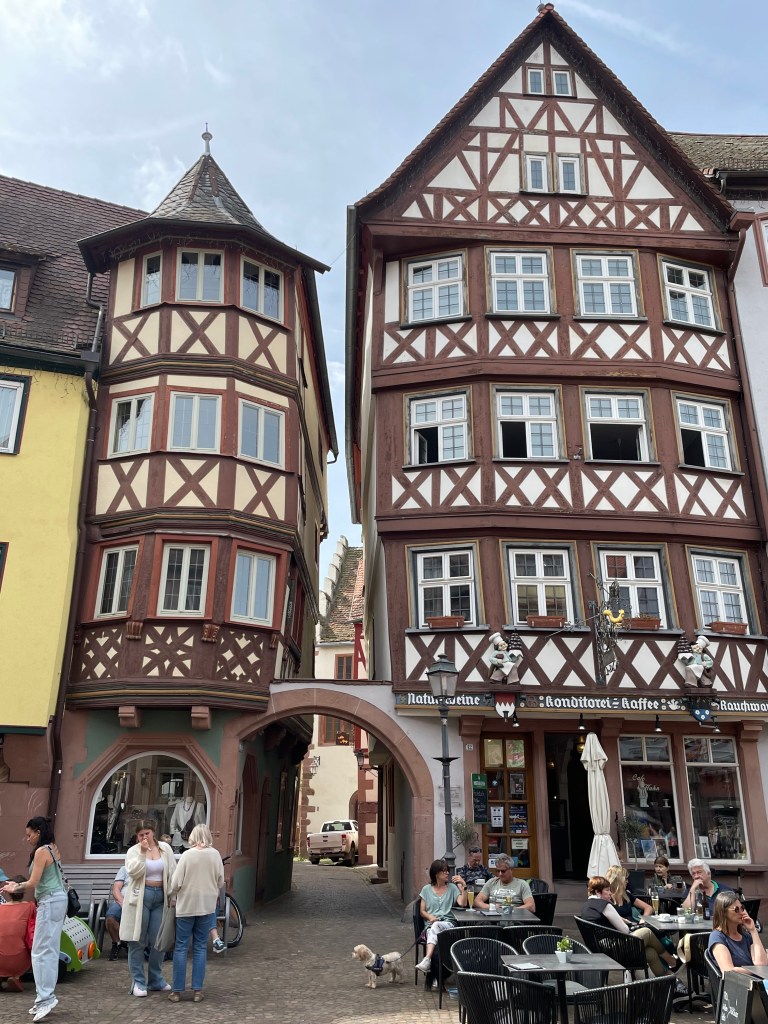
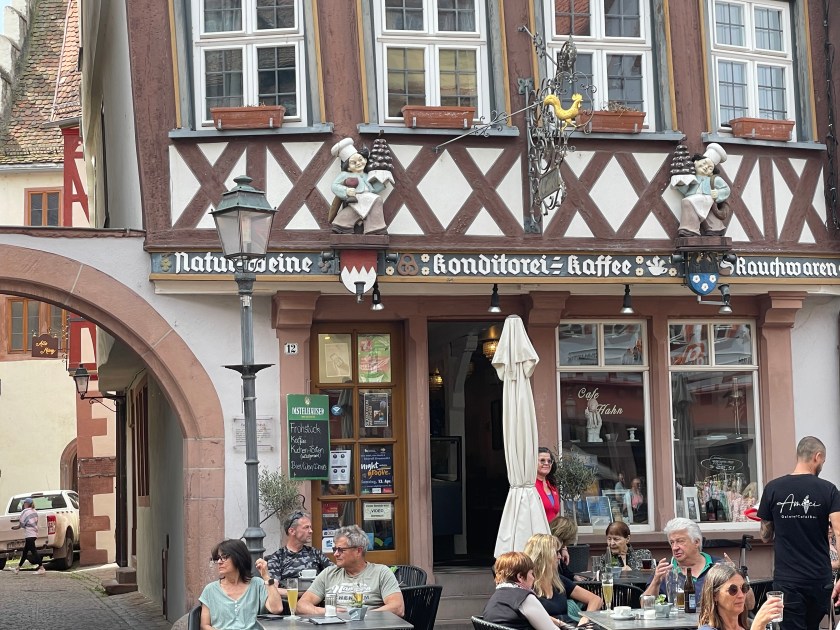
Many of the homes stepped out as they went up.
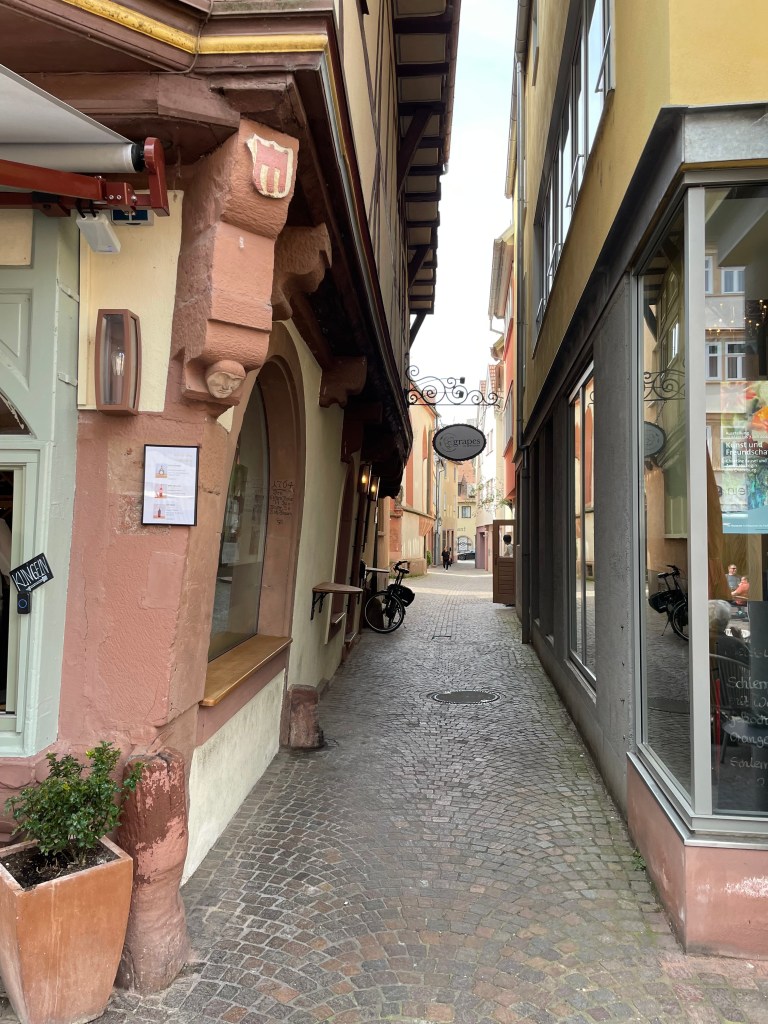
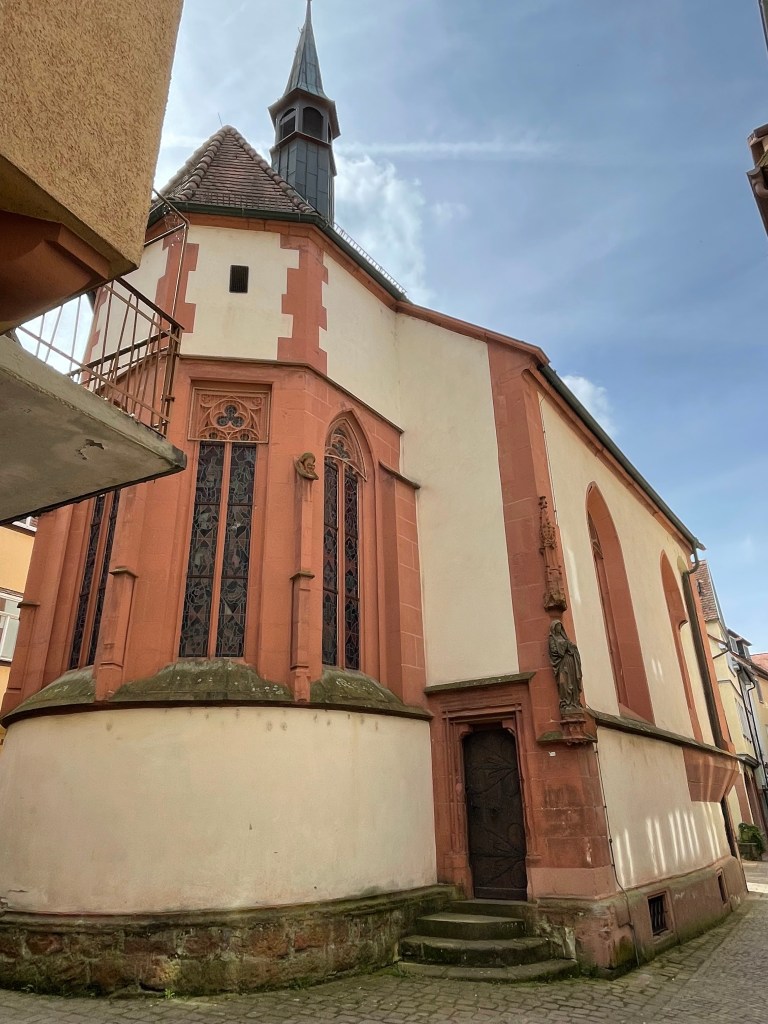
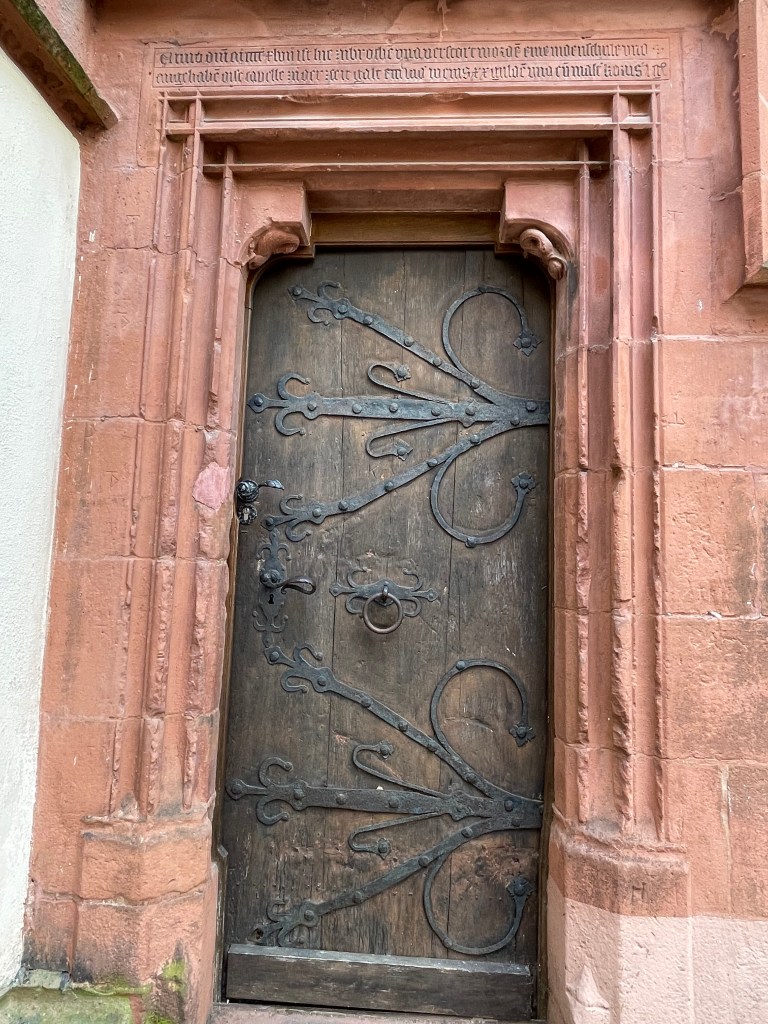
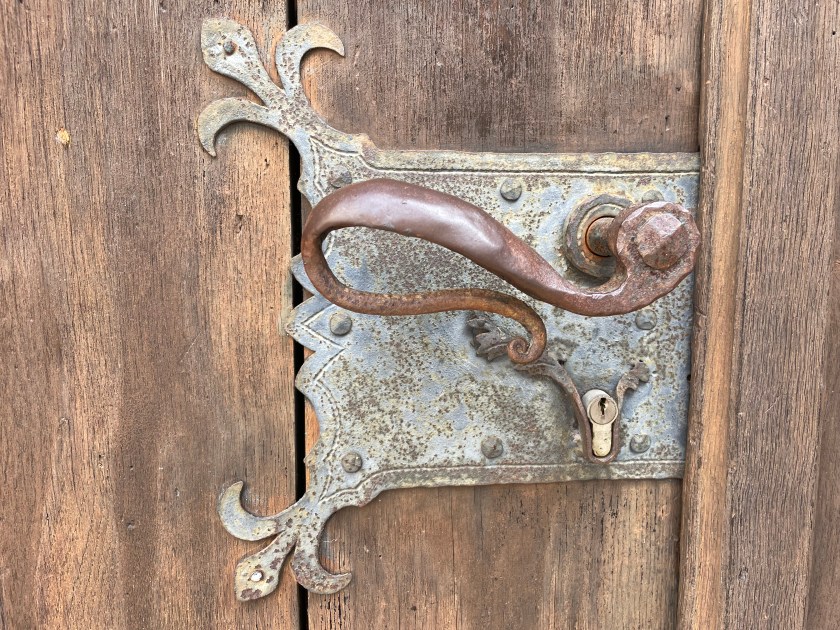
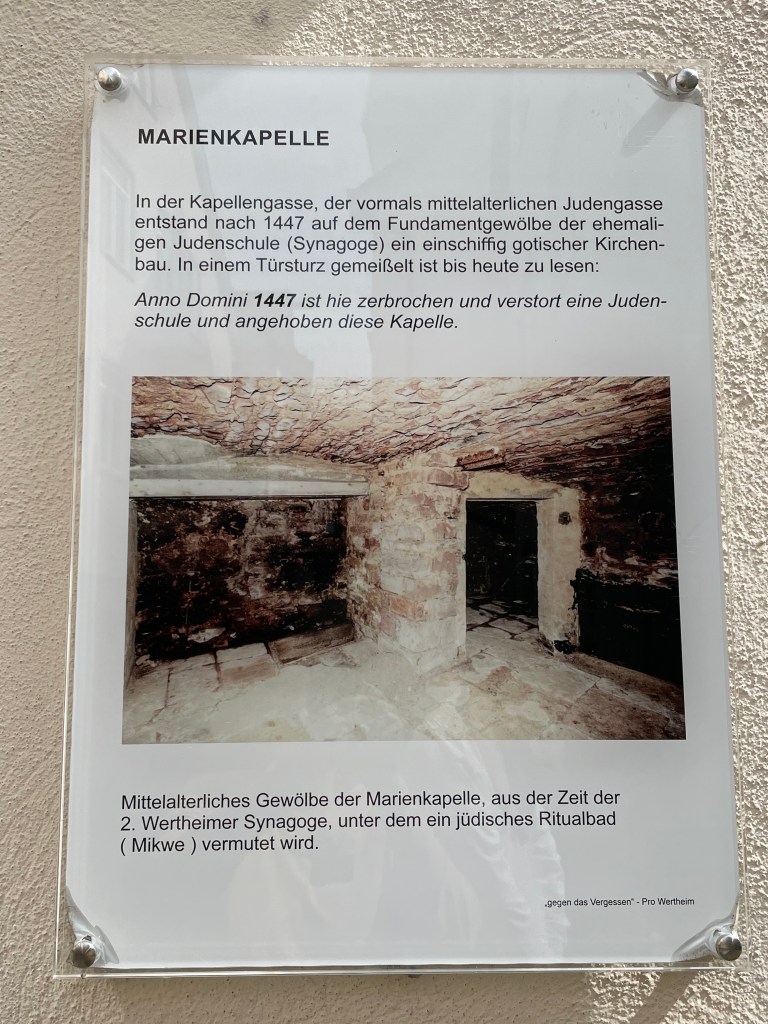
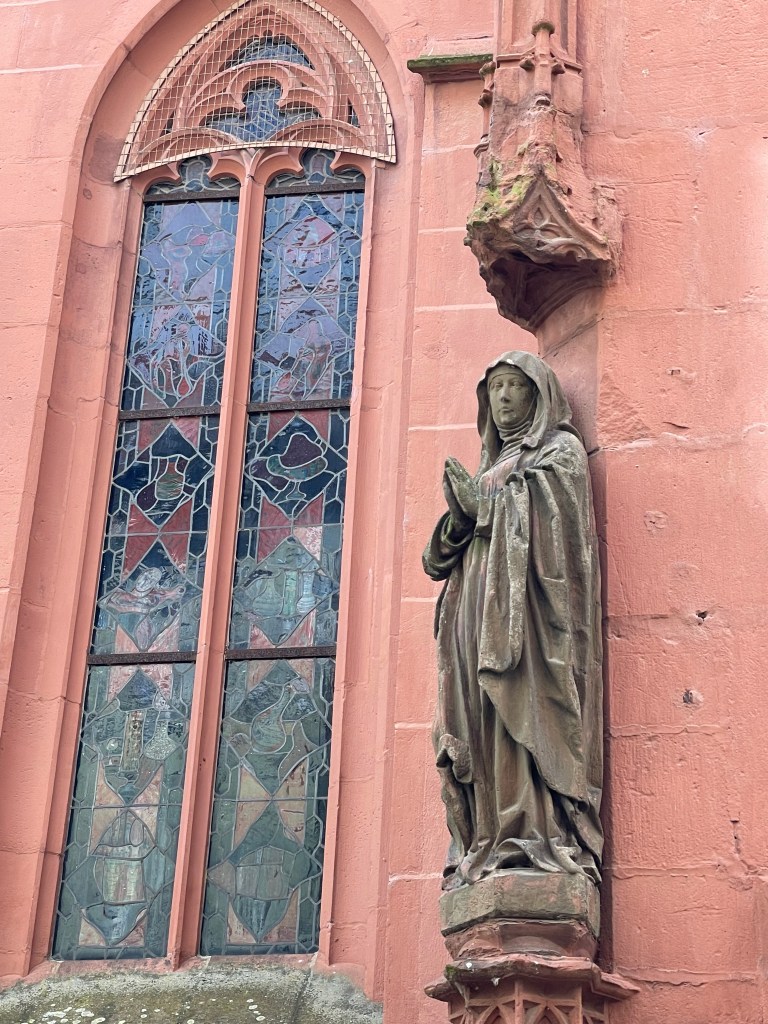
A Mikvah Jewish bath was found in excavations under the Marien Church chappel.
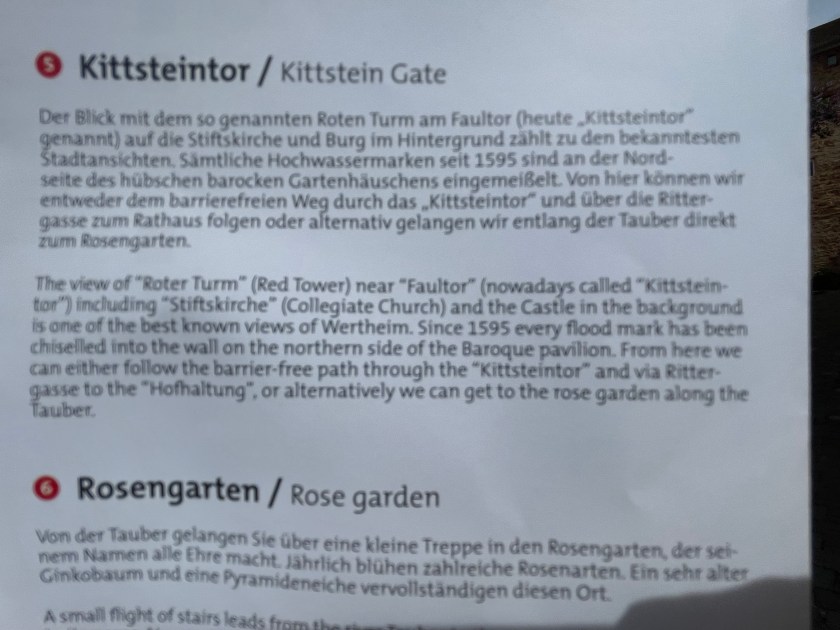
More water marks–the oldest dated 1595!
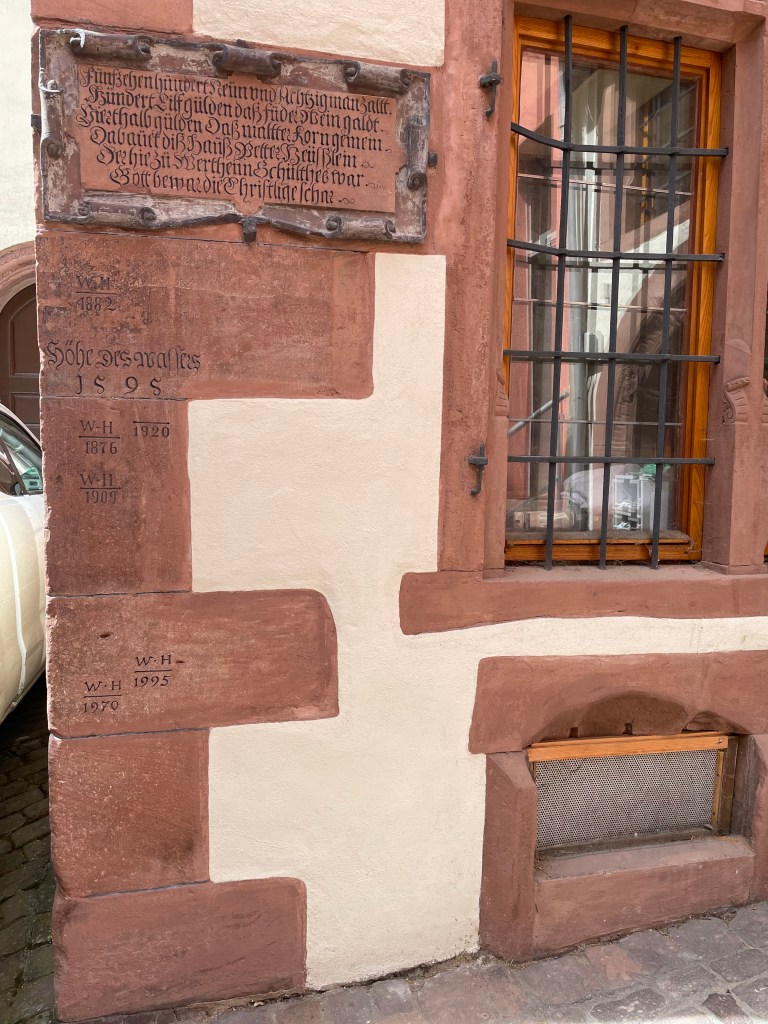
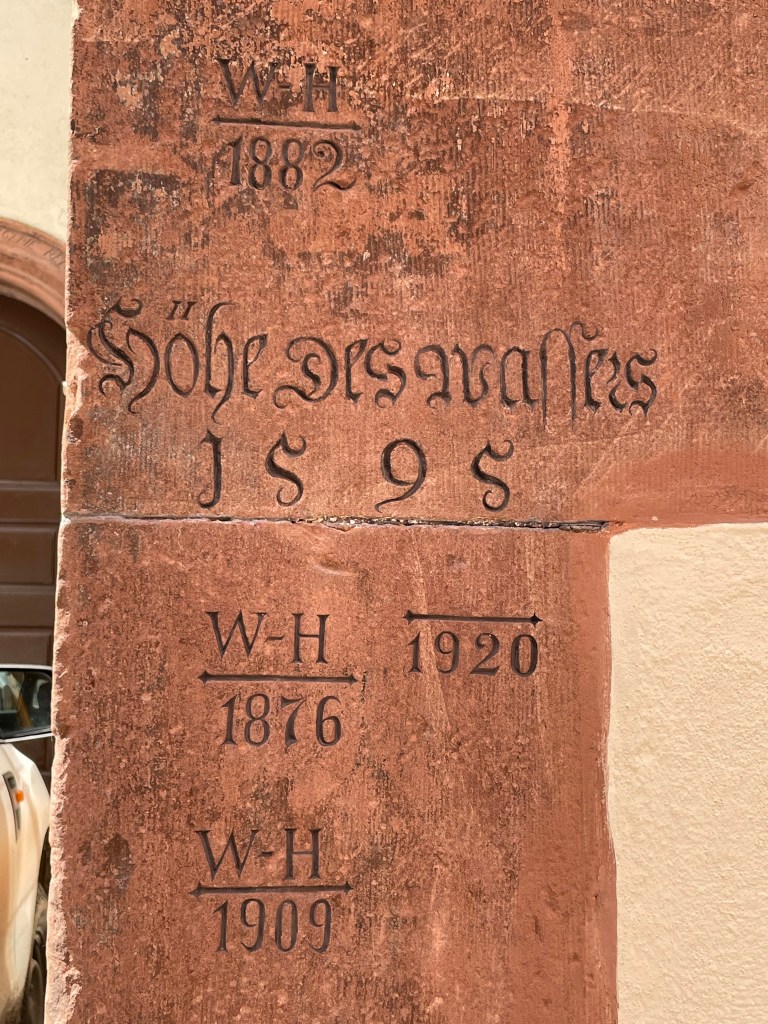
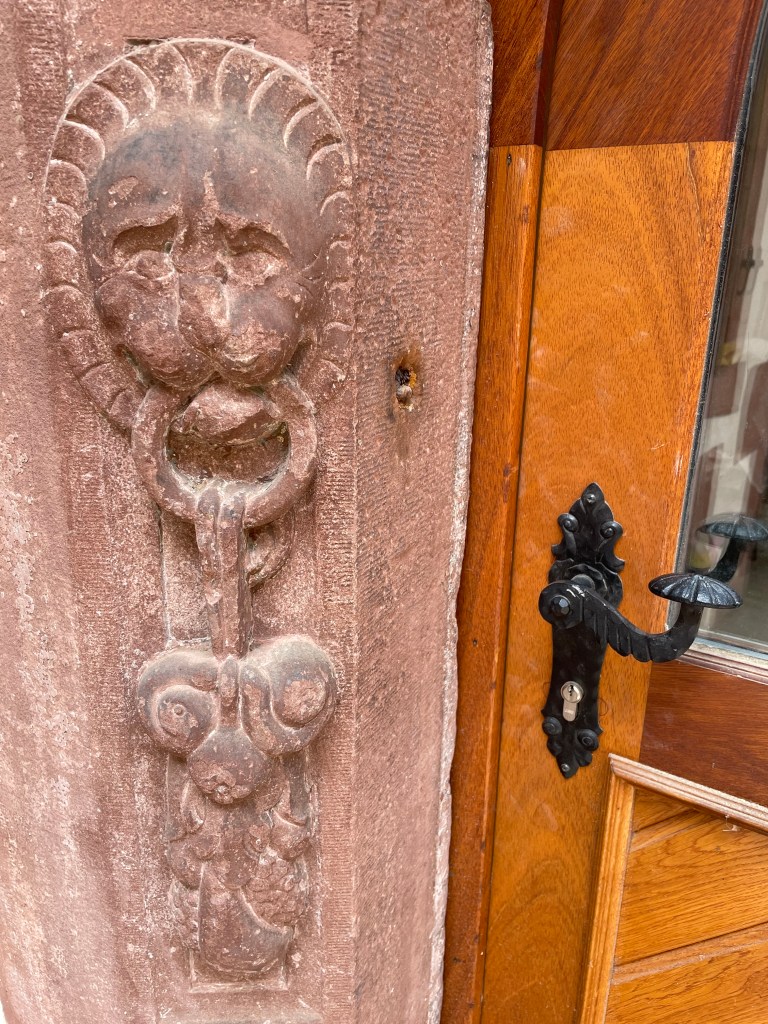
There was flooding here as recent as a few years ago. Over the years, the street level of the town has been raised a few feet, making some door entrances a little tricky.
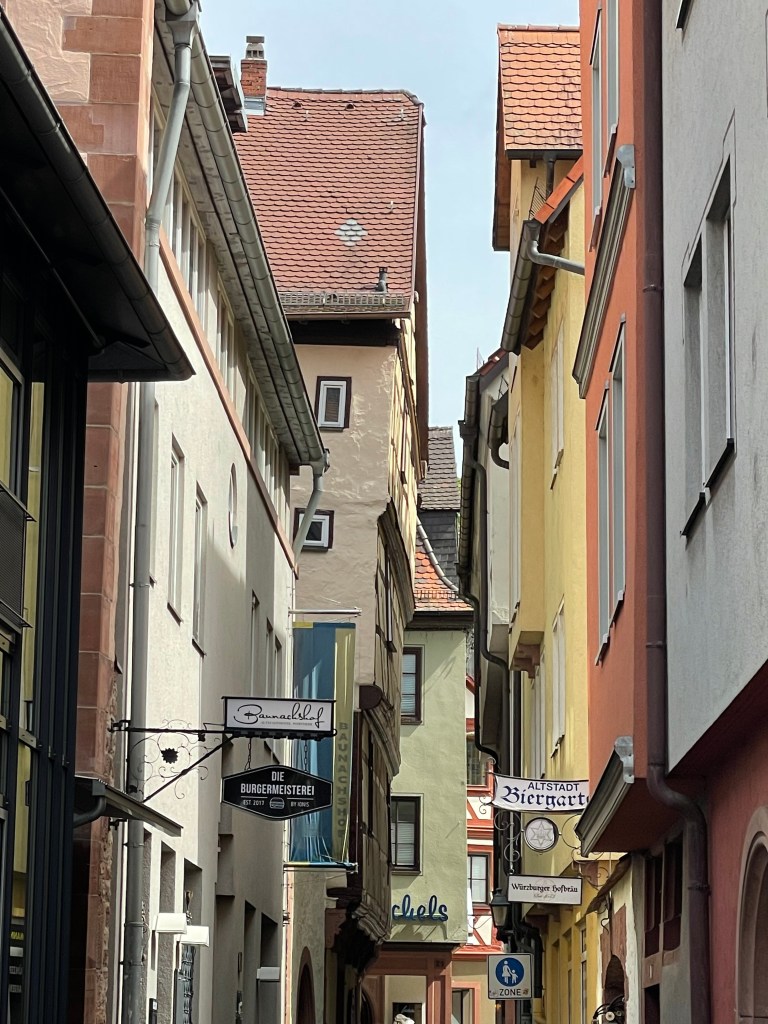
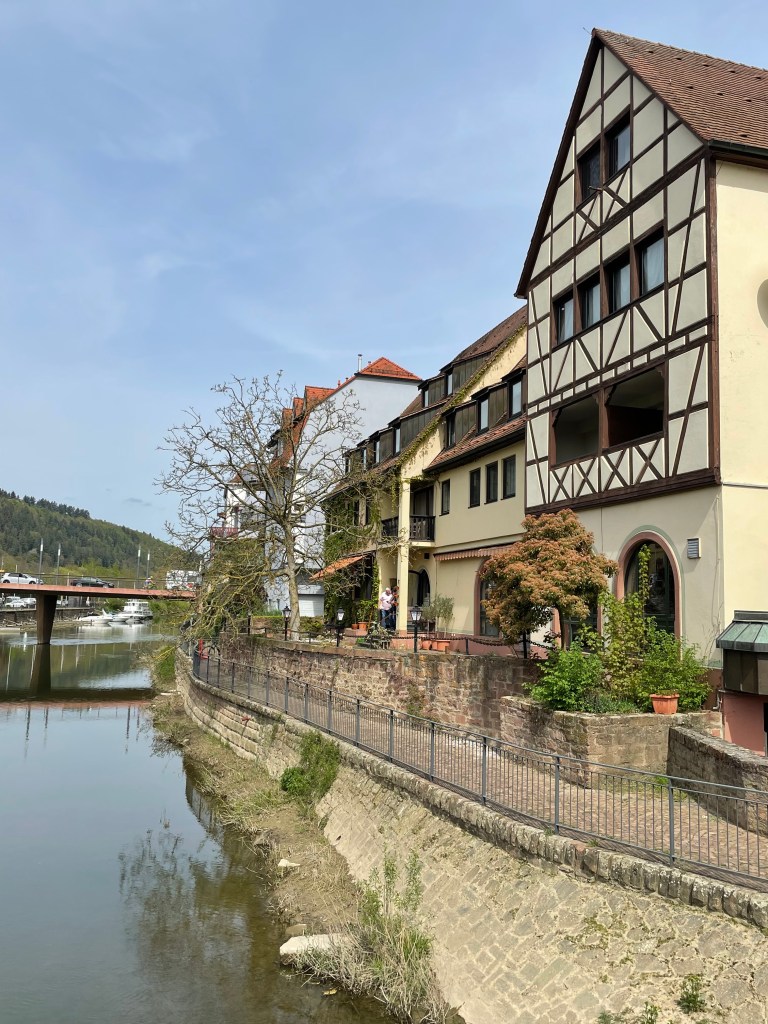
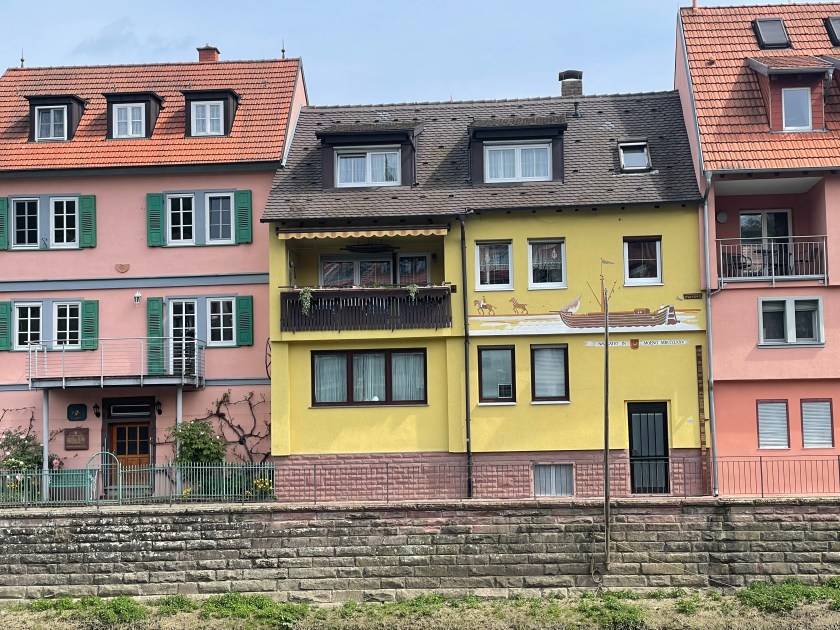
The edge of this building by the river also has an amazing history of the flood levels:
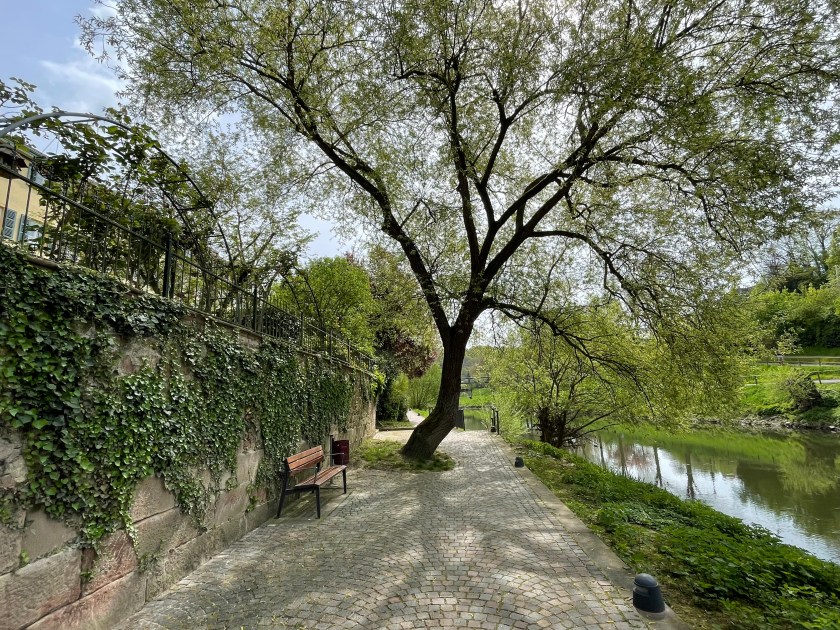
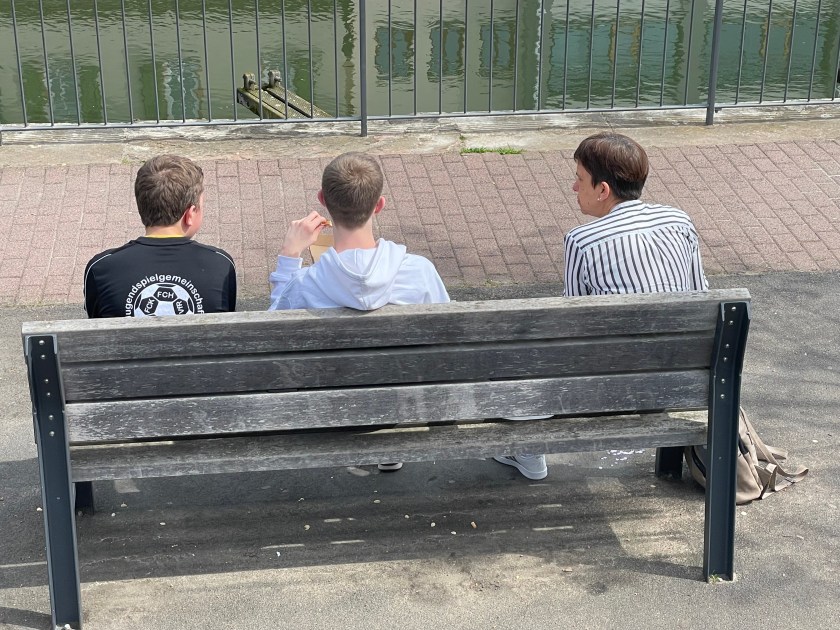
In my perfect world, there will always be sitting places like this one:
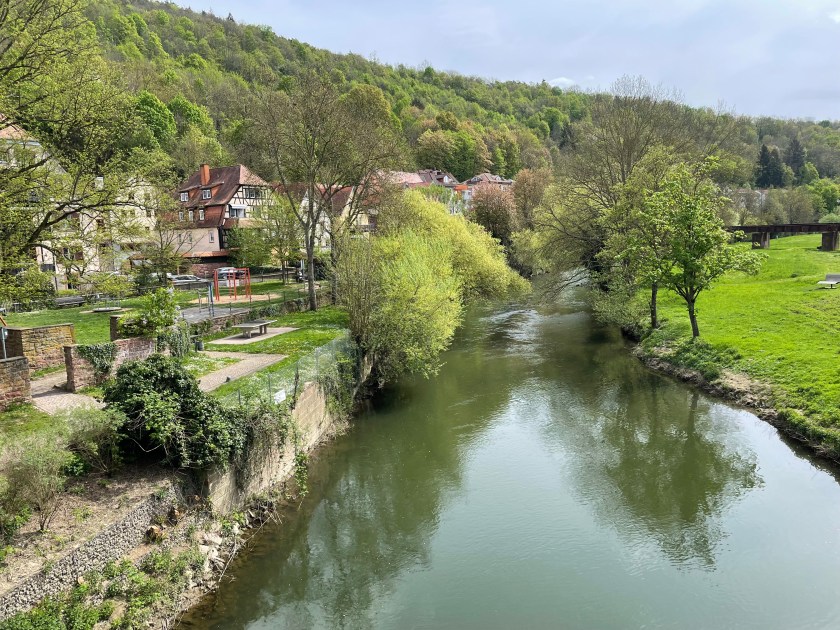
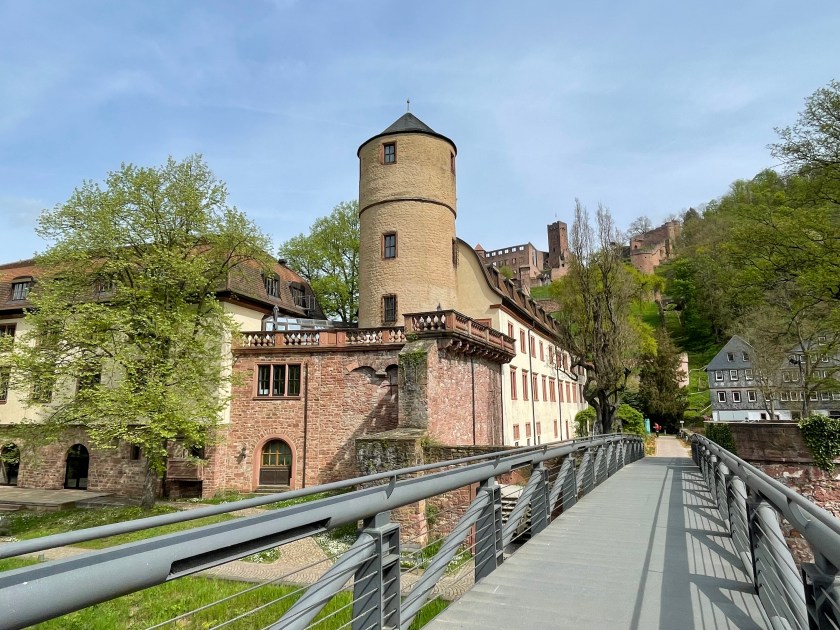
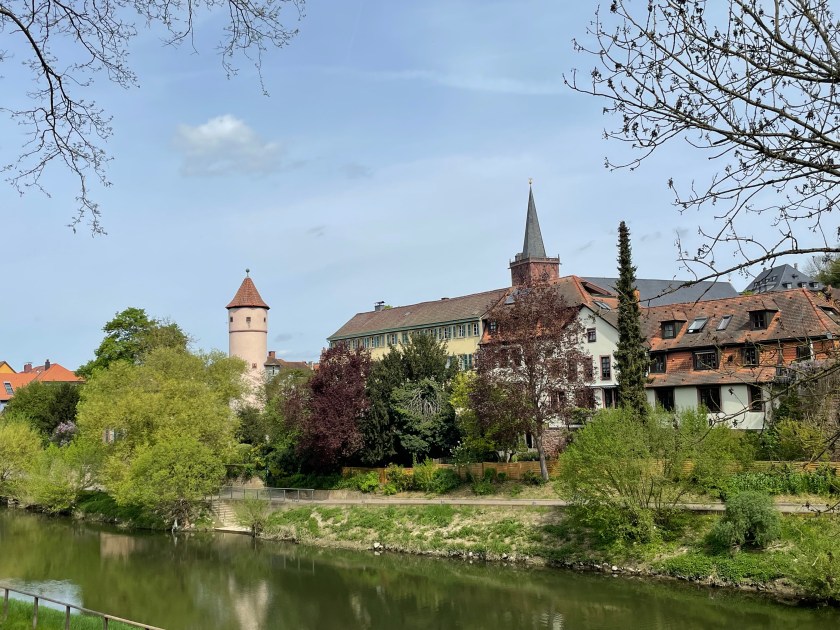
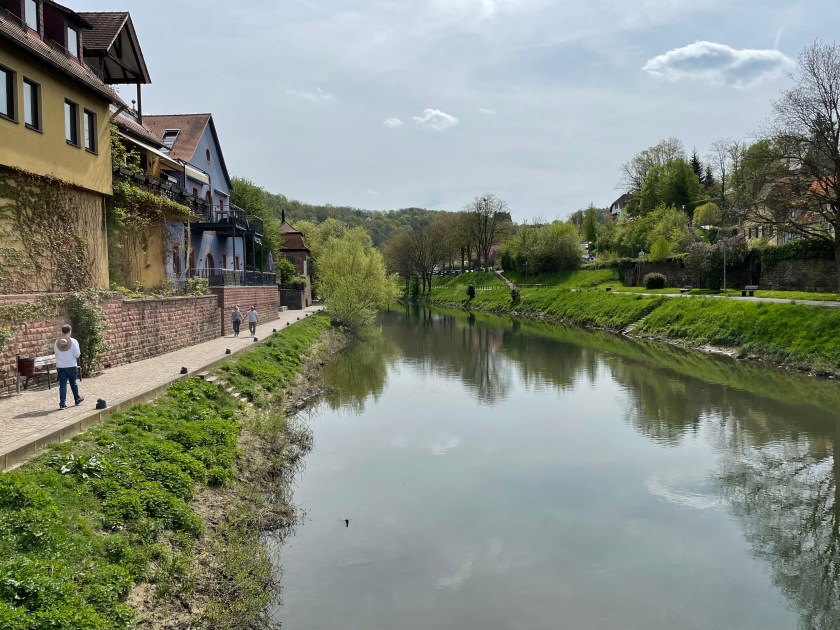
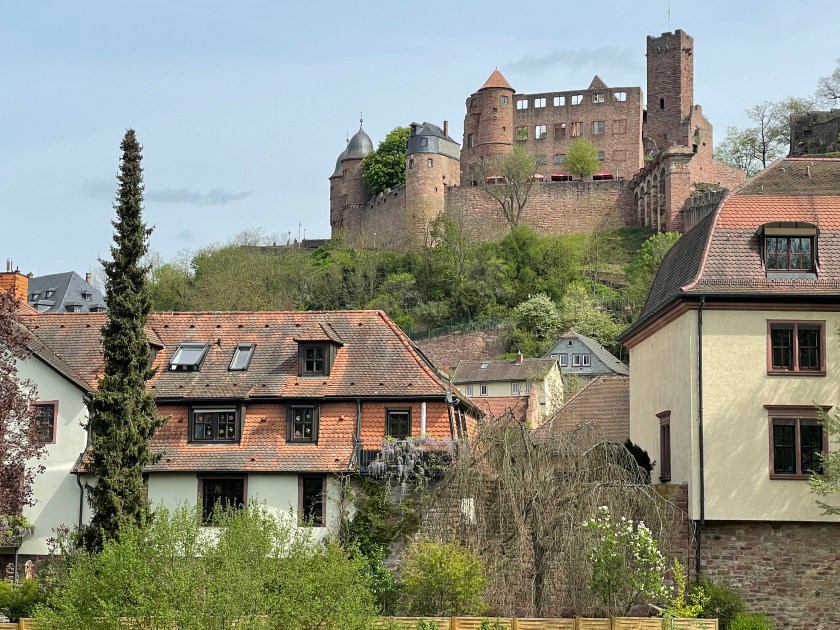
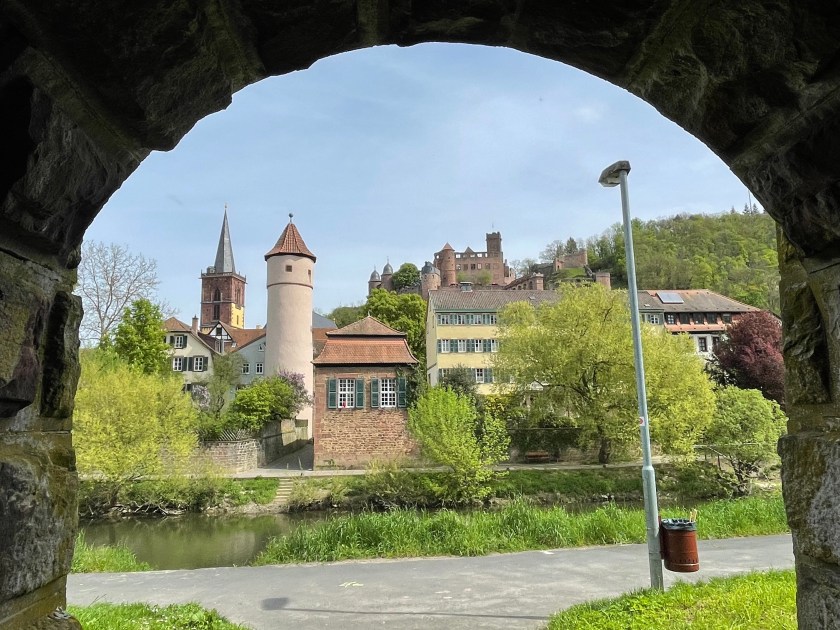
The view of the castle ruins from the river:
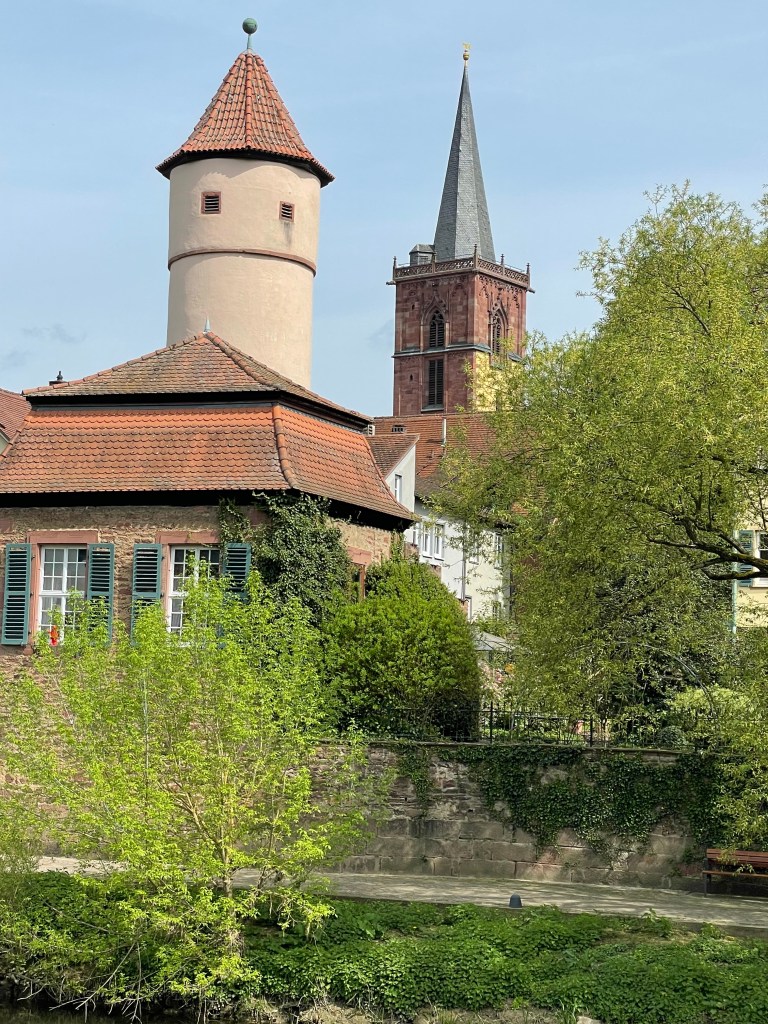
More water marks:
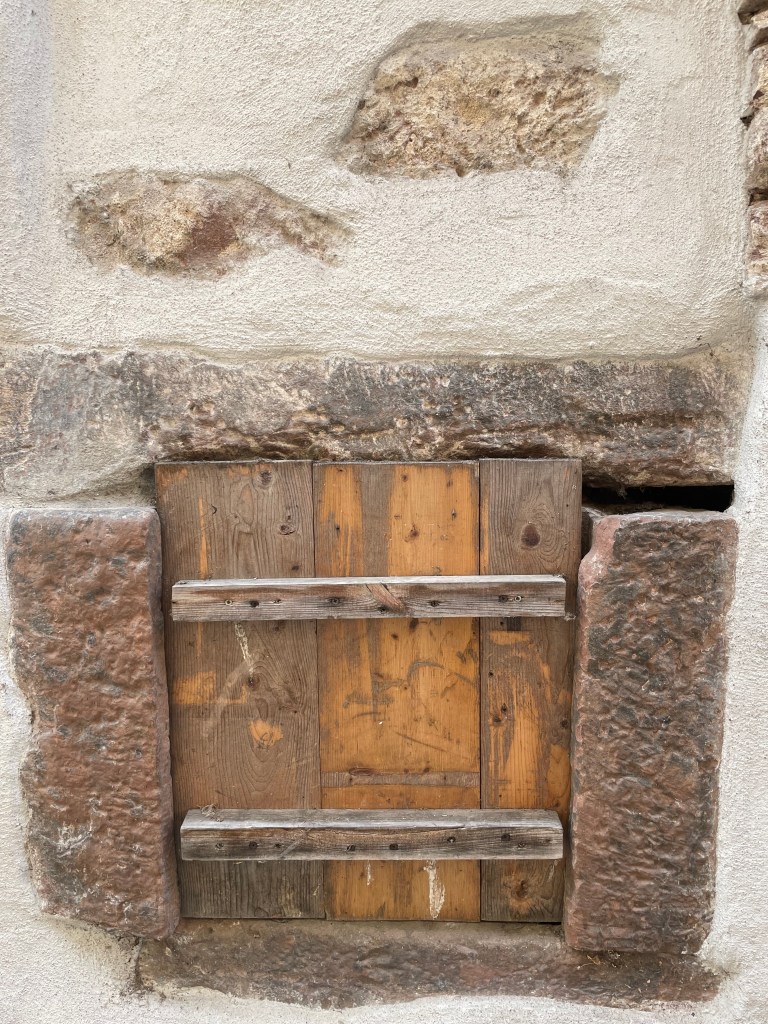
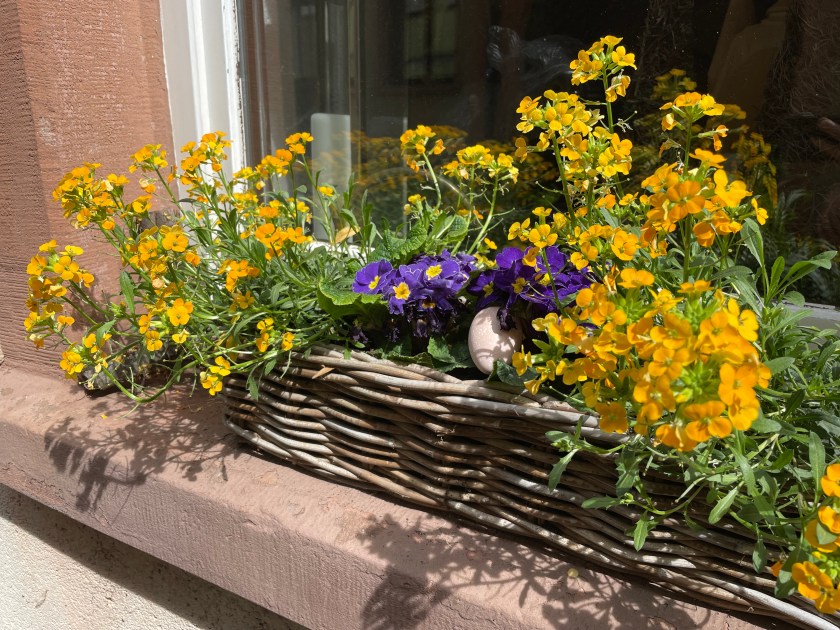
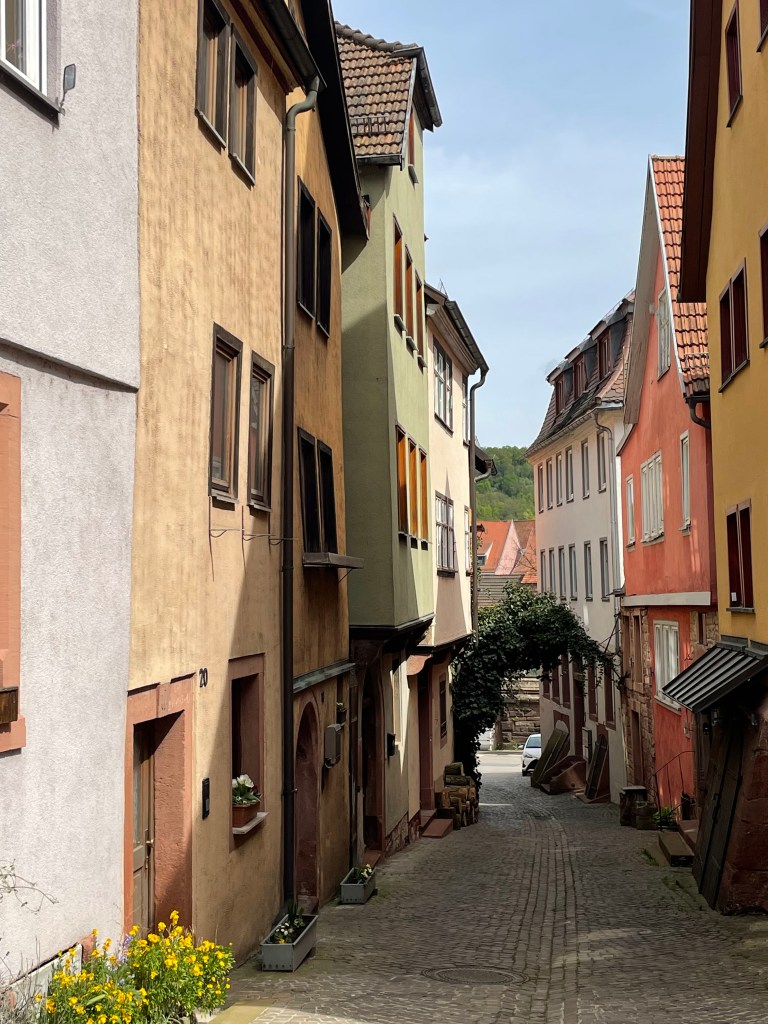
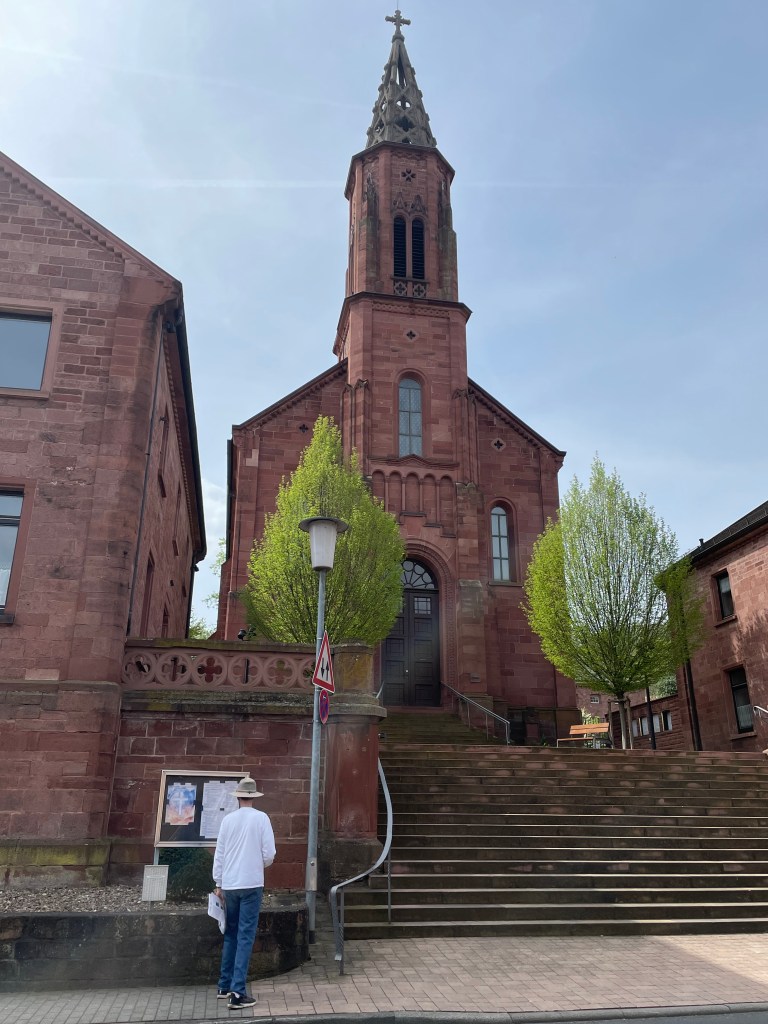
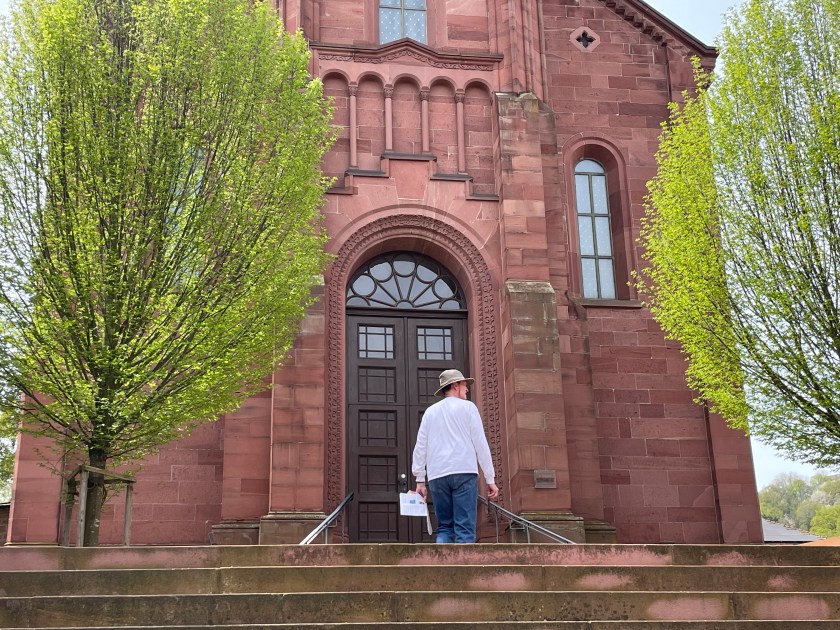
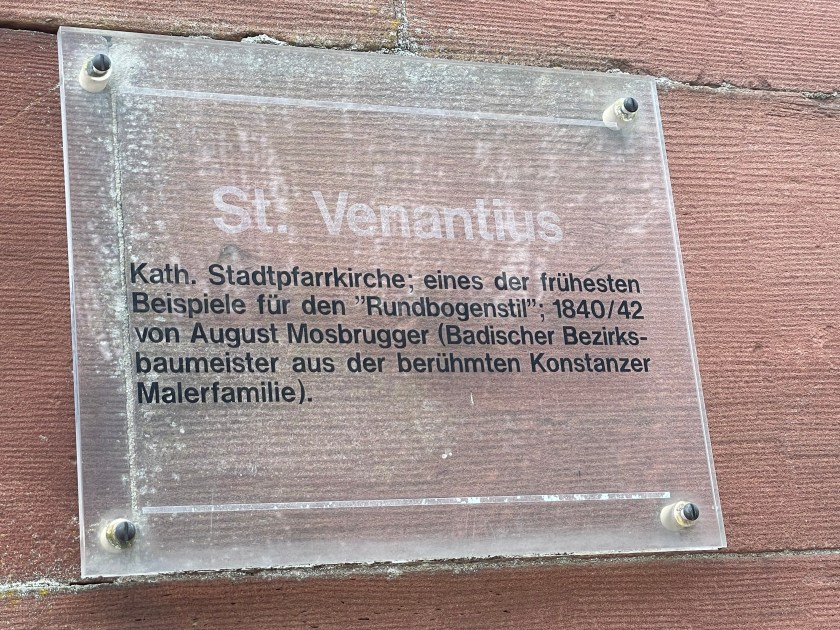
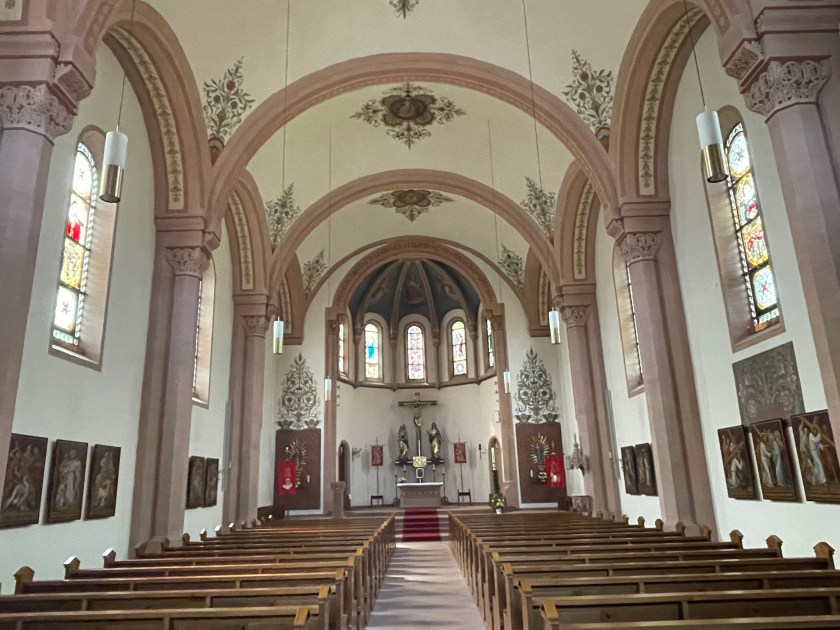
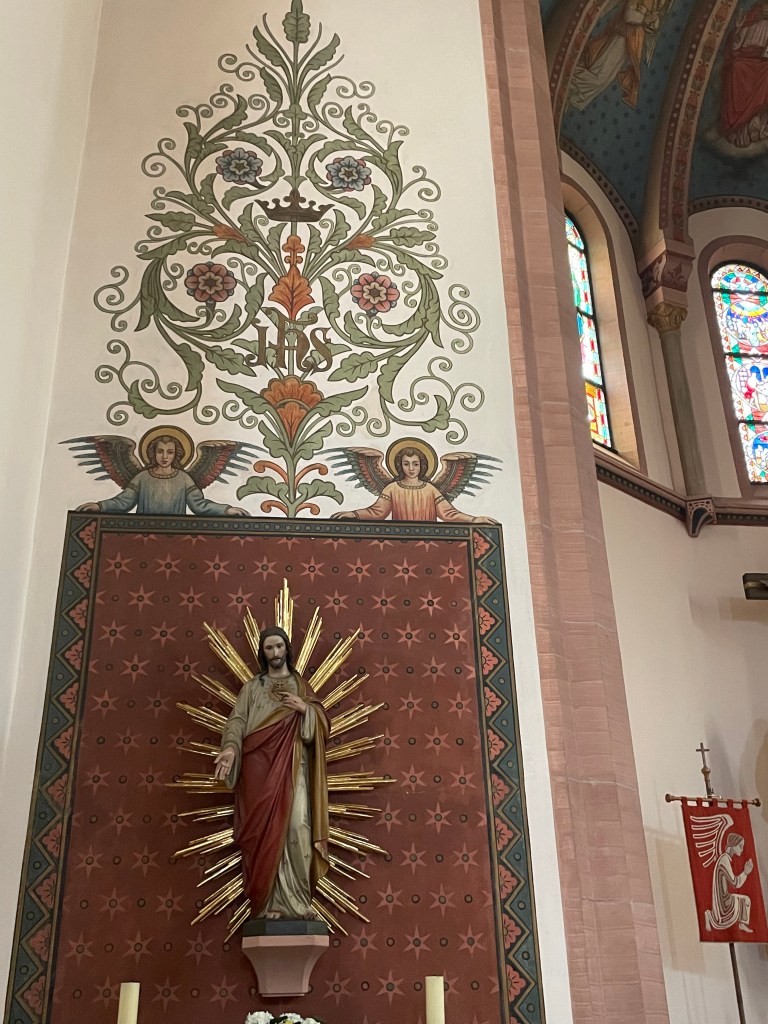
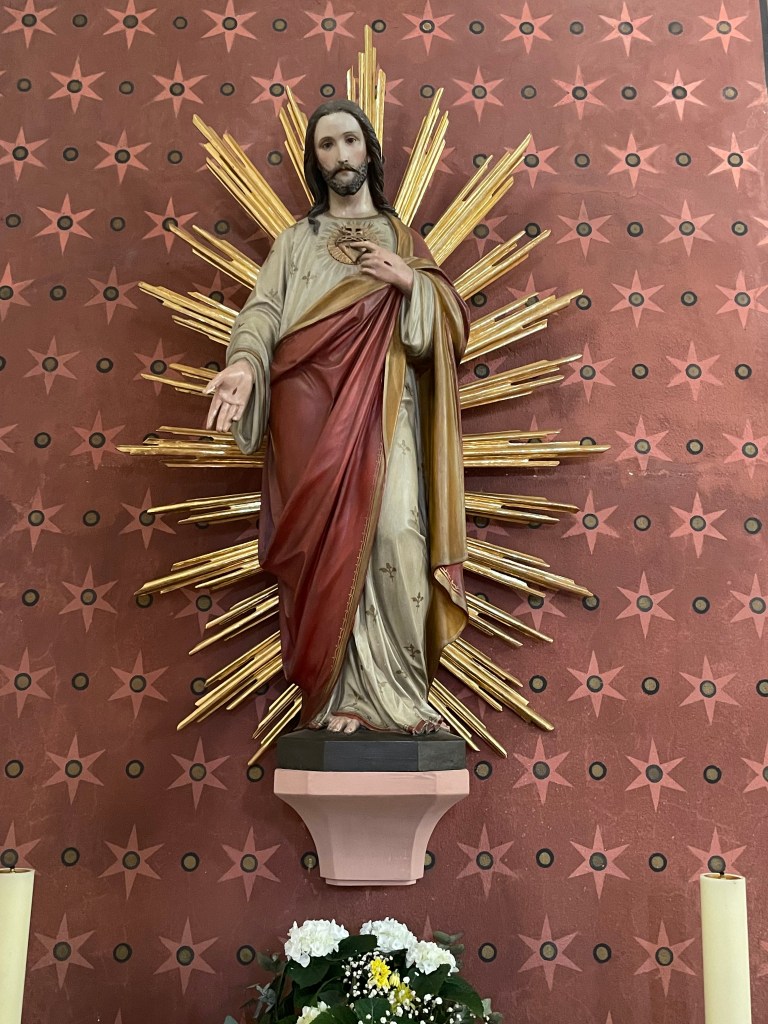
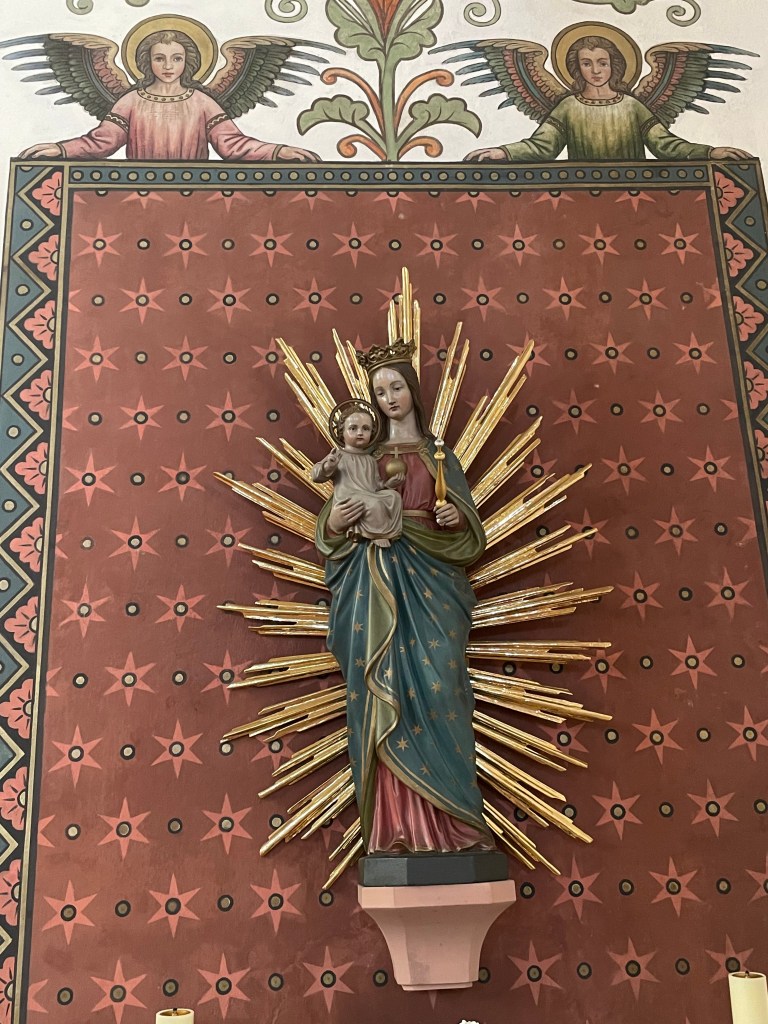
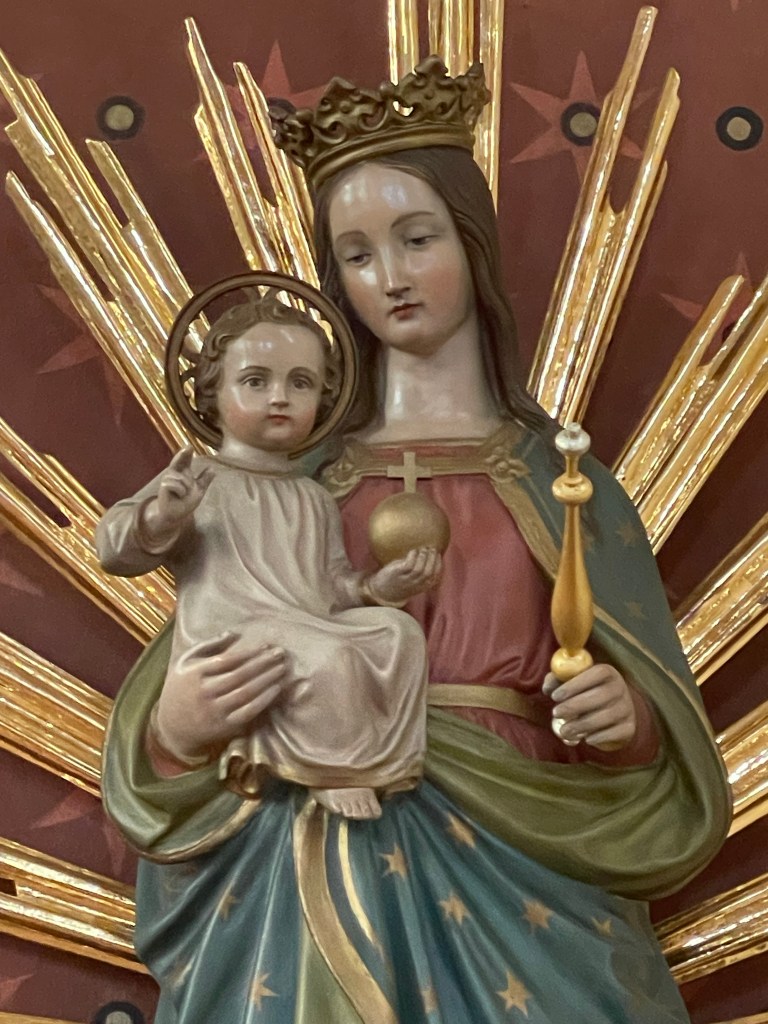
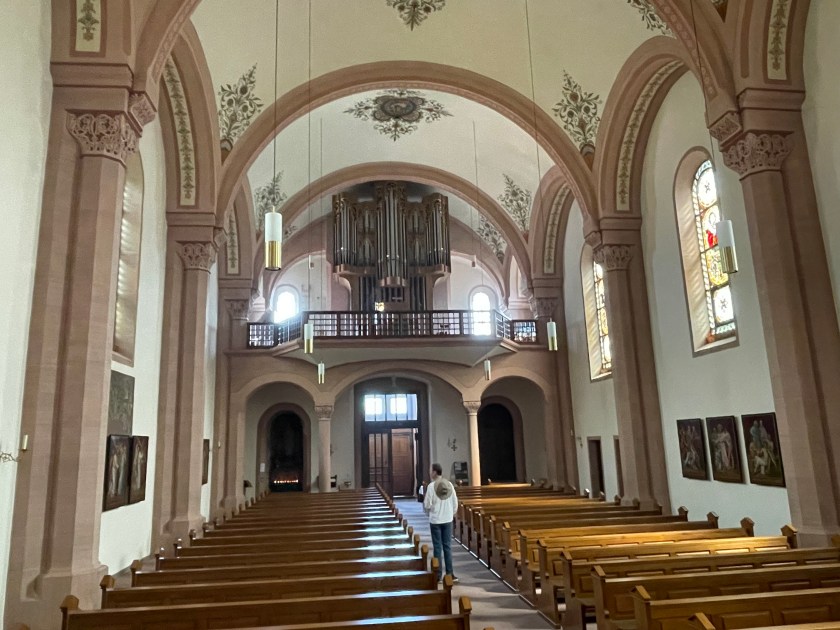
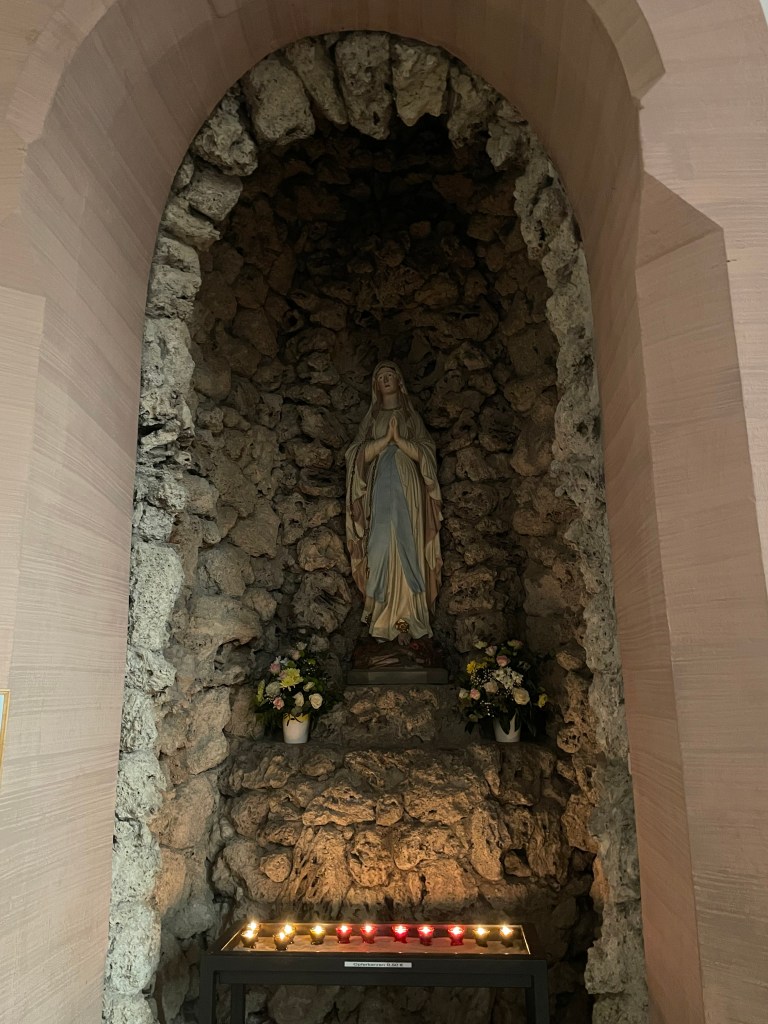
St. Venatius Catholic Church:
These small brass “stumbling blocks,” are in the pavement in front of houses where (mostly) Jewish residents were persecuted or murdered by the Nazis. They mention the name, date of birth and place (usually a concentration camp) and date of death. I always pause to read the details and recognize that a life not so different from mine was taken way too soon. I feel loss whenever I see these Stolpersteine. https://en.wikipedia.org/wiki/Stolperstein

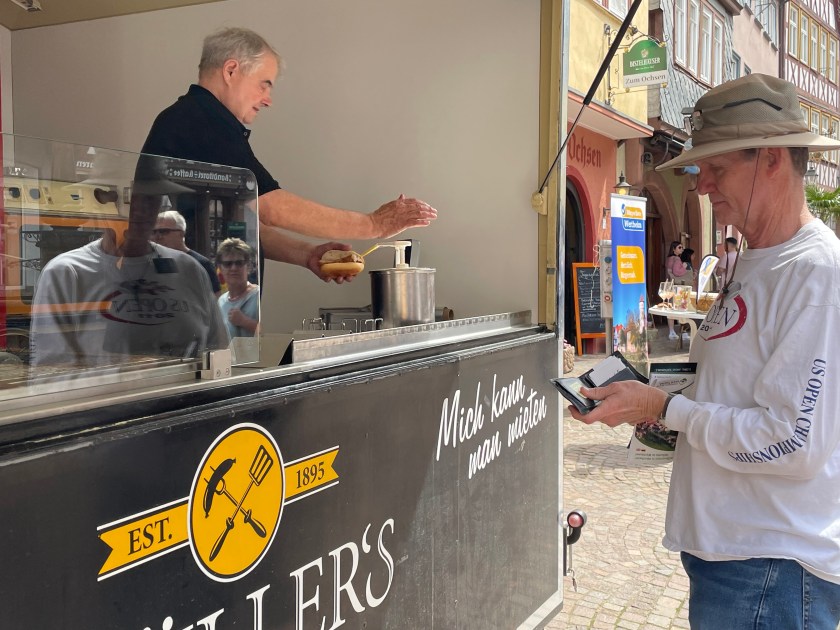
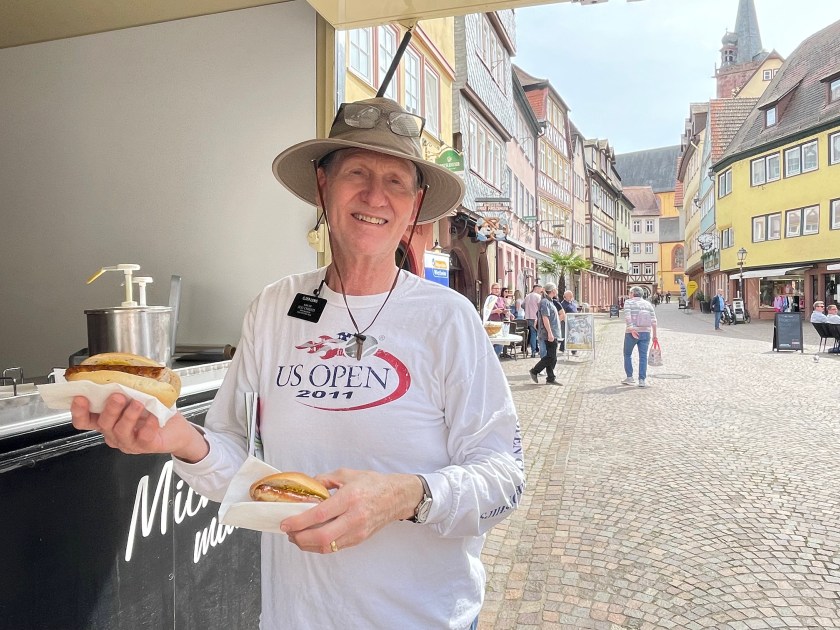
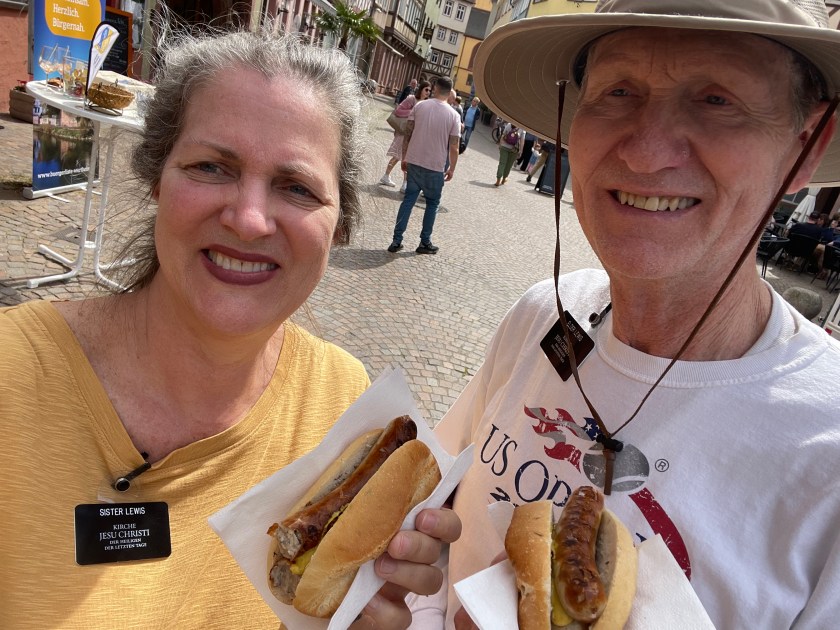
Time for Brats!
More recent water marks:
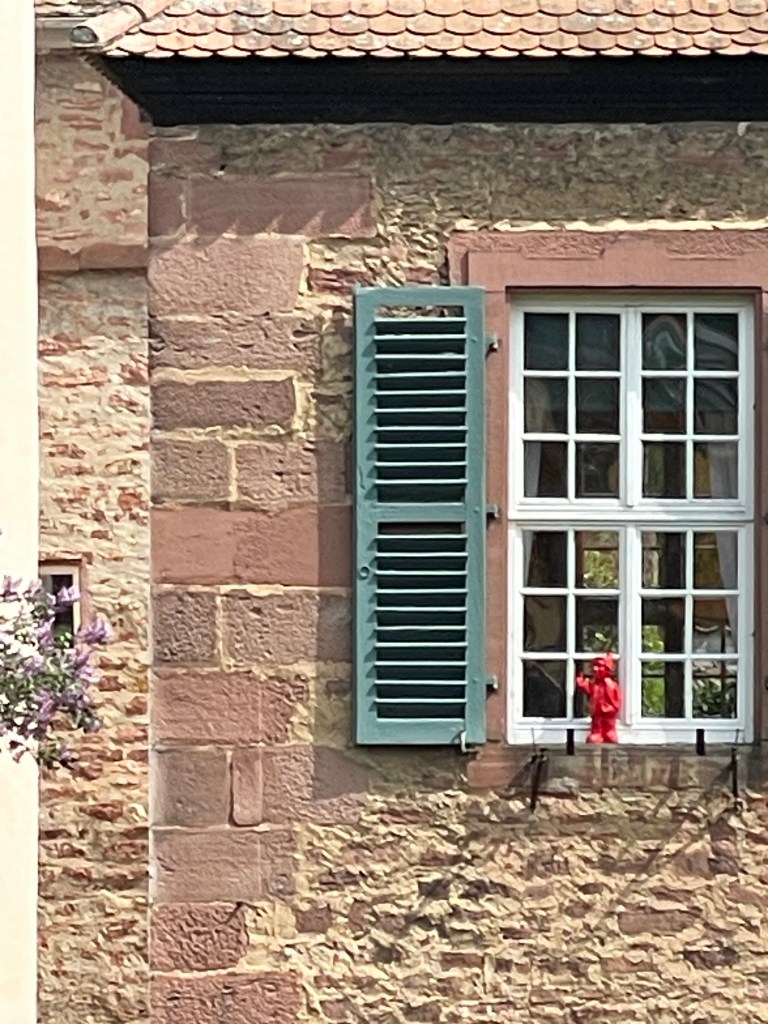
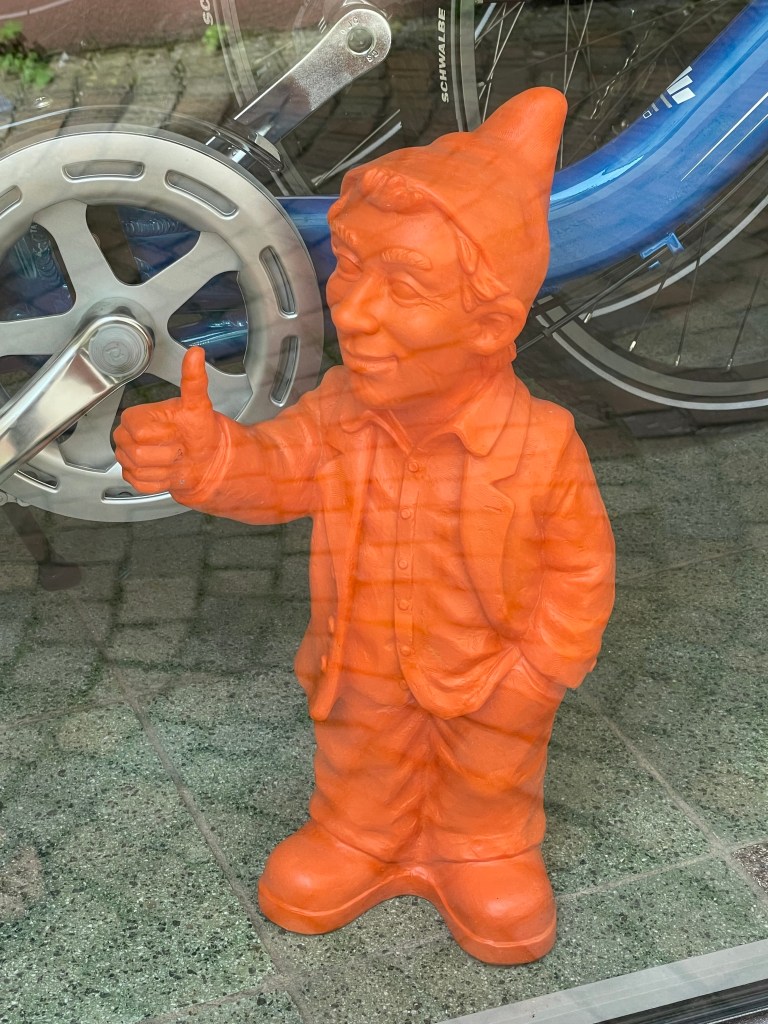
These little guys are planted around the town, often in upper windows. Maybe you noticed some.
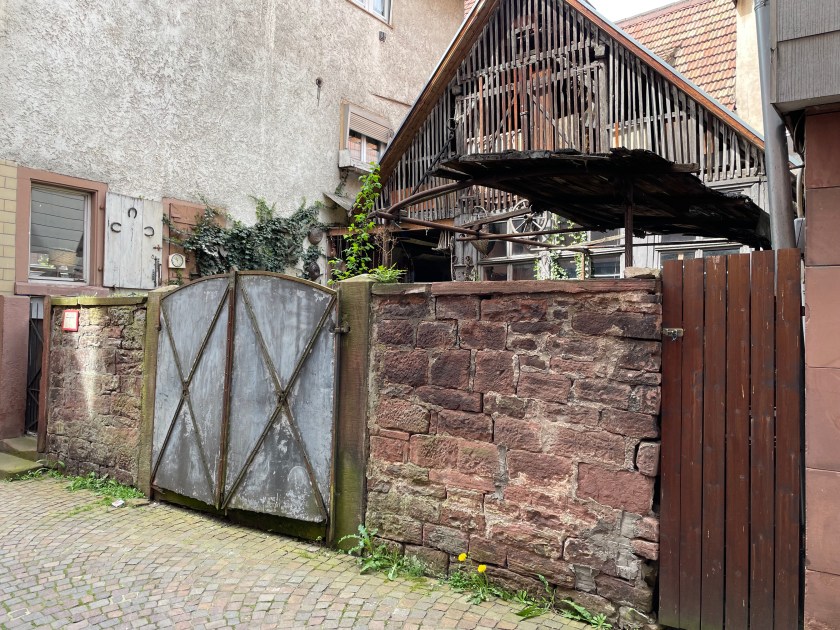
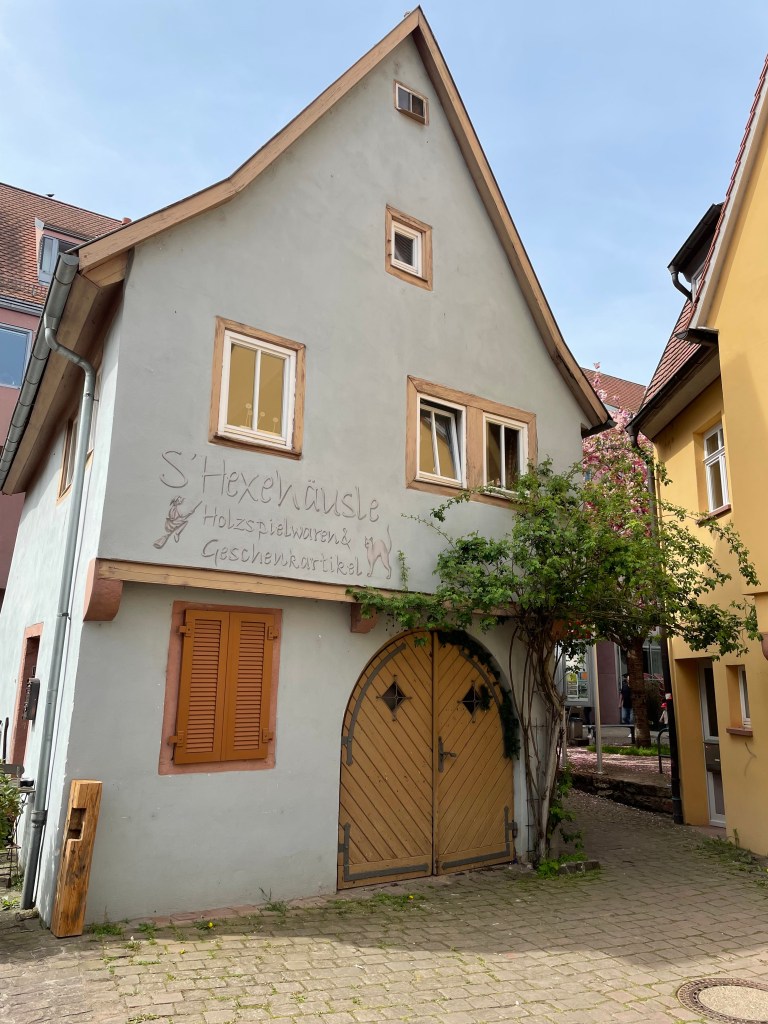
A little witches house:
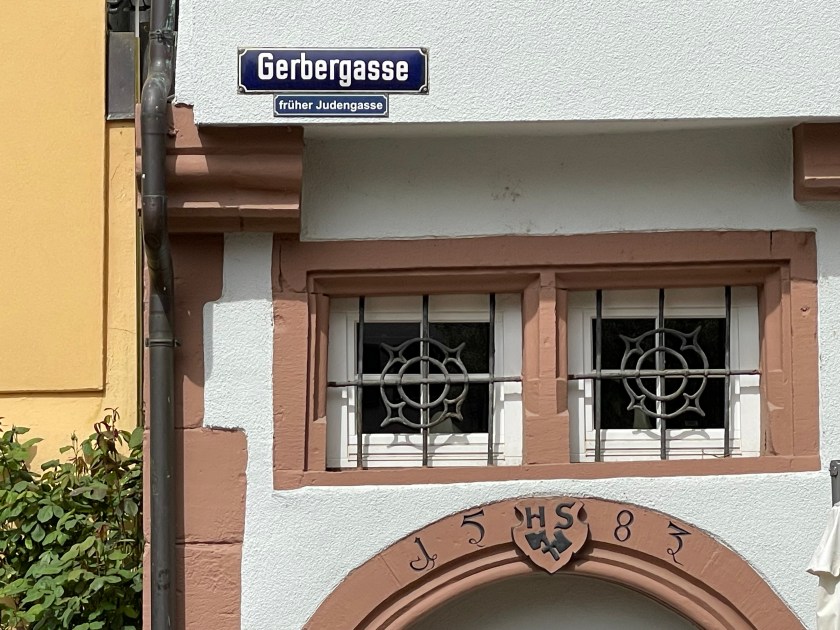
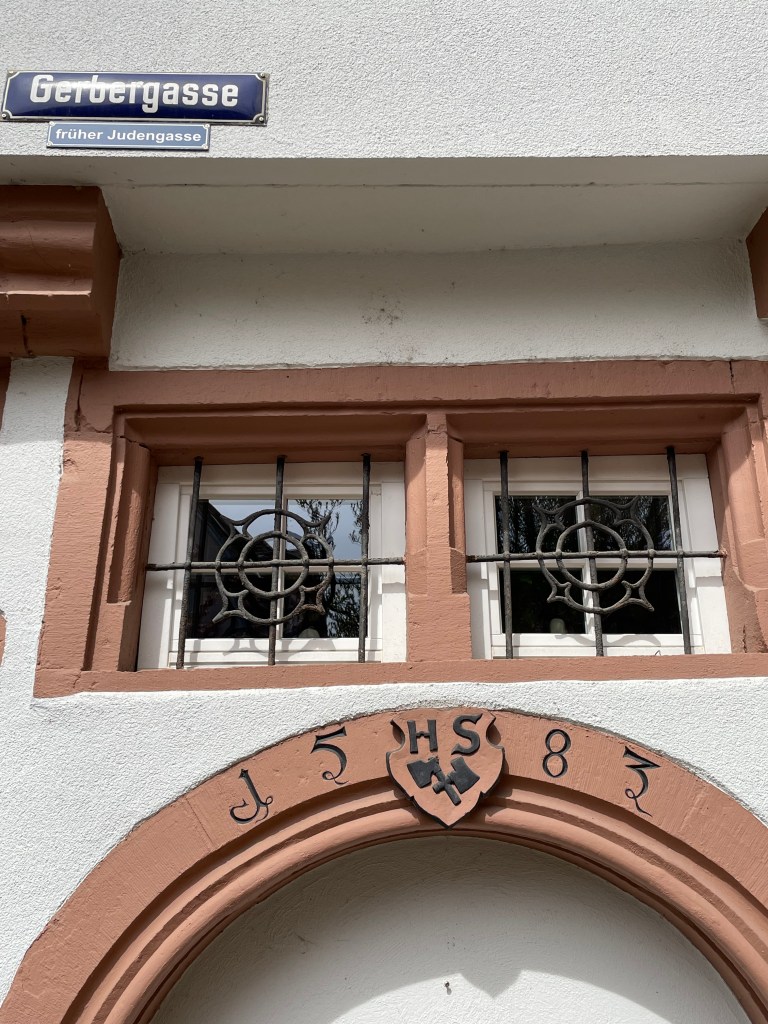
This was formerly the Jewish street, the date on this house is 1583:
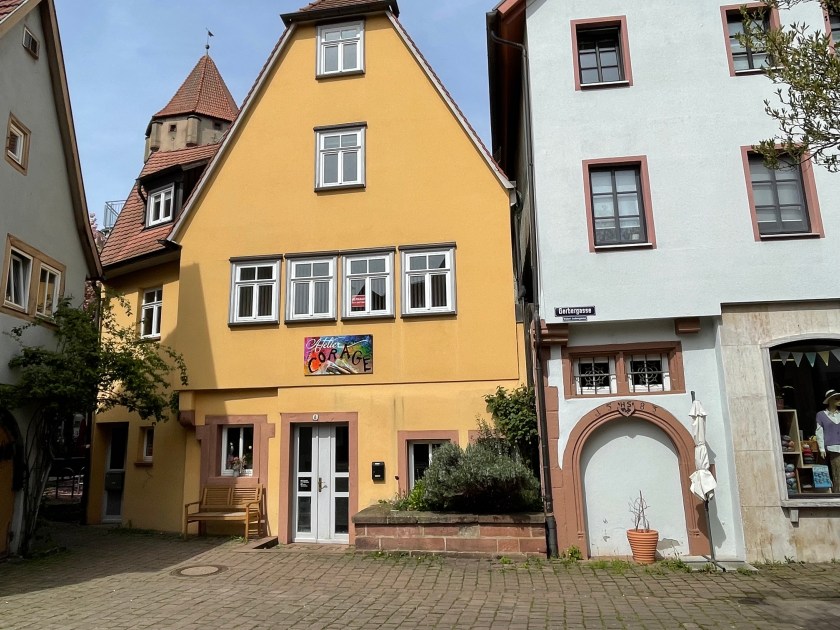
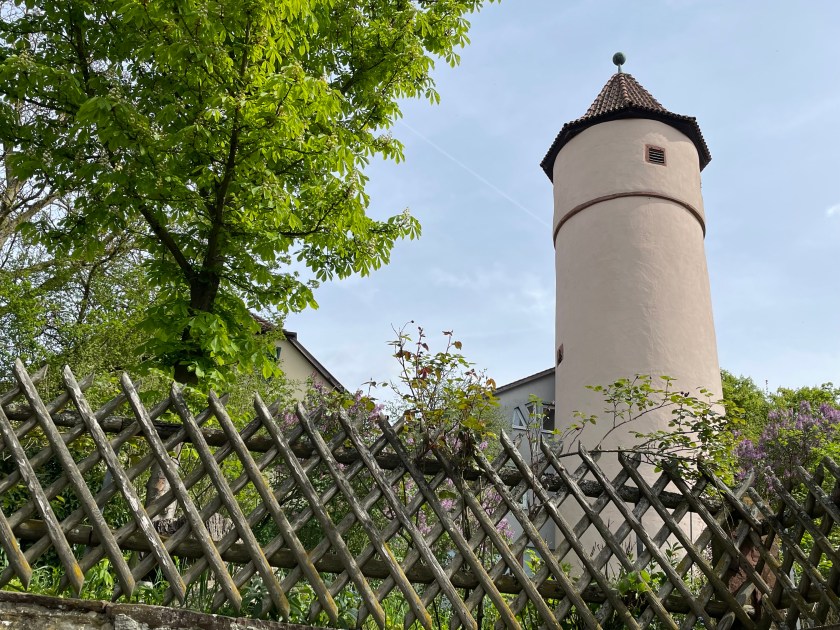
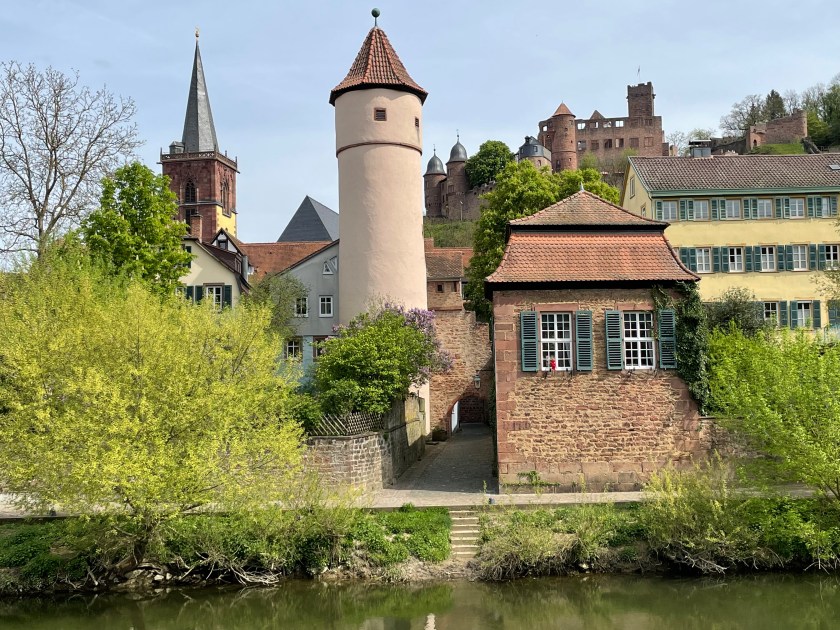
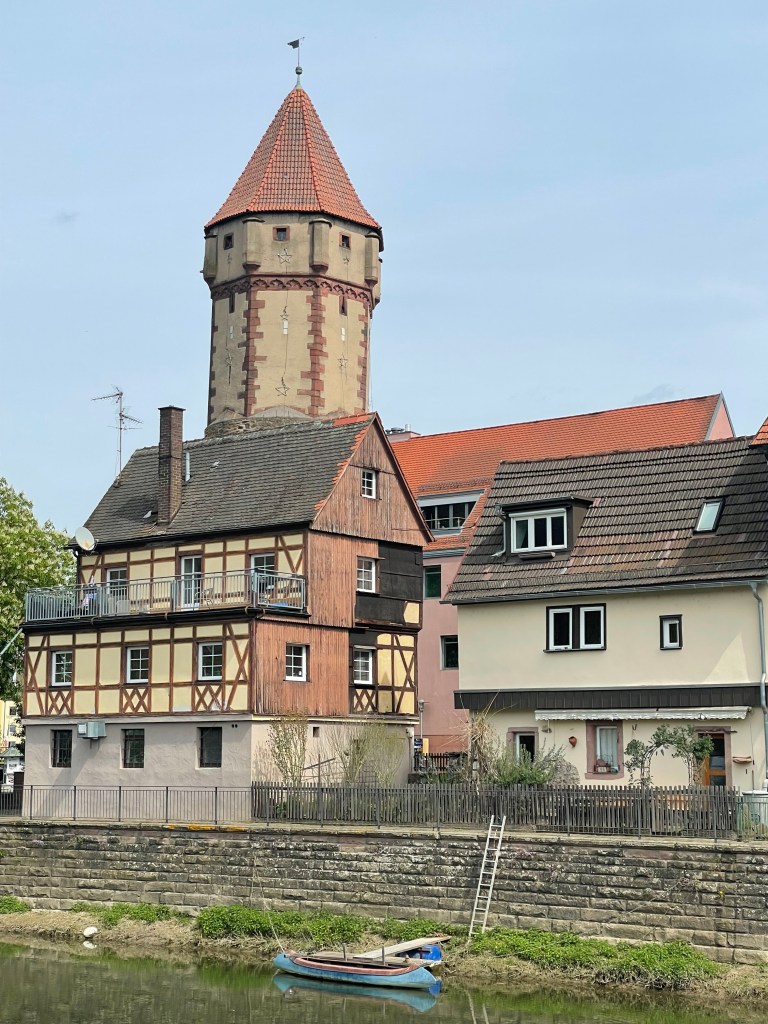
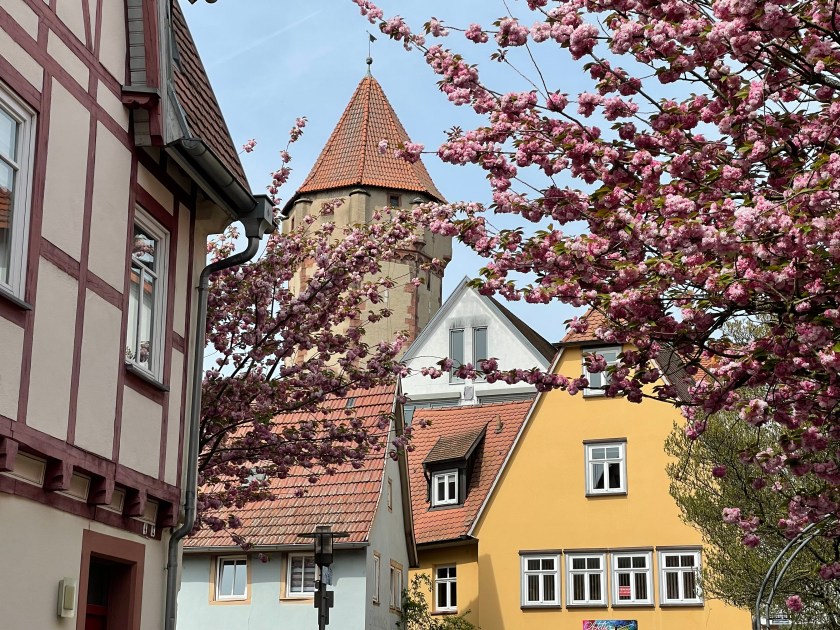
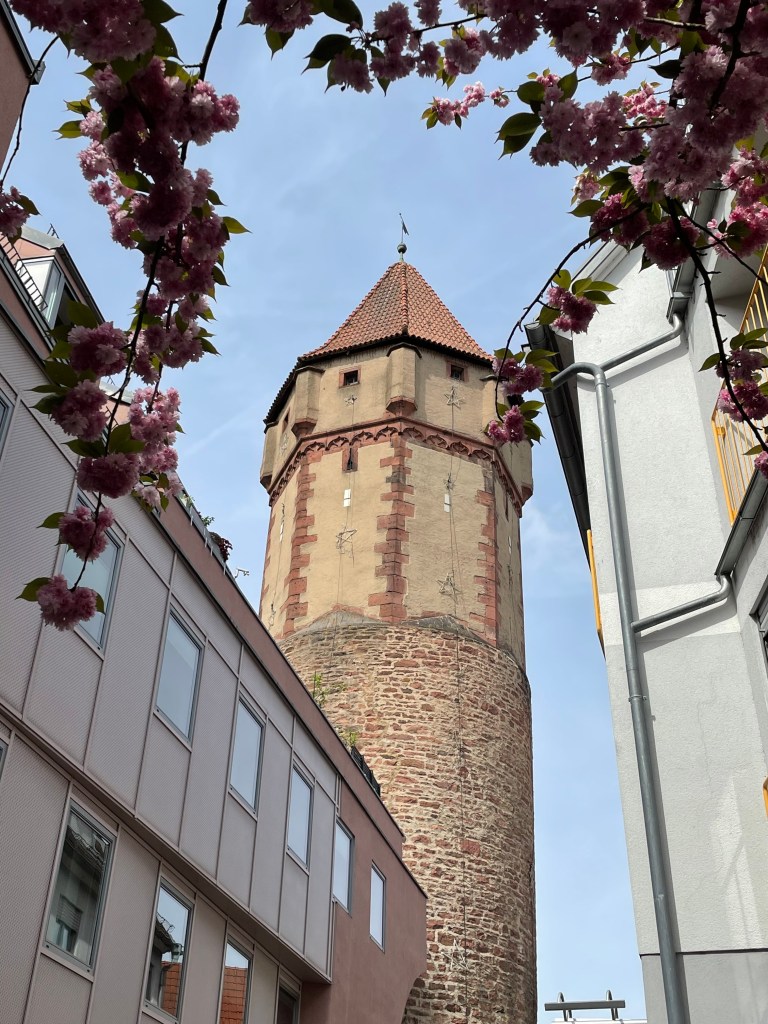
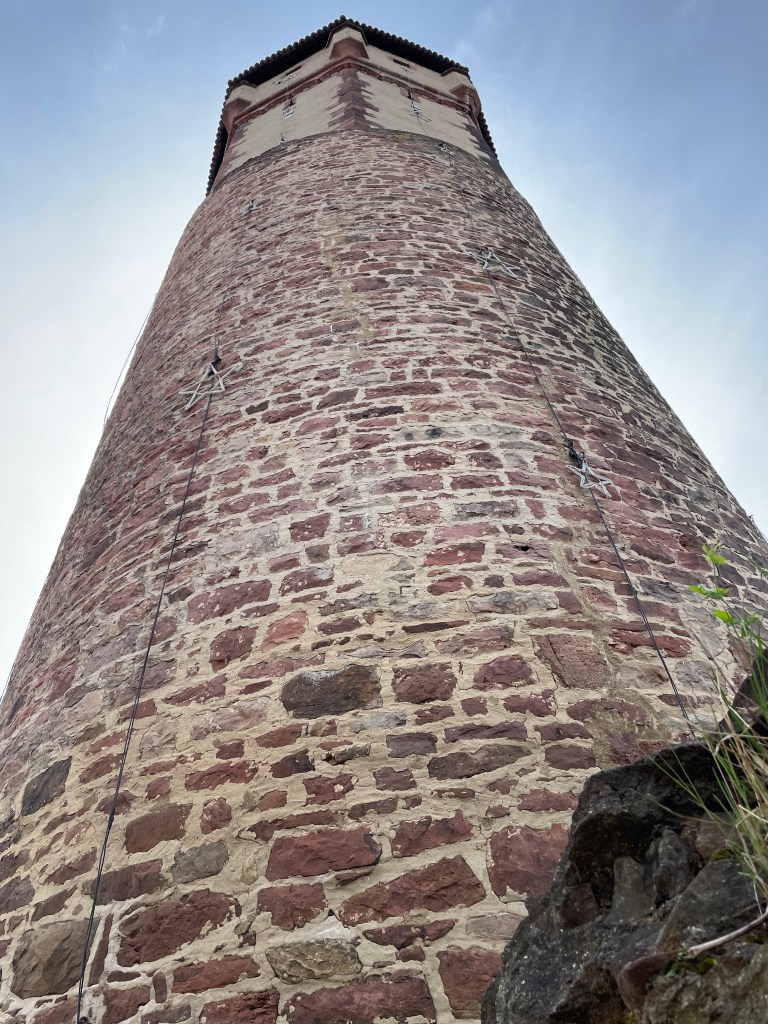
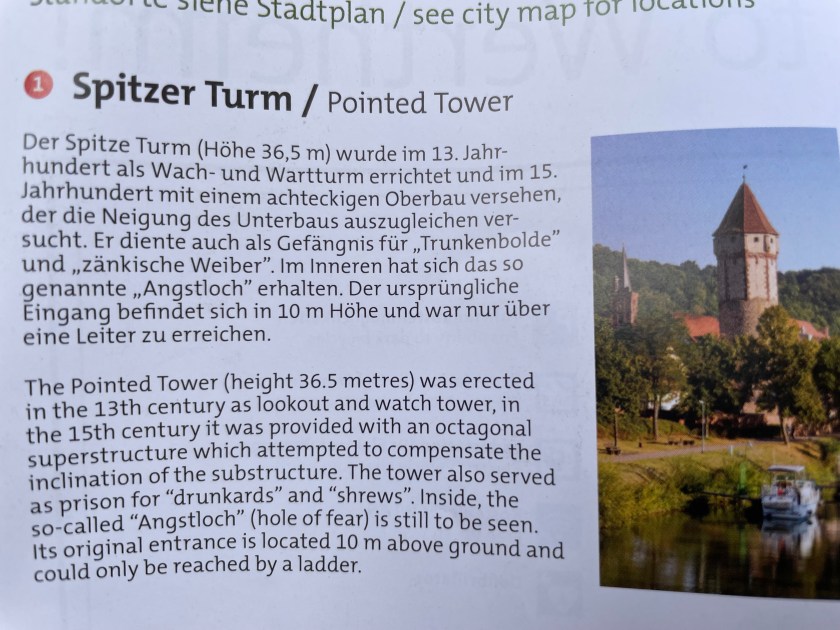
This tower, built in the 1200s served as a watchtower. In the 1500s the top octagonal structure was added. The tower also served as a prison for “drunkards and shrews.” The original entrance is 10 meters above ground level and was called “the hole of fear.”
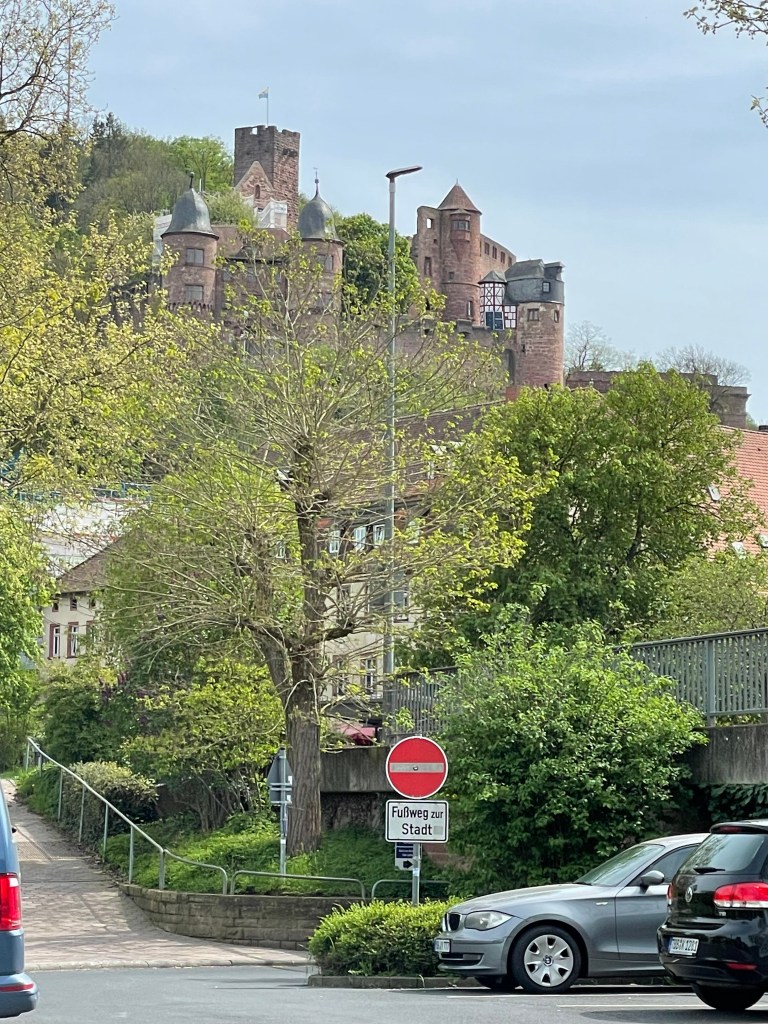
What an interesting little town, packed full of history and fascinating details!

 Our Frankfurt Germany Mission
Ann, your blog is superbly organized! Thank you for posting these photographs from your recent visit to Wertheim. Sonia and I plan to visit Wertheim Am Main this coming July 8. We are excited to use your information as a guide to visit the Jewish area of town. Does the church allow a visitor to visit the mikvah beneath, perhaps in the crypt? Those brass “Stumbling Blocks” are especially high priority for us to experience. Because of your superb images, we know just what to see in our precious 4 1/2 hours in Wertheim.
LikeLike