
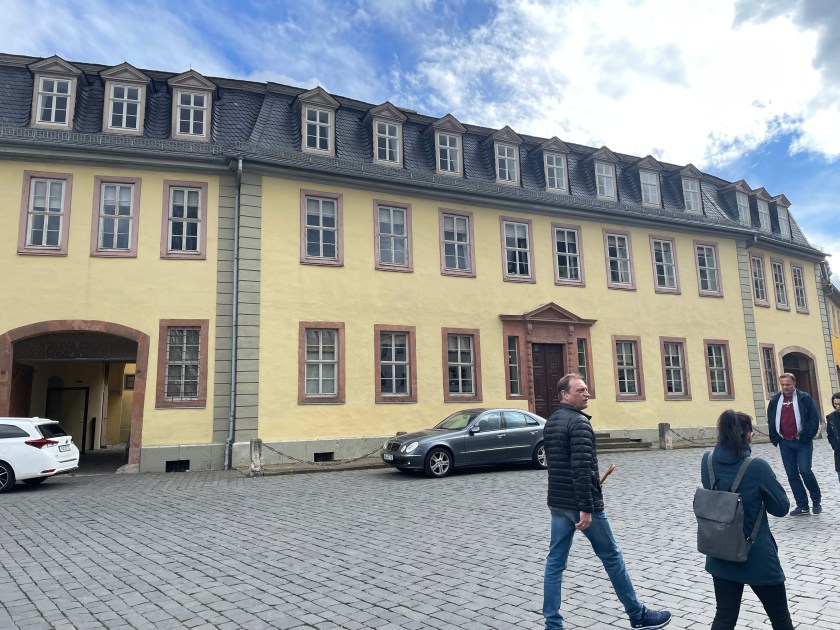
Weimar was our last destination on this Easter Weekend trip. We went first to the Goethe Haus and spent an hour there, with an English room by room tour (from a QR code and app on our phones). Goethe was like the Thomas Jefferson of Germany–a real Renaissance man. He was gifted this house by a wealthy city leader and he lived here many years until his death at age 82 here in this house.
This is a wonderful website that offers all of the audio tours with photos, if you’d like to take the tour yourself:
Johann Wolfgang von Goethe (1749-1832) is a giant in German and world literature. In fact, he coined the term Weltliteratur and spoke Greek, Latin, French, English, and Italian. Aside from its quality, the sheer volume of work during his 82-year lifetime is impressive. Among other works, Goethe wrote a worldwide, best-selling novel (Die Leiden des Jungen Werthers, 1774), volumes of poetry, and several dramas, including his masterwork: Faust — a massive two-volume drama that was not entirely finished by the time of the poet’s death. Goethe also dabbled in painting and science (Farbenlehre/“Theory of Color”), although his greatest achievements by far were in literature.

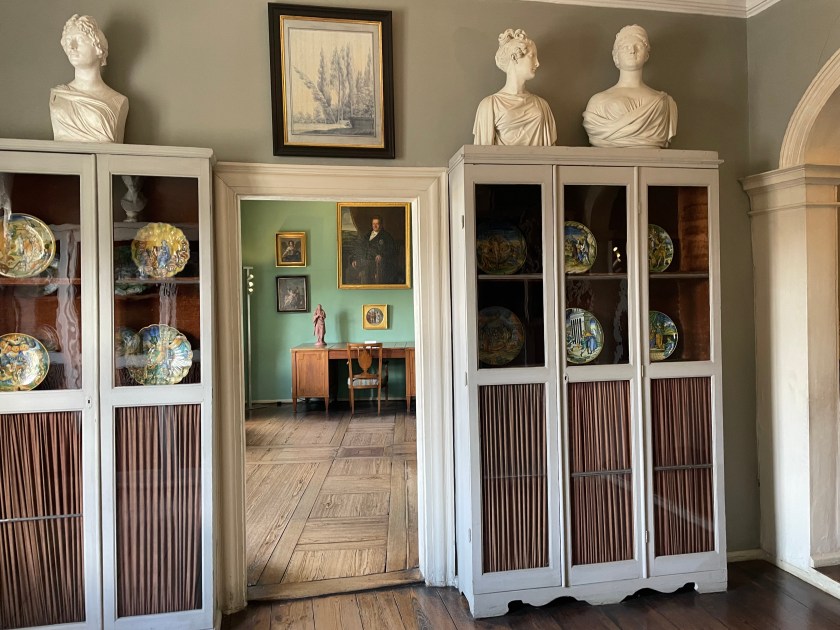
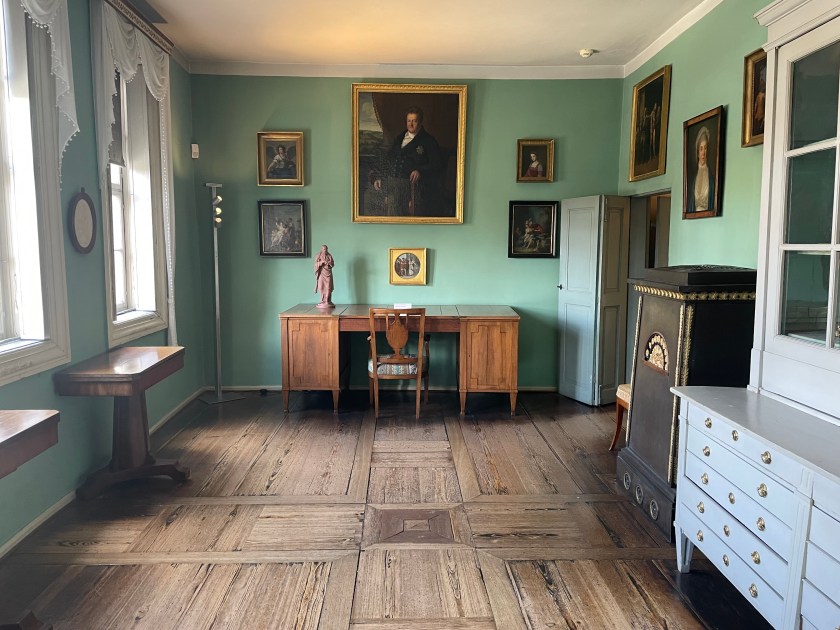
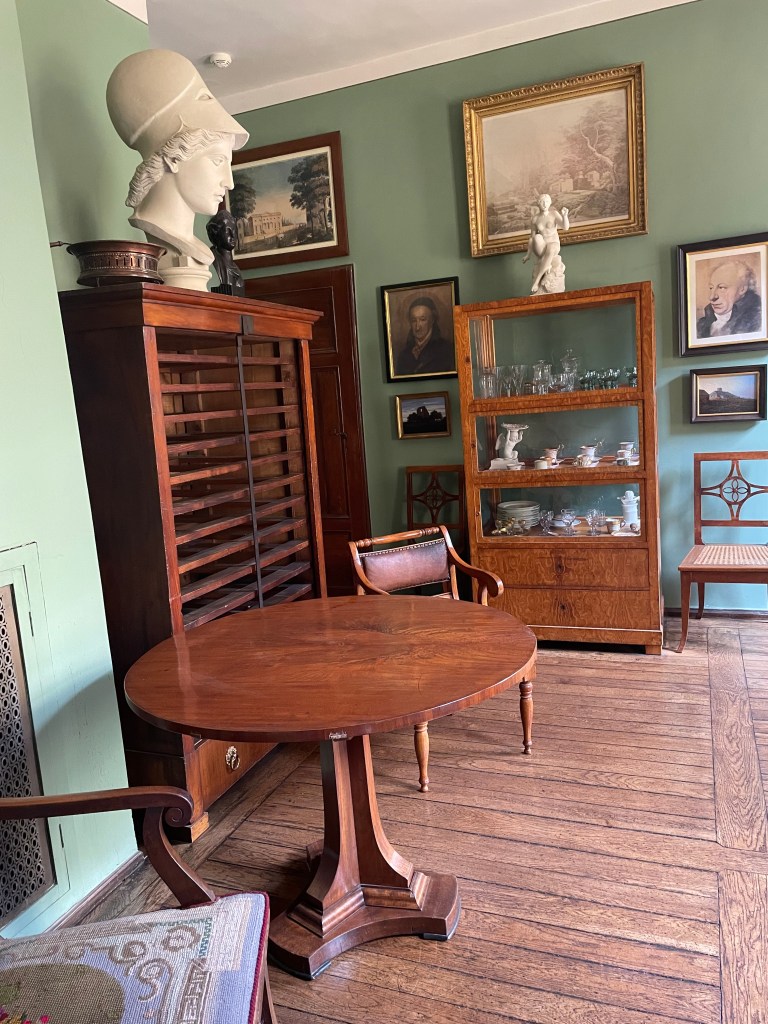
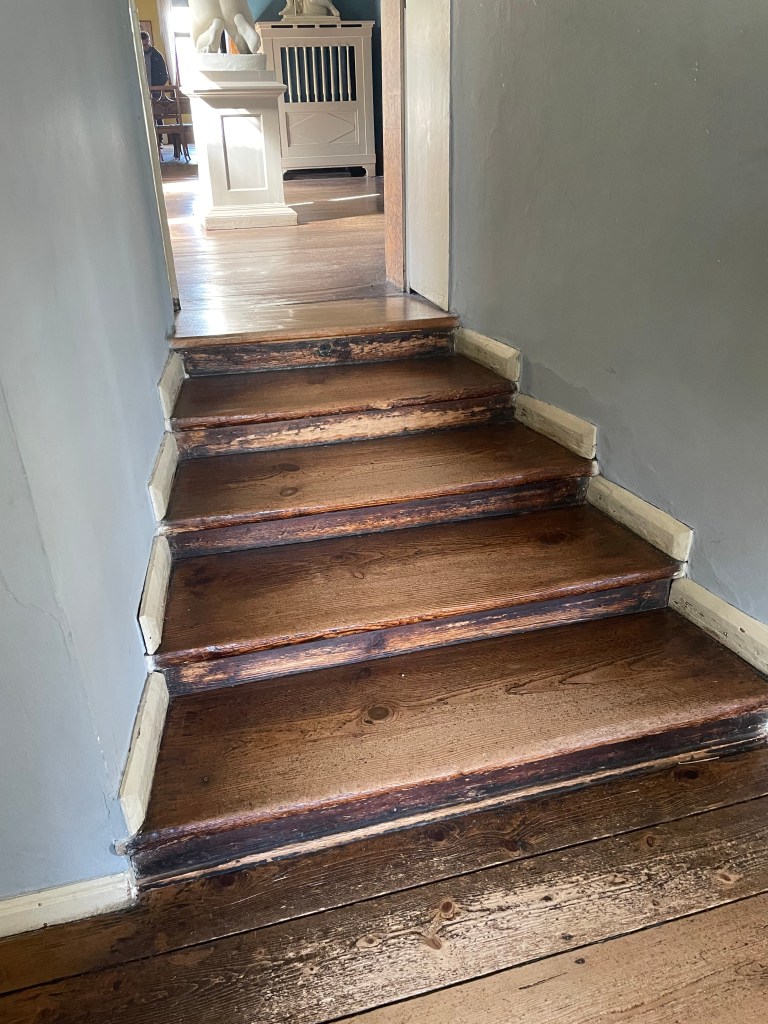


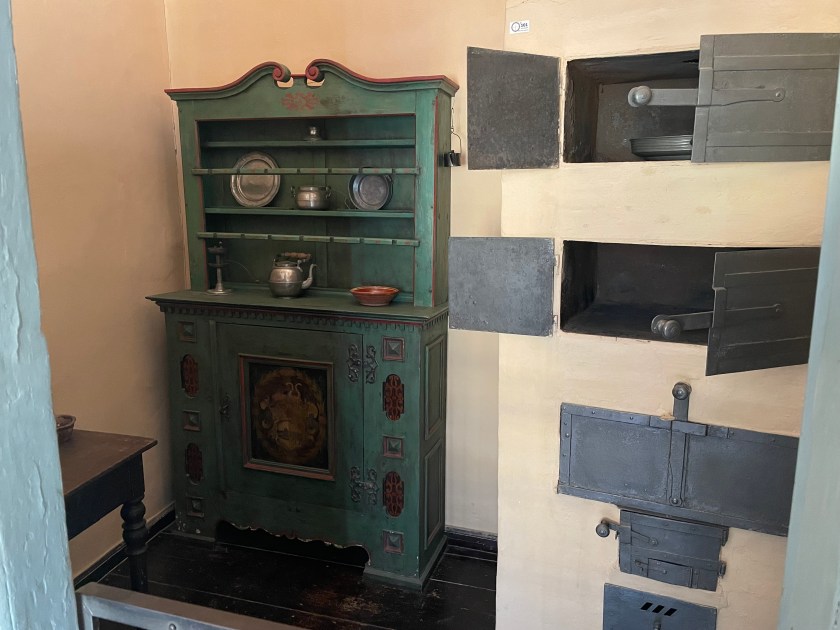

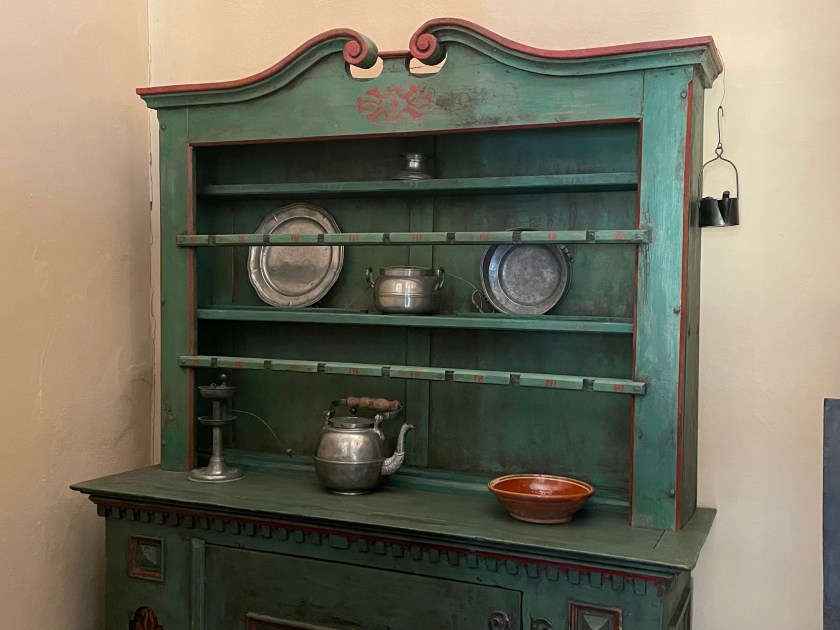

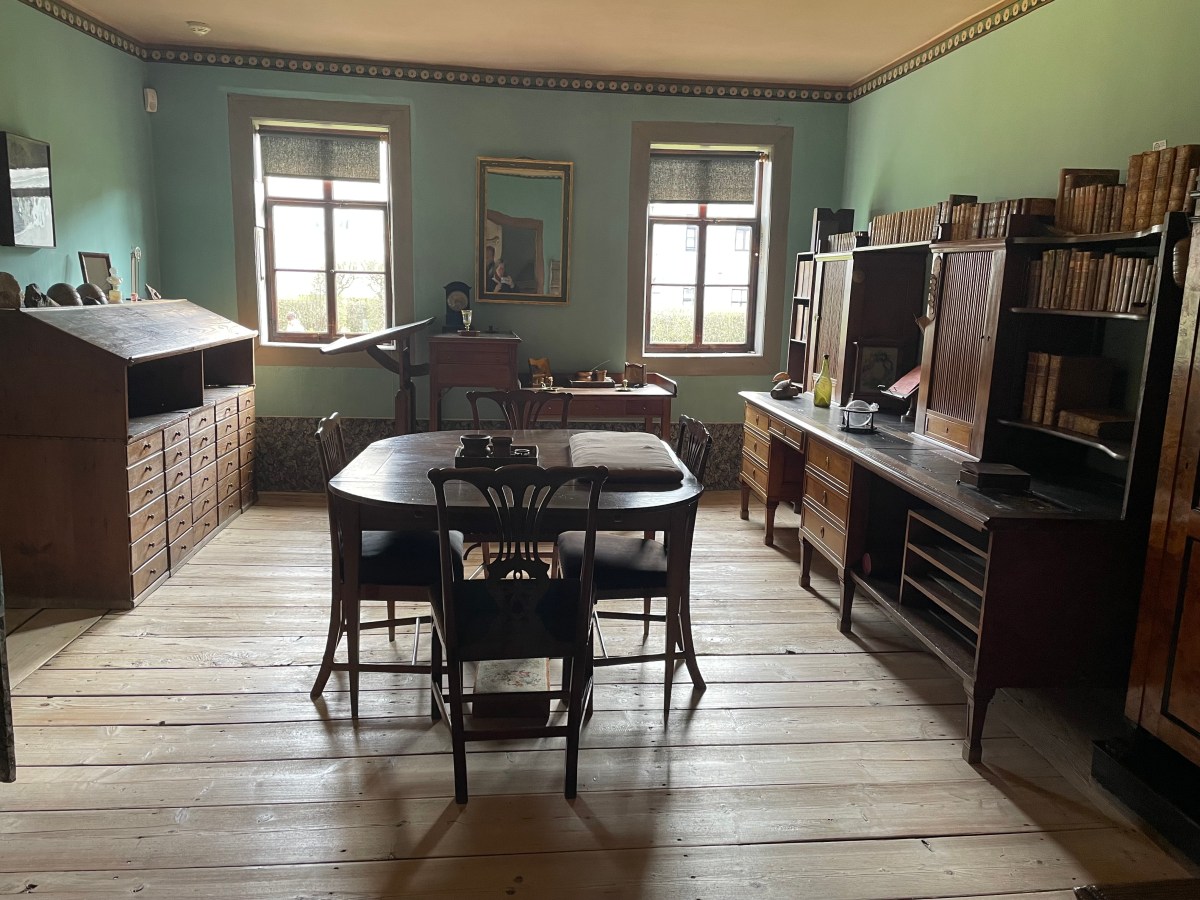
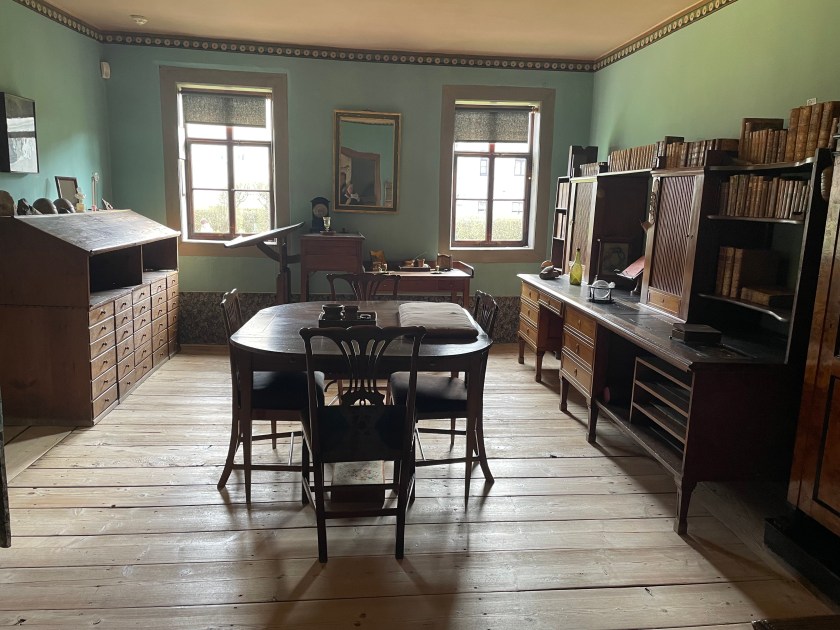
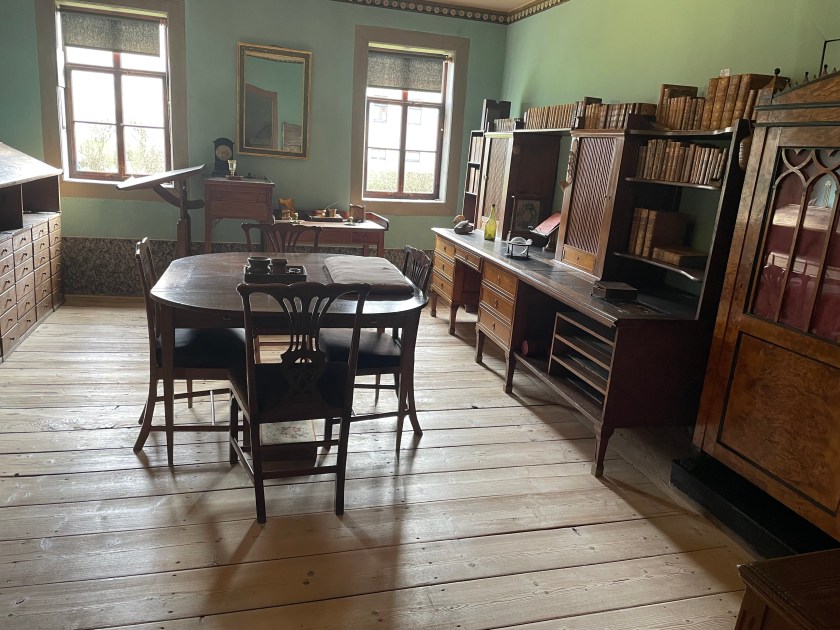
This is the room where he worked. Here is the explanation from the audio tour:
Study
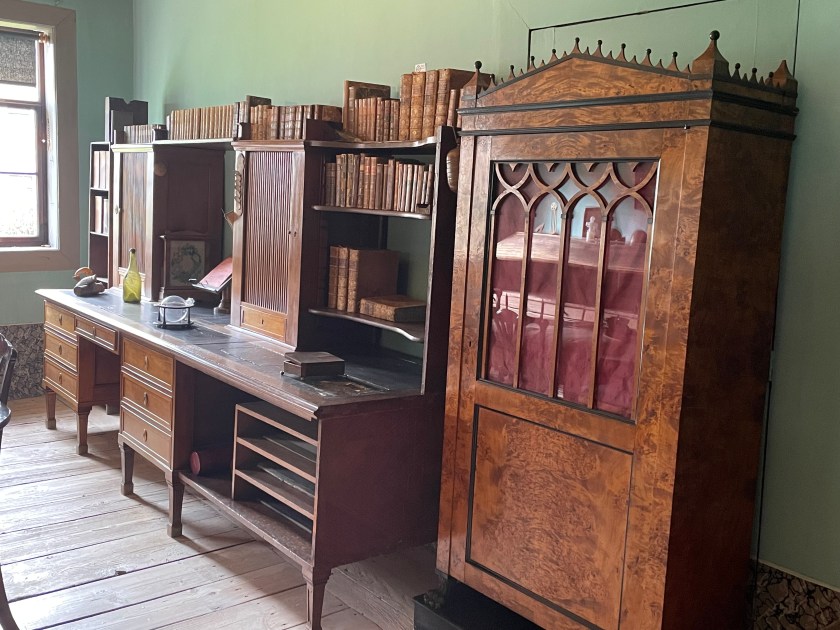
Goethe’s study is the most important room in the house. Here everything is virtually as Goethe left it on the 22nd of March 1832 when he breathed his last in the small bedroom next door. The walls are green – because according to his Theory of Colours, green brings “real satisfaction“ to the eye. It comes as no surprise then that green was Goethe’s choice of colour for the room in which he spent the majority of his time. Goethe’s most productive hours were in the morning. He would dictate, in his study, to his amanuensis John and others, often pacing round and round the large desk in the middle of the room for hours as he did so. It was here too, that he completed his great later works, among them the second part of Faust, the manuscript of which he kept along with other texts in the library cupboard case next to the desk.
Goethe chose simple, functional furniture for this and the adjoining rooms. This selfrestraint was deliberate: “Being surrounded by a roomful of comfortable, tasteful furniture prevents me from thinking and puts me in a passive state.“ Consequently, there are no pictures on the walls, only practical things, like a list of instructions to the gardener on the jamb of the left-hand window. The objects on the tall desk to the left are items Goethe used for his scientific investigations. In their midst is a white flacon with a bust of Napoleon as its stopper. Its opaline glass, reflecting the colours of the spectrum, was confirmation for Goethe of his Theory of colours. Before you leave this room, take a look at the cushion on the large desk. It was there for Goethe to rest his arm on when he read for a long period of time!
From the audio tour:
Servant´s Room and Bedrooom
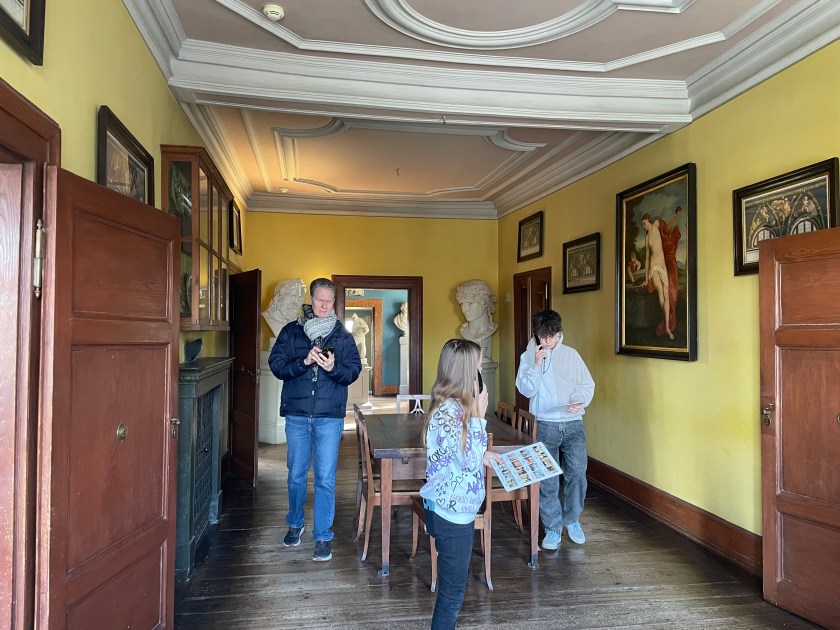
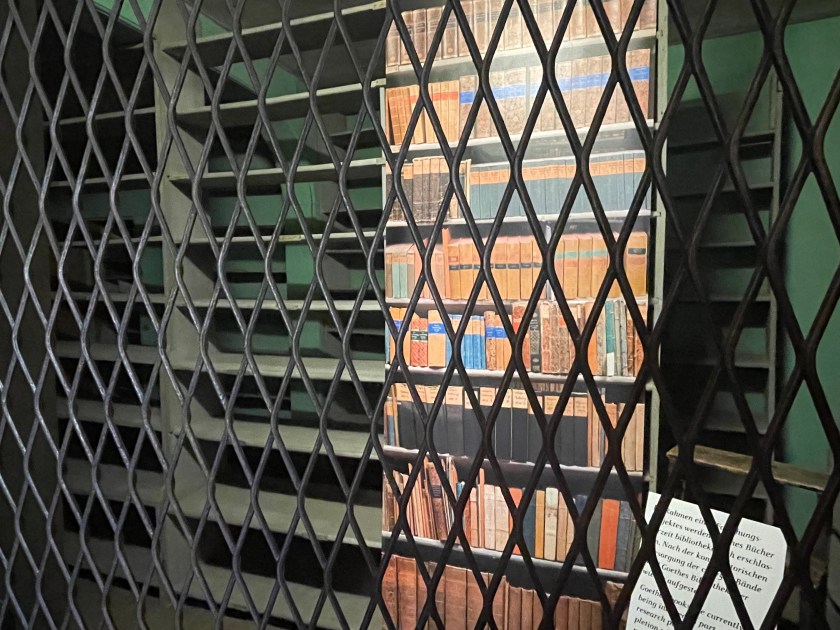
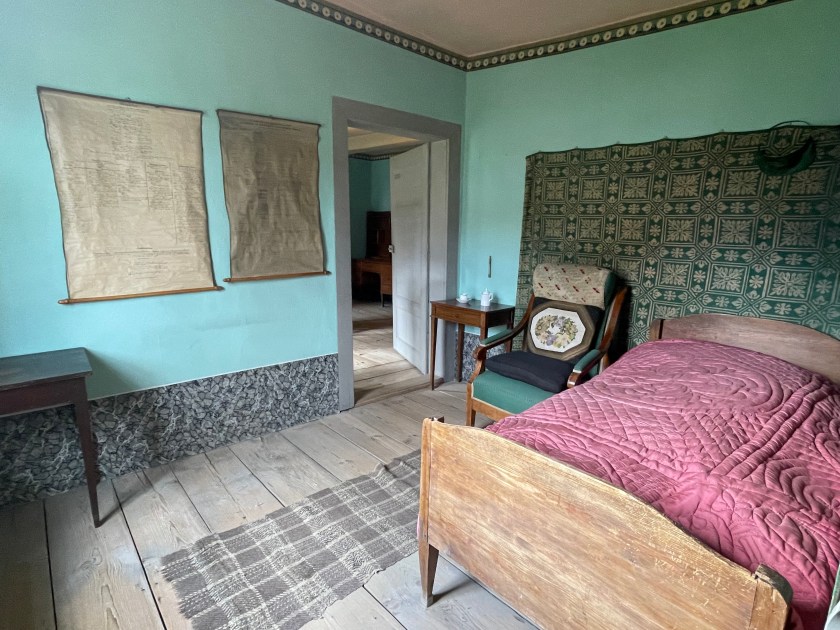
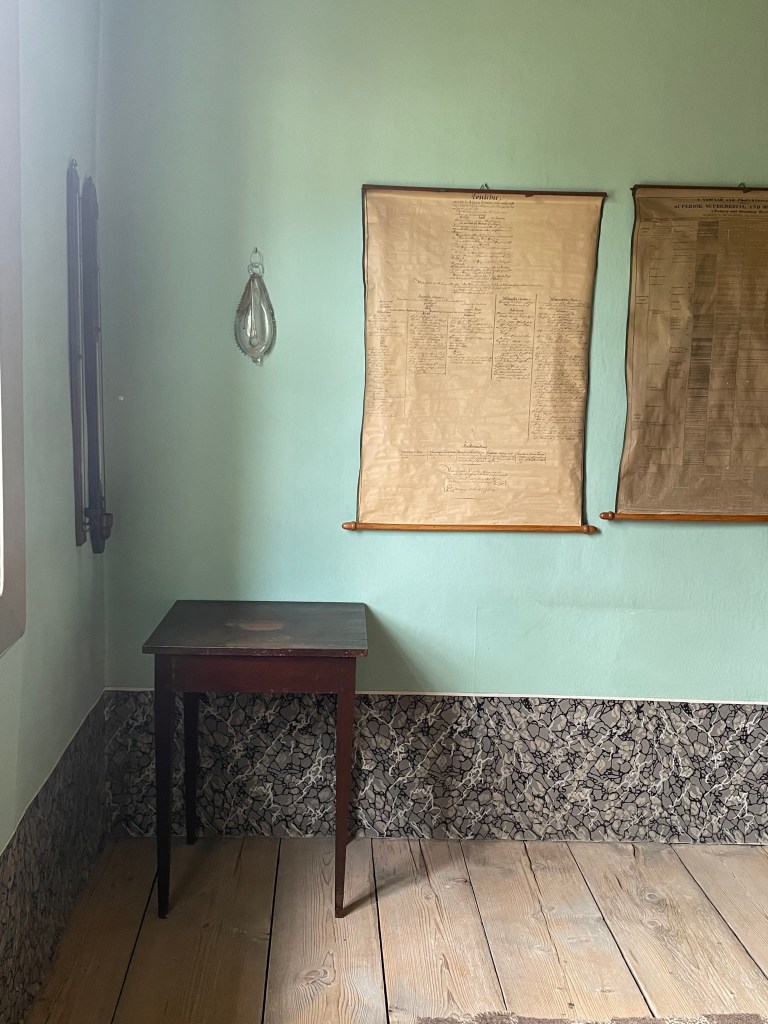
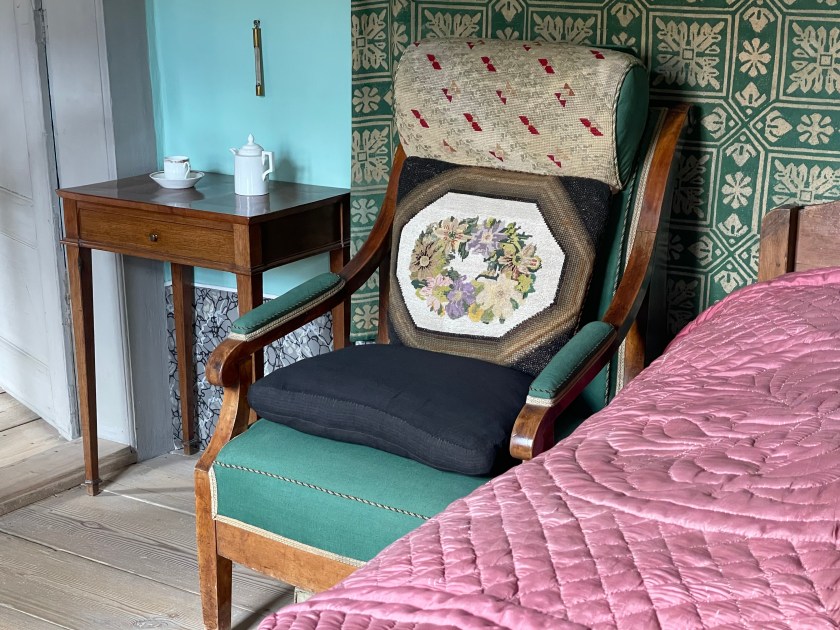
You’re now in what’s called the Servants’ Room. It originally housed Goethe’s reference library, and was later sometimes used by his servants as a bedroom. Since these servants also played the role of personal secretaries, they did their copying work in this room, as well as in his study. In his later years, Goethe used the small room next to this as a bedroom, being as it was conveniently close to his study. As there was no means of heating it, Goethe would sometimes be forced in the cold winter months to move to a warmer bedroom in the house. In this small chamber, he had a wall hanging of coarsely woven linen fixed around the bed to provide some protection from the cold emanating from the masonry. Above the bed hangs a green eyeshade, which he would have put on to soften the harsh light when he was reading. On rising early – in summer around 4 o’clock, in winter about 6 – Goethe would no doubt have often contemplated the two large charts hanging on the wall. He started using charts like these when he was boy, a useful tool to help him learn by heart. The examples here provide an overview of musical theory and geology.
Goethe died in the armchair next to the bed on the 22nd of March 1832 at around midday. His daughter-in-law Ottilie was with him. The obituary notice that appeared the next day reported that he was: “In full possession of his intellectual powers and loving to his last breath.“ Some of the rooms in Goethe’s house were opened to the public within weeks of his death. With the founding of the Goethe National Museum in 1885, it became Germany’s foremost poet’s memorial. You can find out more about the writer and the major themes of his life in the adjoining building. If the weather is fine, you may like to take a look around the garden first.

Garden
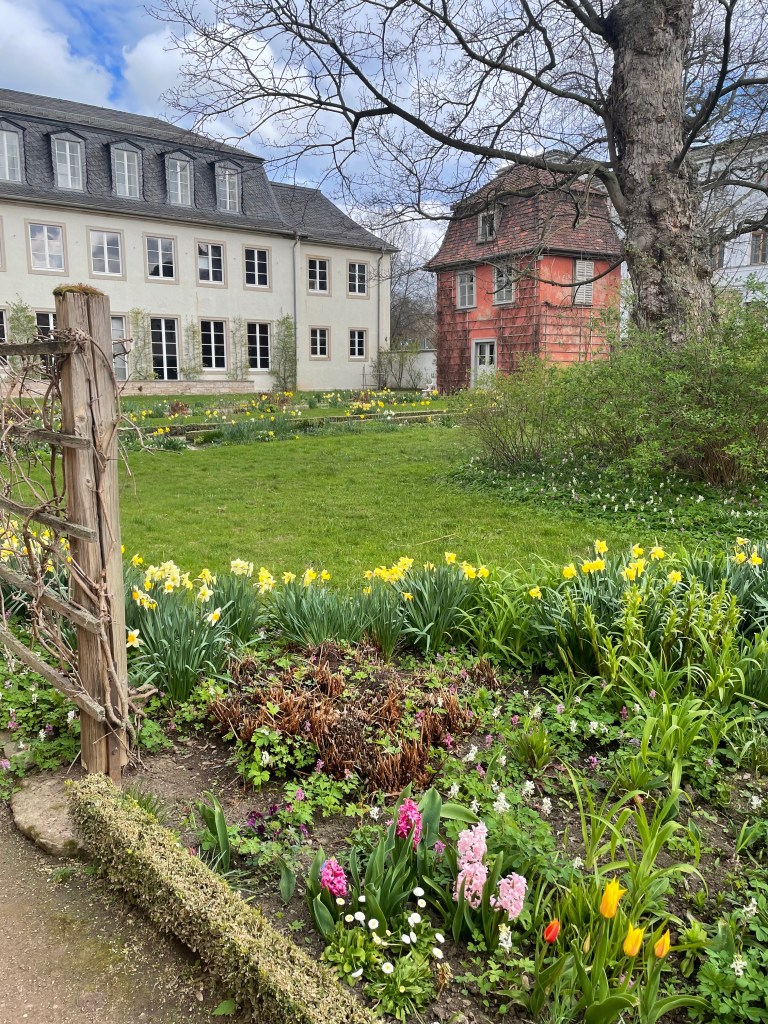
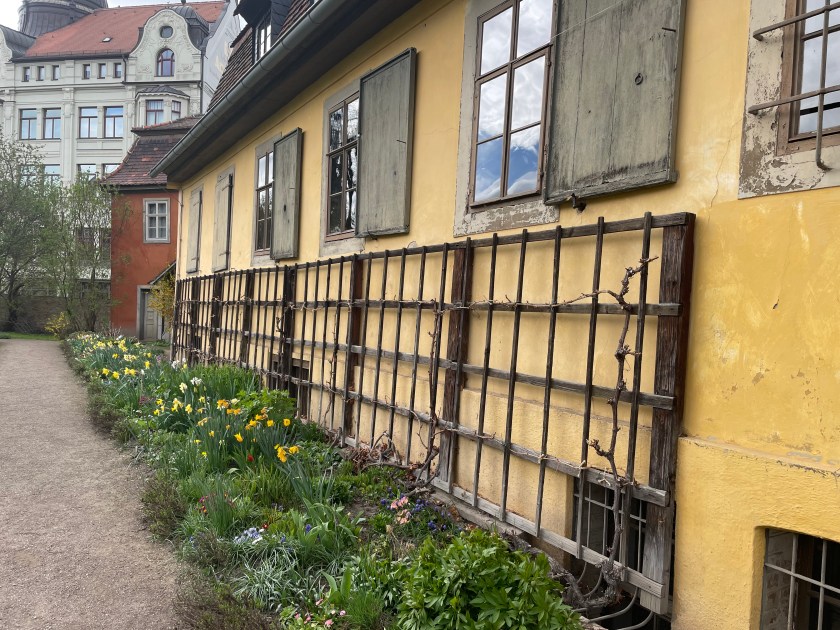
A walk around the garden is an attractive prospect if the weather is fine. Today we reach it via the steps in the inner courtyard. Goethe and his guests would usually have gone through the Bridge Room and then down the wooden outside staircase. Goethe laid out his garden as a cottage garden, as was the fashion in Europe around 1800. It’s divided into five largish sections, edged with flowerbeds and box hedges. In Goethe’s day, the area inside, which is now lawn, would have been planted with vegetables. There would have been potatoes and cauliflowers, even asparagus and artichokes. Goethe and Christiane also planted cherry trees, and grew apricots and grapes on trellises mounted against the south wall of the house.
Goethe also used the garden for his botanical experiments. With the help of show beds, he would observe the development of the natural plant families, so broadening his understanding of their botanical classification. And these observations also inspired his poetry: “Wonderment fresh dost thou feel, as soon as the stem rears the flower Over the scaffolding frail of the alternating leaves. But this glory is only the new creation’s foreteller, Yes, the leaf with its hues feeleth the hand all divine, And on a sudden contracteth itself“ In the red stone gazebo at the edge of the garden, Goethe kept his natural science collection, some of which you’ve seen in the anteroom to his study. But above all, Goethe and Christiane loved to relax together in their garden. Christiane wrote to Goethe in 1793: “I do hope you will return while the days are still fine, so that we can maybe sit around a bit just enjoying the garden. I so much look forward to that.”


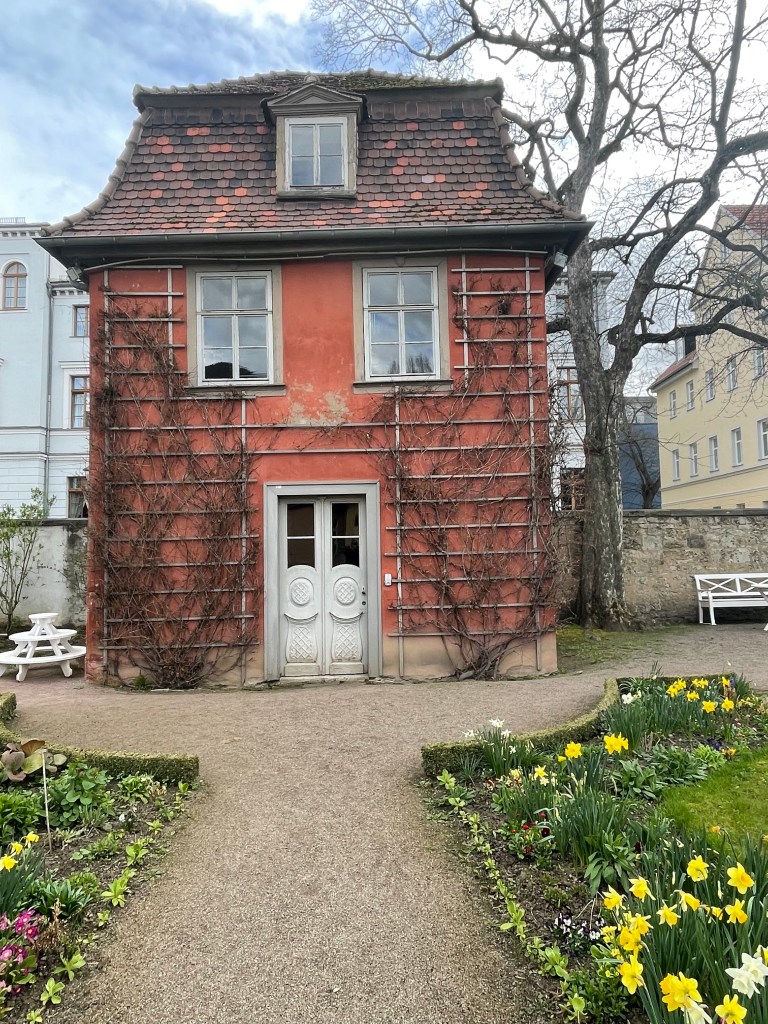

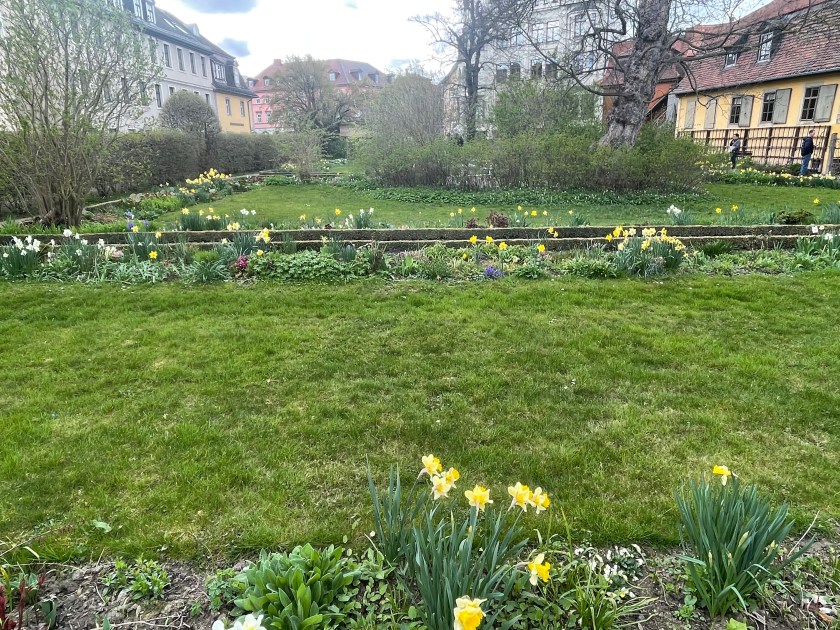


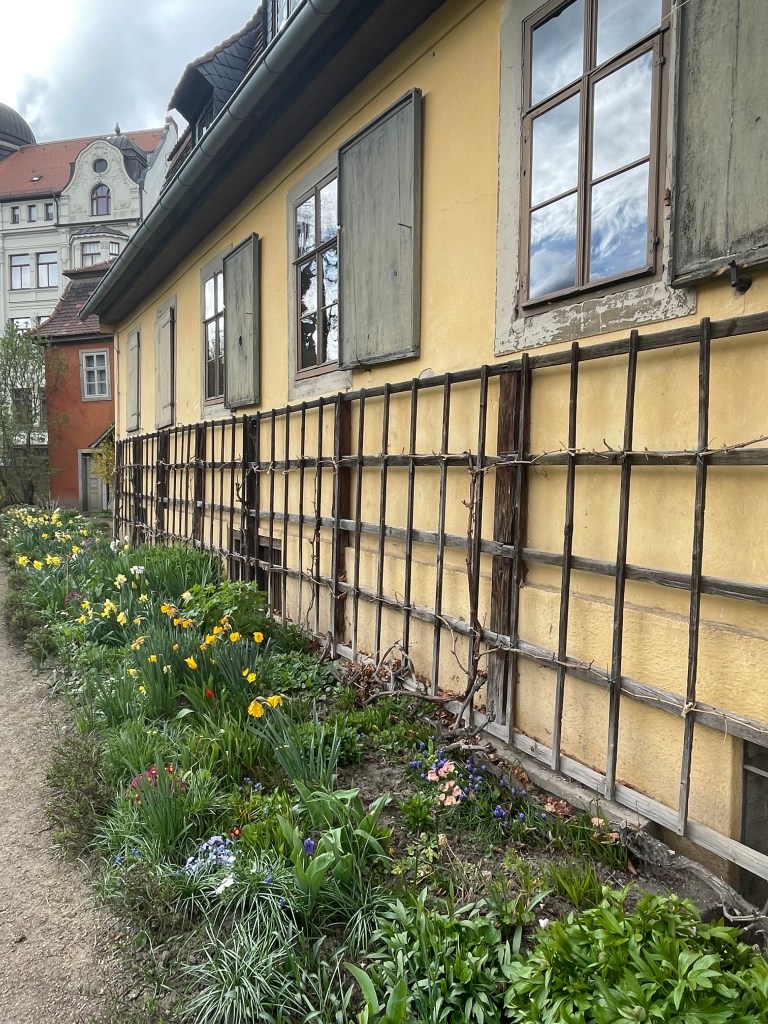
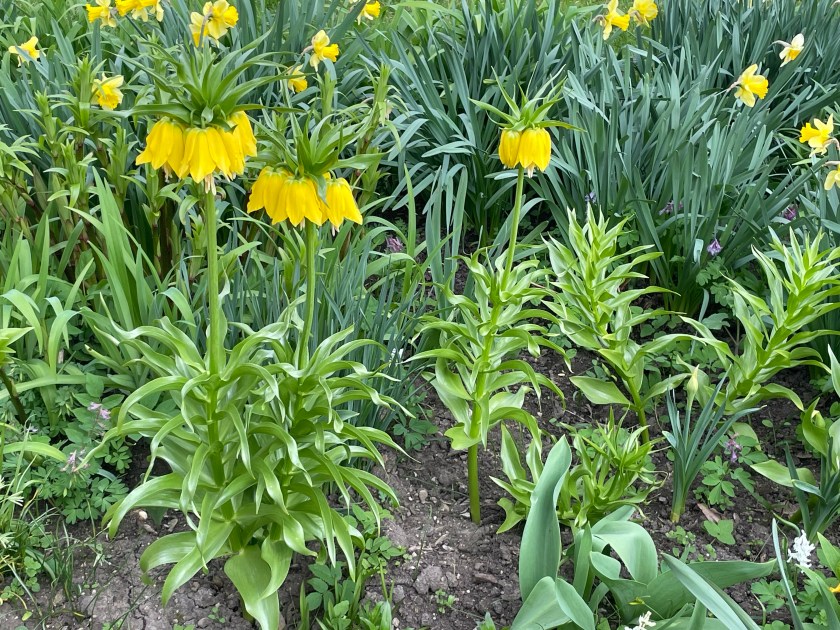
This is the inner courtyard of the home. Visiting here reminded me of visiting Thomas Jefferson’s Monticello in Virginia. Every little detail was interesting for a reason. Goethe lived a purpose-filled life. He had a good mind, and he was an important part of this Weimar community.
Next we visited the home of Schiller, one of his dear friends.


 Our Frankfurt Germany Mission