

Inside the Bavo Cathedral, for an extra fee, you can enter a special area that houses the famous Altarpiece and other incredible works of art. This was our reason for visiting Ghent.
Since our arrival in Germany, we’ve watched the movie, “The Monuments Men,” three times with friends. It’s the true story about rescuing art from the Nazis who stole it from anyone who had something they wanted. The story revolves around this Ghent Altar Piece. It was THRILLING to see it in person.

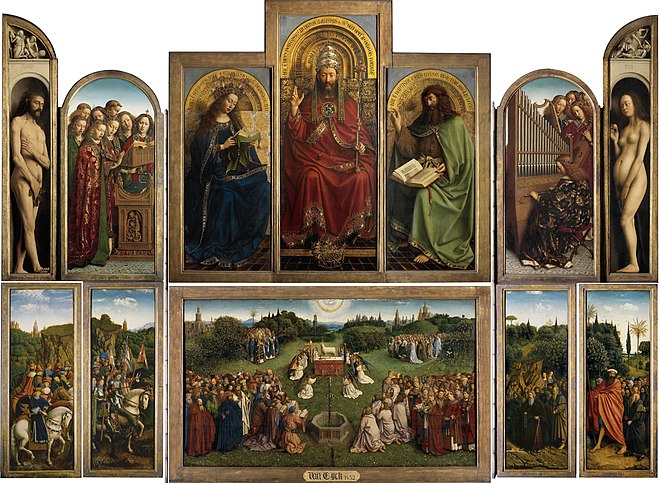
The Ghent Altarpiece, also called the Adoration of the Mystic Lamb is a very large and complex 15th-century polyptych altarpiece. It was begun around the mid-1420s and completed by 1432, and it is attributed to the Early Dutch artists, brothers Hubert and Jan van Eyck.
The altarpiece is considered a masterpiece of European art and one of the world’s treasures, it was “the first major oil painting,”marking the transition from Middle Age to Renaissance art.

This is the room where it can be viewed. Originally it was located in one of the side chapels where you can now watch a short film about the altarpiece.
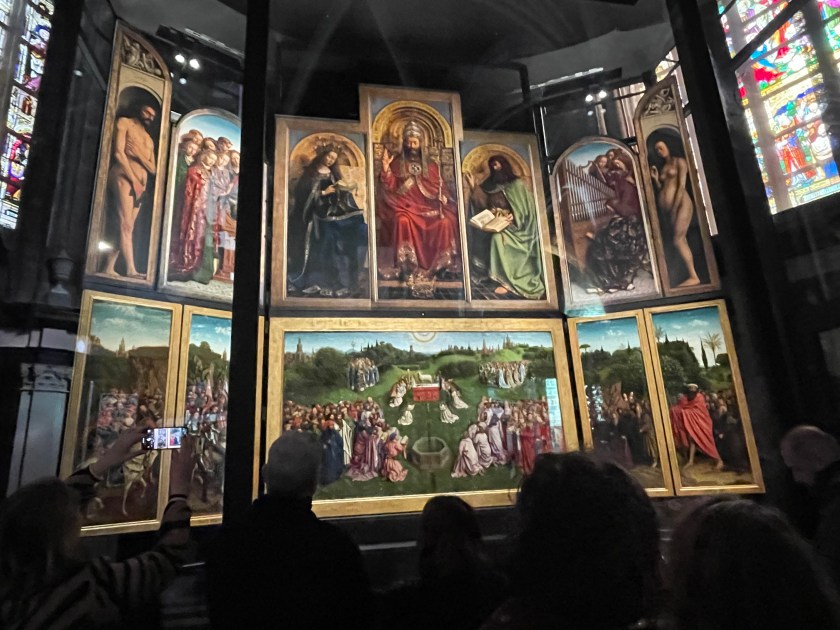

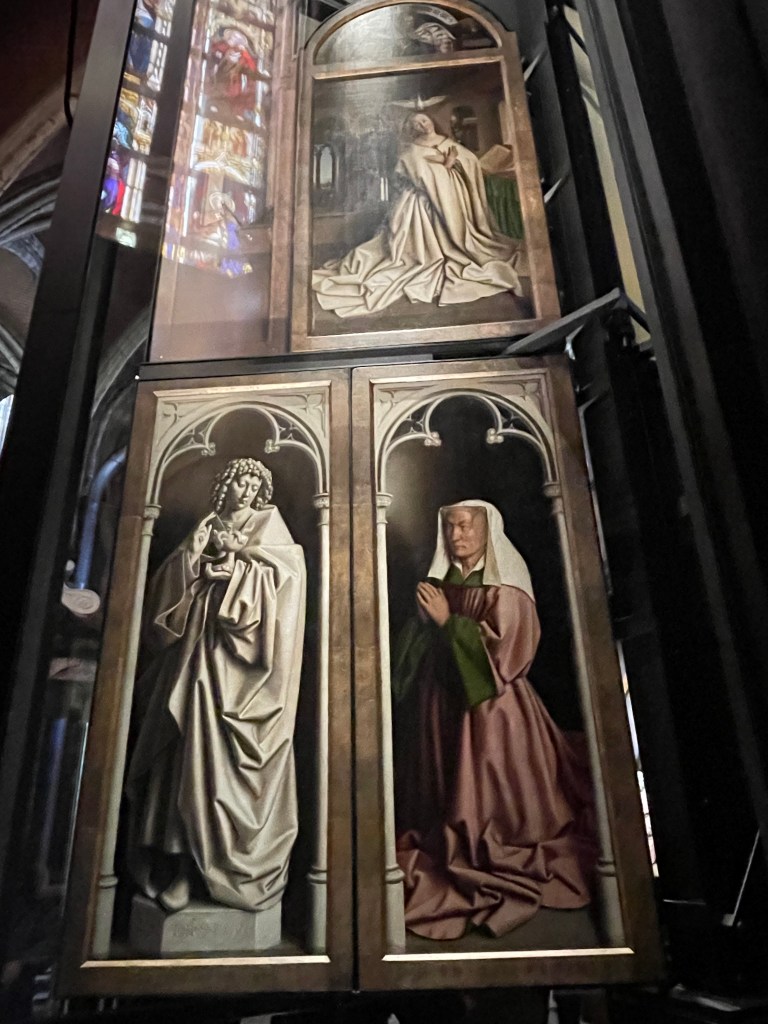
The paintings are on both sides of hinged doors that close over the main part of the piece. Every panel was honestly breathtaking. We stood and stared for a long long time.


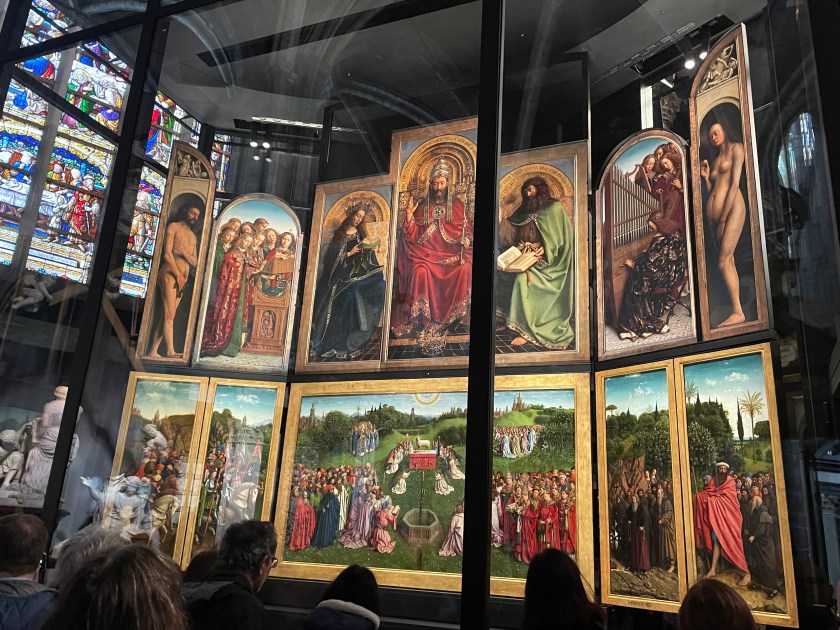
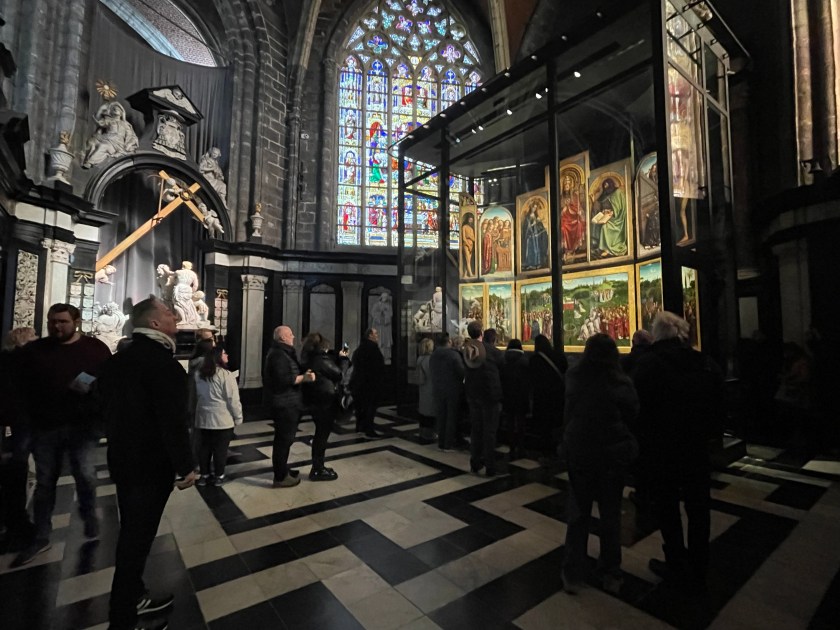
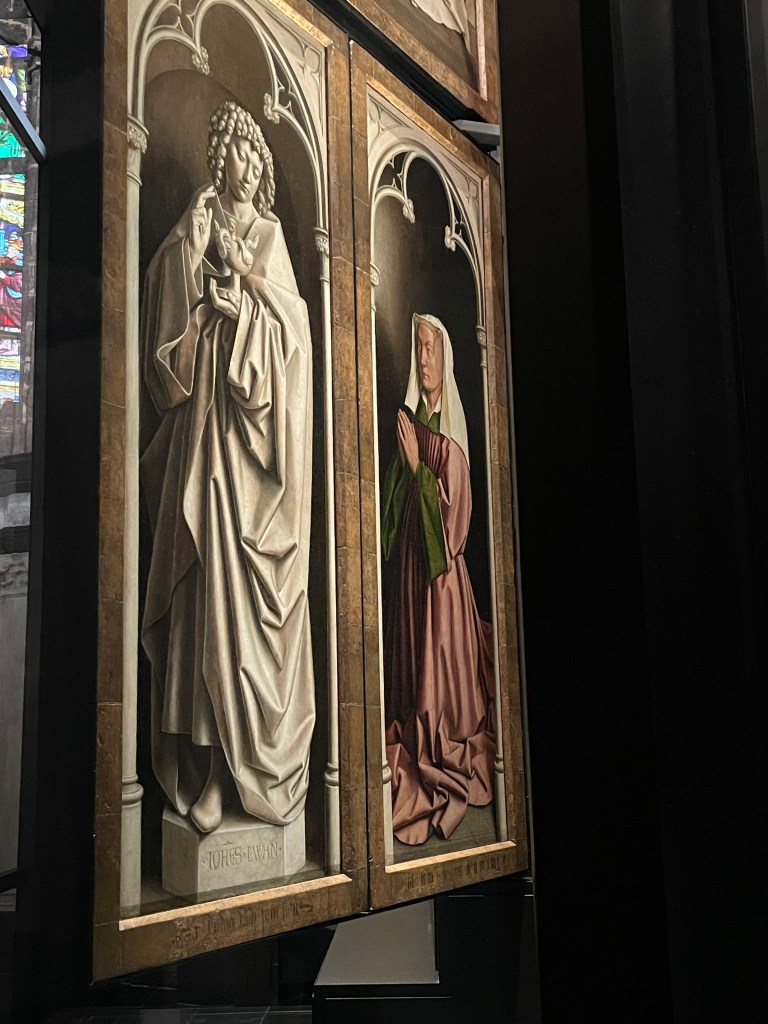
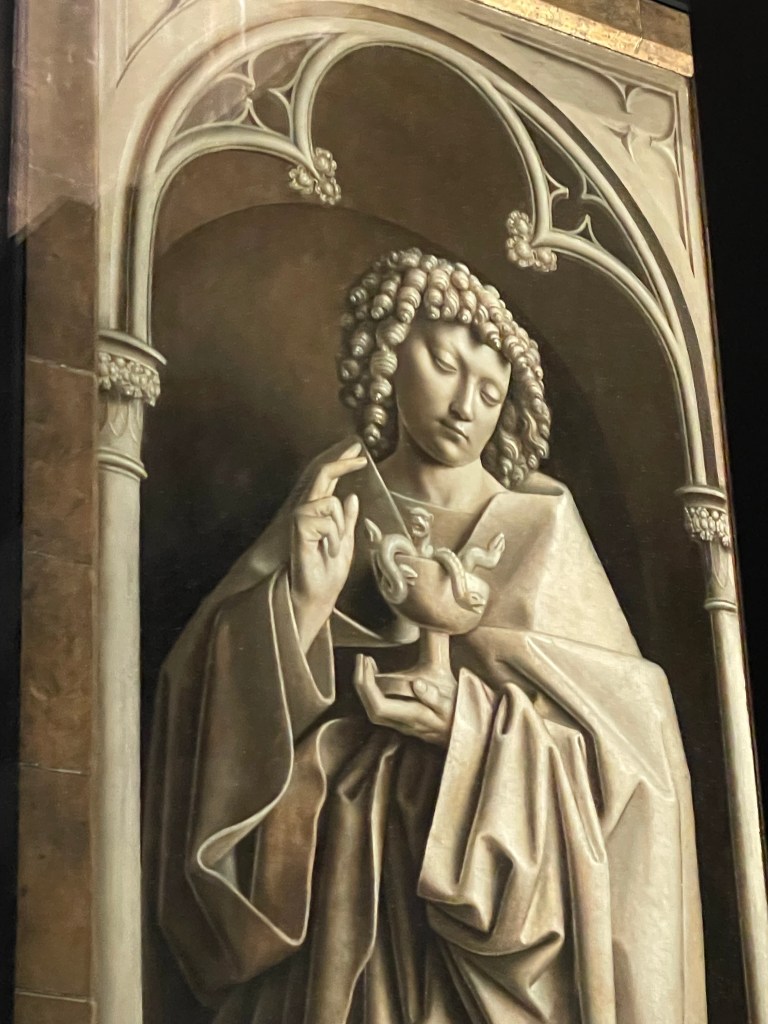
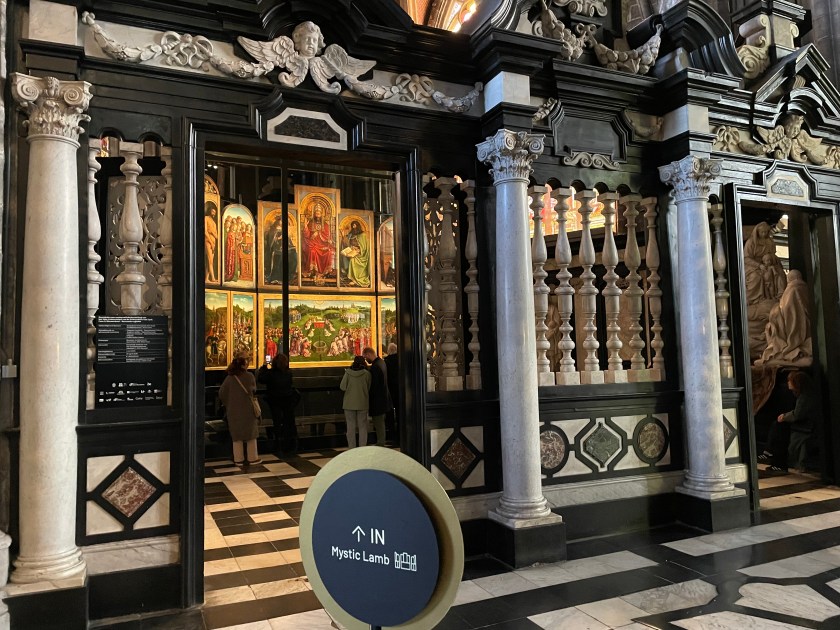
This is where the altarpiece originally was displayed:

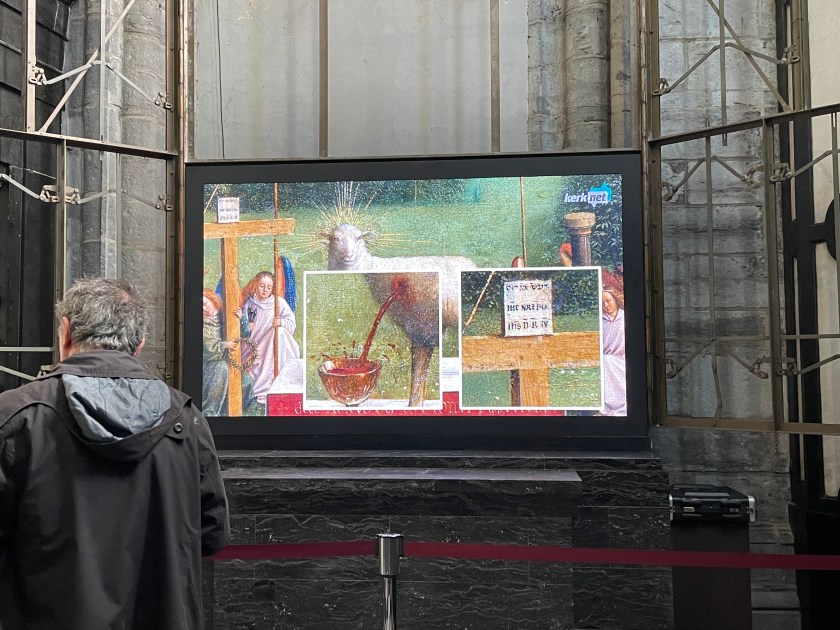
It’s worth your time to learn more about this masterpiece. Here are a few images from the excellent Wikipedia information about the Altarpiece:

The central figure, usually referred to as “The Almighty” is flanked by the Virgin Mary and John the Baptist.
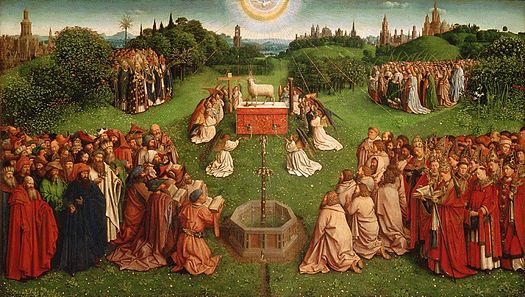
The central Adoration of the Mystic Lamb panel. The groupings of figures are, from top left anti-clockwise: the male martyrs, the pagan writers and Jewish prophets, the male saints, and the female martyrs.
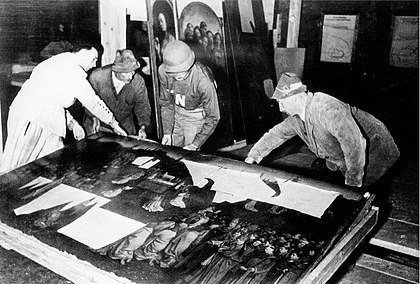
The Ghent Altarpiece during recovery from the Altaussee salt mine
at the end of World War II.
Here’s a short trailer about the movie:

 Our Frankfurt Germany Mission