
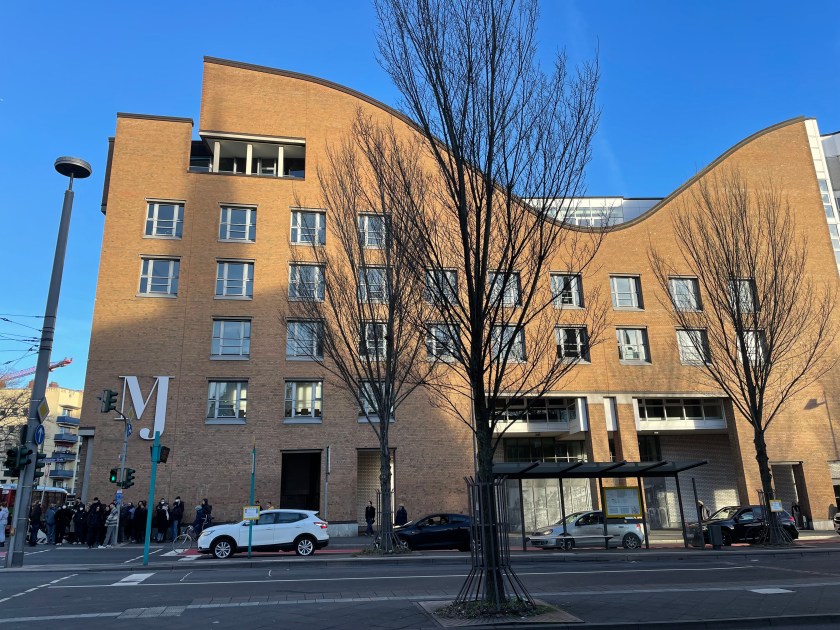
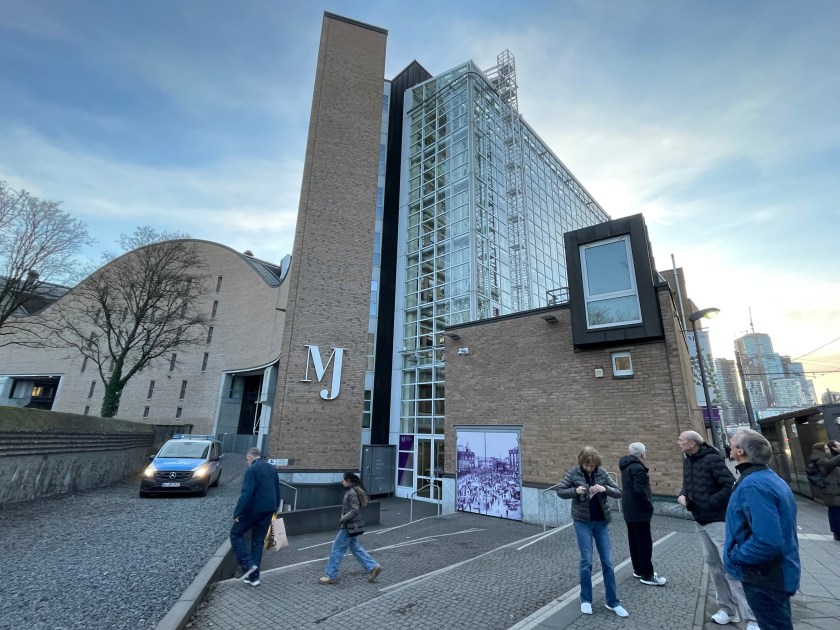
Next we walked to the other Jewish Museum, called the Judengasse Museum. Both museums work together to tell the story of the Jewish people in Frankfurt.
Here is some information I found fascinating, gathered from a few sites, including Wikipedia:
The Frankfurter Judengasse (lit. ‘Jews’ Lane’) was the Jewish ghetto of Frankfurt and one of the earliest ghettos in Germany. It existed from 1462 until 1811 and was home to Germany’s largest Jewish community in early modern times.
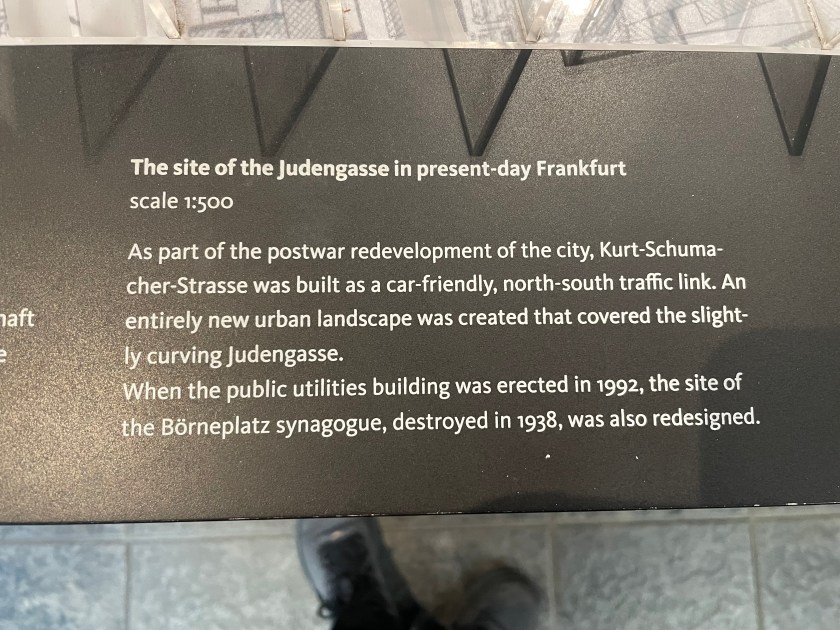
At the end of the 19th century, most of the buildings in the Judengasse were demolished. The area suffered major destruction during World War II and reconstruction left no visible signs of the ghetto in today’s townscape of Frankfurt.
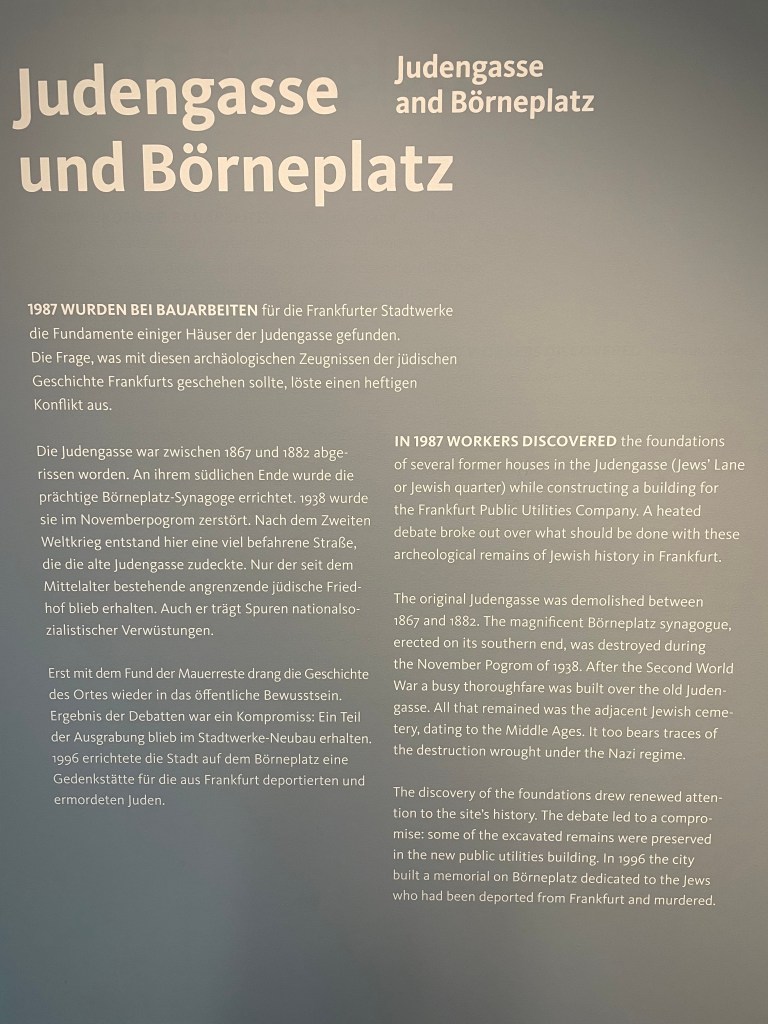
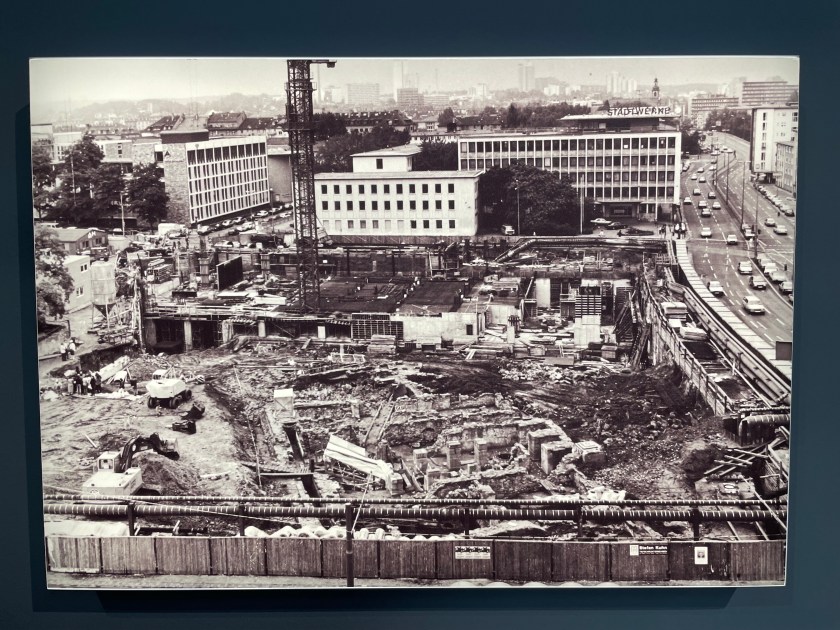
Post-war usage of the area included a car park, a petrol station and a wholesale flower market. The decision to build an administrative complex triggered a public discussion as to what should be done with the archaeological remains uncovered during the excavation in 1977. The foundations of 19 buildings were found and five of these can be seen at the “Museum Judengasse” which was incorporated into the new building.
The ghetto was located outside the city walls east of the medieval city wall (Staufenmauer) and formed a slight curve from today’s Konstablerwache to Börneplatz, near the river Main. The street was about 330 meters long, three to four meters wide, and had three town gates. The gates were locked at night as well as on Sundays and Christian holidays. Due to the narrow street and the limited access, the Judengasse was destroyed three times by fire in the 18th century alone, in 1711, 1721 and 1796.
Initially, some 15 families with about 110 members lived in Frankfurt’s Judengasse when they were forcibly removed from the city and relocated to the ghetto by decree of Frederick III in 1462. By the 16th century, the number of inhabitants rose to over 3,000, living in 195 houses. The ghetto had one of the highest population densities in Europe. Contemporary documents described it as narrow, oppressive and dirty.
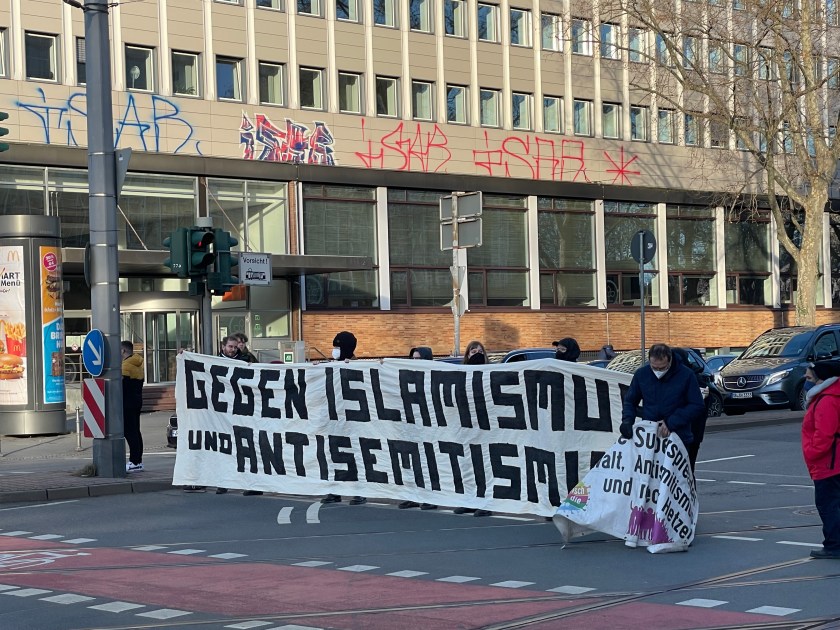
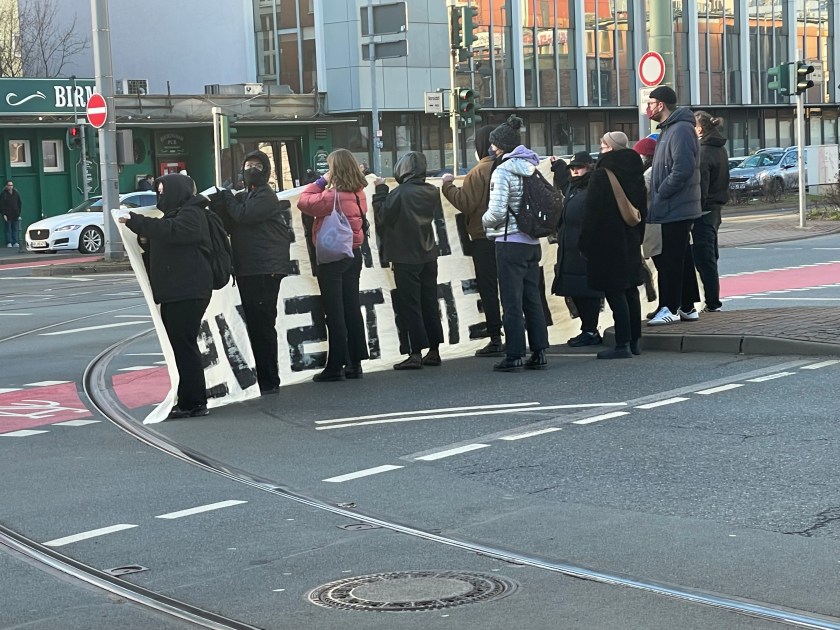
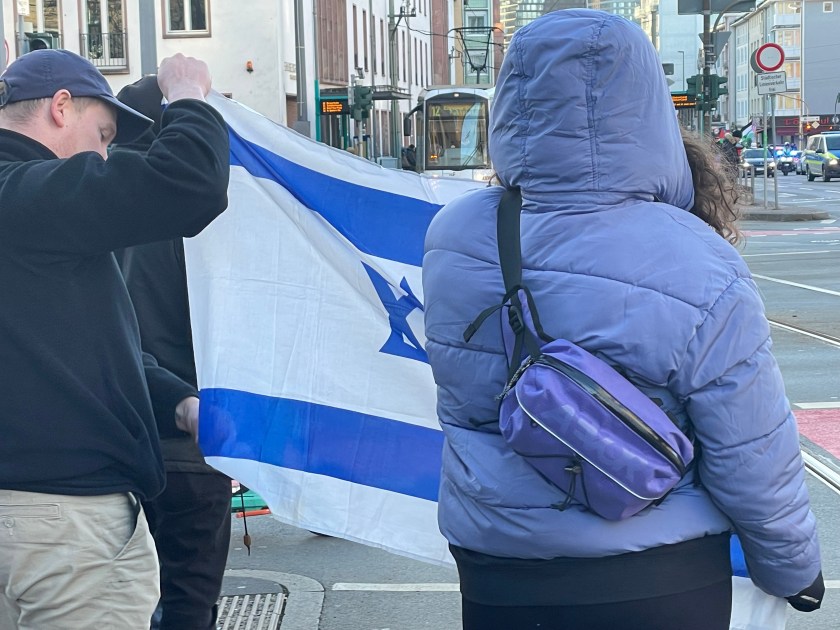
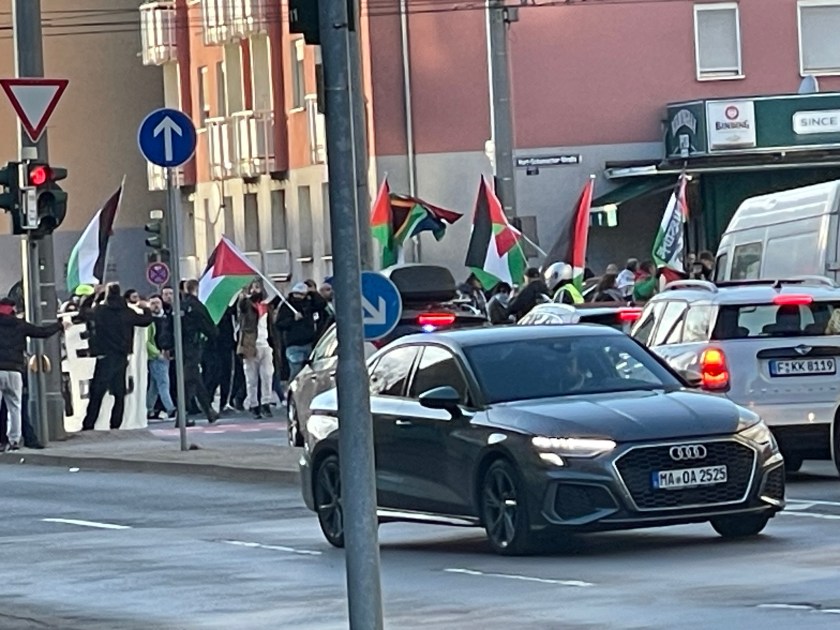
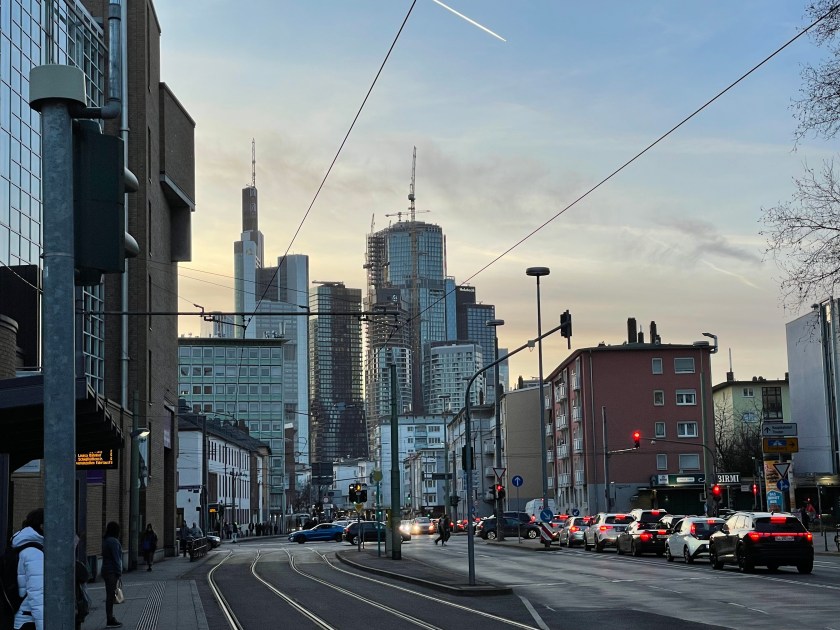
As we approached this Judengasse Museum, we heard demonstrations in the street coming toward us. There were police cars driving before those marching with Palestinian flags. They were yelling and shouting and the people at the museum were nervous and hurried our group in (I was out in the street taking pics). They were very cautious and security was high.
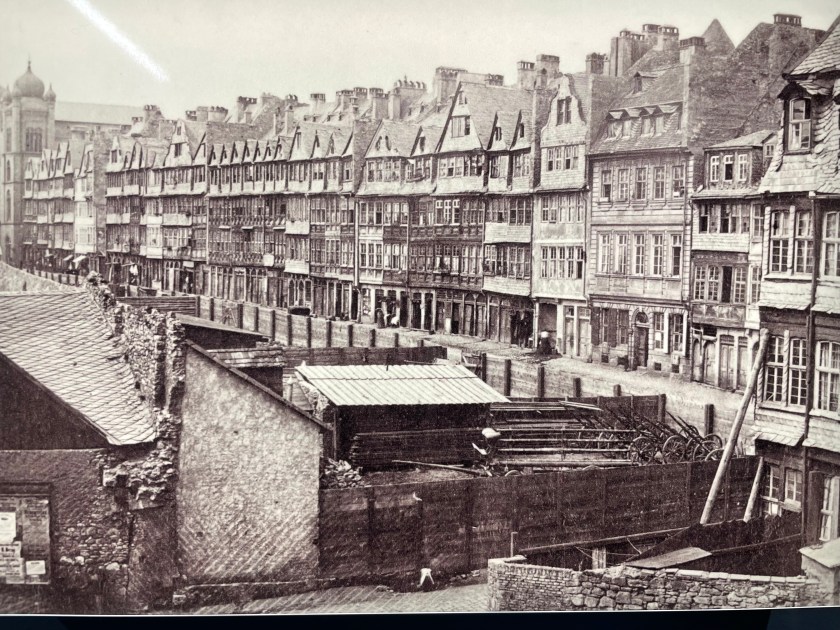
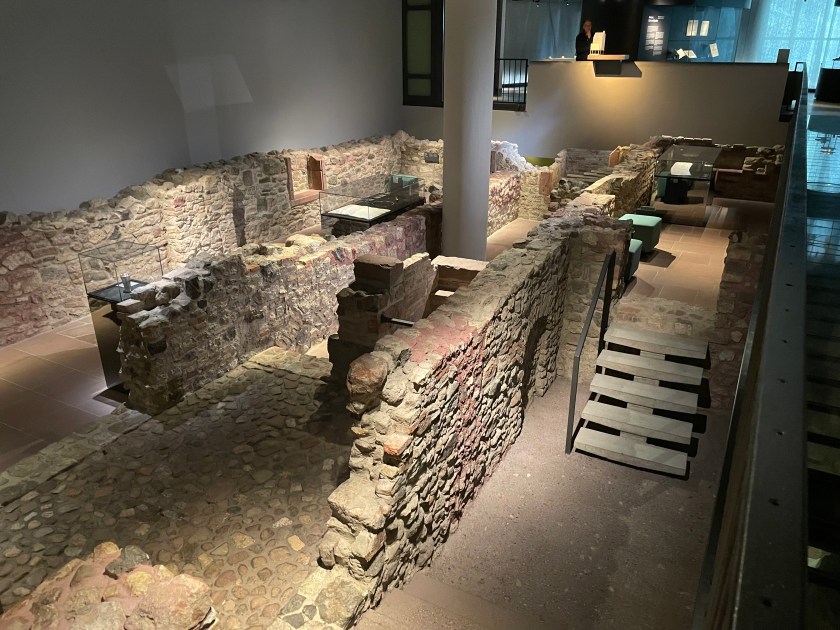
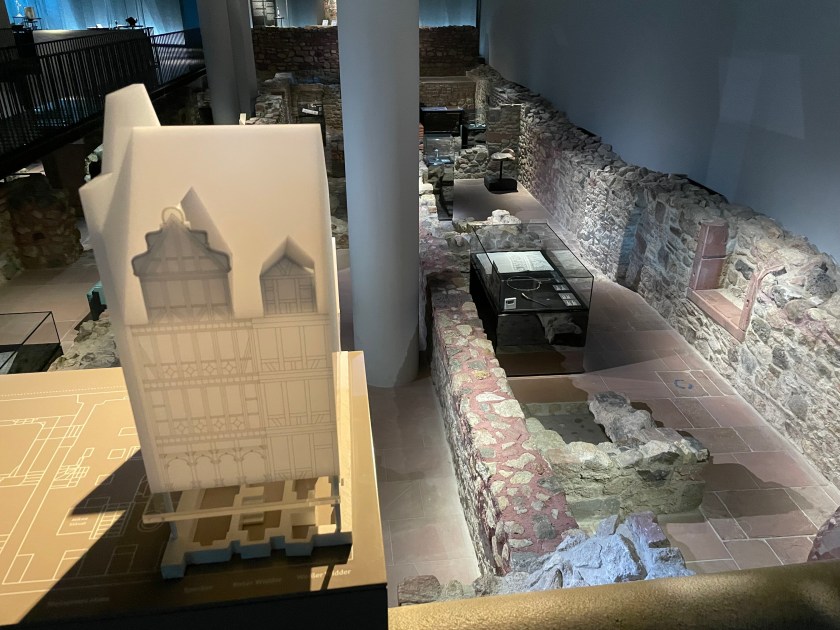
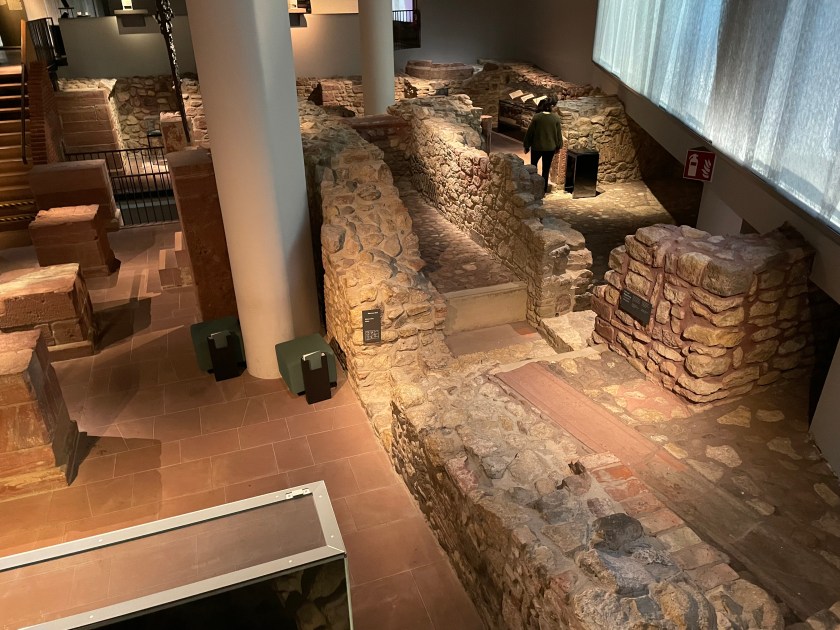
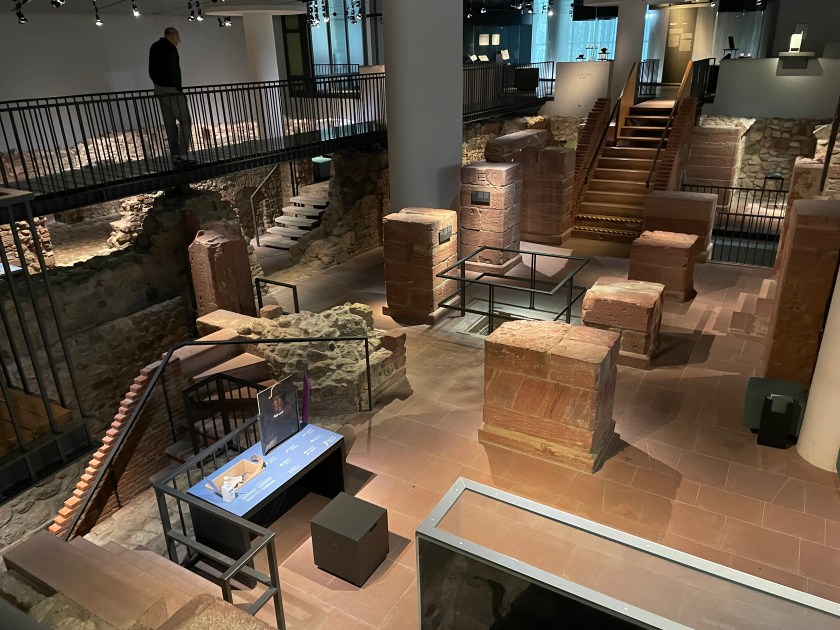
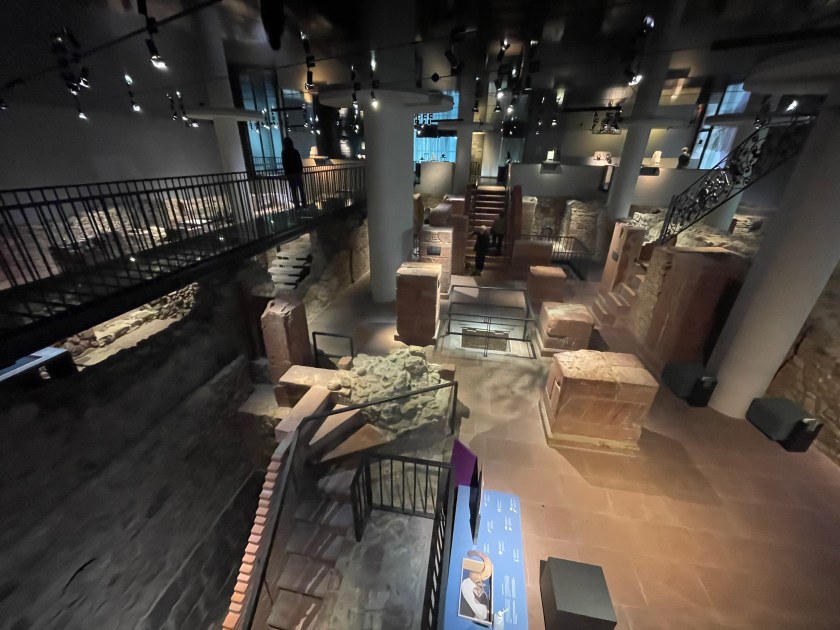
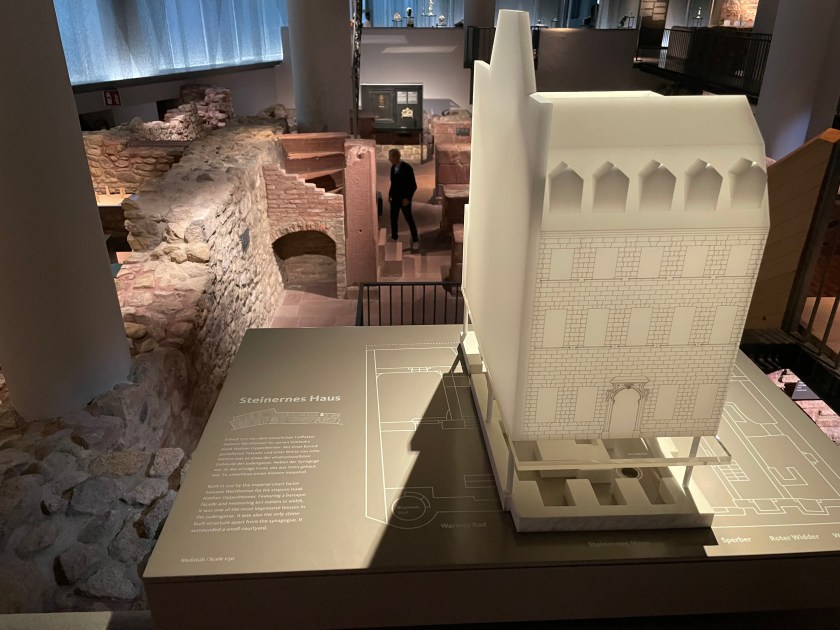
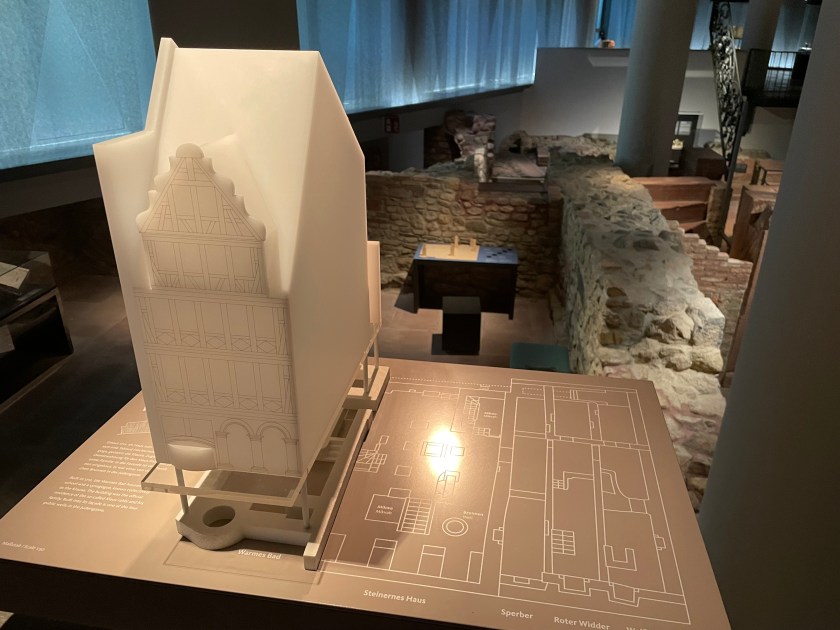
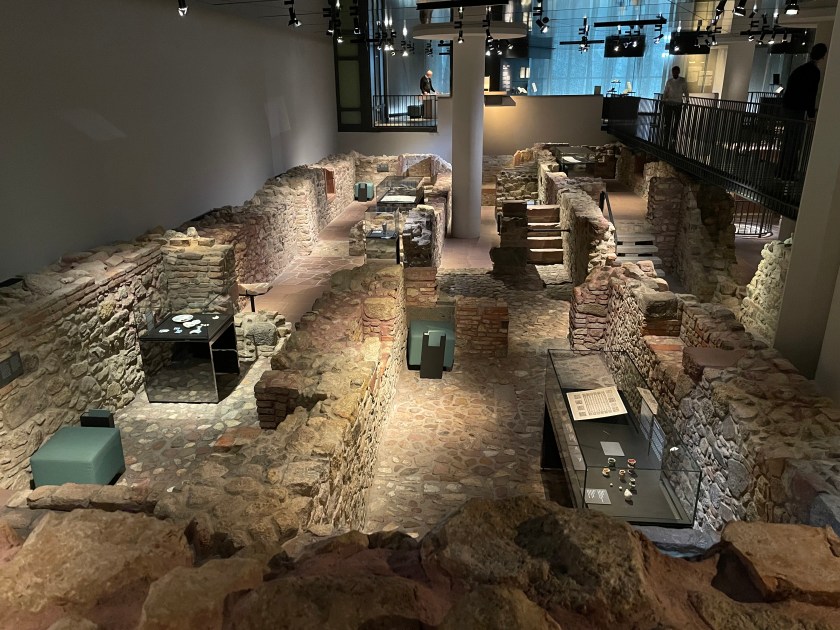
We soon forgot all of that as we immersed ourselves in the museum displays and the archaeological site. We were able to walk down into the foundations and rooms of 3 of the homes that were in the ghetto. The homes were long and narrow, about 5 meters wide. Most were 4-5 stories tall, sandwiched together tight, squished, compact.


Museum Judengasse
In 1987, during construction work on an administration building on Börneplatz , the foundations of 19 houses on Judengasse were discovered. It was the largest archaeological find to date of a Jewish settlement from the early modern period in Europe. The find sparked a public conflict of nationwide importance over the question of how to deal with these evidence of a repressed Jewish history. While the client, the city of Frankfurt, only wanted to document the remains and remove them for the new building, numerous people protested against the removal as “disposal of history”. At the end of the so-called Börneplatz conflict , which was also an epochal conflict regarding German-Jewish relations, there was a compromise: five of the house foundations discovered were removed and rebuilt in the basement of the administration building on the original site.
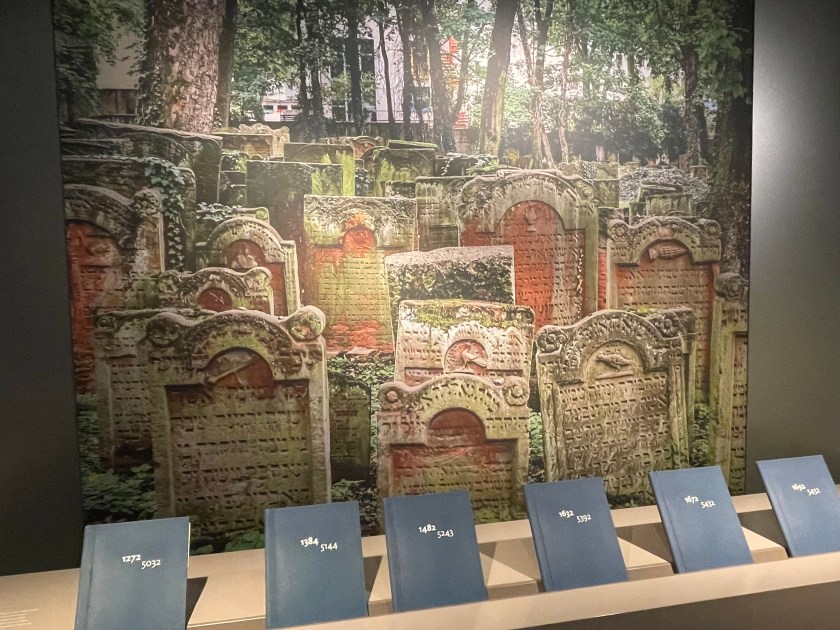
Frankfurt’s Judengasse was the first Jewish ghetto in Europe. It was built in 1460 on the old Staufer city wall; Two years later, the Jewish residents of Frankfurt, who previously lived in the immediate vicinity of the cathedral , were forced to relocate . Over the centuries, Judengasse developed into a cultural center that was widely known for its scholarship and was visited by students from far away. Its population grew to over 3,000 people in the 17th century until the order for the Jewish population to settle in Judengasse was lifted after the end of the Napoleonic Wars . The ghetto was demolished in the 1870s; However , the immediately adjacent old Jewish cemetery remained intact, even if no more burials were carried out on site at that time. Immediately next to the cemetery and at the southern end of the former Judengasse, the Börneplatz Synagogue was built in 1881/82 and was destroyed during the November pogrom. In 1942, the National Socialist city administration issued an order to demolish the old Jewish cemetery, but this was not fully implemented.
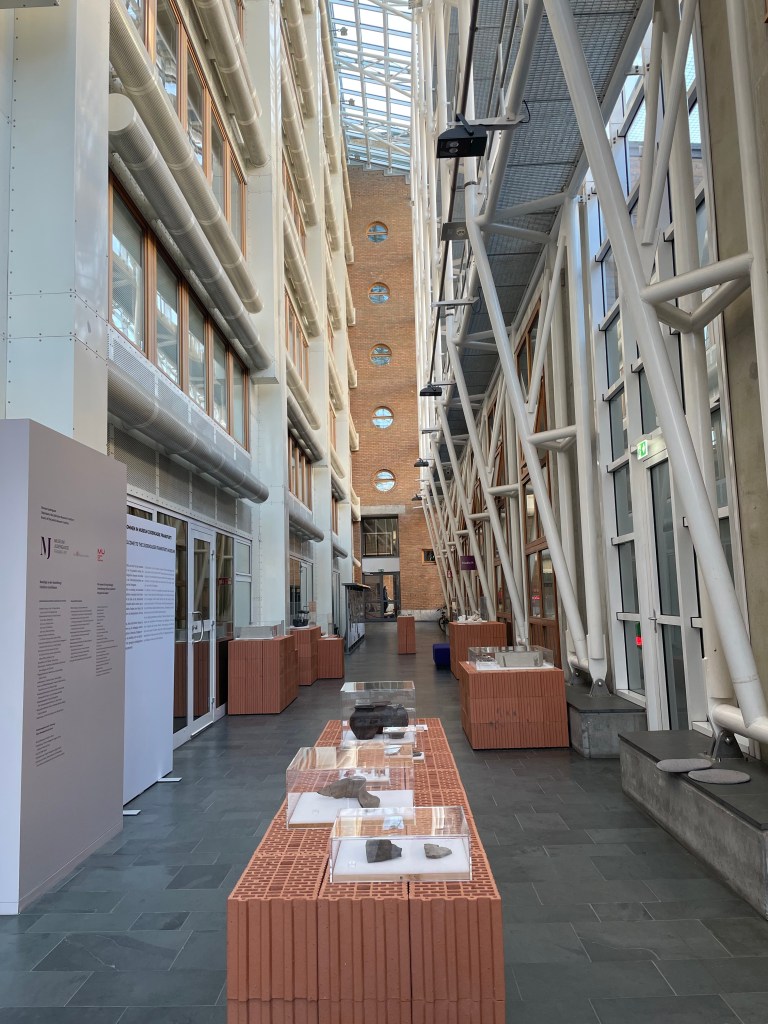
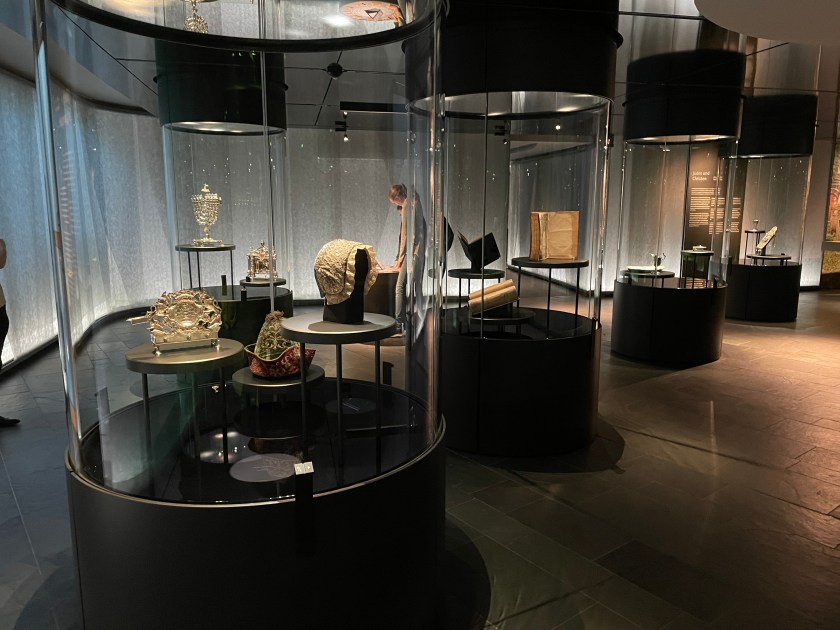
The Judengasse Museum was opened in 1992 as a branch of the Jewish Museum. It presents the history and culture of Frankfurt’s Jews from the Middle Ages to Emancipation in the foundations of 5 houses on Judengasse. In March 2016 the house was reopened with a newly designed exhibition. It borders the Neuer Börneplatz Memorial , which commemorates the Frankfurt Jews murdered in the Holocaust, and the old Battonnstrasse Jewish Cemetery, which is included in the audio tour.
The ghetto burned many times through the centuries, and then was completely leveled during WWII. There were nice displays with audio and also a film of the history of the area. Fascinating. I really enjoyed it. We 8 were scattered throughout the museum, each going where we wanted to until the 5:00 closing.
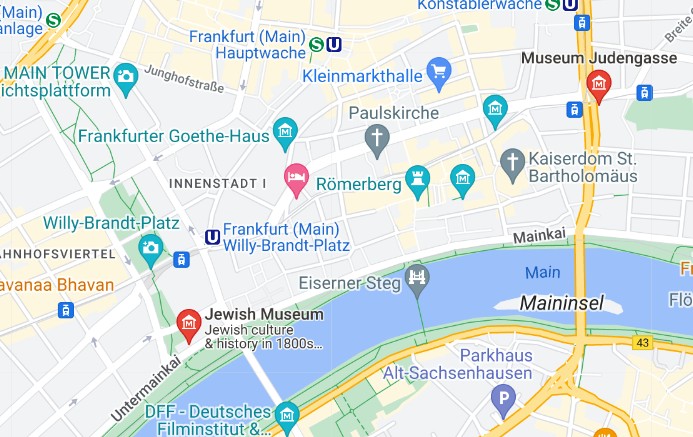
Below you can see where the Judengasse was situated under what is now current-day Frankfurt.
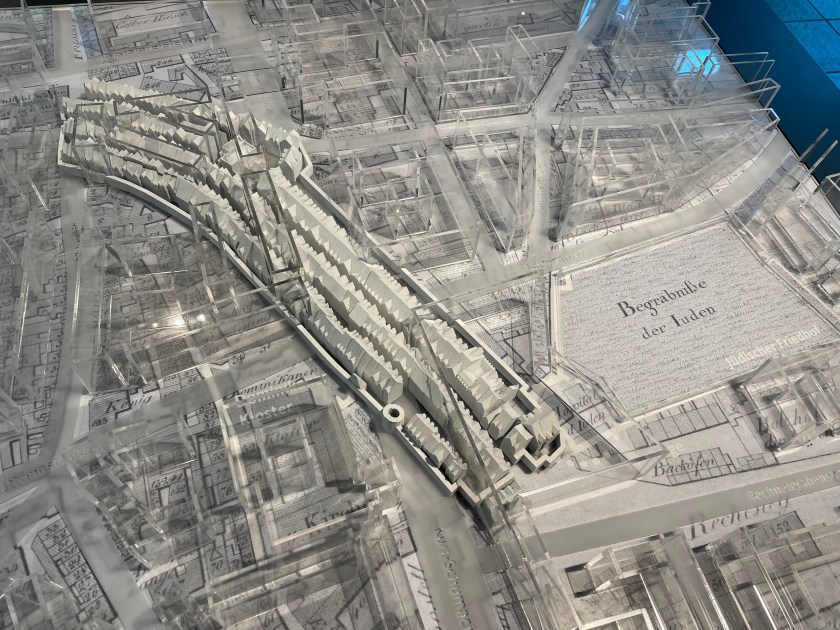
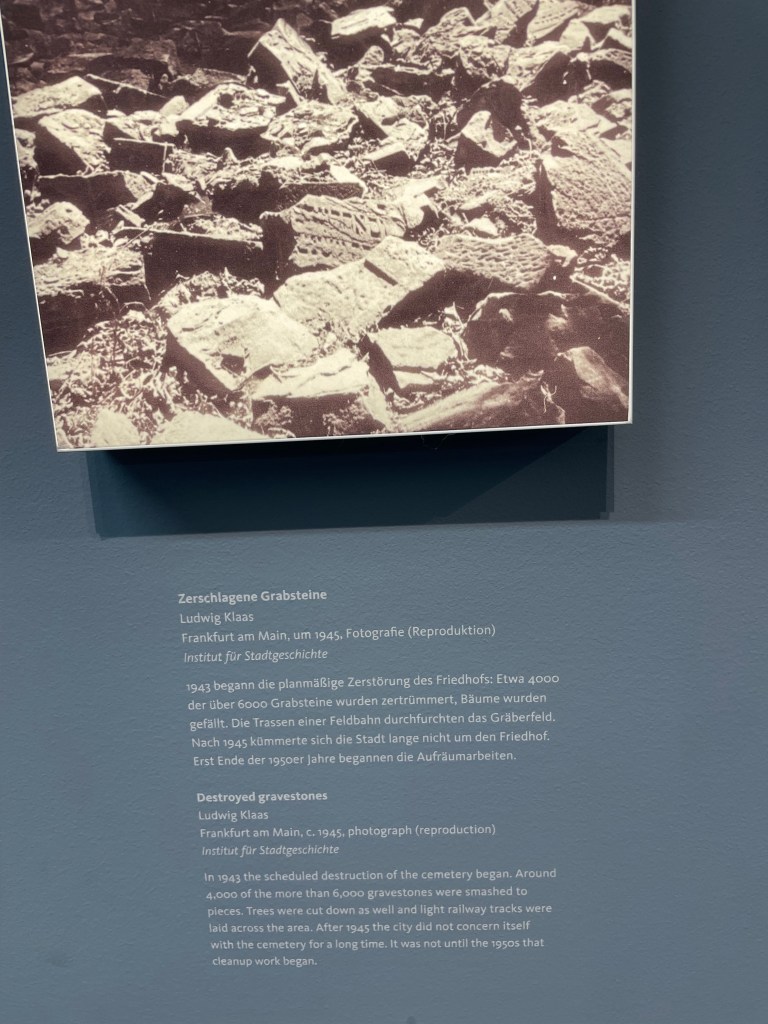
In 1943 the cemetery (to the right above) was destroyed and around 4000 of more than 6000 gravestones were smashed to pieces.
In November 1938, more than 1400 synagogues and assembly rooms across Germany were destroyed, including the two in Frankfurt.
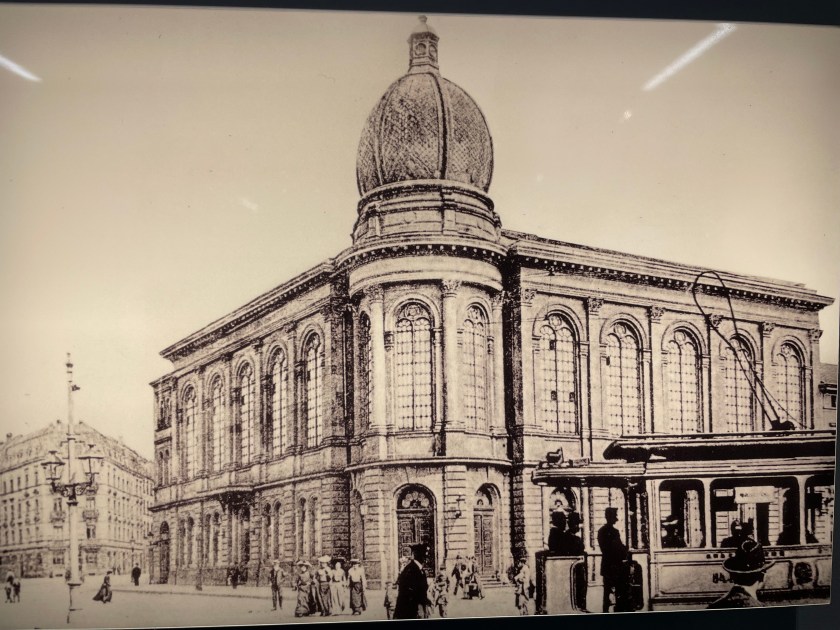


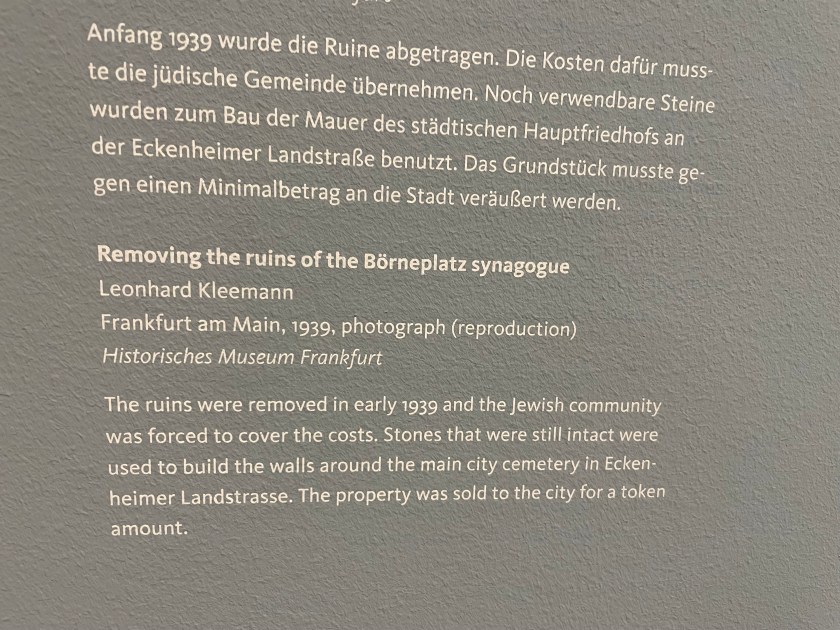
After the synagogues were destroyed, the Jews were forced to pay for the removal of the rubble. I was fascinated to learn that the stones that were still useable were taken to build the walls of the main city cemetery across the street from where we live. We see those stones every day. I’ll write more about that in my next post.
The excavations in the museum were fascinating. It gave us a feel for the long narrow homes that once stood here.
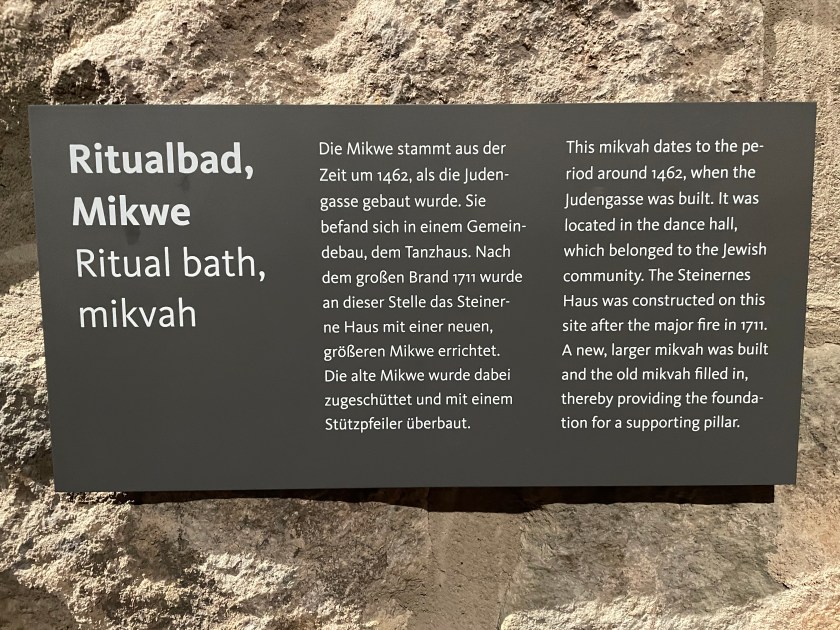



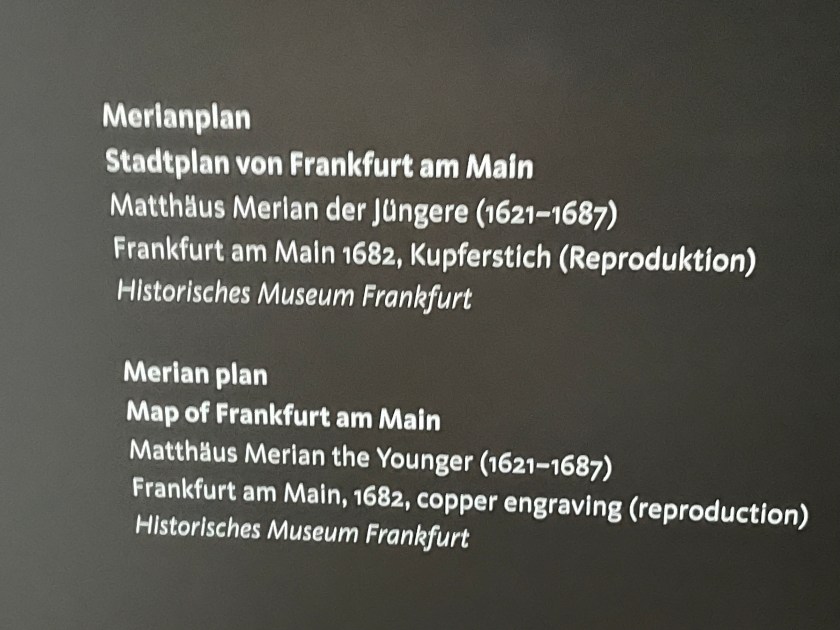
Here’s a map of Frankfurt in 1682. The Jewish ghetto was located outside the city walls.

We will need to return on a day when the cemetery is open (not Saturdays). Visits like these are always sobering. There has been a great deal of unrest in Germany this last week, demonstrations involving tens of thousands of people standing up against an extreme right-wing political party who wants to “cleanse” Germany of immigrants and non-German ethnicities. Many remember what happened here not so many years ago, and echo the desire that “nie immer ist jetzt” (never again is now).

 Our Frankfurt Germany Mission
One thought on “The Judengasse Museum”