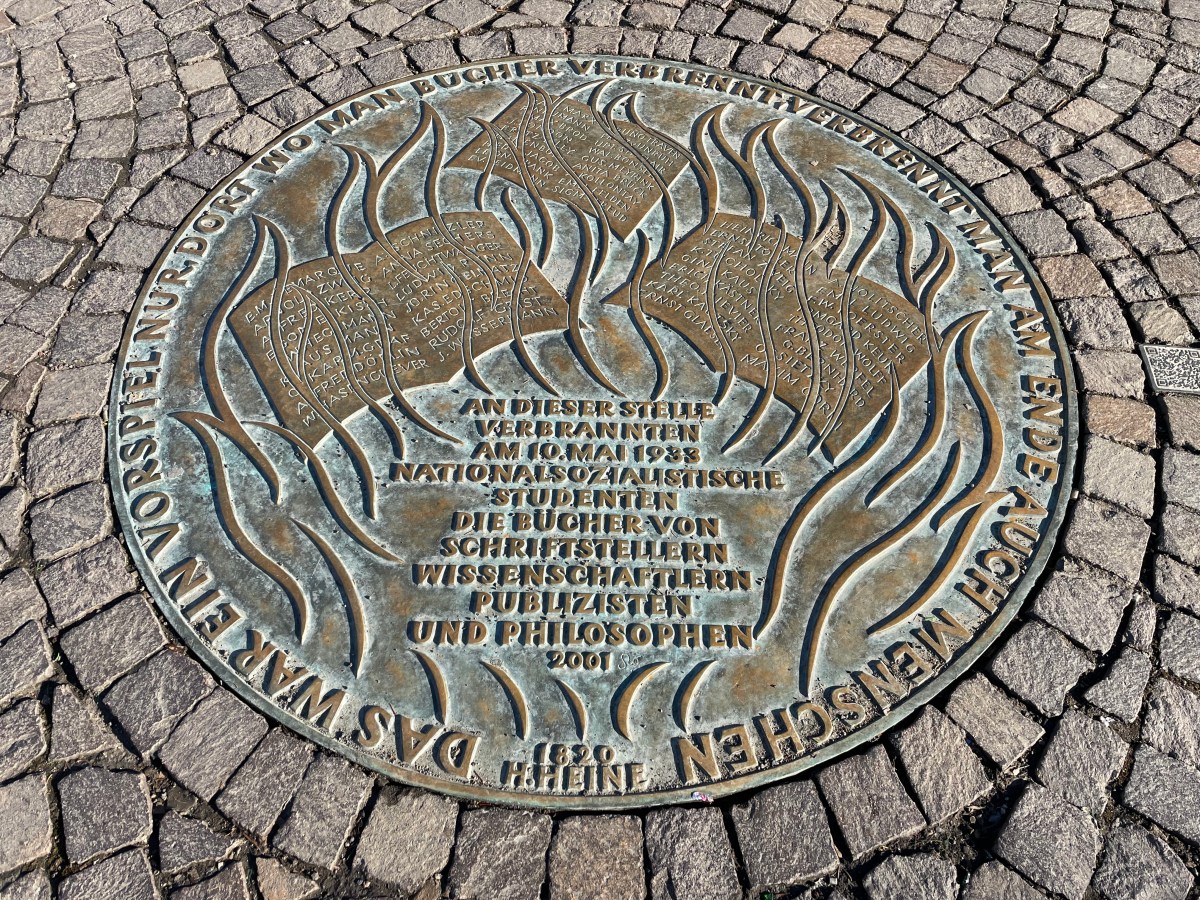
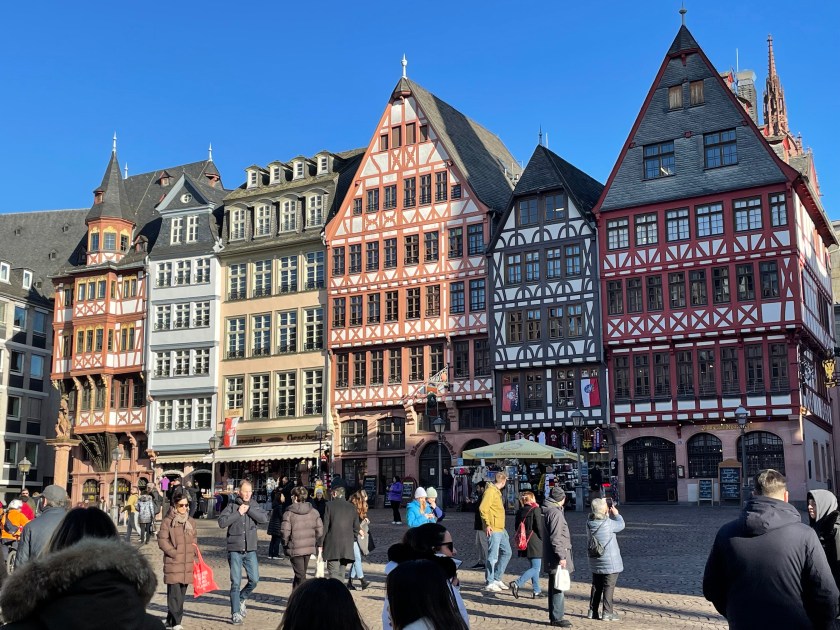
 Today as we showed the other missionaries the Römerberg square in downtown Frankfurt, we found ourselves standing right over a marker in the pavement in front of the city hall. The marker, installed in 2001, blended right in and we almost didn’t notice it under our feet.
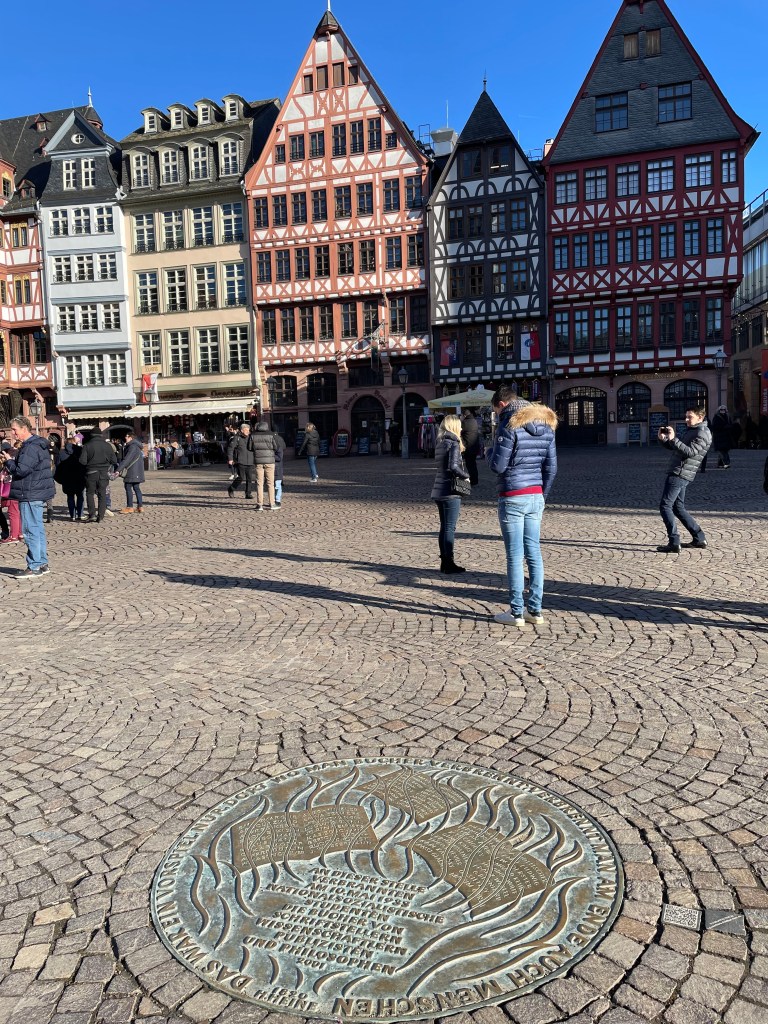 On May 10, 1933 student groups at universities across Germany carried out a series of book burnings of works books by renowned writers, scientists, journalists and philosophers that the students and leading Nazi party members associated with an “un-German spirit.” It happened here in this very place.
Enthusiastic bystanders cheered as flames engulfed works by Brecht, Einstein, Freud, Mann and Remarque, and many other well-known intellectuals, scientists and cultural figures, many of whom were Jewish.
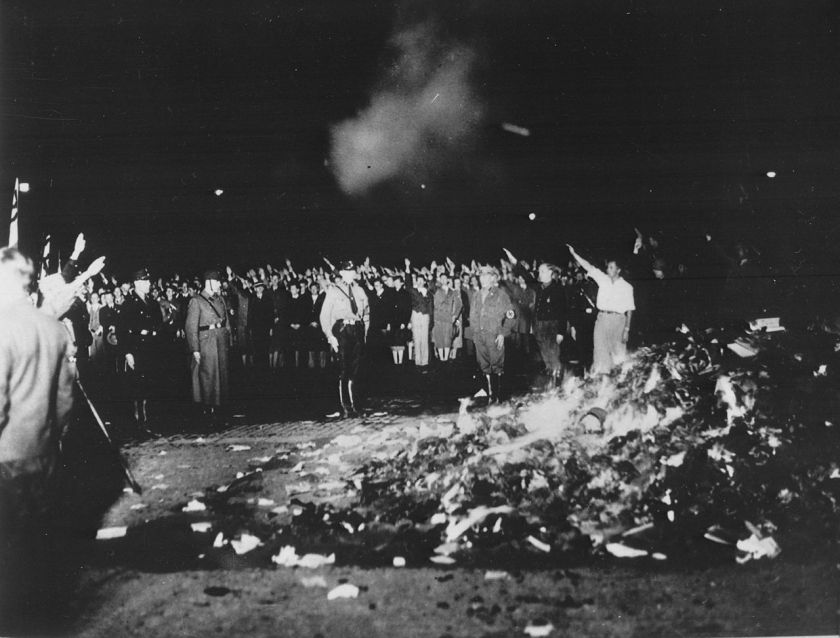
The largest of these book bonfires occurred in Berlin, where an estimated 40,000 people gathered to hear a speech by the propaganda minister, Joseph Goebbels, in which he pronounced that “Jewish intellectualism is dead” and endorsed the students’ “right to clean up the debris of the past.”
A total of over 25,000 volumes of “un-German” books were burned, ushering an era of uncompromising state censorship. In many other university towns, like Frankfurt, nationalist students marched in torch-lit parades against the “un-German” spirit. The scripted rituals that night called for high Nazi officials, professors, rectors, and student leaders to address the participants and spectators. At the meeting places, students threw the pillaged, banned books into the bonfires with a great joyous ceremony that included live music, singing, “fire oaths,” and incantations.
On May 10, 1933 student groups at universities across Germany carried out a series of book burnings of works books by renowned writers, scientists, journalists and philosophers that the students and leading Nazi party members associated with an “un-German spirit.” It happened here in this very place.
Enthusiastic bystanders cheered as flames engulfed works by Brecht, Einstein, Freud, Mann and Remarque, and many other well-known intellectuals, scientists and cultural figures, many of whom were Jewish.
The largest of these book bonfires occurred in Berlin, where an estimated 40,000 people gathered to hear a speech by the propaganda minister, Joseph Goebbels, in which he pronounced that “Jewish intellectualism is dead” and endorsed the students’ “right to clean up the debris of the past.”
A total of over 25,000 volumes of “un-German” books were burned, ushering an era of uncompromising state censorship. In many other university towns, like Frankfurt, nationalist students marched in torch-lit parades against the “un-German” spirit. The scripted rituals that night called for high Nazi officials, professors, rectors, and student leaders to address the participants and spectators. At the meeting places, students threw the pillaged, banned books into the bonfires with a great joyous ceremony that included live music, singing, “fire oaths,” and incantations.
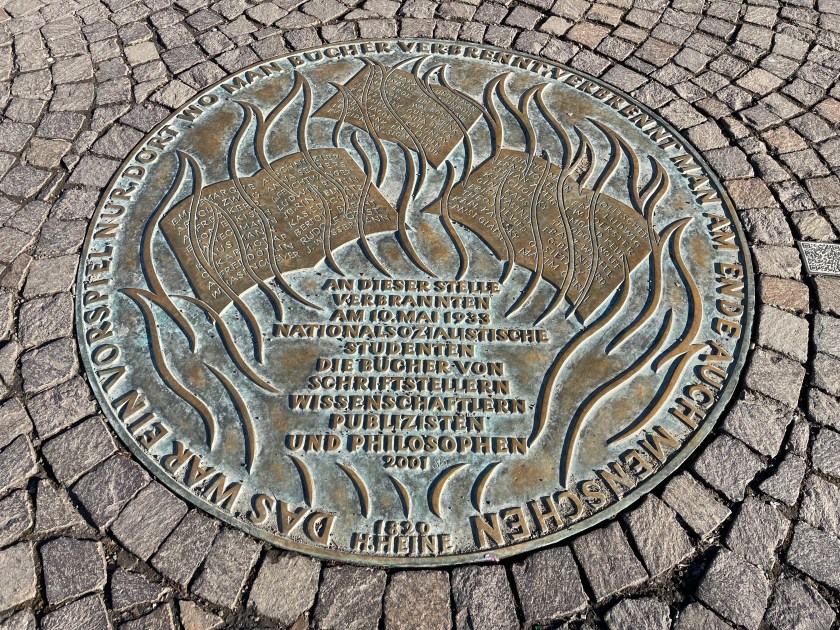
The inscription on the memorial reads:
An dieser Stelle verbrannten am 10. Mai 1933 nationalsozialistische Studenten die Bücher von Schriftstellern Wissenschaftlern Publizisten und Philosophen
Das war ein Vorspiel nur, dort wer man Bücher verbrennt, verbrennt man auch am ende Menschen H. Heine 1820 English: On May 10, 1933, at this location Nazi students burned books by writers, scientists, journalists and philosophers. That was merely a prologue – where they burn books, in the end they burn people, too. Heinrich Heine, 1820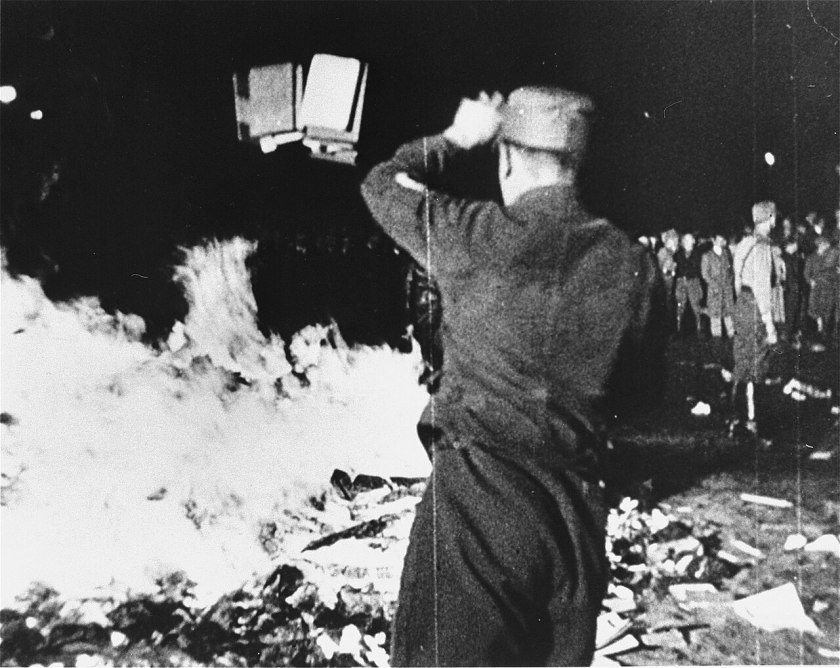

 Our Frankfurt Germany Mission