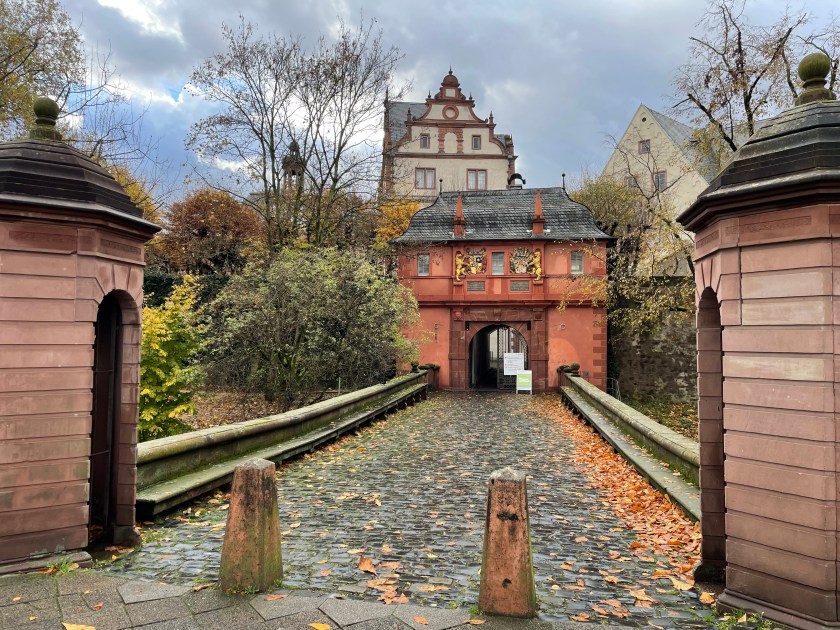
We attended stake conference church meetings today in Darmstadt. After out meetings, John and I went to see a few things in Darmstadt.
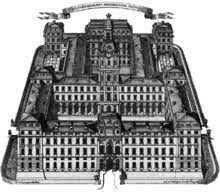
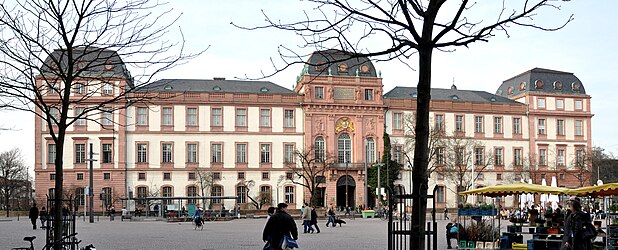
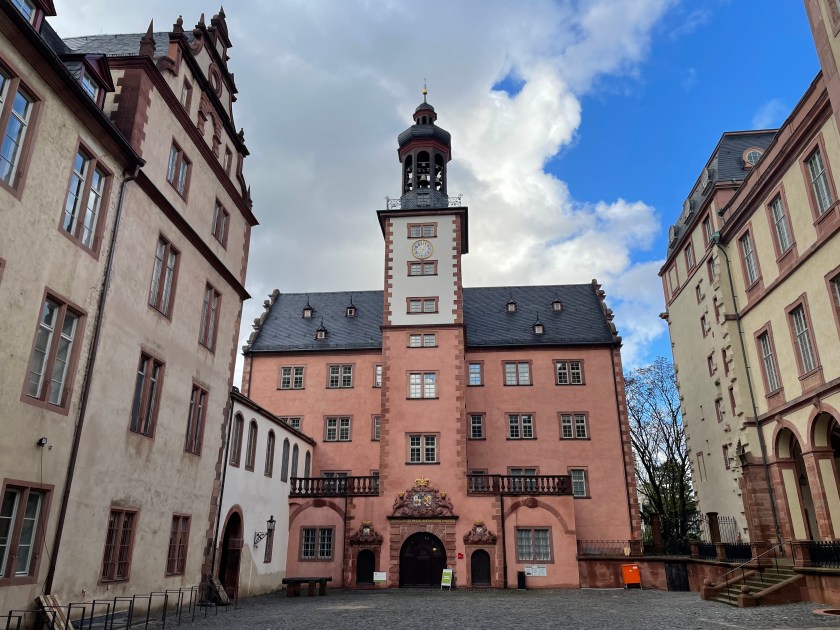
At the Darmstadt castle (first built in the 1200s, burned and rebuilt over and over. Now it’s more like a palace in the center of town where all the important people of each generation lived. Middle Ages, Renaissance, Baroque, and Art Nouveau periods. Here’s a bit about the building:
After the World War I, the castle passed into the possession of the People’s State of Hesse. On the night of the fire in Darmstadt from 11 to 12 September 1944, the castle burned down to the outer walls. Reconstruction began in 1946 and was not completed until the early 1970s. An overall repair was carried out in 2008, which is planned to last for a longer period of time. The bell construction was completed in 2016. The outer appearance was almost completely restored. As of 2023, the castle is the seat of the Technische Universität Darmstadt and the German-Polish Institute.
They’re the ones giving the tours now. 10 Euro for both of us for an hour-long German tour. We were with a small handful of others. There was a lot to see in the building.
I thought this entrance into the palace was interesting–with silhouettes of olden-days people on the left side coming and going, and modern people on the right side coming and going.

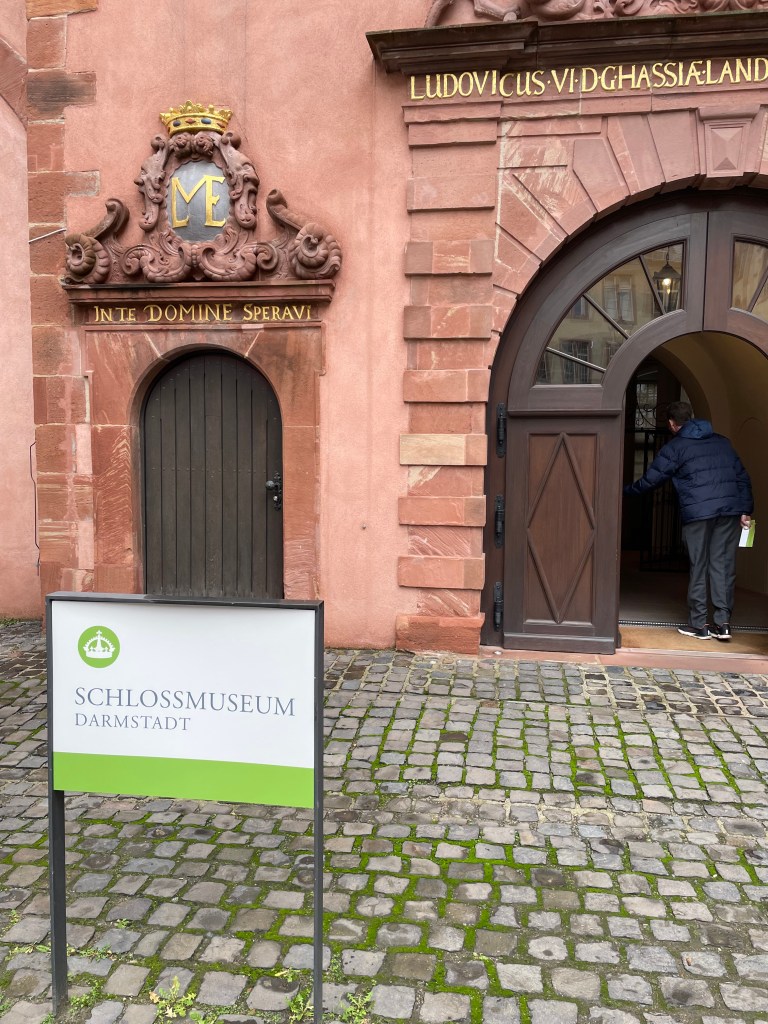

There were no photos allowed inside the palace (which is a little stressful for me because I want to remember everything).
We saw lots of private art collections, including portraits of the family of the landgraves and grand dukes whose residence this was (and who were connected to most of the royal families in Europe). Every wall had portraits of people who’d lived here, children, parents, grandparents. The guide seemed to know who everyone was. The family living here was connected by marriage to Nicholas and Alexandra in Russia.
Children under the age of about 7-8 years were all dressed the same–in dresses. Boys held a gun or weapon, girls held a doll or flowers. Otherwise they looked the same.
I looked into those faces in every room, thinking, “You are dead. All of you are dead. None of your riches went with you. I hope you enjoyed them here.” For every royal, there were thousands of peasants and real people who’s lives are untold. They all tried so hard to keep the money and power in the family, but to what end? They all died, just like the rest of us.
We toured through at least 2 floors of furnished rooms (put back together with period pieces after the war). It really looked like it all belonged. Everything was from the right periods, collection pieces. Imagine putting a castle back together after it was destroyed in the war!
There were historic pictures of Darmstadt, interesting costumes (some of the dresses weighed up to 15 kilos!), furniture and tapestries. They displayed fancy royalty daily items–dishes, some brought from China (it was vogue).
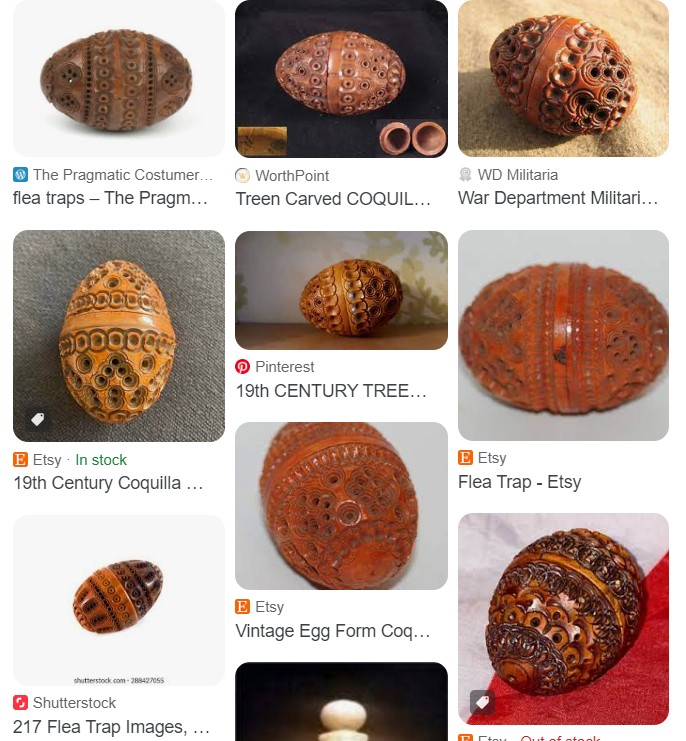
One of the most interesting things to see was a display case with a wooden egg-shaped flea catcher. It was with a display of the things they used to powder their wigs and hair. The guide said they also put the flea traps in their big hair wigs. Here’s a bit about them:
One other way [besides bathing to get rid of fleas] that was popular for a short period in the eighteenth-century, was to use a flea-trap which became something of a popular fashion accessory. It consisted of a hollow perforated cylindrical tube, sometimes ornately carved and made of silver or ivory. Inside was a small rod tuft of fur or a piece of cloth. This would be smeared with a few drops of blood to attract the fleas, along with fat and/or honey resin, designed to make the fleas stick fast to it as they crawled inside and which was removed as necessary to get rid of them.
The flea trap was worn on a ribbon as a necklace, hanging down inside a dress – it could also be placed in a bed to attempt to rid that of fleas. A German doctor named Franz Ernst Brückmann (1697-1753) designed the first flea trap in the early 1700s.
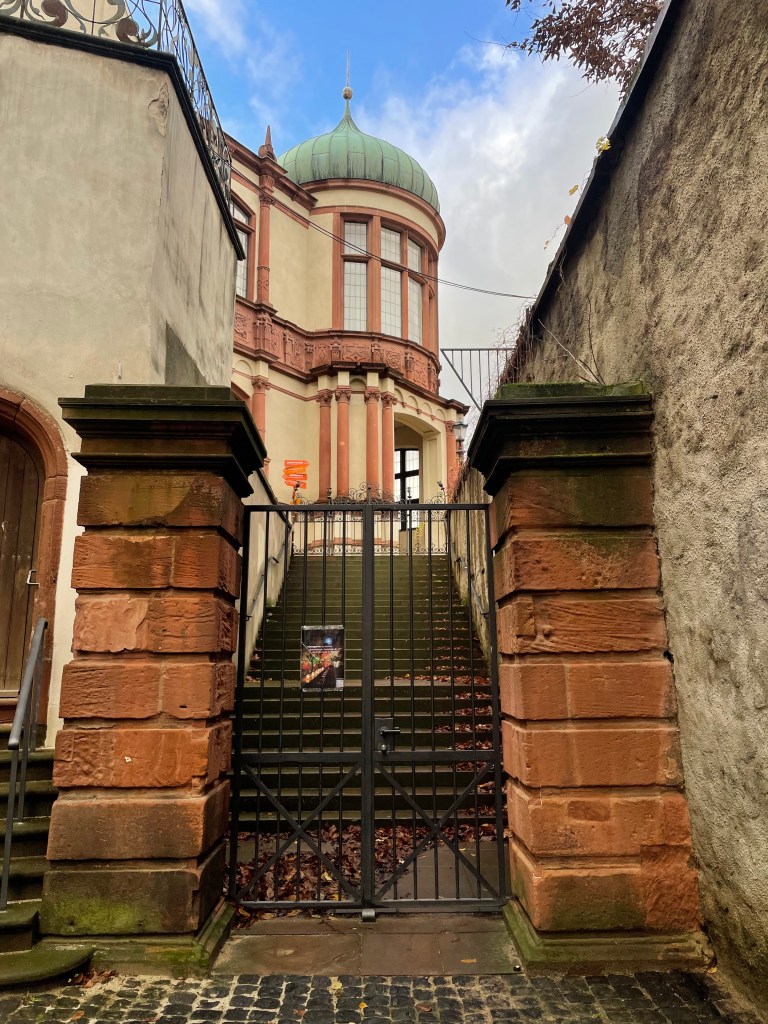
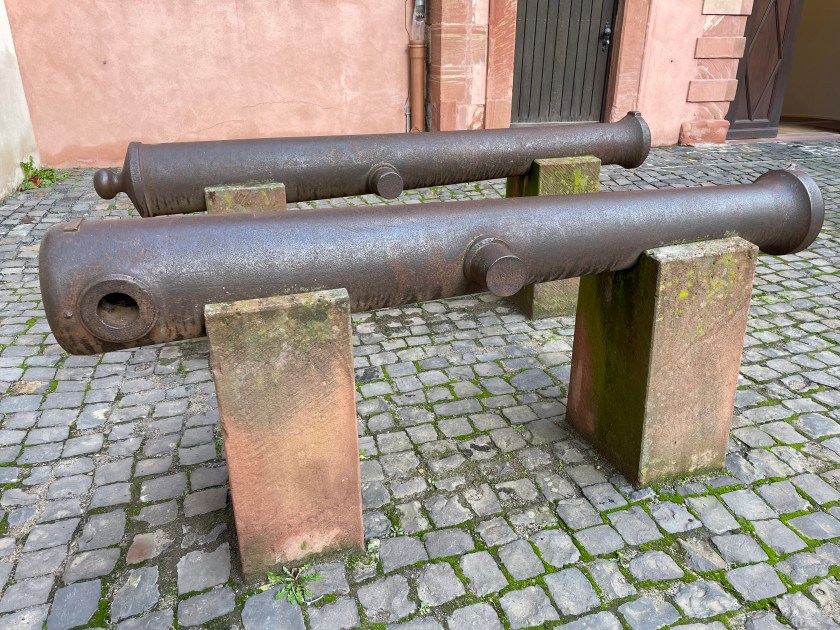
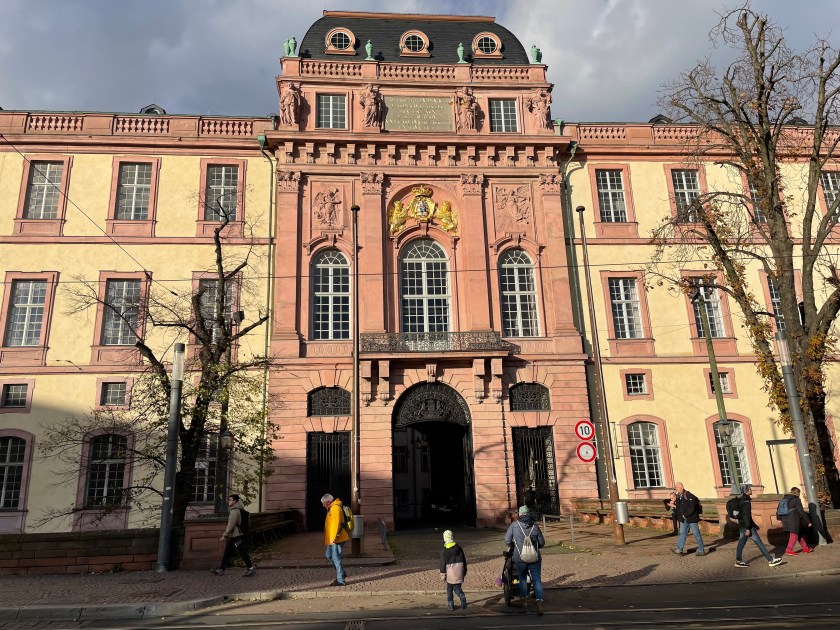
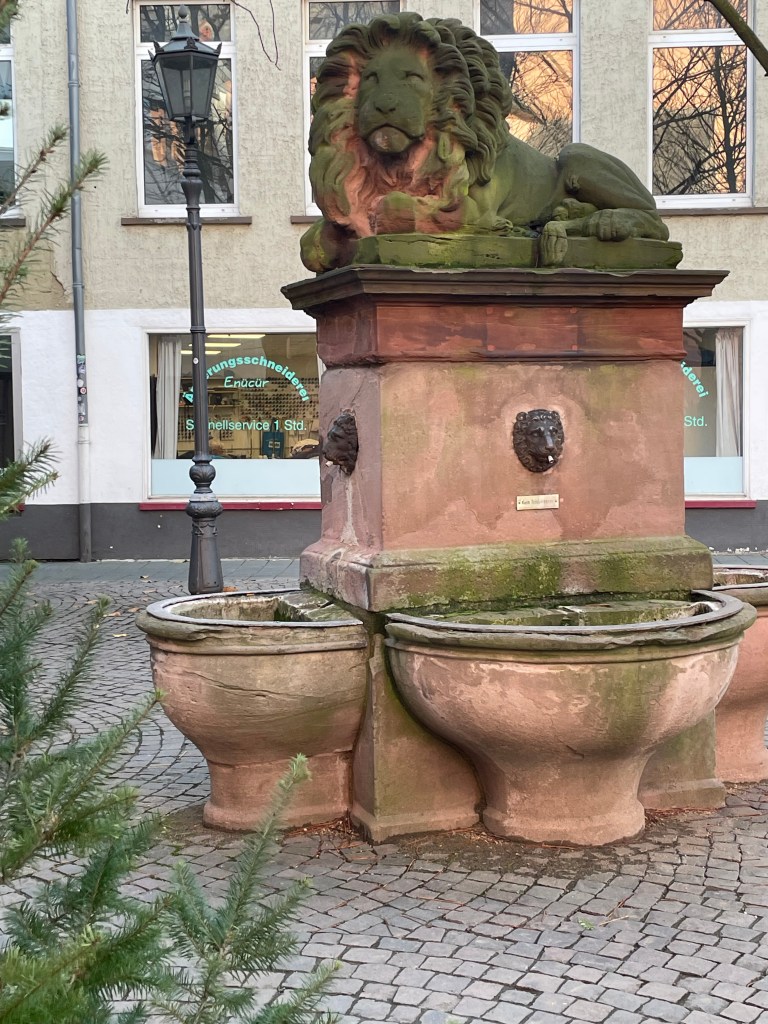
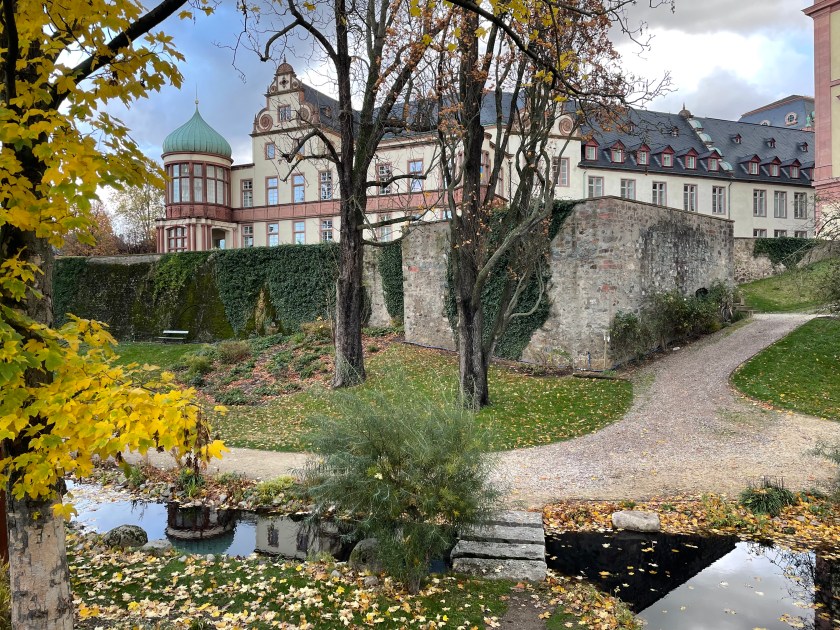
Here are some more photos from outside and around the palace:




This is a monument to Darmstadt soldiers who were killed in WWII:

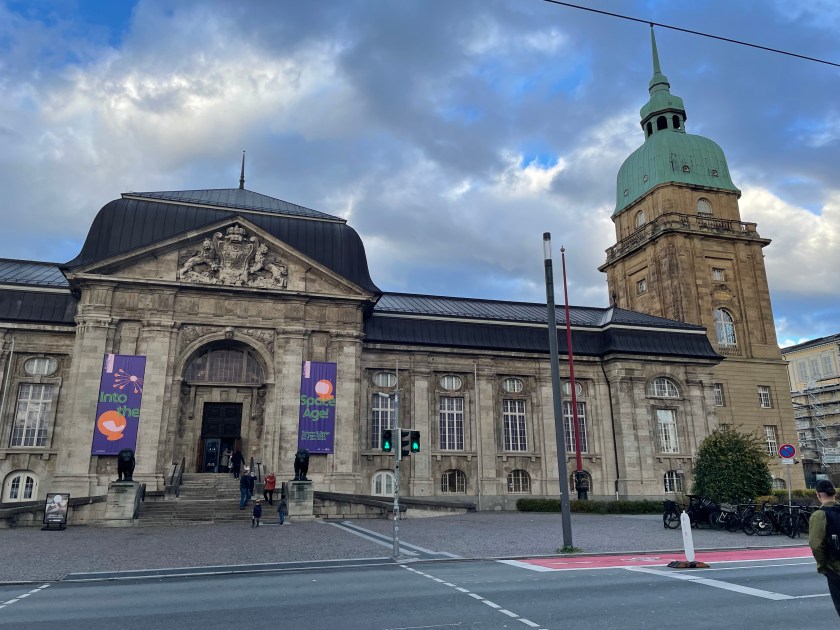
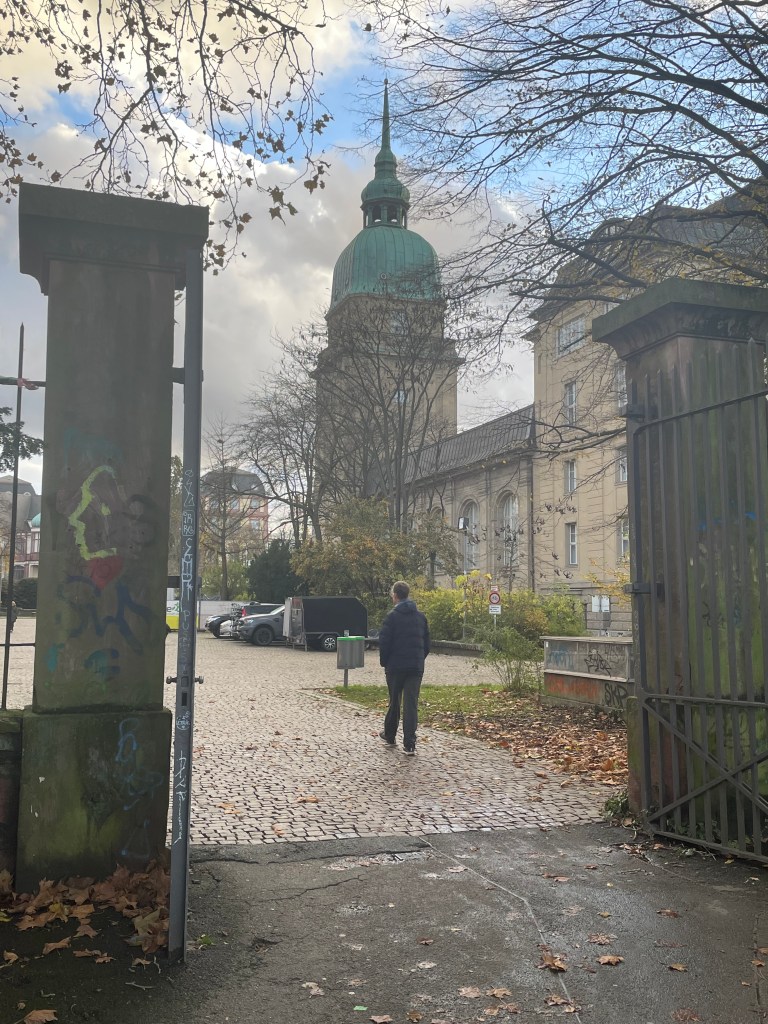
This is the huge Hessisches Landesmuseum (Hesse natural history museum). It boasts of having “the world under one roof.” It would take a few days to see everything there.
Behind this natural history museum were the gardens, with the feeling of a Central Park.
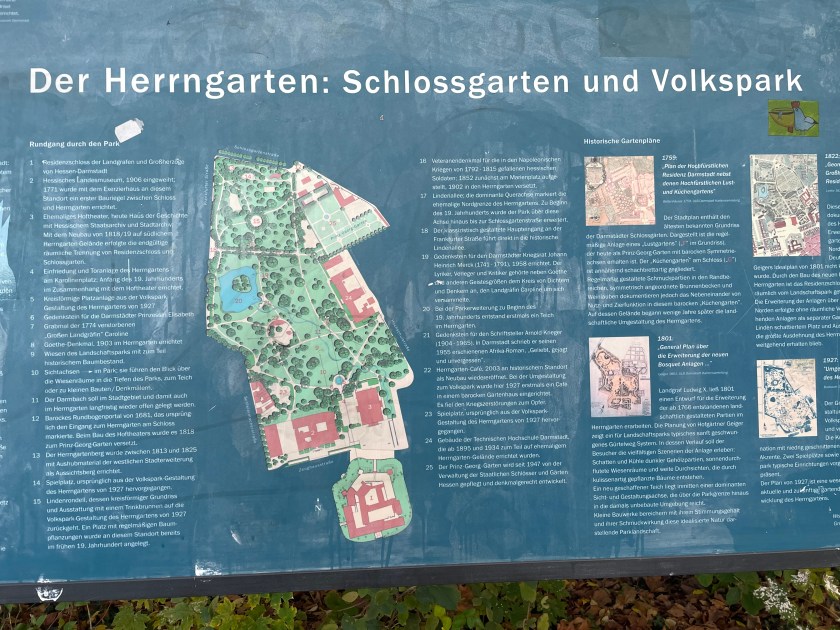

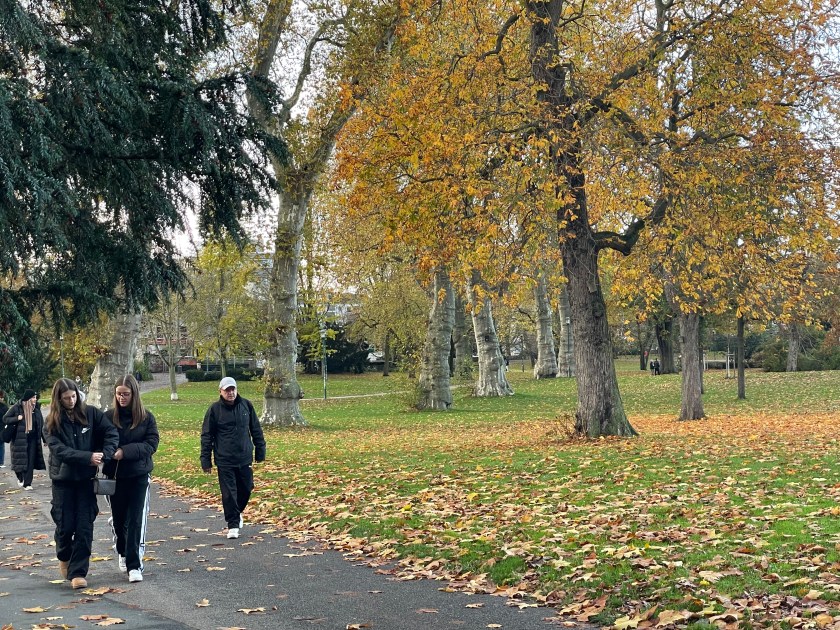
It was a pleasant Sunday afternoon place to wander.

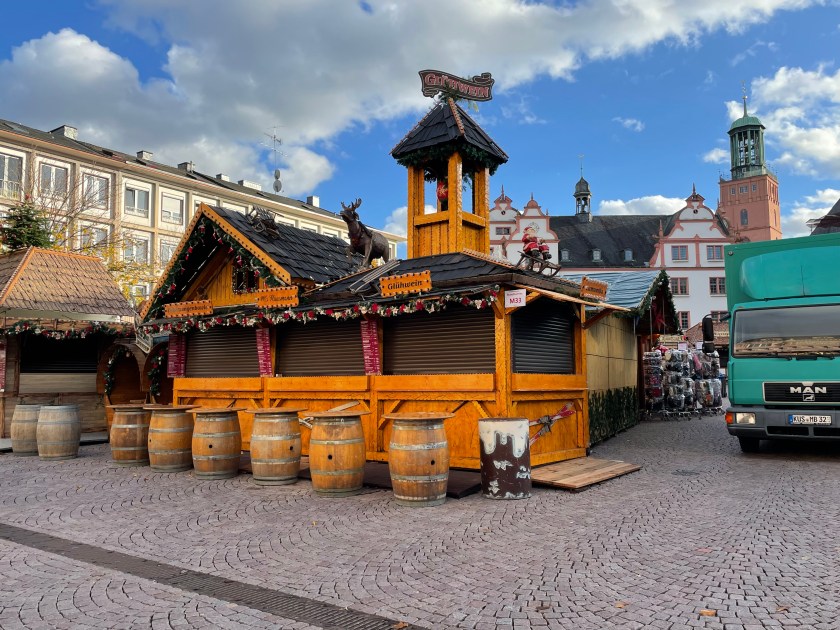
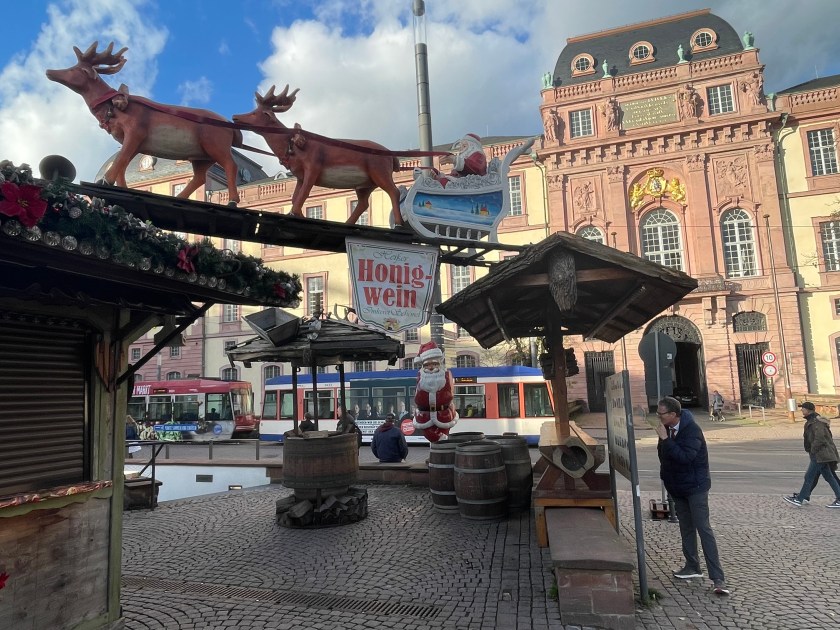
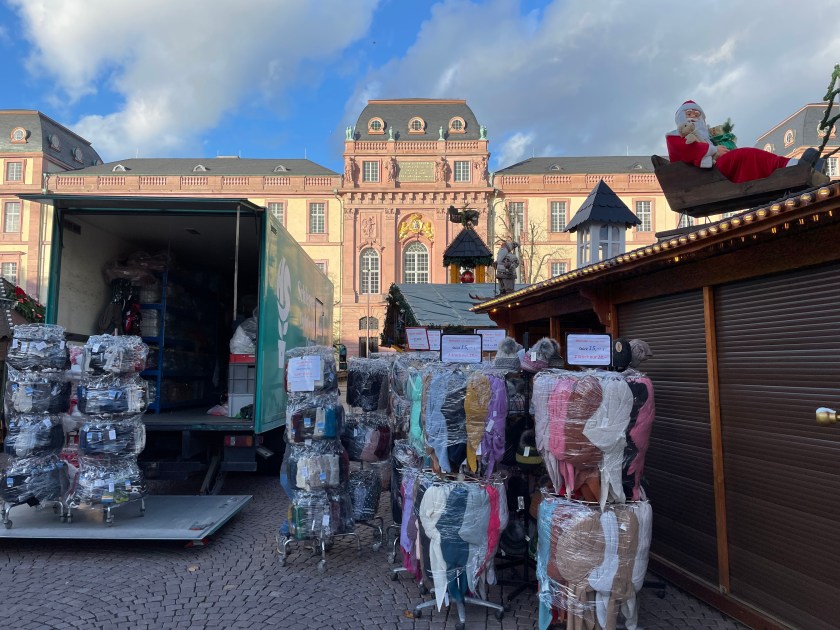
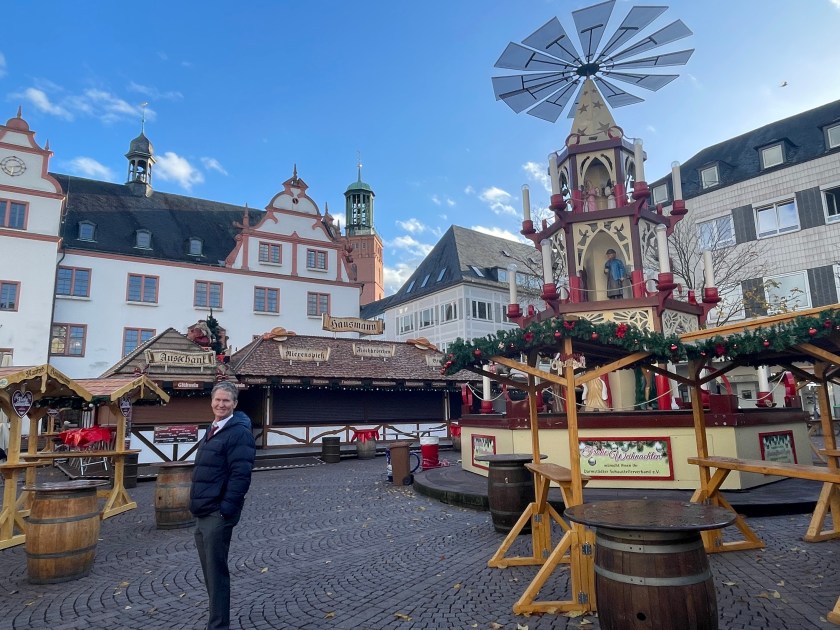
Then we went out of the park into the surrounding area where they were beginning to set up their Christmas Market stalls and shops.
As we left Darmstadt, we stopped to see the famous Honeymoon Tower and this Russian Orthodox Church.
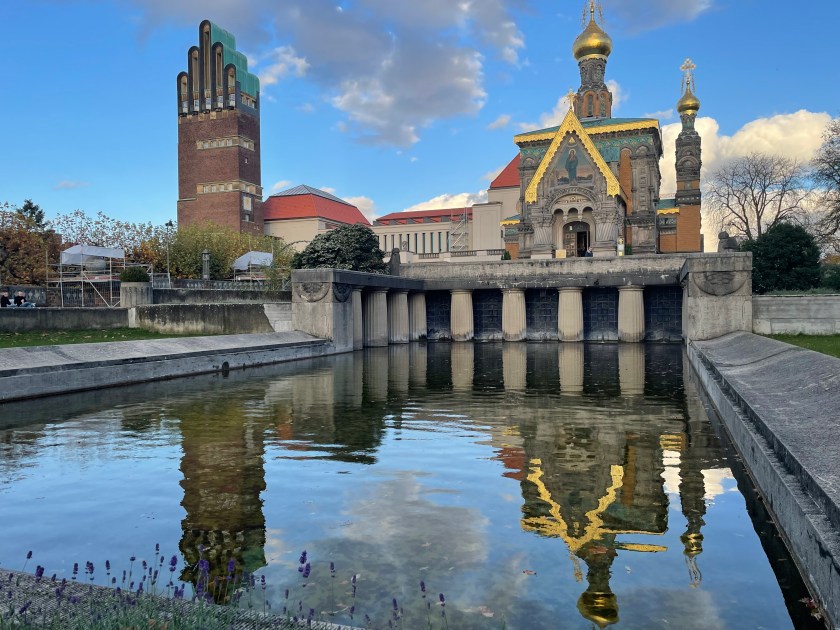
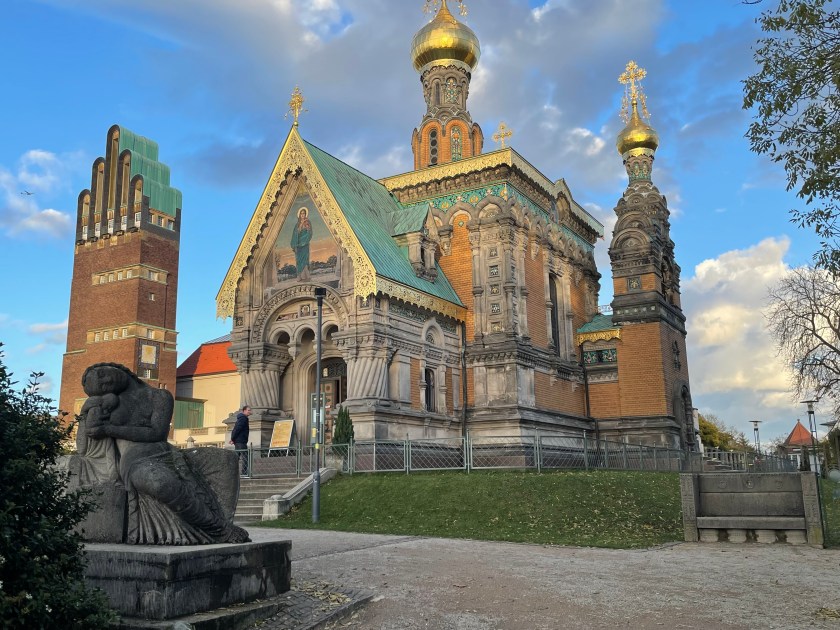
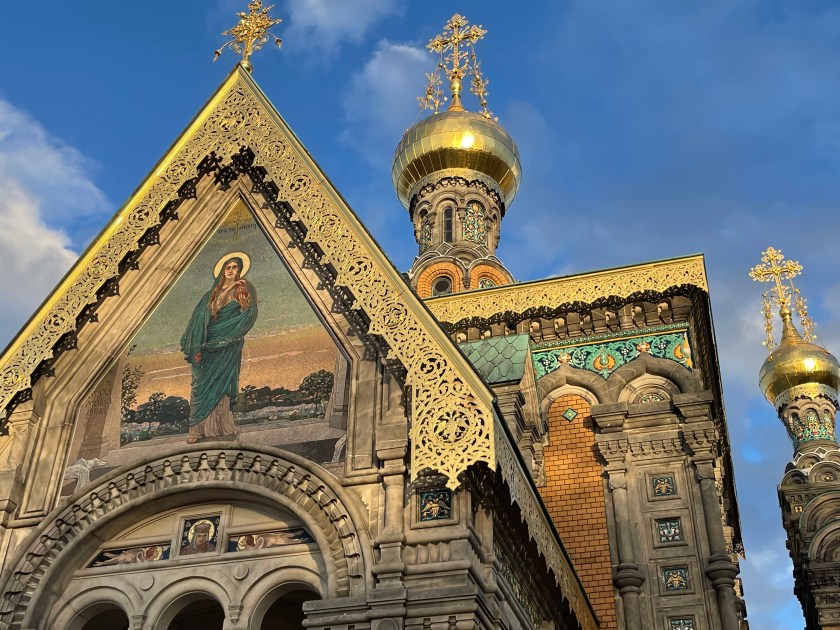
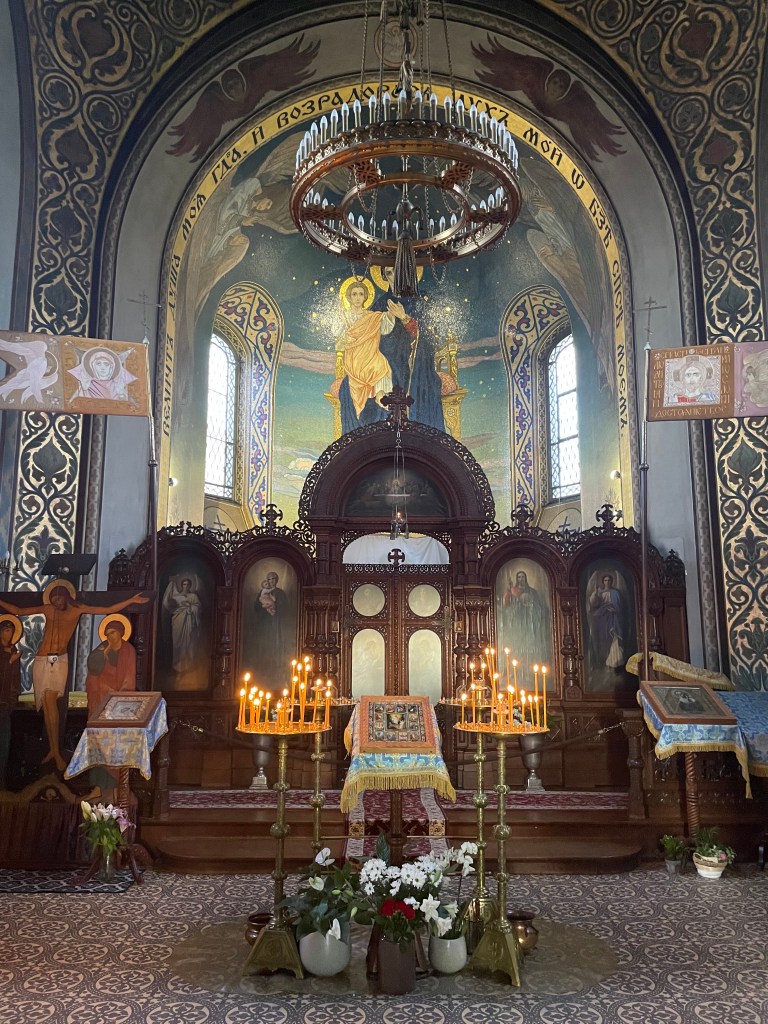
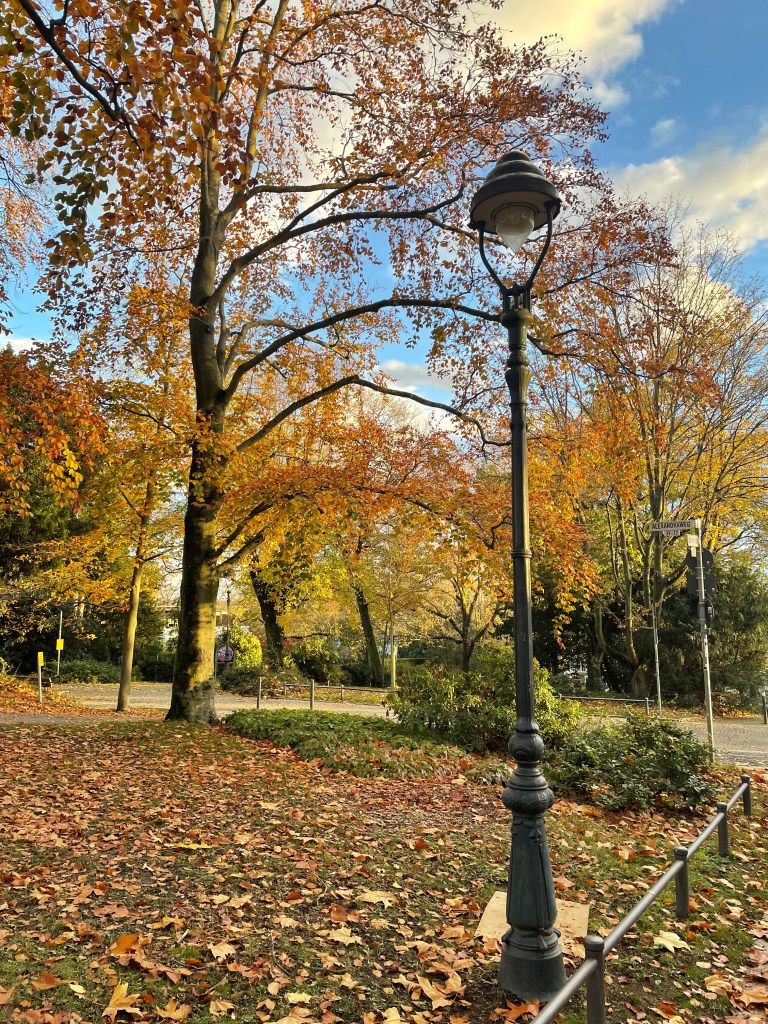
I am reallying enjoying Fall here. It’s all just so beautiful!

 Our Frankfurt Germany Mission