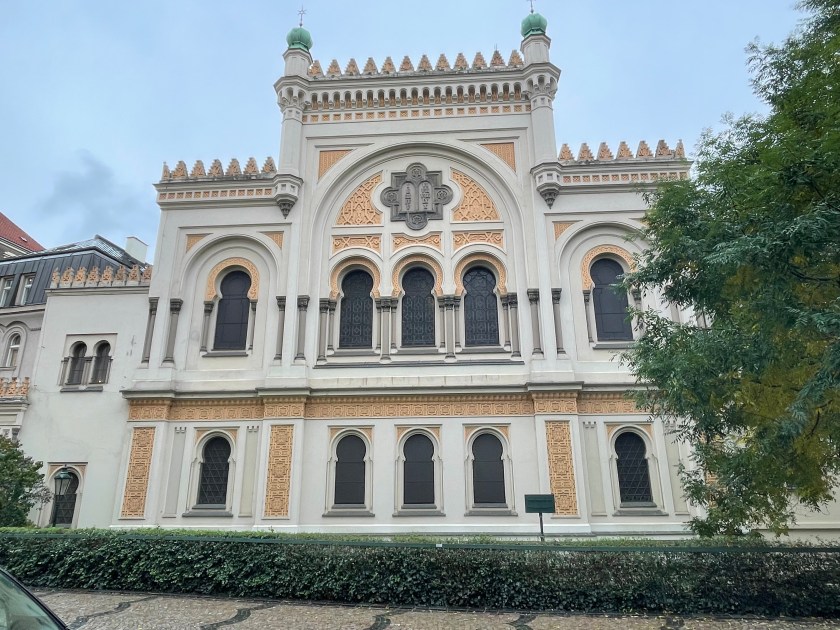
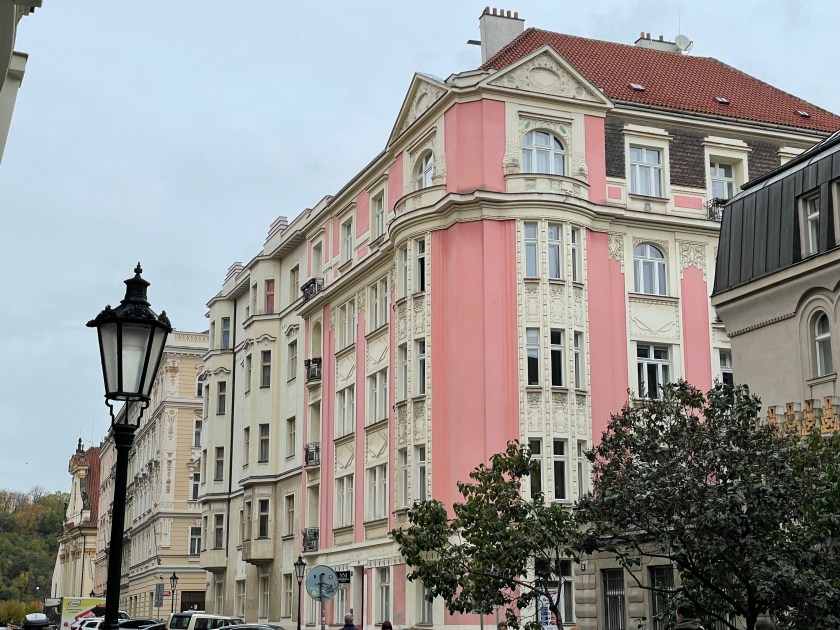
We went to the Jewish Quarter (remembering how we visited the Cemetery there 25 years ago). We were excited to see it again. But now, the cemetery and synagogues are not included in the tours–you have to pay for different tickets. There are 6 synagogues in the Jewish Quarter. We walked by several of them and returned after our tour that ended there in the Jewish Quarter. This area was once the Ghetto, but more than 600-700 homes were razed and the whole quarter was rebuilt. It’s now the most expensive place to live in Prague.
Prague’s Jewish Quarter Share
Rick Steves Complete Video Script:
Many Jews settled in Prague from the 10th century on, enjoying a thriving culture. In World War II, Nazis decimated their population. Today synagogues-turned-memorials commemorate victims, and a small Jewish community survives in Prague.
Prague’s skyline of red roofs and towering spires can hide the fact that the city is home to one of the oldest Jewish communities in Europe.
Dispersed by the Romans 2,000 years ago, Jews and their culture survived in enclaves throughout the Western world. Jewish traders settled here in Prague in the 10th century.
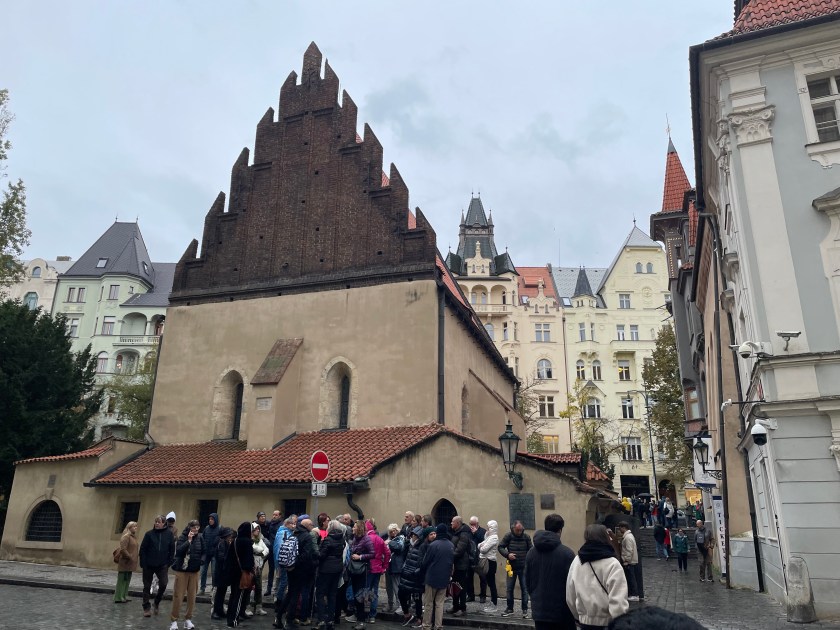
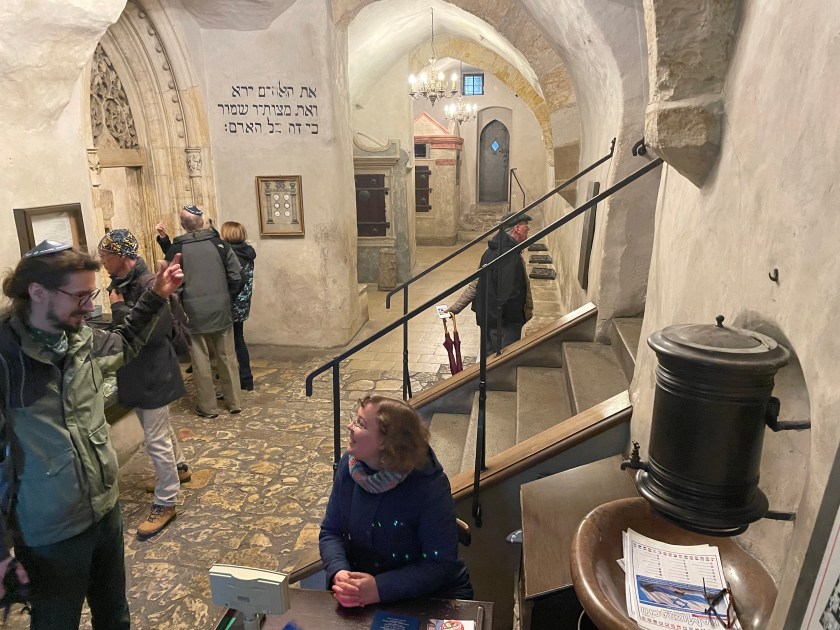
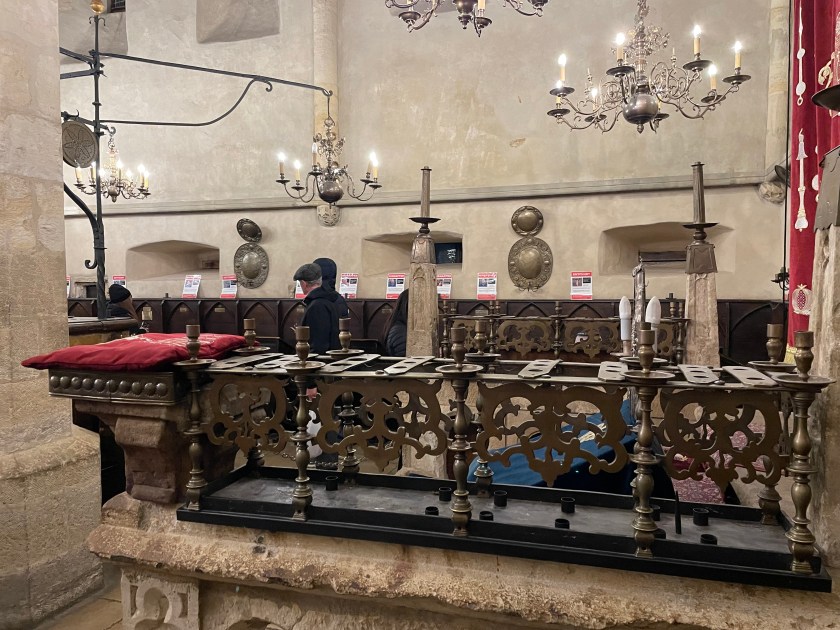
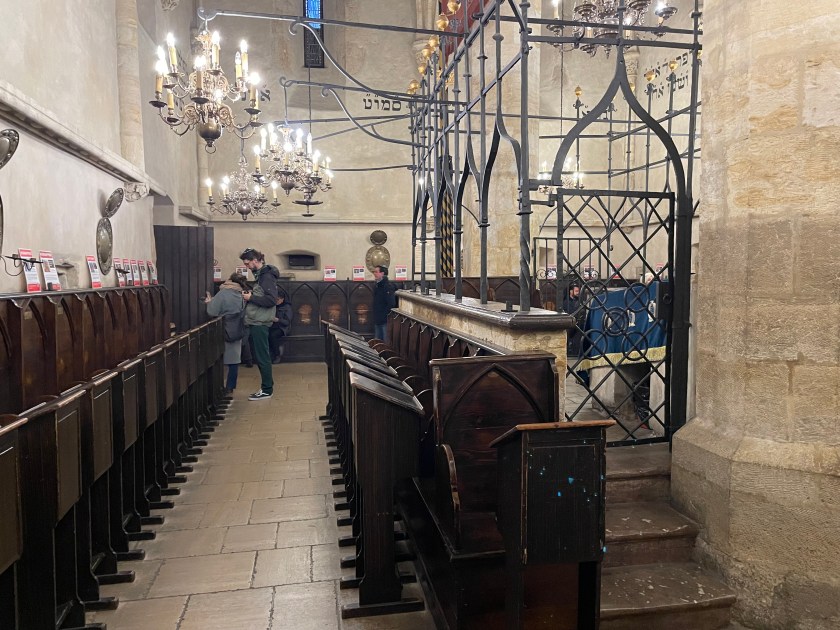
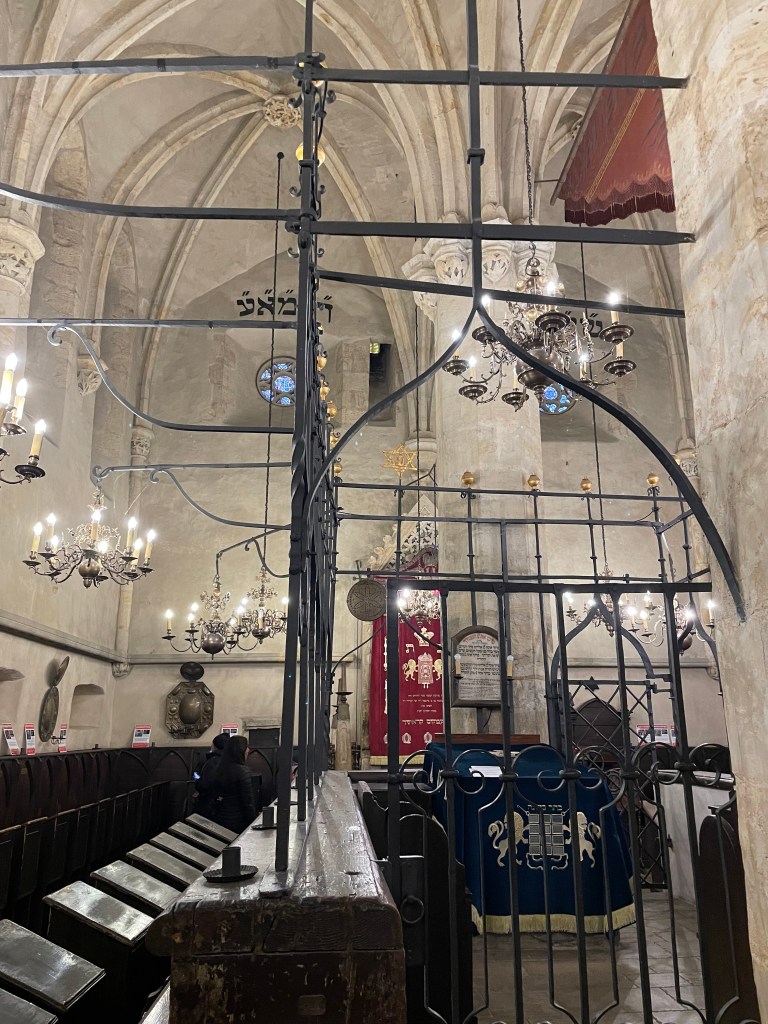
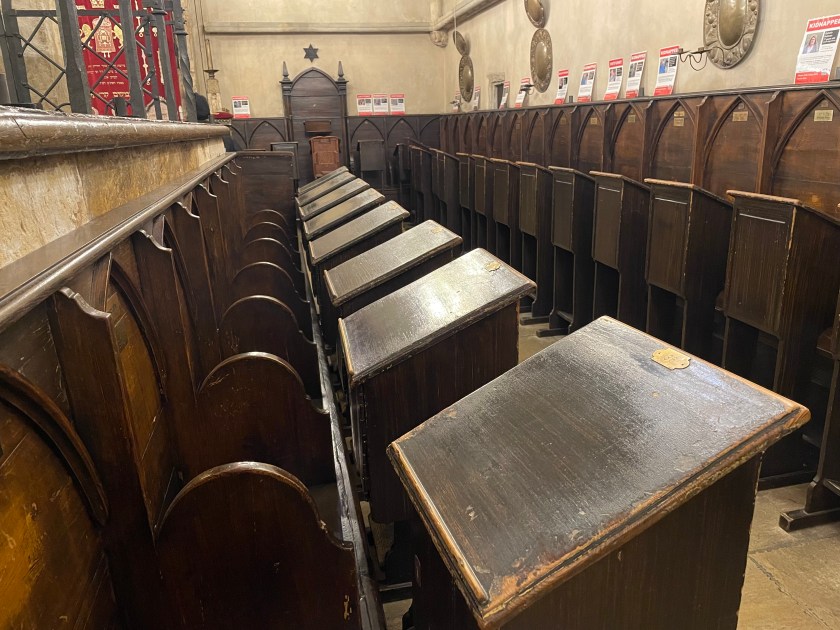
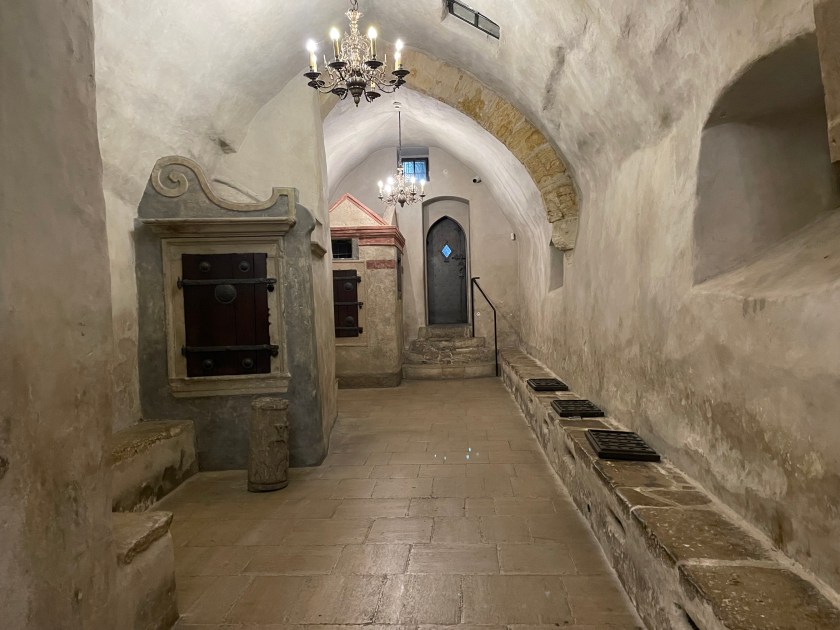
In the 13th century, they built this synagogue — now the oldest in central Europe. Stepping into this venerable place of worship, and marveling at how this could have survived the tumult of the ages, we feel eight centuries of devotion.
The old cemetery reminds visitors that this Jewish community was one of Europe’s largest. With limited space and tens of thousands of graves, tombs were piled atop each other many layers high.
The Jewish word for cemetery means “House of Life.” Like Christians, Jews believe that death is the gateway into the next world. A walk through here affords a contemplative moment in a serene setting.
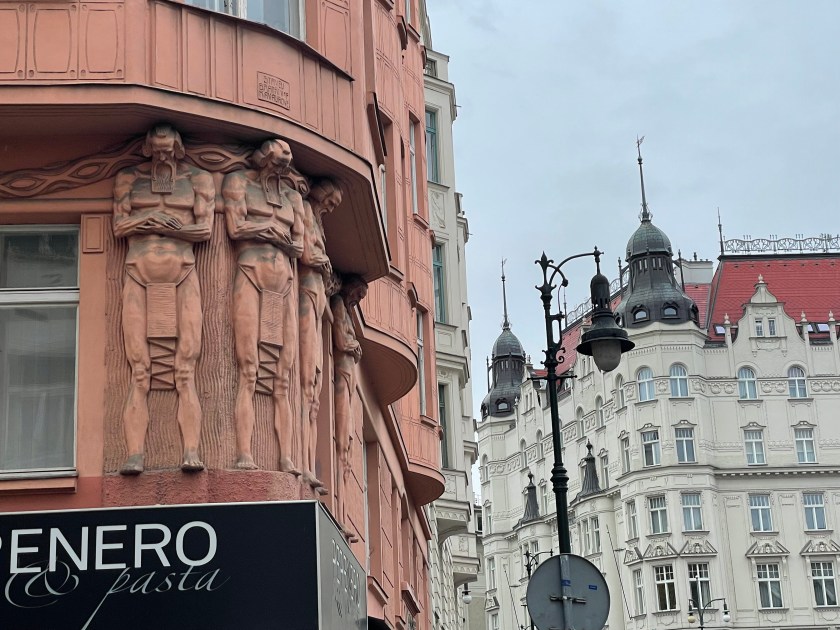
About a hundred years ago, Prague’s ramshackle ghetto was torn down and rebuilt as the attractive neighborhood we see today: fine, mostly Art Nouveau buildings.
The few surviving historic buildings are thought-provoking and open to visitors. This synagogue is now a museum, filled with historic and precious Judaica.
Even as Nazis were destroying Jewish communities in the region, Czech Jews were allowed to collect and archive their treasures here. But even the curators of this museum ultimately ended up in concentration camps.
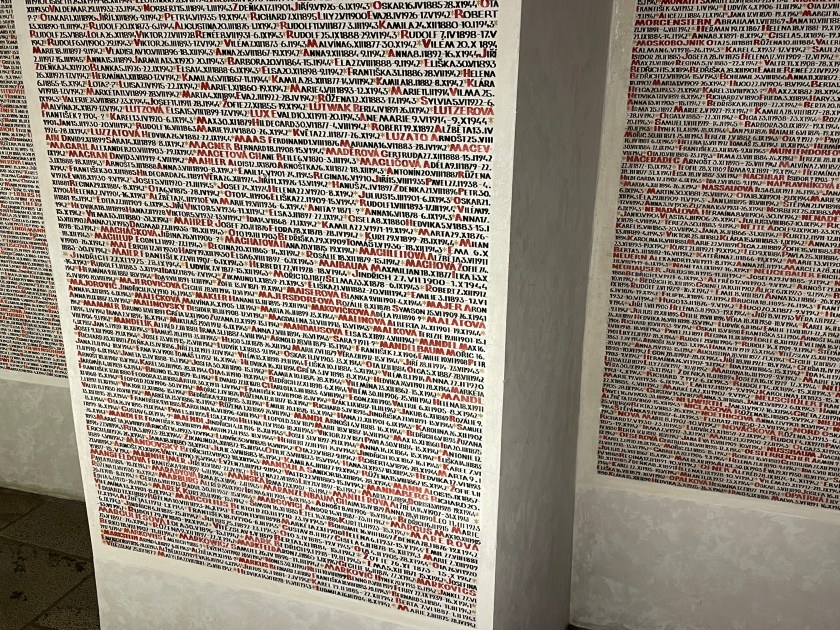
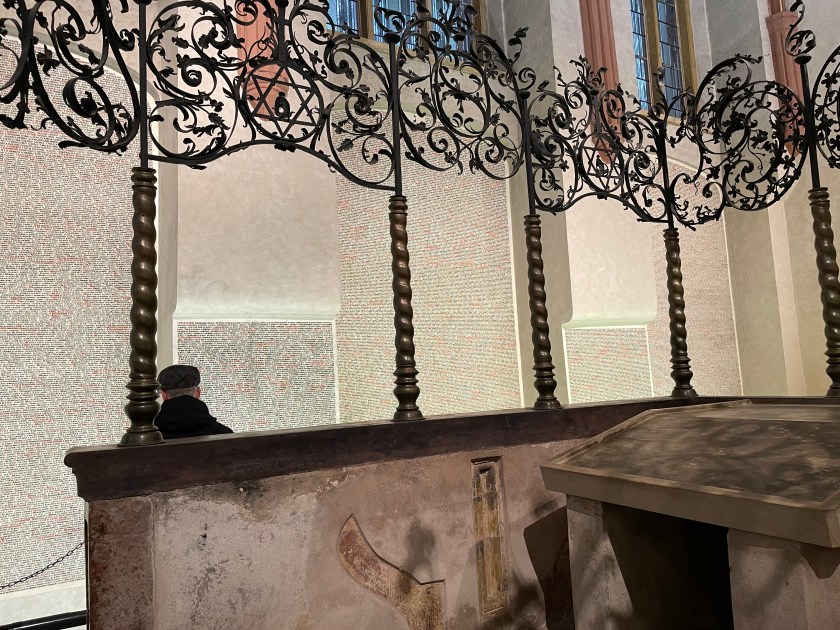
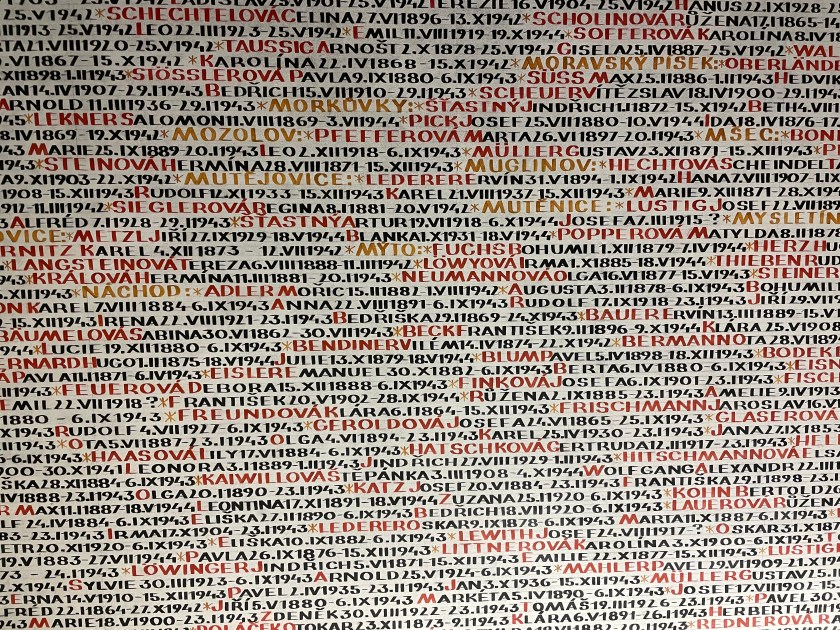
Nearby, another synagogue is now a poignant memorial to the victims of the Nazis. Of the 120,000 Jews living here before the Nazis came, only 15,000 lived to see liberation in 1945. These walls are covered with the handwritten names of over 78,000 local Jews who were sent to concentration camps. A voice reading the names of the victims provides a moving soundtrack. Family names are in red, followed by first names, birthdays, and the last date that person was known to be alive.
Despite the horrors of the Holocaust, the Jewish religion endured and a small Jewish community survives in Prague to this day.


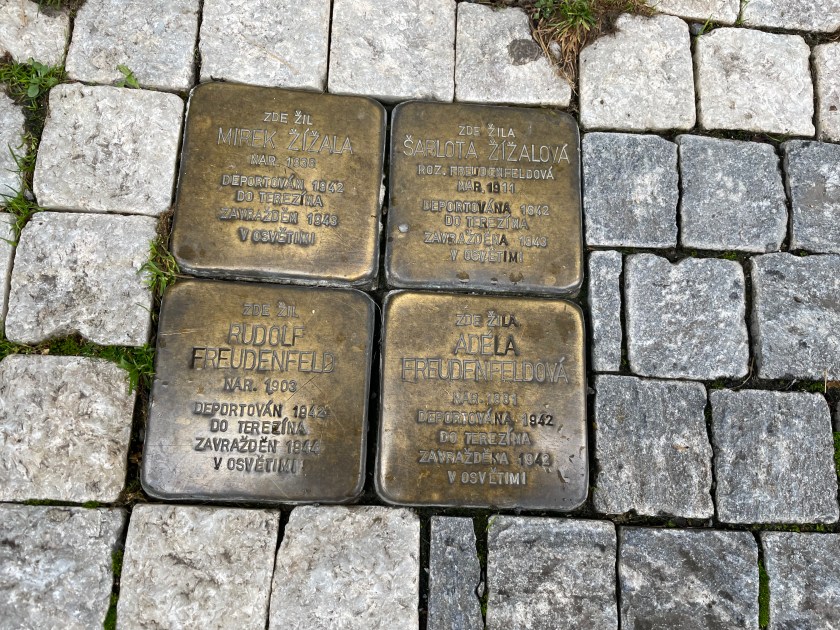
Stumbling Stones in front of the home of a Jewish family who was murdered during the Holocaust. Read about them here.

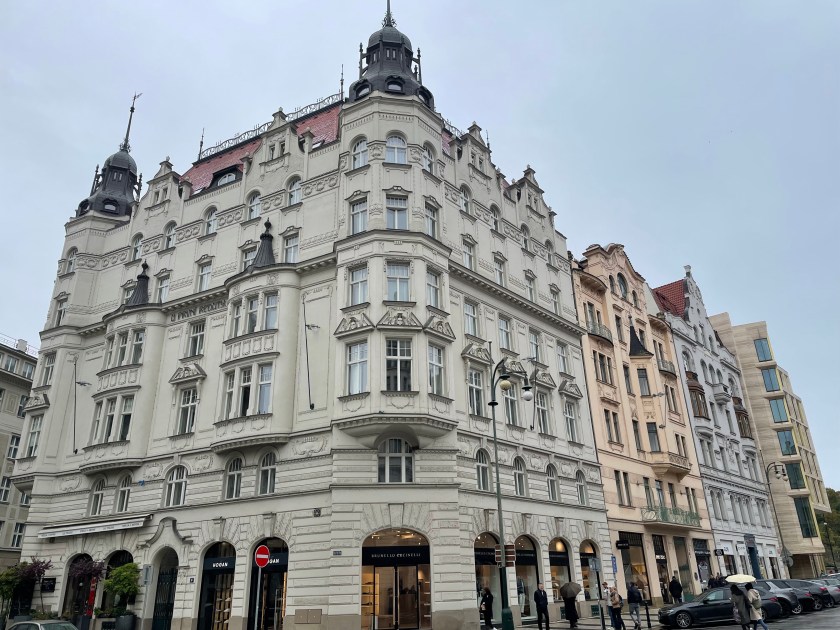

Our tour brought us to the Jewish Cemetery, behind the wall below, but we could not enter without a special ticket. You can see it’s about 15 feet above ground level. The graves were piled and stacked on top of each other.
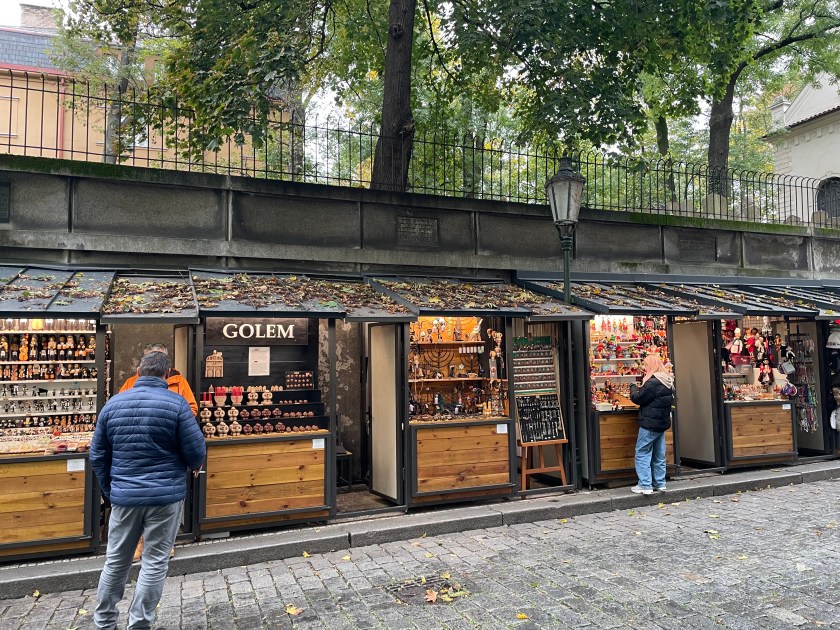
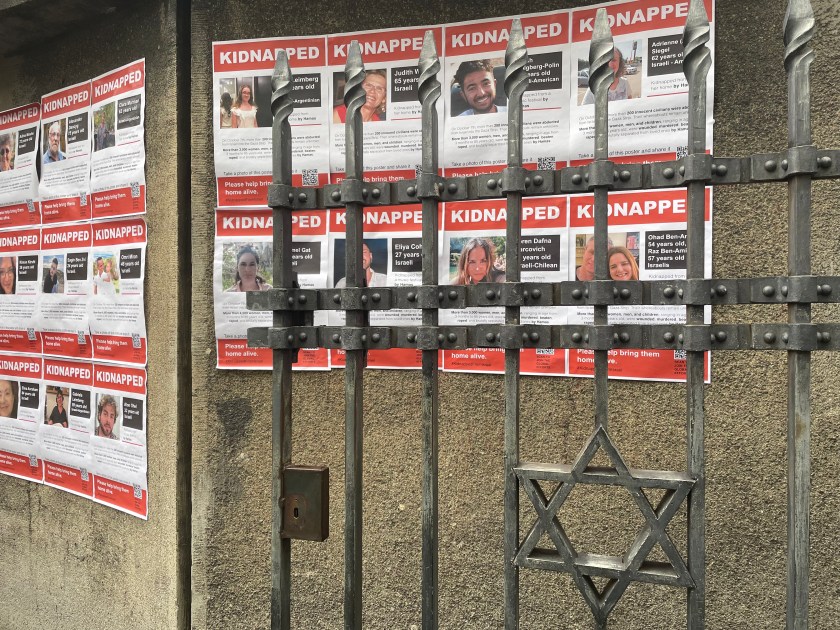
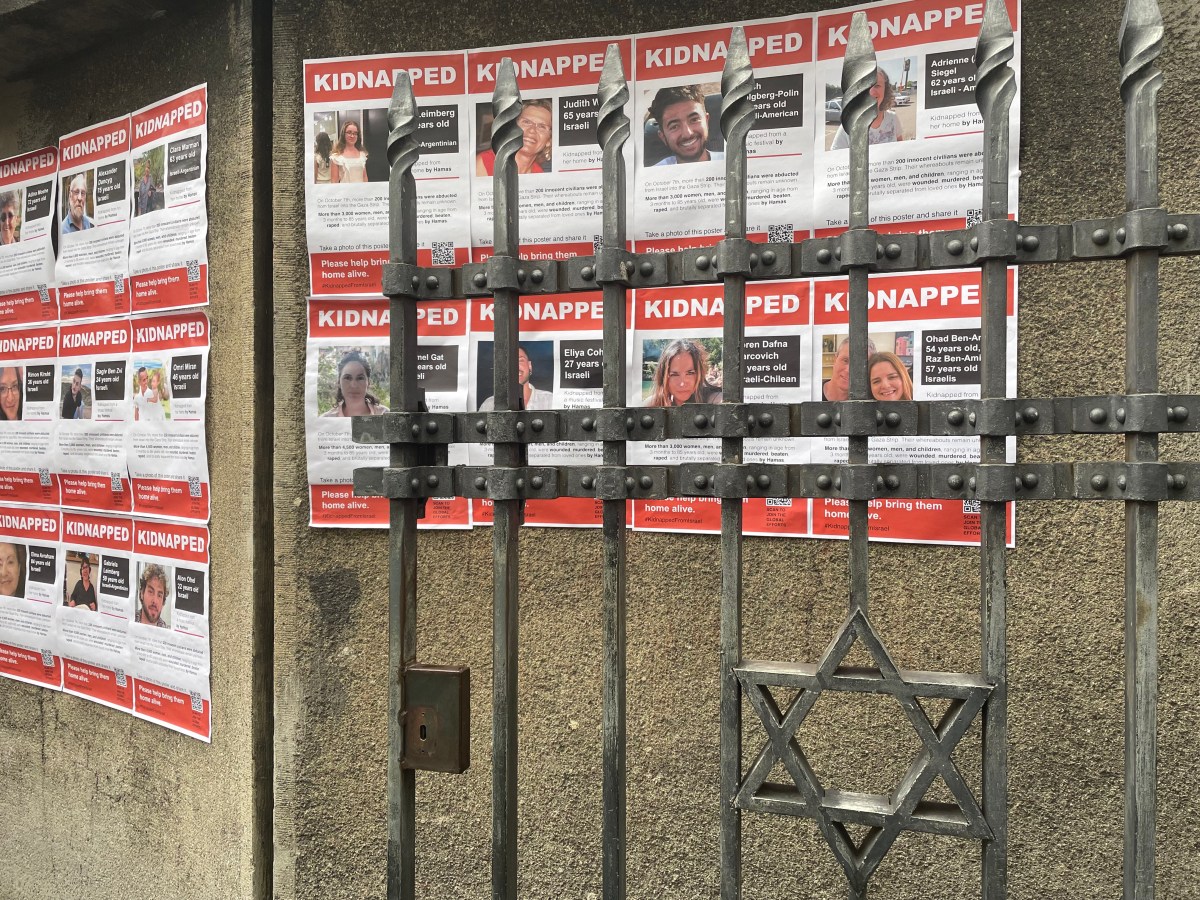
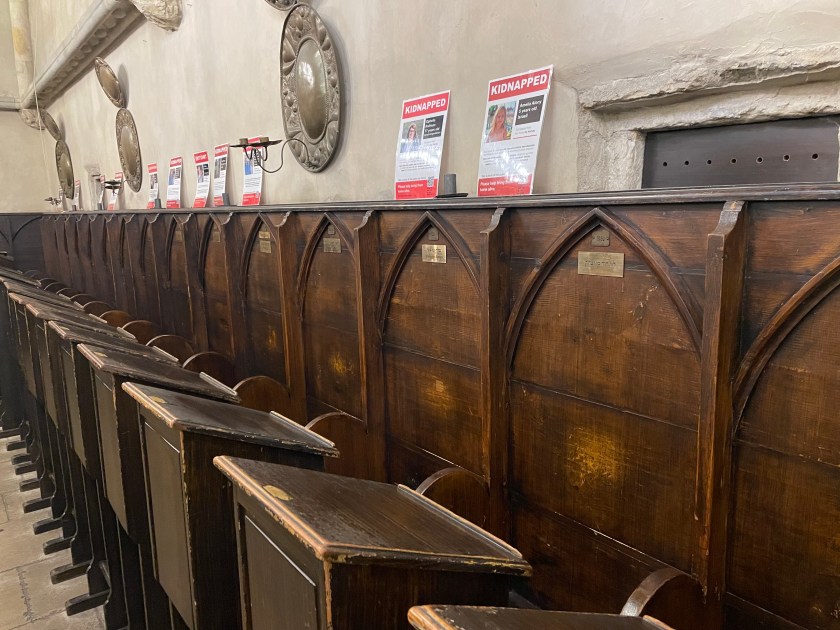
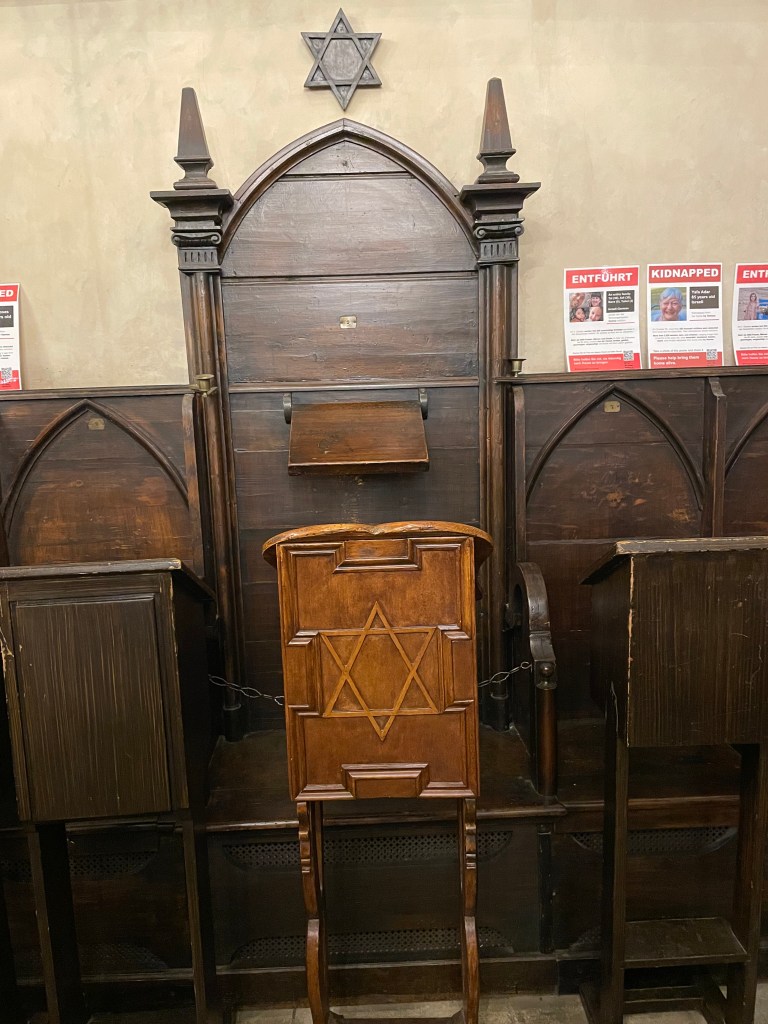
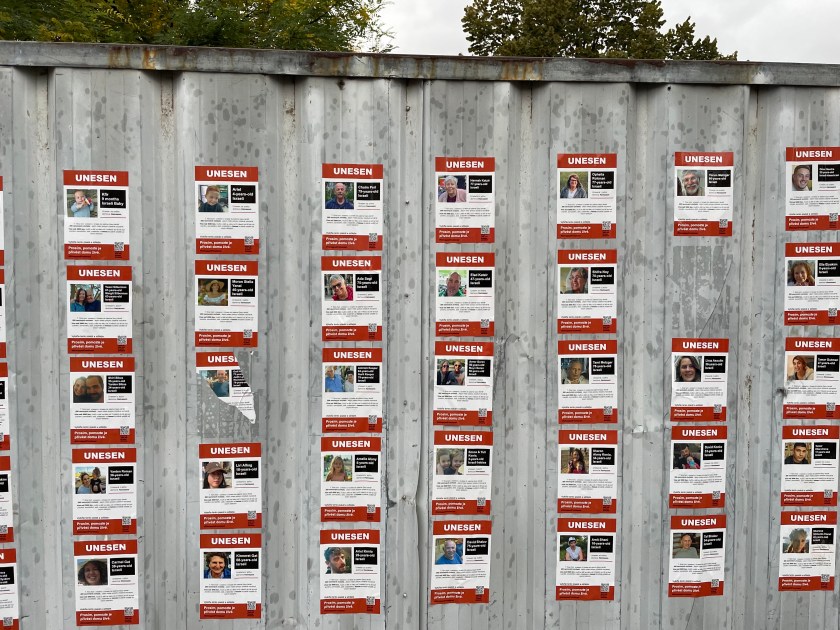
Along the walls of the cemetery we found these Kidnapped posters. More than 400 people are missing in Gaza since the war started a few weeks ago. These reminders were also in the synagogues we visited. Heartbreaking.


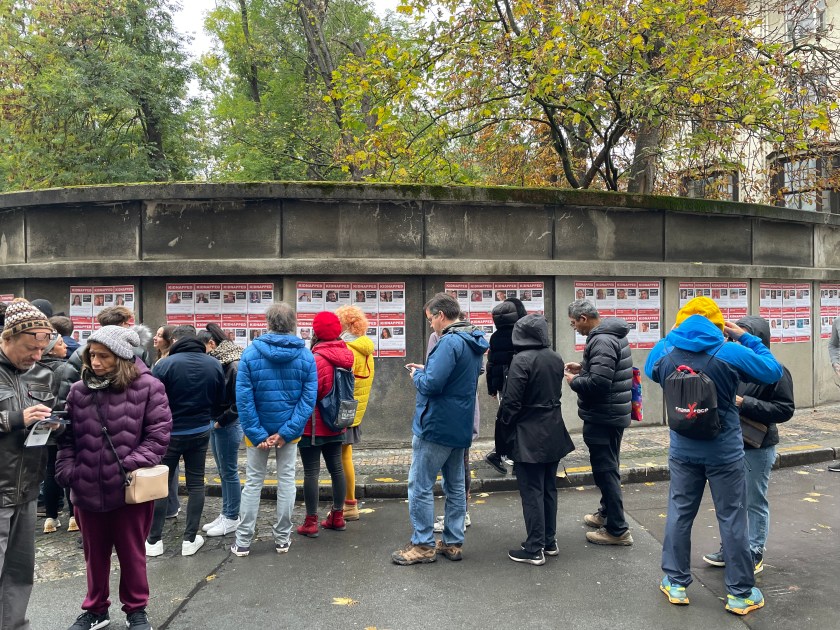

Here we are waiting in line to go into the cemetery. This cemetery is one of the things I remember most from our visit here many years ago. Photos were not allowed in the cemetery (sadly). It’s a place like no other. The stones are OLD and they fill every inch of the area, leaning in every direction, falling over each other, covered with green moss, crumbling, broken, still. Each representing a life. Most stones had lots of Hebrew words on them, stories of those lives. It’s a monument to life, long spent. The path through the cemetery wound around this way and that, narrow, stones close on each side. We were quiet as we walked through this solemn place.

Here are a few photos found online:
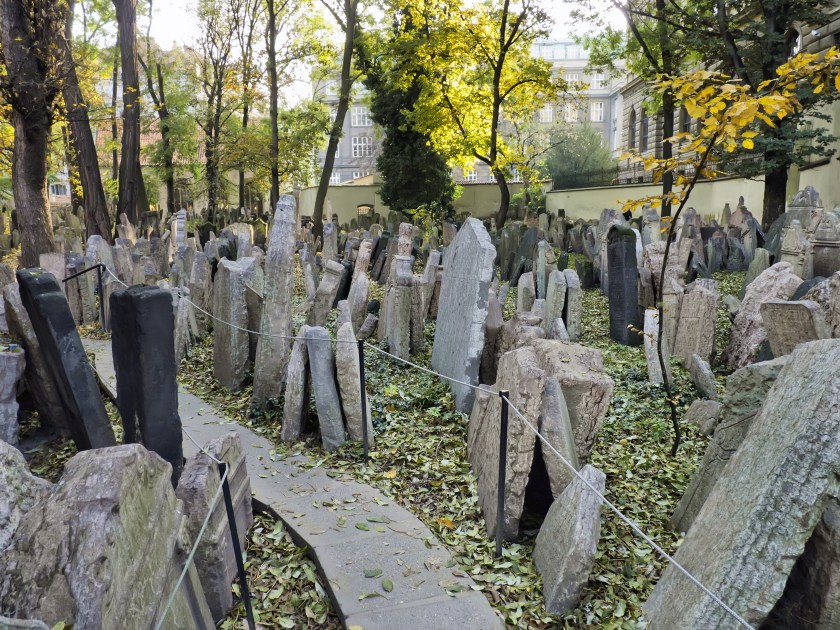
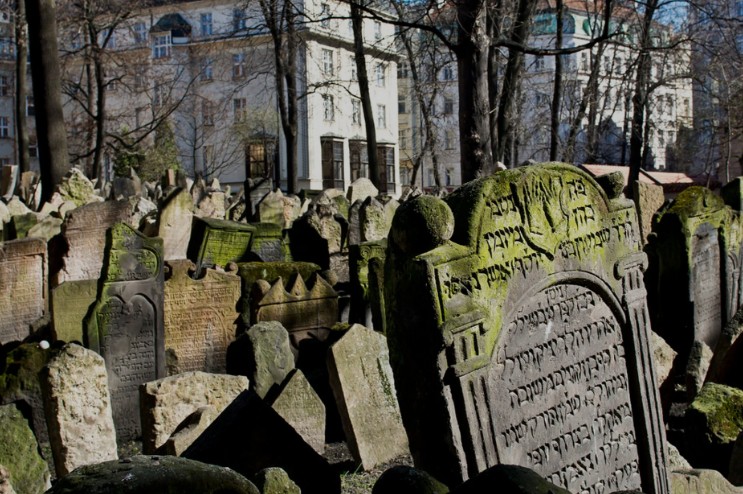
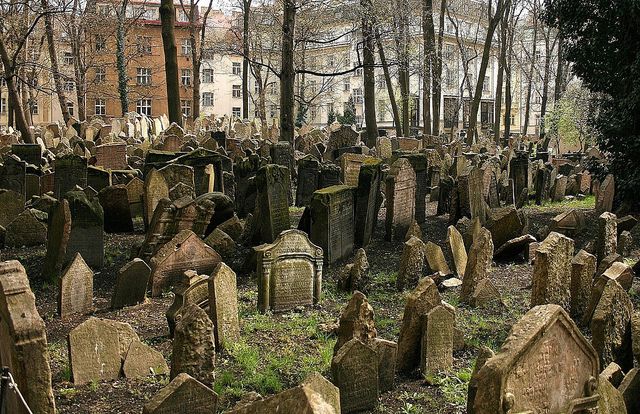

From Wikipedia, the free encyclopedia:
The Old Jewish Cemetery is a Jewish cemetery in Prague, Czech Republic, which is one of the largest of its kind in Europe and one of the most important Jewish historical monuments in Prague. It served its purpose from the first half of the 15th century until 1786.
We know that the history of the Old Cemetery started before the old one being closed, but the exact date when it was founded is unknown. The only clue is the oldest gravestone in the cemetery from 1439 which belongs to rabbi and poet Avigdor Kara.
Starting at the middle of the 15th century, the gravestones record is a continual time line of burials. The final gravestone is dated 1787; three years earlier, the enlightened sovereign Emperor Josef II had banned burials inside the city walls for hygienic reasons. Later Prague Jews used a cemetery in Žižkov, founded in the 17th century because of plague epidemic.
Space and burial in layers
During the more than three centuries in which it was in active use, the cemetery continually struggled with the lack of space. Piety and respect for the deceased ancestors does not allow the Jews to abolish old graves. Only occasionally the Jewish community was allowed to purchase grounds to expand the cemetery and so many times it had to gain space in other ways; if necessary, a new layer of soil was heaped up on the available area. For this reason, there are places where as many as twelve layers now exist. Thanks to this solution the older graves themselves remained intact. However, as new levels were added it was necessary either to lay over the gravestones associated with the older (and lower) graves to protect them, or else to elevate the stones to the new, higher surface. This explains the dense forest of gravestones that one sees today; many of them commemorate an individual who is buried several layers further down. This also explains why the surface of the cemetery is raised several meters higher than the surrounding streets; retaining walls are necessary to hold the soil and the graves in place.
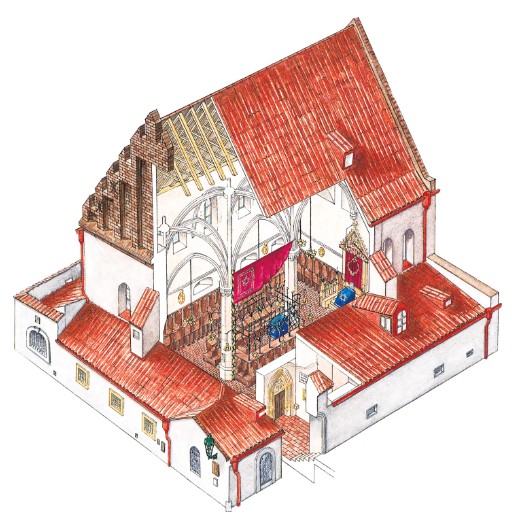
The Old New Synagogue:
Considered the oldest active synagogue in Europe, the Old-New Prague Synagogue has held regular services since it was built at the end of the 13th century. The only period it was unable to hold religious ceremonies was during the Nazi occupation from 1942 to 1945.
Another of the Prague Synagogues built on Mordechai Maisel’s property is the Klausen Synagogue situated near the Old Jewish Cemetery. The largest synagogue in the ghetto, it served as the community’s second main synagogue.
The Klausen Prague Synagogue was built after the fire of 1689, which ravaged a vast section of the ghetto. It was built in early Baroque style and had three main parts: a chapel, a ritual spa, and a Talmudic school. The auditorium was a single-aisled hall with an intricately designed barrel vault. However, a significant part of the building was destroyed during the Nazi occupation. Although it was reconstructed in the 1990s, only the shapes of the windows kept their original design.


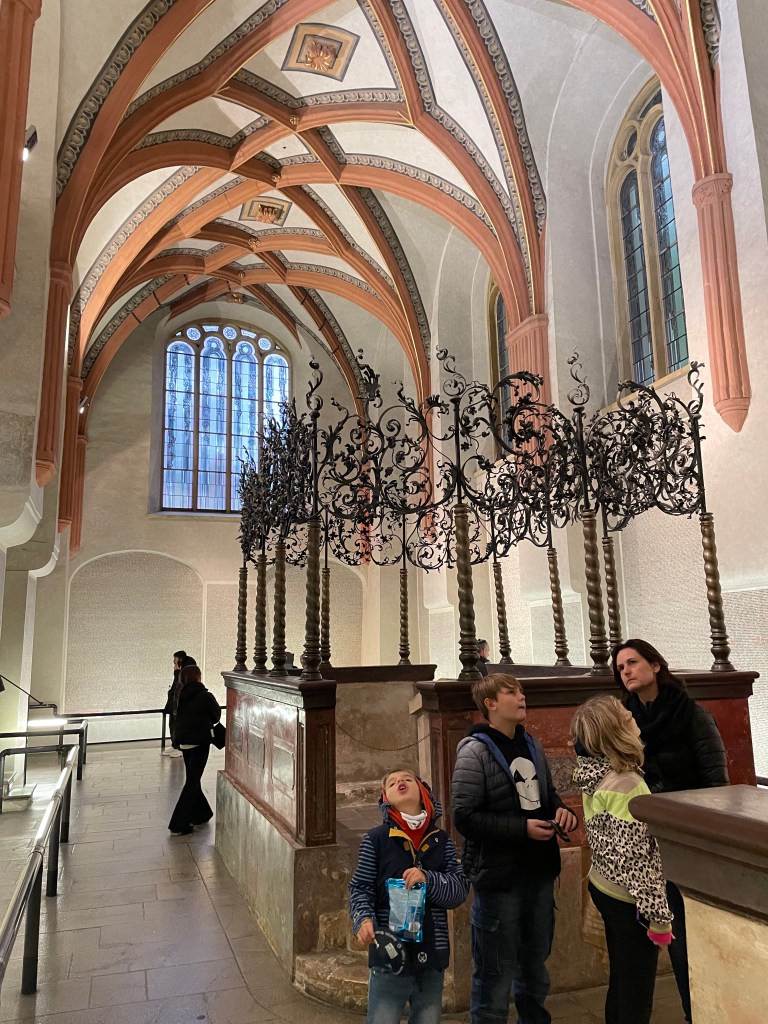
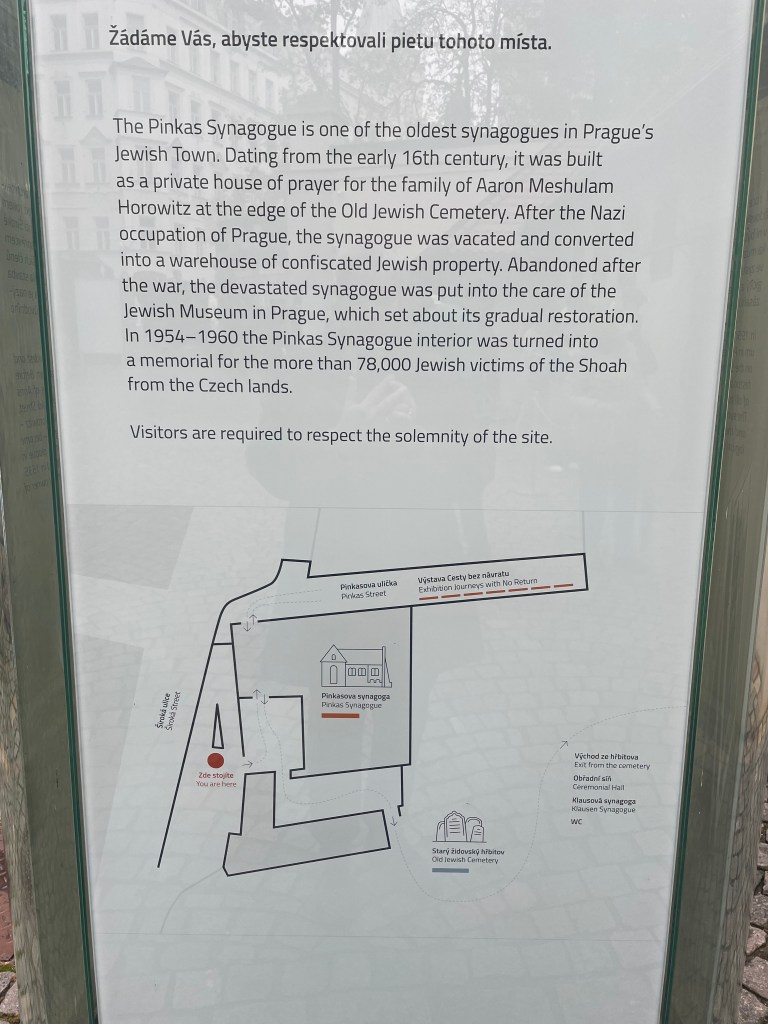
Pinkas is another of the great Synagogues of Prague. It was originally built as a private chapel for the Horowitz family, one of the most prominent members of the community. Completed in 1535, it was constructed simply as a narrow, single-aisle chapel. In the 17th century, the property was expanded to include a women’s gallery and a new wing.

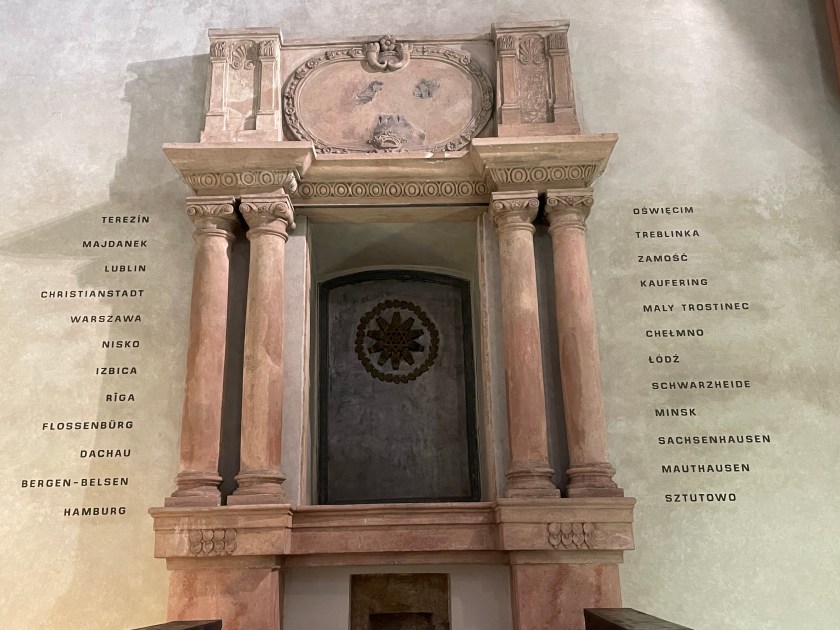
Over the years, the Prague Synagogue was damaged a few times by flood but was reconstructed and restored. It still features a mix of Gothic and Renaissance architectural styles with a vast entranceway and painted stuccos.
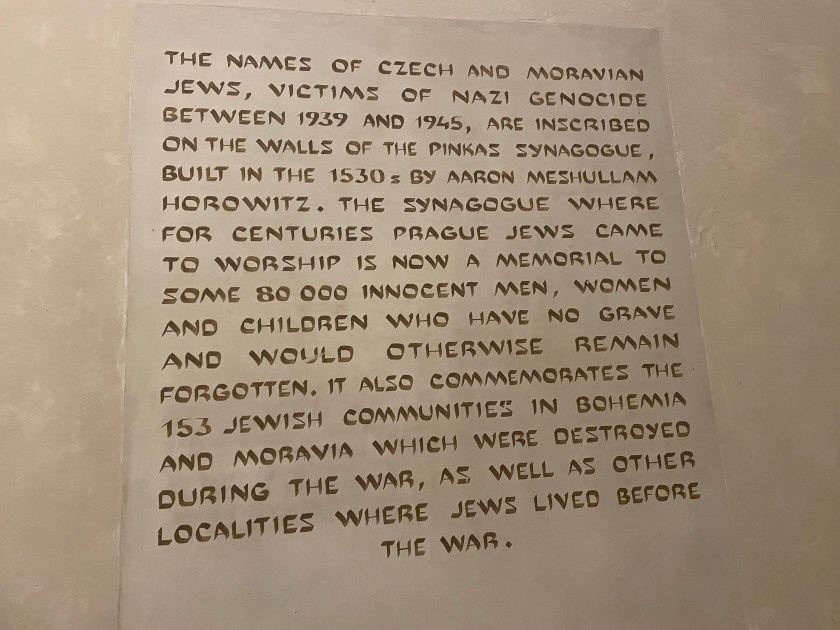
After the Nazi occupation, the synagogue became a memorial to the Jews who died during the persecution. More than 77,000 names of those who perished were written by hand on the synagogue walls, along with dates of birth and disappearance. Paintings by children from the Terezin concentration camp are also exhibited there today. This is another great option to schedule a Prague Synagogue tour for. Pinkas Synagogue offers visitors a great opportunity to relate properly with History.
Drawings made by children in the concentration camps:


Our visit to the Jewish Quarter was sobering, especially considering what’s happening right now in Israel.
We took our time, wandering out of the Jewish Quarter, mindful of what we’d seen there.
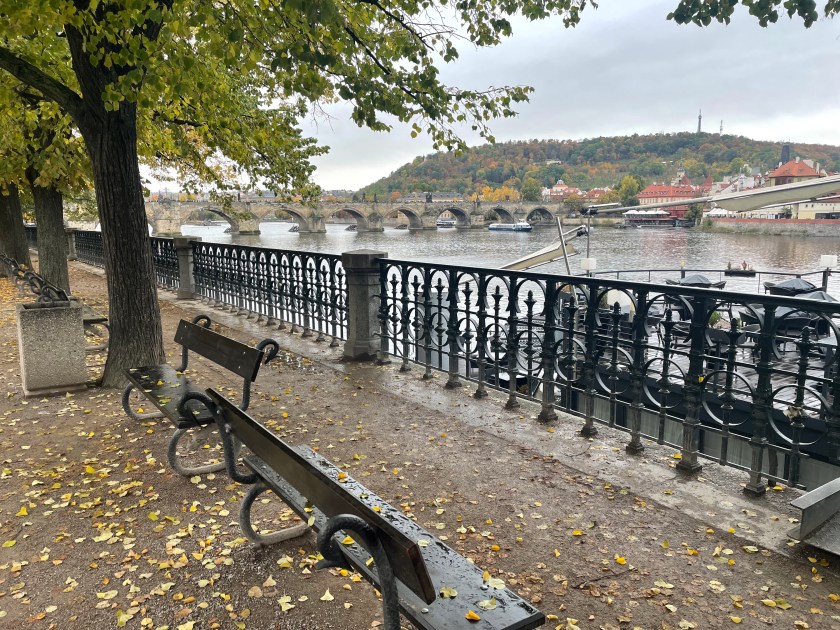

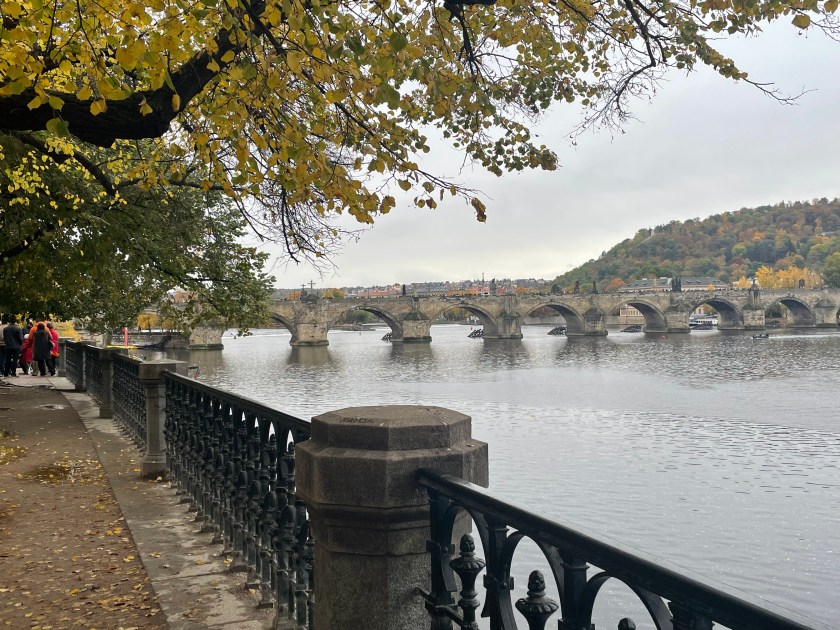

Next we crossed a different bridge to the other side of the river to hike up to the castle.






 Our Frankfurt Germany Mission