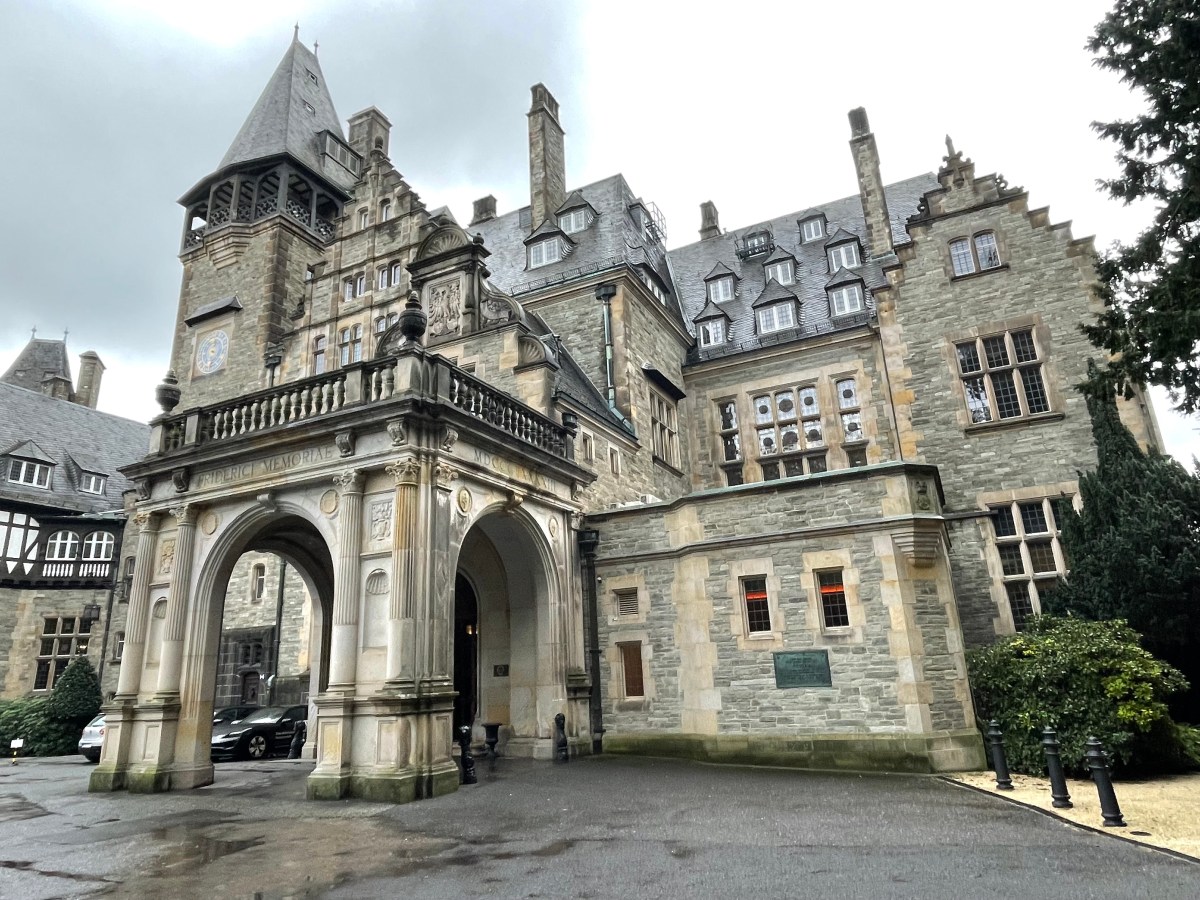
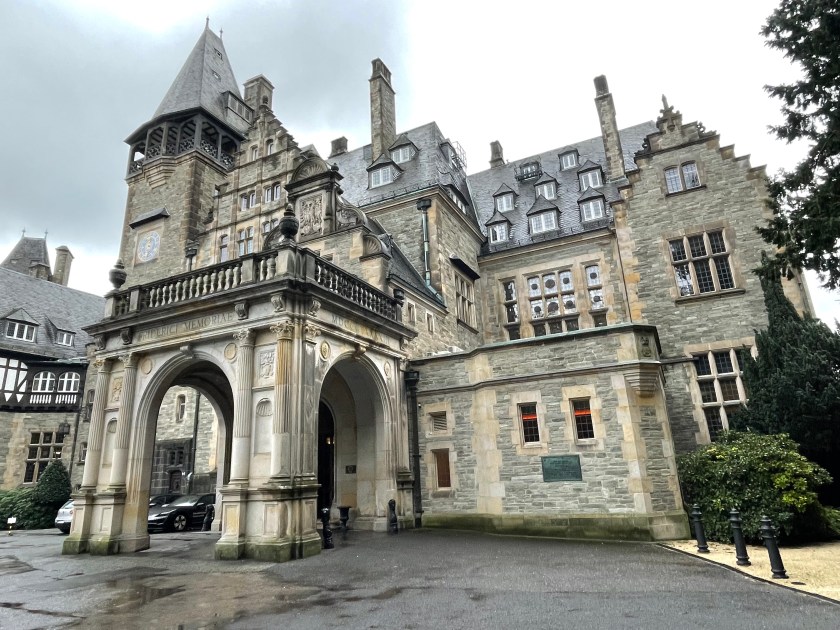
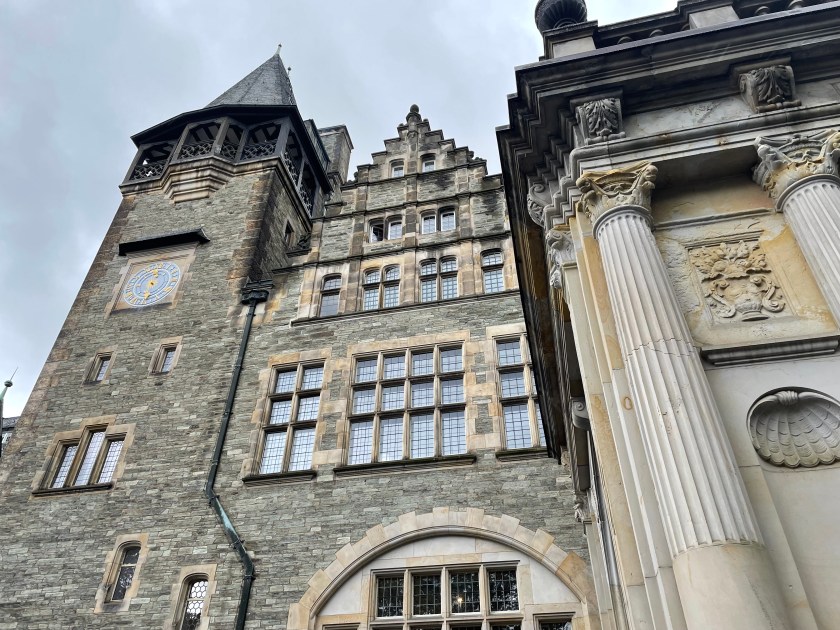
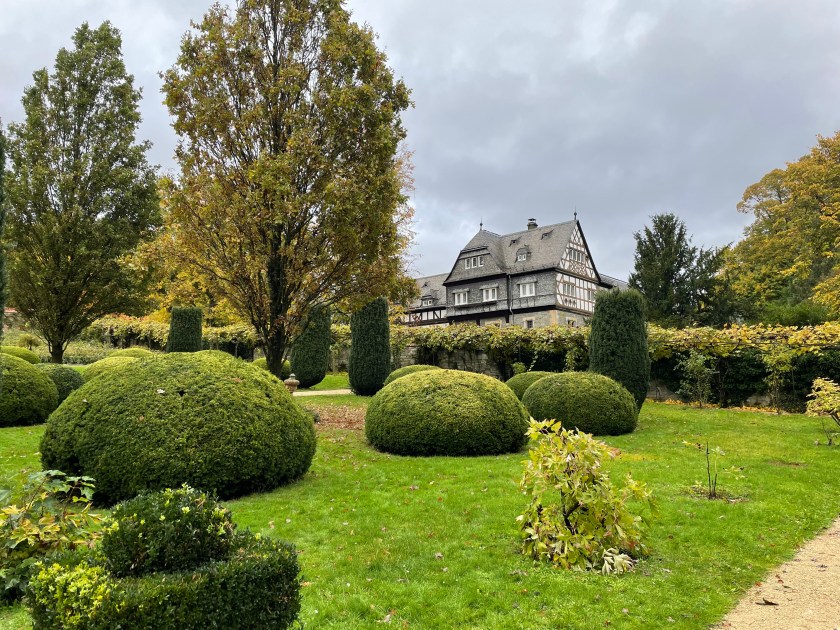
Here is the magnificent Schloss Friedrichshof, a castle estate named after Victoria’s husband. She had this built after he died. She lived out most of the rest of her life here.

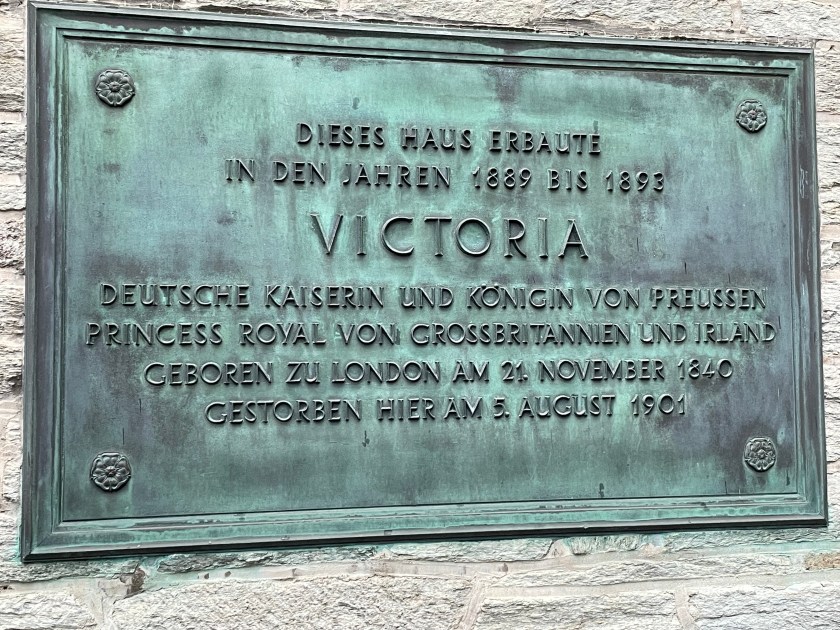
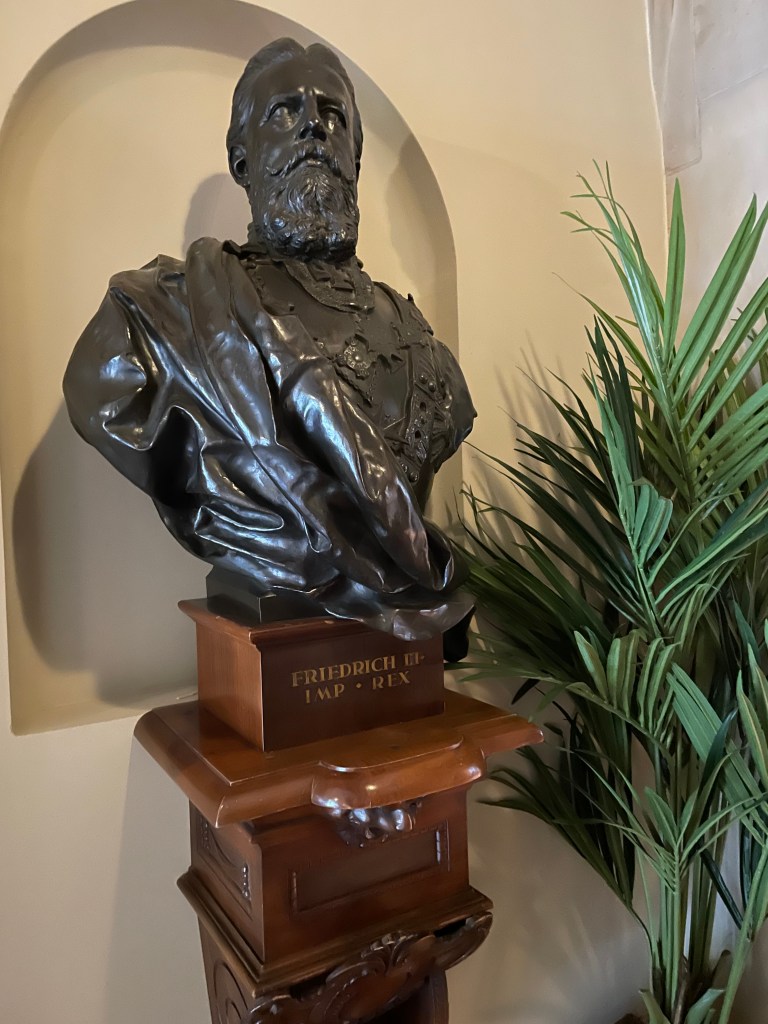
Here are Victoria, the Dowager Empress and her husband:


Here’s a bit about Schlosshotel Kronberg:
Schlosshotel Kronberg (Castle Hotel Kronberg) in Kronberg im Taunus, Hesse, near Frankfurt am Main, was built between 1889 and 1893 for the dowager German Empress Victoria and originally named Schloss Friedrichshof (Friedrichshof Castle) in honour of her late husband, Emperor Frederick III (Friedrich III). The principal architect was Ernst von Ihne, who was also the royal architect to Frederick III and Kaiser Wilhelm II; von Ihne designed many royal residences for nobility in and around Germany and Austria.
President Dwight D. Eisenhower stayed and golfed here while visiting during WWII.
Today the castle is a five-star hotel which belongs, together with the accompanying park, to the House of Hesse. Parts of the original furnishings as well as pieces of art from the collection of the empress are still present in the hotel, along with her extensive library. The grounds contain an 18-hole golf course, and a public town park.
History
The Empress, a daughter of Queen Victoria of the United Kingdom and Prince Albert of Saxe-Coburg and Gotha, spent most of her time at the castle until her death in 1901 when the castle, with its entire contents, art collection and the Empress’s correspondence, were inherited by the Empress’s youngest daughter, Princess Margaret of Prussia, Landgravine of Hesse.
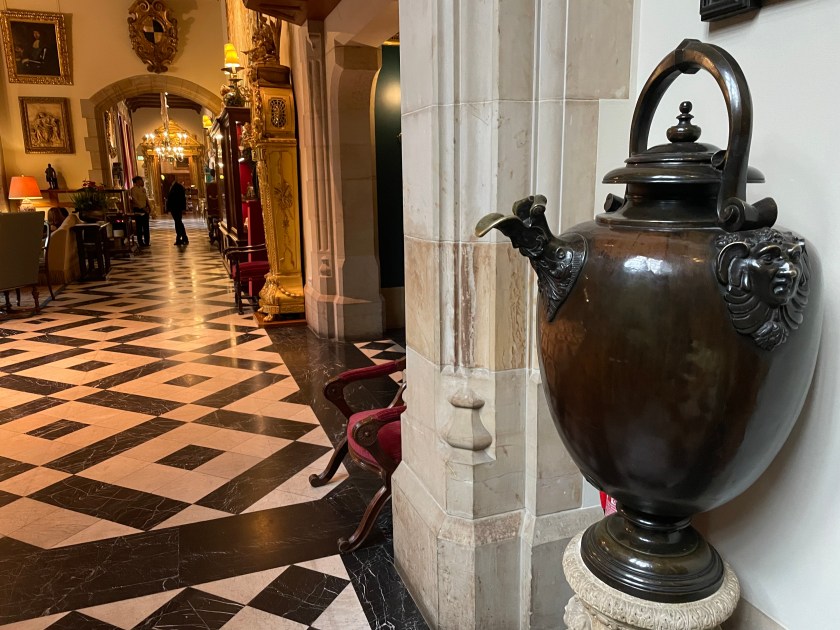
This castle today is a very fine five star hotel. We were allowed to wander through the main floor with included a perfect library overlooking the grounds and golf course, a tea room/restaurant, and a few other meeting rooms. These places had many original furnishings, art and treasures. It was tasteful and welcoming. It felt grand, but just right, artistic and beautiful.
This was the main hall, with rooms to the right and left.

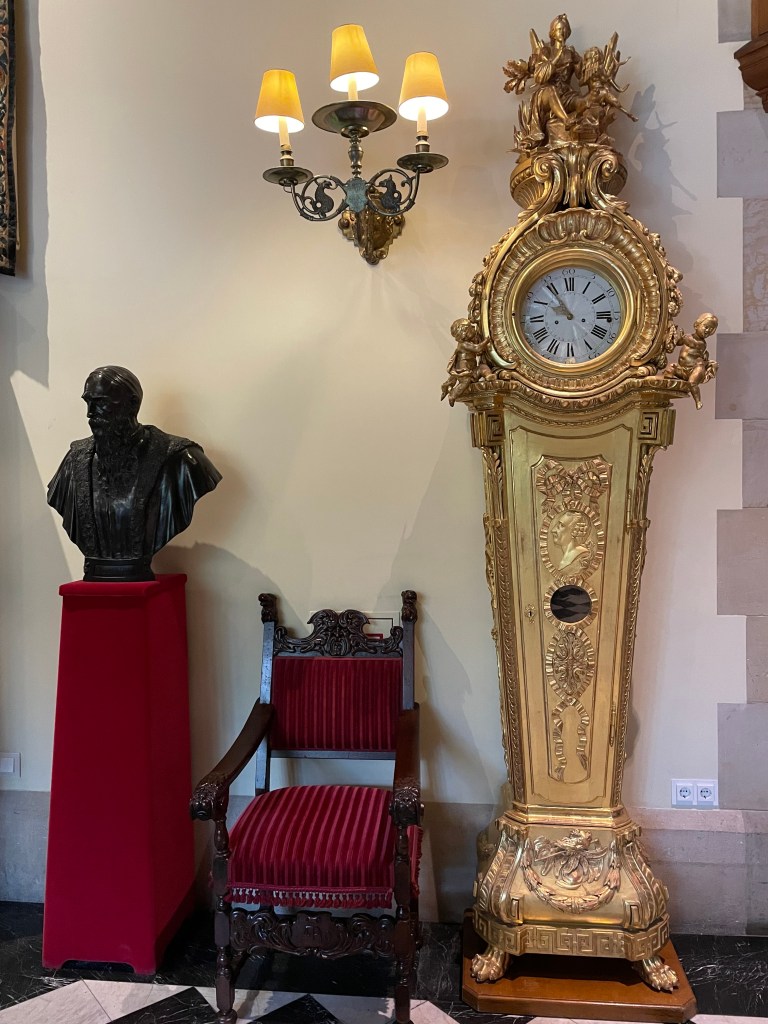

Today events are held here in this library (I’m thinking I should invite my book club)!
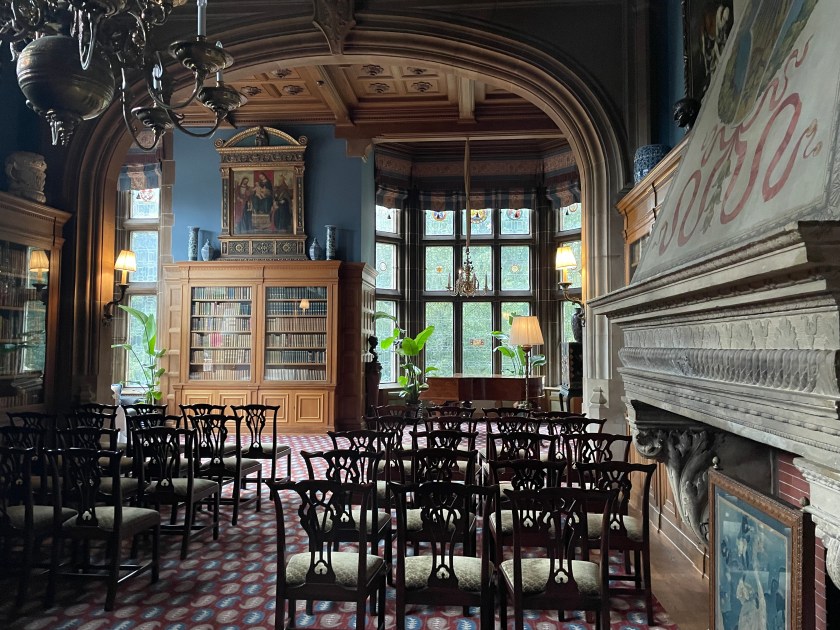

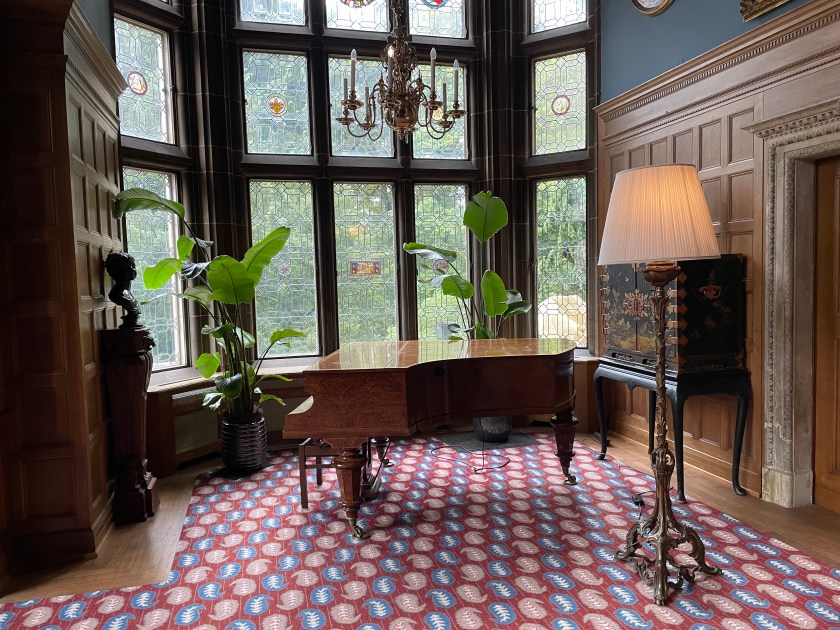


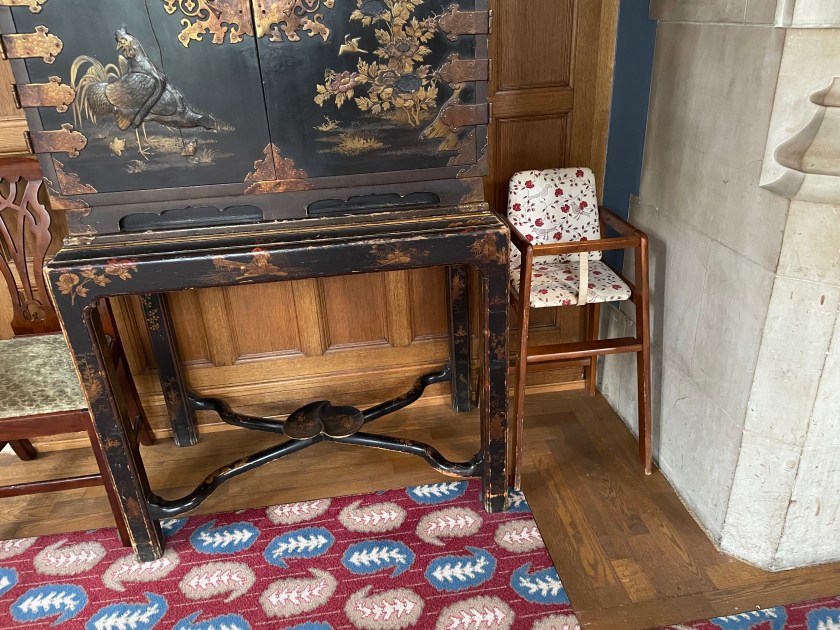
A place to have a cup of tea by the grand fire:

Entrance to a dining hall:

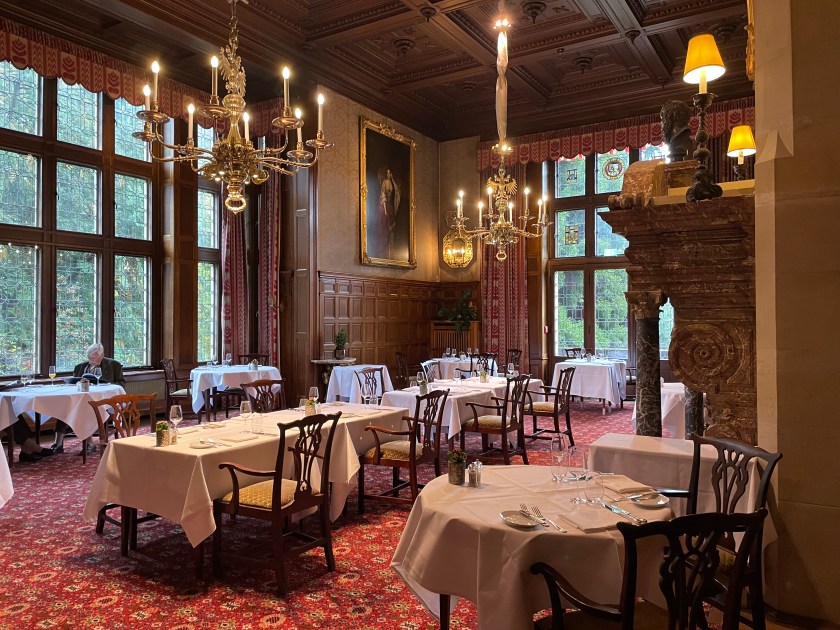
A meeting room:
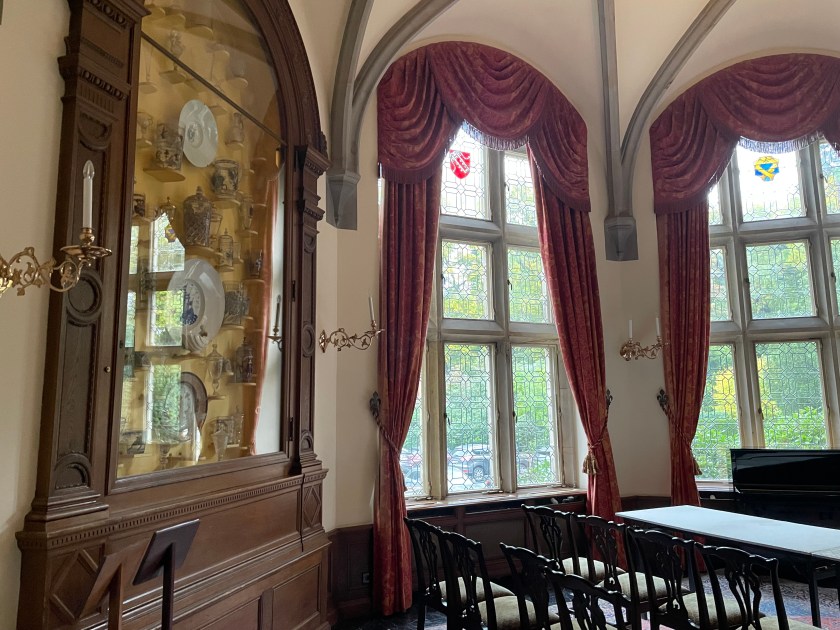
A place to wash your hands when you arrive:


Today this room is a pub/bar:

Then we walked around the grounds and to the Rose Garden.


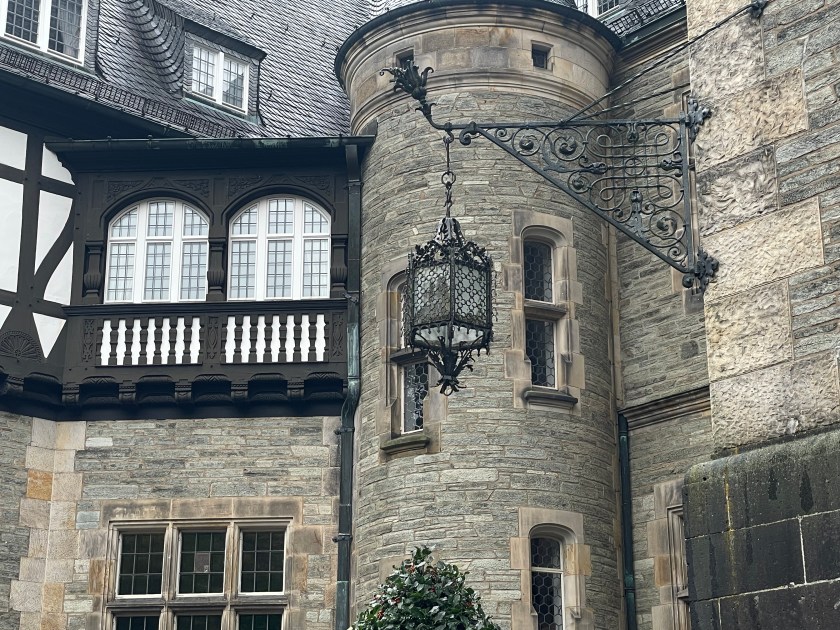

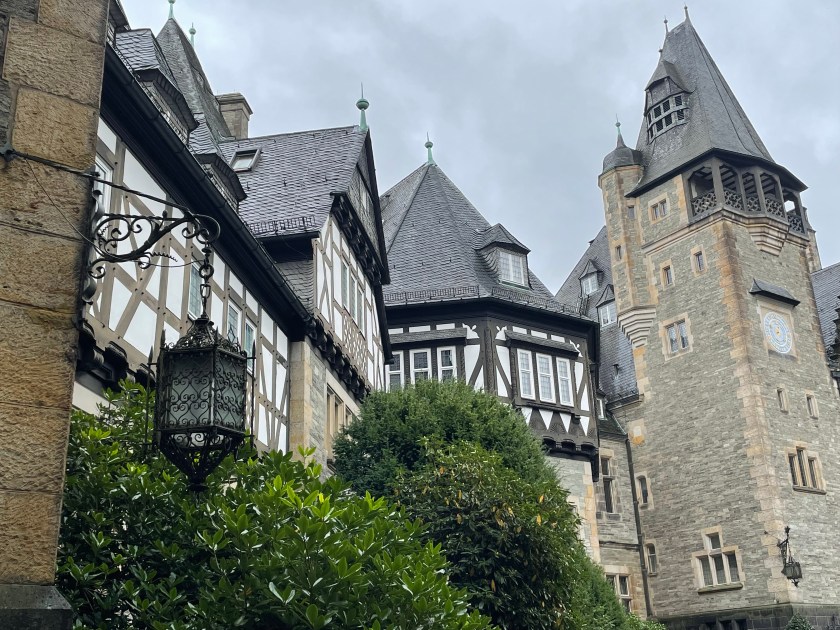
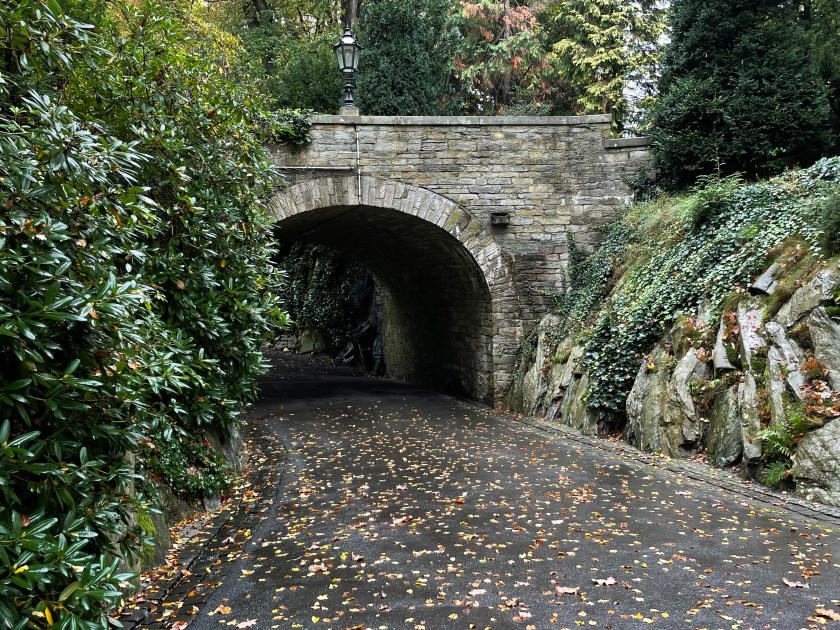

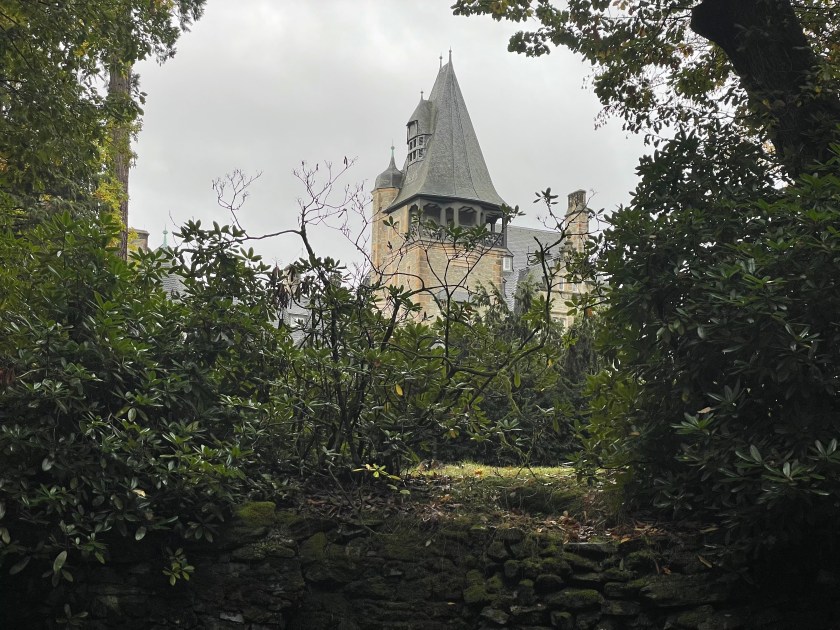
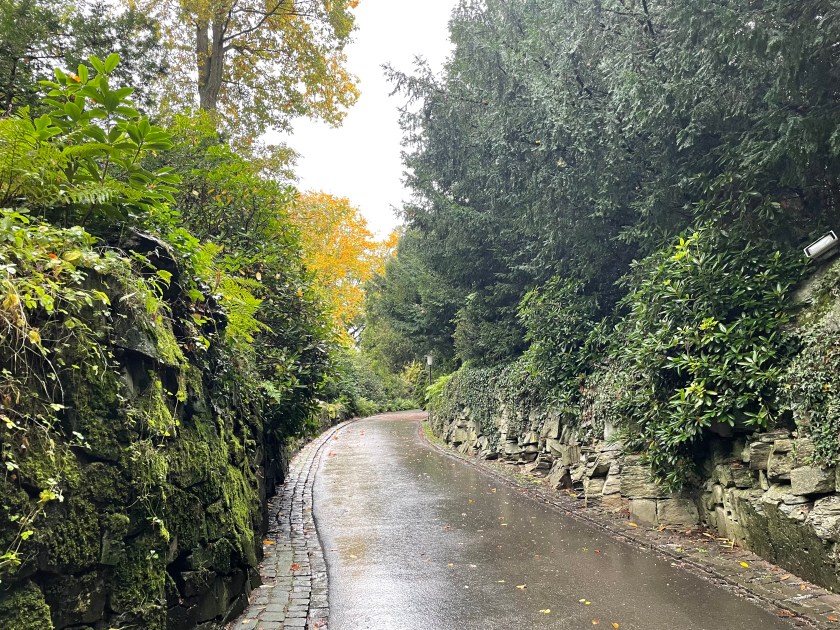
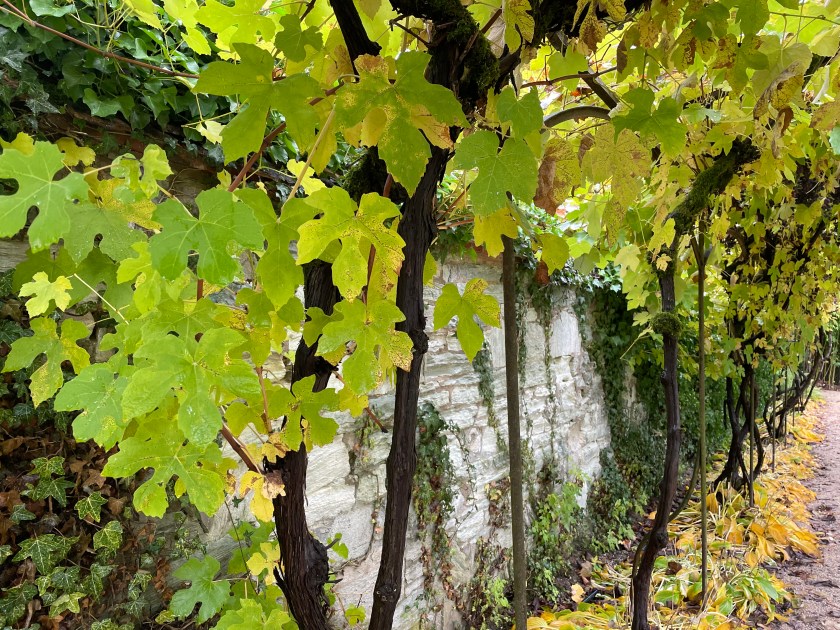
From my journal: We walked around the grounds then took a walk to the Rose Garden. The walking paths are old, with rock walls, and ferns and moss growing on them. The trees above us were wet and leaves were falling.
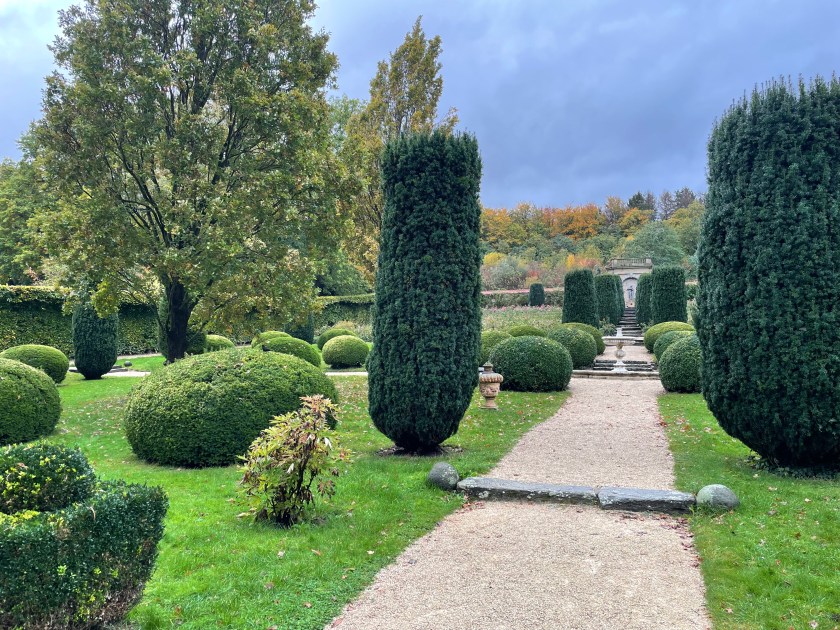
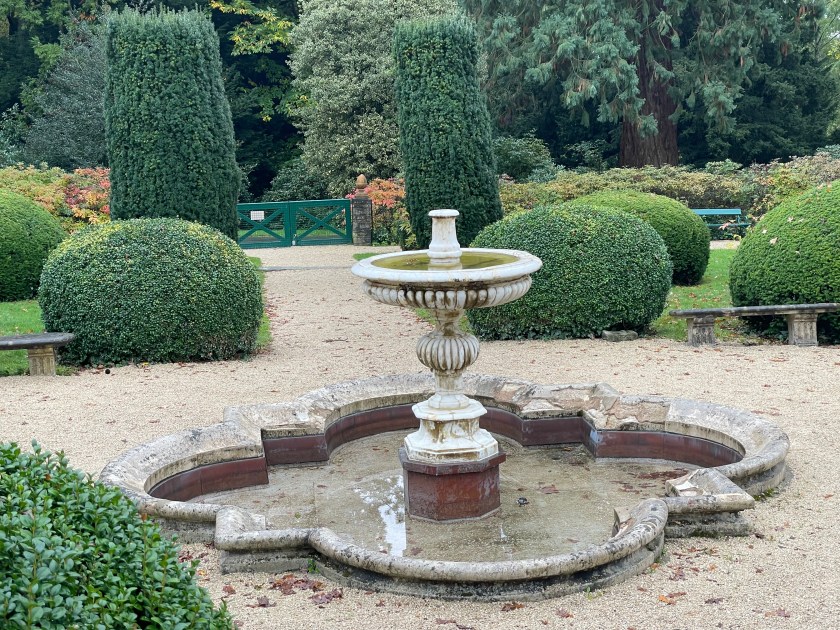
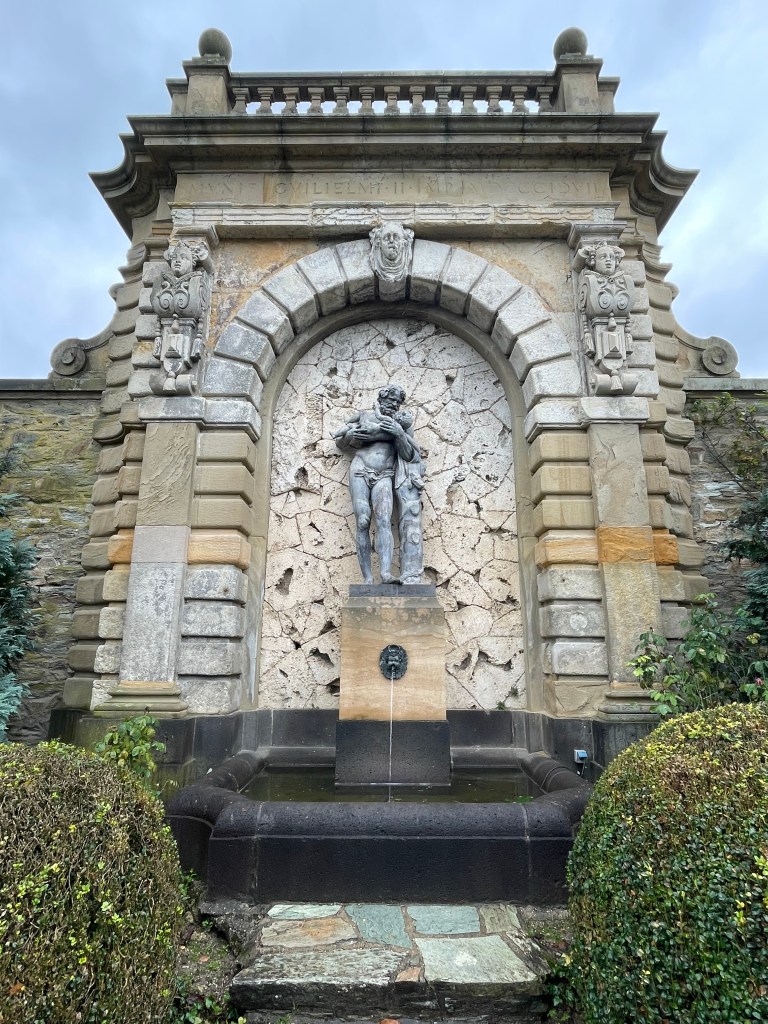
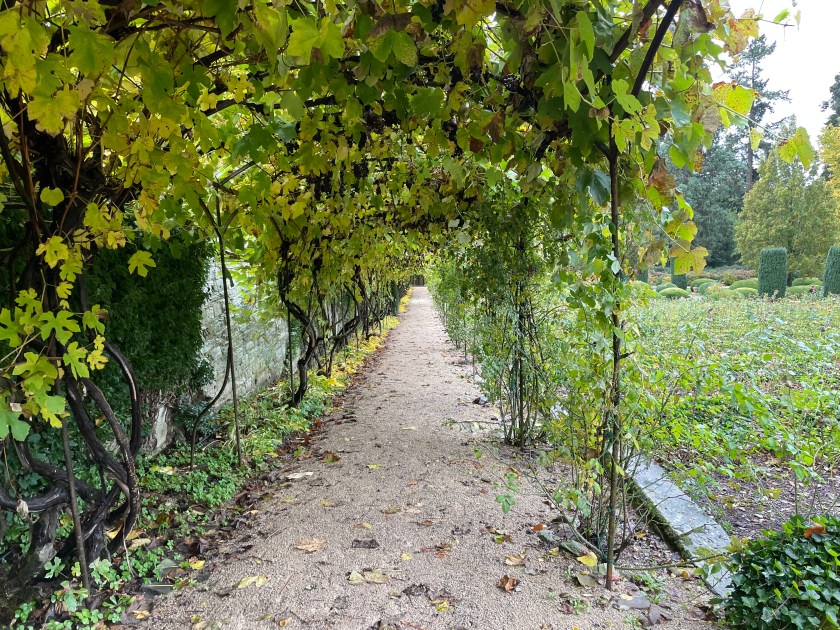
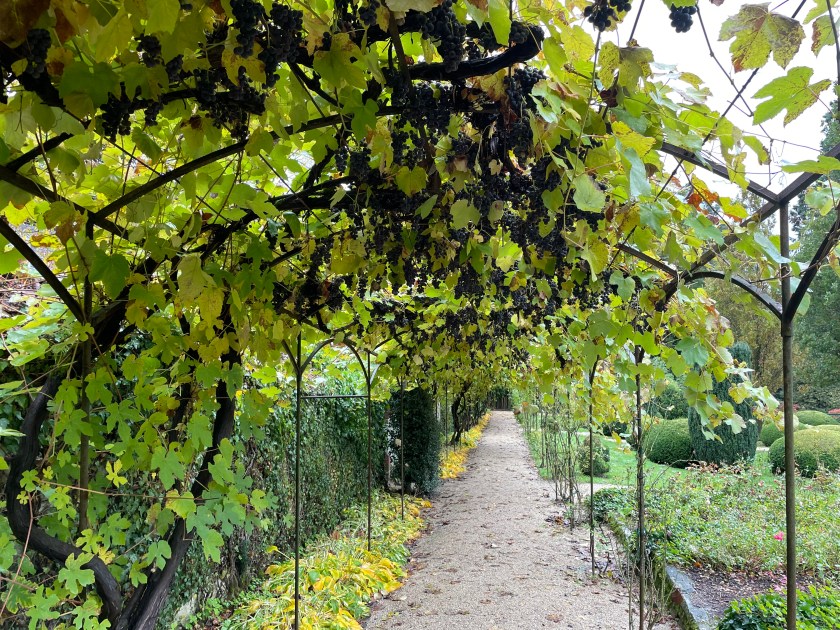
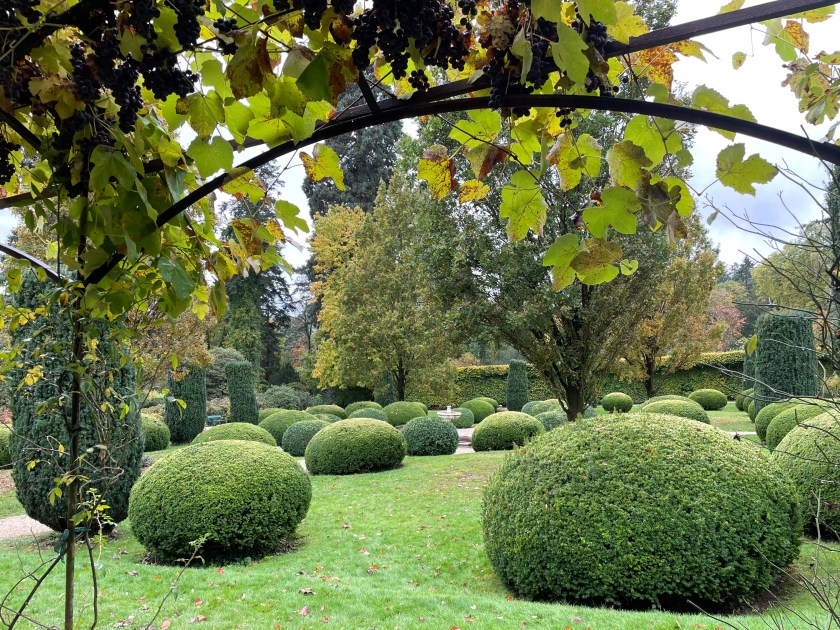
The rose garden was a formal garden with pruned shrubs and a center path that went up to a memorial. There were rows and rows of ivy and roses, with a few blooms remaining. A grape arbor covered the pathway on one side, heavy with concord grapes just out of reach. We were the only ones there. I think one of the nice things about this wet Fall day was that the tourists are gone. In fact, we hardly saw anyone in the Old Town either. It felt like we had the place to ourselves.
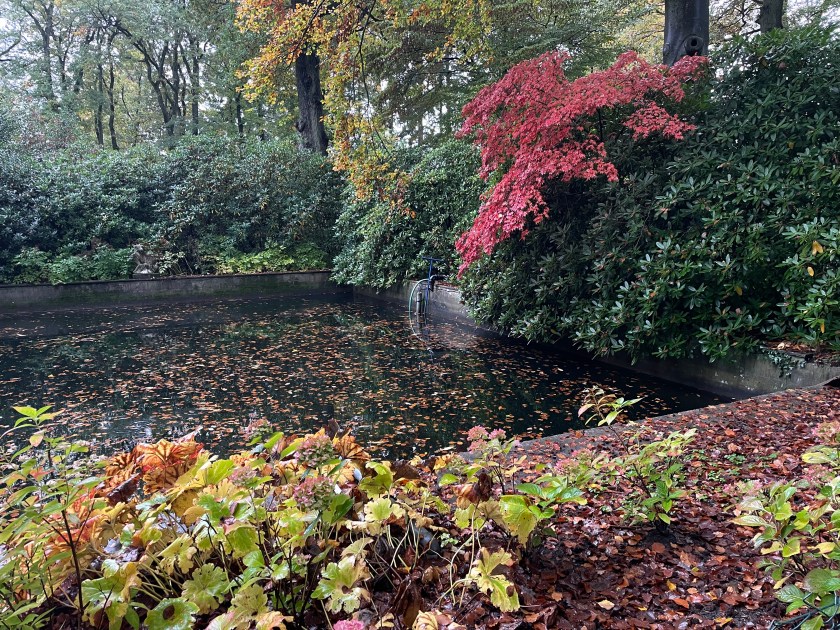
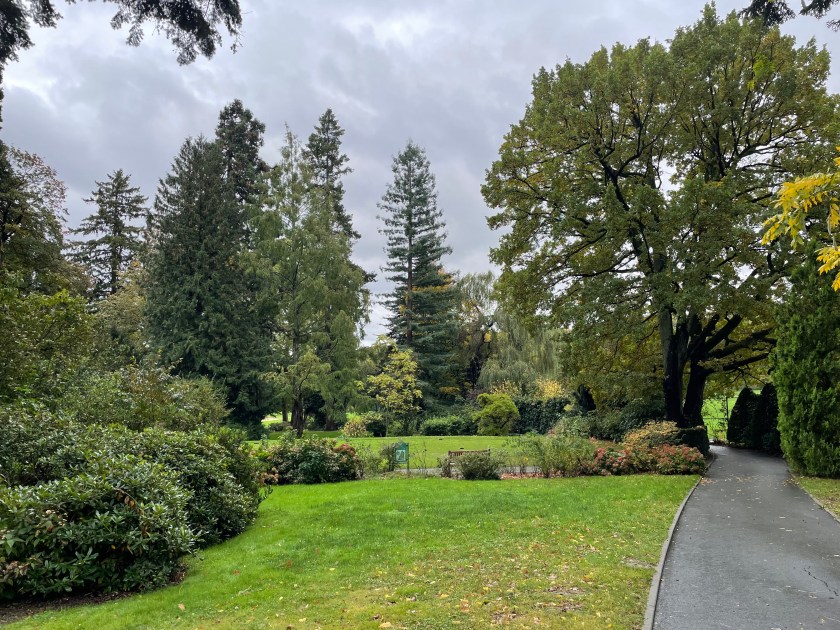
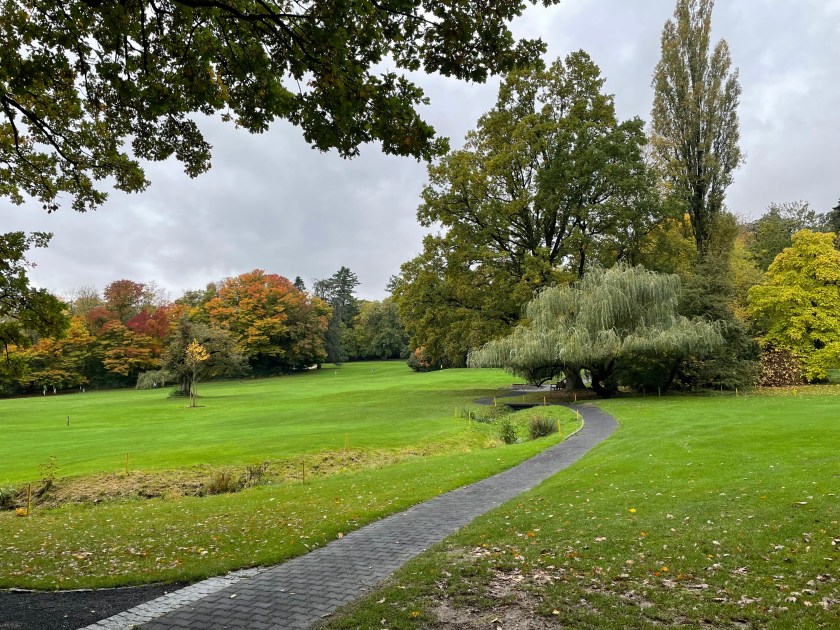
We walked back through the grounds and gardens. It was like a botanical garden. There were 300 year old Redwood trees, lots of ferns and hydrangeas and views out onto the golf course. Oh, so beautiful and peaceful. I hope Victoria felt peace in this place after losing her husband.







From Wikipedia:
The correspondence between Victoria and her parents has been preserved almost completely: 3,777 letters from Queen Victoria to her eldest daughter, and about 4,000 letters from the empress to her mother are preserved and catalogued. These give a detailed insight into life at the Prussian court between 1858 and 1900.
About her mother:
According to one of her biographers, Giles St Aubyn, Victoria wrote an average of 2,500 words a day during her adult life. From July 1832 until just before her death, she kept a detailed journal, which eventually encompassed 122 volumes. After Victoria’s death, her youngest daughter, Princess Beatrice, was appointed her literary executor. Beatrice transcribed and edited the diaries covering Victoria’s accession onwards, and burned the originals in the process. Despite this destruction, much of the diaries still exist. In addition to Beatrice’s edited copy, Lord Esher transcribed the volumes from 1832 to 1861 before Beatrice destroyed them.
Empress Victoria devoted part of her final years to painting and to visit the artists’ colony of Kronberg, where she regularly met with the painter Norbert Schrödl. In her last days, she used to walk in the morning and spent long hours writing letters or reading in the library of her castle.
In late 1898, physicians diagnosed the empress dowager with inoperable breast cancer, forcing her to stay in bed for long periods. Cancer had spread to her spine by the autumn of 1900, and as she worried about her personal letters (in which she detailed her concern over Germany’s future under her son) falling into the hands of the emperor, she requested that the letters be brought back to Great Britain in a cloak-and-dagger operation by her godson Frederick Ponsonby, the private secretary of her brother, Edward VII, who was making his final visit to his terminally ill sister in Kronberg on 23 February 1901. These letters were later edited by Ponsonby and put into context by his background commentary to form the book that was published in 1928.
The empress dowager died in Friedrichshof on 5 August 1901, less than seven months after the death of her mother.


 Our Frankfurt Germany Mission