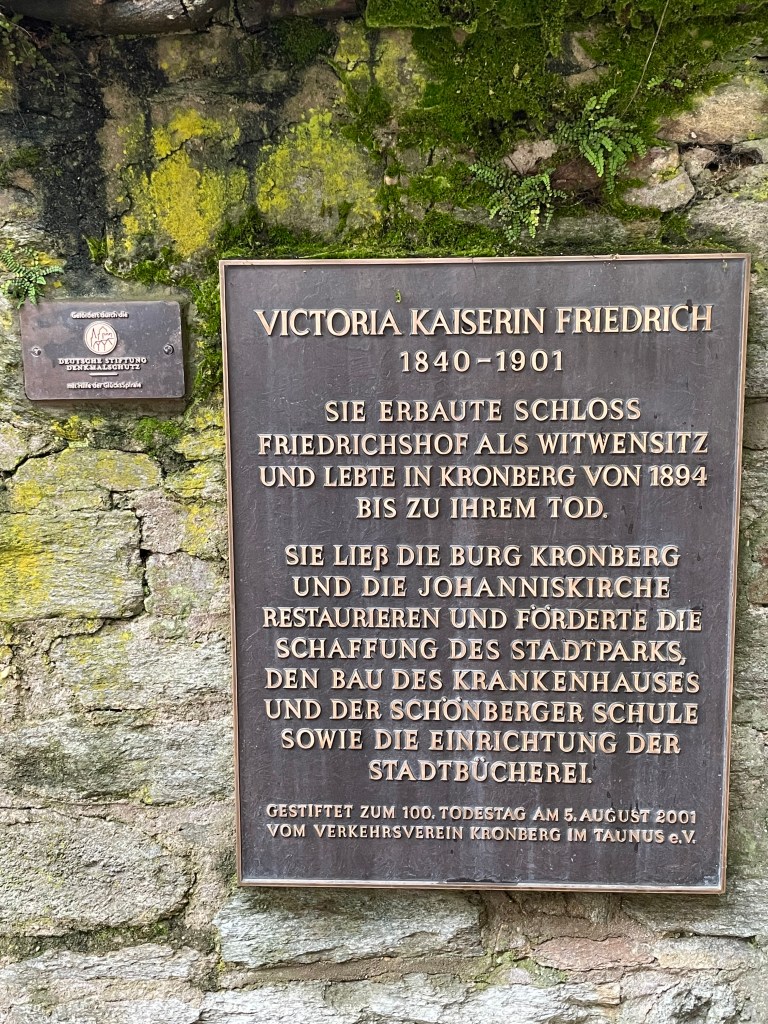
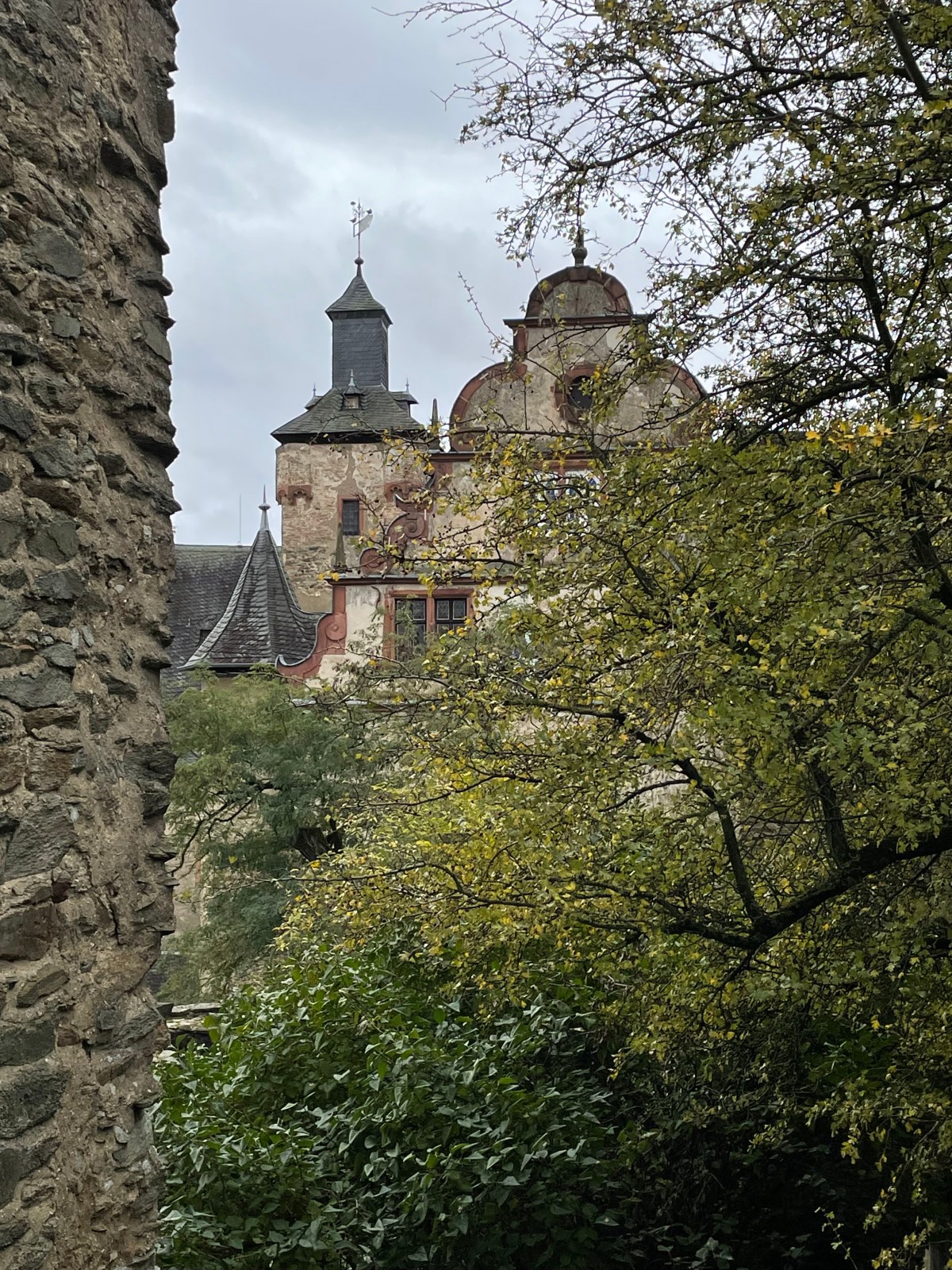
We returned to the Kronberg Castle after it opened at 1:00. We had a little time before the tour to explore the grounds and enjoy the beauty here. Empress/Kaiserin Victoria did a nice job bringing life back to this old castle when she completely renovated it after she moved to Kronberg. She lived here from 1894 until she died in 1901.
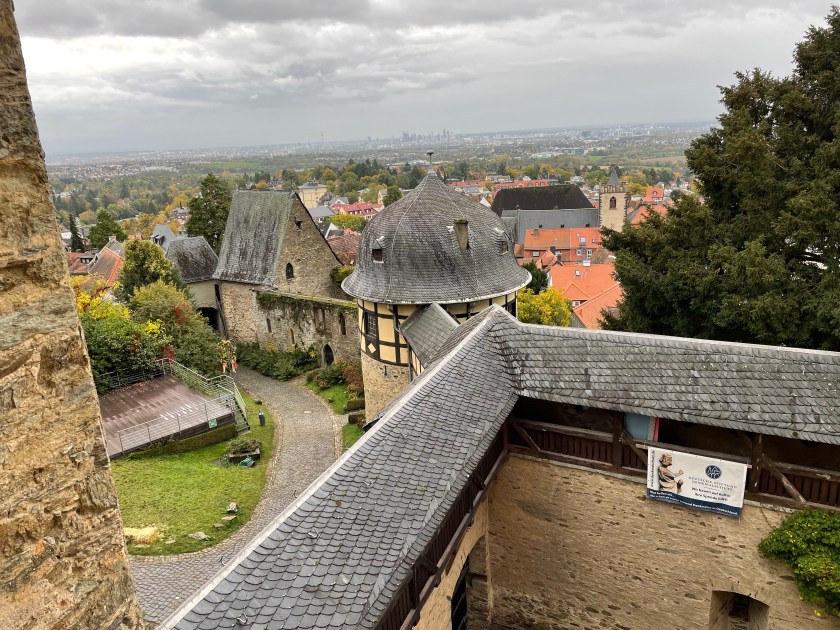
Here’s how this castle is situated on the hill at the top of the town:

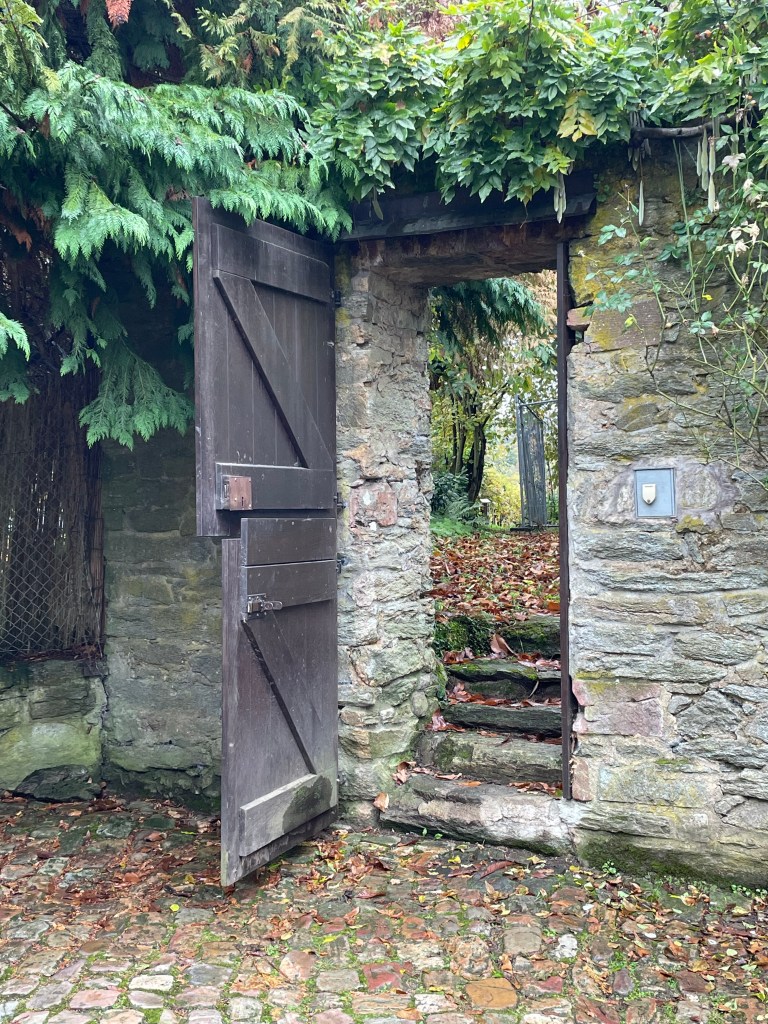
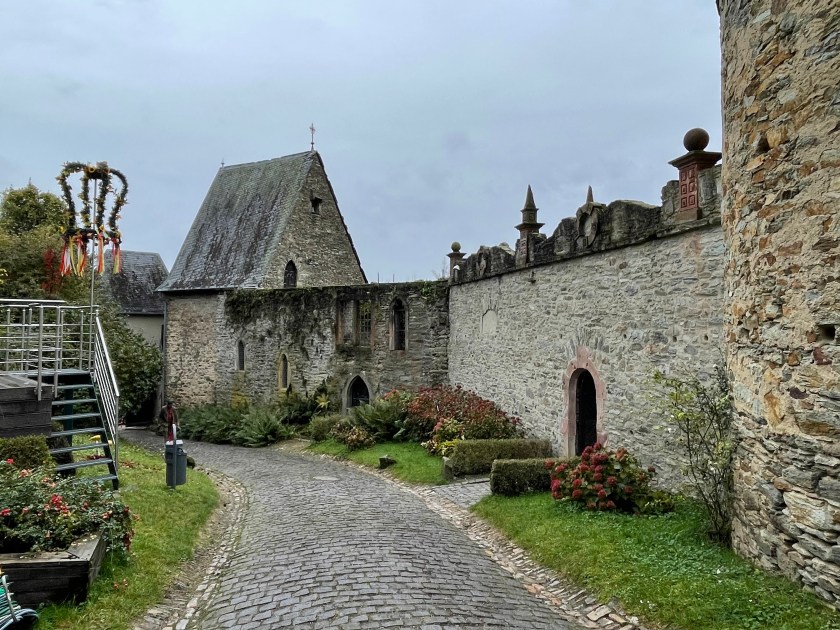
The door to the castle grounds:
And here’s where you enter the castle:


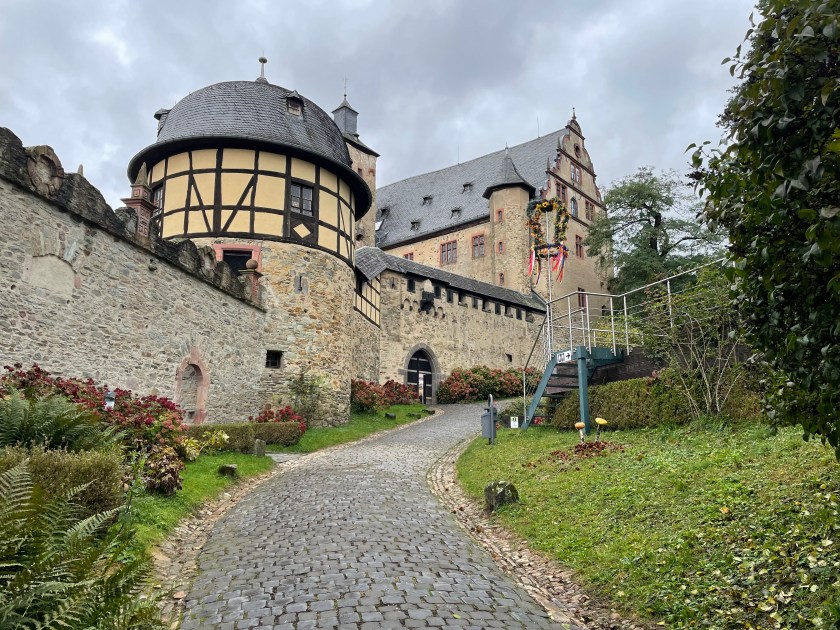
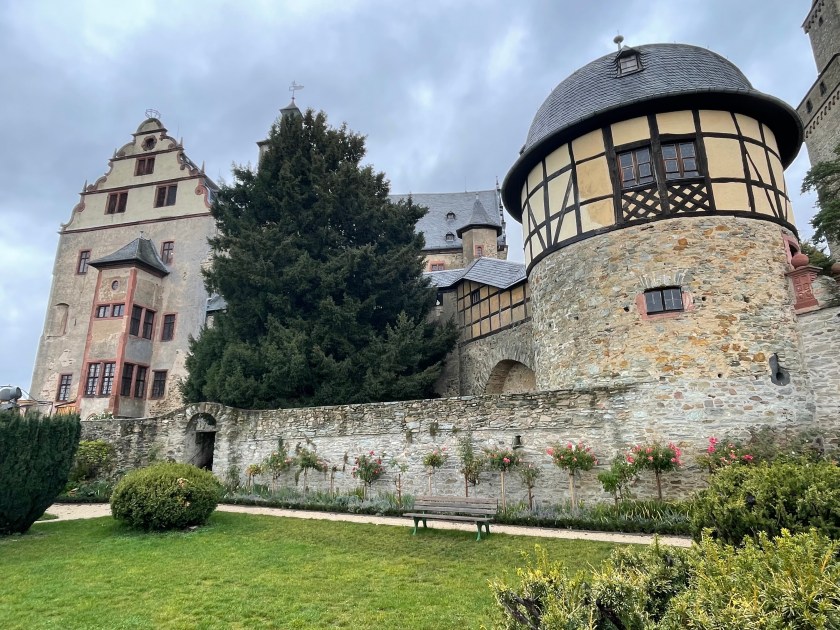
It’s still hard for me to wrap my head around how old these buildings are.
Here’s a little history of this place:
The history of Kronberg castle and its grounds begins at the end of the 12th century, when the Holy Roman Emperor ordered the knights of Eschborn to build a castle on a rocky outcrop on the southern slopes of the Taunus. The first documentary reference to the knights as the Lords of Kronberg was in 1230.
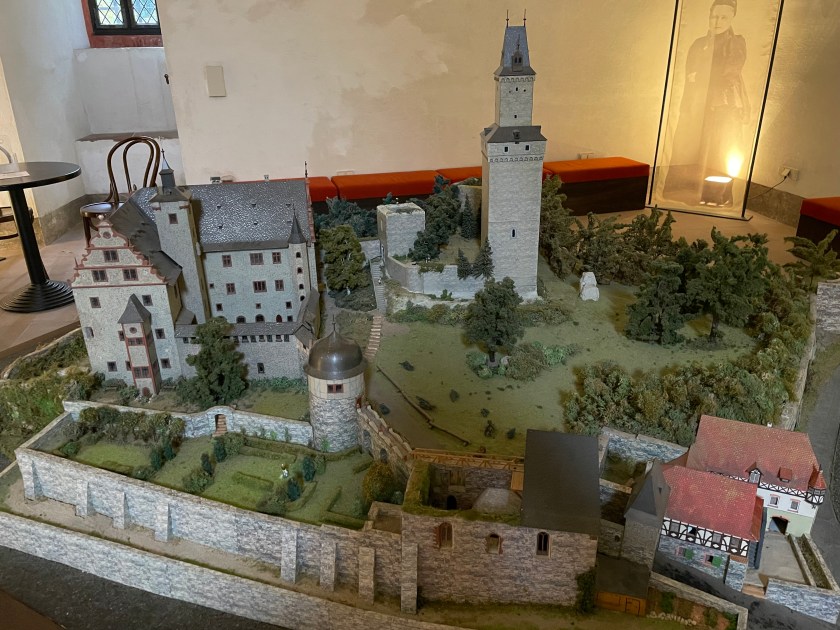
A visitor to this castle complex, which with its 18,000m is one of the most extensive in Germany, will get a clear idea of what life used to be like at the castle. It was an economic entity with lords and their underlings and cattle, and stables, barns, a blacksmith and a bakery and a manure heap. The harvest was stored in the attic of the middle castle. At the beginning of the 19th century the economic conditions changed. Castles were now something to admire and visit. They were no longer lived in by the families who had built them.
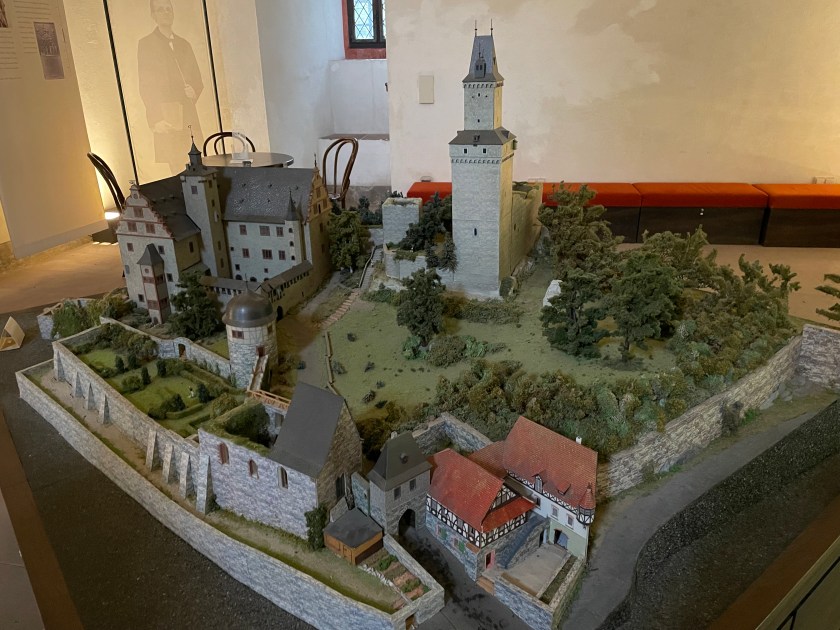
Kronberg castle comprises three castles from three eras: The Romanesque upper castle with its keep is the oldest part of the castle (circa 1170-1200). The lower castle, which has now almost disappeared from view, was built at the start of the 14th century. The middle castle has two buildings at right angles to each other and was built in the 14th and 15th century and marks the transition from a defensive to a residential castle.
There have been many alterations, renovations and extensions to the castle over the centuries. However, the ground plan of the castle has remained largely unchanged since the Middle Ages. This fortunate circumstance is explained by the fact that, after the last Lord of Kronberg died in 1704, the castle continued to be used. Among other things it was used as living accommodation and workshops, for storage, as council offices, as a prison and above all as a school and even as a painter’s studio.
In 1891 Kaiser Wilhelm II gave the castle as a Christmas present to his mother, the Empress Victoria of Germany, “Kaiserin Friedrich” (the oldest daughter of Queen Victoria of Great Britain). She had the castle restored under the management of the architect Louis Jacobi and planned to open a museum. Her plan was to restore the castle to the way it would have looked when the last of the Lords of Kronberg lived here.
Unfortunately, Empress Victoria died in 1901. Her youngest daughter Margarethe, together with her husband Landgraf Friedrich Karl von Hessen, completed the work, and the first museum was opened to the public in 1912. The Kronberg Castle Foundation (Stiftung Burg Kronberg im Taunus) owns the castle since 1994.

From here you can see the old church (left) we visited earlier.

Neighbors behind the back walls:

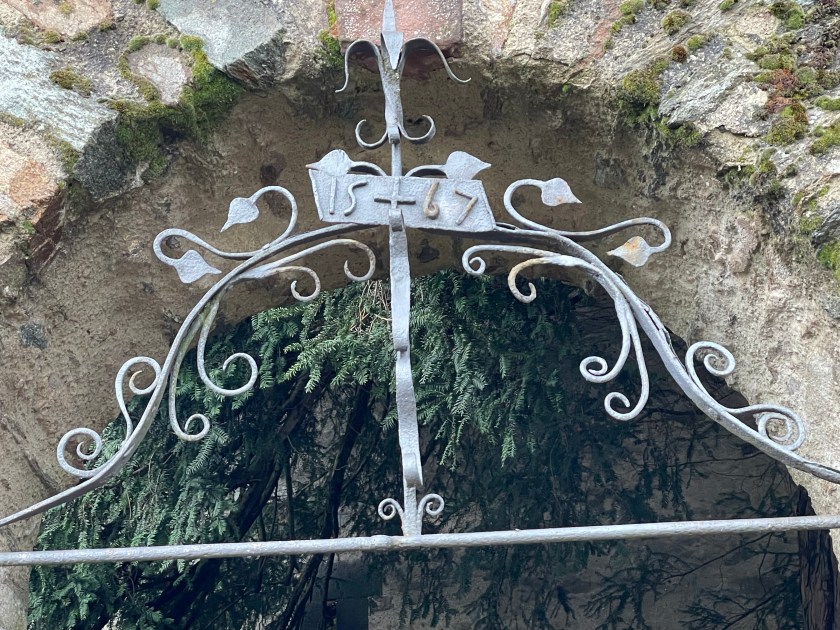
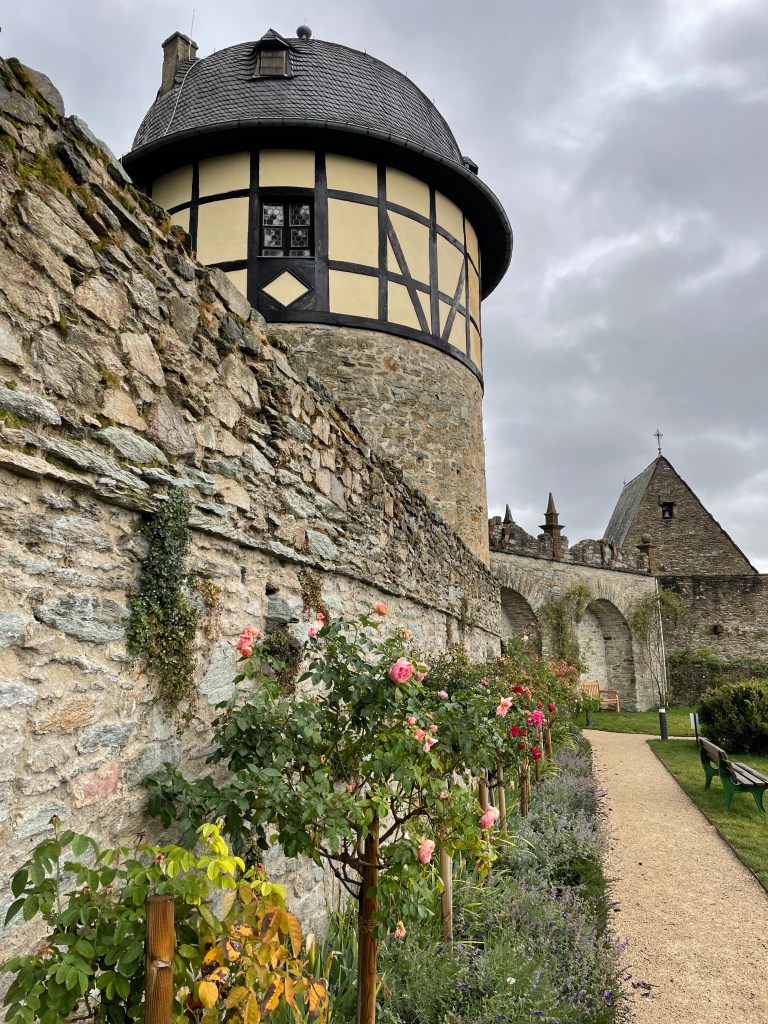
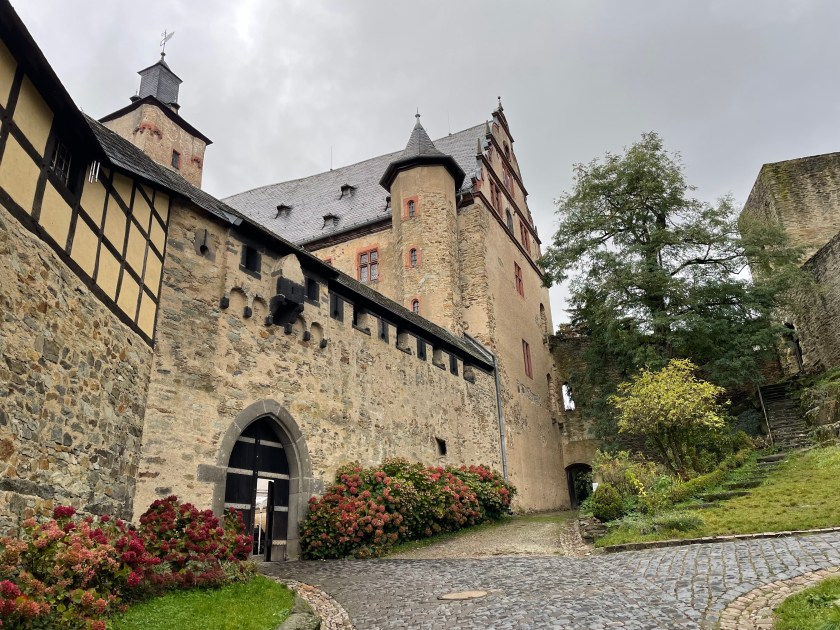

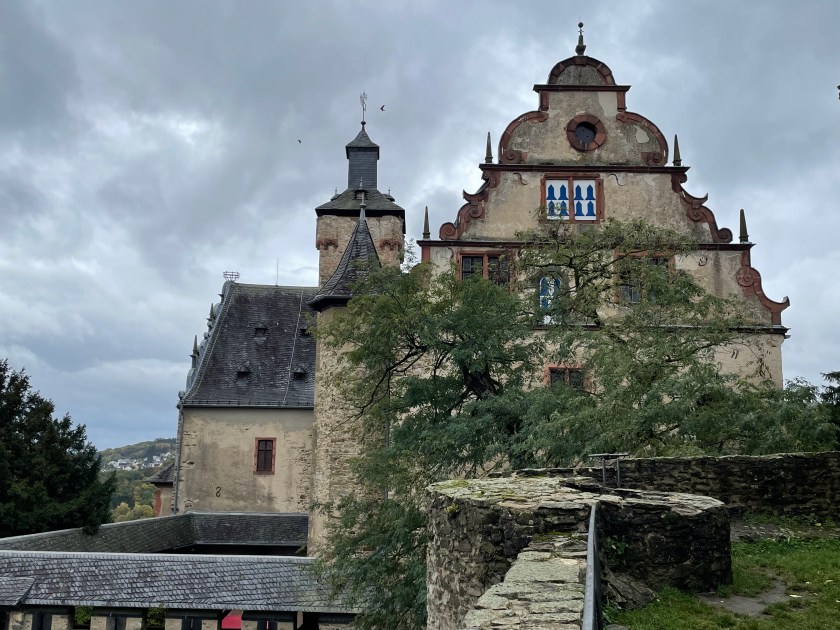
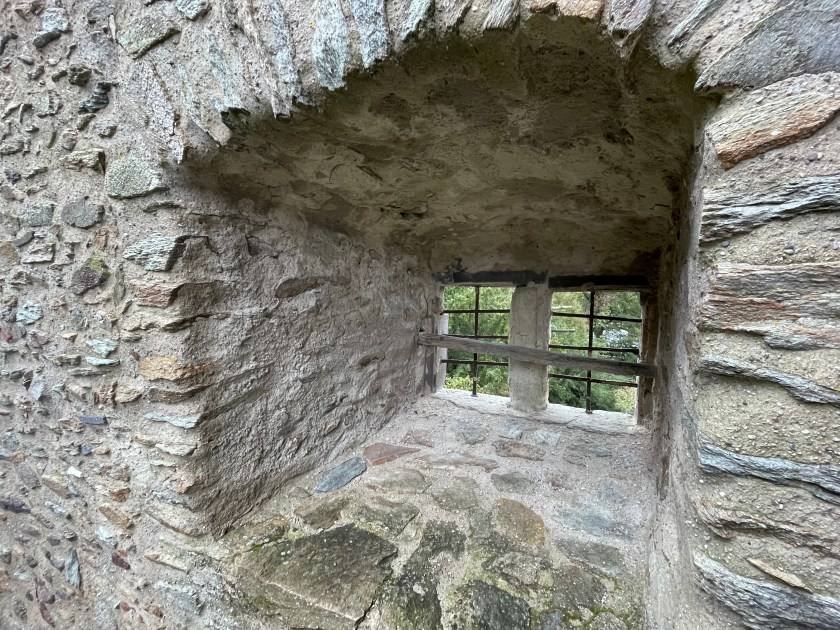


Our tour began here with a historical overview of the castle.

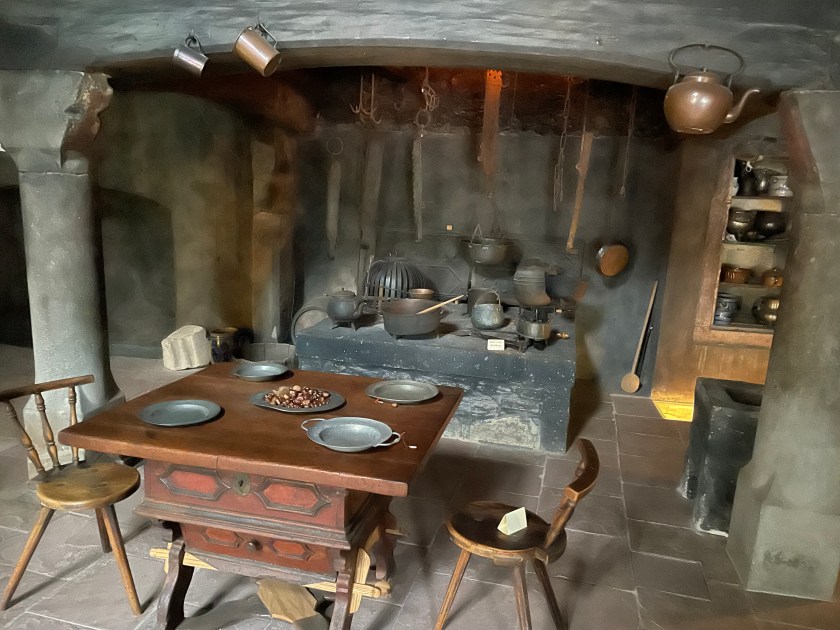
Here is a Medieval kitchen with a large hearth and fire and a well inside the room. Fascinating. Imagine being a servant working here.
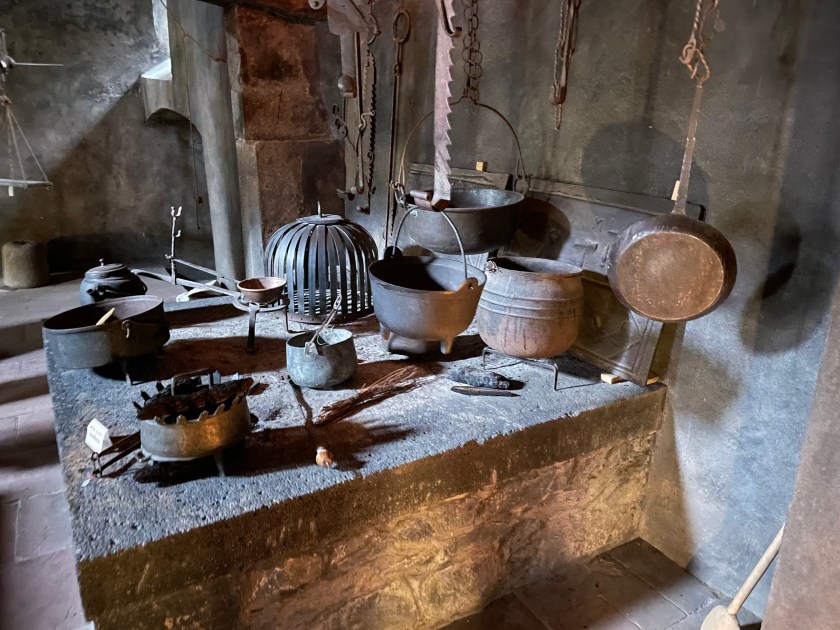


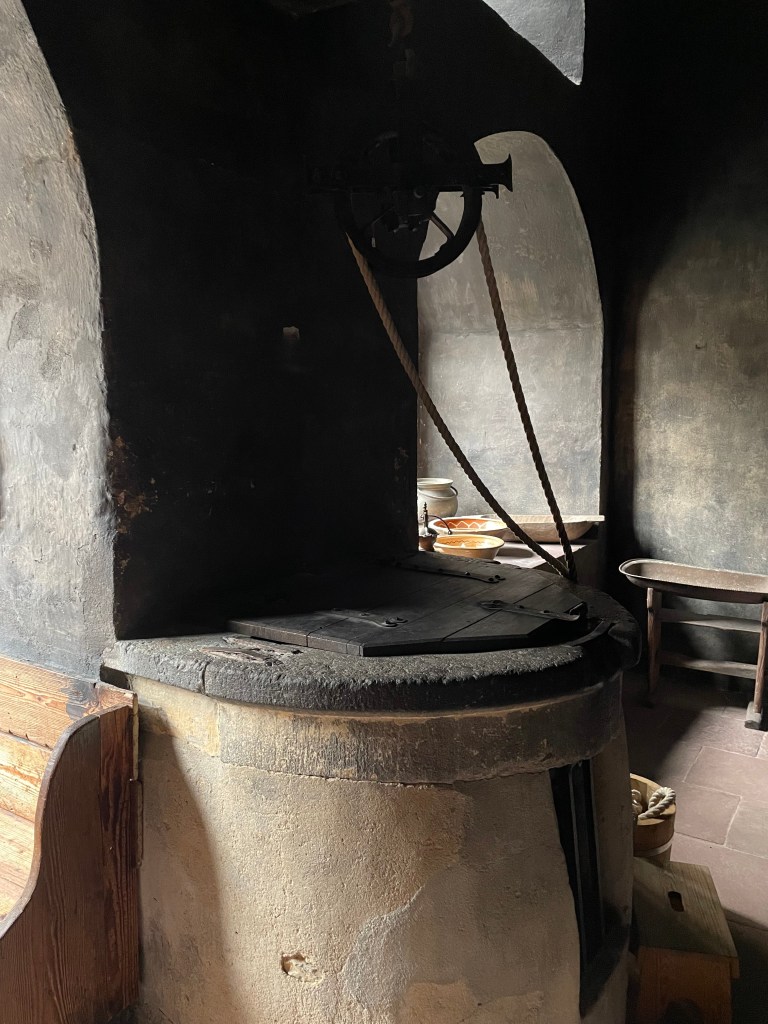

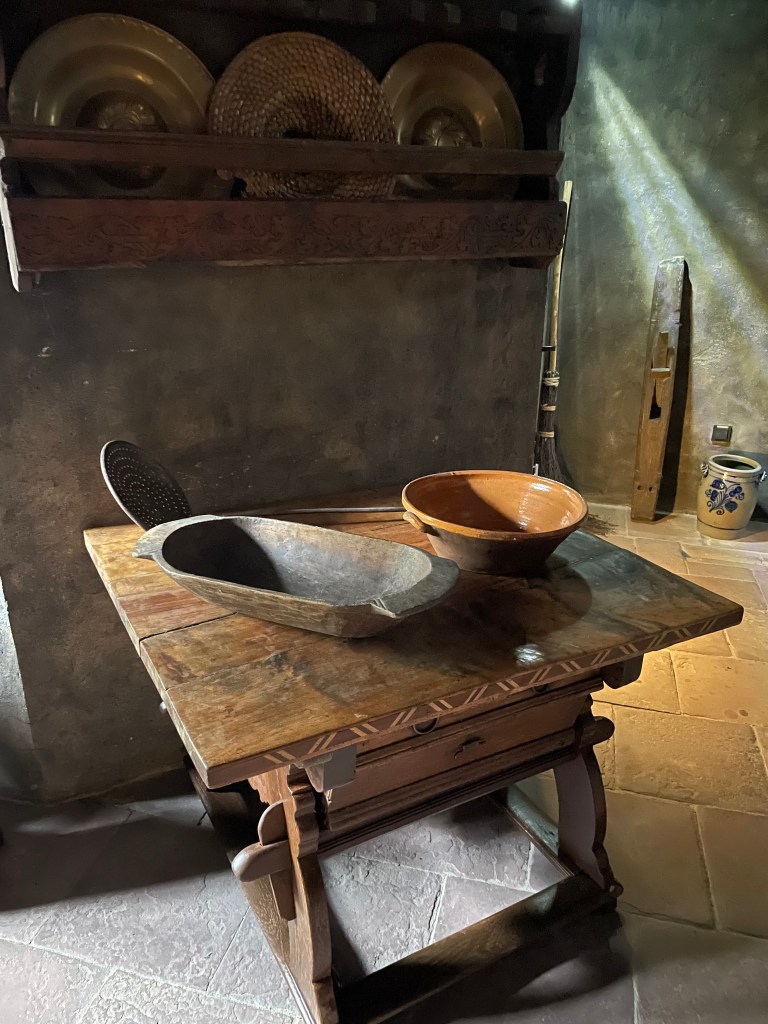


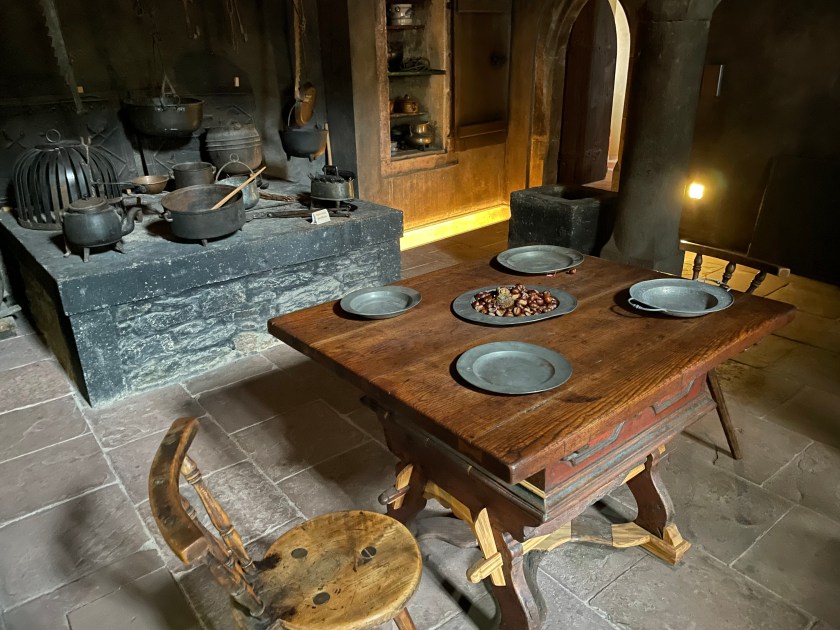

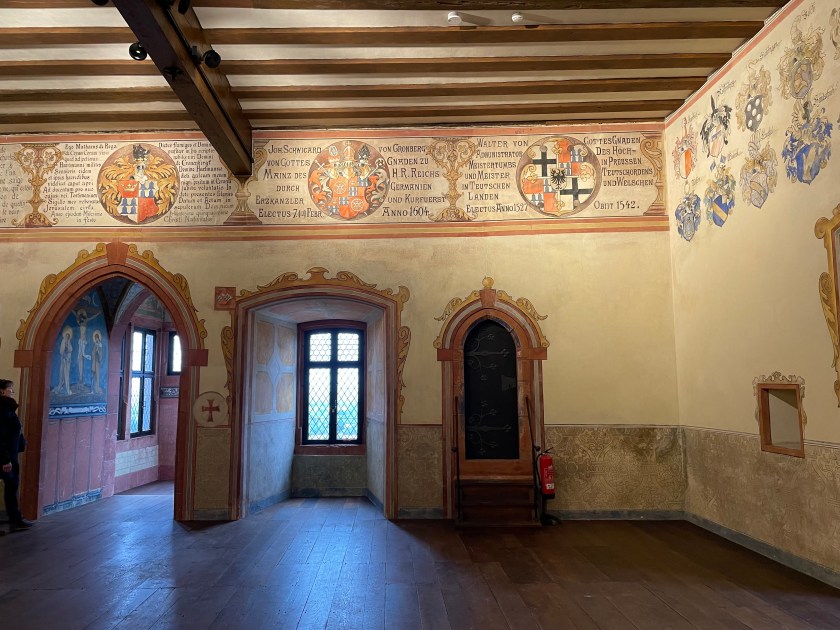
Next to the kitchen was this grand hall with family crests painted on the walls. This was a reception place for guests and special functions.

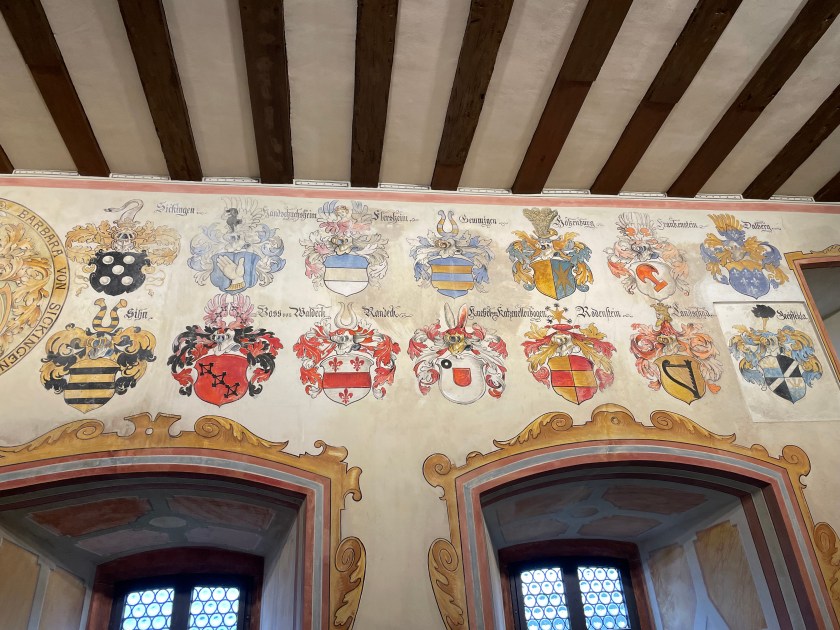

These 4 crests belonged to the 4 branches of the family who owned the castle:

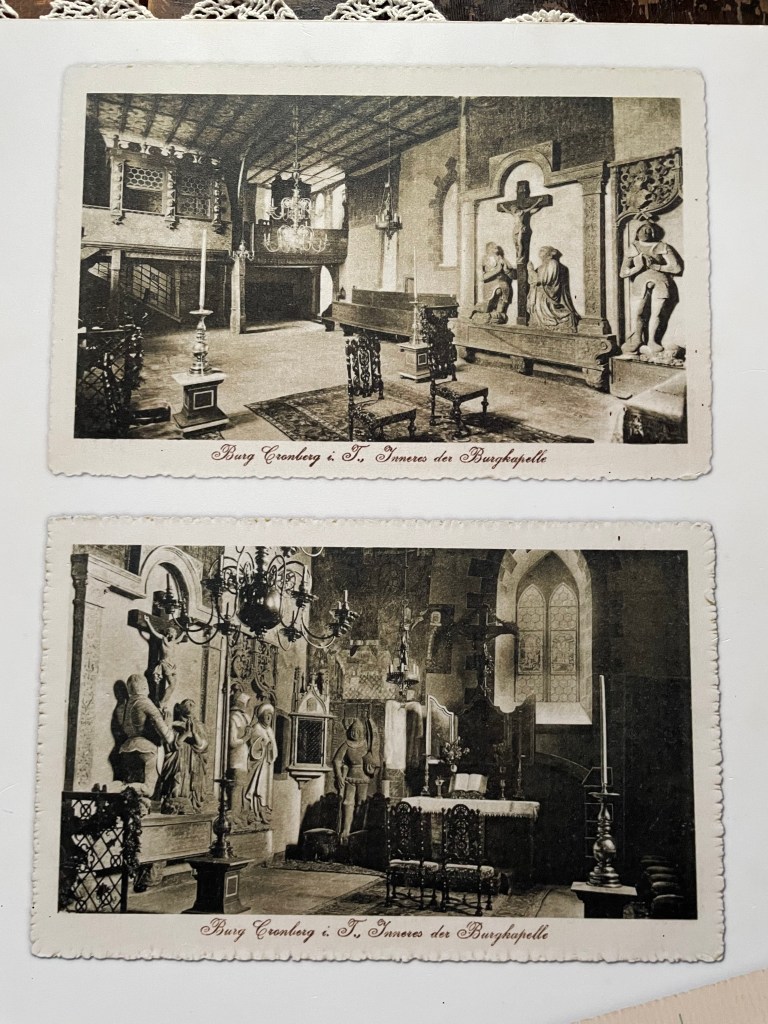
Empress Victoria remodeled this small capelle on one end of the grand hall, a place for worship. It was exquisite.


This art painted on the wall in 1899 by Karl J. Gätz took my breath away: God the Father, Jesus Christ and the Holy Ghost represented by the dove. Zoom in and take a good look.

The ramparts:
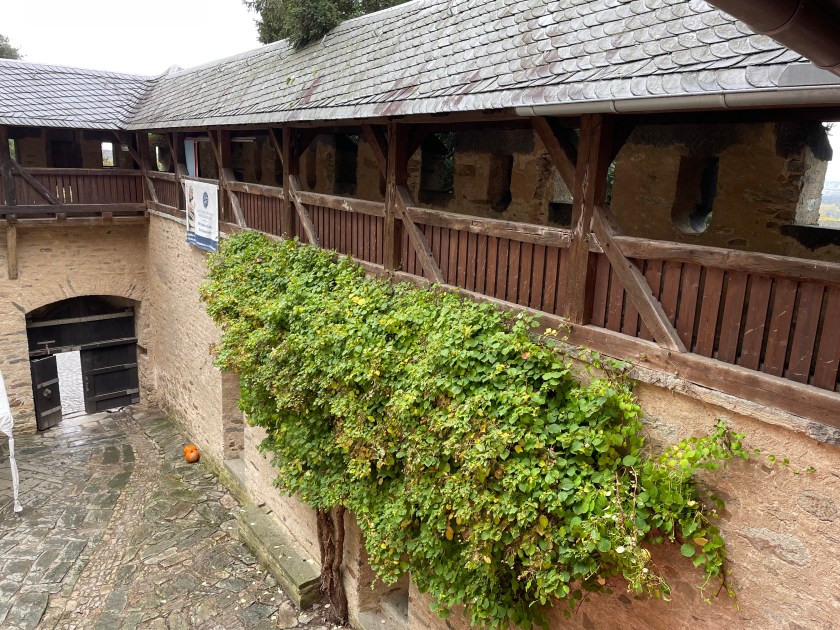
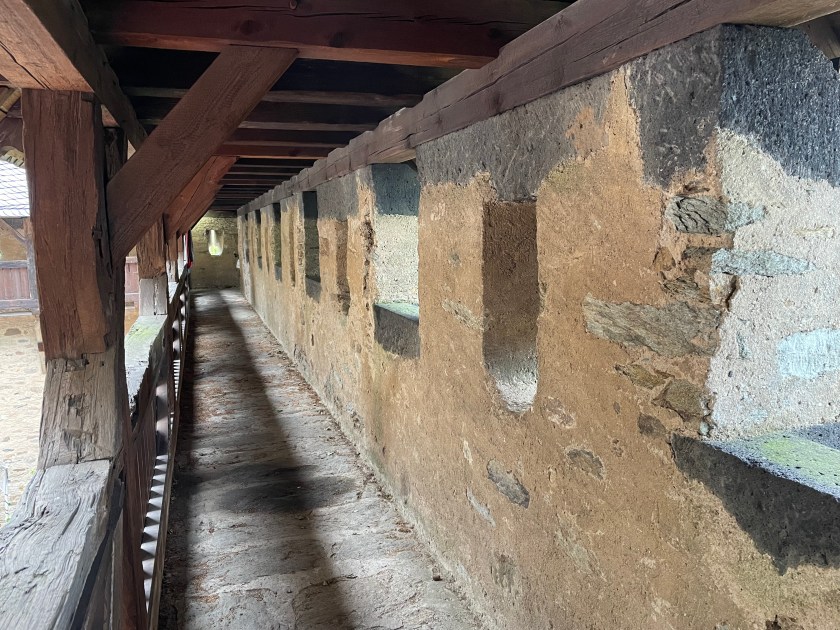

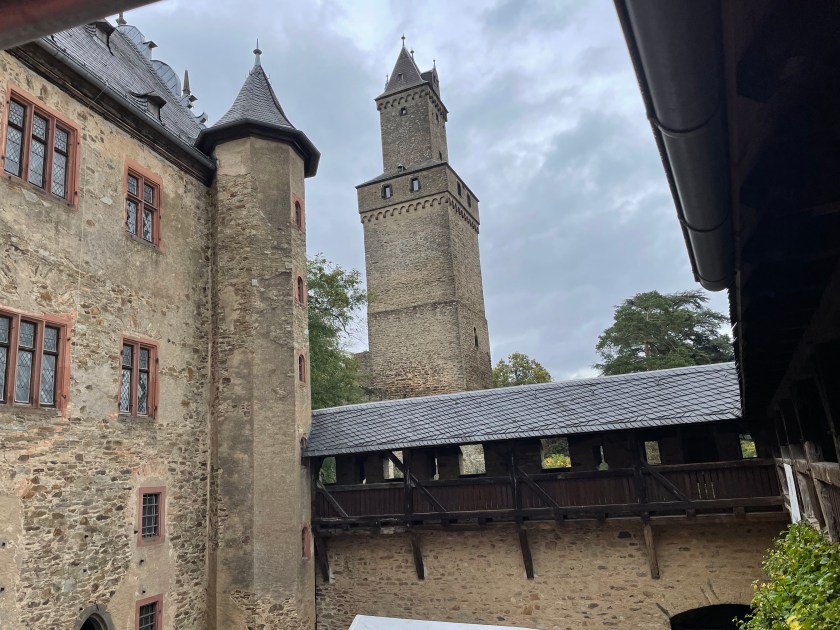
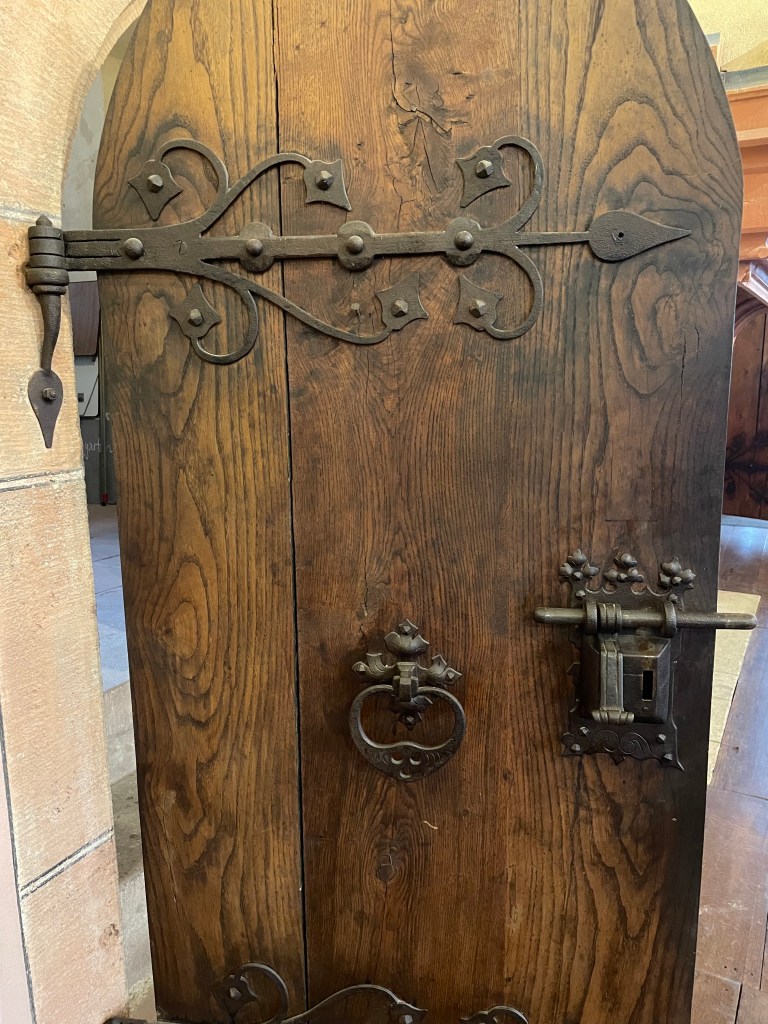
Then back inside through this beautiful door:
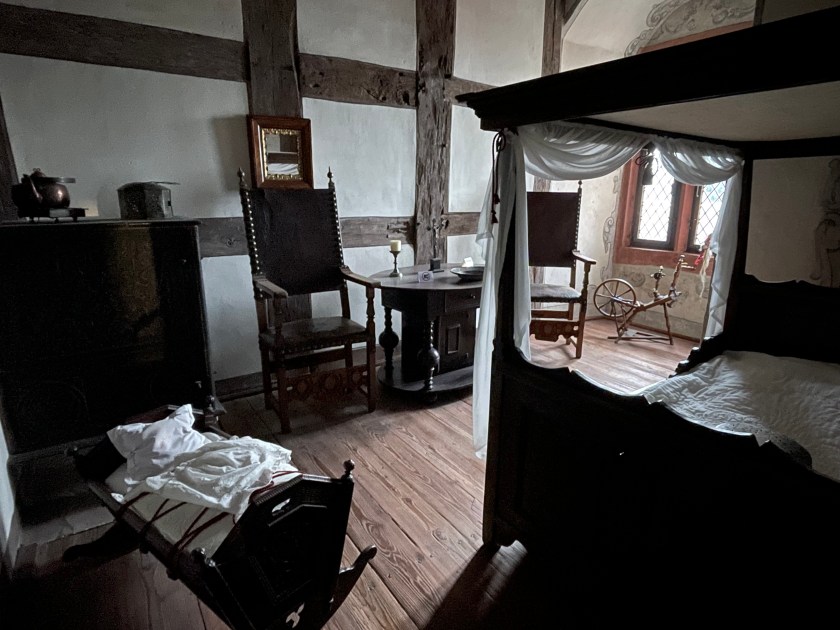
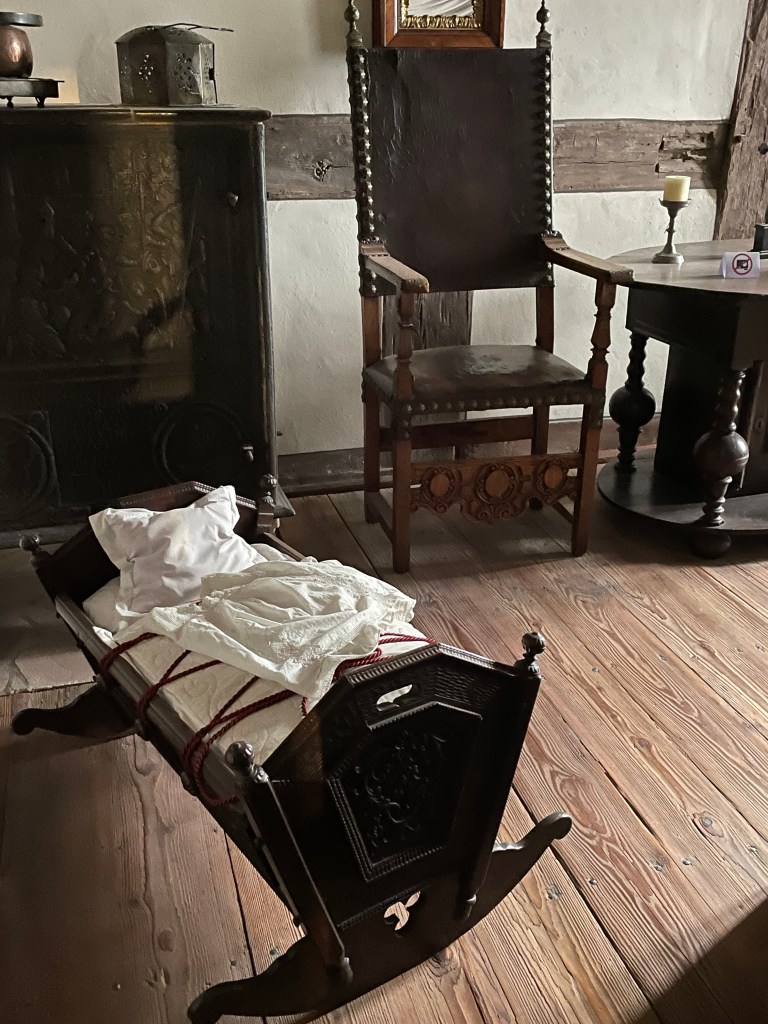
Then we looked in on some of the bedrooms.




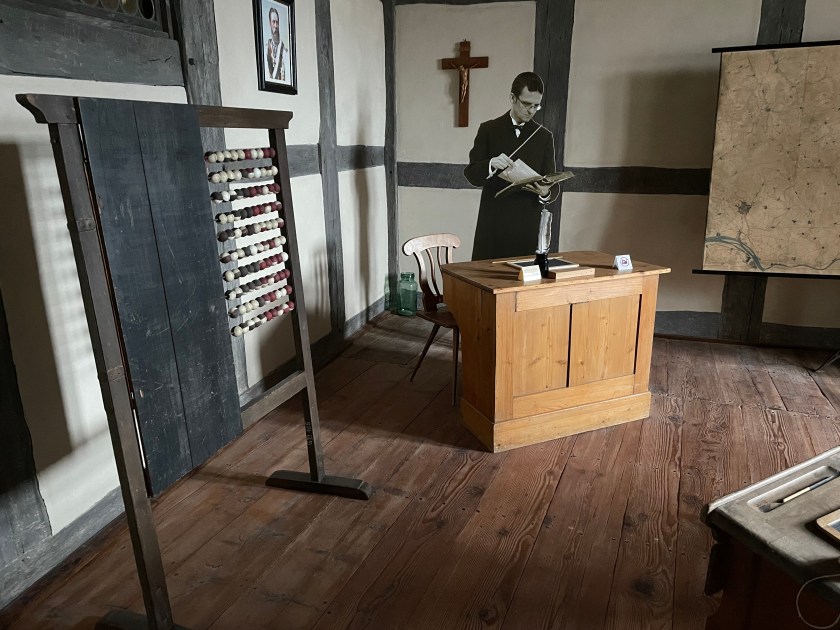
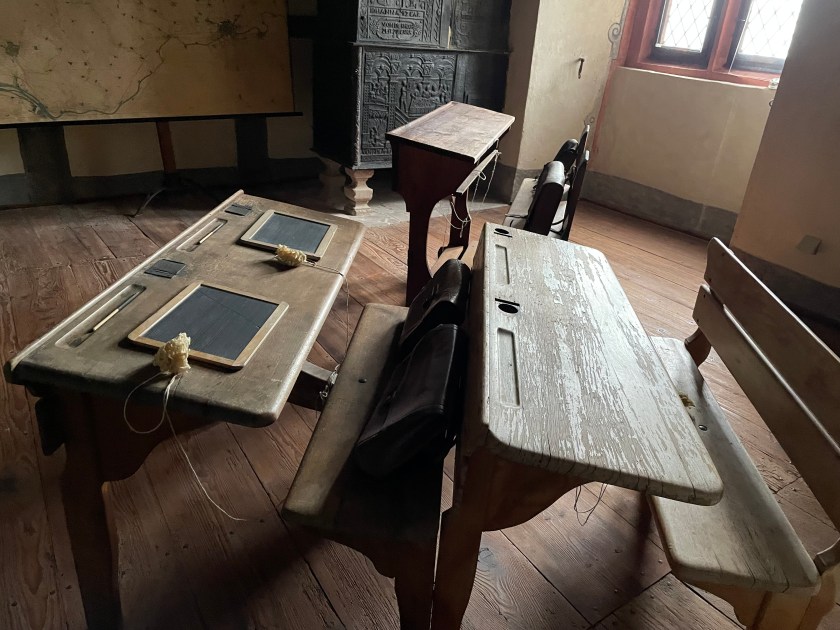
For a time a school was held here for children in the village.

There a couple of toilets like this. They empty outside the castle wall into the yard below.

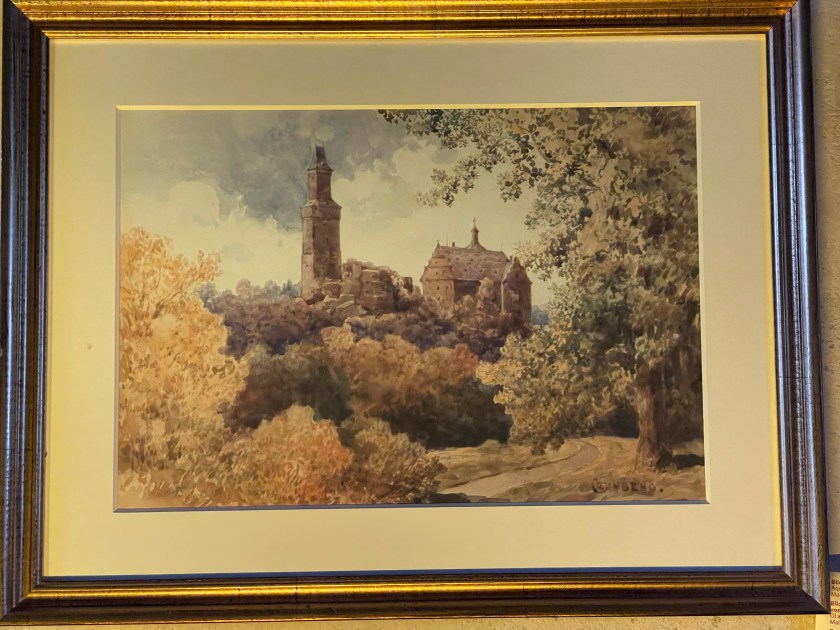
Some old drawings of how things looked:


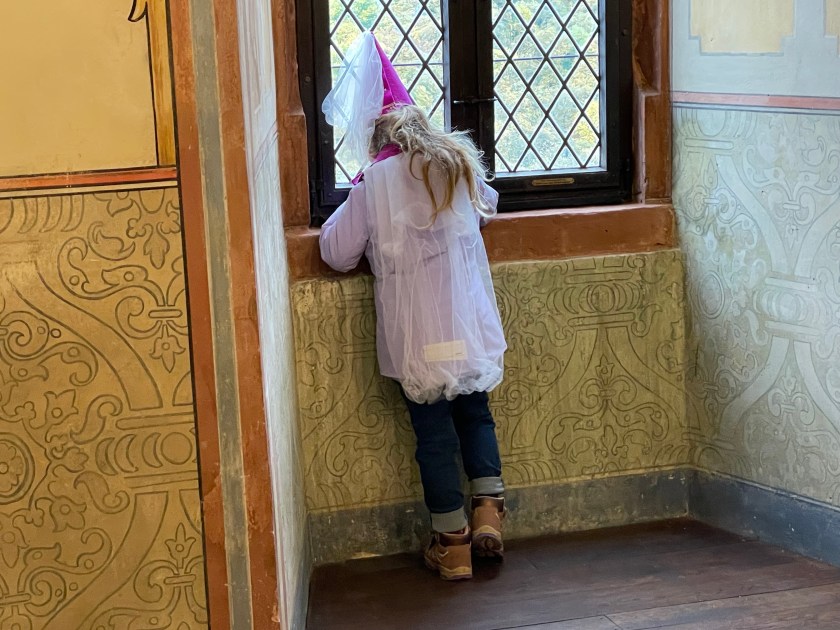
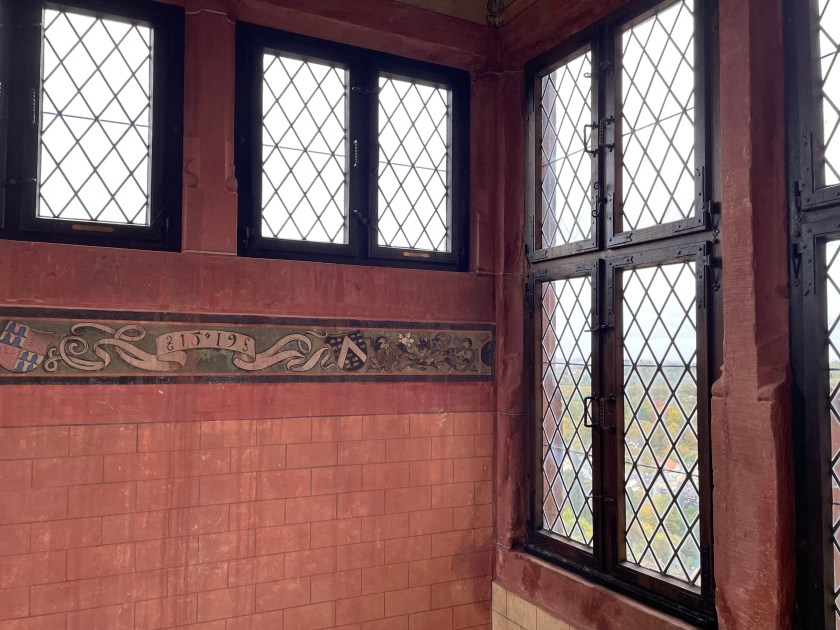
A sunny window alcove for spinning:


Here’s an adult’s bedroom:
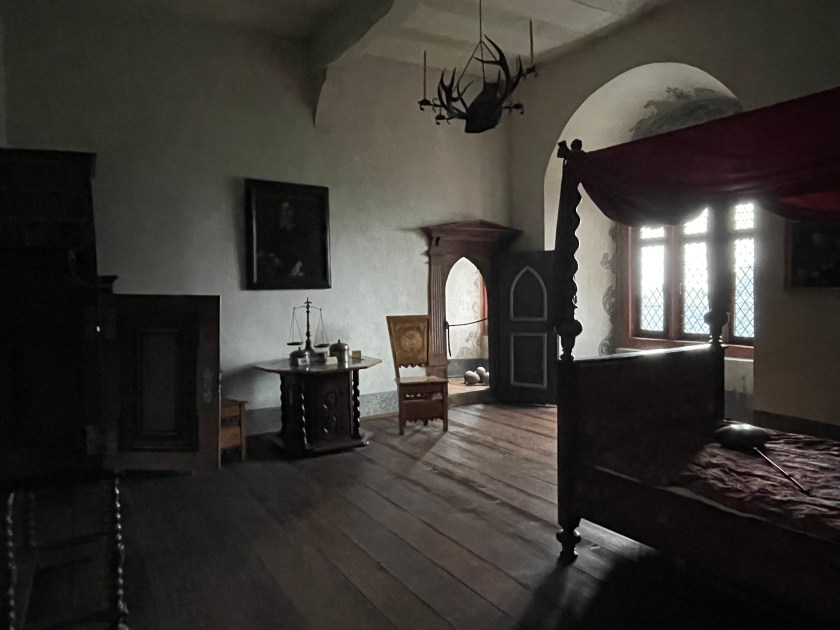

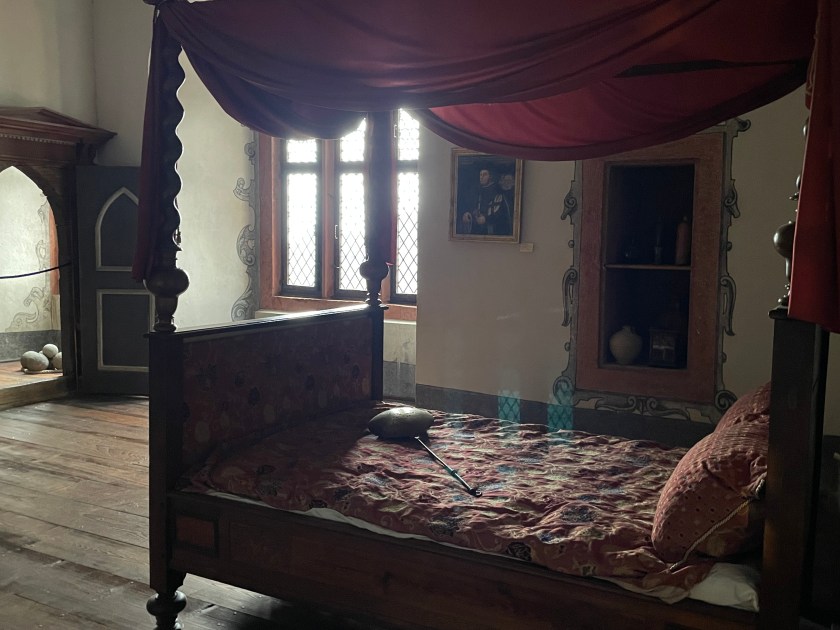

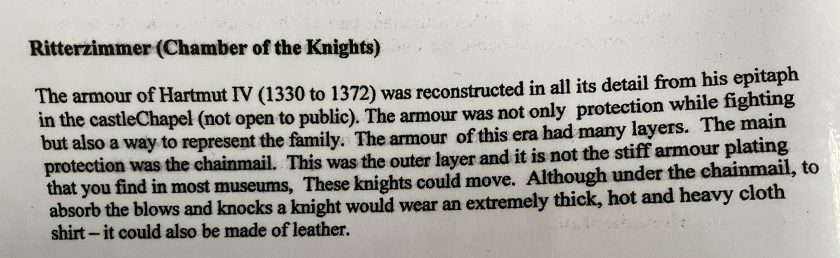
The bed chamber was next to a room for the Knights and their armory.
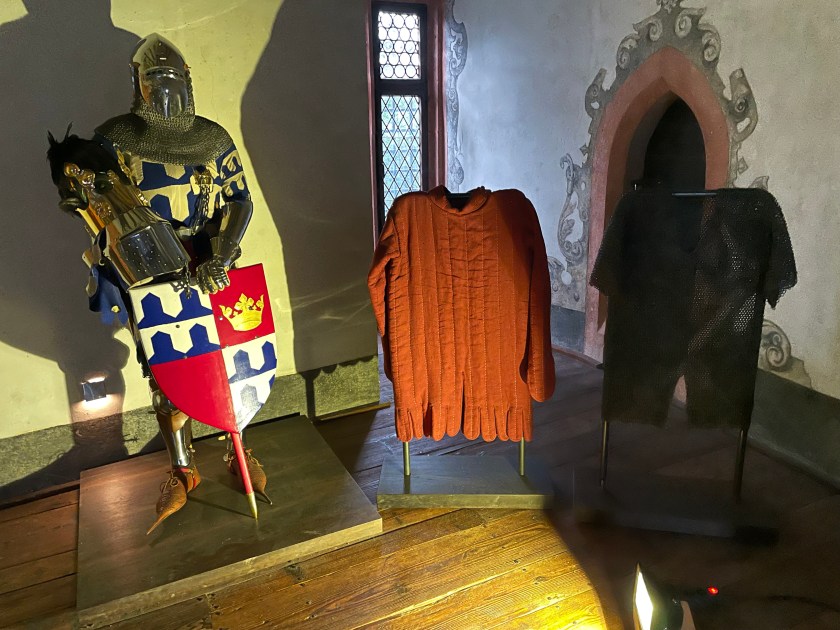
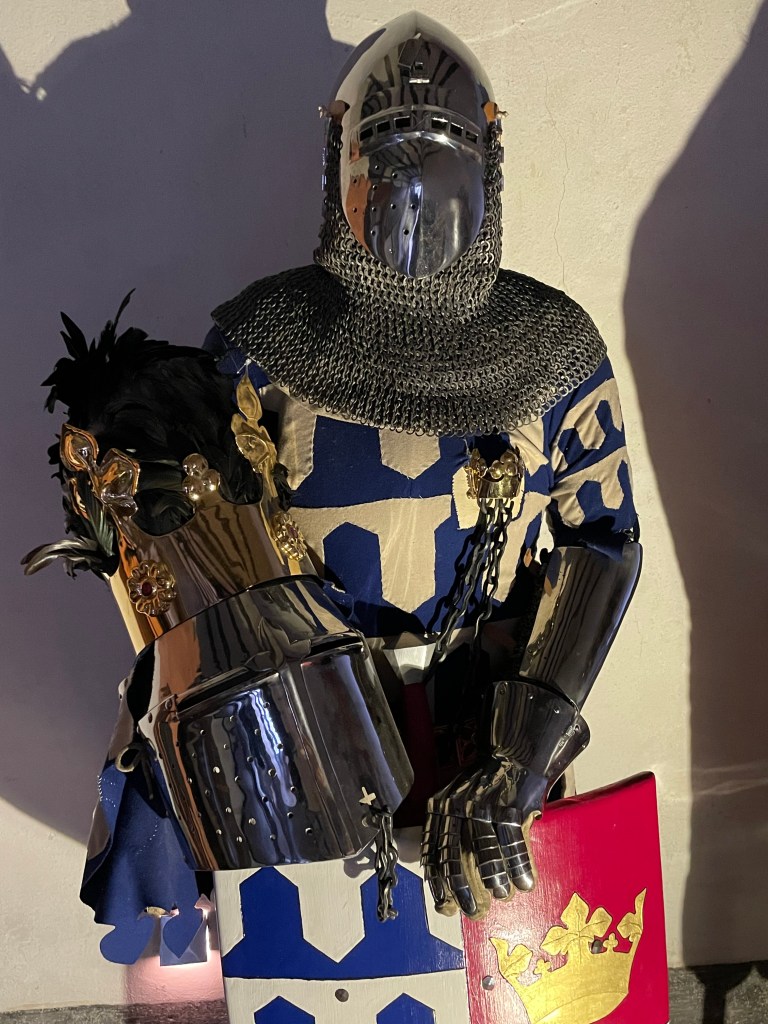
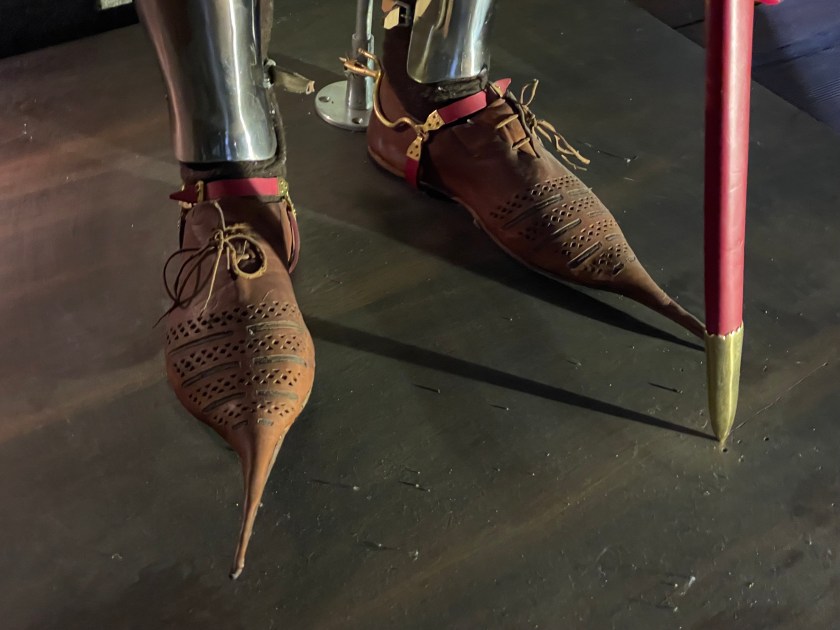
The guide told us that the longer and pointier the shoes, the richer the Knight!



Every place we visit expands my world a bit more. I’m happy we are here and able to walk in places like this.

There are more details here, if you like: https://www.burgkronberg.de/wp-content/uploads/2019/05/Fotoflyer-englischV2a_20150720.pdf

 Our Frankfurt Germany Mission